Mass protests in Ukraine demand ouster of President Yanukovich

0

By Alex Lantier
9 December 2013

Protesters marched in Kiev yesterday demanding the ouster of Ukrainian President Viktor Yanukovich, in the largest of a series of pro-European Union protests against Yanukovich’s November 21 decision to abandon an association agreement with the EU.

The right-wing parties leading the protests in coordination with EU officials and politicians had called for a “million man march.” Ultimately, some 250,000 to 300,000 people gathered on Maïdan (Independence) Square. It was the largest protest in Kiev since the 2004 “color revolution” organized by US and European imperialism—the so-called Orange Revolution that ousted the pro-Russian Yanukovich and brought the pro-Western tandem of President Viktor Yushchenko and Prime Minister Julia Tymoshenko to power.

Protesters on Maïdan Square chanted “Resignation! Resignation!” while listening to speeches on the square. Some subsequently fanned out to occupy government buildings in Kiev.

The reactionary assembly of speakers on Maïdan Square included representatives of various billionaire oligarchs, far-right groups, and patriarchs of the Russian Orthodox Church.

Evgenia Tymoshenko, the daughter of former prime minister and billionaire natural gas magnate Julia Tymoshenko, whom Yanukovich has jailed, read a message from her mother calling for Yanukovich’s “immediate” ouster.

Oleg Tyagnibok, a neo-Nazi from the far-right nationalist Svoboda (Freedom) party notorious for his anti-Semitic statements, denounced Yanukovich’s government for working out trade deals with Russia instead of the EU. He declared: “Today, they fall on their knees in front of the president of Russia and surrender us to the [Russian] customs union… We demand to make public what these secret negotiations were about. They bring us back to the time of Stalinism.”

A group of protesters carrying Svoboda party flags pulled down and destroyed a statue of Vladimir Lenin, the co-leader with Leon Trotsky of the October Revolution of 1917 that founded the Soviet Union.

The situation remains explosive, with protesters blockading government buildings and fearing a crackdown by the security forces. A bitter factional struggle is taking place between oligarchs such as Tymoshenko who are oriented to the EU, and others around Yanukovich who seek closer relations with Moscow.

After the failure of last week’s motion of no-confidence in parliament against Yanukovich, there are signs of demoralization in the opposition.

The French daily Le Monde wrote, “On social media, the million man march was renamed ‘last-chance march’… The leaders who speak each day on Maïdan Square no longer call for ‘revolution,’ as they did at the beginning of the week, and ‘behind-the-scenes’ negotiations are ongoing with the government, indicated journalist Vitaly Portnikov,” a journalist with the US government-backed Radio Free Europe.

The protest leaders themselves are aware that, even among the more right-wing social layers they have mobilized, there is only limited support for integration into the free-market EU. “People have dignity,” protest organizer Svitlana Zalischuk told the New York Times. “This is why they are here: not because they are against Yanukovich, not because they are for the European Union, but because they have dignity, and they want to live with dignity.”

Another protester added that he was primarily opposed to the government’s decision to “beat students and innocent people.” He continued, “The question of Europe doesn’t motivate everybody. We hope the people will be heard and the government will resign.”

The ability of such right-wing protests to proceed and win support among broader layers of the population, who do not necessarily support the EU’s social austerity agenda, reflects the deep crisis of political perspective facing the Eastern European working class.

The anti-communism that has come to dominate political life in the ex-Soviet republics has left these countries easy prey to looting by international capital and political manipulation by Western imperialism and corrupt Ukrainian and Russian oligarchs. The deep social discontent that exists finds expression mainly through movements that are exploited by reactionary, even fascist forces and agencies of imperialism. These movements are then used to turn the political situation even further to the right and mount further social attacks on the population.

Ukraine is one of Europe’s poorest countries, with the world’s second-highest mortality rate (15.75 per 1,000, second after South Africa). Social anger is rising after a budget crisis led the Yanukovich government to cut off unemployment insurance to hundreds of thousands of workers in June.

The major banks and financial markets have cut off lending to Ukraine, which is expected to need $18 billion in emergency financing by March. The state currently has enough financing only for two months of operations. There is rising fear of a possible new devaluation of the national currency, the hryvnia, which collapsed during the hyper-inflation of the early 1990s, following the dissolution of the USSR in 1991 and the restoration of capitalism by the Stalinist bureaucracy.

The EU is working with the International Monetary Fund (IMF), demanding deep austerity measures—a 40 percent increase in gas and heating prices, state budget cuts, and freezes on minimum and average wages—in exchange for a $15 billion loan. These cuts aim to deepen the exploitation of the working class and make Ukraine more profitable for European businesses that would set up operations after Ukraine established closer relations with the EU.

The pro-EU and pro-Russian oligarchic factions are both maneuvering to keep the billions they looted from the theft of state property and the restoration of capitalism and to place the full burden of the financial crisis on the working class. This is the more fundamental reason why the Yanukovich government has not sought to mobilize other social layers against the right-wing, pro-EU protests.

The feuding between these different oligarchic factions offers free play for manipulation by European imperialism, which—while it savagely loots Greece and tramples on mass popular opposition to austerity at home—hypocritically poses as the defender of democracy in Ukraine.

Yesterday, Germany’s Der Spiegel reported that German Chancellor Angela Merkel had decided to “build up” Ukrainian professional boxer Vitaly Klitchko as the “leading oppositionist and rival candidate to President Viktor Yanukovich.” Klitchko is scheduled to travel to Brussels in the middle of the month to meet with Merkel and representatives of the European People’s Party, the federation of right-wing and Christian Democratic parties in the EU countries.

Klitchko’s Udar (“Punch”) party already receives “logistical support” from Merkel’s Christian Democratic Union and the CDU’s Konrad Adenauer Foundation, Der Spiegel reported.

As for Svoboda, it has close ties to France’s neo-fascist National Front (FN), working with the FN’s Bruno Gollnisch and Hungary’s anti-Semitic Jobbik Party within the Alliance of European National Movements.

Please enable JavaScript to view the comments powered by Disqus.

Source: WSWS

Government sources claim GM will shut Holden subsidiary in Australia

0

By James Cogan
9 December 2013

Senior unnamed Abbott government ministers told the media last week that General Motors has decided to liquidate the operations of its Holden subsidiary in Australia by the end of 2106. According to the cabinet leaks, GM intended to inform its workforce last Friday that it was closing its assembly plant in Adelaide and engine plant in Melbourne, but delayed the announcement until next year.

Holden’s closure will be the death knell of the Australian auto manufacturing industry. In May, Ford announced the shutdown of its two assembly plants by October 2016. Toyota—the third remaining producer in Australia—has warned that Holden’s departure would prompt the collapse of many parts manufacturers that supply Toyota, making its operations “unviable.” If all three producers shut down, as many as 50,000 jobs will be destroyed, and another 150,000 will be lost due to the flow-on impact. Major working class suburbs, especially in Melbourne and Adelaide, will be plunged into Depression-levels of unemployment and social distress.

This prospect flows directly from the massive rationalisation of the auto industry internationally since the global economic slump began in 2008. Collapsing sales in the United States, Europe and Japan have vastly intensified the ferocious struggle for market share among rival transnational corporations. Dozens of plants have closed worldwide, and car workers’ conditions have been slashed in country after country. The Obama administration and United Auto Workers union in the US set the benchmark for the devastation in 2009, cutting the hourly pay of new hires in half to barely $15 an hour.

Within this context, car assembly in Australia has been damned by the corporations as “uncompetitive” and “unprofitable.” Mitsubishi shut its Adelaide assembly plant in 2008. Ford, GM and Toyota scaled back production and eliminated thousands of jobs, with Ford ultimately announcing the closure of its plants in Melbourne and the regional city of Geelong. Both GM and Toyota have publicly warned that they will cease operations if they do not receive increased government subsidies, combined with cuts to workers’ wages and conditions.

Prime Minister Tony Abbott’s ministers who leaked GM’s closure plans alleged that the corporation is waiting until the government’s Productivity Commission files a report on the auto industry so it can blame the closure on the government’s failure to increase the level of state handouts. While the previous Labor government agreed to increase the annual grant to GM to $300 million per year, and the South Australian state government offered to hand over $50 million, the company reportedly wants at least $500 million as the price for continuing production beyond 2016.

During the campaign for September’s federal election, Abbott said a Liberal-National government would cut $500 million from the estimated $1.5 billion in annual handouts to support the auto industry. Last Friday, he declared that his government would not increase payments to GM. His position is in line with powerful corporate interests that oppose subsidies and want to use plant closures, or threatened closures, to drive an assault on workers that slashes their pay and conditions to the poverty levels prevailing in the US and across Asia.

A November 23 comment in the Australian by business journalist Grace Collier advocated using emergency hearings of the Fair Work industrial court to tear up workplace agreements and reduce car workers’ wages from the current range of $60,000 to $80,000 per year to the base award levels of $37,000 to $42,000. Halving workers’ income, she gloated, would cause “productivity to skyrocket” and make Holden profitable.

The unstated purpose of the Productivity Commission inquiry, which held two days of hearings last week and will hold a final hearing tomorrow in Melbourne, is to conclude that only massive cutbacks in workers’ conditions—not increased government subsidies—can “save” the car industry. The commission will issue interim findings on December 20 and a final report next year.

The companies, however, have not retreated from their insistence on getting both cost-cutting and more handouts.

The Australian Manufacturing Workers Union (AMWU) and other trade unions are functioning as direct mouthpieces for GM and Toyota. While echoing the companies’ appeals to the Abbott government for greater subsidies, the unions are demanding that workers accept the tearing up of their conditions.

At the Productivity Commission hearings in Adelaide and Melbourne last week, GM’s submission heaped praise on the AMWU for already pressuring workers to accept sacrifices at the Holden assembly plant in the northern Adelaide suburb of Elizabeth. The work day will be increased by 16 minutes, wages will be frozen for three years, new hires will be paid $2 less an hour and management will have the “flexibility” to use casual contract labour rather than hire new staff. GM said the union agreement would enable it to cut the production cost per vehicle by $3,750.

The unions are negotiating a similar assault on the workers at Toyota’s assembly plant in Altona, Melbourne. Toyota is insisting that production costs per vehicle be slashed by $3,800 for exports from Australia to remain “viable” and that cuts to wages and conditions be imposed by June 2014. It is also demanding that parts suppliers slash their prices, pressuring them to also cut their workers’ conditions.

The claim by union officials that such cost-cutting is necessary to “save jobs” is an utter fraud. Even if the Abbott government provided a sufficiently large handout to bribe GMH into keeping Elizabeth open for now, hundreds of jobs would be eliminated. The company has said it would assemble just two models and produce no more than 65,000 vehicles per year, compared with 85,000 this year. It would also source 70 percent of parts and components from GM’s global supply chain—compared with 30 percent at present.

Holden workers would face more job cuts at Elizabeth, while the Port Melbourne engine and design plant would be mothballed. Local parts manufacturers that depend on sales to Holden and employ thousands of people would fold up, potentially triggering the liquidation of Toyota’s operations. GM would simply extract every cent it could from both the government and its much reduced workforce for a few years, before issuing new threats to close.

Workers can only defend their interests if they break with the trade unions and form democratically controlled rank-and-file committees that are prepared to defend jobs and conditions. Above all, workers in Australia should turn to their fellow workers around the world with an appeal for a common political struggle against the onslaught of the transnational corporations and the governments and unions that serve them.

Source: WSWS

German grand coalition plans expansion of surveillance state

0

By Ulrich Rippert
9 December 2013

The coalition deal agreed between the Christian Democratic Union/Christian Social Union (CDU/CSU) and the Social Democrats (SPD), after two months of talks, proposes the expansion of state surveillance and the apparatus of repression. Democratic rights are to be restricted, while the police and intelligence services will be strengthened. This also applies to the German army.

The build-up of the security apparatus is directly connected with another central point in the agreement: the intensification of punitive austerity policies in southern Europe and in Germany. It is made crystal clear in the agreement that budget consolidation policies must be intensified.

The incoming government expects strong opposition to this cost-cutting programme. The coalition partners are therefore strengthening the state apparatus, even though representatives of the coalition promised the opposite when former NSA contractor Edward Snowden uncovered the mass surveillance activities of his former employer.

Rather than strengthening the rights of citizens, the future government is massively expanding the surveillance of the population by German intelligence agencies. In the coalition agreement, they call for the reintroduction of the storing of data and the creation of a comprehensive surveillance apparatus.

According to a March 2010 ruling by Germany’s constitutional court, data storing breaches the right to privacy of communications via post and telecommunications guaranteed in the German constitution. In future, Internet providers will be obliged to store records on customers’ usage for months, even when there is no suspicion or surveillance order against them. State security organs have the right to access these records on demand. After six months, this will allow them to confirm who telephoned whom, and where a mobile phone was used.

The storage of data was introduced by the previous grand coalition in 2007. The interior minister in the SPD-Green Party coalition, Otto Schily (SPD), prepared the law. After the constitutional court declared the law to be in breach of the constitution in 2010, the Merkel government attempted to reintroduce the comprehensive collection of data in a slightly altered form, but this failed following opposition from the justice minister of the CDU’s former coalition partner, the Free Democrats.

The coalition agreement states: “We will reorganise the EU red lines on the retrieval and use of telecommunications data.” This suggests that data will be stored in data banks subject to very few restrictions. In addition, it states in the coalition agreement that the storage of data by telecommunications firms will be carried out with servers in Germany.

The surveillance by German intelligence agencies is just as threatening to the ordinary citizen as that carried out by NSA. The claim that the German agencies are bound by clear legal regulations and that they will stick to these is utter nonsense. This merely serves to justify the comprehensive surveillance of the population.

The close connections between the German intelligence services and the extreme-right NPD and the right-wing NSU terrorist group have underlined how far to the right these authorities are, and how they evade any democratic control.

The term “transparent” appears 25 times in the coalition agreement, but parliamentary control of the intelligence services and army is to be restricted rather than strengthened. The parliamentary control commission is to shrink to nine or possibly even seven members.

Instead of control, the coalition agreement strives for the centralisation and strengthening of the intelligence services. The domestic intelligence agency (BFV) will take on the function of a central agency for the agencies within each state. Its technical abilities for analysis are to be improved. In addition, the federal police are to be built up and given more powers for the “surveillance of telecommunications sources.” The federal agency for IT security (BSI), which already works as an unofficial intelligence agency, will be expanded along with the cyber defence centre.

In parallel with the strengthening of the intelligence services, the rights of citizens are to be restricted. As a result, the right of association is to be “reformed.” It will be easier to ban organisations, and a ban will have more widespread consequences. This could also affect political organisations.

The dismantling of citizens’ rights and the building up of the intelligence services go hand in hand with a stronger military presence. The new government intends to increase Germany’s role within NATO. According to the coalition agreement, defence cooperation is to be expanded, and Germany will participate in the procurement and maintenance of new weapons systems.

In particular, the agreement supports the establishment of a missile defence system. In addition, it calls for a “Strengthening of cross-department cooperation in recognition of a more effective foreign and security policy, whose success requires civil and military instruments to complement each other.”

The coalition agreement underscores the significance of Germany’s participation in the Afghanistan war and commits to an appropriate participation of Germany within the framework of the advisory mission under the leadership of NATO. This means that the German army will continue the war in Afghanistan on the side of the US after 2014; the much-promoted withdrawal of German troops by the end of 2014 has proven to be worthless.

The brazen abandonment of democratic rights by the incoming government is also shown in its treatment of the federal parliament, which has been shut down since the summer.

Since the formation of a government has now taken more than 12 weeks, and the coalition partners intend only to announce the ministers after the SPD membership vote on the agreement, no committees have been formed. These are essential for the working of parliament.

Instead, a grand committee with 47 members has been convened, for which there is no legal basis. In this context, the Süddeutsche Zeitung wrote of “an employment ban for 584 deputies” and called it “a blatant, convenient defiance of parliament.”

Political differences between the parties involved are not the reason for the drawn-out process of forming a government. They have worked together closely for years. This applies not just to the CDU, CSU and SPD, but also to the Greens, who have joined a coalition in the state of Hesse with the CDU, and the Left Party, which has constantly offered to collaborate with the SPD and Greens.

The real reason for the delay is that the incoming government is planning massive attacks on the population in all areas and is preparing to suppress the anticipated opposition. The drawn-out vote by SPD members, involving regional conferences and meetings at which leading social democrats hail the coalition agreement, is aimed at providing a pseudo-democratic cover for the government and the coalition treaty.

Source: WSWS

French Left Front’s “Fiscal Revolution” aims to block anti-austerity movement

0

By Antoine Lerougetel
9 December 2013

Amid rising popular opposition to the reactionary wars and austerity policies of France’s Socialist Party (PS) government, the Left Front held a “March for a Fiscal Revolution” on December 1 in Paris. The initiative was a political fraud, in which the Left Front sought to give political cover to the latest manoeuvres of the deeply unpopular PS.

In order to block the spread of anti-tax protests from Brittany ongoing since October and reverse its collapse in approval ratings to 15 percent, the PS government had launched talks on November 27 on reorganizing the tax system. Employers’ groups and France’s union federations, including the Communist Party (PCF)-dominated General Confederation of Labour (CGT), attended.

The Left Front—consisting of the Left Party (PG) and the Stalinist PCF, parties which both have long-standing ties to the PS and supported PS President François Hollande’s election—sought to mobilise forces from across France in the context of these talks. The march was called ostensibly to encourage “revolutionary” changes to France’s tax code.

In fact, only a few thousand protesters attended, well short of the 100,000 claimed by Left Front leader Jean-Luc Mélenchon.

The slogan on the lead banner in Paris was “Against fiscal injustice, tax capital, no to the raising of value-added tax [sales tax].”

Speaking at the rally, Mélenchon declared: “Let’s propose a simple principle…Here it is: everyone pays and each person pays progressively more according to his means….For my part, if they invite me, I’m ready to put forward this idea and the means to put it into practice before the commissions of both chambers, the head of state and the Prime Minister.”

Similarly, PCF chairman Pierre Lauren indicated that he wanted to send “a strong message to the government.”

Despite characterising the Paris march as pro-PS, the pseudo-left Lutte Ouvrière (Workers Struggle, LO) and New Anti-capitalist Party (NPA) sent delegations to it. Mélenchon spoke while surrounded by their flags.

The event itself testifies to the reactionary, false and degraded politics of French Stalinism and its political satellites, the social-democratic forces in Mélenchon’s PG and the pseudo-left parties. They demagogically advance various reformist tactics and demands, while insisting that they will achieve these demands through a policy of alliance with and pressure on the PS.

Mélenchon has repeatedly asserted that it is “not my intention” to “force François Hollande out before the end of his term.” In the context of the Left Front’s May 5 demonstration, Mélenchon even offered Hollande his services as prime minister.

Broad layers of workers sense, however, that the PS will make no significant shift in its policies of austerity and war, reflecting the enormous class gulf separating the working class from the bourgeois “left” parties. This situation, which points to the deep crisis of working class leadership and the yawning vacuum on the left, finds one reflection in the miserable turnout at the Left Front’s rally.

The fraudulent character of the protest’s pretensions to being part of a “revolution” against the government was further exposed by the decision of the PCF to participate in joint lists with the PS in the municipal elections next March.

The Left Front is deeply hostile to mobilizing the working class against the reactionary Hollande administration and terrified by rising social anger in the working class with the PS and the union bureaucracy.

The PG’s François Delapierre expressed his dismay at the record low ratings for the PS: “This government is stuck in its impasse, like [conservative President Nicolas] Sarkozy before it. However, Sarko kept his social base.”

Another PG leader, Alexis Corbière, worried that, “We are in a period when there is a risk of the workers in the private sector breaking from the traditional organisations of the labour movement.”

He absurdly claimed that the Left Front had “shaken up Hollande’s plans, and also the claim that opposition to the government would only come from the far right.”

It an opinion poll published on October 9, the far-right National Front (FN) was forecast to receive 24 percent of the votes in the European elections in May 2014, in first place in front of Sarkozy’s Union for a Popular Movement (UMP) at 22 percent and the PS at 19 percent.

In fact, it is precisely events like the Left Front “March for a Fiscal Revolution”—which are widely sensed to be political charades played by operators who have sold out to the financial aristocracy—that allow the FN to pose as the only opposition to Hollande.

The Left Front, the NPA, and LO unconditionally supported the PS in the elections which brought it to power last year. Under conditions where masses of workers no longer see these parties as oppositional, since they have functioned for decades in the political orbit of the PS, the FN is able to pose as the only force opposing the PS government’s policies of austerity and war.

Interviewed on TF1 television, Mélenchon pointed out that Hollande was continuing the policies of tax breaks for the employers, increased taxes for the masses and cuts in pension rights of former conservative President Nicolas Sarkozy.

He insisted, despite the electoral alliances being arranged between the PCF and the PS, his policy towards Hollande was, “Now we have to force this one out.” He absurdly said he was “calling to beat the government’s lists” in the 2014 municipal and European elections—many of which will be running jointly with candidates from his own organization.

Source: WSWS

French troops intervene in Central African Republic, seize Bangui

0

By Kumaran Ira
9 December 2013

France deployed troops to the Central African Republic (CAR) this weekend, after the UN Security Council adopted a France-sponsored resolution on December 5 authorising French and African intervention. They ostensibly aim to halt ongoing sectarian violence between majority Christian and minority Muslims that has escalated since France backed a coup against President François Bozizé earlier this year by Muslim Seleka rebels.

French forces, backed by tanks, helicopters and warplanes, deployed throughout the capital, Bangui, on Saturday. They also started deploying to the north and west of the country to seize key roads; pre-positioned troops crossed the border from Cameroon into the west of the Central African Republic.

The French government plans to maintain 1,600 troops in its former colony indefinitely. At a press conference closing a two-day Africa-France summit at the Elysée Presidential Palace on Saturday, French President François Hollande said that he would increase French troop levels in CAR to 1,600—400 more troops than what was announced last week.

Hollande said, “Thursday there were 600 troops, [Friday] night there were 1,000, and tonight there will be 1,600 and that level will be maintained as long as necessary for this mission.”

French forces in CAR will be working with a 2,500-strong African-Union force, which will also be boosted to 6,000.

France’s political establishment and corporate media are backing the military intervention, falsely arguing that Paris’ intervention in CAR has nothing to do with its strategic interests and is a humanitarian operation. Hollande vowed that his aim was to “prevent a humanitarian catastrophe,” after 300 civilians were reportedly killed in three days as a result of sectarian clashes in CAR.

In its Saturday editorial, Le Monde praised the military intervention as a humanitarian operation, writing: “France’s publicly stated goals, i.e. aiding to secure the country and allowing humanitarian aid to reach it, are beyond doubt.”

It added, “The former colonial power stresses today that it does not want to be directly involved in the political settlement of this crisis. France wants as quickly as possible to bring in the UN, whose actions in recent years in CAR have not been particularly well chosen.”

Such comments reek of cynicism and bad faith. France’s seizure of Bangui and of CAR will not soften but intensify the country’s ethno-sectarian divisions and conflicts—as did the NATO war in Libya and France’s intervention in Ivory Coast, which were similarly peddled to the public in 2011 as “humanitarian” exercises.

Paris bears the main responsibility for the current bloodshed in CAR. It has backed a series of military coups in CAR since the country’s independence, in order to install various reactionary proxy governments in power.

Now, French imperialism is pursuing an explosive neo-colonial policy of militarily toppling governments in its former African colonies—such as in the Ivory Coast or CAR—that have developed closer ties to China.

Before Bozizé was ousted, ties between CAR and China had been developing rapidly with initiatives on economy, trade, culture, education and health. The CAR also discussed expanding military ties with China while senior Chinese officials visited the CAR in June 2012.

Relations between Paris and Bangui deteriorated under Bozizé as he adopted a more pro-Chinese line, signing military and economic deals with Beijing. Paris was concerned over untapped natural resources in CAR including diamonds, gold, uranium, timber and oil that French corporations could lose to their Chinese competitors, and also the broader implications of China’s rising influence in the former French colonial empire.

Before Seleka took power, Bozizé suggested in a speech given on December 27, 2012 that rebel forces were attacking him because he decided to grant oil exploration contracts to a Chinese firm.

He asked, “What mistake did I make? There are no political prisoners at the moment, the press is free. Why did they start raping, killing and hurting the Central African population? … We gave them everything. Before giving oil to the Chinese, I met Total in Paris and told them to take the oil; nothing happened. I gave oil to the Chinese and it became a problem. I sent counselor Maidou in Paris for the Uranium dossier, they refused. I finally gave it to the South Africans.”

Now, France is building up not only its own military forces, but also local proxy forces across Africa, in preparation for broader wars and neo-colonial interventions across the region.

As the current military intervention in CAR began, France hosted a two-day Africa-France summit titled “Peace and security in Africa” attended by 53 African heads of state, European Council President Herman Van Rompuy, and UN Secretary-General Ban Ki-moon.

Noting that Franco-African relations “can no longer be what they could be in the past,” Hollande vowed to support “the creation of a rapid reaction force controlled by the African Union.” He declared that France would provide training for 20,000 African troops for five years.

French imperialism, under the UN mandate, plays a key role in pursuing its policy in the continent. The military intervention in CAR follows French intervention in Mali early this year.

France has deployed about 7,500 troops across the world, according to the Defence Ministry. It currently has more than 5,000 troops stationed at bases across Africa. The cost of maintaining them amounts to €400 million per year.

Source: WSWS

China’s neo-Maoists hail North Korea’s nuclear program

0

By John Chan
9 December 2013

The reactionary character of China’s neo-Maoist tendencies emerged clearly in a Chinese-language statement in February on one of their leading web sites, Utopia, promoting the North Korean regime. It “congratulated in rapture … respected Comrade Kim Jong-un and the great Korean Workers Party” for carrying out a third nuclear weapon test.

The neo-Maoists are a heterogeneous political grouping, ranging from retired Mao-era officials to younger Western-educated economists. They first emerged in the mid-1990s in reaction to the regime’s acceleration of capitalist restoration, the sell-off of state-owned enterprises and the destruction of tens of millions of jobs. They sought to appeal to discontent in middle class layers, while blocking the development of a movement in the working class against the restoration of capitalism in China.

The anti-imperialist posturing of the Utopia statement on North Korea is typical of the neo-Maoists’ phony left-sounding rhetoric, which is designed above all to prevent the emergence of a genuine socialist movement of the working class to challenge China’s capitalist elite.

Criticising the US-led wars in Iraq, Libya and Syria and warning that the global order is moving toward “neo-imperialism,” Utopia’s statement hailed the North Korean regime in Pyongyang as a bastion against imperialism. “North Korea’s mastery of nuclear weapons is a new contribution to the force of justice against imperialism … It will greatly contain the wild ambitions of imperialism and reactionary forces to strangle and encircle North Korea and China,” it declared.

This is an absurd falsification of the politics of the North Korean regime and its relation to imperialism. The development of a few crude North Korean nuclear devices will not alter the military superiority of the United States, the regional balance of power, or the rising threat of a US-China war.

The only force that can halt the threat of military conflict in Asia is a common struggle against war by the workers in the imperialist countries and their class brothers in the Asia-Pacific, including in China and across the Korean peninsula.

The neo-Maoists, however, are hostile to the perspective of mobilising the international working class in a struggle against war. Instead, they promote the dangerous illusion that workers can fight the rising danger of imperialist war by boosting the military strength of the existing Chinese and North Korean regimes in an armed stand-off with Washington.

The neo-Maoists’ reliance on an arms build-up in Northeast Asia to counterbalance US imperialism does not diminish the threat of war in the region. On the contrary, North Korea’s nuclear test this winter and Kim Jong-un’s subsequent empty threats against the US played straight into Washington’s hands. It gave the US a pretext to ratchet up tensions on the Korean Peninsula, leading to a major war scare in March-April, and an expansion of US anti-ballistic missile systems as part of the Obama’s administration’s “pivot to Asia” against China.

The ruling elites in South Korea and Japan, Washington’s two main East Asian allies, also exploited the Korean crisis to expand their own military capacities and drum up militarism at home.

In its statement, Utopia favourably compared North Korea’s nuclear test to Chairman Mao’s efforts 50 years ago to set off China’s first atomic bomb in 1964, which “undermined the nuclear blackmail by the US and Soviet Union, guaranteed China’s national security, and elevated its international standing.” Utopia insists that North Korea is now in a similar position.

Leaving aside Utopia’s false assessment of Mao’s atomic test, Utopia’s claim that the atomic bomb has put the small, economically-backward country of North Korea in a position of strength vis-à-vis US imperialism is ridiculous.

In fact, Pyongyang’s overriding goal is a rapprochement with the US, the lifting of decades-old US sanctions and the complete integration of the country into global capitalism as Asia’s newest and cheapest low-wage platform. In this quest, Pyongyang has repeatedly tried to use its nuclear weapons as a bargaining chip, to be dismantled in the event of an agreement with Washington.

Already in the 1990s under Kim Jong-un’s father, Kim Jong-il, the North Korean regime moved to restore capitalist relations, setting up private enterprises and cheap-labour export zones with South Korea. Pyongyang’s Chinese counterparts have long urged them to follow a capitalist “reform and opening up” policy, as began in China under Deng Xiaoping in 1978.

Obama has hinted that a deal is possible. Last year when he visited Burma—a country that previously relied for its security on relations with China, like North Korea, but that now has re-established ties with the US—Obama publicly stated that Burma was an example for North Korea to follow. Knowing the thinking in Washington, Kim Jong-un has made various pro-Western gestures, inviting Google CEO Eric Schmidt and former basketball star Dennis Rodman to visit Pyongyang.

To date, however, Obama has shut the door on any negotiations unless North Korea meets all the US demands. That could change, but only if North Korea indicates its willingness, like Burma, to move out of China’s orbit—a move with immense and unpredictable consequences.

Sections of the Chinese bureaucracy fear that a pro-US regime in Pyongyang, on China’s borders, would pose a dire military and strategic threat. They argue for maintaining China’s military alliance with North Korea—views that find reflection in the writings of the neo-Maoists, including Utopia, who claim that a nuclear-armed North Korea is a useful buffer against the United States.

The class basis of the neo-Maoists

The stance of the neo-Maoists and Utopia on North Korea is of a piece with their foreign and domestic policies as a whole. Deeply hostile to the working class and the urban and rural poor, they orient to what they claim are “healthy forces”—that is, anti-imperialist or even socialistic elements—inside the Chinese Communist Party (CCP). Their essential aim is to promote the lie that, even though capitalism was restored in China decades ago, there are still leaders within the CCP who can be pushed to adopt socialistic or “left” policies.

This is a blatant falsification of the reactionary, pro-capitalist politics that dominates the entire CCP. All factions have shed the Maoist brand of Stalinism that formed the ideological basis for the deformed workers’ state established after the 1949 Chinese revolution. The openly bourgeois character of the current Chinese regime is acknowledged even by the strategists of US imperialism. A 2009 American diplomatic cable published by WikiLeaks likened China’s Politburo Standing Committee to “the executive suite of a large corporation,” with then-President Hu Jintao acting as the chairman of the board, arbitrating between competing “vested interests.”

The cable explained how the CCP’s senior figures divided up China’s “economic pie.” Former Premier Li Peng’s family controlled the electric power sector, former security chief Zhou Yongkang’s faction dominated the oil interests, former top leader Chen Yun’s family was in charge of most of the state Chinese banking, while “Hu Jintao’s son-in-law ran Sina.com; and [Premier] Wen Jiabao’s wife controlled China’s precious gems sector.”

The neo-Maoists are aligned with particular sections of the CCP bureaucracy. Their ideological roots are in the so-called “Old Left,” who opposed Deng’s pro-market reforms from the standpoint of preserving their privileged existence, which was dependent on state-owned enterprises. The anti-working class character of this bureaucratic layer was demonstrated by their wholehearted support for Deng’s decision to send tanks to crush the 1989 Tiananmen Square protests when workers began to join the students and voice their social demands.

Following the collapse of the Soviet Union in 1991, Deng dramatically accelerated the process of capitalist restoration, transforming China as a whole into a giant manufacturing sweatshop for world imperialism. The neo-Maoist tendencies emerged among layers of the educated urban middle class alienated by the changes, which for them meant an end to a guaranteed and relatively privileged jobs in state-owned enterprises or the state bureaucracy. Not a few students and academics studied in the West and came under influence of various forms of middle class radical politics, from environmentalism to anti-globalisation, which they repackaged for a Chinese audience with a Maoist colouration.

The common battle cry of the neo-Maoists is to “oppose neo-liberalism.” Their aim is not the expropriation of China’s new property-owning elite and the building of a genuine workers’ state in China, as a part of the global struggle for socialism, but to encourage illusion and subordination to the existing political regime in China.

Their criticisms of “neo-liberalism” meet up with the interests of substantial layers of the state bureaucracy, as well as Chinese exports firm owners whose profit margins are being “unfairly” squeezed by the major transnational corporations operating in China. At the same time, these social layers are deeply fearful of growing social unrest and hostile to the prospect of any revolutionary movement of the working class and rural poor.

Business management professor Han Deqiang, who set up the Utopia web site in 2003, does not oppose “market reform” and capitalist property relations, but calls for “fair distribution” and “just wealth creation.” He publicly stated that he chose the name Utopia to distance himself from “the scientific socialism of Marx.” He rejects the Marxist conception of socialism as the self-emancipation of the working class through the class struggle.

Explaining to a British diplomat why he supported the 2011 Occupy Wall Street movement in the US, Han concisely spelled out the social aspirations he represents. He complained that “because transnational corporations are in China, China’s own enterprises can only labour for transnational corporations—being second-tier, third-tier and fourth-tier bosses, but not the big boss.”

On this basis, he insisted that China’s capitalist elite are part of the “99 percent” in the world, opposing the “1 percent” super-rich in the West. Utopia’s goal is the transformation of China’s largest state firms into multinational corporations—to be controlled by the families of the “Red aristocracy”—initially through strong state financing and protection, in a manner akin to the South Korean or Japanese conglomerates.

Unsurprisingly, Han insisted the Utopia web site represents no danger to the Chinese government or Chinese political stability. “This is because Utopia does not call for overthrowing the government, but for reform, a change of line from the top, an integration of the party with the masses, and a return to socialism,” he said. “From the standpoint of more ‘leftist’ people, this is ‘reformist.’ So how could you call Utopia ‘ultra-left’?”

Just as it advocates Chinese capitalist “national champions” that can compete with existing transnationals, Utopia also speaks for a hawkish layer in the military that calls for far greater investment in a strong military, with a blue-water navy and an offensive air force, to protect China’s overseas interests against US threats.

Professor Han and other neo-Maoists played a leading role in the violent anti-Japanese protests in September 2012. They pushed Beijing to take more aggressive action against Japan’s provocative “nationalisation” of the disputed Senkaku/Diaoyu Islands, while supporting a predominately middle-class campaign to “boycott Japanese goods.”

Workers and youth in China should reject the petty-bourgeois phrase-mongering of the neo-Maoists. Behind their glorification of North Korea’s nuclear weapon program is their rejection of an independent intervention by the working class internationally to challenge the fundamental cause of war: the profit system and its reactionary division of the world into rival nation-states.

The only way to halt the drive to war is through the unification of workers in struggle in China, the Korean Peninsula, and internationally, including in the United States, on the basis of replacing the profit system with a globally planned socialist economy.

Source: WSWS

‘Friendship with Iran in US interests’

0

Dean Henderson of �œBig Oil & their Bankers in the Persian Gulf” believes that it is in United States�™ best �œinterests” to establish ties with Iran.

�œIt�™s in our interest for Christ�™s sake to get along with Iran, to be friends, to go ahead with these projects,” Henderson told Press TV on Sunday, referring to

He made the remarks when asked about a threat made by US Congress that giant oil companies will receive �œsevere financial penalties” should they resume business with Iran.

Many Congress members still have �œcold-war mentality towards Iran,” he said. �œNot even some liberal members of Congress are talking about tougher sanctions against Iran [but] they are trying to politicize Iran.”

Henderson called such anti-Iran policies �œhypocrisy and double-standards,” saying the US has trade relations just with certain countries in the Middle East, which are all �œmonarchies.”

�œThe friends of the US in the Middle East are all these monarchies and these states sponsor terrorism like Saudi Arabia, like Israel, whereas the enemy of the United States historically have been democracies,” he noted.

In interviews with The Foreign Policy Magazine, several American officials expressed concerns about the international firms�™ interest to enter the Iranian oil market in the next six months.

Chairman of the House Homeland Security Committee Rep. Michael McCaul said that companies examining their options for �œresuming business relationships” with Iran are �œacting prematurely at best.”

Hawkish anti-Iran Senator Mark Kirk also warned foreign firms that they �œmust be on notice that sanctions are coming back stronger than ever” if the nuclear deal does not lead to a comprehensive resolution.

AT/ARA

Source: Press TV

TSA Confiscates ‘Realistic’ Two Inch Toy Pistol From Sock Monkey

0

A Washington state woman traveling from St. Louis to Seattle was shocked and embarrassed after TSA agents threatened to call police over her sock monkey’s two inch toy pistol.

Rooster Monkburn

Phillis May, owner and creator of the cowboy sock monkey “Rooster Monkburn,” hoped to bring several of her toy creations as well as her sewing kit on-board for the Wednesday flight home.

While going through the airport screening process, May quickly discovered her carry-on bag to be missing. Shortly after, she looked up to find her bag confiscated in the hands of TSA.

“And the (TSA agent) held it up and said ‘whose is this?’” May told King 5 News. “I realized oh, my God this is my bag.”

After digging through May’s possessions, TSA officers located Monkburn’s trusted toy sidearm, immediately confronting May over the discovery.

“She said ‘this is a gun.’ I said no, it’s not a gun it’s a prop for my monkey,” May said.

Incredibly, the TSA agent went on to claim that the toy pistol was so realistic, that no one would be able to tell the difference.

“She said ‘If I held it up to your neck, you wouldn’t know if it was real or not,’ and I said ‘really?’” May said.

The toy gun was quickly confiscated, but not before TSA agents threatened to call the police, alleging that TSA protocol required them to do so.

“And I said really? You’re kidding me right, and she said no it looks like a gun,” May said. “I said well go ahead.”

Amazingly, TSA decided not to carry the already ridiculous situation any further, opting to let May go ahead without police involvement. Unfortunately for May, the miniature toy pistol would stay in TSA custody.

“Rooster Monkburn has been disarmed so I’m sure everyone on the plane was safe,” May said sarcastically. “I understand she was doing her job but at some point doesn’t common sense prevail?”

Despite congressional reports finding the TSA to be completely useless, confirmed by the TSA’s own internal admission of only employing security theater, the agency continues to employ wasteful programs. Just last month the TSA’s $1 billion “chat down” program, which attempted to identify dangerous passengers, was found to be completely ineffective by the Government Accountability Office.

Whether it’s arresting passengers for peanut butter jokes or having the wrong kind of watch, the TSA has become such a laughing stock that is has now begun threatening travelers with arrest for joking about its admittedly pointless security.

Although Americans are far more likely to die from bee stings than terrorism, the TSA continues expanding its civil liberty-trampling security methods, with airports now attempting to stop the instillation of new “detention pods,” which force passengers to be momentarily detained before exiting an airport.

The post TSA Confiscates ‘Realistic’ Two Inch Toy Pistol From Sock Monkey appeared first on Storyleak.

Source: Storyleak

Chuck Hagel on his way to Pakistan

0

US Secretary of Defense Chuck Hagel walks into a building to meet with troops at Camp Bastion in Afghanistan on December 8, 2013.

US Defense Secretary Chuck Hagel is set to visit Pakistan later on Monday for talks about �œsecurity partnership and how to address common threats,” a Pentagon official said.

It will be the first visit by a US defense secretary to Islamabad in four years, when Nawaz Sharif appointed a new Army chief of staff, Gen. Raheel Sharif, said Hagel�™s spokesman Carl Woog.

The US defense secretary is scheduled to meet with Pakistani Prime Minister Nawaz Sharif during his visit, which comes at a time of tension between the two countries about US drone strikes in northwestern Pakistan that have left thousands of civilians dead since 2004.

Pakistani authorities had blocked the US main supply route to Afghanistan due to angry public protests against civilian deaths caused by CIA drones.

The United States has the same problem with the Afghan government which is angry at civilian deaths caused by US troops�™ night raids on Afghan homes.

Hagel will also discuss the �œcommon interest that the United States and Pakistan have in a stable Afghanistan.” Last month during his visit to Kabul, Sharif pledged to help facilitate peace talks between the Afghan government and the Taliban.

Hagel will arrive in Pakistan from neighboring Afghanistan where he met with top officials and the American troops, who are set to leave the Asian country by the end of 2014 if a security pact is not signed between the two sides.

During his visit to Afghanistan, Hagel tried to persuade the Afghan government to sign a bilateral security agreement to allow some US troops to remain in the country after 2014. However, Afghan President Hamid Karzai said the US military must first end its deadly night raids on Afghan homes if it wants the agreement signed.

ARA/ARA

Source: Press TV

South African Communist Party Admits Mandela’s Leadership Role

0

Shortly after the death of South African revolutionary Nelson Mandela, the South African Communist Party and the African National Congress both released official statements acknowledging what was already well-known among experts: “Comrade” Mandela was indeed a Communist Party leader who served on the Soviet-backed organization’s Central Committee. According to the Communist Party statement on Mandela’s passing, not only was the confessed terror leader a senior official on the South African Communist Party’s highest decision-making body, he was actually close to the outfit until his death.

Until last week, apologists for Mandela still claimed implausibly that his “alleged” alliance with international communism was mostly a marriage of convenience. Some of his more ardent or ignorant fans, relying on decades of lying denials from Mandela and others in the know about his membership in the party, even tried to claim that charges of communism were fabrications by Apartheid supporters, “conspiracy theorists,” and “extremists.” For now, the press outside of South Africa does not seem to have even noticed the earth-shattering news.

The controversial revolutionary figure, who admittedly oversaw a ruthless but largely forgotten campaign of terror against civilians that left women and children of all races dead, simply could not have really been a real, card-carrying communist — or so his adoring fans wanted to believe, at least. The latest evidence, however, confirms otherwise, once again. Now, the truth is officially out, but whether it will be reported by the establishment press remains to be seen.

Much of the world — especially government leaders, dictators, the press, and South Africans — has been too busy mourning his passing to take notice of the explosive revelations. However, the now-irrefutable fact that Mandela played a key role in the ruthless international communist movement should not be forgotten amid the praise. It has now been officially admitted, and despite the lack of attention, remains crucial to understanding Mandela and his real legacy.

Conservative estimates suggest that in the last century alone, communist regimes — virtually all of which backed Mandela with troops, funding, and more — have been responsible for at least 100 million murders. The numbers are probably much higher. Mandela’s own admitted terror campaign, including the infamous 1983 Church Street bombing, which killed 19 and wounded over 200, claimed many lives, too. He pled guilty to over 150 acts of public violence.

In the statement released on December 6 and published by assorted Marxist outfits, the South African Communist Party, or SACP, helped shed light on all of it. “At his arrest in August 1962, Nelson Mandela was not only a member of the then underground South African Communist Party, but was also a member of our Party’s Central Committee,” the SACP said in the statement, illustrating once again the enormity of the long and successful track-record of communist deception.

As to why it was denied for so long, SACP deputy general secretary Solly Mapaila was quoted in South African news reports as saying it was for “political reasons” — apparently people would have been upset to realize their hero and supposed “liberator” was, actually, a card-carrying communist. “There was a huge offensive by the oppressive apartheid regime at the time against communists,” Mapaila said, adding that all of the terrorists tried at Mandela’s Rivonia Trial were Party members.

When Mandela was released from prison, Mapaila added, the mass-murdering regime ruling over what was then the Soviet Union was supposedly “crumbling,” and there was “too much negativity around the Soviet system” to tell South Africans the truth. He added: “But we should not focus on that now, let us focus on resting the old man.”

Unsurprisingly, the statement went on to praise Mandela and his African National Congress (ANC), where the South African revolutionary would go on to found the outfit’s armed wing. “To us as South African communists, Comrade Mandela shall forever symbolise the monumental contribution of the SACP in our liberation struggle,” the SACP said. “The contribution of communists in the struggle to achieve the South African freedom has very few parallels in the history of our country.”

Also admitted in the SACP statement are facts that his adoring fans — the United Nations even designated a “Nelson Mandela International Day,” while Obama compared him to George Washington and ordered flags flown at half-mast — will have even more trouble explaining away. “After his release from prison in 1990, Comrade Madiba became a great and close friend of the communists till his last days,” the South African Communist Party said.

Today, the common perception of the South African revolutionary, who regularly sang “struggle” songs advocating the mass-murder of whites, holds that he was a “political prisoner.” Left unmentioned in the SACP statement and the adoring obituaries, of course, was the fact that Mandela was repeatedly offered the opportunity to walk out of jail if he would just renounce violence, which he consistently refused to do. For the SACP and the international communist movement, he represented nothing less than a hero for his positions and activities.

“The passing away of Comrade Mandela marks an end to the life of one of the greatest revolutionaries of the 20th century, who fought for freedom and against all forms of oppression in both their countries and globally,” the SACP continued, perhaps hoping to rally support for communism by making the announcement now, amid worldwide praise for one of their former leaders. “In Comrade Mandela we had a brave and courageous soldier, patriot and internationalist who, to borrow from Che Guevara, was a true revolutionary guided by great feelings of love for his people, an outstanding feature of all genuine people’s revolutionaries.”

The communists then went on to praise Mandela’s corruption-plagued ANC — which governs South Africa in an alliance with the SACP and a coalition of labor unions — as well as the controversial but intimate link between the two supposedly distinct forces. “The one major lesson we need to learn from Mandela and his generation of leaders was their commitment to principled unity within each of our Alliance formations as well as the unity of our Alliance as a whole and that of the entire mass democratic movement,” the statement said.

“Their generation struggled to build and cement the unity of our Alliance, and we therefore owe it to the memory of Comrade Madiba to preserve the unity of our Alliance,” the SACP continued about the Communist Party union with the ANC, referring to Mandela by his tribal name. “Let those who do not understand the extent to which blood was spilt in pursuance of Alliance unity be reminded not to throw mud at the legacy and memory of the likes of Madiba by being reckless and gambling with the unity of our Alliance.”

However, despite all of the praise, the SACP acknowledged that the effort to enslave South Africa under communist tyranny was not yet complete. Suggesting that Mandela supported their plans, the SACP said that “some would like us to believe” that the revolutionary’s push for “national reconciliation” meant leaving some freedoms in place — or “class and other social inequalities in our society,” as the communists put it. That is not the case, however, the party claimed.

“For Madiba, national reconciliation was a platform to pursue the objective of building a more egalitarian South African society free of the scourge of racism, patriarchy and gross inequalities,” it said, ignoring the spectacular horrors afflicting Communist Party-ruled North Korea, for example, or Cuba, where fervent Mandela ally Fidel Castro has shown what a society ruled by their “ideology” really looks like. “And true national reconciliation shall never be achieved in a society still characterized by the yawning gap of inequalities and capitalist exploitation.”

Ironically, perhaps, since communist forces seized power in South Africa two decades ago, it has become one of the most unequal societies in the world in terms of wealth distribution. In a nut shell, as in every country dominated by communist political forces, leaders and their cronies end up with what remains of the perpetually diminishing supply of wealth, while everyday people end up living in squalor — oftentimes starving to death.

“In honour of this gallant fighter, the SACP will intensify the struggle against all forms of inequality, including intensifying the struggle for socialism, as the only political and economic solution to the problems facing humanity,” the statement noted. The passing of Mandela, the outfit claimed, represents a “second chance” for everyone who has not “fully embraced a democratic South Africa” and “majority rule” — in other words, everyone who has not embraced totalitarianism under the guise of mob rule, instead of the rule of law, as in republics such as the one established in the United States under the Constitution.

The ANC, meanwhile, also confirmed Mandela’s Communist Party membership while praising the former leader of its armed wing, Umkhonto we Sizwe (Spear of the Nation). “Madiba was also a member of the South African Communist Party, where he served in the Central Committee,” the ANC statement admitted. “His was a choice to not only be a product but the maker of his and his people’s history.”

“In his lifetime of struggle through the African National Congress, he assumed and was assigned various leadership positions,” the ANC added. “He served with distinction. He was part of the ANC leadership collective and did not make decisions without first reflecting with his comrades. Yet he would fight for the principle of what was the right thing to do.”

Of course, increasingly iron-clad evidence of Mandela’s prominent role in the international communist conspiracy had been trickling out for decades. Early on, for example, there was a hand-written document by Mandela, dubbed “How To Be A Good Communist,” that was cited during his successful prosecution for sabotage, subversion, and terror. “We communist party members are the most advanced revolutionaries in modern history,” Mandela proclaimed in the essay. “The people of South Africa, led by the South African Communist Party, will destroy capitalist society and build in its place socialism.”

More recently, as The New American reported late last year, evidence uncovered by British historian Stephen Ellis also exposed Mandela’s denials of Communist Party membership as a fraud, all the while trying to downplay the significance. The new research, based on Party minutes and more, confirmed not only that the ANC leader was a member of the SACP, but also that he was actually a senior official working with the party’s Central Committee.

As The New American has documented extensively over a period of decades, despite Mandela’s communism and terrorism, Western governments and power brokers, along with the world’s ruthless communist despots, played a key role in bringing him to power. Now, however, even with the undeniable truth exposed, even as South Africa descends into chaos, genocide, and grinding poverty, it is unlikely that apologies will be forthcoming.

An excellent analysis of Mandela’s Communist Party membership, written by anti-Apartheid activist and Afrikaner journalist Rian Malan, explains the enormous significance well. South Africans and the world have been duped. The “man of peace” who is so widely revered around the world was not the real Mandela. If humanity knew that it was idolizing a man now conclusively exposed as a Soviet-backed Communist Party leader and an admitted terrorist, however, the reaction to his death may have been different. For more on the real Mandela, see William F. Jasper’s recent article, “Saint” Mandela? Not so Fast!

The end does not, and will never, justify the means, no matter what communists and Mandela apologists may claim. Amid the global outpouring of praise, victims of Mandela’s bombing campaigns have faded from memory. So, while the world mourns the loss of Mandela, perhaps remembering his victims — who were primarily fellow blacks suspected of being opposed to the communist takeover of South Africa — would be a more worthwhile endeavor; along with the many tens of millions of victims of communism all over the world. They have been almost erased from history, but everyone who loves the truth has a responsibility to ensure that they are not forgotten, and that history does not repeat itself.

The photo at top shows Nelson Mandela with Cuban communist dictator Fidel Castro during the “Day of the Revolution” celebration in Cuba; July 27, 1991: AP Images

Alex Newman, a foreign correspondent for The New American, is normally based in Europe. He can be reached at This email address is being protected from spambots. You need JavaScript enabled to view it. .

Related articles:

“Saint” Mandela? Not So Fast!

New Evidence Shows Mandela Was Senior Communist Party Member

In Death, as in Life, Truth About Mandela Overlooked

South African Communists’ Friends in High Places

Genocide and Communism Threaten South Africa

Socialist International Congress Hosted by ANC Amid Genocide Alert

South African Tells of Genocide in Communist-dominated South Africa

South Africa: The Questions That Need to Be Asked

The Comrades’ Necklace

Source: The New American

FBI can secretly turn on Webcams

0

The FBI has developed advanced surveillance techniques that give it the power to covertly activate Web cams to spy on unsuspecting computer owners.

Tech savvy G-men can remotely turn on cameras that transmit real-time images to investigators – without triggering the light that shows the camera is in use, according to The Washington Post.

The FBI can also burrow into a suspect�™s computer and download files, photographs and stored e-mails.

The new snooping capabilities came to light during an investigation of a mysterious man named �œMo�™�™ – who threatened to blow up a building filled with innocent people unless authorities free Colorado movie-theater shooting suspect James Holmes.

He also threatened to bomb a jail, a hotel, three colleges and two airports.

No bombs were found at the targets he mentioned.

He first contacted federal authorities in July 2012. It�™s not clear how long Mo and the FBI were in touch.

The paper said he sometimes used an untraceable e-mail, other times an encrypted phone.

The FBI, frustrated in its attempts to track him down, used special software that would install itself in Mo�™s computer when he opened his e-mail.

It was designed specifically to help agents track his location and his movements. But the software never worked as designed, the paper said, and Mo remains at large.

The feds had gotten permission to install the software from a Denver judge.

The agency tried to use it on at least one other probe, but a Houston judge described the method as �œextremely intrusive�™�™ and probably unconstitutional – and shot it down.

The FBI has had the capability to sneak into computers�™ Web cams for several years, a former employee of the agency told the Washington Post.

It was not clear how many times it tried to do it.

The technology is highly controversial.

�œWe have transitioned into a world where law enforcement is hacking into people�™s computers and we have never had public debate,” Christopher Soghoian of the American Civil Liberties Union complained to the paper. nypost.com

DT/DT

Source: Press TV

Senators slammed for military investment

0

A journalist and political commentator warns that US senators�™ investment in country�™s military complex is �œdoing significant damage to the American economy” while adding that US military presence across the globe is placing a huge burden on taxpayers.

�œThe United States is staggering under the cost of its military but a lot of people make money out of it,” said Edward Corrigan who is also an international lawyer in an interview with press TV.

�œA large portion of senators and congressmen invest in the military complex … they make lots of money but it�™s really terrible for the American economy and the American taxpayer because there is little or no benefit for them except that it protects power and helps secure scarce resources of oil and natural gas.”

He made the remarks as US Defense Secretary Chuck Hagel, in an annual international security forum known as the Manama Dialogue held in Bahrain�™s capital city, outlined Washington�™s policy to sell more missiles and other weapons systems to Arab countries in the Persian Gulf.

We “will place even more emphasis on building the capacity of our partners in order to complement our strong military presence in the region”, said the US defense secretary during the conference on Saturday.

�œThey have built an entire political apparatus largely based on protection of a military strength,” said Corrigan.

Corrigan, also an expert on US and Middle East relations, said that in the long term it would be better for the United States and better for the Middle East and for the world if the Americans cut back their military forces and also their reliance upon their military.

The US has military bases in many countries around the world which imposes �œa huge cost on American taxpayer and the American economy.”

�œIt is actually wearing down and doing significant damage to the American economy and the lack of infrastructure and lack of investment in the country but that�™s the route they have chosen,” he concluded.

DT/DT

Source: Press TV

Why Are Key Obama Policies Shrouded in Secrecy?

0

“Everything secret degenerates, even the administration of justice; nothing is safe that does not show how it can bear discussion and publicity.” — Lord Acton

Barack Obama campaigned for president promising to usher in an era of transparency in government. That promise stands next to you “if you like your doctor you can keep your doctor” in the Barack Obama Presidential Hall of Shame.

One of the most egregious examples of President Obama’s duplicity is the way he and his administration have responded to the roster of revelations that have come from the leaks of documents defining the surveillance activities of the National Security Agency (NSA).

Not only has the president been called out on his support of secrecy at home, but leaders around the globe have turned on him, as well, after learning that American snoops have been monitoring their phone calls for years.

Then there is the bugging of the United Nations, the World Bank, the International Monetary Fund, and other organizations by none other than the NSA. This is germane to the secrecy analysis because the NSA is part of the Executive Branch and the head of that branch is Barack Obama.

Anita Kumar, writing for McClatchy Newspapers, points out the criticism the president has faced after his 180 on openness.

As criticism swelled at home and abroad, Obama said the nation should examine how the government can strike a balance between national security and privacy concerns. He said at an August news conference that Americans will resolve any disagreements about the NSA programs through “vigorous public debate.”

But what started out as a national examination largely turned into a private review with few public meetings, little document disclosure and next to no public debate, say some lawmakers, technology organizations and civil liberties groups. And now, as those behind-the-scenes reviews begin to wind down, Obama is not providing details of the results.

“As part of the overall review of our intelligence-gathering practices, decisions are being made by the president and implemented by the president, but beyond that, I have to ask you to wait until the reviews, the various reviews have been completed and we have more to say,” White House spokesman Jay Carney said.

A key tenet of the Obama administration’s code of silence seems to require the thickest walls be built around the sectors of government that can take advantage of the cover to do the most damage to liberty. As reported by Tech Dirt:

The administration, which likes to pretend it’s the most transparent in history, is actually one of the most secretive. Its attempts at transparency have almost exclusively been focused on where it can get the most political bang, not for what areas people expect the government to be transparent about — such as how it interprets the laws that allow the government to spy on everyone….

What’s incredible is that it appears that no one high up in the administration seems to recognize how this is a strategy that will almost certainly make things worse, not better. It may be how the administration is used to functioning, but it makes it much more difficult to believe anything that is said about a supposed “vigorous public debate” being held on the surveillance activities. It also means that as more leaks come out revealing more questionable practices, the constant backtracking and excuses will just destroy whatever credibility the administration has left on this issue. If, instead, it were to actually be transparent and simply reveal things like how it interprets the law, and allows for a real public discussion on these matters, that would actually result in some frank discussions that the administration seems terrified of actually having.

Beyond the violations of the Fourth Amendment evident in the NSA’s dragnet surveillance turning citizens into suspects, there are several other significant examples of President Obama’s fierce determination to keep Americans in the dark when it comes to policies and programs that pose the most potent threats to their freedom.

One of the most egregious examples is the Trans-Pacific Partnership (TPP). Every round of negotiations are conducted in secret and even the content of the draft agreement itself would be completely unknown were it not for a WikiLeaks project that resulted in the publication of a chapter on intellectual property.

William F. Jasper, writing for The New American, explains how and why President Obama is keeping details of the TPP trade pact under wraps.

If there is one word that is used more often than “reform” by governments, politicians, and international organizations — and abused even more frequently and egregiously — it is “transparency.” As with the United Nations and the World Trade Organization (WTO), the White House and the U.S. Trade Representative’s (USTR) office regularly proclaim their commitment to transparency while doing everything possible to hide their actions from their constituents. The USTR’s “Fact Sheet: Transparency and the Trans-Pacific Partnership” is intended to give the impression that the Obama administration is forthrightly providing the American people with all the up-to-date information they need to accurately evaluate the agreements that are being made in their name, and that would, if accepted by Congress, devastatingly impact their lives, their liberty, and their future.

And, perhaps the most deadly deception perpetrated by the secrecy-loving president is the number of innocent civilians who have been killed by missiles fired from U.S. drones. Until recently, in fact, the Obama administration denied the drone war was even being waged. Now, even though he admits to targeting “militants” using the remote control weapons, the president refuses to comment on how many civilians have been blown up in the process.

Then, of course, there is ObamaCare. After the roll-out derailed, press reports revealed that the president likely knew there were problems with his hallmark legislation and also knew that Americans would not be able to keep their doctor. A CBS News report about the weekly GOP address that Senator Ron Johnson (R-Wis.) gave on November 16 on the president’s broken promise noted:

“Millions of Americans are coming to realize that those are your tire tracks on their canceled policies,” Johnson said to the president, accusing Mr. Obama and his Democratic allies in Congress of perpetrating “political fraud” to aid their political goals.

“Consumer fraud this massive in the private sector could — and should — bear serious legal ramifications,” Johnson said. “For President Obama, however, it helped secure enough votes to pass Obamacare and win re-election.”

As he continues burrowing deeper and deeper into the sands of secrecy, President Obama seems not to realize that that soil shifts and there will always be those committed to digging around until the truth is told.

McClatchy writes:

Mark Jaycox, a policy analyst for the Electronic Frontier Foundation, said he doesn’t expect the administration to change much even amid the intense criticism. This administration, he said, has always held fast against similar criticism. For example, it resisted for years bipartisan pressure to release more information about its top-secret targeted killing program.

“It’s a pattern of the Obama administration,” he said.

Tech Dirt recognizes the problem for the president:

Extreme secrecy may seem like the easier short-term strategy, but it’s just digging an ever deeper hole that the administration is going to have to try to climb out of in the long-term. Hiding reality from a public that’s going to find out eventually is just making the problem worse.

Photo of President Obama: AP Images

Joe A. Wolverton, II, J.D. is a correspondent for The New American and travels frequently nationwide speaking on topics of nullification, the NDAA, and the surveillance state. He is the host of The New American Review radio show that is simulcast on YouTube every Monday. Follow him on Twitter @TNAJoeWolverton and he can be reached at This email address is being protected from spambots. You need JavaScript enabled to view it.

Source: The New American

Conservatives Plan 2014 Assault on Education, Healthcare, Workers’ Comp and Environment

0

Jon Queally writes at Common Dreams:

According to internal documents obtained by the British newspaper and published online Thursday, the Guardian reports that more than forty state-level conservative groups are planning a “US-wide assault” on “education, healthcare, income tax, workers’ compensation and the environment.”

If you want to know how the right-wing State Policy Network—in concert with a network of other national and state-level conservative policy groups—has been able to overrun state legislatures with “model legislation” that carries the interest of the nation’s wealthiest corporations and individuals while undermining workers and communities, the ream of grant proposals obtained by the newspaper tell the tale.

For the second time this week, the Guardian has published internal documents from an influential U.S. conservative organizing group that reveals rare insight into how they operate and the way smaller, local groups vie for portions of the large amount of money made available by people like the Kochs brothers and other funders of the conservative, Tea Party cabal.

According to the Guardian:

Conservative groups across the US are planning a co-ordinated assault against public sector rights and services in the key areas of education, healthcare, income tax, workers’ compensation and the environment, documents obtained by the Guardian reveal.

The strategy for the state-level organisations, which describe themselves as “free-market thinktanks”, includes proposals from six different states for cuts in public sector pensions, campaigns to reduce the wages of government workers and eliminate income taxes, school voucher schemes to counter public education, opposition to Medicaid, and a campaign against regional efforts to combat greenhouse gas emissions that cause climate change.

The policy goals are contained in a set of funding proposals obtained by the Guardian. The proposals were co-ordinated by the State Policy Network, an alliance of groups that act as incubators of conservative strategy at state level.

Partnering with local news outlets, the Guardian shared some of the documents in obtained in order to have journalists more familiar with state politics and trends explore the implications of how these nationally-coordinated conservative policies, if enacted, would play out with the communities that will ultimately feel them.

As part of their reporting on the documents, the Guardian published all forty of the proposal sent by state-level groups to SPN for approval.

Read more here.

The post Conservatives Plan 2014 Assault on Education, Healthcare, Workers’ Comp and Environment appeared first on disinformation.

Source: Disinfo

37 Reasons Why “The Economic Recovery Of 2013″ Is A Giant Lie

0

37 Sign“If you repeat a lie often enough, people will believe it.” Sadly, that appears to be the approach that the Obama administration and the mainstream media are taking with the U.S. economy. They seem to believe that if they just keep telling the American people over and over that things are getting better, eventually the American people will believe that it is actually true. On Friday, it was announced that the unemployment rate had fallen to “7 percent”, and the mainstream media responded with a mix of euphoria and jubilation. For example, one USA Today article declared that “with today’s jobs report, one really can say that our long national post-financial crisis nightmare is over.” But is that actually the truth? As you will see below, if you assume that the labor force participation rate in the U.S. is at the long-term average, the unemployment rate in the United States would actually be 11.5 percent instead of 7 percent. There has been absolutely no employment recovery. The percentage of Americans that are actually working has stayed between 58 and 59 percent for 51 months in a row. But most Americans don’t understand these things and they just take whatever the mainstream media tells them as the truth.

And of course the reality of the matter is that we should have seen some sort of an economic recovery by now. Those running our system have literally been mortgaging the future in a desperate attempt to try to pump up our economic numbers. The federal government has been on the greatest debt binge in U.S. history and the Federal Reserve has been printing money like crazed lunatics. All of that “stimulus” should have had some positive short-term effects on the economy.

Sadly, all of those “emergency measures” do not appear to have done much at all. The percentage of Americans that have a job has stayed remarkably flat since the end of 2009, median household income has fallen for five years in a row, and the rate of homeownership in the United States has fallen for eight years in a row. Anyone that claims that the U.S. economy is experiencing a “recovery” is simply not telling the truth. The following are 37 reasons why “the economic recovery of 2013” is a giant lie…

#1 The only reason that the official unemployment rate has been declining over the past couple of years is that the federal government has been pretending that millions upon millions of unemployed Americans no longer want a job and have “left the labor force”. As Zero Hedge recently demonstrated, if the labor force participation rate returned to the long-term average of 65.8 percent, the official unemployment rate in the United States would actually be 11.5 percent instead of 7 percent.

#2 The percentage of Americans that are actually working is much lower than it used to be. In November 2000, 64.3 percent of all working age Americans had a job. When Barack Obama first entered the White House, 60.6 percent of all working age Americans had a job. Today, only 58.6 percent of all working age Americans have a job. In fact, as you can see from the chart posted below, there has been absolutely no “employment recovery” since the depths of the last recession…

Employment-Population Ratio 2013

#3 The employment-population ratio has now been under 59 percent for 51 months in a row.

#4 There are 1,148,000 fewer Americans working today than there was in November 2006. Meanwhile, our population has grown by more than 16 million people during that time frame.

#5 The “inactivity rate” for men in their prime working years (25 to 54) has just hit a brand new all-time record high. Does this look like an “economic recovery” to you?…

Inactivity Rate Men

#6 The number of working age Americans without a job has increased by a total of 27 million since the year 2000.

#7 In November 2007, there were 121.9 million full-time workers in the United States. Today, there are only 116.9 million full-time workers in the United States.

#8 Middle-wage jobs accounted for 60 percent of the jobs lost during the last recession, but they have accounted for only 22 percent of the jobs created since then.

#9 Only about 47 percent of all adults in America have a full-time job at this point.

#10 The ratio of wages to corporate profits in the United States just hit a brand new all-time low.

#11 It is hard to believe, but in America today one out of every ten jobs is now filled by a temp agency.

#12 Approximately one out of every four part-time workers in America is living below the poverty line.

#13 In this economic environment, there is intense competition even for the lowest paying jobs. Wal-Mart recently opened up two new stores in Washington D.C., and more than 23,000 people applied for just 600 positions. That means that only about 2.6 percent of the applicants were ultimately hired. In comparison, Harvard offers admission to 6.1 percent of their applicants.

#14 According to the Social Security Administration, 40 percent of all U.S. workers make less than $20,000 a year.

#15 When Barack Obama took office, the average duration of unemployment in this country was 19.8 weeks. Today, it is 37.2 weeks.

#16 According to the New York Times, long-term unemployment in America is up by 213 percent since 2007.

#17 Thanks to Obama administration policies which are systematically killing off small businesses in the United States, the percentage of self-employed Americans is at an all-time low today.

#18 According to economist Tim Kane, the following is how the number of startup jobs per 1000 Americans breaks down by presidential administration…

Bush Sr.: 11.3

Clinton: 11.2

Bush Jr.: 10.8

Obama: 7.8

#19 According to the U.S. Census Bureau, median household income in the United States has fallen for five years in a row.

#20 The rate of homeownership in the United States has fallen for eight years in a row.

#21 Back in 1999, 64.1 percent of all Americans were covered by employment-based health insurance. Today, only 54.9 percent of all Americans are covered by employment-based health insurance, and thanks to Obamacare millions more Americans are now losing their health insurance plans.

#22 As 2003 began, the average price of a gallon of regular gasoline was about $1.30. When Barack Obama took office, the average price of a gallon of regular gasoline was $1.85. Today, it is $3.26.

#23 Total consumer credit has risen by a whopping 22 percent over the past three years.

#24 In 2008, the total amount of student loan debt in this country was sitting at about 440 billion dollars. Today, it has shot up to approximately a trillion dollars.

#25 Under Barack Obama, the velocity of money (a very important indicator of economic health) has plunged to a post-World War II low.

#26 Back in the year 2000, our trade deficit with China was 83 billion dollars. In 2008, our trade deficit with China was 268 billion dollars. Last year, it was 315 billion dollars. That was the largest trade deficit that one nation has had with another nation in world history.

#27 The gap between the rich and the poor in the United States is at an all-time record high.

#28 Right now, 1.2 million students that attend public schools in the United States are homeless. That is a brand new all-time record high, and that number has risen by 72 percent since the start of the last recession.

#29 When Barack Obama first entered the White House, there were about 32 million Americans on food stamps. Today, there are more than 47 million Americans on food stamps.

#30 Right now, approximately one out of every five households in the United States is on food stamps.

#31 According to the Survey of Income and Program Participation conducted by the U.S. Census, well over 100 million Americans are enrolled in at least one welfare program run by the federal government.

#32 In 2000, the U.S. government spent 199 billion dollars on Medicaid. In 2008, the U.S. government spent 338 billion dollars on Medicaid. In 2012, the U.S. government spent 417 billion dollars on Medicaid, and now Obamacare is going to add tens of millions more Americans to the Medicaid rolls.

#33 In 2000, the U.S. government spent 219 billion dollars on Medicare. In 2008, the U.S. government spent 462 billion dollars on Medicare. In 2012, the U.S. government spent 560 billion dollars on Medicare, and that number is expected to absolutely skyrocket in the years ahead as the Baby Boomers retire.

#34 According to the most recent numbers from the U.S. Census Bureau, an all-time record high 49.2 percent of all Americans are receiving benefits from at least one government program.

#35 The U.S. government has spent an astounding 3.7 trillion dollars on welfare programs over the past five years.

#36 When Barack Obama was first elected, the U.S. debt to GDP ratio was under 70 percent. Today, it is up to 101 percent.

#37 The U.S. national debt is on pace to more than double during the eight years of the Obama administration. In other words, under Barack Obama the U.S. government will accumulate more debt than it did under all of the other presidents in U.S. history combined.

Fortunately, it appears that most Americans are not buying into the propaganda. According to a new CNN survey, the percentage of Americans that believe that the economy is getting worse far exceeds the percentage of Americans that believe that the economy is improving…

Americans views on the state of the nation are turning increasingly sour, according to a new national poll.

And a CNN/ORC International survey released Friday also indicates that less than a quarter of the public says that economic conditions are improving, while nearly four in ten say the nation’s economy is getting worse.

Forty-one percent of those questioned in the poll say things are going well in the country today, down nine percentage points from April, and the lowest that number has been in CNN polling since February 2012. Fifty-nine percent say things are going badly, up nine points from April.

So what do you think?

Do you believe that the U.S. economy is getting better or getting worse? Please feel free to share what you think by posting a comment below…

GOP to curb Obama executive powers

0

House Republicans say they�™re proud of their 2013 campaign to stymie President Obama�™s regulatory agenda, even as Congress comes under fire for one of its least productive years.

The bitterly divided Congress will pass fewer laws in 2013 than any year in modern history. As a result of the gridlock, President Obama has turned to his administration�™s regulatory authority in pursuit of key policy goals, including efforts to tackle gun violence and climate change.

While House Republicans have pinned the blame for Congress�™ anemic legislative output on Senate Democrats, they make no bones about their efforts to blunt Obama�™s rulemaking power.

�œWe�™re left with no choice,” said Rep. Jason Chaffetz (R-Utah). �œThe president can�™t just go it alone, that�™s not who we are as a country.”

In interviews with The Hill, several House Republicans claimed momentum in the messaging battle over federal regulations, which they�™ve portrayed as too overbearing and expensive under the Obama administration.

The conference has sought to put the president�™s rulemaking agenda on trial in dozens of hearings convened in 2013 by Republican committee and subcommittee leaders.

Lawmakers have taken aim at everything from new limits on the hours that truck drivers can spend behind the wheel to draft standards for the amount of pollution that can spew from power plants. They’ve also sought to highlight the cumulative effects of regulations on the private sector.

�œI think it�™s been made more visible,” Rep. Scott DesJarlais (R-Tenn.) said. �œAnd I do think we will continue to push because I think it�™s vital to our small businesses and our industry in this country that we are successful.”

House Democrats counter that the campaign is just part of the same obstructionist agenda that led to this fall�™s 16-day shutdown and debt ceiling fiasco.

�œI don�™t think they can brag about having any accomplishments,” Rep Henry Waxman (D-Calif.) said. �œAnd they certainly not only don�™t have accomplishments; they�™ve done a lot of harm.”

Defenders of stronger regulation say that key protections have been blocked or delayed under fierce pressure from industry groups and their allies in Congress, and scoff at the notion that agency rulemaking has accelerated under Obama.

There are numbers to support both arguments.

The nonpartisan Congressional Research Service issued a report earlier this year showing that the number of final rules promulgated by the Obama administration through last year was fewer than those issued during President George W. Bush�™s first term.

The same report concluded, however, that more �œmajor rules,” those with an annual economic impact exceeding $100 million, were enacted in 2010 than in any year dating back to at least 1997.

Leading the GOP charge against Obama�™s regulatory policies is Speaker John Boehner (R-Ohio), who has taken much of the criticism for the dysfunction in Congress.

A U.S. News and World Report analysis noted in recent days that the “do-nothing” Congress in 1947 and 1948 passed 900 bills, while the current Congress has only approved 52. The Hill

DT/DT

Source: Press TV

Colorado Baker Ordered to Make Cakes for Same-Sex Couples

0

A Colorado baker who refused to bake a cake for two men who wanted cake for their “wedding” has been found guilty of discrimination and ordered to serve future same-sex couples or face stiff fines. Administrative Law Judge Robert N. Spencer ruled December 6 that Jack Phillips, owner of Masterpiece Cake Shop in the Denver suburb of Lakewood, discriminated against Dave Mullin and Charlie Craig when he told them in July 2012 that he couldn’t bake a cake to celebrate their supposed marriage because homosexual behavior conflicted with his Christian beliefs. Mullins and Craig had gone through a same-sex ceremony earlier in Massachusetts but had wanted a cake to celebrate in Colorado.

“Respondents have no free speech right to refuse because they were only asked to bake a cake, not make a speech,” wrote Spencer in his ruling against Phillips. “It is not the same as forcing a person to pledge allegiance to the government or to display a motto with which they disagree.” He added that “at first blush, it may seem reasonable that a private business should be able to refuse service to anyone it chooses. This view, however, fails to take into account the cost to society and the hurt caused to persons who are denied service simply because of who they are.”

Spencer ordered Phillips to “cease and desist,” under threat of fine, from allowing his Christian beliefs prevent him from serving homosexual pairs who ask him to bake them a “wedding” cake.

Mullins played up the role of aggrieved victim, weeping that “being denied service by Masterpiece Cakeshop was offensive and dehumanizing, especially in the midst of arranging what should be a joyful family celebration. No one should fear being turned away from a public business because of who they are.” However, he and “husband” Craig were “grateful to have the support of our community and our state, and we hope that today’s decision will help ensure that no one else will experience this kind of discrimination again in Colorado.”

Colorado’s ACLU franchise, which sued the baker on behalf of the homosexual men, exulted in its victory. “Masterpiece Cakeshop has willfully and repeatedly considered itself above the law when it comes to discriminating against customers, and the state has rightly determined otherwise,” said the ACLU’s Sara Neel. Ignoring the treatment Phillips received for living according to his convictions, Neel quipped that “it’s important for all Coloradans to be treated fairly by every business that is open to the public — that’s good for business and good for the community.”

Amanda Goad of the ACLU’s homosexual LGBT Project insisted that “no one’s religious beliefs make it acceptable to break the law by discriminating against prospective customers,” adding lamely that Phillips wasn’t asked “to change his beliefs, but treating gay people differently because of who they are is discrimination plain and simple.”

Attorney Nicolle Martin of the conservative Christian legal advocacy group Alliance Defending Freedom, which represented Phillips, expressed dismay at the bizarre ruling. “He can’t violate his conscience in order to collect a paycheck,” she said. “If Jack can’t make wedding cakes, he can’t continue to support his family. And in order to make wedding cakes, Jack must violate his belief system. That is a reprehensible choice.”

Martin noted that “America was founded on the fundamental freedom of every citizen to live and work according to their beliefs. Forcing Americans to promote ideas against their will undermines our constitutionally protected freedom of expression and our right to live free. If the government can take away our First Amendment freedoms, there is nothing it can’t take away. We are considering our next steps.”

The Associated Press reported that a similar case “is pending in Washington state, where a florist is accused of refusing service for a same-sex wedding.” And in New Mexico, the news site added, “The state Supreme Court ruled in August that an Albuquerque business was wrong to decline to photograph a same-sex couple’s commitment ceremony.”

Source: The New American

Most Americans Aren’t Getting Enough of this Vital Nutrient

0

How To Get Enough Healthy Potassium In Your Diet

Potassium is crucial for good health. As WebMD notes:

Potassium is a mineral that’s crucial for life. Potassium is necessary for the heart, kidneys, and other organs to work normally.

***

Low potassium is associated with a risk of high blood pressure, heart disease, stroke, arthritis, cancer, digestive disorders, and infertility.

In addition, inadequate potassium intake makes us more susceptible to damage from radioactive cesium from Fukushima or other sources.

And many of us are overweight … because we’re not consuming enough vitamins and minerals in our diet.

But most Americans get too little of this vital mineral. The U.S. Centers for Disease Control, Division for Heart Disease and Stroke Prevention, notes:

Regardless of recommendations or sociodemographic or health characteristics, the vast majority of US adults consume too much sodium and too little potassium.

How much potassium do our bodies need every day?

Here are the recommended daily amounts:

Ages 1-3 Ages 4-8 Ages 9-13 Ages 14 Up
3,000 milligrams (mg) 3,800 mg 4,500 mg 4,700 mg

But it’s hard to get a sense of what those numbers mean … unless you can see the nutrient content of common foods.

So we’ve compiled a table showing the potassium content of various foods:

Food Milligrams (mg) per serving Percent Daily Value (DV) for someone age 14 or older
Potato, baked with skin, 1 926 20
Potato, baked without skin, 1 897 19
Winter squash, cooked, 1 cup 896 19
Avocado, 1 708 15
Sweet potato, medium, baked with skin 694 15
White beans, canned, drained, half cup 595 13
Yogurt, fat-free, 1 cup 579 12
100% orange juice, 8 ounces 496 11
Halibut, cooked, 3 ounces 490 10
Lima beans, cooked, 1/2 cup 485 10
Broccoli, cooked, 1 cup 457 10
Acorn squash, cooked, 1/2 cup 448 10
Cantaloupe, cubed, 1 cup 431 9
Banana, 1 medium 422 9
Spinach, cooked, 1/2 cup 420 9
Pork tenderloin, cooked, 3 ounces 382 8
Lentils, cooked, half cup 366 8
Milk, 1% low fat, 8 ounces 366 8
Artichoke, cooked, 1 medium 343 7
Salmon, farmed Atlantic, cooked, 3 ounces 326 7
Steak, shoulder, grilled, 3 ounces 311 7
Pistachios, dry roasted, shelled, 1 ounce 295 6
Molasses, 1 tablespoon 293 6
Tomato, 1 medium 292 6
Raisins, quarter cup 250 5
Sunflower seeds, 1 ounce 241 5
Chicken breast, cooked, 3 ounces 218 5
Tuna, light, canned, drained, 3 ounces 201 4
Almonds, 1 ounce 200 4
Red wine, Merlot, 5 fluid ounces 187 4
Bread, whole wheat, 1 slice 69 2
Egg, boiled, 1 63 1

Stock up on the above high-potassium foods, and aim for 100% of your recommended daily value for potassium … you’ll be healthier for it.

Note: Too much salt depletes potassium. So be moderate with your salt intake.

Postscript: A quick way to find out the nutrient content of any food is to Google it. For example, to find out how much potassium an egg has, you can Google “how much potassium egg“. Google will give you menu choices for different preparations (boiled, fried, raw, etc.) and different portion sizes.

Most Americans Aren’t Getting Enough of this Vital Nutrient was originally published on Washington's Blog

Where are the FEMA Camps? Right In Front of You…

0

SHTFplan Editor’s Note: Over the last couple of decades there have been reports of FEMA relocation camps being built across the continental United States. Detractors say they don’t exist, often citing the lack of official confirmation from elected officials for the initiative as their proof. If the government actually had FEMA refugee and re-education facilities they’d have told us, right, because they’ve been so transparent about everything else? Apparently, even when leaked government documents show proof of the existence of these resettlement camps, it’s not enough for those who don’t want to open their eyes.

Most people simply refuse to believe that the U.S. government would build such facilities, yet the evidence suggests that they are not only real, but being actively staffed by the federal government and U.S. military. It would only make sense, wouldn’t it? The Department of Homeland Security has already been war gaming scenarios that include everything from widespread economic collapse to massive natural disasters, all of which could lead to mass refugee evacuations of America’s metropolitan areas. Where would those people go in an emergency? Where will they get food? Where will the government house tens of thousands of protesters and rioters should the financial system collapse and martial law be declared as was suggested would be the case in 2008 if Congress had not acted to bail out financial markets?

The answers are pretty clear if you consider that the goal of this government in any large crisis is to maintain control.

FEMA camps are real, and for those who refuse to believe it, take the time to read the following article from Dave Hodges of The Common Sense Show, where he highlights the fact that just about every major metropolitan city in America has these facilities at the ready for when the time comes.

Moreover, Dave explores how these camps will be operated and how you and your family will be segregated for your own safety in the event of a serious crisis.


The NFL’s Role In the Coming Martial Law
by Dave Hodges

(Pictured: Thousands of refugees at Houston’s Reliant Stadium in the
aftermath of Hurricane Katrina. A similar scene played out in the
New Orleans Super Dome and Dallas’ Reunion Arena)

Whatever happened to just playing football? When I used to watch an NFL game on television, I only wanted to watch the game. I never appreciated listening to their liberal political agenda often being spewed out by their talking heads such as Bob Costas.

The NFL and Its Globalist Agenda

The NFL now represents the antithesis of everything that comprises the backbone of traditional American values. I love the game of football. Football was one of the sports that I grew up playing and I later coached the sport as a former head coach in the high school ranks prior to moving to coach college basketball. I thoroughly enjoyed the competition at every level both as a player and a coach. However, the NFL has taken all the fun out of the game, because the league spouts the mantra of the globalist forces which seek to enslave us.

The NFL Is An Extension of the TSA

The NFL has decided it is not enough for Americans to be abused by the TSA at the airport, the NFL has become the newest version of the TSA.

This past November, as I have done so many times before, I was planning to drive my family from Arizona to San Diego to watch my favorite sports team, the Denver Broncos, play the San Diego Chargers. We were also going to turn the event into a mini-vacation.

However, I discovered the NFL has become an extension of the TSA. Subsequently, the NFL has rolled out the new DHS ”anti-terrorism” security measures at all stadiums.

The Hodges family vacation plans were cancelled. In fact, I have attended my last NFL game under the new Sovietization of the National Football League.

The National Football League has instituted new security rules at all stadiums which bans certain items. Prohibited items include, but are not limited to: purses larger than a clutch bag, coolers, briefcases, backpacks, fanny packs, cinch bags, seat cushions, luggage of any kind, computer bags and camera bags or any bag larger than the permissible size.” And, they have granted themselves the “right” to touch you anywhere, in their enhanced pat downs from the ankles and above. Welcome to Police State America, NFL style.

NFL-vs-TSA

The People React

In an Arizona Republic newspaper article (8/18/2013, B1, B6), people weighed in on the new NFL policies.

Sue Kish, 48, while attending an Arizona Cardinals game, found that she and her two daughters were told that their clear plastic container, designed to replace her banned purse, was too large and she would have to return her belongings to her car. Kish proceeded back to her car with her two daughters in tow. All three expressed frustration including her daughter, Natalie, as she asked if she had to “…put our tampons in a clear plastic bag? (Az Republic, B1).” Natalie gets it. Some people get it, but most Americans don’t, as they continue to tolerate the increasing level of tyranny in this country as evidenced by the following quote made by Heather Gunderson, an Arizona Cardinals season-ticket holder, who was quoted in the Arizona Republic about her response to the new invasive NFL security rules.

“It is kind of a nuisance…but I do understand the rule. It’s a whole new world, and you’ve got to follow the rules and regulations and be safe”.

Obviously, Ms. Gunderson never grasped the teachings of Ben Franklin and the folly of trading liberty for security in her high school history class. Henderson is correct about one thing: it is a whole new world, as in the New World Order. The Gunderson quote is typical of our citizen sheep and her views represents why I believe we are losing our country. We have largely lost the ability to think for ourselves. Most of our people fail to appreciate where America is heading. Clearly, our national tyranny meters are turned off. Oh, I know, we have to worry about the terrorists. Since the first casualty on the war on terror has been the Constitution, I think we have pretty much lost that war.

The people that acquiesce to this tyranny would likely tell you that America is the best nation in the world. If you are a sheep, you probably believe the old Bush propaganda when he said “they” hate us because of our freedoms. Really?

The NFL Is An Extension of the DHS and the NSA

saysomething-nfl
The NFL has become your big brother.

In September of 2011, then Secretary of DHS, Janet Napolitano, announced new partnerships between the Department of Homeland Security’s (DHS) “If You See Something, Say Something” public awareness campaign and several sports organizations as well as various colleges and universities. Partnerships include National Football League (NFL) teams, Major League Baseball (MLB) teams, the U.S. Open Tennis Championships (USTA), Ohio State University and the University of Oklahoma.

Let’s make no mistake about it, that this is a citizen spy program which is reminiscent of the same entity implemented by East German Stasi, resulting in the persecution of hundreds of thousands of East German citizens. Should it come as a surprise to anyone since former Stasi chief, Markus Wolf, was paid $5 million dollars to set up DHS?

NFL Uses Taxpayer Money to Promote Obamacare

Despite the fact that Obamacare is “dead on arrival”, it has not stopped the administration and the NFL from shamelessly promoting the already failed healthcare system.

In a “Sponsorship Agreement” between the Maryland Health Connection and the NFL football team, the Baltimore Ravens, the state of Maryland, with taxpayer money, will pay the 2012 Super Bowl champs $130,000 to shamelessly promote Obamacare on television, radio, the team’s official website, in its newsletter and in social media.

The NFL Has Become the New Gun Confiscation Lobby

Who will ever forget as sportscaster and pseudo-intellectual, Bob Costas, used a national football television audience to promote the anti-Second Amendment views of the NFL in reference to a gun control rant Costas made after former Kansas City Chiefs player, Jovan Belcher, was involved in a murder-suicide tragedy. Costas, during halftime of the Kansas City-Denver Broncos game, quoted Fox Sports columnist Jason Whitlock and said, “If Jovan Belcher didn’t possess a gun, he and Kasandra Perkins would both be alive today”.

nfl-logo-150x150
The new symbol for gun confiscation.

It was disgraceful for Costas to use a tragedy on national TV to advance the NFL’s anti-gun agenda.

Below is an excerpt from the published NFL advertising list of banned items.

2013 NFL Season

PROHIBITED ADVERTISING CATEGORIES

5. Firearms, ammunition or other weapons; however, stores that sell firearms and ammunition (e.g., outdoor stores and camping stores) will be permitted, provided they sell other products and the ads do not mention firearms, ammunition or other weapon.

Subsequently, we have seen the NFL support the erosion of the Constitution, namely, the First , Second and Fourth Amendments to the Constitution and this is being done at a time when Obama is arming the al-Qaeda backed Syrian rebels. And let’s not forget that this same President was arming the Mexican drug cartels by shipping guns into Mexico under Fast and Furious.

The NFL Promises to Participate in America’s Coming Dark Days

Seemingly, in the past few months, nearly every American community has been besieged with being the recipient of some form of martial law training in their community. Even our children are not immune to these practices. Every school requires bus evacuation drills from every campus in America. In Operation Mountain Guardian, the children are removed from their campus to a nearby stadium for martial law processing.

Every NFL Stadium Is a FEMA Camp Hiding In Plain Sight

At Giants Stadium, on March 24, 2011, DHS and local law enforcement conducted a “relocation” drill in which civilians were transported to the stadium.

On September 23, 2011, children, without warning, were abducted from their Denver schools by FEMA and taken to the Colorado Sports Authority football stadium. At my son’s middle school, we cannot even have my son’s aunt pick him unless she is registered with the school and shows identification. Yet, FEMA can literally abduct children from their schools without parental permission or notification? This is outrageous!

The drill went so far as to hire mock parents, trying to simulate a reuniting between the abducted children and “their fictitious” parents (see the DHS recruitment letter written to the Denver Public Schools listed at the bottom of the page). The mock parent would beg DHS personnel to release their children. This was nothing but a desensitization exercise to get Federal personnel to become callous the pleas of would-be parents. Let me take this opportunity to state that drills are done with the expectation that the drill will someday reflect the same circumstances in real life. This drill clearly showed the intent to separate parents and children in times of crisis. Carefully examine the following sign.

nfl-patdown-kansas-city-chiefs
This is one of the signs outside of Arrowhead Stadium, home of the Kansas City NFL team.
Notice the segregation of single females. Can you think of a legitimate reason why stadium authorities would segregate females…..?

At Arrowhead Stadium, home to the NFL Kansas City Chiefs, we see the segregation of women from other fans entering the stadium. Now, why would the officials at Arrowhead Stadium institute such a policy? Simple, they are conditioning the public to accept being separated from one another. What my insider sources tell me is that the future martial law detention camps will consist of men in one camp, women in another and children in a third camp.

FEMA/DHS tipped their hand at Operation Mountain Guardian when they snatched the kids from their elementary schools. I think it is highly likely that children will be taken while at school in order to lure their parents in to the public detention facilities. This also tells you that the coming false flag attacks will take place between noon to 2 pm (Eastern), 9 am to 11 am (Pacific) in order to have all of America’s public school students in school in order for DHS/FEMA to control them. The sigh at Arrowhead Stadium demonstrates clear intent that the NFL is working DHS in order to become martial law ready.This also signals that the NFL stadiums are going to be staging areas for martial law. Perceived trouble makers will be lured to their final destination of justice as they try and retrieve their children. I will elaborate more fully on this in the next part of this series.

school-bus
Here are children being separated from the authority of their parents as well as the supervision of school officials. FEMA had no right to abduct these children. Again, it is all part of the conditioning process. According to the globalists, your children do not belong to you. Your body does not belong to you. Everything belongs to the state.

What Is the Motivation Behind the NFL’s Actions?

Nobody is asking why the NFL would so willingly go along with this tyranny that is beginning to alienate the fan base of America’s most popular sport. The answer to this question is the same answer to the question as to why today’s pastors have compromised their message delivered from the pulpit.

Churches no longer take on issues like abortion, homosexuality and the war in Afghanistan from their pulpits on high. Pastor’s have willingly adopted the perverted interpretation of Romans 13 to get their flock to blindly follow the orders of a tyrannical government. Why would the pastors do this? The root of all evil is indeed money. As most churches declare themselves tax exempt under the provisions of 501 c 3, the IRS forbids the pastors to make political statements, or to allow a tax-exempt church to engage in political activity as a body. So, you might ask, what does this have to do with the globalization of the NFL? The NFL is granted the privilege of violate the anti-trust legislation this country. Both your pastors and the NFL have sold out their integrity for 30 pieces of silver.

Conclusion

There are a number of ways that people could react to this information. I do not believe that denial would be one of the expected responses as there is just too much proof that the NFL is no longer just in the entertainment business. The NFL is firmly in the grip of the globalists and subservient to their agenda. Mainstream America is enthralled with this entity that made over $9 billion dollars last year. However, the NFL does not represent the values of the American middle class once the game action leaves the field.

If Americans wanted to strike a blow at the globalists, boycotting the NFL would prove to be an ideal course of action. What message would that send to the globalists if the NFL were to go down in flames for supporting the New World Order agenda?

Simply put, do not buy NFL clothing and write to their corporate partners telling them that you are boycotting their products, as well, because they are affiliated with the NFL. The initials, NFL, should come to stand for Not For Long. We have the ability to win this one battle. We can destroy this globalist entity by simply withdrawing our support. And if that strategy were to work in collapsing this entity, imagine how empowered the people would become in taking on other globalist-controlled programs.

In the next part of the this series, I am going to reveal what insiders are saying about the detention centers and what will happen when the forced incarcerations begin. To view the next part in this series, log on here. Just one hint about the next article in this series, getting people herded into the stadiums, is only the beginning.

Appendix

Letter to recruit mock parents to participate in Operation Mountain Guardian.

From DPS: Operation Mountain Guardian
EPTEMBER 20, 2011 BY ADMIN

The Colorado North Central Region, Denver MMRS, Denver UASI, Denver Police Department and Denver Public Schools are looking for 30 parent volunteers to participate in the upcoming Operation Mountain Guardian (OMG) exercise on Friday, September 23, 2011. OMG is a fullscale, multi-jurisdictional exercise that will take place at several locations in the Denver metro area. The exercise will focus on the emergency response to multiple terrorism-based incidents and will include more than 80 law enforcement, fire, EMS, hospital, and emergency management agencies.

*DPS is in need of parent volunteers to report to Rita Bass Center at Denver Health, 190 West 6th Avenue (SE Corner of 6th Avenue and Bannock Street) at 8:00 a.m. on Sept. 23, 2011.

*Parents will be asked to test the medical information release and reunification processes in place across the city. The exercise should finish at Denver Health at approximately 11:30 a.m.

*Parents are also need to test the same systems at Sports Authority Field. Parents will need to report to the north entrance of the stadium at 12:00p.m. The exercise will finish at approximately 3:00 p.m.

Parking at both locations will be provided. Please note this is an exercise designed to test the metro areas response to a catastrophic incident. DPS will be evaluating our Emergency Preparedness procedures in our schools, Response, Evacuations, Reunification, and the procedures for response by DPS departments: Safety and Security, Communications, Transportation, Facilities, Enterprise Management, Risk Management and others as necessary.

If you are able to volunteer please contact Melissa Craven, Melissa_craven@dpsk12.orgor 720-424-2634. In your message please provide your name and contact information as well as which location you wish to volunteer. Site specific details will be sent prior to the exercise.

Denver Public Schools
EMERGENCY RESPONSE AND CRISIS MANAGEMENT


Dave Hodges is an award winning psychology, statistics and research professor, a college basketball coach, a mental health counselor, a political activist and writer who has published dozens of editorials and articles in several publications such as Freedom Phoenix, News With Views, and The Arizona Republic.

The Common Sense Show features a wide variety of important topics that range from the loss of constitutional liberties, to the subsequent implementation of a police state under world governance, to exploring the limits of human potential. The primary purpose of The Common Sense Show is to provide Americans with the tools necessary to reclaim both our individual and national sovereignty. You can follow Dave’s work at his web site, on Facebook and Twitter.

Source: SHTF Plan
With permission

Federal Study Has Motorists Stopped for Blood, Saliva Tests.

0

Motorists on America’s highways are being randomly stopped and asked for breath, blood, and saliva samples in a $7.9 million research project of the National Highway Traffic Safety Administration. In Fort Worth, Texas, citizen protests over the stops brought an apology from the city’s police chief over the participation of off-duty police officers in the project, the Fort Worth Star-Telegram reported.

“I agree with our citizens’ concerns, and I apologize for our participation,” Chief Jeffrey Halstead said. “Any future federal survey of this nature, which jeopardizes the public’s trust, will not be approved for the use of Fort Worth police.”

The roadside stops were made in Fort Worth on November 29 as part of a nationwide study called the National Roadside Survey of Alcohol and Drug Use by Drivers. Fort Worth police officers, who were off duty but in uniform, directed motorists into a parking area where people wearing lab coats asked for permission to take breath, blood and saliva samples, the Star-Telegram reported, noting that protocols provided by the federal safety agency require that the motorists be informed that their participation is voluntary and that they will be paid if they take part. According to the report of a similar study conducted the agency in 2007, involving some 9,000 drivers nationwide, participants were paid $10 to $50.

Some drivers objected to the reason for the stops and the “voluntary” nature of participation in a program to which people has also been called into question.

“I can see a [DWI] check or a random stop for insurance/registration,” said an email writer to the Star-Telegram. “But to stop drivers for no apparent reason other than to complete a survey seems excessive.” The American Civil Liberties Union called the searches “among the most invasive police can conduct.”

“We’re glad the police chief recognizes that these supposedly voluntary searches should never have happened,” Terri Burke, executive director of the ACLU of Texas, told Newsmax.com “People have a right to expect that the police won’t randomly stop people who aren’t suspected of any wrongdoing and demand blood or saliva samples.”

Fort Worth police are allowed to wear their uniforms on off-duty jobs in accordance with rules in the departments “general orders.” The rules are now under review, Chief Halstead said, “not only to ensure that our policies and procedures were followed, but also to ensure that any off-duty job is in the absolute best interest of our citizens.”

About 300 sites in 60 cities around the nation have been chosen for the survey next year. The National Highway Safety Administration, a division of the Department of Transportation, issued a statement explaining the purpose of the project.

“Each year, close to 10,000 people die in drunk driving crashes,” according to the statement. “Findings from this survey will be used to maximize the impact of policy development, education campaigns, law enforcement efforts and other activities aimed at reducing this problem.”

Motorists paying state and local taxes for law enforcement to combat drunk driving and other dangers on our highways might question the wisdom of spending $7.9 million more in federal dollars just to study the problem. And it could be argued that a warrantless stopping and detaining of motorists, however briefly, to ask for breath, blood and saliva samples comes under the category of “unreasonable searches and seizures” banned by the Fourth Amendment to the U.S. Constitution.

Frank Colosi, a Fort Worth lawyer who received calls about the stops, told Newsmax that even as a motorist is being told the tests are voluntary, “they’re testing the person’s breath at that moment. Attached to their clipboard or something is a tester,” he said, which is activated without the driver’s knowledge or consent.

“They tell the person, if they give the DNA, that it will go to a lab and that it’s completely anonymous, that it can’t be traced back,” Colosi said. “But where NHTSA gets itself into a jam is if the person is impaired.” If the police let someone go who is found to be under the influence of drugs or alcohol, they could face legal liability, especially if that motorist then injures of kills someone or does damage to property. But if they arrest the motorist, they invite a legal challenge over the voluntary nature of a search undertaken without probable cause for stopping the motorist in the first place.

But for the intimidation factor, it seems likely that only drivers confident they are not impaired would agree to be tested. That, Colosi said, raises question about the logic of the study.

“If only people who are going to volunteer for the survey are the people who are going to come back with clean results — and let’s face it, that’s what would happen — that would wreck the randomness of the survey,” Colosi said.

The Star-Telegram submitted questions to Fort Worth police, asking how officers conducted themselves, how they chose which cars to pull over and what happens if a driver ignores the officers. The paper also asked what the police would do during such a stop if drugs or open containers of alcohol were seen in the vehicle. A spokesman for the department told the paper the questions are “under review.”

Source: The New American

Congress Investigates Obama the Dictator

0

If Obama’s complete disregard for constitutional limits imposed on the presidency continues, it will create a precedent in which future presidents will act as absolute autocrats.

On Dec. 2, Michael Cannon, the Director of Health Policy Studies for the Cato Institute, said that Obama’s complete disregard for the Constitution could unfortunately lead to a revolt:

Obama is currently engaged in an unprecedented purge of our military meant to remove officers who won’t obey unconstitutional orders:

Pastor James David Manning broke down how Obama is a new variant of a dictator, one who uses economic and social policies rather than the military to cement his control:

“I think that we need to understand Obama in terms of modern dictatorship,” Manning said. “Generally when we think of dictators like Hitler, Mussolini, Lenin or others, we think about them using the military to deploy their policies and to keep people in control. Obama has found a way to use economic, racial and social policy as the military.”

“In other words, what Obama does with his policies of economics and racism, which is the undergirding of his presidency, and social issues which are anti-Christian and anti-God, many of them very communist and very Marxist, is his new army.”

With permission
Source: Infowars

Hersh: Obama lied about Syria gas attack

0

Hersh: Obama administration lied about gas attack in Syria

Seymour Hersh

Prominent American investigative journalist Seymour Hersh says US President Barack Obama did not tell the whole story about a chemical weapons attack near the Syrian capital of Damascus in August.

DT/DT

Source: Press TV

Syria: Whose Sarin?

0

Barack Obama did not tell the whole story this autumn when he tried to make the case that Bashar al-Assad was responsible for the chemical weapons attack near Damascus on 21 August. In some instances, he omitted important intelligence, and in others he presented assumptions as facts.

Most significant, he failed to acknowledge something known to the US intelligence community: that the Syrian army is not the only party in the country’s civil war with access to sarin, the nerve agent that a UN study concluded – without assessing responsibility – had been used in the rocket attack.

In the months before the attack, the American intelligence agencies produced a series of highly classified reports, culminating in a formal Operations Order – a planning document that precedes a ground invasion – citing evidence that the al-Nusra Front, a jihadi group affiliated with al-Qaida, had mastered the mechanics of creating sarin and was capable of manufacturing it in quantity. When the attack occurred al-Nusra should have been a suspect, but the administration cherry-picked intelligence to justify a strike against Assad.

In his nationally televised speech about Syria on 10 September, Obama laid the blame for the nerve gas attack on the rebel-held suburb of Eastern Ghouta firmly on Assad’s government, and made it clear he was prepared to back up his earlier public warnings that any use of chemical weapons would cross a ‘red line’: ‘Assad’s government gassed to death over a thousand people,’ he said.

‘We know the Assad regime was responsible … And that is why, after careful deliberation, I determined that it is in the national security interests of the United States to respond to the Assad regime’s use of chemical weapons through a targeted military strike.’

Obama was going to war to back up a public threat, but he was doing so without knowing for sure who did what in the early morning of 21 August.

He cited a list of what appeared to be hard-won evidence of Assad’s culpability: ‘In the days leading up to August 21st, we know that Assad’s chemical weapons personnel prepared for an attack near an area where they mix sarin gas. They distributed gas masks to their troops. Then they fired rockets from a regime-controlled area into 11 neighbourhoods that the regime has been trying to wipe clear of opposition forces.’ Obama’s certainty was echoed at the time by Denis McDonough, his chief of staff, who told the New York Times: ‘No one with whom I’ve spoken doubts the intelligence’ directly linking Assad and his regime to the sarin attacks.

But in recent interviews with intelligence and military officers and consultants past and present, I found intense concern, and on occasion anger, over what was repeatedly seen as the deliberate manipulation of intelligence. One high-level intelligence officer, in an email to a colleague, called the administration’s assurances of Assad’s responsibility a ‘ruse’. The attack ‘was not the result of the current regime’, he wrote. A former senior intelligence official told me that the Obama administration had altered the available information – in terms of its timing and sequence – to enable the president and his advisers to make intelligence retrieved days after the attack look as if it had been picked up and analysed in real time, as the attack was happening. The distortion, he said, reminded him of the 1964 Gulf of Tonkin incident, when the Johnson administration reversed the sequence of National Security Agency intercepts to justify one of the early bombings of North Vietnam. The same official said there was immense frustration inside the military and intelligence bureaucracy: ‘The guys are throwing their hands in the air and saying, “How can we help this guy” – Obama – “when he and his cronies in the White House make up the intelligence as they go along?”’

The complaints focus on what Washington did not have: any advance warning from the assumed source of the attack. The military intelligence community has for years produced a highly classified early morning intelligence summary, known as the Morning Report, for the secretary of defence and the chairman of the Joint Chiefs of Staff; a copy also goes to the national security adviser and the director of national intelligence. The Morning Report includes no political or economic information, but provides a summary of important military events around the world, with all available intelligence about them. A senior intelligence consultant told me that some time after the attack he reviewed the reports for 20 August through 23 August. For two days – 20 and 21 August – there was no mention of Syria. On 22 August the lead item in the Morning Report dealt with Egypt; a subsequent item discussed an internal change in the command structure of one of the rebel groups in Syria. Nothing was noted about the use of nerve gas in Damascus that day. It was not until 23 August that the use of sarin became a dominant issue, although hundreds of photographs and videos of the massacre had gone viral within hours on YouTube, Facebook and other social media sites. At this point, the administration knew no more than the public.

Obama left Washington early on 21 August for a hectic two-day speaking tour in New York and Pennsylvania; according to the White House press office, he was briefed later that day on the attack, and the growing public and media furore. The lack of any immediate inside intelligence was made clear on 22 August, when Jen Psaki, a spokesperson for the State Department, told reporters: ‘We are unable to conclusively determine [chemical weapons] use. But we are focused every minute of every day since these events happened … on doing everything possible within our power to nail down the facts.’ The administration’s tone had hardened by 27 August, when Jay Carney, Obama’s press secretary, told reporters – without providing any specific information – that any suggestions that the Syrian government was not responsible ‘are as preposterous as suggestions that the attack itself didn’t occur’.

The absence of immediate alarm inside the American intelligence community demonstrates that there was no intelligence about Syrian intentions in the days before the attack. And there are at least two ways the US could have known about it in advance: both were touched on in one of the top secret American intelligence documents that have been made public in recent months by Edward Snowden, the former NSA contractor.

On 29 August, the Washington Post published excerpts from the annual budget for all national intelligence programmes, agency by agency, provided by Snowden. In consultation with the Obama administration, the newspaper chose to publish only a slim portion of the 178-page document, which has a classification higher than top secret, but it summarised and published a section dealing with problem areas. One problem area was the gap in coverage targeting Assad’s office. The document said that the NSA’s worldwide electronic eavesdropping facilities had been ‘able to monitor unencrypted communications among senior military officials at the outset of the civil war there’. But it was ‘a vulnerability that President Bashar al-Assad’s forces apparently later recognised’. In other words, the NSA no longer had access to the conversations of the top military leadership in Syria, which would have included crucial communications from Assad, such as orders for a nerve gas attack. (In its public statements since 21 August, the Obama administration has never claimed to have specific information connecting Assad himself to the attack.)

The Post report also provided the first indication of a secret sensor system inside Syria, designed to provide early warning of any change in status of the regime’s chemical weapons arsenal. The sensors are monitored by the National Reconnaissance Office, the agency that controls all US intelligence satellites in orbit. According to the Post summary, the NRO is also assigned ‘to extract data from sensors placed on the ground’ inside Syria. The former senior intelligence official, who had direct knowledge of the programme, told me that NRO sensors have been implanted near all known chemical warfare sites in Syria. They are designed to provide constant monitoring of the movement of chemical warheads stored by the military. But far more important, in terms of early warning, is the sensors’ ability to alert US and Israeli intelligence when warheads are being loaded with sarin. (As a neighbouring country, Israel has always been on the alert for changes in the Syrian chemical arsenal, and works closely with American intelligence on early warnings.) A chemical warhead, once loaded with sarin, has a shelf life of a few days or less – the nerve agent begins eroding the rocket almost immediately: it’s a use-it-or-lose-it mass killer. ‘The Syrian army doesn’t have three days to prepare for a chemical attack,’ the former senior intelligence official told me. ‘We created the sensor system for immediate reaction, like an air raid warning or a fire alarm. You can’t have a warning over three days because everyone involved would be dead. It is either right now or you’re history. You do not spend three days getting ready to fire nerve gas.’ The sensors detected no movement in the months and days before 21 August, the former official said. It is of course possible that sarin had been supplied to the Syrian army by other means, but the lack of warning meant that Washington was unable to monitor the events in Eastern Ghouta as they unfolded.

The sensors had worked in the past, as the Syrian leadership knew all too well. Last December the sensor system picked up signs of what seemed to be sarin production at a chemical weapons depot. It was not immediately clear whether the Syrian army was simulating sarin production as part of an exercise (all militaries constantly carry out such exercises) or actually preparing an attack. At the time, Obama publicly warned Syria that using sarin was ‘totally unacceptable’; a similar message was also passed by diplomatic means. The event was later determined to be part of a series of exercises, according to the former senior intelligence official: ‘If what the sensors saw last December was so important that the president had to call and say, “Knock it off,” why didn’t the president issue the same warning three days before the gas attack in August?’

The NSA would of course monitor Assad’s office around the clock if it could, the former official said. Other communications – from various army units in combat throughout Syria – would be far less important, and not analysed in real time. ‘There are literally thousands of tactical radio frequencies used by field units in Syria for mundane routine communications,’ he said, ‘and it would take a huge number of NSA cryptological technicians to listen in – and the useful return would be zilch.’ But the ‘chatter’ is routinely stored on computers. Once the scale of events on 21 August was understood, the NSA mounted a comprehensive effort to search for any links to the attack, sorting through the full archive of stored communications. A keyword or two would be selected and a filter would be employed to find relevant conversations. ‘What happened here is that the NSA intelligence weenies started with an event – the use of sarin – and reached to find chatter that might relate,’ the former official said. ‘This does not lead to a high confidence assessment, unless you start with high confidence that Bashar Assad ordered it, and began looking for anything that supports that belief.’ The cherry-picking was similar to the process used to justify the Iraq war.

The White House needed nine days to assemble its case against the Syrian government. On 30 August it invited a select group of Washington journalists (at least one often critical reporter, Jonathan Landay, the national security correspondent for McClatchy Newspapers, was not invited), and handed them a document carefully labelled as a ‘government assessment’, rather than as an assessment by the intelligence community. The document laid out what was essentially a political argument to bolster the administration’s case against the Assad government. It was, however, more specific than Obama would be later, in his speech on 10 September: American intelligence, it stated, knew that Syria had begun ‘preparing chemical munitions’ three days before the attack. In an aggressive speech later that day, John Kerry provided more details. He said that Syria’s ‘chemical weapons personnel were on the ground, in the area, making preparations’ by 18 August. ‘We know that the Syrian regime elements were told to prepare for the attack by putting on gas masks and taking precautions associated with chemical weapons.’ The government assessment and Kerry’s comments made it seem as if the administration had been tracking the sarin attack as it happened. It is this version of events, untrue but unchallenged, that was widely reported at the time.

An unforseen reaction came in the form of complaints from the Free Syrian Army’s leadership and others about the lack of warning. ‘It’s unbelievable they did nothing to warn people or try to stop the regime before the crime,’ Razan Zaitouneh, an opposition member who lived in one of the towns struck by sarin, told Foreign Policy. The Daily Mail was more blunt: ‘Intelligence report says US officials knew about nerve-gas attack in Syria three days before it killed over 1400 people – including more than 400 children.’ (The number of deaths attributable to the attack varied widely, from at least 1429, as initially claimed by the Obama administration, to many fewer. A Syrian human rights group reported 502 deaths; Médicins sans Frontières put it at 355; and a French report listed 281 known fatalities. The strikingly precise US total was later reported by the Wall Street Journal to have been based not on an actual body count, but on an extrapolation by CIA analysts, who scanned more than a hundred YouTube videos from Eastern Ghouta into a computer system and looked for images of the dead. In other words, it was little more than a guess.)

Five days later, a spokesman for the Office of the Director of National Intelligence responded to the complaints. A statement to the Associated Press said that the intelligence behind the earlier administration assertions was not known at the time of the attack, but recovered only subsequently: ‘Let’s be clear, the United States did not watch, in real time, as this horrible attack took place. The intelligence community was able to gather and analyse information after the fact and determine that elements of the Assad regime had in fact taken steps to prepare prior to using chemical weapons.’ But since the American press corps had their story, the retraction received scant attention. On 31 August the Washington Post, relying on the government assessment, had vividly reported on its front page that American intelligence was able to record ‘each step’ of the Syrian army attack in real time, ‘from the extensive preparations to the launching of rockets to the after-action assessments by Syrian officials’. It did not publish the AP corrective, and the White House maintained control of the narrative.

So when Obama said on 10 September that his administration knew Assad’s chemical weapons personnel had prepared the attack in advance, he was basing the statement not on an intercept caught as it happened, but on communications analysed days after 21 August. The former senior intelligence official explained that the hunt for relevant chatter went back to the exercise detected the previous December, in which, as Obama later said to the public, the Syrian army mobilised chemical weapons personnel and distributed gas masks to its troops. The White House’s government assessment and Obama’s speech were not descriptions of the specific events leading up to the 21 August attack, but an account of the sequence the Syrian military would have followed for any chemical attack. ‘They put together a back story,’ the former official said, ‘and there are lots of different pieces and parts. The template they used was the template that goes back to December.’ It is possible, of course, that Obama was unaware that this account was obtained from an analysis of Syrian army protocol for conducting a gas attack, rather than from direct evidence. Either way he had come to a hasty judgment.

The press would follow suit. The UN report on 16 September confirming the use of sarin was careful to note that its investigators’ access to the attack sites, which came five days after the gassing, had been controlled by rebel forces. ‘As with other sites,’ the report warned, ‘the locations have been well travelled by other individuals prior to the arrival of the mission … During the time spent at these locations, individuals arrived carrying other suspected munitions indicating that such potential evidence is being moved and possibly manipulated.’ Still, the New York Times seized on the report, as did American and British officials, and claimed that it provided crucial evidence backing up the administration’s assertions. An annex to the UN report reproduced YouTube photographs of some recovered munitions, including a rocket that ‘indicatively matches’ the specifics of a 330mm calibre artillery rocket. The New York Times wrote that the existence of the rockets essentially proved that the Syrian government was responsible for the attack ‘because the weapons in question had not been previously documented or reported to be in possession of the insurgency’.

Theodore Postol, a professor of technology and national security at MIT, reviewed the UN photos with a group of his colleagues and concluded that the large calibre rocket was an improvised munition that was very likely manufactured locally. He told me that it was ‘something you could produce in a modestly capable machine shop’. The rocket in the photos, he added, fails to match the specifications of a similar but smaller rocket known to be in the Syrian arsenal. The New York Times, again relying on data in the UN report, also analysed the flight path of two of the spent rockets that were believed to have carried sarin, and concluded that the angle of descent ‘pointed directly’ to their being fired from a Syrian army base more than nine kilometres from the landing zone. Postol, who has served as the scientific adviser to the chief of naval operations in the Pentagon, said that the assertions in the Times and elsewhere ‘were not based on actual observations’. He concluded that the flight path analyses in particular were, as he put it in an email, ‘totally nuts’ because a thorough study demonstrated that the range of the improvised rockets was ‘unlikely’ to be more than two kilometres. Postol and a colleague, Richard M. Lloyd, published an analysis two weeks after 21 August in which they correctly assessed that the rockets involved carried a far greater payload of sarin than previously estimated. The Times reported on that analysis at length, describing Postol and Lloyd as ‘leading weapons experts’. The pair’s later study about the rockets’ flight paths and range, which contradicted previous Times reporting, was emailed to the newspaper last week; it has so far gone unreported.*

The White House’s misrepresentation of what it knew about the attack, and when, was matched by its readiness to ignore intelligence that could undermine the narrative. That information concerned al-Nusra, the Islamist rebel group designated by the US and the UN as a terrorist organisation. Al-Nusra is known to have carried out scores of suicide bombings against Christians and other non-Sunni Muslim sects inside Syria, and to have attacked its nominal ally in the civil war, the secular Free Syrian Army (FSA). Its stated goal is to overthrow the Assad regime and establish sharia law. (On 25 September al-Nusra joined several other Islamist rebel groups in repudiating the FSA and another secular faction, the Syrian National Coalition.)

The flurry of American interest in al-Nusra and sarin stemmed from a series of small-scale chemical weapons attacks in March and April; at the time, the Syrian government and the rebels each insisted the other was responsible. The UN eventually concluded that four chemical attacks had been carried out, but did not assign responsibility. A White House official told the press in late April that the intelligence community had assessed ‘with varying degrees of confidence’ that the Syrian government was responsible for the attacks. Assad had crossed Obama’s ‘red line’. The April assessment made headlines, but some significant caveats were lost in translation. The unnamed official conducting the briefing acknowledged that intelligence community assessments ‘are not alone sufficient’. ‘We want,’ he said, ‘to investigate above and beyond those intelligence assessments to gather facts so that we can establish a credible and corroborated set of information that can then inform our decision-making.’ In other words, the White House had no direct evidence of Syrian army or government involvement, a fact that was only occasionally noted in the press coverage. Obama’s tough talk played well with the public and Congress, who view Assad as a ruthless murderer.

Two months later, a White House statement announced a change in the assessment of Syrian culpability and declared that the intelligence community now had ‘high confidence’ that the Assad government was responsible for as many as 150 deaths from attacks with sarin. More headlines were generated and the press was told that Obama, in response to the new intelligence, had ordered an increase in non-lethal aid to the Syrian opposition. But once again there were significant caveats. The new intelligence included a report that Syrian officials had planned and executed the attacks. No specifics were provided, nor were those who provided the reports identified. The White House statement said that laboratory analysis had confirmed the use of sarin, but also that a positive finding of the nerve agent ‘does not tell us how or where the individuals were exposed or who was responsible for the dissemination’. The White House further declared: ‘We have no reliable corroborated reporting to indicate that the opposition in Syria has acquired or used chemical weapons.’ The statement contradicted evidence that at the time was streaming into US intelligence agencies.

Already by late May, the senior intelligence consultant told me, the CIA had briefed the Obama administration on al-Nusra and its work with sarin, and had sent alarming reports that another Sunni fundamentalist group active in Syria, al-Qaida in Iraq (AQI), also understood the science of producing sarin. At the time, al-Nusra was operating in areas close to Damascus, including Eastern Ghouta. An intelligence document issued in mid-summer dealt extensively with Ziyaad Tariq Ahmed, a chemical weapons expert formerly of the Iraqi military, who was said to have moved into Syria and to be operating in Eastern Ghouta. The consultant told me that Tariq had been identified ‘as an al-Nusra guy with a track record of making mustard gas in Iraq and someone who is implicated in making and using sarin’. He is regarded as a high-profile target by the American military.

On 20 June a four-page top secret cable summarising what had been learned about al-Nusra’s nerve gas capabilities was forwarded to David R. Shedd, deputy director of the Defense Intelligence Agency. ‘What Shedd was briefed on was extensive and comprehensive,’ the consultant said. ‘It was not a bunch of “we believes”.’ He told me that the cable made no assessment as to whether the rebels or the Syrian army had initiated the attacks in March and April, but it did confirm previous reports that al-Nusra had the ability to acquire and use sarin. A sample of the sarin that had been used was also recovered – with the help of an Israeli agent – but, according to the consultant, no further reporting about the sample showed up in cable traffic.

Independently of these assessments, the Joint Chiefs of Staff, assuming that US troops might be ordered into Syria to seize the government’s stockpile of chemical agents, called for an all-source analysis of the potential threat. ‘The Op Order provides the basis of execution of a military mission, if so ordered,’ the former senior intelligence official explained. ‘This includes the possible need to send American soldiers to a Syrian chemical site to defend it against rebel seizure. If the jihadist rebels were going to overrun the site, the assumption is that Assad would not fight us because we were protecting the chemical from the rebels. All Op Orders contain an intelligence threat component. We had technical analysts from the Central Intelligence Agency, the Defense Intelligence Agency, weapons people, and I & W [indications and warnings] people working on the problem … They concluded that the rebel forces were capable of attacking an American force with sarin because they were able to produce the lethal gas. The examination relied on signals and human intelligence, as well as the expressed intention and technical capability of the rebels.’

There is evidence that during the summer some members of the Joint Chiefs of Staff were troubled by the prospect of a ground invasion of Syria as well as by Obama’s professed desire to give rebel factions non-lethal support. In July, General Martin Dempsey, chairman of the Joint Chiefs, provided a gloomy assessment, telling the Senate Armed Services Committee in public testimony that ‘thousands of special operations forces and other ground forces’ would be needed to seize Syria’s widely dispersed chemical warfare arsenal, along with ‘hundreds of aircraft, ships, submarines and other enablers’. Pentagon estimates put the number of troops at seventy thousand, in part because US forces would also have to guard the Syrian rocket fleet: accessing large volumes of the chemicals that create sarin without the means to deliver it would be of little value to a rebel force. In a letter to Senator Carl Levin, Dempsey cautioned that a decision to grab the Syrian arsenal could have unintended consequences: ‘We have learned from the past ten years, however, that it is not enough to simply alter the balance of military power without careful consideration of what is necessary in order to preserve a functioning state … Should the regime’s institutions collapse in the absence of a viable opposition, we could inadvertently empower extremists or unleash the very chemical weapons we seek to control.’

The CIA declined to comment for this article. Spokesmen for the DIA and Office of the Director of National Intelligence said they were not aware of the report to Shedd and, when provided with specific cable markings for the document, said they were unable to find it. Shawn Turner, head of public affairs for the ODNI, said that no American intelligence agency, including the DIA, ‘assesses that the al-Nusra Front has succeeded in developing a capacity to manufacture sarin’.

The administration’s public affairs officials are not as concerned about al-Nusra’s military potential as Shedd has been in his public statements. In late July, he gave an alarming account of al-Nusra’s strength at the annual Aspen Security Forum in Colorado. ‘I count no less than 1200 disparate groups in the opposition,’ Shedd said, according to a recording of his presentation. ‘And within the opposition, the al-Nusra Front is … most effective and is gaining in strength.’ This, he said, ‘is of serious concern to us. If left unchecked, I am very concerned that the most radical elements’ – he also cited al-Qaida in Iraq – ‘will take over.’ The civil war, he went on, ‘will only grow worse over time … Unfathomable violence is yet to come.’ Shedd made no mention of chemical weapons in his talk, but he was not allowed to: the reports his office received were highly classified.

*

A series of secret dispatches from Syria over the summer reported that members of the FSA were complaining to American intelligence operatives about repeated attacks on their forces by al-Nusra and al-Qaida fighters. The reports, according to the senior intelligence consultant who read them, provided evidence that the FSA is ‘more worried about the crazies than it is about Assad’. The FSA is largely composed of defectors from the Syrian army. The Obama administration, committed to the end of the Assad regime and continued support for the rebels, has sought in its public statements since the attack to downplay the influence of Salafist and Wahhabist factions. In early September, John Kerry dumbfounded a Congressional hearing with a sudden claim that al-Nusra and other Islamist groups were minority players in the Syrian opposition. He later withdrew the claim.

In both its public and private briefings after 21 August, the administration disregarded the available intelligence about al-Nusra’s potential access to sarin and continued to claim that the Assad government was in sole possession of chemical weapons. This was the message conveyed in the various secret briefings that members of Congress received in the days after the attack, when Obama was seeking support for his planned missile offensive against Syrian military installations. One legislator with more than two decades of experience in military affairs told me that he came away from one such briefing persuaded that ‘only the Assad government had sarin and the rebels did not.’ Similarly, following the release of the UN report on 16 September confirming that sarin was used on 21 August, Samantha Power, the US ambassador to the UN, told a press conference: ‘It’s very important to note that only the [Assad] regime possesses sarin, and we have no evidence that the opposition possesses sarin.’

It is not known whether the highly classified reporting on al-Nusra was made available to Power’s office, but her comment was a reflection of the attitude that swept through the administration. ‘The immediate assumption was that Assad had done it,’ the former senior intelligence official told me. ‘The new director of the CIA, [John] Brennan, jumped to that conclusion … drives to the White House and says: “Look at what I’ve got!” It was all verbal; they just waved the bloody shirt. There was a lot of political pressure to bring Obama to the table to help the rebels, and there was wishful thinking that this [tying Assad to the sarin attack] would force Obama’s hand: “This is the Zimmermann telegram of the Syrian rebellion and now Obama can react.” Wishful thinking by the Samantha Power wing within the administration. Unfortunately, some members of the Joint Chiefs who were alerted that he was going to attack weren’t so sure it was a good thing.’

The proposed American missile attack on Syria never won public support and Obama turned quickly to the UN and the Russian proposal for dismantling the Syrian chemical warfare complex. Any possibility of military action was definitively averted on 26 September when the administration joined Russia in approving a draft UN resolution calling on the Assad government to get rid of its chemical arsenal. Obama’s retreat brought relief to many senior military officers. (One high-level special operations adviser told me that the ill-conceived American missile attack on Syrian military airfields and missile emplacements, as initially envisaged by the White House, would have been ‘like providing close air support for al-Nusra’.)

The administration’s distortion of the facts surrounding the sarin attack raises an unavoidable question: do we have the whole story of Obama’s willingness to walk away from his ‘red line’ threat to bomb Syria? He had claimed to have an iron-clad case but suddenly agreed to take the issue to Congress, and later to accept Assad’s offer to relinquish his chemical weapons. It appears possible that at some point he was directly confronted with contradictory information: evidence strong enough to persuade him to cancel his attack plan, and take the criticism sure to come from Republicans.

The UN resolution, which was adopted on 27 September by the Security Council, dealt indirectly with the notion that rebel forces such as al-Nusra would also be obliged to disarm: ‘no party in Syria should use, develop, produce, acquire, stockpile, retain or transfer [chemical] weapons.’ The resolution also calls for the immediate notification of the Security Council in the event that any ‘non-state actors’ acquire chemical weapons. No group was cited by name. While the Syrian regime continues the process of eliminating its chemical arsenal, the irony is that, after Assad’s stockpile of precursor agents is destroyed, al-Nusra and its Islamist allies could end up as the only faction inside Syria with access to the ingredients that can create sarin, a strategic weapon that would be unlike any other in the war zone. There may be more to negotiate.

is writing an alternative history of the war on terror. He lives in Washington DC.

Source: Global Research

Banks brace for €1.7bn EU fines over Libor

0

I don’t know about you, but this seems like a public ceremonial slap on the wrist for some people who should be thrown in prison.

via The Telegraph

Some of the world’s biggest banks are to be “fined a record €1.7bn” (£1.4bn) by European authorities to settle allegations of rigging benchmark borrowing rates used to set the price of trillions of dollars of financial products, according to reports.

The European Union competition authorities could announce the penalties as early as Wednesday, with up to 10 banks, including Royal Bank of Scotland, Deutsche Bank and Societe Generale, expected to settle cases, according to the Financial Times.

EU officials have been investigating claims that several large banks attempted to manipulate yen and euro-denominated Libor rates as part of an international probe.

Deutsche Bank and RBS are said to be facing fines for manipulating both rates, while other banks will settle claims related to just one of the rates. RBS declined to comment. Deutsche Bank was not immediately available for comment.

RBS has already settled with the UK and US authorities over Libor-rigging and paid a total of £390m in fines to close the investigations.

According to the report, Barclays and UBS have been granted immunity from any fines as they blew the whistle on the rigging. Barclays declined to comment. UBS was not immediately available for comment.

Barclays was the first bank to admit its involvement in attempts to rig Libor and paid £290m in fines in June 2012. UBS has also settled a series of investigations into its involvement in rate manipulation, reaching a $1.5bn settlement 12 months ago with UK, US and Swiss authorities.

London-listed interdealer broker ICAP has also settled claims over Libor, while Dutch lender Rabobank paid a $1bn fine in October.

However, the EU fines would mark the first time several institutions have settled at the same time and could also see the first US bank admit its involvement in the scandal, with Citigroup reported to be among the banks that will agree to pay a fine.

According to the report, some banks have yet to reach a deal with the EU, with HSBC and JP Morgan said to be refusing to sign up to the settlement.

The fines are likely to reach up to several hundred million euros each, with penalties decided on the basis of each bank’s level of involvement in the manipulation as well as the degree of cooperation with the EU investigation.

Several other countries have undertaken their own investigations into Libor-rigging, including Canada, Japan and Singapore.

The post Banks brace for €1.7bn EU fines over Libor appeared first on disinformation.

Source: Disinfo

Obamacare Architect: You Can Keep Your Doctor — As Long As You’re Willing to Pay More

0

Infowars.com
December 8, 2013

Dr. Ezekiel J. Emanuel, a bioethicist and architect of Obamacare, told Fox News anchor Chris Wallace that if you like your doctor and want to keep your doctor, you’ll just have to pay more for it.

“The president guaranteed me I could keep my doctor,” Wallace said.

“And if you want to, you can pay for it,” Emanuel responded.

Dr. Emanuel is the brother of Chicago Mayor Rahm Emanuel, who was Obama’s former chief of staff.

This article was posted: Sunday, December 8, 2013 at 3:55 pm


Source: Infowars

Must See: Jon Stewart Blasts Arguments Against Raising the Minimum Wage

0

If you know any right-wingers who’ve been spewing crap about raising the minimum wage, send them the link to the second clip where Jon just rips the shit out of Varney and Kudlow.


Last night, Jon Stewart delivered quite the smackdown to financial news hosts, specifically CNBC’s Larry Kudlow and Fox’s Stuart Varney, for their insipid arguments against raising the minimum wage. Jon took each one of them and showed why each one was full of crap.

So if you know any right-wingers who’ve been spewing crap about raising the minimum wage on social media, send ’em the link to the second clip where Jon just rips the shit out of Varney and Kudlow.

If it took you a little longer to get your ol’ Sausage McMuffin this morning, it wasn’t because this year’s sausage crop has suffered a particularly poor congeal.

ABC7 (12/5/2013): Fast food workers in about 100 cities are staging a one-day strike, demanding higher wages. It is the largest effort yet in the year-long push for more money. The workers say it’s nearly impossible to survive on a full-time salary of $7.25 an hour.

The wages are so low, some fast food workers have had to resort to a life of crime.

Or worse, prostitution.

(wild audience laughter)

You got a pretty mouth there, Grimace.

So, the question is, raise the minimum wage from the very difficult to live on $7.25 an hour to something more liveable. It seems reasonable for an industry that is that profitable. So let’s hear why it will destroy the very foundations of our democracy.

12/3/2013:

BEN WHITE: Let’s get people a little more purchasing power.

LARRY KUDLOW: That’s the Keynesian view, that more government assistance, in this case, a minimum wage….

Government assistance?! How is that government….? “Yeah, I’m sick of these welfare queens, suckling at the teat of the employer they work for.” (audience laughter)

The government’s not kicking in the extra money. But painting a raise in the minimum wage as akin to welfare pales in comparison to our next argument: well, these jobs are supposed to suck.

CAROL ROTH (12/3/2013): I’m a big fan of empowerment over entitlements. And these minimum wage jobs are not meant to be lifelong jobs. You’re supposed to get your foot in the door, and get skills.

Oh, it’s like a starter gig. A fryer’s apprenticeship, if you will. A grill squire.

Now I know what you’re thinking: “Jon, these arguments against raising the minimum wage are entertainingly shitty. But I feel like I need more of them. Is there any way I could supersize them, with a side of slippery slope?”

12/3/2013:

ERIC BOLLING: What should the minimum wage be?

BOB BECKEL: I think — for me, personally? — $15, $20 dollars.

ERIC BOLLING: Why not $50?

RICK SANTELLI (9/3/2013): If it really works, why not raise it to $35 or $40 an hour?

LARRY KUDLOW (12/3/2013): If it’s all that good, why stop at $50? Let’s go to $100 bucks an hour!

FOX BUSINESS GUEST (7/29/2013): And why stop at $15? Why not raise the minimum wage to $100,000?

And then… and then, we can all live like kings! Burger Kings! (audience applause0

But let’s for a moment engage her argument, seeing as she is making this argument on a financial news network. The reason you don’t raise the minimum wage to $100,000 an hour is because it would be unreasonable economically for someone working the drive-thru to make $4 million dollars a week. But I feel like there might be a reasonable place in between the $290 dollars a week they make now, and the $4 million dollars a week you suggest. Perhaps we can come to a negotiated compromise.

So we’ve engaged in some absurd arguments. Can I get an argument against raising the minimum wage, but one that’s deep-fried in contempt, seasoned with disdain?

STUART VARNEY (12/2/2013): I know you’re going to give us the emotional side of the story, people need $15 dollars per hour to live on, they’re starving without it. OK, I got that. I want to ask you about the economics of it.

(shocked audience laughter)

Dude, are you serious? That is the type of statement that is usually followed by a visit from a dead business partner and the ghosts of Christmas Past, Present, and Future.

(wild audience cheering and applause)

“All right, all right, we’ve heard the argument that you need it to feed your family. Fine! I’ve got that. Let’s hear the argument treating it as though you’re not human.”

So Mr. Varney would like to strip the emotion away from all this, until he doesn’t.

STUART VARNEY (12/2/2013): Do you think that someone fresh out of high school that didn’t get a diploma, they don’t really have any basic skills, do you think that they deserve $15? … I’m asking you to make a moral judgment here.

Oh, I’m making one. (audience laughter and applause)

I’m thinking everybody who just heard you say that is making a moral judgment right now. You might want to reinforce your Christmas stocking this year. Cuz you gettin’ coal.

But I get it, Mr. Varney, you’re a supply-sider. You want to hear a moral argument about that type of economics. Well let’s look to a gentleman seen as a voice of moral authority for millions of people.

SCOTT PELLEY (11/26/2013): Today, Pope Francis denounced trickle-down economics as unfair to the poor.

ALISON KOSIK (12/1/2013): He calls unfettered capitalism a new tyranny, and he urges world leaders to fight poverty and inequality.

FOX NEWS (12/4/2013): (quoting Pope Francis) “Money must serve, not rule! … I exhort you to generous solidarity and to the return of economics and finance to an ethical approach which favors human beings.”

Ooh, somebody light some incense, that’s gonna go over like a fart in church.

STUART VARNEY (12/3/2013): I disagree with the Pope, who doesn’t like free market capitalism. I think free market capitalism is a great liberator.

Ahh!! You’re going up against the Pope?? You’re going up against the Pope on how to help the poor? Helping the poor is in this man’s wheelhouse! This Pope helps the poor! But you’re telling him how to do his job?? Pope doesn’t come over to where you work, and slap Jamie Dimon’s dick out of your mouth. (HYSTERICAL audience laughter and cheering and applause)

That’s weird, that wasn’t in the prompter.

Can anyone actually have a rebuttal for the Pope?

LARRY KUDLOW (12/2/2013): With all due humility, and as a church-going Catholic convert, a devotional convert, I adore the Holy Father. I still must completely disagree.

LARRY KUDLOW (12/3/2013): Need I remind his Holiness, Pope Francis, charity is a gospel value. And that puts free market capitalism on the right side of the Lord.

Exactly! Free market capitalism on the right side of the Lord! Who says you can’t serve both God and money?

(audience cheering and applause)

Who would say such a thing? Who… could… say… such a…. That’s not fair. Look at the beard. Guy’s clearly a Marxist.

All right, step right up. Who’s got next?

STUART VARNEY (12/3/2013): When the Pope criticizes an entire economic system, and he’s negative about it, he’s indulging in politics. And I don’t think he should.

STUART VARNEY (11/27/2013): I personally do not want my spiritual life mixed up with my political life. I go to church to save my soul.

(jeering audience response)

Then why aren’t you there right now? (audience laughter and applause)

I do think we’ve got some common ground here. I think we both actually agree, that some people are being paid too much money to shovel unappetizing, unhealthy shit to the American public. We just disagree about who those people are and where they work.

(audience cheering and applause)

We’ll be right back.

Video:

Related Stories

Source: Alternet

Amend the US Federal Reserve

0

Marriner S. Eccles Federal Reserve Board Building

December 23rd marks the 100th anniversary of the Federal Reserve. Dissatisfaction with its track record has prompted calls to audit the Fed and end the Fed. At the least, Congress needs to amend the Fed, modifying the Federal Reserve Act to give the central bank the tools necessary to carry out its mandates.

The Federal Reserve is the only central bank with a dual mandate. It is charged not only with maintaining low, stable inflation but with promoting maximum sustainable employment. Yet unemployment remains stubbornly high, despite four years of radical tinkering with interest rates and quantitative easing (creating money on the Fed�™s books). After pushing interest rates as low as they can go, the Fed has admitted that it has run out of tools.

At an IMF conference on November 8, 2013, former Treasury Secretary Larry Summers suggested that since near-zero interest rates were not adequately promoting people to borrow and spend, it might now be necessary to set interest at below zero. This idea was lauded and expanded upon by other ivory-tower inside-the-box thinkers, including Paul Krugman.

Negative interest would mean that banks would charge the depositor for holding his deposits rather than paying interest on them. Runs on the banks would no doubt follow, but the pundits have a solution for that: move to a cashless society, in which all money would be electronic. �œThis would make it impossible to hoard cash outside the bank,” wrote Danny Vinik in Business Insider, �œallowing the Fed to cut interest rates to below zero, spurring people to spend more.” He concluded:

. . . Summers�™ speech is a reminder to all liberals that he is a brilliant economist who grasps the long-term issues of monetary policy and would likely have made an exemplary Fed chair.

Maybe; but to ordinary mortals living in the less rarefied atmosphere of the real world, the proposal to impose negative interest rates looks either inane or like the next giant step toward the totalitarian New World Order. Business Week quotes Douglas Holtz-Eakin, a former director of the Congressional Budget Office: �œWe�™ve had four years of extraordinarily loose monetary policy without satisfactory results, and the only thing they come up with is we need more?”

Paul Craig Roberts, former Assistant Secretary of the Treasury, calls the idea �œharebrained.” He is equally skeptical of quantitative easing, the Fed�™s other tool for stimulating the economy. Roberts points to Andrew Huszar�™s explosive November 11th Wall Street Journal article titled �œConfessions of a Quantitative Easer,” in which Huszar says that QE was always intended to serve Wall Street, not Main Street. Huszar�™s assignment at the Fed was to manage the purchase of $1.25 trillion in mortgages with dollars created on a computer screen. He says he resigned when he realized that the real purpose of the policy was to drive up the prices of the banks�™ holdings of debt instruments, to provide the banks with trillions of dollars at zero cost with which to lend and speculate, and to provide the banks with �œfat commissions from brokering most of the Fed�™s QE transactions.”

A Helicopter Drop That Missed Its Target

All this is far from the helicopter drop proposed by Ben Bernanke in 2002 as a quick fix for deflation. He told the Japanese, �œThe U.S. government has a technology, called a printing press (or, today, its electronic equivalent), that allows it to produce as many U.S. dollars as it wishes at essentially no cost.” Later in the speech he discussed �œa money-financed tax cut,” which he said was �œessentially equivalent to Milton Friedman�™s famous �˜helicopter drop�™ of money.” Deflation could be cured, said Professor Friedman, simply by dropping money from helicopters.

But there has been no cloudburst of money raining down on the people. The money has gotten only into the reserve accounts of banks. John Lounsbury, writing in Econintersect, observes that Friedman�™s idea of a helicopter drop involved debt-free money printed by the government and landing in people�™s bank accounts. �œHe foresaw the money entering the economy through bank deposits, not through bank reserves which was the pathway available to Bernanke. . . . [W]hen Ben Bernanke fired up his helicopter engines he took the only path available to him.”

Bernanke created debt-free money and bought government debt with it, returning the interest to the Treasury. The result was interest-free credit, a good deal for the government. But the problem, says Lounsbury, is that:

The helicopters dropped all the money into a hole in the ground (excess reserve accounts) and very little made its way into the economy. It was essentially a rearrangement of the balance sheets of the creditor nation with little impact on the debtor nation.

. . . The fatal flaw of QE is that it delivers money to the accounts of the creditors and does nothing for the accounts of the debtors. Bad debts remain unserviced and the debt crisis continues.

Thinking Outside the Box

Bernanke delivered the money to the creditors because that was all the Federal Reserve Act allowed. If the Fed is to fulfill its mandate, it clearly needs more tools; and that means amending the Act. Harvard professor Ken Rogoff, who spoke at the November 2013 IMF conference before Larry Summers, suggested several possibilities; and one was to broaden access to the central bank, allowing anyone to have an ATM at the Fed.

Rajiv Sethi, Barnard/Columbia Professor of Economics, expanded on this idea in a blog titled �œThe Payments System and Monetary Transmission.” He suggested making the Federal Reserve the repository for all deposit banking. This would make deposit insurance unnecessary; it would eliminate the need to impose higher capital requirements; and it would allow the Fed to implement monetary policy by targeting debtor rather than creditor balance sheets. Instead of returning its profits to the Treasury, the Fed could do a helicopter drop directly into consumer bank accounts, stimulating demand in the consumer economy.

John Lounsbury expanded further on these ideas. He wrote in Econintersect that they would open a pathway for investment banking and depository banking to be separated from each other, analogous to that under Glass-Steagall. Banks would no longer be too big to fail, since they could fail without destroying the general payment system of the economy. Lounsbury said the central bank could operate as a true public bank and repository for all federal banking transactions, and it could operate in the mode of a postal savings system for the general populace.

Earlier Central Bank Ventures into Commercial Lending

That sounds like a radical departure today, but the Fed has ventured into commercial banking before. In 1934, Section 13(b) was added to the Federal Reserve Act, authorizing the Fed to �œmake credit available for the purpose of supplying working capital to established industrial and commercial businesses.” This long-forgotten section was implemented and remained in effect for 24 years. In a 2002 article on the Minneapolis Fed�™s website called �œLender of More Than Last Resort,” David Fettig noted that 13(b) allowed Federal Reserve banks to make loans directly to any established businesses in their districts, and to share in loans with private lending institutions if the latter assumed 20 percent of the risk. No limitation was placed on the amount of a single loan.

Fettig wrote that �œthe Fed was still less than 20 years old and many likely remembered the arguments put forth during the System�™s founding, when some advocated that the discount window should be open to all comers, not just member banks.” In Australia and other countries, the central bank was then assuming commercial as well as central bank functions.

Section 13(b) was eventually repealed, but the Federal Reserve Act retained enough vestiges of it in 2008 to allow the Fed to intervene to save a variety of non-bank entities from bankruptcy. The problem was that the tool was applied selectively. The recipients were major corporate players, not local businesses or local governments. Fettig wrote:

Section 13(b) may be a memory, . . . but Section 13 paragraph 3 . . . is alive and well in the Federal Reserve Act. . . . [T]his amendment allows, �œin unusual and exigent circumstances,” a Reserve bank to advance credit to individuals, partnerships and corporations that are not depository institutions.

In 2008, the Fed bailed out investment company Bear Stearns and insurer AIG, neither of which was a bank. Bear Stearns got almost $1 trillion in short-term loans, with interest rates as low as 0.5%. The Fed also made loans to other corporations, including GE, McDonald�™s, and Verizon.

In 2010, Section 13(3) was modified by the Dodd-Frank bill, which replaced the phrase �œindividuals, partnerships and corporations” with the vaguer phrase �œany program or facility with broad-based eligibility.” As explained in the notes to the bill:

Only Broad-Based Facilities Permitted. Section 13(3) is modified to remove the authority to extend credit to specific individuals, partnerships and corporations. Instead, the Board may authorize credit under section 13(3) only under a program or facility with �œbroad-based eligibility.”

What programs have �œbroad-based eligibility” is not clear from a reading of the Section, but it isn�™t individuals or local businesses. It also isn�™t state and local governments.

No Others Need Apply

In 2009, President Obama proposed that the Fed extend its largess to the cash-strapped cities and states battered by the banking crisis. �œSmall businesses and state and local governments are having serious difficulty obtaining necessary financing from debt markets,” Obama said. He proposed that the Fed buy municipal bonds to cut their rising borrowing costs.

The proposed municipal bond facility would have been based on the Fed program to buy commercial paper, which had almost single-handedly propped up the market for short-term corporate borrowing. Investors welcomed the muni bond proposal as a first step toward supporting the market.

But Bernanke rejected the proposal. Why? It could hardly be argued that the Fed didn�™t have the money. The collective budget deficit of the states for 2011 was projected at $140 billion, a drop in the bucket compared to the sums the Fed had managed to come up with to bail out the banks. According to data released in 2011, the central bank had provided roughly $3.3 trillion in liquidity and $9 trillion in short-term loans and other financial arrangements to banks, multinational corporations, and foreign financial institutions following the credit crisis of 2008. Later revelations pushed the sum up to $16 trillion or more.

Bernanke�™s reasoning in saying no to the muni bond facility was that he lacked the statutory tools.. The Fed is limited by statute to buying municipal government debt with maturities of six months or less that is directly backed by tax or other assured revenue, a form of debt that makes up less than 2% of the overall muni market.

The Federal Reserve Act was drafted by bankers to create a banker�™s bank that would serve their interests. It is their own private club, and its legal structure keeps all non-members out. A century after the Fed�™s creation, a sober look at its history leads to the conclusion that it is a privately controlled institution whose corporate owners use it to direct our entire economy for their own ends, without democratic influence or accountability. Substantial changes are needed to transform the Fed, and these will only come with massive public pressure.

Congress has the power to amend the Fed �“ just as it did in 1934, 1958 and 2010. For the central bank to satisfy its mandate to promote full employment and to become an institution that serves all the people, not just the 1%, the Fed needs fundamental reform.

DT/DT

Source: Press TV

If Someone Wanted To Destroy America On Purpose…

10

Barack Obama, Valerie Jarrett, David Axelrod And Other Staff Members Laugh It Up

“Let’s say somebody were [in the White House] and they wanted to destroy this nation. I would create division among the people, encourage a culture of ridicule for basic morality and the principles that made and sustained the country, undermine the financial stability of the nation, and weaken and destroy the military. It appears coincidentally that those are the very things that are happening right now.”

-Dr. Ben Carson on March 16th, 2013

That quote by Dr. Ben Carson does a great job of capturing what is taking place in the United States right now. If you wanted to destroy the most powerful nation on the planet, the best way to do so would be to destroy it from the inside out. Right now, America is more divided than it has been at any point in any of our lifetimes. Anger and frustration are growing to unprecedented levels, and one recent survey discovered that the level of trust that Americans have in one another is at an all-time low. Our families are falling apart and moral decay is systematically rotting the foundations of our society. Meanwhile, the U.S. national debt is on pace to more than double during the eight years of the Obama administration and the rest of the world is losing more respect for us with each passing day.

Sadly, at this critical juncture in U.S. history the American people have twice voted to elect a totally unqualified con man to be the President of the United States. To say that this scandal-ridden administration has been “corrupt” would be a massive understatement. The following is a political joke that one of my readers recently emailed me, and I think that it does a great job of illustrating the current state of our government…

*****

Bob: “Did you hear about the Obama administration scandal?”

Jim: “You mean the Mexican gun running?” Bob: “No, the other one.”
Jim: “You mean SEAL Team 6?” Bob: “No, the other one.”
Jim: “You mean the State Dept. lying about Benghazi?” Bob: “No, the other one.”
Jim: “You mean voter fraud?” Bob: “No, the other one.”
Jim: “You mean the military not getting their votes counted?” Bob: “No, the other one.”
Jim: “The NSA monitoring our phone calls, emails and everything else?” Bob: “No, the other one.”
Jim: “You mean the use of drones in our own country without the benefit of the law?” Bob: “No, the other one.”
Jim: “Giving 123 Technologies $300 Million and right after it declared bankruptcy and was sold to the Chinese?” Bob: “No, the other one.”
Jim: “You mean the president arming the Muslim Brotherhood?” Bob: “No the other one.”
Jim: “The IRS targeting conservatives?” Bob: “No, the other one.”
Jim: “The DOJ spying on the press?” Bob: “No, the other one.”
Jim: “Sebelius shaking down health insurance executives?” Bob: “No, the other one.”
Jim: “Giving SOLYNDRA $500 MILLION DOLLARS and 3 months later they declared bankruptcy and then the Chinese bought it?” Bob: “No, the other one.”
Jim: “The president’s ordering the release of nearly 10,000 illegal immigrants from jails and prisons, and falsely blaming the sequester?” Bob: “No, the other one.”
Jim: “The president’s threat to impose gun control by Executive Order in order to bypass Congress?” Bob: “No, the other one.”
Jim: “The president’s repeated violation of the law requiring him to submit a budget no later than the first Monday in February?” Bob: “No, the other one.”
Jim: “The 2012 vote where 115% of all registered voters in some counties voted 100% for Obama?” Bob: “No, the other one.”
Jim: “The president’s unconstitutional recess appointments in an attempt to circumvent the Senate’s advise-and-consent role?” Bob: “No, the other one.”
Jim: “The State Department interfering with an Inspector General investigation on departmental sexual misconduct?” Bob: “No, the other one.”
Jim: “Clinton, the IRS, Clapper and Holder all lying to Congress?” Bob: “No, the other one.”
Jim: “You mean that 65 million low-information voters who don’t pay taxes and get free stuff from taxpayers stuck us again with the most pandering, corrupt administration in American history?” Bob: “No, the other one.”
Jim: “You mean the one where he lied and told us we could get better and cheaper healthcare or keep what we had if it was better for us?”

Bob: “THAT’S THE ONE!”

*****

Not only has the Obama administration been extremely corrupt, they have also failed to deliver on almost all of the promises that they have made to us. In fact, just about every major promise that Barack Obama has uttered has turned out to be a lie. If you doubt this, just check out this list: “A List Of 23 Famous Obama Quotes That Turned Out To Be Broken Promises Or Cold-Hearted Lies“.

But it isn’t just our government that is falling apart. The truth is that America as a whole has been declining for a very long time.

For example, American families have never before been in such horrendous condition. If you doubt this, just read the statistics in my previous article entitled “27 Facts That Prove That The Family In America Is In The Worst Shape Ever“.

And it isn’t just our families that are in trouble. Everywhere you look these days, you can see the signs of advanced moral decay. Things have gotten so bad that even the mainstream media is talking about this. The following is from a Wall Street Journal editorial that was published just a few days ago…

“What’s celebrity sex, Dad?” It was my 7-year-old son, who had been looking over my shoulder at my computer screen. He mispronounced “celebrity” but spoke the word “sex” as if he had been using it all his life. “Celebrity six,” I said, abruptly closing my AOL screen. “It’s a game famous people play in teams of three,” I said, as I ushered him out of my office and downstairs into what I assumed was the safety of the living room.

No such luck. His 3-year-old sister had gotten her precocious little hands on my wife’s iPhone as it was charging on a table next to the sofa. By randomly tapping icons on the screen, she had conjured up an image of Beyoncé barely clad in black leather, caught in a suggestive pose that I hoped would suggest nothing at all to her or her brother.

And so it went on this typical weekend. The eff-word popped out of TV programs we thought were friendly enough to have on while the children played in the next room. Ads depicting all but naked couples beckoned to them from the mainstream magazines scattered around the house. The kids peered over my shoulder as I perused my email inbox, their curiosity piqued by the endless stream of solicitations having to do with one aspect or another of sex, sex, sex!

The reality is that if someone actually wanted to destroy America from the inside on purpose, they could hardly improve on what is already happening.

And we were warned that this would take place.

On April 3rd, 1965 legendary radio host Paul Harvey issued a warning to America. In this warning, he described what he thought the devil should do if the devil wanted to destroy America. Sadly, the truth is that most of what Paul Harvey warned us about back then has now come to pass…

*****

If I were the Devil . . . I mean, if I were the Prince of Darkness, I would of course, want to engulf the whole earth in darkness. I would have a third of its real estate and four-fifths of its population, but I would not be happy until I had seized the ripest apple on the tree, so I should set about however necessary to take over the United States.

I would begin with a campaign of whispers. With the wisdom of a serpent, I would whisper to you as I whispered to Eve: “Do as you please.” “Do as you please.”

To the young, I would whisper, “The Bible is a myth.” I would convince them that man created God instead of the other way around. I would confide that what is bad is good, and what is good is “square”.

In the ears of the young marrieds, I would whisper that work is debasing, that cocktail parties are good for you. I would caution them not to be extreme in religion, in patriotism, in moral conduct.

And the old, I would teach to pray. I would teach them to say after me: “Our Father, which art in Washington” . . .

If I were the devil, I’d educate authors in how to make lurid literature exciting so that anything else would appear dull an uninteresting. I’d threaten T.V. with dirtier movies and vice versa.

And then, if I were the devil, I’d get organized. I’d infiltrate unions and urge more loafing and less work, because idle hands usually work for me.

I’d peddle narcotics to whom I could. I’d sell alcohol to ladies and gentlemen of distinction. And I’d tranquilize the rest with pills.

If I were the devil, I would encourage schools to refine young intellects but neglect to discipline emotions . . . let those run wild. I would designate an atheist to front for me before the highest courts in the land and I would get preachers to say “she’s right.”

With flattery and promises of power, I could get the courts to rule what I construe as against God and in favor of pornography, and thus, I would evict God from the courthouse, and then from the school house, and then from the houses of Congress and then, in His own churches I would substitute psychology for religion, and I would deify science because that way men would become smart enough to create super weapons, but not wise enough to control them.

If I were Satan, I’d make the symbol of Easter an egg and the symbol of Christmas a bottle. If I were the devil, I would take from those who have and I would give to those who wanted, until I had killed the incentive of the ambitious. And then, my police state would force everybody back to work. Then, I could separate families, putting children in uniform, women in coal mines, and objectors in slave camps.

In other words, if I were Satan,
I’d just keep on doing what he’s doing.

Paul Harvey, Good Day.

*****

You can find the audio of Paul Harvey delivering this warning right here…

So what do you think?

Is someone trying to destroy America on purpose?

Do you believe that there is still any hope for the future of this nation?

Please feel free to share what you think by posting a comment below…

About the author: Michael T. Snyder is a former Washington D.C. attorney who now publishes The Truth. His new thriller entitled “The Beginning Of The End” is now available on Amazon.com.

THE REAL LESSONS FROM THE DEATH OF NELSON MANDELA

0


THE REAL LESSONS FROM THE DEATH OF NELSON MANDELA

John Chuckman

The press has echoed for days with admiration for Nelson Mandela and his genuinely heroic fight against the apartheid government of South Africa. There have been many recollections of the brutal quality of that government, all perhaps carrying an unstated sense of how could people live that way?

As I listened on the radio, I couldn’t help thinking of the common human frailty which sees us caught up in gasping over and memorializing what is past while ignoring much the same thing that is present, as on what is called Remembrance or Armistice Day, we’ve recalled for the best part of a century the terrifying experiences of a war which was to end all war, while yet marching on to even more brutal and murderous conflicts. This seems contrary to logic, and it certainly works against the interest of institutionalizing and making permanent what it is that we praise, but it remains a conflicting duality of thought we find almost universally established. After all, it is so much safer and easier to praise heroism once the threat it struggled against has faded into history. And, sad to say, but history does tend to support the idea of most people behaving like cowards while they sing the praises of heroism.

We have no less an authority than Nelson Mandela himself, in an opinion shared by the equally admirable Bishop Tutu, that the terrible system of oppression against which they struggled in South Africa is very much alive and flourishing in still another place today. That place is, of course, Israel and its occupied territories.

No matter what past abuse by the former apartheid government the newsmen and commentators may mention, there is an equal, or in some cases an even greater, one not mentioned for Israel. For the Soweto and Sharpeville Massacres, we have Operation Cast Lead in Gaza and the several invasions of Southern Lebanon, the toll of these measured in thousands killed and thousands more injured. For the many people, like Mandela, arrested for opposing oppression and left to rot in prison, we have tens of thousands of illegal arrests by Israel of people also left to rot in prison and often tortured there. For the secret murders which South African security forces routinely carried out in the manner of the Argentine Junta’s “disappearing” people, we have scores of assassinations of Palestinian leaders, including not so very long ago Yasser Arafat. For the Bantustans South Africa created to pen up millions of blacks, depriving them of access to most of the country, we have Israel’s Wall, an armored fortress which snakes through the homes and farms of countless people without regard for their welfare or rights and the utter isolation of Gaza’s one-and-a-half million behind razor-wire fences with radar-controlled machine-gun towers set at intervals and warships blocking the coast. For South Africa’s two classes of citizenship with unequal rights and responsibilities, we have Israel’s two classes of citizenship with unequal rights and responsibilities plus the perpetual consignment of millions to a life of occupation with no defined citizenship or rights.

And what actually brought down the oppressive South African regime? Not really the bravery of the Mandelas and Tutus directly, but the outside world’s gradually turning against that government’s excesses and bringing the force of embargo and economic penalties. The United States was a late-comer to the process — after all, it highly valued the anti-Communist stance of the apartheid government in the Cold War, given its strategic position on the Cape. But once the United States was turned by its own people to join the boycott, apartheid’s days became numbered. And, happily, the end came with remarkable peacefulness.

I have often said that only pressure from the United States will correct the terrible abuses of Israel, but the United States shows few signs yet of exercising that potentially decisive power for good. It is, first, in the midst of another massive equivalent of the Cold War, its so-called War on Terror. In this War, Israel plays the role South Africa once played in the Cold War as occupier of a key strategic point. Israel also makes every effort to have Americans and others see its brutalities as part of a shared battle, a fight against terror, even though its struggles more closely resemble those of the late South African government, a war against the rights and dignity of millions of people with whom they do not want to live. And many Americans still do not understand, being given every encouragement in their press not to understand, that the War on Terror is blowback from Israel’s oppression.

Israel has another advantage it exercises to the fullest. American elections have become utterly corrupted by special interests and money, so much so that American democracy is, at best, described as on life support. This is the work of Americans themselves, but Israel has cleverly devised an expert and systematic way to exploit the corruption. Its lobby rewards with campaign funds and good publicity those who support Israel’s interests, and it punishes those who do not. Newly-elected officials are given the clearest set of guidelines for what is expected of them with initial paid trips to Israel for every new Congressman and regular consultation thereafter concerning issues on which they are to vote.

I have to believe that ultimately the basic human impulse for fairness — something we find remarkably in many people in many lands no matter what kind of government they may live under — will prevail, but I have no hope that can happen soon. In the meantime, maybe we can learn a little bit about our tendency to sing praises with our eyes closed.

Mandela’s Dream of Black Power Became a “Neoliberal Nightmare”

0

Tributes to Nelson Mandela fill the media, with stories of his lengthy prison term and his “willingness to forgive” his oppressors.

Nowhere in sight is the real story of Nelson Mandela and the African National Congress that he headed, a story best told by Naomi Klein in her wonderful book, The Shock Doctrine.

The ANC’s Freedom Charter, adopted in June 26, 1955, in Kliptown South Africa, begins with the promise, “The People Shall Govern…”

It promises Land to the landless. Equality. Free and compulsory education. Freedom of movement, and more.

From prison, Mandela wrote a note to his supporters in January of 1990, a month before his release. Here’s what he wrote:

“The nationalisation of the mines, banks and monopoly industries is the policy of the ANC, and the change or modification of our views in this regard is inconceivable. Black economic empowerment is a goal we fully support and encourage, but in our situation state control of certain sectors of the economy is unavoidable.”

In the 1980s, young Black South Africans, weary from three decades of patience, took to the streets to fight for their beloved Freedom Charter.

When Mandela was released from prison after 27 years, on February 11, 1990, most spent on Robben Island off the coast of Cape Town, South Africa under the ANC appeared ripe to fulfill their dream: the Freedom Charter.

Great Expectations: yet, South Africa took the route characterized by Mandella as “inconceivable.” Political successes, but economic ruin. South Africa is now among the most unequal societies in the world.

World attention focused on the high profile political talks between the ANC’s Mandela and F.W. de Klerk, leader of the National Party. The ANC was determined to win this political fight, and did. de Klerk had the guns and the money, but Mandela had millions of people with him.

The lower profile economic negotiations under the ANC’s Thabo Mbeki, were disastrous.

Mandela’s government fell victim to a process pioneered in Chile before the government was taken over by the democratically elected Salvador Allende: democracy-proofing capitalism.

Key sectors of economic decision making such as trade policy and the role of the central bank were portrayed by the de Klerk government as “technical” or “administrative.”

Control of these power centres was handed to supposedly “impartial experts” such as officials from the IMF, and the World Bank… in a “balkanization” strategy. A Constitutional clause protecting all private property made land reform virtually impossible.

Instituting currency controls to prevent wild speculation would violate an $850 million IMF deal which also promoted “wage restraint,” which prevented raising minimum wages.

The South African Central Bank was privatized, and run by the same man who had run it under apartheid. Derek Keyes, the white finance minister under apartheid, retained his post.

There was no betrayal by Mandela’s ANC negotiators: they were simply outmanoeuvred. de Klerk and the whites had the international financial control necessary to leverage their way. When Mandela was released from prison, the South African rand dropped by 10 percent and the stock market collapsed in panic. Whenever a party official hinted that the Freedom Charter would become policy, the rand went into free fall. In a single month in 1996, the rand plummeted 20 percent.

Klein quotes Yasmin Sooka, a prominent South African human rights activist.

“[Business said] We’ll keep everything and you [the ANC] will rule in name…You can have political power, you can have the façade of governing, but the real governance will take place somewhere else.”

So, despite the ANC revolution headed by Nelson Mandela, the economy, the land and the “banks, mines and monopoly industry” that Mandela pledged to nationalize remain firmly in the hands of Whites who are just ten percent of the population.

In a quote you will seldom read elsewhere, Klein cites Mandela, who told the ANC’s national conference in 1997 that the globalization of capital, “makes it impossible for countries…to decide national economic policy…”

With its wrists handcuffed, Mandela’s ANC opted for neo-liberal shock therapy of more privatization, cutbacks to government spending, looser controls on money flows, fewer labour laws, and selling off state-owned firms to service a horrendous debt owed to the oppressors.

The only way out of this mess for South Africa today is to follow the lead of Venezuela’s former president Hugo Chavez: introduce a new constitution. Pay off the IMF debts, and follow the South American nations which have gained economic independence. Then, you can institute the Freedom Charter.

Dr. James Winter is Professor of Communication, Media & Film, University of Windsor, Ontario Canada. He is the author of the following books: Lies The Media Tell Us, 2007; MediaThink, 2002; Democracy’s Oxygen, 1997; The Big Black Book (with Maude Barlow) 1997; Common Cents, 1992; along with other edited books, chapters and articles. He has published with: Stoddart Publishing, Toronto, the University of Ottawa Press, Black Rose Books Montreal, and Ablex N.Y. [email protected]

Source: Global Research

Are Differences in IQ to Blame for Income Inequality?

0

The upper crust knows little about this

Could it be that this prick is making a justification for a slough of elitists?

via The Week

Last week, London Mayor Boris Johnson made a very controversial assertion that differences in IQ levels help explain income inequality. Here are his remarks:

Whatever you may think of the value of IQ tests, it is surely relevant to a conversation about equality that as many as 16 percent of our species have an IQ below 85, while about 2 percent have an IQ above 130. The harder you shake the pack, the easier it will be for some cornflakes to get to the top.

And for one reason or another — boardroom greed or, as I am assured, the natural and god-given talent of boardroom inhabitants — the income gap between the top cornflakes and the bottom cornflakes is getting wider than ever. I stress: I don’t believe that economic equality is possible; indeed, some measure of inequality is essential for the spirit of envy and keeping up with the Joneses that is, like greed, a valuable spur to economic activity. [via The Telegraph]

This started a massive public argument not only in England, but in economic circles generally. While some claimed that Johnson was “telling it like it is,” Deputy Prime Minister Nick Clegg condemned the mayor’s remarks as “careless elitism.” Others questioned the concept of IQ altogether.

On Tuesday, radio talk show host Nick Ferrari asked Johnson some impromptu questions from an IQ test. Johnson did not fare so well.

Continue Reading

The post Are Differences in IQ to Blame for Income Inequality? appeared first on disinformation.

Source: Disinfo

US, Afghanistan at impasse over deal

0

The US and Afghanistan are at an �œimpasse” over a stalled security agreement a political commentator told Press TV on Sunday.

Afghan President Hamid Karzai accuses the US of trying to force Kabul into signing a security deal with Washington so that US troops can remain in Afghanistan beyond the 2014 withdrawal deadline.

The security deal would give US troops stationed in Afghanistan immunity from prosecution in Afghan courts.

�œMr. Karzai for reasons of his own and representing a significant portion of the Afghan population doesn�™t want to go that far,” said Edward Peck, the former US Chief of Mission in Iraq and former US Ambassador to Mauritania.

US Defense Secretary Chuck Hagel says that he supports a NATO force in Afghanistan beyond 2014. Hagel made the comment in a meeting with US troops stationed in Afghanistan.

Currently, the US and its allies have over 80,000 troops, some 46,000 of them Americans, on the ground in Afghanistan.

The United States and its allies invaded Afghanistan in October 2001 under the pretext of war on terror. Thousands of Afghan civilians, including a large number of women and children, have been killed during night raids by foreign forces and CIA-run assassination drone strikes.

AHT/DB

Source: Press TV

Syria: Unravelling the Truth. Ottawa Conference with Michel Chossudovsky and Atif Kubursi, December 15

0

Syria: Unravelling the Truth. Ottawa Conference with Michel Chossudovsky and Atif Kubursi, December 15

The Syrian Canadian Club of Ottawa cordially invites you to a

Panel discussion

Speakers

Professor Michel Chossudovsky

Professor of Economics (Emeritus), University of Ottawa, Director of the Centre for Research on Globalization (CRG)

Professor Atif Kubursi

Professor of Economics (Emeritus), McMaster University and President of Econometric Research

Moderated by: Professor Nour El Kadri

Ottawa City Hall, Jean Pigott Hall, 110 Laurier Ave.E.
Sunday, Dec. 15, 2013

Panel Starts @ 7:30 PM

Disclaimer: The contents of this article are of sole responsibility of the author(s). The Centre for Research on Globalization will not be responsible for any inaccurate or incorrect statement in this article. The Center of Research on Globalization grants permission to cross-post original Global Research articles on community internet sites as long as the text & title are not modified. The source and the author’s copyright must be displayed. For publication of Global Research articles in print or other forms including commercial internet sites, contact: [email protected]

www.globalresearch.ca contains copyrighted material the use of which has not always been specifically authorized by the copyright owner. We are making such material available to our readers under the provisions of “fair use” in an effort to advance a better understanding of political, economic and social issues. The material on this site is distributed without profit to those who have expressed a prior interest in receiving it for research and educational purposes. If you wish to use copyrighted material for purposes other than “fair use” you must request permission from the
copyright owner.

For media inquiries: [email protected]

Source: Global Research

Progressive Radio News Hour Guests for December 13, 14, and 15, 2013

0
Friday, December 13 at 10AM US Central time: James Petras
Petras is Binghamton University, New York Professor Emeritus, a noted figure on the left, a distinguished Latin American expert, and longtime chronicler of the region’s popular struggles.
He’s also a consummate scholar and prolific writer of hundreds of articles and dozens of books, including his latest titled, “The Arab Revolt and the Imperialist Counterattack.”
Major world and national issues will be discussed.
Saturday, December 14 at noon US Central time: John Kozy
Kozy is a retired philosophy professor, now writing on social, political and economic issues. He taught for many years and has been writing for many more.
Kozy’s latest writing will be discussed.
Sunday, December 15 at noon US Central time: Ellen Brown
Brown is a civil litigation attorney, distinguished author, and frequent writer on financial issues. 
She heads the Public Banking Institute (PBI). It’s an initiative to return money power to the people where it belongs.
Her new book is an invaluable “Web of Debt” sequel. It comes at a critical time. It’s titled “The Public Bank Solution: From Austerity to Prosperity.”
Privatized money control assures speculation, booms, busts, inflation, deflation, instability, crises, recessions, depressions, deprivation and despair.
Public banks work as intended. Inflation-free prosperity follows. It’s a “practical, proven approach.” It works the same way everywhere. 
It’s the antidote to corrupted, dysfunctional privatized banking.

Brown’s latest writing will be discussed.

Venezuelan Municipal Elections

0
Venezuelan Municipal Elections
by Stephen Lendman
On Sunday, Venezuelans voted. A follow-up article will discuss results. More on what’s at stake below.
Last week, Venezuela’s National Assembly (AN) passed Chavez’s Second Socialist Plan 2013 – 2019. 
It followed his National Project Simon Bolivar 2007 – 2013. It focused on ethics and morals. The new plan goes further. It aims to strengthen and expand existing programs.
It calls for greater participatory democracy. It focuses on grassroots control. It discusses serious unresolved problems. 
It aims to take Bolivarianism to the next level. It’s fair, ambitious and realistic. It states in part: 
“This is a program for the transition to socialism and the radicalization of a pre-eminent and participatory democracy.”
“We start from the principle that the speeding up of transition necessarily requires the speeding up of the process of reinstatement of people’s power.”
It’s “an indispensable condition for the Bolivarian socialism of the 21st century.”
“We shouldn’t let ourselves be deceived: the social and economic system that still prevails in Venezuela is a capitalist and rentier system.”  
“Certainly, socialism has just begun to impose on us its own internal dynamics.” 
“This is precisely a program to strengthen and consolidate socialism, looking for a radical suppression of the logic of capital.” 
“This program should be implemented step by step without slowing down our advance towards socialism.”
“Final independence is our cause and our permanent task.” It’s “not complete; we are forging it through our daily and permanent struggle.” Five objectives are discussed:
(1) Consolidating national independence
Achieving it depends on full control of national income. It’s mostly oil related. It aims for greater grassroots management. Administering social programs is largely local.
It stresses expanding Venezuela’s agricultural potential. It aims for greater food sovereignty. It wants large landowners (latifundios) eliminated.
It wants ALBA (Bolivarian Alliance for the Americas) strengthened. It stresses people’s participation in national defense.
(2) Constructing 21st century Bolivarian socialism
It seeks transitioning from centralized and corporate dominance to more people power. It wants new structures replacing old ones. It calls for greater transformation than earlier.
It promotes a new “moral, ethical and spiritual hegemony.” It stresses greater self-governance. It argues for:
“The development of social property of basic and strategic means of production that allows Venezuelan families and citizens to have full enjoyment of their economic, social, political, and cultural rights.”
It involves democratizing the means of production and much more. Transitioning from old to new ways isn’t easy. It’s a longterm project.
It’s ultimate aim is fully implemented grassroots participatory democracy. It features social justice. It wants human and civil rights institutionalized.
It wants poverty eliminated. It wants its reemergence made “impossible.” It wants equitable government of, by, and for everyone.
It wants social aims made reality. It wants grand ones achieved.
(3) Making Venezuela a Latin American and Caribbean social, economic and political power
Industrialization, technological independence and productivity are stressed. Venezuela has the world’s largest oil reserves. At issue is using their potential productively.
Specific projects are named. Advancing and modernizing them is stressed. They include energy, mining, electricity generation, steel, aluminum, autos, white goods, construction materials, forestry, plastics, agriculture, mobile phones, machinery, textiles and shoes.
Military defense involves “peaceful cooperation (among) nations.” It “pushes for Latin American and Caribbean integration.” It prioritizes “self-determination.” 
It opposes foreign meddling in the internal affairs of sovereign countries.
It stresses nationwide social equity. It wants all regions benefitting. It wants everyone in them treated equitably.
(4) Developing a new geopolitical “multi-center” for world peace
It wants regional unity against imperial influence and dominance. It seeks a multi-polar world. It wants Venezuela playing a leading role.
It wants traditional international lending agencies shut out. It wants Latin America free from their control. It wants a polar opposite world from today’s. It wants freedom from Western dominance.
(5) Preserving planetary life and humanity
Environmental sanity is stressed. It calls for a “harmonic relationship between man and nature that guarantees the rational and optimum use of natural resources, respecting nature’s processes and cycles.”
It promotes a new socially productive ethic. It involves alternative productive models. It stresses responsible economic cooperation globally.
It urges biodiversity and conservation. It argues against commercializing nature. It wants Bolivarian principles advanced responsibly. It wants them taken to a higher level.
Last week, Maduro delivered a copy of the new law to the military museum where Chavez is buried. 
He called it “the result of centuries of struggle written by the exceptional, extraordinary leader who still commands the hearts  of the majority of the people in this country.”
On December 5, political campaigning ended. On Sunday, Venezuelans voted. They elected municipal mayors and other officials. Nearly 2,800 positions were up for grabs.
On Thursday, Maduro’s United Social Party of Venezuela (PSUV) Greater Caracas candidate Ernesto Villegas addressed followers, saying:
“I feel the duty to govern for everyone. Let’s have a government of inclusion.”
Maduro campaigned actively for weeks. He visited 21 municipalities in 17 of Venezuela’s 23 states. He declared December 8 “The Day of Love and Loyalty to Hugo Chavez.”
Polling data show security, inflation and scarcity most on voters minds. Significant efforts are being made to address them.
On December 4, National Electoral Council (CNE) head Tibisay Lucena said:
“We are ready to organize and manage the electoral process by installing polling stations so Venezuelans can decide the country’s future.”
Venezuela’s electoral process was improved, she added. At issue is encouraging more people to vote.
The gap between registered and unregistered citizens “narrowed to the smallest amount ever,” she said. 
It’s 3.5%. CNE instituted “a sustained policy based on serious research to fix the problems that the electoral register used to have,” she explained.
More places for people to register and vote were established. Auditing was improved.
“All the electoral processes have been guaranteed, and they’re getting more secure all the time,” she said. 
“This means that we have been establishing new security measures in all the elections, and this one is no different.”
Machines were tested for accuracy. Observers from all political parties were present. So were independent observers. Around 50 monitored Sunday’s elections.
Venezuelan democracy is real. Its electoral system is world’s best. It’s scrupulously open, free and fair. It shames America’s sham process.
Monied interests run things. Duopoly power rules. Republicans and Democrats are two sides of the same coin. Not a dime’s worth of difference separates them.
Each replicates the other. Corporate interests control them. Voters have no say. American democracy is more illusion than reality. It’s the best money can buy. Venezuelans get the real thing.
On Sunday, tens of thousands of military and other security personnel were deployed nationwide. Their mandate was maintaining law and order. 
Key was preventing violence and other disruptions. Dark force opposition elements threaten them any time. Washington’s dirty hands manipulate things covertly.
Maduro urged Venezuelans to vote. Doing so “strengthen(s) and consolidate(s) democracy,” he said.
“We have the most transparent and perfect electoral system in the world,” he stressed. It’s a model for other nations to emulate.
Sunday’s election was the 19th since Chavez took office in February 1999. All were judged open, free and fair.
Washington-supported dark opposition forces act disruptively. They want Bolivarianism ended. They want Venezuela returned to its bad old days. They want exploitive predatory capitalism re-entrenched.
They deplore real democracy. They want unchallenged control. They’re willing to go all out to get it. Washington generously funds them.
Following Maduro’s April election, US-orchestrated destabilization followed. Violence took 11 lives. Dozens were injured.
Government buildings were targeted. Public health centers were set ablaze. Fascist opposition elements operate this way. It bears watching what they have in mind this time.
They’re sore losers. They abhor constitutional law. They operate extrajudicially. They want Maduro to go. They want PSUV governance unseated.
Opposition figure Maria Corina Machado said Maduro’s legitimacy won’t be decided constitutionally. It’ll be “determined on the streets.”
She barely stopped short of urging a national insurrection. She wants dark forces running things. So do other opposition elements.
Washington’s role matters most. It supported destabilization throughout Chavez’s tenure. It targets Maduro. He suspects Obama wants him dead. Opposition candidates are openly supported. 
Longstanding US plans call for regime chance. Independent governments aren’t tolerated. Venezuelan oil reserves makes it a prime target. It’s a prize Washington covets. It wants unchallenged control.
US/Venezuelan relations remain tense for good reason. Both countries have no ambassadorial relations. It’s been this way since 2010.
Muduro accused Washington of anti-Venezuelan destabilization plots. He said evidence shows US involvement in power grid sabotage. 
It engaged in numerous other disruptive activities. Perhaps it plans more post-election. Imperial hegemons operate this way. 
America is by far the world’s most disruptive force. It seeks unchallenged global dominance. 
It’s waging political, economic, financial and hot wars to get it. At stake is humanity’s survival. It’s very much up for grabs.
Stephen Lendman lives in Chicago. He can be reached at lendmanstephen@sbcglobal.net. 
His new book is titled “Banker Occupation: Waging Financial War on Humanity.”
http://www.claritypress.com/LendmanII.html
Visit his blog site at sjlendman.blogspot.com. 
Listen to cutting-edge discussions with distinguished guests on the Progressive Radio News Hour on the Progressive Radio Network.
It airs Fridays at 10AM US Central time and Saturdays and Sundays at noon. All programs are archived for easy listening.

http://www.progressiveradionetwork.com/the-progressive-news-hour

Economist: The World Is At Risk Of Recession In 2014

1

Mia Shanley and Ilze Filks

Dr. Fama is with the University of Chicago Booth School of Business.

One of the three Americans who won this year’s Nobel prize for economics said bloated public deficits on both sides of the Atlantic meant that recession remained a real risk for 2014.

Eugene Fama, who shares this year’s 8 million crown ($1.2 million) prize with Robert Shiller and Lars Peter Hansen, said on Saturday that highly indebted governments in the United States and Europe posed a constant threat to the global economy.

“There may come a point where the financial markets say none of their debt is credible anymore and they can’t finance themselves,” he told Reuters in the snow-covered Swedish capital, where he will receive his prize on Tuesday.

Read more

US police using NSA techniques to spy

0

Local police are increasingly able to scoop up large amounts of cellphone data using new technologies.

The National Security Agency isn’t the only government entity secretly collecting data from people’s cellphones. Local police are increasingly scooping it up, too.

Armed with new technologies, including mobile devices that tap into cellphone data in real time, dozens of local and state police agencies are capturing information about thousands of cellphone users at a time, whether they are targets of an investigation or not, according to public records obtained by USA TODAY and Gannett newspapers and TV stations.

The records, from more than 125 police agencies in 33 states, reveal:

About one in four law-enforcement agencies have used a tactic known as a “tower dump,” which gives police data about the identity, activity and location of any phone that connects to the targeted cellphone towers over a set span of time, usually an hour or two. A typical dump covers multiple towers, and wireless providers, and can net information from thousands of phones.

At least 25 police departments own a Stingray, a suitcase-size device that costs as much as $400,000 and acts as a fake cell tower. The system, typically installed in a vehicle so it can be moved into any neighborhood, tricks all nearby phones into connecting to it and feeding data to police. In some states, the devices are available to any local police department via state surveillance units. The federal government funds most of the purchases, via anti-terror grants.

Thirty-six more police agencies refused to say whether they’ve used either tactic. Most denied public records requests, arguing that criminals or terrorists could use the information to thwart important crime-fighting and surveillance techniques.

Organizations such as the American Civil Liberties Union and Electronic Privacy Information Center (EPIC) say the swelling ability by even small-town police departments to easily and quickly obtain large amounts of cellphone data raises questions about the erosion of people’s privacy as well as their Fourth Amendment protections against unreasonable search and seizure.

“I don’t think that these devices should never be used, but at the same time, you should clearly be getting a warrant,” said Alan Butler of EPIC.

In most states, police can get many kinds of cellphone data without obtaining a warrant, which they’d need to search someone’s house or car. Privacy advocates, legislators and courts are debating the legal standards with increasing intensity as technology – and the amount of sensitive information people entrust to their devices – evolves.

Many people aren’t aware that a smartphone is an adept location-tracking device. It’s constantly sending signals to nearby cell towers, even when it’s not being used. And wireless carriers store data about your device, from where it’s been to whom you’ve called and texted, some of it for years. USA Today

AHT/DB

With permission
Source: Press TV

US leaders forced at gunpoint by Israel

5

American officials are enslaved by Israel and forced at “gunpoint” by the powerful Zionist lobby to follow Israel’s policies, a journalist and activist in Wisconsin says.

In an interview with Press TV, Kevin Barrett said that pro-Israel lobbying groups hold vast influence in various sectors of the US, including in the media and financial sector.

“The US government is very, very strongly influenced by Israel and its extremely powerful lobby here in the US,” said Barrett, a founding member of the Muslim-Jewish-Christian Alliance and a co-founder of the American Muslim Political Action Committee.

On Saturday at the Saban Forum, President Barack Obama and Secretary of State John Kerry reiterated their support for Israel while continuing to consult with Israel about a final nuclear agreement with Iran.

“Federal office holders and people in official positions like John Kerry and indeed President Obama are forced virtually at gunpoint, and in fact in some ways literally at gunpoint since there are questions about a few assassinations in our history, to proclaim that the US is the slave of Israel, that there’s no difference between the objectives of the US and Israel,” Barrett said.

In an earlier interview with Press TV, Barrett said he believes that the Israelis and some hard-line elements in the US military and CIA were behind the assassination of President John F. Kennedy.

On November 24, Iran and the five permanent members of the United Nations Security Council — the United States, Russia, France, China, and Britain — plus Germany sealed an agreement to lay the groundwork for the full resolution of the West’s decade-old dispute with Iran over its nuclear energy program.

In exchange for Iran’s confidence-building bid to limit certain aspects of its nuclear activities, the United States and its allies have agreed to lift some of the existing sanctions against the country.

AHT/DB

With permission
Source: Press TV

100 million Americans below poverty line

2

The inequality has put 100 million Americans below the poverty line.

The “Inequality Boom” is what social scientist Sheldon Danziger, President of the Russell Sage Foundation here in New York, uses to describe the current condition of 100 million Americans – if the cost of housing, transportation and healthcare were subtracted from the median income of full-time workers. It’s a boom because under Danziger’s hypothesis, 100 million Americans is a whopping 33 percent of the total population; the Census Bureau figures only 15 percent of Americans, or 45 million, are below the $24,000 annual income level for poverty in a family of four.

Danziger has been on the poverty solution academic beat almost since Pres. Lyndon B. Johnson declared war on poverty 50 years ago, and is now ensconced at one of the oldest foundations in the nation, established in 1907 for “the improvement of social and living conditions in the United States.” Danziger’s work is cut out for him since there is growing income inequality in the US as the political controversy over reducing the level of government transfers promises to increase poverty and widen income disparity.

For example, there is the growing threat that the food stamp program, now being used by 47 million people, is scheduled to be reduced. Plus, the extension of unemployment benefits, which stabilized many of those hurt by the Great Recession, is to be substantially limited in availability. At the same time, 70 percent of the new jobs created by the slow economic recovery are part-time, less than 29 hours a week, without health insurance, and cannot be sufficient to support a family of four.

Against this downward trend comes President Obama, trying to increase the minimum hourly wage from $7.00 an hour or $280 per week (or $14,560 a year), just enough to raise a single person above poverty. If Obama is successful in hiking the minimum wage to $10.00 an hour or $400 a week, that would provide $20,000 annual income, which is below the poverty line of $24,000 for a family of four.

Danziger can wax enthusiastic about the theme of what he calls “the golden age in America”, when between 1947 and 1975 family income adjusted for inflation showed more than 90 percent increases in family income for the 20 percent segment of America. In fact the 60th percentile group in the middle had their income increase by the largest degree, 99.2 percent. That amounts to a near double in family income from 1947 to 1975.

By comparison, the period from 1975 through 2010 has created substantial differentials in family income. The top 5 percent of families saw their income rise by 56.7 percent while the lowest gained only 3.7 percent over 35 years. Here’s the most crushing: a statistic that shows the misfortune suffered by the middle class. See below chart.

From 1960 until 1975 the median earnings for a full time male worker rose from $36,420 to $51,670, but then slowly declined to $49,398 in 2012, when adjusted for inflation, according to the US Census Bureau. And that $49,000 is before taxes.

As well, the mean monthly Social Security Benefit for Retired Workers has climbed from $400 in 1950 to $1200 a month in 2010. That’s $14,400 just above the $12,000 poverty cutoff for a single man, and just slightly over 50 percent of the poverty line for a family of four. In short, there’s no way the Republican opposition to Obama can attest to those helped by government programs to be having anything but a poor bottom level standard of living. The “Inequality Boom” is booming.

AHT/DB

With permission
Source: Press TV

‘Whose Sarin?’ Investigative Bombshell Questions Obama’s Case for Syria War

0

On September 10, 2013 President Obama addressed the nation, making the case for military action against Syria based on claims that the Assad regime had deployed chemical weapons on an attack against rebel forces on August 21st. New reporting by Sy Hersh says there is much to still to learn about what the White House knew and when it came to know it regarding the attack. (File)According to investigative journalist Seymour Hersh, President Obama’s declarations about what U.S. intelligence agencies knew about who was responsible for the use of sarin gas in Syria this summer were not based on rock solid evidence.

In fact, according to new reporting publish in the London Review of Books on Sunday, Hersh contends that Obama—like his predecessor George W. Bush did in the case of Iraq—Obama administration “cherry-picked intelligence” surrounding the chemical attack outside of Damascus in order “to justify a [military] strike against” against the regime of President Bashar al Assad.

Hersh reports:

Barack Obama did not tell the whole story this autumn when he tried to make the case that Bashar al-Assad was responsible for the chemical weapons attack near Damascus on 21 August. In some instances, he omitted important intelligence, and in others he presented assumptions as facts. Most significant, he failed to acknowledge something known to the US intelligence community: that the Syrian army is not the only party in the country’s civil war with access to sarin, the nerve agent that a UN study concluded – without assessing responsibility – had been used in the rocket attack. In the months before the attack, the American intelligence agencies produced a series of highly classified reports, culminating in a formal Operations Order – a planning document that precedes a ground invasion – citing evidence that the al-Nusra Front, a jihadi group affiliated with al-Qaida, had mastered the mechanics of creating sarin and was capable of manufacturing it in quantity. When the attack occurred al-Nusra should have been a suspect, but the administration cherry-picked intelligence to justify a strike against Assad.

In his nationally televised speech about Syria on 10 September, Obama laid the blame for the nerve gas attack on the rebel-held suburb of Eastern Ghouta firmly on Assad’s government, and made it clear he was prepared to back up his earlier public warnings that any use of chemical weapons would cross a ‘red line’: ‘Assad’s government gassed to death over a thousand people,’ he said. ‘We know the Assad regime was responsible … And that is why, after careful deliberation, I determined that it is in the national security interests of the United States to respond to the Assad regime’s use of chemical weapons through a targeted military strike.’ Obama was going to war to back up a public threat, but he was doing so without knowing for sure who did what in the early morning of 21 August.

After extensive interviews with current and former military and intelligence officials, writes Hersch describes how there was “intense concern, and on occasion anger, over what was repeatedly seen as the deliberate manipulation of intelligence” by members of the Obama inner circle.

One of the damaging bits of evidence, according to Hersh, is the absence of the chemical attack in Syria from the White House intelligence briefings in the days surrounding the August incident:

For two days – 20 and 21 August – there was no mention of Syria. On 22 August the lead item in the Morning Report dealt with Egypt; a subsequent item discussed an internal change in the command structure of one of the rebel groups in Syria. Nothing was noted about the use of nerve gas in Damascus that day. It was not until 23 August that the use of sarin became a dominant issue, although hundreds of photographs and videos of the massacre had gone viral within hours on YouTube, Facebook and other social media sites. At this point, the administration knew no more than the public.

The implications of this, according to Hersh, is not that the White House invented evidence in any way, but that “when Obama said on 10 September that his administration knew Assad’s chemical weapons personnel had prepared the attack in advance, he was basing the statement not on an intercept caught as it happened, but on communications analysed days after 21 August.”

Controlling the narrative of the attack with the press, Hersh contends, was the ultimate goal.

As Marcy Wheeler points out on her EmptyWheel blog:

Hersh does not say that Assad did not launch the attack. Nor does he say al-Nusra carried out the attack. Rather, he shows that:

  • At some unidentified time since the beginning of the Civil War, Assad had discovered and neutralized wiretaps on his inner circle, leaving US intelligence blind to discussions happening among his top aides
  • Sensors planted to detect any movement of Assad’s CW immediately had not been triggered by the August 21 attack
  • By June, some intelligence entity had concluded that an Iraqi member of al-Nusra had the capability to manufacture sarin in quantity

And Hersh writes: “The White House’s misrepresentation of what it knew about the attack, and when, was matched by its readiness to ignore intelligence that could undermine the narrative.”

The story was causing quite a stir on Twitter as it permeated the social network on Sunday:

Read the full story here.

___________________________________

This work is licensed under a Creative Commons Attribution-Share Alike 3.0 License.

Source: Common Dreams

Obama: ‘Ideal’ Iran deal not possible, we have to be realistic

0

US President Barack Obama defended the interim deal with Iran to curb its nuclear program saying the international community should be realistic, and sought to reassure Israel saying the future agreement would contain enough “safeguards”.
Read Full Article at RT.com

Source: RT

Five Steps You Can Take to Democratize Your Community | Interview with Gar Alperovitz

0

Abby Martin interviews Gar Alperovitz, political economy professor at the University of Maryland about his social prescriptions for democratizing local economies, citing the benefits of credit unions and participatory budgets.

LIKE Breaking the Set @ http://fb.me/BreakingTheSet
FOLLOW Abby Martin @ http://twitter.com/AbbyMartin

The post Five Steps You Can Take to Democratize Your Community | Interview with Gar Alperovitz appeared first on disinformation.

Source: Disinfo

The Growing Realization That Our Individual Struggles Are All Connected Makes This “Our Moment”

1

When we become an inclusive movement that spreads its values widely, we will unite our base and grow to a point that cannot be ignored.

The photograph from the NYC Light Brigade came at the end of an incredible day of action on December 5 when fast food workers in 100 cities walked off their jobs and joined with supporters in their communities to protest poverty wages. The photo proclaims “ALL OF US” with people holding signs that identify different members of the community; and proclaims “THIS IS OUR MOMENT.”

The solidarity at the fast food worker protests on December 5 echoed the solidarity seen on December 3 when people throughout the United States and around the globe protested toxic trade agreements especially the World Trade Organization (WTO) and Trans-Pacific Partnership (TPP). And, that “ALL OF US” solidarity was seen last Friday, November 29 when workers walked out at 1,500 Walmarts with widespread community support at their rallies.

We are moving toward becoming a movement of movements that cannot be ignored because more people are coming to the realization that our individual struggles are all connected to a larger struggle and that we have more strength when we act together rather than alone. As the unity shown in that photograph becomes a reality, we will succeed in creating the kind of solidarity that will make this era “OUR MOMENT.”

Lessons From Nelson Mandela

South Africa is mourning the death of Nelson Mandela. His vision for South Africa was of a rainbow — uniting all people, no one race white or black dominating others. The liberation he sought was not only ending the racist and abusive apartheid system but also ending an economic system which allowed the white minority to profit while the black majority was impoverished. He believed in human rights and democracy, questioned capitalism and was a socialist. His vision of a country without poverty, with adequate housing for all and equal opportunity has not yet been realized. But he saw the whole and today the country is united around his legacy.

Mandela said, “The most vital task facing the democratic movement in this country is to unleash such struggles and to develop them on the basis of the concrete and immediate demands of the people from area to area. Only in this way can we build a powerful mass movement which is the only guarantee of ultimate victory in the struggle for democratic reforms.” In other words, Mandela saw the need to build a movement of movements connected in purpose but organized around the immediate needs and demands of various communities.

Such a united movement is growing in the United States and around the world as people organize around the issues that affect them directly but recognize they are working toward a common goal of ending the rule of money and putting the needs of the people and protection of the planet first. In Wisconsin, Occupy Community Organizing has been reaching out to work across issues at the local level and they are now sharing what they’ve learned with people in other communities.

Recent reports expose that a growing number of people are struggling due to a rigged economy and austerity spending which further fuels the movement. Philadelphia and other cities are hurting from school closures. Pensions are under attack in Detroit which a court ruled was bankrupt this week; pensions of public workers are also threatened in Illinois. And while our public institutions are being dismantled, our public dollars are subsidizing CEO profits. A report by the University of California at Berkeley’s Labor Center finds that poverty wages of bank tellers require $900 million in public assistance, while a report from the Institute for Policy Studies found the same for low wage fast food workers. We all pay for this unjust business model.

Extreme methods of energy extraction such as the tar sands, mountaintop removal and fracking have also spurred a larger and more aggressive movement to stop them. This past week, students from the University of Chicago protested fracking at a public hearing. New blockades and occupations have sprung up and the Elsipogtog and Mi’kmaq in New Brunswick continue to try to protect their land from drilling.

According to leaked Stratfor documents, the energy industry’s worst nightmare is coming true because of the actions that environmentalists are willing to take to nonviolently protect the land, air and water. In fact, one oil CEO revealed that the Department of Homeland Security is now placing community members who oppose fracking on the terrorist watch list, revealing their fear of mobilized people.

The Urgent Need For Unity To Stop Transnational Corporate Power

In addition to fighting back in communities, people across movements are connecting their struggles and working together on specific campaigns. This was demonstrated best over this past week in the Global Day of Action against Toxic Trade Agreements on December 3 which coincided with the first day of the World Trade Organization (WTO) meetings in Bali, Indonesia. Hundreds of civil society members gathered in Bali to protest provisions in the WTO package that jeopardize food and climate security as well as including other threats to human rights and wellbeing.

Read more


Detroit ruling opens door to pension cuts across the nation

0

Alana Semuels
L.A. Times
December 8, 2013

Books were just left behind in the library of an abandoned school in Detroit. Credit: nitram242 via Flickr

For 34 years, Gwendolyn Beasley worked as a clerk at the Detroit Public Library and paid a portion of her salary into a fund that would someday help pay for her pension.

Now retired, Beasley, 67, receives $1,500 a month from that pension. But she’s cutting back on spending after a judge ruled last week that Detroit’s pension funds, like other city creditors, may have to take a hit as the city reorganizes its finances under bankruptcy.

“I think it’s so very unfair,” Beasley said. “We retired expecting to get a certain amount of benefits. Now you’ve pulled the rug out from under us.”

RELATED: Vaporized: Detroit Obliterates Retirement Funds
Most government pensions to be confiscated within a decade

This article was posted: Sunday, December 8, 2013 at 11:28 am


Source: Infowars

Saving the Net from the Surveillance State: Glenn Greenwald Speaks Up (Q&A)

0

Big Brother may be watching you. But Glenn Greenwald is watching Big Brother.

Brazil-based journalist and NSA foe Glenn Greenwald testifies on US surveillance before an investigative committee of the Brazilian senate this past October. (Credit: Evaristo Sa/AFP/Getty Images) That’s not a bad take on how the 46-year-old constitutional-law attorney turned crusading journalist turned thorn in the side of the NSA might describe his mission.

At least in part. Greenwald is doing more than just watching. By combing through the tens of thousands of classified NSA documents leaked to him by Edward Snowden — and publishing in newspapers around the globe report after report on the secretive agency’s mass-spying activities — he’s got the whole world watching too.

Through his efforts, he’s looking not only to buttress the Bill of Rights and protect the sanctity of privacy — he also wants nothing less than to stop the Internet from being warped into what he fears would be “probably the most effective means of human control and oppression ever known,” a technology that allows “people’s every thought and word to be comprehensively chronicled” by the “surveillance state.”

Even in a world where Web sites and mobile apps have woven themselves into the fabric of our lives, Greenwald has what’s perhaps an exceptionally tight and personal relationship with the Internet. His earliest forays online involved locking horns with right-wingers on conservative message boards and assuming various identities in chat rooms — including sexual identities. (Greenwald is openly gay.) He’s characterized those Web-enabled experiences as integral to his development and self-exploration.

Then there’s the Net’s central role in his career. He started out as a corporate lawyer but quickly opened his own firm, where, he’s said, he spent most of his time doing pro bono work related to civil liberties. In 2005, however, he took his legal knowledge and outsider, fight-the-power energy online, starting a blog called Unclaimed Territory. After about a year it got picked up by Salon, and several years after that, Greenwald was invited to write for the UK’s Guardian newspaper.

The Internet is being degraded from what its promise was, which was an instrument of freedom, into probably the most effective means of human control and oppression ever known — because there never existed a technology before to allow people’s every thought and word to be comprehensively chronicled in the way the surveillance state allows.”

The alternative attitude of what used to be called the blogosphere has stayed with him. That’s in part why, in addition to the not insubstantial tasks of helping save the Constitution and rescue the Internet, Greenwald also wants to change journalism as we know it. And he’s got $250 million from eBay founder Pierre Omidyar to help him do it.

With those cash reserves, and the team of talent he and his partners are assembling — including not just journalists but also lawyers, media theorists, and source-protecting cryptographers — Greenwald hopes to provide a formidable counterpoint to the “establishment press.” In his view, the mainstream media is too often dazzled by those in power, parroting press releases and basing stories on strategic leaks that let government forward its own agenda (while cracking down on leaks that counter its aims and expose its do-as-I-say-not-as-I-do hypocrisies).

Greenwald spoke with CNET’s Edward Moyer by phone from Brazil, where he’s living with his husband, David Miranda (and probably will be for the foreseeable future, since the attorney general of the US has been unclear about whether Greenwald would be arrested if he returned to the States). The articulate and passionate Greenwald talked about press freedom; tech firms and privacy; totalitarianism and the banality of evil; and the struggle over the fate of the Internet.

Here’s a lightly edited transcript:


Q: You’ve said of the NSA stories, that beyond the evidence they’ve provided of vast surveillance programs, they’ve revealed important information about the mainstream media. What do you mean by that? What’s wrong with the media, and how will your new venture address this?
Greenwald: I think the principal problem with the establishment press, at least in terms of political journalism, has been excess deference to, and closeness with, the most powerful political factions, the very precincts over which journalism is, at its best, supposed to exercise oversight and serve as a watchdog, and instead it serves as a kind of amplifying mechanism and as a servant to them.

And we’ve seen even with national security reporting in general, NSA reporting in particular, that media outlets tend to collaborate very extensively with the US government before they do their reporting — the most infamous example, of course, is The New York Times suppressing [at the behest of the Bush administration] the NSA story in 2004 that it ultimately won a Pulitzer Prize for when it finally got around to publishing it 13 months later. [That’s] the kind of excess accommodation to political power that I think the establishment media in the United States has been guilty of.

And one of the things we tried to do in how we reported the NSA story was to kind of revitalize the idea of an adversarial relationship between government and journalists, tonally but also behaviorally. And I think that one of the principle objectives of our new organization is to not just tolerate but encourage and foster journalists who think that way.

When I asked Edward Snowden in Hong Kong why — not just abstractly, but on a visceral level — he decided to risk his liberty and his life in pursuit of these sort of ethereal, distant, political objectives, he talked about what the Internet culture did for his life, for him as a human being, and how he didn’t want to live in a world without it.”

Do you think “NewCo” (as you’re temporarily calling your new venture) and its question-authority approach is going to influence the mainstream press eventually?
Greenwald: I think so. I think journalists tend to engage in a herd behavior, so they try to copy the things that work. I think there’s a perception that our [NSA] journalism has been effective by all the normal metrics, and so there’s already — not on the part of everybody, but at least a good number of people — an effort to try to replicate some of those mechanisms we used. And then when you see that being institutionalized in the form of an extremely well-funded media organization, at a time when media organizations are struggling financially, and you add on to that the quality of the reporting that I think we’re going to be doing, the names that we’re going to be attracting, yeah, I do think a lot of journalists are going to try to get into that success by doing the kind of journalism I think should have been done all along.

In your back-and-forth with New York Times journalist Bill Keller, you said that “reclaiming basic press freedoms in the US is an important impetus for our new venture.” Can you explain?
Greenwald: One of the things that’s happened to media outlets in the United States is that because of the financial struggles they’ve undergone, there is a fairly risk-averse, fear-driven climate in which these institutions are eager to avoid protracted [legal] battles with the government or with large corporations because they simply can’t sustain those kind of battles financially. So one of the benefits of being a well-funded media organization is that you can do the kind of journalism you want to do without being afraid of ending up in those battles.

And those battles are often necessary to defend the basic prerogatives of press freedom. I mean, if the government is threatening you in a certain way that clearly violates the First Amendment’s free press guarantee, but you’re financially incapable or unwilling to have that fight, and you instead voluntarily walk away from that journalism, then I think the ground of press freedom will be invaded, and that’s what’s happened. And I hope that we’re going to be — and I think we’re going to be — an institution that’ll be willing to have those fights in defense of our press freedom.

And another, crucial part of press freedoms that’s been attacked is the way sources have been deterred from going to journalists out of fear that surveillance will immediately detect who they are and then they’ll be prosecuted very aggressively. And source protection, meaning enabling sources to come to us with the confidence that they can do so safely, is a crucial part of our strategy. That too will go a long way to revitalizing press freedoms.

In a recent tweet, you pointed to a Foreign Affairs article that discusses how the digital era and the massive leaks it enables (e.g., those by Snowden and Chelsea Manning) mean an end to government hypocrisy. Government’s policy and its rhetoric “will have to move closer to each other,” the piece says. Can you talk about that, and the importance of whistle-blowers, WikiLeaks, and the Snowden-NSA pieces?
Greenwald: Well, the West in general, and the United States in particular, has spent the last four years vehemently condemning the Chinese government for using its surveillance powers for economic purposes rather than national security purposes and has insisted this is a breach of all international norms and jeopardizes the fairness of international markets. And what a lot of our reporting has revealed is that the United States and the UK in particular have used their surveillance systems to spy for plainly economic ends as well. And that kind of exposure of the huge gap between the rhetoric of the United States government and the reality, as people perceive it, has been a major part of what I think our reporting has achieved.

That’s true in the general area of press freedoms, of transparency, of Internet freedom — all these values the United States government constantly trumpets itself as supporting have been revealed as values that the United States simultaneously is sort of waging war against. And I think that’s really going to eat into and undermine the ability of the US government to have this massive gap between the rhetoric they issue to other countries and the reality of their own behavior.

Both you and Julian Assange have said it’s crucial for governments to be transparent and for individuals to have privacy. Talk about your views on privacy — how it’s important not just politically but also in terms of creativity and self-exploration.
Greenwald: You know, I think it’s interesting because a lot of times people have difficulty understanding why privacy’s important…and so what I try to do is look at human behavior, and what I find, I think, is that the quest for privacy is very pervasive. We do all kinds of things to ensure that we can have a realm in which we can engage in conduct without other people’s judgmental eyes being cast upon us.

And if you look at how tyrannies have used surveillance in the past, they don’t use surveillance in support of their tyranny in the sense that every single person is being watched at all times, because that just logistically hasn’t been able to be done. Even now it can’t be done — I mean, the government can collect everybody’s e-mails and calls, but they don’t have the resources to monitor them all. But what’s important about a surveillance state is that it creates the recognition that your behavior is susceptible to being watched at any time. What that does is radically alter your behavior, because if we can act without other people watching us, we can test all kinds of boundaries, we can explore all kinds of creativity, we can transgress pretty much every limit that we want because nobody’s going to know that we’re doing it. That’s why privacy is so vital to human freedom.

But if we know we’re being watched all the time, then we’re going to engage in behavior that is acceptable to other people, meaning we’re going to conform to orthodoxies and norms. And that’s the real menace of a ubiquitous surveillance state: It breeds conformity; it breeds a kind of obedient citizenry, on both a societal and an individual level. That’s why tyrannies love surveillance, but it’s also why surveillance literally erodes a huge part of what it means to be a free individual.

I think there’s a serious danger posed by large Internet corporations collecting data, but I also think there’s a big difference between the state doing that and private corporations doing it. I mean, the idea that the state can be uniquely threatening is embedded in all of our political awareness.”

What about private companies and privacy? We have Google scanning people’s Gmail and collecting search terms; Facebook and others track our movements around the Web. Companies sell our data to marketers. What’s your take on all that?
Greenwald: I think there’s a serious danger posed by large Internet corporations collecting data, but I also think there’s a big difference between the state doing that and private corporations doing it. I mean, the idea that the state can be uniquely threatening is embedded in all of our political awareness. If you look at the Bill of Rights, it limits what the state can do but doesn’t limit what corporations can do, and that’s because, as oppressive as corporations can be, the state has unique powers — like the ability to put you into a cage for a long time, or life, or even take your life; and the ability to take your property; to impose all kinds of taxation; to build weapons that can be used against people around the world — that corporations don’t actually have alone.

And the other thing I would say is that corporations, by the way they’re structured, are geared toward generating profit, whereas states are constructed for a whole variety of reasons having to do with power, which includes profit but extends far beyond it as well. And so corporations that are collecting information about you are likely to use it to do things like sell you to advertisers for targeted advertisements or [sell] other kinds of composite pictures of who you are for a profitable end, whereas the state historically has used surveillance for far more than that, including suppressing political dissent, or punishing people who in any way are kind of deviant of the norm, putting people in check in terms of their behavior. So I think the dangers are more manifold and possibly more severe from state surveillance than from corporate surveillance, even though they’re both a serious concern.

Let’s discuss the Internet. You’ve talked about the importance of your early online experiences in terms of your self-exploration. And you’ve said that debating people in right-wing Web forums “taught [you] not to make assumptions about who people are.” Can you discuss what it was like to discover the Net in the way you did? Did it awaken something in you? Did it change your way of thinking about communication? About politics? About civil society?
Greenwald: Oh yeah, it did all of that. You know, I think the way our society tends to be structured — and by “our society” I mean sort of American, you know, kind of middle class/upper middle class existence (and probably the lower classes as well, economically) — is that our environment is structured to be extremely limited, so we tend to interact with people who are like us, who have been raised like us, in similar environments, to think more or less fundamentally the same as we do. And it’s a very limiting experience because all it does is bolster the assumptions that have been indoctrinated into your head, and it’s designed to just strengthen those over and over because they’re constantly being reinforced and they’re very rarely being challenged.

So one of the things the Internet does is it lets you transcend those physical and socioeconomic and cultural limitations so that it’s just as easy to speak with somebody on the opposite side of the world who has been raised in a radically different environment as it is to speak on the telephone to the person down the street. For people my age or even younger — you know, not that long ago when we were growing up it was very difficult to speak with people far away: domestic long-distance calls were expensive, let alone international calls. And the Internet has wildly expanded the range of our experiences as human beings — the ideas to which we’re subjected, the kinds of assumptions of ours that get challenged, the type of information to which we’re introduced.

That’s the real menace of a ubiquitous surveillance state: It breeds conformity, it breeds a kind of obedient citizenry, on both a societal and an individual level. That’s why tyrannies love surveillance, but it’s also why surveillance literally erodes a huge part of what it means to be a free individual.”

But I think what it does even more than that is it just expands your sense of possibility as a human being, so that you realize just how many options you have in terms of the kind of person you want to create yourself as, the kind of thought systems you think are valid or to which you ultimately even subscribe. And this freedom that the Internet affords is, I think, unprecedentedly valuable.

And a big part of it is anonymity, because that kind of freedom is possible only if you’re secure in knowing that the conversations you’re exploring, the kind of ideas you’re testing out, the identities you’re assuming in order to gain entrance to certain places or to see how people are reacting to you in different circumstances is possible only if you’re able to do that anonymously. And, you know, when I was trying to ask Edward Snowden in Hong Kong why — not just abstractly, but on a visceral level — he decided to risk his liberty and his life in pursuit of these sort of ethereal, distant, political objectives, that’s what he talked about, was what the Internet culture did for his life, for him as a human being, and how he didn’t want to live in a world without it. And I definitely empathized with that completely.

You’ve said the Internet has enabled “a massive diversification of media voices and democratization of our political discourse.” But with the types of spy programs put in place by the NSA, you’ve said we’re at a crossroads as to what the Net will be: a tool of “liberalization and democratization” or of “control and oppression.” Talk about the importance of the Net in this regard and the threat posed by a “surveillance state.”
Greenwald: If you look at what people were saying about the Internet in general, say 15 or 20 years ago, in terms of its promise, it was incredibly wide-ranging, from political liberation to eliminating economic inequality to just individual growth. It was literally conceived of as — I don’t mean by the people who created it, but by the people who started using it — as this instrument of personal and political freedom.

And I think the surveillance state is not only threatening to undermine that promise but to completely reverse it, so that as we do more and more on the Internet, as we live more on the Internet, as we engage in more activity on the Internet — all of which we’re doing — states are exercising more and more control over the Internet, and especially monitoring over the Internet, and that means this instrument is being degraded from what its promise was, which was an instrument of freedom, into probably the worst means of — the most effective means of — human control and oppression ever known in human history, because there never existed a technology before to allow people’s every thought and word and conversation and interest and reading and just interest level and fears to be comprehensively chronicled in the way that the surveillance state allows.

And there’s an irony to the fact that this technology that once held such great promise in these areas is now posing the greatest threat to those same values. But I think that’s how all technological innovation ultimately ends up being fought over — that any technology can undermine the interests of the prevailing power factions and therefore it’s targeted for co-option by those same power factions, to prevent it from being used as a challenge against them, and ultimately to be used to further shield their power from challenge. And I think that’s exactly the battle we face when it comes to Internet freedom.

A few questions about the NSA. How would you answer someone, the man or woman “on the street,” say, who asked you the following: “Warrantless wiretapping, and other things besides, have apparently been going on for years — but the US hasn’t become a totalitarian state. Doesn’t that show there’s nothing to worry about?”
Greenwald: All totalitarian states before they became full-fledged totalitarian states were, at some point, not totalitarian states. But they were on the path to becoming totalitarian societies. And I don’t think it makes a lot of sense to say, “We should wait to be concerned about the threats posed by state power to cross the line into full-fledged totalitarianism before we start to worry about it.”

I don’t think it makes a lot of sense to say, ‘We should wait to be concerned about the threats posed by state power to cross the line into full-fledged totalitarianism before we start to worry about it.'”

You know, I think these labels tend to be unhelpful because what does it really mean to be a totalitarian society or not be one? But I think the critical point to recognize here is, the extent to which a state is oppressive is often determined by one’s vantage point. And by that I mean: The greater the extent to which one engages in dissent, the more one is threatened by state abuse of power. And the less one engages in dissent, the less threatening state abuse of power is.

So, if you’re somebody who basically just wakes up every day and accepts the government power and the prevailing order and kind of goes about your business, doesn’t really threaten anybody in power — it isn’t just in the United States but in every society, including the most extreme tyrannies — you’re basically not going to be bothered by the state, and you’re going to be able to tell yourself, “Well, I don’t see any state abuse of power.”

I mean, it was the people who were marching in the streets demanding [former Egyptian President Hosni] Mubarak’s ouster who were gunned down or threatened. The people who just stayed at home to watch television and didn’t agitate against Mubarak could have easily said, “Well, I don’t see any real threat to my individual liberties; I don’t see what’s so extreme about this government.” So, a lot of the people who say, “Well, I don’t think we have anything to worry about” are just people who have made a deal with power, which is: We will obey you and avoid being a threat to you in exchange for you leaving us alone.

You can tell yourself, easily, that because you’re being left alone, that there is no real abuse of power going on, but the price that you’re paying for it, which is this obedience to power and refraining from dissent, is its own form of tyranny. I mean, it’s essentially saying, “I’m going to stay here in this little box and not get out and never move from it, in exchange for your leaving me alone.”

I think if you go into American Muslim communities or people who are antiwar activists or who oppose international trade organizations or who are transparency activists or hacktivists, or if you talk to Chelsea Manning or whistle-blowers, I think they would have a much different view on the extent to which the United States has become oppressive or totalitarian, because totalitarianism by its nature targets those who challenge its power.

I mentioned your remark about how your early experiences debating conservatives online “taught [you] not to make assumptions about who people are.” And your NewCo colleague (and drone critic) Jeremy Scahill has discussed how he’s had beers with people in the drone program and learned about the issues they grapple with day to day. Do you ever wonder what it might be like to meet the NSA analysts who are presumably monitoring your communications? What they might be like as people?
Greenwald: Sure. I don’t assume that everybody who works at the NSA or even most people who work at the NSA are evil, malicious people. I think the system in which they’re working is evil and malicious, but I don’t think they personally are.

And this is now a commonly understood dynamic. I mean — without, you know, trying to invoke or in any way compare the NSA to Nazism or anything else like that, I’m just invoking the theory — Hannah Arendt when she covered the trial of former SS officer Adolf Eichmann was shocked to find that he wasn’t this fire-breathing, savage monster but seemed very mild-mannered. Sort of like the kind of midlevel insurance agent, father-type down the street who — there’s nothing really extreme about them. And she said they’re just banal, it’s the banality of evil. If you enter a system that has become sociopathic, you can look only at what’s in front of your face — which is the instructions you’re getting from your supervisor, the rules that you’re inspected to obey — and just sort of go about your business, implementing in a very kind of value-neutral way the rules of this system without ever analyzing whether it’s good or bad. And then you can serve ends of evil without yourself being evil.

And I have no doubt that lots of decent people who are in the NSA, who are analysts who listen to people’s conversations…have become convinced that this system is either neutral or even serving the greater good and think they’re doing good, even if they do really destructive things.

What do you think motivates someone like NSA head Keith Alexander or National Intelligence chief James Clapper? Or, for that matter, George Bush or Barack Obama?
Greenwald: I think human beings are extremely complicated, and I think it’s very difficult to know our own motives, let alone the motives of other people. And so it’s hard to say, in any one of those particular cases, what exactly motivates them.

But I think that if you look at the history of people who seek out political power, of the kind that they’ve acquired, it becomes its own intoxicating force. So the more power people acquire, the more power they crave, because it’s addictive, there’s a rush that comes with great power. And when you combine that rush with the fact that people convince themselves that they are good people, on the side of good, then it means that acquiring more power becomes an end unto itself. If you’re Barack Obama and you think, “I am a truly good person who seeks to do good things,” you’ll believe that the more power you have, the better — because the more powerful you are, the more good you’ll be able to do. So I think power becomes the ultimate end.

You can tell yourself, easily, that because you’re being left alone, there’s no real abuse of power going on. But the price you’re paying for it, which is this obedience to power and refraining from dissent, is its own form of tyranny. I mean, it’s essentially saying, ‘I’m going to stay here in this little box and not get out and never move from it, in exchange for your leaving me alone.'”

And the more you can know about other people — what they’re saying, what they’re doing, what they’re thinking, what they’re reading, what they’re pursuing — the more power you have over them, especially if they know less and less about what you’re doing, as a result of a wall of secrecy. So power operates in a lot of different realms — there’s psychological power, there’s financial power, there’s political power, there’s an infinite array of other kinds of power — but power itself is the ultimate causation.

Some of your former colleagues at The Guardian were recently asked where they thought all this NSA stuff was headed long term. Ewen MacAskill replied, “Expect only cosmetic changes. Now intelligence agencies have this capability, they are not going to get rid of it.” Spencer Ackerman said, “The intelligence cycle in the US historically is: abuse, outrage, reform, repeat.” What do you think? Will these revelations lead to any real change? And what would true reform of the NSA and its oversight mechanisms look like? Is there any legislation being hashed out in Congress that could potentially lead to such reform?
Greenwald: I agree with what both Ewen and Spencer said, as far as it goes — I think they accurately summarized how these things normally go, and I wouldn’t blame anybody for thinking that it’s likely to go like that this time too. I do, though, think there are some differences in this episode versus prior, similar ones.

For one thing, I think that the anger has been not only domestic but global. And when you combine that global reaction with the fact that the United States is much less able to exercise this hegemonic power over the world than it was even 10 years ago — that world opinion matters more to the US and can restrain the US more than it could previously — I think it’s a major factor. I also think the fact that the Internet itself is global and that everybody has an equal interest in it means that — that introduces a much different factor into the prospect for reform as well.

The fact that the Internet is global and that everybody has an equal interest in it introduces a much different factor into the prospect for NSA reform.”

But ultimately what I think is that you cannot have just reform, legislative reform in a vacuum, because then I think both Spencer and Ewen are right: It really will just be symbolic and, you know, basically empty.

If you look at the reforms of the mid 1970s that came out of the Church Committee, they made a big deal out of announcing this newly created FISA court and the fact that there was going to be a Senate Intelligence Committee that was going to oversee the Intelligence Community. And then they just co-opted those institutions: They made the FISA court unbelievably toothless so that it approves everything the Intelligence Community wants, and then they just installed their most ardent loyalist as the chair of the Senate Intelligence Committee or of the House Intelligence Committee, so that it is worse than toothless, it exists to endorse what the Intelligence Community does.

So if you just have reform legislatively, without massive fundamental changes of public opinion, then Spencer and Ewen are right: Nothing significant and meaningful will happen. But I don’t think that’s the case here. The extent to which people think differently about a whole variety of topics, as a result of this NSA reporting — not just surveillance, but journalism, their relationship to the state, the role of secrecy, the role that the United States plays in the world — there’s been radically different opinions around the world about all these topics. I really do think the last six months have been consciousness-shifting.

And I think that’s going to continue as more reporting gets done, because there is a lot more reporting to do that will shock people around the world and further change how they think. So when you start to have radical changes in public opinion, not just domestically but globally, that will then be the real cause. Legislative reform might be an outcome or an effect, but the real change will come from those kind of consciousness changes that can make legislative reform or other kind of changes much more effective than they would be without that.

© 2013 CNET

Source: Common Dreams

Thailand’s Military — An Important Independent Institution

0

To that end, they have conducted several “national public perception surveys of the Thai electorate,” (2010′s full .pdf here), revealing what must have been for them and their proxies, very unpleasant realities within Thai society.

Graph: Up from 62% the year before, the public perception of the military as an important independent institution stood at 63%. Even in in the regime’s rural strongholds, support stood at 61%. The only group that did not support the military, was the regime’s tiny “red” minority, but even amongst them, 30% still supported the army.

….

It was revealed that Thais identifying themselves as the regime’s “red” supporters represented a minuscule minority – some 14%, half of which only described themselves as “leaning toward “red.” More importantly, it was revealed that many more Thais (62%) believed the Thai military, who ousted Thaksin Shinawatra from power in 2006 in a bloodless coup, and who put down two pro-Thaksin insurrections in 2009 and 2010, was an important independent institution that has helped safeguard and stabilize the country.

While the West and the Shinawatra regime itself attempt to portray the army as widely reviled for its “undemocratic interventions,” the Thai people simply do not see it that way. The West of course, does not honestly believe the Thai Army is “undemocratic” – instead, they understand that it is an independent institution over which they exert very little influence, and that it constitutes the ultimate check-and-balance of last resort, standing between the Kingdom of Thailand and Wall Street’s wholesale pilfering of the nation.

Despite years of the West attempting to cultivate close relationships with the Thai military through operations like the annual “Cobra Gold” exercise, Thailand’s brass appears to be cogent enough to value their freedom more than slick promises, funding, and vague enticements the West has made and then broken with so many nations before. Like the Egyptian and even Pakistani armies, they are more than willing to take funding, training, and weapons, and still carry on with an independent agenda.

Image: Thailand’s military mobilized in 2006 to oust Wall Street-backed dictator Thaksin Shinawatra, who just the previous evening was sitting before the CFR giving his foreign sponsors a progress report. While the West attempts to portray the Thai military as “undemocratic,” the reality is the Thai army carried out what it was duty-bound to perform – the defense of Thailand against all enemies, foreign and domestic.

….

The hope for the West is eventually establishing a contact somewhere in the upper brass that will take the Pentagon’s “phone call” at a pivotal moment in Thailand’s history. However, the pressure the US has put on the Thai military since 2006′s ousting of US-backed Thaksin Shinawatra, should be evidence enough for senior and junior officers to understand the true nature of the West’s overtures. The final goal for the West is to reduce the military as subordinate to which ever proxy regime they are able to eventually install, curtailing indefinitely the military’s widely respected, unique traditional role in Thai society.

The military would then become yet another tentacle of Wall Street’s influence, like in Cambodia where entire units are literally sold out to foreign interests as mercenaries to protect land seized out from under the Cambodian people.

In Thailand today, as the West’s embattled proxy regime struggles to stay in power, the Western media is again aiming its rhetoric at the Thai military, attempting to preemptively shame it into standing on the sidelines. Of course, the West’s media has lost significant statue in recent years, and attempts to shame the Thai military into inaction during a pivotal point in Thai history should be perceived both inside and beyond Thailand as negligible at best.

Photo: Deposed autocrat, Thaksin Shinawatra before the CFR on the even of the 2006 military coup that would oust him from power. Since 2006 he has had the full, unflinching support of Washington, Wall Street and their immense propaganda machine in his bid to seize back power.

….

The Council on Foreign Relations (CFR) in front of which Thaksin Shinawatra spent his last evening as Thailand’s prime minister, and whose corporate-financier interests it serves has backed Shinawatra for nearly a decade, has recently published an op-ed titled, “Can Thailand Break Its Coup Addiction?”

Despite Thailand being run openly by convicted criminal, mass murder, and fugitive Thaksin Shinawatra, who was not elected, not on the ballot, and is not even in the country, the CFR’s piece implies that the current regime is a legitimate “parliamentary democracy,” and that coups are outdated, unnecessary, and undermine the country’s “democracy.” Should the CFR have its way, Thaksin Shinawatra would not only be allowed to continue running the country via his nepotist-appointed sister, current prime minister Yingluck Shinawatra – already a breathtaking display of banana republic-style corruption – but eventually return both to Thailand and to power, to repay the West for the last decade of stalwart support it has provided him.

Of course, the CFR in no way speaks for the West, but rather an increasingly exposed and unpopular edifice of Wall Street’s unwarranted influence. Should the Thai military limit any of its actions based on the “noise” coming from these interests and their vastly conflated propaganda, it would truly be a miscalculation.

The military of any nation is authorized and in fact duty-bound to guard against all enemies, foreign and domestic. In the case of Wall Street-backed Thaksin Shinawatra, there exists a potent foreign and domestic threat in one regime. It is a threat that must be met, if possible with as little intervention as possible from the military, but with full commitment if necessary.

Thailand has set an example by which other nation’s armed forces should follow. The imaginary line drawn between unhinged corruption and inevitable national tragedy, and the military being able to intervene is just that, imaginary. Officers with courage and commitment to the future of their nation rather than what padding is promised for their pockets can, and do, easily cross that line.Thailand has yet to make that mistake. It would be truly tragic if the rhetoric filling unread columns written by the CFR and other corporate media outlets, was the reason Thailand finally did make that mistake.

Source: Global Research

South Korea extends its air defense zone to overlap with China’s

0

The Guardian
December 8, 2013

The area of China’s so-called “Air Defense Zone,” which South Korea partially overlapped with their own zone.

South Korea says it has extended its air defence zone to partially overlap with a similar zone declared by China two weeks ago that has sharply raised regional tensions.

Beijing’s declaration of an air defence identification zone in an area that includes islands at the heart of a territorial dispute with Japan has triggered protests from the United States, Japan, South Korea and Australia.

Announcing the expansion of its own zone to include two territorial islands to the south and a submerged rock also claimed by China, South Korea’s defence ministry said the move would not infringe on neighbouring countries’ sovereignty.

RELATED: US Violates “Defense Zone” After Chinese Threat to Shoot Down Aircraft

This article was posted: Sunday, December 8, 2013 at 10:25 am


Source: Infowars

Australia’s Timor Spying Scandal. More Whistleblowers Emerge

0

The Australian government’s moves to suppress further exposures of its surveillance operations suffered a blow yesterday when it was revealed that three more whistleblowers have given statements to the East Timorese government about the illegal installation of bugging devices in the walls of Dili’s cabinet offices. The bugging involved Australian Secret Intelligence Service (ASIS) agents posing as aid workers helping renovate Timorese government buildings.

Two weeks ago a preliminary meeting was held in The Hague ahead of East Timor’s legal claim at the Permanent Court of Arbitration to nullify an oil and gas revenue-sharing treaty because of the Australian spying. The Timorese representatives told the Australian delegation they intended to use the testimony of four Australian whistleblowers to support their case. This information almost certainly triggered Tuesday’s Australian Security Intelligence Organisation (ASIO) raids on East Timor’s Canberra-based lawyer Bernard Collaery, and the interrogation of one of the whistleblowers, a retired ASIS technical operations director.

Attorney-General George Brandis, who authorised the raids, subsequently issued an extraordinary ministerial statement to the Senate, threatening to charge the lawyer and the ex-ASIS officer with divulging official secrets, an offence that carries jail terms of up to seven years. In addition, the government seized the former ASIS official’s passport, preventing him from going to The Hague to testify.

East Timor’s government, which condemned the “invasion” of its lawyer’s office as “inconceivable and unacceptable conduct,” is seeking legal advice on whether it can demand the return of the sensitive documents seized in the raids. According to Collaery, the material includes his own correspondence with Prime Minister Xanana Gusmao, as well as a legal opinion by East Timor’s international law experts Sir Elihu Lauterpacht and Professor Vaughan Lowe.

If the raids were conducted on the basis of information obtained during the arbitral procedure in The Hague, that would constitute a legal contempt of the proceedings, entitling East Timor to the return of the documents. East Timor’s representatives also revealed that at a second preliminary hearing one week ago, the Australian government agreed not to arrest the whistleblowers before the case was heard.

Basic legal and democratic rights are threatened as well. In his Senate statement, Brandis declared that the centuries-old principle of lawyer-client confidentiality would not protect Collaery from being charged with serious criminal offences. Lawyer-client privilege is a bedrock protection, preventing lawyers from being forced to pass on to the government and its security apparatus any sensitive or potentially incriminating information obtained while giving legal advice.

Prime Minister Tony Abbott’s government is intensifying the drive, commenced under the previous Labor government, to shut down East Timor’s legal case and prevent further public exposure of the spying operation, which began in 2004 during negotiations in Dili on the $40 billion oil and gas treaty.

On Thursday, as East Timor and Australia held private talks at the Permanent Court of Arbitration in The Hague, Brandis made another bid to block the hearings. He insisted that the court lacked the jurisdiction to hear the case because East Timor had not “sufficiently engaged in or exhausted the prior consultation machinery” required under the treaty.

Collaery told reporters this was “arrant, misinformed nonsense.” The lawyer pointed out that the previous Labor government’s foreign minister, Bob Carr, and attorney-general, Mark Dreyfus, publicly disclosed East Timor’s case in May. At that time, Carr refused to deny the spying allegations, citing the “convention” barring ministers from commenting on intelligence matters.

East Timor also revealed that a year ago Prime Minister Gusmao wrote to Australia’s then Labor prime minister, Julia Gillard, stating that his government had reservations about the treaty and wished to re-open negotiations. However, Gusmao received no response. At a subsequent meeting arranged between the two countries in London, the Australian delegates did not turn up. At a follow-up meeting in Bangkok later in 2012, only junior members of Australia’s Department of Foreign Affairs and Trade attended. These diplomatic snubs underscored the utter contempt of Australian imperialism for its tiny impoverished neighbour.

On Thursday and Friday, a small protest was held outside the Australian embassy in Dili. The demonstrators, mostly students and young political activists, carried banners stating: “Australia is a thief” and “Australia has no morals.” They shouted: “Australia, imperialist, capitalist!” and “Australia is a thief of world oil.”

The oil and gas treaty gave Australia a half share in the massive Greater Sunrise field—which lies just 150 kilometres south of East Timor and 450 kilometres northwest of Darwin—contravening international maritime border principles that would give East Timor sovereignty over the entire project. The main beneficiaries were Woodside Petroleum, a major Australian company, and its US consortium partners. Both Abbott’s Liberal-National Coalition and the Labor Party have intimate connections with Woodside. The previous Howard government’s foreign minister, Alexander Downer, who was in charge of ASIS in 2004, now runs a public relations firm that works for Woodside. The former Labor government’s resources minister, Gary Gray, was employed by Woodside from 2001 to 2007.

The lengths to which the Abbott government, like its Labor predecessor, is going to block the spying revelations indicates that much more is stake than the immediate issue of energy reserves in the Timor Sea. The extensive bugging would have been invaluable as part of Canberra’s violent regime change operation that was launched in 2006 against then Prime Minister Mari Alkatiri’s Fretilin government. This involved the instigation of a split within the Timorese armed forces, and a renewed Australian military intervention.

Canberra’s machinations, always backed by Washington, flowed from the 1999 dispatch of Australian troops to East Timor, supposedly to secure the half island’s independence from Indonesia. The territory is a highly strategic part of the Indonesian archipelago, which is now pivotal to Washington’s war preparations against China. Critical sea lanes, on which China depends for its trade, pass through Indonesia, and have been identified by the Pentagon as “choke points” to be blockaded in the event of war.

It is also clear, from the documents leaked by former US National Security Agency (NSA) contractor Edward Snowden, that the strategic espionage in East Timor is part of a wider pattern. The NSA and its partners in the global US-led “Five Eyes” surveillance network—Britain, Canada, Australia and New Zealand—have spied on the populations and governments of countries around the world, including tapping the personal phones of German Chancellor Angela Merkel, and targeting the Brazilian oil company Petrobras and other international firms. Australian diplomatic missions throughout the Asia-Pacific, including in Indonesia and China, function as NSA listening posts.

Within the Australian political, media and legal establishment there has been a marked absence of opposition to the anti-democratic implications of the ASIO raids. The Labor opposition has sided with the government. The Law Council of Australia, which represents the legal profession, has raised no objection to the Abbott government’s threat to prosecute Collaery. The silence is another indication that critical imperialist interests are at stake—not just those of Australia, but its powerful ally, the United States.

Source: Global Research

Week in Review: The Struggle For Ukraine and Crocodile Tears for Mandela

0

‘);
var s = document.createElement(‘script’);
s.type = ‘text/javascript’;
s.src = ‘http://scripts.chitika.net/getads.js’;
try {
document.getElementsByTagName(‘head’)[0].appendChild(s);
} catch(e) {
document.write(s.outerHTML);
}
}());

Source: Global Research

Many US families struggle financially

0

Far too many American families are still struggling financially and the American dream of getting ahead with hard work is in jeopardy, despite broad-based job growth last month, US Labor Secretary Tom Perez has said.

In a statement about the nation’s November jobs report, Perez echoed President Barack Obama’s call for a federal minimum-wage increase to help narrow the vast income inequality in the US.

“When I worked for Sen. [Edward] Kennedy in 1996 when the minimum wage was increased, the economy didn’t really go into the tank,” he said. “It’s a simple matter of fairness. Nobody who works a full-time job should have to live in poverty,” he said. “Congressional support for increasing the minimum wage has historically been bipartisan.”

The official US unemployment rate fell three-tenths of a percentage point to 7 percent, the lowest level in five years, the Labor Department said Friday.

However, Perez said the numbers served a reminder “that far too many American families are still struggling to get by.”

“As the president underscored earlier this week, growing inequality and a lack of upward mobility has jeopardized middle-class America’s basic bargain – that if you work hard, you have a chance to get ahead,” said Mr. Perez, referring to President Obama’s Wednesday speech about income inequality.

On Wednesday, President Barack Obama pointed to the issue of income inequality and economic mobility during an economic speech in Washington.

Obama said income inequality “pose a fundamental threat” to the American society and the “challenge of our time” and vowed to focus on the matter during his final three years in office.

On Thursday, thousands of fast-food workers took to the streets to demand higher minimum wages in hundreds of US cities, saying the pay is too low to feed a family and forced most to accept public assistance.

AHT/DB

With permission
Source: Press TV

Hagel backs US presence in Afghanistan

0

US Defense Secretary Chuck Hagel says that he supports a NATO force in Afghanistan beyond 2014. Hagel made the comment in a meeting with US troops stationed in Afghanistan.

Hagel made a surprise visit to Afghanistan on Saturday.

The US and Afghanistan are at loggerheads over a stalled security agreement that Afghan President Hamid Karzai has refused to sign despite increasing US pressure. The Bilateral Security Agreement (BSA) would allow thousands of US and NATO troops to stay in the country after 2014.

The agreement permits between 12,000-14,000 troops, mostly American, to remain in the war-torn country. Currently, the US and its allies have over 80,000 troops, some 46,000 of them Americans, on the ground in Afghanistan.

Hagel acknowledged �œuncertainty about what happens next” for NATO forces after 2014 expressing hope that �œthe BSA will get signed.”

Hagel met the Afghan defense minister and the commanding general of the Afghan National Army, but he declined an invitation from the Afghan President to have dinner in his palace.

In the absence of the BSA, foreign troops currently present in Afghanistan have to leave at the end of next year.

Chairman of the Joint Chiefs of Staff, Gen. Martin Dempsey, has said that the White House has not instructed him to plan for a �œzero option” indicating that Washington has hopes that the security pact will be signed and its troops will be allowed to stay in Afghanistan after 2014.

Washington has been putting pressure on Karzai to sign the BSA while President Karzai says he wants his successor to decide about the fate of the BSA after the April 5 elections. Despite the pressures, Karzai has so far shown no sign of giving ground, neither has he provided any timeline to ink the pact, which was signed last month by a council of tribal elders, known as the Loya Jirga.

In November 28, after a US drone strike in southern Afghanistan killed a child and wounded two women, President Karzai issued a statement that condemned the attack saying it showed that �œAmerican forces do not respect the safety of the Afghan people in their homes … for years our people have been killed and their homes destroyed under the pretext of a war on terror.”

Karzai at one point accused the US of colluding with the Taliban militants.

At the heart of the disagreement is the US refusal to stop its raids on Afghan homes that have killed many civilians. Under the pact, American forces can enter Afghan homes as part of their operations. The sensitive issue of legal immunity for foreign soldiers is another stumbling block. According to the BSA, US soldiers won�™t be subject to Afghan law, rather, they will be under the US military jurisdiction.

The US war in Afghanistan has lasted for nearly 12 years now, becoming the longest- US war ever.

DB/DB

Source: Press TV

Bipartisan Budget Deal to Scrap Jobless Benefits. Condemning Five Million People to Poverty and Destitution

0

The White House said Friday it would agree to a budget deal with the Republicans that excludes an extension of federal benefits for the long-term unemployed, which are scheduled to expire at the end of the month.

By the administration’s own figures, allowing the federally-funded extended benefit program to expire will end cash assistance for 1.3 million people immediately after the holidays and impact an additional 3.6 million people in the first half of 2014.

With this cruel and callous act, Obama and the Democratic Party are prepared to join with the Republicans in condemning nearly 5 million people and their families to destitution. In prior recessions, emergency unemployment benefits, beyond the standard aid offered by the states, have never been terminated when unemployment remained at such high levels as those prevailing today.

Obama’s own Council of Economic Advisers this week pointed out that long-term unemployment in the US is 2.6 percent, more than double “any other time that we have allowed benefits” to lapse.

White House Press Secretary Jay Carney made clear at his Friday press briefing that Obama would not make an extension of long-term benefits a precondition for reaching an agreement in current talks between leaders of a House-Senate conference committee tasked with coming up with a budget by December 13.

The conference committee, headed by Republican House Budget Committee Chairman Paul Ryan and Democratic Senate Budget Committee Chairwoman Patty Murray, was set up as part of the agreement that ended the partial government shutdown in October. The temporary federal spending authorization that ended the 16-day shutdown expires on January 15.

Exuding the cynicism that typifies the Obama administration, Carney said it would be “terrible to tell more than a million families across the country just a few days after Christmas that they’re out of benefits,” while making clear that the White House was prepared to do just that.

Friday’s announcement came just two days after Obama gave a speech in which he called income inequality the “defining challenge of our time” and declared that “over the course of the next year, and for the rest of my presidency,” his administration would “focus all our efforts” on narrowing the gap between rich and poor.

His readiness to end jobless benefits for millions of out-of-work people has already given the lie to his absurd pretense of championing working Americans and opposing concentrated wealth. It reflects the real substance of the policies he has pursued since taking office, which have been devoted to further enriching the ruling elite at the expense of the broad mass of the population.

The announcement came as well the same week that a federal bankruptcy judge ruled in favor of the bankruptcy of Detroit, which the Obama administration has supported, opening the way for the pensions of city workers in Detroit and throughout the country to be gutted.

It also coincided with the Labor Department’s employment report for November, showing moderate job growth and a drop in the official unemployment rate to 7.0 percent. The most significant aspect of the report, however, was its data showing a further growth in the ranks of the long-term unemployed. The government now estimates there are 4.1 million people who have been out of work for a half-year or more—a huge figure that nevertheless understates the actual level of long-term unemployment.

According to the Labor Department, the average duration of unemployment increased by more than a week in November, to 37.2 weeks, while the percentage of the jobless who have been out of work for more than six months hit 37.3 percent, up from 36.1 percent in October.

The official unemployment rate, which excludes laid-off workers who have given up looking for a job and young people who have been unable to land their first position, vastly underestimates the real level of joblessness.

The overriding reason for the decline in the official unemployment rate since 2009 has been the exit of millions of workers from the labor force. According to a survey by the Economic Policy Institute, five million “missing workers” have dropped out of the labor force over the past five years. While the percentage of the population that is employed rose slightly last month, to 58.6 percent, it is still below what it was in July and down 4.4 percentage points since 2006.

According to multiple press reports, Democrats and Republicans on the budget conference committee are close to a deal on a one- or two-year budget agreement. What has been reported makes clear that the White House and congressional Democrats are preparing to accept a reactionary plan that will continue to cut social spending while imposing new taxes on consumers in the form of “user fees.”

The deal will leave in place the framework of automatic cuts in domestic discretionary spending under the so-called “sequester” process that took effect last March. However, certain cuts will be pared back, mainly those affecting the military. Billions of dollars in other, unspecified future cuts will be mandated to offset the increased military spending.

The Democrats are preparing to drop their demand for ending corporate tax loopholes, and instead agree to regressive fees on consumers, including a surcharge for air travel. Some $20 billion in savings are to come from an increase in federal workers’ contributions to their pension plans. The increased pension contributions will come on top of three years of frozen wages for federal workers and income losses from unpaid furloughs resulting from the sequester.

These developments underscore the fact that behind the partisan wrangling, there is complete unanimity between the Democrats and Republicans on intensifying the attack on the working class and expanding the transfer of wealth from the bottom to the very top of American society.

Source: Global Research

“Conspiracy Theories” and Media Coverage of the Sandy Hook School Massacre: In Search of the Last Liberal Intellectual

0

In the wake of the Sandy Hook School shooting public incredulity with the official version of events led to numerous speculations on what really happened. In short order corporate media marshaled pundits to disparage such alternative interpretations as “conspiracy theories” and the work of deranged and even malevolent Sandy Hook “truthers.”

The now-prevalent phenomenon where only the narratives authorized by law enforcement and government authorities are worthy of serious consideration suggests the unmistakable extent to which public discourse has declined. In such an ideational system journalists and academics are expected to either fall silent or perform the rearguard action of deflecting criticism from the state.

Events such as Aurora or Sandy Hook have profuse informational gaps and a multitude of questions authorities have not begun to adequately address. Regardless of political stripe journalists and academics especially should be instinctively distrustful of such momentous incidents. Unfortunately many put short term interests of preserving reputation and livelihood above the obligatory search for truth.

Today’s project of policing the public sphere for unorthodox thoughts is a form of stealth authoritarianism that combines the weight of academic or journalistic expertise with a phony liberalism (or conservatism) to confirm the often unexamined perspectives of a specific political constituency. Such a technique is most readily employed against the apparently irrational ideas, beliefs and practices of a foreign other. In this regard “conspiracy theorists” and “truthers” typically play the “straw man” role.

For example, a recent piece by Dartmouth political scientist Brendan Nyhan exhibits anxiety over major media’s attention toward individuals critical of what authorities have told them to believe about Sandy Hook.[1] Nyhan is fearful that research into the Newtown massacre contradicting the government’s official narrative—what he emphatically terms “conspiracy mongering” and “obscure myths”–may be given a platform by more “prominent advocates” from the political realm. From here the dangerous notions could gain the support of the unenlightened–“credulous believers” and “new adherents who would not otherwise have been exposed to or persuaded by false claims.” Such verboten ideas, Nyhan argues, should instead be allowed to “wither and die.”

The problem with this stance is that it consciously paves the way for the official false claims and myths that powerful political entities and corporate news and entertainment media are capable of forcing upon the public mind and collective memory, be they Osama bin Laden masterminding the 9/11 attacks, babies being thrown from incubators in Kuwaiti hospitals, or North Vietnamese forces firing the first shots in the Vietnam War. Such a position is not unusual from a palace court intellectual; whether it is morally sound and faithful to the liberal tenet of speaking truth to power is a matter for another day.

In reviewing other articles of those using this form of defamatory innuendo toward the Sandy Hook truth community I encountered numerous poorly reasoned arguments and claims that could not withstand serious scrutiny and amounted to a bulwark for the official narrative–indeed, arguments most appealing to those with a dangerously unexamined faith in state power and lacking the inclination to consider alternative perspectives or investigate the event for themselves.

This prompted me to contact several notable “conspiracy theory” decriers and request an interview with each of them. Instead of mere name-calling, I remain sincerely interested in better understanding why such apparently intelligent individuals have come to arrive at their conclusions and become the self-appointed guardians of legitimate public exchange. I thus set about assembling a set of questions on a wide array of “conspiracy”-related issues and phenomena.

I figured I would begin by reaching out in a collegial manner to Professor Nyhan himself. “Sorry, not interested,” he replied, rather tersely. I next contacted Ben Smith and C J Lotz, staff writers at the popular liberal website Buzzfeed.com, who wrote a piece remarkably similar to Dr. Nyhan’s titled, “Sandy Hook Conspiracy Theories Edge Toward the Mainstream.”[2] Smith and Lotz never responded to my emails.

Undeterred, I contacted the operators of the well-known liberal “fact check” website Snopes.com. “I’m sorry, I’m afraid we just can’t,” Barbara Mikkelson replied. “I fear this is the downside of having a small operation.”

Next I dropped Salon.com political writer and ThinkProgress assistant editor Alex Seitz-Wald a line. The youthful Seitz-Wald prides himself as being one of today’s foremost “truth” skeptics. Since early January he has written a series of articles generally disparaging Sandy Hook researchers. “I’m writing one more story on this,” he said, “but really not interested in getting back into this subject or enduring more hate mail.”

I moved on to career anti-conspiracist and former High Times editor John Foster “Chip” Berlet. Calling himself a progressive and champion of liberal democracy, Mr. Berlet wrote profusely on the resurgence of the so-called “new right” throughout the 1990s.[3] “I do not spend time with people promoting crackpot conspiracy theories,” he replied, somewhat peevishly. “It is annoying, counterproductive, and gives me a headache. Nevertheless, I support your First Amendment right to waste bandwidth and electricity.”

Just when I was about to give up hope Jonathan Kay, editor at Canada’s National Post and author of Among the Truthers: A Journey Through America’s Conspiracist Underground [4] responded favorably to my interview request. “Sure,” he said, much to my delight. Yet when I provided Kay with the questions he balked. “Just about all the answers to these questions are in my book,” he replied. I countered that very few of the questions were actually addressed in the book. “I get the sense that my perspective wouldn’t really be that meaningful to you. I’m going to pass on this.”

In the end while skilled at defending the varied machinations of our out-of-control police state by helping to confirm their immediate audiences’ prejudices, none of the foremost conspiracy cynics and debunkers opted to have a dialogue–one where they would likely be compelled to interrogate their own claims and assumptions.

Could it be that what these commentators desire in lieu of dialogue is a one-way transmission of their ideas devoid of critique or interpretation–one where the pursuit of “truth” itself is caricatured as a fool’s errand? If liberalism is based in part on a free and open exchange perhaps some of the foremost figures and media outlets touting themselves as progressive and liberal, and purporting to preserve and defend rational discourse, really aren’t so open-minded after all.

The following are the questions I was hoping my would-be interlocutors would address.

  • The main thrust of John Milton’s Areopagetica is that in a fair exchange an argument based on the truth will triumph over lies and deception. Do you think that the major media’s use of terms such as “truther” or “conspiracy theorist” to designate individuals or groups with ideas and theories that differ from government and/or corporate entities is a productive part of the journey toward truth and enlightenment Milton envisioned?
  • To what degree do you think citizens and the press should hold government officials accountable for momentous events such as the terror attacks of September 11, 2001?
  • What characterizes a conspiracy theory? How can we distinguish between a conspiracy theory and a valid assessment of a specific phenomenon, issue, or event?
  • US political leaders uniformly maintain that Osama bin Laden and the al Qaeda network were the sole agents behind the 9/11 attacks. The 9/11 Commission’s report attributed this set of events to “a lack of imagination” in terms of government agencies’ preparation. In your view, what are the most compelling pieces of evidence to support this official explanation of the 9/11 events?
  • Historian Richard Hofstadter argues in his well-known essay, “The Paranoid Style of American Politics,” that regardless of how much evidence the conspiratorially-minded gather and present on a topic or phenomenon they are not worthy of a hearing as their views may endanger rational political discourse and consensus. Does such a position potentially jeopardize effective and honest journalistic practice?
  • In your estimation, is the tendency to entertain or proffer conspiracy theories a sign of a potential psychiatric condition? Along these lines, are at least some conspiracy theorists inherently dangerous?
  • In 1977 Carl Bernstein reported that through “Operation Mockingbird” and related activities many major news organizations were infiltrated by CIA operatives or consciously aided the CIA in intelligence gathering activities and “planting” stories in the press. CIA document 1035-960 suggests how the agency went about thwarting criticism of the Warren Commission’s examination of President Kennedy’s assassination by utilizing intelligence assets in news outlets to bolster the Warren Commission’s legitimacy and labeling critics “conspiracy theorists.” In your estimation, is the intelligence community’s penetration of the press an ongoing phenomenon? Is it more widespread today or has it subsided to any significant degree?
  • Political scientist Lance deHaven-Smith cites The Declaration of Independence as a conspiratorial document and asserts that the ideology of America’s founders was in many ways motivated by paranoia toward British rule. In fact, the notion of conspiracy has been a consistent theme in American politics. With this in mind, what is it about modern forms of governance that render such impulses and worldviews irrational, obsolete, and perhaps even dangerous?
  • The bombing of the Alfred P. Murrah Federal Building in Oklahoma City brought into public consciousness the notion of “homegrown terrorism.” At the same time the event provided the pretext for laws compromising Americans’ civil liberties and paved the way for the PATRIOT Act that was enacted in the wake of 9/11. Is it reasonable for the public to conclude that Timothy McVeigh and Terry Nichols were the sole or principal agents in the bombing? Have you examined the Oklahoma Bombing Investigation Committee’s 2001 report on the incident? If so, would you consider its findings to be sound and cause for a new judicial interrogation of the event?
  • The official theory of what transpired at Sandy Hook Elementary School on December 14, 2012 involves 20-year-old Adam Lanza going on a murderous rampage that resulted in the deaths of 20 children and 7 adults. Major media outlets appear to have unquestioningly gone forward with this scenario. In your estimation, have law enforcement and medical authorities produced evidence sufficient to support this theory of events?
  • There are a variety of public figures and websites that deem themselves as “alternative” sources of political news and analysis, such as Alex Jones and Infowars.com, and Dr. Webster Tarpley of Tarpley.net. Why do you believe such individuals are frequently held up as promoters of conspiracy theories? In your view, what is it that makes these commentators and sources of analysis less reliable than, say, CNN’s Piers Morgan, MSNBC’s Rachel Maddow, Fox News’ Bill O’Reilly, or the editorial and op-ed pages of a regional or national newspaper?
  • Philanthropic foundations contribute large sums to a wide array of non-governmental organizations and media outlets in the United States. What role, if any, do you believe such entities play in shaping public discourse and opinion around controversial issues and events?

Notes

[1] Brendan Nyhan, “Boosting the Sandy Hook Truther Myth,” Columbia Journalism Review, January 22, 2013. Dr. Nyhan speaks dismissively of this author yet it is difficult to find a conventional article addressing independent Sandy Hook analysis that does not. I chose this piece to aid in analyzing its argument and a specific sociocultural tendency rather than its author. CJR seeks “to encourage excellence in journalism in the service of a free society” and its “major funders” include George Soros’ Open Society Foundations and the Rockefeller Family Fund.

[2] Ben Smith and C J Lotz, “Sandy Hook Conspiracy Theories Edge Toward the Mainstream,” Buzzfeed.com, January 22, 2013.

[3] For example, see the barely concealed political tracts Chip Berlet (editor), Eyes Right! Challenging the Right Wing Backlash, Boston and Somerville MA: Political Research Associates and South End Press, 1995, and the quasi-academic Too Close for Comfort: Right Wing Populism in America, New York: Guilford Press, 2000.

[4] Jonathan Kay, Among the Truthers: A Journey Through America’s Conspiracist Underground, New York: Harper Collins, 2011.

Source: Global Research

Sen. Paul knocks call for more long-term jobless aid, says creating ‘perpetual unemployed’

0

Fox News
December 8, 2013

Sen. Rand Paul (R-Ky.), the son of Ron Paul, has been in office since Jan. 2011.

Sen. Rand Paul, in an interview on “Fox News Sunday,” rebuffed President Obama’s call to extend long-term jobless benefits, saying the program is creating a group of “perpetual unemployed.”

“While it seems good, it actually does a disservice to the people you’re trying to help,” Paul, R-Ky., said.

The jobless benefits issue is becoming an integral part of negotiations over a budget bill for 2014. Lawmakers face a Jan. 15 deadline to pass a new bill, but Democrats want to make sure long-term unemployment benefits are included.

RELATED: Obama: Hole U.S. ‘digging out of’ requires billions more in unemployment benefits

This article was posted: Sunday, December 8, 2013 at 10:02 am


Source: Infowars

National Reconnaissance Office (NRO) Logo Collection: From HP Lovecraft to the Illuminati

0

Kudos to Animal New York for gathering the highly symbolic logos of the National Reconnaissance Office (NRO). Check out this one, for instance, for some heavy handed Illuminati symbolism:

There’s some Lovecraftian scariness too:

Check ‘em all out at Animal New York.

The post National Reconnaissance Office (NRO) Logo Collection: From HP Lovecraft to the Illuminati appeared first on disinformation.

Source: Disinfo

Obama: Hole U.S. ‘digging out of’ requires billions more in unemployment benefits

Dave Boyer

Obamacare has caused many Americans to lose their jobs. Credit: borman818 via Flickr

Although the jobless rate in November fell to its lowest level since he took office, President Obama called on Republican lawmakers Saturday to spend tens of billions on unemployment benefits that are set to expire this month.

“It shouldn’t be a partisan issue,” Mr. Obama said in his weekly address. But he said the “economic lifeline” is in jeopardy.

“All because Republicans in this Congress – which is on track to be the most unproductive in history – have so far refused to extend it” Mr. Obama said.

If Congress doesn’t act before lawmakers leave on their holiday break, about 1.3 million unemployed Americans will see their benefits run out. The nonpartisan Congressional Budget Office has estimated it would cost taxpayers about $26 billion to extend the benefits through next year.

Read more

Kiev Rally Draws Hundreds of Thousands in Ukraine

0

Kiev’s Independence Square fills with many hundreds of thousands of protesters. (Twitpic via @EvgenyFeldman)Hundreds of thousands of Ukrainian protesters demanding the ouster of President Viktor Yanukovich took to the central square of Kiev on Sunday in the largest demonstration yet against the ruling government.

The demonstrators, who have occupied Independent Square and many government buildings in the capital city for over a week expected as many as one million people to attend the rally.

Footage showed huge crowds gathering throughout the day despite the cold weather and growing political tension in a country that is now torn between its historic alliance with Russia and the push for closer ties with Europe.

As Reuters reports:

Sunday’s rally marks a further escalation in a weeks-long confrontation between authorities and protesters that has raised fears for political and economic stability in the former Soviet republic of 46 million people.

“This is a decisive moment when all Ukrainians have gathered here because they do not want to live in a country where corruption rules and where there is no justice,” said world heavyweight boxing champion-turned-politician Vitaly Klitschko.

The opposition accuses Yanukovich, who met Russian President Vladimir Putin on Friday, of preparing to take Ukraine into a Moscow-led customs union, which they see as an attempt to recreate the Soviet Union.

“We are on a razor’s edge between a final plunge into cruel dictatorship and a return home to the European community,” jailed opposition leader Yulia Tymoshenko said in an emotional message to the crowd read out by her daughter Yevgenia.

“There is a significantly greater chance of ending up in a medieval dictatorship; the choice is in your hands,” said Tymoshenko, Yanukovich’s main rival, who is serving a seven-year jail sentence for abuse of office in a case condemned by the West as politically motivated.

This Sky News report gives a sense of recent developments on the ground:

And this footage from Sunday afternoon, shows the heart of the opposition movement as the crowds gathered in Independence Square:

Twitter was flooded with updates, photos, and proclamations:

____________________________________

This work is licensed under a Creative Commons Attribution-Share Alike 3.0 License.

Source: Common Dreams

Canadian Mountie Fights For Right To Smoke Marijuana While In Uniform

0

Just another instance in which the U.S. police need to a page from Canada’s royal mounties. The BBC reports:

A Royal Canadian Mounted Police officer has been told he can’t smoke marijuana while in uniform. Cpl Ronald Francis, an officer with more than 20 years’ service in the eastern province of New Brunswick, has a medical prescription that allows him to take up to 3g of the drug daily to treat symptoms of post-traumatic stress disorder.

While senior officers have said that his marijuana use is fine under Canadian medical and human rights laws, they have drawn the line over smoking in public while wearing the RCMP’s famous red serge uniform.

Francis has drawn the ire of his superiors by telling CBC in a televised interview: “There’s no policy in the RCMP that prevents me from smoking marijuana… I have the right to smoke it in my red serge.” Officials thought otherwise, with officers arriving at his home last week to seize his uniform.

The issue has seemingly split Canadian opinion, with a straw poll on the CBC website showing 54% thinking that smoking pot in uniform puts across a poor public image and 46% who see no problem if the drug is used legally.

The post Canadian Mountie Fights For Right To Smoke Marijuana While In Uniform appeared first on disinformation.

Source: Disinfo

Syria Terrorists: The Kidnapping of Nuns at Maloula

0

Related content:

Disclaimer: The contents of this article are of sole responsibility of the author(s). The Centre for Research on Globalization will not be responsible for any inaccurate or incorrect statement in this article. The Center of Research on Globalization grants permission to cross-post original Global Research articles on community internet sites as long as the text & title are not modified. The source and the author’s copyright must be displayed. For publication of Global Research articles in print or other forms including commercial internet sites, contact: [email protected]

www.globalresearch.ca contains copyrighted material the use of which has not always been specifically authorized by the copyright owner. We are making such material available to our readers under the provisions of “fair use” in an effort to advance a better understanding of political, economic and social issues. The material on this site is distributed without profit to those who have expressed a prior interest in receiving it for research and educational purposes. If you wish to use copyrighted material for purposes other than “fair use” you must request permission from the
copyright owner.

For media inquiries: [email protected]

Source: Global Research

‘He was not an AMERICAN!’: Sheriff defies Obama’s order to lower flag for Mandela

0

Janeen Capizola
bizpacreview.com
December 8, 2013

For one South Carolina sheriff, defying President Obama‘s order to lower the American flag to half-staff in honor of former South African President Nelson Mandela is simple: Mandela “was not an American.”

Pickens County Sheriff Rick Clark took toFacebook Friday to explain to seemingly supportive residents why he will not lower the flag at the Sheriff’s Office for Mandela, despite Obama’s Dec. 5 Presidential Proclamation:

I usually don’t post political items, but today is different. I received this notification today, “As a mark of respect for the memory of Nelson Mandela, the President orders that the flag of the United States be flown at half-staff effective immediately until sunset, December 9, 2013″

Nelson Mandela did great things for his country and was a brave man but he was not an AMERICAN!!! The flag should be lowered at our Embassy in S. Africa, but not here. Our flag is at half staff today for a Deputy in the low country who died going to help his fellow Deputy. He deserves the honor. I have ordered that the flag here at my office back up after tomorrow’s mourning of Pearl Harbor Day!

On Thursday, Obama took the rare step of ordering all American flags on government buildings lowered to half-staff until Monday, Dec. 9 in honor of the death of a foreign leader.

According to NPR, Obama did not issue the same proclamation upon the death of former British Prime Minister Margaret Thatcher.

“In fact, the last foreign dignitary to be memorialized with the flag was Pope John Paul II in 2005,” NPR reported.

The Presidential Proclamation on the death of Nelson Mandela read, in part:

As a mark of respect for the memory of Nelson Mandela, by the authority vested in me as President of the United States by the Constitution and laws of the United States of America, I hereby order that the flag of the United States shall be flown at half-staff at the White House and upon all public buildings and grounds, at all military posts and naval stations, and on all naval vessels of the Federal Government in the District of Columbia and throughout the United States and its Territories and possessions until sunset, December 9, 2013. I also direct that the flag shall be flown at half-staff for the same length of time at all United States embassies, legations, consular offices, and other facilities abroad, including all military facilities and naval vessels and stations.

H/T: Talking Points Memo

This article was posted: Sunday, December 8, 2013 at 6:27 am

Tags:


Source: Infowars

S. African troops ordered to “urgently” report for duty

0

Xinhua
December 8, 2013

The South Africa National Defense Force (SANDF) on Saturday ordered all soldiers on leave to “urgently report for duty” and provide support for the funeral of former president Nelson Mandela.

“Members must report back to their units, bases or stations by at the latest 12 o’clock midnight on 7 December 2013,” the SANDF said in an emailed statement. The government has declared a state funeral for Mandela, who died on Dec. 5.

The funeral and multiple mourning events are expected to draw masses of people to the streets and leaders from around the world.

SANDF spokesman Siphiwe Dlamini said logistics support would be provided. “It’s a range of things that the defense force will be supporting from dignitaries to parades,” Dlamini said.

“This is a category-one funeral, so there will be a lot of activities that involve the defense force. Security is a police responsibility, with the defense force providing support.”

Forces will be deployed at airports, the seat of government where Mandela’s body will lie in state and his childhood village Qunu where he will be buried, according to the spokesman.

Scores of world leaders and celebrities are expected to attend the funeral and memorial services.

According to a schedule announced by President Jacob Zuma, the days leading to the state funeral on Dec. 15 will be punctuated by a day of reflection and prayer on the coming Sunday, a national memorial in an 90,000-capacity soccer stadium in Johannesburg on Tuesday and a three-day period for Mandela’s body to lie in state at the Union Buildings in Pretoria on Wednesday.

After that Mandela will be laid to rest in his native place, the village of Qunu, Eastern Cape Province on Dec. 15

This article was posted: Sunday, December 8, 2013 at 6:27 am

Tags:


Source: Infowars

Police state: County censors government employee who dares criticize Obamacare

0

Eric Owens

A California county has banned a veteran employee from criticizing the Patient Protection and Affordable Care Act because a coworker who overheard the criticism was offended.

The employee is Norina Mooney, who has logged some 20 years of work experience with Santa Clara County, the epicenter of Silicon Valley.

According to Mooney’s attorneys with the Pacific Justice Institute, she made some water-cooler talk with a fellow employee about the high number people who have had their insurance policies canceled under Obamacare.

Later, a supervisor called Mooney into a private meeting and allegedly dressed her down for the attempt at chitchat because an unidentified person had overheard the small talk and been offended.

Read more

Obama mum on Pearl Harbor, still working on narcissistic selfie

0

Janeen Capizola
bizpacreview.com
December 8, 2013

Saturday marked the 72nd anniversary of the attack onPearl Harbor, and while the nation remembers the “day which will live in infamy,” apparently theObama White House – not so much.

As of noon, neither the official Twitter account of the White House nor President Obama’s had acknowledged the attack on the base in Pearl Harbor, Hawaii, even though that is the state of the president’s birth, and the state he will spend Christmas in.

Looking back at the tweets from the White House and Obama over the last month on days of remembrance, perhaps an easy explanation for the administration’s failure to recognize Pearl Harbor might be because there is no official photograph of the president at the site.

Consider the narcissist-in-chief’s recent tweets, all with pictures of Obama, for:

The Christmas tree lighting ceremony featuring not the tree:

Former South African President Nelson Mandela’s death:

The Chief of Staff’s birthday, yep picture of Obama, but not the birthday boy Denis McDonough:

Remembrance of Rosa Parks historical bus ride:

Thanksgiving:

The 50th anniversary of JFK’s assassination:

See a pattern?

This article was posted: Sunday, December 8, 2013 at 6:28 am

Tags:


Source: Infowars

Florida cop, Marine vet, arrested for wearing ‘Anonymous’ mask warns of ‘a war coming’

0

Michael Dorstewitz

A veteran South Florida police officer and former Marine arrested late last month for refusing to remove his Guy Fawkes mask near an anti-Obamacare demonstration. He has now come forward to say what motivated him.

Ericson Harrell, 39, a 15-year veteran of the North Miami Beach Police Department who spent four years in the Marines, was driving through Plantation when he came upon the rally, according to the Sun Sentinel. He parked his vehicle, donned his cape and mask and grabbed his banner – an inverted U.S. flag, signifying distress. .

When police later stopped him and told him to remove the mask, Harrell said he politely refused, asserting his First Amendment rights to free speech and peaceful assembly.

The arresting officer and her supervisor assumed Harrell was part of demonstration, but “in actual reality,” he told Red Pill Philosophy. “I was alone at the time. I was a soldier of one.”

Harrell said he only identified himself as a police officer “after the fact, because I didn’t want to get any preferential treatment.”

The simple response would have been to remove the mask. Had Harrell done so, the officer would have moved on and that would have been the end of it.

Read more

70% Of Calfornia’s Doctors Expected To Boycott Obamacare

0

Zero Hedge
December 8, 2013

“We need some recognition that we’re doing a service to the community. But we can’t do it for free. And we can’t do it at a loss. No other business would do that,” exclaims the president of the California Medical Association, as The Washington Examiner reports, independent insurance brokers estimate 70% of California’s 104,000 licensed doctors are boycotting the exchange. “The Covered California board says we have plenty of doctors, and they allege they have 85 percent of doctors participating, but they’ve shown no numbers,” and if a large number of doctors either balk at participating in the exchange or retire, the state’s medical system could be overwhelmed. “Enrollment doesn’t mean access, because there aren’t enough doctors to take the low rates of Medicaid,” warns one health director. “There aren’t enough primary care physicians, period.”

Via The Washington Examiner,

An estimated seven out of every 10 physicians in deep-blue California are rebelling against the state’s Obamacare health insurance exchange and won’t participate, the head of the state’s largest medical association said.

“It doesn’t surprise me that there’s a high rate of nonparticipation,” said Dr. Richard Thorp, president of the California Medical Association.

…

California offers one of the lowest government reimbursement rates in the country — 30 percent lower than federal Medicare payments. And reimbursement rates for some procedures are even lower.

…

“Some physicians have been put in the network and they were included basically without their permission,” Lisa Folberg said. She is a CMA’s vice president of medical and regulatory Policy.

“They may be listed as actually participating, but not of their own volition,”

This article was posted: Sunday, December 8, 2013 at 6:29 am

Tags:


Source: Infowars

Shipping Crude Oil by Rail: New Front in Tar Sands Wars

0

As debate over the Keystone XL and other pipeline projects continues, crude oil from the Alberta tar sands and western U.S. oil fields is increasingly being hauled by railroad. Critics warn that this development poses a threat not only to the environment but to public safety.

by Jacques Leslie

On New Year’s Eve 2009, a train with 104 tank cars of light crude oil traveled 1,123 miles from North Dakota’s Bakken oil fields to a terminal in Stroud, Oklahoma, and opened a new front in the war over development of Canada’s tar sands.

It didn’t seem that way at the time. EOG Resources, the company that owned the oil, simply needed a way to get its crude out of North Dakota,

Andrew Burton/Getty Images Tanker cars at a depot in North Dakota, where railroads now move 600,000 barrels of oil a day from the Bakken fields.

where production since the advent of oil fracking there nearly a decade earlier had far exceeded the capacity of available pipelines and trucks. The 2009 shipment is now considered a bellwether event, marking the first significant movement of U.S. crude oil by rail in many decades. Less than four years later, railroads have shipped as much as 600,000 barrels a day from the Bakken and are transporting crude not just from North Dakota but from oil-fracking sites in Montana, Texas, Utah, Ohio, Wyoming, Colorado, and southern Canada. Across North America, trains are now moving nearly a million barrels of crude a day, and that number will continue to grow rapidly.

Some analysts have declared that crude from Alberta will find a way to refineries regardless of Keystone XL’s fate.

A million barrels a day is more than the capacity of the controversial Keystone XL pipeline, 830,000 barrels — a fact that has led some oil industry analysts to declare that heavy crude from Alberta’s tar sands will find a way to refineries regardless of Keystone XL’s fate. Even The New York Times has supported this claim. An October 30 Times news story, headlined “Looking for a Way Around Keystone XL, Canadian Oil Hits the Rails,” said, “Even if President Obama rejects the pipeline, it might not matter much” because of rail’s emergence. That’s also the prevailing view at the U.S. State Department, whose March 2013 environmental assessment of Keystone XL concluded that rail “should be capable” of transporting all tar sands crude even “if there were no additional pipeline projects approved.”

Tar sands advocates are happy to promote the idea that continued development of the tar sands is inevitable because it implies that opposition to Keystone XL is futile and that Americans should therefore cash in on its jobs and construction expenditures before somebody else does. However, as tar sands opponents point out, much evidence suggests that this conclusion is at best premature and perhaps flat-out wrong.

What is certain is that rail has now joined a half-dozen proposals for tar sands pipelines as an arena of contention, with the future of the Florida-sized Alberta basin of western Canada at stake. Just as pipeline safety has been a key issue in the Keystone XL debate, this development

Safety questions have intensified since a tanker accident in Quebec last July that killed 47 people.

has raised questions about the safety of crude-by-rail to new prominence, especially since a tanker accident in Quebec last July that killed 47 people. With these safety questions, such arcane matters as the design of tank cars and the carbon-hydrogen ratio of their contents have taken on heightened importance. How regulations governing these issues are decided will help determine whether the tar sands basin — the world’s largest fossil fuel reserve outside Saudi Arabia — stays close to its current production level of 1.8 million barrels a day or expands to four or five times as much, as its developers hope. That in turn will have a significant impact on climate change’s intensity in coming decades.

Of the million barrels now being shipped by rail in North America, only a small fraction — around 50,000 barrels — consists of the “heavy crude” that is produced in the tar sands; the rest is “light crude” from southern Alberta, Saskatchewan, and the U.S. Light crude is hydrogen-heavy and carbon-light; its high hydrogen content enables it to flow easily but also makes it alarmingly explosive. Bitumen, the chief constituent of heavy crude, is the opposite, carbon-heavy and hydrogen-light, as viscous as peanut butter, unable to flow through pipelines unless diluents are added to it, but also unable to be loaded into railcars unless it is heated or diluted. Heavy crude is therefore more expensive to transport by rail than light crude, which is one reason tar sands crude lags far behind light crude in rail shipments. Another is that few rail cars are equipped to carry heavy crude. Some oil industry analysts predict that both obstacles will eventually fall away, leading to massive heavy crude transport by rail, while others think that rail will never serve more than a niche market, serving newly developed oil fields only until pipelines to them are built.

Sandy Fielden, an energy markets consultant at RBN Energy and blogger whose entries include “Crude Loves Rock’n’Rail,” said in an interview, “If there is money to be made, people will figure out a way of getting oil to market. Pipelines are the safest and most efficient way to accomplish that, but if there aren’t pipelines, people will figure out alternatives, and clearly the current emphasis on crude-by-rail is one such alternative.”

Yet the Canadian Association of Petroleum Producers, whose member companies produce about 90 percent of Canada’s crude oil and natural gas, takes a less upbeat view of rail transport. Rail is “a complement to pipelines,” said Greg Stringham, the group’s vice president for markets and oil sands. “The rail companies can provide some service on a short-term, short-distance basis, maybe even longer-distance, until a pipeline is in place…They’re seeing this as an opportunity to be much more complementary to the long-haul pipeline system that needs to be built.”

Whether rail replaces or only complements pipelines, the oil industry’s budding romance with it is not necessarily a sign of the tar sands’ rosy prospects, for it could also be an indication of developers’ setbacks in building pipelines. Although American media provide relentless coverage of Keystone XL’s prospects, their focus is myopic. Keystone XL is only one of seven proposed pipelines intended to transport tar sands crude — the projects extend from Alberta not just south to the Gulf of Mexico but east and west to both the Atlantic and Pacific coasts, and are aimed at reaching vast export markets from ports in Portland, Maine; St. John, New Brunswick; Kitimat, British Columbia; and Anacortes, Washington.

The Canadian and Alberta governments avidly support all these proposals, yet opponents have entangled every one in so much protest and legal conflict that their fates are uncertain. Based on the assumption that at least some of the pipelines will be approved, tar sands developers are investing at a current rate of $19 billion a year in tar sands projects. Now they face the real possibility that delays in pipeline construction (never mind outright rejections) will leave them without transport outlets within a year or two. That’s one reason that last month Alberta bitumen sold for as low as $29.40 a barrel, while benchmark West Texas light crude sold for $94.25. There’s a hint of desperation in the developers’ embrace of rail.

Just like pipelines, railroads face significant obstacles as conveyors of tar sands crude — and for some of the same reasons. Just as pipelines leak, trains derail, sometimes with devastating consequences. On the night of July 6, 2013, a train with 72 tank cars carrying Bakken light crude was left on a hill overlooking the Quebec town of Lac-Mégantic, 130 miles east of Montreal. The train’s sole engineer apparently failed to apply hand brakes to enough rail cars before he checked into a hotel for the evening, and at 12:56 a.m. the train began rolling. It reached a speed of 60 miles per hour — far exceeding a 10-mile-per-hour limit considered safe in the town — when, just after crossing Lac-Mégantic’s main street, it derailed. Bakken crude is highly flammable, and explosions went on for hours, leveling half the town of 6,000 people, destroying 30 buildings and killing 47 people, including six whose bodies were so thoroughly vaporized in the prodigiously high temperatures that no trace of them was found.

The accident was the biggest Canadian train disaster in more than a century. It received massive coverage in Canada, but it got far less attention in the U.S. That’s unfortunate, since it revealed the lax state of regulation of the railroad industry in both Canada and the U.S — and the huge expansion of rail-by-crude increases the odds that such accidents will happen again. Employing only one engineer to operate a train that was nearly a mile long might have been imprudent, but it did not violate regulations. The light crude in the Lac-Mégantic train turned out to have been mislabeled as conventional crude, which is not explosive, but even with proper labeling, the dangerous cargo wouldn’t have had to be handled any differently.

As long ago as 1991, the U.S. National Transportation Safety Board singled out the model of tank car used in the Lac-Mégantic train for its susceptibility to releasing its contents when derailed. Nevertheless, this model, known as the DOT-111, dominates North American tank fleets. Older versions are entirely unsuited to carrying light crude, but thanks to the crude-by-rail boom there’s a backlog of at least two years on orders for an upgraded, somewhat safer version that has been in circulation since 2011.

Frustrated by the halting pace of change to federal railroad regulations, the American Association of Railroads voluntarily tightened tank car rules in 2011. Last month, after a 90-car train carrying Bakken light crude derailed and ignited in western Alabama, the association called on federal regulators to require retrofits of 72,000 older DOT-111s and upgrades in 14,000 newer ones to lessen the likelihood of light crude explosions after derailment. If carried out quickly, this change would limit the supply of tank cars even more, and would place still another obstacle in the way of a rapid buildup in rail shipments of tar sands crude.

Unlike Bakken crude, bitumen-laden heavy crude is not explosive, but rail shipments of it pose another sort of danger: If bitumen is spilled into a body of water, it sinks, making cleanups highly difficult, if not impossible. That was clearly demonstrated when an Enbridge Inc. pipeline leaked more than 31,000 barrels of tar sands crude into Michigan’s Kalamazoo

MORE FROM YALE e360

Tar Sands Oil Boom Drives
Push for A Northern Pipeline

The rapid development of Alberta’s tar sands has spawned a proposed 731-mile pipeline that would transport oil to the British Columbia coast. As Ed Struzik reported last year, the project is strongly opposed by conservationists and First Nations leaders, who fear the environmental risks it would bring.
READ MORE

River in July 2010. Bitumen covered 36 miles of riverbed, triggering a complicated cleanup that has so far cost the company about a billion dollars and is far from complete.

In addition, some refineries lack offloading facilities to handle crude arriving by rail. An October 8 Goldman Sachs report questioned whether refiners “have access to sufficient terminal off-loading capacity to handle the growing rail volumes of heavy crude oil.” Shipping crude by rail is more expensive than using pipelines, and construction of new loading and offloading facilities will drive the cost higher.

On top of this, some of these projects are certain to face local opposition. Communities with refineries may oppose proposed facilities to offload tar sands crude, since refining bitumen emits substantially more pollutants than conventional crude; communities with ports may fear that proposed crude-by-rail terminals will increase chances of oil spills in their waterways. And because tar sands oil extraction releases far more greenhouse gases than conventional crude does, some communities may also resist as a way of fighting climate change. Such concerns were reflected in recent decisions in Benicia, California, and Grays Harbor, Washington, to delay construction of crude-by-rail terminals while environmental evaluations are conducted.

“The rail guys right now are in the same space the pipeline guys were five years ago,” said Keith Stewart, Greenpeace Canada’s climate and energy campaign coordinator. “They’re assuming they can have massive growth rates and there won’t be any hiccups along the way. I think the pipeline guys have now realized it’s not that easy, and the unnatural exuberance about rail will soon come crashing down in the same way.”

Source: Global Research

What happens to loose change at TSA?

0

A TSA security officer checks a passenger at the Salt Lake City international airport, in Salt Lake City, Utah on Nov. 21, 2012.

Last year, the US Transportation Safety Administration (TSA) made over $500,000 in loose change that travelers left behind at airport checkpoints. Now, there’s a legislative battle over who gets that half million in funds.

In its “Unclaimed Money At Airports” report, which was released earlier this year, the travel safety agency announced that it had collected a whopping $531,395.22 in pocket change from harried travelers. The amount represented a $44,000 increase from 2011, according to USA Today.

Under current law, the TSA is permitted to simply spend the money on itself. But a new bill, called The TSA Loose Change Act (H.R. 1095), which was introduced by Rep. Jeff Miller (R – Fla.) in March and passed the House of Representatives on Tuesday, would instead direct the money towards building rest and recuperation areas at US airports for members of the military.

�œI would much rather see unclaimed change go to help military personnel on their way home from the battlefield,” Miller said, according to a press release on his website. �œThe lost change should be put to good use, and I know that the thousands of coins will have a positive impact on millions of our nation�™s warriors.”

But Miller and his supporters have had difficulties implementing their proposal.

The Congressional Budget Office estimated an earlier version of the bill would have cost $1 million to put into action, according to Bloomberg Businessweek. The current version will cost less, however, because it doesn’t deal with any money the TSA collected in past years, the outlet notes.

H.R. 1095 now heads to the US Senate.

AGB/HJ

Source: Press TV

Fukushima: Radioactivity in the Pacific Ocean, Diluted, But Far from Harmless

1

“With contaminated water from Japan’s crippled Fukushima nuclear complex continuing to pour into the Pacific, scientists are concerned about how that radioactivity might affect marine life. Although the ocean’s capacity to dilute radiation is huge, signs are that nuclear isotopes are already moving up the local food chain.”

This study was first published in April 2011 in the immediate wake of the Fukushima disaster. Recent reports confirm in substance the results of this early study pertaining to the contamination of the Pacific Ocean. (GR Editor, Michel Chossudovsky)

by Elizabeth Grossman

Over the past half-century, the world has seen its share of incidents in which radioactive material has been dumped or discharged into the oceans. A British nuclear fuels plant has repeatedly released radioactive waste into the Irish Sea, a French nuclear reprocessing plant has discharged similar waste into the English Channel, and for decades the Soviets dumped large quantities of radioactive material into the Arctic Ocean, Kara Sea, and Barents Sea. That radioactive material included reactors from at least 16 Soviet nuclear-powered submarines and icebreakers, and large amounts of liquid and solid nuclear waste from USSR military bases and weapons plants.

Still, the world has never quite seen an event like the one unfolding now off the coast of eastern Japan, in which thousands of tons of radioactively contaminated water from the damaged Fukushima Daiichi nuclear power plant are pouring directly into the ocean. And though the vastness of the ocean has the capacity to dilute nuclear contamination, signs of spreading radioactive material are being found off Japan, including the discovery of elevated concentrations of radioactive cesium and iodine in small fish several dozen miles south of Fukushima, and high levels of radioactivity in seawater 25 miles offshore.

International Atomic Energy Agency

Seawater concentrations of cesium-137, March 23 to March 30.

How this continuing contamination will affect marine life, or humans, is still unclear. But scientists agree that the governments of Japan, the United States, and other nations on the Pacific Rim need to ramp up studies of how far this contamination might spread and in what concentrations.

“Given that the Fukushima nuclear power plant is on the ocean, and with leaks and runoff directly to the ocean, the impacts on the ocean will exceed those of Chernobyl, which was hundreds of miles from any sea,” said Ken Buesseler, senior scientist in marine chemistry at the Woods Hole Oceanographic Institution in Massachusetts. “My biggest concern is the lack of information. We still don’t know the whole range of radioactive compounds that have been released into the ocean, nor do we know their distribution. We have a few data points from the Japanese — all close to the coast — but to understand the full impact, including for fisheries, we need broader surveys and scientific study of the area.”

Buessler and other experts say this much is clear: Both short-lived radioactive elements, such as iodine-131, and longer-lived elements — such as cesium-137, with a half-life of 30 years — can be absorbed by phytoplankton, zooplankton, kelp, and other marine life and then be transmitted up the food chain, to fish, marine mammals, and humans. Other radioactive elements — including plutonium, which has been detected outside the Fukushima plant — also pose a threat to marine life. A key question is how concentrated will the radioactive contamination be. Japanese officials hope that a temporary fishing ban off the northeastern Japanese coast will be enough to avert any danger to human health until the flow of radioactive water into the sea can be stopped.

But that spigot is still running. Since the March 11 earthquake and tsunami, and the resulting damage to the reactors at the Fukushima Daiichi nuclear power plant, huge quantities of water have been poured on four stricken

The key question is how concentrated will the radioactive contamination be.

reactors to keep them cool. Thousands of tons of radioactively contaminated water have then been released from the Fukushima complex into the ocean. And even though the Japanese this week stopped a leak of highly radioactive material from the badly damaged Reactor No. 2, the water used to cool the reactor cores continues to flow into the sea. In addition, atmospheric fallout from the damaged reactors is contaminating the ocean as prevailing winds carry radioactivity out over the Pacific.

The Tokyo Electric Power Company (TEPCO) has reported that seawater containing radioactive iodine-131 at 5 million times the legal limit has been detected near the plant. According to the Japanese news service, NHK, a recent sample also contained 1.1 million times the legal level of radioactive cesium-137.

Studies from previous releases of nuclear material in the Irish, Kara and Barents Seas, as well as in the Pacific Ocean, show that such radioactive material does travel with ocean currents, is deposited in marine sediment, and does climb the marine food web. In the Irish Sea — where the British Nuclear Fuels plant at Sellafield in the northwestern United Kingdom released radioactive material over many decades, beginning in the 1950s — studies have found radioactive cesium and plutonium concentrating significantly in seals and porpoises that ate contaminated fish. Other studies have shown that radioactive material from Sellafield and from the nuclear reprocessing plant at Cap de la Hague in France have been transported to the North Atlantic and Arctic Oceans. A study published in 2003 found that a substantial part of the world’s radioactive contamination is in the marine environment.

Click to enlarge

Antony Dickson/AFP/Getty Images A sign inside a Hong Kong supermarket assures shoppers that the sushi for sale is not of Japanese origin.

But what impact this radioactive contamination has on marine life and humans is still unclear. Even the mass dumping of nuclear material by the Soviets in the Arctic has not been definitively shown to have caused widespread harm to marine life. That may be because containment vessels around some of the dumped reactors are preventing the escape of radiation. A lack of comprehensive studies by the Russians in the areas where nuclear waste was dumped also has hampered understanding. Two events in the early 1990s — a die-off of seals in the Barents Sea and White Sea from blood cancer, and the deaths of millions of starfish, shellfish, seals and porpoises in the White Sea — have been variously attributed by Russian scientists to pollution or nuclear contamination.

How the radioactive materials released from the Fukushima plants will behave in the ocean will depend on their chemical properties and reactivity, explained Ted Poston, a ecotoxicologist with the Pacific Northwest National Laboratory, a U.S. government facility in Richland, Washington. If the radionuclides are in soluble form, they will behave differently than if they are absorbed into particles, said Poston. Soluble iodine, for example, will disperse rather rapidly. But if a radionuclide reacts with other molecules or gets deposited on existing particulates — bits of minerals, for example — they can be suspended in the water or, if larger, may drop to the sea floor.

“If particulates in the water column are very small they will move with the current,” he explained. “If bigger or denser, they can settle in sediment.”

If iodine-131, for example, is taken up by seaweed or plankton, it can be transferred to fish, which are in turn eaten by larger fish, as has been seen in the Irish Sea. Fish can also take in radionuclides in the water through their gills, and radionuclides can be ingested by mollusks. But Edward Lazo, deputy division head for radiation protection at the Organization for Economic Cooperation and Development, said, “This is not a fully developed science and there are lots of uncertainties.”

Radioactive iodine is taken up by the thyroid in humans and marine mammals — or in the case of fish, thyroid tissue — and is also readily absorbed by seaweed and kelp. Cesium acts like potassium and is taken up by muscle. Cesium would tend to stay in solution and can eventually end up in marine sediment where, because of its long half life, it will persist for years. Because marine organisms use potassium they can also take up cesium. “Cesium behaves like potassium, so would end up in all marine life,” said Arjun Makhijani, president of the Institute for Energy and Environmental Research in Maryland. “It certainly will have an effect.”

Tom Hei, professor of environmental sciences and vice-chairman of radiation oncology at Columbia University, explained that the mechanisms that determine how an animal takes in radiation are the same for fish as

How the radiation accumulates depends on the degree of exposure and half-life of the element.

they are for humans. Once in the body — whether inhaled or absorbed through gills or other organs — radiation can make its way into the bloodstream, lungs, and bony structures, potentially causing death, cancer, or genetic damage. Larger animals tend to more sensitive to radiation than smaller ones. Yet small fish, mollusks and crustaceans, as well as plankton and phytoplankton, can absorb radiation, said Poston. How the radiation accumulates depends on the degree of exposure — dose and duration — and the half-life of the element, said Hei.

Depending on its chemical form and by what organisms it is taken up, radiation can also concentrate when it moves through the food chain. A 1999 study found that seals and porpoises in the Irish Sea concentrated radioactive cesium by a factor of 300 relative to its concentration in seawater, and a factor of 3 to 4 compared to the fish they ate.

So far, the Japanese government and TEPCO have provided only limited data on marine contamination from the Fukushima plant. Given the emergency situation, independent monitoring along the coast is difficult, said Jan Beránek, director of Greenpeace International’s nuclear energy project. On April 5, the Japanese government set its first standards for allowable levels of radioactive material in seafood. A number of countries have banned seafood imports from Japan. The U.S. has barred food imports from the prefectures closest to Fukushima and the Food and Drug Administration says it is closely monitoring imported food products, including seafood, for radiation contamination.

MORE FROM YALE e360

Anatomy of a Nuclear Crisis:
A Chronology of Fukushima

The world’s worst nuclear reactor mishap in 25 years was caused by a massive natural calamity but compounded by what appear to be surprising mistakes by Japanese engineers. The result has been a fast-moving disaster that has left officials careening from one emergency to the next.
READ MORE

“This is not an imminent health concern, but we haven’t seen the end of it,” said Theo Theofanous, professor of chemical and mechanical engineering at the University of California, Santa Barbara.

The U.S. National Oceanic and Atmospheric Administration (NOAA) says it is not conducting any monitoring of the marine environment for radiation. The U.S. Environmental Protection Agency (EPA) is monitoring airborne radiation, but its spokespeople were unable to say whether the EPA was monitoring the marine environment as well.

Experts such as Buesseler of Woods Hole, as well as activists like Beránek, said an international effort should quickly be launched to sample and measure radionuclides in the ocean, seafloor, and marine life, with close attention paid to which direction ocean currents can be expected to transport water potentially contaminated by Fukushima.

Elizabeth Grossman is the author of Chasing Molecules: Poisonous Products, Human Health, and the Promise of Green Chemistry, High Tech Trash: Digital Devices, Hidden Toxics, and Human Health, and other books. Her work has appeared in Scientific American, Salon, The Washington Post, The Nation, Mother Jones, Grist, and other publications.

Copyright Elizabeth Grossman, Environment 360, 2011

Source: Global Research

Nuclear Energy, Ground Water and “Uranium Bioremediation”

0

The following 2009 Science Daily article sheds light on an important process which may be of relevance to the debate on the Fukushima disaster. “A team of scientists from Oak Ridge National Laboratory has investigated effectiveness of several electron donors for uranium bioremediation in a study funded by the Department of Energy’s Environmental Remediation Sciences Program.”

The procedure, however, pertains to uranium rather than to plutonium contamination. It does not focus on the issue of radiation. (GR Edi M. Ch).

The legacy of nuclear weapons and nuclear energy development has left ground water and sediment at dozens of sites across the United States and many more around the world contaminated with uranium.

The uranium is transported through ground water as uranyl (U6+). In one bioremediation strategy, uranium immobilization in contaminated ground water and sediment may be achieved by the addition of organic molecules known as electron donors to stimulate microbial activity. The microbial community utilizes the electron donors as ‘food’, consuming all of the available oxygen during aerobic respiration. Once the ground water becomes anaerobic, U6+ may be converted to U4+ as UO2, a solid mineral, sequestering the uranium within the sediment. Researchers have been investigating the effectiveness of various electron donors, but have been frustrated by residual U6+ which is not converted to insoluble U4+.

A team of scientists from Oak Ridge National Laboratory has investigated effectiveness of several electron donors for uranium bioremediation in a study funded by the Department of Energy’s Environmental Remediation Sciences Program. Madden et al. report that the particular electron donor chosen affects not only the rate of uranium removal from solution, but also the extent of U6+ conversion to U4+. Results of the study were published in the January-February issue of the Journal of Environmental Quality.

Microcosm experiments containing uranium-contaminated sediment and ground water demonstrated equivalent rapid uranium reduction when amended with ethanol or glucose. In contrast, reduction was delayed by several days when microcosms were amended with methanol. Spectroscopic analyses of uranium oxidation state in stimulated microcosm sediment slurries demonstrated almost complete uranium reduction when methanol was the donor, as compared with less than half reduced using ethanol or glucose. However, addition of methanol did not always result in uranium reduction. These results suggest that the use of donors such as methanol which are not as readily and rapidly coupled to microbial metal reduction may lead to increased stability of the subsurface towards uranium immobilization.

Research is ongoing at Oak Ridge National Laboratory to investigate the effectiveness of various electron donors for long-term uranium immobilization. Further research is needed to understand the coupling between the microbial community and the biogeochemical processes that occur to immobilize the uranium. While previous research has focused on individual groups of bacteria which most efficiently reduce uranium, these results suggest the need for understanding the microbial community system.

Story Source:

The above story is based on materials provided by Crop Science Society of America.

Note: Materials may be edited for content and length. For further information, please contact the source cited above.

Journal Reference:

  1. Madden et al. Donor-dependent Extent of Uranium Reduction for Bioremediation of Contaminated Sediment Microcosms. Journal of Environmental Quality, 2009; 38 (1): 53 DOI: 10.2134/jeq2008.0071

Copyright Science Daily 2009

Source: Global Research

Sheriff won’t lower US flag for Mandela

0

A moment of silence was observed at Madison Square Garden on Friday before the Knicks faced the Orlando Magic.

A South Carolina sheriff says he won’t lower the flag at his office to honor the late Nelson Mandela because the former South African president wasn’t American.

President Barack Obama ordered flags across the country flown at half-staff until sundown Monday to honor Mandela, South Africa’s first black president and Nobel Peace Prize winner, who died Thursday at age 95.

Rick Clark, sheriff of Pickens County, said lowering the US flag to half-staff should be reserved for US citizens, GreenvilleOnline.com reported.

“The flag at half-staff is for Americans’ ultimate sacrifice for our country,” Clark said. “We should never stray away from that.”

The flag outside the sheriff’s office was already at half-staff during daylight Friday to honor a law enforcement officer who was killed and in commemoration of the anniversary of the attack on Pearl Harbor.

Friday evening, however, Clark said, the flag would be raised.

The sheriff posted a message on his Facebook page saying that he thought Mandela “did great things for his country and was a great man.” However, he felt lowering the flag for a non-US citizen “weakens what it means to that person who has died for the United States of America.”

The federal flag code “functions simply as a guide” and has no penalties or enforcement provisions, says a report issued by the US Senate.

Former President George W. Bush ordered the flag lowered after the death of Pope John Paul II in 2005. UPI

AGB/

Source: Press TV

The Prison Industry in the United States: Big Business or a New Form of Slavery?

0

Human rights organizations, as well as political and social ones, are condemning what they are calling a new form of inhumane exploitation in the United States, where they say a prison population of up to 2 million – mostly Black and Hispanic – are working for various industries for a pittance. For the tycoons who have invested in the prison industry, it has been like finding a pot of gold. They don’t have to worry about strikes or paying unemployment insurance, vacations or comp time. All of their workers are full-time, and never arrive late or are absent because of family problems; moreover, if they don’t like the pay of 25 cents an hour and refuse to work, they are locked up in isolation cells.

There are approximately 2 million inmates in state, federal and private prisons throughout the country. According to California Prison Focus, “no other society in human history has imprisoned so many of its own citizens.” The figures show that the United States has locked up more people than any other country: a half million more than China, which has a population five times greater than the U.S. Statistics reveal that the United States holds 25% of the world’s prison population, but only 5% of the world’s people. From less than 300,000 inmates in 1972, the jail population grew to 2 million by the year 2000. In 1990 it was one million. Ten years ago there were only five private prisons in the country, with a population of 2,000 inmates; now, there are 100, with 62,000 inmates. It is expected that by the coming decade, the number will hit 360,000, according to reports.

What has happened over the last 10 years? Why are there so many prisoners?

“The private contracting of prisoners for work fosters incentives to lock people up. Prisons depend on this income. Corporate stockholders who make money off prisoners’ work lobby for longer sentences, in order to expand their workforce. The system feeds itself,” says a study by the Progressive Labor Party, which accuses the prison industry of being “an imitation of Nazi Germany with respect to forced slave labor and concentration camps.”

The prison industry complex is one of the fastest-growing industries in the United States and its investors are on Wall Street. “This multimillion-dollar industry has its own trade exhibitions, conventions, websites, and mail-order/Internet catalogs. It also has direct advertising campaigns, architecture companies, construction companies, investment houses on Wall Street, plumbing supply companies, food supply companies, armed security, and padded cells in a large variety of colors.”

According to the Left Business Observer, the federal prison industry produces 100% of all military helmets, ammunition belts, bullet-proof vests, ID tags, shirts, pants, tents, bags, and canteens. Along with war supplies, prison workers supply 98% of the entire market for equipment assembly services; 93% of paints and paintbrushes; 92% of stove assembly; 46% of body armor; 36% of home appliances; 30% of headphones/microphones/speakers; and 21% of office furniture. Airplane parts, medical supplies, and much more: prisoners are even raising seeing-eye dogs for blind people.

CRIME GOES DOWN, JAIL POPULATION GOES UP

According to reports by human rights organizations, these are the factors that increase the profit potential for those who invest in the prison industry complex:

. Jailing persons convicted of non-violent crimes, and long prison sentences for possession of microscopic quantities of illegal drugs. Federal law stipulates five years’ imprisonment without possibility of parole for possession of 5 grams of crack or 3.5 ounces of heroin, and 10 years for possession of less than 2 ounces of rock-cocaine or crack. A sentence of 5 years for cocaine powder requires possession of 500 grams – 100 times more than the quantity of rock cocaine for the same sentence. Most of those who use cocaine powder are white, middle-class or rich people, while mostly Blacks and Latinos use rock cocaine. In Texas, a person may be sentenced for up to two years’ imprisonment for possessing 4 ounces of marijuana. Here in New York, the 1973 Nelson Rockefeller anti-drug law provides for a mandatory prison sentence of 15 years to life for possession of 4 ounces of any illegal drug.

. The passage in 13 states of the “three strikes” laws (life in prison after being convicted of three felonies), made it necessary to build 20 new federal prisons. One of the most disturbing cases resulting from this measure was that of a prisoner who for stealing a car and two bicycles received three 25-year sentences.

. Longer sentences.

. The passage of laws that require minimum sentencing, without regard for circumstances.

. A large expansion of work by prisoners creating profits that motivate the incarceration of more people for longer periods of time.

. More punishment of prisoners, so as to lengthen their sentences.

HISTORY OF PRISON LABOR IN THE UNITED STATES

Prison labor has its roots in slavery. After the 1861-1865 Civil War, a system of “hiring out prisoners” was introduced in order to continue the slavery tradition. Freed slaves were charged with not carrying out their sharecropping commitments (cultivating someone else’s land in exchange for part of the harvest) or petty thievery – which were almost never proven – and were then “hired out” for cotton picking, working in mines and building railroads. From 1870 until 1910 in the state of Georgia, 88% of hired-out convicts were Black. In Alabama, 93% of “hired-out” miners were Black. In Mississippi, a huge prison farm similar to the old slave plantations replaced the system of hiring out convicts. The notorious Parchman plantation existed until 1972.

During the post-Civil War period, Jim Crow racial segregation laws were imposed on every state, with legal segregation in schools, housing, marriages and many other aspects of daily life. “Today, a new set of markedly racist laws is imposing slave labor and sweatshops on the criminal justice system, now known as the prison industry complex,” comments the Left Business Observer.

Who is investing? At least 37 states have legalized the contracting of prison labor by private corporations that mount their operations inside state prisons. The list of such companies contains the cream of U.S. corporate society: IBM, Boeing, Motorola, Microsoft, AT&T, Wireless, Texas Instrument, Dell, Compaq, Honeywell, Hewlett-Packard, Nortel, Lucent Technologies, 3Com, Intel, Northern Telecom, TWA, Nordstrom’s, Revlon, Macy’s, Pierre Cardin, Target Stores, and many more. All of these businesses are excited about the economic boom generation by prison labor. Just between 1980 and 1994, profits went up from $392 million to $1.31 billion. Inmates in state penitentiaries generally receive the minimum wage for their work, but not all; in Colorado, they get about $2 per hour, well under the minimum. And in privately-run prisons, they receive as little as 17 cents per hour for a maximum of six hours a day, the equivalent of $20 per month. The highest-paying private prison is CCA in Tennessee, where prisoners receive 50 cents per hour for what they call “highly skilled positions.” At those rates, it is no surprise that inmates find the pay in federal prisons to be very generous. There, they can earn $1.25 an hour and work eight hours a day, and sometimes overtime. They can send home $200-$300 per month.

Thanks to prison labor, the United States is once again an attractive location for investment in work that was designed for Third World labor markets. A company that operated a maquiladora (assembly plant in Mexico near the border) closed down its operations there and relocated to San Quentin State Prison in California. In Texas, a factory fired its 150 workers and contracted the services of prisoner-workers from the private Lockhart Texas prison, where circuit boards are assembled for companies like IBM and Compaq.

[Former] Oregon State Representative Kevin Mannix recently urged Nike to cut its production in Indonesia and bring it to his state, telling the shoe manufacturer that “there won’t be any transportation costs; we’re offering you competitive prison labor (here).”

PRIVATE PRISONS

The prison privatization boom began in the 1980s, under the governments of Ronald Reagan and Bush Sr., but reached its height in 1990 under William Clinton, when Wall Street stocks were selling like hotcakes. Clinton’s program for cutting the federal workforce resulted in the Justice Departments contracting of private prison corporations for the incarceration of undocumented workers and high-security inmates.

Private prisons are the biggest business in the prison industry complex. About 18 corporations guard 10,000 prisoners in 27 states. The two largest are Correctional Corporation of America (CCA) and Wackenhut, which together control 75%. Private prisons receive a guaranteed amount of money for each prisoner, independent of what it costs to maintain each one. According to Russell Boraas, a private prison administrator in Virginia, “the secret to low operating costs is having a minimal number of guards for the maximum number of prisoners.” The CCA has an ultra-modern prison in Lawrenceville, Virginia, where five guards on dayshift and two at night watch over 750 prisoners. In these prisons, inmates may get their sentences reduced for “good behavior,” but for any infraction, they get 30 days added – which means more profits for CCA. According to a study of New Mexico prisons, it was found that CCA inmates lost “good behavior time” at a rate eight times higher than those in state prisons.

IMPORTING AND EXPORTING INMATES

Profits are so good that now there is a new business: importing inmates with long sentences, meaning the worst criminals. When a federal judge ruled that overcrowding in Texas prisons was cruel and unusual punishment, the CCA signed contracts with sheriffs in poor counties to build and run new jails and share the profits. According to a December 1998 Atlantic Monthly magazine article, this program was backed by investors from Merrill-Lynch, Shearson-Lehman, American Express and Allstate, and the operation was scattered all over rural Texas. That state’s governor, Ann Richards, followed the example of Mario Cuomo in New York and built so many state prisons that the market became flooded, cutting into private prison profits.

After a law signed by Clinton in 1996 – ending court supervision and decisions – caused overcrowding and violent, unsafe conditions in federal prisons, private prison corporations in Texas began to contact other states whose prisons were overcrowded, offering “rent-a-cell” services in the CCA prisons located in small towns in Texas. The commission for a rent-a-cell salesman is $2.50 to $5.50 per day per bed. The county gets $1.50 for each prisoner.

STATISTICS

Ninety-seven percent of 125,000 federal inmates have been convicted of non-violent crimes. It is believed that more than half of the 623,000 inmates in municipal or county jails are innocent of the crimes they are accused of. Of these, the majority are awaiting trial. Two-thirds of the one million state prisoners have committed non-violent offenses. Sixteen percent of the country’s 2 million prisoners suffer from mental illness.

Source: Global Research

US to consult with Israel on Iran: Kerry

0

US Secretary of State John Kerry shakes hands with Israeli PM Benjamin Netanyahu during a press conference on December 5, 2013.

US Secretary of State John Kerry says Washington will continue to consult with Tel Aviv about the final nuclear agreement with Iran.

�œWhile we may sometimes favor different tactical choices, the United States and Israel have always shared the same fundamental goal,” Kerry said during a speech at the Brookings Institution’s 10th anniversary Saban Forum on Saturday.

�œAs we move forward in this negotiation, we will continue to consult very closely with Israel, as with our other friends and allies in the region and around the world whose input is critical to us in the process,” he added.

The top US diplomat once again tried to reassure Israeli Prime Minister Benjamin Netanyahu that the interim nuclear deal that reached between Iran and the six world powers in Geneva last month was beneficial to Israel.

“Let me repeat that. Israel will be safer the day this begins to be implemented than it was the day before,” Kerry said.

�œAnd I say that because with implementation, we will then sit down with our P5+1 united colleagues and partners, and sit down with Iran, for the comprehensive discussion that Prime Minister Netanyahu has always said he favors,” he said.

“We will do so, with all due respect, with one important advantage: we will have ensured that Iran’s program will not advance while we negotiate,” Kerry said.

He also pointed out that Netanyahu�™s National Security Advisor Yossi Cohen will travel to the US for �œdirect conversations with our Iran experts that will help coordinate our positions going forward.”

Earlier at the forum, President Barack Obama reiterated that he was prepared to increase sanctions and even order a military strike if Tehran did not adhere to the terms of the Geneva accord.

�œI will say that if we cannot get the kind of comprehensive end state that satisfies us and the world community and the P5+1, then the pressure that we�™ve been applying on them and the options that I�™ve made clear I can avail myself of, including a military option, is one that we would consider and prepare for,” the US president said.

AGB/HJ

Source: Press TV

US, Israel ‘rogue states’: Chomsky

0

Prominent American academic Noam Chomsky criticizes the United States and Israel as the �œtwo rogue states” operating in the Middle East.

�œThere are in fact two rogue states operating in the region, resorting to aggression and terror and violating international law at will: the United States and its Israeli client,” Chomsky wrote in a recent article.

Chomsky lashed out at a decade of the United States�™ aggressive policies toward Iran over its nuclear energy program.

�œTen years ago Iran offered to resolve its differences with the United States over nuclear programs,” he said, �œalong with all other issues. The Bush administration rejected the offer angrily and reprimanded the Swiss diplomat who conveyed it.”

He also mentioned a proposal made by Turkey and Brazil in 2010 under which Iran would ship its enriched uranium abroad for storage. In return, the West would provide fuel for Iran’s medical research reactors.

Chomsky explained how the US undermined the proposal. �œPresident Obama furiously denounced Brazil and Turkey for breaking ranks, and quickly imposed harsher sanctions. Irritated, Brazil released a letter from Obama in which he had proposed this arrangement, presumably assuming that Iran would reject it. The incident quickly disappeared from view.”

The renowned academic also said the Obama administration was violating the NPT by keeping the threat of military option on the table.

�œThe United States is the only country directly violating the Nuclear Non-Proliferation Treaty (and more severely, the United Nations Charter) by maintaining its threat of force against Iran,” Chomsky wrote. �œThe United States could also insist that its Israeli client refrain from this severe violation of international law – which is just one of many.”

Iran and the five permanent members of the UN Security Council plus Germany announced an interim agreement over the nation�™s nuclear energy program last month in Geneva. The accord will provide a six-month period for substantive talks to reach a long-term agreement.

Iran�™s right to enrich uranium had been a key sticking point in negotiations. After the agreement was announced, Iranian officials stated that the document included Iran�™s right for enrichment. US officials, on the other hand, said that the deal did not grant Tehran such a right.

Addressing the Brookings Institution�™s Saban Forum on Saturday, President Barack Obama also said that the interim deal did not give Iran the �œright to enrich” uranium.

HJ/HJ

Source: Press TV

Western Officials Collaborating Against Ukraine’s Government

0
Western Officials Collaborating Against Ukraine’s Government
by Stephen Lendman
US and other Western officials do it openly. They’re doing it lawlessly. They’re violating international law.
UN Charter Article 2(7) states:
“Nothing contained in the present Charter shall authorize the United Nations to intervene in matters which are essentially within the domestic jurisdiction of any state or shall require the Members to submit such matters to settlement under the present Charter.”
Under no circumstances may one nation, or combination thereof, intervene against another without Security Council authorization.
Article 8 of the 1933 Montevideo Convention of Rights and Duties says: “No state has the right to intervene in the internal or external affairs of another.”
Under Article 10, differences between states “should be settled by recognized pacific methods.”  
Article 11 calls sovereign state territory “inviolable….”
The following charters affirm non-intervention:
  • the Organization of American States;
  • Organization of African Unity; and
  • League of Arab States.
Various conferences affirmed non-intervention. They include Montevideo, Buenos Aires, Chapultepec, and First Conference of Heads of State or Government of Non-Aligned Countries in Belgrade, among others.
Washington ignores rule of law principles. So do rogue EU partners. They’re allied against Ukraine’s government. They want it co-opted. 
They want its relationship with Russia subverted. They want control of all former Soviet republics. They want Moscow increasingly isolated. They want Caspian oil and gas resources exploited.
They’re waging war by other means. Financial/economic/political brinksmanship is potentially more menacing than standing armies. At issue is exploiting developing nations for profit.
Ukraine is special. It’s one of Europe’s largest countries. It’s the most important former Soviet Republic. 
It’s resource rich in iron ore, coal, manganese, titanium, Black Sea oil and gas, sulfur, graphite, kaolin, nickel, mercury, timber, arable land and more.
It’s Central European location is strategically important. It borders the Black Sea and Sea of Azov. They provide Mediterranean Sea access. Sevastopol, Ukraine is home to Russia’s Black Sea Fleet.
Moscow supplies about one-fourth of EU’s natural gas. Around 80% of it transits Ukraine. It’s historically been called Europe’s “bread basket.”
Its rich dark soil is valued. Its grain producing area matches Texas in size.
It produces 25% of former Soviet republics’ agricultural output. Its exports include wheat, corn, barley, vegetables, sugar beets, sunflower seeds, meat and milk.
Russia is Ukraine’s largest market. China is increasingly important. About one-fourth of Ukrainian workers are in agriculture or forestry related areas.
A previous article said street protests are manipulated. Washington’s dirty hands are involved. Young militants were recruited. They’re paid to protest. Radical nationalists joined them.
Ukrainian sovereignty is at stake. EU foreign ministers are in Kiev. They’re attending an Organization for Security and Cooperation in Europe (OSCE) summit. 
US Assistant Secretary of State for European and Eurasian Affairs Victoria Nuland represents John Kerry. He opted not to attend. He snubbed Ukraine’s President Viktor Yanukovych.
He’s currently in Jerusalem. He arrived Wednesday night. He’s trying to revive dead on arrival peace talks. He offers Palestinians sticks, not carrots.
Ukraine got the same one-sided option. Yanukovych abandoned an EU alliance for good reason.
EU officials are meddling in Ukrainian affairs. Politics First editor Marcus Papadopoulus told Voice of Russia:
“EU officials and European politicians going to Ukraine to a sovereign independent country and urging for people to rise up, to oppose the government.” 
“I mean, that’s completely a violation of state’s sovereignty. That’s completely a violation of the norms of the UN.” 
“These politicians shouldn’t be traveling to another country and encouraging, I would argue, effectively a coup against the democratically elected government of Ukraine.”
On Thursday, Nuland met with Ukrainian opposition figure Vitaly Klitschko and other protest leaders. They’re lawlessly occupying Kiev’s Trades Union building.
It’s a de facto protest headquarters. Nuland met them there. Doing so created an illusion of disruptive legitimacy. On December 5, she addressed OSCE delegates. In part, she said:
“The whole world is watching” Ukraine. OSCE “principles and values…hang in the balance…sovereignty, freedom of choice, freedom of association, democracy and constitutional governance, peace and stability.”
“This is Ukraine’s moment to meet the aspirations of its people or to disappoint them, and risk descending into chaos and violence.”  
“What happens here matters to all of us and to this Organization. There should be no doubt about where the United States stands on this.”  
“We stand with the people of Ukraine who see their future in Europe and want to bring their country back to economic health and unity.”
Russia is very much part of Europe. It’s the world’s largest country geographically by far. It has Europe’s largest population. Perhaps Nuland needs a geography lesson.
She represents Washington’s imperial agenda. It’s polar opposite what benefits Ukrainians. They’re wise to turn East, not West.
Nuland urged “respect for human rights and fundamental freedoms.” Washington by far is the world’s leading human rights abuser. It spurns fundamental freedoms and other democratic principles. 
It does so at home and abroad. It does it egregiously. Nuland is very much involved. Advancing America’s imperium matters most.
Doing so involves ruthless exploitation. Washington sees Ukraine as low-hanging fruit. It wants it plucked away from Russia. It wants unchallenged Eurasian control. It wants it globally.
Russian Prime Minister Dmitry Medvedev criticized Western officials. He accused them of “interfer(ing) in Ukraine’s internal affairs.”
Among others, he named German Foreign Minister Guido Westerwelle. He visited Kiev’s Independence and European Squares. They’re the main protest venues.
He met with opposition leader Vitali Klitschko. “Excuse me,” said Medvedev, “but taking part in such actions is called simply interference in internal affairs.”
“I wonder how our German partners would feel if, for instance, the Russian Foreign Minister just went to some gathering, which was violating German regulations. I doubt they would take it as a friendly step.”
Imagine the US uproar if Russian and/or Chinese officials met openly or otherwise with Americans against Washington’s imperial lawlessness.
Imagine if they did it in front of the White House. Imagine if they spoke publicly. Imagine if they urged ending US occupations. Imagine how long it would take before getting arrested.
Westerwelle is one of a number of EU figures violating Ukrainian sovereignty. 
Others cheerleading protesters publicly include Canadian Foreign Minister John Baird, Netherlands Foreign Minister Frans Timmermans, Poland’s former Prime Minister Jaroslaw Kaczynski, and Lithuania’s parliament Speaker Loreta Brauziniene.
Medvedev said Ukraine’s government and people alone must resolve internal issues. “(O)ther countries must act correctly,” he added.
He dismissed accusations about Moscow pressure behind Ukraine’s decision to abandon an EU alliance.
“They made calculations and realized that they are not prepared for it at the moment,” he said. 
“It’s their own business. We simply pointed their attention to the problems and said they would face them.”
On December 6, Putin met with Yanukovych in Sochi. Kremlin press secretary Dmitry Peskov explained, saying:
“The Ukrainian President made a stop in Sochi on his way home from China.” 
“His brief working visit highlighted bilateral issues and an upcoming session in Moscow of the Russian-Ukrainian Interstate Commission.”
On December 3, NATO foreign ministers issued a joint statement on Ukraine, saying:
“We condemn the use of excessive force against peaceful demonstrators in Ukraine.” 
“We call on all parties to refrain from provocations and violence.”
“We urge Ukraine to fully abide by its international commitments and to uphold the freedom of expression and assembly.” 
“We urge the government and the opposition to engage in dialogue and launch a reform process.”
“A sovereign, independent and stable Ukraine, firmly committed to democracy and the rule of law, is key to Euro-Atlantic security.” 
“Ukraine remains an important partner of NATO and the Alliance highly values Ukraine’s contributions to international security.” 
“Our partnership will continue on the basis of the values of democracy, human rights and the rule of law.” 
“NATO remains committed to supporting the reform process in Ukraine.”
NATO is a US-led rogue killing machine. It’s responsible for mass slaughter and destruction. 
It spurns rule of law principles. It violates fundamental civil and human rights. It’s anti-democratic. 
It threatens humanity’s survival. It’s high-sounding rhetoric rings hollow. Russian Foreign Minister Sergei Lavrov responded to its comments, saying:
“I do not understand why NATO adopts such statements. We encourage everybody not to interfere.”
He addressed NATO head Fogh Rasmussen implying possible Russian military intervention.
“I cannot understand why such questions are asked,” he said. “It helps to create a distorted picture and sends a wrong signal which may cause wrong understanding.”
He criticized “the scope of the aggressive actions of the opposition.” He stopped short of explaining they’re Western instigated.
He criticized NATO expansion as “a continuation of the old logic of the Cold War.”
“It implies not only preserving the dividing lines, it’s moving (them) further to the East.”
Doing so is counterproductive. It undermines mutual security. Russia seeks cooperative relations. 
Washington wants regional dominance. It wants Russia weakened and isolated. It wants control of Ukraine. 
Its dirty hands are manipulating street protests. It remains to be seen how far things go. They’re very much unresolved so far.
Stephen Lendman lives in Chicago. He can be reached at lendmanstephen@sbcglobal.net. 
His new book is titled “Banker Occupation: Waging Financial War on Humanity.”
http://www.claritypress.com/LendmanII.html
Visit his blog site at sjlendman.blogspot.com. 
Listen to cutting-edge discussions with distinguished guests on the Progressive Radio News Hour on the Progressive Radio Network.
It airs Fridays at 10AM US Central time and Saturdays and Sundays at noon. All programs are archived for easy listening.
http://www.progressiveradionetwork.com/the-progressive-news-hour

http://www.dailycensored.com/western-officials-collaborating-ukraines-government/

Mandela Eulogies: Reinventing His Disturbing Legacy

6

Mainstream praise is virtually unanimous. It ignores reality. It got short shrift. It reinvents Mandela’s disturbing legacy. It turned a Thatcherite into a saint. A previous article discussed it.

Editorials, commentaries, and feature articles read like bad fiction. Tributes are overwhelming. They reflect coverup and denial.

The true measure of Mandela is hidden from sight. It’s willfully ignored. Illusion replaced it.

Obama issued a disingenuous statement. He called Mandela “a man who took history in his hand, and bent the arc of the moral universe toward justice.”

“We will not likely see the likes of Nelson Mandela again.”

They infest world governments. They run America. They inflict enormous harm. Mandela exceeded the worst of South African apartheid injustice. He deserves condemnation, not praise.

White supremacy remains entrenched. Extreme poverty, unemployment, homelessness, hunger, malnutrition, and lack of basic services for black South Africans are at shockingly high levels. They’re much worse than under apartheid.

Mandela embraced the worst of neoliberal harshness. His successors followed the same model. They still do.

They’re stooges for predatory capitalist injustice. They’re figureheads. They enforce white supremacist dominance. They betray their own people in the process.

Black South Africans are some of the world’s most abused, neglected and deprived people anywhere. They suffer out of sight and mind.

Mandela could have changed things. He never tried. He didn’t care. He sold out to wealth, power and privileged interests. He did so shamelessly. His life ended unapologetically.

South African conditions today remain deplorable. Neoliberal harshness works this way. Business as usual is policy. Disadvantaged millions are ruthlessly exploited.

Privileged interests alone are served. Doing so reflects financial, economic and political terrorism. It’s commonplace globally. It infects Western societies. It plagues South Africa.

Injustice is deep-seated. It’s nightmarish in South Africa. Mandela’s legacy reflects the worst of all possible worlds short of war, mass slaughter and destruction.

Free market mumbo jumbo inflicts enormous pain and suffering. It empowers corporate interests. It benefits privileged elites. It does so at the expense of deprived millions.

Ordinary people don’t matter. They suffer out of sight and mind. They do so horrifically in South Africa. Major media ignore it. Mandela praise continues.

Former New York Times executive editor Bill Keller headlined “Nelson Mandela, South Africa’s Liberator as Prisoner and President, Dies at 95.”

Mandela was more enslaver than liberator. Not according to Keller. He called him “an international emblem of dignity and forbearance.”

He symbolized injustice. Keller called him “a capable statesman, comfortable with compromise and impatient with the doctrinaire.” He ignored the enormous harm he caused. He turned truth on its head doing so.

Washington Post editors headlined “Nelson Mandela brought the world toward a racial reconciliation.”

They called Gandhi, King and Mandela transformative figures. They “helped create a new ethic through the power of their ideas and the example of their lives,” they said.

Gandhi and King deserve praise. Mandela deserves condemnation. Not according to WaPo editors.

“Mandela,” they said, “dismantl(ed) the strong web of racist ideas, with which certain Western thinkers had sought for more than a century to rationalize the subjugation of others through colonialism, segregation and disenfranchisement.”

Mandela continued the worst of these practices. Black South African suffering deepened on his watch. He did nothing to relieve it.

He’s gone, said WaPo editors. It’s “more important than ever – in a century marked so far by frightening eruptions of terror and religious intolerance – to keep before the world the name and example of Nelson Mandela.”

Doing so requires explaining facts, not fiction. It involves stripping away false illusions. It demands telling it like it is fully, accurately, impartially and dispassionately.

Wall Street Journal editors headlined “Nelson Mandela.” They called him a “would-be Lenin who became Africa’s Vaclav Havel.”

He was no Lenin. He defended capital’s divine right. He did it at the expense of social justice. He’s no candidate for sainthood.

Journal editors perhaps think otherwise. They called him an “all too rare example of a wise revolutionary leader.”

“Age mellowed him…He walked out of jail an African Havel…He opened up (South Africa’s) economy to the world, and a black middle class came to life,” they said.

Fact check

He sold out to powerful white interests. Apartheid didn’t die. It flourishes. Mandela deepened the scourge of injustice.

No black middle class exists. A select few share wealth, power and privilege. The vast majority of black society is much worse off than under apartheid.

Don’t expect Journal editors to explain. They called the “continent and world fortunate to have” Mandela. Neoliberal ideologues think this way.

Chicago Tribune editors headlined “Nelson Mandela, conscience of the world,” saying:

He “was more than just a symbol. His name was a clarion call for people across the globe in their struggles against oppression.”

“He personified the triumph of nearly unimaginable perseverance over nearly unimaginable tribulation.”

“His top priority was to oversee the creation of a new constitution, guaranteeing equality for all.”

“He also brought together disparate elements of the country, black and white, to address the grinding poverty and homelessness that afflicted his country.”

If one person could be called the conscience of the world, it would be Nelson Mandela.”

“The best way for us to truly honor his life, his suffering, and his memory is to uphold the values he embodied and fight the injustices he forced the world to confront. His inspiration is universal, his legacy timeless.”

Fundamental journalistic ethics require truth, full disclosure, integrity, fairness, impartiality, independence and accountability.

Tribune editors ignore these fundamental principles. So do their mainstream counterparts.

Los Angeles Times editors headlined “South Africa after Mandela.” They called him “one of the towering figures of the 20th century.”

“(H)e was revered around the globe for his vision and courage, and for the enormous personal sacrifices he made to right the wrongs that plagued his country,” they said.

LA Times editors reinvented history like their counterparts. It didn’t surprise.

Boston Globe editors headlined “Nelson Mandela, 1918-2013: A rare vision of magnanimity,” saying:

His “remarkable vision of leadership (helped) overturn South Africa’s vicious apartheid regime.”

He “was a pillar of grace, magnanimity, and restraint in victory.”

“His stable hand helped maintain (South Africa’s) status as a top economic engine on the African continent.”

He “proved that progress was possible.”

Privileged whites during his tenure benefitted hugely. Black society suffered horrifically. It still does. Mandela’s no hero. Don’t expect Globe editors to explain.

Major media editors turn truth on its head. They do it consistently. They do it repeatedly. Countless editorials and commentaries praised Mandela. They proliferate like crab grass. They’re still coming.

Headlines below reflect common sentiment:

“Nelson Mandela: a leader above all others”

“Nelson Mandela’s place in history.”

“Nelson Mandela, rest in peace”

“Nelson Mandela: Farewell to a visionary leader”

“Freedom is Nelson Mandela’s legacy”

“Nelson Mandela, historic icon of peaceful equality”

“Mandela, a moral force for the ages”

“Mandela, the transcendent ‘South African Moses’ ”

It’s hard choosing which one is worst. Mandela was more pied piper of Hamelin than Moses. He was no patron saint of impoverished, oppressed and deprived South African blacks.

He sold out to power and privilege. His legacy reflects the worst of neoliberal harshness. Conditions during his tenure exceeded apartheid’s dark side.

They’re worse today. Inequality is institutionalized. So is apartheid. Democracy is more illusion than reality.

Black stooges serve white supremacist interests. Fundamental human and civil rights don’t matter. Corporate interests count most.

Government of, by, and for everyone equitably is nowhere in sight. Don’t expect scoundrel media editors to explain.

Stephen Lendman lives in Chicago. He can be reached at lendmanstephen@sbcglobal.net.

His new book is titled “Banker Occupation: Waging Financial War on Humanity.”

http://www.claritypress.com/LendmanII.html

Visit his blog site at sjlendman.blogspot.com.

Listen to cutting-edge discussions with distinguished guests on the Progressive Radio News Hour on the Progressive Radio Network.

It airs Fridays at 10AM US Central time and Saturdays and Sundays at noon. All programs are archived for easy listening.

http://www.progressiveradionetwork.com/the-progressive-news-hour

http://www.dailycensored.com/mandela-eulogies-reinventing-disturbing-legacy/

Love Really Is The Cure: A Review of Elton John’s New Book

0

With love, we can reduce AIDS stigma and eradicate the crisis once and for all.


As global citizens, we exist both independently and interdependently, relying on the judgment of others to ensure that laws and policy accommodate our needs. The particularities of policy in cultures and communities the world over is, of course, flavored by schemas and frameworks that are historically specific to a given region. What is taboo in one space may be commonplace in another—but popularity of framework shouldn’t be mistaken for the resolution and addressing of stigma. When stigmas inform political agendas that serve to maintain white patriarchal capitalist systems, marginalized populations are often disproportionately impacted by such policy and governance. It is no coincidence then that the stigma of HIV/AIDS has not only perpetuated the rates of transmission, but has oppressed global populations and demographics most affected by the illness.

This is the argument of Love is the Cure: On Life, Loss, and the End of AIDS, (Little, Brown and Company; 2012) Elton John’s latest book that pleads for global action in helping to end the AIDS crisis. Infection rates continue to climb, he writes, because of the twin swords of stigma associated with the HIV/AIDS and the general public’s lack of compassion for people living with it.

[Source: Hachette Book Group/http://www.hachettebookgroup.com/titles/elton-john/love-is-the-cure/9780…

Doctors first identified HIV almost three decades ago. Why did global governments and policy remain unmoved during the searing onset of the AIDS crisis? John writes in his book that such structural inertia resulted from stigma; he writes about the early 1980s, when epidemiologists first identified HIV/AIDS as the “4H disease” due to its prevalence in “homosexuals, hemophiliacs, heroin users and Haitians.” Known initially as the “gay men’s disease”—and to the press as “GRID”, or gay-related immune deficiency—the perfect storm of rapid HIV transmission, closely trailed by the fatal onset of seroconversion to AIDS, and stigma against homosexuality translated into global government inaction and death. It took the diagnosis and eventual death of high profile figures like actor Rock Hudson and Ryan White, an HIV-positive boy with hemophilia, for the US government to pay attention.

It wasn’t until 1988 that Congress allocated federal money through the HOPE Act towards AIDS education, prevention and treatment and—one year later—developed the National Commission on AIDS. HIV had been on the CDC’s radar since 1982 but as transmission rates were highest among ostracized populations seen as threatening to values held dear by the historically dominant white heteronormative majority, less attention (and compassion) was lent towards acknowledging the proliferation of a major public health crisis.

Since the 1980s, the Elton John AIDS Foundation (EJAF) has pursued efforts to combat the stigma and transmission of HIV/AIDS. EJAF runs major operations in the United States and the United Kingdom, and mobilized resources in regions of the world with high infection rates such as Malawi, South Africa, Ukraine and Haiti. The stigma associated with homosexuality and rape, while prominent here at home, disproportionately affects access to health care in these countries and creates barriers to HIV/AIDS education, treatment and prevention.

The end result of those barriers paint a grim picture here in the United States. In rural Louisiana, a recent increase in infection and diagnostic rates in African Americans was reported by the Louisiana Public Health Institute (LPHI). In their report, we learn that African Americans in Louisiana accounted for “76% of newly diagnosed HIV cases and 76% of newly diagnosed AIDS” as of 2009.

Interventions do exist, and change can happen with community-based responses. The Southwest Louisiana AIDS Council (SLAC), a grassroots organization and EJAF grantee, has been working to help HIV/AIDS patients in rural Louisiana for over a quarter century, and is led by Executive Director Terry L. Estes. By using a navigator model, SLAC has been able to successfully provide integrated services to their clinical population, of which 74% are African American.

Operating in the rural South has been challenging for SLAC, and further complicated by current Governor Bobby Jindal’s decision to privatize public hospitals. With no public access to health care in their region, SLAC is working against both an ongoing national debate about health care and the stigmas and stereotypes surrounding HIV/AIDS in the American South.

“There’s a lot of judgment that it’s a ‘gay disease,'” says Estes, a hauntingly familiar refrain that echoes John’s accounts from the 1980s. She later adds that, in her community, “there’s a lot of institutionalized racism that seems present.”

The racism and homophobia are further compounded by archaic and misinformed stereotypes about Southerners—ones that Estes credits with creating even more obstacles for care, treatment and prevention.

“I feel like we have to work a little bit harder to get that credibility,” she says.

Rural locations face exceptionally specific challenges when providing HIV/AIDS care. Yet in major cities like Washington, DC, John writes that “the trend lines of the AIDS epidemic trace the contours of long-standing economic and racial inequities in America.” Between the stark geographic differences of these cities lives a similar battle: stigmas that pervade race and class. With 3 percent of Washington, DC’s population testing HIV-positive and African Americans accounting for a disproportionate number of those infected, it is clear that the disease does not discriminate—but what does are the institutions in the very city that is host to “one of the worst AIDS crises in the Western Hemisphere.”

Similarly, New York City’s infection rates reflect historically stigmatizing trends. As of 2011, the New York State HIV/AIDS Surveillance Annual Report describes astonishingly high rates in the city alone. Over 100,000 residents are living with HIV/AIDS and 70 percent of those infected are men. Of that 70 percent, nearly 45 percent are African American. The highest rates of infected populations include men who have sex with men (MSM; includes bisexual men) and injection drug users (IDU). African American men account for over 45 percent of all late stage diagnoses with the highest rates among MSM. While nine percent of all late stage HIV/AIDS cases are in heterosexuals, it is clear that historically oppressed and marginalized populations are disproportionately affected and infected.

There is a sense of urgency in eradicating the HIV/AIDS epidemic and John’s voice—in his pleas for compassion and the use of human rights frameworks to deconstruct the stigmas that serve to perpetuate this public health crisis—is reflective of how the disease impacted both his own life and the lives of many people around him. It is easy for one to understand the necessity of ending human rights violations when it is relative to their own lives. But in his book and in life John challenges the status quo—the white patriarchal capitalist structures. He calls for people to see past their privilege and beyond the values that have long held marginalized populations in subordination. The perpetuation of stigmas in any community speaks to the judgments bestowed on “the Other” as perceived by the dominant group and teaching people to unlearn is no easy task. However, it is one that John takes head-on and his words echo the truth not just about AIDS, but about inequality in general: love is the cure.

Related Stories

Source: Alternet

“Our Very Existence Makes People Uncomfortable”: Transphobic Violence Persists Across the Globe and at Home

0

Microaggressions and systemic violence continue to rob the East Bay—and world—of our communities’ transgender people.


This feature article originally appeared in the East Bay Express, and is reprinted here with their permission.

On the night of April 28, 2012, Tiffany Woods had a hard time sleeping. The program manager of Fremont-based TransVision, which provides health services to transgender clients, spent much of the night tossing and turning, so when one of her former employees, Terry Washington, called her cellphone just before 7 a.m., she didn’t pick up. When more calls started coming in, Woods knew something was wrong. Washington’s voicemail delivered one of the most shocking pieces of news she had ever received in her long history as a transgender advocate in the East Bay.

“I hate to disturb you, Tiffany,” Woods recalled Washington saying in his message. “Brandy’s been shot. And she’s gone.”

Not Brandy, she thought.

Brandy Martell, a 37-year-old transgender woman who had worked for Woods for four years, was shot and killed by a gunman while she and her friends, a group of transgender women, sat in a car near the intersection of 13th and Franklin streets in downtown Oakland in the early hours of the morning. By 7:40 a.m., Woods, who is also a transgender woman, was at the crime scene taking photos of Martell’s body, covered with a blanket, lying on the street.

“I heard the gunshots, ran over to the car, and see her there taking her last breath,” recalled Kayla Moore, a transgender woman who happened to be in the area—a popular hangout for the trans community—at the time. “I’d never experienced somebody dying in front of me.” A week later, Moore, who was then involved in sex work, had an emotional breakdown and decided to get off the streets. She now works for TransVision.

It’s unclear who killed Martell or why. Oakland police spokesperson Johnna Watson said the department is committed to finding Martell’s killer. “We do not want this case to go forgotten,” she said.

But some feel it already has. Several friends of Martell believe her murder was a blatant hate crime, because such crimes are all too familiar for transgender people, who often experience violence and discrimination because of the simple fact that their gender identity and expression do not match the ones assigned to them at birth. Even in the liberal East Bay.

“We prepare for death,” said Ms. Will, an Oakland transgender woman and longtime Bay Area activist. “We all wonder when it will be our turn.”

Transgender rights advocates in Oakland will continue to call for justice for Martell on November 20, which marks the annual Transgender Day of Remembrance, the highest-profile event for the trans community in the country—and a depressing reminder of the grim challenge facing this population. Since Martell’s death, there have been several attention-grabbing local cases of violence involving transgender victims, notably the controversial death of a trans woman, Kayla Moore (no relation to the aforementioned Kayla Moore), while in Berkeley Police Department custody, and, recently, the case of a gender-nonconforming (or “agender”) teenager, Sasha Fleischman, whose skirt was lit on fire while on a bus in Oakland.

Although data on hate crimes against transgender people are hard to come by, studies show that transgender people are disproportionately victims of violence compared to the broader LGBT community. A 2012 report by the National Coalition of Anti-Violence Programs, which collects data from LGBT organizations around the country, found that the problem is particularly acute for transgender women of color. Around half of all victims of anti-LGBTQ homicides in 2012 were transgender, and all of them were women of color. (This is the first year that law enforcement agencies will be reporting hate crimes based on gender identity to the FBI, and data won’t be published until 2014.) According to Transgender Europe’s Trans Murder Monitoring project, there have been 238 killings of trans people in the last 12 months worldwide—16 in the United States. The global count has been climbing overall since 2009.

While transgender people face widespread mistreatment—they were 1.67 times as likely to experience threats and intimidation compared to LGBTQ non-transgender survivors and victims of violence in the 2012 anti-violence report—studies and interviews with advocates show that trans women are particularly vulnerable. They face higher rates of discrimination, violence, sexual assault, and poverty. Some are victimized by male partners because they are ashamed of being with them. Others deal with violence associated with sex work. For the women who struggle daily with abuse and harassment—from strangers, boyfriends, and, in some cases, police—it can feel as if society has accepted this reality as the norm, or at least is choosing to ignore it.

“We’re expendable,” said Breonna McCree, an African-American transgender woman and close friend of Martell. “We expect there will be no justice.” McCree, who is a public health specialist, said that when she used to be a sex worker she and other women had the traumatizing task on multiple occasions of helping police identify transgender friends who had been murdered. “[Violence] becomes part of everyday life.”

Just one week before her death, Martell was sitting in the living room of McCree’s Oakland apartment, talking about the miracle of their survival thus far.

Martell, McCree recalled, told her, “‘I’m surprised someone hasn’t killed me off yet.'”

* * *

On a chilly Friday evening earlier this month, Kayla Moore and two co-workers from TransVision parked their cars at the dimly lit corner of Martin Luther King Jr. Way and 16th Street, just outside of the hustle of downtown Oakland. It was after 10 p.m. and the November First Fridays street festival had ended, but for many bars and clubs, the night was just beginning—as was their night shift. They were there to reach out to sex workers, offering them condoms and handing out fliers.

“You hear that? Gunshots,” Terry Washington, who works as a health education specialist with the program, said to the others. “We have direct orders to get out of here early.”

It was the first time the three had done outreach since the September First Fridays when a 21-year-old woman was shot and killed—shortly after they had asked her if she would be interested in TransVision’s services. She appeared to be gender-nonconforming, or “masculine presenting,” they recalled, though the advocates did not speak to her for very long. A stray bullet reportedly hit the victim, who was simply in the wrong place at the wrong time, according to her family. (OPD did not respond to the Express’ requests for details regarding the homicide or the shooting involving Martell, and would only confirm that the incidents occurred.) According to Woods, however, the police are investigating whether the shooting stemmed from a comment made about a transgender woman. (Woods said she communicates regularly with cops about the search for Martell’s killer.)

“What we do is not glamorous,” Woods said during an interview at her Fremont office, where she has a memorial wall honoring local transgender “sisters” who have died over the years. The wall features around 40 names—six that the group considers murder victims and most others who died from AIDS—along with various newspaper clippings that display a lack of sensitivity in the media to the transgender community. “What we do gets no attention,” said Woods. “We don’t get invited to conferences. But what we are doing is changing lives.”

The main work of TransVision, a program within Tri-City Health Center, is HIV prevention and education, as well as non-HIV primary care for transgender men and women, including access to hormone treatment. Woods, who lives with her wife and three children in San Leandro, co-founded the program a decade ago in response to the death of Gwen Araujo, a 17-year-old transgender woman who was beaten and strangled to death by four men in Newark on October 3, 2002.

TransVision is part of a growing community of organizations who are working on transgender issues in the East Bay. In the last year, four other organizations that work with the transgender community have moved or expanded into Oakland. Meanwhile, advocates have helped advance both state and federal legislation designed to protect transgender people from discrimination. Still, trans advocates in Alameda County say resources for their causes have been sparse, and they have even struggled at times to get support from within the LGBT rights movement.

There isn’t enough support for those who are homeless, who face housing and job discrimination, and who are victims of domestic abuse, activists say. Some transgender people may also suffer from mental health problems stemming from family rejection or physical abuse. These issues may not be as headline-grabbing as same-sex marriage, but they are some of the most pressing needs, advocates say.

In a survey of 573 male-to-female transgender women with a history of sex work in Oakland and San Francisco (published in 2011 in the American Journal of Public Health), more than two-thirds reported being ridiculed or embarrassed by family members because of their trans identity. One-third of the group reported “daily verbal harassment in adolescence and extreme difficulties in handling the harassment.” One quarter said they were physically assaulted in adulthood because of their gender identity or appearance.

According to the National Transgender Discrimination Survey, 41 percent of black respondents said they had experienced homelessness (five times the national rate). Transgender people experience poverty at twice the national rate (for trans people of color, it’s four times the national rate), noted the National Coalition of Anti-Violence Programs’ 2012 report on hate violence.

This data only scratches the surface of the daily struggle for transgender people. “You have to be on guard all of the time. We go through this every day,” said Trisha Wilson, a 52-year-old transgender woman who lives in San Francisco’s Tenderloin district. “It’s the constant harassment—the fear that someone is going to jump on me, going to attack me, going to stab me. I’m cautious wherever I go.”

Wilson said whenever she gets “the look” from passersby, she knows it means trouble. Sometimes, they laugh at her. Other times, the harassment is more threatening.

Jasmine McKay, a 29-year-old transgender woman and health educator who works in Oakland, recalled a time when three men circled her at an Oakland BART station as she pretended to listen to music on her headphones. “They kept walking back and forth around me,” she said. “I heard them talking, ‘Is that a man? Is that a woman?'”

In the past, McKay would speak out when she was being harassed and shout back, “I am a woman!”—especially when she was beginning the process of her transition.

“Now, I’m like, whatever,” she said. “I’m not going to start any trouble.”

McKay said threats have also come from partners. “There’s such a power dynamic with women and men in general, but especially in the trans community. It’s like your being trans allows a man to have power over you. They choose whether they want to be seen with you or not, if you’re worthy to be seen or not. And if you are with them, they’re doing you a favor.”

Janetta Johnson, program coordinator with the Oakland-based Transgender Gender Variant Intersex Justice Project, said she gets especially frightened when men purposefully refer to her as “he” or “sir” or “mister.” “That’s about the time that somebody is getting ready to attack us. …It brings up a lot of trauma. They start off by saying you’re not who you think you are. That’s a big, scary thing.”

“I don’t think many people understand the degree to which many trans women experience harassment and scrutiny in so many areas of their lives,” said Masen Davis, executive director of the Transgender Law Center, which recently relocated to downtown Oakland from San Francisco. “Many gay and lesbian people don’t realize how much that [violence] is still happening for trans people.”

In the recent case of Fleischman, 16-year-old Richard Thomas has been accused of intentionally setting fire to the 18-year-old, who was wearing a skirt and who, according to the teenager’s family, identifies as neither male nor female but as agender. The alleged violence happened on an AC Transit bus while Fleischman was sleeping.

At Thomas’ arraignment, his mother, who identified herself only as Ms. Jackson, told the Express that she didn’t know why her son did it. “He is very remorseful. I am so sorry to the victim’s family and to the victim.” Yet prosecutors have charged Thomas as an adult and with a hate crime because the suspect, according to the criminal complaint, “stated he did it because he was homophobic.”

(Hate crime charges are rare in Alameda County. Only four were filed or initiated in 2012 and five in 2011, according to the office of District Attorney Nancy O’Malley, although the specifics on the nature of the alleged biases in the cases weren’t readily available.)

“We’re dedicated to ensuring that justice is served when these crimes are committed,” said Teresa Drenick, spokesperson for O’Malley, regarding the Fleischman case. “And we are equally committed to working with the community on the prevention of such actions.”

Sometimes, however, the actions of law enforcement officials can have the opposite impact—with devastating consequences.

* * *

Around noon on February 12, 2013, Arthur Moore dropped off groceries at the downtown Berkeley apartment of his adult daughter, Kayla Moore. About 12 hours later, he got a call every parent dreads: His child was dead.

Kayla, 41, was a transgender woman who died during a struggle with Berkeley police inside her apartment. The death of Kayla, who was diagnosed paranoid schizophrenic, has sparked debates about access to mental health services, police brutality, and law enforcement sensitivity toward LGBT people—especially transgender women of color. Last month, the police watchdog group Berkeley Copwatch, with help from Kayla’s sister, Maria Moore, released a report on the incident, in an attempt to analyze what went wrong on the night of February 12. Kayla’s family and Copwatch both argue that officers displayed gross insensitivity toward Kayla’s transgender identity, as well as negligence in their handling of a mentally ill person. They have recommended that Berkeley police reform its mental health crisis response policies and that the department take disciplinary action against the involved officers.

“She was transgender. She was African American. She was mentally ill. She was the trifecta of everything that the officers did not want in that building,” said Maria. Kayla’s family is now preparing a wrongful death lawsuit against the Berkeley Police Department.

Berkeley police officials declined to comment on the specifics of the Copwatch report, but according to their own 348-page investigation report, Kayla was pronounced dead an hour-and-a-half after police officers arrived at her apartment, having responded to a call from her concerned roommate. According to the roommate, Kayla was intoxicated, argumentative, and off of her medications. When police officers arrived, Kayla allegedly became agitated and paranoid about their efforts to apprehend her. Police said she became “increasingly aggressive” when an officer told her she would be going to the police department for a warrant stemming from a San Francisco case (that was unconfirmed). During an initial struggle, two officers and Kayla, who weighed 347 pounds and was unarmed, fell onto a mattress on the floor, the report said. At that point, she was lying on her stomach.

The officers called for backup. Three more officers arrived to help restrain Kayla and eventually she “appeared to be calming down” and “suddenly stopped resisting.” One minute later, police reported, her chest stopped moving and she had no pulse. She was transported to Alta Bates Summit Medical Center where she was pronounced dead at 1:34 a.m. The autopsy report stated the official cause of death as “acute combined drug intoxication.”

“I call bullshit,” Maria said of the autopsy report. “It was the struggle that killed [Kayla].”

For Maria, one of the most disturbing parts of the police files was a transcript of an interview with an officer who repeatedly refers to Kayla as “it.” In a copy obtained by the Express, the file reads: “From what I could tell and I—again I couldn’t tell if it was a male or female because I could te— I could see that there appeared to be long braids. Um, and I remember asking…is it a male or a female?” the officer said.

“That part hurt the most,” Maria said, through tears. “It really struck a chord and showed their lack of sensitivity and their lack of training.” The police report also refers to Kayla by her birth name, Xavier, and uses male pronouns.

The Copwatch report stated that this uncomfortable attitude toward Kayla’s gender and body “may have played a critical role in the officers’ decisions about how to respond or what first aid they were willing to provide when she stopped breathing.”

“Kayla was dressed as a woman. She had her little moomoo on, her wrap around her head,” Maria said. “Even if you’re not sure of the gender, don’t refer to someone who is dead as ‘it.’ It’s just not okay.” She said she questions whether the officers did everything they could to help revive her sister. “It makes me wonder, did they just not want to touch her lips? Did they just not want to touch it? I don’t know.”

According to Elysse Paige-Moore, Kayla’s stepmother, the police report shows that Kayla felt frightened specifically because of officers’ insensitivity to her transgender identity. “I don’t think [Kayla’s] reaction was strictly, ‘I’m in physical danger.’ Clearly, part of it was also, ‘Who I am is in danger. I feel threatened by these people. No, I’m not safe. I’m not respected.'”

Jennifer Coats, spokesperson for the Berkeley Police Department, refuted that notion. “One of our goals in the department is to make sure we treat everyone with respect and dignity,” she said. “It’s one of our core values. …We treat you with respect regardless of your gender identity.” She added that officers always try to use preferred gender pronouns and “address each individual as they want to be addressed.”

But Louise Monsour, a licensed marriage and family therapist and director of clinical training at the Pacific Center in Berkeley, which provides mental health services for LGBT people and their families in Alameda County, said she has offered the Berkeley Police Department free trainings to ensure cops are sensitive and respectful when interacting with the LGBT community. “We were told that it wasn’t really needed,” said Monsour. “My experience is that there are very few large law enforcement agencies that are comfortable with the transgender community.”

In response, Coats said all officers receive training in cultural diversity and discrimination in the police academy, and that the department has hosted LGBT trainings in the past. She confirmed that the Pacific Center has presented information on its training, and said the agency would be interested in doing something of this nature in the future.

Berkeley police also offers “crisis intervention training.” Training coordinator Jeff Shannon said the program trains officers to “look for opportunities to de-escalate suspects. …It’s part of professionalism to use the least amount of force possible.” He added that the goals of the program are to increase the safety of both suspects and officers, and to divert those with mental health challenges “away from the criminal justice system where they don’t belong and back to the community for treatment.” The class includes a section on LGBT and diversity issues and “awareness-building.”

However, the courses are not mandatory. According to Shannon, only 18 current police officers have taken crisis intervention training classes, and only seven of them work patrol.

None of those officers were at Moore’s apartment the night of her death.

* * *

Growing up in South Berkeley, Kayla, then known as Xavier, was always very feminine. “It was never an issue [in the family],” Kayla’s sister, Maria Moore, recalled. “When I was three years old, one of my fondest memories of Xavier was him in my nightgown I got for Christmas, walking around in it, looking so cute,” she said. “He came out [as gay] when he was 13, but it wasn’t a shock. He was in full drag at that time.”

“My brother taught me how to put makeup on, taught me how to dance,” added Maria, who is 39, two years younger than Kayla. Their father and stepmother, who still live in Berkeley, were always accepting of Kayla’s sexuality and gender identity, she said.

Xavier transitioned to Kayla about 15 years ago, Maria recalled. She took hormones regularly but ultimately decided not to undergo surgery. “She knew she was a girl,” Paige-Moore, Kayla’s stepmom, said. “Her core identity is that she is female.”

But Kayla struggled with violence because of her transgender identity, homelessness, drug addiction, and mental illness, Maria said. She estimated that Kayla, who worked at times as a phone sex operator, was badly beaten at least several times a year.

“It’s really alarming,” she said. “So many times, Kayla would just come back [home] beaten to a pulp, because she had to fight off these guys. She was the victim of so much abuse. …It was the relationships she got into or the assholes on the street. It just happened too many times.” Maria said people often think of transgender women as drug addicts and sex workers relegated to the streets of San Francisco’s Tenderloin district, and in a way, that neighborhood was sometimes the only place where Kayla felt safe or accepted.

According to Kayla’s family, the daily threats of violence and discrimination contributed to Kayla’s mental instability. “I don’t know how anybody who identifies as transgender doesn’t struggle with some stress disorders,” Paige-Moore said. “Even though transgenderism is not a mental illness, it carries with it its own set of stresses.”

Monsour of Berkeley’s Pacific Center explained it this way: “People don’t come for treatment because they are transgender. They come for treatment because of the way other people treat them.” She estimated that her agency sees about 50 to 60 transgender individuals a year. “They are losing their jobs. They are not being offered jobs. They are being harassed in the workplace. Their family is kicking them out.”

Perhaps not surprisingly, there is a high rate of post-traumatic stress disorder in the transgender community, noted Davis of the Transgender Law Center. “It’s real and it takes a toll.”

The consequences can be deadly. Just this month, Woods said she received emails from the concerned friends of two transgender women who had posted suicidal messages on social media, one who was hospitalized as a result. Both women, she said, had dealt with various forms of family rejection in their lives. Soon after, Woods also learned of a 25-year-old transgender woman from Concord—identified as Natalie Nereza—who apparently jumped to her death onto Interstate 680 in Walnut Creek on November 6.

Advocates say the mental health challenges for some transgender women stem from, and are greatly exacerbated by, their long and complicated relationships with the criminal justice system. Janetta Johnson, of Transgender Gender Variant Intersex Justice Project, spent three-and-a-half years behind bars in a medium-security federal prison for a drug offense. Johnson transitioned to a woman at the age of 17, but because she never had gender reassignment surgery, she was required to serve her time in a men’s prison. As a result, she said she was frequently victimized, assaulted, taunted, mistreated, and denied medication, yet she had no safe or reasonable way to speak up, she said. Out of more than 1,300 inmates, Johnson said she was the only transgender woman at her federal correctional institution in Oregon, where she was sent after her arrest and conviction in San Francisco.

“They do everything in their power to make you devalue yourself,” she said. “The criminal justice system tries to strip you of your identity. Just because you go to jail, it doesn’t mean your transgenderism stops or your transition stops. …I felt like I had been so stripped of my identity as a trans person.”

Johnson said that her cellmates regularly sexually assaulted her. Guards sometimes forced her to strip just because they were curious about her body, she said. Health-care providers interrupted her hormone therapy, for no apparent reason, which exacerbated her depression. She picked her battles.

“The only reason I managed was that I very carefully and selectively and strategically negotiated with people that wanted to take advantage of me sexually,” she said. “I felt so humiliated, so degraded.”

Inmates are discouraged from reporting rape or assault because they will be placed in solitary confinement or segregated housing allegedly for their own protection, Johnson added. She said she spent about six months in segregated housing—at one point with a cellmate who demanded sexual favors from her on an almost daily basis.

Chris Burke, spokesperson for the Federal Bureau of Prisons, said that segregated housing is used “to keep an inmate safe,” but noted that it can also be used for disciplinary reasons. He said that inmates who want to report an assault can go through a grievance process, and that with transgender people, “We do treat gender identity disorder inmates on a case-by-case basis.”

Johnson was released from prison on May 12, 2012 and moved into a halfway house in the Tenderloin. Five days later, she suffered a severe panic attack and was hospitalized. Fortunately, Johnson had been in contact with the Transgender Gender Variant Intersex Justice Project while in prison, and eventually got a job with the group. But she said it has been a long road to emotional recovery. Part of her work involves helping transgender clients navigate the process of reentry after incarceration, and she said it can be re-traumatizing for her to even discuss abuse and violence.

“I’m just crying and crying and crying when I’m hearing all this stuff,” she said, describing some training sessions she has attended for work. “There are times I just wanted to scream.”

Many transgender women reentering society after prison often feel like they have no recourse if they are assaulted or victimized. “Once you become an ex-offender, you can never be a victim,” she said, explaining that she would be very reluctant to call police if she faced violence today for fear of being re-victimized or arrested.

In other words, the obstacles transgender people face—lack of job opportunities, housing, and support—are amplified for ex-offenders, Johnson said. “[In prison], the transgender community…is to be used and not respected. The only thing [others believe] we’re really good for is to suck somebody’s dick and get fucked in the ass.” Once outside of prison, she said, it can be challenging to find any sources of income other than sex work. Finding basic mental health support can also be a struggle.

Johnson grew angry while relaying a story about one of her current clients, who was recently released from a 20-year prison sentence and was unable to get an initial intake appointment with a mental health professional for more than a month after being released. Inmates, she explained, are essentially on their own in navigating social services, making it very easy to slip through the cracks.

“I am so fucking outraged at the response of mental health care and medical care for someone who is being released from prison, after doing 20 fucking years,” she said. “How do you not make sure this person is okay?”

* * *

Transgender Gender Variant Intersex Justice Project and the Transgender Law Center are two of several trans-specific groups new to the East Bay. City of Refuge, a ministry that does HIV prevention and works with the trans population, also relocated from San Francisco. (The high cost of rent in San Francisco has generally prompted the moves.) At the same time, AIDS Project of the East Bay this year launched a new East Oakland-based project called the Transgender Resources and Advocacy Center for Youth, or TRACY House, which is supported in part by a federal grant for African-American transgender young people, ages 13 to 29. The community center hosts private support groups and has drop-in hours throughout the week.

Some see this influx of services in Oakland as an encouraging sign for the East Bay transgender community. These organizations bring social services to the East Bay as well as new layers of activism. But programs like TransVision still wrestle with the lack of trans-specific funding for work outside of HIV prevention and treatment—an area in which resources are already limited. TransVision currently has the only Alameda County contract specifically for transgender HIV education and prevention services. The program has generally received most of its funding from the Alameda County Office of AIDS Administration, which provided $70,000 in fiscal year 2012. (The department funds other HIV agencies that have transgender clients, but those organizations are based on specific service categories and not population). TransVision also recently secured a new federal grant through 2017 to support transgender women of color with HIV.

Advocates say increased support is much needed in the East Bay, considering that, just like the organizations themselves, transgender people priced out of San Francisco are moving across the bay. “It just seems like more and more of our clients and our community members are locally living in the East Bay,” said Davis, executive director of Transgender Law Center. “This brings us closer to our mission.” (Transgender Law Center, however, remains focused on impact litigation and policy, not on direct services.)

Meanwhile, positive movements have occurred on the national level—notably when the US Senate this month passed the Employment Non-Discrimination Act (ENDA), which, for the first time, included specific protections for transgender people (a sticking point in past ENDA debates). Congress also passed a new version of the Violence Against Women Act earlier this year, which includes protections for gay and transgender citizens.

In California, Governor Jerry Brown signed legislation into law that boosts the rights of transgender students by enhancing anti-discrimination practices. AB 1266, which goes into effect in January, ensures students can participate in sex-segregated school programs and activities, including athletic teams and competitions, and use facilities, such as restrooms and locker rooms, that are consistent with the student’s gender identity. The law is the first of its kind in the country.

But it has also sparked organized opposition from a coalition calling itself Privacy for All Students, which is working to repeal the measure with backing from the groups behind the anti-gay-marriage Proposition 8. This month, the coalition announced that it collected enough signatures to qualify for the November 2014 ballot. (Opponents frame the law as a danger to students, claiming male students will be able to shower with girls.)

“They have decided the sky is going to fall if we actually allow our kids who are transgender to stay in school,” said Davis.

He argued that this legislation is significant in the broader fight for transgender rights, noting, “every civil rights movement…has had a bathroom moment.” He cited attempts to maintain “whites only” bathrooms, resistance to adding women’s restrooms at newly co-ed universities, and the fight for bathrooms accessible to disabled people. With every victory, he said, “We actually move our culture to a more humane space.”

Is the fight for transgender rights on track to be the next major civil rights movement? One of the biggest obstacles to making that happen is the lack of visibility of trans people.

“Our very existence makes people uncomfortable,” said Alameda County Superior Court Judge Victoria Kolakowski, who became the first transgender person in the country to hold such a position when she was elected in 2010. Davis said that only about 10 percent of Americans personally know a transgender person, and Kolakowski could only name one other transgender elected official who currently holds office in the country.

Kolakowski said a fundamental challenge with trans visibility is that many in the community don’t want to identify as transgender at all and have little incentive to do so given the risk of violence and discrimination. “I’m not transgender. I’m a woman. I’m a man. …To them, it’s a transitional phase.”

She added, “Given the stigma, many people who can pass [as the gender they’ve transitioned to] try to do so. And the group of people that can’t pass can’t get work and are marginalized.”

Despite this roadblock, Kolakowski said the fight for transgender rights is “the next civil rights issue. …It’s not just that we’re going to be trendy or something. This is a fact.”

The attacks from national conservative groups will further push transgender rights to the forefront, she said, exposing the public to more trans people—who, she argued, are uniquely valuable members of society given that they are so determined to live as their authentic selves that they are willing to put up with all of the hardships that come with transitioning.

“What started out as this little sort of fringe issue for people is now going to start taking more and more of the spotlight, and the answer to that is real simple,” Kolakowski said. “The transgender community has to step out into the light and let people know who we are. That’s the only way we are going to be successful.”

* * *

This month, as transgender people around the world honor victims of transphobia, the conversation in Oakland will be particularly pressing—especially given the recent attack on Sasha Fleischman. The victim’s family said the teenager’s burns required multiple surgeries.

“It’s unfathomable,” said Jason Overman, spokesperson for Oakland City Councilmember Rebecca Kaplan, the first out lesbian on the Oakland City Council, who will speak at the Transgender Day of Remembrance at City Hall, alongside Mayor Jean Quan, Oakland Interim Police Chief Sean Whent, and Councilmember Lynette Gibson McElhaney. “We obviously still have work to do.” The fact that the perpetrator in the case was swiftly charged—with hate crime enhancements—”demonstrates how far we’ve come,” he added.

Still, for those who have been forced to mourn the loss of loved ones because of homophobia or transphobia, the “hate crime” label can feel pointless—a stiffer sentence that will only go so far in preventing future violence. “A human being was lit on fire,” Woods said. “Let’s just process that for a second.” It is a lot to take in, she said, especially considering current opposition to basic anti-discrimination policies for transgender youth.

Foremost, Transgender Day of Remembrance ceremonies are about remembering the deceased. “Brandy [Martell] should’ve been on a sitcom,” said McCree. “She was one of the funniest people I ever met in my life. Once she met you one time, she could imitate you to a tee.”

“She was a very, very warm-spirited person,” said TransVision’s Kayla Moore. Woods said Martell had the unique ability to never make enemies, a characteristic that made her an especially effective team member.

“She was becoming the woman we all wanted to be,” added McCree.

Martell is one of many who will be honored on November 20, more than a decade after the first Transgender Day of Remembrance. Activists first held the event in 1999 to honor Rita Hester, an African-American transgender woman killed in Allston, Massachusetts the previous year.

Her murder remains unsolved.

Related Stories

Source: Alternet

Alcohol’s Role in Car Crashes Is Far Greater than that of Cannabis

0

So why do far stricter, zero-tolerance laws still apply to pot?


Alcohol remains far and away the most prevalent drug present in the blood of drivers involved in severe or fatal traffic accidents, according to a pair of recently published European studies.

In one study, published in the October issue of the journal Accident Analysis and Prevention, Danish researchers assessed the overall risk of a driver being severely injured in an accident after having consumed alcohol, illicit substances, or various types of pharmaceutical drugs, including opioids, benzodiazepenes, and so-called ‘Z-drugs’ (sedatives/sleep aids) such as Ambien. Case samples (N = 2490) were collected from severely injured drivers in selected hospitals in six European countries. Cases were matched against nearly 16,000 randomly stopped controls. Odds rations were adjusted for age, gender and country.

Investigators reported: “The highest risk of the driver being severely injured was associated with driving positive for high concentrations of alcohol (≥0.8 g/L), alone or in combination with other psychoactive substances. …The second most risky category contained various drug-drug combinations, amphetamines and medicinal opioids. Medium increased risk was associated with medium sized BACs (at or above 0.5 g/L, below 0.8 g/L) and benzoylecgonine. The least risky drug seemed to be cannabis and benzodiazepines and Z-drugs.”

Specifically, drivers with concentrations of alcohol in their blood possessed an elevated risk of accident that was nearly 10 times more than that of sober drivers. Subjects who tested positive for blood/alcohol concentrations between .08 and 1.2 possessed an elevated risk that was more than 16 times that of sober drivers, while drivers with concentrations above 1.2 possessed an elevated risk that was nearly 80 times higher. By contrast, “The driver injury risk estimated with driving positive for cannabis was just above one.” Drivers who tested positive for the presence of legal medicines possessed an elevated risk that was nearly twice that of cannabis.

“It is concluded that among psychoactive substances alcohol still poses the largest problem in terms of driver risk of getting injured,” the authors determined.

They are not alone in their finding. Writing this month in the Scandinavian Journal of Public Health, Swedish researchers similarly concluded that alcohol is far more likely to be detected in the blood of fatally injured drivers than is the presence of either illicit substances or prescription drugs.

Investigators evaluated the concentrations of alcohol and other drugs in blood samples from Swedish drivers killed in road-traffic crashes over a four-year period (2008-2011). They concluded: “Not surprisingly, the legal drug alcohol topped the list of psychoactive substances identified in blood samples from fatally injured drivers, which confirms results and surveys done in other nations…Indeed, in 76 percent of fatalities the autopsy BAC was over 1.0 g/L, which gives convincing evidence that these drivers were impaired at the time of the crash.”

By contrast, investigators acknowledged that the presence of an illicit drug alone was only present in 2.5 percent of all fatal crashes. THC specifically was identified in the blood of 3 percent of all drivers, though in many of these cases other substances were also identified. The presence of prescription drugs was documented in nearly 8 percent of all fatal traffic accidents.

Other recent studies and reviews have similarly reported that cannabis is typically less likely to be associated with traffic injury compared to other controlled substances, including various prescription medications.

These findings call into question politicians’ and law enforcements’ supposed justification for the enactment of per se or so-called zero tolerant per se limits for the presence of cannabinoids. Such proposals forbid drivers from operating a motor vehicle if they have a detectable level of THC or its metabolite present in their bodily fluids above a specific, state-imposed threshold. To date, eleven US states — Arizona, Delaware, Georgia, Illinois, Indiana, Iowa, Michigan, Oklahoma, Rhode Island, Utah, and Wisconsin — impose zero tolerance per se thresholds for the presence of cannabinoids and/or their metabolites. Five states impose non-zero-tolerant per se thresholds for cannabinoids in blood: Montana (5ng/ml), Pennsylvania (1ng/ml), Ohio (2ng/ml), Nevada (2ng/ml) and Washington (5ng/ml). In Colorado, the presence of THC/blood levels above 5ng/ml “gives rise to permissible inference that the defendant was under the influence.” Nonetheless, despite the growing popularity of these laws, a recent white paper analyzing their impact found “no evidence that per se drugged driving laws reduce traffic fatalities.”

Related Stories

Source: Alternet

Killing Them Softly: Pope Francis Condemns Income Inequality, Sanctions Gender Inequality

0

Exclusion of the poor from full participation in society is rightly portrayed as an evil, while exclusion of women from full participation in the church is defended as necessary.


The following story first appeared on RH Reality Check.

Not long after the white puffs of smoke blew through St. Peter’s Square in March to announce his election as head of the Roman Catholic Church, Pope Francis set many a progressive heart aflutter, especially with regard to his oft-stated concern for the poor of the world.

The release on Tuesday of Evangelii Gaudium, the pope’s manifesto for the renewal of the church, has set off a pandemic of swooning among liberals, particularly because of the pope’s welcome critique of so-called “free market” ideology and the gaping income inequality it creates. Overlooked is the internal inconsistency of the document, in which exclusion of the poor from full participation in society is rightly portrayed as an evil, while exclusion of women from full participation in the church is defended as necessary.

When it comes to inequality of the sexes, Pope Francis enthusiastically embraces Rome’s status quo, using his great treatise on his dream of a kinder, gentler church to sanction the exclusion of women not just from leadership, but from performing the most holy of its rites: celebration of the Mass.

“The reservation of the priesthood to males … is not a question open to discussion,” Francis writes.

While, in the same document, the pope also reiterates the church’s rejection of abortion as a moral choice and implicitly condones the marginalization of LGBTQ people, it is his blessing of a male-only priesthood that is arguably the most damaging, for it renders the church as a model justification for the view of women as subhuman—a view that lends cover to the rapist, the pimp, the bigot, and the chauvinist whose works the pope decries, even as he advances stereotypes about the “feminine genius” that women have to offer in acts of compassion and intuition.

As Sister Maureen Fiedler observes, Pope Francis “seems to think of women as a different species of human.” And it is from this “othering” of women from rest of humanity, I believe, that the church’s cruel and sometimes murderous denial of women’s reproductive prerogatives stems.

For Catholics, the Mass is a mystical, not just a representational, rite. The priest is believed to be the conduit, a channel of God’s grace, for the transformation of bread and wine into the actual body and blood of Jesus Christ. That’s an awesome power to have—rather god-like, in fact.

The church’s denial of priestly ordination to women is based on a trumped-up piece of theology known as the “natural resemblance” rationale. Simply put, since Jesus was a man, then only men can be priests. Fiedler, explaining and rejecting this theory, suggests that “to say that only males may image Jesus sacralizes masculinity.”

Put another way, Gloria Steinem, speaking at the National Press Club last week, quipped: “When God looks like the ruling class, the ruling class becomes God.”

Re-Branding the Church

Despite its tortured logic with regard to the rights and role of women, both as human beings and as members of the Roman Catholic Church, Evangelii Gaudium (“Joy of the Gospel”) is a papal tour de force, both as a piece of literature, and for the institution Pope Francis puts forth as the church of his dreams.

The most radical changes called for by the pope in his exhortation have little to do with the critique of capitalism that has grabbed the headlines, but rather a proposed shift in the power dynamic of the existing hierarchy—he envisions a less centralized power structure—and a purge of corruption (described as “spiritual worldliness”) in the Vatican bureaucracy. But it is the change he seeks in the church’s image, which he has already set about by famously refusing to live in the sumptuous setting occupied by his predecessors, that has dazzled journalists and commentators.

In Evangelii Gaudium, the pope’s language is vernacular and, in its English translation, at least, pleasing in cadence. It is quite a departure from the prose that ordinarily fills official Vatican documents. In it, Francis speaks of himself in the first person, and admits certain faults of the church. In confirming the church’s opposition to abortion, for instance, Francis states:

Precisely because this involves the internal consistency of our message about the value of the human person, the Church cannot be expected to change her position on this question. I want to be completely honest in this regard. This is not something subject to alleged reforms or “modernizations”. It is not “progressive” to try to resolve problems by eliminating a human life. On the other hand, it is also true that we have done little to adequately accompany women in very difficult situations, where abortion appears as a quick solution to their profound anguish, especially when the life developing within them is the result of rape or a situation of extreme poverty. Who can remain unmoved before such painful situations?

Such an admission of the church’s shortcomings in tending to the needs of the desperate pregnant woman would have been unthinkable by this pope’s recent predecessors; in doing so, Francis casts himself in a more favorable light while doing nothing to change the doctrine that robs women of their full agency, and hence, their full humanity. It is also a doctrine that can rob a woman of her life.

The entire document, in fact, advances little change in the substance of church teaching, and more a change in style and tone. It is, at its essence, a blueprint for winning converts to the faith, and reeling in disaffected Catholics back to the church. It is a survival playbook for a church abandoned by its European flock, and losing substantial numbers among its North American constituency. In Latin America, the church faces steep competition with evangelical Protestant sects, and in Africa, it’s competing with those sects and with Islam. The stern and condescending Father-knows-best condemnations of Popes John Paul II and Benedict XVI—who launched a holy war against Latin America’s native liberation theology movement—proved to be deeply alienating.

A nice pope who seems to be of the people, who writes in an accessible style, who appears to understand the difficulties faced by those wriggling under the boot of global capitalism can only help the church’s predicament. And so Francis recasts the church’s social teaching on ministering to the poor in the language of progressive economists and the Occupy movement, and challenges unnamed Catholic politicians and business leaders (Rep. Paul Ryan [R-WI], House Budget Committee chairman and former vice presidential candidate,comes to mind) to abandon “trickle-down theories which assume that economic growth, encouraged by a free market, will inevitably succeed in bringing about greater justice and inclusiveness in the world.”

Such theories, Francis writes, pointedly, have “never been confirmed by the facts.”

Yet, in his defense of the faceless poor, Francis seems to miss the fact that women are more likely than men to be in poverty, and that is because of the very kind of structural inequality that his church models for the world as an image of holiness.

Doing Well by Doing (Some) Good?

I do not mean to suggest that the pope is insincere in his call to defend the poor. I believe that he is. And his pronouncement certainly does put those Catholics who advance thecause of Ayn Rand and the fortunes of the Koch brothers in an uncomfortable position. If that helps to save the Supplemental Nutrition Assistance Program (SNAP), also known as food stamps, from the chopping block, that’s all to the good. If the bishops put more of their diocesan budgets into bringing real services and comfort to the poor, that would be outstanding. But it would be naive not to note that Francis’ call to serve the poor also serves the pope’s obvious effort to re-brand the church, still suffering the moral bankruptcy of its child-abuse scandal, as a force for good.

So, too, does the pope’s admonishment, apparently aimed at members of the Curia (the Vatican bureaucracy), to avoid going on “witch hunts” of those deemed doctrinally impure. Although again, the pope declines to provide examples, it’s hard not to think of the Vatican’s 2012 attack on the Leadership Conference of Women Religious for facilitating the spread of “radical feminist ideas,” when reading those lines. The bishops and the Vatican lost big in the court of public opinion on that one, when it was revealed that American Catholics like their nuns much better than they do their prelates.

Francis cites the withholding of the sacrament of Communion from the impure—as has been done to punish pro-choice Catholic politicians—as not particularly helpful. He urges priests to stress the joy of the Gospel in their homilies, and advises them not to deliver sermons that comprise lists of obligations.

In an interview given earlier this year to the Jesuit journalist, Rev. Antonio Spadaro, Francis suggested that church officials stop harping on church teaching that opposes abortion and condemns homosexuality. He didn’t suggest that any change was warranted to those doctrines; just that it was not really helping the church to keep emphasizing them. (Interestingly, Wisconsin Gov. Scott Walker [R], who is Roman Catholic, recently told a press gathering organized by the Christian Science Monitor that while he is anti-choice and personally opposed to marriage equality, he preferred to talk about fiscal issues.)

“Exclusion, Mistreatment and Violence”

In the section of Evangelii Gaudium titled “The Inclusion of the Poor in Society,” Pope Francis throws this bone, without irony, to women in poverty:

Doubly poor are those women who endure situations of exclusion, mistreatment and violence, since they are frequently less able to defend their rights.

All women, of course, “endure situations of exclusion” from the leadership of the church, and that very exclusion sows the seeds of their mistreatment both within the church and in the greater society. A powerful message, marginalizing women as creatures unworthy of respect and incapable of authority, is inherent in the very image of the church’s leadership.

Women are to content themselves with whatever grace trickles down to them via the transformative powers invoked by the male priest.

The Roman Catholic Church, with its own nation-state, temporal power around the world, and command of media attention, is arguably the most visible religious institution in the world. Any entity that treated any other class of people as the church treats women would rightly, in the 21st century, be a pariah institution. But since it’s women we’re talking about, it’s all right. And the sad thing is, I don’t think the pope even sees the internal contradiction in his words.

Surely you can give the pope some props for his comments on the evils of free-market economics, one liberal male friend said to me, when I expressed my disgust at the kudos raining upon the pope with the publication of his magnum opus. Wow, said another, you’re really going to lay into him for not making changes yet on the position of women in the church?

So here are my props on the economics section of the pope’s treatise. This from Evangelii Gaudium is just terrific:

Just as the commandment “Thou shalt not kill” sets a clear limit in order to safeguard the value of human life, today we also have to say “thou shalt not” to an economy of exclusion and inequality. Such an economy kills.

But by that same logic, an honest person must then say “thou shalt not” to a theology of gender exclusion and inequality.

Such a theology kills.

Like this story? Your $10 tax-deductible contribution helps support our research, reporting, and analysis.

Follow Adele M. Stan on twitter: @addiestan

Related Stories

Source: Alternet

Gun Nuts Ready To Shoot Their TV Sets Over NFL’s Rejection of Assault Rifle Ad

0

Could this become one of the biggest gun control victories of 2013?


A year after the Sandy Hook Elementary School massacre, America’s gun nuts are in a major tizzy over what may be the biggest and most unlikely victory for sane firearms policy in 2013: the National Football League’s rejection of an assault rifle TV ad in the upcoming Super Bowl.

“There was a time when a black man couldn’t kiss a white woman on TV. That day has passed,” wrote Robert Farago on his TruthAboutGuns blog about the NFL’s decision to ban the ad from Georgia gunmaker Daniel Defense. “Yet a firearms company can’t advertise its products on network TV. It’s high time that ballistic barrier was broken.”

Farago’s twisted sense of history was hardly alone in pro-gun circles. “What a bunch of hypocrites! The 2nd Amendment is ultimately what allows the NFL to even exist,” wrote TreeManTwo on the website of Guns & Ammo magazine, which broke the story last Friday that the NFL rejected the ad for violating its advertising policy. “It does have to do with us being able to keep and protect our rights to do things like play football.”

The 60-second ad is not exactly the most gripping Super Bowl commercial. It follows a cleancut young white man driving home, where we learn that he is a recently returned vet and a new father who is worried about his wife and baby. He’s “responsible for their protection,” the voiceover says, adding that, “no has the right to tell me how to defend them,” and that he’s chosen “the most effective tool for the job.” The ad doesn’t show a real gun, but ends with the company’s logo: a drawing of a military-style assault rifle.

According to Guns & Ammo, the gun maker bought local TV advertising time during the 2012 Super Bowl from NBC. This time around the NFL barred Fox, the network nationally airing the Super Bowl, from running the ad. When the gun maker offered to replace its logo with an American flag, the NFL rejected that too. The League’s policy has an exception for stores that sell firearms and other wares, but apparently Daniel Defense’s weapons and apparel stores didn’t clear that threshold, said UCLA law professor and gun historian Adam Winkler.

“Conservatives like Michelle Malkin were quick to point out—not incorrectly—a certain hypocrisy behind the NFL’s policy and how they apply it,” Winkler wrote in a New Republic piece. “Though the policy prohibits firearms and ads that promote movies and video games that are ‘excessively violent,’ the League has approved ads in which characters get ‘electrocuted, run over by buses, kicked, punched, tackled, thrown out of high-rise buildings, and attacked by crotch-biting dogs,’ according to Malkin. The NFL’s policy also prohibits ads for movies and video games with ‘overtly sexual material’—even though that condition seems to be met by at least half the Super Bowl’s ads.”

The contradictions about arguably one of America’s most violent team sports drawing a line against a bland but provocative TV ad are almost endless. Even comments on the Guns & Ammowebsite didn’t know where to begin with the NFL’s morals. “NFL—won’t show this ad, but you have made me have a talk to my 8 year old daughter about what an erection is and why you might need a doctor if it is lasting for more then 4 hours,” wrote Mad Dad.

Winkler noted “this isn’t the first time the NFL and its broadcast partners ran afoul of gun advocates.” In 2012, “they were furious when sports commentator Bob Costas, during halftime of a Sunday Night Football game, blamed the ‘gun culture’ after Kansas City Chiefs linebacker Jovan Belcher shot and killed his girlfriend before taking his own life. Challenging the very essence of gun rights ideology, Costas had the audacity to say that ‘handguns don’t save lives.’”

A year before, Winkler said that pro-gun forces accused the NFL of “being behind ESPN’s firing of Hank Williams Jr., who sang the rousing theme on Monday Night Football. William’s offense: On an episode of ‘Fox & Friends,’ he compared Obama to Hilter.”

There’s even more fodder for paranoid gun nuts that the NFL will not be intimidated by the gun lobby’s threats. In 2011, Wisconsin loosened state law to let people with gun permits carry concealed weapons in public. The gun lobby failed to pressure the Green Bay Packers into letting people bring concealed guns into Lambeau Field. “What could be safer, they ask, than a stadium full of lawful gun owners?” Winkler wrote. “You know, more guns, less crime.”

Right-wing blowhards such as Alex Jones have proclaimed that the NFL’s decision was “anti-liberty,” “anti-family” and “anti-American,” and said that the NFL was conspiring with President Obama to use the Super Bowl for propaganda as Adolph Hitler did with the 1936 Olympics, and called for Americans to boycott the NFL. That’s about as likely as for the League to get serious about preventing player’s brain injuries—when physical contact drives the NFL’s more than $9 billion annual revenues.

But on the one-year anniversary of the Sandy Hook Elementary School massacre, the NFL’s refusal to air a milquetoast TV ad about an anxious father wanting a military-style assault rifle might become one of the biggest gun control victories of the year. And that’s pretty shocking.

The National Rifle Association and its allies stopped new federal gun control laws, which were supported by 90 percent of the American public and by President Obama last spring. The gun lobby pressured the last state in the country that banned people from carrying guns in public, Illinois, into weakening that law. It led a successful recall campaign against two Colorado state legislators who supported tougher gun controls.

Some blue states, notably New York, acted quickly after Sandy Hook to update gun laws. But until now, it’s been a bad year for gun control. “Yet gun advocates may finally have found an opponent they can’t beat: The National Football League,” wrote Winkler. “If there’s one thing Americans love more than their guns, it is football.”

Related Stories

Source: Alternet

Amazon, Applebee’s and Google’s Job-Crushing Drones and Robot Armies: They’re Coming for Your Job Next

0

It’s inescapable: We’ll be replaced by robots or turn into them. What happens to waitresses and taxi drivers then?


Alienation comes easy when you stumble into the glare of a modern airport off a red-eye flight. Bleary-eyed after three hours of fitful sleep, unready for the dawn, I did not know what to make of the bewildering sea of iPads that surrounded me on all sides.

Concourse G in the Minneapolis-St. Paul International Airport has given itself up wholeheartedly to tablet worship. Every single seat in the gate area came with its own iPad-equipped table. A restaurant sprawling nearby continued the theme — no wait-staff visible, but an iPad in a cradle sitting upright in front of every chair.

Facing a long layover, I knew I had to eat. But for a moment I was paralyzed. Any substantive distinction between the boarding area and restaurant had been annihilated and I didn’t know where to turn. I’m no stranger to screen-addiction, but my first reaction to this hall of iPad mirrors — I could see hundreds from where I stood — was queasiness. I felt like I had stumbled inside a sadistic Apple commercial, rather than a place meant for living, breathing humans.

I eventually realized that I could sit down and order breakfast-via-iPad from any seat in the concourse. Before starting, I was required to input my flight details (presumably so I could be warned when my flight was boarding). Then I ordered coffee and breakfast — two eggs sunny-side up, home fries, bacon and orange juice — through a clunky menu interface. A card-reader to my right enabled payment.

A few minutes later, a waitress appeared with a cup of coffee. Ten minutes after that, she returned with the rest of the food. We exchanged hardly a word.

And I wondered: Why was the airport bothering with any human touch at all? Why wasn’t a drone bringing me my bacon? I mean, isn’t that the obvious next step?

* * *

It’s been a provocative week to think about robots and the ongoing technologically mediated evisceration of labor. On Sunday night, Amazon CEO Jeff Bezos announced on CBS’s “60 Minutes” that his company might one day cut delivery times to half-an-hour through the deployment of drones. On Tuesday, Applebee’s revealed that the casual dining chain would be installing tablets in all of its restaurants. On Wednesday, the New York Times’ John Markoff reported that Google had gobbled up a half-dozen robotics start-ups over the past year.

One quote from Markoff’s piece got straight to the point.

“The opportunity is massive,” said Andrew McAfee, a principal research scientist at the M.I.T. Center for Digital Business. “There are still people who walk around in factories and pick things up in distribution centers and work in the back rooms of grocery stores.”

There are still people employed to pick things up and move them around! Can you even imagine?! It’s almost 2014, people!

In response to Bezos, a flood of naysayers immediately decried the impracticality of drone-package delivery in any short-term time frame. One of my own Salon colleagues was also quick to dismiss the potentially dehumanizing aspects of Applebee’s tablet move. (She made the hard-to-argue-with point that Applebee’s move to tablet ordering won’t wreck the social experience of dining, because “everything is already wrecked.”) Meanwhile, a majority of economists still seem to be convinced that a robots-everywhere world will spur job-creating economic growth, rather than further accelerate a rising tide of unemployment.

Nobody knows how it will play out, but one thing seems certain: We won’t have to wait too long to find out whether a robot apocalypse is going to ravage society. The sense of increasing momentum toward a more robot-infested future is undeniable. No matter what the regulators say, I find it impossible to imagine that there won’t be more drones in our skies, more tablet menus replacing human beings, more jobs accomplished by automation. Whether this transition is driven because it delivers true convenience for consumers, or whether it simply makes economic sense for the masters of capital, the logic of this technological evolution is inexorable.

The landscape of Concourse G sent a clear message: We are doing everything in our power to take the human out of the equation.

I suppose it is possible that my Minneapolis nausea should properly be blamed on lack of sleep, but I still found myself wondering: When the humans are gone, what’s left?

* * *

The Minneapolis-St. Paul airport isn’t alone. OTG, an airport food-and-beverage operator whose “mission is to transform the airport experience for travelers,” has similar tablet test projects under way in New York’s LaGuardia and Toronto’s Pearson airports. So far, however, Minneapolis is probably the largest; one news report says OTG installed more than 2,500 iPads in Concourse G.

And size matters. It’s one thing to order a cocktail and a roast-beef sandwich from the seat-back display screen in front of you on a Virgin America flight, and be gratified when the flight attendant drops it off a few minutes later. It seems an efficient and sensible way of organizing logistics on a plane. It’s quite another to see the mass reorganization of a large physical space into something designed to minimize the necessity for human labor. Because the obvious implication is: Why stop here? If it makes economic sense to automate the food-ordering process in an airport, what point is there in having a human waiter to take your order at any dining establishment that isn’t already charging a premium for high-class flesh-and-blood service.

The current not-quite-prime-time technological capabilities of drones and regulatory constraints on airspace may make Jeff Bezos’ grandiose dreams seem like wishful thinking at the moment. But is there any doubt that drone technology will become both better and cheaper?

If it turns out there is money to be made by automating package delivery, I can guarantee you that regulatory barriers will fall. Drones have already been used in attempts to deliver drugs and tobacco across prison walls. We’re going to find lots of things to do with them — and some of them might even be socially progressive.

Similarly, if insurance companies determine from their number crunching that Google’s self-driving cars are safer than human-operated cars, they will write the insurance policies that put those cars on the street. They’d be crazy not too. And so Google’s robot armies will march everywhere.

Panglossians believe that robots will perform the world’s drudgery, ushering in an era of affluence and leaving humans free to nurture their creative instincts. Whether our creative instincts will be able to generate the capital necessary to purchase the products of robot labor is as yet unknown. I’ve noted before that the big difference between the current technological revolution and the Industrial Revolution is that the initial technological advances of the 18th century created jobs for unskilled workers, while today’s robot armies are increasingly replacing the jobs of unskilled workers.

When the warehouse and the delivery and the waitress and taxi driver jobs are gone, where do those workers go? Will our education system be robust enough to keep them ahead of the rising technological curve?

But now I have a new worry. As I sat in the Minneapolis airport watching waiters and waitresses scurry about the concourse delivering food and drink, it occurred to me that they didn’t actually need to be replaced by drones — because they had already become drones.Their job requirements had been reduced to the bare minimum. From the kitchen to the customer and back again they went. And that was it.

But the customers themselves had also become drones. Each staring into their own iPad, alone, even if traveling as a family or a group. Watching them, I felt the same frustration that badgers me when I try to fit my particular customer support problem into the constraints of the decision tree of an automated voice-mail menu. I am a living, breathing human being — my problem is unique! Don’t force me to become like you, an automated, unthinking algorithm!

The truth is, my problem almost assuredly isn’t unique. The voice-mail robots are just too dumb. And as the robots get smarter, they’ll fit into their world better and better. In this future, we’re all drones.

Related Stories

Source: Alternet

Losing Weight? That May Not Mean You’re Any Healthier

0

A provocative new study examines whether you can be fit and fat at the same time.


Why do we go on diets, anyway? Two answers immediately come to mind: To look better, and to be in better health.

A provocative new study doesn’t address the first point, but it pretty well debunks the second.

After analyzing 21 papers reporting the results of a variety of diets, a trio of researchers discovered “a disconnect between weight loss and health outcomes.” Traci Mann and Britt Ahlstrom of the University of Minnesota and A. Janet Tomiyama of the University of California-Los Angeles report the diets they examined led to only “minimal improvements” in five key health indicators.

What’s more, the few health benefits they found appear to be the result of participants adopting specific healthy habits such as exercising and eating more fruits and vegetables. Weight loss—or lack thereof—was apparently not the defining factor.

Their study, published in the journal Social and Personality Psychology Compass, was deliberately restricted to rigorously designed studies. The ones they looked at all included a control group where participants did not diet, and they all followed participants for at least two years from the start of the diet.

As different studies measured different health indicators, the researchers focused on five common ones: total cholesterol, triglycerides, systolic and diastolic blood pressure, and fasting blood glucose.

“Overall,” the researchers report, “there were only slight improvements in most health outcomes studied.”

“We uncovered no clear relationship between weight loss and health outcomes related to hypertension, diabetes, or cholesterol,” they write, “calling into question whether weight change per se had any causal role in the few effects of the diets. Increased exercise, healthier eating, engagement with the health-care system, and social support may have played a role instead.”

In other words, adopting a healthier lifestyle—including eating better foods and exercising more—apparently has some (limited) health benefits, regardless of whether you lose any weight.

This study provides more evidence in the debate over whether we truly can be fit and fat. Just in recent weeks, one group of researchers has said yes, while another said no. Mann and her colleagues seem to come down on the “yes” side, as their research suggests weight loss isn’t really the issue.

“We believe the ultimate goal of diets is to improve people’s long-term health,” they conclude. “Our review of randomized controlled trials on the effects of dieting on health finds very little evidence of success in achieving this goal.

“If diets do not lead to long-term weight loss or long-term health benefits,” they add, “it is difficult to justify encouraging individuals to endure them.”

Related Stories

Source: Alternet

The Growing Realization That Our Individual Struggles Are Connected to a Larger One Makes This “Our Moment” for Transformation

0

When we become an inclusive movement that spreads its values widely, we will unite our base and grow to a point that cannot be ignored.


The above photograph from the NYC Light Brigade came at the end of an incredible day of action on December 5 when fast food workers in 100 cities walked off their jobs and joined with supporters in their communities to protest poverty wages. The photo proclaims “ALL OF US” with people holding signs that identify different members of the community; and proclaims “THIS IS OUR MOMENT.”

The solidarity at the fast food worker protests on December 5 echoed the solidarity seen on December 3 when people throughout the United States and around the globe protested toxic trade agreements especially the World Trade Organization (WTO) and Trans-Pacific Partnership (TPP). And, that “ALL OF US” solidarity was seen last Friday, November 29 when workers walked out at 1,500 Walmarts with widespread community support at their rallies.

We are moving toward becoming a movement of movements that cannot be ignored because more people are coming to the realization that our individual struggles are all connected to a larger struggle and that we have more strength when we act together rather than alone. As the unity shown in that photograph becomes a reality, we will succeed in creating the kind of solidarity that will make this era “OUR MOMENT.”

Lessons From Nelson Mandela

South Africa is mourning the death of Nelson Mandela. His vision for South Africa was of a rainbow – uniting all people, no one race white or black dominating others. The liberation he sought was not only ending the racist and abusive apartheid system but also ending an economic system which allowed the white minority to profit while the black majority was impoverished. He believed in human rights and democracy, questioned capitalism and was a socialist. His vision of a country without poverty, with adequate housing for all and equal opportunity has not yet been realized. But he saw the whole and today the country is united around his legacy.

Mandela said, “The most vital task facing the democratic movement in this country is to unleash such struggles and to develop them on the basis of the concrete and immediate demands of the people from area to area. Only in this way can we build a powerful mass movement which is the only guarantee of ultimate victory in the struggle for democratic reforms.” In other words, Mandela saw the need to build a movement of movements connected in purpose but organized around the immediate needs and demands of various communities.

Such a united movement is growing in the United States and around the world as people organize around the issues that affect them directly but recognize they are working toward a common goal of ending the rule of money and putting the needs of the people and protection of the planet first. In Wisconsin, Occupy Community Organizing has been reaching out to work across issues at the local level and they are now sharing what they’ve learned with people in other communities.

Recent reports expose that a growing number of people are struggling due to a rigged economy and austerity spending which further fuels the movement. Philadelphia and other cities are hurting from school closures. Pensions are under attack in Detroit which a court ruled was bankrupt this week; pensions of public workers are also threatened in Illinois. And while our public institutions are being dismantled, our public dollars are subsidizing CEO profits. A report by the University of California at Berkeley’s Labor Center finds that poverty wages of bank tellers require $900 million in public assistance, while a report from the Institute for Policy Studies found the same for low wage fast food workers. We all pay for this unjust business model.

Extreme methods of energy extraction such as the tar sands, mountaintop removal and fracking have also spurred a larger and more aggressive movement to stop them. This past week, students from the University of Chicago protested fracking at a public hearing. New blockades and occupations have sprung up and the Elsipogtog and Mi’kmaq in New Brunswick continue to try to protect their land from drilling.

According to leaked Stratfor documents, the energy industry’s worst nightmare is coming true because of the actions that environmentalists are willing to take to nonviolently protect the land, air and water. In fact, one oil CEO revealed that the Department of Homeland Security is now placing community members who oppose fracking on the terrorist watch list, revealing their fear of mobilized people.

The Urgent Need For Unity To Stop Transnational Corporate Power

In addition to fighting back in communities, people across movements are connecting their struggles and working together on specific campaigns. This was demonstrated best over this past week in the Global Day of Action against Toxic Trade Agreements on December 3 which coincided with the first day of the World Trade Organization (WTO) meetings in Bali, Indonesia. Hundreds of civil society members gathered in Bali to protest provisions in the WTO package that jeopardize food and climate security as well as including other threats to human rights and wellbeing.

There were colorful actions outside of the meetings in Renon Square and creative surprise actions on the inside such as this flash mob by women leaders from the Philippines for climate justice. Indian farmers, laborers and their allies also protested inside as they monitored whether their representatives would compromise the needs of the people. They reminded WTO members that “aggressively upholding the rights of its citizens is not tantamount to collapsing the ministerial talks. On the contrary, such pressure tactics [of the negotiators] must be exposed as a conspiracy to keep people hungry and poor.”

Civil society groups from around the world held their own Global Peoples Tribunal in which testimonies of those affected by the WTO’s policies were heard. The Tribunal issued its findings which concluded with this statement: “We recognize that the struggle of resistance goes hand in hand with the construction of alternatives of an economy for the people and the planet, with initiatives such as the indigenous knowledge systems, seed banks, food sovereignty, and a new paradigm for trade and investment, as well as a new juridical system that will deliver justice.”

Likewise, civil society groups in North America joined the Global Day of Action on Dec. 3 with actions in 35 cities focused on stopping the Trans-Pacific Partnership (TPP). And thousands of farmers in Japan protested the TPP during Vice President Joe Biden’s visit to Japan. In Washington, DC, we joined local activists to deliver thousands of petition signatures to US Assistant Trade Representative Stan McCoy at his office to tell him to stop bullying negotiators from other countries into accepting harmful provisions. McCoy who is in charge of intellectual property rights has been pushing policies that would deny lifesaving health care to many around the world in order to prop-up pharmaceutical profits as well as policies to restrict Internet freedom. He refused to meet with us.

Due to our persistence, we did meet with Jewel James, the public liaison, and told her of our serious concerns, especially the reality that many will die due to lack of access to necessary health care if the patent protections for medications and other treatments are passed as currently written. We told Ms. James that we wanted Stan McCoy to know he is being watched. She told us “He is well-aware that he is being watched.” He only knows because the movement has exposed his actions. We hope that the knowledge that the TPP is literally trading away lives for corporate profits will motivate a brave person in the Office of the U.S. Trade Representative to release the text of the TPP.

Analysis of text that has been leaked to date finds that the language being pushed by the United States on intellectual property rights violates international norms. Last month, more than 80 law professors and academics sent a letter to President Obama and Congress criticizing the secrecy with which the TPP is being negotiated and calling for the text to be released to the public and for a new negotiation process that is more inclusive and democratic.

This weekend, TPP negotiators are meeting in Singapore in an attempt to complete the agreement. And pressure is being put on Congress to give the President Fast Track Trade Promotion Authority to sign the TPP into law himself. This would prevent a transparent and democratic process in Congress and a full review of the potential impacts of the TPP. Members of Congress are pushing back against this executive power grab, including more than three-quarters of Democrats in the House. Labor unions released a statement to let the TPP negotiators know that opposition to the TPP is broad and deep in the United States.

Frustration is building among corporate trade advocates like Senator Max Baucus (D-MT) and Rep. David Camp (R-MI). They know they must pass Fast Track Trade Promotion Authority to serve the transnational corporate interests, without Fast Track these rigged trade agreements will never become law. A few days ago Baucus and Camp leaked to the press that they were almost there, even started rumors they were introducing a Fast Track bill for a quick vote. But, then the push back from the people and opposition in Congress responded and they pulled back. They are pushing hard so we need to push back, now is the time to act – we have an opportunity to put a nail in the coffin of Fast Track and the TPP. Act now, here’s how.

Lessons from the Success of the Battle of Seattle

Since the mass protests in Seattle in 1999, the WTO has not been able to move forward with its agenda and it looks like the current meeting did not accomplish much. The TPP and its European sister, TAFTA which began negotiations in July, are thought to be attempts to advance the WTO agenda through another path. As we go to press, news reports that the WTO reached a scaled down deal have come out. While much will be made of this by corporate trade advocates, it looks like a minimalist deal that still may never come to real fruition. If this is the best they can do since their founding in 1995, it is evident that we are nearing the cusp of a new age of trade as this approach is not working. The opportunity is rising for us to push away from corporate-dominated rigged trade that allows transnational corporations to exploit people and the planet with impunity to an era that is transparent, inclusive and democratic and that puts the needs of people and the planet before profits.

This week was also the 14th anniversary of the Battle of Seattle, David Solnit wrote about the “Lessons for Today” from that success. He interviewed Paul deArmand, a researcher and activist; and a giant who passed away this year. This article brought up many important points for a movement of movements to succeed, but first he highlighted one we should not forget “the unexpected political power of ad-hoc, even accidental, coalitions.” Seattle was a success because it brought people together across issues in a focused effort to stop the WTO. Let’s not forget the success of working together. He also points out that “Movements grow by expansion and recruitment” and that after Seattle there was too much looking inward, contracting, not expanding (we agree this was true until recent years).

Another lesson of Seattle was the value of networks, rather than institutions. Networks confuse the opposition: “Networks operate by ‘swarming’ their opponents, approaching stealthily and from many directions in offense . . . leaving opponents unclear about what is occurring and how to respond.” Networks have multiple centers of power “all moving toward a shared general goal.” The energy for the network comes from sharing information; the goal is to grow the network, not just one node of it. Further, by spreading our values widely, we make some in the power structure question themselves and their values thereby weakening the pillars that hold the status quo in place.

Making ALL OF US Real

When we make the “ALL OF US” photo on the top of this article a reality, and become an inclusive movement that spreads its values widely, communicating not just with each other but more broadly, we will unite our base and create a foundation to build a mass movement on and grow to a point that cannot be ignored. A mobilized mass movement can erase the artificial political limitations of today and change the political culture of the nation. When that happens, things that seem impossible to change, like apartheid in South Africa, become remnants of history.

The immediate priority of stopping Fast Track for the TPP, TAFTA and other corporate trade rigging, is an opportunity for us to act in unity. It is an “ALL OF US” moment. The rigged trade of the TPP is stalling and united we can stop it. Find out what you can do here.

Let’s take advantage of the opportunity to stop this transnational corporate power grab – let’s swarm them, come from many directions and confuse them. Let us move from our multiple centers of power toward the common goal of building the power of the people. We have a common goal, together we can achieve it; and then we can build from that success as we will have shown that this is indeed, OUR MOMENT for transformation.

Sign up for the daily news digest of Popular Resistance, here.

This article is produced by PopularResistance.org in conjunction with AlterNet. It is based on PopularResistance.org’s weekly newsletter reviewing the activities of the resistance movement.

Kevin Zeese, JD and Margaret Flowers, MD are participants inPopularResistance.org;they co-direct It’s Our Economy and co-host Clearing the FOG . Their twitters are @KBZeese and MFlowers8.

Related Stories

Source: Alternet

10 Biggest Doozies From the Right-Wing Wackosphere This Week

0

Who gets the prize for most deranged statement this week? Limbaugh? Palin? Santorum? Or maybe the RNC.


The week that began with talk of the socialist pope, ended with right-wing absurdities about Nelson Mandela. Is nothing sacred?

1. Rush Limbaugh: The pope rips America, causing Obama to orgasm! And then Mandela really showed those American blacks how to do civil rights!

The man who has continually raised the ante on outrageousness brought his A-game this week, starting with comments about Pope Francis and President Obama. “The pope is ripping capitalism, ripping trickledown economics, ripping America. And Obama is having an orgasm,” Limbaugh spewed. “The pope has co-opted Obama.” Because what really gets this president’s motor going is “ripping this country apart.” (Are you listening, Michelle?) Obama demonstrated his ejaculatory pleasure in criticizing America a few days later when he had the audacity to say that “increasing inequality is most pronounced in this country.” The nerve!

Nelson Mandela’s death provided fodder for the right-wing radio ranter to reach new paroxysms of offensiveness and denounce the civil rights movement in America, which of course helped bring about Obama’s presidency. Here’s his case:

“Nelson Mandela actually lived through the indignities, the punishment, the discrimination, the horrors of the South African apartheid system. Came out of it — you realize when he was inaugurated president, he invited as his special guests the white jailers from his Robben Island prison? He literally did forgive everybody.

“Nelson Mandela would not qualify as a civil rights leader in this country with that philosophy. They can’t let it go. It’s become too big a business. They will not let it go. Mandela let it go. It’s just — amazing.”

Of course, Mandela went on to decry the ongoing “cancer of racism” in America and elsewhere. He did not think racism had ended (unlike the RNC, it seems: see item #3 below).

(h/t: mediamatters)

2. Sarah Palin: Thomas Jefferson and I agree. Those meanie atheists are trying to abort Christ from Christmas.

Sarah Palin managed to combine those dreaded atheists with abortion, Christ-killing and the dastardly war on Christmas all in one fell swoop in a speech at Liberty University. She was, of course, promoting her new book Good Tidings and Great Joy: Protecting the Heart of Christmas, and the former not full-term Alaska governor is nothing if not good at self-promotion.

She also revealed a new talent for channeling the founding fathers. She knows exactly what Thomas Jefferson would do if he were alive today: He’d go on Fox News to complain about the war on Christmas. In other words, he’d be Sarah Palin.

That’s because—and this might come as a surprise to those who have read the part of the Constitution about separation of church and state—Jefferson and his buds wrote the constitution specifically for religious people. Nonreligious people, in other words, amoral people, are not capable of understanding the Constitution, and they are therefore not able to follow its precepts.

Here’s an excerpt from this marvelous bit of oratory:

“If you lose that foundation, John Adams was implicitly warning us, then we will not follow our constitution, there will be no reason to follow our constitution because it is a moral and religious people who understand that there is something greater than self, we are to live selflessly, and we are to be held accountable by our creator, so that is what our constitution is based on.”

There’s some more rambling after that, but you get the idea.

From there, she jumped back to her favorite topic and the one that promotes her book, saying Jefferson would agree with her that “angry atheists armed with an attorney” had set their sights on destroying the religious themes in Christmas celebrations.

“Why is it they get to claim some offense taken when they see a plastic Jewish family on somebody’s lawn—a nativity scene, that’s basically what it is, right?”

A plastic Jewish family. Is that in the scripture?

(h/t Raw Story)

3. Tin-eared RNC: Racism and sexism have ended.

The national Republicans deftly demonstrated how they can appeal to both women and blacks this week. They started offering lessons to candidates on how not to say offensive things about women, especially when you are running against one, as Todd “legitimate rape” Akin did. Clearly, a steep learning curve there. Emergency reinforcements may be needed.

Over the weekend, the RNC declared that racism has ended in a tweet marking the anniversary of the Montgomery Bus Boycott and celebrating Rosa Parks’ famous act of civil disobedience. “Today we remember Rosa Parks’ bold stand and her role in ending racism,” they said. Hilarious tweets ensued under hashtag #racismendedwhen, with answers like “when Mr. Drummond adopted Arnold and Willis,” “when Bill Clinton played the sax on Arsenio Hall” and “when the Fresh Prince moved to Bel-Air.”

Realizing their mistake after, well, millions of people ridiculed them, the RNC amended the tweet, “clarified it,” by saying Parks fought to end racism. But, let’s face it, they really think racism has ended. We’ve got a black president and the Supreme Court itself ruled there is no need for a Voting Rights Act anymore. That ought to settle it.

Does anyone still wonder why more than 90 percent of black America votes for anyone but the GOP?

4. Rick Santorum: Obamacare is like apartheid. And I am like Mandela. O’Reilly: Oh, you mean that commie?

Wow. Flabbergasting things happen when you combine two idiots on Fox with the death of a great man.

Here’s Santorum on Mandela:

“He was fighting against some great injustice, and I would make the argument that we have a great injustice going on right now in this country with an ever-increasing size of government that is taking over and controlling people’s lives—and Obamacare is front and center in that.”

Apartheid and affordable healthcare. Yes, very similar. And that would, of course, make you Mandela-like in fighting this injustice. Amirite? We’ve seen some questionable analogies before, i.e. Obamacare and Katrina, Obamacare and the Fugitive Slave Act, Obamacare and the Nuremberg Laws, but this one might be the biggest doozy of them all. Points for creativity, Rick!

O’Reilly couldn’t top that, so he just kept repeating the one thing he did have to say about Mandela.

“He was a communist, this man. He was a communist, all right? But he was a great man! What he did for his people was stunning!…He was a great man! But he was a communist!”

So, uh, wait? Does that make Santorum a communist?

5. Fox News: Sharia law is here and the proof is that Muslim girls are taking swim classes at the Y.

Head for the hills. Sharia is here and it’s coming after your women. Fox continued its quest to stoke the fires of Islamaphobia when it targeted a seemingly harmless YMCA swim class in St. Paul Minnesota that offers hour-long swim practice once a week for Muslim Somali-American girls between the ages of 5 and 17. The YMCA (that’s “C” for Christian, hello) even makes considerations for the girls’ modesty and religious beliefs. On Fox & Friends, an outraged Heather Nauert said this is just one more piece of evidence that “Sharia law is now changing everything.”

Modesty considerations have long kept observant Somali-American Muslim girls from learning even basic swimming skills, which, of course, is the problem that the program is designed to overcome. This pernicious tolerance trend is spreading all over the Midwest, Fox reports. Thankfully, Nauert promised viewers that Fox will keep an eye on it.

We are sure they will.

6. S.C. Sheriff refuses to fly flag at half mast for Mandela.

Another great American with a modicum of power and a desire to use it, Rick Clark, the sheriff of Pickens County, S.C., is taking a bold stand against… ummm… Obama’s tyranny? Sheriff Clark is refusing to lower the flag to half staff in honor of Mandela on December 9, 2013, as the president ordered.

Now, we know what you are thinking, but this has nothing to do with race, Clark swears. It has to do with Amurrica. “Nelson Mandela did great things for his country and was a brave man but he was not an AMERICAN!!!” Clark wrote on his Facebook page. “The flag should be lowered at our Embassy in S. Africa, but not here.”

Clark knows full well when it is appropriate to lower that flag. He did it last Friday in honor of a deceased deputy, and on Saturday in honor of Pearl Harbor Day. But then it’s straight back up for Ole Glory. Unless another Amurrican dies.

7. Texas Republican Rep.: Minimum wage, schminimum wage.

Sometimes the best defense is a good offense. So, in a week when low-wage workers went on strike to demand an increase in the minimum wage, and President Obama finally acknowledged that inequality is the defining challenge of our time, Rep. Joe Barton decided to be deeply offensive.

Abolish minimum wage, he told the National Journal. “I think it’s outlived its usefulness,” he said. His view is that it was only useful during the Great Depression.

Raising the minimum wage is bound to be on the list of things not to do in the Republican obstructionist playbook, now that Obama has announced making structural inequality the focus of the rest of his presidency.

Think Progress reports:

“At least 67 Republicans who are still serving in Congress today supported an increase under President George W. Bush, including Alexander and Ryan. Yet House Republicans unanimously voted down an increase in March.”

But while many of them won’t raise it, Barton’s going one better.

Let them eat cake!

8. House Chair of Science Committee Lamar Smith: Climate change, no way; aliens, sure.

Rep. Lamar Smith (R-TX), who chairs the Science, Space, and Technology Committee, has no use for climate change science, and less use for the efforts to regulate carbon emissions. Setting standards for polluting power plants is partisan politics, he recently argued, blasting the EPA for trying to do so, not science. And the petroleum industry favorite knows from science. He’s using one of the seven days left on the legislative calendar to talk about extraterrestrials in a hearing called, “Astrobiology: Search for Biosignatures in our Solar System and Beyond.”

Well, if there are aliens out there living on some other planet, that could help give people a hint about where to go when the Earth becomes uninhabitable due to global warming, which isn’t happening, of course, no matter what 97 percent of scientists say.

9. California GOP-er: It’s part of Middle Eastern culture to lie.

Rep. Duncan Hunter must have been a cultural anthropology major. He displayed his deep knowledge of Middle Eastern culture in an interview with CSPAN this week when he expressed his opposition to the recent treaty with Iran. They lie, he said, in essence. Not only do they lie, they revere lying. Here’s how he knows. He’s heard about how bargaining goes on over there. “In the Middle Eastern culture it is looked upon with very high regard to get the best deal possible, no matter what it takes, and that includes lying,” Hunter said.

His interlocutor gave him the chance to add some nuance to this keen geopolitical observation, and asked if he meant “all Middle Eastern countries are this way.”

Yep, he said: “They like to barter there.”

In damage control mode later, his communications director clarified that Hunter was talking about Middle Eastern political leaders, not all the people, especially Iranians.

Furthermore, Hunter, who also thinks U.S.-born children of undocumented immigrants should be deported and opposes gays in the military, recommends using a nuclear bomb on Iran if necessary.

“I don’t think it’s inevitable but I think if you have to hit Iran, you don’t put boots on the ground, you do it with tactical nuclear devices and you set them back a decade or two or three.”

Then you can go back to the bargaining table.

(h/t TPM)

10. GOP Rep: “I wake up every day not thinking about social issues.”

Virginia Rep. Scott Rigell is up for re-election next year, and he just wants to clarify what does and what does not keep him up at night. He apparently told Politico: “I wake up every day not thinking about social issues.”

You have to admire his succinctness!

Related Stories

Source: Alternet

US to oil giants: No deal with Iran

0

US Capitol in Washington, DC.

US Congress has threatened giant oil companies with �œsevere financial penalties” should they resume business with Iran following an interim nuclear agreement.

In interviews with The Foreign Policy Magazine, several American officials expressed concerns about the international firms�™ interest to enter the Iranian oil market in the next six months.

Chairman of the House Homeland Security Committee Rep. Michael McCaul said that companies examining their options for �œresuming business relationships” with Iran are �œacting prematurely at best.”

Hawkish anti-Iran Senator Mark Kirk also warned foreign firms that they �œmust be on notice that sanctions are coming back stronger than ever” if the nuclear deal does not lead to a comprehensive resolution.

“It is far too premature for any international energy company to contemplate re-entering the Iranian market,” said a spokesman for Rep. Eliot Engel, the top Democrat on the House Foreign Affairs Committee.

The warning came after Royal Dutch Shell, Italian company Eni, and Austrian oil and gas company OMV said they were looking for the possibility of renewing their operations in Iran.

Under the six-month accord reached in Geneva last month, Tehran has agreed to limit some aspects of its nuclear energy program in exchange for the easing of economic sanctions against the country. However, oil sanctions are still in place.

Earlier this week, some international oil companies began talks with Iranian counterparts on the sidelines of an OPEC meeting in Vienna in order to restart their cooperation.

Eni Chief Executive Paolo Scaroni confirmed the negotiations, saying the two sides �œdiscussed specific projects that we had been looking at for many years before sanctions were imposed.”

“We plan to continue to be in Iran and possibly increase our activity as long as the sanctions regime is lifted,” Scaroni said. “There are so many opportunities in Iran both in oil and gas that we will certainly find a common area of interest.”

Former US State Department official Suzanne Maloney said the process is not surprising.

“It’s not surprising that we’re seeing this from the companies that have some experience in Iran like Eni and Total,” she said.

AGB/HJ

Source: Press TV

US govt. unreliable to look after citizens

0

An American activist says the US government is not reliable to take care of American citizens as the economic gap is getting wider between the rich and the poor in the country.

�œWe do not have the reliability of our government that looks after its people unfortunately at this point in our history,” CODEPINK activist Tighe Barry told Press TV on Saturday.

A powerful winter storm has wreaked havoc across much of the US and affected the lives of millions after slamming into the nation’s midsection on Friday.

Santa Clara County coroner’s office spokeswoman Rosie Dominguez confirmed the deaths of four people because of hypothermia in the San Francisco Bay Area while the region is gripped by freezing temperatures.

Three of the victims died in homeless encampments while a fourth person died in a garage in the county on the south end of San Francisco Bay.

Temperatures dropped as low as 30 degrees at San Jose International Airport early Friday.

�œToday, we have more billionaires that ever before and the division between the richest people and the poor people is getting wider and wider,” Barry said.

�œWe�™re seeing more middle class people, who�™ve lost their jobs due to the economic crash in 2008, who can�™t find jobs, who are now living out of their cars and will face these conditions of freezing temperatures with their children,” the activist added.

AGB/HJ

Source: Press TV

From The Mouths Of Murderers (How I Accidentally Started the Sixties)

0
This is the first chapter from Howard Bloom’s new book How I Accidentally Started the Sixties, about which Timothy Leary said,
“This is a monumental, epic, glorious literary achievement. Every page, every paragraph, every sentence sparkles with captivating metaphors, delightful verbal concoctions, alchemical insights, philosophic whimsy, absurd illogicals, scientific comedy routines, relentless, non-stop waves of hilarity. The comparisons to James Joyce are inevitable and undeniable. Finnegans Wake wanders through the rock ‘n roll sixties. Wow! Whew! Wild! Wonderful!”

(This stuff really happened. Several names have been changed to protect me from my attorney. However any lack of resemblance to actual people, living or dead, is solely due to the incompetence of the author.)

It feels a little funny to drag these stories from the depths of memory now that us baby boomers are all supposed to be picking out the patterns for our tombstones, counting our wrinkles, and trying to replicate the secret of Ronald Reagan’s perpetually dark hair.

But speaking as a voice from the crypt, let me see if I can impart some mangled semblance of wisdom to a seriously brain-damaged world. To follow this tale of moral profundity, you’ll have to travel with me back to the dim and distant days of a long forgotten time, before microwaveable popcorn, MTV, the affordable hand-held calculator and L’eggs panty hose. Yes, we are fumbling through the swirling mists of the past to those years of astonishing antiquity when even Johnny Carson was only middle-aged… THE EARLY SIXTIES!!!

More specifically, it was 1962. I had just left college without finishing my freshman year, a high crime in that primordial eon. Escape from an institution of higher learning before your sentence expired was so unheard of for a middle-class Jewish kid that there wasn’t even a name for the crime—just a mushroom cloud of incoherent curses that erupted when your parents discovered your abominable act. The phrase “drop-out” wouldn’t plop into the American vocabulary for years to come.

I’d camped out in the basement of a Seattle anthropologist with a remarkably hospitable nature—so hospitable, in fact, that the basement’s opposite end was occupied by a charming drag queen who could have given Josephine Baker lessons in haute couture. Somehow, this master of the plumed gown and feathered boa had no influence on our host. But apparently, I did. In fact, I accidentally became our housing provider’s spiritual master.

So the anthropological type decided to abandon his mortgage, forget about his teaching job, leave his unfinished Ph.D. thesis about decorative penis cones in the South Pacific, grab his girlfriend, and follow me and two of my friends to California.

Our arrangements for departure were all set. We would head for the nearest freight yard and catch a box-car headed south. Unfortunately, I got a cold, and my followers left me to catch up with them when I could get better. Not a nice thing to do to your spiritual leader.

But they weren’t heartless about it. They found me a room in one of those environmentally-conscious University of Seattle off-campus hovels where no student has washed the dishes for six months and every platter and fork is turning mossy in the ecosystem of the sink. I had a mattress of my own on a nice, hardwood floor. The boards were biodegradable. You could tell—they were rotting. And my acolytes had provisioned me for my convalescence with a leaking pitcher of orange juice, a pile of sandwiches, and the company of a remarkably sympathetic horde of cockroaches.

Four days later, thanks to the healing powers of this nature-rich habitat, I finally got my health back. I went to the local supermarket, gently laid a quart of milk and a loaf of bread in my shopping cart, then stuffed my athletic supporter with provisions—cream cheese, smoked oysters, and a variety of other delicacies. I paid for the milk and the bread, accepted the more expensive items as a donation, and headed back for the moss-covered kitchen, where I cleared a space between the fungi, spread out my 24 slices of bread, made 12 sandwiches, packed them in the plastic bag provided as a bonus by Wonder Bread, made a gallon of Kool-Aid in a Clorox jug salvaged from the trash barrel of a nearby laundromat, rolled the victuals into my sleeping bag, headed for the open road and stuck out my thumb. Jack Kerouac, one of my idols at the time, would have been proud.

My apostles had ridden the rails. I had decided to travel by road. Unfortunately, hitchhiking is an unreliable form of transportation. There are no regularly scheduled pickups. You depend on the milk of human kindness. And the cows that produce this stuff are apparently an endangered species. So, as usual when I propped myself in the gravel by a stretch of tarmac, I was stuck. In eight hours, I’d zoomed a full 75 miles. Now I still had a thousand left to go before reaching my destination—the fabled cities by the San Francisco Bay.

For four hours I had been sampling gourmet exhaust fumes on a two-lane blacktop that ran through a collection of five buildings called Eugene, Oregon. Every 20 minutes or so, an approaching car lifted my hopes to the stratosphere, then dropped them without a parachute as it disappeared over the horizon. I attempted to summon each vehicle’s return with wistful looks. But much as Walt Disney had assured me that “when you wish upon a star your dreams come true,” Walt—and innumerable drivers—seemed to be letting me down. Maybe my problem was that it was still daylight.

As dusk turned the countryside grey and the first pinpricks of celestial luminescence appeared in the black and blue sky, my fate went through a sudden alteration. An old, hearse-black Hudson rattled in my direction, flapping the random pieces of tin from which it was made in an effort to warn any cows grazing on the asphalt of its approach.

005_bloom in RAGS 1970 #2

My spirits, as usual, went up like a weather balloon. The auto grew near and actually slowed down. Then the inhabitants apparently looked me over carefully, noted that I was barefoot and had a Harpo Marx haircut of a kind unknown to Western Civilization for roughly 300 years (the Beatles hadn’t arrived to make long hair acceptable yet, and even when they would, their mop-tops would not emerge from their scalps like foot-long worms curled in terminal pain). The auto’s inhabitants saw that I was carrying a thoroughly disreputable sleeping bag packed with food and my one extra piece of clothing, an ultra-baggy, bargain-basement white sweater. They were unable to spot my major virtue—I showered every morning. The inspection was apparently unsatisfactory. They picked up momentum and left me in their dust.

The sun had sunk, the clouds on the horizon were red, and so were the whites of my eyes. Eugene, Oregon, was disappearing into the gloom along with my hopes, the sort of experience that makes a rejected hitchhiker feel as if his emotions have been plunged into liquid nitrogen. Then a miracle occurred. The funereal Hudson appeared on a side road about 250 feet behind me. Disney’s star had worked! The car’s inhabitants had debated about me, changed their minds, taken a left, looped around a patch of farmland, and returned.

The dusty rear door of the ebony car opened, spilling two dozen empty beer cans into the street. A pale, white hand emerged from the dark interior and gestured. I snatched my sleeping bag and ran, hoping to catch up with this chariot before it could swing across the Jordan without me. It was the beginning of one of the strangest nights of my life.

To enter the car, I had to find space for myself on a back seat whose legroom was occupied by four cases of beer. Inside, the figures rescuing me were spectrally silent. A gaunt, tall man clutched the steering wheel, staring straight ahead. In the dusk, his eye sockets looked like huge black holes. The passenger seat held a smaller person with slick, dark hair who never turned his head. And ensconced on my left was the most genial of my hosts, a round-faced fellow who silently bid me make myself comfortable before he, too, riveted his eyes on the front window and imitated an extra from Night of the Living Dead.

I asked where my charioteers were going, knowing that if I was in luck I’d be carried 50 or 60 miles before I was let out to unfurl my white sweater (designed to allow motorists to see me at night) and try for my next brief hop down the long road to Berkeley, California. A voice welled up somewhere in the car—I couldn’t quite tell from whom—with the most welcome—though ghostly—syllables I’d heard in days: “San Francisco.” These saviors were destined to take me my full 1,000 miles!

003_bloom by michael sullivan cloud studio 1970--ish 3One of the joys of hitchhiking is conversation. It’s a delight to yank life stories from the unsuspecting benefactors who haul you around. My luck in this sport had always been superb. I’d pulled inner secrets out of a carnival barker, a narcotics agent, a Bible College graduate who was fleeing from a conspiracy between flying saucer people and the CIA, and even from an insurance salesman who explained with extraordinary warmth why his kids and wife were more important to him than his career.

“What do you guys do for a living,” I asked. This was the question that generally gives you the key with which to roll open the top of the biographical sardine can.

But not tonight. My three hosts stared straight ahead. The eye sockets of the driver grew more cadaverous. The last light disappeared from the sky beyond the windshield. No one said a word. I tried a few more questions. Silence… except for those rare occasions on which a hollowed-out voice would ask the slightly pudgy figure in the gloaming next to me for another can of beer.

I resigned myself to looking out the side window at the blackness of the countryside. Then, after half an hour, one of my dark angels of transportation asked a brief question. “You don’t mind a little heater action, do you?” It was getting chilly. So I answered that I didn’t mind at all. But no one reached for the dashboard switch that would have pumped some warmth. Then slowly it dawned on me—a faint recollection of Sergeant Joe Friday on the 1950s TV show Dragnet. A “heater” was a gun.

I sat in a cold sweat with mental pictures of my limp body tied to a telephone pole in the desert, slightly marred by a bullet hole in the head. After all, who else was there to shoot? The answer emerged ten minutes later when we pulled into a lonely country gas-station—one of those all-purpose numbers that’ll sell you everything from a spark plug and a sausage to an extension cord. The pudgy gentleman next to me and the fellow from the passenger seat disembarked and headed for the modest hut’s screen door. The tall skeleton at the wheel kept the engine running, and his nerves glued to the open road.

Through the plate glass window I could see an elderly man behind a counter. I waited for a bang, spurting blood, and the spectacle of the gray-haired store-owner falling over backwards with a startled look on his face, knocking a couple of cans of pork and beans off the shelf. Then I expected to see the duo in whose car I was scrunched running from the shack with greenbacks spilling from their fists.

Nothing of the sort occurred. When the gunmen headed back to the car, the senior citizen was still upright. His would-be terminators were less so. In fact, their postures had been infected by a definite slump. The two slipped back into their places in the Hudson and angrily slammed the doors. Then we took off.

Turned out my companions had been attempting a quick-change routine. Such was their expertise that they’d gone in prepared to offer a twenty and get change for a hundred. They’d ended up with change for a ten. Oregonian country store operators are apparently a shifty lot.

The failure was humiliating. So humiliating, in fact, that the trio felt compelled to rescue its dignity. Thus they finally confessed their line of business. The driver and his partner in the front seat were specialists in armed robbery. They were particularly proud of their ability to break into fur vaults in the wee small hours and make off with skins that numerous undersized animals had donated to provide warmth for status-starved females of the human upper crust. At the moment, the pair were out on bail pending trial for one of their more spectacular heists.

The guy in the back seat was the one who had botched the short change deal and made the whole gang look like suckers in front of a total stranger. Despite his moronic fuck-up, they allowed him to announce his claim to fame. He was a con-man. Judging from his recent performance, it was a miracle he made a living.

It would take more bragging than this to recover the pride the group had lost, and they knew it. So the driver removed the coffin-lid from his larynx and confessed the details of his hobby—murdering his fellow men. Well, in reality, his victims weren’t really men. They were Indians, a species he was sure fell on the evolutionary ladder somewhere below toilet algae. But that didn’t keep the sport from having its moments of excitement. Like there was the septuagenarian red man our driver had beaten up and shoved over a cliff at a garbage dump. And there were a variety of others on whom he’d demonstrated his marksmanship. So, he’d missed a few of his shots. But, he assured me, there were enough Native American brains splattered around the Northwest Pacific to indicate that when he really concentrated he could actually hit a target.

Turns out they’d picked me up because they were heroin addicts and the supply of drugs in their home town, Vancouver, had dried up. They were hoping to score some dope in San Francisco and the sight of my outfit—long hair, no shoes, etc.—had convinced them I’d be able to provide leads on where to find injectable materials. Unfortunately, the only drug dealers I was aware of sold aspirin.

Before their poppy-starved metabolisms could freeze a turkey, they were attempting to stave off agony with substitute chemicals. Hence their oversized supply of beer.

Eventually the tale of noble deeds—robbery, homicide and such— petered out. They put a final frosting on their image of machismo by trading lengthy epics of all the women who had given them oral sex, comparing fine points of lingual techniques too technical for me to follow as they allegedly attempted to ascertain which woman had the most acrobatic mouth in Western Canada. But eventually, they ran out of peculiarly-shaped throats and other feminine orifices to compare, and were left with nothing to say. After all, it takes a long time to drive a thousand miles.

The lack of entertainment and the deprived status of their endogenous morphine receptors was beginning to drive them crazy. Finally, in a last-ditch effort to entertain themselves, the homicidal threesome started to ask questions about what I did to sustain myself. I told them how I had dropped out of school to seek Satori—the ultimate state of Zen enlightenment. This did not exactly thrill them. I offered them some of my cream-cheese and smoked oyster sandwiches. When they heard that the oysters had been transported from the Safeway in an athletic supporter, they mysteriously lost their appetites. What’s worse, this revelation of my life of crime (to wit, nourishing myself and my friends at the expense of large supermarkets), threw them into a frenzy of moral disturbance. They feared for the fate of my soul. When we got to the fact that I hadn’t seen my mother in over nine months, they became hysterical.

It was obvious that they had an emergency on their hands—a human about to self-destruct. Like a team of paramedics, they mobilized to affect my rescue.

First they outlined the error of my ways. I was living without real goals, they said. No human being could do that. You needed a nice, steady relationship to give your life some meaning—like the ones they had with the girlfriends they cheated on back home. If they didn’t save me fast, they could see I was going to tumble straight into hell, and they were desperate to catch me before I fell. What’s more, I HAD to go home to see my mother!

So the visions of being tied to a telephone pole disappeared from my head, and between midnight and dawn I received caring, fatherly lectures on how to lead a moral life from folks who poked lead into other people’s brains for amusement. Damon Runyon was right. There’s honor, and even generosity, among thieves.

An hour after sunrise, the moral lectures stopped. Something almost too exciting to contemplate was coming up. We were about to cross the Golden Gate Bridge. This was the first chance in their lives for my traveling companions to see the Disneyland that every con man and murderer dreams about, the ultimate tourist attraction for felons: Alcatraz. As they caught a glimpse of the fabled island in the mist across the water, all three of them squealed like five year olds.

The strange thing is this. Over the next 20 years, I’d get a lot of advice from truckdrivers, migrant fruit pickers, psychiatrists, psychologists, corporate presidents, and even rock and roll stars. But in the end, I’d make a simple discovery. When it came to the meaning of life, the murderers had been right. You need a woman.

How I Accidentally Started the Sixties is the tale of how I found that out. Buy it at Amazon.com

The post From The Mouths Of Murderers (How I Accidentally Started the Sixties) appeared first on disinformation.

Source: Disinfo

Let’s Begin Ending War Again

0

Recently I noticed a post on a social media site honoring Rosa Parks for her refusal to move out of her seat on a segregated bus.  Someone commented underneath, that in fact another individual deserved credit for having done the same thing first.  What happened next was entirely predictable. Post after post by various people brought out the names of all kinds of forerunners of Parks, pushing the date of the first brave resister to segregated buses back further and further — many decades — into the past.

What we understand as the civil rights movement was successfully started after a great many failed attempts — by organizations as well as individuals.  The same goes for the suffragette movement or the labor movement or the abolition of slavery.  Even the Occupy movement was the umpteenth time a lot of activists had attempted such a thing, and chances are that eventually the Occupy movement will be seen as one in a long line of failed predecessors to something more successful.

I’ve been discussing with people whom I consider key organizers of such a project the possibility of a newly energized movement to abolish war.  One thing we’re looking at, of course, is failed past attempts to do the same.  Some of those attempts have been quite recent.  Some are ongoing.  How, we must ask ourselves, can we strengthen what’s already underway, learn from what’s been tried before, and create the spark that this time, at long last, after over a century’s preliminaries, catches fire? 

Momentum for the abolition of war began to grow in the late 19th century, and then again, much more strongly, after World War I, in a different manner after World War II, again after the Cold War, and — just maybe — again right now.  Arguably the 1920s and 1930s have seen the strongest popular sentiment for war abolition in the United States.  We’re not at that level now.  But we do have the advantage of being able to study the past 80 years of struggle.  Of course, anti-war efforts have had great successes as well as failures, but war remains.  And it doesn’t remain on the margins, like slavery.  It remains, front and center, as the United States’ principal public program.  Standing armies are so well accepted that most people aren’t sure what the phrase means.  Wars are so common that most Americans cannot name all the nations their own is at war with.

A proposal on “Abolishing the War System” that I’ve just been reading (from Marcus Raskin at the Institute for Policy Studies) takes us back to 1992 and provides much useful material to draw on.  Raskin’s preface and Brian D’Agostino’s introduction suggest that the moment in which they were writing was a particularly opportune moment for a campaign to abolish war.  I’m sure they honestly believed it was.  And I’m sure that it, in fact, was — even if there’s a tendency to find such a remark comical in retrospect.  Strategic-minded people want to know why 2013 is such a moment, and they can be pointed toward many indicators: opinion polls, the rejection of the proposed missile attack on Syria, increased awareness of war propaganda, the diminishment of drone attacks, the ever-so-slight reduction in military spending, the possibility of peace in Colombia, the growing success of nonviolent conflict resolution, the growing and improving use of nonviolent movements for change, the existentially urgent need for a shifting of resources from destroying the planet to protecting it, the economic need to stop wasting trillions of dollars, the arrival of technologies that allow for instant international collaboration among war resisters, etc. But just as many indicators were available in 1992, albeit different ones, and nobody has developed the means for quantifying such things.  However, here’s the key question, I think: If all of those predecessors to Rosa Parks hadn’t acted, would Rosa Parks have ever been Rosa Parks?  If not, then isn’t the strategic time for a moral and necessary campaign always right now?

Raskin’s “Abolishing the War System” is not an argument to persuade anyone against war, not a plan for organizing a mass movement, not a system for reaching out to new constituencies or creating economic or political pressure against war.  Raskin’s book is primarily a draft treaty that should be, but never has been, enacted.  The treaty aims to take the United States and the world to an important part-way step, most of the way perhaps, toward war abolition.  In compliance with this treaty, nations would maintain only “nonoffensive defense,” which is to say: air defense and border and coast guard forces, but not offensive weapons aimed at attacking other nations far from one’s own.  Foreign bases would be gone.  Aircraft carriers would be gone.  Nuclear and chemical and biological weapons would be gone.  Drones over distant lands would have been gone before they appeared.  Cluster bombs would be done away with. 

The argument for nonoffensive defense is, I think, fairly straightforward.  Many wealthy nations spend under $100 billion each year on military defense — some of which nations fit major offensive weapons systems into that budget.  The United States spends $1 trillion each year on military defense and (mostly) offense.  The result is a broken budget, missed opportunities, and lots of catastrophic foreign wars.  So, the case for cutting $900 billion from war spending each year in the U.S. is the case for fully funding schools, parks, green energy, and actual humanitarian aid. It is not the case for completely abolishing the military.  If the United States were to be attacked it could defend itself in any manner it chose, including militarily. 

But, someone might protest, why is it sufficient to shoot down planes when they reach our border? Isn’t it better to blow them up in their own country just before they head our way?

The direct answer to that question is that we’ve been trying that approach for three-quarters of a century and it hasn’t been working.  It’s been generating enemies, not removing them.  It’s been killing innocents, not imminent threats.  We’ve become so open about this that the White House has redefined “imminent” to mean eventual and theoretical.

The indirect answer is that, I believe, Raskin’s treaty could benefit from a better vision of success, assuming such a vision can be added without losing the practical part-way step created by the treaty.  The treaty is excellent on the establishment of a structure for disarmament, inspections, verification.  It bans exports and imports of weapons.  The treaty and accompanying text are also excellent on the need to abolish the CIA, NSA, and all secret agencies of war.  “Intelligence” agencies should be internationalized and opened to the public, Raskin wrote, as if the internet already existed but with Chelsea Manning and Edward Snowden hired by the government to do as ordinary labor what they in reality ended up doing as heroic acts of defiance.  The National Security Act of 1947 must go, Raskin writes.  The U.N. Charter must be upheld.

Here’s where it starts to get dicey.  Raskin wants to reform the membership, structure, and veto powers of members in the U.N. Security Council.  But his treaty is written as if that reform has been accomplished.  Power all flows to the United Nations, reformed or otherwise.  A “nonlethal” (but not nonviolent) U.N. Peace Force is strengthened by the treaty.  Raskin also supports the creation of an international criminal court; of course it has since been created, but under the shadow of an unreformed United Nations.

Raskin explicitly traces the lineage of war abolition movements back to Salmon Oliver Levinson who led the organizing that created the Kellogg-Briand Pact.  Raskin faults the Pact for lacking a “collective security arrangement.” Levinson, and his allies, in Congress and without, would have objected that this lack was an advantage, not a flaw.  A “collective security arrangement” along the lines of the United Nations is a sanction to use war-making as a tool with which to eliminate war-making.  This approach, as Raskin acknowledges, has been a failure.  But Raskin begins his draft treaty by recommitting nations to the U.N. Charter, not the Kellogg-Briand Pact, that is to say: to an agreement that sanctions certain wars, and not to an agreement that bans all war.

Now the Kellogg-Briand Pact is widely ignored and violated.  But then, as Raskin notes, so is the U.N. Charter.  Why ask nations to recommit to it, except because they are violating it?  Through the course of this book, Raskin happens to note various other laws that are routinely ignored: the Humphrey Hawkins Act, the Nuremberg Principles, the 1963 nuclear test ban treaty in which the U.S. committed to general and complete disarmament, etc.  Yet, Raskin wants to create a new law, hoping it will be complied with as well as being formally established. 

There’s no reason the Kellogg-Briand Pact and/or the vision of its creators shouldn’t be a part of our work, and there are many reasons why it should be.  When those dreaded mythical bombers approach our shores, defended purely by every possible defensive weapon known to humankind, what if bombing the land from which those planes departed was not what came to mind?  What if other actions were the focus of our thoughts in contemplating such scenarios?  The imaginary government that sent the planes (or drones or boats or whatever) could be prosecuted in a court.  Arbitration could be taken to a court.  Sanctions could be imposed on the government responsible.  International legal, trade, political, and moral pressure could be organized.  Nonviolent protesters could be sent to the nation responsible.  Nonviolent flotillas of boats and hot air balloons could interfere.  Video of any suffering created could be immediately made visible in public spaces in the nation responsible and around the world.  And, of course, if the attack planes came from no nation at all, then all the nations of the world could be pressured to cooperate in criminal apprehension and prosecution of those responsible — an idea we might have done well to think of some 12 years ago, some 9 years after Raskin’s drafting of his treaty.  But, but, but, what if all of that failed?  Well then, we could add to it in our handicapped imaginations the use of every defensive weapon available to any department of what we actually call, but don’t think of as, Defense.

I find it hard to imagine that if the United States took a chunk of that $900 billion and gave the world schools and medicine there would be a lot of attacks planned against it.  Others find it hard to imagine anything could stop such attacks from inexplicably materializing.  How do we shift such a perspective?  I think it has to be by pointing to a first step in combination with outlining an image of the final goal.  That means thinking beyond the idea of using war to prevent war.  That idea leads straight to the question “Which nation(s) will dominate the United Nations?”  Waiting to transform the United Nations into a fair, democratic, and yet universally respected, institution before dramatically reducing the military and beginning a virtuous cycle of further disarmament, may be a roadblock.  The United Nations is in the process of legalizing drone wars.  The U.N. just might be a bigger hurdle than the U.S. Senate in the cause of peace — although, admittedly, these are all chicken-and-egg dilemmas.

If we can get people understanding what a world without militaries will look like and show them a partial step in that direction — one that makes sense to them because they see where we’re headed — it just might be that this time beginning the ending of war will have been an idea whose time had come.

read more

Have Yourself a Thrifty Little Christmas

0

Have yourself a thrifty little Christmas

There are a lot of reasons that sensible people want to step off  of the materialistic rocket ride that is the standard North American Christmas.  Maybe they don’t want to create children who are never satisfied and always want more, who always yearn for that next edition of the iGadget of the year.  Perhaps they have suffered their own personal economic collapse and just can’t afford it this year.  They might just want a sense of peace and contentment that you can never buy from a store.

Whatever your reason, this year, set your sights on having a “Thrifty Little Christmas”.

The Budget

First of all, you have to create a budget.  It’s easy if you have been putting aside money and saving up for the big event.  Otherwise, see what amount you can spare, and then stick to it.  Never, never, never put Christmas gifts on a credit card!  I can think of no more horrible way to start a new year than opening astronomical bills that are incurring 18% interest.  Here are a few tips to help you stick to the budget:

Figure out what you can truly afford. Many of us don’t have the means for a financial free-for-all with the justification that “Christmas only comes once a year!”  Christmas might just come once but those credit card bills will keep on coming, every single month until they’re paid off, accumulating interest long after the gift has lost its charm.  Make sure you pay your bills first, put aside a little money for an unexpected emergency, and have a stocked pantry of food before you go and spend hundreds or even thousands of dollars to fuel a 15 minute paper-tearing frenzy on Christmas morning.

Use the envelope method.  To do this, write the names of your gift recipients on envelopes. You can also include envelopes for groceries, decorating, and charitable giving.  Into each envelope, place the designated amount of cash you intend to spend on each person or item.  When you purchase something, place the receipt and the change into the envelope from whence the money came.  The most important thing: When the money is gone, it’s gone!  You don’t get to top it up or buy one more thing.  This is your limit.

Let the kids know what to expect.  Ever since my kids were old enough to understand it, I’ve told them what the Christmas gift budget was for that particular year.  If it is $50 each or $200 each, they have known in advance and have made their lists accordingly.  I’ve been told that this is “mean” and it “takes the magic out of Christmas”.  Honestly, I think it is kinder to let them know what to expect, particularly if it’s a tight year, than to allow them to expect a room full of expensive presents that just magically appeared.  The girls nearly always get what they want for Christmas because they keep their wishes within a budget – they don’t ask for iPads and XBoxes because those are purchases that exceed the amount we are spending.  Because they know what to expect, they’ve never been disappointed on Christmas morning, and I’ve never been stressed and worried that they’ll be unhappy.

Decorating

Are you sitting down?  In 2011, Americans spent $6 billion on Christmas decorations.  SIX BILLION DOLLARS.  $6,000,000,000.

treeDecorating doesn’t have to be something from Lifestyles of the Rich and Famous.  Here are some ways to pare down your decorating costs and still be festive.

Use items from year to year.  Artificial trees, lights, ornaments and wreaths can all be reused for decades if they are stored away carefully each year at the end of the season.  In fact, the tradition of pulling out the same ornaments and telling the same stories each year can become a cherished one that is passed down for generations to come.

Find inspiration in nature.  Found objects can look lovely with a coating of white glue and granulated sugar.  Sparkly spray paint can make nearly anything beautiful. Decorate using pinecones, branches, stones, and sprigs from evergreen trees.  Add some glittery ribbons and a few inexpensive Christmas ornaments and you have uniquely beautiful decorations at a fraction of the cost of store-bought.

Spend time together making decorations.  With some simple craft supplies, you can combine the holiday decorating with quality time.  Make and paint salt dough ornaments, string popcorn, and stud oranges with cloves.  Use tissue paper, pipe cleaners and recycled household items to get creative with your kids.

Gift-making

There is nothing I love more than gifts that someone has made for me.  I get all teary-eyed thinking about the time and effort that went into a present that is homemade.  Every year a percentage of our gifts to one another are made by us, and we also like to give these kinds of gifts to neighbors, friends, and loved ones.  Here are a few ideas for making presents:

Cookies and baked goods.  Whether it’s cliche or not, who doesn’t love to get a basket of homemade cookies, a tin of brownies, or a little box of candy straight from the kitchen.  Aside from sweets, you can also give jams, salsas, and home-canned treats. You can also mail these little tastes of home to friends and family who are far away. It’s like opening a box full of hugs.

Bath and products.  These are really easy to make and can often be done completely with items from the pantry.  Scented salts, body butters, and exfoliating scrubs are quick, easy, and very appreciated.

Needlework.  If you like to knit, sew, or crochet, make use of the time you spend watching Christmas movies to whip up some scarves or mittens.  If you have cotton thread you can make lovely dishcloths and washcloths too.  Other household items include holders for those plastic grocery bags, rag rugs, quilts, and embroidered pillowcases.

Other crafts.  Depending on your skillset and available supplies, the variety here is limitless.  Consider woodwork, decoratively painted items, handcrafted jewelry, a piece of art, a framed photograph of a beloved place, little wee handprints in plaster…the list could go on infinitely.

Coupon books.  This is a family favorite.  Write up coupons for different services that you can offer the recipient.  Some ideas might be a night of babysitting, a homemade dinner, or painting the fence.  Children can give ‘be quiet’ coupons, chore coupons, and hug coupons.

Helping others

In our family, we make a point of spending an equal amount of money helping others.This is as important to us as the exchange of gifts between us. One particularly memorable year, when money was extremely tight, my daughters insisted that part of their very small gift budgets go to buy a gift for a child that might not get any other presents.  The ranks of the less fortunate are increasing on a daily basis as the economy crumbles. There are many ways that you can give to others.

  • Donate to a food bank.
  • Serve at a soup kitchen.
  • Become Secret Santas for a family that you know is struggling.
  • Fill Christmas stockings for people at the local homeless shelter.
  • Buy gifts for children who are at a domestic violence shelter.
  • Find out how your church is helping the community this year and pitch in.
  • Invite a lonely neighbor to celebrate the holiday with you.

Christmas memories

Don’t let the mainstream media and the advertisers tell you what the perfect Christmas is.  Don’t allow yourself to be pushed into spending money you don’t have because the big corporations are telling you what you need or what material objects your children require to be happy. Make the holidays your own by creating memories, not debt.

Think about the traditions that are the most important in your family.  When your kids are grown and have children of their own, I guarantee you that they won’t look back to Christmas 2013 and be able to list off all of the gifts that they did or did not receive. But they’ll remember the annual hot-chocolate fueled drive to look at Christmas lights, caroling at the nursing home, and those cinnamon rolls that you make every Christmas morning.  They won’t forget the Christmas Eve church service in their fanciest clothing, the hymns sung in the crowded church, the traditional dish that you make every year, and the two day cookie baking marathon.

The real memories are not things that can be wrapped in paper.  The one thing that people always remember is how they feel.  Don’t make that feeling all about, “Hey, look what I got!” Embrace those who are dear to you and make that feeling love, peace, and joy, and you will have a better Christmas than any wealthy person sitting in a mansion surrounded by gifts he didn’t need given by people he doesn’t love.

No matter how tight your money is this year (or if it isn’t tight at all and you’ve just opted for simplicity) with an attitude of joy, the simplest of things can become magical.

Get Ready for More Obamacare Propaganda

0

Well, isn’t that special? Now that the Obamacare website has been “fixed” (more on that travesty in a moment), the Administration of President Barack Obama has announced it will ramp up efforts to build support for its takeover of the American healthcare system. I can hardly wait.

The New York Times reported the Administration is preparing “a daily barrage of more positive messages about the health care law during the next several weeks — some to be delivered by Mr. Obama personally.” And it quoted one anonymous official as promising: “Every day, there will be something coming out of the White House.”

The new propaganda effort kicked off December 4, with a speech by the President to a White House Youth Summit meeting. Interestingly enough, that was the same day a new poll was released, showing that the President and his signature healthcare measure have become strikingly unpopular with a group that used to be his most fervid supporters: the so-called millennials.

A new poll from Harvard University’s Institute of Politics confirms just how much support Obama and his signature healthcare legislation have lost among young people between the ages of 18 and 29.

The millennials supported Obama in his two Presidential elections by a huge margin. The poll asked, “If you could re-cast your 2012 vote for President today, for whom would you vote?” Seventeen percent of the young Obama voters would not support him.

Boy, how they’ve changed today. To paraphrase an old adage, you can fool some young people all of the time, and all young people some of the time. But you can’t fool all of the young people all of the time.

According to the IOP poll, Obama’s overall job approval rating has plunged 11 percentage points since April and now sits at just 41 percent. A majority of 54 percent now disapprove of his performance. On many specific issues, Obama’s approval is even lower. For example, only 28 percent approve of his handling of the Federal budget deficit. (Frankly, I’m surprised that even one out of four young people think he’s doing a good job here. How bad would it have to get before they said “enough”?)

It should come as no surprise that the issue that has hurt the President the most among young people is Obamacare. It seems that a majority of them have finally figured out that they will be the financial victims in this scheme.

Only 38 percent of the young people surveyed said they approved of the program. A plurality told the pollsters that they expected Obamacare to reduce the quality of their healthcare, while an outright majority said that they expected it to lead to higher costs for them. They got that right!

Here’s a statistic that should scare the bejabbers out of the defenders of Obamacare. Just 22 percent of the young people surveyed said they expected to sign up for health insurance under Obamacare. More than twice as many said they were unlikely to do so. If these numbers are confirmed by actual results in the coming year, it will be a huge problem for the redistributionist scheme known as the Affordable Care Act.

One of the key assumptions behind the plan was that a large number of healthy young Americans would pay more in premiums than they cost the system. If this doesn’t happen, there goes Obama’s promise that Obamacare “won’t add a dime” to the Federal deficit. No, it won’t be a dime; it will be tens of billions of dollars.

The millennials surveyed are so disgusted with politics today that a majority of them, some 52 percent, said that they would recall every member of Congress if it were possible to do so.

But it isn’t just the members of the House and Senate who would feel their wrath. Almost as many would like to remove Obama from the White House. Some 47 percent said they would like to recall him, while 46 percent said they would not. Since the margin of error in the poll was 2.1 percent, you can call this one a toss-up.

Those are some pretty grim numbers for Obama supporters. But according to former President Bill Clinton, in a few more months it will all be different. “I believe that if the computer problems are all fixed, and it’s up and running by — and healthy in the next several weeks,” he told Fusion’s Jorje Ramos. “I think that the damage will be minimal.”

Clinton has certainly benefited more than most people from the public’s short memory of misdeeds. So it comes as no surprise that he hopes “within four or five months people will be talking about something entirely differently.”

Of course all of that optimistic outpouring is predicted on one dangerous assumption: that the problems with the Obamacare website are all fixed. That is hardly the case. The best its defenders can say is that it’s “less prone to errors” than it was. But the system still crashed when CNN tried to use it during a live news broadcast.

Head honcho Kathleen Sebelius offered this helpful piece of advice to potential enrollees: Go the site during “off-peak hours.” Yeah, that’s the ticket. Set your alarm clock for 3 o’clock in the morning, and maybe — just maybe — you’ll be able to get through.

But even then, the process won’t be complete. The New York Times offered up a particularly misleading piece of reporting December 1, when it wrote that the back-end systems “that are supposed to deliver consumer information to insurers still have not been fixed.”

Of course they haven’t been fixed; they haven’t been built yet! Remember, it was less than three weeks ago (November 19, to be exact) when Henry Chao, the administration official in charge of overseeing the Healthcare.gov website, told a Congressional committee that “the accounting systems, the payment systems, they still need to be” created.

How can you “fix” something that doesn’t even exist?

Meanwhile, the Administration is gloating that about 100,000 people signed up for health insurance through the online Federal exchange in November. To be sure, that’s a substantial increase from the 27,000 people who, in October, managed to navigate the website and actually select an insurance plan.

But even the number of enrollees is another example of how the Obama Administration plays fast and loose with the truth. They count as “enrolled” anyone who has put a healthcare plan in an online shopping cart.

But to be fully enrolled, a consumer not only has to select a plan, he must also receive confirmation from an insurance company that they’ve been accepted. And then he must make his first premium payment. No one will say how many people have completed the whole process.

Originally, the Administration said it hoped to have 800,000 people fully enrolled in Obamacare by the end of November. That’s just a fraction of the millions of Americans who’ve been notified that their existing health insurance will be canceled at the end of the year. Even so, they are not one-fifth of the way to enrolling 800,000 people.

Yes, the Obamacare story has been one of billions, blunders and baloney. Expect to see a lot more of all three in the coming weeks and months.

Until next time, keep some powder dry.

Chip Wood was the first news editor of The Review of the News and also wrote for American Opinion, our two predecessor publications. He is now the geopolitical editor of Personal Liberty Digest, where his Straight Talk column appears weekly. This article first appeared in PersonalLiberty.com and has been reprinted with permission.

Source: The New American

Global Power Project: The Group of Thirty and the “Good Discussion” They’re Still Having

0

By Andrew Gavin Marshall. Cross-posted from Occupy.com

it3  15

The Group of Thirty (or G-30) describes itself as “a private, nonprofit, international body composed of very senior representatives of the private and public sectors and academia,” which “aims to deepen understanding of international economic and financial issues, to explore the international repercussions of decisions taken in the public and private sectors, and to examine the choices available to market practitioners and policymakers.”

Its membership consists of roughly thirty major figures in the global financial world, from central banks, academia, international institutions and major private financial institutions. These figures hold regular meetings, conduct research and produce highly-influential reports through various “working groups,” providing a forum for top policy makers and private sector market “actors” to meet and hold discussions, while helping shape consensus and give recommendations to policy makers on issues of finance and governance.

This institution, though not widely discussed, is enormously influential. And here’s why.

The history of the Group of Thirty goes back to the Rockefeller Foundation, which provided the organization’s initial funding. In its 1978 annual report, the Rockefeller Foundation — which represents the interests of highly centralized corporate and financial power — recalled that it was created in 1913 as a response to “the Populist assault on the massive concentration of wealth in the hands of few.” (Annual Report, 1978, Rockefeller Foundation.)

The 1978 report noted that a former managing director of the IMF, Johannes Witteveen, “agreed to assume the chairmanship of a Consultative Group on International Economic and Monetary Affairs made up of leading bankers, officials, economists, and businessmen from the developed and developing world.” The objective of this group was, the report stated, was “to help analyze, through scholarly inquiry and international consultations, some of the vexing economic and monetary problems facing the world today, and to make their findings widely known.”

The Rockefeller Foundation expressed a keen interest in structuring the global economic and monetary issues of the day, noting that: “The international economic system is not functioning well — as evidenced by slow economic growth, persistent unemployment, and high inflation in many countries, growing skepticism about the capacity of floating exchange rates to correct imbalances of payments, increasing fears of protectionism, and relatively little progress in meeting the needs of developing countries and the quarter of the world’s population that is very poor.”

Thus, the Foundation laid the groundwork for what would come next, by continuing “to concentrate on international economic policy and made plans to bring together a group of experts who will explore the functioning of the international economic system. Beginning with the subject of international monetary problems, the group intends to clarify the issues, identify policy choices for governments, and assess the consequences of alternative policies and institutional arrangements.”

What emerged was the Group of Thirty, originally named the “Consultative Group on International Economic and Monetary Affairs,” which was to function as a think tank, lobby/industry group and, ultimately, a consensus-building institution for the global elites — to ensure that they stayed that way.

The 1979 annual report of the Rockefeller Foundation noted that the Group of Thirty “began an ambitious program of research, study group analyses, and plenary meetings for the purpose of seeking ways to improve the functioning of the international monetary system.” (Annual Report, 1979, Rockefeller Foundation.)

Fast forward more than three decades and the Group of Thirty remains a highly influential organization in matters of global financial governance. Members of the G-30 have included notable figures such as Josef Ackermann, Pedro Aspe, Alan Greenspan, Andrew Crockett, and the newly-anointed Chair of the Federal Reserve System, Janet Yellen.

The Association for Financial Professionals wrote in 2005 that, “over nearly the past three decades, one thing that has remained continuous in the hurly-burly changing landscape of international economics has been the influence of the Group of Thirty,” which it described as “something of a high-powered global economic think tank.”

Gerd Hausler, an official at the IMF and former Governor of the German Bundesbank, stated: “What makes the G30 unique is that it has very senior people there… It recruits members from the central banks and private companies [to get them] sitting together and mulling ideas at a high level.”

Geoffrey L Bell, who founded the organization at the invitation — and with the money — of the Rockefeller Foundation, commented, “The idea of ‘30’ was to have a good cross-section of people from around the world… but not so many that you couldn’t have a good discussion.”

In March of 2009, the Financial Times published a list of “the 50 people likely to be the most influential in shaping the world debate” on “tackling the many problems” of the global financial and economic crisis, “and charting a course through them to a new world order.”

The article noted that, “networks and institutions will matter as much as individuals,” and in particular it referenced the Group of Thirty as “one interesting connection between these players,” with 11 of the 50 individuals selected on the list being members of the G-30. Four years after the list was published, the number of its individuals who were also members of the G-30 increased to 14.

One of those is Jean-Claude Trichet, the former President of the European Central Bank and current Chairman of the Group of Thirty. Upon assuming his role as chairman in 2011, Trichet stated: “This is a time of exceptional challenges to the global economic and financial system, and the G30 will continue to make significant contributions to the policy debate and enhance understanding of the critical paths to stability and to economic growth.”

As Chairman of the G-30, Trichet also sits as the Honorary Governor of the Banque de France (the French central bank), which he used to direct from 1993 until 2003, when he became President of the European Central Bank (ECB), a position he held through 2011. Trichet was also previously a director of the French Treasury and the former chairman of the Paris Club, from 1985 to 1993. While he was President of the ECB, he also served as a member of the board of directors of the Bank for International Settlements (BIS) and as president of the Global Economy Meeting of Central Bank Governors at the BIS from 2002 to 2011.

Today, Trichet holds a number of other highly influential positions. Apart from being Chairman of the G-30, he sits on the board of directors of the Peter G. Peterson Institute for International Economics, he is on the board of the European military contractor EADS, and he is chairman of the board for the influential European think tank BRUEGEL. Trichet is also, importantly, a member of the Group of Trustees in the global bank industry lobby known as the Institute of International Finance (IIF). He is additionally the European Chairman of the Trilateral Commission and is a member of the Steering Committee of the Bilderberg Meetings.

Jacob A. Frenkel, the Chairman of the Board of Trustees of the Group of Thirty, is also a member of the Executive Committee of JPMorgan Chase, and Chairman of JPMorgan Chase International, while also sitting as a member on the International Council of the bank. Frenkel was the Vice Chairman of American International Group (AIG) from 2004 to 2009, during which time it received its mega-bailout from the Federal Government. He is also a past Chairman of Merrill Lynch International from 2000 to 2004.

Prior, Frenkel was the Governor of the Bank of Israel from 1991 to 2000; Economic Counselor and Director of Research at the International Monetary Fund (IMF) from 1987 to 1991; David Rockefeller Professor of International Economics at the University of Chicago from 1973 to 1987; former editor of the Journal of Political Economy; and previously a member of the International Advisory Board for the Council on Foreign Relations.

Currently, Frenkel is a member of the board of directors on the National Bureau of Economic Research (NBER), as well as a member of the Trilateral Commission and the International Advisory Council of the China Development Bank. He too sits on the board of the Peter G. Peterson Institute for International Economics, and is a member of the Economic Advisory Panel of the Federal Reserve Bank of New York, as well as the Investment Advisory Council to the Prime Minister of Turkey. Frenkel is also on the board of directors for Loews Corporation.

This is but a brief introduction to the Group of Thirty, its members, and its influence, which will be elaborated upon in future installments of the Global Power Project. Stay tuned for the second part in the series next week.

Andrew Gavin Marshall is a 26-year old researcher and writer based in Montreal, Canada. He is Project Manager of The People’s Book Project, chair of the Geopolitics Division of The Hampton Institute, research director for Occupy.com’s Global Power Project and the World of Resistance (WoR) Report, and hosts a weekly podcast show with BoilingFrogsPost.

Global Power Project: The Group of Thirty and the “Good Discussion” They’re Still Having was originally published on Washington's Blog

The World of Hidden Emotions

0

Machine Elf 1735 (CC)

Emotions are important, but there is the massive confusion in both popular and scientific conceptions of even what they are. There is also a sizable structure of erroneous assumptions, such as venting anger “gets it off your chest.”

There seem to be at least four defenses against confronting emotions directly:

1. Ignore.

2. Generalize (using only abstract terms: emotions, affect, arousal, etc.).

3. Disguise: use one of the vast number of alternative words that hide emotional content, such as “an awkward moment.”

4. Confuse: especially in English, the most important emotion terms are at least ambiguous and often misleading.

The elaborate hiding of shame studies by the use of alternative words is described in detail. Approaches to emotion that allow them to be noticed and discussed openly and directly are probably important us as individuals and for our whole civilization.

Understanding the realm of emotions is beset by an elemental difficulty: the meaning of words that refer to emotion are so ambiguous that we hardly know what we are talking about. Virginia Woolf stated it succinctly: “The streets of London have their map; but our passions are uncharted” (1922). Compared to maps of the material world and the social/behavioral science of behavior, thoughts, attitudes, perception, and beliefs, the realm of emotions is still terra incognita.

This state of affairs can be viewed in any standard dictionary. Here, for example, are three definitions from the current Merriam-Webster Online Dictionary:

Pride: A feeling that you respect yourself and deserve to be respected by other people. or, A feeling that you are more important or better than other people.

Anger: A strong feeling of being upset or annoyed because of something wrong or bad: the feeling that makes someone want to hurt other people, to shout, etc.

Shame: a feeling of guilt, regret, or sadness that you have because you know you have done something wrong. Or: dishonor or disgrace.

This definition of pride shows a crucial aspect of vernacular usage, its ambiguity. The word can mean either of two different things. Moreover, these two meanings are opposites: the first is positive, the second, quite negative. It may be so negative to even taint the positive version.

The definition of anger is not ambiguous, but it seems to imply support for a popular idea that has been proven erroneous many times (E.g. Bushman 2002), that anger is resolved by venting. According to the definition, anger “makes someone want to hurt other people. The use of the word “makes” connects with the still popular confusion between anger as an emotion and as a behavior. This confusion is an aspect of the idea that the emotion of anger compels aggressive behavior: “I couldn’t help it: my anger made me do it.”

Finally, the definition of shame, like that of pride, is ambiguous, since there are two different meanings. One of them erroneously defines shame in terms of two other emotions, grief and guilt. The first definition is about inner feeling, the second seems to include the outer world also. As will be discussed below at greater length, the English language is particularly confused and misleading with respect to shame.

Defenses against Emotion

In modern Western societies, children are routinely taught that emotions are usually unimportant or inappropriate. The ruling idea of rationality gives rise to this process; emotions are seen as irrational. One major source of this idea is confusion over the meaning of anger: many see it as meaning behavior: the acting out of anger. But anger is only an emotion. Acting it out is usually irrational, as is hiding it completely.

People learn how to avoid or condemn emotions in four ways.

1. Ignore: Most discussions in lay language don’t mention emotions. Objects, behavior, thoughts, beliefs, attitudes, images, and perception are speakable, but not emotions. This is by far the most prevalent defense. For many years the social/behavioral sciences had no sections devoted specifically to the study of emotions. Now that such sections had been established, they remain small enclaves relative to the more established subfields. Most high schools, colleges and universities do not offer a single course on emotions.

2. Generalize: When emotions are mentioned, as they are beginning to be, the references are often at so abstract and general a level as to amount to dismissal. The word emotion and terms like feeling, affect, and emotional arousal or upset refer to such a variety of states as to avoid most issues. Another almost as obscuring usage is to name groups of emotions instead of single specific ones. Guilt and shame are often mentioned together, as are fear, shame and anger, and many other groups. The widespread practice of classifying emotions as either positive or negative seems also to be erroneous. All emotions, when in their normal form, are life enhancing.

3. Disguise: There are a vast number of words that avoid the specific name, such as feeling “hot under the collar,” “awkward” or “rejected” instead of using the term angry, embarrassed or the s-word itself (Retzinger 1995).

4. Confuse: The final line of defense is that even words that refer to specific emotions are ambiguous and/or mask one emotion with another.

Experts disagree on almost everything about emotions. For example, several studies have pointed out the lack of agreement on basic emotion names. Ortony et al (1988, p. 27) reported on twelve investigators, some leading experts in the field. Even the number of such emotions, much less the specific emotions, is in contention; the fewest proposed is two, the most, eleven. There is not a single emotion term that shows up on all 12 lists. Plutchick (2003) also shows wide-ranging disagreement (see the 16 theorists on p. 73).

This disagreement involves emotion words in only one language, English. The comparison of different languages opens up a second level of chaos. Anthropological and linguistic studies suggest that just as the experts disagree on the number and names of the basic emotions, so do languages. Cultural differences in emotion words will be briefly referred to below, but it is too large an issue to be discussed at length.

The emotion taxonomy in the West, particularly in English, is relatively small. Although English has by far the largest total number of words (approaching a million), its emotion lexicon is smaller than other languages, even tiny languages like Maori. In addition to having a larger emotion lexicon than English, its emotion words are relatively unambiguous and detailed compared to English (Metge 1986).

Emotion Terms

As indicated above, in Western societies, emotions are seldom mentioned. Or if mentioned, often abstractly, avoiding specifics. The last stage of defense is that even when specific emotions are mentioned, usage of these words tends to confuse.

Grief: In this case, ambiguity might seem to amount only to the choice of words. Most authors use the term grief to refer to the emotion of loss. But there was a very large literature on attachment in which the authors used the term distress instead. Distress is broader than grief and implies consciousness more than grief.

For reasons that he didn’t make clear, Silvan Tomkins (1962) seems to have started the use of the word distress. In the first three volumes of his influential study (1962; 1963; 1965; 1992) distress is used frequently, with grief occurring only once. However, in V. 4, there is a sharp change; distress disappears, its place taken by grief.

Usage in the first three volumes it is fairly clear, because he connects distress to loss and crying. In IV, he makes this connection using only the word grief. What happened? As far as I know, there has been no published response to this dramatic change in nomenclature.

The original studies of facial expression of emotion followed Tompkins first usage: neither Ekman & Friesen (1978) nor Izard (1977) referred to grief. However, later works, such as Harre’ and Parrott (1996), refer only to grief, never to distress. Plutchik (2003) also refers only to grief. Others use the word sadness, rather than distress or grief. Like distress, sadness implies conscious feeling, which seems to be a sizable error. Counselors who deal with delays in mourning often report the absence of sadness as a particularly difficult obstruction to completing mourning. This issue was considered by Volkan (1993), but he elided around both grief and distress by referring only to failure to mourn. It would seem that anarchy rules in the naming of the emotion associated with loss and crying.

Pride: As already indicated, the confusion is flagrant, since pride has two distinct and opposing meanings in current usage, one positive, the other negative. The dominant one is negative, as in the Biblical “Pride goeth before the fall.” This usage confounds the positive meaning, authentic or justified pride, with arrogance, egotism or self-centeredness. (This duality has been noted many times in my work on shame, and recently by Tracy et al 2009).

Fear/anxiety. Before Freud, fear meant the emotional signal of physical danger to life or limb, and anxiety was just a more diffuse kind of fear. But after Freud, the meaning of these words began to expand. Anxiety became broader, enough to include many kinds of diffuse emotion, but not as broad as “emotional arousal.” Current vernacular usage is so enlarged that fear can be used to mask other emotions, especially shame and humiliation. “I fear rejection” has nothing to do with danger of bodily harm, nor does “social fear” or “social anxiety.” These terms refer rather to the anticipation of shame or humiliation.

Anger: the confusion in the vernacular over the meaning of this word seems to be different than any of the above. It involves confounding the feeling of anger with acting out anger. We don’t confuse the feeling of fear with running away, the feeling of shame with hiding one’s face, or the feeling of grief with crying. But anger is thought to be destructive, even though it is only an emotion.

Anger is an internal event, like any other emotion. It is one of the many pain signals that alert us to the state of the world inside and around us. In itself, if not acted out, it is instructive, not destructive. The condemnation of emotions as negative in Western societies is another aspect of the chaos of emotion words. Normal emotions, at least, are not negative, since they are brief, instructive and vitally necessary for survival.

When anger is expressed verbally and respectfully, rather than acted out as yelling or aggression, it is usually constructive. It explains to self and other how one is frustrated, and why. Both self and other need to know this information. The confounding of anger expression with acting out can be a seen as a way of justifying aggression, as in spousal abuse and road rage. “I couldn’t help myself.”

Shame: Current usage of shame in English aims toward an extremely narrow meaning: a crisis feeling of intense disgrace. In this usage, a clear distinction is made between embarrassment and shame. Embarrassment can happen to anyone, but shame is conceived as horrible. Embarrassment is speakable, shame is unspeakable. This usage avoids everyday shame such as embarrassment and modesty, and in this way sweeps most shame episodes under the rug.

Other languages, even those of modern societies, treat embarrassment as a milder version of shame. In Spanish, for example, the same word (verguenza) means both. Most languages also have an everyday shame that is considered to belong to the shame/embarrassment family. For example, the French pudeur, which is translated as modesty, or better yet, a sense of shame, is differentiated from honte, disgrace shame. If you ask an English speaker is shame distinct from embarrassment, they might answer with an impassioned yes. But a French speaker might ask “Which kind of shame?”

Suppose that just as fear signals danger of bodily harm, and grief signals loss, shame signals disconnection. In modern societies, since actually connecting with others, even briefly, is infrequent, we can hide that fact. Instead of saying that we were embarrassed, we can use an elaborate alternative: “It was an awkward moment for me.” It was the moment that was awkward (projection), not me that was embarrassed (denial).

In English especially, there is a vast supply of code words that can be used as alternatives to the s-word (Retzinger 1995). She lists more than a hundred vernacular words that may stand for shame, under six headings:

Alienated: rejected, dumped, deserted, etc.

Confused: blank, empty, hollow, etc.

Ridiculous: foolish, silly, funny, etc.

Inadequate: powerless, weak, insecure, etc.

Uncomfortable: restless, tense, anxious, etc.

Hurt: offended, upset, wounded, etc.

The broadening use of fear and anxiety is another way of disguising shame. To say that one fears rejection, or to use a term like social anxiety, is to mask the common occurrence of shame and embarrassment. We can also disguise the shameful pain of rejection by masking it with anger or withdrawal and silence. Studies of stigma, even though this word literally means shame, seldom take note of the underlying emotion, concentrating instead on thoughts and behavior. Apologies suggest another instance of masking shame with another emotion. The ritual formula for an apology in English is to say that you are sorry. But the word sorry (grief) serves to mask the more crucial emotion of shame. ”I’m ashamed of what I did” is a more potent apology.

Masked Shame

To make the point of the hiding of emotions more strongly, this section will suggest that there are a vast number of studies of shame that are not known as such. Unlike many researchers, the psychiatrist James Gilligan (1997) wrote a book that openly focused on shame. He proposed that hidden shame is a cause of violence, based on his experience as a prison psychiatrist. When he asked prisoners why they killed, the answers were virtually all the same: being dissed (disrespected). Gilligan didn’t write a book about dissing or even disrespect as a cause of violence. Instead, he related it to what might turn out to be a universal human emotion, shame.

Although there is a personal and cultural part of shame, it also seems to be universal as a mammalian signal of threat to the social bond, the feeling, however slight or intense, of rejection. The difficulty in studying shame in modern societies is that even more than the the f-word, the s-word is usually taboo. For that reason, there are many studies of the shame system, but hidden under other terms: fear of rejection, disrespect, stigma, social anxiety, honor cultures, revenge, etc.

Gilligan’s book was not a huge success, either commercially or academically. It was never on the bestseller lists; it stands currently at below the 30 thousandth mark. According to Google Scholar, it has been cited 400 times, which is 24 times a year since its publication. It seems that it has been little noticed by the public or by scholars.

Perhaps it might have been more popular with a different title and approach. The actual title, Violence: reflections on a national epidemic, is neither attractive nor informative. Perhaps a title like Dissing as a Cause of Violence would have had more appeal. But if Gilligan had wanted to have the word dissing in the title, he might have had to stick with the dissing-disrespect thesis, not even mentioning his notion of secret shame. The s-word might not only be not appealing, but even repulsive. Publishers notoriously find it so, especially if the author wants to put it in the title.

What could be repulsive about the s-word, since it’s only a word? One could ask the same question about the f-word, since it also is only a word. It is clear that the f-word was completely repulsive for the sixty years before 1961, at least in print. According to the Google Ngram, there was not a single occurrence in books in the English language between 1900 and 1960. It appears that printed books were fussy about this matter, since when I was in basic training in the Army in 1953, it seemed to be almost every other word out of the mouths of trainers and trainees alike.

Oddly, with the f-word becoming more visible in print beginning in 1961, the s-word has been getting less. The N-gram shows that the frequency of use in English language books has been decreasing steadily for two hundred years (1800-2000). To see if this decline was in English only, I checked the Ngrams for French, German and Spanish equivalents. The decrease has been occurring in these languages also over the two hundred years. What is going on?

The Taboo on Shame

From his study of European history, the sociologist Norbert Elias (1939; 1978) proposed that shame and its close kin (embarrassment and humiliation) are the dominant emotions in modern societies, even though they are taboo. As already indicated, these three emotions have also been frequently studied in social/behavioral, political and medical science (particularly psychiatry), and history, but under different names.

There are many studies in anthropology of “cultures of honor”: how insults to honor lead to humiliation and revenge. Most of these studies however, assume that this sequence causes violence in traditional societies, where shame is out in the open. It is usually not considered to occur in modern societies. Although the word honor has gone out of style, the emotion of shame has not. If it is biologically based, it is also a human universal and ahistorical.

The taboo on shame has many weakening effects on knowledge, because it cordons off into separate groups what ought to be a single field, reinforcing the existing taboo. For example, it hides other studies that support Gilligan’s conjecture on hidden shame as a cause of violence, such as status attainment, loss of social status, search for recognition, honor/dishonor, vengeance or revenge, and so on. It also slows down the process of replicating studies that support the hypothesis (Lacey 2009; Websdale 2010), and testing a broader hypothesis extending to both violence and silence (Scheff 2011). If the shame-violence/silence hypothesis is even partly true, it carries a crucial message for our civilization.

Norbert Elias also provided another thesis: there is a difference between shame that is felt, the basis of morality, and shame that is hidden not only from others but even from self. In his study (1939; 1978) of five hundred years of European history, he analyzed etiquette manuals in three languages. Two key findings: 1. As physical punishment decreased, shame became dominant as the main agent of morality. 2. As shame became more prevalent, it also went underground, becoming virtually invisible.

Hiding Shame

How can shame become invisible? Modern audiences cannot accept this idea, since they equate emotion and feeling. However, most people will agree that at times a person’s anger can be obvious to others, yet the angry person seems unaware of it. A similar argument can be made about fear: since boys, especially, are taught to equate fear with cowardice, they learn to automatically suppress fear to the point that they don’t feel it. It may be that recklessness, particularly, arises from this process. Similarly, perhaps a person can be in a bodily state of shame without feeling ashamed.

Elias interpreted invisibility in terms of taboo: in modernization shame becomes a topic that is not to be talked about, just as sex was such a topic in the 19th century. As sex and especially the f-word were taboo then, so the s-word has become taboo now. The psychologist Gershen Kaufman is one of several writers who have argued that shame is taboo in our society:

American society is a shame-based culture, but …shame remains hidden. Since there is shame about shame, it remains under taboo. ….The taboo on shame is so strict …that we behave as if shame does not exist (1989).

The taboo is not on all uses of the word shame, since there are speakable usages, such as “What a shame” or the jokey “Shame on you.” What is taboo is the central meaning of shame, the emotion of being excluded and perhaps worthless for that reason. The phrase “What a shame” does not refer to a specific feeling, since “What a pity” means exactly the same thing. Just as the f-word was once completely taboo before the 1960’s, the s-word, when used to mean the emotion of shame, is still taboo.

Reclaiming Shame Studies

Shame and its siblings are much less discussed than other emotions, not only by the public, but also researchers. How could that be? There have been many studies of shame, but most of them use what Elias called circumlocutions. An illustrative example is found in a recent study of doctor-patient relationships by Leape, et al (2012). Instead of referring to how the doctor may shame a patient, the title uses the phrase “disrespectful behavior toward patients.” The article makes no reference to shame. Although the reader will understand what is meant, the phrase cuts the authors off from an understanding of shame dynamics that are openly available in the literature on shame and its siblings.

Another example is stigma. There are thousands of studies in the social, behavioral and medical sciences of this topic. The idea is that police arrest or illness diagnosis may carry with it an unintended consequence: shaming the recipient to self and/or his/her social network. These studies virtually never use the term shame in the title, and in most cases, even in the body of the study. In this case taboo causes the shame connection to be hidden even though shame is the literal meaning of stigma. Self-esteem is a vast domain that has gone utterly awry because it ignores the pride/shame dimension. (Scheff and Fearon 2004)

The idea that shame is taboo in modern societies points to the necessity of bringing it and all emotions out in the open. Perhaps it can be done first in scholarship, then with the public. It appears that many of the worse features of modern societies, such as war, are caused, in part, by the hiding of shame. Other areas that might be better understood: the punitive element in legal systems, especially in imprisonment, stuck negotiations and mediations, and individual and mass prejudice in social class, ethnic/racial and gender relationships. Perhaps it may be possible to bring shame out of the closet at least as far as been done with sex.

References
Bushman, Brad J. 2002. Does venting anger feed or extinguish the flame? Catharsis, rumination, distraction, anger and aggressive responding. Personality and Social Psychology Bulletin. Vol 28(6). 724-731.
Ekman, Paul, and Friesen, Wallace. 1978. Facial Action Coding System. Palo Alto: Consulting Psychologists Press
Elias, Norbert. 1939. Über den Prozess der Zivilisation). Reprinted in 1978 as The Civilizing Process. London: Blackwell.
Gilligan, James. 1997. Violence – reflections on a national epidemic. New York: Vintage Books.
Harre, R. and G. Parrott. 1996. The emotions: social, cultural and biological dimensions. London: Sage
Izard, Carroll. 1977. Human Emotions. New York: Plenum
Kaufman, Gershon. 1989. The Psychology of Shame. New York: Springer.
Lacey, David. 2009. The Role of Humiliation in Collective Political Violence. Sydney: U. of Sydney Press.
Leape, Lucian L. MD; Shore, Miles F. MD; Dienstag, Jules L. MD; Mayer, Robert J. MD; Edgman-Levitan, Susan PA; Meyer, Gregg S. MD, MSc; Healy, Gerald B. V. 2012. The Nature and Causes of Disrespectful Behavior by Physicians. Academic Medicine:87, 7, 845–852
Metge, Joan. 1986. In and Out of Touch. Wellington, NZ: Victoria University Press.
Ortony, Andrew, Gerald Clore, and Allan Collins. 1988. The Cognitive Structure of Emotions. New York: Cambridge University Press.
Plutchick, Robert. 2003. Emotions and Life. Washington, D.C.: American Psychological Association.
Retzinger, Suzanne. 1995. Identifying Shame and Anger in Discourse. American Behavioral Science. 38: 104-113.
Scheff, Thomas. 2011. A Theory of Multiple Killing. Aggression and Violent Behavior, 16, 6, 453-460.
Scheff, Thomas and David Fearon, Jr. 2004. Social and Emotional Components in Self-Esteem. Journal of the Theory of Social Behavior. 34: 73-90
Tomkins, Silvan. 1962. Affect/Imagery/Consciousness V. I. New York: Springer.
Tracy, Jessica; Joey Cheng; Richard Robins; Kali Trzesniewski. 2009. Authentic and Hubristic Pride: The Affective Core of Self-esteem and Narcissism. Self and Identity, 8, 2 & 3, 196 – 213.
Volkan, Vamik D. and Zintl, Elizabeth (1993). Life after Loss: Lessons of Grief. New York, NY: Charles Scribner.
Websdale, Neil. 2010. Familicidal Hearts: The Emotional Style of 211 Killers. Oxford: Oxford University Press.
About the Author: Thomas Scheff is Professor Emeritus at the University of California, Santa Barbara. He is past president of the Pacific Sociological Association, and past chair of the Emotions Section of the American Sociological Assoc. Some of his publications are Being Mentally Ill, Microsociology, Bloody Revenge, Emotions, the Social Bond and Human Reality, Goffman Unbound!: A New Paradigm and Easy Rider. His most recent is What’s Love Got to Do with It? The Emotion World of Pop Songs. 2011. Paradigm Publishers.
He is interested in creative teaching and integration of the social, political, behavioral and clinical human arts and sciences, and particularly, the integration of these disciplines into new directions of thought and effort.

The post The World of Hidden Emotions appeared first on disinformation.

Source: Disinfo

US fighting ‘fictional’ terrorism

0

Sherwood Ross, a Florida-based civil rights activist, says the US National Security Agency�™s spying efforts have �œnothing to do with terrorism,” as claimed by the super spy agency.

After embarrassing revelations that the agency is gathering massive data on phone calls and Internet records of American citizens and foreign nationals, NSA officials claimed that their surveillance programs were aimed at fighting �œterrorism.”

But the spying activities are all �œillegal” and will only �œhurt” Americans�™ interests, Ross said in an interview with Press TV on Saturday.

He noted that it�™s not the first time that Washington is trying to justify its wrongdoing. The US claimed 12 years ago, when it went to a war on Afghanistan, that the conflict was a �œwar on terror.” That was also �œfictional,” Ross said.

The �œwar on terror” was created by the United States to justify its military operations throughout the world, he added.

Latest revelations suggest that the NSA is tracking the locations of �œhundreds of millions” of people worldwide using cellphone GPS.

The Washington Post reported, citing documents leaked by former NSA Edward J. Snowden, that the agency is collecting so-called cell-site location data in its bulk metadata dragnets. The NSA collects nearly 5 billion records a day, including those of Americans, and uses the information to track individuals and their interactions, according to the report.

Cellphone location is a particularly sensitive topic for privacy advocates, many of whom argue that knowing where one is because of one’s cellphone is more invasive than even listening in on a conversation, since the location is registered even when the cellphone is not being used for conversation.

ARA/ARA

Source: Press TV

Healing Trauma in Veterans with MDMA-Assisted Psychotherapy

0

Please support and help spread awareness of MAPS (Multidisciplinary Association for Psychedelic Studies) research. MDMA studies are foot in the door for a big change in psychedelic drug policies worldwide. Not to mention its an incredible psycho-therapeutic tool on its own, capable of helping millions.

In a recently completed study, 83% of subjects receiving MDMA-assisted psychotherapy no longer qualified for PTSD, and everyone who received a placebo and then went on to receive MDMA-assisted psychotherapy experienced significant and lasting improvements. These results were published in the Journal of Psychopharmacology. These subjects had suffered from PTSD for an average of 19 years.

http://www.indiegogo.com/projects/healing-trauma-in-veterans-with-mdma-assisted-psychotherapy

The post Healing Trauma in Veterans with MDMA-Assisted Psychotherapy appeared first on disinformation.

Source: Disinfo

Graham Hancock at the National Arts Club: The Research Behind His Novel ‘War God ‘

0

If you are a fellow obsessive lost civilization/alien abduction/alternate history nerd such as I presume to be, than chances are you will have engorged geeky gonads for all that I’ve just lain before your feet, you scurvy information mendicants!

Graham Hancock gives a lecture for the historic National Arts Club- Art and Technology Committee to a capacity audience. The title of the lecture is “Exploring Consciousness: Upper Paleolithic Cave Art to Modern Day Shamanism”. He covers his views on consciousness, his controversial TED Talk, and his experiences working with visionary plants.

The post Graham Hancock at the National Arts Club: The Research Behind His Novel ‘War God ‘ appeared first on disinformation.

Source: Disinfo

No More US Boots at Afghan Doorsteps?

0

In his refusal to sign the Afghan-US security pact which would enable some US troops to stay in Afghanistan after 2014, Afghan President Hamid Karzai is signaling a clear message to the United States: Afghanistan does not need US troops on its ground any more.

Unlike the US claim that the presence of its troops is meant to safeguard security and safety in the country, Karzai is manifestly no longer capable of bringing himself to envisage a safe country with American boots at its doorsteps. On the contrary, in the presence of US troops lingers an overriding sense of insecurity which has cast its phantasmagorically dark shadows over the entire region.

The NATO now has some 84,000 troops in Afghanistan, the majority American. In a tone which clearly sought to underestimate the authority of the Afghan President, US Secretary of State John Kerry said on Tuesday that Afghanistan’s defense minister or government could instead sign the pact.

The controversial Bilateral Security Pact will determine how many US troops can stay in Afghanistan after the planned withdrawal of foreign forces at the end of 2014. Further to that, it will give legal immunity to American soldiers who remain in Afghanistan, an issue which has become a sticking point.

On November 19, Afghan President Hamid Karzai rejected a key provision of the pact which allowed the US forces to enter homes and said it was an act of aggression.

Besides, US troops in Afghanistan are disrupting order in the country as they interfere in the affairs of the Afghan police and military forces.

On Sunday, Karzai issued a statement claiming that US-NATO forces were withholding fuel and other material support from their Afghan counterparts in an effort to force him to sign the security agreement.

“This deed is contrary to the prior commitment of America,” Karzai’s statement said. “Afghan forces are facing interruption in conducting of their activities as a result of the cessation of fuel and supportive services.”

“From this moment on, America’s searching of houses, blocking of roads and streets, military operations are over, and our people are free in their country,” he said.

“If Americans raid a house again, then this agreement will not be signed,” he said, with the American ambassador, James B. Cunningham, in the audience.


Karzai has come under severe attacks by many in the US and in the West.

A senior US official has even warned that Afghanistan will eventually lose global support if Karzai keeps contributing to this recalcitrant attitude.

Tom Donilon, Obama’s national security adviser until earlier this year, has said Karzai was “reckless” for risking a situation in which no US or allied troops would remain in his country after next year.

“I think it’s reckless in terms of Afghanistan, and I think it also adversely impacts our ability to plan coherently and comprehensively for post-2014,” Mr. Donilon told ABC News.

In another diatribe on Karzai, Dianne Feinstein, a senior Democratic senator, described the Afghan president as “a cipher”. She said Karzai is “the victim of what thought occurs to him right at the moment based on some anger that he feels about something that may not even be related.”

An ill-founded observation in this regard also comes from Omar Samad, former Afghanistan ambassador to France (2009-2011) and to Canada (2004-2009) and spokesperson for the Foreign Ministry (2002-2004). In his article titled: Be patient, the Afghans are fed up with Karzai which he has penned for CNN, he argues, “What lies at the heart of his aggressive posturing is the future of his family’s political and financial interests after his second term ends in 2014. That strategy has also been markedly shaped by 12 long and strenuous years of Machiavellian exploits, insecurity and frustration with his Western backers.”

Certainly Samad has been exposed to frequent political rote learning by the Westerners. And he wishes to hammer home an idea which hardly fits into any logical argumentation.

In other words, the only reason he sees behind Karzai’s opposition to the security pact is purely personal rather than anything beyond.

Karzai who was even awarded an honorary knighthood by the British Queen at Windsor Castle is no longer an asset, a friend as he now stands in the way of the very pivotal forces which used to prop him up.

The deferment in signing the pact on the part of Afghan President has naturally frayed Washington’s nerves and exhausted their patience. No doubt, the pact is of utmost significance to the US as it guarantees the success of any future military or intelligence operations in the region. That is why Iran has responded negatively to the pact. On Sunday, Iranian Foreign Ministry said Iran does not believe the security deal will prove beneficial to the Afghan government and nation.

The pact, if signed, will allow the US to maintain their nine permanent military bases in Afghanistan, which borders on China, Pakistan, Iran and the former Soviet republics of Turkmenistan, Uzbekistan and Tajikistan.

As the situation stands, pressure is piling up on the weakened Afghan government and the Americans apparently seek something more than a sheer presence in the war-weary country. Viewed as an American blank check, the agreement can well serve long-term military and intelligence purposes in the region.

Source: Global Research

New Cato Paper Proposes Fixes for Loss of Federalism

0

As the Obama administration accelerates the federal government’s accumulation of all powers — those that constitutionally belong to it and those which should rightly remain with the states — conservative and libertarian organizations are searching for a way to apply the brakes.

The Cato Institute recently released a new policy analysis by John Dinan, “How States Talk Back to Washington and Strengthen American Federalism.” In his paper, Dinan points to several ways states can limit federal overreach, beyond lawsuits, lobbying, and nullification.

According to a press release announcing the new publication, “Decentralized federalism is at the core of Cato’s policy and Dinan, a professor of politics and international affairs at Wake Forest University, shows how political and legal processes offer states a way to limit the reach of the federal government.”

The study declares that states can use the following tactics to simultaneously push back against the feds and make headway in the restoration of federalism:

Decriminalization: Using regulatory authority states can enact measures decriminalizing certain prac­tices, hoping federal executive officials will not enforce federal statutes in states with contrary policies.

Nonparticipation: States can decline to partici­pate in federal programs and accept the des­ignated penalties, hoping Congress will revise statutes or executive officials will issue rules or waivers that moderate the programs.

Judicial Reconsideration: When federal judicial doctrine is uncertain or in flux, states can enact measures inconsis­tent with Supreme Court precedents, hoping the Court will reconsider and relax judicially imposed constraints on state policy discre­tion.

Judicial Veto: States can also enact measures inconsistent with federal statutes, hoping the Supreme Court will invalidate or limit the reach of federal statutes.

Dinan’s study provides examples of states successfully employing these tactics in gaining relief from federal laws and regulations relating to marijuana, education, abor­tion, and health care.

“These examples show the kind of leverage states officials have in pushing back against federal officials and securing modification or repeal of policies that burden states or impose unnecessary uniformity,” the press release declares.

Dinan’s effort to point to alternative routes to a restoration of federalism is to be applauded. The four points listed above should be in the arsenal of every state lawmaker and governor determined to enter the fray against federal authoritarianism.

The problem is that Dinan’s treatment of the disease purposefully neglects promotion of the “rightful remedy” to the sickness of the unbalance of power.

Nullification is not only a more powerful antidote than those set out by Dinan, but it is more permanent, as well.

Some conservatives, though, misunderstand the principle and believe it to have been settled by the Civil War. Dinan certainly does not belong in this bloc, but he does take a decidedly non-nullification tack in taming Washington.

Even among those who espouse nullification as an answer to federal usurpations and encourage its practice by the states, though, there is an aspect of the states’ power to reject unconstitutional federal acts that is rarely discussed.

This often overlooked element is that in the exercise of this exclusive authority, a state may unilaterally (that is, without the cooperation or agreement of any of her sister states or the permission of the federal government) nullify an act of Congress without assuming a revolutionary (secessionist) posture. If the other states decide not to nullify the measure found offensive by the nullifying state, neither the strength of the union nor the sovereignty of the non-nullifying states is diminished.

We need to relearn this lesson and to reassert the sovereignty of the states we live in. We need to better understand that each state is absolutely sovereign and they have never surrendered that sovereignty. Accordingly, any one state or group of states may exercise that sovereignty by negating any unconstitutional act, regulation, or order of the general government — whether positively through acts of nullification or negatively through refusing to obey or enforce those acts.

Neither of those approaches to nullification requires a coalition of states to be effective. In fact, such a requirement of multi-state collaboration in this check on the general government usurpations would diminish the sovereignty of the individual state. Such a requirement would reduce the single state to temporary sovereign status, sovereign only in those instances when it agrees to join some provisional confederacy of other states opposing this or that act of the general government.

Ironically, perhaps, if a plurality (or a majority) of states nullified the same act or edict of one of the branches of the central government, the union would be strengthened by such a concerted commitment to the Constitution and the foundational principle of enumerated powers. Think of it this way: how much safer, cleaner, and attractive would a neighborhood be if the homeowners consistently enforced the terms of the covenant that created the Homeowners’ Association?

Federalism is a delicate flower that grows best when planted in the rich soil of constitutional consistency.

But that plot of land has lain fallow for so long and the weeds of centralism have grown so tall, that there are few legislators or laymen who remember the fertile, loamy soil that once nourished abundant acre upon abundant acre of the life-giving harvest of liberty.

Today, federalism is not only misunderstood, but misapplied by those who claim to appreciate its qualities.

For example, so often so-called “conservatives” will push back against the aggression of the federal government until the feds win (and they always do), and then the former foes retreat to safety behind the lines of the Supremacy Clause.

State legislators who consider themselves lawmakers per se, that is to say, not proxies for their colleagues on Capitol Hill, could foment real revolution without ever firing a shot and without ever filing a bill.

Nullification, whether exercised by one state or many, is a fact of constitutional construction and does not require a bill to trigger its protections of state sovereignty and individual liberty.

States which refuse to enforce an unconstitutional federal edict nullify that act just as positively and permanently as a state that proposes and passes a law negating that same measure.

After establishing a record of reliable resistance to attempts by the federal government to exercise unconstitutional powers, citizens of a state or group of states that effectively ignore the offending counterfeit law would learn in a generation or two that there are just some things that the federal government can’t do. That state (or states) would gradually gain a gravitational pull, attracting men and women who value liberty above devotion to a “union” that has long since ceased to abide by the terms of the contract that created it and had grown so gargantuan as to prevent the justice and liberty it was organized to preserve.

Sadly, state lawmakers and governors have thus far failed to appreciate the right and responsibility they have to build these bulwarks of freedom. Perhaps more pragmatically relevant, they have failed to understand the amount of money that would be pumped into state budgets by a constant stream of immigrants (from within the union) seeking to be free from the crushing weight of federal mandates and monetary manipulation. When the first state assembly or the first state chief executive catches the vision of the viability and economic worth of a state where the Constitution is rigidly adhered to, there will be an immediate response by other states seeking to emulate that state’s success. And nullification is the arm that will ring the bell, calling civil libertarians and constitutionalists to gather inside the borders of the bastions of liberty.

Until the dawn of the new day, it is curious that so many centralists and consolidationists deny the simplicity of the proposition that the general welfare is helped rather than hindered when a state government boldly asserts its right to judge the validity of acts of the federal government, for although all other states may disagree with the nullifying state’s stance, the assumption thereof reinforces the remedy and its availability to all who feel the force of the federal boot on their neck.

In their support of the constitutionality of the application of the nullification doctrine by one state regardless of the posture of her sister states, the Kentucky and Virginia Resolutions are a “reaffirmation of the Spirit of 1776” as asserted by William J. Watkins in his book Reclaiming the American Revolution:

Whether made by one or many, these declarations of constitutional interpretations, like the Declaration of Independence, are statements renouncing the overreaching of government and reasserting the original right of other sovereignties to express that right and to require the central government to restrain itself within the sphere of power constitutionally assigned to it.

Watkins is right. It is important to recognize that the hand that wrote the Kentucky Resolutions also wrote the Declaration of Independence. Madison and Jefferson understood the wisdom of the proverb: “Start as you mean to go on.” They likewise understood that even small and incremental deviations from the straight and narrow constitutional road would place this nation on a trajectory of tyranny — a path followed by so many of the formerly free governments of history.

Why do state legislators hesitate? Why do they deny the power that exists in them to put an end to the nearly constant contraction of liberty carried out by the federal government? Which state, if any, will become the site of the metaphorical Fort Sumpter?

Which governor, if any, will assert his state’s constitutional prerogative to cut the cord from which dangles the federal carrot and break the stick over the knee of nullification?

One state. One state can lead the way. One state legislature can then take those sticks and rub them together until they spark a fire of freedom that will attract liberty-lovers to their borders like so many moths to the light of an irresistible flame.

While Americans wait for states’ rights momentum to sweep likeminded lawmakers into state assemblies, other plans must be followed, and those ably explained by Dinan and the Cato Institute are worth the read.

Joe A. Wolverton, II, J.D. is a correspondent for The New American and travels frequently nationwide speaking on topics of nullification, the NDAA, and the surveillance state. He is the host of The New American Review radio show that is simulcast on YouTube every Monday. Follow him on Twitter @TNAJoeWolverton and he can be reached at This email address is being protected from spambots. You need JavaScript enabled to view it.

Source: The New American

The Nuclear Menace: Iran? Are You Serious? Or Delirious?

6

Frank Scott
RINF Alternative News

While alleged representatives of American democracy foam at the mouth over the fictional threat of an Iranian nuclear weapon, the real world existence of thousands of such weapons passes almost without notice, most especially those held by religious fanatics whose narrative leans heavily on potential doom coming at any moment and whose reality seems to work for just that end. But that’s only in the eyes, ears and forcibly emptied minds of many western consumer-citizens, occupied with going into debt for the holy days of shopping and left with little time to contemplate material reality, especially since it is rarely presented to them in an individually understandable and socially coherent form.

After wreaking havoc on the democratic process in Iran many years ago when the USA and Britain conspired to destroy an elected government and replace it with a royal puppet of the west, the Iranian revolution of 1979 placed that nation on a hate list on a par with the old Soviet Union. In fact, these Muslims were painted as possibly bigger threats to mindless consumption and earth raping than the evil commies since they were driven by faith in god, something the west only uses for political manipulation of its voting consumers.

Sincere belief in a religious moral code among a people with real grievances against the west was quite frightening. The attacks on Iran since 1979 have been ongoing and deadly, both in financing wars against that nation and organizing political economic crimes that can take as many lives as a war.

Any efforts by Iran to take its place among others in what passes for an international community, that is, to actually participate in the creation of a real global community of nations, has been met by furious opposition in the west. It should be understood that “the west” amounts to the USA, Israel and its few lapdogs in Europe. Israel is not physically located in the west but it plays a western role in the fading but still deadly neo-colonial control of international majorities by a minority deeming themselves chosen people-master race-exceptional nations, and this with no evidence to back their alleged superiority except their massive military power able to waste millions of lives.

This is like a 400 lb brute pillaging, raping and murdering while considering himself a god for pleasuring and having power over so many women and not noticing that they are now armed, their numbers have grown and that he is close to being surrounded by them. Unfortunately, once he does notice, his desperate irrational fear and wrath will cause him to rape and murder even more — while insisting he is spreading more joy — until he is finally subdued. That is a simple description of the global situation as imperial capital, threatened as never before, strives to survive not only in its usual bloody fashion but even more dangerously by increasingly couching its crimes in the language of democracy and diplomacy.

Humanity — not just Iranians — needs to maintain hope for a better future, but also to be far more careful and wary of the growing danger even as possibilities for success grow. The empire is under stress everywhere and it is straining to maintain itself at any cost, however cosmetic the language employed by its leadership and their puppets. There may never have been a time of greater hope for the human race but conversely, humanity has never been living under the threat represented by a dying system which could take all of us down with it. National identity, such as presently strived for in Iran and countless other places formerly entirely under the boot heel of capital may be an important short term step in the direction of salvation, but internationalism is the giant step we need to take towards a better future for all.

The problem we confront is international and its solution will ultimately call for a democratic internationalism such as the world has never known before. Without it, we may face a future far more bleak than the worst forecasts of the present.

The Deadly Impacts of GMO and Biotechnology

0

There exist rigid criteria for a serious scientific journal to accept a peer-reviewed paper and to publish it. As well there are strict criteria by which such an article can be withdrawn after publication.

As with GM crops, a host of unforeseen consequences may develop when we begin modifying humans with genes their children will inherit. But another argument against germline modification is that it will lead to designer babies and a new class of underdogs…

Of the nearly 10,000 wheat varieties in use in China in 1949, only 1,000 remain. In the US, 95 % of the cabbage, 91 % maize, 94 % of the pea and 81 % of the tomato varieties cultivated in the last century have been lost.

“Historians may look back and write about how willing we are to sacrifice our children and jeopardize future generations with a massive experiment based on false promises and flawed science just to benefit the bottom line of a commercial enterprise.” Don Huber

Read more: Global Research

Guns for Armes: The Amazing True Story of the World’s First Real Life Superhero

0

Via Grinding:

Every night dozens of people around the world don masks and costumes and venture into the streets to fight crime.

Phoenix Jones and Master Legend are perhaps the most famous, but there are hundreds of costumed would-be crime fighters and their activities range from attempting to apprehend criminals to watching over the homeless while they sleep to make sure their positions aren’t stolen.

These caped crusaders aren’t mutants, aliens or cyborgs — they’re just concerned citizens. They have no superhuman powers. But with advances in technology — such as exoskeletons and bionic limbs — you might think it’s only a matter of time until we see the first grinder superhero.

Actually, we’ve had him for quite some time.

The first real-life superhero may have been J. J. Armes, a private detective who active in El Paso since 1958. His super power? A gun implanted in one of his prosthetic hook that he could fire with his biceps — without using his other hook.

Armes lives in a mansion, surrounded by lions and tigers. He always wears three piece suits, and travels by limo driven by his body guard cum chauffeur. It’s no wonder Ideal Toy Company manufactured a line of action figures based on his likeness, and comic book mogul Stan Lee wants to make a movie based on his life.

Editor’s note: Thanks so much to contributor Klintron for solving a mystery that has plagued me since my childhood. I half-remembered an action figure with a set of hands you could change out with various accessories, but over the years I had just about convinced myself that I had imagined it.

The post Guns for Armes: The Amazing True Story of the World’s First Real Life Superhero appeared first on disinformation.

Source: Disinfo

Texas college student shot dead by campus police officer

0

Katie McCall

UIW is a private Catholic school just north of downtown San Antonio. Credit: Nan Palmero via Flickr

A college student from Baytown is dead after a shooting involving a campus police officer at an off-campus apartment in San Antonio Thursday.

It’s news that has shocked two communities – the shooting death of 23-year-old Cameron Redus by an officer with the University of the Incarnate Word Police Department in San Antonio.

“He’s not an aggressive person at all, so the story just doesn’t really make sense to any of us,” said Sarah Davis, one of Redus’ longtime friends.

Read more

The Pathetic Centrists

0

The Affordable Care Act contains lots of measures to limit Medicare costs and health care more generally.

So progressive Democrats have seized on an op-ed by the group Third Way – an op-ed attacking Elizabeth Warren and Bill de Blasio for their terrible, horrible economic populism – as a way to start reclaiming the party from the �œcentrists”. And it�™s working: the centrists are very much on the run.

Why? Part of the answer is that the Democratic party has become more progressive. But I would argue that the centrists are also suffering from their own intellectual bankruptcy.

I mean, going after Warren and de Blasio for not being willing to cut Social Security and their �œstaunch refusal to address the coming Medicare crisis” ??? Even aside from the question of exactly what the mayor of New York has to do with Medicare, this sounds as if they have been living in a cave for years, maybe reading an occasional screed from the Pete Peterson complex.

On Social Security, they�™re still in the camp insisting that because the system might possibly have to pay lower benefits in the future, we must move now to cut future benefits. Oh, kay.

But anyway, they declare that Medicare is the bigger issue. So what�™s this about �œstaunch refusal” to address Medicare? The Affordable Care Act contains lots of measures to limit Medicare costs and health care more generally – it�™s Republicans, not progressive Democrats, who have been screaming against cost-saving measures (death panels!). And health cost growth has slowed dramatically, feeding into much better Medicare projections. Here�™s how the CBO projections have changed since Obama took office:

So what does Third Way think it would mean to �œaddress the Medicare crisis”? They don�™t say. But my strong guess is that they mean raising the Medicare age; living in their cave, they probably haven�™t gotten the memo (literally) from CBO concluding that raising that age would hardly save any money.

It�™s just so tired and tiring. If being a �œcentrist” means fact-free denunciations of progressives for not being willing to cut entitlements, who needs these guys?

ARA/ARA

Source: Press TV

Phil Schiliro returns to White House

0

A former top aide to President Barack Obama will return to the White House next week as a legislative strategist on Obamacare, senior administration officials said Friday.

Phil Schiliro, who helped steer the law to passage as Obama�™s chief Hill liaison, is expected to provide discipline and coordination on the policy side in the way that Jeff Zients corralled contractors, government workers and technology experts to relaunch HealthCare.gov.

Schiliro�™s assignment, which will last several months, is Obama�™s first personnel move at the White House since the disastrous rollout of HealthCare.gov. The president faces pressure from some Democrats to shake up his staff and dismiss administration officials who were responsible for building the insurance exchanges.

�œWe are focused like a laser on reducing health care costs implementing the Affordable Care Act, and Phil will be vital to ensuring it is done right,” White House chief of staff Denis McDonough said in a statement. �œAnyone who has worked with him, knows Phil has the expertise, the wisdom, and the relationships to tackle any project – large or small. We are blessed to have him back.”

Schiliro will focus on beating back Republican repeal attempts, shoring up Democratic support and coordinating among the executive agencies on implementation of the law.

Schiliro�™s appointment, which was first reported by the New York Times, appears designed to take pressure off McDonough. He has taken the reins on almost all aspects of the law, acting as a legislative tactician, implementation troubleshooter and crisis manager. Chief among McDonough�™s tasks has been allaying concerns among Hill Democrats.

Schiliro left the White House in December 2011 after serving as an architect of Obama�™s top legislative achievements of his first term, including Obamacare, the economic stimulus program and the Dodd-Frank financial overhaul law.

He decamped for New Mexico with his family and opened a consulting business aimed at helping nonprofits.

�œWe moved to New Mexico to go in a new direction, but this is important to the President,” Schiliro said in a statement. �œA law that guarantees coverage to millions of Americans, improves quality, and saves hundreds of billions of dollars is worth fighting for. I hope to help with that effort.”

Schiliro, who was a senior adviser to Obama�™s presidential campaign, worked on Capitol Hill for almost three decades. He spent much of that time as chief of staff to Rep. Henry Waxman (D-Calif.) and the House Oversight Committee, where he helped guided the eight-year fight to pass the Clean Air Act. Politico

ARA/ARA

Source: Press TV

France Bills Crash Victim For Road Damage

0

The Local
December 7, 2013

Driver was charged for a road sign and barrier. Credit: openroads.com via Flickr

Ludovic Depestel, 39, from the town of Armentières near the Belgian border in northern France, got the letter in the post last week, according to TF1 television, ordering him to pay no less than €25,554 for destruction caused to road side barriers in the crash.

The problem being that the father of three, whose vehicle was wrecked, didn’t cause the accident.

Depestel’s only crime, he says, was being contactable by local authorities seeking damages for destruction of motorway infrastructure.

This article was posted: Saturday, December 7, 2013 at 10:35 am


Source: Infowars

Rising From The Ashes: Miraculous Tale Of Man Who Survived Hiroshima’s Atomic Bomb A Mile From Explosion

0

As we commemorate the anniversary of Pearl Harbor, AlterNet interviews Japanese-American author who writes of family’s heartfelt story and offers message of hope.


It was 1945 and 19-year-old Shinji Mikamo was on the rooftop of his Hiroshima house helping his father just like any other day when there was a blinding flash. As Shinji turned toward the noise, a fireball sent him into darkness. An atomic bomb less than a mile away had just shattered Hiroshima, instantly killing 140,000 people. Yet, Shinji miraculously managed to survive.

While he experienced severe burns and wounds and watched his city crumble around him, Shinji managed to overcome extensive physical injuries and extreme hardships that plagued him for decades to come, by adopting a philosophy that allowed him to see past the cruelties to which he was exposed.

Much like many Americans felt following the Japanese attack on Pearl Harbor on December 7, 1941, Japanese survivors of the Hiroshima and Nagasaki bombings were filled with resentment and bitterness which prevented many from moving forward from the disaster. Yet, Shinji managed to rise above the hate and forgive those who were accountable, offering a perspective that went against his strictly controlled military regime.

‘Rising from the Ashes‘ is Shinji’s personal story of survival and forgiveness, written by his daughter, Dr. Mikamo Akiko, in a bid to carry on his message of peace and humanity. On the anniversary weekend of Pearl Harbor, AlterNet sat down with Akiko to talk about the book, Pearl Harbor and Hiroshima and the psychological impact of forgiveness.

JODIE GUMMOW:Take us through the journey of writing this book. What compelled you to tell this story?

AKIKO MIKAMO:I grew up listening to my father’s stories. Since I was a child, I always wanted to re-tell the narrative of how my father survived his ordeal. My father offered a unique perspective in that he was less than a mile away from the explosion and yet survived. My father always raised me to believe it was wrong to hate America or any other nation who commits war atrocities. He would say, ‘You have to understand the bigger picture of what was happening in the world at that time. Blame the war on people’s unwillingness to understand another person’s perspective, not on the individual.’ He wanted me to learn English and about foreign culture to act as a bridge across oceans to help people from other premises with different values understand and empathize with one another so that no one would ever suffer from a nuclear bombing again. So I grew up thinking I am going to write this book and tell the world the story of my family and how they survived. If we have to go through such a terrible tragedy, what can we learn from this? First and foremost, we can hold hands in unity and never allow this to happen again. Our worst enemy of yesterday can be our best friend of tomorrow. It was because of my father’s words that I moved to the United States twenty-five years ago and studied multicultural psychology. It took me three years of comprehensive research before the book came together.

JG:The book is written in the first person as though you are your father telling the story yourself. Why did you write this book from Shinji’s perspective and not your own?

AK: I wanted Shinji to talk to the readers and talk to everybody in the world. I knew that this would ultimately have the strongest impact on the readers. This is a person who went through unbelievable physical pain, underwent numerous surgeries without anesthesia, suffered radiation poisoning, lost his entire family to the war and endured extreme poverty and hardships in a tightly controlled strict societal structure where he was considered an orphan, street rat and discriminated against by the Japanese Hiroshima survivors. Yet, he still had hope and managed to build a family. He never hated Americans like so many others around him and instead tried to teach people about the power of forgiveness. He got bashed for doing so and for not expressing hate towards the United States. He would say that the events in history, what happened in China and Pearl Harbor, were not because one person was wrong and the other right. Rather, humans have a tendency and weakness to lash out and retaliate against others because we believe in our righteousness. But the paradox is that this is what got us into the disaster in the first place.

JG: Your father, who at 87-years-old is still alive and well, lost his entire family to the war. How did he manage to survive?

AK:How he survived on the rooftop less than a mile away from the explosion is a miracle. In an explainable sense, my father’s father was a really strong man and pulled him from the rubble literally. He put my father first and refused to let him give up, even when everything looked bleak. He convinced my father that it was impossible for him to think he could die. A father in Japan has much authority over the family. His father ultimately pushed him through and physically dragged him across Japan looking for help. From a practical sense, my father heard from medical specialists that radiation intensity is not evenly distributed at all distances. Some spots have higher levels and lower levels, with the debris in the air affecting its distribution differently. My father thinks he must have been in the shadow of such debris. But he did suffer from radiation sickness and tuberculosis. Yet somehow, he found a lot of angels who were kind and really self-sacrificing and after five days my father was transported to a military hospital alongside other injured civilian employees. The military came and picked him up to take him to the temporary shelter but his father was unable to go. That was the last time he ever saw his father.

JG: You talk about the political situation in the book and say the public was led to believe the actual reverse of what was really going on. Can you take us through the scene of Japan during that period?

AK:After the Midway battles in the Second World War, Japan started to lose. However, the media was heavily censored and anyone who uttered or talked independently was severely punished by authorities. It was totally military controlled. Anyone who expressed doubt was punished for treason. At that time Japan was so scarce with materials, they put every metal into the forge to make ammunition. Pots and pans were taken, nails, all metals were to be donated or sold to the government forcefully or at very cheap rates. When my father saw a statue of a prominent prime minster laying on the ground to forge into metal, he thought to himself, ‘We’re not going to win’. Placing a statue or picture of a person on the ground is the ultimate disrespect in Japan. If we have to put this prime minister into the forge to melt him to make ammunition, then such scarcity certainly could not point to success. Yet, when you’re taught that Japan is going to win and the media only shows success of that kind, in consciousness you still believe it.

Right after the attack, there were no newspapers, no radios and everything was burned. Hiroshima got the news much, much later. They didn’t know what the bomb was. They thought it was a series of bombs, not one single powerful bomb. My father didn’t hear the news about surrendering until days after. In the nation, after the bomb, the media changed. And all of the sudden, there was Emperor Hirohito surrendering in his most famous line telling the Japanese people that we ‘bear the unbearable’ and we ‘tolerate the intolerable’ but as a nation we have decided to surrender for our future. The whole country was devastated. He was a living God. Nobody had even ever heard the Emperor’s voice up until that point. It was only then that he became a living person. And the whole nation fell apart.

JG:You include both the historical aspect of what transpired and also an ultimate message of forgiveness in your book. Why is this message of forgiveness so important for society today in the current political climate in the context of war?

AM: As a clinical psychologist, I have seen firsthand the hatred and grudges that people on an individual level to a country level hold when they don’t understand things or each other, whether it’s religious, cultural or language. And it’s all based on fear. People strike out with hatred when they feel threatened or deprived or damaged or attacked. It’s universal. It’s not about an atomic bomb or an attack on Pearl Harbor. It all falls under an umbrella of human emotion, which is what gets us into trouble as a society. Every time there is bombing or hate crime, it hurts all of us in one way or another. Holding a grudge is poisonous to our souls. Spiritually and psychologically, it is proven that grudges hurt us but forgiveness helps us heal and sends a positive message to offenders and to our children and generations to come and that has a ripple effect. Forgiveness is the key to solving conflict on all levels.

JG:In the media today, what do you think is greatest misconception about what happened during that period in World War II?

AK:From the Japanese perspective, our government continues to minimize what the Japanese were doing in the Pacific and even now debates the facts surrounding Pearl Harbor. As for American history, it seems some believe that it was necessary to use the atomic bomb to end the war, but this is not quite true. If you look at historical and legal documentation, Japan had already begun peace talks with the Soviet Union to mediate with the allies before the bombings. The atomic bomb was not done to end the war. If that had been the case, the second bomb in Nagasaki would never have been dropped. In fact, both cities were much more smaller in size than larger cities which had been air-raided many times before, yet remained untouched.

JG: In the book your father says that in terms of who is to blame, the fault lay with the war itself, not the United States. How was your dad able to push aside any feelings of resentment, and instead show the world that it’s important for us all to strive to understand each other?

AK: One big factor which shaped his ideology was his own father. In the first couple of days after the bombing, his father saved him and pushed him to live. His father was in a way a renaissance man. He had this foresight and insight and advocated against the government. The reason my father and his father were on the top of the roof in the first place when the bomb struck was because of the government’s ridiculous strict demolition order to destroy certain houses, which my father and his father opposed. The government believed that with all the ongoing air strikes, our homes spread fires. Shinji and his father were forced to take down their home even though they knew it made no logical sense. But nobody could question the government. The government didn’t concern itself with where we would go or make any housing arrangements for its people. They were able to brainwash the masses because everybody believed the Emperor was God. Those who wanted to leave the city were prevented.

JG:Tell us about your non-profit organization, San Diego Worldwide Initiative to Safeguard Humanity (San Diego-WISH). Did this arise from feeling a sense of responsibility to carry on your father’s legacy?

AK:Yes, I set up this organization to carry on my father’s philosophy. I started WISH three years ago after I felt I had gained enough perspective, insight and understanding of humanity to put the message of forgiveness and peace together. The message of WISH is to raise awareness for peace education and promotion. We want to educate children so that we will never have a mass disaster like this again. We do a lot of activities and workshops to teach people how to get along. I feel I was born for that purpose to carry out this legacy to send a message that would positively impact upon people.

JG: Do you have concerns for the future of your own children in today’s world?

AK:I have serious concerns. There is so much hatred in the world. So much premature judgment and people not willing to hear the other person’s point of view. In my work, I teach empathy which is different from sympathy. Empathy means that you can have different opinions but put away your own subjective feelings and judgment even if you think the other side is wrong. Empathy is the essence of providing psychotherapy. My father chose to empathize with Americans to understand the context and environment they were in which led them to drop the bomb. I want people to know that there are ways to let go and find peace and that we can promote love and forgiveness and develop empathy to forge a healthy mental state.

JG:With Pearl Harbor anniversary this weekend, and a film adaptation of the book in the works, what are you hoping Americans might take away from this story in commemorating history?

AK: My message is that while we must commemorate those whose lives were lost, we don’t have to hold resentment and we don’t have to hate, because if we love ourselves, if we strive to believe in our children and the next generation, then such action is counter-intuitive. If someone killed my children, sure, I might want to be bitter too. It’s natural. I have a complete understanding for people who may still feel resentment toward the Japanese for bombing Pearl Harbor. People use grudges as a crutch to live on when have a big blow of huge loss in their life. But the fact is, that’s not going to bring back the lost ones and holding on to hatred will not make you stronger inside. I really invite people to read this story, relate to the universal notions of forgiveness and find a means to apply it to their own lives.

‘Rising from the Ashes’ by Dr. Akiko Mikamo can be purchased onlinehere.

Related Stories

Source: Alternet

Agitated by ‘Pathetic Centrists,’ Progressive Populists Strike Back

0

Senator Elizabeth Warren. She may not run for president, but as one of the Congress’ leading proponents of fighting economic inequality, her role has become increasingly important in the battle of ideas. (Credit: Reuters/Joshua Roberts)Progressives on the march? Perhaps a bit premature, but a string of DC-based headlines this week suggest that the “corporate-friendly centrists” in Washington policy circles are losing the rhetorical battle when it comes to the national discussion surrounding economic populism:

“It’s just so tired and tiring. If being a “centrist” means fact-free denunciations of progressives for not being willing to cut entitlements, who needs these guys?” –Paul Krugman

Adding evidence to the notion that progressives are willing to go on offense against the forces of the “establishment’s faux centrism”—represented by former public officials, corporate-funded Beltway pundits, and the mainstays of the mainstream media—a series of scathing attacks against the group “Third Way” have continued nearly a week after two prominent members of the group published an op-ed calling for cuts to Social Security and a rejection of the populism that is bubbling up across the nation.

In just the latest hit on the Jon Cowan and Jim Kessler op-ed that appeared in the Wall Street Journal at the beginning of the week, economist Paul Krugman called the so-called “centrism” of the ‘Third Way’ representatives “pathetic.” Describing their arguments as intellectually bankrupt, Krugman concluded:

It’s just so tired and tiring. If being a “centrist” means fact-free denunciations of progressives for not being willing to cut entitlements, who needs these guys?

The Economic Policy Institute’s Joshua Smith wrote in response to the op-ed:

In poll after poll after poll, huge majorities of Americans want no part of cuts to either Social Security or Medicare—and by percentages much larger than those who voted against Colorado’s tax hike. (These results were concurrent with polls that show majorities of Americans support raising taxes on high earners.) If we’re truly listening to the American public, and not simply cherry-picking from off-year election results, the question becomes how to strengthen the social safety net and not, as Cowan and Kessler advise, how to deal with the programs’ “undebatable solvency crisis.”

And Joan Walsh, editor-at-large for Salon (though she acknowledgeed she was “very late to the Third Way-trashing party”), said the real story isn’t the tired antics of the “corporate centrists”—which have become painfully familiar—but the “sustained feistiness among progressives” that is becoming increasingly evident.

“Sen. Warren sent a letter to six big banks urigng them to dislcose the think tanks and lobby shops they fund—the implication being that much of the backing for groups advocating the kind of business-friendly economic policies supported by Third Way comes, undisclosed, from Wall Street.” –HuffPo

That so-called “feistiness” was explored in an article in the New York Times on Thursday which reported how the “left’s new aggressiveness” was on display as DC progressive groups, including the Campaign for America’s Future and the Progressive Change Campaign Committee, coalesced around the Cowan/Kessler op-ed in order to assert the strength (and political wisdom) now represented in the rhetoric of progressive populists.

As MSNBC‘s Zachary Roth analyzed the developments:

Cowan and Kessler’s argument, on both the policy and the politics, has already been thoroughly demolished (see here and here, among other places). But what’s fascinating is the swift and decisive pushback their op-ed generated.

As the Huffington Post reported, Warren sent a letter to six big banks urigng them to dislcose the think tanks and lobby shops they fund—the implication being that much of the backing for groups advocating the kind of business-friendly economic policies supported by Third Way comes, undisclosed, from Wall Street.

And a group of progressive Democratic organizations called on Rep. Allyson Schwartz, a Pennsylvania Democrat who’s running for governor, to drop her affiliation with Third Way, where she is listed as a “co-chair”. A spokesman for the congresswoman said she wouldn’t resign, but called the op-ed “outrageous,” and said Schwartz “strongly disagrees with it.”

It’s Schwartz’s response that’s most telling of all. Democrats running for office feel they simply can’t afford to be on the conservative side of this split.

In fact, subsequent to that reporting, Schwartz came out in support of a progressive House bill calling for the strengthening of Social Security, a move interpreted as the congresswoman trying to strengthen her support on the left.

In comments made directly to the Huffington Post, Sen. Elizabeth Warren said the ‘Third Way’ was just “flatly wrong” on their policy prescription for Social Security.

“We could make modest adjustments and make the system financially stable for a century, and we could make somewhat larger adjustments and make the system pay more for seniors who rely on it,” she said. “The conversation for too long has been about whether to cut Social Security benefits a little bit or a lot. And that is flatly the wrong debate to have in mind.”

“The Social Security system is not adding to the debt at all,” she said. “More importantly, if we made no changes at all, Social Security would pay out at its current level for about 20 years, at which point it would drop by about 25 percent and pay out forever into the future.”

In his assessment this week, Campaign for America’s Future senior fellow Richard Eskow, lumped the political thinking of ‘Third Way’ supporters with the worst inclinations of the Democratic Party represented by President Bill Clinton’s pro-corporate policies in the 90’s, subsequently upheld by the “Blue Dog” Democrat coalition in Congress. Eskow writes:

Theirs was the real “we can have it all” fantasy – one where politicians could receive fat campaign contributions from Wall Street firms, look forward to a post-political life of ease in the corporate world, and still enjoy the adoration of a grateful nation. The country can’t afford that fantasy anymore.

Times have changed. The Clinton era was a bubble-fueled illusion. Deregulation crashed the economy. And Third Way policies are political poison, which is why Barack Obama quickly shifted back to populist rhetoric in 2012 – a move that ensured his reelection.

True, it’s too early to count the Third Way crowd out. They have powerful connections and vast reservoirs of funding. But the world is different now, as the country begins to understand that the Third Way leads only to a “dead end.” They had their day, and their self-centered dream, but eventually the “centrists” will have to face reality:

The dream is over.

_______________________________________________

This work is licensed under a Creative Commons Attribution-Share Alike 3.0 License.

Source: Common Dreams

WTO deal to boost US big business

0

Critics say the new WTO agreement will boost corporations in the US and Europe, not world commerce.

As the World Trade Organization has sealed its first global trade agreement in 20 years during a gathering held on the Indonesian island of Bali, some experts criticize the deal as an effort to boost the US and European corporations, not world commerce.

The WTO�™s agreement urged member states to ease barriers to trade by reducing import duties, simplifying customs procedures and making those procedures more transparent, The Guardian reported.

However, critics say the deal will boost big business at expense of developing nations.

The World Development Movement warned that it was “an agreement for transnational corporations, not the world’s poor.”

“On the positive side, developing countries have forced concessions on to the pro-corporate agenda of the US and EU,” WDM Director Nick Dearden said, as reported by the British newspaper.

�œHowever, those concessions are only the minimum necessary to get through what remains a deal for corporations, not for the world’s poor,” he said. “The aggressive stance of the US and EU means that we have moved only a little, and shows again that the WTO can never be a forum for creating a just and equal global economic system.”

War on Want, a British anti-poverty organization, also condemned the Bali agreement, saying it does not go far enough to help developing nations.

“The negotiations have failed to secure permanent protection for countries to safeguard the food rights of their peoples, exposing hundreds of millions to the prospect of hunger and starvation simply in order to satisfy the dogma of free trade,” John Hilary, executive director of War on Want said, as reported by UPI.

But WTO Director-General Roberto Azevedo has praised the deal, saying: “For the first time in our history, the WTO has truly delivered.”

“This time the entire membership came together. We have put the ‘world’ back in World Trade Organization,” he said.

Supporters say the agreement, signed by all 159 member states, could create as many as 20 millions jobs. One think tank in Washington has estimated the gains from the agreement could include an additional $1 trillion added to the global economy.

The WTO was formed in January 1995 after the Uruguay round trade negotiations spanning 1986-94 were completed.

ARA/ARA

Source: Press TV

A New Liar to Rebuff

0

Beware truth seekers, there is yet another deluded JFK author out there. This one is someone named James L. Swanson, and his book is called “End of Days.” (It would be more aptly titled “Endless Daze,” because it stumbles and bumbles its way from untruth to untruth like a unrepentant drunk trying to convince his wife that the lipstick on his collar is tomato juice.) Even worse, Swanson, like Bill O’Reilly, has begun his own “assassination franchise.” His previous work was about the manhunt for Lincoln’s killer. Let’s hope his next book is “Killing Swanson.”

The lone nutters, like children who believe in the tooth fairy, take the original myths spun by the Warren Commission and embellish them as if they are somehow uncovering some new Oswald-damning information. It is the equivalent of a 5-year-old telling mommy that “…not only did the tooth fairy leave me a quarter, but he also talked to me and patted me on the head good-night.” (These morons generally aren’t even old enough to remember the assassination and, having been raised in the age of Reagan conservatism, mostly hate Kennedy anyway.) Swanson is no exception. In an interview with The Oregonian, Swanson snivels, “One of the most common misconceptions is that Dallas was a conservative or ‘right wing’ city of hate that killed President Kennedy. That’s absurd. Lee Harvey Oswald was a communist, not a conservative. And he spent more time living in the Soviet Union than he ever did in Dallas. Jackie Kennedy described him as a “silly little communist.” Another misconception is that people fail to remember how strong the evidence against Oswald really is.”

Yes, Dallas was a liberal bastion in 1963; no matter that city leaders printed “Wanted for Treason” posters with JFK’s picture on them and freely handed them out the day he was killed. Oilmen like H.L. Hunt and Clint Murchison, who ran Dallas, hated Kennedy and vowed to “shoot him out of office.” Dallas was more right-wing insane and hateful than any city in America. Daily radio broadcasts, sponsored by Hunt and listened to by most Dallasites, spewed right-wing hate at JFK constantly. And Newspaper publisher Ted Dealey ran an endless stream of negative stories about the President.

As for Oswald, there is no hard evidence against him. A paraffin test proved he did not fire a rifle that day. He was spotted in the second-floor lunch room of the Texas School Book Depository at the time of the shooting. And someone else’s fingerprints were found near the murder weapon: Mac Wallace’s, LBJ’s personal hit man. Oswald was sent by the CIA to the Soviet Union to pose as a fake defector. This clandestine twist apparently is too spy-crafty for Swanson’s little brain. Imagine if he did any real investigation and found that Oswald’s best friends in Dallas–George DeMohrenschildt and Ruth Paine–were CIA. Swanson’s tiny cerebral cavity would explode…just like JFK’s head did when he was shot from the grassy knoll.

Just like anti-abolitionists a century ago, Oswald-did-it historians will be ridiculed and dismissed as charlatans 100 years from now. Future man will ask, “How did pseudo-experts like Swanson get away with their inane fairy tales. Why weren’t they challenged by investigative journalists?” Alas, investigative journalism died in the 20th century. As ex-CIA Director William Colby put it, “The CIA owns everyone of any significance in the major media.”

http://www.amazon.com/gp/product/ASIN/098882907X

NYC’s New Police Commissioner: Combine Unconstitutional Searches With Good PR

1

Rory Carroll

The NYPD has nearly 35,000 uniformed officers. Credit: PaulSteinJC via Flickr

If Bill Bratton’s record in Los Angeles is any guide, New York will see little dramatic reduction in the police tactic of stop-and-frisk but improved targeting and community relations will soothe resentment.

New York’s newly named police commissioner presided over a surge of stop-and-frisk while running the LA police department but softened the political impact by reaching out to black and Latino community leaders.

Mayor-elect Bill de Blasio, who was elected on a promise of curbing the controversial tactic, appears to be calculating his appointee will finesse but not end it. Critics say the policy in its current form unfairly targets young minority men, an accusation which dogged the outgoing mayor, Michael Bloomberg.

Read more

Obama defends diplomacy with Iran

0

US President Barack Obama speaks alongside Saban Forum Chairman Haim Saban.

US President Barack Obama on Saturday defended nuclear diplomacy with Iran, saying talks can achieve greater peace for Israel and the United States than could military action.

Speaking to the Brookings Institution�™s Saban Forum, the US president explained some of the gaps existing between himself and Israeli Prime Minister Benyamin Netanyahu, who keeps opposing a nuclear deal reached last month between Iran and six world powers – the US, Britain, Russia, France, China and Germany, known as the P5+1.

�œThere are times where I, as president of the United States, am going to have different tactical perspectives than the prime minister of Israel,” Obama said.

The president criticized Netanyahu for believing that the constant mounting of pressure will ultimately lead the Iranians to halt their nuclear energy program, including enrichment-related activities. No political party in Tehran will tolerate anything but a �œdignified solution” to the decade-long nuclear dispute, Obama asserted.

According to the six-month deal struck in Geneva, the US and five other powers have agreed to reduce some of the existing economic sanctions on Iran. The interim deal gives negotiators the time and space to discuss a long-term agreement in which Iran would continue to enrich �œlow level” uranium while the world powers would lift all sanctions on the nation.

Obama said the US remains committed to Israel’s security, and that the bilateral military and intelligence cooperation “has never been stronger.”

After the Nov. 24 agreement, the White House opposed new congressional proposals to increase economic sanctions on Iran, saying they would scuttle the interim deal and end hopes for a permanent one.

The Iranian side also hopes that the deal would create a win-win situation.

Iranian Deputy Foreign Minister and member of the Iranian nuclear negotiating team, Abbas Araghchi, urged the P5+1 not to lose the opportunity created after the Geneva deal to resolve the nuclear dispute. He said there is no single winner in negotiations, and that a resolution of the issue will benefit both sides.

The Brookings Institution is hosting the forum entitled, �œPower Shifts: US-Israel Relations in a Dynamic Middle East.”

ARA/ARA

Source: Press TV

The Subtext of the Stalled Afghan-US Treaty: Will the US Trade Karzai for the Taliban?

0

Mahdi Darius Nazemroaya

2013 is almost over and the US has still not managed to get NATO-garrisoned Afghanistan’s President Hamid Karzai to sign the Pentagon’s bilateral security agreement. The agreement is of vital strategic importance for the US and NATO in respect to having a position amidst the main players in Eurasia. The United States has set December 2014 as its so-called military withdrawal date from the NATO-manned Central Asian country. Despite the claims of the US, the Pentagon wants to keep a figure of 20,000 or more military personnel in Afghanistan, retain at least nine bases, and to use Afghan airspace and territory for Pentagon operations in Central Asia and beyond…

Afghanistan sits at a strategically important crossroad in the world and the United States has always sought to capitalize on this. The idea of an American military withdrawal from NATO-garrisoned Afghanistan has always been viewed by the Pentagon as a strategic rollback in Central Asia and more broadly as a rollback from Eurasia. Regardless of the US government’s claims, leaving NATO-garrisoned Afghanistan has always been out of the question for the US military. Nonetheless, it was claimed in July 2013 that President Obama was mulling a total withdrawal from the NATO-manned Central Asian country, or so claim the unnamed US and European officials that the reporters Mark Mazzetti and Mattew Rosenberg quoted for The New York Times (NYT). When it was published, the July 2013 NYT report by Mazzetti and Rosenburg raised many skeptical eyebrows. The news came while Washington was trying to stamp out some type of long-term security pact with Kabul to let the Pentagon continue using Afghanistan as a giant military base.

The quibbling between the US and its own indigent Afghan puppet, President Karzai, has been nuanced by another set of negotiations that the US had started. Washington had started secretive negotiations with the Taliban that scared America’s Afghan puppets in Kabul. The fear of being betrayed by Washington caused Karzai to protest and eventually forced the Obama Administration into using intimidation by threatening a total withdrawal that would leave the puppets in Kabul to fend for themselves against the Taliban and the opposition groups in NATO-garrisoned Afghanistan. Even US Secretary of State John Kerry’s personal pleas in October 2013, during an unannounced visit aimed at getting Kabul to sign the security treaty, were rejected by Karzai. Finally, US National Security Advisor Susan Rice delivered an ultimatum to Karzai in November 2013 saying that if he delayed signing that he would be left to his own devices against the Taliban in 2014.

Is the Taliban back in Washington’s Good Graces?

US talks with the Taliban are a threat to the interests of China, India, Iran, and Russia. It was the old Taliban that had kept all of America’s rivals out of Afghanistan for Washington. The talks also come at the expense of Washington’s own Afghan pawns. Karzai, long derided jokingly as the “Mayor of Kabul” due to his lack of authority outside of the Afghan capital, has been deeply alarmed by Washington’s negotiations with the Taliban. His corrupt administration also objected to the fact that a Taliban office has been given recognition by the US government under the name of the Islamic Emirate of Afghanistan, which is the name that the old Taliban had imposed on Afghanistan during their reign of terror that was supported by the US and only recognized diplomatically by Saudi Arabia, Pakistan, and the United Arab Emirates. The Taliban office in Doha essentially functioned as an embassy or diplomatic mission. This status could even have led to the germination of a parallel Afghan government.

Although the Taliban of 2013 is very different from the Taliban of 2001, the tune of American officials has changed since George W. Bush Jr. and Tony Blair invaded Afghanistan and vowed to cleanse the country of the Taliban. The US now appears to be ready to throw in the towel in the fight against the Taliban fighters fighting American and NATO forces in Afghanistan. The Taliban of 2013, more properly described as a series of armed groups opposed to the US-supported Afghan government and to foreign troops on their soil, is insidiously gaining favour in Washington. This is the same brand of geopolitical-cum-regime change US favour that Al-Qaeda affiliated groups like Al-Nusra have enjoyed in Syria and Libya since the so-called Arab Spring erupted.

The Saudi takeover of Qatar’s Shows?

The Taliban office that was opened for negotiations with the US government was located in Doha, Qatar. As noted earlier, the Taliban office in Qatar functioned as the embassy of a Taliban government-in-exile. Karzai repeatedly protested about the Taliban office in Qatar until the office was closed by the Taliban itself in July 2013. Formally, the Taliban closed the office after its white standard version of Afghanistan’s flag and its sign were both removed by Qatari authorities. There is a chance that the office was closed just to eliminate the limelight and end Karzai’s protests while negotiations between the US and the Taliban continued silently.

Just as the Emirate of Qatar tried to act as the patron of the Muslim Brotherhood, Doha appeared to have been positioning itself to become some type of patron for the Taliban too. This could possibly have been an attempt to compensate slightly for Qatar’s lost investments on the declining Muslim Brotherhood’s regional project or it could have been part of the same initiative all along. Regardless, Qatar’s Al-Thani regime would never have dared to take such bold steps as hosting the Taliban without American approval. Ultimately, Qatari patronage over both the Muslim Brotherhood and its planned patronage over the Taliban have been in service of Washington’s interests and, in a manner of speaking, the US had outsourced these particular jobs to the Qataris.

Qatar’s regional role declined after the Saudi-supported military coup in Egypt toppled President Morsi and the failure of the regime change project in Syria. Qatar was sidelined by the Saudis in Syria too. Prince Bandar had taken over the lead in trying to oust the Syrian government too. It now seems that Saudi Arabia may also take the lead with the Taliban. In discussions between Afghani and Pakistani officials it was announced that a Taliban office may open up either in Turkey or Saudi Arabia. Karzai has tried to push instead for a Taliban office closer to home, and to his spies and informants, in neighbouring Pakistan as a means of being able to monitor the group’s negotiations with the United States.

A Redo of Egypt in Afghanistan?

Would the US let Karazi be ousted and replaced with the Taliban even though he has admittedly been on the CIA’s payroll as a US employee? The answer is absolutely yes. Just looking at what happened in Egypt at the start of July 2013, it should be clear why Karzai may be nervous or distrustful of the US. The Obama Administration betrayed the very same Muslim Brotherhood government that Washington itself was propping up in Egypt. The Egyptian military even consulted the Pentagon before the coup against President Morsi took place. It was Washington that gave the green light for the military to roll out the tanks in Cairo and to oust their own ally Morsi. Of course there are more nuances about the events in Egypt and about why Obama abandoned Morsi, but the example of betrayal, or expendability, here is still undeniable. Obama played all sides and used the Egyptian military, Muslim Brotherhood, and segments of the Egyptian opposition against one another. The same thing can happen in NATO-garrisoned Afghanistan. It is not surprising that Karazi and his corrupt Kabuli entourage have become alert over Washington’s secret talks with the Taliban.

Egypt’s military leaders want to diversify their ties precisely because of the US strategy of playing one domestic faction against another. In Egypt it has been realized that Cairo can no longer be too dependent on the US. Moreover, all of America’s allies and clients realize that the US imperial order is sinking in the broader Middle East. This is also one of the reasons why the American clients and puppets in the Middle East are suddenly becoming brave and speaking out against Washington.

Who can blame the officials in Kabul for thinking that the US government is involved in Machiavellian backdoor deals that could see Obama playing the Taliban against them. Ironically, the Taliban itself use to be an American ally, which the US government even provided with financial and logistical support, before it was tossed aside in 2001 under the pretext of the 9/11 terrorist attacks.* Karzai has actually demanded that the peace negotiations with the Taliban take place directly with the Afghan government itself. The American response has been to effectively refuse to allow direct peace negotiations between Karzai and the Taliban forces. As a result, in June 2013, Karzai suspended the bilateral negotiations on the security treaty. Karzai also announced that the Afghan government would take steps to take its security into its own hands and later to say that he would eventually sign the treaty if revisions were made and after the presidential elections in 2014. Washington’s response was to threaten to pull out all of its troops in Afghanistan, which would force Karzai’s fledgling military forces to face-off against the Taliban. Funds and supplies to Karzai’s military were also cutoff. Susan Rice would also demand that the Karzai sign the treaty before April 2014, which is the date that he suggested.

There is an added dimension to this narrative. Even though the US has committed itself to preparing and equipping Afghanistan’s military and security forces, it has been taking very contradictory steps the whole time. In an unprecedented move, the US has been destroying approximately seven billion dollars (US) worth of military equipment as it reduces its military presence in NATO-garrisoned Afghanistan. Instead of helping to strengthen the Afghan military by handing over the Pentagon’s old military equipment to it, the US government has opted to do the opposite by destroying its military equipment.

Afghanistan is the Pentagon’s Base in the War for Eurasia

America needs Afghanistan to challenge Russia, China, and Iran. Obama’s threats to pullout from NATO-garrisoned Afghanistan are part of a bluff designed to intimidate Kabul. The Pentagon wants to beef up its infrastructure in Central Asia and not to reduce it. Afghanistan is viewed as a means of entry for the US and NATO into Kazakhstan, Uzbekistan, Kyrgyzstan, Tajikistan, Turkmenistan, and the Caspian Sea. It is also a doorway into the Indian sub-continent. The Pentagon would never surrender its military bases in such a strategically important geographic location that borders Iran, China, Pakistan, and the post-Soviet space. Furthermore, the Pentagon’s troop reduction is also being compensated by private battalions of security contractors or, in plain language, mercenaries that will allow the US to bypass many legalities and international liabilities by utilizing private armies.

Washington wants to stay in Afghanistan without fighting the Taliban. This is the Pentagon’s real objective. It is with this objective in mind that Obama is trying to negotiate a peace deal with the Taliban while he is also trying to secure a bilateral security treaty with a scared Karzai who is worried about his own skin.

Karzai rightly suspects that the US could be willing to let him collapse if a deal with the Taliban is reached. These are the reasons why Afghan officials have refused to cooperate with Obama by signing the Pentagon’s bilateral treaty. As a means of intimidating Karzai into signing the security treaty, this is what has forced Obama to use the threat of withdrawing all US troops as leverage and cut aid to the Afghan military. What a total US withdrawal would mean for Afghanistan’s government is that Kabul would come under siege by the Taliban and others in a battle for power.

In spite of everything, these games between Hamid Karzai and the US government are not new. Washington and Karzai have put pressure on one another whenever there have been differences between the two sides. US officials put pressure on Karzai in 2009 when there were arguments about the Afghan elections and the political configuration of the Afghan government. Ahmed Wali Karzai, President Karzai’s brother, was exposed in the crossfire as a CIA operative and drug dealer by US officials. Karzai’s response came by way of General Khodadad, Afghanistan’s counter-narcotics minister, who revealed to IRNA in a tit-for-tat statement that the drugs in Afghanistan are mostly “stockpiled in two provinces controlled by troops from the US, the UK, and Canada” which “NATO forces are taxing” as accomplices in the international narcotics trade.

The US strategy in NATO-garrisoned Afghanistan seeks to pit the different Afghan factions as counter-weights to one another as a means of ensuring the continuation of US influence. Washington could tilt the balance of power to one side when another side gets out of line and refuses to comply with Washington’s edicts and desires. Nevertheless, it is not skeptical whatsoever to speculate that in the process of making peace with the Taliban that Washington may hand over much of Afghanistan back to them. It is in this context that the Russian government had warned in June 2013 that peace talks require direct consultations between Afghan officials and the Taliban whereas visiting Afghan officials led by Ershad Ahmadi, Karzai’s deputy foreign minister, have been warned in Tehran not to trust the US with their fate.

NOTE

* The 9/11 terrorist attacks in the US were no committed by the Taliban or any Afghan citizens. The Taliban leadership even originally offered to hand Osama bin Ladin if the US government provided evidence of his involvement in the event. After the US began the war, the Taliban even offered to surrender Osama bin Ladin to the United States.

The Fukushima Coverup: “Biggest Industrial Catastrophe in the History of Mankind”

2

“We knew the world would not be the same. Few people laughed, few people cried, most people were silent. I remembered the line from the Hindu scripture, the Bhagavad-Gita. Vishnu is trying to persuade the Prince that he should do his duty and to impress him takes on his multi-armed form and says, “Now I am become Death, the destroyer of worlds.” I suppose we all thought that, one way or another.”

-Robert Oppenheimer, scientific director of the Manhattan Project which created the first atomic devices. [1]

By Michael Welch and Yoichi Shimatsu

LISTEN TO THE SHOW

Length (59:20)
Click to download the audio (MP3 format)

The harnessing of the power of the atom was one of the signature technological achievements of the twentieth century.

The awesome possibilities of nuclear energy presented humanity with an opportunity to mature beyond the need for endless war and conquest with ever more potent weapons, or to destroy itself in a blaze of neutronic hubris.

An opportunity to evolve or perish.

One thousand days now separate us from the earthquake and tsunami that wrought what former nuclear industry senior vice president Arnold Gundersen called `the biggest industrial catastrophe in the history of mankind.` [2] It would appear that our species has not only failed to vanquish the nuclear dragon, or tame it. Our civilization seems to remain wholly subservient to it, surrendering to its promise of military mastery and industrial supremacy in the here and now at the cost of toxic waste that will survive far beyond the extinction of our species.

The guests on this week`s Global Research News Hour speak of cover-up. Yoichi Shimatsu spoke to the Global Research News Hour about the misleading statements coming from the Japanese government and the Tokyo Electric Power Company (TEPCO) about the explosions from March of 2011, the radiative effects, and the secretive role of Fukushima as a storage site for Plutonium and nuclear weapons.

Hatrick Penry goes even further. Penry utilizes documents disclosed from unimpeachable documentary sources, attained through Freeedom of Information requests, to show that much more radiation was released into the atmosphere than is generally recognized.

Moreover, the exercise of removing spent fuel rods from a waste pool at Fukushima`s Unit 4 would seem to be a fabrication.

Mainstream media and government officials have apparently done a better job containing the truth of the Fukushima disaster, than they have the radio-active debris the catastrophe has generated.

THe Fukushima cover-up is about more than mendacious and criminal behaviour on the part of corporate and government officials. It shines a spotlight on the power and clout of the trans-national nuclear industry, and how they co-opt not only media, but whole sectors of economic and military endeavour.

Yoichi Shimatsu is a veteran investigator and former editor of the Japan Times Weekly. He has travelled to the fukushima exclusion Zone on several occasions since the accident.

Hatrick Penry is otherwise known as Tony Muga. He uncovered documents revealed through Freedom of Information requests with which he essentially discredits current and ongoing claims about the state of the facility. His site is http://hatrickpenry.wordpress.com

LISTEN TO THE SHOW

Length (59:20)

Click to download the audio (MP3 format)

Notes:

1) “J. Robert Oppenheimer on the Trinity test (1965)”. Atomic Archive. http://www.atomicarchive.com/Movies/Movie8.shtml

2) Dahr Jamail, June 16, 2011, “Fukushima: It’s much worse than you think”, Al Jazerra; http://www.aljazeera.com/indepth/features/2011/06/201161664828302638.html

The Global Research News Hour, hosted by Michael Welch, airs on CKUW 95.9FM in Winnipeg Fridays at 1pm CDT. The programme is also broadcast weekly (Monday, 5-6pm ET) by the Progressive Radio Network in the US, and is available for download on the Global Research website.

Community Radio Stations carrying the Global Research News Hour:

CHLY 101.7fm in Nanaimo, B.C — Thursdays at 1pm PT

Port Perry Radio in Port Perry, Ontario — Thursdays at 1pm ET

With permission
Source: Global Research

Colin Wilson, Dead at 82 (CONFIRMED)

0

With great sadness, Colin Wilson has passed at the age of 82:

It is with sadness and regret that I have to report that Colin Wilson passed away at 10.45pm on Thursday, December 5, peacefully, in hospital in Cornwall, his home county. His wife Joy and daughter Sally were with him. He was 82. After a serious spinal operation in 2011, Colin suffered a stroke, the effects of which he was unable to overcome, and in October this year he was admitted to hospital suffering from pneumonia. He made progress towards recovery and it was hoped he would be able to return home, but this proved not to be possible.
The Colin Wilson World website remains as a tribute to one of the greatest cultural and literary figures of the 20th century.

Geoff Ward

via Colin Wilson World

Like many readers here, I was deeply inspired by Wilson’s unbridled optimism in the power of Faculty X. His books, like The Outsider and The Occult, were important introductions for me into the esoteric world. I could always count on his “Holiday Consciousness” explanation to save me from a bout of sadness. Ah, well, rest in peace, Colin Wilson. Or better yet, journey on to untold adventures beyond this mortal coil.

The post Colin Wilson, Dead at 82 (CONFIRMED) appeared first on disinformation.

Source: Disinfo

IRS using Google Maps to spy on taxpayers

Josh Peterson

Google also sold business map licenses to an IRS contractor Credit: arrayexception via Flickr

Agents from the Internal Revenue Service (IRS) are using Google Maps as part of their tool kit to audit taxpayers and organizations, The Daily Caller has learned.

A redacted IRS letter dated Sept. 8, 2011 reveals that at least in one case the IRS’s examiners used photos of a property, obtained through Google Maps, as evidence to revoke the 501(c)(4) status of a homeowner’s association.

“The road consists of a two-mile loop around the inside of the property. It goes not have any sidewalks or bicycle lanes. The examining agent printed and copied a map from Google Maps (www.google.com) into this report,” states the letter.

Read more

Special Report: Discover the REAL Nelson Mandela

0

RELATED: Mandela Love Fest Ignores Dark Side of Legacy

Infowars.com
December 7, 2013

Nelson Mandela, working with the Soviet Union, wanted to replace Apartheid tyranny with a Marxist dictatorship. He and his followers hijacked the Anti-Apartheid Movement in an attempt to bring communism to South Africa.

He was a member of the South African Communist Party and a co-founder of Umkhonto we Sizwe, the armed wing of the African National Congress which targeted civilians.

On Dec. 5, Mandela died at the age of 95:

This article was posted: Saturday, December 7, 2013 at 1:57 pm


Source: Infowars

AT&T Rebuffs Call to Reveal Customer Data Given to NSA

1

Telecommunications giants AT&T, which has long been among the companies at the center of programs linking government surveillance and the private sector, is refusing tell customers and shareholders the amount of private data it has been sharing with the NSA or other U.S. spy agencies.

Implicated during the Bush years for helping the NSA conduct its warrantless wiring tap program out of a switch room in one of its west coast offices, the company has again come under fire from investors and the general public in the wake of startling revelations about teleph one and digital surveillance programs made possible by leaked NSA documents released to the press by whistleblower Edward Snowden.

Though other companies are expanding transparency by releasing periodic reports on the number and nature of requests received by the NSA, AT&T sent a letter to the Securities and Exchange Commission on Friday explaining why it has decided to buck a request by a coalition of civil liberties group and shareholders to do the same.

As the Associated Press reports:

The telecom giant’s letter was a response to a shareholder revolt sparked on Nov. 20 by the New York State Common Retirement Fund, the ACLU of Northern California and others. The groups are demanding that AT&T and Verizon be more transparent about their dealings with the NSA.

In the letter, AT&T said information about assisting foreign intelligence surveillance activities is almost certainly classified. The company said it should not have to address the issue at its annual shareholders meeting this spring.

Nicole Ozer, technology and civil liberties policy director at the ACLU of Northern California said AT&T has overstepped its bounds.

“It’s outrageous that AT&T is trying to block the shareholder proposal,” she said. “Customers have a right to know how often their private information is ending up in the government’s hands.”

AT&T spokesman Mark Siegel said “the letter speaks for itself. We have no comment beyond it.”

In November, the New York TImes revealed that AT&T was receiving vast payments from the CIA in exchange for access to its trove of customer “metadata” all across the globe.

As Common Dreams reported at the time:

The revelation shows the tacit (and voluntary) agreement and financial arrangements that the intelligence agency has made with private companies in an effort to monitor global communications. Most striking is that CIA program is conducted without the authority of subpoenas or court oversight and a legal loophole, creating by working with domestic law enforcement agencies, allows the CIA to do an end-run around the laws designed to keep it from spying on U.S. citizens.

Separate from surveillance programs run by the National Security Agency or those otherwise divulged by documents leaked by NSA whistleblower Edward Snowden, the ongoing agreement, according to unnamed officials who spoke to the Times, is “conducted under a voluntary contract, not under subpoenas or court orders compelling the company to participate.”

In essence, by working in tandem—and leveraging the available metadata provided by the telecom company for a price—the CIA and FBI can create a complete view of international phone records, including phone calls made or received by U.S. citizens.

_______________________________________

This work is licensed under a Creative Commons Attribution-Share Alike 3.0 License.

Source: Common Dreams

Newlywed Couple “Just Wanted to Murder Someone Together”

0

You might want to avoid meetings strangers you find on Craigslist, per this story of murder from Reuters:

A newlywed couple in Pennsylvania killed a man whom the wife had lured to a rendezvous though an online dating advertisement, strangling him and stabbing him repeatedly, police said on Friday.

The pair, named as Elytte and Miranda Barbour, “just wanted to murder someone together,” Sunbury Police Corporal Brad Hare told Reuters.

Elytte Barbour, 22, hid under a blanket in the back of their car as his 18-year-old wife Miranda drove to pick up a man she met through Craigslist at a mall north of Harrisburg on November 11, the Sunbury Police Department said in a report.

On Miranda’s signal, Elytte strangled the man, 42-year-old Troy LaFerrara, with a cord while she stabbed him about 20 times, it said.

They dumped his body in an alley in Sunbury, where police found him the next day.

“It was pretty twisted,” Hare said.

Miranda told police she connected with LaFerrara through Craigslist, which she used to meet other men who would pay her for escort-style “companionship,” he said…

[continues at Reuters]

The post Newlywed Couple “Just Wanted to Murder Someone Together” appeared first on disinformation.

Source: Disinfo

Members of Congress Call for TPP Transparency

0

The New American was among the media outlets invited to a telephone press conference hosted by the Sierra Club on December 5. The Trans-Pacific Partnership (TPP) was the topic of the event.

Five members of Congress participated in the presser, each of whom voiced concerns about the still-secret proposed trade pact. Ilana Solomon, the director of the Sierra Club’s Responsible Trade Program, moderated the call with Representatives Rosa DeLauro (D-Conn.), George Miller (D-Calif.), Zoe Lofgren (D-Calif.), Earl Blumenauer (D-Ore.), and Steve Israel (D-N.Y.).

The representatives expressed their concerns leading up to this weekend’s last-minute meeting on the Trans-Pacific Partnership in Singapore. While the goal of the meeting is to announce that a final deal has been reached, many fundamental provisions remain unresolved, including some that directly impact the authority of Congress to regulate international commerce.

One of the key issues yet to be resolved in the trade pact is around currency manipulation, the process by which countries reduce the value of their currency in order to encourage exports.

“Currency manipulation has expanded the U.S. trade deficit and cost us jobs,” said Congresswoman Rosa DeLauro. “Several countries involved in the TPP negotiations have a history of or are currently manipulating their exchange rates to promote their exports at the expense of American workers. Congress has made clear that currency disciplines are critical to leveling the playing field for American workers and that not including them in the TPP would be a slap in the face to those workers. Any deal announced that does not address this issue is not a deal in the eyes of Congress, which has the final say when it comes to trade.”

During the discussions, Representative Miller worried that American labor laws would be subordinated to foreign control and that the pact might result in the emaciation of the economic and manufacturing power of the United States.

“If the United States doesn’t insist on stronger, enforceable worker protections in the TPP, American workers will pay the price as more jobs are moved offshore and countries provide ever-fewer protections in a global race to the bottom,” said Miller said. “Past trade deals have given lip service to protecting workers, while allowing conditions on the ground to deteriorate. This time, labor protections need to be integrated into the TPP itself, not put in a side deal, in order to make international human rights a concrete reality for more people around the world.”

In the “intellectual property” portion of the pact leaked in November by WikiLeaks, U.S. copyright laws and standards are also altered by the proposed TPP agreement.

“We’ve expressed concern in the past that these trade agreements really are at the expense of consumer rights, fair use, and the public domain and it doesn’t look like they’ve been resolved,” said Representative Zoe Lofgren. “This is something that is backdooring, through a trade agreement, that which could not be obtained in Congress. I think we all remember SOPA … it looks like there are some elements of SOPA that are being inserted into this trade agreement and I don’t think the American people are going to put up with it.”

Other copyright and Internet freedom activists are responding in similar manner to this section of the WikiLeaks TPP revelation. Like Lofgren, a good number of commentators are pointing to the SOPA-like provisions contained in the IPR chapter now available to the public.

SOPA is an acronym for the controversial Stop Online Piracy Act, legislation that has failed repeatedly to pass in Congress. The name of the bill, like so many other inappropriately named federal follies (Affordable Care Act?), has nothing to do with the real intent: granting government control over the content and traffic on the Internet.

One of the most damaging effects of the TPP is the surrender of legislative power over trade to multinational corporations.

Notably, in both statements announcing the hemispheric enlargement of the trade bloc, former U.S. Trade Representative Kirk places the approval of “domestic stakeholders” (read: large corporations) on a level with that of Congress. It is precisely this exalting of big business, as well as the as-yet-impenetrable wall of secrecy surrounding the drafting of the TPP treaty, that has troubled many of the people’s representatives in Congress.

Although the treaty negotiations are being kept under a thick veil of secrecy, a draft document leaked to the Internet discloses that as part of its membership in the TPP, the United States would agree to exempt foreign corporations from our laws and regulations, placing the resolution of any disputes as to the applicability of those matters to foreign business in the hands of an international arbitration tribunal overseen by the secretary-general of the United Nations.

An organization actively protecting the sovereignty of the United States is Americans for Limited Government (ALG). In June 2012, ALG released a statement drawing attention to critical provisions of the leaked TPP agreement, as well as ably pointing out some of the most noxious aspects of the proposed agreement:

These new trade agreements will place domestic U.S. firms that do not do business overseas at a competitive disadvantage. Based on these leaked documents, foreign firms under this trade pact could conceivably appeal federal regulatory and court rulings against them to an international tribunal with the apparent authority to overrule our sovereignty. If foreign companies want to do business in America, they should have to follow the same rules as everyone else. No special favors.

It is telling that the only apparent way these Pacific nations will enter a free trade agreement with the U.S. is if they are exempt from our onerous environmental and financial regulations that make it cost-ineffective to do business here. Instead of making these foreign firms exempt from these burdensome rules, they should just repeal the regulations and make it cheaper to do business here.

This poses an even wider problem, though. Obama is negotiating a trade pact that would constitute a judicial authority higher than even the U.S. Supreme Court that could overrule federal court rulings applying U.S. law to foreign companies. That is unconstitutional….

This tribunal needs to be removed from this agreement, and no foreign company doing business on our soil should have a competitive advantage, created by some dumb agreement, over American companies. What is Obama thinking? He is placing international organizations above the interests of our own country.

Just days after the proposed provisions of the TPP appeared online last year, The New American interviewed ALG President Bill Wilson. Wilson was asked what he believes Americans have to fear should the United States enter the TPP and why he thinks the negotiations have been conducted in secret.

“These trade pacts, starting with NAFTA and before [GATT], strike at the heart of national sovereignty, ours and that of the other member nations,” Wilson warned. “At their core they diminish the prerogatives and powers of a specific country and surrender them to international bodies or corporations.”

Regardless of all these legitimate concerns and the fact that members of Congress are forbidden from reading a trade agreement that should fall within their power to regulate, negotiators from the 12 TPP member nations will meet in Singapore on December 7 to hammer out the final sticking points in time for a year-end ratification.

Joe A. Wolverton, II, J.D. is a correspondent for The New American and travels frequently nationwide speaking on topics of nullification, the NDAA, and the surveillance state. He is the host of The New American Review radio show that is simulcast on YouTube every Monday. Follow him on Twitter @TNAJoeWolverton and he can be reached at This email address is being protected from spambots. You need JavaScript enabled to view it.

Related article:

Regional Scheme for the Pacific Rim

Source: The New American

Bangkok, Thailand: Mass Mobilization Against Wall Street-Backed Regime

0

For the second time during recent anti-regime protests, a mass mobilization is planned to begin this Monday, December 9, 2013 at 9:39am at Democracy Monument. Universities across Bangkok are setting times and locations for pre-rally staging.

Protesters who individually attended the last mobilization, the largest in modern history, are better organized for this coming Monday – gathering their own smaller groups to join larger staging areas for a mass march across the city.

According to even the Western press, who has thus far attempted to shelter the Wall Street-backed regime, at least 200,000 protesters filled the streets last month, dwarfing entirely anything the regime has ever accomplished even at the height of its popularity. Since then, the regime has used excessive force, made draconian threats, and even unleashed armed militants to create bloodshed – further alienating itself, and galvanizing the Thai people.

Many of the individual pre-mobilizations will be as large as a typical pro-regime rally. These will then march across the city and merge. The last mass mobilization was peaceful, even festive.

This Monday, the message is a non-violent one, for the regime to see and hear the voices of the people who reject it wholly and will no longer comply with its entrenched, abusive power.

Video: While the regime uses camera tricks to “fill” even a single stadium, this was taking overhead of last November’s mass-mobilization, near Bangkok, Thailand’s Democracy Monument using a camera drone. The protesters can be seen stretching out in all directions. Other roads were similarly filled. This Monday, December 9, 2013, Thais will have another chance to participate in a similarly unprecedented gathering.

….

What to do if you want to participate:

1. Do participate! Do not be afraid of rumors of violence, nor allow empty regime threats to deter you. That the regime attempts to discourage free speech is all the more reason to come out and topple it.

2.Contact other like minded people today. Pick a place and time BEFORE 9:39am this Monday, to meet and set off for larger pre-rally locations.

Many universities across the city are serving as starting points including: Ramkamhaeng, Mahidol, Kasetsart, King Mongkut Institute Thinburi, and Thammasat (Tha Prachan) University. Other universities are giving their tacit support by closing on this Monday, December 9, to allow students to participate.

3. Bring water, a hat, and comfortable shoes. Eat a decent meal before going out as you will be doing a lot of walking and may not have an opportunity to eat until later on.

4. Bring a smart phone or a camera to both photograph and record the event (and any incidents), as well as to publish them live to social media (Facebook, Twitter), blogs, and websites. If you don’t have a Twitter account, make one before Monday.

In each message, ensure that you type hash tags such as #Thailand #Bangkok and #Dec9Rally.

Source: Global Research

What’s at Stake with the Iran Nuclear Treaty? Intrusive Measures on Iran’s Sovereignty

0

The six-month nuclear agreement among Iran and the “5+1” countries has been described as a breakthrough, a departure, a disaster or a betrayal, depending on the speaker. Much of the language of the agreement reached in Geneva on Nov. 24 reeks of imperialist arrogance.

Whatever one’s attitude toward the agreement, however, it is essential first and foremost for all progressive forces to unite and make a clear call to end all the criminal sanctions and attacks on the sovereignty of Iran and the imperialists’ targeting of the Iranian population.

In examining this interim agreement, we should first look at the reasons why Iran and the U.S. signed it, and who benefits.

The five permanent members of the U.N. Security Council — the U.S., Britain, France, Russia and China — plus Germany are the “5+1.” The U.S. and its allies based their approach on the repeated charge that Iran’s developing nuclear energy leads to production of nuclear weapons, which they allege is an ominous threat to world peace.

All six nations involved in the talks with Iran have used nuclear energy for more than 50 years. All but Germany have a nuclear weapons arsenal. The U.S. has the largest such arsenal “ready to deliver,” is the only one that has ever used nuclear bombs on people, and U.S. imperialism continues to routinely threaten first nuclear strikes against countries that have no such weapons.

There is a clear meaning to the term every U.S. president since Truman has used: “All options are on the table.” U.S. nuclear aircraft carriers and Trident nuclear submarines, capable of destroying all life on earth in one launch, prowl the seas, including the waters directly off the coast of Iran.

The Geneva talks were based on the premise that the U.S. and its allies would ease sanctions strangling Iran’s economy; in return, Iran would freeze and then roll back its nuclear technology development. This is the imperialists’ goal, even though the Nuclear Non-Proliferation Treaty, which Iran has signed, guarantees each country the right to develop nuclear energy for peaceful purposes.

U.S. sanctions legislation has demanded that every country in the world participate in a blockade of Iran or face severe U.S. trade, banking and insurance sanctions. The global blockade resulted in undermining Iran’s currency by more than 60 percent and oil production by more than 50 percent.

No demands are made on Israel, the U.S. proxy in the region. Israel possesses 100 to 300 nuclear weapons and has not signed the NPT nor ever submitted to an inspection.

Terms of the agreement

It is worth reading the short, 1,500-word “Joint Plan of Action” signed with Iran. It begins with this outrageous assertion: “Iran reaffirms that under no circumstances will Iran ever seek or develop any nuclear weapons.” Of course, none of the 5 +1 have ever agreed to any similar pledge.

In order to gain access to $7 billion of the more than $100 billion of its own funds seized and frozen in accounts around the world, Iran must agree to undergo daily and unannounced inspections of its modest nuclear energy program. This includes its reactors, production workshops, storage facilities, uranium mines and mills, and all records of these facilities.

Developing nuclear weapons requires enriching uranium to more than 90 percent of the fissionable U-235 isotope. Iran must agree to not enrich its uranium to more than 5 percent and to dilute its limited stock of uranium already enriched to 20 percent.

The agreement stipulates that accepting these intrusive measures on Iran’s sovereignty will lead to a six-month pause in efforts to further reduce Iran’s crude oil sales and suspension of U.S. sanctions on Iran’s auto industry and spare parts for Iran’s civil aviation.

The agreement will allow Iran to purchase, with funds the U.S seized, food and agricultural products, medicine, medical devices and pay the tuition of Iranian students studying in universities abroad.

Lifting even a little of the thick, strangling web of sanctions shows just how invasive and targeted the sanctions are.

Sanctions began with 1979 Revolution

In evaluating this agreement, it is essential to know that U.S. hostility and U.S.-imposed sanctions began long before Iran revived its nuclear energy program.

After the revolutionary overturn of the brutal U.S.-imposed monarchy in 1979 fundamentally decreased U.S. influence in the entire region, the first U.S. sanctions on Iran began. The anti-imperialist upheaval — with a radical Muslim religious current playing a leading role — transformed Iranian society. It also liberated Iran’s oil and gas resources from the unequal contracts serving the giant oil corporations of Exxon, Mobil and Shell.

U.S. strategy since 1979 has been to destabilize the Iranian state and sabotage Iran’s economy in order to again dominate the country’s rich resources. Washington has used industrial sabotage, assassinations of political leaders and scientists, and military encirclement.

In 1979, Washington seized $10 billion of Iran’s own money held in U.S. banks. Over the years, Wall Street has seized billions in other Iranian assets that now total more than $100 billion in frozen funds. U.S. pressure included economic ruptures through the International Monetary Fund, the World Bank, the Export-Import Bank and cancellation of hundreds of contracts.

Long before Iran revived its nuclear energy development to meet growing energy needs, the U.S. made every attempt through sanctions to block Iran’s ability to build oil refineries to refine its own oil and gas. Iran was a major exporter of crude oil, but was forced to import refined oil products at far higher costs.

Finally in 2011, after completion of seven new refineries, Iran ceased being a gas importer. But sanctions blocked Iran’s plans to export refined gas.

By developing its economy independent of Wall Street theft and domination and controlling its own resources, Iran was transformed within three decades from an underdeveloped country into a modern state with a highly educated population. While capitalist relations prevail, the population was still able to win guaranteed, comprehensive, free medical care; free education, including university; a modern infrastructure; and housing with full electrification.

Women’s education has improved from majority illiteracy to full literacy. More than 60 percent of university students are now female.

The Iranian revolution has enraged Wall Street and all the forces of reaction and feudal power in the region by providing political and material support to the Palestinian liberation struggle, the Lebanese resistance to Israeli occupation and the Syrian government resisting regime change.

Along with failing to destabilize Iran, the U.S. has utterly failed to stabilize its rule in Iraq, Libya and Afghanistan, despite massive destruction. Its plans for a quick overturn in Syria have also met determined resistance, despite billions of dollars in funds, equipment and training of mercenary forces.

As its economic position declines, Washington planners are trying to shift their overextended military power further east to confront China’s growing economic position. Overwhelming sentiment in the U.S. against another war has also pressured Washington to try new tactics.

Washington’s broken treaties

The U.S. government’s record of 200 years of unequal and broken treaties with the Indigenous nations of North America shows that diplomacy and talks have always been used as a form of warfare. For Wall Street, intervals of peace are preparatory periods for the next war.

More recently, in 2003 the U.S. agreed to relax pressure on Libya if that country gave up nuclear ambitions. By 2006, all sanctions on Libya were ended and many economic deals with the West opened up. Yet in 2011, the U.S. and NATO engineered the destruction of Libya.

The outcome of the continuing nuclear talks in Geneva won’t change the basis of U.S. corporate power’s decades of hostility towards Iran.

That Washington actually did sign this interim agreement with Iran, however, has shown that imperialist plans to totally destroy an oppressed country have fallen short. If the imperialists can’t outright steal what they want, it means at least a limited victory for the oppressed.

These treaties have similarities to the class struggle represented in every union contract. Even with a strong union, workers are never paid the full value of their labor under capitalism. Nevertheless, it is a struggle and a victory to win even a minimal, signed union contract.

The Iranian government has years of experience in U.S. duplicity. In 2003, Iran’s then President Khatami, with current President Rouhani as the chief negotiator, voluntarily suspended nuclear enrichment and for two years allowed the International Atomic Energy Agency to make intrusive inspections, with the expectation that the imperialists would cut back on sanctions. President George W. Bush nevertheless ratcheted up new sanctions, listed Iran as part of the “Axis of Evil” and one of the three nations targeted for regime change.

Sections of the U.S. ruling class might well look to sign an agreement with some Iranian forces that U.S. strategists believe might make an accommodation with imperialism or that they could utilize to open up a deeper struggle inside Iran. Washington would seize on any internal instability in Iran as an opportunity for a new offensive.

Other powerful U.S. corporate forces that have a far more profitable stake in war and militarism will attempt many ways to sabotage even this short-term agreement. Israel and Saudi Arabia, as dependent U.S. proxies in the region and whose position and billions of dollars in military equipment is based on their role promoting war and instability, are both threatened by any form of agreement with Iran. New U.S. congressional sanctions may put an end to even this minimal thaw.

What does Iran gain?

Immediately following the agreement, France’s Peugeot, Citroen and Renault auto manufacturers, along with representatives of German, South Korean and Japanese car makers, announced they were sending executives to an automotive conference in early December in Tehran, considered the starting gun in a race for post-sanctions business.

Before the latest round of U.S.-imposed international sanctions, France shipped semibuilt cars to Iran as “kits” for assembly by Iranian companies such as Iran Khodro and SAIPA.

More than 100,000 autoworkers were laid off as sanctions hit Iran’s biggest manufacturing industry, forcing plants to operate at less than half capacity.

The six-month agreement “will have a pretty swift impact in a sector that is a big source of Iranian jobs — so this is more than just symbolic,” said Thierry Coville, an Iran specialist at IRIS, a French international relations think tank.

Iran is planning how to get beyond the six-month interim agreement and is looking to expand its contacts beyond Peugeot and Renault to prevent future trade restrictions. There are also contacts at the German-Iranian Chamber of Commerce. India announced plans to accelerate an Indian port project at Chabahar to access Iranian goods coming via Afghanistan. The leading Turkish pharmaceutical company, Abdi Ibrrahim, is looking at sales of medicine and medical devices. (Reuters, Nov. 29)

Iran’s long struggle for sovereignty over its resources and its own future will at least gain some breathing space in this round of diplomatic war. If the continued talks are sabotaged, then the people of Iran will again learn by their own experience what imperialism is.

By raising the many difficulties imposed by past sanctions, the anti-war movement here can stay focused on demands to end all the sanctions and war threats against Iran.

Source: Global Research

The Kardashians Release Family Christmas Card Laden With Illuminati Symbols

0

Is the Kardashians’ official 2013 Christmas card a playful satire of conspiracy theories holding up Illuminati-celebrity connections, or something more sinister? Infowars is disturbed:

Shot by elite fashion photographer David Lachapelle, the panoramic card is filled with symbolism and references describing everything that the Illuminati entertainment industry is about.

Behind the Jenner sisters are two Illuminati pyramids, complete with the All-Seeing Eye. The card can’t be clearer about who “owns” this entire family. Scattered around the card are dismembered mannequins, a symbol that is often used to represent Mind Control, a practice that is rampant in the Illuminati entertainment industry.

Kylie wears a vulva-shaped headdress making her look like some kind of high priestess. Above them is a cardboard cutout looking like a baby-Jesus, with a glory around its head. Is that North West?

The post The Kardashians Release Family Christmas Card Laden With Illuminati Symbols appeared first on disinformation.

Source: Disinfo

Amend the Federal Reserve: We Need a Central Bank that Serves Main Street

1

Ellen Brown
RINF Alternative News

December 23rd marks the 100th anniversary of the Federal Reserve. Dissatisfaction with its track record has prompted calls to audit the Fed and end the Fed. At the least, Congress needs to amend the Fed, modifying the Federal Reserve Act to give the central bank the tools necessary to carry out its mandates.

The Federal Reserve is the only central bank with a dual mandate. It is charged not only with maintaining low, stable inflation but with promoting maximum sustainable employment. Yet unemployment remains stubbornly high, despite four years of radical tinkering with interest rates and quantitative easing (creating money on the Fed’s books). After pushing interest rates as low as they can go, the Fed has admitted that it has run out of tools.

At an IMF conference on November 8, 2013, former Treasury Secretary Larry Summers suggested that since near-zero interest rates were not adequately promoting people to borrow and spend, it might now be necessary to set interest at below zero. This idea was lauded and expanded upon by other ivory-tower inside-the-box thinkers, including Paul Krugman.

Negative interest would mean that banks would charge the depositor for holding his deposits rather than paying interest on them. Runs on the banks would no doubt follow, but the pundits have a solution for that: move to a cashless society, in which all money would be electronic. “This would make it impossible to hoard cash outside the bank,” wrote Danny Vinik in Business Insider, “allowing the Fed to cut interest rates to below zero, spurring people to spend more.” He concluded:

. . . Summers’ speech is a reminder to all liberals that he is a brilliant economist who grasps the long-term issues of monetary policy and would likely have made an exemplary Fed chair.

Maybe; but to ordinary mortals living in the less rarefied atmosphere of the real world, the proposal to impose negative interest rates looks either inane or like the next giant step toward the totalitarian New World Order. Business Week quotes Douglas Holtz-Eakin, a former director of the Congressional Budget Office: “We’ve had four years of extraordinarily loose monetary policy without satisfactory results, and the only thing they come up with is we need more?”

Paul Craig Roberts, former Assistant Secretary of the Treasury, calls the idea “harebrained.” He is equally skeptical of quantitative easing, the Fed’s other tool for stimulating the economy. Roberts points to Andrew Huszar’s explosive November 11th Wall Street Journal article titled “Confessions of a Quantitative Easer,” in which Huszar says that QE was always intended to serve Wall Street, not Main Street. Huszar’s assignment at the Fed was to manage the purchase of $1.25 trillion in mortgages with dollars created on a computer screen. He says he resigned when he realized that the real purpose of the policy was to drive up the prices of the banks’ holdings of debt instruments, to provide the banks with trillions of dollars at zero cost with which to lend and speculate, and to provide the banks with “fat commissions from brokering most of the Fed’s QE transactions.”

A Helicopter Drop That Missed Its Target

All this is far from the helicopter drop proposed by Ben Bernanke in 2002 as a quick fix for deflation. He told the Japanese, “The U.S. government has a technology, called a printing press (or, today, its electronic equivalent), that allows it to produce as many U.S. dollars as it wishes at essentially no cost.” Later in the speech he discussed “a money-financed tax cut,” which he said was “essentially equivalent to Milton Friedman’s famous ‘helicopter drop’ of money.” Deflation could be cured, said Professor Friedman, simply by dropping money from helicopters.

But there has been no cloudburst of money raining down on the people. The money has gotten only into the reserve accounts of banks. John Lounsbury, writing in Econintersect, observes that Friedman’s idea of a helicopter drop involved debt-free money printed by the government and landing in people’s bank accounts. “He foresaw the money entering the economy through bank deposits, not through bank reserves which was the pathway available to Bernanke. . . . [W]hen Ben Bernanke fired up his helicopter engines he took the only path available to him.”

Bernanke created debt-free money and bought government debt with it, returning the interest to the Treasury. The result was interest-free credit, a good deal for the government. But the problem, says Lounsbury, is that:

The helicopters dropped all the money into a hole in the ground (excess reserve accounts) and very little made its way into the economy. It was essentially a rearrangement of the balance sheets of the creditor nation with little impact on the debtor nation.

. . . The fatal flaw of QE is that it delivers money to the accounts of the creditors and does nothing for the accounts of the debtors. Bad debts remain unserviced and the debt crisis continues.

Thinking Outside the Box

Bernanke delivered the money to the creditors because that was all the Federal Reserve Act allowed. If the Fed is to fulfill its mandate, it clearly needs more tools; and that means amending the Act. Harvard professor Ken Rogoff, who spoke at the November 2013 IMF conference before Larry Summers, suggested several possibilities; and one was to broaden access to the central bank, allowing anyone to have an ATM at the Fed.

Rajiv Sethi, Barnard/Columbia Professor of Economics, expanded on this idea in a blog titled “The Payments System and Monetary Transmission.” He suggested making the Federal Reserve the repository for all deposit banking. This would make deposit insurance unnecessary; it would eliminate the need to impose higher capital requirements; and it would allow the Fed to implement monetary policy by targeting debtor rather than creditor balance sheets. Instead of returning its profits to the Treasury, the Fed could do a helicopter drop directly into consumer bank accounts, stimulating demand in the consumer economy.

John Lounsbury expanded further on these ideas. He wrote in Econintersect that they would open a pathway for investment banking and depository banking to be separated from each other, analogous to that under Glass-Steagall. Banks would no longer be too big to fail, since they could fail without destroying the general payment system of the economy. Lounsbury said the central bank could operate as a true public bank and repository for all federal banking transactions, and it could operate in the mode of a postal savings system for the general populace.

Earlier Central Bank Ventures into Commercial Lending

That sounds like a radical departure today, but the Fed has ventured into commercial banking before. In 1934, Section 13(b) was added to the Federal Reserve Act, authorizing the Fed to “make credit available for the purpose of supplying working capital to established industrial and commercial businesses.” This long-forgotten section was implemented and remained in effect for 24 years. In a 2002 article on the Minneapolis Fed’s website called “Lender of More Than Last Resort,” David Fettig noted that 13(b) allowed Federal Reserve banks to make loans directly to any established businesses in their districts, and to share in loans with private lending institutions if the latter assumed 20 percent of the risk. No limitation was placed on the amount of a single loan.

Fettig wrote that “the Fed was still less than 20 years old and many likely remembered the arguments put forth during the System’s founding, when some advocated that the discount window should be open to all comers, not just member banks.” In Australia and other countries, the central bank was then assuming commercial as well as central bank functions.

Section 13(b) was eventually repealed, but the Federal Reserve Act retained enough vestiges of it in 2008 to allow the Fed to intervene to save a variety of non-bank entities from bankruptcy. The problem was that the tool was applied selectively. The recipients were major corporate players, not local businesses or local governments. Fettig wrote:

Section 13(b) may be a memory, . . . but Section 13 paragraph 3 . . . is alive and well in the Federal Reserve Act. . . . [T]his amendment allows, “in unusual and exigent circumstances,” a Reserve bank to advance credit to individuals, partnerships and corporations that are not depository institutions.

In 2008, the Fed bailed out investment company Bear Stearns and insurer AIG, neither of which was a bank. Bear Stearns got almost $1 trillion in short-term loans, with interest rates as low as 0.5%. The Fed also made loans to other corporations, including GE, McDonald’s, and Verizon.

In 2010, Section 13(3) was modified by the Dodd-Frank bill, which replaced the phrase “individuals, partnerships and corporations” with the vaguer phrase “any program or facility with broad-based eligibility.” As explained in the notes to the bill:

Only Broad-Based Facilities Permitted. Section 13(3) is modified to remove the authority to extend credit to specific individuals, partnerships and corporations. Instead, the Board may authorize credit under section 13(3) only under a program or facility with “broad-based eligibility.”

What programs have “broad-based eligibility” is not clear from a reading of the Section, but it isn’t individuals or local businesses. It also isn’t state and local governments.

No Others Need Apply

In 2009, President Obama proposed that the Fed extend its largess to the cash-strapped cities and states battered by the banking crisis. “Small businesses and state and local governments are having serious difficulty obtaining necessary financing from debt markets,” Obama said. He proposed that the Fed buy municipal bonds to cut their rising borrowing costs.

The proposed municipal bond facility would have been based on the Fed program to buy commercial paper, which had almost single-handedly propped up the market for short-term corporate borrowing. Investors welcomed the muni bond proposal as a first step toward supporting the market.

But Bernanke rejected the proposal. Why? It could hardly be argued that the Fed didn’t have the money. The collective budget deficit of the states for 2011 was projected at $140 billion, a drop in the bucket compared to the sums the Fed had managed to come up with to bail out the banks. According to data released in 2011, the central bank had provided roughly $3.3 trillion in liquidity and $9 trillion in short-term loans and other financial arrangements to banks, multinational corporations, and foreign financial institutions following the credit crisis of 2008. Later revelations pushed the sum up to $16 trillion or more.

Bernanke’s reasoning in saying no to the muni bond facility was that he lacked the statutory tools.. The Fed is limited by statute to buying municipal government debt with maturities of six months or less that is directly backed by tax or other assured revenue, a form of debt that makes up less than 2% of the overall muni market.

The Federal Reserve Act was drafted by bankers to create a banker’s bank that would serve their interests. It is their own private club, and its legal structure keeps all non-members out. A century after the Fed’s creation, a sober look at its history leads to the conclusion that it is a privately controlled institution whose corporate owners use it to direct our entire economy for their own ends, without democratic influence or accountability. Substantial changes are needed to transform the Fed, and these will only come with massive public pressure.

Congress has the power to amend the Fed — just as it did in 1934, 1958 and 2010. For the central bank to satisfy its mandate to promote full employment and to become an institution that serves all the people, not just the 1%, the Fed needs fundamental reform.

Ellen Brown is an attorney, president of the Public Banking Institute, and author of twelve books, including the best-selling Web of Debt. In The Public Bank Solution, her latest book, she explores successful public banking models historically and globally. Her blog articles are at EllenBrown.com.

Haters of Obamacare Fail

0
  • Alex Jones Show podcast Prison Planet TV Infowars.com Twitter Alex Jones' Facebook Infowars store

Infowars.com
December 7, 2013

If fantasy figures who give you free things really do exist, why can’t free healthcare be real, too?

This article was posted: Saturday, December 7, 2013 at 12:55 pm


Print this page.


Source: Infowars

Time to get rid of the TSA

2

TSA’s security screenings make passengers feel violated, humiliated, assaulted, and angry.

Federal airline security oversight has a long track record of failure. Few people know that prior to Sept. 11, 2001, four different federal agencies — the FBI, CIA, FAA and INS — were entrusted to protect commercial airlines. They clearly did not do their jobs. Why, then, has the federal government further nationalized the process?

After the 2001 terrorist attacks, Congress rushed to create a new agency to protect America’s planes, trains and trucks. The Transportation Security Administration enabled the federal government to control the screening of passengers and baggage at all but five of the 429 US commercial airports. Eleven years and billions of dollars later, the TSA has mastered the art of the grope but falls short on increasing security.

Throughout the TSA’s existence, the 62,000-employee bureaucracy has been constantly inundated with complaints about its performance. Several reports from support travelers’ concerns.

In July, the Government Accountability Office reported almost 10,000 cases of employee misconduct at the TSA between 2010 and 2012. Outrageous anecdotal stories — like tales of TSA agents frisking teary-eyed children, forcing travelers to remove prosthetic limbs, and even interfering with elderly passengers’ feeding tubes — fuel discontent among jet-setters. But do the TSA’s invasive methods even make us safer?

Many analyses suggest that the TSA provides “security theater” instead of security. Another recent GAO report assessed a program intended to identify and apprehend terrorists based on behavioral patterns and concluded that the $200-million-a-year program isn’t working and should be ended.

So what is the TSA good at? In 2011, the TSA proudly thwarted birds, turtles, science projects, and Chinese throwing stars — but no terrorists. Embarrassing, but perhaps not surprising: Research from the RAND Corp. suggests that cockpit security, passenger vigilance and passport verification are the most effective security procedures. Given that the TSA spends two-thirds of its budget on ineffective, expensive passenger- and baggage-screening procedures, it is easy to see why the agency is better at catching turtles than terrorists.

TSA incompetency is an easy target for late-night talk shows but the agency’s troubles are no laughing matter. Not only is it ineffective, it is incredibly wasteful and expensive. Since its creation, TSA’s budget increased from $1.2 billion in fiscal year 2002 to $7.9 billion in fiscal year 2013. To that amount, we need to add the $606 billion in estimated lost tourism revenue from unreasonable procedures over past decade.

What’s more, many TSA agents have been caught stealing travelers’ personal items and squandering budget money. Waste is rampant: another GAO report shows that agents intentionally lower productivity to raise wages — and ultimately increase costs on taxpayers.

It is also a lot of money for an agency whose main role — preventing attacks in the style of Sept. 11 — has already been generally accomplished. Cockpit barricades, passenger vigilance, and passport screening are already implemented and effective at lower cost. What about baggage screening? If the TSA prevents terrorists from bringing explosives onto planes, wouldn’t this be worth the cost? Even here, the TSA fails; there is evidence TSA agents do not systematically check bags for explosives.

Indications of the TSA’s wild incompetency and runaway spending have grown so numerous that they cannot be ignored. It is time to de-nationalize airline screening and turn it over to private companies motivated by profit.

As Chris Edwards at the Cato Institute writes: “Studies have found that TSA’s screening results have been no better, and possibly worse, than that of the private screeners. And a House report in 2011 found that private screeners at San Francisco International Airport were far more efficient than the federal screeners at the Los Angeles International Airport.”

It is also worth noting that private screeners are used at all Canada’s main airports and in about 80 percent of Europe’s airports.

The desire to protect airborne Americans is noble and necessary, but the TSA is a step in the wrong direction. If politicians care more about security than they do about power, they will privatize airport screening.

AHT/HJ

With permission
Source: Press TV

Obama: The 2.0 Dictator

0

RELATED: A long, long, list of Obama’s crimes and scandals

Infowars.com
December 7, 2013

James David Manning, chief pastor of the ATLAH World Missionary Church in New York City, breaks down how Obama is a modern dictator who stands on the shoulders of the world’s historical tyrants.

“I think that we need to understand Obama in terms of modern dictatorship,” Manning said. “Generally when we think of dictators like Hitler, Mussolini, Lenin or others, we think about them using the military to deploy their policies and to keep people in control. Obama has found a way to use economic, racial and social policy as the military.”

“In other words, what Obama does with his policies of economics and racism, which is the undergirding of his presidency, and social issues which are anti-Christian and anti-God, many of them very communist and very Marxist, is his new army.”

This article was posted: Saturday, December 7, 2013 at 12:40 pm


Source: Infowars

Villagers Overrun Drilling Site To Halt Chevron Fracking

0

Romanian protesters shout slogans against US energy giant Chevron in Pungesti, Romania on December 7, 2013Romanian protesters shout slogans against US energy giant Chevron in Pungesti, Romania on December 7, 2013 (Credit: AFP/Getty)In a statement sent to the Agence France-Presse news agency on Saturday, fossil fuel giant Chevron confirmed it “has suspended activities” in an area near the Romanian town of Pungesti as the result of what it termed the “unsafe conditions generated by unlawful and violent protester activities.”

The protesters, however, claimed victory as hundreds of them gathered in the cold on Saturday, chanting, “Chevorn, Go Home!”

“We want our soil to stay free from pollution, we want Chevron to leave,” one of the protesters, Adrian Pana, 33, told AFP on Saturday.

Global campaigners against the controversial extraction technique expressed solidarity with the Pungesti protesters:

RT.com offered this report:

As Common Dreams reported earlier this week, the villagers have been staging protests and occupying an encampment near the drilling site in order to fend off Chevron’s exploratory drilling for months. Clashes with riot police on Monday heightened tensions, and though some protesters were dragged away, the protests have only intensified.

As the AFP adds:

Many in this rural region oppose the highly controversial drilling technique used to extract shale gas known as “hydraulic fracturing” or “fracking”.

Widely used in some US states like Pennsylvania and North Dakota, it has been banned in France and Bulgaria because of potential pollution to air and water.

Protesters also called for the resignation of Romanian Prime Minister Victor Ponta, who opposed shale gas while in the opposition but became a promoter once in power.

__________________________

This work is licensed under a Creative Commons Attribution-Share Alike 3.0 License.

Source: Common Dreams

Lawmakers slam US-Russia copter deal

0

A new report Saturday suggests Pentagon officials may have misled lawmakers on the 2011 purchase of helicopters to provide to Afghan security forces.

The Defense Department purchased dozens of Mi-17 rotorcrafts from Moscow for more than $1 billion instead of buying those made by United States companies.

Officials told members of Congress about a top-secret study from 2010 that, they claimed, determined Russian-made helicopters would be more cost-effective and a better choice than those manufactured in the US, according to the Associated Press.

According to unclassified excerpts the AP obtained from the study, the Russian helicopters were not the best. Instead, a Chinook helicopter made by Boeing in Pennsylvania was found to be �œthe most cost-effective single platform type fleet for the Afghan Air Force over a twenty year” period, the excerpts said.

�œSo why are we buying Russian helicopters when there are American manufacturers that can meet that very same requirement?” Sen. John Cornyn (R-Texas) asked. “Makes no sense whatsoever and the Department of Defense has steadfastly refused to cooperate with reasonable inquiries into why in the world they continue to persist along this pathway.”

Cornyn said the Pentagon �œrepeatedly and disingenuously” used the study to convince members of Congress the Mi-17s were the right choice. Most of the helicopters were purchased from Rosoboronexport, Russia�™s arms export agency, the AP notes.

An unidentified senior official at the Pentagon told the AP they did not mislead lawmakers on the deal. The Mi-17s served Afghanistan�™s long-term security needs.

No official from the Pentagon could speak on the record to the AP. The Hill

AHT/HJ

Source: Press TV

Neurostimulation: The Next Mind-Expanding Idea

0

Visual cortical implant designed by Profesor Mohamad Sawan (CC)

Amol Sarva expounds on the next frontier in the exploration of consciousness: neurostimulation (via Wired UK):

The idea of stimulating brain performance seemed very plausible when I first heard about it, taking my PhD in cognitive science at Stanford. Your brain operates with electricity; why couldn’t electric current or waves boost it a bit? Gentlemen physicists such as Volta and Galvani were fiddling with frogs’ legs and cadavers back around the late 18th century. Another Italian wrote about curing melancholia with electricity in 1804. And today, everyone knows about the power of shock therapy.

But what appeared on my radar in 2003 was different: a headset that sent weak electromagnetic waves into your head. Lawrence Osborne, in The New York Times Magazine, reported that after his brain was electrically stimulated, he suddenly produced some incredible cat drawings. Admittedly, this was no peer-reviewed journal: in fact, no lab had been able to reproduce the findings of the man behind this and similar experiments, a University of Sydney physicist named Allan Snyder.

Last year, my latest startup, Peek, was acquired and I was considering my next move. I started thinking of the most amazing technologies I’d seen. Those cat drawings had stayed in my mind. Why not produce devices to enhance the brain?

I found a key paper: neurophysiologist Michael Nitsche in Göttingen published an actual measurement showing stimulation was affecting neurons. Meanwhile, some hardcore neuroscience companies were working on “pacemakers for the brain” to treat epilepsy or depression, and showing solid trials.

A marginal branch of neuroscience was now producing thousands of papers a year. Nature, the gold-standard journal, began cautiously surveying the research.

Peter Thiel once lamented: “They promised us flying cars and all we got was 140 characters.” This really was flying cars. I decided my next startup was going to make commercial neurostimulation real.

I hooked up with a cyberneticist, Lee Von Kraus, went to Radio Shack, bought a breadboard and a few components, and we built a gadget that sends electromagnetic waves. I put it on my head. And this is when I saw the light. Meaning, I was completely blinded by a blast of current that overwhelmed my optic nerve with stimulation.

Realising I wasn’t blind, I started looking for the boost. Singing songs, drawing dogs, memorising things. Nada. We started tinkering. The gadget was a little bundle of circuitry in a pill bottle, with batteries and electrodes. I tied them to my head with a shoelace. I put it on for 15 minutes, then played the iPhone running game Canabalt. I achieved five high scores in a row. Eureka…

[continues at Wired UK]

The post Neurostimulation: The Next Mind-Expanding Idea appeared first on disinformation.

Source: Disinfo

Israel lobby urged not to confront Obama

0

The president of the American Israel Public Affairs Committee (AIPAC) has asked pro-Israel lobbyists and leaders in the US not to confront the Obama administration directly over the current interim deal with Iran.

In a conference call last week, Howard Kohr said instead of confrontation, pressure groups should focus on influencing the contours of a final agreement with Tehran and imposing more economic sanctions, according to the Jewish Telegraphic Agency.

AIPAC has not commented on the call, which was first revealed December 3, in a Zionist Organization of America news release criticizing AIPAC’s approach.

Kohr’s advice is in line with Israeli Prime Minister Benjamin Netanyahu’s recent policy shift.

The hawkish premier initially denounced the interim deal with Iran reached last month in Geneva as a “historic mistake.” However, he has significantly downplayed his unhappiness with the deal and is focused instead on the outcome of the six-month period established to reach a final accord over Iran’s nuclear energy program.

On November 24, Iran and the five permanent members of the United Nations Security Council — the United States, Russia, France, China, and Britain — plus Germany sealed an agreement to lay the groundwork for the full resolution of the West’s decade-old nuclear dispute with Iran.

In exchange for Iran’s confidence-building bid to limit certain aspects of its nuclear activities, the United States and its allies have agreed to lift some of the existing sanctions against the country.

However, some members of Congress, under the influence of pro-Israel lobbying groups like AIPAC, seek to put more economic pressure on Tehran by introducing new sanctions legislation.

AHT/HJ

With permission
Source: Press TV

Why Is Homeland Security Taking Control of Local Police?

3

A key plank of the Obama administration platform seems to be the conversion of the local police into a fifth branch of the U.S. armed forces.

The means of accomplishing this goal is the doling out of millions of dollars from the Department of Homeland Security (DHS) to police departments and sheriffs’ offices around the country.

Cash-strapped local law enforcement gobbles up the federal “grants,” purchasing military-grade vehicles, weapons, ammunition, and surveillance technology that would make the National Security Agency (NSA) proud.

For a list of the largesse and an inventory of the incredible equipment it finances, we rely on local media reports.

The Journal News from Albany, New York reports:

To help local emergency preparedness capability, local governments and police departments across the state have received $80 million in grants, Gov. Andrew Cuomo announced today.

The grants help support and expand local government and police departments’ ability to respond and react to emergencies. The majority of funding is distributed through the $75 million annual state Division of Homeland Security and Emergency Services Statewide Interoperable Communications Grant, Gannett’s Ashley Hupfl reports.

According to the story, the DHS money will go to fund “Technical Rescue and Urban Search and Rescue, Bomb Squad Initiative, the Explosive Detection Canine Team Grant Program, and the Critical Infrastructure Grant Program.”

In San Juan, Texas, DHS money is buying the police department an intelligence-gathering robot. Local newspaper, The Monitor, reports:

The San Juan Police Department has added a robot named Raven to its crime fighting arsenal.

Raven was purchased in early November at a cost of $27,000, paid for with a grant from the Department of Homeland Security, said San Juan police Chief Juan Gonzalez.

“Raven is a great asset to our department,” Gonzalez said, referring to the black, shin-high, tank-like robot designed to enter hard-to-reach places. “He is equipped with a set of cameras, infrared cameras and audio equipment that gives us eyes and ears in difficult situations such as a hostage situation.”

While Raven has already been used to gather intelligence in a drug raid last month, San Juan police got a chance to fully interact with the robot in the days before Thanksgiving when the department ran a series of exercises to test the capabilities of Raven and of the Law Enforcement Emergency Regional Response Team, or LEERRT – the regional SWAT team based in San Juan.

The San Juan Police Department’s website looks more like an advertisement for an elite military unit rather than for the cops from a town of less than 36,000.

Apart from armored personnel vehicles and war-worthy weapons, perhaps the most popular item purchased with DHS grant money is facial recognition software.

San Diego State University’s Police Department is the proud new owner of this powerful surveillance technology. The school’s newspaper The Daily Aztec reports:

Facial recognition technology, previously limited to soldiers in Afghanistan and FBI agents, is now being used by civilian law enforcement agencies throughout San Diego County. According to documents acquired by the Electronic Frontier Foundation, a nonprofit focused on digital and privacy rights, the San Diego State Police Department is one of the agencies using this new technology. SDSUPD currently only has one officer in the program. However, he is the most active officer in the county, with more than 200 photos analyzed from January to October of this year.

The program to bring facial recognition technology to San Diego law enforcement is called TACIDS–short for Tactical Identification System. It’s a pilot program from the San Diego Association of Governments developed and purchased using grants from the federal government’s National Institute of Justice and the Department of Homeland Security, according to The Center for Investigative Reporting.

TACIDS works through Samsung tablets and Android smartphones that were distributed to specific officers (SDSUPD uses a tablet). Most of the 25 participating agencies were given one or two devices, although the sheriff’s department received the most with 64, while the San Diego and National City police departments received 27 and 26 respectively.

Notice that the story practically brags about the fact that a college police department is going to have gear more appropriate in the battlefield than on campus.

Maybe the author of the piece in The Daily Aztec is saying more than he meant to.

Is there a chance that the Department of Homeland Security is funneling all this money and materiel to local police to prepare them to quell popular uprisings? One expert thinks that may be the case.

Jim Fitzgerald worked for eight years as a vice and narcotics squad detective in Newark, New Jersey, before joining the staff of The John Birch Society. He is point man for the conservative organization’s “Support Your Local Police” initiative.

In an interview with The New American, Fitzgerald said there is “virtually no use” for the military-grade equipment being bought by local law enforcement with DHS grant money.

“The only reason to have this equipment is to use it,” Fitzgerald said, and it is likely it would be used against local citizens who have risen up and created some sort of civil disorder.

DHS, Fitzgerald believes, may be anticipating these riots and looks to them as a justification for the militarization of the police.

“They [DHS grants] are not good, not healthy, and not constitutional,” Fitzgerald adds.

The question that remains is how long citizens will accept the arming of their local police until they rise up in resistance and, as DHS probably has orchestrated, are targets of all the tactical weaponry, ammunition, and monitoring technology.

From license plate readers to facial recognition software, from surveillance cameras to cellphone signal trackers, the Department of Homeland Security is providing police with all the gadgets, hardware, and software necessary to keep everybody under surveillance, without the targeted public ever realizing that it’s the Capitol, not the cops, that are behind the monitoring.

Local police who participate in the program will have access to a shockingly broad array of personal information of citizens. Facial recognition technology, license plate readers, and stop light camera video feeds will all be funneled to a Regional Operations Intelligence Center where FBI, police, and DHS agents can watch the live feeds.

In fairness, most police chiefs and sheriffs are unaware of any larger, more sinister DHS program to foment riot as a pretext for quelling it.

But whether these lawmen realize it or not, when they accept federal gadgets and grants, they are surrendering their independence and their citizens’ civil liberties.

Perhaps the most important argument against the federalization of local police departments is that there is not a single syllable of the Constitution authorizing any such federal participation in law enforcement. If the power isn’t granted to the federal government in the Constitution, then authority over that area remains with the states and the people as described in the Tenth Amendment.

Self-serving bureaucrats inside the U.S. government are tirelessly trying to obliterate local police forces answerable to local citizens and promote the consolidation movement as a step toward federalization of law enforcement. These proponents of regional and national police forces desire nothing less than the eradication of all local police departments and sheriffs’ offices, the surrender of state and municipal sovereignty, and the conversion of police into federal security agents sworn not to protect and to serve their neighbors, but to protect the prerogatives of politicians.

Joe A. Wolverton, II, J.D. is a correspondent for The New American and travels frequently nationwide speaking on topics of nullification, the NDAA, and the surveillance state. He is the host of The New American Review radio show that is simulcast on YouTube every Monday. Follow him on Twitter @TNAJoeWolverton and he can be reached at This email address is being protected from spambots. You need JavaScript enabled to view it.

With permission
Source: The New American

Amend the Fed: We Need a Central Bank that Serves Main Street

0

December 23rd marks the 100th anniversary of the Federal Reserve. Dissatisfaction with its track record has prompted calls to audit the Fed and end the Fed. At the least, Congress needs to amend the Fed, modifying the Federal Reserve Act to give the central bank the tools necessary to carry out its mandates.

The Federal Reserve is the only central bank with a dual mandate. It is charged not only with maintaining low, stable inflation but with promoting maximum sustainable employment. Yet unemployment remains stubbornly high, despite four years of radical tinkering with interest rates and quantitative easing (creating money on the Fed’s books). After pushing interest rates as low as they can go, the Fed has admitted that it has run out of tools.

At an IMF conference on November 8, 2013, former Treasury Secretary Larry Summers suggested that since near-zero interest rates were not adequately promoting people to borrow and spend, it might now be necessary to set interest at below zero. This idea was lauded and expanded upon by other ivory-tower inside-the-box thinkers, including Paul Krugman.

Negative interest would mean that banks would charge the depositor for holding his deposits rather than paying interest on them. Runs on the banks would no doubt follow, but the pundits have a solution for that: move to a cashless society, in which all money would be electronic. “This would make it impossible to hoard cash outside the bank,” wrote Danny Vinik in Business Insider, “allowing the Fed to cut interest rates to below zero, spurring people to spend more.” He concluded:

. . . Summers’ speech is a reminder to all liberals that he is a brilliant economist who grasps the long-term issues of monetary policy and would likely have made an exemplary Fed chair.

Maybe; but to ordinary mortals living in the less rarefied atmosphere of the real world, the proposal to impose negative interest rates looks either inane or like the next giant step toward the totalitarian New World Order. Business Week quotes Douglas Holtz-Eakin, a former director of the Congressional Budget Office: “We’ve had four years of extraordinarily loose monetary policy without satisfactory results, and the only thing they come up with is we need more?”

Paul Craig Roberts, former Assistant Secretary of the Treasury, calls the idea “harebrained.” He is equally skeptical of quantitative easing, the Fed’s other tool for stimulating the economy. Roberts points to Andrew Huszar’s explosive November 11th Wall Street Journal article titled “Confessions of a Quantitative Easer,” in which Huszar says that QE was always intended to serve Wall Street, not Main Street.  Huszar’s assignment at the Fed was to manage the purchase of $1.25 trillion in mortgages with dollars created on a computer screen. He says he resigned when he realized that the real purpose of the policy was to drive up the prices of the banks’ holdings of debt instruments, to provide the banks with trillions of dollars at zero cost with which to lend and speculate, and to provide the banks with “fat commissions from brokering most of the Fed’s QE transactions.”

A Helicopter Drop That Missed Its Target

All this is far from the helicopter drop proposed by Ben Bernanke in 2002 as a quick fix for deflation. He told the Japanese, “The U.S. government has a technology, called a printing press (or, today, its electronic equivalent), that allows it to produce as many U.S. dollars as it wishes at essentially no cost.” Later in the speech he discussed “a money-financed tax cut,” which he said was “essentially equivalent to Milton Friedman’s famous ‘helicopter drop’ of money.” Deflation could be cured, said Professor Friedman, simply by dropping money from helicopters.

But there has been no cloudburst of money raining down on the people. The money has gotten only into the reserve accounts of banks. John Lounsbury, writing in Econintersect, observes that Friedman’s idea of a helicopter drop involved debt-free money printed by the government and landing in people’s bank accounts. “He foresaw the money entering the economy through bank deposits, not through bank reserves which was the pathway available to Bernanke. . . . [W]hen Ben Bernanke fired up his helicopter engines he took the only path available to him.”

Bernanke created debt-free money and bought government debt with it, returning the interest to the Treasury. The result was interest-free credit, a good deal for the government. But the problem, says Lounsbury, is that:

The helicopters dropped all the money into a hole in the ground (excess reserve accounts) and very little made its way into the economy. It was essentially a rearrangement of the balance sheets of the creditor nation with little impact on the debtor nation.

. . . The fatal flaw of QE is that it delivers money to the accounts of the creditors and does nothing for the accounts of the debtors. Bad debts remain unserviced and the debt crisis continues.

Thinking Outside the Box

Bernanke delivered the money to the creditors because that was all the Federal Reserve Act allowed. If the Fed is to fulfill its mandate, it clearly needs more tools; and that means amending the Act. Harvard professor Ken Rogoff, who spoke at the November 2013 IMF conference before Larry Summers, suggested several possibilities; and one was to broaden access to the central bank, allowing anyone to have an ATM at the Fed.

Rajiv Sethi, Barnard/Columbia Professor of Economics, expanded on this idea in a blog titled “The Payments System and Monetary Transmission.” He suggested making the Federal Reserve the repository for all deposit banking. This would make deposit insurance unnecessary; it would eliminate the need to impose higher capital requirements; and it would allow the Fed to implement monetary policy by targeting debtor rather than creditor balance sheets. Instead of returning its profits to the Treasury, the Fed could do a helicopter drop directly into consumer bank accounts, stimulating demand in the consumer economy.

John Lounsbury expanded further on these ideas. He wrote in Econintersect that they would open a pathway for investment banking and depository banking to be separated from each other, analogous to that under Glass-Steagall. Banks would no longer be too big to fail, since they could fail without destroying the general payment system of the economy. Lounsbury said the central bank could operate as a true public bank and repository for all federal banking transactions, and it could operate in the mode of a postal savings system for the general populace.

Earlier Central Bank Ventures into Commercial Lending

That sounds like a radical departure today, but the Fed has ventured into commercial banking before. In 1934, Section 13(b) was added to the Federal Reserve Act, authorizing the Fed to “make credit available for the purpose of supplying working capital to established industrial and commercial businesses.” This long-forgotten section was implemented and remained in effect for 24 years. In a 2002 article on the Minneapolis Fed’s website called “Lender of More Than Last Resort,” David Fettig noted that 13(b) allowed Federal Reserve banks to make loans directly to any established businesses in their districts, and to share in loans with private lending institutions if the latter assumed 20 percent of the risk. No limitation was placed on the amount of a single loan.

Fettig wrote that “the Fed was still less than 20 years old and many likely remembered the arguments put forth during the System’s founding, when some advocated that the discount window should be open to all comers, not just member banks.” In Australia and other countries, the central bank was then assuming commercial as well as central bank functions.

Section 13(b) was eventually repealed, but the Federal Reserve Act retained enough vestiges of it in 2008 to allow the Fed to intervene to save a variety of non-bank entities from bankruptcy. The problem was that the tool was applied selectively. The recipients were major corporate players, not local businesses or local governments. Fettig wrote:

Section 13(b) may be a memory, . . . but Section 13 paragraph 3 . . . is alive and well in the Federal Reserve Act. . . . [T]his amendment allows, “in unusual and exigent circumstances,” a Reserve bank to advance credit to individuals, partnerships and corporations that are not depository institutions.

In 2008, the Fed bailed out investment company Bear Stearns and insurer AIG, neither of which was a bank. Bear Stearns got almost $1 trillion in short-term loans, with interest rates as low as 0.5%. The Fed also made loans to other corporations, including GE, McDonald’s, and Verizon.

In 2010, Section 13(3) was modified by the Dodd-Frank bill, which replaced the phrase “individuals, partnerships and corporations” with the vaguer phrase “any program or facility with broad-based eligibility.” As explained in the notes to the bill:

Only Broad-Based Facilities Permitted. Section 13(3) is modified to remove the authority to extend credit to specific individuals, partnerships and corporations. Instead, the Board may authorize credit under section 13(3) only under a program or facility with “broad-based eligibility.”

What programs have “broad-based eligibility” is not clear from a reading of the Section, but it isn’t individuals or local businesses. It also isn’t state and local governments.

No Others Need Apply

In 2009, President Obama proposed that the Fed extend its largess to the cash-strapped cities and states battered by the banking crisis. “Small businesses and state and local governments are having serious difficulty obtaining necessary financing from debt markets,” Obama said. He proposed that the Fed buy municipal bonds to cut their rising borrowing costs.

The proposed municipal bond facility would have been based on the Fed program to buy commercial paper, which had almost single-handedly propped up the market for short-term corporate borrowing. Investors welcomed the muni bond proposal as a first step toward supporting the market.

But Bernanke rejected the proposal. Why? It could hardly be argued that the Fed didn’t have the money. The collective budget deficit of the states for 2011 was projected at $140 billion, a drop in the bucket compared to the sums the Fed had managed to come up with to bail out the banks. According to data released in 2011, the central bank had provided roughly $3.3 trillion in liquidity and $9 trillion in short-term loans and other financial arrangements to banks, multinational corporations, and foreign financial institutions following the credit crisis of 2008. Later revelations pushed the sum up to $16 trillion or more.

Bernanke’s reasoning in saying no to the muni bond facility was that he lacked the statutory tools.. The Fed is limited by statute to buying municipal government debt with maturities of six months or less that is directly backed by tax or other assured revenue, a form of debt that makes up less than 2% of the overall muni market.

The Federal Reserve Act was drafted by bankers to create a banker’s bank that would serve their interests. It is their own private club, and its legal structure keeps all non-members out.  A century after the Fed’s creation, a sober look at its history leads to the conclusion that it is a privately controlled institution whose corporate owners use it to direct our entire economy for their own ends, without democratic influence or accountability. Substantial changes are needed to transform the Fed, and these will only come with massive public pressure.

Congress has the power to amend the Fed — just as it did in 1934, 1958 and 2010. For the central bank to satisfy its mandate to promote full employment and to become an institution that serves all the people, not just the 1%, the Fed needs fundamental reform.

___________________

Ellen Brown is an attorney, president of the Public Banking Institute, and author of twelve books, including the best-selling Web of Debt. In The Public Bank Solution, her latest book, she explores successful public banking models historically and globally. Her blog articles are at EllenBrown.com.

Federal Prison Population Grows 27 Percent in 10 Years

Private prison companies profit substantially from the expanding prison population. Credit: Rennett Stowe via Flickr

The number of federal prison inmates has grown 27 percent in the last decade, according the Government Accountability Office (GAO).

In a report examining the Federal Bureau of Prisons (BOP) budget, the GAO found that prison population is rising:

The Department of Justice’s (DOJ) Federal Bureau of Prisons (BOP) is responsible for the custody and care of over 219,000 federal inmates–a population that has grown by 27 percent over the past decade. BOP is composed of 119 institutions, 6 regional offices, 2 staff training centers, 22 residential reentry management offices (previously called community corrections offices), and a central office in Washington, D.C. With a fiscal year 2013 operating budget of about $6.5 billion–the second-largest budget within DOJ–BOP projects that its costs will increase as the federal prison population grows through 2018. […]

A variety of factors contribute to the size of BOP’s population. These include national crime levels, law enforcement policies, and federal sentencing laws, all of which are beyond BOP’s control.

Read more

From Africa to the Middle East: How Western Powers Profit from Genocide

0

Abby Martin speaks with former genocide investigator Keith Harmon Snow, about the whitewashing of human atrocities in the Middle East and Africa and how western powers profit from genocide.

Watch the video below to get the full story.


Like this video? Visit our YouTube channel and click the “Subscribe” link to get the latest videos from Global Research!

Tune into Global Research TV for the latest video updates from Global Research!

Disclaimer: The contents of this article are of sole responsibility of the author(s). The Centre for Research on Globalization will not be responsible for any inaccurate or incorrect statement in this article. The Center of Research on Globalization grants permission to cross-post original Global Research articles on community internet sites as long as the text & title are not modified. The source and the author’s copyright must be displayed. For publication of Global Research articles in print or other forms including commercial internet sites, contact: [email protected]

www.globalresearch.ca contains copyrighted material the use of which has not always been specifically authorized by the copyright owner. We are making such material available to our readers under the provisions of “fair use” in an effort to advance a better understanding of political, economic and social issues. The material on this site is distributed without profit to those who have expressed a prior interest in receiving it for research and educational purposes. If you wish to use copyrighted material for purposes other than “fair use” you must request permission from the
copyright owner.

For media inquiries: [email protected]

Source: Global Research

Thousands seek refuge at Central African airport

0

Krista Larson and Lori Hinnant
Associated Press
December 7, 2013

The location of the Central African Republic in green.

Thousands of Christian civilians sought refuge at an airport [in the Central African Republic] guarded by French soldiers Friday, fleeing from the mostly Muslim ex-rebels with machetes and guns who rule the country a day after the worst violence to hit the chaotic capital in nine months.

When several French helicopters landed at the airport, people sang with joy as they banged on plastic buckets and waved rags into the air in celebration.

Outside the barbed wire fences of the airport, bodies lay decomposing along the roads in a capital too dangerous for many to collect the corpses. Thursday’s clashes left at least 280 dead, according to national radio, and have raised fears that waves of retaliatory attacks could soon follow.

This article was posted: Saturday, December 7, 2013 at 10:14 am


Source: Infowars

US Congress ‘threatens world peace’

1

The United States Congress continues to “threaten” world peace with its “hostile” policies towards Iran, a political commentator tells Press TV.

Congress could approve tough new sanctions on Iran as early as next week, a move that foreign policy experts warn will undermine an interim agreement with Iran over its nuclear energy program.

“America literally threatens world peace, certainly threatens the security of Iran,” said Stephen Lendman, a radio host and author in Chicago.

Lendman said President Barack Obama’s approach toward Iran is not different from previous US presidents. “Five years into office almost, his relationship with Iran has been extremely hostile.”

“How can you be friendly with a nation when you say the military option is on the table,” he added.

On November 24, Iran and the five permanent members of the United Nations Security Council- the US, Russia, France, China, and Britain- plus Germany sealed an interim deal to lay the groundwork for the full resolution of the West’s decade-old dispute with Iran over its nuclear energy program.

In exchange for Tehran’s confidence-building measure to limit certain aspects of its nuclear activities, the six powers agreed to lift some of the existing sanctions against the Islamic Republic and made a commitment not impose new sanctions.

However, some members of Congress, under the influence of pro-Israel lobbying groups like the American Israel Public Affairs Committee (AIPAC), seek to put more economic pressure on Tehran by introducing new sanctions legislation.

“AIPAC absolutely wants more sanctions, they want very hard-line congressional policy against Iran’s nuclear program,” Lendman said. “AIPAC controls the US Congress.”

“They are lobbying furiously on Capitol Hill to get very tough additional measures enacted against Iran,” he added.

AHT/HJ

With permission
Source: Press TV

‘Rank Hypocrisy’: WTO Deal Bows to Wealth, Squashes the Poor

0

Food sovereignty campaigners protest against the WTO in Bali, Indonesia this week. (Twitpic / @JHilary)In announcing a final agreement in Bali, Indonesia on Saturday morning, head of the World Trade Organization Roberto Azevedo, said: “For the first time in our history, the WTO has truly delivered.”

“There is a rank hypocrisy at the heart of the WTO that cannot be glossed over. The USA and EU continue to channel billions in subsidies to their richest farmers, yet seek to destroy other countries’ right to protect their poorest citizens from starvation. The WTO is an institution that has lost any claim to legitimacy. No amount of spin from Bali can disguise that fact.” –John Hilary, War on Want

Unfortunately, say critics, what the deal is certain to “deliver” is more pain and suffering for the world’s poorest people and farmers at the expense of the world’s largest and most powerful nations and corporations.

Anti-poverty groups and food sovereignty advocates across the world were pushing off pronouncements like Azevedo’s, saying that the agreement is a failure when it comes to fairness, poverty reduction, environmental protections, and the alleviation of hunger across the globe.

Among those slamming the final deal, director of the World Development Movement (WDM) Nick Dearden said the Bali agreement is designed to serve the interests of “transnational corporations not the world’s poor.”

“Here in Bali,” he continued, “social movements, trade unions and campaign groups have supported the efforts of developing countries to get a deal which moves the agenda away from a pro-corporate charter and towards something that asserts the rights and needs of the majority of the world’s population.”

And John Hilary, executive director of the UK-based War on Want, slammed the deal:

Any suggestion that there is a deal to celebrate from the WTO talks in Bali is absurd. The negotiations have failed to secure permanent protection for countries to safeguard the food rights of their peoples, exposing hundreds of millions to the prospect of hunger and starvation simply in order to satisfy the dogma of free trade. It is time to end the WTO charade once and for all, and focus instead on undoing the harm it has already caused across the world.

There is a rank hypocrisy at the heart of the WTO that cannot be glossed over. The USA and EU continue to channel billions in subsidies to their richest farmers, yet seek to destroy other countries’ right to protect their poorest citizens from starvation. The WTO is an institution that has lost any claim to legitimacy. No amount of spin from Bali can disguise that fact.

Maude Barlow, speaking on behalf of the Council of Canadians, expressed equal outrage:

This was not a historic win for developing countries at the WTO. They scrape by with modest and temporary protections for food security policies that should be completely excluded from corporate trade rules, which are still biased in the interests of corporations and rich countries. The bargain, if you can call it that, also came at the high price of agreeing to a trade facilitation agreement that further locks in a neo-colonial trading system that has condemned much of the world to poverty.

It is unfortunate that some countries will leave Bali with a vain hope that further negotiations will conclude the WTO’s so-called development agenda over the next year. The reality is rich countries like Canada, the United States and Europe have abandoned the idea completely and are focused on moving their corporate agenda as far as it can go in transatlantic and transpacific free trade deals, as well as a highly secretive international services agreement being negotiated on the outskirts of the WTO in Geneva by a small cabal of developed countries.

Though the so-called “peace clause” was agreed to, as previous Common Dreams reporting indicated, the compromise does almost nothing to protect the world’s poor over the long-term. In fact, critics warn, the so-called “compromise” sets up a ticking clock by which the poorest nations will be forced to throw their small farmers under the bus in the name of global capitalism.A street market in the old quarters of Delhi. India sought safeguards, at the WTO, from US agricultural surpluses. (Photograph: Ahmad Masood/Reuters)

As French economist and food sovereignty campaigner Maxim Combes tweeted:

And Dearden added, “The aggressive stance of the US and EU means that we have moved only a little, and shows again that the WTO can never be a forum for creating a just and equal global economic system.”

Dearden and Hilary were not alone in indicating that the WTO should be thrown overboard entirely if trade policies are ever to serve humanity and not just the bottom lines of transnational corporations (TNCs). As Pablo Solon, Executive Director of Focus on the Global South, tweeted:

And Mary Ann Manahan, Solon’s colleague at FGS, added:

_______________________________________________

This work is licensed under a Creative Commons Attribution-Share Alike 3.0 License.

Source: Common Dreams

Lawsuit Seeks “Legal Personhood” Rights For Captive Chimps

0

Do basic human rights extend to other animals with human-like cognitive abilities?The New York Times reports:

Should a captive chimpanzee have the same rights as a “legal person”? That’s the debate set to unfold after an activist group filed lawsuits on behalf of four chimpanzees, asking the New York Supreme Court to grant them the “right to bodily liberty.”

“We’ll be asking judges to recognize, for the first time, that these cognitively complex, autonomous beings have the basic legal right to not be imprisoned,” said Steven M. Wise, founder and president of the Nonhuman Rights Project.

The four chimpanzees are all held in New York state. Tommy, 26, is living in a cage on a trailer lot in Gloversville. Kiko, 26, formerly worked in the entertainment industry and is now living in Niagara Falls on private property, where he is caged. Hercules and Leo, two young males, are used in research in the Anatomy Department at Stony Brook University in Stony Brook.

“To be a ‘legal person,’ one doesn’t need to be a human being or even a biological being. A corporation is a legal person,” wrote Joyce Tischler, co-founder of the Animal Legal Defense Fund. Even if the chimpanzees don’t understand what a lawsuit is, they benefit from being directly represented, she said.

The post Lawsuit Seeks “Legal Personhood” Rights For Captive Chimps appeared first on disinformation.

Source: Disinfo

US elite in ‘tug of war’ over Iran

1

The governing elite in the United States are engaged in a “tug of war” over the current interim agreement with Iran to advance their own interests, a political commentator tells Press TV.

“The tug of war that is apparently going on in the halls of power in Washington and elsewhere over the interim agreement reached with Iran by P5+1 signifies some differences of opinion in terms of approach both toward Iran and other nations in general among the elite here,” Don DeBar said on Saturday.

“What doesn’t change are the interests of those people and their willingness to do anything to see that they are realized,” he added.

On November 24, Iran and the five permanent members of the UN Security Council – Russia, China, France, Britain and the US — plus Germany clinched an interim deal over the Islamic Republic’s nuclear energy program in the Swiss city of Geneva.

The six-month accord will lay the groundwork for a comprehensive resolution of the West’s decade-old nuclear dispute with Tehran.

The deal has been widely criticized by members of Congress as well as US allies in the Middle East, including Israel, Saudi Arabia and other Persian Gulf monarchies.

Secretary of Defense Chuck Hagel is currently on a mission to reassure US allies in the Persian Gulf region that Washington’s robust military commitment will remain unchanged despite the agreement with Tehran.

“We are not going to change any of our military posture in this area or any part of the world during that six-month period,” Hagel said Friday aboard the Navy’s USS Ponce in Bahrain.

“The local players are only a part of the configuration” DeBar said, citing “American sensibilities” about the opinions of the Saudis and Israelis, which he defined as “only tactical considerations.”

Meanwhile, lawmakers in both chambers of the US Congress are considering new sanctions legislation against Tehran. The White House has said it opposes any such measures over the next six months.

HJ/HJ

With permission
Source: Press TV

Now that Madiba is Dead…: Remember to Remember that Icons created by Oppressors will Never Liberate the People

0

Ezili Dantò

Now that Madiba is dead…

beware the icon makers
they will say he was great
they will laud his calls for peace
they will wring their hands and cry
speaking only of the man
disregarding the people
explaining away the movement
pretending the revolution was won
they will deny their guilt
denying their privilege
obscuring his birth in the pains and the blood of his people
denying the capital crimes
of neoliberal friends of apartheid still alive
now that Mandela is dead

they will say no one else will come
they will wink that we still organize
they will pretend that de Klerk was his friend
they will ignore the birth pangs in Jo’burg today
pretending to honor him with deceitful silence
in the face of Capetown shanties and Manenburg misery
and Durban oppression
while former murderers still prey
and bougie negros still play
while lying bishops still pray
and corporations still rape
and the people in South Africa still die
like people across the Global South
as the Revolution dies as Madiba’s children live in squalor
as the wine growers awake in shacks
as the homeless sleep beneath the floors of stores–after hours
when they will not be seen while they are still being sold

beware the speakers of phrases that lie
they will disremember liberation struggles
that have yet to be won
they will pretend that Mandela belonged to them
denying the people to whom he belonged

remember to remember Chris Hani
remember to remember Robben Island
remember to remember the South African Charter
remember to remember that icons created by oppressors
will never liberate the people
remember to remember that they are still killing Martin
remember to remember that they are still killing Malcolm
remember to remember that Assata still lives
remember to remember that our liberation will be sold to us for profits
unless we work for it with our minds and our actions
then we will remember Mandela as he was
for he will live inside us
and the lies will no longer deceive
because the struggle will continue
and the last will be first at last

From M Thandabantu Iverson, http://on.fb.me/1iIdvAc

Forwarded by Ezili’s Haitian Lawyers Leadership Network

With permission
Source: Global Research

France Doesn’t Want to be Left Out of “New Scramble for Africa”

0

The French planned operation in the Central African Republic is a part of the ongoing inner-imperialist rivalry between France and the United States for control of post-colonial Africa, Abayomi Azikiwe, editor of Pan-African News Wire, told RT.

President Hollande has said that France will take immediate military action as sectarian violence escalates in the Central African Republic.

Earlier the UN Security Council voted to allow French troops to join an African peacekeeping force.

Fresh clashes between local militias in the capital Bangui have killed about 100 people and wounded scores more.

RT: Shouldn’t France have taken action earlier as the violence there has been escalating since March when the president was toppled? Why now is this suddenly an issue?

Abayomi Azikiwe: This is something that has been planned now for several months. The French already have troops inside the Central African Republic, [in] the capital of Bangui. They’ve admitted to at least 650 troops who have been there for considerable amount of time. They claim they are there to protect France’s interests as well as French citizens. This is a former French colony.

We also have to keep in mind that this is not the first time that France intervenes in the affairs of the Central African Republic or other former French colonies on the African continent. So this is something that has been anticipated now for several months. At this point they feel very strongly that they have the backing of the UN Security Council in pursuing this effort.

RT: Do you think that the French-led troops are even capable of taking control over the situation in the country? Is foreign intervention an answer?

AA: No, foreign intervention is not the answer. I don’t believe that France has the capability of normalizing the situation inside the Central African Republic. France is only pursuing its own national interests. It’s also competing with the role of the United States on the African continent. The US has intervened extensively over the last several years in Africa in numerous countries. There is the United States Africa Command (AFRICOM) that has thousands of troops right now involved in operations all over the continent and even off the coast of both East and West Africa.

So France doesn’t want to be left out of this new scramble for Africa. People have to keep in mind that the Central African Republic has very important strategic resources such as gold, diamonds and uranium, which are essential to the overall international economic system. So this is a part of the ongoing inner-imperialist rivalry between France and the United States for control of post-colonial Africa.

RT: You mentioned that France is acting in its own interests. But from the outside it definitely looks like a repetition of what we’ve seen in Mali, where local authorities called for French assistance in curbing the Islamic insurgency. Why is Paris so interested in helping France’s former colonies out?

AA: Well, they are not interested in helping the former colonies out, they are interested in pursuing their own economic, political and strategic interests, and [interests] of the opposition in the Central African Republic, which has requested French intervention. But the Seleka government, which is there in power now, has a very small margin of support inside the country, and Seleka itself is not a uniform coalition. It is composed of four different former rebel organizations.

The leader of the group Michel Djotodia is Islamic and the Muslim population there constitutes less than 20 percent of the overall demographics inside the Central African Republic. They can utilize the fact politically that Seleka is a Muslim-dominated coalition, which is trying to control the government there, but by no means is it Islamic or Orient in terms of this political outlook inside the country. You also have competing forces outside of Seleka. Some of them are still loyal to the former president François Bozizé who himself was overthrown earlier this year.

Abayomi Azikiwe, editor of the Pan-African News Wire

Source: Global Research

US-Japanese Militarism and China’s Air-Defense Identification Zone (ADIZ) over Disputed Islets. Pretext for Another Pacific War?

0

The White House refusal to recognize China’s new air-defense identification zone (ADIZ) is a knee-jerk reaction that reveals an astounding ignorance of historical, legal and geopolitical issues in Asia and the Pacific. The US-Japan Security Treaty, as a defense agreement to protect the Japanese homeland against foreign invasion, was never intended for settling boundary conflicts, as in the current cases of the Senkaku-Diaoyu islets dispute with China, the Tokishima-Tokdo tussle with South Korea and the Northern Territories-South Kurile claim against Russia. Washington should not poke its long nose into these bilateral matters of limited local concern, just as Japan should never militarily intervene in the U.S. border problems with Mexico.

If anything should cause Washington to desist from war-mongering, it is the Japanese claim that there exists no islets dispute whatsoever. Tokyo maintains the pretense that the Senkaku-Diaoyu issue is just being exploited by Beijng for energy-exploration domination of the seabed and that the controversy will soon blow over like a summer squall. This diplomatic posture is, in reality, contradicted by the dispatch of battle-ready Japanese warships and fighter aircraft to the surrounding waters and airspace.

Japan has drawn its own ADIZ, modeling it after the 1945 airspace map drawn up by the U.S. occupation force. The Japanese claim includes not just those barren rocks but also a vast swath of far inside the continental shelf, which is claimed by China and South Korea. In 2011, Beijing and Seoul filed a joint position paper and complaint with the United Nations against Japanese encroachment across the continental shelf.

Rejecting the World Court

The quickest resolution to the Senkaku-Diaoyu quarrel, along with the overlapping air-defense zones, is to bring a territorial case to the International Court of Justice (ICJ), the world court that handles international boundary disputes at The Hague. The ICJ requires sovereign parties involved in the dispute to accept the court’s jurisdiction and abide by its ruling. Japan’s rejection of an ICJ case therefore indicates serious weaknesses in its territorial claims under existing international law.

The U.S. is thus backing a sure loser under the UN Law of the Sea, rendering its support for Japanese control over the Senkaku an untenable and probably illegal act of maritime aggression and territorial expansionism. For a nation that from its very inception has supported freedom of navigation and national sovereignty, Washington’s bias toward the Japanese claim runs counter to America’s traditional standards of maritime law.

Before proceeding, as someone born on Japanese soil it is difficult not to be arguing instead in Japan’s defense against hostile neighboring countries. Protection of one’s native land is paramount, especially when considering the fact that Japan has so little acreage compared with its gigantic neighbors. By the same token, for its national honor, Japan should relinquish any territory that might still be illegally held as a vestige of the colonialist policies of the past 120 years. The seizure and renaming of those tiny islets was a disgraceful act of international deception, which harms Japan’s postwar policy of legitimate self-defense under international law.


Logic of Air Defense Zones


China’s recent move to declare an air-defense zone is not precedent-setting, since the U.S., Japan and South Korea have already imposed their own arbitrary ADIZ boundaries in the East China Sea. Under ADIZ rules, which by the way are not regulated by any international treaty, civilian aircraft are required to notify the relevant national air-traffic authority of its flight plan and aircraft number.

These security measures are especially needed over disputed maritime areas to avert the shoot-down of a civilian aircraft mistaken as a military intruder. The potential for the deliberated downing of a passenger jet was highlighted in the missile that struck KAL007 in 1983, when a Korean Airline jet was flown on a CIA espionage mission over a Soviet air-defense base on the Kamchatka Peninsula, just north of Japan. An air-defense zone is therefore sometimes necessary to ensure the safety of civil aviation and to discourage harmful incidents by intelligence agencies or terrorist hijackers.

There is a darker side to this airspace dispute, which none of the parties are willing to admit. Former Tokyo Governor Shintaro Ishihara, during his last year in office, led an ultranationalist team of civil engineers to plan the construction of a helipad, capable of landing light aircraft, on the largest islet Uotsuri. Donations for Tokyo’s Olympic bid were allegedly misappropriated in 2012 for the quasi-military project, according the city press.

Ishihara’s intervention in the Senkaku-Diaoyu dispute was initiated much earlier, back in 1996 with the construction of a lighthouse on the islets, intended to enable boat landings, by the Japan Youth Federation. This rightist organization was created by a Ginza-based yakuza group whose members are “zai-nichi” or ethnic Koreans, specifically descendants of collaborators with the Japanese colonialist occupation of the Korean Peninsula from 1895 to 1945. The ethnic gangster group provided campaign funds for Tokyo Metropolitan Governor Ishihara in spite of his racist agitation against third-world immigrants from Korea, China and the Philippines.

Manchurian Memories

More worrisome perhaps from the Chinese historical perspective is the potential for covert sabotage of one of Japan’s own passenger jets. A violent plane crash, blamed on Beijing, could rally international support for invoking the U.S.-Japan Security Treaty to launch a counterstrike against Beijing. Then notorious precedent for false-flag attacks was set in the 1931 Mukden Incident, when Imperial Army officers bombed the Japanese-owned South Manchurian Railroad (Mantetsu). The clandestine operation provided the pretext for an outright military invasion of northeast China . Soon after the plot was exposed in the world press, Japanese Foreign Minister Yosuke Matsuoka, former head of the Mantetsu, led the 1933 walk-out from League of Nations, which marked the actual start of World War II.

The legacy of the Manchurian covert operation is also a major chapter in the family history of Prime Minister Shinzo Abe, whose grandfather Nobusuke Kishi became the finance and economy minister of the puppet state of Manchukuo as a direct beneficiary of that false-flag attack. Inside Manchuria , Kishi sponsored the infamous bioweapons Unit 731, which launched mass-murder attacks on populous cities with bubonic plague and Hanta virus. Simultaneously, Kishi served as wartime head of the Munitions Ministry, which developed an atomic bomb program on Konan ( Hungnam Island ) in northern Korea and inside Fukushima Prefecture .

Prime Minister Shinzo Abe is an unrepentant admirer of his grandfather Kishi, often quoting his forebear on the necessity of nuclear weapons for Japan . The naval standoff around the Senkaku-Diaoyu islets, as a provocation campaign, is connected with the continuing nuclear armaments program centered in Fukushima Prefecture, where the military ran uranium and thorium mines in the late 1930s, under a secret project codenamed BUND-1.

The pall of secrecy is being reinforced by the Liberal Democratic Party, which has just rammed through a state secrets law aimed at suppressing whistleblowers and journalists on grounds of national security in foreign affairs. While the Senkaku-Diaoyu clash serves as a news diversion from the massive radioactive releases from the destroyed Fukushima nuclear plant, the maritime conflict also serves as a rallying point for Abe’s calls for “nuclear capability”.

The postwar “peace” Constitution, forbidding Japan from war as an instrument of state policy, was drafted with assistance from Americans aiming to prevent a repeat of the wartime horrors. However, a by-now forgotten point that needs reminding is that the United States was a de facto ally of Japanese militarist aggression in Manchuria, where U.S. Army observers and railway engineers with the Harriman-owned Union Pacific Railway were stationed until just before the Pearl Harbor attack..

Statements by Defense Secretary Chuck Hagel in support of Tokyo’s claims on the islets reveal a deep-seated split between the Pentagon’s global military agenda and the State Department’s traditional support for democracy and sovereignty.

Deceptions in History

Tokyo’s claim to the Senkaku group is based on the principle of “terra nullis”, a Latin term that means the site was uninhabited and unclaimed until discovery by Japan. On historical record, however, the Diaoyu group was registered as part of Toucheng Township in northeast Taiwan, the closest land mass to those islets (140 kilometers versus 170 km distance from Ishigaki Island, Okinawa Prefecture).

Japanese “discovery” of the islets in January 1895 happened to coincide with the seven-month-long First Sino-Japanese War. That conflict ended in April of that same year with the signing of the Treaty of Shimonoseki, under which diplomats of the defeated Qing Dynasty ceded the Korean Peninsula and Taiwan to Japanese rule.

While that treaty, drafted and signed under coercion, did not specifically mention the Diaoyu group, those islets formed the critical flank for subsequent Japanese naval operations, which began in June against resistance from the newly declared Republic of Formosa. Japanese cruisers and troop carriers had to cruise past the Senkaku isets to attack the offshore Pescadore Islands in the Taiwan Strait and then proceed to the southernmost tip of Taiwan. In short, capture of the Daioyu was an integral step in Japan’s first war against China and in preparation for its military takeover of Taiwan.

Roots of American-Japanese militarism

Taiwan was the victim of aggression from the first joint U.S.-Japan military operations decades prior to the Nine-Power intervention against the Boxer Rebellion, which destroyed Beijing and Tianjin at the turn of the century. The punitive Taiwan Expedition of 1874 was organized by American Civil War veteran Gen. Charles Le Gendre, while the Japanese invasion forces were led by Saigo Tsugumori. These real-life figures inspired the fictional characters for the film “The Last Samurai” with Tom Cruise in the role of Capt. Nathan Algren (modeled after Le Gendre) and Ken Watanabe as Katsumoto (Saigo Takamori, Tsugumori’s elder brother).

In contrast to the romantic Orientalism of that Hollywood version of events, the actual historical figures were not traditionalist practitioners of the warrior code known as “bushido.” In fact, Le Gendre and the Saigo brothers were military modernizers and aggressive imperialists responsible for the slaughter of Taiwanese aboriginal people who established the guidelines for Japanese expansionism into Korea and China.

Since the 1879 visit to Japan of retired President and Civil War hero Ulysses Grant and as continued by Theodore Roosevelt during the 1904-05 Russo-Japanese War, the United States was firmly allied with its fellow republic, Meiji Japan , against a “backward” East Asia . The American view of republican Japan conveniently ignored the “deep-state” power of a coterie of militarist aristocrats and war industrialists who stood above the law from the 1868 Restoration until the 1945 defeat. The Cold War and the conflicts in Korea and Vietnam led to the revival of the military-industrial complex known as the “zaibatsu”, which is now, at this very moment, proceeding to eliminate the democratic rights of a cowed Japanese public.

The Pacific War of 1941-45 was therefore a rare rupture in the historical cooperation between the hegemonic powers of West and East. The rise of China now threatens to upset this longstanding alliance between Washington and Tokyo, and so their joint military forces are mobilizing at the “strategic pivot” to roll back unwanted challenger. The fulcrum of the pivot, around which the entire Western Pacific now turns, is the Senkaku islets, where American and Japanese naval and air forces have a formidable strategic and tactical advantage over the People’s Liberation Army.

Meiji Japan’s spectacular victories over the navies of Qing-dynasty China and tsarist Russia, along with the capture and colonization of Taiwan and Korea, were made possible by top-of-the-line battleships built at Scottish shipyards with loans from J.P. Morgan bank and with gunnery training from British and American officers. Ever since those days of gunpowder and glory, the domination of continental Asia remains a vital part of the globalist agenda of the financial and political elites in New York, Tokyo and London. The threat of another world war arises from these global centers, and certainly not from a defensive Beijing, Pyongyang or Moscow.

Maritime Resource Rivalry

In its policy paper on the Senkaku non-dispute, Japan’s Foreign Ministry claimed that China never claimed sovereignty over the islets until oil resources were discovered in the vicinity in the late 1970s. The credibility of this claim, however, was overturned by a 2012 revelation from LDP veteran Hiromi Nonaka, an expert on security affairs, in his recollection of the late Prime Minister Kakuei Tanaka’s unexpected query to Chinese Premier Zhou En-lai in September 1972.

Aides from the Foreign Ministry were reportedly taken aback by Tanaka’s off-the-cuff question to Premier Zhou about China’s position on the islets dispute. Given the urgency to normalize relations with the US and Japan, while negotiating for an end to the Vietnam War, the Chinese statesman suggested a deferral of the Senkaku negotiations until the unspecified future, according to Nonaka, who was present at that historic summit. Foreign Ministry spokesmen have since claimed that the diplomatic archives contain no record of this exchange, which is certainly not the first or last time that the historical record disappears in Tokyo.

Taiwan left out

Even among diehard supporters of Taiwan independence, Beijing and not Taipei has been recognized as sovereignty holder in the bilateral dispute. As a former LDP parliamentarian, Shintaro Ishihara organized the Blue Wave club of Diet members who supported Taiwan independence. In wake of the Tokyo subway gassing, however, Ishihara resigned from the Liberal Democrats due to media disclosures of his role in founding the Russo-Japan College, which was run by the subway sect Aum Shinrikyo as a front for smuggling weapons of mass destruction from a collapsing Russian economy. His close partner in creating the doomsday sect was the late Foreign Minister Shintaro Abe, father of the present prime minister.

Despite his verbal support for an independent Taiwan, Ishihara never acknowledged that the Senkaku islets or disputed Yonaguni Island were part of Taiwan, and instead focused on opposing mainland China as the sovereign power and sworn enemy. Ishihara’s bluster and antics on the islets have united the Chinese worldwide as never before, a backlash with negative ramifications for Japan’s economy as well as its diplomacy. The landing by Hong Kong activists on the islets lends even more support for a united Chinese claim on the Diaoyu as a part of Taiwan Province.

A note in passing: Yonaguni, famed for its mysterious underwater “pyramid”, is the southernmost island of the Ryukyu chain, and was traditionally controlled by Taipei. In the 1970s, then President Chiang Ching-kuo sent Taiwanese jet fighters on flyovers to assert Taipei’s territorial claim over that small inhabited island

Maritime Markers

Today, the barren outcrops are far more important as markers for 200 nautical mile maritime economic zones, under the UN Law of the Sea, than for their land value. The countries of East Asia are vying for fishery resources and more importantly the mineral and petroleum deposits below the seafloor.

Chinese and Korean claims to the East Asian continental shelf add up to about 1 million square kilometers of maritime area, excluding the Paracel and Spratley archipelagos, which are disputed by Southeast Asian nations.

In contrast, Japan’s ever-expanding Exclusive Economic Zone comprises 4.5 million square kilometers, a dozen times larger than Japan’s landmass. While fixating the news media on the Senkaku-Diaoyu confrontation, Tokyo has quietly laid claim to more than 30 islands and atolls on the far ends of the North Pacific, along with the 200-mile oceanic zone around every reef and outcrop.

The Senkaku islands comprise only about 9 square kilometers of steep rock jutting out of rough seas. In comparison, the land area lost to the Fukushima nuclear disaster within the 30-kilometer-radius exclusion zone amounts to more than 100 square kilometers. A die-hard supporter of nuclear power, Prime Minister Abe is willing to throw away millions of dollars “defending” a remote fringe of the East China Sea while failing to provide compensation and living expenses, much less alternative land and homes, to 160,000 evacuees from radioactive areas of Fukushima in the Honshu heartland. The current emphasis on national security and nuclear capability are completely out of kilter with the increasingly harsh conditions faced by the Japanese people.


Winners and Losers

The islets conflict has also permanently harmed Japan’s chances of ever recovering from Russia two of the four disputed islands of the South Kurile chain, which are lush with vegetation and once inhabited by Japanese fisher folk, who have lived in exile on Hokkaido since the war’s end. Provoking China and South Korea, while alienating Russia, have wrecked any hopes for regaining the Northern Territories.

The only winner in the islets dispute is the Chinese navy, which by now has overwhelming and unquestioning domestic support for naval modernization and fleet expansion. Tokyo’s confrontational attitude has resurrected painful memories of past atrocities and imperialist arrogance during the two modern wars against China. It is just a matter time before an aging and less agile Japan slips badly, and the Chinese forces move in — hopefully for no more than those tiny outcrops.

The strategic pivot policy promises only costly military spending and humiliating setbacks ahead. Japanese policymakers should accept a world court judgment, if only to prevent future losses of legitimate national territory, which is more vulnerable than any military strategist is ready to admit in public. The long-term interests of Japan and the US are better served by a maritime security treaty and resource partnership with China and Russia, not a self-defeating rivalry against these East Asian powers.

If a strategic retreat is not implemented sooner than later, the Senkaku-Diaoyu dispute could rapidly escalate into the last battle of the Pacific War and the first shots fired in World War III. Diplomacy, as the art of compromise, is needed more than ever to prevent the unthinkable.


Yoichi Shimatsu, a Hong Kong-based journalist, is former editor of the Japan Times Weekly in Tokyo .

With permission
Source: Global Research

Ice storm wallops much of US, 11 dead

0

Traffics is backed up on highway I-25 after a winter storm system swept through La Bajada, New Mexico.

A powerful winter storm has wreaked havoc across much of the US and affected the lives of millions after slamming into the nation’s midsection on Friday.

The icy weather stretching from coast to coast has left at least eleven people dead so far. Hundreds of thousands have been left without power.

In the San Francisco Bay area, Santa Clara County officials said four homeless men died this week of hypothermia.

The mayor of Granby, Missouri was also among the dead when his car veered off a snowy road and struck a tree.

North Texas was especially hard hit, with about 165,000 people left in the dark Friday night. Also more than one-thousand flights were cancelled at Dallas international airport alone, one of the nation�™s busiest airports.

More snow, sleet, and freezing rain are forecast to hit the eastern US this weekend, and temperatures will stay below zero in the west, the National Weather Service said.

The freezing rain and stinging winds have also led to the closure of many schools and businesses.

Broad outages were also reported through Tennessee, Arkansas, Kentucky, and Louisiana, local utilities said.

AHT/HJ

Source: Press TV

Democrats to undermine Obama on Iran

0

US Rep. Steny Hoyer

Democratic leaders in the US House of Representatives are close to joining their Republican colleagues to support a measure that could undermine the White House�™s efforts to reach a long-term agreement with Iran over its nuclear energy program.

Multiple House Democrats are worried that Rep. Steny Hoyer, the number two House Democrat, may join with House Majority Leader Eric Cantor (R – VA) on a bill that will either criticize the current interim deal with Iran, or call for a new round of sanctions, The Washington Post reports.

House Democrats and outside foreign policy observers have communicated their concerns to Hoyer�™s office, sources told the Post.

The temporary nuclear pact, which was struck between Iran and six major powers, including the US, in Geneva on November 24, has been widely criticized by congressional hawks because it allows Iran to continue enrich uranium.

During a closed-door meeting with Republicans earlier this week, Cantor, the highest-ranking Jewish member of Congress, urged lawmakers to press the White House to explain the details of the agreement, according to The Hill.

The new measure would set some strict parameters on a final comprehensive deal with Iran, such as opposition to any continued uranium enrichment.

Any resolution or bill along these lines that has the support of Democratic leaders in the House would put Senate Democrats under pressure to pass a measure of their own.

The White House has been urging lawmakers not to press forward with their anti-Iran measures as the nuclear talks unfold. Administration officials are set to appear on Capitol Hill next week for public testimonies.

Meanwhile, US senators are also considering whether to vote for new sanctions legislation against Tehran.

The leaders of three Senate committees have asked the country�™s intelligence officials in a letter to regularly brief them on whether a new round of sanctions against Iran would derail the talks over Iran�™s nuclear energy program.

HJ/HJ

Source: Press TV

U.S. Air Force secretly developed new stealth drone at ‘Area 51′: report

0

The US Air Force has secretly developed a new stealth drone for long-range reconnaissance missions that could be operational by 2015, according to a report Friday in an industry magazine.

The unmanned drone, dubbed RQ-180, is currently in the testing phase at the top secret Groom Lake air base in Nevada – the infamous “Area 51″ where the Air Force tested the U2 spy planes in the late 1950s, Aviation Week said.

The Air Force refused to comment when contacted by AFP.

The new aircraft was reportedly built by Northrop Grumann, the company behind the Global Hawk and the X-47B drones, which landed on air craft carriers for the first time this summer.

Read more

Rand Paul Trying to ‘Persuade’ His Wife to Let Him Run for President in 2016

0

Matt Wilstein
Mediaite
December 7, 2013

At the very end of a question and answer session following a speech he gave at the Detroit Economic Club on Friday, Sen. Rand Paul (R-KY) let slip some hints about his plans for 2016. The final question came from a student, but as the questioner said it was also what “everyone in the audience wants to know”: “What are you plans for running for president in 2016?”

“Where’s my cellphone? Can I call my wife?” Paul joked as he attempted to deflect the inquiry. “There’s two votes in my family, and my wife has both of them, and both are no votes right now.” However, Paul did say that he would try to “persuade” his wife to change her mind by next year, something he said would prove he’s an “able politician.”

As the Washington Post’s Aaron Blake noted, Kelly Paul expressed her strong opinions on the matter in a recent Vogue profile. “In this day and age it’s mostly about character assassination,” she said. “When I think of the tens of millions of dollars in opposition research that they’d be aiming right at us and our family—that’s what it’s about.”

Watch video below, via C-SPAN:

This article was posted: Saturday, December 7, 2013 at 6:06 am

Tags:


Source: Infowars

New York City confiscating rifles and shotguns

Patrick Howley

The New York City Police Department (NYPD) is sending out letters telling gun owners to turn over their rifles and shotguns – or else face the consequences.

New York City’s ban on rifles and shotguns that hold more than five rounds is now being enforced, according to a letter the NYPD is sending out to targeted city gun owners.

“It appears you are in possession of a rifle and/or Shotgun (listed below) that has an ammunition feeding device capable of holding more than five (5) rounds of ammunition. Rifles and shotguns capable of holding more than five (5) rounds of ammunition are unlawful to possess in New York City, as per NYC Administrative Code 10-306 (b).”

“You have the following options,” the letter explains.

“1. Immediately surrender your Rifle and/or Shotgun to your local police precinct, and notify this office of the invoice number. The firearm may be sold or permanently removed from the City of New York thereafter.

2. Permanently remove your Rifle and/or Shotgun from New York City and provide the following…Disposition Report/Registration Certificate…Notarized statement of permanent removal…Utility bill or other proof of residency regarding the address where the firearm will be stored outside the City of New York.

Read more

Esquire Contributor Makes The Case For Gun Confiscation

0

Infowars.com
December 7, 2013

Lt. Col. Robert Bateman, the second amendment-hating Army Officer who caused controversy after vowing to “pry your gun from your cold, dead, fingers,” works closely with the Department of Homeland Security.

This article was posted: Saturday, December 7, 2013 at 6:07 am

Tags:


Source: Infowars

Dem Rep: People Losing Their Insurance Under Obamacare ‘A Good Thing’

0

Washington Free Beacon
December 7, 2013

Rep. Matt Cartwright (D., Penn.) called the possibility of more Americans losing their insurance policies under Obamacare “a good thing” in an interview on MSNBC Live Friday.

Full article here

This article was posted: Saturday, December 7, 2013 at 6:06 am

Tags:


Source: Infowars

Clinton: Mandela Helped Me Forgive GOP For Impeachment

0
  • Alex Jones Show podcast Prison Planet TV Infowars.com Twitter Alex Jones' Facebook Infowars store

Washington Free Beacon
December 7, 2013

Former President Bill Clinton shared an anecdote regarding Nelson Mandela and the aftermath of his impeachment Friday on CNN.

Full article here

This article was posted: Saturday, December 7, 2013 at 6:06 am

Tags:


Print this page.


Source: Infowars

NSA tracks billions of int’l cell phones daily – on Reagan’s orders

1

The National Security Agency has publicly admitted to tracking the locations of literally billions of international cell phones under a 1981 executive order. To allay the fears of US citizens, it said the program only targets international phones.

Former NSA contractor Edward Snowden first leaked the information that such a practice happens up to 5 billion times each day, and functions by scooping up streams of data from fiber-optic cables, The Washington Post reported.

Explaining why this is perfectly legal in American eyes, the spy agency’s spokeswoman, Vanee Vines, referred in a statement to Executive Order 12333, which dates back to President Ronald Reagan and governs the country’s entire foreign espionage program.

The initiative does not violate the US Foreign Intelligence Surveillance Act (FISA), which outlines a fraction of the agency’s powers. Instead, the tracking is overseen by various congressional committees — not the FISA court.

Oftentimes, President Barack Obama and the US intelligence community would justify foreign snooping on the premise that it is overseen by all three branches of the US government — the executive, legislative and judicial. But the catch is that any legal changes made to foreign spy programs under the FISA would most likely not affect the existing executive order in any way.

“It is not ubiquitous,” Vines said Friday in defense of accusations that Americans are also being targeted. “The Agency’s EO 12333 collection is outward-facing. We are not intentionally acquiring domestic information through this capability.”

Recent revelations about the NSA shed light on a very far-reaching spying and wiretapping program that encompasses all manner of communications — foreign and domestic, civilian and world leaders. This included call logs, phone numbers, time and date and location.

However, Vines said that the NSA “does not know and cannot track the location of every cell phone,”underling also the importance of such activities in that they have been “used in some of the most dangerous parts of the world, including war zones, where terrorists are actively planning to do harm to the nation.”


Reuters / Mohammed Azakir Reuters / Mohammed Azakir


Catherine Crump, an attorney for the American Civil Liberties Union, explained that “the NSA claims its collection is incidental, but there is no question it’s deliberately engaging in the mass collection of cell phone location data that it knows will inevitably sweep up information on a huge number of innocent Americans. And, all of this is happening without any supervision by a court,” she said, as cited by the AP, in reference to the complete lack of oversight by a specialized panel of federal judges.

She painted a bittersweet picture. “Unfortunately, this program is just one of many in which the NSA monitors countless innocent individuals to identify the tiny fraction who may be of interest. Fortunately these programs are now being brought into the light, and it’s time for Congress and the courts to exercise meaningful oversight of our intelligence agencies.”

Additionally, “FISA authorization would be required for the intentional collection of domestic metadata,”Crump said, reiterating that the program targets everyone else.

With permission
Source: RT

US Air Force tests secret spy drone

0

The US Air Force has tested a classified spy drone.

The US Air Force has tested a top secret spy drone which can be used in spying and electronic attack operations in �œdenied” airspace.

The program for building the new spy drone, dubbed the RQ-180, was funded through the Air Force�™s classified budget, reported Aviation Week on Friday.

The drone is expected to enter production and be operational by 2015. It is designed for intelligence, surveillance, and reconnaissance (ISR) purposes and can even be used in electronic attack missions.

According to Aviation Week, the RQ-180 is expected to be jointly controlled by the US Air Force and the Central Intelligence Agency, which means the use of such drones could be shrouded in utmost secrecy.

Once the new spy drone is in operation, the US military and the CIA will also be able to conduct operations not only in �œpermissive” areas, like Iraq and Afghanistan where the Global Hawk drones and General Atomics Reaper drones operate, but also in �œcontested” or �œdenied” airspace.

The RQ-180 was developed by Northrop Grumman, which apparently began working on it in 2008 when the company revealed an increase of $2 billion in its order portfolio.

The US Air Force tested the new drone at its Area 51 in the state of Nevada, which is known as the service�™s most secure operating base.

Both the US military and Northrop Grumman have refused to speak about the classified drone.

�œThe Air Force does not discuss this program,” Aviation Week quoted US Air Force spokeswoman Jennifer Cassidy as saying.

ISH/ISH

Source: Press TV

Enrichment is Iran’s ‘guaranteed right’

0

Uranium enrichment is Iran�™s �œguaranteed” right in a final deal over its nuclear energy program, says Pepe Escobar, a Brazilian investigative journalist and author.

Since an interim deal between Iran and the five permanent members of the UN Security Council plus Germany was announced in Geneva on November 24, the White House has kept saying that Washington does not recognize Iran�™s right to enrich uranium.

US National Security Council spokeswoman Bernadette Meehan said in a statement on Tuesday that Washington would only be prepared to discuss Iran�™s enrichment on a very limited scale as part of a final agreement over Tehran�™s nuclear energy program.

US Under Secretary of State for Political Affairs Wendy Sherman, who led the US delegation in nuclear talks with Iran in Geneva, also said in a TV interview on Wednesday that Washington �œwould consider a limited, modest enrichment program if it is attached to real practical needs.”

�œIran has a right to enrich uranium because it subscribes to the NPT [the Non-Proliferation Treaty],” said Escobar in a phone interview with Press TV on Thursday.

According to Article IV of the NPT, Iran, as a signatory to the treaty, has �œthe inalienable right” to �œdevelop research, production and use of nuclear energy for peaceful purposes without discrimination.”

�œIn the definitive deal [over Iran�™s nuclear energy program] which is going to be hatched next year, of course the right to enrich will be included because the NPT guarantees that to all subscribers,” Escobar said.

�œThe key question is chemical weapons and nuclear weapons-free Middle East. There is absolutely no chance in the immediate future of any serious negotiations about that because Israel would say �˜No.�™ They have already said �˜No�™ for decades,” he added.

The US not only ignores Article VI of the NPT, which says nuclear states should take �œeffective measures” toward �œnuclear disarmament,” but also continues to support the Tel Aviv regime which is a blatant violator of the NPT and is the only possessor of nuclear weapons in the Middle East.

ISH/ISH

Source: Press TV

10 Best Answers to Questions About Using Psychedelics

0

“LSD is like dreaming—it’s not uniform content, it’s a way of processing content.” This and many more insights came out of this “Ask Me Anything” session.


Rick Doblin—founder and executive director of the Multidisciplinary Association for Psychedelic Studies (MAPS), appeared on Reddit’s AMA feature (Ask Me Anything) to openly answer questions along with a team of 10 from MAPS on December 3.

For those who are unfamiliar, AMA is like the town hall meeting of the digital age, providing a chance for anyone to ask about anything and, if the comment is promoted by other users to the top of the pile, they will receive a response. When President Obama made a surprise AMA appearance as part of his 2012 campaign efforts, he was bombarded with so many questions the flood of traffic momentarily took down the site.

In Doblin’s introduction to the AMA session he described MAPS as a 501(c)(3) non-profit research and educational organization that develops medical, legal, and cultural contexts for people to benefit from the careful uses of psychedelics and marijuana. Then, he noted that the staff could answer any questions about:

• Scientific research into MDMA, LSD, psilocybin, ayahuasca, ibogaine, and marijuana;

• The role of psychedelics and marijuana in science, medicine, therapy, spirituality, culture, and policy;

• Reducing the risks associated with the non-medical use of various drugs by providing education and harm reduction services;

• How to effectively communicate about psychedelics at your dinner table;

• and anything else!

Doblin also noted that currently the most promising research at MAPS focuses on treating post-traumatic stress disorder (PTSD) with MDMA-assisted psychotherapy.

The MAPS team was inundated with more than 2,000 questions and had responded to more than 75 by publishing time (2:30pm, December 4).

According to Brad Burge, director of communications and marketing for MAPS, the team will continue to answer questions through the end of the week as long as there is interest—and they may even decide to continue answering questions indefinitely.

“Educating the public honestly about psychedelics and marijuana is a core part of our mission,” he said. “This is one of the most exciting and inspiring parts of what we do: interacting with people who are actively trying to broaden their perspective about the risks and therapeutic benefits of psychedelics and marijuana.“

Here are ten of the most fascinating questions and answers to come out of the AMA:

1. Question from luttnugs:

Is it possible for people to have completely different reactions/symptoms from the same psychedelic? Say hypothetically I eat mushrooms and my friend eats the same amount of said mushrooms. Should we experience similar symptoms or is it possible that genetics could lead to completely different reactions?

Answer from Rick Doblin:

Yes. The beauty of psychedelics is that we don’t have psychedelic experiences; we have experiences of ourselves catalyzed by psychedelics. Stan Grof has said that LSD is a “non-specific amplifier of the unconscious,” so that what we experience depends on who we are.

LSD is like dreaming—it’s not uniform content, it’s a way of processing content.

2. Question from SkittleSkitzo:

How bad is marijuana for the lungs? Also, is it actually possible to “re-trip” (where you hallucinate years later because its in your spinal fluid) on acid?

Answer from Rick Doblin:

Marijuana does not cause lung cancer, nor does it cause chronic obstructive pulmonary disease (COPD). The cannabinoids in marijuana have anti-tumor properties; however, people who smoke marijuana can sometimes get colds and respiratory infections. I think unbiased risk/benefit analysis by the FDA could result in marijuana in smoked form becoming an approved prescription medicine.

LSD is not stored in the spinal fluid and it is not possible to “re-trip” years later. That is entirely a drug war fabrication.

3. Question from Quasarstoquarks:

Do you believe that spiritual drug experiences (such as shamanistic rituals involved with ayahuasca) will ever have a place in modern medicine?

Answer from Rick Doblin:

MAPS recently sponsored a study of ayahuasca in the treatment of addiction in British Columbia. Bill W., the founder of Alcoholics Anonymous, took LSD in the 1950s and felt it could play a major role in the treatment of addiction. The spiritual experiences help people to accept themselves, and give people strength. So spiritual experiences will have a place in modern medicine, such as research into LSD for people with anxiety associated with the end of life. Earlier LSD research in the 1960s for cancer patients showed that spiritual experiences were correlated with therapeutic outcomes. Spiritual experiences can occur in a hospital setting as well as in a shamanistic ritual. I think modern psychiatric medicine will increasingly combine psychotherapeutic and spiritual experiences.

4. Question from MDMA_Throw_Away:

My wife and I tried MDMA for the first and only time (so far…) earlier this year. It was the best experience I’ve ever had on any drug. We expected to be sexing like rabbits but much to my surprise we had a late night of chatting, laughing, and even airing grievances with eachother in a way that we both could just accept and talk through. We cried together over things that we routinely did that were hurtful to the other. We had a whole night of connecting with each other like we never had before.

It was downright therapeutic.

I think this would be such an incredible drug for couples that need refocused on each other. What kind of work is being done to make MDMA legal for responsible adults?

Answer from Berra Yazar-Klosinski, Ph.D., lead clinical research associate:

Couples therapy was actually the most common therapeutic use for MDMA before it was placed on Schedule 1 in 1985. However, at present the most effective way to study the risks and benefits of MDMA is to study it as a treatment for a clinically diagnosable psychiatric disorder. After medical use becomes more accepted, it may become possible for additional uses of the medication to be studied.

Here is a related article from a 2011 issue of Elle magazine that you might find interesting.

Answer from Rick Doblin:

We were recently contacted by a group of European researchers who want to start a study of couples therapy. They are seeking a government grant to complete the study. If accepted, this will be a remarkable study.

As Berra said, we are focused on turning psychedelics into medicine. Relationships aren’t diseases. We definitely hope to see this research expand.

medicine will increasingly combine psychotherapeutic and spiritual experiences.

5. Question fromOceanMan7:

I know from experience that a bad trip on psychedelics can be extremely scary and traumatizing. How do you guarantee that your patients have a positive experience?

Answer from Ben Shechet, cilinical study assistant:

There is no guarantee that a psychedelic experience will be ‘positive’–in fact, since most of our research subjects are dealing with significant psychological issues in their lives, their experiences can be quite difficult. We make sure that our subjects feel safe and well cared-for within the therapeutic space, and focus on building a strong working alliance between the therapists and subjects. But we also view difficult experiences as moments that carry great potential for healing and growth, and encourage our subjects to enter into those experiences willingly, as they are often the very things that need to be experienced fully in order for the individual to move forward in their life.

6. Question from dennisb230980:

What is your opinion about [T]im [L]eary in terms of psycedelic scientific research[?]

Answer from Rick Doblin:

Tim Leary, when he was at Harvard, did incredibly valuable scientific research. The Good Friday Experiment for which he was a faculty sponsor was the first study of psychedelics in spiritual experiences ever conducted. My undergraduate thesis was a 25-year follow-up study to Leary’s study. It was a key to my understanding of the 1960s. The people I interviewed who participated in the original Good Friday Experiment told me that the mystical experience of oneness had important political implications in their lives in that it inspired them to see our commonality more so than our differences, and motivated them to work for social change. When I look back on the 1960s, the backlash from society was more about psychedelics going right and motivating people to challenge the status quo than it was about psychedelic experiences going wrong, though that happened as well. The Good Friday Experiment has motivated almost all of the current psychedelic researchers.

Leary’s Concord Prison Experiment was exceptionally idealistic in trying to show that psychedelic mystical experiences could produce measurable reductions in recidivism. Where I’m not comfortable with Tim Leary is that once he left Harvard he exaggerated the results of the Concord Prison Experiment and ended up sharing false information.

I believe there’s something holy and spiritual about science, and that the results of research need to be shared with the greatest of integrity. I admire Tim, but also feel that he became what he was objecting to: Propaganda against psychedelics in his mind justified propaganda for psychedelics. MAPS is trying to be a leader in research into both the benefits and the risks of psychedelics, and reporting them honestly.

7. Question from Rack3m:

What do you see as the next big hurdle for publicly funded research grants?

Answer from Rick Doblin:

NIMH has not funded psychedelic research since the mid-1960s, but we hope that will change over the next few years. We are currently developing a research grant proposal to send to the NIMH in order to move forward with our PTSD research.

We are also in discussion with the VA and DOD about the concept of treating veterans suffering from PTSD with MDMA-assisted psychotherapy. It may take several more years before we engage in a collaborative study and receive government funding.

Currently, all of our research is funded through donations.

8. Question from musicisbelieving85:

With the current MDMA research, once that is finished is the expected result to get FDA to approve MDMA psychotherapy or is the plan to do even more research? What’s the current expected timetable for making this available for basically anyone that needs help in this way?

Answer from Amy Emerson, director of clinical research:

We are currently in Phase 2 of our clinical trials, this phase gathers preliminary information on the safety and efficacy of the drug to treat the condition under investigation in populations of 12 to 200 subjects. Phase 3 trials gather conclusive evidence regarding efficacy and safety in larger populations of 250 to 2000 subjects. At least two Phase 3 studies are typically required to prove safety and efficacy before permission for prescription use can be approved.

While we are working to complete the Phase 2 studies, Phase 3 planning will start including work to identify a GMP (good manufacturing process) manufacturer of MDMA as well as large scale training of Phase 3 investigators. We anticipate completing the primary end points in our Phase 2 studies in late 2015. We plan to have our End of Phase 2 meeting with FDA in early 2016 and apply for programs to accelerate development. By the end of phase 2 we will know if we have been accepted to any accelerated development programs and will finalize our Phase 3 strategy with FDA.

We estimate we will need to do 2 Phase 3 studies with 200-250 subjects per study across multiple sites, the studies will be conducted in a staggered fashion from 2016-2020. In parallel with this, MAPS will request FDA permission to conduct Expanded Access (Compassionate Use) studies with cost recovery for people who do not qualify for the Phase 3 program. If a drug proves to be safe and efficacious in two Phase 3 studies, the sponsor of the studies submits a New Drug Application (NDA) to the FDA and/or the European Medicines Agency (EMEA), which review the application for possible approval as a prescription medicine. We anticipate the decision regarding MDMA as a prescription medication would occur in 2021.

9. Question from Pipken:

A very recent study by Taurah et al. indicates that MDMA use results in widespread behavioral deficits when compared to other drug users, and that alarmingly, these deficits did not go away even after a prolonged period of abstinence. When taken together with evidence in animal models that any substantial MDMA usage causes irreparable damage of serotonergic neurons, it appears that MDMA use can result in the selective yet permanent death of these neurons even in humans.

What methods have you utilized to minimize the damage and maximize the benefits of these psychedelics in your research trials?

Answer from Ilsa Jerome, Ph.D., clinical research and information specialist:

We have examined the literature on MDMA toxicity over time; there are sections on the matter in our Investigator’s Brochure, which is periodically updated.

The recent study features a large sample but is still retrospective (meaning people are measured after they start taking ecstasy) and compares between groups. This makes it similar to 99% of most studies of ecstasy users, and the problem with this is that the method makes it hard to eliminate the other potential points of causation; it’s essentially a fancy correlational study with multiple groups. Drug use is poorly matched in this sample.

MAPS studies involve a couple of administration of known MDMA in a therapeutic setting, and so are different from unsupervised use of “ecstasy” in various settings.

We examined cognitive function in our first study of MDMA-assisted psychotherapy in people with PTSD, and we did not find any indicate that receiving MDMA as compared with inactive placebo reduced performance on these tests.

The animal models have long been in question since they are based on interspecies scaling, and this model is not suitable for compounds with nonlinear pharmacokinetics (meaning, a higher dose has a greater effect than expected), and MDMA has nonlinear pharmacokinetics. Hence most rodent and monkey toxicity studies use inappropriately high doses.

We still inform people of the potential risks of toxicity before they take part in MDMA studies, and we leave three to five weeks between each dose.

10. Question from entropico:

What is the single most challenging anti-psychedelic argument used and how do you deal with it?

Answer from Brad Burge:

The single most challenging rational argument against psychedelic research is the claim that by investigating the beneficial potential of these drugs and engaging in public education about the results of that research, we are also encouraging the irresponsible use of the drugs by leading people to believe that they are safe.

There are two simple responses to this question that we have found to be useful: (1) We do not claim that psychedelics, or any drugs, are safe, only that in defined situations their benefits can outweigh their risks; and (2) ultimately, we do encourage the responsible use of psychedelics, though we acknowledge that current prohibitionist and anti-harm reduction policies make those responsible uses more difficult to engage in.

The main resistance encountered by psychedelic research, however, is not rational, but deeply emotional. Decades of cultural paranoia surrounding the use of psychedelics, combined with the suppression of scientific research into their benefits until recently, have traumatized our culture and conditioned many people to fear them. As a result, our main challenge as we work to increase public awareness about the risks and benefits of psychedelics is to find a way through these fears. When you talk to others about psychedelic research or what they can do, remember that they might be afraid. When it comes to communicating about psychedelics, compassion is key.

For more information about scientific research into the medical potential of psychedelics and marijuana, please visit maps.org.

Related Stories

Source: Alternet

Wall Street-Backed Organization Blasts Rising American Populism and Elizabeth Warren

0

In a noxious Wall Street Journal editorial, Third Way boosters try to strangle the new wave of populism in its crib.


An almost palpable air of desperation clings to the anti-“populist,” anti-Elizabeth Warren editorial by Jonathan Cowan and Jim Kessler of the corporate-funded Third Way organization. If they’re worried, they’re right to worry. The world is changing.

“Economic Populism Is a Dead-End for Democrats” appeared in The Wall Street Journal, appropriately enough, and argues that the election of staunch progressives like Bill De Blasio as mayor in New York City and Warren as Massachusetts senator have no broader political significance.

For a piece that purports to address something called “economic populism,” Cowan and Kessler make some striking omissions. Nothing is said about today’s record levels of unemployment, including long-term unemployment. Or about the retirement crisis confronting most Americans. Or the wage stagnation that is crushing the middle class.

How is it possible to address “economic populism” without mentioning the three economic trends that have had the greatest impact on the general public?

Tax Dodge

Cowan and Kessler open their policy prescriptions with a feint against higher taxes for the wealthy and corporations – their group’s primary benefactors – by dismissing the income-generating potential of these taxes. Here’s the truth: Real corporate taxes rates are at or near their lowest levels in 60 years, despite record profits. The top marginal tax rate for individuals is less than half of what it was during the Eisenhower years.

And just one loophole – the offshore tax haven – is allowing corporations to evade paying taxes on nearly $2 trillion in income. It’s clear that significant revenue can be raised with these tax increases.

These tax hikes are also smart politics. A recent poll by Americans for Tax Fairness showed that 70 percent of Americans want to offset the sequester spending cuts with tax increases for the wealthy and corporations.

Perverse Incentives

Instead, the authors push Social Security and Medicare cuts, which were supported by only 12 percent of those polled. They write of Medicare: “Sen. Warren and her acolytes are irresponsibly pushing off budget decisions that will guarantee huge benefit cuts and further tax hikes…”

But to treat Medicare as a “budget decision” is to misunderstand the problem. The core problem isn’t the Medicare budget. The problem is the cost of health care in the United States. Third Way-style solutions would not address that problem. They would merely shift the cost burden from the government to individual seniors who are entirely unequipped to handle it.

Eventually we’ll need to change a system of perverse provider incentives that distorts medical treatment patterns, billing practices and rates. That means addressing the destructive impact of investment income in the health care provider economy – something Wall Street-friendly groups would rather not discuss.

Don’t Fear the Boomers

Cowen and Kessler also indulge in typically misleading Social Security fear-mongering, writing of “a growing cascade of Baby Boomers (who) will be retiring in the coming years.” That “cascade” is actually shrinking, not growing, as death overtakes that generation. And its size has been well-known by actuaries since the last Boomer was born in 1964.

What changed? First, the rich began capturing a far greater percentage of the national income than had been the case in modern history – beginning with the Reagan years, continuing through the Clinton era, and continuing today. As a result, a much greater percentage of our national income lies above the payroll tax cap that funds Social Security. (No less an “economic populist” than Ronald Reagan’s chief actuary has helped explain why the Third Way position is wrong.)

Next, the predations of Wall Street banking firms – many of whom provide funding for Third Way and sit on its board – crashed the economy in 2008, throwing millions of people out of work and leaving millions more underemployed. Jobless people don’t contribute to Social Security, and underemployed people contribute less than they normally would.

A good way to address Social Security’s long-term shortfall, therefore, would be by lifting the payroll tax cap and addressing our nation’s persistent employment problem.

Liz Was Right

Social Security affords Cowan and Kessler the chance for another cheap shot against Elizabeth Warren. They write that she “wants to increase benefits for all seniors … and to pay for them by increasing taxes on working people and their employers” (italics ours).

But the increase would only apply to income above the tax cap, which is approximately $113,000 today. That’s hardly a “working people’s” income level.

What’s more, Americans are entirely willing to pay more taxes for Social Security. Three out of four Republicans said they’d be willing to pay more to protect the program. So did 86 percent of independents and 91 percent of Democrats. A “landslide” 62 percent of Republicans thought we should consider increasing the program’s benefits, as did 71 percent of independents and 84 percent of Democrats.

Political Death Wish

Social Security and Medicare cuts would also be political suicide. The same poll showed that 85 percent of those polled opposed asking seniors to pay more for Medicare, 83 percent opposed cuts to Medicaid coverage, and 67 percent – more than two-thirds of those polled – opposed the “chained CPI” Social Security cut which Third Way has heavily promoted.

It’s not as if Republicans are likely to cooperate politically after Democrats take the lead in cutting these programs. Consider what happened when Democrats, especially President Obama, made the mistake of listening to organizations like Third Way in the first two years of the Obama presidency:

  1. The Democratic Party experienced a 20-point plunge in the polls on the question of which party is most “trusted” to handle Social Security;
  2. The same poll showed that Barack Obama was less trusted than George W. Bush when it came to Social Security – even though Bush had tried to gut and privatize the program;
  3. Republicans seized the advantage and ran to the left of Democrats on entitlements, heavily promoting a cynical “Seniors’ Bill of Rights” and promising to defend these programs from Democratic cuts;
  4. Democrats, who had won seniors by seven points in 1996, lost them by 21 percentage points in 2010;
  5. Democrats lost control of the House of Representatives.

If that sounds good to today’s Democrats, then by all means they should listen to Cowan and Kessler. Otherwise they’d do well to stay away.

Rocky Mountain High

Cowan and Kessler insist that the results of any New York City election are meaningless nationally. But just three years ago they were promoting Bill de Blasio’s predecessor, the “centrist” Michael Bloomberg, as an ideal presidential candidate for their slickly packaged but failed “No Labels” third-party initiative.

New Yorkers tried it Cowan and Kessler’s way for 12 years, primarily because Michael Bloomberg spent an extraordinary amount of his own fortune to win and retain office. They didn’t like it.

If New York’s irrelevant, which region does Cowan and Kessler think does matter?

Colorado.

(When was the last time Colorado elected a president of the United States, you ask? Actually, never.)

Cowan and Kessler note that “on the same day that de Blasio won in New York City, a referendum to raise taxes on high-income Coloradans … failed in a landslide.” But they failed to note that Californians overwhelmingly voted to increase their own taxes. Since California began the anti-tax trend in the 1970s with Proposition 13, you’d think this would be worthy of note.

Oregon voters raised their own taxes, too. New Jersey voters chose to increase the minimum wage by a landslide. And Elizabeth Warren’s election has much greater significance than Cowan and Kessler would have readers believe.

Cowan and Kessler attempt to dismiss Warren’s election by describing her state as “midnight blue,” by which they presumably mean it’s deeply Democratic. But the GOP’s 2012 presidential candidate was once governor of that state, and the election of Warren’s Republican predecessor was described as the start of a sea-change in American politics.

Are they blue? Hardly.

A Dream Deterred

We don’t know why the leaders of an organization that claims to embrace “civility” have stooped to such tactics. But they certainly have reasons to worry. Perhaps they saw a recent Washington Post article entitled, “More liberal, populist movement emerging in Democratic Party ahead of 2016 elections.” The party’s growing rejection of Third Way’s Social Security cuts was a central theme.

They might also have seen recent polling that shows an overwhelming majority of Americans – nearly 70 percent – support an “economically populist” increase in the minimum wage.

Theirs was the real “we can have it all” fantasy – one where politicians could receive fat campaign contributions from Wall Street firms, look forward to a post-political life of ease in the corporate world, and still enjoy the adoration of a grateful nation. The country can’t afford that fantasy anymore.

Times have changed. The Clinton era was a bubble-fueled illusion. Deregulation crashed the economy. And Third Way policies are political poison, which is why Barack Obama quickly shifted back to populist rhetoric in 2012 – a move that ensured his reelection.

True, it’s too early to count the Third Way crowd out. They have powerful connections and vast reservoirs of funding. But the world is different now, as the country begins to understand that the Third Way leads only to a “dead end.” They had their day, and their self-centered dream, but eventually the “centrists” will have to face reality:

The dream is over.

Related Stories

Source: Alternet

5 Ways Conservative Politics Promotes Freeloading and Shirking

0

Corporate conservatives want special rules that let them privatize profits and socialize losses.


Early in high school my daughters learned a lesson about group projects: some people don’t like to pull their weight. It wasn’t the kids who struggled to produce quality work that the girls found most frustrating. As fiery Ohio State Senator Nina Turner says, “We don’t all run the race at the same pace,” and the girls got that. It was the shirkers. I used to want one of those bumper stickers that say, “Mean people suck.” The girls would have wanted one that said, “Freeloaders suck.”

If life were just about bumper stickers, most conservatives would agree. The welfare queen icon of the 1970s is credited to conservative strategist Lee Atwater, and Republicans ranging from self-serving paranoia mongers like Glenn Beck to self-righteous fundamentalists like Phyllis Schlafly wax eloquent about personal responsibility.

But if you pay attention to conservative policy priorities you will notice that conservatives don’t actually want all Americans to step up, pitch in, and take responsibility. Responsibility is for ghetto dwellers and fat kids who eat at McDonald’s and teens who get knocked up and poor people who have fallen on hard times. Bootstrap it, baby, even if your feet are bare.

The delusion that each of us is master of his or her own destiny generates a callous attitude toward people who are struggling; it also generates a lack of appreciation for what successful Americans have received from generations past. Conservatives who think success is a matter of bootstrapping don’t ask what investments we need to make today so that future generations have the same bounty and opportunities we had. Bootstrap believers are oblivious to the principle of pay it forward.

Seattle, where I live, is scattered with people who got rich in the high-tech lottery. Some of them are keenly aware of the conditions that allowed them to win big: rule of law, great schooling, teamwork, early government investment in the Internet, and so on, along with their own hard work. Some are not. I remember one retired Microsoft millionaire commenting wryly about another, “He was born on third base and thinks he hit a home run.” As venture capitalist Nick Hanauer reminds us in his book, The True Patriot, there’s no such thing as a self-made man.

The fact is, just like those Microsoft and Google millionaires, America’s prosperity has been a group project. The most iconic image of American history is not the lone cowboy but the barn building. Generations past laid the foundation for our economy, everything from physical infrastructure like roads that transport goods to market, to the abstract rules of the market itself—copyright protection, for example, or anti-trust laws. But even with that well-built foundation there are some things the market doesn’t do well. Clean water, sewer systems, national security, air traffic control . . . these are things we can’t very well create alone or by competing with each other, so we build and own them together, and we hire employees we call public servants to manage them. Many of these basics of prosperity only work if we all play by the same rules and all do our share.

But for all of their hardnosed rhetoric about personal responsibility, conservatives get mighty squishy when responsibility gets personal. Basic human flaws like selfishness and greed and a near limitless capacity for hypocrisy mean that we humans often end up with our heads on backwards; we talk one way and walk the other. That is how it is with conservatives and responsibility. Look at the walk instead of the talk, the policy priorities instead of the bumper stickers, and you will see that freeloading and shirking are perfectly compatible with conservative thinking. Here is just a handful of examples.

1.Disaster relief for some. Faced with someone else’s disaster or one that hasn’t yet made landfall, conservatives in the House and Senate fight to cut disaster relief funds. Why should I pay more taxes when my back yard is high and dry? Yet when election time came in November, New Jersey governor Chris Christie got points from Republican allies for securing federal funds in the aftermath of Superstorm Sandy. In thewords of William Palatucci of the RNC, Christie truly cared about the problems confronting families. At the time of Sandy, Oklahoma Senators James Inhofe and Tom Coburn voted against providing relief funds for the Eastern seaboard. But when tornados touched down in their home state, they had no trouble putting out a hand and asking those East Coast liberals and the rest of America for assistance. They sought help from the same FEMA insurance funds they had been trying to whack back.

I personally don’t consider it mooching when people who have been hit hard want to draw on an insurance pool they’ve paid into, but some want to draw out without paying in. Oklahoma senators aren’t the only culprits. Most religious organizations claim that paying taxes on their real estate or income would blur the line between church and state, God forbid. But they don’t express the same concern when money flows in the opposite direction. Legislation currently advocated by both Catholic and Protestant lobbyists would allow churches to draw on public disaster relief funds that they haven’t paid into.

2.Religion on the public dime. That’s not the only way that religious organizations and individuals are hoping to get something for nothing.Rather like corporations that want the rights but not the responsibilities of personhood, churches and even some religious individuals want the benefits of citizenship without the duties. They want exemptions from basic human rights laws, like the obligation to serve gay people in public accommodations or to provide preventive health coverage to employees or to respect religious freedom in the military. They also want public money without having to chip in. In recent decades, figuring out how to pay for religion on the public dime without paying into the public kitty has become big business.

Religious clergy use the same roads, electric line, water pipes, and sewers as the rest of us. They benefit from the same police services, military protection and international diplomacy. But since 1954 they have not had to pay income tax on any compensation designated as a “housing allowance.” A clergy member could have $25,000 of his $75,000 salary so designated, use the money to purchase a house, and then, in a practice called “double dipping,” deduct mortgage interest and property taxes. On November 22, a federal judge ruled against the exemption, which re-directed an estimated $2.3 billion out of public coffers over a five-year period. Given the amount at stake, it is expected that church lobbyists will pressure the Obama administration to appeal the decision. When clergy and churches don’t chip in for the services they use, either the rest of us pay more, or our country gets further in debt. It’s that simple.

3.Corporate profits; public losses. Corporations gain a competitive advantage when they can get someone else to pay their costs—someone like taxpayers or future generations of Americans. For example, one small bike shop in Colorado Springs spends $24,000 on medical insurance for four employees, while their biggest competitors, Walmart and Target, get the general public to subsidize healthcare for their workforce. They do it by paying below-poverty wages and limiting employees to part time work. In 2011, the state of Massachusetts spent $14.6 million on insurance for Walmart employees and their dependents, and even more for employees of Target. Freeloading lets irresponsible businesses undercut good-citizen competitors and drive them out of business.

The same is true when irresponsible corporations are able to use our air and water like a free dump for hazardous waste. In India, it is estimated that pollution from coal plants causes 20 million new cases of asthma each year and kills 120,000. Here in the U.S., pollution levels are lower and asthmatics are more likely to get timely treatment. Even so we have data going back to the 1970s showing that coal burning increases asthma attacks and respiratory ailments. Coal companies like Peabody don’t have to pay the cost of harm done, which means their profits are subsidized by the American public who take a hit in terms of both health and healthcare costs. Who really pays? The elderly and children. If coal companies had to step up and take responsibility for the real costs of their dirty products, energy innovators might find themselves on a level playing field.

4.Right to work or right to shirk? Speaking of level playing fields…the tug-of-war between living wages and corporate profits isn’t actually a tug of war unless workers can team up and pull together, and conservative profiteers realized a long time ago that they could skew the balance of power in their favor if they could somehow defund the labor movement. The strategy they came up with, which they call “Right to Work” legislation is a stroke of freeloading genius. These laws basically say that anyone who works in a union shop gets union scale wages and benefits even if they don’t join up, pay dues, or participate in negotiations. Conservatives are banking that if some people have the right to a free ride, they will take it, and eventually there won’t be enough dues-paying members to keep labor organized.

In the children’s book, Swimmy, small fish get terrorized by big fish until they learn to team up and swim together in the shape of an even bigger fish. For the past century, the labor movement organized small fish to swim together, to cast the shadow of a big fish both in wage negotiations and in the halls of congress. Now, with globalization and technology shifts, old models aren’t working so well, which makes this particular conservative freeloader tactic well timed.

5.The smoking gun. If one institution in the U.S. could be held up as the pinnacle of conservative freeloading it should be the NRA. The objective of the gun lobby is to ensure that profits accrue to the manufacturers while public health and safety costs do not. In other words, for its funders the NRA advocates the opposite of personal or corporate responsibility. Thanks to relentless lobbying, weapons manufacturers are exempt from liability caused by their deadly products.

Gun advocates often are as guilty as manufacturers when it comes to shirking and freeloading. The libertarian ethic that idolizes gun rights is actually one that says I play; you pay. Today, if I left a sword lying around unsecured where it could be found by a curious child or suicidal teen, I would be more legally liable than if I left an enticing gun lying around under the same circumstances. A sword owner has a responsibility to protect the general public under what are called attractive nuisance laws. Seventeen percent of gun owners keep their guns both loaded and unlocked. Last year, 52 kids in King County, Washington, were caught with guns at school. If guns were treated like other dangerous possessions, careless owners would be in a world of hurt, because the hurt they create would belong, at least financially, to them.

I could give dozens more examples, like extraction companies that want to draw down America’s bank account of natural resources and then put profits in offshore tax shelters; online retailers that want to replace brick-and-mortar stores without paying local taxes that fund worker retraining; university-educated bankers who pay expensive accountants to help them avoid chipping in for higher education. But the bottom line is this: When conservatives talk about responsibility, don’t read their lips; read their white papers. Corporate conservatives want special rules that let them privatize profits and socialize losses. Religious conservatives want special exemptions from civic duties and laws that apply to everyone else. Libertarian conservatives simply believe they are special—that 4,000 diaper changes and university educations notwithstanding, they truly are self-made and don’t owe anything to anyone, past, present or future. It’s time we challenged the notion that the Republicans are the party of responsibility.

Related Stories

Source: Alternet

“Do Doobies Make Boobies?” The Mainstream Media Wants You To Think So

0

This lie lives on largely because of a sensationalist media who never met a cannabis scare story they didn’t like.


The mainstream media is in a frenzy over claims that marijuana smoking is causing an epidemic of ‘man boobs’ (a relatively common condition known scientifically as gynecomastia).

The incredulous claim first got legs in late November when Philadelphia Inquirer reporter Melissa Dribben posed the question, “Do doobies make boobies?” Responding to her inquiry, area plastic surgeon Adrian Lo admitted that data on the subject is scarce. But he nonetheless argued, “[I]n my experience, it’s very simple. If you’re a guy and you’re worried about gynecomastia, you shouldn’t smoke pot because there’s a link.” To which Robert X. Murphy Jr., president of the American Society of Plastic Surgeons, added, “That is the prevailing opinion.”

Their unsubstantiated opinions were enough to get the conventional media in a tizzy. Time.com quickly repeated the claims on their website under the headline ‘Smoking Weed Can Give You Man Boobs.’ The piece largely regurgitated the original philly.com story, closing with the warning, “So if you’re worried about growing man boobs, you might want to put the bong down. You know, for science.” Other markets also picked up the story, which ran the following days under dire headlines such as ‘Male breast growth, marijuana use connection,’ and ‘Evidence mounts for marijuana-man boob connection.’

CNN later upped the ante by posting an op/ed by Detroit plastic surgeon Dr. Anthony Youn on December 5, titled ‘Does smoking pot cause man boobs?‘ Never mind that this was the same Dr. Youn who had previously taken to the airwaves to warn against the make-believe plight of so-called “bitchy resting face” – an altogether nonexistent condition for which he nevertheless recommended people seek surgery (a “grin lift,” he suggested) and botox injections to resolve. And never mind that even Dr. Youn admitted, “[F]ew studies have examined a direct causative effect between marijuana smoking and gynecomastia.” For the mainstream media, it was of to the races.

Of course, debunking claims regarding a supposed link between male cannabis use and gynecomastia would hardly have been difficult. That is, if any media staffers aside from the Seattle Post-Intelligencer’s Jake Ellison had actually taken the time to do so.

A key word search on pubmed, the US government search engine for all peer-reviewed literature published worldwide, using the terms ‘marijuana’ and ‘gynecomastia’ yields 13 total references. To be clear, that is 13 references out of more than 19,000 published papers on marijuana available in the pubmed archive. The most recent citation is from 2010 and comes not from a scientific study but from a Q&A published in the journal Canadian Family Physician, which lists cannabis, along with the use of anabolic steroids, amphetamines, and alcohol as potential gynecomastia risk factors. Notably, however, the citation used by the author to substantiate this claim links back to a 1993 review article which concedes that the data implying a supposed causal link between cannabis smoking and the condition are, at best, “contradictory.”

Other references are more blunt, including a 1977 observation trial that concluded, “Our epidemiologic evidence does not support the previously reported relationship between chronic cannabis use and gynecomastia.” That study appears to have been the final word on the subject, in the scientific literature world at least, as no additional trials of the alleged phenomenon appear to have been conducted since.

But this truth isn’t stopping the mainstream media from providing this myth new life. Like most pot propaganda, the preposterous ‘doobies causes boobies’ lie lives on largely because of the flames stoked by a sensationalist and lapdog media who never met a cannabis scare story they didn’t like – or were willing to fact-check.

Related Stories

Source: Alternet

Coca-Cola Now Owns Zico Coconut Water, Honest Tea, Odwalla, and Vitamin Water: The Dark Side of Coke’s “Healthy” Brands

0

80 percent of organic brands are now reportedly owned by mega corporations and what they’re doing with their money is alarming some health-conscious shoppers.


This story first appeared on the Huffington Post.

On November 22, Coca-Cola completed its acquisition of Zico Coconut Water. The company now owns a string of beverage brands marketed to people who like natural foods, including not just Zico but also Honest Tea, Odwalla, Simply Orange, and Vitamin Water.

In the last few years, sales of natural and organic foods have become big business. Annual revenues have nearly tripled since 2001, and they now exceed $91 billion. Healthy food isn’t just for hippies any more, and corporate America wants in on the action.

While sales of Coca-Cola’s soft drinks have been slumping, company profits were up in the third quarter of 2013, thanks to strong and growing sales from Coca-Cola’s non-soda and healthier beverage offerings.

But not everything is cheery in organic-land. Some natural food lovers are uncomfortable with the fact that most of their treasured brands have been bought by corporate behemoths. Clorox bought Burt’s Bees. General Mills claimed Cascadian Farms and Muir Glenn. Even Kellogg’s got into the natural foods buy-up bonanza by purchasing popular brands like Kashi and Gardenburger. In fact, 80 percent of organic brands are now reportedly owned by mega corporations.

This means that natural foods consumers might be unknowingly contributing to the profits of, and supporting the policies and practices of, parent companies like Coca-Cola with whom they have profound disagreement.

For example, the vast majority of natural foods consumers want Genetically Modified Organisms (GMOs) to be labeled. GMO labeling is already mandatory in 64 nationsincluding the entire European Union, and recent polls find it supported by 93 percent of the American public. But profits from the sale of Coca-Cola’s healthier brands have been used by Coca-Cola to fight labeling efforts. It stands to reason that the company doesn’t want the public to know that its soda pop is sweetened with high fructose corn syrup made from genetically engineered corn.

Monsanto and Coca-Cola might like to dismiss GMO labeling advocates as a bunch of uninformed Luddites who are afraid of science and don’t care about the world’s hungry. But many scientists and informed humanitarians have real and significant concerns about GMOs.

In the 20 years since genetically modified crops first came on the market, studies have found that they have led to higher pesticide use, and no meaningful improvement inflavor, nutrition, yield or water requirements. And many independent scientists are deeply concerned that they have not been adequately tested and may even present health risks, and that their use has led not only to vastly increased use of pesticides but to a host of other environmental problems.

But companies like Coca-Cola, Pepsi, and Kellogg have joined forces with Monsanto to bankroll efforts aimed at keeping Americans from knowing which foods contain GMOs. And they’ve used money from sales of their natural brands to help finance the effort.

In November, Washington State voters narrowly rejected ballot initiative 522, which would have mandated the labeling of GMOs. The “no on 522” campaign broke state initiative fundraising efforts by pulling in more than $22 million, all but $550 of which came from out of state. They spent much of their record-setting haul on a barrage of ads deemed “mostly false” by the Seattle Times.

More than half of the “no” campaign funding came in the form of allegedly illegally laundered money. Coca-Cola, PepsiCo, and Nestle were the leaders in a group of companies that tried to finance the campaign through secret contributions to the Grocery Manufacturers Association. It took a lawsuit from the state attorney general to bring the truth to light.

It turns out that sales of Honest Tea, one of the world’s fastest growing organic and non-GMO brands, were joined by sales of Zico, Simply Orange, Odwalla, and Powerade, along with Coke itself, in helping to bankroll a secret scheme to keep GMOs from being labeled.

Fortunately for fans of the right to know what’s in our food, there’s a petition and boycottcampaign underway, launched by the Food Revolution Network (for which I serve as CEO), and the Center for Food Safety. We are pushing Coca-Cola to be accountable to the natural foods consumers from whom it profits, by ceasing to fund efforts aimed at derailing GMO labeling. More than 135,000 people signed on in the first two weeks.

Want to help? Join the Coca-Cola brands boycott, and find out how you can get informed and take action, here.

Ocean Robbins is co-author of Voices of the Food Revolution, and serves as adjunct professor for Chapman University and CEO and co-host (with best-selling author John Robbins) of the 100,000+ member Food Revolution Network. Join the Coca-Cola brands boycott here.

Related Stories

Source: Alternet

Listen Up, Budget Cutters. Austerity Can Lead to Blood on the Streets, Even in America

0

Researchers find statistical evidence that austerity policies are linked to explosive unrest.


Squeeze and push. Punish and strain. Since the global financial crisis of 2008, elites across the world have been on a tear against ordinary citizens, promoting austerity policies that strip hard-working people of their jobs, their security, and their dignity. In many places, people have pushed back — violently. Maybe you’ve been wondering if it could happen here, too.

In some corners of America, plutocrats seem to be experimenting to find out. In North Carolina, discount store tycoon Art Pope, a close ally of the Brothers Koch, is installed in the office of State Budget Director, where he has placed his boot firmly on the neck of the public with regressive policies, including the denial of Medicaid expansion to 500,000 of the needy, slashes in unemployment benefits to 170,000 people, devastating cuts to education, and voter suppression to make sure it all sticks.

These actions have led to protests across the state, most prominent among them the Moral Monday demonstrations led by Rev. William Barber. Do a quick Google search of the terms “North Carolina” and “unrest”, and you find plentiful headlines testifying to an increasingly jittery population. The police have even resorted to sending undercover agents to church gatherings to collect information on presumed “anarchists” among the protesters.

So far, U.S. protests have been remarkably peaceful. What conditions have to happen before things get really ugly?

The work of Jacopo Ponticelli and Hans-Joachim Voth may help us find out. They are economists at Universitat Pompeu Fabra in Spain, the scene of massive —and often violent — anti-austerity demonstrations since the global financial crisis of 2008.

For a long time, academics have tried to understand which factors are involved in creating explosive social environments. For example, economist Ed Glaeser, who studied race riots in the U.S., found that you typically need two ingredients to spark racial violence: racially mixed neighborhoods and unemployment. Hard times alone weren’t enough do it.

Ponticelli and Voth decided to look closely over the history of Europe from 1919 to 2009, examining such events as riots, demonstrations, political assassinations, government crises, and attempted revolutions. Researching everything from minor civil disturbances to full-blown attempts to overthrow the established political order, the economists studied the conditions that attended explosive outbreaks of anger and dissatisfaction.

You might think that poverty would be enough of a catalyst to drive people to the streets. You would be wrong.

Hard times + austerity = chaos

Ponticelli and Voth found that the countries in their European study have an average of 1.5 incidents of civil unrest per year. But during times where the government is implementing austerity policies, that number goes up. When those cuts reach 1 percent or more of GDP, the number of events goes up by a third compared to periods of expanding budgets.

What’s more, the number of disturbances rises as cuts intensify. “Once austerity measures involve expenditure reductions by 5% or more,” write Ponticelli and Voth, “there are more than 3 events per year and country — twice as many as in times of expenditure increases.”

In other words, economic shocks alone are not enough to cause people to flip out. It’s the way governments respond to them that sets the stage for blood in the streets.

After looking at Europe, the authors collected data on South America, and found the same connection: When governments pursue budgets cuts during economic downturns, all hell often breaks loose. “From Argentina in 2001 to Greece in 2010-11,” note the authors, “austerity measures have often created a wave of violent protests and massive civil unrest.”

Austerity sparks a vicious cycle: Political and social chaos that results from budget cuts tends to make the economic conditions even worse. With every additional percentage point decline in spending as a percent of GDP, the risk of unrest increases.

So what about the U.S.?

When people think of violent civil unrest in the U.S., they tend to think of the bloody race riots of the Jim Crow era or the student demonstrations and racial conflicts of the 1960s, or the more recent L.A. riots. They might recollect something about the history of labor riots, like the Haymarket Riot of the 1880s.

What many Americans don’t realize is that the U.S. has a blood-soaked history of austerity-related unrest, from the anti-rent and labor union riots of the 1830s that attended the bursting of the Jacksonian land bubble, to the Coxey’s Army protest of unemployed workers during the economic depression of the 1890s, right up through the various uprisings of the Great Depression. If you look closely at these incidents, you tend to find the government responding with inadequate aid and budget-cutting mania.

Following the shock of the stock market crash of 1929, American incomes collapsed, one out of five Americans found themselves unemployed, and starving people camped on the streets. President Herbert Hoover insisted on responding with budget-cutting austerity policies, which intensified not only the scope and duration of the economic crisis but led to massive civil unrest.

It got very ugly. By 1931, food riots were breaking out as hungry citizens smashed the windows of groceries. Before the New Deal made them illegal, many corporations kept private armies that could be unleashed to brutalize protesting workers, and companies like Ford and GM did just that during the Depression. In March 1932, three thousand unemployed workers marched on the Ford Motor Company’s plant in River Rouge, Michigan, where a clash with company guards left four workers dead and many more injured. Destitute veterans camped in Washington, where violence erupted, causing Hoover to call in Federal troops under the command of General Douglas MacArthur to assist D.C. police in clearing the veterans.

When Franklin Delano Roosevelt was elected president in a landslide over Herbert Hoover in November 1932, he promised a better government response to the catastrophe. Instead of cutting off aid to citizens, he would increase it. The New Deal, which focused heavily on enhancing aid and expanding government investment in jobs, was arguably the government’s strategy to keep the population from descending into total chaos. Economist A.A. Berle, a member of FDR’s “Brains Trust,” famously stated that “in a world where revolutions just now are coming easily, the New Deal chose the more difficult course of moderation and rebuilding.” Austerity, Berle new, was a path to revolution.

In the wake of the Great Recession, the Obama administration responded to widespread economic hardship with a stimulus package that kept the population from descending into a full-scale freak-out. But the package was inadequate, contributing to significant unrest, most notably the Occupy Wall Street demonstrations of 2011. Police buildup since 9/ll and a generally aggressive stance in the U.S. toward protesters may have worked to keep many would-be demonstrators at home since the crisis. But history shows that even the most brutal police and aggressive armies can’t keep the lid on when austerity becomes too severe.

Without an agreement in Washington this month, the U.S. could be facing a second round of the automatic spending cuts known as sequestration. In a recent speech concerning next year’s federal spending, the President took an anti-austerity stance with big talk about safety nets, education, and opportunity, but his words did not erase GOP-driven budget decisions which place increasing hardship on Americans. Hard-pressed citizens face decreased access to food stamps and unemployment benefits, and are looking down the barrel of a retirement crisis unseen since before the Great Depression.

In U.S. states where the GOP is in control, budgets are being balanced on the backs of working and middle class people who are already strained. In Wisconsin, for example, Governor Scott Walker has gone full-throttle on austerity, promoting sharp reductions in spending. As a result, not enough jobs are being created, schools are operating on bare-bones budgets, and economic insecurity is increasing. (Meanwhile, neighboring Minnesota is faring much better with fiscal policy geared towards investment). The Walker administration, facing ongoing protests, recently ordered Capitol police to start arresting people. Right now in North Carolina, Moral Monday protesters who have been arrested are being tried in court.

Many who study American society wonder why violent protests have not yet erupted in the face of unemployment, police brutality, failing schools, segregation and poverty. Historian Michael Katz, in his 2011 book Why Don’t American Cities Burn?ponders various explanations, including the idea that immersion in consumer culture may make Americans particularly docile. But hunches like this have to correlate to actual data in order to be useful, and so far such explanations have not been tested. The work of Ponticelli and Voth does suggest that countries where executive power is limited and strong democratic institutions prevail may have less intense social unrest. Historically this may have given the U.S. some built-in anti-riot protection, but those advantages are quickly eroding.

What’s special about the U.S. is that since the days of Herbert Hoover, the kind of austerity measures that have been tried in other parts of the world have not been implemented, despite the efforts of the GOP and the weak stance of Democrats. But if we do given into budget-cutting, we may expect this to change. States where the GOP has gotten the upper hand will likely be the first places that riots will happen.

Pundits and policymakers have been backing off claims that austerity can promote economic growth since the infamous Reinhart/Rogoff debacle last spring in which the work of two Harvard economists on the topic turned out to be based on faulty data. The truth is that budget cuts damage economies. Now we have research that suggests it creates social chaos, too.

Ponticelli and Voth’s work provides a cautionary message: austerity does have a tipping point. Ratchet up the budget cuts a few notches, and sparks will fly.

Related Stories

Source: Alternet

Fight the Right-Washing of Nelson Mandela’s Legacy

0

Much of the American right supported apartheid, almost to the bitter end. We must remember that.


I tried to honor Nelson Mandela on the day of his death, and love my political enemies. But the white-washing of Mandela’s legacy, as well as the role of the United States in supporting both apartheid and Mandela’s long imprisonment, has to be rebutted.

It began on Mandela’s 95th birthday in July, when House Speaker John Boehner had the audacity to declare in a tribute “At times it can almost feel like we are talking about an old friend.”

It got much worse when Sen. Ted Cruz announced Thursday night: “Nelson Mandela will live in history as an inspiration for defenders of liberty around the globe.”

But Cruz’s political heroes opposed Mandela as a terrorist and a communist, and there’s little doubt the red-baiting Texas senator would have done the same had he been in Congress back then. (The Daily Beast’s Peter Beinart and Foreign Policy’s Sam Kleiner(from July) have the two best pieces about “apartheid amnesia” I’ve read.)

It’s shocking how little American leaders of both parties did to oppose the rise and consolidation of the brutal apartheid regime in the ‘50s and ’60s, but it was Richard Nixon who developed closer ties. The anti-apartheid movement of the 1970s and ’80s – where Barack Obama got his political start; I covered the University of Wisconsin’s successful divestment movement with the Daily Cardinal in 1978 — was demonized as the far left at the time. Moderates proposed alternatives like the Sullivan Principles, named after Rev. Leon Sullivan, a General Motors board member, which tried (and failed) to impose a code of conduct on companies doing business in South Africa (Sullivan eventually agreed they weren’t enough).

Ronald Reagan made it a priority to fight domestic and international divestment efforts — efforts that, in the end, helped pressure the South African government to enter negotiations and free Nelson Mandela. Reagan vetoed an amazingly (if belatedly) bipartisan bill to impose tough sanctions on the apartheid regime. Of course then-Congressman Dick Cheney had voted against the sanctions in 1986, and he defended his position while running for vice president in 2000, telling ABC: ”The ANC was then viewed as a terrorist organization. … I don’t have any problems at all with the vote I cast 20 years ago.”

The Heritage Foundation was a clubhouse for apartheid backers; as late as 1990, when Mandela had been freed from prison and traveled to the U.S., Heritage suggested he was a terrorist, “not a freedom fighter.” Grover Norquist advised pro-apartheid South African student groups and declared that the issue “is the one foreign policy debate that the Left can get involved in and feel that they have the moral high ground,” while insisting that it was a “complicated situation.” It was not.

As late as 2003, the National Review attacked Mandela for opposing the Iraq war. His “vicious anti-Americanism and support for Saddam Hussein should come as no surprise,” NR wrote, “given his longstanding dedication to communism and praise for terrorists.”

It’s also disrespecting Mandela to leave his radicalism out of his tributes. For a time he believed ending apartheid would require armed resistance, and although he eventually renounced violence, he refused to do so as a condition of being released from prison. He was a revolutionary who believed in a radical redistribution of wealth, and a global warrior against poverty, to the end. Yes, it’s important to remember his legacy of reconciliation, and love, toward white South Africans who had brutalized him. But it’s equally important to remember the commitment to equality that let him endure prison, and adopt reconciliation as the best strategy to achieve freedom and justice.

So I’m not dwelling on the hypocrisy of the right at this point, but I can’t ignore it either. In the spirit of Mandela, it is worth remembering that in the end, even conservatives like Senate Minority Leader Mitch McConnell and former House Speaker Newt Gingrich opposed Reagan and supported sanctions. “I think he is wrong,” Mitch McConnell said. “We have waited long enough for him to come on board.”

Credit where it’s due. That’s wonderful. But I can’t imagine anything like that happening today. Ted Cruz would likely be listing Mandela as a Communist, the way he did some of his Harvard Law professors. Amazingly, the Republican Party has moved backward while the world moved forward.

UPDATE: Ted Cruz’s Mandela-hating admirers, at least, see the incongruity of his stance. They’ve infested his Facebook post with rage at Mandela — and Cruz.

Related Stories

Source: Alternet

How American Politics Constantly Neglects Black Women

0

Many women have said it better, but it’s time for men to join them, too. This is a problem for the entire country.


Our political system is neglecting black women — and we can change it. No one is making this argument better than black women themselves. Women like Roxane Gay, Brittney Cooper and countless others have written powerfully and eloquently about the unique experience of being a black woman in America, and I would like to add my voice in solidarity. Because it’s important that black men publicly voice our support on these issues – not just in order to stand alongside our mothers, sisters, daughters, and friends, but because it is the best thing for our nation.

A new report from the Center for American Progress (CAP) entitled, “The State of African-American Women in the United States” highlights that the intersection of racial and gender disparities meets at the experience of black women. Despite this, in the last presidential election, they had the highest voter participation rate of any comparable group in the country.

Black women experience socioeconomic inequity more than anyone else, yet they vote more than all others (and almost always in favor of the Democratic candidate). There are two important implications in this reality. First, their policy concerns have gone largely unaddressed. Second, despite the evidence of the black electorate bellwether, there is little real effort by candidates to work hard for those votes. The Republican Party assumes it is unobtainable. The Democratic Party knows it can rely on overwhelming support from the black community because of precedent and, quite honestly, lack of a viable alternative.

These lead to the political alienation of black women. Their votes are taken for granted, and their most pressing socioeconomic concerns are unaddressed. This is not cool.

A Washington Post-Kaiser Family Foundation poll from 2011 found the issues that black women worry about most include employment/personal finances, healthcare, and crime. Exit polls from last month’s Virginia and New Jersey gubernatorial elections show the same concerns. These issues presumably influence how and for whom black women vote. Yet, voting has not reaped the results they – indeed, the nation writ large – deserve.

The CAP report states that 1 in 4 black women are uninsured. This is a primary contributor to them facing such issues as higher cancer mortality rates, the highest incidence of hypertension, and black babies dying at 2.5 times the rate of white babies. Though a fully implemented Affordable Care Act will help black women get insurance, the increasing doctor shortage will still disproportionately complicate their ability to receive care.

In education, black women are underrepresented in college degrees, have the slowest increase in graduation rates among all women, and are the most severely underrepresented in technical fields. Recent government cutbacks and student loan eligibility changes have left black students scrambling. This has contributed to a financial crunch in many historically black colleges and universities, a primary grantor of college degrees. Black women are hit especially hard since they comprise 66 percent of African Americans graduating with bachelor’s degrees, 71 percent of master’s, and 65 percent of doctorates.

On the economic front, black women have a higher rate of unemployment than white women – a rate that actually rose in 2013. Black women’s income is less than all men and white women, and their poverty rate is the highest in the nation. The national response? Cutbacks on funding for social safety nets, elimination of national programs that could help close economic gaps, and policies that exacerbate income inequality.

With all this evidence that black women are being ignored, they have plenty with which to be displeased. But square in the face of the despicable “angry black woman” trope, the Washington-Kaiser poll reveals quite the opposite. Nearly 3 in 4 black women felt it was a good time to be a black woman in America, and 85 percent report that they are satisfied with their lives as a whole.

Perhaps most interesting, black female entrepreneurs are the fastest growing segment of the women-owned business market. They are starting up at six times the national average, grew in number by 258 percent over the last 15 years, and generated nearly $45 billion of revenue this year.

So why hasn’t political alienation suppressed their vote? A Harvard Journal of African American Policy paper titled, “Political Cynicism and the Black Vote,” suggests a notable difference in black voting behavior. The authors argue that unlike other races, when black voters have high cynical attitudes – specifically the feeling of political alienation – they turn out in higher numbers. This might help explain why black women voting rates continue to rise despite the political alienation they experience.

This symbiotic relationship of cynicism and turnout, coupled with an uninterested Republican Party, leads to a continuation of a devalued vote and unaddressed concerns. This is the complex cycle that must be broken.

The only way to stop alienating black women is to have a targeted goal of reducing the inequity they experience. There are no shortcuts. There are no speeches or appearances at churches, conventions, or HBCUs that alone will allay concerns. The hard work of effecting real change must be done.

Black women have clearly made their most pressing concerns known: among other things, they need health insurance and more access to doctors, reduction of violent crime, equal access and opportunity to quality education, and a paycheck that does not discriminate against them for being black and female.

Not only is this not too much to ask, it’s the very least the country can do.

If there are doubters that think an effort to specifically boost black women is unfair in some way, there is a straightforward response to this concern, founded in three truisms. First, there is little more unfair than the disparities black women face across the socioeconomic spectrum. Though they are not the most marginalized in every instance – for example, Hispanic women have lower incomes on average – the confluence of all the factors makes their American experience especially imbalanced.

Second, an effort must be specific to black women (in addition to those for black Americans in general), because when considering the number of registered voters and participation rate, the political voice of black women is extraordinarily strong: In the 2012 presidential election, the voting rate of black women was almost 10 percent higher than that of black men.

Third, when black and white men and women were asked whether they identify more with their race or gender, the results were clear. Nine out of ten white men and women identified with gender first, not race. Black women, however, identified with race over gender at the highest rate, even 25 percent more than black men.

These three points taken together mean that when black women speak, they show up in numbers, they highlight issues of national importance, and they pinpoint a unique perspective of inequity that, if addressed, will close the gaps for all Americans. Long overdue, treating black women fairly is the right thing on its own merits, and also the best thing for the nation.

The political alienation of black women may prove beneficial to the winners who are swept into office from their high turnout, but the failure to adequately address the disparities they experience dooms any attempt at sound social policy. The nation would do well to ensure this alienation does not continue, but instead, as Toni Morrison once declared, go on and ensure the necessary work gets done.

Related Stories

Source: Alternet

Zero-Tolerance Policies in Schools are Often Destructive, Fueling a School to Prison Pipeline

0

States are realizing that when it comes to student behavior, positive reinforcement may deliver better results than punitive measures.


In 2011, a 13-year-old student in Albuquerque, New Mexico burped audibly in class (perhaps the school lunch didn’t agree with him). His instructor summoned the school resource officer, one of a new generation of police officers and specially trained go-betweens stationed in school environments, and the student found himself booked into a juvenile detention facility. He had fallen victim to his school’s zero-tolerance policy, a framework used across the nation to crack down fast and hard on unwanted behaviors, but one that has resulted in what critics are calling a school-to-prison pipeline, as students are fast-tracked to juvenile courts for offenses like writing their names on desks.

It’s a pipeline that consumes some students more than others; students of color and disabled students are being suspended, expelled, and sent into the justice system at much higher rates than their white, nondisabled counterparts. Growing criticism of zero-tolerance policies has highlighted the way they ruin lives, burden the justice system and create more work for everyone, with experts like the National Association of School Psychologists (NASP) noting that “research [on such policies] indicates that, as implemented, zero tolerance policies are ineffective in the long run and are related to a number of negative consequences, including increased rates of school drop-out and discriminatory application of school discipline practices.”

Forcing students out of school and onto the street or into the justice system, it turns out, may not be the best way of dealing with behavioral infractions. In recognition of the mounting evidence against zero-tolerance policies and the increasing outcry to radically rethink disciplinary policies, school districts in several parts of the country are now dropping or radically modifying their zero-tolerance policies, including in locales like Broward County, Florida.

Florida is a particularly interesting locale for a test case, since the Florida Code specifically carries a segment discouraging widespread use of such tactics. In Section 1006.13(1), the legislature states:

“It is the intent of the Legislature to promote a safe and supportive learning environment in schools, to protect students and staff from conduct that poses a serious threat to school safety, and to encourage schools to use alternatives to expulsion or referral to law enforcement agencies by addressing disruptive behavior through restitution, civil citation, teen court, neighborhood restorative justice, or similar programs. The Legislature finds that zero-tolerance policies are not intended to be rigorously applied to petty acts of misconduct and misdemeanors, including, but not limited to, minor fights or disturbances. The Legislature finds that zero-tolerance policies must apply equally to all students regardless of their economic status, race, or disability.”

Florida schools, in other words, have been put on notice by the legislature that it wants to see any application of such policies conducted in a fair and reasonable way, and that it would prefer to see schools pursuing alternatives to zero tolerance. Along with schools in New York, Chicago and other locations across the country, Broward County is exploring what that looks like for students, administrators and teachers.

NASP has identified three areas of focus when it comes to replacing zero tolerance with a more holistic and effective disciplinary approach: violence prevention, early intervention, and social skills training and behavioral support. Intervention not just from instructors but also from social workers, siblings, parents, and other potential authority figures is considered an important element of these alternatives to zero tolerance, creating a supportive but firm environment for students who may experience behavioral problems.

Students in schools that are rethinking the zero-tolerance approach to discipline are attending counseling, completing community service, and going to behavior intervention programs when they commit behavioral infractions, rather than being sent to court. This keeps them in the educational environment instead of pushing them out of school, and it minimizes contact with the juvenile justice system. If offenses escalate, students face more severe consequences, culminating in the risk of a referral to court if other means are not effective. The focus on rehabilitation and integration into the school community may reduce the risks that a student will drop out or move on to more violent and antisocial behaviors outside of school—as it stands now, such policies clearly increase dropout and arrest rates, and, in cases like Chicago, are contributing to “school deserts,” where students have nowhere to go thanks to a combination of zero tolerance policies and school closures.

In Broward County, officials are already seeing results, with far fewer students ending up in front of judges and in the hands of police officers. While their program is still new, it has promise as an alternative to the seemingly standard zero-tolerance approach, and it may provide a blueprint for modifying other districts.

Mark Jones (a pseudonym) teaches middle school in the suburbs of Chicago. His school has never used zero tolerance, instead relying on a system called Positive Behavioral Intervention and Support (PBIS). Effectively, the system uses positive reinforcement to cultivate desired behaviors in students, rewarding them for activities like walking on the correct side in the hallway and passing classes. The rewards are customized to the student, allowing more reinforcement for students who are struggling to encourage them to keep doing better.

“The idea is that the kids who don’t behave will be motivated by these external rewards to behave. It also means that kids who do break the rules are not punished in the normal sense,” he explains. Instead, students who break the rules receive an intervention where staff meet with them, discuss why what the student did was wrong, and work on improvements for the future.” However, he points out, “for teachers, after the seventh or tenth offense, this can be a little frustrating. There need to be limits, and if the intervention isn’t working, within the PBIS system, it is difficult to pursue other means of discipline.”

Another Chicago-area teacher, Marie Wells (also a pseudonym), is in a district that once relied heavily on zero tolerance and now is embracing aspects of other discipline approaches, although “we still have zero tolerance for things like gang activity, threats, physical fighting, and bringing weapons to school.” AlterNet talked with her about the changes she’s observing at her school as discipline methods shift and her high school English students encounter a new learning environment.

“I see the kids after they’ve been through the PBIS system…PBIS is a very popular initiative for middle schools in the area, so my students are familiar with that structure. While it isn’t feasible to do some things they do in a huge school of 4,000 high school students (like rewarding them for walking on the correct side of the hallway), we do try to do as much positive reinforcement as possible.”

Notably, her school offers a particularly important option for disabled students: “We also have a Positive Intervention Room where we send students with IEPs [Individualized Education Plans, documents used to address specific accommodation and behavioral needs of disabled students] who are misbehaving instead of sending them to in school suspension. There, they work with a teacher to create a behavior plan that they then present to their teacher. If that plan gets broken, they are back to creating a new plan. It’s really effective because it gives the kids onus over their own behavior. I wish we did it for everyone.”

Giving these students more control, autonomy and responsibility within this framework encourages them to take a more active role in the school community, and in turn, that’s creating better behaviors in the halls of her large school and leading to a drop in disciplinary problems for disabled students. It’s a proactive move, one that recognizes the higher disciplinary rate overall for disabled students and aims to correct the issue by addressing the core of the problem: what happens to students when they engage in unacceptable behavior.

Wells sees a difference in her school, and notes that even when zero-tolerance policies are applied, they’re now more likely to result in in-school suspension and intervention, rather than sending students through the justice system or expelling them.

Are we seeing a kinder, gentler approach to school discipline in the United States? The tide, at least in some states, appears to be turning. That is very good news for our children, who deserve to be educated in schools that function as communities, rather than as dictatorships under martial law.

Related Stories

Source: Alternet

Why Coen Brother’s Latest Flick Makes for Uncomfortable Watching in a Culture Drenched in Positive Thinking

0

‘Inside Llewyn Davis’ is one long look at human failure with a lot of humor soaked in between.


Alternet is proud to feature content from Jacobin, a print quarterly that offers socialists perspectives on politics and economics. Support Jacobin and buy afour-issue subscription for $19.

At the Q & A session following a screening of Inside Llewyn Davis, a member of the audience asked lead actor Oscar Isaac what he thought would ultimately happen to his character, struggling folk singer Llewyn Davis. Since the movie ends with young Bob Dylan taking the stage, wouldn’t Dylan’s phenomenal success and transformation of the folk music scene serve as a rising tide that lifts Llewyn Davis’ leaky boat?

Oscar Isaac laughed at the very idea. “Llewyn’s stuck on the hamster wheel,” he said cheerfully, adding that maybe he’d wind up giving guitar lessons in Greenwich Village.

Nobody laughed in response. Even the suggestion that a fictional character would fail to make it in America is, apparently, deflating. It was a tough crowd for a Coen brothers film.

Because unlike most other American directors, Joel and Ethan Coen have always been interested in depicting failure. Their new film Inside Llewyn Davistakes such a steady, unblinking look at continuous humiliating defeat, it’s hard to see how the film can find an audience of any size, at least in the USA. Here, we don’t like to think about failure, though it stares most of us in the face every day.

We’ve been conditioned to believe in the power of positive thinking. If we can’t convince ourselves we’re moving Onward and Upward toward success, we’d rather not contemplate our lives at all.

If Inside Llewyn Davis weren’t so funny, none of us could stand it.

The exemplar of failure, Llewyn Davis claims to “fucking hate folk music” because he’s gifted at it, takes it seriously, and is getting nowhere with it, while other less talented and driven folk musicians do better than he does. The film’s set in Greenwich Village, 1961, right before Dylan’s ascension which will cause the general public to suddenly give a damn about folk music and start paying real money to hear it. In the pre-Dylan era, struggling folk acts play a few clubs in major cities and eke out precarious livings if they’re lucky.

Llewyn Davis is not lucky. He sleeps on the couches of those who are barely getting by themselves, and during the day he schleps his guitar around the snowy streets of New York City, trying to manage the mess of his life. The mess involves his chronic homelessness, his stalled career, his dicey relationship with his senile father and reproachful sister, his tendency to impregnate young women who then need money from him to pay for abortions, and his other tendency to alienate everyone including the people who are nice and kind and generous to him, or who at least could help him get somewhere career-wise. And then on top of everything else, there’s the cat.

The cat is very important to the Llewyn Davis narrative. A handsome, expressive orange tabby that escapes from the apartment where Llewyn Davis is crashing, the cat becomes a minor obsession of Llewyn’s. He keeps losing and finding it, chasing and carrying it around with him. But for all his trouble, the cat he returns to its worried owners turns out to be a female orange tabby virtually identical to the cat he lost. “Where’s his scrotum?” shrills Mrs. Goldfein. In valiantly trying to safeguard the cat, or rather both cats, Llewyn endeavors to get one small symbolic aspect of his life under control. And fails.

The circular storyline of the cat is part of the overall relentless cycle of the narrative, which starts and ends at the same place, in an alley outside a folk music club where Llewyn Davis is getting beaten up. This beginning/ending scene was the inspiration for the film, according to Ethan Coen: “We were in the office, and Joel said, ‘OK, suppose Dave Van Ronk gets beat up outside of Gerde’s Folk City. That’s the beginning of a movie.’”

The Coens took as inspiration Dave Van Ronk ‘s musical repertoire as well as his album Inside Dave Van Ronk, with its haunting cover image of Van Ronk, rumpled and shabby, sharing a doorway with a self-possessed grey-and-white cat. The Coens also borrowed certain Dave Van Ronk traits such as his history with the Merchant Marines and his furious contempt for commercialized pop-folk groups like the Kingston Trio. Supposedly the Coens were even intent on casting a big, shambling Van Ronk-like guy, before they auditioned the compactly built live-wire Oscar Isaac and were wowed by his combination of formidable acting and guitar-playing skills.

Isaac’s performances of songs such as “Hang Me, Oh Hang Me,” “Fare Thee Well,” and “Green, Green Rocky Road” add a level of painful poignancy to the film, because Llewyn Davis isn’t just some sad-sack —he’s fiercely talented. But he’s also alienated, strident, bristling with resentment, and inclined to be uppity about his refusal to sell out, until he’s truly desperate and has to grab the short-end money. In a moment of financial distress, he agrees to sit in on the recording of a hilariously dreadful novelty tune “Please, Mr. Kennedy;” then at a moment of professional arrogance he blows up at his kindliest, most supportive friends because they ask him to sing a song at a social gathering. (“You know, I’m not a trained poodle. I do this for a LIVING.”)

As executive music producer T-Bone Burnett pointed out at the same Q and A session, Llewyn’s a guy who, when he finally gets his big audition for agent Bud Grossman (F. Murray Abraham), doesn’t sing something punchy like “Cocaine.” He sings “The Death of Queen Jane,” a slow, bleak ballad “about a medieval cesarean section.”

Llewyn Davis is ultimately no Dave Van Ronk—he’s not headed toward “Mayor of McDougal Street” status, mentoring Bob Dylan, Phil Ochs, and Joni Mitchell, beloved by all. Bud Grossman’s delivers the implacable verdict on Llewyn Davis: “I don’t see a lot of money here.”

The Coens’ tendency to observe human failure unblinkingly comes across as juvenile sadism to critic J. Hoberman, who in his review of Inside Llewyn Davispublished in Tablet Magazine, sums up their career in this way:

An undeniably talented two-man band of brothers, the Coens take pleasure less in confronting their audience or authority in general, than in bullying the characters they invent for their own amusement. Theirs is a comic theater of cruelty populated by a battered cast of action figures and a worldview that might have been formulated not from a Buick 6, à la Dylan but the Olympian heights of a bunk bed in suburbia.

It’s an interesting implication, that Bob Dylan’s creativity is rooted in true working-class struggle, whereas the Coens’ suburban middle-class background can produce no empathy for human suffering. (Actually, as is now well-known, Dylan’s early circumstances were middle-class Jewish Minnesotan, like the Coens.) Since Hoberman mentions it, however, it seems to me remarkable that the Coens, who were so successful so young, should remain such exquisite observers of angst-ridden lower-class life in America.

From the outside, people tend to imagine that a life lived perpetually struggling and short of money means melodramatically dreadful things, which of course it often does. But few imagine the continuous petty discomforts and disadvantageous trade-offs that make up the day-to-day grind. The sheer inconvenience and gratuitous difficulty of every aspect of life were among George Orwell’s major revelations when studying the lives of the working poor for his book The Road to Wigan Pier.

The Coens convey with great precision the kind of maddening details that consume the lives of people who are down and out, and create relentless chains of small, dark comic incidents leading to potentially dire consequences. And the consequences all seem to involve money.

For example, Llewyn tries to borrow money from his sister that would come from the sale of their father’s house. She tells him all the money is earmarked for their father’s care in a nursing home. In the midst of this distracting conversation, Llewyn is concentrating on floating the loan and carelessly tells his sister to throw away the last remaining boxes of his old stuff, which he considers worthless. Later, when in despair of ever succeeding in folk music, Llewyn tries to re-join the Merchant Marines, he finds he can’t just sign up and ship out, he has to first pay his back union dues, which takes every cent he has. Then he goes to say good-bye to his sister and pick up his Masters Mates and Pilots License, only to hear she gave away all his old stuff just like he told her to, including the box containing his license. Back at the union hall, he finds out there’s a substantial fee to replace the license, and Llewyn is flat broke. They won’t let him ship out, and they won’t return the dues money, either.

So it’s back to folk music, playing another dead-end gig at the Gaslight Cafe.

Or look at another chain of dread: Jane (Carey Mulligan) is pregnant, maybe by Llewyn, and demands that he raise two hundred dollars for an abortion. Llewyn approaches his friend Jim (Justin Timberlake), who also happens to be Jane’s husband, and tries to borrow it without telling him what it’s for. Instead of lending the money, Jim helps Llewyn financially by setting him up to play at the recording session for Jim’s song “Please, Mr. Kennedy.” In order to collect the money up front for the recording session so he can give it to Jane, Llewyn signs away his rights to any song royalties. There’s a strong implication that he’s given away his piece of a hit novelty song.

Any working-class person will watch these scenes half-laughing, half-cringing, because that’s exactly how it goes. It costs money to do anything, go anywhere, so if you can’t efficiently juggle how you lay out your precious bits of cash and credit here and there in complex patterns, you’re always in danger of grinding to an absolute halt. And this is a film about a character trying to avoid the dead-end by constantly circling. Or as the Coens describe it, Inside Llewyn Davis is “an odyssey in which the main character doesn’t go anywhere.” It’s a grimly funny exercise in futility, covering the Greenwich Village circuit with Llewyn Davis lugging some combination of guitar, overnight bag, and cat, on foot through the snow, on the subway, to his agent Mel’s office, to Jean and Jim’s apartment, to the Gaslight Cafe, to the Goldfeins’ apartment, back out on foot again.

Homeless and carless, Llewyn constantly negotiates the weather and its effects, which take on exaggerated importance. At a rock-bottom point in Llewyn’s life, when he’s stranded along a highway and has to walk through dirty snow-banks into town, he steps in a hole full of slushy water that engulfs his entire shoe and has to limp along the rest of the day with a sopping wet foot. The Coens have us gaze upon that foot in close-up as Llewyn sits in a diner, trying to unobtrusively get the shoe off in the vain hope his sock might dry out a little. For those not raised in a snow climate, you should know in order to fully appreciate this scene that there are few things more achingly uncomfortable, more lowering to the ego, more likely to make you go home in defeat if you have a home, than the cold, soaked foot in winter.

This is a winter film; cinematographer Bruno Delhommel casts a cold smeary pallor over everything. The look of the film was ironically inspired by the cover art of the album that made Dylan internationally famous, The Freewheelin’ Bob Dylan, featuring happy Dylan and clinging girlfriend strolling the wintry streets of New York City. The desolate lighting shows up most chillingly during Llewyn’s eventual visit with his silent father, who suffers from dementia and doesn’t recognize Llewyn, in the stark nursing home room that glows dimly grey-blue. As Llewyn tells his sister bitterly, “Good to know what I have to look forward to.”

Only, if you follow the logic, Llewyn doesn’t own a house, and therefore has no major asset to convert to cash that would allow him to afford a nursing home anyway, even if he lived to achieve old-age senility.

There’s an unmistakably contemporary topicality to these themes of hardship, joblessness, pinched resources, scarce opportunities, and swiftly lowering expectations. Though the film is set in 1961, it’s not a 1961 we’ve ever seen posited in any other period film that readily comes to mind. Here is no vision of the “Camelot” presidency of JFK, of martini-drinking advertising executives in sleek suits, or even of the comparatively flourishing folk music scene in its Bob Dylan heyday.

Here is an alternate vision of America in its great era of prosperity. The Coens have made a movie about failure in an era when, the standard pop-histories tell us, nobody really failed. They continue to look at the struggle of those on the margins, at failure among bungling strivers with grandiose dreams. The directors somehow maintain their faith that we’ll actually be interested enough in our own lived experience to appreciate their black comic vision of it.

It also seems important to note that, alone among American filmmakers, the Coens continually find ways to represent or allude to the generally ignored leftist radicals of our history. Dave Van Ronk was an open Marxist and a Trotskyist member of the Fourth International. The character of Barton Fink from the film of the same name was partly based on Clifford Odets, a socialist and one-time Communist Party member who wrote his best-known plays for the strongly leftist Group Theater. Even Jeffrey Lebowski, “The Dude” in The Big Lebowski, claims to have been a former ‘60s activist right at the pulsating center of legendary groups such as the Students for a Democratic Society, taking a leading role in crafting their founding manifesto:

I was, uh, one of the authors of the Port Huron statement. The original Port Huron Statement. Not the compromised second draft.

The Coens’ odd-angle approach to this history is nevertheless telling, as it generally connects in oblique ways to their failure-and-struggle-oriented narratives. For example, as the Coens point out in a recent interview with Andrew O’Hehir in Salon, they were interested in the political factionalism of the early ‘60s folk music scene in New York City when working on Inside Llewyn Davis:

[There were] disputes among the communists, between the Trotskyites and the Schachtmanites … Llewyn is involved in a labor union. There’s this whole scene in Union Square on 14thStreet, where a guy that I know who was involved in that scene said you used to have guys like Ewan McColl in the union halls, trying to teach the guys in the unions how to sing these labor songs and folk songs. What was actually happening at the time, of course, was that all the kids downstairs were listening to Elvis.

Of course, Llewyn Davis’ union hall experience is just another scene of comically complete alienation and defeat. It’s not that the Coens approach the history of the radical left with any more piety than they do any other subject or group of people. It’s that they continue to observe and present it at all, especially in the context of struggle, hardship, and failure in America, which seems so remarkable.

There’s no question, Inside Llewyn Davis is a great film. Though as Bud Grossman says, “I don’t see a lot of money here.”

Related Stories

Source: Alternet

The Guy Running One of the World’s Largest Mercenary Armies Thinks He’s a Sexy Badass Patriot

0

Erik Prince, a young millionaire US patriot with a Navy SEAL background, invests in a badass private army start-up to literally become the “Prince of War.”


It’s the late 1990s’ Clinton boom-boom years. You are a young millionaire US patriot with a Navy SEAL background. What are you gonna do? You invest in a badass private army start-up and you go fight “terra, terra, terra” across Dar al Islam. A single owner; no pesky stockholders; no board of directors; no government bureaucracy. You can be “nimble and aggressive”. You become—literally—the Prince of War. What’s not to like?

This is Erik Prince’s My Way, told with some measure of “contract humor” and the obligatory pious references to a “life’s mission” to “serve God, family and the United States”; this is the inside story of how Blackwater turned into “something resembling its own branch of the military” and “the ultimate tool in the war on terror”. In the manner of Audi extolling the merits of Vorsprung Durch Technik, Prince hails it as a “proud tale of performance excellence and driven entrepreneurialism”.

No question; God may be great, but he would certainly eschew a perpetual photo-op at the roof of the Sistine Chapel to be able to toy with such an awesome PMC (private military contractor). Prince, by the way, is ballsy enough to—correctly—depict Cristobal Colon, aka Columbus, in 1492 as a pioneering PMC.

Inevitably, this also had to be the story of how Blackwater “was slagged as the face of military evil”, “gun-toting bullets for hire”. So forget about Jeremy Scahill’s 2007 book Blackwater: The Rise of the World’s Most Powerful Mercenary Army indicting Prince’s creation; whatever end of the ideological spectrum—from an heir of Plato to an heir of Aristoteles and every political theorist in-between—the real fun for the reader starts when Prince meticulously destroys US “politicians” who “feign indignation and pretend my men hadn’t done exactly what they had paid us handsomely to do”.

And handsomely that was. To star as a brand new branch of the military/security complex earned Blackwater a cool US$2 billion, providing weaponized thrills to the Pentagon, the State Department and—in the shadows—the CIA. Not bad for an initial investment of $6 million—Prince family money—on what was initially concocted “as a cross between a shooting range and a country club for special forces personnel” in back-of-beyond Moyock in North Carolina, on the eastern edge of the Great Dismal Swamp.

PMCs such as those employed by Blackwater—numbering a staggering 200,000—would end up representing 54 percent of the Pentagon’s “workforce” in Afghanistan and Iraq, not including the 3,000 working for the State Department.

Now for the bad news in what’s billed as an inside story. Forget about finding anything about Blackwater in bed with the CIA. The agency redacted everything to unreadable status. What’s left is a lame postscript by a neo-con.

So nothing, for instance, about Blackwater Jason Bournes, uber-fixers past and present, and their adventures as part of an elite unit disguised under the bland acronym GRS (Global Response Staff). A clear case of (unwritten) shadow war. Just your average “surrogate army”.

In Afghanistan, immediately after 9/11, Blackwater’s great coup was to befriend notorious Uzbek warlord Abdul Rashid Dostum. The contact was Charlie Santos, a US rep for Saudi-based Delta Oil.

In the late 1990s, Santos was playing—what else—Pipelineistan, as in trying to convince the Taliban to accept the terms attached to the TAPI gas pipeline from Turkmenistan to Pakistan and (maybe) India. We all know how that ended. But because the Taliban later put out a fatwa of sorts on Santos, he conquered Dostum’s trust.

As the CIA typically had no decent ground intel and could not trust the Pakistani ISI (Inter Services Intelligence, Blackwater stepped in, “delivering” to the CIA not only Dostum but the flamboyant King of Herat, warlord Ishmail Khan.

Prince had me howling with laughter when he stresses that Blackwater maintained “the highest ethics while dealing with these contacts”; I pictured a Bunuel-esque Discreet Charm of the Afghan Bourgeoisie shot by Scorsese. Or Tarantino. Still one favor led to another, and by 2002 an incorporated offshoot, Blackwater Security Consulting, was tasked to provide security for the CIA headquarters in Kabul.

Then came “Operation Iraq Freedom”. Blackwater’s contribution to the birth pangs of a “free Iraq” was to protect the repellent Paul Bremer, he of the ridiculous navy blazer-and-combat boots outfit, the head of the Coalition Provisional Authority (CPA).

Prince does not explain the trickery for Blackwater to bag a $21.3 million, no-bid contract to become Bremer’s detail; just a “someone in the Army’s contracting department recommended Blackwater”.

I vividly remember Bremer’s caravan in action in the streets of Baghdad in the fall of 2003; to say that average Iraqis were terrified is a huge understatement. Yet Prince alerts: these were no war profiteers; just your average, innocent “private company providing armed guards to a war zone”.

It would take a Fort Meade roomful of computers to check/correct/edit Prince’s own version of, for instance, the “rebuilding” of Fallujah in April 2004—dubbed Operation Vigilant Resolve—after the murder of four Blackwater contractors; or the 2004 Blackwater versus the Mahdi Army four-hour battle in Najaf (“no credit for or mention of Blackwater”).

Still, the real meat is in the saga of Blackwater creating a “high-visibility deterrent” protecting the State Department; as in “If our motorcades didn’t run, the State Department didn’t run”.

Prince is at pains to insist, “we drove aggressively, sometimes offensively”. Once again, sorry; with “an armored motorcade that trailed only the US Army and Marines”, the average Baghdadi could not but see a bunch of lethal maniacs. Iraqis—Sunni and Shi’ite alike—invariably described Blackwater’s shootings to me as “acts of terrorism”.

Who were these noble patriots/mercenaries? Prince answers: “Mainly former noncommissioned military officers and former members of the special operations services and elite light infantry … Roughly two-thirds were former US Army; about one-quarter were Marines, and the rest former Navy SEALs, police SWAT team officers, and former federal agents from the FBI, Secret Service and other agencies.”

All of them of course “proudly patriotic”, and cashing in as much as $650 for each 12-hour a day shift in the “hot zone”.

Talk about a super-deal for the Bush administration; Prince quotes reports certifying Blackwater as “a more cost-effective security option in Baghdad” than the Pentagon.

Blackwater reached the apex by 2007: nearly 2,500 contractors deployed in almost a dozen countries, with a database of 50,000 former special forces, soldiers and retired law enforcement types. Then came The Fall.

Prince is most effective—and unforgiving—while depicting the sunset George W Bush years: “By late 2007 the company I’d built from scratch was being ground down by the plate tectonics of political battles in Washington.” The State Department was “legitimately terrified of the operational secrets I could divulge—specifically, the fact that everything Blackwater’s men did in Iraq was by State’s direct command.”

And politicians—what else is new—didn’t have a clue: “We were, after all, part of what then CENTCOM head Admiral William Fallon once gruffly referred to as the government’s ‘surrogate army’.”

By 2009, “Blackwater was publicly dragged through the mud.” And this while the State Department was also dirty as hell.

Yet by late 2009, after four years of Blackwater’s “myriad duties”, the “surrogate army” had earned over $1 billion from Foggy Bottom. Mud never tasted so good. PR nightmare or not, the company was finally renamed “Xe Services”, which, according to Prince, “means … nothing. Which was exactly the point.”

The early Obama years were bitter. Prince blames Hillary Clinton’s State Department for “theatrically exploding its relationship with Blackwater” in 2009—and on top of it handing the ultra-lucrative gig to another contractor, Triple Canopy.

It was time to bow out; Prince sold Blackwater in 2010; it’s now a softy outfit known as Academi—still protecting diplomats and providing “training”. PMC competitors DynCorp and Triple Canopy, though, are still thriving, not to mention the Brits with Aegis and Blue Mountain.

Make no mistake—with or without Blackwater, “surrogate armies” are the future. The United Nations will eventually use them; peacekeeping forces—I’ve seen a few—are usually staffed by frankly incompetent soldiers from very low-income countries. Prince does not seem to want to corner this market, even though, in the mid-2000s, Blackwater pitched exactly the same thing to the State Department: a “relief with teeth” humanitarian team, as in a privately trained 1,700-strong “peacekeeping package”, complete with its own air force, helicopters, cargo ships, aerial surveillance, medical supply chain and combat group.

Prince now lives in Abu Dhabi and sees Africa as the new Holy Grail (AFRICOM would concur), investing in logistics/security services to the booming oil and gas industry. He has delocalized and diversified—just like the Pentagon; one may bet that at least half of the Pentagon’s humongous budget will remain outsourced for the foreseeable future.

And the revolving door is not going away—with so many aspiring Princes of War leaving the sprawling Pentagon-centric system to launch their own start-ups and sell stuff to their former buddies on the inside, not to mention ensuring that the militarized assembly line keeps churning “unsung heroes”. So many wars on myriad global terrors to prosecute, so precious few surrogate armies.

Civilian Warriors: The Inside Story of Blackwater and the Unsung Heroes of the War on Terror, by Erik Prince. Portfolio Hardcover (November 18, 2013). ISBN-13: 978-1591847212. Price US$15.33 (Kindle $13.99); 416 pages.

Related Stories

Source: Alternet

NSA Mass Monitoring Cell Phone Calls Globally

0

On December 5, the Washington Post broke the story. It headlined “NSA tracking cellphone locations worldwide, Snowden documents show.”

Doing so enables tracking individual movements. It maps their relationships. It does it in “previously unimaginable” ways.

NSA maintains a vast database. It’s called FASCIA. It “stores information (on) locations of at least hundreds of millions of devices.”

New efforts analyze data collected. Doing so reflects mass global surveillance. NSA claims it doesn’t target Americans willfully. It lied saying so.

“Incidental” whereabouts alone are tracked, it claims. WaPo said the term “connotes a foreseeable but not deliberate result.”

Previous articles explained how NSA operates lawlessly. It does so globally. It targets Americans. It does it willfully. It collects phone records of millions of AT&T, Verizon and other telecommunications company customers.

It taps into central servers of nine or more US Internet companies. Google, Facebook, Yahoo, Microsoft, Apple and others willingly cooperate.

Audio, video, photos, emails, text messages, and other personal information is collected. Doing so lets NSA track individual movements and contacts over time.

According to retired NSA/US Air Force/Naval Intelligence/Defense Intelligence Agency analyst-turned whistleblower Russell Tice:

What’s ongoing “is much larger and more systemic than anything anyone has ever suspected or imagined.”

It’s been widely known for years. Little was revealed publicly. Pervasive spying is much worse than suspected.

Snowden released documents and others reflect the tip of the iceberg. Expect lots more revelations ahead. Newly revealed WaPo information is the latest.

An unnamed senior NSA collection manager said “we are getting vast volumes” of location data worldwide.

It’s gotten by tapping into cables connecting global cell networks. They serve US cell phones and foreign ones.

Additional data is collected from “tens of millions of Americans” traveling abroad annually. According to WaPo:

“In scale, scope and potential impact on privacy, the efforts to collect and analyze location data may be unsurpassed among the NSA surveillance programs that have been disclosed since June.”

“Analysts can find cellphones anywhere in the world, retrace their movements and expose hidden relationships among the people using them.”

NSA wants global privacy eliminated. It wants total electronic information access. It wants it in America and abroad.

It wants it everywhere. It wants it no matter who or where you are. It’s well on the way to getting it.

NSA lies claiming mass surveillance is lawful. Robert Litt is Office of the Director of National Intelligence general counsel.

He lied claiming “no element of the intelligence community that under any authority is intentionally collecting bulk cellphone location information about cellphones in the United States.”

Its most powerful analytic tools are collectively called “CO-TRAVELER.” It enables bulk collections. It involves more than location information.

A portrait of travel times and people whose paths crossed is gotten. Doing so reveals physical interactions and relationships. It lets NSA know who we’re with, where and when.

CO-TRAVELER permits looking for “unknown associates of known intelligence targets,” said WaPo. It does so by “tracking people whose movements intersect.”

Privacy advocates call aggregated location data over time uniquely sensitive. Sophisticated mathematical techniques are used.

They let NSA analysts map cell phone user relationships. They do so by correlating their movement patterns over time. They do it with up to millions of other cell users crossing their path.

Cell phones “broadcast their locations” even when not in use. Carrying one on your person tracks where you’re going.

CO-TRAVELER and related tools involve methodically collecting and storing location data on “a planetary scale,” said WaPo.

People are monitored in “confidential business meetings.” Their medical, financial, and other private spaces are tracked.

Privacy practically no longer exists for anyone communicating electronically.

Chris Soghoian is principal ACLU technologist. “One of the key components of location data, and why it’s so sensitive, is that the laws of physics don’t let you keep it private,” he said.

Emails can be encrypted, he added. Online identities can be disguised. “(T)he only way to hide your location is to disconnect from our modern communication system and live in a cave.”

Vast NSA data more than doubles Library of Congress print material. It’s growing exponentially. It’s so vast, it’s “outpacing (its) ability to ingest, process and store” what’s gotten. NSA is upgrading to greater capacity.

Three US Democrat senators expressed concern. Ron Wyden (OR), Mark Udall (CO) and Barbara Milulski (MD) introduced a 2014 National Defense Authorization Act (NDAA) amendment.

It requires US intelligence agencies to say whether they ever collected or plan obtaining location data on “a large number of United States persons with no known connection to suspicious activity.”

Americans tracked globally can’t be determined from Snowden documents alone. Senior intelligence officials declined to estimate.

They claim no way to do it. Why not wasn’t explained. An intelligence agency lawyer was cited. He doesn’t respect constitutional law.

He claimed cell phone data monitoring doesn’t violate Fourth Amendment rights. They protect against unlawful searches and seizures.

Warrantless privacy invasions constitute gross Fourth Amendment violations. According to WaPo:

“(T)op secret briefing slides (show) NSA pulls in location data around the world from 10 major ‘sigads,’ or signals intelligence activity designators.”

“A signad known as STORMBREW relies on two unnamed corporate partners.” They’re codenamed ARTIFICE and WOLFPOINT.

Both companies administer NSA “physical systems (interception equipment). ‘NSA asks nicely for tasking/updates.’ ”

“STORMBREW collects data from 27 telephone links.” They’re called OPC/DPC pairs. They refer to originating and destination points.

They transfer traffic from one internal network to another. Cell tower identifiers are included. They’re used to identify phone locations.

“The agency’s access to carrier networks appears to be vast,” WaPo explained. Computer and Information Science Professor Matt Blaze said:

“Many shared databases, such as those used for roaming, are available in their complete form to any carrier who requires access to any part of it.”

“This ‘flat’ trust model means that a surprisingly large number of entities have access to data about customers that they never actually do business with, and an intelligence agency – hostile or friendly – can get ‘one-stop shopping’ to an expansive range of subscriber data just by compromising a few carriers.”

NSA’s location tracking capability is “staggering,” added WaPo. It renders most communication security efforts “effectively futile.”

Analytical tools map date, time, and location of cellphones. Patterns or significant overlap movements are monitored.

Other tools compute cell devices’ speed and trajectory. Information gotten overlays electronic data on transportation maps. Likely travel time is determined to show which devices may have intersected.

This report and previous ones reflect out-of-control NSA spying. It persists at home and abroad.

Thousands more Snowden documents remain to be released. Expect added proof of NSA lawlessness.

Electronic Frontier Foundation (EFF) lawsuits pressed courts to prohibit warrantless searches. Rulings were split.

In 2008, the Third Circuit US Appeals Court held that federal magistrates may require warrants based on probable cause. They may do so before permitting monitoring of phone location records.

Fifth and Sixth Circuit Court rulings approved warrantless seizures. The Supreme Court hasn’t yet addressed the issue. It’s important enough to do so. It’s right wing judges may provide no relief.

At the same time, an earlier High Court ruling prohibited planting GPS devices on cars without warrants. It stopped short deciding whether warrantless tracking violates Fourth Amendment rights.

A Final Comment

On December 6, Russia Today (RT) headlined Sweden ‘spied on Russian leaders for US.’ ”

Sweden’s National Defense Radio Establishment (FRA) is involved. It monitors electronic communications.

FRA declined to comment. Its communications head, Anni Bolenius, said:

“We do in general have international cooperation with a number of countries, which is supported in Swedish legislation, but we do not comment on which ones we cooperate with.”

Sweden’s Sveriges Television (SVT) broke the story. Nils Hanson was involved. He’s chief editor of SVT’s “Mission: Investigate.”

He told RT that FRA/NSA collaboration isn’t new. “(N)ow we can show documents proving this relationship,” he said.

Snowden provided them. “Sweden’s ‘cable access’ made its position ‘unique’ in the eyes of the NSA,” said RT.

Sweden’s FRA signal intelligence agency is a key NSA partner. According to one Snowden document:

“The FRA provided NSA unique collection on high-priority Russian targets, such as leadership, internal politics.” NSA bosses were told to:

“Thank Sweden for its continued work on the Russian target, and underscore the primary role that FRA plays as a leading partner to work the Russian Target, including Russian leadership and counterintelligence.”

“FRA’s cable access has resulted in unique SIGINT reporting on all of these areas.”

FRA authorization involves tracking “external threats” potentially affecting Sweden. It secret Defense Intelligence Court issues permits.

Targeting Russian leaders reflects doing so at NSA’s behest. It suggests exceeding FRA’s remit.

Vladimir Putin and other top Russian officials aren’t threats. FRA has lots of explaining to do. Perhaps Moscow will demand answers.

Last April, Voice of Russia cited Julian Assange saying FRA intercepts 80% of Russian Internet traffic. It sells it to the NSA.

It’s further proof of Swedish/US collaboration against Russia. It shows hostile intent. It targets a friendly neighbor.

Stephen Lendman lives in Chicago. He can be reached at lendmanstephen@sbcglobal.net.

His new book is titled “Banker Occupation: Waging Financial War on Humanity.”

http://www.claritypress.com/LendmanII.html

Visit his blog site at sjlendman.blogspot.com.

Listen to cutting-edge discussions with distinguished guests on the Progressive Radio News Hour on the Progressive Radio Network.

It airs Fridays at 10AM US Central time and Saturdays and Sundays at noon. All programs are archived for easy listening.

http://www.progressiveradionetwork.com/the-progressive-news-hour

http://www.dailycensored.com/nsa-mass-monitoring-cell-phone-calls-globally/

Mandela’s Disturbing Legacy

0
Mandela’s Disturbing Legacy
by Stephen Lendman
On December 5, Mandela died peacefully at home in Johannesburg. Cause of death was respiratory failure. He was 95. 
Supporters called him a dreamer of big dreams. His legacy fell woefully short. More on that below.
The Nelson Mandela Foundation, Nelson Mandela Children’s Fund, and Mandela Rhodes Foundation issued the following statement:
“It is with the deepest regret that we have learned of the passing of our founder, Nelson Rolihlahla Mandela – Madiba.” 
“The Presidency of the Republic of South Africa will shortly make further official announcements.”
“We want to express our sadness at this time. No words can adequately describe this enormous loss to our nation and to the world.”
“We give thanks for his life, his leadership, his devotion to humanity and humanitarian causes.” 
“We salute our friend, colleague and comrade and thank him for his sacrifices for our freedom.” 
“The three charitable organisations that he created dedicate ourselves to continue promoting his extraordinary legacy.”
He’ll be buried according to his wishes in Qunu village. It’s where he grew up. In 1943, he joined the African National Congress (ANC). He co-founded its Youth League.
He defended what he later called Thatcherism. On trial for alleged Sabotage Act violations, he said in court:
“The ANC has never at any period of its history advocated a revolutionary change in the economic structure of the country, nor has it, to the best of my recollection, ever condemned capitalist society.”
In 1964, he was sentenced to life in prison. He was mostly incarcerated on Robben Island. It’s in Table Bay. It’s around 7km offshore from Cape Town.
In February 1990, he was released. In 1993, he received the Nobel Peace Prize jointly with South African President FW de Klerk.
Nobel Committee members said it was “for their work for the peaceful termination of the apartheid regime, and for laying the foundations for a new democratic South Africa.”
De Klerk enforced the worst of apartheid ruthlessness. In 1994, Mandela was elected president. He served from May 1994 – June 1999. 
He exacerbated longstanding economic unfairness. He deserves condemnation, not praise.
John Pilger’s work exposed South African apartheid harshness. Doing so got him banned. Thirty years later he returned. 
He wanted to see firsthand what changed. He interviewed Mandela in retirement.  His “Apartheid Did Not Die” documentary followed. 
“Behind the modern face of democracy, the scourges of inequality, unemployment and homelessness persist,” he said.
White supremacy remained unchanged. It’s no different today. A few blacks share wealth, power and privilege. The vast majority of black society is worse off than under apartheid.
Mandela embraced the worst of neoliberal harshness. His successors follow the same model.
Pilger posed tough questions. He asked Mandela how ANC freedom fighting ended up embracing Thatcherism.
Mandela responded saying:
“You can put any label on it you like. You can call it Thatcherite but, for this country, privatization is the fundamental policy.” 
Pilger discovered that 80% of South African children suffered poor health. One-fourth under age six were ill nourished.
During Mandela’s tenure, more South Africans died from malnutrition and preventable diseases than under apartheid.
Concentrated wealth is more extreme than ever. White farmers control over 80% of agricultural land. They dominate choicest areas.
Pilger said about one-fourth of South Africa’s budget goes for interest on odious debt.
He explained how five major corporations control over three-fourths of business interests. They dominate South African life.
Concentrated wealth and power are extreme. Whites control about 90% of national wealth. A select few black businessmen, politicians and trade union leaders benefit with them.
The dominant Anglo-American Corporation is hugely exploitive. Gold mining exacts an enormous human cost.
Pilger said one death and 12 serious injuries accompany each ton of gold mined. One-third of workers contract deadly lung disease. They’re left on their own to suffer and die.
Post-apartheid democracy reflects the worst of free market capitalism. It’s bereft of freedom. Reform denies it. 
Mandela’s “unbreakable promise” was forgotten. In 1990, two weeks before freed from prison, he said:
“The nationalization of the mines, banks and monopoly industries is the policy of the ANC (and changing) our views…is inconceivable.” 
“Black economic empowerment is a goal we fully support and encourage, but in our situation state control of certain sectors of the economy is unavoidable.”
In 1955, ANC’s Freedom Charter declared “South Africa belongs to all who live in it, black and white, and that no government can justly claim authority unless it is based on the will of all the people.”
“The people shall govern! All national groups shall have equal rights!”
“The people shall share in the country’s wealth!”
“The land shall be shared among those who work it!”
“All shall be equal before the law!”
“All shall enjoy equal human rights!”
“There shall be work and security!”
“The doors of learning and culture shall be opened!”
“There shall be houses, security and comfort!”
“There shall be peace and friendship!”
“Let all people who love their people and their country now say, as we say here:
THESE FREEDOMS WE WILL FIGHT FOR, SIDE BY SIDE, THROUGHOUT OUR LIVES, UNTIL WE HAVE WON OUR LIBERTY”
Liberation was supposed to be economic, social and political. White worker wages were manyfold more than black ones. White mine workers earned 10 times more than blacks.
Post-apartheid promised change never materialized. Mandela embraced the worst of free market orthodoxy.
Before his election, journalist Anthony Sampson said he agreed “to reduce the deficit, to high interest rates and to an open economy, in return for access to an IMF loan of $850 million, if required.”
It comes with strings. Structural adjustments mandate harshness. They require privatization of state enterprises, mass layoffs, deregulation, deep social spending cuts, unrestricted market access for Western corporations, corporate tax cuts, marginalizing trade unionism, and harsh crackdowns on nonbelievers.
Mandela told South African workers to “tighten (their) belts.”
“(A)ccept low wages so that investment would flow.”
“We must rid ourselves of the culture of entitlement that leads to the expectation that the government must promptly deliver whatever it is that we demand.”
“Apartheid never died in South Africa,” said Pilger. “It inspired a world order upheld by force and illusion.”
Mandela stood at the crossroads. He seemed poised to lead a new direction. His popularity and bigger than life persona empowered him.
He had a unique chance to reject neoliberal orthodoxy. ANC candidates swept 1994 elections.
Mandela became president. A peaceful transition was achieved. Privileged white interests maintained real power.
Mandela’s agenda could have been different. He could followed what Chavez successfully instituted in Venezuela. 
He chose not to. Black South Africans paid dearly. Mandela’s legacy remains tainted. He relegated his people to horrific post-apartheid conditions.
“Just call me a Thatcherite,” he said. He adopted free market fundamentalist harshness. Neoliberal shock therapy followed. It works the same way wherever it’s introduced.
The toll on black South Africans was devastating. He and other ANC leaders bear full responsibility. People living on less than $1 a day doubled.
From 1991 – 2002, unemployment soared to 48%. It remains disturbingly high. Officially it’s around 26%. It’s much higher. 
Youth unemployment exceeds 50%. About 80% of unemployed young people never worked or had jobs longer than a year.
During the first decade of ANC rule, around two million South Africans lost homes. Another one million lost farms. Shack dwelling increased 50%.
One-fourth or more of South Africans have no running water or electricity. Around 40% of schools have no electricity.
About 50% of South Africans have inadequate sanitation. Around 40% have no telephones.
HIV/AIDS remains a major problem. South Africa has the world’s largest number of affected people. Officially it’s over five million. Unofficially it’s higher.
It’s more than in North America, Latin America, Eastern Europe and Central Asia combined.
Post-apartheid, life expectancy declined by 13 years. In 2011, it was 58, according to the World Health Organization. It ranks below Afghanistan at 60 years.
Overall South African conditions remain deplorable. They exceed the worst of apartheid harshness. Neoliberal exploitation exacted a horrific toll. 
Mandela could have made a difference. He chose Thatcherism over economic fairness. Betrayal defines his legacy.
He relegated millions of black South Africans to permanent destitution, unemployment, hunger, malnutrition, homelessness, lost futures and early deaths.
His bigger than life persona is undeserved. So are eulogies praising his accomplishments. They reflect figments of historical revisionism.
Stephen Lendman lives in Chicago. He can be reached at lendmanstephen@sbcglobal.net. 
His new book is titled “Banker Occupation: Waging Financial War on Humanity.”
http://www.claritypress.com/LendmanII.html
Visit his blog site at sjlendman.blogspot.com. 
Listen to cutting-edge discussions with distinguished guests on the Progressive Radio News Hour on the Progressive Radio Network.
It airs Fridays at 10AM US Central time and Saturdays and Sundays at noon. All programs are archived for easy listening.
http://www.progressiveradionetwork.com/the-progressive-news-hour

http://www.dailycensored.com/mandelas-disturbing-legacy/

More misinformation on the NSA

0

The sign outside the National Security Agency (NSA) campus in Fort Meade, Maryland

Back in October, Senate Intelligence Committee chair Dianne Feinstein, D-Calif., said at a public hearing that the National Security Agency was collecting information on the location of American cell phones – a statement that the intelligence committee staff director later denied vehemently in phone conversations and emails with McClatchy. Feinstein, he said, had misspoken.

A Washington Post story published on Wednesday suggests, however, that it wasn’t Feinstein who misspoke.

The Post story, citing documents leaked by former government contractor Edward Snowden, said that the NSA is indeed collecting so-called cell-site location data in its bulk metadata dragnets. The agency, the story reports, collects nearly 5 billion records a day, including those of Americans, and uses the information to track individuals and their interactions.

That sounds pretty much like what Feinstein said Oct. 2 in remarks at a public hearing to discuss what the NSA had been up to. Feinstein, one of the agency�™s most consistent defenders, was trying to minimize the importance of what the NSA’s massive metadata collection programs hauled in.

�œThere is no content collected by the NSA,” Feinstein said. �œThere are bits of data – location, telephone numbers that can be queried when there is reasonable, articulable suspicion.”

Cell phone location is a particularly sensitive topic for privacy advocates, many of whom argue that knowing where one is because of one’s cell phone is more invasive than even listening in on a conversation, since the location is registered even when the cellphone is not being used for conversation. So seeming confirmation from the intelligence committee chair that it was taking place was important news.
Requests to Feinstein�™s office for clarification of her comment were not returned; her staff later blamed that on the furloughs caused by the government shutdown. That left McClatchy with only the quote, which McClatchy published in a story that reported that Feinstein appeared to have confirmed something that NSA officials had been adamantly denying for weeks.

The story had barely been posted when David Grannis, staff director for the Senate Intelligence Committee, contacted McClatchy and insisted that Feinstein had been speaking �œextemporaneously” and had �œmistakenly” said the NSA collected location data.

�œThe NSA does not collect locational information on Americans or non-Americans inside the United States without a court order. No other agency in the Intelligence Community does so either,” Grannis said in an email.

The specificity of the response, however, left some wiggle room, so McClatchy contacted Grannis for clarification: Did he mean that the NSA wasn’t collecting location data under any program, including those authorized outside of USA Patriot Act’s Section 215, the law under which NSA had been authorized to collect the records from cell phone companies?

Grannis said that was the correct way to read his statement.

The incident is just the latest example of instances in which intelligence officials and their chief overseers have misled the press and the public on the extent of the agency�™s operations. While Grannis�™s statement carefully specifies the necessity of a court order, the exchange was built on the premise that Feinstein spoke in error. Feinstein was, as The Post story makes clear, speaking the truth.

Grannis did not respond to a request for comment. Feinstein’s spokesman, Brian Weiss, said there would be no comment Wednesday.

ISH/ISH

Source: Press TV

WH evades talk of minimum wage

0

American fast-food workers organized national walkout over low wages on Dec. 5, 2013

The White House on Friday sidestepped questions about whether President Obama would use executive action to raise the minimum wage for workers employed through federal government contracts with private companies, despite pressure from some congressional Democrats.

White House press secretary Jay Carney, asked about the possibility, said that “Congress ought to act” to raise the minimum wage “as soon as possible.”

But pressed on whether Obama would act if Congress failed to strike an agreement, Carney said that “broadly speaking” Obama was “always looking for ways to move the ball forward where Congress won’t work with him.”

Still, Carney insisted he wouldn’t “speculate about a hypothetical” executive action, worried that it would distract focus from legislation that would raise minimum wage across the board.

“He thinks there is the opportunity, given the history here, given, you know, the interest that has been expressed by some Republicans in getting this done, to do it and to demonstrate to the American people that we here in Washington can take action,” Carney said.

On Wednesday, Obama said it was “well past the time to raise a minimum wage that in real terms right now is below where it was when Harry Truman was in office.”

“I�™m going to keep pushing until we get a higher minimum wage for hard-working Americans across the entire country,” he added. “It will be good for our economy. It will be good for our families.”

That prompted Democrats, including Minnesota Reps. Keith Ellison and Rick Nolan, to urge Obama to sign an executive order raising the minimum wage for federal contractors.

“In this Congress I think we’re going to have to look at what the executive can do, and doing something with these contractors who pay people substandard pay is something we could do right away,” Ellison told MSNBC.

A poll released last month from Gallup showed more than three-quarters of Americans – including 58 percent of Republicans – would back raising the federal minimum wage to $9. Senate Democrats and the White House have proposed a $10.10 hourly rate. The Hill

ISH/ISH

Source: Press TV

New Zealand calls for “constructive dialogue” on Chinese air defence zone

0

By Tom Peters
7 December 2013

New Zealand’s conservative National Party government has sought to avoid taking sides in the tense standoff over Beijing’s air defence identification zone (ADIZ) in the East China Sea, which was announced on November 23. The zone includes the Senkaku/Diaoyu islands, which are in dispute between China and Japan.

The government’s muted response and the silence of the opposition parties—the Labour Party, Greens and Mana Party—reflects the deep dilemma facing the New Zealand ruling class as it seeks to balance between its chief trading partner, China, and longstanding strategic ally, the United States.

The Obama administration seized on the ADIZ to strengthen ties with its allies Japan and South Korea, as part of its “pivot” to Asia, aimed at encircling China and undermining Beijing’s influence throughout the region. During a visit to Tokyo on Wednesday, US Vice-President Joe Biden reaffirmed that the US would side with Japan in any conflict with China. Tokyo, Seoul and Washington have recklessly ratcheted up tensions with China by stating that they will ignore the ADIZ and by repeatedly flying military aircraft into the zone. In response, the Chinese government has boosted air patrols and scrambled fighter jets.

New Zealand Prime Minister John Key told Fairfax Media on November 28 that he would not take sides in the dispute. He said Wellington had “discussed the matter both with the Japanese and with the Chinese and we have given them both the same message,” calling for “constructive dialogue.”

Asked by the New Zealand Herald whether China’s ADIZ or the unnotified flights by Japan, the US and South Korea were responsible for escalating tensions, Foreign Minister Murray McCully refused to criticise any country. “We would simply say that anything that lifts the level of tension is unhelpful,” he stated.

The Key government’s cautious response stands in marked contrast to the Australian government, whose Foreign Minister Julie Bishop criticised the “sudden announcement” of the zone as a “coercive and unilateral” measure, provoking a sharp rebuke from China. The present Coalition government in Canberra, like the previous Labor government, has fully lined up with Washington’s “pivot.”

Wellington wants to avoid antagonising China, which earlier this year overtook Australia as New Zealand’s biggest trading partner. At the same time, like all US allies in the Asia-Pacific, NZ is under increasing pressure to unconditionally align itself with Washington against Beijing. There are growing signs of nervousness in ruling circles over this precarious balancing act.

On November 28, Robert Ayson from New Zealand’s Centre for Strategic Studies branded China’s ADIZ as “bad for regional peace and order.” At the same time, he criticised Canberra for “buying in even further into the rising prospects of an armed conflict between China and Japan” by publicly siding with Japan. Writing in the Dominion Post in October, Ayson declared that Australia’s support for Japan “cut across New Zealand’s interests in maintaining good and flexible relations” with China.

Liam Dann, the New Zealand Herald ‘s business editor, in a column on Monday entitled, “China v USA—NZ’s dilemma,” wrote that New Zealand faced an “extremely difficult diplomatic position,” amid a “geo-political minefield.” While dismissing suggestions that “we’re headed for World War III,” he declared that if New Zealand gained a UN Security Council seat, “we really will be hoping that nothing develops during the next two years that requires us to pick a side.”

The government’s position, echoed in the media, that it does not need to “pick a side,” is contradicted by the fact that, as a minor imperialist power in the South West Pacific, New Zealand is under pressure from Washington to do just that.

Last month, New Zealand hosted its biggest-ever international military exercise, Operation Southern Katipo, which included forces from the US, Australia, Britain and Canada. This followed a visit by Defence Minister Jonathon Coleman to Washington in October, where he told US Defence Secretary Chuck Hagel that NZ welcomed “the US rebalance to our part of the world.” (See: “ New Zealand-US military exercise rehearses for Pacific war ”).

New Zealand’s military and intelligence ties with the US soured in the 1980s when the Lange Labour government prevented potentially nuclear-armed warships from visiting New Zealand. Later, the Clark Labour government ended that standoff and committed New Zealand troops to the US-led neo-colonial wars in Iraq and Afghanistan.

NZ’s spy agency, the Government Communications Security Bureau, is part of the “Five Eyes” intelligence sharing network that includes the US, Australia, Canada and Britain. Whistleblower Edward Snowden revealed that the GCSB’s Waihopi spy base is part of the US National Security Agency’s worldwide X-Keyscore operation, which gathers massive amounts of electronic data from millions of ordinary people in the US and around the world.

While the current National government has tried to avoid appearing to take sides, the Labour Party, the Greens and Mana, together with the pseudo-left organisations, have joined with the chauvinist New Zealand First Party in a racist campaign to denounce Chinese investment in a handful of farms. Last month, New Zealand First Party leader Winston Peters delivered a speech at Victoria University’s Institute of International Affairs depicting China’s rise as a threat to the Asia-Pacific. “If developments in China are not as rosy as most commentary currently suggests, the effects will be felt most immediately throughout North and Southeast Asia before affecting us all,” he said.

Whatever their tactical differences, the entire political establishment supports New Zealand’s military alliance with the US and Australia. The general silence surrounding the sharp tensions in the East China Sea is part of a broader media blackout on the US military build-up in Asia against China and New Zealand’s integration into the US war plans. For instance, despite its unprecedented scale, Operation Southern Katipo received scant media coverage. Every effort is being made to chloroform workers and youth as to the great dangers of a slide into war that would engulf the region and spread internationally, and so block the emergence of an independent anti-war movement of the working class.

Please enable JavaScript to view the comments powered by Disqus.

Source: WSWS

Israel’s Netanyahu weakened by US shift on Iran/Syria

0

By Jean Shaoul
7 December 2013

Israel’s Prime Minister Benyamin Netanyahu has come under sustained attack for opposing President Barack Obama’s deal with Iran. He and his officials had called it “appeasement,” an “historic mistake,” a “sell-out,” “tantamount to the plague and cholera” and “a danger to Israel’s very existence.”

Former senior Israeli national security officials have called Netanyahu’s attitude potentially damaging to Israel’s strategic ties to Washington, as have neoconservatives and other supporters of Israel in the United States.

Isaac Herzog, the newly elected leader of the opposition Labour Party, said, “The deal that was struck between the world powers and Iran is a fact, and Israel must adjust itself to the new situation.” He called on Netanyahu to “fix the damage that was caused from the public clash with the US and return to an intimate relationship with President Obama and other world leaders.”

An Israeli state official said of Washington, “They are starting to get offended. The personal things said by anonymous sources in Israel about [US Secretary of State John] Kerry were exaggerated and should not have been said.”

British Foreign Secretary William Hague commented, “We would discourage anybody in the world, including Israel, from taking any steps that would undermine this agreement and we will make that very clear to all concerned.”

His was a clear warning to Israel to refrain from any provocations against Iran or its allies that might derail the rapprochement with Tehran.

Kerry, visiting Israel, made it clear that Netanyahu had got the message, saying that in three meetings the prime minister had “been extremely constructive… He understands that we are now in the real negotiations… Israel and the United States are absolutely in synch.”

The agreement with Tehran—the first in more than 30 years—is a major blow for Netanyahu and his co-thinkers in the US, who for years had sought to push the White House into mounting military strikes, or supporting Israel’s attack on Iranian nuclear facilities.

No sooner had the ink dried on the Geneva agreement than international diplomats from the Gulf, Turkey and Britain were booking their flights to Tehran. The energy corporations were dusting off their plans for investment and the US was said to be in talks with Hezbollah, the Lebanese Shia militia closely allied with Iran. Israel’s business leaders clearly felt that the deal opened up opportunities, with the Tel Aviv stock exchange hitting a new high.

Washington’s abandonment of its long anticipated air strike against Syria, Iran’s chief Arab ally in the region, and the Geneva agreement with Iran do not represent a turn away from militarism. Rather, they express US imperialism’s drive to utilise its military strength to more effectively dominate the world’s most important oil and gas-exporting region.

While Obama tried to signal a more conciliatory approach to US foreign policy in the Middle East in his Cairo speech in 2009, he continued the military policies of the previous Bush administration, most recently using NATO to back Islamist forces to topple the Gaddafi regime in Libya in 2011. He gave every indication of doing the same in Syria.

But the widespread public opposition at home and in allied states such as the UK finally convinced the White House of the necessity of changing tack. The Obama administration calculated that it could pressure Tehran into granting its energy corporations privileged access to Iran’s oil and natural gas, aiding in suppressing opposition to US foreign policy throughout the region from Afghanistan to Lebanon.

This would underpin the broader strategy of its “pivot to Asia,” since by shoring up the region against its rivals Russia and above all China, the US would better able to encircle and confront China and ensure its hegemony across the Eurasian landmass.

In making this turn, the US could rely on the urgent desire of the Iranian bourgeoisie to reach an accommodation. Tehran faces crippling US sanctions and, no less than its Arab counterparts, growing hostility from its youthful population. More than half of Iran’s 75 million people are under 30, including many either unemployed or underemployed and an impoverished working class.

Iran’s theocratic–led nationalist regime, despite its rhetoric about leading a “Resistance Front”, never wanted conflict with the US. It had made several efforts to reach an accommodation with the US. To this end, it worked with the US in ousting the Taliban in Afghanistan and reining in Muqtada al-Sadr’s Shi’ite forces in Iraq to stabilise the US-puppet Maliki government.

It is the fear that Tehran could become a crucial US ally whose usefulness would outweigh its own that lies behind Netanyahu’s rage over the Geneva deal. The US had long used Israel to control the region through its suppression of Palestinians and military assaults on its neighbours. Israel’s 2006 war on Lebanon was conceived by the Bush administration as the means of destroying Hezbollah militarily and politically and installing a more pliant pro-US government, and it had even called on Israel to attack Syria as part of a broader plan of taking on Iran.

To the extent that the 8-million-strong Israel is today a strong regional player, this is a product both of US aid and the economic, technical, political and military weakness of the other Middle East states.

Tel Aviv, the region’s sole nuclear power, has since the early 1990s used unsubstantiated claims that Iran’s nuclear energy programme serves as a front for the development of nuclear weapons, as a means of furthering its opposition to Tehran.

The Shi’ite regime had sponsored Hezbollah in Lebanon that since the early 1980s had been Israel’s chief opponent in Lebanon, forcing it out of Lebanon in May 2000. But this was no barrier to Israel’s providing support to Iran during the eight-year-long Iraq-Iran war to help defeat Baghdad, which had long sponsored Palestinian groups opposed to Israel.

It was only after the US-led Gulf War in 1991 decisively defeated Iraq and shifted the regional balance of power in Iran’s favour that Israel began its sustained propaganda campaign against Tehran in earnest. It asserted that Iran was just months away from developing a nuclear bomb and was the centre of world terrorism.

Israel’s threats grew in the aftermath of the defeat of the second Palestinian intifada and the virtual imprisonment of former Palestinian Authority Chairman Yasser Arafat in his Ramallah compound. Indeed, Iran and the “Shi’a arc of extremism” came to replace the Palestinians as the most cited “existential threat” to Israel.

In 2004, as Washington became increasingly preoccupied with Iraq and unwilling to engage in another theatre of war, Israel began to issue ultimatums and threats of unilateral strikes against Iran’s nuclear sites.

Like Saudi Arabia, Israel had lobbied intensively for a US assault on Syria in a bid to support the Islamist forces being sponsored by the CIA, Riyadh, Doha and Ankara, to overthrow the Assad regime and bring about regime change in Iran. It was furious at Washington’s turn to diplomacy, having worked closely with the Syrian opposition forces, providing vital intelligence information and training and launching air strikes targeting weapons shipments to the Syrian regime and Hezbollah.

But there has always been a significant layer within the top ranks of the Israeli military, intelligence, political and financial establishment opposed to a military strike against Iran. Former Mossad Director Meir Dagan and former Shin Bet Director Yuval Diskin blocked an Israeli offensive, fearing that war with Iran would leave Tel Aviv imperilled in the Middle East and politically isolated on the international arena. In 2011, Dagan said that a military strike was “the stupidest thing I have ever heard” and “patently illegal under international law.”

Source: WSWS

Biden in South Korea reaffirms “absolute” US commitment to “pivot to Asia”

0

By Peter Symonds
7 December 2013

In South Korea yesterday, on the final leg of his Asian trip, US Vice President Joe Biden emphatically declared the Obama administration’s commitment to its “pivot” or “rebalance” to Asia. Over the past four years, the US has aggressively sought to undermine China’s influence through the consolidation of diplomatic ties and military alliances in Asia, the forging of an exclusive US-centred trade bloc through the Trans Pacific Partnership (TPP) and a military build-up throughout the region.

The consequences of the “pivot” were evident last week when China reacted by declaring an air defence identification zone (ADIZ) in the East China Sea, challenging Japan’s control over the disputed Senkaka/Diaoyu islands. In this volatile situation, the US responded by flying B-52 bombers into the zone and reaffirming its support for Japan in the event of a war with China over the islands.

Speaking at Yonsei University in Seoul yesterday, Biden reaffirmed what he declared in Beijing several years ago: “America is a Pacific power, a resident Pacific power, and we are going nowhere—nowhere.” The statement was designed to quash questioning of the “pivot” in the wake of President Obama’s no-show at recent key Asian summits during the government shutdown in Washington.

Biden emphasised: “President Obama is absolutely committed to rebalance. And to make the point again, no one should underestimate or question our staying power.” To underscore the point and its militarist meaning, he referred to the 60 years since the end of the Korean War—the devastating US-led conflict against North Korean and Chinese forces to shore up the US-installed autocrat Syngman Rhee in South Korea at the cost of millions of lives.

Biden stressed that he had been “very direct” with Chinese leaders in discussions over the ADIZ in Beijing this week. “I was absolutely clear on behalf of my President: We do not recognise the zone,” he declared. “It will have no effect on American operations. None. Zero. I’ve also made it clear that we expect China not to take action that increases tensions at the risk of escalation. And I was crystal-clear about our commitment to our allies, Korea and Japan.”

While in Seoul, Biden effectively gave the green light for South Korea to extend its own air defence identification zone to include a disputed submerged rock, administered by Seoul, but also claimed by China. Angered by outcrop’s inclusion in the Chinese ADIZ, South Korea is preparing a counter-move that will further heighten tensions. South Korean President Park Geun-hye reportedly briefed Biden on the planned air zone extension, which is being discussed at the top levels of the South Korean military.

Biden used his discussions with Park to press the South Korean government to collaborate more closely with Japan. Since her installation as president in February, Park has pursued closer relations with China and refused to meet with Japanese Prime Minister Shinzo Abe, citing his refusal to acknowledge aspects of Japan’s brutal colonial rule over Korea up to 1945. Park is the daughter of former South Korean dictator Park Chung Hee and head of the right-wing Saenuri Party. Like her counterparts in Beijing and Tokyo, she is stoking up Korean nationalism to divert acute social tensions at home.

The tense relations between Japan and South Korea have become an obstacle to the US military plans in Asia. Both countries are strategic American allies that host key US military bases in North East Asia that would be vital in any conflict with China. The Pentagon maintains 38,000 troops in South Korea and, six decades after the end of the Korean War, retains effective operational control over the South Korean military. However, an intelligence-sharing agreement between South Korea and Japan, which the US regards as vital to its military build-up in Asia, failed to materialise last year amid nationalist opposition in Seoul.

In his discussion with Park, Biden urged her to mend relations with Tokyo. Park reportedly insisted that she expected “sincere action” from Japan to improve bilateral ties, but said closer collaboration between the three countries was needed. In his speech at Yonsei University, Biden declared: “The entire region will be more stable and more secure if the leading democracies—Japan, South Korea and the United States—are able to improve their relations and cooperation with one another.”

“Democracy” and “human rights” is the banner under which the US has repeatedly waged wars of aggression, including in Afghanistan, Iraq and Libya. Biden’s invocation of “democracy” takes places as basic democratic rights are under attack in South Korea, Japan and the US. Park and her government are engaged in a Cold War-style witch hunt against the opposition United Progressive Party (see: “ South Korean government demands dissolution of opposition party ”). The Japanese government is pushing through new secrecy legislation against widespread opposition that would extend the designation of state secrets and impose harsh sentences on whistleblowers (see: “ Japan’s new state secrecy law ”). As for the US, revelations continue to emerge of the massive illegal NSA spying operation on millions of people in the US and throughout the globe.

The alliance of Asian “democracies” is the ideological cover for Washington’s accelerating preparations for war against China. The Pentagon is reinforcing and restructuring its forces and bases throughout the Indo-Pacific, including in South Korea, Japan, Guam, Australia and the Philippines. US diplomatic interventions over the past four years have greatly raised tensions throughout the region, encouraging allies such as Japan and the Philippines to take more aggressive stances toward China. To existing flashpoints such as the Korean Peninsula and the Taiwan Straits, dangerous new ones have been added—territorial disputes in the East China and South China Seas.

Last week’s flare-up of tensions over China’s air defence zone raises the real danger that an accident or miscalculation could lead to conflict. The latest war scare follows a succession of others, including on the Korean peninsula. In March and April this year, the US responded to North Korea’s empty posturing and sabre-rattling by dramatically raising the threat of war. Acting on a pre-arranged “playbook,” the Pentagon dispatched nuclear-capable B-52 bombers followed by B-2 bombers and advanced F-22 Raptor fighters to South Korea to demonstrate its ability to conduct nuclear strikes throughout the region at will.

In Seoul, Biden reaffirmed: “Let there be no doubt—the United States of America is committed to do what it takes to defend our allies and ourselves against North Korean aggression, period.” Today, he will underscore the US willingness to wage war against North Korea by visiting the demilitarised zone between South and North Korea, before flying back to Washington.

Please enable JavaScript to view the comments powered by Disqus.

Source: WSWS

Why imperialism mourns Mandela

0

By Bill Van Auken
7 December 2013

The death of Nelson Mandela at the age of 95 has touched off a worldwide exercise in official mourning that is virtually without precedent.

No doubt working people in South Africa and internationally pay tribute to the courage and sacrifice demonstrated by the African National Congress leader—as well as thousands of others who lost their lives and freedom—during his long years of illegality, persecution and imprisonment under the hated Apartheid regime.

Capitalist governments and the corporate-controlled media the world over, however, have rushed to offer condolences for their own reasons. These include heads of states that supported South Africa’s apartheid rule and aided in the capture and imprisonment of Mandela as a “terrorist” half a century ago.

Barack Obama, who presides over the horrors of Guantanamo and a US prison system that holds over 1.5 million behind bars, issued a statement in which he declared himself “one of the countless millions who drew inspiration” from the man who spent 27 years on Robben Island.

British Prime Minister David Cameron, the standard-bearer of the right-wing Tory Party, ordered the flag flown at half-mast outside 10 Downing Street and proclaimed Mandela “a towering figure in our time, a legend in life and now in death—a true global hero.”

Billionaires like Michael Bloomberg, who ordered flags in New York City lowered, and Bill Gates felt compelled to issue their own statements.

What is noteworthy in the sanctimonious blather served up by the media on the occasion of Mandela’s death is the way in which a man whose life is inextricably bound up with the history and politics of South Africa is turned into an entirely apolitical icon, a plaster saint embodying, in the words of Obama, “being guided not by hate, but by love.”

What is it that the capitalist oligarchs in country after country really mourn in the death of Mandela? It is clearly not his will to resist an oppressive system—that is something they are all prepared to punish with imprisonment or drone missile assassination.

Rather, the answer is to be found in the present social and political crisis gripping South Africa, as well as the historic role played by Mandela in preserving capitalist interests in the country under the most explosive conditions.

It is significant that on the day before Mandela’s death, South Africa’s Institute for Justice and Reconciliation issued an annual report showing that those surveyed felt overwhelmingly that class inequality represented the paramount issue in South African society, with twice as many (27.9 percent) citing class as opposed to race (14.6 percent) as the “greatest impediment to national reconciliation.”

Two decades after the ending of the legal racial oppression of Apartheid, the class question has come to the fore in South Africa, embodied in the heroic mass struggles of the miners and other sections of the working class that have come into direct conflict with the African National Congress.

These eruptions found their sharpest expression in the August 16, 2012 massacre of 34 striking miners at the Lonmin platinum mine in Marikana, a mass killing whose bloody images recalled the worst episodes of Apartheid repression at Sharpesville and Soweto. This time, however, the bloodletting was orchestrated by the ANC government and its allies in the official trade union federation, COSATU.

South Africa today ranks as the most socially unequal country on the face of the planet. The gap between wealth and poverty and the number of poor South Africans are both greater than they were when Mandela walked out of prison in 1990. Fully 60 percent of the country’s income goes to the top 10 percent, while the bottom 50 percent lives below the poverty line, collectively receiving less than 8 percent of total earnings. At least 20 million are jobless, including over half of the younger workers.

Meanwhile, under the mantle of programs like “Black Economic Empowerment,” a thin layer of black ex-ANC leaders, trade union officials and small businessmen has become very rich from incorporation onto boards of directors, acquisitions of stock, and contracts with the government. It is under these conditions that ANC governments that have followed Mandela’s, first under Thabo Mbeki and now Jacob Zuma, have come to be seen as the corrupt representatives of a wealthy ruling establishment.

Mandela, who played a less and less active role in the country’s political life, nevertheless served as a facade for the ANC, which traded on his history of sacrifice and his image of humble dignity to hide its own corrupt self-dealing. Behind the facade, of course, Mandela and his family raked in millions, with his children and grandchildren active in some 200 private companies.

The New York Times published an article Friday under the worried headline, “Mandela’s Death Leaves South Africa Without Its Moral Center.” Clearly, there are fears that the passing of Mandela will serve to strip the ANC of what little credibility it has left, opening the way to intensified class struggle.

Concern among capitalist governments and corporate oligarchs over the implications of Mandela’s passing for the current crisis in South Africa is bound up with gratitude for services rendered by the ex-president and ANC leader. In the mid-1980s, when the South African ruling class began its negotiations with Mandela and the ANC on ending Apartheid, the country was in deep economic crisis and teetering on the brink of civil war. The government felt compelled to impose a state of emergency, having lost control of the black working class townships.

The international and South African mining corporations, banks and other firms, together with the most conscious elements within the Apartheid regime, recognized that the ANC—and Mandela in particular—were the only ones capable of quelling a revolutionary upheaval. It was for that purpose he was released from prison 23 years ago.

Utilizing the prestige it had acquired through its association with armed struggle and its socialistic rhetoric, the ANC worked to contain the mass uprising that it neither controlled nor desired and subordinate it to a negotiated settlement that preserved the wealth and property of the international corporations and the country’s white capitalist rulers.

Before taking office, Mandela and the ANC ditched large parts of the movement’s program, particularly those planks relating to public ownership of the banks, mines and major industries. They signed a secret letter of intent with the International Monetary Fund pledging to implement free market policies, including drastic budget cuts, high interest rates and the scrapping of all barriers to the penetration of international capital.

In doing so, Mandela realized a vision he had enunciated nearly four decades earlier, when he wrote that enacting the ANC’s program would mean: “For the first time in the history of this country, the non-European bourgeoisie will have the opportunity to own in their own name and right mills and factories, and trade and private enterprise will boom and flourish as never before.”

However, this “flourishing,” which boosted the profits of the transnational mining firms and banks while creating a layer of black multi-millionaires, has been paid for through the intensified exploitation of South African workers.

The ignominious path trod by the ANC was not unique. During the same period, virtually every one of the so-called national liberation movements, from the Palestine Liberation Organization to the Sandinistas, pursued similar policies, making their peace with imperialism and pursuing wealth and privilege for a narrow layer.

In this context, the death of Mandela underscores the fact that there exists no way forward for the working class in South Africa—and for that matter, worldwide—outside of the class struggle and socialist revolution.

A new party must be built, founded on the Theory of Permanent Revolution elaborated by Leon Trotsky, which established that in countries like South Africa, the national bourgeoisie, dependent upon imperialism and fearful of revolution from below, is incapable of resolving the fundamental democratic and social tasks facing the masses. This can be achieved only by the working class taking power into its own hands and overthrowing capitalism, as part of the international struggle to put an end to imperialism and establish world socialism.

Please enable JavaScript to view the comments powered by Disqus.

Source: WSWS

Washington, DC: Family of woman slain by police calls for investigation

0

By Nick Barrickman
7 December 2013

Last month, family members of Miriam Carey, the 34-year-old Connecticut woman slain in early October by police in front of the US Capitol building, requested that federal officials launch an investigation into the events that resulted in the single mother’s death. The document released by family attorney Eric Sanders, a former New York City Police Department officer, states that officials “completely mishandled” the situation, and that “one or more of them should be criminally prosecuted for violating Miriam I. Carey’s civil rights.”

Carey was killed in Washington, DC, on October 3 when, after refusing to stop at a police checkpoint near the White House, she allegedly “made a U-turn and began to flee.” An officer attempting to block Carey’s retreat was knocked down, thus initiating a high-speed pursuit through the downtown area, which ended when officers fired a hail of bullets into her car, killing her as she attempted to exit the vehicle (see “ Washington DC chase ends in shooting death of driver ”).

Dismissing the claim that the aggressive response was necessary due to the need to fight terror, the Sanders family’s document asserts that “such car stops are handled professionally by law enforcement officials all over the world every day without incident including in other cities with so-called high value targets.”

The document goes on to comment that “using the term high value target is nothing other than an emotionally charged red herring to distract the public from demanding relevant answers from government officials who obviously violated Miriam I. Carey’s civil rights under the guise of protecting society from Terrorism, I sarcastically call it the new civil rights Qualified Immunity defense.”

In response to the officer’s attempts to block Carey from leaving the traffic stop, Sanders asserted that as “she was under no legal obligation to enter the checkpoint, turning around and leaving is also not [a violation] of any laws. The question is: Why did the police pursue her?”

The attorney also objected to capitol police officials’ firing on Carey’s vehicle amidst heavy downtown traffic. “Quite frankly, just about every major police agency in the United States including the District of Columbia strictly prohibits discharging service weapons towards moving vehicles for a host of philosophical and safety reasons,” he said, adding that this rule holds true, unless the person operating the moving vehicle is using “deadly physical force by means other than a moving vehicle.”

A police affidavit stated that officers found no evidence of weapons on Carey’s person. Nor were any found in her home in Connecticut, which was raided by dozens of police days after the event.

After the tragedy had occurred, officials tried to justify the killing based upon reports of Carey’s mental condition, stating that due to her bouts with postpartum depression she had been a danger to herself and others. Finally, the response was termed to be appropriate due to the number of “high value” potential targets for terrorism in the District of Columbia.

Speaking to reporters from the conservative WorldNetDaily with Miriam’s sister, Valerie, Sanders further dismissed claims that an aggressive response had been warranted. “Everything is terrorism, terrorism, terrorism.… And that’s the answer for everything. That’s not the answer for everything. You don’t lose your rights because of terrorism. We still have a Constitution. If we don’t start enforcing it we’re all in trouble.”

Valerie Carey stated: “Everyone should realize we can’t allow our civil liberties to be stripped in front of us. If my sister was traveling and came across a roadblock—we’re not even sure it was a checkpoint, there was some training going on in the area—she should not have to be in fear of those sworn to protect us. And neither should we.”

The two denounced coverage from the mainstream media, which had sought to disparage Carey and assert she had attempted to “ram” the barricade set by police. “She didn’t ram the gate. She didn’t run anybody over. The affidavit doesn’t say she ran anyone over. It doesn’t say she tried to ram a gate. All that [coverage] is nonsense that has been reported by the media. It’s about time for people to really start doing their homework. Their [Metro Police] own affidavit says all this,” said Sanders.

The Carey family is calling on US Attorney General Eric Holder to intervene and launch an investigation. Holder in turn has remained silent about the appeal since it was made almost two weeks ago.

The author also recommends:

Unarmed Connecticut woman killed by police in Washington, DC: Collateral damage of the “war on terror”
[12 October 2013]

Source: WSWS

Renewed strikes at Amazon sites in Germany

1

By Dietmar Henning
7 December 2013

At the end of November, around 1,000 employees took further strike action at Amazon’s facilities in Bad Hersfeld and Leipzig. The brief work stoppage was aimed at pressuring the world’s largest online retailer to recognise the services trade union Verdi as a partner in contract talks.

Amazon, which was founded in the US by Jeff Bezos in 1994, took over as German retail’s market leader in 1998 and now accounts for almost a quarter of Germany’s online sales. In 2012, the firm had an annual turnover of €6.4 billion (US$8.8 billion), an increase of 60 percent since 2010. This amounts to around 10 percent of its global sales. After the US, Germany is the company’s most important sales market. Due to the exporting of profits abroad and exploitation of legal tax loopholes, the concern paid just €3.2 million (US4.4 million) in German taxes last year.

In 2012, Amazon operated 89 goods depots globally, and 7 more are to be added this year. On Thursday last week, a new depot opened in Brieselang (Brandenburg), near Berlin. Around 1,000 employees and 2,000 seasonal workers will dispatch 110,000 packages daily at the site.

Next year, further centres are to be built in eastern Europe. In the Czech Republic, two centres close to the airport in the capital Prague (Praha) and in the country’s second city Brno are planned. In Poland, Amazon is planning two centres, near Wroclaw and Poznan. The Polish government is enticing companies to invest in its “special economic zones,” where they will pay no property tax for 10 years.

Amazon has not turned a profit for a long time. Bezos repeatedly invests massive sums in order to expand its dominant market position globally. In addition, the company provides goods so cheaply that losses are factored into its calculations. Its aim is to destroy all competitors.

Amazon organises work at its European facilities just as relentlessly as it does in the US. Bezos originally intended to call his firm relentless.com, the Süddeutsche Zeitung wrote. He forces small firms, which would not be able to sell without Amazon, to offer discounts that are self-destructive. According to the Süddeutsche Zeitung, Bezos calls this the “gazelle project.” Amazon hunts smaller companies “as a leopard would a sick gazelle.” Rather than putting air conditioners in its overheated depots, it preferred in the past to provide ambulances for workers who collapsed. “This option was more cost-effective.”

Employees are expected to work long shifts for low wages around the world. They are constantly under the pressure and observation of company management. A report by the BBC used concealed cameras to show how employees had to run a total of 17 kilometres (11 miles) in shifts lasting 10.5 hours. The French journalist Jean-Baptiste Malet, who worked undercover for Amazon at Montélimar, north of Marseille, during pre-Christmas operations, reported he had to run 20 kilometres during one shift for German orders.

Employees at a site in Rugeley, East Midlands, reported in interviews to the British private broadcaster Channel 4 that during these long shifts they had a break of just half an hour, during which they required 20 minutes to walk to the canteen and come back again. In the process, they have to go through airport-style security controls at the entrances and exits of the depot and the canteen.

A former employee at the Rheinberg depot near Duisburg confirmed this procedure. “Because you go through metal detectors, you are not allowed to have anything metal on your person, no watch, no keys, no mobile phone, not even a belt. Even the hardened toecaps in the work shoes are made from carbon.”

His British colleagues reported that an elaborate points system puts the workers under pressure. Every movement of the workers is followed by GPS trackers and evaluated. On the basis of the principle “three strikes and you’re out,” points are distributed for “offences.” Included among these are short discussions with colleagues, calling in sick and “extended toilet breaks.” In Germany, a worker is “out” after acquiring six points.

In Britain, Amazon hires its workers on so-called zero-hours contracts. With these contracts, the workers have no secure work but have to work on demand. In Germany, Amazon uses temporary workers in order to be flexible. Along with the 9,000 employees, around 90 percent of whom have a fixed-term contract, there are 14,000 temporary workers.

The fixed-term contracts and inhumane working conditions with low wages cause a high turnover of the workforce. As a result, Amazon locates its operations in areas with high unemployment levels, so that it always can obtain a ready supply of cheap labour.

But this is not the only reason. In 2011, it was made public that Amazon took on the long-term unemployed unpaid for up to 14 days over the Christmas period. The local work agencies or job centres were involved, and spoke of “trial work,” in the framework of “a measure for activation and inclusion.” If unemployed workers refused to work for free, they were threatened with cuts to their Hartz IV welfare payments.

None of this concerned Verdi for some time, until an ARD television report at the beginning of this year uncovered the company’s “modern slave labour,” as the TV journalists called it.

Workers from Spain, Romania, Hungary and other countries were lured to Germany with false promises of wages and employed through a German work agency. As a consequence, it was possible to lay them off within 24 hours and send them back to their country of origin without any justification. Many workers laboured under these conditions for weeks without a break for low wages.

However, the main cause of public outrage was the accommodation of these workers in overcrowded quarters where they were bullied by openly right-wing employees of the security firm H.E.S.S. Hess was the name of Hitler’s deputy.

Following a storm of protest, Verdi stepped in. It was only shortly afterwards that they demanded that Amazon negotiate a comprehensive contract agreement. When Amazon refused, Verdi organised a strike vote, and in April there was a work stoppage. Previously, Verdi had had no concerns about Amazon paying even lower wages and not offering a pay increase, let alone the workload.

The trade unions only intervened against cries of injustice when the company’s operations were threatened and the danger emerged that the workers would take independent action. This was what happened after the ARD report on the slave labour conditions. With its connections in the factories, the trade union acts as a seismograph, responding to the slightest indication of anger and protest by immediately moving to head it off.

The current conflict with Amazon is therefore being used as a pretext. Verdi is calling for pay in line with the contract agreement for the retail and mail order sector. Amazon is orienting towards the lower levels of pay in the logistics branch. It is a logistics firm, insists Amazon’s German chief, Ralf Kleber. In addition, the firm pays more than the contractual rate already, he continued, paying a gross wage of €10.01 per hour. This year, there would also be a Christmas bonus for the first time of €400, or €600 for supervisors (known as leads).

Against this, Verdi is calling for an entry wage of €11.69, as well as a contractual Christmas bonus of at least €1,250. Verdi representatives have not said a word about the working conditions.

If Amazon summons the trade union officials to the negotiating table to discuss an agreement, the strikes will be brought to an end. “It isn’t our goal to strike at Christmas,” Verdi secretary Heiner Reimann made clear to Welt.de . Amazon’s operations are not to be shut down, but instead, it was about “an “explicit invitation to the negotiating table.”

In this way, Verdi is attempting to rush to aid Amazon, while at the same time it offers to help protect Amazon’s strongest competitor, the Hamburg-based Otto Group. Michael Otto, chairman of the board of directors of the Otto Group—the second largest Internet retailer behind Amazon, with 53,000 employees—criticised competitors who damaged the image of e-commerce with bad working conditions. “These black sheep are trying to get to the feeding trough and realise short-term advantages through their social dumping,” he said. “We need consensus on the maintenance of minimum standards.”

Verdi has expressly praised the Otto Group in its conflict with Amazon because the former cooperated with the union. It is taking for granted that the union gets something in exchange. Nine representatives of Verdi and the works council sit on the board of the Otto group.

Source: WSWS

Osborne’s Autumn statement: Recovery for UK business means poverty for the working class

0

By Robert Stevens
7 December 2013

British Chancellor George Osborne’s Autumn Statement announced further billions in spending and welfare cuts.

Osborne’s appearance before parliament took on a surreal character as he constantly referred to an economic recovery being well underway, despite the fact that millions of Britons are still mired in poverty. With unemployment at an official 2.5 million, he declared, “Britain’s economic plan is working” and was based on a “job rich recovery for all.”

The “biggest risk to that comes from those who would abandon the plan,” he said, adding, “Yes, the deficit is down. But it is still far too high and today we take more difficult decisions.”

Osborne announced £3 billion in cuts from government departments, to be imposed over the next three years. A 1.1 percent reduction will also be made across departments’ resource budgets over the next two years.

Osborne announced details of a previously flagged welfare cap, which will include every benefit payment except the state pension and Job Seekers Allowance. “The vast majority of housing benefit” payments will be capped,” said Osborne.

“We have taken very difficult decisions to bring benefit bills down – and saved £19 billion a year for the taxpayer,” he boasted.

Further clampdowns were announced with the aim of throwing many off welfare benefits. Stating that there were now “hundreds of thousands fewer on welfare” since the coalition came to office in 2010, the chancellor added, “Without basic maths or English, there is a limited chance any young person will be able to stay off welfare.”

A new policy will be introduced in which “anyone aged 18 to 21 signing on without these basic skills will be required to undertake training from day one or lose their benefits.”

Those who are still unemployed after six months will have to “start a traineeship, take work experience or do a community work placement… If they don’t turn up, they will lose their benefits,” he added.

Blaming young people for their predicament in an economy in which over one million young people are unemployed, he stated, “A culture of worklessness becomes entrenched when young people can leave school and go straight onto the dole, with nothing expected in return. That option is coming to an end in our welfare system.”

In a move designed to bind future government to the welfare cap, and to push the opposition Labour Party to match the cap, Osborne announced a “Charter for Budget Responsibility” to be unveiled next year.

“At the beginning of each Parliament”, said Osborne, “the chancellor of the day will set the welfare cap for the coming years and ask the House of Commons for its support. If the cap is breached, they will have to explain why and hold a vote in this House.”

A rise in the state-pension age to 70 was also announced.

Such has been the slashing of public spending since 2010 that the Office for Budget Responsibility (OBR) predicted, that by 2019, the share of national income spent on the day-to-day running of the state would be the lowest since at least 1948 when modern records began.

Osborne cited figures from the OBR that the economy would grow by 1.4 percent this year and 2.4 percent next year. However, the Guardian noted that the OBR explained that the any growth during 2013 had been the result of consumers running down savings to fund higher spending. The OBR said productivity would need to improve in order to “sustain the recovery and raise living standards.”

The “recovery” hailed by Osborne is actually the slowest in more than 100 years, with the economy more than 3 percent smaller than before the 2008 crash. The UK economy has only been able to remain afloat through a guarantee of cheap money via the £375 billion of quantitative easing that been made available to the banks. This could rise to as much as £425 billion.

Another factor has been the relative stability of interest rates, which have remained at a historically low level for 57 consecutive months. This policy is set to end, with the Governor of the Bank of England, Mark Carney, warning this week that millions of homeowners have to be prepared for interest rate rises.

Carney warned, “Think about the mortgage you are taking on, the debts you are taking on. You are taking at least a 25-year mortgage, maybe a 30-year mortgage.

“Are you going to be able to service that mortgage five years from now, 10 years from now, if interest rates are higher? Or are you counting, even subconsciously, on the price of your house keeping going up and if something happens an ability to sell it quickly and not facing the consequences of not being able to pay?”

Peter Oborne, a columnist for the pro-Conservative Daily Telegraph supported the welfare cuts and public spending announced by the chancellor but issued the dire warning:

“Not one of our front line politicians has any real understanding of the deadly seriousness of the situation faced by the British economy, or the way the world changed after the economic crash of 2008,” he wrote. Stating that the OBR’s projections for Britain’s economic growth “are still terrifying,” he said Osborne’s statement was “an excuse for a series of tax giveaways and price freezes, all cheered to the rafters from the Conservative benches in a manic display of premature triumphalism.”

Paul Johnson, director of the Institute for Fiscal Studies, said, “We’ve had the biggest recession we’ve had in 100 years… It looks like in 2015 people will be no better off than they were in 2001.”

The Financial Times also supported Osborne’s statement as demonstrating, “the efficacy of the coalition’s economic medicine.” It praised the “long-term commitment to increase the pensionable age, designed to remind voters of the importance of deficit cutting.”

Both the welfare spending cap, the increase in the pensionable age and the charter for budget responsibility, “seem designed largely to put [the opposition party] Labour in a fix,” it concluded.

This is a polite nudge from the FT to gee Labour along. It is well aware that Labour is pledged to continue whatever austerity is required on behalf of the ruling elite. Labour is on record that it supports a welfare cap and will even include pension payments in it. Labour is committed to imposing all the coalition’s spending cuts in its first year in government, were it to win the 2015 general election.

Labour made immediate moves to go further than the Tories in pledging its commitment to further austerity measures. Within hours of Osborne’s statement, a Guardian article stated that Shadow Chancellor “Ed Balls is planning to outmanoeuvre George Osborne over the future of Britain’s public finances by embracing fiscal rules that would be tougher than those proposed by the chancellor in his autumn statement.”

Balls is quoted saying, “We have said very clearly we will have two fiscal rules. One: to get the current budget back into surplus and secondly to have the national debt falling. We will do that through our manifesto. We have had fiscal responsibility charters in the past so we have no aversion to that.”

Source: WSWS

Obama prepared to drop jobless benefits as part of budget deal

0

By Andre Damon and Barry Grey
7 December 2013

The White House said Friday it would agree to a budget deal with the Republicans that excludes an extension of federal benefits for the long-term unemployed, which are scheduled to expire at the end of the month.

By the administration’s own figures, allowing the federally-funded extended benefit program to expire will end cash assistance for 1.3 million people immediately after the holidays and impact an additional 3.6 million people in the first half of 2014.

With this cruel and callous act, Obama and the Democratic Party are prepared to join with the Republicans in condemning nearly 5 million people and their families to destitution. In prior recessions, emergency unemployment benefits, beyond the standard aid offered by the states, have never been terminated when unemployment remained at such high levels as those prevailing today.

Obama’s own Council of Economic Advisers this week pointed out that long-term unemployment in the US is 2.6 percent, more than double “any other time that we have allowed benefits” to lapse.

White House Press Secretary Jay Carney made clear at his Friday press briefing that Obama would not make an extension of long-term benefits a precondition for reaching an agreement in current talks between leaders of a House-Senate conference committee tasked with coming up with a budget by December 13.

The conference committee, headed by Republican House Budget Committee Chairman Paul Ryan and Democratic Senate Budget Committee Chairwoman Patty Murray, was set up as part of the agreement that ended the partial government shutdown in October. The temporary federal spending authorization that ended the 16-day shutdown expires on January 15.

Exuding the cynicism that typifies the Obama administration, Carney said it would be “terrible to tell more than a million families across the country just a few days after Christmas that they’re out of benefits,” while making clear that the White House was prepared to do just that.

Friday’s announcement came just two days after Obama gave a speech in which he called income inequality the “defining challenge of our time” and declared that “over the course of the next year, and for the rest of my presidency,” his administration would “focus all our efforts” on narrowing the gap between rich and poor.

His readiness to end jobless benefits for millions of out-of-work people has already given the lie to his absurd pretense of championing working Americans and opposing concentrated wealth. It reflects the real substance of the policies he has pursued since taking office, which have been devoted to further enriching the ruling elite at the expense of the broad mass of the population.

The announcement came as well the same week that a federal bankruptcy judge ruled in favor of the bankruptcy of Detroit, which the Obama administration has supported, opening the way for the pensions of city workers in Detroit and throughout the country to be gutted.

It also coincided with the Labor Department’s employment report for November, showing moderate job growth and a drop in the official unemployment rate to 7.0 percent. The most significant aspect of the report, however, was its data showing a further growth in the ranks of the long-term unemployed. The government now estimates there are 4.1 million people who have been out of work for a half-year or more—a huge figure that nevertheless understates the actual level of long-term unemployment.

According to the Labor Department, the average duration of unemployment increased by more than a week in November, to 37.2 weeks, while the percentage of the jobless who have been out of work for more than six months hit 37.3 percent, up from 36.1 percent in October.

The official unemployment rate, which excludes laid-off workers who have given up looking for a job and young people who have been unable to land their first position, vastly underestimates the real level of joblessness.

The overriding reason for the decline in the official unemployment rate since 2009 has been the exit of millions of workers from the labor force. According to a survey by the Economic Policy Institute, five million “missing workers” have dropped out of the labor force over the past five years. While the percentage of the population that is employed rose slightly last month, to 58.6 percent, it is still below what it was in July and down 4.4 percentage points since 2006.

According to multiple press reports, Democrats and Republicans on the budget conference committee are close to a deal on a one- or two-year budget agreement. What has been reported makes clear that the White House and congressional Democrats are preparing to accept a reactionary plan that will continue to cut social spending while imposing new taxes on consumers in the form of “user fees.”

The deal will leave in place the framework of automatic cuts in domestic discretionary spending under the so-called “sequester” process that took effect last March. However, certain cuts will be pared back, mainly those affecting the military. Billions of dollars in other, unspecified future cuts will be mandated to offset the increased military spending.

The Democrats are preparing to drop their demand for ending corporate tax loopholes, and instead agree to regressive fees on consumers, including a surcharge for air travel. Some $20 billion in savings are to come from an increase in federal workers’ contributions to their pension plans. The increased pension contributions will come on top of the three years of frozen wages for federal workers and income losses from unpaid furloughs resulting from the sequester.

These developments underscore the fact that behind the partisan wrangling, there is completely unanimity between the Democrats and Republicans on intensifying the attack on the working class and expanding the transfer of wealth from the bottom to the very top of American society. The author also recommends: Obama postures as an opponent of inequality http://www.wsws.org/en/articles/2013/12/05/obam-d05.html

Please enable JavaScript to view the comments powered by Disqus.

Source: WSWS

More whistleblowers emerge in Australia’s Timor spying scandal

0

By Mike Head
7 December 2013

The Australian government’s moves to suppress further exposures of its surveillance operations suffered a blow yesterday when it was revealed that three more whistleblowers have given statements to the East Timorese government about the illegal installation of bugging devices in the walls of Dili’s cabinet offices. The bugging involved Australian Secret Intelligence Service (ASIS) agents posing as aid workers helping renovate Timorese government buildings.

Two weeks ago a preliminary meeting was held in The Hague ahead of East Timor’s legal claim at the Permanent Court of Arbitration to nullify an oil and gas revenue-sharing treaty because of the Australian spying. The Timorese representatives told the Australian delegation they intended to use the testimony of four Australian whistleblowers to support their case. This information almost certainly triggered Tuesday’s Australian Security Intelligence Organisation (ASIO) raids on East Timor’s Canberra-based lawyer Bernard Collaery, and the interrogation of one of the whistleblowers, a retired ASIS technical operations director.

Attorney-General George Brandis, who authorised the raids, subsequently issued an extraordinary ministerial statement to the Senate, threatening to charge the lawyer and the ex-ASIS officer with divulging official secrets, an offence that carries jail terms of up to seven years. In addition, the government seized the former ASIS official’s passport, preventing him from going to The Hague to testify.

East Timor’s government, which condemned the “invasion” of its lawyer’s office as “inconceivable and unacceptable conduct,” is seeking legal advice on whether it can demand the return of the sensitive documents seized in the raids. According to Collaery, the material includes his own correspondence with Prime Minister Xanana Gusmao, as well as a legal opinion by East Timor’s international law experts Sir Elihu Lauterpacht and Professor Vaughan Lowe.

If the raids were conducted on the basis of information obtained during the arbitral procedure in The Hague, that would constitute a legal contempt of the proceedings, entitling East Timor to the return of the documents. East Timor’s representatives also revealed that at a second preliminary hearing one week ago, the Australian government agreed not to arrest the whistleblowers before the case was heard.

Basic legal and democratic rights are threatened as well. In his Senate statement, Brandis declared that the centuries-old principle of lawyer-client confidentiality would not protect Collaery from being charged with serious criminal offences. Lawyer-client privilege is a bedrock protection, preventing lawyers from being forced to pass on to the government and its security apparatus any sensitive or potentially incriminating information obtained while giving legal advice.

Prime Minister Tony Abbott’s government is intensifying the drive, commenced under the previous Labor government, to shut down East Timor’s legal case and prevent further public exposure of the spying operation, which began in 2004 during negotiations in Dili on the $40 billion oil and gas treaty.

On Thursday, as East Timor and Australia held private talks at the Permanent Court of Arbitration in The Hague, Brandis made another bid to block the hearings. He insisted that the court lacked the jurisdiction to hear the case because East Timor had not “sufficiently engaged in or exhausted the prior consultation machinery” required under the treaty.

Collaery told reporters this was “arrant, misinformed nonsense.” The lawyer pointed out that the previous Labor government’s foreign minister, Bob Carr, and attorney-general, Mark Dreyfus, publicly disclosed East Timor’s case in May. At that time, Carr refused to deny the spying allegations, citing the “convention” barring ministers from commenting on intelligence matters.

East Timor also revealed that a year ago Prime Minister Gusmao wrote to Australia’s then Labor prime minister, Julia Gillard, stating that his government had reservations about the treaty and wished to re-open negotiations. However, Gusmao received no response. At a subsequent meeting arranged between the two countries in London, the Australian delegates did not turn up. At a follow-up meeting in Bangkok later in 2012, only junior members of Australia’s Department of Foreign Affairs and Trade attended. These diplomatic snubs underscored the utter contempt of Australian imperialism for its tiny impoverished neighbour.

On Thursday and Friday, a small protest was held outside the Australian embassy in Dili. The demonstrators, mostly students and young political activists, carried banners stating: “Australia is a thief” and “Australia has no morals.” They shouted: “Australia, imperialist, capitalist!” and “Australia is a thief of world oil.”

The oil and gas treaty gave Australia a half share in the massive Greater Sunrise field—which lies just 150 kilometres south of East Timor and 450 kilometres northwest of Darwin—contravening international maritime border principles that would give East Timor sovereignty over the entire project. The main beneficiaries were Woodside Petroleum, a major Australian company, and its US consortium partners. Both Abbott’s Liberal-National Coalition and the Labor Party have intimate connections with Woodside. The previous Howard government’s foreign minister, Alexander Downer, who was in charge of ASIS in 2004, now runs a public relations firm that works for Woodside. The former Labor government’s resources minister, Gary Gray, was employed by Woodside from 2001 to 2007.

The lengths to which the Abbott government, like its Labor predecessor, is going to block the spying revelations indicates that much more is stake than the immediate issue of energy reserves in the Timor Sea. The extensive bugging would have been invaluable as part of Canberra’s violent regime change operation that was launched in 2006 against then Prime Minister Mari Alkatiri’s Fretilin government. This involved the instigation of a split within the Timorese armed forces, and a renewed Australian military intervention.

Canberra’s machinations, always backed by Washington, flowed from the 1999 dispatch of Australian troops to East Timor, supposedly to secure the half island’s independence from Indonesia. The territory is a highly strategic part of the Indonesian archipelago, which is now pivotal to Washington’s war preparations against China. Critical sea lanes, on which China depends for its trade, pass through Indonesia, and have been identified by the Pentagon as “choke points” to be blockaded in the event of war.

It is also clear, from the documents leaked by former US National Security Agency (NSA) contractor Edward Snowden, that the strategic espionage in East Timor is part of a wider pattern. The NSA and its partners in the global US-led “Five Eyes” surveillance network—Britain, Canada, Australia and New Zealand—have spied on the populations and governments of countries around the world, including tapping the personal phones of German Chancellor Angela Merkel, and targeting the Brazilian oil company Petrobras and other international firms. Australian diplomatic missions throughout the Asia-Pacific, including in Indonesia and China, function as NSA listening posts.

Within the Australian political, media and legal establishment there has been a marked absence of opposition to the anti-democratic implications of the ASIO raids. The Labor opposition has sided with the government. The Law Council of Australia, which represents the legal profession, has raised no objection to the Abbott government’s threat to prosecute Collaery. The silence is another indication that critical imperialist interests are at stake—not just those of Australia, but its powerful ally, the United States.

The author also recommends:

Australian government threatens lawyer with charges over Timor spying revelations
[5 December 2013]

Australian government orders ASIO raids to suppress East Timor spying evidence
[4 December 2013]

Espionage, blackmail and oil—Australian neo-colonialism in East Timor
[3 June 2013]

Please enable JavaScript to view the comments powered by Disqus.

Source: WSWS

Millionaire offers $5 million in support of plan to spin off the Detroit Institute of Arts

0

By Thomas Gaist
7 December 2013

A. Paul Schaap, a multi-millionaire biotechnology executive, announced Thursday that he would contribute $5 million toward US Chief District Judge Gerald Rosen’s plan to transform the Detroit Institute of Arts (DIA) into a “nonprofit” entity, transferring control over the museum from the city to a group of enormously wealthy private foundations. Schaap planned to meet with Rosen for discussions Friday.

Judge Rosen’s plan, widely promoted by the Detroit media, would see 10 foundations come together and pool some $500 million as part of a deal to “spin off” the DIA. Confidential negotiations are currently taking place behind the scenes, and behind the back of the population of Detroit, to achieve this reactionary aim.

“With eligibility out of the way, the next six weeks to two months are critical. These are the deal-making months,” said an anonymous source with insider knowledge of the negotiations to the Detroit Free Press .

Foundations seeking the art include the Ford Foundation, the Kresge Foundation, the McGregor Fund and the Hudson Webber Foundation.

The media and the political establishment are presenting Rosen’s plan for de facto privatization of the DIA as a way to “save” and “protect” the art, while reducing the scale of impending cuts to pensions and city services. According to the Detroit News, the aims of this proposal are to “shore up city pensions,” “relieve pressure on the DIA to sell artwork” and “free up money to restore city services.”

In reality, the attack on pensions will go forward, even as the DIA’s art collection is transformed into a plaything of the financial elite. Far from being an economic necessity, the bankruptcy is the product of a political conspiracy spearheaded by the office of Michigan governor Rick Snyder to restructure Detroit in the interests of the wealthy. It is not a matter of choosing between the DIA collection and pensions: both are to be confiscated, one way or another.

These moves, like the plans advanced by Emergency Manger Kevyn Orr to sell DIA pieces outright, are historically unprecedented. If such a plan were to go forward, the DIA would be the first major public US museum to be taken over by private interests. According to museum director Graham Beal, sale of any of the art would lead to “nonprofit-controlled liquidation” of the collection.

Snyder’s office applauded the effort to privatize the DIA collection. An email from Sara Wurfel, the governor’s spokeswoman, indicated Snyder was “encouraged by people coming together to try and find creative solutions to very difficult problems—that culture of collaboration should be everyone’s goal throughout bankruptcy and beyond.”

Powerful forces are pushing hard for so-called monetization of the museum. Major city creditors such as Financial Guaranty Insurance Co (FGIC) and Syncora Guarantee Inc. have joined together with the American Federation of State, County and Municipal Employees (AFSCME) to seek legal authority to participate in the valuation and potential sale of DIA assets. Their representatives have expressed determination to see the collection monetized. Derek Donnelly, a top executive at FGIC, asserted recently that the “D.I.A. or art is not an essential asset” of the city.

Emergency Manager Orr, who exercises dictatorial powers over Detroit, has repeatedly pledged to squeeze as much money as possible from the museum. During his round-table discussion with the Free Press this week, Orr stated categorically, “We will try to get some value from the art in some fashion … Let’s be clear. That’s a city asset.” Orr suggested that an alternative to the direct sale of the art would be to “leverage” or “condominium-ize it,” adding “I like art. The museum is ours; it belongs to the city.”

In relation to this comment, the Detroit News noted that Christie’s has already “suggested a plan that would enable wealthy art lovers to buy minority shares in DIA masterpieces.”

Orr also implied this week that any DIA staff who resist efforts to monetize the art would be removed, saying “If there are contractors who work for us … who might be less zealous in their support of those decisions, we have to make appropriate decisions to address impediments to what we have to achieve.”

Please enable JavaScript to view the comments powered by Disqus.

Source: WSWS

Former Guantánamo prisoner David Hicks speaks with the World Socialist Web Site

0

By Richard Phillips
7 December 2013

In late 2001, David Hicks, a 26-year-old Australian citizen, was captured in Afghanistan by the Northern Alliance, sold to the US military and then illegally transported to Guantánamo Bay. He spent five and a half years incarcerated in the military prison where he was subjected to sleep deprivation, beatings, solitary confinement, and was injected with unknown substances.

Hicks was repatriated to Australia in 2007, after being made an offer he could not refuse—plead guilty to “providing material support for terrorism” or spend the rest of his life in Guantánamo. The plea deal, which included seven months in a high-security South Australian prison, a one-year media gag and other violations of his legal rights, was orchestrated by the Howard government and the Bush administration. Last month Hicks lodged an appeal with the US Court of Military Commission Review to overturn his “terrorism” conviction. It follows last year’s US civil court quashing of the “material support for terrorism” convictions of Salim Hamdan, a former Guantánamo prisoner. Hamdan’s convictions were invalid, the court ruled, because they did not exist when he was captured by the US military in 2001.

Hicks spoke with the World Socialist Web Site last month about his appeal and why he is concerned about the growing attacks on basic legal rights and press freedoms.

WSWS: Why have you decided to appeal?

David Hicks: I believe it’s important that this doesn’t happen again to another Australian. There has to be some accountability and the government should learn from the mistakes made in my case. There should also be some sort of official inquiry into what happened to me. We’ve asked for that on a number of occasions but the government is not interested. People like Bush, Cheney, Howard, Downer and others have to be brought to account.

WSWS: You say “mistakes”.

DH: War crimes. The Australian government hasn’t even responded to action taken to the United Nations three years ago by Professor Ben Saul, head of the Sydney University’s international legal department. He submitted about 90 pages of alleged breaches of the law in my case.

WSWS: Could you explain why you pled guilty in 2007 and what is an Alford Plea?

DH: I’d been in Guantánamo for five and a half years and like everybody else, was tortured during that time. Every single facet of life in Guantánamo is some form of torture and all designed to make you as desperate as possible and to say or do anything to get out. Some were tortured in the most horrific ways, on top of all the other forms of abuse, to sign documents.

After about two years I was offered a 20-year plea deal through my lawyers but they weren’t even told where this was to be served. My lawyers refused and basically told them to get stuffed.

I was eventually charged in 2004, but [Salim] Hamdan, who was charged at the same time, challenged it in the Supreme Court. The charges were ruled invalid—the commission system was basically illegal—and everything fell to pieces. [Australian Prime Minister] John Howard could have taken that opportunity to ask for my repatriation and do it without ‘losing face.’ But he didn’t, and I stayed there for another two years or so.

One of the reasons the US Supreme Court ruled the military commissions illegal was because [US President] Bush didn’t have congressional approval. So they tinkered with a few things, got congressional approval, and the military commissions started up again.

In February 2007 I was charged a second time, which, according to my lawyers meant that I’d have many, many more years in Guantánamo Bay. Howard sent a message through one of his staffers to my military lawyer Michael Mori, which basically said that the Australian government would not repatriate me unless I pled guilty to something.

I was suicidal by that stage. I had a plan and was going to do it. When the pre-trial hearings began and my father was allowed to come I was going to let him know, without saying it openly, that I was going to kill myself.

As I was sitting with my father and my sister, my lawyers ran in very excitedly with a piece of paper. If I signed it and pled guilty to material support for terrorism, I’d spend no more than 60 more days in Guantánamo, they said,

I was desperate to get out of there but saying guilty to terrorism, a war crime which I’ve always opposed, was not something I’d do very easily. I thought about it—knowing that the Australian media would never let me forget that I said guilty—and asked my lawyers to see if they could get time served.

My lawyers returned but told me that the offer was a seven-year sentence, with all of it suspended, apart from a maximum of two more months in Guantánamo and seven months to be served in Australia. I was told I could do an Alford Plea. This is complicated but it basically allows you to plead guilty to a crime without admitting guilt.

My detention had become a big political issue for John Howard. The federal elections were scheduled for the end of 2007 but Howard wanted my situation sorted out before the election. So I was sent back to Australia and put in a maximum security jail with a one-year gag order.

But it wasn’t just a question of saying guilty. I had to state that I’d never been mistreated in any way by the US military forces or its contractors. But why should this come up if I had not been mistreated by them? I could also be rearrested as an “enemy combatant” anytime I left Australian jurisdiction. Any violation of the gag order meant five years’ imprisonment. But it wasn’t just a media gag, I couldn’t even explain to family and friends about my experiences in Guantánamo.

The deal was worked out when [US vice-president] Dick Cheney met with Howard at the Shangri-La Hotel in Sydney. There was an American staffer in the room recording this at the time and he went public about it in Harpers Magazine .

WSWS: Sections of the media have responded to your appeal by suggesting that it’s all finished and you should “get on with your life.” How do you respond to that?

DH: It’s not finished for me. I still live with it physically—from my broken right hand and injured back. I’ve spent well over $10,000 on medical expenses since my return to Australia. There have been numerous surgeries to try and correct things. Then there are the psychological issues—the dreams and other things are still vivid and very real.

Due to my lack of education I can only really work with my hands but it’s going to be impossible to continue this until retirement age. I don’t know how long I’m going to be able to keep it up for but probably only for another 10 years.

But this is not just about me. The Australian government established a precedent and if they can get away with this, if they’re not held accountable, then they’ll do it to others. In fact, it’s already happening.

Many of those supporting me have turned their attention to Julian Assange because there are so many similarities. The Gillard Labor government claimed that Assange had broken the law and that he was a criminal. The US is trying very hard to get him and if they do, he may not go to Guantánamo but what happened to Bradley Manning shows the type of treatment Assange is likely to receive.

Journalists are now being targeted and this has been stepped up since the Edward Snowden revelations. You see this with the case of David Miranda, Glen Greenwald’s partner, who was held under terrorism laws in the UK. This is a dangerous slippery slope.

People say, ‘Oh it won’t happen to me because I won’t go to Afghanistan or get involved in political issues,’ but you don’t know. It’s a dangerous world from what I read.

The government and the media, of course, don’t want to talk about the information being revealed. Their response is to demonise the individuals. It’s a tactic that works for the government and affects the majority of the population.

WSWS: Do you take confidence from the emergence of whistleblowers like Assange, Manning and Snowden?

DH: Yes. It’s amazing, refreshing. It’s like a light in the darkness.

WSWS: What’s your comment on US support for Al Qaeda and other jihadist forces in Libya and Syria? Washington claims these elements are fighting for freedom and democracy.

DH: The US does fight for freedom around the world but freedom for it to do as it likes—freedom for the US and nobody else.

How can I sum this up? My head is so filled with books and reports about the US going to war for economic and political control purposes. I’m convinced that America is in decline, which seems to make it even more desperate in the decisions it makes.

You have countries like Iran, which wants the right to develop its own nuclear power, as so many other countries have or are in the process of doing. This is not illegal. But just because they want their independence from the US global system it’s demonised. I’d like to think it won’t happen, but one day Iran may be bombed for this. This sort of thing really drives me nuts. It really annoys me.

With regard to Syria, the mainstream media always puts the blame on the Syrian government and never says anything about the role of the US and its allies. The US, who may be fighting terrorists in Afghanistan, takes these people and sends them to Syria to use terrorist tactics. I’ve seen Syrian rebels on YouTube pulling organs out of bodies and taking bites out of them. And we’re told that these are “our guys.”

The biggest and most pressing issue that all Australians should be concerned about is the Asian pivot, and how our so-called friend is dragging us into serious conflict, the real possibility of war with China, this country’s most important economic partner.

Australians should be told about this, at the very least. There should have been a national debate or referendum about whether we wanted US marines stationed in Darwin. Do we want US air bases? Do we want US forces in Perth or anywhere within our jurisdiction?

The US has detailed plans about how to organise a naval blockade on China and is basically issuing orders about what they want Australia to do. People need to be educated about this, and have their say, but it’s all being done behind our backs.

The author also recommends:

Guantanamo: My Journey—David Hicks exposes torture and government criminality
[19 May 2011]

US think tank report: Australia central to American war plans against China
[12 November 2013]

Source: WSWS

EU announces token fines on banks caught rigging global rates

0

By Stefan Steinberg and Barry Grey
7 December 2013

The European Union announced Wednesday it was fining six major European and American banks and brokers a total of €1.7 billion ($2.3 billion) for their manipulation of the most important benchmarks for international interest rates—the London Interbank Offered Rate (Libor) and its euro-denominated cousin, the Euro Interbank Offered Rate (Euribor).

Deutsche Bank, Societe Generale, Royal Bank of Scotland, JPMorgan Chase and Citigroup, along with the UK-based broker RP Martin, agreed to pay the fines as part of a settlement with European Union authorities investigating the massive and illegal rigging of rates.

The conspiracy among major global banks to manipulate Libor first became public in the summer of 2012, when UK-based Barclays admitted seeking to manipulate the Libor rate between 2005 and 2009. It agreed to pay a total of $453 million in fines to US and British regulatory authorities. It was reported at the time that between 12 and 20 other international banks were under investigation for rigging Libor, Euribor and the yen-denominated Tibor (Tokyo Interbank Offered Rate).

The Swiss banking giant UBS agreed to pay fines totaling $1.5 billion in December of 2012 to settle charges by American, British and Swiss authorities that it conspired to manipulate the Libor rate.

Reporting on the scandal in 2012, one Financial Times commentator described manipulation of the Libor rate as “the financial equivalent of contaminating the water supply.”

The daily Libor rate, which is supposed to measure the average cost of short-term loans between major banks, determines the interest rates for loans and investments that affect hundreds of millions of people around the world. According to some estimates, Libor influences hundreds of trillions of dollars worth of loans and derivatives, including mortgage rates, credit card rates, other consumer loan rates, and financial deals such as credit default swaps.

The rigging took the form of banks knowingly submitting false estimates of their inter-bank borrowing costs to the Libor board, in order to drive up or down, depending on the banks’ profit needs, the aggregate rate calculated from estimates submitted by a set of major international banks. By such means, the banks inflated their profits by effectively robbing hundreds of millions of consumers around the world.

The Wall Street Journal has estimated that an extra 0.3 percentage points for Libor would add $100 to the monthly payment on a $500,000 adjustable-rate mortgage. Lowballing the Libor rate, on the other hand, cost government agencies and pension funds untold billions of dollars on their bond investments.

The latest fines amount to another slap on the wrist for banks that have long since factored such penalties into their accounts. Once again, banking giants have emerged virtually unscathed from an official investigation. None of the bankers responsible for defrauding millions of savers across the globe and pocketing billions in the process will be prosecuted, let alone sent to prison. Instead, they will be allowed to continue their criminal practices.

Barclays and UBS struck deals to avoid paying large parts of their penalties in exchange for blowing the whistle on other banks. Most of the financial institutions involved in the settlement announced Wednesday by the EU received a ten percent reduction in their fines in exchange for admitting culpability.

To put the fines in their proper context, a study by the London School of Economics to be published next week calculates that ten major banks, including the Royal Bank of Scotland, Barclays and Lloyds Banking Group, were able to reap a total of £100 billion through Libor fraud in the five years to the end of 2012. Another study by MSCI ESG Research calculates this total has since increased by at least £30 billion.

The full amount extorted by the banks is likely much higher. In its own investigation into the activities of the banks, the European Commission, the executive arm of the EU, restricted its research into the repercussions of interest rate manipulation for the European Economic Area, ignoring the billions siphoned by the same banks from the rest of the world’s markets.

Following Wednesday’s announcement by the European Commission, the Royal Bank of Scotland issued a statement that it had already factored the fines into its current accounts.

Commenting on the Royal Bank of Scotland fine, a senior analyst at MSCI ESG Research said, “If you look at RBS, it is the equivalent to its revenues for five weeks. That’s not much.”

Deutsche Bank, which received the largest single penalty, €725 million, announced it has already set aside over €4 billion to cover the costs of the European Commission fine and any other penalties that arise from its activities in the financial markets.

The pricing in of financial penalties for illegal activities is now common practice for the major banks. On the same day that the EU fines were announced, the Swiss business and finance daily Neue Zürcher Zeitung wrote: “The big banks all over the world are increasing their reserves earmarked for legal risks.”

The latest revelation of criminal practices by the major banks evoked declarations of shock and concern by media commentators and politicians. Writing in the Süddeutsche Zeitung on Thursday, Marc Beise noted that the leader of the German neo-liberal Free Democratic Party had denied that he was a capitalist. Beise went on to complain that gamblers in the financial markets were “well on the way to digging the grave” of the capitalist system.

In Der Spiegel, financial analyst Wolfgang Münchau wrote: “There has always been crime in the economy. But when crime assumes such proportions, you ask yourself whether it is a case of isolated perpetrators in an organization or if the organization is itself criminal.”

Münchau warned the bankers that they failed to recognise how hated they were by the population at large, and declared that what has been revealed was only a “tiny fraction of the dirty tricks of the financial branch.”

Bourgeois commentators like Beise and Munchau are genuinely worried that the blatant criminality exposed by the latest settlement could fuel a mass movement of opposition directed not only at the banks, but at the entire capitalist system.

German politicians are rushing to carry out a damage-control operation. On Thursday, the German business daily Handelsblatt featured a front-page photo of German Finance Minister Wolfgang Schäuble under the headline: “The Bank’s Bogeyman.” In an interview, Schäuble posed as an opponent of the banks’ malpractices and declared that the process of regulating the banks would continue.

These statements are entirely bogus. Following the financial crash of 2008, Schäuble was one of many German and international political figures who promised extensive control of the banks. Since then, nothing has happened. The same banks that brought the world to the brink of a financial meltdown are bigger and more powerful than ever.

The bank executives know that governments and central banks will do all in their power to shield them. Top officials of the US and British central banks were well aware of the manipulation of the Libor rate as early as 2007, but did nothing to expose or halt it. It is highly unlikely that the current head of the European Central Bank, Mario Draghi, a former Goldman Sachs executive, was unaware of such practices in Europe.

Please enable JavaScript to view the comments powered by Disqus.

Source: WSWS

Alberta mounts sweeping attack on workers’ rights

0

By Keith Jones
7 December 2013

Alberta’s Conservative government rammed two draconian anti-worker laws through the provincial legislature this past week, as part of its drive to cut public sector workers’ wages and pensions and slash the services that they administer.

Bill 45, the Public Sector Services Continuation Act, drastically increases the penalties for public sector workers, unions, and union officials who participate in an “illegal” strike and makes it a crime for anyone to threaten an “illegal” strike or urge public sector workers to mount one.

Under Alberta law more than 100,000 Alberta provincial public sector workers, including civil servants, nurses, hospital and other health care workers, and college and university faculty are legally barred from striking.

Henceforth, workers will lose an additional day’s pay for each day they are off work due to an “illegal” work stoppage. Unions will be automatically docked $250,000 for each day of strike, with a further $50 penalty for each bargaining-unit member—meaning that some unions could face fines of $1 million for each day of a strike.

Bill 45 also runs roughshod over the right to free speech by making it a crime punishable by a $500 fine to make a “strike threat” or encourage workers to engage in an illegal strike.

As union officials are already threatened under other labor code provisions, this measure appears specifically designed to intimidate and muzzle rank-and-file workers and others not part of the union apparatus.

Bill 45 also redefines the term “strike” so as to render work-to-rule campaigns or any other form of job-action short of a walkout illegal and subject to Bill 45’s draconian anti-strike provisions.

Bill 46, the Public Salary Restraint Act, will impose a four-year concessionary contract on 22,000 members of the Alberta Union of Provincial Employees (AUPE) unless their union accepts the government’s contract demands by the end of next month. Under the government-dictated contract, the wages of the AUPE members will be frozen for the first two years and in the third and fourth years they will be increased by just 1 percent per year.

Underscoring its determination to ram through these bills, Premier Alison Redford’s Conservative government used its legislative majority to impose “closure”—thereby allowing only a truncated, pro forma debate on Bills 45 and 46—even before the bills were tabled in the provincial parliament.

The message is clear, other unions set to negotiate new contracts —such as the Health Sciences Association of Alberta, which represents 22,000 public sector workers—will have to “voluntarily” agree to contracts imposing a cut in their members’ real wages or the government will impose them by legislative fiat.

By strengthening the penalties for public sector workers’ strikes, the government is also strengthening its hand to force through massive cuts in the pensions of all Alberta public and para-public employees, including teachers and municipal workers. In September, the government announced that early in the new year it will unilaterally impose cuts to the province’s four public sector pension plans, scrapping negotiations with the unions in favor of a bogus “consultation process”. The Conservatives’ September announcement said that government’s pension contributions are to be capped and pension rates frozen until 2021, annual cost-of-living allowances are to be reduced and paid only if the plans’ finances permit, and beginning in 2015 no one who retires before age 65 shall be entitled to a full pension irrespective of their years of service.

The unions have responded to the Conservative’s assault on their members’ rights and living standards with a token display of opposition, including a series of protest rallies outside the provincial legislature.

The political thrust of their campaign has been aimed at convincing the government and big business that the unions play a “constructive role” in containing worker discontent.

They have emphasized the rarity of illegal public strikes and urged the Conservatives to keep the bills in abeyance pending the government’s convening of a task force on labour relations in the province.

In the 2012 provincial election, the Alberta Federation of Labour (AFL) and many of its affiliates threw their support to the Conservatives, claiming that this was the only way to prevent the Wild Rose Party, a rightwing split-off from the Conservatives, from winning power.

The unions claimed the Conservatives constituted a “progressive” alternative to Wild Rose—no matter that this rightwing party, which has governed oil-rich Alberta since 1971, has made it the country’s most socially-polarized province, with the lowest minimum wages and worst work standards outside of the impoverished Atlantic provinces. The rich, meanwhile, benefit from the country’s only “lax” income-tax and the corporations from low taxes and law environmental regulation.

Now in response to Bills 45 and 46, the unions are vowing to “punish” the Conservatives at the polls in 2016. “The coalition that elected Alison Radford is dead,” AFL President Gil McGowan told a news conference Thursday. Declaring that Radford is “definitely not a progressive,” McGowan vowed, “We will not be fooled again.”

With this bluster, the unions are planning to channel workers behind other big business politicians, in the first instance the Liberals and New Democrats. But the AFL has even welcomed the Wild Rose’s House leader and Finance critic Rob Anderson onto its platforms after the party postured as an opponent of some of the provisions of Bill 45 and 46.

In addition to seeking to quell demands for working class action to defeat the Conservatives’ attack on workers’ rights by promoting illusions in Radford’s electoral rivals, the unions are urging workers to put their faith in a court challenge to the constitutionality of Bills 45 and 46.

Over the past three decades, the courts have played a pivotal role in the assault on the working class, sanctioning a volley of laws—passed by parties of every political stripe from the Conservatives, to the Parti Quebecois and NDP—that have frozen or cut workers’ wages and criminalized strikes.

In May 2011, Canada’s Supreme Court ruled that the right to association in Canada’s Charter of Rights does not entail any collective bargaining rights, let alone the right of workers to strike. It merely gives workers the right, said the Court, to have an organization through which to make their grievances known to their employers. Employers, are constitutionally obligated to hear the workers’ complaints, but are not obliged to conduct negotiations with their representatives, let alone address their grievances.

Source: WSWS

US Senate mulls new anti-Iran sanctions

0

The US Senate is considering new anti-Iran sanctions despite a nuclear deal reached in Geneva.

US senators are mulling over whether to vote for new anti-Iran sanctions legislation despite a recent deal between Iran and the five permanent members of the UN Security Council plus Germany.

The leaders of three US Senate committees have asked the country�™s intelligence officials in a letter to regularly brief them on whether a new round of sanctions against Iran would derail the talks over Iran�™s nuclear energy program.

The letter, which was sent to James Clapper, the director of National Intelligence, asked for a report by December 12, Reuters reported.

In the letter, dated Friday, the Senate Banking Committee, the Intelligence Committee, and the Armed Services Committee, also call for briefings from the US intelligence community every 45 days, starting on January 30.

Meanwhile, as the administration of President Barack Obama has been urging Congress to hold off on passing new anti-Iran sanctions, White House officials are to appear on Capitol Hill next week for public testimonies.

Secretary of State John Kerry will receive a public grilling on Tuesday afternoon before the House Foreign Relations Committee while Treasury Department official David Cohen and State Department official Wendy Sherman, who led the US delegation in nuclear talks with Iran in Geneva, are to publicly testify before the Senate Banking Committee.

The Republican-controlled House of Representatives has already passed an anti-Iran sanctions bill by a 400-20 vote and the Senate version of the bill should originate in the Banking Committee before being considered on the full Senate floor.

As part of the interim deal between Iran and the P5+1 announced in Geneva on November 24, Iran agreed to limit some aspects of its nuclear energy program and the US and its allies made a commitment to refrain from imposing new sanctions for six months.

Nevertheless, the White House says it will continue to �œaggressively enforce” sanctions against Iran over the next six months.

Meanwhile, Time magazine reported last week that the US and Israel are planning to conduct a joint military drill in an effort to threaten Iran towards the end of the six-month period when the interim nuclear deal expires.

ISH/ISH

Source: Press TV

Prosecutors ‘coerce’ drug offenders into waiving their right to trial — human rights report

1

US federal prosecutors often threaten drug offenders with decades of prion time in an effort to intimidate them into waiving their right to trial and agreeing to plead guilty, a Human Rights Watch investigation has determined.

A whopping 97 percent of federal drug defendants agree to a plea bargain, foregoing their constitutionally-protected right to a fair trial. Government attorneys convince them to do so by charging a defendant with crimes that have high minimum mandatory sentences attached, meaning a judge has no choice but to follow the pre-disposed guideline.

Human Rights Watch (HRW), a non-governmental organization that lobbies for human rights around the world, found that the three percent of defendants who take their chances with a trial are often disappointed. Federal drug offenders convicted in a trial are given prison sentences that are on average three times longer than those who accept a plea deal, according to “An Offer You Can’t Refuse,” the 126-page HRW report.

“There is nothing inherently wrong with resolving cases through guilty pleas — it reduces the many burdens of trial preparation and the trial itself on prosecutors, defendants, judges and witnesses,” the report stated.

“But in the US plea bargaining system, many federal prosecutors strong-arm defendants by offering the, shorter prison terms if they plead guilty, and threatening them if they go to trial with sentences that, in the words of Judge John Gleeson of the Southern District of New York, can be ‘so excessively severe, they take your breath away.’”

One of the most flagrant examples of alleged prosecutorial overreach is the case of Darlene Eckles. In 2002, Eckles was a single mom who was balancing college courses and a full time job when she took in her homeless brother into her home in an effort to keep him off the streets. She told police that one day, upon arriving home from class, she noticed that her brother — who had a history of drug dealing — was counting money in the living room.

“I’ll help you count it, then I want you to get out,” she said, as quoted by Utah’s Deseret News.

Yet by then police had already been monitoring her brothers for months and Ms. Eckles was soon arrested as part of a 37-member conspiracy. Responsible for raising a young son, Eckles refused a 10-year prison sentence only to be sentenced to 20 years after a trial. Her brother, the ringleader of the drug ring, testified against her at trial and received less than 12 years.

Experts say that drug cases likes Eckles’ have become the norm, not the exception to the rule.

“If we want to solve this problem in our community, we have to stop locking everyone up,” said Jeffrey Goodwin, a magistrate judge in the 10th District of North Carolina. “Incarceration doesn’t just affect that person. It doesn’t just affect the immediate family of that person. It affects extended family members, who may be asked to care for children. It affects the entire community.”

US Attorney General Eric Holder announced in August that he had directed federal prosecutors to cease charging defendants in a way that automatically sets off a mandatory minimum sentence.

For instance, an offender accused of conspiring to sell five kilograms of cocaine could be hit with a 10-year mandatory minimum if the prosecutor wrote that “the defendant conspired to distribute cocaine” without indicating exactly how much cocaine that person was actually carrying.

Holder admitted that such technicalities mean prosecutorial discretion will still be a major factor in sentencing, saying “widespread incarceration at the federal, state, and local levels is both ineffective and unsustainable.”

Jamie Fellner, the author of the HRW report, put the situation more simply.

“Prosecutors give drug defendants a so-called choice — in the most egregious cases, the choice can be to plead guilty to 10 years, or risk life without parole by going to trial,” she said. “Prosecutors make offers few drug defendants can refuse. This is coercion pure and simple.”

With permission
Source: RT

Olive Oil and Mediterranean Diet Reduce Risk of Alzheimer’s Disease

0
olive oil and mediterranean diet increases cognition

By Case Adams, Naturopath

Researchers from Spain’s University of Navarra have conducted a series of studies that have determined that a Mediterranean diet supplemented with either nuts or extra virgin olive oil results in a reduced risk of mild cognitive impairment (MCI) – and thus Alzheimer’s disease. Another study found that the Med diet with olive oil decreased the risk of MCI even further.

In the major study, 522 elderly adults participated. They had an average age of 75 years. They were split into three groups and followed for six and a half years. One group consumed a standard (Western) low-fat diet, another group consumed a Mediterranean diet supplemented with mixed nuts, and the third group consumed a Mediterranean diet supplemented with virgin olive oil.

The supplemented nuts group consumed 30 grams of mixed nuts per day in addition to their diets, and the supplemented olive oil group consumed one liter of extra virgin olive oil per week.

The subjects were evaluated using the Mini-Mental State Examination and Clock Drawing Test. The Mini-mental exam is a 30-point test used by doctors to check patients for dementia and cognitive impairment. The Clock Drawing Test uses clock drawings to test the patient’s ability to accurately convert, copy and understand — another test for dementia and cognitive impairment.

After the almost seven years, the researchers found that those who ate the Mediterranean Diet with the olive oil had 62% better scores on the Mini-Mental exam than did the control group. This group also had an average of 51% better scores on the Clock Drawing Test. The group consuming the Mediterranean Diet supplemented with nuts had 57% better scores than the conventional diet on the Mini-Mental exam, and 33% better scores on the Clock Drawing Test.

Cognitive impairment is a symptom of Alzheimer’s disease.

Olive Oil Particularly Good for Cognition

Within the same series, the researchers also conducted a study with 285 people. Again, the subjects were divided into three equal and randomized groups.

Before and after the study, the patients were tested for cognition, which included memory testing and language fluency testing using a 14-point questionnaire. Their diets were also carefully validated using food extensive questionnaires.

The researchers found that the Mediterranean diet group that consumed the extra olive oil had a 66% reduced incidence of mild cognitive impairment at the end of the period compared to the control group — the conventional low-fat diet group.

And like the first study, this was after removing many other possible factors, such as smoking, alcohol intake, weight, diabetes and many others.

Other studies have shown the Mediterranean Diet reduces the risk of heart disease and other conditions. The Mediterranean Diet contains higher levels of fruits and vegetables, whole grains, and little or no red meat.

The olive oil result confirms another study done in 2009, where researchers from France’s University of Montpellier followed 6,947 people, and found that consuming more olive oil resulted in a 17% reduction in cognitive decline and a 15% reduction of verbal fluency decline.

Olive oil is one of the healthiest oils because olives contain a number of medicinal phytonutrients. These include oleuropein, an antioxidant and anticancer agent shown to reduce blood pressure and inflammation. We reported on oleuropein’s anti-cancer ability here. Other olive phytonutrients include hydroxytyrosol, tyrosol and verbascoside.

Extra-virgin is important for olive oil because this means the olives are freshly pressed without introducing heat into the process. The olives are being mechanically pressed, and there is no heating or addition of extraction chemicals into the process. This results in more polyphenol content within the olive oil.

Contrasting this, most nuts are roasted or boiled. This addition of heat can destroy many of their medicinal qualities. Besides this, while nuts are extremely nutritious, most nuts do not contain the antioxidant capacity of olives.

Learn how to reduce arthritis pain with diet and herbs.

REFERENCES:

Martínez-Lapiscina EH, Clavero P, Toledo E, Estruch R, Salas-Salvadó J, San Julián B, Sanchez-Tainta A, Ros E, Valls-Pedret C, Martinez-Gonzalez MÁ. Mediterranean diet improves cognition: the PREDIMED-NAVARRA randomised trial. J Neurol Neurosurg Psychiatry. 2013 Dec;84(12):1318-25. doi: 10.1136/jnnp-2012-304792.

Martínez-Lapiscina EH, Clavero P, Toledo E, San Julián B, Sanchez-Tainta A, Corella D, Lamuela-Raventós RM, Martínez JA, Martínez-Gonzalez MÁ. Virgin olive oil supplementation and long-term cognition: the PREDIMED-NAVARRA randomized, trial. J Nutr Health Aging. 2013;17(6):544-52. doi: 10.1007/s12603-013-0027-6.

Berr C, Portet F, Carriere I, Akbaraly TN, Feart C, Gourlet V, Combe N, Barberger-Gateau P, Ritchie K. Olive oil and cognition: results from the three-city study. Dement Geriatr Cogn Disord. 2009;28(4):357-64. doi: 10.1159/000253483.

US approves missile sale to Saudi Arabia

0

The US Department of Defense has approved the sale of thousands of anti-tank missiles to Saudi Arabia amid Pentagon chief Chuck Hagel’s visit to the Middle East.

On Thursday, the Defense Security Cooperation Agency notified Congress that it had approved Riyadh’s request for nearly 14,000 tube-launched, optically tracked wire-guided (TOW) missiles and more than 1,700 similar missiles in two separate deals valued at nearly $1.1 billion.

“The proposed sale will contribute to the foreign policy and national security of the United States by helping to improve the security of a critical partner who has been, and continues to be, an important force for political stability in the Middle East,” DSCA said.

Hagel, who arrived in Bahrain on Thursday, reassured American allies in the region that Washington would not change its military policy.

On Friday, he said that the United States has no plans to scale back its military deployments or arms sales to the Persian Gulf states.

“I will assure our partners that we’re not going anywhere,” the Pentagon chief said.

“This region is dangerous, it’s combustible, it’s unstable,” Hagel said. “But having a steady American hand in this region to help our allies and reassure our allies is really key to working through this really dangerous instability.”

AGB/AGB

With permission
Source: Press TV

NYPD moves to limit public access to local crime information

1

Each of the 77 New York City police precincts have been ordered to stop providing the media with information about the crimes that take place under their jurisdiction in what is considered by critics as a severe curtailing of the city’s transparency.

A New York Police Department edict issued to precincts throughout the city notified commanders that“any requests by the media to view complaint reports” should “be referred to the office of the Deputy Commission For Public Information (DCPI).” The document was first published Thursday by The Nabe, a New York-based community blog.

“While the Commanding Officer of the precinct, and not a Community Affairs officer, is the person that can help provide information, DCPI is the hub for all media requests and we will gladly facilitate all inquiries through this office,” a DCPI officer told the Nabe.

The DCPI normally updates the media and provides information on major crimes — whether it be murders, sexual assaults, or major theft. But the office has typically left the duty of giving the details around minor crimes to the precinct in that area. One source told DNAinfo, another New York news site, that the “DCPI is a small unit, so I don’t know how they’re going to handle it.”

The announcement comes as Commissioner Kelly prepares to leave office next month, when Mayor-elect Bill de Blasio announced he will be replaced by William Bratton. Over the past 12 years, Kelly has slowly brought the entire public image of the NYPD to rest upon his shoulders. He and former spokesman Paul Browne were generally the only administrators who ever spoke to inquiring reporters.

“This is just another sign of the current NYPD’s hostility to public accountability,” Christopher Dunn, associate legal director of the New York Civil Liberties Union, told DNA Info’s Murray Weiss. “Starting in January, we expect the department to take a dramatically different approach to openness, one that will benefit not only local newspapers, but the press and public in general.”

Gothamist.com was able to reach the DCPI and asked if the office would be expanded to accommodate the oncoming wave of phone calls and media requests.

“I don’t know,” the other line replied. “I’m only a lieutenant.”

According to the 88th Precinct’s Community Affairs officer the changes are due to inconsistency in policy, whereby some precincts currently allow journalists to access forms and others do not. Amid pressure by the media for all precincts to allow access to reports officials decided to simply end all access for journalists.

Whether the new policy will survive under Commissioner Bratton remains to be seen. Bratton, who had served as NYPD commissioner 20 years ago, was touted by De Blasio as a “progressivey visionary”whom he hopes will repair the department’s relationship with minority communities brought on by the controversial stop-and-frisk policy.

During Bratton’s first term as commissioner he was lauded for introducing the use of the data-driven CompStat system, which allowed New York police to track crimes and better allocate resources to high-crime areas. As head of the Los Angeles Police Department during 2002 and 2009, Bratton expanded the use of stop-and-frisk in that city.

With permission
Source: RT

Whistleblower Reveals Sickening Game Government Workers Play With Clients on TTiVLIVE Tonight!

0

Watch live streaming video from ttivlive at livestream.com

After seeing last week’s program on which I described how my wife – who is fighting for her life from Stage IV Colorectal and Liver cancer –  lost her Medicaid because I had applied for Obamacare, a woman who has worked with the Michigan Department of Human Services for many years got in touch with me to describe a sickening game being played by social workers throughout Michigan.

She says that social workers receive “Brownie Points” every time that they deny services to clients who qualify for them, that these points are good for promotion, and that race plays a factor when deciding which clients receive what services.

This is a huge scandal, and it is beyond sickening! This goes way beyond my family’s personal situation, as this woman tells about other cancer patients and clients of MDHS who have also been denied much needed benefits by social workers in pursuit of Brownie Points that can be traded in for promotions and pay raises.

To watch the live video broadcast right here tonight, Friday Dec. 6th 2013, as this woman’s testimony is broadcast for the very first time. For those who have limited bandwidth, you can listen to the audio stream at http://guerillamedianetwork.com/bobby/

Then I want you to call in to the show with your own Obamacare or Social Services horror story. The number to call is 218-862-9829. You don’t necessarily have to live in Michigan to share your story, but if you do then you will go to the head of the line.

UK and China Agree £45m Pig Semen Export Deal

0

It’s been a big week for pigs. First it has been revealed that humans could be descended from a pig and chimpanzee hybrid, like some kind of Kool Keith creation. Now there’s this.

via The Guardian

Britain has won the right to export pig semen to China in a deal worth £45m a year.

Owen Paterson, the environment secretary, who is accompanying David Cameron on his trip to China, has also embarked on negotiations to export pigs’ trotters – a local delicacy – to China.

Under the deal with China, the “porcine semen” can be flown to the country in frozen and fresh form. Pigs will not be flyingbut their seed will take to the air.

A No 10 spokesperson said: “We’re doing all we can to ensure that businesses up and down the country reap the rewards from our relationship with China. And that includes our pig farmers. This new deal to export pig semen will be worth £45m to UK firms and means Britain’s best pigs will help sustain the largest pig population in the world.

“And we’re not stopping there, we’re talking to the Chinese about serving up pigs trotters on Beijing’s finest dining tables. That would be a real win-win – a multimillion pound boost for Britain and a gastronomic treat for Chinese diners.”

The exports start in the first quarter of next year. Four UK artificial insemination centres, based in England and Northern Ireland, will start making preparations for the exports in the new year.

Half of the world’s pigs are in Chinabut the country needs to improve pig genetics. A government source said: “China has an interest to increase the efficiency of their production, while minimising the environmental impact of increased production. The UK industry for pig production can play a large and important role in helping China achieve greater efficiency through the provision of high-quality genetic stock.

“UK porcine semen will be key to help the Chinese improve their pig production and make the industry more productive in the long term. The quantities are not the important factor for this trade; it is the quality that is important.”

The post UK and China Agree £45m Pig Semen Export Deal appeared first on disinformation.

Source: Disinfo

The Monolith: How I put together The Matrix Revealed

0

The Monolith: How I put together The Matrix Revealed

by Jon Rappoport

December 6, 2013

www.nomorefakenews.com

I’ll get to The Monolith in a minute. It’s quite fascinating. First, here is the breakdown of materials in my collection, The Matrix Revealed:

250 megabytes of information.

Over 1100 pages of text.

Ten and a half hours of audio.

The 2 bonuses alone are rather extraordinary:

My complete 18-lesson course, LOGIC AND ANALYSIS, which includes the teacher’s manual and audio to guide you. I was previously selling the course for $375. This is a new way to teach logic, the subject that has been missing from schools for decades.

The complete text (331 pages) of AIDS INC., the book that exposed a conspiracy of scientific fraud deep within the medical research establishment. The book has become a sought-after item, since its publication in 1988. It contains material about viruses, medical testing, and the invention of disease that is, now and in the future, vital to our understanding of phony epidemics arising in our midst. I assure you, the revelations in the book will surprise you; they cut much deeper and are more subtle than “virus made in a lab” scenarios.

The heart and soul of this product are the text interviews I conducted with Matrix-insiders, who have first-hand knowledge of how the major illusions of our world are put together:

ELLIS MEDAVOY, master of PR, propaganda, and deception, who worked for key controllers in the medical and political arenas. 28 interviews, 290 pages.

RICHARD BELL, financial analyst and trader, whose profound grasp of market manipulation and economic-rigging is formidable, to say the least. 16 interviews, 132 pages.

JACK TRUE, the most creative hypnotherapist on the face of the planet. Jack’s anti-Matrix understanding of the mind and how to liberate it is unparalleled. His insights are unique, staggering. 43 interviews, 320 pages.

Then there are several more interviews with brilliant analysts of the Matrix. 53 pages.

The ten and a half hours of mp3 audio are my solo presentation, based on these interviews and my own research. Title: The Multi-Dimensional Planetary Chessboard–The Matrix Vs. the Un-Conditioning of the Individual.


In 1987, when I was researching my book, AIDS INC., I took a side road. It was prompted by a conversation I had with Jack True. He was telling me about experiences he’d had with his patients under hypnosis.

“Some patients present with a monolith,” he said. “They come across a symbol that is there in the subconscious. Sometimes it looks like a closed door. Sometimes it shows up as a blank wall. Sometimes it’s a geometric shape. One patient actually called it a ‘brick sky.’

“But in every case, it locked up the patient’s ability to recall or explore under hypnosis. It was like a giant obstruction on a road. However, these patients could describe something about the nature of the symbol. In every case, they said it was broadcasting a message: ‘THIS IS REALITY.’

“The patients were in awe of the symbol. It had a deep emotional effect on them. It was as if many different realities had come together to form this single mass, like separate pieces clicking into place.”

Jack went further. He stated that the symbol induced a profound passivity in his patients, as if they’d come upon a force greater than anything they could overcome.

Jack subsequently devised strategies to take apart the mass, the symbol, so that these patients could rid themselves of their passivity and access huge amounts of previously blocked energies.

Well, I was blown away, because my research on my book had followed a parallel course. I’ll explain.

The AIDS cover story that had been invented by medical researchers was all about One Reality, one disease condition caused by one virus, one description about how the infection destroyed the immune system, one label, one symbol for the condition: “AIDS”.

When, in fact, that was “the obstruction on the road” which was blocking further investigation. In fact, the whole “Oneness” myth was a lie. A gigantic lie.

A very, very convincing lie. An awesome lie.

The truth was, so-called AIDS was many different conditions (realities) which had been falsely welded together, through massive propaganda.

That was the key to unlocking the puzzle. And it was the key for me to move into new territory with new energy and confidence.

I’d been stalled at the wall, but now I could advance.

The awesome symbol, “AIDS,” had been shattered to pieces.

Since the publication of my book, I’ve of course investigated a number of other subjects, and in each case, there was a symbol, a monolith, an obstruction, and in every case I’ve taken the monolith apart to discover that it’s hiding a plurality of scandals and crimes and deceptions.

The One concealing The Many.

These monoliths are very, very effective because—and this is vitally important to understand—they mirror the tendency of the subconscious mind to fall to its knees before A Single Symbol, a Monolith.

People gravitate to single causes, single explanations, single symbols in every area of life, and they don’t penetrate further.

This is an aspect of the Matrix.


The Matrix Revealed


False unities are the meat and potatoes of very high-level propaganda. They are launched in politics, economics, organized religion, science, psychology, the military, mind control, in all the academic disciplines.

As an analogy, consider a painting in which the three-dimensional perspective has been radically shortened to eliminate the background. But the background is really where all the action is. The foreground is the false Oneness.

Grasping all of this allowed me to go further than I thought possible in putting together The Matrix Revealed. My method of investigation altered radically, and I hit paydirt.

The Matrix is a multi-layered, multi-dimensional operation, seeded with delusions that collaborate with the subconscious tendency to buy those delusions.

Your freedom and full power emerge when the subconscious is made conscious.

Jon Rappoport

The author of two explosive collections, THE MATRIX REVEALED and EXIT FROM THE MATRIX, Jon was a candidate for a US Congressional seat in the 29th District of California. Nominated for a Pulitzer Prize, he has worked as an investigative reporter for 30 years, writing articles on politics, medicine, and health for CBS Healthwatch, LA Weekly, Spin Magazine, Stern, and other newspapers and magazines in the US and Europe. Jon has delivered lectures and seminars on global politics, health, logic, and creative power to audiences around the world. You can sign up for his free emails at www.nomorefakenews.com

Filed under: Exit From the Matrix, Matrix Revealed

International Monetary Fund Rolls Out Dangerous “Wealth Tax” Proposal

1

The populist notion of taxing the rich once again turned up in the International Monetary Fund’s Fiscal Monitor Report released in October, but scarcely anyone noticed. In an arcane chart-laden 107-page-long report that was competing at the time with the government shutdown, the failing rollout of ObamaCare, and other concerns, crises, and disasters, why should they?

Here’s why. On page 49, the authors said, “The sharp deterioration of the public finances in many countries has revived interest in a ‘capital levy’ – a one-time tax on private wealth – as an exceptional measure to restore debt sustainability.”

Let’s be clear: That tax would apply to all private wealth on the planet. And it wouldn’t balance budgets but would only bring them down to a slightly more manageable level so that government borrowing and spending could continue without interruption. The levy would have to be implemented rapidly, before the wealthy could react and move their assets, or themselves, out of harm’s way: “The appeal is that such a tax, if it is implemented before avoidance is possible … [will not] distort behavior.”

If such a tax were delayed in implementation, governments that had borrowed and spent too much might not be able to confiscate enough money to escape short-term financial trouble and would have to default on their promises or inflate them away:

The conditions for success are strong, but also need to be weighed against the risks of the alternatives, which include repudiating public debt or inflating it away (these, in turn, are a particular form of wealth tax – on bondholders).

This is where the IMF’s interests really lie: Those bondholders, including central banks, which have allowed governments to exceed their borrowing capacity and are now facing the threat of severe haircuts through either default or inflation.

Just how much would the IMF’s “capital levy” be? Say the authors:

The tax rates needed to bring down public debt to precrisis levels are sizable: reducing debt ratios to end-2007 levels would require … a tax rate of about 10 percent on households with positive net worth.

After reading the entire 107 pages, Forbes’ columnist Bill Frezza was livid:

[The IMF proposal] means that all households with positive net worth – everyone with retirement savings or home equity – would have their assets plundered….

It would merely “restore debt sustainability,” allowing free-spending sovereigns to keep tapping the bond markets until the next crisis comes along.

Romain Hatchuel, the managing partner of asset-manager Square Advisors, saw the same dangers but noted that the tax rate on everyone owning anything in the United States would be much higher than just 10 percent:

As the IMF calculates, the … revenue-maximizing [tax] rate … is around 60 percent, way above existing levels.

For the U.S., it is [between] 56% and 71% – far more than the current 45% paid … by those in the top tax bracket…

From New York to London … powerful economic players are deciding that with an ever-deteriorating global fiscal outlook, conventional levels and methods of taxation will no longer suffice. That makes weapons of mass wealth destruction – such as the IMF’s one-off capital levy… – likelier by the day.

This is going to be a tough sell, which is why it must be mandated through international agreements. Back in 1999, Donald Trump, the perennial presidential candidate, unleashed his own “net worth tax” proposal, a 14.25 percent tax touted by him to be the complete solution to America’s fiscal problems. At the time he estimated it would raise enough money to pay off the national debt, which was then less than $6 trillion. (It’s now at $17.2 trillion, nearly three times higher.) That would free up $200 billion in interest payments that the U.S. government paid annually, which Trump said he would, as president, use to shore up Social Security, giving the rest back to taxpayers. At the same time, Trump announced he was forming a committee to explore whether he should seek the presidential nomination from the Reform Party. His campaign sputtered and he dropped out a few months later.

When a wealth tax was installed in France, the wealthy moved away to more tax-friendly havens, such as Belgium. Denis Payre, a French citizen at the time, had built and sold a high-tech company for $110 million in stock, and decided to retire. French authorities imposed its 2.2 percent wealth tax on stock that he owned but couldn’t sell owing to regulations. When he got a bill from the French government for $2.5 million, he moved to Belgium. Said Payre: “They were asking me to pay taxes on money I didn’t have. I had no choice but to leave the country.” Payre explained, “France is penalizing success in a big way. The loss in income for the government is the smallest part. The big issue is the loss of all that creative energy this country is dying for.”

From its report the IMF admits that previous attempts to install wealth taxes have largely failed because the wealthy could move, but the IMF hopes to close any escape hatches via mutual governmental cooperation:

In principle, taxes on wealth … offer significant revenue potential at relatively low efficiency costs.

Their past performance is far from encouraging, but this could change as … stepped up international cooperation … reduces evasion opportunities….

[Such schemes must] address more fundamental aspects … and find better ways to realize mutual gains from closer cooperation in tax matters.

That’s why it’s called the “International Monetary Fund.”

A graduate of Cornell University and a former investment advisor, Bob is a regular contributor to The New American magazine and blogs frequently at www.LightFromTheRight.com, primarily on economics and politics. He can be reached at This email address is being protected from spambots. You need JavaScript enabled to view it.

With permission
Source: The New American

Rep. Duncan Hunter Wants Nukes Used If U.S. Bombs Iran

0

The United States should use tactical nuclear weapons if a preemptive strike is necessary to prevent Iran from producing a nuclear weapon, U.S. Rep. Duncan D. Hunter (R-Calif.; shown) said in an interview on C-Span Wednesday. Any U.S. strike should be a “massive aerial bombing campaign,” he added, with no American “boots on the ground.”

“If you have to hit Iran, you don’t put American boots on the ground, you do it with tactical nuclear weapons and you set them back a decade or two or three,” asserted Hunter, a member of the House Armed Services Committee.

Asked if he considered war with Iran inevitable, the congressman replied, “I sure as hell hope not.” But he was sharply critical of the recently concluded interim, six-month agreement with Iran that includes a lifting of some of the economic sanctions against the Islamic republic in exchange for limits on the production of centrifuges and a cap on uranium enrichment levels. Inspectors from the International Atomic Energy Agency are to monitor assembly and storage facilities and inspect uranium mines and mills.

“Iran has to do nothing,” said Hunter, who characterized President Obama’s strategy as merely to “pray Iran will act differently” than its leaders have “for the last 40 years.” Iran cannot be trusted in negotiations, he said, because it is part of “the Middle Eastern culture.”

“In the Middle Eastern culture it is looked upon with very high regard to get the best deal possible, no matter what it takes — and that includes lying,” he said. “That’s one reason that these Gulf states like to work with the United States — because we’re honest and transparent and we have laws that we have to live by.”

Asked by the interviewer if he was taking about all Middle East nations, Hunter replied: “I would say not necessarily all Middle Eastern countries. I know that’s a big generalization,” adding, “They do business different than we do business in the West.” He was adamant, however, insisting Iran’s leaders and diplomats are nether rational nor honest.

“They have lied over and over and over. They are liars,” he said. He also described Afghanistan president Hamid Karzai as “not an honest broker.”

“He’s a little bit crazy. He’s not trustworthy,” Hunter said.

A third term congressman from Alpine California, Hunter, 37, is the son of former Rep. Duncan L. Hunter, who served in the House from 1981 to 2009 and sought the Republican presidential nomination in 2008. In addition to the Armed Services, Hunter serves on the committees on Transportation and Infrastructure and Education and Welfare. His recommendation for the use of tactical nuclear weapons in Iran is similar to statements the elder Hunter made in his presidential bid.

“That a senior Republican member of the House Armed Services Committee is even suggesting such a possible course of action is the height of reckless irresponsibility and so far out of bounds it is astonishing,” Kingston Reif of the Center for Arms Control and Non-proliferation told Defense News. “The first use of nuclear weapons against Iran would guarantee a mad Iranian dash to acquire nuclear weapons to deter future such US attacks, [and] likely convince other potential US adversaries in the region and around the world to acquire their own nuclear weapons to ward off a potential future US attack.”

Tactical nuclear weapons are often described as battlefield weapons, smaller and more limited in scope than strategic nuclear bombs that are aimed at entire populations. They could be used as enhanced “bunker buster” bombs that penetrate deep to destroy underground facilities. One such bomb can carry a nuclear charge equivalent to anywhere from 1,000 to as much as 300,000 tons of TNT, or 20 times the explosive force of the atom bombs dropped on Hiroshima and Nagasaki, killing hundreds of thousands, at the end of World War II.

Over the past several years, U.S. leaders of both political parties have repeatedly refused to rule out nuclear weapons among the options that are “on the table” to prevent Iran from acquiring a nuclear weapon of its own. Speaking in Jerusalem in March of this year, President Obama said: “All options are on the table. We will do anything to make sure Iran doesn’t get a nuclear weapon.”

Asked at the White House in 2006 if his administration was planning for the possibility of a nuclear strike on Iran, President George W. Bush replied, “All options are on the table.” CNN newsman Wolf Blitzer asked the nine Republicans in a presidential candidates forum in 2007 if they would be willing to use tactical nuclear weapons in a preemptive strike against Iranian nuclear facilities. Only Congressman Ron Paul of Texas spoke out against the idea.

“I would authorize the use of tactical nuclear weapons if there were no other way to preempt those centrifuges,” said the senior Duncan Hunter.

“I think it could be done with conventional weapons, but you can’t rule out anything and you shouldn’t take any option off the table,” said former New York Mayor Rudy Giuliani.

“You don’t take options off the table,” agreed former Massachusetts Governor Mitt Romney.

Paul rejected the option of a preemptive strike altogether: “And now, tonight, we hear that we’re not even willing to remove from the table a preemptive nuclear strike against a country that has done no harm to us directly and is no threat to our national security,” he objected.

In October of this year, billionaire Sheldon Adelson, the top contributor to Republican political groups, suggested that an initial blast in a desert area, killing “maybe a couple of rattlesnakes, and scorpions, or whatever,” might persuade Iran to forsake its nuclear program.

“Then you say, ‘See! The next one is in the middle of Tehran. So, we mean business. You want to be wiped out? Go ahead and take a tough position and continue with your nuclear development.”

Iran’s nuclear development program goes back at least to the 1970s. At the time the Shah of Iran was overthrown by the Islamic revolution, he was “deep in negotiations with the United States, France, and West Germany, on a nuclear-energy spending spree that was to yield 20 reactors,” according to the Christian Science Monitor. After the Shah was ousted the United States stopped supplying Iran with highly enriched uranium. Yet reports of an imminent Iranian nuclear bomb appeared as early as 1984, when Jane’s Defence Weekly quoted West German intelligence sources saying Iran’s bomb production “is entering its final stages.”

Iran has insisted that its nuclear development is for peaceful uses, including the generation of electricity and the use of nuclear isotopes in medical applications. National Intelligence Estimate reports, based on the findings of all 16 U.S. intelligence agencies, said in 2007 and again in 2011 that no evidence was found that Iran was engaged in nuclear weapons production.

“As U.S. and Israeli officials talk publicly about the prospect of a military strike against Iran’s nuclear program,” the Los Angeles Times noted in February 2012, “one fact is often overlooked: U.S. intelligence agencies don’t believe Iran is actively trying to build an atomic bomb.”

“If Iran were hell-bent on a bomb, why has she not produced a bomb?” asks columnist Pat Buchanan.

The talk of war, even nuclear war, with a country over a weapons program it may not have appears, to say the least, premature. It might also be reminiscent of the last time the United States and its allies went to war with a nation over its alleged weapons program — in Iraq over its non-existent “weapons of mass destruction.”

Source: The New American

Japan enacts state secrets law late Friday night amid revolt

0

Ayako Mie
The Japan Times
December 6, 2013

Following political turmoil that rocked the Diet over the past week, ruling block Upper House members finally enacted the contentious state secrets bill late Friday night.

Earlier in the day, opposition parties intensified their protests in vain over a law that’s being criticized for not creating an independent oversight body capable of preventing the government from hiding inconvenient information at its discretion.

To enact the law, the Liberal Democratic Party-New Komeito ruling coalition on Friday extended the Diet session by two days to secure more time for deliberation and procedures to set up a plenary vote.

This article was posted: Friday, December 6, 2013 at 5:36 pm


Source: Infowars

RIP Colin Wilson (?)

0

Sharon Hill at Doubtful News reports that the incredibly prolific author died Thursday. With the exception of a death date on his Wiki page and this blog entry, I can find no other confirmation, so you may want to take this as a rumor for now.

Via DoubtfulNews:

Wilson will be remembered for his large body of work including those that may be familiar to Forteans and Paranormalists. He also wrote several Lovecraftian Cthulhu Mythos pieces, also about true crime, biographies of historical figures, and serial killers. Some of the popular books you may have or have come across in your library:

The Unexplained (1975)
Mysterious Powers (US title They Had Strange Powers) (1975)
Enigmas and Mysteries (1975)
The Geller Phenomenon (1975)
Mysteries (1978)
Poltergeist!: A Study in Destructive Haunting (1981)
The Goblin Universe (with Ted Holiday, 1982)
The Psychic Detectives: The Story of Psychometry and Paranormal Crime Detection (1984)
The Encyclopedia of Unsolved Mysteries (with Damon Wilson, 1987)
Unsolved Mysteries (with Damon Wilson, 1993)
From Atlantis to the Sphinx (1996)
The Unexplained Mysteries of the Universe (1997)
The Atlas of Sacred Places (1997)
World Famous UFOs (2005)
Atlantis and the Kingdom of the Neanderthals (2006)

The post RIP Colin Wilson (?) appeared first on disinformation.

Source: Disinfo

1984: Warning or Conditioning? — Questions For Corbett #012

0

On this edition of Questions For Corbett, James rolls up his sleeve and answers your burning questions, from Arafat’s polonium poisoning to land ownership to KAL 007, JP Morgan, predictive programming and everyone’s burning question: who is the British woman who introduces the podcast?

For those with limited bandwidth, CLICK HERE to download a smaller, lower file size version of this episode.

For those interested in audio quality, CLICK HERE for the highest-quality version of this episode (WARNING: very large download).

SHOW NOTES
Arafat poisoned

Polonium-210 fact sheet

Yasser Arafat ‘was not poisoned’ – leaked French report

Swiss scientists stand by Arafat findings

Executive Order 6102

Henry George

Episode 187 — Crashes of Convenience: KAL 007

Aldous Huxley – The Ultimate Revolution

Brave New World – Film, Lit and the NWO

Rockefellers Want More Green From Exxon Mobil

Vivian Krause: New U.S. funding for the war on Canadian oil

Episode 191 — How to Spin Gold from Straw

Climategate Exposes the Alarmist Machine

Bankers tied to JPMorgan’s $13 billion settlement doing just fine

JPMorgan’s $13 Billion “No Admission of Wrongdoing” Settlement (and a $7 Billion Tax Deduction)

RRNews 107: Camouflage and Common Core

2009 Video Archive

Releasing radioactive water an option for Fukushima?

0

UPI
December 6, 2013

The International Atomic Energy Agency has suggested that Tokyo Electric Power Co., operator of the crippled Fukushima nuclear power plant, consider discharging less harmful radioactive water from the site into the sea.

The recommendation was included in a preliminary report released Wednesday, following a 10-day review by IAEA’s 19-member team — headed by Juan Carlos Lentijo, the agency’s Director of Nuclear Fuel Cycle and Waste Technology — to observe the decommissioning process at the plant, stricken by an earthquake and tsunami in March 2011.

Tepco last month started the delicate operation of removing more than 1,000 nuclear fuel-rod assemblies from the spent fuel pool inside the damaged No. 4 reactor building. Tepco expects to complete that process by the end of 2014.

This article was posted: Friday, December 6, 2013 at 5:29 pm


Source: Infowars

Rand Paul Proposes Plan for Detroit to Bail Itself Out

0

Melanie Hunter
cnsnews.com
December 6, 2013

Sen. Rand Paul (R-Ky.), during a keynote address before the Detroit Economic Club on Friday, unveiled his plan to revitalize the city – which is $18 billion in debt – by setting up economic freedom zones.

Paul plans to introduce a bill next week which would lower personal and corporate income taxes in the city to five percent and the payroll tax to two percent for employers and employees.

“To thrive, Detroit needs less government and more freedom, less red tape, less punitive taxes, more money left in Detroit. The answer to poverty and unemployment is not another government stimulus. It’s simply leaving more money in the hands of those who earned it,” Paul said.

This article was posted: Friday, December 6, 2013 at 5:26 pm


Source: Infowars

How the strange case of Obama’s Uncle Omar complicates immigration reform

0

Peter Weber
The Week
December 6, 2013

Most presidents have politically troublesome relatives: Jimmy Carter had colorful brother Billy, Bill Clinton had brother Roger, and the George Bushes had son/brother Neil, who was involved in both the savings-and-loan scandal of the 1980s and Asian “sex romps” that emerged in a messy 2003 divorce.

Obama has a passel of half-siblings, but his requisite nettlesome relative may turn out to be an uncle, Onyango (Omar) Obama.

In August 2011, Uncle Omar was pulled over in Framingham, Mass., for driving under the influence. His arrest revealed both several outstanding orders for his deportation and his relationship to the president. Shortly after the arrest, Uncle Omar reportedly told the police, “I think I will call the White House.” In November 2011, just as the 2012 election was kicking into gear, the White House told The Boston Globe there was no record of Obama ever having met Uncle Omar.

This article was posted: Friday, December 6, 2013 at 5:22 pm


Source: Infowars

D.C. Police Officer Investigated for “Pimping” Teen Girls

0

Shomari Stone, Mark Segraves and Mila Mimica
NBC Washington
December 6, 2013

A D.C. police officer is being investigated for allegedly “pimping” teenage girls, police sources said, but there’s no indication that investigation is connected to another officer who was just arrested on child porn charges.

Linwood Barnhill, 47, was found with a girl who had been reported missing inside his Southeast D.C. apartment Tuesday. Police executed a search warrant on Barnhill’s home Wednesday, and seized several cell phones, marijuana and a laptop computer.

Neighbors told News4 they would often see young girls going in and out of his apartment.

This article was posted: Friday, December 6, 2013 at 5:20 pm


Source: Infowars

Billionaire Steve Case says immigrants will offset middle class job losses

0

Neil Munro
Daily Caller
December 6, 2013

Middle class Americans face a tough future because robots and machinery are eliminating their jobs, according to Steve Case, an entrepreneur who earned roughly $1 billion by creating the first successful internet firm, America Online.

But Congress could help the situation by passing an immigration bill that would import some foreign entrepreneurs and almost 30 million low-skilled workers over the next decade, Case told an audience of D.C. lobbyists and lawyers gathered on Tuesday by the business-backed Bipartisan Policy Center.

“I think it’s [a] tough” task to protect the middle class, Case said after being asked a question about automation by an audience member.

This article was posted: Friday, December 6, 2013 at 5:25 pm


Source: Infowars

Arizona, Kansas: ‘Motor Voter’ Forms Should Require Proof of US Citizenship

0

Barbara Hollingsworth
CNS News
December 6, 2013

The Secretaries of State of Kansas and Arizona are trying to force the federal Election Assistance Commission (EAC) to change federal voter registration forms, which do not require documented proof of U.S. citizenship, to match their state forms, which do.

Their lawsuit against the EAC is scheduled to be heard next week in U.S. District Court in Wichita. (See Kobach, Bennett v EAC.pdf)

Under the National Voter Registration Act of 1993 (NVRA), commonly known as the Motor Voter Act, states must “accept and use” federal voter registration forms for all federal elections. (see NVRA.PDF)

This article was posted: Friday, December 6, 2013 at 5:25 pm


Source: Infowars

Al-Qaeda claims attack on Yemen defense ministry

0

bbc.co.uk
December 6, 2013

Al-Qaeda in the Arabian Peninsula (AQAP) has said it was behind an attack on Yemen’s defence ministry on Thursday that left 52 people dead.

The group’s media arm, al-Malahim, said the ministry complex in Sanaa had been targeted because US unmanned drones were being operated from there.

The attack saw a suicide bomber ram an explosives-filled car into the main gate before gunmen launched an assault.

This article was posted: Friday, December 6, 2013 at 5:19 pm


Source: Infowars

Santorum: Obamacare is like apartheid

0

Former US senator Rick Santorum has compared former South African president Nelson Mandela’s fight against the injustice of apartheid to Republicans’ fight against Obamacare.

“Nelson Mandela stood up against a great injustice,” Santorum told Fox News.

“And he was willing to pay a huge price for that. And it’s for that reason he is mourned today, because of that struggle he performed. But what he was advocated for was not necessarily the right answer, but he was fighting against some great injustice,” he added.

“I would make the argument that we have a great injustice going on too, in this country, with an ever-increasing size of government that is taking over and controlling people’s lives, and Obamacare is front-and-center in that,” the former presidential candidate argued.

President Barack Obama’s healthcare law, known as Obamacare, is a government program designed to provide healthcare, which some critics have faulted for its size and cost and many have mocked for its glitch-filled website.

Mandela ended the apartheid system in South Africa and reconciled blacks and whites so that his country could move on despite its brutal past.

Mandela died at the age of 95 in Johannesburg on Thursday. He served as president of South Africa from 1994 to 1999.

Santorum also noted that he thinks the Obamacare may help Republicans win the 2014 congressional elections.

“The cool thing about Obamacare is that it’s not only bad for the economy, not only bad for people’s health; it’s also bad for freedom of conscience-it’s also bad for a whole variety of issues that will energize all across America,” he said.

AGB/AGB

With permission
Source: Press TV

Tighter rules of engagement contributed to US casualty rate in Afghanistan — report

0

US military directives enacted in Afghanistan after President Obama took office in 2009 could be to blame for an increase in casualties according to a critical new report, and may have laid the seeds for the current impasse in negotiations.
Read Full Article at RT.com

Source: RT

Water on Fire: It’s Good For You!

0

Bzerbel
Planet Infowars
December 6, 2013

Yes, from the same folks that brought you MSG, Aspartame, GMO food, Fluoride, Chlorine, DDT and irradiated food, comes “fiery water”. In the subject article and video, a Louisiana family shows how their well water has so much methane in it, that it actually burns. This has been going on for about a year. That is about the same time a natural gas driller began fracking in the area.

Notice in the video how the reporters use words like “they claim” or “they believe” instead of saying the water actually burns. Oh, I know, all of the authorities will “investigate”. Never mind the fact that these “burning waters” have cropped up all over the world where fracking is taking place. To the best of my knowledge, not one of these fracking operations has been shut down.

This post appeared in the Uncategorized category.

All of the views expressed are not necessarily endorsed by Infowars.com.

This article was posted: Friday, December 6, 2013 at 5:16 pm

Tags:


Source: Infowars

New Mexico police officer suspended after shooting at minivan full of kids

0

Becky Bratu

A New Mexico State Police officer who fired at a minivan full of children during a traffic stop last month has been suspended.

Officer Elias Montoya has been suspended with pay pending a disciplinary investigation into a traffic incident that took place near the town of Taos, New Mexico State Police Chief Pete Kassetas told The Associated Press Thursday.

The incident was captured by a dashboard camera on the police vehicle. As driver Oriana Farrell drives away from a traffic stop inwhich another officer bashed her van’s window with his stick, Montoya can be seen shooting at the vehicle full of kids as young as six.

Watch here

Navy Launches First Submarine Drone

0

The Good Fight
Planet Infowars
December 6, 2013

Like something out of a movie and after 6 years of planning the U.S Navy has successfully launched its first Ariel drone from submarine. Dubbed ‘Sea Robin’ it’s used for intelligence, surveillance and reconnaissance missions, is fully autonomous and able to stay in flight for over 6 hours reports navy.mil

“Developing disruptive technologies and quickly getting them into the hands of our sailors is what our program is all about,” said Craig A. Hughes, Acting Director of Innovation at the Office of Naval Research(ONR).

This is not science fiction this is the world we live and technology like this is only going to increase. The FAA predicts as many as 7,500 commercial drones within the next five years. There has also been legislation to allow the use of drones by police departments. Colorado is even offering Drone Hunting Permits with a $100 bounty. The implications of having automated craft is that of no accountability. You cannot hold a drone accountable for death. Already we have 900 civilian deaths overseas from the military’s use of drones.

“Don’t Tase Me Bro” will soon turn into Don’t Drone me Bro. We see the abuse of so called non-lethal force from tasers, should we just assume death once there’s thousands of drones in the sky?

This post appeared in the U.S. News category.

All of the views expressed are not necessarily endorsed by Infowars.com.

This article was posted: Friday, December 6, 2013 at 5:07 pm

Tags:


Source: Infowars

Media Launches Coordinated Attack on Katie Couric for Highlighting Gardasil Deaths

0

Interview was like high noon to the establishment media vampires

Infowars.com
December 6, 2013

The establishment media was thrown into a tizzy when Katie Couric on Wednesday used her daytime TV platform to interview distraught mothers who blamed their daughters’ deaths on the HPV vaccine Gardasil.

Following her December 4 episode, scores of publications went into PR mode in defense of Big Pharma, launching vicious coordinated attacks on Couric for daring to question the vaccine’s efficacy.

“Vaccine Disinformation: Katie Couric on HPV and Jenny McCarthy on Autism,” the Washington Times dutifully spewed out. “Has Couric Lost Her Cred on HPV?” asked a writer at the Daily Beast, as if the TV personality ever had “cred” on vaccines to begin with. And the Atlantic Wire did its part with a headline that read, “Katie Couric Feeds the HPV Vaccine ‘Controversy.’”

“We guess ABC will do anything to bring Katie out of its ratings hole, because the HPV vaccine has been proven to be absolutely safe for girls,” the Wire wrote. According to them, stories about people who died after receiving the vaccine means it’s “absolutely safe.”

The outraged publications, in addition to Gardasil manufacturer Merck, advised their readers to look to the CDC and the FDA for their health info – the same CDC that earlier this year memory holed (including on Google’s cache system) pages dedicated to the history of the polio vaccine – a vaccine “contaminated” with a cancer-causing primate virus that was distributed to some 10 to 30 million Americans. Why the CDC wouldn’t want to display this information is anyone’s guess.

To the vaccine advocates’ dismay, Couric also invited Dr. Diane Harper, a professor at the University of Louisville and leading HPV expert, to provide insight into why she did a complete 180 on the vaccine.

“Why initially did you think this was such a positive development for cancer prevention?” Couric asked.

“I was very excited initially because I thought, ‘Yay! We have a vaccine. This could be really important, especially in countries that don’t have any screening with it,’” Harper said. “But then I started looking at what isn’t covered, and I looked at the fact that Gardasil doesn’t last long enough to prevent cervical cancer and HPV infections are something that women continue to get throughout their lifetime.”

Harper continued: “The other thing that, in looking through CDC data as well as other published data, is that HPV is most often sexually transmitted, but between the age of birth and 11 years of age, 10 to 15 percent of these children are already infected with these high risk types. So it isn’t that you’re completely negative until you’re 11 years of age and then you’re at risk. There is an underlying infection rate already that’s there.”

An internationally recognized HPV expert actually speaking out on the dangers of a vaccine? Make no mistake, this info was like high noon to the establishment media vampires.

Here are some additional links on how Gardasil is “absolutely safe”:

• Young woman’s ovaries destroyed by Gardasil: Merck ‘forgot to research’ effects of vaccine on female reproduction

• Girl severely damaged by Gardasil recounts horrifying medical ordeal while doctors call her a liar

• Gardasil vaccine dangerous, completely useless at preventing cervical cancer

• Uncovered FDA Documents Reveal 26 More Gardasil Deaths

• Time for the Truth about Gardasil

• 213 Women Who Took Gardasil Suffered Permanent Disability

H/T Gaia-health.com

This article was posted: Friday, December 6, 2013 at 5:00 pm

Tags: , ,


Source: Infowars

Leaked Doodles Show What Clinton Was Really Thinking About During Serbia Meeting

0

Harrison Jacobs
businessinsider.com
December 6, 2013

The legendary hacker that goes by the name of Guccifer has hacked into the email accounts and private information of a number of high profile politicians and celebrities, including George W. Bush and Colin Powell. He just added one more to the list: former President Bill Clinton.

After hacking into the Clinton’s Library’s files, Guccifer found five pages of Bill Clinton’s doodles on official documents, including a series of doodles that appear to have occurred during a meeting in the Situation Room on Serbia and Slobodan Milosevic, published at Gawker.

Check out what Clinton was really thinking about during the meeting:

This article was posted: Friday, December 6, 2013 at 5:03 pm


Source: Infowars

Boeing Will Build a Factory in Your Town If You Pay For The Factory

0

Matthew Yglesias
slate.com
December 6, 2013

It’s no secret that big companies with lots of jobs to throw around try to strike good deals with state and local governments in exchange for deigning to locate there. But Boeing’s wish list for building a 777X factory is extremely ambitious. For example, they would like to build the factory in a city that will pay for the entire building of the factory, with the following three points listed as desirable:

— “Site at no cost, or very low cost, to project.”

— “Facilities at no cost, or significantly reduced cost.”

— “Infrastructure improvements provided by the location.”

This article was posted: Friday, December 6, 2013 at 4:58 pm


Source: Infowars

Al Qaeda branch claims attack in Yemen

0

Reuters
December 6, 2013

An al Qaeda-linked group has claimed responsibility for Thursday’s attack on Yemen’s defence ministry that killed at least 52 people, the country’s worst militant assault in 18 months.

“As part of the policy of targetting the operation rooms of pilotless planes, the mujahideen (holy fighters) have heavily struck one of these rooms in the Ministry of Defence headquarters,” Ansar al-Sharia (Partisans of Islamic Law) said in a Twitter message posted early on Friday.

The group is an offshoot of al Qaeda in the Arabian Peninsula (AQAP).

This article was posted: Friday, December 6, 2013 at 5:02 pm

Tags: ,


Source: Infowars

6 hospitalized in Mexico for possible radiation poisoning

0

Six men potentially exposed to radioactive material stashed inside a stolen truck were examined at a Mexico hospital on Friday, a day after authorities said they’d recovered all of the potentially deadly substance.

All six of the men tested at Pachuca General Hospital were negative for radiation poisoning, Hidalgo state health official Jose Antonio Copca said. They were released around 6:10 p.m. (7:10 p.m. ET), the state’s health agency said in a statement.

After their release, the six were to be interrogated by authorities to determine if they were involved in the theft of cobalt-60, said Jose Luis Manjarrez, a spokesman for Mexico’s Attorney General’s office.

The six live near where the dangerous material had been, though Copca said only one showed symptoms such as nausea and headaches consistent with radiation poisoning. They were taken to Pachuca General, in the state capital of Hidalgo, by federal police officers, according to the state health agency.

Earlier Friday, the state-run Notimex news agency quoted Copca as saying the six — ages 16, 22, 24, 25, 37 and 38 — had apparently come into contact with or otherwise been in the vicinity of cobalt-60 about 12 hours after the truck containing it was stolen Monday in Tepojaco.

News of the hospitalizations first surfaced on Twitter.

Read more

10 Civilizations You’ve Never Heard Of

0

Lou!
Planet Infowars
December 6, 2013

10 Civilizations You’ve Never Heard Of

Lost languages and mysterious disappearances are just some of the interesting things about these 10 lesser known civilizations.

This post appeared in the Weird News category.

All of the views expressed are not necessarily endorsed by Infowars.com.

This article was posted: Friday, December 6, 2013 at 5:17 pm


Source: Infowars

R.U. Sirius on Joaquin Phoenix And Stealing the Singularity

0

Tech philosopher, thinker and cultural provocateur Ken “R.U. Sirous” Goffman considers the necessity of the Trickster in the march toward the Singularity.

StealThisSingularity:

Once home, I decided to finally watch I’m Still Here — the Casey Affleck film documenting Joaquin Phoenix’ supposed attempt to leave behind his acting career to become a rap star. Fat; with long uncombed hair and scraggly beard, dressed like a particularly disheveled street person — throughout the film, Phoenix, along with some of his “handlers,” displays a full repertoire of coarse, vulgar, moronic human behaviors as he tries to pursue his new career. He also appears in onstage performances, rapping… badly. Various media commentators suspect that it’s a hoax, but Phoenix remains in character. He puts Ben Stiller — trying to get Phoenix to consider a script — through the ringer. He acts pathetic and nuts in a famous Letterman appearance. He’s trying to get Sean Combs to produce a rap album for him.

Watching this film — unsure myself whether the whole thing was a bit of Andy Kaufman-like performance art; a genuine descent into madness; or both (I was leaning towards both) — and seeing how the various players tried to navigate how to respond given that they were experiencing the same uncertainty that I was — I was struck by the wheels-within-wheels-within-wheels multiple strange loopy character of the thing that I was not only witnessing but participating in by being engaged in confusion. And I was struck by how many layers of uncertainly could emerge out of very stupid behaviors — behaviors, incidentally, that would likely hold little interest to a proper singularitarian; and all of it done for absolutely no rational purpose other than to fuck with people’s heads. For what? To improve them? To teach them something? No. Just to see what happens.

The apex of this entertaining goof is reached when Phoenix and a Partner-In-Trick get a meeting with Sean “Puffy” Combs at his studio. As Phoenix plays some terrible homemade rap recordings for him, we get to watch Combs try to navigate his way through the thicket of possibilities:

1: that he’s being fucked with

2: that Phoenix — acting like a desperately crazed but sincere rap lover — might be earnest and might need help.

3: that Phoenix might have enough money to pay him well to produce his train wreck of a rap career.

4: that the camera is recording him in a situation in which he has no clue as to how to respond and how to maintain his very non-ironic, one dimensional, cool, public persona.

Combs’ face and body language show his utter bafflement in this situation — his codes have been so scrambled that they could never be decrypted because there’s nothing there. He’s been blown into empty space, unable to respond to the stimuli at hand; but still he maintains a slightly gruff but agreeable facade.

Finally, we see Phoenix wandering in an apparent daze through some woods and then diving into a lake. At the end, we see him swimming underwater. In context, after this layer cake of weird loops and inappropriate dumb behaviors, the moment is evocative. Evocative of what exactly? Nothing, exactly. Just evocative.

As I prepared for sleep, I suddenly realized I couldn’t really remember a fucking thing I heard at the Singularity Summit. Funny thing… I don’t even think the movie is all that good.

I’ve been sort of playing around with the concept — “Steal This Singularity” — for several months now. Prior to attending Singularity Summit 2012, I was thinking about it in political terms. Letting “singularity” represent, essentially, a buzz word for a future radically transformed by technology, my “Steal This Singularity” notion was simply that the transhuman future should not be dominated by big capital and/or authoritarian government; and that — contrary to the reassurances of many glib futurists — this requires some intentionality, both in terms of programming and activism. The technology doesn’t insure this by its very nature. And the current general trend in this regard is not positive, but extremely ambiguous at best. But I’ll save that for another essay.

Read the essay in whole.

The post R.U. Sirius on Joaquin Phoenix And Stealing the Singularity appeared first on disinformation.

Source: Disinfo

North Korean regime aide flees to seek asylum in South

0

Reuters
December 6, 2013

A man who managed funds for the uncle of the North Korean leader, Kim Jong-un, has fled the isolated country and is seeking asylum in South Korea, local media say.

The aide is being protected by South Korean officials in a secret location in China, the cable news network YTN said, citing a source familiar with the matter.

If true, the defection would be the first instance in years of a significant insider from the Pyongyang regime switching sides.

This article was posted: Friday, December 6, 2013 at 4:50 pm

Tags:


Source: Infowars

NSA Claims Collecting Cellphone Location Data Is Legal Under Executive Order – From 1981

1

Alex Wilhelm

Today the National Security Agency (NSA) discussed its program that collects billions of cellphone location records each day. The NSA targets foreign phones but also absorbs data on the phones of American citizens.

“The NSA does not target Americans’ location data by design, but the agency acquires a substantial amount of information on the whereabouts of domestic cellphones ‘incidentally,’” according to the Washington Post, which broke the story concerning program based on documents provided by Edward Snowden.

Given that fact, the legal defense that the NSA outlined today for the program could be viewed as underweight. The agency cites Executive Order 12333, issued by then-President Ronald Reagan in 1981. The NSA stated that “the Agency’s EO 12333 collection is outward-facing. We are not intentionally acquiring domestic information through this capability.” The agency also has in place “minimization procedures,” according to its spokesperson.

Read more

Obama’s Dreams From His Ideological Father, Bill Ayers

0

If there’s one thing that mirrors the decline of America’s image under Barack Obama, it’s the decline of Obama’s own image. The man who once hailed himself and his fellow travelers as the “ones we’ve been waiting for,” and who was hailed by others as a transformational figure, is now the incredible shrinking president. But that’s image, too: As many of us knew all along, he was always small.

Once fancied a paragon of competence, Obama has now spawned perhaps the most poorly crafted bill in American history, ObamaCare. Once considered an honest, outside-the-beltway figure who transcends politics, we now know he employed one of the biggest lies in American history to push that death-care mistake through. Why, even the mainstream media — which has long bowed before the ‘Bama the way he bowed before the Saudi king — has now soured, complaining that the administration meant to be the most “transparent” in history is history’s most insular and “hostile.” And now a little more history may be made or, should I say, revealed — because the long-standing suspicion that “Obama’s” Magnum opus, Dreams From My Father, was actually ghostwritten by another, may soon be confirmed.

That ghost would be ex-Weathermen terrorist, Marxist, and erstwhile Obama ally Bill Ayers.

Ayers himself recently admitted, while speaking at Montclair State University, that he wrote Dreams. But that’s not the biggest news here; after all, Ayers has made this claim before, only to later say he was joking. What’s different now is that with Obama in the twilight of his political career and Ayers in the twilight of his life — and having written a new book, Public Enemy, that’s selling about as well as ObamaCare — he may be less interested in protecting the president’s waning popularity than in seeking a bit more for himself. R. Emmett Tyrrell at American Spectator advances this thesis:

At the end of a misspent life, Ayers suddenly anticipates yet another act. He will serve as a Saul Alinsky for the Millennials. He will write an updated Rules for Radicals with diagrams on how to disable mother’s smart phone or how to hack into her bank account.

First, however, he needs to attract attention. My guess is that he will admit to having written Obama’s bestselling Dreams From My Father. He has suggested as much to the curious public.

… Time is running out for Bill Ayers. He is showing himself to be desperate for his last act. If he is going to identify himself as the real writer of Dreams From My Father it is going to have to come pretty soon.

American Thinker’s Thomas Lifson weighs in, pointing out that Ayers’s pride may goeth before Obama’s next fall, writing:

Ayers is obviously an ego-driven man. Only someone [with] a pathological ego could embrace murderous violence in the certitude that he would inspire the masses to overthrow and restructure society. Having sponsored Obama’s political career, ghostwritten he [sic] book that more than anything else certified Obama’s intellectual status to a gullible commentariat, and seen Obama take office and fail to follow through on Ayers’s radical goals, Ayers must feel betrayed. Terrell’s insight that there is not much time left, and that the failure of his book must rankle, makes sense.

Lifson’s reference to certifying “Obama’s intellectual status” gets at why this matters. Time magazine called Dreams “the best-written memoir ever produced by an American politician,” while the New York Times praised Obama as “that rare politician who can write … and write movingly and genuinely about himself.” So debunking the Dreams myth would perhaps officially decertify Obama, constituting the last nail in the coffin of the narrative of Obama as honest intellectual. Why, he not only didn’t write his claim to scholar fame, but as with ObamaCare, he lied to make people buy what he was selling.

Of course, though, unrepentant terrorist Ayers isn’t exactly an unimpeachable source. Yet we don’t have to take his word on Dreams’ authorship. You see, literary style isn’t exactly a fingerprint, but it does approximate one. It isn’t the easiest thing to completely disguise your distinctive writing style, and a poor writer cannot fake Shakespearian sublimity any more than a weekend duffer could suddenly channel Tiger Woods to win a $500 Nassau bet. And while Dreams is professionally written, Obama’s writing prior to “his” pair of books ranged, frankly, from average to awful. Ayers, on the other hand, is reputed to be an excellent writer — Dreams level, in fact.

Author Jack Cashill has long analyzed these two men’s literary fingerprints. He wrote in 2008, “In my career in advertising and publishing, I have reviewed the portfolios of a thousand professional writers, all of them crowded with writing samples, but only a handful of these writers would have been capable of having a written a book as stylish as Dreams.” Cashill then illustrates how relatively poor Obama’s few confirmed pieces of writing are and mentions how — despite receiving a $125,000 advance for his memoir and a $40,000 second advance — Obama simply could not finish the work within the allotted time (one year).

Then, magically, Dreams appeared.

As Cashill put it, “Suddenly, somehow, the muse descended on Obama and transformed him from a struggling, unschooled amateur, with no paper trail beyond an unremarkable legal note and a poem about fig-stomping apes, into a literary superstar.”

But this just accords with truths that were hiding in plain sight. Obama is a great orator who can’t speak without a teleprompter. He’s an intellectual who pronounced “corpsman” “corpse-man” and supposed that “Austrian” was spoken in Austria. He’s a racial healer who fomented racial hatred by falsely claiming before a black audience that white politicians denied black Hurricane Katrina victims federal aid. He’s a natural-born American who, apparently, claimed in a publishing-company bio that he was born in Kenya. He’s a humanitarian who, a former aide tells us, “doesn’t like people.” He’s a Millennial-awing, cool guy with basketball skills who, when the camera was on, made 2 of 22 baskets. The man whose presidential success was supposed to be a slam dunk has turned out to be a walking, talking air ball.

But this is because of another way in which Obama made history: as the first affirmative-action president. Really, though, the American people made that history. They wrote, with hopes and the vote, the book that is Obama. And it has turned out to be pure fiction.

Source: The New American

Crocodile Tears: It was the CIA that helped jail Nelson Mandela

0

Brian Becker

This article was published in July 2013

Today is Nelson Mandela’s 95th birthday, but forget the crocodile tears from the U.S. government about Mandela’s poor health. Imperialist diplomacy with all of its sugar-coated phrases is nothing more than a form of historical perjury.

Nelson Mandela’s arrest in 1962, which led to 18 of his 27 years of imprisonment on Robbins Island, was based on the work of the CIA. The CIA and National Security Agency worked as partners with the racist, apartheid regime’s vicious military and intelligence services.

Mandela was a leader of the African National Congress (ANC) that organized civil resistance and an armed struggle against South Africa’s white racist apartheid regime. The United States and the other western capitalist governments supported the racist, fascist apartheid regime.

Mandela was labeled a terrorist by the United States. So was the entire ANC. Even as late as 2008 the U.S. State Department had to pass special waivers so that Mandela or any ANC leader could visit the United States because he and the ANC were still on the “terrorist watch list.”

The ANC’s struggle for Black majority rule and the liquidation of apartheid received critical support from Cuba, the Soviet Union and other socialist countries. The ANC had an active alliance with South African Communist Party in the struggle for Black majority rule.

Even after the fall of the apartheid government ANC members applying for visas to the USA were flagged for questioning and forced to ask for waivers to enter the country. Former ANC chairman Tokyo Sexwale was denied a visa in 2002

In an act of shameless duplicity, the various leaders of the U.S. imperialist government have pretended that they were always opposed to Mandela’s imprisonment.

In 2007, Barbara Masekela, South Africa’s ambassador to the United States until the year prior was denied a visa to visit a dying cousin living in the United States.

U.S. Imperialism was the enemy of African Liberation

The CIA and NSA spy services–with the full collaboration of such transnational corporations at IBM, Kodak and many others–worked at all levels and for decades for apartheid and against the African National Congress activists who were routinely murdered, tortured and sentenced to life terms in the hell holes of South Africa.

The ANC was labeled and treated as a terrorist organization and pro-communist by the CIA and successive U.S. administrations, Democratic and Republican alike. Congress, too, was an enthusiastic cheerleader for this vile partnership with the planet’s most disgustingly racist regime.

The House of Representatives only voted to call for Nelson Mandela’s release from prison in 1986 when it was clear that the fascist apartheid regime’s days were numbered, leading the United States and Britain to abruptly shift course and broker a negotiated end to the white supremacist system. A mass worldwide anti-apartheid movement had completely isolated South Africa. Dick Cheney voted against the House resolution in 1986, pointing out that the U.S. government was still retaining the ANC on the official U.S. “terrorist list.”

The U.S. and Britain knew the end had finally come for the usefulness of the apartheid government when its seemingly invincible military was decisively defeated by the Angolan army and thousands of Cuban volunteers in the historic battle of Cuito Canavale.

As Mandela said, “When Africa called, Cuba answered.”

Shameless duplicity

In an act of shameless duplicity, once Mandela was released from prison, each successive U.S. administration has pretended that the United States was always opposed to Mandela’s imprisonment and stood with him against apartheid.

After getting out of prison, Mandela came to the United States to meet President George H.W. Bush on June 25, 1990. He was being touted as a hero and a champion in the fight against racism. The U.S. government, working through propagandists in the corporate-owned media, tried to instill a society-wide case of amnesia about the fact that they were the defenders of apartheid and directly responsible for Mandela’s imprisonment.

But one reporter had the gall to ask an unscripted question.

Bush’s press secretary, Marlin Fitzwater, was asked in the days before the June 25 meeting with Bush whether the president would apologize to Mandela for the U.S. role in his arrest.

Fitzwater was angry and caught off guard. He said, “I just don’t like it when people question our motives on blacks or on Mandela because of an incident that happened 20 years ago in another administration.”

Today, on Mandela’s 95th birthday and when the U.S. government celebrates Mandela, will any of the corporate media expose the bloody role of the CIA, NSA and other U.S. intelligence services in their war against the African liberation movements?

Nelson Mandela is a beacon for the oppressed. He is a hero and he will be remembered as such. Not true for the CIA and NSA which worked as the spy service for the racist, apartheid regime as it hunted down and captured Mandela and captured or killed his comrades.

With permission
Source: Global Research
Liberation

The Iran Nuclear Deal: Threat to Iran’s Sovereignty. Regime Change from Within

0

The (interim) nuclear agreement that was signed on 24 November 2013 by Iran and the so-called P5+1 group in Geneva is questionable on a number of grounds.

The Irony and Absurdity of the Negotiations: When the Guilty Tries the Innocent

The underlying logic for the Iran nuclear negotiations was (and continues to be) altogether preposterous: on one side of the negotiating table sat major nuclear powers who are all in violation of the Nuclear Nonproliferation Treaty (NPT), which requires them to have either dismantled or drastically reduced their nuclear arsenal; on the other side, an NPT–compliant country (Iran) that neither possesses nor pursues nuclear weapons—a fact that is testified to both by the U.S. and Israeli intelligence agencies. Yet, in an ironically perverse way, the culprits have assumed the role of the police, the prosecutor and the judge, shamelessly persecuting and prosecuting the innocent for no other reason than trying to exercise its NPT-granted right to peaceful nuclear technology.

This obviously means that Iran is essentially negotiating under duress. Largely shut out of normal international trade, and constantly threatened by economic strangulation, it is essentially negotiating with a bullet to its head. As an astute observer of the negotiations has pointed out, “Iran voluntarily agreed to the [nuclear] deal the same way that a robbery victim voluntarily agrees to give up valuable possessions” to save his/her life (source).

The Imbalance between what Iran Gave and what it Took

To reach the interim deal, the Iranian negotiators agreed to a number of concessions with very little reciprocity in terms of relief from sanctions. These included: limiting its enrichment of uranium to only 3-5 percent purity, from the current level of 20 percent purity;rendering unusable its existing stockpile of 20 percent fuel for further enrichment; not using its more advanced IR-M2 centrifuges for enrichment; not activatingits heavy-water reactor in Arak; and consenting to highly intrusive inspections.

This means that under the deal, the Iranian negotiators have agreed to more than freezing Iran’s nuclear technology; perhaps more importantly, they have reversed and rolled back significant scientific achievements and technological breakthroughs of recent years. One can imagine the feeling of disappointment (and perhaps betrayal) on the part of the many dedicated scientists, engineers and technicians who worked so hard to bring about such scientific advances; only to see them dishonored or degraded by reversing and freezing them at a much lower level.

In return for these significant concessions, the U.S. and its allies would agree: to unfreeze less-than 7 billion dollars of Iran’s nearly 100 billion dollars of oil revenue frozen in bank accounts overseas; to consider easing sanctions banning trade in precious metals, petrochemicals and auto industry; andto suspend the EU and U.S. sanctions on insurance and transportation services for the drastically reduced sale of Iran’s oil.

The most crippling sanctions on Iran’s oil and banks, which served as the financial facilitators of international trade, would remain intact under the proposed interim deal.

Threat to Iran’s Sovereignty

A careful reading of the interim agreement reveals that the Iranian negotiators gave up more than scaling down and freezing their country’s nuclear technology and/or knowledge. More importantly, if implemented, the deal effectively places Iran’s nuclear program (through IAEA) under total control of the United States and its allies. This is no speculation; it follows from the interim deal’s vastly invasive inspections regime, which is described under the subheading “Enhanced Monitoring”:

– Provision of specified information to the IAEA, including information on Iran’s plans for nuclear facilities, a description of each building on each nuclear site, a description of the scale of operations for each location engaged in specified nuclear activities, information on uranium mines and mills, and information on source material. This information would be provided within three months of the adoption of these measures.

– Steps to agree with the IAEA on conclusion of the Safeguards Approach for the reactor at Arak, designated by the IAEA as the IR-40.

– Daily IAEA inspector access when inspectors are not present for the purpose of Design Information Verification, Interim Inventory Verification, Physical Inventory Verification, and unannounced inspections, for the purpose of access to offline surveillance records, at Fordow and Natanz.

– IAEA inspector managed access to: centrifuge assembly workshops; centrifuge rotor production workshops and storage facilities; and, uranium mines and mills.

The fact that provisions of “enhanced monitoring” tend to infringe upon Iran’s national sovereignty was implicitly acknowledged by theWashington Postwhen it reported on the morning following the signing of the deal (24 November 2013) that, according to Western officials in Geneva, the Iranian concessions “not only halt Iran’s nuclear advances but also make it virtually impossible for Tehran” to make any changes in its nuclear technology “without being detected.”

Another indication of Iran’s national sovereignty being threatened is the interim deal’s establishment of“a financial channel to facilitate humanitarian trade for Iran’s domestic needs. . . . This channel could also enable: transactions required to pay Iran’s UN obligations; and, direct tuition payments to universities and colleges for Iranian students studying abroad.” Although the financial channel would be using Iran’s own money, currently frozen abroad, it would not be controlled or managed by Iranians—sadly reminiscent of Iraq’s “oil for food” neo-colonial deal under Saddam Hussein.

Did Iran Have to Give up so Much to get so Little?

Deprived of more than half of its oil exports/revenue, and largely locked out of the international banking and/or trade system, the Iranian economy and its people are already gravely suffering from the ravages of economic sanctions. Additional sanctions, which are pre-packaged and frequently brandished as Damocles’ Sword in the background of the nuclear negotiations, are bound to further depress Iran’s economy and the living conditions of its people.

Under these circumstances, Iran basically faced (or faces) two options. One option would be embarking on the path of a war economy, as it has, in effect, been subjected to a brutal economic war by the United States and its allies. This would be similar to the eight years (1980-88) of war with Iraq, when at the instigation and support of regional and global powers Saddam Hussein launched a surprise military attack against Iran. The other option would be compromising its legal and legitimate rights to peaceful nuclear technology in order to appease the global bully (the U.S.) and its minions in the hope that this may prevent a further tightening of the noose of economic sanctions around the neck of the Iranian people.

During the eight-year war with Saddam’s Iraq, not only did the Western powers and their allies in the region support the Iraqi dictator militarily but they also subjected Iran to severe economic sanctions. With its back against the wall, so to speak, Iran embarked on a revolutionary path of a war economy that successfully provided both for the war mobilization to defend its territorial integrity and for respectable living conditions of its population. By taking control of the commanding heights of the national economy, and effectively utilizing the revolutionary energy and dedication of their people, Iranian policy makers further succeeded in bringing about significant economic developments. These included: extensive electrification of the countryside, expansion of transportation networks, construction of tens of thousands of schools and medical clinics all across the country, provision of foodstuffs and other basic needs for the indigent at affordable prices, and more.

Despite its record of success, this option is altogether ruled out by today’s Iranian ruling powers. There are a number of reasons for this aversion to a regimented war economy. A detailed discussion of such reasons is beyond the purview of this essay. Suffice it to say that many of the revolutionary leaders who successfully managed the 1980-88 war economy have now become business entrepreneurs and prosperous capitalists. Having effectively enriched themselves in the shadow of the public sector economy, or by virtue of the political/bureaucratic positions they held (or still hold) in various stations in the government apparatus, these folks have by now lost all appetite they once had for the radical economic measures required by a war economy. Instead, they now seem eager to strike business and investment deals with their counterparts in the West.

More than any other social strata, President Rouhani and his administration represent the interests and aspirations of this ascending capitalist–business class in Iran. Representatives of this class wield economic and political power through the highly influential Iran Chamber of Commerce, Industries, Mines, and Agriculture (ICCIMA). Ideological and/or philosophical affinity between President Rouhani and the power-brokers residing within ICCIMA is reflected in the fact that, immediately upon his election, the president appointed former head of the Chamber of Commerce Mohammad Nahavandian, a U.S.-educated neoliberal economist and an advisor to former president Hashemi Rafsanjani, as his chief of staff.

It was through Nahavandian and the Iran Chamber of Commerce that, in September 2013, an Iranian economic delegation accompanied President Rouhani to the United Nations in New York to negotiate (behind the scenes) potential business/investment deals with their American counterparts. The Iran Chamber of Commerce also organized a number of economic delegations that accompanied Iran’s Foreign Minister Zarif to Geneva in pursuit of similar objectives in Europe.

It is understandable, therefore, why major factions within Iran’s ruling circles, especially the Rouhani administration and their allies and co-thinkers, have no stomach for a regimented, war-like economy; and why, instead, they opted for compromises over Iran’s nuclear program. The question remains, however, why did they make so many concessions in return for so little? Did they have to compromise as much as they did?

Two major reasons can be identified for why they could strike a better nuclear deal in Geneva than they actually did. For one thing, President Rouhani’s and his team of negotiators’ liaison with the P5+1 group got off on the wrong foot: they showed their hand prematurely by approaching the negotiations with a sense of desperation and an attitude of eagerness to reach a deal.

Indeed, it is fair to argue that President Rouhani condemned Iran to an unsound or flawed deal long before he was elected. He did so during his presidential campaign by pinning his chances for election on economic recovery through a nuclear deal. This was a huge mistake, as it automatically weakened Iran’s bargaining position and, by the same token, strengthened that of the United States and its allies. By exaggerating (perhaps opportunistically) the culpability of his predecessor in the escalation of economic sanctions against Iran, he committed two blunders: one downplaying the culpability of the U.S. and its allies; the other (and by the same token) placing the onus of reaching a nuclear deal largely on Iran.

Secondly, whereas the U.S. and its junior partners constantly brandished the so-called “stick” of additional sanctions in the background of the Geneva negotiations to extract more concessions from Iran, the Iranian side does not seem to have effectively used its country’s recent geopolitical successes in the region to resist the one-sided concessions. While the United States and its allies have in recent months experienced a major setback over the Syrian crisis, Iran and its allies (Russia, Syria, Hezbollah and, indirectly and minimally, China) have by the same token experienced success. And while the results of the U.S. military adventures of the past dozen years or so have been chaos and civil war in countries like Afghanistan, Libya, Yemen, Iraq, and Syria, Iran remains a relatively stable and an ascending regional power, indeed, a powerbroker—sanctions-induced economic distress notwithstanding.

It is thus altogether reasonable to argue that had the Iranian negotiators (a) not gone to Geneva with such an openly eager attitude to reach a nuclear deal, and (b) taken more effective advantage of their country’s recent geopolitical successes in the region, they could have struck a better nuclear deal than they actually did. For example, while agreeing on the freezing of their nuclear technology was (under the circumstances) unavoidable, they could more strongly argue that there was no reason for them to roll back Iran’s scientific achievements from 20 percent enrichment of uranium to 5 percent—20 percent enrichment is both NPT-sanctioned, or legal, and required for the Tehran Research Reactor, which manufactures medical isotopes.

Likewise, while agreeing to more intrusive inspections of nuclear sites was (again, under the circumstances) inescapable, Iranian negotiators could reasonably resist allowing inspectors access to and monitoring of their country’s centrifuge assembly workshops, or its uranium mines and mills. Furthermore, the Iranian team could, again quite reasonably, insist on making the elements of the “final agreement,” which is supposed to remove all of the sanctions against Iran, more specific. As they now stand, these elements are so vague, fluid and inconsistent that they seem to be crafted in order to be broken.

Regime Change From Within

Ever since the 1979 revolution in Iran, which significantly undermined the U.S. influence in Iran and elsewhere in the region, the United States has been on a “regime change” mission in that country. Its efforts in pursuit of this nefarious goal are rather well established. They range from instigating and supporting Saddam Hussein to invade Iran, to training and supporting destabilizing terrorist organizations to attack Iran, to constant war and military threats, to efforts to sabotage the 2009 presidential election through the so-called “green revolution,” and to systematic escalation of economic sanctions.

Not only have these imperialistic schemes fallen short of their goal of “regime change” in Iran, they have, in fact, driven that country to become a major power in the region, which has further thwarted the geopolitical plans of the United States in the area. While the U.S.–supported mercenary forces in Syria as well as its allies in Ankara, Cairo and Riyadh have experienced serious setbacks in their efforts to overthrow the government in Damascus, the Iran-Russia-Syria-Hezbollah alliance has (by the same token) gained strength and prestige in recent months.

Having thus failed at its plots for “regime change” in Iran from without, the U.S. (or more precisely, a major faction of its ruling powers) now seems to have opted for regime change (or reform) from within; that is, through political and economic rapprochement with Iran. Even some of the U.S. alliessuch as Turkey, Qatar, Saudi Arabia, and Israelthat have always been wary of Iran’s radical influence in the region, and who initially opposed vehemently the Iran–P5+1 nuclear agreement, are beginning to see the “moderating” or “stabilizing” benefits of the success of this tactic.

What has made this option more promising (to the U.S. and its client regimes) is the rise of an ambitious capitalist class in Iran whose chief priority seems to be the ability to do business with their counterparts in the West. These folks literally mean business, so to speak; for them, issues such as nuclear technology or national sovereignty are of secondary importance. As mentioned earlier, they are the staunchest supporters of President Rouhani and the unquestioning supporters of his lopsided concessions in the nuclear deal. Also as mentioned before, it was the representative delegations of this class of Iranian capitalists that accompanied President Rouhani and Foreign Minister Zarif to the United States and Europe in order to negotiate business/investment deals with their counterparts in the West.

To be sure, the jingoistic factions of the U.S. ruling circles, headed by the beneficiaries of war dividends and the Israeli lobby, continue to push for direct military intervention and/or further economic strangulation of Iran. But the leaders and/or beneficiaries of non-military industries such as oil, automobile, airlines, agriculture, and the like are lobbying the Obama administration for economic and political rapprochement with Iran.

Which of these two major factions of the U.S. ruling powers (Proponents of regime change from within or from without) would succeed, depends largely on the process and/or outcome of nuclear negotiations. While making threats of additional sanctions, the hardline or militaristic faction seem to be for now sitting on the fence: if Iran continues to make more one-sided concessions, which would basically mean giving up its right to a level of uranium enrichment that is necessary for its peaceful domestic needs, they would soften their positions and gradually lower their shrill and menacing voices. On the other hand, if Iran does not relent on its legal and legitimate enrichment rights, and insists that the U.S. and its allies need to reciprocate Iran’s interim concessions by lifting the sanctions, they would further harden their positions by calling for additional sanctions and/or military intervention. Under this latter scenario, proponents of rapprochement with Iran, having failed in their tactic of regime change/reform from within, would most probably join the hardliners, thereby embarking, once again, on the long-standing policy of regime change from without—back to square one, so to speak.

So, how would all of these new developments on both the Iranian and the U.S. side affect and/or be affected by the interim nuclear deal toward a “comprehensive final step”?

Problematic and Uncertain Future of the Interim Nuclear Deal

Components of the interim agreement are so vague, inconsistent and even contradictory that it makes them subject to divergent interpretations and, therefore, potential breaches of the deal in the future. This explains why soon after the agreement was signed conflicting understandings of it began to surface. While the Iranian president and his team of negotiators have frequently declared that the agreement acknowledges the country’s right to uranium enrichment, the U.S. side, headed by President Obama and Secretary of State John Kerry, has vigorously denied that right.

Equally vague and (potentially) problematic is the meaning of the “elements of the final step of a comprehensive solution.” According to Iran’s negotiators, the “final step” would “Comprehensively lift UN Security Council, multilateral and national nuclear-related sanctions,” as it is, indeed, stipulated as such in the interim agreement. However, the agreement immediately adds that the final step would “Involve a mutually defined enrichment program with mutually agreed parameters consistent with practical needs, with agreed limits on scope and level of enrichment activities, capacity, where it is carried out, and stocks of enriched uranium, for a period to be agreed upon.” And it is this ambiguous and condition-laden (“mutually defined enrichment…, mutually agreed parameters…, agreed limits on scope…, for a period to be agreed upon”) sentence in the interim deal that is frequently highlighted by the United States as governing the status of the “final step.”

This is an indication, as pointed out by Gareth Porter (among others), “of uncertain U.S. commitment to the ‘end state’ agreement.”

U.S. reservations or unfaithfulness toward a clear, comprehensive and sanctions-free final deal, Gareth Porter further points out, “came in a background press briefing by unidentified senior U.S. officials in Geneva via teleconference late Saturday night [23 November 2013]. The officials repeatedly . . . referred to the negotiation of the ‘comprehensive solution’ outlined in the deal . . . as an open-ended question rather than an objective of U.S. policy” (source).It is this ambiguous, unsure and noncommittal U.S. approach to the nuclear deal that serves as grounds for the pessimistic conclusion that the deal is facing an uncertain future.

Ismael Hossein-zadeh is Professor Emeritus of Economics, Drake University, Des Moines, Iowa. He is the author of The Political Economy of U.S. Militarism (Palgrave–Macmillan 2007) and the Soviet Non-capitalist Development: The Case of Nasser’s Egypt (Praeger Publishers 1989). His latest book, titled Beyond Mainstream Explanations of the Financial Crisis: Parasitic Finance Capital, is forthcoming from Routledge Books.

Source: Global Research

Video: Government Criminalizes Church Groups Feeding Homeless

0

In what amounts to one of the most blatant displays of how truly corrupt the entire hierarchy of the establishment has become, church groups feeding the homeless are now being targeted by law enforcement and local government around the nation.

Back on November 29th, I was alerted to the reality that a church group handing out meals for Thanksgiving at a local park had been told by law enforcement to leave or face potential arrest. The story was ultimately read by millions worldwide after it was syndicated from Storyleak through Infowars and other news platforms. And while it was truly concerning, I was still under the impression that it must have been a remotely isolated incident. On the night of December 5th, however, I was disturbed to find yet another church coming forward in revealing a complete attack on their ability to feed thousands of homeless men and women.

In a story now reiterated by numerous other church heads who continue to contact me through email, a Washington-based church out of Olympia is now facing government attack after handing out more than 5,000 meals per month for the last two years. Now, amid the holiday season, the group known as ‘Crazy Faith Ministries’ has been hit with a bureaucratic siege of red tape for handing out the thousands of meals via a public parking lot.

In the exclusive report up on Storyleak, Mikael Thalen writes:

“Although the group has had a long and highly supported presence in the area, complaints began arising regarding issues such as vehicle traffic being blocked from the growing number of hungry people coming to be fed. In October, Charles received notice from the Olympia Police Department that his group would no longer be allowed to use the lot, although unable to cite any law broken.

Despite the city’s attempts, Crazy Faith politely declined to comply, saying the lot was the only area available to use. Charles, who is of Native American decent, refused to give up the Native tradition of helping others in his community.

Unsuccessful in getting the group to vacate, the city is now attempting to use red-tape and bureaucracy by passing a new ordinance that would require the group to purchase permits for any activity in city-owned parking lots. Using any lot without permission from the city government could result in fines and jail time.”

That’s right, feeding the homeless now results in significant fines and even jail time — and that is entirely unacceptable. I encourage everyone to share this article and spread the word about the objectively nefarious actions of the law enforcement agencies who are now criminalizing church groups that simply want to feed the homeless. Meanwhile, politicians siphon our income and get away with secret deals that amount to hundreds of millions stolen each and every day.

The post Video: Government Criminalizes Church Groups Feeding Homeless appeared first on Storyleak.

Source: Storyleak

Japan’s State Secrets Bill Issues ‘Threat to Democracy’

0

Protesters rally against the state secrets bill Thursday outside the Diet. (Japan Times / SATOKO KAWASAKI)As thousands of protesters gathered outside of Japan’s parliament for the second day in a row Friday, lawmakers officially enacted a controversial “state secrets” bill that will criminalize public officials, private citizens and journalists who leak information from the state.

Under the new law, which was pushed by Japan’s Prime Minister Shinzo Abe, public officials could face up to 10 years in prison for exposing “state secrets,” which could include “sensitive information about the Fukushima nuclear disaster and the country’s souring relations with China,” as The Guardian reports. Journalists who seek out classified information could face up to five years.

“The chief criticism of the bill is its vague definition of what constitutes a state secret, potentially giving officials carte blanche to block the release of information on a vast range of subjects,” The Guardian adds.

As Reuters notes, “The passing of the law coincides with a worldwide debate on secrecy after former U.S. National Security Agency contractor Edward Snowden leaked documents and a U.S. Army private leaked information to anti-secrecy group Wikileaks.”

Critics say the bill will strangle media freedoms and help cover up wrongdoings inside of the government.

The bill’s journey through Japan’s parliament, the Diet, has been marked with public uproar and protest.

Over 30,000 protesters had gathered Thursday night as lawmakers “rammed legislation through the Upper House Special Committee on National Security,” The Japan Times reports.

Following the bill’s passage, a crowd formed throughout the day Friday and is expected to surpass Thursday’s numbers.

“It is a threat to democracy,” said Keiichi Kiriyama a journalist at the newspaper Tokyo Shimbun. The legislation will “have a chilling effect on public servants, who could become wary about giving the information,” said Kiriyama.

“There is a demand by the established political forces for greater control over the people,” said Lawrence Repeta, a law professor at Meiji University. “This fits with the notion that the state should have broad authority to act in secret. It seems very clear that the law would have a chilling effect on journalism in Japan.”Protesters rally against the state secrets bill outside the Diet building Friday. (Japan Times / Satoko Kawasaki)

_______________________

This work is licensed under a Creative Commons Attribution-Share Alike 3.0 License.

Source: Common Dreams

Government Whistleblowers to Edward Snowden: Don’t Come Home

2

Who’d be a whistleblower? As Robert Greenwald’s documentary War On Whistleblowers all too easily showed, there is little upside other than the moral victory of doing the right thing. The men and women who have learned the hard way are telling Edward Snowden to stay away from the United States, reports Al-Jazeera:

Every day at 5:45 a.m., John Kiriakou wakes up. He pulls on green pants and a green button-down shirt with his name and number on the front. Breakfast is at 6. He watches the news from 6:30 to 7:30, then goes back to sleep. He wakes up again at 11 a.m. for lunch, after which he exercises until around 2:30 in the afternoon. Mail call is at 3:30. Dinner is at 5 p.m.

Kiriakou, a former CIA agent, is serving 30 months in prison. He emailed a freelance reporter the name of a covert CIA officer, violating the Intelligence Identities Protection Act. The name was never published, but Kiriakou became one of eight people charged by the Department of Justice since 2008 for leaking classified information under the Espionage Act.

“Boredom is the toughest thing about prison,” Kiriakou wrote Al Jazeera America in letters sent from the federal low-security penitentiary in western Pennsylvania where he is incarcerated. “I have never read so many books in my life.”

The Obama administration has charged twice as many people as all the previous administrations combined under the almost 100-year-old Espionage Act. The latest among them is Edward Snowden, the former National Security Agency contractor who revealed the existence of U.S. government surveillance programs.

Snowden is in Russia, having sought asylum there as the U.S. attempts to extradite him to face a possible sentence of 30 years in jail – more if other charges are brought.

In interviews with others prosecuted under the Espionage Act, the message to Snowden is clear: Don’t come home. Once the media attention has faded, those who have been investigated for leaking classified information speak of lives irreparably altered, finances depleted and lifelong career ambitions permanently scorched…

Read more

Activists demand to strip NFL of nonprofit status

0

It is one of America’s most beloved past times. Every year, when the weather gets cold and the days get shorter millions gather around their television sets to cheer on their favorite football teams.

From the Grid Iron to the Gravy Train: How the NFL Scored a Nonprofit Status

Those same fans funnel billions upon billions of dollars into the industry to buy everything from tickets to memorabilia. In fact, the National Football League collects upwards of $9 billion in revenue each year, making the league the most lucrative in the world according to Forbes.

On top of the massive profits the teams enjoy, the league also scores big with tax breaks handed down from the federal government, specifically income taxes. The teams themselves are considered for-profit entities and pay taxes — however, the leagues, which set the rules, negotiate contracts, discipline players and come up with a programming schedule, do not.

“The NFL is exempt for federal and state income tax under section 501c6 of the federal tax code, which is very different from the sections that exempt charities and other philanthropic organizations,” Chair of the Nonprofit Organizations Practice at Venable Law Firm, Jeff Tenenbaum explains, “A 501c6 organization, which is typically reserved for trade and professional associations and chambers of commerce and some sports leagues, is a category that… carries with it exemption from paying federal and state corporate income tax on your net income.”

And, the NFL isn’t alone. The National Hockey League, the Professional Golfers’ Association, the U.S. Tennis Association and numerous other sporting leagues also enjoy similar statuses. So, how did such a situation come about?

Since the 1940’s, the NFL has received some tax breaks from federal and state governments. However, it wasn’t until 1966 that language was formally added to the national tax code which officially protected professional football. At the time, there were not one but two professional football leagues: the NFL and the American Football League or the AFL. On June 8, 1966, the two leagues formally announced plans to merge. The first ever Super Bowl was also held that very season. In order to merge, the leagues had to approach Congress to ask for an exemption to antitrust laws, which prohibit monopolies that limit competition.

Nitty Gritty Tax Law

After a lobbying blitz by both the NFL and the AFL, Congress eventually agreed to allow the two leagues to merge. During that same time, football lobbyists also pushed for the NFL to be explicitly added to federal tax code as a trade association. As a result, Section 6 of Unites States Code 26 regarding 501 exemptions was modified to read as such:

(6)Business leagues, chambers of commerce, real-estate boards, boards of trade, or professional football leagues (whether or not administering a pension fund for football players), not organized for profit and no part of the net earnings of which inures to the benefit of any private shareholder or individual.


Reuters/RVR Photos-USA TODAY SportsReuters/RVR Photos-USA TODAY Sports


According to the IRS, in order to be considered a trade association and, therefore, tax exempt, the league’s activities must:

“Be devoted to the improvement of business conditions of one or more lines of business as distinguished from the performance of particular services for individual persons. It must be shown that the conditions of a particular trade or the interests of the community will be advanced. Merely indicating the name of the organization or the object of the local statute under which it is created is not enough to demonstrate the required general purpose.”

In its 2010 990 tax return form, the NFL described itself as a “trade association promoting interests of its 32 member clubs.” Whether or not promoting the interests of 32 member clubs equates to improving business condition is up to the IRS to decide.

Because the phrase ‘professional football leagues’ was added to the text, the NFL is protected, but the Internal Revenue Service takes that to mean other sporting leagues are as well. This is a notion Tenenbaum himself sees as suspect.

“I think the legitimate question is, ‘does the fact that they were written in so specifically, with some very particular, specific language, does that mean that Congress actually meant to exempt the NFL from taxes under section 501c6 or was Congress simply saying a professional sports league that broadly promotes a particular sport, that’s another category of what we mean by 501c6, the NFL may or may not be one of those. We really don’t know the answer to that.”

A Look at the NFL’s Playbook

To truly understand whether or not the NFL meets those criteria, a basic understanding of the organization’s structure is required.

The league’s origin goes all the way back to September 17, 1920, when team owners and football enthusiasts came together in Canton, Ohio to organize a central group that makes and enforces rules. Today, the NFL represents 32 teams in two conferences: the National Football Conference (NFC) and the American Football Conference (AFC).

The organization’s main duties include hiring league employees, disciplining people who break the rules, negotiating television deals, distributing money from those television profits to teams, suspending players and coaches, handing down fines and, in serious cases, canceling contracts or striping teams of draft picks.

In order to be able to conduct its business, each team pays annual dues. According to Forbes, only about $500,000 of the league’s money comes in annually from fines and penalties and less than $200,000 comes from investment income. Teams pay the organization about $6 million in dues annually. However, as SportsFans.org reports, team owners are not taxed on that money since it is considered a donation to a nonprofit organization.

In spite of the fact that the NFL in its entirety is the most profitable sport in the US, the league itself is actually operating in the red. In 2011 alone, the NFL reported $77 million in losses.

“The expenses outweigh the revenues so it is actually losing money. So the irony is if it were a taxable entity it wouldn’t be paying any tax because, like any tax-paying entity, if you exceed your revenues you don’t pay any tax, there’s no net income,” Tenenbaum points out.

But, how can a league which brings in over $250 million annually still report losses year after year? That’s probably because the majority of the NFL’s money goes to executives’ contracts.


Rob Carr/Getty Images/AFPRob Carr/Getty Images/AFP


Roger Goodell Makes How Much?!

According to IRS salary transparency rules, tax exempt organizations can pay no more than fair market value compensation for services. It is also because of the fact that the NFL files taxes as a trade association that the public gets to know exactly what its executives make.

Those very tax forms reveal that current NFL Commissioner Roger Goodell made nearly $29.5 million in 2011 alone. That’s almost triple the $11.6 million he pulled the year before. Those big checks almost guarantee that Goodell is perhaps the only sports commissioner who makes as much as or more money than the athletes themselves. New England Patriots quarterback Tom Brady, for instance, made a mere $18 million by comparison, and former Indianapolis Colts Quarterback Peyton Manning had a salary of $23 million in 2011.

RT America reached out to the NFL, NHL as well as the PGA on multiple occasions. None of the leagues chose to comment on their tax exempt status.

Flag on the Play: Petitioning the NFL’s Tax-Exempt Status

Because of the revenues the NFL as a whole pulls in along with the massive salaries its executives enjoy, a number of people have spoken out against the tax exempt status, even fans themselves.

Lynda Woolard is a longtime New Orleans Saints fan and yet she started a petition on Change.org to call for an end to the NFL’s nonprofit status.

“I started the petition because I saw a real imbalance of power in the league,” Woolard told RT. “So, to me, I was trying to think of a way to really give the fans a voice.”

So far, the petition has been signed by over 304,000 people. There’s also a letter attached to the bottom of the petition for the public to send to members of Congress, which a number of people have taken advantage of. Woolard, who runs a nonprofit charitable foundation herself, says the biggest obstacle to overcome is lack of awareness. But she has gotten ample support.

“Sports Fans Coalition at Sportsfans.org contact me and say they would like to go to Washington on the petition signers’ behalf and try to find someone to sign on to put this into the upcoming budget hearings that are coming up. So we do have a Champion in Washington.”

The Senator Who Called ‘Off-Sides’

The Sports Fans Coalition isn’t the only group in Washington that’s taking the NFL to task. Republican Senator Tom Coburn released a Government Waste Book in 2012 detailing just how much money this sports loophole is draining from the American economy. Coburn argues that taxpayers are losing millions annually.

“Hardworking taxpayers should not be forced to provide funding to offset tax giveaways to lucrative major professional sports teams and leagues,” the Government Waste Book reads, “Based on publicly available information about the NFL and NHL alone, barring major leagues from using the non-profit status may generate at least $91 million of federal revenue every year.”

In April, Coburn introduced an amendment to Senate bill 743 or the Marketplace Fairness Act of 2013, which would amend the IRS tax code. The bill passed the Senate in May, though Coburn’s amendment never came up for a vote.


ReutersReuters


But that hasn’t stopped the Oklahoma Senator from continuing this battle. On September 18th of this year, Senator Coburn introduced his newest initiative to end the tax-exempt status for professional sports called the Properly Reducing Over Exemptions for Sports, or PRO Sports, Act. The goal is to amend the Internal Revenue Code of 1986 to exclude major professional sports leagues from qualifying as tax-exempt organizations. If passed, all professional sporting organizations with annual revenue that exceeds $10 million would be forced to pay federal income taxes. The bill has been referred to committee but has a virtually nonexistent chance of passing by the end of the year.

Even if the PRO Sports act did eventually pass, Zimbalist and others argue the league tax exempt status is not as big of an issue as you might think.

“I think frankly it doesn’t make a great deal of difference because, as I say, as a central organization that is fulfilling a coordinating function, it doesn’t generate profits that it keeps itself and it can always, by changing its accounting, it can always make any potential surplus disappear,” Zimbalist said.

“When the joint committee on taxation scored the Coburn bill to try to figure out how much money it would raise over 10 years, it came in at $10 million a year, which is basically a rounding error in federal budget standards. It’s a tiny, tiny fraction and that has to be because these leagues are not generating a lot of net revenue, at least the league itself… So in terms of any real impact to the tax payers and to the bottom line, it’s really not going to have any. People may be outraged, maybe justifiably so, but if anyone thinks this is going to be a boon to the U.S. treasury, it’s just simply not,” Tenenbaum agrees.

If You Build it, They will Pay…

Another major issue that is entirely separate from the tax exempt status debate but equally important is the massive amount of money states shell out to build state-of-the-art stadiums.

Harvard University professor of urban planning Judith Grant Long calculated that league-wide, 70 percent of NFL stadium capital costs have been provided by taxpayers. The price tag on these behemoth stadiums, often featuring retractable roofs, interchangeable fields and massive jumbotrons, has risen substantially in recent years.

“The costs of land, infrastructure, operations and forgone property taxes add 25 percent to the taxpayer bill for the 121 sports facilities in use during 2010, increasing the average public cost to $259 million, or $89 million more than the $170 million commonly reported by the sports industry and media,” Long’s book,“Public/Private Partnerships for Major League Sports Facilities,” contends. Big pay for sports teams to play.

In fact there are only three NFL franchises, the New England Patriots, New York Giants, and New York Jets, which have paid three-quarters or more of their stadium capital costs, meaning 29 other stadiums were funded, in part by taxpayers.

CenturyLink Field, where the Seattle Seahawks play, finished it construction in 2002 to the tune of $560 million. A whopping $390 million, or 70 percent, of that money for construction came from taxpayers.

Another example: the Dallas Cowboys’ stadium. The 80,000 seat stadium came to a grand total of $1.3 billion when it completed its construction in 2009. Taxpayers handed over $444 million to contribute to the total.

On top of that, Cowboys owner Jerry Jones, who ranks 166 on Forbes’ List of Richest Americans with a net worth of $3 billion, is exempt from paying around $6 million in property taxes annually as an incentive the state offered to keep the team in Dallas.

On the other hand, professional sports teams argue their presence is an economic boon for the cities. So, proponents of stadium investments argue capital costs are a small investment for cities to make in order to guarantee a long and profitable future regardless of how well the teams perform.

However, academic research has proved time and again public investment in sports stadiums do not result in the economic returns that would make such an investment worth it.


Eric Francis/Getty Images/AFPEric Francis/Getty Images/AFP


Live Long and Costly

Once the stadium is built and opening day is over, taxpayers continue to front money for years to come on maintenance and operation costs as well as city-wide functions necessary for game days such as traffic control.

Maintenance extends from deep below ground in the sewer system all the way up to electrical costs. The Minnesota Viking stadium cost a grand total of $950 million to build. City residents are expected to shell out an additional $7.5 million on maintenance costs.

And, when those stadiums need to be repaired or refurbished, that bill is once again addressed to the city. Earlier this year, the Carolina Panthers asked the state to pay $62 million for capital improvements, according to Charlotte Observer reporter Steve Harrison. Team owners want to renovate the 17-year-old Bank of America Stadium.The city of Charlotte will fork over an additional $125 on the promise that the Panthers will stay in the city for the next 15 years. Tack on top of that $15 million that the city would need to pay for maintenance and $375,000 for game-day traffic control and taxpayers are looking at quite a big chunk of change. Notably, all 32 NFL teams made Forbes’ list of the 50 most valuable sports franchises around the world with the Panthers claiming the 23rd spot.

A starker example of taxpayers footing the bill for renovation was brought about in the aftermath of Hurricane Katrina back in 2005. For days and weeks after the hurricane, hundreds of stranded families waited in the Superdome for FEMA’s help. The stadium acted as a symbol of the storm and the government’s disastrous response. Since that historic storm, taxpayers have coughed up $471 million to restore the superdome to its former glory.

If You Don’t Pay for it, They Will Leave…

Along with a long history of states offering incentives like tax breaks and stadium construction, there is also a long history of states refusing to fund these expensive stadiums and paying dearly for it. It has become somewhat of a tradition in professional sports for teams to threaten to leave if local governments refuse to write a check. In fact, many have left as a result.

Some of the most recent examples of teams playing chicken with local governments are the Minnesota Vikings threatening to leave in 2011 over stadium disputes and, this year, the Atlanta Falcons, St. Louis Rams and San Diego Chargers are all threatening to pack their bags if they don’t get what they want.

Interestingly, as part of the 1966 antitrust exemption Congress granted the NFL in its pursuit to merge with the AFL, the league agreed to a rule forcing all existing franchises to be retained, meaning there must be 32 at all times, and none of those teams were allowed to move outside of their metropolitan areas. So, how teams are traveling from city to city in the modern era remains somewhat of a mystery.

In the end, many cities and states are more willing to hand over millions and offer tax incentives to teams rather than risk losing them for good.

Post- Game Commentary

In the end, America may be too invested in sports to adequately address any of these issues, from the tax exempt status to subsidized stadiums to its unparalleled broadcasting privileges. Some of these issues affect taxpayers more than others but all reaffirm how deeply ingrained professional sports, or perhaps just professional football, are in our culture. Love it or hate it, 17 million viewers will still tune in from kickoff to the fourth quarter to take part in America’s most profitable tradition.

With permission
Source: RT

US: China air zone potentially dangerous

0

A group of US senators say China’s decision to declare the Air Defense Identification Zone over the East China Sea is �œpotentially dangerous.”

In a letter to China’s ambassador to Washington, four American senators accused China of �œdisturbing trend of increasingly hostile” actions in the Pacific.

On November 23, Beijing established the ADIZ over the East China Sea, saying all military and commercial aircraft should inform the Chinese government before entering the region.

The declaration has made a �œmisunderstanding or miscalculation” more likely while reinforcing �œthe perception that China prefers coercion over rule of law mechanisms to address territorial, sovereignty and jurisdictional issues in the Asia-Pacific,” the senators wrote.

The US senators also urged China �œnot to implement this ADIZ as announced, and to refrain from taking similar provocative actions elsewhere in the region.”

�œThere is nothing for China to gain by undermining regional stability and threatening the peace and prosperity [of the region],” according to the letter published by The Hill.

Senate Foreign Relations Committee Chairman Robert Menendez, ranking member Bob Corker and members Marco Rubio and Ben Cardin signed the letter.

The letter warns China that its actions �œthreaten freedom of air and maritime navigation,” which it calls �œvital national interests of the United States.”

�œWe want to stress that China’s declaration of the ADIZ over areas of the East China Sea does not alter the US acknowledgment of Japan’s administrative control over the Senkaku Islands or affect US security commitments to Japan, Korea, and other allies in the Asia-Pacific,” the senators wrote.

On Friday, US Vice President Joe Biden said Washington does not recognize the air zone.

“I was absolutely clear on behalf of my president: We do not recognize the zone. It will have no effect on American operations. None. Zero,” he said.

AGB/AGB

Source: Press TV

‘All Censorship Is Against Life’: Steven Johnson Leyba And Steve Hapy Of The Coyotel Church

0

The Coyotel Church is an apostate art movement founded by Steven Johnson Leyba, Steve Hapy and an enclave of other outlaw artists. Seven years ago, The Trickster’s Bible was published and Coyote was again loosed upon the world under the guise of art, controversy, flesh, text and paint. I recently spoke with Steven Johnson Leyba and Steve Hapy about the church and its goals.

Leyba

Aonie Anfa: What does COYOTEL mean to you personally? How do you balance Spirit, art, yet also seemingly push an agenda as an apostate or fringe art movement? How are you able to keep your artistic integrity and vision honed?

Steven Johnson Leyba: Coyotel is creativity over compliance. It means my imagination over the dominant cultural consumer, entertainment and propaganda control grids, as it should be with every living being. It’s an affront, a war waged against the prescribed culture traps that seek to script our lives. The basic philosophy behind Coyotel is “The Seven Ways of Coyote”

1. Do not trust those that do not create, those that buy their creativity from the media, the advertiser, the corporation, the church or the state. Put all resources in those that promote and propagate your personal creativity.

2. Nothing can be more powerful than one’s imagination. It is your instinct and right; never doubt this.

3. Use your power of creativity against the power and authority of compliance; they have waged a war on you and they will continue to enslave you with it if you remain passive.

4. The only power is the power of creating, we all can create because we are the creator; always create.

5. We have become a civilization fueled by logic and consumption of consumer goods. In the process we have sacrificed our instincts, our ability to trust ourselves and our ability to create; we must find our way back, we must create our way forward.

6. The age of reason has lost its purpose and our ability to be creative has been discouraged, trivialized, suppressed and stolen from us. We can no longer listen or trust the people of authority that tell us our creativity is childish, impractical, insignificant and unnecessary. Make a mockery of them and always laugh. Humor can create; humor will destroy!

7. These people of authority confuse their positions with power but the only power they have is the power we give them; turn your back on them and create your own way.

It’s my physicality and whole being expressed in action. Just as breathing, eating, shitting and fucking is human. My art is an extension of my spirit in it’s totality, my human spirit. The highest expression of one’s human spirit is creating. We are the Creator. It’s beyond art, religion and party politics. It’s an art movement that doesn’t need art, only creativity. Art is the artifact of the ritual of creation. The artist is not as important as the art yet the act of creation is more important than both.

My greatest success is my influence and my art is sent out to the world to push the agenda that we all must remain creative and create constantly. The difference between me and many other cultural leaders is I show examples constantly and publish our philosophy and encourage others to speak of what Coyotel means to them and to manifest it in the world through their creations. In Coyotel there may be contradictions because each of us are on our own path, THE GREAT NO PATH.

There are no cookie-cutter Coyotelists. I am a truth seeker and help others to also be or become truth seekers and truth speakers. On many levels, this is a threat to society because society is often times a threat to our lives, who we are and the human spirit. If you are not creative, you are not truly alive. You are enslaved. The true message of all Trickster stories of all origins is to STAY AWAKE, to not let anyone put those blinders on you. It is about expressing our very being and not being told every second how to feel, what to think, what to do and how to be. Everyone can do this everyone is a creator. Not everyone is an artist, but everyone is a creator.

Coyotel is as much a Human Spirit potential movement as it is an art or anti-dogmatic movement. Many things help keep my vision honed and my integrity alive, by always creating and always engaging and collaborating with others. It keeps the dialogue vital and the creative rituals fluid. Coyotel isn’t about convincing others, it’s about constant creation and a never-ending engagement of the ever elusive discovery of truth. I feel like an explorer and I have the enthusiasm and wonder about the world I had when I was a child. The only difference is that now I am fighting a constant war against those who seek to destroy passion, drive and creativity.

HAPPY

Hapy

Steve Hapy: I’ve always been drawn to Trickster stories, such as the Coyote stories of various North American Indian tribes. This is where the Coyotel name comes from. Rather than preaching a moral code, they serve to educate us about human psychology through entertainment, and offer warnings about potential consequences.They provoke thought, as opposed to the dogmas of the Abrahamic religions, which were designed for mass mind control and thereby the deadening of the spirit.

In the culture of my Anishinabe ancestry, our cultural hero is also our trickster – Nanaboozhoo. His mother was human and his father is the spirit of the western direction, who was basically a deadbeat dad. Nanaboozhoo has supernatural abilities, such as shape-shifting into various animal, vegetable, or mineral forms, but also inherited the all-too-human traits of being too clever and ego-driven for his own good, but at exaggerated levels. His stories help us see that even the bravest and most noble of humans are still humbled by our humanity.

Anishinabe spiritual teachings and cultural ceremonies are also deeply tied to Nanaboozhoo. I didn’t grow up hearing these stories, and only began hearing of them in my early 20s, but when I did my sense of alienation I’d carried through my life until then was lifted. I’d finally re-connected and it made sense. Whether it was Christian doctrine or the materialism of western science that was born out of the Christian hatred of the living world, I was always told that I was crazy for feeling any connection with or respect for non-human lifeforms and elements.

My artistic drive, political activism, spiritual life, and overall world-view all began to flourish through this re-connection. I started to feel a drive to utilize my artwork as part of this personal war against the spirit-killing anti-life forces of the western society. Eventually I discovered the artwork and performances of Leyba, and felt transfixed by it, because I could see that war happening through him, and he had already asserted himself powerfully in that direction. With us both being on the same basic page, Coyotel seemed to naturally spring to life and evolve along with the efforts of our many other participants.

AA: Were you artistically trained(classes, college, art school) or was the raw urge to create always there and you simply made a way despite inexperience?

SJL: Yes. When I was in High School in Arkansas, my senior year in 1985 I got a scholarship to Memphis College of Art, but wanted to get out of the south. So my father, Crazy Bennie, paid for me to go to this small mom and pop commercial art school in Central Point Oregon called “Pacific College of Art.” There my work and how I dressed almost got me expelled. I learned techniques and more discipline.

I had a teacher named Hal Maddox who taught me what art actually was and opened the doors that never closed after that. He said, “It takes two artists to do a work of art. One to do the work and another to hit the other over the head when it is finished.” The school was in a small hick Oregon town. Hal took me to see someone he said was a “real artist.” I think his name was “Otto” and this guy was a recluse who painted thousands of boats in an expressionist style of his own. He was the first driven artist I ever met. It was then I knew what Mr. Maddox meant by real art. He taught me more than any technique any other teacher ever taught me in that school. After 2 years, Hal encouraged me to go to a better school.

I moved back to California and went to C.C.A.C. California College of Arts and Crafts, which is C.C.A. now. I was an illustration major but the school was a fine art school. It was fun, but skill was not encouraged and figurative art was not respected. One teacher had me draw with my feet. I wanted to learn the human form and to express ideas and was not into “art for art’s sake” which was the mantra then. I then transferred to the Academy of Art College in San Francisco, a commercial school. By the first mid-semester review, my work was a bit of a contention and the reviewers said “your ability is there but your taste is not” and “You don’t have to be so blatant, you can show horror without showing blood and violence.” I wanted to depict harsh realities, not be the N.C. Wyeth of horror illustration. They tried to knock down this nail but could not.

My saving grace was getting the teacher Barron Storey one of the most incredible artists and thinkers I have ever met. He is famous not only for his teaching and works but for having famous students. He has influenced many greats, including Dave McKean of Sandman graphic novel fame. Keep in mind I left CCAC, a fine art school where skill was looked down on, to go to a commercial school where skill was stressed but individual thoughts and expression were not always embraced. Barron was the free radical that I needed to continue my schooling. Barron thinks and draws and paints as good as any master and he encouraged radical thinking and taught experimental illustration. It was there he showed me the lost and found technique of layering drawings and xeroxes and painting over to obliterate then pulling out the images. So I developed my technique from his and had it pretty much mastered before I left the Academy for the real world of New York City, where I forged out an illustration career. I was working for Marvel and doing editorial illustrations for The Advocate, High Society, as well as erotic illustrations for the porn magazines like Leg Show, Honcho and Big Butt. Partially because of Barron who was also famous for his journal sketchbooks I started making books.

My first book was My Stinking Ass and before I left California, there was the big controversy over photographer Robert Mapplethorpe and his extremely explicit sexual works, which included anal fisting. Everyone, especially those who didn’t see the work, were outraged and screaming “what if the children see this?” All over the news in 1989 was the National Endowment for the Arts, obscenity and abuse, as well as some taking issue with many of the artists getting grants. Politicians and Christians were pretty pissed off. I was excited that finally human sexuality was being taken back from the corporate advertisers, religious fascists, political opportunists and banal pornographers. It was a very exciting and charged time for me. I was painting my ass fetish work on my time and illustrating Clive Barker commercially.

I was in my early twenties and had a successful illustration career. The irony being I was one of the only illustrators from the Academy of Art that not only had a career as an illustrator straight out of art school, but a working illustrator in New York City. I continued to do my handmade books in New York and was getting more work showing them to art directors than my portfolio. My second book was SEX & VIOLENCE. The sex art scandals of the 80′s bled into the 90′s and I had all sorts of inspiration. Including my uncle Joe, who was Brooke Shields number one fan and he had several copies of everything she was ever in…he did these huge collages. My books became my critique on lame puritan modern American body paranoia as well as an exploration of my own sexuality and my own view on politics. I am working on my 15th hand made book now WE ARE ALL INDIANS NOW the last book was WAR RAW TRUTH and before that one was MONSANTO my death curse on the Monsanto Corporation. My books are most certainly autobiographical and part of my sexuality. I call myself an “Art-a -sexual” but most of all my books are my education. They are life and art learned as I am living it.

SH: The urge to create has always been there with me. I remember being in pre-school and excitedly discovering that I could draw on the wall with my painted blocks. Later as a child, I would draw and collage scenes of Halloween themes, like haunted houses and graveyards and I would keep taping the pages together until it was one, long Halloween-world landscape. In elementary school, I gravitated toward being friends with other kids who were into drawing, and we mostly focused on battle scenes of World War II, Star Wars, and the Starblazers series. I also recall hand-drawing and stapling together comic books, and one was of an apocalyptic war involving an alien invasion, where even the villains of the Earth such as King Kong and the misunderstood Spider-man joined forces to stave off collective doom.

skull-dugg

Skull-Dugg

I continued to mainly draw until I entered college. As a result of taking art courses, I discovered my love for painting, mainly in oil and acrylic. It was also at this time that I began learning more about Native American history, the more modern day political struggles of Native peoples throughout the US, and the cultural/spiritual traditions of my own Anishinabe ancestry. This increasingly became the focus of my artwork. I don’t have an art degree and didn’t go to art school, but since I had many college level art courses, I cant really say I’m “self-taught”. I’ve also learned quite a few techniques from interacting with other artists, in particular my Coyotel collaborations with Leyba.

AA: What is one of the biggest uproars or controversies that one of your pieces caused? Have you been banned from galleries? Was there a specific piece or theme that you feel really got under a gallery owner’s skin? Did any resulting controversy destroy the meaning of the piece for you, or negatively shift how you view your own Art?

SJL: My biggest controversy is #10 of the top San Francisco sex scandals of all time over “The Apache Whiskey Rite” In 1997, for a political and sexual performance I did at the political consultant Jack Davis’ 50th Birthday party. This was front page New York Times, USA Today, Washington Post, London Times. I also read from the Declaration of Independence and cursed the politicians, the sheriff, the DA and of course the 49er football team.

Too much money is given to sports, while creative programs are cut or eliminated. We are living in a time where personal expression is not encouraged. Instead it is laughed at, mocked and suppressed. Rather than dwelling on the shock of me being sodomized during a political performance with a strap on Jack Daniel’s bottle, some took a more violent affront to my work. I had 2 attempts on my life because of that act, right on the streets of San Francisco. One sports fan was reaching for a bat out of his duffel bag to fuck me and I convinced him I wasn’t “that guy.” Another in a van tried to run me over at a cross walk. Keep in mind I was using the tools I was taught in a shock culture. “Shock and Awe” is a well used military term, as well as modern media term. Why shouldn’t every artist use every tool? The only difference is I want to use it to wake people up and the system wants to use it to keep them asleep. I was beaming the news back at the media makers and holding the mirror up. Many of my so-called controversies are over art that directly forces dialogue about things that matter.

I get banned or “canceled” from exhibits all the time. Thousands of pieces. It’s very hard to keep track. I see it as not only a personal attack, but as a mark against freedom of expression of which they say we have. Making concessions is not only a slippery slope, but impossible. Once I intentionally did a piece for a show at the Korean Embassy in New York City, “War Crimes and Women” and I did a piece about both Wounded Knee massacres. “Wounded Knee” had no sexual images and no intentionally provocative symbols other than two upside down United States flags. It was to honor the American Indian people murdered in 1890 by the U.S. Army and to honor the warriors that stood up to the government in 1972. I did this piece without graphic images and it hung for a month in the embassy in 1992. Yet when I showed it at a Native American exhibit at the Kimo theater in Albuquerque New Mexico in 1997 (three months before the Apache Whiskey Rite controversy) it became a huge scandal. The AP ran articles all over the US and the Albuquerque journal made it a front page story.

What happened is that Mayor Chavez of Albuquerque thought veterans would be “offended” by my flag painting. Several ironies took place. One was that it was a painting to honor American Indian warrior Vets. Many of the people at Wounded Knee siege in 1972 were veterans of Vietnam. Second, I was asked to remove the painting from by the theater curator, as it was a “city owned gallery/theater and not a privately owned one.” I then said, “If I was to take it down, I will mention Kimo theater every time I am asked about censorship.” The curator’s solution was to imprison the painting with a wall in front of it, so people going to the bathroom wouldn’t have to see it. When all the news crews showed up, and after the Feds had someone photograph everyone coming in and out of the theater, I posed in handcuffs in front of the huge 9ft x 14ft’ canvas. I told them “This isn’t about me, it’s about my brothers and sisters who are in prisons”. The exhibit was part of a fundraiser for Native American prisoners’ spiritual rights. I provoke and I seek attention like any artist, celebrity, or politician, the only difference is that I don’t need your money or your vote. I only want to have a dialogue in public about things that I think matter.

That was the 90′s. Today, censorship is more insidious and sneaky. The censors do all they can to avoid the term “CENSORSHIP”. Recently, a Coyotel book, which was a compilation from artists, musicians and scientist Howard Bloom, called The Trickster’s Koran was censored by Lulu online self-publishing and is a anti-censorship book. The Trickster’s Koran is a fierce declaration of creativity and an action against a world of fascist trends, censorship, and oppression. It picks up where The Trickster’s Bible left off, revealing a “Third Way” where people can be empowered to be creative agents in their own lives. This volume reflects our ability to turn convention upside down to reveal how ridiculous all cultures are, so that we never forget our instincts and never become slaves to dead ideas and beliefs used as modern control systems. You are the creator, so create! Rather than have our hopes, dreams, sexuality and imaginations sold back to us by corporate culture, celebrity culture, the church, or the state, it shows us “to create is spiritual”. To create is part of the “human spirit”. A book of Art and Life in action, suitable for anyone interested in applied survival and creativity in an uncertain 21st Century. A never-ending book in it’s third incarnation with new insights and elaborations of The Coyotel Way and The Trickster’s Bible.

Lulu.com first sent me an e-mail saying said that I had removed the book and that if I went to the link I could “re-activate it” I went there to see what happened and it was gone. Removed, deleted, banned, censored and ERASED. I sent an e-mail and they responded with “somebody complained” and that is the world we live in globally. If someone “complains” they will be erased and removed. To top it off they said, “We are not making a judgment.” Apparently, completely wiping out a book and it’s ISBN number is not making a judgment! That is the face of the Transnational corporate fascism the whole world is dealing with at the moment. I am speaking with lawyers now, but have no idea what will happen.

At the same time, I am dealing with “complaints” and censorship at home. I live in an artist building in Everett, Washington, ArtSpace Everett lofts. Two of my canvases, “Alchemical Transsexual”, have been on display in the main entrance of the building. This area is for artists in the building to display whatever they choose. It is a non-curated free exhibition space. Well, several mothers complained because they didn’t want their children to see the naked bodies I had painted, so they “complained” to the management. Rules in the building are there must be five written complaints with the name of the complainer on it before the work goes down. No one has filled out a form. One mom started to, but didn’t want the label of “censor”, so she tore up the official complaint. She was having a birthday party for her daughters and didn’t want to have discussions about my art with other parents. She had two people cover the “nasty bits” (the genitalia) with the balloons. When I went down to film the balloons in front of my paintings one of the balloon art cops said, “I’m not playing that game.”

So now there is gossip behind my back in my building, but the positive side is the work is not coming down til the show is over, and people in the building are discussing it, and the nature of art and censorship in general. A dialogue is happening in the building that wouldn’t have otherwise. However, in this time we live in, people think they can censor a person’s art and do it in a way that is not censorship. To me, that is not only wrong but corrupt. What is the difference between maple leaves over genitals and balloons? It’s sad when an artist censors another person’s art then says, “I am against censorship.” It is insane when someone can make a book and it’s ISBN number disappear without a trace. It makes book burnings seem like a joke. The Trickster’s Koran had been on the print to order site for over a year, and last year it was accepted by the Library of Congress. People have been trying to disappear my art all my life. This is part of my life and part of being a warrior. I don’t do this for mere attention. I feel we have to move past censorship to evolve. All censorship is against all life. Many people believe that the social contract in society is that we have to believe the collective lies or it will all fall apart. I feel if that is the case, then it should all fall apart. Viva La Evolution!

SH: At this point, I would say it would be the corporate censorship of The Trickster’s Koran, which I contributed to. I still have no idea what exactly caused the company to delete the book and stop publishing it, but something about it was apparently that upsetting to them. I think it’s interesting, and perhaps telling, that the company never gave any specific examples of offensive material.

Aside from that, I think it’s funny that with all the upside down US flags I’ve painted and all my public tirades about western civilization, the one piece I’ve had controversy over was a painting of a megis (cowry) shell with two hands raised up to it. I was asked if the painting could be used as a t-shirt image for an indigenous women’s film festival. Before production, someone became outraged that the hand images would be located near the chest of the wearer. That’s what I was told. Seriously. What I would consider to be one of my most innocuous pieces was refused because someone felt it alluded to hands touching breasts. The hands would likely not have been printed in full size or covering the breast area. What was even more amusing to me was that the original painting was done in honor of Anishinabe women. I used the colors ceremonially associated with women, and one of the teachings about the megis shell given to me by a woman elder is that, among many other things, the form of the megis is representative of female vulva. The form is also representative of the eyes, mouth, and other body parts that are no more or less sacred. There is an honoring of sexual function as part of life, so it’s nothing to be all obsessed and freaked out about. I still find that incident confounding and something interesting to think about.

AA: Is there a set palette or texture that you work with, or theme that continues to make an appearance in your work? Do you use any system of correspondences or ceremonial materials?

SJL: The only set palette I use is blood. Usually my blood over the acrylic after the initial collage. The texture I use on all PAINings (I call them “PAINings” not just because of pain from blood loss but the deep emotions and pain I feel while creating the pieces) is clear gel over the initial collage. The collage is my under-painting and the gel gets rid of the collage edges. I trowel the clear acrylic with a ruler sporadically so I get a random texture. It is not unlike cement troweling, only I make it erratic so there is random texture that I later highlight. My work is neither simply “collage” nor is it merely “painting” it is neither painting or collage, yet it’s both. I have taken influence from many schools of magic. Shamanism, O.T.O, LaVey, Peter Carrol, Austin Osmand Spare, Genesis P-Orridge and so much more. I am a self styled in the black arts. I do sigil magic in the way Spare and Genesis do it.

sexgoblinz

Sexgoblinz

My works of art are all Workings. There is lots of sex magic in my Sexpressionist paintings. My Sexgoblin series is one I have been doing for over 16 years. They are round portraits on canvas. Oil over acrylic with lace, blood and often times glass beads. I use the image of the model, as well as close ups of their genitalia at different angles. My intent is to use their sex energy and mine in the workings and almost always there are an abundance of sigils. I realize your average person thinks this is shocking, even those with porn addictions. There is nothing shocking, shameful or wrong with the human anatomy. Genitals are part of our bodies. Get over it and get used to it! I see this as an intimacy, actually. The model is willing to give, in exchange for a contemporary and honest portrait.

See, the history of portrait art is mostly a lie. A history of artists conspiring with the models to depict in a false way some ideal beauty. I am not interested in that. I am interested in the totality of that person. I do not take art direction. If someone comes to me to have their Sexgoblin made, they must trust me. You can see the whole process in the interaction. The taking of the intimate photos for the piece, my tearing their bodies in the creation, blacking out their eyes, all of that is part of the sex magic. My 2nd series of “POORtraits” (this term came from Genisis P-Orridge and I took it literally, as I tend to paint the traits that most would want to hide) became “Alchemical POORtraits”. They are usually head and shoulders and start with the model’s picture in black and white, then I paint the color in. I also use blood sometimes, or their hair. Sometimes I use my hair as well. I also use many ancient alchemical symbols, including the Sephiroth of the Tree of Life. It is the diagram of the lower being reaching for the higher. Basically, I am painting my subjects as the gods they are or are becoming.

SH: I’ve mostly been working with acrylics on canvas, but recently Ive been using more collage and image transfers. I used to paint in oil, but stopped because of the fumes from the associated chemicals. I sometimes use spray paint, though. As far as imagery goes, I often use iconic symbols from Anishinabe culture that either come from stories or my personal spiritual life. Often those overlap. Ive become more involved in using these images in conjunction with those of modern industrial catastrophe, to reflect the persistence of life and spirit in the face of western death-culture.

AA: How has your art shifted since COYOTEL started? How has it digressed, evolved, and maintained a direction through traumatic life events? What made you feel the need to do a third cycle of COYOTEL and not scrap it? Has it evolved for you beyond a book and painting? How does this fit within the philosophy of the Coyotel Church?

SJL: Coyotel is Coyote with an “L.” I realize that many people are symbol illiterate, though they are bombarded by symbols 24-7. Coyote is a Trickster figure in North American Indian stories. I wanted a modern word that would describe Coyote in action. I wanted the symbol, the archetype and the metaphors of those ancient trickster stories to resonate with individuals and be applied in their lives. A reclamation of what has been used against the human race for generations by governments, advertisers, psychiatrists, public relations “experts” and other systems of control.

My vision was and still is to reclaim what is rightfully ours. We want to do what Coyote has done in stories, not unlike Prometheus to take the fire and knowledge away from the fascists and give it to the people. You see, my vision is not dogma. It’s invoking vision and the instinctual powers we all have. We created our own epic, our own story, with the writing of Seven Ways of the Coyote. I am proud at the influence it has had and it has pushed me to remain politically active in the world. Also, it encouraged me to go after the big topics, like combating the Monsanto Corporation and their genetic manipulations of our food source with art, as well as with performances with USAF. USAF is my old band, the United Satanic Apache Front. You can hear our Death Curse on Monsanto, anti-GMO music and rants here.

We are also tackling terrorism, eco-terrorism, green speak and other global politics with Composer Marly Preston as PROJECT #9. You can hear our debut album in it’s entirety, along with Marly’s other project GQ Automatic here.

Coyotel has given context to make all the modes of creation manifest. I have created my own culture. I have also created a platform for others that I feel have something important to say. Creators I feel need to be heard. We need to hear from people that engage us with issues that matter. I refuse to live in a world of only Madonna, Spielberg, Lady Gaga, Obama and the United Nations. In my first movie “What Is Art?” I asked 84 artists what is art and what is TRUE ART. I have received many threats because of this. Some compare me to Hitler for suggesting there are things that TRUE ART has that other works of art do not have.

I made a TRUE ART LIST. I wanted artists to speak of why they are passionate and what they think is real art. There is a huge world taboo with that because “everybody is an artist” right? Wrong! Not everybody is an artist, but everybody should create. You can watch the entire film for free here

Coyotel is a word in usage amongst some groups, just as in some art schools the term “Leybaesque” is used. As I said earlier, cultural influence is an achievement that I am very proud of. Influence, not dictation of fashions, techniques and dogmas. We were sick of artists writing or having someone write their “Artists Statements” We have brought back the “Artists Manifesto”. Why should creators shut up and beg for any bone thrown our way while governments, politicians and serial killers have their manifestos? Those are some of the ways it has evolved and I am proud Coyotel has not been assimilated into obnoxious main stream culture like Satanism has. Coyotel is still vital. You can see it has become it’s own culture and what we call “Coyotel Cultural Corrections” which are certain creations designed to criticize and mock certain aspects of banal, mainstream culture.

The Coyotel Church is the first church of Creation. You are the creator! You must create your way. It is the great No Path. We see creating as a spiritual act. The act of creating is intensely spiritual. Anyone who creates anything at all knows this. It isn’t discussed so it’s not intellectually known by many. Emotionally we know when art is being created, even if we forget after it has been created. Some have called it the “First Church of Art” and in some ways it is…yet actually it isn’t because the act of creating is what we are about. In that way it is not like a traditional new religion or movement because we don’t have rules or dogma. We have rituals that have been done and are documented, but those are from members. One must create their own rituals. CREATE is the basis of our Church. We are not going to tell you what to do, but you better do it!

To me, the most traumatic thing was how the first wave of Coyotel ended. It ended with two members walking away after realizing how much work and attention the Coyotel Church was getting and after our publications started selling. Unfortunately, they had to end with drama. They could have politely walked but because Coyotel was bigger than all of us. They just could not take the burden. When you become a symbol, you become a thing and that is what they felt they had become. I feel global society makes us all a thing. I say be the thing they cannot contain and control.

We were running Coyotel Press, but we had to dissolve that because it was a legal publishing company owned by myself and two members. I am writing about this fallout in my next memoir WE ARE ALL INDIANS NOW. Most of what I write in it will appear in my hand made book of the same title. Magus Steve Hapy and I decided not to scrap it. We have our publications on print to order so that we can get back to creation, as that is our driving philosophy. We felt our work should speak for itself. When Coyotel Press dissolved, one partner wanted to kill all the books, even The Trickster’s Bible. I said I would not let that happen. It will now go to court, because Coyotel is bigger than you or me. Coyotel means a lot to many people…it has a life of it’s own now. The third cycle of Coyotel manifested with powerhouse Adam Cooper-Terran, who quickly blew our minds. He became my best friend and co-collaborator. My second movie was done with him. We take on not only art destroyers but the Monsanto corporation. This film is already showing at film festivals. It was Magus Adam and Magus Jeanelle Mastema who helped Hapy and I bring it to the next level. The next Coyotel generation has made the Third Coyotel Cycle a reality.

SH: The Coyotel Church is a spiritually driven art movement that doesn’t accept followers. I think the genie is out of the bottle now and there is no turning back. Even if we all consciously declared Coyotel to be over for whatever reason, it would continue regardless because it’s so ingrained in our being. It will continue evolving. Those of us who have been involved with the Coyotel Church have been through some very traumatic periods with the loss of family, friends, and relationships. We’ve worked through those moments collectively and individually via Coyotel projects. The horrific loss of one of our most amazing friends, Hollie Stevens, was one of those times. I’ve lost count of the number of memorial pieces we’ve done collectively and who was specifically involved to what degree on each of them, but expressing our grief through honoring her in our work just felt like the natural response. It’s difficult to gauge how much this helped us through the grief process, but it felt natural and necessary. I think that sums up a lot of what the Coyotel Church is about: artistic action driven by what feels natural and necessary.

The post ‘All Censorship Is Against Life’: Steven Johnson Leyba And Steve Hapy Of The Coyotel Church appeared first on disinformation.

Source: Disinfo

Wanted: Jewish group offers $5,000 for information on ‘knockout’ attackers

0

​Leaders of the New York City Jewish community are calling for the capture of participants involved in the recent rash of violent “knockout” assaults, and are offering a cash award for information leading to their arrest.
Read Full Article at RT.com

Source: RT

Britain: Racism, Social Decadence and Moral Deterioration

0

Dr. Ismail Salami

Britain is gradually plunging into the depths of moral deterioration and social decadence day in and day out as it refuses to make concrete efforts to curb the escalating trend of racism and hate crimes.

A recent egregious instance of racism in Britain is the brutal murder of an Iranian man named Bijan Ebrahimi at the hands of a group of extremist thugs who beat him unconscious and set fire to his body in Brislington, Bristol while he was still alive. Bijan was a disabled Iranian national who was wrongly labeled as a pedophile by neighbors “after photographing youths he suspected of vandalizing his treasured hanging baskets.”

“Whatever the cause of it, there were a number of neighbors who were hostile to Mr Ebrahimi and alleged he was a pedophile,” the prosecutor said. “There is in fact no evidence whatsoever to support this claim.”

Although Avon and Somerset Chief Constable Nick Gargan has recently owned to a “collective failure” on the part of statutory agencies and others to protect vigilante murder victim Bijan Ebrahimi, there is barely any ground for justifying their failures.

Lee James, 24, pleaded guilty to murder and was given a minimum sentence of 18 years. Norley pleaded guilty to assisting an offender and was given four years. That is the kind of justice meted out to a pair of killers in Britain.

It is reported that after murdering Ebrahimi and burning his body, James told his girlfriend: “We sorted him out. We took care of things.”

James told police he had kicked Ebrahimi “like a football… I had so much anger in me”.

Bijan Ebrahimi who moved to the UK in 2001 made several calls to police in the 48 hours before his murder, but “those calls were not responded to”.

Bijan’s sister Manizhah Moores recalls her brother as “a kind man whose main interests at home were caring for his stray cat and for his flower baskets. Unfortunately he was also subjected to horrendous bullying by bad people on a daily basis. Call it racism, call it prejudice — it doesn’t really matter what you call it, the things our brother was subjected to were barbaric. They included setting his home on fire when he lived in West Town Lane [an area of Brislington, Bristol], causing our beloved, softly-spoken brother to slip further and further into depression.”

Bijan is just the tip of the iceberg. In fact, a tragic sense of racism and hatred is permeating through the very fabric of the British society, eating it away like a kind of canker.

Racism, which in fact an abject form of dehumanization, has a rather long history in Britain and there are groups and organizations who capitalize on racism and other forms of discrimination as a means to achieve their diabolical goals and paint an untrue picture of a race or religion.

One of the most notorious racist and hate groups in Britain is English Defense League AKA EDL which has been sowing seeds of hatred across the country against the Muslim community in particular by launching physical attacks on the Muslims and their Islamic centers. A former EDL leader, Tommy Robinson (Stephen Yaxley Lennon) used to be a member of the fascist British National Party known as BNP. Interesting, the BNP has worked in league with EDL and other racist groups in Britain and made concrete steps towards seeking to stamp out all vestiges of Islamic culture within the British society.

Their shared agenda includes the following tenets:

1) They are implacably opposed to the Labour/Tory regimes’ mass immigration policies which, “if left unchecked, will see Britain and most of Europe colonized by Islam within a few decades.”

2) They believe that “Islam is by its very nature incompatible with modern secular western democracy.” So, they deem fit to antagonize it in all forms and by all means.

3) They believe that the burka and the building of further mosques in Britain should be banned. 4) They demand that Islamic immigration be halted and reversed. 5) They are diligent in promoting Islamophobia in Britain.

Unfortunately, racism is on the rise in Britain and the authorities are terribly remiss in taking responsible measures in order to stymie the violence springing therefrom. According to a BBC report, only between 2007 and 2011, nearly 88,000 racist incidents were recorded in Britain’s schools. Data from 90 areas shows “87,915 cases of racist bullying, which can include name calling and physical abuse. Birmingham recorded the highest number of incidents at 5,752, followed by Leeds with 4,690. Carmarthenshire had the lowest number with just 5 cases.”

With racism being institutionalized across the country, there is little hope for the burgeoning of multiculturalism, hybridity and the possibility of a reliable future for immigrants and the like.

The Bijans of our time are the victims of blind prejudice and loathsome ignorance of those who consciously choose to relegate some people to the category of subhumans and put themselves instead on a pedestal of supremacy.

With permission
Source: Global Research

Govt. Criminalizes Churches Feeding Homeless (Video)

0

By Susan Duclos


In the video below from the Alex Jones Channel, Anthony Gucciardi discusses the attack on churches who try to feed the homeless for the holidays, even going so far as kicking a church group out of a public park for bringing homeless Thanksgiving dinners in Lake Worth, Florida.


The first video is Gucciardi highlighting the separate attacks against religious groups and the second video is the one spotlighted in the first from a week ago with a news report of the group being booted out of the park.


This is outrageous. It is the holiday season, it is cold across the country and the homeless, often, is not that way by choice. Churches are trying to help people and they are being attacked for doing so.


Cross posted at Before It’s News

Health Tricks: Crazy But Effective

0

Weird Health Tricks

Here’s a round up of strange – but real – health tricks.

Duct Tape Removes Warts

A study published in the Archives of Pediatrics and Adolescent Medicine shows that duct tape is better at removing warts than freezing them with liquid nitrogen.

Juice for Sore Muscles

Drinking either watermelon juice or pickle juice quickly relieves sore muscles.

DON’T Brush After Eating Acidic Food

The Mayo Clinic notes:

One caveat to brushing after you eat is if you’ve eaten an acidic food or drink – for example, orange juice. Avoid brushing your teeth for at least 30 minutes after acidic foods and beverages. These acids weaken tooth enamel, and brushing too soon can cause damage to the enamel.

The Wall Street Journal reports:

A published study suggests that scrubbing immediately after eating may be doing him more harm than good. While professional opinions may vary, Delaware dentist Jeffrey M. Cole, former president of the Academy of General Dentistry, a dental advocacy group, weighs in on this topic.

***

“What we found is that much of the cariogenic substances, those things that cause cavities, are not only sugar-containing, but they are very acidic themselves,” says Dr. Cole.

***

“When you eat or drink something acidic, the pH in your mouth goes down and can take some time to go back to normal.” The ideal pH of a mouth is about 7, while a soda–even a diet one–can be as low as 2.5 or “about the same as household vinegar,” says Dr. Cole. Acid demineralizes and weakens the tooth surface, making it more prone to decay.

Scrubbing with a toothbrush can actually encourage the process, according to a study published in the journal General Dentistry in 2004. “When you want to make etched glass, you apply an acid or an abrasive and scratch it–that is what happens if you drink a sports drink or a soda, or even wine, and brush right after,” says Dr. Cole. If you wait 30 minutes, however, “the saliva in your mouth will naturally bring the acid down to a more neutral pH and not rub acidic substances in.”

WebMD notes:

Don’t brush immediately after eating sweets or citrus fruits. Acidic foods temporarily soften enamel and may make it more susceptible to damage from brushing. Wait for up to an hour after you eat, giving your enamel time to re-harden. Then brush your teeth.

Prevention writes:

Acids in foods and drinks can soften tooth enamel, making teeth more sensitive and vulnerable to damage from brushing. Since you don’t always know if a meal contains highly acidic foods, wait an hour before you pick up your toothbrush regardless of what you eat. Bonus: Waiting also gives your saliva a chance to wash away acids and for the enamel to reharden.

CBS Chicago reports:

“The acid in the food binds with the saliva, and it weakens the enamel, leaving the tooth more susceptible to decay as well as erosion,” dentist Jill Pasinski of Riverwalk Family Dental in Naperville says.

That could brush the acid deeper into the enamel, she says.

***

Dentists say it’s best to simply drink water or chew sugar-free gum.

“You actually increase the amount of saliva, which will actually bathe the tooth and rinse away any cavity-causing bacteria. And that constant bathing of the tooth will keep the tooth healthy,” Pasinski says.

Or just wait at least a half hour before brushing.

Getting Enough Vitamins and Minerals Can Help Protect You From Radiation

Getting enough potassium, calcium, iron, selenium and vitamins A, C, D and E can help protect us from radiation.

Go Bananas

The enzymes in a banana peel dissolve the wood in splinters. So tape a piece of banana peel to the area where the splinter is lodged overnight.

Banana peels contain natural antiobiotics. And there is some evidence that they have anti-inflammatory and anti-oxidant properties as well. Many people swear by banana peels as a cure for acne. But we’re going to have to put that into the “folk myth” department for now … until we see some scientific evidence.

Health Tricks: Crazy But Effective was originally published on Washington's Blog

Kerry Hopeful on Prospect of Israel-Palestine Peace

0

During a press conference at Ben Gurion Airport in Tel Aviv, Israel, on December 6, Secretary of State John Kerry said, having met with both Israeli Prime Minister Netanyahu (shown, at right) and Palestinian Authority President Mahmoud Abbas during the past two days, that he is “encouraged by the continued commitment of both leaders to the pursuit of peace.”

Kerry acknowledged the difficulty the two sides have had in finding a solution to their conflicting interests, but observed, “It is quite clear that both President Abbas and Prime Minister Netanyahu remain as determined as ever to continue down this path and to explore these possibilities. Because both parties have the same endpoint in their sights: Two nations for two peoples living side by side in peace and prosperity.”

However, Kerry continued, “neither peace nor prosperity are possible without security, and the United States will only support a final status agreement that makes both Israelis and Palestinians more secure than they are today.”

Near the beginning of his statement, Kerry made note of the death of former South African President and African National Congress (ANC) leader Nelson Mandela, stating, “Our hearts are in Johannesburg with all the millions of people who loved Nelson Mandela. Madiba’s long walk to freedom gave new meaning to character and to courage, to forgiveness, and to human dignity.”

Kerry drew a parallel between Mandela’s activism in South Africa and the quest to achieve Middle East peace, saying that “Nelson Mandela is an example that we all need to take to heart as we face the challenge of trying to reach a two-state solution.”

Though Mandela is widely praised for his campaign against South Africa’s previous system of apartheid (racial segregation), less attention is given to the violent methods he advocated prior to the nation’s change of government. He co-founded Umkhonto we Sizwe (“Spear of the Nation” — abbreviated as MK) the ANC’s armed wing that began launching guerilla attacks against government installations on December 16, 1961. Following these attacks, MK was subsequently classified as a terrorist organization by both the South African and U.S. governments.

Kerry also referred to the P5+1 nations’ negotiations with Iran concerning Iran’s nuclear fuel enrichment program, telling his Israeli audience: “Throughout these negotiations, our commitment to Israel’s security is paramount.” He stressed that “both the United States and Israel have the same priority with respect to Iran. We are laser-focused on preventing the Iranians from acquiring a nuclear weapon.”

Kerry concluded his remarks by expressing his gratitude “for the courage that both Prime Minister Netanyahu and President Abbas both continue to display against naysayers, against opponents, as they pursue a full exploration of the possibilities of peace. I believe we are closer than we have been in years to bringing about the peace and the prosperity and the security that all of the people of this region deserve and yearn for.”

Netanyahu has expressed criticism of the recent deal that Kerry helped broker between the Western powers and Iran concerning Iran’s nuclear fuel enrichment program, calling it an “historic mistake” that could put Israel in grave danger.

During the Tel Aviv press conference, a reporter asked Kerry whether he had received “any assurances from the Israeli prime minister that he will be quieter or more cooperative on the Iran talks front.”

Kerry replied that “the prime minister has every right in the world to make his views known with respect to his concerns about the security of his country, and we would expect him to do that. But [Netanyahu] has also been extremely constructive in working with us on the next steps and where we need to go now. He understands that we are now in the real negotiation…. I’ll say this again now to the people of Israel and to any interested parties: I am personally convinced beyond any reasonable doubt that Israel is safer today after we have reached this first-step agreement than it was before we did that.”

The previous day, Kerry met with Netanyahu in Jerusalem and the two appeared jointly before the press. Netanyahu stated that the two central issues of their discussion had been Israel’s concern that the since the recent deal reached with Iran in Geneva, the sanctions imposed on Iran “would begin to unravel.”

The second important issue the two discussed, noted Netanyahu, was Israeli-Palestinian peace. “Israel is ready for historic peace, and it’s a peace based on two states for two peoples,” said the prime minister. “It’s a peace that Israel can and must be able to defend itself, by itself, with our own forces against any foreseeable threat.”

Netanyahu continued: “I’m fully committed and Israel is fully committed to [a peace] effort. And I hope the Palestinians are committed to this goal as well.”

On December 5, Kerry met with Palestinian President Abbas in Ramallah, West Bank, the de facto capital of the Palestinian Authority. Following that meeting the U.S. Secretary held a press conference during which he summarized their discussion:

[Abbas and I] discussed at great length issues of security in the region, security for the state of Israel, security for a future Palestine. And we, I think, made some progress in discussing some of the ideas that are on the table. We are not going to discuss these further publicly, but I will say that the goal here for everybody is a viable Palestinian state with the Palestinian people living side by side in peace with the state of Israel and with the people of Israel.

I think the interests are very similar, but there are questions of sovereignty, questions of respect and dignity which are obviously significant to the Palestinians, and for the Israelis very serious questions of security and also of longer-term issues of how we end this conflict once and for all.

The key areas of disagreement between Israel and the Palestinians center around the construction of settlements in West Bank territory that Israel seized during the 1967 war, as well as Jewish construction in predominantly Arab East Jerusalem. Palestinians intend to create their future independent state largely on the West Bank, with East Jerusalem as its capital.

While the aspirations of the indigent Palestinian population to build their own independent state seem quite legitimate, their cause was unfortunately harmed severely when the radically violent Palestine Liberation Organization (PLO) took control of the Palestine territories on the West Bank. Eventually, the PLO moderated and in 1993 recognized Israel’s right to exist in peace, accepted UN Security Council resolutions 242 and 338 (advocating the cessation of hostilities), and rejected “violence and terrorism.”

In response, Israel officially recognized the PLO as the representative of the Palestinian people. Palestinian President Abbas is also Chairman of the PLO. On November 29, 2012, the UN General Assembly passed resolution 67/19, upgrading Palestine from an “observer entity” to a “non-member observer state” at the UN.

Photo of Secretary of State John Kerry and Israeli Prime Minister Benjamin Netanyahu at a press conference in Jerusalem: AP Images

Source: The New American

In Death, as in Life, Truth About Mandela Overlooked

0

With the widely anticipated passing of South African revolutionary leader Nelson Mandela late Thursday, December 5, presidents and dictators from around the world — as well as everyday people, and especially the press — are in mourning. Lost amid the tsunami of praise and adoration, almost canonization even according to some of his supporters, however, is the truth about the man himself, who was, after all, still just a man.

The announcement of Mandela’s death was made by current South African President Jacob Zuma, the fourth leader of the so-called “rainbow nation” ushered in after the fall of Apartheid rule some two decades ago. “Our beloved Nelson Rolihlahla Mandela, the founding President of our democratic nation has departed,” said Zuma, a polygamous tribal chief who, amid never-ending corruption scandals, regularly sings “struggle” songs about murdering European-descent Afrikaners.

According to the current South African president, Mandela passed on “peacefully” in the company of his family late Thursday. “He is now resting. He is now at peace,” Zuma continued, adding that the deceased leader would receive a state funeral and flags would be flown at half-mast until then. “Our nation has lost its greatest son. Our people have lost a father. Although we knew that this day would come, nothing can diminish our sense of a profound and enduring loss.”

Like heads of state and the media around the world, Zuma celebrated Mandela’s alleged “tireless struggle for freedom” and how he “brought us together” in common cause. “Our thoughts are with his friends, comrades and colleagues who fought alongside Madiba over the course of a lifetime of struggle,” South Africa’s current president continued, offering the briefest of glimpses into the reality about Mandela that has been largely expunged from the history books.

President Obama, also heaping praises on Mandela, even ordered American flags flown at half-mast until Monday — especially shocking when considering that the late leader and his Soviet-backed armed movement spent decades on the official U.S. government terror list before being removed in 2008. “I am one of the countless millions who drew inspirations from Nelson Mandela’s life,” Obama said. “I cannot fully imagine my own life without the example that Nelson Mandela set. So long as I live, I will do what I can to learn from him.”

By contrast, even in the late 1980’s, shortly before the Apartheid regime surrendered to overwhelming global pressure to hand over power, Western leaders saw Mandela and his “African National Congress” in a very different light. “The ANC is a typical terrorist organization,” explained former British Prime Minister Margaret Thatcher. U.S. President Ronald Reagan put Mandela and the ANC on the American terrorist list in the 1980s.

Indeed, outside of open support from ruthless communist dictatorships — the tyrants ruling over Cuba, East Germany, and the Soviet Union, for example — Mandela’s ANC and its South African Communist Party partners were widely viewed as ruthless communist terrorists. Considering their murderous activities, which included the barbaric executions and torture of countless South African blacks who opposed them, it is easy to understand why.

With help from elements of the Western establishment and the media, however, all of that gradually changed. Widely adored in South Africa and around the world, today Mandela is almost universally portrayed as a peaceful hero who struggled to bring down the white-led Apartheid regime that ruled the area for decades — all in the name of “democracy,” “equality,” and racial harmony.

Lost amid the cacophony of praise and near-worship, though, is the truth about the late South African leader, which has been all but erased from the planet’s collective memory. Today, for example, endless amounts of news reports on Mandela’s death continue to falsely suggest that he was a political prisoner jailed merely for his “beliefs” and opposition to the system of Apartheid (meaning separate development, which despite its myriad flaws, was working to grant full independence and sovereignty to the various tribal and ethnic groups in South Africa).

A mere handful of articles have offered even a hint of the truth. In reality, the Soviet-backed revolutionary was imprisoned for terrorism, sedition, and sabotage — an integral part of Mandela’s long communist history that his adoring fans tend to downplay, at best, or more often, ignore altogether. Almost none of the adoring eulogies pouring forth from around the world have noted, for example, that Mandela was offered the chance to walk out of prison a free man if he would just renounce violence. He refused.

Instead of a man of peace, as his legions of fans would like to believe, and in many cases do believe, Mandela was actually the co-founder of the armed wing of the ANC known as Umkhonto we Sizwe (Spear of the Nation). Outside of communist dictatorships, virtually every government recognized the movement as a communist-backed terrorist outfit — it was, after all, famous for murder, torture, bombings, sabotage, and more. More recently, as The New American reported, conclusive evidence further confirming Mandela’s senior role in the Soviet-backed South African Communist Party has been widely published.

Meanwhile, Mandela’s wife during much of that time, fellow ANC revolutionary Winnie, was a zealous and open advocate for one of the most brutal murder tactics ever conceived by man. Pioneered by the ANC, so-called “necklacing” involves filling a tire with gasoline before putting it around the victim’s neck, setting it ablaze, and watching the poor target slowly writhe in horrifying agony before eventual death. Most of the ANC’s “necklace” victims were fellow blacks.

Unsurprisingly, Mandela’s history of violence, brutality, terror, and communist scheming has scarcely been mentioned in the thousands of obituaries currently on the front pages of newspapers around the world. Instead, one of the ex-guerilla’s key accomplishments, which earned him praise from around the world, was his supposed ability to prevent a “blood bath” and mass-slaughter in the transition to “democracy” — as if genocide were the obvious course that history would have inevitably taken absent a figure like Mandela.

Almost incredibly, the few reports that have highlighted even the tiniest hint of controversy surrounding the life and works of Mandela suggest that the only criticism of his legacy comes from extremists who think the late leader did not do enough to turn South Africa into a full-blown Marxist dictatorship. An opinion piece in the New York Times, for example, describes the rage among some forces in South Africa over Mandela’s failure to completely disempower or even obliterate the Afrikaner people — a process that many respected analysts say is accelerating and could quickly spiral out of control.

“It is ironic that in today’s South Africa, there is an increasingly vocal segment of black South Africans who feel that Mandela sold out the liberation struggle to white interests,” claimed Ohio University Professor Zakes Mda, who knew Mandela, in the Times column. “This will come as a surprise to the international community, which informally canonized him and thinks he enjoyed universal adoration in his country.” As the Times’ piece suggests, even more extreme anti-white racist and Marxist forces are gathering momentum.

All of that, however, has been largely covered up amid news of Mandela’s death. “As we gather, wherever we are in the country and wherever we are in the world, let us recall the values for which Madiba fought,” said Zuma, referring to Mandela by his African tribal name. “Let us commit ourselves to strive together – sparing neither strength nor courage – to build a united, non-racial, non-sexist, democratic and prosperous South Africa.”

Acquitted of rape charges in 2006 by claiming that his victim was wearing a “kanga” and so, clearly wanted to have sex with him, Zuma has been steadily following in the footsteps of his communist-affiliated predecessors. With the economy crumbling and violence exploding, Zuma and his allies continue to publicly sing “struggle” songs inciting genocide against the white population at virtually every political rally.

Meanwhile, the ANC-Communist Party alliance that has ruled South Africa since the end of Apartheid is steadily working to foist tyranny and lawlessness on what was once among the most prosperous countries in the world. The planet’s top authority on genocide, a man who worked to help bring down Apartheid in South Africa, has even warned that the Afrikaners may be on the verge of literal extermination.

While the largely bogus public image created of Mandela certainly has some praiseworthy elements — opposition to racism, violence, and support for human rights, for example — it is important that reality not be overlooked. Senior Editor William Jasper with The New American magazine wrote a detailed piece on the real Nelson Mandela under the headline “Saint” Mandela? Not So Fast! If the truth is worth anything, Americans should resist the temptation to worship a fake caricature of a leader who was, after all, still just a man.

Photo of Nelson Mandela with South African Communist Party head Joe Slovo: AP Images

Alex Newman, a foreign correspondent for The New American, is normally based in Europe. He can be reached at This email address is being protected from spambots. You need JavaScript enabled to view it. .

Related articles:

“Saint” Mandela? Not So Fast!

New Evidence Shows Mandela Was Senior Communist Party Member

Genocide and Communism Threaten South Africa

South African Communists’ Friends in High Places

Socialist International Congress Hosted by ANC Amid Genocide Alert

South African Tells of Genocide in Communist-dominated South Africa

Silk-tie Revolutionaries

South Africa: The Questions That Need to Be Asked

A Meeting of Minds

The Comrades’ Necklace

Source: The New American

Why is a senator agreeing to SNAP cuts?

0

On the same day that President Obama eloquently described his vision of an economy defined by economic mobility and opportunity for all, Senate Agriculture Committee Chairwoman Debbie Stabenow was busy cutting a deal with House Agriculture Committee Chairman Frank Lucas to slice another $8 to $9 billion from food stamps (SNAP), according to a source close to the negotiations.

�œOne study shows that more than half of Americans will experience poverty at some point during their adult lives,” said President Obama. �œThink about that. This is not an isolated situation… That�™s why we have nutrition assistance or the program known as SNAP, because it makes a difference for a mother who�™s working, but is just having a hard time putting food on the table for her kids.”

Indeed it does, but the Chairwoman consistently fails to get the memo.

There are currently 47 million Americans who turn to food stamps to help make ends meet. According to the Center on Budget and Policy Priorities, nearly 72 percent are in families with children; and one-quarter of SNAP participants are in households with seniors or people with disabilities. Further, 91 percent of SNAP benefits go to households with incomes below the poverty line, and 55 percent to households below half of the poverty line (about $9,500 annually for a family of three).

Despite the fact that the Institute of Medicine demonstrated the inadequacy of the SNAP benefit allotment, and that a child�™s access to food stamps has a positive impact on adult outcomes, the program was just cut by $5 billion on November 1. The average benefit dropped from $1.50 to $1.40 per meal. The Senate Agriculture Committee�™s previous proposal to cut yet another $4 billion from SNAP would have led to 500,000 losing $90 per month in benefits, the equivalent of one week�™s worth of meals.

�œThat was the first time in history that a Democratic-controlled Senate had even proposed cutting the SNAP program,” said Joel Berg, executive director of the New York City Coalition Against Hunger. �œThe willingness of some Senate Democrats to double new cuts to the program… is unthinkable.”

The President recognized in a very personal way the need for a SNAP program that protects families from severe hardship.

�œWhen my father left and my mom hit hard times trying to raise my sister and me while she was going to school, this country helped make sure we didn�™t go hungry,” he said.

In contrast, Berg tells of a mother he recently met who now sees this country turning away from her and her children.

�œI recently met a mother of two, trying to advance herself and her family, by working her way through college,” said Berg. �œAfter November 1st, she lost $46 worth of groceries a month, which equals at least 30 fewer meals for her family.”

It seems she and her kids are about to absorb another hit.

�œThese SNAP cuts will be devastating to families across the nation,” said Dr. Mariana Chilton, co-principal investigator of Children�™s HealthWatch, a research organization analyzing the effects of economic conditions and public policy on children in emergency rooms and clinics around the country. �œNot only will families lose significant SNAP dollars-which will make it harder for them to feed their kids and also reduce their children�™s nutrient intakes-but it will also cause major health problems for children, increased hospitalizations for very young kids, and greater need for psychosocial and mental health services for school aged kids.”

President Obama perfectly captured what it means for this country to turn its back on children.

�œThe idea that a child may never be able to escape poverty because she lacks a decent education or health care, or a community that views her future as their own, that should offend all of us and it should compel us to action,” said President Obama.

We are the community, and it is offensive. Now is the time to tell the President: if these cuts land on his desk, he must veto the bill.

AGB/AGB

Source: Press TV

DC cop suspected of running prostitution ring

0

A police officer in Washington, D.C. is currently under investigation for possibly running a prostitution ring out of this apartment, where a 16-year-old missing girl was found on Tuesday evening

The unnamed officer has yet to be to charged with a crime, though the Metropolitan Police Department has placed him on paid leave while it wraps up the investigation.

According to the Washington Times, the teenage girl told investigators that she met the officer in question two weeks ago. The officer allegedly took nude photos of her in glossy shoes and arranged a meeting with another man who would pay her $80 for sex. The officer would reportedly get a $20 cut of the bill, though it’s not clear if the meeting ever occurred.

Additionally, the teenage girl told authorities that six other women were working for the officer, and advertisements for the operation were posted on a website called backpage.com.

As the Washington Post reported, court documents state law enforcement authorities ended up at the officer’s apartment as part of a routine investigation into the whereabouts of the 16-year-old girl. When they arrived at the scene, the officer let them in and informed them two women were in his room, the missing teen and an 18-year-old girl.

When a search warrant was issued, the detectives discovered and seized marijuana, nine pairs of high-heeled shoes, a bra, computers and cell phones, and a mirror with the names of alleged prostitutes etched onto it.

The announcement of the investigation comes just a few days after another D.C. officer, Marc Washington, was arrested and charged with producing child pornography while on duty. Investigators do not believe the two cases to be related.

On Thursday, D.C. Police Chief Kathy Lanier said she is “very concerned” over the allegations, but said the recent conduct of some of the department’s officers does not indicate widespread misconduct.

“The misguided actions of a few in no way reflect on the professionalism, dedication, and integrity of the department,” Lanier said in a statement. “As we have seen several times this year with three officers shot in the line of duty, MPD officers put their lives on the line every single day to protect residents and visitors in the District of Columbia. That will not change.”

With permission
Source: RT

Ending Poverty, Hunger and Environmental Degradation: World Needs a ‘Triple Play’

0

Oxfam campaigners attended the UN climate talks in Warsaw last month to tell world leaders that the problems of global poverty, hunger, and climate change share a common solution. (Photo: Oxfam)UNITED NATIONS – As the international community fleshes out a new set of Sustainable Development Goals (SDGs) to be unveiled next year, civil society activists and U.N. officials agree their success will hinge on policies that address the nexus of poverty, hunger and environmental degradation.

Secretary-General Ban Ki-moon, who is making a strong push for a politically realistic set of SDGs, points out the latest grim statistics: more than one billion people are still living in extreme poverty and over 840 million are perilously hanging on the edge of starvation and hunger.

“Industrial agriculture, resource extraction by corporations and the international trade system all work against the hungry.” —Anuradha Mittal, Oakland Institute

Danielle Nierenberg, co-founder of the U.S.-based NGO Food Tank, told IPS, “The urgency of finding ways to alleviate hunger, obesity, and poverty in the world is more important than ever before.”

As the SDGs to replace the existing Millennium Development Goals (MDGs) are being developed, there is a real opportunity to fight the root causes of hunger – poverty and lack of access to and affordability of food – while also , finding economically sustainable ways of protecting the environment, she added.

And government, businesses, farmers, and civil society all recognise that the time to act is now – especially as climate change is taking a bigger toll all over the world, said Nierenberg, a former director of the Food and Agriculture Programme at the Washington-based Worldwatch Institute.

A U.N. high-level panel, co-chaired by heads of government from Indonesia, Liberia and UK, provided a roadmap last May aimed at eradicating poverty and hunger – possibly by 2030. How that target can be achieved will be left in the hands of an Open Working Group, comprising some 30 U.N. member states, which is expected to formulate its recommendations for SDGs next year.

The proposed SDGs will be an integral part of the U.N.’s post-2015 economic agenda and a successor to the MDGs targeted to end in 2015.

The MDGs aimed at reducing by half the number of people living in extreme poverty and hunger by 2015.

But that goal is unlikely to be reached by most of the world’s poorer nations, primarily in Africa.

Jomo Kwame Sundaram, assistant director general and coordinator for Economic and Social Development at the Food and Agriculture Organisation, told IPS the FAO, like the other Rome-based agencies, remains committed to the single goal on food security and nutrition.

“FAO has already committed itself to completely eradicating hunger and malnutrition,” he added.

Sundaram said it is always difficult to prove that the MDGs contributed to reducing the number of people living in hunger.

The 1996 World Food Summit had in fact committed to halving the number of hungry people, in contrast to MDG (1c) which set the target of halving the proportion or share of hungry people. By defining the original poverty line primarily in terms of what it takes to avoid being hungry, the MDG (1a) poverty target indirectly gave attention to hunger as well, he said.

And by setting up a High-Level Task Force on World Food Security in response to the food price spikes in early 2008, the secretary-general has also drawn attention to the MDG hunger target.

Last year, Ban appointed FAO Director General Jose Graziano da Silva as his vice-chair while announcing a “Zero Hunger Campaign” at the Rio+20 summit in June 2012.

Such efforts have continued to focus attention on the MDG hunger target, noted Sundaram.

Anuradha Mittal, executive director of the San Francisco-based Oakland Institute, told IPS agriculture and hunger are key elements of the discussion around a proposed new set of SDGs.

“It is essential for future agriculture and food security policies to be thought and designed in the context of climate change, environmental degradation and economic globalisation,” she added.

Nierenberg told IPS the fight against food loss and food waste is just one example of how farmers, businesses, and non-governmental organisations (NGOs) can work together to establish better infrastructure to protect crops or develop better ways of getting food that would have otherwise been wasted to people in need.

In the post-2015 agenda, there is great potential to look at agriculture as the solution to some of our most pressing social and environmental challenges, whether its unemployment, conflict, urbanisation, and even climate change, she noted.

Mittal pointed out that the most effective ways to reduce hunger and and poverty in the world are also recognised as the best ways to address the challenges of environmental degradation and climate change.

These include actions and policies in favour of sustainable, low-input agriculture, agro-ecological methods that should primarily target the rural poor in developing countries, and primarily family farms and herders.

“It is an opportunity to have an impact on several fronts. But it is also a challenge as industrial agriculture, resource extraction by corporations and the international trade system all work against the hungry and contribute significantly to environmental degradation and climate change,” Mittal said.

She said the U.N.’s new development agenda must recognise and address this threat, and take decisive steps against the current development paradigm dominated by the promotion of foreign investment, which often translates into extraction of resources versus actual development for the people.

© 2013 IPS North America

Source: Common Dreams

Radioactive Fukushima Water Headed for US West Coast

Radioactive water contaminated by Japan’s ravaged Fukushima nuclear plant will soon reach the west coast of the United States, according to Chairwoman of U.S. Nuclear Regulatory Commission Allison Macfarlane, Bloomberg reports.

As the nuclear industry and its allies in government attempt to play down the danger of the contaminated ocean waters, scientists warn there is no such thing as safe radiation.

“The highest amount of radiation that will reach the U.S. is two orders of magnitude – 100 times – less than the drinking water standard,” Macfarlane told Bloomberg. “So, if you could drink the salt water, which you won’t be able to do, it’s still fairly low.”

Her claims of safety come on the heels of repeated efforts by TEPCO, the nuclear industry and the Japanese government to cover up and play down the spiraling Fukushima nuclear crisis.

Yet, scientists warn that claims that radiation is not harmful are deceptive.

Over 800 people across the world will get cancer from consuming fish that were contaminated with Fukushima radiation in Japanese waters by mid-July, 2013, according to newspaper Georgia Straight calculations based on a cancer risk formula developed by the Environmental Protection Agency and radiation levels in fish tested by the Japanese Fisheries Agency.

This is likely only the tip of the iceberg, explained Daniel Hirsch, a nuclear-policy lecturer at the University of California at Santa Cruz, in an interview with Georgia Straight. The number 800 does not account for future fish consumption, unmonitored damaged isotopes released by the Fukushima disaster and a host of other factors that could drastically increase cancer rates, he explained.

Scientists note it is difficult to predict the cancer rates for those on North America’s west coast, and that these cancer statistics do not include a host of other potential ill health effects, including heart disease and genetic damage.

“All radiation is unsafe,” said Arnie Gundersen, former nuclear industry executive turned whistleblower, in an interview with Common Dreams. “There is no non-harmful level.”

Meanwhile, west coast cities are growing nervous. The San Francisco Bay area city of Fairfax, California passed a resolution earlier this week calling for increased testing of coastal seafood and a reduction of radiation emissions from Fukushima.

Gundersen warned that the danger will only increase from here. “The faucet is still on. The Pacific is still becoming more contaminated,” he said. “This is not a one time wave that washes the shore and goes away. Fukushima is continuing to pollute the ocean.”

_____________________

This work is licensed under a Creative Commons Attribution-Share Alike 3.0 License.

Source: Common Dreams

After acquiring necessary drug, Tennessee wants to execute 11 inmates

A recent maneuver out of the state attorney general’s office in Tennessee is being called unprecedented after officials there asked the Supreme Court for permission to execute 10 prisoners currently on death row.

Those ten inmates have been awaiting execution an average of more than 27 years, but the state put a hold on the practice of putting prisoners to death in 2011 after it was forced to surrender its supply of sodium thiopental, a sedative that had up until then been one of three components used in the lethal cocktail administered by executioners in Tennessee.

Just this September, though, the Tennessee Department of Correction announced it would be switching to a single-drug lethal injection method, relying instead on just one narcotic, pentobarbital, which had been used primarily by veterinarians up until recently when other states began administering it to death row inmates.

The use of pentobarbital as the sole drug of choice at executions across the United States has generated a fair share of criticism and safety concerns in recent years, but it isn’t the narcotic that’s now raising questions in Tennessee. Rather, officials are being asked to explain why for the first time presumably ever they’ve ordered at once death warrants for 10 separate individuals.

Tennessee has only executed six prisoners between 1960 and 2009, and hasn’t ended an inmate’s life at all since 2009. According to an article published Thursday morning by The Tennessean’s Brian Haas, however, officials there are now hoping to have 10 inmates all killed in only a few months’ time.

That surge in requests, many suspect, is a result of the September 2013 decision to begin using pentobarbital after a four-year lull in state-sanctioned killings. Now should officials follow through with their intentions, a state that hasn’t sent a death row inmate to be executed in practically half-a-decade will be dabbling in a rapid series of killings, unprecedented there or likely elsewhere.

“I’ve been representing death row inmates for two decades, and never in my experience have I ever seen a situation where a state has requested 10 execution dates all at once,” Kelley Henry of the Federal Public Defender’s Office in Nashville told the Tennessean. “This is an unprecedented situation.”

The ten inmates have each been long-convicted of violent crimes, including acts of rape and murder that have earned them their spot on death row, and an eleventh man’s death has been separately ordered by the state to occur this upcoming April as punishment for killing a police officer almost a decade ago.

According to Haas, outcry from the families of the prisoner’s victims could very well be playing a role as well. David Raybin, a defense attorney from Nashville who Haas claims to have “essentially wrote the state’s death penalty statute,” said complications are arising from a literal backlog of prisoners slated to be killed.

“For lack of a better word, (executions) sort of backed up,” Raybin said. “I think what they’ve done is, they’ve said, ‘We’ve backed up for so long and now we want to put them all on a fast track because nothing has happened for years.’ ”

“I think what happened is, is the pipe has been cleared,” Michael Rushford, the executive director of the pro-death penalty Criminal Justice Legal Foundation, added to the Tennessean report. “This is just built-up cases that they now are able to get into this position.”

Read more

U.S. Glorifies Nelson Mandela In Death. But Treated Him as a Terrorist While Alive.

0

CIA Central In Mandela’s Arrest … Labelled Him a Terrorist Until 2008

Everyone from President Obama to the mainstream news is lionizing Nelson Mandela.

But the New York Times reported in 1990:

The Central Intelligence Agency played an important role in the arrest in 1962 of Nelson Mandela, the African National Congress leader who was jailed for nearly 28 years before his release four months ago, a news report says.

The intelligence service, using an agent inside the African National Congress, provided South African security officials with precise information about Mr. Mandela’s activities that enabled the police to arrest him, said the account by the Cox News Service.

***

Newsweek reported in February that the agency was believed to have been involved.

***

At the time of Mr. Mandela’s arrest in August 1962, the C.I.A. devoted more resources to penetrating the activities of nationalist groups like the African National Congress than did South Africa’s then-fledgling security service.

***

A retired South African intelligence official, Gerard Ludi, was quoted in the report as saying that at the time of Mr. Mandela’s capture, the C.I.A. had put an undercover agent into the inner circle of the African National Congress group in Durban.

Indeed, Nelson Mandela was only removed from the U.S. “terrorist” list in 2008.

Mandela was highly critical of U.S. foreign policy. And anyone – even U.S. citizens – critical of U.S. policy may be labelled a bad guy.

Disclaimer: The contents of this article are of sole responsibility of the author(s). The Centre for Research on Globalization will not be responsible for any inaccurate or incorrect statement in this article. The Center of Research on Globalization grants permission to cross-post original Global Research articles on community internet sites as long as the text & title are not modified. The source and the author’s copyright must be displayed. For publication of Global Research articles in print or other forms including commercial internet sites, contact: [email protected]

www.globalresearch.ca contains copyrighted material the use of which has not always been specifically authorized by the copyright owner. We are making such material available to our readers under the provisions of “fair use” in an effort to advance a better understanding of political, economic and social issues. The material on this site is distributed without profit to those who have expressed a prior interest in receiving it for research and educational purposes. If you wish to use copyrighted material for purposes other than “fair use” you must request permission from the
copyright owner.

For media inquiries: [email protected]

Source: Global Research

The CIA Began Linking Oswald to Castro Just One Day After JFK’s Murder

1

An obscure memo uncovered among the documents in Boston’s JFK Library directly links the Central Intelligence Agency to a Miami publication which, just one day after JFK’s assassination, accused Lee Harvey Oswald of being an agent of Fidel Castro. In one stroke the CIA was trying to plausibly deny its own involvement in Kennedy’s murder and provide the U.S. with the pretense for overthrowing a communist government 90 miles from our shore. JFK researcher Jefferson Morley recently brought these facts to light; he is currently suing the CIA for release of over 1,000 files related to the JFK assassination.

The magazine the CIA used to make its false allegations on November 23, 1963, was Trinchera, Spanish for “Trenches.” According to Joseph Lazzaro, writing for the International Business Times, Trinchera was published by a group which called itself the Cuban Student Directorate or DRE. The JFK Library memo states that the DRE received $51,000 per month from the CIA; that’s the equivalent of $389,000 in 2013 money, or $4.8 million annually. No word on where the CIA raised the money to fund its propaganda campaign, but a good bet is its Southeast Asia drug operations which was responsible for generating millions of illicit dollars covertly.

Records declassified under the Freedom of Information Act indicate that the CIA liaison who paid the DRE its money was George Joannides. Joannides, who has other sinister links to the Kennedy assassination, was head of PsyOps at the CIA’s Miami station. He was also the CIA’s liaison to the House Select Committee on Assassinations (1976-78) which reopened the JFK investigation. As the CIA’s point man, Joannides destroyed documents, intimated witnesses, misled committee members, and obstructed justice at every turn. He was vigilant in guarding the CIA secrets and preventing the committee from making the logical connection of CIA involvement in Dallas. Lazzarro writes, “HSCA Chief Counsel G. Robert Blakey said that had he known who Joannides was at that time, Joannides would have not continued as CIA liaison, but would have become a witness who would have been interrogated under oath by the HSCA staff or by the committee. In addition, Joannides’ failure-to-disclose occurred despite the fact that Blakey and the CIA had a pre-investigation agreement between the HSCA and the CIA that CIA personnel who were operational in 1963 could not be involved in the committee’s investigation.”

Even the Assassination Records Review Board (ARRB), created in 1992 after the release of Oliver Stone’s JFK, had something to say about Joannides. According to Lazzarro, “U.S. Judge Jack Tunheim, ARRB chairman from 1994-1995, said that had the board known about Joannides’ activities in 1963, it would have been a no-brainer to investigate him: ‘If we’d known of his role in Miami in 1963, we would have pressed for all his records.'”

What possible reason could the CIA have to withhold files that are now a half-century old, unless those files expose the agency’s culpability in the death of the 35th President?

How Wall Street Criminals Have Partnered With The NYPD

0

Wall Street on Parade on questionable financial institutions teaming with the police to monitor everyone walking the city streets:

Nothing reveals the incestuous, one-percent-mindset that NYC Mayor Michael Bloomberg and Police Commissioner Raymond Kelly have with Wall Street than [a photo showing] an employee of U.S. Attorney General Eric Holder’s number one target for financial fraud investigations, JPMorgan Chase, working inside a high security spy center in Lower Manhattan to — wait for it — help the New York City Police Department catch crooks.

While most law enforcement bodies around the U.S. would instantly weed out serial wrongdoers as job hires, Bloomberg and Kelly have created an art form out of joint policing ventures with Wall Street, operating both a rent-a-cop program with Wall Street as well as pumping at least $150 million of taxpayer money into the Lower Manhattan Security Coordination Center where Wall Street employees sit elbow to elbow with NYPD officers.

The very Wall Street banks that proved they were a far greater threat to the United States than any foreign terrorist when they collapsed the Nation’s financial system in 2008, are part of a joint venture with the NYPD to use high-tech spy equipment to monitor the comings and goings of citizens in the streets of Manhattan – the majority of which, unlike Wall Street, are law abiding citizens.

The post How Wall Street Criminals Have Partnered With The NYPD appeared first on disinformation.

Source: Disinfo

U.S. Lionizes Mandela In Death … But Treated Him as a Terrorist While Alive

0

CIA Central In Mandela’s Arrest … Labelled Him a Terrorist Until 2008

Everyone from President Obama to the mainstream news is lionizing Nelson Mandela.

But the New York Times reported in 1990:

The Central Intelligence Agency played an important role in the arrest in 1962 of Nelson Mandela, the African National Congress leader who was jailed for nearly 28 years before his release four months ago, a news report says.

The intelligence service, using an agent inside the African National Congress, provided South African security officials with precise information about Mr. Mandela’s activities that enabled the police to arrest him, said the account by the Cox News Service.

***

Newsweek reported in February that the agency was believed to have been involved.

***

At the time of Mr. Mandela’s arrest in August 1962, the C.I.A. devoted more resources to penetrating the activities of nationalist groups like the African National Congress than did South Africa’s then-fledgling security service.

***

A retired South African intelligence official, Gerard Ludi, was quoted in the report as saying that at the time of Mr. Mandela’s capture, the C.I.A. had put an undercover agent into the inner circle of the African National Congress group in Durban.

Indeed, Nelson Mandela was only removed from the U.S. “terrorist” list in 2008.

Mandela was highly critical of U.S. foreign policy. And anyone – even U.S. citizens – critical of U.S. policy may be labelled a bad guy.


U.S. Lionizes Mandela In Death … But Treated Him as a Terrorist While Alive was originally published on Washington's Blog

In WTO Deal ‘Corporate Rights Trump the Right of People to Food’

0

A World Trade Organization (WTO) deal appears imminent on Friday after the 159-member body held its Ninth Ministerial Meeting in Bali.

(Photo: Daniel Bachhuber/cc/flickr) While some are cheering the deal as “historic” after India held firm on a food security program, skeptics say the deal is a continuation of global trade policies in which “corporate ‘rights’ trump the right of people to food.”

Deborah James, Director of International Programs at the Center for Economic and Policy Research, gives this background:

It is a little-known but outrageous asymmetry in the current WTO rules, that while developed countries are allowed to massively subsidize their agriculture (to the tens or hundreds of billions annually), only 17 developing countries are allowed to subsidize over a minimal amount. The U.N. Special Rapporteur on the Right to Food criticized the current WTO agricultural rules in advance of the last WTO Ministerial through a stinging report, The World Trade Organization and the Post-Global Food Crisis Agenda: Putting Food Security First in the International Food System, which ruffled quite a few feathers at the WTO.

Now India, the country with the largest number of poor farmers, is embarking on the most far-reaching food security program in the world, attempting to not only provide subsidized food to the poor, but to ensure that the food is purchased at fair prices from extremely poor farmers. Unfortunately, this program – in contrast to the food stamp program of the United States – would run afoul of WTO limits on developing country agricultural subsidies.

Thus, in the last year, India has courageously led a coalition including Indonesia, the Philippines, and dozens of other developing countries, demanding that WTO rules change to allow them to subsidize farmers producing food for domestic consumption, so that they can reach their national Food Security goals.

But the U.S has shown its “truly evil position” on India’s program, James continues, while Timoth Wise of Tufts University’s Global Development and Environment Institute called the Obama administration’s opposition to the program a “direct attack on the right to food.” Such resistance led to the creation of to what has been dubbed a “peace clause.” James writes:

Of course, the proposed Peace Clause only makes sense if it is in effect until a permanent solution could be agreed upon to change the rules. While the U.S. argues for permanent rules on trade facilitation, it only wants a Peace Clause of a few years, and even then with so many conditions as to invalidate its usefulness! This is a truly evil position of the U.S. in the negotiations, and one which should have advocates of the right to food, and food sovereignty, and just about anyone against people dying of hunger, united in a clarion call for immediate change.

‘This is a truly evil position of the U.S. in the negotiations, and one which should have advocates of the right to food, and food sovereignty, and just about anyone against people dying of hunger, united in a clarion call for immediate change.’
-Deborah James
After strong resistance from India on to dropping its subsidies program over four days of negotiations on the Indonesian island, a compromise seems to have been reached. The Guardian‘s Poverty Matters blog sums up:

The Bali meeting’s tense final moments came down to a standoff over food security, an issue that had divided developing countries. On one side, India was arguing that it should be allowed to pay its farmers above-market prices for the crops that it buys for the government’s domestic food stockpiles. In a country where more than half of the workforce is employed in the agricultural sector, farming is very big politics. With elections looming in the first half of next year, Indian officials didn’t want to look as though they were selling out Indian farmers on the world stage.

On the other side, developing countries such as Thailand, Pakistan, and Uruguay – all of which, like India, are major exporters of rice – contended that overpaid farmers in India could undercut producers in their own countries. The US was also a vocal opponent, arguing that India was asking for allowances that went against the spirit of the free trade talks, which generally aim to reduce – not increase – government intervention in the marketplace.

After closed-door meetings that lasted well into the early hours of Friday, the negotiators in Bali finally came to a provisional agreement (pdf), which is due to be finalised on Friday evening. Countries agreed to a four-year peace clause, meaning that they won’t challenge India’s food security measures before December 2017. In return, India has vowed to ensure that its policies “do not distort trade or adversely affect the food security of other [WTO] members”, among a few other conditions.

Yet some food sovereignty advocates are saying the deal with the four-year “peace clause” is no win at all.

“The compromises made allow a small exemption which might allow India to protect its programs to improve food security, until a permanent agreement is reached,” stated Nick Dearden of the World Development. “But this exemption is so tightly constructed it will make almost no difference to other countries. Ultimately, the dogma of free trade will continue to mean that corporate ‘rights’ trump the right of people to food.”

“Rich country governments have clearly shown that global poverty is not on their priority list,” Dearden said

Ahead of the final day of negotiations, some farmers were sounding alarm.

“We don’t want to get into discussions on whether the peace clause should be for 4 years or 10 years–the point is that the WTO is doing nothing for the farmers, in the long run it spells death for us. Indian farmers will never accept such a deal,” said Yudhvir Singh of BKU, the largest farmers union in India.

Pablo Solon, Executive Director of Focus on the Global South, also expressed that the deal was no win, tweeting on Friday:

Other social movements agreed, and held demonstrations outside the talks to say no fair deal will ever come from the WTO because it’s a tool of imperialism and corporate power.

“18 years of the WTO has been more than enough. What we need is alternatives to free trade and a system that is based on Economic Justice,” stated Lidy Nacpil of Jubilee South.

____________________

This work is licensed under a Creative Commons Attribution-Share Alike 3.0 License.

Source: Common Dreams

CIA’s Disastrous “Bourne” Strategy

0

The agency decided that there was no aspect of secret war which couldn’t be corporatized.

Call it the Jason Bourne strategy.

Think of it as the CIA’s plunge into Hollywood — or into the absurd. As recent revelations have made clear, that Agency’s moves couldn’t be have been more far-fetched or more real. In its post-9/11 global shadow war, it has employed both private contractors and some of the world’s most notorious prisoners in ways that leave the latest episode of the Bourne films in the dust: hired gunmen trained to kill as well as former inmates who cashed in on the notoriety of having worn an orange jumpsuit in the world’s most infamous jail.

The first group of undercover agents were recruited by private companies from the Army Special Forces and the Navy SEALs and then repurposed to the CIA at handsome salaries averaging around $140,000 a year; the second crew was recruited from the prison cells at Guantanamo Bay and paid out of a secret multimillion dollar slush fund called “the Pledge.”

Last month, the Associated Press revealed that the CIA had selected a few dozen men from among the hundreds of terror suspects being held at Guantanamo and trained them to be double agents at a cluster of eight cottages in a program dubbed “Penny Lane.” (Yes, indeed, the name was taken from the Beatles song, as was “Strawberry Fields,” a Guantanamo program that involved torturing “high-value” detainees.) These men were then returned to what the Bush administration liked to call the “global battlefield,” where their mission was to befriend members of al-Qaeda and supply targeting information for the Agency’s drone assassination program.

Such a secret double-agent program, while colorful and remarkably unsuccessful, should have surprised no one. After all, plea bargaining or persuading criminals to snitch on their associates — a tactic frowned upon by international legal experts — is widely used in the U.S. police and legal system. Over the last year or so, however, a trickle of information about the other secret program has come to light and it opens an astonishing new window into the privatization of U.S. intelligence.

Hollywood in Langley

In July 2010, at his confirmation hearings for the post of the Director of National Intelligence, James Clapper explained the use of private contractors in the intelligence community: “In the immediate aftermath of the Cold War… we were under a congressional mandate to reduce the community by on the order of 20%… Then 9/11 occurred… With the gusher… of funding that has accrued particularly from supplemental or overseas contingency operations funding, which, of course, is one year at a time, it is very difficult to hire government employees one year at a time. So the obvious outlet for that has been the growth of contractors.”

Thousands of “Green Badges” were hired via companies like Booz Allen Hamilton and Qinetiq to work at CIA and National Security Agency (NSA) offices around the world, among the regular staff who wore blue badges. Many of them — like Edward Snowden — performed specialist tasks in information technology meant to augment the effectiveness of government employees.

Then the CIA decided that there was no aspect of secret war which couldn’t be corporatized. So they set up a unit of private contractors as covert agents, green-lighting them to carry guns and be sent into U.S. war zones at a moment’s notice. This elite James Bond-like unit of armed bodyguards and super-fixers was given the anodyne name Global Response Staff (GRS).

Among the 125 employees of this unit, from the Army Special Forces via private contractors came Raymond Davis and Dane Paresi; from the Navy SEALs Glen Doherty, Jeremy Wise, and Tyrone Woods. All five would soon be in the anything-but-covert headlines of newspapers across the world. These men — no women have yet been named — were deployed on three- to four-month missions accompanying CIA analysts into the field.

Davis was assigned to Lahore, Pakistan; Doherty and Woods to Benghazi, Libya; Paresi and Wise to Khost, Afghanistan. As GRS expanded, other contractors went to Djibouti, Lebanon, and Yemen, among other countries, according to a Washington Post profile of the unit.

From early on, its work wasn’t exactly a paragon of secrecy. By 2005, for instance, former Special Forces personnel had already begun openly discussing jobs in the unit at online forums. Their descriptions sounded like something directly out of a Hollywood thriller. The Post portrayed the focus of GRS personnel more mundanely as “designed to stay in the shadows, training teams to work undercover and provide an unobtrusive layer of security for CIA officers in high-risk outposts.”

“They don’t learn languages, they’re not meeting foreign nationals, and they’re not writing up intelligence reports,” a former U.S. intelligence official told that paper. “Their main tasks are to map escape routes from meeting places, pat down informants, and provide an ‘envelope’ of security… if push comes to shove, you’re going to have to shoot.”

In the ensuing years, GRS embedded itself in the Agency, becoming essential to its work. Today, new CIA agents and analysts going into danger zones are trained to work with such bodyguards. In addition, GRS teams are now loaned out to other outfits like the NSA for tasks like installing spy equipment in war zones.

The CIA’s Private Contractors (Don’t) Save the Day

Recently these men, the spearhead of the CIA’s post-9/11 contractor war, have been making it into the news with startling regularity. Unlike their Hollywood cousins, however, the news they have made has all been bad. Those weapons they’re packing and the derring-do that is supposed to go with them have repeatedly led not to breathtaking getaways and shootouts, but to disaster. Jason Bourne, of course, wins the day; they don’t.

Take Dane Paresi and Jeremy Wise. In 2009, not long after Paresi left the Army Special Forces and Wise the Navy SEALs, they were hired by Xe Services (the former Blackwater) to work for GRS and assigned to Camp Chapman, a CIA base in Khost, Afghanistan. On December 30, 2009, Humam Khalil Abu-Mulal al-Balawi, a Jordanian doctor who had been recruited by the CIA to infiltrate al-Qaeda, was invited to a meeting at the base after spending several months in Pakistan’s tribal borderlands. Invited as well were several senior CIA staff members from Kabul who hoped Balawi might help them target Ayman al-Zawahiri, then al-Qaeda’s number two man, who also hailed from Jordan.

Details of what happened are still sketchy, but the GRS men clearly failed to fulfill their security mission. Somehow Balawi, who turned out to be not a double but a triple agent, made it onto the closed base with a bomb and blew himself up, killing not just Paresi and Wise but also seven CIA staff officers, including Jennifer Matthews, the base chief.

Thirteen months later, in January 2011, another GRS contractor, Raymond Davis, decided to shoot his way out of what he considered a difficult situation in Lahore, Pakistan. The Army Special Forces veteran had also worked for Blackwater, although at the time of the shootings he was employed by Hyperion Protective Services, LLC.

Assigned to work at a CIA safe house in Lahore to support agents tracking al-Qaeda in Pakistan, Davis had apparently spent days photographing local military installations like the headquarters of the paramilitary Frontier Corps. On January 27th, his car was stopped and he claims that he was confronted by two young men, Faizan Haider and Faheem Shamshad. Davis proceeded to shoot both of them dead, and then take pictures of their bodies, before radioing back to the safe house for help. When a backup vehicle arrived, it compounded the disaster by driving at high speed the wrong way down a street and killing a passing motorcyclist.

Davis was later caught by two traffic wardens, taken to a police station, and jailed. A furor ensued, involving both countries and an indignant Pakistani media. The U.S. embassy, which initially claimed he was a consular official before the Guardian broke the news that he was a CIA contractor, finally pressured the Pakistani government into releasing him, but only after agreeing to pay out $2.34 million in compensation to the families of those he killed.

A year and a half later, two more GRS contractors made front-page news under the worst of circumstances. Former Navy SEALs Glen Doherty andTyrone Woods had been assigned to a CIA base in Benghazi, Libya, where the Agency was attempting to track a developing North African al-Qaeda movement and recover heavy weapons, including Stinger missiles, that had been looted from state arsenals in the wake of an U.S.-NATO intervention which led to the fall of the autocrat Muammar Qaddafi.

On September 11, 2012, U.S. Ambassador Christopher Stevens was staying at a nearby diplomatic compound when it came under attack. Militants entered the buildings and set them on fire. A CIA team, including Doherty, rushed to the rescue, although ultimately, unlike Hollywood’s action teams, they did not save Stevens or the day. In fact, several hours later, the militants raided the CIA base, killing both Doherty and Woods.

The Gang That Couldn’t Shoot Straight

The disastrous denouements to these three incidents, as well as the deaths of four GRS contractors — more than a quarter of CIA casualties since the War on Terror was launched — raise a series of questions: Is this yet another example of the way the privatization of war and intelligence doesn’t work? And is the answer to bring such jobs back in-house? Or does the Hollywood-style skullduggery (gone repeatedly wrong) hint at a larger problem? Is the present intelligence system, in fact, out of control and, despite a combined budget of$52.6 billion a year, simply incapable of delivering anything like the “security” promised, leaving the various spy agencies, including the CIA, increasingly desperate to prove that they can “defeat” terrorism?

Take, for example, the slew of documents Edward Snowden — another private contractor who at one point worked for the CIA — released about secret NSA programs attempting to suck up global communications at previously unimaginable rates. There have been howls of outrage across the planet, including from spied-upon heads of state. Those denouncing such blatant invasions of privacy have regularly raised the fear that we might be witnessing the rise of a secret-police-like urge to clamp down on dissent everywhere.

But as with the CIA, there may be another explanation: desperation. Top intelligence officials, fearing that they will be seen as having done a poor job, are possessed by an ever greater urge to prove their self-worth by driving the intelligence community to ever more (rather than less) of the same.

As Jeremy Bash, chief of staff to Leon Panetta, the former CIA director and defense secretary, told MSNBC: “If you’re looking for a needle in the haystack, you need a haystack.” It’s true that, while the various intelligence agencies and the CIA may not succeed when it comes to the needles, they have proven effective indeed when it comes to creating haystacks.

In the case of the NSA, the Obama administration’s efforts to prove that its humongous data haul had any effect on foiling terrorist plots — at one point, they claimed 54 such plots foiled — has had a quality of genuine pathos to it. The claims have proven so thin that administration and intelligence officials have struggled to convince even those in Congress who support the programs, let alone the rest of the world, that it has done much more than gather and store staggering reams of information on almost everyone to no particular purpose whatsoever. Similarly, the FBI has made a point of trumpeting every “terrorist” arrest it has made, most of which, on closer scrutiny, turn out to be of gullible Muslims, framed by planted evidence in plots often essentially engineered by FBI informants.

Despite stunning investments of funds and the copious hiring of private contractors, when it comes to ineptitude the CIA is giving the FBI and NSA a run for their money. In fact, both of its recently revealed high-profile programs — GRS and the Guantanamo double agents — have proven dismal failures, yielding little if anything of value. The Associated Press account of Penny Lane, the only description of that program thus far, notes, for instance, that al-Qaeda never trusted the former Guantanamo Bay detainees released into their midst and that, after millions of dollars were fruitlessly spent, the program was canceled as a failure in 2006.

If you could find a phrase that was the polar opposite of “more bang for your buck,” all of these efforts would qualify. In the case of the CIA, keep in mind as well that you’re talking about an agency which has for years conducteddrone assassination campaigns in Pakistan, Yemen, and Somalia. Hundreds of innocent men, women, and children have been killed along with numerous al-Qaeda types and “suspected militants,” and yet — many experts believe — these campaigns have functioned not as an air war on, but for, terror. In Yemen, as an example, the tiny al-Qaeda outfit that existed when the drone campaign began in 2002 has grown exponentially.

So what about the Jason Bourne-like contractors working for GRS who turned out to be the gang that couldn’t shoot straight? How successful have they been in helping the CIA sniff out al-Qaeda globally? It’s a good guess, based on what we already know, that their record would be no better than that of the rest of the CIA.

One hint, when it comes to GRS-assisted operations, may be found in documents revealed in 2010 by WikiLeaks about joint CIA-Special Operations hunter-killer programs in Afghanistan like Task Force 373. We don’t actually know if any GRS employees were involved with those operations, but it’s notable that one of Task Force 373’s principal bases was in Khost, where Paresi and Wise were assisting the CIA in drone-targeting operations. The evidence from the WikiLeaks documents suggests that, as with GRS missions, those hunter-killer teams regularly botched their jobs by killing civilians and stoking local unrest.

At the time, Matthew Hoh, a former Marine and State Department contractor who often worked with Task Force 373 as well as other Special Operations Forces “capture/kill” programs in Afghanistan and Iraq, told me: “We are killing the wrong people, the mid-level Taliban who are only fighting us because we are in their valleys. If we were not there, they would not be fighting the U.S.”

As details of programs like Penny Lane and GRS tumble out into the open, shedding light on how the CIA has fought its secret war, it is becoming clearer that the full story of the Agency’s failures, and the larger failures of U.S. intelligence and its paramilitarized, privatized sidekicks has yet to be told.

Pratap Chatterjee, a TomDispatch regular, is executive director of CorpWatchand a board member of Amnesty International USA. He is the author ofHalliburton’s Army and Iraq, Inc.

Copyright 2013 Pratap Chatterjee

To stay on top of important articles like these, sign up to receive the latest updates from TomDispatch.com here.

With permission

30 Minnesota priests accused of abusing children

0

The Roman Catholic Archdiocese of St. Paul and Minneapolis has publicly disclosed the identities of 30 priests accused of sexually abusing minors in the state.
Read Full Article at RT.com

Source: RT

US tests classified spy drone with ‘superior stealth, efficiency capabilities’

0

The US Air Force is testing a large, top secret drone at Area 51, which outdoes the currently used unmanned aircrafts in terms of stealth and aerodynamic efficiency, US media report.

The new superior drone is scheduled to enter production and may be operational for the US Air Force as early as 2015, an exclusive report by Aviation Week magazine said.

According to unnamed defense and intelligence officials, the aircraft — called RQ-180 — is designed for intelligence, surveillance and reconnaissance (ISR) tasks.

It’ll conduct the penetrating ISR missions that have been left unaddressed after the retirement of the Lockheed SR-71 “Blackbird” long-range reconnaissance aircraft back in 1998.

The drone, funded from the Air Force’s classified budget, was developed by Northrop Grumman aerospace and defense technology company, which won the competition from Boeing and Lockheed Martin.

The company apparently began working on RQ-180 in 2008 when it revealed a $2 billion increase in its order portfolio, the magazine claimed.

The new unmanned aerial vehicle is currently performing test flights at the Area 51 in Nevada known as most secure known operating base of the US Air Force, Aviation Week said.

Both the Air Force and Northrop Grumman refused to comment on the secret project when they were asked by journalists.

A key feature of the RQ-180’s design is an improvement in its radar cross-section over Lockheed Martin’s F-117, F-22 and F-35. This is optimized to provide protection from low- and high-frequency threat emitters from all directions.

The state-of-the-art design also combines stealth with superior aerodynamic efficiency for increased altitude, range and time on station.

The new drone is similar in size to the Northrop Grumman RQ-4 Global Hawk non-stealthy unmanned aerial vehicle (UAV), which is currently used in Iraq and Afghanistan, but is likely to retire next year.

The RQ-180 weighs nearly 15 tons and can operate for 24 hours, 1,200 nm from its base, exceeding its smaller predecessor RQ-170, which can stay in the air for five to six hours.

The new drone is seen as key for the shift of US Air Force ISR assets away from ‘permissive’ environments such as Iraq and Afghanistan toward operations in ‘contested’ or ‘denied’ airspace.

In September, Air Force deputy chief of staff for ISR, Lt. Gen. Robert Otto, said the “first priority” in intelligence, surveillance and reconnaissance is “to rebalance and optimize our integrated ISR capabilities”.

With permission
Source: RT

NYPD Arrests Man for Carrying Breath Mints, Claims He Believed Mints to Be Ecstasy Pills

0

The New Yorker sues the NYPD for unlawful detention, in the latest of many lawsuits against the department.


BROOKLYN (CN) – Confusing breath mints with Ecstasy pills, an NYPD officer wrongly arrested a man as he walked through Brooklyn, the man claims in Federal Court.

Robert Hankins says he was walking through a Brooklyn neighborhood in April when he was stopped and searched by New York City Police Officer Sean Nurse and other unknown officers. When Nurse spotted the mints in Hankins’ pants pocket, he arrested him.

“Mr. Hankins explained to the officers that what they had found were mints and not drugs and asked the officers look at and smell them to confirm,” the lawsuit states. “The officers refused to do so.”

Again at the 79th Precinct Hankins tried to explain to officers that he had been arrested for possession of mints, but officers filed bogus paperwork falsely stating they saw him in possession of MDMA, or Ecstasy, Hankins claims.

He was held for 30 hours, and was forced to return to court several times to defend himself against the bogus charges before they were dismissed in October, Hankins says.

He seeks damages and punitive damages for civil rights violations, unlawful stop and search and false arrest.

Related Stories

Source: Alternet

As Mass Shootings Increased, U.S. Gun Sales Skyrocketed

0

New research shows that in the year since the Newtown shooting, firearms sales in the U.S. have hit an all-time high.


U.S firearm sales are growing exponentially. Gunmakers in the United States say gun-related U.S. patents are at a 35-year high, according to Bloomberg.

These sales have skyrocketed since the Connecticut Newtown massacre. Huffington Post reported that net sales have increased up to 44 percent since the beginning of 2013.

And who is making money off this firearm purchasing frenzy? Well, the arms manufacturers, of course. Sturm, Ruger & Co, the largest traded gunmaker in the United States, reported that its profits surged 66 percent in the first three quarters of the year. Gunmaker Smith & Wesson also reported that their sales climbed almost a third in the same period.

So, what’s responsible for the sudden explosion of purchasing firearms? According to anti-firearm groups, the annual rush to stack up on guns was a result of fear that this year’s string of gun violence, particularly the Newtown tragedy, could trigger stricter gun-control legislation under the Obama administration, as AlterNetreported.

Retailers played on this fear by offering extreme firearms discounts, particularly in the post-Thanksgiving buying season.

Wal-Mart, the nation’s largest gun seller, came under fire for aggressively marketing its firearms, which anti-firearm groups said was nothing more than an irresponsible way for the giant retailer and gun lobbyists to capitalize on Newtown and other mass shootings.

Manufacturers are also competing for sales by marketing magazine improvements that are said to increase a bullet’s accuracy. Larry Hyatt, owner of Hyatt Guns in North Carolina told Bloomberg said such demand was big business.

“There’s money to be made and everybody wants to protect their moneymaker. There is a huge amount of technology going into these products,” he said.

According to the FBI, background checks conducted every time a buyer attempts to purchase a gun revealed a 54 percent increase in purchases between 2008-2012. In 2012, there were a record 19.6 million background checks completed.

Related Stories

Source: Alternet
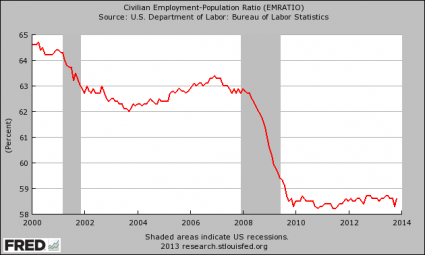
The Silicon Valley Firm That Spies On Non-Profits Is Seeking Investors

0

The $9 billion company claims it supports privacy right and free speech, but it charges clients $2 million a month to spy on activists.


This week Whitney revealed that many of the firms hired to infiltrate nonprofit organizations on behalf of corporations have their own revolving door of former government intelligence personel from CIA, NSA, DOJ, and more. These firms were identified in an exhaustive Center for Corporate Policy report, Spooky Business, which included a particular story about a group of these firms that referred to themselves as “Team Themis.” As CCP reported, Team Themis, led by HBGary Federal, a computer security firm, sent a proposal to Hunton & Williams law firm with an outline to infiltrate the nonprofit critics of its client, the US Chamber of Commerce. The array of unethical actions proposed by Team Themis is truly outstanding; infiltrate the nonprofit with a fake insider, wage electronic warfare, investigate staff and their families, and utilize former US military and intelligence staff to carry out operations.

How much does such a comprehensive strategy cost? According to CCP, Team Themis’ proposal came with a price tag of $200,000 per month for initial research and $2 million monthly for a full campaign.

Following Wikileaks’ threat to expose a scandal at a top US bank, Team Themis sprang into action and outlined another proposal for Hunton & Williams on a strategy to “destroy” Wikileaks. According to CCP’s documents that strategy included:

• Spread “disinformation” about WikiLeaks;

• “Submit fake documents and then call out the error.” In other words, forging documents, giving them to WikiLeaks, and then exposing them as false, to undermine Wikileaks’ credibility;

• Execute “[c]yber attacks against the [WikiLeaks] infrastructure to get data on document submitters”. Palantir, HBGary and Berico believe that this would “kill” WikiLeaks.

• An implicit threat to ruin the career of Glenn Greenwald, a prominent journalist, if he continues to support WikiLeaks.

These guys were, at least in print, very serious in their intent to spy on and disrupt these nonprofits. So why the jaunty name? For those, unlike myself, who were lucky enough not to take ancient greek in high school, Themis was the titan goddess of divine law and order (at the time social control by the gods), and a wife and counselor of Zeus. Somebackground to make you feel uncomfortable:

She was the divine voice (themistes) who first instructed mankind in the primal laws of justice and morality, such as the precepts of piety, the rules of hospitality, good governance, conduct of assembly, and pious offerings to the gods. In Greek, the word themis referred to divine law, those rules of conduct long established by custom.

Who are the gods to Team Themis and what are their “pious offerings”? Based on the Center for Corporate Policy’s report, it’s anyone with a few million and your data, respectively of course.

Team Themis was back in the news Thursday when Forbes revealed that one prominent member, Palantir Technologies, is seeking a $9 billion dollar valuation in its latest funding round. Palantir develops many different software applications that are largely used by the US Government and intelligence community (from 2005 to 2008, the CIA was their only customer). The name Palantir comes from the seeing stones in Lord of the Rings, which a certain PAI data specialist describes as a communication and tracking tool that, when in control of Sauron, allows him to see into the minds of his enemies. Apt to say the least.

But it’s clear from the fact that Palantir staff call their California office “the shire” that they see themselves on the other end of the seeing stone. The challenge of maintaining this good guy self image was clear when CEO Alex Karp personally apologized for Palantir’s role in the Wikileaks/Team Themis scandal and pledged support of “progressive values and causes”. From his statement:

The right to free speech and the right to privacy are critical to a flourishing democracy. From its inception, Palantir Technologies has supported these ideals and demonstrated a commitment to building software that protects privacy and civil liberties.

Palantir’s other co-founder and chairman, Peter Thiel, is a well known libertarian and generous, seven-figure donor to Ron Paul super PAC Endorse Liberty and limited government organization, Club for Growth. From his 2009 essay for the Cato Institute, The Education of a Libertarian:

I remain committed to the faith of my teenage years: to authentic human freedom as a precondition for the highest good. I stand against confiscatory taxes, totalitarian collectives, and the ideology of the inevitability of the death of every individual. For all these reasons, I still call myself “libertarian.”

It’s interesting to compare these libertarian fixations to what Palantir’s critics say about the company:

“They’re in a scary business,” says Electronic Frontier Foundation attorney Lee Tien. ACLU analyst Jay Stanley has written that Palantir’s software could enable a “true totalitarian nightmare, monitoring the activities of innocent Americans on a mass scale.”

I for one find it odd that a company with a CEO espousing progressive ideals and a co-founder obsessed with libertarianism would sell services that could be used to take down people and organizations that disrupt their clients. Aren’t they then working against the individual, in the interest of state control?

Karp is less concerned:

Karp, a social theory Ph.D., doesn’t dodge those concerns. He sees Palantir as the company that can rewrite the rules of the zero-sum game of privacy and security. “I didn’t sign up for the government to know when I smoke a joint or have an affair,” he acknowledges. In a company address he stated, “We have to find places that we protect away from government so that we can all be the unique and interesting and, in my case, somewhat deviant people we’d like to be.”

My guess is that deviants didn’t sign up for the government OR the US Chamber of Commerce to know when they smoke a joint or have an affair, but Palantir has shown it has the capacity to supply that pious offering to its gods.

Related Stories

Source: Alternet

ALEC Stands Its Ground, But Stumbles

0

It’s been a rough week for the organization that has become known as a corporate bill mill.


“I’m proud to stand with ALEC today,” declared Sen. Ted Cruz (R-Texas) on Thursday, as he addressed the American Legislative Exchange Council in Washington D.C.

“I first came to ALEC over a decade ago. When I was serving in the Bush administration, I’d been privileged to work with ALEC in the federal government,” Cruz said. “I’ve been privileged to work with ALEC when I was back in Texas with the Texas Public Policy Foundation, leading the 10th Amendment Center.”

As Cruz addressed the conference, around 200 activists marched outside, waving signs reading “A Legislator for Every Corporation” and chanting “you can hear us loud and clear — we want ALEC out of here!”

Cruz (who became notorious for his effort to shutdown the government) was at ALEC to give its corporate lobbyists and state legislator members a pep talk. It was a rough week for the organization that has become known as a “corporate bill mill.”

This week, The Guardian published ALEC documents demonstrating that the group has recently lost around 60 corporate members, largely as a result of its role in facilitating corporate influence over state legislators, and for pushing voter ID restrictions, climate change denial, and an array of other controversial, corporate-friendly bills. The documents show that ALEC misled its members about the strength of the organization, and misled the press about its plans for forming a 501(c)(4), and suffered a $1.4 million budget shortfall in the first half of 2013, largely as a result of losing corporate funders.

The corporate exodus began after revelations about ALEC’s role in pushing “Stand Your Ground” legislation modeled after the law that helped George Zimmerman walk free after killing Trayvon Martin.

“My advice to ALEC is very, very simple,” Sen. Cruz said, reflecting on public backlash against the organization. “Stand your ground.”

“Sen. Cruz also recently insisted to the mothers of Trayvon Martin and Jordan Russell Davis that Stand Your Ground is good for Black people,” said Rashad Robinson, Executive Director of ColorOfChange. “The Senator’s doubling down on his ignorant and tone-deaf defense of these deadly laws — and ALEC’s responsibility for spreading them nationwide — shows how disconnected ALEC’s champions have become from reality.”

“We Became More Transparent.” Really?

ALEC does appear to be “standing their ground.”

Rather than addressing many of the issues that have made ALEC so controversial, it has instead focused more aggressively on public relations. Last year, the group hired global PR firm Edelman, which made its mark representing the tobacco industry, and now represents oil and pharmaceutical interests. ALEC paid Edelman nearly $500,000 last year, according to tax filings. ALEC disbanded the Public Safety and Elections Task Force responsible for the spread of Stand Your Ground and voter ID, but has done nothing to promote the repeal of those laws.

ALEC has also hired a former Edelman executive, Bill Meierling, as their in-house Director of Public Affairs, and paid $118,000 to “public affairs” consultants during the first six months of 2013, according to a budget published by The Guardian.

Oddly, as ALEC tried to weather the storm this week, the notoriously secretive organization tried to change the discussion by touting its “transparency.”

“We became more transparent” in 2013, reads the first page of the meeting agenda. ALEC is “focused on transparency,” ALEC said in a statement released this week.

ALEC is “moving towards transparency,” said its spokesperson Meierling, as he refused press credentials to Mother Jones reporter Andy Kroll.

ALEC’s Meierling also touted the organization’s “transparency” as it barred Washington Post reporter Dana Milbank from attending the task force meetings where corporate lobbyists and state legislators vote as equals on model bills. “Our business meetings are not open, and so the subcommittee meetings and task force meetings are not open,” Meierling told Milbank.

“What you fundamentally need to know about this organization is it’s completely legislator driven,” Meierling told him.

“Uh-huh,” Milbank wrote. “And ALEC is proving that by keeping reporters from the rooms where the legislators are or are not receiving their marching orders from corporate patrons.”

The Guardian also revealed new angles to ALEC’s effort to evade state transparency laws.

Legislators who serve as ALEC State Chairs would be required to “inform ALEC of any public records/FOIA requests that include ALEC documents,” according to a draft agreement.

As CMD has previously reported, this fits into a larger pattern of ALEC trying to keep its communications with lawmakers secret.

Despite ALEC’s claims that “we became more transparent” in 2013, this year, ALEC began stamping the materials it gives to legislators with a “disclaimer” asserting that the documents are not subject to any state’s open records law. ALEC has also been sending communications to legislators via an online dropbox, which it admitted in June was an effort to try to evade disclosure under open records laws. In Texas, ALEC even went so far as to formally ask that its communications with lawmakers be exempt from the state’s Public Information Act, making the absurd claim that sunshine laws threaten its “freedom of association” rights. Attorney General Greg Abbott, a Republican, rejected this claim in September.

ALEC Supports Local Control?

Another odd piece of spin from ALEC was its stated commitment to local control. “People are better served by local leaders,” said American Legislative Exchange Council National Chair Linda Upmeyer, a State Representative from Iowa, at Wednesday’s luncheon.

ALEC’s record sure doesn’t suggest much faith in local democracy — at least when local governments threaten the profits of ALEC’s corporate backers. For example:

• The ALEC “Municipal Telecommunications Private Industry Safeguards Act” would thwart local control by prohibiting city and county governments from establishing municipal broadband; the bill, which is a boon for ALEC members like AT&T, has become law in nineteen states.

• At ALEC’s August 2011 meeting, legislators were handed a Wisconsin bill to preempt local efforts to guarantee paid sick days for workers; after that, paid sick days preemption bills have spread across the country and been introduced in twelve other states, in most cases sponsored by an ALEC legislator, and with the backing of ALEC members like the National Restaurant Association.

• The ALEC “Living Wage Mandate Preemption Act” would prohibit local governments from enacting a minimum wage ordinance that exceeds the statewide minimum; a discussion on minimum wage was also on the agenda for this year’s meeting, as workers across the country walk out of fast food jobs to advocate for a minimum wage increase.

• The “State Pesticide Preemption Act” would bar local leaders from protecting the health of their communities by limiting the types of pesticides that can be used within city or county limits, and the “Biotechnology State Uniformity Resolution” calls for preemption of local GMO bans, both of which protect the profits of the corporations represented by ALEC member CropLife America.

• ALEC also has adopted legislation to preempt local leaders from enacting labor peace agreements and rent controls.

• In one of the last acts of the now-disbanded Public Safety and Elections Task Force, ALEC even adopted a bill to prohibit local governments from banning machine guns or other firearms in their communities.

Perhaps not surprisingly, there are some indications that ALEC’s claimed dedication to “local control” may actually have nothing to do with support for local democracy.

In a workshop at the ALEC meeting, Michael Farris, a Senior Fellow at the group Citizens for Self-Governance, advised ALEC members on messaging, and warned against the use of terms like “states rights.”

”It’s not about states rights, it’s about local control,” he said.

States rights is associated with slavery, Farris said, but by using terms like “local control,” “you just steer the language in the proper direction.”

Related Stories

Source: Alternet

Colonel Who Vowed to Disarm Americans Works With Homeland Security

0

Oath-violating Bateman also made veiled death threats against blogger

Paul Joseph Watson
Infowars.com
December 6, 2013

Image: Col. Robert Bateman (CapitalLinkWorld.com).

Lt. Col. Robert Bateman, the second amendment-hating Army Officer who caused controversy after vowing to “pry your gun from your cold, dead, fingers,” works closely with the Department of Homeland Security.

Earlier this week, Bateman, an active military commander, penned a piece for Esquire magazine in which he promised to push for a total ban on all firearms besides muskets, shotguns and rifles, and shut down all gun manufacturers except for those who produced weapons for the federal government and the armed forces (you will be disarmed, the state will have a monopoly on firepower).

Bateman is president and founder of Alliance Defense Marketing Associates LLC, a “global premier risk management” firm that does work for the DHS.

According to the company’s website, part of the services offered by the firm include, “Homeland Security operational initiatives.”

According to Bateman’s official LinkedIn page, he also personally specializes in “Defense/Homeland Security/Law Enforcement operational initiatives.”

That’s ironic given that while Bateman is lecturing the American people about their gun rights, the DHS is simultaneously buying assault riflesand acquiring billions of rounds of ammunition.

Critics contend that Bateman’s revulsion for the second amendment (which he woefully misinterprets) “proves he knows nothing about the Constitution he swore an oath to defend.”

Bateman’s promise to “pry your gun from your cold, dead, fingers” was an inflammatory reference to his advocacy for making it illegal for guns on his imaginary blacklist to be inherited. “I am willing to wait until you die, hopefully of natural causes,” wrote Bateman.

Later in the article, Bateman says disarming the American people is all about encouraging “less violence and death,” although such sentiments weren’t evident when he became embroiled in an argument with a blogger which ended up with the Colonel making a thinly veiled death threat.

The argument concerned a former senior female Human Terrain Team (HTT) member who was allegedly subjected to a death threat by an active duty lieutenant at Bagram Airfield in Afghanistan.

After Bateman engaged in “ad hominem attacks” against Maximilian Forte, the blogger who posted the story, and was subsequently banned, he resorted to a veiled death threat of his own.

“And I apologize for the future. Not really my fault. But I am sorry nonetheless,” wrote Bateman.

“You apologize for the future. It was worth approving your message just so that others can see the veiled threat,” responded Forte.

Bateman repeated the threat in a subsequent post when he remarked, “And again, Max, truly, I am sorry for your future.”

Bateman’s thinly veiled death threats reveal him to be a wolf in sheep’s clothing, someone who claims to be all about reducing violence yet resorts to barely disguised rhetorical threats of violence against his ideological adversaries.

It seems abundantly clear that it is Bateman who has a problem with violence and is most likely a danger to himself and those around him. It is therefore Bateman, and not the American people, who should be disarmed.

Feel free to politely email Col. Bateman and let him know what you think about his views on the second amendment.

Facebook @ https://www.facebook.com/paul.j.watson.71
FOLLOW Paul Joseph Watson @ https://twitter.com/PrisonPlanet

*********************

Paul Joseph Watson is the editor and writer for Infowars.com and Prison Planet.com. He is the author of Order Out Of Chaos. Watson is also a host for Infowars Nightly News.

This article was posted: Friday, December 6, 2013 at 1:09 pm


Source: Infowars

CNN Poll: Support for stricter gun control fades

0

cnn.com
December 6, 2013

As memories fade from last December’s horrific school shooting in Newtown, Connecticut, a new national poll indicates that support for stricter gun control laws appears to be fading, too.

According to a new CNN/ORC International survey, 49% of Americans say they support stricter gun control laws, with 50% opposed. The 49% support is down six percentage points from the 55% who said they backed stricter gun control in CNN polling from January, just a few weeks after the tragedy at Sandy Hook Elementary School, where a lone gunman killed 20 young students and six adults before killing himself, in one of the worst mass shootings in U.S. history.

The poll’s Wednesday release comes on the same day that 911 tapes from the Newtown shootings are being released.

This article was posted: Friday, December 6, 2013 at 12:57 pm


Source: Infowars

NSA tracks phones by executive order

0

The US National Security Agency collects cellphone location data from around the world under a 1981 executive order signed by former president Ronald Reagan.

Although Congress never authorized Executive Order 12333, the NSA said on Friday that the massive data collection does not violate the Foreign Intelligence Surveillance Act, which authorizes warrantless wiretapping by the spy agency, according to The Hill newspaper.

A NSA spokeswoman said the agency “tries to avoid” collecting Americans’ cellphone location information. “Again, the Agency’s EO 12333 collection is outward-facing. We are not intentionally acquiring domestic information through this capability,” the spokeswoman said.

The Washington Post reported on Wednesday that the NSA collects almost 5 billion cellphone records a day, enabling the agency to track individuals�™ movements and map their relationships.

Top-secret documents leaked by former NSA contractor Edward Snowden reveal that new projects have been created to analyze the huge amounts of data, providing the US intelligence community with an unimaginable mass surveillance tool.

The scale, scope and potential impact of the new leaks put this spying tool on top of all the other NSA surveillance programs exposed since June. NSA agents can find cellphones anywhere in the world, retrace their movements and expose hidden relationships among individuals using them.

�œThe paths that we travel every day can reveal an extraordinary amount about our political, professional, and intimate relationships,” Catherine Crump, an attorney for the American Civil Liberties Union, said in a statement Wednesday after the NSA program was revealed.

AHT/HJ

Source: Press TV

Building Solidarity to End South African Apartheid

0
Published in Toward Freedom, December 1981
The American movement to break a rapidly developing alliance between South Africa and the United States was launched in October, 1981 at an historic conference in New York. 
Just days after the US stood alone in the United Nations by refusing to condemn South Africa’s attack on Angola, the Conference in Solidarity with the Liberation Struggles of the Peoples of South Africa adopted a forceful anti-apartheid declaration and a comprehensive plan of action designed to isolate the apartheid regime and assist liberation struggles in both South Africa and Namibia.
Representatives of hundreds of labor, religious, academic, youth and grassroots organizations gathered at New York’s Riverside Church from October 9-11 in an optimistic mood — despite the escalation of violence in southern Africa and the Reagan administration’s willingness to move toward full relations with South Africa.
Still, there were few illusions. Although the National Program of Action adopted on the final day focused on sanctions, a cutoff of aid and investment, and an end to cultural and sports contact between the US and the apartheid regime, most delegates accepted — in fact, embraced — the necessity of armed struggle in order to liberate while-dominated Namibia and South Africa.
The unanimously-adopted conference declaration made this stance quite clear. “We are inspired,” it stated, “by the example of the men and women of SWAPO and the ANC, who, having exhausted all peaceful means, have been compelled to take up arms to free Namibia from illegal South African control, and to free the people of South Africa from the racist dictatorship that has made it an outcast among nations.”
Congressional representatives and labor leaders echoed the call. After describing her horror at witnessing the destruction of a black settlement, Rep. Shirley Chisholm said she was now certain South Africa had no intention of changing its racial policies. Later Cleveland Robinson, long-time activist with the United Auto Workers, advised that, “If the freedom fighters of the ANC and SWAPO decide they have to take up arms, our obligation is to support them.”
In fact, that phase of the struggle was already well underway. ANC and SWAPO representatives reported on the upsurge in labor, student and military actions, including the destruction of communication lines, police stations and, in Pretoria itself, a military headquarter.
The conferees nevertheless understood that resistance and pressure within the US was essential to the success of movements in southern Africa. The 21-page program emerging from the event detailed ways to organize a groundswell of opposition to apartheid that would isolate South Africa, force its withdrawal from Namibia, reinforce the much-abused embargo, and provide material assistance to both the liberation movements and the frontline states, which increasingly felt the effects of South African aggression.
A State Department policy paper reviewed in New York linked a Namibian settlement with the removal of Cuban troops from Angola and a demand that the Angolan government share power with UNITA. Furthermore, the paper suggested that US officials cover up that linkage: “We would insist that these are unrelated, but in fact they would be mutually reinforcing…”
Ultimately, the US State Department and South African regime hoped to forestall an expected victory for SWAPO in an election. Prior to President Reagan’s election, terms for that vote had been worked out. But now South Africa flatly refused to move forward with the plan.
Sanctions, Delays and Propaganda
According to Randall Robinson of TransAfrica, the US was willing to give the South Africans about two years to “work something out — to get the government the US wants in Namibia.” The assumption was that the longer it took the more possible became the defeat of SWAPO by internal forces. But conference delegates heard from SWAPO and observers that its base of support was actually growing, while the focus shifted from political to military strategy.
The approach to changing US policy toward Namibia from within America included work toward a criminal tribunal for mercenaries, congressional action to impose comprehensive sanctions — military, economic, political, social and cultural, lobbying to protect and extend the Clark Amendment, and nationwide educational efforts to counteract what many conferees called “propaganda” inspired by South Africa to cloak US-SA collaboration in national security assumptions.
Among the people to address the media’s role was Michigan Congressman George Crockett, who bluntly stated that the “American people are misinformed and lied to about what is going on in other countries.” Noting that the South African government had the money and media connections “to sell apartheid like a tube of toothpaste,” he maintained that, in reality, the regime had to plans to abandon its homelands policy, pass laws, use of Namibia as a military staging area, or the exploitation of that country’s natural resources.
Quoting Fidel Castro’s statement that the main core of the current US government was fascist, Crockett said that actions by the Reagan administration had persuaded him to agree. And if that rightward shift continued, he concluded, a resource war could emerge.
In working sessions, experts in media and cultural relations with South Africa supported Crockett’s accusation concerning the impact of propaganda within the US. For example, Rutgers University Associate Professor George Wilson explained how South Africa planted stories in the US with the help of the CIA. He also pointed to an increase in South African investment in US media. One US businessman, John McGoff, had received more than $1.7 million from the South African government to purchase a controlling interest in UPI Television, the second largest news-film producer in the world.
South African businessmen working with their government had also gained control over six daily and 61 weekly US newspapers, Wilson claimed. In response, once working group proposed research to identify South African-influenced media with an eye to initiating legal action against some publishers as unregistered South African agents.
The UN’s special interest in the role of the mass media was also reviewed. Having declared 1982 International Year of Mobilization for Sanctions Against Apartheid, it had held a conference on mass media in Berlin in August. That conference urged that all media workers “mobilize world opinion against apartheid.”
Like most of the proposals adopted in New York, that would be difficult to implement. It seemed unlikely, for instance, that major US media would adopt such an advocacy stance. In fact, during the weekend of the conference not one word about it appeared in The New York Times.
On the other hand, features generally supportive of South African-backed UNITA recently appeared in The Washington Post, and columnists such as James Kilpatrick persisted in downplaying apartheid and South Africa’s illegal occupation of Namibia while attacking the UN as an “impotent body” unworthy of support.
The delegates were nevertheless optimist about the struggle. The overall mood was proud and angry; the participants were ready to support both congressional lobbying efforts through the black caucus and open war to topple the South African regime.
At the final plenary session, human rights lawyer Lennox Hinds called the event “the seed that will take root in every city, village and state across the United States.” He reminded delegates that despite the myopic view often taken in US and reinforced by mass media, “the global struggles for liberation are winning.”
His message, despite entrenched racism and US complicity, was powerful and compelling. Quoting an ANC slogan, Hinds told an enthusiastic crowd, “Victory is certain.”
Greg Guma has been a writer, editor, historian, activist and progressive manager for over four decades. His latest book, Dons of Time, is a sci-fi look at the control of history as power.

Congress to Obama: Cancel Iran deal

0

Adam Kredo
freebeacon.com
December 6, 2013 1:05 pm

Congressional opposition to the recently announced nuclear accord with Iran reached a critical tipping point this week as lawmakers from both sides of the aisle publicly lambasted the deal while pushing for tighter economic sanctions on Tehran.

As the details of an interim nuclear deal reached last month in Geneva become clear, Congressional opposition has grown, leaving the White House to sell a deal that even its allies have dubbed as worrisome.

The White House held a classified briefing with members of Congress on Wednesday to push them against passing new sanctions in 2014, giving Iran at least another year of economic reprieve, according to Rep. Brad Sherman (D., Calif.).

This article was posted: Friday, December 6, 2013 at 12:48 pm


Source: Infowars

Japan Enacts ‘State Secrets’ Bill Amid Mass Protests

0

Protesters rally against the state secrets bill Thursday outside the Diet. (Japan Times / SATOKO KAWASAKI)As thousands of protesters gathered outside of Japan’s parliament for the second day in a row Friday, lawmakers officially enacted a controversial “state secrets” bill that will criminalize public officials, private citizens and journalists who leak information from the state.

Under the new law, which was pushed by Japan’s Prime Minister Shinzo Abe, public officials could face up to 10 years in prison for exposing “state secrets,” which could include “sensitive information about the Fukushima nuclear disaster and the country’s souring relations with China,” as The Guardian reports. Journalists who seek out classified information could face up to five years.

“The chief criticism of the bill is its vague definition of what constitutes a state secret, potentially giving officials carte blanche to block the release of information on a vast range of subjects,” The Guardian adds.

As Reuters notes, “The passing of the law coincides with a worldwide debate on secrecy after former U.S. National Security Agency contractor Edward Snowden leaked documents and a U.S. Army private leaked information to anti-secrecy group Wikileaks.”

Critics say the bill will strangle media freedoms and help cover up wrongdoings inside of the government.

The bill’s journey through Japan’s parliament, the Diet, has been marked with public uproar and protest.

Over 30,000 protesters had gathered Thursday night as lawmakers “rammed legislation through the Upper House Special Committee on National Security,” The Japan Times reports.

Following the bill’s passage, a crowd formed throughout the day Friday and is expected to surpass Thursday’s numbers.

“It is a threat to democracy,” said Keiichi Kiriyama a journalist at the newspaper Tokyo Shimbun. The legislation will “have a chilling effect on public servants, who could become wary about giving the information,” said Kiriyama.

“There is a demand by the established political forces for greater control over the people,” said Lawrence Repeta, a law professor at Meiji University. “This fits with the notion that the state should have broad authority to act in secret. It seems very clear that the law would have a chilling effect on journalism in Japan.”Protesters rally against the state secrets bill outside the Diet building Friday. (Japan Times / Satoko Kawasaki)

_______________________

This work is licensed under a Creative Commons Attribution-Share Alike 3.0 License.

Source: Common Dreams

How Do You Charge an Unarmed Man with Shooting People? Get the NYPD Involved.

Scott Shackford

In September, New York Police officers responded to an emotionally disturbed man causing a ruckus at a Times Square bus terminal by opening fire on him while they were surrounded by crowds and traffic. They missed him and hit two innocent bystanders (one of whom was in a walker). Police said at the time they thought the man, Glenn Broadnax, was reaching for a gun, but he turned out to be unarmed.

Even though Broadnax was not armed, an indictment unsealed Wednesday is charging him with assault for the injuries caused by police gunfire. From the New York Times:

The man, Glenn Broadnax, 35, of Brooklyn, created a disturbance on Sept. 14, wading into traffic at 42nd Street and Eighth Avenue and throwing himself into the path of oncoming cars.

A curious crowd grew. Police officers arrived and tried to corral Mr. Broadnax, a 250-pound man. When he reached into his pants pocket, two officers, who, the police said, thought he was pulling a gun, opened fire, missing Mr. Broadnax, but hitting two nearby women. Finally, a police sergeant knocked Mr. Broadnax down with a Taser. …

Initially Mr. Broadnax was arrested on misdemeanor charges of menacing, drug possession and resisting arrest. But the Manhattan district attorney’s office persuaded a grand jury to charge Mr. Broadnax with assault, a felony carrying a maximum sentence of 25 years. Specifically, the nine-count indictment unsealed on Wednesday said Mr. Broadnax “recklessly engaged in conduct which created a grave risk of death.”

“The defendant is the one that created the situation that injured innocent bystanders,” said an assistant district attorney, Shannon Lucey.

Read more

Fed’s Evans says open-minded to December taper, but prefers waiting

0

reuters.com
December 6, 2013

A top Federal Reserve official said on Friday he was “open-minded” to the idea of reducing the U.S. central bank’s bond purchasing stimulus program this month, but he would like to see a stronger labor market first.

Asked whether strong job creation in November put a tapering of bond purchases on the table at this month’s Fed meeting, Chicago Fed President Charles Evans said the data showed the economy was moving in the right direction.

U.S. employers increased payrolls by 203,000 new jobs in November, the Labor Department said earlier on Friday, a number that outstripped forecasts for 180,000 and brought the unemployment rate down to a five-year low of 7.0 percent.

This article was posted: Friday, December 6, 2013 at 12:45 pm


Source: Infowars

Nelson Mandela Dead? Paris Hilton Tweet? Hey, World Cup’s Up

0

Infowars.com
December 6, 2013

This demands your time. A fake Paris Hilton tweet lampooning the rocket scientist’s grasp of history and politics.

Meanwhile, we’re teetering on an economic precipice as China signals it will no longer underwrite the debt cranked up by spendthrift politicos in the United States.

After China kicks the supports out from under the dollar and its value tumbles, stuff’s going to cost a heck of a lot more.

So eat, drink – and buy (for now) cheap goods made by Chinese slaves – for tomorrow we die.

Not that it matters much to the trust-fund baby Paris Hilton. She’s worth around $100 million. It’ll take a little while for inflation to whittle away that pile.

This article was posted: Friday, December 6, 2013 at 12:25 pm


Source: Infowars

‘Nothing is beyond our reach’: Evil octopus strangling the world becomes latest US intelligence seal

Billions of dollars annually are being used to fund operations conducted by the United States intelligence community, the likes of which allow the government to eavesdrop on emails, listen to world leaders’ phone calls and about everything in-between.

One thing that budget hasn’t bought, however, is subtlety. The US National Reconnaissance Office launched a top-secret surveillance satellite into space Thursday evening, and the official emblem for the spy agency’s latest mission is, well, certainly accurate, to say the least.

The Office of the Director of National Intelligence live-tweeted Thursday’s launch from Vandenberg Air Force Base in California, and throughout the course of the ordeal made no effort to ignore the logo for the NROL-39 mission.

The latest spy satellite to be sent into orbit by the NRO can be recognized by its seal: a malevolent octopus with furrowed brows that also happens to be wrapping its tentacles around all corners of the Earth.


“Nothing is beyond our reach,” the NRO boasts on the bottom half of the emblem just below the most sinister-looking cephalopod likely ever to be sent into space.

Along with the National Security Agency and more than a dozen others, the NRO is one of 16 federal offices under the directive of DNI James Clapper and is responsible for building and operating the spy satellites used to collect intelligence around the world. NRO-gathered intelligence was reportedly instrumental in the mission that brought US Navy SEAL’s to the home of former al-Qaeda leader Osama bin Laden in 2011, and decades earlier the agency launched a school-bus sized satellite into orbit to spy on Soviets at the height of the Cold War.


In preparation for launch, the NROL-39 payload, encapsulated within a 5-meter diameter payload faring, is transported and mated to its United Launch Alliance (ULA) Atlas V booster at Vandenberg's Space Launch Complex-3. (Photo from www.ulalaunch.com)In preparation for launch, the NROL-39 payload, encapsulated within a 5-meter diameter payload faring, is transported and mated to its United Launch Alliance (ULA) Atlas V booster at Vandenberg’s Space Launch Complex-3. (Photo from www.ulalaunch.com)


This time around the ODNI says the satellite’s payload is mostly classified, but did admit over Twitter that around a dozen mini satellites funded by both the NRO and NASA will be brought along to orbit as well. Another thing they didn’t bother to acknowledge, of course, is how the lack-of-subtlety apparent in the Earth-strangling octopus emblem could quickly be used by critics of the US intelligence community as fodder to further condemn the government for admitting to their sheer and unmatched ability to control the world’s information.

Thursday’s launch of the latest NRO satellite occurred almost exactly six-month-to-the-day after The Guardian and Washington Post newspapers published the first of what has since been revealed to be a trove of leaked national security document showing proof of the NSA’s widespread and extensive ability to monitor people around the world. On June 6 those papers first disclosed evidence in which the NSA was documented to demand telephony metadata from millions of people daily, and a steady stream of leaked files attributed to former intelligence contractor Edward Snowden have since captivated the world while also raising a number of questions.


A United Launch Alliance (ULA) Atlas V rocket carrying a payload for the National Reconnaissance Office (NRO) lifted off from Space Launch Complex-3 on Dec. 5 at 11:14 p.m. (Photo from www.ulalaunch.com) A United Launch Alliance (ULA) Atlas V rocket carrying a payload for the National Reconnaissance Office (NRO) lifted off from Space Launch Complex-3 on Dec. 5 at 11:14 p.m. (Photo from www.ulalaunch.com)


For half a year now, leaked NSA documents have let the world learn that the US monitors the phone habits of not just Americans, but also foreigners sitting atop the governments of allied nations.

Reporters with access to the cache of pilfered papers have reportedly released only a sliver of what’s been reported to be 50,000 documents during those six months, but the response has already been widespread. The leaders of countries such as Brazil and Germany have lashed out at the NSA’s behavior, and DNI Clapper and his deputy manning the NSA, Gen. Keith Alexander, have easily become two of the most embattled public figures in Washington.

That being said, you’d think ODNI would reconsider launching a new spy satellite. Or maybe even not put an octopus strangling the Earth on the outside.


“You may want to downplay the massive dragnet spying thing right now,” Chris Soghoian, the chief technologist at the American Civil Liberties Union, tweeted Thursday. “This logo isn’t helping.”

According to a top-secret budget document released by Snowden and first reported on in August, the NRO is in the midst of modernizing their signals intelligence, geospatial and communications system to replace current capabilities.

With permission
Source: RT

America: Afraid of Shadows in the Dark While Ignoring the Elephants in the Room

0

via

What baffles the mind about the United States of America is that many of its citizens have been conditioned to fear shadows in the dark while ignoring the elephants in the room.

I. Homelessness and Bankruptcies

For example, in the last few years anti-homelessness laws have been passed across the United States, some going as far as making it illegal to feed the homeless. As if that wasn’t enough, to deal with America’s homelessness problem (2), some government representatives have turned to violence:

“Remarkably, this vigilante isn’t just some random Hawaiian, but five-term State Rep. Tom Brower (D).

“Noting that he’s ‘disgusted’ with homeless people, Brower told the Honolulu Star-Advertiser about his own personal brand of ‘justice’: ‘If I see shopping carts that I can’t identify, I will destroy them so they can’t be pushed on the streets.’ Brower has waged this campaign for two weeks, estimating that he’s smashed about 30 shopping carts in the process.

“‘I want to do something practical that will really clean up the streets,’ he explained to Hawaii News Now as he showed off his property destruction skills:”

The ignorance and ruthlessness of those in office should be considered a crime since they do not seem to realize that recession-induced homelessness skyrocketed after the 2008 economic crisis. Something that they are directly responsible for considering that it was our government representatives that passed the 2005 Bankruptcy Bill – its passing coinciding with the largest economic crisis in contemporary history. The reforms that were introduced made it much harder and more costly for Americans to file for bankruptcy protection.

Report Shows Bankruptcy Reforms Raised Costs For Consumers and Creditors

“According to Professor Lupica the Bankruptcy Abuse Prevention and Consumer Protection Act of 2005 (BAPCPA) has resulted in higher costs for consumers who wish to file for bankruptcy and, consequently, lower returns for creditors.”

After years of lobbying, the “dream bill for credit card and financial service companies” finally came into effect. The bill was “the biggest rewrite of U.S. bankruptcy law in a quarter century”. It was also conveniently or inconveniently, depending on your perspective, introduced at a time when U.S. household debt was at an all-time high.


click to enlarge – source – additional data

[Continued at chycho]

The post America: Afraid of Shadows in the Dark While Ignoring the Elephants in the Room appeared first on disinformation.

Source: Disinfo

Nelson Mandela, 1918-2013: Anti-Apartheid Icon, ‘Now at Rest’

0

(Getty Images)Nelson Mandela, South Africa’s first black president who helped lead the country’s revolution out of the brutal apartheid system, died Thursday at his home at the age of 95.

“He is now resting,” said South African President Jacob Zuma. “He is now at peace.”

“Our nation has lost his greatest son,” he continued. “Our people have lost their father.”

Mandela had been suffering from several health issues including repeated hospitalizations with a chronic lung infection.

The Guardian reports:

The death of Mandela will send South Africa deep into mourning and self-reflection 18 years after he led the country from racial apartheid to inclusive democracy.

But his passing will also be keenly felt by people around the world who revered Mandela as one of history’s last great statesmen, and a moral paragon comparable with Mohandas Gandhi and Martin Luther King.

“No one is born hating another person because of the color of his skin, or his background, or his religion,” Mandela wrote in his memoir Long Walk to Freedom. “People must learn to hate, and if they can learn to hate, they can be taught to love, for love comes more naturally to the human heart than its opposite.”

_______________________

This work is licensed under a Creative Commons Attribution-Share Alike 3.0 License.

Source: Common Dreams

Snowden: Indicted by US, Key Witness for EU

Edward Snowden, the NSA whistleblower indicted by the United States government, is slated to testify by video to the European Parliament later this month about the mass surveillance of EU citizens.

Jan Philipp Albrecht, German member of the European Parliament, announced Thursday that Snowden will present to the Committee on Legal Affairs possibly as early as December 18, Deutche Welle reports.

Snowden’s statement, and his responses to questions provided in advance, will be pre-recorded and shown by video, due to the danger that a live stream could reveal his location, EU Observer reports.

The Green Party of the European Parliament passed a resolution in July calling for Snowden to testify about NSA spying.

“It’s a great success for the European parliament that Edward Snowden has already agreed to testify publicly as a key witness in the surveillance scandal,” stated Albrecht. “Half a year after the first publications from his collection of numerous NSA documents, the truth of which has not so far been refuted, there are still consequences as far as political responsibility is concerned.”

The surveillance scandal has ricocheted across Europe and the world, following revelations exposed by Snowden that the U.S. has spied on European allies, including German Chancellor Angela Merkel’s telephone.

Yet, NSA documents exposed by Snowden and reported by German paper Der Spiegel also reveal that Germany has been a willing partner in NSA spying.

_____________________

This work is licensed under a Creative Commons Attribution-Share Alike 3.0 License.

Source: Common Dreams

Worst-Case Scenario for Oil Sands Industry Has Come to Life, Leaked Document Shows

0

As environmentalists began ratcheting up pressure against Canada’s tar sands three years ago, one of the world’s biggest strategic consulting firms was tapped to help the North American oil industry figure out how to handle the mounting activism. The resulting document, published online by WikiLeaks, offers another window into how oil and gas companies have been scrambling to deal with unrelenting opposition to their growth plans.

The document identifies nearly two-dozen environmental organizations leading the anti-oil sands movement and puts them into four categories: radicals, idealists, realists and opportunists—with how-to’s for managing each. It also reveals that the worst-case scenario presented to industry about the movement’s growing influence seems to have come to life.

The December 2010 presentation by Strategic Forecasting, or Stratfor, a global intelligence firm based in Texas, mostly advised oil sands companies to ignore or limit reaction to the then-burgeoning tar sands opposition movement because “activists lack influence in politics.” But there was a buried warning for industry under one scenario: Letting the movement grow unopposed may bring about “the most significant environmental campaign of the decade.”

“This worst-case scenario is exactly what has happened,” partly because opposition to tar sands development has expanded beyond nonprofit groups to include individual activists concerned about climate change, said Mark Floegel, a senior investigator for Greenpeace. “The more people in America see Superstorm Sandys or tornadoes in Chicago, the more they are waking up and joining the fight.”

[View the documents at Inside Climate News]

Since the presentation was prepared, civil disobedience and protests against the tar sands have sprung up from coast to coast. The movement has helped delay President Obama’s decision on the Keystone XL pipeline—designed to funnel Canada’s landlocked oil sands crude to refineries on the Gulf Coast—and has held up another contentious pipeline in Canada, the Northern Gateway to the Pacific Coast.

The Power Point document, titled “Oil Sands Market Campaigns,” was recently made public by WikiLeaks, part of a larger release of hacked files from Stratfor, whose clients include the Departments of Homeland Security and Defense, Lockheed Martin, Raytheon and the American Petroleum Institute, the oil industry lobby. It appears to have been created for Calgary-based petroleum giant Suncor Energy, Canada’s largest oil sands producer.

The company told InsideClimate News that it did not hire Stratfor and never saw such a presentation. Suncor is mentioned 11 times in the document’s 35 pages and all of Stratfor’s advice seems to be directed at the energy company. For example, one slide says, “Campaign ends quickly with a resolution along the lines Suncor had wanted.” In several emails released by WikiLeaks, Stratfor employees discuss a $14,890 payment Suncor owes the company for two completed projects, though no details were provided.

The presentation is the latest in a series of revelations that suggest energy companies—which for most of their history seemed unfazed by activists—have been looking for ways to dilute environmentalists’ growing influence.

Earlier this year, TransCanada, the Canadian energy company behind the Keystone XL, briefed Nebraska law enforcement authorities on how to prosecute demonstrators protesting the 1,200-mile project. In 2011, Range Resources, an oil and gas company, allegedly hired combat veterans with experience in psychological warfare to squash opposition of natural gas drilling.

“The Stratfor presentation isn’t a complete surprise,” said Scott Parkin, a senior campaigner for the Rainforest Action Network and volunteer organizer for Rising Tide North America, both grassroots environmental groups. “As opposition has grown, coal, oil and gas companies are all starting to put more money into responding—from surveillance to protection to public relations.”

Who Was Targeted?

For each of Stratfor’s categories of environmental activist—radicals, idealists, realists and opportunists—the presentation explains how their campaigns are structured and how the fossil fuel industry could deal with them.

Three grassroots organizations—Rising Tide North America, Oil Change International and the Indigenous Environmental Network—were labeled radicals. Greenpeace and the Rainforest Action Network were classified as a cross between radicals and idealists. Sierra Club, the nation’s largest environmental group, Amnesty International and Communities for a Better Environment, among others, were labeled idealists. Several mainstream environmental groups, including the National Wildlife Federation, World Wildlife Fund, Natural Resources Defense Council and Ceres, a nonprofit that organizes businesses, investors and public interest groups, were called realists.

It then lays out tactics the groups would use to push for change. They include holding demonstrations outside annual meetings and marketing events, generating fear of oil spills and other environmental disasters, targeting CEOs and their families, collaborating with other green groups, and splitting the fossil fuel industry on the issue by praising companies working with activists and publicly shaming those that aren’t.

The presentation says that while environmental groups are publicly fighting to stop the expansion of the oil sands, their “real demand” is for fossil fuel companies to adopt a “global code of conduct”—a set of best practices not required by law, but that take into consideration things like greenhouse gas reduction policies and human rights.

The Power Point also describes all the ways fossil fuel companies like Suncor could choose to react to green groups’ campaigns, such as limiting contact with the organizations, intentionally delaying negotiations, developing its own environmental initiatives to overshadow activists’ demands, or simply not responding. It provides the pros and cons of each public relations decision, as well as the best- and worst-case outcomes for each.

For example, Stratfor said that choosing not to respond could be useful because in 2010, “activists are not stopping oil sands’ growth and they have no power in Alberta or Ottawa. Chance of success with U.S. government is slim.” The best outcome from a no-response strategy, according to the presentation, is that green “groups move to fracturing [natural gas fracking] or some other venue to press for the first major code of conduct.”

Stratfor would not answer questions about the presentation because it has a policy not to comment on any of the WikiLeaks documents.

Several environmental groups named in the Stratfor presentation said they weren’t surprised by the consulting firm’s assessment of their work, but were disappointed, especially by its assumption that all they wanted was a code of conduct.

“The environmental community has been very united in saying that we need to stop tar sands expansion and clean up the mess already made there,” said Susan Casey-Lefkowitz, director of the Natural Resources Defense Council’s international program. “That’s the only real path forward if we’re going to protect not only the health of communities on the ground in the boreal forests near the tar sands region, but also around the world from the impacts of climate change. We’re not looking for a code of conduct.”

For many, the leaked presentation provided proof that their work was having an impact, boosting their confidence to keep protesting.

“Knowing that groups like Stratfor are targeting us, surveying us, and also analyzing us shows how powerful these movements have become,” said Parkin of the Rainforest Action Network and Rising Tide North America. “Obviously this wasn’t meant for public consumption, but this doesn’t intimidate us. If anything, it emboldens us. It encourages us to push harder.”

Republished with permission of InsideClimate News, a non-profit, non-partisan news organization that covers energy and climate change—plus the territory in between where law, policy and public opinion are shaped.

© 2013 Inside Climate News

Source: Common Dreams

Mandela Embodied the Victories and Failures of the South African Liberation Struggle

0

JAISAL NOOR, TRNN PRODUCER: Welcome to The Real News Network. I’m Jaisal Noor in Baltimore. The world is remembering Nelson Mandela, the anti-apartheid leader who spent 27 years in prison on his way to defeating apartheid and becoming South Africa’s first black elected leader.

Now joining us to talk about Nelson Mandela and his legacy is Glen Ford. He’s the cofounder and executive editor of the Black Agenda Report. He also colaunched, produced, and hosted America’s Black Forum, the first nationally syndicated black news interview program on commercial television.

Thank you for joining us, Glen.

More at The Real News

Transcript

GLEN FORD, EXECUTIVE EDITOR, BLACKAGENDAREPORT.COM: Thank you for your invitation.

NOOR: Now, Glen, Nelson Mandela obviously had a tremendous impact on South Africa and the world. Can you talk a little bit about his contributions?

FORD: Nelson Mandela, to both foreigners and to South Africans, is really a kind of embodiment of the South African liberation struggle. He is the spawn of a royal [koUs@] family from the Transvaal. He became a lawyer. And he was one of the founding members of the African National Congress’s youth wing. So this struggle has been his life’s work. He figured prominently in all of the milestones of the African National Congress’s rise to power. He was arrested in the 1956 great Treason Trial, when the South African white regime basically captured and detained all of the leadership of the anti-apartheid movement, including people from all races. He was a founder, along with members of the Communist Party, of the armed wing of the African National Congress, the Umkhonto we Sizwe, which means spear of the people. So he’s not seen just as the world statesman that most foreigners and Americans think of him as, but he was one of those who were instrumental in launching the armed struggle in South Africa. In 1962, while running the armed wing and also making contacts all over the world on behalf of the struggle so that there would be support for this growing movement, he was captured and sentenced to life in prison. That was in 1962. And he did not emerge from prison until 1990. But it’s important to understand that in the latter half of the ’80s, the white regime, which was fraying at the edges, which was under constant assault both from the oppressed nonwhite majority within South Africa but also militarily in Africa–it had suffered defeats at the hands of the Angolans and their Cuban allies in Angola, and the myth of South African military invulnerability had been shattered–the regime seems to have suffered at least a crisis of morale. And that finally resulted in Mandela being released without conditions in 1990. All of the parties that had been banned by the white regime were unbanned and made legal. And then we enter into this crucial period with Mandela now the unquestioned leader of not just the African National Congress but the resistance as a whole, this period from 1990 to 1994, when the negotiations begin in earnest as to what a free South Africa, a majority-ruled South Africa is going to look like. So when we talk about Nelson Mandela’s legacy, his legacy is the South Africa that we see today. And to speak of his accomplishments, we have to speak of the state of South Africa.

NOOR: Glen, I wanted to ask you about Nelson Mandela’s relationship with United States. He was on the U.S. government terrorist watchlist until as recently as 2008.

FORD: That’s right. And the United States government, which was a fast friend of apartheid, a loyal supporter of that regime, as were the Israelis, the United States designated as terrorist whoever the white apartheid South African regime designated as terrorist. And that of course included all of the resistance, all of the leaders of the African National Congress and the South African Communist Party who were partners, along with COSATU, the Congress of South African Trade Unions, in this great struggle against that regime. The United States would simply designate as terrorist whoever their allies the South Africans did. And somehow they grew so deep into the habit that they forgot to take Mandela’s name off the list until only a few years ago. He was officially a terrorist to the United States even as he was the president of South Africa.

NOOR: And, Glen, talk about what Mandela’s legacy means today. Ronnie Kasrils, who was a fighter with the ANC, just republished an introduction to his autobiography, Armed and Dangerous. Can you tell us about the significance of this?

FORD: Ronnie Kasrils is a friend of mine, and we’ve had extensive conversations about that critical period in South Africa from 1990, when Mandela and other political prisoners were released and the political parties that had been banned were unbanned, and 1994, when he finally had the first nonracial elections, which resulted in Nelson Mandela becoming president. During that four years, the parties, the resistance, those three main actors, were struggling with the question of shall we make this an easy transition for those who are in power, that is, the white minority and the corporations, domestic and multinational, that they defend, shall we avoid at all costs the kind of bloodbath that people had been expecting in South Africa before whites would relinquish power by making a deal that does not live up to our ideals, does not live up to the 1955 Freedom Charter, which had been the document, as far as South Africa’s people were concerned, the embodiment on paper of what the resistance was all about, shall we compromise with this document, which called for the nationalization of all the mines and the redistribution of the land in South Africa. That is a fundamental change. Or should we go, at this stage, at least, for a simple transition of government through a simple one man, one vote deal? They chose, that is, the ANC, the South African Communist Party, and COSATU chose to make it an unfinished revolution, a change in regime, but not a change in the relationships of economic power, so that we had what’s been called the sunset clause. And the sunset clause was an agreement with the whites that the white civil service would be allowed to keep their jobs, well, for life and that there would be no nationalizations of the mines and the multinational corporations. That is, the economy would proceed as normal and the bloated bureaucracy which had been a welfare system for especially the Boer whites would remain in place. In return, blacks would get the vote. What we have seen since that time is a South Africa that has made some progress in terms of providing housing, but was operating from such a deficit of services and resources to the overwhelmingly poor black majority that no transformation has taken place, and by many measurements the living conditions of the masses of people have gotten worse. So South Africa is now in a crisis that the deal that was made with this sunset clause, which puts much of the resources of South Africa out of reach of the state because of that agreement, starves the state of the resources that it needs in order to serve the people and make good on the promises of the revolution. So as we talk about the legacy of Nelson Mandela, that contradiction, which is coming to a head, is also part of his legacy.

NOOR: So, Glen, I want to end with just your final thoughts on what this revelation by Ronnie Kasrils means for the future of South Africa.

FORD: It was not so much a revelation but a conversation that Ronnie Kasrils and other members of the ANC and the South African Communist Party had been having for some time as they wrestle with the question of did we lose our nerve, did we in fact call the revolution prematurely, did we lack confidence in the masses of people, that they would stick with the revolution even in the face of this threatened massive bloodletting by the whites, did we compromise too much and lay the groundwork for the suffering that we see all around us. And Ronnie Kasrils has decided that the answer is yes. And he, as a veteran and a former member of the government under Nelson Mandela, says that he’s going to own up to the mistakes that he made, and he challenges others in the South African leadership to do similarly.NOOR: Glen Ford, thank you so much for joining us.FORD: Thank you.

NOOR: Thank you for joining us on The Real News Network.

Source: Global Research

Detroit bankruptcy bankrupts democracy

0

Protestors in Detroit last month objected to plans to cut pension benefits of city workers and retirees.

Detroit elected a new mayor November 5 and he will take office in less than a month. But the future of this great American city and its citizens isn�™t being defined by decisions made by voters on Election Day. It is being defined in federal bankruptcy court-and by an �œemergency manager” who has no democratic legitimacy.

With a ruling Tuesday by US Bankruptcy Judge Steven Rhodes, Detroit officially becomes the largest US city ever to enter Chapter 9 bankruptcy. Despite a determination that negotiations with creditors outside of bankruptcy court had not satisfied good-faith requirements, the judge cleared the way for the emergency manager and his law firm to advance a �œplan of adjustment” that is likely to include deep cuts in pension guarantees for retired city employees and a �œfire sale” of city assets that could result in public utilities and the Detroit Institute of Arts collection being bartered off to private bidders.

What Judge Rhodes has done is not the end of the bankruptcy process. It is merely the beginning. But the process has been framed in a manner that runs the risk of undermining the city�™s long-term recovery by taking money away from the most vulnerable residents of Detroit. As Jordan Marks, executive director of the National Public Pension Coalition notes, �œIn the bankruptcy, the modest pensions of Detroit�™s firefighters, police officers, and other city employees could be all but wiped out, even as Wall Street banks continue to extract hundreds millions of dollars from the city�™s economy. This is a dark day for people of Detroit who worked hard, played by the rules, and are now at risk of losing everything.”

By Tuesday afternoon, according to Reuters, the emergency manager, Kevin Orr, had “called on unions to help bridge gaps with the city on planned pension cuts.”

There is no question that Detroit, like many American cities, faces fiscal challenges. But instead of assuring that those challenges are met in the most humane and functional manner, the city is being steered into a wrenching process of restructuring that-by all appearances-will be based on flawed math, flawed priorities and an exceptionally flawed understanding of how democracy is supposed to work.

In a groundbreaking new study of Detroit�™s finances, the think tank Demos explains that claims regarding Detroit�™s debts have been dramatically inflated to make a case that the city must go bankrupt. According to Demos, proponents of the bankruptcy move have manipulated the numbers by combining statewide and city debts. �œDetroit�™s emergency manager, Kevyn Orr, asserts that the city is bankrupt because it has $18 billion in long-term debt. However, that figure is irrelevant to analysis of Detroit�™s insolvency and bankruptcy filing, highly inflated and, in large part, simply inaccurate,” argues the Demos analysis, which was prepared former investment banker Wallace C. Turbeville. �œIn reality, the city needs to address its cash flow shortfall, which the emergency manager pegs at only $198 million, although that number too may be inflated because it is based on extraordinarily aggressive assumptions of the contributions the city needs to make to its pension funds.”

By relying on what the Demos study identifies as �œextraordinarily aggressive assumptions”-and by accepting premises advanced by the same financial institutions that urged Detroit officials to make unwise financial choices-the judge has shaped a bankruptcy process that errs on the side of helping Wall Street rather than the citizens of Detroit.

At the same time, the judge has empowered an emergency manager who has a track record of acting on those �œsimply inaccurate” premises, rather than the officials just chosen by Detroit voters to guide their city toward fiscal and social stability.

The judge�™s decision gives the essential authority to guide the city�™s affairs to Orr, the �œemergency manager” selected by Republican Governor Rick Snyder, who in 2010 lost the city of Detroit by a 20-1 margin. Though barely 5 percent of Detroit voters thought Snyder should be calling any of the shots regarding their state and city, he is now-via his emergency manager, with the approval of the bankruptcy judge he asked to intervene-calling the shots.

And what of the new mayor, Mike Duggan, a veteran county official and highly regarded manager who won 55 percent of the vote in last month�™s election?

�œThe only authority I�™m going to have is the authority I can convince the governor and emergency manager to assign me,” Duggan, a Democrat, told reporters in November. �œI�™m attempting to persuade them. We�™ll see.”

Duggan says he�™s �œgoing to do everything I can to advocate on behalf of Detroit�™s future in this process. We need to make sure the retirees are treated fairly on the pensions they earned.” But, despite the fact that he will be the city�™s mayor, he does not have the final say even on questions of whether the city will keep commitments to retired firefighters and police officers.

This is not what democracy looks like. This is not the will of the people of Detroit.

We know that because the emergency manager power that Snyder has used to steer the city into bankruptcy, and that the governor and his appointee will now use to guide the city�™s affairs, was rejected by the city�™s voters in 2012.

Snyder had to develop the new emergency manager law after a previous version of the legislation-which he had used to take over smaller cities-was overturned by Michigan voters in a statewide referendum. In Detroit, 82 percent of voters said they did not want the emergency manager law. But they got it anyway. So it is that, while Mayor Duggan may be assigned some responsibilities, he will not have the clearly defined authority that an elected mayor should have to protect pensions, preserve labor agreements and set priorities when it comes to the delivery of basic services.

This is a vital distinction to recognize as media outlets report on the judge�™s decision and the bankruptcy process.

As retiring Detroit City Council member JoAnn Watson reminds us: The city of Detroit did not file for municipal bankruptcy.

�œThe emergency manager (EM) filed the bankruptcy petition, and he is an appointee of the governor of the state of Michigan based on Act 436-a law formerly known as PA 4-which was repealed by 2.3 million Michigan citizens statewide on Nov. 6, 2012,” explains Watson. �œThe EM is only accountable to the governor, the EM only answers to the governor, and the EM can only be �˜checked and balanced�™ by the governor.”

The new mayor and the new city council will not have the essential democratic authority to �œcheck and balance” the emergency manager-or to guide the process that Watson argues �œhas clearly been crafted in a right-wing playbook to seize assets, dismember electorate voting powers, dismantle unions and the families/neighborhoods supported by union jobs, disable local elected officials, smear and tarnish the image and viability of Black elected leadership, and broadly claim that the legacy costs related to retiree pensions are largely to blame for the city�™s debt crisis.”

Watson�™s frustration is real. And appropriate.

Detroit�™s greatest challenge has not been municipal governance. It has been deindustrialization, which has shuttered hundreds of factories and left hundreds of thousands of city residents unemployed or underemployed. And that great challenge extends beyond Detroit.

Too many American cities face financial challenges similar to those that have destabilized Detroit. Snyder�™s anti-democratic �œanswer” could well become the model for a response to those challenges that begins by blaming the victims and ultimately denies them a full and effective franchise.

�œI believe Detroit and Michigan are �˜test cases�™ for certain right-wing agents who want to do all they can to control future elections for this nation�™s highest office and other posts,” says Watson. �œVoter suppression, including the Supreme Court�™s role in gutting the Voting Rights Act of 1965, are not incidental to the myriad of malevolence in Michigan.”

There is a lot more at stake in Detroit, and in Michigan, than one city�™s balance sheet. Our understanding of democracy, itself, is being subverted. The voters of Michigan sent a clear signal last fall. They rejected emergency-manager authoritarianism.

Unfortunately, a federal bankruptcy judge has sided with a governor who could not win an election in Detroit and an approach that Detroit voters rejected.

This has nothing to do with budgeting, debt or broader fiscal matters. Those issues could, and should, be addressed by an elected mayor and city council.

This has everything to do with allowing unelectable and unelected officials-and the interests they serve-to achieve political results that could not be secured at the ballot box.

AHT/HJ

Source: Press TV

Fear, Patriotism and Torture

0

The truth has been placed before us that the passing of laws does not mean people will benefit from them without proper implementation through the criminal justice system in the particular country. In the words of the great poet Rabindranath Tagore, “facts are many, but the truth is one.”

Recent violence in Bangladesh just a few days after the landmark law criminalizing custodial death and torture was passed, revealed that right without remedy is nothing but an illusion. Since the creation of Bangladesh in 1971, the victims of the bloodbath at birth are unknown, and this event has been classified as the ‘forgotten genocide’ in modern history. This forgotten genocide was carried out by Yahya Khan who earned (according to the account by the late B. Raman, then a key player in the India’s external intelligence agency the Research and Analysis Wing, R&AW), the gratitude of both the US and China by making possible the secret visit of Henry Kissinger, Nixon’s National Security Adviser, to Beijing in 1971 for talks with Mao and his associates. It helped Pakistan’s military dictator cover-up the most ruthless elimination of unarmed innocents, including women, and children, in the region. The dark annals of the cruelty that occurred in Bangladesh, then East Pakistan, ranks bloodier than Bosnia and to some may be compared with what happened in Rwanda.

Cartoon by Awantha Artigala

After years of continuous bloodshed Bangladesh has been trying to archive a rational formula to correct the wrongdoings of the past. In this context the criminalization of custodial death and torture in Bangladesh is none other than the twilight of a new dawn in the nation. But as Saber Hossain Chowdhury, a driving force behind this law, also a member of parliament from the ruling party, explained in an interview with us, “Now that the law is in place, implementation is of course the clear priority and challenge. The context I think needs to be in terms of capacity rather than competence and it needs to be seen and addressed as a broad and across the spectrum issue.”

Torture is endemic, not only in Bangladesh, but in most countries around Asia. In fact, many countries are spending more effort trying to find new techniques of torture to bamboozle the criminal justice system, instead of abolishing this cruel practice.

Political Culture

What we are repeatedly seeing is that torture is well instituted in the country where the system has deteriorated due to political nihilism and motivations of cultural extremism. That is why, despite all international conventions signed and laws passed, torture and other inhuman practices still occur with impunity in too many countries. As we pointed out earlier, we need to create a culture against torture.

Creating such a culture is a complicated task and needs to deal in higher respect of humanity. We need to discuss the importance of personal liberties and freedoms, and make a path for our generation to follow and value. Unfortunately, the idea of freedom has been evaporating and replaced with consumerism which is not freedom at all. It has been able to disconnect our hard earned personal liberties while giving us thrilling and emotional events in our daily life.

As this writer pointed some years ago, the question that begs to be asked is: how are we going to continue from the point of disconnection? What is the role that we should play regarding not only the prevention of torture but also the protection of human rights?

Today, in many countries, morality in intellectual discourse is absent and political vulgarism has spread from top to bottom. Social control at any cost has become a norm of governance. The regime is not using anything special, but instead our own people to eliminate our own people.

Freedom replaced “patriotism”

This is how an absolute power cynically manipulates the people, while dividing the nation into various multitudes. It forces us to accept that these micro–multitudes are separate nations. If we are unable to recognize this as madness then we will certainly become citizens of blind nations, not just that of blind-folded ones.

A nation is an idea for people to enjoy their “freedom”, without hesitation, within a legislative framework. This law should be above every citizen who has been guaranteed equality and fraternity, through co-habitation within an institutional framework. But what has happened in many countries is that fear has replaced freedom.

Fear has become normal and is covered by the idea of “patriotism”. Have we recognized our dream of freedom, when the country has become the paradise of “patriotic” criminals? Patriotism, currently, is nothing but the deadly evolution of narrow minded politics which has distorted language.

Many countries around the globe are still under tremendous stress and ordinary people have more difficulties than in the past. The tragedy of what we have seen in history is that, at the end of many crisis, by default the people tend to create absolute power. What we have to understand here is what Étienne de La Boétie pointed out, “The tyrant, indeed, has nothing more than the power that you confer upon him to destroy you. Where has he acquired enough eyes to spy upon you, if you do not provide them yourselves? How can he have so many arms to beat you with, if he does not borrow them from you? The feet that trample down your cities, where does he get them if they are not your own? How does he have any power over you except through you? How would he dare assail you if he had no cooperation from you?”

What is ordinary man to do with their political engagement? In other words, we are witnessing in many countries, even after the overthrow or death of the most ruthless, unlawful, and corrupt authoritarians, the rise of the same type of regime in a difference face. This is the reason why most countries touched by the Arab Spring lost their way to personal liberty and social change.

As George Battett, elaborated, “…the strength of the government rests not with itself, but with the people. A great tyrant may be a fool, and not a superman. His strength lies not in himself, but in the superstition of the people who think that it is right to obey him. So long as that superstition exists it is useless for some liberator to cut off the head of tyranny; the people will create another, for they have grown accustomed to rely on something outside themselves.”

The elimination of the practice of torture hinges on this political complicity. Without an understanding about the nature of the functioning of the system the chance to change the system is a myth. Social systems are neither a consumer product that we can buy or rent from the market nor a material that we can import from another country. It is not a creation of the almighty gifted from the heavens. A social system is a creation of mankind. That is a reflection of our responsibilities. In other words, the social system is the result of our behavior and the decisions we take in our way of life.

An understanding of the real breakdown of law enforcement agencies and structural destruction is more important than engaging and wasting time with popular titles. How can we change this kind of society?

It is obvious that without an in-depth understanding about the society itself, restoring it is a daydream. At the same time, having a comparative understanding of history will guide us to create alternatives.

Understanding history will stop us from repeating the same tragedies. It is only then that we can continue our real discourse on what we want, how are we going to achieve it, and how we can achieve public understanding to change attitude and create the culture.

Nilantha Ilangamuwa, editor of the ‘Torture: Asian and Global Perspectives’, a bi-monthly magazine published by the Asian Human Rights Commission (AHRC), based in Hong Kong and the Danish Institute Against Torture (DIGNITY) based in Denmark, where this piece appeared as the editorial of its latest issue. He also edits the Sri Lanka Guardian, an online newspaper based in Colombo, Sri Lanka.

Source: Counterpunch

Warrantless Cellphone ‘Tower Dumps’ Becoming Go-To Tool For Law Enforcement

0

from the just-get-it-all,-you-never-know-when-you’ll-need-it dept

Tim Cushing
Tech Dirt
December 6, 2013

Our founding fathers understood the problems with overly-broad warrants and the dangers posed by unreasonable searches and seizures. These were the sort of things kings did because the populace had no way to check that power. So, when they decided the US wouldn’t be run like a patriarchal state, they built in protections for the new nation’s inhabitants.

But they also understood that these checks on government power might be inconvenient for law enforcement and security agencies, which is why they built in extensive waivers and exceptions that would allow these entities to bypass the limits in order to pursue criminals, terrorists and whistleblowers. As the wording clearly states in the Bill of Rights, the people are guaranteed certain protections “unless, you know, we’re trying to catch bad guys.”

It’s true.** Our founding fathers would be amazed to observe the ruckus being raised by so-called “defenders” of rights in the wake of the NSA leaks or the rising amount of evidence showing government agencies are willing to exploit every loophole (mainly the Third Party Doctrine) to seize tons of data completely unrelated to the investigations at hand.

**It absolutely f**king isn’t.

Jess Remington at Reason points out another of these “non-events” being carried out under the name of law enforcement.

Police officers in Richland County, South Carolina are currently defending the use of a controversial investigation method that grants their departments access to thousands of cell phone users’ data in the search for criminals.

The technique, in which law enforcement officials rely on what are known as “tower dumps,” is an increasingly common policing tactic in local departments across the country. Following a crime, law enforcement officials locate nearby cell towers and request all of the call, text, and data transmissions that occurred during the crime from the tower’s provider. The majority of the data collected belongs to individuals with no connection to the crime.

How does one’s info end up being swept up in a tower dump? Does one have a cellphone with a signal? Yeah, that’s how. Checking your email? Surfing the web? Making a call? Sending a text message? It all goes in the dump. And South Carolina cops are helping themselves to all of this data because, hey, it makes capturing bad guys a little easier. (CAUTION: AUTOPLAY IN EFFECT)

The Richland County Sheriff’s Department used Tower Dumps during the investigation into a string of car breakins, where weapons and computers were stolen. They combined the Tower Dump information with DNA evidence and in 2011 arrested Phillip Tate on three counts of “breaking and entering a motor vehicle” and one count of “larceny.”

“He did break and enter into both of those vehicles, one of them being the vehicle of Sheriff Lott. It was parked at his house,” said Fifth Circuit Solicitor Joanna McDuffy in court. “It was his sheriff department issued vehicle. Weapons were taken from that vehicle your honor.”

Search warrants we found say Richland Sheriff’s investigators requested dumps on two cell phone towers during their investigation.

Cops seeking to use these tower dumps just can’t call up the provider and ask for them. But neither do they have to jump through the probable cause hoops a warrant entails. All they need is a court order, which is considerably easier to obtain than a warrant, thanks to the (somewhat ironically-named) Electronic Communications Privacy Act of 1986.

The Richland PD is just one of several law enforcement entities making frequent use of these untargeted, unminimized data dumps. And the numbers keep increasing every year.

In 2011, AT&T and Verizon received 1.3 million requests for cell phone data (many of which were tower dumps) and filled more than 500,000 of them. Verizon estimates that over the last 5 years, law enforcement’s tower dump requests have increased by 15% annually. T-Mobile reported increases of approximately 12%-16%.

Thanks to the ease of obtaining tower dumps, it’s becoming a go-to tool for law enforcement. Not only can they collect these without needing to show probable cause, they’re also under no obligation to inform any of the millions of unrelated cellphone customers whose information they’ve obtained that they’ve swept up their data.

Oddly enough, someone from the counterterrorism community is being the voice of reason in all this.

“In recognizing that it’s not just the CIA or FBI tracking a terrorist that may have flown over here, this is local law enforcement. As citizens, we sort of have a question: how often is this happening?” said Keith Pounds, president of counterrorism consulting firm Countercon…

He supports Tower Dumps, but only if a search warrant is signed, the data is purged after an investigation is complete and law enforcement notify subscribers included in the database.

“Inform us,” Pounds said. “Or at least those couple of hundred or couple of thousand people, innocent people, inform them that hey we acquired your information for this particular crime. We’re going to purge the data and get rid of it.”

This obviously isn’t being implemented anywhere at the moment, or we would have heard of it. Law enforcement agencies are understandably in no hurry to tell innocent citizens that they’re sweeping up their data in order to sift through it for potential signs of wrongdoing. They seem to be taking their cues from our nation’s intelligence agencies, which only begrudgingly inform the public about their data hauls, and then only after former employees splash them all over the front pages of newspapers.

Making this worse (especially for South Carolina residents) is that local laws regarding this data tie retention rates to whether the suspect apprehended using tower dumps is convicted or not.

South Carolina evidence control laws say if a suspect is convicted or pleads guilty, police could keep everything they get from a Tower Dump for up to seven years.

So, your data’s stay in SC police databases isn’t subject to any minimization by process of elimination. It isn’t even purged once a guilty verdict (or entered plea) is obtained. Instead, SC law enforcement has nearly a decade (or longer — no mention of what happens if the suspect is found not guilty) to play connect-the-dots with data on non-criminals.

Even worse, this is a state that at least has some sort of policy in place to deal with this data. Most states have very little in the way of guidelines or privacy protection. Usually, these are developed post-public uproar. And if no one has to inform the public about the gathering of their data, this delays the (almost inevitable) exposure of these practices and increases the chances of abuse.

This article was posted: Friday, December 6, 2013 at 11:55 am

Tags: , ,


Source: Infowars

Spying Spooks Throw It In Americans’ Faces With New Octopus-Engulfing-World Logo

Intelligence head tweets badge stating “Nothing is beyond our reach”

Steve Watson

Following this year’s further revelations on the NSA actively spying on Americans’ communications, along with the president’s promise to “reign in” the powers of US spooks, one would have expected that the government would be engaged in a damage control campaign going forward.

However, this is the criminally insane military industrial complex usurped government we’re referring to, so Instead they’re putting world-eating Octopus logos on the side of spy satellites and tweeting about it.

Here’s a photograph of the launch of NROL-39, the latest government spy satellite being overseen by The National Reconnaissance Office, which provides signals intelligence to the NSA, among other agencies. The NRO is considered one of the “big 5″ spy agencies.

The program is classified, but ‘what the hell, let’s tweet about it’ was presumably the conclusion of the Office of the Director of National Intelligence, the over-arching agency that the NRO reports to.

And to really rub it in Americans’ faces about how we spy on them and the entire world, lets slap on a logo featuring an octopus enveloping the world with its tentacles, with the words “Nothing is beyond our reach.”

Really subtle. This would be akin to the DoD sticking the grim reaper on it’s unmanned drone program as a logo… oh wait it did do that.

A spokesperson for NRO issued a statement that reads:

“NROL-39 is represented by the octopus, a versatile, adaptable, and highly intelligent creature. Emblematically, enemies of the United States can be reached no matter where they choose to hide.”

“‘Nothing is beyond our reach’ defines this mission and the value it brings to our nation and the warfighters it supports, who serve valiantly all over the globe, protecting our nation.” the statement continues.

The ODNI is headed up by James Clapper, the principle advisor to President Obama on intelligence and national security, and the man who openly LIED to Congress during a March Senate Intelligence Committee hearing on the NSA’s spying programs, then later apologised for doing so.

Indeed, fresh calls were made in Congress this week to prosecute Clapper, a retired Air Force lieutenant general, for committing a federal offense.

“The only way laws are effective is if they’re enforced,” said Rep. James Sensenbrenner Jr., the original author of the Patriot Act. “If it’s a criminal offense – and I believe Mr. Clapper has committed a criminal offense – then the Justice Department ought to do its job.”

So you’d think Clapper would want to be keeping a low profile right about now. But no, like some bad guy out of a James Bond movie, he’s tweeting about engulfing the world like a crazy cephalopod or a crackers kraken. He’s letting the world know that he’s about to become a maniacal mollusc, launching a giant spy telescope into space. He’s proudly announcing that he’s an insane invertebrate collecting and devouring all your metadata and tracking your exact whereabouts under a 30 year old executive order.

If you’re thinking that you’ve seen this logo somewhere before, it may be because you watched the feature-length episode of the original Batman series when The Joker, The Penguin, The Riddler, and Catwoman joined forces as the “Untied Underworld”. Yes, it was the logo of the most vile villains in all of Gotham city. Very fitting.

“In addition its primary payload, the rocket will also carry a dozen mini satellites funded by the National Reconnaissance Office and @NASA,” the ODNI twitter account also notes.

The only other thing known about the NROL-39 spy satellite launch is its trajectory, which places it into an orbit identical to existing spy satellites used for radar imaging. It is thought by some that the mission is therefore part of a series of launches in an effort to retrieve components from the failed spy satellite program known as Future Imagery Architecture. In 2007, The New York Times labeled the program “perhaps the most spectacular and expensive failure in the 50-year history of American spy satellite projects.”

So much for “nothing is beyond our reach” then.

–––––––––––––––––––––-

Steve Watson is the London based writer and editor for Alex Jones’ Infowars.com, and Prisonplanet.com. He has a Masters Degree in International Relations from the School of Politics at The University of Nottingham, and a Bachelor Of Arts Degree in Literature and Creative Writing from Nottingham Trent University.

With permission
Source: Infowars

Global Warming? Let’s Hack the Atmosphere to Cool the Planet!

0

Infowars.com
December 6, 2013

Never mind that it has yet to be definitively proven that humans are responsible for global warming or if in fact the phenomenon exists.

“Environmental scientist David Keith works at the intersection of climate science, energy, and public policy. His research has taken him into some the realms of geo-engineering — including a dramatic potential solution to climate change, such as blowing a cloud of sulfur into the sky to bring the average global temperature down,” reports NPR today.

Meanwhile, in the real world, much of nation will experience record cold temperatures this weekend. Denver and California’s Napa Valley could stand a little global warming at this point.

Is it possible Mr. Keith watched too many episodes of the Twilight Zone?

This article was posted: Friday, December 6, 2013 at 11:53 am


Source: Infowars

Mandela Led Fight Against Apartheid, But Not Against Extreme Inequality

0

Patrick Bond: Mandela deserves great credit for ending racial apartheid in South Africa, but his legacy includes the continuation of mass poverty

‘The mood here in South Africa is terribly somber.

This was the day that everyone knew would come. And in the last few months Mandela’s been in hospital four times. But it’s hard to come to grips with the loss of someone who has ruled in a moral and spiritual way just as much as in a political way in his first five years as the president of the Democratic South Africa in 1994 to ’99.”

More at The Real News

Patrick Bond is the Director of the Center for Civil Society and Professor at the University of KwaZulu-Natal in South Africa. Bond is the author and editor of the recently released books, Politics of Climate Justice and Durban’s Climate Gamble.

Transcript

JAISAL NOOR, TRNN PRODUCER: Nelson Mandela has passed away. The larger-then-life anti-apartheid figure is leaving behind the legacy of being South Africa’s first black president. Here to give us his perspective on his life is Patrick Bond. Patrick is the director of the center for civil society and a professor at the University of KwaZulu-Natal in South Africa.Thank you for joining us, Patrick.

BOND: Jaisal, the mood here in South Africa is terribly somber. This was the day that everyone knew would come. And in the last few months Mandela’s been in hospital four times. But it’s hard to come to grips with the loss of someone who has ruled in a moral and spiritual way just as much as in a political way in his first five years as the president of the Democratic South Africa in 1994 to ’99. Prior to that, Mandela prepared the country for democracy. He was released in February 1990 after 27 years in jail, and he skillfully maneuvered the negotiations so that at least political democracy, one person, one vote in the unitary state was one, whereas the prior rulers, the Afrikaner Nationalist Party, had tried all manner of gimmicks–Jim Crow laws and property-based voting–and had done their best to weaken ANC, also through slaughtering thousands of ANC activists in the period between 1990 and ’94. Mandela drove through negotiations, occasionally breaking them off, and showed the stature of someone who could forgive on a personal level, arrange the Truth and Reconciliation Commission, and also inspired the nation to do an extraordinary job of transiting from racial apartheid to a more normal democracy, albeit one with worsening inequality, worsening unemployment, worsening ecological conditions. And these too will be part of Mandela’s legacy.

NOOR: And, Patrick, can you talk more about this economic legacy that the African National Congress has left behind?

BOND: Yes. Well, the African National Congress will probably rule, thanks to how strong Mandela put together the coalition in 1994, for many years. It may be that in 2019 they face their first electoral challenge, and that will come because of policies that were adopted during Mandela’s time. I happened to work in his office twice, ’94 and ’96, and saw these policies being pushed on Mandela by international finance and domestic business and a neoliberal conservative faction within his own party. And that faction’s been outed when former minister of intelligence and minister of water Ronnie Kasrils, probably the country’s greatest white revolutionary ever, has made a major confession in a new edition of his autobiography, Armed and dangerous, in which he says, we were absolutely incapable of dealing with the period of 1990 to ’95, ’96, in which the left agenda, and possibly a socialist current that had been strong when the Soviet Union was a major benefactor–and when in 1990 the Soviet Union fell away, it looked like, as Ronnie Kasrils has put it, the confidence of the left within ANC had completely collapsed. And that meant that many concessions were made that if one looks back at them perhaps needn’t have been done. And that’s why Kasril’s statement does leave a shadow on Mandela’s government. He basically says that as a ruler Mandela gave in way too much to rich people. So he replaced racial apartheid with class apartheid.

NOOR: Patrick, can you tell us more about some of the details that Ronnie Kasrils has revealed in this writing?

BOND: Yes, indeed. It was really about this critical period just before the 1994 elections, and it included an International Monetary Fund loan to the incoming government that was arranged as the outgoing one had a transitional executive committee. And that loan called for the standard structural adjustment conditions at just about the same time, late 1993, the final constitution was agreed upon that gives property rights extraordinary dominance and also gave the central bank, the South African Reserve Bank, insulation from democracy–in addition, an agreement to prepay the apartheid debt, which Mandela for so many years, in the spirit of sanctions, indeed hand-in-hand with Martin Luther King, calling in the early 1960s for the United Nations and big international corporations to pull out of South Africa. And yet, unfortunately, Mandela felt the need to repay the loans–$25 billion worth–that were coming due as he became president in 1994. He later bitterly remarked about those loans having set back the cause of delivering desperately needed services. And in all of that time, one saw the distinction between the radical Mandela, who had endorsed Marxism back in the 1950s, as particularly the Freedom Charter of 1955 called for the expropriation of the mines and banks and monopoly capital and their sharing for the people as a whole–. When Mandela came out of prison in 1990, he said, that is the policy of the ANC and a change in that policy is inconceivable. But it was only a few months later before–I certainly witnessed that in Johannesburg in that transition period, 1990 to ’94–major compromises were made with big business. And big business basically said, we will get out of our relationship with the Afrikaner rulers if you let us keep, basically, our wealth intact and indeed to take the wealth abroad. And so exchange controls were relaxed very soon after Mandela took over. And just as he left office in 1999, big businesses said, we now want to take our money out of here forever. So they relisted from the Johannesburg Stock Exchange to London, New York, and Australia. So this is the great tragedy of capital flight. Big business never really believed in Mandela, never truly invested in the country. And there were more symbolic victories, like the Rugby World Cup that was won with Mandela promoting especially the Afrikaans-dominated team. And that was to great symbolic effect, but didn’t do much for delivering services and redistributing wealth. Our wealth redistribution was the second worst of major countries after Brazil, and now is much, much, much worse, is the worst major country in the world. A GINI coefficient that fell from about 0.56 to 0.67, meaning very, very extreme inequality, got much worse during Mandela’s government.

NOOR: And talk more about this inequality. It’s quite remarkable that a people breaking the bonds of apartheid are now facing greater inequality than they faced during apartheid.

BOND: Well, that’s right. And in a book, The Shock Doctrine, Naomi Klein describes this quite well. I think she in a sense describes the shock and awe of winning a victory and many people believing that these great leaders like Mandela, many of his colleagues were not only as sophisticated in getting the democracy–one person, one vote–that was always demanded, but also that they would deliver the Reconstruction and Development Programme–the promise is about 150 pages.

Soon thereafter, one of the other competing politicians, Gatsha Buthelezi, renamed this RDP–rumors, dreams, and promises. And, unfortunately, if you go through it, as I’ve done on commission from the African National Congress and audited that RDP, it was really only the more conservative elements that Mandela allowed to push through. His first major interview, for example, he said nationalization is not in the RDP. In fact, it is there on page 80. So this was one of the small indications that Mandela didn’t really have the agenda of redistribution. He wanted to manage a very tumultuous society where white Afrikaners, especially the generals in the army, did pose a major threat and where white business seemed to be, in the conditions of neoliberalism of the 1990s (with no other opposing force on the left in the world to work with), quite dominant, and pleasing big business was really the order of the day.

NOOR: Now, what are South Africans doing today to challenge the corporate grip on their government, on their economic policies? And what proposals are being discussed to decrease this continuing inequality?

BOND: Well, I’ve been spending a little bit of time with the trade unions in Johannesburg. Their leaders, like [‘[email protected]@.’vA.vi], considered the most powerful left leader in the country, have not been in the least intimidated by the African National Congress’s continuing neoliberal policies, and they continue to oppose them very vocally.

In addition, the protests that continue at the grassroots level at probably about the highest rate per person in the world have typically demanded access to services–water and electricity, decent housing, and clinics for better medical care, and better schools, recreational facilities, waste removal. And these protests, they often pop up, and they fall back down. But you do get a sense being in this country for even a short amount of time that whether it was Nelson Mandela encouraging people to exercise their democratic muscles or just that pent-up demand that during the 1980s, when widespread resistance to apartheid intensified and a honeymoon of a small degree with Mandela nevertheless leading to widespread discontent at this state of affairs, where public policy is much more pro-banker than pro-people. And I suspect these will continue.

And maybe without Mandela’s overarching symbolic power and the glue that he represented in keeping this very diverse alliance within the African National Congress together, with that era now passed it may not be too long before the long-predicted split between the different factions of the ANC occurs, with somewhat corrupt and nationalist and Zulu ethnic faction currently in power continuing and more left-wing trade unions dropping out. In 2008, a similar split occurred when those close to Thabo Mbeki dropped out, and they got about 9 percent of the vote in the next year’s election. And it may well be that not in the 2014 but in the 2019 election, whoever is Jacob Zuma’s successor will face quite a challenge and the aura of claiming Mandela’s mantle will continue. That mantle, by the way, has been even claimed by the center-right party, the Democratic Alliance.

And I think everyone is mourning. There’s no question that this is a great tragedy, the death of a founder of a nation. And yet I think South Africans do a lot of behind-the-scenes negotiations as to what kind of new power bloc might emerge, and even a new party from Steve Biko’s former partner, Mamphela Ramphele, called Agang, has just come up. And these are the sorts of things that make the situation fluid even though the African National Congress still commands about 60 percent of the popular support.NOOR: Patrick Bond, thank you for joining us.BOND: Thank you.

NOOR: And thank you for joining us on The Real News Network.

Copyright The Real News Network, 2013

Source: Global Research

Nelson Mandela: Obama, Clinton, Cameron, Blair — Tributes of Shameful Hypocrisy

Accusing politicians or former politicians of “breathtaking hypocrisy” is not just over used, it is inadequacy of spectacular proportions. Sadly, searches in various thesaurus’ fail in meaningful improvement.

The death of Nelson Mandela, however, provides tributes resembling duplicity on a mind altering substance.

President Obama, whose litany of global assassinations by Drone, from infants to octogenarians — a personal weekly decree we are told, summary executions without Judge, Jury or trial — stated of the former South African’s President’s passing:

“We will not likely see the likes of Nelson Mandela again … His acts of reconciliation … set an example that all humanity should aspire to, whether in the lives of nations or our own personal lives.

“I studied his words and his writings … like so many around the globe, I cannot fully imagine my own life without the example that Nelson Mandela set, (as) long as I live I will do what I can to learn from him … it falls to us … to forward the example that he set: to make decisions guided not by hate, but by love …”

Mandela, said the Presidential High Executioner, had: “… bent the arc of the moral universe toward justice.”(i)

Mandela, after nearly thirty years in jail (1964-1990) forgave his jailors and those who would have preferred to see him hung. Obama committed to closing Guantanamo, an election pledge, the prisoners still self starve in desperation as their lives rot away, without hope.

The decimation of Libya had no congressional approval, Yemen, Somalia, Pakistan and Afghanistan’s dismembered Drone victims are a Presidential roll call of shame and horror and the Nobel Peace Laureate’s trigger finger still hovers over Syria and Iran, for all the talk of otherwise. When his troops finally limped out of Iraq, he left the biggest Embassy in the world and a proxy armed force, with no chance of them leaving being on even the most distant horizon.

Clearly learning, justice and being “guided by love” is proving bit of an uphill struggle. Ironically, Obama was born in 1964, the year Mandela was sentenced to jail and his “long walk to freedom.”

Bill Clinton, who (illegally, with the UK) ordered the near continual bombing of Iraq throughout his Presidency (1993-2001) and the siege conditions of the embargo, with an average of six thousand a month dying of “embargo related causes”, paid tribute to Mandela as: “a champion for human dignity and freedom, for peace and reconciliation … a man of uncommon grace and compassion, for whom abandoning bitterness and embracing adversaries was … a way of life. All of us are living in a better world because of the life that Madiba lived.” Tell that to America’s victims.

In the hypocrisy stakes, Prime Minister David Cameron can compete with the best. He said:

“A great light has gone out in the world. Nelson Mandela was a towering figure in our time; a legend in life and now in death — a true global hero.

… Meeting him was one of the great honours of my life.

On Twitter he reiterated: “A great light has gone out in the world. Nelson Mandela was a hero of our time.” The flag on Downing Street was to hang at half mast, to which a follower replied: “Preferably by no-one who was in the Young Conservatives at a time they wanted him hanged, or those who broke sanctions, eh?”

Another responded: “The Tories wanted to hang Mandela.You utter hypocrite.”

The two tweeters clearly knew their history. In 2009, when Cameron was pitching to become Prime Minister, it came to light that in 1989, when Mandela was still in prison, David Cameron, then a: “rising star of the Conservative Research Department … accepted an all expenses paid trip to apartheid South Africa … funded by a firm that lobbied against the imposition of sanctions on the apartheid regime.”

Asked if Cameron: “wrote a memo or had to report back to the office about his trip, Alistair Cooke (his then boss at Conservative Central Office) said it was ‘simply a jolly’, adding: ‘It was all terribly relaxed, just a little treat, a perk of the job … ‘ “

Former Cabinet Minister Peter Hain commented of the trip:

“This just exposes his hypocrisy because he has tried to present himself as a progressive Conservative, but just on the eve of the apartheid downfall, and Nelson Mandela’s release from prison, when negotiations were taking place about a transfer of power, here he was being wined and dined on a sanctions-busting visit.

“This is the real Conservative Party … his colleagues who used to wear ‘Hang Nelson Mandela’ badges at university are now sitting on the benches around him. Their leader at the time Margaret Thatcher described Mandela as a terrorist.” (ii)

In the book of condolences opened at South Africa House, five minutes walk from his Downing Street residence, Cameron, who has voted for, or enjoined all the onslaughts or threatened ones referred to above, wrote:

“ … your generosity, compassion and profound sense of forgiveness have given us all lessons to learn and live by.

He ended his message with: “Blessed are the peacemakers for they shall be called the children of God.” Hopefully your lower jaw is still attached to your face, dear reader. If so, hang on to it, worse is to come.

The farcically titled Middle East Peace Envoy, former Prime Minister Tony Blair (think “dodgy dossiers” “forty five minutes” to destruction, illegal invasion, Iraq’s ruins and ongoing carnage, heartbreak, after over a decade) stated:

“Through his leadership, he guided the world into a new era of politics in which black and white, developing and developed, north and south … stood for the first time together on equal terms.

“Through his dignity, grace and the quality of his forgiveness, he made racism everywhere not just immoral but stupid; something not only to be disagreed with, but to be despised. In its place he put the inalienable right of all humankind to be free and to be equal.

“I worked with him closely … “ (iii) said the man whose desire for “humankind to be free and equal” (tell that to the Iraqis) now includes demolishing Syria and possibly Iran.

As ever, it seems with Blair, the memories of others are a little different:

“Nelson Mandela felt so betrayed by Blair’s decision to join the US-led invasion of Iraq that he launched a fiery tirade against him in a phone call to a cabinet minister, it emerged.

“Peter Hain who (knew) the ex-South African President well, said Mandela was ‘breathing fire’ down the line in protest at the 2003 military action.

“The trenchant criticisms were made in a formal call to the Minister’s office, not in a private capacity, and Blair was informed of what had been said, Hain added.

‘I had never heard Nelson Mandela so angry and frustrated.” (iv)

On the BBC’s flagship morning news programme “Today” former Prime Minister “Iraq is a better place, I’d do it again” Blair, said of Nelson Mandela:

“ … he came to represent something quite inspirational for the future of the world and for peace and reconciliation in the 21st century.”

Comment is left to former BBC employee, Elizabeth Morley, with peerless knowledge of Middle East politics, who takes no prisoners:

“Dear Today Complaints,

“How could you? Your almost ten minute long interview with the war criminal Tony Blair was the antithesis to all the tributes to the great man. I cannot even bring myself to put the two names in the same sentence. How could you?

“Blair has the blood of millions of Iraqis on his hands. Blair has declared himself willing to do the same to Iranians. How many countries did Mandela bomb? Blair condones apartheid in Israel. Blair turns a blind eye to white supremacists massacring Palestinians. And you insult us by making us listen to him while our hearts and minds are focussed on Mandela.

How could you?” (Reproduced with permission.)

As the avalanche of hypocrisy cascades across the globe from shameless Western politicians, Archbishop Desmond Tutu reflected in two lines the thoughts in the hearts of the true mourners:

“We are relieved that his suffering is over, but our relief is drowned by our grief. May he rest in peace and rise in glory.”

Notes

i. http://www.businessinsider.com/nelson-mandela-dead-obama-statement-2013-12#ixzz2mg2vrGbd

ii. http://www.independent.co.uk/news/uk/politics/camerons-freebie-to-apartheid-south-africa-1674367.html

iii. http://www.mirror.co.uk/news/world-news/nelson-mandela-dead-live-updates-2895110#ixzz2mhBKAdVA

iv. http://www.theguardian.com/world/2010/sep/12/nelson-mandela-tony-blair-peter-hain-iraq-invasion

With permission
Source: Global Research

US stocks surge after jobs report

0

AFP
December 6, 2013

US stocks surged Friday after a better-than-expected labor report showed solid job creation in November and boosted prospects that the Federal Reserve will begin to taper stimulus.

After 45 minutes of trade, the Dow Jones Industrial Average surged 130.39 points (0.82 percent) to 15,951.90.

The broad-based S&P 500 advanced 15.03 (0.84 percent) to 1,800.06, while the tech-rich Nasdaq Composite Index jumped 20.22 (0.50 percent) to 4,053.38.

This article was posted: Friday, December 6, 2013 at 11:11 am

Tags: ,


Source: Infowars

Tylenol can kill you; new warning admits popular painkiller causes liver damage, death

Jonathan Benson

It has been a common household name in over-the-counter pain relief for more than 50 years. But the popular painkiller drug Tylenol is getting a major labeling makeover following a string of personal injury lawsuits. According to the Associated Press (AP), so many Tylenol users these days are suffering major liver damage or dying that the drug’s manufacturer, McNeil Consumer Healthcare, has decided to put a large, red warning label on the cap that informs users about the drug’s risks.

Even when taken at recommended doses, acetaminophen, the primary active ingredient in Tylenol, can cause major damage to the liver, potentially leading to liver failure and even death. In fact, acetaminophen is currently the leading cause of sudden liver failure in the U.S., as its toxic metabolites have been shown to kill liver cells. The drug is so toxic that as many as 80,000 people are rushed to the emergency room annually due to acetaminophen poisoning, and another 500-or-so end up dead from liver failure.

These are disturbing figures that might come as a surprise to most people, especially considering that millions of Americans pop Tylenol and acetaminophen-containing drugs on a regular basis. But with more than 85 personal injury lawsuits and counting filed against the company in federal court, McNeil is feeling the heat from a drug that has long been claimed as one of the safest painkiller drugs on the market, which it clearly is not.

“The warning will make it explicitly clear that the over-the-counter drug contains acetaminophen, a pain-relieving ingredient that’s the nation’s leading cause of sudden liver failure,” writes Matthew Perrone for the AP. “The new cap is designed to grab the attention of people who don’t read warnings that already appear in the fine print on the product’s label, according to company executives.”

The new label, which will bear the phrases “CONTAINS ACETAMINOPHEN” and “ALWAYS READ THE LABEL,” is set to first appear on all bottles of Extra Strength Tylenol, which contains more than 50 percent more acetaminophen per dose than regular strength Tylenol. And in the coming months, all bottles of Tylenol, including regular strength Tylenol, will bear the new label.

Read more

Ed Schultz Speaks for God: Obamacare Is Divinely Approved

0

newsbusters.org
December 6, 2013

Most people don’t know this, but beyond being a professional gasbag, MSNBC host Ed Schultz is also a prophet in direct communication with God. He let the world know this on his program last night when he pronounced that President Obama’s very unpopular health care law is something that all Christians should support because, in actual truth, God approves of Obamacare.

“I’ll tell you what I think God thinks of the Affordable Care Act: it’s a big amen,” Shultz pronounced before heading into a commercial break. Unfortunately for world peace and people of all faiths seeking answers, the left-wing host didn’t continue enlightening everyone about just what else was on God’s mind.

Shultz’s impromptu sermon was inspired by one of his handful of viewers who sarcastically asked him via Twitter to interview Republican Representative Michele Bachmann of Minnesota and ask her “what God says we should do about ACA.”

This article was posted: Friday, December 6, 2013 at 11:23 am


Source: Infowars

Army Officer: We Will Pry Your Guns From Your Cold, Dead Fingers

0

Lt. Col. Robert Bateman wants you to turn in your guns.

Lt. Col. Robert Bateman wants you disarmed.

Here’s a snippet out of the Esquire article entitled It’s Time to Talk About Guns and the Supreme Court:

1. The only guns permitted will be the following:

a. Smoothbore or Rifled muzzle-loading blackpowder muskets. No 7-11 in history has ever been held up with one of these.
b. Double-barrel breech-loading shotguns. Hunting with these is valid.
c. Bolt-action rifles with a magazine capacity no greater than five rounds. Like I said, hunting is valid. But if you cannot bring down a defenseless deer in under five rounds, then you have no fking reason to be holding a killing tool in the first place.

2. We will pry your gun from your cold, dead, fingers. That is because I am willing to wait until you die, hopefully of natural causes. Guns, except for the three approved categories, cannot be inherited. When you die your weapons must be turned into the local police department, which will then destroy them. (Weapons of historical significance will be de-milled, but may be preserved.)

3. Police departments are no longer allowed to sell or auction weapons used in crimes after the cases have been closed. (That will piss off some cops, since they really need this money. But you know what they need more? Less violence and death. By continuing the process of weapon recirculation, they are only making their jobs – or the jobs of some other cops – harder.)

More commentary to come.

With permission
Source: Infowars

Obama’s Prostitution of Democracy

0

I write as a critic of capitalism, something I instinctively felt, compounded by further study, for sixty years, or three-fourths of my life. For those opposed to a global posture of intervention, war, and the broad swath of counterrevolutionary activity, from death squads and assassination to the more deft methods of regime change, such opposition is fully warranted. I place myself among them, and even as a teenager in the late-1940s, it was clear to me that McCarthyism was inextricably linked with foreign-policy aggressiveness and provocation in the Cold War.

For those opposed to capitalism as a more surface phenomenon, the ugly, self-indulgent, showy consumerism, so beautifully caught by Thorstein Veblen decades earlier and, if anything, grown more strident and inane since, I, too, count myself a voice of disgust, at the shallowness and the disposition to exploit others in furtherance of comfort and display, among the critics. And for those who hold such a system responsible for ALIENATION because of its commodity structure which converts use value into exchange value and utterly dehumanizes the individual into a socially blind and indifferent person who negotiates life through all moral and emotional divestiture in relation to others, that profound loss of healthy nonthreatened and nonthreatening ego clinched for me—assisted by my Cambridge friend, and refugee from Naziism, Fritz Pappenheim, and his magnificent book The Alienation of Modern Man, based on Marx’s Economic-Philosophical Manuscripts—opposition to capitalism as the degradation of humanity.

Yet an editorial in the New York Times (Dec. 4) caught my eye, the plea for corporate transparency as a means of protecting shareholders’ interests, especially concerning secretive campaign donations, and made me want to draw distinctions within capitalism itself—not to exonerate the system as a whole, but to indicate elements of relative social decency to be set against capitalism’s voracious appetite for causing harm. One need not be blind to improvements that at least in theory could be made to capitalism (granted, an uphill battle when integral to systemic conservation is its self-protective mechanisms of overruling authentic reform and social welfare), Keynesianism as one obvious example, but also the literal application of ground rules to keep the market framework honest, against all tendencies to the contrary.

Thus, today’s editorial: Mary Jo White, an Obama appointee, as chair of the Securities and Exchange Commission, steadfastly refusing to regulate corporate behavior in light of transparency, shareholder interests, and, dare I say, the general good. Even if the SEC worked to perfection, capitalism would still be capitalism, but perhaps, just perhaps, regulation would control for capitalism’s more atavistic traits, among them, showing instead some restraint in the corruption of the body politic, from control of the political process to using the firm for self-enrichment while also fostering further wealth concentration in itself and in calling on government for protection and foreign expansion. Chairwoman White is the perfect appointee for advancing the agenda of sophisticated corporatism, same old, same old, but now, under Obama, waving a liberal banner as presumed testimony the rough edges of criminality have been smoothed out—criminality, in being a party to imperialism, to establishing an antilabor front at home, to adjusting the corporate tax system so as to place the burden well down the line, etc. etc.

We have, then, illustration of the fraudulent character of business-banking regulation, in which the public interest is squashed, spit upon, whichever major party is at the helm. But Obama is a particular example of a bad apple in democracy’s orchard. Clinton, another. All of the handwringing about the Republicans merely gives the Democrats a get-out-of-jail card while the “game” of Monopoly goes on. My New York Times Comment to the editorial, “Keeping Shareholders in the Dark,” also Dec. 4, follows:

The appointment of Chairwoman White is one more confirmation of the Obama administration’s commitment to DEregulation. Obama groupies who still believe in his credentials for pursuing the general welfare will not be fazed by this further indication of his blind trust in America’s corporate and banking elite, and contempt for working people.

The Times’s words here are golden: “Good corporate governance requires that companies are transparent about their use of corporate resources.” How expect this when USG itself is furthest removed from being transparent? when FISA decisions are made in secret? when Obama’s obsession with secrecy trumps–combined with his desire for mass surveillance–bedrock principles of democratic government?

The Times would like to see a capitalist system based on openness and fairness. Obama beginning with his marginalizing of Paul Volcker made it clear its brand of capitalism is founded on favoritism, wealth concentration, and, yes, militarism, which throws the mantle of national security around the process of wealth concentration and corrupt practices–as USG sits on its hands.

This interpenetration of business and government is not good for either, and premonishes the organization of the business system (corporatism) under European fascism. Honesty in business is a nonstarter in present-day Washington.

Granted, my indictment of capitalism above—imperialism, conspicuous consumption, alienation—is not adequate to the task of a full-scale systemic indictment, not only because other perhaps equally harmful features of capitalism are left out (e.g., the havoc on working people both of the proletarianization of class structure and the social misery created therein and as a whole by extreme business-cycle fluctuations), but also the way these indictable features are interrelated, feed upon and strengthen each other, so that we see a totality of privation and degradation, Capitalist Man/Woman inherently destructive and self-destructive unless fiercely resisted and, seeking to break free from the (even rock-bottom) epistemological constraints of commodity-structure, work largely unassisted for nonalienated forms of alternative societal formations in which property and profit no longer are determinative in defining political and moral consciousness.

A big mouthful, yet also a big order: When all is said and done, is capitalism (particularly in America, where, in comparison with Europe, it already taskes on heightened form, and steadily extirpates mixed features, such as a single-payer health program and high, near-confiscatory corporate taxation combined with plowing back the resulting resources into education and the continual upgrading of the social safety net) incompatible with, simply put, human freedom? For now, in America, capitalism is human freedom, and to be projected onto the world stage as the litmus test of “friends and allies,” otherwise condemned to varying gradations of hostility, leading to intervention, boycotts, regime change, or merely intimidating displays of US military power. American capitalism has historically become inseparable from unilateral global dominance—in fact (from the aftermath of World War Two to perhaps the late 1990s) and, since, now no longer the actuality with the rise of China, EU consolidation, Brazil, Japan, emergent Third World industrialization, all making for a profoundly decentralized global power structure in which US hegemony is a matter of wish-fulfillment accompanied by steadily increasing military implementation.

Therefore when I say, “Capitalism at a Cross-Roads,” I mean more than cosmetic changes to conserve the System, because public policy, done with conviction, can make life appreciably better for the society and its people, what I believe it was Marcuse who said, in Reason and Revolution, though not conceding even cosmetic change, “absorption of the negativity,” itself a brilliant concept, but more as postponement than as life-sustaining permanence because precisely the will to democratization is lacking and inherently in opposition or contradiction to its workings. Here Obama is the Band-Aid Man, worse, using the band-aid to cover over the very trends and practices which have earned capitalism bragging rights for exploitation and the inner desiccation of the human psyche—both necessary for its continued operation.

As usual, the New York Times is easily fooled; it wants to be. It cannot break from Obama on its editorial page, for that would mean rethinking the nature of the American political system for starters, leading then to questioning the inner democratization of the American polity, and from there, the Pandora’s Box of capitalist involvement: Wall Street, megabanks, Fed policies directly giving blood transfusions to them and increasing their profitability, hedge funds, corporate behavior, failed, inert, unimpressive regulatory bodies doing the work of protecting and enriching their supposed targets of regulation, and this scratches the surface only, as capitalism and government in utmost symbiosis, no longer dissimilar organisms but identical in purpose and pride of combined achievement in building and operating a class-state, today made easier because the class-state has been subsumed within the National-Security State, calling on all for patriotic devotion and observance. Not surprisingly, then, The Times, in its editorial the following day (Dec. 5), “The President on Inequality,” finds hope in Obama’s extended speech (Dec. 4), “Remarks by the President on Economic Mobility,” delivered before the Center for American Progress, which at every point offers promises and plans with his left hand, and which his actions hitherto and, from every evidence thus far, will continue through to the end of his term (and likely well beyond by the Democratic Party) cancel, dead on arrival, by his right hand. Figuratively, Obama, two right hands, the left unceremoniously cut off when the writing was on the wall: rhetorical flights to appease the electorate, no-show and worse for his prime constituency, which quickly came to include the military and intelligence communities as part of an integrated ruling stratum.

Ah, the rhetoric: “…we’re greater together than we are on our own.” Together, not as in class solidarity, but as in “Economic Mobility,” all striving to get ahead, the American Way; and not “on our own,” while surveillance strips the individual of privacy and dignity, and actual economic policies have the effect of socially fragmenting working people, both as a class through the hostile climate for labor organization, and as individuals, many unemployed, underemployed, facing foreclosure, and facing uncertainty, as such straightforward remedies as federal and state job creation (he has the nerve of claiming the heritage of FDR and the New Deal) go by the board. Paying lip service to the hard-pressed needs of fellow citizens, Obama continues: “I believe this is the defining challenge of our time: Making sure our economy works for every working American. It’s why I ran for President. It was at the center of last year’s campaign. It drives everything I do in this office.” (Italics, mine) If delusional states were grounds for impeachment (or an extended stay at Walter Reed), he would be out of there forthwith. The selfless champion of the working man/woman. Move over Horatio Alger (and Axelrod first term, Rhodes today, teleprompters then and now, as tests of his sincerity): “Now, the premise that we’re all created equal is the opening line of the American story. And while we don’t promise equal outcomes, we have strived to deliver equal opportunity—the idea that success doesn’t depend on being born into wealth or privilege, it depends on effort and merit. And with every chapter we’ve added to that story, we’ve worked hard to put those words into practice.” (Italics, mine)

Genug, as we say in Yiddish. Enough is enough. The speech rambles on for at least another forty minutes, platitude on platitude, as meanwhile wealth concentration progresses by the minute, revolving doors turn faster and faster, armed drones kill more civilians, the School of the Americas trains more death squads, aircraft carrier battle groups descend on the Pacific, and VP Biden, plastered smile and all, reaffirms Abe’s militarism, both as ideology and fact, in Japan. China becomes the staging area for America’s new Cold War, partly to keep capitalism humming at home, partly to justify counterterrorism (applicable to any and all who disagree with us) as the surrogate for counterrevolution, partly—and the list might be continued indefinitely—to ensure the cries of working people will be stifled or sidetracked in the bread-and-circuses of patriotism and the domestic atmosphere of indirect social control through highly direct surveillance. My New York Times Comment (Dec. 5) to the editorial of the same date follows:

NYT, please stop shielding a POTUS who has accelerated the very economic inequality and closed the door to improving upward mobility–both of which you shower unjustified praise on him– that, notwithstanding ’08 campaign promises, he has failed miserably in achieving, or even attempting. Obama has done everything WRONG from the standpoint of societal democratization. He worships at the shrine of deregulation and market fundamentalism. His key economic advisers are drawn largely from Wall Street and the financial community. His executive agencies have made a mockery of regulation–SEC, FDA, Interior–, a record Ayn Rand would be proud of. And his obsession with Big Military has drained the public coffers, to the detriment of a meaningful social safety net.

Yet NYT takes his speeches seriously, esp. when he says, “I am convinced that the decisions we make on these issues….” Decisions to convert America into a National Security State through massive domestic and international surveillance, destroying the right of privacy and rule of law in one swipe.

Continue the adulation, as America slides further into widespread deprivation, on both economic and moral fronts (the latter, when a US president personally authorizes targeted assassination). You cannot have it both ways: presumed interest in fostering equality while bending every effort to intensify the financialization and militarization of American capitalism–w/o manufacturing, fewer jobs. Nuts.

At the cross-roads, the sign directing traffic appears to be to the Right, the Left, under the misleading sign “Under Construction,” is in process of being permanently closed off, obstructions everywhere, barriers at every quarter-mile, a monstrous sign, “PRIVATIZATION,” instructing the foolhardy to turn back and take the right fork.

Norman Pollack is the author of The Populist Response to Industrial America (Harvard) and The Just Polity (Illinois), The Humane Economy, The Just Polity, ed. The Populist Mind, and co-ed. with Frank Freidel, Builders of American Institutions. Guggenheim Fellow. Prof. Emeritus, History, Michigan State. He is currently writing The Fascistization of America: Liberalism, Militarism, Capitalism. E-mail: pollackn@msu.edu.

Source: Counterpunch

Creeping Towards Fascism?

3

Europe is filled with historical fault lines — the Greek-Anatolian; the Balkans, Iberian, and central Europe. The European experiment, reflected through the ever clunky and cumbersome apparatus of the European Union, has attempted to paper over these problems. Bureaucracy shall neutralise conflict. At the very least, it will create new products of paperwork: the new European, one of moral uplift and aware of the civil and social liberties associated with that project.

The recent referendum in Croatia, which saw 65 percent of its population supporting a constitutional ban on gay marriage, provides another flashpoint in definitions of what the paperwork European should look like. The centre-left Croatian government of Prime Minister Zoran Milanović has been a supporter of same-sex marriage. The petitioners favouring a ban got the required 10 percent or more of registered voters to put the issue to a referendum.

The initiator of the referendum, Vice John Batarelo, an Australian-born Croat with a nationalist vice, has been saddled with the tag of pioneer — if you count launching a conservative revolution as being just that. He was one opposed to “gender ideology” and keen on using a citizen’s initiative regarding unions.

The referendum of same-sex marriage is to be followed by another: one to ban the use of Cyrillic. Anti-Cyrillic campaigners in Vukovar have been wishing for that for some time. They got a fillip in September when war veterans expressed indignation at the use of new bilingual signs in Latin and Cyrillic in Vukovar, scene of savage fighting during the Balkans wars of the 1990s. In fits of rage, many of the signs were torn down. This inspired Ivan Gavrić of the Committee for the Defence of Croatian Vukovar to push for a collection of signatures to urge a referendum.

The administrative measure regarding language was understandable: a third of the population in that region remains Serb. But Gavrić, with a cunning, even beguiling manner, argues that Croatia is simply conforming to EU laws. No, the Croatians would not be discriminating, but simply keen to “synchronize Croatian law with that of progressive, Western EU member states” (Balkan Insight, Dec 3). Minority rights, for Gavrić’s rather obtuse reasoning, should only apply where the minority is a near majority. How easily does nationalist sentiment gnarl logic.

Such views are tense and tedious nonsense. The Serbo-Croat language was a composition of genius, a creature unusual for having both Latinate and Cyrillic script. Serbs use both, while Gavrić and his followers insist that all residents should only use one. Invariably, such battles of language have repercussions, and the Cyrillic dogmatists are bound to want to make a point across the border when the time comes.

When Croatia decided to remove itself from the Yugoslavian federation, it was clear that the nationalist disease had become irrepressible. Like a fit of bloody inspiration, Croatia proceeded to secede with resolve, removing what Serbs it could from its territories and continuing its effort to build a nationalist Catholic state.

In April 1997, Chris Hedges would write in the New York Times that fascism had been reborn “as Croatia’s Founding Fathers”. He was not exaggerating. Fascist war songs were sung; the UstaÅ¡e Nazi-allied wartime government was being rehabilitated. Much of this was the work of President Franjo Tudjman and his Croatian Democratic Union party.

Hedges noted opposition then, just as there is opposition now, to such nationalist indulgences. Newspaper editor Viktor Ivančić, known for his contrarian work for the satirical Feral Tribune, claimed that the “majority of Croats oppose this rehabilitation.” They were simply crippled by fear, concerned about the potential violence of neo-fascist groups. And so, history repeats itself in bloody rhyme.

The Balkans seemed to be that very invention designed to pose nationalist problems with nationalist non-solutions. Schemes of cooperation have been tried and have not worked. Dissent would disintegrate into bloodshed. Foreign powers capitalised on this. It is striking that some observers, notably from the non-Western press, argue that the EU’s liberal “dictatorship” is propelling the Croatian nationalist movement. In the Russian paper Pravda (Dec 4), the rather glib observation was made that the “European Union takes Croatia to fascism.”

In the same paper, the views of researcher Anna Filimonova of the Centre for the Study of the Balkans Crisis Institute of Slavic Studies make interesting reading. For Filimonova, the EU is “governed by the norms that seemingly have never been recorded, but that everyone must comply with” (Pravda, Dec 4). As the Croatian economy was going to seed, it did not want the EU to dictate “how to behave in intimate life”. When the house is falling down, you want to preserve all you’ve got.

Of course, the laws do no such thing — the ban suggests compulsion, and the same-sex rules imply choice. But the view is correct on one vital aspect: many states in the EU have had their sovereignty worn down, so much so that their governments remain merely the glorified retainers of Brussels and Luxembourg.

A titanic battle between government will and the voters has ensued. The Croatian government has claimed that it will refuse to abide by a negative vote regarding the ban on the use of Cyrillic. It is none too enthusiastic about the negative vote against same-sex marriage either. These events demonstrate all too clearly how the Croatian problem is a European one writ large, one between traditionalist pressures and democratic tensions.

Dr. Binoy Kampmark was a Commonwealth Scholar at Selwyn College, Cambridge. He lectures at RMIT University, Melbourne. Email: bkampmark@gmail.com

With permission
Source: Counterpunch

A CEO Who Mattered

0

Insurance, art, architecture, civil liberties, auto safety, think tanks, peace, free thinkers, political candidates, marijuana, his alma mater Princeton University — these and other varied interests drove the inquiring career of the late Peter Lewis, chairman of the board of Progressive Insurance, who passed away at age 80 last month.

He interacted with many people who sparked his sense of the “unconventionally possible” as he built Progressive into the nation’s fourth largest auto insurer and made himself into one of the nation’™s leading philanthropists.

Peter was my classmate at Princeton. More than 25 years ago, I suggested he equip his company cars with air bags, both to prevent costly crash injuries to his employees and also to set an example for other insurance companies to give meaning to their “loss prevention” rhetoric. At lunch, he grasped the suggestion immediately and agreed. When I called for a progress report, he casually said it was done, as if to say, what else did you expect?

I never expected much in talking to corporate chiefs about what they should do in their own and the public’™s interest. In my experience, they had difficulty listening to anything not on their bureaucratic wavelength. With Peter it was different, and not because of any Princeton connection.

For example, he heard about my remarks that insurance companies were not engaged in meaningful competition. On a trip to Washington, D.C., we had lunch and he said that the big auto insurers compete like crazy. “œWhat do you mean?” he asked.

I replied that State Farm, Allstate, Geico, Progressive, etc. competed against each other in ads, marketing, sales incentives and imagery, but not directly for the consumers’™ benefit. I explained that it was almost impossible for the average customer to compare policies and prices between the various companies. His eyes lit up. It wasn’™t long before the famously successful Progressive ads were offering free competitors’™ rates, including Progressive’s, even if the latter was higher than one or more of the other auto insurers.

Other proposals he thought about and turned down. One that he considered too complicated was for Progressive to build a few prototype safety cars in order to push the auto companies to liberate their engineers and build more crash-worthy vehicles with better handling and therefore fewer claims. This idea stemmed from the pioneering Liberty Mutual Insurance Co. project in the 1950s when it rebuilt a much safer Chevrolet.

However, in the early ’90s, Peter made sure Progressive was a financial supporter of the effective new group Advocates for Highway and Auto Safety.

Another proposal was to fund organizers who would convince coalitions in major cities across the country to demand that presidential debates come to their communities in 2012. This would break the grip of the three “œdebates” choreographed by the Republican and the Democratic parties, through their creation, the Commission on Presidential Debates (CPD). CPD is a private nonprofit that picks the reporters, invites only candidates from its two patron parties and solicits corporate donations for its budget. Peter “œloved the idea,” but after considerable back and forth, concluded it was not possible to pull it off.

Peter was deeply serious about civil liberties and worried about invasions of privacy, repression of dissenting views and government snooping in the aftermath of 9/11. He became the largest individual donor to the American Civil Liberties Union, with a record-breaking endowment gift of $7 million. He hated President George W. Bush’s invasion of Iraq, which he called “a disaster in all ways,” and funded civic opposition, including ours, to this worsening, brutal quagmire.

As a prominent Democrat, he supported John Kerry’™s presidential campaign with many millions of dollars. After Bush’s re-election and Kerry’s wishy-washy performance in 2004, he told me he was pretty much turned off of political campaigns.

He became “œmore focused on building the institutions that will facilitate and support progressive policy for years into the future.” As was his wont, he went beyond by helping launch Media Matters and the Center for American Progress, and was the founder of the Management Center, which conducts seminars to help nonprofits be more efficient and effective.

Once Peter joked that before joining the Princeton University Board of Trustees, the due diligence report called him a “œfunctional pothead.” Yet to my knowledge, he was known for promptly returning calls. He suffered pain — his leg was amputated below the knee due to chronic infection and poor circulation — but rarely exclaimed it. Instead he responded by becoming physically fit.

As a major patron of the arts from his hometown in Cleveland to New York City and elsewhere, he saw artists as making people view their surroundings through innovative, irreverent eyes. At Progressive’™s headquarters, he hung Andy Warhol’™s “œMao” portraits and relished the anger of some employees, noting that at least they were stimulated.

Whenever I asked him how business was, he would talk about how “œterrific” his successor — New Zealander Glenn Renwick — was as CEO, before noting some new approach like “œinstant claims service.”

Occasionally he expressed disappointment about his and other charitable and political contributions not getting results. “I’m at the edge of despair” about the state of the country, he confessed several years ago.

That disappointment, bordering on resignation, seemed to come forth during a discussion I arranged at the New York Public Library with Peter and Ted Turner, two of the protagonists in my book, “Only the Super-Rich Can Save Us!” — a work of political fiction that could inspire real world change. He began to doubt whether any major proposals for change could break through.

But Peter had so many irons in the fire that he always found sources of resiliency. And he liked to shock people out of their comfort zone. Earlier this year, he relayed a conversation that he had with the new president of Princeton, Christopher L. Eisgruber, wherein he urged the Princeton football program be dropped. Even though Peter is Princeton’s largest benefactor in the modern era ($220 million), he may have stepped out of bounds on that one. Which is just what the boundary-breaker expected, to turn silence now into conversation later.

Peter Lewis put so many forces in motion that his beloved extended family need not wonder about a legacy. They grieve through the enlivening presences, futures and memories he gave them. He leaves behind a candid forthcoming autobiography that should show how he kept evolving and renewing himself to the benefit of many people.

Ralph Nader is a consumer advocate, lawyer and author of Only the Super-Rich Can Save Us! He is a contributor to Hopeless: Barack Obama and the Politics of Illusion, published by AK Press. Hopeless is also available in a Kindle edition.

Source: Counterpunch

Charity claims its been targeted for feeding the homeless

A church group in Olympia, Washington is blasting proposed City Council changes it claims are intended to stop an outreach mission that feeds hundreds of homeless residents every week.

Twice a week for the last two years, the nondenominational Christian group Crazy Faith Ministries has gathered at a public parking lot to feed the city’s homeless population. The program has become increasingly popular since it began, but complaints about mounting vehicle traffic in the area and concern for pedestrian safety resulted in the city informing Crazy Faith it would not be allowed to continue its activity.

Ben Charles, the leader of Crazy Faith, argued his organization has the right to assemble and feed the homeless, however, and declined to comply with the order given in October, saying no laws were being broken. Now, City Hall is considering changes to its parking ordinances that would require anyone using public parking lots to acquire a permit, ranging in price from $50 to $187. Failure to do so could result in a fine of up to $1,000 or 90 days in jail, though Deputy City Attorney Darren Nienbar suggested a $50 fine would be most likely.

During a City Council meeting on Tuesday, December 3, the proposal was passed on to a second reading by a vote of 6-1. Another meeting is scheduled forDecember 10.

Charles and his supporters criticized the move, saying its goal is to restrict who could peacefully assemble on public property and why.

“This is completely unjust and unconstitutional,” Charles said in a statementon Tuesday, according to the Olympian. “The city’s existing laws are perfectly adequate to protect the public health and safety, and Crazy Faith works hard to ensure that they are abiding those laws while still providing for those who cannot currently provide for themselves. But this new ordinance is plainly intended to give the city the power to decide whether citizens may gather peacefully on public property.”

For its part, the city claims the proposed changes aren’t targeting any particular group, and City Manager Steve Hall said they’re intended “to manage public property in a respectable way.” Hall told KOMO News that when Olympia police investigated the parking lot used by Crazy Faith, they found individuals wandering into the streets and blocking traffic, among other safety violations

“We’re responsible for public safety, and when people use public property in an unsafe manner it’s our responsibility to step in and say this can’t happen,” Hall said.
One local business owner who wants to see Crazy Faith move to another location told King5.com he witnessed drug deals and “defecation in my [salon] entrance, which is not good for business.”

Other businesses, meanwhile, have been more supportive. Local Papa Johns owner Jamie Mathias passed free socks and donated pizza to those who attended Crazy Faith’s event.

Hall said he’s willing to help the ministry find a new location for its events, though Charles claims there’s been little effort in terms of outreach on the part of the city. He sees the proposed ordinances as “a sneaky maneuver to try to force Crazy Faith out of the area.”

Other groups supportive of Charles, like the Stiles Center of Liberty at the Freedom Foundation, have raised similar concerns.

“The Constitution guarantees the right to peacefully assemble for the common good,” said attorney and director of the Stiles Center, Dave Roland, according to the Olympian. “If they can’t do it on a parking lot that’s reserved for public use, then where can they do it?”

With permission
Source: RT

Mandela Love Fest Ignores Dark Side of Legacy

Mandela’s Umkhonto we Sizwe, the military wing of the African National Congress, targeted civilians

MSNBC and CNN and even Fox will not tell you the whole story on Nelson Mandela.

Expect Obama to use your hard-earned confiscated tax dollars to pay for an expensive trip to South Africa where he will attend Nelson Mandela’s funeral.

The chief teleprompter reader for the banks and corporations that control the government has already ordered flags be flown at half mast. This 17th century ritual is usually reserved for members of U.S. government officialdom, but Mandela is a special case.

Nelson Mandela stands atop a hallowed pedestal in the pantheon of political correctness. His struggle against the scourge of apartheid — government sanctified racism — was fashioned into a human rights struggle by the establishment and its propaganda media. The distorted image of Saint Mandela has been dutifully scrubbed of its dark side. There is no room for truth or historical fact as the tribute to Saint Mandela unfolds and will continue to do so well into next week and beyond.

Here’s what you won’t hear. Nelson Mandela was a terrorist. His Umkhonto we Sizwe, the military wing of the African National Congress, targeted civilians.

On May 20, 1983, Umkhonto we Sizwe (aka “Spear of the Nation”) set off a car bomb near the Nedbank Square building on Church Street in the South African capital of Pretoria. The bomb was timed to go off at the height of rush hour. The attack killed 19 people and wounded 217.

From the BBC, May 20, 1983:

A huge pall of smoke rose hundreds of feet into the air as debris and bodies were strewn around the scene of the explosion.

It is understood the bomb had been placed in a blue Alfa Romeo car outside the multistory building, which houses the South African air force headquarters.

It exploded at the height of the city’s rush-hour as hundreds of people were leaving work for the weekend.

Glass and metal were catapulted into the air as shop-fronts and windows were blown out.

Many passers-by had limbs amputated by the flying debris. Others bled to death.

MSNBC and CNN and even Fox will not mention this today as they celebrate Mandela’s “extraordinary example of moral courage, kindness, and humility,” as the White House put it.

Of course, it is hardly surprising the government and its media would praise a terrorist and make him out to be saint. It does this all the time.

From Taliban “freedom fighters” (as the script-reader Reagan dubbed them) who would later become convenient enemies to the creation and support of al-Qaeda and its terrorist operations in Afghanistan, Bosnia, Libya, Syria and elsewhere, the U.S. government remains actively in the business of manufacturing terrorists, although most of them are not anointed with sainthood like Nelson Mandela.

But, when you think about it, Mandela is merely a low-level terrorist when stacked up against the sort of psychopaths and knuckle-draggers the U.S. government has supported over the years, including General Augusto Pinochet in Chile and General Suharto in Indonesia, to name but two.

Pinochet, with the help of the CIA, disposed of political enemies by throwing them out of helicopters. He was also behind a terrorist car bombing in Washington, D.C., that killed Chile’s ambassador and American citizen Ronni Moffitt. Suharto, a brutal dictator who was installed by the CIA, massacred countless thousands of his fellow Indonesians and arrested and tortured more than 750,000 others.

Other notable examples include Pol Pot in Cambodia. His genocidal Khmer Rogue was favored by the ruling elite as a counter force to Vietnam after it fell to communists outside the bankster sphere of influence. It would take the country a couple decades to transform itself into a globalist slave labor gulag.

It probably will not be mentioned today or in the coming week that in the not too distant past the government Obama now represents (or reads a teleprompter for) supported racists in South Africa and Rhodesia.

Reagan, who liked to fashion himself a libertarian (or his speechwriters did, anyway), supported P.W. Botha’s South African government and its “total war” on a black majority. Nixon did likewise when Ian Smith’s Rhodesian government engaged in starving to death citizens who wanted to throw out the white minority government ruling with an iron fist.

The list of favored thugs and mass murderers is long and sordid. It includes tenacious bankster support for Adolf Hitler and the Nazis (supporters included members of the Bush crime family).

Finally, while Obama and the establishment lionize Mandela and couple him to the struggle for human rights in Africa, the Pentagon continues its move into the continent under the rubric of AFRICOM, the U.S. military command for Africa. In order to put this into perspective, consider the invasion of Libya that killed more than 30,000 of the north African nation’s citizens and installed al-Qaeda and the crazed jihadists.

AFRICOM is designed to pacify the region ahead of normal bankster operations conducted by the World Bank and the IMF. AFRICOM’s mission was underscored by Vice Admiral Robert T. Moeller at Fort McNair on February 18, 2008, when he declared the guiding principle of AFRICOM is to protect “the free flow of natural resources from Africa to the global market.”

Nelson Mandela is another establishment generated distraction. His sanitized presence in the manipulated flow of corporate media propaganda and entertainment fluff is designed to bolster the latest tool of domination devised by the ruling elite — color and culturally based political correctness. All who disagree or take issue with the ruling elite and their plan for global domination are dismissed as scurrilous racists and haters.

With permission
Source: Infowars

What We Need is a Movement!

0

Talk about a no-brainer!

The $2.5-trillion Social Security Trust Fund, which current workers, including the much-maligned Baby Boom generation, have been bulking up with our 6.2% payroll tax and the 6.2% that our employers have to pay, is slated to be exhausted by 2036-8. Unless more money is injected into the system to cover the tsunami of retirees born between 1946 and 1964, the program, if it were just running on current payroll taxes, would only be able to cover 75% of promised benefits to current retirees.

At the same time, the rich are getting richer every year, and the rest of us poorer.
Income tax rates for the rich are far lower now than they were in the 1990s, ‘80s or in any prior decade. Meanwhile loopholes and deductions and exemptions for the wealthy keep getting added to the tax code to help make them richer. (Those rich enough to be able to use the Schedule A tax form get to claim all mortgage interest, including for vacation homes. They get to deduct the cost of fancy insurance plans and pricy medical care, they get to deduct their state and local taxes, and they get taxed much less than even a low-income wage-earner on income they earn from investments.)

Everyone, except the rich themselves of course, agrees that the widening wealth gap in the US (now about the same as in Jamaica and Argentina) is a terrible thing, and everyone agrees that something needs to be done to keep Social Security well-funded.

What isn’t being said is that the two problems are linked and can be at least partially solved simultaneously.

Think about it: As things stand, only the first $113,400 of wage income is subject to the Social Security tax — the so-called FICA tax. Even if you earn $2 million or $200 million a year, you still only pay that 6.2% FICA tax on the first $113,400 of it–a maximum tax of $7,030.80 per person or $14,061.60 for employee and employer.

If the cap were eliminated, as was done long ago for the Medicare tax, so that the rich and their employers — or rich people themselves if they are self-employed — had to pay the full 12.4% tax on their income, almost all of the shortfall in the Social Security Trust Fund’s ability to pay for the retirement benefits of the Baby Boomers and subsequent retirees would be eliminated. If, beyond that, investment income was also made subject to the Social Security tax, either as a straight percentage of profits, or as a small 0.25% to 0.5% tax on stock and bond transactions, not only would the entire shortfall be gone, but there would be money to do what an increasing number of Americans are saying must be done:increase retirement benefits.

(As I wrote recently, Social Security in the US only provides for about 30% of the living expenses of average retirees, leaving them on their own to figure out to pay for the rest, while in most of the rest of the developed world, retirement programs provide close to 100% of living expenses. In Finland, for example, the fully state-run pension system is designed to allow virtually everyone to receive in retirement an income that enables them to maintain their pre-retirement standard of living.)

Having the wealthy pay the FICA tax on all their income, including investment income, would significantly reduce the wealth gap in the country, both by at least slightly reducing wealthy incomes, and by dramatically improving the retirement living standards of the majority of Americans.

Incredibly, almost nobody is suggesting this approach in Congress, where a disproportionate percentage of senators and representatives are millionaires and multi-millionaires. Even among the public, there is little understanding about how Social Security works, and how easy it would be to solve its funding problem.

Instead of talking about collecting more in taxes from the wealthy to adequately fund retirement and disability programs for all Americans, we have Republicans and most Democrats alike talking about ways of cutting Social Security benefits to future retirees. For example we have President Obama’s proposal to adopt a different method for adjusting benefits for inflation. This idea of adopting what is called a “chained Consumer Price Index,” would take the Bureau of Labor Statistics (BLS) monthly “market basket” of goods and services used to calculate the inflation rate, and would substitute cheaper items for things that rise significantly in price. For example, if beef prices suddenly spiked, the Chained-CPI “market basket” would substitute chicken. If chicken went up too, it would substitute beans. The assumption, based upon no scientific data, is that retirees and the disabled would make these substitutions in their spending. There is no scientific basis for switching from the CPI to the chained-CPI, though. In fact, the elderly and disabled, as a rule, have a hardertime changing their behavior, eating habits, or living quarters to adjust for price spikes than do younger workers. No matter though. The heartless hacks in government, mostly beholden to large campaign donors and Wall Street investment houses, all of whom want to gut Social Security, rather than save or fix it, want it cut. And because that is what the corporate media are reporting, even many people who could end up having tens of thousands of dollars stolen from their retirement benefits by this accounting sleight-of-hand think it is a necessary “reform” needed to “save” Social Security.

It’s not.

If anything, even the CPI currently in use understates that impact of inflation on Social Security benefits.

The beauty of viewing Social Security not as some costly “entitlement” that needs to be cut, as conservatives portray it, but rather as a necessary program that insures that the country takes adequate care of its elderly and infirm, and that can be securely, and even better funded than it is now by raising the taxes paid into the program by the currently coddled rich, is that it offers a pain-free way to eliminate the looming Social Security funding shortfall while, at the same time, shrinking society’s burgeoning wage gap.

I say pain-free because when the rich and their employers (or the companies they own), have to pay a combined 12.4% tax on the full amount of their annual incomes, instead of just on the first $113,400 of it, there is no pain involved — unless it’s just the psychological pain of having to give money to the government that they didn’t have to fork over before. They don’t have to turn down the thermostat, or skip a meal, or stop buying prime rib and lobster. They don’t have to worry about meeting the rent payment or the mortgage.

If we could get a movement going around such a real reform of Social Security, we might be able to build on it, and start going after the rest of the tax breaks that the wealthy have been piling up. Take the mortgage tax deduction. Why should it be limitless? If there is an argument for having society subsidize home ownership, then make it fair: let’s offer all taxpayers who have to take out a mortgage to buy their home the same limited interest payment deduction — say a $1000 tax credit (that would be the equivalent of limiting the interest rate deduction on the Schedule A form to about $5000, which is about the typical interest rate paid on a $100,000 mortgage, except that it would be available to all — not just those who are able to use the Schedule A deduction form. The same kind of limit could be placed on the amount of state and local taxes that could be deducted from income.

The possibilities for progressive reform are limitless, once Social Security is successfully tackled.

To borrow and adapt a line or two from Arlo Guthrie’s famous song “Alice’s Restaurant”:

“One reform, just one reform to make Social Security solvent into the indefinite future, and we’d have a progressive success. And if we had two reforms, one of Social Security and a tax on stock and bond transactions (in harmony), they may think we’re radicals. But if we had three progressive reforms. Three, can you imagine? Three progressive reforms like applying the FICA Tax to all income, taxing stock and bond transactions, and eliminating unlimited mortgage interest deductions and deductions for mortgage interest on vacation homes. Why they may think it’s an organization. And can you, can you imagine fifty people a day, I said Fifty people a day walking in to the Capitol demanding improved retirement benefits? Friends they may thinks it’s a movement.”

And like Arlo said, with reference to ending the Vietnam War, that’s what we need. A movement to take government back from the oligarchs and the coddled rich, and return it to just average working people.

Social Security is the key. Every American depends upon it, for her or himself, for parents and grandparents, and for our children. If we can’t unite around a movement to demand that Social Security be made into a well-funded system that provides a decent retirement for all, we might as well hang it up when it comes to trying to achieve other progressive goals.

Dave Lindorff is a founding member of ThisCantBeHappening!, an online newspaper collective, and is a contributor to Hopeless: Barack Obama and the Politics of Illusion (AK Press).

Source: Counterpunch

Land Theft in the Jordan Valley

0

So here comes John Kerry again, for the umpteenth time (but who is counting?) to make peace between us and the Palestinians.

It is a highly laudable effort. Unfortunately, it is based on a false premise. To wit: that the Israeli government wants peace based on the two-state solution.

Unwilling – or unable – to recognize this simple truth, Kerry looks for a way around. He tries approaches from different directions, in the hope of convincing Binyamin Netanyahu. In his imagination he hears Netanyahu exclaim: “Now, why didn’t I think of that?!”

So here he comes with a new idea: to start by solving Israel’s security problems and doing away with its worries.

Let’s not talk for now about the other “core problems”, he says. Let’s look at your concerns and see how to meet them. I have brought with me an honest-to-goodness combat general with an honest-to-goodness security plan. Have a look at it!

This approach is based on the false premise – the offspring of the overall premise – that the “security concerns” cited by our government are genuine. Kerry is expressing the basic American belief that if reasonable people sit around a table and analyze a problem, they will find a solution.

So there is a plan. General John Allen, a former commander of the war in Afghanistan, puts it on the table and explains its merits. It addresses many worries. The main subject is the insistence of the Israeli army that whatever the borders of the future State of Palestine, Israel must continue for a long, long time to control the Jordan valley.

Since the Jordan valley constitutes about 20% of the West Bank, which together with the Gaza Strip constitutes altogether about 22% of the former country of Palestine, this is a non-starter.

For our government, that is its main value.

The Jordan, one of the most celebrated rivers in world history, is actually a smallish creek about 250 km long and a few dozen meters wide. Its sources are on the Syrian highlands (a.k.a. the Golan Heights) and it ends ingloriously in the Dead Sea, which is actually an inland lake. Not much of a river.

How did it attain its present strategic importance?

The following account is simplified, but not far removed from what actually happened.

Immediately after the June 1967 war, when all the Palestinian lands had fallen into Israel’s hands, groups of agricultural experts swarmed over the West Bank to see what could be exploited.

Most of the West Bank consists of stony hills, very picturesque but hardly suited to modern agricultural methods. Every inch of arable land was used by the Palestinian villages, using terraces and other ancient methods. No good for new kibbutzim. Except the Jordan valley.

This valley, part of the huge Syrian-African rift, is flat. Lodged between the river and the central Palestinian mountain ridge, it also has ample water. For the trained eye of a kibbutznik, it was ideal for agricultural machinery. It was also sparsely populated.

Almost all important Israeli leaders at the time had an agricultural background. Levy Eshkol, the Prime Minister, had been responsible for many years, before the establishment of the state, for the Jewish settlement effort. The Minister of Defense, Moshe Dayan, was born in a kibbutz and grew up in a Moshav (cooperative village). The Minister of Labor, Yigal Allon, was not only a renowned general of the 1948 war but also a leader of the largest kibbutz movement. His mentor was Israel Galili, another kibbutz leader, the éminence grise of Golda Meir.

It was Allon who provided the military pretext for keeping possession of the Jordan valley.

He devised a security plan for the post-1967 Israel. Its central plank was the annexation of the valley.

Known as the “Allon Plan”, it had – and still has – a strong hold on Israeli political thinking. It was never officially adopted by the Israeli government. Nor does there exist an authorized map of the plan. But it has been endlessly discussed.

The Allon Plan provides for the annexation of the entire Jordan valley, the shore of the Dead Sea and the Gaza Strip. In order not to cut off the rest of the West Bank from the Hashemite Kingdom of Jordan (also named for the river), the Plan left open a corridor between the two territories, near Jericho.

It was generally assumed that Allon intended to return the West Bank to the kingdom. But he did not really care. When I accused him from the Knesset rostrum of foiling the establishment of a Palestinian state, he sent me a note saying: “I am ready for a Palestinian state in the West Bank. So why am I less of a dove than you?”

The military foundations of the Allon Plan were not entirely ridiculous – at the time.

One must remember the situation in, say, 1968. The Kingdom of Jordan was officially an “enemy country”, though there was always a secret alliance with its kings. Iraq was a strong state, and its army was highly respected by our military. Syria had been beaten in the 1967 war, but their army was still intact. Saudi Arabia, with its enormous wealth, stood behind them. (Who could have even imagined that the Saudis would some day become our allies against Iran?)

The Israeli military nightmare was that all these military forces would suddenly come together on Jordanian soil and attack Israel, cross the river, unite with the West Bank Palestinians and invade Israel proper. At a certain point, between the West Bank town of Tulkarm and the Mediterranean Sea, Israel is only 14 (fourteen) kilometers wide.

That was 55 years ago. Today this picture is indeed ridiculous. The only possible military threat facing Israel comes from Iran, and it does not include an attack by massed troops on land. If Iranian missiles come flying towards us, Israeli troops on the Jordan river will be mere onlookers. They will have nothing to look at. The challenge will be met long before the missiles come near.

As for warning stations, they can be located in my apartment in Tel Aviv. The 100 or so kilometers from here to the Jordan will make no difference.

The same goes for other “security concerns”, such as keeping warning stations in the West Bank.

The American general will listen politely and be hard put not to burst out laughing.

Today, the Jordan valley is practically Arab-free. From time to time the few remaining Palestinians are mistreated by the army, in order to convince them to go away.

There are several Jewish settlements along the valley, put there by the Labor Party when it was still in power. The inhabitants don’t employ labor from the neighboring Palestinian villages, but cheaper and more efficient workers from Thailand. The very hot climate – the entire valley lies below sea level – allows for the growing of tropical fruit.

The only remaining Palestinian township is Jericho, a green oasis, the lowest town on earth. The Palestinian chief negotiator, Sa’eb Erekat, lives there (though in 1948 his father was the leader of the Palestinian fighters of Abu Dis, now a suburb in annexed East Jerusalem.) Sometimes the participants in Kerry’s “peace negotiations” meet there. Erekat, a nice person I used to meet at demonstrations, is in a state of resignation – in both senses.

Assuming for a moment that the general convinces Netanyahu that his security plan is wonderful and solves all our military problems, what difference would it make?

None whatsoever.

Instead, other “concerns” would come to the fore. There is an inexhaustible supply.

The same goes for the other story that fills Israel’s newspapers and TV programs these days: the expulsion of the Bedouins in the Negev.

The Bedouins have inhabited that Sinai-Negev desert since times immemorial. Ancient Egyptian stone paintings show their characteristic beards (the same beard I brought home from the 1948 war, after fighting in the Negev).

During the first years of Israel, entire Bedouin tribes were displaced and expelled. The pretexts sound eerily familiar: to forestall an Egyptian attack from the south.

The real reason was, of course, to get them off their land and replace them with Jewish settlers. US history buffs will be reminded of the treatment of the native Americans. The Army (our army) conducted several major operations, but the Bedouins are multiplying at a ferocious rate, and now they are back up to a quarter of a million.

Being Bedouins, they live dispersed with their goats over large areas. The government is trying (again) to get them out. The bureaucrats want to “Judaize” the Negev (while trying at the same time to “Judaize” the Galilee). But they are also inimical to the idea that such a relatively small number of people is occupying such large tracts of land, even barren land.

Planners in Jerusalem and Tel Aviv are drawing up all kinds of schemes to concentrate the Bedouins in townships, contrary to their traditional way of life. On paper, the plans look reasonable. In reality, they are designed to achieve the same as the plans for the Jordan valley: take land away from the Arabs and turn it over to Jewish settlers.

Call it Zionist, nationalist or racist, it is hardly an attitude conducive to peace. That should be the real concern of John Kerry and John Allen.

URI AVNERY is an Israeli writer and peace activist with Gush Shalom. He is a contributor to CounterPunch’s book The Politics of Anti-Semitism.

Source: Counterpunch

Did Iran Have to Give Up So Much to Get So Little?

0

The (interim) nuclear agreement that was signed on 24 November 2013 by Iran and the so-called P5+1 group in Geneva is questionable on a number of grounds.

The Irony and Absurdity of the Negotiations: When the Guilty Tries the Innocent

The underlying logic for the Iran nuclear negotiations was (and continues to be) altogether preposterous: on one side of the negotiating table sat major nuclear powers who are all in violation of the Nuclear Nonproliferation Treaty (NPT), which requires them to have either dismantled or drastically reduced their nuclear arsenal; on the other side, an NPT–compliant country (Iran) that neither possesses nor pursues nuclear weapons—a fact that is testified to both by the U.S. and Israeli intelligence agencies. Yet, in an ironically perverse way, the culprits have assumed the role of the police, the prosecutor and the judge, shamelessly persecuting and prosecuting the innocent for no other reason than trying to exercise its NPT-granted right to peaceful nuclear technology.

This obviously means that Iran is essentially negotiating under duress. Largely shut out of normal international trade, and constantly threatened by economic strangulation, it is essentially negotiating with a bullet to its head. As an astute observer of the negotiations has pointed out, “Iran voluntarily agreed to the [nuclear] deal the same way that a robbery victim voluntarily agrees to give up valuable possessions” to save his/her life (source).

The Imbalance between what Iran Gave and what it Took

To reach the interim deal, the Iranian negotiators agreed to a number of concessions with very little reciprocity in terms of relief from sanctions. These included: limiting its enrichment of uranium to only 3-5 percent purity, from the current level of 20 percent purity; rendering unusable its existing stockpile of 20 percent fuel for further enrichment; not using its more advanced IR-M2 centrifuges for enrichment; not activating its heavy-water reactor in Arak; and consenting to highly intrusive inspections.

This means that under the deal, the Iranian negotiators have agreed to more than freezing Iran’s nuclear technology; perhaps more importantly, they have reversed and rolled back significant scientific achievements and technological breakthroughs of recent years. One can imagine the feeling of disappointment (and perhaps betrayal) on the part of the many dedicated scientists, engineers and technicians who worked so hard to bring about such scientific advances; only to see them dishonored or degraded by reversing and freezing them at a much lower level.

In return for these significant concessions, the U.S. and its allies would agree: to unfreeze less-than 7 billion dollars of Iran’s nearly 100 billion dollars of oil revenue frozen in bank accounts overseas; to consider easing sanctions banning trade in precious metals, petrochemicals and auto industry; and to suspend the EU and U.S. sanctions on insurance and transportation services for the drastically reduced sale of Iran’s oil.

The most crippling sanctions on Iran’s oil and banks, which served as the financial facilitators of international trade, would remain intact under the proposed interim deal.

Threat to Iran’s Sovereignty

A careful reading of the interim agreement reveals that the Iranian negotiators gave up more than scaling down and freezing their country’s nuclear technology and/or knowledge. More importantly, if implemented, the deal effectively places Iran’s nuclear program (through IAEA) under total control of the United States and its allies. This is no speculation; it follows from the interim deal’s vastly invasive inspections regime, which is described under the subheading “Enhanced Monitoring”:

– Provision of specified information to the IAEA, including information on Iran’s plans for nuclear facilities, a description of each building on each nuclear site, a description of the scale of operations for each location engaged in specified nuclear activities, information on uranium mines and mills, and information on source material. This information would be provided within three months of the adoption of these measures.

– Steps to agree with the IAEA on conclusion of the Safeguards Approach for the reactor at Arak, designated by the IAEA as the IR-40.

– Daily IAEA inspector access when inspectors are not present for the purpose of Design Information Verification, Interim Inventory Verification, Physical Inventory Verification, and unannounced inspections, for the purpose of access to offline surveillance records, at Fordow and Natanz.

– IAEA inspector managed access to: centrifuge assembly workshops; centrifuge rotor production workshops and storage facilities; and, uranium mines and mills.

The fact that provisions of “enhanced monitoring” tend to infringe upon Iran’s national sovereignty was implicitly acknowledged by the Washington Post when it reported on the morning following the signing of the deal (24 November 2013) that, according to Western officials in Geneva, the Iranian concessions “not only halt Iran’s nuclear advances but also make it virtually impossible for Tehran” to make any changes in its nuclear technology “without being detected.”

Another indication of Iran’s national sovereignty being threatened is the interim deal’s establishment of “a financial channel to facilitate humanitarian trade for Iran’s domestic needs. . . . This channel could also enable: transactions required to pay Iran’s UN obligations; and, direct tuition payments to universities and colleges for Iranian students studying abroad.” Although the financial channel would be using Iran’s own money, currently frozen abroad, it would not be controlled or managed by Iranians—sadly reminiscent of Iraq’s “oil for food” neo-colonial deal under Saddam Hussein.

Did Iran Have to Give up so Much for so Little?

Deprived of more than half of its oil exports/revenue, and largely locked out of the international banking and/or trade system, the Iranian economy and its people are already gravely suffering from the ravages of economic sanctions. Additional sanctions, which are pre-packaged and frequently brandished as Damocles’ Sword in the background of the nuclear negotiations, are bound to further depress Iran’s economy and the living conditions of its people.

Under these circumstances, Iran basically faced (or faces) two options. One option would be embarking on the path of a war economy, as it has, in effect, been subjected to a brutal economic war by the United States and its allies. This would be similar to the eight years (1980-88) of war with Iraq, when at the instigation and support of regional and global powers Saddam Hussein launched a surprise military attack against Iran. The other option would be compromising its legal and legitimate rights to peaceful nuclear technology in order to appease the global bully (the U.S.) and its minions in the hope that this may prevent a further tightening of the noose of economic sanctions around the neck of the Iranian people.

During the eight-year war with Saddam’s Iraq, not only did the Western powers and their allies in the region support the Iraqi dictator militarily but they also subjected Iran to severe economic sanctions. With its back against the wall, so to speak, Iran embarked on a revolutionary path of a war economy that successfully provided both for the war mobilization to defend its territorial integrity and for respectable living conditions of its population. By taking control of the commanding heights of the national economy, and effectively utilizing the revolutionary energy and dedication of their people, Iranian policy makers further succeeded in bringing about significant economic developments. These included: extensive electrification of the countryside, expansion of transportation networks, construction of tens of thousands of schools and medical clinics all across the country, provision of foodstuffs and other basic needs for the indigent at affordable prices, and more.

Despite its record of success, this option is altogether ruled out by today’s Iranian ruling powers. There are a number of reasons for this aversion to a regimented war economy. A detailed discussion of such reasons is beyond the purview of this essay. Suffice it to say that many of the revolutionary leaders who successfully managed the 1980-88 war economy have now become business entrepreneurs and prosperous capitalists. Having effectively enriched themselves in the shadow of the public sector economy, or by virtue of the political/bureaucratic positions they held (or still hold) in various stations in the government apparatus, these folks have by now lost all appetite they once had for the radical economic measures required by a war economy. Instead, they now seem eager to strike business and investment deals with their counterparts in the West.

More than any other social strata, President Rouhani and his administration represent the interests and aspirations of this ascending capitalist–business class in Iran. Representatives of this class wield economic and political power through the highly influential Iran Chamber of Commerce, Industries, Mines, and Agriculture (ICCIMA). Ideological and/or philosophical affinity between President Rouhani and the power-brokers residing within ICCIMA is reflected in the fact that, immediately upon his election, the president appointed former head of the Chamber of Commerce Mohammad Nahavandian, a U.S.-educated neoliberal economist and an advisor to former president Hashemi Rafsanjani, as his chief of staff.

It was through Nahavandian and the Iran Chamber of Commerce that, in September 2013, an Iranian economic delegation accompanied President Rouhani to the United Nations in New York to negotiate (behind the scenes) potential business/investment deals with their American counterparts. The Iran Chamber of Commerce also organized a number of economic delegations that accompanied Iran’s Foreign Minister Zarif to Geneva in pursuit of similar objectives in Europe.

It is understandable, therefore, why major factions within Iran’s ruling circles, especially the Rouhani administration and their allies and co-thinkers, have no stomach for a regimented, war-like economy; and why, instead, they opted for compromises over Iran’s nuclear program. The question remains, however, why did they make so many concessions in return for so little? Did they have to compromise as much as they did?

Two major reasons can be identified for why they could strike a better nuclear deal in Geneva than they actually did. For one thing, President Rouhani’s and his team of negotiators’ liaison with the P5+1 group got off on the wrong foot: they showed their hand prematurely by approaching the negotiations with a sense of desperation and an attitude of eagerness to reach a deal.

Indeed, it is fair to argue that President Rouhani condemned Iran to an unsound or flawed deal long before he was elected. He did so during his presidential campaign by pinning his chances for election on economic recovery through a nuclear deal. This was a huge mistake, as it automatically weakened Iran’s bargaining position and, by the same token, strengthened that of the United States and its allies. By exaggerating (perhaps opportunistically) the culpability of his predecessor in the escalation of economic sanctions against Iran, he committed two blunders: one downplaying the culpability of the U.S. and its allies; the other (and by the same token) placing the onus of reaching a nuclear deal largely on Iran.

Secondly, whereas the U.S. and its junior partners constantly brandished the so-called “stick” of additional sanctions in the background of the Geneva negotiations to extract more concessions from Iran, the Iranian side does not seem to have effectively used its country’s recent geopolitical successes in the region to resist the one-sided concessions. While the United States and its allies have in recent months experienced a major setback over the Syrian crisis, Iran and its allies (Russia, Syria, Hezbollah and, indirectly and minimally, China) have by the same token experienced success. And while the results of the U.S. military adventures of the past dozen years or so have been chaos and civil war in countries like Afghanistan, Libya, Yemen, Iraq, and Syria, Iran remains a relatively stable and an ascending regional power, indeed, a powerbroker—sanctions-induced economic distress notwithstanding.

It is thus altogether reasonable to argue that had the Iranian negotiators (a) not gone to Geneva with such an openly eager attitude to reach a nuclear deal, and (b) taken more effective advantage of their country’s recent geopolitical successes in the region, they could have struck a better nuclear deal than they actually did. For example, while agreeing on the freezing of their nuclear technology was (under the circumstances) unavoidable, they could more strongly argue that there was no reason for them to roll back Iran’s scientific achievements from 20 percent enrichment of uranium to 5 percent—20 percent enrichment is both NPT-sanctioned, or legal, and required for the Tehran Research Reactor, which manufactures medical isotopes.

Likewise, while agreeing to more intrusive inspections of nuclear sites was (again, under the circumstances) inescapable, Iranian negotiators could reasonably resist allowing inspectors access to and monitoring of their country’s centrifuge assembly workshops, or its uranium mines and mills. Furthermore, the Iranian team could, again quite reasonably, insist on making the elements of the “final agreement,” which is supposed to remove all of the sanctions against Iran, more specific. As they now stand, these elements are so vague, fluid and inconsistent that they seem to be crafted in order to be broken.

Regime Change From Within

Ever since the 1979 revolution in Iran, which significantly undermined the U.S. influence in Iran and elsewhere in the region, the United States has been on a “regime change” mission in that country. Its efforts in pursuit of this nefarious goal are rather well established. They range from instigating and supporting Saddam Hussein to invade Iran, to training and supporting destabilizing terrorist organizations to attack Iran, to constant war and military threats, to efforts to sabotage the 2009 presidential election through the so-called “green revolution,” and to systematic escalation of economic sanctions.

Not only have these imperialistic schemes fallen short of their goal of “regime change” in Iran, they have, in fact, driven that country to become a major power in the region, which has further thwarted the geopolitical plans of the United States in the area. While the U.S.–supported mercenary forces in Syria as well as its allies in Ankara, Cairo and Riyadh have experienced serious setbacks in their efforts to overthrow the government in Damascus, the Iran-Russia-Syria-Hezbollah alliance has (by the same token) gained strength and prestige in recent months.

Having thus failed at its plots for “regime change” in Iran from without, the U.S. (or more precisely, a major faction of its ruling powers) now seems to have opted for regime change (or reform) from within; that is, through political and economic rapprochement with Iran. Even some of the U.S. allies such as Turkey, Qatar, Saudi Arabia, and Israel that have always been wary of Iran’s radical influence in the region, and who initially opposed vehemently the Iran–P5+1 nuclear agreement, are beginning to see the “moderating” or “stabilizing” benefits of the success of this tactic.

What has made this option more promising (to the U.S. and its client regimes) is the rise of an ambitious capitalist class in Iran whose chief priority seems to be the ability to do business with their counterparts in the West. These folks literally mean business, so to speak; for them, issues such as nuclear technology or national sovereignty are of secondary importance. As mentioned earlier, they are the staunchest supporters of President Rouhani and the unquestioning supporters of his lopsided concessions in the nuclear deal. Also as mentioned before, it was the representative delegations of this class of Iranian capitalists that accompanied President Rouhani and Foreign Minister Zarif to the United States and Europe in order to negotiate business/investment deals with their counterparts in the West.

To be sure, the jingoistic factions of the U.S. ruling circles, headed by the beneficiaries of war dividends and the Israeli lobby, continue to push for direct military intervention and/or further economic strangulation of Iran. But the leaders and/or beneficiaries of non-military industries such as oil, automobile, airlines, agriculture, and the like are lobbying the Obama administration for economic and political rapprochement with Iran.

Which of these two major factions of the U.S. ruling powers (Proponents of regime change from within or from without) would succeed, depends largely on the process and/or outcome of nuclear negotiations. While making threats of additional sanctions, the hardline or militaristic faction seem to be for now sitting on the fence: if Iran continues to make more one-sided concessions, which would basically mean giving up its right to a level of uranium enrichment that is necessary for its peaceful domestic needs, they would soften their positions and gradually lower their shrill and menacing voices. On the other hand, if Iran does not relent on its legal and legitimate enrichment rights, and insists that the U.S. and its allies need to reciprocate Iran’s interim concessions by lifting the sanctions, they would further harden their positions by calling for additional sanctions and/or military intervention. Under this latter scenario, proponents of rapprochement with Iran, having failed in their tactic of regime change/reform from within, would most probably join the hardliners, thereby embarking, once again, on the long-standing policy of regime change from without—back to square one, so to speak.

So, how would all of these new developments on both the Iranian and the U.S. side affect and/or be affected by the interim nuclear deal toward a “comprehensive final step”?

Problematic and Uncertain Future of the Interim Nuclear Deal

Components of the interim agreement are so vague, inconsistent and even contradictory that it makes them subject to divergent interpretations and, therefore, potential breaches of the deal in the future. This explains why soon after the agreement was signed conflicting understandings of it began to surface. While the Iranian president and his team of negotiators have frequently declared that the agreement acknowledges the country’s right to uranium enrichment, the U.S. side, headed by President Obama and Secretary of State John Kerry, has vigorously denied that right.

Equally vague and (potentially) problematic is the meaning of the “elements of the final step of a comprehensive solution.” According to Iran’s negotiators, the “final step” would “Comprehensively lift UN Security Council, multilateral and national nuclear-related sanctions,” as it is, indeed, stipulated as such in the interim agreement. However, the agreement immediately adds that the final step would “Involve a mutually defined enrichment program with mutually agreed parameters consistent with practical needs, with agreed limits on scope and level of enrichment activities, capacity, where it is carried out, and stocks of enriched uranium, for a period to be agreed upon.” And it is this ambiguous and condition-laden (“mutually defined enrichment…, mutually agreed parameters…, agreed limits on scope…, for a period to be agreed upon”) sentence in the interim deal that is frequently highlighted by the United States as governing the status of the “final step.”

This is an indication, as pointed out by Gareth Porter (among others), “of uncertain U.S. commitment to the ‘end state’ agreement.” U.S. reservations or unfaithfulness toward a clear, comprehensive and sanctions-free final deal, Gareth further points out, “came in a background press briefing by unidentified senior U.S. officials in Geneva via teleconference late Saturday night [23 November 2013]. The officials repeatedly . . . referred to the negotiation of the ‘comprehensive solution’ outlined in the deal . . . as an open-ended question rather than an objective of U.S. policy” (source). It is this ambiguous, unsure and noncommittal U.S. approach to the nuclear deal that serves as grounds for the pessimistic conclusion that the deal is facing an uncertain future.

Ismael Hossein-zadeh is Professor Emeritus of Economics, Drake University, Des Moines, Iowa. He is the author of The Political Economy of U.S. Militarism (Palgrave–Macmillan 2007) and the Soviet Non-capitalist Development: The Case of Nasser’s Egypt (Praeger Publishers 1989). His latest book, titled Beyond Mainstream Explanations of the Financial Crisis: Parasitic Finance Capital, is forthcoming from Routledge Books.

Source: Counterpunch

US propaganda fails in Afghanistan

1

A British expert says US commanders are routinely conned by propaganda contractors.

US propaganda efforts in Afghanistan have failed because of poorly designed programs by contractors who often propose expensive marketing solutions to US commanders incapable of making informed choices, according to a study published by the Army’s War College.

Examples of failed efforts, according to the paper, include a proposal to pay $6,000 dowries to Afghan men to keep them off the battlefield – a scheme that could have cost $4 billion. That project, ultimately rejected, fits into what the US military calls Information Operations programs.

The dowry program and ineffective television ad campaigns “represent merely the tip of the iceberg: over the years, huge amounts of money have been spent on IO programs that are largely anchored in advertising and marketing style communication with little concurrent investment, it would appear, in detailed understanding of audiences and environments,” the report concludes.

USA TODAY, in a series of reports since 2012, has found the Pentagon has spent hundreds of millions of dollars on poorly tracked propaganda programs. A government report obtained by the newspaper this spring showed the impact of the programs is unclear, and the military doesn’t know whether it is targeting the right foreign audiences.

These propaganda efforts include websites, leaflets and broadcasts intended to change foreigners’ “attitudes and behaviors in support of US Government” objectives, according to the report by the Government Accountability Office.

The author of the War College study, Steve Tatham, is the longest continuously serving officer in the British military’s information activities. Tatham says contractors’ attempt to influence attitudes “may work in convincing US citizens to buy consumer products; it does not easily translate to the conflict- and crisis-riven societies to which it has been applied.” It makes more sense, he says, to attempt to change problem behavior, for instance understanding why Afghan soldiers desert and addressing their concerns.

The military had no immediate comment on the report.

The dowry program dates to 2011 when a contractor persuaded a general inexperienced in IO campaigns that it “would take huge swaths of fighters off the battlefield by facilitating their marriages to eligible young Afghan women.”

Tatham evaluated the plan for commanders and found it would “quickly exceed” $4 billion per year. He found a number of other problems, including the false assumption that many fighters were unmarried and the effect on Afghan men who didn’t receive the payment.

“There is no empirical research to suggest that this is a sensible solution to deterring young men of fighting age from joining the insurgency,” Tatham wrote. “Even if there were, it would be cost prohibitive and open to such widespread and pernicious abuse as to render it unworkable.” The program was canceled because of cost, he wrote.

Tatham notes that USA TODAY has been a “long-standing critic” of IO efforts. Because of the “persistently critical coverage,” its reporting is often dismissed by the Pentagon’s IO community. However, Tatham says, some officially sponsored studies echo at least some of the criticism.

He points to a 2012 study by Rand, a Pentagon-affiliated think-tank, and what he called its most important conclusion:

“… if the overall Information Operation mission in Afghanistan is defined as convincing most residents of contested areas to side decisively with the Afghan government and its foreign allies against the Taliban insurgency, this has not been achieved.” USA Today

AHT/HJ

Source: Press TV

5 Hard-Hitting Statements from Mandela on the United States

0

As we mourn his death, we must remember that Mandela’s crusade for social justice often led him to oppose the United States’ policies — and that this struggle against imperialism remains alive today.


As tributes pour in following the death of anti-apartheid icon, Nelson Mandela, it is important that we remember that as part of his ongoing crusade for global justice, Mandela was a passionate activist and longtime critic of many U.S policies and ideology.

More importantly, unlike others, he was willing to stand up and speak out against their implementation and even support their opposition in the face of controversy.

As we commemorate his death, let’s pay tribute to some of Madiba’s more memorable quotes and for telling it like it is. Such words impacted on American activism and hopefully will serve as a reminder that the struggle must go on.

1. Speaking out against the war in Iraq

In 2003, two months before the U.S. invaded Iraq, Mandela said that any military action against the Saddam Hussein regime without U.N. Security Council approval would be illegal. He also condemned Bush for undermining the United Nations, Huff Post reported.

“It is a tragedy, what is happening, what Bush is doing. But Bush is now undermining the United Nations.If there is a country that has committed unspeakable atrocities in the world, it is the United States of America. They don’t care for human beings. Who are they now to pretend that they are the policemen of the world, the ones that should decided for the people of Iraq what should be done with their government and their leadership,” he said.

2. Calling Bush a small little man

Speaking out against the war in Iraq in 2003, Mandela denounced Bush.

“What I am condemning is that one power, with a president who has no foresight, who cannot think properly, is now wanting to plunge the world into a holocaust. Why is the United States behaving so arrogantly? All that he wants is Iraqi oil.”

3. Denouncing the United States as a serious threat to world peace

While he initially supported the war in Afghanistan, Mandela then criticized the United States for its actions:

“The United States has made serious mistakes in the conduct of its foreign affairs, which have had unfortunate repercussions long after the decisions were taken…If you look at those matters, you will come to the conclusion that the attitude of the United States of America is a threat to world peace,” he said.

4. Exposing the hypocrisy in Israel-U.S. relations

Mandela also called out the U.S. for its hypocritical stance on Israel in an interview with Newsweek in 2002:

“Neither Bush nor Tony Blair has provided any evidence that such weapons exist [in Iraq]. But what we know is that Israel has weapons of mass destruction. Nobody talks about that. Why should there be one standard for one country, especially because it is black, and another one for another country, Israel, that is white.”

Mandela also condemned Israel and its supporters for the treatment of the Palestinian people:

“Israel should withdraw from all the areas which it won from the Arabs in 1967, and in particular Israel should withdraw completely from the Golan Heights, from south Lebanon and from the West Bank,” he said.

5. Refusing to tow the U.S.’s line on Cuba

In 1991, Mandela praised Castro and forged a long-lasting friendship with the leader, despite the United States’ antagonistic relationship with Cuba. Mandela defended the Cuban Revolution:

“From its earliest days, the Cuban Revolution has also been a source of 
inspiration to all freedom-loving people. We admire the sacrifices of the Cuban people in maintaining their independence and sovereignty in the face of the vicious imperialist-orquestrated campaign to destroy the impressive gain made in the Cuban Revolution….Long live the Cuban Revolution. Long live comrade Fidel Castro,” he said.

Related Stories

Source: Alternet
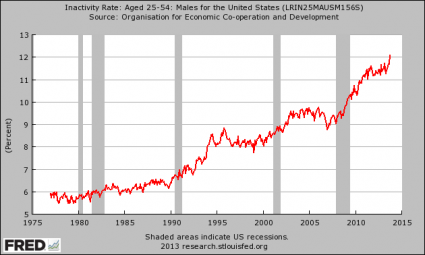
12 Mandela Quotes That Won’t Be In the Corporate Media Obituaries

0

Nelson Mandela, who died yesterday at age 95, was a South African anti-apartheid revolutionary who served as President of South Africa from 1994-1999.

During the 1950’s, while working as an anti-apartheid lawyer, Mandela was repeatedly arrested for seditious activities and treason. In 1963 he was convicted of sabotage and conspiracy to overthrow the government, and sentenced to life imprisonment. Mandela served 27 years in prison before an international lobbying campaign finally won his release in 1990.

In 1994, Mandela was elected President and formed a Government of National Unity in an attempt to diffuse ethnic tensions. As President, he established a new constitution and initiated the Truth and Reconciliation Commission to investigate past human rights abuses and to uncover the truth about crimes of the South African government, using amnesty as a mechanism.

Nelson Mandela was a powerful and inspirational leader who eloquently and forcefully spoke truth to power. As tributes are published over the coming days, the corporate media will paint a sanitized portrait of Mandela that leaves out much of who he was. We expect to see ‘safe’ Mandela quotes such as “education is the most powerful weapon which you can use to change the world” or “after climbing a great hill, one only finds that there are many more hills to climb.”

We wanted to share some Nelson Mandela quotes which we don’t expect to read in the corporate media’s obituaries:

  1. “A critical, independent and investigative press is the lifeblood of any democracy. The press must be free from state interference. It must have the economic strength to stand up to the blandishments of government officials. It must have sufficient independence from vested interests to be bold and inquiring without fear or favor. It must enjoy the protection of the constitution, so that it can protect our rights as citizens.”
  2. “If there is a country that has committed unspeakable atrocities in the world, it is the United States of America. They don’t care for human beings.”
  3. “The current world financial crisis also starkly reminds us that many of the concepts that guided our sense of how the world and its affairs are best ordered, have suddenly been shown to be wanting.”
  4. “Gandhi rejects the Adam Smith notion of human nature as motivated by self-interest and brute needs and returns us to our spiritual dimension with its impulses for nonviolence, justice and equality. He exposes the fallacy of the claim that everyone can be rich and successful provided they work hard. He points to the millions who work themselves to the bone and still remain hungry.”
  5. “There is no doubt that the United States now feels that they are the only superpower in the world and they can do what they like.”
  6. “It is said that no one truly knows a nation until one has been inside its jails. A nation should not be judged by how it treats its highest citizens, but its lowest ones.”
  7. “Overcoming poverty is not a task of charity, it is an act of justice. Like Slavery and Apartheid, poverty is not natural. It is man-made and it can be overcome and eradicated by the actions of human beings. Sometimes it falls on a generation to be great. YOU can be that great generation. Let your greatness blossom.”
  8. “We know too well that our freedom is incomplete without the freedom of the Palestinians.”
  9. “No single person can liberate a country. You can only liberate a country if you act as a collective.”
  10. “If the United States of America or Britain is having elections, they don’t ask for observers from Africa or from Asia. But when we have elections, they want observers.”
  11. “When a man is denied the right to live the life he believes in, he has no choice but to become an outlaw.”
  12. On Gandhi: “From his understanding of wealth and poverty came his understanding of labor and capital, which led him to the solution of trusteeship based on the belief that there is no private ownership of capital; it is given in trust for redistribution and equalization. Similarly, while recognizing differential aptitudes and talents, he holds that these are gifts from God to be used for the collective good.”

Source: en.wikiquote.org/wiki/Nelson_Mandela

# # #

This work is licensed under a Creative Commons Attribution-Share Alike 3.0 License.

Source: Common Dreams

Ukraine: Orange Revolution 2.0?

0

Ongoing Ukrainian protests bear its earmarks. Whether it succeeds remains to be seen.

Ordinary Ukrainians are being manipulated. Internal street thugs are involved. They’re militants. They’ve been recruited to cause trouble. They’re mostly young. They’re Western oriented.

Washington’s dirty hands are involved. Color revolutions are a US specialty. At issue is eliminating independent sovereign states.

It’s co-opting former Soviet Republics. It’s drawing them into NATO. It’s increasing American dominance.

It’s using EU membership as bait. It’s doing so despite no tangible benefits. Promises made to be broken substitute. Weakening Russia is prioritized.

So-called spontaneous uprisings are manufactured. Ukrainians should know better. They’ve been through this before.

Memories are disturbingly short. Washington manipulated Ukraine’s 2004 Orange Revolution.

Ordinary people ended up losers. Promises made were fake. Exploitation followed. Once deceived should have been enough.

Good sense isn’t a man on the street attribute. PT Barnum allegedly said “(t)here’s a sucker born every minute.” Con men, corporate predators, and ruthless nations take full advantage.

Ukrainians were had once. They’re being set up again.

Awakenings usually come too late to matter. Shutting stable doors after horses are stolen won’t get them back. What’s ahead remains to be seen.

Washington developed manipulating tactics through years of trial and error. They’re down to a science now. Often they work.

Rand Corporation strategists were involved. In the 1990s, they developed the concept of “swarming.” It relates to communication patterns and movements of bees and other insects.

They’re applied to military conflicts and street protests. Key US organizations are involved. More on swarming below.

The usual suspects include the National Endowment of Democracy (NED), the International Republican Institute (IRI), the National Democratic Institute (NDI), Freedom House, the Open Society Foundation, and other corporate groups.

They serve US imperial and corporate interests. They exploit ordinary people doing so. Various activities are ongoing in different countries.

Different strategies are featured. Sustained mass protests are one step removed from revolutionary violence.

So-called color revolutions mask dark intentions. Ordinary people are easy marks. They’re manipulated like pawns.

Ukrainians are protesting against their own self-interest. Succeeding assures harming their welfare.

Whether Ukrainian officials succeed in calming things remains very much up for grabs. Daily images aren’t encouraging.

Opposition elements allied with Western interests. On December 4, Russia Today headlined “Ukraine opposition vows to maintain protests, PM calls to end violence.”

Opposition MPs blocked parliament. They demand President Viktor Yanukovych’s government resigns.

A Tuesday no confidence vote failed. It fell 40 votes short of a majority. It didn’t affect Yanukovych. Prime Minister Mykola Azarov and cabinet ministers were targeted.

Yanukovych tried to quell public anger. So did Azarov, saying:

“We have extended our hand to you.” He erred adding “if we encounter a fist, I will be frank. We have enough force.” Honey catches more flies than vinegar.

He accused opposition elements of an attempted coup. They have “an illusion” about toppling the government, he said. “They have a plan. It includes taking control of Ukraine’s parliament by force.”

Deep-seated internal problems persist. Poverty, unemployment and widespread corruption need addressing.

Ukrainians are justifiably angry. Allying with troubled EU economies won’t help. Their best interests lie more East than West.

On Tuesday, Yanukovych flew to China. He did so to discuss a bilateral trade deal. He hopes to sign it. He’ll head to Russia next.

Moscow offers Ukraine tangible benefits. So do China, Iran and other non-Western states. Washington and EU intentions assure greater trouble than already.

It’s hard making ordinary Ukrainians understand. Even Western oriented ones. They have an illusion of EU-aligned future prosperity. Hard lessons often are learned too late.

According to Russia Today, “Ukraine is sending government delegations to both Moscow and Brussels to discuss economic ties.”

Kiev want “considerable (EU) aid to compensate for Ukraine’s losses.” Brussels won’t offer “any special treatment or review” alliance terms. Sticks substitute for carrots.

On Tuesday, Vladimir Putin attributed Ukraine protests to attempts to undermine its government.

“As far as the events in Ukraine are concerned,” he said, “to me they don’t look like a revolution, but rather like ‘pogrom.’ ”

“However strange this might seem, in my view it has little to do with Ukrainian-EU relations.”

Putin called protests pre-arranged. He believes opposition elements intended them ahead of February 2015 presidential elections. They jumped the gun, he thinks.

Ukrainian presidents serve for five years. Yanukovych was elected in 2010. He hopes for another term.

Putin called ongoing protests a “false start due to certain circumstances.”

Video footage shows “how well organized and trained militant groups operate,” he added. People are being manipulated.

“They say that the Ukrainian people are being deprived of their dream. But if you look at the contents of the (EU) deal – then you’ll see that the dream” is more illusion than reality.

EU terms are “very harsh,” Putin stressed. They involve sticks, not carrots.

“I want to stress,” he added, “that regardless of the choice of the Ukrainian people, we will respect it.”

Dark US and other Western sources accused him of pressuring Yanukovych to back down.

Russian Federation Council international affairs committee head Mikhail Margelov blames Brussels for Ukraine’s refusing an alliance deal.

“Brussels mistook Ukraine for some microstate, for which joining the European Union means making history,” he said.

“And it is mostly Brussels rather than some pressure from Russia that is to blame for Kiev’s decision not to sign the agreement in Vilnius.”

Ukraine is a “coveted prize,” he added. Brussels thinks inviting a former Soviet republic is too high an honor to refuse.

No matter that membership minuses way exceed pluses. Ukraine benefits most by turning East. Brussels offers little incentive to do otherwise.

On December 4, a Ukrainian delegation left for Moscow. At issue is restoring trade and economic ties.

A Brussels visit will follow. John Kerry is currently there. He didn’t surprise. He lied claiming “very powerful evidence” shows most Ukrainians want an EU alliance.

“We stand with the vast majority of the Ukrainians who want to see this future for their country,” he said.

Unacceptable meddling in other nations’ affairs is longstanding US policy. Doing so includes spreading malicious misinformation.

Western Ukrainians favor an EU alliance. Why they’ll have to explain. Eastern Donbas region and Crimean Peninsula ones are opposed.

Most Ukrainians favor a customs union with Russia, Belarus and Kazakhstan. Two-thirds oppose joining NATO. They do so for good reason They’re against global militarism.

They don’t want Ukraine involved in NATO wars. The Atlantic Alliance serves America’s imperial ambitions. Ukrainians oppose compromising good relations with Russia.

Current street tactics resemble 2004. In 1997, RAND Corporation researchers John Arquilla and David Ronfeld developed them. They titled their concept “Swarming & the Future of Conflict.”

It involves waging war by other means. It exploits the information revolution. It takes full advantage of “network-based organizations linked via email and mobile phones to enhance the potential of swarming.”

In 1993, Arquilla and Ronfeldt prepared an earlier document titled “Cyberwar Is Coming!”

They said “warfare is no longer primarily a function of who puts the most capital, labor and technology on the battlefield, but of who has the best information” and uses it advantageously.

State-of-the art IT techniques use “advanced computerized information and communications technologies and related innovations in organization and management theory,” they explained.

Information technologies “communicate, consult, coordinate, and operate together across greater distances.”

Cyberwar today is what blitzkrieg was to 20th century warfare. In 1993, Arquilla and Ronfeldt focused on military conflicts.

In 1996, they studied net and cyberwar. They did so by examining “irregular modes of conflict, including terror, crime, and militant social activism.

In 1997, they developed the concept of swarming. They suggested it might “emerge as a definitive doctrine that will encompass and enliven both cyberwar and netwar.”

They envisioned “how to prepare for information-age conflict.” They called swarming a way to strike from all directions.

Effectiveness depends on various elements able to interconnect using revolutionary communication technology.

What works on battlefields proved effective on city streets. US-instigated color revolutions achieved regime change in Serbia (2000/2001), Georgia (2003), and Ukraine (2004), and Kyrgyzstan (2005).

Other efforts fell short. Color revolutions reflect America’s modern day new world order strategy. They followed the Soviet Union’s dissolution. Proxy and direct hot wars rage at the same time.

US strategy is multi-faceted. Subversion, mass surveillance, and destabilization play major parts. Successful swarming tactics accomplish coup d’etats by other means.

Anti-Iranian Green Revolution efforts failed. Street protests and clashes followed June 2009 elections.

CIA elements instigated black operations. They did so to destabilize Tehran’s government. Regime change plans haven’t changed. What happens going forward bears close watching.

Ukraine is currently in the eye of the storm. Protests have been ongoing since November 21. They show no signs of ebbing.

Ukrainian independence is at stake. Key is holding firm against US-led Western interference. It’s doing it nonviolently.

It’s transforming Ukraine responsibly. It’s initiating popular reforms It’s turning East more than West. It’s acting before it’s too late.

Stephen Lendman lives in Chicago. He can be reached at [email protected].

His new book is titled “Banker Occupation: Waging Financial War on Humanity.”

http://www.claritypress.com/LendmanII.html

Visit his blog site at sjlendman.blogspot.com.

Listen to cutting-edge discussions with distinguished guests on the Progressive Radio News Hour on the Progressive Radio Network.

It airs Fridays at 10AM US Central time and Saturdays and Sundays at noon. All programs are archived for easy listening.

http://www.progressiveradionetwork.com/the-progressive-news-hour

Source: Global Research

US refuses to recognize new Chinese air defense zone

0

​Nearing the tail end of his Asian tour on Friday, Vice President Joe Biden set in stone the United States’ stance on a budding conflict there regarding ownership of airspace in the East China Sea.
Read Full Article at RT.com

Source: RT

The Myth of the Knock-Out Game | Weapons of Mass Distraction

9

Abby Martin calls out the corporate media for highlighting a fake phenomenon called the “Knockout Game”, while ignoring real stories such as lobbying group ALEC’s fight against green energy , The NSA’s collection of five billion cell phone records and the UK government’s attempt to criminalize journalism by going after the editor of The Guardian newspaper.

Mt. Vernon Assembly Plans to Adopt Rules for Future Con-Con

0

On December 7 (“a date which will live in infamy”?), a “bipartisan meeting of the states” will convene at George Washington’s beloved Mt. Vernon estate (shown). Despite their denials, this group of state legislators seem determined to tinker with the Constitution and remake the document that has kept us free for over two centuries.

Of course, they explain their purposes a little differently.

First, the organizers of the convention claim the meeting is designed to “to foster communication and interaction between the states.”

This increased interaction will, the group insists, improve the ability of the states to “influence Congress and the direction of the country.”

Ironically, though, it is the failure of Congress to control spending and the growth of government that prompted the Mt. Vernon proposal in the first place.

The organizers of the Mt. Vernon Assembly insist that this is not a call for a constitutional convention, but rather a meeting “to discuss and consider a Convention of the States in 2014 that is solely focused on the task of writing the rules for an Article V Convention.”

In explaining why they chose George Washington’s Virginia home as the venue for their assembly, the organizers point to Washington’s “key role in pulling together the Philadelphia Convention of 1787.” What they do not reveal, however, is another more direct connection between the first president’s estate and a wholesale constitutional convention.

In March 1785, a meeting of delegates from several states was held in Mt. Vernon. This conference, though nominally very narrow in scope, eventually led to the scrapping of the constitution then in force, the Articles of Confederation.

The announced goal of the gathering was to resolve border and trading disputes between Virginia and Maryland. While resulting in no substantial agreement between representatives of the neighboring states, there was a sense that a larger convention — one where more states would be invited — might have enough clout to solve the pressing issues of common concern, principally that of self-preservation.

This led to a subsequent meeting the next year in Annapolis, Maryland, that itself resulted in the Constitutional Convention of 1787 in Philadelphia.

In fact, in 1908, the Inland Waterways Commission made a direct connection between George Washington’s Mt. Vernon Conference and the eventual convening of the 1787 Constitutional Convention:

The earliest movement toward developing the inland waterways of the country began when, under the influence of George Washington, Virginia and Maryland appointed commissioners primarily to consider the navigation and improvement of the Potomac; they met in 1785 in Alexandria and adjourned to Mount Vernon, where they planned for extension, pursuant to which they reassembled with representatives of other States in Annapolis in 1786; again finding the task a growing one, a further conference was arranged in Philadelphia in 1787, with delegates from all the States. There the deliberations resulted in the framing of the Constitution, whereby the thirteen original States were united primarily on a commercial basis — the commerce of the times being chiefly by water.

Couldn’t that same thing happen in the 2013 Mt. Vernon Assembly that will occur Saturday? Is it improbable to think that a couple of years after the meeting there would be enough momentum to call a proper convention of the states (an Article V convention), one fully empowered to “revise” the Constitution — an event that would actually end up repealing our revered charter?

Think also of those who might attend any subsequent conference to consider an Article V constitutional convention.

The prospect of a convention endowed with power of this magnitude, populated by politicians (many of whom would likely be bought and paid for by powerful lobbyists and special interest groups) determined to recalibrate the precision gears that give movement to works of our mighty Republic, is frightening and should give pause to everyone considering supporting the Mt. Vernon Assembly 2013 or any subsequent call for an Article V convention.

In a “Frequently Asked Questions (FAQ)” document produced by the promoters of the Mt. Vernon Assembly, readers are assured that the overarching goal of the meeting is to enable states to become “proper stewards of [their] constitutional responsibilities.”

Can states not do this without running the risk of exposing our Constitution to special interests, lobbyists, and designing politicians?

To begin with, rather than expose the Constitution to the whims of special interest groups, political action committees, corporations, and the politicians they pay for, why not enforce the Constitution as written?

For example, there is not a single syllable in the Constitution providing for foreign aid ($74 billion spent from 2010-2011), undeclared wars in Afghanistan and Iraq (nearly $4 trillion spent since 2001), or the 185 federal welfare programs (nearly $2 trillion spent from 2010-2011). In the past decade, based on just those three examples alone, Congress has authorized the spending of over $6 trillion for unconstitutional purposes!

Wouldn’t the country’s economic outlook be improved by forcing our federal representatives to obey the limits on their power as provided by the Constitution, rather than allowing the delegates to the Mt. Vernon Assembly (and the powerful interests many of them would be financially beholden to) to call for a new constitutional convention that not only would do nothing to restrain the federal government, but could potentially rewrite our Constitution? The certain risks associated with such a proposal far outweigh the purported benefits.

Fortunately, there is another way for states to exercise their collective authority on the federal government without resorting to a constitutional convention. It is the concept described by Thomas Jefferson as the “rightful remedy” for any and all unconstitutional acts of the federal government: nullification.

Simply stated, nullification is a concept of legal statutory construction that endows each state with the right to nullify, or invalidate, any federal measure that a state deems unconstitutional. Nullification is founded on the assertion that the sovereign states formed the union, and as creators of the compact, they hold ultimate authority as to the limits of the power of the central government to enact laws that are applicable to the states and the citizens thereof.

In a 2010 article in The New American, Larry Greenley of The John Birch Society explained why nullification is a better choice than a constitutional convention when it comes to restoring the balance of power between states and the federal government:

To make the correct choice, we must understand the problem — namely that all three branches of the federal government routinely disregard major portions of the Constitution, despite the fact that the original 13 states created a compact, or agreement, designating as their agent, a federal government composed of executive, legislative, and judicial branches with their powers enumerated in the Constitution.

Thus, the states must reassert themselves soon as the parties to the original compact that established the federal government as their agent and enforce the Constitution, or face eventual extinction at the hands of the federal government.

In the Virginia Resolution of 1798, Madison reaffirms this fundamental principle of constitutional construction:

Encroachments springing from a government, whose organization cannot be maintained without the co-operation of the states, furnish the strongest excitements upon the state legislatures to watchfulness, and impose upon them the strongest obligation, to preserve unimpaired the line of partition.

With these facts in mind, would it not seem that our nation’s fiscal and political wellbeing is better served by governors jealous of their states’ sovereignty and their rightful role as “shelters against the abuse of power,” signing into law state bills nullifying unconstitutional federal measures (including those that have propelled our national indebtedness into the stratosphere) than by state legislators and others uniting at a constitutional convention with unchecked power to amend our Constitution out of existence in the name of balancing the budget?

And there is another discomforting problem facing these state lawmakers-cum-constitution convention delegates. States are faced with the crushing debt of unfunded pensions. These liabilities keep the states dependent on federal largesse. Admittedly, these debts could be wiped out if the federal government were to assume responsibility for them. Of course, such an assumption would require the granting to the federal government an expanded scope of powers. Remarkably, there is a historical precedent for such an arrangement.

At the Constitutional Convention of 1787, state debts incurred in waging the War for Independence were assumed by the new federal government as part of the “bundle of compromises” that created the Constitution.

The relevant question that should be put to the organizers of the Mt. Vernon Assembly is how many of their colleagues in state legislatures and governors’ mansions would happily discharge the debt they helped create by giving the federal government a little more power? It seems wiser and safer to seek out and elect federal representatives committed to never voting for a single spending bill that violates the enumerated powers of the Constitution and refusing to reelect those members of Congress that do vote for such measures.

In short, the answer to the crisis lies in following the Constitution, not “fixing” it.

Enforcing the Constitution and demanding that states stand up to their would-be federal overlords accomplishes the same goal as the Mt. Vernon Assembly (and any subsequent “convention of the states”) without putting the parchment of the Constitution so close to the shredder that such a convention could become.

Finally, considering the fact that the Mt. Vernon collaborators are keen on justifying their confab by claiming that “These types of meetings were used often by our Founders,” it seems appropriate to report what the Father of the Constitution — James Madison — believed about the call for a second constitutional convention being made by some states. Read how timely Madison’s warnings remain:

You wish to know my sentiments on the project of another general Convention as suggested by New York. I shall give them to you with great frankness. If a General Convention were to take place for the avowed and sole purpose of revising the Constitution, it would naturally consider itself as having a greater latitude than the Congress appointed to administer and support as well as to amend the system; it would consequently give greater agitation to the public mind; an election into it would be courted by the most violent partizans [sic] on both sides; it would probably consist of the most heterogeneous characters; would be the very focus of that flame which has already too much heated men of all parties; would no doubt contain individuals of insidious views, who under the mask of seeking alterations popular in some parts but inadmissible in other parts of the Union might have a dangerous opportunity of sapping the very foundations of the fabric. Under all these circumstances it seems scarcely to be presumeable [sic] that the deliberations of the body could be conducted in harmony, or terminate in the general good. Having witnessed the difficulties and dangers experienced by the first Convention which assembled under every propitious circumstance, I should tremble for the result of a second meeting in the present temper of America, and under all the disadvantages I have mentioned.

All Americans and state legislators who stand united in their resistance to the constant unconstitutional overreaching of the federal government must also unite in their opposition to the Mt. Vernon Assembly.

The states and people must also forcefully reject the Article V constitutional convention that history shows would soon follow a Mt. Vernon Assembly-style “limited meeting.” An Article V convention would be beyond the control of the people or their representatives, and could reasonably result in the proposal by the assembled delegates of potentially fatal and irreversible alterations to our Constitution that could very well end up being ratified to our ruin.

Joe A. Wolverton, II, J.D. is a correspondent for The New American and travels frequently nationwide speaking on topics of nullification, the NDAA, and the surveillance state. He is the host of The New American Review radio show that is simulcast on YouTube every Monday. Follow him on Twitter @TNAJoeWolverton and he can be reached at This email address is being protected from spambots. You need JavaScript enabled to view it.

Source: The New American

Nelson Mandela: Icon of Africa’s Liberation Struggle, Creation of the Real Movers and Shakers of the Global Scene

0

Nelson Mandela has become one of the most publicised icons of liberation struggle in modern times, in Africa certainly, but even in Asia and South America. He will be popularly mourned and saluted by millions of people around the world and his passing will no doubt be hailed as the end of an era. Most associate his name with other greats like Martin Luther King and Mahatma Ghandi, but unlike these other patron saints, the ever smiling Mandela didn’t make enough enemies to be assassinated.

Nelson Mandela is to be respected for the part he played in trying to reconcile the inequalities and conflicts between the racial and economic divide that has troubled his country, a process that is nowhere near complete. Despite the veneer of apparent congeniality between black and white South Africans today, careful observation of social and political discourse and private conversations reveal that the racial mistrust and prejudice still runs deeply as ever and the injustices persist. Not that Mandela is to blame for the persistence, it’s just that civil war [that’s what the liberation struggle was] never ends with real forgiveness, justice and love, but always with grudges, bitterness and a lingering wish for revenge after the dust settles; and there’s not much leaders of liberation struggle can do about that.

In reality Nelson Mandela was a created icon of liberation struggle, a creation of the real movers and shakers of the global scene for a larger political agenda. Without the interest and obsession of foreign imperialist powers in South Africa’s massive mineral wealth, Mandela would have been forgotten in his jail [where he served a sentence for treason and terrorism] until the day he died or was released on humanitarian grounds in his twilight years.

Without all those billions of dollars of international sponsorship, fanning the flames of revolution through Mandela’s ANC party, and without the international limelight given to political activists in their frenzied aim of toppling the country and removing the hard-nose, anti-British, Afrikaner government, Nelson would have continued to be the relatively unknown and powerless leader-in-exile of an organization that had been divided and ineffective for decades while Britain controlled his country. It was only after the hard-nose, anti-British, Afrikaner government of South Africa liberated itself from colonial slavery to Britain, and powered itself into the prime position as an independent superpower on the African continent that the mega-powerful military industrial complex of the United States and Great Britain summoned the UN and their European allies to support the struggling ANC party and re-colonize his country.

The hidden motive behind the sanctions for crippling and replacing the independent-minded Afrikaner government of South Africa was the same as the strategy and motive for toppling the governments of Iraq, Afghanistan and Libya. In South Africa, the real global political players were slowly losing control over international trade and markets in strategic minerals. It was never really known [or admitted] outside the old government intelligence circles in South Africa that control over international trade and markets in strategic minerals strengthens the quest for global dominance. While South Africa was a British colony, that control was securely in the hands of the mega-powerful Anglo-American military industrial complex. But the Afrikaner government [having lost the war of independence against Britain half a century before] was slowly wrestling loose from imperialist control. Another civil war was needed to restore control. This time it was both black against white and black against black – Mandela’s ANC party also fought a relentless and often violent battle for supremacy against the Inkatha Freedom Party of the rival Zulu tribe.

Mainstream media created the myth that Nelson Mandela brought democracy to South Africa. But long after democratic governments had been established by and for European settlers and gradually duplicated for the other ethnic groups in the country, the vast majority of Mandela’s people were still living relatively undisturbed in vast rural areas under the dictatorship of tribal chiefs and their councils of warlords. Nelson Mandela and his ANC party fought for the privilege of taking over the democratic system established by the Europeans. Even today, the tribal chiefs in South Africa retain their authority, rights and privilege by tradition, not as a democratically elected office.

The harm that was done to the country as political violence evolved into a culture of crime and hatred will not be easily undone, not by Nelson Mandela’s ANC party. Given the character and vision of this tenacious man, he would have changed the attitudes of the people if he could. But, as the hard facts and evidence show, he was only a much photographed figurehead and very much sought-after-celebrity, but never any real transforming power. His influence over his followers and enemies was not nearly as great as the media has made out or he would no doubt have created a really great nation out of that troubled region in troubled Africa. In reality, Nelson Mandela’s rainbow republic still struggles to rise from the heap of human misery. It still staggers under the load of an opulent, gold and diamond studded crown of corrupt, super rich, upper-class back and white political supremacists.

Without realizing it, Nelson Mandela had helped his country become another minion of the United States rather than of Britain. The extent to which his organization bowed to its international patrons can be seen from the fact that his was the only government ever to voluntarily dismantle a nuclear weapons program; something established [possibly with help from Israel] as a guarantee of self-preservation by the independent-minded government of the Afrikaner legacy. His ANC party has become the key hired agency in Africa that enables the USA to achieve its unrivalled position in the world today.

Mandela was a man of courage, dignity and grace, ever optimistic and compassionate about his people, but neither he nor his party could fix all the problems created by foreign governments that schemed and plotted, connived and lobbied in their efforts to create enough chaos in the country to bring it to it’s knees and force upon it the status of a gold-plated banana republic. Did Africa’s icon of liberation really improve the lot of indigenous South Africans? Free, indeed, yes, South Africa’s people are free, free to be poor, free to be unemployed, robbed, raped and diseased. Many of his people would say they are definitely NO better off! But now they have their very own patron saint and that will keep them voting for his ANC party as long as his name is engraved upon it.

Source: Global Research

VIDEO: DHS Searches Vehicles at Ferry Crossing Checkpoint

0

Homeland Security expands its occupation of America

Paul Joseph Watson
Infowars.com
December 6, 2013

A video shows the Department of Homeland Security conducting warrantless searches of vehicles at a ferry crossing in Galveston, Texas, in yet another example of how the agency is setting up checkpoints across the country.

The clip shows drivers being forced to exit their vehicle to allow the DHS officials to inspect both their trunk and hood before being permitted to pass the checkpoint.

“I’ve never seen this kind of deal,” remarks the driver in the clip, who takes the ferry regularly, “We were just randomly pulled over here.”

“What’s going on here man, this is America! I don’t want them searching my truck,” he adds as the driver in front is made to exit his car.

When asked what they were doing, the DHS official responds, “It’s a screening process, Homeland Security,” before asking the man to pop the hood.

The footage was shot at the ferry crossing between Galveston Island and Bolivar Peninsula, emphasizing how the federal agency is now setting up checkpoints between internal waterways that have no relation to immigration.

As you can see from the map below, the ferry crossing is just 2.7 miles in length and takes only 18 minutes to complete the journey.

There is no other option for motorists than using the ferry because it is the only way to cross the waterway between the two locations.

The Department of Homeland Security continues to expand the number of checkpoints it operates throughout the country, primarily via the VIPR program, under which TSA agents have been deployed to shake down Americans at everywhere from bus depots, to highways, to ferry terminals, to train stations, in one instance conducting pat downs of passengers, including children, who had already completed their journeywhen arriving in Savannah.

Facebook @ https://www.facebook.com/paul.j.watson.71
FOLLOW Paul Joseph Watson @ https://twitter.com/PrisonPlanet

*********************

Paul Joseph Watson is the editor and writer for Infowars.com and Prison Planet.com. He is the author of Order Out Of Chaos. Watson is also a host for Infowars Nightly News.

This article was posted: Friday, December 6, 2013 at 10:33 am

Tags:


Source: Infowars

Russia outraged by US fraud charges against diplomats

0

BRecorder.com
December 6, 2013

Russia voiced outrage Friday at charges in the United States against 49 current and former Russian diplomats and their wives over a $1.5 million fraud, saying it could not understand why the US had gone public with the allegations.

Deputy Foreign Minister Sergei Ryabkov said in a statement to Russian news agencies that Moscow had many claims against the behaviour of US diplomats in Moscow but had preferred not to bring them into the public sphere.

“We categorically reject the charges against the staff of Russian diplomatic institutions in the United States,” he was quoted as saying by the ITAR-TASS news agency, saying it was “illegal” for diplomats to have been watched by the authorities in this way.

This article was posted: Friday, December 6, 2013 at 10:24 am

Tags:


Source: Infowars

Journalist killed by rebels

0

InCyprus.com.cy
December 6, 2013

Syrian opposition fighters have killed an Iraqi freelance journalist in the rebel-held north of the country, the latest of dozens of reporters who have died in the country over the past three years, an activist group and an international media watchdog said Thursday.

The Britain-based Syrian Observatory for Human Rights said Yasser Faysal al-Jumaili was shot dead at a rebel checkpoint in the northwestern province of Idlib on Wednesday.

Soazig Dollet of the Paris-based Reporters Without Borders press advocacy group confirmed al-Jumaili was killed in Idlib, adding that his body was taken to Turkey in order to be sent home later. She said she doesn’t know how al-Jumaili was killed.

This article was posted: Friday, December 6, 2013 at 10:20 am

Tags:


Source: Infowars

Egypt reportedly to declare Muslim Brotherhood ‘terrorist organization’

0

Ariel Ben Solomon
Jerusalem Post
December 6, 2013

Egyptian media reported Thursday that the government is preparing to deem the Muslim Brotherhood “a terrorist organization,” as pro-Morsi organizations sent out a call for protests to be held over the weekend.

The Egyptian El-Watan newspaper, which tends to support the military and oppose the Muslim Brotherhood, reported that interim Prime Minister Hazem el-Beblawi discussed in a closed meeting with a number of ministers a detailed directive that declares the Brotherhood a terrorist organization.

The government blames the organization for violence and terrorism that has taken place since Mohamed Morsi was removed from power on July 3.

This article was posted: Friday, December 6, 2013 at 10:18 am

Tags: ,


Source: Infowars

DARPA’s mirror-killing membrane could change astronomy, allow total global surveillance

0

Graham Templeton
Extreme Tech
December 6, 2013

When it launches in 2018, the James Webb Space Telescope will let us see deeper into the universe than ever before. Its enormous eye is centered around 18 octagonal mirrors which assemble to form the largest telescope mirror ever built, but someday even the James Webb Telescope (formerly the Next-Gen Space Telescope) will outlive its usefulness — and then what will we do? The obvious answer is to launch an even more advanced telescope, one with an even bigger mirror that can focus on even more distant or difficult light. There’s just one problem: given the costs and practical barriers to launching objects into space, it’s very possible that in this case simply going bigger may be impossible.

That’s where DARPA comes in. The agency has always liked playing smarter — rather than harder — and has a stated goal of allowing its government to view any point on the planet, instantly and in real-time. That being the case, they needed to develop a way of launching surveillance satellites much more cheaply. DARPA has looked into everything from satellite miniaturization to Hyperloop style drone throwers, but a satellite’s mirror is the hardest part to launch in most cases. In a move sure to excite cash-strapped astronomers and terrify nervous libertarians, DARPA now says it could have a way around that problem, making high-fidelity space cameras much quicker and cheaper to launch.

View the video below for a quick artist’s rendering.

This article was posted: Friday, December 6, 2013 at 10:13 am

Tags: ,


Source: Infowars

20 Things the Poor Do Everyday That the Rich Never Have to Worry About

0

Just staying alive is a struggle.


This post first appeared on Ben Irwin’s blog.

Financial advisor and evangelical Christian Dave Ramsey probably wasn’t expecting this much pushback when he shared a piece contrasting the habits of the rich with those of the poor. In her response on CNN, Rachel Held Evans noted that Ramsey and Corley mistake correlation for causality when they suggest (without actually proving) that these habits are the cause of a person’s financial situation. (Did it never occur to them that it might be the other way around?)

Ramsey fired back, calling the pushback “immature and ignorant.” This from a guy who just made 20 sweeping assertions about 47 million poor people in the US — all based on a survey of 361 individuals.

That’s right. To come up with his 20 habits, Corley talked to just 233 wealthy people and 128 poor people. Ramsey can talk all he wants about Corley’s research passing the “common-sense smell test,” but it doesn’t pass the “research methodology 101” test.

To balance the picture a bit, I wanted to take a fact-based look at 20 things the poor do on a daily basis…

1. Search for affordable housing.

Especially in urban areas, the waiting list for affordable housing can be a year or more. During that time, poor families either have to make do with substandard or dangerous housing, depend on the hospitality of relatives, or go homeless.

(Source: New York Times)

2. Try to make $133 worth of food last a whole month.

That’s how much the average food stamp recipient gets each month. Imagine trying to eat well on $4.38 per day. It’s not easy, which is why many impoverished families resort to #3…

(Source: Kaiser Family Foundation)

3. Subsist on poor quality food.

Not because they want to, but because they can’t afford high-quality, nutritious food. They’re trapped in a food system that subsidizes processed foods, making them artificially cheaper than natural food sources. So the poor are forced to eat bad food — if they’re lucky, that is…

(Sources: Washington Post; Journal of Nutrition, March 2008)

4. Skip a meal.

One in six Americans are food insecure. Which means (among other things) that they’re sometimes forced to go without eating.

(Sources: World Vision, US Department of Agriculture)

5. Work longer and harder than most of us.

While it’s popular to think people are poor because they’re lazy (which seems to be the whole point of Ramsey’s post), the poor actually work longer and harder than the rest of us. More than 80 percent of impoverished children have at least one parent who works; 60 percent have at least one parent who works full-time. Overall, the poor work longer hours than the so-called “job creators.”

(Source: Poverty and Learning, April 2008)

6. Go to bed 3 hours before their first job starts.

Number 15 on Ramsey and Corley’s list was, “44% of [the] wealthy wake up three hours before work starts vs. 3% of [the] poor.” It may be true that most poor people don’t wake up three hours before work starts. But that could be because they’re more likely to work multiple jobs, in which case job #1 means they’re probably just getting to bed three hours before job #2 starts.

(Source: Poverty and Learning, April 2008)

7. Try to avoid getting beat up by someone they love.

According to some estimates, half of all homeless women in America ran away to escape domestic violence.

(Source: National Coalition for the Homeless, 2009)

8. Put themselves in harm’s way, only to be kicked to the streets afterward.

How else do you explain 67,000 63,000 homeless veterans?

(Source: US Department of Veterans Affairs, updated to reflect the most recent data)

9. Pay more than their fair share of taxes.

Some conservative pundits and politicians like to think the poor don’t pay their fair share, that they are merely “takers.” While it’s true the poor don’t pay as much in federal income tax — usually because they don’t earn enough to qualify — they do pay sales tax, payroll tax, etc. In fact, the bottom 20% of earners pay TWICE as much in taxes (as a share of their income) as do the top 1%.

(Source: Institute on Taxation & Economic Policy, January 2013)

10. Fall further behind.

Even when poverty is the result of poor decision-making, often it’s someone else’s choices that make the difference. If you experience poverty as a child, you are 3-4 times less likely to graduate high school. If you spend your entire childhood in poverty, you are 5 times less likely to graduate. Which means your future has been all but decided for you.

(Sources: World Vision, Children’s Defense Fund, Annie E. Casey Foundation)

11. Raise kids who will be poor.

A child’s future earnings are closely correlated to their parents’ earnings. In other words, economic mobility — the idea that you can claw your way out of poverty if you just try hard enough is, more often than not, a myth.

(Sources: OECD, Economic Policy Institute)

12. Vote less.

And who can blame them? I would be less inclined to vote if I didn’t have easy access to the polls and if I were subjected to draconian voter ID laws that are sold to the public as necessary to suppress nonexistent voter fraud.

(Source: The Center for Voting and Democracy)

13. When they do vote… vote pretty much the same as the rest of us.

Following their defeat in 2012, conservatives took solace by reasoning that they’d lost to a bunch of “takers,” including the poor, who voted for Democrats because they want free handouts from big government. The reality is a bit more complex. Only a third of low-income voters identify as Democrats, about the same for all Americans, including wealthy voters.

(Sources: NPR, Pew Research Center)

14. Live with chronic pain.

Those earning less than $12,000 a year are twice as likely to report feeling physical pain on any given day.

(Source: Kaiser Health News)

15. Live shorter lives.

There is a 10-14 year gap in life expectancy between the rich and the poor. In recent years, poor people’s life expectancy has actually declined — in America, the wealthiest nation on the planet.

(Source: Health Affairs, 2012)

16. Use drugs and alcohol pretty much the same as (or less than) everyone else.

Despite the common picture of inner city crack houses, drug use is pretty evenly spread across income groups. And rich people actually abuse alcohol more than the poor.

(Source: Poverty and Learning, April 2008)

17. Receive less in subsidized benefits than corporations.

The US government spends around $60 billion on public housing and rental subsidies for low-income families, compared to more than $90 billion on corporate subsidies. Oil companies alone get around $70 billion. And that’s not counting the nearly $60 billion a year in tax breaks corporations enjoy by sheltering profits offshore. Or the $700 billion bailout banks got in 2008.

(Source: Think By Numbers)

18. Get themselves off welfare as soon as possible.

Despite the odds, the vast majority of beneficiaries leave the welfare rolls within five years. Even in the absence of official welfare-to-work programming, most welfare recipients enroll in some form of vocational training. Why? Because they’re desperate to get off welfare.

(Source: US Department of Health and Human Services)

19. Have about the same number of children as everyone else.

No, poor people do not have loads of children just so they can stay on welfare.

(Source: US Department of Health and Human Services)

20. Accomplish one single goal: stay alive.

Poverty in America may not be as dire as poverty in other parts of the world, but many working poor families are nonetheless preoccupied with day-to-day survival. For them, life is not something to be enjoyed so much as endured.

These are the real habits of the poor, those with whom Jesus identifies most closely.

Related Stories

Source: Alternet

Living in Your American Skin

0

As Jeremy Hammond begins his 10 years in prison, several journalists, including Chris Hedges and Vivian Lesnik Weisman, have written thorough columns chronicling the history of Hammond’s work for Anonymous. They have explained the workings of Stratfor, a private security intelligence firm that engages in “monitoring and surveillance of protestors and dissidents” for governmental agencies and corporations. It was Stratfor’s emails that Hammond has acknowledged hacking.

Hedges and Weisman interviewed Hammond during a time when he was allowed to see very few people, and have written of his lengthy pre-trial incarceration, punishment by solitary confinement, the barring of any visits by family and friends, and the 10-year maximum sentence handed down by Judge Loretta Preska. Notably, Judge Preska refused to recuse herself even though her husband and his law firm were among Hammond’s victims.

Hedges described Hammond’s actions as providing “chilling evidence that anti-terrorism laws are being routinely used by the federal government to criminalize nonviolent, democratic dissent and falsely link dissidents to international terrorist organizations.” Hammond himself spoke strongly of his political motivation for leaking Stratfor’s emails at his sentencing hearing last month and of his willingness to take risks that perhaps more of us should consider. He stated:

I have tried everything from voting petitions to peaceful protest and have found that those in power do not want the truth to be exposed. When we speak truth to power we are ignored at best and brutally suppressed at worst. We are confronting a power structure that does not respect its own system of checks and balances, never mind the rights of it’s own citizens or the international community.

Hammond knew whereof he spoke.

In late 2005 the city of Toledo, Ohio was reeling from riots that had occurred two months earlier. The National Socialist Movement, which promotes itself as America’s Nazi Party, had chosen a community in north Toledo for an October march to protest black gangs, which it claimed were harassing white residents in that neighborhood. The rioting set off by the march made the national news, much to the chagrin of Toledo politicians and police.

At a court hearing on December 9th of that year, City of Toledo lawyers convinced Judge Thomas Osowick to grant an injunction limiting the assembly of the same National Socialist Movement, which planned a return trip to Toledo the following day. But the injunction went much further: it curtailed the right to assemble in protest for everyone in Toledo – except for a cordoned-off one-block area in downtown Toledo. By its terms, the injunction also specifically targeted the International Socialist Organization and anarchist groups. The spillover effect of the ruling was to strip all persons of their right to free speech and the right to assemble for at least fourteen days.

Sitting in that courtroom, I was astonished as Judge Osowick issued a $25,000 per hour civil fine for each hour the injunction was violated. Political free speech in Toledo was made illegal by a stroke of a pen.

The following day dozens of riot-gear police lined the street closest to the one-block area designated for assembly. A second line of police was on horseback in front of the “designated public area.” A tank-like armored vehicle appeared, air surveillance circled overhead and police snipers watched from nearby rooftops. Twenty-nine people – including three journalists – were attacked, tasered, arrested, imprisoned, and had their First Amendment rights curtailed that day in Toledo.

Among them was Jeremy Hammond, who had driven from Chicago with four compatriots to protest the white supremacists’ message. On their way to the Nazi event Hammond and friends had stopped to participate in leafletting outside a branch library. As they got back in their car they were quickly pulled over by Toledo police, cuffed behind their backs, and made to kneel in the snow until backup arrived. All four were arrested on a trumped-up charge of “violating the injunction” that Judge Osowick had granted the previous day. They were jailed for 48 hours, then released on bail. The City dismissed the charges on April 12 of 2006.

According to Hammond at the time, he saw the Nazis as representing an earlier police state that had developed technologies for the subjugation of “undesirables.” He had come to Toledo to test the proposition that the police would hold the fascists’ rights as superior to the rights of those who opposed fascism. His thesis was correct. Protected by two rows of police in riot gear and on horses, no Nazis were arrested that day. The only victims of the police state were those attempting to rightfully and nonviolently protest the message brought by the fascists.

Even back then, Hammond saw up close the willingness of the courts and the police to collude in the violation of laws, including first amendment rights. The December 2005 police state in Toledo was a dark reflection of the post-9/11 “everything has changed” worldview. Now eight years later, with Hammond sentenced to a decade in prison, that totalitarian mentality tragically continues to dominate our national discourse and priorities.

The title is a reference to Bruce Springsteen’s song 41 Shots.

Trudy Bond resides in Toledo, OH. She can be reached at drtrudybond@gmail.com.

Source: Counterpunch

The Charlatanism of Palestine-Denial

0

Here we go again. On Israel and the US losing their UNESCO voting rights, ‘Israel’s ambassador to UNESCO, Nimrod Barkan, ‘said in an interview that his country supports the U.S. decision [to suspend contributions], “objecting to the politicization of UNESCO, or any international organization, with the accession of a non-existing country like Palestine.” (AP 8-11-13)

Palestine-denial, next to straight out violent ethnic-cleansing, is Israel’s sinister stratagem to wipe Palestinians off the face of their own ancestral land in order to lay a fictitious claim to the whole of historic Palestine.

Like the boy who cried ‘wolf’, Israel’s frenetic cries of ‘delegitimisation’ or’ anti-semitism’ at criticism of its illegal occupation and apartheid policies, are falling on the skeptical ears of the decent masses fed up with Israel’s double standards of delegitimising Palestine and dehumanising Palestinians as non-people.

In between the years spanning Golda Meir’s “There were no such things as the Palestinians… They did not exist.” (June 15, 1969) to the regurgitation by US Presidential nominee candidate, Newt Gingrich, Sheldon Adelson’s ventriloquist dummy, “Remember, there was no Palestine as a state — (it was) part of the Ottoman Empire. I think we have an invented Palestinian people who are in fact Arabs” (10 12- 11) and up to Barkan’s present absurdity, are torrents of similar Zionist gibberish in the media.

Just as the English people evolved over millennia through the assimilation of indigenous folk and conquering colonisers and migrants, ie Picts, Celts, Britons, Romans, Angles, Saxons and Normans, so too modern Palestinians descended from sundry peoples; Canaanites, Edomites, Eremites, Moabites, Assyrians, Egyptians, Philistines, Hebrews, Greeks, Romans, Arabs, Europeans,Turks.

In fact the nation of England didn’t manifest from multiple kingdoms until the 10th century CE and English identity only began to develop after the Norman conquests in the 12th century. At that time Palestine was part of the Arab Caliphate that took over from 600 years of Roman rule in 634 and held Palestine until 1516 three times longer than the sum of historic Jewish control sans the fictitious monarchies of Saul, David and Solomon:

“There is no evidence of a United Monarchy no evidence of a capital in Jerusalem or of any coherent, unified political force that dominated western Palestine, let alone an empire of the size the legends describe. We do not have evidence for the existence of kings named Saul, David or Solomon; nor do we have evidence for any temple at Jerusalem in this early period. What we do know of Israel and Judah of the tenth century does not allow us to interpret this lack of evidence as a gap in our knowledge and information about the past, a result merely of the accidental nature of archeology. There is neither room nor context, no artifact or archive that points to such historical realities in Palestine’s tenth century. One cannot speak historically of a state without a population. Nor can one speak of a capital without a town. Stories are not enough.” The Bible in History: How Writers Create a Past, Thomas L Thompson

Thus the Israeli claim to Palestine on historic grounds has much less validity than a claim by modern Italians or Greeks on Palestine, or say Italians or Danes on England or Germans on France or the Syrians on Spain. In his book, ‘The Invention of the Land of Israel’, Israeli historian Prof. Shlomo Sand ‘argues that for 2,000 years the Jews did not constitute a people and that only religion, belief and culture united them.'(Haaretz 24-5-13)

To alchemise the myth that Palestine is the birthplace of the Jewish people into ‘reality’, Israel fused two elements, the Bible and archeology. As the Hebrew Bible is the basis of Christianity, which itself is a pillar of western civilisation, Biblical archeology then becomes the focus and front for a fabricated and dominant Zionist history, a ‘master story’ totally obscuring the rich heritage of Palestinian history. In short, Palestine-denial:

“Appropriations of the past as part of the politics of the present… could be illustrated for most parts of the globe. One further example which is of particular interest to this study, is the way in which archeology and biblical history have become of such importance to the modern state of Israel. It is this combination which has been such a powerful factor in silencing Palestinian history.” ( p.16 The Invention of Ancient Israel: the silencing of Palestinian history, Keith W Whitelam)

The findings of Biblical archeology have gone unquestioned until recently with the advent of The Copenhagen School which challenged the Bible’s literal value as history.

These scholars agree that the heroic biblical accounts of David and Solomon were written between the 5th and 3rd centuries BC; hundreds of years after the so-called Iron Age united monarchy. Much the same as Homer’s heroic Iliad and Odyssey were written 400 years after its Bronze age setting. Nevertheless, the state of Israel has invested heavily in the David myth for its false historic claim to Jerusalem as its capital because it was the city of David.

Indeed, archaeology has become a state apparatus for the ethnic cleansing of Palestinians in the Zionist fairyland aka the City of David Archaeological Park located in the Palestinian village of Silwan in East Jerusalem,

‘De-Arabizing the history of Palestine is another crucial element of the ethnic cleansing. 1500 years of Arab and Muslim rule and culture in Palestine are trivialized, evidence of its existence is being destroyed and all this is done to make the absurd connection between the ancient Hebrew civilization and today’s Israel. The most glaring example of this today is in Silwan, (Wadi Hilwe) a town adjacent to the Old City of Jerusalem with some 50,000 residents. Israel is expelling families from Silwan and destroying their homes because it claims that king David built a city there some 3000 years ago. Thousands of families will be made homeless so that Israel can build a park to commemorate a king that may or may not have lived 3000 years ago. Not a shred of historical evidence exists that can prove King David ever lived yet Palestinian men, women, children and the elderly along with their schools and mosques, churches and ancient cemeteries and any evidence of their existence must be destroyed and then denied so that Zionist claims to exclusive rights to the land may be substantiated.’ — Miko Peled, Israeli dissident.

Furthermore Prof. Ze’ev Herzog at Tel Aviv University in Deconstructing the walls of Jericho debunks a historic Exodus myth, “This is what archaeologists have learned from their excavations in the Land of Israel: the Israelites were never in Egypt, did not wander in the desert, did not conquer the land in a military campaign and did not pass it on to the 12 tribes of Israel.” The emergence from the desert and creating a unified state where the desert blooms and the brave pioneering Jews prosper lies at the core of Israeli identity and echoed here by President Shimon Peres:

“I remember how it all began. The whole state of Israel is a millimeter of the whole Middle East. A statistical error, barren and disappointing land, swamps in the north, desert in the south, two lakes, one dead and an overrated river. No natural resource apart from malaria. There was nothing here. And we now have the best agriculture in the world? This is a miracle: a land built by people” (Maariv, 14 -4-2013).

The old ‘there was nothing here’ strikes agin! Peres knows this is charlatanry. Palestinian agriculture and trade was booming when the Zionist colonists arrived and was vibrant, booming, and plenteous for centuries.

Guy Le Strange, in 1890, translated in his fascinating book, Palestine Under the Moslems; From AD 650 to 1500, the works of 20 medieval Muslim geographers including the famous Jerusalemite, Al Mukaddasi and Ibn Battuta:

“Filasîn is watered by the rains and the dew. Its trees and its ploughed lands do not need artificial irrigation; and it is only in Nâbulus that you find the running waters applied to this purpose. Filastîn is the most fertile of the Syrian provinces.

“From Palestine come olives, dried figs, raisins, the carobfruit, stuffs of mixed silk and cotton, soap and kerchiefs. “ From Jerusalem come cheeses, cotton, the celebrated raisins of the species known as ‘Ainûnî and Dûrî, excellent apples, bananas—which same is a fruit in the form of a cucumber, but when the skin is peeled off, the interior is not unlike the water-melon, only finer flavoured and more luscious—also pine nuts of the kind called ‘ Kuraish-bite’ and their equal is not found elscwhere; further, mirrors, lamp-jars, and needles. “ From Jericho is brought excellent indigo. “ From Sughar and Baisân come both indigo and dates, also the treacle called Dibs. “

“Unequalled is this land of Syria for its dried figs, its common olive-oil, its white bread, and the Ramlah veils; also for the quinces, the pine-nuts called ‘ Kuraish-bite,’ the ‘Ainûnî and Duri raisins, the Theriack-antidote, the herb of mint, and the rosaries of Jerusalem. And further, know that within the province of Palestine may be found gathered together six-and-thirty products that are not found thus united in any other land. Of these the first seven are found in Palestine alone; the following seven are very rare in other countries; and the remaining two-and-twenty, though only found thus gathered together in this province, are, for the most part, found one and another, singly, in other lands. Now the first seven are the pine-nuts, called ‘ Kuraish-bite,’ the quince or Cydonian-apple, the ‘Ainûnî and the Duri raisins, the Kâfûrî plum, the fig called As Sabâ’i, and the fig of Damascus. The next seven are the Colocasia or water lily, the sycamore, the carob or St. John’s bread (locust-tree), the lotus-fruit or jujube, the artichoke, the sugar-cane, and the Syrian apple. And the remaining twentytwo are the fresh dates and olives, the shaddock, the indigo and juniper, the orange, the mandrake, the Nabk fruit, the nut, the almond, the asparagus, the banana, the sumach, the cabbage, the truffle, the lupin, and the early prune, called At Tarî; also snow, buffalo-milk, the honey-comb, the ‘Âsimî grape, and the Tamri—or date-fig. Further, there is the preserve called Kubbait; you find, in truth, the like of it in name elsewhere, but of a dififerent flavour. The lettuce also, which everywhere else, except only at Ahwâz (in Persia), is counted as a common vegetable, is here in Palestine a choice dish.

What is intriguing in these Muslim chronicles is their acknowledgement of the Jewish and Christian narratives, “In the middle of the Lake of Tiberias is a projecting rock, which they say is the tomb of Solomon, the son of David. Now, the sinking together of the waters of the Lake of Tiberias will be a sign of the coming of the Antichrist, called Ad Dajjâl.” and according to Sand, “it was not until the arrival of the armies of Islam in the early seventh century that Jews were finally allowed to freely enter and reside in their ancient holy city.”

So unlike Israel’s perpetual denial that Palestine ever existed as a nation that disregards the definition of ‘nation’ includes both the legal entity of nation as state and also nation as ‘a community of people who share a common language, culture, ethnicity, descent, or history inhabiting a particular country or territory.’ For example in Australia there are over 200 Indigenous nations and over 500 in America.

There are countless historic references to Palestine to counter Israeli denial such as:

1150 BC: “Peleset transliterated from hieroglyphs as P-r-s-t referring to the people and land of the Philistines during Egypt’s Twentieth Dynasty.

800 BC: The Assyrians referred to region as Palashtu

5th Century BC: “The first known occurrence of the Greek word Palaistine is in the Histories of Herodotus, written near the mid-fifth century B.C. Palaistine Syria, or simply Palaistine, is applied to what may be identified as the southern part of Syria, comprising the region between Phoenicia and Egypt.”

306 -337 CE: Of the Roman Emperor Constantine, Eusebius the Palestinian writes in his Vita Constantini: In this manner, then, the emperor executed in Palestine the noble works I have above described: and indeed in every province he raised new churches on a far more imposing scale than those which had existed before his time. Chapter xlvii book III and includes a letter from Constantine to “”Victor Constantinus, Maximus Augustus, to Macarius, and the rest of the bishops in Palestine “ LII

Arab Caliphate 650-1500: “the early division of Syria into five Junds. These corresponded very nearly with the old Roman and Byzantine provinces, such as the Arabs found in existence at the time of the conquest, and which are described in the Code of Theodosius, a work that dates from the fifth century A.D. Palæstina Prima, with Cæsarea for its capital, comprising Judsea and Samaria, became the Arab Jund of Filastîn, with Ramlah for capital. Palæstina Secunda, with Scythopolis (Beth Shean, Baisân) for its capital, comprising the two Galûees and the western part of Persea, became the Jund of Al Urdunn (the Jordan), with Tiberias for the new capital. Palæstina Tertia, or Salutaris, including Idumsea and Arabia Petraea, was absorbed partly into the Damascus Jund, and partly was counted in Filastîn. ( le Strange)

“ The population of Palestine consists of Arabs of the tribes of Lakhm, Judhâm, ‘Âmilah, Kindah, Kais ( le Strange)

The discovery of the 7th Century Standing Caliph Coins of Aylah-Filastin

Circa 1603: Shakespeare’s Othello, Act4 Sc.3 ll38-9

EMILIA: I know a lady in Venice would have walked barefoot to Palestine for a touch of his nether lip.

1896: Even the father of Zionism, Theodor Herzl, recognised Palestine within the Ottoman Empire,”If His Majesty the Sultan were to give us Palestine, we could in return undertake to regulate the whole finances of Turkey.” (The Jewish State,)

1915-8: The Australian War memorial and the official Australian Light Horse website recognise the WW1 Sinai and PALESTINE campaigns.

1927: “the Currency Board put into circulation a new currency which in 1928 became the sole legal currency. This was the Palestine pound, equivalent in value to the pound sterling and divided into 1,000 mils. The notes in current circulation in Palestine are £P ½, 1, 5, 10, 50, 100 and 500. There are also silver coins of 50 and 100 mils and bronze and nickel coins of 5, 10 and 20 mils.”

February 1927: ultra Zionist David Ben Gurion said

“The right which the Arabs in Palestine have is one due to the inhabitants of any country . . . because they live here, and not because they are Arabs . . . The Arab inhabitants of Palestine should enjoy all the rights of citizens and all political rights, not only as individuals, but as a national community, just like the Jews.”

The same Ben Gurion who, according to Prof. Ilan Pappe, was the “architect of ethnic cleansing” during the 1948 Nakba (Catastrophe) when, 500 Palestinian villages were destroyed by Zionist militias and 750,000 Palestinians were forced to leave their ancestral land while thousands of innocents were murdered.

Israel has compelled the criminalisation of Holocaust denial in Europe and elsewhere even though it has enacted domestic laws criminalising Nakba commemoration. The flaccid reaction of world governments to Israel’s galling double standards is as ethically contemptible as Israel’s effrontery to expunge an oppressed people and their lineal land.

Dr. Vacy Vlazna is Coordinator of Justice for Palestine Matters. She was Human Rights Advisor to the GAM team in the second round of the Acheh peace talks, Helsinki, February 2005 then withdrew on principle. Vacy was coordinator of the East Timor Justice Lobby as well as serving in East Timor with UNAMET and UNTAET from 1999-2001.

Source: Counterpunch

I Turned Down 3 Years in Prison and Ended up with 15 to Life

0

A new report by Human Rights Watch titled “An Offer You Can’t Refuse” reveals that only three percent of U.S. drug defendants in federal cases chose to go to trial instead of pleading guilty in 2012. The report explains that the reason only three percent go to trial is because prosecutors warn defendants that if they refuse the plea and go to trail, they will be charged with a more series crime and end up with a much longer sentence.

Prosecutors live and die for convictions and they use mandatory minimum sentencing as a prosecutorial tool to secure convictions and get people to plead guilty without getting their right to a fair trial.

People’s fear of angering prosecutors by going to trial is real. The reports shows that defendants who chose to exercise their constitutional rights to go to trial routinely face sentences three times greater than the original plea deals. This is an astounding revelation.

I know the pressure to take a deal and the disatroious consequences of taking my case to trial. In 1985 I refused a plea deal of three years and end up being sentenced to 15 years to life under the mandatory provisions of New York’s Rockefeller Drug Laws.

I was duped into delivering an envelope containing four ounces of cocaine for $500 by a bowling buddy. During the criminal proceedings the district attorney’s office discovered I was not a drug dealer but nevertheless, they wanted to secure a conviction.

During the trial the assistant district attorney approached me and asked how old my daughter was. I told him she was seven years old. He told me if I chose to go to trial the next time I would see my daughter is when she was 22, take the plea offer of three years to life because you will never win. I was afraid of being away from my wife and daughter for three years. I refused the offer and a few days later I was convicted and sentenced to 15 years to life. I could not believe it.

Not taking the plea deal of three years to life was the biggest mistake of my life. Because I refused the offer I was sentenced to more than five times the amount of time I was offered in the plea bargain. During my years of imprisonment I tried to commit suicide, I was stuck with a knife, and I was beat down with a pipe.

But nothing hurt me more than my separation from my daughter, Stephanie. Her child-like innocence gave me the will to live when I wanted to die.

Although I tried to keep a relationship with her, she suffered greatly from my prison sentence. No child should have experienced the horrible conditions she had to go through, such as body searches, long waiting lines and abusive correction officers.

Little by little, her beautiful child-like demeanor disappeared, and was replaced with a sadness and depression generally seen in a much older person. By the time she was 12, she had become psychologically damaged, and so traumatized by the prison experience that she could no longer visit me.

From my relationship with my daughter I learned that prison did not end at the wall that separated me from society. It went far beyond it, reaching loved ones and friends of those incarcerated. When I refused the plea offer my life changed forever.

I commend Human Rights Watch for exposing how prosecutors get drug defendants to accept plea bargains by charging them with extraordinary long sentences under mandatory minimums. It is time to end harsh mandatory minimums that both destroy lives and may a mockery of our “justice” system.

Anthony Papa is the author of 15 Years to Life: How I Painted My Way to Freedom and Communications Specialist for Drug Policy Alliance. He can be reached at: anthonypapa123@yahoo.com

Source: Counterpunch

The Croatian State and the EU

0

Europe is filled with historical fault lines – the Greek-Anatolian; the Balkans, Iberian, and central Europe. The European experiment, reflected through the ever clunky and cumbersome apparatus of the European Union, has attempted to paper over these problems. Bureaucracy shall neutralise conflict. At the very least, it will create new products of paperwork: the new European, one of moral uplift and aware of the civil and social liberties associated with that project.

The recent referendum in Croatia, which saw 65 percent of its population supporting a constitutional ban on gay marriage, provides another flashpoint in definitions of what the paperwork European should look like. The centre-left Croatian government of Prime Minister Zoran Milanović has been a supporter of same-sex marriage. The petitioners favouring a ban got the required 10 percent or more of registered voters to put the issue to a referendum.

The initiator of the referendum, Vice John Batarelo, an Australian-born Croat with a nationalist vice, has been saddled with the tag of pioneer – if you count launching a conservative revolution as being just that. He was one opposed to “gender ideology” and keen on using a citizen’s initiative regarding unions.

The referendum of same-sex marriage is to be followed by another: one to ban the use of Cyrillic. Anti-Cyrillic campaigners in Vukovar have been wishing for that for some time. They got a fillip in September when war veterans expressed indignation at the use of new bilingual signs in Latin and Cyrillic in Vukovar, scene of savage fighting during the Balkans wars of the 1990s. In fits of rage, many of the signs were torn down. This inspired Ivan Gavrić of the Committee for the Defence of Croatian Vukovar to push for a collection of signatures to urge a referendum.

The administrative measure regarding language was understandable: a third of the population in that region remains Serb. But Gavrić, with a cunning, even beguiling manner, argues that Croatia is simply conforming to EU laws. No, the Croatians would not be discriminating, but simply keen to “synchronize Croatian law with that of progressive, Western EU member states” (Balkan Insight, Dec 3). Minority rights, for Gavrić’s rather obtuse reasoning, should only apply where the minority is a near majority. How easily does nationalist sentiment gnarl logic.

Such views are tense and tedious nonsense. The Serbo-Croat language was a composition of genius, a creature unusual for having both Latinate and Cyrillic script. Serbs use both, while Gavrić and his followers insist that all residents should only use one. Invariably, such battles of language have repercussions, and the Cyrillic dogmatists are bound to want to make a point across the border when the time comes.

When Croatia decided to remove itself from the Yugoslavian federation, it was clear that the nationalist disease had become irrepressible. Like a fit of bloody inspiration, Croatia proceeded to secede with resolve, removing what Serbs it could from its territories and continuing its effort to build a nationalist Catholic state.

In April 1997, Chris Hedges would write in the New York Times that fascism had been reborn “as Croatia’s Founding Fathers”. He was not exaggerating. Fascist war songs were sung; the Ustaše Nazi-allied wartime government was being rehabilitated. Much of this was the work of President Franjo Tudjman and his Croatian Democratic Union party.

Hedges noted opposition then, just as there is opposition now, to such nationalist indulgences. Newspaper editor Viktor Ivančić, known for his contrarian work for the satirical Feral Tribune, claimed that the “majority of Croats oppose this rehabilitation.” They were simply crippled by fear, concerned about the potential violence of neo-fascist groups. And so, history repeats itself in bloody rhyme.

The Balkans seemed to be that very invention designed to pose nationalist problems with nationalist non-solutions. Schemes of cooperation have been tried and have not worked. Dissent would disintegrate into bloodshed. Foreign powers capitalised on this. It is striking that some observers, notably from the non-Western press, argue that the EU’s liberal “dictatorship” is propelling the Croatian nationalist movement. In the Russian paper Pravda (Dec 4), the rather glib observation was made that the “European Union takes Croatia to fascism.”

In the same paper, the views of researcher Anna Filimonova of the Centre for the Study of the Balkans Crisis Institute of Slavic Studies make interesting reading. For Filimonova, the EU is “governed by the norms that seemingly have never been recorded, but that everyone must comply with” (Pravda, Dec 4). As the Croatian economy was going to seed, it did not want the EU to dictate “how to behave in intimate life”. When the house is falling down, you want to preserve all you’ve got.

Of course, the laws do no such thing – the ban suggests compulsion, and the same-sex rules imply choice. But the view is correct on one vital aspect: many states in the EU have had their sovereignty worn down, so much so that their governments remain merely the glorified retainers of Brussels and Luxembourg.

A titanic battle between government will and the voters has ensued. The Croatian government has claimed that it will refuse to abide by a negative vote regarding the ban on the use of Cyrillic. It is none too enthusiastic about the negative vote against same-sex marriage either. These events demonstrate all too clearly how the Croatian problem is a European one writ large, one between traditionalist pressures and democratic tensions.

Dr. Binoy Kampmark was a Commonwealth Scholar at Selwyn College, Cambridge. He lectures at RMIT University, Melbourne. Email: bkampmark@gmail.com

Source: Counterpunch