The South’s “Lost Cause” Addiction

0
rebelyell

I watched a Chris Hayes’ panel on Thursday, October 9, 2013. They were discussing the government shut down and the debt ceiling. No one mentioned that the faction standing on the ledge and threatening to jump if it doesn’t get its way was sent to Washington by people who hate blacks. Hate Muslims. Hate Mexican Americans. Hate Gays. Hate themselves. But hate blacks mostly.

So what do Tea Partiers have in common? They are overwhelmingly white, but even compared to other white Republicans, they had a low regard for immigrants and blacks long before Barack Obama was president, and they still do.

The patriarchs who own the media have decided that a discussion of white racism is a real market turn-off for those whom they want to buy the gas guzzlers they advertise. These whites, who belong to political lonely hearts clubs like the Tea Party, have been dazzled by the propaganda promoted by billionaires and their hired mouths that the “gummitt” is taking their money and turning it over to blacks. But the racist line that somehow the government is using the money of whites to finance blacks who, in the words of Eric Cantor, who Earl Shorris might call a Jew without mercy, are using “the safety net as a hammock,” was there from the beginning. Rick Santelli, who is called “the lightning rod” of the Tea Party, during his famous stock exchange rant, implied that whites were paying the mortgages of black deadbeats. During the recent presidential primary, Rick Santorum said he didn’t want to take white people’s money and give it to blacks. During the same campaign, Newt Gingrich, who supports the view held by Dinesh D’Souza, who had to resign recently from a flat earth Christian “college” over a family-values scandal, that the president was indoctrinated by Jomo Kenyatta. Gingrich, a serial hypocrite called Obama “the food stamps president” and “entertainer-in-chief,” conjuring an image of the president as a white-lipped minstrel adorned with white gloves, which is probably why Gingrich was hired by CNN’s Jeff Zucker, who created an atmosphere at NBC for women described by Ann Curry as “cruel.”

The three haven’t studied the history of the capitalist system’s attitude toward blacks from the 1860s Reconstruction Freedman’s bank, which went bust, losing the assets of the “emancipated” slaves, even though the government at the time guaranteed their deposits–the government reneged–to now, when Bank of America and Wells Fargo have been charged with systematically sending toxic loans into black and Hispanic neighborhoods.

When I moved into an Oakland inner city neighborhood in 1979, it was 95 percent black. As a result of these sub prime loans, which led to foreclosures, blacks have vanished from North Oakland; they’ve been replaced by young whites arriving from San Francisco, where the rents and mortgages are high. Before World War II, countries like Germany and the Soviet Union decided which undesirable ethnic groups had to be replaced with those whom they favored. Now the banks, with the complicity of the federal government, make those decisions. The bankers are the new Feudal Lords.

Santelli and his Tea Party allies are ignorant of the fact that the banks, while encouraging the development of assets by whites, have expressed hostility toward economic opportunities for blacks, historically. For decades whites have received low interest loans from the FHA; its attitude toward blacks has been one of red-lining. The public sector, while coddling whites, has shared the bank’s attitude toward black development. FDR saved his class, threatened by a communist take over, by admitting millions of white ethnics to the middle class and whiteness, which until now staved off a revolution. But the crazies in the Tea Party and other groups don’t care about this agreement and so the one percent is threatened by the white grass roots more than at any time since the 1940s, when thousands marched in May Day parades. FDR made a deal with the Dixiecrats that denied these benefits for blacks. Currently, the same southern states are refusing to expand Medicaid based on the propaganda point that it’s another black giveaway, which has been accepted by white Tea Party members many of whom depend upon Medicaid.

As a result of this vindictive action by southern governors, millions will remain impoverished and lack health insurance. Show off public intellectuals are always quoting de Tocqueville’s take on America. Here’s the observation of another foreigner. D.H. Lawrence. He said “The essential American soul is hard, isolate, stoic and a killer. It has never yet melted.” He could have had Ronald Reagan, Eric Cantor, The Koch brothers, Newt Gingrich, the A.E.I. and Manhattan Institute in mind.

Here’s a profile of the Tea Party from the NYT:

“A University of Washington survey has found that Southerners and conservatives are more likely to support the Tea Party.

“What’s more, the director of the survey says his data show that the Tea Party might also be about race. Those who think the government has done too much to help African Americans are 36 more likely to support the Tea Party.

“While it’s clear that the Tea Party in one sense about limited government, it’s also clear from the data that people who want limited government don’t want certain services for certain kinds of people. Those services include health care,” said Christopher Parker, the assistant professor of political science at the UW who directed the survey.”

Communists joining a common front with FDR led to many blacks abandoning the communist party, one of the many united fronts that have caused a rift between the white and black left, historically. (This pattern continues. Currently, progressive whites are praising Rand Paul. MSNBC Progressive Joan Walsh, who calls me “pernicious” in her new book, says of Rand Paul, who opposes a woman’s right to choose,” that she admires his “consistency,” and “integrity.” Given Rand Paul’s position on Civil Rights under a Paul presidency blacks might have to integrate lunch counters again.)

Even though the black president “has leaned over backwards” to please whites, to the consternation of black critics like Cornel West and Tavis Smiley, those who will go to any extreme to delegitimize a black president will not let up. Their hatred is inexhaustible. Approaching the psychotic, which is why I subtitled my book, Going Too Far essays about America’s Nervous Breakdown. Carl Bernstein, Lawrence O’Donnell and Bill Maher and a few other white commentators get it, but not only are these extremists holding the government hostage but the media as well. They’re scared to say that white racists are threatening the survival of American civilization. CNN even entered into a business deal with the Tea Party Express. Jeff Zucker, the new CNN chief, whose market driven memo about the government shutdown is that both parties are to be blamed, a line repeated nightly by hacker Piers Morgan nightly, caters to this element by hiring Mark O’Mara, an attorney who got Zimmerman off by putting out pre trial lies about Trayvon Martin, and Newt Gingrich, who has made comments about the president of a racist nature.

On Saturday, October 12, CNN cited the eugenics-minded Manhattan Institute in an effort to undermine the Affordable Care Act. The press also aides the enemies of blacks by using photos of blacks to buttress the argument of people like Santelli and Cantor. The Times ran a front page photo of a black person receiving advice about The Affordable Care Act, which conveys the idea that it’s a black program. The media do the same with food stamps, and other government programs. I’d say that ninety five percent of the photos accompanying crime, dysfunction and dependency are photos of blacks, which must have surprised those who happened to view a photo of whites, appearing on MSNBC on Oct.10, seeking food supplies, which had been depleted as a result of the Dixiecrat government shut down. These whites must have been shocked to find that they’ve been fed a line, that the only “useless food eaters,” a term employed by the Nazis, were black, even according to top public intellectuals like David Brooks, who congratulated “whites with high fertility rates” for voting for George Bush.

Maybe we can determine the attitude of the Republican Party by examining what Paul Ryan is reading. He was inspired by Ayn Rand, the hypocrite who advocated selfishness while receiving Medicare and Social Security. He wows the beltway media so that they ignore his reading list. Now he’s reading, The Bell Curve, by Charles Murray.

Murray’s “research” was financed by the Pioneer Fund, whose Nazi ties have been well documented. To support his argument about black intellectual inferiority, Murray, a Scots Irish individual, a group that Benjamin Franklin called “white savages,” uses the kind of evidence that is deployed by mediums in seances. But his “research,” which was hailed by the mainstream media has influenced public policy. This would explain why schools are being closed in black districts. Using Murray’s “theories” which were embraced by the New Aryans at Commentary, the New Republic and the New York Times Book Review, black kids are uneducable. Why waste money on educating them?

Another Republican philosopher is Raymond Canttell, who, like the Pioneer Fund, has fantasies of the Master Race. But in an age of television gas ovens are uncool and so he advocates “Genthanasia”– a term that he coined to mean the “nonviolent intentional phasing out of a culture or group” Genthanasia, the non-violent elimination of undesirables. This would explain the GOP’s attitude about food stamps, which might mean forty million people might not be able to feed their families in November. Genthanasia includes the whimsical incarceration of blacks and Hispanics. Bonding them over to private prisons (a solution offered by Neo Liberal Gov. Jerry Brown, who dazzles the Northeast media even though he presides over one of the most barbaric prison systems in the world), which gross about five billion dollars per year in profits. It would explain ethnic removal, which is happening to blacks throughout the nation.

Millions of whites have been suckered into a collaboration with the one percent in exchange for modest concessions. They apparently aren’t aware of the U.S. Census report that forty percent of those living in poverty are white! A large segment of the Tea Party is government dependent. Now, the latest word from Charles Murray, the courier from the one percent Big House to the rest of us, is that whites are also entangled in pathologies and so even these concessions might be withdrawn.

The communist party in the United States failed because these white millions will always choose race over class and the majority of women among them, like the white women jurors in the Zimmerman case, and the majority who vote for Republicans, will always choose race over gender. Fifty years after the advent of the modern feminist movement, white women still vote in the majority for men who wish to limit their choices, perhaps because their media appointed leader is Gloria Steinem, who slimes black men, while dating people like Henry Kissinger. These are facts that progressives continue to ignore as they cling to their class trumps race argument, a fairy tale that ranks with Jack and the Beanstalk.

So how far will white supremacists go? I wasn’t surprised to learn from Luke Russert, reporting on Oct.10th, that while some Northern, midwestern and coastal Republicans wanted to ease up on their demands, the southerners were willing to go off the ledge and take the country with them. They are tempted to inch toward the ledge’s edge as Koch pawns, these wretched Tea Party members, like those who threatened to harm the president Sunday, after listing to a ugly speech by Ted Cruz, look up from below, shouting jump! JUMP! Or other speakers who are creating the kind of atmosphere of hate that greeted JFK when he landed in Dallas. The southern death cult that Mark Twain wrote about is alive and well.

One report describes the typical Tea Party member as an over fifty year-old white man. These are people who have such a rage against a black president that they jeopardized their retirement funds by sending representatives to Washington whose reckless actions caused a downgrading of the country’s credit rating. Washington journalists, who are gagged by their owner’s advertisers, who play golf and do lunch with those whom they cover, have forgotten that Standard and Poors blamed the downgrade on Republican actions.

How far will they go? Anybody who takes a glance at the Civil War might discover how far. I recently saw an exhibit on the Civil War at the Metropolitan Museum. I checked out the photos captured by George Barnard, Mathew Brady, Alexander Gardner and Timothy O’Sullivan. Photo after photo showed bodies stacked up, being prepared for burial in common graves, limbs piled up in wheelbarrows. One of the most gripping was black gravediggers posing with three skulls.

Though pro South historians for whom Stonewall Jackson fought for “ an honorable cause,” and a southern senator who recently called the it “the war of Northern aggression,” all of the states that left the union gave slavery as the reason. Others say that the war was fought over states’ rights, a scheme that Thomas Jefferson cooked up. He feared that his slaves would be federalized. Rarely mentioned is that the war was fought to uphold white supremacy, the way that millions of whites, insecure in their own lives, can achieve their daily dopamine boost.

The confederate army could have recruited thousands of native American allies, the Chickasaw were more enthusiastic about killing blacks than the southern whites were, but felt that they were too good to fight alongside them. When it was proposed that blacks be recruited after the horrific defeat at Gettysburg, the confederate soldiers said the same thing. Too stuck up to fight alongside blacks. What was the outcome of the war for white supremacy? Six hundred forty thousand killed and hundreds of thousands of casualties. The question becomes how many more trillions of dollars and millions of lives lost in wars launched against the “inferiors” of the white supremacists will the rest of us, blacks, whites, yellows, reds and browns have to support, underwriting this psychological meth called white supremacy. Which personal sacrifices will millions of us have to make as we are ensnared in their latest lost cause, their long twilight struggle against diversity. The Civil War was their sacred “Lost Cause.” Their fight against integration was a further “Lost Cause.” The Civil War Lost Cause threatened the survival of the Union. Now they threaten the survival of the world economy.

Ishmael Reed’s new play, “ The Final Version” will premiere on Dec.12,2013 at the Nuyorican Poet’s Cafe on 236 East Third Street in New York, between B&C. 212-780-9386 .info@nuyorican.org. His magazine is at http://konchmagazine.localon.com

Sources

1 “Crashing the Tea Party,” David E. Campbell and Robert D. Putnam, New York Times, Aug.17, 2012.

2 Jews without mercy: a lament by Earl Shorris (1982), New York.

3 Change They Can’t Believe In: The Tea Party and Reactionary Politics in America Christopher Parker, 2013 Princeton, New Jersey

4 “Ryan then said that in Congress, ‘people like me have a role to play, which is to reduce the dependence state,’ in order to get ‘from becoming a society of takers to becoming a society of makers.’ Ryan also name-checked ‘a great speech’ by The Bell Curve co-author Charles Murray. Salon.com Oct.1,2013

5 The Nazi Connection, Eugenics, American Racism, and German National Socialism, Stephen Kuhl, New York: Oxford University Press, 1994), pg. 74.

THE PIONEER FUND: THE NAZI CONNECTION

“The Pioneer Fund was established as a charitable trust on February 27, 1937 in New York City. Harry H. Laughlin, Frederick Osborn and textile magnate Wickliffe Draper were the principle founders.[1] The Fund’s stated purpose was to ‘improve the character of the American people’ by encouraging the procreation of descendants of ‘white persons’ and to provide aid in conducting research on “race betterment with special reference to the people of the United States.'[2] The current president of the Pioneer Fund is a shadowy figure named Harry F. Weyher, a financier and corporate lawyer who eschews interviews and runs the Fund without pay or staff from his offices in New York; he is assisted in his work by four other ‘Trustees’ – one of whom has been Tom Ellis, a close associate of Pat Robertson and Tim LaHaye in the Council on National Policy (CNP), the principle coordinating agency in bringing together various members of the religious right with the business right and the political right. All serve without pay and staff.

“The Pioneer Fund has assets of about $5-million and gives away most of its $1-million in annual income to a dozen or more scholars from Northern Ireland to California who study IQ and genetics. The Pioneer Fund supported a significant portion of the research cited in the recent best-selling book on race and intelligence, The Bell Curve, by Richard J. Herrnstein, a Harvard University psychologist who died in September 1994, and Charles Murray, a political scientist at the American Enterprise Institute. In the billion dollar world of philanthropy, the money doled out by the Pioneer Fund may seem paltry. But the numbers don’t tell the real story of the Fund’s influence. ‘The Pioneer Fund has been able to direct its resources like a laser-beam,’ says one critic, Barry Mehler, a historian at Ferris State University who has been gathering information on it since the 1970s. ‘I credit the Fund for being a major factor in the present resurgence of the biological-determinism movement – a factor that is far out of proportion to the amount of funds it has.’” (Reprinted with permission of the author.)

Copyright: Counterpunch

Interview 763 — Radio Liberty: The Default Distraction

0

This week on Radio Liberty, James and Dr. Stan deflate some of the hype, rhetoric and hyperbole surrounding the debt default talk in the US economy. They also take your calls on a host of subjects including the Federal Reserve, offshoring of multinational corporate profits, Bretton Woods, and the recent EBT computer glitch that caused a mini-panic over food stamps.

Should Rich Kids Get Most of the Scholarships?

0

Call it the Cycle of Money. Wealthier families push their children to study, study, study, expecting top grades across the board. These students snag most of the merit-based scholarships, which now includes nearly 30 percent of state aid. Though finances were never really a barrier to education for them, the money sways some of these high performers to enroll at a state school instead of somewhere else, the schools bump up their average GPA, get more money to give to still more rich students, and the poor are, more and more, left out of the loop.

Why? Well, advanced programs, academic extra-curriculars, high-end computers and tutors when they need them might help. But at the very least, it makes a heck of a big difference to your scholarship chances if you don’t have to work 25 hours a week. That’s the story Catherine Rampell has laid out in her provocatively-titled NYT column, “Freebies for the Rich,” and it’s a frightening one.

The problem is we’re looking at just one more aspect of a yawning inequity splitting the nation in two. Need-based aid targets capable students that may not get a post-secondary education otherwise, while merit-based aid is a recruitment campaign: it overwhelmingly goes to students who will be attending college no matter what, and merely encourages them to attend one college over another.

It sounds good in theory. The most capable, talented individuals are sought out and given what they need to meet their potential, regardless of their background. Even born with nothing, any of us can “make it” if we work hard. But the reality is that SAT scores correlate highly with household income, and pretty much no one in the ghetto is getting a full-ride based on their grades alone. So what’s being accomplished by the growing proportion of state aid earmarked to merit-based scholarships?

State schools love merit-based aid because they can use it to snag kids that might have gone to private schools, raising the school’s profile and, perhaps, resulting in more alumni donations later on. Wealthy parents love it since it’s money in the bank.

But this money isn’t really doing any good for the state (or country) in the long run, since it’s not leading to a net increase in the number of educated people. It isn’t “aiding” the poorer families whose performance and success would gain the most from some financial support. Surprisingly, it’s not even good for the students who receive this money, as their performance drops when they “slum it” at the less elite school offering them financial backing.

Perhaps most important, it’s not exactly about merit, is it? On the whole, it’s more like “life circumstance-based aid”. I was a little jarred when I read that opening anecdote, and the poorer student was quoted as saying he thought his friend, who had a full ride through both college and medical school, was no smarter than him, as I remember thinking the same thing several times throughout my own secondary and post-secondary career.

As a high school student, I also worked 25-30 hours per week, and while I maintained strong grades, I couldn’t compete for the big scholarships. Likewise, in my university faculty (physics), I watched some of my classmates go on ski vacations once or twice each school year, while I held down a full-time job and upped my hours during every holiday break. Looking back on it now, there were certain career paths I didn’t even remotely consider as options because the schooling was too expensive, but for my carefree classmates, every door was open. Were they more “merit-worthy” than I was?

An early advantage or set-back can have a huge effect on a person’s educational path, and therefore their entire life. Unfortunately, it seems the trend now is moving more and more toward conferring advantages to those who already have several.

Copyright: Truth Out

Death toll in Philippines quake hits 93

0

Philippine officials say at least 93 people have been confirmed dead and dozens more injured by a devastating earthquake that struck the central parts of the Southeast Asian country.

The 7.2-magnitude quake was centered about 385 miles (619 kilometers) south-southeast of Manila, near Catigbian, and its depth was 12 miles (20 kilometers), according to the US Geological Survey.

According to the Philippines Office of Civil Defense, several hundreds others were injured when the quake collapsed buildings and roofs, and cracked roads on Bohol Island and the nearby Cebu Island.

Monuments and buildings in and around one of the Philippines’ major tourist hubs were also damaged during the incident.

The injured people were rushed to hospitals for medical treatment, but the death toll is expected to rise as some of the injured are said to be in critical condition.

The earthquake occurred on Tuesday when offices and schools were closed for a national holiday and that may have reduced casualties.

“It’s fortunate that many offices and schools are closed due to the holiday,” media outlets quoted a local administration official as saying.

The temblor was followed by a number of aftershocks, which hit at a depth of 56 kilometers.

The Philippines sits on the Pacific Ring of Fire, which is an area with intense seismic and volcanic activity caused by friction between shifting tectonic plates.

In February 2012, more than a hundred died or went missing after a 6.9-magnitude earthquake hit the Negros Island in the Visayas, some 100 kilometers from the epicenter of Tuesday™s temblor.

In 1976, a 7.9-magnitude quake struck the Moro Gulf on the southern island of Mindanao, killing between 5,000 and 8,000, according to the Philippines official estimates.

JR/PR/SS

Copyright: Press TV

The Birth of the ‘De-Americanized’ World. Beijing Calls for Creation of New “Reserve Currency” to Replace the U.S. Dollar

1

This is it. China has had enough. The (diplomatic) gloves are off. It’s time to build a “de-Americanized” world. It’s time for a “new international reserve currency” to replace the US dollar.

It’s all here, in a Xinhua editorial, straight from the dragon’s mouth. And the year is only 2013. Fasten your seat belts – and that applies especially to the Washington elites. It’s gonna be a bumpy ride.

Long gone are the Deng Xiaoping days of “keeping a low profile”. The Xinhua editorial summarizes the straw that broke the dragon’s back – the current US shutdown. After the Wall Street-provoked financial crisis, after the war on Iraq, a “befuddled world”, and not only China, wants change.

This paragraph couldn’t be more graphic:

„ Instead of honoring its duties as a responsible leading power, a self-serving Washington has abused its superpower status and introduced even more chaos into the world by shifting financial risks overseas, instigating regional tensions amid territorial disputes, and fighting unwarranted wars under the cover of outright lies.

The solution, for Beijing, is to “de-Americanize” the current geopolitical equation – starting with more say in the International Monetary Fund and World Bank for emerging economies and the developing world, leading to a “new international reserve currency that is to be created to replace the dominant US dollar”. (1)

Note that Beijing is not advocating completely smashing the Bretton Woods system – at least for now, but it is for having more deciding power. Sounds reasonable, considering that China holds slightly more weight inside the IMF than Italy. IMF “reform” – sort of – has been going on since 2010, but Washington, unsurprisingly, has vetoed anything substantial.

As for the move away from the US dollar, it’s also already on, in varying degrees of speed, especially concerning trade amongst the BRICS group of emerging powers (Brazil, Russia, Indonesia, China and South Africa), which is now overwhelmingly in their respective currencies. The US dollar is slowly but surely being replaced by a basket of currencies.

“De-Americanization” is also already on. Take last week’s Chinese trade charm offensive across Southeast Asia, which is incisively leaning towards even more action with their top commercial partner, China. Chinese President Xi Jinping clinched an array of deals with Indonesia, Malaysia and also Australia, only a few weeks after clinching another array of deals with the Central Asian “stans”.

Chinese commitment to improve the Iron Silk Road reached fever pitch, with shares of Chinese rail companies going through the roof amid the prospect of a high-speed rail link with and through Thailand actually materializing. In Vietnam, Chinese Premier Li Keqiang sealed an understanding that two country’s territorial quarrels in the South China Sea would not interfere with even more business. Take that, “pivoting” to Asia.

All aboard the petroyuan

Everyone knows Beijing holds Himalayas of US Treasury bonds – courtesy of those massive trade surpluses accumulated over the past three decades plus an official policy of keeping the yuan appreciating very slowly, yet surely.

At the same time, Beijing has been acting. The yuan is also slowly but surely becoming more convertible in international markets. (Just last week, the European Central Bank and the People?s Bank of China agreed to set up a US$45-$57 billion currency swap line that will add to the yuan’s international strength and improve access to trade finance in the euro area.)

The unofficial date for full yuan convertibility could fall anywhere between 2017 and 2020. The target is clear; move away from piling up US debt, which implies, in the long run, Beijing removing itself from this market – and thus making it way more costly for the US to borrow. The collective leadership in Beijing has already made up its mind about it, and is acting accordingly.

The move towards a full convertible yuan is as inexorable as the BRICS move towards a basket of currencies progressively replacing the US dollar as a reserve currency. Until, further on down the road, the real cataclysmic event materializes; the advent of the petroyuan – destined to surpass the petrodollar once the Gulf petro-monarchies see which way the historical winds are blowing. Then we will enter a completely different geopolitical ball game.

We may be a long way away, but what is certain is that Deng Xiaoping’s famous set of instructions is being progressively discarded; “Observe calmly; secure our position; cope with affairs calmly; hide our capacities and bide our time; be good at maintaining a low profile; and never claim leadership.”

A mix of caution and deception, grounded on China’s historical confidence and taking into consideration serious long-term ambition, this was classic Sun Tzu. So far, Beijing was laying low; letting the adversary commit fatal mistakes (and what a collection of multi-trillion-dollar mistakes… ); and accumulating “capital”.

The time to capitalize has now arrived. By 2009, after the Wall Street-provoked financial crisis, there were already Chinese rumblings about the “malfunctioning of the Western model” and ultimately the “malfunctioning of Western culture”.

Beijing has listened to Dylan (with Mandarin subtitles?) and concluded yes, the times they-are-a-changing. With no foreseeable social, economic and political progress – the shutdown is just another graphic illustration, if any was needed – the US slide is as inexorable as China, bit by bit, spreading its wings to master 21st century post-modernity.

Make no mistake; the Washington elites will fight it like the ultimate plague. Still, Antonio Gramsci’s intuition must now be upgraded; the old order has died, and the new one is one step closer to being born.

Copyright: Global Research

Red Light Cameras, Drones and Surveillance: Fleecing the Taxpayer in the Age of Petty Tyrannies

0

“There is no crueler tyranny than that which is perpetuated under the shield of law and in the name of justice.”–Charles de Montesquieu

We labor today under the weight of countless tyrannies, large and small, carried out in the name of the national good by an elite class of government officials who are largely insulated from the ill effects of their actions. We, the middling classes, are not so fortunate. We find ourselves badgered, bullied and browbeaten into bearing the brunt of their arrogance, paying the price for their greed, suffering the backlash for their militarism, agonizing as a result of their inaction, feigning ignorance about their backroom dealings, overlooking their incompetence, turning a blind eye to their misdeeds, cowering from their heavy-handed tactics, and blindly hoping for change that never comes.

As I point out in my book, A Government of Wolves: The Emerging American Police State, the overt signs of the despotism exercised by the increasingly authoritarian regime that passes itself off as the United States government are all around us: warrantless surveillance of Americans’ private phone and email conversations by the NSA; SWAT team raids of Americans’ homes; shootings of unarmed citizens by police; harsh punishments meted out to schoolchildren in the name of zero tolerance; drones taking to the skies domestically; endless wars; out-of-control spending; militarized police; roadside strip searches; roving TSA sweeps; privatized prisons with a profit incentive for jailing Americans; fusion centers that collect and disseminate data on Americans’ private transactions; and militarized agencies with stockpiles of ammunition, to name some of the most appalling.

Yet as egregious as these incursions on our rights may be, it’s the endless, petty tyrannies inflicted on an overtaxed, overregulated, and underrepresented populace that occasionally nudge a weary public out of their numb indifference and into a state of outrage. Consider, for example, that federal and state governments now require on penalty of a fine that individuals apply for permission before they can grow exotic orchids, host elaborate dinner parties, gather friends in one’s home for Bible studies, give coffee to the homeless, or keep chickens as pets.

Consider, too, the red light camera schemes that have been popping up all over the country. These traffic cameras, little more than intrusive, money-making scams for states, have been shown to do little to increase safety while actually contributing to more accidents. Nevertheless, they are being inflicted on unsuspecting drivers by revenue-hungry municipalities, despite revelations of corruption, collusion and fraud.

In most cases, state and local governments arrange to lease the cameras from a corporation such as Redflex, which takes its cut of ticket revenue first, with the excess going to the states and municipalities. The cameras, which are triggered by sensors buried in the road, work by taking photos of drivers who enter intersections after a traffic light turns red. What few realize, however, is that you don’t actually have to run a red light to get “caught.” Many drivers have triggered the cameras simply by making a right turn on red or crossing the sensor but not advancing into the intersection.

Indeed, these intricate red light camera systems–which also function as surveillance cameras–placed in cities and towns throughout America, ostensibly for our own good, are in reality simply another means for government and corporate officials to fleece the American people. Virginia is a perfect example of what happens when politicians sacrifice safety to generate revenue. In March 2010, Governor Bob McDonnell approved legislation that allows private corporations operating the red light camera systems, such as the Australian-based Redflex, to directly access motorists’ confidential information from the Department of Motor Vehicles. What this means is that not only will government agents have one more means of monitoring a person’s whereabouts, but a remote, privately-owned corporation will now have access to drivers’ confidential information.

Another provision signed into law by McDonnell also shortened the amount of time given to alleged traffic law violators to respond to citations resulting from red light camera violations. While prior law allotted 60 days for the response, the amendment cut that time in half to 30 days. This gives the driver scant time to receive and review the information, determine what action is required, inspect the evidence, consider appealing the citation and respond appropriately. In this way, by shortening the appeal time, more drivers are forced to pay the fine or face added penalties.

For red light camera manufacturers such as Redflex, there’s a lot of money to be made from these “traffic safety” fines. Redflex, which has installed and operates over 2,000 red light camera programs in 220 localities across the United States and Canada, made $25 million in 2008. In addition to revenue from fines, Redflex also gets paid for installing the red light cameras, which cost $25,000 a pop, plus $13,800 per year for maintenance.

A map of Chicago’s red light cameras.

Although these cameras are in use all across America, Chicago boasts the “largest enforcement program in the world.” Since installing Chicago’s 384 red light cameras in 2003, Redflex has made $97 million from residents of the Windy City, while the city has profited to the tune of over $300 million. Hoping to pull in an additional $30 million for the year 2013, Mayor Rahm Emanuel began negotiating a new contract last year with Redflex to install speed cameras. However, contract negotiations for the speed cameras were terminated shortly after it was revealed that Chicago city officials had been on the receiving end of millions of dollars in financial bribes from Redflex. Chicago is now in the process of terminating its contract with Redflex, despite seeming attempts by Mayor Emanuel’s office to delay the process.

Redflex’s use of graft and chicanery in Chicago in order to pull in greater profits seems to be the rule rather than the exception when it comes to the company’s overall business practices. For example, in Center Point, Alabama, a red light camera program (again operated by Redflex) saw motorists being issued fines under the pretext that their tickets could be appealed and their cases heard in court. Unfortunately, since no such court exists, those targeted with citations were compelled to pay the fine. They are now pursuing a class-action lawsuit against the city and Redflex.

One particularly corrupt practice aimed at increasing the incidence of red light violations (and fines) involves the shortening of yellow lights in intersections with red light cameras, despite the fact that reports show that lengthening the yellow lights serves to minimize accidents. According to the U.S. Department of Transportation, “a one second increase in yellow time results in 40 percent decrease in severe red light crashes.”

Indeed, those who claim to champion the use of red light cameras in the name of traffic safety are loath to consider reducing the length of yellow lights if it means losing significant citation revenue. An investigative report by a Tampa Bay news station revealed that in 2011, Florida officials conspired to reduce the length of yellow lights at key intersections below minimum federal recommendations in order to issue more citations and collect more fines via red light camera. By reducing the length of yellow lights by a mere half-second, Florida officials doubled the number of citations issued. Contrast that with what happened when the yellow light time was increased from 3 seconds to the minimum requirement of 4.3 seconds at one Florida intersection: traffic citations dropped by 90 percent.

If you want to know the real motives behind any government program, follow the money trail. Florida is a perfect example. In 2012 alone, Florida pulled in about $100 million from red light cameras operating in 70 communities. About half the profits went into state coffers, while the other half was split between counties, cities and the corporation which manufactures the cameras. Officials are anticipating increased profits of $120 million for 2013. Following the trail beyond the local governments working with Redflex to inflict these cameras on drivers, and you’ll find millions of dollars in campaign funds flowing to Florida politicians from lobbyists for the red light camera industry.

Fortunately, the resistance against these programs is gaining traction, with localities across the United States cancelling their red-light camera programs in droves. In early May 2013, officials in Phoenix, Arizona backpedaled on a one-year extension of their contract with Redflex, with the city’s chief financial officer, Jeff Dewitt saying, “We made a mistake.” Voters in League City, Texas became the fifth city in the state to vote to end red light camera enforcement, ending another of Redflex’s contracts in the United States. Cities in Florida, Arizona, and California have terminated contract negotiations with the company, and in March 2013, a parish in Louisiana voted to refund nearly $20 million in revenue from red-light cameras after yet another corruption scandal came to light. Florida state legislators are also considering banning all red light cameras in the state.

What’s the lesson here? Whether you’re talking about combatting red light cameras, banning the use of weaponized surveillance drones domestically, putting an end to warrantless spying, or reining in government overspending, if you really want to enact change, don’t waste your time working at the national level, where graft and corruption are entrenched. The place to foment change, institute true reforms, and resist government overreach is at the local level. That’s what federalism in early America was all about–government from the bottom up–a loose collective of local governments with power invested in the populace, reflecting their will to those operating at the national level. Remarking on the benefits of the American tradition of local self-government in the 1830s, the French historian Alexis de Tocqueville observed:

Local institutions are to liberty what primary schools are to science; they put it within the people’s reach; they teach people to appreciate its peaceful enjoyment and accustom them to make use of it. Without local institutions a nation may give itself a free government, but it has not got the spirit of liberty.

To put it another way, if we are to have any hope of reclaiming our run-away government and restoring our freedoms, change will have to start at the local level and trickle upwards. There is no other way. — John W. Whitehead

US Suspends More Military Aid to Egypt, Arousing Skepticism

0

WASHINGTON – The administration of President Barack Obama announced Wednesday it was freezing hundreds of millions of dollars in aid to the Egyptian military pending “credible progress” toward a return to democratic rule.

The State Department said Washington was suspending deliveries of big-ticket weaponry, including tanks, warplanes and attack helicopters, that make up much of the 1.3 billion dollars in military aid it provides Egypt annually.

Officials also said Washington would not provide the Egyptian government with 260 million dollars in cash to use as it sees fit, as it has in the past. Instead, it plans to work with the military-backed regime to bolster programmes in health, education, democracy promotion and private-sector development.

But officials who briefed reporters after the announcement insisted that the administration had still not determined whether the Jul. 3 ouster of President Mohammed Morsi constituted a “coup”, which under U.S. law would require the complete cutting of military assistance. They stressed that the latest steps were not intended to be “punitive” or to diminish “Egypt’s ability to be a strong security partner of the United States.”

One official characterised the telephone conversation in which Pentagon chief Chuck Hagel informed the regime’s strongman, Defence Minister Gen. Abdel-Fattah al-Sisi, of the freeze as “very friendly” and said that the fact that the two men had spoken 20 times over the last several months “underscores the importance of the U.S.-Egypt relationship.”

The State Department said Washington would continue to provide military training in the United States for Egyptian officers and spare parts for major weapons systems already in Cairo’s possession.

In what some critics called a major loophole, the State Department said the United States will also continue providing aid used for border security and counter-terrorism and for “ensur[ing] security in the Sinai,” the scene of growing anti-government violence since the July coup.

Too Little, Too Late

Most Egypt experts here welcomed the State Department’s Wednesday announcement but complained that it may be a case of “too little too late.”

Al-Sisi appeared unaffected by the cuts and, in fact, emboldened by 12 billion dollars in aid from Saudi Arabia, the United Arab Emirates and Kuwait, as well as a pledge by Saudi King Abdullah to compensate for aid withheld by Washington. By most accounts, the regime’s repression, including arrests of virtually all of the Brotherhood’s national leaders and thousands of its members, has intensified.

On Wednesday, hours before the State Department announcement, the regime officially dissolved the Brotherhood, while the Court of Appeals in Cairo announced that Morsi, Egypt’s first democratically elected president, will be tried on Nov. 4 on charges of inciting violence.

“This sort of step should have been taken more forthrightly earlier on,” Emile Nakhleh, a former director of the CIA’s Political Islam Strategic Analysis office, told IPS in reference to the military cuts. “This is better than nothing at all, but we haven’t really conveyed a clear message.”

Khaled Elgindy, an Egypt expert at the Brookings Institution, complained that Wednesday’s announcement was “sort of a half-measure that doesn’t appear to be part of a broader, overarching American vision for Egypt, or the region.”

“It’s very important to send a message when it comes to democratic and human rights standards, but I don’t think we’ve done that effectively,” he told IPS. “We’ve done it in a way that muddles that message and that makes it possible for any side in Egypt to characterise it in whatever way they want.”

Robert Springborg, an Egypt specialist at the Naval Post-Graduate School, said Wednesday’s announcement should be seen more as a “political and symbolic” gesture than one “where the capacities of the Egyptian military will be really impacted.”

“The military isn’t going to change their fundamental strategy over a few tanks and planes,” he said in a phone interview. “This will have zero impact on what the military and the government do over the next few months.”

“It’s certainly the right thing to do, but it’s overdue,” said Samer Shehata of the University of Oklahoma, who stressed that the administration should have called Morsi’s ouster a coup and suspended military aid from the outset.

“Of course, when you withdraw aid, there’s always a question of whether you give up influence,” Shehata said. “I don’t know the answer, but I do know that the U.S. should not be giving military aid to this regime right now.”

Contributing to Repression

“The problem is that the kind of assets we provide for border security and counter-terrorism can be readily put to use in suppressing the opposition in Egypt,” noted Wayne White, a former deputy director of the State Department’s Middle East intelligence office who is currently based at the Middle East Institute.

“The F-16s and tanks [now suspended] are not relevant to the ongoing repression, so this may not do anything to reduce it,” he told IPS.

His concern was echoed by Amnesty International, whose U.S. director, Frank Jannuzi, warned that Washington should “stop providing arms or allowing back-door sales of weapons or equipment that Egypt’s security forces will likely use to violate human rights,” including shotguns, military rifles, machine guns, ammunition, spare parts for Apache attack helicopters, and armoured Caterpillar bulldozers.

Some lawmakers close with the Israeli lobby, which has strongly opposed cuts in military aid to Egypt out of fear they could diminish the Egyptian army’s commitment to uphold the 1979 Camp David peace accords with Israel, urged the administration to reconsider.

“I am disappointed that the Administration is planning to partially suspend military aid to Egypt,” said Eliot Engel, ranking Democrat on the House Foreign Affairs Committee, in a statement issued before the actual announcement. “During this fragile period we should be rebuilding partnerships in Egypt that enhance our bilateral relationship, not undermining them.”

After Morsi’s ouster, the administration urged the new regime to include the Brotherhood in the process to return the country to democratic rule. When those appeals were ignored, it quietly suspended delivery of some F-16s and cancelled the annual “Bright Star” joint manoeuvres that U.S. forces have carried out with Egyptian counterparts for decades.

Obama’s decision to reduce aid followed a review launched in August after several massacres in which more than 1,000 Brotherhood protestors were killed. The president decided to act after violent clashes between Morsi supporters, security forces and anti-Brotherhood mobs killed more than 50 people last weekend, according to officials.

Copyright: Truth Out

Vatican summons ‘luxury bishop’ to Rome

0

A German bishop has been summoned to the Vatican in Rome for an investigation into his lavish spending on his residence and lying under oath.

The bishop of Limburg, Franz-Peter Tebartz-van Elst, flew with Irish budget airline, Ryanair, to meet senior Vatican officials amid mounting calls for his resignation.

While the new pope has stressed humility and helping the poor since taking office in March, the œluxury bishop,” has reportedly spent 31 million euros (USD 42million) on a luxury home and office.

Bishop Tebartz-van Elst is also accused of twice lying under oath about a reportedly first-class flight he took to India to visit poor children.

The head of the Church in Germany said a commission has been set up to probe the finances of Limburg diocese.

œThey™re experts in canon law, finance and construction. They must find out what the building costs should have been and how decisions were made,” said Archbishop Robert Zollitsch.

A church audit says the bishop™s building project in Limburg, near Frankfurt, has gone six times over-budget, featuring a chapel, a museum, private flats and a 15,000 euro bath.

The apparent financial waste has sent shockwaves across Germany, where active Catholics pay a tax to the Church as part of their income tax. It has also triggered demonstrations outside the bishop’s residence in Limburg.

œIt™s catastrophic what the bishop has done. He needs to be deposed for wasting our money like that,” said one local man.

œWhat the man has done is not good. He needs to be punished for that. You cannot do that with other people™s money, you cannot beg for money all the time and then build a place like that,” added another.

The 53-year-old bishop has apologized for œany carelessness or misjudgment.”

MRS/PR

Copyright: Press TV

The Anarchy of the Tea Party

0
A tea party supporter waves a Gadsden flag outside Stephens Auditorium in Des Moines, Iowa, August 11, 2011. Many Americans, left and right, feel ambivalence not just toward the Internal Revenue Service but toward the federal government and the outsize part it plays in our daily lives. (Photo: Stephen Crowley / The New York Times)

A tea party supporter waves a Gadsden flag outside Stephens Auditorium in Des Moines, Iowa, August 11, 2011. Many Americans, left and right, feel ambivalence not just toward the Internal Revenue Service but toward the federal government and the outsize part it plays in our daily lives. (Photo: Stephen Crowley / The New York Times)

One has to struggle to find any principles or consistency in the ongoing effort at extortion that has involved shutting down government operations and threatening default on the national debt.

The most common lines of analysis of what is happening, having to do with such things as gerrymandering and Tea Party primary challenges and the role of money in politics, have nothing to do with principle. Those lines of analysis are mostly correct and explain most of what needs to be explained.

But in the interest of understanding even better what is going on, it behooves us to look for any ideational threads being followed by the extortionists — any even halfway consistent set of beliefs that shows up not only in demands being made about Obamacare or the budget but in other areas, including foreign policy.

There may be such a thread in the form of anarchism, a belief that governmental authority is per se bad and anything that helps to tear it down is good. Some critics have already affixed the label “anarchist” to the extortionists, who naturally do not like it because the word is widely taken to be pejorative.

But the labeling in this instance has validity, with regard to both methods and objectives. The method being used is anarchic in that it represents a rejection of long-established procedures for making policy in a representative democracy. The anarchic nature of the objectives is seen in the insouciance with which the perpetrators have brought to a halt functions of government that they don’t particularly like, or, more often, that they haven’t thought about enough to decide whether they should positively dislike or be indifferent to.

In searching for corresponding approaches to foreign policy, one needs to begin with the caveat that we are not talking about a single clearly defined group of protagonists. Some of those involved in the current extortion support neoconservative foreign policies; others identify more with libertarian ideas and have different preferences regarding the U.S. role overseas. But all are on the Right, and there are some places where the same common thread can be found.

Remember when John Bolton — who was made the U.S. permanent representative to the United Nations through a recess appointment after failing to win congressional confirmation for the job — said that the top ten floors could be lopped off the U.N. headquarters and no one would know the difference?

The international system is anarchic in the sense that there is no world government. Bolton’s comment (not to mention his conduct in the job) indicated a comfort with that anarchy, and discomfort with attenuation of the anarchy through international law and international organizations. The same attitude comes through in rejecting other attempts to impose rule-based order on parts of the international system, such as with the law of the sea treaty.

Such attitudes underlay the fervent unilateralism of the George W. Bush administration. The unilateralism was a rejection not only of the sort of institution-based order that U.N.-huggers and other liberal internationalists might like, but also of the kind of order based on balance of power that realists would favor. Again, this attitude involved comfort with international anarchy, grounded in the belief that the United States was strong enough to do whatever it wanted anyway.

Correspondence with what is going on in domestic U.S. politics today was even closer with the Bush administration’s biggest foreign policy endeavor: the Iraq War (on which libertarians parted company with the neocons). The makers of the war believed that after breaking down the existing order in Iraq — and by doing so, they hoped, breaking down the existing order elsewhere in the Middle East — whatever rose in its place had to be better.

This belief was another form of anarchist faith that tearing down governmental authority is inherently good. The belief also underlay the remarkable carelessness in failing to prepare for what would come after the toppling of the old regime in Iraq. Thomas Ricks in his book Fiasco aptly likened the attitude involved to that of the 1960s radical Jerry Rubin when he was asked what would come after the revolution. He would “groove on the rubble,” Rubin replied.

A lot of grooving on rubble is taking place now in Washington. The anarchist tendency apparent today is connected to the methods and habits of one of the energizing forces of the extortion: the Tea Party, which, as Fareed Zakaria notes, “has no organized structure, no platform, no hierarchy and no leader.”

The tactics being used in the House of Representatives represent a radical offshoot of a much more broadly evident American frame of mind that views what government does as inherently inferior to what is done outside government. Most of the other manifestations of that frame of mind are not at all anarchist, and most reflect principled thinking about such concepts as individual liberty.

But this would certainly not be the first instance of an extremist tendency branching out from what is otherwise a reasonable school of thought. One reason the anarchist tendency has been able to emerge as much as it has is that the more reasonable mainstream outlook, with its anti-government tilt, as come to be accepted uncritically as dogma without careful examination of exactly where, for example, free markets work well and where they do not.

The anarchist tendency is only one thread in the current travesty of some members of Congress threatening to harm the economy and the nation if they do not get their way. The explanations of this behavior that have nothing to do with principles still tell us most of what we need to know.

This is illustrated by the obsessive opposition to the Affordable Care Act, a law centered on free-market competition in the private sector and not at all like the kind of single-payer system that many on the Left would have preferred. A principled — and smart — opposition would have accused Democrats of stealing good ideas from Mitt Romney and the Republicans and would have urged voters, if they want to go straight to the source of good ideas and not to copy-cats, to vote Republican. But instead we have people who viscerally loathe Barack Obama and whatever he stands for and would rather destroy anything associated with him.

Copyright: Truth Out

US Suspends More Military Aid to Egypt, Arousing Skepticism

0

WASHINGTON – The administration of President Barack Obama announced Wednesday it was freezing hundreds of millions of dollars in aid to the Egyptian military pending “credible progress” toward a return to democratic rule.

The State Department said Washington was suspending deliveries of big-ticket weaponry, including tanks, warplanes and attack helicopters, that make up much of the 1.3 billion dollars in military aid it provides Egypt annually.

Officials also said Washington would not provide the Egyptian government with 260 million dollars in cash to use as it sees fit, as it has in the past. Instead, it plans to work with the military-backed regime to bolster programmes in health, education, democracy promotion and private-sector development.

But officials who briefed reporters after the announcement insisted that the administration had still not determined whether the Jul. 3 ouster of President Mohammed Morsi constituted a “coup”, which under U.S. law would require the complete cutting of military assistance. They stressed that the latest steps were not intended to be “punitive” or to diminish “Egypt’s ability to be a strong security partner of the United States.”

One official characterised the telephone conversation in which Pentagon chief Chuck Hagel informed the regime’s strongman, Defence Minister Gen. Abdel-Fattah al-Sisi, of the freeze as “very friendly” and said that the fact that the two men had spoken 20 times over the last several months “underscores the importance of the U.S.-Egypt relationship.”

The State Department said Washington would continue to provide military training in the United States for Egyptian officers and spare parts for major weapons systems already in Cairo’s possession.

In what some critics called a major loophole, the State Department said the United States will also continue providing aid used for border security and counter-terrorism and for “ensur[ing] security in the Sinai,” the scene of growing anti-government violence since the July coup.

Too Little, Too Late

Most Egypt experts here welcomed the State Department’s Wednesday announcement but complained that it may be a case of “too little too late.”

Al-Sisi appeared unaffected by the cuts and, in fact, emboldened by 12 billion dollars in aid from Saudi Arabia, the United Arab Emirates and Kuwait, as well as a pledge by Saudi King Abdullah to compensate for aid withheld by Washington. By most accounts, the regime’s repression, including arrests of virtually all of the Brotherhood’s national leaders and thousands of its members, has intensified.

On Wednesday, hours before the State Department announcement, the regime officially dissolved the Brotherhood, while the Court of Appeals in Cairo announced that Morsi, Egypt’s first democratically elected president, will be tried on Nov. 4 on charges of inciting violence.

“This sort of step should have been taken more forthrightly earlier on,” Emile Nakhleh, a former director of the CIA’s Political Islam Strategic Analysis office, told IPS in reference to the military cuts. “This is better than nothing at all, but we haven’t really conveyed a clear message.”

Khaled Elgindy, an Egypt expert at the Brookings Institution, complained that Wednesday’s announcement was “sort of a half-measure that doesn’t appear to be part of a broader, overarching American vision for Egypt, or the region.”

“It’s very important to send a message when it comes to democratic and human rights standards, but I don’t think we’ve done that effectively,” he told IPS. “We’ve done it in a way that muddles that message and that makes it possible for any side in Egypt to characterise it in whatever way they want.”

Robert Springborg, an Egypt specialist at the Naval Post-Graduate School, said Wednesday’s announcement should be seen more as a “political and symbolic” gesture than one “where the capacities of the Egyptian military will be really impacted.”

“The military isn’t going to change their fundamental strategy over a few tanks and planes,” he said in a phone interview. “This will have zero impact on what the military and the government do over the next few months.”

“It’s certainly the right thing to do, but it’s overdue,” said Samer Shehata of the University of Oklahoma, who stressed that the administration should have called Morsi’s ouster a coup and suspended military aid from the outset.

“Of course, when you withdraw aid, there’s always a question of whether you give up influence,” Shehata said. “I don’t know the answer, but I do know that the U.S. should not be giving military aid to this regime right now.”

Contributing to Repression

“The problem is that the kind of assets we provide for border security and counter-terrorism can be readily put to use in suppressing the opposition in Egypt,” noted Wayne White, a former deputy director of the State Department’s Middle East intelligence office who is currently based at the Middle East Institute.

“The F-16s and tanks [now suspended] are not relevant to the ongoing repression, so this may not do anything to reduce it,” he told IPS.

His concern was echoed by Amnesty International, whose U.S. director, Frank Jannuzi, warned that Washington should “stop providing arms or allowing back-door sales of weapons or equipment that Egypt’s security forces will likely use to violate human rights,” including shotguns, military rifles, machine guns, ammunition, spare parts for Apache attack helicopters, and armoured Caterpillar bulldozers.

Some lawmakers close with the Israeli lobby, which has strongly opposed cuts in military aid to Egypt out of fear they could diminish the Egyptian army’s commitment to uphold the 1979 Camp David peace accords with Israel, urged the administration to reconsider.

“I am disappointed that the Administration is planning to partially suspend military aid to Egypt,” said Eliot Engel, ranking Democrat on the House Foreign Affairs Committee, in a statement issued before the actual announcement. “During this fragile period we should be rebuilding partnerships in Egypt that enhance our bilateral relationship, not undermining them.”

After Morsi’s ouster, the administration urged the new regime to include the Brotherhood in the process to return the country to democratic rule. When those appeals were ignored, it quietly suspended delivery of some F-16s and cancelled the annual “Bright Star” joint manoeuvres that U.S. forces have carried out with Egyptian counterparts for decades.

Obama’s decision to reduce aid followed a review launched in August after several massacres in which more than 1,000 Brotherhood protestors were killed. The president decided to act after violent clashes between Morsi supporters, security forces and anti-Brotherhood mobs killed more than 50 people last weekend, according to officials.

Copyright: Truth Out

Muslims celebrate Eid al-Adha globally

0

Indonesians parade with drums and torches on the eve of Eid al-Adha festivities in the capital city of Jakarta on October 14, 2013.

Muslims across the world are celebrating the Eid al-Adha (Feast of Sacrifice) which marks the end of the annual Hajj pilgrimage.

Muslims in Indonesia have started the second day of the feast which is a time for praying in mosques, visiting relatives and shopping.

Across the Middle East, people in Iraq, Egypt, Syria, the West Bank and the Gaza Strip have also celebrated the occasion.

Muslims traditionally celebrate Eid al-Adha with the sacrifice of animals like sheep, rams, goats, cattle or camels. The act commemorates Prophet Abraham (AS)™s willingness to sacrifice his son, Ismail (AS), on divine order. Millions of Muslims around the world attend the day™s prayers.

They then distribute the meat among family, friends and the poor.

The Eid lasts up to three days and is a public holiday in Muslim countries.

More than two million Muslims, dressed in plain white clothes, have flooded Mina in Saudi Arabia, which is a valley outside the holy city of Mecca, to continue performing the Hajj rituals.

Hajj is considered as one of the five pillars of Islam and the largest act of mass pilgrimage in the world. The holy pilgrimage is also a demonstration of Muslims™ unity and their submission to Allah.

Muslims call the Hajj a unique experience, allowing them to tell the world that all people are equal as human beings.

According to the holy Quran, the Hajj pilgrimage is obligatory for all Muslims once in their lifetime, if they are able both physically and financially. The teachings of Hajj are also very significant. Muslims remember that they are not joined together on the basis of color or race. But they are joined on the basis of belief in God and his messenger.

MAM/MAM

Copyright: Press TV

The Ten Hardline Conservatives Pulling the Strings of the GOP Shutdown

0

Jared Rodriguez / t r u t h o u t; Adapted: j-fi, Gage Skidmore)’ width=”308″ height=”357″>(Image: Jared Rodriguez / t r u t h o u t; Adapted: j-fi, Gage Skidmore)Much of the coverage of the government showdown has focused on a relatively small group of hardline conservatives within the Republican caucus who have backed their party’s leaders into a fight they didn’t want.

As Ryan Lizza noted in The New Yorker, these lawmakers mostly represent very safe, heavily Republican and disproportionately white districts that don’t look much like the rest of the country. Many of those on the front lines are recent arrivals to Capitol Hill, and they’re pushing a leadership they see as having been too willing to compromise with Democrats in the past.

It’s an important angle. Yet it also obscures what should be an obvious question: Since when do freshmen senators or one- or two-term reps push their congressional leadership around? Historically, it’s been the reverse. And since when does a newcomer to the Senate such as Ted Cruz (R-TX) have the right to tell House Republicans what to do? If there’s only a relatively small group of lawmakers who think defunding the law is a dandy idea, why has every budget resolution with such a provision won more than 200 Republican votes in the House of Representatives during the showdown? Why is this supposedly silent majority of Republicans so docile? Why don’t they push back?

The answer lies in the clout wielded by an extensive web of non-governmental conservative groups supported by mountains of dark money. Those groups see the Affordable Care Act as an existential threat to their worldview and their party and have waged a multipronged campaign to kill it in its cradle. Theirs is the ultimate inside/outside strategy: They fund primary challenges from the right by upstart candidates against incumbents they view as insufficiently pure. When those true believers get into office, these groups promote them relentlessly to the party’s activist base – filling their re-election coffers with donations by portraying them as courageous mavericks fighting against ossified “RINOS” (Republicans in Name Only). They mount “public education” campaigns and buy ad blitzes, and they coordinate messaging among friendly voices within the conservative media.

According to a report by Sheryl Gay Stolberg and Mike McIntire in The New York Times, a coalition of these groups has been plotting a budget crisis to shut down Obamacare for months.

Shortly after President Obama started his second term, a loose-knit coalition of conservative activists led by former Attorney General Edwin Meese III gathered in the capital to plot strategy. Their push to repeal Mr. Obama’s health care law was going nowhere, and they desperately needed a new plan.

Out of that session, held one morning in a location the members insist on keeping secret, came a little-noticed “blueprint to defunding Obamacare,” signed by Mr. Meese and leaders of more than three dozen conservative groups.

It articulated a take-no-prisoners legislative strategy that had long percolated in conservative circles: that Republicans could derail the health care overhaul if conservative lawmakers were willing to push fellow Republicans — including their cautious leaders — into cutting off financing for the entire federal government.

With a broad, well-funded campaign, these groups have effectively shifted the balance of power in conservative Washington away from Republican leaders on the Hill and onto a cadre of true believers who will go to any length to destroy a modest set of health care reforms that, just 20 years ago, the very same conservative movement was itself advancing.

So just looking at the rank-and-file members of the “suicide caucus” isn’t enough – it’s like focusing on the marionette rather than the puppet-master.

Check out our interactive feature to meet some of the key people pulling the strings.

Copyright: Truth Out

Federal Grants Enable Increased Surveillance by Local Gov’t

0

Not content to let the feds have all the fun, local governments are increasing their surveillance of citizens.

An article published in the Sunday New York Times reports that federal money is being doled out to cities to enable local law enforcement to “collect and analyze reams of surveillance data from around town.”

Oakland, for example, reportedly received a $7-million federal grant ostensibly earmarked to help the coastal town “thwart terrorist attacks.” Once in the bank, city managers spent the money on a variety of surveillance apparatuses including everything “from gunshot-detection sensors in the barrios of East Oakland to license plate readers mounted on police cars patrolling the city’s upscale hills.”

For years, this reporter has covered the increasing dependency of local law enforcement on federal largesse and the regular disposal of federal funds on bolstering the surveillance infrastructure of the beneficiary towns.

All along the storied Las Vegas Strip, 37 surveillance cameras watch and record every movement.

Such an expensive purchase might surprise citizens of Sin City given that the Metropolitan Police Department is in the middle of a hiring freeze and has laid off dozens of officers all over the city.

The effects of the deep budget cuts will likely continue to be felt. The Las Vegas Sun reports, “The outlook only threatens to worsen, with Metro facing a $30 million budget deficit that could require it to shed as many as 250 additional officer positions over the next several years.”

Homeland Security has deep pockets, though, and the federal government loves using largesse to co-opt control of local law enforcement.

The Las Vegas Police Department received $300,000 from the federal Department of Homeland Security. This generous grant paid for the cameras and the sophisticated surveillance software that powers them.

Before the DHS carrot and stick appeared, there were only eight cameras covering the area now under expanded surveillance.

DHS is proud of the success of its program to use federal funds to save struggling police departments and sheriff’s offices, converting them into “partners” with the massive and unconstitutional federal agency.

“We have brought resources and expertise to our law enforcement partners and built new mechanisms to share information. This includes investments in training for local law enforcement and first responders of all types in order to increase expertise and capacity at the local level,” DHS states on its website.

Baltimore, Maryland, is another big city and popular tourist destination that has recently ramped up its ability to keep visitors and residents under the watchful eye of city government thanks to federal financial incentives.

In a story published last October in the Baltimore Sun, it was reported that the Maryland Transit Administration (MTA) has installed microphones in 10 buses to record passenger conversations. The microphones — which the city plans to install in 330 more buses by next summer — are attached to the existing video surveillance system monitoring the city’s public transportation.

“We want to make sure people feel safe, and this builds up our arsenal of tools to keep our patrons safe,” said Ralign Wells, MTA administrator, in the Baltimore Sun article. “The audio completes the information package for investigators and responders,” he added.

There may be a problem with security on Baltimore’s buses and trains. According to data provided by the Sun:

MTA police dispatchers receive 45 to 100 daily calls for assistance from bus drivers for everything from an unhappy rider to criminal activity, said Capt. Burna McCollum, commander of the MTA police technical services division.

Video is a critical tool for investigators sorting out the details of an incident, but when witnesses walk away, are reluctant to cooperate or give conflicting accounts, an audio recording can fill in missing information, McCollum said.

In other words, the conversations saved on the MTA’s surveillance equipment will be made available to police investigators who will use the information revealed on the recordings to force citizens to “cooperate” with law enforcement regardless of personal preference.

Police in North Jersey have also been showered with gifts from their would-be federal overseers. As reported by The Record:

Oradell, Emerson, Closter and Harrington Park police have car-mounted night-vision technology and video and recording equipment that can watch over the Oradell Reservoir and dam — and the hikers and anglers entering it. West Milford can do the same around the Newark watershed. Wayne police are scanning … the license plates of vehicles outside the Willowbrook Mall, while East Rutherford officers patrol hotel parking lots near the Meadowlands and the Federal Reserve building off Route 17.

There has been resistance from residents that would be the targets of this expanded surveillance net. The New York Times reports:

Iowa City, for example, recently imposed a moratorium on some surveillance devices, including license plate readers. The Seattle City Council forced its police department to return a federally financed drone to the manufacturer.

In Virginia, the state police purged a database of millions of license plates collected by cameras, including some at political rallies, after the state’s attorney general said the method of collecting and saving the data violated state law. But for a cash-starved city like Oakland, the expectation of more federal financing makes the project particularly attractive. The City Council approved the program in late July, but public outcry later compelled the council to add restrictions. The council instructed public officials to write a policy detailing what kind of data could be collected and protected, and how it could be used. The council expects the privacy policy to be ready before the center can start operations.

From coast to coast, the Obama administration is giving high-tech gifts and bags of cash to struggling local law enforcement to entice them to become subcontractors in the building of the global gulag.

From the Department of Homeland Security to the NSA and the federal courts, every branch of the federal government is tugging at the blanket of surveillance, hoping to cover all of us under the “protection” of Big Brother so that no act of defiance will escape recognition and reprisal.

Joe A. Wolverton, II, J.D. is a correspondent for The New American and travels frequently nationwide speaking on topics of nullification, the NDAA, and the surveillance state. He is the host of The New American Review radio show that is simulcast on YouTube every Monday. Follow him on Twitter @TNAJoeWolverton and he can be reached at
This email address is being protected from spambots. You need JavaScript enabled to view it.

Copyright: The New American

The Ghost of Authoritarianism in the Age of the Shutdown

0

The Ghost of Authoritarianism in the Age of the Shutdown

by

Henry A. Giroux

In the aftermath of the reign of Nazi terror in the 1940s, the philosopher Theodor Adorno wrote:

National Socialism lives on, and even today we still do not know whether it is merely the ghost of what was so monstrous that it lingers on after its own death, or whether it has not yet died at all, whether the willingness to commit the unspeakable survives in people as well as in the conditions that enclose them.1

Adorno’s words are as relevant today as they were when he first wrote them. The threat of authoritarianism to citizen-based democracyis alive and well in the United States and its presence can be felt in both the historical conditions leading up to the partial government shutdown and the refusal on the part of the new extremists to refuse to raise the debt ceiling. Adorno believed that while the specific features and horrors of mid-century fascism such as the concentration camps and the control of governments by a political elite and the gestapo would not be reproduced in the same way, democracy as both a political ideal and as a working proposition would be under assault once again by new anti-democratic forces all too willing to impose totalitarian systems on their adversaries.2

For Adorno, the conditions for fascism would more than likely crystallize into new forms. For instance, they might be found in the economic organization of a society that renders “the majority of people dependent upon conditions beyond their control and thus maintains them in a state of political immaturity. If they want to live, then no other avenue remains but to adapt, submit themselves to the given conditions.”3 In part, this speaks to the role of corporate controlled cultural apparatuses that normalize anti-democratic ideologies and practices as well as to the paramount role of education in creating a subject for whom politics was superfluous. For Adorno, fascism in its new guise particularly would launch a systemic assault on the remaining conditions for democracy through the elimination of public memory, public institutions in which people could be educated to think critically, and the evisceration of public spaces where people could learn the art of social citizenship, thoughtfulness, and critical engagement. He also believed that the residual elements of the police state would become emergent in any new expression of fascism in which the corporate and military establishments would be poised to take power. Adorno, like Hannah Arendt, understood that the seeds of authoritarianism lie in the “disappearance of politics: a form of government that destroys politics, methodically eliminating speaking and acting human beings and attacking the very humanity of first a selected group and then all groups. In this way, totalitarianism makes people superfluous as human beings.”4

The American political, cultural, and economic landscape is inhabited by the renewed return of authoritarianism evident in the ideologies of religious and secular certainty that legitimate the reign of economic Darwinism, the unchecked power of capital, the culture of fear, and the expanding national security state. The ghosts of fascism are also evident in what Charles Derber and Yale Magress call elements of “the Weimer Syndrome,” which include: a severe and seemingly unresolvable economic crisis; liberals and moderate parties too weak to address the intensifying political and economic crises; the rise of far-right populist groups such as the Tea Party and white militia; and the emergence of the Christian Right with its racist, anti-intellectual, and fundamentalist ideology.5 The underpinnings of fascism are also evident in the reign of foreign and domestic terrorism that bears down on the so called enemies of the state (whistle blowers and non-violent youthful protesters) and on those abroad who challenge America’s imperial mission; it is also visible in a growing pervasive surveillance system buttressed by the belief that everyone is a potential enemy of the state and should be rightfully subject to diverse and massive assaults on rights to privacy and assembly.6

The return to authoritarianism can also be seen in the pervasive and racist war on youth, whether one points to a generation of young people saddled with unspeakable debt, poverty, and unemployment, or the ongoing criminalization of behaviors that either represent trivial infractions, such as violating a dress code, or more serious forms of terrorism, such as incarcerating increasing numbers of low income whites and poor minority youth. Americans live at a time when the history of those who have been cheated, murdered, or excluded is being destroyed. Eliminated from this history are the collective narratives of struggle, resistance, and rebellion against various forms of authoritarianism. We live in a time in which the politics of the moral coma is alive and well and is most visible in the ways in which the rise of the new extremism in the United States is being ignored. The repudiation of intellectual responsibility confirms what Leo Lowenthal once called the “regression to sheer Darwinism—or perhaps one should say infantilism,” along with any sense of moral accountability towards others or the common good.7 The government shutdown offers a clear case of both a kind of historical and social amnesia and a rare glimpse of the parameters of the new authoritarianism.

Over the last few decades, it has become clear that those who wield corporate, political, and financial power in the United States thrive on the misery of others. Widening inequality, environmental destruction, growing poverty, the privatization of public goods, the attack on social provisions, the elimination of pensions, and the ongoing attacks on workers, young protesters, Muslims, and immigrants qualify as just a few of the injustices that have intensified with the rise of the corporate and financial elite since the 1970s. None of these issues are novel but the intensification of the attacks and the visibility of unbridled power and arrogance of the financial, corporate and political elite that produces these ongoing problems are new and do not bode well for the promise of a democratic society.

Such failings are not reducible either to the moral deficiencies and unchecked greed of both major political parties or the rapacious power of the mega banks, hedge funds, and investment houses. Those intellectuals writing to acknowledge the current state of politics in America understand the outgrowth of a mix of rabid racism, religious fundamentalism, civic illiteracy, class warfare, and a savage hatred of the welfare state that now grips the leadership of the Republican Party.8 The new extremists and prophets of authoritarianism are diverse and their roots are in what Chris Hedges calls the radical Christian right,9 Michael Lind calls the reincarnation of the old Jeffersonian-Jacksonian right,10 and what Robert Parry and Andrew O’Hehir call racist zealots.11 All of these elements are present in American politics, but they are part of a new social formation in which they share, even in their heterogeneity, a set of organizing principles, values, policies, modes of governance, and ideologies that have created a cultural formation, institutional structures, values, and policies that support a range of anti-democratic practices ranging from the militarization of public life and acts of domestic terrorism to the destruction of the social state and all those public spheres capable of producing critical and engaged citizens.

Needless to say, all of these groups play an important role in the rise of the new extremism and culture of cruelty that now characterizes American politics and has produced the partial government shutdown and threatens economic disaster with the debt-ceiling standoff. What is new is that these various fundamentalist registers and ideological movements have produced a coalition, a totality that speaks to a new historical conjuncture, one that has ominous authoritarian overtones for the present and future. There is no talk among the new extremists of imposing only an extreme Christian religious orthodoxy on the American people or simply restoring a racial state; or for that matter is there a singular call for primarily controlling the economy. The new counter-revolutionaries and apostles of the Second Gilded age are more interested in imposing a mode of authoritarianism that contains all of these elements in the interest of governing the whole of social life. This suggests a historical conjuncture in which a number of anti-democratic forces come together to “fuse and form a kind of configuration”—a coming together of diverse political and ideological formations into a new totality.12 The partial government shutdown is a precondition and test run for a full coup d’état by the social formations driving this totality. And while they may lose the heated battle over the government shutdown and the debt ceiling, they have succeeded in both executing their project and giving it some legitimacy in the dominant media.

Hiding beneath the discourse of partisan politics as usual, the authoritarian face of the new extremism is overlooked in the dominant media by terms such as “the opposing party,” “hard-line conservatives,”13 or in the words of New York Times columnist Sam Tanenhous the party of “a post consensus politics.” 14 In fact, even progressives such as Marian Wright Edelman fall into this trap in writing that “some members of Congress are acting like children—or, more accurately, worse than children.”15 In this case, the anti-democratic ideologies, practices, and social formations at work in producing the shutdown and the potential debt-ceiling crisis are not merely overlooked but incorporated into a liberal discourse that personalizes, psychologizes, or infantilizes behaviors that refuses to acknowledge, or, in fact, succumbs to totalitarian tendencies.

There is no sense in the mainstream liberal and conservative discourses that a new authoritarianism haunts the current notion and ideal of governance and is the culmination of what Hannah Arendt once viewed as a historical trend towards the limiting, if not elimination, of the political as it relates to and furthers the promise of a democracy to come.16 The wider contexts of power and politics disappear in these discourses. We get a glimpse of this erasure in a statement by former Texas congressman and Republican Party House majority leader Dick Armey. In commenting on the shutdown, Armey raises the issue of “How does a guy like Ted Cruz, who’s relatively new in town, who nobody knows, who hasn’t even unpacked his bags, drive this whole process?”17 What Armey ignores in this revealing and stark assessment is that the very cultural, economic, and political conditions that he has helped to put in place along with a range of other right-wing ideologues helped to create the perfect storm for Cruz to appear and set in motion the authoritarian tendencies that have been percolating in the social order since the late 1970s.

What is clear in the current impasse is that the Republican Party has held the U.S. government hostage, in part, because it disagrees with a health initiative that has been endorsed by a large segment of the American people, been deemed legal by the Supreme Court, and played a significant role in getting Barack Obama re-elected. For some, these practices resemble a politics that appropriates the gangster tactics of extortion, but this understanding is only partially true. There is a deeper order of politics at work here and there is more at stake than simply defunding the Affordable Care Act. As Bill Moyers points out, the attack on the Affordable Care Act is only one target in the sights of the new extremists. He writes:

Despite what they say, Obamacare is only one of their targets. Before they will allow the government to reopen, they demand employers be enabled to deny birth control coverage to female employees. They demand Obama cave on the Keystone pipeline. They demand the watchdogs over corporate pollution be muzzled, and the big, bad regulators of Wall Street sent home. Their ransom list goes on and on. The debt ceiling is next.18

Moyers is correct but his argument can be extended. What Americans are witnessing is a politics that celebrates a form of domestic terrorism, a kind of soft militarism, and a hyper-masculine posturing in which communities are organized around resentment, racism, and symbolic violence. With the partial government shutdown and the looming debt ceiling crisis engineered by the extremists driving the Republican Party, the amount of human suffering, violence, and hardships that many individuals and families are experiencing border on catastrophic and open up a whole new act in the theater of cruelty, state violence, human misery, and the exercise of raw and savage power.

The assassins now in power are cultivating a culture of fear, vengeance, and hatred not only directed at disposable populations such as the poor; low income minority youth; whistleblowers; immigrants; and those who are disabled, uninsured, andunemployed, but also atcivil liberties, labor unions, women’s reproductive rights, and voting rights. Neoliberal common sense now colonizes everyday life and spreads the market-driven gospel of privatization, commodification, deregulation, and free trade. Competitiveness, self-interest, and decentralization are the new mantras governing society and provide the ideological scaffolding for “moulding identities and characterizing social relations.”19 The pursuit of the public good, social justice and equality has been replaced by the crude discourse of commerce, the drive for profits, and “rational choice models that internalize and thus normalize market-oriented behaviour.”20 Entrepreneurial identities replace all modes of solidarity invested in democratic principles, and self-interested actors supplant the discourse of the public good. The production of capital, services, and material goods “are at the heart of the human experience.”21

The connection between private troubles and public considerations has been broken. The many problems the American people now face—from unemployment and poverty to homelessness-regardless of the degree to which they are caused by larger social, economic, and political forces are now individualized, placed on the shoulders of the victims who are now solely responsible for the terror, hardship, and violence they experience. The shutdown is not another example of an egregiously inept and morally corrupt group of politicians, it is a flashpoint registering the degree to which the United States has become an authoritarian state, one now governed by a system in which economics drives politics, irrationality trumps reason, the public good is cancelled out by an unchecked narcissism, and ethical considerations are subordinated to the drive for profits at any cost.

For those who have refused to participate in the willful amnesia that marks the contemporary slide into authoritarianism, the totalitarian practices of the past few decades have been quite clear. Domestic spying; secret prisons; kill lists; military aggression; the rise of corporatism; the death-dealing culture of hyper-masculinity, drones, and the spectacle of violence; and a monochromatic media have not only registered a shift from state power to corporate power but also a move from the welfare state to the warfare state. Consumer sovereignty erases the rights and obligations of citizens and eviscerates ethical claims and social responsibilities from the meaning of politics. Government is viewed as the enemy except when it benefits the rich, corporations, and hedge fund executives. At the same time that social programs are viewed as a pathology and drain on the state, intellectuals are incorporated into a spectacle of conformity where they lose their voices and become normalized.

The hijacking of democracy by extremists in and outside of the government appears completely disassociated from the needs of the American people and as such the instruments of dominant politics, power, and influence appear unaccountable. And unaccountability is the stuff of political tyrants, not simply religious fanatics or market fundamentalists; it has been a long time in the making and has been fed by a relentless culture of fear, warfare, greed, inequality, unbridled power formations, the destruction of civil liberties, and a virulent racism that has a long history in the United States and has gone into overdrive since the 1980s, reaching its authoritarian tipping point after the tragedy of 9/11.22

Obama may not be responsible for the government shutdown and the debt ceiling crisis but he can be charged with furthering a climate of lawlessness that feeds the authoritarian culture supportive of a range of political, economic, and cultural interests. The American anti-war activist Fred Branfman argues that:

Under Mr. Obama, America is still far from being a classic police-state of course. But no President has done more to create the infrastructure for a possible future police-state. This infrastructure will clearly pose a serious danger to democratic ideals should there be more 9/11s, and/or increased domestic unrest due to economic decline and growing inequality, and/or massive global disruption due to climate change.23

The new extremists in the Republican Party are simply raising the bar for the authoritarian registers and illegal legalities that have emerged under Bush and Obama in the last decade—including the bailing out of banks guilty of the worst forms of corporate malfeasance, the refusal to prosecute government officials who committed torture, the undermining of civil liberties with the passage of the Patriot Act, the National Defense Authorization Act, the establishment of a presidential kill list, and the authorization of widespread surveillance to be used against the American people without full transparency.

The current crisis has little to do with what some have called a standoff between the two major political parties. It is has been decades in the making and is part of a much broader coup d’état to benefit the financial elite, race baiters, war mongers, and conservative ideologues such as the right-wing billionaires, David and Charles Koch, Rand Paul, Ted Cruz, Americans for Prosperity, the Club for Growth, the Heritage Foundation policy hacks, and other extremist individuals and organizations that believe that democracy poses a threat to a government that should be firmly in the hands of Wall Street and other elements of the military-industrial-surveillance-prison complex.

The willingness and recklessness of the new extremists to throw most of the American people, if not all vestiges of economic security and democracy, into political and economic chaos is a measure of the depth and degree to which the United States has become subject to a new form of authoritarianism. Not only has the shutdown caused the American public $300 million dollars a day and portends a financial catastrophe, but it has also shut down programs such as WIC that provide funding for “nearly nine million pregnant women, recent mothers, and their children under age five who rely on the program’s supplemental vouchers for healthy food, expensive infant formula, and other necessities. Fifty-three percent of all infants born in the U.S. are fed through the WIC program.”24 19,000 students in Head Start have lost their funding, 800,000 federal workers have been furloughed, and life-saving research for “children with serious medical needs has been affected.”25 In Maine, many of the poor will go without funds for heating, the Environmental Protection Agency has furloughed over 16,000 workers or 95 percent of its workforce, prompting what Sara Chieffo, “the legislative director of the League of Conservation Voters has called ‘a polluter’s heyday.’ ”26

It gets worse. Thousands of safety inspectors for the Federal Aviation Administration no longer on the job because of the shutdown will not be able to perform “included inspections for the de-icing of aircraft on the tarmac and checks that pilots do not fly longer than allowed.”27 As Think Progress has pointed out, this heavy-handed exercise of raw power means more people will get sick because routine food inspections by the FDA will be dramatically reduced, cutbacks in the staff of the Centers for Disease Control and Prevention will put the country at risk for the spread of infectious diseases, many low-income poor will be cut off from need nutritional assistance, agencies that conduct workplace inspections and ensure worker safety will not be on the job, and the work of public health researchers may be setback for years.28 In fact, the Centers for Disease Control and Prevention and the Food and Drug Administration, which were already underfunded for years, are “scrambling to recall furloughed employees to deal with a dangerous food-borne salmonella outbreak and a lethal Hepatitis outbreak in Hawaii.”29 As Michal Meurer and Candice Bernd point out, food-borne illnesses pose a real and dangerous threat to the American public and the government shutdown should be seen as part of a broader right-wing plan to dismantle regulatory agencies, regardless of the lethal impact they may have on the American people. 30 The food safety system is in crisis not for lack of resources and expertise but because of willful recklessness put into place through the right-wing policies of the new authoritarianism. There is more at work here than the recklessness of Senators Ted Cruz, Rand Paul, Marco Rubio, and other Tea Party Republicans, bankrolled by a handful of billionaires, there is also the echo of authoritarianism that now saturates the American cultural and political landscape, endlessly normalizing itself in the media and other cultural apparatuses that showcase and normalize its corrupt politics, racist and class-based ideologies, and culture of cruelty, all enabled under the sanctity of the market and in the name of state security. The shutdown and debt/ceiling crisis signal the depth and degree to which the United States has become subject to a new form of authoritarianism.

A new type of criminal regime now drives American politics, one devoid of any sense of justice, equality, and honor. It thrives on fear, the false promise of security, and an egregious fusion of economic, religious, and racist ideologies that have become normalized. This new dystopia wants nothing more than the complete destruction of the formative culture, collectives, and the institutions that make democracy possible. Inequality is its engine and disposability is the reward for large segments of the American public. It ideologies and structure of politics have often been hidden from the American public. The shutdown and debt-ceiling crisis have forced the new authoritarianism out of the shadows into the light. The lockdown state is on full display with its concentrated economic power and the willingness of the apostles of authoritarianism to push millions of people into ruin. Paraphrasing Eric Cazdyn, all of society is now at the mercy of a corporate, religious, and financial elite just as “all ideals are at the mercy of [a] larger economic logic.”31 The category of hell is alive and well in the racist and imperial enclaves of the rich, the bigoted, the bankers, and hedge fund managers.

The question that remains is how can politics be redefined through a new language that is capable of articulating not only what has gone wrong with the United States but how the forces responsible can be challenged in new ways by new social formations and collective movements? The crisis caused by the shutdown needs to be addressed through a discourse in which the ghosts and traces of historical modes of authoritarianism can be revealed in tandem with its newly revised edition. This is a daunting task, but too much is at stake to not take it up. The authoritarianism that rules American society functions as more than an apology for inequality, the ruthlessness of the market, and the savage costs it imposes on the American public, it also represents a present danger that cannot be repeated in the future Authoritarianism in its present form in America is the result of the formative culture, modes of civic education, and sites of public pedagogy necessary for a viable democratic society degenerating into caricature, or what Adorno called an “empty and cold forgetting.”32 The ghost has become a reality, though it has been reconfigured to adjust to the specificity of the American political, economic, and cultural landscape in twenty-first century. In 2004, I wrote a book entitled The Terror of Neoliberalism: The New Authoritarianism and the Eclipse of Democracy.33 The ghost has become a reality, though it has been reconfigured to adjust to the specificity of the American political, economic, and cultural landscape in twenty-first century. In 2004, I wrote a book titled The Terror of Neoliberalism: The New Authoritarianism and the Eclipse of Democracy.34 What is different almost a decade later is a mode of state repression and an apparatus of symbolic and real violence that is not only more pervasive and visible, but also more unaccountable, more daunting in its arrogance and disrespect for the most fundamental elements of justice, equality, and civil liberties.

The new authoritarianism must be exposed as a politic of disaster and a new catastrophe, one that is rooted in large scale terror and the death of the civic imagination. It has to be contoured with a sense of hope and possibility so that intellectuals, artists, workers, educators, and young people can imagine otherwise in order to act otherwise. If we have entered into an era of what Stanley Aronowitz calls “the repressive authoritarian state,”35 there are signs all over the globe that authoritarianism in its various versions is being challenge in countries that extend from Egypt and Greece to Chile and Mexico. The radical imagination is alive but it has to be both a site of struggle by those committed to creating a new politics, modes of identity, social relations, power arrangements, and moral values that offer the glimpse of political and economic emancipation.


1 Adorno, Theodor W., “The Meaning of Working Through the Past,” Guild and Defense, trans. Henry W. Pickford, (Cambridge: Harvard University Press, 2010), pp. 213-214.

2 This theme has been addressed with great intelligence by a number of writers, For example, John Ralston Saul, The Unconscious Civilization (Toronto, House of Anansi Press, 2005); Sheldon S. Wolin, Democracy Incorporated: Managed Democracy and the Specter of Inverted Totalitarianism, (Princeton, Princeton University Press, 2008) ; Charles Derber and Yale Magrass, “History’s Magic Mirror: America’s Economic Crisis and the Weimar Republic of Pre-Nazi Germany,” Truthout (November 1, 2012); and Norman Pollack, “Toward a Definition of Fascism,” CounterPunch (August 6, 2013).

4 Cited in Elisabeth Young-Bruehl, Why Arendt Matters, (Integrated Publishing Solutions, 2006), pp. 38-39.

6 On the rise of the surveillance state, see Heidi Boghosian, Spying on Democracy (San Francisco, City Lights Books, 2013) and Zygmunt Bauman and David Lyon, Liquid Surveillance: A Conversation (Cambridge, UK: Polity Press, 2013).

7 Leo Lowenthal, “Atomization of Man,” False Prophets: Studies in Authoritarianism, (New Brunswick, NJ: Transaction Books, 1987), pp. 184-185.

8 Variations on these themes can be found in Robert Parry, “The White Man’s Last Tantrum?” Consortium News, (October 05, 2013) ; Andrew O’Hehir, “Understanding the Culture of White Right-Wing Rage That Produced the Govt. Shutdown,” AlterNet, (October 5, 2013); Chris Hedges, “The Radical Christian Right and the War on Government,” TruthDig, (October 6, 2013); Carl Gibson, “Don’t Call it a ‘Shutdown,’ ” RSN, (October 6, 2013); Ralph Nader, “Congressional ‘Mad Dogs’ Render the Powerful Powerless,” Common Dreams, (October 03, 2013).

10 Michael Lind, “Tea Party Radicalism Is Misunderstood: Meet the ‘Newest Right,’ ” AlterNet, (October 6, 2013)

12 Stuart Hall and Les Back, “In Conversation: At Home and Not at Home,” Cultural Studies, Vol. 23, No. 4, (July 2009), p. 665.

16 This theme is brilliantly explored in Michael Halberstam, Totalitarianism and the Modern Conception of Politics (New Haven: Yale University Press, 1999).

20 Manfred B. Steger and Ravi K. Roy, Neoliberalism: A Very Short Introduction, (Oxford University Press, 2010), p. 137.

22 I take up this issue in detail in Henry A. Giroux, Youth in Revolt: Reclaiming a Democratic Future (Boulder: Paradigm Publishers, 2013) and Twilight of the Social: Resurgent Publics in the Age of Disposability (Boulder: Paradigm Publishers, 2012).

30 Ibid. Michael Meurer and Candice Bernd, “Salmonella and hepatitis Outbreaks Start Up as Government Shuts down.”

31 Eric Cazdyn, “Bioeconomics, Culture, and Politics after Globalization,” in Eric Cazdyn, Petra Rethmann, Imre Szeman, and William D. Coleman, eds. Cultural Autonomy: Frictions and Connections, (B.C., Vancouver: UBC Press, 2010), p. 64.

32 Adorno, Ibid., p. 222.

33 Adorno, Ibid., p. 222.

34 Henry A. Giroux, The Terror of Neoliberalism: The New Authoritarianism and the Eclipse of Democracy (Boulder: Paradigm Press (2004).

35 Stanley Aronowitz, “Where is the Outrage?” Situations (in press).

Copyright: Truth Out

Iran, powers start 2nd round of talks

0

Representatives of Iran and the six world powers attend a new round of talks over Tehran™s nuclear energy program in Geneva on October 15, 2013.

Iran and the six world powers have started the second round of their negotiations over Tehran™s nuclear energy program in Geneva.

The first round of negotiations was held on Tuesday morning attended by Iranian Foreign Minister Mohammad Javad Zarif and EU foreign policy chief, Catherine Ashton.

Zarif and Ashton are not present in the second round of talks held in the afternoon.

During the closed-door meeting in the morning, Zarif presented Iran™s proposal titled “Closing an Unnecessary Crisis, and Opening a New Horizon” to Ashton and the representatives of the US, Britain, France, Russia, China and Germany.

Iranian Deputy Foreign Minister Abbas Araqchi, who is the spokesman of the Iranian delegation, said the two sides discussed the broad lines of Iran™s proposal. He added that the details of the proposed package will not be revealed before the end of the two-day talks.

After the two sides began their opening session in the morning, Ashton™s spokesman, Michael Mann, said in a press conference that the six world powers are ˜cautiously optimistic™ about the ongoing nuclear talks with Iran and seek to reach œtangible results.”

On October 13, Araqchi said Iran™s package to be proposed during the talks is based on œthe same step-by-step approach which was brought up and generally agreed on” in meetings with the six powers.

Araqchi is accompanied by Deputy Foreign Minister for European and American Affairs Majid Takht Ravanchi, Foreign Ministry™s Director General for Political and International Affairs Hamid Ba™eedinejad, Foreign Minister™s Legal Adviser Davoud Mohammadnia, and Director General for Defensive Affairs of the Atomic Energy Organization of Iran Mohammad Amiri.

ASH/KA/SS

Copyright: Press TV

General Vo Nguyen Giap: Defeated French Imperialism, Drove the U.S. out of Vietnam

0

Vietnamese Gen. Vo Nguyen Giap, who helped defeat Japan, then France, then the United States in a 35-year war for national independence, died in Hanoi on Oct. 4 at the age of 102. He had been ailing and living in a military hospital for the last four years.

Giap’s extraordinary generalship drove French imperialism out of the three countries of Indochina — Vietnam, Laos and Cambodia — in the mid-1950s. At the time he declared the anti-French struggle “was victorious because we had a wide and firm National United Front… organized and led by the party of the working class — the Indochinese Communist Party, now the Vietnam Workers Party.”

Decades later, he described the Vietnamese triumph against France as “the first great victory for a weak, colonized people struggling against the full strength of modern Western forces. This is why it was the first great defeat for the West. It shook the foundations of colonialism and called on people to fight for their freedom.”

Next came what the Vietnamese call the American War. The United States supported French colonialism in Indochina beginning in 1954 with money and a Military Assistance Advisory Group. It remained in the southern half of the country after France withdrew its tattered legions, virtually destroying Vietnam with its bombs, heavy artillery, chemical poisons and a half million troops until it was ousted with finality in 1975. Gen. Giap played a major role in bringing about this stunning defeat of history’s most powerful military state. It was the first time the U.S. lost a war.

“We had to use the small against the big — backward weapons to defeat modern weapons,” Giap said. “At the end, it was the human factor that determined the victory.” He further noted elsewhere that “guerrilla warfare is the means whereby the people of a weak, badly equipped country can stand up against an aggressive army possessing better equipment and techniques.”

At the same time, Giap made it entirely clear that the enormous pressure put upon Washington by the nationwide antiwar movement in the U.S. was a major contributing factor to Vietnam’s victory. He later told historian Stanley Karnow: “We were not strong enough to drive out a half million American troops, but that wasn’t our aim. Our intention was to break the will of the American government to continue the war.”The U.S. “second front” — consisting of millions of American civilians and GIs who expressed their opposition to an unjust war — helped bring it to an end.

Another factor contributing to Vietnam’s success was the material support from both Russia and China despite the growing political antagonism between the two communist giants.

Given that he is considered one of the great generals in modern history, and called by some the “Red Napoleon,” it is of no little interest that he was self-taught in the arts of war, never having attended even one class in the subject.

Giap was familiar with Vietnam’s long history, dating back thousands of years, of resisting foreign invasions and domination, mainly from China and Mongolia. He studied some of these engagements. But his practical abilities derived from modern sources. Primarily, he studied the extensive contemporary military writings of Chinese revolutionary leader Mao Zedong, adapting them to the social, political and geographical conditions of Vietnam.He further learned from his mentor, Ho Chi Minh, the great leader of the Indochinese struggle for national liberation, as well as Marx, Engels, Lenin and others.

Additional factors molded his military prowess. He had an abiding hatred of foreign domination. He was a passionate communist and sought to build a socialist society benefitting the masses of people. He applied Marxist analysis to problems.

Vo Nguyen Giap (pronounced vonwin ZHAP) was born in 1911 to an educated farming family with strong nationalist views against France, which occupied parts, than all of Vietnam, starting in the mid-1800s. His father took part in unsuccessful uprisings against French domination in the 1880s. Years later he was arrested for subversion and died in prison in 1919 —some say he was murdered — when his son was eight. Soon afterward, one of his older sisters was arrested and eventually released due to illness brought about by prison conditions, and died weeks later, while her younger brother was nine.When he was an adult, the French arrested his first wife, who also died in prison.

Anti-French activity was subdued in Vietnam during Giap’s formative years, though he carried on the rebel tradition. At around the age of 12, according to Wikipedia, “He was expelled from school after two years for taking part in protests, and went home to his village for a while. While there, he joined the Tân Việt (New Vietnamese) Revolutionary Party, an underground group founded in 1924, which introduced him to communism. He returned to Hue and continued his political activities. He was arrested in 1930 for taking part in student protests and served 13 months inLao Bảo Prison. He joined the Communist Party of Vietnam in 1931and took part in several demonstrations against French rule in Indochina as well as assisting in founding the Democratic Front….

“From 1933 to 1938, Giap studied at the University of Hanoi(and continued his political activities) as he earned a bachelor’s degree in law with a major in political economy.” He worked as a history teacher and married fellow student and revolutionary Nguyen Thi Minh Giang in 1938 and had a daughter named HohgAnh (Red Queen of Flowers).

France outlawed the Indochinese Communist Party, causing many members to hide and operate as an underground.Party leader Ho Chi Minh and others escaped to neighboring China to continue their work.Over 2,000 party members were arrested. Giap left for China in May 1940; his wife stayed in Vietnam with her family and was soon arrested and sentenced to 15 years in prison. He never saw her again.

Four months later, most of France was in the hands of the Nazi collaborationist Vichy government, which allowed imperialist Japan to occupy Vietnam to “protect” Indochina.Ho, now back in Vietnam, formed the Vietnam Independence League to organize against the occupation. Giap, who was 20 at the time, wasassigned to build an intelligence network and develop political bases in the far north of Vietnam. He edited a periodic newssheet for distribution to the masses. Many years later he admitted one of the toughest jobs in his life was writing the simple, very short items Ho ordered. Ho was right because many of the people receiving the news sheet could hardly read.

In the next few years Giap would rise from this position to that of military commander of the Viet Minh —— the League for the Independence of Vietnam, the communist coalition to seek separation from France — and the commander of the Vietnam People’s Army. (We will refer to the Viet Minh during the anti-French war, and then to the Vietnam People’s Army afterward.) His close proximity to Ho didn’t hurt, but without ability he would have gotten nowhere.

In 1942, Giap and others were ordered to build the League’s military wing. A year later he learned that his wife died in prison but that Red Queen of Flowers was safe with her maternal grandparents (as an adult she became a doctor). By the end of 1943 Giap reported hundreds of men and women had joined the Viet Minh army. That same year, membership in theIndependence Leaguewas said to have reached hundreds of thousands.

The Communist Party called on Giap to forma“Vietnamese People’s Propaganda Unit for National Liberation,” which became the People’s Army of Vietnam a year later. Giapbuilt and led the first Armed Propaganda Brigade of 33 men and three women armed with one machine gun, 31 rifles and 2 revolvers. They would fight if attacked but their main task was mobilizing the people of various hamlets against Japanese and French imperialism through propaganda plays, skits, music, dance and bringing news of the struggle to remote areas. In time many such brigades were created. The U.S., incidentally, helped finance the Viet Minh’s struggle against the Japanese by supplying rifles and perhaps other aid, though it supported the return of the French.

Japan was defeated in August 1945 and was preparing for a formal surrender in September. By that time the rebel forces numbered a few thousand.Ho on Aug. 19 ordered the Viet Minh to begin the revolution against the restoration of French colonial rule. There were uprisings against the French throughout Vietnam.The Japanese just looked the other way.

On Sept. 2, Ho Chi Minh proclaimed the founding of the Democratic Republic of Vietnam (DRV). He was named Chairman of the Provisional Government, in effect the Premier of the Democratic Republic of Vietnam.Giap became Minister of the Interior, while still commanding the Viet Minh. Ho sought to obtain recognition of the DRV from the U.S., to no avail despite repeated entreaties to President Truman, who ignored them.

The Nationalist Chinese army arrived in Vietnam in early September, ostensibly to disarm the Japanese but occupyingthe northern half of the country. At the same time British forces occupied the southern half. They remained until the French colonial army returned, starting in October. The leaders of the U.S., the USSR and the UK (the Big Three) prearranged this scenario, which also succeeded in closing any gap in military authority that the resistance forces might seek to exploit before the French returned.

The Communist Party officially dissolved in 1945, presumably to save itself, although the leadership continued functioning, membership kept increasing and the Viet Minh was in the beginning stages of a war for independenceagainst powerful French force. The date for the beginning of the full-blown Anti-French Resistance War in Indochina is Dec. 19, 1946. This was, in effect,the First Indochina War. The second was against the U.S.

The Communist Party was formally reestablished in 1951, but with a new name:the Workers Party of Vietnam. According to the CIA, it hadbetween 200,000 and 400,000 members.

Ho and Giap entered negotiations with the French, testing whether it might be possible to gain independence without a war. Ho followed up with a six-month parlay with the French government in Paris, leaving Giap in Hanoi, leading the DRV. In August 1946 Giap married a second time to Ba Hanh, who eventually gave birth to four children.

By October, 1946, the war was beginning, even while Ho was still negotiating abroad. On Dec. 19 the DRV declared war on France. A succession of skirmishes and small engagements followed. The Viet Minh had no heavy weapons and other essential accouterment for a larger war until the Chinese Communist Party won its war against the Nationalists in October 1949. Chinese and Soviet supplies soon began to cross the Chinese border, as did some Chinese instructors. Giap was soon able to launch large battles that seriously bruised the French forces. This broadened the antiwar movement in France and spawned doubts in a sector of the population about the necessity for holding on to Indochina.

By 1953 French generals feared the insurrection was spreading across Vietnam’s western border into Laos after a Viet Minh unit attacked French border outposts in that country.This convinced the French commander, Gen. Henri Navarre, to establish a major military base near the small town of Dien Bien Phu, just 10 miles from the border in northwest Vietnam. He intended to interdict Vietnamese forces heading to Laos or lure them to attack a base that he considered invulnerable because of its fortifications, and the fact that it was surrounded by mountains, with a nearby former Japanese airstrip for resupply. Navarre knew Giap did not possess heavy artillery or the means to transport such tonnage up the mountains and into position.After several months the base was ready by the end of 1953.

Giap figured out what to do — one of the most audacious maneuvers in modern military history. It resulted in France losing its three colonies in Indochina, and paved the way for the loss of most of its other colonies, mainly in Africa.

Navarre was wrong. Giap had artillery but he kept it a secret until the right moment. His plan required 50,000 troops, thousands of support forces, 24 howitzers, and antiaircraft guns, ammunition and supplies for an army. Each howitzer weighs between 3 and 7 tons, depending on the type Giap used. The problem was how to get the howitzers up the mountains despite roadless, very difficult terrain without being detected. He decided that large teams of porters would push and haul each piece up the backside of the mountains, facing away from the base. Once there, they would tunnel and drag the howitzers to the forward slopes on the other side facing the enemy down below, and position them to cause maximum damage to various parts of the sprawling base. It was an incredible accomplishment.

The French — who numbered about 13,000— discovered the Viet Minh had heavy weapons on March 14, 1954, when the first shot came crashing down upon them. After two weeks of this bombardment, Giap sent in the troops. It was a tough fight, including trenches. On May 7, Giap sent 25,000 Viet Minh on a final assault on the remainder of the garrison — and it was over.(Figures on the dead and wounded are contradictory but it is generally believed that the Viet Minh lost far more troops than the French — a not uncommon happening in Giap’s battles.)

Americans participated in Dien Bien Phu, from the armed forces and CIA. A total of 37 CIA pilots took part in air drops to supply the French. The Navy sent maintenance crews and mechanics. The U.S. sent planes and troop carriers.

An elated Ho was in Geneva when Giap claimed victory, planning to attend the May 8 Geneva Conference on Indochina. It was clear Dien Bien Phu was the end for France in Indochina. The conference came to a decision June 17: Vietnam would be split temporarily in two at the 17th parallel. The DRV would remain in control of the north. The powerful forces in the south were Emperor Bao Dai (a collaborator with both the French and Japanese) and his conservative government, the Catholic Church and the United States. A free election was to be held throughout Vietnam in two years to vote for a president who would rule the unified country. About a million people, overwhelmingly Catholics, migrated from north to south during the first year. The U.S. Navy supplied the ships. About 100,000 from the south went north, mostly leftists.

The election never took place, however. South Vietnam and its U.S. backers refused to participate. Presiding President Dwight D. Eisenhower explained why in his memoirs: Ho was going to get 80% of the vote, in his (and presumably the CIA’s) opinion. The U.S. only wanted a reunified Vietnam if it was in the hands of an anti-communist government.

According to the New York Times, “about 94,000 French troops died in the war to keep Vietnam, and the struggle for independence killed, by conservative estimates, about 300,000 Vietnamese fighters.

The Pentagon says the Vietnam War lasted 11 years, (1962-1973), but U.S. involvement actually continued for 21 years (1954-1975). When Paris withdrew remaining French troops in April 1956, according to writer John Prados, “their departure made America South Vietnam’s big brother,” i.e., overlord and military protector against popular liberation forces in the southern half of the country.

Giap led the Vietnam People’s Army (VPA) throughout much of the American War, building it into a world class fighting force. He was also in charge of the guerrilla forces of the south, the fighting wing of the National Liberation Front of South Vietnam. Many were southerners who moved north after the split, only to return surreptitiously as an organized fighting force. Others never left the south.

The NLF guerrillas played an extraordinary role in the anti-U.S. struggle. In time the VPA sent many detachments from the north to join them in battle against U.S. troops.

Giap supplied the forces in the south through what was called the Ho Chi Minh Trail, which consisted of newly built trails connected to many refurbished old paths from the now Democratic Republic of Vietnam, into Laos, south through Cambodia to various exits in South Vietnam. Much of it is covered by a canopy of jungle growth, hiding traffic from the air. It was put together, constantly repaired and sometimes diverted because of U.S. air strikes, between 1959 and 1975. It was clear enough by the decisive year of 1973 for heavy trucks to travel its length. Total length with many offshoots is said to be at least miles.

By June 1962, 9,700 U.S. “military advisers” plus a large number of CIA agents were training and fighting to support the corrupt U.S.-backed regime in Saigon (now Ho Chi Minh City), at which time President Kennedy’s Defense Secretary, Robert McNamara, announced that “every quantitative measure shows that we’re wining the war.” There were 20,000 by the end of 1963.

The major escalation of U.S. troops began after President Lyndon B. Johnson evidently lied about an alleged North Vietnamese attack Aug. 4, 1964, on a U.S. Navy destroyer, the Maddox, cruising in the Gulf of Tonkin. There had been an altercation between three Vietnamese torpedo boats and the Maddox on Aug. 2. The boats were heading toward the U.S. vessel when the Maddox opened fire, evidently believing it was coming under attack. Torpedoes were then fired, missing their target, and the small boats fled.

On Aug. 4, the Maddox reported it was again attacked, prompting an outcry from Johnson and Defense SecretaryMcNamara the next day. Two days later, at Johnson’s request, both houses of Congress overwhelmingly passed the Gulf of Tonkin Resolution that allowed the U.S. to ultimately increase ground forces to 535,040 troops in Vietnam. The DRV always maintained there was no second attack. McNamara, who eventually regretted his role, traveled to Vietnam 31 years later to meet with Giap. During his visit, he asked the general what really happened Aug. 4, to which Giap replied, “Nothing.”

Perhaps the worst problem Giap faced was not U.S. ground forces but an almost unbelievable amount of attacks from the air that not only slaughtered untold numbers of civilians in both halves of Vietnam but came close to destroying Hanoi’s economy, making it more dependent than ever on supplies from China and the Soviet Union. One response, which Giap approved, was to dig underground tunnels throughout the country — some with living space — so families, farmers, workers and soldiers could find safety from bombs, shells, napalm, and Agent Orange poison defoliant.

U.S. bombs and heavy artillery pulverized Indochina. The Pentagon detonated 15,500,000 tons of air and ground munitions —12,000,000 tons on South Vietnam alone. By comparison, the U.S. detonated only 6,000,000 tons of ground and air munitions throughout World War II in Europe and the Far East. All told, by the end of the war, 26,000,000 bomb craters pockmarked Indochina, nearly all from U.S. weapons and bombers.

Vietnam’s most famous battle of the war was the Tet Offensive, led by about 85,000National Liberation Front and VietnamPeoples Army troops from the northbetween Jan. 30-March 28, 1968, against soldiers from South Vietnam, the U.S., South Korea, Australia, New Zealand and Thailand. (Tetis the lunar new year.) Two smaller,follow-up phases of the offensive took place May 5-June 15 and Aug. 17-Sept. 23. (It is estimated that some 200,000 NLF/VPA may have participated in the entire campaign. The U.S. et al troop strength was about a million.)

Liberation fighters attackedSaigon, 36 of 44 provincial capitals, a few autonomous cities, 64 district capitals and dozens of hamlets.They raided many military bases and airfields.In Saigon, they attacked the U.S. embassy and the Presidential Palace.

Ultimately, the attack did not succeed in militarily terms. NLF/VPA troops suffered far higher casualties and retained only a trace of territory. The uprising that the planners believed would take place throughout South Vietnam — a prime objective — did not happen.

Politically, however, the Tet Offensive was a strategic success for the Vietnamese, leading to U.S. withdrawal in five years and to complete victory two years later.

On the home front before Tet, Washington was promising that victory we near, and the truth is that that the DRV and the Liberated Zones of South Korea had taken a terrible beating. But many Americans had already turned against the war. The antiwar movement was large and vocal. Gradually, the truth about America’s brutal conduct in the war began to leak out. For many Americans the enormous scope of the Tet offensive was a shock, propelling many more into the antiwar camp.

As a direct result of Tet and the shift in public opinion, Johnson made two historic moves. (1) In March he announced that America’s vicious bombing campaign, Operation Rolling Thunder, would end Nov. 1, paving the way for peace talks. (2) This was followed by an announcement March 31 thatJohnson would not run for a second term in the November elections.

Giap is often depicted as the brilliant general behind Tet, but that does not appear to be accurate. He evidently entertained qualms about a massive attack as opposed to expanding a guerrilla-type struggle. For almost a year, the upper political and military echelons of the government and Workers Party discussed, argued about and finally planned the Tet Offensive. Some of the arguments reflected differences in approach that evidently emanated from the Sino-Soviet ideological split. Once the decision was made, all sides — certainly including Ho, who seemed to be in the middle — united to make it as successful as possible.

Gen. Hoang Van Thailed the Tet campaign. Giap himself was now the Defense Minister, and worked for its success, though he was critical of the failure to order the withdrawal of troops in vulnerable situations. Over the years Giap made these comments about Tet:

“The Tet offensive had been directed primarily at the people of South Vietnam, but as it turned out, it affected the people of the United States more. Until Tet, they thought they could win the war, but now they knew that they could not.”

He told the journalist Stanley Karnow: “We wanted to show the Americans that we were not exhausted, that we could attack their arsenals, communications, elite units, even their headquarters, the brains behind the war….We wanted to project the war into the homes of America’s families, because we knew that most of them had nothing against us.”

Ho Chi Minh died at the age of 79 on Sept. 2, 1969.He had been ill and relinquished his offices four years earlier, remaining one of the party leaders.He was and is Vietnam’s most beloved figure. Ho was also Giap’s mentor and close ally.

U.S. Troops pulled entirely out of Vietnam in 1973.

The final days of the war for liberation, reunification and socialism began with the 1975 Spring Offensive led by Gen. Van Tien Dung, who was Giap’s chief of staff during the fight for Dien Bien Phu. Giap was consulted but did not play a big role. Virtually the entire armed forces where thrown into the campaign to capture Saigon, the capital, of southern Vietnm, which succeeded on April 30, 1975. The name Saigon was soon changed to Ho Chi Minh City, now a thriving metropolis. The name of the unified state was the Socialist Republic of Vietnam.

Giap Giap advised against the invasion of Cambodia to oust the Khmer Rouge, which took place Dec. 25, 1978. He was removed as Defense Minister earlier that year. He lost his position as a long time member of the party’s top organization, the Politburo, in 1982, and his tenure as deputy prime minister ended in 1991.

He was without portfolio but that did nothing to reduce his extreme popularity among the Vietnamese people, where it remains to this day. Giap was out of power, but he lived quite comfortably. In his latter years he became an outspoken environmentalist. In time he regained considerable public recognition. The party brought him back to public view when he was honored at the 40th anniversary of the victory at Dien Bien Phu in 1994, and the 30th anniversary of victory and the naming of Ho Chi Minh City in 2005.

This writer attended the 2005 ceremonies as a guest. Giap was seated in the front row of a grandstand during a military parade celebrating the liberation. Up close, he was a very old, very small man with pure white hair, adorned in a splendored white general’s uniform with golden epaulets. He had only one medal on his chest. He was also the center of attention — a giant of a man who helped slay the dragons of Japanese, French and American imperialism.

Copyright: Global Research

Iran wins silver in Asia rowing tourney

0

Iran™s lightweight women’s quadruple sculls repechage (in navy blue) competes at the 2010 Asian Games in Guangzhou, China. (file photo)

Iranian female athletes have grabbed a silver medal at the 2013 Asian Rowing Junior Championships in Uzbekistan.

Iran™s lightweight women’s quadruple sculls repechage was impressive in the final race on Tuesday, and clocked 7:14.46 to pick up a silver medal.

Tahereh Hozouri, Maryam Karami, Mahdis Habibi and Maryam Omidi-Parsa edged out Kazakhstan in the race for the second spot, well behind China.

The Chinese crew dominated the race from start to finish and looked set for gold.

Meanwhile, Iranian men’s double sculls repechage, Armin Karambin and Javad Mohammad Ja™fari, competed against opponents from China, Uzbekistan, Japan, Kazakhstan and Hong Kong, and could land in the fourth place with a time of 7:13.29.

Maryam Karami powered past rivals from Sri Lanka, Hong Kong, Taiwan and Malaysia in the women’s single sculls, won Heat 1 with a time of 9:23.66, and qualified for the final. She finished in the seventh place in the final.

In the men™s quadruple sweeping competitions, the Iranian squad of Bahram Piri, Mohammad Zare™ei, Hamid Reza Choubdari and Mohammad Rostami vied with rowers from Uzbekistan, China, India and Kazakhstan, and booked the fifth spot.

Iranian rowers also finished sixth in the women™s double sweeping contests.

The 2013 Asian Rowing Junior Championships started in the Uzbek city of Samarkand on October 13, and will wrap up on October 17.

MP/KA

Copyright: Press TV

US cannot insist on Assad’s overthrow

0

The United States cannot insist on the overthrow of Syrian President Bashar al-Assad before the next round of peace talks, An American political analyst tells Press TV.

œIt™s really not possible for the United States to insist on some kind of regime change before the (Geneva 2) conference. The conference will decide what™s going to happen,” Bill Jones of Executive Intelligence Review told Press TV on Tuesday.

He made the remarks one day after US Secretary of State John Kerry said peace in Syria was impossible until President Assad was replaced.

Kerry said the Syrian president œhas lost the legitimacy necessary to be able to be a cohesive force, that could bring people together” and therefore “there has to be a transition government, there has to be a new governing entity in Syria.”

œI think Kerry is putting spin on this. It™s simply an attempt a kind of safe face because their policy has been turned around and they have been forced to the table as well as the opposition if they do go to the table,” Jones said.

œThe direction is still I think towards some kind of diplomatic solution. There is no precondition that anybody can set to those talks as far as it looks at this point,” Jones added.

The first round of talks about Syria was held in Geneva in June 2012. A date will be set for the so-called Geneva 2 meeting on the future of Syria.

AGB/DB

Copyright: Press TV

Netanyahu’s Scheme for Palestine

0

Israeli Prime Minister Netanyahu loves having U.S. politicians dance to his tune, whether it’s President Obama following his lead or members of Congress hopping up and down to applaud him. But this geopolitical line dance ignores Netanyahu’s stomping on the Palestinians, as Max Blumenthal tells Dennis J Bernstein.

After Israeli Prime Minister Benjamin Netanyahu delivered an anti-Iranian tirade at the United Nations General Assembly, he received a warm welcome at the White House from President Barack Obama, who toughened his own language to get it more into sync with Netanyahu’s belligerence.

This pattern of Netanyahu trying to dictate U.S. policy toward Iran, including a possible military clash over its nuclear program, has been going on for years. Meanwhile, most U.S. politicians and journalists mute any criticism of Israel’s harsh treatment of the Palestinians and other controversial practices.

One of the few journalists who won’t temper his criticism is Max Blumenthal, who has written extensively about Israel and the Palestinians, and specifically about Netanyahu, including in his latest book, Goliath: Life and Loathing in Greater Israel.

Blumenthal is a biting critic of what he calls Israeli apartheid toward the Palestinians and has reported on the harm that the illegal Israeli occupation continues to have on the Palestinian community. A former Daily Beast writer, Blumenthal is also the author of Republican Gomorrah: Inside the Movement that Shattered the Party. He was interviewed recently by Dennis J Bernstein on “Flashpoints.”

DB: Netanyahu is a little nervous about the new [U.S.] relationship and possible negotiations with Iran. Can you talk about what he’s been saying since he showed up in the U.S., and why he’s so jumpy about this new relationship?

MB: Netanyahu at the U.N. General Assembly … delivered a typically hysterical speech which was significant because it was conducted in the wake of Barak Obama’s historic phone call with his Iranian counterpart, the new Iranian president, Hassan Rouhani, a reformist who acknowledges the Holocaust and has brought a Jewish lawmaker from Iran to the U.S. to be interviewed on CNN with his delegation.

He is reversing the damage done by Mahmoud Ahmadinejad, who was Netanyahu’s best friend and who is hated in the foreign policy establishment in Iran. Netanyahu likes to use animal metaphors. A few years ago he referred to the Iranian nuclear duck. He’s warned of the insatiable crocodile of militant Islam. This time he said Ahmadinejad is a wolf in wolf’s clothing, but Rouhani is a sheep in wolf’s clothing who is trying to pull the wool over our eyes so he can have his yellow cake and he eat it too.

He must have been in a mixed metaphor competition. He’s saying Iran is still the evil-doer, the insatiable crocodile of militant Islam. Rouhani, he says, is a nicer more western-friendly guy, but Israel still reserves the right to take unilateral military action, though it would prefer the U.S. to do so. He still wants tighter sanctions on Iran, and wants the U.S. to end its historical efforts at diplomacy with Iran. This is classic Netanyahu – not taking his case to the Israeli public but to the American public.

He thought this speech would work well with the American public but it was a disaster. It revealed a very desperate and diminished figure. His speech showed his limitations, both politically and culturally. He talked about the Jewish people being an ancient people. There is some truth to it because the speech seemed aimed at a geriatric crowd of AIPAC activists and not at the American public, which welcomes this diplomacy with Iran.

In my book Goliath, I tried to get past the geopolitics. I did a lengthy profile of Netanyahu, presenting him as he really is and describing his long history in public relations and in the Likud party. I show who he really is and how he tried to advance this mythology of greater Israel and Israel’s place in the world. He has basically gotten away with it, possibly, until now.

DB: This contradiction drives me the most insane. In Israel, if I’m not overstating it, we have a nuclear renegade, not allowing anybody, anywhere, to see their nuclear weapons stock or chemical weapons – if they have them – I assume they do. The portrayal in the U.S. media is that Israel is restraining itself, doing its best not to bomb Iran. Maybe they need to nuclear bomb Iran to stop them from getting the nuclear bomb. This contradiction is so huge, and I’m still looking for Rachel Maddow to raise the issue.

MB: Rachel Maddow, instead of raising the issue, has praised sanctions on Iran and taken the Democratic Party line that sanctions on Iran led to the diplomacy with Iran, which is absolutely not only false, but destructive – it shows a lack of compassion for average Iranian people whose lives have been shattered by the sanctions. Israel, as you said, is the only Middle Eastern country with nuclear weapons. …

Israel has 250 nuclear warheads. Germany has given Israel at least six dolphin-class submarines with launching tubes specifically retrofitted to allow Israel to launch nuclear weapons from the Red Sea, potentially reaching Iran or even Europe. Germany did this as part of its reparations for the Holocaust, which is incredibly perverse.

Israel also has massive stocks of chemical weapons, weapons of mass destruction. It refuses to submit itself to international atomic agency inspectors, and the U.S. never pressures Israel to do so. This is the stunning hypocrisy that Netanyahu represents at the podium at the U.N. General Assembly. The Iranian government quickly pointed this out – unlike Israel, Iran hasn’t attacked another country militarily and they don’t have nuclear weapons.

According to Israel and U.S. intelligence assessments, Iran may not have a nuclear weapons program in earnest. These are big problems for Netanyahu that are increasingly exposed. Netanyahu’s attitude is that with lies so big, no one is going to call you out on it. Almost Nixonian.

DB: Let’s talk about the book now. You refer to Netanyahu as a transferist (someone who favors expelling Palestinians from Israeli-controlled territory). What does that mean? Is it hyperbole? What is the documentation?

MB: That is a serious allegation, and I wouldn’t make it if I couldn’t prove it. I think it’s stunning that Netanyahu’s real history hasn’t been exposed in the U.S. My book may shock readers about how extreme he’s been and how far he’s gotten. Back in 1989 when the religious nationalist movement had ascended, but had not yet reached its power, Netanyahu was a junior minister in the government of Yitzhak Shamir. Netanyahu was looking at China, and its Tiananmen Square demonstrations. The world was paying attention to Tiananmen Square.

Netanyahu, in a speech, said “Israel should have taken advantage of the suppression of demonstrations in China to carry out mass expulsions of Palestinians in the territories. However, to my regret, they did not support the policy I proposed and still propose should be implemented.” This quote has been buried, but perfectly explains Netanyahu’s attitude.

A transferist is somebody who favors the ethnic cleansing of Palestinians, removing the indigenous population from their homes, to another location, specificallyBut there is a silent transfer happening in the West Bank. In Area C, which is most of the West Bank, and which Israel controls, families are having their houses demolished and forced into Area A, which is a ghettoized bantustan, under the control of the Palestinian Authority. I was just in the West Bank and there were several demolitions in Area C outside occupied Hebron.

Netanyahu has been presiding over this since negotiations began with the Palestinian Authority. And Secretary of State John Kerry explicitly acknowledged that Israel will build more settlement units during negotiations – but the negotiations must go on. That’s why Netanyahu has said he’s committed to peace talks. He’s not committed to peace, but he’s committed to talks, because the longer he keeps talking, the Palestinian Authority is locked into this timeline so they can’t do anything – not that they would do anything – about the kinds of crimes that are being committed in the occupied territories. Netanyahu looks for diplomatic cover so Israel can continue its colonial project.

Another thing Netanyahu has attempted to focus the world’s attention on is Iran. He mentioned Iran dozens of times in his speech to the U.N. General Assembly. I think he mentioned Palestinians five times, and peace, I think three times. That is better than his speech at AIPAC in 2011 … where he used the word Palestinians zero times. I talk about that speech in my book, how it was a public relations coup for Netanyahu.

He is the master of public relations. He’s been familiar with the U.S. media environment for decades. That’s one reason he is popular in Israel. To Israel, the term strategy is based on maintaining this direct line with Washington. I quote from his book, A Durable Peace, his 1993 manifesto, when he was emerging on the political and international scene, which also explains his mentality: “Contrary to conventional wisdom, the issue here is not just what kinds of pictures will flicker across the TV screen. I found over the years that occasionally one word can be worth 1,000 pictures, rather vice versa.”

He means words like occupation, or the expression homeless people, or Arab Land, or land for peace. He said that Israel needs to devote intellectual resources to framing the argument in a way that it doesn’t frame Israel. So Netanyahu, who is obsessed with public relations and reframing the discussion in Israel’s favor, knows these crimes are being committed. He is seeking any way to distract the world from it, and that’s another reason why he’s focused on Iran. He’s actually succeeded by getting the U.S. media to totally forget about the Palestinians and the negotiations, and to focus its own coverage on Israel and Iran.

DB: This book is so important because of the level of censorship that occurs in the U.S. corporate media, and a lot of the alternative media too, when it comes to telling the truth about the various aspects of illegal Israeli occupation. To be clear, based on Netanyahu’s own statement, he believes he is an active supporter of ethnic cleansing. I thought that is what people get prosecuted for in various international courts. It’s fairly shocking, and we can’t get all the liberals (so called) in the U.S. press, to talk about it.

MB: I’m having trouble getting alternative media to talk about it. It takes a lot of courage, even on the Left, to bring up this issue. I was just in Israel/Palestine, and visited the Negev desert, which is inside the green line, in Israel proper, in the part of Israel that would be legitimized in a two-state solution. There are about 80,000 indigenous Bedouins, living there in unrecognized villages and under the designs of the State of Israel. They are not allowed to be hooked up to the electricity grid, and they don’t have public schools or health clinics, because they are not Jewish.

Netanyahu has initiated a plan, supported across the spectrum, voted for in the Knesset by an array of parties that aren’t just right-wing parties, called the Prawer Plan, which will ethnically cleans 40,000 Bedouins off their land. I visited a fairly sizeable village called Uxmal Hiram, in the Negev Desert, and had most of its land taken by the state of Israel and it existed well before the formation of the state of Israel.

Most of its structures are marked for demolition and will be wiped off the map according to the plan. Its residents will be forced to live in what are known as development towns for the Bedouins, like the city of Rabat, built by the state of Israel. There is language on the government website about the Prawer plan to concentrate the Bedouin population. The word concentration has dark resonances in history.

Then I visited a small compound of Israeli Jews living in trailers nearby. They named their town Heron and went into the Bedouin village the day before to stake out the plots they wanted after the Bedouins’ leave. One of the community leaders explicitly told me that the Bedouins were the real occupiers because they were criminals – they were building illegal structures. The problem is that the Bedouins are not allowed to build legal structures. Because they are not Jewish in Israel, they are not able to get permits to build anything.

The Israeli government has an open plan, called the Prawer Plan, which is not being addressed by negotiations for a two-state solution. It will be the largest project of ethnic cleansing since 1948, when Israel expelled 750,000 indigenous Palestinians. It’s not being discussed in the U.S. media. It is completely swept under the rug.

One of the conditions for Palestinian Authority negotiation is that it must recognize Israel as a Jewish state, not just recognize Israel, but Israel as a Jewish state, which consolidates the discriminatory policies Israel has towards non-Jews. Imagine recognizing the U.S. as a white Christian state – no Jewish person would in the U.S. It means that if they agree to that, they legitimate the Prawer Plan and the ethnic cleansing that’s happening behind the green line.

I talk about this extensively in my book – what’s happening in the Negev Desert, a village called al-Akarib, where I recognized the third demolition of the Bedouin village, which Israel is trying to wipe off the map. At this point, the village has been demolished 54 times, and has won the world record for demolitions. They keep rebuilding their homes. They had their cemetery demolished, and they keep putting up their gravestones. Nobody is doing anything for them. Nobody is talking about them here, and I wrote my book to talk about the facts on the ground.

DB: This is one of the most, if not the most, censored subjects in the U.S. The liberal press is perhaps worse than the conservative press. We talked before about Rachel Maddow. Chris Matthews has a new book and will be on Fresh Air with Terry Gross. Has NPR reached out to you yet? Morning Edition? Are any of these folks interested in this censored subject?

MB: I’m glad you asked that. In my last book tour for Republican Gomorrah: Inside the Movement that Shattered the Party, I got books for Fresh Air and Terry Gross. I didn’t understand the significance of the show until my interview aired. She actually let me give my analysis uncensored on the Christian right and the Republican Party. Within five minutes of the show airing I went onto the Amazon page for my book and was number eight overall for books on Amazon. I was beating Glenn Beck, whose book was being bulk bought by conservative organizations.

People were eating it up, because they finally heard an analysis, even about the Republican Party, that had been sort of off-limits in the mainstream media. My publicist has tried to book me on Terry Gross again. If people hear my analysis, I think they are hungry to hear about my journalism and experiences. Terry Gross’s producer has flat out rejected it. I have not gotten onto any mainstream media.

DB: Do they say why they aren’t interested?

MB: I was asked to submit something by the New York Times op docs, a new section on the website that published short video documentaries. I am known for short video documentaries about the right wing in the U.S, and extremism in Israel. They solicited a video from me, and when I didn’t produce it in time, they called me for it, saying they wanted it. So I sent them a video I produced with my colleague, David Sheen, an Israeli journalist who is covering the situation of non-Jewish Africans in Israel more extensively than any journalist in the world.

We put together some shocking footage of pogroms against African communities in Tel Aviv, and interviews with human rights activists. I thought it was a well-done documentary about a situation very few Americans were familiar with. We included analysis. We tailored it to their style, and of course it was rejected without an explanation after being solicited. I sent it to some other major websites and they have not even responded t me, when they had often solicited articles from me in the past.

It is clear what is going on here. Luckily, the Nation magazine will show this documentary later this month, appearing with an excerpt from my book. There are some brave people out there who are willing to allow me to have an audience, but that’s what’s going on with this subject. There are so many great journalists who are doing such a better job than the mainstream correspondents posted in Jerusalem. Many of these journalists are Palestinian. Others, like Nora Barrows-Freedman, who works with the Electronic Intifada, are denied a mainstream audience. It’s not like you are attacked – it’s that you are denied an audience. There is a curtain of silence around this issue. What I am trying to do is break though that curtain.

DB: The book, certainly, and other work you are doing, are very significant in that regard. Every time there is a new manager here at KPFA, they get a visit from the Israeli consulate. Inevitably my name comes up because they are complaining about my bias. I am anti-Israel, and don’t give both sides of the story. Have you ever heard that?

MB: Of course, lack of balance. You must balance human rights with apartheid sometimes, Dennis, don’t you get it?

DB: I don’t get it. You point out that many world leaders, at least in private, have had a problem with Bibi Netanyahu. You have an interesting few quotes that come from the G-20 conference in 2011. Can you talk about what former [French] President Sarkozy and [U.S. President] Obama (who seems to love meeting with Netanyahu) said about meeting with the guy?

MB: This was a fascinating and overlooked episode that upset the Israeli embassy in the U.S. It upset Netanyahu and Sarkozy. They [Sarkozy and Obama] were caught on open mike at the G-20. Sarkozy said to Obama, “I can’t stand Netanyahu. He’s a complete liar.” Obama said, “You think you can’t stand him? I have to deal with him every day.”

Obama wasn’t exaggerating. He’s had to meet with Netanyahu more times than any other foreign leader. Netanyahu is the Prime Minister of a country with about seven million, compared to the U.K. which is an international power with a special relationship with the U.S. When Netanyahu’s father died, Benzion Netanyahu, Obama issued an effusive press release praising this character who had himself called for the ethnic cleansing of Palestinians, made racist statement after racist statement about Arabs, calling them desert people who are primitive by nature.

When the father of David Cameron, the Prime Minister of the U.K. died, Obama issued no press release – nothing was said. It is clear what is going on here. He can’t stand him but must constantly meet with him. Netanyahu is back in the White House again to demand more sanctions against Iran from Obama.

This week, Obama must deploy endless resources, hours, to babysit Netanyahu. Obama should be called the Bibi sitter. This goes back to Netanyahu’s relationship with the press. You brought up the intimidation and pressure you get. Time magazine hired a good correspondent, Karl Vick, who I know from Israel, is one of the few decent correspondents out there. He did a story about Netanyahu and whether Israel wants peace. He said why Israel doesn’t want peace. Netanyahu has pretty clearly come out and said Israel doesn’t seek a comprehensive solution with the Palestinians. He says they need to keep the conflict at low ebb, to maintain the occupation and manage it.

Conflict management is Netanyahu’s open strategy. Karl Vick talked about that and how Tel Aviv is doing quite well, while Palestinians might be mired in increasing levels of misery. Why does Israel need a two-state solution if Tel Aviv is doing so well? Netanyahu’s people were furious about this article. I know from a source at Time magazine, that people at Time-Warner, the parent company of time, were furious about the article, and they exert a lot of pressure on Time because these are pro-Israel donors and they have big connections with Netanyahu.

So Time magazine sent its managing editor, Richard Stengel, in May 2012 to meet with Netanyahu. He arrived ready to relay a heavy dose of “Bibi-think” to the American public. The result of the interview that Richard Stengel returned with was a bizarre article, a fawning profile of Netanyahu arguing with god, who dubbed Netanyahu “King Bibi” who conquered Israel and god said will, Netanyahu now make peace or war? This was on the cover of Time -the same exact cover Time ran when Netanyahu was Prime Minister 16 years before asking, can he make peace?

You can’t take Netanyahu at his word when he says he doesn’t want to make peace. It’s these pressures inside the U.S. that prevent it from happening. Some journalists are sent to Israel to write press releases for Netanyahu, and others who are doing their job reporting the facts on the ground are themselves intimidated and punished. Luckily Karl Vick is still there doing a decent job. Consider this quote from Netanyahu: it sums up the Israeli public relations operation in two lines. ”It doesn’t matter if justice is on your side. You have to depict your position as just.” So that’s what they are doing.

DB: Finally, the big fear, when we talk about the [Israeli] boycott campaign and the parallel with South Africa, and imagining a notion of a two-state solution. One state is Israel, and the other is only a state of mind, which is where the Palestinians will have a state. This one person, one vote, is the big fear that Israel and Netanyahu have, right?

MB: The biggest fear is not rockets from Hezbollah or rockets from Hamas or Iran. It’s a fear of Arab babies. Netanyahu has said that himself, that if Israel allows control to over 30 percent Arabs, non-Jews, it will be a bi-national state. That’s why they need to keep the negotiations going on forever. Israel currently controls all space between the river and the sea, and Jews are a minority in that overall space.

In 2012 Netanyahu authorized a special commission, the Levy Commission, to examine the annexation of 60 percent of the West Bank. The Commission said Israel should immediately annex that part of the West Bank. Netanyahu came under enormous pressure both from his left and from the U.S. to scrap the report. He had to do it. If Israel officially took control of the 60 percent that Israel controls through occupation, militarily, the Jewish minority would be exposed. The demographic problem of Israel would be exposed. Ethnocracy would be exposed. Therefore, apartheid would be exposed.

That’s the crisis Netanyahu faces. His economy minister, Bennet, one of the rising stars in Israeli politics, favors annexing the West Bank and giving Jordanian citizenship to Palestinians. The goal of Netanyahu is increasingly occupying the political center in Israel as his dominant Likud party goes off the rails filled with people in their 30’s and 40′s, younger politicians who all favor annexing the West Bank. They favor open apartheid.

His goal is to keep negotiations going for as long as he can, to buy time for as long as he can, so Israel doesn’t officially control the West Bank, and therefore the alarm clock on apartheid never officially rings.

In this country, we have organizations like J Street who are playing Netanyahu’s game and he is fully supporting their efforts, even though they are not from his Likud Party, because they are helping these endless negotiations go so that alarm clock never rings. They just keep turning back the alarm clock on apartheid, when the situation is already a one-state reality. That’s when the BDS movement to boycott, divest and sanction has already sounded the alarm on apartheid and is creating a lot of political space through its pressure campaigns, while the U.S. and liberal groups like J Street dither and play into Netanyahu’s hands.

DB: This book is a devastating book about Israel – an anatomy of the extremist takeover of the nation. It is a country overrun by extremists, the Jewish right, which has hijacked constitution. I don’t know how many even alternative institutions are going to cover this book, and let this person stand up against the great wall of censorship that gets in the way, and undermines and threatens any voice, person, who dares to effectively systematically tell the truth about this endless illegal occupation of a people fighting for so many years to be free.

Netanyahu was sitting in the White House while Congress couldn’t get a bill passed to stop the government shutdown. There is even a battle to keep this information on this radio station.

Copyright: Truth Out

Guest Column – Glenn Greenwald

0

Guest Column — Glenn Greenwald

All the proof that you need that you cannot trust the mainstream media

“The Perfect Epitaph for Establishment Journalism”

http://www.theguardian.com/commentisfree/2013/oct/14/independent-epitaph-establishment-journalism/print

The post Guest Column — Glenn Greenwald appeared first on PaulCraigRoberts.org.

Copyright: Paul Craig Roberts

‘Europeans exposed to poor air quality’

0

Europe’s environment watchdog says over 90 percent of urban Europeans are exposed to poor air quality. (file photo)

Europe™s environment watchdog says poor air quality is affecting more than 90 percent of the urban population in the European Union, posing health problems to the bloc™s citizens.

According to a report published by the European Environment Agency (EEA) on Tuesday, particle pollution and ground-level ozone are linked with breathing problems, cardiovascular disease and shortened lifespan in the EU.

“Large parts of the population do not live in a healthy environment, according to current standards. To get on to a sustainable path, Europe will have to be ambitious and go beyond current legislation,” said EEA Director Hans Bruyninckx, in a statement.

The report also said that between 2009 and 2011 up to 96 percent of city dwellers were exposed to concentrations of fine particulate matters that exceeded the World Health Organization™s (WHO) standards.

In addition, 98 percent of urban people were affected by ozone levels above standards.

The agency defined particle pollution as a mixture of tiny particles and liquid droplets of several components including acids, metals, soil or dust particles, which mainly originate from burning of biomass and coal.

The report also announced transboundary pollution as another challenge to the bloc™s environmental health.

The transboundary pollution, which is air pollutants that can be transported over long distances, affects ecosystems as it harms biodiversity through reducing vegetation growth and crop yields.

Meanwhile, a separate study published by The Lancet Respiratory Medicine Journal on the same day reported a link between low birth-weight and exposure to air pollution.

The report added that a substantial proportion of low birth-weight cases œcould be prevented in Europe if urban air pollution was reduced.”

Under current EU legislation, the annual mean limit on fine particle matter is set at a level twice as high than that outlined by the health organization.

The WHO recommends 10 micrograms per cubic meter for particles measuring 2.5 microns (PM2.5) or less.

CAH/PR

Copyright: Press TV

Why can’t churches consign Monsanto to Hell from the pulpit?

0

Why can’t churches consign Monsanto to Hell from the pulpit?

By Jon Rappoport

October 15, 2013

www.nomorefakenews.com

“When Pope Francis was archbishop of Buenos Aires, farm advocates met with him to explain how biotechnology had ruined and changed the face of Argentine agriculture…” (David Andrews, National Catholic Reporter, October 8, 2013)

Priests and ministers spoke out against the war in Vietnam. They went after the drug-dealing Contras in Nicaragua. They are “of the people,” aren’t they?

At least that’s what they claim.

I’m talking about Catholic, Methodist, Baptist, Episcopalian, Jewish, Muslim, Buddhist, Unitarian, Shinto, Hindu priests and ministers. Men of the cloth, of all faiths, including the firebrands who bankroll sin into cash.

Sentence Monsanto to Hell.

Forget Limbo, Purgatory, and all the stops along the way.

And what about Al Sharpton and Jesse Jackson? They don’t think the destruction of countless small farms and communities in Africa is a “good issue” for them?

Seems to me I remember reading the story of Joseph in the Old Testament. As a boy, he had dreams of sheaves of wheat dancing. Food. Clean food. Grown without poisons and injected genes.

What bubble are these churches living in?

Let me see if I understand their position: God made Nature and Nature is sacred. So if Monsanto comes along and shoots genes into food crops and the genes drift and merge with anything that grows, and the insidious effects on health spread, and it turns out that more toxic Roundup, not less, is required, and superweeds resistant to Roundup are taking over huge swathes of farm land…the churches will rise up and declare Monsanto evil…right?

No?

They don’t want to cause trouble? They don’t want to alienate their constituencies? They’re politicians?

Oh.

In that case, what right do they have to act as intermediaries or guides for their people of faith?

Under pressure from the US government and its allies, the last Pope came out in favor of GMO food. This one, Francis, has yet to make a clear declaration. With over a billion members of his church in tow, Francis could change the balance of world opinion.

One domino falls, many follow.

And while I’m at it, what about colleges? Forty years ago, American students rallied and protested and struck in great numbers, on the issue of apartheid. They pointed fingers at their own administrations and demanded dropping investments in any company doing business with South Africa.

Well, how about protesting and striking at colleges, across America, where Monsanto money fuels research? It’s a natural. Then on top of that, students can also demand their colleges sell off stock in the company.

Pressure. Exposure.


The Matrix Revealed


For example, in 2012 Salon.com reported that South Dakota State’s president, David Chicoine, landed a plum spot on Monsanto’s board of directors, “where he earns six figures.”

Here’s another one (Mother Jones, May 9, 2012): The University of Illinois accepted a $250,000 grant from Monsanto “to create an endowed chair for the Agriculture Communications Program…”

Then there’s this report from a PhD candidate: “When I approached professors to discuss research projects addressing organic agriculture in farmer’s markets, the first one told me that ‘no one cares about people selling food in parking lots on the other side of the train tracks,’ said a PhD student at a large land-grant university who did not wish to be identified. ‘My academic adviser told me my best bet was to write a grant for Monsanto or the Department of Homeland Security to fund my research on why farmer’s markets were stocked with “black market vegetables” that “are a bioterrorism threat waiting to happen.” It was communicated to me on more than one occasion throughout my education that I should just study something Monsanto would fund rather than ideas to which I was deeply committed. I ended up studying what I wanted, but received no financial support, and paid for my education out of pocket.” (May 2012, Salon.com, “Monsanto’s college strangehold”)

There’s a lot more. A lot.

Instead of drinking the corporate Kool-Aid (Agent Orange, Dow), it’s time these college students woke up to what a real rebellion feels like.

Instead of proudly wearing T-shirts from Target and American Eagle Outfitters, they can gather on the campus and take over research buildings and make Monsanto feel some pain.

Churches and colleges.

Trance or action?

Jon Rappoport

The author of two explosive collections, THE MATRIX REVEALED and EXIT FROM THE MATRIX, Jon was a candidate for a US Congressional seat in the 29th District of California. Nominated for a Pulitzer Prize, he has worked as an investigative reporter for 30 years, writing articles on politics, medicine, and health for CBS Healthwatch, LA Weekly, Spin Magazine, Stern, and other newspapers and magazines in the US and Europe. Jon has delivered lectures and seminars on global politics, health, logic, and creative power to audiences around the world. You can sign up for his free emails at www.nomorefakenews.com

Filed under: YesOn37

Blackout: The Media and the Nuclear Spying Cover-up

0

CLICK HERE to continue watching on BoilingFrogsPost.com.

by James Corbett
BoilingFrogsPost.com
October 15, 2013

In June 2003, then-New York Times reporter Judith Miller learned Valerie Plame’s name along with journalists like Robert Novak and Bob Woodward. From July 2005 to October 2005, Miller spent 85 days in jail for not revealing her sources on Plame to Patrick Fitzgerald’s grand jury investigation into the Plame affair. This was a surprising turn of events for a reporter who had so recently been raked over the coals for her fraudulent reporting in the lead-up to the Iraq War. Suddenly, Miller went from the disgraced WMD reporter to the hero of the journalistic world.

With her imprisonment in the Plame investigation, Miller’s place in the annals of American journalism was assured. This despite the fact that she had never even written a story about Plame or her CIA status.

But as we have seen in recent weeks in this special investigative series on the Plame affair (PART I PART II PART III), the entire point about whether or not Lewis “Scooter” Libby told Miller or Robert Novak or Bob Woodward or anyone else about Plame’s work for the CIA was completely beside the point. As we now know, Plame’s cover as a WMD operative at Brewster Jennings & Associates was in fact blown 2 years before the so-called “Plamegate” affair even occurred when the State Department’s third highest-ranked official, Marc Grossman, tipped off his Turkish contacts about the company’s true nature as a CIA front.

Although every aspect of Miller’s imprisonment is strange, by far the strangest is Miller’s continuing refusal to speak out about the real Plame scandal, and that the entire Fitzgerald investigation, including her time in jail, was based on a complete sham. Recently, Washington-based investigative journalist Barbara Hollingsworth had the chance to ask Judith Miller directly about this aspect of her story, but Miller’s response was surprisingly evasive.

But perhaps Miller’s response was not so surprising after all. Her journalistic career, completely scuttled just months before by blistering condemnation of her Iraq war reporting, was suddenly rejuvenated, and her willingness to go to jail over the sham became the very symbol of journalistic integrity.

Miller’s experience, however, only represents one aspect of the media’s role in covering up the real Plamegate scandal. In fact, various journalists have known for years about Marc Grossman’s role in allegedly blowing Brewster Jennings’ CIA links in 2001, but that story has been systematically suppressed in the media.

The most thorough investigation into the story to date was conducted by a team of investigative reporters at The Sunday Times. Sibel Edmonds, after spending years unsuccessfully attempting to get her revelations about Grossman and the other players in the Turkish espionage ring reported in the US, ultimately turned to the London-based Times to have her story told. The Times began a projected four-part investigative series on the matter, speaking to several Pentagon officials and at least one FBI official familiar with Edmonds’ case, all of whom were able to corroborate various details of Edmonds’ testimony.

Amongst other revelations, that investigation caught the FBI in a brazen lie when they denied that the actual document containing the information on Grossman’s alleged crime–identified by FBI internal case number by Edmonds–even existed. The Times was able to source another document signed off on by an FBI official confirming the document’s existence, and the FBI was subsequently forced to admit that the file was in fact in their records.

But that series was unexpectedly dropped halfway through, before all of the investigation’s findings could be reported. According to Nafeez Ahmed, who wrote a story about the scuttled Times report in Ceasefire Magazine earlier this year, one of the reporters working on that story had confirmed the unusual way in which the story was suddenly dropped, and the possible pressure on the newspaper that had forced it to stop its investigation.

“The way the story was dropped was unusual, but the belief amongst my colleagues this happened under political pressure is plausible,” Ahmed quotes the Times reporter as saying. This pressure, Ahmed reports, may have been linked to an “editorial mechanism, linked to the paper but not formally part of it, which could however exert control on stories when necessary, linked to certain interests.” When asked which interests, the Times journalist reportedly told Ahmed, “I can’t say. I can’t talk about that.”

Beyond that, very few outlets have ever bothered to look into the Plame case, the allegations made by Edmonds, or the reason that an entire grand jury investigation was launched into the source of the Plame leaks that specifically avoided any attempt to expose who was behind the Plame leak. One of the only outlets that is covering the case these days is Illinois Pay to Play, a blog edited by Ernie Souchak that concentrates on corruption in Illinois government, including the former office of Plamegate Special Prosecutor Patrick Fitzgerald.

The Plamegate affair was fundamentally a media scandal. After all, it was Robert Novak’s 2003 column that kicked the scandal off in the first place, and the jailing of reporter Judith Miller for her part in the affair remains one of the enduring legacies of that investigation. But perhaps the greatest mystery of all, and one that is studiously avoided by that same mainstream media that has covered up the Grossman scandal, is why Valerie Plame and Joe Wilson themselves have never talked about Grossman’s role in blowing Plame’s cover. This is the subject of next week’s report…

California Bay Area transit workers strike delayed for at least one more day

0

By
David Brown

15 October 2013

A strike by California Bay Area Rapid Transit (BART) workers was postponed once again Tuesday morning, as the unions involved seek to reach a concessions agreement with management. Negotiations are to continue as trains run on Tuesday.

There are nearly 2,400 mechanics, train operators, custodians, and station agents working on BART. According to the last public proposals, the unions and BART are in agreement over increasing pension contributions but have not yet reached a deal on wages and health care contributions.

Management has made clear that they are demanding significant concessions and are not prepared to significantly alter their final offer presented on Sunday. “The money is not going to change,” said BART President Tom Radulovich.

BART serves as the primary public transit system in the greater San Francisco Bay Area, with nearly 400,000 daily riders.

The two main unions involved in negotiations are the Service Employees International Union (SEIU) Local 1021 and Amalgamated Transit Union (ATU) Local 1555. As part of the current round of contract negotiations, BART workers struck in early July. The SEIU and ATU isolated the struggle and called off the strike after only four and a half days, saying that it had forced BART to negotiate seriously.

AC Transit workers in ATU Local 192 have given the customary 72-hour notice to begin a strike on Thursday. AC Transit is the main bus service in the East Bay, with a daily ridership of around 175,000. Simultaneous strikes would shut down the main methods of commuting across the Bay.

The strike threat at AC Transit comes only after the union has repeatedly sought to force through a concessions contract on workers. After isolating the BART strike, ATU Local 192 leaders accepted a tentative agreement from AC Transit and put it to a vote of the membership, who turned it down two-to-one. A few weeks later, effectively the same offer was again put to a vote and again rejected. Since then, AC Transit workers have been kept working without a contract and, without objection from the ATU, continue to feature heavily in the plans of the BART directors to break any BART strike.

There is clearly a desire among workers for a fight. The members of both main unions voted by over 98 percent to authorize the July BART strike. From the standpoint of the unions, however, the strike was intended to let off steam and dissipate opposition while they continued to pursue negotiations over concessions.

The efforts by workers to oppose the attack on wages and benefits has confronted the united opposition of the media and political establishment. Early into the first strike, Lieutenant Governor Gavin Newsom issued an open letter alongside other leading state Democrats opposing the compensation demands of BART workers. They stated that workers “must recognize the need of government at all levels to balance rising employee costs” against providing social services.

Meanwhile, Democratic Governor Jerry Brown and a collection of city mayors, like Democrat Chuck Reed in San Jose, have led the way in cutting public employee pensions as part of “pension reform.”

The attack on benefits that BART and AC Transit workers are facing is part of a broader trend, including the current bipartisan discussions in Washington to cut Social Security and Medicare.

From the very beginning the unions have worked to undermine any possibility of a successful strike. Before the contract at BART even expired in July, the ATU asked Governor Brown to issue a 60-day injunction against a strike. At the request of BART, the governor refused the request and on July 1 the contracts at both AC Transit bus and BART transit simultaneously ended.

During the struggle, the ATU maintained a strict separation between the struggles of bus and BART workers. So while BART workers went out on strike, the ATU actually agreed to keep their AC Transit local at the bargaining table and run more buses, effectively ordering workers in one Local 192 to scab on Local 1555.

The SEIU and ATU called off the strike without a single change in the demands of the BART directors. Although the strike included the July 4th holiday, which is normally a paid vacation day, the unions did not give their employees any strike pay. After the strike was ended, the courts issued a 60-day injunction against any further action on the grounds that it would “cause significant harm to the public’s health, safety and welfare.”

Representatives of both the ATU and SEIU claimed that the intervention of Brown would help their case and that workers could rely on politicians like Newsom, who was openly against their wage demands, to make BART “negotiate in good faith.”

When the 60-day injunction expired last Thursday at midnight the unions still held off calling a strike, first for three days and then, when that deadline passed Sunday at midnight, for one more day.

Over the past week, the Bay Area media including the San Francisco Chronicle and San Jose Mercury News have been writing about “pressure” on lawmakers to ban BART strikes. It is entirely possible that the BART directors and politicians are hoping to use the current strike threat as an opportunity to ban strikes altogether.

The developments over the past four months make clear that transit workers are looking for a way to fight. However, a determined struggle is impossible as long as workers remain trapped in the pro-Democratic Party and pro-capitalist trade unions.

The only way forward for BART and AC Transit workers is a political struggle outside the unions. Pensions, health care benefits, and wages cannot be maintained by appealing to the same Democrats and Republicans who are taking them away from other workers across the state and country.

The events of the past four months underscore once again that a fight can be waged only by breaking free from the straitjacket of the trade unions and building new organizations—independent of the unions and the Democratic Party—to unify the struggles of all workers in defense of their social and democratic rights.


‘
];
var html = htmlArray.join(”);
var pCount = $(‘#content’).children(‘p’).length;
var position = Math.floor(pCount*0.1);
$(‘#content’).children(‘p’).eq(position).before(html);
$(‘#inline-appeal’).children(‘form’).children(‘.more-options’).children(‘a’).click(function() {
$(‘#inline-appeal’).children(‘.initially-hidden’).show();
$(this).parent().hide();
return false;
});
}
}

function appendBottomAppeal() {
var excludes = [ ‘lect-a20’ ];
var url = document.location.href;
var filename = url.substring(url.lastIndexOf(“/”) + 1, url.length);
if (!$(‘#content’).is(‘.width72,.category’) && excludes.indexOf(filename.substr(0,8)) == -1) {
var htmlArray = [
‘

‘
];
var html = htmlArray.join(”);
if ($(‘#article-tools’).length > 0) {
$(‘#article-tools’).before(html);
} else {
$(‘#content’).append(html);
}
$(‘#inline-appeal’).children(‘form’).children(‘.more-options’).children(‘a’).click(function() {
$(‘#inline-appeal’).children(‘.initially-hidden’).show();
$(this).parent().hide();
return false;
});
}
}
$(document).ready(function(){
appendInlineAppeal();
//appendBottomAppeal();
});

Copyright: World Socialist Web Site

Originalism

0

Matt Bors relentlessly skewers the latest absurdities of American politics and culture. From war to religion to obsessive lawn care, Bors’ cartoons dissect and expose the news, “avoiding the Donkeys and Elephants of many of his peers,” to make readers think and laugh about real issues. Bors’ unique cartoons feature a vivid style and biting humor that have earned him a great deal of praise. Drawn! Magazine editor John Martz says that Bors is “one of few in his field whose work redefines what an editorial cartoon should look like.”

Copyright: Truth Out

Reforms urged over US fake ceremonies

0

A flag-draped transfer case from a US Air Force C-17 Globemaster III during the US Joint POW/MIA Accounting Command Arrival Ceremony, on Nov. 30, 2012.

The American Legion has demanded immediate reform of the Joint POW/MIA Accounting Command over a report that the agency had staged ceremonies celebrating the œarrival” home of missing troops, a practice that some base staffers in Hawaii dubbed œThe Big Lie.”

Legion officials said the practice of honor guards carrying flag-draped coffins off cargo planes at Joint Base Pearl Harbor-Hickam in Hawaii and incorrectly announcing they had just returned that day from foreign battlefields was deceptive and must be changed. The non-profit veterans organization boasts 2.4 million members in 14,000 posts worldwide.

œSymbolic honors are one thing, but deception is quite another,” American Legion National Commander Daniel Dellinger said in a statement. œThe so-called ˜Big Lie™ does not honor our war dead. Instead, it misleads and insults the living. It is especially egregious during a most sensitive and vulnerable time for families.”

The Legion™s statement was released a day after NBC News reported JPAC had staged the phony arrival ceremonies for seven years and that the planes used in the ceremonies often couldn™t even fly. Pentagon officials were forced to admit the deception but claimed the coffins did contain remains, just not ones that had arrived that day.

œPart of the ceremony involves symbolically transferring the recovered remains from an aircraft to a vehicle for follow-on transportation to the lab,” the Pentagon told NBC. œIt is important to note that recovered remains ceremoniously transferred from the aircraft to the [bus] have been in the lab undergoing forensic analysis to determine identity. When remains first arrive in Hawaii, JPAC cannot confirm if the remains are those of an American servicemember.”

Rick Stone, a retired police chief and former WWII investigator for JPAC, told Stars and Stripes that the silver cases were stacked outside, next to the JPAC identification laboratory, before and after the ceremonies, so if remains were contained inside, as the Pentagon contends, it was disrespectful.

Stone provided NBC photographs he took of the cases leaning up against the building.

Pentagon officials said the ceremonies were œmisinterpreted” and changes have been made to label them œhonors ceremonies,” NBC reported. The Pentagon also said it is reviewing procedures.

The NBC report was the latest in a string of embarrassments for the country™s POW/MIA accounting apparatus. In July, The Associated Press exposed an internal review by a management consultant that chronicled turf wars and questionable recovery results that the JPAC brass covered up. The report called the agency œacutely dysfunctional.”

Soon after, the Government Accountability Office released its own report detailing inefficiencies and saying the accounting apparatus needs an overhaul. Congressional hearings were held in August, and the allegations are under review by the Under Secretary of Defense for Policy, officials said.

Legion officials said they believe JPAC was not trying to be cruel by staging the phony ceremonies, but honesty from the beginning would have been more honorable.

œI sincerely believe, based on The American Legion™s experiences and interactions, that the Joint POW/MIA Accounting Command is, by and large, dedicated to its mission and provides a valuable service to the military family community,” Dellinger said. œThe mission of identifying and repatriating our missing is a sacred obligation.” Stars and Stripes

AGB/AGB

Copyright: Press TV

Terrorism main threat to region: Rouhani

0

Iran President Hassan Rouhani says extremism, sectarianism, violence and terrorism pose dangerous challenges to the region, calling on regional nations to counter these challenges through cooperation.

President Rouhani made the remarks on Tuesday in a telephone conversation with Qatari Emir Sheikh Tamim bin Hamad Al-Thani. The Omani monarch called Rouhani to congratulate him on the occasion of the Eid al-Adha and invite him to pay a state visit to Qatar.

Rouhani further pointed to the current state of affairs in the Muslim world and the region, and expressed concern about the persistence of extremism, violence and terrorism in the Middle East.

Underlining his desire to establish an atmosphere of moderation and rationalism in international relations, the Iranian president reiterated that the Islamic Republic™s policy is based on broadening ties with neighboring countries, particularly those in the Persian Gulf region.

He further expressed hope for a major improvement of relations œbetween the two friendly countries of Iran and Qatar” in the near future.

For his part, the Qatari emir welcomed President Rouhani™s views and also emphasized the need for Iran-Qatar cooperation in combating extremism, violence and terrorism in the region.

During the phone conversation, the two leaders also discussed regional and international conditions as well as bilateral relations.

MFB/KA/SS

Copyright: Press TV

A GOP Senate Cave-in?

0

Senate Republican negotiators are reportedly considering a grand bargain with Senate Majority Leader Harry Reid to raise the debt limit and reopen the partially closed federal government with no major spending cuts and no significant changes to ObamaCare.

“The framework under consideration,” the Washington Post reported October 14, “includes only minor changes to President Obama’s signature health-care law, falling well short of defunding it or delaying major provisions as conservative Republicans initially sought. Instead, Republicans would get only new safeguards to ensure that people who receive federal subsidies to purchase health insurance under the law are eligible to receive them.”

Moreover, Democratic-leaning unions stand poised to win an exemption from the ObamaCare tax they sought, in the form of delaying a “belly button tax” that would charge $63 per covered person in order to pay for persons in the high-risk pool with pre-existing conditions.

The new deal between Senate Minority Leader Mitch McConnell (R-Ky.) and Senate Majority Leader Harry Reid (D-Nev.), if accurate, may make remarks by Senate conservatives obsolete. Senator Rand Paul (R-Ky.) told CNN’s State of the Union October 13, “I think it is untenable for the president to say he won’t negotiate. And he still repeated that when we were in the White House the other day. He is talking to us which I think is negotiation, but he’s also saying ‘I will not pay for raising of a debt ceiling … I have to get this without any conditions,’ which is sort of him saying unconditional surrender, which is not negotiation.”

The argument over annual funding of the federal government has revolved around the funding of ObamaCare, the so-called Affordable Care Act, which is the signature legislative victory of Obama’s presidency. Tea Party senators and representatives, such as Senator Ted Cruz (R-Texas), have insisted that annual appropriations bills have a provision to kill federal spending for ObamaCare as a condition of moving forward. The Senate Democratic majority has blocked House-passed spending bills, and President Obama has threatened to veto any legislation that does not fund ObamaCare.

Syndicated columnist Thomas Sowell wrote in a column published by The New American October 8 that Senate Democrats must accept responsibility for shutting down the government:

If Senator Reid and President Obama refuse to accept the money required to run the government, because it leaves out the money they want to run ObamaCare, that is their right. But that is also their responsibility. You cannot blame other people for not giving you everything you want. And it is a fraud to blame them when you refuse to use the money they did vote, even when it is ample to pay for everything else in the government.

The key issue regarding ObamaCare is whether the House alone — if it sticks to its principles — can defund ObamaCare all by itself. While the House of Representatives alone controls the financial purse-strings of the federal government, the budget process is more complicated than a simple financial cut-off by the House. About two-thirds of the federal government is funded automatically through “mandatory” spending, requiring no positive vote from Congress, which explains why only a small percentage of the federal government shut down when the budget impasse crossed into the new fiscal year on October 1.

Most of the ObamaCare program is among this automatic “mandatory” funding, which has led the White House to claim that the House Republicans are incapable of defunding ObamaCare. And the Obama administration has pointed to the rollout of ObamaCare on October 1 as proof that the program cannot be defunded by the House alone.

But the president’s healthcare program also relies upon substantial “appropriations” spending that must be funded by Congress every year, according to a September 17 report by the non-partisan Congressional Research Service. According to the report,

There is the discretionary spending by the federal agencies responsible for implementing the ACA’s reforms. The CBO projects that the two agencies largely responsible for the law’s implementation — CMS [Centers for Medicare and Medicaid Services] and the Internal Revenue Service (IRS) — each will incur substantial costs in connection with administering and enforcing the law.

The Congressional Research Service report noted that this funding amounted to nearly $1.36 billion in 2013 and $1.84 billion in 2014, neither of which Congress has appropriated. “For FY2013, CMS requested an additional $1 billion for ACA implementation, and the IRS requested an additional $360 million to administer and enforce the ACA’s tax-related provisions…. The Administration’s FY2014 budget request included $1.4 billion in new funds for CMS for ongoing ACA implementation, plus an additional $440 million for the IRS for its ACA-related activities.”

Without this money, the Obama administration has been forced to deplete its slush funds during fiscal 2013 to keep the program on schedule (though with some giant bugs), and some of these slush funds are controlled by the annual congressional appropriations process, according to the Congressional Research Service:

In the absence of any new FY2013 discretionary funding for these activities, HHS reportedly has been using funds from the following sources:

• approximately $235 million in unobligated HIRIF funds carried over from FY2012;

• $454 million in mandatory funds from the PPHF;

• $450 million in no-year funds from the nonrecurring expenses fund (NEF); and

• approximately $116 million from the Secretary’s authority to transfer funds from other HHS accounts.

The administrative funds subject to appropriations may be made worse by cost overruns for waste and mismanagement, which is already happening. The Treasury Department’s inspector general found September 18 of the $1 billion HIRIF “that the IRS did not track all costs associated with implementation of the ACA, including costs not applied to the HIRIF. The IRS did establish a methodology to track ACA costs in its accounting records. However, the IRS informed us that it accounted for only direct costs, such as labor and contract costs, because it did not believe indirect costs should be recovered from the HIRIF.”

And while it’s true that with much of the current federal budget on auto-pilot with mandatory spending, the House Republicans can’t alone sink ObamaCare by denying it funding, they can deny the White House administrative funds and make ObamaCare list to the starboard side and crash into the dock. The waste and mismanagement of the ACA by the White House already has put it in jeopardy, and only a capitulation by congressional Republicans can rescue the otherwise-doomed program.

Copyright: The New American

NSA Collecting Hundreds of Millions of Email Contact Lists

0
The National Security Agency (NSA) has been collecting “hundreds of millions of contact lists from personal e-mail and instant messaging accounts around the world, many of them belonging to Americans of millions,” the Washington Post reported on Monday.

The new revelations about vast NSA surveillance are the latest in a series made possible by whistleblower Edward Snowden.

The contact lists collected represent “a sizable fraction of the world’s e-mail and instant messaging accounts,” and are scooped up with the help of foreign telecomms and foreign intelligence agencies.

The Post reports:

During a single day last year, the NSA’s Special Source Operations branch collected 444,743 e-mail address books from Yahoo, 105,068 from Hotmail, 82,857 from Facebook, 33,697 from Gmail and 22,881 from unspecified other providers, according to an internal NSA PowerPoint presentation. Those figures, described as a typical daily intake in the document, correspond to a rate of more than 250 million a year.

The higher number of Yahoo users’ data may be because it, “unlike other service providers, has left connections to its users unencrypted by default,” a practice the company told the Post on Monday it would stop.

Techdirt points out that it’s not just the email addresses that would be collected in this program:

[W]hile the program is ostensibly targeted at “metadata” concerning connections between individuals, the fact that it collects “inboxes” and “buddy lists” appears to reveal content at times. With buddy lists, it can often collect content that was sent while one participant was offline (where a server holds the message until the recipient is back online), and with inboxes, they often display the beginning of messages, which the NSA collects.

This previously undisclosed program is able to skirt the Foreign Intelligence Surveillance Act because the data is collected overseas. Even if an American is not overseas, his or her data might be because “Large technology companies, including Google and Facebook, maintain data centers around the world to balance loads on their servers and work around outages,” the paper explains.

___________________

This work is licensed under a Creative Commons Attribution-Share Alike 3.0 License

Copyright: Common Dreams

‘I am Israeli’

0

Majalla blog – 15 October 2013

Israel will not recognize an Israeli nationality while it seeks to maintain Jewishness at all costs

Israel is almost certainly the only country that deceives the global community every time one of its citizens crosses an international border. It does so because the passports it issues contain a fiction.

When a border official opens an Israeli passport for inspection, he or she sees the passport holder’s nationality stated as “Israeli.” And yet inside Israel, no state official, government agency or court recognizes the existence of an “Israeli” national.

This month the highest court in the land, Israel’s Supreme Court, explicitly affirmed that it could not uphold an Israeli nationality. Instead, the judges ruled, citizenship and nationality in Israel should be considered entirely separate categories, as they have been since Israel’s founding in 1948. All Israelis have Israeli citizenship, but none enjoys Israeli nationality.

This fiction of Israeli nationality, contained in Israeli passports and presented to the international community, is not simply a piece of legal eccentricity on Israel’s part. It is the keystone of Israel’s existence as a Jewish state – and much depends on it.

From this simple deception, Israel has been able to gerrymander its population by excluding Palestinian refugees from their land and homes while allowing millions of Jews to immigrate. And the same deception has served to veil a system of segregation in legal rights – a form of apartheid – between Israeli Jews and the country’s Palestinian minority, who comprise a fifth of the total population.

The need to maintain the state’s Jewishness at all costs, meanwhile, is emerging as the chief obstacle erected by Israel to prevent a peace agreement with the Palestinians from being reached.

So how does this Israeli magician’s trick work? Perversely, nationality in Israel is based not on a shared civic identity, as it is in most places, but on one’s ethnic identity. That means for the overwhelming majority of Israeli citizens, their nationality falls into one of two categories – Jewish or Arab. That is why Israel must lie on its passports: no border official would allow in a person bearing a passport that declared simply that they were “Arab” or “Jewish.”

The peculiarity of this classification system is further underlined by its anomalies. What does Israel do with the small number of non-Jews who marry an Israeli and then choose to naturalize? The answer is that the state can select from more than 130 nationalities. ‘Misfits’– those who are neither Jewish nor Arab – are typically assigned the nationality they held before they naturalized, such as French, British, American, Georgian, Ukrainian, and so on.

A great deal is at stake in this arcane system, which is why since 1948 the Israeli Supreme Court has on three separate occasions ruled against groups of Israeli citizens who have demanded the right to be identified as Israeli nationals.

This month, faced with a petition from a group called “I am Israeli,” the judges argued that recognizing such a nationality would threaten the state’s foundational principles. In the words of Justice Hanan Melcer, uniting Israeli citizenship and nationality would run “against both the Jewish nature and the democratic nature of the state.”

Anita Shapira, a professor emeritus of Jewish history at Tel Aviv University, concurred, saying that the petitioners were making a “revolutionary” demand.

However, Aeyal Gross, a Tel Aviv law professor, took a different view. The ruling, he wrote in the Haaretz newspaper, “will continue to obscure the possibility of having real democracy in Israel.”

So why the court’s aversion to an Israeli nationality? A clue is provided by the concept of citizenship in Israel. Another uncomfortable fact is that Israel has not one, but two citizenship laws: the famous Law of Return of 1950 gives every Jew in the world the right to come to Israel and instantly receive citizenship; the much less known Citizenship Law, passed two years later, confers citizenship, in very restricted circumstances, to non-Jews.

The primary purpose of the 1952 Citizenship Law was to give citizenship, belatedly and reluctantly, to the small proportion of Palestinians who managed to remain inside Israel in 1948 and their descendants. Today they are a substantial minority, and a growing one.

But as Israel has no immigration policy beyond the Law of Return, which applies only to worldwide Jewry, the 1952 law is also the only route by which a non-Jew can naturalize. In practice, that applies only to the tiny number of individuals who marry Israeli citizens each year and are prepared to enter a lengthy and usually antagonistic naturalization process. An additional law prevents most Palestinians outside Israel as well as Arab nationals from naturalizing, even following marriage to an Israeli.

The purpose of all this legal chicanery is to maintain Israel’s existence as a “Jewish state” – meaning the state of the Jewish people. It is, in other words, designed to perpetuate a system that has two main goals: ensuring a commanding Jewish majority inside Israel; and enforcing segregation in citizenship and legal rights based on ethnic belonging.

This segregation is possible because Israel, in addition to recognizing only ethnic nationalities, confers national rights on one national group alone – Jews. From that legal distinction flows much of the structural discrimination in Israel: Palestinians who try to claim equality, even in the courts, face a legal system in which their civic rights, as citizens, are always trumped by the exclusive, and superior, national rights enjoyed by the Jewish population.

Were the government or courts to decide that an Israeli nationality existed, all of that would come to an end. Recognition of an Israeli nationality, as government officials and the courts understand only too well, would entail equality between citizens – or a “state of all Israeli citizens,” a liberal democracy, as Israel’s Palestinian minority have been demanding at the ballot box for nearly two decades.

The reality is that a Jewish state requires structural segregation: in allocation of land, 93 per cent of which has been nationalized for the Jewish people, and resources like water; in residency, with Jews and Palestinian citizens living almost entirely apart; in education, where Jews and Palestinian citizens have separate and unequal schools; in employment, where vast swathes of the economy are defined as security-related, including the water, construction and telecommunications industries, and therefore open only to Jews.

But additionally and equally problematic, a Jewish state also privileges Jews who are not citizens, those living in Brooklyn or London, over Palestinians who actually hold citizenship. It does so through the bifurcation of citizenship and nationality.

Because from Israel’s point of view they are included in its definition of a Jewish national, Jews anywhere in the world – even those who have never stepped foot in Israel – can buy property from the state in much of the 93 per cent of territory that was nationalized, and much of it seized from Palestinian refugees. Palestinian citizens, on the other hand, are mostly restricted to living on the 3 per cent of the land they have so far kept out of the state’s grasp.

In short, Israel conceives of itself as not chiefly representing Israeli citizens, nor even of representing Israeli Jewish citizens but as representing Jews all around the world – those who have citizenship as well as those who have yet to take advantage of it by immigrating under the Law of Return.

What does this have to do with the peace process? As international pressure has mounted on Israel in the past few years to concede a Palestinian state, Israel has raised a new precondition for successful talks: the Palestinian leadership must recognize Israel as a Jewish state.

Most observers have assumed that this relates to Israel’s desperate need to prevent millions of Palestinian refugees claiming a right of return. They are partly right, but for the wrong reasons.

The future of the refugees has long been part of the final-status issues to be decided in talks. Even most Palestinians doubt that the Palestinian National Authority will insist on more than a symbolic return of a few, mainly elderly, refugees to Israel. So raising this again, in terms of recognizing Israel’s Jewishness, is largely redundant.

Israel’s logic is slightly different. Israel needs the Palestinian leadership’s acceptance of its Jewishness as a way to subvert any future claims for equality from Israel’s Palestinian minority. Were the Palestinian minority able to gain equal citizenship – by ending Israel’s strange conception of nationality – then they could make demands to reverse the perverse realities entailed by Israel’s definition as a Jewish state.

Foremost would be the demand to end the special immigration privileges enjoyed by Jews. The Palestinian minority would insist on an equal immigration law, giving their exiled relatives the same rights to become Israeli citizens as Jews around the world currently enjoy. And that would mean a right of return by other means.

So in shutting the door on an Israeli nationality this month, Israel’s Supreme Court also played another role: pushing the hopes of a peace agreement that bit further out of sight.

Tagged as:
,
,

Copyright: Jonathan Cook

Senate leaders hint at looming deal to end shutdown, raise debt ceiling

0


Published time: October 15, 2013 11:19


Senate Majority Leader Harry Reid (L) (D-NV) and US Senate Minority Leader Mitch McConnell (R), R-Kentucky on Capitol Hill in Washington, DC, October 14, 2013. (AFP Photo)

A Senate deal to end the government shutdown and avert the US from defaulting on its debt might be in sight, as both Republican and Democrat leaders share an optimistic outlook, following an intense day of talks.

Senate Majority Leader Harry Reid, a Democrat, and his Republican
counterpart, Mitch McConnell, hinted on Monday they were nearing
a deal that would resolve the political stalemate, end the
two-week-long government shutdown and extend the Treasury
Department’s borrowing authority.

According to the leaked Senate deal, the debt ceiling would be
raised to a level necessary to allow the country to keep on
borrowing till February 2014. In case the lawmakers do not manage
to strike a deal, the US might be only two days away from
financial collapse. October 17 is when, according to US Treasury
Department estimates, the country will reach its $16.7 trillion
borrowing limit.

As the financial D-Day nears, the world is on alert. It’s been
estimated that 16.8-trillion dollars in securities held by
investors is at risk.

“We’ve made tremendous progress”, Reid said. “We are
not there yet, but tremendous progress. And everyone just needs
to be patient. Perhaps tomorrow will be a bright day
.”

McConnell, usually a fierce critic of Reid, agreed with his
counterpart this time.

“I share his optimism that we’re going to get a result that
will be acceptable to both sides
,” he said.

The looming Senate deal will only see some minor changes to
President Obama’s landmark healthcare law. This has already
caused mixed reactions among conservative Republicans, who wanted
to see a major overhaul for the bill.

Some, like Senator Rand Paul of Kentucky, believe resolving the
government deadlock outweighs all other concerns. “We need to
get an agreement and open the government back up
,” he said,
as cited by The Washington Post.

There are however, fierce hardliners within GOP, who are not
ready to compromise. “No deal is better than a bad deal,”
Representative Joe Barton of Texas said, suggesting that even if
the deal is struck in the Senate, the House might not follow
suit.

This tough stance might well cost the party supporters, as 74
percent of Americans disapprove of the way GOP has handled the
standoff, according to a Washington Post/ABC News poll released
on Monday. The same poll shows a 53 percent disapproval rating
for President Obama.

Meanwhile, the self-inflicted shutdown has been costing the US an
estimated $160 million a day.

The government has run out of cash to pay some 800,000 federal
workers during the deadlock. Hundreds of patients cannot be
accepted for treatment, including cancer patients, as 75% of
staff are not working because of the shutdown.

Veterans are enraged about war memorials
being closed for the same reason, and over the past two weeks
they have regularly staged protests, urging the government to do
their job and get the budget passed.

The Executive Director at the American Jobs Alliance, Curtis
Ellis, believes it’s high time for the politicians to put their
ambitions aside to avert the looming crisis.

“It could have quite a catastrophic effect”, Curtis told
RT. “We are talking about global economic financial chaos. I
prefer not to play roulette like that. The depths of human folly
are fathomless, but we are talking about politicians and with
politicians it’s even worse. I do like the fact that we have
democracy here and a back and forth between branches of
government, but I do hope that it’s principals that they are
standing on, not ego and not a desire to save face
”.

Americans are growing ever more impatient for the crisis to be
resolved. A Reuters/IPSOS poll released on Tuesday shows growing
concern for the debt ceiling issue, as only 25 percent believe
it’s “overblown.”

And the concern has long spilt beyond the US. The fact that the
United States has again put the global economy on the brink of
another crisis is not doing the country’s international image any
favors, according to economist and former British treasury
official, Neil Mackinnon.

“I think these periodic crises undermine confidence in US
economic policy, they undermine confidence in the US dollar as
the world’s leading reserve currency
,” Mackinnon told RT.
“And if this dysfunction continues then over time
international investors will be looking for a reform of the
international monetary system, and they’ll be challenging the
role of the dollar as the leading reserve currency
.”

Lack of trust is already in evidence. The loudest anti-American
warning has come from China, the biggest US creditor. An
editorial published by the Chinese state-owned press agency,
Xinhua, called on Monday for de-Americanization of the world.

Copyright: RT

‘I am Israeli’

0

Majalla blog — 15 October 2013

Israel will not recognize an Israeli nationality while it seeks to maintain Jewishness at all costs

Israel is almost certainly the only country that deceives the global community every time one of its citizens crosses an international border. It does so because the passports it issues contain a fiction.

When a border official opens an Israeli passport for inspection, he or she sees the passport holder’s nationality stated as “Israeli.” And yet inside Israel, no state official, government agency or court recognizes the existence of an “Israeli” national.

This month the highest court in the land, Israel’s Supreme Court, explicitly affirmed that it could not uphold an Israeli nationality. Instead, the judges ruled, citizenship and nationality in Israel should be considered entirely separate categories, as they have been since Israel’s founding in 1948. All Israelis have Israeli citizenship, but none enjoys Israeli nationality.

This fiction of Israeli nationality, contained in Israeli passports and presented to the international community, is not simply a piece of legal eccentricity on Israel’s part. It is the keystone of Israel’s existence as a Jewish state — and much depends on it.

From this simple deception, Israel has been able to gerrymander its population by excluding Palestinian refugees from their land and homes while allowing millions of Jews to immigrate. And the same deception has served to veil a system of segregation in legal rights — a form of apartheid — between Israeli Jews and the country’s Palestinian minority, who comprise a fifth of the total population.

The need to maintain the state’s Jewishness at all costs, meanwhile, is emerging as the chief obstacle erected by Israel to prevent a peace agreement with the Palestinians from being reached.

So how does this Israeli magician’s trick work? Perversely, nationality in Israel is based not on a shared civic identity, as it is in most places, but on one’s ethnic identity. That means for the overwhelming majority of Israeli citizens, their nationality falls into one of two categories — Jewish or Arab. That is why Israel must lie on its passports: no border official would allow in a person bearing a passport that declared simply that they were “Arab” or “Jewish.”

The peculiarity of this classification system is further underlined by its anomalies. What does Israel do with the small number of non-Jews who marry an Israeli and then choose to naturalize? The answer is that the state can select from more than 130 nationalities. ‘Misfits’— those who are neither Jewish nor Arab — are typically assigned the nationality they held before they naturalized, such as French, British, American, Georgian, Ukrainian, and so on.

A great deal is at stake in this arcane system, which is why since 1948 the Israeli Supreme Court has on three separate occasions ruled against groups of Israeli citizens who have demanded the right to be identified as Israeli nationals.

This month, faced with a petition from a group called “I am Israeli,” the judges argued that recognizing such a nationality would threaten the state’s foundational principles. In the words of Justice Hanan Melcer, uniting Israeli citizenship and nationality would run “against both the Jewish nature and the democratic nature of the state.”

Anita Shapira, a professor emeritus of Jewish history at Tel Aviv University, concurred, saying that the petitioners were making a “revolutionary” demand.

However, Aeyal Gross, a Tel Aviv law professor, took a different view. The ruling, he wrote in the Haaretz newspaper, “will continue to obscure the possibility of having real democracy in Israel.”

So why the court’s aversion to an Israeli nationality? A clue is provided by the concept of citizenship in Israel. Another uncomfortable fact is that Israel has not one, but two citizenship laws: the famous Law of Return of 1950 gives every Jew in the world the right to come to Israel and instantly receive citizenship; the much less known Citizenship Law, passed two years later, confers citizenship, in very restricted circumstances, to non-Jews.

The primary purpose of the 1952 Citizenship Law was to give citizenship, belatedly and reluctantly, to the small proportion of Palestinians who managed to remain inside Israel in 1948 and their descendants. Today they are a substantial minority, and a growing one.

But as Israel has no immigration policy beyond the Law of Return, which applies only to worldwide Jewry, the 1952 law is also the only route by which a non-Jew can naturalize. In practice, that applies only to the tiny number of individuals who marry Israeli citizens each year and are prepared to enter a lengthy and usually antagonistic naturalization process. An additional law prevents most Palestinians outside Israel as well as Arab nationals from naturalizing, even following marriage to an Israeli.

The purpose of all this legal chicanery is to maintain Israel’s existence as a “Jewish state” — meaning the state of the Jewish people. It is, in other words, designed to perpetuate a system that has two main goals: ensuring a commanding Jewish majority inside Israel; and enforcing segregation in citizenship and legal rights based on ethnic belonging.

This segregation is possible because Israel, in addition to recognizing only ethnic nationalities, confers national rights on one national group alone — Jews. From that legal distinction flows much of the structural discrimination in Israel: Palestinians who try to claim equality, even in the courts, face a legal system in which their civic rights, as citizens, are always trumped by the exclusive, and superior, national rights enjoyed by the Jewish population.

Were the government or courts to decide that an Israeli nationality existed, all of that would come to an end. Recognition of an Israeli nationality, as government officials and the courts understand only too well, would entail equality between citizens — or a “state of all Israeli citizens,” a liberal democracy, as Israel’s Palestinian minority have been demanding at the ballot box for nearly two decades.

The reality is that a Jewish state requires structural segregation: in allocation of land, 93 per cent of which has been nationalized for the Jewish people, and resources like water; in residency, with Jews and Palestinian citizens living almost entirely apart; in education, where Jews and Palestinian citizens have separate and unequal schools; in employment, where vast swathes of the economy are defined as security-related, including the water, construction and telecommunications industries, and therefore open only to Jews.

But additionally and equally problematic, a Jewish state also privileges Jews who are not citizens, those living in Brooklyn or London, over Palestinians who actually hold citizenship. It does so through the bifurcation of citizenship and nationality.

Because from Israel’s point of view they are included in its definition of a Jewish national, Jews anywhere in the world — even those who have never stepped foot in Israel — can buy property from the state in much of the 93 per cent of territory that was nationalized, and much of it seized from Palestinian refugees. Palestinian citizens, on the other hand, are mostly restricted to living on the 3 per cent of the land they have so far kept out of the state’s grasp.

In short, Israel conceives of itself as not chiefly representing Israeli citizens, nor even of representing Israeli Jewish citizens but as representing Jews all around the world — those who have citizenship as well as those who have yet to take advantage of it by immigrating under the Law of Return.

What does this have to do with the peace process? As international pressure has mounted on Israel in the past few years to concede a Palestinian state, Israel has raised a new precondition for successful talks: the Palestinian leadership must recognize Israel as a Jewish state.

Most observers have assumed that this relates to Israel’s desperate need to prevent millions of Palestinian refugees claiming a right of return. They are partly right, but for the wrong reasons.

The future of the refugees has long been part of the final-status issues to be decided in talks. Even most Palestinians doubt that the Palestinian National Authority will insist on more than a symbolic return of a few, mainly elderly, refugees to Israel. So raising this again, in terms of recognizing Israel’s Jewishness, is largely redundant.

Israel’s logic is slightly different. Israel needs the Palestinian leadership’s acceptance of its Jewishness as a way to subvert any future claims for equality from Israel’s Palestinian minority. Were the Palestinian minority able to gain equal citizenship — by ending Israel’s strange conception of nationality — then they could make demands to reverse the perverse realities entailed by Israel’s definition as a Jewish state.

Foremost would be the demand to end the special immigration privileges enjoyed by Jews. The Palestinian minority would insist on an equal immigration law, giving their exiled relatives the same rights to become Israeli citizens as Jews around the world currently enjoy. And that would mean a right of return by other means.

So in shutting the door on an Israeli nationality this month, Israel’s Supreme Court also played another role: pushing the hopes of a peace agreement that bit further out of sight.

75% of Americans disapprove of GOP

0

A new poll has shown that almost three-quarters of Americans disapprove of Republicans as the US government shutdown has entered its third week.

According to an ABC/Washington Post poll, released on Monday, 74 percent of respondents dislike the way Republicans are dealing with the country™s budget crisis. The disapproval of the GOP has increased 11 percentage points since before the shutdown began.

Findings from the poll also show that 61 percent of Americans disapprove of congressional Democrats™ handling of the crisis as 53 percent dislike Obama™s. The figures rose 5 points and 3 points, respectively, from late September.

A growing number of polls have recently shown that the American people are not satisfied with the way the nation is being governed and want an end to the government shutdown.

According to a recent Gallup poll, 60 percent of Americans say their country needs a third major party because the Democratic and Republican parties do such a poor job that they cannot adequately represent the American people.

The US government has shut down much of its function since October 1 as the two houses of Congress have failed to agree on a budget to keep funding government operations.

President Barack Obama and congressional leaders have yet failed to agree on a deal to end the shutdown and raise the country™s current $16.7 trillion debt limit, whose deadline is October 17. Failure to raise the nation™s borrowing limit will trigger the first default on US debt in history.

ISH/ARA

Copyright: Press TV

‘Leader oversees Iran nuclear issue’

0

The head of the Atomic Energy Organization of Iran (AEOI) says Leader of the Islamic Revolution Ayatollah Seyyed Ali Khamenei oversees the issue of Iran™s nuclear energy program.

Ali Akbar Salehi said in an interview with Fars News on Tuesday that Ayatollah Khamenei personally oversees the subject of Iran™s nuclear energy program, which is of the highest importance among other issues.

The former Iranian foreign minister also stated that the nuclear case involves the Islamic establishment of Iran, which is led by Ayatollah Khamenei, and other sectors of Iran™s government implement measures pertaining to the nuclear issue under the guidance of the Leader.

Salehi also commented on the much talked about topic of potential resumption of Iran™s ties with the United States, saying that only the Islamic establishment will decide on the matter.

The AEOI chief voiced optimism about the current round of talks between Iran and the five permanent members of the UN Security Council – Russia, China, Britain, France and the United States – plus Germany on Tehran™s nuclear energy program in Geneva.

Americans have realized that their confrontational approach towards Iran is no longer beneficial to them since the Islamic Republic has not given in to pressures as they would expect, Salehi said.

Iran™s Foreign Minister Mohammad Javad Zarif is leading the high-ranking Iranian delegation in Geneva.

Zarif told reporters upon arrival in Geneva on Monday, œThe New York talks [in September] were an announcement of the two sides™ political will to resolve the nuclear issue and we think that the delegations of both sides were ready to reach a quick solution through negotiations at the foreign ministerial level.”

The head of the Atomic Energy Organization of Iran further underlined that although Iran is no economic power, it is considered as a major psychological factor in the global economy and despite facing economic difficulties, the Islamic Republic is in a good standing in terms of economic infrastructure.

MFB/HSN

Copyright: Press TV

Tory peer demands vote on GCHQ activity

0

Conservative peer Lord Blencathra demands vote on GCHQ activities.

Conservative peer Lord Blencathra says MPs should be given a vote on Britain™s eavesdropping agency Government Communications Headquarters (GCHQ) activities.

Blencathra said he is œdeeply, deeply uneasy” about the spying programmes by intelligent agencies that allow examining global internet activities, including those of British citizens.

The former Conservative Home Office minister condemned the GCHQ™s recent activities, saying that monitoring internet traffics without the parliament consent is unacceptable.

He also noted that the public should be informed if their communications are œlifted” and shared with the US National Security Agency (NSA).

Blencathra™s comments come after another peer Lord MacDonald has criticized MI5 for resisting the calls for more transparency and scrutiny on the GCHQ™s surveillance capabilities.

MI5™s new chief Andrew Parker said earlier that exposing how the GCHQ intercept voice and internet communications is a œgift” to terrorists, which could cause œenormous damage” to Britain™s so-called war against terrorism.

Lord MacDonald, however, attacked Parker for using œfoolish self-serving rhetoric” and demanded an urgent review of the laws governing the agencies including GCHQ, MI5 and MI6.

Earlier in June, classified documents leaked by US whistleblower Edward Snowden revealed the GCHQ was secretly accessing the network of cables, which carry the world™s phone calls and internet traffic and has been sharing the data with its American counterpart the NSA.

MOS/HN/HE

Copyright: Press TV

‘Six powers optimistic about Iran talks’

0

The spokesperson for EU foreign policy chief Catherine Ashton says six major world powers are ˜cautiously optimistic™ about ongoing nuclear talks with Iran and seek to reach ˜tangible results.™

œWe have come here with a sense of caution optimism and a great sense of determination because we believe it is really time now for tangible results,” Michael Mann said in a press conference on Tuesday, when Iran and the five permanent members of the UN Security Council – Russia, China, Britain, France and the United States – plus Germany began the opening session on the first day of the new round of talks on Tehran™s nuclear energy program in Geneva.

Mann expressed hope that Iran would offer œconstructive and concrete proposals,” adding that the six powers are œambitious to move forward quickly.”

Iran™s Foreign Minister Mohammad Javad Zarif is leading the high-ranking Iranian delegation while Ashton represents the major world powers.

According to reports, Zarif presented Tehran™s new package of proposals titled, Closing an unnecessary crisis and opening new horizons, at the beginning of the first of the talks.

On October 13, Iranian Deputy Foreign Minister for Legal and International Affairs Abbas Araqchi said Iran™s package to be proposed during the talks is based on œthe same step-by-step approach which was brought up and generally agreed on” in meetings with the six powers partaking in the nuclear talks.

The deputy foreign minister added that Iran™s œlogical, balanced and realistic” plan makes it possible for both sides to take the first step toward breaking the deadlock over Tehran™s nuclear energy program.

Araqchi will be the chief Iranian negotiator in the talks, accompanied by Deputy Foreign Minister for European and American Affairs Majid Takht Ravanchi, Foreign Ministry™s Director-General for Political and International Affairs Hamid Ba™eedinejad, Foreign Minister™s Legal Adviser Davoud Mohammadnia, and the Director General for Defensive Affairs of Iran™s Atomic Energy Organization Mohammad Amiri.

MYA/HSN

Copyright: Press TV

US police detain blacks for saying ‘Hi’

2

Police in Philadelphia threaten black pedestrians for saying “Hi” to a third man.

Video posted on YouTube shows officers in the US city of Philadelphia detain two African-American men under stop-and-frisk policies just because they said Å“Hi” to a third man on the street.

The video, titled Å“Police unlawful harassment and racial profiling,” which was published on Sep. 30, 2013, shows the police pushing an African-American man against their cruiser for a frisk because he apparently said Å“Hi” to a stranger.

Å“You don’t say ‘Hi’ to strangers,” says one of the officers. Å“Not in this neighborhood,” the other officer adds.

A second African-American man who is recording the incident on his smartphone is then ordered to put his phone in his pocket and get against the officersâ„¢ car for a frisk.

Å“Youâ„¢re under investigation,” the officer says. Å“Investigation of what? I was walking,” the man responds.

At this point, the phone apparently falls on the hood of the car and continues to record.

At one point in the video, the man who is recording the incident reveals that he lives in New Jersey and the officers tell him to go back and never come back to Philadelphia.

Å“We don’t want you here, anyway. All you do is weaken the f***ing country,” says one of the officers identified as Philip Nace by the Philadelphia Daily News.

Å“How do I weaken the country? By working?” the African-American man asks. Å“No, freeloading,” Nancy responds.

Elsewhere in the video where the man explains he is a server at a country club, the police officer says, Å“Server. Serving weed?”

Human rights activists are increasingly concerned about discriminatory tactics used by the US police against minorities.

In August, a federal judge ruled that the New York Police Departmentâ„¢s stop-and-frisk tactics violated the constitutional rights of minorities in the city.

Meanwhile, a recent report shows that Los Angeles police officers train police dogs to bite minorities. According to the report, all of the police dog bite victims in the first six month of this year were blacks and Latinos.

ISH/ARA

Copyright: Press TV

India suspends officers, officials

0

At least 115 were killed and more than a hundred were injured in the deadly stampede that took place in central India on October 13.

India has suspended a number of police officers and officials over a stampede on a bridge near a remote Hindu temple in central India, which claimed 115 lives.

The police authorities said on Tuesday that 21 officials, including 17 police staff from the local station were suspended, following a statement released by the government late Monday.

“We have suspended the entire staff of the concerned police station which includes two sub-inspectors and 15 other officers for not doing their duty of regulating the crowd and preventing the stampede,” deputy police inspector general D. K. Arya said.

According to the government™s statement, four officials, including, the collector of Datia district, the sub-divisional magistrate and two senior police officers, were also suspended.

On October 13, some 115 people were killed and more than a hundred were injured near the Ratangarh temple in Madhya Pradesh state, where worshippers were trying to cross a bridge on the Sindh River. The victims were mostly women and children, the officials said.

The crowd had gathered to celebrate the Navaratri festival.

According to the authorities, panic was sparked by a rumor that the bridge was about to collapse. An estimated 25,000 people were on the 500-meter bridge when the panic broke out.

India has been the scene of a number of deadly stampedes at religious festivals in recent years.

In February, some 40 people lost their lives in a stampede as pilgrims were returning from Kumbh Mela religious festival near the Ganges River.

In January 2011, more than 100 people were killed in the state of Kerala. Another 224 pilgrims died in Jodhpur in September 2008.

MM/HN

Copyright: Press TV

UK wellbeing depends on EU

0

Britain’s economic and ethical wellbeing depends on EU membership, judges are told.

Britain™s wellbeing depends on being part of the European Union (EU) and the European Convention on Human Rights, judges have been told.

In a speech to top judges and lawyers, Attorney General Dominic Grieve QC said the country™s economic, physical and ethical wellbeing depends on having an active role in the EU and the Equalities and Human Rights Commission (EHRC).

He also noted that leaving the ECHR or EU could endanger the commitments Britain had previously made.

œA failure to do so [to comply with the commitments] would damage the rule of law, dent our long-term economic prospects which benefit our reputation and damage our standing on the international stage,” he said.

Grieve also called on the British government to analyze the costs and the benefits of leaving the 28-nation-bloc more carefully.

Earlier in September, British Prime Minister David Cameron said he would withdraw from the EHRC to ensure foreign criminals™ removal from the country.

Cameron said he is prepared to leave the European convention on human rights if necessary to keep the country safe.

The British premier vowed to stage a referendum on Britain™s continued membership in the EU in 2017 if his party remains in power after the 2015 general election.

The Conservative PM has made the referendum pledge under pressure from his party™s anti-EU backbenchers as well as from his coalition partners in the Liberal Democrat party.

MOS/HN/HE

Copyright: Press TV

Brazil to launch secure email system

0

Brazil has said that it will launch a secure email system to protect government communications against spying by countries including the United States and Canada.

The announcement came on Monday a day after President Dilma Rousseff revealed the system’s implementation.

The system is set to be activated from next month, as a response to recent revelations in Brazilian media that the government has been spied on extensively by both the United States and Canada.

The latest revelations came on October 6 when Brazilian Globo television published a report showing that Canadian Security Intelligence Service (CSIS) spied on Brazil™s Mining and Energy Ministry and had made a detailed outline of the ministry™s communications including phone calls, emails, and internet traffic.

Earlier reports by Globo have showed that the United States also targeted the same ministry as well as on personal communications between Rousseff and her assistants.

In addition, Brazilian newspaper O Globo revealed in July citing documents leaked by Snowden that the US National Security Agency (NSA) has gathered metadata on billions of emails, phone calls and other internet data flowing through Brazil.

The US spying revelations on Brazil have greatly strained the relationship between the two countries and caused Rousseff to cancel last month a visit to Washington.

Rousseff also spoke recently at the United Nations General Assembly, where she condemned the US spying and called for international regulations on data privacy and limiting espionage programs targeting the Internet.

Brazil has earlier announced that it plans to bypass the US-centric internet, with measures including storing data locally and to lay underwater fiber optic cable directly to Europe and all the South American nations in order to create a network free of US surveillance.

Snowden, who was granted political asylum in Russia on August 1, has been charged in the United States with espionage and theft of government property after leaking documents that revealed the NSA and the Federal Bureau of Investigation (FBI) have been secretly gathering information of people in both the US and all around the world.

CAH/HN

Copyright: Press TV

US to offer Iran sanctions relief?

0

Iran™s Foreign Minister Mohammad Javad Zarif (2nd-R) meets with EU foreign policy chief Catherine Ashton (3rd-R), Geneva, October 15, 2013.

The US may offer Iran a quick relief of sanctions ˜proportional to what Iran puts on the table,™ as the Islamic Republic holds a new round of talks with six major world powers on Tehran™s nuclear energy program, a report says.

Any sanctions relief would be œtargeted, proportional to what Iran puts on the table,” Reuters cited a senior US official, who spoke on condition of anonymity, on Monday.

The US official also stated that Washington is œquite clear about what the menu of options are and what will match what.” œNo one should expect a breakthrough overnight,” he added.

The comments come as Iran™s Foreign Minister Mohammad Javad Zarif said on Monday, œWe believe that the nuclear issue can be resolved in one year and Iran™s nuclear issue can turn into an ordinary matter in the International Atomic Energy Agency (IAEA) provided that the opposite side has goodwill.”

The new round of negotiations between Iran and the five permanent members of the UN Security Council – Russia, China, Britain, France and the United States – plus Germany began in Geneva on Tuesday.

Iran has announced that it will offer a new package of proposals to the six powers during the two-day talks.

On October 13, Iranian Deputy Foreign Minister for Legal and International Affairs Abbas Araqchi said Iran™s package to be proposed during the talks is based on œthe same step-by-step approach which was brought up and generally agreed on” in meetings with the six powers partaking in the nuclear talks.

Foreign Minister Zarif is leading the high-ranking Iranian delegation of political, technical and legal experts during the trip.

Araqchi will be the chief Iranian negotiator in the talks, accompanied by Deputy Foreign Minister for European and American Affairs Majid Takht Ravanchi, Foreign Ministry™s Director-General for Political and International Affairs Hamid Ba™eedinejad, Foreign Minister™s Legal Adviser Davoud Mohammadnia, and the Director General for Defensive Affairs of Iran™s Atomic Energy Organization Mohammad Amiri.

The United States, the Israeli regime and some of their allies have repeatedly accused Iran of pursuing non-civilian objectives in its nuclear energy program. Tehran categorically rejects the allegation, arguing that as a signatory to the Non-Proliferation Treaty (NPT) and a member of the IAEA, Iran has the right to use nuclear technology for peaceful purposes.

MYA/HSN

Copyright: Press TV

US warns Marines against OxyElite Pro

0

A fitness supplement used by US Marines on Okinawa might have been a factor into an outbreak of liver disease.

The Marine Corps warned troops on Okinawa Tuesday that a fitness supplement banned from military exchanges in 2011 following soldier deaths might have been a factor into an outbreak of liver disease.

The supplement OxyElite Pro is a common link in 24 cases of non-viral hepatitis in Hawaii and appears to now contain a substance that has not been safety tested for human consumption, according to the U.S. Food and Drug Administration. Two of the patients required liver transplants, and a third patient died.

OxyElite Pro and a variety of other fitness supplements that had contained the stimulant DMAA were pulled from military shelves following the collapse and death of three soldiers during training at Fort Bliss, Texas, two years ago.

A Department of Defense safety review, completed in June, found the ingredient DMAA increased the risk of serious injury for tens of thousands of servicemembers who used the supplements while working out. But the probe could find no conclusive link that DMAA played a significant role in the deaths, leaving unanswered questions over whether the stimulant could be deadly in rare cases.

As concerns rose over the stimulant DMAA — also known as methylhexanamine — the supplement industry claimed it was a natural flower extract that could be used in dietary supplements without federal approval, but the FDA warned that it was actually a synthetic stimulant which had not been properly tested for safety.

An FDA crackdown on DMAA resulted in companies reformulating the popular supplements and reintroducing them without the substance. OxyElite Pro is sold in both powder and pill form and is marketed as a way to reduce body fat.

Last week, the FDA sent a warning letter to Texas-based USPlabs saying its OxyElite Pro supplement now contains an ingredient called aegeline that has no history in the food supply and has not been properly tested for safety.

The company voluntarily stopped distribution of OxyElite Pro and is cooperating in an FDA investigation, according to the agency.

In a statement to a Hawaii newspaper, USPlabs said the cluster of hepatitis is a œmystery” and that it knew of no credible evidence linking its product to liver damage.

œThe ingredients [of OxyElite Pro] have been studied for safety, are consumed in the food supply and widely used in dietary supplements,” the company told the Star Advertiser.

USPlabs has also repeatedly denied that the DMAA-containing versions of OxyElite Pro and its other supplement, Jack3d, cause injuries when used as directed.

The Marine Corps warned Tuesday that servicemembers should immediately stop taking OxyElite Pro until the investigation into liver damage is completed.

œOxyElite Pro products are not carried in exchanges or gyms in Okinawa, but they are available throughout the U.S. and can be purchased over the Internet,” the service said in a public email announcement. Stars and Stripes

ARA/ARA

Copyright: Press TV

Israel continues abusing Palestinians

0

The United Nations Childrenâ„¢s Fund, UNICEF, says Israeli forces continue their mistreatment of Palestinian youths during detention.

The UNICEF released a report on Monday, saying that Å“violations are ongoing,” seven months after an initial report underlined widespread mistreatment of Palestinian teenagers arrested by Israeli forces in the occupied West Bank.

The international body cited about 20 sample cases of abuse of youths in the West Bank in the second quarter of this year.

The inmates – all male – suffered physical violence such as kicking, slapping and beating. In 17 cases, the detainees were also verbally abused.

Å“The monthly average for 2013 shows that 219 children per month were in Israeli military custody, compared to 196 per month in 2012, marking a 12 percent increase,” the UNICEF stated.

In March, the UNICEF released an initial report, saying the Tel Aviv regime used Å“cruel, inhuman and degrading” practices in dealing with Palestinian youths.

Å“Ill-treatment of Palestinian children in the Israeli military detention system appears to be widespread, systematic and institutionalized,” the report added.

Some 7,000 Palestinian children, aged between 12 and 17, have been arrested, interrogated and prosecuted by Israeli forces, the initial 22-page-report said, adding that the majority of them were boys.

SAB/HSN

Copyright: Press TV

Hajj pilgrimage reaches its peak

0

Over two million Muslims from across the world, uniformly wearing a plain white garment, have poured into Valley of Mina, outside the holy city of Mecca in Saudi Arabia, celebrating Eid al-Adha, as the annual Hajj pilgrimage reaches its peak.

On the 10th of Zul hajjat al-Haram on the Islamic lunar calendar, which marks the Eid al-Adha or Festival of Sacrifice across the Muslim world in commemoration of the sacrifices made by Prophet Abraham and his household, the pilgrims return to Mina and throw seven pebbles at a stone pillar that represents the Satan.

The symbolic ritual is the reenactment of Prophet Abraham™s hurling stones at Satan as he tried to tempt Abraham against sacrificing his son, Ismail. The move symbolizes the conquering of self-temptation.

Following the stoning of the symbolic Satan, the pilgrims move on to slaughter sheep or cattle, the reenactment of the story of Prophet Abraham, who was provided with a sheep to sacrifice as a substitute for his son, whom he attempted to sacrifice for God despite his deep affection for Ismail.

All the meat from the slaughtered sheep is supposed to be distributed for consumption among the needy families and friends as well as the poor in the community.

Meanwhile, male pilgrims are also required to shave their heads as part of the ritual.

Following the sacrifice, the pilgrims return to Mecca to end the formal rites of Hajj by performing a final tawaf (circumambulation) and walking to and from the hills of Safa and Marwa, symbolizing the long walk in the desert by Abraham™s wife, Sarah, in search of water for her infant son.

Muslims believe the rites of the Hajj were designed by God and taught through Prophet Muhammad (peace be upon him).

All Muslims across the globe join the pilgrims in Mecca, in celebrating Eid al-Adha, marking the conclusion of the pilgrimage rites. On this merry and widely-celebrated occasion, Muslims throughout the world wear their nicest clothes and attend special prayers in the morning, which is followed by a short sermon.

During the holiday, many Muslims also visit the homes of family and friends and other loved ones and partake in festive meals.

MFB/HSN

Copyright: Press TV

Assad attends Eid al-Adha prayer

0

Syria™s President Bashar al-Assad (4L) and Grand Mufti Ahmed Hassun (5L) pray at Hassibah Mosque in Damascus, as Muslims around the world celebrate Eid al-Adha, October 15, 2013.

Syrian President Bashar al-Assad has attended a major prayer marking the Muslim feast of Eid al-Adha in the capital, Damascus.

Assad along with hundreds of worshippers uttered the Eid prayer at Hassibah Mosque on Tuesday.

Syria™s state television released a video showing Assad sitting next to Ahmad Badreddin Hassoun, the country™s grand mufti, during the religious ceremony.

After the prayer, people approached President Assad to shake hands with him and congratulate him on the Islamic feast.

Eid al-Adha is celebrated by Muslims across the world, commemorating the willingness of Prophet Abraham to sacrifice his son at God™s command. It marks the peak of the Hajj pilgrimage, during which pilgrims sacrifice sheep and cattle.

The Eid lasts up to three days and is a public holiday in Muslim countries.

More than two million Muslims, dressed in plain white clothes, have flooded Mina in Saudi Arabia, which is a valley outside the holy city of Mecca, to continue performing the Hajj rituals.

The Islamic ritual in the Syrian capital was held at a time when Syria is gripped by foreign-sponsored militancy.

According to the United Nations, more than 100,000 people have been killed in the turmoil that erupted in Syria over two years ago.

SAB/HSN

Copyright: Press TV

How to Obliterate Deer in Federal Parks

0

In the midst of a federal shutdown, the Antietam and Monocacy battlefields in Maryland and the Manassas battlefield in Virginia are closed—to us. They have become quiet deer refuges. But the luck of the deer is unlikely to last, give a plan in the works to gun down more than 2,800 of them.

The biggest slaughter would happen in Manassas, where more than 1,600 deer are targeted. The National Park Service announced this deer-killing operation at the three Civil War battlefields in the name of defending vegetation and “other natural and cultural resources.”

The Service would, according to its plan, put surviving deer on contraceptives, assuming those substances become approved for such use.

There is no emergency. This plan simply expands a policy initiated at Valley Forge and Rock Creek national parks, where the Service is promoting a shooting-contraceptive “bundle”; methods announced in tandem to exert total control over deer.

Hundreds of thousands of dollars go into the annual wintertime management of deer in these parks. By shooting most deer before they become mature, the government is creating groups of only very young animals. And chemical contraceptives mean deer must be hunted down and captured; physical results may include abnormal antler development, inflammation, pain and abscesses.

Treating deer as experimental subjects, which has been going on for 30 years, involves the pharmaceutical sector, university laboratories, and the Humane Society of the United States.Not only is this a horror for deer whose bodies are invaded and examined; it also puts natural predators out of a job.

For indeed coyotes curb deer populations in a timeless and biologically natural way. The Park Service claims that coyotes in and around the Battlefields are merely scavengers. In fact, coyotes hunt animals as large as elk, according to the Service itself—not in its Battlefields Plan, but in other available materials.

A study in South Carolina found decreased deer following an increase in coyotes; in Alabama, coyotes were the leading cause of a 67 percent mortality rate among fawns in Auburn deer. But coyote populations are suppressed by human trappers and hunters in both Maryland and Virginia. The National Park Service has avoided confronting the harm this does to the biological balance of the region.

Meanwhile, researchers at Ohio State University and the National Park Service itself are challenging the science that suggests deer ravage ecosystems. High deer populations promote biodiversity when their waste enriches soil, with ripple effects throughout the food web, starting with earthworms, spiders, ants, slugs, snails and insects, snakes and salamanders.

Evidence shows plants’ vital uptake of carbon increases where both herbivores and carnivores exist. This has significance for biodiversity conservation and climate change mitigation—and it’s impossible to overstate the urgency of this point. By 2100, rising levels of human-produced greenhouse gases and subsequent climate change are expected to modify plant communities so drastically that nearly 40% of land will change from one major ecological type—such as forest, grassland or tundra—into another.

The Interior Department can’t stop those changes on its own, but it can direct its National Park Service to stop substituting firearms and pharmaceutical control for nature. Unsuppressed by hunting and trapping, coyotes would need time to resume their roles as organized and effective predators—but the government could play a helpful role by guiding people to acceptance and safe co-existence. They’d then spare our money from federal contracts for unending cycles of killing ever-resilient groups of animals.

Lee Hall is a candidate for Vermont Law School’s LL.M. in environmental law (2014). Previously, Lee taught animal law and immigration law, and worked for more than a decade in environmental and animal advocacy. Lee, who co-founded the Coyote Coexistence Initiative to supplement the case against deer control at Valley Forge, is the author of On Their Own Terms: Bringing Animal-Rights Philosophy Down to Earth (Friends of Animals’ Nectar Bat Press, 2010). Follow Lee on Twitter: @Animal_Law

Copyright: Counterpunch

Radical Political Economy of the Environment

0

On Saturday, 5 October, the Union for Radical Political Economics (URPE) held a conference on the “Political Economy >of the Environment” at St. Francis College in Brooklyn. As should be obvious, any application of a “radical political economic analysis to social problems” such as the devastating present environmental crisis should likely be welcomed at this late stage; thus, the URPE’s twin strategy of advancing a “continuing critique of the capitalist system and all forms of exploitation and oppression” and “helping to construct a progressive social policy and create socialist alternatives” should prove an attractive one to self-identified militants. It it thus with militant desire that I attended the conference.

Fortunately, I consciously missed the morning plenary, entitled “Confronting Capital in Defense of the Environment,” given that Christian Parenti was slated to speak—while I liked his 2011 book Tropic of Chaos: Climate Change and the New Geography of Violence, I had been rather disappointed by his presentation just months prior at the 2013 Left Forum, where he presented a totally reformist—hence inadequate—vision for combating the specter of catastrophic climate change, one which I felt served to foster illusion and delusion with regard to the willingness of the U.S. ruling elite to act swiftly to redress climate breakdown. As far as I understand, Parenti presented very similar notions at the URPE morning plenary, side-by-side with his co-panelist Prof. Robin Hahnel, who in his comments regarding “Left Unity” on “Climate Change Policy” apparently cast carbon-trading mechanisms in a positive light. Less problematically, Sean Sweeney of Cornell’s Global Labor Institute reportedly advanced more legitimate perspectives than the other two plenary speakers in his arguments for a “Progressive Labor Agenda on Work and the Environment.”

As against what could be taken to have been a rough start, the first afternoon workshop I attended, “Environmental Issues for Developing Countries,” was quite excellent. The session began with the intervention of Fabián Balardini, who took a critical view of “Extractivism and the Governing Left in South America.” He opened his presentation by citing Karl Marx’s famous reformulation of G.W.F. Hegel’s observation that history repeats itself over time tragically, noting such repetitions to transcend tragedy for farce: in essence, the “pink-tide” governments advancing “Twenty-First Century Socialism” in Latin America are resorting to the same resource-intensive, environmentally destructive modes of “development” that had been advanced by the twentieth-century neo-liberal governments which they have replaced.

As has been theorized both by Rosa Luxemburg and David Harvey, this model is one of “accumulation by dispossession”: whereas previous Western-oriented governments in the region promoted extractivism in conformity with the neo-classical theory of “comparative advantage” (essentially, specialization), the new “progressive” governments of Venezuela, Bolivia, and Ecuador continue in this tradition by arguing that its perpetuation is necessary toward the end of decreasing material poverty and gross social inequality. As Balardini showed, however, citing the work of Ecuadorean economist Pablo Davolos, recent declines in poverty rates in these countries may have more to do with remittances from migrant laborers abroad than increased governmental spending resulting from taxes on increased natural-resource exploitation: indeed, Davolos infamously finds that a great deal of the income gained from “progressive” extractivist schemes has—rather than be transferred to the people through social spending—instead been invested in major international banks!

In light of such considerations, Balardini’s comical summarization of the political philosophy of the late Hugo Chávez is particularly adept: “Oil producers of the world, unite!” and “Two, three, many OPECs!” Similarly, Balardini showed the government of Evo Morales to be rather hypocritical, given its posturing on the one hand in the international arena against the undoubtedly terracidal climate-inaction regimes pushed by the U.S., Europe, and China, as juxtaposed with his mandated expansion of hydrocarbon and mineral exploitation in Bolivia, particularly on indigenous lands. Also farcical in Balardini’s estimation is the rule of Rafael Correa in Ecuador, who transformed the original indigenous proposal to without question leave the petroleum reserves discovered within the Amazonian Yasuní reserve undisturbed into a money-making scheme. As is well-known, Correa’s proposal was for the international community to provide for an estimated half of the projected market value of the Yasuní oil deposits (estimated at 840 million barrels), as based at least in part in the principle of constraining future carbon emissions, in exchange for his government’s observance of the indigenous and popular desire not to “develop” Yasuní—a region of the Amazon believed to possess in a single hectare more species than exist in all of North America.

Given that international donors only came up with $13 million of the estimated $3.6 billion Correa had demanded, the deal has been cancelled, with the country’s parliament voting ten days ago to authorize oil drilling in Yasuní. First tragedy, then farce… Beyond Chávez, Morales, and Correa, Balardini showed even the new government of José Mujica in Uruguay to favor the orthodox economic policies upheld by his allies, this despite his iconoclastic support for such social measures as gay marriage and marijuana legalization.

As should be obvious, then, this “progressive” economic model provides no real alternative to mainstream capitalism, instead merely mirroring its brutal and thoughtless legacy. With this in mind, it should come as no surprise, as Balardini revealed, that the percentage of primary products in export revenues has in fact increased under the “left-wing” governments, as compared to their neo-liberal predecessors; in this sense, Morales, Correa, and co. are merely following the money—according to data presented by Balardini, the extractive industries have in recent years proven more profitable than pharmaceuticals themselves! Similarly unsurprising, for all its horror, is the increase in the criminalization and repression of environmental protest in these countries, given the 150 ecologists murdered in Ecuador in recent years and the unleashing of police forces on indigenous protestors expressing their opposition to Morales’ plans to build a highway through the TIPNIS nature reserve (September 2011). But apologists of these “socialist” regimes can take pride in the fact that, like Prof. Hahnel, Correa too supports carbon markets!

The next speaker on “Environmental Issues for Developing Countries” was Paul Cooney, a Marxist economist working at the Universidade Federal do Pará in Brazil, who spoke on the “re-primarization” of national economies in Latin America—that is to say, the relative de-industrialization experienced in recent decades by countries such as Brazil and Argentina which has led them to regress into becoming major agro- and mineral-exporters. This historical process, which has followed from the existence of relatively high interest rates and, in the case of Brazil, the overvaluing of currency, has led these two countries to focus heavily on large-scale mining and capital-intensive agricultural production, particularly of soy crops. Indeed, on the global market, Brazil and Argentina have joined the U.S. as the largest soy exporters in the world.

In Brazil, growth in soy production has greatly accelerated the destruction of the Amazon rainforest, thus exacerbating this worrying trend which previously had been driven by the demand to massively expand the number of cattle to be reared and slaughtered for export. In Argentina, soy has become something of a monoculture, with Cooney claiming 95% of the crop to be genetically modified. One result of this process—the threat to domestic food security aside—has been the effective alliance with Monsanto and the massive use of its herbicides which have destroyed a great deal of the microbial life in the soils of Argentina. As highly capital- and land-intensive enterprises, soy megaprojects in both countries come to parallel the expansion of mega-mining in Brazil: the world’s single-largest iron ore open-pit mine is located in Carajás in the Brazilian state of Pará, and much of the recent impetus to erect hydroelectric dams in the country—think of the proposed Belo Monte Dam on the Xingu River, a major tributary of the Amazon and home to tens of thousands of indigenous peoples—in fact corresponds to the energy demands of planned mining projects, noted Cooney.

The final speaker for this session was Sirisha Naidu, who discussed forest-management policy in India. Naidu contrasted the imposition of the “scientific management” forestry model during the British Raj and its perpetuation after formal independence in 1947 with the community-based natural resource management (CBNRM) model practiced at the grassroots and theorized by scholars such as Elinor Ostrom. As against the profit-based extractivism favored by the postcolonial State, Naidu explained that the coming of the Convention on Biological Diversity in 1992 explicitly opened space for community management of resources, leading eventually in 2006 to the Indian Forest Rights Act which recognizes the rights of so-called “encroachers” to the forests in which they may reside. Naidu welcomed the fact that the increased respect for CBNRM policies have in some cases successfully blocked the expansion of mining projects in Indian states, yet she expressed concern that it may also increase the risk of land being employed for less savory ends; moreover, she noted the problematic tendency to consider communities as monolithic entities, an approach which effectively papers over the very real social inequalities and oppressions experienced in such settings.

During the second afternoon session, there was a workshop on “Grassroots Initiatives against the Theft of Resources by Multinationals” on the continent of Africa. First to speak was Milton Allimadi, editor of Black Star News, who spoke on grassroots resistance in Uganda to the U.S.-backed dictator Yoweri Museveni, particularly as coalescing around the proposed deal between the Mehta Group and Museveni’s government to clear 30% of the Mabira rainforest to make way for a sugar plantation (2006-2007). Against this proposal, mass-popular demonstrations were organized, coupled with boycotts of Mehta sugar, leading Museveni to order violent repression, a move that only intensified the opposition movement, ultimately leading the government to suspend negotiations for the project—which would have greatly enriched the ruling elite, as Allimadi argued. He also mentioned that millions have been dispossessed of their lands in Uganda in recent years, given the introduction by foreign investors of commercial farming on lands that have been effectively expropriated in cohoots with the Museveni government.

After Allimadi spoke Maurice Carney, from Friends of the Congo, who presented a comprehensive overview of the history of the Democratic Republic of the Congo/Zaire. A country approximately the size of Western Europe, the DRC is the site of vast mineral wealth—one estimate claims the sum of its geological resources to amount to $24 trillion—while its peoples have suffered the world’s most devastating war since WWII in recent decades, leading the UN consistently to locate it at the very bottom of the Human Development Report. Indeed, Carney revealed that it was from Congo that the U.S. military extracted the very uranium it would employ in the atomic bombs it dropped on Hiroshima and Nagasaki in 1945. So in addition to the 10-15 million Congolese killed by the imposition of Belgian rule in the person of Leopold II at the turn of the nineteenth century, some 6 million have lost their lives in the wars which began with Museveni and Paul Kagame’s invasions to depose Mobutu Sese Seko (1996)—another kleptocrat backed by the U.S., one who in fact replaced anti-colonial Prime Minister Patrice Lumumba, who in turn was overthrown and murdered by the CIA in 1961 out of fear that the U.S. would “lose the Congo” and all of Africa if Lumumba were “allowed” to continue with his autonomous policies following Congo’s formal independence from Belgium (1960).

It is the U.S. “darlings” Museveni and Kagame, noted Carney, who constitute the “godfathers” of the mass mineral-exploitation of the eastern DRC that has sustained the genocide experienced in the region. Nonetheless, of course, both Western consumers and the world’s militaries remain entirely complicit in these massive crimes: as should be well-known, the coltan mined in eastern DRC constitutes a critical component of most if not all current electronics devices (cell phones and computers) as well as jet-fighter systems, while cobalt similarly serves many functions for the military-industrial complex. In conclusion, Carney noted that the international corporate media focuses far more on Robert Mugabe’s regime in Zimbabwe than on the astronomically larger social devastation in DRC—mostly because Mugabe resists Anglo-American political designs, while the culprits in the DRC are entirely supported by the West. However, Carney expressed hope in the oppositional potential of the presently developing Congolese youth movement.

Lastly in this session, Tseliso Thipanyane of the South African Human Rights Commission spoke on the situation in his home country as well as in Nigeria. At the outset of his comments, Thipanyane observed that the historical trajectory of these two countries shows clearly the extent to which the interests of transnational capitalism have captured indigenous African elites, tying them indelibly into the perpetuation of the system. Optimistically noting that it would take 30 years and $1 billion dollars to remediate the Niger Delta following the extreme devastation wrought on the region by Royal Dutch Shell, Thipanyane noted a similar tendency in South Africa, especially given the shocking Marikana massacre of striking platinum miners in August 2012—a show of force, he claimed, which no one in South Africa would have expected from Nelson Mandela’s African National Congress (ANC), which of course overturned formal Apartheid in 1994.

Nonetheless, Thipanyane observed that even at the Davos Forum in 1992, Mandela was threatened by powerful transnational economic interests, leading him to drop his previous advocacy of the nationalization of South Africa’s mines following the coming fall of Apartheid. In an analysis reminiscent of John Pilger’s recent denunciation of Mandela’s effectively capitalist economic policies, Thipanyane observed that since 1994 many ANC insiders have become major shareholders in the country’s large mining operations, leading inexorably to State capture by oligarchical interests. In environmental terms, Thipanyane mentioned the worrying tendency by which the sulfuric acid produced in mega-mining has penetrated the country’s water supply, forcing its government to begin to import water from Lesotho. In more systemic terms, he noted that, while Africa south of the Sahel famously stands to bear the worst impacts of climate change, the governments of the region can pay no more than lip service to the struggle against this horror, given their total integration into global capitalism.

Next and last for the day came the closing plenary on “Capitalism, Environmental Crises, and the Left.” First to address the audience was Prof. Joan Hoffman, who condemned hydrofracking as a proposed alternative to the petroleum-based economy (the idea of natural gas as a “bridge fuel”). She noted the fracking industry to act typically, as in the mantra of “come, harm, take, and go,” and she warned of the serious risks of large methane leaks from fracking sites, as well as the real threat of explosions. Against the “vampire economics” represented by hydrofracking, Hoffman proposed stewardship economics, which would be based on cradle-to-cradle production and powered by renewable resources such as solar and wind. Next spoke Salvatore Engel di-Mauro, editor of the journal Capitalism Nature Socialism, who warned of the problems posed to left-wing environmental politics by over-reliance on the findings of “bourgeois scientists.”

Arguing soil pollution and degradation to represent an ecological problem equal to climate change in severity, Salvatore noted that the employment of soil-quality indicators derived from the aforementioned scientists often leads to an increase in use of fertilizers, and he warned that the historical bioaccumulation of heavy metals in urban settings may pose a serious problem for the recent emergence of urban agriculture. Indeed, he observed that one approach favored by bourgeois soil scientists has been to engage in bioremediation schemes which aim to extract heavy metals from the soil so as to allow them to be liberated and reused in production! Salvatore clearly declared that the “neutrality” and “objectivity” which are mainstays of mainstream science must be broken with radically in the struggle for emancipation.

Finally, Paul Cooney spoke once again, this time on globalization and the second contradiction of capitalism, which he took from the work of Marxist economist James O’Connor. While capitalism’s first contradiction is better-known—referring to the class struggle between labor and capital—the second postulated contradiction has to do with the conflicts between relations of production and conditions of production, particularly in ecological terms, such that capitalism effectively “fouls its own nest,” as John Bellamy Foster writes, through the destruction of the life-world it prosecutes via its endless pursuit of profit. Invoking the spirit of (anti)catastrophism theorized by Sasha Lilley and comrades in their 2012 PM Press book on the subject—which was, incidentally, severely criticized by Ian Angus in last month’s issue of Monthly Review—Cooney argued that we still have two fronts with which to confront capital: labor and the environment.

Javier Sethness Castro is author of Imperiled Life: Revolution against Climate Catastrophe and For a Free Nature: Critical Theory, Social Ecology, and Post-Developmentalism. His essays and articles have appeared in Truthout, Climate and Capitalism, Dissident Voice, MRZine, Countercurrents, and Perspectives on Anarchist Theory. He is currently working on writing a political and intellectual biography of Herbert Marcuse.

Copyright: Counterpunch

Over 30 die in Philippines earthquake

0

Rescuers come to the aid of a wounded person in Cebu City, the Philippines, after a major 7.1 magnitude earthquake struck the region on October 15, 2013.

At least 32 people have been killed and hundreds others injured following a powerful earthquake in central Philippines.

A temblor measuring 7.2 on the Richter scale struck early on Tuesday, crumbling a number of buildings and cracking roads on Bohol Island and the Cebu Island, near Balilihan region, the US Geological Survey (USGS) announced.

According to the Philippines Office of Civil Defense, at least 15 people have been killed in the city of Cebu, 16 in the province of Bohol, and one in the province of Siquijor, following the powerful quake.

Hundreds more have been wounded and at least 33 others are reported missing.

The quake has also destroyed centuries-old monuments and modern buildings in and around Balilihan, one of the Philippines’ major tourist hubs.

The officials warned that the death toll could rise, though they expressed relief that the quake occurred on a public holiday.

Tuesday™s quake was followed by at least four aftershocks, each measuring more than 5.0 in magnitude. The epicenter was located 629 kilometers from the capital Manila.

The Philippines sits on the Pacific Ring of Fire, which is an area with intense seismic and volcanic activity caused by friction between shifting tectonic plates.

In February 2012, more than a hundred died or went missing after a 6.9-magnitude earthquake hit Negros Island in the Visayas, some 100 kilometres from the epicenter of Tuesday™s temblor.

In 1976, a 7.9 magnitude quake struck the Moro Gulf on the southern island of Mindanao, killing between 5,000 and 8,000, according to the Philippines official estimates.

MM/HN/HSN

Copyright: Press TV

Democrats Raise Their Ante

0

http://www.truthdig.com/report/item/democrats_raise_their_ante_20131015/

Posted on Oct 15, 2013

By Eugene Robinson

A crazy thing is happening in shuttered, dysfunctional Washington: Democrats are pushing back.

This phenomenon is so novel and disorienting that many Republicans in Congress, especially the tea party bullies, seem unable to grasp what’s going on. They keep expecting President Obama and Senate Majority Leader Harry Reid to fold like a cheap suit because, well, such a thing has happened before. I guess it’s understandable that the GOP might have forgotten the difference between bluffing and actually holding a winning hand.

Late last week, Reid began demanding that Republicans not only reopen the government and raise the debt ceiling but that they also make concessions on the draconian, irrational-by-design budget cuts known as sequestration. In political terms, he is demanding that the GOP pay a price for putting the country through all this needless drama.

Suddenly, Republicans who thought it was fine to hold the government and the economy hostage in order to nullify a duly enacted law—the Affordable Care Act—are shocked that Democrats would even suggest tampering with another duly enacted law: the Budget Control Act of 2011, which established the “sequester” cuts.

Was Reid moving the goal posts? Of course he was. That’s what negotiators do when they have the upper hand.

It seemed clear from the beginning that House Republicans had overreached by shutting down the government in an attempt to block the health insurance reforms popularly known as Obamacare. For one thing, many of the Affordable Care Act’s provisions were already in force. For another, any residual questions about the law had been thoroughly litigated in last year’s election.

Indeed, an NBC News/Wall Street Journal poll released Thursday pronounced a devastating verdict: Fifty-three percent of those surveyed blamed Republicans for the shutdown, as opposed to 31 percent who blamed Obama—a worse pounding for the GOP than the party suffered when Newt Gingrich shut down the government during the Clinton administration. A separate survey by Gallup showed the Republican Party with an approval rating of just 28 percent, the lowest the firm has ever measured for either party.

Such stunning numbers not only threaten to dash the GOP’s hopes of winning control of the Senate next year but also challenge the party’s ability to hold its majority in the House.

So there’s no question who’s winning and who’s losing. Still, it’s refreshing to see Democrats act accordingly.

The standard pattern since Republicans captured the House in 2010 goes something like this: House Speaker John Boehner makes outrageous demands. Obama negotiates a “compromise” package heavily weighted toward Republican priorities, but Boehner can’t deliver his caucus. Fearful that tea party vandals might burn down the house, Democrats end up agreeing to a short-term deal that gives the GOP much of what it wants.

It is understandable that the activist Republican base might think victory through blackmail was the natural order of things. It’s not. It’s a distortion of American democracy that weakens the nation, and it has to end.

The fact that the GOP controls the House means that its views cannot be ignored. But the fact that Democrats control the Senate and the White House means that Republicans have no right to expect that they will always get their way. This concept of basic fairness is the sort of thing most of us learned in second grade. Apparently, Sen. Ted Cruz, R-Texas, was not paying attention.

Before the tea party tantrum that caused the shutdown, Democrats had already agreed to sequester-level government funding of $986 billion—the number that Republicans insisted on. Because of sequestration, funding will suffer a further $21 billion cut in January. Last week, as the Senate struggled to clean up the mess that the House majority had made, Reid said hold on a minute.

Senate Democrats now want only a brief extension at the sequester level, along with further negotiations that could raise government funding closer to $1.058 trillion, the number they originally sought.

Republicans reacted with shock and horror, most of it feigned. This is the way politics is supposed to work. Obama and Reid are now in a position to win gracefully by compromising on their new spending demands. Republicans could then portray the outcome as something other than a rout—and hope the focus on spending makes the hypercaffeinated GOP base forget about that whole Obamacare-is-the-devil thing.

This should be a lesson: When you negotiate from strength, you’re not only helping yourself. You’re helping your adversary too.

Eugene Robinson’s e-mail address is eugenerobinson(at)washpost.com.

© 2013, Washington Post Writers Group

Shutterstock

Copyright: TruthDig

‘Britain’s pension system unfit’

0

Britain™s pension system is œnot fit for the 21st century”, former government adviser says.

Britain™s pension system is œnot fit for the 21st century,” a former Downing Street advisor has said.

Ros Altman, now an independent pensions expert, said millions of British workers face poverty in old age, adding that the pension saving system in the country is not fit for purpose.

Altman, said the new reforms by the British government will still not ensure appropriate retirement incomes and urged the officials to address the crisis as soon as possible.

œPeople™s lives have changed but pensions have not kept up,” Altman said.

“The future for pensions is more complex and risky than ever before,” she added.

According to reports, some 450,000 UK pensioners buy an annuity every year. The number, however, is set to double in coming years as the population gets older and those who took out the first personal pensions more than two decades ago start to retire.

According to the Office for National Statistics (ONS), British pensioners are the 4th worst poorest among the 27 European countries.

MOS/HN/HE

Copyright: Press TV

Some 880k slave labors in EU: EP report

0

A report by the European Parliament shows that there are some 880,000 slave labors living in the 27-nation bloc.

A report by the European Parliament shows that there are some 880,000 slave labors in the European Union, of whom about a third are victims of sexual exploitation.

The report by a European Parliament special committee investigating crime, money laundering and corruption (CRIM) was seen and published by German weekly Der Spiegel on Monday.

According to the CRIM committee, there are 3,600 international criminal organizations operating in the European Union and the estimated damage done to the European economies by organized crime totals hundreds of billions of euros.

The report also revealed that human trafficking alone makes around 25 billion euros in profits, while the illegal trade in human organs and wild animals generates between 18 and 26 billion euros annually in estimated profits.

Furthermore, the report showed that crime conducted via the Internet causes an estimated 290 billion euros of damage.

In addition, the special committee called rampant corruption within the EU œa serious threat” with 20 million cases worth 120 billion euros reported in the public sector alone.

The European Parliament is to discuss and vote on the CRIM report on October 23.

Meanwhile, the report comes at a time while Europe is struggling with an economic crisis that erupted in early 2008, leaving millions unemployed and in financial distress.

The Red Cross revealed on October 10 that the financial crisis has left 43 million Europeans with insufficient food to eat and called it the worst humanitarian crisis to hit the continent in six decades.

The worsening debt crisis has forced EU governments to adopt harsh austerity measures and tough economic reforms, which have triggered massive demonstrations in many European countries.

CAH/HN

Copyright: Press TV

There’s an International Plan to Censor the Internet in the Works — Let’s Stop It in Its Tracks

0

October 9, 2013
|

Like this article?

Join our email list:

Stay up to date with the latest headlines via email.

One month.

That’s the time left before the Trans-Pacific Partnership (TPP) could become a finalized agreement. For those who are drawing blank looks — and understandably so — the TPP is a highly secretive trade deal involving 12 nations around the Pacific Rim.

Described by experts Lori Wallach and Ben Beachy of Public Citizen as “one of the most significant international commercial agreements since the creation of WTO”, the TPP is more than a trade agreement – it’s an underhanded attempt by old industry interests to censor the Internet.

The lack of general awareness about the TPP is exactly what unelected trade officials and lobbyists hope for; the more covert the negotiations, the easier it is to usher in extreme new Internet censorship rules.

The TPP’s extreme Internet censorship plan

The changes proposed by the TPP could seriously undermine citizens’ rights to participate in a free and open Internet. We know from leaked drafts that these draconian measures could criminalize your everyday use of the Internet, force service providers to collect and hand over your private data, and give old industry conglomerates more power to fine you for Internet use. As opposed to fostering a global forum in which citizens can engage with one another, the TPP would stifle any kind of innovation within the Internet community.

TheElectronic Frontier Foundation underlines the dangers of the TPP:

“The copyright provisions in the TPP will carve a highly restrictive copyright regime into stone and prevent countries from enacting laws that best address and promote users’ interests. In this final stage, it’s time for us to demand that our lawmakers join those who are already denouncing this agreement. We must drag this out into the light and reject international laws that uphold corporate interests at the expense of users’ rights.”

Obama fast tracks the TPP, bypasses democracy

If it isn’t bad enough that these talks have occurred behind closed doors, President Obama is now taking this secrecy even further by attempting to “fast track” the deal through Congress.

This means that elected U.S. Congress members would be forced to vote on the agreement without the possibility of sharing, discussing, or amending its contents. Under such intense pressure from the President, it seems as though the most comprehensive and covert post-WTO trade agreement could be finalized by as early as the end of October. The urgency to wrap up this controversial deal is reaffirmed by the White House’s recent announcement that they’ll go ahead with the TPP — despite the current government shutdown.

Unsurprisingly, Congress members have not taken to Obama’s undemocratic, fast track plans without protest. Several representatives have recently spoken out against this backdoor deal, including Rep. Rosa DeLauro: “I oppose fast-track authority like what we have had in the past […] we are not just here to rubber stamp what gets done.” Echoing this sentiment is Rep. Alan Grayson, who has described the Obama Administration’s secrecy about the TPP as “an assault on democratic government.”

Over 100,000 citizens against Internet censorship

It’s not just Congress that has spoken up. Over 100,000 citizens from all across the Trans-Pacific region have made it clear that they’re against the TPP’s dangerous Internet censorship plan. As negotiations are set to wrap up by the end of this month, this really is the last chance for global citizens to let their decision-makers know that they will pay a hefty political price for supporting a deal that censors the Internet.

It’s time to put an end to Internet censorship now. Join the over 100,000 others who have spoken up and sign the petition against Internet censorship today at https://OpenMedia.org/censorship

Copyright: AlterNet

The Secret Fears of the Gun Lobby and What They’re Planning Next

0

October 9, 2013
|

Like this article?

Join our email list:

Stay up to date with the latest headlines via email.

“Take a look to your left,” said the Hon. Philip Journey. “Now take a look to your right. What do you see?”

It was Saturday morning inside a hotel ballroom at Houston’s George Bush Intercontinental Airport. We, the several hundred congregants of the twenty-eighth annual Guns Rights Policy Conference, did as instructed. Looking to my left, I saw the pundit and National Review columnist John Fund struggling to attach a new credit card reader to his smart phone. Looking to my right, I exchanged nods with an older gentleman wearing suspenders and a VFW hat. He looked like he could have served in the Navy with the airport’s nearly nonagenarian namesake.

“You’ll notice there’s a lot of grey in this room,” said Judge Journey, who when not sitting on a Kansas district court bench serves as an officer for the Kansas State Rifle Association. “That’s the problem with our movement. We’ve got to get children into the shooting sports and develop an appreciation by them in the right to keep and bear arms. Because in 20 years, where will we be?”

This question — “In 20 years, where will we be?” — is one of gnawing urgency for the gun-rights movement. At the National Rifle Association convention last summer, I heard gun industry veterans joke that NRA now stood for “Normal Retirement Age.” At this smaller but no less influential meeting of leading pro-gun minds, most speakers circled back to their fear that those in the room represented the end of a proud line. Even as the movement’s leading activists boasted of recent victories at the federal and state level — and there are many, from successful recall elections in Colorado to a carry law in Illinois — they warned of a deadly demographic drop-off, that the energy and the youth was all in the gun-reform corner. “The people on the other side, like [the Stimson Center’s] Rachel Stohl, they are very young and they are motivated,” said Julianne Versnel, of the International Association for the Protection of Civilian Arms Rights. “They know how to Tweet and Facebook, and they are doing a very good job.”

If only winning the battle for young hearts and minds was as simple as opening a Twitter account. Like the GOP it overwhelming supports, the pro-gun movement does not sound like a modern army positioned to win a culture war for the allegiance of young Americans. Beverly Zaslow, a protégé of Andrew Breitbart who produces right-wing documentaries, used to the GRPC podium to slam the television program Glee for not having “normal kinds of relationships in it.” Another speaker advised the pro-gun movement to “accept the gays, if they’re with us.” This kind of outreach is unlikely to draw the required levels of new blood needed to replace the men in suspenders and VFW hats. The severity of the crisis was put most bluntly by Andrew Sypien, content manager for the online retail gun giant CheaperThanDirt.com. “It’s the 25 to 35 year-olds who are going to replace you in ten years,” he said. “If you don’t get them, it’s going to die here with you.”

The “it” here refers to a Second Amendment absolutism that rejects as unconstitutional restrictions on the right of Americans to buy, sell, transport, and carry firearms as they see fit. For the last 30 years, no single figure has done more to advance this vision of an Armed America than the diminutive, bow-tied organizer behind the Gun Rights Policy Conference. Though few Americans have ever heard of Alan Gottlieb, we live in a country he helped create.

Copyright: AlterNet

What I Learned About Humanity From Living on the Streets

0

The author reads a morning newspaper on a tree-lined street in Manhattan. All of her belongings are in bags beside her. Her image has been intentionally blurred at her request.
Photo Credit: Guardian

October 14, 2013
|

Like this article?

Join our email list:

Stay up to date with the latest headlines via email.

Passers-by mainly ignore me, a homeless woman sitting on the sidewalk or a bench. The people who do speak to me are either curious, or harpies who give me unsolicited and useless advice, or the more irritable who chastise me. I try to explain by example that there are good, decent, employable but destitute people in New York City.

Many people also assume that the homeless are all drug addicts, criminals or prostitutes. I am none of these things, yet I have seen the stereotypes first-hand.

I try to keep busy, doing whatever jobs I can find, often the kinds of jobs illegal immigrants now do. When I volunteered at a church soup kitchen, hoping to do my part, a stranger claimed all these nasty things about me in the presence of the minster and other members of the church. For years, she continued to make these sorts of remarks and warned new volunteers that I would steal from them. No one said a word in my defense.

I don’t have recent data, but I know that in 1994, a study of homeless people in Manhattan was published and a summary appeared in many New York City newspapers. The findings said that 30-40% of the street homeless population suffered from a mental illness, including alcoholism and drug addiction. It’s a tragic statistic, but you can also infer from this survey that 60-70% of the street homeless are not mentally ill, drug addicted or alcoholic. People should remember that other factors – such as education, job training, employment, the housing market and how programs for the poor are administered – also cause people to end up on the streets.

It’s very painful for me to talk about how I ended up homeless. I will not get into all the specifics, but I lost my job and that spiralled into losing my rent-controlled apartment. I went to the city for help and was given a list of charities to contact. I reached out to all of them, hoping one could give me the money I needed to pay the rent. It was only $400, but no one would help.

One thing led to another and now it is difficult to ever imagine getting back into any sort of stable job. I have gaps in my resume. I have no permanent address or bank account. Landlords want to see evidence of stable income.

I am often asked if I have enough to eat. I will eat anything that is healthful. People who work with food bring leftovers to me. Once a week, I help unload a farm truck because the food co-op members are not there when the truck arrives. The drivers give me delicious fruit many times. I also sweep a pavement outside of a restaurant, and the owners give me hot soup in the winter. Kind people will buy hot coffee and a bagel, sometimes pizza for me. Around the holidays, people will drop off homemade cookies and other gifts.

Prepared food cannot be purchased with food stamps. For homeless like me, without a place to cook, this eliminates cooked vegetables and any other hot food in the winter. An alternative is soup kitchens. The volunteers work to make it pleasant and serve edible food. I thank them. But sometimes, the food is filling, but not nutritious. Starches like bread, cereals, pasta and rice are the main components of most meals.

Relying on soup kitchens to eat also means most of the day is spent zig-zagging around town, standing in long lines and filing into overcrowded seating areas. There are many people with poor table manners, unhygienic habits or looking for a fight. If you want the truth, shelters, soup kitchens and other facilities for the poor are the most unsanitary, unhealthy and dangerous places I have ever been.

Copyright: AlterNet

IMF Chief Warns That Drastic US Spending Cuts Could Threaten Global Economic Recovery

0

Photo Credit: Shutterstock.com

October 14, 2013
|

Like this article?

Join our email list:

Stay up to date with the latest headlines via email.

As debate rages over the US budget and borrowing limit, International Monetary Fund Director Christine Lagarde Sunday warned US spending cuts must not be too drastic or they could threaten global economic recovery.

In an interview on NBC Sunday talk show “Meet the Press,” Lagarde said the United States must address its spending on social programs like Medicare and Social Security.

But she said, “The point is not to contract the economy by slashing spending brutally now, as recovery is picking up.

“The pace of consolidation has to be sensible in order to protect that growth which is generating jobs, and which is helping in all sorts of ways,” Lagarde added.

The United States must deal with “entitlement (spending) that will come up and haunt you in a few years’ time,” she said, but the government needs “a balanced approach.”

The IMF director said the US economy is already showing “real improvement,” evident in indicators from the housing sector to the automobile industry to banking and household spending.

But she said it is crucial the government work out a deal to re-open the government and continue borrowing so it does not default on its debt — and not just for a few weeks.

She warned of serious consequences from “a combination of the government shutdown for a period of time and, more seriously, more damaging, if the debt ceiling was not lifted with a degree of certainty and enough time so that people could, you know, sort of have the assurance that the economy was in good standing.”

“If there is that degree of disruption, that lack of certainty, that lack of trust in the US signature, it would mean massive disruption the world over. And we would be at risk of tipping, yet again, into recession,” Lagarde said.

The Senate held a rare Sunday session to grapple with the budget impasse, with just five days remaining before the United States is set to reach the limit of its borrowing authority, putting it at risk of defaulting on its debt for the first time.

Copyright: AlterNet

What Gives? California Gov. Jerry Brown Lines Up With NRA and Prison-Industrial Complex

0

Photo Credit: Photo by Shutterstock

October 14, 2013
|

Like this article?

Join our email list:

Stay up to date with the latest headlines via email.

California Gov. Jerry Brown has killed one of the most common-sense criminal justice reforms to come from the state legislature in years—lessening charges for possessing illegal drugs—in what looks like positioning for a 2014 re-election bid.

“Today is a frustrating day in California,” wrote Margaret Dooley-Sammuli, a criminal justice and drug policy advocate for the state’s ACLU. “The coalition of organizations and elected leaders that backed SB 649 is not giving up on sentencing reform.”

On Saturday, the Democratic governor vetoed a bill that would have given discretion to prosecutors to downgrade drug charges for possession of pot, opiates, cocaine and some hallucinogens to a misdemeanor, removing the lifelong stigma of felony charges, and keeping users out of the state’s overcrowded prisons by directing them to other care.

“We are going to examine in detail California’s criminal justice system, including the current sentencing structure,” Brown’s veto message said. “We will do so with the full participation of all necessary parties, including law enforcement, local government, courts and treatment providers. There will be appropriate time to evalaute our existing drug laws.”

Brown’s veto appears to be part of a pattern in recent days as he has plowed through scores of bills that must be signed into law or vetoed. Taken together, they show Brown keeping a calculated arms’ length from legislative reformers while embracing powerful instititions and lobbies.

The drug charge veto followed another anger-raising veto last week that would have banned future sales of most semi-automatic rifles with detachable ammunition magazines.

“I believe aggressive action is precisely what’s needed to reduce the carnage in our communities, and to counter the equally aggressive action by the gun industry,” said Democratic Senate president pro tem Darrell Steinberg, who proposed the bill after the school shooting in Newtown, Connecticut last December.

Brown “will have blood on his hands,” said Paul Song, executive chairman of the Courage Campaign, which supported a package of 18 gun control bills, of which Brown signed 11 into law. Song told the Associated Press that “Brown appeared to be trying to defuse a possible campaign issue as he runs for re-election next year.”

The gun control bills that Brown signed into law closed loopholes in the legal structure that are already in place, from expanding training requirements and background checks for buyers, to making it illegal to buy the materials to convert simpler rifles into assault-style weapons. These new laws also limit who can buy assault-style guns and require state-licensed psychotherapists to tell police if clients threaten violence.

Tellingly, Brown was praised by the NRA’s West Coast lawyer for vetoing Steinberg’s bill. He was also slammed by Gun Owners of California for signing into law the bills that he did. This praise and blame is consistent with the Courage Campaign’s re-election bid reading of Brown’s veto of the most far-reaching gun control bills. But it is also a nasty and disrespectful rebuke to legislators who were gutsy enough to pass the law.

Brown’s apparent disregard of the legislature was also seen in the drug charges bill, where he appears to be pandering to one of the most entrenched institutions in the state, the prison industry: from the union representing prison guards; to all the prosecutors, police officers and victims’ groups; to the corporations seeking privatized prisons.

California’s prison system is a nightmare of overcrowding and draconian conditions that has repeatedly prompted federal courts to order the state to reduce prisoner populations. The system has slowly evolved into an entrenched mess. Brown and the state’s prison industry say they are working on a grand plan to reform the machinery that has ensnared too many people for non-violent offenses.

Copyright: AlterNet

Think a New Economy Is Possible? Meet the Man Already Making it Happen

0

Rob Hopkins in Times Square.
Photo Credit: Transition Network

October 14, 2013
|

Like this article?

Join our email list:

Stay up to date with the latest headlines via email.

Standing in front of a crowd of hundreds at Oakland, California’s Grand Lake Theater, Rob Hopkins shows a picture of a butcher shop in a small town in Northern Ireland. A row of hams hang in the window, the door is cracked open, welcoming, a passerby walks his dog. Just another example of a successful small town business, vital for the local economy. Right? Except, Hopkins explains what you can’t immediately see when you glance at the image. The store is real, but the window display is a fake—it’s simply photoshopped posters plastered over the glass. The local business has gone under, the shop is gutted, but those organizing the last G8 meeting of the world’s most powerful countries that met in Northern Ireland don’t want to be reminded of this and they sure don’t want the media to see it. So the truth has been glossed over, obscured.

These are the times we live in. We can pretend everything is OK on Main Street, or we can actually try to fix it. Hopkins is already hard at work on the fixing. In late 2006, Hopkins, who taught permaculture, came up with the seed of an idea that has grown into something wild and beautiful: the Transition Network. It started as one Transition Town in Totnes, England and the concept has replicated across 44 countries and thousands of towns and neighborhoods. The initial idea is simple: “To support community-led responses to peak oil and climate change, building resilience and happiness.”

The organization now helps communities connect with each other, learn how to reduce CO2 emissions and decarbonize, and implement plans for a whole new kind of economic development. That’s where the idea of resilience comes in. According to the Transition Network:

‘Resilience’ has been defined as “the capacity of a system to absorb disturbance and reorganize while undergoing change, so as to still retain essentially the same function, structure, identity and feedbacks.” In Transition, the concept is applied to settlements and their need to be able to withstand shock.

It sounds a lot like preparing for disaster, but it’s more like avoiding disaster by preparing for the inevitable by changing the way we use energy and structure our economy.

As fossil fuels become more and more expensive, how do we live with less of them or without them? As we come to the realization that in order to avoid catastrophic climate change, we have to start leaving many of these fossil fuels in the ground, how do we not just cope, but thrive? As our current economic system serves the few at the expense of the many (and the planet), how do we reinvision our lives and livelihoods?

Hopkins has presented his vision and the evolution of the Transition Network in three books, which get to the heart of these questions: The Transition Handbook: From Oil Dependence to Local Resilience, The Transition Companion: Making Your Community More Resilient in Uncertain Times, and most recently The Power of Just Doing Stuff: How Local Action Can Change the World. He is the winner of a Schumacher Award, is an Ashoka Fellow and a Fellow of the Post Carbon Institute, and was voted one of the UK’s top 100 environmentalists.

On what may be his only trip ever to the United States, Hopkins sat down with AlterNet to talk about the vital role he sees Transition Towns playing in our future, why he decided to make an exception to his no-flying rule, and how we can model a new economy.

Tara Lohan: What’s motivating your work? What gets you out of bed in the morning?

Copyright: AlterNet

“Edward Snowden Is a Patriot”: Ex-NSA CIA, FBI and Justice Whistleblowers Meet Leaker in Moscow

0

NSA whistleblower Edward Snowden in Hong Kong.
Photo Credit: Laura Poitras / Praxis Films

October 14, 2013
|

Like this article?

Join our email list:

Stay up to date with the latest headlines via email.

AMY GOODMAN: We’re joined by four former U.S. intelligence officials who met with Snowden to give him an award for integrity in intelligence. In Minneapolis, we’re joined by Coleen Rowley. She was a special agent for the FBI from 1981 to 2004. She was a division legal counsel for 13 years, taught constitutional rights to FBI agents and police. Rowley also testified before Congress about the FBI’s failure to help prevent the 9/11 attacks. She was awarded Time Person of the Year.

In Washington, D.C., we’re joined by Ray McGovern, the former senior CIA analyst whose duties included preparing the President’s Daily Brief and chairing National Intelligence Estimates. He did that intelligence brief for former President George H.W. Bush.

We’re also joined by Thomas Drake, National Security Agency whistleblower. In 2010, the Obama administration charged Drake with violating the Espionage Act after he was accused of leaking classified information to the press about waste and mismanagement at the agency. The charges were later dropped.

We’re also joined by Jesselyn Radack, national security and human rights director at the Government Accountability Project, former ethics adviser to the United States Department of Justice.

We welcome you all back from Russia. I want to start with Thomas Drake, you yourself having worked for the National Security Agency. Tell us about this trip that you took to Russia to give Edward Snowden an award.

THOMAS DRAKE: Well, the Integrity in Intelligence Award is given to the recipient, and we make every effort to actually deliver it and present it in person. And given that he was in Russia, we made arrangements to go to Russia and present him with the Sam Adams Integrity in Intelligence Award.

AMY GOODMAN: Who was Sam Adams?

THOMAS DRAKE: I’ll let Ray McGovern share the history of that, because Ray really has the background, as well as the personal knowledge, of what Sam Adams did during the Vietnam War era.

AMY GOODMAN: Well, Ray, you’re sitting right next to Thomas Drake in the studios in Washington, D.C., just back from Russia. Tell us about this award.

RAY McGOVERN: Well, Amy, Sam Adams was a colleague of mine. He entered the agency under President Kennedy the same day I did. He was given the account to count up how many communist forces were under arms in South Vietnam, and discovered in 1967 that there were twice as many as our generals in Saigon would admit to. They said there could be no more than 299,000 enemy under arms. The precision of that number, sound like 1,429 people gassed to death in Damascus? The specificity of the thing gives it away. In any case, he fought the good fight, but his uppers, the superiors, director helms, caved and would not tell the president the real story. And Sam went to his death with profound regret that he didn’t go outside of channels. He stayed inside channels, where he got diddled and diddled and diddled by the inspector general of the Pentagon, of the CIA. And had he spoken out in 1967, halfway through that war, those of you who know what the Vietnam Memorial looks like, the whole left part of that memorial wouldn’t be there, because there’d be no names to chisel into that granite. And Sam went to his early death with profound regret that he hadn’t spoken out.

And so it is incredibly appropriate that this award for integrity in intelligence, given mostly to whistleblowers, but occasionally to people who do the job honestly in place—and that is Tom Fingar, for example, the last awardee last January, who shepherded the estimate in 2007 which said Iran stopped working on a nuclear weapon at the end of 2003—my arithmetic is right, that’s 10 years ago—and has not resumed work on a nuclear weapon. That judgment has been reiterated, revalidated every year since. And in [2007, ’08], it played a huge role in preventing Bush and Cheney from starting a war with Iran. And if you don’t believe me, just read Bush’s memoirs.

Copyright: AlterNet

PHOTOS: The Oil Spill North Dakota Tried to Keep Secret

1

October 14, 2013
|

On September 29th, Steve Jensen, a farmer in northwest North Dakota, discovered crude oil “spewing and bubbling 6 inches high” out on his field while he was harvesting wheat. The spewing oil came from a break in Tesoro Corporation’s underground pipeline which carries crude oil from Bakken shale formation (fracking for oil) to Columbus, North Dakota. By the time clean up crews made it out to Jensen’s field, over 20,000 barrels of oil had spilled, making this one of the largest spills in state history.

It took nearly two weeks after Jensen first reported the spill for the state to finally make the news public, and as you can see from the exclusive Greenpeace photos below, the damage is extensive.

North Dakota and Bakken have become coveted areas for oil executives bent on getting the most extreme and remote fossil fuels out of the ground now that the “easy” reserves are on the decline. As we saw in Mayflower, Arkansas earlier this year, pipelines spill, and so as long as we let oil companies keep us locked into these forms of extreme fossil fuels, we’ll continue to see spills like these.

Radford is executive editor of Greenpeace.

Copyright: AlterNet

Get Nervous: The Fate of the Country Is in John Boehner’s Hands

0

October 14, 2013
|

Like this article?

Join our email list:

Stay up to date with the latest headlines via email.

Minding the caveat that fluid events are fluid and thus subject to flowing to unexpected places, it looks like Harry Reid and Mitch McConnell are a hair’s breadth from a deal to reopen the government and extend the debt limit for several months.

If they ink it today, they can probably pass it before Thursday, at which point the Treasury Department will run out of headroom under the debt limit and the country will be at the mercy of its lenders.

That raises a troubling question: What the hell happens in the House?

You may have noticed things over there aren’t exactly spinning like a top. And yet the fate of the country will soon be in the hands of its leaders. Is there any reason to believe the House won’t biff it?

Unfortunately, the only evidence we have to go on is that John Boehner has never explicitly invoked the Hastert Rule over the debt limit and government funding bills (like he has over, say, immigration reform), and he’s publicly foreclosed on allowing the country to default. Everything else is extrapolation.

It stands to reason that GOP dead-enders will oppose any bipartisan deal — they’re serious about this extortion business — and might even threaten to defrock Boehner if he defies them. But as weak as his control of the House is, Boehner’s still officially the speaker — and as long as he’s officially the speaker, he controls the floor.

The logical leap (really, the assumption) everyone’s making is that Boehner will put the Senate plan on the floor before midnight, rather than kowtow to the dead-enders to preserve his speakership. There are almost certainly 217-plus votes in the House for any deal that comes out of the Senate, which means we’ll only crash through the debt limit deadline if Boehner chooses to let the country default the same way he chose to shut down the government.

That would be a truly ignominious act. The operating assumption at the White House — and I think basically everywhere — is that Boehner’s self-dealing enough to shut down the government for personal reasons, but not to blow past the debt limit. He might futz around ahead of the deadline, try to send the bill back to the Senate with riders that the Senate will strip and go a few rounds of ping-pong like he did on September 30.

But when time’s up, he’ll put the Senate plan on the floor and get out of the way. It looks like that assumption is about to be tested.

Copyright: AlterNet

UK Swissport workers vote for strike

0

Workers from aviation giant Swissport, which serves four airports in Britain, have overwhelmingly voted for strike action over pay conditions.

The ground handling company™s satff at Gatwick, Heathrow, Manchester, and Stansted airports balloted vote in favor of strike action by 94 percent in a row over pay.

The size of the vote made the company to request an urgent meeting with Britain™s largest trade union Unite on Wednesday to resolve the matter.

Unite agreed to attend the meeting, saying, œthe dispute centers on the company™s decision to freeze workers pay for eighteen months, from April 2012 through to October 2013, followed by a below inflation increase of just 2.5 percent”.

Unite national officer Oliver Richardson said the union™s 1,000 members at the firm are struggling to keep up with the high living costs and urged Swissport official to change their current position on pay.

An earlier study by XpertHR indicated that wages in Britain have failed to keep up with rising inflation rates.

According to the research, the typical increase for an annual salary was only 2 percent despite the retail price index rate of inflation standing at 3.3 percent in August.

MOS/HN/HE

Copyright: Press TV

People Power Alone Can Save Us!

0

People Power Alone Can Save Us!
by Stephen Lendman
Daily events should scare everyone. Peace in our time no longer exists. Today is the most perilous time in world history.
Administration policies bear full responsibility. Washington is an out-of-control monster. It reflects rogue governance writ large. It targets humanity. It does so at home and abroad. It threatens world peace.
Today’s upside down reality endangers everyone. Crimes in high places are rewarded. Warmakers win peace prizes. Police are licensed to kill.
Anti-war, human and civil rights champions, whistleblowers, journalists doing their job responsibly, and other activists are ruthlessly targeted.
Ordinary people are increasingly on their own sink or swim. International, constitutional and US statute laws don’t matter. Rules are what Washington says they are.
Hegemons operate that way. Ruthless raw power explains. So does war on humanity. It rages out-of-control.
Democratic values don’t exist. Peace, equity and justice are four-letter words. Freedom is dying in plain sight.
America was never beautiful. Today it’s unfit to live in. Social protections are on the chopping block for elimination. Repression targets nonbelievers.
Monied interests run things. Grand theft America is policy. So are global wars. One country after another is ravaged, destroyed and pillaged.
The worst of all possible worlds reflects today’s reality. No one is safe anywhere any time. There’s no place to hide.
Doug Dowd amazes. In December he’ll be 94. He’s still going strong. He’s uncompromisingly for peace, equity and justice. His teaching career spanned six decades.
He continues writing important books and articles. His latest thoughts arrived by email. He headlined “We Need a People’s Movement Soon.”
He more than ever believes “the world, led by the USA, is now headed for its worst ever disasters.”
He’s not alone feeling this way. Washington is responsible “for much of today’s angers and violence.”
” ‘We the People’ ” must act. Ordinary people must do so before it’s too late. “(T)ransforming the country toward peace and decency” matters most.
Wrongfully imprisoned human rights lawyer Lynne Stewart urges “Organize, Organize, Organize.” Dowd says do it to make America democratic. It’s lurching toward full-blown tyranny.
People power alone works. Grassroots commitment matters most. Americans did it before. They can do it again. Anti-war activists helped end war on Vietnam.
Abolitionists ended slavery. Civil and labor rights were won. They’re lost because energy waned. Ordinary people have power when they use it. Change requires longterm struggle.
Former Supreme Court Justice William Douglas (1898 – 1980) once said: “Power concedes nothing without a demand.”
Community organizer Saul Alinsky (1909 – 1972) said the way to beat organized money is with organized people. It’s always bottom up. It’s never top down.
Authority can be challenged and beaten. Social movements can be pivotal forces. Disruptive activism works.
According to Political Science Professor Frances Fox Piven:
“Ordinary people (have) power.” They do so “when they rise up in anger and hope, defy the rules…disrupt (state) institutions (and) propel new issues to the center of political debate.”
They do it when they force “political leaders (to) stem voter defections by proferring reforms.”
“These are the conditions that produce democratic moments.”
Electoral politics doesn’t work. Replacing bums with new ones assures same old, same old.
America’s political system is too corrupted to fix. It reflects how power corrupts and absolute power does absolutely.
Political analyst Kevin Phillips once called America “the leading interest group bazaar of the Western world.”
Things are too far gone. It’s too late for scattered reforms. An entire makeover is needed. Disruptive power perhaps can change things. There’s no other way.
The alternative is deepening fascism. It’s already deep-seated. It shows in civil and human rights abuses. Victims are unjustly blamed.
America’s gulag prison system is the shame of the nation. Corporate interests matter most. Militarism dominates daily life. Permanent wars rage. Torture is official policy.
Mass media lie for power. Fiction substitutes for fact. News and information are carefully filtered. Dissent is targeted. Civil liberties are suppressed for our own good.
Patriotism means supporting lawless policies. Democracy is a figure of speech. It’s a convenient illusion.
National security threats are hyped when none exist. Enemies are created out of whole cloth. Wars rage one after another.
Predatory finance transfers enormous wealth amounts from ordinary Americans to corporate interests, rich investors, and high net worth households.
Doing so causes deepening poverty, unemployment, underemployment, hunger, homelessness and unconscionable human misery.
Social activism more than ever is needed. “Today many more must organize for decency and wellbeing and never quit,” says Dowd.
Win or lose, it’s vital to struggle for what’s right. The alternative is greater immiserartion and serfdom. Vital concerns must be addressed, says Dowd.
Today’s political, military and social crimes are too grave to ignore. Much worse ahead looms.
“We must work together constantly to end the control of the government from the top and put it in the hands of the middle and the bottom,” says Dowd.
Democratize! Democratize! Democratize! Making America fit to live in depends on it.
Today it’s “a sick and dangerous nation run by a handful of the politically powerful.” Public dismissiveness lets them get away with murder and much more.
Transformational change is needed. Doing it raises “many serious questions,” says Dowd. He addresses some below.
“Who are ‘we’ in terms of the relevant politics?”
“How do we create a national movement?”
“In which political realms should we work most – local, state, national?”
“Which issues – economic, social, military, environmental, etc. – should take priority?”
“How are we to resolve the serious political conflicts likely to happen among us?”
“If and when we create a ‘third party,’ how will its politics be decided?”
“Which will be its main issues; decided how?”
“How will it be financed?”
Dowd supplied some “tentative answers.” He hopes for “a substantial movement” for change.
Occupy Wall Street changed who we are. It proliferated nationwide. It’s motto says “(t)he only solution is world revolution.”
Financial giants complicit with Washington, state and local governments united against it. Challenging them isn’t easy.
Doing so requires “get(ting) to work in all realms: local, regional and especially national,” says Dowd. It takes hard work. One success yields others.
Momentum has a life of its own. Commitment makes it sustaining. Making it the new normal is vital. So is preventing energy from waning.
The enemy is destructive militarism, dominant monied interests, predatory capitalism, monopoly/oligopoly power, and police state ruthlessness.
“The critical need in the US today is to change our political structures, south and north, east and west,” says Dowd.
“The main participants in politics in all realms have been leaning more to the right than to the middle.” Change depends on “increased involvement by those in both the middle and the left.”
Status quo assures much worse ahead. America never was a democracy. For sure it’s not one now. Grassroots activism is required to change things.
At issue is “a society in which corruption, poverty, wars, the poisoning of Mother Nature, all other mixtures of evil and stupidity will cease.”
“So let’s get to work,” says Dowd. “The foregoing was easy to write. It will require much difficult work by many thousands of us to bring about” meaningful change.
“But if we don’t get to work on that our lives will continue to be corrupted and ruined and, with the rest of the world, soon be wiped out.”
Turning swords into ploughshares matters most. So does establishing governance of, by and for everyone equitably and fairly.
Disruptive power works. Collective defiance more than ever is needed. Indifference is no longer an option. The stakes are far too great.
Stephen Lendman lives in Chicago. He can be reached at lendmanstephen@sbcglobal.net.
His new book is titled “Banker Occupation: Waging Financial War on Humanity.”
http://www.claritypress.com/LendmanII.html
Visit his blog site at sjlendman.blogspot.com.
Listen to cutting-edge discussions with distinguished guests on the Progressive Radio News Hour on the Progressive Radio Network.
It airs Fridays at 10AM US Central time and Saturdays and Sundays at noon. All programs are archived for easy listening.
http://www.progressiveradionetwork.com/the-progressive-news-hour

Copyright: Stephen Lendman

Washington Brinksmanship Masks Class War

0

Washington Brinksmanship Masks Class War
by Stephen Lendman
So-called budget/debt ceiling squabbles mask Washington’s longstanding class war. It’s been ongoing for decades.
Post-9/11 it intensified. Neoliberal harshness explains it. Bipartisan complicity force feeds it.
Doing so transfers unprecedented amounts of wealth from ordinary Americans to bankers, other corporate favorites, rich investors, and high net worth households.
What began in the late 1970s continues out-of-control. America’s top 1% has more wealth than the bottom 95%.
Social inequality defines today’s America. It’s unprecedented or close to it. Poverty, unemployment, homelessness and hunger reflect Depression era levels.
Tens of millions of working age Americans are unemployed. Most others are underemployed. Families struggle to get by.
Income inequality is greater than in all other developed countries. Over three-fourths of Americans live from paycheck to paycheck.
Neoliberal harshness explains why. It bears repeating. Bipartisan complicity demands it. It’s institutionalized. Wall Street wants more.
Shutdown squabbles mask political Washington’s willingness to comply. Social America is on the chopping block for elimination.
Ordinary people have no say. Popular needs don’t matter. Democracy is a convenient illusion. Monied interests run things. Whatever they want they get.
Ordinary people are exploited. Freedom and social justice are disappearing in plain sight. New World Order harshness reflects today’s reality.
Its holy trinity is eliminating public services, unrestrained predatory capitalism, and cracking down hard on nonbelievers.
Power and privilege are institutionalized. Beneficial social change is verboten. Police state harshness prevents it.
Younger generations are worse off than older ones. Deplorable social inequality exists. A race to the bottom continues. Future prospects are grim.
Greater dystopian harshness is planned. Obama demands it. He’s Wall Street’s tool. Toing and froing debates mask what’s ongoing.
Both parties are fundamentally in lockstep. Destroying social America is planned. It’s on the chopping block for elimination. Vital safety net protections don’t matter.
Venal politicians don’t care. Predatory finance is policy. It’s a new form of warfare. It’s more destructive than standing armies.
It’s wrecking millions of lives. It’s turning America into a dystopian backwater. It reflects a declining empire’s waning throes. America’s ship of state is sinking.
Austerity fails ethically and morally. It’s bad economics. Cutting back when stimulus is needed is madness. Doing so assures decline.
Workers need good-paying jobs. Social programs improve millions of lives. They lift all boats.
Prosperity produces jobs. When people have money they spend it. Economic growth follows. Hard times forces belt-tightening. It’s a slippery slope to decline.
It’s simple economics. US policies are reckless. They’re self-destructive. They’re out-of-control. They wreck millions of lives.
High-paying/good benefit jobs are disappearing. They’re offshored to low wage countries. Deregulation lets bankers and corporate crooks rape and pillage.
They do so unrestrained for profits. They want as much money as they can get. It’s manipulated to make more of it. Endless wars explain. So does predatory finance.
Kleptocracy defines today’s America. Gangsterism reflects it. Personal freedoms, democratic values and general welfare don’t matter. They’re disappearing in plain sight.
Expect much worse ahead. Back room dealmaking assures it. Privileged elites want everything for themselves. They’re stealing it from ordinary people to get it.
Democrats and Republicans are in league with corporate bosses. Shared sacrifice is code language. Ordinary people sacrifice to let business, political bosses, and rich elites share.
The American dream is more illusion than reality. George Carlin once said you have to be asleep to believe it.
Class war is official policy. Social Security, Medicare, Medicaid and other vital protections are targeted for elimination.
Doing so frees up more money for imperial adventurism and corporate enrichment.
America is the world’s richest country. It isn’t broke. It misuses its resources. It hands them to Wall Street, war profiteers, and other corporate favorites.
Reverse Robin Hoodism is policy. Grand theft America reflects it. Milton Friedman’s over-the-top ideology explained. It’s US ruling class dogma.
He said markets work best unfettered of rules, regulations, onerous taxes, trade barriers, “entrenched interests” and human interference.
The best government is practically none at all, he believed. Whatever it does business does better so let it.
Government of, by and for everyone equitably is blasphemy. Unrestrained profiteering is good policy, he claimed.
Public wealth should be in private hands, he said. Abolish corporate taxes. Slash social services. Economic freedom is a be all and end all. It’s “indispensable” to achieving “political freedom.”
Friedman and his acolytes opposed Medicare, a living wage, most other social protections and public education.
He called unions “of little importance (in advancing US) worker” rights. He cited supply and demand fundamentalism. “The higher the price of anything, the less people buy.”
“Make labor of any kind more expensive and the number of jobs of that kind will be fewer. Make carpenters more expensive, and fewer houses will be built.”
“Raise wages of airline pilots (and) there will be fewer jobs for them (because) air travel will (cost more and) fewer people will fly.”
High wages and good social benefits harm everyone, he believed. They raise prices. They lower demand. They destroy jobs. Prosperity depends on cheap labor, he claimed.
He said Social Security is “the biggest Ponzi scheme on earth.”
He called it “an unholy combination of two items: a flat-rate tax on earnings up to a maximum with no exemption and a benefit program that awards subsidies that have no relation to need.”
He ignored America’s most successful poverty-reducing program. It’s the most fundamental of social protections. It’s on the chopping block for elimination. Handing it to Wall Street profiteers is planned.
Friedman wanted it privatized, saying:
It’s “hard to justify requiring 100% of the people to adopt a government-prescribed straitjacket to avoid encouraging a few lower-income individuals to make no provision for their old age.”
Millions of poor and low income Americans benefit. Their numbers grow exponentially. Friedman ignored them.
His “free to choose” manifesto advocated:
“To each according to what he and the instruments he owns produces.”
In other words, everyone should be on their own sink or swim. Human wreckage doesn’t matter. Poor people are responsible for their own impoverishment, he claimed.
Friedmanism reflects today’s policies. He opposed market-interfering democracy, egalitarianism, and most government provided social services.
He advocated unfettered economic freedom, limited government, and unrestrained profit-making. Friedman helped establish Chicago School fundamentalism.
Pinochet’s Chile became his first cutthroat capitalist laboratory. Hardline shock therapy was instituted. South America’s most vibrant democracy was transformed into laissez faire hell.
Technocrats ran economic policy. “Caravan of death” justice followed. So did dystopian harshness. Inflation exploded.
In the first year, it hit 375%. Mass layoffs cost thousands of jobs. Social safety net protections disappeared. Economic contraction caused mass suffering. Cheap imports flooded the country. Local businesses died.
Free market paradise meant unemployment, poverty, hunger, homelessness, and brutal crackdowns on resisters. By the late 1980s, nearly half of Chilean households were impoverished.
Massive amounts of wealth were transferred to elite private hands. Unions were targeted for destruction. Dissenters disappeared. They were detained, tortured and killed.
Inside the bubble was paradise. Outside was dystopian hell. Chile remains one of Latin America’s the most unequal societies. Longstanding policies shifted wealth upward.
One percent of the population benefitted hugely. It has over one-third of Chile’s wealth. Inflation adjusted pay for 90% of society declined. It rose 150% for its 1% and 300% for its 0.1%.
Chicago School fundamentalism creates wastelands. Chile remains a model of economic unfairness. Crony capitalism reflects out-of-control corruption, inequality and injustice.
Neoliberal harshness robs millions of futures. It’s suffocating Americans. Bipartisan complicity intends much worse.
Shifting virtually all public wealth to elite private hands is planned. Shutdown squabbles mask what’s going on.
Details alone remain to be finalized. Heart of darkness viciousness explains them. Millions more will face impoverishment.
More good jobs will disappear. People needs increasingly will go begging. Institutionalized inequality will be worse than ever.
Human misery will increase. America already is unfit to live in. Expect the worst of all possible worlds ahead. The fullness of time will explain.
Stephen Lendman lives in Chicago. He can be reached at lendmanstephen@sbcglobal.net.
His new book is titled “Banker Occupation: Waging Financial War on Humanity.”
http://www.claritypress.com/LendmanII.html
Visit his blog site at sjlendman.blogspot.com.
Listen to cutting-edge discussions with distinguished guests on the Progressive Radio News Hour on the Progressive Radio Network.
It airs Fridays at 10AM US Central time and Saturdays and Sundays at noon. All programs are archived for easy listening.
http://www.progressiveradionetwork.com/the-progressive-news-hour
http://www.dailycensored.com/washingtons-brinksmanship-masks-class-war/

Copyright: Stephen Lendman

Declare Debt-Default Extremists “Enema Combatants”

0

Tea Party extremists who threatened to put the U.S. government into default risked flushing America down the toilet. Had the U. S. defaulted, the full faith and credit of the United States would have been destroyed, the dollar’s value would have nosedived, and another Great Depression might have strangled the Nation.

President Obama acted as if he were powerless to avoid default, but there was a simple solution all along: Declare anyone threatening to plunge America into such deep shit as an ”enema combatant,” and flush the traitors down the toilet.

Obama should still do it. Striking back in this way will prevent similar shenanigans the next time the debt ceiling must be raised.

Such a decisive response would fit perfectly with President Obama’s ongoing attack on civil liberties, which has been to take President Bush’s crackdowns a giant leap further. Bush coined the term “enemy combatant” to create a category of humans not subject to human rights. Obama can turn humans into raw sewage.

These fiscal (fecal?) terrorists should be made to understand that no one, NO ONE, especially Members of Congress, threatens to flush America down the toilet.

Enema combatants should fester in Guantanamo. Government employees furloughed during the shutdown can take turns waterboarding them, reminding any whiners that most enema combatants have long supported torturing U.S. enemies.

President Obama might show a bit of mercy by assuring Tea Partiers that any medical treatment for injuries resulting from torture won’t be covered by Obamacare.

Or maybe President Obama should just avoid any legalistic bullshit and follow his usual policy: murder enema combatants with drones. He’s killed people for less!

Brian J. Foley, Inc. is a separate entity from Brian J. Foley, who created Brian J. Foley, Inc. after the United Supreme Court’s decision in Citizens United v. Federal Election Commission (2010), so he’d have more rights than you. brianjfoleyinc@gmail.com

Copyright: Counterpunch

Israeli Factor in Syrian Conflict

0

More than two and a half years on, Israel’s purported neutrality in the Syrian conflict and the United State’s fanfare rhetoric urging a “regime change” in Damascus were abruptly cut short to unveil that the Israeli factor has been all throughout the conflict the main concern of both countries.

All their media and political focus on “democracy versus dictatorship” and on the intervention of the international community on the basis of a “responsibility to protect” to avert the exacerbating “humanitarian crisis” in Syria was merely a focus intended to divert the attention of the world public opinion away from their real goal, i.e. to safeguard the security of Israel.

Their “Plan A” was to enforce a change in the Syrian regime as their “big prize” and replace it by another less threatening and more willing to strike a “peace deal” with Israel and in case of failure, which is the case as developed now, their “Plan B” was to pursue a “lesser prize” by disarming Syria of its chemical weapons to deprive it of its strategic defensive deterrence against the Israeli overwhelming arsenal of nuclear, chemical and biological weapons of mass destruction. Their “Plan A” proved a failure, but their “Plan B” was a success.

However, the fact that the Syrian humanitarian crisis continues unabated with the raging non – stop fighting while the United States is gradually coming to terms with Syria’s major allies in Russia and Iran as a prelude to recognizing the “legitimacy” of the status quo in Syria is a fact that shutters whatever remains of U.S. credibility in the conflict.

President Barak Obama, addressing the UN General Assembly on last September 24, had this justification: “Let us remember that this is not a zero-sum endeavor. We are no longer in a Cold War. There’s no Great Game to be won, nor does America have any interest in Syria beyond the well-being of its people, the stability of its neighbors, the elimination of chemical weapons, and ensuring it does not become a safe-haven for terrorists. I welcome the influence of all nations that can help bring about a peaceful resolution.”

This U – turn shift by the U.S. dispels any remaining doubts that the U.S. ever cared about the Syrian people and what Obama called their “well being.”

The U.S. pronounced commitment to a “political solution” through co-sponsoring with Russia the convening of a “Geneva – 2” conference is compromised by its purported inability to unite even the “opposition” that was created and sponsored by the U.S. itself and the “friends of Syria” it leads and to rein in the continued fueling of the armed conflict with arms, money and logistics by its regional Turkish and Gulf Arabs allies, which undermines any political solution and render the very convening of a “Geneva – 2” conference a guess of anybody.

Israeli “Punishment”

Meanwhile, Israel’s neutrality was shuttered by none other than its President Shimon Peres.

Speaking at the 40th commemoration of some three thousand Israeli soldiers who were killed in the 1973 war with Syria and Egypt, Peres revealed unarguably that his state has been the major beneficiary of the Syrian conflict.

Peres said: “Today” the Syrian President Basher al-Assad “is punished for his refusal to compromise” with Israel and “the Syrian people pay for it.”

When it became stark clear by the latest developments that there will be no “regime change” in Syria nor there will be a post- Assad “Day After” and that the U.S. major guarantor of Israel’s survival has made, or is about to make, a “U-turn” in its policy vis-à-vis the Syrian conflict to exclude the military solution as “unacceptable,” in the words of Secretary of State John Kerry on this October 6, Israel got impatient and could not hide anymore the Israeli factor in the conflict.

On last September 17, major news wires headlined their reports, “In public shift, Israel calls for Assad’s fall,” citing a report published by the Israeli daily the Jerusalem Post, which quoted Israel’s ambassador to the United States, Michael Oren, as saying: “We always wanted Bashar Assad to go, we always preferred the bad guys who weren’t backed by Iran to the bad guys who were backed by Iran.”

“The greatest danger to Israel is by the strategic arc that extends from Tehran, to Damascus to Beirut. And we saw the Assad regime as the keystone in that arc,” Oren added.

And that’s really the crux of the Syrian conflict: Dismantling this “arc” has been all throughout the conflict the pronounced strategy of the U.S.-led so-called “Friends of Syria,” who are themselves the friends of Israel.

The goal of this strategy has been all throughout the conflict to change the regime of what Oren called the Syrian “keystone in that arc,” which is supported by a pro-Iran government in Iraq as well as by the Palestinian liberation movements resisting the more than sixty decades of Israeli military occupation, or otherwise to deplete Syria’s resources, infrastructure and power until it has no choice other than the option of yielding unconditionally to the Israeli terms and conditions of what Peres called a “compromise” with Israel as a precondition for the return of the Israeli-occupied Syrian Golan Heights.

Syria the Odd Number

This strategic goal was smoke-screened by portraying the conflict first as one of a popular uprising turned into an armed rebellion against a dictatorship, then as a sectarian “civil war,” third as a proxy war in an Arab-Iranian and a Sunni-Shiite historical divide, fourth as a battle ground of conflicting regional and international geopolitics, but the Israeli factor has been all throughout the core of the conflict.

Otherwise why should the U.S.-led “Friends of Syria & Israel” care about the ruling regime in a country that is not abundant in oil and gas, the “free” flow of which was repeatedly pronounced a “vital” interest of the United States, or one of what Obama in his UN speech called his country’s “core interests;” the security of Israel is another “vital” or “core” interest, which, in his words, “The United States of America is prepared to use all elements of our power, including military force, to secure.”

The end of the Cold War opened a “window of opportunities” to build on the Egyptian – Israel peace treaty, according to a study by the University of Oslo in 1997. A peace agreement was signed between the Palestine Liberation Organization (PLO) and the Hebrew state in 1993 followed by an Israeli-Jordanian peace treaty the year after. During its invasion of Lebanon in 1982 Israel tried unsuccessfully to impose on the country a similar treaty had it not been for the Syrian “influence,” which aborted and prevented any such development ever since.

Syria remains the odd number in the Arab peace – making belt around Israel; no comprehensive peace is possible without Syria; Damascus holds the key even to the survival of the Palestinian, Jordanian and Egyptian peace accords with Israel. Syria will not hand over this key without the withdrawal of the Israeli Occupation Forces (IOF) from Syrian and other Arab lands and a “just” solution of the “Palestinian question.”

This has been a Syrian national strategy long before the Pan-Arab Baath party and the al-Assad dynasty came to power.

Therefore, the U.S. and Israeli “Plan A” will remain on both countries’ agendas, pending more forthcoming geopolitical environment.

Nicola Nasser is a veteran Arab journalist based in Birzeit, West Bank of the Israeli-occupied Palestinian territories. He can be reached at: nassernicola@ymail.com

Copyright: Counterpunch

Democrats Raise Their Ante

0

http://www.truthdig.com/report/item/democrats_raise_their_ante_20131015/

Posted on Oct 15, 2013

Washington Brinksmanship Masks Class War

Washington Brinksmanship Masks Class War
by Stephen Lendman
So-called budget/debt ceiling squabbles mask Washington’s longstanding class war. It’s been ongoing for decades.
Post-9/11 it intensified. Neoliberal harshness explains it. Bipartisan complicity force feeds it. 
Doing so transfers unprecedented amounts of wealth from ordinary Americans to bankers, other corporate favorites, rich investors, and high net worth households.
What began in the late 1970s continues out-of-control. America’s top 1% has more wealth than the bottom 95%.
Social inequality defines today’s America. It’s unprecedented or close to it. Poverty, unemployment, homelessness and hunger reflect Depression era levels.
Tens of millions of working age Americans are unemployed. Most others are underemployed. Families struggle to get by.
Income inequality is greater than in all other developed countries. Over three-fourths of Americans live from paycheck to paycheck.
Neoliberal harshness explains why. It bears repeating. Bipartisan complicity demands it. It’s institutionalized. Wall Street wants more. 
Shutdown squabbles mask political Washington’s willingness to comply. Social America is on the chopping block for elimination.
Ordinary people have no say. Popular needs don’t matter. Democracy is a convenient illusion. Monied interests run things. Whatever they want they get.
Ordinary people are exploited. Freedom and social justice are disappearing in plain sight. New World Order harshness reflects today’s reality. 
Its holy trinity is eliminating public services, unrestrained predatory capitalism, and cracking down hard on nonbelievers.
Power and privilege are institutionalized. Beneficial social change is verboten. Police state harshness prevents it.
Younger generations are worse off than older ones. Deplorable social inequality exists. A race to the bottom continues. Future prospects are grim.
Greater dystopian harshness is planned. Obama demands it. He’s Wall Street’s tool. Toing and froing debates mask what’s ongoing.
Both parties are fundamentally in lockstep. Destroying social America is planned. It’s on the chopping block for elimination. Vital safety net protections don’t matter.
Venal politicians don’t care. Predatory finance is policy. It’s a new form of warfare. It’s more destructive than standing armies.
It’s wrecking millions of lives. It’s turning America into a dystopian backwater. It reflects a declining empire’s waning throes. America’s ship of state is sinking.
Austerity fails ethically and morally. It’s bad economics. Cutting back when stimulus is needed is madness. Doing so assures decline.
Workers need good-paying jobs. Social programs improve millions of lives. They lift all boats. 
Prosperity produces jobs. When people have money they spend it. Economic growth follows. Hard times forces belt-tightening. It’s a slippery slope to decline.
It’s simple economics. US policies are reckless. They’re self-destructive. They’re out-of-control. They wreck millions of lives.
High-paying/good benefit jobs are disappearing. They’re offshored to low wage countries. Deregulation lets bankers and corporate crooks rape and pillage. 
They do so unrestrained for profits. They want as much money as they can get. It’s manipulated to make more of it. Endless wars explain. So does predatory finance.
Kleptocracy defines today’s America. Gangsterism reflects it. Personal freedoms, democratic values and general welfare don’t matter. They’re disappearing in plain sight.
Expect much worse ahead. Back room dealmaking assures it. Privileged elites want everything for themselves. They’re stealing it from ordinary people to get it.
Democrats and Republicans are in league with corporate bosses. Shared sacrifice is code language. Ordinary people sacrifice to let business, political bosses, and rich elites share.
The American dream is more illusion than reality. George Carlin once said you have to be asleep to believe it. 
Class war is official policy. Social Security, Medicare, Medicaid and other vital protections are targeted for elimination.
Doing so frees up more money for imperial adventurism and corporate enrichment.
America is the world’s richest country. It isn’t broke. It misuses its resources. It hands them to Wall Street, war profiteers, and other corporate favorites.
Reverse Robin Hoodism is policy. Grand theft America reflects it. Milton Friedman’s over-the-top ideology explained. It’s US ruling class dogma.
He said markets work best unfettered of rules, regulations, onerous taxes, trade barriers, “entrenched interests” and human interference.
The best government is practically none at all, he believed. Whatever it does business does better so let it. 
Government of, by and for everyone equitably is blasphemy. Unrestrained profiteering is good policy, he claimed.
Public wealth should be in private hands, he said. Abolish corporate taxes. Slash social services. Economic freedom is a be all and end all. It’s “indispensable” to achieving “political freedom.”
Friedman and his acolytes opposed Medicare, a living wage, most other social protections and public education.
He called unions “of little importance (in advancing US) worker” rights. He cited supply and demand fundamentalism. “The higher the price of anything, the less people buy.”
“Make labor of any kind more expensive and the number of jobs of that kind will be fewer. Make carpenters more expensive, and fewer houses will be built.”
“Raise wages of airline pilots (and) there will be fewer jobs for them (because) air travel will (cost more and) fewer people will fly.” 
High wages and good social benefits harm everyone, he believed. They raise prices. They lower demand. They destroy jobs. Prosperity depends on cheap labor, he claimed.
He said Social Security is “the biggest Ponzi scheme on earth.” 
He called it “an unholy combination of two items: a flat-rate tax on earnings up to a maximum with no exemption and a benefit program that awards subsidies that have no relation to need.” 
He ignored America’s most successful poverty-reducing program. It’s the most fundamental of social protections. It’s on the chopping block for elimination. Handing it to Wall Street profiteers is planned.
Friedman wanted it privatized, saying:
It’s “hard to justify requiring 100% of the people to adopt a government-prescribed straitjacket to avoid encouraging a few lower-income individuals to make no provision for their old age.”
Millions of poor and low income Americans benefit. Their numbers grow exponentially. Friedman ignored them.
His “free to choose” manifesto advocated:
“To each according to what he and the instruments he owns produces.”
In other words, everyone should be on their own sink or swim. Human wreckage doesn’t matter. Poor people are responsible for their own impoverishment, he claimed.
Friedmanism reflects today’s policies. He opposed market-interfering democracy, egalitarianism, and most government provided social services.
He advocated unfettered economic freedom, limited government, and unrestrained profit-making. Friedman helped establish Chicago School fundamentalism.
Pinochet’s Chile became his first cutthroat capitalist laboratory. Hardline shock therapy was instituted. South America’s most vibrant democracy was transformed into laissez faire hell.
Technocrats ran economic policy. “Caravan of death” justice followed. So did dystopian harshness. Inflation exploded.
In the first year, it hit 375%. Mass layoffs cost thousands of jobs. Social safety net protections disappeared. Economic contraction caused mass suffering. Cheap imports flooded the country. Local businesses died.
Free market paradise meant unemployment, poverty, hunger, homelessness, and brutal crackdowns on resisters. By the late 1980s, nearly half of Chilean households were impoverished. 
Massive amounts of wealth were transferred to elite private hands. Unions were targeted for destruction. Dissenters disappeared. They were detained, tortured and killed.
Inside the bubble was paradise. Outside was dystopian hell. Chile remains one of Latin America’s the most unequal societies. Longstanding policies shifted wealth upward. 
One percent of the population benefitted hugely. It has over one-third of Chile’s wealth. Inflation adjusted pay for 90% of society declined. It rose 150% for its 1% and 300% for its 0.1%.
Chicago School fundamentalism creates wastelands. Chile remains a model of economic unfairness. Crony capitalism reflects out-of-control corruption, inequality and injustice. 
Neoliberal harshness robs millions of futures. It’s suffocating Americans. Bipartisan complicity intends much worse. 
Shifting virtually all public wealth to elite private hands is planned. Shutdown squabbles mask what’s going on. 
Details alone remain to be finalized. Heart of darkness viciousness explains them. Millions more will face impoverishment.
More good jobs will disappear. People needs increasingly will go begging. Institutionalized inequality will be worse than ever. 
Human misery will increase. America already is unfit to live in. Expect the worst of all possible worlds ahead. The fullness of time will explain.
Stephen Lendman lives in Chicago. He can be reached at lendmanstephen@sbcglobal.net. 
His new book is titled “Banker Occupation: Waging Financial War on Humanity.”
http://www.claritypress.com/LendmanII.html
Visit his blog site at sjlendman.blogspot.com. 
Listen to cutting-edge discussions with distinguished guests on the Progressive Radio News Hour on the Progressive Radio Network.
It airs Fridays at 10AM US Central time and Saturdays and Sundays at noon. All programs are archived for easy listening.
http://www.progressiveradionetwork.com/the-progressive-news-hour
http://www.dailycensored.com/washingtons-brinksmanship-masks-class-war/

People Power Alone Can Save Us!

People Power Alone Can Save Us!
by Stephen Lendman
Daily events should scare everyone. Peace in our time no longer exists. Today is the most perilous time in world history. 
Administration policies bear full responsibility. Washington is an out-of-control monster. It reflects rogue governance writ large. It targets humanity. It does so at home and abroad. It threatens world peace.
Today’s upside down reality endangers everyone. Crimes in high places are rewarded. Warmakers win peace prizes. Police are licensed to kill.
Anti-war, human and civil rights champions, whistleblowers, journalists doing their job responsibly, and other activists are ruthlessly targeted. 
Ordinary people are increasingly on their own sink or swim. International, constitutional and US statute laws don’t matter. Rules are what Washington says they are.
Hegemons operate that way. Ruthless raw power explains. So does war on humanity. It rages out-of-control.
Democratic values don’t exist. Peace, equity and justice are four-letter words. Freedom is dying in plain sight.
America was never beautiful. Today it’s unfit to live in. Social protections are on the chopping block for elimination. Repression targets nonbelievers.
Monied interests run things. Grand theft America is policy. So are global wars. One country after another is ravaged, destroyed and pillaged.
The worst of all possible worlds reflects today’s reality. No one is safe anywhere any time. There’s no place to hide. 
Doug Dowd amazes. In December he’ll be 94. He’s still going strong. He’s uncompromisingly for peace, equity and justice. His teaching career spanned six decades. 
He continues writing important books and articles. His latest thoughts arrived by email. He headlined “We Need a People’s Movement Soon.”
He more than ever believes “the world, led by the USA, is now headed for its worst ever disasters.”
He’s not alone feeling this way. Washington is responsible “for much of today’s angers and violence.”
” ‘We the People’ ” must act. Ordinary people must do so before it’s too late. “(T)ransforming the country toward peace and decency” matters most.
Wrongfully imprisoned human rights lawyer Lynne Stewart urges “Organize, Organize, Organize.” Dowd says do it to make America democratic. It’s lurching toward full-blown tyranny.
People power alone works. Grassroots commitment matters most. Americans did it before. They can do it again. Anti-war activists helped end war on Vietnam.
Abolitionists ended slavery. Civil and labor rights were won. They’re lost because energy waned. Ordinary people have power when they use it. Change requires longterm struggle.
Former Supreme Court Justice William Douglas (1898 – 1980) once said: “Power concedes nothing without a demand.”
Community organizer Saul Alinsky (1909 – 1972) said the way to  beat organized money is with organized people. It’s always bottom up. It’s never top down.
Authority can be challenged and beaten. Social movements can be pivotal forces. Disruptive activism works.
According to Political Science Professor Frances Fox Piven:
“Ordinary people (have) power.” They do so “when they rise up in anger and hope, defy the rules…disrupt (state) institutions (and) propel new issues to the center of political debate.”
They do it when they force “political leaders (to) stem voter defections by proferring reforms.” 
“These are the conditions that produce democratic moments.” 
Electoral politics doesn’t work. Replacing bums with new ones assures same old, same old.
America’s political system is too corrupted to fix. It reflects how power corrupts and absolute power does absolutely. 
Political analyst Kevin Phillips once called America “the leading interest group bazaar of the Western world.”
Things are too far gone. It’s too late for scattered reforms. An entire makeover is needed. Disruptive power perhaps can change things. There’s no other way.
The alternative is deepening fascism. It’s already deep-seated. It shows in civil and human rights abuses. Victims are unjustly blamed.
America’s gulag prison system is the shame of the nation. Corporate interests matter most. Militarism dominates daily life. Permanent wars rage. Torture is official policy. 
Mass media lie for power. Fiction substitutes for fact. News and information are carefully filtered. Dissent is targeted. Civil liberties are suppressed for our own good. 
Patriotism means supporting lawless policies. Democracy is a figure of speech. It’s a convenient illusion.
National security threats are hyped when none exist. Enemies are created out of whole cloth. Wars rage one after another. 
Predatory finance transfers enormous wealth amounts from ordinary Americans to corporate interests, rich investors, and high net worth households. 
Doing so causes deepening poverty, unemployment, underemployment, hunger, homelessness and unconscionable human misery.
Social activism more than ever is needed. “Today many more must organize for decency and wellbeing and never quit,” says Dowd.
Win or lose, it’s vital to struggle for what’s right. The alternative is greater immiserartion and serfdom. Vital concerns must be addressed, says Dowd.
Today’s political, military and social crimes are too grave to ignore. Much worse ahead looms. 
“We must work together constantly to end the control of the government from the top and put it in the hands of the middle and the bottom,” says Dowd. 
Democratize! Democratize! Democratize! Making America fit to live in depends on it. 
Today it’s “a sick and dangerous nation run by a handful of the politically powerful.” Public dismissiveness lets them get away with murder and much more.
Transformational change is needed. Doing it raises “many serious questions,” says Dowd. He addresses some below.
“Who are ‘we’ in terms of the relevant politics?”
“How do we create a national movement?”
“In which political realms should we work most – local, state, national?”
“Which issues – economic, social, military, environmental, etc. – should take priority?” 
“How are we to resolve the serious political conflicts likely to happen among us?”
“If and when we create a ‘third party,’ how will its politics be decided?” 
“Which will be its main issues; decided how?” 
“How will it be financed?”
Dowd supplied some “tentative answers.” He hopes for “a substantial movement” for change.
Occupy Wall Street changed who we are. It proliferated nationwide. It’s motto says “(t)he only solution is world revolution.”
Financial giants complicit with Washington, state and local governments united against it. Challenging them isn’t easy.
Doing so requires “get(ting) to work in all realms: local, regional and especially national,” says Dowd. It takes hard work. One success yields others. 
Momentum has a life of its own. Commitment makes it sustaining. Making it the new normal is vital. So is preventing energy from waning.
The enemy is destructive militarism, dominant monied interests, predatory capitalism, monopoly/oligopoly power, and police state ruthlessness.
“The critical need in the US today is to change our political structures, south and north, east and west,” says Dowd. 
“The main participants in politics in all realms have been leaning more to the right than to the middle.” Change depends on “increased involvement by those in both the middle and the left.”
Status quo assures much worse ahead. America never was a democracy. For sure it’s not one now. Grassroots activism is required to change things. 
At issue is “a society in which corruption, poverty, wars, the poisoning of Mother Nature, all other mixtures of evil and stupidity will cease.”
“So let’s get to work,” says Dowd. “The foregoing was easy to write. It will require much difficult work by many thousands of us to bring about” meaningful change.  
“But if we don’t get to work on that our lives will continue to be corrupted and ruined and, with the rest of the world, soon be wiped out.”
Turning swords into ploughshares matters most. So does establishing governance of, by and for everyone equitably and fairly.
Disruptive power works. Collective defiance more than ever is needed. Indifference is no longer an option. The stakes are far too great.
Stephen Lendman lives in Chicago. He can be reached at lendmanstephen@sbcglobal.net. 
His new book is titled “Banker Occupation: Waging Financial War on Humanity.”
http://www.claritypress.com/LendmanII.html
Visit his blog site at sjlendman.blogspot.com. 
Listen to cutting-edge discussions with distinguished guests on the Progressive Radio News Hour on the Progressive Radio Network.
It airs Fridays at 10AM US Central time and Saturdays and Sundays at noon. All programs are archived for easy listening.
http://www.progressiveradionetwork.com/the-progressive-news-hour

Bomb blast targets worshipers in Iraq

0

Iraqis gather at the site of a bomb attack in Jadidah district, eastern Baghdad, October 7, 2013.

Nine people have been killed in a bomb attack targeting a group of worshipers in northern Iraq.

The bombing was carried out on Tuesday, when the worshipers left a mosque in the city of Kirkuk after prayers marking Eid al-Adha (Feast of Sacrifice).

Iraqi officials said nearly 20 people were also wounded in the bomb attack.

Eid al-Adha is celebrated by Muslims across the world, commemorating the willingness of Prophet Abraham to sacrifice his son at God™s command. It marks the peak of the Hajj pilgrimage, during which pilgrims sacrifice sheep and cattle.

Iraq has been the scene of numerous bombings and shooting attacks over the past few months. Most of the attacks have targeted crowded places, such as mosques, markets, and cafes.

According to Iraqi medical sources, carnage has taken its toll on the lives of more than 300 people since the beginning of the month of October.

On October 12, over a dozen people were killed and 32 others injured after a car bomb exploded in a crowded street in the northern city of Samarra.

On October 11, three people were killed and more than ten others wounded in a bomb blast carried out in the town of Tuz Khormato, south of Kirkuk.

According to the United Nations, a total of 1,057 Iraqis, including 928 civilians, were killed and another 2,326 were wounded in terrorist attacks throughout the country in July, which was the deadliest month since 2008.

UN figures also showed that almost 1,000 people were killed and more than 2,000 wounded in violence in Iraq in September.

Iraq™s Interior Ministry has said that militants have launched an open war in Iraq and they want to push the country into chaos.

SAB/HSN

Copyright: Press TV

Afghan governor killed in bomb blast

0

The governor of Afghanistan™s Logar province is killed after a bomb went off during Eid ul Adha (Feast of Sacrifice) prayers inside a mosque in the eastern province.

According to local officials, Governor Arsala Jamal was killed after a bomb hidden in his microphone blasted early on Tuesday.

“This morning, governor Arsala Jamal was delivering a speech after Eid prayers when he was killed by a bomb planted in the microphone,” Logar provincial governor spokesman Din Mohammad Darwish said.

More than 20 others, including the Imam of the mosque have been wounded, Darwish added.

According to Afghan officials, Arsala Jamal had escaped unscathed the multiple attempts carried out by militant groups. He had previously served as governor of Afghanistan™s eastern Khost province.

No group has claimed responsibility for the recent attack, yet Taliban is usually blamed for such incidents.

In late April, the Taliban announced the start of their annual œoffensive” against US-led and Afghan forces, vowing to increase their attacks across Afghanistan.

The militant group said it would use “every possible tactic” to inflict casualties on Afghan and US-led forces. They specifically mentioned insider attacks, and bomb attacks.

On October 14, four Afghan police officers were killed in a mine explosion in the southern province of Kandahar.

Around five people were also killed in separate bomb blasts in different regions of the war-torn country.

The killings come as the talks between Kabul and Washington are underway over the Bilateral Security Agreement (BSA), which determines the future of US forces in Afghanistan after 2014.

On October 13, Taliban leader Mullah Omar warned against the security pact between the two countries, saying it would have ˜serious consequences.™

Omar stressed that Washington™s bases in Afghanistan would œnever be accepted,” and vowed to continue fighting against US forces œwith more momentum.”

The United States and its allies invaded Afghanistan in October 2001 under the pretext of war on terror. The offensive removed the Taliban from power, though the country is still plagued by insecurity.

MM/HN

Copyright: Press TV

US teacher killed in front of students

0

An American teacher was stabbed to death in California on Friday.

A community is in mourning after an elementary school teacher was killed in front of her students.

Kellye Taylor, 53, a teacher at Huntington Academy in Long Beach, Calif., was fatally stabbed in the back Friday as she was watching her students in the park for what the school calls “Fun Friday.”

Some of the two dozen kindergarten-to-sixth-grade children who were playing at the park witnessed the attack, the Associated Press reports. They ran back to the school, which is across from the park, to get help.

œHow could they do something like this in front of these babies?” Pamela Huffman, Taylor™s younger sister who also works at the school, said to the Long Beach Press Telegram. œAll I could do was run to her. I saw her slip away. I knew she wasn™t going to make it.” A few teachers also witnessed the attack, CBS reports.

Soon after the fatal incident, officers arrested Steven Brown, 50. Police said Brown was the father of Taylor’s grandchildren and was upset that Taylor had custody of her grandchildren, CBS reports. Family members said they didn™t think Brown, the alleged stabber, was capable of anything like murder.

Family and friends held a candlelight vigil Saturday at Orizaba Park, where Taylor was murdered.

œIt™s like a nightmare. It™s like I want to wake up from a bad dream,” Mary Bryant, another of Taylor’s sisters, said to KTLA. œBut in reality, it is what it is. My sister™s no longer with us.” Taylor has a husband and three children.

œShe loved children, and she loved being around children,” Vanessa Kelly, another of Taylor™s sisters, told ABC. œShe loved teaching children, and that™s what she did.” The Huffington Post

ISH/ARA

Copyright: Press TV

N.Y. Fed Moves to Seal Documents in Ex-Bank Examiner’s Suit

0

http://www.truthdig.com/report/item/ny_fed_moves_to_seal_documents_in_ex-bank_examiners_suit_20131014/

Posted on Oct 14, 2013

By Jake Bernstein, ProPublica

A federal judge in Manhattan is pondering whether to grant the request of the New York Federal Reserve to seal the case brought by former senior bank examiner Carmen Segarra.

As reported by ProPublica last week, Segarra filed a lawsuit against the New York Fed and three of its employees alleging she had been wrongfully terminated last year after she determined that Goldman Sachs had insufficient conflict-of-interest policies.

On Friday, the Fed asked for a protective order to seal documents in the case as well as parts of the complaint. In a letter to U.S. District Judge Ronnie Abrams, New York Fed counsel David Gross said the information should be removed from the public docket because it is “Confidential Supervisory Information,” including internal New York Fed emails and materials provided to the Fed by Goldman.

“These documents show that at the time (Segarra) left the employ of the New York Fed, she purloined property of the Board of Governors of the Federal Reserve System,” Gross wrote, citing Fed rules that prohibit disclosing supervisory information without prior approval of the Fed.

Gross argues that the Fed’s obligation to keep bank supervisory records secret outweigh the public’s right to know. “The incantation of a 2018 public right to know’ cannot ever be a license to discharged employees that they may violate Federal law simply by filing a complaint in Federal court,” Gross wrote.

Segarra and her lawyer could not be reached for comment.

While Abrams considers her decision, Segarra’s lawsuit and appended documents have been removed from Pacer, the online records system for federal courts. The complaint and related documents are available via links in ProPublica’s story and have been published elsewhere online.

Gross states in his letter that Segarra previously made a $7 million settlement offer. The Fed rejected it.

The New York Fed has historically been one of the most opaque financial regulators and maintains that it is not subject to the Freedom of Information Act because it is not a public agency.

Under new powers granted to it by Congress, the Federal Reserve System carries responsibility for ensuring that the nation’s most complex financial institutions are not posing a systemic threat to the world economy.

Because of its location, the New York Fed supervises the majority of the so-called “Too- Big-to-Fail” banks. New York Fed officials acknowledge that the institution failed in its regulatory responsibilities in the lead-up to the financial crisis.

A hearing on the Fed’s request is scheduled for tomorrow in Abrams’ court.

Shutterstock

Copyright: TruthDig

US public opinion has ‘no’ effect on govt.

0

US public opinion has no influence on the US government™s behavior, says Glen Ford, executive editor at Black Agenda Report, adding that the current stalemate over the government shutdown and the debt ceiling in Washington just helps President Barack Obama to reposition himself as a Democrat.

Obama and congressional leaders have not yet agreed over a deal for raising the country™s current $16.7 trillion debt limit, whose deadline is October 17. Failure to raise the nation™s borrowing limit will trigger the first default on US debt in history.

Meanwhile, the US government has shut down much of its function since October 1 as Democrats and Republicans have failed to agree on a budget to keep funding government operations.

A major bone of contention has been Obama™s signature Affordable Care Act, also known as Obamacare, which Republicans have been seeking to defund or delay.

Poll after poll has recently shown that Americans™ approval rating for the US government is declining.

œLarge majorities of Americans are in favor of measures that are antithetical as much to the Democrats as they are to Republicans. So, American public opinion has not had much of an influence on the actual behavior of the US government in a very long time,” said Ford in a phone interview with Press TV on Monday.

He also said the current political impasse in Washington has just given Obama a chance to reposition himself as a Democrat as his œpolitical base has been quite shaky.”

œOn the Democratic side, this is the best thing that could happen to Obama and he and the Democrats are milking it for all it is worth,” he added.

ISH/ARA

Copyright: Press TV

‘Majority of French feel taxed too much’

0

File photo shows a protester holding a sign that reads œAusterity not for us to pay” during a demonstration in the French city of Lille.

A newly-released poll shows a majority of French people feel they are paying too much in taxes.

The survey, conducted by Ipsos and published in the French daily Le Monde on Monday, revealed that 72 percent of French taxpayers say the tax burden is hitting them too hard.

In addition, almost half, 43 percent, said they believe it œwasn™t really”, or œwasn™t at all” an œact of citizenship” to pay taxes, while the remaining saw it as a part of the role of being a French citizen.

Furthermore, 74 percent of those surveyed thought they were not gaining enough benefit from the country™s welfare system, which is funded by tax and social charges contributions.

The poll came on the same day as Frenchman Michel Barnier, Europen Commissioner for Internal Market and Services, slammed the French tax system, saying that the country has œcrossed the red line.”

œThere is too much tax in France, with results that don™t always match it,” said Barnier.

He continued by saying that public spending in France is now at 57 percent of the gross national product, which is 12 percentage points higher than in Germany.

Monday’s survey was conducted not long after France announced on September 25 its 2014 budget, which included more tax hikes for households while businesses will get tax cuts.

Measures in the budget consist of a 15-billion-euros cut in public spending, three billion extra in revenues from tax hikes and from fighting tax evasion.

Furthermore, the government also expects to collect another six billion euros from a previously announced sales tax increase.

The proposed tax hikes came despite a warning by Olli Rehn, the European Commission’s economic chief, on August 25.

Rehn said at that time, œThe tax increases in France have reached their fateful point. Raising new taxes would break growth and weigh on employment.”

France is struggling to revive an economy that has barely grown in more than two years and at the same time is grappling with record unemployment of more than three million people.

CAH/HN

Copyright: Press TV

Zarif, Ashton meet ahead of N-talks

0

Iran™s Foreign Minister Mohammad Javad Zarif (R) and EU foreign policy chief Catherine Ashton (file photo)

Iran™s Foreign Minister Mohammad Javad Zarif and EU foreign policy chief Catherine Ashton have met ahead of the new round of talks between the Islamic Republic and six major world powers.

The meeting was held in Geneva on Monday, and reports say the two sides discussed Iran™s new proposals.

Zarif is also scheduled to hold talks Wednesday with Swiss Foreign Minister Didier Burkhalter on the sidelines of the new two-day round of talks between Iran and the five permanent members of the UN Security Council – Russia, China, Britain, France and the United States – plus Germany on Tehran™s nuclear energy program.

The new round of talks is set to begin on Tuesday.

On October 13, Iranian Deputy Foreign Minister for Legal and International Affairs Abbas Araqchi said Iran™s package to be proposed during the talks is based on œthe same step-by-step approach which was brought up and generally agreed on” in meetings with the six powers partaking in the nuclear talks.

The deputy foreign minister added that Iran™s œlogical, balanced and realistic” plan makes it possible for both sides to take the first step toward breaking the deadlock over Tehran™s nuclear energy program.

Foreign Minister Zarif is leading the high-ranking Iranian delegation of political, technical and legal experts during the trip.

Araqchi will be the chief Iranian negotiator in the talks, accompanied by Deputy Foreign Minister for European and American Affairs Majid Takht Ravanchi, Foreign Ministry™s Director-General for Political and International Affairs Hamid Ba™eedinejad, Foreign Minister™s Legal Adviser Davoud Mohammadnia, and the Director General for Defensive Affairs of Iran™s Atomic Energy Organization Mohammad Amiri.

MYA/HSN

Copyright: Press TV

OPCW calls for ceasefire in Syria

0

The Organization for the Prohibition of Chemical Weapons Director-General Ahmet Uzumcu

The Organization for the Prohibition of Chemical Weapons (OPCW) has called for a short-term ceasefire in Syria to allow its inspectors to continue their task to destroy the Arab country™s chemical weapons.

Ahmet Uzumcu, the OPCW head, said on Monday that the Syrian government has been co-operating and facilitating the work of the team of experts since the joint UN-OPCW mission began on October 6.

He also said The experts had been taken wherever they wanted to go and that they had already reached five sites. However, the routes of some of the facilities went through areas held by foreign-backed militants and the access to the sites was prevented.

“They change hands from one day to another, which is why we appeal to all sides in Syria to support this mission, to be co-operative and not render this mission more difficult. It’s already challenging,” he added.

Uzumcu said that on Saturday mortar shells fell “next to the hotel where our team is staying and there are exchanges of fire not far from where they go.”

Some 60 OPCW and UN experts and support staff are in Syria to implement a UN resolution on scrapping the Syrian chemical arsenal. The United Nations Security Council approved the resolution on September 27.

The Syrian government has already called for a ceasefire between the foreign-backed militants operating in the country and the Syrian army in order for the inspectors to be able to access some of the sites.

The team has until November 1 to inspect the chemical weapons arsenals declared by the Syrian government and supervise the destruction of the related facilities.

On September 14, Russia and the United States agreed on a deal according to which Syria would have its chemical weapons stockpiles eliminated and the US would in return not carry out planned strikes on the Middle Eastern country.

The agreement came after days of mounted war rhetoric against Syria by the United States and some of its allies, which blamed Damascus for a fatal chemical attack on the outskirts of the Syrian capital on August 21.

Damascus has vehemently denied the accusations, saying the attack was carried out by the militants operating inside the country as a false-flag operation.

SAB/HN

Copyright: Press TV

N.Y. Fed Moves to Seal Documents in Ex-Bank Examiner’s Suit

0

http://www.truthdig.com/report/item/ny_fed_moves_to_seal_documents_in_ex-bank_examiners_suit_20131014/

Posted on Oct 14, 2013

Washington, DC Metro faces funding shortfall

0

By
Trent Novak

15 October 2013

The Washington Metropolitan Area Transit Authority (WMATA) reported last week that its current operating budget has fallen short of expected revenues by $74 million. The funding deficit is a result of the District failing to provide a standard quarterly payment to the Metro system because of the federal government shutdown.

Washington, D.C.’s spending is directly tied to budget appropriations made by Congress. In the absence of any provisions for the new fiscal year, the city’s finances are virtually at a standstill. The $74 million figure is a single piece of the $274 million annually provided by the District, a component of a broader revenue base that includes money spent on tickets, federal grants, and additional subsidies from Maryland and Virginia.

The District has only preserved the Metro and passed through the first week of the shutdown intact by drawing upon an emergency reserve fund that had been appropriated in advance, and by designating every city employee “essential” to its operations. Without clearance from Congress or an end to the shutdown, there is a distinct possibility that every public agency and department within D.C. will quickly be brought to a halt.

Metro spokesmen have stated that the funding shortfall does not constitute any immediate threat to rail services, but added that they are “closely monitoring” the situation as it develops. In other words, as the government shutdown continues to persist, the public transit system’s ability to function will be placed in jeopardy.

In addition to this, due to the continued furlough of thousands of D.C. workers, the WMATA has experienced a drop in ridership of more than 20 percent, forcing it to decrease its total railcar usage per train from eight to six.

The announcement of funding concerns comes on the heels of the death of a 41-year-old maintenance worker last weekend. The worker had been performing routine repairs along the Red Line route when a large explosion launched a 40-foot section of iron railing into the air. The cause of the accident still remains to be determined, and official probes have been delayed due to safety inspectors at the National Transportation Safety Board (NTSB) being out on furlough and therefore unavailable.

House Republicans led by Darrell Issa of California have made attempts to de-link District funding from the federal budget, passing a bill that would grant “budget autonomy” to Washington, D.C., as an initiative to provide financial relief to certain favored sectors of the government.

Senate Democrats have refused to schedule a vote on such legislation, however, in line with White House opposition against any “piecemeal” funding plans coming from the Republicans.

The elaborate political theater being conducted at the federal level has created some friction between key Democratic leaders and local District politicians. D.C. mayor Vincent Gray, a Democrat, publicly confronted Senate majority leader Harry Reid at a press conference this week in order to demand support for the bill, while the District’s congressional delegate, Eleanor Holmes Norton, had a similar “heart-to-heart” conversation with Obama.

Far from representing partisan “gridlock,” the shutdown is a concerted effort by politicians of both parties to extract enormous concessions from the working class, while painting the other party as responsible for any negative effects. This is especially true in the case of Washington, D.C., where the shutdown is causing all public spending to be brought to a halt.

Even before this month’s events, the WMATA had already been discussing implementing fare increases for 2014. Spokesmen for the agency are now saying that these increases may be greater than initially considered, depending upon the amount of revenue loss sustained during the shutdown period.

Raising ticket prices will disproportionately affect District workers who rely on public transportation to get to their jobs, and the scale of the losses being incurred by the WMATA makes it likely that fare increases will be substantial. One estimate reports that the drop in rider volume carries losses of up to several hundred thousand dollars per day.

The erosion of public infrastructure, mass underutilization of civil employees and the failure to act upon and enforce regulatory standards, as well as serious disregard for the basic health and safety of infrastructure, are another testament to the real priorities of those in power. A 2013 report released earlier this year by the American Society of Civil Engineers (ASCE) assigned a grade of D+ to the overall status of public infrastructure and transportation projects in the United States and estimated that $3.6 trillion would be required to successfully update systems by 2020. Of course, it is unlikely that even a fraction of this sum will be forthcoming.

Please enable JavaScript to view the comments powered by Disqus.
<!– blog comments powered by Disqus –>


‘
];
var html = htmlArray.join(”);
var pCount = $(‘#content’).children(‘p’).length;
var position = Math.floor(pCount*0.1);
$(‘#content’).children(‘p’).eq(position).before(html);
$(‘#inline-appeal’).children(‘form’).children(‘.more-options’).children(‘a’).click(function() {
$(‘#inline-appeal’).children(‘.initially-hidden’).show();
$(this).parent().hide();
return false;
});
}
}

function appendBottomAppeal() {
var excludes = [ ‘lect-a20’ ];
var url = document.location.href;
var filename = url.substring(url.lastIndexOf(“/”) + 1, url.length);
if (!$(‘#content’).is(‘.width72,.category’) && excludes.indexOf(filename.substr(0,8)) == -1) {
var htmlArray = [
‘

‘
];
var html = htmlArray.join(”);
if ($(‘#article-tools’).length > 0) {
$(‘#article-tools’).before(html);
} else {
$(‘#content’).append(html);
}
$(‘#inline-appeal’).children(‘form’).children(‘.more-options’).children(‘a’).click(function() {
$(‘#inline-appeal’).children(‘.initially-hidden’).show();
$(this).parent().hide();
return false;
});
}
}
$(document).ready(function(){
appendInlineAppeal();
//appendBottomAppeal();
});

Copyright: World Socialist Web Site

US secretary of state hails autocratic Malaysian government

0

By
John Roberts

15 October 2013

US Secretary of State John Kerry used his brief stopover in Kuala Lumpur last Friday to heap praise on the autocratic government of Malaysian Prime Minister Najib Razak.

Kerry made the visit after President Obama called off his tour of South East Asia, including summits in Bali and Brunei, as a result of the ongoing government shutdown in Washington. Obama’s visit to Malaysia would have been the first by a US president since 1966. The US focus on Malaysia and South East Asia is part of the Obama administration’s “pivot to Asia”—a comprehensive diplomatic, economic and military strategy aimed at reasserting US dominance in the region against potential rivals, particularly China.

Kerry used his short trip, including a speech at the Global Entrepreneurship Summit, to lionise the country’s Barisan Nasional (BN) coalition government. He praised Malaysia as an example for multi-racial and multi-faith democracies around the world. Malaysia, he said, was “more than a market place. It is a human and economic mosaic—and it is a model for the world.”

Kerry’s “model” democracy is one in which Najib’s United Malays National Organisation (UMNO) has ruled continuously through various coalitions since the country gained formal independence in 1957. Successive UMNO-led governments have clung to power through the ruthless use of police-state measures against opponents and racial-based discrimination in favour of ethnic Malays against large minorities of ethnic Chinese and Indians.

For Najib, Washington’s support has been a political lifeline. In May, the BN government suffered its worst ever result, gaining 47 percent of the popular vote, compared to 50 percent for the Peoples Alliance (PA) led by Anwar Ibrahim. Due to a substantial gerrymander and alleged electoral fraud, the BN won 89 seats in the 123-member lower house of parliament and retained power.

The outcome provoked PA-led rallies throughout Malaysia involving hundreds of thousands, the largest demonstrations in Malaysia’s history. Opposition leader Anwar was clearly looking for international backing to force Najib to relinquish power or make concessions, but received none. Obama personally backed the BN “win” and the US State Department brushed aside electoral “irregularities” as an internal matter.

Similarly, the US has ignored the ongoing legal persecution of Anwar, whose acquittal on bogus sodomy charges in January 2012 is now being challenged by state prosecutors. The frame-up was launched in 2008 in a bid to behead the opposition PA coalition. Najib, who met with the chief prosecution witness before the case, has attempted to posture as a democratic reformer. He “abolished” the draconian Internal Security Act, only to imbed its anti-democratic powers, including detention without trial, in other legislation.

The US response was quite different during the 1997-98 Asian financial crisis, which provoked a split in UMNO. Prime Minister Mahathir Mohamed expelled Anwar, the finance minister and deputy prime minister, and his supporters, then jailed him on trumped up charges of corruption and homosexuality. US Vice President Al Gore publicly criticised the treatment of Anwar, who had championed Washington’s demands for the implementation of the International Monetary Fund’s pro-market restructuring agenda.

The Obama administration has supported Najib only because his government has forged closer economic and military ties with Washington. Malaysia is part of the Trans-Pacific Partnership Agreement (TPP)—a trade bloc in which the US has dictated the terms in a bid to undercut China’s economic influence in the Asia-Pacific.

The TPP has been widely criticised in Malaysia. As Kerry was landing in Kuala Lumpur, opposition leader Anwar was speaking at a forum of opposition parties and non-government organisations denouncing Najib’s negotiations over the TPP. “The United States sees the TPP as a way of controlling our economy,” he said.

Kerry came to Najib’s defence, noting that he had stood up for Malaysia’s economic interests at last week’s Asia Pacific Economic Cooperation summit. The US secretary of state declared that Washington was prepared to “be both flexible and creative in order to help countries” meet the US timetable of an agreement by the end of 2013.

Najib also faces opposition over the TPP within his own party. To avoid a challenge to his leadership at this month’s UMNO conference, he made concessions to party factions hostile to his limited attempts to end race-based economic and social discrimination.

On September 14, Najib announced a $US9.4 billion Bumiputera Economic Empowerment program to benefit only Malay and indigenous peoples (bumiputera). The measures include loans for entrepreneurs and a requirement that government contracts guarantee a share for Malay businesses.

Like all governments in the region, the BN regime is attempting to balance between economic dependence on China and the military dominance of the US. Mahathir Mohamed, who held office for two decades until 2003, often resorted to anti-Western demagogy to whip up nationalist sentiment and shore up his rule. His successors have distanced themselves from such posturing.

Najib, who took over the UMNO leadership in 2009, has established closer military ties with the US. In a significant speech to the Malaysia Armed Forces Defence College in February 2012, Assistant Secretary of State Andrew Shapiro praised growing US-Malaysian military cooperation. He noted that in Mahathir’s day, there was average of one US navy ship visit to Malaysia a year. In 2011, over 30 such visits occurred.

During a visit to Malaysia in August, US Defence Secretary Chuck Hagel noted the development of the US-Malaysian military partnership, pointing out that the two countries will conduct 75 joint activities this year.

Malaysia’s strategic importance to the US lies in its position alongside the Malacca Strait—one of the world’s busiest sea lanes—through which China imports much of its energy and raw materials from Africa and the Middle East. Pentagon’s planning for war against China includes maintaining US naval dominance over key “choke points” through South East Asia that could be used to mount an economic blockade.

Kerry’s visit followed a state visit by Chinese President Xi Jinping to Malaysia from October 3 to 5. Xi and Premier Li Keqiang conducted their own diplomatic offensive over the past two weeks, exploiting China’s economic clout to try to counter the US “pivot.”

Najib is under pressure on the economic front. Malaysia’s export-dependent economy grew by only an annualised 4.3 percent in the second quarter. In June, exports contracted by 6.9 percent, the fifth month in row of decline. The country’s central bank has revised growth for 2013 down from the 5-6 percent range to 4.5-5 percent.

China became Malaysia’s largest trading partner in 2012 and Malaysia is Beijing’s largest partner in South East Asia. Xi and Najib announced plans to increase bilateral trade from $94.8 billion to $160 billion by 2017. Najib enthusiastically supported Beijing’s plan for an Asia Infrastructure Bank.

The visits by Kerry and Xi underline the US-China rivalry that is intensifying throughout the region amid the continuing global economic and financial turmoil.


‘
];
var html = htmlArray.join(”);
var pCount = $(‘#content’).children(‘p’).length;
var position = Math.floor(pCount*0.1);
$(‘#content’).children(‘p’).eq(position).before(html);
$(‘#inline-appeal’).children(‘form’).children(‘.more-options’).children(‘a’).click(function() {
$(‘#inline-appeal’).children(‘.initially-hidden’).show();
$(this).parent().hide();
return false;
});
}
}

function appendBottomAppeal() {
var excludes = [ ‘lect-a20’ ];
var url = document.location.href;
var filename = url.substring(url.lastIndexOf(“/”) + 1, url.length);
if (!$(‘#content’).is(‘.width72,.category’) && excludes.indexOf(filename.substr(0,8)) == -1) {
var htmlArray = [
‘

‘
];
var html = htmlArray.join(”);
if ($(‘#article-tools’).length > 0) {
$(‘#article-tools’).before(html);
} else {
$(‘#content’).append(html);
}
$(‘#inline-appeal’).children(‘form’).children(‘.more-options’).children(‘a’).click(function() {
$(‘#inline-appeal’).children(‘.initially-hidden’).show();
$(this).parent().hide();
return false;
});
}
}
$(document).ready(function(){
appendInlineAppeal();
//appendBottomAppeal();
});

Copyright: World Socialist Web Site

US miners’ union reaches settlement with Patriot Coal and Peabody Energy

0

By
Clement Daly

15 October 2013

The United Mine Workers (UMW) union announced last week that it had reached a “global settlement” with Patriot Coal and Peabody Energy to secure more than $400 million towards future health care benefits for retirees. The funds will be deposited over the next four years into the new UMW Retiree Healthcare Trust set up as a result of Patriot’s bankruptcy.

Patriot filed for bankruptcy protection in July 2012, citing “exceptionally weak coal markets, coupled with increasing costs and unsustainable legacy liabilities.” In May, bankruptcy judge Kathy Surratt-States ruled in Patriot’s favor, agreeing that the company had done all it could to lower its operating costs outside of wrenching concessions from its unionized workers.

To this end, Judge Surratt-States granted Patriot the right to tear up its collective bargaining agreement with the UMW and “adjust wages, benefits and work rules for union employees to a level consistent with the regional labor market.” The ruling also permitted Patriot to cease providing health care to some 13,000 retirees and their dependents and instead form a Voluntary Employees’ Benefits Association (VEBA) to be administered by the union.

Patriot was not simply the victim of the economic crisis and the recent downturn in the US coal industry. The company was deliberately created by Peabody in 2007 to shed mounting legacy liabilities associated with its union operations east of the Mississippi. Upon its creation, the mining giant sold Patriot 13 percent of its assets, but burdened it with about 40 percent of its health care liabilities.

In 2008, Patriot bought Magnum Coal, a similar spinoff of union operations from Arch Coal created in 2005. Through the deal, Patriot acquired 12 percent of Arch’s assets, along with 97 percent of its retiree health care liabilities. As a result of both deals, Patriot has three times as many retirees as active miners. More than 90 percent of them have never worked a day for the company.

In response to the threat the bankruptcy posed to its membership, the UMW bureaucracy did nothing outside of organizing a series of protest stunts and a “Fairness at Patriot” public relations campaign. Meanwhile, union officials carried out negotiations with Patriot leading up to the May bankruptcy ruling and after, in an effort to save the company and return it to profitability as a means of safeguarding its own narrow institutional self-interests at the expense of its members (see “The United Mine Workers and the Patriot Coal bankruptcy“).

As part of the new settlement reached last week, the UMW has agreed to “relinquish the value of virtually all of its 35 percent equity stake in [the reorganized] Patriot” that the union received as part of the May bankruptcy ruling and “halt its months-long public relations and direct action effort related to Peabody.”

In exchange, Peabody has agreed to contribute $310 million over the next four years to the union-administered VEBA. For its part, Patriot will maintain its commitment to providing the VEBA with $15 million next year and up to $60 million over the following three years, in addition to certain production-based royalty payments.

In his statement on the settlement, UMW president Cecil Roberts admitted that, “as significant as it is, [the settlement] still does not provide the level of funding needed to maintain health care for these retirees forever.” Indeed, the $400 million is one fourth the $1.6 billion the union estimates is required for the long-term funding of retiree health care, which currently costs nearly $7 million a month.

In a separate agreement announced by Arch last week, the company has reached its own settlement with Patriot, agreeing to pay the company $5 million upon its exit from bankruptcy and release a $16 million letter of credit Patriot posted in Arch’s name. In addition, Patriot will receive an additional $16 million in exchange for certain coal reserves in West Virginia.

While announcing it had recently won a dismissal of the UMW-sponsored lawsuit seeking payment for former Arch retirees now under the VEBA, Arch claims it “remains in active discussions” with the union.

The settlements reached by Patriot with Peabody, Arch, and the UMW have facilitated an agreement between Patriot and Knighthead Capital Management to provide $250 million in financing for “Patriot to emerge from Chapter 11 by year-end as a strong competitor in the coal industry,” announced Patriot CEO Bennett Hatfield. All the settlements are expected to be approved by Judge Surratt-States in a hearing scheduled for November 6.

It is now clear that the entire “Fairness at Patriot” campaign launched by the union bureaucracy was in fact nothing more than a struggle for fairness for Patriot. The interests of the bureaucracy were bound up with those of the company. This is why the primary targets of the campaign from the beginning were Peabody and Arch, in an effort to pressure these mining giants into agreeing to a settlement that would save Patriot.

The rescue of Patriot also drove the bureaucracy’s decision to push through a concessions contract in August, blackmailing its members with the approved bankruptcy plan on the one hand and bullying them with the specter of Patriot’s liquidation on the other. The contract contained wage cuts of $1 per hour, cutbacks in paid holidays, sick time and vacation days, and the elimination of premium overtime rates. The deal also increased out-of-pocket health care expenses and prescription drug costs, in addition to agreeing to the scrapping of retiree health care in favor of the VEBA scheme.

In September, the union offered no resistance to Patriot’s decision to idle its Guyan surface mine and Fanco preparation plant in southern West Virginia’s Logan County, offering only about 50 of the 250 workers there other positions with the company.

Roberts’s reaction that the “announcement by Patriot is very disappointing, though not unexpected” considering the “continued depression in the coal market” differed little from the crocodile tears shed by Patriot CEO Hatfield. “This is an unfortunate but necessary step to align Patriot’s production with expected sales,” Hatfield claimed in making the announcement. “We still have to contend with the industry-wide challenge of coal prices that have fallen well below production costs at many central Appalachian mines.”

As part of its deal with Arch, Patriot claimed that “certain expiring coal leases in Patriot’s Logan County mining complex will be extended,” but it remains unclear what effect this will have on the plans to idle the mine.


‘
];
var html = htmlArray.join(”);
var pCount = $(‘#content’).children(‘p’).length;
var position = Math.floor(pCount*0.1);
$(‘#content’).children(‘p’).eq(position).before(html);
$(‘#inline-appeal’).children(‘form’).children(‘.more-options’).children(‘a’).click(function() {
$(‘#inline-appeal’).children(‘.initially-hidden’).show();
$(this).parent().hide();
return false;
});
}
}

function appendBottomAppeal() {
var excludes = [ ‘lect-a20’ ];
var url = document.location.href;
var filename = url.substring(url.lastIndexOf(“/”) + 1, url.length);
if (!$(‘#content’).is(‘.width72,.category’) && excludes.indexOf(filename.substr(0,8)) == -1) {
var htmlArray = [
‘

‘
];
var html = htmlArray.join(”);
if ($(‘#article-tools’).length > 0) {
$(‘#article-tools’).before(html);
} else {
$(‘#content’).append(html);
}
$(‘#inline-appeal’).children(‘form’).children(‘.more-options’).children(‘a’).click(function() {
$(‘#inline-appeal’).children(‘.initially-hidden’).show();
$(this).parent().hide();
return false;
});
}
}
$(document).ready(function(){
appendInlineAppeal();
//appendBottomAppeal();
});

Copyright: World Socialist Web Site

US government shutdown impacts millions of workers

0

By
Andre Damon

15 October 2013

Amid reports of an emerging deal between Senate Democrats and Republicans on lifting the debt ceiling and funding the government through the beginning of next year, the social impact of the US government shutdown continues to spread.

The deal being hammered out in the Senate would reportedly raise the US debt limit through February 7 and fund the federal government through January 15. The proposal would require that discussions on a long-term deficit-reduction plan that would undoubtedly include unprecedented cuts in Medicare and Social Security along with a reduction in the corporate tax rate formally begin no later than December 13 of this year.

The Democrats have reportedly dropped an earlier demand that across-the-board “sequester” cuts in discretionary domestic spending be ended, opening the way for hundreds of billions of dollars of additional cuts in education, housing, health care, science and infrastructure outlays.

It remains to be seen whether any agreement passed by the Senate will be approved by the Republican-controlled House of Representatives, whose far-right Tea Party wing is demanding deep cuts in “entitlement” social programs such as Medicare and Social Security as a precondition for passing any measure to reopen the government or raise the debt ceiling.

Hundreds of thousands of federal workers remain furloughed without pay, while federal employees who provide “essential” functions, such as air traffic controllers, border patrol agents and federal prison staff, will work unpaid until the end of the shutdown.

In addition to the furlough of federal workers, states have been forced to make furloughs of their own as a result of spending cuts stemming from the federal shutdown. Washington State, for instance, has furloughed significant sections of its Employment Security Department, which runs the state’s unemployment insurance program, as federal funds for administering unemployment insurance have been cut.

Meanwhile, funds are dwindling for the federal Women, Infants and Children (WIC) food assistance program and states have threatened to begin turning away recipients. The program provides food assistance to nearly 9 million low-income mothers and their children. Last week, North Carolina said the program had run out of money in the state, forcing it to temporarily shut down before reopening after the state allocated extra funds.

WIC provides food and nursing essentials to women and infants in families earning up to 185 percent of the federal poverty level and covers 53 percent of all newborn infants in the United States. Program administrators have reported that retailers, including small grocery stores, have turned away people seeking to use their WIC food vouchers because the stores were concerned that they would not be paid by the government for accepting the credits.

The threat to WIC recipients in North Carolina came the same week that food stamp recipients in 17 states were unable to use their food stamp cards, ostensibly as a result of a computer failure by Xerox.

Preschool Head Start programs throughout the country, already battered by the sequester budget cuts that began in March, will be forced to close if the shutdown extends through November 1, when federal payments are due. Some were already forced to shut down last week, cutting services for as many as 7,000 children.

Members of Native American tribes who receive land lease payments from the federal government, on which they rely to pay for electricity and food, have not received their payments since the beginning of the shutdown on October 1.

Temporary Assistance for Needy Families (TANF) benefits, which provide short-term cash assistance to families with dependent children, are likewise threatened by the government shutdown. The state of Arizona proposed to cut thousands of people off its TANF program earlier this month as a result of the shutdown, but made temporary funds available. The state’s governor warned, however, that the state would be unable to finance the program if the shutdown continued through November.

Government regulation has in large part come to a standstill. The Federal Energy Regulatory Commission, the Consumer Product Safety Commission, the Equal Employment Opportunity Commission, the National Labor Relations Board and the Environmental Protection Agency have all been forced to furlough over 90 percent of their employees.

The Occupational Safety and Health Administration has stopped inspecting workplaces, while the Food and Drug Administration has stopped food inspection except for meat, poultry and dairy. Over 2,000 Federal Aviation Administration inspectors remain furloughed, dramatically affecting the inspection of airplanes and repair stations.

US national parks remain shuttered and park rangers and other staff furloughed, while small businesses depending on national park tourism have been starved of customers.

Businesses requiring federal permits, such as distilleries and fisheries, have been significantly affected as well, with distilleries unable to bring new products to market and fishermen unable to apply for permits. The Agriculture Department has stopped releasing statistical information that farmers rely on to make planting and harvesting decisions. The department has also cut commodity loans to small farmers.

Some federal courts have been forced to cut back on staffing and will likely have to close after October 17 if funding is not restored, while the Supreme Court has said it will be forced to close after October 18 if the shutdown continues.

The shutdown of the federal government, now in its third week, has revealed to millions of people the complete indifference of the political establishment to their most basic needs. It has deepened the alienation felt by millions of people from both the Democratic and Republican parties. This was expressed in a number of polls this week, including a poll by the Associated Press-GfK that showed only 5 percent of the population approved of the job Congress is doing, while 83 percent disapproved.

Another poll, conducted by Gallup and released last Friday, showed that 60 percent of the population believed the United States would benefit from a third party, while only 26 percent felt the existing parties did an adequate job. This marks the highest level of support for a third party in the ten-year history of the poll, a drastic change from 2003 when only 40 percent of the population believed the country needed a third party, while 56 percent believed the existing parties were adequate.


‘
];
var html = htmlArray.join(”);
var pCount = $(‘#content’).children(‘p’).length;
var position = Math.floor(pCount*0.1);
$(‘#content’).children(‘p’).eq(position).before(html);
$(‘#inline-appeal’).children(‘form’).children(‘.more-options’).children(‘a’).click(function() {
$(‘#inline-appeal’).children(‘.initially-hidden’).show();
$(this).parent().hide();
return false;
});
}
}

function appendBottomAppeal() {
var excludes = [ ‘lect-a20’ ];
var url = document.location.href;
var filename = url.substring(url.lastIndexOf(“/”) + 1, url.length);
if (!$(‘#content’).is(‘.width72,.category’) && excludes.indexOf(filename.substr(0,8)) == -1) {
var htmlArray = [
‘

‘
];
var html = htmlArray.join(”);
if ($(‘#article-tools’).length > 0) {
$(‘#article-tools’).before(html);
} else {
$(‘#content’).append(html);
}
$(‘#inline-appeal’).children(‘form’).children(‘.more-options’).children(‘a’).click(function() {
$(‘#inline-appeal’).children(‘.initially-hidden’).show();
$(this).parent().hide();
return false;
});
}
}
$(document).ready(function(){
appendInlineAppeal();
//appendBottomAppeal();
});

Copyright: World Socialist Web Site

International talks begin on Iran’s nuclear program

0

By
Peter Symonds

15 October 2013

International talks are due to start today in Geneva between Iran and the so-called P5+1 grouping—the US, Britain, France, China, Russia and Germany—over Iran’s nuclear programs. While expectations of a breakthrough were raised by new Iranian President Hassan Rouhani at the United Nations last month, the US has already made clear that it expects major Iranian concessions for the talks to proceed.

On Sunday, Secretary of State John Kerry ruled out any agreement that did not meet US demands, declaring that “no deal is better than a bad deal.” He was speaking in a televised address to the pro-Israeli lobby group, the American Israel Public Affairs Committee (AIPAC), which, like the Israeli government, has bitterly opposed any compromise with Tehran.

Kerry told the AIPAC meeting: “Right now, the window for diplomacy is cracking open. But I want to tell you that our eyes are wide open, too … While we seek a peaceful resolution to Iran’s nuclear program, words must be matched with actions.”

For more than a decade, the US has been exploiting unsubstantiated claims that Iran is planning to build a nuclear weapon as the pretext for isolating it diplomatically and economically, as well as threatening a military attack. Under the Obama administration, the US-led sanctions regime has halved Iranian oil exports and cut the country off from the world banking and financial system. Iranian leaders have repeatedly denied any intention of constructing a nuclear arsenal.

Kerry’s remarks to AIPAC have been echoed in numerous comments in the Western press. An editorial in the Washington Post was entitled, “Iran’s commitment to disarmament must be tested before sanctions lifted.” In a similar vein, a Financial Times editorial headlined, “Iran must show it means business,” damped down expectations, saying, “Western excitement over Mr Rouhani has gone a little far.”

Ten Democrat and Republican senators wrote to Obama yesterday, declaring that negotiators should consider a “suspension-for-suspension” agreement, under which Iran would suspend all uranium enrichment. In return, Washington would not suspend all sanctions on Iran, but only new penalties under consideration in the US Congress. The senators also insisted that the US maintain “a credible military threat”—that is, keep its military forces in place and ready to attack Iran.

The Obama administration has already put the onus on the Iranian delegation at today’s talks to present its proposals to end the current impasse. What the US and its allies will be demanding is indicated by their proposal at the last failed round of P5+1 negotiations, in Kazakhstan in April. Iran was offered a “confidence building” plan that proposed to suspend 20 percent uranium enrichment in Iran, ship the existing stockpile of 20 percent enriched uranium out of the country, and shut down the Fordow enrichment plant. The US only regarded this proposal as an interim step towards the closure of all Iran’s enrichment plants, the mothballing of its heavy water reactor at Arak that is due to be completed next year, as well as more intrusive UN inspections throughout its nuclear programs.

Iran has insisted all along on its rights under the Nuclear Non-proliferation Treaty to conduct all aspects of the nuclear fuel cycle for peaceful purposes. Its Natanz enrichment plant is dedicated to producing 3.5 percent enriched uranium, to fuel its existing power reactor at Bushehr and future plants. More than half of its 20 percent enriched uranium has been transformed into fuel plates for the Tehran research reactor that produces medical isotopes. The International Atomic Energy Agency (IAEA) regularly inspects all of Iran’s nuclear facilities, confirming that it has no uranium enriched to 90 percent—that is, weapons-grade level.

Today’s P5+1 talks will be considering not just an interim plan, but an “end game”—that is, what ultimately both sides are prepared to concede. As far as the US is concerned, that will not be much. Former Obama National Security Council official Gary Samore told the New York Times: “The US is looking for an agreement that limits Iran’s overall enrichment, defined in terms of numbers and types of centrifuges and stockpile of low enriched uranium, in exchange for substantial sanctions relief.”

Speaking on state television on Sunday, Iranian nuclear negotiator Abbas Araghchi declared that his country would not give up its right to enrich uranium, and would not agree to shipping existing stockpiles out of the country. “Enrichment and transfer of uranium are our red lines,” he said. “We will never give away any of our rights, which are set under international treaties.”

Iran Supreme Leader Ayatollah Ali Khamenei, who has the final say over foreign and security matters, has given qualified support to President Rouhani’s diplomatic initiatives. These are seen as a means of easing the sanctions regime, ending the current economic crisis and forestalling social unrest. The comments by Araghchi reflect the strict limits that Khamenei has placed on any concessions.

Rouhani himself is well aware of Iran’s bitter experiences over the last decade of nuclear negotiations. He was Iran’s chief nuclear negotiator with Washington’s European allies when Iran suspended uranium enrichment between 2003 and 2005 and allowed more intrusive IAEA inspections while a comprehensive counter-offer was prepared. When the European package was finally announced, it contained virtually nothing but vague promises in return for Iran shutting its nuclear facilities. One Iranian negotiator branded the proposal as “too ridiculous to be called an offer.”

The fate of those talks underscores the fact that the US has exploited Iran’s nuclear programs all along as a convenient excuse to pursue its objective of regime change in Tehran. The US has never reconciled itself to the ousting of its ally, Shah Reza Pahlavi, in the 1979 Iranian revolution. Over the past three decades, Tehran has on more than one occasion sought a rapprochement with Washington while the US has continued to regard the Iranian regime as the chief obstacle to its economic and strategic ambitions in the Middle East.

Whatever the immediate outcome of the next two days of talks in Geneva, US imperialism will continue to ruthlessly pursue the objective of establishing its untrammelled domination of the energy-rich region. Just over a month ago, the Obama administration was on the point of launching a devastating air war against Iran’s ally, Syria, which undoubtedly included contingency plans for dealing with Iran if it became involved in any way. As negotiations proceed, the US continues to maintain its “credible military threat” against both countries.


‘
];
var html = htmlArray.join(”);
var pCount = $(‘#content’).children(‘p’).length;
var position = Math.floor(pCount*0.1);
$(‘#content’).children(‘p’).eq(position).before(html);
$(‘#inline-appeal’).children(‘form’).children(‘.more-options’).children(‘a’).click(function() {
$(‘#inline-appeal’).children(‘.initially-hidden’).show();
$(this).parent().hide();
return false;
});
}
}

function appendBottomAppeal() {
var excludes = [ ‘lect-a20’ ];
var url = document.location.href;
var filename = url.substring(url.lastIndexOf(“/”) + 1, url.length);
if (!$(‘#content’).is(‘.width72,.category’) && excludes.indexOf(filename.substr(0,8)) == -1) {
var htmlArray = [
‘

‘
];
var html = htmlArray.join(”);
if ($(‘#article-tools’).length > 0) {
$(‘#article-tools’).before(html);
} else {
$(‘#content’).append(html);
}
$(‘#inline-appeal’).children(‘form’).children(‘.more-options’).children(‘a’).click(function() {
$(‘#inline-appeal’).children(‘.initially-hidden’).show();
$(this).parent().hide();
return false;
});
}
}
$(document).ready(function(){
appendInlineAppeal();
//appendBottomAppeal();
});

Copyright: World Socialist Web Site

AI calls for probe into Nigeria deaths

0

Amnesty International has called for an immediate probe into the deaths of hundreds of prisoners in Nigerian detention facilities during a clampdown on anti-government fighters.

The international rights group announced on Monday that it had evidence, showing that numerous prisoners had been suffocated, starved and subjected to extra-judicial killings in the army-led operation in the northeast of Nigeria.

The report, released by the Rights group, said, a senior army officer has admitted that around 950 detainees, who died in custody during the first half of the year, were suspected of having links with Boko Haram militant group.

There have been several deadly clashes between the members of Boko Haram and the army in northeastern part of the African country, since Nigerian security forces intensified crackdown on the militant group, following President Goodluck Jonathan™s order in May.

The Nigerian forces have been raiding militant camps and launching air and ground attacks on suspected hideouts of the militants over the past two months.

Boko Haram says its aim is to topple the Nigerian government, accusing it of being pro-Western.

The group has also claimed responsibility for a number of deadly attacks in Nigeria since 2009.

Over 3,600 have been killed during the growing violence in the north of Africa™s most populous country over the past four years.

In May 2013, the Nigerian government imposed a state of emergency in three states in the northeast, saying Boko Haram had become a security threat in those states.

MM/HN

Copyright: Press TV

Video: Auto workers defend Detroit Institute of Arts

0

15 October 2013

In Detroit, there is deep opposition to the sale of the artwork from the Detroit Institute of Arts. Emergency Manager Kevyn Orr has threatened to sell the museum’s world-famous masterpieces to pay off the city’s big bondholders.

On October 4, hundreds of workers, students and artists marched to defend the DIA in a demonstration organized by the Socialist Equality Party and the International Youth and Students for Social Equality.

As part of the campaign to oppose the bankruptcy of the city and the looting of pensions and city assets, the WSWS spoke with Detroit Chrysler and Ford workers about the importance of the DIA and culture for the working class.

Auto workers defend Detroit Institute of Arts


‘
];
var html = htmlArray.join(”);
var pCount = $(‘#content’).children(‘p’).length;
var position = Math.floor(pCount*0.1);
$(‘#content’).children(‘p’).eq(position).before(html);
$(‘#inline-appeal’).children(‘form’).children(‘.more-options’).children(‘a’).click(function() {
$(‘#inline-appeal’).children(‘.initially-hidden’).show();
$(this).parent().hide();
return false;
});
}
}

function appendBottomAppeal() {
var excludes = [ ‘lect-a20’ ];
var url = document.location.href;
var filename = url.substring(url.lastIndexOf(“/”) + 1, url.length);
if (!$(‘#content’).is(‘.width72,.category’) && excludes.indexOf(filename.substr(0,8)) == -1) {
var htmlArray = [
‘

‘,
‘

‘,
”,
‘

The WSWS needs your support!

‘,
‘

Your donations go directly to financing, improving, and expanding the web site.

‘,
‘

‘,
”,
‘

‘
];
var html = htmlArray.join(”);
if ($(‘#article-tools’).length > 0) {
$(‘#article-tools’).before(html);
} else {
$(‘#content’).append(html);
}
$(‘#inline-appeal’).children(‘form’).children(‘.more-options’).children(‘a’).click(function() {
$(‘#inline-appeal’).children(‘.initially-hidden’).show();
$(this).parent().hide();
return false;
});
}
}
$(document).ready(function(){
appendInlineAppeal();
//appendBottomAppeal();
});

Copyright: World Socialist Web Site

Tunisian political parties organize “national dialogue”

0

By
Antoine Lerougetel and Johannes Stern

15 October 2013

Since the beginning of October, Tunisia’s divided ruling elite is engaged in a “national dialogue” stretching from the Islamist-led government to the pseudo-left opposition parties. It is desperately seeking to find a way out of a deepening political and economic crisis which has been paralyzing the country for months and threatens to provoke a renewed outbreak of mass working class struggles similar to those that brought down long-time dictator Zine Abedine Ben Ali in January 2011.

On October 5 two parties of the three party ruling coalition (Troika), the Islamist Ennahda and the social-democratic Ettakatol, agreed upon a “roadmap” which is supported by overall 21 parties. The Congress for the Republic (CPR), the party of Tunisia’s interim president Moncef Marzouki, reportedly refused to sign the agreement so far, claiming it had not been included in the discussions.

The signatories include most parties of the National Salvation Front (NSF), the main umbrella group of the liberal and pseudo-left opposition. It was established at the end of July and includes most prominently the Union For Tunisia and Popular Front alliances.

The main party of the Union for Tunisia is Nidaa Tounes (Call for Tunisia), a right-wing bourgeois party gathering various businessmen and stalwarts of the former Ben Ali regime. Its leader is the 86-year-old Beji Caid el Sebsi, Tunisia’s prime minister between February and December 2011, and a long-time official of the dictatorships of Ben Ali and his predecessor Habib Bourgiba. The Popular Front is a gathering of various Arab nationalist and pseudo-left organizations dominated by Hamma Hammami’s Maoist Worker’s Party which also includes the Pabloite Workers Left League (Ligue de la gauche ouvrière) led by Jalel Ben Brik Zoghlami.

According to the roadmap, the signatories will agree on “an independent national figure” to head and nominate a new, technocratic government within three weeks. The roadmap also sets a four-week deadline for the National Constituent Assembly (NCA) to finish its work to draft the new constitution, finalize the electoral law, and choose an electoral board to prepare fresh elections next year.

The roadmap was prepared by the so called “quartet” initiative made up of the Tunisian General Labor Union (UGTT), Tunisia’s employers’ organization (UTICA), the Tunisian League of Human Rights (LTDH) and the Order of Advocates.

For months the quartet has mediated between the different parties to find a way out of the political standoff. Initially Ennahda had rejected any concessions to its political rivals and repeatedly vowed to stay in power to “continue its mission.” However, on October 3 the Islamists agreed to a national dialogue following a meeting between the UGTT’s secretary-general Houcine Abbassi and Islamist leader Rached Ghannouchi.

Ennahda’s willingness to compromise comes amidst a deepening political and economic crisis in Tunisia and throughout the entire region. Tunisia’s largest Islamist party won the first elections after Ben Ali’s ouster in 2011 but has become increasingly under pressure and isolated in recent months.

A recent study by Zogby Research Services (ZRS) reflects the growing mass opposition with the Islamist-led government. According to the study two-thirds of the population “feel their country is moving in the wrong direction”, while less than one-third of Tunisians say that “the government has been effective in addressing priority concerns like: expanding employment opportunities, dealing with the high cost of living, and protecting personal and civil rights.”

Almost three-quarters of all Tunisians said that the current government was “dominated” by Ennahda, with the same number believing that Ennahda “was not committed to the goals of the revolution”.

Amongst broad masses of workers and youth the Ennahda-led government is increasingly hated due to its anti-working class and pro-imperialist policies.

In June the it signed a $1.7 billion standby agreement with the International Monetary Fund (IMF) committing itself to fresh attacks against the working class. Finance minister Elyes Fakhfakh (Ettakatol) recently announced on state radio that “the government has begun implementing austerity measures including a 5 percent cut in public spending, after the budget deficit reached seven percent [of gross domestic product] now.” He also declared that no wage increases can be expected in 2014.

The murders of the two Popular Front leaders Chokri Belaid and Mohamed Brahmi—allegedly carried out by Islamist extremists—on February 6 and July 25 this year have further undermined the government and sparked a series of mass strikes and protests against it. Leaders of the opposition have repeatedly accused Ennahda of being responsible for the killings, claiming that it is strengthening and supporting violent Islamist groups.

The crisis in Tunisia was further exacerbated by the US-backed July 3 military coup in Egypt that toppled Islamist president, Mohamed Mursi and the Muslim Brotherhood. Mursi had repeatedly rejected the formation of a national salvation government to curb growing working class anger against his regime. When protests exploded on June 30, Egypt’s liberal and pseudo-left organizations – who had closely coordinated with remnants of the old regime in the so called Tamarod campaign – played a central role in channeling the mass protests behind the army.

Ennahda, which has close ties to the Muslim Brotherhood in Egypt, clearly feared the possibility of a similar development in Tunisia. After the coup in Egypt, Mohammed Omar, a member of the political bureau of Ennahda warned: “What happened in Egypt is a real threat to democracy because we saw the overthrow of a legitimate President. I don’t think any country is secure now from what happened in Egypt.” Political analyst Youssef Oueslati told Reuters: “The Brothers in Tunisia may face a similar fate, especially in light of an unprecedented rapprochement between divergent political currents in the opposition to remove Islamists from power.”

However, as the Egyptian military is failing to stabilize the situation despite its campaign of bloody repression, the Tunisian bourgeoisie is opting for a “national dialogue” to create better conditions to control the working class and push through the planned austerity measures.

International media immediately hailed the signing of the roadmap and the plan to form a broader government of national unity. The recent issue of The Economist praised Tunisia’s politicians for choosing “compromise over conflict, avoiding the brittle polarization between Islamists and their critics that now so dangerously embitters Egypt.”

An October 11 an editorial of the London-based Think Africa Press noted: “The roadmap has the support of the majority of Tunisia’s political actors, including major secularist groups Nidaa Tounes and the Popular Front, increasing its likelihood of success. This will reduce sector-specific strike risks (particularly in phosphates mining, energy, and transport) and the risk of politically destabilizing protests over the one-month outlook, as long as the national dialogue process begins within two weeks.”

As it is expected that the dialogue will be fraught with conflicts, the pseudo-left forces are anxiously reassuring the ruling elite to support its attempt to form a more stable government and prop up capitalist rule in Tunisia.

After meeting interim president Marzouki last Thursday, Hamma Hammami declared that “the Popular Front will attend the national dialogue of political parties proposed by the president of the republic,” stressing “the interest of the country to work out a clear roadmap for the remaining transitional stage.” According to Tunisian news agency TAP, he pressed for “urgent solutions” as “the crisis now shaking the country required to form a government of national skills able to manage the remaining transitional period.”


‘
];
var html = htmlArray.join(”);
var pCount = $(‘#content’).children(‘p’).length;
var position = Math.floor(pCount*0.1);
$(‘#content’).children(‘p’).eq(position).before(html);
$(‘#inline-appeal’).children(‘form’).children(‘.more-options’).children(‘a’).click(function() {
$(‘#inline-appeal’).children(‘.initially-hidden’).show();
$(this).parent().hide();
return false;
});
}
}

function appendBottomAppeal() {
var excludes = [ ‘lect-a20’ ];
var url = document.location.href;
var filename = url.substring(url.lastIndexOf(“/”) + 1, url.length);
if (!$(‘#content’).is(‘.width72,.category’) && excludes.indexOf(filename.substr(0,8)) == -1) {
var htmlArray = [
‘

‘
];
var html = htmlArray.join(”);
if ($(‘#article-tools’).length > 0) {
$(‘#article-tools’).before(html);
} else {
$(‘#content’).append(html);
}
$(‘#inline-appeal’).children(‘form’).children(‘.more-options’).children(‘a’).click(function() {
$(‘#inline-appeal’).children(‘.initially-hidden’).show();
$(this).parent().hide();
return false;
});
}
}
$(document).ready(function(){
appendInlineAppeal();
//appendBottomAppeal();
});

Copyright: World Socialist Web Site

Obama backs Detroit bankruptcy

0

15 October 2013

The Obama administration has intervened to uphold the legality of the decision to throw the city of Detroit into bankruptcy and use the courts to gut the benefits of public employees and sell off public assets.

Last week the Department of Justice filed a memorandum aimed at squashing objections by retirees and local unions challenging the constitutionality of last July’s bankruptcy filing by the city’s emergency manager, Kevyn Orr.

The court filing was a deliberate decision by the federal government to intervene, as there was no requirement that it present its opinion on the matter. That the administration decided to do so makes clear that the Detroit bankruptcy has been carefully orchestrated from the beginning between local, state and federal authorities.

The Obama administration, speaking on behalf of Wall Street, sees the measures being taken in Detroit as a model. Just as the government-backed restructuring of the auto industry in 2009—in which Orr played a significant role—was the opening shot in an attack on wages and benefits throughout the country, the bankruptcy of Detroit will set the precedent for destroying city workers’ pensions and health care.

Hearings are scheduled to begin today in front of Judge Steven Rhodes, who is expected to approve the largest municipal bankruptcy in US history. This would allow Orr to implement his restructuring plan, robbing the city’s 19,000 retirees and their dependents of as much as 90 percent of their pension benefits, dumping them onto Obama’s cut-rate medical exchanges and initiating the “monetization” of publicly owned assets, including the masterpieces of the world-famous Detroit Institute of Arts.

In previous court filings, retirees have charged that Orr is illegally using federal bankruptcy laws to circumvent the Michigan’s state constitution, which explicitly protects public workers’ pensions as “contractual obligations,” which “shall not be diminished or impaired.”

The Chapter 9 bankruptcy law itself is a violation of the US Constitution, the retirees say, because it infringes on “Michigan’s sovereignty and the right of the people of Michigan to define and control the acts of their elected and appointed officials.”

In their 26-page memorandum, the attorneys from Obama’s Justice Department dismiss these questions of democratic rights. Instead, they make the specious claim that the rights of the people of Michigan have not been violated because the bankruptcy was “specifically authorized” by state authorities, which could have declined the use of federal power.

The White House wells knows that Michigan’s Republican Governor Rick Snyder and his state treasurer, Democrat Andy Dillon, have led a conspiracy to install an unelected emergency manager to throw Detroit into bankruptcy. In this they have had the full backing of the city’s Democratic mayor, David Bing, who had been in close contact with White House officials.

The Justice Department memo also claims, “Chapter 9 does not interfere with the fundamental political process, the individual citizen’s right to vote, through which those officials can be held accountable for providing the framework and authorization under which the debtor [the City of Detroit] entered.”

With this the White House is signaling its full support for the financial dictatorship exercised by Orr, who is accountable to no one but the city’s big banks and bondholders. Orr was installed and given unlimited powers by running roughshod over the will of the people of Detroit and Michigan. In 2012, state voters rejected the emergency manager law, only to have the legislature redraft another bill and rush it through for Snyder to sign into law just weeks later.

The law has allowed Orr to usurp the powers of local government, unilaterally tear up labor agreements and move to hand over public lighting, garbage collection and other city-run services to private, for-profit companies, like utility giant DTE Energy.

The class character of this operation is highlighted by the announcement that London-based Barclay’s has agreed to lend Detroit $350 million if Rhodes approves the bankruptcy. Under the terms of the deal, the investment firm will go towards the front of the line—before pensioners and other “unsecured debts”—for repayment through the liquidation of city assets. The bulk of the money being lent will go to pay off UBS and BOA-Merrill Lynch, which swindled the city out of hundreds of millions in credit default swaps.

A Democrat active in the president’s 2012 reelection campaign, Orr proved his value as a bankruptcy attorney for Chrysler, ruthlessly implementing the Obama administration’s restructuring plan to wipe out tens of thousands of jobs and reduce young workers to poverty wages.

Throwing Detroit into bankruptcy was a political, not an economic decision. While the Obama administration has provided trillions to the financial speculators who caused the Crash of 2008, it has rejected out of hand any bailout of Detroit.

It has long been a mantra of the Obama White House to “never let a good crisis go to waste.” The current shutdown of the federal government and conflict over the debt ceiling are being used to shape a bipartisan consensus to dismantle deeply popular social programs like Social Security and Medicare. In the same way, the crisis in Detroit has been utilized to implement attacks on public workers and open the floodgates for the privatization of public education and other city services.

The Justice Department’s intervention has exposed the complicity of the trade unions, such as the American Federation of State, County and Municipal Employees (AFSCME), the American Federation of Teachers (AFT) and the United Auto Workers (UAW), which are allied with Obama administration and the Democratic Party.

These unions do not oppose the attacks on the working class but only hope to share in the carve-up of the city’s assets to preserve the income of the businessmen who run these anti-labor organizations. They campaigned for Obama and have been involved from the beginning in the bankruptcy process, seeking to ensure that the interests of the union executives are secure.

There is overwhelming opposition to the looting of Detroit, with recent polls showing three-quarters of Detroiters oppose the attack on pensions and 78 percent are against the selloff of the artwork of the Detroit Institute of Arts.

This opposition was powerfully expressed in the October 4 demonstration organized by the Socialist Equality Party (SEP) and the International Youth and Students for Social Equality (IYSSE) to defend the DIA and oppose the bankruptcy. The actions of the Obama administration confirm the political perspective upon which the demonstration was organized: that the working class can place no faith in any section of the corporate-controlled political establishment and must initiate its own independent industrial and political struggle against the bankers’ dictatorship in Detroit.

The fight against the bankruptcy is a fight against both big business parties and the capitalist profit system that they defend. The rebuilding of Detroit and other cities and the guarantee of pensions, culture and all other social rights are only possible if the working class takes political power, expropriates the ill-gotten wealth of the financial aristocracy and reorganizes economic and political life on the basis of genuine democracy and social equality.

Jerry White

Please enable JavaScript to view the comments powered by Disqus.
<!– blog comments powered by Disqus –>


‘
];
var html = htmlArray.join(”);
var pCount = $(‘#content’).children(‘p’).length;
var position = Math.floor(pCount*0.1);
$(‘#content’).children(‘p’).eq(position).before(html);
$(‘#inline-appeal’).children(‘form’).children(‘.more-options’).children(‘a’).click(function() {
$(‘#inline-appeal’).children(‘.initially-hidden’).show();
$(this).parent().hide();
return false;
});
}
}

function appendBottomAppeal() {
var excludes = [ ‘lect-a20’ ];
var url = document.location.href;
var filename = url.substring(url.lastIndexOf(“/”) + 1, url.length);
if (!$(‘#content’).is(‘.width72,.category’) && excludes.indexOf(filename.substr(0,8)) == -1) {
var htmlArray = [
‘

‘
];
var html = htmlArray.join(”);
if ($(‘#article-tools’).length > 0) {
$(‘#article-tools’).before(html);
} else {
$(‘#content’).append(html);
}
$(‘#inline-appeal’).children(‘form’).children(‘.more-options’).children(‘a’).click(function() {
$(‘#inline-appeal’).children(‘.initially-hidden’).show();
$(this).parent().hide();
return false;
});
}
}
$(document).ready(function(){
appendInlineAppeal();
//appendBottomAppeal();
});

Copyright: World Socialist Web Site

Middle East wars drive refugee flows, Mediterranean migrant deaths

0

By
Robert Stevens

15 October 2013

Rescuers have ended their search for the bodies of the migrants who died in the October 3 Lampedusa boat sinking. Only 155 of the 545 people, including Eritrean, Somalis, and Syrians aboard the vessel which sank in the Mediterranean survived the tragedy. Just 359 bodies have been recovered.

These deaths were followed by another boat sinking in Maltese waters, south of the island of Lampedusa, on October 11. Of the more than 200 Syrians and Palestinian men, women and children on board, at least 34 died. The boat was apparently fired upon by a military vessel carrying a Libyan flag.

Speaking to “Channel 4 News”, a survivor said, “They followed us for an hour. Then they asked the captain to stop and then started to shoot in the air. They were trying to turn the boat upside down. Then they started to shoot at the boat. They shot at the engine. They managed to hit four people as well.”

The United Nations refugee agency’s Maurizio Molina said, “Because of the hole caused by the shooting… the water started entering into the boat, causing a lot of tension among the Syrians that were on board. At a certain point the ones that were (below), around 100 people, were obliged to go upstairs, creating this unbalancing and then at the end finally causing the capsize.”

At least 500 more migrants had to be rescued Saturday in separate incidents near the Italian island of Sicily. In another incident, on Friday, 12 migrants drowned in a shipwreck off Alexandria’s coast. Egyptian state media reported that 116 survived the sinking.

The toll of deaths in the Mediterranean since October 3 will be added to the staggering figure of 25,000 who have died trying to enter “Fortress Europe” in the last two decades.

By the beginning of October, some 30,000 people had attempted to cross over the Mediterranean into Italy this year alone. Many are attempting to flee war and persecution in countries like Tunisia, Libya, Egypt, and Syria.

The vast majority of refugees, upwards of 95 percent, never get anywhere in Europe. Officially 1.6 million Syrians are now refugees, far beyond the one million predicted by the United Nations by the middle of 2013.

The UN’s Syria Regional Response Plan of December 2012 calculated that 515,061 Syrian refugees had arrived in surrounding Jordan, Lebanon, Iraq, Turkey, and Egypt. The refugee crisis has escalated this year, with the UN confirming in June that an additional one million refugees had arrived in these countries.

In January 5,000 per day were fleeing Syria, and by March this had reached an average of 10,000. The UN High Commissioner for Refugees stated, “Based on arrival trends since the beginning of the year, it is estimated that the number of Syrian refugees in need of assistance across the region may reach 3.45 million by the end of 2013, hosted in camps and, for the most part, in local communities.”

According to the latest figures, a further five million people have been displaced inside Syria. All told, more than seven million Syrians have been displaced from their homes—around a third of the country’s 22 million people. That figure is expected to reach 50 percent in short order.

António Guterres, the UN’s high commissioner responsible for refugees, stated, “Syria has become the great tragedy of this century—a disgraceful humanitarian calamity with suffering and displacement unparalleled in recent history.”

What Guterres will not and cannot acknowledge is that the tragedy befalling millions of Syrians is the result of a civil war engineered by the United States, Britain, and France with the assistance and funding of Turkey and the Gulf monarchies.

Even prior to the outbreak of the imperialist proxy war in Syria, sanctions against the country had wrought a devastating impact. In 1979 the US designated Syria a “state sponsor of terror” and began imposing numerous economic sanctions. In August 2011, the Obama administration imposed additional sanctions on Syria’s energy sector and froze all Syrian government assets in the US.

Last month Britain’s Independent noted that sanctions had hit Syria’s “once excellent under-fives vaccination program and brought to a standstill the MDG [UN Millennium Development Goals] targets on maternal and infant mortality, which Syria was well on the road to meeting by 2015. They have collapsed the production of essential medicines for which the country was near to self-sufficiency. Medicines for the treatment of cancer, diabetes and heart disease not produced locally are not available except at huge cost in neighbouring countries. The cost of essential food, cooking, and heating oil has increased several-fold, putting it out of reach for the majority whilst gangster-led smuggling and profiteering thrives. All this alongside the raging horrors of a war.”

Masses of Syrians are now being held in refugee camps, denied basic freedoms and citizenship. Some 520,000 Syrians are now in Jordan, increasing its population by eight 8 percent in two years. One camp, Zaatari, houses 130,000 people in appalling, overcrowded conditions. When it was established in July 2012, it contained just 100 families. It is now growing at a rate of 2,000 residents each day. Another camp, Azraq, is under construction and will also have the capacity to host up to 130,000 people.

Turkey only allows Syrian refugees to enter when there are spaces in refugee camps.

The Lebanese government allows Syrians entry, but only on the basis of recognising them as “visitors” not refugees. Around 1.3 million Syrians are now in Lebanon, with 780,000 registered as refugees by the UN.

Further tens of thousands remain in perilous conditions camped on the Syrian-Jordan border, waiting to cross over.

Many of the ships containing refugees seeking to enter Europe via Lampedusa are forced to begin a hazardous journey via Libyan ports. After the 2011 overthrow of the regime of Muammar Gaddafi, in another imperialist-inspired “humanitarian” civil war, Libya was hailed as a model for regime change and the “democracy” that Syrians could expect. What has emerged is a criminal regime, fractured by rival armed militias, under which thousands remain imprisoned without charges and subjected to systematic torture.

In order to clampdown on this means of entry, the European Union is working with the Libyan regime via a €30 million-a-year deal operation named Eubam Libya. Central will be the creation of a “border management strategy” to “improve the legal and institutional framework of border management.”

Last year Amnesty International reported that Italy signed an April 2012 secret agreement with the then Libyan National Transitional Council to “curtail the flow of migrants”. Commenting on the agreement, Amnesty’s Nicolas Beger said, “For the EU, reinforcing Europe’s borders clearly trumps saving lives.”

The 34 refugees killed on October 11 as a result of being fired on by a Libyan ship will not be the last to die as a result of EU collusion.

Please enable JavaScript to view the comments powered by Disqus.
<!– blog comments powered by Disqus –>


‘
];
var html = htmlArray.join(”);
var pCount = $(‘#content’).children(‘p’).length;
var position = Math.floor(pCount*0.1);
$(‘#content’).children(‘p’).eq(position).before(html);
$(‘#inline-appeal’).children(‘form’).children(‘.more-options’).children(‘a’).click(function() {
$(‘#inline-appeal’).children(‘.initially-hidden’).show();
$(this).parent().hide();
return false;
});
}
}

function appendBottomAppeal() {
var excludes = [ ‘lect-a20’ ];
var url = document.location.href;
var filename = url.substring(url.lastIndexOf(“/”) + 1, url.length);
if (!$(‘#content’).is(‘.width72,.category’) && excludes.indexOf(filename.substr(0,8)) == -1) {
var htmlArray = [
‘

‘
];
var html = htmlArray.join(”);
if ($(‘#article-tools’).length > 0) {
$(‘#article-tools’).before(html);
} else {
$(‘#content’).append(html);
}
$(‘#inline-appeal’).children(‘form’).children(‘.more-options’).children(‘a’).click(function() {
$(‘#inline-appeal’).children(‘.initially-hidden’).show();
$(this).parent().hide();
return false;
});
}
}
$(document).ready(function(){
appendInlineAppeal();
//appendBottomAppeal();
});

Copyright: World Socialist Web Site

Australia: Business steps up campaign for austerity and restructuring

0

By
Patrick O’Connor

15 October 2013

After winning the September 7 federal election, the Liberal-National Coalition is under growing pressure from big business, and its media and think tank mouthpieces, to immediately impose sweeping budget cuts and slash workers’ wages.

During the election campaign, the Socialist Equality Party warned that the rival pitches of the major parties were a fraud: the real agenda was being worked out behind the scenes, in corporate board rooms and financial media editorial offices. Just five weeks later, this has been amply borne out by the campaign now being mounted by powerful sections of the ruling elite.

An editorial yesterday in the Australian Financial Review, “The pitfalls of mandate politics,” bluntly advised Prime Minister Tony Abbott to junk his campaign promises and launch an offensive against the working class. The chief organ of Australian finance capital declared: “Mr Abbott has promised not to do all sorts of things that would unsettle his Howard battler constituency. But he also has promised to run a strong economy and to fix Labor’s budget crisis. These two mandates sit uncomfortably together.” It said “there’s a lot to be said for keeping political promises” but not when “too many of these promises rule out the sort of policy responses needed … to fix the budget.”

The reference to “[John] Howard’s battler constituency” is to the working class voters who deserted the Labor Party at the 1996 election as a result of the Hawke and Keating governments’ 13-year record of “free market,” pro-business privatisations and economic restructuring measures. This year’s election saw the Labor vote plummet further, to its lowest level in more than a century. Abbott campaigned on a series of slogans opposing the carbon and mining taxes, refugee boat arrivals and supposedly wasteful government spending. He said as little as possible about his own agenda, adopting a “small target” strategy of promising the electorate a stable, “no surprises” government.

Now that the election is out of the way, the Australian Financial Review insisted, it is time for Abbott to dispense with such platitudes and impose the kind of measures that could not be discussed during the campaign, precisely because working people overwhelmingly oppose them.

The newspaper raised as a priority the need to slash wages in order to boost corporate profits and the “international competitiveness” of Australian capitalism. It denounced last week’s Fair Work Commission rejection of a bid by the tourism, hospitality and restaurant industry to water down what the Australian F inancial Review described as “archaic” overtime and penalty pay rates for evening, weekend and holiday shifts. The Abbott government is now facing strident demands from corporate lobby groups to eliminate such wage protections, as the first step in a broader drive to slash corporations’ labour costs.

Unlike almost every other advanced economy, Australia did not experience an official recession following the 2008 global financial crash, largely due to China’s ongoing demand for the country’s mineral exports. In the US, Europe and other regions, the enormous rise in unemployment during the past five years has been used as a weapon by the corporate and financial elite to drive down wages. In Australia, substantial numbers of manufacturing workers, most recently those at General Motors Holden, have been hit with severe pay cuts, but workers in most other sectors have not. Now the end of the China-fuelled mining investment boom, deteriorating domestic economic activity and mounting instability on world markets, exacerbated by the spectre of a potential US debt default, has fuelled corporate pressure for government action to slash wages.

The Abbott government is at the same time being confronted with blunt demands to impose US- and European-style austerity measures, targeting healthcare, education, welfare entitlements and other basic social services.

The former Labor government cut spending more sharply than any of its predecessors in the past four decades (see: “Revealed: Australian Labor government’s record spending cuts”), but this is only a first step as far as the corporate elite is concerned.

Last week, the National Press Club and ABC television broadcast a speech by Grattan Institute think tank chief John Daley. The Grattan Institute was founded in 2008 by the then Victorian and federal Labor governments, with the backing of major corporations, including the National Australia Bank and BHP Billiton. Daley advanced a medical analogy: “Australian government budgets are unfit, overweight, and smoking—and now they have high blood pressure and chest pains. Most worryingly, the patient has gone into denial and is eating more cheese.”

The accumulated fortunes of Australia’s ultra-wealthy, not to mention the record profits of the largest corporations, could cover the current and projected budget deficits many times over. Every wing of the ruling elite, however, is agreed that the working class must be made to bear the full burden of the economic crisis, reversing every previous concession on wages, working conditions and social services.

Daley focussed his National Press Club speech on denouncing supposedly excessive health spending, which he said was primarily responsible for rising federal and state government spending. This was not due to an ageing population, Daley explained, but to higher standards of medical care, as “a 60-year-old today visits the doctor more often, has more tests, has more operations, and takes more drugs, than a 60-year-old ten years ago.”

The mining boom, Daley went on, had provided additional government revenue to accommodate these rising healthcare expenses—but no longer. He demanded that currently available medical services be withdrawn, as part of massive spending cuts. “You can come up with a lot of budget measures that are worth half a billion here, half a billion there,” he declared, “but they’re not going to make that much difference when you’ve got the kind of problems we’ve got. You ultimately do need to pick off some of the things that are worth more like $5 or $10 billion—by definition they are all politically really, really hard.”

Asked by a journalist how healthcare spending could be cut, Daley prefaced his answer by musing on a hypothetical dictatorship: “We’re going to assume, to make your life really easy, that you’ve declared martial law and you don’t have to face an election for the next ten years—so there’s no political constraints either.”

The remarks, taken together with yesterday’s Australian Financial Review editorial urging Abbott to junk his election campaign promises, underscore the deeply anti-democratic character of the agenda being pursued by the financial oligarchy. To protect the material interests of those at the top of society, ordinary people’s living standards are to be driven down to levels competitive not just with the United States but with the low-wage manufacturing platforms in Asia—and more authoritarian forms of rule will be developed as the government inevitably confronts escalating resistance from the working class.


‘
];
var html = htmlArray.join(”);
var pCount = $(‘#content’).children(‘p’).length;
var position = Math.floor(pCount*0.1);
$(‘#content’).children(‘p’).eq(position).before(html);
$(‘#inline-appeal’).children(‘form’).children(‘.more-options’).children(‘a’).click(function() {
$(‘#inline-appeal’).children(‘.initially-hidden’).show();
$(this).parent().hide();
return false;
});
}
}

function appendBottomAppeal() {
var excludes = [ ‘lect-a20’ ];
var url = document.location.href;
var filename = url.substring(url.lastIndexOf(“/”) + 1, url.length);
if (!$(‘#content’).is(‘.width72,.category’) && excludes.indexOf(filename.substr(0,8)) == -1) {
var htmlArray = [
‘

‘
];
var html = htmlArray.join(”);
if ($(‘#article-tools’).length > 0) {
$(‘#article-tools’).before(html);
} else {
$(‘#content’).append(html);
}
$(‘#inline-appeal’).children(‘form’).children(‘.more-options’).children(‘a’).click(function() {
$(‘#inline-appeal’).children(‘.initially-hidden’).show();
$(this).parent().hide();
return false;
});
}
}
$(document).ready(function(){
appendInlineAppeal();
//appendBottomAppeal();
});

Copyright: World Socialist Web Site

A disastrous start for Obamacare health exchanges

0

By
Kate Randall

15 October 2013

On October 1, the health insurance exchanges set up under the Obama administration’s Patient Protection and Affordable Care Act (ACA) opened for business. The ensuing two weeks have seen myriad problems with the online marketplaces, with tens of thousands of potential customers staring at locked screens, unable to enroll, or find out whether they qualify for government subsidies to purchase insurance.

While these computer failures are technical in nature, they are bound up with the regressive nature of the entire Obamacare enterprise. The first two weeks of a program that President Obama promised would vastly expand the availability of affordable health care to the 49 million Americans without health insurance have proven to be an unmitigated disaster.

The federal web site is handling the traffic for the 36 states that have opted not to set up their own sites to enroll customers. Under the ACA, individuals and families are required to purchase coverage from private insurers on the exchanges or face a penalty. In the lead-up to the insurance exchange launch, the administration released information that made clear the cheaper plans on offer would not only carry high premiums, they would also limit choices in coverage and carry substantial out-of-pocket costs. (See “US health exchanges will impose high out-of-pocket costs, limit choices”)

One of the chief sticking points appears to be a requirement that people create an account and enter detailed personal information before they can begin shopping for plans. Problems filling out this information online have created a massive bottleneck, as different databases accessing information from the Internal Revenue Service, the Department of Homeland Security, credit bureaus, and other entities verify whether an individual is eligible for government subsidies to purchase coverage.

If the system breaks down anywhere along the way, the process is road-blocked. The government has largely attributed the web site problems to the huge scale of demand, claiming that it is overwhelming the Internet servers. But the bottleneck is, in fact, tied to programming flaws and inadequate planning and testing in advance of the launch. The logjam connected to the creation of individual accounts is an expression of this.

At the same time, there is no way for people to peruse the site to see what plans are available before it is determined whether costs will be offset by subsidies. This is likely motivated by the government’s desire to delay the sticker shock many will experience when they discover that the Affordable Care Act is not so affordable.

The administration hopes that by first showing people the subsidies to which they are entitled they will be more likely to purchase coverage. However, many people have been unable to make it to this point in the enrollment process. Government officials report that heathcare.gov received 14.6 million unique visits in the first 10 days of operation, but neither the Department of Health and Human Services (HHS) nor the White House will divulge precisely how many people have actually registered and enrolled.

Typical was the experience of Carol Jameson of HealthWorks of Northern Virginia, which serves about 10,000 low-income patients. She told the Washington Post in an email: “We have gotten a few [heathcare.gov applications] in—by persevering.” She added that last Wednesday a counselor was able to submit an application “but it took four hours because the system kept shutting down.”

Community groups, insurers and government-hired “navigators” trying to sign people up for coverage have been frustrated by an inability to access the system, or access it in a timely manner. In the face of failure in what was supposed to be a snappy online experience, some of these advocates as well as individuals looking for coverage are turning to paper applications. While filling out a paper form may give the appearance that the process is underway, the information must eventually be manually entered into the computerized system.

Paper applications from the 36 states covered by the federal exchanges will be reviewed by Virginia-based Serco, which received a $1.2 billion contract to hire 1,500 workers to do so. Customers filing by paper will receive an eligibility determination, at which point they can log on to heathcare.gov, contact a government call center, or consult a consumer guide. If they choose to go online, however, they will need to establish an account and begin the application process over again from scratch.

The problems plaguing the insurance exchange rollout were not unexpected. It has been widely reported that in March, Henry Chao, the chief digital architect of the administration’s online insurance marketplace, warned insurance industry executives, “Let’s just make sure it’s not a Third World experience.” Despite such warnings, the White House was hell-bent on executing an on-time rollout, fearing that any delay would embolden Republican opponents of Obamacare and heighten suspicions about the program among an already wary public.

More than $400 million was spent to design and implement the online exchanges, the majority of it going to private contractors. A report released last week by the Washington, DC-based nonprofit Sunlight Foundation Reporting Group reveals that these contractors were for the most part existing government contractors with “deep political pockets,” including Northrop Grumman, General Dynamics, Deloitte, and Booz Allen Hamilton.

According to the report: “All but one of the 47 contractors who won contracts to carry out work on the Affordable Care Act worked for the government prior to its passage.” The report noted that many played a major role in lobbying for the legislation, stating that “some 17 contract winners reported spending more than $128 million on lobbying in 2011 and 2012.”

The two contractors receiving the most public attention for the debacle at healthcare.gov are GCI Federal, which won a $93.7 million contract in 2011 to build the exchanges, and UnitedHealth subsidiary Quality Software Services, which won a $69 million contract in 2012 to set up a data services hub to pull together information from different agencies in the enrollment and verification process.

CGI Federal claims that many problems on the site stem from a government decision to coordinate the project between subcontractors in-house, through personnel in the Centers for Medicare & Medicaid Services (CMS), rather than having a separate contractor do the coordination.

Another contractor for the insurance exchanges is Science Applications International Corp. (SAIC), a defense contractor with a checkered past, including the CityTime payroll software scandal that cost New York City hundreds of millions of dollars.

The close collaboration of the government with these private companies is emblematic of the health care overhaul itself, which has never been about improving medical care or access for ordinary Americans, but rather about funneling billions of dollars into the coffers of the private health insurers and slashing costs for the government and corporations.

The author also recommends:

The Obamacare fraud and the case for socialized medicine

[1 October 2013]

Please enable JavaScript to view the comments powered by Disqus.
<!– blog comments powered by Disqus –>


‘
];
var html = htmlArray.join(”);
var pCount = $(‘#content’).children(‘p’).length;
var position = Math.floor(pCount*0.1);
$(‘#content’).children(‘p’).eq(position).before(html);
$(‘#inline-appeal’).children(‘form’).children(‘.more-options’).children(‘a’).click(function() {
$(‘#inline-appeal’).children(‘.initially-hidden’).show();
$(this).parent().hide();
return false;
});
}
}

function appendBottomAppeal() {
var excludes = [ ‘lect-a20’ ];
var url = document.location.href;
var filename = url.substring(url.lastIndexOf(“/”) + 1, url.length);
if (!$(‘#content’).is(‘.width72,.category’) && excludes.indexOf(filename.substr(0,8)) == -1) {
var htmlArray = [
‘

‘
];
var html = htmlArray.join(”);
if ($(‘#article-tools’).length > 0) {
$(‘#article-tools’).before(html);
} else {
$(‘#content’).append(html);
}
$(‘#inline-appeal’).children(‘form’).children(‘.more-options’).children(‘a’).click(function() {
$(‘#inline-appeal’).children(‘.initially-hidden’).show();
$(this).parent().hide();
return false;
});
}
}
$(document).ready(function(){
appendInlineAppeal();
//appendBottomAppeal();
});

Copyright: World Socialist Web Site

Fifty eight million US retirees to receive negligible Social Security COLA increases

0

By
Nick Barrickman

15 October 2013

The Associated Press (AP) reported Monday that tens of millions of US retirees will receive inflation adjustments to their Social Security checks of only 1.5 percent in January, among the smallest increases since automatic cost of living raises were instituted in 1975.

For the more than 20 percent of the US population that relies on Social Security benefits to pay their bills, the negligible size of the monthly increase—typically about $17—will add to the hardship resulting from five years of economic slump and sweeping cuts in social programs.

The tiny projected inflation adjustment for 2014 will follow three straight years of either negligible or nonexistent raises. This year’s increase was only 1.7 percent and there were no increases at all in 2010 and 2011. The average increase since 1975 is 4.1 percent.

The AP made its own projection based on consumer price data released by the US government, which show only a marginal increase in the cost of living. In reality, increases in basic expenses such as rent, food and utilities have severely and disproportionately impacted older Americans who rely in Social Security to escape poverty.

Due to the continued shutdown of Federal government offices, the Social Security Administration has been unable to calculate next year’s cost of living adjustment (COLA) rate for retirees and disabled workers drawing Social Security payments. It normally releases the figure in October. Social Security Administration officials say they have been unable to obtain inflation numbers for the month of September due to the furloughing of Federal employees.

Nearly 70 percent of all senior citizens rely on Social Security payments for at least half of their income. Forty percent rely on it for nearly all of their income. The average payment is roughly $1,162 monthly, or barely $15,000 annually.

The inflation adjustment is calculated based on the rates of inflation for the months of July, August and September of the current year, which are then compared to the previous year’s numbers.

Though the Federal shutdown has not affected Social Security payments, failure to raise the debt ceiling by this Thursday could result in delays in benefit checks, with severe consequences for millions of retirees.

President Barack Obama has already proposed permanently reducing Social Security COLA increases as part of an overall package of cuts in Social Security and Medicare. He advocates the adoption of the so-called “chained” consumer price index for calculating Social Security benefits, which would substantially reduce inflation adjustments.

The attacks on the right to a secure retirement have already produced a steady increase in the number of workers above the age of 50 whose financial situation will prevent them from retiring at 60 or 65. The growth of “defined contribution” and 401k plans and decline in traditional pensions has left workers at the mercy of the stock market. The average nearly retired worker has less than $120,000 saved for his or her post-retirement years. This calculates to a monthly income of barely $575 for someone living until his or her mid-80s.

A recent poll released by the Associated Press-NORC Center for Public Affairs Research found that 82 percent of workers over the age of 50 planned to continue working into their official retirement. Another 47 percent expected they would have to postpone their retirement at least several years.

Please enable JavaScript to view the comments powered by Disqus.
<!– blog comments powered by Disqus –>


‘
];
var html = htmlArray.join(”);
var pCount = $(‘#content’).children(‘p’).length;
var position = Math.floor(pCount*0.1);
$(‘#content’).children(‘p’).eq(position).before(html);
$(‘#inline-appeal’).children(‘form’).children(‘.more-options’).children(‘a’).click(function() {
$(‘#inline-appeal’).children(‘.initially-hidden’).show();
$(this).parent().hide();
return false;
});
}
}

function appendBottomAppeal() {
var excludes = [ ‘lect-a20’ ];
var url = document.location.href;
var filename = url.substring(url.lastIndexOf(“/”) + 1, url.length);
if (!$(‘#content’).is(‘.width72,.category’) && excludes.indexOf(filename.substr(0,8)) == -1) {
var htmlArray = [
‘

‘
];
var html = htmlArray.join(”);
if ($(‘#article-tools’).length > 0) {
$(‘#article-tools’).before(html);
} else {
$(‘#content’).append(html);
}
$(‘#inline-appeal’).children(‘form’).children(‘.more-options’).children(‘a’).click(function() {
$(‘#inline-appeal’).children(‘.initially-hidden’).show();
$(this).parent().hide();
return false;
});
}
}
$(document).ready(function(){
appendInlineAppeal();
//appendBottomAppeal();
});

Copyright: World Socialist Web Site

Nuclear talks set to begin in Geneva

0

US Secretary of State John Kerry (L), Iranian Foreign Minister Mohammad Javad Zarif (C) and European Union foreign policy chief Catherine Ashton attend talks at the UN, September 26, 2013.

Iran and the five permanent members of the UN Security Council plus Germany are set to start a new round of talks on Tehran™s nuclear energy program in Geneva.

Iran and the five permanent members of the UN Security Council – Russia, China, Britain, France and the United States – plus Germany agreed on September 26 in New York to hold another round of talks in Switzerland.

Iranian Foreign Minister Mohammad Javad Zarif, who is leading a high-ranking Iranian delegation of political, technical and legal experts during the trip, told reporters upon arrival in Geneva on Monday, œThe New York talks [in September] were an announcement of the two sides™ political will to resolve the nuclear issue and we think that the delegations of both sides were ready to reach a quick solution through negotiations at the foreign ministerial level.”

œWe believe that the nuclear issue can be resolved in one year and Iran™s nuclear issue can turn into an ordinary matter in the International Atomic Energy Agency (IAEA) provided that the opposite side has goodwill,” Zarif stated.

On October 13, Iranian Deputy Foreign Minister for Legal and International Affairs Abbas Araqchi said Iran™s package to be proposed during the talks is based on œthe same step-by-step approach which was brought up and generally agreed on” in meetings with the six powers partaking in the nuclear talks.

The deputy foreign minister added that Iran™s œlogical, balanced and realistic” plan makes it possible for both sides to take the first step toward breaking the deadlock over Tehran™s nuclear energy program.

Araqchi will be the chief Iranian negotiator in the talks, accompanied by Deputy Foreign Minister for European and American Affairs Majid Takht Ravanchi, Foreign Ministry™s Director-General for Political and International Affairs Hamid Ba™eedinejad, Foreign Minister™s Legal Adviser Davoud Mohammadnia, and the Director General for Defensive Affairs of Iran™s Atomic Energy Organization Mohammad Amiri.

The United States, the Israeli regime and some of their allies have repeatedly accused Iran of pursuing non-civilian objectives in its nuclear energy program, with the US and the European Union using the claim as an excuse to impose illegal sanctions against Tehran.

Iran categorically rejects the allegation, arguing that as a signatory to the Non-Proliferation Treaty (NPT) and a member of the IAEA, it has the right to use nuclear technology for peaceful purposes.

MYA/HSN

Copyright: Press TV

NSA collecting millions of contact lists

0

A new report shows the NSA is collecting millions of contact lists.

The US National Security Agency is collecting hundreds of millions of contact lists from personal email and instant messaging accounts around the world, according to a new report.

Many of the contacts belong to American citizens, The Washington Post reports, citing senior intelligence officials and documents provided by former NSA contractor Edward Snowden.

According to the report, the super spy agency intercepts millions of email address books every day from private accounts on Yahoo, Gmail, Facebook, and Hotmail that move through global data links. The agency also collects a half million buddy lists from live chat services and email accounts.

It is the latest revelation of the NSA™s practices to be disclosed by Snowden, who lives in Russia, where he has been granted temporary asylum. The leaker is wanted in the US for espionage charges.

NSA™s analysts of the collected data can search for hidden connections and map relationships within a much smaller universe of foreign intelligence targets, according to the report.

œThe collection depends on secret arrangements with foreign telecommunications companies or allied intelligence services in control of facilities that direct traffic along the Internet™s main data routes,” it says.

Although the collection takes place overseas, the NSA sweeps in the contacts of many Americans too. The agency collects as many as 250 million contacts per year, many of which are from US citizens.

The NSA™s collection of all US call records has already generated controversy in the country since the agency™s program was first revealed in June. NSA officials have defended bulk collection as an essential tool to counter terrorism.

ARA/ARA

Copyright: Press TV

8 Pink Foods that Fight Breast Cancer

0
cabbage

There are plenty of “pink” products in support of breast cancer awareness, but why not just cut out the middle man and eat naturally pink anti-breast cancer foods?

It’s

A compound called indole-3-carbinol (also rich in cruciferous vegetables) is now being researched for its potential to significantly reduce the incidence of breast cancer.

These gem-like fruits may prevent breast cancer, lab studies suggest, by blocking a certain enzyme (aromatase) that converts androgen to estrogen.

redbeets

Extract of red beetroot has been shown to help suppress multi-organ tumors in lab tests, and experts are considering using them in combination with traditional anticancer drugs to reduce their toxic side effects.

pinkradishes

High in antioxidants, these have been shown to help reduce the spread of breast cancer cells. Additionally, a lab study with Japanese radish sprouts significantly lowered the incidence of mammary tumors.

redcarrots

Full of beta carotene like their orange counterparts, the red and purple in these heirloom carrots indicates extra antioxidant power.

apple

Red and pink peels indicate cancer-fighting anthocyanins…plus quercetin, a flavonol that inhibited breast cancer growth in a recent petri dish study.

sweet-potatoes

Not to be confused with yams, the pink-skinned or purple versions of these are high in antioxidants. Orange flesh indicates beta carotene—shown to reduce breast cancer risk by as much as 25% when eaten regularly. And a Japanese study on rats showed that sweet potato extracts reduced existing breast cancer tumors, and held back the growth of new ones.

grapes

Choose red ones for the rich antioxidants in their skins: you’ll get the same cancer-fighting component as in wine, but without the alcohol, which some studies suggest can boost cancer risk.

Copyright: Green Med Info

If Hitler Didn’t Exist the Pentagon Would Have to Invent Him

0

When video of the October 14th edition of Thom Hartmann’s TV show appears online (here) it will include him asking me to justify not attacking Hitler. Thom has asked me this repeatedly during multiple appearances on his show, each time a little differently, and each time provocatively. He’s right to ask it, and he’s been right in some of the answers he’s helped provide in the asking.

Without Hitler, the U.S. military would collapse.

For 68 years, wars on poor countries have been justified by the pretended discovery of Hitler’s reincarnation. Each time it has turned out to be a false alarm. Every post-WWII war looks disastrous or at least dubious in retrospect to most people. And yet, the justification of the next war is always ready to hand, because the real, original Hitler remains alive in our memories, and he just might come back — who’s to say?

Actually, I think anyone vaguely aware of basic facts about the current world ought to be able to say that Hitler is gone for good.

How do I justify not going to war with Hitler, beyond explaining that Assad isn’t Hitler, Gadaffi isn’t Hitler, Hussein isn’t Hitler, and so on?

Increasingly, I believe we must start with the fact that we live in a different world. Colonization is gone. Empires of the old model are gone. No powerful nation is plotting that sort of global conquest. In fact, no powerful nation is seriously considering war with other powerful nations.

During these past 68 years of misidentifying new Hitler after new Hitler, there has in fact been no World War III. We haven’t just made it 25 years. We’ll hit the 75-year mark during the next U.S. presidency. Nuclear weapons, awareness of the costs, understanding of the lack of benefits, established norms against the seizure of territory, the utter unacceptability of colonialism, and the vast increase in understanding of the power of nonviolent action all work against the waging of wars among the wealthy, armed nations. Instead, we have proxy wars, wars of exploitation, and poor-on-poor warfare. And even those wars fail miserably on their own terms. Occupations collapse. Puppets grow legs and wander off.

When World War II happened, war had never been prosecuted as a crime. The prosecutions that followed the war were the first. The seizure of territory was only beginning to be delegitimized. Colonialism was still understood as the route to riches, power, and prestige. War was imagined as a contest between armies on a battlefield, rather than what World War II transformed it into: the slaughter of civilians in their homes.

When World War II happened, there were no nukes, no satellites, no drones. There was no (or little) television, no internet, no WikiLeaks. There was no understanding of the tools of nonviolence. History contained no nonviolent overthrows of dictatorships, few examples of creative nonviolent resistance to tyranny, no teams of human shields, no Arab Spring, no Civil Rights movement, no overcoming of Apartheid, no bloodless revolutions in Eastern Europe, no peace studies programs, no expertise in conflict resolution, and no viable alternatives to war — much less the thousands of tools since devised, tested, and refined.

When we look back at Thomas Jefferson’s slavery, we like to excuse it because he lived in an age in which lots of other people engaged in slavery. He didn’t know better, we like to say. He didn’t have an easy way out that would be equally profitable with so many side benefits. I think we’re a bit generous in this act of forgiving, but I think there’s also a grain of truth there. Times do change, and actions are taken in contexts.

When we look back at Franklin Roosevelt’s war-making, perhaps we should remember that it took place in an era when nothing else was imagined by many people. Punishing the entire nation of Germany following World War I was not recognized as the time bomb it was, not by most people. Funding fascism as preferable to the horror of communism was not recognized as the Frankenstein experiment it was, not by most people. Hyping the danger of a Nazi takeover of the world and jumping into a war, and then escalating that war into the very worst thing the world has ever seen, was not viewed as a barbaric choice, was not viewed as a choice at all — not by many people.

We live in a different era. When our President claims he simply must send missiles into Syria, we tell him to think harder. We can forgive FDR for war-making as we forgive those who engaged in slavery or dueling or blood feuds or witch hunts. They were products of their times. But we need not go on acting as if it is forever 1945 — no matter how much that pretense profits certain people.

If we were to recognize that Hitler isn’t coming back, and that we could resist him without war if he did, we might suddenly begin demanding the things that other nations have and the U.S. could easily afford: healthcare, education, a secure and adequate income, parental leave, vacation leave, retirement, public transit, sustainable energy, etc. Lockheed and Raytheon and Northrop Grumman would start making solar panels or start departing this world for the pages of history. In other words, we might shut down the other half of the government from the half that’s shut down right now.

The following is an excerpt from my book, War No More: The Case for Abolition:

“There Never Was a Good War or a Bad Peace” or How to Be Against Both Hitler and War

Benjamin Franklin, who said that bit inside the quotation marks, lived before Hitler and so may not be qualified—in the minds of many—to speak on the matter. But World War II happened in a very different world from today’s, didn’t need to happen, and could have been dealt with differently when it did happen. It also happened differently from how we are usually taught. For one thing, the U.S. government was eager to enter the war, and to a great extent did enter the war, in both the Atlantic and the Pacific, prior to Pearl Harbor.

Pre-WWII Germany might have looked very different without the harsh settlement that followed World War I which punished an entire people rather than the war makers, and without the significant monetary support provided for decades past and ongoing through World War II by U.S. corporations like GM, Ford, IBM, and ITT (see Wall Street and the Rise of Hitler by Anthony Sutton).

(Let me insert a parenthetical remark here that I hope many will find quite silly, but that I know others will need to hear. We are talking about World War II, and I’ve just criticized someone other than Hitler—namely U.S. corporations—so let me hasten to point out that Hitler still gets to be responsible for every hideous crime he committed. Blame is more like sunshine than like fossil fuels; we can give some to Henry Ford for his support of Hitler without taking the slightest bit away from Adolph Hitler himself and without comparing or equating the two.)

Nonviolent resistance to the Nazis in Denmark, Holland, and Norway, as well as the successful protests in Berlin by the non-Jewish wives of imprisoned Jewish husbands suggested a potential that was never fully realized—not even close. The notion that Germany could have maintained a lasting occupation of the rest of Europe and the Soviet Union, and proceeded to attack in the Americas, is extremely unlikely, even given the 1940s’ relatively limited knowledge of nonviolent activism. Militarily, Germany was primarily defeated by the Soviet Union, its other enemies playing relatively minor parts.

The important point is not that massive, organized nonviolence should have been used against the Nazis in the 1940s. It wasn’t, and many people would have had to see the world very differently in order for that to have happened. Rather the point is that tools of nonviolence are much more widely understood today and can be, and typically will be, used against rising tyrants. We should not imagine returning to an age in which that wasn’t so, even if doing so helps to justify outrageous levels of military spending! We should, rather, strengthen our efforts to nonviolently resist the growth of tyrannical powers before they reach a crisis point, and to simultaneously resist efforts to lay the ground work for future wars against them.

Prior to the attack on Pearl Harbor, which was not then part of the United States, President Franklin Roosevelt had tried lying to the American people about U.S. ships including the Greer and the Kearny, which had been helping British planes track German submarines, but which Roosevelt pretended had been wrongly attacked. Roosevelt also tried to create support for entering the war by lying that he had in his possession a secret Nazi map planning the conquest of South America, as well as a secret Nazi plan for replacing all religions with Nazism. However, the people of the United States rejected the idea of going into another war until the Japanese attack on Pearl Harbor, by which point Roosevelt had already instituted the draft, activated the National Guard, created and begun using a huge Navy in two oceans, traded old destroyers to England in exchange for the lease of its bases in the Caribbean and Bermuda, and secretly ordered the creation of a list of every Japanese and Japanese-American person in the United States.

When President Roosevelt visited Pearl Harbor seven years before the Japanese attack, the Japanese military (which, just like Hitler or anyone else in the world, gets full blame for all of its inexcusable crimes) expressed apprehension. In March 1935, Roosevelt bestowed Wake Island on the U.S. Navy and gave Pan Am Airways a permit to build runways on Wake Island, Midway Island, and Guam. Japanese military commanders announced that they were disturbed and viewed these runways as a threat. So did peace activists in the United States.

In November 1940, Roosevelt loaned China $100m for war with Japan, and after consulting with the British, U.S. Secretary of the Treasury Henry Morgenthau made plans to send the Chinese bombers with U.S. crews to use in bombing Tokyo and other Japanese cities.

For years prior to the attack on Pearl Harbor, the U.S. Navy worked on plans for war with Japan, the March 8, 1939, version of which described “an offensive war of long duration” that would destroy the military and disrupt the economic life of Japan. In January 1941, the Japan Advertiser expressed its outrage over Pearl Harbor in an editorial, and the U.S. ambassador to Japan wrote in his diary: “There is a lot of talk around town to the effect that the Japanese, in case of a break with the United States, are planning to go all out in a surprise mass attack on Pearl Harbor. Of course I informed my government.”

On May 24, 1941, the New York Times reported on U.S. training of the Chinese air force, and the provision of “numerous fighting and bombing planes” to China by the United States. “Bombing of Japanese Cities is Expected” read the subheadline.

On July 24, 1941, President Roosevelt remarked, “If we cut the oil off, [the Japanese] probably would have gone down to the Dutch East Indies a year ago, and you would have had a war. It was very essential from our own selfish point of view of defense to prevent a war from starting in the South Pacific. So our foreign policy was trying to stop a war from breaking out there.” Reporters noticed that Roosevelt said “was” rather than “is.” The next day, Roosevelt issued an executive order freezing Japanese assets. The United States and Britain cut off oil and scrap metal to Japan. Radhabinod Pal, an Indian jurist who served on the war crimes tribunal in Tokyo after the war, called the embargoes a “clear and potent threat to Japan’s very existence,” and concluded the United States had provoked Japan.

The U.S. government is imposing what it proudly calls “crippling sanctions” on Iran as I write.

On November 15, 1941, Army Chief of Staff George Marshall briefed the media on something we do not remember as “the Marshall Plan.” In fact we don’t remember it at all. “We are preparing an offensive war against Japan,” Marshall said, asking the journalists to keep it a secret.

Ten days later Secretary of War Henry Stimson wrote in his diary that he’d met in the Oval Office with Marshall, President Roosevelt, Secretary of the Navy Frank Knox, Admiral Harold Stark, and Secretary of State Cordell Hull. Roosevelt had told them the Japanese were likely to attack soon, possibly next Monday. It has been well documented that the United States had broken the Japanese’ codes and that Roosevelt had access to them.

What did not bring the United States into the war or keep it going was a desire to save Jews from persecution. For years Roosevelt blocked legislation that would have allowed Jewish refugees from Germany into the United States. The notion of a war to save the Jews is found on none of the war propaganda posters and essentially arose after the war was over, just as the idea of the “good war” took hold decades later as a comparison to the Vietnam War.

“Disturbed in 1942,” wrote Lawrence S. Wittner, “by rumors of Nazi extermination plans, Jessie Wallace Hughan, an educator, a politician, and a founder of the War Resisters League, worried that such a policy, which appeared ‘natural, from their pathological point of view,’ might be carried out if World War II continued. ‘It seems that the only way to save thousands and perhaps millions of European Jews from destruction,’ she wrote, ‘would be for our government to broadcast the promise’ of an ‘armistice on condition that the European minorities are not molested any further. … It would be very terrible if six months from now we should find that this threat has literally come to pass without our making even a gesture to prevent it.’ When her predictions were fulfilled only too well by 1943, she wrote to the State Department and the New York Times, decrying the fact that ‘two million [Jews] have already died’ and that ‘two million more will be killed by the end of the war.’ Once again she pleaded for the cessation of hostilities, arguing that German military defeats would in turn exact reprisals upon the Jewish scapegoat. ‘Victory will not save them,’ she insisted, ‘for dead men cannot be liberated.'”

In the end some prisoners were rescued, but many more had been killed. Not only did the war not prevent the genocide, but the war itself was worse. The war established that civilians were fair game for mass slaughter and slaughtered them by the tens of millions. Attempts to shock and awe through mass slaughter failed. Fire-bombing cities served no higher purpose. Dropping one, and then a second, nuclear bomb was in no way justified as a way to end a war that was already ending. German and Japanese imperialism were halted, but the U.S. global empire of bases and wars was born—bad news for the Middle East, Latin America, Korea, Vietnam, Cambodia, Laos, and elsewhere. The Nazi ideology was not defeated by violence. Many Nazi scientists were brought over to work for the Pentagon, the results of their influence apparent.

But much of what we think of as particularly Nazi evils (eugenics, human experimentation, etc.) could be found in the United States as well, before, during, and after the war. A recent book called Against Their Will: The Secret History of Medical Experimentation on Children in Cold War America collects much of what is known. Eugenics was taught in hundreds of medical schools in the United States by the 1920s and by one estimate in three-quarters of U.S. colleges by the mid 1930s. Non-consensual experimentation on institutionalized children and adults was common in the United States before, during, and especially after the U.S. and its allies prosecuted Nazis for the practice in 1947, sentencing many to prison and seven to be hanged. The tribunal created the Nuremberg Code, standards for medical practice that were immediately ignored back home. American doctors considered it “a good code for barbarians.” Thus, we had the Tuskegee syphilis study, and the experimentation at the Jewish Chronic Disease Hospital in Brooklyn, the Willowbrook State School on Staten Island, Holmesburg Prison in Philadelphia, and so many others, including U.S. experiments on Guatemalans during the Nuremberg proceedings. Also during the Nuremberg trial, children at the Pennhurst school in southeastern Pennsylvania were given hepatitis-laced feces to eat. Human experimentation increased in the decades that followed. As each story has leaked out we’ve seen it as an aberration. Against Their Will suggests otherwise. As I write, there are protests of recent forced sterilizations of women in California prisons.

The point is not to compare the relative levels of evilness of individuals or people. The Nazis’ concentration camps are very hard to match in that regard. The point is that no side in a war is good, and evil behavior is no justification for war. American Curtis LeMay, who oversaw the fire bombing of Japanese cities, killing hundreds of thousands of civilians, said that if the other side had won he’d have been prosecuted as a war criminal. That scenario wouldn’t have rendered the disgusting war crimes of the Japanese or the Germans acceptable or praiseworthy. But it would have led to the world giving them less thought, or at least less exclusive thought. Instead, the crimes of the allies would be the focus, or at least one focus, of outrage.

You need not think that U.S. entry into World War II was a bad idea in order to oppose all future wars. You can recognize the misguided policies of decades that led to World War II. And you can recognize the imperialism of both sides as a product of their time. There are those who, by this means, excuse Thomas Jefferson’s slavery. If we can do that, perhaps we can also excuse Franklin Roosevelt’s war. But that doesn’t mean we should be making plans to repeat either one of those things.

The above is excerpted from War No More: The Case for Abolition.

Copyright: David Swanson

If Hitler Didn’t Exist the Pentagon Would Have to Invent Him

0

When video of the October 14th edition of Thom Hartmann’s TV show appears online (here) it will include him asking me to justify not attacking Hitler.  Thom has asked me this repeatedly during multiple appearances on his show, each time a little differently, and each time provocatively.  He’s right to ask it, and he’s been right in some of the answers he’s helped provide in the asking. 

Without Hitler, the U.S. military would collapse.

For 68 years, wars on poor countries have been justified by the pretended discovery of Hitler’s reincarnation.  Each time it has turned out to be a false alarm.  Every post-WWII war looks disastrous or at least dubious in retrospect to most people.  And yet, the justification of the next war is always ready to hand, because the real, original Hitler remains alive in our memories, and he just might come back — who’s to say?

Actually, I think anyone vaguely aware of basic facts about the current world ought to be able to say that Hitler is gone for good.

How do I justify not going to war with Hitler, beyond explaining that Assad isn’t Hitler, Gadaffi isn’t Hitler, Hussein isn’t Hitler, and so on? 

Increasingly, I believe we must start with the fact that we live in a different world.  Colonization is gone.  Empires of the old model are gone.  No powerful nation is plotting that sort of global conquest.  In fact, no powerful nation is seriously considering war with other powerful nations. 

During these past 68 years of misidentifying new Hitler after new Hitler, there has in fact been no World War III.  We haven’t just made it 25 years.  We’ll hit the 75-year mark during the next U.S. presidency.  Nuclear weapons, awareness of the costs, understanding of the lack of benefits, established norms against the seizure of territory, the utter unacceptability of colonialism, and the vast increase in understanding of the power of nonviolent action all work against the waging of wars among the wealthy, armed nations.  Instead, we have proxy wars, wars of exploitation, and poor-on-poor warfare.  And even those wars fail miserably on their own terms.  Occupations collapse.  Puppets grow legs and wander off. 

When World War II happened, war had never been prosecuted as a crime. The prosecutions that followed the war were the first.  The seizure of territory was only beginning to be delegitimized.  Colonialism was still understood as the route to riches, power, and prestige.  War was imagined as a contest between armies on a battlefield, rather than what World War II transformed it into: the slaughter of civilians in their homes. 

When World War II happened, there were no nukes, no satellites, no drones.  There was no (or little) television, no internet, no WikiLeaks.  There was no understanding of the tools of nonviolence.  History contained no nonviolent overthrows of dictatorships, few examples of creative nonviolent resistance to tyranny, no teams of human shields, no Arab Spring, no Civil Rights movement, no overcoming of Apartheid, no bloodless revolutions in Eastern Europe, no peace studies programs, no expertise in conflict resolution, and no viable alternatives to war — much less the thousands of tools since devised, tested, and refined. 

When we look back at Thomas Jefferson’s slavery, we like to excuse it because he lived in an age in which lots of other people engaged in slavery. He didn’t know better, we like to say.  He didn’t have an easy way out that would be equally profitable with so many side benefits. I think we’re a bit generous in this act of forgiving, but I think there’s also a grain of truth there. Times do change, and actions are taken in contexts.

When we look back at Franklin Roosevelt’s war-making, perhaps we should remember that it took place in an era when nothing else was imagined by many people. Punishing the entire nation of Germany following World War I was not recognized as the time bomb it was, not by most people. Funding fascism as preferable to the horror of communism was not recognized as the Frankenstein experiment it was, not by most people.  Hyping the danger of a Nazi takeover of the world and jumping into a war, and then escalating that war into the very worst thing the world has ever seen, was not viewed as a barbaric choice, was not viewed as a choice at all — not by many people.

We live in a different era. When our President claims he simply must send missiles into Syria, we tell him to think harder. We can forgive FDR for war-making as we forgive those who engaged in slavery or dueling or blood feuds or witch hunts.  They were products of their times.  But we need not go on acting as if it is forever 1945 — no matter how much that pretense profits certain people. 

If we were to recognize that Hitler isn’t coming back, and that we could resist him without war if he did, we might suddenly begin demanding the things that other nations have and the U.S. could easily afford: healthcare, education, a secure and adequate income, parental leave, vacation leave, retirement, public transit, sustainable energy, etc.  Lockheed and Raytheon and Northrop Grumman would start making solar panels or start departing this world for the pages of history.  In other words, we might shut down the other half of the government from the half that’s shut down right now.

The following is an excerpt from my book, War No More: The Case for Abolition:

“There Never Was a Good War or a Bad Peace” or How to Be Against Both Hitler and War

Benjamin Franklin, who said that bit inside the quotation marks, lived before Hitler and so may not be qualified–in the minds of many–to speak on the matter. But World War II happened in a very different world from today’s, didn’t need to happen, and could have been dealt with differently when it did happen. It also happened differently from how we are usually taught. For one thing, the U.S. government was eager to enter the war, and to a great extent did enter the war, in both the Atlantic and the Pacific, prior to Pearl Harbor.

Pre-WWII Germany might have looked very different without the harsh settlement that followed World War I which punished an entire people rather than the war makers, and without the significant monetary support provided for decades past and ongoing through World War II by U.S. corporations like GM, Ford, IBM, and ITT (see Wall Street and the Rise of Hitler by Anthony Sutton).

(Let me insert a parenthetical remark here that I hope many will find quite silly, but that I know others will need to hear. We are talking about World War II, and I’ve just criticized someone other than Hitler–namely U.S. corporations–so let me hasten to point out that Hitler still gets to be responsible for every hideous crime he committed. Blame is more like sunshine than like fossil fuels; we can give some to Henry Ford for his support of Hitler without taking the slightest bit away from Adolph Hitler himself and without comparing or equating the two.)

Nonviolent resistance to the Nazis in Denmark, Holland, and Norway, as well as the successful protests in Berlin by the non-Jewish wives of imprisoned Jewish husbands suggested a potential that was never fully realized–not even close. The notion that Germany could have maintained a lasting occupation of the rest of Europe and the Soviet Union, and proceeded to attack in the Americas, is extremely unlikely, even given the 1940s’ relatively limited knowledge of nonviolent activism. Militarily, Germany was primarily defeated by the Soviet Union, its other enemies playing relatively minor parts.

The important point is not that massive, organized nonviolence should have been used against the Nazis in the 1940s. It wasn’t, and many people would have had to see the world very differently in order for that to have happened. Rather the point is that tools of nonviolence are much more widely understood today and can be, and typically will be, used against rising tyrants. We should not imagine returning to an age in which that wasn’t so, even if doing so helps to justify outrageous levels of military spending! We should, rather, strengthen our efforts to nonviolently resist the growth of tyrannical powers before they reach a crisis point, and to simultaneously resist efforts to lay the ground work for future wars against them.

Prior to the attack on Pearl Harbor, which was not then part of the United States, President Franklin Roosevelt had tried lying to the American people about U.S. ships including the Greer and the Kearny, which had been helping British planes track German submarines, but which Roosevelt pretended had been wrongly attacked. Roosevelt also tried to create support for entering the war by lying that he had in his possession a secret Nazi map planning the conquest of South America, as well as a secret Nazi plan for replacing all religions with Nazism. However, the people of the United States rejected the idea of going into another war until the Japanese attack on Pearl Harbor, by which point Roosevelt had already instituted the draft, activated the National Guard, created and begun using a huge Navy in two oceans, traded old destroyers to England in exchange for the lease of its bases in the Caribbean and Bermuda, and secretly ordered the creation of a list of every Japanese and Japanese-American person in the United States.

When President Roosevelt visited Pearl Harbor seven years before the Japanese attack, the Japanese military (which, just like Hitler or anyone else in the world, gets full blame for all of its inexcusable crimes) expressed apprehension. In March 1935, Roosevelt bestowed Wake Island on the U.S. Navy and gave Pan Am Airways a permit to build runways on Wake Island, Midway Island, and Guam. Japanese military commanders announced that they were disturbed and viewed these runways as a threat. So did peace activists in the United States.

In November 1940, Roosevelt loaned China $100m for war with Japan, and after consulting with the British, U.S. Secretary of the Treasury Henry Morgenthau made plans to send the Chinese bombers with U.S. crews to use in bombing Tokyo and other Japanese cities.

For years prior to the attack on Pearl Harbor, the U.S. Navy worked on plans for war with Japan, the March 8, 1939, version of which described “an offensive war of long duration” that would destroy the military and disrupt the economic life of Japan. In January 1941, the Japan Advertiser expressed its outrage over Pearl Harbor in an editorial, and the U.S. ambassador to Japan wrote in his diary: “There is a lot of talk around town to the effect that the Japanese, in case of a break with the United States, are planning to go all out in a surprise mass attack on Pearl Harbor. Of course I informed my government.”

On May 24, 1941, the New York Times reported on U.S. training of the Chinese air force, and the provision of “numerous fighting and bombing planes” to China by the United States. “Bombing of Japanese Cities is Expected” read the subheadline.

On July 24, 1941, President Roosevelt remarked, “If we cut the oil off, [the Japanese] probably would have gone down to the Dutch East Indies a year ago, and you would have had a war. It was very essential from our own selfish point of view of defense to prevent a war from starting in the South Pacific. So our foreign policy was trying to stop a war from breaking out there.” Reporters noticed that Roosevelt said “was” rather than “is.” The next day, Roosevelt issued an executive order freezing Japanese assets. The United States and Britain cut off oil and scrap metal to Japan. Radhabinod Pal, an Indian jurist who served on the war crimes tribunal in Tokyo after the war, called the embargoes a “clear and potent threat to Japan’s very existence,” and concluded the United States had provoked Japan.

The U.S. government is imposing what it proudly calls “crippling sanctions” on Iran as I write.

On November 15, 1941, Army Chief of Staff George Marshall briefed the media on something we do not remember as “the Marshall Plan.” In fact we don’t remember it at all. “We are preparing an offensive war against Japan,” Marshall said, asking the journalists to keep it a secret.

Ten days later Secretary of War Henry Stimson wrote in his diary that he’d met in the Oval Office with Marshall, President Roosevelt, Secretary of the Navy Frank Knox, Admiral Harold Stark, and Secretary of State Cordell Hull. Roosevelt had told them the Japanese were likely to attack soon, possibly next Monday. It has been well documented that the United States had broken the Japanese’ codes and that Roosevelt had access to them.

What did not bring the United States into the war or keep it going was a desire to save Jews from persecution. For years Roosevelt blocked legislation that would have allowed Jewish refugees from Germany into the United States. The notion of a war to save the Jews is found on none of the war propaganda posters and essentially arose after the war was over, just as the idea of the “good war” took hold decades later as a comparison to the Vietnam War.

“Disturbed in 1942,” wrote Lawrence S. Wittner, “by rumors of Nazi extermination plans, Jessie Wallace Hughan, an educator, a politician, and a founder of the War Resisters League, worried that such a policy, which appeared ‘natural, from their pathological point of view,’ might be carried out if World War II continued. ‘It seems that the only way to save thousands and perhaps millions of European Jews from destruction,’ she wrote, ‘would be for our government to broadcast the promise’ of an ‘armistice on condition that the European minorities are not molested any further. … It would be very terrible if six months from now we should find that this threat has literally come to pass without our making even a gesture to prevent it.’ When her predictions were fulfilled only too well by 1943, she wrote to the State Department and the New York Times, decrying the fact that ‘two million [Jews] have already died’ and that ‘two million more will be killed by the end of the war.’ Once again she pleaded for the cessation of hostilities, arguing that German military defeats would in turn exact reprisals upon the Jewish scapegoat. ‘Victory will not save them,’ she insisted, ‘for dead men cannot be liberated.'”

In the end some prisoners were rescued, but many more had been killed. Not only did the war not prevent the genocide, but the war itself was worse. The war established that civilians were fair game for mass slaughter and slaughtered them by the tens of millions. Attempts to shock and awe through mass slaughter failed. Fire-bombing cities served no higher purpose. Dropping one, and then a second, nuclear bomb was in no way justified as a way to end a war that was already ending. German and Japanese imperialism were halted, but the U.S. global empire of bases and wars was born–bad news for the Middle East, Latin America, Korea, Vietnam, Cambodia, Laos, and elsewhere. The Nazi ideology was not defeated by violence. Many Nazi scientists were brought over to work for the Pentagon, the results of their influence apparent.

But much of what we think of as particularly Nazi evils (eugenics, human experimentation, etc.) could be found in the United States as well, before, during, and after the war. A recent book called Against Their Will: The Secret History of Medical Experimentation on Children in Cold War America collects much of what is known. Eugenics was taught in hundreds of medical schools in the United States by the 1920s and by one estimate in three-quarters of U.S. colleges by the mid 1930s. Non-consensual experimentation on institutionalized children and adults was common in the United States before, during, and especially after the U.S. and its allies prosecuted Nazis for the practice in 1947, sentencing many to prison and seven to be hanged. The tribunal created the Nuremberg Code, standards for medical practice that were immediately ignored back home. American doctors considered it “a good code for barbarians.” Thus, we had the Tuskegee syphilis study, and the experimentation at the Jewish Chronic Disease Hospital in Brooklyn, the Willowbrook State School on Staten Island, Holmesburg Prison in Philadelphia, and so many others, including U.S. experiments on Guatemalans during the Nuremberg proceedings. Also during the Nuremberg trial, children at the Pennhurst school in southeastern Pennsylvania were given hepatitis-laced feces to eat. Human experimentation increased in the decades that followed. As each story has leaked out we’ve seen it as an aberration. Against Their Will suggests otherwise. As I write, there are protests of recent forced sterilizations of women in California prisons.

The point is not to compare the relative levels of evilness of individuals or people. The Nazis’ concentration camps are very hard to match in that regard. The point is that no side in a war is good, and evil behavior is no justification for war. American Curtis LeMay, who oversaw the fire bombing of Japanese cities, killing hundreds of thousands of civilians, said that if the other side had won he’d have been prosecuted as a war criminal. That scenario wouldn’t have rendered the disgusting war crimes of the Japanese or the Germans acceptable or praiseworthy. But it would have led to the world giving them less thought, or at least less exclusive thought. Instead, the crimes of the allies would be the focus, or at least one focus, of outrage.

You need not think that U.S. entry into World War II was a bad idea in order to oppose all future wars. You can recognize the misguided policies of decades that led to World War II. And you can recognize the imperialism of both sides as a product of their time. There are those who, by this means, excuse Thomas Jefferson’s slavery. If we can do that, perhaps we can also excuse Franklin Roosevelt’s war. But that doesn’t mean we should be making plans to repeat either one of those things.

The above is excerpted from War No More: The Case for Abolition.

read more

South Florida town begrudgingly ends luring out-of-towners for cocaine stings

0


Published time: October 15, 2013 03:32

AFP Photo / Cris Bouroncle

City officials in Sunrise, FL blame a newspaper investigation for halting a program in which local police lured outsiders to town for high-dollar cocaine sales, making millions for the authorities in the process.

The Sun Sentinel published
stories early this month detailing how the Sunrise Police
Department’s narcotics unit made millions of dollars in recent
years by setting up high-stakes cocaine buys with out-of-town
buyers, some from thousands of miles away.

The Sentinel found nearly four out of every five suspects Sunrise
police arrested since 2009 for cocaine trafficking listed home
addresses outside of Broward County. Buyers would come to Sunrise
for bargain prices and offers of cocaine on consignment.

To fuel the operation, the Sunrise Police Department (SPD) used a
dozen undercover officers who made a total of $1.2mn in overtime
over the three-and-a-half years the program existed.

One female informant was paid over $800,000 since 2008, helping
the SPD set up 63 stings that netted at least $5mn in cash and
assets, according to court records.

Despite a police program that brought criminals seeking bulk
cocaine purchases to town, four out of five city commissioners,
including Mayor Michael Ryan, voiced support for the program
while shaming the The Sun Sentinel for curbing the busts. The
fifth commissioner would not comment on the program because he is
a defense attorney.

Ryan told the newspaper the public was never in danger, though
many of the stings were set up to unfold near such public
locations as parking lots and restaurants.

At a regular meeting of the Sunrise Commission on Tuesday,
Commissioner Larry Sofield told Police Chief John Brooks, who has
been silent on the matter since the stories were published, that
he didn’t think Brooks was “doing anything illegally or
immoral. I think you and your unit, people, have been doing a
great job.”

Sofield went on to chastise the newspaper, echoing the
commission’s general attitude toward the published stories.

“I think you have done a great service to the community.
Unfortunately I think it was the criminal community that you have
done service to.”

One mother of a teenager who often travels near one of the
regular sites used for the stings said she was unhappy the city
officials dont’ see a problem with the program.

“I now have to worry that your … police will be out guns
blazing because of criminals they brought to our city?”
she
asked the mayor.

The Greater Sunrise Chamber of Commerce spoke out as a defender
of the police department.

“We support the efforts of the Sunrise Police Department to
arrest people who are trying to buy drugs to sell in communities,
whether our community or others,”
said Michael Jacobs,
executive director.

Copyright: RT

More hospitals to be probed over Savile

0

More hospitals could be involved in inquiries into sexual abuse by former TV host Jimmy Savile on National Health Service (NHS) premises, British Health Secretary has announced.

In a statement to the UK Parliament on Monday, Jeremy Hunt said further “relevant information” has emerged regarding the presenter’s activities beyond the NHS institutions already being examined and with a “reference to other hospitals”.

Following the abuse revelations last year, investigations were launched into Savile’s sex offences across 13 hospital trusts, including Broadmoor, Stoke Mandeville and Leeds General Infirmary.

œAlthough all 13 investigations are currently on track, this additional material means that the timetable [for the completion of reports of the current inquiries] will be affected,” Hunt said.

He also added that findings of the investigations into Savile’s abuse on NHS premises are expected to be finished by June 2014.

Earlier in January, in a 37-page report by the police and the National Society for the Prevention of Cruelty to Children (NSPCC), Savile was branded as one of the UK™s most prolific known sexual predators who used his celebrity status to œhide in plain sight.”

According to the report titled œGiving Victims a Voice,” some 214 crimes, including 34 of rape or penetration during 54 years of abuse committed by the presenter, were recorded across 28 police force areas.

SSM/HE

Copyright: Press TV

Royal Household censured for top pay

0

Britain™s House of Commons spending watchdog has criticized pay rises for top earners in the Queen’s Royal Household despite pay freezes for lower-paid staff.

The Commons public accounts committee accused Buckingham Palace of giving some of its top earners a “heck of an increase”, while less well-paid staff had their salary frozen during the last financial year.

During a hearing on Monday, royal aide Sir Alan Reid, Keeper of the Privy Purse, was grilled by the committee’s MPs over the use of public money.

The committee™s chairwoman Margaret Hodge asked why some of the highest-paid members of the Royal Household had been given pay rises in 2012-13.

Lieutenant Colonel Sir Andrew Ford, Comptroller of the Lord Chamberlain™s Office, saw his salary increase by £7,000 to £116,000 last year.

Air Marshal Sir David Walker, Master of the Household, was given a £2,000 pay rise to £122,000. The Lord Chamberlain, Earl Peel, also saw his salary increase by the same amount to £84,000.

Hodge said, œWas it really sensible for three out of the five members of the Lord Chamberlain’s committee to give themselves extra money when they were expecting staff on £21,000 not to have extra money?”

This comes a week after reports that the British Queen will get an inflation-busting 22 percent pay rise over the next two years.

She is expected to receive £37.9 million in 2014-15 to run her Household, up from £31 million in the previous year.

However, Britain’s anti-monarchy campaign group, Republic, condemned the increase in the Queen™s funding as “immoral”, saying, “The royals have got to be told: enough is enough.”

SSM/HE

Copyright: Press TV

Swiss FM optimistic over Iran-P5+1 talks

0

Swiss Foreign Minister Didier Burkhalter has hailed the new Iranian administration™s approach for constructive interaction with the international community, expressing optimism about the outcome of the upcoming talks between Iran and the six major world powers in Geneva.

On Monday, Burkhalter said that his country is ready to mediate between Iran and the five permanent members of the UN Security Council — the United States, China, Russia, France and the United Kingdom — plus Germany over Tehran™s nuclear energy program, noting that the European Union also plays a key role in this regard.

Iranian Foreign Minister Mohammad Javad Zarif has stated that Tehran™s forthcoming talks with the six major world powers in Geneva will be the first test of their seriousness to resolve the nuclear issue.

œThe New York talks [in September] were an announcement of the two sides™ political will to resolve the nuclear issue and we think that the delegations of both sides were ready to reach a quick solution through negotiations at the foreign ministerial level,” Zarif told reporters upon his arrival in Geneva on Monday.

Six major world powers reached an agreement with Iran and New York on September 26 to meet in Geneva on October 15 and 16 for further talks on resolving the standoff with Tehran on its nuclear energy program.

œWe believe that Iran™s nuclear energy program has no problem and a balanced attitude is needed to overcome obstacles. We must move towards implementing Iran™s nuclear rights while building confidence about the peaceful nature of Iran™s nuclear program to improve [the Iranian] people™s living [conditions] …and lift cruel sanctions,” Zarif said.

The Iranian minister added that he is not pessimistic about the upcoming two-day Geneva talks, stressing the importance of proving the six powers™ goodwill and political will in practice.

œIf such a will exists, we can reach a solution in a foreseeable future,” the top Iranian negotiator pointed out.

The US, Israel, and some of their allies have repeatedly accused Iran of pursuing non-civilian objectives in its nuclear energy program.

Iran rejects the allegations, arguing that as a committed signatory to the NPT and a member of the IAEA, it has the right to use nuclear technology for peaceful purposes.

In addition, the IAEA has conducted numerous inspections of Iran™s nuclear facilities but has never found any evidence showing that Iran™s civilian nuclear program has been diverted to nuclear weapons production.

MP/AB/AS

Copyright: Press TV

Libya’s al-Libi taken to New York

0

A Libyan man, who was kidnapped from Tripoli by US Special Forces, has been taken to the United States to “face trial.”

Anas al-Libi, who was captured on October 5 in an operation denounced by the Libyan government, is expected to appear in court on Tuesday in New York.

œAnas al-Libi was transferred to law enforcement custody this weekend and was brought directly to the Southern District of New York where he has been under indictment for more than a decade,” US Attorney Preet Bharara said in a statement issued on Monday.

œThe government expects that he will be presented before a judicial officer tomorrow,” the statement added.

On October 5, US Special Forces kidnapped the al-Qaeda leader over his alleged involvement in the 1998 twin bombings of US Embassies in Kenya and Tanzania, where over 220 people reportedly died.

Al-Libi, also known as Nazih al-Ragye, was on the most-wanted list of the FBI. The United States had offered a five-million-dollar reward for information leading to his capture after he was indicted in 2000.

On October 7, the family of the Libyan abductee condemned his arrest, with his brother saying, œIt was an act of piracy by a foreign force to kidnap my brother. They should have submitted a document to the Libyan government and put my brother on trial here in the country.”

On October 8, the Libyan government called in the US ambassador to Libya, Deborah Jones, over the kidnapping of al-Libi.

Last week, scores of people in Libya’s eastern city of Benghazi set the US flag on fire to show their anger against the US abduction.

Meanwhile, in a separate operation on October 5, a team of US Navy SEALs raided the seaside residence of a commander of the al-Shabab militants in Somalia™s town of Baraawe. The operation apparently failed, as the militant commander was reportedly not on location at the time of the raid.

MAM/MAM

Copyright: Press TV

Controversial Post: Why I Won’t Be Charitable When The SHTF

0
charity-food2

SHTF Plan Editor’s Note: The following article from Chris Carrington of The Daily Sheeple poses an interesting scenario and one that every prepper has likely discussed with friends and family in their preparedness group. When the system fails how far are you willing to go to help your fellow man? We know what happens when resources run out and panic grips the populace. There will be riots, looting and violence. And despite the inherent good I’d like to believe exists in every human being, when people are at their wits end, hungry, and tired, they will do things they’d never have imagined during a time of peace and stability.

This is why the following topic should be of interest. It is one covered by many survival and preparedness authors. My wife Tess has provided some tips and strategies for charitable giving in a post-collapse world in her 52 Weeks to Preparedness series. It’s easy for all of us to say “If a family with kids shows up looking for help I will gladly give them food.” But when it hits the fan and your life is really on the line, will you still be so generous? Will you risk your family’s safety just to be charitable? As with everything else preparedness, if you are adamant about charitable giving in an SHTF environment, consider the risks and weigh your options. James Rawles of Survival Blog, for example, suggests going through a local church or organization to make donations rather then providing it directly to people in need as an operational security measure.

I know Chris Carrington. And I know Chris is the kind of person who will stop to render you medical aid if you are seriously injured and dying on a street while most others would simply walk on by. This is why I take this article seriously. I am certain Chris thought long and hard about this, as many of you have, and it wasn’t just slapped together.

We welcome community discussion on this topic, because it is an important one, and because you will no doubt be faced with making this decision should the worst come to pass.


Why I Won’t Be Charitable When The SHTF
By Chris Carrington

I have learned a great deal since I came on board here at The Daily Sheeple. I have read and listened to the opinions of many who are far further down the line of preparedness than I am, and although it may make me unpopular, I disagree with a some of what they say.

Of course agreeing or disagreeing with someone is purely personal choice. I am not saying they are wrong, just that I disagree with them.

Take for instance the charity aspect of prepping.

Many of the big names in prepping advocate that we should show solid Christian values in times of crisis and lay aside some essential items to give away to those that pass through who are less fortunate that ourselves.

NOT A CHANCE.

It has nothing to do with the fact that I have prepared, that I have scrimped and saved, and they possibly have not. It has nothing to do with greed on my part and to hell with all others. It has to do with the survival of my family.

A great deal is made on all prepping sites about OPSEC. Keeping low and not attracting attention, and this is where the trouble starts.

I know for a fact that if I had been given food, water and maybe a few other essential items by someone I passed along the way I would remember them.

I know that if the survival of my children was at stake and I couldn’t provide for them I would revisit the person that had assisted me in the hope of getting more supplies.

I know I would do anything I had to do to feed my kids, to keep them alive. Now if I could trade something, work for the food I would certainly do so. What happens though if the answer is no, we’re fine thanks, off you go?

Think about this. Put yourself in the position of the people you helped. You know this family had enough food to give some away. It’s unlikely you are the only people who have happened by. To a desperate man with starving children the logical conclusion would be that the family who helped you out had food to spare.

This is a situation that’s going to get ugly very fast.

Moving a little further into our imagined scenario. You helped the passers by as best you could. You are well armed and willing to defend your family and your supplies. The passers by you assisted know this, they know they couldn’t take you alone. So they come back with a mob. A mob of cold, hungry and armed people who want what you have got.

Once again it will get ugly very fast.

So, I will learn from those who know more than me, and I’m extremely grateful that they share their knowledge, but for me, charity really does begin at home if we are in a SHTF situation.

I will not risk blowing my OPSEC. I will not risk the lives of myself and my family in order to be charitable, it just isn’t going to happen. Every morsel of food I give away could keep my kids going for another day. Every item of clothing I give away could have kept my kids warm in the winter, could have wrapped my future grandchildren, could get passed on to the next generation who may have no access to new clothing.

We all know it’s not a case of if the SHTF, it’s a case of when. Be it a natural or man made disaster, there’s no reason to think we are the immune generation, that it won’t happen to us. We are not special in the grand scheme of things, we are no different to other generations that have faced war or famine or pandemic. The list of what can and does go wrong on this planet of ours is long, very long. Should one of these events occur, all of us, no matter how well prepared, are going to struggle to survive. Many of us won’t make it for one reason or another.

To attempt to survive, and even thrive after a catastrophic event is normal, it’s human nature, and while I pity those who have nothing I will not assist them with food, water or material items that could hasten the demise of me and mine.

There are many who will read this and decide I have no Christian values, I accept that , and I won’t argue with them, they are fully entitled to their opinion. What I will say is God gave me a brain and the ability to use it and that’s exactly what I’m doing.

Opening my door and handing out charity parcels when the grid is down or the food supply chain has snapped, when people are cold, hungry and desperate is to me akin to going to an ATM in a rough part of town and announcing loudly that you are taking out $1000 from an account that has $1,000,000 in it.

You just wouldn’t do it would you? You wouldn’t announce to every mugger in the neighborhood that you had a $1000 on you and there was plenty more where that came from.

In a collapse scenario your preps are worth more than that $1000. They are worth more than $1,000,000 in a situation where no amount of money can buy you what you need.

Think about this…how far would you go to protect you and yours?

I know for a fact I would do whatever I had to, including stealing from others. It’s not something I like to admit to, but it is the truth. Thinking this way also makes you realize you may not survive the encounter of taking from others and where would your family be then?

This is why I prep. To provide for myself and my family in times of trouble. To make sure they have enough water, food and clothing to see them through for as long as possible. To have enough seeds stored, and enough gardening knowhow that we can supplement our diets making our canned and dehydrated supplies last longer, far longer than they would have done otherwise.

It’s why we’ve opened up fireplaces and brought dynamo flashlights. It’s why the nieces and nephews join our own kids for ‘craft’ sessions where they are taught to knit, sew and fix things up with hammers and nails. they think this is so cool as none of their friends get to do it.

They make bread and pick produce they have grown. They are learning what they can and cannot eat from the hedgerows.

All of this is why I prep and I’ll be damned if I am going to risk all that because I give a bottle of water and a couple of cans of beans to passing strangers.

Delivered by The Daily Sheeple


Chris Carrington is a writer, researcher and lecturer with a background in science, technology and environmental studies. Chris is an editor for The Daily Sheeple. Wake the flock up!

Copyright: SHTF Plan

Common Herb Blocks ‘Virulent’ Growth of Candida Infections

0
candida germ tubes stopped by hopseed

By Case Adams, Naturopath

New research finds that an herb considered by some to be a weed removes the ability of Candida to expand its germ tube. It joins other herbs that have been shown in research to stop candida growth.

The researchers, from South Africa’s University of the Witwatersrandm, collected Candida albicans cultures from the mouths of multiple HIV infected persons. They then cultured them in the lab using agar dextrose – as candida feeds off of sugars.

The researchers then produced an extract from the leaves of the hopseed plant – Dodonaea viscosa var. angustifolia (a bush with common names hopbush and sand olive). They harvested the leaves fresh. The extract was then applied to the candida cultures in three different concentrations. The researchers then analyzed the cultures using electron microscopes, and measured the growth of the cultures within their respective cultures.

Candida albicans grows via a process called germ tubes — also called hyphal. Germ tubes are illustrated above — the left image above shows the yeast cells while the right image shows the formation of the germ tubes.

These tubular channels will reach out into the environment as the cells expand in a process considered germination (hence the shortened term “germ”). Because these germ tubes are difficult to stop once they form, the process of candida growth is often considered to be “virulent” (though there is no actual virus). The point is that infections with the growth of Candida albicans has been difficult to treat by conventional medicine.

This is because the various antifungals used to treat candida infections quickly succumb to resistance, as the yeast will adapt to the antimicrobial — forming its germ tubes despite of the antifungal chemical.

The problem is that these antifungals do not attack the ability of the candida yeast to produce those germ tubes.

The researchers found that all three concentrations of the hopseed extract inhibited the growth of the candida yeast cultures — by eliminating their ability to produce germ tubes. The blocking of the germ tube growth occurred at 85%, 62% and 27% at the three different concentrations.

The researchers concluded with a clear statement:

“In conclusion, the plant extract of Dodonaea viscosa var. angustifolia reduces hyphae and biofilm formation in C. albicans which could be a result of damage to the cell wall. Hyphal (germ tube) and biofilm formation are important interrelated virulence factors in the pathogenesis of candidal infections.”

This is not the first study from South Africa that showed that hopseed inhibited the growth of Candida albicans. A study from 2008 also illustrated that hopseed blocked the growth and virulence of candida. But this study illustrated its unique abilities to block candida growth from the germ tube.

The reason this topic is of great concern to South African scientists is that among HIV infected individuals, candida infections are particularly nasty and dangerous. An HIV-infected person has a reduced immunity that can make candida growth difficult to stop.

Hike up the immune system naturally.

The candida infection typically occurs from an infection of Candida albicans, but it is thought that approximately 15% if candida infections come from C dubliniensis — a close relative.

Most candida infections occur in the oral cavity (mouth), the esophagus (throat) or the vagina. HIV-infected persons typically battle candida infections that occur in the throat.

Other herbs have also been found to inhibit candida. These include Baicalein, a flavone found from Baikal skullcap (Scutellaria baicalensis) roots. Another herb proven to combat Candida is Cassia (Senna) spectabilis – also called Gold tree. Other herbs shown in research to inhibit candida include Houttuynia cordata (Chameleon), Prunus pendula (Weeping cherry tree), Cortex moutan (Paeonia suffruticosa), Cortex pseudolaricis (Pseudolarix kaempfri), Rhizoma alpiniae officinarum (Alpinia officinarum), Rhizoma coptidis (Coptis chinensis – Gold thread), Cloves (Syzygium aromaticum), Cinnamon (Cinnamomum verum) and others.

It should be mentioned that these herbs have been shown to inhibit candida, but not necessarily cut off the candida germ tubes as does the hopbush extract. It doesn’t mean that they don’t, however.

Nature provides its own enforcement mechanisms.

REFERENCES:

Samavati V, Manoochehrizade A. Dodonaea viscosa var. angustifolia leaf: New source of polysaccharide and its anti-oxidant activity. Carbohydr Polym. 2013 Oct 15;98(1):199-207. doi: 10.1016/j.carbpol.2013.05.083.

Naidoo R, Patel M, Gulube Z, Fenyvesi I. Inhibitory activity of Dodonaea viscosa var. angustifolia extract against Streptococcus mutans and its biofilm. J Ethnopharmacol. 2012 Oct 31;144(1):171-4. doi: 10.1016/j.jep.2012.08.045.

Patel M, Gulube Z, Dutton M. The effect of Dodonaea viscosa var. angustifolia on Candida albicans proteinase and phospholipase production and adherence to oral epithelial cells. J Ethnopharmacol. 2009 Jul 30;124(3):562-5. doi: 10.1016/j.jep.2009.05.002. Epub 2009 May 18.

Patel M, Coogan MM. Antifungal activity of the plant Dodonaea viscosa var. angustifolia on Candida albicans from HIV-infected patients. J Ethnopharmacol. 2008 Jun 19;118(1):173-6. doi: 10.1016/j.jep.2008.03.009.

Cao Y, Dai B, Wang Y, Huang S, Xu Y, Cao Y, Gao P, Zhu Z, Jiang Y. In vitro activity of baicalein against Candida albicans biofilms. Int J Antimicrob Agents. 2008 Jul;32(1):73-7. doi: 10.1016/j.ijantimicag.2008.01.026.

Sangetha S, Zuraini Z, Suryani S, Sasidharan S. In situ TEM and SEM studies on the antimicrobial activity and prevention of Candida albicans biofilm by Cassia spectabilis extract. Micron. 2009 Jun;40(4):439-43. doi: 10.1016/j.micron.2009.01.003.

Inouye S, Takahashi M, Abe S. [Inhibitory activity of hydrosols prepared from 18 Japanese herbs of weak aromatic flavor against filamentous formation and growth of Candida albicans]. Med Mycol J. 2012;53(1):33-40.

Liu X, Han Y, Peng K, Liu Y, Li J, Liu H. Effect of traditional Chinese medicinal herbs on Candida spp. from patients with HIV/AIDS. Adv Dent Res. 2011 Apr;23(1):56-60. doi: 10.1177/0022034511399286.

Several Turkish navy officers resign

0

Turkish soldiers arrive at the court building in Silivri on September 21, 2012.

Senior Turkish navy commanders have resigned in protest at a court ruling against some military officers, media say.

According to Today’s Zaman newspaper, Turkish Coast Guard Commander Vice Admiral Atilla Kezek, Coast Guard Commander Rear Admiral Sami Orguc, and several other high-ranking navy officers resigned on Monday.

Earlier this week, the Supreme Court of Appeals issued the verdict and approved the convictions of 237 military officers for œplotting to overthrow the government” of Prime Minister Recep Tayyip Erdogan in 2003 in an action called Operation Sledgehammer.

On September 21, 2012, a Turkish court sentenced Cetin Dogan, former commander of Turkey’s First Army, Ozden Ornek, and Ibrahim Firtina to 20 years in prison each for plotting to overthrow the government.

The investigations into Operation Sledgehammer and another alleged coup plot, known as Ergenekon, are the most prominent cases that Erdogan™s government has pursued against military officials.

The Ergenekon investigation dates back to 2007 when a cache of explosives was found in the home of a former military officer. It led to the arrest of hundreds of people, including senior military officers.

The Turkish government says the Ergenekon organization was planning to stage a military coup by spreading chaos and fear across the country.

IA/AB/AS

Copyright: Press TV

The engine of American inequality

0

The Holy Apostles soup kitchen in New York City.

The past three decades have been a period of explosive growth for Wall Street and the financial industry. Meanwhile, a tiny slice of the population has claimed an ever-bigger share of this country’s economic rewards.

The highest-earning one percent of Americans collected roughly 20 percent of total income last year; the top .01 percent – not enough people to fill a football stadium – had 5.5 percent of the income.

Could there be a connection here? Could our booming financial sector, which now generates an astonishing 30 percent of all corporate profits (more than double the figure of thirty years ago), help explain America’s rapid ascent to the highest level of economic inequality since the eve of the Great Depression, and the highest of any of the world’s rich nations? A growing number of economists and other authorities think the first trend may have more than a little something to do with the second.

The economic and political establishments long ago settled on a theory of rising inequality: technology and globalization, they told us, were carving a rift through the American labor force between those with and without the right kind of education and know-how. This idea was criticized from the start for ignoring a formidable corporate campaign to rewrite the rules of the US economy at workers™ expense, and over time it has increasingly failed to account for the reality of who is getting ahead and who is falling behind.

In his 1991 book œThe Work of Nations,” former (then future) Labor Secretary Robert Reich embraced a version of the œskills-gap” story. But in his recent film “Inequality for All,” Reich has more to say about discrepancies of power than of skill.

The longer this trend continues, in fact, the more it resembles the Occupy Movement’s picture of a soaring 1 percent and a lagging 99 percent. Out of every dollar of income growth between 1976 and 2007, the richest one percent of US households collected 58 cents; and after taking a big hit in the financial crisis, they were soon back on track, capturing an extraordinary 95 percent of all the income gains between 2009 and 2012. To put it more plainly, since the beginning of the current economic “recovery,” the top 1 percent (who make upwards of $400,000 a year in household income) are pretty much the only ones who have recovered.

Within that small subset of Americans, executives, traders, fund managers and others associated with the financial sector loom large, comprising about a seventh of the one-percenters and accounting for about one fourth of their income gains over the past thirty-plus years. That’s not counting the many lawyers and consultants with financial sector clientele, or the growing number of executives of nonfinancial companies who seem to make most of their money these days through stock options and short-term financial plays. Together, corporate executives and financial sector employees account for well over half the post-1980 income growth of the top 1 percent and more than two-thirds of the even more remarkable gains of the top 0.1 percent.

Pinpointing the causes of an economic trend is a hard business. But there is global as well as historical evidence for a link between financial sector expansion and rising inequality. Studies of rich and relatively poor nations alike suggest that inequality goes up when societies tie their fortunes to a free-wheeling financial industry and the easy flow of global capital. There is also substantial research to suggest that much of the financial sector’s recent growth has come by extracting wealth from other areas of the economy, not by spurring innovation and opportunity for the society at large.

Several recent studies trace the industry’s pay-and-profit surge mostly to its success in the political and regulatory arenas. See, for example, this paper by Thomas Philippon and Ariell Reshef of New York University and the University of Virginia, who attribute between 30 and 50 percent of the financial sector™s recent gains to economic “rents.” That’s basically a polite way of describing the ability of many of today™s financial heavyweights to use their market clout, their inside knowledge and various explicit and implicit taxpayer subsidies to make money out of thin air.

Banking and finance were not always a road to fabulous riches in this country. As recently as the early 1980s – and throughout much of the 20th century – there was almost no pay differential between financial and non-financial professionals. Today, by contrast, financial workers make about 1.83 times as much as other white-collar workers. You’d have to go back to the Roaring Twenties, at the tail end of America’s original Gilded Age, to find another period when financial sector incomes and profits reached such conspicuous heights. That should tell us something.

In any case, these are pivotal questions for the country – and unavoidable questions for those seeking a path toward what President Obama has been calling a “middle-out” rather than a top-down economy. Broad prosperity, the president says, calls for greater public investment in education, infrastructure and other long-term needs, and for higher taxes on the wealthy to help pay for such things. That may be a worthy agenda. It has certainly proved to be a politically difficult agenda. But in a country that has let its financial sector become an engine of inequality, more will be required.

If we believe in our founding ideal of America as a land where children should start off on roughly the same footing regardless of history or ancestry, we will all have to screw up our courage and refocus on (among other challenges) the unfinished work of making sure we have a financial economy that serves the real economy, not the other way around.

AHT/AGB

Copyright: Press TV

Controversial Post: Why I Won’t Be Charitable When The SHTF

0

SHTF Plan Editor’s Note: The following article from Chris Carrington of The Daily Sheeple poses an interesting scenario and one that every prepper has likely discussed with friends and family in their preparedness group. When the system fails how far are you willing to go to help your fellow man? We know what happens when resources run out and panic grips the populace. There will be riots, looting and violence. And despite the inherent good I’d like to believe exists in every human being, when people are at their wits end, hungry, and tired, they will do things they’d never have imagined during a time of peace and stability. 

This is why the following topic should be of interest. It is one covered by many survival and preparedness authors. My wife Tess has provided some tips and strategies for charitable giving in a post-collapse world in her 52 Weeks to Preparedness series. It’s easy for all of us to say “If a family with kids shows up looking for help I will gladly give them food.” But when it hits the fan and your life is really on the line, will you still be so generous? Will you risk your family’s safety just to be charitable? As with everything else preparedness, if you are adamant about charitable giving in an SHTF environment, consider the risks and weigh your options. James Rawles of Survival Blog, for example, suggests going through a local church or organization to make donations rather then providing it directly to people in need as an operational security measure. 

I know Chris Carrington. And I know Chris is the kind of person who will stop to render you medical aid if you are seriously injured and dying on a street while most others would simply walk on by. This is why I take this article seriously. I am certain Chris thought long and hard about this, as many of you have, and it wasn’t just slapped together. 

We welcome community discussion on this topic, because it is an important one, and because you will no doubt be faced with making this decision should the worst come to pass. 


charity-food2

Why I Won’t Be Charitable When The SHTF
By Chris Carrington

I have learned a great deal since I came on board here at The Daily Sheeple. I have read and listened to the opinions of many who are far further down the line of preparedness than I am, and although it may make me unpopular, I disagree with a some of what they say.

Of course agreeing or disagreeing with someone is purely personal choice. I am not saying they are wrong, just that I disagree with them.

Take for instance the charity aspect of prepping.

Many of the big names in prepping advocate that we should show solid Christian values in times of crisis and lay aside some essential items to give away to those that pass through who are less fortunate that ourselves.

NOT A CHANCE.

It has nothing to do with the fact that I have prepared, that I have scrimped and saved, and they possibly have not. It has nothing to do with greed on my part and to hell with all others. It has to do with the survival of my family.

A great deal is made on all prepping sites about OPSEC. Keeping low and not attracting attention, and this is where the trouble starts.

I know for a fact that if I had been given food, water and maybe a few other essential items by someone I passed along the way I would remember them.

I know that if the survival of my children was at stake and I couldn’t provide for them I would revisit the person that had assisted me in the hope of getting more supplies.

I know I would do anything I had to do to feed my kids, to keep them alive. Now if I could trade something, work for the food I would certainly do so. What happens though if the answer is no, we’re fine thanks, off you go?

Think about this. Put yourself in the position of the people you helped. You know this family had enough food to give some away. It’s unlikely you are the only people who have happened by. To a desperate man with starving children the logical conclusion would be that the family who helped you out had food to spare.

This is a situation that’s going to get ugly very fast.

Moving a little further into our imagined scenario. You helped the passers by as best you could. You are well armed and willing to defend your family and your supplies. The passers by you assisted know this, they know they couldn’t take you alone. So they come back with a mob. A mob of cold, hungry and armed people who want what you have got.

Once again it will get ugly very fast.

So, I will learn from those who know more than me, and I’m extremely grateful that they share their knowledge, but for me, charity really does begin at home if we are in a SHTF situation.

I will not risk blowing my OPSEC. I will not risk the lives of myself and my family in order to be charitable, it just isn’t going to happen. Every morsel of food I give away could keep my kids going for another day. Every item of clothing I give away could have kept my kids warm in the winter, could have wrapped my future grandchildren, could get passed on to the next generation who may have no access to new clothing.

We all know it’s not a case of if the SHTF, it’s a case of when. Be it a natural or man made disaster, there’s no reason to think we are the immune generation, that it won’t happen to us. We are not special in the grand scheme of things, we are no different to other generations that have faced war or famine or pandemic. The list of what can and does go wrong on this planet of ours is long, very long. Should one of these events occur, all of us, no matter how well prepared, are going to struggle to survive. Many of us won’t make it for one reason or another.

To attempt to survive, and even thrive after a catastrophic event is normal, it’s human nature, and while I pity those who have nothing I will not assist them with food, water or material items that could hasten the demise of me and mine.

There are many who will read this and decide I have no Christian values, I accept that , and I won’t argue with them, they are fully entitled to their opinion. What I will say is God gave me a brain and the ability to use it and that’s exactly what I’m doing.

Opening my door and handing out charity parcels when the grid is down or the food supply chain has snapped, when people are cold, hungry and desperate is to me akin to going to an ATM in a rough part of town and announcing loudly that you are taking out $1000 from an account that has $1,000,000 in it.

You just wouldn’t do it would you? You wouldn’t announce to every mugger in the neighborhood that you had a $1000 on you and there was plenty more where that came from.

In a collapse scenario your preps are worth more than that $1000. They are worth more than $1,000,000 in a situation where no amount of money can buy you what you need.

Think about this…how far would you go to protect you and yours?

I know for a fact I would do whatever I had to, including stealing from others. It’s not something I like to admit to, but it is the truth. Thinking this way also makes you realize you may not survive the encounter of taking from others and where would your family be then?

This is why I prep. To provide for myself and my family in times of trouble. To make sure they have enough water, food and clothing to see them through for as long as possible. To have enough seeds stored, and enough gardening knowhow that we can supplement our diets making our canned and dehydrated supplies last longer, far longer than they would have done otherwise.

It’s why we’ve opened up fireplaces and brought dynamo flashlights. It’s why the nieces and nephews join our own kids for ‘craft’ sessions where they are taught to knit, sew and fix things up with hammers and nails. they think this is so cool as none of their friends get to do it.

They make bread and pick produce they have grown. They are learning what they can and cannot eat from the hedgerows.

All of this is why I prep and I’ll be damned if I am going to risk all that because I give a bottle of water and a couple of cans of beans to passing strangers.

Delivered by The Daily Sheeple


Chris Carrington is a writer, researcher and lecturer with a background in science, technology and environmental studies. Chris is an editor for The Daily Sheeple. Wake the flock up!

‘Greece needs additional cuts’

0

A top European Central Bank (ECB) official says recession-ravaged Greece needs to impose additional austerity measures, including cuts in spending, to help reduce the public deficit and meet the targets set by its international creditors.

In a Monday statement, ECB executive board member Jorg Asmussen, also said that œFirst and foremost [it] is important that [Greece] will close the significant fiscal gap that is there for next year.”

Meanwhile, on the same day, Greek Finance Minister Yannis Stournaras rejected Asmussen™s claim with regard to a œsignificant fiscal gap” in the country’s 2014 budget.

The Greek economy is in its sixth year of recession due to fiscal mismanagement, resulting in tax rises and spending cuts.

Greece has been dependent on bailout funds from international rescue loans approved by the so-called troika of international lenders – the European Union (EU), the European Central Bank (ECB), and the International Monetary Fund (IMF) – since May 2010.

The international lenders estimate that Athens will be in need of nearly 10-11 billion euros from the second half of 2014. However, several eurozone governments are unwilling to grant further loans due to negative public opinion.

The country has witnessed three years of austerity policies imposed by the government in a bid to win bailout loans from the international creditors.

In August, Greek officials said a new aid package is necessary to plug any funding shortfall over 2014-2016.

By the end of 2013, some 25,000 civil servants must be redeployed and an additional 4,000 fired under the terms of the recent bailout package between the government and its international creditors.

Nearly one in every four Greek workers is unemployed; banks are in a shaky position, and pensions and salaries have been severely slashed.

Europe plunged into financial crisis in early 2008. The worsening debt crisis has forced the EU governments to adopt harsh austerity measures and tough economic reforms, which have triggered incidents of social unrest and massive protests in many European countries.

MAM/AB/MAM

Copyright: Press TV

UN chief slams bombings in Iraq

0

United Nations Secretary General Ban Ki-moon has strongly condemned a series of bombings in Iraq ahead of Eid al-Adha (Feast of the Sacrifice) holiday.

The UN chief expressed condolences to the families of the people killed in the bombings over the past days in the Arab country.

œThese attacks, the latest in an upsurge of bombings, are particularly despicable as they hit Iraqis at a time when they extend their hands to the needy and the suffering on the occasion of Eid Al-Adha. On this holiday, the Secretary-General reiterates his call on Iraqi leaders to work for political unity and bring the country back from the brink of sectarian violence,” Ban™s spokesman said in a statement issued on Monday.

Eid al-Adha, or Feast of Sacrifice, is celebrated by Muslims around the world and marks the peak of the Hajj pilgrimage, during which pilgrims sacrifice sheep and cattle.

œThe United Nations, including the United Nations Assistance Mission for Iraq (UNAMI), will continue to support the Government and people of Iraq in building a peaceful, democratic, and prosperous country,” the statement added.

On Sunday, a police officer, speaking on condition of anonymity, said that eight people were killed and 22 others wounded when coordinated car bombings struck an outdoor market in the southern city of Hillah, situated 95 kilometers (60 miles) south of the Iraqi capital Baghdad.

Five people also lost their lives and 14 others sustained injuries when two cars loaded with explosives went off in a commercial area in the city of Suwayrah, located 40 kilometers (25 miles) south of Baghdad.

Two other car bombs exploded simultaneously in the city of Kut, situated 160 kilometers (100 miles) southeast of Baghdad, killing four people and wounding 16 others.

Also on Sunday, five people were killed and 34 were wounded in separate attacks in the southern city of Basra, located about 550 kilometers (340 miles) southeast of Baghdad, and the central towns of Mahmoudiyah and al-Madain.

No group has claimed responsibility for the blasts, but such bombings bear the hallmarks of al-Qaeda-linked militants in Iraq, which seek to destabilize the central government.

According to the United Nations, almost 1,000 people were killed and more than 2,000 wounded in violence in Iraq in September, making it one of the deadliest months in recent years.

Iraq™s Interior Ministry has said that militants have launched an open war in Iraq and they want to push the Arab country into chaos.

IA/AB

Copyright: Press TV

Powerful quake strikes Philippines

0

A 7.2-magnitude quake struck the southeastern Philippines on Thursday October 15, 2013, according to USGS.

An earthquake measuring 7.2 on the Richter scale has struck the southeastern Philippines, the US Geological Survey (USGS) has said.

The agency said the quake occurred at 08:12 local time (0012 GMT) on Thursday, some five kilometres east of Balilihan, in the Bohol region of the archipelago, and struck at a depth of 56 kilometres, AFP reported.

The epicenter of the trembler was located 629 kilometres from the capital Manila.

The quake was followed by two aftershocks, each measuring more than 5.0 in magnitude.

USGS issued a yellow warning, after the quake, saying “some casualties and damage are possible and the impact should be relatively localized. Past yellow alerts have required a local or regional level response.”

The Pacific Tsunami Warning Center did not issue a Pacific-wide tsunami warning related to the quake. There were also no immediate reports of damage or casualties.

Balilihan, a town with the population of around 18,500, is one of the Philippines key tourist hubs.

The Philippines sits on the Pacific Ring of Fire, which is an area with intense seismic and volcanic activity caused by friction between shifting tectonic plates.

A magnitude-7.7 quake killed nearly 2,000 people on the northern island of Luzon in 1990.

MN/AB

Copyright: Press TV

‘Syria future to be determined by nation’

0

Iranian Deputy Foreign Minister for Arab and African Affairs Hossein Amir-Abdollahian

Iranian Deputy Foreign Minister for Arab and African Affairs Hossein Amir-Abdollahian says Syria™s future will be determined by its people only, dismissing any foreign intervention in the crisis-hit Arab state as ˜unacceptable.™

In a meeting with Haytham Manna, spokesman for the Syrian opposition group National Coordination Committee for Democratic Change, in Tehran on Monday, Amir-Abdollahian praised the international consensus for the political settlement of the Syrian conflict, calling for the immediate cessation of violence in Syria and negotiations between the Syrian government and opposition groups.

He stressed that political solution is the only way out for the Syrian issue, appealing to the international community to provide more humanitarian assistance to alleviate the pain and suffering of the Syrian nation.

The senior Iranian official went on to say that Tehran will continue to dispatch humanitarian aid cargos to Syria to be distributed among Syrians.

Manna, for his part, termed Iran™s participation in the forthcoming Geneva 2 conference on the Syrian crisis as necessary and vital.

He underlined that all types of violence must stop in Syria, calling a democratic process brought about by national willpower and a free election as the way out of the ongoing crisis in Syria.

Manna also censured foreign military intervention in Syria, stressing that such a move runs contrary to the interests of the Syrian nation.

Syria has been gripped by deadly unrest since 2011. Reports indicate that the Western powers and their regional allies — especially Qatar, Saudi Arabia, and Turkey — are supporting the militants operating inside the country.

According to the United Nations, more than 100,000 people have been killed and millions displaced in the violence.

MP/AB

Copyright: Press TV

Denial in the Face of “Debt Default”: There is No “Debt Ceiling”

1

Debt Ceiling? What Debt Ceiling? That’s a unicorn in Congress’s garden!

For all the talk about the United States approaching a catastrophic Debt Ceiling and subsequent unprecedented but exceptional default that would have unpredictable but probably dire impact on pretty much everybody, one thing you don’t hear much is that There is No Debt Ceiling.

Seriously, the relevant law literally does nothing to control the national debt. A serious Debt Ceiling law would prevent Congress from appropriating expenditures beyond the debt limit. Congress has never done that, Congress probably never would do that, even if it could. Congress doesn’t want to do that, and it would probably be irresponsible for Congress to do that.

Presumably a president could veto any appropriation that exceeded the Debt Ceiling of the moment, but why would a president do that?

The Debt Ceiling is a legal fiction, a fantasy, a mindless game the United States has been playing with itself since 1917, for reasons that defy rational comprehension. There is no compelling constitutional basis for this contra-constitutional legalism. The only other democratic country in the world with a Debt Ceiling is Denmark, where it is an empty formality that tracks with the reality of government spending and has never been manipulated to create a dishonest debt “crisis.”

Even the phrase “Debt Ceiling” is false on its face. The law does nothing to stop the accumulation of debt by Congress. What the law does is hamper the executive branch, the Treasury Dept., in paying off debt that Congress voted into law. Congress, in its traditionally narrow vision, creates one law to make the president spend money and another law to prevent him from spending it, and then expects him to obey both laws.

Isn’t it un-American for Congress to make us all play Russian roulette?

In other words, the Debt Ceiling dance is an inherently stupid charade, a kind of Russian roulette that the Republicans now think would be fun to play with no empty chambers. That would be no empty chambers in the revolver, empty chambers among the people’s representatives is another matter entirely.

The ridiculousness of the Debt Ceiling duplicity has been apparent to most sentient people right along, that’s why congressional passage of bills to raise the Debt Ceiling were, until recently, largely theatrical opportunities for public posturing that even the performing demagogues knew was an empty gesture, since the comedy had a foregone conclusion: the bill would pass the Debt Ceiling would be raised to cover the expenses Congress had already incurred.

Somewhere along the line, sanity lost its edge and now the nihilist know-nothings in Congress, in the House of Representatives, in the Republican caucus are allowed to hold that fully-loaded revolver to everybody’s head and play Russian roulette with the world. This would make some sense in an Oliver Stone movie, the audience might thrill to the spectacle of so many people’s blood and brains blown against the clean, white, and imaginary walls of law and tradition. Then they’d walk out of the theatre. We can’t.

Or can we?

Why won’t President Obama act like a president?

If President Obama would act forcefully and decisively (presidentially!) then this phony crisis would be over faster than the Secret Service could shoot a crazy person racing across the White House lawn. (This is NOT an argument for using lethal force on Congress, no matter how justified that could be made to seem.)

Go back to 2011 for a moment, the first time the people’s hostage-takers held the Debt Ceiling gun to the country’s head. President Obama, whether due to inexperience or philosophy or some other sad trait, played nice and made concession after concession after concession resulting not only in a loss off billions of dollars to the economy, not only in an unprecedented downgrade in the U.S. credit rating, but finally in an unjustifiable “compromise” that solved nothing and opened the way to the rolling fiscal crises we have experienced ever since, including the current double-barreled one (Debt Ceiling and shutdown).

President Obama blew it in 2011. But everyone else who could make any difference also blew it in 2011, so the blame was diffused and minimized and apparently forgotten and here we are again. Thanks 2011 mud wrestle, the increased cost of government borrowing alone was $18.9 billion, according to the General Accounting Office (GAO).

If President Obama blows it again this time, he should be impeached.

Impeachment for this, or any other reason, seems hardly likely, which is another measure of the country’s cultural impotence, of our collective, national inability to see what matters most, never mind our unwillingness to act in the interest of the common good.

The president says, in a voice too whiny, that he is “exasperated” with Republicans in Congress and makes fun of some of the absurd things they say, but this is on the level of cable news infotainment and makes the president look like part of the problem. Another reason for that look is that he is part of the problem. The president can complain all he wants about Speaker Boehner’s refusal to let the House vote on a budget bill that, by all accounts, would pass easily. But that creates the false impression that the president is helpless, that he is limited to an “Obama’s Complaint” approach to governing, when the more important issue is his unwillingness to take decisive action.

There is a Gordian Knot solution to the problem of the moment – in fact there are at least three such solution that cut through the political knot and restore the country to a rational state where the possibility of fiscal sanity and health replaces the looming uncertainty and disaster the Republican true believers would pull down on us all.

How about a trillion-dollar coin? Or special premium Treasury Bonds?

Two of the president’s possible solutions are relatively simple, but somewhat gimmicky – and certainly vulnerable to Congressional reaction and rollback.

One is for the Treasury to issue trillion dollar platinum commemorative coins, then borrow against them, indefinitely. According to Yale Law School’s professor of constitutional law Jack Balkin, this is both legal and constitutional, thanks to the loose way Congress wrote the law governing platinum commemorative coins. But it’s hard to see how this sort of dodge would escape challenge legally, legislatively, politically, and rhetorically, especially in the talk radio fact-free zone. And it’s hard to see the public understanding the ploy, much less cheering for the president.

The second Gordian knot solution is even more baroque and gimmicky, involving the Treasury Dept. creating “premium” Treasury Bonds that Treasury could then manipulate to control the calculation of the national debt to keep it technically under the Debt Ceiling. The full explanation of how all this works relies on a recondite rendering of the intricate interplay of par values, pricing, interest rates, rollovers, face values, and other variables that can be managed in their own fantastical way to fit within the chimera of the Debt Ceiling. This might be less vulnerable to attack because it’s so hard to explain, but that would make it hard to defend, too. In the present moment already awash with suspicion and distrust, this response to the Debt Ceiling seems unlikely to clear the air at all.

So is this the situation the Constitution mandates? Really?

The third immediate, and perhaps permanent, means of stalling the Debt Ceiling crisis machine is for the president to throw a constitutional wrench in its gears.

This is the much-discussed 14th Amendment solution. The Fourteenth Amendment to the United States Constitution was ratified and adopted in 1868. Relevant to the Debt Ceiling mirage is the amendment’s little-litigated section 4:

Section 4. The validity of the public debt of the United States, authorized by law, including debts incurred for payment of pensions and bounties for services in suppressing insurrection or rebellion, shall not be questioned. But neither the United States nor any State shall assume or pay any debt or obligation incurred in aid of insurrection or rebellion against the United States, or any claim for the loss or emancipation of any slave; but all such debts, obligations and claims shall be held illegal and void. [emphasis added]

The plain meaning of the first sentence certainly seems to be, roughly: the public debt incurred by Congress shall be paid. Period. In 1935, in a Supreme Court case not directly related to the Debt Ceiling (Perry v. United States, 294 U.S. 330), the court’s holding stated in highly relevant part:

“By virtue of the power to borrow money ‘on the credit of the United States,’ Congress is authorized to pledge that credit as assurance of payment as stipulated — as the highest assurance the Government can give — its plighted faith. To say that Congress may withdraw or ignore that pledge is to assume that the Constitution contemplates a vain promise, a pledge having no other sanction than the pleasure and convenience of the pledgor. When the United States, with constitutional authority, makes contracts, it has rights and incurs responsibilities similar to those of individuals who are parties to such instruments.

“The right to make binding obligations is a power of sovereignty. The sovereignty of the United States resides in the people, and Congress cannot invoke the sovereignty of the people to override their will as declared in the Constitution. The power given Congress to borrow money on the credit of the United States is unqualified and vital to the Government, and the binding quality of the promise of the United States is of the essence of the credit pledged. “ [emphasis added]

“We in the White House see ourselves as really, really weak and ineffective.”

The White House continues to spin the Debt Ceiling story around the president’s perceived powerlessness, which is certainly an effective self-fulfilling prophecy. The president who says he has no authority to act seems pretty likely not to act. But it’s also possible the rationale is bogus and the president simply doesn’t want to act. The White House says it has an in-house legal opinion supporting the president’s impotence, but presidents tend to get the legal opinions they want – President Bush wanted torture to be legal, and presto White House counsel said torture to your little heart’s content.

The president’s oath of office, as provided in the Constitution, is elegantly simple and direct: “I do solemnly swear (or affirm) that I will faithfully execute the Office of President of the United States, and will to the best of my Ability, preserve, protect and defend the Constitution of the United States.”

But the White House appears more concerned about bond markets than the obligations of the president’s oath or the nation’s general welfare and all the other priorities enumerated in the Constitution’s preamble.

So we have the chairman of the White House Council of Economic Advisers, Jason Furman, citing the White House legal opinion as justification for inaction, and then arguing that even if the president could act, paying the bills incurred by Congress would still be a bad idea because: “You could not have an economically successful [bond] auction in an environment like that.” He apparently did not go on to explain why a default on the national debt was a better idea.

And we have National Economic Council director Gene Sperling speaking from the same script: “The 14th Amendment does not give the President of the United State the ability to unilaterally borrow. And by the way, even if you did something that questionable, you would need all of the global financial markets to not be shaken by the specter of the United States government seeking to borrow money with a cloud of legal fuzziness over it.” He did add that he believed that such borrowing “would have a lot of the same harm that “a technical default would have.” He did not rule out a 14th amendment, but came close, ducking behind the White House legal opinion and saying “the cure does not exist.”

White House: the Constitution matters, except when it doesn’t

One of the things the White House consistent avoids mentioning is that the Debt Ceiling is not in the Constitution. It’s not even implied by the Constitution. It is only an untested law passed by Congress, with little or no real impact until 2011. But rather than challenge a manifest absurdity, the White House cites the Constitution’s grant of authority to Congress to borrow money and pay debts, as if those obligations can be trumped by the Debt Ceiling law which has no constitutional basis.

White House press secretary Jay Carney tosses out a red herring when he tells reporters that the White House legal opinion says the 14th amendment doesn’t give the president the authority to raise the Debt Ceiling. He may be right in a narrow sense, but his point is totally irrelevant.

The president doesn’t have to raise the Debt Ceiling this crisis. He doesn’t have to address the Debt Ceiling in any direct way. All he has to do is ignore the Debt Ceiling and pay the government’s bills.

Does anyone think the markets have much confidence in the United States now? Isn’t it possible that the markets, watching a president acting with uncharacteristic clarity and vigor for the sake of the common good, might even feel a bit more confidence in a country where the lunatics were allowed to run the asylum for only a limited time?

Would Republicans move to impeach the president for acting to preserve the good faith and credit of the United States? Quite probably. But so what? Why isn’t that a fight the president should embrace? Why shouldn’t President Obama go fully on offense for sanity against the crazies? Why shouldn’t he exercise the inherent emergency powers of the presidency to defend the nation and the Constitution? Why shouldn’t he act presidentially and lead for a change? Wouldn’t most people find that refreshing after all the feigned limpness?

And how much harder for the president would it be to act responsibly against the Debt Ceiling, really, than the way he already acts with even less authority to kill strangers with drones, also an impeachable offense by any reasonable measure, and one for which he will never be held accountable?

Copyright: Global Research

‘Egypt used live ammo at pro-Mori demo’

0

Amnesty International says Egyptian security forces used live ammunition to disperse supporters of Egypt™s Muslim Brotherhood and ousted President Mohamed Morsi on October 6.

In a statement issued on Monday, the human rights watchdog said at least 49 people were killed and hundreds wounded in Cairo alone as security forces used “excessive and unwarranted lethal force” to disperse the demonstrators, AFP reported.

Amnesty said that in some instances security forces stood by as men in civilian clothing used firearms, knives, and swords to attack pro-Morsi crowds.

“The Egyptian security forces patently failed to prevent the loss of life. In a number of cases bystanders or non-violent protesters were caught up in the violence,” Hassiba Hadj Sahraoui, Amnesty International’s deputy director for the Middle East and North Africa, said in the statement.

“Although some pro-Morsi protesters threw rocks, burned tires and used fireworks or other incendiaries against security forces and local residents, the security forces… resorted to the use of lethal force when it was not strictly necessary,” she said.

Sahraoui called for a thorough and unbiased investigation into the killings, saying that “Egyptian security forces have an abysmal track record of using disproportionate force during protests.”

“The authorities’ utter disregard for international standards on the lawful use of force suggests that they are prepared to crackdown on Morsi supporters at any cost,” she noted.

On October 6, security forces clashed with pro-Morsi crowds in Cairo as they tried to reach the capital’s Tahrir Square where supporters of the military were celebrating the 40th anniversary of the Arab-Israeli war.

The Egyptian health ministry said at least 57 people were killed across the country on the day of the bloody crackdown, including 48 in the capital.

The clashes were the deadliest since security forces moved in to clear out thousands of pro-Morsi supporters from their camps in Cairo on August 14, leaving hundreds of people dead.

The massacre sparked international condemnation and prompted world bodies to call for an independent investigation into the violence.

Egypt has been experiencing unrelenting violence since July 3, when the Egyptian army ousted Morsi, suspended the constitution, and dissolved the parliament. The army also appointed the head of the Supreme Constitutional Court, Adly Mahmoud Mansour, as the new interim president.

Morsi has been held in an unknown location since his overthrow. He is due to stand trial on November 4 on charges of inciting violence.

Morsi and other Brotherhood leaders have accused the military of launching a coup that reversed the gains of the 2011 revolution against former dictator, Hosni Mubarak.

Egypt’s military-installed interim government has launched a bloody crackdown on Morsi supporters and arrested more than 2,000 Brotherhood members, including the party™s leader, Mohamed Badie, who was detained on August 20.

MN/AB/AS

Copyright: Press TV

US ready to lift Iran sanctions ‘quickly’

0

American officials say the United States is ready to œquickly” lift sanctions imposed against Iran following upcoming nuclear talks with Tehran.

œWe are quite ready to move,” a senior administration official, who spoke on condition of anonymity, told reporters on Monday ahead of the negotiations.

œIf they™re ready to go, we are ready to go. But it depends on what they put on the table,” the official was quoted as saying by The Hill.

Any potential sanctions relief would be “targeted, proportional to what Iran puts on the table,” the official said.

The United States, Russia, China, France, Britain and Germany (P5+1) are to hold talks with Iran on its nuclear energy program in Geneva on Tuesday and Wednesday.

Asked if that meant that the administration is ready to move “quickly” if Iran does, the official answered, “yes.”

Iran has repeatedly said that its nuclear program is peaceful and intended for energy production.

On Monday, Iranian Foreign Minister Mohammad Javad Zarif said the upcoming talks with the six major world powers in Geneva will be the first test of their seriousness to resolve the nuclear standoff.

œThe New York talks [in September] were an announcement of the two sides™ political will to resolve the nuclear issue and we think that the delegations of both sides were ready to reach a quick solution through negotiations at the foreign ministerial level,” Zarif told reporters upon his arrival in Geneva.

The Iranian minister added that he is not pessimistic about the Geneva talks.

Zarif noted that the nuclear standoff cannot be resolved over a session and called for building trust to yield results in the shortest possible time.

AHT/AGB

Copyright: Press TV

Can a “Grand Bargain” be Reached in the New Round of Negotiations between Iran and the 5+1?

0

On October 15-16, Iran will negotiate in Geneva once again with the countries of forming the 5+1 (US, UK, France, Russia, China + Germany).

Are there any changes in the positions of the opposing parties, especially in regards to Iran verses the US and its European allies?

Yes and no! Not in essence and not permanently, but provisionally there are in certain aspects.

In essence, the principal position of the two parties remains the same.

Iran, in line with its right for self-determination and sovereignty, wishes to develop nuclear energy – including uranium enrichment – for peaceful purposes; a right recognized by the UN’s International Atomic Energy Agency (IAEA).

The hegemonic powers headed by the US still wish to keep up pressure on Iran – through sanctions and war threats – to give up its right to live as a free and independent nation.

Changes in Favor of Iran

Meanwhile, there have been certain changes. The US drive to crush the resistance in Syria through direct military intervention was blocked due to a number of decisive factors; not least amongst them the strong stand of Iran. As Mahdi Darius Nazemroaya points out correctly:

“If the Obama Administration did attack Syria, it would have led to a larger confrontation and resulted in American political, economic, diplomatic, strategic, and military losses” (“Was Obama Planning on Striking Syria or Working to Gain Traction in Talks With Iran?” – 30 September 2013).

Today, the same fighting ability of the broader resistance movement in the Middle East that prevented the direct military intervention of the US in Syria should certainly be taken into account – even to a much larger degree – when the US thinks of starting a direct war against Iran. This means that although “all options” against Iran including war are on the US-Israel long term agenda, using such option would be too risky at least at this time. In other words, while the fighting capacity of the US – not in the narrow sense of military technology but in the broader context of human resources and the support of public opinion – has decreased, there has been a growing trend of the same in regard to Iran. This implies changes in the relationship of forces in favor of Iran.

On the other hand, Iran has also recently gone through a noticeable change, reflected not only in the unprecedented telephone call and meeting of its newly elected president and appointed foreign minister with their American counterparts – indicating at the same time a change in the language and gestures of Iranian officials in these so-called negotiations – but a change more importantly evident through strengthened national unity in Iran.

With the participation of almost 73% of the eligible voters in the June 2013 presidential election in Iran, in which candidates from different contending political factions within the Islamic Republic including the “reformists” were present, masses of Iranian people felt the power of their political action. Such mass feeling has boosted the confidence of Islamic Republic in dealing with undue external pressure from the US and its allies.

It is true that the Iranian people are suffering from inhuman sanctions and for that matter the country is pressed to seek ways to come out of the aggravating economic difficulties. However, Iran’s government now has greater leverage to pursue that aim, and that is with the vast support of the masses of Iranian people who despite differences in political views are united in their determination to lift the sanctions.

It should be noted that during the last two months a growing number of NGOs in Iran, representing writers, economists, lawyers and merchants have raised their voices against the sanctions. This is the first time that such broad actions have been initiated since the imposition of sanctions on Iran. It is interesting that some of these actions have been initiated by reformist currents which until recently were completely silent on about this important cause.

Iran Can Gain

Based on the above-mentioned changing situation and thanks to the confidence built up during 35 of years of resistance against imperialist aggressions, there is a chance for Iran in the period ahead to gain its right to develop nuclear energy for peaceful purposes without compromising its principled stands. As Abbas Araqchi a top Iranian nuclear negotiator said ahead of new negotiations, Iran will not surrender ‘one iota’ of its right to enrich uranium. While preserving this right, Iran’s main demand is that all sanctions should be immediately lifted. Such a demand, which is supported by the more than 70 million of citizens of Iran, deserves the support of freedom lovers and activists all over the world in the peace movement, especially in the US.

It seems that new developments are surfacing in the difficult relationship between the US and Iran. As Nazemroaya further mentions in his above-quoted article: “…the Obama Administration seems to be edging towards a grand bargain and diplomatic breakthrough with Iran in what could possibly be compared to Richard Nixon’s reestablished of ties with the People’s Republic of China or a new ‘Nixon-Mao moment’”.

The unity of the Iranian people and an international campaign in solidarity with Iran are the two indispensable factors that could jointly safeguard Iran’s position in such a “grand bargain”.

Abdolhamid Shahrabi is the Co-founder and Coordinator of the Solidarity with Iran (SI) campaign.

Copyright: Global Research

7 charged over Lebanon bombings

0

Lebanese fire fighters extinguish fire at the site of a car bomb in the southern suburb of Beirut on August 15, 2013.

State Commissioner to the Military Court Judge Saqr Saqr has charged seven people over bombings in the northern Lebanese city of Tripoli.

On Monday, the judge filed a lawsuit against Youssef Diab, Hasan Jaafar, Anas Hamzeh, Hayyan Ramadan, Ahmad Merhi, Khodr Jdoud and Salman Assaad, referring them to the Military investigative Judge Riad Abou Ghida for necessary legal action.

Reports say that three of the charged people — Youssef Diab, Anas Hamzi and Hussein Jaafar– are in custody, while the rest are at large.

These seven people have been charged with “terrorist” activities and the bombing of al-Taqwa and al-Salam mosques.

On August 23, at least 42 people were killed and over 500 others were injured in explosions outside two mosques in the northern Lebanese city of Tripoli.

The first blast occurred as worshippers were leaving the al-Taqwa Mosque at the city’s Abu Ali Square– close to the home of outgoing Lebanese Prime Minister Najib Mikati.

The second explosion followed five minutes later when some 100 kilograms of explosives were detonated outside the al-Salam Mosque in the Mina district of the city.

The blasts were the deadliest attack in Lebanon since the end of the civil war in 1990.

On August 15, 27 people were killed and many others were injured in a car bomb attack in the Shia neighborhood of Ruwaiss in Beirut.

IA/AB

Copyright: Press TV

Cop Creep of the Decade

0

YouTube and the ‘Net in general are awash in this sort of thing: Law-abiding, productive person has a little too much of a very legal substance (alcohol). Bully cop pulls over the “criminal” and carts the person off to jail to “teach them a lesson” and attempts to ruin their life and finances via the corrupt court system and politically and emotionally warped “drunk driving” laws. Bully cop proceeds to abuse said “criminal” while in custody due to a spurious sense of power and a lack of any real self worth. The ‘criminal’, in this case, is a tiny, 110-lb woman.

This story – and the accompanying video – is one of the most brutal I have ever seen. The woman had actually pulled over to get off the road and fall asleep because her good judgment told her that she was not capable of driving. She was arrested while sitting in her unmoving car and for making the best available choice by avoiding potential (real) criminality by way of an auto accident. The whole video – which is brilliantly produced – must be seen. Not only did the woman not resist arrest, she completely submitted to all demands. This piece of garbage cop, who is twice her weight and 3-4 times her strength, threw her into a holding cell with full force, flinging her face first into a concrete bench. She ended up with reconstructive facial surgery, multiple broken facial bones, and a titanium plate surgically imbedded in her face. Why isn’t this bullying piece of shit being arrested for attempted murder?

Here’s Richard Nikoley on this story and incarceration nation, and why we should all hate hate hate the police state.

No alternative to two-party system in US

0

Despite the inability of the Republican and Democratic parties to agree on the most basic of government functions, there is currently no alternative to the two-party system in the United States, a political commentator says.

œThere™s really no alternative, as a matter of fact, you™ll probably see the only kind of independent movement in the last few years which has been the Tea Party, could lose some support as a result of this crisis,” Bill Jones of the Executive Intelligence Review told Press TV on Monday.

The Tea Party™s stand against the Affordable Care Act is generally considered to be a major force behind the US government shutdown.

Polls have shown that supporters or participants of the Tea Party movement are to a very great extent more likely to be registered Republican, have a favorable opinion of the Republican Party and an unfavorable opinion of the Democratic Party.

Jones added that however, Americans œblames everybody” for the budget crisis. œThey blame the President, they blame Congress.”

According to polls, the American people blame the two parties for the partial government shutdown that entered its 14th day on Monday.

The Obama administration says it will be unable to pay all of its bills if Congress does not raise the $16.7 trillion debt ceiling in the next three days.

AHT/AGB

Copyright: Press TV

PKK chief urges talks with Ankara

0

Kurds hold pictures of jailed PKK leader Abdullah Ocalan and flash victory signs as they celebrate the Persian New Year in the southern Turkish city of Diyarbakir on March 21, 2013.

The imprisoned leader of the Kurdistan Workers’ Party (PKK) Abdullah Ocalan has urged the Turkish government to engage in serious talks in a bid to end nearly three decades of conflict.

In a written statement released by the pro-Kurdish Peace and Democracy Party (BDP) on Monday, Ocalan said he was still hopeful a peace deal with the Turkish government was possible but argued that Ankara needed to shift the process into a new gear, AFFP reported.

“I am waiting for the state to respond with meaningful, deep negotiations,” Ocalan said in the statement.

“It is necessary to put into practice deep negotiations without delay because of the sensitivity of the process,” he added.

Ocalan, who is serving a life term in a prison on an island south of Istanbul, began talks with state officials a year ago with the aim of halting the conflict which has left tens of thousands of people dead.

“Just as no legal foundation has been established during the year, there has been no rejection and no progress,” he said.

“While I retain my hope for the process, I am repeating once again my historic call so that this hope does not turn into disillusionment,” he noted.

In March, Ocalan declared a historic ceasefire after months of negotiations with the Turkish government.

In return, the PKK demanded amendments to the penal code and electoral laws as well as the right to education in the Kurdish language and a degree of regional autonomy.

But in September, the PKK announced they were planning to suspend the ceasefire after what they described as a disappointing reform package.

On September 30, Turkish Prime Minister Reccep Tayyip Erdogan proposed the long-awaited reforms to enhance the rights of Turkey’s Kurdish community.

Under the reforms, Kurdish-language education will be permitted in private schools, and electoral candidates will be allowed to campaign in Kurdish.

The reforms also aim to ease rules that prevent pro-Kurdish and other smaller parties from entering the parliament.

In addition, towns can revert to their previous Kurdish names, and a quirky ban on the use of three letters of the Kurdish alphabet that do not exist in Turkish will be lifted.

Last week, Turkey’s parliament extended by a year a mandate authorizing the government to order military strikes against the PKK militants in Iraq.

All opposition parties, except for the pro-Kurdish BDP, supported the motion, which allows the Turkish government to launch cross-border operations against members of the outlawed group settled in northern Iraq.

The PKK has been fighting for an autonomous Kurdish region in southeastern Turkey since the 1980s. The conflict has killed more than 40,000 people.

MN/AB

Copyright: Press TV

‘Iran helps ME stability, power balance’

0

Algerian Prime Minister Abdelmalek Sellal has praised Iran as a country with a rich historical background and an ancient civilization, noting that the Islamic Republic helps stability and power balance in the Middle East.

In a meeting with the Chairman of Iran™s Majlis National Security and Foreign Policy Committee Alaeddin Boroujerdi in Algiers on Monday evening, Sellal termed Algeria-Iran relations as cordial and stated that Iran, as a regional power, assists stability and power balance in the Middle East.

He expressed interest in the enhancement of all-out ties between the two countries, calling for broader Algiers-Tehran regional cooperation and convergence on finding a peaceful solution to the Syrian crisis.

Sellal described Algeria™s stance towards Iran as brotherly and friendly, adding that regional and international cooperation between Iran and Algeria is aimed at the resolution of regional disputes.

The Algerian prime minister stressed that peaceful use of nuclear energy is among the Iran nation’s legitimate rights.

Boroujerdi, for his part, lauded Algeria™s principled stances towards Iran and the Muslim world.

The senior Iranian legislator also elaborated on the ongoing developments in Palestine and Syria, asking for Algeria™s help in formulating political solutions to regional conflicts, and preventing foreign interference and terrorist acts in Muslim states.

Earlier on Monday, Boroujerdi met with Speaker of the Algerian Upper House of Parliament Abdul Qader bin Saleh.

Saleh lauded growing relations between Algeria and Iran, stressing that the Algerian parliament and government welcome closer ties with Tehran.

He also called for broader economic relations between the two countries, criticizing the current level of economic relations as insufficient.

Boroujerdi, for his part, called on the Algerian authorities to resolve the problems in the field of economic cooperation between the two countries.

Boroujerdi, who traveled to Algeria on Saturday at the head of a parliamentary delegation, met with Speaker of the Algerian National People™s Assembly Mohammed Al-Arabi Ould Khalifa on Sunday.

The two officials exchanged views on ways to strengthen mutual ties in parliamentary, economic, and political fields, as well as Iran™s nuclear energy program and the latest regional and global developments.

MP/AB

Copyright: Press TV

NSA harvesting hundreds of millions of personal email contact lists – report

0


Published time: October 15, 2013 00:13

Reuters / Ueslei Marcelino

The National Security Agency is logging hundreds of millions of email and instant messaging contacts belonging to Americans and others around the world, according to a report based on documents provided by NSA whistleblower Edward Snowden.

The data harvesting program, first reported by The Washington
Post Monday, collects address books from email and instant
messaging service in an apparent attempt to map social circles
across the globe. Online communication services frequently expose
an individual’s contact list when that person signs onto their
account, sends a message, or connects a remote device – such as a
cell phone – to a computer.

An internal NSA PowerPoint presentation indicated that the NSA’s
Special Source Operations collected 444,743 email lists from
Yahoo, 105,068 from Hotmail, 82,857 from Facebook, 33,697 from
Gmail, and another 22,881 from other services. The documents note
that those numbers show what the NSA collects in one day, meaning
the intelligence agency could collect more than 250 million lists
each year.

The NSA is capable of collecting approximately 500,000 so-called
buddy lists from live-chat services and the “in-box” displays
from web-based email services, according to the Post.

Two NSA sources told the Post the intelligence agency uses the
data to identify international connections and then find smaller,
more nefarious connections between suspected criminals. The
collection relies on secret deals with foreign telecommunication
companies, with NSA agents monitoring internet traffic outside
the US.

The sources refused to estimate how many Americans are snared in
the dragnet but did admit it could number in the tens of
millions. An unnamed official was careful to mention the
collection comes from “all over the world,” and “None of those
are on US territory.”

Shawn Turner, a spokesman for the Office of the Director of
National Intelligence, said the NSA “is focused on
discovering and developing intelligence about valid foreign
intelligence targets like terrorists, human traffickers and drug
smugglers. We are not interested in personal information about
ordinary Americans.”

While the earlier revelation that the NSA indiscriminately
collected millions of American phone records ignited outrage,
email address books could provide much more detail about a
person’s life. Address books often include home and work
addresses, as well as business and family information.

The potential for abuse could also be much higher, with
intelligence agents able to look at a close diagram of someone’s
life, including political and religious organizations. False
impressions could also be created if someone neglects to delete
entries belonging to friends they are no longer associated with.

Copyright: RT

Manufacturers back UK EU membership

0

A poll shows that most manufacturers back the UK’s EU membership.

Eight out of 10 British manufacturers prefer the country to retain its membership of the European Union (EU), a new poll shows.

According to a survey for the EEF industry association released on Monday, some 85 percent of British manufacturers would vote to stay in the 28-nation bloc if given a say in an in/out referendum.

Furthermore, the poll of over 200 company executives found that one third of manufacturers say they would be less likely to invest in the UK if it quit the European Union. A further third also said they would have to make œsignificant changes” to their business plans in the event that Britain left the bloc.

“Britain must not gamble on its future in Europe. The stakes are enormous. It is naive to think we can pull up the drawbridge and carry on as normal. Billions of pounds of trading opportunities are at stake,” said EEF chief executive Terry Scuoler.

The manufacturing sector’s biggest trade body has written to the leaders of Britain™s main political parties, insisting the country™s membership of the EU was central to businesses.

Last week, Japan’s Hitachi company also warned that the UK™s exit from the 28-nation bloc could put at risk £1 billion of funding for the country’s nuclear and transport sectors.

British Prime Minister David Cameron has pledged to hold an in-out vote on the UK™s membership of the EU during the early part of the next parliament, by the end of 2017 at the latest, if his Conservative party wins the 2015 general election.

SSM/AB/HE

Copyright: Press TV

Syria army foils militants’ infiltration

0

Syrian government forces have foiled infiltration attempts into the capital Damascus by foreign-backed militants fighting against the government of President Bashar al-Assad, Press TV reports.

On Monday, fierce fighting continued between the foreign-backed Takfiri militants and the Syrian soldiers in the northern and southern countryside of Damascus.

A Syrian soldier fighting against the militants in Talfita village in northern Damascus said that the army™s mission is to protect the village and the mountains around it.

œIf we see any infiltration attempt, we will foil it directly. We completely control these mountains,” the soldier said.

Syrian army forces also killed a large number of militants and seized their weapons in the southern part of the capital.

On the same day, eight people were wounded in a mortar attack on the residential area of al-Midan in the capital.

Also on Monday, around 30 people, including one child, were killed in a car bomb blast in the town of Darkush in Syria’s northwestern Province of Idlib.

The bomb reportedly went off at a market in an area which is under the control of the foreign-backed militants.

The death toll is expected to rise as a large number of people suffered serious injuries.

On Sunday, two explosives-laden cars detonated near the state TV headquarters in Damascus, causing no casualties.

Syria has been gripped by deadly unrest since 2011. According to reports, the Western powers and their regional allies — especially Qatar, Saudi Arabia, and Turkey — are supporting the militants operating inside Syria.

According to the United Nations, more than 100,000 people have been killed due to the violence in the country.

IA/AB/AS

Copyright: Press TV

Obama postpones debt limit meeting

0

President Barack Obama postpones a meeting with congressional leaders.

US President Barack Obama has postponed a meeting with congressional leaders as the partial government shutdown drags on and the debt ceiling dispute continues.

White House officials said on Monday that the move was made to give more time to members of Congress to find a way to reopen the government and avert a default on the country™s debt.

The US president had been scheduled to meet with House Speaker John Boehner, House Minority Leader Nancy Pelosi, Senate Majority Leader Harry Reid and Senate Minority Leader Mitch McConnell.

The meeting has been put on hold “to allow leaders in the Senate time to continue making important progress towards a solution that raises the debt limit and reopens the government,” the White House said.

The government has been partially shut down for two weeks now.

The Treasury Department says it cannot guarantee that the US government will be able to pay its bills past October 17 if Congress does not raise the debt ceiling by then.

However, it is unclear whether Congress can meet that October 17 deadline.

Foreign leaders and business executives have urged Washington to resolve the budget crisis before it does further damage. Most economic experts say a default could have a serious impact on global financial markets.

Meanwhile, former US defense secretary Leon Panetta criticized the White House and the Congress for their inability to reach an agreement, saying his country has been weakened due to the ongoing government shutdown.

œEverybody knows we™ve got to extend the debt limit in order to avoid that catastrophe. Everybody knows we™ve got to end this crazy shutdown on the federal government,” he said while appearing on NBC™s œMeet the Press.”

Panetta who served as a budget director in the Clinton administration took a swipe at what he called a œsmall minority” in US Congress, saying they have been allowed to œtake out their vengeance on American citizens.”

AHT/AGB

Copyright: Press TV

The “Average” EBT User May Not Be Who You’d Expect

0

working poor
When people think of the average EBT (Electronic Benefits Transfer) card user, they envision a career welfare recipient who has 12 kids by 11 different prison-residing fathers.  Because of this notion, when the story broke this weekend about the EBT system failure, many of the responses were quite cold, callous, and even downright spiteful.

Of course, the rioting through Wal-Marts across the nation certainly didn’t help.  Within hours the shelves were razed. The abandoned shopping carts of melting food and the carefully selected hungry spokespeople on the mainstream news just served to reinforce the conception that those who were left to go without groceries deserved to miss a few meals.

But….who IS the average EBT user?

Nearly 48 million Americans receive assistance to buy food, which is up from 32 million when Barack Obama took office. While we know there has been a concentrated effort to get more people to accept assistance, the sheer volume of those who cannot afford food anymore is a symptom of the greater economic problems plaguing the country. It’s also important to note that in some states, if a person’s ex-spouse is in arrears for child support and has his or her wages garnished, the custodial parent receives that payment through the EBT system.

For example…

Over the past decade, many formerly middle class people have been cast into poverty through no fault of their own.  They’ve lost their jobs, their homes, and their cars.  When you have no job, or you have a job that pays only minimum wage, how can you keep the electricity on, keep your children clothed, and still feed your family?  Through the deliberate impoverishing of the middle class, people are being controlled and enslaved.  Innocent children, through no fault of their own, are going hungry – for some of these kids the only meal that they get in a day is the free lunch offered at their school.

So before you say, “So what?” or “Well, I had to pay for my groceries – I have no sympathy for them”, stop for a moment and think about why formerly hardworking people may have had to sacrifice their pride and accept some help.  Think about the jobs that are no longer available.  Consider the hours that are no longer offered at once full-time jobs.

Some people abuse the system.  Illegal immigrants are encouraged to be on the dole. We can all tell stories about the “welfare queen” with an iPhone and a grocery cart full of steak and lobster.

But for a large percentage of formerly middle class Americans there has been a mighty fall – one deliberately set up by our own government, by the banking system, and by the “1%”.

There but for the grace of God go I.

This article is not a statement on whether or not the welfare system and social programs should exist, or how they should be funded.  This is a discussion of how hard-working families just like mine and yours can quickly fall into desperate straits through the machinations of those in power.

For many people the economic collapse has arrived. Their “end of the world” event has already occurred in the form of a job loss, the foreclosure of the family home, or an illness that has caused such massive personal debt that there is truly no way out of it.  Less than 60% of Americans who are of age to be in the work force have a full time job.  When you tally that, it means that more than 100 million people are out of work.   More than 100 million people in the United States have no jobs.  For more than 100 million people, the economic collapse has arrived in full force.  (source)

How do we fight back?

If you are lucky enough to still be gainfully employed, it’s time to become self-sufficient.

This is how we will be able to withstand the assaults on our freedom.  Every bucket of rice you put away, every seed you save, every bite of food you grow — is a strike against the machine.

Those of us who prepare for the difficult times ahead are the ones who stand between the total domination of the powers that be and the freedom that they would take away from us.  By understanding how hunger can be used against us, and then taking the initiative to prepare for that grim day, we can’t be controlled as easily as those who have spent years accepting the handouts and trudging along with the herd.

By making intelligent choices to ensure our survival and that of our children, we can resist.  Every meal that you put away keeps you a little bit safer from tyranny.  Every seed you plant hardens you against threats and bribery.  Your self-sufficiency is what will keep you free. (source)

Be thankful that you have had the foresight and the means to prepare for the eventuality of a further economic decline.  Remember that the mainstream media and the government have a vested interest in widening the chasm between the “haves” and the “have-nots” because a divided populace is an easily conquered populace.  Don’t be manipulated. Practice compassion.  You don’t know the circumstances that caused the person in line in front of you to be swiping a card to feed his or her family.  They just might be victims of a system determined to enslave.

Pro-Coal Kids’ Pages Pulled from Government Site as Public Pressure Increases

0

The Illinois Department of Commerce and Economic Opportunity has removed coal-related educational sections from its website, less than two weeks after the launch of a grassroots campaign demanding that the pages be taken down.

The website sections were supposed to educate children about energy, but had been widely denounced because they focused on misleading pro-coal messages.

It wasn’t just environmentalists who objected to the way Illinois was talking about coal to kids. Last month, a state-commissioned evaluation of the Illinois coal education program determined that the curriculum, including the website, was “biased towards a positive image of coal.”

As pressure increased on the department to take action, staff members initially claimed that they were too broke to fix the problem. Then the pages disappeared from the site on Monday. Earlier screen shots show sections called “Education” and “Kid’s Site,” neither of which was visible when YES! checked the DCEO site today. (See image above.)

“This is a victory for our children and schools,” said Sam Stearns, a former coal miner who helped to organize for the site to be changed, “and a first step toward refashioning an energy education program that tells the truth about the health and environmental impacts of coal mining and burning.”

In the CREDO petition Stearns launched, along with former country music singer and environmentalist Mark Donham, the two criticized the website’s downplay of environmental impacts and safety issues among miners, especially black lung disease.

They also singled out the use of a cartoon figure that told children that land reclamation efforts after strip-mining return the land “the way it was or better than before mining.”

A screen grab captured from the “Kid’s Site” section of the DCEO website.Along with CREDO, Stearns was joined by national children’s groups such as Rethinking Schools, the Zinn Education Project, and the Boston-based Campaign for a Commercial-Free Childhood, which led a successful campaign two years ago to expose the “United States of Energy,” a curriculum published by Scholastic but bankrolled by the American Coal Foundation.

“It’s not surprising that a desperate industry would try and win children’s hearts and minds,” said Josh Golin, the campaign’s associate director. “But it’s beyond disappointing that state education officials would help dirty coal with this dirty mission.”

Bill Bigelow, curriculum editor at Rethinking Schools magazine and co-director of the Zinn Education Project, found the outcome encouraging.

“They can only get away with this because people haven’t demanded that it stop,” he said. “Now, they have.”


Jeff Biggers wrote this article for YES! Magazine, a national, nonprofit media organization that fuses powerful ideas and practical actions. Winner of the David R. Brower Award for Environmental Reporting, Jeff is the author of Reckoning at Eagle Creek: The Secret Legacy of Coal in the Heartland, among other books. His website is www.jeffbiggers.com.

This work is licensed under a Creative Commons Attribution-Share Alike 3.0 License

Copyright: Common Dreams

UK Buckingham Palace intruder arrested

0

A man has been arrested after attempting to enter the British Queen’s London residence, Buckingham Palace, while carrying a knife, Scotland Yard says.

According to the Metropolitan police, the 44-year-old was detained as he tried to get into the palace through the north centre gate shortly before noon on Monday, October 14.

The man remains in custody at a London police station on suspicion of possessing an offensive weapon and trespassing on a protected site.

Meanwhile, Buckingham Palace confirmed that Queen Elizabeth II was not in the building at the time of the incident.

The arrest comes after a number of security alerts in the administrative center for the British royal household.

Earlier in September, police arrested two men over a suspected break-in at the palace. One was held on suspicion of conspiracy to commit burglary and the other was accused of burglary, trespass, and criminal damage.

The security flaws at Buckingham palace come as an embarrassment to the royal family who get an estimated £100 million a year from taxpayers to spend on personal policing and security for the Queen and her close relatives.

SSM/AB/HE

Copyright: Press TV

Pro-Coal Kids’ Pages Pulled from Government Site as Public Pressure Increases

0

The Illinois Department of Commerce and Economic Opportunity has removed coal-related educational sections from its website, less than two weeks after the launch of a grassroots campaign demanding that the pages be taken down.

The website sections were supposed to educate children about energy, but had been widely denounced because they focused on misleading pro-coal messages.

It wasn’t just environmentalists who objected to the way Illinois was talking about coal to kids. Last month, a state-commissioned evaluation of the Illinois coal education program determined that the curriculum, including the website, was “biased towards a positive image of coal.”

As pressure increased on the department to take action, staff members initially claimed that they were too broke to fix the problem. Then the pages disappeared from the site on Monday. Earlier screen shots show sections called “Education” and “Kid’s Site,” neither of which was visible when YES! checked the DCEO site today. (See image above.)

“This is a victory for our children and schools,” said Sam Stearns, a former coal miner who helped to organize for the site to be changed, “and a first step toward refashioning an energy education program that tells the truth about the health and environmental impacts of coal mining and burning.”

In the CREDO petition Stearns launched, along with former country music singer and environmentalist Mark Donham, the two criticized the website’s downplay of environmental impacts and safety issues among miners, especially black lung disease.

They also singled out the use of a cartoon figure that told children that land reclamation efforts after strip-mining return the land “the way it was or better than before mining.”

A screen grab captured from the “Kid’s Site” section of the DCEO website.Along with CREDO, Stearns was joined by national children’s groups such as Rethinking Schools, the Zinn Education Project, and the Boston-based Campaign for a Commercial-Free Childhood, which led a successful campaign two years ago to expose the “United States of Energy,” a curriculum published by Scholastic but bankrolled by the American Coal Foundation.

“It’s not surprising that a desperate industry would try and win children’s hearts and minds,” said Josh Golin, the campaign’s associate director. “But it’s beyond disappointing that state education officials would help dirty coal with this dirty mission.”

Bill Bigelow, curriculum editor at Rethinking Schools magazine and co-director of the Zinn Education Project, found the outcome encouraging.

“They can only get away with this because people haven’t demanded that it stop,” he said. “Now, they have.”


Jeff Biggers wrote this article for YES! Magazine, a national, nonprofit media organization that fuses powerful ideas and practical actions. Winner of the David R. Brower Award for Environmental Reporting, Jeff is the author of Reckoning at Eagle Creek: The Secret Legacy of Coal in the Heartland, among other books. His website is www.jeffbiggers.com.

This work is licensed under a Creative Commons Attribution-Share Alike 3.0 License

Copyright: Common Dreams

Egypt forces fire tear gas at protesters

0

Supporters of the Egypt’s ousted president Mohamed Morsi hold a sign reading in Arabic, “down with the (military) coup”, in the city of Alexandria (file photo).

Egyptian security forces have fired tear gas to disperse supporters of ousted president, Mohamed Morsi, in Egypt™s port city of Alexandria.

On Monday, the security forces fired tear gas and birdshots to disperse the protesters demanding Morsi™s reinstatement in Geleem area, east of Alexandria.

This comes a day after the anti-government National Coalition for the Defense of Legitimacy group called for mass demonstrations on Monday and Tuesday.

This is while the pro-government Tamarod (rebellion) movement also urged its supporters to participate in rival gatherings on the two days.

Egypt has been experiencing unrelenting violence since July 3, when the Egyptian army ousted Morsi, suspended the constitution, and dissolved the parliament. The army also appointed the head of the Supreme Constitutional Court, Adly Mahmoud Mansour, as the new interim president.

Morsi and other Brotherhood leaders have accused the military of launching a coup that reversed the gains of the 2011 revolution against former dictator, Hosni Mubarak.

Egypt’s military-installed interim government has launched a bloody crackdown on Morsi supporters and arrested more than 2,000 Brotherhood members, including the party™s leader, Mohamed Badie, who was detained on August 20.

On October 6, more than 50 demonstrators were killed in clashes between supporters of Morsi and police forces in the North African country.

About 1,000 people were killed in a week of violence between Morsi supporters and security forces after police dispersed their protest camps in a deadly operation on August 14.

The massacre sparked international condemnation and prompted world bodies to call for an independent investigation into the violence.

MAM/AB/MAM

Copyright: Press TV

Oakland dedicating anti-terrorism funding to surveillance supercenter

0


Published time: October 14, 2013 23:06

AFP Photo / Leon Neal

Lawmakers in Oakland intend to spend millions of dollars awarded to the California city in a federal grant to a police dragnet that promises to examine surveillance footage, riling critics who assert the intention of the grant was to stop terrorism.

When the new program debuts in approximately one year police will
be able to track drivers as they travel through tolls, scan
license plates with the roughly 3,000 surveillance cameras placed
throughout the city, and monitor social media platforms to learn
about crimes before they occur.

The Oakland program, officially referred to as the Domain
Awareness Center, according to the New York Times, comes at a
time when police departments across the US are using federal
money to launch similar surveillance efforts modeled after the
New York Police Department. The NYPD, which operates within New
York City as well as far outside, has used federal grants to
build a massive surveillance network capable of linking cameras
and license plate readers to criminal and suspected terrorist
databases.

The Domain Awareness Center also plans to plant gunshot detection
sensors through Oakland, which is consistently ranked among the
most dangerous cities in the US. Forbes magazine reported that
violent crime affects 1,683 of every 100,000 residents in the
city, making it the third most dangerous city in America with a
population between 100,000 and 499,000 in 2013.

An Oakland Police officer walks by patrol cars at the Oakland Police headquarters (AFP Photo / Getty Images / Justin Sullivan)

The Oakland City Council voted unanimously on July 31 to adopt
the plan to build the surveillance center, which officials have
said will be staffed 24 hours a day. Lawmakers voted at the same
meeting to ban hammers and spray paint cans at protests in fear
that the items will be used as weapons. Waiting outside,
protesters admonished council members with chants of “Shame!
Shame! Shame!”

“The Domain Awareness Center is the guard tower which will
watch over every person in the city of Oakland
,” shouted
demonstrator Mark Raymond, as quoted by the San Francisco
Chronicle. “This program is an attempt to criminalize and
imprison all people who live and pass through Oakland
.”

All told, the surveillance center’s costs are expected to total
$10.2 million in federal grants, and while legislators said they
were cognizant of residents’ security while drafting the bill
some representatives were shouted down.

“We have tried our best to find the sweet spot where are going
to take advantage of the tools that we have at hand to make our
city safe…We have done everything we can to safeguard
privacy
,” said councilwoman Libby Schaaf before she was cut
off by jeers and one protester who suggested she “go home to
your mansion and kill yourself
.”

Schaaf did admit that, while police have traditionally needed
just a small evidence sample to arrest a suspect, the new center
will have the capability to “paint a pretty detailed picture
of someone’s personal life, someone who may be
innocent
.”

Oakland was awarded a federal grant to ramp up security near the
Port of Oakland, a thriving cargo center that is one of the
busiest in the US. The 19-mile waterfront is the fifth-busiest
container port in the US, with 1,800 ships arriving every year,
according to the San Francisco Chronicle. Over $14 billion in
goods were exported from the bustling hub in 2012.

To protect the port, and watch civilians throughout the region,
Oakland signed a contract with Science Applications International
Corporation (SAIC) to build the Domain Awareness Center. The
company, which earns most of its $12 million in annual revenue
from military contracts, also worked with the NYPD but later paid
$500 million to avoid a federal prosecution for receiving illegal
kickbacks.

The Times reported that this project is not the first time
Oakland has sought to develop such technology. A city audit
viewed by the paper revealed that lawmakers spent nearly $2
million in 2012 alone on police tools that did not work or could
not be used for a variety of reasons.

Linda Lye, an attorney with the American Civil Liberties Union,
said this project might work as intended, but that mere intention
already creates a scary problem.

“What they did is approve a vast surveillance center without
understanding the implications
,” she said earlier this year.
“The privacy policies would be drafted only after the center
is built. At that point, what opportunity will there be for to
determine if the safeguards are sufficient
?”

Copyright: RT

Italy cabinet to hold talks over cuts

0

File photo shows demonstrators marching during a protest against austerity measures in Italy™s capital, Rome.

The Italian cabinet is set to hold a meeting to discuss spending cuts aimed at reducing the country™s budget deficit in 2014.

The cabinet will meet on Tuesday to discuss a plan for slashing the deficit to 2.5 percent of gross domestic product (GPD) next year.

According to the European Union limit, the public deficit of euro zone countries should not exceed 3.0 percent of their output.

An Italian Treasury source said, œWe will only know how much is available for tax cuts when the ministries have made clear how much can be cut from their budgets. Every euro of tax cuts must be paid for by lower spending.”

Italy started to experience recession after its economy contracted by 0.2 percent in the third quarter of 2011 and by 0.7 percent in the fourth quarter of the same year.

Over the past decade, Italy has been the slowest growing economy in the eurozone as tough austerity measures, spending cuts, and pension changes have stirred serious concerns for many people already grappling with the European country™s ailing economy.

Italians have been staging protests against high unemployment, economic adversity, and hardship over a series of government-imposed austerity packages in the recent past.

In June, Italy™s Prime Minister Enrico Letta apologized to unemployed Italian young people who must leave the debt-stricken country to find jobs, saying œThe biggest debt that we are accumulating, by repeating the mistakes of the previous generations, is towards the young person, which is an unforgivable mistake.”

Europe plunged into financial crisis in early 2008. Insolvency now threatens heavily debt-ridden countries such as Greece, Portugal, Italy, Ireland and Spain.

The worsening debt crisis has forced EU governments to adopt harsh austerity measures and tough economic reforms, which have triggered incidents of social unrest and massive protests in many European countries.

MAM/AB/MAM

Copyright: Press TV

Americans ‘dissatisfied’ with both parties

0

There is widespread disapproval of both major political parties in the United States, given the inability of Republicans and Democrats to meet the needs of the people, a political expert in Washington told Press TV.

According to a recent Gallup poll, a majority of Americans say the country needs a third major party because the Democratic and Republican parties do such a poor job of representing the people.

The survey showed that 60 percent of Americans express dissatisfaction with the way the nation is being governed by the two parties, the highest Gallup has measured in the 10-year history of this question.

œWhat we see in the United States now is a general dissatisfaction with both political parties which may for the first time in a long time actually precipitate a third political movement that wishes to separate itself from Washington business as usual,” Frederick A. Peterson said on Monday.

However, Peterson acknowledged that third parties that have emerged to challenge the dominance of the Republican and Democratic parties have not been able to sustain any degree of electoral success.

œThe long-term likelihood of success of a third alternative is yet to be seen, but I should rather think even if it is successful in the short-term, eventually the United States would gravitate back toward two political parties,” he noted.

Given the inability of the Republican and Democratic parties to agree on the most basic of government functions, like passing an annual budget to pay for federal programs or compromising on how to avoid a default, it is not surprising that the percentage of Americans who believe a third party is needed has never been higher.

AHT/AGB

Copyright: Press TV

‘Ilam refinery to supply gas to Iraq’

0

A senior Iranian energy official says Ilam Gas Refinery in western Iran will be among the suppliers of natural gas to neighboring Iraq, noting that the facility produces two billion cubic meters (bcm) of gas annually.

œIn the first phase of Ilam Gas Refinery, gas exports to Iraq would hopefully be supplied from this refinery,” Managing Director of National Iranian Gas Company (NIGC) Hamid Reza Araqi said on Monday, IRNA reported.

He went on to say that the refinery processes seven million cubic meters (mcm) of gas every day.

Iran and Iraq have signed an agreement for the construction of a pipeline that will carry natural gas from Iran to feed power plants in the southern Iraqi province of Basra.

Basra Governor Majeed al-Nasrawi stated on October 8 that the pipeline project, which is expected to come on stream by next summer, has been awarded to an Iranian company.

On July 21, Iran signed an agreement with Iraq to deliver natural gas to its western neighbor.

Based on the agreement, 25 million cubic meters (mcm) of gas will be delivered to Sadr, Baghdad and al-Mansouryah power plants through pipeline.

The 270-kilometer pipeline is estimated to earn Iran $3.7 billion a year in revenue.

Iran, which sits on the world’s second largest natural gas reserves after Russia, has been trying to enhance its gas production by increasing foreign and domestic investment, especially in its South Pars Gas Field.

The South Pars gas field, divided into 28 phases, is located in the Persian Gulf on the common border between Iran and Qatar. It is estimated that the field contains 14 trillion cubic meters of gas and 18 billion barrels of condensate.

MP/AB/AS

Copyright: Press TV

Hollande approval ratings sink: Poll

0

Approval ratings for French President Francois Hollande have dropped to their lowest level in a monthly poll, showing that fewer than one in four voters is satisfied with his actions.

The poll, which was conducted by the Ipsos agency and released on Monday, indicated that only 24 percent of those surveyed this month had a positive opinion about the Socialist leader, AFP reported.

The ratings are the lowest recorded by a French president since the pollster began its monthly survey in 1996.

The decline follows the exposure of divisions within the government over the treatment of France’s Roma population and several other issues like the publication of inaccurate unemployment figures.

On September 24, French Interior Minister Manuel Valls said most of some 20,000 Roma migrants housed in makeshift camps around French cities could never be integrated into the French society and so should be “taken back to the border” for transfer back to Romania and Bulgaria.

Housing Minister Cecile Duflot, a leader of the ecologist Greens coalition partners to the ruling Socialists, denounced Valls for betraying the core human rights values that France prided itself on, and demanded that Hollande reprimand him.

Amnesty International reported last month that France expelled a record 10,174 Roma during the first half of this year.

France also is grappling with record unemployment of more than three million, a huge budget deficit and slow economic growth.

On Sunday, Finance Minister Pierre Moscovici said it was vital for the ruling Socialists “to preserve and win back the support of the working classes.”

MN/AB/AS

Copyright: Press TV

What will Happen to the Global Economy if BRICS Announce Launch of New Currency — Bricso?

0
G20 G 20 петербург саммит БРИКС

Next is a hypothetical unfolding of events. A dynamic system, as the move described above, would engender the possibility of a myriad of different developments. Here is a possible scenario.

In the next 24 hours the media runs amok. There was not much of a New Year’s celebration in the Western Hemisphere. People were afraid. They were speculating what may happen. Some planned a run on the banks to withdraw their money, though not knowing what to do with it in a system that may collapse. They couldn’t even convert their cash dollars and euros into Bricsos, as the Bricso was to be only a virtual currency. Some planned to convert their bank accounts into BRICS currencies. They would be safe. Others continued to trust the dollar, the existing system, no matter how defunct it was. They figured Washington will again find a solution to save them.

When the banks opened, 48 hours after the announcement, the western stock markets literally collapsed. They had to be closed for an indefinite period of time to salvage what hadn’t been wiped out yet and to consolidate and control the damage.

Reality Check comment: Surely, the President’s Working Group on Financial Markets (aka “Plunge Protection Team”) would intervene in the markets, but when everyone is trying to sell their holdings no intervention can keep the markets afloat. The size of the US financial markets (esp. financial derivatives markets) is in the hundreds of trillions of dollars dwarfing the US gross national product. There is no way to avert a collapse if the BRICS pull the rug from under the US market.

At the same time, there was indeed a run on the banks. Some wanted to withdraw, others to convert their money. The resulting chaos made the authorities close the banks again. After ten days, people took to the streets. They had no cash left to buy food and other necessities. The banks opened again, first for a few hours per day with strict withdrawal limits.

Reality Check comment: There is nothing surreal or impossible in this scenario. Actually, we can speculate that the US and EU banking systems have been preparing for a crisis of similar magnitude. The European “bail in” banking regulations and the Cyprus banking collapse are two examples of the West preparing for a generalized banking crisis.

After a month, as lines behind the counters got longer instead of subsiding, some European governments considered, especially the weaker Eurozone countries, to exit the Euro, revert to their former currencies and to nationalize their banks. This move would allow them to print their own money, stimulate their local economy with a national banking system for local production and internal consumption, thereby creating jobs – restoring confidence in society.

Reality Check comment: In this highly plausible scenario the IMF, European Commission and World Trade Organization (WTO) would be powerless with their likely sanctions, such as capital controls, international trade blockade, or a ‘financial marshal law’ to stabilize the illusionary ‘markets’ – simply because the markets would indeed be illusionary, since those countries which decided to exit the Euro and progress to local production for local consumptions have decided to get rid of their corrupted leaders and chose their own way of recovery. See Argentina after the 2001 collapse.

The US indeed ordered the IMF to re-introduce the gold standard at an arbitrary rate of US$ 2,000 / oz. and with a ‘debt-equity’ ratio of 10:1, meaning that a country’s outstanding debt or unmet obligations, as is the case in the US, could be ten time higher than the gold coverage of its circulating money mass.

To protect the interests of the dollar economy, the IMF in unison with the BIS – Bank for International Settlement, the de facto central bank of central banks, also the presumed largest gold depository of the Western economy, introduced strict rules for countries that decided to follow the new gold standard. For example, Quantitative Easing – QE – a euphemism for printing money – was strictly controlled for the US dollar as well as for the Euro. The 10:1 ratio was not to be exceeded. Banks were again divided between investment banks and the traditional commercial banking, effectively bringing back the Glass–Steagall Act – that Bill Clinton declared ‘dead’ in 1998.

Reality Check comment: Basically, in this scenario, the BRICS countries forced the US to swallow the bitter pill of tough economic measures. Washington would have never accepted a limit on their “printing rights” unless it was forced to. Somewhat paradoxically, a brutal financial attack from the outside world may be necessary to make the US go back to a saner form of economy.

The Gulf State oil producers rushed to convert their dollar reserves into Bricsos – some into euros, as they didn’t trust the BRICS. Of course, by the time the banks opened, the dollar had already lost about two thirds of its value vis-à-vis the Euro and the British Pound. The current loss from conversion into Bricsos would be even higher, but who knows what will happen to the Euro. Will the Eurozone stick together? – Fall apart? – Chose different alliances – maybe migrating towards the BRICS system?

Six months down the road, Greece, Spain, Portugal, Italy and Ireland had chosen to exit the Eurozone and to restart their economy with their local currencies; some of them quietly seeking an alliance with the BRICS. The Eastern European and Central Asian countries which recently acquired Eurozone status were in a dilemma: they desperately wanted to belong to the Western monetary system, but in trade they were closer to Russia and China, key partners of the BRICS. Their state of limbo would create internal unrest – parts of the population still identified with the former Soviet Union, others tried to stubbornly adhere to the dollar system, no matter how defunct it was.

Reality Check comment: One important consequence of this scenario is that political leaders around the world will see that the change is possible. The mere sight of the BRICS’ actions should have a liberating effect on the mindset of national leaders who grew accustomed to the idea that American economic hegemony is eternal and invulnerable. In this scenario, the Eurozone breakup becomes almost inevitable because the mechanisms of economic coercion employed by the European Commission will be “jammed” by the ensuing crisis. Without firing a single shot, the BRICS and their allies can start a chain reaction of financial liberation in Europe and around the world.

Western stock markets had opened again a few months earlier, but were trading cautiously, with firm limitations. Speculative buying long or short was prohibited. Stock market listed companies and corporations were carefully analyzed as to the extent of their autonomy within the ‘Western markets’ – vs. dealing with the BRICS market.

What was left of the globalized Western ‘market economy’ was limping along. Many were in doubt whether they should remain faithful to a system that has let them down. Some thought to diversify into the BRICS domain, as they saw the long-term gains in a sounder and more just economy.

On the other hand, the BRICS and its two associate members, Iran and Venezuela, recovered rapidly from the first shock, as their new strong currency gave them a boost vis-à-vis the other half of the world economy which was still teetering on the dollar with some backing of the Euro.

Reality Check comment: In this scenario the BRICS would work hard to develop their internal market(s) in order to compensate the reduction of demand from the decaying western economies. Internal market development coupled with efforts to satisfy the internal demand with internally produced goods has created a virtuous cycle of sustainable economic development.

Within the first year, Indonesia and Malaysia joined the BRICS alliance. The BRICS market grew almost exponentially, not only in production and consumption, but also in research, especially for alternative, renewable sources of energy – a policy promised by the BRICS Presidents at their Press Conference in Paris on New Year’s Eve 2014. Freedom from fossil fuels meant also political autonomy and a path towards real democracy and well-being. Food self-sufficiency for the BRICS and their allies will be achieved from day one. The West won’t be able to jack up the prices for food commodities (markets crashed, lack of speculative capital). This will reduce the price of food worldwide. At the same time, the people in the West won’t be able to consume as much as they did before 2014, making the food available to the whole non-western world at bargain prices.

Reality Check comment: This scenario creates the perfect environment for a “BRICS Renaissance” or “reverse brain-drain”. For decades, the West has bought off the smartest and the best educated from around the world. In this scenario, the process has been reversed. Within the first year scientists began flocking to the banners of BRICS research institutions.

The new BRICS system became increasingly attractive even for those still adhering to the traditional, gold revamped ‘dollar-euro economy’. As more of the richer, more prestigious – and remaining – Euro countries, Germany, France, The Netherlands, Finland, Sweden, Denmark – saw the benefits of trading with the BRICS system, the Euro became gradually a constant in trading with the BRICS market.

By early 2015, negotiations began to make the Euro part of the Bricso basket.

Reality Check comment: Hard feelings between politicians can’t cancel objective economic needs. Europeans needed to sell their exports to the BRICS countries and needed to buy the hydrocarbons – while waiting for viable renewable energies to become marketable. Eventually, they got used with the new system even if they didn’t like it.

At the beginning of 2015 the Shanghai Oil Bourse was in full bloom. It traded trillions of Bricsos, not only from BRICS and associate countries, but from all over the world. Hydrocarbon producers realized that the Bricso was a stable currency, offering more long-term security then dealing in dollars. Hydrocarbon trading in dollars gradually subsided.

In addition, the SOB member countries agreed on levying an energy tax – one per-mil (0.1%) of the daily volume of trade – to fund research and investments for alternative renewable energies.

Reality Check comment: Besides providing a steady stream of financing for energy related research, such a tax is a wonderful damper for excessive volatility. In the West, financial oligarchy has always blocked any attempt to introduce a “transaction tax” or a “Tobin tax” on financial transactions. BRICS countries have the luxury to introduce financial safety measures that are impossible in the countries controlled by financial parasites.

The exchange rate of the gold-backed dollar tended to fluctuate significantly. Gold as the backbone of the dollar based Western economy was vulnerable to speculation. Even though the exchange rate to the dollar and associated currencies was fixed, speculative fluctuations influenced the conversion rates of the gold-dependent currencies – demonstrating the psychological factor of instability. Nobody was really sure if and when the IMF would decide on another gold-dollar parity rate. This could happen any time, since the IMF was still a mere extension of the US Treasury.

Reality Check comment: This is a very important aspect that most of the “gold bugs” get wrong. The return of the gold standard doesn’t mean that the existing financial oligarchy will lose its grip on the American and European financial systems. The method of control may require adjustment but nothing will change if the whole financial infrastructure (i.e. the banks, the clearing houses, the exchanges) remains under the control of the same old financial clique. The gold standard per se is not a “silver bullet” for the global economic problems. A deeper reform is a needed.

The artificially inflated speculative value of gold was gradually falling towards its real intrinsic value. It still may take a while until the value of gold – which cannot be eaten in times of crisis – would end up at its mere industrial value. Gold has had a long-lasting tradition and thousands of years of history as one of the most precious metals, measuring the wealth of kings and czars. It will take a new way of thinking, new generations, to realize that what really counts are not primarily material values but cooperation, solidarity and peace among people. Material values always tend to interfere with these sustainable human values.

On the other hand, the Bricso had by now, early 2015, the solid backing of 9 nations, the economies of the five BRICS, plus those of Iran, Venezuela, Indonesia and Malaysia. – Mongolia, with a fast growing economy – about 10% per year – was also envisaging coming closer to the BRICS.

Reality Check comment: In a contest between a gold standard and a properly managed fiat standard, the fiat monetary system will win because few people will agree to replace the banking clique with a clique of the world’s biggest mining companies.

As more countries tended to trade in Bricsos, the currency gained in strength. It became a solid reserve and reference currency for many non-BRICS countries. The energy tax was popular and its use transparent. It was a trend-setter for a different way of thinking. From 2015 / 2016 forward, protection of the environment and a life more integrated into nature with more social justice, using what nature had to offer without destroying it, became increasingly ingrained in the minds of people. These concepts were also reflected in teachings and culture.

Reality Check comment: The main change achieved through this financial and economic maneuvering is a “paradigm switch”. The world’s economy must embrace the ideology of “innovation without financialization”. The current economic structure has an unnatural tilt or bias towards financial markets that tend to dominate over the traditional industrial economy and agricultural economics. Boosting innovation and curbing financialization is the key to a stable, sustainable and equitable economy.

From about 2020 onwards a shift from material to human life values became noticeable. A healthy environment, protection of species and resources became progressively important. A solid education and health services for all became important. The value of economies was no longer just linear, material and measurable growth – the old GDP – but included also – and to an ever-growing degree – values of well-being, such as capability of conflict resolution and living in harmony with each other and the environment.

What the BRICS had started in 2014 was perhaps a utopia – a new monetary and economic system, detached from wars and conflicts for greed, striving for peace and equality. There was no way to predict its outcome – other than faith that with political will the utopia might succeed.

Copyright: Global Research

Americans urged to ‘wage revolution’

2

A conservative activist has urged the American people to stand up against US President Barack Obama and wage a œsecond American nonviolent revolution” over the ongoing government shutdown.

Larry Klayman of Freedom Watch, a conservative political advocacy group, attacked President Obama on Sunday for the shutdown and called on him to resign, The Huffington Post reported.

During his speech at a Tea Party demonstration that was held to protest against the memorial closures, he said Obama “is not a president of ‘we the people.'”

“I call upon all of you to wage a second American nonviolent revolution, to use civil disobedience, and to demand that this president leave town,” Klayman said.

The activist was among a number of American veterans who were angry over the memorial closures that followed the shutdown earlier this month.

The protesters pushed through the barriers at war memorials and carried the barricades back to the White House.

One protester said Obama is not the president of “the” people but “his” people. Multiple signs read “Impeach Obama.”

The partial government shutdown entered its 14th day on Monday and a potential default on the country’s debt is arriving with the October 17 deadline.

The Obama administration says it will be unable to pay all of its bills if Congress does not raise the $16.7 trillion debt ceiling in the next three days.

AGB/AGB

Copyright: Press TV

Anonymous Targets Town for Dropping Charges Against Man Who Allegedly Sexually Assaulted 14-Year-Old and Left Her to Die

0

Nodaway County Courthouse in Maryville, Missouri.
Photo Credit: Wikimedia Commons

October 14, 2013
|

Like this article?

Join our email list:

Stay up to date with the latest headlines via email.

Update: On Monday, the hacktivist collective Anonymous published a letter pledging to go after the town unless the accused rapists faced consequences for their actions. Here’s the letter:

We demand an immediate investigation into the handling by local authorities of Daisy’s case. Why was a suspect, who confessed to a crime, released with no charges? How was video and medical evidence not enough to put one of these football players inside a court room? What is the connection of these prosecutors, if any, to Rep. Rex Barnett? Most of all, We are wondering, how do the residents of Maryville sleep at night?

If Maryville won’t defend these young girls, if the police are too cowardly or corrupt to do their jobs, if justice system has abandoned them, then we will have to stand for them. Mayor Jim Fall, your hands are dirty. Maryville, expect us.

What happens when accusations of rape are aired at a popular football player from a well-connected family who lives in a small town? A nightmare occurs. That’s the only way to describe what happened to the Coleman family, who were driven out of Maryville, Missouri.

A stunning, deeply reported story in the Kansas City Star based on investigative records and interviews by reporter Dugan Arnett tells the story of the Coleman family and the allegations of sexual assault that eventually led to a 14-year-old being bullied and verbally abused online. The Coleman family’s house burnt down with no explanation after the allegations were aired. 14-year-old Daisy Coleman, who said she was raped, tried to commit suicide twice. And though charges were filed against the boys accused of videotaping and carrying out the rape, they were eventually dropped–even though the sheriff says a crime was definitely committed.

It brings to mind the Steubenville, Ohio rape case, though the boys were charged and convicted over charges of sexual assault in that case.

On January 7, 2012, Daisy Coleman, a 14-year-old high school freshman at Maryville High, began drinking with a 13-year-old friend. They were invited over to the house of Matthew Barnett, a 17-year-old senior football player. The girls drank some more, so much so that the next morning Daisy was found with .13 blood alcohol level.

Daisy was found the next morning sprawled out on her front porch, barely conscious, after a freezing cold night. Her mother, Melinda Coleman, undressed her for a bath and found red marks around her vagina. “Immediately, I knew what had happened,” Coleman told the Kansas City Star.

Daisy and her 13-year-old female friend were taken to a local hospital, and the police arrived. While Daisy couldn’t remember much, her friend did. The story that emerged is that the 13-year-old went into a bedroom with a 15-year-old boy who was friends with Barnett. The 13-year-old said “no” multiple times, but the 15-year-old put on a condom and had sex with her anyway, according to the sheriff’s records. One student videotaped one of the sex scenes, though it was not found.

The boys involved were taken in for questioning, and Barnett was charged with sexual assault and endangering the welfare of a child. Sheriff Darren White was confident that he could get prosecutions. He was wrong.

After the allegations were aired in public, the abuse directed at the Coleman family commenced. The brother of one of the boys who hung out with Barnett that night said that Daisy “gets whats comin.” She was suspended from the cheerleading squad. Daisy’s brother Charlie also was harassed. Melinda Coleman was fired from her job at a veterinary clinic by a woman with ties to one of the teens at the Barnett home the night the sexual assault happened.

Copyright: AlterNet

Activists Chain Themselves Together to Challenge Crisis of Immigrant Incarceration, Deportations

0

Action ends in victory! We #shutdownice today with no arrests & we will be back!! #Not1more (via @NPAction)Immigration reform activists chained themselves outside a detention facility in Arizona on Monday continuing of a campaign of civil disobedience that calls for an end to inhumane incarceration and deportations that plague the current national immigration system.

The action targeted the Corrections Corporation of American (CCA)-owned Eloy Detention Center and was part of the NotOneMoreDeportation campaign, a collaborative project of the National Day Laborer Organizing Network (NDLON).

The Obama administration has deported a record number of people, and Pablo Alvarado, executive director of the NDLON, says this is a “human rights crisis.”

“I know Republicans are blocking immigration reform but it’s President Obama who has the power to stop deportations,” Alvarado told NBC Latino. “If they did it with the students, now they can do it with the parents.”

Colorlines‘ Aura Bogado points out that

Although President Obama has insisted that his administration targets for deportation only people convicted of serious, violent crimes, the federal government’s own data reveals that people with minor convictions, for things like marijuana possession and shoplifting, often get caught in the dragnet. In fact, barely 10 percent of people detained meet the administration’s criteria, released in December 2012, of being a national security or public safety threat, according to a new study by TRAC Immigration. Even people who have never been accused, much less convicted of any crime are detained for deportation in communities across the country.

Campaigners say that the notorious Eloy Detention Center is symptomatic of the detainee quota U.S. Immigration and Customs Enforcement (ICE) is forced to meet. The Washington Post reported that

Department of Homeland Security (DHS) officials say that they are not needlessly jailing immigrants to meet a quota and that they find plenty of candidates for detention and deportation by targeting criminals who pose a threat to public safety and border security.

But critics of the mandate note that the majority of ICE detainees are not violent offenders. Immigration judges eventually allow many to remain in the United States, but the detainees may spend months in costly federal custody, even when far cheaper alternatives are available, such as ankle bracelets and other forms of electronic monitoring.

“Behind these walls are thousands taken far away from their families and the better lives they came here for,” said Tomas Martinez of the Atlanta-based . “For Washington, detainees are just a number, but for us the people inside Eloy are our sisters and brothers.”

Protesters are keeping the momentum on Monday with a another action slated to shut down the ICE office in Phoenix and stop deportations from the city for a day.

“The President has the legal authority and moral responsibility to stop deportations,” stated Veronica Castro of National People’s Action. “But until he uses it, NPA, and our partners will use every tool at our disposal to stop them ourselves. We can not and will not sit by and watch the destruction of families all in the name of politics.”

* * *

Twitter users tracked the action with the hashtag #Not1More:

* * *

And Not1MoreDeportation has video of the event:

Video streaming by Ustream

____________________

This work is licensed under a Creative Commons Attribution-Share Alike 3.0 License

Copyright: Common Dreams

Russian Authorities Mass Arrest Alleged Migrants Following Anti-Migrant Protests

0

Russian police rounded up and detained over 1,600 alleged undocumented migrants in Moscow on Monday, a day after white-power, nationalist protests swept the southern Biryulyovo residential district of Moscow.Russian police officers detain alleged illegal migrants during a raid at a vegetable warehouse in the Biryulyovo-Zapadnoye district of Moscow, Oct 14, 2013. (Photo: Maxim Shipenkov / EPA)

At least 1,200 alleged migrants were swept up in what Russian officials term a ‘pre-emptive raid‘ on a vegetable warehouse. Other arrests took place throughout the day.

The mass arrests appear to be an attempt on the part of Russian authorities to appease anti-migrant forces that erupted in a Sunday protest. The Guardian reports:

Riot police battled and arrested hundreds of Russian nationalists on Sunday night after they overturned cars and raided a warehouse used by migrants in search of the man they blamed for the murder of an ethnic Russian.

The BBC reports that protesters chanted “White Power” and “Russia for the Russians” during the protest, which was sparked by unverified rumors that ethnic Russian Yegor Shcherbakov, who was killed Thursday, died at the hands of a Muslim migrant from the Russian North Caucasus.

In addition to aggressive arrests, migrants are threatened by a wave of racial and ethnic violence sweeping the Russian capital. Reuters reports:

Advocacy groups warned migrants from Russia’s mainly Muslim Caucasus region and Central Asia of an increased risk of attacks in the worst ethnic disturbance in Moscow in three years. Authorities stepped up police patrols in the capital.

_____________________

This work is licensed under a Creative Commons Attribution-Share Alike 3.0 License

Copyright: Common Dreams

Congressional mandate ensures thousands of immigrants remain behind bars

1


Published time: October 14, 2013 21:03

Immigrant detainees walk through the Immigration and Customs Enforcement (ICE), detention facility. (AFP Photo / John Moore)

United States Immigration and Customs Enforcement officials have the facilities to keep tens of thousands of detainees locked up each day, and a new report suggests they’re having no problem making that happen.

One reason, the Washington Post’s Nick Miroff wrote over the
weekend, is a little-known “bed mandate” authorized by Congress
in 2006 that makes it a policy for ICE to keep around 34,000
detainees in custody every day at costly detention centers.

Even though illegal crossings at the Mexican border are
approaching new lows not seen in decades, those
expensive-to-operate facilities are brimming with foreign-born
suspects — including many harmless, non-violent offenders —
in order for federal authorities to stay close to their quota.

Only around 11 percent of detainees at these federal facilities
were convicted of violent crime as of 2009, the Post reported,
but ICE has resorted regardless to picking up immigrants and
sticking them inside detention centers, in turn costing the
country billions of dollars annually on an initiative that some
are now questioning.

According to Miroff, ICE has been “reaching deeper into the
criminal justice system to vacuum up foreign-born, legal US
residents convicted of any crimes that could render them eligible
for deportation
.” They are then sent to facilities like the
Karnes County Civil Detention Center Miroff visited outside of
San Antonio, Texas, and catered to at a cost of over $150 a day.

By comparison, locking up a detainee in a regular jail cell would
cost only $10, Miroff wrote. As far as the for-profit private
companies that operate detention facilities like the one in
Karnes County, however, keeping a high number of residents within
its walls means equally impressive profits.

Now amid a nearly two-week-old government shutdown and the
looming possibility of the US declaring default for the first
time in the country’s history, ICE’s practice of putting any
immigrant it can catch behind bars at astronomical costs is
causing concern.

Miroff notes that immigration depending and deportation costs
Uncle Sam around $2.8 billion annually right now, and even a few
months ago Homeland Security Secretary Janet Napolitano suggested
that ICE ease back on its bed mandate quota to pinch pennies.

“All I can say is look, we’re doing our very best to minimize
the impacts of sequester
,” Napolitano said back in February.
“But there’s only so much I can do. I’m supposed to have
34,000 detention beds for immigration. How do I pay for
those?”

Under budget cuts, Napolitano said her department “would
not be able to maintain the 34,000 detention beds as required by
Congress
.” Eight months after those remarks, however,
facilities are just as full as ever.

Julie Myers Wood, a former ICE director appointed under
then-President George W. Bush, told the Post that the quota
almost made sense during that administration when US Border
Patrol agents were arresting over a million people each year.
With numbers now nowhere near that statistic, today she says
“it doesn’t make sense” to keep housing immigrants who are
scooped up by authorities and processed into detention facilities
until eventual court hearings can be scheduled.

“The explicit purpose of ICE detaining people is to make sure
they show up for their immigration hearings, so it would make
sense to consider less costly, more humane alternatives that meet
that same goal
,” added Ruthie Epstein, legislative policy
analyst for the American Civil Liberties Union.

Last week, around 20,000 people marched on Washington during a
massive immigration rally meant to raise awareness of the White
House’s continuing habit of deporting immigrants not even awarded
a chance at applying for US citizenship. Around 200 people were
arrested, including Democratic US Representatives John Lewis (GA)
said Joe Crowley (D-NY), Keith Ellison (D-MN), Al Green (D-TX),
Raul Grijalva (AZ), Luis Guiterrez (IL), Charlie Rangel (NY) and
Jan Schakowsky (IL).

Copyright: RT

Christian Businesses in Trouble Over Christian Policies

0

A Mennonite couple in Iowa may be forced to choose between financial penalties or disregarding their own principles after the Iowa Civil Rights Commission filed suit against them for refusing to host a same-sex wedding. Dick and Betty Odgaard, who operate The Gortz Haus Gallery in Grimes, Iowa, has filed a counter-lawsuit against the state’s Civil Rights Commission in the hopes that they may be able to maintain their own convictions without penalty.

The Odgaards’ Gallery served as the location of a Lutheran church for over 60 years, but is now a bistro, floral and arts shop, as well as a wedding facility. They declined a request from Lee Stafford and his partner Jared to host a same-sex wedding in August. According to their countersuit, they did so “because their religion forbids them from personally planning, facilitating or hosting wedding ceremonies not between one man and one woman.”

His wife Betty explained to local television station KCCI that the company policy reflects their Christian faith. “That decision is based on our religious beliefs,” she stated. “And we want to honor that. We want people to know that is our stand, [which] comes from our faith and convictions, and I think we should stand by those [convictions] no matter what.”

The Odgaards did offer to provide the flowers or cake for the ceremony, but indicated that they were not comfortable allowing an exchanging of vows between the two men on their premises. “I would serve them in every other way; we simply don’t want to take part.… It just comes down to that final line of taking their vows in our facility,” she told reporter Billy Hallowell. “I do not hate these people and they have the right to do what they want to do under the law and in humanity.”

Their offer was not well-received by Stafford, who filed a complaint with the Iowa Civil Rights Commission and accused the Odgaards of violating state law, as same-sex “marriage” was legalized in Iowa in 2009 after a state Supreme Court ruling. “They discriminated against us based on our sexual orientation. Iowa code says if you have a public accommodation, you can’t discriminate based on sexual orientation,” said Stafford.

On October 7, the Odgaards responded by filing a counter-lawsuit through the Beckett Fund for Religious Liberty.

“The Iowa Civil Rights Commission is now seeking to force the Odgaards to plan, facilitate and host same-sex wedding ceremonies at the Gallery,” the suit reads. “Publicly associating with a wedding ceremony that violates their beliefs would send a message to others who share their beliefs, including some of their employees, that those beliefs are untrue or unworthy of devotion, and thereby cause others to sin.”

Meanwhile, Stafford found another facility at which to host the ceremony for him and his partner.

But that has not stopped angry critics from hurling angry expletives at the Odgaards. After the incident at the Gortz Haus Gallery became public knowledge, the couple indicates that they began receiving harsh and angry e-mails. “You are mean, rude, selfish, [expletive] racist sons of [expletive] from Hell,” one message stated. “[Expletive] your God. [Expletive] your religion.”

“Betty, you’re very old and almost dead,” another e-mail read. “How do you both feel knowing that America and the world will be a better place without you?”

Likewise, the incident has been harmful to their business. Christian News reported, “Two clients also canceled their reservations, and several others have asked for their money back.”

Others within the community, however, have reportedly been largely supportive of the Christian couple.

And Betty Odgaard does not believe that she should feel anymore guilty for maintaining her own views on the subject as those who have grown angry over the incident. “Can’t I have my beliefs without being ostracized for that?” she opined. “I think that I have my right, too, to stand firm on my convictions and beliefs.”

But the Odgaards do fear that they may be forced to shutdown if they continue to refuse to host same-sex weddings.

And the Odgaards are not the only ones who have found themselves in legal troubles because of their strict adherence to their beliefs.

A Christian couple in Oregon was forced to close their bakery business because of the harassment they had received from homosexual advocates after they refused to make a cake for a lesbian wedding.

“It’s a sad day for Christian business owners and it’s a sad day for the First Amendment,” Aaron Klein, co-owner of Sweet Cakes by Melissa in Gresham, Oregon, told commentator Todd Starnes. “The LGBT attacks are the reason we are shutting down the shop. They have killed our business through mob tactics.”

“I believe marriage is between a man and a woman,” he stated. “I don’t want to help somebody celebrate a commitment to a lifetime of sin.”

Across the ocean, in Cornwall, England, another Christian couple experienced a similar dispute that resulted in the couple selling their business.

Peter and Hazelmary Bull, Christian owners of the Chymorvah Hotel, were forced to sell their bed and breakfast, which also served as their home, after legal costs and harassment from opponents drove them out of business.

In 2008, Martyn Hall and Steven Preddy reserved a double room but were turned away by the Bulls because of their homosexuality, and the Chymorvah Hotel does not permit unmarried couples — homosexual or heterosexual — to share a room.

“Please note that as Christians we have a deep regard for marriage (being the union of one man to one woman for life to the exclusion of all others),” the business website states. “Therefore, although we extend to all a warm welcome to our home, our double bedded accommodation is not available to unmarried couples.”

The Bulls were forced to pay restitution to the Hall and Preddy of nearly $3,000 each. The couple also accumulated a considerable amount in legal fees.

Furthermore, they have been targeted by vandals who have also been issuing death threats. Christian News reported, “They told reporters that a dead rabbit was once nailed to their fence, the bolts were removed out of the wheels of their car, and they were infected with pornography on their computer.”

The Bulls attempted to remain strong in the face of such intolerance but were ultimately forced to close their doors and sell their business when the financial impact of the dispute began to take its toll.

It is becoming increasingly clear that some of the loudest proponents of “tolerance” are intolerant of beliefs that are not their own.

Copyright: The New American

Internet giants plan to track users even more

While public unease with the National Security Agency’s surveillance efforts continues to grow, there are new signs indicating that technology companies are also upgrading their efforts to track what you’re doing on the Internet.

According to a new report by Wired, companies like Microsoft and
Google are developing increasingly sophisticated means of
collecting consumer data online. The goal is to harvest the new
data for advertising purposes, but, as noted in the article,
there’s always concern that the NSA could gain access to and use
the information for other purposes. NSA documents published by
the Guardian already suggest that the agency could use ad data
and cookies to help it find people who use the anonymous Tor
browser.

“Users did not have much control in the cookie era,”Marc
Rotenberg, executive director of the Electronic Privacy
Information Center, a nonprofit advocacy group in Washington,
said to Wired.“But the problem is about to get much worse –
tracking techniques will become more deeply embedded and a much
smaller number of companies will control advertising data.”

Microsoft, in particular, is reportedly developing new tracking
techniques that would be capable of recording when users
transition from the web to apps, and even between separate
devices, like PCs, tablets, phones, and video game consoles.
According to AdAge,“Microsoft’s cookie replacement
would essentially be a device identifier, meaning consumers could
give permission for its advertising use when opting in to a
device’s regular user agreement or terms of service.”

Asking for permission via a terms of service agreement sounds
like a reasonable way of presenting the development to consumers,
but chances are that the vast majority of users would agree
simply because most services require it in order to function.

While the AdAge report notes that Microsoft’s system would only
be available to authorized third parties, reports have shown the
company working with the NSA to hand over consumer data in the
past. Files released by Edward Snowden through the Guardian
revealed that Microsoft helped the NSA work its way around the
company’s encryption, gain access to the cloud storage system
SkyDrive, and collect data accrued via Skype calls.

Additionally, even when the NSA has not been authorized to
collect data by Microsoft, the agency has circumvented the
company and collected it regardless.

When asked about its still-in-development tracking technology, a
Microsoft spokesperson simply said,“Microsoft believes going
beyond the cookie is important. Our priority will be to find ways
to do this that respect the interests of consumers. We have
nothing further to share.”

Whether or not anonymous systems like Tor will still be able to
protect users against these new techniques is a question that has
yet to be answered, but it’s apparent that Microsoft isn’t the
only company heading in this direction. Google is said to be
developing a similar system, and Facebook has already begun
tracking user behavior outside of the social network in order to
sell targeted ads.

Although consumers are more concerned with the NSA’s surveillance
program than being advertised to, recent outcry against
Microsoft’s Xbox One video game console show that many will fight
any new attempts to track their behavior. A separate AdAge report
suggested that Microsoft’s Chief Marketing & Strategy Officer
is open to using the new console’s Kinect camera to track user
engagement with advertising, including recording biometric
feedback such as heart rates, and releasing that data to
marketers.

After receiving extremely harsh pushback from the public,
Microsoft denied the report altogether as a misunderstanding.
This much is clear, however: consumers are more concerned than
ever over their privacy, and rolling out new tracking techniques
could spark even more outrage.

Copyright: RT

Kerry Demands Immunity for US Troops in Afghanistan

0

US troops set out on a patrol in Paktika province, Afghanistan. There are currently 87,000 international troops in Afghanistan, including 52,000 U.S. troops.(Photo: David Furst/AFP/Getty Images)Secretary of State John Kerry is demanding immunity for U.S. military service members in Afghanistan as a precondition for a ‘bi-lateral security agreement,’ which would allow 10,000 U.S. troops in the country past the 2014 withdrawal date.

Critics are slamming this as another example of U.S. refusal to account for war crimes as it pushes for continuing military occupation in Afghanistan. “This is part of our country’s sickness and addiction to militarism,” said Kevin Martin, Executive Director for Peace Action, in an interview with Common Dreams. “All the troops should come out of Afghanistan.”

Jurisdiction over crimes committed by U.S. service members in Afghanistan remains one of the only unresolved sticking points in negotiations that started late Friday, according to Kerry and Karzai. The issue of immunity must be referred to the loya Jirga, a body of elders and leaders in Afghanistan, Karzai stated.

On the U.S. side, in contrast, the agreement does not have to be run by the Senate, because it is made with executive powers, Al Jazeera America reports.

If the agreement is not decided by its late-October deadline, the U.S will have no legal basis for keeping troops beyond the 2014 pullout date. There are currently 87,000 international troops in Afghanistan, including 52,000 U.S. troops.

The issue of immunity for U.S. troops has long been a point of contention for the Afghan people in a U.S.-led occupation characterized by a staggering civilian death toll and high-profile atrocities. The 2012 Panjwai massacre, in which 16 Afghan civilians were gunned down and killed, and 6 wounded by U.S. Army Staff Sgt. Robert Bales, added fuel to calls from within Afghanistan for those accused of war crimes to stand trial in Afghanistan. Despite these demands, Bales was whisked out of Afghanistan to face trial in the U.S.

“This has been brewing for a while,” Martin told Common Dreams. “This is what they were trying to do in Iraq, but the U.S. couldn’t get Iraq to agree. This is almost an exact replay.”

Kerry sought to assure the Afghan government that the U.S. will thoroughly prosecute war crimes, drawing on similar agreements in South Korea and Japan where immunity exists.

Yet, critics scoffed at these examples. “These are not very good agreements,” Martin continued. “The people of Okinawa are furious at rape and sexual assault by U.S. troops.”

Many hope that the disagreement over immunity will hasten a U.S. withdrawal from an occupation that continues to bring death and destruction to the people of Afghanistan. “It’s in the best interest of Americans and Afghans for US troops to withdraw as soon as possible. The Afghan people must have the space to decide their own future,” Rebecca Griffin from Peace Action West told Common Dreams. “The disagreement about jurisdiction over US troops may help speed along that process.”

“There is no reason the people of Afghanistan should accept immunity,” says Martin.

_____________________

This work is licensed under a Creative Commons Attribution-Share Alike 3.0 License

Copyright: Common Dreams

On the News With Thom Hartmann: House Republicans and President Obama Stalemate in Fiscal Negotiations, and More

0

In today’s On the News segment: Over the weekend, House Republicans and President Obama hit a stalemate in fiscal negotiations, and the Senate moved on to work out their own plan; the debt limit fight has moved to the Senate, but that won’t stop House Republicans from trying to insert a few demands into the deal; another business owner is proving that fair wages and benefits don’t stand in the way of success; and more.

TRANSCRIPT:

Thom Hartmann here – on the news…

You need to know this. Over the weekend, House Republicans and President Obama hit a stalemate in fiscal negotiations, and the Senate moved on to work out their own plan. On Saturday, after meeting with the President, House Speaker John Boehner told his party that talks with the White House had broken down. So, Senate leaders immediately started their own negotiations to deal with the government shutdown, and the debt ceiling. But, now there are new disagreements in the upper chamber about what should be offered in exchange for such legislation. What started out as a fight over Obamacare, has morphed into a debate about the sequester, tax revenues, and cuts to Social Security and Medicare. On CBS’s “Face the Nation,” democratic Senator Chuck Schumer explained the proposal, saying, “The plan would be, open up the government immediately for a period of time before the sequester hits, and then have serious discussions where we might be able to undo the sequester.” However, President Obama already rejected a similar plan offered by House Republicans. That plan would have opened the government, raised the debt ceiling, and replaced the next round of sequester cuts with cuts to Social Security and Medicare. And, it appears unlikely that Senate Republicans will accept a plan that repeals the sequester without equal cuts to another program. Republican Senator Bob Corker said, “I just can’t imagine how that has any possibility of becoming law.” But, at least Senate leaders are still talking, and still working with the White House to find a way to avoid default. As the debate continues, the debt ceiling deadline grows closer, and Americans – and the World – want our lawmakers to end this fight.

In screwed news… The debt limit fight has moved to the Senate, but that won’t stop House Republicans from trying to insert a few demands into the deal. According to the Washington Post, Representative Paul Ryan said, “[the] House could not accept either a debt-limit bill or a government funding measure that would delay the fight until the new year.” That is, of course, unless Republicans are allowed to use the looming deadline as leverage to delay Obamacare, and deny women coverage of birth control. In a private meeting with Republicans, Paul Ryan said that the House should demand a delay in the individual mandate, and a so-called “conscience clause,” which would allow employers and insurance companies to deny contraception coverage. Although it’s unlikely that Senate Democrats, or the President, would ever sign such legislation, women around our nation are furious that Paul Ryan even proposed it. And, they’d like him to answer – what exactly does women’s healthcare have to do with the debt limit?

In the best of the rest of the news…

The people of Oklahoma will soon see a big drop in their electric bills. And, it’s all thanks to green energy. That state’s 100-year-old power company – the Public Service Company of Oklahoma – just signed an agreement with wind farms that are being developed in that state. The company purchased 600 megawatts of power, which was three times their original plan, “after seeing extraordinary pricing opportunities that will lower utility costs by an estimated $53 million in the first year, and even more thereafter.” Their purchase, which is awaiting approval from the Oklahoma Corporation Commission, will provide enough energy to power 200,000 homes. In addition, just one of these three developing wind farms will create 200 jobs during construction, about 50 permanent jobs, and inject more than $130 million dollars into the local economy. The President of Clean Line Energy Partners, Michael Skelly, said, “The Panhandle of Oklahoma truly is one of the mother loads of wind in this country.” And it appears that these wind farms will bring a mother load of savings and new jobs to the state of Oklahoma.

Another business owner is proving that fair wages and benefits don’t stand in the way of success. In a recent op-ed in The Detroit News, Paul Saginaw, owner of Ann Arbor’s iconic Zingerman’s Deli, called for a living wage and benefits for workers around our nation. He railed against industry groups like the National Restaurant Association for opposing a living wage, and wrote, “Our success at Zingerman’s with over 30 years of operating and opening food-related businesses was not achieved by underpaying or withholding benefits from our employees.” Zingerman’s has joined with more than 100 businesses around our nation to form a new association called “RAISE.” The group is committed to taking the “high-road” of labor practices, and to proving that “investing in [their] employees has been a driving force in [their] growth and success, not an impediment.” And, Mr. Saginaw predicts that businesses uniting in support of fair labor practices will only lead to further success. He wrote, “I sense we are ready for this change. Just as customers have voted with their pocketbooks for locally-sourced, organic and free-range products, they are voting for ethical employment by patronizing high-road restaurants.”

And finally… If you name a dog Houdini, you better be prepared for him to pull off a few tricks. That’s what happened in Colorado Springs, with an Australian shepherd waiting at an animal shelter for a new home. The dog decided he was sick of waiting, so he opened his own kennel, two external doors, and went out to find his new owner. If it wasn’t all captured on the shelter’s security footage, the staff would have thought that Houdini just magically disappeared. Thankfully, a woman named Ashley found the dog wandering her neighborhood and decided to adopt Houdini. If no one comes to claim the dog from the shelter, he will soon go to his new home. Ashley said, “We think he’s a wonderful dog, and as much as I would love his owner to come and claim him… I can’t wait to welcome him into my family.” Hopefully, Ashley is prepared to secure her doors a little better so that little Houdini doesn’t make another great escape.

And that’s the way it is today – Monday, October 14, 2013. I’m Thom Hartmann – on the news.

Copyright: Truth Out

Reagan and Obama: Performance vs. Excuses

0

Running for re-election last year, President Obama repeatedly proclaimed that he had inherited “the worst economic crisis since the Great Depression.” Perhaps the never-ending repetition of that phrase was supposed to justify the slowest economic recovery since World War II during his first four years.

Candidate Obama was saying the blame for lousy job growth under his leadership belonged on what he inherited rather than his own anti-growth agenda of higher taxes and expanded regulation.

In any case, if we use the misery index as an economic indicator to measure “the worst” economy, the economy Obama inherited in 2009 wasn’t even half as bad as the economy Ronald Reagan inherited in 1981.

The misery index, designed to show how much the population is being negatively affected by price hikes and joblessness, is calculated by simply adding the inflation rate to the unemployment rate.

When Reagan was first inaugurated on Jan. 20, 1981, the misery index was 19.3, consisting of an unemployment rate of 7.5 percent and an inflation rate of 11.8 percent.

When Obama was first inaugurated on Jan. 20, 2009, the misery index that month was 7.6, with an unemployment rate of 7.6 percent and a zero inflation rate. Reagan, additionally, entered office at a time of falling household incomes, rising poverty rates, a collapsing stock market and double-digit interest rates, with the prime rate hitting 21.5 percent in 1980.

Reagan’s prescription for recovery focused on an anti-inflationary monetary policy and tax-cut incentives to boost output by both individuals and companies. The strategy was simple — and successful. Across-the-board tax-rate cuts would enable a higher proportion of production to stay with those who produced it, encouraging more production and more supply, a result that would have the effect of simultaneously lowering inflation and expanding employment.

The result of Reaganomics? “Inflation was quickly whipped, cut in half by 1982, and in half again by 1983,” reported Peter Ferrara, a Forbes magazine contributor covering economics and public policy.

And the impact on jobs and growth? The economy “took off on a 25-year economic boom from 1982 to 2007,” reported Ferrara, citing National Bureau of Economic Research reports. “During the first seven years of that boom alone, the economy grew by almost one-third, the equivalent of adding the entire economy of West Germany, the third largest in the world at the time, to the U.S. economy.”

Arthur B. Laffer, a member of Reagan’s Economic Policy Advisory Board, and Steven Moore, chief financial writer and senior economics contributor at The Wall Street Journal, summarized Reagan’s economic record in their 2008 book, The End of Prosperity: “We call this period, 1982-2007, the 25-year boom — the greatest period of wealth creation in the history of the planet. In 1980, the net worth — assets minus liabilities — of all U.S. households and businesses … was $25 trillion in today’s dollars. By 2007 … net worth was just shy of $57 trillion. Adjusting for inflation, more wealth was created in America in the 25-year boom than in the previous 200 years.”

All told, revived and sustained economic growth created 17 million new jobs from 1980 to 1989 and another 26 million in the 1990s. President Obama’s response? He says we tried Reaganomics and it didn’t work.

Ralph R. Reiland is an associate professor of economics and the B. Kenneth Simon professor of free enterprise at Robert Morris University in Pittsburgh.

Copyright: The New American

As ObamaCare Kicks In, Hospitals Forced to Reduce Budgets, Cut Jobs

0

Just as the economy appears to be improving slightly, one of the prime drivers — the healthcare industry — is faltering, according to John Howser at Vanderbilt University Medical Center. “While the rest of the U. S. economy is stabilizing or improving, health care is entering into a recession,” he observed.

Vanderbilt is in the process of eliminating 1,000 jobs by the end of the year as it trims its operating expenses, thanks to cuts in reimbursements and employee mandates under ObamaCare. Indiana University Health has already laid off 900 workers, while the Cleveland Clinic is offering early retirement to 3,000 of its employees. Said Eileen Shell, executive director at the Cleveland Clinic Foundation:

Some of the [budget cuts] include offering early retirement to 3,000 eligible employees, reducing operational costs, [slowing] the filling [of] vacant positions, and lastly [cutting the] workforce.

Putting the best possible spin on the matter, she added, “To prepare for healthcare reform [ObamaCare], Cleveland Clinic is transforming the way care is delivered to patients.”

Once that “transformation” is completed, her patients may discover the realities of government intervention into the healthcare industry: fewer jobs, more delays, higher costs, and fewer choices — just the opposite of what the president promised.

Back in November, Gary Bauer, president of American Values, told OneNewsNow.com,

The ripple effects, the negatives on our economy, are going to be playing out not just for months but for years.

And I doubt we will ever be able to totally measure the complete cost in manpower and money — in addition to taxes — that Obamacare will end up costing the American people, proving once again that there is no such thing as a free lunch, and there is no such thing as free healthcare.

The cost savings promised that would help provide coverage for 30 million Americans currently without it aren’t real, according to Bauer. Instead, they come from cutting the fees paid to doctors and hospitals:

I think that what the public still doesn’t realize is that all the savings the president projected are literally savings that come from not paying hospitals, doctors and other care centers for services. If you don’t pay them, you’re not going to get [them].

Job cuts are not restricted to the healthcare industry, either. While Aurora Health Care in Racine, Wisconsin, just joined others in reducing its expenses by cutting jobs, those far removed from Wisconsin are being affected as well. In Florida, the Buca di Beppo chain of Italian restaurants just cut back 400 jobs to part-time as a direct result of ObamaCare. Palm Beach State College cut 100 jobs and placed another 895 positions on notice for further cuts while another half-dozen Florida colleges made similar cuts. SeaWorld and Busch Gardens Tampa reduced the number of hours its part-time employees can work in a week to stay under the 30-hour limit imposed by ObamaCare. And even the city of Boca Raton, a Democratic stronghold, has placed a 25-hour-per-week maximum on its part-time employees.

There have been so many ObamaCare-related job cuts that Investors Business Daily has tasked Jed Graham to keep track of them all. And his list keeps growing. As of October 9, the IBD “ObamaCare scorecard” lists 331 employers who have been forced to cut hours for their employees thanks to the mandate. For example, NEMF Trucking in New Jersey has cut back 400 jobs, while Maricopa Community Colleges in Arizona have reduced the hours for 1,300 of its employees and adjunct faculty. In Indiana, Fort Wayne Community Schools have cut the hours of part-time teaching aides and cafeteria workers from 30 hours a week to 25, and the Alpine School District in Utah has done the same, affecting 800 of its employees.

Virginia has been particularly hard hit: Chesterfield Public Schools have cut the hours of some 2,000 part-timers, along with Christopher Newport University (483 jobs), College of William and Mary (331 jobs), Norfolk State University (504 jobs) and Virginia Commonwealth University (883 jobs). All told, according to Graham, schools and municipalities in Virginia have slashed the hours on more than 7,000 part-timers.

Many forced by ObamaCare to reduce the hours worked by its employees aren’t even on Graham’s list, including Louisiana State University, which just announced it would be cutting 1,495 positions along with various programs across its seven hospitals in order to save $150 million.

Bauer’s rule — TANSTAAFL (there ain’t no such thing as a free lunch) — is being validated once again as government promises more than it can provide, and what it does provide is costly, inefficient, and ultimately comes right out of the pockets of the taxpayers who were supposed to benefit from all this generosity.

ObamaCare is a new government program that proves the old rule.

A graduate of Cornell University and a former investment advisor, Bob is a regular contributor to The New American magazine and blogs frequently at www.LightFromTheRight.com, primarily on economics and politics. He can be reached at
This email address is being protected from spambots. You need JavaScript enabled to view it.

Copyright: The New American

Obama ATF Tries to Censor Fast and Furious Whistleblower

0

The Obama administration, and the Bureau of Alcohol, Tobacco, Firearms, and Explosives (ATF) in particular, are under fire from across the political spectrum again after they were publicly exposed trying to censor a key whistleblower in the Fast and Furious federal gun-running scandal by preventing him from publishing a book about it. Claiming that publication of ATF Special Agent John Dodson’s manuscript would harm agency morale, official documents show that the out-of-control bureaucracy sought to violate the First Amendment in an apparent effort to avoid further scrutiny of its lawless activities. However, that attempt failed miserably, and the scandal is back in the headlines with a vengeance.

The Fast and Furious revelations showed, among other deadly serious scandals, that the ATF, disgraced Attorney General Eric Holder’s Justice Department, and other top officials conspired to send thousands of high-powered weapons to Mexican drug cartels at U.S. taxpayer expense. Many of those guns were used to murder Mexican citizens and even U.S. law-enforcement officers. It was later learned from official documents that the supposed “drug lords” allegedly being “investigated” were already on the FBI payroll, and that the administration was plotting to use the Fast and Furious violence to advance its unconstitutional assault on the Second Amendment.

After it sparked a wave of national and even global outrage, the administration tried to downplay the gun-running scheme as a mere “botched investigation” — and much of the media parroted that line. However, the ham-handed coverup and multiple lies under oath by top officials eventually resulted in Holder being held in criminal contempt of Congress. Separately, a federal lawsuit by U.S. lawmakers against the DOJ aimed at securing documents in the case recently moved forward despite the administration’s effort to stop it. The recent news even has some analysts publicly wondering whether senior officials might soon face justice.

Meanwhile, the fallout surrounding the scandal is far from finished, as Dodson’s book remains a hot topic nationwide. The ATF whistleblower’s saga, The Unarmed Truth: My Fight to Blow the Whistle and Expose Fast and Furious, is already written. It has also received support from top U.S. lawmakers investigating the scandal, according to the Washington Times, which first reported the censorship story. The scheme to block publication also appears to be in legal trouble as forces all across the political spectrum rally behind Dodson’s efforts.

In an interview with CNN about his book, the ATF whistleblower blasted Fast and Furious and noted that there was a lot of information in his manuscript that has not yet been publicly reported. “It was the design of the operation, the methodology and the strategy that was employed that was in error from the beginning. And that’s a lot of what I think people don’t understand,” Dodson said. “We didn’t feel like we were doing our jobs at all. The reason I came to Phoenix in 2009 was to combat firearm trafficking. When we got here, we weren’t doing the basic fundamentals of law enforcement.”

The Obama administration, of course, has been seeking to coverup the scandal from the start — going so far as to repeatedly lie to Congress under oath and eventually even claim “executive privilege” to stop lawmakers from obtaining evidence. Apparently, the administration does not want the public learning more details either. Most recently, multiple bureaucrats cited various justifications to quash publication of the manuscript. “This would have a negative impact on morale in the Phoenix [field division] and would have a detrimental effect on our relationships with DEA and FBI,” Dodson’s supervisors claimed in rejecting the request.

Top lawyers for the scandal-plagued agency agreed with the decision in a letter, claiming supervisors could kill the request for “any” reason. “An employee’s supervisory chain may disapprove any outside employment request for any reason, at any supervisory level,” ATF lawyer Greg Serres wrote in an August 29 letter to Dodson about publication of his book. (Emphasis in original.) “The Office of Chief Counsel cannot approve outside employment requests in lieu of the supervisory chain’s disapproval. Therefore, your request to engage in outside employment is denied.”

Responding to the agency’s claims last week, Dodson lashed out. “To put that blame on the book or the manuscript to me is absurd, when it’s the actions, it was the program, it was what we did to cause that damage,” he was quoted as saying in news reports after a TV interview. “In the right context, the book and everything else could be used to help rebuild that, but ATF refuses to do so. They’d still rather … try to pretend like it never happened and hope that you and all your viewers out there will forget about it.”

Dodson also noted that he hopes to serve as an example for other public servants in similar positions who may feel the need to expose government lawlessness, which the administration is working fiendishly to prevent. He plans to publish the book in January, however, no matter what the administration and the ATF have to say about it.

After the latest scandal surrounding attempted censorship of the brave whistleblower erupted, the backlash was swift and bipartisan. Conservatives in Congress and even the American Civil Liberties Union, among others, are now reportedly involved in helping Dodson get permission to publish the book. Two senior lawmakers, Sen. Chuck Grassley (R-Iowa) and House Oversight and Government Reform Committee Chairman Darrell Issa (R-Calif.), even wrote the forward to the book after taking a lead role in congressional investigations on Fast and Furious. Both are now seeking more information from ATF.

In a stinging six-page letter to ATF Deputy Director Thomas Brandon from ACLU attorneys, meanwhile, the liberal organization said it was “very troubled” by the agency’s arguments, which it believes “run afoul of constitutional protections” for government employees. The agency, for example, cited a policy that “grants supervisors the discretion to censor critical speech simply because it annoys or embarrasses the ATF,” the letter stated. “Given the national importance of both the Fast and Furious operation and ATF practices more broadly, ATF faces an extremely high burden in demonstrating that its interests outweigh Agent Dodson’s right to speak — and the public’s right to hear — his views about Operation Fast and Furious.”

The ATF is claiming through spokespeople that the censorship scandal is not about the First Amendment, it’s about an agent “trying to profit from information gained as an employee.” It remains unclear whether or not the administration would allow Dodson to publish his book for free. The ATF claims various federal bureaucracies are still “reviewing” the manuscript looking for information that the American public is not allowed to have.

As the Washington Times pointed out in its report, it is not the first controversy surrounding ATF censorship aimed at concealing problems and potentially even criminal activity within the out-of-control agency. Last year, ATF boss B. Todd Jones came under severe criticism after he was caught threatening agents with “consequences” for blowing the whistle to lawmakers or the media. Indeed, despite ludicrous claims about being the “most transparent” administration in history, the current president has presided over an unprecedented crusade against whistleblowers, journalists, and others seeking to expose the truth.

While Holder and Obama are currently abusing their purported authority in a bid to avoid prosecution and coverup details about Fast and Furious, analysts say it will be hard to escape justice forever if the pressure stays on. It is time for Congress and the courts to get serious about the law, accountability, and reining in criminal activity at government agencies. The families of those murdered by Fast and Furious guns — including U.S. Border Patrol agent Brian Terry and others — deserve answers, and more importantly, justice.

Alex Newman is a correspondent for The New American, covering economics, politics, and more. He can be reached at
This email address is being protected from spambots. You need JavaScript enabled to view it.
.

Related articles:

Obama’s “Fast and Furious” Gun-running Scandal Grows

Effort to Oust Attorney General Eric Holder Gains Momentum

Impeachment Support Soars as Voters Say Feds “Out of Control”

AG Holder Demands U.S. Court Allow Fast and Furious Coverup

House Votes to Hold Holder in Contempt

CIA “Manages” Drug Trade, Mexican Official Says

Reports: CIA Working with Mexican Drug Cartels

Feds Let Mexican Cartel Hit Men Kill in U.S., Senior Lawman Told Stratfor

Fast and Furious Massacres Spark Fresh Pressure on AG Holder to Resign

Issa: Gun-Control Agenda Behind Fast and Furious

Holder Admits Lies in Fast and Furious, Refuses to Resign

After Fast and Furious, Lawmakers Slam ATF Threats Against Whistleblowers

Blasted as Whitewash, Fast and Furious Report Blames ATF and DOJ

“Drug Lords” Targeted in Fast & Furious Worked for FBI

White House Was Briefed About “Fast and Furious” Gunwalker Scandal

Documents Show Top Officials Lied About Fast & Furious

Project Gunrunner Part of Plan to Institute Gun Control

Copyright: The New American

AP: Another Historically Low Increase to Social Security on Its Way

0

Next year’s benefit increase for Social Security recipients is projected to be one of the smallest increases ever, according to a new analysis by the Associated Press.

“I find it incomprehensible that any serious person would believe that a 1.5 percent COLA is too generous and would want to enact a chained CPI which would make these COLAs even lower,” said Sen. Sanders. (Photo: Dawn V Storm/cc/flickr) The AP projects that the cost of living adjustment (COLA) for the 58 million Americans who rely on Social Security will raise just 1.5 percent, meaning a $17-monthly increase. That would mark the second year in a row of “one of the lowest raises since automatic adjustments were adopted in 1975.”

“This [COLA] is not enough to keep up with inflation, as it affects seniors,” the Washington Post quotes Max Richtman, who heads the National Committee to Preserve Social Security and Medicare, as saying. “There are some things that become cheaper but they are not things that seniors buy. Laptop computers have gone down dramatically, but how many people at 70 are buying laptop computers?”

Sen. Bernie Sanders (I-Vt.) also raised concern over the small increase in a time of increasing senior poverty, and reiterated his warning that the push championed by some Republicans and Democrats to switch the way adjustments are calculated by using a “chained CPI” would bring a further attack to Social Security recipients.

As professor of economics John Miller explained:

The Social Security Administration currently uses the CPI–W, a measure of the price of a basket of goods and services typically purchased by urban wage-earners and clerical workers, to calculate COLAs for Social Security recipients. The “chained CPI-U,” as it is officially designated by the Bureau of Labor Statistics (BLS), grows at a slower rate than the CPI-W. Therefore, calculating the COLAs using the chained CPI will reduce future Social Security benefits by more and more each year.

“I find it incomprehensible that any serious person would believe that a 1.5 percent COLA is too generous and would want to enact a chained CPI which would make these COLAs even lower,” Sanders said in a statement.

“This is an attack not only on seniors but on disabled veterans and other people with disabilities. It cannot be allowed to succeed,” he added.

____________________

This work is licensed under a Creative Commons Attribution-Share Alike 3.0 License

Copyright: Common Dreams

Columbus Raped the Redskins … Time to Change the Name

1
It’s Columbus Day, a perfect day to consider changing the name of the Washington Redskins.

During halftime of last night’s Washington Redskins — Dallas Cowboys football game, NBC Sports Commentator Bob Costas, one of the most respected sports commentators in America, gave his take on the growing controversy over the “Washington Redskins” team name.

Costas started off by discussing the differences between the term “Redskins” and other typically Native American-inspired terms like “Warriors” or “Chiefs.”

He said that, “Objections to names like “Braves,” “Chiefs,” “Warriors,” and the like strike many of us as political correctness run amok. These nicknames honor, rather than demean.”

Costas went on to say, “But think for a moment about the term “Redskins,” and how it truly differs from all the others. Ask yourself what the equivalent would be, if directed toward African-Americans, Hispanics, Asians, or members of any other ethnic group.”

Costas comments came just days after President Obama weighed in on the issue in an interview with the AP.

President Obama told the AP that, “I don’t know whether our attachment to a particular name should override the real legitimate concerns that people have about these things.”

He also said that he would “think about changing” the name, considering that it offends “a sizable group of people.”

The fact is Native Americans have never once referred to themselves as “Redskins.”

That derogatory and racist term dates back to the early years of the discovery of the Americas.

In 1492, Columbus was on a manic hunt for gold when he set sail, and eventually landed on an island known as Hispaniola, which today is the home of Haiti and the Dominican Republic.

While Columbus didn’t find much gold on Hispaniola, he did find something as good as it: people.

And, it was these indigenous people or “redskins” that Columbus thought would make great slaves.

When Columbus discovered the Taino indigenous peoples of Hispaniola, he wrote to the Spanish monarchs about them, saying that, “They are well-built, with good bodies and handsome features…They do not bear arms, and do not know them, for I showed them a sword, they took it by the edge and cut themselves out of ignorance. They have no iron. Their spears are made of cane…They would make fine servants…With fifty men we could subjugate them all and make them do whatever we want. Here there are so many of these slaves…although they are living things they are as good as gold…”

Columbus’ real actions in the Americas have been replaced over time by a warm-and-fuzzy story of a bold explorer who set out to change the planet.

In reality though, as we learned from writings of Christopher Columbus’ own men, the “bold explorer” raped, pillaged, enslaved, and slaughtered people just to get rich.

One of Columbus’ crewmen, Miguel Cuneo, described the scene when Columbus arrived in Hispaniola for a second time, and thousands of Tainos, or what were referred to as Indians, came out to greet his ships.

Cuneo wrote, “When our caravels…were to leave for Spain, we gathered…one thousand six hundred male and female persons of those Indians…For those who remained, we let it be known [to the Spaniards] in the vicinity that anyone who wanted to take some of them could do so, to the amount desired, which was done.”

Cuneo went on to write that he took his own sex slave, a beautiful teenage girl, who in his own words, “resisted with all her strength,” leaving him with no choice but to, “thrash her mercilessly and rape her.”

Columbus eventually started up a global child-sex-slave trade, exporting Indians all around the world.

As he bragged to a friend in a letter written in 1500, “A hundred castellanoes (a Spanish coin) are as easily obtained for a woman as for a farm, and it is very general and there are plenty of dealers who go about looking for girls; those from nine to ten (years old) are now in demand.”

Eventually under Columbus’ rule, life for the Taino people on Hispaniola became so bad that they resorted to mass suicide.

Twenty-five years after Columbus had arrived in Hispaniola, the Spanish missionary Pedro Cordoba noted that, “As a result of the suffering and hard labor they endured, the Indians choose and have chosen suicide. Occasionally a hundred have committed mass suicide. The women, exhausted by labor, have shunned conception and childbirth. Many, when pregnant, have taken something to abort and have aborted. Others after delivery have killed their children with their own hands, so as not to leave them in such oppressive slavery.”

Eventually, Columbus simply resorted to wiping out the Taino altogether. Prior to Columbus’ arrival, some scholars place the population of Haiti/Hispaniola (now at 16
million) at around 1.5 to 3 million people.

By 1496, it was down to 1.1 million, according to a census done by Bartholomew Columbus — Columbus’ brother.

By 1516, the indigenous population was 12,000, and by 1542 fewer than 200 natives were alive.

By 1555, every single one was dead

Knowing what we know now about Columbus’ real intentions and actions, it’s appalling that we would continue to use a derogatory term to refer to the people that he raped, pillaged, slaughtered and enslaved.

As Costas pointed out, we don’t call sports teams’ mascots the “N-words” so why is it OK to call them the “redskins”?

It’s time once and for all to put the shameful history of Columbus and his genocide of Native Americans behind us.

Let’s start right here in Washington, D.C. with the name of our NFL team.

Copyright: Truth Out

Foreign police chiefs to be hired in UK

0

Police chief jobs are open to overseas cops under new plans.

British police has unveiled plans to allow foreign police chiefs to run British forces as constables for the first time.

The policing minister, Damian Green, said foreign police officers could soon be recruited as constables from countries with a similar legal and policing system to the UK, such as the US and Canada.

Green described the new regulations as ending the œclosed shop” for police recruitment, and said, “This will open up policing to bright and talented people from all walks of life who are seeking a new challenge.”

According to British police rule of recruitment, candidates for the police top job must be British citizens for national security reasons.

Under this rule, New York police chief, Bill Bratton, known for his tough anti-crime tactics, was prevented from applying to take charge of the Metropolitan Police in 2011.

Hence, despite Bratton being Prime Minister David Cameron™s preferred candidate, the job went to British police chief, Bernard Hogan-Howe.

Critics, however, do not accept the premise that there is a shortage of talent in the police service, saying that UK policing experience is crucial to running a force.

MOS/SS/HE

Copyright: Press TV

Libyan captured in Tripoli brought to America after interrogation aboard warship

0


Published time: October 14, 2013 19:01

This image provided by the FBI shows Abu Anas al-Libi on their wanted list October 5, 2013. (AFP Photo)

A Libyan man suspected of being heavily involved with Al-Qaeda has arrived in the United States to prepare for trial, the Associated Press reported Monday.

Speaking on condition of anonymity, US officials told the AP that
Abu Anas al-Libi is now in America after spending more than a
week onboard a US warship in Libya.

Libi, 49, has long been under indictment in the US for his
alleged role in bombing two American embassies in 1998. He was a
staple of the Federal Bureau of Investigation’s most wanted
terrorists list for ages, but was apprehended by authorities only last weekend after
the US Army’s Delta Force team captured him outside of his home
in Tripoli.

During the last week, US investigators reportedly interrogated
al-Libi onboard a US warship, emulating the illegal tactics
employed previously at Central Intelligence Agency black-site
prisons, according to some critics. With news of his arrival on
domestic soil, though, al-Libi is expected to be put behind bars
in the US and prepped for an eventual trial where he could be
convicted of terrorism related charges and sentenced to death.

According to the AP’s source, al-Libi arrived in New York on
Saturday abd will soon be arraigned in federal court.

Upon news of his capture last weekend, Libyan Prime Minister Ali
Zeidan told Reuters that his government has asked American
authorities to “provide an explanation” for what he called a
“kidnapping.”

“He is clearly Al-Qaeda and he is clearly wanted on
charges
,” White House spokesman Jay Carney said of Libi’s case in response.”When we are able
to, we prefer to capture someone like Mr. al-Libi
.”

Only barely a week after he was captured, though, the al-Libi
story has proven to be one already ripe with twists and turns.
Just days after the Delta Force landed in Tripoli and towed the
suspected al-Qaeda operative into international waters, Prime
Minister Zeidan was captured, reportedly by former rebel militia-men who
accused him of cooperating with the US with regards to al-Libi’s
kidnapping. Zeidan has since been freed, told reporters after
that “Libyans need wisdom … not escalation … to deal
with this situation
.”

Copyright: RT

Explosive-laden car found in Beirut

0

A vehicle filled with explosives has been found and removed safely in Lebanon™s capital city of Beirut, officials say.

The Lebanese army said the car was discovered in al-Maamura area of Beirut’s southern suburbs on Monday afternoon.

œThe vehicle turned out to be rigged with explosives,” the military said, adding that the army experts defused it.

On August 19, security forces in Lebanon arrested three men suspected of planning a massive car bomb in southern Beirut, following a deadly bombing that left 27 people dead earlier in the month.

On August 16, the Lebanese government said the army has identified a network of suspected people trying to carry out bombings in southern Beirut.

MR/SS

Copyright: Press TV

‘Dual policies in ME tarnish US image’

0

The US contradictory policies in the Middle East, including its double standards on the nuclear issue, have tarnished Washington™s global image, a political analyst tells Press TV.

In a Monday interview, James Fetzer pointed to the US continued pressures against Iran over its nuclear energy program while it keeps silent over Israel™s œmassive stockpile of chemical, biological and nuclear weapons,” adding, œAmerican hypocrisy in the Middle East has never been more conspicuous and it is causing the United States to lose the respect of the world.”

The analyst pointed to previous reports by 16 US intelligence agencies which confirmed that Iran is not pursuing nuclear weapons and said, œSo it is ridiculous for America to be pursuing policies that are based on the presumption that Iran is pursuing a program it is not pursuing and that its own intelligence agencies have confirmed.”

In 2007, the US National Intelligence Estimate (NIE) verified that Iran was not after nuclear arms. The report, prepared by 16 US intelligence agencies, confirmed with œhigh confidence” the peaceful nature of Iran™s nuclear program. A similar report was also published in 2011.

Fetzer also lashed out at the Israeli lobby for pressuring the US vis-à-vis Iran™s nuclear dossier, adding, œIsrael knows exactly what weaknesses it can use to exploit, to extort, to blackmail members of the American Congress up to and including the president, alas.”

The United States, Israel and some of their allies falsely claim that Iran is pursuing non-civilian objectives in its nuclear energy program, with the US and the European Union using the unfounded allegation as a pretext to impose illegal sanctions on Iran.

Israel, which is believed to be the sole possessor of nuclear weapons in the Middle East with 200-400 warheads, has repeatedly threatened to launch military strike against Iran over the country™s nuclear energy program.

Tel Aviv has refused to acknowledge that it possesses nuclear weapons and, unlike Iran, is not a signatory to the Non-Proliferation Treaty (NPT).

Iran categorically rejects the allegation, arguing that as a signatory to the NPT and a member of the International Atomic Energy Agency (IAEA), it has the right to use nuclear technology for peaceful purposes.

Iran and the five permanent members of the UN Security Council plus Germany are scheduled to hold talks in Geneva on October 15-16 to discuss issues regarding Tehran™s nuclear energy program.

Iranian Foreign Minister Mohammad Javad Zarif has described the upcoming nuclear talks as a litmus test for the seriousness of the world powers to resolve the matter.

ASH/SS

Copyright: Press TV

US veterans to protest govt. shutdown

0

Veterans in the United States are planning a rally to protest the government shutdown that has endangered their veterans™ benefits.

Protesters carry barriers taken from the National World War II Memorial to the White House during a protest Oct. 13 in Washington.

Veterans in the United States are planning a rally to protest the government shutdown that has endangered their veterans™ benefits.

The Military Coalition, a group of 33 veterans is organizing the rally in the World War II Memorial Tuesday morning that could be the biggest protest yet aimed at forcing Congress and President Barack Obama to handle the political deadlock over a budget, USA Today reports.

Some other groups that are expected to join the gathering are The American Legion, Iraq and Afghanistan Veterans of America, and Veterans of Foreign Wars while Steve Gonzalez, assistant director of the American Legion’s Economic Division is set to speak on the impacts of the shutdown.

Last week, Veterans Affairs Secretary Eric Shinseki, warned of the consequences of a continued shutdown on financing vet benefits.

Shinseki said in a congressional oversight committee that compensation checks to 5.1 million veterans won’t be issued Nov. 1; 433,000 fully disabled veterans might not receive payments; and 360,000 surviving spouses and children of wartime veterans may stop getting VA money.

The VA has furloughed nearly 8,000 employees, he said.

The memorial in Washington D.C. has become a political symbol in the fight between Democrats and Republicans over who is to be blamed for the shutdown that began Oct.1.

An earlier protest on Sunday was staged at the memorial to gain access for the WWII veterans visiting from across the country. Thousands of people took part in the demonstration at the World War II memorial. The protesters, who were against the closure of the memorial during the federal government shutdown, demanded an end to the shutdown.

AN/ARA

Copyright: Press TV

22 Reasons To Be Concerned About The U.S. Economy As We Head Into The Holiday Season

0
Are we on the verge of another major economic downturn? In recent weeks, most of the focus has been on our politicians in Washington, but there are lots of other reasons to be deeply alarmed about the economy as well. Economic confidence is down, retail sales figures are disappointing, job cuts are up, and American consumers are deeply struggling. Even if our politicians do everything right, there would still be a significant chance that we could be heading into tough economic times in the coming months. Our economy has been in decline for a very long time, and that decline appears to be accelerating. There aren’t enough jobs, the quality of our jobs continues to decline, our economic infrastructure is being systematically gutted, and poverty has been absolutely exploding. Things have gotten so bad that former President Jimmy Carter says that the middle class of today resembles those that were living in poverty when he was in the White House. But this process has been happening so gradually that most Americans don’t even realize what has happened. Our economy is being fundamentally transformed, and the pace of our decline is picking up speed. The following are 22 reasons to be concerned about the U.S. economy as we head into the holiday season…

#1 According to Gallup, we have just seen the largest drop in U.S. economic confidence since 2008.

#2 Retailers all over America are reporting disappointing sales figures, and many analysts are very concerned about what the holiday season will bring. The following is an excerpt from a recent Zero Hedge article…

Chico’s FAS [CHS] Earnings Call 8/28/13:

“Traffic was our issue in quarter two. In a highly promotional and challenging environment, comparable sales result was a negative 2.6 percent on top of a positive 5.6 percent last year and a positive 12.8 percent in 2011.”

William-Sonoma [WSM] Earnings Call 8/28/13:

“The retail environment, it seems to indicate there’s still a lot of uncertainty out there, that the promotional environment has not gone away and that the retail environment in general continues to be choppy, especially with the recent earnings releases and this global unrest, and we just don’t want to get ahead of ourselves.”

Zale Corp [ZLC] Earnings Call 8/28/13:

“Overall, we continue to take a conservative view of market conditions in both the U.S. and in Canada. That being said, we do expect to continue to achieve positive top line growth. We expect store closures will impact our overall revenue growth for the year by about 250 basis points. It represents net closures of approximately 50 to 55 retail locations.”

DSW Inc. [DSW] Earnings Call 8/27/13:

“We did have a traffic decline in Q2, sort of similar to what just about every other retailer in America has reported.”

Guess? [GES] Earnings Call 8/28/13:

“The Korean business continued to be strong as revenue grew in the high single digits in local currency during the quarter. This was offset with the weakness from China, where we are seeing clear evidence of a pullback in consumer spending behavior because of the slowdown in the economy.”

Aeropostale [ARO] Earnings Call 8/22/13:

“Our business trends in the second quarter did not change materially from earlier in the year, which was disappointing given the level of change we registered with the brand. This performance in the third quarter outlook is being influenced by a challenging retail environment, with weak traffic trends and high levels of promotional activity.”

#3 Domestic vehicle sales just experienced their largest “miss” relative to expectations since January 2009.

#4 One of the largest furniture manufacturers in America was recently forced into bankruptcy.

#5 According to the Wall Street Journal, the 2013 holiday shopping season is already being projected to be the worst that we have seen since 2009.

#6 The Baltic Dry Index recently experienced the largest 4 day drop that we have seen in 11 months.

#7 Merck, one of the largest drug makers in the nation, has announced the elimination of 8,500 jobs.

#8 Overall, corporations announced the elimination of 387,384 jobs through the first nine months of this year.

#9 The number of announced job cuts in September 2013 was 19 percent higher than the number of announced job cuts in September 2012.

#10 The labor force participation rate is the lowest that it has been in 35 years.

#11 As I mentioned the other day, the labor force participation rate for men in the 18 to 24 year old age bracket is at an all-time low.

#12 Approximately one out of every four part-time workers in America is living below the poverty line.

#13 Incredibly, only 47 percent of all adults in America have a full-time job at this point.

#14 U.S. consumer delinquencies are starting to rise again.

#15 The Postal Service recently defaulted on a 5.6 billion dollar retiree health benefit payment.

#16 The national debt has increased more than twice as fast as U.S. GDP has grown over the past two years.

#17 Obamacare is causing health insurance premiums to skyrocket and this is reducing the disposable income that consumers have available.

#18 Median household income in the United States has fallen for five years in a row.

#19 The gap between the rich and the poor in the United States is at an all-time record high.

#20 Former President Jimmy Carter says that the middle class in America has declined so dramatically that the middle class of today resembles those that were living in poverty when he was in the White House.

#21 According to a Gallup poll that was recently released, 20.0% of all Americans did not have enough money to buy food that they or their families needed at some point over the past year. That is just under the record of 20.4% that was set back in November 2008.

#22 Right now, one out of every five households in the United States is on food stamps. There are going to be a lot of struggling families out there this winter, so please be generous with organizations that help the poor. A lot of people are really going to need their help during the cold months ahead.

Copyright: Michael Snyder

2 dead in Colombia building collapse

0

Rescue workers search for survivors after the collapse of a 21-story building in the Colombian city of Medellin on October 12, 2013.

A 21-story building has collapsed in Colombia™s second-largest city, leaving at least two people dead with several others feared missing.

The incident occurred in the Colombian city of Medellin on Saturday when construction workers were trying to fix a crack in a load-bearing structure of the building, media reports said.

Rescue workers continued to search for missing people after the apartment building collapsed, leaving two unidentified victims so far.

Among those still missing were a team of construction workers, a security guard and a local resident who ran back into the building at the last minute to retrieve an object.

Emergency officials said they rescued two people after the collapse, though one of the individuals could be paralyzed.

The 54-unit building had been evacuated on Friday due to the appearance of cracks on the complex.

Following the collapse, five other neighboring buildings in the area were evacuated. Another tower is also showing cracks, said Medellin Mayor Claudia Restrepo.

Authorities have launched an inquiry into the cause of the collapse.

GMA/SS

Copyright: Press TV

Quarantine gun violence like a virus?

0

Tagged handguns lay in a bucket during a gun buyback program on March 9, 2013 in Keansburg, New Jersey.

At least two-thirds of the perpetrators and victims of gun violence are males under the age of 30. What else do they have in common? They live in neighborhoods with high crime rates and low family incomes, they knew each other before the violence broke out, they usually aren’t employed. But there’s another commonality these young people share which isn’t often mentioned in discussions about gun violence and crime.

It turns out that the part of the brain that controls processing of information about impulse, desire, goals, self-interest, rules and risk develops latest and probably isn’t fully formed until the mid-20s or later. And while adolescents and young men understand the concepts of ‘good’ versus ‘bad’ as well as older adults, they tend to let peer pressures rather than expected outcomes guide their behavior when choosing between risks and rewards.

Take this neurological-behavioral profile of males between ages 15 to 30 and stick a gun in their hands. The brain research clearly demonstrates that kids and young adults walking around with guns understand the risks involved. Whether it’s the NSSF’s new Project ChildSafe, the NRA’s Eddie Eagle or the grassroots gun safety programs that have expanded since Sandy Hook, nobody’s telling the kids something they don’t already know.

So what can we do to mitigate what President Obama calls this ‘epidemic’ of gun violence when the population most at risk consciously chooses to ignore the risk? I suggest that we look at what communities have done to protect themselves from other kinds of epidemics that threatened public health in the past. And the most effective method has been to quarantine, or isolate, the area or population where the threat is most extreme. It worked in 14th-century Italy, according to Boccaccio in The Decameron. Why wouldn’t it work now?

Last month the city of Springfield, Mass., recorded its 12th gun homicide. If the killing rate continues, the city might hit 15 shooting fatalities this year, a number it actually surpassed in 2010. This gives the city a homicide rate of 10.2 per 100,000 residents, nearly three times the national rate. Virtually all the violence takes place in two specific neighborhoods bounded by Interstate 291 and State Route 83, and all the victims are between 15 and 30 years old. This area of less than four square miles contains roughly 30,000 residents which means the homicide rate here is 45 per 100,000, more than 10 times the national rate. And the numbers haven’t really changed in the last four or five years. This isn’t an epidemic?

Don’t get me wrong. The word ‘quarantine’ evokes images of the Warsaw Ghetto and I’m not proposing anything like that. But think of police in this neighborhood behaving like public health workers; going door to door, asking people what they know about the existence of guns. There are no constitutional issues here; someone doesn’t want to answer, you go on to the next door. Wouldn’t the city send people out to make contact with residents if, for example, the water supply suddenly couldn’t be used?

There are grassroots efforts all over the country to make neighborhoods safer from guns. But they usually consist of meetings in churches and other public places where people come together to voice and share their concerns. It’s not the folks who come out to the meeting that you need to reach; it’s the ones who remain at home. I’m suggesting that we go block by block, again and again, to make sure that people know about the epidemic called gun violence. It’s spread by a virus called guns, and as long as young men between 15 and 30 believe they are immune to the risk of this virus, the epidemic will continue to spread.

AN/ARA

Copyright: Press TV

#JusticeforDaisy: Anonymous threatens to go after alleged rapists

0


Published time: October 14, 2013 18:11

AFP Photo/Raul Arboleda

Anger is mounting after an article in the Kansas City Star exposed how the alleged rape of two teenage girls in Missouri was brushed under the rug by local officials, but Internet vigilantes aligned with Anonymous are readying to work the case themselves.

A story published in the Star over the weekend by reporter Dugan
Arnett is captivating audiences around the globe as readers
continue to circulate the 4,000-word article about an incident
that began with the alleged sexual assault of two teen girls in
early 2012.

The Star has been working closely with the case for the last
seven months, Arnett said, and that research culminated in the
recent expose titled “Nightmare in Maryville: Teens’ sexual encounter
ignites a firestorm against family
.”

It’d be a feat unto itself to reiterate Arnett’s words while
still doing his original story justice, but the gist of the Star
report is that felony charges against a 17-year-old popular
senior football player from Maryville, Missouri were dropped even
after the star athlete himself admitted to having sex with a
highly-intoxicated girl three years his junior. A 13-year-old
girl was also allegedly raped during the encounter by someone,
and another 17-year-old boy recorded the incident on his iPhone
and was eventually hit with a felony charge himself over
allegedly sexual exploiting a minor. Even with hard evidence and
immaculate testimony, however, the case fell apart, no one was
convicted and the family of one of the alleged victims was
essentially driven out of town.

Parents of the 14-year-old — Daisy Coleman — are okay with having
their daughter’s identity out in the open. And as her story is
being shared all over the Web, the Internet’s own army of
computer-chair investigators is pursuing a probe of their own.

Matthew Barnett and Jordan Zech — then both 17 — were accused of
raping and recording, respectively, the two teenage
girls in January 2012.

“Barnett, who was arrested and charged with sexual assault, a
felony, and endangering the welfare of a child, a misdemeanor,
admitted to having sex with Daisy and to being aware that she had
been drinking. He insisted the sex was consensual
,” wrote
Arnett.

But the younger girl — whose identity was withheld by the Star —
said such wasn’t the case, and recalls Coleman crying while being
carried around by a group of boys whom she drank heavily with
that evening before the older girl eventually awoke
half-conscious on her mother’s lawn in 22-degree weather. On her
part, Coleman said she remembers nothing after being handed a
second drink by a group of older high school boys that evening
who had been entertaining the two girls in the Barnett household
basement.

The whole thing seemed open-and-shut, at least at first, and
Sheriff Darren White told Arnett that his office put together a
case that would “absolutely” result in prosecutions.

“Within four hours, we had obtained a search warrant for the
house and executed that
,” White told The Star. “We had all
of the suspects in custody and had audio/video confessions
.”

But nearly two years after the incident, Barnett has moved on and
now studies at the University of Central Missouri, unscathed by
any conviction whatsoever with regards to a rape-case that could
have sent anyone else in his shoes to federal prison for ages.
Arnett acknowledged in his piece that it is also worth noting
that a relative of Barnett spent 32 years in local law
enforcement before serving four years in the Missouri House of
Representatives. That lawmaker, Rex Barnett, also has documented political
ties to Robert Rice, the Nodaway
County prosecutor who ultimately dropped all the charges.

Only hours after Arnett went live with report on the whole
ordeal, Internet activists aligned with the Anonymous movement
had already proposed taking over the investigation if Maryville
authorities continue to ignore the matter.

A statement began circulating early Monday attributed
to Anonymous, the international collective of activists and
hackers who have in recent years tasked themselves with exposing
egregious activity gone unhandled by authorities.

If law enforcement doesn’t open up the Coleman case, it appears
as if Anonymous may again take matters into their own hands. And
if history is any indication, authorities may want to resolve the
matter on their own before the Internet vigilantes do their work
for them.

An eerily identical incident involving the sexual assault of a
teenage girl in Steubenville, Ohio made international
headlines earlier this year after members of Anonymous waged a
massive campaign that propelled the story to mainstream news
networks and even spawned protests outside of Steubenville city buildings.
When Rehtaeh Parsons, another alleged teenage rape
victim, committed suicide, Anonymous again raised awareness of
the issue and opened up an investigation that arguably outpaced
anything authorities had assembled.

Some have suggested that Anonymous’ work with the Steubenville
case was the catalyst in having two high school athletes tried
for the assault of a teenage girl, both of whom have since been
found guilty.

Once again, Anonymous is threatening to take charge of this case
on their own if local officials continue to look the other way.

“We demand an immediate investigation into the handling by
local authorities of Daisy’s case
,” the statement reads in
part. “Why was a suspect, who confessed to a crime, released
with no charges? How was video and medical evidence not enough to
put one of these football players inside a court room? What is
the connection of these prosecutors, if any, to Rep. Rex Barnett?
Most of all, We are wondering, how do the residents of Maryville
sleep at night
?”

“We have heard Daisy’s story far too often. We heard it from
Steubenville, Halifax and Uttar Pradesh. In some cases, it was
too late. Both Amanda Todd and Rehtaeh Parsons, girls not much
older than Daisy, took their own lives after the adults, the
police and the school system, failed to protect them. If
Maryville won’t defend these young girls, if the police are too
cowardly or corrupt to do their jobs, if justice system has
abandoned them, then we will have to stand for them. Mayor Jim
Fall, your hands are dirty. Maryville, expect us
,” it
continues.

“We Are Anonymous. We Are Legion. We do not forgive. We do not
forget. Join us
.”

Internet users who associate themselves with Anonymous have since
started to raise awareness of Coleman’s case by circulating
articles about the Barnett family and adopting the hashtags
“#Justice4Daisy” and “#OpMaryville” to try and make their efforts
trend over Twitter and other social media sites.

Only hours after the first anonymously-penned statement was
published online, video created as part of the campaign were
uploaded to YouTube and some adventurous Internet users claimed
to have collected information about the alleged perpetrators,
including Matthew Barnett’s place of business. The Yelp page for that restaurant has since been
adorned with a number of not-so-flattering reviews making
reference to the rape case that one of the business’ alleged
employees has somehow managed to put behind him.

Another person posting information about the operations
identified the twitter account of Robert Rice, the prosecutors
who allowed the charges against Barnett to disappear. Nine
minutes later, that account was offline.

Anons take notice, though: a self-proclaimed member of the movement is currently awaiting
a trial related to a hacking case tied to the Steubenville
operation, and if convicted he could be sent to prison for more
time than the proven rapists.

Copyright: RT

Tens of Thousands Rally in Tokyo to Say: ‘No Nukes!’

0

An anti-nuclear march in Tokyo in September. (Photo: Sigenari Honda/cc/flickr)An estimated 40,000 people rallied in Tokyo on Sunday to say “We oppose nuclear power” and urge the country to not restart any of the nation’s 50 nuclear reactors currently offline.

At the demonstration, which was organized by three anti-nuclear power groups, protesters marched past government offices as well as the head office of Fukushima plant operator TEPCO.

“We need to win back a world where our future children can live,” said Nobel Prize-winning author Kenzaburo Oe at the rally.

Takanori Teraoka, a Tokyo worker and father, said, “Something that could leave future generations with irreparable damage must not be done.”

On September 15, Japan switched off its last nuclear reactor, but many in the country are fearful that—despite the ongoing crisis at Fukushima—some of the nuclear reactors are on track to restart. The Asahi Shimbun reports that

five electric power companies, including TEPCO, have applied to the Nuclear Regulation Authority for safety examinations required for restarting 14 of the 50 nuclear reactors. The administration of Prime Minister Shinzo Abe says it will approve restarts of the reactors that are deemed safe by the NRA.

TEPCO’s application is to restart the world’s largest nuclear plant.

“If an opportunity to restart the nuclear reactors is given at some point in six months or a year, it will be impossible to push back the momentum to the restarting of the nuclear plants,” Oe warned.

A TEPCO official said on Monday that the country has no plans of abandoning nuclear power.

“The Japanese government still considers nuclear as an option for the energy mix. It must not be excluded from the overall energy mix,” said TEPCO Vice President Zengo Aizawa while speaking at the World Energy Congress being held in Daegu, South Korea.

“The government has rethought the idea of abandoning nuclear energy,” said Aizawa.

* * *

Twitter users documented the action:

_________________

Copyright: Common Dreams

‘Hypocrisy tarnishing US reputation’

0

The US contradictory policies in the Middle East, including its double standards on the nuclear issue, has tarnished Washington™s global image, a political analyst tells Press TV.

In a Monday interview, James Fetzer pointed to the US continued pressures against Iran over its nuclear energy program while it keeps silent over Israel™ œmassive stockpile of chemical, biological and nuclear weapons.”

œAmerican hypocrisy in the Middle East has never been more conspicuous and it is causing the United States to lose the respect of the world.”

The analyst pointed to previous reports by 16 US intelligence agencies which confirmed that Iran is not pursuing nuclear weapons and said, œSo it is ridiculous for America to be pursuing policies that are based on the presumption that Iran is pursuing a program it is not pursuing and that its own intelligence agencies have confirmed.”

In 2007, a report by the US National Intelligence Estimate (NIE) verified Iran was not after nuclear arms. The report, prepared by 16 US intelligence agencies, confirmed with œhigh confidence” the peaceful nature of Iran™s nuclear program. A similar report was also published in 2011.

Fetzer lashed out at the Israeli lobby for pressuring the US vis-à-vis Iran™s nuclear dossier, adding, œIsrael knows exactly what weaknesses it can use to exploit, to extort, to blackmail members of the American Congress up to and including the president, alas.”

The United States, Israel and some of their allies falsely claim that Iran is pursuing non-civilian objectives in its nuclear energy program, with the US and the European Union using the unfounded allegation as a pretext to impose illegal sanctions on Iran.

Israel, which is believed to be the sole possessor of nuclear weapons in the Middle East with 200-400 warheads, has repeatedly threatened to launch military strike against Iran over the country™s nuclear energy program.

Israel has refused to acknowledge that it possesses nuclear weapons and, unlike Iran, is not a signatory to the Non-Proliferation Treaty (NPT).

Iran categorically rejects the allegation, arguing that as a signatory to the NPT and a member of the International Atomic Energy Agency (IAEA), it has the right to use nuclear technology for peaceful purposes.

Iran and the five permanent members of the UN Security Council plus Germany are scheduled to hold talks in Geneva on October 15-16 to discuss issues regarding Tehran™s nuclear energy program.

Iran™s Foreign Minister Mohammad Javad Zarif has described the upcoming nuclear talks as a litmus test for the seriousness of the world powers to resolve the matter.

ASH/HGH

Copyright: Press TV

‘Geneva talks test of West seriousness’

0

Iranian Foreign Minister Mohammad Javad Zarif says Tehran™s upcoming talks with the six major world powers in Geneva will be the first test of their seriousness to resolve the nuclear issue.

œThe New York talks [in September] were an announcement of the two sides™ political will to resolve the nuclear issue and we think that the delegations of both sides were ready to reach a quick solution through negotiations at the foreign ministerial level,” Zarif told reporters upon his arrival in Geneva on Monday.

Iran™s foreign minister and his counterparts from the five permanent members of the UN Security Council – Russia, China, Britain, France and the US — plus Germany held talks in New York on September 26 over Tehran™s nuclear energy program.

The UN meeting was chaired by the EU foreign policy chief, Catherine Ashton, who announced that the parties would meet again in Geneva on October 15-16 to discuss Iran™s nuclear program.

œWe believe that Iran™s nuclear energy program has no problem and a balanced attitude is needed to overcome obstacles. We must move towards implementing Iran™s nuclear rights while building confidence about the peaceful nature of Iran™s nuclear program to improve [the Iranian] people™s living [conditions] …and lift cruel sanctions,” Zarif said.

The Iranian minister added that he is not pessimistic about the upcoming two-day Geneva talks, stressing the importance of proving the six powers™ goodwill and political will in practice.

œIf such a will exists, we can reach a solution in a foreseeable future,” the top Iranian negotiator pointed out.

He noted that the nuclear issue cannot be resolved over a session and called for building trust to yield results in the shortest possible time.

Zarif expressed readiness to give responses to questions about Iran™s new proposals which are scheduled to be presented to the six countries during the Geneva talks.

Iran™s package of proposals has been designed based on saving time because the country believes that shortening the time of negotiations would build confidence, he explained.

œWe believe that the nuclear issue can be resolved in one year and Iran™s nuclear issue can turn into an ordinary matter in the International Atomic Energy Agency (IAEA) provided that the opposite side has goodwill,” Zarif pointed out.

The Iranian foreign minister is to meet Ashton at a dinner banquet later on Monday at the residence of Iran™s Permanent Representative to International Organizations in Geneva, Mohsen Naziri.

Iran™s Deputy Foreign Minister for legal and international affairs Abbas Araqchi declared on Sunday that Iran™s package to be proposed during the talks is based on œthe same step-by-step approach which was brought up and generally agreed on” in meetings with the six powers partaking in the nuclear talks.

The deputy foreign minister added that Iran™s œlogical, balanced and realistic” plan makes it possible for both sides to take the first step toward breaking the deadlock over Tehran™s civilian nuclear program.

SF/HGH

Copyright: Press TV

Ghost Village Beitin

0

Ghost Village Beitin
by Stephen Lendman
Beitin’s status is testimony to Israeli ruthlessness. It reflects racist hate. It’s vicious. It’s lawless. It’s out-of-control. It demands long denied real change.
Beitin is a Palestinian village. It’s in al-Bireh Governorate. It’s three miles northeast of Ramallah in the West Bank. It’s population once numbered about 2,300.
Israel’s Beit El settlement is northwest. In January 2012, Haaretz contributor Amira Hass headlined “In West Bank, buying land isn’t always what it seems.”
Building “homes on privately owned Palestinian lands, residents of the outposts employ subterfuge to camouflage their nonexistent land purchases.”
Settlements expanded this way since first established. They’re build on stolen Palestinian land.
They’re protected by “fences, threatening dogs, armed Israeli civilians, guards and IDF patrols.”
Palestinian farmers working their fields nearby have reason to fear. Settlers attack them with impunity.
They risk having their land confiscated. Documents are forged to do so. Palestinians rarely get justice. Ghost village Beitin reflects what they’ve faced for decades.
On September 10, B’Tselem headlined “13 years of closure: Once a vibrant commercial center, Beitin near Ramallah has become a ghost village.”
Until the second Intifada, it thrived “socially and economically.” Many small businesses operated there. Population numbers grew. It’s proximity to Ramallah made it a desirable location.
After September 2000, Israel established roadblocks and checkpoints. It did so throughout the West Bank. Two entrances to Beitin were blocked.
A metal gate and dirt mound blocked main one. Its access road connects with a route to Beit El settlement.
The southeastern entrance leads to Road 60. It’s also blocked. Palestinians with VIP passes and international organization staff members alone may pass unimpeded.
Accessibility for other Palestinians currently is only through a northern entrance. It leads to ‘Ein Yabrud village.
Getting to Beitin this way requires following a circuitous 15 km route. It snakes around nearby villages. It’s an enormous hardship. It’s more expensive in time and transportation cost.
Businesses that moved to Beitin earlier left. So have residents. According to Village Council head Diab Muhummad Badwan, about half the remaining work force is unemployed.
Others have jobs in Ramallah or farm. In 1972, Farid “Abd a-Rahman Hamaeyl and his two brothers opened a stone and marble business in Beitin.
In 1996, he moved there with his family. He prospered until the second Intifada, saying:
“The road connected Ramallah to the northern West Bank and there was an incredible amount of commercial traffic on it.”
“Everyone used this road, Arabs and Jews. The state of commerce in the area was fantastic.”
“Our store was very successful and I had a high income. My five brothers, our families and I – more than 50 individuals – lived off of the business.”
“This excellent situation carried on until 2000, when the second intifada broke out and the Israeli military started putting roadblocks and obstacles, which began to affect our work and our income as well as our family and social connections with people in nearby villages.”
“When the military completely closed off the main road to Ramallah and we couldn’t even cross by foot, commercial, construction and all economic activity in the village were completely paralyzed.”
“Our sales went down by 90%. Even today there are some months in which we have no income whatsoever.”
He laid off his employees. He and two brothers became “paid laborers elsewhere.”
Agriculture suffered. About 1,000 farmers grew apricots, figs, plums, and grapes. They sold them in Ramallah. They did so on their own and/or cooperatively through greengrocers.
After Beitin entrances were blocked, transportation costs were too high. Currently around 100 farmers still operate. Around 90% of them stopped planting.
According to Village Council head Badwan:
“I used to plant fruit trees, like apricot, fig, plum and grapes. We took some of the fruit for the family to eat and I’d sell the rest in the Ramallah market.”
“It would take me half an hour to go there, sell the produce and get back home without any trouble.”
“It was a source of extra income for the family and helped pay for my kids’ education.”
In 1995, a new village medical center was established. After Israel blocked its entrances, it closed.
Saber Hasan Daher owned the building housing its operations.
“I put USD 600,000 into this building, from savings and from compensation I got for thirty years of work in the United States, Jordan and Bir Zeit,” he said.
“We put some very superior finishes on this building.”
“The rent for an apartment in the building was USD 450 per month, and for a warehouse was USD 300.”
“The first floor was rented by a few doctors who set up a clinic that specialized in many fields: ear-nose-and throat, surgery, chronic diseases, x-ray.”
“There was also a lab. The doctors were planning to rent the entire building eventually.”
“The center provided services to residents of the village itself and of nearby villages.”
“Patients came even from Ramallah and other cities. I rented the rest of the apartments to people who worked in Ramallah, because Ramallah was just a few minutes away.”
“Blocking the entrances has had a very serious impact on our lives.”
“In a single moment, the Beitin road became a ghost road where you never see anyone.”
“The renters started leaving one by one, and the building has been empty since 2003.”
Education suffered. Nonresident teachers left. Before Israel blocked entrances, about 250 students studied in Ramallah schools.
Most no longer do so. It’s too time consuming to get there. Beitin’s main road now is deserted. Businesses closed.
Buildings are vacant. Farmlands are neglected. Blocking access to Road 60 cut off Beitin from Burqah village.
Doing so severed strong ties between both communities. Burqah students studied in Beitin. Their residents got medical care there. According to Badwan:
“People used to come over in the evening, just to play cards, or visit. They don’t anymore.”
“People have a hard time getting in and out of the village, and they only come for family celebrations.”
Israel remains hardline. It doesn’t surprise. It treats Palestinians like subhumans. Attempts to unblock village access are systematically rejected.
Hamoked: Center for the Defense of the Individual attorney Yadlin Eilam represents Ramallah and al-Birah mayors, as well as heads of nine area local councils.
He’s working to end severe hardships residents face. Their fundamental rights are denied.
He contacted IDS OC Central Command Major General Nitzan Alon. He wants village access blockage ended. He got no reply.
He contacted Israel’s State Attorney’s office. He said a High Court of Justice petition would follow. So far, no response was received.
Israel doesn’t give a damn about Palestinian rights. It never did. It doesn’t now. Rogue states operate this way. Israel’s one of the worst.
It builds walls. It does so to steal Palestinian land. It’s not for security. Peace, stability, equity and justice are verboten.
Palestinians are ruthlessly terrorized. They’re exploited. They’re murdered in cold blood. Violence persists daily.
Dr. Mahmoud al-Zahar co-founded Hamas. Before Israel blockaded Gaza, he was PA Foreign Minister.
He’s currently a member of Hamas’ leadership. He’s outspoken and straightforward. Palestine’s liberation requires resistance, he stresses.
It won’t come any other way. So-called peace talks accomplish nothing. They’ve been stillborn from inception.
Abbas is a longtime Israeli collaborator. He “does not have the legitimacy to hold talks with Israel,” said Zahar.
Palestinians are on their own to live free. They’ve waited decades to do so. They’ll wait as long as it takes.
Vital struggles aren’t won quickly or easily. They take time, patience and commitment. Palestinians have those attributes and lots more. Hopefully one day they’ll prevail.
Stephen Lendman lives in Chicago. He can be reached at lendmanstephen@sbcglobal.net.
His new book is titled “Banker Occupation: Waging Financial War on Humanity.”
http://www.claritypress.com/LendmanII.html
Visit his blog site at sjlendman.blogspot.com.
Listen to cutting-edge discussions with distinguished guests on the Progressive Radio News Hour on the Progressive Radio Network.
It airs Fridays at 10AM US Central time and Saturdays and Sundays at noon. All programs are archived for easy listening.
http://www.progressiveradionetwork.com/the-progressive-news-hour

Copyright: Stephen Lendman

Ghost Village Beitin

Ghost Village Beitin
by Stephen Lendman
Beitin’s status is testimony to Israeli ruthlessness. It reflects racist hate. It’s vicious. It’s lawless. It’s out-of-control. It demands long denied real change.
Beitin is a Palestinian village. It’s in al-Bireh Governorate. It’s three miles northeast of Ramallah in the West Bank. It’s population once numbered about 2,300.
Israel’s Beit El settlement is northwest. In January 2012, Haaretz contributor Amira Hass headlined “In West Bank, buying land isn’t always what it seems.”
Building “homes on privately owned Palestinian lands, residents of the outposts employ subterfuge to camouflage their nonexistent land purchases.”
Settlements expanded this way since first established. They’re build on stolen Palestinian land.
They’re protected by “fences, threatening dogs, armed Israeli civilians, guards and IDF patrols.”
Palestinian farmers working their fields nearby have reason to fear. Settlers attack them with impunity. 
They risk having their land confiscated. Documents are forged to do so. Palestinians rarely get justice. Ghost village Beitin reflects what they’ve faced for decades.
On September 10, B’Tselem headlined “13 years of closure: Once a vibrant commercial center, Beitin near Ramallah has become a ghost village.”
Until the second Intifada, it thrived “socially and economically.” Many small businesses operated there. Population numbers grew. It’s proximity to Ramallah made it a desirable location.
After September 2000, Israel established roadblocks and checkpoints. It did so throughout the West Bank. Two entrances to Beitin were blocked.
A metal gate and dirt mound blocked main one. Its access road connects with a route to Beit El settlement.
The southeastern entrance leads to Road 60. It’s also blocked. Palestinians with VIP passes and international organization staff members alone may pass unimpeded.
Accessibility for other Palestinians currently is only through a northern entrance. It leads to ‘Ein Yabrud village. 
Getting to Beitin this way requires following a circuitous 15 km route. It snakes around nearby villages. It’s an enormous hardship. It’s more expensive in time and transportation cost.
Businesses that moved to Beitin earlier left. So have residents. According to Village Council head Diab Muhummad Badwan, about half the remaining work force is unemployed.
Others have jobs in Ramallah or farm. In 1972, Farid “Abd a-Rahman Hamaeyl and his two brothers opened a stone and marble business in Beitin.
In 1996, he moved there with his family. He prospered until the second Intifada, saying:
“The road connected Ramallah to the northern West Bank and there was an incredible amount of commercial traffic on it.”  
“Everyone used this road, Arabs and Jews. The state of commerce in the area was fantastic.” 
“Our store was very successful and I had a high income. My five brothers, our families and I – more than 50 individuals – lived off of the business.” 
“This excellent situation carried on until 2000, when the second intifada broke out and the Israeli military started putting roadblocks and obstacles, which began to affect our work and our income as well as our family and social connections with people in nearby villages.”
“When the military completely closed off the main road to Ramallah and we couldn’t even cross by foot, commercial, construction and all economic activity in the village were completely paralyzed.” 
“Our sales went down by 90%. Even today there are some months in which we have no income whatsoever.”
He laid off his employees. He and two brothers became “paid laborers elsewhere.”
Agriculture suffered. About 1,000 farmers grew apricots, figs, plums, and grapes. They sold them in Ramallah. They did so on their own and/or cooperatively through greengrocers.
After Beitin entrances were blocked, transportation costs were too high. Currently around 100 farmers still operate. Around 90% of them stopped planting.
According to Village Council head Badwan:
“I used to plant fruit trees, like apricot, fig, plum and grapes. We took some of the fruit for the family to eat and I’d sell the rest in the Ramallah market.” 
“It would take me half an hour to go there, sell the produce and get back home without any trouble.” 
“It was a source of extra income for the family and helped pay for my kids’ education.”
In 1995, a new village medical center was established. After Israel blocked its entrances, it closed. 
Saber Hasan Daher owned the building housing its operations.
“I put USD 600,000 into this building, from savings and from compensation I got for thirty years of work in the United States, Jordan and Bir Zeit,” he said.
“We put some very superior finishes on this building.”  
“The rent for an apartment in the building was USD 450 per month, and for a warehouse was USD 300.” 
“The first floor was rented by a few doctors who set up a clinic that specialized in many fields: ear-nose-and throat, surgery, chronic diseases, x-ray.” 
“There was also a lab. The doctors were planning to rent the entire building eventually.” 
“The center provided services to residents of the village itself and of nearby villages.” 
“Patients came even from Ramallah and other cities. I rented the rest of the apartments to people who worked in Ramallah, because Ramallah was just a few minutes away.” 
“Blocking the entrances has had a very serious impact on our lives.” 
“In a single moment, the Beitin road became a ghost road where you never see anyone.” 
“The renters started leaving one by one, and the building has been empty since 2003.”
Education suffered. Nonresident teachers left. Before Israel blocked entrances, about 250 students studied in Ramallah schools. 
Most no longer do so. It’s too time consuming to get there. Beitin’s main road now is deserted. Businesses closed.
Buildings are vacant. Farmlands are neglected. Blocking access to Road 60 cut off Beitin from Burqah village.
Doing so severed strong ties between both communities. Burqah students studied in Beitin. Their residents got medical care there. According to Badwan:
“People used to come over in the evening, just to play cards, or visit. They don’t anymore.”
“People have a hard time getting in and out of the village, and they only come for family celebrations.”
Israel remains hardline. It doesn’t surprise. It treats Palestinians like subhumans. Attempts to unblock village access are systematically rejected.
Hamoked: Center for the Defense of the Individual attorney Yadlin Eilam represents Ramallah and al-Birah mayors, as well as heads of nine area local councils.
He’s working to end severe hardships residents face. Their fundamental rights are denied.
He contacted IDS OC Central Command Major General Nitzan Alon. He wants village access blockage ended. He got no reply.
He contacted Israel’s State Attorney’s office. He said a High Court of Justice petition would follow. So far, no response was received. 
Israel doesn’t give a damn about Palestinian rights. It never did. It doesn’t now. Rogue states operate this way. Israel’s one of the worst.
It builds walls. It does so to steal Palestinian land. It’s not for security. Peace, stability, equity and justice are verboten.  
Palestinians are ruthlessly terrorized. They’re exploited. They’re murdered in cold blood. Violence persists daily.
Dr. Mahmoud al-Zahar co-founded Hamas. Before Israel blockaded Gaza, he was PA Foreign Minister. 
He’s currently a member of Hamas’ leadership. He’s outspoken and straightforward. Palestine’s liberation requires resistance, he stresses.
It won’t come any other way. So-called peace talks accomplish nothing. They’ve been stillborn from inception.
Abbas is a longtime Israeli collaborator. He “does not have the legitimacy to hold talks with Israel,” said Zahar.
Palestinians are on their own to live free. They’ve waited decades to do so. They’ll wait as long as it takes. 
Vital struggles aren’t won quickly or easily. They take time, patience and commitment. Palestinians have those attributes and lots more. Hopefully one day they’ll prevail.
Stephen Lendman lives in Chicago. He can be reached at lendmanstephen@sbcglobal.net. 
His new book is titled “Banker Occupation: Waging Financial War on Humanity.”
http://www.claritypress.com/LendmanII.html
Visit his blog site at sjlendman.blogspot.com. 
Listen to cutting-edge discussions with distinguished guests on the Progressive Radio News Hour on the Progressive Radio Network.
It airs Fridays at 10AM US Central time and Saturdays and Sundays at noon. All programs are archived for easy listening.
http://www.progressiveradionetwork.com/the-progressive-news-hour

Heather Gerken on Dollars v. Democracy

0

Bill Moyers: Welcome. It will take a long time to recover from what’s been happening in Washington. But we now know the insurrection against the rule of law didn’t happen spontaneously. It was hatched months ago. Not by rank-and-file folks across the country who look on Michelle Bachman as the incarnation of Joan of Arc, but by old hands at right-wing politics who are burrowed deep into the culture of Washington. Like this man, Edwin Meese, who was Ronald Reagan’s Attorney General and has been hanging around the Heritage Foundation more or less ever since. Heritage is where the faithful receive communion and pick up their talking points.

According to reporting by “New York Times” journalists Sheryl Gay Stolberg and Mike McIntire, just after Barack Obama began his second term, Ed Meese and the leaders of three dozen conservative groups met to decide on a “take-no-prisoners” strategy to defund Obamacare, even if it meant shutting down the government. They gathered big bucks from the billionaire Koch brothers — over $200 million from one Koch-related group alone. One of the plotters, Michael Needham, CEO of the Heritage Action Fund, told “The Times” that what happened was “a groundswell that changed Washington from the outside in.” Not so. This was an inside job by dissidents of long-standing, who, having slipped to minority status, attempted a coup d’état against majority rule. The story’s far from over, and we’ll be coming back to it the weeks ahead.

But for now, there’s something else deserving your attention – an important story that more or less got pushed to the side by the storm over the shutdown. Conservatives sent their lawyers to the Supreme Court to argue for a green light to flood politics with a lot more cash.

Keep in mind that we already have in this country what the watchdog Sunlight Foundation describes as “an elite class that increasingly serves as the gatekeepers of public office.” That thin sliver of the very rich – the one percent of the one percenters – has so much money it wants to keep on giving. So here was the Supreme Court hearing a big case that could take the lid off, allowing the rich to spend even greater sums of cash to influence our elections. Although its official name is McCutcheon v. FEC, let’s call the case “Citizens United: The Sequel.”

Here to talk with me about this is Heather Gerken, described by “The Boston Globe” as “one of the most closely watched young stars in the legal academy.” That’s because of her provocative and innovative thinking about election and constitutional law. She’s a board member of the Campaign Legal Center, a non-partisan, non-profit organization founded by someone familiar to viewers of this broadcast – the Republican reformer Trevor Potter. Heather Gerken clerked with Supreme Court Justice David Souter, practiced law, then taught at Harvard before joining the faculty of Yale. She is the brains behind the “Democracy Index,” a new plan for fair elections. Heather Gerken, it’s good to meet you.

Heather Gerken: Thank you so much for having me.

Bill Moyers: What’s at issue in this case?

Heather Gerken: As you know when you give in a campaign, you can only give a certain amount of money to a candidate. But there’s also a limit that most people never notice because most people don’t have nearly enough money to reach it, but there are limits on how much you can spend in the aggregate. So you can spend about $123,000 on federal elections all told.

Bill Moyers: In one election cycle–

Heather Gerken: In one election cycle.

Bill Moyers: –in one two year period–

Heather Gerken: Exactly. But what’s being argued in this case is that you should be able to spend as much as you want, that is you can have limits on the amount you can give to each candidate and each party committee and each party, but you can give to as many candidates as you want and as many party committees as you want and as many PACs as you want. All of those things are capped right now, which would mean just in real terms that instead of about $123,000 being the cap, one donor could give $3.5 million to political parties and candidates

Bill Moyers: There was this moment during the oral arguments when Justice Scalia told Solicitor General Verrilli that compared with the billions of dollars already spent on federal campaigns by parties, candidates, political action committees and super PACs, he said, I don’t think $3.5 million is a heck of a lot of money. Does this surprise you to hear that from a Supreme Court justice?

Heather Gerken: Well, I will say two things. One is $3.5 million is a lot of money, I think, to just about anyone except for the, you know, the Adelsons of the world. But the other thing that I will just say, and this was made by another commentator, talk about chutzpah. So the reason that these people are spending millions and millions and millions of dollars in the last election is Justice Scalia. You know, they’re the ones who allowed this to happen in the first place. And so–

Bill Moyers: Scalia and the majority on the court?

Heather Gerken: Scalia and the majority on the court. So for them to say, well, we’ve got a giant problem on one side, so the solution is to create a giant problem on the other side, well, they are the reason for the giant problem that they were describing–

Bill Moyers: Citizens United?

Heather Gerken: –Citizens United.

Bill Moyers: In response to Scalia, Solicitor General Verrilli said, “I don’t think that’s the right way to look at it, Your Honor. If you think that a party’s got to get $1.5 billion together … that’s about 450 people you need to round up, less than 500 people,” the solicitor general said, “can fund the whole shooting match.”

Heather Gerken: It’s a remarkable statement. Although I’ll just tell you my worry is bigger than General Verrilli’s worry. So he worries that 400 people will fund the whole shooting match. My worry is that once 400 people realize they can put funding in like that, there’ll be 800 of them or maybe 1,200 of them, that more money will move into the system because people will realize just how far their money’s going to go, just how much influence their money can buy.

Heather Gerken: That takes us to a world where money plays an even more powerful role in politics than it does now. And I’ll just say, I mean, I believe in the first amendment. But it’s hard to imagine money playing a bigger role than it did in 2012. And yet it looks like we’re heading in that direction in 2016.

Bill Moyers: But can it be worse than it is now?

Heather Gerken: You know, I actually was one of the people who thought it couldn’t. But it never occurred to me that the Supreme Court would be striking down contribution limits. So we actually could see something that’s much worse than we have now.

This is a deregulatory court. And in Citizens United made it very difficult to regulate what was called independent spending, that’s the money that you spend on your own in favor of your candidates. And right now it’s the Wild West in independent spending. You can spend basically as much as you want often without anyone even knowing that you’re spending the money.

So what we’re looking at now on the contribution side, which is the amount of money you give directly to the candidate for him or her to spend as much as she, in the way she wants, that looks like it’s moving into the world of the Wild West as well.

Bill Moyers: I read some research last evening that in the last election cycle there were 1,219 of the wealthiest donors who reached or almost reached the limit now prevailing.

Heather Gerken: Yes. Well, I will just say those numbers actually could increase for the following reasons. Reaching a limit of $123,000 isn’t really that influential.

That’s the point of the limit, that even if you reach the cap of it, you’re not going to be the person who gets a seat at the table automatically. So $123,000 is just not that much money in politics nowadays if you’re thinking about how much is spent for all the campaigns.

However, if you’re someone who can fund an entire senatorial campaign, if you’re someone who can give a chunk of the president, what the presidential campaign needs, you’re get a seat at the table. So those numbers may underestimate the number of people who are going to want to do this. But when you can spend $3.5 million, you can get a lot more influence and people still start to say, hmmm, that sounds like a really good use of my money.

Bill Moyers: Well, you say seat at the table, but don’t you really mean they can set the agenda, they can buy the ads that determine what we talk about in a campaign? They can actually destroy an opponent with spending money in negative advertising? It’s more than a seat at the table.

Heather Gerken: It’s actually worse than that though. I worry not just about their ability to influence the election, but they’re going to influence the governance agenda. So if you know that the people who are funding your campaign are against this legislation or in favor of this legislation, it’s going to be very hard for party leaders not to pay attention to that fact. So it’s not just a seat at the table on election day. Is a seat at the table for the next four to six years when they’re governing.

Bill Moyers: It means they can in effect buy the policy outcomes they want for the legislative process because the incumbents they have supported with $3.5 million or more are going to be paying attention to them when they come to the table?

Heather Gerken: It’s not the direct kind of thing, bags full of money in exchange for votes, but it’s actually more pernicious in a way because it shapes the whole background of politics about what’s allowed to be talked about and what isn’t allowed to be talked about, about what kind of votes are going to happen and what kind of votes aren’t going to happen. So what it means is Wall Street is going to be controlling the congressional agenda, but Main Street is not.

Bill Moyers: But, the majority in the court would disagree with you because remember in Citizens United they said well, if corruption were the issue here, if we could, if you could prove a corruption, Ms. Gerken, we would listen to you. But you can’t prove corruption. This is just the politicians give gratitude to their donors, but it’s not a quid pro quo and you can’t demonstrate that it is buying these policy outcomes.

Heather Gerken: That’s right. The Supreme Court in Citizens United changed the standard. So it used to be in fact that what Justice Kennedy called ingratiation and access, that was corruption. And that was corruption under Supreme Court precedent. In the early 1990s, in the early 2000s that’s exactly the definition because the rest of the Supreme Court, the majority that once held understands that politics is more complicated than, you give me money, I give you a vote.

They understand that corruption can run through a system in a way that’s far more pernicious and deeper but subtle. Justice Kennedy has a much narrower view of what constitutes corruption. And that has been the source of deregulation in Citizens United.

Bill Moyers: Yes, if we saw a baseball player before he bats hand a wad of cash to the umpire, we’d know that that’s corruption. But we don’t see the donor handing, the politician, the incumbent senator or congressman handing a decision to the donor, we never see that.

Heather Gerken: We never see it, but we see it in the aggregate. Just take a look at what happened when we had the biggest financial crisis in history. Wall Street was right there helping write the legislation, working on all kinds of pieces of blocking things they didn’t want. Look at what happened when we had health care, something at the core of the interests of the American people, the insurance industry was right there. Those are the people who have the money. Those are the people who are capable of setting the agenda when they can give this much money. And they’re the reason why legislation looks like it does nowadays.

Bill Moyers: What do you think’s been the main impact of Citizens United?

Heather Gerken: To create what I think are shadow parties. So in the olden days, right, money went through the parties, money went through the candidates. But now Citizens United has made it possible to raise inordinate amounts of money outside of the party system. So this is Karl Rove’s Crossroads GPS, this is the super PACs.

And the thing that’s amazing about these organizations is they’re not really independent. They’re technically independent, but they’re being run by the campaign staff. They are constantly interacting with the campaigns, which means if you’re a politician you can have your cake and eat it too. You can be part of the party which has lots of limits right now, before McCutcheon on what it can raise. But you can have your shadow party with your guys raising money in exactly the way you want them to and running ads for you.

Bill Moyers: Why do you call it a shadow party?

Heather Gerken: They’re doing all the kinds of things you can do in a campaign, they’re framing issues, they’re running ads, they’re helping candidates get elected.

The one key difference though is that the party faithful who are the people who knock on doors, the foot soldiers of our democracy, the people who show up at rallies with donuts, the people who put signs on their yard, the people who go drive people around to get them out to vote, they’re in the regular party. They’re not in the shadow party. The shadow party is for the big donors, the elites, the top campaign staff. But the regular everyday people are still stuck back in the old party.

Bill Moyers: Which is more powerful, the old real party or the shadow party?

Heather Gerken: Right now, we’re seeing both of them sort of neck and neck in terms of power. But I’ll just say if we continue with this deregulatory strategy, we may see the shadow party by virtue of the fact that all the money is there be the one that really matters. I mean, there’s a great story that was run in Politico right before the election about Romney. And Romney didn’t have enough money inside the party to get him through November.

And so what Politico asked is will Karl Rove whose independent money is what’s really bringing Romney through to the end of the election, will he just cut Romney off? So now imagine for yourself you’re an important player in Republican or Democratic politics. Do you want to work for Romney or do you want to work for Rove? Who is the most powerful? So the worry over time is that the people who can raise these giant sums of money are the ones that are going to be the most powerful.

Bill Moyers: You call this a deregulatory court. Explain that.

Heather Gerken: So one of the things that’s been really interesting about the Supreme Court is that in cases that people know about, Citizens United and in lots of cases that they don’t know about they’re gradually pulling away at the regulation that was passed by Congress in McCain-Feingold.

So McCain-Feingold was actually a big campaign finance bill that changed the system entirely. And people thought it was working. But little by little, quietly the Supreme Court just pulled one thread out of that cloth after another. And as we see now, they’ve pulled enough threads out of it that the system has begun to unravel.

And now what we’ve seen is, thanks to Citizens United and the court’s deregulatory impulse, we’re seeing these donors are coming back. You know, the empire always strikes back. They’re coming back fiercely and they’ve got a huge amount of money in the system.

Bill Moyers: I have to think this is somewhat if not all well-coordinated. I mean, James Bopp, who is the lawyer who was the intellectual architect of Citizens United was a player in this McCutcheon case. He didn’t argue the case, but he signed onto it. Mitch McConnell, leading Republican is a vacuum cleaner for money in Congress. The court that’s come into play as appointed by one conservative president after another. Is it wrong of me to be skeptical?

Heather Gerken: I would say this is a movement. This is a group of people who decided they wanted to achieve a goal which is deregulation, and they have been working bit by bit, case by case in order to achieve that goal. Now, in some senses that’s what everybody does. If you think about the olden days, you know, the NAACP litigated some cases to build the precedent that led to Brown v. Board of Education. So Jim Bopp is doing that for a slightly different kind of purpose. But for the last ten years, he has been bringing case after case. And it used to be you’d read his legal arguments and you’d think, there’s no way that could win. Under current precedent that’s plainly wrong.

But what Jim Bopp has done is change what the precedent is. And now we are at a point we’re seeing arguments and briefs for example that public finance is unconstitutional, that a variety of challenge, of things that have been sort of the base of campaign finance over time are unconstitutional. And that’s because this group of lawyers using test case after test case has managed to push their agenda through the courts.

Bill Moyers: What is their goal as you see it?

Heather Gerken: I think their goal is to simply deregulate money in politics. I mean it’s hard to see what’s left when they’re done. If you look at the arguments they’re raising below, pretty much everything is going to go. And if everything goes, we’re going to be back to the days pre-Nixon where–

Bill Moyers: Pre-Watergate, which–

Heather Gerken: Pre-Watergate, where there’s a lot of, there’s money in politics and it’s virtually unregulated.

Bill Moyers: Anybody in that movement would say to you, this is really about free speech. The court has said, free speech trumps all other priorities in our society because without free speech we have no dissent.

Heather Gerken: I think that they’re right to think that the first amendment is squarely implicated. You always worry when the government regulates what people can do in terms of political speech. So there’s no question that all of these things should be subject to scrutiny, to a look by the court. But we also have another value in our constitutional system which is called equality. And the worry is that if you interpret the first amendment in such a wooden way and such an extreme way that you’re eventually going to undermine equality which is another deep value embedded in our system.

Bill Moyers: How would it undermine it?

Heather Gerken: It would undermine it because people like my parents would have no say at all in the political system because they’re not the ones with money enough to get the attention of politicians.

Bill Moyers: They can vote. Isn’t that what it’s all about, voting?

Heather Gerken: People can vote, but you need to get your message to them. People can vote, but you have to help have a campaign that’s going to help them get to the polling place. People can vote, but you have to have an opportunity to tell them what the issues are, to shape the way the conversation takes place. So one great description of politicians is that they’re conversational entrepreneurs.

They’re the ones who frame the agenda and tell the American people, here’s what we’re talking about and here’s some ways to think about it. If one set of politicians because of the of the money backing them is able to dominate that conversation, then you worry in the long run that the vote isn’t going to be nearly as meaningful as it is now.

Bill Moyers: And now you have the independent groups that can frame that conversation. They’re really these outside groups with all the money at their disposal are now determining what’s discussed in the campaign.

Heather Gerken: Well, I mean, I will say that the best argument from McCutcheon’s side is that once you have Citizens United, which is giving these independent groups so much money, you should let the parties catch up. And some– McCutcheon’s arguments would let the parties catch up to what’s going on independently. And I understand that argument and I believe that it’s important for the parties to be able to hold their own with the independent spending.

But the more obvious answer and the one that the Supreme Court talked about during argument was, well, maybe we should rethink Citizens United. Because again as I said before, just because we’ve created the Wild West on independent spending, it doesn’t mean that the right answer is to create the Wild West on the party side. Maybe the answer is actually to go back to a world where we have some regulation on both sides.

Bill Moyers: Do you think Citizens United can be reversed?

Heather Gerken: Citizens United depended upon one vote, which is Justice Kennedy’s vote. It was a very close decision. And when it was made we didn’t really know what the effects were going to be. And oftentimes the Supreme Court does change its mind when it makes a decision and the facts on the ground turn out not to be what they thought they were. So it is perfectly acceptable for the court to rethink what it was doing because the facts on the grounds turned out to have changed.

Bill Moyers: What do you worry about most with this McCutcheon case?

Heather Gerken: So the one thing that we’ve always sort of hoped about the way money is working right now is that maybe in the long run the incumbents who are inside the parties would feel like they were being beaten by the independent spending and they might have some reason to regulate it. But if you create a world where the incumbents can get all the money they want from inside the system which is what McCutcheon is pushing us toward, the worry is that no one has any incentive to regulate who’s in power.

And in a world where no one has any incentive to regulate, we’re not going to get regulation. The core problem in election reform is that the foxes are guarding the henhouse. And so every politician would like to preserve his seat. And if the regulation helps the politicians and the incumbents, they’ll keep it. And if it doesn’t, they won’t pass it. So my worry in the long term is that we pull all the incentives out for change because the people who are most interested in these questions and know the most about these questions are the politicians who will be opposing the regulation. And in that world it’s almost impossible to get reform passed.

Bill Moyers: Everyday people, the polls show they realize, 70, 75 percent realize that there’s too much money in politics. And they just say, they throw up their hands and turn away. Is that your experience?

Heather Gerken: I think the better way to think about it is there’s always going to be money in politics. But it matters where the money goes and how it gets there. So just to give you an example, even with independent spending which has been really terrible in the last few years, if we could trace where the money came from, that would make a big difference.

If when you see one of these ads run by Americans for America and it seems really wonderful and it tells you how great coal is, I think if people — and people hear Americans for America and they think it’s just an ad. I think if people heard at the end of that ad, this was paid for by the coal industry, they’d think differently about the ad.

When we, you were talking about, you know, this all goes back to voters. If we just give voters the tools they need to see what’s actually happening to realize where money is in the system, it might give them the weapon they need to fight back.

Bill Moyers: Well, in his majority opinion written for the court at the time for Citizens United, Justice Kennedy said disclosure is perfectly acceptable here, if we’re going to make the system work. But when the disclosure provision was put before the Senate, Mitch McConnell and Republicans filibustered it in effect, they throttled it, they did not let the Senate vote on disclosure.

Heather Gerken: Well, this is another example of what you would call chutzpah. Because when McCain-Feingold was being passed, what Republicans like Mitch McConnell would say over and over again is, we don’t need to cap anything. We don’t need to shut down the money, we can just have disclosure and transparency, and that’s all we need.

Now, a few years later, it’s not just that they’re refusing to pass basic disclosure and disclaimer rules, but it even gets worse than that. The lawyers are now arguing that corporations are intimidated if their money was disclosed. So you see lawyers in court and outside in the public arguing that giant companies like Walmart or Target or Exxon are scared to give money into politics because they’re feeling so intimidated by threats. Now and this is just where it goes beyond the level of absurd.

They invoke precedent from the Supreme Court from the battle days in the, when the NAACP membership was being threatened with lynching. So it’s one thing to say that, you know, in the 1940s and 1950s people might get lynched for expressing their political viewpoints on race in the south and that there’s reasons to protect that. But it’s quite another thing to say that we should worry about Walmart and Exxon when they’re giving money in politics. That is not a first amendment concern.

Bill Moyers: If in fact the Supreme Court says disclosure is fine as the court said in the Citizens United decision, yes, we should know and it’s okay to know and it’s legal to know, why are Senator Mitch McConnell and others in Congress preventing disclosure from happening, from passing it, from approving it, from saying, yes, let’s disclose the source of this money?

Heather Gerken: Because the people who support Senator McConnell and the Republican party would prefer to give this money anonymously, secretly through shell corporations. An example, the insurance companies put a lot of money into the Chamber of Commerce. And it was the Chamber of Commerce that was saying things about the Obamacare, not the insurance industry.

It looked clean, right? It looked like it was just the business interests being expressed by the chamber of commerce. But it was really insurance money funding that. That’s a problem. That’s a problem because you can’t evaluate the message if you don’t know who the messenger is.

Bill Moyers: Heather Gerken, I’ve enjoyed listening to you and learning from you. And I thank you for taking this time to be with us.

Heather Gerken: Thank you so much for having me.

Copyright: Truth Out

‘Militants behind aid workers abduction’

0

File photo shows foreign-backed militants in the Syrian city of Deir ez-Zor.

Al-Qaeda-linked militants have been behind the abduction of seven aid workers in northwestern Syria, an opposition source in the Arab country said.

Six workers of the International Committee of the Red Cross (ICRC) and a volunteer with the Syrian Arab Red Crescent (SARC) were kidnapped by gunmen on Sunday near the town of Saraqeb in Idlib Province.

The so-called Syrian Observatory for Human Rights said on Monday that militants operating in Syria were behind the abduction.

œThe Islamic State of Iraq and the Levant (ISIL) has freed … International Committee of the Red Cross workers they abducted yesterday on the road linking Saraqeb and Sirmin,” it added.

The al-Qaeda-linked group ISIL has operated in the crisis-hit country since late spring this year.

The group made the comments after the ICRC said three of its workers as well as the SARC volunteer were released.

œThree ICRC colleagues and the Syrian Arab Red Crescent volunteer have been released and are safe and sound. We are waiting for further information about the other three colleagues,” ICRC spokesman, Ewan Watson said, on Monday.

The ICRC has not disclosed the identity, gender or nationality of the abducted workers, but it earlier said that most members of the group were Syrian.

Meanwhile, the ICRC promised to continue its work in Syria.

œWe are completely committed to supporting the Syrian population in this difficult moment,” Watson told Swiss public radio, adding that the ICRC does not intend to stop its activities in Syria.

Syria has been gripped by deadly unrest since 2011. According to reports, the Western powers and their regional allies — especially Qatar, Saudi Arabia, and Turkey — are supporting the militants operating inside Syria.

According to the United Nations, more than 100,000 people have been killed and millions displaced in the violence.

MR/SS

Copyright: Press TV

Cleanup at 505 Toxic Sites Suspended During Government Shutdown

0

Jaisal Noor, TRNN Producer: Welcome to The Real News Network. I’m Jaisal Noor in Baltimore.

The government shutdown has entered its second week, and one of its casualties has been the Environmental Protection Agency’s ability to clean up Superfund sites. Cleanup at 505 toxic sites in 47 states have been suspended during the shutdown.

Now joining us to discuss this is Kate Sheppard. She’s an award-winning journalist and senior reporter and environment and energy editor at the Huffington Post.

Thank you so much for joining us, Kate.

Kate Sheppard, Senior Reporter and Environment Editor, Huffington Post: Hey. Thanks for having me.

Noor: So, Kate, the government shutdown has forced 94 percent of the EPA staff on furlough. What impact is this having, especially on Superfund cleanup?

Sheppard: You know, you said the numbers. I mean, a lot of these sites are not being cleaned up at all at this point in time. You know, the day before the shutdown, the EPA announced that they were going to start doing cleanup at a new Superfund site, and now they can’t do that at all either. Basically, unless the toxic waste is, like, immediately threatening people’s lives, they can’t do cleanup right now. And so that means that a lot of these sites that they’ve been working on for a long time are on hold. And, you know, it’s just sort of delaying a lot of work that really needs to be happening at the EPA right now.

Noor: So, Kate, can you give us some examples of some sites that will be impacted by this cutback at the EPA?

Sheppard: Sure. So these sites include, you know, places where they–like, old refineries where they have storage units that have been leaking, or a lot of places, you know, like, they’re–they have oil and gas leaks that they’re trying to clean up. You know, there’s a number of different sites that are considered part of this cleanup, brownfields in addition to Superfund sites. And so–PCB contamination. And, I mean, they cover quite a few different kinds of contamination across the country.

Noor: And so should the public be concerned about this? Should people be protesting or demanding that Congress at least partially fund these programs?

Sheppard: Well, I mean, it’s part of this broader shutdown, right? I mean, I’m [incompr.] says you should go out and specifically fund just these programs. I mean, I think all of the programs that the various agencies do are, you know, important in one way or another. Absolutely this is one that I think is really important. I think the sheer number of people who have been affected at EPA, 94 percent, is really, really high, you know, as compared–a few other agencies have been as affected. I think NASA’s [incompr.] one that’s up there. It’s–like, 97 percent of people have been furloughed. So, it’s about–to me it’s about ending the shutdown overall and getting, you know, any number of people back to work who are doing just Superfund cleanup, but a lot of different important science and research and enforcement jobs around the country.

Noor: And at the EPA, it’s not just workers who are working on Superfund sites. Can you talk about some of the other aspects of the EPA that are being crippled by the shutdown?

Sheppard: So, basically every aspect at the EPA that’s not deemed–sorry–every aspect that’s not working on direct threats to human life. So that means Superfund cleanup. It also means people who are working on developing new regulations. So people who are working on the greenhouse gas regulations the EPA’s been working on for the last few years, they can’t do their work right now. It’s including people who are looking at hazardous chemicals and doing research about them, maybe how they might affect humans. Those people can’t do their work right now either. Like you said, it’s 94 percent of the agency, which is the vast majority of people doing all the different kinds of important work that happens at the EPA, who can’t work right now.

Noor: Kate Sheppard, thank you so much for joining us.

Sheppard: Yeah, thanks for having me.

Noor: Thank you for joining us on The Real News Network.

Copyright: Truth Out

GOP ‘playing with fire’ as default looming

0

An American investigative journalist says congressional Republicans are œplaying with fire” as they are trying to block a bill that would allow authorities to borrow more.

œThe Tea Party Republicans are playing a game of Russian roulette with the entire US economy, with US government,” Wayne Madsen, investigative journalist, author, and syndicated columnist to Press TV on Monday.

œThese people are really anarchists from the Right wing, extreme right wing. So, as long as they™re being listened to and they are holding hostage Speaker of the House John Boehner … we may see the US come close to a default on its credits,” he said.

Madsen said the two-week long government shutdown œhas (even) resulted in China and other countries warning the US not to play with this kind of fire.”

Leaders at World Bank and International Monetary Fund meetings on Sunday warned that the United States must raise its debt ceiling and reopen its government or risk œmassive disruption the world over,” as Christine Lagarde, the IMF™s managing director, put it.

The federal government shutdown has forced the Obama administration to close down many operations since the start of October.

Madsen warned that a possible default would make the situation worse.

œPresident Obama may have to declare a national economic emergency,” he said. œThese (Republicans) are people you can™t negotiate with.”

On September 30, the two houses in Congress failed to agree to keep funding the government in the new fiscal year, which began on October 1. The ongoing dispute between the two major parties in Capitol Hill is now pushing the country toward another financial crisis, with default looming as soon as Thursday if lawmakers fail to raise the current $16.7 trillion debt limit.

AN/ARA

Copyright: Press TV

Global Warfare and NATO’s “Quick Reaction Strike Force”

0

‘The magniloquence of the US’ language is almost pharaonic’ – Rick Rozoff

While in fact being illegal aggressions and incursions onto these southern territories of foreign countries recent operations by the US in Somalia as well as the kidnapping of a Libyan citizen go further to underline the illegality of United States government and their actions around the world. Sadly, the US media has portrayed such events and actions as being “bold military flexing of muscles” and somehow proving that their president and leadership is legitimate and powerful and not to be messed with. Most leaders of the world attempt to show that they are for peace or they are for diplomacy, however, due to the belief by Americans in their own exceptionalism acts of aggression are seen as events to be lauded, applauded and proud of. Nowhere has the western media focused in detail on the fact that the kidnapped Libyan citizen was actually one of the US’ own freedom-fighters and opposition members for he was branded a terrorist and was then kidnapped from his own country.

These further acts by the United States against the sovereignty of other nations, well, perhaps playing well back home only go to underlying the complete and total illegality of the current regime in America. Such aggression and rapid worldwide military expansion are the largest threat to world peace that has existed since WWII.

Hello, this is John Robles, I am speaking with Mr. Rick Rozoff, the owner of Stop NATO

Robles: It is a pleasure to be speaking with you again. Can you give our listeners an update on this NATO “quick reaction strike force”?

Rozoff: Yes, the NATO Response Force, I am glad you raised that. It’s something that was inaugurated, truthfully, and I don’t know how much of the world paid attention to that by the time, or subsequently, but by a series of large scale- war games off the coast of West Africa in the former Portuguese possession, the island nation of Cape Verde – Cabo Verde – in 2006, and this was the launching of the NATO Response Force.

As its name indicates, this is slightly euphemized, but a more accurate characterization of it would be global strike force and the attempt is to employ air, naval and infantry, ground forces by NATO forces to be deployed anywhere in the world, at short notice, for a comparatively prolonged period of time, and even though there has been some scaling back in terms of the scope or the dimensions of the force because of the economic crisis the Western suffered over the last five years, nevertheless this is still a very active project and we see, for example, what are going to be fairly large-scale naval, with an air component, exercises in the Baltic Sea and the Lithuania-Latvia- Estonia-Poland area, very shortly called Steadfast Jazz 2013, the latest iteration of that military exercise, but also, you know, throughout the world, one needs only to go to the NATO website to see various activities related to launching the Response Force.

This might appear to be grandiose at this moment, John, given the fact that the West has suffered – and I think this is worth noting somewhere in the program; it’s definitely suffered a diplomatic rebuff and political damage over Syria, in that Russian intervention to prevent US and NATO military aggression against that country has resulted, I think temporarily – I compare to the West, say NATO, to a boxer who’s just been hit pretty hard on the head and is still rather stunned and almost swaying, still dangerous, but lacking direction currently and I think that is probably a safe summary of what NATO is up to.

However, we also know that NATO officials have been traveling to countries like Jordan, to Djibouti, in the Horn of Africa, so they still entertain hopes of consolidating a global military network.

Robles: Can you comment on this, on these…Well they were actually hostile military incursions into Somalia and Libya, that were supposed to regain Obama’s war president image back in the United States? Can you comment on those events?

Rozoff: That’s an astute observation of yours. This is damage control, or trying to boost the war credentials.

The head of state of any other country, of course, would go out of his or her way to stress how peaceful they are. Uniquely with the world’s “sole military super power”, and that term is of course Obama’s issued on the occasion, in almost Orwellian Newspeak, of his receiving the Nobel Peace Prize almost four years ago, but for the world’s sole military super power as you are indicating (I hadn’t thought of it, but I am sure you’re correct) he has to repair the damage occasioned by the fact that he wasn’t permitted to launch war against Syria. By performing “bold” and “determined&qu ot; military actions around the world, his reputation and that of the US as a whole, I suppose, is still somewhat smarting because of the killing of Ambassador Christopher Stevens in Libya over a year ago and the CIA and State Department personnel with him, so pulling off another “daring” mission such as the alleged killing of Osama bin Laden in Pakistan or something of that sort or the storming of a pirate vessel off the coast of Somalia a couple of years ago.

A made in Hollywood approach to restoring confidence in the commander-in- chief, so that’s perhaps what in fact occurred in both Somalia and in Libya.

Robles: I found it interesting that usually these NAVY 6 (Navy Seal Team 6 carried out the Bin Laden assassination and the Somali incursion) missions, they used to be done in secret, you know they were “secret operations”, here it’s all over the news a few minutes after it happens.

Rozoff: Yeah, they have the Krieg lights out to make sure that not a bit of the action is missed. Again, though, we have to keep in mind that the Obama presidency, whereas just as militarily reckless, ambitious and irresponsible as its predecessor, has focused on politically low-cost operations. And they include, of course, drone warfare and special operations of the sort you are talking about, so that if you send a helicopter gunship or parachute – however one gets special forces into an area – and 2,000 of them get killed, nobody ever hears about it.

So they are usually low profile, but you are correct in this instance they are being highlighted and emphasized and celebrated as an act of “derring- do” but for the most part we can expect from the Obama administration, given the fact that war morale, or war fatigue is probably a good term for it, over the last 15 or so years is such that no prolonged labor-intensive military intervention with a lot of boots on the ground is going to pass muster with the American population for very long. So that special forces attacks and drone warfare are the trademarks of the Obama administration.

Robles: In the past we have talked about the breaking and destruction of countries such as Iraq, Afghanistan, Libya, Somalia is a “broken country”, these were hostile incursions into the sovereign territories, in Libya they kidnapped a Libyan citizen. Can you comment on that?

Rozoff: You’re talking about the prime minister being kidnapped? Oh you’re talking about the US kidnapping the Libyan citizen..

Robles: I am talking about the ex-CIA poster-boy for the opposition that was… Actually he had asylum in the UK, and then all of a sudden, he’s, uh (surprise! surprise!), al-Qaeda, and he had a 5 million dollar bounty on his head.

Rozoff: Yeah, the Lord giveth and the Lord taketh away, evidently, and once again let this be a lesson to any unprincipled mercenary extremist who wants to throw his lot in with the United States: he may thrive in the short term but he can be turned on and destroyed by the very power, Washington, that supported him.

You know, certainly, people like Jalaluddin Haqqani and Gulbuddin Hekmatyar in Afghanistan can tell you that, currently, and I am sure it’s true for a lot of the Libyan Islamic Fighting Group veterans and al-Qaeda veterans that the US generously supported with weapons and with the six-month bombing campaign two years ago in 2011, and they are now, you’re right, when needed, they go from poster boy to wanted poster.

Robles: He went from the classic “freedom fighter” to terrorist in not too long of a period.

Rozoff: And vice versa, they can also go…as in the case of the Kosovo Liberation Army, so-called, in Serbia they can go from State Department officials branding them terrorists, bona fide, dyed-in-the- wool terrorists, and then a couple of months later, when it’s expedient to reappraise them, they’re freedom fighters, heroes and democrats.

Robles: Osama Bin Laden is the classic case, I mean he was a great Mujahidin freedom fighter in Afghanistan who became terrorist number one.

Rozoff: He either outlived his usefulness or central casting determined in the next chapter of the serial he was going to be a villain whereas he had been a hero in the preceding one.

Robles: Back to the sovereignty question, do you see more of these attacks on these small broken countries coming in the future? I found it kind of disgusting: the media, I can’t remember one of the main media outlets in the US, called it “a powerful flexing of military muscle” in Somalia.

They snuck out of the ocean, they killed some terrorists or al-Qaeda or al-Shabab people, or whoever they killed and then they had to retreat. This was the big “flexing of military muscle”. As far as peace goes it sounds promising but as far as desperation to show: “Oh, we can do whatever we want!”, it sounds dangerous. That’s not really a question but can you give us your thoughts on that point?

Rozoff: Yeah, the muscle-flexing, paraphrasing American mainstream media’s celebrating in Somalia, or for that matter in Libya or anywhere else it occurs, is really very pitiable, how the Gods have fallen indeed; this is a power that sent entire armies into Europe in World War II and waged war against actual, formidable military adversaries in the past, which is now reduced to, you know, attacking a nation that’s been in a state of veritable anarchy for 35 years, Somalia, that is really been trifurcated; the US seem to like to trifurcate countries, Iraq and Libya come to mind, but you have Somaliland and other parts, Puntland, you have the country divided up, there is a Transitional Federal Government which has only as much power as US- and NATO-allied trained troops from Uganda and Burundi and Kenya give it.

Robles: And the United Nations…

Rozoff: Much like Afghanistan and others. So, you know, that the world’s mightiest military super power and so forth is reduced to celebrating triumphs of the sort you have describe, suggests far from it being invincible and uncontested in its military superiority, looks rather pathetic.

Robles: I don’t want to say that too much because, I mean, then they’ll a nuclear missile on some countries to prove how powerful they are.

Rozoff: Don’t taunt and tempt the Devil, I agree with you.

Robles: Right, right! I would really like to hear from you, we have been kind of focusing here in the Voice of Russia on the topic of “American exceptionalism”, as a peace activist, as an expert on NATO what is your opinion on American exceptionalism?

Rozoff: You recall, John, you and I discussed just this immediately after Obama’s speech and I think we were, to use the cliché that’s popular over here, ahead of the curve.

Robles: We usually are, Rick! (laughs)

Rozoff: Well, thank you, sir. Let me return the compliment. But you provide a very comfortable and stimulating environment, where, you know, ideas germinate and come to fruition and I think that’s the case. It’s not something, you know, either of us have sat down and thought out on our own, but in the course of the give- and-take of a real dialogue, (the Socratic method), new ideas are born, or synthesized, but you know, in fact that’s what occurred and perhaps two days later Vladimir Putin in a guest editorial at the New York Times focused on precisely that aspect of Obama’s speech, which was the US touting and reiterating and almost turning it into a divine Messianic mission of being exceptionable…“exceptional” nation.

Robles: Exceptionable, thank you.

Rozoff: Yeah, I am sorry, I am playing off your word, I remember in your column and you are correct. Objectionable might be a little bit closer to truth, but then Obama followed up after his Russian colleague, counterpart, Vladimir Putin, statement in the New York Times, by going to the UN, as host, of course, to the General Assembly meeting and reiterating that the US alone in the human history has not only sought to defend its own interests around the world but that of other nations around the world. I mean this is a degree of grandiosity, global grandiosity, that truly is the geopolitical equivalent of delusions of grandeur in a bipolar patient or in religious terms messianic, believing they’re the savior.

Robles: That was really evident during the Bush presidency, I don’t know if you remember the Daily Briefs with the religious quotes and everything else on it.

Rozoff: I am laughing out of…[being] bemused rather than amused; I mean there is nothing funny, of course, that people would appropriate to themselves, arrogate to themselves divine attributes.

I suppose nobody has really done that since the late Roman emperors, who were deified and self-deified, who in at least one instance deified their own horse, but I am afraid we are probably dangerously close to that in terms of the grandiosity, the magniloquence of the language, the arrogance of the attitude, the unlimited entitlement and so forth that we are seeing is something almost pharaonic; I mean it’s more the Egypt of the pharaohs than it is an alleged republic, some 250 years after its founding.

Robles: What about the government shutdown in the US? There was this desperate push for this attack on Syria and then, you know, less than a month later the government shut down. Do you think that’s related?

Rozoff: Maybe the scheduling issues on both were related with each other, though, you want to talk about grandiosity, with the federal government in part shutting down, I would have to say I think most people haven’t even noticed…

Copyright: Global Research

‘PG security needs regional cooperation’

0

Iran™s President Hassan Rouhani (R) shakes hands with Oman’s Sultan Qaboos during an official welcoming ceremony in Tehran on August 25, 2013.

Iran™s President Hassan Rouhani and Oman™s Sultan Qaboos bin Said Al Said have underlined the necessity of regional cooperation for the security and stability of the Persian Gulf.

œThe foreign policy of the Administration of Prudence and Hope is based on the peace, justice and moderation discourse and during this period Iran™s efforts will be based upon promotion of peace and friendship with all the world countries, particularly its neighbors,” said Rouhani in a Monday telephone conversation with the Omani king.

The Iranian president underscored the necessity of examining the existing potentials for promotion of Tehran-Muscat ties and called for collective efforts by all the Persian Gulf littoral states to enhance regional stability and security.

Rouhani expressed satisfaction over the restoration of security and stability to the strategic Strait of Hormuz and Persian Gulf through the cooperation of Iran, Oman and other regional states.

Sultan Qaboos, for his part, underlined the importance of regional cooperation and expressed optimism that such endeavors would yield favorable results.

On August 25, Oman™s Sultan Qaboos arrived in Tehran at the head of a high-ranking delegation on a three-day official visit as the first head of state to visit Iran since Rouhani took office on August 4, 2013.

ASH/HGH

Copyright: Press TV

Watch: They Will Clear The Shelves Within Hours: “Like a Tornado”

2
ebt-frenzy2


(Image courtesy Infowars – Panicked shoppers raid local Walmarts)

This weekend the nation’s Electronic Benefits Transfer crashed, leaving millions of Americans around the country wondering where they would get their next meal.

One woman, interviewed just minutes after she learned the system was no longer functioning, complained that she was unable to put food on the table. “How am I going to feed my family,” she asked, noting that she has six kids to feed.

There is a long-held theory that we are just nine meals from anarchy and that within 72 hours of any significant crisis which takes down our ability to conduct commerce we’d see a total destabilization of our society and way of life.

The events of this weekend have proven this theory wrong.

Should a serious crisis strike we won’t have three days.

It’ll be more like three hours, which is about how long it took panicked food stamp recipients with non-functioning benefits cards to completely raze the shelves of their local Walmarts.

Watch the following video and you’ll get an idea of exactly what to expect if and when the worst happens.

Well known survival expert James Rawles has discussed this thin veneer of civilization on numerous occasions:

What is underneath is not pretty, and it does take much to peel away that veneer. You take your average urbanite or suburbanite and get him excessively cold, wet, tired, hungry and/or thirsty and take away his television, beer, drugs, and other pacifiers, and you will soon seen the savage within.

It will happen fast, as noted by Tess Pennington in Anatomy of a Breakdown:

As preppers are well aware, when the needs of the population cannot be met in an allotted time frame, a phenomena occurs and the mindset shifts in people. They begin to act without thinking and respond to changes in their environment in an emotionally-based manner, thus leading to chaos, instability and a breakdown in our social paradigm.

When you take the time to understand how a breakdown behaves and how it progresses, only then can you truly prepare for it.

This weekend a single system serving nearly 50 million Americans crashed, leading to panic across the country.

Now consider what would happen if the financial system was hit with a “glitch” or a cyber attack that restricted access to the bank accounts and ATM machines of 300 million Americans.

For those who think this is not a possibility, consider the words of outgoing head of the Department of Homeland Security Janet Napolitano:

Outgoing Homeland Security chief Janet Napolitano issued an ‘open letter’ to her successor warning that a cyber or physical event that knocks out the power grid will occur – and it is not a question of “if” but “when.”

When that day comes the EBT crash will look like a walk in the park.

It is for this reason that we urge Americans who have not yet done so to develop a long-term preparedness plan that includes food storage for when grocery stores are emptied, water in case utility plants are taken offline, silver and gold as a mechanism of exchange when commerce systems fail, and self defense armaments and home defense strategies for when the looters come knocking.

Failure to prepare will be nothing short of horrific.

Please Spread The Word And Share This Post


Author:
Mac Slavo
Views:
Read by 1,161 people
Date: October 14th, 2013
Website: www.SHTFplan.com


Copyright Information: Copyright SHTFplan and Mac Slavo. This content may be freely reproduced in full or in part in digital form with full attribution to the author and a link to www.shtfplan.com. Please contact us for permission to reproduce this content in other media formats.

Copyright: SHTF Plan

“Five Hundred People Will Control American Democracy” if Supreme Court Overturns Campaign Finance Law

0

The U.S. Supreme Court appears poised to strike down most of the remaining limits on massive spending by wealthy donors on political campaigns. On Tuesday, justices heard arguments in McCutcheon v. Federal Election Commission, which has been referred to as “the next Citizens United.” Republican leaders and wealthy GOP donor Shaun McCutcheon wants the Supreme Court to throw out aggregate limits on individual contributions in a single two-year cycle, saying they violate free speech. “If these advocate limitations go down, 500 people will control American democracy. It would be ‘government for the 500 people,’ not for anybody else — and that’s the risk,” says Burt Neuborne, law professor and founding legal director of the Brennan Center for Justice at New York University Law School. On Tuesday, Chief Justice John Roberts indicated he is prepared to strike down caps on donations to individual candidates, but perhaps not on donations to political committees. Justice Antonin Scalia appears to be set to back the lifting of all limits. “The Scalia side says, ‘Look, if you’re rich, you’re entitled to have as much influence as you can buy,'” Neuborne says. “And the Scalia side has won 5-to-4 consistently in recent years.”

TRANSCRIPT:

This is a rush transcript. Copy may not be in its final form.

Amy Goodman: The U.S. Supreme Court appears poised to strike down most of the remaining limits on massive spending by wealthy donors on political campaigns. On Tuesday, justices heard arguments in McCutcheon v. Federal Election Commission, which has been referred to as “the next Citizens United.” Republican leaders and wealthy GOP donor Shaun McCutcheon want the Supreme Court to throw out aggregate limits on individual contributions in a single two-year cycle, saying they violate free speech. On Tuesday, the likely swing vote, Chief Justice John Roberts, indicated he is prepared to strike down caps on donations to individual candidates, but perhaps not on donations to political committees. The McCutcheon case marks the first major challenge to campaign finance rules since the 2010 Citizens United decision, which opened the floodgates for unlimited corporate spending on elections.

For more, we go to Burt Neuborne, law professor, founding legal director of the Brennan Center for Justice at NYU Law School.

Welcome to Democracy Now! Talk about the significance of this week around campaign finance.

Burt Neuborne: Well, the importance of the McCutcheon case is it’s the first time people have zeroed in on contribution limitations. The law is that expenditures—if you spend your own money—that’s now completely uncontrolled. And so you have these extraordinarily wealthy people—the Koch brothers or George Soros, on the other side—pouring huge amounts of their own money in. Nothing can be done about that. Up until now, contributions, though, were treated differently, because the idea of a contribution created the possibility of a quid pro quo deal with a candidate. And so, contributions could be limited.

And there are two kinds of limitations. There’s something called a base limitation, which limits the amount that can be given to any particular candidate or any particular committee, and then the aggregate limitation, which is a total that can be given to everybody. The numbers are huge. I mean, you wouldn’t believe it. The existing numbers now are $5,200 for a candidate in an election cycle.

Amy Goodman: That you can give.

Burt Neuborne: That you can give—$32,400 on top of that to a political—to the national political party, $10,000 on top of that to the state party, and $5,000 to as many PACs as you want, and there’s an unlimited number of them.

Amy Goodman: So it’s around $50,000.

Burt Neuborne: The only thing that prevents that from spinning out of control, to—I did the math last night, about $3.6 million each election cycle per person—the only thing that prevents that from spinning out of control are the aggregate limitations. And the aggregate limitations are $123,200, and that’s what McCutcheon says is too small.

Amy Goodman: During the oral arguments, Justice Ruth Bader Ginsburg said, quote, “By having these limits you are promoting democratic participation, then the little people will count some, and you won’t have the super-affluent as the speakers that will control the elections.” Justice Antonin Scalia responded somewhat sarcastically by saying, quote, “I assume that a law that only—only prohibits the speech of 2 percent of the country is okay.” That was Scalia.

Burt Neuborne: And that’s the—that’s the gulf that divides the court on these cases. Justice Ginsburg thinks that we should use campaign finance reform to advance equality, so that everybody has a roughly equal political influence. Scalia says, “Look, if you’re rich, you’re entitled to have as much influence as you can buy.” And that’s now been the collision, and the Scalia side has won five-to-four consistently in recent years.

Amy Goodman: At a rally outside the Supreme Court Tuesday, Senator Bernie Sanders said unlimited private spending undermines U.S. democracy.

Sen. Bernie Sanders: The bottom line here is that if we do not want to move this nation to an oligarchic form of society, where a handful of billionaires can determine the outcome of these elections, then it is imperative not only that we overturn Citizens United, but that we put a lid on how much people can contribute in elections. Freedom of speech, in my view, does not mean the freedom to buy the United States government.

Amy Goodman: And on the other hand, you have Shaun McCutcheon’s lawyer’s comments, this Erin Murphy, during oral arguments, saying, quote, “By prohibiting contributions that are within the modest base limits Congress has already imposed to combat the reality or appearance of corruption, these limits simply seek to prevent individuals from engaging in too much First Amendment activity.” Burt Neuborne?

Burt Neuborne: Well, that’s the collision. The collision is that some people—like Bernie Sanders says, it is too much First Amendment activity when you can spend so much money that you have a hugely disproportionate influence, and they owe you favors later. What kind of a democracy is that? Ruth Ginsburg put it perfectly. She said, if these aggregate limitations go down, 500 people will control American democracy. It will be government for the 500 people, not for anybodyelse. And that’s the risk.

Amy Goodman: Burt Neuborne, I want to thank you for being with us. We will certainly continue to follow this case. Burt Neuborne, professor of civil liberties and founding legal director of the Brennan Center for Justice at NYU Law School.

Copyright: Truth Out

Iran congratulates OPCW Nobel win

0

Iran™s Foreign Ministry spokeswoman has congratulated the director-general, staff and member states of the Organization for the Prohibition of Chemical Weapons (OPCW) for winning the 2013 Nobel Peace Prize.

œThe Organization for the Prohibition of Chemical Weapons achieved unique successes in implementing chemical weapons disarmament over the past 17 years and in a short period of time since its establishment,” Marzieh Afkham said on Monday.

She added that 190 countries have joined the organization which is considered a œvery big success” in comparison to other conventions and international organizations.

œThe Islamic Republic of Iran as a victim of the use of chemical weapons have always called for the full dismantling of chemical weapons and other weapons of mass destruction in the region and across the world,” the Iranian spokesperson stated.

Afkham hailed the OPCW™s efforts to eliminate stockpiles of chemical weapons of world countries including the US and Russia, saying such bids increased international confidence with the organization to eliminate chemical weapons in Syria.

The Norwegian Nobel Committee awarded this year™s Nobel Peace Prize to the OPCW, as The Hague-based body is in the spotlight for its mission to oversee the elimination of Syria™s chemical weapons.

Nobel Committee Chairman Thorbjoern Jagland said on Friday that the OPCW was honored œfor its extensive efforts to eliminate chemical weapons.”

The OPCW was founded in 1997 to implement the Chemical Weapons Convention (CWC), which bans the use of chemical weapons and requires their destruction.

Currently, the global spotlight is on the OPCW due to its mission to supervise the destruction of Syria™s chemical arsenal and facilities, which should be accomplished by mid-2014 under the terms of a UN Security Council resolution.

Since 1997, the Hague-based body has managed to eliminate 57,000 tons of chemical arms, the majority leftovers from the Cold War now held by the United States and Russia.

The $1.25-million award will be presented in Oslo on December 10, the anniversary of the death of Swedish industrialist Alfred Nobel, the prize founder. The prize went to the European Union last year.

SF/HGH

Copyright: Press TV

Don’t ease pressure on Iran: Israel

0

Israeli Prime Minister Benjamin Netanyahu has warned against easing pressures against Iran over the country™s nuclear energy program ahead of Tehran™s negotiations with the six world powers.

“It would be a historic mistake to ease the pressure on Iran a moment before the sanctions achieve their objective,” Netanyahu said at the opening of the Israeli parliament’s winter session on Monday.

œParticularly at this moment we must not give up on them, we must keep up the pressure,” he added.

Netanyahu added that any instance of easing the pressures against Tehran would be considered as a victory for Leader of the Islamic Revolution Ayatollah Seyyed Ali Khamenei.

The United States, Israel and some of their allies falsely claim that Iran is pursuing non-civilian objectives in its nuclear energy program, with the US and the European Union using the unfounded allegation as a pretext to impose illegal sanctions on Iran.

Israel, which is believed to be the sole possessor of nuclear weapons in the Middle East with 200-400 warheads, has repeatedly threatened to launch military strike against Iran over the country™s nuclear energy program.

Iran categorically rejects the allegation, arguing that as a signatory to the Non-Proliferation Treaty and a member of the International Atomic Energy Agency (IAEA), it has the right to use nuclear technology for peaceful purposes.

Netanyahu™s remarks come as Iran and the five permanent members of the UN Security Council plus Germany are scheduled to hold talks in Geneva on October 15-16.

Abbas Araqchi, a member of the Iranian negotiating team, said on Sunday that Iran would offer a œrealistic and balanced” proposal in the upcoming nuclear talks which leaves no excuses for the six major world powers to refuse the plan.

Araqchi said the final step of the plan is to remove Iran™s case from the UN Security Council and refer it to the IAEA and noted that if the six world powers show goodwill and express determination to enter constructive talks, the negotiations phase would be concluded in six to 12 month.

ASH/HGH

Copyright: Press TV

Generation Palestine: Voices from the Boycott, Divestments and Sanctions (BDS) Movement against the State of Israel

0

Generation Palestine is a timely and enlightening work.

For all the reading available on Palestine/Israel, I am usually left with a combination feeling of despair for the overall situation combined with admiration for the steadfastness of the Palestinian people. The general trend of the history of Palestine is one of displacement, eviction, murder, torture, imprisonment by an overwhelming military power supported by the majority of western governments.

It appears to be a downward trend toward the successful ethnic cleansing of Palestine, while the world stands by, fooled by the rhetoric of the ‘peace process’ and ‘the war on terror.’ The slow ongoing creation and strengthening of the apartheid system seems inexorable.

In a clearly written and concise work edited by Rich Wiles, Generation Palestine presents a significantly more hopeful outlook. The book is divided into four sections, each with a collection of different authors from different backgrounds presenting their perspective on Palestine and the boycott, divestment, and sanctions movement (BDS).

The first section presents the historical context in relation to other movements of a similar nature that ultimately proved successful in disestablishing the power and control in situations that contravened human rights and international law. The three areas discussed include South Africa, India, and the U.S.’ own civil rights and black liberation movements.

Following this is a section on the rationale behind the Palestinian call for BDS. Along this path it is emphasized that BDS is a civil movement working within the law, and expressing the rights of the Palestinian people under international law. It calls for three main means to establish the rights of the Palestinians under international law: ending the occupation and colonization of Arab lands; recognizing the equality of Arab-Palestinian citizens ; and “respecting, protecting, and promoting the rights of Palestinian refugees to return to their homes and properties as stipulated in UN Resolution 194.”

Illustrations of successful BDS actions in various fields – academic, commercial, artistic – are presented in the third section, “Economy, Academia, and Culture”.. This and the final section on “Activists and Activism” provides those gleams of hope that somewhere in the future, the cumulative effect, building upon the smaller successes up to date, will enable the freedom of Palestinian citizens. As most governments of the world are not inclined to disturb the status quo, and are in many ways happy with it, the BDS movement is highlighting to the people of the world the illegal, criminal, and immoral actions of the Israeli government.

Several themes run through the book, and are evident in what I have described above. First and foremost is the nature of BDS as a civil action taken against events that are illegal under international law, human rights law, and the judgements of the International Court of Justice (specifically their ruling against the “Wall”). A second theme, obviously related to the first, is that of the linking of the demands for self-determination and right of return with the BDS actions and its fight to uphold international law that Israel so readily ignores. The global appeal of BDS, based on its historical uses for creating freedoms and rights for other peoples combined with its civil-legal based nature, is a similar theme supporting the other two.

Generation Palestine does not overburden the reader with a long historical perspective, nor does it dwell on the legal technicalities, both of which are available in many other works. It does provide a clear, basic, essential analysis of the BDS movement that should be a necessary read for everyone interested in current global affairs.

Looking at the Palestine-Israel situation as a military conflict, a war against terror, as a fight between two peoples (as if they were equal) leaves the status quo in place. Generation Palestine provides the greater hope, a realistic hope, that through peaceful means, both within Palestine and without, there is a means and a way to bring freedom and justice to the Palestinian people.

Copyright: Global Research

8 wounded in Syria mortar attack

0

Syrian army soldiers walk in a partially destroyed neighborhood in the al-Midan area in Damascus. (File photo)

Eight people have been wounded in a mortar attack on the residential area of al-Midan in the Syrian capital, Damascus, state news agency SANA says.

According to the agency, the attack was launched by foreign-backed militants on Monday.

Police sources said three shells fell in the area, wounding eight citizens and inflicting damage.

The militants also fired mortar shells on al-Abbasyeen area of the capital, the sources added, but no one was injured in the assault.

Also on Monday, around 30 people, including one child, were killed in a car bomb blast in the town of Darkush in Syria’s northwestern province of Idlib.

The bomb reportedly went off at a market in an area which is under the control of foreign-backed militants.

The death toll is expected to rise as a large number of people suffered serious injuries.

On Sunday, two explosives-laden cars went off near the state TV headquarters in Damascus.

Syria has been gripped by deadly unrest since 2011. According to reports, the Western powers and their regional allies — especially Qatar, Saudi Arabia, and Turkey — are supporting the militants operating inside Syria.

According to the United Nations, more than 100,000 people have been killed due to the violence in the country.

MR/SS

Copyright: Press TV

Chevron fights $18 bln Ecuador award in NYC court

0


Published time: October 14, 2013 17:25

AFP Photo / Getty Images / Justin Sullivan

On Tuesday, Chevron begins a racketeering trial in which it accuses New York attorney Steven Donzinger of using fraudulent means in order to win an $18 billion verdict against the oil company in Ecuador.

Chevron claims that Donzinger not only bribed Judge Nicolas
Zambrano to issue a favorable verdict, but also that the attorney
actually wrote the judgment itself. Additionally, Chevron will
argue that consultants hired by Donzinger drafted a report that
was used in order to determine the extent of the damages in the
suit.

Chevron’s case rests on the credibility and evidence of former
Ecuadorian judge Alberto Guerra, who said in a sworn deposition
that he routinely wrote opinions for Zambrano. Guerra claimed
that Donzinger promised to pay Zambrano $500,000 should he allow
him and another lawyer to write the judgment.

“We believe that any jurisdiction that observes the rule of
law will find that the judgment is illegal and unenforceable
because it’s a product of fraud,”
Morgan Crinklaw, a
spokesman for Chevron, told Reuters.

According to Donzinger and the Ecuadorians he represents,
however, Guerra’s credibility must be questioned because his
testimony was bought. Guerra was relocated by Chevron in January,
and the company paid him $38,000 to testify. It continues to
provide his family $10,000 a month for living expenses, and an
additional $2,000 a month for housing.

“We are completely and utterly denying the allegations by
Chevron,”
Donzinger’s spokesman Chris Gowen said.

“Steven Donziger did not ghostwrite a judgment. Steven
Donziger did not bribe a judge.”

Additionally, antitrust lawyer Jeffrey Shinder is also expected
to testify on Chevron’s behalf. Shinder removed himself from the
case when he, according to a deposition given in June, discovered
the extent to which Donzinger was involved in a report being
drafted by court-appointed expert Richard Cabrera on the
pollution damage occurring in Ecuador’s jungles.

“If you have an independent expert who is being proffered to
justify a significant, you know, damage finding against a major
corporation,”
Shinder said,“if his independence is
compromised in a way — in a way that was, you know, not
disclosed, not transparent I think that’s per se improper. That
was my own subjective view of it. It was not a close call.”

To Gowen, however, the fact that the Cabrera report was rejected
by both the trail and appeals court in Ecuador underlines that
fact that it is irrelevant to today’s proceedings.

“We’re dumbfounded as to what is the relevance of the Cabrera
report in a court in the United States of America,”
he said to
Forbes.

Tuesday’s trial continues a long-running dispute between Chevron
and Ecuador regarding contamination that occurred in Ecuador
between 1964 and 1992, when Texaco was operating an oil field in
the northeastern part of the country. Chevron bought Texaco in
2001, but it argues that its share of the pollution was cleaned
up before the property was moved into the hands of the state’s
own Petroecuador.

In 2011, the people of Lago Agrio were awarded $18 billion in
damages for pollution that affected the village, but they have
been unable to collect due to the fact that Chevron no longer
operates in Ecuador. If Chevron succeeds in escaping the ruling
via U.S. courts, then its case would be bolstered anywhere else
Donzinger and the villagers attempt to enforce it.

Copyright: RT

14-Year-Old Girl Claims She Was Raped and Left to Die by Football Player from Politically Connected Family, Charges Dropped

0

Nodaway County Courthouse in Maryville, Missouri.
Photo Credit: Wikimedia Commons

October 14, 2013
|

Like this article?

Join our email list:

Stay up to date with the latest headlines via email.

What happens when accusations of rape are aired at a popular football player from a well-connected family who lives in a small town? A nightmare occurs. That’s the only way to describe what happened to the Coleman family, who were driven out of Maryville, Missouri.

A stunning, deeply reported story in the Kansas City Star based on investigative records and interviews by reporter Dugan Arnett tells the story of the Coleman family and the allegations of sexual assault that eventually led to a 14-year-old being bullied and verbally abused online. The Coleman family’s house burnt down with no explanation after the allegations were aired. 14-year-old Daisy Coleman, who said she was raped, tried to commit suicide twice. And though charges were filed against the boys accused of videotaping and carrying out the rape, they were eventually dropped–even though the sheriff says a crime was definitely committed.

It brings to mind the Steubenville, Ohio rape case, though the boys were charged and convicted over charges of sexual assault in that case.

On January 7, 2012, Daisy Coleman, a 14-year-old high school freshman at Maryville High, began drinking with a 13-year-old friend. They were invited over to the house of Matthew Barnett, a 17-year-old senior football player. The girls drank some more, so much so that the next morning Daisy was found with .13 blood alcohol level.

Daisy was found the next morning sprawled out on her front porch, barely conscious, after a freezing cold night. Her mother, Melinda Coleman, undressed her for a bath and found red marks around her vagina. “Immediately, I knew what had happened,” Coleman told the Kansas City Star.

Daisy and her 13-year-old female friend were taken to a local hospital, and the police arrived. While Daisy couldn’t remember much, her friend did. The story that emerged is that the 13-year-old went into a bedroom with a 15-year-old boy who was friends with Barnett. The 13-year-old said “no” multiple times, but the 15-year-old put on a condom and had sex with her anyway, according to the sheriff’s records. One student videotaped one of the sex scenes, though it was not found.

The boys involved were taken in for questioning, and Barnett was charged with sexual assault and endangering the welfare of a child. Sheriff Darren White was confident that he could get prosecutions. He was wrong.

After the allegations were aired in public, the abuse directed at the Coleman family commenced. The brother of one of the boys who hung out with Barnett that night said that Daisy “gets whats comin.” She was suspended from the cheerleading squad. Daisy’s brother Charlie also was harassed. Melinda Coleman was fired from her job at a veterinary clinic by a woman with ties to one of the teens at the Barnett home the night the sexual assault happened.

The charges against Barnett were eventually dropped. Barnett’s grandfather had been a longtime member of the Missouri House of Representatives. The grandfather also had ties to the prosecutor: “ Barnett’s granddaughter worked as a volunteer on the campaign of U.S. Rep. Sam Graves, who also employs Rice’s sister as an aide in constituent services,” wrote reporter Dugan Arnett. The prosecutor denies this had anything to do with the dropped charges. He says there was no case.

The dismissal of the charges did not mean the saga was over. Online abuse directed at the Coleman family continued. “Fuck yea. That’s what you get for bein a skank : )” one Twitter message read.

The Colemans left town. The 13-year-old suffers from nightmares. Daisy tried to kill herself twice. And Barnett is enrolled in college.

Copyright: AlterNet

The GED Test Is About to Get Much Harder, and Much More Expensive

0

Kiana Rucker dropped out of school when she was 15 years old to look after her younger brothers and sisters. Five years later she had a baby herself. For years, she relied mostly on food stamps, medical assistance, and subsidized housing to get by. But it always bothered her. “I don’t want to rely on anyone,” Rucker, now 35, says. “I don’t want government help.”

So in 2010 Rucker decided to get her General Educational Development certificate. She took classes at Southeast Ministries, a nonprofit in one of the poorest neighborhoods in Washington, D.C. This past June–three years and five attempts later–she got a phone call saying she had finally passed the GED test. “The first thing I said was, ‘Are you sure you have the right person?’” Rucker says, laughing. For the first time she feels she has a future. “So many things I can do now,” she says. “Go to college, get into a trade, just get a job period. Because that’s the first thing they ask: ‘Do you have a high school diploma or GED?’ Now I can say, ‘Yes, I do.’”

For Rucker and for millions of other students, the GED certificate has offered a promise of a better life, a path from poverty into college or a more promising career. Next year, though, the GED test will get much harder, and adult educators are worried that they—and their students—aren’t ready for the changes.

There are approximately 30 million adults in the U.S. without a high school diploma. And almost 700,000 of them, like Rucker, take the GED test each year. “It’s synonymous with a high-school equivalency for most adult education students,” says Marci Foster, a policy analyst at CLASP, a nonprofit that advocates for low-income people. “They know the acronym. It has a lot of resonance.”

The GED test was first launched in 1942, as a boost to the veterans whose education was interrupted when the U.S. joined World War II. The test allowed thousands of service members to get a credential they could use to go on to college. Since then, its reach has grown dramatically. By 1958, there were more civilians taking the test than veterans. Today, it’s known to some as ‘America’s Largest High School.’ Thanks to government incentives, the test has become a ticket to some federal jobs programs, college grants, and, for prisoners, a chance to get out of jail a little sooner. It also has given many undocumented immigrants a better shot at staying in the U.S.

The GED test has been revised over the years, but in 2014 it will undergo a complete overhaul. It will become more difficult and more expensive. For years, the GED test was dismissively called the ‘Good Enough Diploma’ because passing the test was so much easier than earning a traditional high school diploma. Now it’s being aligned with more rigorous college and career readiness standards and will be far more difficult. Molly Broad of the American Council on Education (which along with Pearson oversees the test) says they are “raising the requirements” so the GED test will become more meaningful. To pass the new GED test, students will need some background knowledge, not just the ability to understand the passage in front of them. There will be more emphasis on critical thinking, more questions on science, and more writing. In addition, the scoring will change to identify whether the students who pass are just “high-school equivalent” or are at a new higher standard of “college- and career-ready.” C.T. Turner with the GED Testing Service says: “If we don’t provide them something of value, and they don’t have the information and skills they need, we are setting them up for failure.”

But adult educators estimate that changes to the GED test mean it will take a year or two longer to prepare their students. They worry that their students, who are already beaten down and vulnerable, will give up. Antony Tassi, executive director of Literacy Partners in New York City, says these adult students have experienced a lot of change in their lives–but it’s usually change being done to them. “They’ve usually been on the losing end of big bureaucratic changes,” he says. “So to the extent that our students even are aware of the upcoming change, they have a lot of fear and a sense of hopelessness.” Tassi and other adult educators say they are not against the change but are disappointed that there isn’t more being done to prepare for the transition.

Lennox McClendon, the executive director of the National Council of State Directors of Adult Education, says unlike the last time the GED test underwent revisions in 2002, there has been no federal funding attached to help with the transition. He says that’s because the GED Testing Service is now a for-profit entity. When McClendon organized a meeting in the spring to help states with information on the new standards, he had to raise private funds.

Many educators also say they’re frustrated because they don’t know what the new test will look like. As late as April, apart from a few sample questions and some information on what will be measured, they say there were few practical resources available to help. There was no diagnostic test, no practice test and little information on accommodations for learning disabilities. McClendon says the GED Testing Service has been “late” getting information out. “It’s been frustrating for local adult educators,” he says.

But Turner disagrees, saying, ”We have provided more information about this test earlier than we have any other GED test in our history.”

The higher standards on the GED test will be paired with another change—starting next year, students will take the GED test on computers only. Pencil-and-paper tests will no longer be allowed. Students will need to know keyboarding skills such as ‘drag and drop,’ scrolling, and clicking on multiple choice questions. Turner sees this as a sign of progress. With the online test, students will get their scores right away, instead of having to wait for months. They will see exactly which subjects they need help in. Besides, he says, you need computer skills for almost every job. “If we have an adult with a GED credential who says they are ready for the workforce and they can’t apply or find a job because they can’t use a computer, we haven’t done our job.”

Adult educators who prepare students for the GED test however, say this change will create one more barrier for their students. “Contrary to popular opinion, not every person has a computer or iPad at home,” says Gloria Sward, an teacher in Palm Coast, Florida. She says most of her students don’t have a computer and many don’t even know what a mouse is. Steven DeMaio of Boston says, “We have about 1,000 students at the school where I teach and we only have one computer lab… so we can only put about five percent of our students on the computer at one time.” Lecester Johnson, the executive director of Academy of Hope, an adult education center in Washington, D.C., is scrambling for money to buy more computers for her students so they can prepare for the new GED test. “For someone who doesn’t have access to technology on a daily basis, we have to spend a lot of time on just the basic mechanics of using a mouse and moving around the screen,” she says.

Adult educators also worry about the increased cost of the new GED test. In Illinois the price has jumped from $50 to $120, in North Carolina from $35 to $130, and in Massachusetts from $65 to $120. Turner calls the $120 price tag “rock-bottom pricing.” He says states will actually save money because until now local testing centers have had to pay separately for scheduling, proctoring, and scoring the test. All of that will be included in the new price. He says that states or private employers can always subsidize the test if they choose to.

But Pat Fina, an adult educator in Massachusetts, says the $55 increase is “serious money” for her students, many of whom are unemployed or struggling to get by on minimum-wage jobs. Rosemary Lischka, the director of continuing education and community services at Kansas City Community College in Kansas, says the increased costs will be “insurmountable” for her students. “Many of our students buy enough gas to get where they’re going on a given day and then they buy it again when they have to go somewhere else.”

With all the new obstacles—the tougher standards, the computer requirement and the higher price—some states, including New York, Maine, and Montana, have decided to abandon the GED test entirely, no longer offering it as an alternative to a high school diploma. The companies CTB/McGraw Hill and Educational Testing Service are offering less expensive and paper based alternatives to the GED test. Sonya Thomas, executive director of adult education and literacy for Kansas City Public Schools in Missouri, says her state has decided to dump the GED test and adopt the new ETS equivalency exam. She says students will get two free chances to retest. “That’s very attractive for us. Knowing they don’t have to be concerned with getting additional money together to start the whole process again if they don’t pass is very important,” she says.

Valarie Ashley, the executive director of Southeast Ministries in Washington, D.C., says when she was 10 years old, her mother got a GED certificate. She says it didn’t take long to see the results. Her mother got a job and then a quick promotion from receptionist to office manager. “We would go to McDonald’s on payday,” says Ashley, “and we’d eat burgers and fries. Not only did things change in our life in terms of money, but she also started to advocate for us in school. I think it’s because she felt empowered having that credential.”

Now Ashley helps others, including Kiana Rucker, get their GED certificates, and like thousands of other adult educators, she is scrambling to deal with the changes coming next year. They need to hire professional teachers instead of using volunteers, buy more computers, fundraise for IT maintenance, and find some way to pay for the increased cost of the test. In the low-budget world of adult education, this is a huge problem. “It absolutely frightens me,” says Ashley. “Will I even be able to maintain a program? I’m not trying to be like Chicken Little, but there are so many things that are unknown and unanswered. And they all have a dollar sign attached.”

Copyright: Truth Out

Venezuela lauds Iran nuclear diplomacy

0

Venezuelan Ambassador to Tehran Amenhotep Zambrano has praised Iran™s diplomatic approach towards the settlement of the dispute over the nuclear energy program.

Commenting on the upcoming nuclear talks between Iran and the five permanent members of the UN Security Council — Russia, China, France, Britain, and the US — plus Germany — Zambrano said on Monday that world powers should be happy Tehran wants to resolve problems via dialogue .

Zambrano expressed his country™s opposition to sanctions against Iran, saying the US must lift sanctions because it does not have the right to impose such sanctions.

The Venezuelan envoy said the time had come for diplomacy and efforts must be must in this direction.

The next round of negotiations between Iran and the six major world powers on Tehran™s nuclear energy program will be held in Geneva on October 15 and 16.

The foreign ministers of Iran and the six countries held their latest round of negotiations at the United Nations headquarters in New York on September 26.

The United States, Israel and some of their allies have repeatedly accused Iran of pursuing non-civilian objectives in its nuclear energy program, with the US and European Union using the claim as an excuse to impose illegal sanctions against Tehran.

Iran categorically rejects the allegation, arguing that as a signatory to the Non-Proliferation Treaty (NPT) and a member of the International Atomic Energy Agency (IAEA), it has the right to use nuclear technology for peaceful purposes.

PG/HGH

Copyright: Press TV

Fired for Standing in Way of Iraq War: Ousted Director of Nobel Recipient OPCW Speaks Out

0

The former director general of the Organization for the Prohibition of Chemical Weapons, which won the 2013 Nobel Peace Prize, declared Sunday that he was ousted from the organization’s helm over a decade ago for making plans to investigate Iraq’s weapons stocks and thereby limit the Bush administration’s ability to build justification for invasion on unverified weapons claims.Jose Bustani (Photo: AP/Wide World Photos)

The public statements are likely to cast a further pallor over a Norwegian Nobel Committee decision that, many have charged, fails to stand up to U.S. power and aggression.

Former director general José Bustani, now France’s ambassador to Brazil, told the New York Times in an exclusive interview published Sunday that efforts to unseat him date back to late 2001, when Iraq showed interest in joining the Chemical Weapons Convention, which OPCW oversees. As one condition of joining, countries must open their doors to weapons inspection and destruction. Under Bustani, OPCW inspectors made plans for Iraq weapons inspections in 2002.

Bustani says those plans caused an “uproar in Washington” and unleashed a torrent of threats against him. “By the end of December 2001, it became evident that the Americans were serious about getting rid of me,” he stated. “People were telling me, ‘They want your head.’”

Bustani says he received a call in 2002 from then-U.S. Under Secretary of State John R. Bolton that he had 24 hours to resign. When he refused, his ouster was put to a vote, and after a U.S. pressure campaign, he was pushed out. “He was reportedly the first head of an international organization to be pushed out of office this way, and some diplomats said the pressure campaign had made them uneasy,” the New York Times reports. One of the pressure tactics the U.S. used to achieve Bustani’s ouster was to threat a cut to the OPCW’s budget, 22 percent of which was controlled by the U.S., and warning other countries would do the same, diplomats told the New York Times.

Bustani holds that he was pushed out because he presented an obstacle in the path of George W. Bush’s drive for war. Claims that Saddam Hussein possessed chemical weapons were central to the push for invasion. “Everybody knew there weren’t any,” Bustani told the New York Times. “An inspection would make it obvious there were no weapons to destroy. This would completely nullify the decision to invade.”

While Bolton vigorously denied Bustani’s claims when interviewed by the New York TImes, arguing he was ousted for ‘incompetence,’ several diplomats back up Bustani’s version of events. They include Celso Lafer, the former Brazilian foreign minister, who said that in 2002, he was told by Secretary of State Colin L. Powell, ‘I have people in the administration who don’t want Bustani to stay, and my role is to inform you of this.’

Many charge that, by awarding the Nobel Prize to a weakened OPCW that caves to U.S. power, the Norwegian Nobel Committee falls short of pushing universal principles of peace and disarmament. “Under the Bush administration, the OPCW and its leadership was attacked and undermined because it dared to use inspections rather than unsubstantiated claims to determine the existence of these dangerous arsenals and peaceful means rather than war to eliminate them,” declared leading Middle East scholar Stephen Zunes.

“I think the very fact that we do have the OPCW beginning the process of disarming Syria’s chemical weapons, whereas we don’t have such activity in Israel and Egypt, is indicative that even the best international organizations are limited by what the great powers can say they can or cannot do,” he added in an interview with Democracy Now! Friday.

Some, however, hope that, by awarding the OPCW this price, the Norwegian Nobel Committee can ultimately strengthen diplomacy as an alternative to war. Robert Naiman of Just Foreign Policy told Common Dreams, “The decision of the Nobel committee to give the peace prize to the OPCW will help add pressure for Isreal to ratify the chemical weapons treaty, for Egypt to ratify the treaty, and for the U.S. to use its leverage with the Egyptian government to bring them into the convention.”

_____________________

This work is licensed under a Creative Commons Attribution-Share Alike 3.0 License

Copyright: Common Dreams

Americans cannot be trusted: Iran cmdr.

0

Americans cannot be trusted: Iran cmdr.

Brigadier General Yahya Rahim-Safavi, a senior military adviser to Leader of the Islamic Revolution Ayatollah Seyyed Ali Khamenei

A senior Iranian military official says Iran is the winner of the military and political strategy formulated by the Unites States in the Middle East, stressing that Americans are not trustworthy.

œDuring the Bonn conference in Germany, Iran offered consultative assistance about the government after the Taliban in Afghanistan but the Americans offered no concessions to Iran and based on this reason and other reasons, the Americans cannot be trusted,” Brigadier General Yahya Rahim-Safavi said.

Safavi, who is a senior military adviser to Leader of the Islamic Revolution Ayatollah Seyyed Ali Khamenei, made the remarks on Monday.

The United States and Iran engaged in substantive diplomatic talks in the 2001 Bonn conference on Afghanistan, but former US President George W. Bush named Iran a member of the œAxis of Evil” in the aftermath of the talks.

The Iranian military official said that the US faced a œstrategic defeat” in war against Afghanistan as it failed to achieve its main objectives and also suffered great loss.

œAlthough the US managed to kill [Osama] bin Laden in Afghanistan, it failed to overthrow the Taliban …,” Rahim-Safavi stated.

The US also failed to establish security, progress and peace in Afghanistan, he added.

He said the US failed to monopolize power in the world, promote unilateralism and establish its desirable government in Iraq and Afghanistan.

œMost probably, the world will move towards multipolarity such as the power of the Asian continent and no super power at an international scale will remain by 2030,” the commander said.

The United States and its allies entered the war in Afghanistan in October 2001 as part of Washington™s so-called war on terror. The offensive removed the Taliban from power, but insecurity continues to rise across the country, despite the presence of thousands of US-led troops.

SF/HGH

Copyright: Press TV

MI5 chief rapped for ‘foolish rhetoric’

0

MI5™s chief Andrew Parker has been criticized for using œfoolish rhetoric” over the recent GCHQ leaks.

A former Director of Public Prosecutions (DPP) has criticized MI5™s new chief, Andrew Parker, for using œfoolish self-serving rhetoric” over the recent GCHQ leaks.

The MI5 chief said earlier that exposing how the GCHQ intercept voice and internet communications is a œgift” to terrorists, adding that the leaked documents by the National Security Agency (NSA) whistleblower Edward Snowden could cause œenormous damage” to Britain™s so-called war against terrorism.

Former DPP Lord MacDonald QC, however, launched an attack on Parker and said he is wrong to resist the calls for more transparency and scrutiny on the GCHQ™s surveillance capabilities.

“Andrew Parker, the new director general of MI5, should be slower to employ this foolish, self-serving rhetoric, which naively begs a perfectly legitimate question: how should we ensure that those privileged to be granted special powers to intrude into everything that is private,” he said.

Considering the recent revelations, Lord Macdonald also demanded an urgent review of the laws governing the agencies including GCHQ, MI5 and MI6.

He said the legislation needs to be refreshed in order to prevent an “an increasing subservience of democracy to the unaccountability of security power.”

Earlier in June, the classified documents by Snowden revealed that the GCHQ was secretly intercepting the world™s phone calls and internet traffic in a project codenamed œTempora.”

MOS/SS/HE

Copyright: Press TV

Fired for Standing in Way of Iraq War: Ousted Director of Nobel Recipient OPCW Speaks Out

0

The former director general of the Organization for the Prohibition of Chemical Weapons, which won the 2013 Nobel Peace Prize, declared Sunday that he was ousted from the organization’s helm over a decade ago for making plans to investigate Iraq’s weapons stocks and thereby limit the Bush administration’s ability to build justification for invasion on unverified weapons claims.Jose Bustani (Photo: AP/Wide World Photos)

The public statements are likely to cast a further pallor over a Norwegian Nobel Committee decision that, many have charged, fails to stand up to U.S. power and aggression.

Former director general José Bustani, now France’s ambassador to Brazil, told the New York Times in an exclusive interview published Sunday that efforts to unseat him date back to late 2001, when Iraq showed interest in joining the Chemical Weapons Convention, which OPCW oversees. As one condition of joining, countries must open their doors to weapons inspection and destruction. Under Bustani, OPCW inspectors made plans for Iraq weapons inspections in 2002.

Bustani says those plans caused an “uproar in Washington” and unleashed a torrent of threats against him. “By the end of December 2001, it became evident that the Americans were serious about getting rid of me,” he stated. “People were telling me, ‘They want your head.’”

Bustani says he received a call in 2002 from then-U.S. Under Secretary of State John R. Bolton that he had 24 hours to resign. When he refused, his ouster was put to a vote, and after a U.S. pressure campaign, he was pushed out. “He was reportedly the first head of an international organization to be pushed out of office this way, and some diplomats said the pressure campaign had made them uneasy,” the New York Times reports. One of the pressure tactics the U.S. used to achieve Bustani’s ouster was to threat a cut to the OPCW’s budget, 22 percent of which was controlled by the U.S., and warning other countries would do the same, diplomats told the New York Times.

Bustani holds that he was pushed out because he presented an obstacle in the path of George W. Bush’s drive for war. Claims that Saddam Hussein possessed chemical weapons were central to the push for invasion. “Everybody knew there weren’t any,” Bustani told the New York Times. “An inspection would make it obvious there were no weapons to destroy. This would completely nullify the decision to invade.”

While Bolton vigorously denied Bustani’s claims when interviewed by the New York TImes, arguing he was ousted for ‘incompetence,’ several diplomats back up Bustani’s version of events. They include Celso Lafer, the former Brazilian foreign minister, who said that in 2002, he was told by Secretary of State Colin L. Powell, ‘I have people in the administration who don’t want Bustani to stay, and my role is to inform you of this.’

Many charge that, by awarding the Nobel Prize to a weakened OPCW that caves to U.S. power, the Norwegian Nobel Committee falls short of pushing universal principles of peace and disarmament. “Under the Bush administration, the OPCW and its leadership was attacked and undermined because it dared to use inspections rather than unsubstantiated claims to determine the existence of these dangerous arsenals and peaceful means rather than war to eliminate them,” declared leading Middle East scholar Stephen Zunes.

“I think the very fact that we do have the OPCW beginning the process of disarming Syria’s chemical weapons, whereas we don’t have such activity in Israel and Egypt, is indicative that even the best international organizations are limited by what the great powers can say they can or cannot do,” he added in an interview with Democracy Now! Friday.

Some, however, hope that, by awarding the OPCW this price, the Norwegian Nobel Committee can ultimately strengthen diplomacy as an alternative to war. Robert Naiman of Just Foreign Policy told Common Dreams, “The decision of the Nobel committee to give the peace prize to the OPCW will help add pressure for Isreal to ratify the chemical weapons treaty, for Egypt to ratify the treaty, and for the U.S. to use its leverage with the Egyptian government to bring them into the convention.”

_____________________

This work is licensed under a Creative Commons Attribution-Share Alike 3.0 License

Copyright: Common Dreams

Professors and Adjuncts Unite, Win Raises, Job Security in First Contract

0

Teachers at the University of Oregon approved by 99 percent a first contract yesterday, the fruits of solidarity between tenure-track and contingent faculty that began in 2007.

The deal covers more than 1,800 professors, instructors, researchers, and librarians. “We’re excited here,” cheered political science associate professor Jane Cramer.

United Academics (UA), which is affiliated with both the American Federation of Teachers (AFT) and the American Association of University Professors (AAUP), won a representation election in April 2012. A strong contract campaign helped win the agreement.

Unity Across the Tracks

Moving up the job ladder from assistant professor to associate to full, university professors have been accustomed to following a path to tenure, the lifetime right to keep their position unless terminated for just cause. But today universities rely more and more on much cheaper “adjunct” or “contingent” faculty members, hired year to year or term to term, who lack job security, are paid less, are often part-time, and usually have no benefits.

Non-tenure-track positions now account for 68 percent of all faculty appointments in U.S. higher education, according to the AAUP. More than half of U of O faculty members are not on the track.

At Oregon, faculty decided to organize themselves into one bargaining unit covering both tenure-track and contingent positions. At most other places adjunct faculty have been organizing separately, either university by university or citywide.

U of O academics decided early on that their common interests as faculty were more important than their different economic situations. “The tenure-track faculty and non-tenure-track faculty were very united,” said Ron Bramhall, a non-tenure-track senior instructor in the college of business, who served on UA’s bargaining team.

Open Bargaining

The union insisted that negotiations be conducted in public and its Contract Action Team packed the room with members wanting to observe. As many as 130 members turned out for an August meeting. (Caucuses, when bargaining team members met among themselves, remained private, as did the few “sidebar” off-the-record meetings between spokespersons of both sides.)

So many faculty members turned out that the meeting had to be moved to a larger room. An economics professor blogged live accounts from his laptop. “We couldn’t make comments, but we could roll our eyes,” said Nancy Bray, who observed most of the sessions.

The administration’s negotiators apparently got the message. They withdrew proposals to enforce “civility” (used on other campuses to punish unpopular views) and to monitor faculty emails.

Consistent Raises

Faculty will get raises averaging 12 percent between now and June 2015. Salaries at U of O rank near the bottom when compared to those at other research universities. “We’re not trying to compare with Stanford and Yale,” Cramer said. “We’re behind the universities of Washington, Iowa, and Indiana.”

Raises have been “hit or miss,” according to Cramer, who has gone five years without an increase even though she was promoted. In the meantime she has had to pay much more for health insurance, she pointed out, so she is “earning less in real terms.”

Besides across-the-board raises, faculty will receive 8 percent increases when promoted, and the contract sets aside pools of money to be used for equity and merit increases.

Stabilize Jobs

Putting all faculty members on a tenure track was not a goal. Instead, the goal for non-tenure-track teachers was to stabilize employment conditions and make them predictable, for better job security.

On that, significant progress was made. The contract defines classifications and ranks within each classification. Two kinds of non-tenure-track positions are allowed. “Adjunct” positions will have to be truly “intermittent or of limited duration.” “Career” non-tenure-track positions such as instructor, lecturer, research assistant, and librarian are also defined. After two one-year appointments, an adjunct may petition to be reclassified as career.

“The career concept has been around in policy since 2008,” Bramhall said—but with no enforcement mechanism, it was ignored in many departments. With the union contract, it will be “transparent and enforceable.”

Planted Language

The new contract says teachers hired into career, non-tenure-track positions can be offered one-year appointments for only their first three years. Starting with their fourth year, their appointments will have to be for a minimum of two years (or three years if the teacher is promoted).

Management will have to notify career employees whether their appointments will be renewed by May 1, or keep paying them. If a career appointment is not renewed, specific reasons will have to be provided in writing. These latter two provisions have little teeth, but Bramhall called them “planted language” that can be used to gather information to build on in future negotiations.

Current employees with more than three years of service will have their positions reviewed for reclassification as career. Some 400 non-tenure-track faculty (some of whom have been working on a year-to-year basis for 15 or 20 years) will be able to gain career status and multi-year appointments as a result.

Unfair compensation for the non-tenure-track was addressed as well. Some full-timers have been paid as little as $20,000 per year. Now their floor salary will be about $36,000.

Keeping positions below half-time to avoid paying benefits will be prohibited. Faculty committees in each department will define full-time equivalents; non-tenure-track employees will participate in these committees. The university will continue to pay 95 percent of family health insurance premiums for all who work at least half-time.

Teachers at the University of Oregon approved by 99 percent a first contract yesterday, the fruits of solidarity between tenure-track and contingent faculty that began in 2007.

The deal covers more than 1,800 professors, instructors, researchers, and librarians. “We’re excited here,” cheered political science associate professor Jane Cramer.

United Academics (UA), which is affiliated with both the American Federation of Teachers (AFT) and the American Association of University Professors (AAUP), won a representation election in April 2012. A strong contract campaign helped win the agreement.

Unity across the Tracks

Moving up the job ladder from assistant professor to associate to full, university professors have been accustomed to following a path to tenure, the lifetime right to keep their position unless terminated for just cause. But today universities rely more and more on much cheaper “adjunct” or “contingent” faculty members, hired year to year or term to term, who lack job security, are paid less, are often part-time, and usually have no benefits.

Non-tenure-track positions now account for 68 percent of all faculty appointments in U.S. higher education, according to the AAUP. More than half of U of O faculty members are not on the track.

At Oregon, faculty decided to organize themselves into one bargaining unit covering both tenure-track and contingent positions. At most other places adjunct faculty have been organizing separately, either university by university or citywide.

U of O academics decided early on that their common interests as faculty were more important than their different economic situations. “The tenure-track faculty and non-tenure-track faculty were very united,” said Ron Bramhall, a non-tenure-track senior instructor in the college of business, who served on UA’s bargaining team.

Open Bargaining

The union insisted that negotiations be conducted in public and its Contract Action Team packed the room with members wanting to observe. As many as 130 members turned out for an August meeting. (Caucuses, when bargaining team members met among themselves, remained private, as did the few “sidebar” off-the-record meetings between spokespersons of both sides.)

So many faculty members turned out that the meeting had to be moved to a larger room. An economics professor blogged live accounts from his laptop. “We couldn’t make comments, but we could roll our eyes,” said Nancy Bray, who observed most of the sessions.

The administration’s negotiators apparently got the message. They withdrew proposals to enforce “civility” (used on other campuses to punish unpopular views) and to monitor faculty emails.

Consistent Raises

Faculty will get raises averaging 12 percent between now and June 2015. Salaries at U of O rank near the bottom when compared to those at other research universities. “We’re not trying to compare with Stanford and Yale,” Cramer said. “We’re behind the universities of Washington, Iowa, and Indiana.”

Raises have been “hit or miss,” according to Cramer, who has gone five years without an increase even though she was promoted. In the meantime she has had to pay much more for health insurance, she pointed out, so she is “earning less in real terms.”

Besides across-the-board raises, faculty will receive 8 percent increases when promoted, and the contract sets aside pools of money to be used for equity and merit increases.

Stabilize Jobs

Putting all faculty members on a tenure track was not a goal. Instead, the goal for non-tenure-track teachers was to stabilize employment conditions and make them predictable, for better job security.

On that, significant progress was made. The contract defines classifications and ranks within each classification. Two kinds of non-tenure-track positions are allowed. “Adjunct” positions will have to be truly “intermittent or of limited duration.” “Career” non-tenure-track positions such as instructor, lecturer, research assistant, and librarian are also defined. After two one-year appointments, an adjunct may petition to be reclassified as career.

“The career concept has been around in policy since 2008,” Bramhall said—but with no enforcement mechanism, it was ignored in many departments. With the union contract, it will be “transparent and enforceable.”

Planted Language

The new contract says teachers hired into career, non-tenure-track positions can be offered one-year appointments for only their first three years. Starting with their fourth year, their appointments will have to be for a minimum of two years (or three years if the teacher is promoted).

Management will have to notify career employees whether their appointments will be renewed by May 1, or keep paying them. If a career appointment is not renewed, specific reasons will have to be provided in writing. These latter two provisions have little teeth, but Bramhall called them “planted language” that can be used to gather information to build on in future negotiations.

Current employees with more than three years of service will have their positions reviewed for reclassification as career. Some 400 non-tenure-track faculty (some of whom have been working on a year-to-year basis for 15 or 20 years) will be able to gain career status and multi-year appointments as a result.

Unfair compensation for the non-tenure-track was addressed as well. Some full-timers have been paid as little as $20,000 per year. Now their floor salary will be about $36,000.

Keeping positions below half-time to avoid paying benefits will be prohibited. Faculty committees in each department will define full-time equivalents; non-tenure-track employees will participate in these committees. The university will continue to pay 95 percent of family health insurance premiums for all who work at least half-time.

– See more at: http://www.labornotes.org/blogs/2013/10/professors-and-adjuncts-unite-win-raises-job-security-first-contract#sthash.AlVnKYxG.dpuf

eachers at the University of Oregon approved by 99 percent a first contract yesterday, the fruits of solidarity between tenure-track and contingent faculty that began in 2007.

The deal covers more than 1,800 professors, instructors, researchers, and librarians. “We’re excited here,” cheered political science associate professor Jane Cramer.

United Academics (UA), which is affiliated with both the American Federation of Teachers (AFT) and the American Association of University Professors (AAUP), won a representation election in April 2012. A strong contract campaign helped win the agreement.

Unity across the Tracks

Moving up the job ladder from assistant professor to associate to full, university professors have been accustomed to following a path to tenure, the lifetime right to keep their position unless terminated for just cause. But today universities rely more and more on much cheaper “adjunct” or “contingent” faculty members, hired year to year or term to term, who lack job security, are paid less, are often part-time, and usually have no benefits.

Non-tenure-track positions now account for 68 percent of all faculty appointments in U.S. higher education, according to the AAUP. More than half of U of O faculty members are not on the track.

At Oregon, faculty decided to organize themselves into one bargaining unit covering both tenure-track and contingent positions. At most other places adjunct faculty have been organizing separately, either university by university or citywide.

U of O academics decided early on that their common interests as faculty were more important than their different economic situations. “The tenure-track faculty and non-tenure-track faculty were very united,” said Ron Bramhall, a non-tenure-track senior instructor in the college of business, who served on UA’s bargaining team.

Open Bargaining

The union insisted that negotiations be conducted in public and its Contract Action Team packed the room with members wanting to observe. As many as 130 members turned out for an August meeting. (Caucuses, when bargaining team members met among themselves, remained private, as did the few “sidebar” off-the-record meetings between spokespersons of both sides.)

So many faculty members turned out that the meeting had to be moved to a larger room. An economics professor blogged live accounts from his laptop. “We couldn’t make comments, but we could roll our eyes,” said Nancy Bray, who observed most of the sessions.

The administration’s negotiators apparently got the message. They withdrew proposals to enforce “civility” (used on other campuses to punish unpopular views) and to monitor faculty emails.

Consistent Raises

Faculty will get raises averaging 12 percent between now and June 2015. Salaries at U of O rank near the bottom when compared to those at other research universities. “We’re not trying to compare with Stanford and Yale,” Cramer said. “We’re behind the universities of Washington, Iowa, and Indiana.”

Raises have been “hit or miss,” according to Cramer, who has gone five years without an increase even though she was promoted. In the meantime she has had to pay much more for health insurance, she pointed out, so she is “earning less in real terms.”

Besides across-the-board raises, faculty will receive 8 percent increases when promoted, and the contract sets aside pools of money to be used for equity and merit increases.

Stabilize Jobs

Putting all faculty members on a tenure track was not a goal. Instead, the goal for non-tenure-track teachers was to stabilize employment conditions and make them predictable, for better job security.

On that, significant progress was made. The contract defines classifications and ranks within each classification. Two kinds of non-tenure-track positions are allowed. “Adjunct” positions will have to be truly “intermittent or of limited duration.” “Career” non-tenure-track positions such as instructor, lecturer, research assistant, and librarian are also defined. After two one-year appointments, an adjunct may petition to be reclassified as career.

“The career concept has been around in policy since 2008,” Bramhall said—but with no enforcement mechanism, it was ignored in many departments. With the union contract, it will be “transparent and enforceable.”

Planted Language

The new contract says teachers hired into career, non-tenure-track positions can be offered one-year appointments for only their first three years. Starting with their fourth year, their appointments will have to be for a minimum of two years (or three years if the teacher is promoted).

Management will have to notify career employees whether their appointments will be renewed by May 1, or keep paying them. If a career appointment is not renewed, specific reasons will have to be provided in writing. These latter two provisions have little teeth, but Bramhall called them “planted language” that can be used to gather information to build on in future negotiations.

Current employees with more than three years of service will have their positions reviewed for reclassification as career. Some 400 non-tenure-track faculty (some of whom have been working on a year-to-year basis for 15 or 20 years) will be able to gain career status and multi-year appointments as a result.

Unfair compensation for the non-tenure-track was addressed as well. Some full-timers have been paid as little as $20,000 per year. Now their floor salary will be about $36,000.

Keeping positions below half-time to avoid paying benefits will be prohibited. Faculty committees in each department will define full-time equivalents; non-tenure-track employees will participate in these committees. The university will continue to pay 95 percent of family health insurance premiums for all who work at least half-time.

Copyright: Truth Out

Moscow police arrest 1,200 migrants

0

Russian police conduct a massive arrest campaign during a raid at a vegetable warehouse following protests on the southern outskirts of the Russian capital, Moscow, on October 13, 2013.

Russian police officers have arrested around 1,200 people in a massive police operation targeting migrants, a day after riots in the capital of Moscow.

The mass detention was part of an anti-migrant raid on a produce market on the southern outskirts of the Russian capital, authorities said Monday.

œDuring a preventative raid on a vegetable warehouse in the Biryulyovo district about 1,200 people were taken to police precincts to be checked for involvement in criminal activity,” a police spokesperson.

This is while, a violent Sunday protest broke out at the factory where a young ethnic Russian was allegedly stabbed to death by a migrant last week. Russian security forces arrested nearly 400 protesters.

According to Russian media, rioters clashed with police, smashed shop windows and stormed the warehouse, where they believed the killer worked.

The suspected murderer, who fled the scene, is believed to be from Central Asia or North Caucasus — a region in southern Russia.

Experts said the violence reflects Russian nationalism, as well as the growing tension between ethnic Russians and migrants from the Caucasus region and from former Soviet republics.

Russian Migrants Federation President Mukhammad Amin warned representatives of ethnic communities of the protests in Moscow, saying, “Attacks are likely in different parts of Moscow. Nationalists are in a very aggressive mood.”

GMA/SS

Copyright: Press TV

Watch: They Will Clear The Shelves Within Hours: “Like a Tornado”

0

ebt-frenzy2(Image courtesy Infowars – Panicked shoppers raid local Walmarts)

This weekend the nation’s Electronic Benefits Transfer crashed, leaving millions of Americans around the country wondering where they would get their next meal.

One woman, interviewed just minutes after she learned the system was no longer functioning, complained that she was unable to put food on the table. “How am I going to feed my family,” she asked, noting that she has six kids to feed.

There is a long-held theory that we are just nine meals from anarchy and that within 72 hours of any significant crisis which takes down our ability to conduct commerce we’d see a total destabilization of our society and way of life.

The events of this weekend have proven this theory wrong.

Should a serious crisis strike we won’t have three days.

It’ll be more like three hours, which is about how long it took panicked food stamp recipients with non-functioning benefits cards to completely raze the shelves of their local Walmarts.

Watch the following video and you’ll get an idea of exactly what to expect if and when the worst happens.

Well known survival expert James Rawles has discussed this thin veneer of civilization on numerous occasions:

What is underneath is not pretty, and it does take much to peel away that veneer. You take your average urbanite or suburbanite and get him excessively cold, wet, tired, hungry and/or thirsty and take away his television, beer, drugs, and other pacifiers, and you will soon seen the savage within.

It will happen fast, as noted by Tess Pennington in Anatomy of a Breakdown:

As preppers are well aware, when the needs of the population cannot be met in an allotted time frame, a phenomena occurs and the mindset shifts in people. They begin to act without thinking and respond to changes in their environment in an emotionally-based manner, thus leading to chaos, instability and a breakdown in our social paradigm.

When you take the time to understand how a breakdown behaves and how it progresses, only then can you truly prepare for it.

This weekend a single system serving nearly 50 million Americans crashed, leading to panic across the country.

Now consider what would happen if the financial system was hit with a “glitch” or a cyber attack that restricted access to the bank accounts and ATM machines of 300 million Americans.

For those who think this is not a possibility, consider the words of outgoing head of the Department of Homeland Security Janet Napolitano:

Outgoing Homeland Security chief Janet Napolitano issued an ‘open letter’ to her successor warning that a cyber or physical event that knocks out the power grid will occur — and it is not a question of “if” but “when.”

When that day comes the EBT crash will look like a walk in the park.

It is for this reason that we urge Americans who have not yet done so to develop a long-term preparedness plan that includes food storage for when grocery stores are emptied, water in case utility plants are taken offline, silver and gold as a mechanism of exchange when commerce systems fail, and self defense armaments and home defense strategies for when the looters come knocking.

Failure to prepare will be nothing short of horrific.

Watch: They Will Clear The Shelves Within Hours: “Like a Tornado”

0
Mac Slavo
October 14th, 2013
SHTFplan.com

Read by 27,953 people

ebt-frenzy2(Image courtesy Infowars – Panicked shoppers raid local Walmarts)

This weekend the nation’s Electronic Benefits Transfer crashed, leaving millions of Americans around the country wondering where they would get their next meal.

One woman, interviewed just minutes after she learned the system was no longer functioning, complained that she was unable to put food on the table. “How am I going to feed my family,” she asked, noting that she has six kids to feed.

There is a long-held theory that we are just nine meals from anarchy and that within 72 hours of any significant crisis which takes down our ability to conduct commerce we’d see a total destabilization of our society and way of life.

The events of this weekend have proven this theory wrong.

Should a serious crisis strike we won’t have three days.

It’ll be more like three hours, which is about how long it took panicked food stamp recipients with non-functioning benefits cards to completely raze the shelves of their local Walmarts.

Watch the following video and you’ll get an idea of exactly what to expect if and when the worst happens.

Well known survival expert James Rawles has discussed this thin veneer of civilization on numerous occasions:

What is underneath is not pretty, and it does take much to peel away that veneer. You take your average urbanite or suburbanite and get him excessively cold, wet, tired, hungry and/or thirsty and take away his television, beer, drugs, and other pacifiers, and you will soon seen the savage within.

It will happen fast, as noted by Tess Pennington in Anatomy of a Breakdown:

As preppers are well aware, when the needs of the population cannot be met in an allotted time frame, a phenomena occurs and the mindset shifts in people. They begin to act without thinking and respond to changes in their environment in an emotionally-based manner, thus leading to chaos, instability and a breakdown in our social paradigm.

When you take the time to understand how a breakdown behaves and how it progresses, only then can you truly prepare for it.

This weekend a single system serving nearly 50 million Americans crashed, leading to panic across the country.

Now consider what would happen if the financial system was hit with a “glitch” or a cyber attack that restricted access to the bank accounts and ATM machines of 300 million Americans.

For those who think this is not a possibility, consider the words of outgoing head of the Department of Homeland Security Janet Napolitano:

Outgoing Homeland Security chief Janet Napolitano issued an ‘open letter’ to her successor warning that a cyber or physical event that knocks out the power grid will occur — and it is not a question of “if” but “when.”

When that day comes the EBT crash will look like a walk in the park.

It is for this reason that we urge Americans who have not yet done so to develop a long-term preparedness plan that includes food storage for when grocery stores are emptied, water in case utility plants are taken offline, silver and gold as a mechanism of exchange when commerce systems fail, and self defense armaments and home defense strategies for when the looters come knocking.

Failure to prepare will be nothing short of horrific.

Please Spread The Word And Share This Post

Author: Mac Slavo
Views: Read by 27,953 people
Date: October 14th, 2013
Website: www.SHTFplan.com

Copyright Information: Copyright SHTFplan and Mac Slavo. This content may be freely reproduced in full or in part in digital form with full attribution to the author and a link to www.shtfplan.com. Please contact us for permission to reproduce this content in other media formats.

Why Is Haiti Hungry?

0

Port-au-Prince, Haiti – Last May, the United Nations announced “6.7 million Haitians face food insecurity.” Aid organizations, development agencies, and the media mobilized with articles, videos, and “urgent appeals.”

Thanks to some measures, and also some good weather, the numbers have likely improved slightly since then. Recently, the Coordination Nationale de Securité Alimentaire (CNSA or National Coordination for Food Security) announced that rice and corn harvests are up from the year before. (However, they remain below previous years.)

A chart from the U.N. Office for the Coordination of Humanitarian Assistance dated April 2013 showing hunger across Haiti and alleging the causes at left – drought, food price increases, Tropical Storm Isaac, etc. The chart does not even bring up the possibility of structural causes.

Nevertheless, with terrifying charts and dire warnings, officials continue to say that in 2013, twice as many Haitians as last year – some 1.5 million people – continue to face “severe” or “acute food insecurity,” and that many millions more are considered food insecure. At least one-fifth, and in some areas, one-third, of all Haitian children are “stunted,” meaning that they are underweight, shorter than they ought to be, and the development of their brains and other organs will likely be affected.

Hunger has also become part of the political football game in Haiti.

Speaking on May 10, former President Jean-Bertrand Aristide criticized the government for not addressing the hunger problem and gave a thinly veiled warning, quoting a Haitian proverb: “When a dog is hungry, it doesn’t play around.”

President Michel Martelly responded a few days later, saying Aristide was telling “a lie” and that he is also responsible since “he spent ten years in power.” (Actually, Aristide did not spend ten years in office. Both terms were truncated by coups).

While statistically hard to verify, many reports say hunger in Haiti today is more pervasive than it has ever been in the last 50 years.

Doudou Pierre Festil, a farmer who is also member of a national peasant movement and the coordinator of a network of about 200 farmers associations and other organizations known as Réseau National Haïtien pour la Souveraineté et la Sécurité Alimentaire (RENAHSSA – National Network for Sovereignty and Food Security), says “the government is 100% responsible” for hunger in Haiti.

But the reality is more nuanced, the causes of hunger more structural.

Everyone has been aware of Haiti’s brewing food crisis for years: Haitian agronomists, economists, farmers, and government officials, foreign donors and humanitarian agencies. Over they years, Haitian and foreign “experts” have designed projects, written grants… and they have also executed contracts and been well-paid for their services.

Over the past four decades, donors have spent billions of dollars on “food aid,” “development aid,” “humanitarian assistance,” and a host of agricultural programs.

Haiti Grassroots Watch (HGW) and many others know that the causes of hunger are structural, some of them dating back to the earliest days of the republic. They are also interrelated and linked to larger economic issues in the country and in the world. While it is not possible to explore the causes in depth in this series, here is a summary of the most obvious causes.

1. Poverty. One-half of the population lives on less than US$1 per day; some three-quarters live on less than US$2 per day. With little to no buying power, Haitians who do not produce their own food do not have the income necessary to buy even basic necessities. One thing that makes Haitians poorer, a recent UN mission report noted, is that “basic social services” – like education – have to be purchased, further stressing poor households.

2. Haiti’s land tenure system and lack of correct land-management. According to Bernard Ethéart, an expert on Haitian land issues and former director of the Institut Nationale de la Réforme Agraire (INARA – the National Institute of Land Reform), Haiti’s land tenure system is a “complete disorder that has been going on for 200 years.” Ethéart claims that most land belongs to the government, because ever since independence, various dictators have stolen, illegally “sold,” or given away parcels to their families and their allies. Haiti has no land registry. In the countryside, land security is quite low because many “owners” do not have titles or have titles that are out-of-date. In addition, a great deal of farmland is either state land leased from the government, or is “owned” by large landowner (grandon) who then rents it or has sharecroppers (known as “demwatye”) work it. Thus in many cases, farmers are not invested in the land. Studies have shown that farmers working leased, rented, or share-cropped land are less likely to protect it from deforestation and other practices that weaken the soil and the environment. Another challenge is the fact that “private” land is divided into tiny plots because Haitian law says all offspring have a right to inherit a portion their parent’s land.

3. Neoliberal trade policies. The World Bank, the International Monetary Fund (IMF), and the U.S. government have pushed neoliberal economic policies on Haitian governments since the 1980s. In 1995, under pressure from Washington, the Aristide government dropped tariffs on many food products to zero or near-zero: making then the lowest tariffs in the Caribbean at that time. A 2006 Christian Aidreport noted: “[T]he results of lowering agricultural tariffs in Haiti have been disastrous.” Trade liberalization is directly linked to decreased agricultural production, increased rural poverty, an exodus from the countryside into city slums, and increasing hunger, according to Christian Aidand many other experts. The radical policies came on top of 200 years of having what Haitian economist Fred Doura calls an “extraverted” economy, which is “exploited and dominated” by foreign countries, their economies, their currencies, and their needs: first France, then the United States. In Haïti – Histoire et analyse d’une extraversion dépendent organisée, Doura says that Haiti’s dependence is cultural, technological, financial, and also economic, given that since its inception, much of the country’s production has been exported while its necessities were imported. Doura laments: “The neoliberal globalization of the economy has reinforced the vise of Haiti’s dependence.”

4. Population increase coupled with stagnant or declining agricultural output. This has taken place due to many interrelated reasons, including:

  • The land tenure system.
  • Decades of an overall lack of government and donor investment in agriculture. For example, during the first half of the 2000s, the Agriculture Ministry received only 4% of the budget, while agriculture and rural development accounted for only 2.5% of official development assistance. A 2009 UN mission deplored “the abandon of agricultural sector and of national production for the past three decades.” The mission also noted that the approach of the government and various organizations at the time was characterized by “multiple strategies and programs which are sometimes contradictory and by endless conferences which do not deliver any concrete results.”
  • Antiquated methods and techniques, lack of access to fertilizers and improved seeds, and other challenges due to the lack of state support.
  • Lack of efficient and maintained irrigation systems.
  • Crop loss due to the lack of a road system that can safely and efficiently get produce to markets and/or the lack of adequate food storage facilities.
  • Lack of enforcement of a tree-cutting ban, and the lack of an energy policy, which discourages charcoal as an energy source, both of which contribute to deforestation.
  • Vulnerability to tropical weather events like droughts and flooding due to massive deforestation and other results of failure to manage the environment.
  • Declining soil quality caused, in part, by increased run-off due to deforestation.
  • Emigration of youth from farming areas due to lack of schools, other services, and economic opportunity, and the ensuing lack of farmers and farm workers in the countryside.

Graphic shows lack of increase in agricultural production during most the past decade.

5. Negative impacts from various food aid practices over the past 55 years. [See Aid or Trade?]

6. Other failures or negative results of “aid” mechanisms. The Haitian government told the UN mission that foreign donors shy away from budgetary support and that this is one of many stumbling blocks. According to the UN Office of the Special Envoy, in 2007, for example, bilateral donors gave only 3% of their aid to budget support, while multilateral donors gave only 16%. All the rest of foreign aid went to agencies and projects. Also, the 2009 UN mission criticized a decade or more of focusing on “emergencies” rather than structural causes of hunger, declining agricultural production, environmental degradation, and other linked structural issues. The mission also criticized the results of “the perverse mechanism of handouts like farmers waiting for free fertilizer, the failure to clean certain canals in the hopes that an NGO will pay for it…”

Graphic shows food aid received by Haiti from 1988 through 2008. Source: World Food Program (WFP)

7. Internal market inefficiencies, especially what one U.S. government report called “oligopolistic practices” by food importers. The rice market, for example, is dominated by three major import companies, which are controlled by three members of Haiti’s elite. A 2010 study noted that “rather than undercutting one another’s prices, Haiti’s major importers collude to agree on prices.” This results in local prices that are unnecessarily high and are sometimes much higher than on the international market. One importer admitted to the study author: “If this were the U.S., we would go to jail.”

Copyright: Truth Out

Obama’s War on Press Freedom

0

Free and open expression is our most fundamental right. Without it all others are endangered.

Candidate Obama promised transparency, accountability, and reform. He called sunlight “the best source of information about waste, fraud, and abuse.”

He said whistleblowing reflects “acts of courage and patriotism.”

“Often the best source of information about waste, fraud, and abuse in government is an existing employee committed to public integrity and willing to speak out.”

“We need to empower federal employees as watchdogs of wrongdoing and partners in performance.”

He pledged to “strengthen whistleblower laws to protect federal workers who expose waste, fraud, and abuse of authority in government.”

He said one thing. He did another. He usurped diktat powers. He wages war on truth. He targets whistleblowers. He threatens free expression.

Press freedom is endangered on his watch. He prioritizes surveillance powers.

They include warrantless wiretapping, accessing personal records, monitoring financial transactions, and tracking emails, Internet and cell phone use. It’s done lawlessly to gather secret evidence for prosecutions.

Obama wants truth and full disclosure suppressed. He wants whistleblowers silenced. He targeted more than all his predecessors combined.

Press freedoms are endangered. A new Committee to Protect Journalist (CPJ) report explains.

CPJ calls itself “an independent, nonprofit organization that promotes press freedom worldwide.”

It “defends the right of journalists to report the news without fear of reprisal.”

It “ensures the free flow of news and commentary by taking action wherever journalists are attacked, imprisoned, killed, kidnapped, threatened, censored, or harassed.

It’s been operating since 1981. It publishes an annual global press freedom survey. It’s called “Attacks on the Press.”

Its new report headlined “The Obama Administration and the Press: Leak investigations and surveillance in post-9/11 America.”

Candidate Obama pledged open government. He fell woefully short. Journalists and press freedom advocates say he suppresses information people have a right to know.

He evades press scrutiny. He aggressively targets leakers. Electronic surveillance deters sources from speaking to journalists.

Restrictions began post-9/11. Obama exceeds the worst of George Bush. Interviews with dozens of fourth estate members

explained.

Government officials are increasingly reluctant to come forward. Press freedom is gravely endangered.

Anyone suspected of disclosing information Obama officials want kept secret is targeted. They’re investigated. They’re given lie detector tests. Their telephone logs and emails are reviewed.

An “Insider Threat Program” requires all federal employees to help prevent unauthorized leaks. It’s done by colleague monitoring.

Everybody is supposed to watch everyone else. Doing so is a whole new Big Brother notion.

It heightens paranoia. It makes government employees cautious about who they see and what they say.

Since 2009, six government employees, two contractors, and Edward Snowden faced criminal prosecutions. They were charged with leaking classified information to the press.

Other federal employees are being investigated. A climate of fear exists. Journalists and sources are reluctant to speak with each other.

They’re apprehensive about being watched. They fear repressive administration crackdowns.

According to Center for Public Integrity’s R. Jeffrey Smith:

“I worry now about calling somebody because the contact can be found out through a check of phone records or e-mails.”

“It leaves a digital trail that makes it easier for the government to monitor those contacts.”

New York Times reporter Scott Shane said he’s “scared to death…(W)e have a real problem.”

“Most people are deterred by those leaks prosecutions. There’s a gray zone between classified and unclassified information.”

“(M)ost sources are in it. It’s having a deterrent effect.”

“If we consider aggressive press coverage of government activities being at the core of American democracy, this tips the balance heavily in favor of the government.”

Times correspondent David Sanger called the Obama administration “the most closed, control freak (one he) ever covered.”

According to CPJ, Obama’s “war on leaks and other efforts to control information are the most aggressive since” Nixon.

Thirty journalists interviewed agreed. Sources hesitate to discuss unclassified information. They’re unresponsive to press inquiries.

They fear leak investigations and government spying make it harder for reporters to protect them as sources.

Administration officials suppress information journalists need to do their job. They’re less able to hold the White House accountable for its policies.

Obama lied saying “(g)overnment should be transparent. (He claimed he) promotes accountability and provides information for citizens about what their government is doing.”

New York Times public editor Margaret Sullivan said his administration is “turning out (to reflect) unprecedented secrecy and…attacks on a free press.”

Obama “said default should be disclosure. The culture they’ve created” discourages it. White House officials deny what journalists call a culture of secrecy.

According to AP senior managing editor Michael Oreskes:

“Sources are more jittery and more standoffish, not just in national security reporting. A lot of skittishness is at the more routine level.”

“The Obama administration has been extremely controlling and extremely resistant to journalistic intervention.”

“There’s a mind-set and approach that holds journalists at a greater distance.”

Washington Post reporter Rajiv Chandrasekaran said “one of the most pernicious effects is the chilling effect created across government on matters that are less sensitive but certainly in the public interest as a check on government and elected officials.”

“It serves to shield and obscure the business of government from necessary accountability.”

Bureaucratic bloat characterizes administration practice. In 2011, over four million Americans had security clearances.

Increasing amounts of information are classified as secret.

In 2011 alone, government employees made 92 million decisions on whether or not to classify information. Doing so is hugely overkill. Unauthorized disclosure is verboten.

Government employees revealing what the administration wants kept secret are targeted. So are journalists for reporting it. Doing so prevents them from doing their job.

According to Washington-based Financial Times correspondent Richard McGregor:

“Covering this White House is pretty miserable in terms of getting anything of substance to report on in what should be a much more open system.”

CBS Washington correspondent Bob Schieffer calls the Obama administration “the most manipulative and secretive (one he ever) covered.”

Bush administration officials were confrontational. E.W. Scripps Washington bureau chief Ellen Weiss calls the Obama administration “far worse.”

Veteran political journalists Jim VandeHei and Mike Allen described its message machine as follows:

“One authentically new technique pioneered by the Obama White House is government creation of content – photos of the president, videos of White House officials, blog posts written by Obama aides – which can then be instantly released to the masses through social media.”

“And they are obsessed with taking advantage of Twitter, Facebook, YouTube and every other social media forum, not just for campaigning, but governing.”

“They are more disciplined about cracking down on staff that leak, or reporters who write things they don’t like.”

Veteran ABC White House correspondent Ann Compton said:

“There is no access to the daily business in the Oval Office, who the president meets with, who he gets advice from.”

Important meetings aren’t even listed on his public schedule.

“In the past, we would often be called into the Roosevelt Room at the beginning of meetings to hear the president’s opening remarks and see who’s in the meeting, and then we could talk to some of them outside on the driveway afterward.”

“This president has wiped all that coverage off the map. He’s the least transparent of the seven presidents I’ve covered in terms of how he does his daily business.”

Reporters complain about questions they ask going unanswered. Interview requests are denied.

Atlantic Media Washington correspondent Josh Meyer said he experiences “across-the board hostility.”

“They don’t return repeated phone calls and emails. They feel entitled to and expect supportive media coverage.”

They complain about reports they don’t like. “If a story is (something) they don’t want to come out, they won’t even give you the basic facts,” said Politico’s Josh Gerstein.

The Obama administration takes information control to a whole new level. Aggressively targeting whistleblowers and reporters compromises free expression.

Bradley Manning’s prosecution was a turning point. So was targeting Edward Snowden.

CPJ cited numerous examples of government subpoenas demanding information sources give journalists.

It discussed sweeping NSA spying. Washington Post national security reporter Dana Priest said:

“People think they’re looking at reporters’ records. I’m writing fewer things in email. I’m even afraid to tell officials what I want to talk about because it’s all going into one giant computer.”

CPJ expressed great concern saying:

It’s “disturbed that the Obama administration has chilled the flow of information on issues of great public interest, including on matters of national security.”

“The administration’s war on leaks to the press though the use of secret subpoenas against news organizations, its assertion through prosecution that leaking classified documents to the press is espionage or aiding the enemy; and its increased limitations on access to information that is in the public interest – all thwart a free and open discussion necessary to a democracy.”

CPJ executive director Joel Simon sent its report to the White House. He requested a meeting to discuss it.

“Here you have a portion of the Washington press corp affirming that this is an extraordinarily difficult administration to cover,” he said.

“You combine the different elements, for instance, the leak investigations, the failure to address the declassification issue, the fact that the administration has been extremely controlling in terms of access.”

“Put all these together, and it paints a pretty damning picture of an administration that talks about openness and transparency but isn’t willing to engage with the media around these issues.”

Bush administration officials mostly raised concerns. At times they threatened. Doing so was largely posturing.

The Obama administration wages war on whistleblowers. It targets journalists for doing their job.

Doing so reflects the most draconian crackdown on press freedom in US history. It’s the new normal.

Police states operate that way. Obama heads the worst of rogue governance. He threatens fundamental freedoms in the process.

Stephen Lendman lives in Chicago. He can be reached at [email protected].

His new book is titled “Banker Occupation: Waging Financial War on Humanity.”

http://www.claritypress.com/LendmanII.html

Visit his blog site at sjlendman.blogspot.com.

Listen to cutting-edge discussions with distinguished guests on the Progressive Radio News Hour on the Progressive Radio Network.

It airs Fridays at 10AM US Central time and Saturdays and Sundays at noon. All programs are archived for easy listening.

http://www.progressiveradionetwork.com/the-progressive-news-hour

Copyright: Global Research

Norway’s Billions Could Go Into Renewables

0

http://www.truthdig.com/report/item/norways_billions_could_go_into_renewables_20131014/

Posted on Oct 14, 2013

By Kieran Cooke, Climate News Network

This piece first appeared at Climate News Network.

LONDON—Norway is sitting on a huge pot on money – and a new government now being formed in the country is considering investing some of that vast stock of wealth in renewable energy projects around the world.

“If Norway actually does this, it will be an unprecedented shift in the global investment community and also for tangible action on climate change,” says Samantha Smith, head of the global climate and energy initiative at the World Wildlife Fund (WWF), one of the organisations lobbying for Oslo to take a more proactive approach on renewables investment.

At the latest count, Norway had more than $750bn of holdings in its sovereign wealth fund – not a bad nest egg for a country with a population of a little over five million, but which is already one of the richest in the world.

A centre-right coalition government is in the process of being formed in Norway, following elections in September. The new government, headed by Conservative Party leader Erna Solberg, has in recent days proposed using money from the sovereign wealth fund – the world’s largest – to invest in sustainable companies and projects in developing countries, and also to make substantial investments in the renewables sector.

The move is being supported by some of the country’s biggest pension funds and by religious groups, non-governmental organisations and other bodies.

“Norwegian savings could change the world,” says Nina Jensen, head of WWF-Norway.

WWF wants the Norwegian fund to allocate 5% of its portfolio to direct investments in renewable energy infrastructure and projects – and to end its investments in coal and tar sands.

Money through taxes

The fund – officially known as the Norwegian Government Pension Fund Global, which up to 2006 was called the Petroleum Fund of Norway – was formed in 1990 and makes its money through taxes from Norway’s substantial oil and gas sector. It also owns oil fields in the North Sea and elsewhere, and has a 67% stake in Statoil, the Norwegian oil conglomerate.

The fund has considerable influence on financial markets around the world. Under present rules governing investments, the fund can put 60% of its money in stocks, 35% in bonds, and up to 5% in global real estate. The fund owns sizeable chunks of some of Europe’s leading companies, and it is estimated that one in every $80 invested in global equities is owned by Norwegians.

Several large investment funds in Europe are already investing in the renewables sector, including pension funds in Denmark and in the Netherlands.

Climate scientists warn that global average temperatures need to stay within a 2°C rise on pre-industrial levels by mid-century. If not, serious climate change could be inevitable.

In a World Energy Outlook report earlier this year, the International Energy Agency (IEA) said there was little hope of remaining within the 2°C limit based on present levels of greenhouse gas emissions, and called for a $2 trillion renewables investment programme up to 2020.

Call for subsidies cutback

The IEA also called for a cutback on fossil fuel subsidies, which it said were six times the amount of support given to the renewables industry in 2011.

Those lobbying for more renewables investment by Norway say the government in Oslo could act as a trendsetter.

The Norwegian fund, generally considered to be transparent and well run, is often held up as a leading example of how to carefully shepherd money accumulated from oil resources, for the benefit of future generations.

Financial analysts predict that if the Norway fund invests directly in renewables, then other sovereign wealth funds around the world are likely to follow suit.

Bjarte Hoff (CC BY 2.0)

Copyright: TruthDig

Israeli Claim of Iranian ICBM Exploits Biased US Intel

0

Washington – In an effort to provoke any possible opposition in U.S. political circles to a nuclear deal with Iran, Israeli Prime Minister Benjamin Netanyahu has returned to exploiting an old claim that Iran is building intercontinental ballistic missiles that could hit the United States.

The Netanyahu claim takes advantage of the extreme position that has been taken on the issue by Pentagon and Air Force intelligence organisations but goes even further.

In an Oct. 1 interview with Bob Schieffer of CBS News, Netanyahu said Iranians are “building ICBMs to reach…the American mainland within a few years”. And in an interview with Charlie Rose a week later, he said the Iranians “are developing ICBMs – not for us, but for you.”

Netanyahu added, “The American intelligence agency knows as well as we do that Iran is developing ICBMs.”

Independent specialists on the issue say, however, that no evidence supports Netanyahu’s claim.

Michael Elleman of the London-based International Institute for Strategic Studies, the author of an authoritative study on Iran’s missile programme, told IPS, “I’ve seen no evidence of Iranian ICBM development, let alone a capability.”

Elleman said Iran would need to test a missile at least a half dozen — and more likely a dozen times — before it would have an operational capability for an ICBM.

Thus far, however, Iran has not even displayed, much less tested, a larger version of its existing space launch vehicle that would be a necessary step toward an ICBM, according to David Wright, co-director of the Global Security Programme at the Union of Concerned Scientists.

Iran has only tested a space launch vehicle that can put a very small satellite into orbit, Wright told IPS.

“The fact that it’s not happening suggests something is holding them back,” said Wright. “Clearly we’re not seeing them moving very fast in that direction.”

The highly politicised nature of U.S. intelligence assessments on the Iranian ballistic missile programme has given Netanyahu the opportunity to make the claims of an incipient Iranian ICBM without fear of being called out.

Pentagon and industry interests pushing the idea of an Iranian ICBM threat to get support for spending on a missile defence system have long had a deep impact on intelligence assessments of the issue.

Netanyahu actually began warning of Iranian ICBMs targeting the United States 15 years ago, after a commission on foreign ballistic missile threats led by Donald Rumsfeld had warned in mid-1998 that Iran and North Korea “could” threaten the United States with ICBMs within five years.

The Rumsfeld Commission, which was organised to pressure the Bill Clinton administration to approve a national missile defence system, arrived at its five-year timeline by inviting the four major military contractors to suggest how Iran might conceivably succeed in testing an ICBM.

It also rejected the normal practice in threat assessment of distinguishing between what was theoretically possible and what was likely.

Since 2001, the U.S. intelligence community has been saying that Iran “could” have the capability to test an ICBM by sometime between 2012 and 2015, if it was given enough foreign – meaning Russian – assistance.

But it was generally recognised that the Russian government was unlikely to assist Iran in building an ICBM. And as the report on the issue published by the National Intelligence Council in December 2001 explained, “We judge that countries are much less likely to test as early as the hypothetical ‘could’ dates than they are by our projected ‘likely’ dates.”

In other words, “could” actually meant “is unlikely to”. But that fact was never covered in news articles, so it remained unknown except among a few policy wonks.

By 2009, it had become obvious to most of the intelligence community that the 2015 date could no longer be defended, even with the misleading “could” formulation. A National Intelligence Estimate that year, which was never made public, reportedly said Iran couldn’t achieve such a capability until sometime between 2015 and 2020.

Intelligence organisations connected with the Pentagon and the Air Force, however, never gave up the 2015 date. The Air Force’s National Air and Space intelligence Centre and the Defence Intelligence Agency published a paper that repeated the mantra: “With sufficient foreign assistance, Iran could probably develop and test an intercontinental ballistic missile (ICBM) capable of reaching the United States by 2015.”

In April 2010, the Pentagon quoted that statement word for word in a report to Congress.

When Netanyahu wanted to turn the heat up on the Iran nuclear issue in February 2012, his close allies cited that military estimate in support of an even more extreme claim. Strategic affairs minister Moshe Yaalon said Iran was developing a missile with a 6,000-mile range, which would allow it to reach the east coast of the United States.

Israeli Finance Minister Yuval Steinitz went even further. “We estimate,” he said, “that in two or three years they will have the first ICBMs that can reach the east coast of America.”

Steinitz said the Israeli assessment was in line with the assessment of the Pentagon. But even the military estimate doesn’t say that Iran would have such an ICBM. It said only that Iran could test an ICBM, which would still leave Iran several years away from having an operational ICBM.

In July 2013, the Air Force National Air and Space intelligence Centre, DIA and Office of Naval Intelligence issued a new report on “Ballistic and Cruise Missile Threat” that states flatly, “Iran could develop and test an ICBM capable of reaching the United States by 2015.”

That language omitted any reference to foreign assistance, which had always been a key element in the formula that had been adopted to satisfy missile defence interests.

But those interests were obviously pressing for even stronger language. Missile defence advocates have been pressing Congress to approve a missile defence site on the East Coast, making an Iranian ICBM threat even more important politically.

Iran, meanwhile, has said it is not interested in ICBMs at all. Defence Minister Ahmad Vahidi said in April 2010 that Iran “has no plans to build such a missile”.

And Brig. Gen. Amir Ali Hajizadeh, commander of the Aerospace Division of the Islamic Revolutionary Guard Corps (IRGC), which has guided Iran’s missile programme for decades, said in 2011 that Iran had no intention of producing missile with ranges beyond 2,000 km.

Iran was only interested in missiles that targeted U.S. bases in the region, Hajizadeh said.

Iran had a good strategic reason for its disinterest in an ICBM, according to a team of U.S. and Russian specialists who analysed the Iranian missile programme in May 2009. Iran would have to use rocket motor clusters, the U.S.-Russian team observed, and longer-range missiles based on that technology would have to be launched from above ground.

It would take days to prepare for launch and hours to fuel – all of which would be clearly visible to spy satellites, according to the team.

Copyright: Truth Out

UK GCHQ intercepts lawyer-client emails

0

GCHQ is accused of spying on privileged lawyer-client emails.

Britain™s eavesdropping agency the Government Communications Headquarters (GCHQ) has been accused of monitoring private emails between lawyers and their clients.

According to the claim, which was filed on behalf of Libyans involved in compensation battles with the UK, there are strong possibilities that the GCHQ had monitored the privileged lawyer-client communications.

Human rights group Reprieve raised concerns over the GCHQ™s mass surveillance programs, saying lawyers working on the cases fear their ability will be undermined as legal correspondences might have also been intercepted by the intelligence agency.

œThere is a strong likelihood that the respondents have intercepted and are intercepting the applicants’ legally privileged communications in respect of the [cases],” the claims states.

Sami al-Saadi, who has already settled his claim against the British government for a payment of £2.2 million, accused the UK™s intelligence services MI5 and MI6 of complicity in his illegal rendition and torture under despotic regime of Muammar Gaddafi.

Al-Saadi said he was repeatedly being assaulted with fists and sticks in a Libyan prison after he was kidnapped by MI6 to be returned to Libya.

Abdel Hakim Belhai, a commander of anti-Gaddafi forces to Libya in 2004, also said he faced torture after being forcibly transferred to Tripoli by the CIA and British authorities on a charter flight.

The claim on behalf of the Libyans comes after classified documents leaked by US whistleblower Edward Snowden revealed the GCHQ was secretly accessing the network of cables, which carry the world™s phone calls and internet traffic and has been sharing the data with its American counterpart the National Security Agency (NSA).

MOS/SS/HE

Copyright: Press TV

‘UK PM has no plans to meet Dalai Lama’

0

The Dalai Lama (L) meeting British Prime Minister David Cameron and his Deputy Nick Clegg in London on May 14, 2012

British Prime Minister David Cameron has no plans to meet with Tibetan spiritual leader, the Dalai Lama, Chancellor George Osborne has said.

Osborne said Britain is determined to move on from a row with China over Cameron™s private meetings with the Dalai Lama at St Paul’s Cathedral last May, which caused damage to bilateral ties between London and Beijing.

The British Chancellor, who is visiting China as part of a trade delegation, described Cameron™s meeting with the Dalai Lama as unlikely for some time, saying strained relations between the two countries should be mended.

œWe understand we have different political systems and we raise the issues we have about that but we have an incredibly important economic relationship and I want to make sure this week we take the next big step in Britain and China’s relations with each other so that we can create jobs and investment in each other’s countries,” he told BBC Radio 4’s Today programme.

Earlier in April, Cameron was forced to abandon a planned trip to China after he was refused to be granted meetings with the Asian country™s senior figures over Dalai Lama row.

MOS/SS/HE

Copyright: Press TV

India stampede death toll rises to 115

0

Bystanders surround the bodies of Hindu devotees crushed in a stampede on a bridge outside the Ratangarh Temple at Datia district in central Madhya Pradesh state on October 13, 2013.

The death toll from a stampede on a bridge near a remote Hindu temple in central India has risen to 115, with most of the dead being women and children, officials say.

More than 130 people were also injured in the deadly Sunday incident near the Ratangarh temple in Madhya Pradesh state, where worshippers were trying to cross a bridge on the Sindh River.

Authorities say panic was triggered by a rumor that the bridge was about to collapse. An estimated 25,000 people were on the 500-meter bridge when the panic broke out.

œAfter a toll of 89 on Sunday night, 26 more deaths were reported by relatives who took the wounded and bodies from accident site to their homes and hospitals,” senior police official DK Arya said.

Police said there were more than 30 children among the victims.

Some of the worshippers alleged that a police baton charge had led to the stampede, and blamed police for failing to manage the crowds.

The disaster comes only seven years after another stampede outside the same temple when more than 50 people were crushed to death while crossing the river.

The crowd had gathered to celebrate the Navaratri festival.

In February, nearly 40 people were killed in a stampede as pilgrims were returning from Kumbh Mela religious festival near the Ganges River.

In January 2011, more than 100 people lost their lives in the state of Kerala. Another 224 pilgrims died in Jodhpur in September 2008.

Stampedes often take place during religious gatherings in India.

PG/SS

Copyright: Press TV

Argentina president leaves hospital

0

Argentine President Cristina Fernandez de Kirchner has been released from the hospital after undergoing cranial surgery following the detection of a recent brain hemorrhage.

The 60-year-old Fernandez was released from the Fundacion Favaloro hospital in Buenos Aires on Sunday, five days after undergoing surgery for a cranial blood clot, doctors said in a statement on Monday.

Doctors recommended another month of rest for the head of state, adding that she should be in œstrict repose” and should avoid air travel for 30 days.

Fernandez™ spokesman, Alfredo Scoccimarro, said she was recovering well and is œin excellent spirits.”

Her recovery period would mean that she would be kept out of the campaign during legislative elections on October 27.

Fernandez underwent surgery on October 8 to drain a painful blood clot that was pressing on her brain. The clot was result of a previously unreported trauma to the head that she suffered on August 12, officials said.

She is the widow of Argentina’s former president, Nestor Kirchner, who died of a heart attack in 2010.

Moreover, Fernandez is Argentina’s first elected female president and has been in office since December 2007.

GMA/SS

Copyright: Press TV

Who will narrate space and time in the future?

0

Who will narrate space and time in the future?

by Jon Rappoport

October 14, 2013

www.nomorefakenews.com

Since I wrote this piece seven months ago, there have been so many public scandals and eruptions I might miss one or two, if I tried to name them all.

But through the twisted belching landscape, there has been one constant for millions of people: the elite television anchor.

He is the guide who tones down meaning and supplies assurance. He stems the tide. He stays in the dream.

He sells the soft way. He hints at fractures in the mass consensus, but then he sutures them together.

He is the voice and the rhythm and the pace of time. He exposes conflict, but he packs it with plastic bubbles to exclude the clamor.

He is on top of the moment and thereby cuts off the future.

He edits space down to a manageable size. He has his own version of sacred geometry.

He heralds spectatorship as the only answer.

He never lays an egg on-air. Instead, with a fine sense of where the power is, he keeps alive the corporate-government-banking-military goose that lays the golden eggs.

Humans love to study animals and catalog their unique habits. If we could back up far enough to see ourselves, surely we would rank our modern method of gaining something we call “the news,” through network television, one of our strangest customs.

A face and a voice on one of three preferred channels tells us what the world is like every day.

Millions of us consider such transmissions not only informative but authoritative. Somehow, the capsulized squibs and fragments form for us a picture of truth.

The first principle applied to the training of an elite anchor is: pay no attention to what opposing sides agree on.

It may seem like a strange place to start, but it’s absolutely crucial.

As a hopeful anchor rises up through the ranks toward cherished positions on the national evening news at NBC, CBS, and ABC, he is exposed to Washington politics. He learns those ropes well.

He perceives conflict and battle and anger and hatred. He is looking at issues on which the two major parties differ in the strongest possible terms. This is what he is supposed to see. This is his indoctrination.

He gets a feel for this. After all, it is what he is already predisposed to observe, because he knows that all news involves side A versus side B. Without that, there is no news.

“…a scheduled meeting between House leaders was canceled after a rancorous confrontation between…”

But here are a few items that are largely ignored: paid lobbyists and secret councils shaping legislative decisions; fraudulent medical research; the federal government aligning itself with Globalist policies; federal support of illegal corporate activities; enormous and illegal Federal Reserve power.

To the degree that both major parties agree in these areas, there is no news. It doesn’t exist.

The aspiring anchor learns to ignore such “dead subjects.”

Therefore, he’s conditioned to define what is news in very narrow terms with narrow boundaries. He consistently misses the big picture.

A reporter for one of the major networks once told me, “It’s useless to pitch stories [to producers] where there isn’t any clear conflict among the recognized players.”

Of course, a conspiracy consists of people who wholeheartedly agree on something behind the scenes. Conspiracy is often what the noisy out-front conflict is supposed to hide.

When a major news reporter makes light of conspiracies, part of what he’s saying is: “It wouldn’t be news because people aren’t fighting with each other about it.”

As a reporter moves closer to winning an elite anchor’s slot, something else happens. He’s introduced to what used to be called “the Eastern establishment.” At parties, at charity fundraisers, at meetings of the CFR, he meets players:

bankers, Congressmen, lobbyists, key lawyers, leaders of non-profit foundations, favored academics and technocrats, PR agency people, Beltway “facilitators,” corporate big shots, a few intelligence-agency friendlies, Pentagon execs.

He understands very well that his new friends are feeling him out and vetting him. They expect him to be earnest, glib, and facile. They watch for signs that a cloud of doubt is hanging over his head—meaning that he is skeptical of entrenched Power. That would be an overwhelming mark against him.

Essentially, a subliminal unspoken pact is forged. The heavy hitters assert: “We are the core of the country. What we do in secret is not to be discussed or aired.”

The anchor replies: “I understand that. Don’t worry. I won’t cover it unless you can’t conceal it. It’s not news. I’m looking for conflict.”

The reporter who is on his way up to an elite anchor’s job can affect a strong moral sense, because that is part of his persona, because being able to invoke it sells advertisers’ products on the evening news; he can and does apply his morals selectively.

Through tone of voice and facial expression, he can make his disapproval known to the viewing audience, when he “objectively” covers a drug recall—the drug in question having caused deaths among patients.

“The best-selling drug Vioxx was taken off the market today when it was revealed that…its manufacturer nevertheless suggested that many people were helped by…”

But the anchor would never recommend collecting many such stories and welding them into a wide-ranging indictment of the FDA or the drug companies. That’s not on his radar. That’s not permitted. That’s called inventing a conflict that doesn’t exist.

A crime dug up solely by reporters is almost always non-starter. At best, it might run as a brief “feature” on the evening broadcast, and then the coverage would contain sufficient generalities to obscure the perpetrators. And once this feature is aired, it is forgotten. It was filler.

Take a story like Wall Street bankers committing huge and ongoing RICO financial felonies. A certain amount of coverage is allowed, but it’s verboten to highlight the fact, over and over again, that these people aren’t being arrested, tried, and sentenced to prison terms.

A Bernie Madoff gets the full treatment, but only after the Justice Department arrests him. And then Madoff is portrayed as the crazy Ponzi-scheme hustler, the exception, the lone wolf.

The vetting of an elite anchor is very thorough, because normally he is going to be the managing editor for his own national evening broadcast. That means he will have the final word on which stories run and where they run in the line-up.

His bosses want no blowups. They want no visible wrangling between the anchor and his editors and producers. They definitely don’t want the anchor going off the reservation to bring in a dangerous (to favored players) story out of left field. A few of these gross transgressions and he’ll be fired. But the whole point is to avoid the mess by choosing the “right” anchor to begin with.

Several years before golden boy Brian Williams was tapped to sit in the prince’s throne at NBC, it was obvious he was the heir apparent. He could affect an aura of honesty, a sincere dedication to the truth. He passed the “character test” with flying colors.

On the scale of “believable moral sense,” Williams was within shooting distance of a young Walter Cronkite. Of course, if you started to qualify where and how his moral commitment would be exercised, and where it would be excused from duty, you would find yourself traveling down into a very deep and disturbing rabbit hole.

If you’re looking for Williams to cover the nexus of the CIA, the Pentagon, mega-corporations, NATO, and other players in their ongoing program of destabilizing foreign nations, you’ll be wasting your time. Unless some giant blow-up over this issue surfaces in the Congress, Williams will be silent. And in this regard, you’ll see an effort to minimize and distort coverage of Rand Paul, because he, like his father, states that he wants to bring US troops home from their massive foreign deployments.

If, by chance, a long-form interviewer at C-Span or PBS, addled for the moment by a prescription drug, throws out a question to Williams about US government empire-building, Williams will talk out of several sides of his mouth simultaneously, leaving the impression that this is “a profound issue he really cares about.”

The elite news anchor a) believes the news only involves visible conflict, b) misses the big picture through ignorance, c) understands there is a big picture and intentionally ignores it, d) is truly honest, e) is a liar down to his shoes, f) opposes undo corporate influence on government and politics, g) is completely sold out to the corporate-government partnership, h) has no clue about the true intentions of US foreign policy, while purposely omitting coverage of those intentions and their consequences.

The elite news anchor is an actor who can know and not know, at a moment’s notice, that he is acting.

He can deal with these massive internal contradictions because he is a roaring success; he is admired; he banks a big check every month; he exerts influence; he has a certain amount of power; he thinks about ratings and what he has to do to improve them; he lives in a bubble where all the important people lie all the time. He is familiar with the culture and is part of it.

If everybody else in his world is a multiple personality, he can be, too, and it isn’t disturbing. It’s how the stage play works.

Over time, though, the elite anchor performs a kind of psychic surgery on himself, cuts away the rough edges and the doubts and the consciousness of the con and the scam. It’s more comfortable that way.

In other words, he lowers his own IQ and blurs the boundaries of his perception. The lies he never really believed before he does believe now.

His own multiplicity and contradictions are mixed into a sludge, whereby the apt summary and the capsule explanation, beamed out to millions of people every night, are “the best that can be done under the circumstances.”

The elite anchor comes to know, intimately, the mad rush and the deadline and the fever to beat the competition. If he needs a final distraction to lead him away from what he once comprehended about reality at a deeper level, this is it. “We have to get this story on in five minutes…”

The elite anchor is everything the CIA would program into existence, if they needed to. But they don’t. Because all over America, children are growing up who want to do the news. And out of all of them, the few who will rise to the top are already internalizing the personal and professional requirements of the job, day in and day out. They haven’t even visited Washington DC yet, and they’re sopping up psychic clues like sponges.

This is a piece of how the Matrix operates. In a highly organized society, roles are available. People will cast themselves in those roles and learn how to play them. They’ll reach out for the brass ring. Some will do a better imitation than others. Some will do the imitation and believe in it. And the winners will believe it and not believe it.


The Matrix Revealed


The elite anchor knows that if he wanders too far afield, if he becomes too real, if he brings in stories that don’t fit the mold, if he goes up against the forces with whom he is allied, he will suffer.

There is no need to point this out to him. There is no need, because the anchor has already geared his persona and intelligence to the machine he represents.

Once in a great while, he probably plays out a little scene in his head: he brings in an incredible story that mangles the highest people he knows in the pyramid of power; he achieves great recognition for his courage; and then one night he dies on a lonely road.

But this cautionary tale is sheer fantasy, because he is the incarnation of what social planners and engineers and psyops specialists and spooks and mind-control researchers and PR experts would have cooked up to fill his chair in the studio of NBC, ABC, or CBS. He’s that guy.

And he did it himself, which always works better because the result is more convincing.

A retired propaganda operative once told me that the index of an anchor’s performance is his sources. For those shadowy types who keep track of how well an anchor is working his mass deceptions, an examination of sources is revealing.

More specifically, who is feeding stories to the reporters who work for the anchor? A list compiled over the years will tell you whether the anchor is staying within the prescribed boundaries. When you see hundreds or even thousands of names from government, from foundations, from corporations, from think-tanks, from favored academia, and almost no names from anywhere else, you know the anchor is in the right wheelhouse.

The anchor is the magnet created to attract specific kinds of metal filings.

He can say, “We take our information from the most reliable people out there. What else can you ask for?”

Not much, if you want the news to emanate from a sealed universe, with one highly structured hole for IN and one for OUT.

Because of that architecture, the major news businesses of the country are failing. Their bottom lines are shrinking. They’re going up against this other universe we all know about and access, which has at least 500 million holes for in and out.


Exit From the Matrix


But don’t discount the hypnotic effect an anchor like Brian Williams has on the public. There is a marriage there, no question about it.

Williams, like others before him, fits the stripped down concept of the operator, one who can push and pull all the right gears, to convey Factoid and Summary.

Sit down at the meal, Brian’s here. He’s a smooth server. He brings only what is necessary, and because of that, we can trust him.

America wants (and therefore gets) a newsman to tell its national stories every night in terms a salesman who has risen through the ranks would use: he doesn’t persuade or cajole or push; he’s above that; he’s shed the big smile and the glad hand.

He’s a pro’s pro. He need only tilt his head in a direction and people follow. He need only indicate with a glance and the message is picked up by the millions. He informs us, by his very manner, that we are all now operating in a vacuum jar. All our battles and oppositions are being played out in a strange silence at the core of the surrounding noise.

We’re all dead, except we’ve forgotten the fact. In this limbo, he will guide us. There is no boat to take souls across the river. There is no inner life of the individual; that is over. There are only the slight changing shades of feeling that signify one thing is more important than another.

Postmortem America presents its own peculiar problems, and Williams understands them well. He schooled himself to be the guide in this moonscape, where his ministrations are like changing ticks in the stock market of drained souls.

Up a little today, down a little tomorrow. A crisis here, a crisis there. This is better, that is worse. Today the machine outperformed the machine yesterday by seven degrees of calculation.

He speaks in atomic strings of thought, adjusted and groomed.

Yes, this is a marriage. The public wants this. It wants the conversion rate of consciousness at 6:30 every night, presented in terms a computer can fathom and store until the next modulation.

He, the anchor, will decide how horrible an event can become. He will draw the line. He will make the distinctions. Nothing is measured or given meaning outside the vacuum.

Underneath and between his words, the alive Desire that once animated souls washes up on the beach of television like a dead fish, every night.

Spiritually and cosmologically speaking, it is his job to move steadily ahead, broadcast by broadcast, and present debris, fragments of existence after the Fall. It is his job to walk the parched deserts and translate into beveled English the aftershocks of detonations set off by the crime bosses called leaders.

What he conveys, and what the medium through which he reaches us proposes, is a declaration of surrender. The loss of a war. We’re supposed to believe that the war fought on behalf of the inner fecund life of the individual is lost.

This is the imperative peddled by our official salesmen.

They don’t realize that such a war can never be lost. Any person can pick up the scent and the sound of the river within his own psyche and awaken his need for open water.

Any one of us can stop calculating gains and losses by a serial morbid clock. Any one of us can stop hammering new pieces into a mechanical fortress, which is only an impregnable symbol of despair.

We can awaken from the dream of motion, time, and energy inside the vacuum. Then we will see there are trillions of other dreams, none of them yet created, but wholly dependent on our capacity to invent Something from Nothing.

This is the spark. After the fire begins to burn in the true soul, not the fabricated one, The News will fade away like an old skin, no longer needed.

The hunger for a voice to tell us what death after death is like will vanish, and so will the news, as we know it.

People will say, “Yes, there was once a rare specimen who narrated reality to the rest of us. It was a hypnotic dream we were all engaged in. But that specimen is now extinct. It outlived its usefulness.”

Is such a heraldic future possible? The answer each one of us makes draws a line in the sand. On one side are those who consent to the declaration of surrender. On the other side are those who intimately understand the terms of the struggle and never give in.

Jon Rappoport

The author of two explosive collections, THE MATRIX REVEALED and EXIT FROM THE MATRIX, Jon was a candidate for a US Congressional seat in the 29th District of California. Nominated for a Pulitzer Prize, he has worked as an investigative reporter for 30 years, writing articles on politics, medicine, and health for CBS Healthwatch, LA Weekly, Spin Magazine, Stern, and other newspapers and magazines in the US and Europe. Jon has delivered lectures and seminars on global politics, health, logic, and creative power to audiences around the world. You can sign up for his free emails at www.nomorefakenews.com

Filed under: Exit From the Matrix, Matrix Revealed, Press Fraud

Government “Debt Default” and Food Stamp Shutdown Nationwide?

0

Related content:

Disclaimer: The contents of this article are of sole responsibility of the author(s). The Centre for Research on Globalization will not be responsible for any inaccurate or incorrect statement in this article. The Center of Research on Globalization grants permission to cross-post original Global Research articles on community internet sites as long as the text & title are not modified. The source and the author’s copyright must be displayed. For publication of Global Research articles in print or other forms including commercial internet sites, contact: [email protected]

www.globalresearch.ca contains copyrighted material the use of which has not always been specifically authorized by the copyright owner. We are making such material available to our readers under the provisions of “fair use” in an effort to advance a better understanding of political, economic and social issues. The material on this site is distributed without profit to those who have expressed a prior interest in receiving it for research and educational purposes. If you wish to use copyrighted material for purposes other than “fair use” you must request permission from the
copyright owner.

For media inquiries: [email protected]

Copyright: Global Research

YouTube video shows ugly side of ‘stop and frisk’

0


Published time: October 14, 2013 15:50

Screenshot from YouTube video/Josh Moyo

As debate over the merits of “stop and frisk” policing continues, a new YouTube video has added fuel to the fire by revealing the disturbing tactics of two Philadelphia police officers.

Titled “Police unlawful harassment and racial profiling,” the
video is dated Sept. 27 and shows two pedestrians being stopped
by police officers after saying “hi” to a third, unseen
individual on the street.

“You don’t say ‘Hi’ to strangers,”one officer, identified
as Philip Nace by the Philadelphia Daily News, said as he
confronts the two pedestrians and pushes one against the car. The
other individual is recording the situation on his smartphone as
it unfolds.

After Nace tells the man to put his phone away because he’s
“under investigation,” the phone is set down but continues
to record.

“Investigation of what? I was walking,” the man said, to
which the officer replies,“That’s not what I saw … if you keep
running your mouth I’ll split your wig open.”

The two go back and forth, with the man asking Nace why he’d been
stopped, and Nace offering that he doesn’t know what information
the police have on them.

“Are you accusing me of robbing somebody?” the pedestrian
asks.

Screenshot from YouTube video/Josh Moyo

“I didn’t accuse you of anything,” Nace said.“I said we
could’ve got a call, that somebody wearing the clothes you’re
wearing just robbed somebody. That’s why we stopped you. Is that
wrong of us?”

When asked if he’s permitted to grab pedestrians in this manner,
Nace replies,“I’ll grab you any way I got to… Why don’t you
shut up? Everyone thinks they’re a [expletive] lawyer and they
don’t know jack [expletive].”

At one point, the officers attempt to justify their actions by
claiming the two pedestrians were jaywalking. Nace also accuses
the two pedestrians of“weakening the
country”
by“freeloading.”

Screenshot from YouTube video/Josh Moyo

The race of the two pedestrians is not clear in the video, but
“stop and frisk” tactics are increasingly coming under fire as
demeaning, and for unfairly targeting minorities without
sufficient cause.

“This is exactly what the city of Philadelphia says its cops
don’t do,”
Mary Catherine Roper, senior staff attorney for
the state chapter of the American Civil Liberties Union, said to
the Daily News.“The only way we stop it from happening is if
the Police Department acknowledges that it does happen and takes
steps to root it out.

Back in August, a federal judge ruled New York City’s “stop and
frisk” policy unconstitutional on the grounds that it is a form
of racial profiling.

Meanwhile, a new study released in September revealed that “stop
and frisk” tactics are causing large amounts of the public to
mistrust the police. The lack of faith can become so severe that
even those who are victimized become reluctant to report crimes.

Copyright: RT

Norway’s Billions Could Go Into Renewables

0

http://www.truthdig.com/report/item/norways_billions_could_go_into_renewables_20131014/

Posted on Oct 14, 2013

Algeria calls for broader ties with Iran

0

Speaker of the Algerian Upper House of Parliament Abdul Qader bin Saleh has called for enhancement of parliamentary and political relations between Tehran and Algiers.

In a meeting with the visiting chairman of the Iranian Majlis Foreign Policy and National Security Committee Alaeddin Boroujerdi on Monday, Saleh praised growing relations between the two countries, stressing that the Algerian parliament and government welcome closer ties with the Islamic Republic.

Saleh also called for broader economic relations between the two countries, criticizing the current level of economic relations as not enough.

The Algerian official also invited Iran™s Majlis Speaker Ali Larijani to visit his country.

Boroujerdi, for his part, called on Algerian authorities to resolve the problems in the field of economic cooperation between the two countries.

Boroujerdi, who traveled to Algeria on Saturday at the head of a political and parliamentary delegation, also met with Speaker of the Algerian National People™s Assembly Mohammed Al-Arabi Ould Khalifa on Sunday.

Boroujerdi and Khalifa exchanged views on ways to strengthen mutual ties in parliamentary, economic and political fields, as well as Iran™s nuclear energy program and the latest regional and global developments.

Khalifa expressed support for Iran™s nuclear rights, saying that he regards nuclear monopoly as a kind of injustice and a breach of the rights of other countries to development.

On August 4, Iranian President Hassan Rohani said the Islamic Republic is completely ready to expand and deepen mutual relations with Algeria in economic, cultural and political fields and believes that the settlement of regional issues requires the participation of regional countries.

PG/HGH

Copyright: Press TV

Iran Navy to unveil Lavan destroyer

0

Iran Navy to unveil Lavan destroyer: Cmdr.

Iran’s Navy Commander Rear Admiral Habibollah Sayyari says the Islamic Republic will unveil the Lavan destroyer and other new achievements late in November.

Speaking to reporters on Monday, Sayyari added that the Lavan destroyer is one of the œscientific and technological projects” of Iranian naval forces that would be unveiled on November 28.

He noted that skilled Iranian experts succeeded in overhauling the destroyer despite illegal sanctions imposed against the country over its nuclear energy program.

The commander said Iranian experts have also managed to design a training destroyer – Loqman – which is currently under construction.

Sayyari highlighted the importance of a strong naval force in order to be able to defend national interests in territorial and international waters.

In recent years, Iran has made great achievements in its defense sector and attained self-sufficiency in producing essential military equipment and systems.

Iran’s Navy launched the renovated Shaheed Bayandor destroyer on June 11. Also, Jamaran-2, a Mowj-class warship which joined the country™s naval forces on March 16, has been designed and built by Iranian experts using state-of-the-art navigation equipment and complex defensive systems.

Tehran has repeatedly assured other countries that its military might poses no threat to other states, insisting that the Islamic Republic™s defense doctrine is entirely based on deterrence.

In line with international efforts against piracy, the Navy has also been conducting patrols in the pirate-infested Gulf of Aden since November 2008 in order to safeguard merchant containers and oil tankers owned or leased by Iran or other countries.

SF/HGH

Copyright: Press TV

‘Kidnapped ICRC workers freed in Syria’

0

File photo shows foreign-backed militants in the Syrian city of Deir ez-Zor.

The International Committee of the Red Cross (ICRC) says three of its workers as well as a volunteer with the Syrian Arab Red Crescent (SARC), who had been kidnapped in northwestern Syria, have been released.

The four were among a team of seven aid workers who were abducted by gunmen near the town of Saraqeb in Idlib Province on Sunday when the team was coming back to the Syrian capital Damascus.

œThree ICRC colleagues and the Syrian Arab Red Crescent volunteer have been released and are safe and sound. We are waiting for further information about the other three colleagues,” ICRC spokesman Ewan Watson said on Monday.

However, Watson did not say who was thought to have been behind the kidnapping.

The ICRC has not disclosed the identity, gender or nationality of the abducted workers, but it earlier said that most of the group were Syrian.

Meanwhile, the ICRC promised to continue its work in Syria.

œWe are completely committed to supporting the Syrian population in this difficult moment,” Watson earlier told Swiss public radio, adding that the ICRC does not intend to stop its activities in Syria.

Also on Monday, the so-called Syrian Observatory for Human Rights said militants operating in Syria were behind the abduction of the aid workers.

œThe Islamic State of Iraq and the Levant (ISIL) has freed … International Committee of the Red Cross workers they abducted yesterday on the road linking Saraqeb and Sirmin.”

Syrian state TV had earlier said the abduction was carried out by the foreign-backed militants.

The al-Qaeda-linked group ISIL has operated in the crisis-hit country since late spring this year.

Kidnappings have become prevalent, particularly of aid workers and foreign journalists in northern parts of Syria.

Syria has been gripped by deadly unrest since 2011. According to reports, the Western powers and their regional allies — especially Qatar, Saudi Arabia, and Turkey — are supporting the militants operating inside Syria.

According to the United Nations, more than 100,000 people have been killed and millions displaced in the violence.

MR/SS

Copyright: Press TV

US boat capsizes, 30 people rescued

0

Sunday night, the boat remained partially submerged in up to eight feet of water.

After 30 people and a dog flipped into Biscayne Bay when their party boat capsized, authorities on Monday will continue to investigate the craft.

The group of friends, including several students from the University of Miami and Miami Dade College, along with Brickell-area workers, had hired the 45-foot private catamaran on Sunday. They were heading back from a sand bar when the boat started leaning forward and taking on water off Key Biscayne.

According to the Coast Guard, the boat capsized around 5:30 p.m. within view of downtown Miami. The incident is the latest mishap linked to the water-logged festivities on Biscayne Bay during the holiday weekend. In the past, there have been deaths. There were no major injuries in Sunday™s capsizing and plenty of helpers.

As the boat began to sink, nearby boaters rushed to pitch in, helping the first responders pull people from the bay. The Coast Guard led the rescue effort, with several agencies pitching in, including Miami Fire-Rescue, Miami Beach police and Sea Tow.

Officials credited the quick rescue to the cooperation between the good Samaritans and responding agencies. All 30 people – and the one canine – were rescued in a matter of minutes, Coast Guard Station Miami Beach Commanding Officer Mike Cortese said.

It was unclear why the boat began taking on water near the Miami Seaquarium off the Rickenbacker Causeway. The Florida Fish and Wildlife Conservation Commission, tasked with investigating the accident, is looking at whether overcrowding may have played a role.

According to commission spokesman Jorge Pino, the catamaran may have been an illegal charter that transported people to and from Nixon Beach for $20 per person. There may not have been a real œcaptain” either.

œWe don™t believe he was a licensed captain at this point,” Pino said.

The crudely made vessel appeared to have been assembled by œmany different things.”

Once safely on land, the partyers in their bathing suits appeared to be in good spirits, with one sporting a green children™s inner tube shaped like a turtle, which he grabbed from the boat as it began to take on water.

Many of the passengers managed to grab their belongings but several were shoeless following the ordeal.

œIt was no big deal,” said a partygoer who did not want to be identified.

Sunday night, the party boat remained partially submerged in up to eight feet of water. The Coast Guard said boaters should exercise caution. Miami Herald

AN/ARA

Copyright: Press TV

Worst Congress in History Still Trying to Decide Whether to End Shutdown and Avoid Default

0

October 14, 2013
|

Like this article?

Join our email list:

Stay up to date with the latest headlines via email.

You can come up with a million ways to to make the situation in Congress seem more subtle than this, but in every meaningful sense, we’re in the exact same place today as we were last week and the week before and the week before that: Thanks to Republican hostage-taking, the most God-awful Congress in American history is still trying to figure out whether or not it wants to reopen government and whether or not it wants force a catastrophic default.

Reporters who cover the ins and outs of Congressional “deliberations” tell us that the focus has moved to the Senate where leaders are apparently frantically hitting refresh on finance.yahoo.com:

What started as a mad dash to strike a deal to lift the federal debt limit slowed to a crawl over the weekend as stalemated Senate leaders waited nervously to see whether financial markets would plunge Monday morning and drive the other side toward compromise.

But the fact remains that if Republicans would simply agree to take the shutdown and threat of default off the table, none of this would be happening. The Democratic position is the same that it’s been all along: Congress should raise the debt limit to avoid default and it should reopen government to allow budget negotiations to continue. According to the New York Times, this represents a change in the position, however:

With a possible default on government obligations just days away, Senate Democratic leaders — believing they have a political advantage in the continuing fiscal impasse — refused Sunday to sign on to any deal that reopens the government but locks in budget cuts for next year. […] The core of the dispute is about spending, and how long a stopgap measure that would reopen the government should last. Democrats want the across-the-board cuts known as sequestration to last only through mid-November; Republicans want them to last as long as possible.

The thing is, this is exactly where the Senate has been all along. They’ve already passed legislation that would keep the government open through mid-November, so saying they want to stick to that timeframe isn’t moving the goalposts. Given that even the House’s defund Obamacare bill only funded government through mid-December, the differences here really shouldn’t be all that big—unless Republicans are trying to use the leverage of a shutdown threat to lock in sequester spending cuts.

Of course, debating how long a temporary funding bill should last is a pretty strange thing to be debating when the government has already been shut down for two weeks and we’re staring at the potential for default. But let us not forget this simple fact: The Senate has already passed a clean bill reopening government; it is now sitting in the House of Representatives, collecting dust. They could vote on it today and government would reopen in five minutes, but House Speaker John Boehner refuses to bring it up. And last week, the Senate tried to vote on raising the debt ceiling to end the threat of a government default, but Senate Republicans used the filibuster to block that vote from coming up.

Democrats have one demand and one demand only: That in order to reopen the government and avoid default, Congress should reopen government and avoid default. Republicans, meanwhile, still can’t decide what should be in their ransom note, and how hard they should fight for it. And time is running out.

Copyright: AlterNet

Disney’s Ode to State Repression

0

If Walt Disney had actually been cryonically frozen and subsequently revived, he’d be laughing his ass off with delight at the reactionary dreck his namesake film company has just pumped out with The Fifth Estate. The film’s central themes would have been right up the notorious right winger’s alley — from the racist stereotype of the ‘good Arab’ State Department asset to its reactionary embrace of censorship, lest full disclosure ‘harm’ a government busily committing and covering up the evidence of its war crimes.

Wikileaks has opined at some length on both the film’s egregious factual inaccuracies and the lethal intent of its embedded meta-messages. Certainly The Fifth Estate serves as a rolling character assassination of Wikileaks founder Julian Assange — in these kinds of toxic infotainment fabrications, it’s always more important to spin the politics of personality than to honestly examine the realpolitic of governments and the corporations they represent. But the film is just one cog in the wider wheel of wholesale assault on advocacy journalism and freedom of the press – and it diligently parrots the larger spin that government authorities use to subvert an uncensored review of their crimes.

Every repressive state worth its salt understands that knowledge is power – and that secrecy is the stronghold of official deceit, with censorship that protects liars and criminals at the heart of some of the worst government crimes of the century. One might ask the Iraqis, whose neighborhoods and lives have been torn apart by the official fictions at the heart of the pretext for U.S. war on that nation in 2003 – but thousands are dead and thousands more are still dying, and the dead, as a rule, don’t speak up much. Whistleblowers, advocates and reporters – including journalists of the civilian/citizen/advocacy sort –commonly take up that task for the maimed and murdered.

Wikileaks has been at the forefront of the contemporary effort to push out uncensored, unvarnished data about crimes that range from corporate banking scandals to the U.S. massacre of Reuters reporters in Iraq. What really catches in the government’s craw? You’re free to review and assess that data unencumbered by big media spin or government censorship. How else to explain the feds’ debauched assault on independent journalist Barrett Brown, who’s facing over 100 years in prison for essentially repasting a publicly available link that contained publicly available data “that he was researching in his capacity as a journalist,” according to his lawyer.

Two principles have formed the core of Wikileaks’ operative mores since its formation: uncensored information and a rigorous commitment to protect the anonymity of the whistleblowers who provide that information. Unsurprisingly, authoritarian governments, criminal corporate enterprises and their toadies just hate these two prongs of potential exposure – full disclosure of primary source material and protection of the sources of that information. Just ask Richard Nixon how he felt about Deep Throat.

For a more contemporary example, just ask the censorship-happy Obama administration, which is increasingly being viewed as the single most hostile government to whistleblowers and freedom of the press in the history of history, at least among our vaunted Western ‘democracies.’ According to analysts like Timothy Karr of Free Press, who calls Obama “like Nixon, but worse,” the Obama administration has drawn liberally from the Nixon playbook to silence and criminalize people and projects who expose government wrongdoing.

Mass media and pop culture are potent tools in the effort to manufacture the public consent that neo-liberal states and their corporate allies require to smooth the course of their economic, political and environmental predations. Note, for example, the corporate news networks’ ceaseless conflation of ‘U.S. interests’ with corporate interests, when so many ‘U.S. interests’ like global trade deals and ‘humanitarian intervention‘ are clearly terrible for most people and the planet but great for the quarterly bottom line of corporate interests. Mass media also serves as a critical linchpin in their ruling elite owners‘ efforts to frame the pesky obstacles to our repression and disenfranchisement – the whistleblowers who make evidence of their crimes available — as ‘terrorists’, ‘leakers’, criminals and whatnot.

These reinforcing memes of ruling elite agendas pop up as visual punch-lines in a variety of formats, from high-rent docudramas like The Fifth Estate to the endless stream of blabbermouths on the nightly news shrieking over the perils of government leaks – occasionally bookended with B-roll of solemn flag-folding at some poor sucker soldier’s funeral. The broad goal: to twist your heart and turn your head from the real predations made possible by the growing security state and the authoritarian corporate monolith it lives to support.

You don’t have to channel surf much on the idiot box to find shows that reinforce these motifs, whether it’s Showtime’s Homeland franchise and its endless demonization of Arabs and Muslims of every stripe or re-runs of the openly proto-fascist ‘24.’ For that matter, virtually every formula cop show on the market backs up these unabashedly neo-jackboot notions, whether you’re eyeballing bunk science on the endless CSI spin-offs or inadvertently landing on Fox Noise. The messaging is pretty consistent, namely that we mustn’t know too much about what our governments are doing because (choose your favorite canard here): we’re not smart enough to evaluate uncensored information on our own; we help the ‘terrorists’; we endanger our ‘friends’; the ‘bad’ guys win; the government security state really does have ‘our’ best interest at heart.

That’s what makes big-budget pop culture endeavors like The Fifth Estate so valuable. Non-institutional players unwilling to submit to self-censorship in the service of the government’s notion of what’s good for you are simply intolerable to any jackboot state worth its salt. Fortunately for our overlords, most corporate news outlets are pretty terminally supine to this agenda. Not so Wikileaks and its sources. That’s one reason the U.S. Senate has once again taken up the effort to define ‘legitimate’ journalism, and by extension, who and what remains worthy of protection under what remains of our shredded concepts of freedom of the press and freedom of speech. Wikileaks is, of course, excluded from this protection, such that it is – and more and more, it’s less and less.

Make no mistake. The Fifth Estate’s shallow smear campaign has more than Wikileaks in its sites. Besides taking a series of cheap shots at Chelsea Manning, its broad themes undergird the same sorts of distortions that have been used to dirty up whistleblowers and information freedom advocates who include Stratfor whistleblower Jeremy Hammond, NSA whistleblower Edward Snowdon, the late, great tech innovator and DemandProgress founder Aaron Swartz, and CIA whistleblower John Kiriakou.

This is particularly relevant today as public opinion continues to evolve in the wake of Snowden’s work to reveal the sweeping scope of government spying on our private lives, and as big media continues to scramble to preserve its profit points and control of the flow of information to the public sphere. Hence, the utility of pop culture endeavors that support our ruling elites’ official embrace of repressive tolerance — the kind of state-sanctioned permission designed to preserve the veneer of democratic rights while undercutting any truly serious challenge to a status quo that is literally killing the planet.

At the core of corporate pop culture projects like ‘24′, The Fifth Estate, and media productions of this ilk is the push to advance the demolition of personal privacy while trumpeting the imperatives of state secrecy. This dovetails nicely with the joint corporate/government agenda to sell us shit – be it products or policies – while undermining our ability to gauge that product’s safety, efficacy or morality. While the The Fifth Estate script includes a couple of toss-away bromides about Wikileaks’ commitment to the anonymity of its whistle-blowing information providers, its real thrust is to boost the fabricated ‘common sense’ notion that some information just isn’t ready for prime time consumption, ergo we should rely on ‘responsible’ outlets like The New York Times to parse the data for us. That seems like a pretty dubious strategy, given the Times’ historic embrace of reporters like congenital liar Judith Miller or congenital hidden fister Thomas Friedman.

That ‘not ready for prime time’ frame is particularly important to state/corporate apparatchiks who’ve been screaming about disclosures like the Stratfor and NSA leaks, because the raw data in these kinds of leaks exposes the sweep of corporate/government collusion in our disenfranchisement (and re Stratfor, the pathetic idiocy of their ‘intelligence’). And that kind of government/corporate collusion is truly menacing, whether it’s used to push back public opposition to Keystone or support the bankster/government assault on Occupy Wall Street.

The information that our rulers can’t commodify and manage, they suppress – and projects like Wikileaks monkeywrench that scheme. Above all else, the U.S. government and its corporate allies just cannot abide anonymity, unless you’re on their team. You can’t, after all, crush disclosure and dissent if you can’t ID the dissidents or finger the whistleblowers. Repressive governments work mightily to shut down uncensored, anonymous sources of information and opposition organizing – just ask Athens Indymedia, for example, or Jeremy Hammond, who’s facing a decade in prison for exposing the Stratfor schmucks.

Anonymity undermines managed dissent, and we live in an age of managed dissent. See, for example, the vagaries of the ‘official’ U.S. peace movement, which for more than a decade willfully dismantled itself every 18 months to devote itself to boosterism for Democratic Party candidates like Barak Obama and his congressional cohort of corporate toadies. That’s hardly a recipe for truly radical resistance to state power or state repression – and that’s A-OK with the state, which would just as soon brand you a terrorist and put you on a kill list as allow you to get away with whistleblowing unmolested.

If you think this is hyperbole, then check out the promo posters going up globally for The Fifth Estate. The Benedict Cumberbatch cum Julian Assange image fills the frame and meets you eye to eye, with the word ‘traitor’ pasted just below. Subtle. That harmonizes rather nicely with the beyond-the-pale – but not beyond-the-possible – suggestion from one of the nation’s highest-ranking intelligence officials that Snowden, now that he’s been publicly identified as the NSA whistleblower, ought to be executed.

Wikileaks has just released its own film, a new documentary called Mediastan, which chronicles their largely fruitless efforts to partner with journalists and news outlets from South Asia to the United States to utilize unredacted content that documents U.S. government shenanigans. Mediastan may just concurrently help undermine the funding blockade that hostile corporate governments like the United States have sought to impose on the whistleblowing project. It’s sure as hell a better watch than the corporate smear campaign coming from Walt’s crime partners to a theater near you.

Chris Geovanis is a Chicago media activist, advocacy journalist and member of the HammerHard MediaWorks collective. You can reach her via Twitter @heavyseas, via her Facebook page or at chrisgeovanis(at)gmail.com.

Copyright: Counterpunch

Chicken Plant Spreading Salmonella, Agriculture Department Powerless to Stop Them

1

Photo Credit: © koko-tewan/ Shutterstock.com

October 14, 2013
|

Like this article?

Join our email list:

Stay up to date with the latest headlines via email.

Salmonella has made hundreds of people sick across the country in recent weeks. But the U.S. Department of Agriculture (USDA) is doing little to stop its spread, as Think Progress‘ Aviva Shen reports.

The recent salmonella outbreak has sickened at least 300 people, with 42 percent of the victims being hospitalized–an alarming rate. But the Agriculture Department has not shut down the place where the salmonella came from: the California-based Foster Farms. Instead, the department, which did threaten to close the plant down, is keeping it open because the company promised to make “ immediate substantive changes to their slaughter and processing to allow for continued operations.”

The USDA is not closing the plant down because a 2001 court decision crippled their ability to do so, as Shen notes. A conservative federal court had ruled that the USDA could not shutdown Supreme Beef–which had failed salmonella tests–because the meat would be safe if it was cooked the right way. The court decision means the USDA can only ask companies to voluntarily recall products.

So the USDA has been forced to embark on public campaigns to educate consumers on how to avoid salmonella, instead of taking action to shut down bad food plants. This is what’s happening with Foster Farms. Their products will continue to be made, and the company has released a statement stating that “the alert that regulators issued based on illnesses over the past seven months emphasizes the need to fully cook and properly handle raw poultry.”

The salmonella outbreak is occurring in the midst of a government shutdown that has furloughed federal workers, including those who work for the Centers for Disease Control and Prevention. When the salmonella outbreak made headlines, the CDC ordered some furloughed employees back to work to investigate it. But “ fewer than half of the 80 employees in the division that monitors food-borne illnesses will be coming back, and there are an estimated 30 outbreaks to be investigated,” the Los Angeles Times reported.

Copyright: AlterNet

Australian meetings discuss US war drive in Middle East

0

By
our correspondents

14 October 2013

The Socialist Equality Party (SEP) and International Youth and Students for Social Equality (IYSSE) held meetings in Sydney and Melbourne on October 13, titled “Syria, Iran and the geopolitics of American militarism.” Speakers presented workers and young people in attendance with a detailed assessment of the situation in Syria and the Middle East, and a socialist perspective to oppose the militarist intrigues of US imperialism and its allies, including the Australian government. Further meetings are to be held in Perth, Brisbane, and Wellington in New Zealand.

In Sydney, Peter Symonds, a member of the World Socialist Web Site’s International Editorial Board, reviewed the context in which the US and its allies had prepared to launch a massive air war on Syria in late August. In Melbourne, Will Marshall, a leading SEP member, delivered a similar report.

For over two years, Symonds explained, a devastating civil war in Syria had been fomented, funded and armed by the Obama administration and its allies. The rebel forces, which were dominated by right-wing Islamist militias, had failed to oust the Syrian regime of Bashar al-Assad. During a meeting with US Secretary of State John Kerry on July 25, the Syrian opposition leaders reported that they faced a “desperate” military situation. A chemical attack in Damascus barely a month a later was then seized upon by Obama as the pretext to prepare a military intervention.

Overwhelming popular opposition in the US and internationally, Symonds noted, had compelled the Obama administration to delay its war plans. They had not, however, been abandoned. “The complex process of detailing, collecting and destroying Syrian chemical weapons within a tight time frame provides any number of opportunities for the US to manufacture a pretext to rapidly ramp up and launch an attack on Syria,” he said.

Symonds pointed out that the entire Australian political establishment—Labor, Liberal and the Greens—had backed the US war in Syria. He concluded by establishing the critical service that has been given to the imperialist agenda by the pseudo-left tendencies internationally and in Australia, such as Socialist Alternative, which falsely promoted the US-backed forces in Libya and Syria as “revolutionaries.”

Nick Beams, the SEP’s national secretary, spoke after Symonds in Sydney. In Melbourne, Patrick O’Connor, a SEP National Committee member, gave the main address.

Beams, in an extensive report, traced the militarist agenda of the American ruling class to the profound decline in the world economic position of American capitalism from the late 1960s. The succession of US wars and interventions since the dissolution of the Soviet Union in 1991 had been aimed at ensuring it dominated every major region of the globe—and above all the Eurasian landmass—so as to prevent any power emerging as a challenge to its global political and military hegemony.

Beams highlighted indices of China’s rapid economic development, the outcome of the globalisation of capitalist production, to clarify the objective reason why China had become the central target of US war planning. He noted that the US portion of global production was estimated to have been 31 percent in 2000. By 2010, it was 23.5 percent and in 2020 it was expected to fall to just 16 percent. By contrast, China’s share, which 30 years ago stood at barely 2 percent, was now approaching that of the US.

“We are in the midst of a vast shift in the tectonic plates of the world capitalist economy and such shifts will have the most far-reaching and violent political consequences,” Beams explained. “The most recent US interventions in the Middle East have to be placed within this global context … Syria has been targeted because of its relationship with Iran, but Iran in turn is linked to the US drive for domination of the Middle East and the entire Eurasian land mass, posing a direct conflict with Russia and China.”

A catastrophic world war, Beams said, could be prevented only by drawing the lessons of history. “The working class must advance its own strategy, worked out and fought for to the end,” he concluded. “It must be based on the fight for the international unification of the working class in the struggle to overthrow the capitalist profit system, which is the source and driving force of war.”

Following the reports, audience questions included what the consequences would be if the US government defaulted on its debt obligations, and how the crisis of leadership in the working class in the Middle East could be overcome. In Sydney, an important discussion took place in response to a question on the significance of the October 4 demonstration led by the SEP (US) to defend the Detroit Institute of Arts (see: http://defendthedia.org/). In Melbourne, discussion developed around the extent of US-China tensions and the alignment of the Australian ruling elite behind the US pivot to Asia.

In answer to a young student’s question on how a socialist perspective could prevent war, Nick Beams said: “When it comes to war and politics, issues are always discussed in the media, in the schools and elsewhere in terms of ‘Britain,’ ‘America’ or ‘Australia.’ This is aimed at covering over the most fundamental social reality—that all societies are divided into classes. In every country, the division is between those who work for wages and the capitalist elite who profit from the system. One of the reasons why there was such powerful opposition in the US to the attempts to perpetrate a war against Syria is that American workers have seen themselves impoverished over the past three decades. The so-called recovery since the 2008 crisis has gone almost entirely to the wealthiest one percent.”

Beams continued: “This has produced a tremendous class polarisation. America is not ‘America.’ It is divided, as Australia is divided, and as is Britain, China, India, and every country. The program that has to be fought for is the unification of the international working class and the construction of a new social order, not based on nation-states but rational economic planning.”

Generous donations of close to $2,500 were made toward the SEP’s $30,000 special fund, which the party is raising by October 31.

In Sydney, Zeshan, a 15-year-old student who attended with his father, said he agreed with what the speakers had explained. “It felt really close to what I thought about America and capitalism,” he said. “The answer to my question on socialism really helped, as I wanted to know what can stand up against capitalism and militarism. It is possible if people all unite. If the working class gets together there will be no more capitalism, and no more dying, as workers don’t want to kill each other.”

Peter, a construction worker in Melbourne, said: “The meeting pretty much confirmed what I have been thinking. Syria is the next step to Iran, which is the next step to China or Russia. From what I know of history, if the US is backed into a corner they are not going to give up power. If China attempts to equal them militarily, as it is now doing by building up its blue water navy to protect shipping lanes, the US won’t allow it. I heard an interview with the US ambassador where he said the US won’t allow China to dominate in the Pacific.”

Durmush, a former school teacher, also attended in Melbourne. “I’m concerned about the danger of war,” he said. “I think it has been averted temporarily because of a tactical decision by the Americans—they took the Russian proposal with both hands because it suited them. The Russian foreign minister suggested getting rid of Syria’s chemical weapons stockpiles. But once that happens, the issue won’t be finished. That’s not what it’s about. The real issue is Iran, and after Syria it will be Iran’s turn.”

Durmush said he had family still in Cyprus, near Syria: “The whole area is worried. The US wants to demolish Syria as they did in Libya and Iraq.”


‘
];
var html = htmlArray.join(”);
var pCount = $(‘#content’).children(‘p’).length;
var position = Math.floor(pCount*0.1);
$(‘#content’).children(‘p’).eq(position).before(html);
$(‘#inline-appeal’).children(‘form’).children(‘.more-options’).children(‘a’).click(function() {
$(‘#inline-appeal’).children(‘.initially-hidden’).show();
$(this).parent().hide();
return false;
});
}
}

function appendBottomAppeal() {
var excludes = [ ‘lect-a20’ ];
var url = document.location.href;
var filename = url.substring(url.lastIndexOf(“/”) + 1, url.length);
if (!$(‘#content’).is(‘.width72,.category’) && excludes.indexOf(filename.substr(0,8)) == -1) {
var htmlArray = [
‘

‘
];
var html = htmlArray.join(”);
if ($(‘#article-tools’).length > 0) {
$(‘#article-tools’).before(html);
} else {
$(‘#content’).append(html);
}
$(‘#inline-appeal’).children(‘form’).children(‘.more-options’).children(‘a’).click(function() {
$(‘#inline-appeal’).children(‘.initially-hidden’).show();
$(this).parent().hide();
return false;
});
}
}
$(document).ready(function(){
appendInlineAppeal();
//appendBottomAppeal();
});

Copyright: World Socialist Web Site

Churchill’s Poison Gas Stockpile

0

A hundred experts from the Organisation for the Prohibition of Chemical Weapons, which on Friday won the Nobel Peace Prize, and the United Nations are assembling to dismantle and destroy Syria’s arsenal of chemical weapons including 1,000 tons of sarin and mustard gas as well as chemical mixing equipment. All are to be eliminated by 30 June 2014.

It is one of the extraordinary twists and turns of the war in Syria that the alleged use of sarin against civilians in rebel-held districts in Damascus on 21 August should turn out to be to the advantage rather than to the disadvantage of President Bashar al-Assad. The most immediate effect seemed likely to be foreign military intervention against Assad. In the event, the United States and Britain balked at the idea of another war in the Middle East, particularly one that might put in positions of power al-Qa’ida-linked groups such as the al-Nusra Front and the Islamic State of Iraq and the Levant .

States acquire chemical weapons in order to frighten or kill but, like the man in the fairy story who owns a bottle with a powerful genie inside, they often end up getting the opposite of what they wish for. Saddam Hussein used poison gas with typical ruthlessness against the Iranians and the Kurds, and may have congratulated himself on its effectiveness. But in the long term he found that possession of weapons of mass destruction, and his inability to prove that he had destroyed them, provided justification for ruinous UN sanctions against Iraq and the US-led invasion of 2003.

Chemical weapons are often described as “weapons of last resort”, but a country that is already losing a war cannot use them without inviting calamitous retaliation by those about to win. This appears to be why Hitler did not use Germany’s massive arsenal of chemical weapons when his armies were going down to defeat in 1943-45. The Germans also wrongly believed that the Western allies had developed nerve gases such as sarin and tabun, discovered in Germany in the late 1930s.

In fact, it was Britain that came closest to using poison gas on a mass scale during the Second World War. Had Germany launched an invasion in 1940, the British plan was to spray German troops with mustard gas from aircraft while they were still crowded together on the beaches. The idea was proposed first on 15 June 1940, just two days after Dunkirk, by the Chief of the Imperial General Staff Sir John Dill according to A Higher Form of Killing: The Secret Story of Chemical and Biological Warfare by Robert Harris and Jeremy Paxman. General Dill wrote with gusto that German troop concentrations “would present a splendid target. Gas spray by aircraft under such conditions would be likely to have a more widespread and wholesale effect than high explosives.”

The plan was lethally dangerous, not least because Germany had 20 times as much mustard gas as Britain. The British would be breaching a secret agreement made with Hitler in the first hours of the war in 1939 that Britain and France would not use poison gas or germ warfare so long as Germany also refrained. The appalled Director of Home Defence rejected the plan to spray enemy troops: “We should be throwing away the incalculable moral advantage of keeping our pledges and for a minor tactical surprise; and the ultimate effects of retaliation by the enemy would be very serious in this overcrowded little island.”

General Dill withdrew his memorandum in the face of fierce criticism, but it was then supported by Churchill who gave his full backing for the use of gas. A fleet of bombers fitted with spray tanks holding between 250lb and 1,000lb of mustard gas each was scraped together but Britain had only 450 tons of mustard gas. Stocks would have been exhausted after one or two days of RAF attacks.

Even in the desperate situation after Dunkirk, the plan seemed foolhardy. Spraying troops from a low level in the face of hostile air attack would have been very difficult, and regular troops with gas masks and other anti-gas equipment would not necessarily have been incapacitated. The English coast where the German army intended to land was between Folkestone and Newhaven on the south coast, a parachute division dropping near Folkestone. The main beachheads would have been the wide pebble shores on either side of Dungeness and the flat land of Romney Marsh.

Would Churchill really have ordered the use of poison gas when supplies of it were so meagre and German retaliation against London likely to be massive and immediate?

Churchill’s determination to use it in the case of German invasion did not ebb, even as the chances of an attack receded. Because of his efforts, Britain had 20,000 tons of poison gas ready to use by 1942. Conventional wisdom and military war games suggest that a German invasion force could have got ashore but would have been cut off by the Royal Navy and, ultimately, wiped out. The Navy, in turn, could not have been eliminated without total German air superiority, which it failed to win in the Battle of Britain. This was most likely the case, but German defeat was not quite so certain in 1940.

I have always been fascinated by the non-use of poison gas in the Second World War, because it showed restraint even in a time of total war. Most probably its use against London and other British cities would have provoked mass flight. In 2003, the Kurds in northern Iraq, who had seen what poison gas could do, were convinced that Saddam still had stocks of it. I remember shops selling flimsy plastic sheeting for people to put over windows, which only advertised citizens’ vulnerability. Most Kurds fled their cities.

Exotic terror weapons such as gas inspire revulsion in a way conventional weapons do not, though high explosive shells and bombs are as lethal. People from Eastern Ghouta in Damascus complain that nobody has objected strongly to the fact that they have been shelled and bombed. In considering what happened in Fallujah, Iraq in 2004, people are obsessed with the possible use of depleted uranium, but take it as a matter of course that the US Marines’ artillery pumped a daily average of 379 155mm shells for two weeks into this not very large city. One evil effect of chemical weapons is making conventional weapons that kill people in their hundreds of thousands seem acceptable by comparison.

PATRICK COCKBURN is the author of “Muqtada: Muqtada Al-Sadr, the Shia Revival, and the Struggle for Iraq.

Copyright: Counterpunch

The Economic Consequences of a US Debt Default

0

The economic ignorance of the Teapublican faction of the Republican party in the US House and Senate is perhaps exceeded only by the similar ignorance of its economic advisers.

Appearing in the public press in recent days is the latest ‘brilliant’ Teapublican view that a default by the US government on paying interest on its debt would not have a negative impact on the US or global economy.

Both the US and global economies are already slowing noticeably, with the Federal Reserve in the US continuing to downgrade and lower its estimates of future US growth, and the IMF doing the same for growth rates in China and the rest of the world. The Teapublicans claim a US debt default would not impact these already negative trends.

While it is true that the US government will not completely run out of money with which to pay its debts on October 17, 2013, as Treasury Secretary, Jack Lew, has publicly stated, it is equally true that it will definitely do so sometime between October 24 and early November. Thereafter, some funds will continue to come into the government, but not nearly enough to pay all its bills. That will force the Obama administration to choose between what it will pay: either bondholders who own US debt or grandma and grandpa on social security. Teapublicans no doubt want to force Obama to make that ‘Hobsons’ Choice’ (i.e. damned if you do and damned if you don’t). Teapublicans will argue he should pay the bondholders first, and forego paying social security. It’s their way to start cutting social security before they even negotiate an official reduction in it with Obama.

To quote one Teapartyer’s statement today, Republican Representative, Joe Barton, of Texas: “We have more than enough cash flow to pay interest on the public debt, so there is no way we’re gong to default on the public debt unless the president of the United States intentionally does so”.

Such statements by lesser known Teapublicans were followed up today in the business press with an article by Teapublican notable, Paul Ryan. Ryan made it clear that the focus of the debt ceiling discussion was to provoke further concessions by Obama on Social Security-Medicare cuts. US House radicals thus are attempting to put Obama in a negotiating box: either he agree to cut Obamacare or to cut Social Security-Medicare.
What the Teapublican faction in all their economic ignorance don’t understand, however, is that the psychological effects of a default—or even a near default—on the US and global economy will prove significant. One does not have to wait for a complete default for that to happen.

What then are some of the possible impacts?

First is the prospect of rising interest rates. Interest rates have already begun to rise, starting on a base that has already risen since the US Federal Reserve’s bungled attempt to signal over the past summer its intent to begin reducing (tapering) its Quantitative Easing (QE) $85 billion a month liquidity injections. That Fed ‘faux pas’ has already driven up long term rates by more than 1%, thereby causing an abrupt halt to a very timid US housing recovery earlier this year. In the past month banks and mortgage servicing companies have already announced thousands of layoffs in their mortgage departments, signaling the virtual end of that housing recovery. Further interest rate hikes, short and long term, on top of the Fed’s recent bungling—which will now certainly occur as the default approaches—will all but ensure the end of any housing recovery in the US.

Short term rate increases will most likely accelerate further throughout the month of October. That includes, in particular, Treasury bill rates which will in turn impact other rates. ‘Other rates’ include the critically important ‘Repo Market’ rates. Destabilizing the repo market is a dangerous game. It is likely the locus for the next financial crash, the analog to the subprime market that was the center of the last financial crash. Teapublicans are thus playing a dangerous game, one that may well in a worst case scenario precipitate another financial instability event on the scale of 2008.

Rising interest rates also mean the end of the latest stock price and junk bond booms. In itself, that doesn’t affect average folks much. But the psychological impact of a rapid decline in asset prices can, and does, spill over to consumer and business spending. That leads to layoffs, in a US job market that is, at best, producing only part time, temp, and low paid jobs as it is.

Rising rates and an even weaker job market in November-December will translate into slowing consumption, which is already showing signs of weakness in August-September. Retail sales in general will weaken still further as a consequence of the debt ceiling default, as will an already ‘long in the tooth’ auto sales cycle.

The negative impact of debt default on consumption is already becoming evident in recent weeks. A Gallup Poll in recent days showed consumer confidence dropping precipitously. While some argue confidence surveys are typically volatile and unreliable as indicators of consumer spending, that is not as true for abrupt and significant movements in confidence indicators. That may now be happening, as the public begins to focus on the dual crises events.

The recent Gallup poll in question fell to -35 from a prior -15. This compares to -56 during the August 2011 worst period of that prior debt ceiling debacle. During the worst period of October 2008 the index was -66. Already falling significantly early in the current crisis, one can estimate where the -35 current poll will be by October 17-24 should the crisis not be resolved by then. We will almost certainly be in the August 2011 territory, when the third quarter US GDP nearly went negative (and did so if the GDP deflator was substituted with the CPI index for that quarter).

Globally, the approaching debt ceiling crisis has already provoked widespread public responses by foreign governments, warning a potential default by the US would have dire consequences for US debt holdings and future purchases. China, Japan, and the IMF have all raised warnings in recent days. If default occurs, then US bond rates will rise even further and faster than at present, raising a real question whether they will continue to purchase US Treasury debt when the price of their holdings are declining significantly in the wake of a default.

There are also important implications of a default (or even near default) for the Eurozone’s own current economic recovery and its still very fragile banking system.

Yet another negative impact globally will be a decline in Euro exports. A default situation would result in the US currency losing value, causing a further rise in the already fast appreciating Euro currency. That trend would challenge German and Euro export growth and therefore that region’s tepid 0.3% last quarter’s recovery.

Another problem potentially to grow worse is the Euro banking system. The Eurozone’s version of QE-the LTRO liquidity injection policy of the past year amounting to more than $1.5 trillion-will soon need another LTRO II injection by the European Central Bank in a matter of months. In addition, more than $1 trillion of the LTRO I will need to be refinanced soon. Nearly all the major banks in Italy, for example, have yet to repay anything of their share of the LTRO $1.5 trillion and will need further liquidity in coming months. Rising interest rates from a debt default in the US will spill over to Europe, thus raising the costs of LTRO II, as well as the financing of much of LTRO I. That will cause further fragility in the Euro banking system and economic recovery there, especially for the highly fragile Italian banks.

For Japan, its recent export gains would also slow, at a time when it has decided to raise taxes while suspending structural economic reforms.
Currency volatility in emerging markets would also intensify from a debt default in the US, likely causing a retreat once again in real growth in those markets, just a few months after their recent ‘stop-go’ provoked by US Fed QE policy uncertainties this past summer.

Throughout the past 18 months, this writer has forewarned that a fragile US economic and global recovery-not nearly as robust as some maintain-is susceptible to a ‘double dip’ recession in 2013-14 should one or more of the following negative ‘tail events’ occur: first, a renewed banking crisis in the Eurozone or elsewhere; second, significant further deficit cutting in the US; and thirdly a continued drift upward in US long term interest rates as a consequence of QE tapering or other events. While it appears the Euro banking crisis has temporarily stabilized—except for Italian banks perhaps—the deficit cutting and interest rate trajectory in the US are very real and serious trends that may yet precipitate a descent into a double dip condition in the US economy.

And if the Teapublican faction in the US House of Representatives managers to prevent a resolution of the debt ceiling issue into the latter part of October, then the economic consequences for both the US and global economies will be severe, and may even prove sufficient to precipitate a double dip recession in the US.

Copyright: Truth Out

Many Syria “Experts” Have Defense-industry Ties, Study Finds

0

Many of the seemingly objective experts recently appearing in the news media to discuss the pros and cons — mostly the pros — of U.S. military action against Syria are anything but disinterested parties to the debate, yet their conflicts of interest were seldom mentioned by the outlets that provided them with platforms for their opinions. That’s the conclusion of a new study from the nonprofit Public Accountability Initiative (PAI).

“The media debate surrounding the question of whether to launch a military attack on Syria in August and September of 2013 was dominated by defense industry-backed experts and think tanks,” reads the report. “These individuals and organizations are linked to dozens of defense and intelligence contractors, defense-focused investment firms, and diplomatic consulting firms with strong defense ties, yet these business ties were rarely disclosed on air or in print.”

PAI identified 22 commentators and seven think tanks whose defense-industry ties should have been disclosed because such connections could have colored their views on the wisdom of U.S. intervention in the Syrian civil war. The commentators made a combined 111 media appearances, but in just 13 of those appearances were their potential conflicts of interest disclosed, and then generally not in full.

“We found lots of industry ties. Some of them are stronger than others. Some really rise to the level of clear conflicts of interest,” PAI director Kevin Connor told the Washington Post. “These networks and these commentators should err on the side of disclosure.”

Perhaps the most egregious example of a pro-war commentator whose conflicts of interest should have been disclosed is Steven Hadley. Hadley (shown on right), a former national security advisor to President George W. Bush (shown on left), “made a series of high-profile media appearances” strongly favoring U.S. military action in Syria, the report said. Among his appearances was a September 8 Post op-ed in which he wrote, “Every American committed to preventing Iran from obtaining a nuclear weapon should urge Congress to grant President Obama authority to use military force against the Assad regime in Syria.”

Regarding these appearances, PAI observed:

In each case, Hadley’s audience was not informed that he serves as a director of Raytheon, the weapons manufacturer that makes the Tomahawk cruise missiles that were widely cited as a weapon of choice in a potential strike against Syria. Hadley earns $128,500 in annual cash compensation from the company and chairs its public affairs committee. He also owns 11,477 shares of Raytheon stock, which traded at all-time highs during the Syria debate ($77.65 on August 23, making Hadley’s share’s [sic] worth $891,189). Despite this financial stake, Hadley was presented to his audience as an experienced, independent national security expert.

Indeed, during only one of Hadley’s appearances were any of his conflicts even mentioned, and then just barely. CNN’s John Berman informed his audience that Hadley is “with the consulting firm RiceHadleyGates” but did not elaborate on the fact that, according to PAI, “the firm advises companies on their international strategies, including foreign policy and national security matters. One example of its work highlighted on its website: ‘Providing information and analysis to help a client manage the changes to its business brought about by the Arab Awakening.’”

Retired Marine Gen. Anthony Zinni turned up in the media many times during the Syria debate, favoring U.S. action “because the president laid a red line down” (as he told CBS This Morning) that the Syrian government allegedly crossed. What neither he nor his hosts told viewers is that he is also on the board of directors of BAE Systems, a military services company with $6.1 billion in federal contracts last year; was chairman of the board and acting CEO between 2009 and 2012; and is also a member of the advisory board of DC Capital Partners, a private equity firm that invests in defense contractors. What’s more, Zinni is a distinguished senior advisor at the Center for Strategic and International Studies, a think tank cited by PAI for having “more defense industry connected advisors than most think tanks, including at its highest level of leadership.”

Frances Townsend currently serves as CNN’s national security analyst and made six appearances on the network’s Anderson Cooper 360 in which she stumped for not just limited air strikes on Syria but “a ‘full comprehensive strategy’ without limits set by Congress,” PAI wrote. Each time she appeared, Townsend, a former homeland security advisor to President George W. Bush, was identified as a member of the advisory committees of the Central Intelligence Agency and Department of Homeland Security. Left unsaid was the little matter of Townsend’s senior positions at a defense contractor and at two firms that invest in the defense industry.

Retired Army Gen. Jack Keane made 13 appearances on a variety of outlets. “In every appearance,” noted PAI, “he has expressed strong support for striking Syria.” In none of those appearances, however, did anyone see fit to point out that Keane stood to profit from war: He is a director at defense contractor General Dynamics, which received $15 billion in federal contracts in 2012, and is a partner in SCP Partners, a private equity firm with defense and security investments. In addition, Keane is the chairman of the board of the Institute for the Study of War (ISW), whose corporate council PAI describes as “a who’s who of the defense industry” — a detail seldom mentioned whenever ISW and its analysts are cited in the media.

The other generally pro-intervention think tanks on PAI’s list, all of which have donors and leaders from the upper echelons of the defense industry, are the Brookings Institution, the Council on Foreign Relations, the American Enterprise Institute, the Atlantic Council, and the Center for American Progress.

Are all these individuals and organizations promoting war strictly for the love of mammon? LewRockwell.com blogger Daniel McAdams argued that such a characterization would be “unfair.” Instead, he suggested, these people “are true believers first and profiteers as a consequence of that philosophy.”

He did note, however, that they “are allowed exclusive access to the American public by the corporate media”; and, in fact, PAI’s report is a much greater indictment of the media than of the experts upon whom they choose to call. It is telling that the Post’s editorial page editor, Fred Hiatt, defended his printing of Hadley’s piece without appropriate disclosure and that Fox News executive Michael Clemente told the paper that his network, which featured many of the analysts named by PAI, discloses conflicts of interest “when our judgment is that it’s journalistically germane to the story.” The news media, it appears, are so aligned with the government’s interests that they either fail to recognize their preferred analysts’ obvious conflicts of interest or deliberately suppress these facts. Either way, the result is that only one side of any argument — the government’s — is presented, and it is presented as if it were the only respectable, reasonable viewpoint.

Next time you see a so-called expert opine on the necessity of this or that intervention, whether domestically or abroad, be sure to follow the money to see if the speaker might have some ulterior motive in advocating that particular policy. Clearly, you can’t depend on the media to do that for you.

Copyright: The New American

The Desert of Israeli Democracy: A Trip Through the Negev Desert Leads to the Heart of Israel’s National Nightmare

0

From the podium of the U.N. General Assembly, Israeli Prime Minister Benjamin Netanyahu seamlessly blended frightening details of Iranian evildoing with images of defenseless Jews “bludgeoned” and “left for dead” by anti-Semites in nineteenth century Europe. Aimed at U.S. and Iranian moves towards diplomacy and a war-weary American public, Netanyahu’s gloomy tirade threatened to cast him as a desperate, diminished figure. Though it was poorly received in the U.S., alienating even a few of his stalwart pro-Israel allies, his jeremiad served a greater purpose, deflecting attention from his country’s policies towards the group he scarcely mentioned: the Palestinians.

Back in November 1989, while serving as a junior minister in the Likud-led governing coalition of Prime Minister Yitzhak Shamir, a younger Netanyahu told an audience at Bar Ilan University, “Israel should have taken advantage of the suppression of demonstrations [at China’s Tiananmen Square], when the world’s attention was focused on what was happening in that country, to carry out mass expulsions among the Arabs of the Territories. However, to my regret, they did not support that policy that I proposed, and which I still propose should be implemented.”

Now the country’s top official, Netanyahu has updated the smokescreen strategy. While the prime minister ranted against Iran in New York City and in a meeting with President Obama in the Oval Office, his government was preparing to implement the Prawer Plan, a blueprint for the expulsion of 40,000 indigenous Bedouin citizens of Israel from their ancestral Negev Desert communities that promised to “concentrate” them in state-run, reservation-style townships. Authored by Netanyahu’s planning policy chief, Ehud Prawer, and passed by a majority of the members of the mainstream Israeli political parties in the Knesset, the Prawer Plan is only one element of the government’s emerging program to dominate all space and the lives of all people between the river (the Jordan) and the sea (the Mediterranean).

Expulsions in the Desert

On September 9th, I visited Umm al-Hiran, a village that the state of Israel plans to wipe off the map. Located in the northern Negev Desert, well behind the Green Line (the 1949 armistice lines that are considered the starting point for any Israeli-Palestinian negotiations) and inside the part of Israel that will be legitimized under a U.S.-brokered two-state solution, the residents of Umm al-Hiran are mobilizing to resist their forced removal.

In the living room of a dusty but impeccably tidy cinderblock home on the outskirts of the village, Hajj al-Ahmed, an aging sheikh, described to a group of colleagues from the website Mondoweiss and me the experience of the 80,000 Bedouin living in what are classified as “unrecognized” villages. The products of continuous dispossession, many of these communities are surrounded by petrochemical waste dumps and have been transformed into cancer clusters, while state campaigns of aerial crop destruction and livestock eradication have decimated their sources of subsistence.

Although residents like al-Ahmed carry Israeli citizenship, they are unable to benefit from the public services that Jews in neighboring communities receive. The roads to unrecognized villages like Umm al-Hiran are lined with electric wires, but the Bedouins are barred from connecting to the public grid. Their homes and mosques have been designated “illegal” constructions and are routinely marked for demolition. And now, their very presence on their own land has been placed in jeopardy.

Under the Prawer Plan, the people of Umm al-Hiran will be among the 40,000 Bedouins forcibly relocated to American-Indian-reservation-style towns constructed by the Israeli government. As the fastest growing group among the Palestinian citizens of Israel, the Bedouins have been designated as an existential threat to Israel’s Jewish majority. “It is not in Israel’s interest to have more Palestinians in the Negev,” said Shai Hermesh, a former member of the Knesset and director of the government’s effort to engineer a “Zionist majority” in the southern desert.

According to the website of the Or Movement, a government-linked organization overseeing Jewish settlement in the Negev, residents of the unrecognized villages will be moved to towns constructed “to concentrate the Bedouin population.” In turn, small Jews-only communities will be constructed on the remnants of the evicted Bedouin communities. They will be guaranteed handsome benefits from the Israeli government and lavish funding from private pro-Israel donors like the billionaire cosmetics fortune heir Ron Lauder. “The United States had its Manifest Destiny in the West,” Lauder has declared. “For Israel, that land is the Negev.”

When I met al-Ahmed, he described a group of 150 strangers who had suddenly appeared at the periphery of his village the previous day. From a hilltop, he said, they had surveyed the land and debated which parcels each of them would receive after the Prawer Plan was complete. Al-Ahmed called them “the Jews in the woods.”

Several hundred meters east of Umm al-Hiran lies the Yattir Forest, a vast grove in the heart of the desert planted by the para-governmental Jewish National Fund (JNF) in 1964. The JNF’s director at the time, Yosef Weitz, had headed the governmental Transfer Committee that orchestrated the final stages of Palestinian removal in 1948. For Weitz, planting forests served a dual strategic purpose: those like Yattir near the Green Line were to provide a demographic buffer between Jews and Arabs, while those planted atop destroyed Palestinian villages like Yalu, Beit Nuba, and Imwas would prevent the expelled inhabitants from returning. As he wrote in 1949, once Israel’s Jewish majority had been established through mass expulsion, “The abandoned lands will never return to their absentee [Palestinian Arab] owners.”

As darkness came to the desert, I set out with my colleagues into the piney woods of Yattir. In a small car, we wound along its unlit roads until we reached a gate bristling with barbed wire. This was the settlement-style village of Hiran — “the Jews in the woods,” as al-Ahmed had put it. We called out into the night until the gate was opened. Then we parked in the middle of a compound of trailer homes. Like a shtetl in the Pale of Settlement, the hard-bitten Imperial Russian territory once reserved for Jewish residency, the place exuded a sense of suspicion and siege.

A bearded religious nationalist stepped out of an aluminum-sided synagogue and met us at a group of picnic benches. His name was Af-Shalom and he was in his thirties. He was not, he said, permitted to speak until a representative from the Or Movement arrived. After a few uncomfortable minutes and half a cigarette, however, he began to hold forth. He sent his children, he told us, to school over the Green Line in the settlement of Susiya, just eight minutes away on an Israelis-only access road. He then added that the Bedouins were “illegals” occupying his God-given land and would continue to take it over unless they were forcibly removed. Just as Af-Shalom was hitting his stride, Moshe, a curt Or Movement representative who refused to give his last name, arrived to escort us out without a comment.

“The World’s Biggest Detention Center”

Only a few kilometers from Umm al-Hiran, in the southern Negev Desert and inside the Green Line, the state of Israel has initiated another ambitious project to “concentrate” an unwanted population. It is the Saharonim detention facility, a vast matrix of watchtowers, concrete blast walls, razor wire, and surveillance cameras that now comprise what the British Independent has described as “the world’s biggest detention center.”

Originally constructed as a prison for Palestinians during the First Intifada, Saharonim was expanded to hold 8,000 Africans who had fled genocide and persecution. Currently, it is home to at least 1,800 African refugees, including women and children, who live in what the Israeli architectural group Bikrom has called “a huge concentration camp with harsh conditions.”

Like the Bedouins of the Negev’s unrecognized villages, the 60,000 African migrants and asylum seekers who live in Israel have been identified as a demographic threat that must be purged from the body of the Jewish state. In a meeting with his cabinet ministers in May 2012, Netanyahu warned that their numbers could multiply tenfold “and cause the negation of the State of Israel as a Jewish and democratic state.” It was imperative “to physically remove the infiltrators,” the prime minister declared. “We must crack down and mete out tougher punishments.”

In short order, the Knesset amended the Infiltration Prevention Act it had passed in 1954 to prevent Palestinian refugees from ever reuniting with the families and property they were forced to leave behind in Israel. Under the new bill, non-Jewish Africans can be arrested and held without trial for as long as three years. (Israel’s Supreme Court has invalidated the amendment, but the government has made no moves to enforce the ruling, and may not do so.) The bill earmarked funding for the construction of Saharonim and a massive wall along the Israeli-Egyptian border. Arnon Sofer, a longtime Netanyahu advisor, also urged the construction of “sea walls” to guard against future “climate change refugees.”

“We don’t belong to this region,” Sofer explained.

In that single sentence, he distilled the logic of Israel’s system of ethnocracy. The maintenance of the Jewish state demands the engineering of a demographic majority of nonindigenous Jews and their dispersal across historic Palestine through methods of colonial settlement. State planners like Sofer refer to the process as “Judaization.” Because indigenous Palestinians and foreign migrants are not Jews, the state of Israel has legally defined most of them as “infiltrators,” mandating their removal and permanent relocation to various zones of exclusion — from refugee camps across the Arab world to walled-off West Bank Bantustans to the besieged Gaza Strip to state-constructed Bedouin reservations to the desert camp of Saharonim.

As long as the state of Israel holds fast to its demographic imperatives, the non-Jewish outclass must be “concentrated” to make room for exclusively Jewish settlement and economic development. This is not a particularly humane system, to be sure, but it is one that all within the spectrum of Zionist opinion, from the Kahanist right to the J Street left, necessarily support. Indeed, if there is any substantial disagreement between the two seemingly divergent camps, it is over the style of rhetoric they deploy in defense of Israel’s ethnocracy. As the revisionist Zionist ideologue Ze’ev Jabotinsky wrote in his famous 1923 “Iron Wall” essay outlining the logic of what would become Israel’s deterrence strategy, “there are no meaningful differences between our ‘militarists’ and our ‘vegetarians.’”

During the Oslo era, the time of hope that prevailed in mid-1990’s Israel, it was the “dovish” Labor Party of Yitzhak Rabin and Ehud Barak that began surrounding the Gaza Strip with barricades and electrified fencing while drawing up plans for a wall separating the West Bank from “Israel proper.” (That blueprint was implemented under the prime ministership of Ariel Sharon.)

“Us over here, them over there” was the slogan of Barak’s campaign for reelection in 1999, and of the Peace Now camp supporting a two-state solution at the time. Through the fulfillment of the Labor Party’s separationist policies, the Palestinians of Gaza and the West Bank have gradually disappeared from Israel’s prosperous coastal center, consolidating cities like Tel Aviv as meccas of European cosmopolitanism — “a villa in the jungle,” as Barak said.

With the post-Oslo political transition that shattered Israel’s “peace camp,” ascendant right-wing parties set out to finish the job that Labor had started. By 2009, when Israel elected the most hawkish government in its history, the country was still full of “infiltrators,” the most visible of whom were those African migrants, deprived of work permits and increasingly forced to sleep in parks in south Tel Aviv. According to a report by the newspaper Haaretz on a brand new Israel Democracy Institute poll on Israeli attitudes, “Arabs no longer top the list of neighbors Israeli Jews would consider undesirable, replaced now by foreign workers. Almost 57% of Jewish respondents said that having foreign workers as neighbors would bother them.”

Unrestricted by the center-left’s pretensions to tolerance, rightist members of the government launched a festival of unprecedented racist incitement. Interior Minister Eli Yishai of the Shas Party (replaced after the 2013 election), for example, falsely described African asylum seekers as infected with “a range of diseases” and lamented that they “think the country doesn’t belong to us, the white man.”

“Until I can deport them,” he promised, “I’ll lock them up to make their lives miserable.”

At a May 2012 anti-African rally in Tel Aviv, on a stage before more than 1,000 riled up demonstrators, Knesset member and former Israeli army spokesperson Miri Regev proclaimed, “The Sudanese are a cancer in our body!” Incited into a violent frenzy, hundreds of protesters then rampaged through south Tel Aviv, smashing the windows of African businesses and attacking any migrant they could find. “The people want the Africans to be burned!” they chanted.

As during other dark moments in history, eliminationist cries booming from an urban mob against a class of outcasts signaled a coming campaign of ethnic purification. And following the night of shattered glass, the cells of Saharonim continued to fill up.

Going South

Just as Western media consumers will find details about the Prawer Plan and the Saharonim camp hard to come by, casual visitors to the Negev Desert will find little evidence of the state’s more disturbing endeavors. Instead, highway signs will direct them to a little museum at Sde Boker, the humble kibbutz that Israel’s first prime minister, David Ben Gurion, called home.

In Ben Gurion’s memoirs, he fantasized about evacuating Tel Aviv and settling five million Jews in small outposts across the Negev, where they would be weaned off the rootless cosmopolitanism they inherited from diaspora life. Just as he resented the worldly attitude of Jews from Tel Aviv and New York City, Ben Gurion was repelled by the sight of the open desert, describing it as a “criminal waste” and “occupied territory.” Indeed, from his standpoint, the Arabs were the occupiers. As early as 1937, he had plans for their removal, writing in a letter to his son Amos, “We must expel Arabs and take their places.”

Ben Gurion’s house is an austere-looking, single-story structure, sparsely furnished and poorly lit. The separate, spartan bedrooms he and his wife slept in are impeccably preserved, as though they might return home at any time. Nearby is a compact, somewhat shabby museum commemorating his legacy in a series of exhibits that do not appear to have been updated for at least a decade.

The site is a crumbling remnant of a bygone era that the country has left in the dust. The enlightened public of Israel’s coastal center has turned its back on the desert, preferring instead to face toward the urbane capitals of Europe, while the rest of the country draws increasing energy from the religious nationalist fervor emanating from the hilltops of the occupied West Bank. In the Negev, perhaps all that endures of Ben Gurion’s legacy is the continuous expulsion of the Bedouins.

On a gravelly path leading towards his home, a series of plaques highlight tidbits of wisdom from that Israeli founding father. One quote stands out from the others. Engraved on a narrow slab of granite, it reads, “The State of Israel, to exist, must go south.”

Copyright: Truth Out

Rohani urges scientific diplomacy in Iran

0

Iran™s President Hassan Rouhani addresses Iranian academicians at University of Tehran on October 14, 2013.

Iran™s President Hassan Rouhani underscores the need for œscientific diplomacy” and calls on the Iranian scientific elites to promote the country™s objectives at the international level.

œThe security apparatus, including the Ministry of Intelligence, should pave the way for scientific diplomacy and trust senior university professors and students,” said Rouhani in a speech at the University of Tehran on Tuesday.

Rouhani pointed to Iran™s developments following the June presidential election and noted, œThe Administration of Prudence and Hope seeks constructive interaction with the world and it is steadfast in [upholding] this motto.”

The Iranian president hailed criticism of the administration and its officials as œa great blessing” which should be welcomed with modesty and said œconcerned and constructive criticism can bring precious results for the administration and the country.”

Since its election, Rouhani™s administration has reaffirmed its resolve to promote Tehran™s interaction with the global community, particularly Iran™s neighboring states, based on mutual respect.

The Iranian administration has also repeatedly expressed determination to allay the West™s concerns about the issues regarding Tehran™s nuclear energy program and resolve the issue based on a win-win approach.

Iran™s nuclear negotiation team is already in Geneva to hold negotiations with six major world powers over the country™s nuclear energy program.

Political figures and analysts have extensively lauded Rouhani™s speech at the 68th session of the UN General Assembly in New York in which he offered a proposal for a global campaign for a œWorld Against Violence and Extremism (WAVE).”

On the sidelines of the New York trip, Rouhani and the Iranian diplomatic delegation held numerous meetings with world leaders, diplomats and political experts from different countries.

ASH/HGH

Copyright: Press TV

12 pilgrims die as boat sinks in Amazon

0

Rescue workers search for survivors in the capsized boat at the Amazon River near Macapa, Brazil, on Saturday, October 12, 2013.

A boat carrying Roman Catholic pilgrims has capsized on the Amazon River in Brazil, leaving at least 12 people dead and six others missing.

The Saturday incident occurred on the bank of the Amazon River near Macapa, the capital city of Amapa state, authorities said on Sunday.

State police failed to explain what caused the boat to capsize, but an investigation is underway to determine if the vessel was loaded beyond its 40-person limit.

Among the dead included the boat’s captain, Reginaldo Reis Nobre, an official said.

The official added that rescue personnel were searching for more survivors, who were part of a group taking part in a festival to honor Our Lady of Nazare.

The capsized boat was part of a procession of more than three dozen vessels travelling to the religious event in Macapa.

In other areas, however, Brazil™s inter-city roads have been widely recognized as among the most dangerous in the world.

Road accidents claim over 35,000 lives in Brazil each year.

GMA/SS

Copyright: Press TV

The Vaccine Coverup: 30 Years of Secret Official Transcripts Show UK Government Experts Cover Up Vaccine Hazards To Sell More Vaccines And Harm Your Kids”

2

by Child Health Safety

An extraordinary new paper published by a courageous doctor and investigative medical researcher has dug the dirt on 30 years of secret official transcripts of meetings of UK government vaccine committees and the supposedly independent medical “experts” sitting on them with their drug industry connections.

If you want to get an idea of who is responsible for your child’s condition resulting from a vaccine adverse reaction then this is the paper to read. What you have to ask yourself is if the people on these committees are honest and honourable and acting in the best interests of British children, how is it this has been going on for at least 30 years?

This is what everyone has always known but could never prove before now. Pass this information on to others so they can see what goes on in Government health committees behind locked doors.

We quote here from the author’s summary and the paper:

Deliberately concealing information from parents for the sole purpose of getting them to comply with an “official” vaccination schedule could be considered as a form of ethical violation or misconduct. Official documents obtained from the UK Department of Health (DH) and the Joint Committee on Vaccination and Immunisation (JCVI) reveal that the British health authorities have been engaging in such practice for the last 30 years, apparently for the sole purpose of protecting the national vaccination program.

The 45 page paper with detailed evidence can be downloaded here: The vaccination policy and the Code of Practice of the Joint Committee on Vaccination and Immunisation (JCVI): are they at odds? Lucija Tomljenovic, Neural Dynamics Research Group, Dept. of Ophthalmology and Visual Sciences, University of British Columbia, Vancouver, Canada. It was presented at and forms part of the proceedings of The 2011 BSEM Scientific Conference now published online here: The Health Hazards of Disease Prevention BSEM Scientific Conference, March 2011.

There are other papers also found at that link which you will find an excellent read.

The author, Dr Lucija Tomljenovic writes:

Here I present the documentation which appears to show that the JCVI made continuous efforts to withhold critical data on severe adverse reactions and contraindications to vaccinations to both parents and health practitioners in order to reach overall vaccination rates which they deemed were necessary for “herd immunity”, a concept which with regards to vaccination, and contrary to prevalent beliefs, does not rest on solid scientific evidence as will be explained. As a result of such vaccination policy promoted by the JCVI and the DH, many children have been vaccinated without their parents being disclosed the critical information about demonstrated risks of serious adverse reactions, one that the JCVI appeared to have been fully aware of. It would also appear that, by withholding this information, the JCVI/DH neglected the right of individuals to make an informed consent concerning vaccination. By doing so, the JCVI/DH may have violated not only International Guidelines for Medical Ethics (i.e., Helsinki Declaration and the International Code of Medical Ethics) [2] but also, their own Code of Practice.

Dr Lucija Tomljenovic continues:

The transcripts of the JCVI meetings also show that some of the Committee members had extensive ties to pharmaceutical companies and that the JCVI frequently co-operated with vaccine manufacturers on strategies aimed at boosting vaccine uptake. Some of the meetings at which such controversial items were discussed were not intended to be publicly available, as the transcripts were only released later, through the Freedom of Information Act (FOI). These particular meetings are denoted in the transcripts as “commercial in confidence”, and reveal a clear and disturbing lack of transparency, as some of the information was removed from the text (i.e., the names of the participants) prior to transcript release under the FOI section at the JCVI website (for example, JCVI CSM/DH (Committee on the Safety of Medicines/Department of Health) Joint Committee on Adverse Reactions Minutes 1986-1992).

In summary, the transcripts of the JCVI/DH meetings from the period from 1983 to 2010 appear to show that:

1) Instead of reacting appropriately by re-examining existing vaccination policies when safety concerns over specific vaccines were identified by their own investigations, the JCVI either a) took no action, b) skewed or selectively removed unfavourable safety data from public reports and c) made intensive efforts to reassure both the public and the authorities in the safety of respective vaccines;

2) Significantly restricted contraindication to vaccination criteria in order to increase vaccination rates despite outstanding and unresolved safety issues;

3) On multiple occasions requested from vaccine manufacturers to make specific amendments to their data sheets, when these were in conflict with JCVI’s official advices on immunisations;

4) Persistently relied on methodologically dubious studies, while dismissing independent research, to promote vaccine policies;

5) Persistently and categorically downplayed safety concerns while over-inflating vaccine benefits;

6) Promoted and elaborated a plan for introducing new vaccines of questionable efficacy and safety into the routine paediatric schedule, on the assumption that the licenses would eventually be granted;

7) Actively discouraged research on vaccine safety issues;

8) Deliberately took advantage of parents’ trust and lack of relevant knowledge on vaccinations in order to promote a scientifically unsupported immunisation program which could put certain children at risk of severe long-term neurological damage;

Notably, all of these actions appear to violate the JCVI’s own Code of Practice.

Read the paper here for the full evidence to back up these conclusions in its 45 pages. An excellent piece of investigative research:

The vaccination policy and the Code of Practice of the Joint Committee on Vaccination and Immunisation (JCVI): are they at odds?

And don’t forget to read more from the proceedings of The 2011 BSEM Scientific Conference now published online here:

The Health Hazards of Disease Prevention – BSEM Scientific Conference, March 2011.

Copyright: Global Research

US stocks fall as debt deadline looms

0

US stock index futures sank on Monday.

US stock index futures fell on Monday after the last ongoing talks to avert US default broke up on Sunday evening without resolution.

Investors are increasingly nervous that US politicians would not reach a deal in time.

The US must raise its current $16.7 trillion debt ceiling by October 17 or face a default for the first time in history.

Rising tensions between Republicans and Democrats in Congress have led the talks to an impasse. The two sides have so far failed to conclude an agreement to reopen the federal government, which partially closed down since the start of October, and raise the limit on federal borrowing authority.

According to Reuters, S&P 500 futures dropped 11.3 points and were below fair value on Monday, a formula that evaluates pricing by taking into account interest rates, dividends and time to expiration on the contract.

Dow Jones industrial average futures lost 97 points and Nasdaq 100 futures fell 12.75 points, Reuters said.

Ahead of the weekend, US stocks rose strongly on hopes a deal was near. However, failure to raise the debt ceiling would leave the American economy unable to pay its bills in the coming days.

Speaking in Washington, International Monetary Fund managing Director Christine Lagarde warned of “massive disruption” to the global economy if the US debt ceiling was not increased by members of Congress.

Many experts in America are doubtful if lawmakers reach a deal on time. David Plouffe, formerly Obama’s senior political adviser, said on Sunday the prospect of a deal before Thursday is “no better than 50/50”.

“The country needs to prepare that this will go on for a while,” Plouffe told ABC. He said that the best hope of a deal now would be when “the markets say something very loud when they open tomorrow (Monday).”

ARA/ARA

Copyright: Press TV

The Tea Party and the New York Times Shut Down the Government

0
2013.10.14.TeaParty.Main

Protesters rally against government tax and spending policies at the U.S. Capitol on September 12, 2009 in Washington. (Photo: via Shutterstock )Most of the country is furious at the Tea Party types in Congress who voted to shut down the government in a last ditch effort to stop the Affordable Care Act. They are terrified that their worst nightmare is about to come true: people across the country will be able to get affordable health care.

Polls show that this is not a very winning position. As a result, the Republicans are now desperately trying to convince the public that they really didn’t mean all those things they said about the Obamacare just before the shutdown. Actually this shutdown is over government spending.

This one is absurd even by Washington standards, but shutting down the government and threatening default on the debt over spending should not be much more popular than shutting it down to keep people from getting health care. After all, the vast majority of spending goes to programs that enjoy overwhelming support from the American people: Social Security, Medicare, Medicaid, unemployment insurance, education, infrastructure, and medical research.

The only major area of spending that does not enjoy overwhelming public support is the military. Of course the Republicans are not shutting down the government to force cuts in the Defense Department.

The reason that many people might be sympathetic to shutting down the government over spending is they are badly confused about where their tax dollars are going. Polls consistently show that people grossly overestimate the amount of money going to many less popular categories of spending.

A CNN poll from 2011 found that the typical person thought foreign aid accounted for 10 percent of the budget. The actual number is less than 1.0 percent. The poll found that a typical person thought funding for the Corporation for Public Broadcasting (CPB) took up 5.0 percent of the budget. The correct number is 0.012 percent. It is not surprising that if people think that these and other less popular areas of the budget account for much of the government’s spending, they might be willing to see extreme measures to cut spending.

This is where the New York Times comes into the picture. It is the media’s job to inform the public about the budget. They are clearly failing badly. A major reason is very simple. When they write about the budget they almost never put the numbers in context.

As a result, readers might hear that we’re spending $15 billion on foreign aid or $400 million on the CPB and think that this is a lot of money. Of course it is a lot of money for anyone other than Bill Gates. Almost none of us will ever see this sort of money in our lifetime. But it is not a lot of money for the federal government.

This point would be immediately apparent in every news report on the budget if the standard practice was to report budget items as a share of the budget instead of in dollar terms. Telling readers that spending on CPB takes up 0.012 percent of the budget immediately tells them how important this spending is to the government. Telling readers that we’re spending $400 million on CPB tells the overwhelming majority of readers almost nothing.

There is no excuse for budget reporting that does not actually inform its audience. This is not a question where additional resources are needed. There is no reporter at any major news outlet who can’t turn a dollar amount into a percentage of the budget in seconds. (They can even use the Center for Economic and Policy Research’s magnificent new Responsible Budget Reporting Calculator.)

This is something that can actually change. The current practice of budget reporting is 100 percent indefensible. No reporter will say with a straight face that any substantial percentage of their readers has any clue what it means when they write about a $40 billion cut to food stamps over the next decade.

Fortunately the New York Times (NYT) has a public editor, Margaret Sullivan, who takes journalistic standards seriously. There is good reason to believe that if enough people were to raise this issue with her that she would look into the issue and press the matter with the paper’s editors.

If the New York Times were to change its practice for budget reporting most of the rest of the media would almost certainly follow. The NYT is recognized as the preeminent newspaper in the country. Their standards are taken seriously by everyone.

This is an issue where progressives can win. We are clearly right – there is no argument on the other side. The liberal advocacy groups that support various forms of social spending would be pushing this issue themselves, but they have a strict philosophical principle: “we have been losing for 30 years, why change now?”

This can be done. We can get the NYT to stop supporting the Tea Party, if we ask them.

Copyright: Truth Out

US stocks fall as debt deadline looms

0

US stock index futures sank on Monday.

US stock index futures fell on Monday after the last ongoing talks to avert US default broke up on Sunday evening without resolution.

Investors are increasingly nervous that US politicians would not reach a deal in time.

The US must raise its current $16.7 trillion debt ceiling by October 17 or face a default for the first time in history.

Rising tensions between Republicans and Democrats in Congress have led the talks to an impasse. The two sides have so far failed to conclude an agreement to reopen the federal government, which partially closed down since the start of October, and raise the limit on federal borrowing authority.

According to Reuters, S&P 500 futures dropped 11.3 points and were below fair value on Monday, a formula that evaluates pricing by taking into account interest rates, dividends and time to expiration on the contract.

Dow Jones industrial average futures lost 97 points and Nasdaq 100 futures fell 12.75 points, Reuters said.

Ahead of the weekend, US stocks rose strongly on hopes a deal was near. However, failure to raise the debt ceiling would leave the American economy unable to pay its bills in the coming days.

Speaking in Washington, International Monetary Fund managing Director Christine Lagarde warned of “massive disruption” to the global economy if the US debt ceiling was not increased by members of Congress.

Many experts in America are doubtful if lawmakers reach a deal on time. David Plouffe, formerly Obama’s senior political adviser, said on Sunday the prospect of a deal before Thursday is “no better than 50/50”.

“The country needs to prepare that this will go on for a while,” Plouffe told ABC. He said that the best hope of a deal now would be when “the markets say something very loud when they open tomorrow (Monday).”

ARA/ARA

Copyright: Press TV

Fukushima and the Transnationality of Radioactive Nuclear Contamination. “Visualizing Radiactivity” and its Impacts on Humanity

0

When Fukushima 1 Nuclear Power Plant (NPP) was torn apart by several explosions, whether due to technical failings in correspondence with the earthquakes, tsunami or a combination of both, it not only dispersed radioactive contaminant but also exposed the bonds connecting people’s lives with nuclear power.

Over the two and a half years since then, the corruption, inadequacies and mendacities at the centre of the sovereign power structure that has prevailed in Japan since 1945 have become ever more visible. This essay first introduces the foundations of this structure, exploring how the long-standing relationship between Government and major private electric utilities in Japan informs the present crisis, noting in particular the ramifications of decisions being made within this structure at the individual level in present and projected effects to human health. Following consideration of the effects of radiation on human health, the discussion then turns to visual and local testimonies of the effects of other radiological events – Hanford, Hiroshima and Nagasaki, Chernobyl and Iraq – so as to offer a comparative assessment of the Fukushima disaster. While mindful of the difficulty in arriving at an absolutely conclusive position on these conditions, enough evidence has now accumulated to make a realistic assessment of the human health impact, and to discern how public understanding has been, and continues to be, confused. Finally, given that the Fukushima disaster is distinguishable from other radiological events in scale and type of contamination, this essay argues that far-reaching change is called-for in the current legal standards and institutional responses which have been governed thus far by mid twentieth century power relations.

I The Priorities of Sovereign Power

Over nearly 70 years of the ‘postwar system’, nuclear power has steadily become synonymous with the political order in Japan and deeply integrated it within its international institutional frame. Its introduction into Japan by a consortium of young politicians and captains of industry (via the 1953-4 Eisenhower Atoms for Peace campaign) helped to solidify bilateral political and corporate relations between the US and Japan, within the wider geopolitical re-formation. As part of the reconstitution of interlocking zaibatsu-government relations from 1949 on, with the base value of a successful democracy in ‘free Asia’ commensurate with continuous construction and centralized energy production (or ‘plutonium economy’) in all aspects of the nation (the signature LDP policy of doken kokka or ‘construction state’),2 the destruction of the natural environment was seen as a necessary contingency in the essential practice of resource extraction, production and construction for optimizing economic growth and containing political tensions.

Following the formation of the US Atomic Energy Commission (AEC 1954) and Japan Atomic Energy Agency (JAEA 1955), the International Atomic Energy Agency (IAEA) was established in 1957. Article 2 of its foundational mandate referred to the promotion of ‘safe, responsible development of uranium resources’ and the mission to ‘accelerate and enlarge the contribution of atomic energy to peace, health and prosperity world wide’. Just as Japan eagerly committed itself to the ‘peaceful use of nuclear power’, so too did signatory nations to the nuclear club agree to the IAEA assuming the role of key promoter of the nuclear industry worldwide. In 1959, the WHO agreed to the IAEA taking primary responsibility for reporting the health effects of nuclear radiation despite the heavy concentration of IAEA expertise in nuclear physics (28 May 1959, WHO WHA 12-40). Along with establishing radiation safety and environmental protection standards, the IAEA and other radiation protection authorities have consistently downplayed events and evidence and pathologised health concerns for low dose radiation as ‘radiophobia’, which it characterised as more hazardous than radiation itself. Their understanding of and response to the ongoing disaster at the Fukushima Nuclear Power Plant (NPP) is no exception.

As a sovereign industry, controlled by powerful forces in society, nuclear power in Japan came to influence foreign policy, national security and transnational ties. The insouciant over-confidence displayed by Tokyo Electric Power Company managers (TEPCO) in the first two years of the Fukushima nuclear disaster, was an expression of the long-held technical monopoly over nuclear power plants enjoyed by the Federation of Electric Power Companies of Japan. In a 2012 court action by Sunfield Nihonmatsu Golf Course for compensation over losses incurred due to forced closure as a result of high radiation levels, TEPCO argued that as a private contractor its responsibilities to the public were limited and that it was no longer the owner of radioactive matter released from the Fukushima Daiichi NPP. It claimed the materials were ‘res nullius’ (mushubutsu) – things belonging to no one, like mist or fish – and that it was owned by those whose land upon which it fell. In this case the radiation levels were equivalent to those in the Chernobyl exclusion zone (Cs137 235,000 bq/kg, Sr90 98 bq/kg). On the other hand, while apparently not of their concern, TEPCO lawyers counter-examined the technical accuracy of government dosimetry and their understanding of radiation effects, using the oft-cited pro-nuclear argument that 10 mSv of natural radiation is to be found in inhabited parts of the world with no ill health effects. Although the district court maintained the right of companies to file complaints, they held that the onus of decontamination rested on local and federal governments, and absolved TEPCO of the duty to compensate the golf company.3

Although both TEPCO and the central Government had received adequate forewarnings of the risk in 2008, both maintained for more than a year after the disaster that the tsunami and earthquakes were an ‘unforeseeable force of nature’ and ‘beyond prediction’. They refused liability for damage caused from radioactive contaminant released beyond their respective private or national borders. Apparently, their position is supported by The London Convention on the Prevention of Marine Pollution by Dumping of Wastes and Other Matters (1972) that limits liability to radioactive waste released into the sea from ships and not land-based sources.4 However, the 1996 Protocol to the 1972 Convention codifies the ‘precautionary approach’ and the ‘polluter pays’ principle. Rather than prohibit a certain list of hazardous materials, this Protocol shifts the Convention to include waste discharged from land as well by stating that anything not included on the said list, of which contaminant from nuclear reactors is not a part, cannot be discharged into the ocean and must be managed on land. The case can be made that precautionary measures were insufficient and that the polluter was negligent in refusing to adequately store the materials.

In this sense, TEPCO and the Government have operated in tandem. While the national government took financial control of the utility, setting up a permanent government fund of 1 trillion yen (which includes public taxes and international donations) to protect the utility (offset costs) from insolvency and collapse,5 TEPCO managers continue to own and run the plant, assuming ultimate authority on nuclear-related operational issues including human and environmental health. A key functional problem underlying this position is that TEPCO is bound to recoup the costs it has incurred during the clean-up. At the same time, the Government can shift responsibility to TEPCO for the disaster when it is expedient to do so.

TEPCO is a major representative of a sovereign industry, which is regarded as too important to be allowed to collapse, existing in this sense beyond society. While technical problems posed by engineering operations, health safety limits, radiation detection methods, safety procedures and financial management have dominated public discourse, serious considerations of responsibility and ultimate causation have been either marginalised or rejected by the courts. Protecting its share price and profitability remains the ultimate priority of TEPCO qua corporation, resulting in the curtailing of its disaster operations on the basis of considerations of cost-effectiveness. This leads to slipshod safety procedures, including random and inadequate ocean and land-based measurements and hastily assembled and carelessly monitored temporary storage facilities (over 1000 tanks containing roughly 380,000 tonnes of highly contaminated water).

Even as it has failed and failed again, however, TEPCO has been bailed out by the Government so that it can continue to operate as a business. Regarded as ‘too big to fail’, the corporation has been granted immunity from either raw capitalist logic or due democratic process, while being encouraged to manage a portfolio that promises to provide returns in the broader effort to maintain the buoyancy of the nuclear industry. In this sense, the reality of molten radioactive metal sitting beneath the ruined plant is abstracted into a financial liability that is ‘contained’ to prevent any loss of confidence on the part of prospective investors. Neoliberal free market principles permit state intervention where there is opportunity for financial benefit, but otherwise adhere to strict economic imperative. Moreover, the issues are not restricted to Japan. Since the earliest days of the disaster, all three administrations have proactively canvassed prospective buyers for its nuclear technology exports. Confirmed buyers include Vietnam, Turkey, Saudi Arabia and the UAE, while negotiations with other central European and Asian buyers continue.6 Further, anticipating local obstruction, Hitachi and Toshiba have acquired or are acquiring nuclear plants overseas (UK) to expand their nuclear power operations.7

While ceding responsibility to corporate entities such as TEPCO allows the Government to limit its accountability, the toxicity of the materials handled by these corporations in terms of their long-term waste and propensity to penetrate the biosphere is far greater than the short-term economic gain they return through their use. The importance attributed to TEPCO as part of a transnational industry overrides the core international principles of fair trading and avoiding transnational pollution. The fact that adequate prior warning or consultation is not offered to those who are or will be affected, shows that both the state and corporation have reneged upon their responsibility to protect the rights of the civilian. Instead, they privilege the corporation as a sovereign asset. This sort of corporate welfare at the expense of public health and well being suggests the degree of interests shared by state and corporate managers and the professional fluidity between them. This has been further aided by a distorted scale established in the late 1950s for weighing the dangers posed by radioactive contamination against the political and economic benefits of nuclear power.

Despite the seismic volatility of the archipelago, the concentrated investment, research, planning, construction and operation of the 54 nuclear reactors in Japan by the utilities, government, and cooperating international organisations that make up the transnational ‘nuclear village’ and its monolithic supply chain, suggests why radiation-related industries and agencies are being protected from liability for damage or cost overruns.

Prime Minister Abe’s statement in Japan on 4 September 2013, followed by his performance as part of a final pitch to win the Olympics for Tokyo at the IOC meeting in Buenos Aires three days later, was intended to display decisive resolve toward the crisis. However, the discrepancy between representation and reality could not have been clearer. Abe assured the nation, and then the Olympic panel and an international audience that ‘the [Fukushima] situation is under control. It has never done and will never do any damage to Tokyo’. He guaranteed, with a pledge of 47 billion yen (US $500 million) toward the plant, that his government would stop the radiation-contaminated water leaks from the Fukushima Nuclear Power Plant (NPP) so that ‘there would be no problem at all in 2020′.

In turn, Takeda Tsunekazu, the leader of the IOC bid claimed that life in Tokyo where people believed that the air and water quality was safe would continue as normal, as in most cities ‘like Paris, London and New York’, and that ‘Fukushima’ posed no risk to a ‘great and safe Games’.8 Contrary to their belief that contaminated water had been contained within the 0.3km port housing of the NPP, ionising radiation had been dispersed (and was continuing to spread) throughout the Kantō area, and further into the ocean.

‘I absolutely assure that health problems have not been a problem until now and will not be a problem in the future’ ­– PM Abe Shinzo, IOC speech, 7 September 2013.

As contractors continue with ‘decontamination’ projects, the initial strategy adopted by TEPCO to cool the melted fuel with constant hydration and filtering of contaminated water stored in tanks (with the Advanced Liquid Processing System provided by French nuclear technology specialist company AREVA) has been constantly hampered by problems. It has also been the target of criticism by Gregory Jaczko, former head of the Nuclear Regulatory Commission, as well as groups such as Greenpeace and Physicians for Social Responsibility (PSR), for its inability to thoroughly remove radioactive isotopes.9

An initial offer of zeolite absorbent from Rosatom, the Russian nuclear power corporation, in the first few months after the explosions, repeated in August 2013, was rebuffed by TEPCO, presumably to favour its arrangement with AREVA.10 However, unless significant amounts of forested land is cleared and prepared at the site, contaminated water and soil storage is expected to reach the maximum space available by November 2013. The adoption of the decontamination method without planning the logistics for permanent storage facilities at the NPP, suggests that eventual discharge of contaminated water into the ocean or air has been and remains anticipated by TEPCO.11

II Human requirements for safety versus economic health

Beyond the concerns of contamination from melted radioactive fuel, public trust in the Government has also been a casualty of the Fukushima disaster. The Noda government (2 September 2011 – 26 December 2012) equivocated over the plan by the Kan administration to shut down nuclear power in Japan, and that plan was then emphatically revoked by the Abe government from December 2012. Instead, the latter, at least initially, vowed to export, restart and accelerate nuclear power-related production, reverting to and consolidating the LDP construction-state formula to boost economic growth.

The post facto raising of safety limits for radiation exposure on 19 April 2011 (from 1 to 20mSv) and reduction of the evacuation zone to less than 30 km from the NPP, driven by an unapologetic ‘logic’ of optimal growth, ignored the passage of radioactive concentrations beyond the official concentric circles emanating from the crippled plant. These were to denote the 20km mandatory exclusion zone (greater than 50mSv) and the 30km voluntary exclusion zone (20-50mSv).12 The continued dispersal of radioactive contaminant from the stricken and leaking NPP, waste incineration, the relaxation of food testing and re-circulation of irradiated fish from the Fukushima coast (Sōma, Iwaki), and re-use of contaminated areas by fast food chains for cheap food production, for example,13 contributes to the creation of a surplus population of humans and other living beings through the bioaccumulation of radioactive materials. This means that due to institutional policies adopted with regard to the hazard of radiation, a certain portion of the population has been factored in as part of the ‘costs’ of maintaining nuclear power in Japan.

As techniques of persuasion and confusion continue to be insinuated into public consciousness (‘Look forward with optimism!’; ‘Ganbare Nippon!’; ‘Kizuna!’), the popular nationalist drive to restore Japan to its glory days of the Meiji era, or to the Kishi administrative initiatives of the late 1950s, has made claims by affected citizens for compensated evacuation and health care more difficult. Redoubling its effort to stamp out ‘baseless rumours’ (fūhyō), the Abe government has pressed evacuees to return to their former residences. Despite a municipal government campaign to encourage residents to prioritise family, community and the land (the kizuna project), along with staged apologies, promotional drives for Fukushima produce, distribution of free dosimetry meters to potential returnees, decontamination and construction programs, and even miracle cures for cancer,14 the public are also being told to make their own decisions regarding the risks of radiation exposure.

However, the ability of those citizens from the mandatory or voluntary evacuation zones (160,000 in total) to make such decisions has been handicapped by the authorities’ screening information. The same is true for those who have remained behind. They have been deprived of necessary detail and treatment concerning radiation levels in food, water and air, for sufficient protection against damage from myriad types of radionuclides.15

While sophisticated detection of radioactive matter is obviously essential (across the gamma-beta-alpha range in water, soil, air, organic and inorganic matter), the over-emphasis on a national ‘can-do’ positivity and on an economic solution by the Abe government distracts from realistic assessments and appropriate responses to the complex problems at Fukushima. Decontamination for example, can cause serious damage to the lived environment,16 and there is little guarantee that mobile radioactive particles will not re-contaminate cleaned areas. Despite the US Atomic Energy Commision (AEC) having known since 1955 from its disastrous nuclear weapons testing in the Marshall Islands that radioactive material does not dissipate but moves in scattered pockets and streams in sea water,17 in 2013 the Japanese government and TEPCO continue to use a dispersal as decontamination method, both on land and into the Pacific ocean. The use of decontamination instead of evacuation and entombment of the reactors, has meant the award of significant contracts to construction companies to perform tasks whose true effectiveness are disputed. At the same time, general confusion prevails concerning the effects of radioactive materials, how they spread and how to protect against them.18

The subsequent creation of this surplus population in addition to those affected by the initial disaster is symptomatic of a crisis of late capitalism. In the same way that medical treatment of HIV and cancer now favours a managerial over a curative approach which benefits the pharmaceutical industry through long-term course prescriptions, monitoring and decontamination programs in Fukushima tend to defer the recognition of reality as part of the prescription. Similarly, the chronic illness caused by low-level radiation exposure leaves the person alive but in a permanently debilitated state.

The concerted attempt to assuage public anxiety seems to be aimed at gradually normalising radiation as part of everyday life – studied or transformed into industrial production in some way, but not accurately diagnosed and sufficiently treated. As the sovereign appetite for power increases in lieu of trans-national market competition, projected external threats and national policy transformation, stress fractures in the social and environmental fabric are developing of which the Fukushima disaster is just one example. As people ingest radioactive materials (hot metal particles) dispersed from the reactors as a by-product of a stressed sovereign industry, their health has been and is being sacrificed in exchange for the protection and expansion of sovereign life.

III An outline of radiation effects

While the public are being served variants of misinformation concerning radiation, from the universal common of natural background radiation for the creation of planetary life, to comparative doses of radiation in aircraft, X-rays, CAT scans and bananas (natural background potassium K40 radiation in bananas is 0.0117 Bq/kg) to psychosocial prescriptions of happiness (Dr Yamashita Shunichi, Fukushima Medical University), it is generally agreed that, prior to 1945, the human body had evolved to correct mutations from natural radiation exposure over time. Anthropogenic radioactive materials however, which have been produced by nuclear bombs or power plants cannot be balanced so easily, whether internally or externally exposed to the human body. When man-made uranium products enter the food chain, depending on the radionuclide the additional and unnatural burden of radioactive ionisation takes a long time to stabilise in the environment (generally 100,000 years).

Where once it was believed that hibakusha suffered illness only from the direct external flash and thermal wave from the atomic bombs over Hiroshima and Nagasaki, it only gradually became known that the chroniceffects such as fatigue, cardiac abnormalities, various cancers, leukaemias, alopecia, skin lesions and rashes were also due to low-dose internal radiation exposures.19

The US-led Atomic Bomb Casualty Commission (ABCC) longitudinal studies on hibakusha, used by the Atomic Energy Commission to establish the international formula for radiation exposure and safety standards, calculated the risk of cancer in direct proportion to the dose received (linear no threshold model). It concluded that any exposure below 100mSv/year (1 mSv = 1 X-ray), particularly internal exposure, would be negligible to human health. This calculation did not allow distinctions for gender, age, physiological differences, diet, period of exposure and ecological particularities in distribution.

It also disregarded all non-cancer, non-genetic, or non-fatal illnesses as being radiation-induced (auto-immune disease, fertility impairment or birth defects, or combination with other carcinogens). Although some authorities now recognize that this measurement understates risk by between 100 and 1000 times, this model formulated by the International Committee for Radiation Protection (ICRP) continues to inform international radiation policy (IAEA/UNSCEAR/WHO), and has been applied in calibrations for radiation emergencies at Windscale, Sellafield, Three Mile Island, Chernobyl, Fukushima, and elsewhere.20 Even when the external dose rate is below the stipulated action level (external dose rate limit for sheltering is 100μSvh-1), radioactive particles may still be present in the air or water and pose risk of ingestion. In fact, on 27 May 2012, the UN Special Rapporteur on Fukushima Anand Grover released a report which was sharply critical of the approach taken by Japanese authorities, and pointed out that much had been learned about low dose radiation effects from the Chernobyl disaster.21

Although there is evidence that the danger has been understood ever since the early 1940s,22 in vitro and in vivo studies over the past 20 years have confirmed that uranium products, when ingested in micro-particles, can be genotoxic (damaging DNA), cytotoxic (damaging cells) and mutagenic(mutation inducing) to living beings.24 They then embed in the cells, soft tissues, organs, blood and bones, and continue to emit regular low doses of radiation in specific areas as they decay (ionisation). The ‘heat’ from these emissions kills the affected cells or alters their biochemistry. This creates the conditions for disorders and diseases, mutation/genomic instability, and cancers and leukaemias.25 When reproductive organs are so embedded, the damage to the sex cells therein is reproduced in the next generation. When embedded in the soft tissue of an embryo the activity of these products can impair birth, and cause defects (teratogenic defects). Even when these products are excreted they remain active and can continue to cause damage when re-absorbed by living beings.

Despite tight institutional control over national health statistics and health diagnoses at medical centres in affected areas, at the time of writing 43 children measured from Fukushima prefecture have been diagnosed with thyroid cancer, or are suspected of it. 18 were diagnosed with thyroid cancer from 210,000 children tested in Fukushima, up from 12 reported on 5 June 2013, and 25 other cases are suspected of developing into full-blown cancers.26 Although the Fukushima Medical University has yet to release all its thyroid test data, the Eighth Fukushima Prefecture Health Management Survey between April and August 2012 showed 43% of 42,060 children tested presenting abnormal nodules and enlarged cysts on their thyroids.27 This may be an underestimate given that the tests skimmed over small cysts (1-2mm), but is still a higher rate compared to the same illnesses in the Chernobyl vicinity after that disaster.28 In addition, Caesium has been detected in 70% of 85 children measured in the Ibaraki Prefecture Cooperative Association study,29 and there have been numerous instances of symptoms typical of radiation poisoning, such as regular, prolonged, enduring and aggravated anaemia, rashes, lethargy, uncontrolled nose-bleeding, dizziness, nausea and headaches.30

Conclusions by the WHO and UNSCEAR that the releases from Fukushima were much lower than those of Chernobyl and that there will be only a small absolute increase in health effects seem excessively optimistic. Firstly, the exact amount of radioactive material released from the Fukushima NPP is unknown because the corium (melted fuel) are yet to be located and cannot be measured, and the release of contamination has not yet been contained. The amount of Cs 137 alone released from the initial explosions (roughly 3.8 x 10¹⁷ Bq) warranted a Level 7 International Nuclear Event Scale (INES) code, while the estimated amount of all radioactive materials subsequently released into the air and sea over the following two years is 44.9 terabecqerels (TBq).

Secondly, Government health estimates have been scaled against the entire population.31 Given that the different metabolisms of pregnant women, children and adults have been exposed to radioactive contamination in excess of 250mSvy, whether accumulated or singular doses (the Chernobyl mandatory evacuation level was 5 mSvy, the voluntary evacuation level was 1mSvy, and the present European limit for nuclear plant workers is 5mSvy), it seems clear that the risks from Fukushima are being downplayed by the Government and the IAEA-affiliated radiation protection institutions.33 From August 2013, the South Korean government responded by implementing selective bans on fish and food products from prefectures in Tōhoku, while the US Food and Drug Administration added new products to its import alert list revised from July 2013 (Import Alert 99-33) and Russia’s Rosselkhoznadzor maintained its ban of imports from selected companies selling produce from 8 prefectures. The position adopted by TEPCO and the Government warrants a prima facie case of criminal negligence, and more broadly, points to the need for a review of international law concerning transboundary pollution to more effectively address the consequences of the Fukushima disaster and anticipate the dangers posed by similar events in the future.

IV Iraq, US, Japan: Hibakusha

It is instructive to refer to other sites of mass radiation exposures as comparators to the Fukushima disaster. For example, in 1998 and in 2003, a Japanese documentary team led by Kamanaka Hitomi visited Iraq (Basra, Fallujah) to trace the effects of radioactive materials dispersed during the first Gulf War of 1991 (Hibakusha: sekai no owari ni, 2003).

The documentary showed reports from medical doctors and affected families from 1998 onward of spikes in infant and child leukaemias (acute myeloid leukaemias specific to nuclear radiation) and serious birth defects in Basra and Fallujah, and cases suspected in other locations. They traced the source to depleted uranium munitions (DU) used by US and UK forces in Operation Desert Storm during the first Iraq War (1990–1991). DU is a uranium product derived from enrichment processing of uranium ore, which concentrates the isotope uranium 235 for use in nuclear bombs or nuclear power reactors. The mixture of radioactive waste from this is comprised mostly of U238 (others are Thorium and Proactinium) which has a radioactive half-life of 4.5 billion years. In both the first and second (Operation Enduring Freedom, 2003) Iraq Wars, A-10 Warthog aircraft and armoured ground units (Abrams tanks and Bradley Fighting Vehicles) deployed rounds coated in solid uranium (4,500 grams), which dispersed 300 and 500 tonnes respectively of powderised DU into the local fields and water-ways.35

‘Approximately 2000 tonnes of DU’ – screenshot from Kamanaka Hitomi (dir.), ‘Hibakusha: Sekai no owari ni’ (Group Gendai Films, 2003)

Under pressure from the UK and US governments and in contravention of its mandate in denying the risk from DU, the WHO delayed the release of its own commissioned report (2004) which cautions that inhalation of dust containing DU would affect the long-term health of Iraq’s civilian population in the form of birth defects, congenital malformations and cancers.36 The publication of a joint WHO-Iraqi Ministry of Health Report covering 10,800 households to measure the rate of congenital defects in Iraq due for release in November 2012 was also delayed, and only the first ‘provisional’ part of its three parts has so far been made public. The anonymous authors conclude that there is no evidence for an unusually high rate of congenital defects in Iraq.37 The former Assistant Secretary General of the United Nations Hans von Sponeck also stated that the ‘US government restricted WHO surveys from southern Iraq where depleted uranium had been used and caused serious health and environmental dangers’.38

In January and February 2012, 11 researchers visited 711 houses (4,800 individuals) in Fallujah to survey for details of cancers, birth outcomes and infant mortality.39 The study, entitled ‘Cancer, Infant Mortality and Birth Sex-Ratio in Fallujah, Iraq 2005-2009′, concluded that anecdotal evidence of a sharp rise in cancer and congenital birth defects was correct. Infant mortality (80 per 1,000 births) was much higher in Iraq than Egypt (19), Jordan (17) and Kuwait (9.7). They found a 38-fold increase in leukaemia, a ten-fold increase in female breast cancer and significant increases in lymphoma and brain tumours in adults. They report that the types of cancers were ‘similar to [those found] in Hiroshima survivors who were exposed to ionising radiation from the bomb and uranium in the fallout’, while the rate of illness was also much higher.40 Many Iraqi women have been advised to not give birth to more children.

In addition, several studies have found that 30% of the 800,000 US military personnel who served in Operation Desert Storm later developed chronic illnesses from ingested DU fragments and the children of these veterans have also shown spikes in deformities. Loosely termed ‘Gulf War Illness’, these effects include chronic fatigue, cognitive impairment, autonomic dysfunction and nervous system damage.42 As the plutonium for the Nagasaki bomb was being produced in 1944-45 at the Hanford reactor, large plumes of aerosolized uranium products were released (550,000 Curies). People living near the Hanford reactor were exposed to dispersed material through absorption over a prolonged period. From talking with one family, Hida learned that in 1949 secret government tests (only revealed in 1984) had found a five-fold increase in cancers in communities near the plant and factories in Hanford and Rocky Flats.43 This is supported by the ‘Petkau Effect’ observed by Abram Petkau in 1972, which finds that regular low level radiation exposure can be more damaging over time than a one-off high dose of radiation. This was confirmed from investigations by Burlakova et al. in the early 1990s which observed changes at the cellular level in animals and humans after irradiation akin to the aging process.44

Given that as early as 1941, as part of US military research into radiological warfare (1941-1974), uranium products had been found to be seriously harmful when ingested (dependent upon contact time, particle solubility, half-life, rate of elimination), the results from Hanford, Hiroshima and Nagasaki, Basra and Fallujah among other sites where uranium products have been used and dispersed suggest criminal negligence and/or crimes against humanity through the use of weapons of mass destruction (chemical, biological or otherwise) on two counts: the use of such weapons against civilians or combatants; and the degradation of the environment in the failure to protect individual entitlement to adequate conditions of life including health and well-being. The ecological distribution and re-mobilisation of fine DU further afield is also of serious concern. As those living in primary affected areas have most obviously experienced, exposure to NPP emissions downwind or downstream also gain heightened susceptibility to cancer and non-cancer related illnesses.

V Local testimonies

Dr Hida’s thesis and the ‘downwinder’ theory may not be far-fetched.45 Cornelia Hesse-Honneger, a Swiss scientific artist, has over 20 years collected and drawn ‘true leaf bugs’ (Heteroptera) from around fallout areas and the peripheries of nuclear power plants. Characterised by their remaining within their habitat, Hesse-Honegger describes these bugs as ‘bio-indicators’ (early warnings) because they are sensitive to radiation and develop much more rapidly than mice and humans.46 Her field-work sites include Chernobyl, Switzerland (Aargau), Sweden, France (La Hague), Germany (Gundremmingen), Sellafield (Cumbria), Pennsylvania (Three Mile Island) and the Nevada desert.

Left: Soft bug (Miridae) from Gösgen, Switzerland ; Right: Scorpion fly (Panorpis Communis) from Reuenthal, Switzerland © Cornelia Hesse-Honegger

Her research suggests that the official ‘low dose event’ category for Chernobyl, and its estimate of 28-32 deaths from acute radiation and 15 subsequent deaths from thyroid cancer is mistaken and should be re-calculated.47 Of the 16,000 bugs collected until 2007, she found a 30% increase in severe deformities (missing feeler sections, malformed wings, asymmetric body segments, ulcers, black spots, altered pigmentation), 10 times higher than the 1-3% norm. Rather than concentric circles used to measure the distance from the hypocenter as in the model used for Hiroshima, she found topography, wind direction and hydrology as determinants in radiation distribution.

In 2000, only after thousands of scientific studies conducted in the affected regions around Chernobyl over the 1990s did the UN Secretary General Kofi Annan announce that radiation dispersed from Chernobyl (100 times the amount from the atomic bombs in Hiroshima and Nagasaki) had caused chronic illness in 7 million more people, and the premature deaths of 3 million children.48 This contrasted starkly with IAEA recommendations (and the consensus of ‘radioprotection authorities’) that families continue life as normal in contaminated areas and that their illnesses were psychosocial.

Takeda Shimpei is one artist who has attempted to counter the prevailing narrative and to perceive more clearly the presence of radioactive contamination in everyday life in the Tōhoku area since the reactor meltdowns. Fukushima-born and New York based, Takeda is familiar with radiation issues through his previous engagements with hibakusha legacies. In contrast to mainstream symbolic images and information used to represent ‘3.11′, Takeda sought to make an alternative and ‘direct record’ of the ‘worst man-made nuclear accident in history’.

In ‘Trace’, which was initially shown at the Fukushima Biennale 2012, he collected soil samples from 12 different locations of historical and cultural value while traveling in the Tōhoku-Kantō area with hip-hop activist Shingo Annen and architect Keisuke Hiei (temples, shrines, battle sites, ruins, a hospital). Takeda used an ‘auto-radiographic’ process in which he exposed the soil samples to photo-sensitive materials in a light-sealed box over 6 months (gelatin silver halide film). The ionising products scattered on the soil permanently imprinted the film as decay continued. By minimising his interference in this way, like Hesse-Honegger, Takeda has devised an accessible way to record and display the chemical reaction inherent to the soil’s active ingredients (mass-time-heat).

Takeda Shimpei, Nihonmatsu Castle soil sample, Fukushima prefecture, ‘Trace’ (2012).

This work also demands interpretation as a visual representation. Setting aside purely aesthetic considerations, the concrete scientific form of Takeda’s work is strategically aimed at exposing the politicised conditions of life amid radioactive contamination. Takeda’s images reflect the burning particles in the soil, which when ingested (through air, water or food) continue to burn within the body. As these materials continue to circulate in the biosphere, given the deep geological time of uranium products, the danger is that through repetition of the message that ‘all is safe’, radiation monitoring could become like weather readings, announced and accepted as a fact of life. In choosing not to separate and quantify the radiation amount and particle type, Takeda seems to have rejected reliance on radiation monitoring as an end in itself, and the erroneous, arbitrarily determined, radiation dose limits. Alive to the possibility that such measurements may be easily manipulated to represent a fictitious reality, the focus of ‘Trace’ is on manifesting radiation as undeniable materiality.

In addition, scientific studies on animals affected by distributed radioactive contamination in local areas in Tōhoku are also beginning to appear. The ornithologists Timothy Mousseau and Anders Møller, whose work on cataracts in birds in areas with high levels of ionising radiation (10 uSvh) around Chernobyl is well known, extended their studies to swallows surrounding the Fukushima NPP and found that these birds have nearly vanished, while those that survive have ‘smaller heads and low breeding rates’.49

Macaques, horses, mice and moss show similar effects. Wild macaques, which eat leaf buds from the surrounding forests, show high levels of Cs137 in their muscle tissues (10,000-25,000 bq/kg March 2011; 500-1,500 bq/kg June 2011; 2,000 bq/kg Dec-Mar 2012).50 Some have been fitted with GPS devices and dosimeters by Fukushima University researchers so as to collect and map levels as they comb the mountain forests in the no-entry zone of southern Minami-Soma. Of the 15 horses born at the Hosokawa ranch 20kms from the reactor in 2013, 14 lived between 1 week and 1 month.51 4 adult horses also collapsed and eventually perished. The horses were diagnosed with liver failure (lack of red blood cell production). Fieldmice in their 52nd generation since the disaster sampled in early 2012 from a forest 30 km from the NPP1 (Kawauchi-mura forest, Ibaraki-ken) still showed genetic mutations 100 times the control and very high Cs137 levels (3100 bq), as did earthworms, leaves and soil from the same area.52 People are still growing rice in these areas, and are also returning to them. In early July 2013, moss on the roof of a building in Fukushima city 50kms from the NPP returned extremely high Cs137 concentration (1,785,216 Bq/Kg).53

A dead horse at the Hosokawa ranch, 2013

In July 2013, the groundwater flowing beneath the NPP recorded the highest readings yet measured, a rise of 9000% since the beginning of the disaster (900 million Bq/m3 of all βparticles- Sr, Cs, Tr, Pu). On 22 July, one day after the LDP and New Komeito won the national election, TEPCO operators admitted to a daily discharge of 300 tonnes of irradiated water into the sea (since upgraded to 400 tonnes),54 and the leak of an additional 24 billion Bq of tritiated water from storage tanks into the ocean.55 Aoyama Michio, Japan Meteorological Agency scientist, at the IAEA 2013 Scientific Forum reported 60 billion Bq of Cs137 and Sr-90 being released directly into the Pacific ocean from the NPP on a daily basis (900 billion Bq respectively per month). This was even greater than a recent estimate by Kanda Jōta, an oceanographer at Tokyo University of Marine Science and Technology, who calculated that the NPP is leaking 0.3 Tbq (300 billion Bq) of Cs137 per month.56 Aoyama included the amount of water vacuumed from the port by Units 5 and 6 to cool the reactors, subsequently discharged north of the site.57

Contrary to assurances from the nuclear industry, tritiated water (3H2O, or ‘heavy water’) binds to the DNA and can cause great damage to life. There is no method yet discovered to remove Tritium once it has bonded with water.58 In addition the total release from the reactors into the permeated basements has been revised upward to 276 PetaBq Cs-137 (40 percent of the reactor core inventory), and Strontium-90 from 23 to 33 PBq (4.4 to 6.3 percent of the reactor core inventory). This is roughly triple the total amount released into the air from the Chernobyl accident.59

Despite all this, local government recently opened the public beach at Iwaki-shi (40 km from the NPP) for swimming, claiming that radiation levels are below the detectable limit (omitting the specific amounts or types of radiation they had tested).60 This was decided knowing of high Cs137 concentrations in seaweeds, crustaceans and fish along the Tōhoku coast, and of TEPCO dumping of radioactive matter into the ocean.

This is also of concern given the known effects since 2011 on ocean wildlife further afield, including ringed seals and walruses along the Bering Straits, the Arctic coastlines of Russia, the Arctic wildlife sanctuary, Alaska and British Columbia. Necroscopies of the seals have shown fluid on the lungs, white spots on the liver, and abnormal brain growths. Indigenous people living in British Columbia who rely on Skeena River sockeye salmon have also reported dramatically reduced numbers and ill-health of the fish returning from their ocean-going maturational phase to spawn up-river. The symptoms these animals are displaying in the form of bleeding lesions, alopecia, psoriasis, internal growths and lethargy indicate diseases consistent with radiation exposure which affects the autoimmune, lymphatic and endocrine systems. As the seals in these areas eat the ocean-going herring, tuna, greenling and salmon, their carcasses are then eaten by polar bears and birds.61 Further, large numbers of dead starfish have collected in the shallows and on the beaches of Vancouver Island. On 12 September 2013, a local diver witnessed large numbers of sunflower starfish (Pycnopodia helianthoides), that feeds mostly on sea urchins and snails, in various stages of disintegration on the sea floor. As he described, ‘the arms just detach, and the central disc falls apart. It seems to happen rapidly, and not just dead animals undergoing decomposition, … The bottom from about 20 to 50 feet [6 to 15 meters] was absolutely littered with arms, oral discs, tube feet, gonads and gills.’62

If estimates are correct regarding increases in caesium levels in the entire Pacific Ocean well beyond the peak level during the nuclear weapons tests, these are preliminary findings of degradation of the ecosystem at a far greater scale than has been anticipated.

VI In sum

Abstract data is difficult to decode and easily manipulated for the untrained reader, but the visual testimonies of radioactive contamination by Kamanaka (Hibakusha), Hesse-Honegger (Heteroptera) and Takeda (Trace) render visible the apparently invisible damage to the biosphere. Testimonies of radiation-contaminated animals and plants emerging from local residents as well as scientific studies confirm such damage. Although context specific, these diverse cases indicate a common experience that transcends nationality and cultural particularity – a radioactive transnationality.

The obfuscation of the transnational nuclear industry on questions of radiation is presumably motivated by the sheer scale and intensive long-term investment in the nuclear production chain (uranium mining, nuclear power plant technology, national electricity production, military weapons production and use, decommissioning and nuclear waste storage) in which executives, politicians and bureaucrats are deeply embedded.

While funds for new military hardware, technological innovation, public works and public relations operations seem to be readily available to the Abe administration, it shrinks from the costs required to return the water, food and air to a ‘safe’ legal radiation limit (1 mSvy).63 Despite being an advanced industrial nation, its government seems incapable of taking appropriate measures to protect people – closing all schools which measure above 1 mSvy in affected areas, assisting all citizens that wish to be evacuated from areas within a 80km radius from the NPP with sufficient subventions for their moving, living and schooling costs, preventing the consumption of contaminated foods nationally and internationally, providing a nationalised course of medical treatment commensurate with the actual danger posed by the toxicity of radiation exposure, and storing radiation contaminated materials.64

Even if they are less clear on the structural and scientific reasons for it, many people in Japan seem to be well aware of the falsity of Abe’s contention that the Fukushima NPP is under control.65 The abstraction of material conditions to justify the protection of and maintain the confidence in sovereign assets and illusory growth, is incurring real and mounting costs in human and non-human life. If unchecked, this system will continue to do so into the future until exhaustion and potential collapse.66 Either way, the situation is likely to get worse before significant change is achieved, which depends on the ability of people in Japan and the international community to grasp the urgency of the crisis and to demand an end to delay in preventing further contamination of the ocean and regenerating one of the most vital structures supporting life on the planet. In the short-term, the formula for measuring the risk posed by nuclear power must be re-adjusted to reflect the health of living beings in the biosphere as a non-negotiable factor. This will have immediate effects on public health, food safety and evacuation from contaminated areas. In the long term, while the debate over the choice of energy sources is critical, the systemic and astigmatic prioritisation of profit has to be revised, so that state-corporate interests can no longer hijack the core values which sustain life.

Adam Broinowski is an Australian Research Council post-doctoral research fellow at Culture, History and Language, College of Asia and the Pacific, the Australian National University. His book Cultural Responses to Occupation in Japan: The Performing Body during and after the Cold War is forthcoming in 2014. His current research is concerned with understandings of radioactive contamination since 1945.

Notes

1 An initial version of this article entitled ‘Limits in the Modern Episteme: Understanding Fukushima through visualising radioactivity’ was presented at the Japanese Studies Association of Australia conference in July 2013.

2 See Gavan McCormack, The emptiness of Japanese affluence, New York: M.E. Sharpe, 2001; and Jeff Kingston, Japan’s quiet transformation: social change and civil society in 21st Century Japan, London and New York: Routlegecurzon, 2004, pp. 122-156.

3 The proprietor sued TEPCO for losses as the contamination led to its closure (45 kms from the Fukushima NPP). The TEPCO lawyers (Nagashima, Ohno and Tsunematsu) argued that they could not be held liable for that which was not their property. The court upheld the defence. The court also stated that golf course operations could be resumed because radiation levels on average were below 3.8 uSv/h, the yardstick for schoolyards set in April 2011. Iwata Tomohiro, ‘TEPCO: Radioactive substances belong to landowners, not us’, Asahi Shimbun Weekly AERA, 24 November 2011, here.

4 See David Pacchioli, ‘Absurd: Intentionally dumping Fukushima nuclear material into ocean from land “is not considered dumping” — Allowed under international law?’, Seafood Safety and Policy, Oceanus, WHOI, Vol. 50, No. 1, Spring 2013, 14 May, 2013.

5 About 10 billion yen of the 25 trillion yen pledged for disaster recovery over several years has been reserved to offset costs for utility companies that were ordered to shut nuclear power plants in the aftermath of the Fukushima disaster. See ‘Funds from disaster relief budget given to nuclear operators’,

29 June 2013, here.

6 John Holifena, ‘Japan’s PM Abe to push nuclear sales in Europe’, JDP, 14 May 2013, http://japandailypress.com/japans-pm-abe-to-push-nuclear-technology-sales-in-europe-1428791/.

7 Uchiyama Osamu, ‘Toshiba set to buy British nuclear power firm for 10 billion yen,’ Asahi Shimbun, 6 October 2013, here.

8 ‘Japan’s PM Abe: “Contaminated Water Problem Will Be Gone by 2020 Summer Olympics in Tokyo”,’ Jiji Tsushin, 4 September 2013, here.

9 See PSR, Nuclear Power and France: Setting the Record Straight’, 16 September 2008, here, Jeff McMahon, ‘French System for Cleaning Fuushima Water Blamed for Leukemia, Polluted Beaches in Europe’, 25 April 2011, here.

11 Mari Yamaguchi, ‘Overflowing tank cause of new leak at Fukushima, Associated Press, 3 October 2013, here.

12 See Miguel Quintana, ‘Radiation Decontamination in Fukushima: a critical perspective from the ground’, The Asia-Pacific Journal, Vol 10, Issue 13, No 3, March 26, 2012 – See more here.

13 ‘Fish caught off the Fukushima coast to hit the market’, 26 September 2013, here; ‘Yoshinoya to grow rice and vegetables in Fukushima,’ 1 October 2013, here.

14 For example, Kameda Medical Institute purchased a system for cancer treatment from Israel’s IceCure Medical Inc., 2 October 2013, ‘Innovative Israeli Cancer Treatment to be Tested in Japan’, here.

15 ‘White Paper: Fukushima Health Survey Occupies Medical and Legal Conundrum’, Simply Info, 8 November 2012, here.

16 Winifred Bird, ‘Fukushima nuclear cleanup could create its own environmental disaster: Decontaminating the Fukushima region to remove radioactive particles will not be possible without removing large amounts of soil, leaves and plants,’ The Guardian, 9 January 2012, here. The radiation safety standard of 100mSvy cited in this article are contested.

17 Robert Alvarez, ‘Nuclear Tuna and NPR’s Trivialization’, Institute for Policy Studies, 31 May 2012, here. See also, ‘Fukushima radiation could be ocean risk’, 26 January 2012, here.

18 Alexey Yablokov, Vassily Nesterenko and Alexei Nesterenko, Mycle Schneider, Hirose Takashi, Koide Hiroaki, Helen Caldicott, Arnie Gundersen and Murata Mitsuhei among others, have argued that radiation and other problems are worse than either TEPCO or the Japanese government have admitted. The National Regulation Authority commissioner Fuketa Toyoshi also wondered if TEPCO’s data could be relied upon at all. See Matt McGrath, ‘Fukushima leak is ‘much worse than we were led to believe’, 22 August 2013, here; Jason Motlagh, ‘The News From Fukushima Just Gets Worse, and the Japanese Public Wants Answers’, 22 August 2013, here.

19 Satoh C., Kodaira M., ‘Effects of Radiation on Children,’ Nature, 1996, 383: 226; Nakamura N., ‘Genetic Effects of Radiation in Atomic-bomb Survivors and Their Children: Past, Present and Future,’ Journal of Radiation Research, 2006, 47 (Supplement): B67-B73.

20 See ‘Recommendations of the European Committee on Radiation Risk: Health Effects of Ionising Radiation Exposure at Low Doses for Radiation Protection Purposes Regulators’, Brussels, 2003, here.

21 Thierry Ribault, ‘UN Special Rapporteur Anand Grover on Fukushima: A Stunning Report Brushed Aside by the Japanese Government 国連人権委員会理事長アナンド・グローバー氏の目覚ましい福島報告書を払いのける日本政府’, Japan Focus, 10 June 2013, here.

22 Between 1939 and 1941, scientists in the Manhattan Project observed that ‘fission products’ emitted photon and particulate radiation, and from studying their metabolism they found that radiation was harmful when ingested as well as to the embryo, and that Strontium was a Calcium analogue and had carcinogenic effects that was harmful to the unborn. In October 1943, a subcommittee of the S-1 Committee for ‘Use of radioactive materials as military weapons’ comprising of Drs. J. Conant, A. Compton and H. Urey wrote to General Groves advising on weaponising such uranium products collected from nuclear pile rods and dispersed by various means into enemy territory (dust, smoke or liquid distributed by ground-fired projectile, land vehicle or aerial bomb). The objective of such weapons was to contaminate enemy food and water supplies, making the land uninhabitable, including airports and railroad yards, cause casualties in military and civilian populations, while protecting US troops and civilians with potassium and vitamin D and calcium concentrate. See ‘Groves Memo’, 30 October 1943, here; also Langley P., Medicine and the Bomb: Deceptions from Trinity to Maralinga, Port Augusta: self-published, July 2012: 7-9.

23 For example, Agency for Toxic Substances and Disease Registry (ATSDR), Toxicological Profile for Uranium, U.S. Department of Health and Human Services, 1999, here.

24 Pu 239 is an alpha emitter, has a half life of 240,000 years, mimics iron and goes to the liver, spleen and bone marrow. It causes 10 to 1000 times more chromosome damage than the same amount of gamma or beta radiation. It is pyrophoric (combusts upon contact with oxygen) and changes its volume and density with temperature change. Its heat makes it highly toxic when ingested, glows in the dark (Pu 238), and currently fuels the Curiosity rover on Mars. Caesium 137, a gamma emitter, is the most abundant fission product in nuclear fuel and nuclear waste. Its half-life of 30 yrs, high-energy decay, chemical reactivity and high solubility (Ci), means that Cs 137 will be present for roughly 300 years after Fukushima. It attracts to muscle tissues (prostate/ovary/breast cancer) and causes malignant muscle cancers (rhabdomyosarcomas, heart arrhythmias and cardiac arrests, muscle seizures, loss of consciousness, memory loss). Strontium (Sr89-90) mimics calcium, goes to the bone and teeth, causes bone cancers and leukaemia and is radioactive for 300 years. Along with the above, there are many other radionuclides in the inventory of nuclear reactors: alpha – thorium, radium, neptunium, curium 244, americium 241, californium, polonium 210 (transuranic and actinides); gamma – Cobalt 60, Irridium 92, Barium 137, Iodine 131, Lanthanum 140; Beta – Tritium, Phosphorous, Nickel, Carbon; Alpha and Beta – Strontium 90, Cadmium 113, Europium 155, Krypton 85, Tin 121 (Sn), Samarium 90; noble gases – Xenon and Iodine 131. As the weight or chemical mass of a radionuclide causes most damage to internal structures, when ingested heavy alpha particles are even more destructive than beta and gamma emitters.

25 Natural sources of gamma rays on Earth come from natural radioisotopes, and from interactions with cosmic ray particles. The capacity of radiation to mutate cells and increase mitosis rate means that radiation is used in cancer therapy (white T cells or red blood cells) and agriculture (new plant strains through mutated seeds; controlled irradiation to kill bacteria in food). This can also create less resistance to cytotoxins (chemical cells) which can increase sickness.

26 See ‘Fukushima Prefecture Health Management Survey’, here; ‘Thyroid cancer found in 18 Fukushima children’, NHK, 21 August 2013, here; ‘Thyroid cancer found in 12 minors in Fukushima’, Kyodo, 5 June 2013, ‘Fukushima gov’t forced to reveal children’s thyroid gland tests,’ 22 April 2013, here.

27 This amount was estimated from Aoyama Michio’s IAEA statement on Caesium and strontium only releases, ‘44.9 Tbq Contamination Released to Sea and Air in Last 2 years at Fuku Daiichi’, 24 September 2013, here.

28 Fukushima is registering 24.9 children per 100,000 compared to 11.3 children per 100,000 in Chernobyl in the same time period. Kinoshita Kōta’s calculation of 24.9 children per 100,000 people is higher than Dr. Bandazhevsky’s calculation from the Gomel region 5 years after the accident in 1991, where the frequency of thyroid cancer in children was 11.3 children per 100,000 people. Including all actual and suspected cases, the rate of children in Fukushima is more than two times higher than the rate in areas near Chernobyl in less than half the time. Kinoshita Kôta, ‘Radiation protection project’, Kinoshita Kôta blog, here.

29 ‘TEPCO finds new radioactive water leak at Fukushima’, Arirang News, 3 October 2013, 00:40-1:00, here.

30 For a survey from 20 September – 3 October 2013, see Katsumi Takahiro, ‘Fall Japan 2013 Japan National Residents Nosebleed Survey v1.0′, here. See also, Takenouchi Mari, ‘Health damage shown among a family from Fukushima city’, 24 September 2013, here.

31 Similar to the way in which the dismissal of the relation of internal radiation to the death from oesophagus cancer and cerebral haemhorrage of 58 year old Yoshida Masao, who had remained to control the meltdowns at the Fukushima NPP, the LDP Policy Bureau Chief Sanae Takaichi sought to justify the nuclear power plant restarts by declaring that ‘it is not that there has been a death from the nuclear accident, including at Fukushima 1 Nuclear Power Plant. We have no choice but utilize nuclear power plants as long as we secure maximum safety’. Sanae went on to claim that ‘the stable supply of power is indispensable for maintaining the competitiveness of industries, and that a nuclear power plant costs enormous amount of money if we think about the cost of decommissioning, but while it is operating the cost is relatively cheap’. Editorial, ‘“There are no deaths from the nuclear accident”, LDP Policy Bureau Chief’, Asahi Shimbun, here.

32 The health risk from regular tritium emissions (40,000 Bq/l) from nuclear power plants has been a source of contention between nuclear protection bodies. In 1990 in Canada concern was such that the ICRP sought to lower the safety standard for tritium to 7000 Bq/litre and then to lower it by 100 Bq/litre every five years until 20 Bq /litre.

33 ‘S. Korean minister calls Japan ‘immoral’ for covering-up radiation leak’, Yonhap, 30 September 2013, here.

34 John Pilger, ‘From Iraq, a tragic reminder to prosecute the war criminals,’ 27 May 2013, here. The US military also used white phosphorus (wP) against Iraqi ‘insurgents’ during the assault on Fallujah in April and November 2004. WP disperses into a gaseous cloud from the exploded warhead, and burns upon contact with oxygen, water or the skin. The Pentagon claimed wP was a conventional not a chemical weapon and that civilians were not targeted. Maurizio Torrealta, ‘Fallujah: The Hidden Massacre’, RAI TV, 2005; George Monbiot, ‘The US Used Chemical Weapons in Iraq–And Then Lied About It’, The Guardian, 15 November 2005.

35 An estimated 14 per cent of Iraq’s population are orphans, and one million families are without fathers.

36 See Braverstock K., ‘Science, Politics and Ethics in the Low Dose Debate’, Medicine, Conflict and Survival, vol 21 (2), 2005: 88-100.

37 See here.

38 See Mozhgan Savabieasfahani, ‘Rise of Cancers and Birth Defects in Iraq: World Health Organization Refuses to Release Data,‘ Global Research, 31 July 2013. Savabieasfahani states that Iraqi doctors are convinced that the epidemic is self-evident, despite the difficulties in absolute proof of cancer etiology. He cites British oncologist Karol Sikora, chief of the cancer programme of WHO in the British Medical Journal (Owen Dyer, ‘WHO suppressed evidence on effects of depleted uranium, expert says’, 9 November 2006) who points out that ‘requested radiotherapy equipment, chemotherapy drugs and analgesics are consistently blocked by United States and British advisers [to the Iraq Sanctions Committee]’, and that mentioning Iraq at the WHO was discouraged due to its political nature. See also Denis Halliday, ‘WHO Refuses to Publish Report on Cancers and Birth Defects in Iraq Caused by Depleted Uranium Ammunition’, Global Research, 13 September, 2013; Rob Edwards, ‘WHO ‘Suppressed’ Scientific Study Into Depleted Uranium Cancer Fears in Iraq,’ The Sunday Herald, 24 February 2004.

39 Busby C., Hamdan M., Ariabi E., ‘Cancer, Infant Mortality and Birth Sex-Ratio in Fallujah, Iraq 2005–2009′, International Journal of Environmental Research and Public Health. See also, Patrick Cockburn, ‘Toxic legacy of US assault on Fallujah ‘worse than Hiroshima’: The shocking rates of infant mortality and cancer in Iraqi city raise new questions about battle’, The Independent, 24 July 2010, here.

40 Chris Busby, ‘Why the WHO report on congenital anomalies in Iraq is a disgrace,’ 29 September 2013, here.

41 There are reports which suggest the chemical toxicity of DU (U238) munitions were being associated with post-exertional malaise. See US Army Environmental Policy Institute, June 1995. Also Bertell R., ‘Depleted Uranium: All the questions about DU and Gulf War Syndrome are not yet answered’, International Journal of Health Services, vol 36, No 3, 2006: 503-520, McDiarmid MA. et al., Journal of Toxicology and Environmental Health, Part A, 67:277–296, 2004. There remains contention over whether it is the alpha-particles or the chemical toxicity of uranium which effects genetic material. See Royal Society, Health Hazards of Depleted Uranium Munitions: Part II, London: Royal Society, March 2002; Hindin R., Brugge D., Panikkar B., ‘Teratogenicity of Depleted Uranium Aerosols: A Review from an Epidemiological Perspective,’ Environmental Health, 2005, 26(4): 17. Albina L., Belles M., Gomez M., Sanchez D.J., Domingo J. L., ‘Influence of Maternal Stress on Uranium-Induced Developmental Toxicity in Rats,’ Experimental Biology and Medicine, 2003, 228 (9):1072-1077; Arfsten D.P., Still K.R., Ritchie G.D., ‘A Review of the Effects of Uranium and Depleted Uranium Exposure on Reproduction and Fetal Development,’ Toxicology and Industrial Health, 2001, 17: 180-191.

42 From documents released by the RERF in December 2011, Honda Koya of the Ota Hospital in Nagasaki found that the ABCC had done a survey linking black rain exposure to purpura and epilation. 13,000 people were exposed to black rain. Direct exposure after detonation within 1km was 4,500 mSv, and 2km 100 mSv, but indirect exposure of 10-35 mSv through rain and ground shine extended beyond the 2km radius and was suppressed. See ‘Black Rain: Fruitless data on the A-bomb survivors’, NHK, 1 September 2012, here.

43 Hanford was a plutonium fabrication facility next to Rocky Flats, owned by the US AEC in Arvada, Colorado, and was operated initially by Dow Chemical. The metal would be shipped to Rocky Flats to be made into useful shapes for the reactors – the ‘pits’ – and then shipped to the Pantex Plant for final assembly into bombs. By 1984, many families had been driven from Hanford due to sickness and cancers. Tom Bailey was a leader of a lobby group seeking compensation, which was finally recognised in the Radiation Exposure Compensation Act (1990). There is now major concern for the remaining plutonium waste buried beneath the Hanford site (10 metric tonnes, 67 tanks, 710,000 m3) contaminating the groundwater.

44 Graeub R., The Petkau Effect – The Devastating Effect of Nuclear Radiation on Human Health and the Environment, New York: Four Walls Eight Windows, 1994; Burlakova E. B., Naidich V., The Effects of Low Dose Radiation: New Aspects of Radiobiological Research prompted by the Chernobyl nuclear disaster, Utrecht and Boston: VSP, 2004.

45 See Sternglass E., Secret Fallout: Low level radiation from Hiroshima to Three-Mile Island, New York: McGraw Hill 1981.

46 Hesse-Honegger C., Heteroptera, New York: Scalo Publishers, 2002.

47 These figures were re-confirmed at the Chernobyl Forum 2005, attended by delegates from Belarus, Russia, Ukraine, the IAEA, World Bank Group, WHO and UNSCEAR. See here.

48 Hesse-Honegger C., Wallimann P., ‘Malformation of True Bug (Heteroptera): a Phenotype Field Study of the Possible Influence of Artificial Low-Level Radioactivity’, Chemistry & Biodiversity, 2008, Vol. 5, Issue 4, pp. 499-539. See also Tom Raum, Associated Press, ‘U.N.: Worst effects of Chernobyl disaster may yet occur’, Record Journal, 26 April 2000; Rebecca Harms, ‘The Chernobyl Legacy’, 9 June 2006, #645-646, here.

49 Møller A., Mousseau T. et al., ‘Abundance of birds in Fukushima as judged from Chernobyl,’ Environmental Pollution, Vol 164, May 2012: 36–39, here; ‘Cataracts in the eyes of birds in Chernobyl and Fukushima’, The Economist, 7 September 2013, here.

50 25,000 Bq/Kg were measured in macaques. See Nippon Veterinary and Life Science University (NVLU) quoted in ‘Scientists in groundbreaking study on effects of radiation in Fukushima’, Asahi Shimbun, 10 April 2012, here.

51 ‘Surviving at the Ranch of Hope: Irradiated Cows from Namie, Evidence of the Nuclear Reactor Accident’, Tokyo Shimbun, 6 September 2013, here in ‘Ranch of Hope – Fukushima’ Official Blog, here; also ‘The man living within20km of the nuclear reactor: Alone in the Zone’, Vice, 10 March 2013, here.

52 ‘3100 Bq/kg of Radioactive Caesium from Wild Mice in Kawauchi-mura’, EX-SKF, 13 May 2012, here; NHK, 14 May 2012, here. The Forestry and Forest Products Research Institute also measured worms (19,500 Bq/kg Cs137), leaves (319,000 Bq/kg Cs137) and soil (5cm – 20,900 Bq/kg Cs137). See ‘High radioactive Caesium levels detected in worms 20 km from nuke plant’, Mainichi Daily News, 6 February 2012, here; ‘High Caesium found in earthworms’, Japan Times Online, 8 February 2012, here.

53 ‘Scientists detect highest Caesium levels in a year in Fukushima,’ Asahi Shimbun, 4 July 2013, here.

54 Reiji Yoshida, ‘Tepco raises estimate to 400 tons a day’, Japan Times, 27 September 2013, here.

55 Between 3-5 July 2013, Fukushima Diary reported 4,300,000 Bq/m3 of all β at 6m from the sea (an 1.4 x increase in 3 days) and 900,000,000 Bq/m3 of all β in the groundwater, the worst reading in groundwater ever published by TEPCO. The exact readings of Strontium-90 were not announced. See here.

56 ‘How a Scientist Was Censored by the Japanese Government After the Fukushima Accident’, Fukushima Voice, 27 September 2013, here; Kanda J., ‘Continuing 137Cs release to the sea from the Fukushima Dai-ichi Nuclear Power Plant through 2012′, Biogeosciences Discussions, 10: 3577-3595, 2013, here; Geoff Brumfel, ‘Oceans still suffering from Ocean still suffering from Fukushima fallout: Continuing leaks and contaminated sediment keep radiation levels high’, Nature, 14 November 2012, here.

57 Aoyama M., ‘Fukushima derived radionuclides in the ocean’, here, Negishi Takuro, Fujiwara Shinichi, ‘Contaminated water flowing into ocean despite Abe’s claim’, Asahi Shimbun, 20 September 2013, here.

58 While tritiated water may be cleared from the human body in about 10 days (Garland), organically bound tritium (tritium bound in animal or plant tissue) can stay in the body for 10 years or more and regular exposure can lead to chronic exposure. Tritium from tritiated water can become incorporated into DNA, the molecular basis of heredity for living organisms. Most studies indicate that tritium in living creatures can produce typical radiogenic effects including cancer, genetic effects, developmental abnormalities and reproductive effects (Straume; Rytomaa; Torok; Dobson). Studies have shown that there is no evidence of a threshold for damage from 3H exposure, and that low doses of tritium can even cause more cell death (Dobson), mutations (Ito) and chromosome damage (Hori) than higher tritium doses. Tritium can cause damage two or more times greater per dose than either x-rays or gamma rays (Straume; Dobson). There is no technology that has been developed to remove it from water. See Folkers C., ‘Tritium: Health Consequences’, NIRS, 2006, here.

59 Mycle Schneider, Antony Froggatt et al., The World Nuclear Industry Status Report 2013, 30 July 2013, here.

60 ‘Sun, sand, surf and radiation in shadow of Fukushima’, The Daily Tribune, 1 September 2013, here.

61 The NOAA was quoted by the Emergency and Disaster Information Service – Biological Hazard in multi-countries as reporting over 200 diseased or dead seals found in Canada (Tuktoyuktak), Russia (Kaktovik, Chukotka), Alaska (Barrow, Arctic National Wildlife Refuge). http://hisz.rsoe.hu/alertmap/site/?pageid=event_desc&edis_id=BH-20111013-32661-MLC. This was also reported by major news agencies including MSNBC and Reuters. See ‘Independent fisheries scientist Alexandra Morton reported the damage to sock eye salmon. See Lake Babine sockeye fishery at risk of unprecedented closure’, The Globe and Mail, 12 August 2013, here.

62 Carrie Arnold, ‘Massive Starfish Die-Off Baffles Scientists,’ National Geographic, 9 September 2013,

here.

Copyright: Global Research

‘West transparency can help N-talks’

0

Iran™s Foreign Minister Mohammad Javad Zarif (1st R) and US Secretary of State John Kerry (1st L) meet during talks between Iran and six major world powers in New York, September 26, 2013.

As Tehran and the major world powers are to hold a fresh round of talks in Geneva, an Iranian lawmaker says Western bids to increase transparency will œopen the window of diplomacy wider than the past.”

œIn the Geneva talks, Western sides should stop creating expectations beyond the NPT [nuclear Non-Proliferation Treaty] and enter negotiations with a rational approach,” the Majlis National Security and Foreign Policy Committee spokesman Hossein Naqavi Hosseini said Monday.

œIf the Western sides negotiating with Iran have such a will and their will is not based on baseless Mossad and CIA reports, the Geneva talks will definitely reach a positive result,” the lawmaker added.

Iran and the five permanent members of the UN Security Council — Russia, China, France, Britain, and the US — plus Germany are scheduled to hold talks in Geneva, Switzerland, on October 15-16.

The Iranian legislator said Western countries, particularly the six world powers, do not oppose Iran™s peaceful use of nuclear energy.

œThe use of peaceful nuclear energy is a right that all nations can possess and without a doubt the West has no opposition to Iran™s nuclear progress and the enrichment of uranium to a degree required by Tehran because it (the West) cannot deprive the Iranian nation of its rights based on international regulations,” Naqavi Hosseini added.

He said Iran is ready to give œtransparent and precise” reports to the International Atomic Energy Agency (IAEA) about all its nuclear activities in line with the NPT regulations and to clearly respond to any question and ambiguity over the issue.

Ahead of nuclear talks between Iran and the six major world powers, US Secretary of State John Kerry expressed optimism on Sunday about the possibility of a diplomatic settlement of the standoff over Tehran™s nuclear energy program.

“Right now, the window for diplomacy is cracking open,” Kerry said. “While we seek a peaceful resolution to Iran’s nuclear program, words must be matched with actions.”

Kerry™s remarks came after Iranian Deputy Foreign Minister Abbas Araqchi, who is a member of Iran™s negotiating team, said that the Islamic Republic will œdispel all the logical concerns” of the other negotiating parties.

He noted that Iran seeks œpurposeful and real” negotiations in Geneva and explained that Tehran would enter the talks with œseriousness and determination” in order to achieve a œspecific goal” which would be acceptable to both sides.

The United States, Israel and some of their allies have repeatedly accused Iran of pursuing non-civilian objectives in its nuclear energy program, with the US and the European Union using the claim as an excuse to impose illegal sanctions against Tehran.

Iran categorically rejects the allegation, arguing that as a signatory to the NPT and a member of the IAEA, it has the right to use nuclear technology for peaceful purposes.

SF/HGH

Copyright: Press TV

The U.S. Has Repeatedly Defaulted: It’s a Myth that the U.S. Has Never Defaulted On Its Debt

0

Some people argue that countries can’t default. But that’s false.

It is widely stated that the U.S. government has never defaulted. However, that is also a myth.

Catherine Rampbell reports in the New York Times:

The United States has actually defaulted on its debt obligations before.

The first time was in 1790, the only episode Professor Reinhart unearthed in which the United States defaulted on its external debt obligations. It also defaulted on its domestic debt obligations then, too.

Then in 1933, in the midst of the Great Depression, the United States had another domestic debt default related to the repayment of gold-based obligations.

(Update.)

Donald Marron points out at Forbes:

The United States defaulted on some Treasury bills in 1979 (ht: Jason Zweig). And it paid a steep price for stiffing bondholders.

Terry Zivney and Richard Marcus describe the default in The Financial Review…:

Investors in T-bills maturing April 26, 1979 were told that the U.S. Treasury could not make its payments on maturing securities to individual investors. The Treasury was also late in redeeming T-bills which become due on May 3 and May 10, 1979. The Treasury blamed this delay on an unprecedented volume of participation by small investors, on failure of Congress to act in a timely fashion on the debt ceiling legislation in April, and on an unanticipated failure of word processing equipment used to prepare check schedules.

The United States thus defaulted because Treasury’s back office was on the fritz in the wake of a debt limit showdown.

This default was temporary. Treasury did pay these T-bills after a short delay. But it balked at paying additional interest to cover the period of delay. According to Zivney and Marcus, it required both legal arm twisting and new legislation before Treasury made all investors whole for that additional interest.

Many consider Nixon’s decision to refusal to redeem dollars for gold to constitute a partial default. For example, University of Massachusetts at Amherst economics professor Gerald Epstein notes:

Forty years ago this month, on August 15, 1971, President Nixon “closed the gold window”, refusing to let foreign central banks redeem their dollars for gold, facilitating the devaluation of the U.S dollar which had been fixed relative to gold for almost thirty years. While not strictly a default on a US debt obligation, by closing the gold window the US government abrogated a financial commitment it had made to the rest of the world at the Bretton Woods Conference in 1944 that set up the post-war monetary system. At Bretton Woods, the United States had promised to redeem any and all U.S. dollars held by foreigners – later limited to just foreign central banks — for $35 dollars an ounce. This promise explains why the Bretton Woods monetary system was called a “gold exchange standard” and why many believed the US dollar to be “as good as gold”. When Nixon refused to let foreign central banks turn in their dollars for gold, and encouraged the devaluation of the dollar which reduced the value of foreign central bank holdings of dollars, the Nixon administration effectively “defaulted” on the United States’ long-standing obligations ending once and for all the Bretton Woods System.

James Grant says in the Washington Post:

The U.S. government defaulted after the Revolutionary War, and it defaulted at intervals thereafter. Moreover, on the authority of the chairman of the Federal Reserve Board, the government means to keep right on shirking, dodging or trimming, if not legally defaulting.

Default means to not pay as promised, and politics may interrupt the timely service of the government’s debts.

***

Things were very different when America owed the kind of dollars that couldn’t just be whistled into existence. By 1790, the new republic was in arrears on $11,710,000 in foreign debt. These were obligations payable in gold and silver. Alexander Hamilton, the first secretary of the Treasury, duly paid them. In doing so, he cured a default.

***

But in the whirlwind of the “first hundred days” of the New Deal, the dollar came in for redefinition. The country needed a cheaper and more abundant currency, FDR said. By and by, the dollar’s value was reduced to 1/35 of an ounce of gold.

By any fair definition, this was another default. Creditors both domestic and foreign had lent dollars weighing just what the Founders had said they should weigh. They expected to be repaid in identical money.

Language to this effect — a “gold clause” — was standard in debt contracts of the time, including instruments binding the Treasury. But Congress resolved to abrogate those contracts, and in 1935 the Supreme Court upheld Congress.

The “American default,” as this piece of domestic stimulus was known in foreign parts , provoked condemnation in the City of London. “One of the most egregious defaults in history,” judged the London Financial News. “For repudiation of the gold clause is nothing less than that. The plea that recent developments have created abnormal circumstances is wholly irrelevant. It was precisely against such circumstances that the gold clause was designed to safeguard bondholders.”

The lighter Roosevelt dollar did service until 1971, when President Richard M. Nixon lightened it again. In fact, Nixon allowed it to float. No longer was the value of the greenback defined in law as a particular weight of gold or silver. It became what it looked like: a piece of paper.

John Chamberlain argues at the Mises Institute that the U.S. defaulted on its:

  • Continental Currency in 1779
  • Domestic debt between 1782 through 1790

States Have Defaulted Also

States have also defaulted. The Wall Street Journal notes:

Land values soared. States splurged on new programs. Then it all went bust, bringing down banks and state governments with them. This wasn’t America [today], it was America in 1841, when a now-forgotten depression pushed eight states and a desolate territory called Florida into the unthinkable: They defaulted on debts.

And Catherine Rampbell explains:

There were two episodes when a spate of American states defaulted on their debts, in 1841-42 (nine states) and 1873-84 (10 states). The havoc wreaked by these state-level defaults is part of the reason that so many states now have constitutional balanced-budget requirements.

China Alleges that the U.S. Has Already Defaulted By Weakening the Dollar

James Grant argues:

If today’s political impasse leads to another default, it will be a kind of technicality. Sooner or later, the Obama Treasury will resume writing checks. The question is what those checks will buy.

***

This is the unsustainable conceit of the world’s superpower-cum-super debtor. By deed, if not audible word, we Americans say: “The greenback is the world’s great monetary brand. You have no choice but to use it. Like it or lump it.” But the historical record of paper currencies is clear: Governments always over-issue it. The people finally do lump it.”

(Indeed, the average life expectancy for a fiat currency is less than 40 years.)

And our creditor – China – has said that America has already defaulted by printing too many dollars. For example:

A Chinese ratings house has accused the United States of defaulting on its massive debt, state media said Friday, a day after Beijing urged Washington to put its fiscal house in order.

“In our opinion, the United States has already been defaulting,” Guan Jianzhong, president of Dagong Global Credit Rating Co. Ltd., the only Chinese agency that gives sovereign ratings, was quoted by the Global Times saying.

Washington had already defaulted on its loans by allowing the dollar to weaken against other currencies – eroding the wealth of creditors including China, Guan said.

That might be Chinese propaganda. But the point remains that the U.S. might not be able to print money forever without facing consequences from its creditors.

Copyright: Global Research

Obama’s War on Journalists and Whistleblowers

0

The Committee to Protect Journalists (CPJ) issued 30-page report October 10, titled “The Obama Administration and the Press,” describing the punitive treatment meted out by the administration against critics and whistleblowers. It details policies enacted by the administration which block access to government sources by journalists and describes the intimidating effect of the NSA surveillance programs on possible sources.The report also covers the “manipulative use of administration-controlled media to circumvent scrutiny by the press” under the Open Government Initiative launched by the administration.

According to Leonard Downie Jr., professor of journalism at Arizona State University, and co-author of the report with Sara Rafsky, “The administration’s war on leaks and other efforts to control information are the most aggressive I’ve seen since the Nixon administration, when I was one of the editors involved in The Washington Post ‘s investigation of Watergate. The 30 experienced Washington journalists at a variety of news organizations whom I interviewed for this report could not remember any precedent.”

Downie’s report contains testimony from numerous figures in the media establishment, most of whom offered severe criticisms of the administration’s handling of press relations. Margaret Sullivan, public editor at the New York Times, described the administration’s policies as based on “unprecedented secrecy and unprecedented attacks on a free press.”

Rajiv Chandrasekaran, a reporter for the Washington Post and member of the CPJ, spoke about the “chilling effect created across government on matters that are less sensitive but certainly in the public interest… It serves to shield and obscure the business of government from necessary accountability.”

Ellen Weiss, who heads E.W. Scripps Washington bureau, affirmed that “the Obama administration is far worse than the Bush administration” in its treatment of those who expose wrongdoing by government agencies.

Frank Senso, previously the Washington bureau chief for CNN, said that the Obama administration has been “squeezing the flow of information at several pressure points.” Regarding Obama’s Open Government Initiative, Senso said that the administration sees social media as a means “to end run the news media completely.”

Bob Schieffer of CBS told Downie that the Obama administration’s policies are the culmination of decades of development, with each successive administration covering its activities in a thicker blanket of secrecy than the last. “When I’m asked what is the most manipulative and secretive administration I’ve covered, I always say it’s the one in office now,” he said. “Every administration learns from the previous administration. They become more secretive and put tighter clamps on information. This administration exercises more control than George W. Bush’s did, and his before that.”

Summing up a sentiment attributed by Downie to numerous reporters with whom he spoke, Josh Meyer of Quartz said, “In the Obama administration, there is across-the-board hostility to the media.” Speaking for Politico, Josh Gerstein said of the administration, “If the story is basically one that they don’t want to come out, they won’t even give you the basic facts.”

Downie’s report exposes the “Insider Threat Program” (ITP) being put into place by the Obama administration. In essence, the ITP requires government employees to spy on their colleagues in order to protect against future leaks of classified material like that carried out by NSA contractor Edward Snowden. According to Steven Aftergood of the Federation of American Scientists’ Government Secrecy Project, the program has “created internal surveillance, heightened a degree of paranoia in government and made people conscious of contacts with the public, advocates, and the press.”

The report also documents the use of government-controlled web sites and social media by the administration in its efforts to shape public perceptions without having to enlist the aid of the press corps. Upon gaining the presidency, Obama oversaw the establishment of the “Open Government Initiative,” which was supposed to make more information available to the public through the establishment of state-run web sites and social media.

As Downie writes in the report, however, “The government websites turned out to be part of a strategy, honed during Obama’s presidential campaign, to use the Internet to dispense to the public large amounts of favorable information and images generated by his administration, while limiting its exposure to probing by the press.” Politico described the Open Government Initiative as reflecting a “new technique” based on the creation of web content. “They are obsessed with taking advantage of Twitter, Facebook, YouTube and every other social media forum, not just for campaigning, but governing,” he said.

The Downie report comes as the latest in a series of exposures of the deeply anti-democratic policies of the Obama administration. Last May, for instance, the Justice Department admitted to spying on at least 20 telephone lines used by the Associated Press to communicate with sources, in violation of First Amendment protection of freedom of the press. AP President Gary Pruitt subsequently said that, “The chilling effect is not just at AP, it’s happening at other news organizations as well. Journalists from other news organizations have personally told me it has intimidated sources from speaking to them.”

In response to the revelations about AP spying, President Obama stated, tellingly, “free press, free expression and the open flow of information help hold me accountable … and help our democracy function.” As the Downie report makes clear, though, the Obama administration has failed miserably to abide by even this—grossly mutilated—conception of democratic rights.

Building on the achievements of past administrations, Obama has taken massive strides in freezing and closing down the flow of information. During his 2008 presidential campaign, Obama denounced the “excessive secrecy” of the Bush administration. Since taking office, however, Obama has prosecuted more whistleblowers using the 1917 Espionage Act than all previous administrations combined.

As class tensions intensify to the breaking point in the US, the public’s access to truthful information becomes ever more threatening to the capitalist elite, and systematic deception, state propaganda, and suppression of free speech become necessary instruments of rule.

Copyright: Global Research

Edward Snowden Witch-hunted by UK Government, MI5 and Media

3

The Conservative-Liberal Democrat coalition and Britain’s intelligence chiefs have launched a counter-offensive against whistleblower Edward Snowden in an effort to legitimise and continue their spying on the UK population and much of the world.Last week, Britain’s new head of MI5, Sir Andrew Parker, used his first public address to make a veiled attack on the former US National Security Agency (NSA) contractor Snowden and to insinuate that the Guardian was assisting terrorism in making public his revelations.

While not mentioning either by name, Parker asserted that “It causes enormous damage to make public the reach and limits of GCHQ techniques.” “Such information hands the advantage to the terrorists”, he continued. “It is the gift they need to evade us and strike at will.”

Such claims are a fraud. Snowden made public documents from the US NSA and Britain’s Government Communications Headquarters (GCHQ) showing programmes designed to spy on virtually every man, woman and child with Internet access or a telephone.

Parker made a feeble attempt to deny this. “In some quarters there seems to be a vague notion that we monitor everyone and all their communications, browsing at will through peoples’ private lives for anything that looks interesting,” he said. “That is, of course, utter nonsense.”

Parker’s speech was the signal for a concerted attack on Snowden from the highest echelons of the state, including Prime Minister David Cameron, along with barely concealed threats against the Guardian.

Sir David Omand, a former director of GCHQ and intelligence and security coordinator for the prime minister, stated, “The assumption the experts are working on is that all that information, or almost all of it, will now be in the hands of Moscow and Beijing. It’s the most catastrophic loss to British intelligence ever, much worse than [Guy] Burgess and [Donald] MacLean in the Fifties”.

Nigel Inkster, former deputy chief of MI6, told BBC Radio 4 that the Snowden leaks were “comparable” to those by the Cambridge spies, “only worse”.

Burgess and MacLean were intelligence operatives for the Soviet Union, part of a spy ring at Cambridge University.

Cameron said, “When you get newspapers who get hold of vast amounts of data and information that is effectively stolen information and they think it is they think it’s OK to reveal this, I think they have to think about their responsibilities and are they helping to keep our country safe.”

The prime minister boasted of his personal responsibility for the unprecedented attack on press freedom of July 20, when computers owned by the Guardian containing files originating from Snowden were destroyed. “I sent the cabinet secretary and the national security adviser to go and see them to tell them about how dangerous it was for them to hold this information,” he said, and “they agreed to have a whole lot of it destroyed”.

Deputy prime minister and leader of the Liberal Democrats Nick Clegg said, “I’ve got no doubt that there were some parts of what were published, which would have passed most Guardian readers completely by because they were very technical, but would have been immensely interesting for people who want to do us harm.”

Fellow Liberal Democrat and Business Secretary Vince Cable made a pose of defending the Guardian‘s right to publish material, but then asserted that “a very substantial amount of really quite important highly sensitive intelligence seems to have got to people who shouldn’t have got it, i.e. in Russia and China and elsewhere.”

There is not a shred of evidence that Snowden’s revelations, or the Guardian‘s reportage, have “aided terrorism”. They have exposed criminality on a mass scale being conducted by the US and British governments, as well as other imperialist powers.

The moves against the Guardian reached a crescendo with the calls by Tory backbencher Julian Smith to have its actions in “sending detailed family and personal information about security agents across borders…illegal, it’s threatening our agents and their families. Can we have a statement from the Home Secretary to clarify that the law will be upheld whether or not the organisation involved is hiding behind the fig leaf of journalism?” Sun newspaper columnist Rod Liddle wrote a piece accusing the Guardian of “treason”.

In a comment, “The paper that helps Britain’s enemies”, the Daily Mail stated, “We believe the Guardian, with lethal irresponsibility, has crossed that line by printing tens of thousands of words describing the secret techniques used to monitor terrorists.”

Former Labour Party home secretary Jack Straw supported the government, accusing the Guardian of “extraordinary naivety and arrogance”.

It was the BBC that launched this counter-offensive by the state on its flagship Newsnight programme. Presenter Kirsty Wark conducted an interview with Guardian journalist Glenn Greenwald on October 4, four days before Parker’s speech. Throughout, she parroted the government and intelligence agencies’ claims, asserting without substantiation that 58,000 unsecured documents were seized by UK border officials from Greenwald’s partner David Miranda in August when he was illegally detained.

Greenwald said Walk’s claim “was a lie,” before telling her, “As a journalist you should be aware that simply because a government makes a claim, especially when they are making that claim in the middle of a lawsuit, while they are being sued for violating the law, one should not go around assuming that claim to be factually true.”

Wark was wholly indifferent to such basic journalistic standards, asking Greenwald at one point, “Do you actually think it’s a shock that spies do spy and that for a majority of the population perhaps, it might be quite reassuring. They might actually feel quite safe?”

The latest moves by the UK government and spy agencies are a pre-emptive strike in an attempt to silence any further reportage, based on material passed on by Snowden to journalists. They are a blatant attempt to criminalise any media coverage, even slightly critical of the spy agencies, as a part of overall plans to clamp down on press freedoms.

The move to restrict coverage of the Snowden revelations takes place against a background of the ongoing attempts to introduce press regulation in the UK. Last week, the Conservative, Liberal Democrat and Labour parties agreed on the terms of a final draft of a Royal Charter, which could become law by the end of this month.

Playing soft cop for the government, Cable has called for “proper political oversight” of the security and intelligence agencies. But this is a hollow pose. The spy agencies do not need regulating, but must be opposed, exposed and disbanded.

Former cabinet member Chris Huhne has stated publicly that cabinet ministers and even members of the National Security Council were kept in “utter ignorance” regarding the Prism and Tempora spy programmes.

“The cabinet was told nothing about GCHQ’s Tempora or its US counterpart, the NSA’s Prism, nor about their extraordinary capability to hoover up and store personal emails, voice contact, social networking activity and even internet searches,” he said.

“I was also on the national security council, attended by ministers and the heads of the Secret [Intelligence Service, MI6] and Security Service [MI5], GCHQ and the military. If anyone should have been briefed on Prism and Tempora, it should have been the NSC.

“I do not know whether the prime minister or the foreign secretary (who has oversight of GCHQ) were briefed, but the NSC was not.”

After making these extraordinary statements, Huhne too merely urged, “the supervisory arrangements for our intelligence services” need “updating”.

For years, GCHQ, MI5, MI6 and their US counterparts operated outside the law—and apparently without even a shred of parliamentary oversight. Now, Cable and Huhne respond by urging that the people directly implicated in this criminal behaviour, such as Cameron, be entrusted once more with the task of regulating the activities of the secret state.

Copyright: Global Research

Anti-gun Group Challenges the National Rifle Association

0

Just hours after Americans for Responsible Solutions (ARS) announced that the anti-gun group’s two leaders, Gabrielle Giffords and her husband Mark Kelly, were headed to the Saratoga Springs Arms Fair in New York on Sunday, the media splashed headlines as if it were a major event. ABC News announced, “Giffords to Attend 1st Gun Show Since Shooting,” followed by the New York Daily News: “Gabby Giffords to attend first gun show since being shot in the head.” Newsmax proclaimed, “Gabby Giffords to Attend Gun Show.”

Because Giffords is a favorite of the mainstream media owing to her atrocious voting record while a member of the House of Representatives from Arizona’s 8th District from 2007 until her shooting in January 2011 (and because of the ARS’s anti-Second Amendment stance), the media took special pains to make a big deal out of nothing. The press release issued by Kelly gave the media plenty of ammunition(!):

At the federal level we still have no requirement for background checks at gun shows, but states like New York are fixing the loophole. [New York’s] model helps keep guns out of the hands of people who shouldn’t have them — like criminals and the dangerously mentally ill — without infringing on our Second Amendment rights.

This is a chance for Gabby and I [sic] to visit New York’s largest arms fair and highlight this background checks system which we believe can serve as a template for gun shows around the country.

ABC News made sure that the message was delivered. Giffords and Kelly are attending the show along with New York State Attorney General Eric Schneiderman to celebrate the “voluntary agreement” Schneiderman wrung out of hapless gun show owners in New York and imposed upon citizens attending gun shows in the state, calling them “stringent new rules to track sales” of guns. Newsmax expanded on just how the Second Amendment is supposedly being protected and defended in New York:

Under the agreements worked out by Schneiderman, all firearms are tagged at the entrances to gun shows. Operators must provide computer stations for sellers to do national background checks. Guns are checked as they are taken away through a limited number of exits to make sure background checks are performed. No buyers can leave a show without documentation of a proper sale.

Freedoms guaranteed under the Second Amendment were further limited as gun show operators must “voluntarily” alert local police departments of the location and hours of the shows so they can send cruisers to patrol the parking areas around the shows to assure that no private sales are taking place there. In addition, “Schneiderman also has a staff member at each gun show to work with operators to monitor compliance with the new gun control ‘agreement.’”

In other words, in New York, members of the staff of the attorney general’s office will be attending and enforcing the agreement through careful monitoring and tracking of individual sales.

Delighted with all the attention the press release generated, Mark Kelly took advantage and announced that in the 10 months since his group began, it has raised “over $11 million from 130,000 donors” and “we would like to spend in the 2014 elections what the NRA spent in 2012” — approximately $19 million. He proclaimed, “We’ve got the resources to be effective for the 2014 elections.”

To out-influence the NRA is going to take some doing. The National Rifle Association has nearly a century of influencing legislation and lobbying members of Congress, both at the state and federal level. Its membership just hit five million in May of this year, and its annual budget is approaching a quarter of a billion dollars. It is held in high esteem among not only gun owners but the general public as well. In six out of seven surveys conducted by Gallup since 1993, the majority of Americans held a favorable opinion of the organization, and recent polls are showing both Republicans and Democrats holding similar favorable opinions.

In its history, notable members of the NRA have included eight presidents of the United States, two vice-presidents, two chief justices of the U.S. Supreme Court, and numerous members of both the House of Representatives and the Senate. Liberals such as Whoopi Goldberg, Roy Innis, and James Earl Jones have held memberships, along with NBA player Karl Malone, screenwriter John Milius (Red Dawn), actor Chuck Norris, musician Ted Nugent, former Governor Sarah Palin, and actor Tom Selleck.

Americans for Responsible Solutions is swimming upstream. Despite Democratic control of the Senate, the Obama administration was unable to pass anti-gun legislation, and the recent recall of two anti-gun liberal Democrats in Colorado has encouraged gun owners.

What the ARS lacks in financial and membership firepower it is also missing in experience. For instance, when anti-gun billionaires Michael Bloomberg and Eli Broad contributed $600,000 to the war chest of those supporting the Colorado anti-gun legislators (bringing the total to more than $3 million and outspending the opponents more than five to one), pro-gun shoe-leather activists more than made up for the discrepancy. Colorado now has two new state senators hopefully more sympathetic to the Second Amendment and its adherents.

The point is that even if the ARS is able to attract significant out-of-state financial support from billionaires, it’s not likely to make much difference.

The ARS also has a public relations problem. Back in March, Mark Kelly tried to score political points by attempting to buy an “assault rifle” for himself — the same kind of firearm he was railing against — but his plan backfired and revealed him to be a hypocrite of the first order.

The noise that the mainstream media made over the press release of the ARS reminds one of the 1955 cold war satirical novel by Leonard Wibberley entitled The Mouse that Roared, wherein the tiny fictional European Duchy of Grand Fenwick decides to declare war on the United States. In that satire, the Duchy wins. In the real world, the newly-hatched Americans for Responsible Solutions is likely to disappear from view altogether as a result of suffering from excessive hubris and hypocrisy in an increasingly unwelcome environment.

A graduate of Cornell University and a former investment advisor, Bob is a regular contributor to The New American magazine and blogs frequently at www.LightFromTheRight.com, primarily on economics and politics. He can be reached at
This email address is being protected from spambots. You need JavaScript enabled to view it.

Copyright: The New American

Corporate Looting and “Free Market” Privatization: Whatever Became Of Western Civilization?

0

Not that long ago government and free market proponents were at sword’s point, but no more. With little left in the private sector to rip off, the financial gangsters have turned to the public sector and put to work for them the free market economists’ advocacy of privatization. Governments themselves became part of the conspiracy once the politicians realized that looting public assets was an efficient way to reward their private benefactors.

We can see the entire picture in the David Cameron government’s privatization of the British Royal Mail. The prime minister has described the looting as “popular capitalism” even though the British public overwhelmingly opposes turning over the mail service to a profit-making enterprise.

The British government’s pursuit of policies opposed by the public shows the absence in Britain of the very democracy that British prime ministers, such as Blair and Cameron, are so anxious to help Washington spread with invasions, cluster bombs, and depleted uranium to Afghanistan, Iraq, Libya, Syria, and Iran.

Here is how the Royal Mail is being privatized or, rather, looted.

First Cameron’s government, guided by the financial gangsters, undervalued the assets of the Royal Mail and assumed mail delivery charges below those that will be charged. This fictitious accounting allows public assets to be transferred to the politicians’ private benefactors at a price below their value.

For example, all of the Royal Mail’s real estate is being transferred to the new private owners for less than the value of the Royal Mail’s London real estate alone. Neil Clark reports that one Royal Mail London depot is worth about one billion British pounds; but the entire real estate assets of the Royal Mail–public property–is being transferred to the new private owners for about three-quarters of one billion British pounds. The deal was so loaded in favor of the private purchasers that the share price rose almost 40 percent on the first day of trading. (This might have been some sort of nominal trading as the deal possibly has not been finalized.)

According to reports, many of the mail carriers are going to lose their jobs, and the public, not the private purchasers, is stuck with the liability of the Royal Mail pension fund, which is about $55 billion dollars. So the private looters get the assets but not the liabilities.

The purchasers are the financial gangsters in whose behalf economic policy is run in the US, UK, and Europe, and, you guessed it, Goldman Sachs made $33.5 million “advising” Cameron on the sale.

Wall Street and the City of London, the two world financial centers so beloved and misrepresented by free market economists as financiers of investment and economic growth, are in fact legal, government supported, Mafia gangs that loot. Their profits come from looting.

We are seeing them at work in Greece, where the sanctity of financial profits requires public assets to be sold at bargain basement prices to private interests. The deal requires protected islands of the national heritage be turned over to real estate developers, and public assets such as water companies, ports, and the state lottery be sold at lucrative prices to private interests consisting of the private banks and their clients.

In Italy government indebtedness is forcing the sale to private investors of historic castles and villas and the Island of San Giacomo in one of Venice’s lagoons. These national treasures will be turned into hotels, restaurants, and resorts for the one percent.

Are the British Museum and the Smithsonian next to be privatized?

In America prisons are privatized despite the incentive this gives to produce inmates.

Public schools are being privatized in the form of “charter schools.” Charter schools are a scheme to eliminate public sector teachers unions, and to convert their pay into private profits by bringing in contract hires to teach for a few years before they are replaced by a new group of contract hires.

Western civilization, to the extent than any civilization remains, is confronted with a total collapse of economic and government morality. Looting and exploitation rule, and the presstitute media does its best to hide the fact.

Western civilization has been reduced to remnants–historical artifacts, picturesque villages in England and France, German efficiency, joie de vivre and good food in France and Italy, and architectural masterpieces and classical music created before our lifetime.

In addition to Wall Street’s mechanisms for looting, America contributes technology for putting the entire world under constant surveillance, exploiting the information for economic benefit and for silencing dissenters.

Western civilization has lost its attractiveness. As nothing remains but a shadow of its former self, it will not be missed as it disappears into a bottomless pit of corruption.

Copyright: Global Research

Does Capitalism Work for You?

0

American artist Steve Lambert set up a massive scoreboard in Times Square this week asking the public for a true or false answer to the following statement: Capitalism Works For Me. On Wednesday, after five days, he tallied a final score — True: 522 and False: 599.

Inspired by the poll, the Moyers team wanted to know how our viewers would vote, and we asked for your thoughts on our Facebook page to learn what is or isn’t working when it comes to capitalism in America.

Our fans, for the most part, said capitalism was not working for them; they elaborated on the problems they have with it and offered some solutions.

The One Percent

Some of our fans told us that although capitalism may work for them personally, they vote against it because the economic system leaves too many people in the dust. As Michael Feher put it: “It’s not working for me because it’s not working for my fellow man.”

For Sybil West it’s the income inequality resulting from capitalism that’s turning her stomach. “When I see the wild disparity in pay, when folks aren’t even paid a living wage while they work hard — I am sickened at what capitalism has become. Do we really want a ‘dog-eat-dog’ world here in this country?”

Like others, Vivian Nelson Gassan said her situation is difficult. “My husband and I are 63 and on unemployment. We have no medical coverage, no jobs program and are terrified that the Republicans are going to cut or disable the Social Security we have paid into for 55 years. We’re not sure we will even be able to keep our home.”

Some new members of the workforce, like Dan R. Interdonati, also had problems with capitalism. “I graduated college in 2010 with a social sciences degree and a 3.83 GPA. I have applied for well over 100 jobs since then. I only have part-time work and am struggling to pay back my student debt.”

Capitalism, many said, no longer works because it only benefits a small percentage of citizens to the detriment of others. “Capitalism should be one tool in a box with many tools,” Becky Swan wrote. “We have turned it into a religion, and the one percent are turning the poor into a human sacrifice. There must be restraints on greed.”

Many contributors said that the economic system in America can, in fact, no longer be called capitalism. Some, such as John Goodman, say the US is operating under a plutocracy, where a small minority of a country’s top wealthiest citizens dominates.

Goodman believes that the outcome of the McCutcheon v. FEC campaign finance case currently before the Supreme Court could exacerbate the problem. “We live in what is billed as a representative democracy, but what is represented are the wealthy of this country. It’s only going to get worse if the Supreme Court rules in favor of McCutcheon,” Goodman wrote.

Koch Brothers: Exit to the left

The influence of money in politics was on the mind of scores of fans who weighed in. Amy Cederlind agrees that the over-reaching influence of corporations is causing an array of insurmountable problems. “We are being screwed over by corporations in every area of our lives: the environment, what used to be democracy, education, infrastructure, workers’ rights, our food supply, healthcare, need I go on?”

And Lois McNulty wrote, “I may be doing all right, but as long as the Koch brothers and Monsanto are buying congressmen, capitalism isn’t working for me.”

Scott Orland Rogers said that while capitalism works very well for some areas of our society, it can be detrimental to others. “It is damaging or dangerous for some functions, such as the military, education and basic research. Eisenhower warned of the military-industrial complex and over the past few decades we have seen the tangible effects of this complex in the form of increased military actions, funding and suppression.”

As for solutions, a number of people pointed out that having company ownership through co-operatives could help spread wealth more equally. As Joseph Segal puts it: “We have to organize workers to switch from the dictatorial top down corporate economic control that squeezes every last healthy working hour out of us all for the minimum pay possible to worker owned co-op business.”

And then there’s this one from Max Izmenit that sums up many calls for a more progressive movement. “We need a sustainable system. Let’s call the new system progressivism incorporated in the best ideas of capitalism, adding in more fresh forward-thinking new ideas to meet the needs of humanity.”

Copyright: Truth Out

US Court: Transcanada’s Keystone XL Pipeline Profits More Important than Environment

0

In a major ruling that’s flown under the radar, the U.S. Court of Appeals for the Tenth Circuit – based in Denver, Colorado – decided not to grant the Sierra Club and Clean Energy Future Oklahoma a temporary injunction on the construction of the southern half of Transcanada’s Keystone XL tar sands export pipeline.

The Court’s decision hinged on an “injury” balancing test: Would Transcanada be hurt more financially from receiving an injunction?

Had it lost, it would be stuck with one until Sierra Club, et al receive a U.S. District Court decision on the legality of the U.S. Army Corps of Engineers’ decision to grant Transcanada a Nationwide Permit 12 (NWP 12) for construction of what’s now called the Gulf Coast Pipeline in February 2012.

Or would ecosystems suffer even greater and potentially incalculable damage from the 485-mile, 700,000 barrels per day pipeline crossing 2,227 streams?

In a 2-1 decision, the Court sided with Transcanada, and by extension, the U.S. Army Corps of Engineers. The Court ruled, “the threatened environmental injuries were outweighed by the financial harm that the injunction would cause Transcanada.”

Commenting on the case brought by Sierra Club, et al, Judge Jerome A. Holmes and Judge Paul J. Kelly, Jr. – appointees of President George W. Bush and President George H.W. Bush, respectively – shot down the arguments sharply.

Holmes and Kelly ruled that Sierra Club, et al failed to show how the pipeline will have a significant environmental impact despite the fact it’s been deemed a “fuse to the biggest carbon bomb on the planet” by retired NASA climate scientist James Hansen.

Construction of Keystone XL’s southern half – subject of significant grassroots activism by the Tar Sands Blockade and others – is now nearly complete. Tar sands dilbit is slated to begin to flow through it in early 2014.

NWP 12: “New Normal” for Tar Sands Pipeline Approval

After protestors succeeded initially in delaying Keystone XL, Big Oil has chosen a “new normal” stealth approval method: the non-transparent NWP 12.

This avoids the more strenuous National Environmental Protection Act permitting process overseen by the Environmental Protection Agency (EPA), which requires public hearings and public comments for major federal pipeline projects. NEPA compels the EPA to take comments into account in response throughout the Environmental Impact Statement phase, allowing robust public participation in the process.

Sierra Club Staff Attorney Doug Hayes explained in an interview with DeSmogBlog that NWP 12 is for utility projects with up to a half an acre of stream or wetland impacts, and has never been used for tar sands pipelines before Keystone XL’s southern half.

The southern half of the pipeline was approved via Executive Order by President Barack Obama in March 2012, directly after Obama gave a speech in front of a Cushing, OK pipeyard.

President Barack Obama speaks in Cushing, OK in March 2013; Photo Credit: White House

“The Corps is abusing the nationwide permit program. Nationwide permits were intended to permit categories of projects with truly minimal impacts, not tar sands oil pipelines crossing several states,” said Hayes.

Utilizing tricky legal loopholes, Transcanada used NWP 12 to push through Keystone XL’s southern half in February 2012, calling each half acre segment of Keystone XL’s southern half a “single and complete project.” The Army Corps of Engineers agreed despite the fact that Transcanada refers to the pipeline at-large as the “Gulf Coast Pipeline project.”

“What the Corps is doing is artificially dividing up these massive pipelines, treating them as thousands of individual projects to avoid environmental review,” Hayes explained. “In this case, there were 2,227 crossings of federal waterways, so the Corps has treated the Gulf Coast Pipeline as 2,227 ‘single and complete projects,’ each of which qualifies under NWP 12.”

Sierra Club Staff Attorney Doug Hayes; Photo Credit: Sierra Club

Why, I asked Hayes?

“The Corps artificially treats these massive pipelines as thousands of individual projects so as to qualify under NWP 12 and avoid NEPA compliance.”

NWP 12 has also been utilized by Enbridge for the Flanagan South Pipeline, a 600-mile, 600,000 barrels per day pipeline set to shuttle tar sands crude from Flanagan, IL to Cushing, OK, crossing over 2,000 streams. That pipeline is scheduled to begin operations in mid-2014, demonstrating how NWP 12 is the “new normal” way to fast-track domestic tar sands pipelines.

Dissent: Laws Violated, Economic Harm Transcanada’s Fault

Perhaps the biggest irony of the Appeals Court decision is that Judges Holmes and Kelly barely grappled with the central issue of the legal challenge to begin with: using NWP 12 rather than going through the NEPA process.

“The majority opinion avoided addressing the legal questions that are central to this lawsuit – whether the Corps violated the law in permitting this pipeline – and instead it was based on how much money a delay in construction would cost TransCanada,” said Hayes.

Though Judges Holmes and Kelly stayed mum about these issues, dissenting U.S. District Court for the District of Colorado Judge William Martínez – an Obama appointee – did not, pulling no punches in doing so.

U.S. District Court for the District of Colorado Judge William Martínez; Photo Credit: Judgepedia

“Given the totality of the circumstances…I believe the…Gulf Coast Pipeline required a comprehensive NEPA analysis,” Martínez wrote.

“There are also no specific findings in support of the Corps’ conclusion that the Gulf Coast Pipeline, as a whole, would have minimal cumulative impact. The failure to consider the cumulative effects of all of the water crossings involved in the Gulf Coast Pipeline violates the terms of NWP 12, and, therefore, the approval of the use of NWP 12 for construction of the Gulf Coast Pipeline violated the law.”

Though Judges Holmes and Kelly grappled with the issue of water crossings – belittling the amount of water Keystone XL’s southern half would cross over – Martínez said it’s about much more than just water.

There is “real and signifcant harm caused by the actual construction of the pipeline, including the clearing of trees and vegetation, removing topsoil, filling wetlands, building access roads, and clearing an eighty-five foot construction right-of-way for the length of the pipeline,” he stated.

Hayes agreed with this assessment, pointing to examples of things the Judges simply ignored in their assessment.

“[T]he court’s balancing test ignored the host of environmental impacts associated with this pipeline, including the risks of tar sands oil spills,” said Hayes.

“Remember that the 2010 tar sands pipeline spill in Michigan is still being cleaned up, and so far has cost over a billion dollars. It’s a bit of a Catch-22 to say that this is all just about a few acres of wetlands loss, when the whole point of this lawsuit is that the Corps avoided analyzing any of the pipeline’s environmental impacts as required by NEPA.”

Lastly, Martínez put the onus on Transcanada for its economic decision-making.

“Transcanada chose to incur its economic harm by entering into contracts for services before the Gulf Coast Pipeline was approved, even in light of the controversial nature of the Pipeline,” said Martínez (emphasis his).

U.S. District Court Decision Forthcoming, Activism Persists

Sierra Club, et al now await a summary judgment from the U.S. District Court for the District of Colorado on whether Keystone XL failed the dictates of NEPA. It’s a key decision, Hayes says, because “a ruling in our favor could prevent the Corps from doing this in the future.”

While they await this lower court judgment, activists continue efforts to fend off these pipeline projects.

“This decision yet again demonstrates why direct action is necessary. The permitting process for Keystone XL’s southern leg was illegal, yet regulators, inspectors, Obama, and the courts are failing to do what is necessary to protect the people and ecosystems threatened by this toxic pipeline,” said Ron Seifert, a Tar Sands Blockade spokesman.

“If all the branches of government are so helplessly captured by industry that they will do nothing to stave off climate change, then the people must rise up and take the defense of the environment into their own hands.”

Copyright: Global Research

‘US unable to bring Syria opp. to talks’

0

US unable to bring Syria opp. to Geneva confab: Russia

Russia has sharply criticized the US for its inability to bring the Syria opposition to the Geneva 2 conference on the ongoing crisis in Syria.

œIt is strange to hear repeated statements by some US State Department officials that we are moving towards Geneva 2, but it™s important that Russia puts pressure on Damascus. They are shifting the blame. We are actually putting pressure on Damascus, and it really works” Russian Foreign Minister Sergei Lavrov was quoted by Russia Today as saying on Monday.

Lavrov made the comments a day after George Sabra, the president of the Syrian National Council, a key group within the so-called Syrian National Coalition, said the group had decided to shun the proposed talks in Geneva, and would withdraw from the coalition if it takes part in the conference.

The Russian foreign minister added that the major obstacle to holding the conference is the inability of Russia™s partners œto force the Syrian opposition whom they are supporting, to come to Geneva and sit down at the negotiating table with the government in order to find ways out of this crisis by general consent.”

Lavrov also noted that the statement of Sabra is œanother confirmation of the need to hold this conference as soon as possible.”

Russia and the United States have been pushing to bring the Syrian government and the opposition to the negotiating table.

The Geneva 2 conference is seen as a chance to find a political solution to Syria crisis. The event has been delayed for months, but Moscow and Washington are now trying to fix a date for it in mid-November.

Syria has been gripped by deadly unrest since 2011. Reports indicate that the Western powers and their regional allies — especially Qatar, Saudi Arabia, and Turkey — are supporting the militants operating inside the country.

According to the United Nations, more than 100,000 people have been killed and millions displaced in the violence.

MR/SS

Copyright: Press TV

A Brave New Transatlantic Partnership: The Social and Environmental Consequences of the Proposed EU-US Trade Deal

0

As the second round of negotiations on the EU-US trade agreement kick off in Brussels next week, a new report published by members of the Seattle to Brussels Network (S2B), including CEO, reveals the true human and environmental costs of the proposed deal.

The report shows that the promises of job creation and growth are illusions; and that the real impetus behind a deal comes from major EU and US corporations that have joined forces to remove as many labour, health and environmental standards as possible in a devastating race to the bottom.

A Brave New Transatlantic Partnership highlights how the European Commission’s bold promises of up to 1% GDP growth and massive job creation through the EU-US trade deal are not supported even by its own studies, which rather predict a trivial growth rate of just 0.01% GDP over the next 10 years and the potential loss of jobs in several economic sectors, including agriculture.

The report also explains how corporations are lobbying EU-US trade negotiators to use the deal to weaken food safety, labour, health and environmental standards as well as undermine digital rights. Attempts to strengthen banking regulation in the face of the financial crisis could also be jeopardised as the financial lobby uses the secretive trade negotiations to undo financial reforms such as restrictions on the total value of financial transactions or the legal form of its operations.

On top of that, the investment chapter of the proposed EU-US trade agreement could open the floodgate to multi-million Euro lawsuits from corporations, challenging democratic policiesat international tribunals if they interfere with their profits (see our updated analysis of the leaked Commission proposals for so-called investor-state dispute settlement under the proposed EU-US deal here).

Download a PDF of the report:

Attached files:

Copyright corporateeurope.org, 2013

Related content:

Disclaimer: The contents of this article are of sole responsibility of the author(s). The Centre for Research on Globalization will not be responsible for any inaccurate or incorrect statement in this article. The Center of Research on Globalization grants permission to cross-post original Global Research articles on community internet sites as long as the text & title are not modified. The source and the author’s copyright must be displayed. For publication of Global Research articles in print or other forms including commercial internet sites, contact: [email protected]

www.globalresearch.ca contains copyrighted material the use of which has not always been specifically authorized by the copyright owner. We are making such material available to our readers under the provisions of “fair use” in an effort to advance a better understanding of political, economic and social issues. The material on this site is distributed without profit to those who have expressed a prior interest in receiving it for research and educational purposes. If you wish to use copyrighted material for purposes other than “fair use” you must request permission from the
copyright owner.

For media inquiries: [email protected]

Copyright: Global Research

“The Israeli Factor” in the Syrian War Unveiled: “The US-Israel Plan A”

0

More than two and a half years on, Israel ‘s purported neutrality in the Syrian conflict and the United State ‘s fanfare rhetoric urging a “regime change” in Damascus were abruptly cut short to unveil that the Israeli factor has been all throughout the conflict the main concern of both countries.

All their media and political focus on “democracy versus dictatorship” and on the intervention of the international community on the basis of a “responsibility to protect” to avert the exacerbating “humanitarian crisis” in Syria was merely a focus intended to divert the attention of the world public opinion away from their real goal, i.e. to safeguard the security of Israel.

Their “Plan A” was to enforce a change in the Syrian regime as their “big prize” and replace it by another less threatening and more willing to strike a “peace deal” with Israel and in case of failure, which is the case as developed now, their “Plan B” was to pursue a “lesser prize” by disarming Syria of its chemical weapons to deprive it of its strategic defensive deterrence against the Israeli overwhelming arsenal of nuclear, chemical and biological weapons of mass destruction. Their “Plan A” proved a failure, but their “Plan B” was a success.

However, the fact that the Syrian humanitarian crisis continues unabated with the raging non – stop fighting while the United States is gradually coming to terms with Syria’s major allies in Russia and Iran as a prelude to recognizing the “legitimacy” of the status quo in Syria is a fact that shutters whatever remains of U.S. credibility in the conflict.

President Barak Obama, addressing the UN General Assembly on last September 24, had this justification: “Let us remember that this is not a zero-sum endeavor. We are no longer in a Cold War. There’s no Great Game to be won, nor does America have any interest in Syria beyond the well-being of its people, the stability of its neighbors, the elimination of chemical weapons, and ensuring it does not become a safe-haven for terrorists. I welcome the influence of all nations that can help bring about a peaceful resolution.”

This U – turn shift by the U.S. dispels any remaining doubts that the U.S. ever cared about the Syrian people and what Obama called their “well being.”

The U.S. pronounced commitment to a “political solution” through co-sponsoring with Russia the convening of a “Geneva – 2” conference is compromised by its purported inability to unite even the “opposition” that was created and sponsored by the U.S. itself and the “friends of Syria” it leads and to rein in the continued fueling of the armed conflict with arms, money and logistics by its regional Turkish and Gulf Arabs allies, which undermines any political solution and render the very convening of a “Geneva – 2” conference a guess of anybody.

Israeli “Punishment”

Meanwhile, Israel ‘s neutrality was shuttered by none other than its President Shimon Peres.

Speaking at the 40th commemoration of some three thousand Israeli soldiers who were killed in the 1973 war with Syria and Egypt , Peres revealed unarguably that his state has been the major beneficiary of the Syrian conflict.

Peres said: “Today” the Syrian President Basher al-Assad “is punished for his refusal to compromise” with Israel and “the Syrian people pay for it.”

When it became stark clear by the latest developments that there will be no “regime change” in Syria nor there will be a post- Assad “Day After” and that the U.S. major guarantor of Israel’s survival has made, or is about to make, a “U-turn” in its policy vis-à-vis the Syrian conflict to exclude the military solution as “unacceptable,” in the words of Secretary of State John Kerry on this October 6, Israel got impatient and could not hide anymore the Israeli factor in the conflict.

On last September 17, major news wires headlined their reports, “In public shift, Israel calls for Assad’s fall,” citing a report published by the Israeli daily the Jerusalem Post, which quoted Israel’s ambassador to the United States, Michael Oren, as saying: “We always wanted Bashar Assad to go, we always preferred the bad guys who weren’t backed by Iran to the bad guys who were backed by Iran.”

“The greatest danger to Israel is by the strategic arc that extends from Tehran , to Damascus to Beirut . And we saw the Assad regime as the keystone in that arc,” Oren added.

And that’s really the crux of the Syrian conflict: Dismantling this “arc” has been all throughout the conflict the pronounced strategy of the U.S.-led so-called “Friends of Syria,” who are themselves the friends of Israel .

The goal of this strategy has been all throughout the conflict to change the regime of what Oren called the Syrian “keystone in that arc,” which is supported by a pro-Iran government in Iraq as well as by the Palestinian liberation movements resisting the more than sixty decades of Israeli military occupation, or otherwise to deplete Syria’s resources, infrastructure and power until it has no choice other than the option of yielding unconditionally to the Israeli terms and conditions of what Peres called a “compromise” with Israel as a precondition for the return of the Israeli-occupied Syrian Golan Heights.

Syria the Odd Number

This strategic goal was smoke-screened by portraying the conflict first as one of a popular uprising turned into an armed rebellion against a dictatorship, then as a sectarian “civil war,” third as a proxy war in an Arab-Iranian and a Sunni-Shiite historical divide, fourth as a battle ground of conflicting regional and international geopolitics, but the Israeli factor has been all throughout the core of the conflict.

Otherwise why should the U.S.-led “Friends of Syria & Israel” care about the ruling regime in a country that is not abundant in oil and gas, the “free” flow of which was repeatedly pronounced a “vital” interest of the United States, or one of what Obama in his UN speech called his country’s “core interests;” the security of Israel is another “vital” or “core” interest, which, in his words, “The United States of America is prepared to use all elements of our power, including military force, to secure.”

The end of the Cold War opened a “window of opportunities” to build on the Egyptian – Israel peace treaty, according to a study by the University of Oslo in 1997. A peace agreement was signed between the Palestine Liberation Organization (PLO) and the Hebrew state in 1993 followed by an Israeli-Jordanian peace treaty the year after. During its invasion of Lebanon in 1982 Israel tried unsuccessfully to impose on the country a similar treaty had it not been for the Syrian “influence,” which aborted and prevented any such development ever since.

Syria remains the odd number in the Arab peace – making belt around Israel ; no comprehensive peace is possible without Syria ; Damascus holds the key even to the survival of the Palestinian, Jordanian and Egyptian peace accords with Israel . Syria will not hand over this key without the withdrawal of the Israeli Occupation Forces (IOF) from Syrian and other Arab lands and a “just” solution of the “Palestinian question.”

This has been a Syrian national strategy long before the Pan-Arab Baath party and the al-Assad dynasty came to power.

Therefore, the U.S. and Israeli “Plan A” will remain on both countries’ agendas, pending more forthcoming geopolitical environment.

Nicola Nasser is a veteran Arab journalist based in Birzeit, West Bank of the Israeli-occupied Palestinian territories.

[email protected]

Copyright: Global Research

Free Trade Agreements: The Bypassing of Democracy to Institute Economic Plunder

0

The EU is currently negotiating a far-reaching free trade agreement with the US, the Transatlantic Trade and Investment Partnership (TTIP). There are plans to enshrine extra powers for corporations in the deal as a result of a strong and persistent campaign by industry lobby groups and unscrupulous law firms to allow powerful corporations to challenge regulations both at home and abroad if they affect profits.

The watchdog organization Corporate Europe Observatory (CEO) states that EU member states could find domestic laws to protect the public interest quite useless as they become challenged in secretive, offshore tribunals where national laws have no weight and politicians no powers to intervene.

It would enable US companies investing in Europe to bypass European courts and challenge EU governments at international tribunals whenever they find that laws in the area of public health, environmental or social protection interfere with their profits. EU companies investing abroad would have the same privilege in the US. This proposed agreement (and others like it around the world) is essentially a charter for the systematic destruction and dismantling of legislation that exists to protect the hard won rights of workers and ordinary people.

Across the world, big business has already used such investor-state dispute settlement provisions in trade and investment agreements to claim massive sums in compensation. It is often the case that the mere threat of a claim or its submission is enough for legislation to be shelved or diluted. In fact, tribunals, consisting of ad hoc three-member panels hired from a small club of private lawyers riddled with conflicts of interest, have granted billions of Euros to companies, courtesy of taxpayers.

With India and the EU, among others, also currently negotiating a free trade agreement, it all adds up to big companies trying to by-pass legislation that was implemented to safeguard the public’s rights. Kavaljit Singh of the Madhyam research institute in India argues that we could see the Indian government being sued by multinational companies for billions of dollars in private arbitration panels outside of Indian courts if national laws, policies, court decisions or other actions are perceived to interfere with their investments. It constitutes little more than an old-fashioned recipe for imperialist plunder by Western interests (1).

Singh’s concerns should be dismissed at our peril because CEO provides many examples of where and when the by-passing of national legislation has already happened. Through bilateral investment treaties, US tobacco giant Philip Morris is suing Uruguay and Australia over their anti-smoking laws. The company argues that warning labels on cigarette packs and plain packaging prevent it from effectively displaying its trademark, causing a substantial loss of market share.

And then there is the case of Swedish energy giant Vattenfall, which launched an investor-state lawsuit against Germany, seeking €3.7 billion in compensation for lost profits related to two of its nuclear power plants. The case followed the German government’s decision to phase out nuclear energy after the Fukushima nuclear disaster.

When Argentina froze utility rates (energy, water, etc.) and devalued its currency in response to its 2001-2002 financial crisis, it was hit by over 40 lawsuits from companies like CMS Energy (US) and Suez and Vivendi (France). By the end of 2008, awards against the country had totalled US$1.15 billion.

On the basis of the North American Free Trade Agreement (NAFTA) between the US, Canada and Mexico, US company Lone Pine Resources Inc. is demanding US$250 million in compensation from Canada. The ‘crime’: The Canadian province of Quebec had put a moratorium on ‘fracking’, addressing concerns about the environmental risks of this new technology to extract oil and gas from rocks.

At the end of 2012, Dutch insurer Achmea (formerly Eureko) was awarded €22 million in compensation from Slovakia. In 2006, the Slovak government had reversed the health privatisation policies of the previous administration and required health insurers to operate on a not-for-profit basis.

It is also interesting to note that Chevron initiated arbitration to avoid paying US$18 billion to clean up oil-drilling-related contamination in the Amazonian rainforest, as ordered by Ecuadorian courts. The case has been lambasted as egregious misuse of investment arbitration to evade justice.

EU and US companies have used these lawsuits to destroy any competition or threats to their profits by challenging green energy and medicine policies, anti-smoking legislation, bans on harmful chemicals, environmental restrictions on mining, health insurance policies, measures to improve the economic situation of minorities and many more.

Various corporate lobby heavyweights all advocate the inclusion of investor-state arbitration in the EU-US free trade agreement. This is also part of a hope that an EU-US deal would set a global ‘gold standard’, a model for investment protection for other agreements around the world.

If governments and parliaments fail to act to protect the public’s interests, powerful corporations will acquire carte blanche to rein in democracy and curb policies devised for the public good. Before long, countries across the globe could see the opening of the floodgates for GMOs and shale gas, the threatening of digital and labour rights and the empowering of corporations to legally challenge a wide range of necessary and decent regulations which they dislike and label as ‘barriers to trade’.

This represents a clear attack on national sovereignty and democracy and is a damning indictment of the cosy and often ‘revolving-door’ nature of relationships between corporate officials/lobbyists and bureaucrats/government officials. If successful, such free trade agreements would cement corporate ability to raid taxpayers’ coffers even further or to wholly dictate national policies and legislation.

Are we to see the concept of democracy being totally abandoned in favour of blatant corporate plunder under the guise of ‘free trade’ but which is anything but!?

Notes

Much of the material for this article was sourced from the website of Corporate Europe Observatory. The only way to roll back the power of corporations and their strategies outlined in the article is by being informed and actively resisting. Visit CEO at: http://corporateeurope.org/get-involved

1) http://colintodhunter.blogspot.co.uk/2013/04/giving-thieves-key-to-your-home-eu.html

Copyright: Global Research

US Court: Transcanada’s Keystone XL Profits More Important than Environment

0

In a major ruling that’s flown under the radar, the U.S. Court of Appeals for the Tenth Circuit – based in Denver, Colorado – decided not to grant the Sierra Club and Clean Energy Future Oklahoma a temporary injunction on the construction of the southern half of Transcanada’s Keystone XL tar sands export pipeline.

President Barack Obama speaks in Cushing, OK in March 2013. (Photo: White House) The Court’s decision hinged on an “injury” balancing test: Would Transcanada be hurt more financially from receiving an injunction? Had it lost, it would be stuck with one until Sierra Club, et al receive a U.S. District Court decision on the legality of the U.S. Army Corps of Engineers’ decision to grant Transcanada a Nationwide Permit 12 (NWP 12) for construction of what’s now called the Gulf Coast Pipeline in February 2012.

Or would ecosystems suffer even greater and potentially incalculable damage from the 485-mile, 700,000 barrels per day pipeline crossing 2,227 streams?

In a 2-1 decision, the Court sided with Transcanada, and by extension, the U.S. Army Corps of Engineers. The Court ruled, “the threatened environmental injuries were outweighed by the financial harm that the injunction would cause Transcanada.”

Commenting on the case brought by Sierra Club, et al, Judge Jerome A. Holmes and Judge Paul J. Kelly, Jr. – appointees of President George W. Bush and President George H.W. Bush, respectively – shot down the arguments sharply.

Holmes and Kelly ruled that Sierra Club, et al failed to show how the pipeline will have a significant environmental impact despite the fact it’s been deemed a “fuse to the biggest carbon bomb on the planet” by retired NASA climate scientist James Hansen.

Construction of Keystone XL’s southern half – subject of significant grassroots activism by the Tar Sands Blockade and others – is now nearly complete. Tar sands dilbit is slated to begin to flow through it in early 2014.

NWP 12: “New Normal” for Tar Sands Pipeline Approval

After protestors succeeded initially in delaying Keystone XL, Big Oil has chosen a “new normal” stealth approval method: the non-transparent NWP 12.

This avoids the more strenuous National Environmental Protection Act permitting process overseen by the Environmental Protection Agency (EPA), which requires public hearings and public comments for major federal pipeline projects. NEPA compels the EPA to take comments into account in response throughout the Environmental Impact Statement phase, allowing robust public participation in the process.

Sierra Club Staff Attorney Doug Hayes explained in an interview with DeSmogBlog that NWP 12 is for utility projects with up to a half an acre of stream or wetland impacts, and has never been used for tar sands pipelines before Keystone XL’s southern half.

The southern half of the pipeline was approved via Executive Order by President Barack Obama in March 2012, directly after Obama gave a speech in front of a Cushing, OK pipeyard.

“The Corps is abusing the nationwide permit program. Nationwide permits were intended to permit categories of projects with truly minimal impacts, not tar sands oil pipelines crossing several states,” said Hayes.

Utilizing tricky legal loopholes, Transcanada used NWP 12 to push through Keystone XL’s southern half in February 2012, calling each half acre segment of Keystone XL’s southern half a “single and complete project.” The Army Corps of Engineers agreed despite the fact that Transcanada refers to the pipeline at-large as the “Gulf Coast Pipeline project.”

“What the Corps is doing is artificially dividing up these massive pipelines, treating them as thousands of individual projects to avoid environmental review,” Hayes explained. “In this case, there were 2,227 crossings of federal waterways, so the Corps has treated the Gulf Coast Pipeline as 2,227 ‘single and complete projects,’ each of which qualifies under NWP 12.”

Why, I asked Hayes?

“The Corps artificially treats these massive pipelines as thousands of individual projects so as to qualify under NWP 12 and avoid NEPA compliance.”

NWP 12 has also been utilized by Enbridge for the Flanagan South Pipeline, a 600-mile, 600,000 barrels per day pipeline set to shuttle tar sands crude from Flanagan, IL to Cushing, OK, crossing over 2,000 streams. That pipeline is scheduled to begin operations in mid-2014, demonstrating how NWP 12 is the “new normal” way to fast-track domestic tar sands pipelines.

Dissent: Laws Violated, Economic Harm Transcanada’s Fault

U.S. Appeals Court for the 10th Circuit Judge Jerome A. Holmes. (Photo: The White House)Perhaps the biggest irony of the Appeals Court decision is that Judges Holmes and Kelly barely grappled with the central issue of the legal challenge to begin with: using NWP 12 rather than going through the NEPA process.

“The majority opinion avoided addressing the legal questions that are central to this lawsuit – whether the Corps violated the law in permitting this pipeline – and instead it was based on how much money a delay in construction would cost TransCanada,” said Hayes.

Though Judges Holmes and Kelly stayed mum about these issues, dissenting U.S. District Court for the District of Colorado Judge William Martínez – an Obama appointee – did not, pulling no punches in doing so.

“If all the branches of government are so helplessly captured by industry that they will do nothing to stave off climate change, then the people must rise up and take the defense of the environment into their own hands.”
—Ron Seifert, Tar Sands Blockade
“Given the totality of the circumstances…I believe the…Gulf Coast Pipeline required a comprehensive NEPA analysis,” Martínez wrote.

“There are also no specific findings in support of the Corps’ conclusion that the Gulf Coast Pipeline, as a whole, would have minimal cumulative impact. The failure to consider the cumulative effects of all of the water crossings involved in the Gulf Coast Pipeline violates the terms of NWP 12, and, therefore, the approval of the use of NWP 12 for construction of the Gulf Coast Pipeline violated the law.”

Though Judges Holmes and Kelly grappled with the issue of water crossings – belittling the amount of water Keystone XL’s southern half would cross over – Martínez said it’s about much more than just water.

There is “real and signifcant harm caused by the actual construction of the pipeline, including the clearing of trees and vegetation, removing topsoil, filling wetlands, building access roads, and clearing an eighty-five foot construction right-of-way for the length of the pipeline,” he stated.

Hayes agreed with this assessment, pointing to examples of things the Judges simply ignored in their assessment.

“[T]he court’s balancing test ignored the host of environmental impacts associated with this pipeline, including the risks of tar sands oil spills,” said Hayes.

“Remember that the 2010 tar sands pipeline spill in Michigan is still being cleaned up, and so far has cost over a billion dollars. It’s a bit of a Catch-22 to say that this is all just about a few acres of wetlands loss, when the whole point of this lawsuit is that the Corps avoided analyzing any of the pipeline’s environmental impacts as required by NEPA.”

Lastly, Martínez put the onus on Transcanada for its economic decision-making.

“Transcanada chose to incur its economic harm by entering into contracts for services before the Gulf Coast Pipeline was approved, even in light of the controversial nature of the Pipeline,” said Martínez (emphasis his).

U.S. District Court Decision Forthcoming, Activism Persists

Sierra Club, et al now await a summary judgment from the U.S. District Court for the District of Colorado on whether Keystone XL failed the dictates of NEPA. It’s a key decision, Hayes says, because “a ruling in our favor could prevent the Corps from doing this in the future.”

While they await this lower court judgment, activists continue efforts to fend off these pipeline projects.

“This decision yet again demonstrates why direct action is necessary. The permitting process for Keystone XL’s southern leg was illegal, yet regulators, inspectors, Obama, and the courts are failing to do what is necessary to protect the people and ecosystems threatened by this toxic pipeline,” said Ron Seifert, a Tar Sands Blockade spokesman.

“If all the branches of government are so helplessly captured by industry that they will do nothing to stave off climate change, then the people must rise up and take the defense of the environment into their own hands.”

© 2013 DeSmogBlog blog

Copyright: Common Dreams

World leaders press US on fiscal crisis

0

IMF Chief Christine Lagarde said a œlack of certainty” threatened the global economy.

Global economic partners of the United States have warned the country against a possible default on its huge debt, calling on Washington to raise the debt ceiling and reopen the government as soon as possible.

Representatives from dozens of countries at World Bank and International Monetary Fund meetings being held in Washington said on Sunday that they are worried about the US fiscal problems.

IMF Managing Director Christine Lagarde said in an interview on the NBC News program œMeet the Press” that the US fiscal problems overshadowed the official agendas for the meetings originally aimed at discussing the international recovery.

œThen they found out that the debt ceiling was the issue,” Legarde said. œThey found out that the (US) government had shut down and that there was no remedy in sight,” she added. œSo it really completely transformed the meeting in the last few days.”

With only three days left before a potential default, US Senate leaders failed on Sunday to reach agreement on a plan to reopen the government and raise the current $16.7 trillion debt limit.

The two houses in the US congress failed on September 30 to agree a budget. So, the government has shut down many of its operations since then while the nation is approaching an October 17 deadline to raise the debt limit or face its first default in history.

World leaders pressed US Treasury Secretary Jacob J. Lew and the Federal Reserve chairman, Ben S. Bernanke – who were both at the IMF meeting – on the debt issue, predicting that even a near-default would lead to higher borrowing costs and a slowdown of the global economy.

œThis cannot happen, and this shall not happen,” Baudouin Prot, chairman of the French bank BNP Paribas, said at a meeting of the Institute of International Finance also being held in Washington, according to the New York Times. œThe consequences of this would be absolutely disastrous.”

Lew acknowledged the threat but said the US œcannot take this hard-earned reputation for granted.”

JPMorgan CEO Jamie Dimon painted a bleak picture of the days ahead if there is no resolution. œAs you get closer to it, the panic will set in and something will happen,” Mr. Dimon said.

ARA/ARA

Copyright: Press TV

Israeli settlers storm al-Aqsa Mosque

0

File photo shows the Al-Aqsa Mosque in East al-Quds (Jerusalem).

Dozens of extremist Israeli settlers have stormed the al-Aqsa Mosque in East al-Quds (Jerusalem) and raised Israel flag inside the mosque, which is the third holiest site in Islam, reports say.

Local media reported that a group of 14 settlers raised an Israeli flag while touring the mosque™s compound on Monday.

Reports also said that after the incident, Israeli police closed Magharbe Gate that leads to al-Aqsa Mosque compound for visitors.

Police forces are also said to have removed the settlers from the area.

The latest incident comes after a similar event on September 18, when Israeli forces stormed the mosque compound, firing tear gas at Palestinian worshippers. Clashes reportedly broke out between the Israeli troops and the Palestinians after they attempted to prevent the worshippers, including women and children, from entering the mosque.

In another similar incident earlier in September, the Israeli military used stun grenades to disperse Palestinian protesters inside the al-Aqsa compound after Friday Prayers, arresting 15 of them.

The al-Aqsa compound, which lies in the Israeli-occupied Old City of al-Quds, is a flashpoint. The compound, known to Jews as the Temple Mount, is the holiest site in Judaism. It is Islam™s third-holiest site after Mecca and Medina in Saudi Arabia.

MR/SS

Copyright: Press TV

Nearly 400 arrested over Moscow riot

0

Russian police detain a man after a protest in the Biryulyovo district of Moscow October 13, 2013.

Russian security forces have arrested nearly 400 protesters in Moscow during a violent anti-migrant protest rally reportedly triggered by recent killing of a Russian youth by a suspected immigrant.

Six Russian riot police officers were also reported injured during the Sunday night violence on the southern Moscow suburb of Biryulyovo, local media reports said on Monday.

This is while 1,000 police officers and a number of helicopters were dispatched to Biryulyovo Sunday afternoon as the protest rally turned violent and angry crowds began attacking police lines and local businesses.

The development came nearly a week after the young Russian male was reportedly knifed to death by a suspected non-Russian individual.

Russian Health Ministry authorities put the number of detained rioters at 380, adding that 23 others sought medical help as a result of the disturbances.

œBottles and stones were flying from all sides, people were prepared,” said a Russian police lieutenant colonel injured during the confrontation, as quoted in local press reports.

Additionally, several small stores were damaged during the violence, and images broadcast by the local media displayed overturned cars surrounded by smashed watermelons.

Other press images of the violence showed a group of protesters chanting nationalist slogans and breaking into a shop while smashing glass and setting off smoke bombs.

According to authorities, nearly 1,000 people participated in the late night protest, including local residents, football fans and nationalist activists.

Russian Interior Minister Vladimir Kolokoltsev reportedly called a snap meeting shortly after the violence broke out and appeared on national television to order police forces not to make any informal arrangements with criminals that incited the violence.

He also initiated Plan Volcano 5, a contingency arrangement that put Moscow’s entire police force on alert to deal with mass unrest, said a local press report. The plan, in use for the first time since terrorist attacks on the Moscow subway in 2010, was cancelled early Monday morning as the violence appeared to subside.

CAH/MFB/SS

Copyright: Press TV

Whatever Became Of Western Civilization? – Paul Craig Roberts

0

Whatever Became Of Western Civilization?

Paul Craig Roberts

Not that long ago government and free market proponents were at sword’s point, but no more. With little left in the private sector to rip off, the financial gangsters have turned to the public sector and put to work for them the free market economists’ advocacy of privatization. Governments themselves became part of the conspiracy once the politicians realized that looting public assets was an efficient way to reward their private benefactors.

We can see the entire picture in the David Cameron government’s privatization of the British Royal Mail. The prime minister has described the looting as “popular capitalism” even though the British public overwhelmingly opposes turning over the mail service to a profit-making enterprise.

The British government’s pursuit of policies opposed by the public shows the absence in Britain of the very democracy that British prime ministers, such as Blair and Cameron, are so anxious to help Washington spread with invasions, cluster bombs, and depleted uranium to Afghanistan, Iraq, Libya, Syria, and Iran.

Here is how the Royal Mail is being privatized or, rather, looted.

First Cameron’s government, guided by the financial gangsters, undervalued the assets of the Royal Mail and assumed mail delivery charges below those that will be charged. This fictitious accounting allows public assets to be transferred to the politicians’ private benefactors at a price below their value.

For example, all of the Royal Mail’s real estate is being transferred to the new private owners for less than the value of the Royal Mail’s London real estate alone. Neil Clark reports that one Royal Mail London depot is worth about one billion British pounds; but the entire real estate assets of the Royal Mail—public property—is being transferred to the new private owners for about three-quarters of one billion British pounds. The deal was so loaded in favor of the private purchasers that the share price rose almost 40 percent on the first day of trading. (This might have been some sort of nominal trading as the deal possibly has not been finalized.)

According to reports, many of the mail carriers are going to lose their jobs, and the public, not the private purchasers, is stuck with the liability of the Royal Mail pension fund, which is about $55 billion dollars. So the private looters get the assets but not the liabilities.

The purchasers are the financial gangsters in whose behalf economic policy is run in the US, UK, and Europe, and, you guessed it, Goldman Sachs made $33.5 million “advising” Cameron on the sale.

Wall Street and the City of London, the two world financial centers so beloved and misrepresented by free market economists as financiers of investment and economic growth, are in fact legal, government supported, Mafia gangs that loot. Their profits come from looting.

We are seeing them at work in Greece, where the sanctity of financial profits requires public assets to be sold at bargain basement prices to private interests. The deal requires protected islands of the national heritage be turned over to real estate developers, and public assets such as water companies, ports, and the state lottery be sold at lucrative prices to private interests consisting of the private banks and their clients.

In Italy government indebtedness is forcing the sale to private investors of historic castles and villas and the Island of San Giacomo in one of Venice’s lagoons. These national treasures will be turned into hotels, restaurants, and resorts for the one percent.

Are the British Museum and the Smithsonian next to be privatized?

In America prisons are privatized despite the incentive this gives to produce inmates.
Public schools are being privatized in the form of “charter schools.” Charter schools are a scheme to eliminate public sector teachers unions, and to convert their pay into private profits by bringing in contract hires to teach for a few years before they are replaced by a new group of contract hires.

Western civilization, to the extent than any civilization remains, is confronted with a total collapse of economic and government morality. Looting and exploitation rule, and the presstitute media does its best to hide the fact.

Western civilization has been reduced to remnants—historical artifacts, picturesque villages in England and France, German efficiency, joie de vivre and good food in France and Italy, and architectural masterpieces and classical music created before our lifetime.

In addition to Wall Street’s mechanisms for looting, America contributes technology for putting the entire world under constant surveillance, exploiting the information for economic benefit and for silencing dissenters.

Western civilization has lost its attractiveness. As nothing remains but a shadow of its former self, it will not be missed as it disappears into a bottomless pit of corruption.

The post Whatever Became Of Western Civilization? – Paul Craig Roberts appeared first on PaulCraigRoberts.org.

Copyright: Paul Craig Roberts

Whatever Became Of Western Civilization? – Paul Craig Roberts

Update Oct.15, 2013
(Reuters) – Shares in Royal Mail peaked 48 percent above their privatisation price on Tuesday as a committee of MPs said it planned to summon bankers and the business minister to a parliamentary inquiry into the sale.

The government, which last week priced the hugely oversubscribed sale of the near 500-year-old postal service at 330 pence per share, has been accused of undervaluing one of Britain’s biggest state sell-offs for decades.

Whatever Became Of Western Civilization?

Paul Craig Roberts

Not that long ago government and free market proponents were at sword’s point, but no more. With little left in the private sector to rip off, the financial gangsters have turned to the public sector and put to work for them the free market economists’ advocacy of privatization. Governments themselves became part of the conspiracy once the politicians realized that looting public assets was an efficient way to reward their private benefactors.

We can see the entire picture in the David Cameron government’s privatization of the British Royal Mail. The prime minister has described the looting as “popular capitalism” even though the British public overwhelmingly opposes turning over the mail service to a profit-making enterprise.

The British government’s pursuit of policies opposed by the public shows the absence in Britain of the very democracy that British prime ministers, such as Blair and Cameron, are so anxious to help Washington spread with invasions, cluster bombs, and depleted uranium to Afghanistan, Iraq, Libya, Syria, and Iran.

Here is how the Royal Mail is being privatized or, rather, looted.

First Cameron’s government, guided by the financial gangsters, undervalued the assets of the Royal Mail and assumed mail delivery charges below those that will be charged. This fictitious accounting allows public assets to be transferred to the politicians’ private benefactors at a price below their value.

For example, all of the Royal Mail’s real estate is being transferred to the new private owners for less than the value of the Royal Mail’s London real estate alone. Neil Clark reports that one Royal Mail London depot is worth about one billion British pounds; but the entire real estate assets of the Royal Mail–public property–is being transferred to the new private owners for about three-quarters of one billion British pounds. The deal was so loaded in favor of the private purchasers that the share price rose almost 40 percent on the first day of trading. (This might have been some sort of nominal trading as the deal possibly has not been finalized.)

According to reports, many of the mail carriers are going to lose their jobs, and the public, not the private purchasers, is stuck with the liability of the Royal Mail pension fund, which is about $55 billion dollars. So the private looters get the assets but not the liabilities.

The purchasers are the financial gangsters in whose behalf economic policy is run in the US, UK, and Europe, and, you guessed it, Goldman Sachs made $33.5 million “advising” Cameron on the sale.

Wall Street and the City of London, the two world financial centers so beloved and misrepresented by free market economists as financiers of investment and economic growth, are in fact legal, government supported, Mafia gangs that loot. Their profits come from looting.

We are seeing them at work in Greece, where the sanctity of financial profits requires public assets to be sold at bargain basement prices to private interests. The deal requires protected islands of the national heritage be turned over to real estate developers, and public assets such as water companies, ports, and the state lottery be sold at lucrative prices to private interests consisting of the private banks and their clients.

In Italy government indebtedness is forcing the sale to private investors of historic castles and villas and the Island of San Giacomo in one of Venice’s lagoons. These national treasures will be turned into hotels, restaurants, and resorts for the one percent.

Are the British Museum and the Smithsonian next to be privatized?

In America prisons are privatized despite the incentive this gives to produce inmates.
Public schools are being privatized in the form of “charter schools.” Charter schools are a scheme to eliminate public sector teachers unions, and to convert their pay into private profits by bringing in contract hires to teach for a few years before they are replaced by a new group of contract hires.

Western civilization, to the extent than any civilization remains, is confronted with a total collapse of economic and government morality. Looting and exploitation rule, and the presstitute media does its best to hide the fact.

Western civilization has been reduced to remnants–historical artifacts, picturesque villages in England and France, German efficiency, joie de vivre and good food in France and Italy, and architectural masterpieces and classical music created before our lifetime.

In addition to Wall Street’s mechanisms for looting, America contributes technology for putting the entire world under constant surveillance, exploiting the information for economic benefit and for silencing dissenters.

Western civilization has lost its attractiveness. As nothing remains but a shadow of its former self, it will not be missed as it disappears into a bottomless pit of corruption.

Addendum: http://www.globalresearch.ca/the-shutdown-of-the-u-s-government-and-debt-default-a-dress-rehearsal-for-the-privatization-of-the-federal-state-system/5354066

About Dr. Paul Craig Roberts

Paul Craig Roberts was Assistant Secretary of the Treasury for Economic Policy and associate editor of the Wall Street Journal. He was columnist for Business Week, Scripps Howard News Service, and Creators Syndicate. He has had many university appointments. His internet columns have attracted a worldwide following. His latest book, The Failure of Laissez Faire Capitalism and Economic Dissolution of the West is now available.

The post Whatever Became Of Western Civilization? — Paul Craig Roberts appeared first on PaulCraigRoberts.org.

Poll shows Brits anti-migrant feeling

0

New poll results show two in three Britons want their government to take œdrastic action” to curb immigration, with negative feelings most prevalent among those unfamiliar with migrants.

The Sky News poll found that 67 percent of the British public considers the coalition government™s plans to cut immigration down to 100,000 as unsatisfactory.

Meanwhile, 52 percent said they would probably vote for a party that would œsignificantly” reduce immigration levels while 27 percent said migration has not done Britain any good over the past decade.

However, the poll also found that the anti-immigrant feeling is most strong among those who are least exposed to migrants, including those living outside urban areas and those who do not know any immigrants well.

The study found 71 percent of the respondents living in rural areas, compared to 53 of those in the urban areas, supported drastic action while 71 percent of those who do not know any immigrants backed such action compared to 58 percent among those who knew migrants well.

Census figures show England and Wales witnessed a 3.7 million population rise between 2001 and 2011, 2.1 million of them migrants.

AMR/HSN/HE

Copyright: Press TV

Leader’s annual Hajj message in full

0

Ayatollah Khamenei, the Supreme Leader of the Islamic Revolution, delivered a message to this year™s hajj pilgrims. The following is the full text of this message issued on October 11, 2013.

In the Name of Allah, the Beneficent, the Merciful

All praise is due to Allah, the Lord of the Worlds and peace and greetings be upon the Master of Prophets and Messengers and upon his immaculate and pure household and chosen companions.

The arrival of the hajj season should be regarded as the great Eid of the Islamic Ummah. The great opportunity which these precious days provide for Muslims throughout the world is like a miraculous elixir. If the value of such days is appreciated and if we benefit from such days in an appropriate way, many of the maladies of the world of Islam will be cured.

Hajj is the bubbling spring of divine blessings. Each and every one of you happy pilgrims has gained the opportunity to cleanse your hearts and souls with these religious practices, which are full of warmth and spirituality, and to collect many blessings for your entire life by using this source of mercy, dignity and power.

In this divine arena of self-edification you can express your humility before Allah the Merciful, carry out the responsibilities which have fallen on the shoulders of Muslims, show enthusiasm and dynamism in the affairs of the world and in your religious duties, offer mercy and forgiveness when you interact with Muslim brothers, demonstrate your courage and determination in the face of difficult events, become hopeful about divine assistance in all arenas and, finally, build your human character the way Muslims should.

When you are ornamented with these precious resources and when you have benefitted from them, then you can offer yourselves as gifts to your country, your nation and the Islamic Ummah.

More than anything else, the Islamic Ummah needs individuals who can utilize thoughts and actions as well as faith, sincerity and purity, who can show resistance in the face of the spiteful enemies as well as exercising self-purification and piety. This is the only way for the liberation of the great Muslim community from the problems which have been created, either by the enemy, or as a result ofthe lack of determination, faith and foresightamong Muslims. Muslims have suffered from these things for a very long time.

Without a doubt, the present era is an era of awakening, one in which Muslims can find their true identity. This truth can be easily discovered through the challenges which Muslims are faced with. It is exactly in such conditions that our determination- which is based on faith, reliance on God, foresight and wisdom- can help Muslim nations achieve victory against these challenges and bring about a dignified and honorable fate for Muslims.

The opposing camp which cannot tolerate Islamic Awakening and the dignity of Muslims has entered the arena with all its power and it is using all kinds of psychological, military, security, economic and propaganda tools to suppress Muslims, make them inactive and busy them with trivial things.

Taking a general look at the conditions of West Asian countries such as Pakistan, Afghanistan, Syria, Iraq, Palestine and countries surrounding the Persian Gulf, and North African countries such as Libya, Egypt, Tunisia, Sudan and a number of other countries- reveals many truths.

The existence of civil wars, religious and denominational prejudices and political instabilities, the prevalence of cruel terrorism, the emergence of extreme groups and orientations- which like savage tribes in history, cut open the chests of human beings and rip their hearts out with their teeth- the emergence of armed mercenaries who kill women and children, cut off the heads of men and rape women and who do such horrible and disgusting crimes in the name of religion are all the products of the satanic and arrogant plots of foreign intelligence services and their regional agents.

Such plots are implemented in countries in which the ground is prepared before-hand and as a result, they create a disastrous situation for these nations and peoples. In such conditions, it is clear that one cannot expect Muslim nations to remedy their material and spiritual shortcomings and to achieve security, welfare, scientific progress and international dignity which are the results of achieving awakening and finding one™s true identity.

These disastrous conditions can abort the progress of Islamic Awakening, destroy the mental awareness which has been created in the world of Islam, drag Muslims- once more- towards stagnation, isolation and decline and consign to oblivion important and fundamental issues such as the liberation of Palestine and other Muslim nations from the transgressions of the USA and Zionism.

The most important cure for this situation can be summarized in two key phrases, both of which are among the clearest lessons of hajj:

First: unity and brotherhood of Muslims under the flag of monotheism.

Second: knowing the enemy and confronting his plans and methods.

Strengthening the spirit of brotherhood and cooperation is a great lesson of hajj. During hajj, even quarrelling and arguing with others is forbidden. During hajj, wearing the same clothes, following the same practices, making the same moves and behaving in a kind way,all mean equality and brotherhood for all those who believe in and rely on monotheism.

This means that Islam strongly rejects any idea and belief which views a number of Muslims and believers in Ka™bah and monotheism as people who are outside the circle of Islam. Theseorientationswhich are based on takfirism, which have become playthings in the hands of the treacherous Zionist politicians and their western supporters- commit serious crimes and shed the blood of Muslims and innocent people, and the people who claim to be religious, who call themselves clerics and who fuel the fire of fitna between Shia and Sunni and otherdenominations- should know that the hajj pilgrimage will thwart their claims.

I, like many Islamic scholars and sympathetic personalities in the Islamic Ummah, announce that any statement or action which fuels the fire of discord among Muslims, any insult to the sacred beliefs of each one of the Muslim denominations and any act of takfirism against Islamic denominations equals serving the camp of atheism and polytheism and betraying Islam. All of these things are haraam.

Knowing the enemy and its methods is the second important factor. First, we should not forget about the existence of a spiteful enemy. Performing the ritual of the stoning of the jamarat during hajj is a symbolic sign of this awareness. Second, we should not make a mistake in knowing the main enemy, who in the present time is global arrogance and the criminal Zionist network.

Third, we should properly identify the methods of this hostile enemy which is creating discord among Muslims, promoting moral and political corruption, threatening and tempting outstanding personalities, exerting economic pressures on all nations and arousing doubts about Islamic beliefs. Moreover, we should identify their agents and those who are, knowingly or ignorantly, dependent on them.

Arrogant governments, headed by the USA, conceal their true character with the help of comprehensive and advanced propaganda tools. By claiming that they support human rights and democracy, they deceive public opinion in different countries. They speak about the rights of all nations while each day Muslim nations feel- with their bodies and souls- the fire of discord more than the past.

For decades, the oppressed Palestinian nation has been receiving strikes as a result of the crimes of the Zionist regime and its supporters. In the countries of Afghanistan, Pakistan and Iraq, terrorism – which originates from the policies of global arrogance and its agents in the region – has ruined the lives of the people.

Syria has come under the attack of arrogant powers and their regional agents because of supporting anti-Zionist orientations and it has experienced a bloody civil war. In Bahrain and Myanmar, Muslims have been ignored and their enemies are supported. Other nations are threatened by the USA and its allies with military attacks, economic sanctions and different acts of sabotage. Taking a general look at all these countries can reveal to all people throughout the world the true face of these leaders of global arrogance.

Political, cultural and religious personalities throughout the world of Islam should consider it their responsibility to draw everyone™s attention to these facts. This is the moral and religious responsibility of all of us. North African countries, which are unfortunately suffering from deep domestic conflicts today, should pay attention to this responsibility more than other countries. They should pay more attention to the issue of knowing the enemy and its plots and methods.

The continuation of these conflicts among nationalist orientations and Muslims™ negligence about the threat of domestic wars in such countries is a great danger. The loss that may be inflicted on the Islamic Ummah because of such events will not be quickly compensated for.

Of course, we have no doubts that the people who have risen against global arrogance and who have become the embodiment of Islamic Awakening in such countries will not, by Allah™s favor, allow time to go back so much so that the era of the corrupt, dependent and dictatorial rulers starts again. However, ignorance about the role of arrogant powers in creating discord and bringing about destructive interference will create a difficult situation for such countries and will cause a very long delay in achieving an era of dignity, security and welfare.

We believe, from the bottom of our hearts, in the capability of nations and in the power, faith, determination and foresight which Allah the Omniscient has offered to the masses of the people.

For more than three decades, we have seen this in the Islamic Republic with our own eyes and we have experienced it with all our hearts and souls. Our determination is an invitation forall Muslim nations, to this experience of their brothers in this dignified and indefatigable country.

I ask Allah the Exalted to bestow peace on Muslims and to foil the plots of the enemies. I ask Him to accept your hajj pilgrimage and bestow physical and spiritual health on you. I ask Him to provide you pilgrims of the House of God with an overflowing supply of spiritual blessings.

Greetings be upon you and Allah™s Mercy

Sayyid Ali Khamenei

KA/SS

Copyright: Press TV

Explosion kills 20 in Syria’s Idlib

0

The site of a bomb explosion in the central Syrian city of Homs. (File photo)

At least 20 people, including one child, have been killed in a car bomb blast in Syria’s northwestern province of Idlib as the Arab country continues to grapple with a foreign-backed militancy.

The explosion occurred in the town of Darkush near the Turkish border on Monday.

The bomb reportedly went off in a market in an area which is under the control of foreign-backed militants.

The Syrian Observatory for Human Rights said the death toll was expected to rise as a large number of people suffered serious injuries.

On Sunday, two explosives-laden cars went off near the state TV headquarters in the Syrian capital Damascus.

Syria has been gripped by deadly unrest since 2011. According to reports, the Western powers and their regional allies — especially Qatar, Saudi Arabia, and Turkey — are supporting the militants operating inside Syria.

According to the United Nations, more than 100,000 people have been killed and a total of 7.8 million of others displaced due to the violence.

The UN said on October 7 that more than four million other Syrians will be forced out of their homes in 2014 by the escalating conflict in the country.

YH/HMV

Copyright: Press TV

5 US citizens in Venezuela-held ship

0

The Venezuelan navy detained the oil exploration ship when it entered its territorial waters without authorization.

The US State Department has confirmed that there were five US citizens among 39 people onboard a US-operated ship detained by Venezuela last week.

“We are aware of reports that five US citizens are among the crew members detained by Venezuelan authorities aboard the Panamanian-flagged ship Teknik Perdana,” a State Department spokesperson told AFP on Sunday night.

“Due to privacy concerns, we cannot comment further at this time,” said the spokesman, who spoke on condition of anonymity.

The Venezuelan navy detained the oil exploration ship sent from Guyana when it entered its territorial waters without authorization.

The ship belongs to Texas-based Anadarko Petroleum Corp. and was apparently looking for oil in the Venezuelan waters under a contract it was granted by the company.

However, it transpired that it was œcarrying out illegal activities” in a border area which has been claimed by Caracas.

The vessel was stopped by a Venezuelan navy vessel and was ordered to sail under escort to Margarita Island in Venezuela, according to a statement issued by the Guyanese Foreign Ministry.

The Venezuelan Foreign Ministry issued a statement demanding an official explanation from the Guyana officials.

“Venezuela expresses its deepest concerns over the manner in which foreign vessels authorized by the government of Guyana enter Venezuelan territorial waters and exclusive economic area,” the statement read.

“We reiterate that the Bolivarian National Navy would never encroach on the territory of a fraternal nation,” it adds.

Venezuelan oil minister Rafael Ramirez also said his country was obliged to act when a ship enters its territorial waters without authorization.

AT/HJ

Copyright: Press TV

‘Italy should reform education system’

0

File photo shows Italian students taking an exam.

Italy should implement a ˜radical reform™ in its education sector, says an Italian academic.

According to a recent poll by the Organization for Economic Cooperation and Development (OECD), Italy is listed last among a group of 24 developed countries regarding reading, literacy, math and problem-solving skills.

œThe OECD survey™s results come as a wet blanket for those who still think the Italian schools are, after all, better than others. The global picture is catastrophic and the problem lays in a strongly centralized system, which needs a radical reform,” said Andrea Ichino, professor of Economics with the University of Bologna and the European University Institute of Florence.

The Italian academic also stated, œWith the current system, students have no real opportunity to choose their educational path.”

The comments come as students staged demonstrations in dozens of cities across Italy, including the capital Rome, on October 11, to protest against austerity measures and to call for the government to spend more on education.

Roberto Campanelli, the spokesman for Italy™s Union of Students, stated that a decision by the Italian government last month to allocate 400 million euros (about $544 million) to education in three years would not be sufficient enough since the system has endured heavy cuts in the past five years.

Italian youths have not only been hit by a worsening education system, but they also face difficulties in the job market, as a staggering 40 percent of the generation in the country are without work.

Over the past decade, Italy has been the slowest growing economy in the eurozone as tough austerity measures, spending cuts, and pension changes have stirred serious concerns for many people already grappling with the ailing economy.

Italians have been staging protests against high unemployment, economic adversity and hardship over a series of government-imposed austerity packages in the recent past.

CAH/HSN

Copyright: Press TV

‘Hajj remedy for Muslims problems’

0

Leader of the Islamic Revolution Ayatollah Seyyed Ali Khamenei has described the Hajj pilgrimage as an ideal opportunity for the Islamic Ummah to remedy most of its problems.

In his annual message to Hajj pilgrims on Monday, Ayatollah Khamenei said the enemies that do not countenance the œglory and awakening” of the Islamic community are resorting to whatever military, psychological, economic and propaganda means available to them to suppress Muslims.

The current conflicts in countries stretching from West Asia to North Africa are clear examples of such schemes, Ayatollah Khamenei noted.

Ayatollah Khamenei said civil and sectarian wars, political instability, spread of terrorism and the emergence of extremist groups are the results of sinister plots hatched by the enemies and their regional allies.

Takfiri groups that are committing heinous crimes and shedding the blood of Muslims as well as innocent people are supported by Zionists and their Western allies, said the Leader.

Ayatollah Khamenei said fanning the flames of discord among Muslims as well as the desecration of the sanctities of other Islamic groups or excommunicating any of the Islamic sects is religiously unlawful.

Nearly two million Muslim pilgrims began the annual Hajj pilgrimage by pouring into the Plain of Arafat near the holy city of Mecca in Saudi Arabia on Sunday.

The major rituals of the Hajj are performed during a five-day period from the 8th through the 12th of Dhu al-Hijjah, the last month of the Muslim lunar calendar.

The Hajj pilgrimage is a religious duty which must be performed by every able-bodied Muslim who can afford it, at least once in his or her lifetime. The teachings of the Hajj are also very significant. Muslims remember that they are not joined together on the basis of color or race, but on the basis of belief in God and His messenger.

MYA/NN/HMV

Copyright: Press TV

UK to ease visa issuance for Chinese

0

The British government is to ease issuance of visas for the Chinese nationals in a bid to encourage trade, British Chancellor George Osborne says.

Osborne, who is visiting China as part of a trade delegation, said the new arrangements will make it easier for tens of thousands of Chinese nationals to visit Britain.

“Have announced new measures to simplify + speed up visa applications for visitors from #China,” Osborne wrote on his official Twitter account.

“Good for tourism and British business,” he added.

The new measures will remove an existing requirement for the Chinese who visit the European Union to apply for separate visas from Britain, which is not part of the EU™s free travel zone, the Schengen Area.

Britain will also offer œsuper-priority” visa services to the Chinese nationals, that means, they will have their visa applications considered within 24 hours rather than a week.

The British Chancellor also announced the introduction of œmobile visa service” to the Chinese business executives.

The service allows visa teams to be dispatched to the applicants™ workplaces to collect their needed personal data and documents.

Some 210,000 Chinese nationals received British visas in 2012, bringing in some £300 million for the British economy.

AMR/HSN/HE

Copyright: Press TV

‘Mine’ blast kills 4 Afghan policemen

0

Afghan security forces are seen at the site of an attack by the Taliban militants in Kabul, June 2013.

Four Afghan police officers have died in a ˜mine™ blast in Afghanistan™s southern province of Kandahar.

Takhtapol District governor Mahmoud Achakzai said, œA mine planted by militants on a road in Takhtapol district struck a police vehicle on Sunday evening leaving four border police personnel dead including Sediqullah, a checkpoint commander.”

No group has claimed responsibility for the attack, but Achakzai blamed the Taliban militants for the blast.

The attack on Sunday was carried out a day after a police headquarters in eastern Afghanistan was also hit by a bomb attack. Two Afghan policemen were killed in the incident.

Improvised explosive devices, including roadside bombs, are by far the most lethal weapons militants use against Afghan forces, foreign troops, and civilians.

Separate bomb explosions also killed five people and injured several others in other regions of Afghanistan on Sunday.

Afghanistan remains gripped by insecurity over a decade into the US-led invasion of the country carried out as part of the so-called war on terror.

Foreign forces are scheduled to withdraw from Afghanistan and hand over security to the Afghan government forces by the end of 2014.

The United States, however, intends to keep some forces in Afghanistan for œtraining and counter-terrorism operations.”

YH/HSN

Copyright: Press TV

Later depression, life in womb linked

0

British researchers warn that the kids whose mothers are depressed during pregnancy are threatened by a little increased risk of depression in their later life.

The researchers of the Bristol University studied the offspring of over 8,000 mothers involved in postnatal or antenatal depression.

The participants enrolled during pregnancy in 1991 and 1992, and the health and development of their children has been followed in detail since then, according to the study report published in JAMA Psychiatry.

The results explored that the risk in those kids who passed their life in womb of depressed mothers is 1.3 times higher than children with normal mothers when they reach age of 18.

“Depression in pregnancy should be taken seriously and treated in pregnancy. It looks like there is a long-term risk to the child, although it is small,” said the lead researcher Dr Rebecca Pearson.

The study also suggests that treatment during mother™s pregnancy could avert the danger of future mental health issues in the kid.

“Women with depression would ideally be treated before getting pregnant, but if they are already pregnant when diagnosed with depression it is even more important that they are treated as it will impact on the mother and child,” emphasized Professor Celso Arango of Gregorio Maranon General University Hospital, Madrid.

FGP/FGP

Copyright: Press TV

Zarif heads to Geneva for nuclear talks

0

Iran’s Foreign Minister Mohammad Javad Zarif has left Tehran for the Swiss capital of Geneva on Monday to take part in negotiations with six major world powers over the country™s nuclear energy program.

The top Iranian diplomat is leading a high-ranking delegation of political, technical and legal experts during the trip.

The chief Iranian negotiator in the talks will be Deputy Foreign Minister for Legal and International Affairs Abbas Araqchi, who will be accompanied by Deputy Foreign Minister for European and American Affairs Majid Takht Ravanchi, Foreign Ministry’s Director-General for Political and International Affairs Hamid Ba’eedinejad, Foreign Minister’s Legal Adviser Davoud Mohammadnia, and the Director General for Defensive Affairs of Iran™s Atomic Energy Organization Mohammad Amiri.

Foreign Minister Zarif will also meet EU Foreign Policy Chief Catherine Ashton, the negotiator for the six powers, at a dinner banquet Monday night at the residence of Iran™s Permanent Representative to International Organizations in Geneva, Mohsen Naziri.

Iran and the five permanent members of the UN Security Council — Russia, China, France, Britain, and the US — plus Germany are scheduled to hold talks in Geneva on October 15-16.

The Iranian foreign minister first met with foreign ministers of the six countries on the sidelines of the 68th Session of UN General Assembly in New York in September.

Meanwhile, Araqchi declared on Sunday that Iran™s package to be proposed during the talks is based on œthe same step-by-step approach which was brought up and generally agreed on” in meetings with the six powers partaking in the nuclear talks.

The deputy foreign minister added that Iran™s œlogical, balanced and realistic” plan makes it possible for both sides to take the first step toward breaking the deadlock over Tehran™s civilian nuclear program.

MFB/NN/HMV

Copyright: Press TV

India cyclone kills nearly two dozen

0

This October 12, 2013 satellite image obtained from the US Naval Research Laboratory (NRL) shows Tropical Cyclone Phailin over the Bay of Bengal.

Nearly two dozen people have died as a result of a recent fatal cyclone that hit India™s eastern state of Odisha and the neighboring state of Andhra Pradesh.

Indian authorities said on Monday that 22 people lost their lives in Odisha and one died in Andhra Pradesh.

Cyclone Phailin, with a wind speed of nearly 200 kilometers per hour, made landfall in Odisha at around 9.30 p.m. local time on Saturday.

The cyclone cut power, uprooted trees and damaged properties as well as crops in the eastern state.

On Sunday, India™s National Disaster Management Authority (NDMA) said that an estimated one million people have been displaced due to the natural disaster – the largest figure in the Indian history.

œWe have been able to (keep) the death toll to a bare minimum,” said an NDMA official, adding, œProperty to the tune of several crores has been damaged. Rehabilitation will now be done.”

Officials say that some 860,000 people were moved to shelters in the state of Orissa before the cyclone hit. Another 100,000 were also evacuated further south in Andhra Pradesh.

œThe last biggest evacuation in India™s recorded history was in Andhra Pradesh in 1990 (when another cyclone struck) – and this is now much bigger,” NDMA spokeswoman Tripti Parule said.

A massive relief operation has been launched to distribute food to the displaced; clear roads, and treat the wounded.

Sandeep Rai Rathore, inspector general of NDMA, said, œOur teams have fanned out on the ground, they are running searches, trying to check if there have been any casualties, check the extent of the damage.”

In 1999, a cyclone in the same region left more than 8,000 people dead.

About 650,000 people were evacuated and shifted in Andhra Pradesh in 1990 due to a cyclone. In 2009, at least 550,000 people were also moved for flooding in the same state.

DB/HSN

Copyright: Press TV

‘Iran pursuing case of convicted citizen’

0

Iran™s Foreign Ministry says it has received numerous reports on the inappropriate treatment of Iranian visitors by Azerbaijani border and customs agents, adding that Tehran is also pursuing the case of an Iranian accused of spying in Baku.

In a Monday interview with Tehran-based Islamic Consultative Assembly News Agency (ICANA), Foreign Ministry Spokeswoman Marzieh Afkham elaborated on the latest developments regarding the case of Iranian citizen Bahram Feizi, who has been sentenced to a 15-year jail term on a spying conviction, saying Iranian diplomats in the Azeri capital of Baku continue to follow up on his case.

The Iranian Embassy in Baku is also studying the reports it has received on the mistreatment of Iranians at Azeri entry and exit ports to lodge a protest with Baku officials in that regard, said the spokeswoman.

Iran™s Embassy in Baku had earlier criticized the Friday ruling by the Baku Court on Grave Crimes and expressed hope that the appeals court would overturn the verdict.

œThe Baku Court on Grave Crimes should address such cases in the presence of an authorized lawyer and the representative of the Iranian Embassy,” Seyyed Mohammad Ayatollahi, an official with the Iranian Embassy said on Saturday.

On the latest developments surrounding the case of an Iranian diplomat abducted in Yemen, Afkham underlined that the issue was discussed with a Yemeni parliamentary delegation in its recent visit to Tehran.

Afkham added that the Yemeni lawmakers have discussed the matter with their government, and expressed hope Sana™a will make the arrangements for a follow-up visit to Yemen by an Iranian delegation as soon as possible.

Nour Ahmad Nikbakht, an administrative staff member of the Iranian Embassy in Sana™a, was on his way to work from his home in the city™s diplomatic quarter on July 21, when unidentified gunmen blocked the road, forced him out of his vehicle and abducted him.

During a meeting last week with a visiting Yemeni parliamentary delegation in Tehran, Iran’s Deputy Foreign Minister for Arab and African Affairs Hossein Amir-Abdollahian hailed efforts by the Yemeni government to ensure the release of Nikbakht.

He further noted that the Iranian officials, media, and public opinion are awaiting the official results of Yemen™s probe into the abduction case.

In late August, Iran™s Foreign Ministry dispatched a delegation to Yemen to investigate Nikbakht™s fate.

During a meeting with Yemeni Foreign Minister Abu Bakr al-Qirbi in Sana™a, the Iranian delegation condemned the incident as an inhumane act, and sought information on the latest measures taken by the Yemeni government to free the diplomat.

The Yemeni foreign minister said his government is making very serious efforts to secure the release of the Iranian diplomat.

MFB/NN/HMV

Copyright: Press TV

Migrant women bring voices to capital

0

Migrant women participated in the immigration rally in Washington D.C. on Oct. 8.

Adareli Ponce is a typical working woman in America, but her work experience is not typically “American.” Even though the products of the labor of women like her are everywhere, her story is invisible to many. As the main provider for her family back in Hidalgo, Mexico, the 31-year-old has spent years slogging away in US chocolate and seafood processing facilities. Migration was her chance to escape the entrenched poverty that ensnares so many young women in her hometown, who she says are often excluded from sustainable job opportunities. But the journey has been fraught with hardship and loneliness.

This week, she and a number of other women who have worked in the US on “guestworker” visas went to Washington, D.C. with the bi-national labor advocacy group Centro de los Derechos del Migrante to testify about migrant women’s struggles.

Because most migrant workers are men, Ponce said in her public testimony, œmigrant women are commonly excluded and made invisible in debates about immigration.” But they make up as much as 44 percent of the low-wage labor force, according to some estimates, and they face gender-specific problems ranging from sexual harassment on the job to the challenges of transborder motherhood.

If migrant women are missing from the immigration debate, they are also excluded from conversations about US women in the workforce, which tend to dwell on white-collar problems like the gender pay gap and the corporate “glass ceiling.” Migrant women face much more basic problems: how to stave off sexual abuse and cope with long-term separation from their children, which compound issues common to migrants of all genders, like crushing poverty or heat exhaustion and toxic fumes in farm fields.

Ironically, migrant women workers have propelled opportunities for middle-class Americans. Moms who work outside of the home can better achieve work/life balance thanks to options like a migrant nanny at home or frozen seafood dinners processed by the industries fueled by migrant women’s labor.

Facing double discrimination as immigrants and women, female guestworkers like Ponce risk being tracked into especially low-paid, exploitative jobs. In this racket, everyone else gets a cut: international labor recruiters who act as shady brokers of coveted visa jobs; US employers who bring in these workers to serve as cheap, œdisposable” labor, and big corporations like Walmart that earn fat profits at the expense of underpaid migrants in subcontracted supply chains.

As Working In These Times has reported before, many guestworkers are near-powerless to challenge bosses over labor violations. The recent case of mass wage theft of Jamaican contract cleaning workers in Florida shows how œlegal” work authorization still leaves ample opportunity for employers to violate workers™ rights and, due to fears of deportation, leaves many with little legal recourse.

Women in Hidalgo generally are willing to endure the hardship of temporary work in the US Ponce says, because it’s still seen as a better opportunity than any job available to them in their community. Yet Ponce understands why many other migrant women work undocumented. Despite the enormous risks-including sexual violence on the migrant trail, and fraud and wage theft by employers-they are at least not legally indentured to a single employer or forced to return home after a set time.

Speaking through an interpreter during her visit to D.C., Ponce tells Working In These Times that for immigrant mothers, especially parents, the emotional pain of familial separation can rival economic hardships. “Women are the core of the family… In many Mexican homes, mother is also [taking the role of] the father of those children. [Migrant women] experience isolation of being far away from family, and on top of that they have to put up with the mistreatment that they suffer.” Ponce does not have children herself, but sends money home to support her sisters.

But the workers struggling within this system are finding ways to organize. Ponce now serves as an advocate with Centro de los Derechos del Migrante, which campaigns in both the US and Mexico for immigration reform that would expand the rights of guestworkers in many low-wage industries.

The Senate immigration reform bill proposed earlier this year respoded to some of the demands of pro-migrant advocates by offering a complex scheme to allow some guestworkers and undocumented migrants an opportunity to obtain legal residency status, with the primary interest of sating labor market demand. That would give the growing population of guestworkers a pathway to settle here with their families.

At the same time, lawmakers proposed major cuts to family reunification visas, curtailing one of the few channels of legal migration outside of the guestworker system-crossing over through the sponsorship of family members already permanently settled in the US The Senate would scrap reunification visas for siblings and institute a new, streamlined visa system that would score an immigrant™s eligibility based on various criteria, such as educational attainment.

Advocates are pushing for preservation of the family reunification system and a more open, humanitarian-based legalization process. Many support the bill™s provisions to expand immigrant’ labor rights, including reforms to curb employer abuses of the guestworker system. But even with those reforms, perilous barriers to family reunification would remain. And for undocumented workers, the process for petitioning for legalization could take well over a decade and involve strict employment requirements and fines, which might foreclose opportunities for women to qualify-yet another gender barrier to setting here and reuniting with family. At the end of the day, whether they start out with papers or not, a workers’ family could take half a generation to become whole again.

That™s too long to wait for the mothers, sisters and daughters who have for years toiled in the U.S. for their families, yet no longer know what their children look like. There™s no provision in the reform bill that resolves the pain of that longing. There are only voices like Ponce™s, which have no grand legislative solutions-just an appeal for dignity in return for all they™ve given up.

AT/HJ

Copyright: Press TV

LA airport disrupted by dry-ice bomb

0

Terminal operations were halted and flights were delayed until about 8:45 p.m.

A small dry-ice bomb went off in a Los Angeles airport passenger terminal Sunday night, causing no damage or injuries but delaying flights, authorities said.

The 7 p.m. PDT blast in a men’s restroom in Terminal 2 was created by filling a 20-ounce plastic bottle with dry ice, the Los Angeles Times reported.

Officials said an airport employee heard the explosion and found the remnants of the dry-ice and bottle in the restroom.

The Times said the incident drew the Los Angeles Police Department’s bomb squad to the scene.

Terminal operations were halted and flights were delayed until about 8:45 p.m., the newspaper said. UPI

AT/HJ

Copyright: Press TV

The Desert of Israeli Democracy

0

http://www.truthdig.com/report/item/the_desert_of_israeli_democracy_20131014/

Posted on Oct 14, 2013

By Max Blumenthal, TomDispatch

This piece first appeared at TomDispatch. Read Tom Engelhardt’s introduction here.

From the podium of the U.N. General Assembly, Israeli Prime Minister Benjamin Netanyahu seamlessly blended frightening details of Iranian evildoing with images of defenseless Jews “bludgeoned” and “left for dead” by anti-Semites in nineteenth century Europe. Aimed at U.S. and Iranian moves towards diplomacy and a war-weary American public, Netanyahu’s gloomy tirade threatened to cast him as a desperate, diminished figure. Though it was poorly received in the U.S., alienating even a few of his stalwart pro-Israel allies, his jeremiad served a greater purpose, deflecting attention from his country’s policies towards the group he scarcely mentioned: the Palestinians.

Back in November 1989, while serving as a junior minister in the Likud-led governing coalition of Prime Minister Yitzhak Shamir, a younger Netanyahu told an audience at Bar Ilan University, “Israel should have taken advantage of the suppression of demonstrations [at China’s Tiananmen Square], when the world’s attention was focused on what was happening in that country, to carry out mass expulsions among the Arabs of the Territories. However, to my regret, they did not support that policy that I proposed, and which I still propose should be implemented.”

Now the country’s top official, Netanyahu has updated the smokescreen strategy. While the prime minister ranted against Iran in New York City and in a meeting with President Obama in the Oval Office, his government was preparing to implement the Prawer Plan, a blueprint for the expulsion of 40,000 indigenous Bedouin citizens of Israel from their ancestral Negev Desert communities that promised to “concentrate” them in state-run, reservation-style townships. Authored by Netanyahu’s planning policy chief, Ehud Prawer, and passed by a majority of the members of the mainstream Israeli political parties in the Knesset, the Prawer Plan is only one element of the government’s emerging program to dominate all space and the lives of all people between the river (the Jordan) and the sea (the Mediterranean).

Expulsions in the Desert

On September 9th, I visited Umm al-Hiran, a village that the state of Israel plans to wipe off the map. Located in the northern Negev Desert, well behind the Green Line (the 1949 armistice lines that are considered the starting point for any Israeli-Palestinian negotiations) and inside the part of Israel that will be legitimized under a U.S.-brokered two-state solution, the residents of Umm al-Hiran are mobilizing to resist their forced removal.

In the living room of a dusty but impeccably tidy cinderblock home on the outskirts of the village, Hajj al-Ahmed, an aging sheikh, described to a group of colleagues from the website Mondoweiss and me the experience of the 80,000 Bedouin living in what are classified as “unrecognized” villages. The products of continuous dispossession, many of these communities are surrounded by petrochemical waste dumps and have been transformed into cancer clusters, while state campaigns of aerial crop destruction and livestock eradication have decimated their sources of subsistence.

Although residents like al-Ahmed carry Israeli citizenship, they are unable to benefit from the public services that Jews in neighboring communities receive. The roads to unrecognized villages like Umm al-Hiran are lined with electric wires, but the Bedouins are barred from connecting to the public grid. Their homes and mosques have been designated “illegal” constructions and are routinely marked for demolition. And now, their very presence on their own land has been placed in jeopardy.

Under the Prawer Plan, the people of Umm al-Hiran will be among the 40,000 Bedouins forcibly relocated to American-Indian-reservation-style towns constructed by the Israeli government. As the fastest growing group among the Palestinian citizens of Israel, the Bedouins have been designated as an existential threat to Israel’s Jewish majority. “It is not in Israel’s interest to have more Palestinians in the Negev,” said Shai Hermesh, a former member of the Knesset and director of the government’s effort to engineer a “Zionist majority” in the southern desert.

According to the website of the Or Movement, a government-linked organization overseeing Jewish settlement in the Negev, residents of the unrecognized villages will be moved to towns constructed “to concentrate the Bedouin population.” In turn, small Jews-only communities will be constructed on the remnants of the evicted Bedouin communities. They will be guaranteed handsome benefits from the Israeli government and lavish funding from private pro-Israel donors like the billionaire cosmetics fortune heir Ron Lauder. “The United States had its Manifest Destiny in the West,” Lauder has declared. “For Israel, that land is the Negev.”

When I met al-Ahmed, he described a group of 150 strangers who had suddenly appeared at the periphery of his village the previous day. From a hilltop, he said, they had surveyed the land and debated which parcels each of them would receive after the Prawer Plan was complete. Al-Ahmed called them “the Jews in the woods.”

Several hundred meters east of Umm al-Hiran lies the Yattir Forest, a vast grove in the heart of the desert planted by the para-governmental Jewish National Fund (JNF) in 1964. The JNF’s director at the time, Yosef Weitz, had headed the governmental Transfer Committee that orchestrated the final stages of Palestinian removal in 1948. For Weitz, planting forests served a dual strategic purpose: those like Yattir near the Green Line were to provide a demographic buffer between Jews and Arabs, while those planted atop destroyed Palestinian villages like Yalu, Beit Nuba, and Imwas would prevent the expelled inhabitants from returning. As he wrote in 1949, once Israel’s Jewish majority had been established through mass expulsion, “The abandoned lands will never return to their absentee [Palestinian Arab] owners.”

As darkness came to the desert, I set out with my colleagues into the piney woods of Yattir. In a small car, we wound along its unlit roads until we reached a gate bristling with barbed wire. This was the settlement-style village of Hiran—“the Jews in the woods,” as al-Ahmed had put it. We called out into the night until the gate was opened. Then we parked in the middle of a compound of trailer homes. Like a shtetl in the Pale of Settlement, the hard-bitten Imperial Russian territory once reserved for Jewish residency, the place exuded a sense of suspicion and siege.

A bearded religious nationalist stepped out of an aluminum-sided synagogue and met us at a group of picnic benches. His name was Af-Shalom and he was in his thirties. He was not, he said, permitted to speak until a representative from the Or Movement arrived. After a few uncomfortable minutes and half a cigarette, however, he began to hold forth. He sent his children, he told us, to school over the Green Line in the settlement of Susiya, just eight minutes away on an Israelis-only access road. He then added that the Bedouins were “illegals” occupying his God-given land and would continue to take it over unless they were forcibly removed. Just as Af-Shalom was hitting his stride, Moshe, a curt Or Movement representative who refused to give his last name, arrived to escort us out without a comment.

“The World’s Biggest Detention Center”

Only a few kilometers from Umm al-Hiran, in the southern Negev Desert and inside the Green Line, the state of Israel has initiated another ambitious project to “concentrate” an unwanted population. It is the Saharonim detention facility, a vast matrix of watchtowers, concrete blast walls, razor wire, and surveillance cameras that now comprise what the British Independent has described as “the world’s biggest detention center.”

Originally constructed as a prison for Palestinians during the First Intifada, Saharonim was expanded to hold 8,000 Africans who had fled genocide and persecution. Currently, it is home to at least 1,800 African refugees, including women and children, who live in what the Israeli architectural group Bikrom has called “a huge concentration camp with harsh conditions.”

Like the Bedouins of the Negev’s unrecognized villages, the 60,000 African migrants and asylum seekers who live in Israel have been identified as a demographic threat that must be purged from the body of the Jewish state. In a meeting with his cabinet ministers in May 2012, Netanyahu warned that their numbers could multiply tenfold “and cause the negation of the State of Israel as a Jewish and democratic state.” It was imperative “to physically remove the infiltrators,” the prime minister declared. “We must crack down and mete out tougher punishments.”

In short order, the Knesset amended the Infiltration Prevention Act it had passed in 1954 to prevent Palestinian refugees from ever reuniting with the families and property they were forced to leave behind in Israel. Under the new bill, non-Jewish Africans can be arrested and held without trial for as long as three years. (Israel’s Supreme Court has invalidated the amendment, but the government has made no moves to enforce the ruling, and may not do so.) The bill earmarked funding for the construction of Saharonim and a massive wall along the Israeli-Egyptian border. Arnon Sofer, a longtime Netanyahu advisor, also urged the construction of “sea walls” to guard against future “climate change refugees.”

“We don’t belong to this region,” Sofer explained.

In that single sentence, he distilled the logic of Israel’s system of ethnocracy. The maintenance of the Jewish state demands the engineering of a demographic majority of nonindigenous Jews and their dispersal across historic Palestine through methods of colonial settlement. State planners like Sofer refer to the process as “Judaization.” Because indigenous Palestinians and foreign migrants are not Jews, the state of Israel has legally defined most of them as “infiltrators,” mandating their removal and permanent relocation to various zones of exclusion—from refugee camps across the Arab world to walled-off West Bank Bantustans to the besieged Gaza Strip to state-constructed Bedouin reservations to the desert camp of Saharonim.

As long as the state of Israel holds fast to its demographic imperatives, the non-Jewish outclass must be “concentrated” to make room for exclusively Jewish settlement and economic development. This is not a particularly humane system, to be sure, but it is one that all within the spectrum of Zionist opinion, from the Kahanist right to the J Street left, necessarily support. Indeed, if there is any substantial disagreement between the two seemingly divergent camps, it is over the style of rhetoric they deploy in defense of Israel’s ethnocracy. As the revisionist Zionist ideologue Ze’ev Jabotinsky wrote in his famous 1923 “Iron Wall” essay outlining the logic of what would become Israel’s deterrence strategy, “there are no meaningful differences between our ‘militarists’ and our ‘vegetarians.’”

During the Oslo era, the time of hope that prevailed in mid-1990’s Israel, it was the “dovish” Labor Party of Yitzhak Rabin and Ehud Barak that began surrounding the Gaza Strip with barricades and electrified fencing while drawing up plans for a wall separating the West Bank from “Israel proper.” (That blueprint was implemented under the prime ministership of Ariel Sharon.)

“Us over here, them over there” was the slogan of Barak’s campaign for reelection in 1999, and of the Peace Now camp supporting a two-state solution at the time. Through the fulfillment of the Labor Party’s separationist policies, the Palestinians of Gaza and the West Bank have gradually disappeared from Israel’s prosperous coastal center, consolidating cities like Tel Aviv as meccas of European cosmopolitanism—“a villa in the jungle,” as Barak said.

With the post-Oslo political transition that shattered Israel’s “peace camp,” ascendant right-wing parties set out to finish the job that Labor had started. By 2009, when Israel elected the most hawkish government in its history, the country was still full of “infiltrators,” the most visible of whom were those African migrants, deprived of work permits and increasingly forced to sleep in parks in south Tel Aviv. According to a report by the newspaper Haaretz on a brand new Israel Democracy Institute poll on Israeli attitudes, “Arabs no longer top the list of neighbors Israeli Jews would consider undesirable, replaced now by foreign workers. Almost 57% of Jewish respondents said that having foreign workers as neighbors would bother them.”

Unrestricted by the center-left’s pretensions to tolerance, rightist members of the government launched a festival of unprecedented racist incitement. Interior Minister Eli Yishai of the Shas Party (replaced after the 2013 election), for example, falsely described African asylum seekers as infected with “a range of diseases” and lamented that they “think the country doesn’t belong to us, the white man.”

“Until I can deport them,” he promised, “I’ll lock them up to make their lives miserable.”

At a May 2012 anti-African rally in Tel Aviv, on a stage before more than 1,000 riled up demonstrators, Knesset member and former Israeli army spokesperson Miri Regev proclaimed, “The Sudanese are a cancer in our body!” Incited into a violent frenzy, hundreds of protesters then rampaged through south Tel Aviv, smashing the windows of African businesses and attacking any migrant they could find. “The people want the Africans to be burned!” they chanted.

As during other dark moments in history, eliminationist cries booming from an urban mob against a class of outcasts signaled a coming campaign of ethnic purification. And following the night of shattered glass, the cells of Saharonim continued to fill up.

Going South

Just as Western media consumers will find details about the Prawer Plan and the Saharonim camp hard to come by, casual visitors to the Negev Desert will find little evidence of the state’s more disturbing endeavors. Instead, highway signs will direct them to a little museum at Sde Boker, the humble kibbutz that Israel’s first prime minister, David Ben Gurion, called home.

In Ben Gurion’s memoirs, he fantasized about evacuating Tel Aviv and settling five million Jews in small outposts across the Negev, where they would be weaned off the rootless cosmopolitanism they inherited from diaspora life. Just as he resented the worldly attitude of Jews from Tel Aviv and New York City, Ben Gurion was repelled by the sight of the open desert, describing it as a “criminal waste” and “occupied territory.” Indeed, from his standpoint, the Arabs were the occupiers. As early as 1937, he had plans for their removal, writing in a letter to his son Amos, “We must expel Arabs and take their places.”

Ben Gurion’s house is an austere-looking, single-story structure, sparsely furnished and poorly lit. The separate, spartan bedrooms he and his wife slept in are impeccably preserved, as though they might return home at any time. Nearby is a compact, somewhat shabby museum commemorating his legacy in a series of exhibits that do not appear to have been updated for at least a decade.

The site is a crumbling remnant of a bygone era that the country has left in the dust. The enlightened public of Israel’s coastal center has turned its back on the desert, preferring instead to face toward the urbane capitals of Europe, while the rest of the country draws increasing energy from the religious nationalist fervor emanating from the hilltops of the occupied West Bank. In the Negev, perhaps all that endures of Ben Gurion’s legacy is the continuous expulsion of the Bedouins.

On a gravelly path leading towards his home, a series of plaques highlight tidbits of wisdom from that Israeli founding father. One quote stands out from the others. Engraved on a narrow slab of granite, it reads, “The State of Israel, to exist, must go south.”

Max Blumenthal is an award-winning journalist whose work has appeared in the New York Times, the Los Angeles Times, the Daily Beast, the Nation, the Huffington Post, the Independent Film Channel, Salon.com, Al Jazeera English, and other publications. He is the author of the bestselling book Republican Gomorrah. His new book, just published, is Goliath: Life and Loathing in Greater Israel (Nation Books)

Follow TomDispatch on Twitter and join us on Facebook or Tumblr. Check out the newest Dispatch book, Nick Turse’s The Changing Face of Empire: Special Ops, Drones, Proxy Fighters, Secret Bases, and Cyberwarfare.

Copyright 2013 Max Blumenthal

Physicians for Human Rights – Israel (CC BY-SA 2.0)

A child stands in an “unrecognized Bedouin village” in the Negev Desert in Israel.

Copyright: TruthDig

UK police arrest ‘terror’ suspects

0

The British police say they have arrested four men on suspicion of involvement in the planning of ˜terrorist™ operations.

London Metropolitan Police said in a statement that the four were nabbed for œcommission, preparation or instigation of acts of terrorism under the Terrorism Act 2000 (Section 41-1B)” in the evening on Sunday and are in custody at a south London police station.

The force said the men were arrested separately at three locations in a œpre-planned, intelligence-led operation” and that six other addresses in the British capital were being searched under the powers granted to the police by the Terrorism Act 2000.

The police have refused to give more details on the arrests as well as on the potential terrorist charges the four would be facing.

AMR/HSN/HE

Copyright: Press TV

Rockets hit US-run Bagram airbase

0

The US-run Bagram airbase in eastern Afghanistan has been hit by at least 12 rockets, Afghan officials say.

The officials said on Monday that the attack was carried out overnight on the airfield, which is located in Parwan Province and is the largest US military base in Afghanistan.

The Taliban militant group has claimed responsibility for the attack.

The militants say several American soldiers have been killed and injured and that the attack caused a fire inside the base.

The US military has yet to comment on the issue. This is the second time in October that Bagram has been hit with rockets.

The airbase has come under numerous rocket attacks since it was set up by the US army after the invasion of Afghanistan in 2001 as part of Washington™s so-called war on terror.

The offensive removed the Taliban from power, but the country is still gripped by insecurity.

According to the latest figures released by icasualties.org, more than 3,390 foreign soldiers have been killed in Afghanistan since the US-led invasion of the country over eleven years ago.

The increasing number of military casualties in Afghanistan has caused widespread anger in the US and other NATO member states, undermining public support for the Afghan war.

DB/HMV

Copyright: Press TV

Egypt: End of Hope

0
battlegroung Cairo

Cairo

Instead of passion and hope, all there is left on the streets of Cairo is depressing defeatism, frustration and hate.

Once there were heads and hands raised high, and the Egyptian flags flew proudly in the wind; there were fiery speeches, dreams of social justice, of a brand new country with an enormous heart and a distinct place for every citizen. Once it all was not unlike what has been taking place all over Latin America for more than a decade.

But it now appears to be over, burned down and in ruins. These days it is hate that has replaced hope, and there is so much of it, so much hate, all over the capital and all over the country!

And it is not a healthy, constructive hate pointed at savage capitalism or imperialism. It is a depressing hate, a defeatist hate; a hate that Egyptians are now showing towards each other. There is hardly any ideology left, except in the ranks of the Socialist Revolutionary Organization, and very few other groups and movements that are still fighting for the essential values of the 2011 Arab Spring.

There is still a core, a skeleton of the “Movement of the 6th Of April” – the organization that stood at the vanguard of the Revolution. But even that suddenly appears to be too weak – not strong enough to halt this depressing reverse trend.

As I look down from the bridge at Bulak neighborhood, the citizens are engaged at finder-pointing and loud shouting. Men and women are insulting each other, and soon there are skirmishes and fistfights. This is some sort of local-level settling of scores between the supporters of The Muslim Brotherhood and the followers of the military – that very same military which overthrew the moderate but inept Islamic government in July 2013.

Soon I am spotted and several fists are raised towards me, fingers pointed. One minute later, stones are flying my way.

“Get into the car!” My Egyptian friend shouts at me. “Get inside! If even one person attacks you, the crowd will get here in no time and they will take you apart… They will kill you.”

“But why?” I wonder naively.

“These days they don’t need any reason”, he explains. “They hate foreigners. They hate each other. Don’t you see what is happening in my country?”

I see. And what I observe, I don’t like at all. The hope is over. What is left is a terrible hangover and a bad, dark mood.

But many rich urban dwellers are trying to convince each other that things will get better soon. The upper and upper-middle classes are openly supporting the military, not unlike in Chile, after the 9-11-1973 military coup’ d’état in which the pro-Western faction of the army led by General Augusto Pinochet overthrew the progressive government of Salvador Allende.

Of course the Egyptian Islamist President Morsi and his Muslim Brotherhood had nothing in common with la Unidad Popular, but the willingness of the elites in the two countries to back the Western-supported military, is truly striking and revealing.

***

As I am photographing the ruined headquarters of the Muslim Brotherhood in Cairo, a black limousine stops, the back window is open, and the upper class-looking woman begins shouting at me: “Morsi was a criminal! And I am forbidding you to photograph this building!”

“Who are you?” I wonder. “Do you have any authority to forgive anything, in this public place?”

“I am an Egyptian woman!” She spits at me with scorn.

“That is great”, I say. “But I still don’t understand what gives you the authority to prevent me from working?”

She begins calling someone frantically on her mobile phone. She is obviously reporting me, asking for reinforcements in her sacred fight against a dangerous foreign element.

“There is so much fear”, my friend, a psychiatrist Mohammad Shafik, told me. “I love photography, but these days I don’t even dare to take pictures of scenic spots in and around my own city – Cairo.”

There is clearly something wrong with Cairo’s residents. As supporters of General Sissi exchange punches with supporters of Morsi and his Muslim Brotherhood, women are running around and shouting frantically. Nile Street is blocked, as there is yet another bomb threat. Four people have already been killed recently, not far from here.

Vigilantes are controlling traffic. It looks like a state of siege in front of Sadat’s old palace; there are tanks and sandbags everywhere, the military and police are pointing guns in all directions.

It is 6th October, Victory Day in Egypt, the day when, 40 years ago, the Egyptian military recaptured the Sinai Peninsula from Israel. Here it is known as the October War, or as the Yom Kippur War in Israel.

In 2013, this anniversary is the moment to show support for the Egyptian army apparatus. Never mind that the Egyptian armed forces have been getting 1.3 billion dollars annually from the United States. Never mind that for years and decades, it had been backing the brutal pro-Western regime of Mubarak. No matter that now it was clearly getting back into power.

“Prophet Mohammed said that the Egyptian army is the best in the region”, reads one of the posters.

Even as the people are cheering the army, the canons on top of the armored vehicles point suspiciously at the crowd. Tanks are blocking all the streets leading to Tahrir Square. F-16 fighter jets are flying over the capital, and so are combat Apache helicopters.

There are slums are all over the capital, and more than 70% of the people of Cairo live in misery, as a sociologist Maher Abdelmalek tells me. But the misery is, suddenly, not on the agenda of either side. It is not discussed and it is not what people are fighting against.

I go to the slums and photograph there, but another set of vigilantes tries to prevent me from working. The same in Giza, where I attempt to film the clogged waterways.

There are insults and more insults, and there are threats. To be a foreign correspondent or a filmmaker working in Cairo, feels much more dangerous than working in DR Congo or in any other war zone.

***

Bombs go off at regular intervals. People are dying. The military has already murdered perhaps 2,000 people since the coup, but the numbers are not confirmed or trustworthy, and are most likely much higher.

Fear is now so potent that even members of the revolutionary movements and organizations do not dare to meet each other during the day, or at night. Several of my encounters are cancelled, despite the fact that I am not working for any Western media outlets – I am making a film for the Venezuelan television network “TeleSur”, and reporting for RT and CounterPunch.

Nobody trusts anybody. Two of my main contacts are in hiding somewhere in the countryside. Members of several allied parties are now refusing to communicate with each other. It is impossible to plan anything, as all trust is broken and fear reigns over the capital.

But ask the elites and they will tell you that everything is great. I ask the General Manager of one of the major luxury hotel chains, whether things have really improved after the coup.

“What coup?” he looks at me in bewilderment. Then he gives me a big smile: “Oh, you mean after Egypt got liberated? Now things are fantastic! And they will soon get even better… Much better.”

My driver laughs when I tell him that Egypt is doing well. He tells me about inflation and about him leaving his teaching position at a public school and becoming a driver: “I couldn’t pay tuition for my two sons.”

We drive to Giza, to the Pyramids, just to see what I had already suspected. The entire area is empty and there are only touts in front of the Sphinx. I see only one tourist bus, with somehow lost looking and confused Spanish visitors. And there are rumors of serious looting. The tourist industry has basically collapsed, but this is also not discussed openly, it is totally hidden. An insurgency is flaring in Cairo, in the Suez area, Alexandria, even in the Sinai Peninsula, which is the main center of the Egyptian tourist industry.

By 2:30PM on the 6th October, there is fighting all over the capital. But fighting is also not called fighting here. These are ‘incidents’, and there are some instances of ‘terrorism’. ‘Public order is being disrupted’. Again, the terminology is similar to that used in Chile in and after 1973, or in Indonesia after 1965. Except that in Chile, the great majority of the people had been aware of the situation and of cynical lies.

***

Clouds of teargas hang over the city. Once in a while, explosions resonate, from various directions.

The situation is becoming extremely confusing. There is so much shouting and so little information. I ask my driver to turn on the radio, but all we can hear are some militaristic and patriotic songs.

But everyone is aware of what will be happening after 15:30, when the Muslim Brotherhood cadres begin leaving their mosques.

It all looks grotesque: little children and women holding photographs of high army officials, even kissing their portraits for the cameras; the military pointing their cannons at civilians, as they have been doing for decades… They are aiming even at those who adore them.

Then some people begin to charge and the teargas canisters start exploding. There are several rounds of live ammunition fired into the air.

At 15:30, exactly as expected, the Muslim Brotherhood joins those Sinai celebrations, in its own – in its predictably heavy-handed way.

The battle begins. I see people climbing the walls, holding children to their chests. I see hard-core Islamists with green ribbons encircling their heads, slings in their hands. I see the armed forces charging, and shooting. I see people falling. Not for the Revolution, not for social justice, not for a better Egypt. I see people dying, on both sides, out of spite, from hate. I see human lives wasted. And I see the end of the Arab Spring nearing.

Battleground Cairo.

battles on the 4th

Battles on the 4th.

Brotherhood in Action at the side streets

Brotherhood in Action at the side streets.

Celebrating Sinai

Celebrating Sinai.

Egyptian upper class family

Egyptian upper class family.

hate

Hate in the streets.

how majority lives

How the how majority lives.

In front of the National Museum

In front of the National Museum.

Andre Vltchek is a novelist, filmmaker and investigative journalist. He covered wars and conflicts in dozens of countries. His discussion with Noam Chomsky On Western Terrorism is now going to print. His critically acclaimed political novel Point of No Return is now re-edited and available. Oceania is his book on Western imperialism in South Pacific. His provocative book about post-Suharto Indonesia and market-fundamentalist model is called “Indonesia – The Archipelago of Fear”. He just completed feature documentary “Rwanda Gambit” about Rwandan history and the plunder of DR Congo. After living for many years in Latin America and Oceania, Vltchek presently resides and works in East Asia and Africa. He can be reached through his website or his Twitter.

Copyright: Counterpunch

Russia’s Pushkov Tweets on Syria talks

0

Alexei Pushkov, the chairman of the Russian State Duma Committee on Foreign Affairs

The chairman of the Russian State Duma Committee on Foreign Affairs says the refusal by the foreign-backed Syrian opposition to take part in Geneva 2 conference shows that ˜several countries™ seek to disrupt the upcoming event.

œSeveral countries are hoping to disrupt Geneva II. Hence of the refusal by the Syrian National Council – which is part of the opposition – to take part in it. There will be more attempts,” Alexei Pushkov wrote in his Twitter microblog on Monday.

On Sunday, a key group within the so-called Syrian National Coalition said it would shun the proposed peace talks in Geneva, and would withdraw from the opposition coalition if it took part in the conference.

George Sabra, the president of the Syrian National Coalition, said, œWe will not participate in a conference that is intended to hide the failure of international politics.”

Russia and the United States have been pushing to bring the Syrian government and the opposition to the negotiating table.

The Geneva 2 conference is seen as a chance to find a political solution to the ongoing crisis in Syria. The event has been delayed for months, but Moscow and Washington are now trying to fix a date for it in mid-November.

Pushkov also stated on his Twitter post that the Syrian opposition is œfully dependent on outside support.”

œThe interests and plans of its sponsors are behind all its steps,” the Russian official added.

Over two years of foreign-sponsored militancy in Syria has taken its toll on the lives of more than 100,000 people, according to figures by the UN.

YH/HSN

Copyright: Press TV

Romanians continue gold mine protests

0

Romanians march on the street in Bucharest to protest against a controversial Canadian gold mine project, October 13, 2013.

Romanians have once again held protests across the country against a controversial Canadian gold mine project.

Rallies were held in several cities on Sunday, including in the capital, Bucharest, where demonstrators blocked a major road to voice their opposition to the project, which would create Europe™s biggest gold mine.

Demonstrators are against the plans made by Canadian company Gabriel Resources to mine in the village of Rosia Montana in the region of Transylvania.

The protesters marched past government headquarters chanting, œYour treason is measured in gold!”

A similar rally was held in the second-largest city of Cluj-Napoca, where thousands demanded that the 2,000-year-old mining area be added to UNESCO World Heritage Site.

Critics warn that the project would damage the environment, as the Canadian company plans to destroy four mountaintops and wipe out three outlying villages in the area.

Experts have said that the area holds an estimated 314 tons of gold and 1,500 tons of silver.

The Canadian project would also involve using an average of 12,000 tons of cyanide a year to mine the precious metals, which is 12 times more than the amount used in the mining industry in the entire European Union.

The demonstrations erupted on September 1, after the Romanian government approved a draft law granting national interest status to the Canadian project.

The government gave the approval after it received a bigger stake in the project by the Canadian company, which has been waiting 14 years to receive permit for the mine.

The protests have forced the Romanian government to postpone a parliamentary vote on the bill until November. Prime Minister Victor Ponta has agreed to form a special committee to examine the project.

CAH/HSN

Copyright: Press TV

Iran to host Russian cultural exhibit

0

A festival of Russian Cultural exhibition is to kick off in the Iranian capital city of Tehran to introduce the country™s cultural heritage and art.

The festival will start its work during an opening ceremony at Tehran™s Vahdat Hall today, October 14.

Russia™s Deputy Minister of Cultural Affairs Grigory Petrovic Ivliev along with nearly 50 Russian artists, cineastes and cultural officials are to attend the gala.

The event is to present various programs such as art exhibition, music and film screening.

Some six remarkable Russian cinematic works have been selected to be showcased at Milad Tower in Tehran.

Iranian city of Isfahan is the next place that will host the Russian festival from October 18 through 20, 2013.

According to an earlier agreement, two countries established several cultural bridges such as cooperation of Russian State Library and Iran™s National Library and Archives.

A delegation of Russian literati and scholars had earlier visited Iran and participated in a series of literary meetings.

Iran™s Islamic Culture and Relations Organization (ICRO) and the Ministry of Culture and Islamic Guidance have organized the festival in collaboration with Russia™s Ministry of Culture.

FGP/FGP

Copyright: Press TV

The Malala Dilemma

0

Prizes can be disabilities, impediments on future progress. “Inscribe all human effort with one word,” claims Robert Browning on creative achievement, “Artistry’s haunting curse, the Incomplete!” Awards have the habit of distorting the perspective of achievement, labours complete when there is much to be done. Greatest is the curse to have reached to mountain and find yourself unable to climb another. On the PBS Newshour, Nobel Prize nominee Malala Yousafzai claimed that it was good not to win it – she had a lot of work to do. Success, after all, can breed sloth.

The language used by some press vultures was that of deprivation. She was “denied” the Nobel Peace Prize. The Taliban were “delighted” that she was so denied. Certainly, according to their spokesman Shahidullah Shahid, “She did nothing big so it’s good that she didn’t get it.”

In any case, the Nobel committee has fallen into the business of coercing its awardees into success. According to Marc Champion (Chicago Tribune, Oct 14), it has developed a “habit of offering the peace prize as a kind of advance payment on great deeds to come, which in such cases tells us more about the priorities of the committees members than the actions of the winners.”

President Barack Obama is the perfect case in point. Awarded the prize ahead of time, he was saddled with expectations he could not deliver. An imperial consul can rarely qualify for peace when a state of permanent war exists. But the peace game, like the war game, are seen as part of the same board, the pieces of the same strategic puzzle. The Nobel Peace Prize committee has shown time and again that it does not see them as mutually exclusive. It demands flawed candidates, a dirtied slate.

The prize itself is a poisoned chalice. It has been given to war mongers. It has been given to those as an incentive. The case of disbanding the weapons on the part of the Organisation for the Prohibition of Chemical Weapons continues the legacy. Criticism was bound to issue against the OPCW – first, it being bloodless, an entity, rather than a personal face, and second, that the prize brings with it a somewhat slimy hue. The OPCW is deemed to be in bed with the UN, while it is properly more appropriate to see it as a brief visitor.

That would be to ignore that body’s efforts at verifying the destruction of 82 percent of chemical weapons stocks states have declared. But here, the Nobel committee demonstrates again that it is second-guessing an effort, calculating success ahead of time, an achievement before it has been bagged. Serious work has yet to begin in Syria, the groups appointed and seemingly colossal task.

What of Yousafzai’s own credentials? How does the resume rank in terms of the award? It was obvious that her fan club would feel snubbed by the decision. Nayeem Akhtar, a political figure in Kashmir, “was looking forward for her and [was] disappointed.” Comedian and talk show host Jon Stewart wanted to adopt her. She has certainly started to get a collection of trophies and prizes, the most recent being the European Union’s Sakharov human rights award.

Yousafzai’s own weapon is that of education, a traditional view that the more one learns, the less ignorant one is. (Not in itself accurate – great crimes are often created by the learned.) One teacher, one student one pen, one book – these are the properties that will propel prejudice to the outer. She is becoming the global iconoclast, the embedded symbol of rights for female education.

But the seemingly invincible moral credentials of Yousafzai present her with a fundamental problem. She risks succumbing, or at the very least becoming, the cult figure of interests, a weapon of their podiums. Her potency where it counts may be her Achilles heel – that she is a mere 16 but a global celebrity; that she was near death because of the bullet she took to her head from the Taliban. That she flirts with politics as an activist when she risks becoming a politician who flirts with activism.

There is already a sense that this point is being made. Muhammed Ayaz, a trader who operates his business beside Yousafzai’s old school in Mingora makes the point that, while Yousafzai might be “a heroine of the West,” her record on achievement in the Swat valley is scant (New York Times, Oct 11). This is the battle all historical agents face, and in this case, it is particularly acute.

In time, it may well be that this young woman will earn her stripes for the prize. By then, virtue might have been blunted, and principle stained by experience. The Nobel Prize Committee tends to only acknowledge experienced sinners.

Binoy Kampmark was a Commonwealth Scholar at Selwyn College, Cambridge. He lectures at RMIT University, Melbourne. Email: bkampmark@gmail.com

Copyright: Counterpunch

Obama Can’t Waste This Moment

0

http://www.truthdig.com/report/item/obama_cant_waste_this_moment_20131014/

Posted on Oct 14, 2013

By E.J. Dionne, Jr.

The key in politics is to snatch victory from the jaws of victory.

The senseless government shutdown has led to a rout of the tea party, right-wing extremism and a Republican leadership that was cowed into a march toward oblivion. But a great deal hangs on what happens next. Will this be a watershed moment? Or do we return to the same dreary politics we were having before this sorry episode?

What needs to happen is a sharp course correction—from an agenda championed by the forces that were beaten in the last election to an engagement with the problems our nation must solve.

It would be an utter waste to revisit the obsessions of 2011 and the presumption that budget cutting and deficit reduction should be the sole priorities of the political class. Recall that Rep. Paul Ryan was the other member of the Republican ticket that lost last year. Ryan’s proposal to slash spending played an central role in Mitt Romney’s defeat.

The United States should build, not just cut. We should invest again in an infrastructure whose decayed condition ought to shame us. We should deal with high ongoing unemployment, reverse the rise of inequality, and give poor and working-class kids real opportunities for upward mobility.

Future negotiations must be premised on getting rid of sequester cuts that are hobbling our economy. And talk of changes in Social Security and Medicare need to take into account not only their long-term costs—which require, above all, further fixes to our health care system—but also how these programs may be inadequate for a generation whose members will not enjoy the pensions their grandfathers had. “Reform of entitlements” has to mean more than scaling them back.

Before history is rewritten, it’s important to understand that the American people really did blame this mess on the GOP and really did revolt against the tea party’s irrationality. The public’s reaction was (BEG ITAL)not(END ITAL) “a plague on both your houses,” even if the shenanigans made Congress as a whole look very bad.

The turning point for House Speaker John Boehner may well have been an NBC News/Wall Street Journal Poll released Thursday showing that the Republican Party’s positive rating was at its lowest ever, at 24 percent, while President Obama’s positive rating was up slightly since September, to 47 percent. By 47 percent to 39 percent, the public said it preferred a Democratic Congress to a Republican Congress. In July, the two parties were tied.

Beneath these numbers were two other instructive shifts. Positive feelings toward the tea party fell to 21 percent, down from 34 percent at the movement’s peak in June 2010. (BEG ITAL)The tea party, in other words, has lost well over one-third of its friends(END ITAL). Commentators, it’s time to stop pretending that the tea party speaks for the American “grass roots.” This crowd is simply the old far right minority that has always existed, with a larger media megaphone.

This swing was connected to another. The NBC/Journal pollsters asked respondents to choose between two statements: Whether “government should do more to solve problems and meet the needs of people,” or whether “government is doing too many things better left to business and individuals.” In October 2010, only 45 percent chose the first, pro-government statement. In the latest poll, 52 percent did.

Poll numbers can fluctuate over time, of course, but these dramatic findings illuminate the overall message of this affair: After both seeing and experiencing the costs of anti-government radicalism, the American majority has said it wants a government that cares more about making things better than making itself smaller. Republican pollster Bill McInturff nicely captured the results of his party’s disastrous display, calling its strategy “an ideological boomerang.”

It is up to Obama to seize this moment. If he just slips into the style of budget negotiations that so weakened him in the summer of 2011, he will have squandered a triumph won by his willingness to stand firm. If he allows his opponents to regroup and act as if this huge reversal never happened, he will lose the chance to push his priorities to the fore: universal pre-kindergarten education, immigration reform, rebuilding our transportation and communications systems—and, one would like to hope, an even broader agenda for speeding growth and sharing its dividends fairly.

Obama’s 2012 re-election failed to break the right-wing fever he always talked about. Now is the time to heal the nation of this infirmity.

E.J. Dionne’s e-mail address is ejdionne(at)washpost.com.

© 2013, Washington Post Writers Group

White House/Amanda Lucidon

Copyright: TruthDig

The Folly of Empire

0

http://www.truthdig.com/report/item/the_folly_of_empire_20131014/

Posted on Oct 14, 2013

By Chris Hedges

The final days of empire give ample employment and power to the feckless, the insane and the idiotic. These politicians and court propagandists, hired to be the public faces on the sinking ship, mask the real work of the crew, which is systematically robbing the passengers as the vessel goes down. The mandarins of power stand in the wheelhouse barking ridiculous orders and seeing how fast they can gun the engines. They fight like children over the ship’s wheel as the vessel heads full speed into a giant ice field. They wander the decks giving pompous speeches. They shout that the SS America is the greatest ship ever built. They insist that it has the most advanced technology and embodies the highest virtues. And then, with abrupt and unexpected fury, down we will go into the frigid waters.

The last days of empire are carnivals of folly. We are in the midst of our own, plunging forward as our leaders court willful economic and environmental self-destruction. Sumer and Rome went down like this. So did the Ottoman and Austro-Hungarian empires. Men and women of stunning mediocrity and depravity led the monarchies of Europe and Russia on the eve of World War I. And America has, in its own decline, offered up its share of weaklings, dolts and morons to steer it to destruction. A nation that was still rooted in reality would never glorify charlatans such as Sen. Ted Cruz, House Speaker John Boehner and former Speaker Newt Gingrich as they pollute the airwaves. If we had any idea what was really happening to us we would have turned in fury against Barack Obama, whose signature legacy will be utter capitulation to the demands of Wall Street, the fossil fuel industry, the military-industrial complex and the security and surveillance state. We would have rallied behind those few, such as Ralph Nader, who denounced a monetary system based on gambling and the endless printing of money and condemned the willful wrecking of the ecosystem. We would have mutinied. We would have turned the ship back.

The populations of dying empires are passive because they are lotus-eaters. There is a narcotic-like reverie among those barreling toward oblivion. They retreat into the sexual, the tawdry and the inane, retreats that are momentarily pleasurable but ensure self-destruction. They naively trust it will all work out. As a species, Margaret Atwood observes in her dystopian novel “Oryx and Crake,” “we’re doomed by hope.” And absurd promises of hope and glory are endlessly served up by the entertainment industry, the political and economic elite, the class of courtiers who pose as journalists, self-help gurus like Oprah and religious belief systems that assure followers that God will always protect them. It is collective self-delusion, a retreat into magical thinking.

“The American citizen thus lives in a world where fantasy is more real than reality, where the image has more dignity than the original,” Daniel J. Boorstin wrote in his book “The Image: A Guide to Pseudo-Events in America.” “We hardly dare face our bewilderment, because our ambiguous experience is so pleasantly iridescent, and the solace of belief in contrived reality is so thoroughly real. We have become eager accessories in the great hoaxes of the age. These are the hoaxes we play on ourselves.”

Culture and literacy, in the final stage of decline, are replaced with noisy diversions and empty clichés. The Roman statesman Cicero inveighed against their ancient equivalent—the arena. Cicero, for his honesty, was hunted down and murdered and his hands and head were cut off. His severed head and his right hand, which had written the Philippics, were nailed onto the speaker’s platform in the Forum. The roaring crowds, while the Roman elite spat on the head, were gleefully told he would never speak or write again. In the modern age this toxic, mindless cacophony, our own version of spectacle and gladiator fights, of bread and circus, is pumped into the airwaves in 24-hour cycles. Political life has fused into celebrity worship. Education is primarily vocational. Intellectuals are cast out and despised. Artists cannot make a living. Few people read books. Thought has been banished, especially at universities and colleges, where timid pedants and careerists churn out academic drivel. “Although tyranny, because it needs no consent, may successfully rule over foreign peoples,” Hannah Arendt wrote in “The Origins of Totalitarianism,” “it can stay in power only if it destroys first of all the national institutions of its own people.” And ours have been destroyed.

Sensual pleasure and eternal youth are our overriding obsessions. The Roman emperor Tiberius, at the end, fled to the island of Capri and turned his seaside palace into a house of unbridled lust and violence. “Bevies of girls and young men, whom he had collected from all over the Empire as adepts in unnatural practices, and known as spintriae, would copulate before him in groups of three, to excite his waning passions,” Suetonius wrote in “The Twelve Caesars.” Tiberius trained small boys, whom he called his minnows, to frolic with him in the water and perform oral sex. And after watching prolonged torture, he would have captives thrown into the sea from a cliff near his palace. Tiberius would be followed by Caligula and Nero.

“At times when the page is turning,” Louis-Ferdinand Céline wrote in “Castle to Castle,” “when History brings all the nuts together, opens its Epic Dance Halls! hats and heads in the whirlwind! Panties overboard!”

The anthropologist Joseph Tainter in his book “The Collapse of Complex Societies” looked at the collapse of civilizations from the Roman to the Mayan. He concluded that they disintegrated because they finally could not sustain the bureaucratic complexities they had created. Layers of bureaucracy demand more and more exploitation, not only of the environment but the laboring classes. They become calcified by systems that are unable to respond to the changing reality around them. They, like our elite universities and business schools, churn out systems managers, people who are taught not to think but to blindly service the system. These systems managers know only how to perpetuate themselves and the system they serve, although serving that system means disemboweling the nation and the planet. Our elites and bureaucrats exhaust the earth to hold up a system that worked in the past, failing to see that it no longer works. Elites, rather than contemplate reform, which would jeopardize their privilege and power, retreat in the twilight of empire into walled compounds like the Forbidden City or Versailles. They invent their own reality. Those on Wall Street and in corporate boardrooms have replicated this behavior. They insist that continued reliance on fossil fuel and speculations will sustain the empire. State resources, as Tainter notes, are at the end increasingly squandered on extravagant and senseless projects and imperial adventures. And then it all collapses.

Our collapse will take the whole planet with it.

It is more pleasant, I admit, to stand mesmerized in front of our electronic hallucinations. It is easier to check out intellectually. It is more gratifying to imbibe the hedonism and the sickness of the worship of the self and money. It is more comforting to chatter about celebrity gossip and ignore or dismiss what is reality.

Thomas Mann in “The Magic Mountain” and Joseph Roth in “Hotel Savoy” brilliantly chronicled this peculiar state of mind. In Roth’s hotel the first three floors house in luxury the bloated rich, the amoral politicians, the bankers and the business owners. The upper floors are crammed with people who struggle to pay their bills and who are steadily divested of their possessions until they are destitute and cast out. There is no political ideology among decayed ruling elites, despite choreographed debates and elaborate political theater. It is, as it always is at the end, one vast kleptocracy.

Just before World War II, a friend asked Roth, a Jewish intellectual who had fled Nazi Germany for Paris, “Why are you drinking so much?” Roth answered: “Do you think you are going to escape? You too are going to be wiped out.”

Illustration by Mr. Fish

Copyright: TruthDig

Why Atomic Energy Stinks Worse Than You Thought

0

It has been over two years since the earthquake and tsunami that brought about the nuclear reactor crisis in Fukushima — the largest nuclear disaster since Chernobyl in 1986. The situation at the six plants is still grim. Four of the reactors are damaged. Hundreds of tons of contaminated groundwater are reportedly seeping into the ocean every day. Nearly 83,000 people were displaced from their homes in the approximately 310 square mile exclusion zones. On Wednesday October 9, an accident resulted in six workers being doused in radioactive water. Accidents and mishaps at the Fukushima site are regular occurrences. Japan’s Prime Minister Shinzo Abe has now asked the world community for help in containing the ongoing Fukushima disaster, as it continues to spiral out of control.

Earlier this week, I participated in a panel discussion in New York City called “The Fukushima Daiichi Nuclear Accident: Ongoing Lessons.” The event featured notable long-time experts on nuclear technology discussing the crisis in Fukushima and the current state of the heavily subsidized nuclear industry in the United States. The panel participants were former U.S. Nuclear Regulatory Commission (NRC) Commissioner and later Chairman Peter Bradford, former NRC Chairman Dr. Gregory Jaczko, former Japanese Prime Minister Naoto Kan, and nuclear engineer, Arnie Gundersen.

Mr. Bradford presented a detailed power point that showed how competing forms of energy already are leading to the decline of the nuclear industry.

The panel discussed safety concerns regarding the Indian Point nuclear power plant located about 30 miles from New York City. Indian Point has long been rife with safety problems and its location near an earthquake fault is a source of great concern for many New York residents. You can view Tuesday’s event, in its entirety, here.

In the 1960s, The Atomic Energy Commission determined that a class-nine nuclear power plant accident could contaminate an area the size of Pennsylvania and render much of it uninhabitable. A nuclear disaster at Indian Point would threaten the entire population of New York City and its outlying metropolitan area. The continued existence and operation of Indian Point is like playing a game of Russian Roulette with the lives and homes of the nearly 20 million people who live within a 50 mile radius of the plant. Consider the difficulty New Yorkers have simply commuting to and from their workplaces during rush hour and imagine the horror of a mandatory evacuation due to a nuclear emergency at Indian Point. The NRDC estimates that a serious accident could, in addition to massive casualties, “cost ten to 100 times more than Fukushima’s disaster” which would be in the trillions of dollars.

If Indian Point were closed today, there is enough surplus energy capacity to last the state until 2020 as alternative energy sources are developed and deployed. Governor Andrew Cuomo has called for the shutdown of Indian Point, as did Hillary Clinton during her time in the Senate. A main reason is that an emergency evacuation of the population up to 50 miles around these two nukes is impossible.

So what’s the delay? Mainly resistance from the nuclear industry and a compliant regulatory agency. The NRC has faltered in its watchdog role by acting to protect and even bolster the dangerous, expensive and unnecessary nuclear industry. The industry’s last claim is that it avoids greenhouse gases. But as physicist Amory Lovins says, if the investment in nuclear plants was shifted to renewables and energy conservation, it will produce less demand and more environmentally benign BTUs by far, and with more jobs.

Anti-nuclear advocates have warned against potential dangers such as earthquakes for decades. Although a new nuclear power plant has not been ordered and built in the United States since 1974, there are currently 65 nuclear plants operating 100 reactors in the United States — many of them aging, many of them near earthquake faults, many of them still not in compliance with NRC fire prevention regulations, all of them significant national security risks. Under President Obama, the first two nuclear reactors since 1978, were authorized to be built at the Vogtle Electric Generating Plant in Georgia. (Panel participant Dr. Gregory Jaczko was the lone dissenter in the 4-1 NRC approval vote.)

To truly understand the cost of nuclear energy, one must consider the absurdity of the nuclear fuel cycle itself. It begins with uranium mines and their deadly tailings, then the fabrication and refinement of the fuel rods, the risky transport of these rods to the multi-shielded dome-like plant where they are installed, and then firing up the plant so it goes critical with a huge amount of radioactivity. Dealing with volatile nuclear reactions requires flawless operation. And then there is the storage and guarding of hot radioactive wastes and contaminated materials that persist for 250,000 years. No permanent site has been located and licensed for that lengthy containment.

What is the end purpose of this complex and expensive chain of events? Simply to boil water — to generate steam to turn turbines to produce electricity.

With all the technological advancements in energy efficiency, solar, wind and other renewable energy sources, surely there are better and more efficient ways to meet our electricity needs without burdening future generations with deadly waste products and risking the radioactive contamination of entire regions should anything go wrong.

It is telling that Wall Street, which rarely considers the consequences of gambling on a risk, will not finance the construction of a nuclear plant without a full loan guarantee from the U.S. government. Nuclear power is also uninsurable in the private insurance market. The Price-Anderson Act of 1957 requires taxpayers to cover almost all the cost if a meltdown should occur.

No other industry that produces electricity poses such a great national security risk should sabotage or malfunction occur. No other means of generating power can produce such long-lasting catastrophic damage and mayhem from one unpredictable accident. No other form of energy is so loaded with the silent violence of radioactivity.

Nuclear energy is unnecessary, uninsurable, uneconomic, unevacuable and most importantly, unsafe. The fact that it continues to exist at all is a result of a ferocious lobby, enlisting the autocratic power of government, that will not admit that its product is unfit for use in the modern world. Let us not allow the lessons of Fukushima to be ignored.

Ralph Nader is a consumer advocate, lawyer and author of Only the Super-Rich Can Save Us! He is a contributor to Hopeless: Barack Obama and the Politics of Illusion, published by AK Press. Hopeless is also available in a Kindle edition.

Copyright: Counterpunch

François Hollande’s Missteps

0

Beirut

In modern times, France has done far better diplomatically when it has advocated against impetuous military involvement in the internal affairs of other countries. French standing in international politics has been highest when its government was cautious about its military involvement, when it adopted the wise posture of Old World Europe, counseling the impetuous upstarts of the New World. When Charles de Gaulle told Kennedy, then Johnson, to stay out of Vietnam, his international standing skyrocketed. When Chirac told Bush not to go into Iraq, the same thing happened as history repeated. It was the threat of a UN Security Council veto by then-President Jacques Chirac, and French doubts about America’s evidence of weapons of mass destruction, that forced the Bush administration to seek a “coalition of the willing” outside the UN.

This was decidedly not the case with Syria, when France, led by an inexperienced president, decided to rush in and partner with its “oldest friend,” this time adopting a very different posture—essentially leading the European charge in “punishing” the Assad regime, as Francois Hollande, ignoring history, repeatedly vowed to do.

The French president did deservedly receive some credit for the January 2013 French military invasion of Mali, but it that case France had been asked by the Government of Mali to help put down an Islamist uprising, and Hollande had the support of the UN Security Council and the EU as well as the US and UK. The French public rewarded Hollande, perceived as weak in foreign policy, with a fleeting surge in his otherwise usually dismal approval ratings. These ratings have been low in large part due to French economic woes coupled with a public perception that he has been vacillating in domestic leadership.

When Mr Hollande cast himself in the role of western war leader for the second time in a year, his popularity shot up again, though not with the French public, but with the US Zionist lobby and the neocons in Congress. For his pains, Hollande found his country described as America’s “oldest ally” by the US secretary of state, this after Britain’s parliament had already rejected military strikes on Syria. Suddenly his ability to project French military power—this time in Syria—depended on the outcome of a vote in the American Congress, and despite his bold words, President Holland found himself uncomfortably constrained, with his advisers, and his country, divided over what to do next.

When John Kerrey told Francois Hollande that France was America’s” oldest friend” he was referring to the period of the early American Republic—a time when France did back America, in 1776, against the British colonial power. But the nation overstretched itself militarily and economically, in the process triggering the French Revolution of 1789 that ended its own monarchy. As Gustave Flaubert, reputed to be France’s leading novelist of the second half of the nineteenth century, wrote, ‘irony takes nothing away from pathos’. In today’s terms, President Hollande would do well to pay more attention to history.

Syria of course presented a vastly more complex and difficult challenge than Mali. As a member of Hollande’s own party acknowledged, “people became very aware that Syria is not Mali. Suddenly there were some very difficult questions being discussed. Can we do it? Is it legitimate to do it? Will it achieve anything?”

French public opinion is running strongly against Hollande; a poll published recently in the conservative daily newspaper Le Figaro showed about two-thirds of the French opposed to military action against Syria as well as Iran. Growing demands that the president grant Parliament a vote on the matter were made last month amidst considerable speculation that he would lose if he did. In the end he did not.

To complicate matters even more, there have been recent revelations of Hollande’s socialist administration granting hundreds of millions of dollars in tax exempt deals to Gulf Cooperation Council (GCC) countries. Gulf royals have managed to secure, at bargain-basement rates, some high-priced, historic landmark-type properties, including the historic acreage opposite the Eiffel Tower, while more than 10 percent of the French population lives in sub-standard housing. Despite the socialist leader’s claim that all this will aid France in getting good deals for gas and oil—while providing a particularly huge windfall when Assad’s government is finally replaced with a pro-Western one—pressure is building on Holland to “come home to France” and focus on pressing domestic problems.

Another embarrassment came with the Russian proposal to encourage President Assad to give up his chemical weapons. Consultations between Kerry and his Russian counterpart, Sergey Lavrov, dramatically sidelined Hollande and set Paris’ military invasion position against the diplomatic momentum. In reaction, Hollande, less than 24 hours after the Russian proposal, tried to regain the lead by presenting a separate resolution to the UN Security Council. The French draft was immediately dismissed by Moscow, as it appeared that the document suggested the authorization of the use of force, under Chapter 7 of the UN Charter, if Assad failed to comply with the chemical weapons transfer. Lavrov ridiculed that condition “unacceptable,” and in the end, France had zero substantive role in solving the conundrum over the dismantlement of Syria’s chemical arsenal. That accomplishment was achieved solely through US-Russian talks, with discrete input from Tehran.

Hollande has put himself into the position of being criticized for failing a basic test of French politics — protecting the country’s pride. Having impetuously agreed to join in a military action, France is now forced to wait on the sidelines of the Levant as Russia, America and Iran take the diplomatic lead, repudiating France’s stance. Some of Mr. Hollande’s critics now say he looks like a lackey.

France promises Israel to stay “tough” on Iran.

Some observers are suggesting that the French president has decided to seek refuge from the fallout—fallout from what many in France regard as his political ineptitude—by linking himself with Israel’s PM Netanyahu. More than a few of the 200 members of the Chamber of Deputies, even from Hollande’s socialist party, are commenting on this while also pointing to a perceived humiliation dealt their country by way of Hollande’s failed efforts at being a ‘player’ in the Syria crisis.

On 10/11/13, after the Israeli premier warned Paris of “succumbing to the charms of Tehran,”Hollande hastened to assure Netanyahu that France will remain “tough” with Iran on its nuclear program. It was in a television interview earlier that same day, on channel France24, that Netanyahu had urged France to be tough on Iran “with or without Rouhani’s smiles.” The comments apparently were prompted by an historic French-Iranian presidential handshake on the fringes of the United Nations General Assembly in New York last month—a handshake which the Israeli staff traveling with their prime minister criticized on the grounds that it would embolden the Islamic republic.

“If Iran really wanted to dismantle their nuclear weapons program, they’d come out with it,” Netanyahu told France24.

According to French daily Le Monde, Hollande told Netanyahu that he was flabbergasted by Obama’s hesitation to bomb Syria, and complained: “If Obama does not strike Iran, how can we believe he would help Israel in case of Iranian aggression?”

In the France 24 interview, Netanyahu also ignored a question as to why Israel did not “come out with it” with respect to its own nuclear and chemical weapons arsenals.

President Hollande ignored the same question.

Franklin Lamb volunteers with the Sabra-Shatila Scholarship Program (SSSP) in Shatila Camp (www.sssp-lb.com) and is reachable c/o fplamb@gmail.com

Copyright: Counterpunch

Sticking It to the (Class) Enemy

0

Poor Tea Partiers, assigned the blame for all that has gone and is going wrong in liberal America. What of liberal America itself? Blameless, besieged by intransigent nutcakes, or rather, indistinguishable from those identified with Reaction, holding up the latter for ridicule in order to certify a mythic Centrism for the nation as a whole and pretend to humanitarian credentials, themselves vitiated by hiding behind the term while conducting interventions and hegemonic movements in the best tradition of power-politics?

If the Tea Party is the Far Right, I propose a new political typology, with most of the rest of the country, Republicans and Democrats alike, members of the Mocha Party, i.e., an enriched brew more insidious for its seeming sophistication—from tricolor hats, now to business suits and warm-up jackets, but with the same commitment to militarism, corporatism, an underlying paranoia directed to what has already been thrown over the ideological cliff, socialism, universal health care, full employment, equalitarianism as the national ideal, as though somehow the realization of any or all of these would destroy America. And unfortunately, that may be right, for American capitalism has wholly filled out and corrupted the ideological universe in which we, as Americans, live, the air we breathe, the goals we choose—or for that matter, Obama’s favorite boastful cliché to silence all criticism (though to opposite effect): that’s who we are as Americans. Who we are, from the vaporization of human beings through the targeted assassination of drone warfare to the willing submission as a people to the bludgeoning of civil liberties through massive surveillance into our personal lives.

Liberal America has been and remains a fig leaf to cover international predation under the banner of market freedom, and the structural impoverishment and imposed sense of inferiority of one-third of the nation, in both cases, silently accepted as though sanctioned by divine law. We have become spectators at our own funeral, a winding procession the hearses piled up, patiently waiting their cue to move out through the White House gates past the foreclosed properties, gated communities, splendiferous banks, deteriorating infrastructure, a mishmash of wealth and poverty held together by the bonds of hatred for all things which bring into question our own superior moral virtue. Psychologists might say, this is at bottom self-hatred, projected onto an enemy, but we know better, our military strength the means of overcoming doubt, the certification of power, grandeur, exceptionalism—so why abandon the moral high ground, however gained, which has worked so well for the risks of peace, social justice, respect for the international community, which can only lead to the diminution of America’s global standing?

Mocha Partiers, occupying the seven-tenths of the political-ideological spectrum, the remainder divided (15% each) between Tea Partiers, thirsting for further recruits, and the Left, desperately seeking to carve out autonomous space, weakened from within through vacillation, and from without, by the presumed attraction of a Democratic party corrupt from head to toe and skillful in dressing betrayed promises into a liberal/progressive fetishism coasting on practiced deception and portraying the Right as outside what has become the mainstream. W.E.B. DuBois spoke of the Talented Tenth. Radicals are our generation’s Talented Fifteenth, facing like Sisyphus an uphill struggle, not only to organize effectively but also gain purchase ideologically in a social system where obfuscation rules and clarity of vision is dismissed as traitorous conduct or prosecuted as communistic. The undertakers are busy at work.

Surveillance has a bipartisan history (itself confirming the Mocha span on the spectrum), but intensified greatly under Obama, whose respect for civil liberties extends only so far as not allowing for the use of armed drones to assassinate Americans in this country (overseas, another story). Guantanamo spans the parties. Whistleblowers in disrepute spans the parties, although here Bush II and his predecessors are novices when it comes to Espionage Act prosecutions, compared to Obama. Executive power, ditto. Enlarging the role of the CIA, particularly its operational capacity and mission—ditto. Obama is Bush III, with the role of Cheney multiplied tenfold. Nuclear modernization (improved lethality) continues apace. The transfer of battleships, submarines, and aircraft carriers with their battle groups –all as part of the geostrategic rebalancing of US military forces–to the Pacific theater, not merely ditto, but the departure from previous administrations. Military bases, long-range aircraft nuclear-capable, alliance treaties and joint maneuvers, verily the Democrats preempt the field of foreign-policy superpatriotism. Strangely, one hears little of Tea Party foreign policy, as though it is difficult to surpass Obama’s interventionism.

Class struggle evaporates in the assurance of global hegemony, and yet, as American power recedes in the real world of multiple power-centers, one would have thought the magic spell of Exceptionalism would become diminished and people would come to recognize the essential irrationality of their lives as a first step toward fundamental social change. Not a chance! The more difficult the management of US hegemony, the more assertive America becomes, both at home and abroad, to keep itself on top. And finally, much of the remainder of the world has had enough. Putin checks the bombing of Syria. Britain has second thoughts about the Middle East. The president of Brazil cancels a state visit to the United States. Even Iran appears to be winning over world opinion against the US embargo policy and “all-options-on-the-table” threats of attack. With fewer cards to play, Obama is still less to be trusted.

Where will it all end? Mocha Partiers will soon probably absorb their Tea Party excrescence into a viable right-wing expression, aka, authoritarianism, and thereby push radicalism, if not to the breaking point, than at least into increased symbolic acts which the State can easily control. Capitalism, in the process, will become all-penetrative, filling consciousness with subservience and displacing the very concept of class to the junk heap of history: the citizen qua soldier of industry. Pavlovian, acting on cue, to vote, consume, if necessary, fight, in the name of Washington, Lincoln, and the Holy Dollar. The assault on class is heightened as its relevance declines—rather than the opposite—because authoritarianism feeds on weakness, crushing those below, and then despising them to cover over the arbitrary acts of cruelty. Do I exaggerate? The charade of ideological difference currently being played out in Washington limits participation to Tea-Mocha Partiers, not a radical to be found nor a legislative context and its supporters having anything to do with the social welfare.

With each supposed battle in Congress, the structure and contours of a social safety net shrink further, leaving citizenship an empty promise insofar as democratic governance ought to confer an obligation on government to provide, as a minimum, for FDR’s freedom from want and fear, and, because the society has such greater resources to marshal than in the New Deal, a level of decency of housing, employment, and rock-bottom respect for the privacy and integrity of the individual, than certainly obtains at present. Measured by its objective potentiality, American society is a dismal failure. No one in the inclusive 85% mentions the military, except to expand and cheer it on. That omission unites Democrats, Republicans, and Tea Party activists, members of the latter, whom, all in common, wear ideological blinders so as not to criticize military spending and the growing internal class differentiation in wealth and power, at home, or, overseas, the looming confrontation with China, the restrictive (on Asia) provisions of the Trans-Pacific Partnership agreement, the global necklace of military bases—economy in government, translating as lowering corporate taxes while extracting benefits from out of the hide of those who can least afford it.

Sticking it to the (class) enemy simply means, then, mobilizing the repressive societal mechanisms—the “it” in the formulation—to the working class and below, as the internal structural-cultural-ideological steamroller to ensure their political neutralization and economic condition of impoverishment, of vital importance because the bottom strata must be regarded as the enemy (as in class enemy) if society is to function properly under capitalism, more specifically, American capitalism, which must not permit its hierarchical structure (a pyramidal system of power) or political culture (approval of wealth inequality, and internalization of failure, for those who do not attain it) to meet with opposition within or outside of the political process. As America moves into its phase of political-economic decline on the global stage, its hegemonic formula of external expansion-internal regimentation becomes more meaningful for the bipartisan political leadership—and to which the American people will become increasingly habituated.

Norman Pollack is the author of “The Populist Response to Industrial America” (Harvard) and “The Just Polity” (Illinois), Guggenheim Fellow, and professor of history emeritus, Michigan State University. His new book, Eichmann on the Potomac, will be published by CounterPunch in the fall of 2013.

Copyright: Counterpunch

UN keeps assessing Fukushima clean-up

0

Juan Carlos Lentijo (C), Director of Division of Nuclear Fuel Cycle and Waste Technology, mission leader of the International Atomic Energy Agency, and his delegation members meet Japanese officials in Tokyo on October 14, 2013.

The International Atomic Energy Agency has for a second time sent a team of experts to Japan to monitor the clean-up operation at the nuclear power plant in Fukushima.

The IAEA team, which includes 16 nuclear specialists, arrived in the Japanese capital, Tokyo, on Monday for a week-long mission at the request of the Japanese government.

œWe want to carefully analyze the decontamination work carried out so far and give advice as to the best way to carry out the clean-up operation and the disposal of the accumulated waste,” the IAEA director of nuclear waste, Juan Carlos Lentijo, told reporters in Tokyo.

Japanese authorities have been trying to contain radioactive water that has leaked from parts of the nuclear plant.

Fukushima™s operator, Tokyo Electric Power Company (TEPCO), reported on October 9 that six workers at the plant have been exposed to radioactive leak after one of them mistakenly detached a pipe connected to a water treatment system.

According to Japan™s Nuclear Regulation Authority (NRA), the leakage is equivalent to œlevel 0” on the UN International Nuclear Event Scale (INES).

The Fukushima Daiichi plant, which sustained heavy damage following a massive quake and tsunami in March 2011, has been plagued with the mishaps and misfortunes.

TEPCO has announced that Japanese technicians have found the new leak of as high as 430 liters (100 gallons) of the toxic water in one of the storage tanks of the broken nuclear power station.

According to the plant™s operator, the contaminated water which spilt out of the 450-ton tank at Fukushima, due to heavy rainfall, has probably flown to the ocean.

Some 300 tons of radioactive water was found to have leaked from a separate tank at the nuclear plant, given a level three œserious incident” rating on the INES scale.

On October 6, Japanese Prime Minister Shinzo Abe welcomed any help from foreign countries to contain the crisis.

œWe are wide open to receive the most advanced knowledge from overseas to contain the problem,” Abe said.

DB/HSN

Copyright: Press TV

We’re All Perverts

0

Photo Credit: Shutterstock.com/Eillen

October 9, 2013
|

Like this article?

Join our email list:

Stay up to date with the latest headlines via email.

The following is an excerpt from PERV: The Sexual Deviant in All of Us by Jesse Bering, published October 8, 2013 by Scientific American / Farrar, Straus and Giroux, LLC. Copyright © 2013 by Jesse Bering. All rights reserved.

You are a sexual deviant. A pervert, through and through.

Now, now, don’t get so defensive. Allow me to explain. Imagine if some all-powerful arm of the government existed solely to document every sexual response of every private citizen. From the most tempestuous orgasmic excesses, to the slightest twinges of genitalia, to unseen hormonal cascades and sub-cranial machinations, not a thing is missed. Filed under your name in this fictional scientific universe would be your very own scandalous dossier, intricate and exhaustive in its every embarrassing measurement of your self-lubricating loins. What’s more, the records in this nightmarish society extend all the way back to your adolescence, to the days when your desires first began to simmer and boil. I’d be willing to bet that buried somewhere in this relentless biography of yours is an undeniable fact of your sex life that would hobble you instantaneously with shame should the wrong individual ever find out about it.

To break the ice, I’ll go first. And how I wish one of my first sexual experiences were as charming as inserting my phallus into a warm apple pie. Instead, it involves pleasuring myself to an image from my father’s old anthropology textbook. This isn’t even as admirable as those puerile stories about a teenage boy masturbating to some National Geographic–like spread of exotic naked villagers breast-feeding or shooting blow darts in the Amazon. No, it wasn’t anything like that. For me, the briefest of heavens could instead be found in an enormous and hairy representative of the species Homo neanderthalensis. I can still see the lifelike rendering now. The Neanderthal was shown crouching down, pink gonads dangling teasingly between muscular apish thighs, while with all his cognitive might this handsome, grunting beast tried desperately to light a fire in a cobbled pit to warm his equally hirsute family (what looked to be a perplexed woman from whose furry breasts a baby feverishly suckled). The Neanderthal was in fact too brutish for my tastes, but in those pre-Internet days he was the only naked man I had at my fingertips. Well, the only naked hominid, anyway. One must work with the material one has.

So there, I said it. In my adolescence, I derived an intense orgasm (or twenty) from fantasizing about a member of another species. (In my defense, it was a closely related species.) You may have to rack your brains for some similarly indecent memory, or then again, maybe all you need to do is roll over in bed this morning to remind yourself of the hairy specimen of a creature that you brought home last night. Either way, chances are there’s something gossip-worthy in your own sexual past. Maybe it’s not quite as odd as mine. But I’m sure it’s suitably humbling for present purposes. What makes us all the same is our having had certain private moments that could get us blackmailed.

Granted, most of us will never share our own lurid tidbits about our most unusual masturbatory mental aids or the fact that there’s a distinct possibility we had the tongue of a Sasquatch in our nether regions last night (or ours in its). What usually gets out is only what we want others to know. That’s perfectly understandable. We have our reputations to consider. I might never be allowed again into my local museum for fear I’ll debase one of the caveman mannequins, for instance. The problem with zipping up on our dirtiest little secrets, however, is that others are doing exactly the same thing, and this means that the story of human sexuality that we’ve come to believe is true is, in reality, a lie. What’s more, it’s a very dangerous lie, because it convinces us that we’re all alone in the world as “perverts” (and hence immoral monsters) should we ever deviate in some way from this falsely conceived pattern of the normal. A lot of human nature has escaped rational understanding because we’ve been unwilling to be completely honest about what really turns us on and off—or at least what’s managed to do the trick for us before. We cling to facades. We know one another only partially. Much of what lies ahead, therefore, concerns what you don’t want the rest of the world to know about your sexuality. But relax, that will be our little secret.

Copyright: AlterNet

How Did a Form of Torture Become Policy in America’s Prison System?

0

Photo Credit: Shutterstock.com/Scott Richardson

October 11, 2013
|

Like this article?

Join our email list:

Stay up to date with the latest headlines via email.

In 1831, Alexis de Tocqueville visited the Eastern State Penitentiary in Philadelphia to observe first-hand the effects of a peculiar — and, at the time, entirely novel — form of incarceration. The Quakers, who had opened the prison two years earlier, believed that long-term solitary confinement was an ideal form of religious penitence (whence the termpenitentiary) and would hasten prisoners’ rehabilitation and reintegration into society. They saw it not as extreme punishment but as a progressive idea, far preferable to the giant holding pens typical of the age, where mutilations and violence among prisoners were common, and spiritual betterment all but unthinkable.

Tocqueville was favorably impressed. “Can there be a combination more powerful for reformation,” he wrote, “than that of a prison which hands over the prisoner to all the trials of solitude, leads him through reflection to remorse, through religion to hope, and makes him industrious by the burden of idleness?”

Ten years later, Dickens paid his own visit to Eastern State, and came away with a rather different opinion. Solitary confinement, he found, inflicted unimaginable torment on the minds of those subjected to it. Far from leading prisoners to enlightenment, it ruined their concentration and haunted them with hideous visions. They fell into deep despair, losing track of time and of themselves. “I hold this slow and daily tampering with the mysteries of the brain, to be immeasurably worse than any torture of the body,” he wrote in his American Notes for General Circulation:

[B]ecause its ghastly signs and tokens are not so palpable to the eye and sense of touch as scars upon the flesh; because its wounds are not upon the surface, and it extorts few cries that human ears can hear […] It wears the mind into a morbid state, which renders it unfit for the rough contact and busy action of the world.

Dickens was not alone. Harry Hawser, who wrote poems about his experience at Eastern State around the same time, hauntingly described the effects of being plunged into a “living tomb.” By the end of the 19th century, the Supreme Court noted that solitary confinement had caused many prisoners to fall “into a semi-fatuous condition,” and others still to kill themselves or to become violently insane. By World War I, the practice was largely abandoned.

Still, the idea never entirely went away, and in our bewildering world of chronically overcrowded, gang-infested prisons, it has returned with a vengeance. The new generation of high-security supermax prisons, whose spreading popularity over the past 40 years has coincided with an explosion in prisoner numbers, is premised on the notion that dangerous inmates — the “worst of the worst,” in official parlance — need to be kept separate from the general prison population, and from each other.

The term “solitary confinement” is scrupulously avoided in favor of other, more clinically bureaucratic terms like “security housing unit” (SHU) and “administrative segregation.” But the result is essentially the same as it was in 1840s Philadelphia. Prisoners are deprived of almost all human contact — not just for days or weeks but in many cases for years on end. They spend 22 or 23 hours a day in cramped cells without windows, with no work or other structured activity, and with limited access to books, television, and other outside stimulation. If they talk to their fellow prisoners at all, it is by shouting through the plumbing system. Visits are difficult or impossible to arrange, and contact with the outside world — even the opportunity to see or send photographs — is rare to nonexistent. Their only experience of touching another human is when they put their hands through a slot in their cell doors to be cuffed or chained en route to their hour-long daily exercise in an enclosed concrete pen.

Copyright: AlterNet

Will the Highways of the Future Primarily Benefit the Rich?

0

Photo Credit: Shutterstock.com/Suzanne Tucker

October 11, 2013
|

Like this article?

Join our email list:

Stay up to date with the latest headlines via email.

It could be said that Robert Poole, the Searle Freedom Trust Transportation fellow and director of transportation policy at the Libertarian Reason Foundation, has never seen a toll road – or, more precisely, a privatized toll road – he didn’t like. Exhibit A: his newly released Interstate 2.0: Modernizing the Interstate Highway System via Toll Finance.

Poole calls his project “Interstate 2.0” to signal that Reason’s agenda is something that cool, leaning-forward folks will want to support. But the bottom line is that Poole’s proposal offers nothing innovative: just another proposition for the kind of relentless privatization that has stricken cities across the country, rolled into a highway-long package.

Ken Orski’s highly influential Innovation Briefs for September 17, 2013, reviews the challenges Poole’s proposal faces and then sums up the next steps Poole must take to see his proposal bear fruit:

So, we hope that Mr. Poole’s study will be brought not just to the attention of the Beltway audience and the toll-advocacy community where it will predictably meet with plaudits, but, more importantly, to the attention of governors, state DOTs and state legislators. Their collective judgment will be decisive in whether Congress votes in favor of lifting the current legislative restriction against Interstate tolling or leaves it in place. A presentation at the upcoming AASHTO annual conference on October 17-22, followed by presentations at the next annual conferences of the National Governors Association and the National Conference of State Legislatures (NCSL) would be a good way to start the dialogue.

Orski sounds pessimistic, but Poole, a founder of the Reason Foundation, is not without powerful allies that include a Who’s Who of conservatives. They include the Koch family foundations and the Olin, Scaife and Bradley Foundations.

Poole’s case for rebuilding the interstate and funding it through electronic tolling combined with privatization is essentially a TINA (There is No Alternative). He posits that our Interstate system is crumbling and overburdened and fuel taxes don’t yield enough to pay for new highway construction (as they have in the past). Therefore, Poole says, construction of a new interstate should be financed through electronic tolling – and, to minimize the danger of risks, recruiting the cooperation of “private partners” is the way to go.

However, the Reason report and its cheerleaders ignore the heavy downsides to infrastructure privatization, which have been playing out in cities across the country – high costs for individuals, public anger, secrecy, entrenched corporate control. The report also ignores the fact that we live in a changing transportation world: one in which an increasing numbers of cars and trucks driving increasing numbers of miles do not make up the preordained future.

The Insidious Tradition of Public-Private Partnerships

Existing US highway privatization contracts run for 50 to 99 years, making predictions of highway use – and revenues – a challenge. In addition, traffic projections, which translate into tolls paid, have been notoriously unreliable, even in contracts’ first years. Traffic predictions, which tend to be about 25 percent on the high side, mean that projects get built but then fail to bring in the revenue that was forecast.

In addition, infrastructure privatization contracts are full of “gotcha” provisions to ensure private contractors make money. The Chicago parking meter deal is an example. The cost to the public of building Reason’s Interstate 2.0 would include far more than tolls. It will include lost public control and reimbursing private “partners” for lost anticipated earnings. Public anger over privatization contract terms has led contractors to refuse the public to see the contracts, essentially repealing Freedom of Information Act rights.

Copyright: AlterNet

Despite Common Sense Proposals by NY Mayoral Candidate DeBlasio, Charter School Corporation Organizes Protest Demonstration

0

Photo Credit: By Thomas Good (Next Left Notes) via Wikimedia Commons

October 11, 2013
|

Like this article?

Join our email list:

Stay up to date with the latest headlines via email.

Late last month, parents at some New York City schools received an alarming letter:

Dear Parents,

Your child’s education is threatened. Our very existence is threatened. Opponents want to take away our funding and our facilities. These attacks are a real danger—we cannot stand idly by.

In a city that has seen over 150 schools close in the last decade, this isn’t a new sentiment.

The letter wasn’t for traditional public school parents, though. It was for parents of children at some of the city’s 183 charter schools, most of which have sprung up since Michael Bloomberg became mayor in 2002.

“You and your scholar, your friends and relatives,” the letter insisted, “must join us” in a march across the Brooklyn Bridge in support of charter schools. Several charter networks canceled classes on Tuesday to bring students and teachers to the rally.

Instigating this burst of activism was the insistence of Democratic mayoral hopeful Bill de Blasio that charter schools, which are publicly funded but given regulatory leeway in instruction and staffing, should pay rent in the DOE space they occupy—a repudiation of Bloomberg’s current charter policy, which operates in contravention to a New York state law mandating that charters offered public space lease it “at cost.” De Blasio has instead proposed a flexible rent scale for the 108 charters who do not currently pay rent, and a moratorium on new charter co-locations in public school space.

Eva Moskowitz, former city councilwoman and CEO of the juggernaut Success Academies charter school network, took this as an affront. So on Tuesday, families and teachers from her schools and several others massed on the Brooklyn Bridge to vent their worries.

But critics of charter policies, such as Dan Morris of New Yorkers for Great Public Schools, question the fairness of charters taking a morning off for a “nakedly political rally”—which would be “a fireable offense for most public school principals.” To public school advocates, the rally underscored the antagonism between public and charter schools. “It hurts me to my core,” said parent and NYGPS spokeswoman Zakiyah Ansari, “to see them dividing my community.”

The rally also exposed faultlines within the charter community itself and the influence of vast amounts of capital devoted to promoting certain charter chains.

***

In the hours before what was advertised as a “grassroots,” parent-driven demonstration kicked off, dozens of event organizers prowled around Brooklyn Bridge Park. Their bright red shirts identified them as “marshals.” A few spoke urgently into discreet Secret Service-style earpieces.

Rally organizer Sharhonda Bossier told me that a coalition of parents and charter schools had planned and initiated the rally, and that word of it had “spread organically.” Bossier is the deputy director of Families for Excellent Schools, a 501(c)3 organization that received a quarter of a million dollars at its founding from the Walton Family Foundation, a foremost proponent of school choice. She said the red-shirts were volunteers with the organization.

But FES volunteer Brett Wagoner told me that as far as he knew, his fellow red-shirts were mostly Success Academies staffers. He ordinarily works in data and accountability at Success Academies’ main office, but on this day he was assisting with event intake.

Marshals shepherded families to tables stacked high with water bottles, Nature’s Valley bars, prefabricated posters, and tens of thousands of day-glo-yellow shirts, one for each attendee. Some read “Charter Schools ARE Public Schools.” Others, “My Child, My Choice.”

Parent participants voiced overwhelming support for their schools. “I’m blessed,” said Courtney Springer, whose two daughters attend Success Bed-Stuy 2, and where he is running for the parent council. “To me, this rally is about supporting my daughters.”

Copyright: AlterNet

Castoffs and Leftovers: The Mixed Benefits of Working for a White Family

0

Photo Credit: Shutterstock.com/Maryna Kulchytska

October 12, 2013
|

Like this article?

Join our email list:

Stay up to date with the latest headlines via email.

Throughout my life, I’ve experienced white privilege by proxy. By surrounding myself with rich white people I have gained access to a lot of relief, food, education, clothes, you name it — just because I was near them. This isn’t new by any means. The house slave was often treated better than the field slave, and so the domestic servant is treated better than the migrant worker in the fields, and so it has passed on through the Latino and Afro-Caribbean diasporas in the United States. I didn’t understand as a child why my father was so relieved to hear my mother had found work in a wealthy white woman’s home. My mother had a degree – she was a certified accountant in El Salvador. But here she was, grateful to have a job working closely with a white family that would treat her a lot like the nanny-dog in Disney’s “Peter Pan.” It took a while for me to understand.

My mother used to take me to work with her in the summer, so I would play with the white children. I learned English this way at a young age. The white children passed on their castoffs to me. If a rich child didn’t like his or her toy, it was mine. If a rich child grew out of clothes, it probably wouldn’t fit me, but my mom knew someone with a baby would appreciate it. If the rich family couldn’t finish all their food, we ate it. Always rich people leftovers, which to be honest were always better than our first-overs.

It drew attention in our little Salvadoran community that my mother was working for generous and careless white families. Other immigrants, who were not so lucky, would ask us to keep an eye out for certain goods. I remember a very pregnant women coming to my mother and asking her to see if one of the families would soon be throwing out some baby clothes or a car seat. My mother could look into it. The pregnant woman, who worked in a meat factory, would have no way of having such goods just fall into her hands otherwise. The trickle-down economy of whiteness was extremely difficult to come by and everyone knew where the current drips were concentrated.

I also learned that my abusive mother would not hit me in front of white children, and that white children got “timeouts,” and that white children did not have to finish their dinner if they wanted dessert. I learned that white children had activities, commitments, expectations. White children were told “when you grow up.”

My mother never in her life referred to “when I grow up.” I didn’t know what college was. I didn’t know that I would really have options. I didn’t know about the future. My parents never asked me about my hopes or predicted a life for me, because as far as they knew the future didn’t include me. One day, we too would be cast away, like so many meals, toys and leftovers. “Mommy, I don’t like them anymore,” the white child might say, and who knows where we’d end up then.

The trickle of white surplus we had run into was tenuous and never guaranteed. We frequently moved and never looked back. White motherhood, and the white feminist dream of “having it all” – having a career and having a family – often depends on the subjugation of women of color. These women have to sell not only their time, but their love, and indeed their own children. My mother could not raise us. I could not afford my mother’s care. I was competing with a handful of extremely wealthy women from Palo Alto, Atherton, Mountain View and Menlo Park, for what could have been my mother. When she came home she was controlling, abusive, vindictive. Cheeky white children had tried her patience for hours on end and she had none left for me. I would not be attending any extracurriculars or having a home-cooked meal. I had been pushed out of the market for my own mother so that a white woman somewhere could raise her well-rounded children. I got the sour ends, leftovers once again, of someone else’s memory of a great nanny.

Copyright: AlterNet

Women Are Fighting Back Against “Revenge Porn” Exposure, But the Solutions Are Not Always Simple

0

October 12, 2013
|

Like this article?

Join our email list:

Stay up to date with the latest headlines via email.

The technological phenomenon called ‘revenge porn’, typically characterized by disgruntled, ex-lovers posting explicit pictures online of their former partners without consent, is gaining increasing notoriety, particularly in the media. While the coined term is no doubt attention-grabbing, it can be misleading in failing to connote those other scenarios that constitute non-consensual pornography such as where explicit images have been illicitly obtained and distributed by third parties.

Nonetheless, while it is generally not illegal per se, moves to criminalize this growing cyber threat are on the rise. Last week, AlterNet reported on the new anti-revenge porn legislation signed into effect in California, which makes it a misdemeanor to post identifiable nude photographs of another person online without their permission. Such behavior could now land you in jail and cost you a fine of up to $1000.

While this new bill has been commended by victims as a step in the right direction towards addressing the problem, the law has been criticized as being too lenient for a number of reasons.

First, it fails to offer legal protection to victims who took pictures of themselves ie. ‘selfies’ and shared those images with their prospective social media publisher. In fact, under the California law, people can only be prosecuted for posting explicit images if they themselves ‘clicked’ the button in photographing that person. In other words, if the victim took the picture him/herself, the law doesn’t apply. Moreover, it makes no provision for third parties such as computer fraud, re-distributors or hackers who may have gained access to private images unlawfully before posting them online.

In this regard, the bill’s author Sen. Anthony Cannella, told the San Francisco Gate that while ‘selfies’ were considered early on in the legislative process, he excluded them due to concerns from other members that it could result in an increase in the already overcrowded prison population: “My bill would have died if we didn’t do that,” he said.

Many advocates consider this to be a major oversight in the legislation, particularly in light of a recent survey conducted by Cyber Civil Rights Initiative, which found that 80 percent of pictures published in revenge porn situations were self-taken photographs.

Nonetheless, Cannella contends that some compromises had to be made to get the ball rolling: “I can understand [victims’] concerns with the final bill, but at least we got people talking about it…Then we can do more in the future,” he said.

Furthermore, under the California law, the publisher must have posted the picture “ with the intent to cause serious emotional distress”, a subjective test, which makes it difficult for the victim to obtain justice since prosecutors will be faced with the onerous task of having to discount other reasons for intent that the defendant might cite such as financial motivations.

New York attorney, Oscar Michelen, an advocate fighting for victims of revenge porn explains this emerging trend to AlterNet:

“Before the internet, revenge porn used to be something small that you talked about in small circles, at the school or supermarket. But with the Internet, it’s a whole new world. The most damaging thing is now your small circle is millions of people through social media who have the opportunity to join in on the conversation and spread material. The punishment, shaming, humiliation and revenge goes on forever in the digital era, whereas with old media it had a limited duration,” he said.

Furthermore, what makes revenge porn particularly debilitating is the accompanying defamatory and identifying language published alongside the picture, which has long-lasting ramifications for the victim. One need only visit revenge porn website, myex.com, to comprehend the full extent of the malicious intent that underpin these postings. There, you will be greeted with an image of a fresh-faced blond girl in a compromising sexual position accompanied by her full name and the words “ 18, from Anderson, North Carolina. This bitch love cum and is always down for a threesome”. When clicking on the “ Remove my Name” link, the following page reads: “ Delete this record now! $499” What recourse is now left for that young woman? Should her entire reputation completely rest on the words of a bitter ex-boyfriend intent on fuelling misogyny, merely because she allowed herself to be photographed sexually by someone she trusted?

Copyright: AlterNet

Millions of Jobs, Trillions of Dollars: We Can’t Afford the Republican Right

0

Photo Credit: Shutterstock.com/Melpomene

October 13, 2013
|

Like this article?

Join our email list:

Stay up to date with the latest headlines via email.

Journalists are understandably captivated by the government shutdown and the looming confrontation over the debt ceiling. Those are certainly dramatic stories. But another, quieter drama has been playing out for years in homes and communities across the country, as millions of jobs and trillions in wealth have been lost to Republican economic folly.

Now the Republicans are doing their best to make things even worse. Their budget stance offends many Americans’ sense of morality, since they’re asking poor and middle-class Americans to subsidize the luxuries of the wealthy and the profits of powerful corporations.

But in the end the country may reject their ideology for an even simpler reason: We can’t afford it anymore.

Millions Left Behind

The story begins with the financial crisis and recession of 2008. Reports say that the incoming Obama Administration reduced its proposed stimulus because it thought Republicans would reject the actual level of spending needed to rescue the economy. The resulting stimulus package saved or created millions of jobs, but the country remained in the grip of an ongoing recession that limited both job creation and wage growth. Further stimulus spending became politically unfeasible after they won the House in 2010.

The result? Wealth inequality has became worse since the crisis. The top 1 percent of American earners saw their income increase by a staggering 32 percent in 2012, even as millions of others remained mired in an ongoing de facto depression. For the first time since they began tracking the numbers a century ago, the wealthiest 10 percent of the country captured more than half its total income.

It didn’t have to be this way. A number of jobs proposals were put forward that would have helped the “99 percent” obtain more jobs and strengthen its wage base, including the Economic Policy Institute’s ” American Jobs Plan” and our own ” Citizens’ Commission on Jobs, Deficits and America’s Economic Future” (from the Institute for America’s Future).

These programs would have created jobs and strengthened the economy for everyone, while also enhancing education and funding urgently-needed repairs to the nation’s infrastructure. We still need those investments, and they would still create jobs.

Wrong Way Out

Unfortunately spending cuts, not job creation, became the main topic of Washington debate. This misguided fixation became much worse after Republicans recaptured the House in 2010, leading to the 2011 budget showdown and the disastrous cuts which followed.

How damaging were those cuts? Economist Adam Hersh estimated what the jobs figures might have been without the destructive austerity cuts agreed upon after the last showdown with the GOP. U.S. employers would have added more than 260,000 jobs last month, according to Hersh, and the unemployment rate would have fallen below 6 percent. The economy would have added 8.2 million jobs since the end of 2010, 2.4 million jobs than it actually did.

And that’s without stimulus spending, solely by avoiding the austerity cuts demanded by Republicans in the last budget confrontation. Add in needed spending on jobs and growth and we would be experiencing a full recovery.

The Ghosts of Republicans Past

Republicans have passed one extremist budget after another since winning the House in 2010. Those budgets, with cuts in the $1.2 trillion range, would have led to catastrophic double-dip recession and major additional job loss had they passed the Senate and been signed into law.

The GOP’s budgets would have also had an enormous disruptive effect on society, with cuts to a bewilderingly wide range of programs: Emergency storm warnings. The Small Business Administration. State and local law enforcement.

Copyright: AlterNet

The Four Most Exceptionally Bad Presidents

0

Photo Credit: White House photo (http://www.whitehouse.gov/news/releases/2005/04/images/20050428-9_webw8n9765jpg-515h.html)

October 13, 2013
|

Like this article?

Join our email list:

Stay up to date with the latest headlines via email.

Columbus Day is a good day to consider American exceptionalism. Columbus embraced the doctrine from the start, writing about the Arawak Indians in Haiti: “Great multitudes of men came to the shore, all young and of fine shapes and very handsome…I could conquer the whole of them with fifty men and govern them as I pleased.”

Conquer them he did, forcing them to find gold for the Spanish explorers, cutting off their hands if they failed.

In the 1600s the Puritans also deemed themselves exceptional, justifying their beliefs with a quote from the Psalms: “Ask of me, and I shall give thee, the heathen for thine inheritance, and the uttermost parts of the earth for thy possession.” In the Pequot War they annihilated the Native Americans of southern New England.

Equality would be forthcoming, it seems, with the words of the Declaration of Independence: “We hold these truths to be self-evident, that all men are created equal.” But exceptions were made. George Washington’s intentions for the Iroquois Indians in 1779 were to “extirpate them from the country.” The Native Americans called Washington the “town destroyer.” Washington was just the first of many, many presidents who believed it was America’s role to tell others how to live.

What Makes a Good or Bad President?

The same names generally appear on all the “worst President” lists: James Buchanan, Warren G. Harding, Andrew Johnson, Franklin Pierce. US News and Wikipedia, both of which use a consensus of experts, agree on these four, and both have Millard Fillmore, U.S. Grant, William Henry Harrison, and John Tyler in the 5th- though 8th-worst positions.

It seems reasonable to discredit an individual who is hateful toward another race or class of people. Based on this guideline, Civil Liberties sheds some light on the expert choices. Buchanan, Fillmore, and Andrew Johnson all supported slavery, and all deserve to be near the bottom of any ‘worst’ list. But this doesn’t explain it all. Woodrow Wilson was a racist, and Andy Jackson an oppressor of Native Americans, but both are near the top of the expert consensus list.

According to Princeton political scientist Fred Greenstein, “If there is a common denominator in presidential assessments, it is a bias toward activism, unless the activism is viewed as misplaced, as in the instances of Lyndon Johnson and Vietnam and Nixon and Watergate.”

Activism. Even the two most highly rated Presidents, Lincoln and FDR, are heralded in part for their activism in wars considered necessary and just. But expansionism and intervention are oppressive forms of activism. From that perspective, it’s easier to arrive at the four worst Presidents.

1. Andrew Jackson

As a hero of the War of 1812 and an advocate for the common white man, it’s easy to understand how our seventh President (1829-1837) was so admired. But in Native Americans he saw only ‘savages’ standing in the way of progress. For ten years Jackson arranged ‘treaties’ with Indians in the American southeast, setting up his own friends as land agents, traders, and surveyors while encouraging white squatters to take over the land. Eventually recognizing Florida as vital to “national security,” he initiated raids on Seminole villages, burning down homes and forcing out residents, all in the name of the “immutable laws of self-defense.”

Indian removal, according to Jackson, would help the Native Americans to “cast off their savage habits and become an interesting, civilized, and Christian community.” He hypocritically added, “Say to the chiefs and warriors that I am their friend…[their land] they shall possess as long as grass grows or water runs.”

A few Americans, including Henry Clay and Ralph Waldo Emerson, tried to defend the rights of the land’s original inhabitants. But a great many more believed it was their country’s right to take what it wanted. Even today textbooks rely on euphemisms like “Florida Purchase 1819” rather than acknowledge the military massacres of Seminole villagers. Best remembered is the Trail of Tears that led thousands of sick and starving Cherokees across the Mississippi in the middle of winter to unfamiliar and unproductive land far from their home. By 1838 President Van Buren was proclaiming, “It affords sincere pleasure to apprise the Congress of the entire removal of the Cherokee nation of Indians to their new homes.”

2. James Polk

Our eleventh President (1845-1849) campaigned on an expansionist platform. The media reflected his sentiments, with the Democratic Review promoting the Mexican-American War, arguing that it was “Our manifest destiny to overspread the continent allotted by Providence for the free development of our yearly multiplying millions.” The New York Herald said of Mexico, “We believe it is a part of our destiny to civilize that beautiful country.”

In his inauguration speech, Polk proclaimed, “Foreign powers do not seem to appreciate the true character of our Government. To enlarge [our Union’s] limits is to extend the dominions of peace over additional territories and increasing millions. The world has nothing to fear from military ambition in our Government.”

U.S. citizens protested the “immoral war.” Henry David Thoreau refused to pay taxes that might support the war, and while in jail began formulating ideas for his famous essay, “Civil Disobedience.” Former slave Frederick Douglass wrote that “Mexico seems a doomed victim to…love of dominion.”

The battles seemed a preview of the bloodshed to come in the American Civil War, as “men from both armies screamed and groaned in agony from wounds…By the eerie light of torches ‘the surgeon’s saw was going the livelong night.” Yet unlike the Civil War, much of the violence in 1847 was directed toward the Mexican people. A U.S. colonel wrote, “I shall never forget the horrible fire of our mortars…going with dreadful certainty and bursting with sepulchral tones often in the centre of private dwellings.” Another American wrote, “Such a scene I never hope to see again. It gave me a lamentable view of human nature…and made me for the first time ashamed of my country.”

After the war, the U.S. paid Mexico $15 million for half of its country. Polk said, “Our beloved country presents a sublime moral spectacle to the world.”

3. William McKinley

This could be a four-way tie among McKinley, Teddy Roosevelt, William Taft, and Woodrow Wilson. Native Studies researcher Zoltan Grossman lists the U.S. interventions in foreign countries since 1890. McKinley/Roosevelt/Taft/Wilson had 36 foreign interventions in 24 years.

On the domestic front, Roosevelt and Taft and Wilson ushered in the Progressive Era, which greatly improved the status of working people. But exceptionalism steered the foreign policies of all three men. In 1901 Woodrow Wilson wrote, “Our interest must march forward, altruists though we are; other nations must see to it that they stand off, and do not seek to stay us.” Roosevelt carried his big stick through Central America. President Taft declared in 1912: “The whole (western) hemisphere will be ours in fact as, by virtue of our superiority of race, it already is ours morally.” McKinley, though, seemed to ‘accomplish’ the most, picking up where Jackson and Polk left off, and doing it in just four-and-a-half years (1897-1901).

When the Cuban people were fighting for independence from Spain in 1898, McKinley initially did not want war. But he wanted control over the Caribbean and the Pacific. By the end of the 19th century, our growing nation was beginning to share Indiana Senator Beveridge’s assertion that “the Pacific is our ocean,” and the Washington Post was observing that “the taste of empire is in the mouth of the people even as the taste of blood in the jungle.” The mysterious sinking of the battleship Maine in Havana Harbor provided a reason to take action. In the end, the three-month encounter called a “splendid little war” by Secretary of State John Hay would open sugar and mineral and timber markets to the U.S., as companies like American Tobacco, Bethlehem Steel, and the infamous United Fruit took over millions of acres of land.

Cuba wasn’t the end of it. In December 1898 a treaty signed with Spain gave the U.S. possession of Puerto Rico and the Philippines, the latter envisioned as the passageway to the limitless markets of the far east. McKinley agonized over the proper course of action for the Philippines. He ” walked the floor of the White House night after night,” praying for the right course of action. He decided, finally, in his own words, that “they were unfit for self-government,” and that America’s role was to “civilize and Christianize them.”

Three years of brutal fighting followed. The mismatch of U.S. battleships against Filipinos lined up in trenches caused a British reporter to call it “massacre and murderous butchery.” Still, the people of the Philippines held on. General Arthur MacArthur, commander of the Philippines War, marveled at the “complete unity of action of the entire native population.”

McKinley also set a new precedent in foreign intervention by bypassing Congress to send 5,000 troops to China to defeat anti-imperialist rebels in the 1900 Boxer Rebellion. Historians consider this the origin of modern presidential war power against established governments.

4. George W. Bush

This could again be a tie, including everyone from Truman through Obama, with over 75 foreign interventions in 68 years. The “Truman Doctrine” helped to begin the Cold War. The ‘Carter Doctrine’ asserted that anyone else’s attempt to control the Persian Gulf would be “an assault on the vital interests of the United States,” and would be “repelled by any means necessary, including military force.” A 1992 Pentagon statement declared “In the Middle East and Southwest Asia, our overall objective is to remain the predominant outside power in the region and preserve U.S. and Western access to the region’s oil.” And, ironically, from the same report: “It remains fundamentally important to prevent a hegemon or alignment of powers from dominating the region.”

But George Bush (2001-2009) stands out for his administration’s treatment of a largely innocent nation of people in the Middle East. The Downing Street Memo and CIA intelligence both make it clear that Bush had penciled in the Iraqi War before all the facts were available.

The western media portrayed the war as clean and precise, with the proud images of fighter jets skillfully vaporizing the military components of an enemy world. Actual statistics for the second Iraq War showed that 18,898 targets were hit from the air, but less than 10% were directly related to the Iraqi military or government. According to Iraq Body Countand a UN survey, US-led forces, insurgents and criminal gangs killed nearly 25,000 civilians in just the first two years of the war. A Johns Hopkins study put the tally much higher, with an estimate of 650,000 Iraqi deaths.

For the first time in history, radioactive battlefields were created in the Iraq Wars. The pictures of children born in the DU areas are hard to look at. Babies with no arms, oversized heads, no brains, grossly deformed faces, organs outside their bodies.

And George Bush said, “The war in Iraq is really about peace.”

We Need a Truly Exceptional Leader

In the “expert consensus” polling, Teddy Roosevelt came in 5th, Woodrow Wilson 6th, Andrew Jackson 8th, James Polk 10th, and McKinley and Taft both near the middle. Like Reagan/Bush/Clinton/Bush/ Obama, they will be remembered as great believers in American exceptionalism. But we need a President who will treat all races and classes as equals. That would be exceptional.

Copyright: AlterNet

Health Care: Deja Vu All Over Again

0

http://www.truthdig.com/report/item/health_care_deja_vu_all_over_again_20131014/

Posted on Oct 14, 2013

By Richard Reeves

Several years ago, Mike Pence, then a Republican congressman from Indiana, told Andrea Mitchell that Medicare was a failure because its costs had exceeded 1965 actuarial estimates. So they have, because Americans are living longer, largely because of Medicare and Medicaid.

Miss Mitchell responded: “I don’t know if you want to go back to Indiana and campaign against Medicare.”

So it goes, back almost a century. Just as the Republicans in Congress are desperate to destroy the Affordable Care Act, their predecessors tried to kill Medicare in the 1960s and Social Security in the 1930s. Here is what two Republicans who became president and two who ran for the highest office had to say about Medicare:

In 1961, Ronald Reagan, just an actor then, appeared in an anti-Medicare television commercial, urging people to write to their representatives in Washington. “Write those letters now; call your friends and then tell them to write them,” Reagan said. “If you don’t, this program, I promise you, will pass just as surely as the sun will come up tomorrow, and behind it will come other federal programs that will invade every area of freedom as we have known it in this country. … And if you don’t do this and if I don’t do it, one of these days we are going to spend our sunset years telling our children and our children’s children, what it once was like in America when men were free.”

In 1964, Sen. Barry Goldwater, a candidate for president, said: “Having given our pensioners their medical care in kind, why not food baskets, why not public housing accommodations, why not vacation resorts, why not a ration of cigarettes for those who smoke and of beer for those who drink.”

That same year, George H.W. Bush, who would succeed Reagan as president, called Medicare “socialized medicine.”

In 1996, Sen. Bob Dole, then the Republican candidate for president, boasted that he had voted against the Medicare bill, saying, “I was there, fighting the fight, voting against Medicare … because we knew it wouldn’t work in 1965.”

“Over the years,” wrote Igor Volsky, a liberal blogger on ThinkProgess.com, “Republicans proposed numerous schemes to slash funding or privatize Medicare. Most notably, in 1995, under the leadership of then-House Speaker Newt Gingrich, R-Ga., Republicans proposed cutting 14 percent from projected Medicare spending over seven years and forcing millions of elderly recipients into managed health care programs. … The cuts were to ensure that Medicare is ‘going to wither on the vine,’ Gingrich explained. Similarly, during the 2008 presidential campaign, Sen. John McCain, R-Ariz., proposed cutting $1.3 trillion from Medicare and Medicaid.”

Perhaps McCain should try to go back to Arizona and campaign against Medicare. Who knows? That might go over big in the leisure villages and assisted-living nursing homes out there in the desert.

As for Social Security, Nick Kristof of The New York Times has reported that when it was proposed by President Franklin Roosevelt in 1935, John Taber, a Republican representative from New York, said: “Never in the history of the world has any measure been brought here so insidiously designed as to prevent business recovery, to enslave workers.”

Daniel Reed, another Republican representative from New York, said Social Security would put Americans under “the lash of the dictator.” Sen. Daniel Hastings, a Delaware Republican, declared that Social Security would “end the progress of a great country.”

Nothing new here. This has been going on since it became obvious that those we now call “senior citizens” were suffering and dying all over the country without money or medical care. As a Pennsylvania congressman named J. William Ditter said in 1935, Social Security would turn Americans into “puppets of a socialistic state.” In other words, in Republican orthodoxy, they would be better off dead.

So, back to you, Andrea.

Copyright: TruthDig

Corporate Leaders Bemoan Tea Party Default Crisis Created by Their own Donations

0

http://www.truthdig.com/report/item/corporate_leaders_bemoan_tea_party_default_crisis_created_by_their_own_dona/

Posted on Oct 14, 2013

By Joe Conason

America’s great minds of business and finance have reached a consensus on the government shutdown and worse, the prospect of a debt default: While the latter is worse, both are bad. Those same great minds are well aware how the shutdown came to pass and why default still looms on the horizon, whether next week, next month, or next year.

Yes, the frightened corporate leaders surely know how this happened—because their money funded the tea party candidates and organizations responsible for the crisis.

Consider Rep. Ted Yoho, R-Fla., a tea party freshman whose outspoken stupidity on a default’s potential benefits, such as an improved U.S. credit rating, has provided a bit of dark humor in these dark days. Yoho, a large-animal veterinarian, announced months ago that he would never vote to raise the debt ceiling.

Like most Republican candidates, he had no problem raising contributions from business interests, notably including contractors, insurance companies, manufacturers and agricultural processors. All of which presumably share the horror of default expressed by the U.S. Chamber of Commerce. But no doubt Yoho parroted the usual right-wing cliches about taxes, regulation, labor, and health care, so all the business guys wrote a check without caring that Yoho is an ignorant yobbo.

Or consider Rep. Marlin Stutzman, R-Ind., who came to embody the idiocy of the shutdown when he declared “we’re not going to be disrespected” by the White House but couldn’t articulate precisely what Republicans needed in order to reopen the government and avoid default. Another low-wattage tea party newcomer, Stutzman likewise raised plenty of money from commercial banks, real estate firms, insurance companies and various manufacturers. Why do these executives write checks to elect someone like him?

Then there are the tea party leaders in the upper chamber, including such adornments of democracy as Sen. Ron Johnson, R-Wis., and of course Sen. Ted Cruz, R-Texas. Johnson says there needn’t be a debt default, no matter what Congress does, while Cruz, the “Defund Obamacare” mastermind, is more culpable than any other single legislator for the paralysis gripping Washington and the country. Johnson’s top donors include an investment firm called Fiduciary Management Inc., ironically enough, as well as Northwestern Mutual, Blue Cross/Blue Shield, Mass Mutual Life Insurance, and naturally, Koch Industries (which now claims, disingenuously, that it doesn’t favor the Cruz shutdown strategy or a debt default).

As for Cruz, guess who paid for his campaign? Very close to the top of the list of donors for the despised Texan is none other than Goldman Sachs—whose chairman Lloyd Blankfein showed up at the White House a few days ago to bemoan the catastrophic threat of default. Not only did Blankfein and his fellow bankers warn of what might happen if America breaches its full faith and credit, but he even hinted that the fault lies with Republican hostage takers. Which is only partially right, because Blankfein and his fellow financiers need to look in the mirror, too. Cruz also got a big check from Berkshire Hathaway, corporate home of the venerated Wall Street sage Warren Buffett, who just compared the impact of default to “a nuclear bomb.” If that nuke wipes out the markets, Berkshire’s investment in Cruz will have lit the fuse.

If any of these business leaders honestly cared about fiscal responsibility and economic growth—let alone the constant threat of shutdowns and defaults—they could step up to warn the Republicans that the money won’t be there anymore unless they cease and desist from such assaults on democracy. They have more than enough money and power to end this crisis—and make sure it never happens again—but they seem to lack the necessary character and courage.

© 2013 CREATORS.COM

Copyright: TruthDig

Transcanada’s Keystone XL Profits More Important than Environment

0

In a major ruling that’s flown under the radar, the U.S. Court of Appeals for the Tenth Circuit – based in Denver, Colorado – decided not to grant the Sierra Club and Clean Energy Future Oklahoma a temporary injunction on the construction of the southern half of Transcanada’s Keystone XL tar sands export pipeline.

The Court’s decision hinged on an “injury” balancing test: Would Transcanada be hurt more financially from receiving an injunction? Had it lost, it would be stuck with one until Sierra Club, et al receive a U.S. District Court decision on the legality of the U.S. Army Corps of Engineers’ decision to grant Transcanada a Nationwide Permit 12 (NWP 12) for construction of what’s now called the Gulf Coast Pipeline in February 2012.

Or would ecosystems suffer even greater and potentially incalculable damage from the 485-mile, 700,000 barrels per day pipeline crossing 2,227 streams?

In a 2-1 decision, the Court sided with Transcanada, and by extension, the U.S. Army Corps of Engineers. The Court ruled, “the threatened environmental injuries were outweighed by the financial harm that the injunction would cause Transcanada.”

Commenting on the case brought by Sierra Club, et al, Judge Jerome A. Holmes and Judge Paul J. Kelly, Jr. – appointees of President George W. Bushand President George H.W. Bush, respectively – shot down the arguments sharply.

Holmes and Kelly ruled that Sierra Club, et al failed to show how the pipeline will have a significant environmental impact despite the fact it’s been deemed a “fuse to the biggest carbon bomb on the planet” by retired NASA climate scientist James Hansen.

Construction of Keystone XL’s southern half – subject of significant grassroots activism by the Tar Sands Blockade and others – is now nearly complete. Tar sands dilbit is slated to begin to flow through it in early 2014.

NWP 12: “New Normal” for Tar Sands Pipeline Approval

After protestors succeeded initially in delaying Keystone XL, Big Oil has chosen a “new normal” stealth approval method: the non-transparent NWP 12.

This avoids the more strenuous National Environmental Protection Act permitting process overseen by the Environmental Protection Agency (EPA), which requires public hearings and public comments for major federal pipeline projects. NEPA compels the EPA to take comments into account in responsethroughout the Environmental Impact Statement phase, allowing robust public participation in the process.

Sierra Club Staff Attorney Doug Hayes explained in an interview withDeSmogBlog that NWP 12 is for utility projects with up to a half an acre of stream or wetland impacts, and has never been used for tar sands pipelines before Keystone XL’s southern half.

The southern half of the pipeline was approved via Executive Order by President Barack Obama in March 2012, directly after Obama gave a speech in front of a Cushing, OK pipeyard.

“The Corps is abusing the nationwide permit program. Nationwide permits were intended to permit categories of projects with truly minimal impacts, not tar sands oil pipelines crossing several states,” said Hayes.

Utilizing tricky legal loopholes, Transcanada used NWP 12 to push through Keystone XL’s southern half in February 2012, calling each half acre segment of Keystone XL’s southern half a “single and complete project.” The Army Corps of Engineers agreed despite the fact that Transcanada refers to the pipeline at-large as the “Gulf Coast Pipeline project.”

“What the Corps is doing is artificially dividing up these massive pipelines, treating them as thousands of individual projects to avoid environmental review,” Hayes explained. “In this case, there were 2,227 crossings of federal waterways, so the Corps has treated the Gulf Coast Pipeline as 2,227 ‘single and complete projects,’ each of which qualifies under NWP 12.”

Why, I asked Hayes?

“The Corps artificially treats these massive pipelines as thousands of individual projects so as to qualify under NWP 12 and avoid NEPA compliance.”

NWP 12 has also been utilized by Enbridge for the Flanagan South Pipeline, a 600-mile, 600,000 barrels per day pipeline set to shuttle tar sands crude from Flanagan, IL to Cushing, OK, crossing over 2,000 streams. That pipeline is scheduled to begin operations in mid-2014, demonstrating how NWP 12 is the “new normal” way to fast-track domestic tar sands pipelines.

Dissent: Laws Violated, Economic Harm Transcanada’s Fault

Perhaps the biggest irony of the Appeals Court decision is that Judges Holmes and Kelly barely grappled with the central issue of the legal challenge to begin with: using NWP 12 rather than going through the NEPA process.

“The majority opinion avoided addressing the legal questions that are central to this lawsuit – whether the Corps violated the law in permitting this pipeline – and instead it was based on how much money a delay in construction would cost TransCanada,” said Hayes.

Though Judges Holmes and Kelly stayed mum about these issues, dissenting U.S. District Court for the District of Colorado Judge William Martínez – an Obama appointee – did not, pulling no punches in doing so.

“Given the totality of the circumstances…I believe the…Gulf Coast Pipeline required a comprehensive NEPA analysis,” Martínez wrote.

“There are also no specific findings in support of the Corps’ conclusion that the Gulf Coast Pipeline, as a whole, would have minimal cumulative impact. The failure to consider the cumulative effects of all of the water crossings involved in the Gulf Coast Pipeline violates the terms of NWP 12, and, therefore, the approval of the use of NWP 12 for construction of the Gulf Coast Pipeline violated the law.”

Though Judges Holmes and Kelly grappled with the issue of water crossings – belittling the amount of water Keystone XL’s southern half would cross over – Martínez said it’s about much more than just water.

There is “real and signifcant harm caused by the actual construction of the pipeline, including the clearing of trees and vegetation, removing topsoil, filling wetlands, building access roads, and clearing an eighty-five foot construction right-of-way for the length of the pipeline,” he stated.

Hayes agreed with this assessment, pointing to examples of things the Judges simply ignored in their assessment.

“[T]he court’s balancing test ignored the host of environmental impacts associated with this pipeline, including the risks of tar sands oil spills,” said Hayes.

“Remember that the 2010 tar sands pipeline spill in Michigan is still being cleaned up, and so far has cost over a billion dollars. It’s a bit of a Catch-22 to say that this is all just about a few acres of wetlands loss, when the whole point of this lawsuit is that the Corps avoided analyzing any of the pipeline’s environmental impacts as required by NEPA.”

Lastly, Martínez put the onus on Transcanada for its economic decision-making.

“Transcanada chose to incur its economic harm by entering into contracts for services before the Gulf Coast Pipeline was approved, even in light of the controversial nature of the Pipeline,” said Martínez (emphasis his).

U.S. District Court Decision Forthcoming, Activism Persists

Sierra Club, et al now await a summary judgment from the U.S. District Court for the District of Colorado on whether Keystone XL failed the dictates of NEPA. It’s a key decision, Hayes says, because “a ruling in our favor could prevent the Corps from doing this in the future.”

While they await this lower court judgment, activists continue efforts to fend off these pipeline projects.

“This decision yet again demonstrates why direct action is necessary. The permitting process for Keystone XL’s southern leg was illegal, yet regulators, inspectors, Obama, and the courts are failing to do what is necessary to protect the people and ecosystems threatened by this toxic pipeline,” said Ron Seifert, a Tar Sands Blockade spokesman.

“If all the branches of government are so helplessly captured by industry that they will do nothing to stave off climate change, then the people must rise up and take the defense of the environment into their own hands.”

Steve Horn is a Madison, WI-based freelance investigative journalist and Research Fellow at DeSmogBlog, where this piece first appeared.

Copyright: Counterpunch

Canada’s New Democratic Party

0

Is the New Democratic Party (NDP) the solution or part of the problem for those us who promote a Canadian foreign policy that favours ordinary people around the world?

While pushing arms control measures and oversight of Canadian mining companies, this ‘Left’ party generally backs the military and a Western pro-capitalist outlook to global affairs.

In 2011 the party supported two House of Commons votes endorsing the bombing of Libya. The party’s most recent election platform called for maintaining the highest level of military spending since World War II. In a more recent display of militarism NDP veterans affairs critic Peter Stoffer joined some veterans in criticizing an agreement between retailer Target and the Royal Canadian Legion allowing red poppies to be sold outside the company’s stores. “We agreed that outside the front doors would be ideal and obviously if the weather is inclement or they prefer they are welcome to stand inside the double doors as well,” said Target spokesperson Lisa Gibson at the end of last month.

But this wasn’t good enough for many red poppy sellers who want to set up inside. So Stoffer demanded that Target “let these veterans into their stores, set up their tables and sell the poppies” and called on the company “to allow them [red poppy sellers] to come into the store at all times.”

Remembrance Day Poppies commemorate Canadians who have died at war. Not being commemorated are the Afghans or Libyans killed by Canadians in recent years or the Iraqis killed two decades ago or the Koreans killed in the early 1950s or the Russians, South Africans, Sudanese and others killed before that. By focusing exclusively on ‘our’ side Remembrance Day poppies reinforce a sense that Canada’s cause is righteous, a sentiment often used to promote wars.

One wonders if the NDP is willing to call on Target to allow peace organizations to set up tables and sell anti-war white poppies?

The same day Stoffer criticized Target Michael Byers, a former NDP candidate and Thomas Mulcair leadership campaigner, co-authored a National Post opinion piece titled “Putting Politics Before Soldiers”. Based on a report Byers co-authored for the Rideau Institute and Canadian Centre for Policy Alternatives, the article argued that Harper’s Conservatives are spending $2 billion to buy tanks that are no longer necessary since the US military has shifted its counterinsurgency tactics. The article glowingly cited the “Petraeus Doctrine”, which is named after General David Patraeus who was in charge of US forces in Iraq and Afghanistan. “The doctrine calls for soldiers to engage with and support local people so as to erode any incentive they might have to side with insurgents.”

The article said nothing about the thousands of Iraqis and Afghans killed by the US-led forces implementing the “Petraeus Doctrine”. Nor does Byers’ report call for a reduction in Canada’s high-level of military spending.

While promoting US counterinsurgency tactics and red poppy sellers, the NDP was quiet on the recent visit to Toronto by Africa’s most blood-stained leader, Rwanda’s Paul Kagame. Nor have they said much about Ottawa’s support for the Egyptian military’s ongoing repression or foreign minister John Baird’s anti-Iran efforts with the Gulf Cooperation Council monarchies.

It wasn’t always this bad.

A new biography about one of the NDP’s more courageous MPs touches on the party’s tendency to support the foreign policy establishment. In a published excerpt of Svend Robinson: A Life in Politics, Vancouver NDP MP Libby Davies told the book’s author: “Some people are concerned that we’ll slide, especially on foreign affairs. He [Robinson] was an outstanding voice on foreign affairs when he was critic for so many years. He never shied away from things… People wanted it. They wanted a party that actually had a real, critical position on foreign affairs — that wasn’t the Time magazine version … and that’s, I fear, what we’ve come around more to now.”

Robinson was willing to aggressively and creatively challenge the foreign-policy establishment. He was a founder of the Canadian wing of Parliamentarians for East Timor and questioned Canada’s role in the 2004 overthrow of Haiti’s elected government. In a particularly principled action, Robinson responded to Israel’s effort to seal off Palestinian Authority President Yasser Arafat in Ramallah by trying to travel there in October 2002. This act of solidarity unleashed a media storm, prompting NDP leader Alexa McDonough to strip Robinson of his role as foreign affairs critic.

Robinson’s time as foreign critic represents a shining moment for the party’s international policy (It should be noted, however, that Robinson backed the 1999 bombing of the former Yugoslavia, only turning critical over a month after it began.). His term also highlights the tension within the party between those who support a critical approach and those basically willing to go a long with the Canadian foreign policy establishment. Unfortunately, the latter group has generally determined the NDP’s international policy.

At its 1949 convention the CCF, the NDP’s predecessor, passed a resolution supporting the North Atlantic Treaty Organization (NATO). Even worse, the party also expelled two elected legislators who were critical of NATO.

While officially the West’s response to an aggressive Soviet Union, in fact NATO was established to blunt the European Left and extend North American/European power in light of the de-colonization taking place in Asia and the Middle East. NATO planners feared a weakening of self-confidence among Western Europe’s elite and the widely held belief that communism was the wave of the future. External Minister Lester Pearson was fairly open about NATO’s purpose telling the House of Commons in March 1949: “The power of the communists, wherever that power flourishes, depends upon their ability to suppress and destroy the free institutions that stand against them. They pick them off one by one: the political parties, the trade unions, the churches, the schools, the universities, the trade associations, even the sporting clubs and the kindergartens. The North Atlantic Treaty Organization is meant to be a declaration to the world that this kind of conquest from within will not in the future take place amongst us.” Tens of thousands of North American troops were stationed in Western Europe to deter any “conquest from within”.

The other major motivating factor for the North American elite was a desire to rule the world. For Canadian officials the north Atlantic pact justified European/North American dominance across the globe. As part of the parliamentary debate over NATO Pearson said: “There is no better way of ensuring the security of the Pacific Ocean at this particular moment than by working out, between the great democratic powers, a security arrangement the effects of which will be felt all over the world, including the Pacific area.”

In the eyes of Pearson and the US leadership NATO’s first major test took place far from the north Atlantic in Korea. After the Communists took control of China in 1949 the US tried to encircle the country. They supported Chiang Kai-shek in Taiwan, built military bases in Japan, backed a right-wing dictator in Thailand and tried to establish a pro-Western state in Vietnam. The success of China’s nationalist revolution also spurred the 1950-1953 Korean War in which eight Canadian warships and 27,000 Canadian troops participated. The war left as many as four million dead.

The 1950 CCF convention endorsed Canada’s decision to join the US-led (though UN sanctioned) war in Korea. It wasn’t until huge numbers had died and China entered the war that the CCF started questioning Ottawa’s military posture.

In the early 1950s Iranians pushed to gain greater benefit from their huge oil reserves. But the British had different plans. As one of the earliest sources of Middle Eastern oil, the Anglo-Iranian Oil Company (British Petroleum’s predecessor) had generated immense wealth for British investors since 1915.

With Anglo-Iranian refusing to concede any of their immense profits, Iran moved to nationalize the country’s oil industry. It was a historic move that made Iran the first former colony to reclaim its oil.

Despite calling for the nationalization of numerous sectors of the Canadian economy, the leader of the CCF criticized Iran’s move. On October 22 1951 M.J. Coldwell told the House of Commons: “What happened recently in Iran [the nationalization of oil] and is now taking place in Egypt [abrogation of a treaty that allowed British forces to occupy the Suez Canal region] is an attempt on the part of these reactionary interests to use the understandable desire of the great masses of the people for improvements in their condition as an excuse to obtain control of the resources of these countries and to continue to exploit the common people in these regions.” The CCF leader then called on the federal government to “give every possible aid to the United Kingdom in the present crisis.”

Mohammad Mossadegh’s move to nationalize Iran’s oil would lead the US and UK to orchestrate his overthrow in 1953. The CCF failed (or at least it’s not recorded in the Hansard parliamentary debate) to criticize Ottawa for backing the overthrow of Iran’s first popularly elected Prime Minister.

No issue better reflects international policy tensions within the party than Israel/Zionism. Initially the CCF opposed the nationalism and imperialism associated with Zionism. In 1938 CCF leader J.S. Woodsworth, stated: “It was easy for Canadians, Americans and the British to agree to a Jewish colony, as long as it was somewhere else. Why ‘pick on the Arabs’ other than for ‘strategic’ and ‘imperialistic’ consideration.” At its 1942 convention the CCF condemned Nazi anti-Semitism but refused to endorse Zionism. “The Jewish problem can be solved only in a socialist and democratic society, which recognized no racial or class differences,” explained a party resolution.

But before Israel’s creation the CCF officially endorsed the establishment of a Jewish state in Palestine. In September 1945 new CCF leader M. J. Coldwell said the Zionist record in Palestine “in terms of both social and economic justice” spoke for itself. Three decades later, in 1975, NDP MP and former leader Tommy Douglas told Israel’s racist Histadrut labour federation, “The main enmity against Israel is that she has been an affront to those nations who do not treat their people and their workers as well as Israel has treated hers.” This speech was made eight years into Israel’s occupation of the West Bank, Golan Heights and Gaza Strip and a quarter century after 800,000 Palestinians were ethnically cleansed during the 1948 war.

While better today, this extreme deference to Israel has yet to be expunged from the party. In May 2008 the soon-to-be NDP leader, Thomas Mulcair, was quoted in the Canadian Jewish News saying, “I am an ardent supporter of Israel in all situations and in all circumstances.”

The NDP ought to shake off its history of supporting the Canadian foreign policy establishment. Beyond the moral imperative, sticking to mild and safe criticisms may be a losing electoral strategy.

Forceful and creative criticism of the Conservatives’ foreign policy could be a way to pushback against Jason Kenney’s successful outreach with immigrant communities (more than 20% of Canadians are born outside the country). The Conservatives have played off the fact that immigrant communities are generally more socially conservative. While this may be true, individuals with a strong connection to another country would also tend to be less supportive of Western domination, which the Conservatives have strongly pushed.

Additionally, Harper’s foreign policy has been designed to please the most reactionary sectors of the party’s base — evangelical Christians, right-wing Jews, Islamophobes, the military-industrial-complex as well as mining and oil executives. To a certain extent the Conservatives view international policy as a relatively low political cost way to please the party’s right wing base (the clearest example of them taking a more extreme position on foreign policy is the Conservatives’ refusal to give Canadian aid to projects abroad that include abortions — even for rape victims — but Harper strongly opposes efforts to challenge abortion domestically).

Could this same thinking not work for the NDP? Is there not a counter block of individuals and organizations focused on issues ranging from international climate negotiations to Palestine, global peace to mining justice? Wouldn’t a forceful and principled NDP position on these issues help galvanize party activists?

With average Canadians more knowledgeable and interested in international affairs than ever before, it is likely. But party strategists fear that the dominant media will lambaste the NDP for expressing forthright criticism on many international issues. The media would. But the growth of online news and global television stations makes it easier than ever — if the party cared to try — to defend critical positions on issues such as the recent coup in Egypt or Canada’s indifference to Paul Kagame’s murderous escapades in the East of the Congo.

Ultimately, the options for the NDP is reasonably straightforward: work to create an electoral strategy that significantly improves Canadian foreign policy or continue to make opportunistic appeals to veterans, the military and those who believe a “Time Magazine version” of international affairs. The latter option is tantamount to being complicit with current policies and — if elected — becoming the agent of a pro-corporate/pro-empire Canadian foreign policy.

Yves Engler is co-author of the recently released New Commune-ist Manifesto – Workers of the World It Really is Time to Unite, a rewriting of the original designed to spark debate about a new direction for the Left and union movement. For more information go towww.newcommuneist.com

Copyright: Counterpunch

Iran N-offer leaves no room for excuse

0

An Iranian deputy foreign minister says Iran™s œrealistic and balanced” proposal to be offered in the upcoming nuclear talks will leave no excuses for the six major world powers to refuse the plan.

Abbas Araqchi, who is a member of the Iranian negotiating team, said on Sunday that Iran™s proposed package is based on œthe same step-by-step approach which was brought up and agreed upon in general” in meetings with the six major world powers — Russia, China, France, Britain, and the US plus Germany.

Iran and the five permanent members of the UN Security Council plus Germany are scheduled to hold talks in Geneva on October 15-16.

Araqchi added that Iran™s œlogical, balanced and realistic” plan makes it possible for both sides to take the first step toward breaking the deadlock over Tehran™s civilian nuclear program.

The Iranian deputy foreign minister said the final step of the plan is to remove Iran™s case from the UN Security Council and refer it to the International Atomic Energy Agency (IAEA).

Tehran has envisioned two phases for resolving the impasse, Araqchi said, namely one for negotiations and the other for implementing the plan.

The Iranian official added that if the six world powers show goodwill and express determination to enter constructive talks, the negotiations phase would be concluded in six to 12 month.

Araqchi said earlier on Sunday that Iran seeks œpurposeful and real” negotiations in Geneva and explained that Tehran would enter into talks with œseriousness and determination” in order to achieve a œspecific goal” which would be acceptable to both sides.

He added that the nation™s rights are the Islamic Republic™s red lines in the forthcoming talks with the six world powers.

The United States, Israel and some of their allies have repeatedly accused Iran of pursuing non-civilian objectives in its nuclear energy program, with the US and the European Union using the claim as an excuse to impose illegal sanctions against Tehran.

Iran categorically rejects the allegation, arguing that as a signatory to the Non-Proliferation Treaty (NPT) and a member of the International Atomic Energy Agency (IAEA), it has the right to use nuclear technology for peaceful purposes.

MYA/NN/HMV

Copyright: Press TV

Asia stocks drop amid US shutdown

0

A businessman gazes at a share prices board in Tokyo. (File photo)

Asian stocks have plummeted amid increasing concerns that the ongoing shutdown of the US federal government may lead to a default.

On Monday, shares in Australia dropped 0.71 percent, while in neighboring New Zealand stocks slipped 0.18 percent.

South Korean shares eased 0.10 percent.

Japan and Hong Kong were closed for public holidays and remained intact.

Oil prices also dropped in Asian trade with West Texas Intermediate for November delivery easing up to 26 cents, while Brent North Sea crude for November was down 20 cents.

On Sunday, Republicans and Democrats in the US Congress were unable to strike a budget deal to reopen the government, which has been partially shut down for two weeks.

After efforts in the House of Representatives to reach a fiscal deal failed last week, negotiations on ending the shutdown and avert a potential federal default have shifted to the Senate.

According to the US Treasury, the United States will run out of cash to meet its financial obligations on October 17, and failure to raise the $16.7-trillion debt limit will trigger the first default on the US debt in history.

On October 12, World Bank President Jim Yong Kim expressed concern that the United States remains in gridlock over the federal government™s budget and debt ceiling.

œWe™re now five days away from a very dangerous moment. I urge US policymakers to quickly come to a resolution before they reach the debt ceiling deadline… Inaction could result in interest rates rising, confidence falling and growth slowing,” Kim stated.

YH/HSN

Copyright: Press TV

Obama’s War on Press Freedom

0

Obama’s War on Press Freedom
by Stephen Lendman
Free and open expression is our most fundamental right. Without it all others are endangered.
Candidate Obama promised transparency, accountability, and reform. He called sunlight “the best source of information about waste, fraud, and abuse.”
He said whistleblowing reflects “acts of courage and patriotism.”
“Often the best source of information about waste, fraud, and abuse in government is an existing employee committed to public integrity and willing to speak out.”
“We need to empower federal employees as watchdogs of wrongdoing and partners in performance.”
He pledged to “strengthen whistleblower laws to protect federal workers who expose waste, fraud, and abuse of authority in government.”
He said one thing. He did another. He usurped diktat powers. He wages war on truth. He targets whistleblowers. He threatens free expression.
Press freedom is endangered on his watch. He prioritizes surveillance powers.
They include warrantless wiretapping, accessing personal records, monitoring financial transactions, and tracking emails, Internet and cell phone use. It’s done lawlessly to gather secret evidence for prosecutions.
Obama wants truth and full disclosure suppressed. He wants whistleblowers silenced. He targeted more than all his predecessors combined.
Press freedoms are endangered. A new Committee to Protect Journalist (CPJ) report explains.
CPJ calls itself “an independent, nonprofit organization that promotes press freedom worldwide.”
It “defends the right of journalists to report the news without fear of reprisal.”
It “ensures the free flow of news and commentary by taking action wherever journalists are attacked, imprisoned, killed, kidnapped, threatened, censored, or harassed.
It’s been operating since 1981. It publishes an annual global press freedom survey. It’s called “Attacks on the Press.”
Its new report headlined “The Obama Administration and the Press: Leak investigations and surveillance in post-9/11 America.”
Candidate Obama pledged open government. He fell woefully short. Journalists and press freedom advocates say he suppresses information people have a right to know.
He evades press scrutiny. He aggressively targets leakers. Electronic surveillance deters sources from speaking to journalists.
Restrictions began post-9/11. Obama exceeds the worst of George Bush. Interviews with dozens of fourth estate members
explained.
Government officials are increasingly reluctant to come forward. Press freedom is gravely endangered.
Anyone suspected of disclosing information Obama officials want kept secret is targeted. They’re investigated. They’re given lie detector tests. Their telephone logs and emails are reviewed.
An “Insider Threat Program” requires all federal employees to help prevent unauthorized leaks. It’s done by colleague monitoring.
Everybody is supposed to watch everyone else. Doing so is a whole new Big Brother notion.
It heightens paranoia. It makes government employees cautious about who they see and what they say.
Since 2009, six government employees, two contractors, and Edward Snowden faced criminal prosecutions. They were charged with leaking classified information to the press.
Other federal employees are being investigated. A climate of fear exists. Journalists and sources are reluctant to speak with each other.
They’re apprehensive about being watched. They fear repressive administration crackdowns.
According to Center for Public Integrity’s R. Jeffrey Smith:
“I worry now about calling somebody because the contact can be found out through a check of phone records or e-mails.”
“It leaves a digital trail that makes it easier for the government to monitor those contacts.”
New York Times reporter Scott Shane said he’s “scared to death…(W)e have a real problem.”
“Most people are deterred by those leaks prosecutions. There’s a gray zone between classified and unclassified information.”
“(M)ost sources are in it. It’s having a deterrent effect.”
“If we consider aggressive press coverage of government activities being at the core of American democracy, this tips the balance heavily in favor of the government.”
Times correspondent David Sanger called the Obama administration “the most closed, control freak (one he) ever covered.”
According to CPJ, Obama’s “war on leaks and other efforts to control information are the most aggressive since” Nixon.
Thirty journalists interviewed agreed. Sources hesitate to discuss unclassified information. They’re unresponsive to press inquiries.
They fear leak investigations and government spying make it harder for reporters to protect them as sources.
Administration officials suppress information journalists need to do their job. They’re less able to hold the White House accountable for its policies.
Obama lied saying “(g)overnment should be transparent. (He claimed he) promotes accountability and provides information for citizens about what their government is doing.”
New York Times public editor Margaret Sullivan said his administration is “turning out (to reflect) unprecedented secrecy and…attacks on a free press.”
Obama “said default should be disclosure. The culture they’ve created” discourages it. White House officials deny what journalists call a culture of secrecy.
According to AP senior managing editor Michael Oreskes:
“Sources are more jittery and more standoffish, not just in national security reporting. A lot of skittishness is at the more routine level.”
“The Obama administration has been extremely controlling and extremely resistant to journalistic intervention.”
“There’s a mind-set and approach that holds journalists at a greater distance.”
Washington Post reporter Rajiv Chandrasekaran said “one of the most pernicious effects is the chilling effect created across government on matters that are less sensitive but certainly in the public interest as a check on government and elected officials.”
“It serves to shield and obscure the business of government from necessary accountability.”
Bureaucratic bloat characterizes administration practice. In 2011, over four million Americans had security clearances.
Increasing amounts of information are classified as secret.
In 2011 alone, government employees made 92 million decisions on whether or not to classify information. Doing so is hugely overkill. Unauthorized disclosure is verboten.
Government employees revealing what the administration wants kept secret are targeted. So are journalists for reporting it. Doing so prevents them from doing their job.
According to Washington-based Financial Times correspondent Richard McGregor:
“Covering this White House is pretty miserable in terms of getting anything of substance to report on in what should be a much more open system.”
CBS Washington correspondent Bob Schieffer calls the Obama administration “the most manipulative and secretive (one he ever) covered.”
Bush administration officials were confrontational. E.W. Scripps Washington bureau chief Ellen Weiss calls the Obama administration “far worse.”
Veteran political journalists Jim VandeHei and Mike Allen described its message machine as follows:
“One authentically new technique pioneered by the Obama White House is government creation of content – photos of the president, videos of White House officials, blog posts written by Obama aides – which can then be instantly released to the masses through social media.”
“And they are obsessed with taking advantage of Twitter, Facebook, YouTube and every other social media forum, not just for campaigning, but governing.”
“They are more disciplined about cracking down on staff that leak, or reporters who write things they don’t like.”
Veteran ABC White House correspondent Ann Compton said:
“There is no access to the daily business in the Oval Office, who the president meets with, who he gets advice from.”
Important meetings aren’t even listed on his public schedule.
“In the past, we would often be called into the Roosevelt Room at the beginning of meetings to hear the president’s opening remarks and see who’s in the meeting, and then we could talk to some of them outside on the driveway afterward.”
“This president has wiped all that coverage off the map. He’s the least transparent of the seven presidents I’ve covered in terms of how he does his daily business.”
Reporters complain about questions they ask going unanswered. Interview requests are denied.
Atlantic Media Washington correspondent Josh Meyer said he experiences “across-the board hostility.”
“They don’t return repeated phone calls and emails. They feel entitled to and expect supportive media coverage.”
They complain about reports they don’t like. “If a story is (something) they don’t want to come out, they won’t even give you the basic facts,” said Politico’s Josh Gerstein.
The Obama administration takes information control to a whole new level. Aggressively targeting whistleblowers and reporters compromises free expression.
Bradley Manning’s prosecution was a turning point. So was targeting Edward Snowden.
CPJ cited numerous examples of government subpoenas demanding information sources give journalists.
It discussed sweeping NSA spying. Washington Post national security reporter Dana Priest said:
“People think they’re looking at reporters’ records. I’m writing fewer things in email. I’m even afraid to tell officials what I want to talk about because it’s all going into one giant computer.”
CPJ expressed great concern saying:
It’s “disturbed that the Obama administration has chilled the flow of information on issues of great public interest, including on matters of national security.”
“The administration’s war on leaks to the press though the use of secret subpoenas against news organizations, its assertion through prosecution that leaking classified documents to the press is espionage or aiding the enemy; and its increased limitations on access to information that is in the public interest – all thwart a free and open discussion necessary to a democracy.”
CPJ executive director Joel Simon sent its report to the White House. He requested a meeting to discuss it.
“Here you have a portion of the Washington press corp affirming that this is an extraordinarily difficult administration to cover,” he said.
“You combine the different elements, for instance, the leak investigations, the failure to address the declassification issue, the fact that the administration has been extremely controlling in terms of access.”
“Put all these together, and it paints a pretty damning picture of an administration that talks about openness and transparency but isn’t willing to engage with the media around these issues.”
Bush administration officials mostly raised concerns. At times they threatened. Doing so was largely posturing.
The Obama administration wages war on whistleblowers. It targets journalists for doing their job.
Doing so reflects the most draconian crackdown on press freedom in US history. It’s the new normal.
Police states operate that way. Obama heads the worst of rogue governance. He threatens fundamental freedoms in the process.
Stephen Lendman lives in Chicago. He can be reached at lendmanstephen@sbcglobal.net.
His new book is titled “Banker Occupation: Waging Financial War on Humanity.”
http://www.claritypress.com/LendmanII.html
Visit his blog site at sjlendman.blogspot.com.
Listen to cutting-edge discussions with distinguished guests on the Progressive Radio News Hour on the Progressive Radio Network.
It airs Fridays at 10AM US Central time and Saturdays and Sundays at noon. All programs are archived for easy listening.
http://www.progressiveradionetwork.com/the-progressive-news-hour

Copyright: Stephen Lendman

Haitian Cholera Victims Sue for Redress

0

Haitian Cholera Victims Sue for Redress
by Stephen Lendman
Long-suffering Haitians know adversity and anguish as well as anyone.
Except briefly after their 1804 revolution and under Jean-Bertrand Aristide, they’ve been denied legitimate governance, freedom, equity and justice. For over 500 years, they’ve suffered hugely.
They experienced enslavement, colonization, reparations, despotism, persecution, serfdom, exploitation, resource theft, embargoes, extreme poverty, starvation, disease, early death, immiseration, and dismissiveness of world leaders able to help.
Haiti is the Western Hemisphere’s poorest country. It has the highest infant mortality rate. It has the lowest life expectancy.
Haitians suffer largely out of sight and mind. Washington bears full responsibility. Imperial occupation persists. Proxy Blue Helmets enforce repression. They prevent democracy.
They’re responsible for Haiti’s devastating cholera epidemic. More on that below.
It erupted months after the most calamitous regional earthquake in over 200 years. It struck Port-au-Prince, surrounding areas, and other parts of the country. It did so on January 12, 2010.
Damage was staggering. Many thousands perished. Many more were injured and displaced. Millions of lives were disrupted. They still are. Haitians struggle to survive.
Cholera exacerbated their misery. It’s a disease of poverty. It’s manmade. It’s an intestinal infection. It’s caused by contaminated food or water, poor sanitation, improper elimination of human waste and willful negligence.
Symptoms include uncontrollable diarrhea, intestinal cramping, nausea, vomiting, and dehydration. Early death follows without proper treatment.
Haiti’s cholera was imported. Tests confirmed it’s a South Asian strain. Nepalese Blue Helmets based in Haiti’s Artibonite region introduced it.
They bear full responsibility. Artibonite is one of 10 Haitian administrative regions. It’s in Haiti’s northwest. It’s 62 miles north of Port-au-Prince. It’s the country’s main rice-growing area.
It’s the dominant food staple. Haiti was self-sufficient for over 200 years. More recently, imports outpaced domestic production.
Artibonite’s outbreak raised suspicions. Contaminating the area created greater potential for US imports. They’re heavily subsidized.
Dumping makes them cheaper than domestic supplies. Doing so makes Haitian producers noncompetitive. It shuts them out. It drives them out of business. It lets US agribusiness displace them.
Artibonite hosted thousands of earthquake victims. River water was contaminated with raw sewage. It contained the South Asian cholera strain.
Was its presence accidental, negligence or willful sabotage? Infected water causes disease. It kills.
Epidemic conditions persist. It continues killing around 1,000 Haitians a year. Officially over 8,300 died. Perhaps many other deaths weren’t counted. At least 679,000 were infected.
Blue Helmets bear full responsibility. Haitians want justice. Cholera is manmade disease. It’s entirely preventable.
Haiti was spared for generations. They were cholera-free until Blue Helmets showed up.
On October 9, lawyers representing the Institute for Justice and Democracy in Haiti (IJDH), Bureau des Avocats Internationaux (BAI), and Kurzban, Kurzban, Weinger, Tetzelli & Pratt (KKWT) filed a class action suit.
They did so on behalf of all Haitian victims. BAI Managing Attorney/co-counsel Mario Joseph said:
“The filing of this lawsuit marks a critical step towards justice for Haiti and all those who have suffered and are suffering because of cholera.”
IJDH spokeswoman Beatrice Lindstrom said plaintiffs are five families of victims.
“We are asking for the judge to find the United Nations liable. It has violated its legal obligations through reckless actions that brought cholera to Haiti,” she explained.
Brian Concannon is IJDH director. He’s co-counsel with Joseph.
“The Plaintiffs have undergone indescribable suffering as a result of cholera and have to live with the knowledge that cholera can strike again,” he said.
“They have rights to have a Court hear their case and rights to damages that will help them go on with their lives and access clean water.”
A 67-page complaint was filed in US Southern District of New York federal court. It includes damning evidence.
It shows reckless/perhaps willful negligence. It reveals irresponsible disregard for human health and well-being.
Plaintiffs seek justifiable damages. They want them for personal injury, wrongful death, emotional distress, loss of property and natural resources, as well as breach of contract.
According to KKWT attorney Ira Kurzban:
“We anticipate that the UN will seek to avoid responding to the evidence presented by the victims by arguing that the court does not have jurisdiction to hear the case.”
“We are prepared for that challenge, and are confident that the court will find that the case must proceed because the victims have a recognized right to access courts that must be protected.”
Under international laws, treaties and conventions, the UN is legally obligated. It’s required to pay fair compensation. People its operations harmed are due redress.
So far, the world body stonewalled. In November 2011, IJDH, BAI and KKWT filed claims on behalf of 5,000 Haitian cholera victims.
In February 2013, the UN ignored them. A statement attributable to Secretary-General Ban Ki-moon said:
“(T)he United Nations advised the claimants’ representatives that the claims are not receivable pursuant to Section 29 of the Convention on the Privileges and Immunities of the United Nations.”
In other words, the world body accepts no responsibility for what its Blue Helmets caused.
Haitians are out of luck. They’re on their own. Dozens keep dying monthly. World body officials don’t give a damn. They serve wealth, power and privilege. They do so at the expense of popular interests.
It’s longstanding UN practice. People most vulnerable are exploited and harmed. Blue Helmet occupiers terrorize Haitians. Infecting them with cholera killed thousands. Criminal prosecution should follow.
The class action complaint charges Ban Ki-moon and former Under-Secretary-General for the UN Stabilization Mission in Haiti (MINUSTAH) Edmond Mulet. It states in part:
(1) Class action followed the October 2010 cholera outbreak.
(2) It “resulted from the negligent, reckless, and tortious conduct of the Defendants: the United Nations (‘UN’); its subsidiary, the United Nations Stabilization Mission in Haiti (‘MINUSTAH’); and at least two of their officers.”
(3) Before October 2010, Haiti reported no cholera cases for generations.
(4) Defendants knew “Haiti’s weak water and sanitation infrastructure created a heightened vulnerability to waterborne disease, but failed to exercise due care to prevent the devastating outbreak of such disease.”
(5) “Defendants knowingly disregarded the high risk of transmitting cholera to Haiti when, in the ordinary course of business, they deployed personnel from Nepal to Haiti.”
They did so knowing Nepal is plagued by cholera. “Defendants failed to exercise reasonable care to test or screen the personnel prior to deployment.”
They negligently (and perhaps willfully) let them introduce cholera into Haiti.
(6) Nepalese Blue Helmets were deployed along the Meille Tributary. It flows into the Artibonite River. It’s the “primary water source for tens of thousands.”
“Defendants discharged raw sewage from poor pipe connections, haphazard piping, and releases of water contaminated with human waste.”
“They also regularly disposed of untreated human waste in unprotected, open-air pits outside the base where it flowed into the Meille Tributary.”
“Defendants’ sanitation facilities and disposal pits overflowed in heavy rain, emitted noxious odors, and exposed the local community to raw sewage.”
(7) Defendants knew their negligence caused contamination. They took no preventative measures.
They acted with reckless disregard for human health, safety and welfare. Their actions caused a raging cholera epidemic. They bear full responsibility.
(8) Human waste contaminated the Meille Tributary. It flowed into the Artibonite River.
It caused “explosive and massive outbreaks of cholera along the river and eventually throughout the entire country.”
(9) “Defendants recklessly failed to take remedial steps necessary to contain the outbreak of cholera, willfully delayed investigation into the outbreak, and obscured discovery of the outbreak’s source.”
Cholera remains an ongoing grave threat. Haitians continue getting infected. Dozens die monthly.
(10) Plaintiffs and many others “they seek to represent have been proximately harmed through Defendants’ acts and omissions.”
Their family members were or will be infected. They died or will succumb. The UN bears full responsibility.
(11) It’s legally obliged to provide redress. “The Convention on the Privileges and Immunities of the UN of 1946 (‘CPIUN’) expressly requires Defendant UN to provide appropriate modes of settlement for third-party private law claims.”
“The Status of Forces Agreement (‘SOFA’) signed between Defendant UN and the Government of Haiti expressly requires the UN to establish a standing claims commission to address claims for harm.”
UN officials duck their legal obligations. They’ve done so throughout months of occupation.
They’ve done it since Haiti’s earthquake. Introducing cholera made devastating conditions worse.
Plaintiffs seek justifiable compensation. Long-suffering Haitians deserve it and much more.
They want freedom from militarized occupation. They want responsible governance.
They want ruthless exploitation stopped. They want a living wage. They want crushing poverty ended. They want other vital needs addressed.
They want what Washington won’t permit. Liberation remains a distant dream. Maybe some day. Not now.
Stephen Lendman lives in Chicago. He can be reached at lendmanstephen@sbcglobal.net.
His new book is titled “Banker Occupation: Waging Financial War on Humanity.”
http://www.claritypress.com/LendmanII.html
Visit his blog site at sjlendman.blogspot.com.
Listen to cutting-edge discussions with distinguished guests on the Progressive Radio News Hour on the Progressive Radio Network.
It airs Fridays at 10AM US Central time and Saturdays and Sundays at noon. All programs are archived for easy listening.
http://www.progressiveradionetwork.com/the-progressive-news-hour
http://www.dailycensored.com/haitian-cholera-victims-sue-redress/

Copyright: Stephen Lendman

Police nab 11 at EDL Bradford rally

0

The far-right EDL stage rally in Bradford on October 13, 2013.

The British police have arrested 11 members of the far-right English Defense League (EDL) during the racist group™s anti-Muslim rally in Bradford on Sunday.

The 700-strong rally was EDL™s first after their leader Tommy Robinson left the group last week over what he said were extremist members within the EDL ranks.

The gathering faced a heavy presence by the police, including mounted officers, as well as a rival œdiversity” demonstration by 120 anti-fascist activists.

After the EDL rally, Chief Superintendent Simon Atkin of West Yorkshire Police praised the public for remaining calm and avoiding reaction to the group™s œprovocation”, so that the incident œpassed peacefully”.

The EDL website said their rally was meant to raise awareness about what they claimed to be child sexual exploitation among the Muslim community.

This comes as their former leader had apologized on Friday for his bigoted anti-Islamic statements and his street campaigning to create a culture of œus and them”.

Before the EDL rally, Bradford MPs George Galloway and Gerry Sutcliffe had demanded that the police œsee sense and move to stop these scum polluting our streets”.

Meanwhile, a group of peace activists calling themselves Bradford Together had on Saturday held a 1,000-strong rally in the city’s Centenary Square, distributing 2,500 green ribbons as a symbol of peace ahead of the EDL gathering.

AMR/HSN/HE

Copyright: Press TV

Haitian Cholera Victims Sue for Redress

0

Haitian Cholera Victims Sue for Redress
by Stephen Lendman
Long-suffering Haitians know adversity and anguish as well as anyone.
Except briefly after their 1804 revolution and under Jean-Bertrand Aristide, they’ve been denied legitimate governance, freedom, equity and justice. For over 500 years, they’ve suffered hugely.
They experienced enslavement, colonization, reparations, despotism, persecution, serfdom, exploitation, resource theft, embargoes, extreme poverty, starvation, disease, early death, immiseration, and dismissiveness of world leaders able to help.
Haiti is the Western Hemisphere’s poorest country. It has the highest infant mortality rate. It has the lowest life expectancy.
Haitians suffer largely out of sight and mind. Washington bears full responsibility. Imperial occupation persists. Proxy Blue Helmets enforce repression. They prevent democracy.
They’re responsible for Haiti’s devastating cholera epidemic. More on that below.
It erupted months after the most calamitous regional earthquake in over 200 years. It struck Port-au-Prince, surrounding areas, and other parts of the country. It did so on January 12, 2010.
Damage was staggering. Many thousands perished. Many more were injured and displaced. Millions of lives were disrupted. They still are. Haitians struggle to survive.
Cholera exacerbated their misery. It’s a disease of poverty. It’s manmade. It’s an intestinal infection. It’s caused by contaminated food or water, poor sanitation, improper elimination of human waste and willful negligence.
Symptoms include uncontrollable diarrhea, intestinal cramping, nausea, vomiting, and dehydration. Early death follows without proper treatment.
Haiti’s cholera was imported. Tests confirmed it’s a South Asian strain. Nepalese Blue Helmets based in Haiti’s Artibonite region introduced it.
They bear full responsibility. Artibonite is one of 10 Haitian administrative regions. It’s in Haiti’s northwest. It’s 62 miles north of Port-au-Prince. It’s the country’s main rice-growing area.
It’s the dominant food staple. Haiti was self-sufficient for over 200 years. More recently, imports outpaced domestic production.
Artibonite’s outbreak raised suspicions. Contaminating the area created greater potential for US imports. They’re heavily subsidized.
Dumping makes them cheaper than domestic supplies. Doing so makes Haitian producers noncompetitive. It shuts them out. It drives them out of business. It lets US agribusiness displace them.
Artibonite hosted thousands of earthquake victims. River water was contaminated with raw sewage. It contained the South Asian cholera strain.
Was its presence accidental, negligence or willful sabotage? Infected water causes disease. It kills.
Epidemic conditions persist. It continues killing around 1,000 Haitians a year. Officially over 8,300 died. Perhaps many other deaths weren’t counted. At least 679,000 were infected.
Blue Helmets bear full responsibility. Haitians want justice. Cholera is manmade disease. It’s entirely preventable.
Haiti was spared for generations. They were cholera-free until Blue Helmets showed up.
On October 9, lawyers representing the Institute for Justice and Democracy in Haiti (IJDH), Bureau des Avocats Internationaux (BAI), and Kurzban, Kurzban, Weinger, Tetzelli & Pratt (KKWT) filed a class action suit.
They did so on behalf of all Haitian victims. BAI Managing Attorney/co-counsel Mario Joseph said:
“The filing of this lawsuit marks a critical step towards justice for Haiti and all those who have suffered and are suffering because of cholera.”
IJDH spokeswoman Beatrice Lindstrom said plaintiffs are five families of victims.
“We are asking for the judge to find the United Nations liable. It has violated its legal obligations through reckless actions that brought cholera to Haiti,” she explained.
Brian Concannon is IJDH director. He’s co-counsel with Joseph.
“The Plaintiffs have undergone indescribable suffering as a result of cholera and have to live with the knowledge that cholera can strike again,” he said.
“They have rights to have a Court hear their case and rights to damages that will help them go on with their lives and access clean water.”
A 67-page complaint was filed in US Southern District of New York federal court. It includes damning evidence.
It shows reckless/perhaps willful negligence. It reveals irresponsible disregard for human health and well-being.
Plaintiffs seek justifiable damages. They want them for personal injury, wrongful death, emotional distress, loss of property and natural resources, as well as breach of contract.
According to KKWT attorney Ira Kurzban:
“We anticipate that the UN will seek to avoid responding to the evidence presented by the victims by arguing that the court does not have jurisdiction to hear the case.”
“We are prepared for that challenge, and are confident that the court will find that the case must proceed because the victims have a recognized right to access courts that must be protected.”
Under international laws, treaties and conventions, the UN is legally obligated. It’s required to pay fair compensation. People its operations harmed are due redress.
So far, the world body stonewalled. In November 2011, IJDH, BAI and KKWT filed claims on behalf of 5,000 Haitian cholera victims.
In February 2013, the UN ignored them. A statement attributable to Secretary-General Ban Ki-moon said:
“(T)he United Nations advised the claimants’ representatives that the claims are not receivable pursuant to Section 29 of the Convention on the Privileges and Immunities of the United Nations.”
In other words, the world body accepts no responsibility for what its Blue Helmets caused.
Haitians are out of luck. They’re on their own. Dozens keep dying monthly. World body officials don’t give a damn. They serve wealth, power and privilege. They do so at the expense of popular interests.
It’s longstanding UN practice. People most vulnerable are exploited and harmed. Blue Helmet occupiers terrorize Haitians. Infecting them with cholera killed thousands. Criminal prosecution should follow.
The class action complaint charges Ban Ki-moon and former Under-Secretary-General for the UN Stabilization Mission in Haiti (MINUSTAH) Edmond Mulet. It states in part:
(1) Class action followed the October 2010 cholera outbreak.
(2) It “resulted from the negligent, reckless, and tortious conduct of the Defendants: the United Nations (‘UN’); its subsidiary, the United Nations Stabilization Mission in Haiti (‘MINUSTAH’); and at least two of their officers.”
(3) Before October 2010, Haiti reported no cholera cases for generations.
(4) Defendants knew “Haiti’s weak water and sanitation infrastructure created a heightened vulnerability to waterborne disease, but failed to exercise due care to prevent the devastating outbreak of such disease.”
(5) “Defendants knowingly disregarded the high risk of transmitting cholera to Haiti when, in the ordinary course of business, they deployed personnel from Nepal to Haiti.”
They did so knowing Nepal is plagued by cholera. “Defendants failed to exercise reasonable care to test or screen the personnel prior to deployment.”
They negligently (and perhaps willfully) let them introduce cholera into Haiti.
(6) Nepalese Blue Helmets were deployed along the Meille Tributary. It flows into the Artibonite River. It’s the “primary water source for tens of thousands.”
“Defendants discharged raw sewage from poor pipe connections, haphazard piping, and releases of water contaminated with human waste.”
“They also regularly disposed of untreated human waste in unprotected, open-air pits outside the base where it flowed into the Meille Tributary.”
“Defendants’ sanitation facilities and disposal pits overflowed in heavy rain, emitted noxious odors, and exposed the local community to raw sewage.”
(7) Defendants knew their negligence caused contamination. They took no preventative measures.
They acted with reckless disregard for human health, safety and welfare. Their actions caused a raging cholera epidemic. They bear full responsibility.
(8) Human waste contaminated the Meille Tributary. It flowed into the Artibonite River.
It caused “explosive and massive outbreaks of cholera along the river and eventually throughout the entire country.”
(9) “Defendants recklessly failed to take remedial steps necessary to contain the outbreak of cholera, willfully delayed investigation into the outbreak, and obscured discovery of the outbreak’s source.”
Cholera remains an ongoing grave threat. Haitians continue getting infected. Dozens die monthly.
(10) Plaintiffs and many others “they seek to represent have been proximately harmed through Defendants’ acts and omissions.”
Their family members were or will be infected. They died or will succumb. The UN bears full responsibility.
(11) It’s legally obliged to provide redress. “The Convention on the Privileges and Immunities of the UN of 1946 (‘CPIUN’) expressly requires Defendant UN to provide appropriate modes of settlement for third-party private law claims.”
“The Status of Forces Agreement (‘SOFA’) signed between Defendant UN and the Government of Haiti expressly requires the UN to establish a standing claims commission to address claims for harm.”
UN officials duck their legal obligations. They’ve done so throughout months of occupation.
They’ve done it since Haiti’s earthquake. Introducing cholera made devastating conditions worse.
Plaintiffs seek justifiable compensation. Long-suffering Haitians deserve it and much more.
They want freedom from militarized occupation. They want responsible governance.
They want ruthless exploitation stopped. They want a living wage. They want crushing poverty ended. They want other vital needs addressed.
They want what Washington won’t permit. Liberation remains a distant dream. Maybe some day. Not now.
Stephen Lendman lives in Chicago. He can be reached at lendmanstephen@sbcglobal.net.
His new book is titled “Banker Occupation: Waging Financial War on Humanity.”
http://www.claritypress.com/LendmanII.html
Visit his blog site at sjlendman.blogspot.com.
Listen to cutting-edge discussions with distinguished guests on the Progressive Radio News Hour on the Progressive Radio Network.
It airs Fridays at 10AM US Central time and Saturdays and Sundays at noon. All programs are archived for easy listening.
http://www.progressiveradionetwork.com/the-progressive-news-hour
http://www.dailycensored.com/haitian-cholera-victims-sue-redress/

Copyright: Stephen Lendman

Haitian Cholera Victims Sue for Redress

Haitian Cholera Victims Sue for Redress
by Stephen Lendman
Long-suffering Haitians know adversity and anguish as well as anyone. 
Except briefly after their 1804 revolution and under Jean-Bertrand Aristide, they’ve been denied legitimate governance, freedom, equity and justice. For over 500 years, they’ve suffered hugely. 
They experienced enslavement, colonization, reparations, despotism, persecution, serfdom, exploitation, resource theft, embargoes, extreme poverty, starvation, disease, early death, immiseration, and dismissiveness of world leaders able to help.
Haiti is the Western Hemisphere’s poorest country. It has the highest infant mortality rate. It has the lowest life expectancy.
Haitians suffer largely out of sight and mind. Washington bears full responsibility. Imperial occupation persists. Proxy Blue Helmets enforce repression. They prevent democracy. 
They’re responsible for Haiti’s devastating cholera epidemic. More on that below. 
It erupted months after the most calamitous regional earthquake in over 200 years. It struck Port-au-Prince, surrounding areas, and other parts of the country. It did so on January 12, 2010.
Damage was staggering. Many thousands perished. Many more were injured and displaced. Millions of lives were disrupted. They still are. Haitians struggle to survive.
Cholera exacerbated their misery. It’s a disease of poverty. It’s manmade. It’s an intestinal infection. It’s caused by contaminated food or water, poor sanitation, improper elimination of human waste and willful negligence.
Symptoms include uncontrollable diarrhea, intestinal cramping, nausea, vomiting, and dehydration. Early death follows without proper treatment.
Haiti’s cholera was imported. Tests confirmed it’s a South Asian strain. Nepalese Blue Helmets based in Haiti’s Artibonite region introduced it.
They bear full responsibility. Artibonite is one of 10 Haitian administrative regions. It’s in Haiti’s northwest. It’s 62 miles north of Port-au-Prince. It’s the country’s main rice-growing area.
It’s the dominant food staple. Haiti was self-sufficient for over 200 years. More recently, imports outpaced domestic production.
Artibonite’s outbreak raised suspicions. Contaminating the area created greater potential for US imports. They’re heavily subsidized. 
Dumping makes them cheaper than domestic supplies. Doing so makes Haitian producers noncompetitive. It shuts them out. It drives them out of business. It lets US agribusiness displace them.
Artibonite hosted thousands of earthquake victims. River water was contaminated with raw sewage. It contained the South Asian cholera strain.
Was its presence accidental, negligence or willful sabotage? Infected water causes disease. It kills.
Epidemic conditions persist. It continues killing around 1,000 Haitians a year. Officially over 8,300 died. Perhaps many other deaths weren’t counted. At least 679,000 were infected.
Blue Helmets bear full responsibility. Haitians want justice. Cholera is manmade disease. It’s entirely preventable. 
Haiti was spared for generations. They were cholera-free until Blue Helmets showed up. 
On October 9, lawyers representing the Institute for Justice and Democracy in Haiti (IJDH), Bureau des Avocats Internationaux (BAI), and Kurzban, Kurzban, Weinger, Tetzelli & Pratt (KKWT) filed a class action suit.
They did so on behalf of all Haitian victims. BAI Managing Attorney/co-counsel Mario Joseph said:
“The filing of this lawsuit marks a critical step towards justice for Haiti and all those who have suffered and are suffering because of cholera.”
IJDH spokeswoman Beatrice Lindstrom said plaintiffs are five families of victims.
“We are asking for the judge to find the United Nations liable. It has violated its legal obligations through reckless actions that brought cholera to Haiti,” she explained.
Brian Concannon is IJDH director. He’s co-counsel with Joseph.
“The Plaintiffs have undergone indescribable suffering as a result of cholera and have to live with the knowledge that cholera can strike again,” he said. 
“They have rights to have a Court hear their case and rights to damages that will help them go on with their lives and access clean water.”
A 67-page complaint was filed in US Southern District of New York federal court. It includes damning evidence.
It shows reckless/perhaps willful negligence. It reveals irresponsible disregard for human health and well-being.
Plaintiffs seek justifiable damages. They want them for personal injury, wrongful death, emotional distress, loss of property and natural resources, as well as breach of contract.
According to KKWT attorney Ira Kurzban:
“We anticipate that the UN will seek to avoid responding to the evidence presented by the victims by arguing that the court does not have jurisdiction to hear the case.” 
“We are prepared for that challenge, and are confident that the court will find that the case must proceed because the victims have a recognized right to access courts that must be protected.”
Under international laws, treaties and conventions, the UN is legally obligated. It’s required to pay fair compensation. People its operations harmed are due redress.
So far, the world body stonewalled. In November 2011, IJDH, BAI and KKWT filed claims on behalf of 5,000 Haitian cholera victims.
In February 2013, the UN ignored them. A statement attributable to Secretary-General Ban Ki-moon said:
“(T)he United Nations advised the claimants’ representatives that the claims are not receivable pursuant to Section 29 of the Convention on the Privileges and Immunities of the United Nations.”
In other words, the world body accepts no responsibility for what its Blue Helmets caused. 
Haitians are out of luck. They’re on their own. Dozens keep dying monthly. World body officials don’t give a damn. They serve wealth, power and privilege. They do so at the expense of popular interests.
It’s longstanding UN practice. People most vulnerable are exploited and harmed. Blue Helmet occupiers terrorize Haitians. Infecting them with cholera killed thousands. Criminal prosecution should follow.
The class action complaint charges Ban Ki-moon and former Under-Secretary-General for the UN Stabilization Mission in Haiti (MINUSTAH) Edmond Mulet. It states in part:
(1) Class action followed the October 2010 cholera outbreak.
(2) It “resulted from the negligent, reckless, and tortious conduct of the Defendants: the United Nations (‘UN’); its subsidiary, the United Nations Stabilization Mission in Haiti (‘MINUSTAH’); and at least two of their officers.”
(3) Before October 2010, Haiti reported no cholera cases for generations.
(4) Defendants knew “Haiti’s weak water and sanitation infrastructure created a heightened vulnerability to waterborne disease, but failed to exercise due care to prevent the devastating outbreak of such disease.”
(5) “Defendants knowingly disregarded the high risk of transmitting cholera to Haiti when, in the ordinary course of business, they deployed personnel from Nepal to Haiti.”
They did so knowing Nepal is plagued by cholera. “Defendants failed to exercise reasonable care to test or screen the personnel prior to deployment.”
They negligently (and perhaps willfully) let them introduce cholera into Haiti.
(6) Nepalese Blue Helmets were deployed along the Meille Tributary. It flows into the Artibonite River. It’s the “primary water source for tens of thousands.”
“Defendants discharged raw sewage from poor pipe connections, haphazard piping, and releases of water contaminated with human waste.”
“They also regularly disposed of untreated human waste in unprotected, open-air pits outside the base where it flowed into the Meille Tributary.” 
“Defendants’ sanitation facilities and disposal pits overflowed in heavy rain, emitted noxious odors, and exposed the local community to raw sewage.”
(7) Defendants knew their negligence caused contamination. They took no preventative measures. 
They acted with reckless disregard for human health, safety and welfare. Their actions caused a raging cholera epidemic. They bear full responsibility.
(8) Human waste contaminated the Meille Tributary. It flowed into the Artibonite River. 
It caused “explosive and massive outbreaks of cholera along the river and eventually throughout the entire country.”
(9) “Defendants recklessly failed to take remedial steps necessary to contain the outbreak of cholera, willfully delayed investigation into the outbreak, and obscured discovery of the outbreak’s source.”
Cholera remains an ongoing grave threat. Haitians continue getting infected. Dozens die monthly.
(10) Plaintiffs and many others “they seek to represent have been proximately harmed through Defendants’ acts and omissions.”
Their family members were or will be infected. They died or will succumb. The UN bears full responsibility.
(11) It’s legally obliged to provide redress. “The Convention on the Privileges and Immunities of the UN of 1946 (‘CPIUN’) expressly requires Defendant UN to provide appropriate modes of settlement for third-party private law claims.” 
“The Status of Forces Agreement (‘SOFA’) signed between Defendant UN and the Government of Haiti expressly requires the UN to establish a standing claims commission to address claims for harm.”
UN officials duck their legal obligations. They’ve done so throughout months of occupation.
They’ve done it since Haiti’s earthquake. Introducing cholera made  devastating conditions worse. 
Plaintiffs seek justifiable compensation. Long-suffering Haitians deserve it and much more.
They want freedom from militarized occupation. They want responsible governance. 
They want ruthless exploitation stopped. They want a living wage. They want crushing poverty ended. They want other vital needs addressed.
They want what Washington won’t permit. Liberation remains a distant dream. Maybe some day. Not now. 
Stephen Lendman lives in Chicago. He can be reached at lendmanstephen@sbcglobal.net. 
His new book is titled “Banker Occupation: Waging Financial War on Humanity.”
http://www.claritypress.com/LendmanII.html
Visit his blog site at sjlendman.blogspot.com. 
Listen to cutting-edge discussions with distinguished guests on the Progressive Radio News Hour on the Progressive Radio Network.
It airs Fridays at 10AM US Central time and Saturdays and Sundays at noon. All programs are archived for easy listening.
http://www.progressiveradionetwork.com/the-progressive-news-hour
http://www.dailycensored.com/haitian-cholera-victims-sue-redress/

Obama’s War on Press Freedom

Obama’s War on Press Freedom
by Stephen Lendman
Free and open expression is our most fundamental right. Without it all others are endangered. 
Candidate Obama promised transparency, accountability, and reform. He called sunlight “the best source of information about waste, fraud, and abuse.”
He said whistleblowing reflects “acts of courage and patriotism.”
“Often the best source of information about waste, fraud, and abuse in government is an existing employee committed to public integrity and willing to speak out.”
“We need to empower federal employees as watchdogs of wrongdoing and partners in performance.” 
He pledged to “strengthen whistleblower laws to protect federal workers who expose waste, fraud, and abuse of authority in government.”
He said one thing. He did another. He usurped diktat powers. He wages war on truth. He targets whistleblowers. He threatens free expression. 
Press freedom is endangered on his watch. He prioritizes surveillance powers. 
They include warrantless wiretapping, accessing personal records, monitoring financial transactions, and tracking emails, Internet and cell phone use. It’s done lawlessly to gather secret evidence for prosecutions.
Obama wants truth and full disclosure suppressed. He wants  whistleblowers silenced. He targeted more than all his predecessors combined. 
Press freedoms are endangered. A new Committee to Protect Journalist (CPJ) report explains.
CPJ calls itself “an independent, nonprofit organization that promotes press freedom worldwide.”
It “defends the right of journalists to report the news without fear of reprisal.”
It “ensures the free flow of news and commentary by taking action wherever journalists are attacked, imprisoned, killed, kidnapped, threatened, censored, or harassed.
It’s been operating since 1981. It publishes an annual global press freedom survey. It’s called “Attacks on the Press.”
Its new report headlined “The Obama Administration and the Press: Leak investigations and surveillance in post-9/11 America.”
Candidate Obama pledged open government. He fell woefully short. Journalists and press freedom advocates say he suppresses information people have a right to know.
He evades press scrutiny. He aggressively targets leakers. Electronic surveillance deters sources from speaking to journalists.
Restrictions began post-9/11. Obama exceeds the worst of George Bush. Interviews with dozens of fourth estate members 
explained. 
Government officials are increasingly reluctant to come forward. Press freedom is gravely endangered.
Anyone suspected of disclosing information Obama officials want kept secret is targeted. They’re investigated. They’re given lie detector tests. Their telephone logs and emails are reviewed.
An “Insider Threat Program” requires all federal employees to help prevent unauthorized leaks. It’s done by colleague monitoring. 
Everybody is supposed to watch everyone else. Doing so is a whole new Big Brother notion.
It heightens paranoia. It makes government employees cautious about who they see and what they say.
Since 2009, six government employees, two contractors, and Edward Snowden faced criminal prosecutions. They were charged with leaking classified information to the press.
Other federal employees are being investigated. A climate of fear exists. Journalists and sources are reluctant to speak with each other. 
They’re apprehensive about being watched. They fear repressive administration crackdowns.
According to Center for Public Integrity’s R. Jeffrey Smith:
“I worry now about calling somebody because the contact can be found out through a check of phone records or e-mails.”
“It leaves a digital trail that makes it easier for the government to monitor those contacts.”
New York Times reporter Scott Shane said he’s “scared to death. (W)e have a real problem.”
“Most people are deterred by those leaks prosecutions. There’s a gray zone between classified and unclassified information.”
“(M)ost sources are in it. It’s having a deterrent effect.” 
“If we consider aggressive press coverage of government activities being at the core of American democracy, this tips the balance heavily in favor of the government.” 
Times correspondent David Sanger called the Obama administration “the most closed, control freak (one he) ever covered.”
According to CPJ, Obama’s “war on leaks and other efforts to control information are the most aggressive since” Nixon.
Thirty journalists interviewed agreed. Sources hesitate to discuss unclassified information. They’re unresponsive to press inquiries.
They fear leak investigations and government spying make it harder for reporters to protect them as sources.
Administration officials suppress information journalists need to do their job. They’re less able to hold the White House accountable for its policies.
Obama lied saying “(g)overnment should be transparent. (He claimed he) promotes accountability and provides information for citizens about what their government is doing.”
New York Times public editor Margaret Sullivan said his administration is “turning out (to reflect) unprecedented secrecy and…attacks on a free press.”
Obama “said default should be disclosure. The culture they’ve created” discourages it. White House officials deny what journalists call a culture of secrecy.
According to AP senior managing editor Michael Oreskes:
“Sources are more jittery and more standoffish, not just in national security reporting. A lot of skittishness is at the more routine level.” 
“The Obama administration has been extremely controlling and extremely resistant to journalistic intervention.” 
“There’s a mind-set and approach that holds journalists at a greater distance.”
Washington Post reporter Rajiv Chandrasekaran said “one of the most pernicious effects is the chilling effect created across government on matters that are less sensitive but certainly in the public interest as a check on government and elected officials.” 
“It serves to shield and obscure the business of government from necessary accountability.”
Bureaucratic bloat characterizes administration practice. In 2011, over four million Americans had security clearances.
Increasing amounts of information are classified as secret. 
In 2011 alone, government employees made 92 million decisions on whether or not to classify information. Doing so is hugely overkill. Unauthorized disclosure is verboten.
Government employees revealing what the administration wants kept secret are targeted. So are journalists for reporting it. Doing so  prevents them from doing their job.
According to Washington-based Financial Times correspondent Richard McGregor:
“Covering this White House is pretty miserable in terms of getting anything of substance to report on in what should be a much more open system.”
CBS Washington correspondent Bob Schieffer calls the Obama administration “the most manipulative and secretive (one he ever) covered.”
Bush administration officials were confrontational. E.W. Scripps Washington bureau chief Ellen Weiss calls the Obama administration “far worse.”
Veteran political journalists Jim VandeHei and Mike Allen described its message machine as follows:
“One authentically new technique pioneered by the Obama White House is government creation of content – photos of the president, videos of White House officials, blog posts written by Obama aides – which can then be instantly released to the masses through social media.” 
“And they are obsessed with taking advantage of Twitter, Facebook, YouTube and every other social media forum, not just for campaigning, but governing.” 
“They are more disciplined about cracking down on staff that leak, or reporters who write things they don’t like.”
Veteran ABC White House correspondent Ann Compton said:
“There is no access to the daily business in the Oval Office, who the president meets with, who he gets advice from.”
Important meetings aren’t even listed on his public schedule. 
“In the past, we would often be called into the Roosevelt Room at the beginning of meetings to hear the president’s opening remarks and see who’s in the meeting, and then we could talk to some of them outside on the driveway afterward.” 
“This president has wiped all that coverage off the map. He’s the least transparent of the seven presidents I’ve covered in terms of how he does his daily business.”
Reporters complain about questions they ask going unanswered. Interview requests are denied.
Atlantic Media Washington correspondent Josh Meyer said he experiences “across-the board hostility.”
“They don’t return repeated phone calls and emails. They feel entitled to and expect supportive media coverage.”
They complain about reports they don’t like. “If a story is (something) they don’t want to come out, they won’t even give you the basic facts,” said Politico’s Josh Gerstein.
The Obama administration takes information control to a whole new level. Aggressively targeting whistleblowers and reporters compromises free expression.
Bradley Manning’s prosecution was a turning point. So was targeting Edward Snowden.
CPJ cited numerous examples of government subpoenas demanding information sources give journalists.
It discussed sweeping NSA spying. Washington Post national security reporter Dana Priest said:
“People think they’re looking at reporters’ records. I’m writing fewer things in email. I’m even afraid to tell officials what I want to talk about because it’s all going into one giant computer.”
CPJ expressed great concern saying:
It’s “disturbed that the Obama administration has chilled the flow of information on issues of great public interest, including on matters of national security.”
“The administration’s war on leaks to the press though the use of secret subpoenas against news organizations, its assertion through prosecution that leaking classified documents to the press is espionage or aiding the enemy; and its increased limitations on access to information that is in the public interest – all thwart a free and open discussion necessary to a democracy.”
CPJ executive director Joel Simon sent its report to the White House. He requested a meeting to discuss it.
“Here you have a portion of the Washington press corp affirming that this is an extraordinarily difficult administration to cover,” he said. 
“You combine the different elements, for instance, the leak investigations, the failure to address the declassification issue, the fact that the administration has been extremely controlling in terms of access.”
“Put all these together, and it paints a pretty damning picture of an administration that talks about openness and transparency but isn’t willing to engage with the media around these issues.”
Bush administration officials mostly raised concerns. At times they threatened. Doing so was largely posturing.
The Obama administration wages war on whistleblowers. It targets journalists for doing their job. 
Doing so reflects the most draconian crackdown on press freedom in US history. It’s the new normal. 
Police states operate that way. Obama heads the worst of rogue governance. He threatens fundamental freedoms in the process.
Stephen Lendman lives in Chicago. He can be reached at lendmanstephen@sbcglobal.net. 
His new book is titled “Banker Occupation: Waging Financial War on Humanity.”
http://www.claritypress.com/LendmanII.html
Visit his blog site at sjlendman.blogspot.com. 
Listen to cutting-edge discussions with distinguished guests on the Progressive Radio News Hour on the Progressive Radio Network.
It airs Fridays at 10AM US Central time and Saturdays and Sundays at noon. All programs are archived for easy listening.
http://www.progressiveradionetwork.com/the-progressive-news-hour

Malta censures EU over shipwrecks

0

The body of a drowned migrant is lowered from an Armed Forces of Malta ship at Valletta™s Grand Harbor, Malta on October 12, 2013.

Malta has censured the European Union in the wake of recent fatal shipwreck incidents off the Italian coast.

On Sunday, Maltese Prime Minister Joseph Muscat said, œWhile all European countries including Malta reached out and helped in the Greek financial crisis, Malta and Italy™s are left alone to face this humanitarian crisis.”

The Maltese premier also stated that money is more important than people to the European Union.

Muscat continued by saying that the European Union must understand that the Mediterranean is not just Malta™s border but that of Europe, adding that only Malta and Italy participated in the last major rescue operation on October 11.

The distressed vessel off the Italian coast was spotted by a helicopter of the Maltese Armed Forces just moments before it sank.

The Maltese prime minister said that without the intervention more lives would have been lost.

Over 30 people died in the shipwreck and another 143 survived, of whom a majority came from war-stricken Syria.

The latest shipwreck took place just a little over a week after another boat accident off the Italian island of Lampedusa on October 3. Over 300 migrants died in the incident, but more than 150 people survived the ordeal.

Malta and Italy demand that the European Union put the humanitarian issue on the agenda of its next summit to be held later this month in Brussels. Both countries have said that they are planning to appeal to fellow EU states for help in managing the migration crisis.

The recent boat accidents have prompted calls for the European Union to intensify its patrols of the southern Mediterranean Sea in an attempt to prevent future tragedies.

During the past 20 years, an estimated 17,000 to 20,000 migrants have perished during the dangerous crossing, as they travel on badly overcrowded fishing vessels or rubber boats.

According to estimates by the United Nations High Commissioner of Refugees (UNHCR), some 32,000 migrants have arrived in Malta and Italy in 2013 alone.

CAH/HSN

Copyright: Press TV

US troop immunity a ‘sticking point’

0

The issue of immunity for any post-2014 US force in Afghanistan as demanded by Washington is a œsticking point” in the ongoing negotiations to reach a bilateral security agreement, says Marvin G. Weinbaum, scholar-in-residence at the Middle East Institute.

Afghan President Hamid Karzai, who held talks with US Secretary of State John Kerry, announced Saturday they agreed on parts of the deal but remained divided on the issue of American soldiers™ immunity from prosecution in Afghanistan.
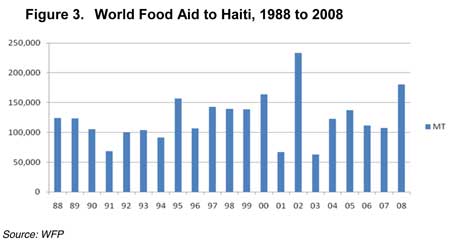
Weinbaum said, œThis question here of immunity is very serious. It was what led to US walking away from Iraq because it could not get a Status of Forces Agreement as it™s called and this is a sticking point.”

Karzai œis anxious to have an agreement because he is fearful that he may lose the monetary support for the Afghan security forces if there is no agreement,” he said.

Kabul and Washington have been engaged in negotiations over the Bilateral Security Agreement (BSA), which determines the future of US forces in Afghanistan after 2014.

Washington has repeatedly pressed for the deal to be signed by the end of October. The agreement will allow the US to keep between 5,000 and 10,000 US soldiers in Afghanistan after 2014.

The collapse of a similar agreement with Iraq in 2011 over the issue of troop immunity made the US pull all its troops out of the country.

If no agreement is signed with Afghanistan, all American troops would have to leave by December 31, 2014.

Taliban leader Mullah Omar has warned that a security deal between the US and Afghanistan will have œserious consequences.”

AT/HJ

Copyright: Press TV