Now that the prospect of Donald Trump becoming president of the United States seems like a possibility, he is contemplating nominations for his Cabinet. Trump today released at least a partial list of expected appointments.
As a reward for supporting Trump against the GOP Blue Beard Billionaires, Sarah Palin wins Secretary of State. Palin’s soaring credentials on foreign relations places her far ahead of other GOP contenders. An expert on Russia, which she saw from her backdoor in Alaska, Palin will charm foreign diplomats to raise trade barriers and isolate the U.S. from a world refugee crisis. Her first diplomatic call will be to Russia’s Putin, a known admirer of Mr….
Activists pushing anti-fracking ballot initiatives in Michigan are being held up by state lawmakers. (Photo: Daniel Foster / Flickr; Edited: JR / TO)
Activists in Michigan have been working on a statewide ballot initiative to ban fracking since 2012. It could be the first fracking law to appear on a state ballot in the United States. After failing to collect sufficient signatures in 2012 and 2013, and sitting 2014 out, the grassroots campaign again came up short of qualifying for the 2015 ballot. However, this time they responded by announcing they would continue collecting signatures — to get on the 2016 ballot.
“It is not easy getting a grassroots initiative on the ballot. I think that’s why our opponents are so scared of us.”
As it turns out, a 1986 Michigan Supreme Court decision allows petitioners proposing statute-based initiatives (not constitutional amendments) to use signatures over 180 days old — but not older than four years — so long as the campaign is able to reverify the older signatures.
No campaign has ever attempted this, as the process of reverifying the signatures with local election clerks has been prohibitively cumbersome.
But new technology is making it easier. The idea came from a group collecting signatures to legalize and tax recreational marijuana, which also fell short of qualifying for the 2015 ballot. The idea: to cross-reference the older signatures with the state’s new digitized Qualified Voter File database. As the database is maintained by local clerks, the petitioners argue cross-referencing the signatures with the Qualified Voter File is equivalent to consulting the clerks.
Opposition to the Use of Signatures Over 180 Days Old
At first this technology seemed to offer a modern-day solution to expedite direct democracy, but a backlash to the innovation is quickly accelerating.
The state Board of Canvassers, a body appointed by the legislature and governor, has argued that the new mode of verification should not be allowed, and on…
Visit http://democracynow.org to watch the full independent, global news hour, read the transcript, search our archive and to make a donation to support us.
Politicians, commentators and journalists who seized upon Tuesday’s terror attacks in Brussels to make a case for Britain to leave the EU have been met with outrage.
On Tuesday morning Islamic State (IS, formerly ISIS/ISIL) terrorists carried out attacks on Brussels main airport and one Metro station, killing at least 28 people and injuring more than 100.
Telegraph commentator Allison Pearson and media loudmouth Katie Hopkins both claimed the carnage proved mass immigration should be stopped and European borders closed.
But outraged social media users took to Twitter to criticize the kneejerk politicization of the tragedy, accusing Pearson of “mind-blowing insensitivity.”
Hopkins also angered users for suggesting the suicide bomb attack was the fault of liberal politicians and voters, who advocate taking in more refugees from Syria and the Middle East.
UKIP MEP Mike Hookem took his opportunity to release a statement suggesting European freedom of movement poses a “threat to [British] security.”
.@allisonpearson People are dead, and you’re jumping on a tragedy to score cheap points. No wonder apathy is rife & journalism is struggling
“I am appalled at the loss of life and injuries. Our thoughts and prayers go out to the families of those killed and injured,” the MEP for Yorkshire and the Humber said.”
Every one of you who said refugees are welcome, if you said ‘let them in’. You are responsible for Brussels. And you still can’t see.
The Pentagon says an American airstrike has killed “dozens of fighters” at what it described an al-Qaeda training camp in a mountainous area of Yemen. The strike follows a recent Saudi bombing on a Yemeni market that resulted in over 100 civilian casualties.
Pentagon announced late Tuesday that the US military had bombed a training camp of al-Qaeda’s local affiliate, al-Qaeda in the Arab Peninsula (AQAP), used by “more than 70 terrorists.”
“Early this morning the US military conducted an airstrike against an al-Qaeda in the Arabian Peninsula training camp in Yemen. The camp was located in the mountains, and was being used by more than 70 AQAP terrorists,” the statement said.
The location of the alleged training camp was not disclosed, nor did Pentagon share any other details about the strike. It is still unknown if there were any civilians affected by the airstrike.
Read more
It claimed that “dozens of AQAP fighters have been removed from the battlefield.” The airstrike, therefore, would deprive al-Qaeda of its capability “to use Yemen as a base for attacks that threaten US persons, and it demonstrates our commitment to defeating al-Qa’ida and denying it safe haven.”
Yemen security officials and a witness on the site told AP that the airstrike hit a former military base that had been taken over by al-Qaeda militants about 75 kilometers west of the terror group’s stronghold city of Mukalla.
The American airstrike came amid the Saudi-led military operation in Yemen, which aims at pushing back Houthi insurgents and forces loyal to former President Ali Abdullah Saleh and bring back exiled ex-President Abd Rabbuh Mansur Hadi. The US military does assist the Saudi campaign by providing intelligence, mid-air refueling and logistical support.
Earlier in March, Saudi air forces hit a market in Yemen’s Hajja governorate, killing 106 civilians, including 24 children. UN High Commissioner for Human Rights Zeid Ra’ad Al Hussein said later that the target had no military significance as the nearest Houthi checkpoint was located 250 meters away from the market.
Resurgent AQAP militants were seen taking advantage from the military campaign against the Houthis, their Shia foes, and had seized significant parts of southern Yemen.
At least 6,000 people have been killed in Yemen fighting since March 2015, many of them civilians. In January, a UN panel assigned to investigate the bombings in Yemen reported to the Security Council that it had revealed “widespread and systematic attacks on civilian targets by Saudi Arabia.”
US presidential frontrunners Donald Trump and Hillary Clinton notched easy victories in the Arizona primaries, inching closer to their respective party nominations for the November elections.
Trump, the leading Republican candidate, trounced his rivals in Arizona Tuesday night, winning all 58 of the state’s delegates.
Trump’s victory will make it harder for the two other remaining GOP contenders, Texas Senator Ted Cruz and Ohio Governor John Kasich, to slow his growing momentum in the 2016 race.
The billionaire businessman proved his appeal among Republican hard-liners in the border state, where illegal immigration is a hot-button issue. Trump thanked Arizona voters in a Twitter post.
Cruz had campaigned hard in the state and hoped for a potentially game-changing victory there.
In remarks on Tuesday, the senator lambasted Trump for advocating for withdrawing the United States from NATO and President Barack Obama for “going to baseball games…
http://democracynow.org – In the Belgian capital of Brussels, explosions have hit the international airport and a city metro station, reportedly killing more than two …
US President Barack Obama landed in Havana Sunday to great fanfare, both in Cuba and stateside. His visit marks a significant shift of the United States’ approach towards the socialist state, and the possibility of cooperation after decades of hostility. US media generally struck a hopeful tone, with a surprisingly nuanced mix of positive and critical stories about Cuba.
Some Cold War hold-outs in the media just weren’t having it, though, taking the occasion to feign outrage that Obama could visit a country with such a terrible human rights record. While American human-rights hypocrisy is nothing new, a string of Bush-era, pro-torture, pro-Guantánamo pundits expressing indignation at Cuba’s human rights failings was still remarkable.
Marc Thiessen. As a former Bush speechwriter, Thiessen helped shape the messaging around “enhanced interrogation” that provided the Orwellian phraseology the administration hid behind while torturing hundreds of detainees. He has since been a staunch defender not just of Guantánamo prison, but of force-feeding its prisoners and even expanding its use. The New York Timesrecapped his much-criticized defense of torture in 2010:
Mr. Thiessen, a practicing Roman Catholic, says that waterboarding suspected terrorists was not only useful and desirable, but permitted by the teachings of the Catholic Church.
Today, however, in the Washington Post opinion section, Thiessen suddenly discovered his inner human rights advocate, quoting an “activist” saying of Obama’s trip:
This will prolong the life of the dictatorship, is worsening the human rights situation there, marginalizing the democratic opposition and compromising US national security.
Thiessen even had the gall to cite Amnesty International, which has roundly condemned the US’s extrajudicial prison in Cuba that Thiessen loves to champion.
National Review‘s concern about the rights of prisoners in Cuba does not extend to all prisoners in Cuba.
Rich Lowry. The National Review editor was another Bush-era torture advocate, telling the McLaughlin Group in 2002, when asked if the US should torture terrorism suspects:
If it comes to that, we should let someone else do it. We should send him to another country that will do the job…. Look, this is going to be a messy war and you have to do some underhanded things.
The National Review’s contempt for basic human rights and legal norms continues, with the non-ironic article “Guantánamo Bay Detainees: Why Not Shoot Them?” published just last month. But Lowry has considerable concern for oppressed people in Cuba who aren’t on a US military base:
But a patina of revolutionary romance, embodied by that image of Che looking down on President Obama, still hangs over Cuba. It makes its human-rights abuses, theft and lies an afterthought, or even excusable, for the American Left.
Jonathan Alter. A putative liberal, Alter was one of the more vocal supporters of torture in the wake of 9/11, writing his now-infamous article in Newsweek, “Time to Think About Torture,” which acts as a 1000-word trial balloon for some of the more heinous aspects of detainee abuse. He even cites the Jordanian security service threatening to kill Palestinian militant Abu Nidal’s family in the 1980s as an example of torture “working.”
But during the March 9 Democratic presidential debate, Alter tweeted his outrage at Bernie Sanders not condemning Cuba:
Bernie a lefty sucker for Cuban line on health care. If he got sick there, he’d medevac out. And where’s his concern for human rights there?
In almost 6,000 tweets, Jonathan Alter had not once tweeted out the words “human rights” until that moment. Per usual, “human rights” were not a categorical imperative, or a moral framework; they were merely a weapon to be wielded against America’s enemies when our establishment pundits saw fit, and to be discarded just as quickly when they didn’t.
John Bolton. Bush’s UN ambassador, Bolton has long been one of the biggest advocates for keeping Guantánamo open, writing multiple op-eds after Bush left office in defense of the notorious prison. Bolton also said he was open to the idea of torture in a 2008 interview with British television. But Monday, upon Obama’s arrival in Cuba, the famously unilateral Bolton appealed to the very international norms he had long dismissed (PJ Media, 3/21/16):
Bolton pointed out that the president said initially that he wouldn’t go to Cuba until there were improvements in the area of human rights there. “But not only has there been no improvement, things have been going in the wrong direction,” he lamented. “More people have been put in jail than have been released.”
Bill O’Reilly on Obama’s trip to Cuba: He shouldn’t have gone.
Bill O’Reilly. Leading Fox News blowhard O’Reilly has repeatedly defended torture, saying as late as 2014 that a President O’Reilly would have “authorized waterboarding and other severe interrogation methods,” and calling the CIA’s torture policy “morally correct.” He has played the role of Guantánamo truther, insisting in 2008 that there was “no proof” of mistreatment at the Cuban detention center. But last night, discussing Obama’s trip to Cuba, O’Reilly told Fox’s resident straw liberal Kirsten Powers that Obama shouldn’t have gone because it is a “human-rights violator.”
***
Human rights are important. Human Rights™, as arbitrary tools of Western propaganda, are dangerous. Not only because they serve to bully unfriendly nations with cheap sloganeering, but they also, in the long run, undermine the otherwise noble and well-intentioned enterprise of establishing international norms.
“The problem with living outside the law,” Truman Capote once quipped, “is that you no longer have its protection.” The same is true for every Bush-era pundit who served as ideological shock troops in one of the more shameful episodes of American history. These talking heads can criticize Cuba’s controlled economy, they can criticize its leadership, they can criticize its immigration policy—but they have no grounding, intellectually or morally, to criticize its human rights record.
Adam Johnson is a contributing analyst for FAIR.org.Follow him on Twitter at @AdamJohnsonNYC.
US presidential candidate Bernie Sanders trounced Hillary Clinton in Utah’s Democratic caucuses, scoring a much-needed victory as he vies to slow Clinton’s march to the nomination.
Projections had shown that the Vermont senator was set to win nearly 75 percent of the available 33 delegates in the state.
Early results indicated that Sanders was leading the Democratic frontrunner by a whopping 50 percent.
Earlier in the evening, Clinton defeated Sanders in Arizona, the largest winner-take-all state on the map on Tuesday.
The two remaining Democratic contenders are also competing for Idaho, which Sanders is expected to win.
On the Republican side, frontrunner Donald Trump proved his appeal among immigration hard-liners in Arizona by clinching a convincing victory in the border state.
Trump won four of the five contests on March 15, building a considerable delegate advantage over Senator Ted Cruz.
http://democracynow.org – Tuesday’s attacks in Belgium came just four days after authorities in Brussels arrested Salah Abdeslam, a suspect in the November …
Chancellor George Osborne faced the toughest challenge of his six years in government on Tuesday afternoon, when he defends his much-maligned budget before MPs in a bid to quell a Tory civil war.
Osborne defended drastic cuts to welfare payments introduced alongside tax breaks for the rich, in an attempt to convince the country he is dedicated to “compassionate Conservatism.”
He has however been forced into a U-turn over deeply unpopular cuts to disability benefits. The policy was so unpopular Work and Pensions Secretary Iain Duncan Smith resigned in protest, and Osborne has not been since in parliament since.
He even failed to answer an urgent question from Labour Shadow Chancellor John McDonnell, sending junior minister David Gauke in his place, prompting the Twitter hashtag #WheresGeorge.
Liberal Democrat leader Tim Farron asked the Chancellor to “act in the national interest and resign” during Tuesday’s debate after stating that people may be more likely to vote to leave the EU if he remains in power.
Tim Farron says if George Osborne doesn’t resign as chancellor people may be more likely to vote to leave the EU.
Speaking in the Commons, the Chancellor reminded Tory MPs they were elected less than one year ago on a platform of “economic security, controlling public spending and lower taxes for working people and business.”
Osborne has officially confirmed his embarrassing climb-down over cuts to Personal Independence Payments (PIPs) for disabled people, which were originally going to be reduced by £30 a month.
At the same time he is seeking to defend his budget as having promoted economic security.
George Osborne is to “compassionate Conservatism” what Don Juan was to chastity. Pretty unconvincing act today
“We know that those who suffer most when Britain loses control of its public finances and the economy crashes aren’t the best off but the poorest and the most vulnerable,” he will say.
“But this Budget will lift 1.3 million of the lowest paid out of income tax, it will deliver improvements to our schools, help the least well-off to save, and support business and enterprise to create jobs and boost social mobility.”
When Osborne reiterated the Tory line that “we are all in this together,” McDonnell blasted the Chancellor’s actions as “grubby, incompetent manipulations of a political chancer.”
“Don’t tell us we are all in this together,” he said.
Osborne’s hopes of leading the Conservative Party into the next election have been dealt a severe blow by Duncan Smith’s resignation and the ensuing scandal. A YouGov poll published on Tuesday found an overwhelming majority of British voters think he will never become prime minister.
Some 67 percent of British voters and 69 percent of Conservatives said it is unlikely Osborne will ever lead the party.
Prime Minister David Cameron reportedly blamed Osborne for the row over disability welfare cuts which erupted last week with Duncan Smith’s sudden resignation.
He stood down on Friday after accusing the government of protecting wealthy Tory-voting pensioners while cutting benefits for the poor and disabled.
Labour Party leader Jeremy Corbyn called on Osborne to resign.
“His Budget simply doesn’t add up and it unraveled within hours of him presenting it. This isn’t the first time a George Osborne Budget has unraveled,” he told the BBC.
“It seems to me we need to look at the very heart of this government, at its incompetence, at the way it puts forward proposals that simply don’t add up and expects the most needy in our society to take the hit for them.”
Skyrocketing housing prices in Palo Alto have prompted its city council to unanimously approve a plan that would develop homes for those falling through the cracks – specifically those making a paltry $150,000 to $250,000 a year.
Palo Alto’s first subsidized housing plan for moderate-income families would be aimed at providing affordable living space for middle-income professionals such as teachers, firefighters, and government workers. The plan envisions building smaller downtown units near transit for people who don’t own cars, and would be a combination of residential space and retail outlets.
Vice Mayor Greg Scharff proposed the idea after long council discussions determined that the housing crunch sending home prices to new heights was displacing long-time residents, leaving “empty-nest” seniors with no options for downsizing, and exacerbating the city’s traffic, according to Palo Alto online.
Lawmakers also recognized that incomes were too low to afford local rents and too high to qualify for local affordable-housing programs.
“Prices have just gone through the roof, making it unaffordable for middle class people, your firefighters, your teachers, and frankly some of your doctors,” Scharff told CBS.
Scharff worried that losing middle-class workers would hurt the city.
“What the council is proposing is that we work together to fund and subsidize, what is basically middle-class housing; which, traditionally, has not been subsidized,” Scharff said.
CBS reported that small homes on one Palo Alto block were worth between $1.5 and $2 million as teardown property.
“I just find it kind of sad that we are reducing ourselves to this small profile of young, rich, mostly white, mostly tech. It’s not the community that I moved into 33 years ago,” said Randy Bean, a documentary film maker, who told CBS that she couldn’t afford to stay in the area.
http://democracynow.org – All three remaining Republican candidates and Democrat Hillary Clinton addressed the pro-Israel AIPAC conference Monday. Clinton …
The US State Department has issued a travel warning for citizens travelling to Europe following a string of deadly attacks in Brussels, Belgium.
The travel alert, which was issued on Tuesday and expires on June 20, advises US citizens to be vigilant when in public places or using public transportation.
“Terrorist groups continue to plan near-term attacks throughout Europe, targeting sporting events, tourist sites, restaurants, and transportation,” it said in a statement.
US airlines, meanwhile, canceled travel to and from Brussels on Tuesday after two explosions blew out the Belgian capital’s international airport and a third blast rocked a metro station, leaving at least 30 people dead.
Some of the busiest airports in the US were placed on high security status with a heavy law enforcement presence.
The State Department said a number of US citizens had been injured in Brussels, including three Mormon missionaries and an Air Force member and his…
Jihad Abdulmumit, Co-Coordinator of the National Jericho Movement and Dr. Tekla Agbala Ali Johnson discussed the life, politics, case and death of former …
Exclusive: While Sen. Sanders stressed the need for a nuanced approach to the Middle East, Hillary Clinton and Donald Trump competed to see who could avow their love for Israel more ardently, reports Robert Parry.
By Robert Parry
At the annual AIPAC convention, the Democratic and Republican front-runners engaged in what might be called a “pander-off” as Hillary Clinton and Donald Trump tried to outdo the other in declaring their love and devotion to Israel.
Yet, what was perhaps most troubling about the two dueling speeches was the absence of any significant sympathy for the Palestinian people or any substantive criticism of the government of Israeli Prime Minister Benjamin Netanyahu.
Former Secretary of State Hillary Clinton addressing the AIPAC conference in Washington D.C. on March 21, 2016. (Photo credit: AIPAC)
By contrast, Sen. Bernie Sanders, who did not attend the AIPAC convention, delivered a foreign policy speech in Salt Lake City, Utah, that struck a more balanced tone and placed part of the blame for the Mideast problems on the policies of Netanyahu’s right-wing government.
However, in Washington before thousands of cheering attendees at the American Israel Public Affairs Committee convention on Monday, Clinton, Trump and two other Republican candidates, Texas Sen. Ted Cruz and Ohio Gov. John Kasich, were in full pander mode.
For instance, former Secretary of State Clinton depicted Israel as entirely an innocent victim in the Mideast conflicts. “As we gather here, three evolving threats — Iran’s continued aggression, a rising tide of extremism across a wide arc of instability, and the growing effort to de-legitimize Israel on the world stage — are converging to make the U.S.-Israel alliance more indispensable than ever,” she declared.
“The United States and Israel must be closer than ever, stronger than ever and more determined than ever to prevail against our common adversaries and to advance our shared values. … This is especially true at a time when Israel faces brutal terrorist stabbings, shootings and vehicle attacks at home. Parents worry about letting their children walk down the street. Families live in…
http://democracynow.org – Democratic and Republican voters head to the polls today in Utah and Arizona, underscoring the battle over immigration reform.
British Army snipers have field-tested a new high-tech stealth material which hides them from surveillance technology.
Troops from Edinburgh-based light infantry regiment 3 Rifles had the opportunity to test out the new Vatec material to construct concealed hides for snipers while on exercises in the US.
Corporal Tyrone Hoole, called the material “an absolutely brilliant piece of kit.”
“The lads are desperate for the Army to buy it. Instead of carrying chicken wire, spray paint and thermal sheets we can use this one item, which is really light,” he told Forces News.
Even more advanced technology is reportedly being developed at the Massachusetts Institute of Technology (MIT). It will use techniques based on the natural abilities of chameleons and squid to disguise themselves.
“If you put a pattern designed for the forest into the desert, it is not going to function. Dynamic camouflage would allow soldiers and their vehicles to adapt to their surroundings instantly,” a professor of engineering at the university told the Mail on Sunday.
Earlier in March a former RAF officer and legal expert warned that some stealth technology could breach the laws of armed conflict.
Former RAF Commodore William Boothby said technology which deceives the enemy in certain ways could be illegal if one party uses stealth abilities to appear as a non-combatant by making his weapon invisible and uses that appearance to gain a deadly advantage.
“A combatant whose weapon is rendered invisible by its coating is arguably not complying with the minimal requirements [of carrying a weapon openly],” Boothby claimed in a report in the journal Weapons and the Law of Armed Conflict, due to be published by Oxford University Press this month.
Such a move could leave the disguised combatant liable according to what the Geneva Convention terms a “prohibition of perfidy.”
A man who had been in Paris just hours before the November attacks and in Boston just one block from the 2013 marathon bombing was among the nine Americans injured in the Brussels attacks that killed 34 people and injured nearly 230 on Tuesday.
Islamic State has claimed responsibility for the bombings at Brussels’ Airport and Maalbeek metro station.
Belgium’s health minister, Maggie de Block, said 11 people had been killed and more than 80 injured at the airport departure lounge where thousands of passengers were waiting to check luggage and collect boarding cards.
Brussels Mayor Yvan Mayeur said 20 people had died and more than 100 were wounded in the subway blast. Rescue workers set up makeshift first aid centers in a nearby pub and hotel.
Medical officials treating the wounded said that some victims had lost limbs, while others had suffered burns and deep gashes from shattered glass or nails packed in with explosives. Several children were among the most seriously injured.
Officials at the airport said that police discovered a Kalashnikov assault rifle and an explosives-packed vest abandoned at the facility. Bomb disposal experts dismantled the explosive device, which will provide a potential lead for forensic investigators.
There were nine Americans among the 230 wounded.
Mormon Church officials said that four missionaries from Utah were wounded during the attacks at the airport, three of whom were seriously injured and hospitalized.
Church Elder Richard Norby, 66, Elder Joseph Dresden Empey, 20, and Elder Mason Wells, 19, were at the airport in Brussels dropping off Sister Clain, who was on her way to serve in the Ohio Cleveland Mission. None of their injuries are life-threatening, but the three men were taken to a hospital, the Desert News was told by family members, a friend, and a church spokesman.
“They were all injured but getting treatment and doing well,” Elder Empey’s mother Amber wrote on Facebook.
Elder Wells required surgery for burns and other wounds, according to Lloyd Coleman, a family friend.
“Elder Wells has burns to his hands and legs and some to this face,” Coleman told Desert News. “Most of the damage is around his foot and ankle. A heel took the most damage, and the doctors are repairing it, but the family doesn’t know how bad that injury is.”
A tweet from KSL 5 TV reporter Shara Park of Utah claimed that an LDS Bishop said that Elder Wells had been a block from the Boston marathon bombing in 2013, and in Paris just hours before the attacks in November of last year, before being hurt in the Brussels.
A US Air Force officer and his wife and four children were also among the Americans wounded in Tuesday’s attacks, but European Command officials would not release details concerning their injuries due to privacy concerns. US officials told the Associated Press that the officer was a lieutenant colonel and that he and his family had been injured in the attack at the airport.
Some of the injuries were critical, a defense official told Fox News.
“Our priority at this time is the safety and well-being of our airmen and their families,” Air Force Secretary Deborah Lee James told reporters.
European Command officials said that any official travel to the NATO hub would now require approval. The restrictions don’t apply to military personnel assigned to posts in the city.
Another person seriously injured in the attacks with links to America was Sebastien Bellin, a professional basketball player in Belgium and former member of the Marist College and Oakland University teams. Brazilian-born Bellin was reportedly thrown 65 feet into the air by the explosion, according to his former professional team, BC Telenet Oostende, which has been providing information on the player’s condition via Twitter. Reports say that Bellin has shrapnel injuries in his leg and hip.
The team tweeted out a picture of Bellin in the aftermath of the bombings that show Bellin laying on the floor with his jeans tattered and blood surrounding his left leg.
A Twitter post from Oakland University’s men’s basketball coach confirmed that Bellin was injured in the Brussels bombing and already going in for a second surgery.
My ex player Seb Bellin was injured in the Brussels bombing. Going for second surgery. Please pray for Seb.
Another basketball star, NBA Hall of Famer Dikembe Mutombo, was also at the Brussels airport during the bombings.
Mutombo posted two messages on his Facebook page to let everyone know he was not injured. One photo showing people walking around outside the airport was accompanied by the message, “God is good. I am in Brussels Airport with this craziness. I am fine.” This was followed by another post with a selfie and the message: “Thank you everyone. I am safe here. God is good.”
Forty-nine-year-old Mutombo, a native of the Democratic Republic of Congo, now lives in Atlanta. The eight-time All-Star retired in 2009.
The bombings came barely four months after suicide attackers based in Brussels’ Molenbeek district slaughtered 130 people, while injuring 368 others, in six separate but coordinated attacks on Paris nightspots on November 13 of last year. Intelligence agencies have been warning for months that a follow-up strike was inevitable. Those fears increased last week following the arrest of Salah Abdeslam, the prime surviving suspect in the Paris attacks, in Molenbeek, along with police admissions that others involved in the earlier attacks were still at large.
Abdeslam has reportedly told investigators that he was planning to “restart something” from Brussels, according to Belgian Foreign Minister Didier Reynders, who said on Sunday that authorities were taking the claim seriously because “we found a lot of weapons, heavy weapons in the first investigations and we have seen a new network of people around him in Brussels.”
After nightfall on Tuesday, Europe’s best-known monuments — the Eiffel Tower in Paris, the Brandenburg Gate in Berlin, and the Trevi Fountain in Rome — were lit up in Belgium’s national colors in a show of solidarity with the country and to pay tribute to the victims of the attack.
In the US, President Barack Obama ordered that all American flags be flown at half-staff through Saturday out of respect for victims.
It was an era mankind groan’d Brute, its ruthless fangs, apartheid Regime so repressive, South Africans moan’d A wail of laments, less than slaves O, wept the Zulus, alien at home Where is a redeemer? Where is God?
Freedom zealots are killed, jail’d Oliver Thambo, Nelson Mandela God save our people, Archbishop Tutu wail’d And fellow libertarians scattered abroad Minutes, years, rolled! And rolled by Where is the redeemer? Where is God? Of immortal presence his invincible light From the heart of Mandela breathed forth this torch A promise of love A promise of freedom A promise for forgiveness
The sole eyewitness to Honduran social movement leader Berta Cáceres’ assassination on March 3, 2016 has gone from being wounded victim to, effectively, political prisoner.
Now Gustavo Castro Soto may also be framed as the murderer of his long-time friend.
Mexico’s ambassador to Honduras, Dolores Jiménez, and Castro himself are worried that the Mexican national will be charged by the government for the killing, they told the National Commission of Human Rights of Honduras on March 16.
A writer and organizer for environmental and economic justice, Castro has been forbidden by local authorities from leaving the country to return to his native Mexico until April 6, at least. Since being released from several days in Honduran government custody, he has been forced to take refuge in the Mexican embassy in Tegucigalpa. The protection of the Mexican Embassy “does not mean that my life is no longer in danger,” Castro wrote to some friends and colleagues on March 4. As long as he is on Honduran soil, he remains in peril. Ambassador Jiménez called the risk he is running “an objective fact.”
Castro — who, as the lone witness to the murder, is able to identify Cáceres’ killer — is an impediment to the plan that the Honduran government is clearly advancing, which is to pin the murder on members of the group which Cáceres founded and ran: the Civic Council of Popular and Indigenous Organizations, or COPINH. So the fraudulently elected Honduran regime may dispense with Castro by charging and arresting him.
The government may also charge COPINH members with the killing of their leader, in the hopes of eliminating them from the body politic. Authorities tried to incriminate three of them just after the murder.
Prominent COPINH organizer Aureliano Molina was imprisoned for two days on suspicion of a “crime of passion,” though he was two hours away from La Esperanza, the location of the killing, on the night of March 3. Two other COPINH leaders, Tomas Gómez and Sotero Echeverria, were interrogated for days, during which time the government denied their request for accompaniment by their lawyers. On March 15, Echeverria was threatened with arrest.
The Real Assassins
Cáceres was a tireless organizer for accountable government, participatory democracy, indigenous peoples and their territories, human rights, and women’s and LGBTQ rights. For many years, she was subject to threats, attempted violent attacks, legal prosecution for being a “continual danger to the nation,” and other persecution.
During the three-month period prior to Cáceres’ murder, human rights accompaniers tracked 11 threats and attempted assaults by national and local government officials, police, soldiers, employees of the Agua Zarca dam project (which Cáceres and others were fighting), and unidentified men. And within 10 days of Cáceres’ death, Agua Zarca released incendiary public email announcements blasting the alleged “falsehoods of Berta Cáceres” and COPINH.
Those who have witnessed the price Cáceres has paid for her decades of advocacy have no doubt who is culpable in her murder. Her four grown children and mother stated publicly on March 5, “We hold DESA” — the company behind the dam — and “the international financial organizations backing the project responsible” for the “constant death threats against Berta, us, and COPINH. We hold the Honduran state responsible for obstructing Berta’s protection and for contributing to her persecution, criminalization, and murder.”
Castro’s Ordeal
Many elements of the government’s so-called collection of evidence from Castro have been irregular at best, and illegal at worst.
Beyond being inconvenient for knowing too much, the eyewitness falls into the repressive government’s category of public enemy. Like Cáceres, Castro has been a vocal opponent of dam construction on indigenous rivers, as well as of the broad powers given to transnational corporations and the local elite to undermine democracy and plunder the riches of nature.
Castro is coordinator of the group Otros Mundos/Friends of the Earth Mexico. He cofounded — and sits on the governing bodies of — many anti-mining and anti-damming networks, as well as the U.S.-based organization Other Worlds. In his interrogation, the public prosecutor asked Castro about his environmental organizing and history of activism.
Following the killing in Cáceres’ home in the town of La Esperanza, Castro was detained for days in the local public prosecutor’s office for interrogation. On March 5, having been told the questioning was complete, he was transported by the Mexican ambassador and consul to the airport in Tegucigalpa so that he could return to his homeland. As he approached the migration checkpoint, Castro was set upon by multiple Honduran police, who attempted to grab him. The Mexican ambassador stopped them.
The government has since forbidden Castro from leaving Honduras for 30 days, or until April 6. When Castro appealed the order, the judge in the case ruled against it, even while admitting that there is no legal provision for a 30-day restraint for witnesses or victims.
The judge also suspended the license of Castro’s lawyer, Ivania Galeano, for 15 days. The stated reason was that Galeano had requested a copy of Castro’s file — which, according to Honduran law, was her right.
Even in the Mexican embassy, almost three weeks after the killing, Castro continues to be interrogated by the Honduran prosecutor.
Hearing No Protest from the U.S., Honduran Government Ramps Up Repression
The U.S. State Department put out a brief, generic statement of condolence the day after Cáceres was assassinated. At the same time, according to email communications, the State Department confirmed that it is cooperating with the Honduran government in the investigation, with various U.S. agencies actively participating in it.
The Obama administration has failed to raise questions about the Honduran government’s role in the murder, despite its persistent, well-documented targeting of Cáceres over the years, and its transparent attempts at a cover-up by fingering Cáceres’ close colleagues. U.S. military assistance to the illegitimate Honduran coup government continues to flow.
On March 17, 62 U.S. congressional representatives sent a letter to Secretary of State John Kerry calling for an independent investigation of the assassination and urging the secretary to immediately stop U.S. security funding pending a review. Representative Hank Johnson, co-sponsor of the letter along with Representative Keith Ellison, said, “It’s time for our government to leverage security assistance and multilateral loans so as to put real and lasting pressure on the Honduran government to protect its activists and pursue those responsible for these hideous crimes.”
Meanwhile, the silence from the administration has given the Honduran government a green light for repression.
That repression was aggressively escalated on March 15. On that single day, Honduran soldiers and police coordinated assaults against 10 activists from four geographic regions and three separate organizations. Nelson García, a COPINH leader, was assassinated during a violent government eviction of the community of Rio Chiquito. In the capital, three hit men shot and wounded Christian Mauricio Alegría, who works with the global peasant movement La Via Campesina. His uncle, Rafael Alegría, is a deputy in the national parliament from the opposition Libre Party, and is former secretary general of La Via Campesina. José Flores, head of the United Movement of the Peasants of the Aguan (MUCA), was temporarily arrested along with family members in the town of Tocoa.
The message was clear to all. No matter where one is or with whom one works, activists are not safe in Honduras.
From the Mexican embassy on March 15, Castro sent out a note of condolence and support to the Honduran people. He closed the missive this way: “Soon there will be justice.”
US Presidential candidate Bernie Sanders should be given “credit” for skipping an AIPAC conference earlier; however, the Vermont senator is “still imagining that there will be a two-state solution” to the conflict in the Middle East, says a political commentator.
Sanders was the only 2016 presidential candidate who did not address the annual policy conference of the American Israel Public Affairs Committee on Monday and instead called on Tel Aviv to end construction of illegal settlements.
“We have to give Bernie credit for not speaking to AIPAC and for saying it’s time to stop the expansion of these settlements,” Kevin Barrett told Press TV on Wednesday.
However, the progressive candidate who calls himself a socialist “is not saying that the Israelis have to go back to the pre-1967 borders, which is in fact the official position of the entire world,” he noted, calling Sanders’ stance “hardly radical.”
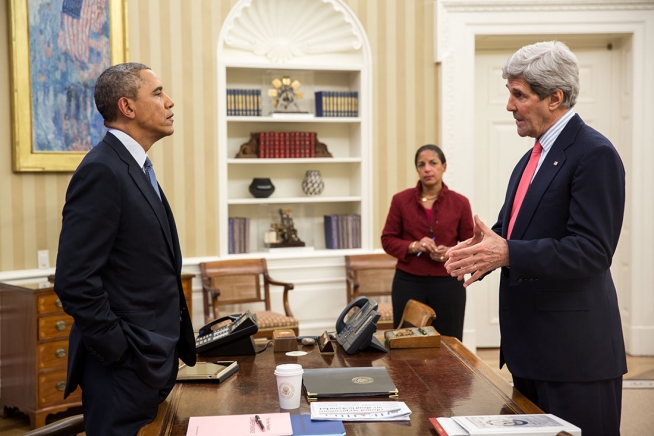
In a photo released by the White House, President Barack Obama and National Security Advisor Susan Rice talk listen to Homeland Security Advisor Lisa Monaco while receiving an update on Tuesday’s terrorist attack in Brussels, March 22, 2016. The call was taken at the residence of the US Chief of Mission in Havana, Cuba. (Official White House Photo by Pete Souza via The New York Times)
The terrorist attacks carried out in Brussels on Tuesday bolstered calls from the administration to confront the Islamic State (ISIL) throughout the world.
Defense Secretary Ash Carter told the House Armed Services Committee hours after the killings that the United States’ counter-ISIL strategy needs to look beyond Iraq and Syria.
“If we can expel ISIL from Raqqa and Mosul, that will show that there’s no such thing as an Islamic State based upon this ideology,” Carter said, referring to the largest cities held by ISIL. “We also need to destroy ISIL in the places to which it has metastasized around the world.”
In January, using similar language in an article for Politico Magazine, Carter said those places include “North Africa, Afghanistan and Yemen.” The US has recently launched a number of recent airstrikes at ISIL targets in Libya, including one in late February that killed dozens of people — believed by the Pentagon to be militants.
Tuesday’s attacks in Brussels killed at least 30 people and wounded 180 others, with the casualty toll likely to climb after publication. The massacres were carried out through three bombings — one at Maelbeek metro station, and two at Zaventem airport. According to preliminary reports, an ISIL-affiliated website claimed responsibility on behalf of the extremist organization.
“Together, we must and we will continue to do everything we can to protect our homeland and defeat terrorists wherever they threaten us,” Carter also said. “No attack will affect our resolve to accelerate the defeat of ISIL.”
The idea that the US can defeat “terrorism” in a global…
Haaretz columnist Gideon Levy talks to journalist Max Blumenthal about how the Israeli occupation has poisoned not only the region but much of the world, and …
Police chiefs trying to keep their covert operations in the shadows should open up and admit to a public inquiry what they’ve done, Labour Party Shadow Chancellor John McDonnell has said.
He was speaking ahead of a two-day preliminary inquiry into the activities of undercover police officers, in which chairman Christopher Pitchford will hear evidence on how much should be made public.
Home Secretary Theresa May announced the inquiry in March last year after revelations of the activities of rogue undercover police across the UK.
McDonnell’s serving and former Labour Party colleagues Diane Abbott, Dave Nellist, Ken Livingstone and Joan Ruddock all claim to have been targeted by undercover police.
Other allegations come from a number of women who claim to have been duped into relationships by undercover officers, and some newspapers which say they were spied on.
The politicians affected have teamed up with Sharon Grant, who is acting on behalf of her recently deceased politician husband Bernie Grant – who was among those placed under surveillance. Solicitors will present evidence condemning Westminster’s calls for police actions to remain secret.
In particular, it will be argued that withholding information on the targeting of democratically elected representatives hinders the inquiry’s capacity to hear vital evidence.
Officers, meanwhile, have drawn on human rights law to argue their case, with the backing of the Home Office. But McDonnell says any torment caused by undercover policing will not disappear until police chiefs unveil “the full truth.”
“It would be easier for the Metropolitan Police commissioner now to [be] fully open to the public and admit what went on, give us all the information that we need,” he told the Morning Star on Tuesday.
“And in that way, maybe, maybe, some of the victims can get some form of closure on this — they won’t, otherwise.”
But Scotland Yard has called on the inquiry chairman to maintain the force’s “neither confirm nor deny” policy over the identity of undercover police and details of their work in the field.
UK campaign Police Spies Out of Lives has previously said the victims of police surveillance strongly support the “principle of open justice.”
A Florida pre-teen faces battery charges for pinching the wrong classmate’s butt, because while the alleged victim did not wish to press charges, his mother did. Now the 12-year-old girl must complete a special program to keep her public record clean.
Breana Evans claims she was just playing a game when she squeezed the unnamed boy’s heiny.
The police weren’t kidding, though, when they read Breana her Miranda rights, put her into the back of the patrol car, took a mugshot, and booked the middle schooler into juvenile detention.
“He said, ‘I don’t even want to do this.’ That’s what the deputy said. ‘But I have to do what I have to do’,” Ray Evans, Breana’s father, told CNN.
The father’s feelings were seemingly shared by the boy, who told his school resource deputy that he was not interested in pressing charges. Breana, who reportedly did not even know the boy, was suspended by the school. That apparently did not satisfy the boy’s mother.
“I’m sorry. That’s all I can say for you, lady, is you need some help I think, too overprotective,” Ray Evans said in the interview.
Breana was more contrite. “I’m sorry for touching your kid,” she said.
If Breana completes a 90-day diversion program, passes drug tests, and performs community service, then the battery charge will be dismissed without going on her permanent record.
School police officers and students square off in a TRNN debate over the role of cops in education in the wake of a beating of a student caught on video that has …
Newsweek on Donald Trump: What, him, a worry? (photo: Jabin Botsford/Washington Post/Getty)
Yes, there is still a Newsweek magazine, and it says not to worry about Donald Trump.
“Trump isn’t Hitler. He isn’t a fascist either,” the magazine’s Matthew Cooper (3/16/16) assures us:
The unspectacular truth is that a Trump presidency would probably be marked by the quotidian work of so many other presidents—trying to sell Congress and the public on proposals while fighting off not only a culture of protest but also the usual swarm of lobbyists who kill any interesting idea with ads and donations…. Remember Schoolhouse Rock? Trump is no match for the American political system, with its three branches of government….
Could Trump blow up those legendary checks and balances and make America a fascist state? Oh, please…. Trump’s more likely to end up like Jimmy Carter—a poor craftsman of legislation and a crushing disappointment to his supporters.
Why will Trump be like Carter? Because “since World War II, only Dwight Eisenhower, Ronald Reagan, George H.W. Bush and Bill Clinton have left office with high approval numbers.” Well, OK then!
If that comparison isn’t reassuring enough, Cooper has more:
Critics should allow that he could be like Governor Arnold Schwarzenegger—a political novice and ideologically flexible Republican whom some California voters feared, yet who turned out to be way more tepid than the Terminator.
Cooper even seems to find reassurance in Trump’s safely alphabetizable name, concluding:
It’s more than likely Trump would wind up being just another president on the alphabetical roll call, nestled between the memorable Truman and the utterly forgettable John Tyler, distinguished more by his hue, his bullying and his encouragement of other bullies than by any lasting damage done to a republic that has endured far worse.
Cooper’s blithe disinterest in any actual victims of Trump’s “bullying and…encouragement of other bullies” is as concerning as his basic argument: that people who worry about a Trump presidency just don’t understand how Washington works. “To actually accomplish even modest legislative goals, let alone become a 21st-century führer, is beyond the mogul’s ken.” If Trump wanted to reinstate torture, for example, “he’d have to get past Sen. John McCain, chair of the Armed Services Committee.” Trump’s “my-way-or-the-highway proclivities…would be worrisome if America were Bolivia and not an enduring democracy.” And his
displays of bigotry during the primary…are abhorrent, but they don’t put the America on a fast track toward the Third Reich—not unless you believe Congress, business, the armed forces, the judiciary and so on are all willing to start setting up internment camps.
But it seems like it’s Cooper who doesn’t know how Washington works—or is pretending not to. (He’s probably most famous as a reporter for helping Karl Rove and Scooter Libby expose Valerie Plame as an undercover CIA officer in retaliation for her husband’s whistleblowing on WMD deception.) When George W. Bush wanted to torture, he didn’t need to change any law; he just had his lawyers change the definition of torture, a maneuver that many in corporate media went along with uncomplainingly.
As for “setting up internment camps”—isn’t Guantanamo an internment camp? The armed forces, unsurprisingly, obeyed their commander in chief when ordered to set it up. Congress’s role has mainly been to resist any moves toward dismantling it—and to assert, in the National Defense Authorization Act of 2012, that the president has the legal right to imprison people without trial. (The Supreme Court for its part responded to that law by declining to review its constitutionality.)
A question Newsweek (6/23/14) asked that President Trump would no doubt love to find out the answer to.
Cooper does note that “when it comes to a president’s powers as commander in chief, Trump would have a lot of discretion.” But he doesn’t acknowledge what that has come to mean in the age of the “War on Terror.” In 2012, the New York Times (5/29/12) revealed that Obama meets weekly with advisers to decide who to put on the “kill list”—a list of targets for drone assassination. These lists can and do include American citizens, whom according to the Justice Department Obama has the right to kill without trial—as Newsweek (6/23/14) has itself reported.
Torture, detention without trial, assassination—not to mention an unprecedented surveillance apparatus: President Trump, like any president henceforth, would start off his administration with all the tools he would need to establish an authoritarian regime.
And any impulse to do so would no doubt be facilitated by an elite press corps ready to wave it all away as so much sound and fury, posing no possible threat.
Jim Naureckas is the editor of FAIR.org. Follow him on Twitter: @JNaureckas.
Messages to Newsweek can be sent here (or via Twitter: @Newsweek). Please remember that respectful communication is the most effective.
The pro-Israeli lobbying group in the US has tacitly censured GOP presidential candidate Donald Trump for attacking President Barack Obama at the 2016 AIPAC policy conference earlier.
The president of the American Israel Public Affairs Committee said on the final day of the annual conference on Tuesday that the group cannot be used as a podium to attack the US president.
The billionaire real estate mogul told the regime’s supporters a day earlier that Obama “may be the worst thing that ever happened to Israel,” adding that his administration has treated Tel Aviv “very, very badly.”
In remarks apparently directed towards Trump, AIPAC chief Lillian Pinkus claimed that “Last evening, something occurred which has the potential to drive us apart, to divide us.”
“We say, unequivocally, that we do not countenance ad hominem attacks, and we take great offense against those that are levied against the president of the United States of America…
Afghan interpreters who risked their lives while embedded with British troops are challenging a High Court ruling on resettlement rights.
Two men, who the Taliban have branded collaborators, will contest a High Court ruling which only allows those who aided UK forces after December 2012 to resettle in Britain.
The men claim Afghan interpreters have been treated differently to Iraqi interpreters, all of whom were given full assistance by the UK government.
One of the two men, known only as Al, is still in hiding in Afghanistan. The second, Mohammed Rafi Hottak, has been granted asylum in the UK but still has family in Afghanistan, where he believes they are at risk.
A July 2015 ruling stated there had been no discrimination based on nationality and that the Equality Act’s “geographical reach” was not relevant in this case.
Pressure on the government to resettle interpreters has been substantial. A petition urging the state to do more to aid those at risk reached 160,000 signatures in September 2015.
One case that drew press attention was that of an Afghan nicknamed “Happy,” who was denied asylum despite Taliban threats and was eventually forced to flee Afghanistan amid the refugee crisis.
Happy found himself stranded in the “Jungle” refugee camp near the French port town of Calais, attempting to reach the UK. He told RT the British asylum system for interpreters is flawed.
“The rules are a little bit complicated, and it takes time, a year, but I couldn’t wait in Kabul. I have to cross this Channel, because I don’t have another option. I have to go to the UK.”
Backed by his former British Army commander George Tyldesley, Happy was eventually allowed into the UK.
At least 20 interpreters for the British Army have been killed since 2001. Some 94 percent of Afghan interpreters claim to have received death threats.
Alabama teachers are apparently the subject of too many schoolgirl fantasies. “Don’t stand so close” to the children is the message behind legislation introduced to annually train teachers in how to avoid having sex with their students.
The Educator-Student Interaction Training Act would require one hour of training per year on sexual or romantic contact, social media interactions, interactions outside the classroom, and the use of corporal punishment and physical restraints in classrooms.
The bill cites increasing reports of inappropriate relations between teachers and students, in person and online.
Two male assistant football coaches were arrested in March in a Limestone County high school for having sex with different students, while a female teacher from a different school was arrested for sleeping with at least two students, the Decatur Daily reported.
In 2011, a female teacher was charged with sexually abusing three students; she pleaded guilty to two counts and was sentenced to 15 years in jail.
The legislation, proposed by Republican Senator Cam Ward, is expected to go the floor this week after being passed by the Senate’s Education Policy Committee, according to the Decatur Daily.
Committee Chairman Dick Brewbaker, a former teacher, abstained from voting on the bill last week and said he’d probably vote against it in the full Senate, calling it an insult to educators.
“I knew to leave the people in the little desks alone,” he said. “Teachers who have inappropriate relations with students aren’t doing it because they don’t know it’s wrong.”
If the bill passes, teachers in Alabama can expect to begin training during the 2016-2017 school year.
YouTube prankster “Digi Dan” has been sentenced to nine months in jail for staging bomb hoaxes and wasting police time.
The YouTuber, whose real name is Danh Van Le, filmed Londoners reacting to a suitcase with a hoax bomb. He received an additional sentence for threatening behavior while he carried out other pranks.
A 15-year-old male accomplice, who cannot be named due to legal protection for minors, was given a 12-month intensive referral order.
The video involved Le filming the boy as he approached members of the public holding a suitcase, which he reveals has a clock inside. The boy then drops the suitcase and runs away.
The prank was meant to be a tribute to Ahmed Mohamed, the 14-year-old American schoolboy who was arrested after his homemade clock was mistaken for a bomb.
Le is a co-founder of online channel Trollstation, known for filming outlandish pranks that have included football pitch invasions and impersonating police officers.
The YouTube channel has attracted almost 700,000 subscribers. Its creators have vowed to continue, despite prosecution.
“We were shocked that Danh was charged,” Trollstation CEO Light, real name Endrit Ferizoli, told the BBC. “Our aim was never to get away with breaking the law. I’m sure Danh regrets ending up in prison but he never meant for anything like this to happen.
“Being arrested wasn’t that much of a big deal – when they [the police] found out it wasn’t serious, that there was no threat, the fact that they wanted to pursue it surprised us,” he added.
Speaking to BuzzFeed, Light said the courts were penalizing a small entertainment company.
“People get off on violent things, on all kinds of things, and he had no bad history [with the police].
“They had Jackie Chan blowing up a bus on a bridge and there were no legal ramifications for that. They say that they wrote to residents [in advance of the filming] but I know for a fact that they couldn’t write to every tourist in the area or someone that happened to be the area.
“That’s the difference when a big company does it and when a small independent company does it.”
Last month, police warned Trollstation presenters they could have been shot by police when they performed a hoax involving a fake gun.
“How bloody stupid do you want to be?” Metropolitan Police Federation chair Ken Marsh said on the BBC.
“In this world we’re living in, of serious well-known threats of terrorism, I don’t care if it’s painted yellow, red, pink, green with spots on – you can paint a real gun like that.”
Hours after a terrorist attack at an airport in Belgium, travelers were expelled from a section of Colorado’s Denver International Airport due to a “possible security threat,” authorities said. While flights are not being canceled, delays are probable.
Levels 5 and 6, which respectively facilitate arriving and departing travelers, from doors 500-510 and 600-610 have been evacuated by Denver Police, according to the airport’s Twitter feed.
No vehicle traffic is being allowed on the west side of the terminal. East side remains open to passengers.
Tuesday’s deadly bombing claimed by Daesh Takfiris in Brussels has given GOP presidential candidate Ted Cruz the chance to promote the party’s Islamophobic narrative by proposing preventive measures in Muslim neighborhoods to stop them “before they become radicalized.”
The Texas senator’s proposal to “patrol and secure” neighborhoods populated by Muslims sparked fury among Democrats, rights activists, and Muslim leaders.
His remarks followed two terrorist attacks in the EU’s de facto capital, which left some 30 people dead.
“We need to empower law enforcement to patrol and secure Muslim neighborhoods before they become radicalized,” Cruz wrote in a statement released by his campaign.”Our European allies are now seeing what comes of a toxic mix of migrants who have been infiltrated by terrorists and isolated, radical Muslim neighborhoods.”
He also added that the US should “secure the southern border to prevent terrorist infiltration.”
It’s no secret that anarchists don’t like states. In fact, we anarchists are generally defined by our rejection of, and opposition to state institutions, such as governments, police, and prisons. But while opposing these physical manifestations of the state is certainly an important part of anarchist practice, anarchist critiques of the state go much further, and include the underlying social relationships and ideologies that have historically been used to create states, and to uphold their authority. One of the most important of these concepts is nationalism. So what is it, exactly, and what do anarchists have against…
Prof. Fuat Keyman analyzes the history and background of the recently intensifying conflict between the government of Prime Minister Erdogan and Turkey’s …
Ryanair told a group of Britons they would have to pay up to £6,000 if they wanted to fly home from Brussels on Tuesday evening after the city was rocked by two terror attacks, which left 34 dead and 240 injured, an MP has said.
Labour MP for Sefton Central Bill Esterson told the House of Commons: “I have been contacted by a number of my constituents who are in Brussels, who travelled there today and are trying to get home, as I’m sure many others are as well.
“They have been told by the airline Ryanair that it will cost them £6,000 to be brought back to this country.”
RT called the airline to get a response to Esterson’s claim and received an email from Ryan Air that, while not addressing the issue directly, tried to explain the circumstances surrounding the situation.
“This group of 28 passengers were travelling from Brussels Charleroi to Manchester tomorrow (Wednesday) at a fare of £20 each,” the budget airline told RT.
“They arrived at the ticket desk in Brussels Charleroi this morning requesting to change their flight from Brussels Charleroi to today (Tuesday) and in common with all other passengers were offered this change at our change fee (£60) plus the upgrade to the available fare (£154) on this evening’s flight.
“This group declined to accept this change offer as is their right and we look forward to welcoming them on their scheduled flight from Brussels Charleroi tomorrow,” the statement said.
It went on to say that the upgrade fee was necessary because there were only 12 seats remaining on this evening’s flight.
Eerste beelden na explosies Brussels Airport (BRU)Footage after explosions at Brussels Airport #zaventem
“As of 1.30pm today, there only 12 seats remaining on this evening’s flight from Brussels Charleroi to Manchester as Ryanair has been prioritizing free changes and transfers for passengers travelling on flights to and from Brussels Zaventem today and tomorrow.
“We regret any inconvenience caused to this group but our priority today remains re-accommodating our disrupted Brussels Zaventem passengers, and all other passengers are free to avail of our change facility in the normal manner,” the email concluded.
Esterson later asked ministers to help UK citizens stranded in Brussels.
“I wonder if, through you, Mr. Speaker, I can ask ministers if perhaps they might intervene and suggest to Ryanair and other carriers that all efforts are made to help those who want to come back to this country in a reasonable way,” he said.
The Speaker said while this was a “matter of real and immediate concern” his hands were tied.
“That real and immediate concern will have been heard on the Treasury bench and, knowing your ingenuity, I feel sure that if you don’t receive some sort of contact or reassurance from an appropriate quarter, you won’t rest in continuing to highlight your concern,” he said.
There were several explosions at Zaventem International Airport in Brussels early on Tuesday, and another at Maalbeek metro station in central Brussels.
The airport is currently closed and the Eurostar service running to Brussels was shut down earlier on Tuesday, but is now operating a limited service.
Public transport is now running in the Belgian capital. People based in Brussels have been advised to remain “alert and vigilant,” stay away from crowded places, and follow the instructions of the Belgian security authorities.
One British national is believed to have been injured in the airport attack, Downing Street says.
Islamic State (IS, formerly ISIS/ISIL) has claimed responsibility for the attacks.
Labour Party leader Jeremy Corbyn has condemned the attacks.
“Today, our thoughts and sympathies are with the people of Brussels.” he said, adding “We stand in solidarity with the victims of these horrific attacks, their friends and families, and the men and women of the emergency services.
Corbyn went on to say “We must defend our security and values in the face of such terrorist outrages, and refuse to be drawn into a cycle of violence and hatred,” stressing “We take pride in our societies of diverse faiths, races and creeds and will not allow those who seek to divide us to succeed.”
Flags are being flown at half-mast on UK government buildings in solidarity with Belgium, while the Belgian flag has been raised over 10 Downing Street.
Security has been ramped up at British airports, the ports of Dover and Calais, London St Pancras International, and at east coast ports. Security has also been heightened at key transport intersections in London and on the Underground network.
Legal experts warned that the US Supreme Court would be unable to decide a number of cases as a consequence of Justice Antonin Scalia’s death. On Tuesday, the first split decision arrived.
The case of Hawkins v. Community Bank of Raymore won’t send waves throughout the US, but the outcome of a 4-4 ruling by the Supreme Court shows just how complicated deadlocked issues could be moving forward.
Since the decision was a tie and delivered in the name of the whole court, the vote count was not officially released, nor is it known which justice voted for which side.
Read more
Referring to the last decision on the issue rendered by the US Circuit Court of Appeals for the Eight District, the justices wrote only: “The judgment is affirmed by an equally divided Court.”
As a result, no nationwide precedent has been set, and the Supreme Court leaves intact the lower court’s decision.
The case itself revolved around whether spouses can be held as guarantors for bank loans. In 2008, the Community Bank of Raymore in Missouri approved $2 million in residential development loans to a local company, on the condition that the wives of the two men who owned the business also signed the guarantee.
The women, Valerie Hawkins and Janice Patterson, agreed to do so. After the company failed to make payments on the loans in April 2012 and the bank declared them to be in default, it demanded payment from both the business and the two women who were co-guarantors.
Hawkins and Patterson sued the bank, claiming that they were discriminated against simply because they were married to the men seeking the loans, and that the bank violated the US Equal Credit Opportunity Act, which bans discrimination against applicants based on marital status.
The entire case hinged on whether the women could be considered “applicants” simply because they guaranteed the loan. The two plaintiffs did not claim to be applicants based on any other basis, according to the Eighth Circuit Appeals Court.
The court ultimately found in favor of the bank, but the deadlocked Supreme Court decision will leave different interpretations of the law on the books in a number of states. The Eighth Circuit ruling applies only to the states in its jurisdiction: Arkansas, Iowa, Minnesota, Missouri, Nebraska, North Dakota and South Dakota.
Read more
A conflicting decision was made for states in the Sixth Circuit and is still the law in Kentucky, Michigan, Ohio, and Tennessee, according to Politico. A separate ruling was made in the Seventh Circuit, which affects courts in Illinois, Indiana, and Wisconsin, that did not make it clear whether the Equal Credit Opportunity Act can be invoked in similar situations.
A number of cases could lead to similar fractured results, unless Congress confirms a justice to succeed Scalia. On March 16, President Barack Obama nominated Merrick Garland, currently a judge at the US Court of Appeals for the District of Columbia.
Pending before the Supreme Court are high profile abortion cases, such as one involving women’s right to access nearby clinics, and disputes over whether labor unions can collect fees from workers they represent but may not want to pay up. Also pending are further challenges to President Barack Obama’s healthcare law and his executive orders on immigration.
In this video Luke Rudkowski breaks down the secret meeting that happened with tech giant ceo’s and the republican establishment in order to stop Donald …
Please Support The Show – http://richieallen.co.uk/ https://www.facebook.com/therichieallenshow http://www.youtube.com/RichieAllenShowMedia Tune in at …
The United States will not determine that the persecution of Rohingyas in Myanmar is genocide because its priorities are to eventually make the Southeast Asian nation a client state as part of its long term strategy of confronting China, an international lawyer and political analyst says.
Barry Grossman, who is based on the Indonesian island of Bali, made the remarks in an interview with Press TV on Tuesday, after the State Department acknowledged that Myanmar is persecuting Rohingya Muslims, but failed to call it genocide.
“While it’s without question that they continue to face persecution, we did not determine that it was on the level of genocide,” State Department spokesman John Kirby told reporters on Monday.
“It is very easy to tell just how little Washington is concerned by the ongoing humanitarian crises in Myanmar by the relatively low rank of the State Department spokesman selected to comment about the issue,” Grossman said.
Lawrence Wilkerson, Former Chief of Staff to Secretary of State , says that it is hypocritical for the United States to judge the Cuban government by standards that …
Football fans from the occasionally-tolerant Netherlands were caught on video Tuesday throwing coins at what are believed to be Roma women. READ MORE: …
Free movement between European states should have been abandoned after the Islamic State (IS, formerly ISIS/ISIL) attacks in Paris last November, former MP George Galloway said in the wake of Tuesday’s bombings in Brussels.
The Respect Party’s candidate for mayor of London argued that suspending the right to free movement could have prevented attacks on European soil.
On Tuesday morning suicide bombers launched attacks on Brussels’ airport and metro system, leaving 34 dead and at least 100 injured.
Galloway told RT that Europe’s “Schengen agreements should have been suspended completely after the equally foul atrocity in Paris.”
Read more
IS militants are “well organized, and their murderous intent is uncheckable,” he said, adding “they care nothing about giving their own lives in order to take others.”
Given IS’ numbers, broad presence, and organizational capacity, terror attacks are possible in other European states, he stressed during the interview.
“These people are in huge numbers. These attacks in Paris and Brussels were not lone-wolf attacks by deranged swivel-eyed mad-men. These are people with military capability and appear to exist in all countries.”
“We’re just not getting to grips with that,” he said. “I think Europe will go into lockdown.”
Britain is rightly worried to be in the IS “firing line,” he added.
Galloway said he supports Russia’s intervention in Syria and its war against IS. He also criticized Turkish President Recep Tayyip Ergodan for allowing extremists to pass through its borders.
British Prime Minister David Cameron has said the nation will “stand with Belgium” and pledged to continue the fight against extremism.
He tweeted: “I have chaired a meeting of Cobra – we are increasing police presence at ports, airports, Tube stations and international railway stations.
“The terrorists behind today’s atrocities attack our way of life and they attack us because of who we are. We will never let them win.”
Speaking in Havana, US President Barack Obama pledged to do “whatever is necessary” to aid Belgium in the wake of fatal bombing attacks. He also called on Congress to end the decades-long Cuban embargo and urged Cubans to embrace democracy.
In a historic, nationally-televised speech to the Cuban people, Obama began by addressing Tuesday’s terror attacks in Brussels, which have claimed the lives of 34 people and injured nearly 200 more. He said the US will “stand in solidarity” with Belgians and that the thoughts and prayers of the American people are with them.
Read more
“We will do whatever is necessary to support our friend and ally Belgium in bringing to justice those who are responsible,” Obama said.
He added that the attacks are “another reminder that the world must unite.”
“We must be together, regardless of nationality or race or faith, to fight against the scourge of terrorism,” he said. “We can and we will defeat those who threaten the safety and security of people around the world.”
Moving away from the horror in Europe, the president pivoted to a “new era” between the US and Cuba. As the first sitting American president to visit the island in 88 years, Obama said he had come to “extend the hand of friendship” to the Cuban people and end decades of hostility between the two nations.
“I have come here to bury the last remnant of the Cold War in the Americas,” Obama said. “In many ways, the United States and Cuba have been like two brothers who have been estranged for many years who share the same blood.”
Obama called on Congress to end to embargo of Cuba, arguing not only that it was hurting the Cuban people, but also that it was a burden on Americans who want to invest and do business in the country. The president also praised Cubans as innovative and complimented the island nation’s education system.
“A policy of isolation designed for the Cold War had no place in the 21st century,” he said, highlighting new efforts to normalize relations, remove travel restrictions, expand internet access and increase business investments.
However, Obama also spent considerable time on the differences between the two nations, urging Cubans to see the benefits of greater political freedom and democracy. Even if the embargo was lifted immediately, he argued, Cuba’s true potential wouldn’t be reached until changes were made by its people.
Read more
Building on this, he called for “the free and open exchange of ideas,” including free and democratic elections. Obama said every person should be equal under the law, that citizens should be free to speak their mind and criticize the government without fear, and that those who exercise those rights should not be jailed. He also called for the ability to freely and publicly practice one’s faith.
Appealing directly to Cuban President Raul Castro, Obama said he “need not fear” the different voices of his people.
Addressing Castro’s criticisms of the US, Obama acknowledged that there are “enormous problems” in America – such as racial discrimination and economic inequality – but that he is unafraid of dialogue on these issues, and that democracy offers a way to solve them. He even pointed to the heated 2016 presidential race as a sign of progress.
“You have two Cuban-Americans in the Republican Party running against the legacy of a black man who is president while arguing that they’re the best person to beat the Democratic nominee, who will either be a woman or a democratic socialist,” Obama said. “Who would have believed that back in 1959?”
Despite the “profound differences” between Cuba and the US, Obama said he hopes the two countries can have a good relationship in the hemisphere and on the global stage.
“We are all Americans,” he said in Spanish. “We are in a new era.”
US President Barack Obama has told Cubans in an unprecedented live television address that he came to their country to open a new chapter in the relations between Washington and Havana.
“I have come here to bury the last remnant of the Cold War in the Americas,” Obama said on Tuesday during the speech, delivered at the Great Theater in Havana and broadcast on the island nation’s state-run television.
“Creo en el pueblo cubano,” he said, then repeating himself in English: “I believe in the Cuban people.”
“I have come here to extend the hand of friendship to the Cuban people,” he added, earning cheers and applause from the audience, which included Cuban President Raul Castro.
Raul Castro (R) receives Barack Obama at the Great Theater in Havana on March 22, 2016. (AFP photo)Raul Castro listens to the speech by Barack Obama at the Great Theater in Havana on March 22, 2016. (AFP photo)
On the last day of his historic visit to Cuba, Obama called for a…
James Brown explores what it’s like to be homeless on the streets of the UK. Christmas is all about being with the people you love and enjoying life but this time, …
Political expert Bilhan Tuncel describes the conditions of Turkish Kurdistan under President Erdogan, and calls for international solidarity with the Kurds – E&B …
US President Barack Obama has condemned the “outrageous” terrorist attacks in Brussels that killed dozens of people.
On Tuesday, at least 34 people lost their lives and more than 200 were injured – many seriously — in attacks at Brussels international airport and a city metro station in the Belgian capital.
Belgium has raised its terrorism threat to its highest level, and declared three days of national mourning.
Speaking in the Cuban capital Havana, Obama said America would do everything in its power to hunt down those responsible for the attacks.
“We must be together regardless of nationality or race or faith in fighting against the scourge of terrorism. We can and we will defeat those who threaten the safety and security of people all around the world,” he said.
“The thoughts and the prayers of the American people are with the people of Belgium and we stand in solidarity with them in condemning these outrageous attacks against innocent people,”…
Propaganda about Russian and Chinese “aggression” has cloaked the reality of the U.S. and the West moving aggressively to encircle both countries, the start of a new world war, says John Pilger.
By John Pilger
I have been filming in the Marshall Islands, which lie north of Australia, in the middle of the Pacific Ocean. Whenever I tell people where I have been, they ask, “Where is that?” If I offer a clue by referring to “Bikini,” they say, “You mean the swimsuit.”
Few seem aware that the bikini swimsuit was named to celebrate the nuclear explosions that destroyed Bikini island. Sixty-six nuclear devices were exploded by the United States in the Marshall Islands between 1946 and 1958 — the equivalent of 1.6 Hiroshima bombs every day for 12 years.
President Barack Obama uncomfortably accepting the Nobel Peace Prize from Committee Chairman Thorbjorn Jagland in Oslo, Norway, Dec. 10, 2009. (White House photo)
Bikini is silent today, mutated and contaminated. Palm trees grow in a strange grid formation. Nothing moves. There are no birds. The headstones in the old cemetery are alive with radiation. My shoes registered “unsafe” on a Geiger counter.
Standing on the beach, I watched the emerald green of the Pacific fall away into a vast black hole. This was the crater left by the hydrogen bomb they called “Bravo.” The explosion poisoned people and their environment for hundreds of miles, perhaps forever.
On my return journey, I stopped at Honolulu airport and noticed an American magazine called Women’s Health. On the cover was a smiling woman in a bikini swimsuit, and the headline: “You, too, can have a bikini body.” A few days earlier, in the Marshall Islands, I had interviewed women who had very different “bikini bodies”; each had suffered thyroid cancer and other life-threatening cancers.
Unlike the smiling woman in the magazine, all of them were impoverished: the victims and guinea pigs of a rapacious superpower that is today more dangerous than ever.
I relate this experience as a warning and to interrupt a distraction that has consumed so many of us. The founder of modern propaganda, Edward Bernays, described this…
Glen Ford, executive editor and founder of Black Agenda Report, was back to discuss suppressed aspects of the crisis in Syria, particularly, the fight among elite …
An insider from the Ministry of Health in Russia has revealed that an explosive report is about to be presented to the Kremlin regarding the huge vaccination cover-up being perpetuated by the US government agencies and its regulatory bodies, which is having disastrous consequences around most of the world.
It is understood President Putin personally requested the report. He instinctively mistrusts the vaccine agenda and wants the report to investigate the state of play regarding vaccines, Big Pharma, and Western governments, in order to formulate a solid, direct response that will stand his people in good stead for the future.
According to the Ministry of Health insider, the report validates President Putin’s suspicions. There is a huge conflict of interests between the government agencies which regulate vaccines and the corporations that approve and implement the vaccines.
This investigation, involving internationally respected scientists and leading medical professionals, won’t be a laughably corrupt affair involving a payroll of ‘scientists’ who are willing to say or do anything for a dollar or two. Considering the fact that leading scientists and doctors who have dared voice concern about state-enforced vaccinations have been dying under mysterious circumstances in the US in recent years, kudos must be given to those brave enough to continue speaking out.
Britain will need to allow in large numbers of migrants from the European Union every year to limit the economic impact of leaving the EU, according to a centrist global think tank.
In a report titled, “Assessing the Economic Implications of Brexit,” Oxford Economics analyzed how Britain’s political and economic landscape would change if Britons voted to leave the EU on June 23.
Of nine post-exit scenarios considered, the report predicts the most positive Brexit scenario for Britain involves a gross domestic product (GDP) fall of just 0.1 percent by 2030, which is actually equivalent to a rise of around £40 for everyone in the country. However, there is a catch.
Oxford Economics says that this positive Brexit scenario could only be achieved if the government continues to allow in migrants from Europe. This is in contrast to claims by Britain’s “Leave” campaign that quitting the EU would mean Britain could reduce immigration.
The report also concludes that the most positive outcome would depend on the government signing an EU trade deal that is likely to hamper Britain’s ability to sign bilateral trade agreements with other states around the world. It also adds that Britain would actually need to keep contributing to the EU’s budget.
Oxford Economics describes itself as an “independent global advisory firm” that provides reports and forecasts for nations worldwide.
The group says any Brexit scenario that involves heavily curbing immigration would create a black hole in Britain’s economy, leading to large tax rises or slashed spending of anywhere up to £31 billon.
Speaking ahead of the report, Henry Worthington, of Oxford Economics, said a Brexit may not be so bad for Britain in the long term.
“The long-term impact of Brexit need not be severe. But benign scenarios involve retaining aspects of EU membership: continued high immigration, restrictions on our ability to make trade deals with non-EU countries and continuing to pay money to Brussels,” he told the Independent.
“Despite the short-term benefit to the UK Budget of no longer contributing to Brussels, populist policy choices would damage tax revenues by much more. The result would be even more austerity.”
Former Labour Party leader Ed Miliband has entered the Brexit debate, and is expected to call on his party to become more engaged in the argument. In his first major intervention since stepping down as leader last year, he is expected to appeal to the millions of voters who backed him in 2015 to vote for Britain to remain in the EU on June 23.
Serving Labour leader Jeremy Corbyn, who previously expressed doubts over the benefits of EU membership, has been chastised by critics for playing too low-key a role in Britain’s “Remain” campaign that is lobbying against Brexit.
Speaking during a Labour event on Tuesday, Miliband will urge his audience to vote to stay in the bloc.
“I want to send a very clear message to the 9 million people who voted Labour at the last election: I believe the change you voted for, and still want to see in Britain, can only be achieved by us remaining in the European Union,” Miliband will say.
“And I believe that leaving would irreparably set back the cause of Labour politics. At heart our principle as a party is one of collectivism: the idea that we achieve more together than we can alone. It says it on our party card.”
Britain’s biggest business lobby, the Confederation of British Industry (CBI), says a Brexit would cause a serious shock to Britain’s economy and could cost the UK £100 billion and up to 1 million jobs. Ratings agency Moody’s says the UK’s largest firms could face a credit downgrade, possibly forcing borrowing costs to rise.
US presidential hopeful Donald Trump says he believes Britain may well opt to exit the EU, while outgoing US President Barak Obama is calling for Brits to vote to remain part of the bloc.
From New York to Los Angeles, cities across the United States are significantly ramping up security in the wake of bombings in Brussels that have left at least 34 people dead and dozens injured.
Just hours after the attacks, which occurred at an airport and metro station in the Belgian capital, the New York Police Department announced it was closely monitoring the situation and deploying additional resources out of an abundance of caution.
“At this time, there is no known indication that the attack has any nexus to New York City,” NYPD spokesperson Stephen P. Davis said in a statement. “We will continue to follow the situation in Belgium closely with the Joint Terrorism Task Force and the FBI and adjust the department’s deployments accordingly.”
More counterterrorism units were deployed in crowded areas and transit locations around New York City, including the Hercules Team unit, which features heavily-armed officers, a K-9 unit and an intelligence officer.
The three major airports located in the New York City area are also seeing an increased security presence by Port Authority police. Anti-terror patrols are being deployed to the World Trade Center site and the PATH Train, which shuttles people between New York and New Jersey, Fox News reported.
In Washington, DC, Metro Transit Police stated that K-9 sweeps and officer patrols would begin throughout the system Tuesday morning.
No known, specific or credible threat to Metro at this time. Additional K9 sweeps + patrols starting this AM as precaution. #wmata
There are plans for a “major show of police force” at Reagan National Airport and Dulles International Airport, which are set to include K-9 units, SWAT teams and more, CNN reported.
Similarly, police presence at airports and public transportation sites in Chicago will be boosted, police said. In a statement, Chicago police said there was no known terror threat to the city in connection with the Brussels attacks, but that units have been deployed to protect people and critical infrastructure.
“Due to the incidents this morning, we have increased our security posture (uniform and non-uniform) at the airports, public transportation systems and other high profile locations,” the statement reads.
Meanwhile, authorities in Los Angeles have also increased their presence. Metro stations will see bomb-sniffing dogs deployed as well as additional manpower. Officers were seen patrolling at Los Angeles International Airport with automatic rifles.
However, airport police officer Alicia Hernandez stated that there is no known threat to the facility.
“We take attacks on aviation very seriously and make constant adjustments to our deployment strategies,” she said, as quoted by the Los Angeles Times. “As a precaution, we have increased the visibility of airport police officers at LAX.”
At this time, President Barack Obama, currently in Cuba, has been briefed on the situation in Brussels and is expected to comment on the attacks during a televised speech. At the Justice Department, Attorney General Loretta Lynch is working with the FBI and other agencies to respond, as well as authorities in Brussels.
US General John W. Nicholson, the new commander of American and NATO forces in Afghanistan, has apologized for last year’s US bombing of a hospital that killed dozens of Afghan civilians.
The now-closed hospital, run by the international medical charity Medecins Sans Frontieres (MSF) in the northern Afghan city of Kunduz, was attacked by a US Air Force AC-130 gunship on October 3, one of the most lethal military aircraft in the world. The bombing killed 42 people and left 37 others injured.
The Geneva-based charity said the incident “constitutes a war crime” and demanded an international investigation, but none has been undertaken.
On Tuesday, General Nicholson met family members of victims and the staff of the hospital in Kunduz to express his condolences.
“As commander, I wanted to come to Kunduz personally and stand before the families, and people of Kunduz, to deeply apologize for the events” that led to the bombing, Nicholson said.
A protester was violently assaulted while being led out of a rally for Republican presidential candidate Donald Trump in Tucson, Saturday. As the man was led …
In this episode of teleSUR’s Days of Revolt, Chris Hedges interviews economist Michael Hudson on the history of classical economics and explores Marx’s …
Ted Cruz would allow Islamophobe Frank Gaffney into the henhouse. (Photo: Matt Johnson / Flickr)
Republican presidential candidate Ted Cruz announced his team of foreign-policy advisors on Thursday, March 17 by saying, “After two terms of a failed Obama-Clinton foreign policy, our allies are confused and frightened, and our enemies are looking for opportunities.”
Never mind our allies, Americans — at least those who follow foreign policy — are confused and frightened by his team. The list includes the infamous Frank Gaffney, a number of people less well-known, and neocon Elliot Abrams, who was an adviser to former President George W. Bush.
Abrams, reports Eli Lake at BloombergView, responded to Cruz’s decision to neither support nor directly criticize fellow Republican presidential candidate Donald Trump’s call for a ban on Muslims entering the United States. Cruz instead introduced “a bill to halt refugees from countries with a significant al Qaeda or Islamic State presence, with exceptions for asylum seekers fleeing genocide.”
“When Donald Trump talked about barring all Muslims from entering into the United States, Senator Cruz of course did not endorse that opinion, in part because he knows the law,” Abrams said.
Abrams does make a modicum of sense at times. He, in Lake’s words, “helped craft Bush’s policy to empower moderate Muslims in the Middle East against radicals.”
“It’s now 15 years since 9/11, and I think it’s obvious that Muslim citizens in the U.S. and Muslim leaders abroad have an absolutely critical role to play in fighting jihadis and other Muslim extremists,” Abrams said. “This is partly a battle within Islam that they are going to have fight and win. Alienating these potential allies is the kind of foolish policy that the Obama administration has engaged in when it comes to Arab states that are our allies.”
It’s unclear how Abrams thinks President Obama alienated those “potential allies.” By intervening in the Libya, Syria, and Iraq, to whatever extent? That’s not very neocon-like. Whatever the case, Abrams is certainly moderate in comparison to the inflammatory Gaffney, whose views, reports Breitbart, were once “considered radioactive by the Republican establishment.” For instance, an Islamophobe, he believes that the United States is in danger of being ruled by sharia law.
Gaffney once actually said that
“… we need to establish a new and improved counterpart to the Cold War-era’s HUAC [House Un-American Activities Committee] and charge it with examining and rooting out anti-American – and anti-constitutional – activities that constitute an even more insidious peril than those pursued by communist Fifth Columnists fifty years ago.”
Oka-a-a-y, back away from the wingnut. Nothing to see here. Certainly, should Cruz somehow win the nomination, fodder for the Democratic candidate.
Participants of School of the Americas Watch and Voces Contra El Olvido at the Centro Cultural Centroamericano in Los Angeles. (Credit: Olmeca)
As the US presidential front-runners consolidate their leads and inch toward nominations, the reality of what their foreign policies would look like in practice unnerves thousands of voters and activists. In particular, what would a Donald Trump or Hillary Clinton win mean for foreign policy with the United States’ closest neighbor to the south? Whether the next president pursues a dystopian vision of a militarized border or an extension of the current track record of promoting militarization in countries like Mexico and Honduras, the 2016 presidential election will have a significant impact on US policy toward Latin America.
Today, as voters in Arizona, Idaho and Utah go to the polls, it remains to be seen whether the leading presidential candidates can maintain their momentum and large margins strengthened over the last seven weeks. In the recent primaries on March 15, 2016, Republican candidate Donald Trump and Democratic candidate Hillary Clinton piled up delegates by the hundreds, further solidifying their front-runner status. Trump’s wins in Florida, Illinois, North Carolina and the Northern Mariana Islands brought his delegate count up to 673. Meanwhile Marco Rubio dropped out of the presidential race after losing to Trump in his home state of Florida, and Ted Cruz trails the GOP front-runner by 263 delegates.
Over in the Democratic camp, Clinton won in Illinois, Missouri, North Carolina, Ohio and Florida, extending her lead in the pledged delegate count over Bernie Sanders by 314. Although these standings won’t mean much until the country chimes in and a victor is declared on November 8, 2016, it’s important to look closely at the main agendas.
When it comes to foreign policy, more of the same — if not…
Flydubai flight FZ981 crashed in Rostov-on-Don killing all 62 passengers and crew on board. The flight was en route from Dubai and crashed during its second …
Getting behind the wheel while stoned is indeed dangerous but not nearly as much as previously thought, according to a study by two Norwegian researchers.
Published in the journal Addiction, the study investigated how likely drivers who had been using cannabis were to get into a car accident. The researchers looked at 20 studies and two meta-analyses published between 1982 and 2015.
The study reportedly has a more unusual conclusion than previous research because it corrected for perceived methodological flaws of past studies. These methodological inaccuracies mean previous studies overestimated the risk of marijuana use while driving, according to the paper.
I think what you have to understand is our structure of government being a “republic” rather than a democracy, invites oligarchy. There has never been a single “republic” that has ever proven to work. The admixture or money and power always becomes lethal. This is why I blame government, not the oligarchs. They could not buy politicians if they were non (1) career, and (2) all powerful. Taxes and regulation become the incentive for the oligarchs to buy government. If we eliminate taxes and career politicians, we will solve not ALL, but most of the problem. We then must eliminate “socialism” which at its core is predicated upon the foundation of Marxism which advocated government power by insisting that it was all powerful and COULD alter society by regulation. This serves as a fundamental pillar for taxation.
Philadelphia is trying to introduce a 3 cent tax per ounce of soda. The excuse is that “sugar” is bad for you so they have only the best interests in mind for society. They expect to get almost $100 million annually. The city is dead broke and has a 22.5% tax on parking and 8.5% tax on hotels. They have chased everyone out because anyone even having a conference there they was income tax for money earned in the city. This latest “soda tax” means a 2-liter bottle of soda typically costs $1.50, but the tax would amount to $2.04, more than the cost of the actual bottle. The cost of a 12-pack of soda would nearly double to more than $8. This is the same thing with all this global warming. They use this as the excuse to tax you for your own good. The money does nothing but line the pockets of politicians. In the case of Philadelphia, they will shop in the suburbs to avoid the tax. To appease the oligarchs, the Feds created carbon-credits which can then be sold to others who do pollute. Its all just about the money.
Chancellor George Osborne faces the toughest challenge of his six years in government on Tuesday afternoon, when he defends his much-maligned budget before MPs in a bid to quell a Tory civil war.
Osborne is defending drastic cuts to welfare payments introduced alongside tax breaks for the rich, in an attempt to convince the country he is dedicated to “compassionate Conservatism.”
He has however been forced into a U-turn over deeply unpopular cuts to disability benefits. The policy was so unpopular Work and Pensions Secretary Iain Duncan Smith resigned in protest, and Osborne has not been since in parliament since.
He even failed to answer an urgent question from Labour Shadow Chancellor John McDonnell, sending junior minister David Gauke in his place, prompting the Twitter hashtag #WheresGeorge.
Liberal Democrat leader Tim Farron asked the Chancellor to “act in the national interest and resign” during Tuesday’s debate after stating that people may be more likely to vote to leave the EU if he remains in power.
Tim Farron says if George Osborne doesn’t resign as chancellor people may be more likely to vote to leave the EU.
Speaking in the Commons, the Chancellor reminded Tory MPs they were elected less than one year ago on a platform of “economic security, controlling public spending and lower taxes for working people and business.”
Osborne has officially confirmed his embarrassing climb-down over cuts to Personal Independence Payments (PIPs) for disabled people, which were originally going to be reduced by £30 a month.
At the same time he is seeking to defend his budget as having promoted economic security.
George Osborne is to “compassionate Conservatism” what Don Juan was to chastity. Pretty unconvincing act today
“We know that those who suffer most when Britain loses control of its public finances and the economy crashes aren’t the best off but the poorest and the most vulnerable,” he will say.
“But this Budget will lift 1.3 million of the lowest paid out of income tax, it will deliver improvements to our schools, help the least well-off to save, and support business and enterprise to create jobs and boost social mobility.”
Osborne’s hopes of leading the Conservative Party into the next election have been dealt a severe blow by Duncan Smith’s resignation and the ensuing scandal. A YouGov poll published on Tuesday found an overwhelming majority of British voters think he will never become prime minister.
Some 67 percent of British voters and 69 percent of Conservatives said it is unlikely Osborne will ever lead the party.
Prime Minister David Cameron reportedly blamed Osborne for the row over disability welfare cuts which erupted last week with Duncan Smith’s sudden resignation.
He stood down on Friday after accusing the government of protecting wealthy Tory-voting pensioners while cutting benefits for the poor and disabled.
Labour Party leader Jeremy Corbyn called on Osborne to resign.
“His Budget simply doesn’t add up and it unraveled within hours of him presenting it. This isn’t the first time a George Osborne Budget has unraveled,” he told the BBC.
“It seems to me we need to look at the very heart of this government, at its incompetence, at the way it puts forward proposals that simply don’t add up and expects the most needy in our society to take the hit for them.”
Candie Hailey was locked up in Rikers Island awaiting trial for 29 months, 27 of which were spent in solitary confinement. On Monday, a judge brokered a plea deal to dismiss her criminal charges on condition that she plead guilty to lesser offences.
Candie Hailey’s saga began in 2012 when the 32-year-old was charged with attempted murder after three women accused her of trying to stab a baby during a fist fight. Hailey’s version of the story is that the baby suffered a fracture when it was knocked out of a stroller during the altercation. Hailey was acquitted after a month-long trial.
Despite being found innocent of attempted murder, Hailey was still at risk of going back to jail. Charges she had racked up during her time in solitary, including for breaking a chair used in scanning the body cavities of inmates, still lingered until the judge’s Monday decision, the Associated Press reports.
Hailey agreed to plead guilty to four counts of disorderly conduct, a non-criminal violation, in exchange for the prosecutors’ dismissal of charges for a felony and three misdemeanors left over from her time behind bars.
Exactly what charges were dropped is unknown. A jail captain testified that she had not seen Hailey break the chair – only heard it. However, according to AP, Hailey’s lawyer questions how Hailey could have broken the chair while wearing protective mitts designed to keep her from holding anything.
In contrast to the speed it took to resolve her case in court, Hailey had experienced the opposite while awaiting trial. It took 29 months for her to have her day in court. She spent the majority of that time in solitary confinement as a punishment for various jailhouse infractions.
Hailey could be described as troubled. During her three years awaiting trial, the Bronx woman was diagnosed with a borderline character disorder, mood disorder, and anti-social personality disorder.
She received 70 days in solitary for cursing at a guard, 95 when she cursed, spit, and resisted going into a hold, 40 days for fighting, 30 days for showing disrespect to staff, and 15 for blocking her cell window, according to the AP. She attempted suicide eight times while in solitary, including attempts to drink a hair removal product. Meanwhile, the only psychiatric care she received was brief counselling sessions conducted through her cell door.
“I feel great,” Hailey told the AP. “But I wouldn’t have ever had to agree to lesser charges of disorderly conduct if I hadn’t been there in the first place.”
Anyone wondering just how bad is US foreign policy need only turn to the daily press briefing by the US State Department for an answer. And let me tell you, the answer is it’s really, really bad. Yesterday’s briefing was at the same time one for the record books and par for the course, as State Department Spokesman Admiral John Kirby tried to explain Washington’s uber-incoherent Syria policy.
First, AP diplomatic reporter Matt Lee – an excellent journalist – asked Kirby to explain Washington’s opposition to a Kurdish group in Syria announcing the creation of an autonomous Kurdish area inside Syria. After all, observed Lee, Washington does not believe Assad has the legitimacy to govern Syria so the Kurds are not encouraged to put themselves under the control of the current government in Damascus.
State Department Spokesman Kirby agreed.
But Washington opposes the creation of any autonomous areas inside Syria, so they cannot self-govern.
Kirby agreed.
So where does that leave the Kurds to turn for governance, ISIS?
The cocksure pro-nuclear crowd has trumpeted Fukushima as an example of Mother Nature taking lives because of an earthquake and tsunami; whereas, the power plant accident proves nuclear power can withstand the worst without unnecessary death and illness. All of the deaths (16,000) were the fault of Mother Nature, not radiation.
After all, it’s only one year ago that science journalist George Johnson’s article, “When Radiation Isn’t the Real Risk,” appeared in the New York Times, Sept. 21, 2015: “This spring, four years after the nuclear accident at Fukushima, a small group of scientists met in Tokyo to evaluate the deadly aftermath.”
“No one has been killed or sickened by the radiation — a point confirmed last month by the International Atomic Energy Agency. Even among Fukushima workers, the number of additional cancer cases in coming years is expected to be so low as to be undetectable, a blip impossible to discern against the statistical background noise (Johnson).” A statement worth remembering.
The article goes on to say: “But about 1,600 people died from the stress of the evacuation— one that some scientists believe was not justified by the relatively moderate radiation levels at the Japanese nuclear plant (Johnson).” Oh, please, I am gagging here!
“To be successful, we have also got to be a friend not only to Israel, but to the Palestinian people,” declared Sanders in a speech that offered stark contrasts with those of his presidential rivals
Jon Queally
Though Bernie Sanders was the only presidential candidate credited for skipping the American Israel Public Affairs Committee (AIPAC) convention in Washington, DC on Monday, he gave a speech on the campaign trail in Utah which he says is the same one he would have given to the powerful pro-Israel lobbyists and their allies if he had attended.
Compared to the speeches given by Democratic rival Hillary Clinton and the remaining Republican candidates—Donald Trump, Gov. John Kasich, and Sen. Ted Cruz—Sanders embraced ideas otherwise missing, including: resuming Israeli-Palestinian peace talks; championing the nuclear deal between major powers and Iran as a positive development for both Israeli and regional security; making military options in the Middle East a last resort; and emphasizing the need to understand the legitimate needs of Palestinians in terms of human rights, equal treatment, and international law.
Speaking at a school in Utah, Sanders talked about the Israeli-Palestinian conflict by saying that “difficult subjects” for U.S. and Israeli politicians—including the right of Palestinians to control their own water supplies and ending the economic blockade of Gaza—can no longer be avoided if peace is to be achieved.
“I am here to tell you that, if elected president, I will work tirelessly to advance the cause of peace as a partner and as a friend to Israel. But to be successful, we have also got to be a friend not only to Israel, but to the Palestinian people, where in Gaza, unemployment today is 44 percent and the poverty rate is almost as high,” Sanders said. “That cannot be ignored.”
Watch the full speech:
Text of prepared remarks follow:
I was invited along with other presidential candidates to be at the AIPAC conference in Washington, but obviously I could not make it because we are here.
The issues that AIPAC is dealing with are very important issues and I wanted to give the same speech here as I would have given if we were at that conference.
Let me begin by saying that I think I am probably the only candidate for president who has personal ties with Israel. I spent a number of months there when I was a young man on a kibbutz, so I know a little bit about Israel.
Clearly, the United States and Israel are united by historical ties. We are united by culture. We are united by our values, including a deep commitment to democratic principles, civil rights and the rule of law.
Israel is one of America’s closest allies, and we – as a nation – are committed not just to guaranteeing Israel’s survival, but also to make sure that its people have a right to live in peace and security.
To my mind, as friends – long term friends with Israel – we are obligated to speak the truth as we see it. That is what real friendship demands, especially in difficult times.
Our disagreements will come and go, and we must weather them constructively.
But it is important among friends to be honest and truthful about differences that we may have.
America and Israel have faced great challenges together. We have supported each other, and we will continue to do just that as we face a very daunting challenge and that is the Israeli-Palestinian conflict.
I am here to tell the American people that, if elected president, I will work tirelessly to advance the cause of peace as a partner and as a friend to Israel.
But to be successful, we have also got to be a friend not only to Israel, but to the Palestinian people, where in Gaza unemployment today is 44 percent and we have there a poverty rate which is almost as high.
So when we talk about Israel and Palestinian areas, it is important to understand that today there is a whole lot of among Palestinians and that cannot be ignored. You can’t have good policy that results in peace if you ignore one side.
The road toward peace will be difficult. Wonderful people, well-intentioned people have tried decade after decade to achieve that and it will not be easy. I cannot tell you exactly how it will look – I do not believe anyone can – but I firmly believe that the only prospect for peace is the successful negotiation of a two-state solution.
The first step in that road ahead is to set the stage for resuming the peace process through direct negotiations.
Progress is never made unless people are prepared to sit down and talk to each other. This is no small thing. It means building confidence on both sides, offering some signs of good faith, and then proceeding to talks when conditions permit them to be constructive. Again, this is not easy, but that is the direction we’ve got to go.
This will require compromises on both sides, but I believe it can be done. I believe that Israel, the Palestinians, and the international community can, must, and will rise to the ocassion and do what needs to be done to achieve a lasting peace in a region of the world that has seen so much war, so much conflict and so much suffering.
Peace will require the unconditional recognition by all people of Israel’s right to exist. It will require an end to attacks of all kinds against Israel.
Peace will require that organizations like Hamas and Hezbollah renounce their efforts to undermine the security of Israel. It will require the entire world to recognize Israel.
Peace has to mean security for every Israeli from violence and terrorism.
But peace also means security for every Palestinian. It means achieving self-determination, civil rights, and economic well-being for the Palestinian people.
Peace will mean ending what amounts to the occupation of Palestinian territory, establishing mutually agreed upon borders, and pulling back settlements in the West Bank, just as Israel did in Gaza – once considered an unthinkable move on Israel’s part.
That is why I join much of the international community, including the U.S. State Department and European Union, in voicing my concern that Israel’s recent expropriation of an additional 579 acres of land in the West Bank undermines the peace process and, ultimately, Israeli security as well.
It is absurd for elements within the Netanyahu government to suggest that building more settlements in the West Bank is the appropriate response to the most recent violence. It is also not acceptable that the Netanyahu government decided to withhold hundreds of millions of Shekels in tax revenue from the Palestinians, which it is supposed to collect on their behalf.
But, by the same token, it is also unacceptable for President Abbas to call for the abrogation of the Oslo Agreement when the goal should be the ending of violence.
Peace will also mean ending the economic blockade of Gaza. And it will mean a sustainable and equitable distribution of precious water resources so that Israel and Palestine can both thrive as neighbors.
Right now, Israel controls 80 percent of the water reserves in the West Bank. Inadequate water supply has contributed to the degradation and desertification of Palestinian land. A lasting a peace will have to recognize Palestinians are entitled to control their own lives and there is nothing human life needs more than water.
Peace will require strict adherence by both sides to the tenets of international humanitarian law. This includes Israeli ending disproportionate responses to being attacked – even though any attack on Israel is unacceptable.
We recently saw a dramatic example of just how important this concept is. In 2014, the decades-old conflict escalated once more as Israel launched a major military campaign against Hamas in the Gaza Strip. The Israeli offensive came after weeks of indiscriminate rocket fire into its territory and the kidnapping of Israeli citizens.
Of course, I strongly object to Hamas’ long held position that Israel does not have the right to exist – that is unacceptable. Of course, I strongly condemn indiscriminate rocket fire by Hamas into Israeli territory, and Hamas’ use of civilian neighborhoods to launch those attacks. I condemn the fact that Hamas diverted funds and materials for much-needed construction projects designed to improve the quality of life of the Palestinian people, and instead used those funds to construct a network of tunnels for military purposes.
However, let me also be very clear: I – along with many supporters of Israel – spoke out strongly against the Israeli counter attacks that killed nearly 1,500 civilians and wounded thousands more. I condemned the bombing of hospitals, schools and refugee camps.
Today, Gaza is still largely in ruins. The international community must come together to help Gaza recover. That doesn’t mean rebuilding factories that produce bombs and missiles – but it does mean rebuilding schools, homes and hospitals that are vital to the future of the Palestinian people.
These are difficult subjects. They are hard to talk about both for many Americans and for Israelis. I recognize that, but it is clear to me that the path toward peace will require tapping into our shared humanity to make hard but just decisions.
Nobody can tell you when peace will be achieved between Israel and the Palestinians. No one knows the exact order that compromises will have to be made to reach a viable two-state solution. But as we undertake that work together, the United States will continue its unwavering commitment to the safety of Israeli citizens and the country of Israel.
Let me just say a word about an overall agenda for the Middle East.
Of course, beyond the Palestinian question, Israel finds itself in the midst of a region in severe upheaval.
First, the so-called Islamic State – ISIS – threatens the security of the entire region and beyond, including our own country and our allies. Secretary of State Kerry was right to say that ISIS is committing genocide, and there is no doubt in my mind that the United States must continue to participate in an international coalition to destroy this barbaric organization.
While obviously much needs to be done, so far our effort has had some important progress, as airstrikes have degraded ISIS’ military capacity, and the group has lost more than 20 percent of its territory in the past year. So we are making some progress.
But we are entering a difficult period in the campaign against ISIS.
The government in Baghdad has yet to achieve a sustainable political order that unites Iraq’s various ethnic and sectarian factions, which has limited its ability to sustain military victories against ISIS. Unless there is a united government, it’s going to be hard to be effective in destroying ISIS.
More inclusive, stable governance in Iraq will be vital to inflict a lasting defeat on ISIS. Otherwise, ISIS could regain its influence or another, similar organization may spring up in its place.
In Syria, the challenges are even more difficult. The fractured nature of the civil war there has often diluted the fight against ISIS – exemplified by the Russian airstrikes that prioritized hitting anti-Assad fighters rather than ISIS. And, just like in Iraq, ISIS cannot be defeated until the groups that take territory from ISIS can responsibly govern the areas they take back. Ultimately, this will require a political framework for all of Syria.
The U.S. must also play a greater role disrupting the financing of ISIS and efforts on the Internet to turn disaffected youth into a new generation of terrorists.
While the U.S. has an important role to play in defeating ISIS, that struggle must be led by the Muslim countries themselves on the ground. I agree with King Abdullah of Jordan who a number of months ago that what is going on there right now is nothing less than a battle for the soul of Islam and the only people who will effectively destroy ISIS there will be Muslim troops on the ground.
So what we need is a coalition of those countries.
Now, I am not suggesting that Saudi Arabia or any other states in the region invade other countries, nor unilaterally intervene in conflicts driven in part by sectarian tensions.
What I am saying is that the major powers in the region – especially the Gulf States – have to take greater responsibility for the future of the Middle East and the defeat of ISIS.
What I am saying is that countries like Qatar – which intends to spend up to $200 billion to host the 2022 World Cup – Qatar which per capita is the wealthiest nation in the world – Qatar can do more to contribute to the fight Against ISIS. If they are prepared to spend $200 billion for a soccer tournament, then they have got to spend a lot spend a lot more against a barbaric organization.
What I am also saying is that other countries in the region – like Saudi Arabia, which has the 4th largest defense budget in the world – has to dedicate itself more fully to the destruction of ISIS, instead of other military adventures like the one it is pursuing right now in Yemen.
And keep in mind that while ISIS is obviously a dangerous and formidable enemy, ISIS has only 30,000 fighters on the ground. So when we ask the nations in the region to stand up to do more against ISIS – nations in the region which have millions of men and women under arms – we know it is surely within their capability to destroy ISIS.
Now the United States has every right in the world to insist on these points. Remember – I want everybody to remember – that not so many years ago it was the United States and our troops that reinstalled the royal family in Kuwait after Saddam Hussein’s invasion in 1990. We put these people back on the throne. Now they have the obligation to work with us and other countries to destroy ISIS.
The very wealthy – and some of these countries are extraordinarily wealthy from oil money or gas money – these very wealthy and powerful nations in the region can no longer expect the United States to do their work for them. Uncle Sam cannot and should not do it all. We are not the policeman of the world.
As we continue a strongly coordinated effort against ISIS, the United States and other western nations should be supportive of efforts to fight ISIS and al-Qaeda. But it is the countries in the region that have to stand up against these violently extremist and brutal organizations.
Now I realize that given the geopolitics of the region this is not going to be easy. I realize that there are very strong and historical disagreements between different countries in the region about how ISIS should be dealt with.
I realize different countries have different priorities. But we can help set the agenda and mobilize stronger collective action to defeat ISIS in a lasting way.
Bottom line is the countries in the region – countries which by the way are most threatened by ISIS – they’re going to have to come together, they’re going to have to work out their compromises, they are going to have to lead the effort with the support of the United States and other major powers in destroying ISIS.
Another major challenge in the region, of course, is the Syrian Civil War itself – one of the worst humanitarian disasters in recent history.
After five years of brutal conflict, the only solution in Syria will be, in my view, a negotiated political settlement. Those who advocate for stronger military involvement by the U.S. to oust Assad from power have not paid close enough attention to history. That would simply prolong the war and increase the chaos in Syria, not end it.
In other words, we all recognize that Assad is a brutal dictator. But I think that our priorities right now have got to be destroy ISIS, work out a political settlement with Russia and Iran to get Assad out of power.
I applaud Secretary Kerry and the Obama administration for negotiating a partial ceasefire between the Assad regime and most opposition forces. The ceasefire shows the value of American-led diplomacy, rather than escalating violence. It may not seem like a lot, but it is. Diplomacy in this instance has had some real success.
Let me also say what I think most Americans now understand, that for a great military power like the United States it is easy to use a war to remove a tyrant from power, but it is much more difficult to comprehend the day after that tyrant is removed from power and a political vacuum occurs.
All of us know what has occurred in Iraq. We got rid of Saddam Hussein, a brutal, brutal murderer and a tyrant. And yet we created massive instability in that region which led to the creation of ISIS. I am very proud to have been one of the members in Congress to vote against that disastrous war.
And the situation is not totally dissimilar from what has happened in Libya. We got rid of a terrible dictator there, Colonel Gaddafi, but right now chaos has erupted and ISIS now has a foothold in that area.
Bottom line is that regime change for a major power like us is not hard. But understanding what happens afterward is something that always has got to be taken into consideration.
In my view, the military option for a powerful nation like ours – the most powerful nation in the world – should always be on the table. That’s why we have the most powerful military in the world. But it should always be the last resort not the first resort.
Another major challenge in the region is Iran, which routinely destabilizes the Middle East and threatens the security of Israel.
Now, I think all of us agree that Iran must not be able to acquire a nuclear weapon. That would just destabilize the entire region and create disastrous consequences.
Where we may disagree is how to achieve that goal. I personally strongly supported the nuclear deal with the United States, France, China, Germany, Russia, the United Kingdom and Iran because I believe it is the best hope to prevent Iran from developing a nuclear weapon.
I want to thank the Obama administration for doing a very good job under very, very difficult circumstances.
I believe we have an obligation to pursue diplomatic solutions before resorting to military intervention.
You know it is very easy for politicians to go before the people and talk about how tough we are, and we want to wipe out everybody else. But I think if we have learned anything from history is that we pursue every diplomatic option before we resort to military intervention.
And interestingly enough, more often than not, diplomacy can achieve goals that military intervention cannot achieve. And that is why I supported the sanctions that brought Iran to the negotiating table and allowed us to reach an agreement.
But let me tell you what I firmly believe. The bottom line is this: if successfully implemented – and I think it can be – the nuclear deal will prevent Iran from obtaining a nuclear weapon. And preventing Iran from getting the bomb makes the world a safer place.
Does the agreement achieve everything I would like? Of course not.
But to my mind, it is far better than the path we were on with Iran developing nuclear weapons and the potential for military intervention by the United States and Israel growing greater by the day.
I do not accept the idea that the “pro-Israel” position was to oppose the deal. Preventing Iran from getting a nuclear weapon will strengthen not only the United States’ security, but Israel’s security as well.
And I am not alone in that idea. While Prime Minister Netanyahu is vocally opposed to the accord, his is hardly a consensus opinion in Israel and it’s important that everyone understand that. Dozens of former security officials, including retired Army generals and chiefs of the Shin Bet and Mossad intelligence agencies support the agreement. Netanyahu may not, but many others in Israel do.
But let me be clear: if Iran does not live up to the agreement, we should re-impose sanctions and all options are back on the table.
Moreover, the deal does not mean we let Iran’s aggressive acts go unchecked. The world must stand united in condemning Iran’s recent ballistic missile tests as well as its continued support for terrorism through groups like Hezbollah.
Going forward, I believe we need a longer-term vision for dealing with Iran that balances two important objectives.
First, we must counter the destabilizing behavior of Iran’s leaders.
But secondly we must also leave the door open to more diplomacy to encourage Iranian moderates and the segments of the Iranian people – especially the younger generations – who want a better relationship with the West. While only a small step in the right direction, I was heartened by the results of the recent parliamentary elections in which Iranian voters elected moderates in what was, in part, a referendum on the nuclear deal.
I know that some say there is just no dealing with Iran – in any way at all – for the foreseeable future. And that is the position of some. After all, Iran is in a competition with Saudi Arabia and its allies for influences over that region.
But a more balanced approach toward Iran that serves our national security interests should hardly be a radical idea. We have serious concerns about the nature of the Iranian government, but we have to honest enough, and sometimes we are not, to admit that Saudi Arabia – a repressive regime in its own right – is hardly an example of Jeffersonian democracy.
Balancing firmness with willingness to engage with diplomacy in dealing with Iran will not be easy. But it is the wisest course of action to help improve the long-term prospects of stability and peace in the Middle East – and to keep us safe.
Lastly, these are but some – not all – of the major issues where the interests of Israel intersect with those of the United States. I would address these issues and challenges as I would most issues and that is by having an honest discussion and by bringing people together.
The truth is there are good people on both sides who want peace, And the other truth is there despots and liars on both sides who benefit from continued antagonism.
I would conclude by saying there has a disturbing trend among some of the Republicans in this presidential election that take a very, very different approach. And their approach I think would be a disaster for this country. The Republican front-runner, Donald Trump, suggested limiting immigration according to religion and creating a national database based on religion – something unprecedented in our country’s history.
Now this would not only go against everything we stand for as a nation, but also – in terms of our relationship to the rest of the world – it would be a disaster.
Let me just conclude by saying this: the issues that I’ve discussed today are not going to be easily solved.
Everybody knows that. But I think the United States has the opportunity, as the the most powerful nation on earth, to play an extraordinary role in trying to bring to people together – to try to put together coalitions in the region to destroy ISIS.
And that is a responsibility that I, if elected president, would accept in a very, very serious way. We have seen too many wars, too much killing, too much suffering. And let us all together – people of good faith – do everything we can to finally, finally bring peace and stability to that region.
Facing intense pressures on his government, Australian Prime Minister Malcolm Turnbull yesterday triggered a move for a rare “double dissolution” election of all members of both houses of parliament. He called a sudden media conference to declare that such an election would be held on July 2 if the Senate again refused to pass a bill directed against construction workers.
Via a constitutional power not exercised since 1977, Turnbull secured a proclamation by the Governor-General Sir Peter Cosgrove—the formal head of state and the Queen’s representative—to prorogue (terminate) the current session of parliament and recall it on April 18. Turnbull also called forward the date of the annual federal budget from May 10 to May 3.
By these manoeuvres, Turnbull presented an ultimatum to the Senate to pass the draconian Australian Building and Construction Commission (ABCC) Bill during a three-week parliamentary session before May 11. That is the last date on which Turnbull can constitutionally ask the governor-general to grant a double dissolution election, which can be triggered only if the Senate has twice rejected a bill.
Turnbull’s unannounced visit to Government House early yesterday morning to obtain the governor-general’s approval for parliament’s prorogation was his second such trip in three days. Last Friday, he rushed to secure formal royal assent to the passage of laws changing the system of voting for the Senate, which had been just rammed through a marathon overnight parliament sitting.
The Greens struck a deal with the government to pass these laws, which are designed to clear out of the Senate eight minor party and independent senators who have blocked some of the government’s budget austerity measures. Mostly right-wing populists, these senators have opposed provisions such as upfront fees to see doctors, cuts to welfare benefits and steep rises in university fees, in a bid to secure their own political survival amid widespread popular opposition to the austerity offensive.
The government has seized upon the Senate’s refusal, up until now, to pass the ABCC Bill as a pretext to try to break through a profound political crisis that has increasingly engulfed the government and the parliamentary system itself, and proceed with an agenda that has been largely hidden from public view.
Six months after deposing his predecessor Tony Abbott as the leader of the Liberal-National Coalition government in a party room coup last September, Turnbull has been under mounting fire from the corporate elite for failing, just as Abbott did, to impose deep cuts to social spending, business taxes and workers’ wages and conditions. These demands have escalated amid a worsening deterioration of the economic situation due to the collapse of the 20-year mining boom, the sharp downturn in China and the deepening impact of the global financial breakdown that erupted in 2008.
While serving as a constitutional trigger, the ABCC Bill also provides a warning of the wider big business agenda that is being pursued. While nominally directed against the construction unions, the legislation is targeted against the working class. It would reinstate the ABCC with sweeping coercive powers to jail construction workers for refusing to answer its questions about alleged unlawful industrial action. The bill is aimed at intimidating and suppressing resistance by building workers to an escalating assault on jobs and conditions.
Turnbull has also come under growing pressure from Washington to prove his unconditional commitment to its military “pivot to Asia” to confront China and assert unchallenged US hegemony over the Indo-Pacific. Until now, Turnbull’s government has not dispatched Australian warships and planes to join Washington’s provocative “freedom of navigation” exercises in Chinese-claimed areas of the South China Sea. In recent weeks, both Abbott and the Labor Party have publicly called for such Australian deployments, ratcheting up the pressure on Turnbull.
Turnbull’s government has been under further criticism from the Obama administration for permitting the lease to a Chinese company of the commercial port of Darwin—a strategic location near military bases from which US forces can operate against China. Yesterday, the New York Times highlighted Washington’s discontent. It published a front-page article, headlined, “US Casts Wary Eye on Australian Port Leased by Chinese,” which emphasised the American government’s concern that China’s “port access could facilitate intelligence collection on US and Australian military forces stationed nearby.”
As the New York Times article noted, the conflict over the strategic port embodies a profound dilemma confronting Australia’s ruling elite. It is under escalating demand from Washington—on which it depends militarily—to take a frontline position in a confrontation with China—its largest export market.
The twin pressures on Australia’s political establishment—economic and foreign policy—have produced growing instability since the landslide defeat of the Howard Coalition government in 2007, which saw Prime Minister John Howard lose his own seat in parliament. Since then, not one prime minister has served a full term. Three of them, Kevin Rudd, Julia Gillard and Abbott, were ousted via backroom plots, carried out behind the backs of the population.
By his double dissolution threat, Turnbull hopes to pave the way for a frontal attack on working-class conditions and to shore up his own position against those in the political and military establishment, including Abbott and his backers, who advocate a more aggressive role in Washington’s confrontations with both China and Russia.
Big business representatives and the corporate media hailed yesterday’s move by Turnbull as a political masterstroke. “Malcolm Turnbull grabs the initiative,” declared today’s Australian Financial Review editorial. It insisted that the “transformation” of Australia’s economy from the resources boom required the slashing of labour costs and “now-unaffordable spending expectations”—that is, basic social services.
Murdoch’s Australian editorial welcomed Turnbull’s “bold plan to give shape to his agenda.” However, it also voiced concerns that both Turnbull and Labor Party leader Bill Shorten had not been “tested in the heat of an election campaign before.” Turnbull’s government still needed to “unveil a plan that is both palatable to the electorate and committed to fiscal repair—twin aims that the Coalition has not been able to satisfy in either of its first two budgets.”
These comments point to the other dilemma confronting the ruling elite: how to impose the program of austerity and war on the population, which is hostile to the intensifying attacks on social conditions, disaffected from the major parliamentary parties and concerned by the increasingly visible threat of a military conflict with China.
Under these conditions, by striking their pact with the government on the Senate voting laws, the Greens sent a wider signal of their readiness to try to stabilise the political establishment by working with the Coalition. At the same time, Turnbull’s involvement of the governor-general, who holds broad anti-democratic powers under the Australian constitution, demonstrates the readiness of the ruling elite to resort to authoritarian measures to impose its agenda on the working class.
Hundreds of workers retrenched at Queensland Nickel’s (QN) Yaulu refinery remain in limbo, without jobs or entitlements, despite schemes being proposed by the owner, mining magnate Clive Palmer, and an investment group to eventually reopen the facility.
More than 200 workers at the Townsville refinery were sacked in January and the remaining 550 were laid off on March 11 without even redundancy payouts being met. Once again, workers are being made to pay for the collapse of the mining boom that enriched tycoons like Palmer for two decades.
The refinery was one of the largest employers in northern Queensland, where official unemployment levels now exceed 10 percent in many areas. In 2009, BHP Billiton, the world’s largest mining company, offloaded the refinery to Palmer, who hoped to reap profits from high nickel prices.
Instead, the price has fallen by more than 80 percent since its 2007 peak. Mining commodity prices have plunged under the weight of the deepening impact of the 2008 global economic breakdown and the slowdown in China.
QN was placed in voluntary administration on February 18 after Palmer declined to provide $35 million to meet immediate cash flow problems following a decision by major banks and the state and federal governments not to lend QN that sum.
According to the administrator, FTI Consulting, QN owed creditors around $110 million. The payout of workers’ accrued entitlements was at the bottom of the long list of creditors. Workers may be able to access payments from a federal government entitlements guarantee fund but only if QN is placed liquidation, an option to be considered at a creditors meeting next month.
Earlier this month, Palmer suddenly took back control of the refinery, via a different company, after claiming he had secured a $23 million bailout loan from an unnamed Sydney financier. He then declared that the facility could not re-open until at least July 31. Interviewed on the Australian Broadcasting Corporation’s “Insiders” program on March 13, he made no guarantees about the future of the workers.
Attempting to shift the blame, Palmer has claimed that the administrator “decided to close shop and in doing so froze the bank accounts for the business to make them not available for ongoing operations.” FTI Consulting director John Park, however, accused Palmer of “doing nothing” to keep an undertaking to issue new work contracts.
Palmer also accused the state Labor government of dragging its feet with 18 environmental and safety approvals needed to operate the plant legally. This buck-passing was joined by Premier Annastacia Palaszczuk who said her government was doing everything it could to help Palmer to salvage the jobs.
Palmer founded the right-wing populist Palmer United Party (PUP) just before the 2013 federal election to pose as an alternative to both the Liberal-National Coalition and Labor, which have implemented pro-market agendas and backed an escalating corporate assault on jobs and working conditions. His contemptuous treatment of the refinery workers has shattered his pretensions.
Last week around 300 sacked workers attended a meeting, along with 700 creditors, where they voted to support a “community buy back” bid for the refinery being organised by Sister City Partners (SCP), led by investment banker and former Labor Party staffer Warwick Powell and property investor Mark Dunworth.
On its web site, SCP states it “works with communities to rebuild regional economies” via “a not for profit regional investment banking model.” Under its plan, creditors and workers would supposedly become joint owners of the refinery via a publicly-listed company, CommNickel.
However, workers would have to forgo entitlements and accept lower wages and worse conditions. Powell said the operation would require “some belt-tightening” that could include pay cuts, and an increase in output to reduce unit costs. He claimed the plan would not “cost the individual workers a cent,” but “we have made it very clear from day one that this is a conversion of what they’re owed in terms of entitlements into a value of shares in the future.”
Dunworth said Palmer had agreed to draw up a non-binding document outlining the possible sale of the refinery to CommNickel. Palmer is clearly weighing the option of offloading the refinery.
Dunworth said SCP hoped to secure financing from the federal government’s yet-to-commence Northern Australia Infrastructure Fund. It remains unclear whether the proposal would be eligible for concessional loans, which are intended to finance public infrastructure such as airports, ports, roads, rail, energy and communications projects.
Mine workers in the French Pacific colony of New Caledonia also face the loss of their livelihoods. The refinery took a large portion of the nickel extracted from the island state. A New Caledonian ship carrying $1 million worth of nickel ore was expected to arrive off the Townsville coast last week, but Palmer’s Queensland Nickel Sales, the new refinery manager, refused to buy it.
Even if the refinery were to be reopened by Palmer or CommNickel, its operation would be subject to the same market forces that have brought about QN’s demise and driven mass layoffs and closures throughout mining-related industries. Resources companies internationally are restructuring their operations to drastically slash costs and ramp up output.
In Australia, they are doing so with the complete backing of the federal Liberal-National government and the state governments, including the Labor administration in Queensland.
If workers have been left jobless and stranded, the responsibility lies entirely with the trade unions that cover them, notably the Australian Workers Union (AWU) and the Australian Manufacturing Workers Union (AMWU).
While denouncing Palmer, the unions have worked to prevent any independent fight to defend jobs, instead appealing to Palmer to honour sacked workers’ entitlements and presenting the job destruction as a fait accompli. AMWU state secretary Rohan Webb last week declared: “It’s game over red rover and they [the workers] are out of a job, unless something spectacular happens.”
Above all, the unions and the Labor Party leaders oppose any struggle that would raise the necessity for a socialist solution: the fight for a workers’ government to take the banks and basic industries, including mining and refining, out of the hands of the capitalist elite, such as Palmer, and place them under social ownership and under the democratic control of the producers.
A new study by a University of California-Berkeley economist says that at current sluggish levels of job growth, entire regions of the United States, which were hit hardest by the Great Recession will not return to “normal” employment levels until the 2020s. This amounts, to “more than a ‘lost decade’ of depressed employment” for “half of the country,” wrote economist Danny Yagan.
The new study is one of many showing that the fall of the official unemployment rate, touted by the Obama administration and the news media as proof of a robust economic recovery, if not a return to “full employment,” is largely based on the fact that millions of workers fell out of the labor force in the years preceding and following the 2008 financial crash.
The labor-force participation rate fell to a 38-year low of 62.4 percent last fall, and only climbed up to 62.9 percent in February. According to the Economic Policy Institute, February’s official jobless rate of 4.9 percent—the lowest since the pre-recession level of 4.7 percent in November 2007—would really be 6.3 percent if the country’s “missing workers” were included. These include 2.4 million workers who have given up actively looking for work.
Millions of workers have abandoned hope of finding a job.
Yagan based his findings on a detailed study of some 2 million, similarly paid workers in the retail industry in order to calculate employment patterns across different local areas and to account for occupations that might have been particularly hard hit in one region.
He found that the areas hardest hit by the recession, which began in December 2007 and officially ended in June 2009, continued to have high levels of joblessness in 2014. His map of these distressed areas includes all of Florida and parts of Arizona, Nevada, California, Colorado, New Mexico, the Dakotas, Michigan, Indiana, Ohio, Georgia, Connecticut, New Hampshire and other states.
While different areas of the country are often hit differently by an economic downturn, an article in the Wall Street Journal on Yagan’s study noted, these economically distressed areas generally return to normal levels of employment chiefly because workers move to find work in areas with a higher demand for labor. In the case of the “Great Recession,” however, the mass layoffs resulted in “muted migration,” according to other studies cited by the Journal, and workers simply fell out of the labor market.
“Unlike the aftermath of the 1980s and 1990s recessions,” Yagan wrote, “employment in hard-hit areas remains very depressed relative to the rest of the country.” Living in areas like Phoenix, Arizona, or Las Vegas, Nevada means confronting “enduring joblessness and exacerbated inequality,” Yagan wrote. “If the latest convergence speed continues, employment differences across the United States are estimated to return to normal in the 2020s—more than a decade after the Great Recession.”
The lack of decent job opportunities in large swathes of the country has created a reserve army of unemployed and underemployed workers who are competing for a shrinking number of jobs in areas that are more or less permanently distressed. Last month’s Labor Department employment report noted that the average annual unemployment rate in 36 states, plus Washington, D.C. was higher in 2015 than the average unemployment rate for those states in 2007.
Credit: DANNY YAGAN, Assistant Professor of Economics, University of California, Berkeley
The majority of unemployed people in the US do not receive unemployment insurance benefits, according to the National Employment Law Project, with just over one in four jobless workers (27 percent), a record low, receiving such benefits in 2015.
The details of these studies will come as no surprise for tens of millions of workers across the United States who face unprecedented levels of economic insecurity, ongoing mass layoffs, and more than a decade of stagnating or falling real wages. This has fueled the growth of enormous discontent and the initial stirrings of class struggle by American workers, which the trade unions and both big business parties have sought to channel in the direction of economic nationalism and hostility to workers in China, Mexico and other countries.
In fact, US workers are being subjected to the same attacks as workers around the world. The reports on the employment situation in the US coincide with a continual massacre of jobs in the world’s steel, oil and mining industries, with 1.2 million steel and coal mining jobs targeted for destruction in China alone.
Continual layoffs in the US have been driven by the plunging price of steel, petroleum, coal and other commodities, which has been generated in large measure by the fall in demand from China and other so-called emerging economies. Last week, St. Louis, Missouri-based Peabody Energy, the largest coal mining company in the world, announced it could soon file for Chapter 11 bankruptcy, after its share values fell 46 percent over the last six months.
Peabody has already cut 20 percent of its global workforce since 2012, while spinning off large sections of its operations in order to cheat retirees out of their pensions. The company’s announcement follows bankruptcy filings by both Arch Coal and Alpha Natural Resources and a similar threat from coal mining giant Foresight Energy. In its press release, Peabody pointed to the collapse in the coal market, where the price per ton has fallen to $40 from $200 in 2008.
The steel industry continues to wipe out jobs, with 12,000 steelworkers already laid off or facing imminent job cuts. The largest US steelmaker, US Steel, has slashed thousands of jobs in Texas, Illinois, Ohio, Indiana and Pennsylvania. The aluminum giant Alcoa is just weeks away from closing its smelter in Warrick County, Indiana, wiping out another 600 jobs. Meanwhile, the United Steelworkers (USW) union is pushing for protectionist measures against China, Brazil, Russia and other countries, even as it pushes through concession-laden contracts at US Steel, Allegheny Technologies and now ArcelorMittal.
Early last year, the USW betrayed the strike by thousands of oil refinery workers, blocking any struggle against the brutal restructuring of the industry that is now underway. The plunging of oil prices triggered more than 258,000 layoffs in the global energy industry in 2015—with the number of active oil and gas rigs in the US falling 61 percent. Analysts anticipate a new round of job cuts and bankruptcies in early 2016.
Texas has lost 60,000 energy-related jobs alone, or one-fifth of the workforce in that sector in the state, with North Dakota and Pennsylvania also being hard hit. The current US unemployment rate for the oil, gas and mining sector is 8.5 percent, but could top 10 percent by February, double the national jobless rate.
Last month, the air conditioner maker Carrier announced it was eliminating 1,400 jobs at its Indianapolis plant and a nearby facility, and shipping production to Monterrey, Mexico where wages are approximately $6 an hour. A video shot by a worker, capturing the explosive anger at a meeting of plant workers when a manager makes the announcement, has been viewed millions of times.
Far from organizing any resistance to the closure of the factory and destruction of jobs, however, the USW is collaborating with United Technologies Carrier management to carry out an orderly shutdown and the retraining of displaced workers for lower-paying jobs.
The USW is hostile to any fight to unite American workers with their brothers and sisters in Mexico, who have been engaging in growing resistance to the exploitation by the transnational corporations. USW officials are telling workers to rely on the Democratic Party to implement protectionist trade measures to “save jobs” and “take our country back.” Local and regional union officials have had nothing but kind words about Donald Trump’s efforts to swindle workers with economic nationalist appeals.
The unions have long used economic nationalism to undermine the class-consciousness of workers and to promote the corporatist outlook of “labor-management partnership.” In the name of making the corporations “competitive,” the USW and other unions have suppressed every struggle against plant closings, job cuts and the destruction of wages and benefits.
This has coincided with the political subordination of workers to the Democratic Party, which under the Obama administration has spearheaded the attack on workers’ jobs and wages and the historic transfer of wealth from the bottom to the top.
USW Local 1999, which claims to represent Carrier workers, is urging them to support Democrat John Gregg for Indiana governor. A former land agent for Peabody Coal and lobbyist for Amax Coal Company, Gregg served as the honorary chair of Hillary Clinton’s 2008 campaign in Indiana, and was a proponent of austerity and corporate tax cuts while Speaker of the state Legislature.
President Obama’s trip to Cuba is making history: it has been nearly a century since an American president set foot on Cuban soil. But if the trip is to lead to a real normalization in relations, both governments need to back off and let people-to-people diplomacy take over. Today’s Liberty Report on the good news and bad news of Obama’s Cuban visit:
Fifty-five percent of Americans said they support ending the 54-year-old trade embargo
Lauren McCauley
During the first family’s historic visit to Cuba on Monday, the Cuban president confronted President Barack Obama about the crippling trade embargo and called on him to “return the territory illegally occupied by Guantánamo Base.”
At an afternoon press conference in Havana, the two leaders touted the “concrete” achievements made since the countries resumed diplomatic relations in December 2014.
“In the 15 months that have passed since the decision was made to establish diplomatic relations, we have achieved concrete results,” declared President Raúl Castro. These include resuming direct postal exchanges, and signing agreements to resume commercial flights, govern maritime environments, and pending deals regarding agriculture, drug trafficking, medicine, and other “commercial operations,” such as telecommunications.
However, Castro added, “Much more could be done if the U.S. blockade were lifted.”
Fifty-five percent of Americans said they support ending the 54-year-old trade embargo, according to a CBS News/New York Times poll released on Monday. A full 58 percent support the normalization of diplomatic ties between the two countries.
Castro acknowledged that Obama’s “repeated appeals to Congress to have [the blockade] removed” have been ignored. But, Castro said, the measures adopted thus far “are positive but insufficient” and volunteered “other steps that could be taken to remove restrictions that remain in force and make a significant effect in the reduction of the blockade.”
“The blockade remains in force and it contains discouraging elements and intimidating effects and [is guilty of] extraterritorial outreach,” Castro stated.
In response, Obama again put the onus on Congress to repeal the embargo, adding, “Frankly Congress is not as active as I would like during presidential election years.”
The Cuban leader also said that in order to truly normalize relations, the U.S. must “return the territory illegally occupied by Guantánamo Base,” a demand which the Obama administration has thus far refused.
Secretary of State John Kerry said during a recent hearing that “there’s no plan, no discussion” about returning the offshore naval base and prison, adding that he would “personally be opposed to that.”
Castro, who has been under fire for reported human rights abuses including crackdowns on political dissidents, took a swipe at the United States’ own record when it comes to prisoner abuse and issues of social and economic justice.
“There are profound differences between our countries that will not go away, since we hold different ideas on many subjects, such as political systems, democracy, the exercise of human rights, social justice, international relations, and world peace and stability,” Castro said. “We defend human rights. We consider that the civil, political, economic and cultural rights are indivisible, interdependent and universal.”
The communist leader said that Cubans “find it inconceivable that a government does not ensure the right to healthcare, education, social security, food, and development, equal pay, and the rights of children.”
Further, he said that Cubans “oppose political manipulation and double standards in the approach to civil rights,” a comment which the Guardian said “could easily be read as a criticism of U.S. actions in Guantánamo versus its rhetoric on human rights.”
More than one hundred people attended a meeting on the Karegnondi Water Authority (KWA) in Flint, Michigan on Thursday evening. The key presentation at the meeting was given by Jeffrey Wright, the CEO of the KWA and the Drain Commissioner for Genesee County. He titled his talk, with an unintended irony, “Dawn of a new era in water supply.”
The KWA and Wright are at the center of the current Flint water disaster. Wright was the key KWA promoter, pushing the city and regional officials to join the new water authority as an alternative to continuing to purchase water and sewage services from the Detroit system. The decision was made in 2013. Though it was known that the KWA system would not be operational until 2016, Flint broke with the Detroit authority and, in 2014, began withdrawing the corrosive water from the Flint River, which leached lead from the city’s aging lead pipe infrastructure and poisoned residents. The change of water is also implicated in the outbreaks of Legionnaire’s Disease that have taken ten lives since the switchover.
Map showing the DWSD and the KWA pipelines
The meeting amounted to little more than damage control for the KWA project as it continues constructing the pipeline from Lake Huron—parallel to and just six miles to the North of the existing Detroit-run pipeline.
The picture that emerges from the meeting and the most immediately available documents is one in which officials of both political parties, motivated by the prospect of rewarding deals with major corporations, and promoting the mantra that money spent on public interests like clean drinking water is an unaffordable impediment to business and economic development, ran roughshod over concerns about public health and safety.
The decision that Flint switch from the decades-long arrangement with Detroit to provide potable Lake Huron water treated at the Detroit-run facility near Port Huron, Michigan, to sign on with the KWA, which, when completed, would provide only raw, i.e., untreated water to the city, begs the question: how would the water be treated? Flint’s water treatment plant had stood virtually unused for almost 50 years. The plant itself was archaic—over 100 years old.
When the KWA pipeline is completed—supposedly late this year—the question of the treatment plant will still remain.
At pains to demonstrate that the decision to create the new water authority was motivated only by a desire to “improve reliability,” and secondarily for “reasons of cost,” Wright traced the origins of the KWA to discussions at the city and county level in 1999. He claims to have personally opposed the idea of another water authority prior to his election as Drain Commissioner in 2001.
He argued that he and other officials were forced to revisit the issue after the massive power outage that impacted much of the northeastern United States in 2003. The lesson of this experience, Wright argued, was that “Worse than tainted water is no water at all.” This was the sum total of the discussion about reliability, and given its absurdity—the KWA would likewise have been without power and unable to provide water, had it existed at the time—the presentation shifted to the question of cost.
Wright claimed Flint and Genesee County were paying $11 per thousand cubic feet (MCF) of water in 2002 and had seen the price rise to $31/MCF in 2013. This tripling of the price had meant an increase in cost from less than $10 million annually to more than $30 million, and it was projected to increase to $50 million within the next decade. Wright presented charts that projected an exponential increase in the cost of water from the Detroit system, compared with projected small decreases in the price that the KWA would charge. This widening gap would amount to a difference of $600 million over the next several decades. The labels on the charts were too small to be legible to the audience, and the speaker said that they would be made available the next day on the organization’s website. As of this writing, the slides have not been posted, and a follow-up inquiry in writing has yet to be answered by the KWA.
Wright claimed that the creation of the new water authority would lead to job growth across the county, and he pointed to the fact that the pipe had been fabricated on the site of General Motors’ former Buick City plant, which closed in 1999. A number of slides pointed to the potential growth of agribusiness in the area, depending on the supply of water that could be brought to it.
Wright did not indicate which commercial operations had discussed such possibilities with his office. A January 2016 report prepared for the KWA by business consultancy Bonner Advisory Group, however, points out that many agricultural and energy companies use vast amounts of water and proceeds to rank the sub-sectors of each category by water usage. Clearly there are major commercial interests involved.
Near the end of his presentation, Wright claimed that he wanted to clear up the “myths” and “misconceptions” surrounding the relationship of the new water authority and the unfolding of the current disaster in Flint. Among the supposed myths was the idea that the KWA or Wright personally had pushed the city to begin drawing water from the Flint River. Wright argued on Thursday that he had opposed such a decision and had a transcript of a meeting of the Flint City Council at which he had spoken against the move. (Neither the date nor the transcript were provided to the audience). He argued that he had no authority to approve or prevent the city from adopting this decision.
This claim is not easily reconciled with a January 15, 2015 memo from the Flint Department of Public Works to city residents. The memo addressed the question of who approved the use of the Flint River, and states:
“On June 29th 2013, following many preliminary discussions on how the City would fill the interim gap, a formal, all day meeting was held at the Flint Water Plant with all interested parties including City of Flint Officials (COF), representatives from the Genesee County Drain Commissioners Office (GCDC), the Michigan Department of Environmental Quality (DEQ), and the design engineers from the previous plant upgrade Lockwood, Andrews, and Newnam (LAN).” [emphasis added]
As to the feasibility of treating the water from the Flint River, the memo reports the outcome of the meeting to be the determination that “the Flint River would be more difficult to treat but is viable as a source” and that modifications to the plant that would treat the water could be made by April 2014 (the month during which the supply was actually switched).
It is a fact that Genesee County, where Wright did have authority, opted to remain in the Detroit system until the completion of the KWA pipeline. Because the county purchased its Detroit water indirectly, as a customer of Flint, this apparently required some physical alterations in the overall setup. As part of this process, Wright oversaw the purchase of a nine-mile length section of existing water pipeline in 2014 for $3.9 million, a deal that was negotiated for the city by its then-Emergency Manager Darnell Earley.
Both Wright and Earley are longtime Democratic Party officials.
The audience at Thursday’s event was largely friendly to Wright, applauding when he finished his presentation. It was hard to avoid the suspicion that the event was organized specifically to prevent the participation of Flint’s working class residents. Held at the Sloan Museum, advance registration, providing name and address, was required. The museum’s website indicated shortly after the event was announced that all seats were taken, only to reverse this announcement soon after.
There were several security guards outside and others inside during the event. Two area residents who attended shared their opinion with the WSWS that the organizers had attempted to keep many residents of the city of Flint from attending. On the other hand, a number of local officials were in attendance and were seen in friendly conversation with a section of the audience.
There were a number of skeptical questions and several pointed contradictions of the speaker, however. When Wright tried to claim that the Flint River was cleaner than it had been in decades and essentially fine for human consumption with proper municipal treatment, he was interrupted by an angry audience member who referred to research done by private environmental groups which found contaminants other than lead and copper in the river. The questioner also pointed to the contradiction between Wright’s own remarks that the river sediment contained heavy metal pollutants and yet was potentially safe to drink.
Another audience member asked if petroleum fracking operations had actually been the driving force behind the creation of the KWA. Wright’s stated opposition to fracking aside, he claimed that the KWA could not sell water to private entities but only to cities and municipalities. He did not attempt to reconcile this point with reports from as early as 2011 that DTE Energy had an interest in purchasing three million gallons per day of untreated water from the proposed KWA.
A speaker from the floor also reminded the audience that Wright had agreed to cooperate with the FBI by wearing a wire in the bribery case of Sam Riddle, a convicted extortionist whose services were contracted by Wright in the acquisition of the permits needed for the KWA project. Riddle served as the assistant to Detroit City Council President Monica Conyers, who also served prison time for bribery in 2010. According to the Detroit Free Press, Wright has refused to say what motivated his cooperation with the FBI, but former Genesee County Prosecutor Arthur Busch stated publicly that Wright would have been charged for money laundering over his election campaign for drain commissioner, except for statute of limitations issues. He chose not to respond to the issue at Thursday’s event.
Gene editing is now considered a national security threat alongside cyberattacks and nuclear weapons. That is, at least according to the government’s latest annual report on national security threats. The report listed gene editing as a technology that, “probably increases the risk of the creation of potentially harmful biological agents or products.”
Back in 2012, a popular gene editing method known as CRISPR, or “gene drive,” surfaced, which enabled researchers to change the DNA of almost any organism with ease. CRISPR tools target, cut and repair snippets of DNA. According to an article published in Nature, researchers plan to use CRISPR to, “adjust human genes to eliminate diseases, create hardier plants, wipe out pathogens and much more.”
There are plenty of advantages to be reaped from CRISPR, but they are overshadowed by its disadvantages. So much so, that James Clapper, U.S. Director of National Intelligence, deemed gene editing a weapon of mass destruction (WMD) in the annual worldwide threat assessment report.
A weapon for bio-terrorists
Authorities have been worried that gene editing technologies like CRISPR are a national security threat for a while. With CRISPR, scientists have created gene drives that guarantee an altered gene is inherited by an organism’s offspring and subsequent generations. The FBI, the Pentagon and the United Nations bio-weapons office have been monitoring the technology out of concern that bio-terrorists could use it to bring about mass destruction.
Clapper did not specify why CRISPR has the intelligence community nervous, but several bio-security experts have. In particular, a gene drive that spreads DNA that kills pollinating insects could collapse a country’s agricultural system. Terrorist groups like ISIS could use gene drive to breed super killer mosquitoes, which harbor and transmit deadly diseases.
For this reason, Dr. Amesh Adalja, a Senior Associate at the UPMC Center for Health Security, was called on to testify about the dangers of gene editing by a National Academy of Sciences panel last year. He described gene editing as “entomological warfare.”
Although super mosquitoes are an unlikely threat, the threat CRISPR poses to bio-security is real. Since the technology behind gene drive is relatively inexpensive and widely available, countries increase the risk of spurring dangerous biological agents. Recent discoveries, “move easily in the globalized economy, as do personnel with the scientific expertise to design and use them,” states the report.
Piers Millet, an expert on bioweapons at the Woodrow Wilson Center in Washington, D.C., said he was surprised that Clapper singled out gene editing on the WMD list, since creating a bioweapon requires a level of expertise in a broad range of technologies.
The unintended consequences of gene editing
The intelligence community is worried about the unintended consequences of CRISPR too – not just the intended consequences of bio-terrorists. Although the goal of CRISPR is to weed out the genetic basis for various illnesses, the technology is not 100 percent effective. Sometimes, gene editing hits more than just a targeted cell. Previous gene therapies have even caused cancer in some patients.
No one is sure what reverberations altering the genome of an organism could have on the environment. It’s not just weeding out genetic defects either. In the era of designer babies, parents would be able to hand-select which traits they wanted for their children. After all, who gets to deem what is regarded as an “improvement” of the genome?
“Humanity does not have the maturity and ethical boundaries to play god with organisms of any kind. CRISPR and other genetic editing techniques are amazing marvels of technology, but great technology combined with a wholesale lack of wisdom can lead to catastrophe on a planet wide scale,”said Mike Adams, the Editor of Natural News.
Furthermore, it is not known how germ line editing will impact future generations. Those genetic changes could be passed down when a person has children. According to John Holdren of the White House Office of Science and Technology Policy, germ line editing for clinical use, meaning pregnancy, “is a line that should not be crossed at this time.”
Guidelines and laws about what is and is not allowed by germ line research vary across the globe. Some places ban the research altogether, others allow lab research but not pregnancies, and some have no policies whatsoever. In the U.S., the National Institutes of Health does not fund germ line research, but private funding is permitted.
Americans appear to be just as weary of gene editing as security officials. According to a STAT – Harvard poll, approximately 83 percent of Americans are opposed to germ line editing to improve IQ and appearance. According to that same study, however, 59 percent of Americans thought federal health regulators should approve gene therapy, whereas 30 percent thought they should not.
“Given the broad distribution, low cost, and accelerated pace of development of this dual-use technology, its deliberate or unintentional misuse might lead to far-reaching economic and national security implications,” said Clapper.
(RINF) – Should central banks create money out of thin air and give it directly to governments and average citizens? If you can believe it, this is now under serious consideration. Since 2008, global central banks have cut interest rates 637 times, they have injected 12.3 trillion dollars into the global financial system through various quantitative easing programs, and we have seen an explosion of government debt unlike anything we have ever witnessed before. But despite these unprecedented measures, the global economy is still deeply struggling. This is particularly true in Japan, in South America, and in Europe. In fact, there are 16 countries in Europe that are experiencing deflation right now. In a desperate attempt to spur economic activity, central banks in Europe and in Japan are playing around with negative interest rates, and so far they seem to only have had a limited effect.
So as they rapidly run out of ammunition, global central bankers are now openly discussing something that might sound kind of crazy. According to the Telegraph, central banks are becoming increasingly open to employing a tactic known as “helicopter money”…
Faced with political intransigence, central bankers are openly talking about the previously unthinkable: “helicopter money”.
A catch-all term, helicopter drops describe the process by which central banks can create money to transfer to the public or private sector to stimulate economic activity and spending.
Long considered one of the last policymaking taboos, debate around the merits of helicopter money has gained traction in recent weeks.
Do you understand what is being said there?
The idea is basically this – central banks would create money out of thin air and would just give it to national governments or ordinary citizens.
So who would decide who gets the money?
Well, they would.
If you are anything like me, this sounds very much like Pandora’s Box being opened.
But this just shows how much of a panic there is among central bankers right now. They know that we are plunging into a new global economic crisis, and they are desperate to find something that will stop it. And if that means printing giant gobs of money and dropping it from helicopters over the countryside, well then that is precisely what they are going to do.
In fact, the chief economist at the European Central Bank is quite adamant about the fact that the ECB can print money out of thin air and “distribute it to people” when the situation calls for it…
ECB chief Mario Draghi has refused to rule out the prospect, saying only that the bank had not yet “discussed” such matters due to their legal and accounting complexity. This week, his chief economist Peter Praet went further in hinting that helicopter drops were part of the ECB’s toolbox.
“All central banks can do it“, said Praet. “You can issue currency and you distribute it to people. The question is, if and when is it opportune to make recourse to that sort of instrument“.
Apparently memories of the Weimar Republic must have faded over in Europe, because this sounds very much like what they tried to do. I don’t know why anyone would ever want to risk going down that road again.
Here in the United States, the Federal Reserve is not openly talking about “helicopter money” just yet, but that is only because the stock market is doing okay for the moment.
Most Americans don’t realize this, but the primary reason why stocks are doing better in the U.S. than in the rest of the world is because of stock buybacks. According to Wolf Richter, corporations spent more than half a trillion dollars buying back their own stocks over the past 12 months…
During the November-January period, 378 of the S&P 500 companies bought back their own shares, according to FactSet. Total buybacks in the quarter rose 5.2% from a year ago, to $136.6 billion. Over the trailing 12 months (TTM), buybacks totaled $568.9 billion.
When corporations buy back their own stocks, that means that they are slowly liquidating themselves. Instead of pouring money into new good ideas, they are just returning money to investors. This is not how a healthy economy should work.
But corporate executives love stock buybacks, because it increases the value of their stock options. And big investors love them too, because they love to see the value of their stock holdings rise.
So we will continue to see big corporations cannibalize themselves, but there are a couple of reasons why this is starting to slow down.
Number one, corporate profits are starting to fall steadily as the economy slows down, so there will be less income to plow into these stock buybacks.
Number two, many corporations have used debt to fund buybacks, but now it is getting tougher for corporations to get new funding as corporate defaults rise.
As stock buybacks slow, this is going to put downward pressure on the market, and we will eventually catch up with the rest of the planet. At this point, many experts are still calling for stocks to fall by another 40, 50 or 60 percent from current levels. For example, the following comes from John Hussman…
From a long-term investment standpoint, the stock market remains obscenely overvalued, with the most historically-reliable measures we identify presently consistent with zero 10-12 year S&P 500 nominal total returns, and negative expected real returns on both horizons.
From a cyclical standpoint, I continue to expect that the completion of the current market cycle will likely take the S&P 500 down by about 40-55% from present levels; an outcome that would not be an outlier or worst-case scenario, but instead a rather run-of-the-mill cycle completion from present valuations. If you are a historically-informed investor who is optimistic enough to reject the idea that the financial markets are forever doomed to extreme valuations and dismal long-term returns, you should be rooting for this cycle to be completed. If you are a passive investor, you should at least align your current exposure with your investment horizon and your tolerance for cyclical risk, which we expect to be similar to what we anticipated in 2000-2002 and 2007-2009.
When the S&P 500 does fall that much eventually, the Federal Reserve will respond with emergency measures.
So yes, we may see “helicopter money” employed in Japan and in Europe first, but we will see it here someday too.
I know that a lot of people out there are feeling pretty good about things for the moment because U.S. stocks have rebounded quite a bit lately. But remember, the fundamental economic numbers just continue to get even worse. Just today we learned that existing home sales in the United States had fallen by the most in six years. That is definitely not a sign that things are “getting better”, and I keep trying to warn people that tumultuous times are dead ahead.
And if global central bankers did not agree with me, they would not be talking about the need for “helicopter money” and other emergency measures.
February 10 marked 10 years since the passing of hip hop producer J Dilla (James Dewitt Yancey, born February 7, 1974 in Detroit) from complications relating to Lupus and Moschowitz syndrome, a rare blood disorder. A talented musician, Yancey is considered by many to have been among the greatest of all hip hop producers.
Even a small sampling of those with whom Yancey collaborated amounts to a who’s who of the more significant hip hop and soul artists of recent times: A Tribe Called Quest, Janet Jackson, Macy Gray, Four Tet, Amp Fiddler, DJ Cam, Tupac Shakur, Brand New Heavies, Common, Erykah Badu, The Roots and others.
In 2014, the Smithsonian Institution announced that the artist’s estate had agreed to donate his beat making equipment to the collection at the National Museum of African American History and Culture in Washington, DC. It will be on display later this year. In February came the announcement that a shelved album from 2002 would be released later this year.
Yancey was raised in a musical family on Detroit’s east side. His mother, Maureen, was a former opera singer and his father, Beverly, a jazz bassist. Yancey reportedly began collecting records as early as age two, becoming something of a musical encyclopedia in the years to follow.
His first attempts at making his own music consisted of songs with childhood friends Ronnie Watts, R.L. Altman III and Titus Glover (who performed under the stage names Phat Kat, T3 and Baatin, respectively). Some of Yancey’s most underappreciated production work was done alongside Altman and Glover when they formed the influential Detroit underground rap trio Slum Village.
A 2013 NPR comment described Yancey’s music this way: “[It] has come to represent a major inflection point on hip-hop’s evolutionary tree. … He recast the sample as a malleable component, rather than the monochromatic backbone it had seemed to be [in prior hip hop music].” The comment adds that he “injected a softened, swaggering humanity into the rigid slap of classic hip-hop drumbeats.”
His jazz and soul-tinged production style bore the unmistakable influence of early 1990s “conscious rap,” pioneered in New York City by groups such as De La Soul, A Tribe Called Quest (ATCQ), Brand Nubian and others. However, Yancey’s music developed beyond these early influences in interesting ways.
The Roots’ drummer Ahmir “Questlove” Thompson called Yancey’s musical approach “drunken style” due to its unorthodox and “sloppy” syncopation. There was also the loosely structured and conversational style of Yancey’s rapping which stood out among the more intricate and dense lyrical patterns popularized by early 1990s “boom bap” hip hop.
Yancey’s work with ATCQ, The Pharcyde, De La Soul and others during the mid-to late 1990s is especially memorable. On The Pharcyde’s 1995 song “Runnin’,” Yancey combines a soothing Stan Getz and Luiz Bonfa Brazilian samba sample with stutter-stepping drums whose patterns never seem to land on the same beat twice. While the drums may sound like they are tripping over their own feet at times, they are not wrong. It is a feeling for rhythm that was unknown in hip hop up to that time. Yancey’s particular (maybe even peculiar) sense of swing changed the way hip hop and R&B music would be played for years to come.
Another high point was De La Soul’s 1995 hit “Stakes is High,” with its triumphant horn section over a sample lifted from jazz pianist Ahmad Jamal’s “Swahililand,” filtered down to only the muddiest bass tones throughout rappers Posdnuos’ and Dave’s clever verses.
Some initially rejected Yancey’s work. His drums were too “thin,” they argued. He avoided the large and easily identifiable loops from old records common in those days in favor of mysterious swirls of Fender Rhodes piano. (This tendency was not entirely the product of Yancey’s choice. A stepped up music industry crack-down on hip hop producers’ prominent use of sampling from earlier records forced artists to seek other avenues in beat making).
Yancey’s sound gradually expanded to include elements of electro funk and techno as well as live instrumentation. The artist’s 2001 solo debut album Welcome 2 Detroit (BBE Records) showcased this development. Alongside the live instrumentation and swinging programmed drums on the Earth, Wind and Fire cover “Brazilian Groove” and “African Rhythms,” sat the electro funk-laden “BBE (Big Booty Express)” and bouncier, mainstream-friendly tracks such as “Pause.”
For all his abilities, there were also limitations to Yancey’s music that should not be ignored. While Yancey and his collaborators in Slum Village delivered their lyrics in a playful, casual style that had tremendous appeal and posed new possibilities for hip hop, the actual content of those lyrics could be quite barren. Yancey was no “gangster,” but neither were his lyrics free from the social backwardness and triviality common to so much hip hop music.
One gets the sense that Yancey, who produced music capable of appealing to the most sensitive listening ear and was often said to be an extremely humble man, knew better but was unable or unwilling to resist the pressure to conform to the backwardness dominating the industry.
Yancey’s death at the age of 32 cut off his artistic development just as he seemed to be exploring more challenging terrain. His final release during his lifetime, Donuts (February 2006, Stones Throw Records), was an entirely instrumental work composed mainly of short “beat snippets.” Songs such as “Waves” and “Don’t Cry” captured Yancey’s ability to creatively arrange and juxtapose vocal and instrumental samples while still maintaining a central theme and melody.
One wonders what Yancey would have accomplished had he been given more time and different social and historical circumstances in which to work.
Other notable collaborations by the artist include:
The United States has acknowledged that Myanmar is persecuting Rohingya Muslims, but failed to call it genocide.
“While it’s without question that they continue to face persecution, we did not determine that it was on the level of genocide,” State Department spokesman John Kirby told reporters on Monday.
In a report to Congress on whether Buddhist extremists in Myanmar have committed atrocities against the Rohingya, the State Department said that Washington is “gravely concerned” about the abuses against the minority.
According to the report, in 2012 alone, nearly 200 Rohingya were killed and some 140,000 displaced, with the violence continuing today.
The report also shows little public support in the Southeast Asian country for the rights of the Rohingya people, and recognizes that some Buddhist leaders have been inflaming Islampohobia.
Rohingya and other Muslims have faced torture, neglect, and repression in Myanmar for many years. A large…
Cecilia Malmstrom, the lead EU Trade Commissioner of the TTIP negotiations between Europe and the US has a personal statement on the EU Commission website that defines her role as primarily “Pursuing an ambitious trade agenda to the benefit of European citizens, SMEs and the broader economy” and “Negotiating bilateral trade agreement with key countries, including reaching a balanced and reasonable Transatlantic Trade and Investment Partnership (TTIP) with the U.S. that respects Europe’s safety, health, social and data protection standards, and our cultural diversity.”
To say that Malmstrom occupies an important, strategic role in global trade today is an understatement as this deal, if signed, will be the biggest in human history and will account for $38billion (40 percent) of the $76billion of annual global GDP.
Basically, she is in charge of trade and investment policy for each of the 28 EU member states, and it is her officials that are currently attempting to finalise the TTIP deal with the USA – all behind closed doors.
Malmstrom has faced huge public opposition over TTIP. Millions have signed petitions, 500,000 from Britain alone. Huge protests groups have rallied in every city in Europe, some have turned ugly with protestors facing riot police in Brussels and elsewhere.
All of these protests, have been completely ignored and no doubt will continue to be so. It is difficult to see how Malmstrom is fulfilling her role when it comes to “benefitting European citizens, SMEs and the broader economy that respects Europe’s safety, health, social and data protection standards, and its cultural diversity” in the face of such citizen outrage.
Questioned by a reporter from The Independent a few months back on why she continued her persistent promotion of the deal against such massive public opposition, her response –
Following February’s record for the most abnormally warm month on record, a study published in National Geoscience revealed that humans are releasing carbon dioxide at a rate 10 times faster than at any time in the past 66 million years.
Carbon dioxide is a chemical compound that is necessary for the Earth – in doses. However, a study by Richard Zeebe of the University of Hawaii at Manoa, Andy Ridgwell of the University of Bristol, and James C. Zachos of the University of California Santa Cruz, found that “The Palaeocene–Eocene Thermal Maximum (PETM) is known at present to have the highest carbon release rates of the past 66 million years.”
The PETM refers to a period 56 million years ago when an unknown something caused the concentration of atmospheric carbon dioxide to spike to levels higher than today’s. This caused the planet to warm, oceans to acidify, and the mass extinction of animal and plant species. This is important because the PETM took place over a long period of time.
Zeebe and his team gathered their information on the PETM by examining a deep core of ocean sediment from the coast of New Jersey, which they used to analyze the ratios between isotopes of carbon and oxygen and, consequently, determined how atmospheric carbon dioxide levels have influenced temperatures.
Scott Wing, a paleobiologist and curator at the Smithsonian Museum of Natural History in Washington, told Mashable, “If the rate of PETM carbon addition was a tenth of our rate, then the future will likely be much more extreme than the PETM in many ways.”
Read more
Mashable reports that the PETM is believed to have lasted more than 4,000 years, with a maximum emission rate of 1.1 billion tons per year. Today’s emission rates are estimated to be closer to 10 billion tons per year.
So what does this mean for planet Earth? Well, it’s hard to say, because the PETM occurred very slowly, and there is no analogue to be drawn between today’s high carbon dioxide emission rates and those of the PETM.
“... Unfortunately because we’re doing it so fast, our conclusion is that the rate of acidification will be much more severe in the future, and also that the effects on the calcifiers are likely to be more severe than what we see during the PETM,” Zeebe told Mashable.
Pro-Kurdish protesters lit fires, flares, and threw rocks as they rallied outside the Turkish consulate in Milan, as part of anti-Turkish government protests and …
A Flydubai Boeing-737-800 has crashed during landing in the southern Russian city of Rostov-on-Don. All the passengers and crew on board have been killed.
British Special Forces and London Metropolitan Police are reportedly preparing for “up to 10 simultaneous attacks” amid fears of a Paris-style attack on the capital.
Troops are reportedly on standby outside of London, ready to back up the Special Air Service (SAS), the UK’s Special Forces unit, and the capital’s Police in the case of coordinated terrorist strikes.
Read more
“We used to plan for three simultaneous attacks but Paris has shown that you need to be ready for more than that. We are ready if someone tries with seven, eight, nine, 10,” a government minister familiar with the proposals told the Sunday Times.
The Army’s counter-terrorist bomb disposal unit is also reportedly building a team to deal with chemical or biological weapons, known as ‘dirty bombs’.
The National Crime Agency (NCA) meanwhile is also reportedly joining the effort by cracking down on firearms, connected to concerns over the potential danger posed by British jihadists returning to the UK from Syria.
The news follows Friday’s capture in Brussels of Paris massacre suspect Salah Abdeslam, who had been on the run since the devastating attacks which left 130 dead in November.
According to Abdeslam’s lawyer, Sven Mary, the 26-year-old French national is planning to fight plans to extradite him to France under a European arrest warrant.
Amid heightened concerns about radicalization across Europe, the UK government’s counter-terrorism program has seen a dramatic uptick in people being reported for alleged signs of extremism in the last year. Nearly 4,000 people, including children under the age of nine, were examined under the counter extremism Channel program, compared with 1,681 in 2014.
Meanwhile, a group of cross-party peers is calling on the UK government to recognize Islamic State’s (IS, formerly ISIS/ISIL) slaughter of Christians, Yazidis and other minorities as genocide, following declarations by the US and the European Parliament to that effect.
The British government has so far maintained it is a matter for international judicial bodies to make such a declaration.
A new two-shot, double-barreled handgun can be neatly folded into the shape of a box resembling a smartphone – and its release is making police nervous.
The concept handgun, patent pending, would be manufactured by Ideal Conceal, a Minnesota startup. The .380 caliber pistol is small enough to be folded into a palm-sized square that can be easily slipped into a back pocket. Because it looks similar to a smartphone, it could be left out in plain view on a shop counter without arousing suspicions.
“Ingeniously designed to resemble a smartphone, yet with one click of the safety it opens and is ready to fire,” says the company website.
The grip conceals the trigger and trigger guard. So far the company has only posted concept photos of the weapon on its website. The gun is being promoted for its high velocity and accuracy and will have a list price of $395.00 when it becomes available in mid-2016
The concealed handgun caught the attention of Karl de la Guerra, who works in security and considers the handgun a new threat to police, according to snopes.com.
Officer Alert: As if things aren’t tough enough out there already, someone has come up with a pistol that presents itself like a cell phone, but rapidly turns into a double barrel .380 with laser.
“Specializing in concealed weaponry, we aim to deliver a high quality handgun that can be deployed very quickly for defense of your or your family,” the company’s website reads. “From soccer moms to professionals of every type, this gun allows the option of not being a victim.”
There have been other folding pistols in the past. North American Arms made a folding revolver that could be concealed. However, NRA Museums director Jim Supica told CNN that they “still look like guns,” whereas the gun from Ideal Conceal doesn’t.
Too often the reason cited by police in the shooting deaths of unarmed citizens is that the officer or the public assumed that a suspect was reaching for a gun in a waistband, or that a toy gun looked like a real one, as was the case in the shooting-death of Tamir Rice, a 12-year-old Cleveland boy.
That’s worrying to police officers.
“In general, the concept of any kind of weapon that’s disguised, so that it’s not apparent that it’s a weapon, would be cause for concern,” Bill Johnson, executive director and general counsel for the National Association of Police Organizations, told CNN.
The US-Israeli relationship is at the core of the conflicts in the Middle East, says an American author and analyst.
“The relationship between Israel and the United States is really one of the causes of the rise of all the turmoil in the Middle East,” Richard Forer told Press TV on Monday.
“Arab countries see that America speaks about values such as freedom and democracy and it supports some of the worst offenders of freedom and democracy,” he explained.
“When it comes to the treatment of the Palestinian people, Israel is a real human rights abuser and offender,” he added.
A large number of Orthodox Jewish and pro-Palestinian activists staged a demonstration in front of the White House on Sunday against the Israeli regime.
The protesters called for the immediate termination of the Israeli entity and the return of the occupied territories to Palestinians.
Activists also gathered outside a building where the annual conference of the American…
The cocksure pro-nuclear crowd has trumpeted Fukushima as an example of Mother Nature taking lives because of an earthquake and tsunami; whereas, the power plant accident proves nuclear power can withstand the worst without unnecessary death and illness. All of the deaths (16,000) were the fault of Mother Nature, not radiation.
After all, it’s only one year ago that science journalist George Johnson’s article, “When Radiation Isn’t the Real Risk,” appeared in the New York Times, September 21, 2015: “This spring, four years after the nuclear accident at Fukushima, a small group of scientists met in Tokyo to evaluate the deadly aftermath.”
The leading expert on food at the United Nations says sharp price fluctuations in the price of food has little to do with actual supply. Nowadays, rapacious out-of-control investment backs such as Goldman Sachs, Morgan Stanley and Barclays Capital now dominate food speculation through the commodities markets. They dwarf the amount traded by actual food producers and buyers needlessly tipping millions into hunger and poverty.
The United Nations Food and Agriculture Organisation currently estimates that about 795 million people of the 7.3 billion people in the world, or one in nine, are suffering from chronic undernourishment in the period 2014-2016. We are not talking of poverty here but life threatening food shortages driven by the pursuers of profit.
About one in eight people, or 13.5 percent of the overall population, remain chronically undernourished in developing regions. As the most populous region in the world, Asia is now home to two out of three of the world’s undernourished people.
By 2014, food speculation by banks and hedge funds had risen to $126bn, a figure that has doubled from 2008. From 2000 to 2015 global food prices rose a staggering 94 percent and although they have been falling consistently over the last year, prices are still only 14 percent lower than all-time highs.
To give some perspective, speculative investment in agricultural commodities five years ago was 20 times the amount spent by all countries on agricultural aid and Goldman Sachs, for instance, earned $600 million from it. It was George Bush who deregulated this market with the Commodities Futures Modernization Act in 2000. Hence the astronomic price rises that followed and it is now estimated that 115 million people has suffered as a direct result.
President Obama has arrived in Cuba for a historic three-day visit, becoming the first sitting US president to visit the island in 88 years. Obama is scheduled to meet Cuban President Raúl Castro this morning at the Palace of the Revolution in Havana. While diplomatic ties have been restored between the two countries, many issues remain unsolved. The 54-year-old US trade embargo on Cuba remains in place. The United States has also refused to give up control of its Navy base and military prison at Guantánamo Bay in Cuba. Last year, Raúl Castro said Cuba will not be able to normalize relations with the United States until Washington returns Guantánamo to Cuba. We go to Havana to speak with former Cuban diplomat Carlos Alzugaray Treto and Peter Kornbluh, director of the Cuba Documentation Project at the National Security Archive in Washington, DC.
TRANSCRIPT
This is a rush transcript. Copy may not be in its final form.
AMYGOODMAN: President Obama has arrived in Cuba for an historic three-day visit, becoming the first sitting US president to visit the island in 88 years. On Sunday, Obama and his family toured Old Havana after meeting with US Embassy staff and their families.
PRESIDENTBARACKOBAMA: It’s been nearly 90 years since a US president stepped foot in Cuba. It is wonderful to be here. Back in 1928, President Coolidge came on a battleship. It took him three days to get here. It only took me three hours. For the first time ever, Air Force One has landed in Cuba. And this is our very first stop. So, this is a historic visit, and it’s a historic opportunity to engage directly with the Cuban people and to forge new agreements and commercial deals, to build new ties between our two peoples and, for me, to lay out my vision for a future that’s brighter than our past.
AMYGOODMAN: President Obama is scheduled to meet Cuban President Raúl Castro this morning at the Palace of the Revolution in Havana. A state dinner for the Obamas will be held tonight. On Tuesday,…
Nadezhda Savchenko, a Ukrainian Air Force officer detained in Russia in 2014, is guilty of murdering two Russian journalists near Lugansk, eastern Ukraine, …
US intelligence services will reveal plans for a new £200-million center in Britain this week. The Pentagon says it will be the American headquarters for military data in Europe and Africa, targeting 50 countries.
The Joint Intelligence Analysis Centre will be at RAF Croughton near Milton Keynes, which currently houses a US Air Force base and is responsible for a third of US military communications across Europe.
Up to 1,250 staff will work there when it opens, reportedly scheduled for next year.
Currently RAF Croughton has direct links to GCHQ in Cheltenham and operates as a relay station for CIA communications and intelligence.
The US also has an intelligence base in the UK at Menwith Hill, which provides communications and intelligence support services.
According to US Air Force briefing documents, the new US center will be part of the front line of European intelligence activities and will incorporate staff from British intelligence agencies, as well as US employees.
The British Ministry of Defence (MoD) and the Foreign and Commonwealth Office (FCO) have not officially commented on the new intelligence base.
The US Air Force announced last year it would withdraw from RAF Mildenhall, RAF Alconbury and RAF Molesworth to save money. It is reducing spending by £230 million per year.
The decision to open a UK intelligence center will be controversial in America, after an appeal to open a base in the Azores islands in the north Atlantic was shelved.
A campaign, led by Devin Nunes, argued it would be cheaper to open a base on the Portuguese-controlled islands. Nunes, whose family moved from the Azores to America, is the Republican chairman of the House of Representatives Select Committee on Intelligence.
“What we are trying to do now is put some sunlight on this, so it can be exposed in the public, so people can debate and look at this again. We want thorough questions to be asked,” Nunes told the Wall Street Journal.
Bernie Sanders, Ted Cruz, and John Kasich all stand to gain momentum against presidential frontrunners Hillary Clinton and Donald Trump on Tuesday, even if they don’t come in first place with Arizona, Idaho and Utah voters.
Hundreds of delegates are up for grabs, and it’s possible that each presidential candidate will walk out of Tuesday with something to show for their efforts. On the other hand, billionaire businessman Donald Trump and former Secretary of State Hillary Clinton could conceivably create a sense of inevitability if they go undefeated.
A “winner-take-all” state for the Republicans, but a proportional one for Democrats, Arizona stands to be a state that could change the dynamic for underdogs as the national primary process enters its second half.
On the GOP side of the Grand Canyon State, Trump leads with 38 percent, followed by Texas Senator Ted Cruz with 25 percent, and Ohio Governor John Kasich with 14, based on the Real Clear Politics average of three March polls.
The Democratic race seems even more lopsided, with Clinton set to take 53 percent to Senator Bernie Sanders’ 23, based on the Real Clear Politics average of one March poll and one February poll.
Arizona is the biggest contest for both political parties on Tuesday, March 22. It has, accordingly, seen big events, as well as big spending.
At least $1.5 million was spent on television ads by Sanders alone, according to the local Arizona Republic newspaper, as he needs an Arizona win to put Clinton back on her heels. One issue Sanders hopes to capitalize on is immigration, and he has teamed up with Arizona Congressman Raul Grijalva on a tour of the US-Mexican border in an attempt attract attention to this subject.
Trump is also highlighting his position on immigration, but in his case, for its toughness. He has, thus, been surrounding himself with hardliners such as Sheriff Joe Arpaio and former Arizona governor Jan Brewer for months. Meanwhile, Cruz took a tour of the border with former rivals turned supporters Carly Fiorina, ex-CEO of Hewlett-Packard, and Rick Perry, former governor of Texas.
Although immigration is also a dividing issue for Democrats, Clinton has taken the opportunity to promote her gun-control bonafides, releasing a TV campaign ad featuring former Democratic congresswoman Gabrielle Giffords, who nearly died in a shooting near Tucson in 2011.
Though clearly the underdog, with a lot of ground to make up, the Sanders’ campaign shows no sign of giving up.
“We always knew this campaign was an uphill battle, and we knew the first half strongly favored Secretary Clinton,” Arizona state director for Sanders, Jose Miranda, told the Arizona Republic. “As we enter into the second half of the primary campaign, we’re heading toward a number of states that look favorable to Senator Sanders. There’s a path for us to win the nomination, and it starts with a good showing in Arizona, Idaho, and Utah, the three states voting on March 22.”
Utah is a majority-take-all state, meaning delegates will be proportionally distributed if no one receives over 50 percent of the vote, although a candidate must earn at least 15 percent to share in the distribution.
On the GOP side, Cruz is all but guaranteed victory, but whether he can reach 50 percent means a lot to his delegate strategy. Real Clear Politics has Cruz at 47.5 percent, Kasich at 21 percent, and Trump in an unusually distant third place with 16 percent, in danger of not winning any delegates, as Utah is a very conservative state and many have been put off by Trump’s offensive demeanor and words.
Trump’s enemies don’t seem satisfied with his low position in the polls, however. The anti-Trump super PAC Make America Awesome purchased a Facebook ad campaign in an attempt to reach 10,000 voting age Mormons a day. An ad featuring a nude photo of Trump’s wife, Melania, was even circulated on Monday.
Trump has answered with a $160,000 TV ad campaign branding “Lying Ted Cruz” as “just another all talk, no action politician,” according to Politico.
Democratic polling in the Beehive state offers no help in predicting Tuesday’s outcome. A March poll has Sanders leading Clinton 52 to 44 among likely voters, while a smaller February poll showed Clinton ahead 51 to 44, according to Real Clear Politics.
Idaho – 23 Democratic delegates and 4 superdelegates
It may not be big on delegates, but in the news cycle Idaho is an important state to win, especially for challengers in need of momentum. Because the state’s voting begins after 7:00 in the evening, its results will be announced last, so who will get the final word?
Idaho Politics Weekly published a poll with a wide margin of error, nearly 10 percent, showing Sanders just slightly up, with 47 percent to Hillary Clinton’s 45. That means it could be anyone’s game, with delegates being handed out proportionally.
The fun for Democrats picks up again this Saturday, when they vote for their favorite candidate in Alaska, Hawaii, and Washington. The next Republican primary isn’t until April 5 in Wisconsin.
US Democratic presidential hopeful Bernie Sanders slams Israel’s treatment of Palestinians, condemning the expansion of illegal settlements in the occupied West Bank.
In a foreign policy speech in Salt Lake City, Utah, on Monday, the Vermont senator said Israel’s settlement constructions in the West Bank undermine the peace process.
Sanders was the only presidential candidate to skip the annual policy conference of the American Israel Public Affairs Committee (AIPAC), the most powerful pro-Israel lobbying group in Washington.
The Vermont senator called for an end to Israel’s siege on the Gaza Strip, which has created a dire economic situation in the enclave.
“We are obligated to speak the truth as we see it. This is what real friendship demands, especially in difficult times,” Sanders said, according to a prepared text of his remarks provided by his campaign.
“To be successful, we have to be a friend not only to Israel, but to the…
“Bankruptcy,” declares a New York Times photo. (photo: Joshua Lott/Reuters)
Reputable newspapers try to avoid the self-serving studies that industry groups put out to try to gain public support for their favored policies. But apparently the New York Times (3/17/16) does not feel bound by such standards. It ran a major news story on a study by Citigroup that was designed to scare people about the state of public pensions and encourage them to trust more of their retirement savings to the financial industry.
Both the article and the study itself seem intended to scare more than inform. For example, the piece, by reporter Mary Williams Walsh, tells readers:
That is close to twice the $44 trillion total national debt of those 20 countries, and the pension obligations are “not on government balance sheets,” Citigroup said.
OK, folks, how much is $78 trillion over the rest of the century for the 20 OECD countries mentioned? Is it bigger than a breadbox?
The Times has committed itself to putting numbers in context; where is the context here? Virtually none of the Times’ readers have any clue how large a burden $78 trillion is for OECD countries over the rest of the century. The article did not inform readers with this comment; it tried to scare them. That is not journalism.
For those who are keeping score, GDP in these countries for the next 80 years will be around $2 quadrillion, or $2,000 trillion (very rough approximation, not a careful calculation). So we’re talking about a big expense, roughly 4 percent of GDP, but hardly one that should be bankrupting.
Furthermore, the whole treatment of the expense as an “unfunded liability” is problematic. Suppose the United States spends 7 percent of its GDP on education (roughly current spending) and this share is projected to rise to 8 percent over coming decades. We can treat the commitment to educating our children as an “unfunded liability”; after all, we don’t have any money set aside from prior years to fund it.
But since we are already spending 7 percent on education every year, the additional burden will just be the boost to 8 percent. That is a burden of 1 percentage point of GDP, or roughly half the cost of the increase in annual military spending associated with the wars in Iraq and Afghanistan.
There is a similar story with public pensions. In the case of Social Security, the US is currently spending about 5.0 percent of GDP on the program, up from 4.0 percent in 2000. Spending is projected to rise by another percentage point over the next 10–15 years; are you scared?
Almost every item mentioned in this article seems intended to scare, from the very first paragraph:
When Detroit went bankrupt in 2013, investors were shocked to learn that the city had promised pensions worth billions more than anyone knew — creating a financial pileup that ultimately meant big, unexpected losses for Detroit’s bondholders.
Investors were shocked, really? Are the people who invest trillions of dollars morons? The books of Detroit’s pension system were publicly available. The problem was not the actuarial accounting blamed in this piece; the problem was simply that Detroit was a bankrupt city unable to meet its obligations because of a tax base that crashed as it lost two-thirds of its population.
If there were any investors who were shocked by Detroit’s pension liabilities, then the Times should do a major piece profiling these people. They are almost certainly way over their heads in jobs that pay six- and seven-figure salaries.
Finally, there is little doubt that the Citigroup study itself was intended as a promotional piece for the financial industry. After detailing the alleged crisis facing public pension funds, the study tells its readers:
Finally, the silver lining of the pensions crisis is for product providers such as insurers and asset managers. Private pension assets are forecast to grow $5–$11 trillion over the next 10–30 years and strong growth is forecast in insurance pension buy-outs, private pension schemes, and asset and guaranteed retirement income solutions.
But the only small hint that New York Times readers get in the article that this study was an industry promotion piece comes when we are told:
For years there have been frequent reports of pension systems rife with pay-to-play deals,improper payouts,overly risky investment strategies and other problems. But the Citigroup researchers looked beyond such scandals and depicted the worldwide accumulation of giant, invisible pension obligations as a matter of simple demographics.
Of course, it might have been more useful if instead of telling readers that the study “looked beyond such scandals,” it had acknowledged to readers that the study ignored such scandals.
Economist Dean Baker is co-director of the Center for Economic and Policy Research in Washington, DC. A version of this post originally appeared on CEPR’s blog Beat the Press (4/30/15).
You can send a message to the New York Times at letters@nytimes.com, or write to public editor Margaret Sullivan at public@nytimes.com (Twitter:@NYTimes or @Sulliview). Please remember that respectful communication is the most effective.
Syrian Army and its allies were clashing with armed militant groups in Kfar Saghiera village in the rural part of Aleppo on Sunday – according to the Syrian …
Visit http://democracynow.org to watch the full independent, global news hour, read the transcript, search our archive and to make a donation to support us.
They went, they saw, and for the most part they succeeded, then a partial withdrawal. This nicely sums up Vladimir Putin’s military strategy for Syria. Western …
http://democracynow.org – The New York Police Department’s Internal Affairs Bureau has launched an investigation into the arrest of an adviser to Mayor Bill de …
Prime Minister David Cameron has been forced to defend his status as a “compassionate Conservative” as his party teeters on the brink of civil war over contentious cuts to disability benefits and the upcoming EU referendum.
Pundits are calling this the worst case of Tory infighting in more than two decades.
In an appeal to MPs on Monday afternoon, Cameron struck back against claims his government’s latest Budget is “deeply unfair” to the working poor and argued he leads a “modern, compassionate, One Nation Conservative government.”
The PM reportedly blames his own Tory Chancellor George Osborne for the row over disability welfare cuts which erupted last week with the sudden resignation of Work and Pensions Secretary Iain Duncan Smith.
Duncan Smith stood down on Friday after accusing the government of protecting wealthy Tory-voting pensioners while cutting benefits for poor and disabled people.
It was impossible for #IDS to defend #PIP changes whilst tax was being cut for wealthy. He was right to refuse to do so & to resign
Cameron addressed MPs in the Common in a bid to shore up his authority. His government was forced into a U-turn on disability welfare cuts, opening a fresh challenge to Osborne’s austerity policies.
The PM sought to rebuild confidence in his leadership of a party also deeply divided over the upcoming referendum on Britain’s membership of the EU.
While Cameron’s statement focused on the EU summit addressing the migration crisis, he also attempted to show party unity by heaping praise on Duncan Smith and Osborne.
The PM lavished compliments on Osborne in particular, saying none of this government’s achievements would have been possible were it not for the “work of the Chancellor in turning the economy around.”
In private, Cameron is said to blame Osborne for the row over disability cuts. A cabinet source is quoted in the Times as saying: “Cameron said in no uncertain terms that Osborne had messed up, it was all his fault and would have hell to pay in the papers.”
A senior Downing Street staffer also reportedly disputed the claim, telling the Times it did not represent Cameron’s view.
“The prime minister does not believe the chancellor was responsible for what happened,” the source said. “They are working as closely as they ever have done.”
Labour Party leader Jeremy Corbyn reiterated his call for Osborne to resign for introducing a Budget that “doesn’t add up.”
so #Osborne‘s fate depends on loads of backbenchers who hate him voting through the budget tomorrow? :-) #IDS
Corbyn said the chancellor should scrap cuts to corporation tax and capital gains tax in order to fill the £4 billion (US$5.75 billion) gap left as a result of scrapping planned cuts to welfare payments for disabled people – known as the Personal Independence Payment (PIP).
“Far from just Iain Duncan Smith resigning, if a chancellor puts forward a Budget – as he did – knowing full well that he is making this huge hit on the disabled, then really it should perhaps be him who should be considering his position,” Corbyn told the BBC.
“His Budget simply doesn’t add up and it unraveled within hours of him presenting it. This isn’t the first time a George Osborne Budget has unraveled.
“It seems to me we need to look at the very heart of this government, at its incompetence, at the way it puts forward proposals that simply don’t add up and expects the most needy in our society to take the hit for them.”
#corbyn playing a blinder over Tory carnage. Step back, survey civil war and and make measured comment. Leave them to tear themselves apart.
Speaking anonymously, one minister told the Sunday Times Cameron would welcome a leadership challenge.
“He [Cameron] wants to fix the problem. He wants to get rid of the t***s who have caused all the problems. There will be a reckoning,” the minister said.
Roughly 50 MPs would be required to demand a vote of confidence in Cameron.
A senior Tory backbencher told the Sunday Times it was inevitable.
“The way this is going a leadership contest is inevitable and George has zero chance of winning it. I know of 30 people who would put in a letter before breakfast on June 24,” the anonymous MP said.
The US Supreme Court tossed out a Massachusetts court ruling which argued that stun guns were not covered under the Second Amendment of the US Constitution.
The top court’s Monday decision throws the case back to Massachusetts, giving the lower court another chance to rule, according to the Associated Press.
The justices, with no apparent dissent, issued an unsigned opinion in favor of Jamie Caetano, who was convicted for violating an anti-stun gun law. Caetano was arrested for possession of a stun gun, which she said she kept in her purse for self-defense because of an abusive former boyfriend.
Massachusetts is one of a handful of states prohibiting the possession of stun guns. The state Supreme Court’s ruling in Caetano’s case in March of 2015 stated that the US Congress would not have envisioned a weapon like a stun gun in 1789, when it passed the Constitution’s Second Amendment protecting the right to bear arms, according to Reuters.
Caetano’s lawyers had argued in court that stun guns should be considered “arms” under the Second Amendment and that the Massachusetts law banning them went too far.
In their own opinion, the Supreme Court justices said “the explanation the Massachusetts court offered for upholding the law contradicts this court’s precedent,” according to AP.
The justices were referring to a 2008 Supreme Court ruling in the District of Columbia v. Heller case, which struck down Washington, DC’s handgun ban and affirmed the Constitution’s recognition of an individual’s right to own a gun, at least for self-defense at home.
The justices’ unsigned opinion does not go so far as to strike down the state law or rule that stun guns fall within the Second Amendment. The court has repeatedly refused pleas to spell out the extent of gun rights in the US.
Justice Samuel Alito, joined by Thomas, wrote separately to criticize the state court ruling in blunt terms.
Alito called Monday’s ruling “grudging” and noted that the state court would now have another chance to rule against Caetano, reported AP.
“Caetano’s mere possession of the stun gun that may have saved her life made her a criminal,” Alito wrote, according to AP.
There have been just eight justices on the court, rather than the usual nine, since conservative Justice Antonin Scalia died in February.
A 2012 email leaked from Hillary Clinton’s private server reveals that Google offered to help the US State Department overthrow Syrian President Bashar al-Assad by encouraging defections from his government.
Details of the plan were passed on to senior State Department officials by Jared Cohen, a senior executive at Google and a top adviser to Clinton until 2010.
“Please keep close hold, but my team is planning to launch a tool … that will publicly track and map the defections in Syria and which parts of the government they are coming from,” Cohen, the head the tech giant’s “Google Ideas” division at the time, wrote to several top Clinton advisers in July 2012.
Cohen, who is an adjunct senior fellow at the Council on Foreign Relations, told the Clinton team that he believed “visually representing and mapping the defections” were crucial in “encouraging more to defect and giving confidence to the opposition.”
A chilling internal French police report has revealed that as many as 90 ‘kamikazes’ may be roaming the EU. The report also states how terrorists are mastering …
http://democracynow.org – As protesters in Arizona blocked a highway leading to a Donald Trump rally Saturday, as many as 2000 people rallied against Trump …
By jumping into wars wherever some group calls itself “Islamic State,” the U.S. government misunderstands the threat and feeds the danger of endless warfare, explains ex-CIA analyst Paul R. Pillar.
By Paul R. Pillar
A couple of unfortunate ways of thinking about terrorism continue to plague discourse about the subject and create a political environment that encourages destructive policy responses. One is to conceive terrorism not as what it really is — a tactic — but instead as an identifiable group of bad actors: “the terrorists.”
These bad guys are thought of as, if not having a permanently fixed number, then at least having identifiable limits that separate them from everyone else. Wipe out the bad guys, goes the thinking, and you’ve wiped out the terrorism problem.
President Barack Obama and White House Chief of Staff Denis McDonough. (This White House photo by Pete Souza was taken when McDonough was deputy national security adviser.)
The other common habit of thinking is to identify international terrorism with whatever named group has most captured our attention and elicited our fears. This used to be Al Qaeda; now Al Qaeda has been eclipsed to a large degree by the so-called Islamic State or ISIS. Once we become familiar with a scary name, invocation of the name anywhere triggers an impulse on our part to use force to wipe out more bad guys. This pattern of thought tends to confuse a name with an organization, and it reifies more of an octopus-like transnational organization than really exists.
We are seeing some of the impact on policy of such thinking in the American political sphere with an expansion of U.S. military operations, or planning for such expanded operations, against self-declared ISIS elements in Afghanistan and Libya. This is in addition to continuing U.S. military operations directed against ISIS in Iraq and Syria.
Where does such expansion stop? As long as the erroneous patterns of thinking prevail, there is no stopping point. If it’s Afghanistan and Libya today, then tomorrow it’s Cote d’Ivoire or Somalia or someplace else. If the impulse is to go after ISIS wherever we hear that name invoked, then there are…
http://democracynow.org – President Obama has arrived in Cuba for a historic three-day visit, becoming the first sitting U.S. president to visit the island in 88 …
The British Government is funding the training of Ethiopia’s intelligence services, responsible for the incarceration and rendition of a father-of-three from London who now faces the death penalty.
The funding has sparked concerns that the UK could be inadvertently supporting the covert Ethiopian intelligence operatives who kidnapped Andargachew ‘Andy’ Tsege in 2014.
Tsege, who has been branded Ethiopia’s ‘Nelson Mandela’ by his supporters, fled the country in the 1970s after becoming a target over his political beliefs, eventually gaining asylum in the UK.
An Ethiopian court sentenced him to death in absentia in 2009, and in 2014 Ethiopia’s government admitted it had kidnapped him while he was waiting to catch a flight in Yemen.
After being forcibly transferred to Ethiopia, Tsege has remained in illegal detention ever since.
UK Prime Minister David Cameron will soon pay a visit to Ethiopia to discuss “security issues,” according to Ethiopian media. He’s expected to take Britain’s minister for international development and the UK’s homeland security chief with him.
The Ethiopian Reporter also said senior security officials in Ethiopia had taken master’s degree courses on security studies. Reprieve, which is assisting Tsege’s family, says the courses were fully funded by the British government.
Head of the death penalty team at Reprieve Maya Foa expressed serious concern about where money is being sent.
“This funding raises potentially serious questions over the UK’s approach to Ethiopia’s security forces – forces who were responsible for the kidnap and rendition to Ethiopia of British national Andy Tsege in June 2014,” she said.
“Whilst there is of course a place for legitimate security cooperation between Ethiopia and the UK, the government should ensure that the support it provides does not in any way contribute to the abuses that Andy Tsege currently faces.”
Foa called on ministers to use Britain’s special relationship with Ethiopia to request that Andargachew be released, and returned to his family in the UK.
RT asked the Foreign Office whether it plans to push for Tsege’s release, and whether it had funded Masters programs targeted at Ethiopian students who are later recruited in Ethiopian security services.
“The foreign secretary again raised Mr Tsege’s case with the Ethiopian foreign minister, in person on 13 February, making it clear the way he has been treated is unacceptable. We welcome the improvement in access to Mr Tsege, following the British Government’s intervention, but it must be more regular and it must include access to a lawyer,” a British government spokeswoman told RT on Monday.
“Separately, we support training courses that are designed to give members of the Ethiopian military an improved range of skills in non-combat areas while they serve on regional peace missions that are vital to UK interests. The Masters programme is targeted at key students from around the region who play a crucial role in improving the management of security in their countries.”
Labour Party leader Jeremy Corbyn, who is Tsege’s local MP, said he has written to Cameron to demand Tsege’s release.
“It is completely unacceptable that a British citizen should be treated in this way by a state that purports to be a respected member of the international family of nations,” he added.
Following careful analysis of a transcript taken during a visit by UK officials to Tsege at Ethiopia’s Kaliti prison last December, UK psychiatrist Ben Robinson concluded that detention is taking a serious toll on the 60-year-old.
Robinson, who works as a psychiatrist at South London and Maudslet NHS Trust, told the Independent Tsege’s mental health “has declined precipitously since being detained in Ethiopia.”
Tsege’s partner, Yemi Hailemariam, said her boyfriend’s disappearance has caused her and their three children immense pain.
“Since Andy’s disappearance, our family has been in agony – all we want is for him to come home,” she told the Independent.
“It’s deeply worrying to think that, throughout all this, the UK is supporting the same Ethiopian security apparatus that has detained Andy.
A video of a telephone conversation skit between President Barack Obama and Cuban comic Luis Silva went viral ahead of Obama’s visit to Cuba. Silva told RT that the US president surprised the comic by adding some of his own jokes to the script.
The video was posted by the US embassy in Cuba and the White House on Saturday, garnering thousands of views online by Monday.
The idea to film a conversation between Panfilo, a comic character in the popular Cuban TV show Vivir del Cuento, and Obama had come to Silva a lot earlier, he told RT.
“In several different episodes my character Panfilo repeatedly cites his telephone calls to President Obama,” Silva said in an interview to RT in Cuba. “He told people that he will call Obama, that he was given his telephone number, that sometimes the line is busy, sometimes it’s not, and he couldn’t contact him. That is why Panfilo was surprised when President Obama picked up the phone himself.”
The nearly three and a half minute video opens with Panfilo trying to call the Meteorological Institute in Casa Blanca, but somehow reaching the White House by mistake. At first, Panfilo is shocked that he got the actual president on the line.
“Oh my God I’m talking with Obama,” the comedian says. “Yes the real Obama. Who’s this?” the president replies.
“I’m Panfilo from Cuba,” the comedian answers.
“The real Panfilo – from the TV show?” Obama plays along speaking in Spanish.
“From the TV show. Oh, he knows me!”
Then the two start talking about Obama’s visit to Cuba, and Panfilo gives the president tourist advice and offers him a ride from the airport. The comedian even tells Obama that he and his wife Michelle can stay at his house if they don’t have a place to crash. Obama swaps a few jokes in Spanish with Panfilo before agreeing to meet him in Havana. They end the conversation like old friends, saying “see you!”
“The White House was always aware of all the details about the call, about the scenario…” Silva said. “In this case we were absolutely open.”
The show makers wrote the scenario, but Obama made some tweaks of his own, changing his lines and adding a new spin to the dialogue, Panfilo added.
“We wrote the scenario, however President Obama added something himself, we were very surprised by this, because he sent his part after he filmed it [with the changes]. We had to put the two parts together and were shocked when we discovered that Obama added the words: ‘¡No me digas! ¿Qué bolá?’ We were struck dumb.”
Read more
The phrase means “You don’t say. What’s up?” in Cuban slang.
“I already filmed the part of Panfilo where there was no reaction to this phrase, so we had to modify the video, film it and add Panfilo’s reply behind the scenes,” Silva said.
The popular comedian said that the show makers didn’t expect such a boisterous reaction on social media.
“We’ve worked hard on this show for seven years, so that the humor is worthy, without borders and clear to all strata of society, so that it touched upon various aspects of everyday life. We’re very pleased. We weren’t prepared for such a boisterous reaction on social media. Now papers around the world write about it. It was all so unexpected,” he said. “It is quite natural that if a comic TV show that goes on in Cuba airs a president of a certain country – in this case, the president of the US – it must cause a certain resonance. But we are happy with everything that happened.”
On Sunday, Obama and his family arrived in Havana on a historic visit to Cuba, as the two countries seek to mend ties after over half a century estrangement.
David Brooks’ recent Op-Ed is a flaccid and flailing attempt to denigrate democracy without denigrating democracy. The ghost of Eddie Bernays’ circular sophistry permeates this snoot-fest like a cheap uninterrogated suit. We recall Mr. Ed in one of his more breathtaking loopty-loops:
“The conscious and intelligent manipulation of the organized habits and opinions of the masses is an important element in democratic society.”–from Propaganda
The impudence!
Brooks is no Lippmann. If this is the best they’ve got in the centennial run-up to Public Opinion, then NASCAR Nation might be in the driver’s seat, even in the battle of ideas. Scary much? My…
“Merchants have no country,” wrote Thomas Jefferson in 1814. “The mere spot they stand on does not constitute so strong an attachment as that from which they draw their gains.” The former president was ruing the way New England traders and shipowners, fearing the loss of lucrative transatlantic commerce, failed to rally to their country in the War of 1812.
Today, with the places from which “merchants” draw their gains spread across the planet, corporations are even less likely to feel loyalty to any country in particular.
Some of them have found it profitable to reincorporate in tax havens overseas. Giant multinationals, sometimes with annual earnings greater than the combined total gross national products of several dozen of the world’s poorer countries, are often more powerful than national governments, while their CEOs wield the kind of political clout many prime ministers and presidents only dream of.
No corporationshave been more aggressive in forging their own foreign policies than the big oil companies. With operations spanning the world, they — and not the governments who weakly try to tax or regulate them — largely decide whom they do business with and how.
In its quest for oil in the anarchic Niger Delta, according to journalist Steve Coll, ExxonMobil, for example, gave boats to the Nigerian navy, and recruited and supplied part of the country’s army, while local police sported the company’s red flying horse logo on their uniforms. Jane Mayer’s new book, Dark Money, on how the brothers and oil magnates Charles and David Koch spent hundreds of billions of dollars to buy the Republican Party and America’s democratic politics, offers a vivid account of the way their father Fred launched the energy business they would inherit. It was a classic case of not letting “attachments” stand in the way of gain. Fred happily set up oil installations for Soviet dictator Joseph Stalin before the United States recognized the Soviet Union in 1933, and then helped Adolf Hitler build one of Nazi Germany’s largest oil refineries that would later supply fuel to its air force, the Luftwaffe.
His unsavory tale is now part of the historical record, thanks to Mayer. That of another American oil tycoon of the 1930s, who quietly lent a helping hand to a different grim dictator, has, however, gone almost unnoticed. In our world where the big oil outfits have become powerful forces and his company, Texaco, became part of theoil giant Chevron, it’s an instructive tale. He helped determine the course of a war that would shape our world for decades to come.
Flying the Skull and Crossbones Atop an Empire of Oil
From its beginning in 1936 until it ended early in 1939, some 400,000 deaths later, the Spanish Civil War would rivet the world’s attention. For those who no longer remember, here’s a thumbnail sketch of what happened.
A group of right-wing army officers calling themselves Nationalists, with a ruthless young general named Francisco Franco emerging as their leader, went into revolt against the elected government of the Spanish Republic. They fought with a brutality that would soon become far more common and global. Newspapers around the world reported on the deadly aid that Franco received from Nazi Germany and Fascist Italy. Squadrons of aircraft on loan from Adolf Hitler infamously bombed the town of Guernica into ruins and leveled whole blocks of Madrid and Barcelona, killing thousands of civilians, something that was shockingly new at the time.
By war’s end, Italian Fascist dictator Benito Mussolini had dispatched 80,000 Italian troops to fight for the Nationalists. Hitler and Mussolini would supply them with weaponry ranging from the latest tanks and artillery to submarines. Totally ignored by the world’s press, however, would be one of Franco’s crucial allies, a man who lived neither in Berlin nor Rome. With a globe on his desk and roll-down maps on the wall of his elegantly wainscotted office, he could be found high in the iconic Chrysler Building in the heart of New York City.
Not one of the hundreds of foreign correspondents who chronicled the bombing of Madrid looked up at the ominous V-shaped formations of Hitler’s bombers and wondered: Whose fuel is powering those aircraft? The oilman who supplied that fuel would, in fact, prove to be the best American friend a Fascist dictator could have. He would provide the Nationalists not only with oil, but with an astonishing hidden subsidy of money, a generous and elastic line of credit, and a stream of strategic intelligence.
Torkild Rieber was a barrel-chested, square-jawed figure whose presence dominated any occasion. At elegant gathering spots, like New York’s 21 Club, where a hamburger-and-egg dish on the menu was named after him, he captivated listeners with tales of his rugged past.
Born in Norway, he had gone to sea at 15 as a deckhand on a full-rigged clipper ship that took six months to make its way from Europe around Cape Horn to San Francisco. For the next two years, he signed on with ships carrying indentured laborers from Calcutta, India, to the sugar plantations of the British West Indies. In his deep, gravelly voice, Rieber would tell stories for the rest of his life about climbing to a yardarm to furl sails far above a rolling, pitching deck, and riding out Atlantic hurricanes with a shipload of desperately seasick Indian laborers.
On shore years later, however, his dress of choice wasn’t a sailor’s. He liked to wear a tuxedo when he went out to dinner at “21” and elsewhere because, as he said, “that’s the way the Brits ran the colony in Calcutta.”
At the age of 22, having survived a knifing by a drunken crewman, he would be naturalized as an American citizen and become the captain of an oil tanker. Forever after, his friends would call him “Cap.” The tanker he commanded was later bought by the Texas Company, better known by its service station brand name, Texaco. That was when he realized that, in the oil business, the biggest money was to be made on dry land. As the company expanded and the red Texaco star with its green “T” spread to gas stations across the world, he would marry his boss’s secretary and climb the corporate ladder to become, in 1935, CEO.
“He cannot sit at a desk,” wrote an awestruck reporter from Life magazine, who visited him at Texaco’s New York headquarters. “He bounces up and down, fidgets and jumps up to pace the floor as if it were a deck. He is perpetually restless, on a terrestrial scale. He cannot stay long in one office or in one city or on one continent.” Life’s sister magazine, Time, was no less susceptible to his rough-diamond charm, calling him a “hard-headed, steel-willed” corporate chieftain with “horse sense, a command of men, and the driving force of a triple-expansion engine.”
At the time, Texaco had a reputation as the brashest, most aggressive of the big oil companies; its founder, who first hired Rieber, flew a skull-and-crossbones flag atop his office building. “If I were dying at a Texaco filling-station,” a Shell executive once said, “I’d ask to be dragged across the road.”
For the company, Rieber muscled his way into oilfields around the world, making deals with local strongmen. In Colombia, a new city called Petrólea arose in the midst of the Rhode Island-sized expanse of land where Texaco had won the right to drill. To pump the oil to a port where tankers could collect it meant building a 263-mile pipeline across the Andes at Captain Rieber Pass.
Beneath his broad shoulders, iron handshake, sailors’ oaths, and up-from-the-lower-decks persona, however, lay something far darker. Although not particularly anti-Semitic by the standards of the time — “Why,” he would say, “some of my best friends are goddam Jews, like Bernie Gimbel and Solomon Guggenheim” — he was an admirer of Adolf Hitler.
“He always thought it was much better to deal with autocrats than democracies,” a friend recalled. “He said with an autocrat you really only have to bribe him once. With democracies you have to keep doing it over and over.”
Becoming Franco’s Banker
In 1935, the Spanish Republic signed a contract with Rieber’s Texaco, turning the company into its major oil supplier. The next year, after Franco and his allies made their grab for power, however, Rieber suddenly changed course and bet on them. Knowing that military trucks, tanks, and aircraft need not just fuel, but a range of engine oils and other lubricants, the Texaco CEO quickly ordered a supply at the French port of Bordeaux to be loaded into a company tanker and shipped to the hard-pressed Nationalists. It was a gesture that Franco would never forget.
From Nationalist officials came messages explaining that, much as they urgently needed Texaco’s oil for their military, they were painfully short on cash. Rieber instantly replied with a telegram — “Don’t worry about payments” — that became legendary in the dictator’s inner circles. Not surprisingly, soon after that, he was invited to Burgos, headquarters of the Nationalist insurgency, where he promptly agreed to cut off fuel sales to the Republic, while guaranteeing Franco all the oil he needed.
Few were paying the slightest attention to where Franco’s bounteous supply of oil was coming from. Not a single investigation on the subject appeared in any major American newspaper at a time when the civil war in Spain was front-page news almost daily. Yet the question should have been obvious, as more than 60 percent of the oil going to both sides in the bitter conflict was being consumed by the rival armed forces and Germany and Italy were incapable of offering Franco any oil, since both were petroleum importers.
The U.S. neutrality legislation of the time made it difficult for American corporations to sell even non-military goods to a country at war, and posed two major obstacles for Franco’s Nationalists. The law banned such cargo from being transported in American ships — and the Nationalists had no tankers. In addition, it was illegal to supply a warring country with credit — and the Nationalists had little money. Spain’s gold reserves were in the hands of the Republic.
It didn’t take long for American customs agents to discover that Texaco tankers were breaking the law. They would leave the company’s pipeline terminal at Port Arthur, Texas, with cargo manifests showing their destinations as Antwerp, Rotterdam, or Amsterdam. At sea, their captains would open sealed orders redirecting them to ports in Nationalist Spain.
Rieber was alsoviolating the law in yet another way — by extending credit to a government at war. Nominally, the credit was for 90 days (startlingly lenient terms for the oil business of that era). The real terms were far more generous. As one Nationalist oil official later explained, “We paid what we could when we could.” In effect, an American oil company CEO had become Franco’s banker. Unknown to American authorities, Texaco was also acting as a purchasing agent when the Nationalists needed oil productsnot in the company’s inventory.
FBI agents did indeed question Rieber about those tankers, but President Franklin D.Roosevelt was leery of getting drawn into the Spanish Civil War in any way, even by prosecuting such a conspicuous violation of American law. Instead, Texaco received no more than a slap on the wrist, eventually paying a fine of $22,000 for extending credit to a belligerent government.
Years later, when oil companies began issuing credit cards to consumers, a joke began making the rounds among industry insiders: Who did Texaco give its first credit card to? Francisco Franco.
How to Sink a Republic
President Roosevelt continued to maintain a studied neutrality toward the Spanish Civil War that he would later regret. Texaco, on the other hand, went to war.
In recent years, in the archives of the Nationalist oil monopoly, a Spanish scholar, Guillem Martínez Molinos, made a discovery. Not only did Texaco ship its oil illegally to Franco, but that oil was priced as if the Nationalists had transported it, not the company’s fleet of tankers.
Nor was that the end of the gifts Rieber offered. Mussolini had put Italian submarines in the Mediterranean to work attacking ships carrying supplies to Republican Spain. Franco had his own vessels and planes doing this as well.
Commanders directing these submarines, bombers, and surface ships were always remarkably well informed on the travels of tankers bound for the Spanish Republic. These were, of course, a prime target for the Nationalists — and during the war at least 29 of them were either damaged, sunk, or captured. The risk became so great that, in the summer of 1937, insurance rates for tankers in the Mediterranean abruptly quadrupled.
One reason those waters became so dangerous: The Nationalists had access to Texaco’s international maritime intelligence network.
The company had offices and sales agents across the world. Thanks to Rieber, its Paris office began collecting information from port cities about oil tankers headed for the Spanish Republic. His Paris associate William M. Brewster coordinated this flow of intelligence, passing on to the Nationalists data he received from London, Istanbul, Marseille, and elsewhere. Brewster’s messages often listed the quantity and type of fuel a tanker was carrying and how much had been paid for it, intelligence that would helpthe Nationalists in assessing Republican supplies and finances. Whenever he could, however, he also delighted in relaying information useful to bomber pilots or submarine captains looking for targets.
On July 2, 1937, for example, he sent a telegram to the chief of the Nationalist oil monopoly about the S.S.Campoamor, a Republican tanker a Texaco agent had spotted at Le Verdon, a French port near Bordeaux. It had covered its name, hull, and funnel with new coats of black paint, and was preparing to sail soon under a British flag. It had already twice left its anchorage and returned because of reports of Nationalist ships and submarines lying in wait outside Santander, the Republican-held port where it was supposed to deliver its cargo of 10,000 tons of aviation fuel.
The news of that repainting and re-flagging would have been useful to the commanders of Nationalist naval vessels. As it happened, though, an even more valuable piece of information was included in Brewster’s message: Much of the crew left the ship “almost every evening.” Four days later, with many of the crew attending a dance on shore, the Campoamor was boarded near midnight by an armed Nationalist raiding party, which quickly sailed it to a port held by Franco.
Rieber traveled to Nationalist Spain twice during the war, at one point getting a VIP tour of the front lines near Madrid. By April 1939, Franco had won the war and Rieber was assured that the gamble he had made would pay off big time. Texaco’s coffers would at last receive the money for the nearly three years’ worth of fuel he had supplied on credit. In total, he sold the Nationalists at least $20 million worth of oil during the war, the equivalent of more than$325 million today. Texaco’s tankers took 225 trips to Spain, and ships the company chartered another 156. Franco later made Rieber a Knight of the Grand Cross of Isabella the Catholic, one of Spain’s highest honors.
After the Spanish war ended, Texaco continued to make its own foreign policy. Even afterGermany went to war with Britain and France in September 1939, Rieber made no secret of his enthusiasm for Hitler. He sometimes joked with friends that the Führer’s anti-Semitism might be a touch excessive, but he was just the sort of strong, anti-communist leader with whom one could do business. This Rieber did, with gusto, selling Texaco oil to the Nazis, ordering tankers built in Hamburg shipyards, and traveling to Germany after the Polish Blitzkrieg so that Hermann Göring could take him on a tour by air of key industrial sites. On that trip he spent a weekend at the Luftwaffe commander’s country estate, Carinhall, soon to be extravagantly decorated with art treasures looted from across Europe.
Eventually, Rieber’s love of dictators got him in trouble. In 1940, it was revealed, among other things, that several Germans he had hired were Nazi spies using Texaco’s internal communications to transmit intelligence information to Berlin. Rieber lost his job, but thanks to a grateful Franco the deposed tycoon landed on his feet: The dictator made him chief American buyer for the Spanish government’s oil company. He went on to a succession of other high-paying positions and directorships in the oil industry and shipbuilding and died a wealthy man in 1968, at the age of 86.
Rieber is long forgotten, but we still live in a world he had such a hand in shaping. Texaco oil helped Franco win the Spanish Civil War and so be in a position to aid the Nazis in the far larger war that followed. Untold numbers of American sailors lost their lives thanks to the 21 German U-Boats based on Spain’s Atlantic coast. Forty-five thousand Spaniards volunteered for Hitler’s army and air force, and Spain supplied an essential stream of strategic minerals to Germany’s war industry.
In the United States three quarters of a century later, well-funded climate change deniers and the political network supported by the Koch brothers are testimony to the enduring power of the oil industry.
In today’s On the News segment: There are several billion-dollar industries whose sole purpose appears to be exploiting low-income families for profit; the Department of Labor sent the final rules for a new overtime pay protection to the Office of Management and Budget; the American Legislative Exchange Council is pushing hard to privatize our public schools; and more.
Thom Hartmann here — on the best of the rest of Economic and Labor News…
You need to know this. If you really want to help the poor, you have to go after the businesses that exploit them. According to a recent article over at AlterNet, there are several billion-dollar industries whose sole purpose appears to be exploiting low-income families for profit. And, without some big changes to our United States Congress, scamming poor people for money will remain a lucrative business model. The author of that recent article, Bill Quigley, listed six examples of these businesses, and explained how each industry preys on vulnerable Americans. For instance, Mr. Quigley explained how pawn shops make billions of dollars worth of small loans, despite knowing that at least 30 percent of people won’t be able to afford to come back and claim their property. Another way poor people are taken advantage of is through predatory payday loans and car title loans, which lure desperate Americans into taking out loans with interest rates that often exceed 100 percent of the amount they borrowed. And, as if those industries were not enough of a threat to most low-income Americans, they still have to face the unethical behavior of debt collectors and banking monopolies. This is why so many Americans get trapped in a cycle of poverty. When you make minimum wage, or near it, it’s not uncommon to need a little help paying your bills. But, if you turn to one of these predatory industries to find that help, you’re more likely to end up worse off than you started….
Two army recruits were allegedly forced to rape each other as part of an initiation ceremony in the Household Division regiment of the Welsh Guards.
The incident reportedly took place at Pirbright Barracks in Surrey and involved the men being forced to perform sexual acts on each other.
One the soldiers involved has reportedly been discharged as a result of the distress caused by the “hazing ritual.”
A source told the Sun on Sunday the “initiation” was caught on video and passed around the unit via WhatsApp and SnapChat.
“What happens on the footage is disgusting. It was totally out of control and the older and more senior guys were obviously ordering them to do what they did.
“The two guys must both have been terrified. They had no choice in what they were doing, it was bullying at its absolute worst. People should be in jail for this.
“It is outrageous what has happened to these two. All the Companies have initiation ceremonies but none like this.”
The Ministry of Defence (MoD) has denied the event took place as part of an “initiation ceremony,” although it admitted an investigation took place at the time.
“We can confirm an incident did take place and details were referred to the Royal Military Police for an initial investigation.
“No allegations of coercive or criminal behavior were made.
“However this behavior is unacceptable and administrative action was taken against those present, with disciplinary measures taken against one individual.”
The allegations echo testimonies at an ongoing inquest into the shooting death of Private Cheryl James at Deepcut Barracks in 1995.
James, a young female trainee, was allegedly ordered to have sex with a fellow recruit the night before she was discovered shot dead.
The inquest, which began after a 20-year-old verdict was quashed, is the second to be conducted concerning the case. The original hearing lasted just one hour, and failed to address key files that were later found in the possession of Surrey Police.
A federal judge ruled on Monday that Florida’s practice of using prison populations to manipulate voting districts is unconstitutional, perhaps foreshadowing Virginia’s Supreme Court case questioning the constitutionality of its congressional districts.
The Third District of Florida’s Jefferson County has an interesting population. Out of the entire voting age population, 43.2 percent cannot legally vote in County Commission and School Board elections, according to The American Civil Liberties Union (ACLU).
The district map for Jefferson County’s Third District was drawn to include the Jefferson Correctional Institute with its 1,157 inmates, who make up more than a third of the district’s population, the Palm Beach Post reports.
Gerrymandering, the practice of redrawing legislative district lines to gain political advantages, has become an issue of contention in both Florida and Virginia. For Florida’s Jefferson County, including the inmate population in the Third District resulted in giving eligible voters almost twice the voting power.
Because of the additional 1,157 non-voting inmates included in the Third District’s population, the amount of power that other districts – and local populations – have in local politics is diluted. The ACLU’s attorney, Nancy Abudu, told ThinkProgress, “It’s about access and the ability to influence, and making sure officials are responsive to their electorate.”
However, a federal judge in Florida’s Northern District has ruled that prison-based gerrymandering is a violation of the “one person, one vote” principle under the Equal Protection Clause of Fourteenth Amendment of the US Constitution. The County has until April 4 to redraw congressional district lines before the June qualifying election for commissioners and school board members. If it fails to do so, the court will impose its own interim plan.
Although this is the first federal ruling on gerrymandering, it won’t be the last. Virginia Republicans are taking their case to the Supreme Court this week to refute accusations of racial gerrymandering.
According to the US Census, African-Americans made up 19.7 percent of Virginia’s population in 2014. Yet, there is just a single African-American congressman from the Commonwealth out of 11 representatives – Representative Robert C. Scott (D). The Supreme Court will consider whether Virginia’s Republican lawmakers packed African-American voters into Scott’s district to protect him in order to comply with the Voting Rights Act or, rather, to keep the surrounding districts more friendly towards whites, the Washington Post reports.
Read more
“In Virginia, state legislators redraw district lines for the US Congress, the Virginia House of Delegates and the Senate of Virginia after every 10-year census,” explains OneVirginia2021, a group dedicated to fair redistricting. “Under the current system, the party in power in the House and the party in power in the Senate can draw the lines to serve their own interests, not those of our communities.”
Many Virginians agree. The Washington Post found that, in 2013, 74 percent of state residents thought an independent board – not the state legislature – should be responsible for drawing the various legislative and congressional districts.
The state’s Republicans have a different opinion, however, instead, comparing the determination of congressional district lines to Goldilocks figuring out which porridge to eat, as former Virginia delegate Bill Janis (R-Glen Allen), who devised the commonwealth’s congressional map, explained to the Washington Post.
“You can’t let the porridge be too hot, you can’t let the porridge be too cold,” Janis said. “But they won’t tell us what temperature the porridge has to be.”
The Supreme Court’s decision could mean big changes for the Commonwealth of Virginia. With over 75 percent of the redistricting plans being challenged in court, high stakes are at play.
A crucial problem in news media coverage of the Syrian civil war has been how to characterize the relationship between the so-called “moderate” opposition forces armed by the CIA, on one hand, and the Al Qaeda franchise Al Nusra Front (and its close ally Ahrar al Sham), on the other. But it is a politically sensitive issue for US policy, which seeks to overthrow Syria’s government without seeming to make common cause with the movement responsible for 9/11, and the system of news production has worked effectively to prevent the news media from reporting it fully and accurately.
The Obama administration has long portrayed the opposition groups it has been arming with anti-tank weapons as independent of Nusra Front. In reality, the administration has been relying on the close cooperation of these “moderate” groups with Nusra Front to put pressure on the Syrian government. The United States and its allies–especially Saudi Arabia and Turkey–want the civil war to end with the dissolution of the government of Syrian President Bashar al-Assad, who is backed by US rivals like Russia and Iran.
Reflecting the fact that Nusra Front was created by Al Qaeda and has confirmed its loyalty to it, the administration designated Nusra as a terrorist organization in 2013. But the US has carried out very few airstrikes against it since then, in contrast to the other offspring of Al Qaeda, the Islamic State or ISIS (Daesh), which has been the subject of intense air attacks from the US and its European allies. The US has remained silent about Nusra Front’s leading role in the military effort against Assad, concealing the fact that Nusra’s success in northwest Syria has been a key element in Secretary of State John Kerry’s diplomatic strategy for Syria.
When Russian intervention in support of the Syrian government began last September, targeting not only ISIS but also the Nusra Front and US-supported groups allied with them against the Assad regime, the Obama administration immediately argued that Russian airstrikes were targeting “moderate” groups rather than ISIS, and insisted that those strikes had to stop.
New Arab (5/8/15). Note that the Syrians “coming together to fight Assad” are doing so under the leadership of an Al Qaeda affiliate.
The willingness of the news media to go beyond the official line and report the truth on the ground in Syria was thus put to the test. It had been well-documented that those “moderate” groups had been thoroughly integrated into the military campaigns directed by Nusra Front and Ahrar al Sham in the main battlefront of the war in northwestern Syria’s Idlib and Aleppo provinces. For example, a dispatch from Aleppo last May in Al Araby Al-Jadeed (The New Arab), a daily newspaper financed by the Qatari royal family, revealed that every one of at least ten “moderate” factions in the province supported by the CIA had joined the Nusra-run province command Fateh Halab (Conquest of Aleppo). Formally the command was run by Ahrar al Sham, and Nusra Front was excluded from it.
But as Al Araby’s reporter explained, that exclusion “means that the operation has a better chance of receiving regional and international support.” That was an indirect way of saying that Nusra’s supposed exclusion was a device aimed at facilitating the Obama administration’s approval of sending more TOW missiles to the “moderates” in the province, because the White House could not support groups working directly with a terrorist organization. A further implication was that Nusra Front was allowing “moderate” groups to obtain those weapons from the United States and its Saudi and Turkish allies, because those groups were viewed as too weak to operate independently of the Salafist-jihadist forces—and because some of those arms would be shared with Nusra Front and Ahrar.
After Nusra Front was formally identified as a terrorist organization for the purposes of a Syrian ceasefire and negotiations, it virtually went underground in areas close to the Turkish border. A journalist who lives in northern Aleppo province told Al Monitor that Nusra Front had stopped flying its own flag and was concealing its troops under those of Ahrar al Sham, which had been accepted by the United States as a participant in the talks. That maneuver was aimed at supporting the argument that “moderate” groups and not Al Qaeda were being targeted by Russian airstrikes.
But a review of the coverage of the targeting of Russian airstrikes and the role of U.S.-supported armed groups in the war during the first few weeks in the three most influential US newspapers with the most resources for reporting accurately on the issue—the New York Times, Washington Post and Wall Street Journal–reveals a pattern of stories that tilted strongly in the direction desired by the Obama administration, either ignoring the subordination of the “moderate” groups to Nusra Front entirely or giving it only the slightest mention.
In an October 1 article, Washington Post Beirut correspondent Liz Sly wrote that the Russian airstrikes were being “conducted against one of the few areas in the country where moderate rebels still have a foothold and from which the Islamic State was ejected more than a year and a half ago.” To her credit, Sly did report, “Some of the towns struck are strongholds of recently formed coalition Jaish al Fateh,” which she said included Nusra Front and “an assortment of Islamist and moderate factions.” What was missing, however, was the fact that Jaish al Fateh was not merely a “coalition” but a military command structure, meaning that a much tighter relationship existed between the US-supported “moderates” and the Al Qaeda franchise.
Sly referred specifically to one strike that hit a training camp in the outskirts of a town in Idlib province belonging to Suquor al-Jabal, which had been armed by the CIA. But readers could not evaluate that statement without the crucial fact, reported in the regional press, that Suquor al-Jabal was one of the many CIA-supported organizations that had joined the Fateh Halab (“Conquest of Aleppo”), the military command center in Aleppo ostensibly run by Ahrar al Sham, Nusra Front’s closest ally, but in fact under firm Nusra control. The report thus conveyed the false impression that the CIA-supported rebel group was still independent of Nusra Front.
An article by New York Times Beirut correspondent Anne Barnard (co-authored by the Times stringer in Syria Karam Shoumali—10/13/15) appeared to veer off in the direction of treating the US-supported opposition groups as part of a new US/Russian proxy war, thus drawing attention away from the issue of whether the Obama administration support for “moderate” groups was actually contributing to the political-military power of Al Qaeda in Syria.Under the headline “US Weaponry Is Turning Syria Into Proxy War With Russia,” it reported that armed opposition groups had just received large shipments of TOW anti-tank missiles that had to be approved by the United States. Quoting the confident statements of rebel commanders about the effectiveness of the missiles and the high morale of rebel troops, the story suggested that arming the “moderates” was a way for the United States to make them the primary force on one side of a war pitting the United States against Russia in Syria.
Near the end of the story, however, Barnard effectively undermined that “proxy war” theme by citing the admission by commanders of US-supported brigades of their “uncomfortable marriage of necessity” with the Al Qaeda franchise, “because they cannot operate without the consent of the larger and stronger Nusra Front.” Referring to the capture of Idlib the previous spring by the opposition coalition, Barnard recalled that the TOW missiles had “played a major role in the insurgent advances that eventually endangered Mr. Assad’s rule.” But, she added:
While that would seem like a welcome development for United States policy makers, in practice it presented another quandary, given that the Nusra Front was among the groups benefiting from the enhanced firepower.
Unfortunately, Barnard’s point that US-supported groups were deeply embedded in an Al Qaeda-controlled military structure was buried at the end of a long piece, and thus easily missed. The headline and lead ensured that, for the vast majority of readers, that point would be lost in the larger thrust of the article.
The Wall Street Journal’s Adam Entous approached the problem from a different angle but with the same result. He wrote a story on October 5 reflecting what he said was anger on the part of US officials that the Russians were deliberately targeting opposition groups that the CIA had supported. Entous reported that US officials believed the Syrian government wanted those groups targeted because of their possession of TOW missiles, which had been the key factor in the opposition’s capture of Idlib earlier in the year. But nowhere in the article was the role of CIA-supported groups within military command structures dominated by Nusra Front even acknowledged.
Still another angle on the problem was adopted in an October 12 article by Journal Beirut correspondent Raja Abdulrahim, who described the Russian air offensive as having spurred US-backed rebels and the Nusra Front to form a “more united front against the Assad regime and its Russian and Iranian allies.” Adbulrahim thus acknowledged the close military collaboration with Nusra Front, but blamed it all on the Russian offensive. And the story ignored the fact that those same opposition groups had already joined military command arrangements in Idlib and Aleppo earlier in 2015, in anticipation of victories across northeast Syria.
****
The image in the media of the US-supported armed opposition as operating independently from Nusra Front, and as victims of Russian attacks, persisted into early 2016. But in February, the first cracks in that image appeared in the Washington Post and New York Times.
Reporting on the negotiations between Secretary of State John Kerry and Russian Foreign Minister Sergei Lavrov on a partial ceasefire that began on February 12, Washington Post associate editor and senior national security correspondent Karen DeYoung wrote on February 19 that an unresolved problem was how to decide which organizations were to be considered “terrorist groups” in the ceasefire agreement. In that context, DeYoung wrote, “Jabhat al-Nusra, whose forces are intermingled with moderate rebel groups in the northwest near the Turkish border, is particularly problematic.”
It was the first time any major news outlet had reported that US-supported armed opposition and Nusra Front front troops were “intermingled” on the ground. And in the very next sentence DeYoung dropped what should have been a political bombshell: She reported that Kerry had proposed in the Munich negotiations to “leave Jabhat al Nusra off limits to bombing, as part of a ceasefire, at least temporarily, until the groups can be sorted out.” At the same time, Kerry was publicly demanding in a speech at the Munich conference that Russia halt its attacks on “legitimate opposition groups” as a condition for a ceasefire. Kerry’s negotiating position reflected the fact that CIA groups were certain to be hit in strikes on areas controlled by Nusra Front, as well as the reality that Al Qaeda-linked Nusra Front and Ahrar al Sham were central to the success of the US-backed military effort against Assad.
New York Times (2/22/16). In an accompanying story, the Times described Nusra as “an insurgent group linked to Al Qaeda.”
In the end, however, Lavrov rejected the proposal to protect Nusra Front targets from Russian airstrikes, and Kerry dropped that demand, allowing the joint US/Russian announcement of the partial ceasefire on February 22. Up to that point, maps of the Syrian war in the Post and Times had identified zones of control only for “rebels” without showing where Nusra Front forces were in control. But on the same day as the announcement, the New York Times published an “updated” map, accompanied by text stating that Nusra Front “is embedded in the area of Aleppo and northwest toward the Turkish border.”
At the State Department briefing the next day, reporters grilled spokesman Mark Toner on whether US-supported rebel forces were “commingled” with Nusra Front forces in Aleppo and northward. After a very long exchange on the subject, Toner said, “Yes, I believe there is some commingling of these groups.” And he went on to say, speaking on behalf of the International Syria Support Group, which comprises all the countries involved in the Syrian peace negotiations, including the US and Russia:
We, the ISSG, have been very clear in saying that Al Nusra and Daesh [ISIS] are not part of any kind of cease-fire or any kind of negotiated cessation of hostilities. So if you hang out with the wrong folks, then you make that decision…. You choose who hang out with, and that sends a signal.
Although I pointed out the significance of the statement (Truthout, 2/24/16), no major news outlet saw fit to report that remarkable acknowledgement by the State Department spokesperson. Nevertheless, the State Department had clearly alerted the Washington Post and the New York Times to the fact that the relationships between the CIA-supported groups and Nusra Front were much closer than it had ever admitted in the past.
Kerry evidently calculated that the pretense that the “moderate” armed groups were independent of Al Nusra front would open him to a political attack from Republicans and the media if they were hit by Russian airstrikes. So it was no longer useful politically to try to obscure that reality from the media. In fact, the State Department now seemed interested in inducing as many of those armed groups as possible to separate themselves more clearly from the Nusra Front.
The twists and turns in the three major newspapers’ coverage of the issue of relations between US-supported opposition groups and Al Qaeda’s franchise in Syria thus show how major news sources slighted or steered clear of the fact that US client armed groups were closely intertwined with a branch of Al Qaeda—until they were prompted by signals from US officials to revise their line and provide a more honest portrayal of Syria’s armed opposition.
Gareth Porter, an independent investigative journalist and historian on US national security policy, is the winner of the 2012 Gellhorn Prize for Journalism. His latest book is Manufactured Crisis: The Untold Story of the Iran Nuclear Scare, published in 2014.
US Republican hopeful Donald Trump and his contender Senator Ted Cruz say they will relocate the American embassy in Israel from Tel Aviv to Jerusalem as they recognize it as the true capital of regime.
Trump and Cruz made the remarks during their speeches to AIPAC, Washington’s biggest pro-Israeli lobby group, as protesters were shouting anti-Israeli slogans outside the the Verizon Center on Monday.
Protesters gather outside Verizon Center where Donald Trump and other presidential primary candidates are speaking during AIPAC 2016 Policy Conference on March 21, 2016 in Washington, DC.
Trump
the billionaire real estate mogul bragged about moving “the American embassy to the eternal capital of the Jewish people, Jerusalem” in his speech.
Asked earlier by CNN whether he would recognize Jerusalem as Israel’s capital and move the US embassy to Jerusalem, the New York billionaire replied: “Yes, I would.”
“The fact is I would like to see it moved, I would…
Nearly 700 convicted sex offenders in the UK have been removed from a national register over the past four years, including 170 rapists and 157 child abusers.
Some 27 offenders who raped children under 16 years of age and three who committed incest with children under the age of 13 were among those who no longer have to register with police, the BBC reports.
A freedom of information (FoI) request made by the BBC has revealed that more than half of all applications made by offenders to be taken off the register since 2012 were approved by police.
However, request approval rates vary across the country. North Wales Police, for example, approved 90 percent of requests, while North Yorkshire Police granted just 7 percent of requests. Of the 44 police forces that can grant these requests, 40 responded to the BBC’s FoI request.
The removals follow a 2010 Supreme Court ruling that allowed sex offenders to appeal against being held on the register for life after two sex offenders argued that lifetime registration without a right to review was a violation of privacy rights.
But Peter Saunders, founder of the National Association for People Abused in Childhood, said that victims and survivors are “extremely concerned” about the removal of offenders from the register.
“Where somebody has become an adult offender, and has committed these kind of vile and serious crimes against children, then our view is that there isn’t really a case for removing them from a register even though the law says that that can happen.”
The Home Office has issued guidance saying that police must consider a number of factors, including representation from survivors and any evidence of risk of further sexual harm to the public before approving a request.
Adult offenders must wait 15 years after leaving prison to lodge an application, while juveniles can apply after eight years.
There were nearly 49,466 registered sex offenders in Britain as of March 31, 2015.
Donald Trump, the Republican front-runner for the 2016 presidential nomination, said he favored better relations with Russia and the rest of the world. He also questioned the need to spend a “fortune” on NATO, advocating a non-interventionist foreign policy.
Trump held a press conference in Washington, DC on Monday afternoon, against the backdrop of the hotel he is building at the Old Post Office, just blocks from the White House he hopes to occupy come January 2017. He is scheduled to address the American Israel Public Affairs Committee (AIPAC) conference later in the day.
Asked by RT’s Caleb Maupin if he wanted a better relationship with Russia, Trump seemed open to the idea.
“I want a better relationship with everybody. And with Russia, yeah,” he said. “If we can get along with Russia, that’s very good.”
Read more
“[Russian president Vladimir] Putin says very nice things about me. I think that’s very nice. It has no effect on me, other than I think it’s very nice,” the Republican front-runner added.
On the subject of Russia’s military operation in Syria, which was scaled back last week after President Putin declared its main objectives accomplished, Trump appeared a lot more enthusiastic than the White House officials.
“If Russia wants to spend millions of dollars a day dropping bombs on ISIS, I’m OK with that,” he said, referring to the Islamic State terror group. “Some people don’t like it. They say ‘No, no, that’s our job.’ It’s not our job. Let Russia… if they want to do that, I’m all for it.”
Trump then digressed into condemning the US loans to China while that country was building up its military bases in the South China Sea, before concluding that under his leadership, the US would do better in the world.
“I want to get along with all countries. And we will,” he concluded.
‘NATO, military deployments costing US a fortune’
In an interview with the Washington Post on Monday, Trump revealed the names of his foreign policy advisors and his “unabashedly noninterventionist” approach to world affairs. He spoke against expensive nation-building projects around the world while the US infrastructure disintegrated, and questioned the massive troop buildup in Europe and East Asia.
“We certainly can’t afford to do this anymore,” Trump said, later adding, “NATO is costing us a fortune, and yes, we’re protecting Europe with NATO, but we’re spending a lot of money.”
The billionaire businessman also had some harsh words for European members of NATO, regarding the conflict in Ukraine.
“Ukraine is a country that affects us far less than it affects other countries in NATO, and yet we’re doing all of the lifting,” Trump said. “Why is it that Germany’s not dealing with NATO on Ukraine? Why is it that other countries that are in the vicinity of Ukraine, why aren’t they dealing? Why are we always the one that’s leading, potentially the Third World War with Russia.”
Read more
Sending the Washington establishment into shock once again, Trump dismissed the idea the US benefited from military deployments all over the planet. “I think we were a very powerful, very wealthy country, and we are a poor country now. We’re a debtor nation.”
Trump’s foreign policy team is led by Alabama Senator Jeff Sessions, and includes retired General J. Keith Kellogg, Walid Phares, George Papadopoulos, Carter Page and Joseph E. Schmitz.
Papadopoulos previously worked at the Hudson Institute, a conservative think-tank in Washington often critical of Russia and its leadership, while Page was a fellow at the Council on Foreign Relations focusing on the Caspian Sea region and the economic development in former Soviet states, according to the Post.
NAFTA and other mega-‘trade’ deals are actually about lots more than merely ‘trade’; they’re about sovereignty — the ability of each of the participating nations to establish laws and regulations restricting toxicity of products, environmental pollution, protecting workers’ rights, and many other things that are essential to the public’s welfare. These ‘trade’ deals lock-in existing laws and regulations so that no matter what is found by future scientific studies which may indicate, for example, that a given product is actually far more toxic than had previously been known, the laws and regulations can’t be increased, because any such increase would subject the given nation to multi-billion-dollar lawsuits by international corporations for ‘infringing on the rights of stockholders to profit’ by any stiffening of those regulations existing at the time the ‘trade’ deal became law. Thus, for the first time in world history, the rights of the holders of the controlling blocs of stock in international corporations are coming to supersede the rights of any government, so that those stockholders can sue taxpayers of any such country, not in any democratically accountable court and judicial system, but in private panels of unaccountable international ‘arbitrators’ who won’t be subject to any nation’s laws. It’s an international-corporate world government now forming, and the U.S. Constitution prohibits the U.S. from being any part of it (because what’s forming is an international-corporate dictatorship); so, in the U.S., it’s being done entirely unConstitutionally.
[The President] shall have Power, by and with the Advice and Consent of the Senate, to make Treaties, provided two thirds of the Senators present concur.
The Trade Act of 1974 introduced a new way to pass a treaty, the way now called Fast Track Trade Promotion Authority, by means of which that two-thirds requirement can be eliminated and ‘trade’ deals can now become law merely by being approved by 50%+1 members of the Senate. This was done because President Richard Nixon and some members of Congress wanted to be able to pass into law treaties that would be so controversial (so odious, actually) that approval by two-thirds of the Senate wouldn’t be possible; such proposed treaties wouldn’t be able to become approved in this country unless the two-thirds-rule were eliminated for them.
By means of the Trade Act of 1974, these very controversial treaties would be able to become law in the U.S. by the simple device that, though America’s Founders would certainly have called them “treaties,” and though they actually are called “treaties” by all of the other nations that sign them, our government would instead call them merely “international agreements” not “treaties” (though the two are synonymous with one-another) and would thus nullify the Treaty Clause without needing to amend the U.S. Constitution (and, of course, the only way legitimately to amend anything in the Constitution is by means of its Amendment-process).
America’s Founders were wise, and were extraordinarily learned about history; and the U.S. Constitution embodies this unique wisdom and learning; the Treaty Clause’s two-thirds requirement exemplifies that. It is a crucial part of their determination to prevent any President from having too much power — from becoming a dictator (something that becomes even worse if the dictator has rammed through not only mere laws, but also treaties, since those are far harder to undo). For example: it was intended to block any President from making a treaty with a foreign nation if that treaty would be so bad that he couldn’t get two-thirds of the U.S. Senate to support it. (That’s a tough requirement for any President to meet on anything, but a treaty is far more difficult than any other law is to cancel; and, so, passing it is passing a law that’s virtually permanent and virtually impossible to modify. The Constitution wasn’t designed in order to meet the convenience of Presidents, nor of Presidents plus half of the U.S. Senate, but to protect the public.) And their wisdom is why our constitution remains the world’s longest-lasting one. But, at least in this regard, it has been abandoned — and only the U.S. Supreme Court can decide now whether to restore it.
As Alexander Hamilton wrote on 9 January 1796, defending the new Constitution, and especially its Treaty Clause: “I aver, that it was understood by all to be the intent of the provision [the Treaty Clause] to give to that power the most ample latitude to render it competent to all the stipulations, which the exigencies of National Affairs might require—competent to the making of Treaties of Alliance, Treaties of Commerce, Treaties of Peace and every other species of Convention usual among nations and competent in the course of its exercise to controul & bind the legislative power of Congress. And it was emphatically for this reason that it was so carefully guarded; the cooperation of two thirds of the Senate with the President being required to make a Treaty. I appeal for this with confidence.”
He went further: “It will not be disputed that the words ‘Treaties and alliances’ are of equivalent import and of no greater force than the single word Treaties. An alliance is only a species of Treaty, a particular of a general. And the power of ‘entering into Treaties,’ which terms confer the authority under which the former Government acted, will not be pretended to be stronger than the power ‘to make Treaties,’ which are the terms constituting the authority under which the present Government acts.” The phrase “international agreement” was not mentioned by him because no one at that time had even so much as suggested that the term “treaty” was anything else than identical in meaning to an “international agreement”; everyone understood and accepted that any “treaty” was an “international agreement,” and that any “international agreement” was a “treaty.” So: there can be no doubt that the term “treaty” refers to any and all types of international agreements. This was the Founders’ clear and unequivocal intent. No court under this Constitution possesses any power to change that, because they can’t change history.
Furthermore, George Washington’s famous Farewell Address asserted that, ”It is our true policy to steer clear of permanent alliance with any portion of the foreign world”; and the third President Thomas Jefferson said in his equally famous Inaugural Address, that there should be “Peace, commerce, and honest friendship with all nations — entangling alliances with none.” Jefferson’s comment there was also a succinct tip-of-the-hat to yet another major concern that the Founders had regarding treaties — that by discriminating in favor of the treaty-partners, they also discriminate against non-partner nations, and so endanger “peace, commerce, and honest friendship with all nations,” which was the Founders’ chief goal in their foreign policies. But, the Founders’ chief concern was the mere recognition that treaties tend to be far more “permanent” and “entangling” than any purely national laws. This was the main reason why treaties need to be made much more difficult to become laws.
Hamilton was quite explicit that the Treaty Clause pertained “to the making of Treaties of Alliance, Treaties of Commerce, Treaties of Peace and every other species of Convention usual among nations and competent in the course of its exercise to controul & bind the legislative power of Congress. And it was emphatically for this reason that it was so carefully guarded; the cooperation of two thirds of the Senate with the President being required to make a Treaty.” He did not exclude “Treaties of Commerce.” Even the possibility of allowing such an exception to the Treaty Clause was denied by him. And yet, starting with the Trade Act of 1974, it happened.
Each one of the 37 Senators (4 more than would have been required under the Treaty Clause to block) who voted against Fast Track Trade Promotion Authority (and here almost exactly the same 37 Senators voted against Fast Track the final time around) should possess the standing to bring this issue to the U.S. Supreme Court for the Court’s determination as to what the Founders meant, and didn’t mean, by their asserting, “[The President] shall have Power, by and with the Advice and Consent of the Senate, to make Treaties, provided two thirds of the Senators present concur.” Each one of these Senators might be able to make history here. Each one of the Senators might thus affect the future course of world history by bringing this terrifically important issue to the Supreme Court to be decided, once and for all. However, none has cared enough even to try. But it’s clear: any “international agreement” is a “treaty,” and any “treaty” is an “international agreement.” No one even questioned that at the time the Constitution was written.
THE MAIN U.S. CONSTITUTIONAL ISSUE
In June 1954, Morris D. Forkosch headlined in Chicago-Kent Law Review, “Treaties and Executive Agreements,” and summarized the status of this issue up into the start of the Eisenhower Administration. It was a different nation then. He noted: “Suppose, however, that a treaty conflicts with a provision of the United States Constitution or contradicts the terms of a federal statute. Which, then, governs? In the first of these situations, the United States Supreme Court has indicated, albeit the language is obiter, that the treaty would be ineffective.29” (His footnote included: “DeGeofroy v. Riggs, 133 U. S. 258 at 267, 10 S. Ct. 295, 33 L. Ed. 642 at 645 (1890), and Fort Leavenworth R. R. Co. v. Lowe, 114 U. S. 525 at 541, 5 S. Ct. 995, 29 L. Ed. 264 at 270 (1885).”) So: according to U.S. Supreme Court decisions up till at least 1954, any one of the five Fast-Tracked international trade agreements that has been passed since the Fast-Track law, the Trade Act of 1974, was passed, would have been blocked by the Supreme Court, were it not for the Trade Act of 1974 — a mere law that, supposedly, has changed the Constitution without amending it, but that did this simply by asserting that when the Founders said “treaty” they weren’t referring to any and all forms of international agreement — which they clearly were referring to, in their era. (If you doubt it, you’ll find in my “The Two Contending Visions of World Government,” this issue being discussed within its broader context. Key there is that the term “treaty” in the Founders’ era meant any type of international agreement, no exceptions. An originalist interpretation of the Constitution would thus be obliged to outlaw the Fast Track Trade Promotion Authority provision of the Trade Act of 1974.)
Obviously, the power to interpret the Constitution rests solely with the U.S. Supreme Court. And the Supreme Court is supposed to interpret the words that are in the Constitution as closely as possible to the way the Founders who wrote it intended those terms to be understood to mean. That’s just basic, to any constitutional democracy. (Even non-originalist theories of Constitutional interpretation affirm that the overriding concern is the“larger purpose — the animating spirit — of the Constitution,” which ultimately refers to the intentions of the majority of the people who signed the document.) There is no getting around the fact that Fast Track Trade Promotion Authority is unConstitutional. But attempts have been made to get around its being unConstitutional.
In February 2001, Michigan Law Review published John C. Yoo’s January 2000 article,“Laws as Treaties: The Constitutionality of Congressional-Executive Agreements,” in which Yoo, the lawyer who subsequently provided to George W. Bush the rationalization for Bush’s authorization to use torture after 9/11, argued that the two-thirds Senate rule needs, for practical purposes, to be nullified for certain types of international trade agreements, including for the five that had already been Fast-Tracked. Rather than his dealing with the question of whether the Executive and the Legislative branches possess Constitutional authority to interpret the Constitution, he wrote there the argument that he would present to the Judicial branch, at the U.S. Supreme Court, if he were to be the attorney arguing there for the Constitutionality of Fast-Track. (Perhaps this paper was even one of the reasons why he was selected by Bush.) His entire argument was pragmatic as he saw it, such as, this: “Today, however, the Senate has about fifty percent more members than the first House of Representatives envisioned by the Constitution, suggesting that the Senate no longer has the small numbers that the Framers believed necessary for successful diplomacy.” This sort of thing constituted his argument for why treaties that don’t concern national security and so fall under the President’s Commander-in-Chief authority, shouldn’t be considered to be “treaties,” but only as “Congressional-Executive Agreements.” That’s as far as anyone has yet gone to rationalize the Fast Track Trade Promotion Authority as being ‘acceptable’ under the Constitution.
However, even Yoo noted, at the time, that the most-prominent scholarly argument in favor of the Constitutionality of Fast-Track, “Is NAFTA Constitutional?” by Bruce Ackerman and David Golove, in the February 1995 Harvard Law Review, was a “provocative and idiosyncratic theory of unwritten constitutional amendments,” whereas Yoo didn’t have the nerve to demean, but only to note, the article by Laurence Tribe, “Taking Text and Structure Seriously,” in that same publication, which utterly demolished the Ackerman-Golove article. In December 1998, Golove came forth in New York University Law Review, with a 152-page treatise, “Against Free-Form Formalism,” trying to overcome Tribe’s case. But, more recently, Michael Ramsey posted online his 13 August 2012 review of all of that, “Laurence Tribe on Textualism (and Congressional-Executive Agreements),” where he devotes most of his attention to the two original pro-and-con articles in the 1995 HLR, and says that Tribe’s case was far more persuasive than Ackerman-Golove’s; and, then, he notes parenthetically near the end: “(David Golove makes an attempt, in a reply article published at 73 N.Y.U. L.Rev. 1791 (1998), but I don’t think he makes much headway against them [Tribe’s ‘points’]).” Golove’s 152-page treatise failed to impress anyone. Among the legal scholars, it’s pretty much a settled matter: Tribe was right. Not even Yoo had the temerity to challenge it.
However, Yoo argued that there is a pragmatic need to uphold Fast Track Trade Promotion Authority; and that this pragmatic need (to violate the U.S. Constitution) is “that the Senate no longer has the small numbers that the Framers believed necessary for successful diplomacy.”
Thus: the current academic status of the issue is: The Supreme Court would have little choice but to overturn the Fast-Track provision of the Trade Act of 1974, if the matter were to be accepted by the Court for adjudication, unless the high Court were willing to be despised not only by the public but especially by legal scholars. If the Court were to decline to consider such a case, then it would be accepting the authority of the Executive branch in conjunction with some members of the Legislative branch, to interpret the meaning of “treaty” in the U.S. Constitution — and, in the entire history of the United States, the Supreme Court has never done that.
Well, in a sense, that’s not entirely correct: the 2001 appeals-court case, Made in the USA Foundation v. U.S., was the only case to deal with this issue, and it concluded, citing as its chief authority a non-dispositive Supreme Court decision that was written by Justice William H. Rehnquist, in the 1979 case Goldwater v. Carter, which said that a certain action that President Jimmy Carter had done under both his treaty authority and his Commander-in-Chief authority could not be Constitutionally challenged by Senator Barry Goldwater. But that Supreme Court decision, which some suppose to constitute authority for this trade-treaty matter, concerned not international trade, but instead the President’s authority as Commander-in-Chief, and so it wasn’t even a “trade” case at all; it wasn’t even relevant, and thus really shouldn’t have been cited, because it dealt with different Constitutional provisions regarding what does and what does not reside within the President’s authority — namely, as Commander-in-Chief, and as the negotiator on mutual-defense treaties. So, there wasn’t even a question in this matter as to whether it concerned a “treaty.” Not relevant at all. On that shoddy basis, the appeals court said: “We nonetheless decline to reach the merits of this particular case, finding that with respect to international commercial agreements such as NAFTA, the question of just what constitutes a ‘treaty’ requiring Senate ratification presents a nonjusticiable political question.” It said this even despite denying that the meaning of the Constitutional term “treaty” should be determined by the Executive and the Legislative branches, instead of by the Judicial branch:
It is true that the Supreme Court has rejected arguments of nonjusticiability with respect to other ambiguous constitutional provisions. In Munoz-Flores, the Court was confronted with the question of whether a criminal statute requiring courts to impose a monetary “special assessment” on persons convicted of federal misdemeanors was a “bill for raising revenue” according to the Origination Clause of the Constitution, Art. I, § 7, cl. 1, in spite of the lack of guidance on exactly what types of legislation amount to bills “for raising revenue.” The Court, in electing to decide the issue on the merits, rejected the contention that in the absence of clear guidance in the text of the Constitution, such a determination should be considered a political question.
To be sure, the courts must develop standards for making [such] determinations, but the Government suggests no reason that developing such standards will be more difficult in this context than in any other. Surely a judicial system capable of determining when punishment is “cruel and unusual,” when bail is “[e]xcessive,” when searches are “unreasonable,” and when congressional action is “necessary and proper” for executing an enumerated power, is capable of making the more prosaic judgments demanded by adjudication of Origination Clause challenges.
So: even that appeals court was not saying that the Legislative and Executive branches, working in concert, should determine what a “treaty” is and what it isn’t, but instead this court reaffirmed the exclusive authority of the Judicial branch to make such determinations. It simply refused to exercise the authority. Its argument here was:
We note that none of these cases [the cited ones on the Supreme Court’s determinations regarding the meanings of specific terms and phrases in the Constitution], however, took place directly in the context of our nation’s foreign policy, and in none of them was the constitutional authority of the President and Congress to manage our external political and economic relations implicated. In addition to the Constitution’s textual commitment of such matters to the political branches, we believe, as discussed further below, that in the area of foreign relations, prudential considerations militate even more strongly in favor of judicial noninterference.
So, why didn’t those jurists even make note of the fact that their chief citation, Goldwater v. Carter, concerned military instead of economic matters, and not the meaning of “treaty,” at all? Stupidity, or else some ulterior motive — because no reason at all was cited by them.
We note that no member of the Senate itself has asserted that body’s sole prerogative to ratify NAFTA (or, for that matter, other international commercial agreements) by a two-thirds supermajority. In light of the Senate’s apparent acquiescence in the procedures used to approve NAFTA, we believe this further counsels against judicial intervention in the present case.
This assertion totally ignored that “the Senate’s apparent acquiescence” had occurred, and been measured, only according to the 50%+1 Fast-Track standard, never according to the Constitution’s two-thirds standard. According to the Constitution’s standard, which was applied nowhere in the process along the road toward approval of any of the five Fast-Tracked treaty-bills into law, the Senate never actually ‘acquiesced in’ any of them. This court was simply accepting the Constitutional validity of that ‘acquiescence,’ so as to determine whether or not it was Constitutionally valid. Circular reasoning — prejudice.
However, in order to assist nullification of Fast Track for Obama’s proposed ‘trade’ treaties, it would greatly help if one or more of the very vocal opponents in the U.S. Senate, against Fast-Tracking these treaties — any of the 37 Senators who voted “Nay” on it, for examples — would petition the Supreme Court to rule on the Constitutionality of the provisions in the Trade Act of 1974 (and subsequent legislation) that introduced Fast Track, and thus on Fast Track’s abolition of the Constitution’s two-thirds rule. The rights of each one of those 37 Senators, and of everyone who elected them (including the present writer), are being violated by the Fast Track provision’s denying the victory to them when they constituted 37 votes and the Constitution says that anything more than 33 votes will successfully block a treaty from becoming law. Supposedly, the 60/40 requirement for cloture enables a mere 51/49 vote for the treaty itself in order for the treaty to pass into law — despite the two-thirds-of-Senate rule for treaties. This is crazy.
It could salvage American democracy, and the world (the sovereignty of each one of the participating nations), by ending U.S. participation in those treaties, and thus ending those treaties.
The current plan is for Obama’s TPP treaty, and either or both of the others that might also be available for U.S. signature, to be approved after this November’s elections, so that voters won’t be able to expel from Congress the members who do it. However, even if they get passed this way, a Supreme Court ruling against Fast Track would overturn them all (and NAFTA).
The likeliest way to bring the case to the Supreme Court (in order to meet the Court’s stiff “standing” test for it to be able to be considered) will be in the name of petitioner(s) who concretely and demonstrably suffered severe financial damage as a consequence of NAFTA, since the enabling Act for that was the same as for Obama’s proposed deals: the Trade Act of 1974. That would be the law which would be overturned, and the overturning of which would not only end NAFTA, it would block TPP, TTIP & TISA from going into effect. If this has happened to you, you may contact delphicpress@yahoo.com in order to be considered to be (or to be included among) the named petitioner(s) on behalf of whom this case will be brought. (Though none of your losses could be recouped, your name could become prominent in history-books, because of the enormous impact this case will have if it is won.) The subject-line for that email should be: Case #5831
Whenever it happens, this will be the most important decision in the history of the U.S. Supreme Court — perhaps even more important than any President’s Presidency has been. It will be a global decision, because these treaties are creating a global government, and the U.S. is central to all of them: without U.S. participation, each one of these multinational ‘trade’ treaties will end. If all three of Obama’s mega-‘trade’ deals (TPP, TTIP, and TISA) become law and stay, then the participating democracies will become so hamstrung by international corporations, there won’t be any real democracy remaining; and, for example, the increases in CO2 regulations that have been ‘agreed’ in the recent Paris accord to limit global warming, will be blocked — the planet will cook uncontrollably. Opponents of “regulation” might think that that would be worth the enormous harms — to the environment, to workers’ rights, to product-safety, and all the rest that would be crippled by these treaties — but even many opponents of “regulation” favor democracy, and favor the sovereignty of nations. Only the billionaires who own controlling blocs of stock in the major international corporations would have any authentic reason to be happy, though their own descendants might end up sharing the hell of an incinerating planet.
Ultimately, the U.S. Supreme Court will have to decide whether the term “treaty” in the U.S. Constitution means “international agreement,” and whether “international agreement” means “treaty.” If they rule that those two are not synonymous, then the U.S. Constitution will be dead — in the sense that it will then be gone.
President Barack Obama says the US embargo against Cuba will eventually come to an end, hailing a “new day” in relations between the former Cold War foes.
Obama, the first US president to visit Cuba in almost 90 years, made the remarks on Monday at a joint press conference with Cuban President Raul Castro following their meeting in Havana.
“The embargo’s going to end,” Obama said, noting even though “I can’t be entirely sure… the path is going to continue beyond my administration.
“The reason is logic. The reason is what we did for 50 years did not serve our interests or the interests of the Cuban people. … If you keep on doing something over and over again for 50 years and it doesn’t work it might make sense to try something new.”
Castro and Obama review the troops at the Revolution Palace in Havana on March 21, 2016.
In order for the US embargo to be lifted, Cuba should continue to change its policies and rethink its…
British soldiers have taken to social media to share shocking photos of meals allegedly prepared for them by Ministry of Defence (MoD) contractor Sodexo as they petition the government for better quality food.
Military personnel across the UK have posted pictures of revolting meals allegedly served in army mess halls.
The nauseating photographs show maggot-infested tomatoes, raw chicken, and moldy eggs covered in green spots.
In an open letter to the MoD on Facebook, “Alfie” asked military top brass whether they would serve the same food to their children for dinner.
“Would you feed a homeless person undercooked or raw chicken? Would you serve it to a paying customer in a restaurant? Would you feed it to your kids for their dinner? I would like to think the answer to these questions is no, of course not. So why is the answer yes to serving soldiers paying for these meals?
“I have taken the time to put a few photos together so you can see what the blokes are being served. We all know these complaints fall on deaf ears. I have already posted these questions, along with images, to Sodexo for response.
“Unfortunately, these posts have been deleted and I have now been blocked by Sodexo UK. I’m sure you’re as troubled as I am to see moldy eggs, undercooked chicken and maggots in tomatoes served to our service personnel,” Alfie added.
Sodexo, a private contractor, provides catering services to more than 80 Army, Navy, and Royal Air Force (RAF) sites in the UK.
It is not clear when or where these photographs were taken.
A petition has been launched on the official UK Parliament website calling on the MoD to investigate the standard of food served to military personnel.
“I have witnessed the standard of food served to the military. Sodexo provides unhealthy food cold and substandard services. Government spend less per head on a soldier than it does on a prisoner,” said Claire Wingate, who created the appeal.
Sodexo said it is aware of the recent complaints and has asked customers to contact its team.
“We are aware of the recent complaints which have appeared on social media over the last week,” the company said in a statement.
Almost a month after 13 birds died in nearby Maryland, four dying bald eagles could not be saved in rural Delaware. Authorities are puzzled as to what is killing the birds, the national symbol of the US. At the same time, two eaglets hatched in DC.
Workers with the Tri-State Bird Rescue, a private nonprofit based in the area, found one dead eagle on the road near Dagsboro in Delaware’s Sussex County on Sunday. Three more birds were found in a nearby field and could not be revived. A group of eight eagles was found alive in the area, but three flew away before they could be taken in for examination. Of the remaining five, two are receiving medical care at Tri-State.
Read more
The new deaths occurred in the Piney Neck area of Sussex County about 35 miles (56 kilometers) east of Federalsburg, where 13 bald eagles were found dead last month.
“We don’t know how many eagles may have been affected, so we are asking the public to notify us immediately should they see birds that appear sick,” Sergeant John McDerby of Delaware’s Fish & Wildlife Natural Resources Police said in a statement. “We’re also asking people not to attempt to capture or handle any eagles they encounter on the ground. These eagles will already be distressed so handling them could cause additional injuries to the eagle and possibly to anyone trying to help them.”
Since bald eagles are protected under federal law, the US Fish and Wildlife Service joined the Delaware investigation on Monday.
Federal investigators have determined that the bald eagles found near Federalsburg earlier had not died due to natural causes, but have not released any details as to what might have killed them. A reward of up to $25,000 has been offered for any information that leads to solving that case.
While eagles on the Delmarva Peninsula are dying, however, there is life just a few miles west in the nation’s capital. Over the weekend, two bald eagle chicks hatched to a couple named “Mr. President” and “The First Lady” at the National Arboretum in Washington, DC. The first steps of DC2 and DC3, as the baby eagles have been provisionally named, can be seen live on web cameras operated by the American Eagle Foundation.
Once considered on the brink of extinction, bald eagles have recovered well enough to be removed from the endangered species list, although they are still protected by laws dating back to 1918.
Established as the national bird of the United States in 1782, the bald eagle adorns most official seals of the US government, clutching an olive branch and 13 arrows symbolizing the 13 original states of the union.
Below is a slightly modified speech that I gave at the 50th Anniversary Tribute to the Black Panther Party for Self-Defense on February 27th at the Solidarity Center in Manhattan, NY. Organizers requested insight on how the Black Panther Party applied revolutionary socialist theory. This is my response.
In January of 1971, Black Panther Party co-founder, Huey P. Newton declared, “The Black Panther Party grew out of the Black Power Movement, but the party transformed the ideology of Black Power, into a socialist ideology, a Marxist-Leninist ideology.”
Black Panther Party for New York Talk
This statement reflects the core of what the Black Panther Party subscribed to be, and…
GOP presidential candidate Donald Trump has finally unveiled the list of his foreign policy and national security advisers.
After months of refusal, the billionaire real estate mogul named five people in a Monday meeting with The Washington Post’s editorial board.
Trump is hiring a professor at the National Defense University, Walid Phares, as “a counter-terrorism expert.”
Carter Page, an energy industry executive and former investment banker, also appeared on the list to work in the national security advisory committee.
Another one was the director of the London Center of International Law Practice, George Papadopoulos, who will work as “an oil and energy consultant,” Trump said.
Trump further named “the honorable Joe Schmitz,” a former Pentagon inspector general currently running a consulting firm.
Keith Kellogg, a former lieutenant general in the US Army who now works with an IT security consultant in Virginia, was the final name on his…
Is Donald Trump’s presidential bid terrifying you?
Try to relax. The bullying billionaire probably can’t make it to the White House.
He needs to win a majority of all voters, not just Republicans. That will be tough when nearly two out of three of Americans already abhor him. And his bid could fracture or destroy the GOP.
Barring credible reports that he’s an al-Qaeda operative or widely streamed footage of the guy having sex with multiple members of the Clinton family, Trump’s bound to keep winning primaries.
He might even arrive at the Republican National Convention in Cleveland with 1,237 delegates, the usual threshold for automatically becoming the party’s nominee.
Thanks to number-crunching by services like PredictWise, we know that people who bet on these things were giving Trump an 80 percent chance of winning the nomination following the high-stakes Florida and Ohio primaries. The website, which calculates political odds, was only giving him a 20 percent shot at winning the whole presidential race at that point.
That’s less than the 28 percent chance the same website says the Republican Party has of claiming victory in November. In other words — if you ask pollsters and bookies — far more voters would support a Republican who isn’t Trump than would support Trump in all his publicity-mongering glory.
Which is why this year’s Republican National Convention promises to be the most unruly gathering of its kind in decades. Someone may become the party’s nominee without winning the most delegates.
John Kasich, Marco Rubio, and Ted Cruz are eager to volunteer. When right-wing radio host Hugh Hewitt asked about this prospect in a recent debate, they all said “coronate me” in the most selfless tone they could muster.
“If we nominate Donald Trump, Hillary wins,” Cruz predicted.
“Math doesn’t tell the whole story in politics,” Kasich said.
“I believe that at the end of this process this nation will make the right choice,” Rubio declared.
The reason why Osborne’s plans were always going to come unstuck is a function of simple arithmetic.
Assume my spending remains constant at 100. To fund that spending I must have receipts, every year, of 100. Over five years to fund spending of 500 I must have income of 500. That five years is important because it’s the time horizon over which we plan our nation’s spending.
If my income is not 100 a year but 85, I have a problem. You might think, and rightly so, that I am 15 short. This Government has been 15 short.
What it has done, to hide that truth, is accelerate a whole bunch of 15s from later years into earlier years to hide the shortfall. Which is fine in earlier years – your budget looks balanced – but it leaves you in those later years with a shortfall of 30: the 15 you had anyway and the further shortfall consequential on you taking 15 from those later years for use in earlier years. Instead of having 85 you’ll only have 70. It’s not that complicated: if you spend tomorrow’s money today, you won’t have it tomorrow.
For a number of years, this is what we’ve been doing. On an extraordinary scale. Did you see those italics? Good, because I’m going to come back to them. And we’re now looking at a whole bunch of 70s.
In this video Luke Rudkowski documents the biggest legal change in privacy law that will have a profound affect on the American way of life. We go over …
The BBC has produced an uncritical documentary series on Barak Obama’s presidential legacy using cash from the European Commission (EC) as the outgoing president ramps up his anti-Brexit lobbying ahead of a UK visit next month.
Obama’s visit the UK to bolster Prime Minister David Cameron’s campaign for Britain to remain in the European Union (EU) has angered Euroskeptics and the wider British public, pushing more than 26,000 people to back a petition calling for the trip to be scrapped.
The petition, which will remain online until August 3, has attracted 100,000 signatures to date.
The BBC co-produced the four-part documentary series “Inside Obama’s White House” with ARTE France. An array of other Western media outlets, including SBS-TV Australia and RDI/Radio Canada, also collaborated in the production process.
The BBC previously attempted to shroud its EU funding in secrecy because the state broadcaster is compelled to remain politically neutral, as laid out in its Charter.
Critics suggest this aversion to transparency occurred because the BBC is funded by British taxpayers through a television license fee.
The BBC Trust, which sets the strategic direction for the BBC, declined to confirm or deny the precise origin of the documentary series’ funding sources. The body is responsible for ensuring the BBC’s services meet audience expectations. However, in the credits of the opening episode, the European Commission-funded organization Creative Europe Media is listed as a funder.
Creative Europe will have used €1.46 billion worth of British and European taxpayers’ money to support European projects between now and 2020, according to its website. The organization also has offices in a number of British government-funded institutions, including the British Institute and the British Council, meaning Brits are funding this documentary in multiple ways.
Ex-BBC journalist Robin Aitken has long argued the BBC is prone to pro-EU bias.
“Throughout the 1980s, the 1990s and well into the new century the BBC was, in contravention of its commitment to impartiality, wholeheartedly and unashamedly pro-EU,” he wrote last November on the rightwing website Conservative Home.
“It is my belief that BBC bias in favor of the Europhile case has been counter-productive. I will go further: the BBC’s pro-EU bias is one of the main reasons why the Brexit camp now has the wind in its sails.”
Aitken added the BBC has the power to exert “almost irresistible pressure on a government.”
According to an article published in the Telegraph, the BBC secretly received millions of pounds from the EU and UK councils between 2008 and 2012. While BBC Worldwide borrowed more than £141 million from the European Investment Bank, it was also found to have received more than £3 million in grants.
A Freedom of Information (FoI) request tabled by the Spectator in 2014 forced the broadcaster to come clean on the specifics of this EU funding. A spokesperson for the BBC said: “BBC staff applied for, and accepted, about £3 million of EU funds between April 2011 and November 2013, most of which has been spent on unspecified ‘research and development’ projects, with the remaining £1 million spent on programming.”
The first episode of the documentary series began on March 17, titled “100 days.”
Episode two will be broadcast on March 20 and is set to focus on Obama healthcare reforms. The third episode will focus on the Gulf wars, while the theme of the finale has not yet been disclosed.
The BBC’s Executive Board dictates its editorial output in line with a framework laid down by the BBC Trust. Members of the Trust are selected by the British monarchy based on a recommendation from government ministers.
The Trust is independent of external bodies and BBC management, and claims to serve the public interest. It’s Chairman, Rhona Fairhead, has previously attracted criticism over an alleged conflict of interest concerning a second role she occupies as non-executive director at British banking giant HSBC.
BBC impartiality is frequently called into question. Some critics argue the BBC’s coverage of the 2014 Gaza conflict was blighted by bias, while others say the broadcaster’s coverage of last year’s Scottish independence campaign also lacked objectivity.
The broadcaster has also been accused of gagging hundreds of staff. Freedom of Information (FoI) figures spanning a period of eight years revealed in 2013 the broadcaster had spent £28 million ($43.3 million) on gag orders. The money the BBC had invested in silencing staff sparked allegations the broadcaster was using suppression orders to stop those who had been exposed to sexual harassment or bullying at work from blowing the whistle.
Baltimore, Maryland residents who live in areas with a high rat population are much more likely to report sadness, anxiety and other symptoms of depression, according to a new study.
Researchers at Johns Hopkins Bloomberg School of Public Health analyzed interviews regarding depressive symptoms conducted with 448 residents – 87.3 percent of whom were African American – from 2010 and 2011. The interviewees were mostly low-income, and just over half were male.
Around half of the interviewees reported seeing rats on their block at least once a week, and 35 percent reported seeing them daily. Thirteen percent said they had seen rats inside their homes at least once, while 5 percent reported daily rat sightings.
Read more
Baltimoreans who considered rat infestations in their neighborhood or home as a major problem were 72 percent more likely to experience symptoms of depression compared to those living in similar neighborhoods where rats were not considered as much of a problem, according to the study – called ‘Exposure to Urban Rats as a Community Stressor Among Low-Income Urban Residents’ – published in the Journal of Community Psychology.
“Nobody likes living around rats. This study provides very strong evidence that rats are an underappreciated stressor that affects how people feel about their lives in low-income neighborhoods,”said Danielle German, an assistant professor in the Department of Health, Behavior and Society at the Bloomberg School and leader of the study.
“The good news is it’s modifiable. If we can do something to reduce the number of rats in these neighborhoods, we can improve people’s well-being,” German added.
The interviews showed that residents of low-income areas would consistently report rats and trash as big problems near their residences, German said, even as they faced many other issues in their neighborhoods, such as drugs, violence, vacant housing and more. She said the study might indicate that rats should be considered a link to depression more than just a nuisance or disease source.
Conventional thinking about rats “misses what it feels like to be a resident of a neighborhood where you see rats every day,” she said. “There is no reason why rats should be inherent to areas of poverty.”
In recent weeks, the city of Baltimore has instituted a $10 million plan to distribute trash cans with lids to help eliminate rats, according to the Baltimore Sun. For fiscal year 2016, the city has allocated $1.1 million and 16 workers to fight rats.
“Yes, eradicating rats from Baltimore City is a hard goal, but making it so no neighborhood has to see rats every day is a goal we can strive for,” said German.
“It would go a long way toward improving the outlook of people who live in poor neighborhoods and may be a starting point for conversations about other community health priorities. These data suggest that we need to work together with community members to achieve these goals.”
Please Support The Show – http://richieallen.co.uk/ https://www.facebook.com/therichieallenshow http://www.youtube.com/RichieAllenShowMedia Tune in at …
US President Barack Obama and Cuban President Raul Castro met Monday as part of Obama’s historic visit to Havana marking the improving relations between the two nations.
Obama, the first sitting US president to visit Cuba since former president Calvin Coolidge nearly 90 years ago, held a meeting with Castro at Havana’s Palace of the Revolution to discuss future relations.
Obama arrived in Cuba on Sunday for a two-day visit. He was joined by his wife, two daughters and mother-in-law, as well as a group of cabinet members, US lawmakers and American business leaders.
Obama’s meeting with Castro was the third time the pair had met for bilateral talks since the resumption of diplomatic relations in 2014.
They first shook hands last April at a summit meeting in Panama before meeting again on the sidelines of the United Nations General Assembly in September.
The United States broke off diplomatic relations with Cuba in 1961 and placed an official embargo…
Political expert Bilhan Tuncel describes the conditions of Turkish Kurdistan under President Erdogan, and calls for international solidarity with the Kurds – E&B …
Sujatha Fernandes, Professor of Sociology at Queens College, discusses how Cuban advocates for greater internet connectivity are not willing to open the …
British authorities have demanded France return a ring thought to have belonged to French martyr Joan of Arc, just weeks after history-themed amusement park Le Puy du Fou bought the item of jewelry at a London auction for nearly £300,000.
Some 5,000 visitors turned out to the lavish ceremony unveiling the gold-plated ring at Le Puy du Fou in France’s western Vendee region on Sunday.
“It’s a little bit of France that has returned. The ring has come back to France and will stay here,” Philippe de Villiers, the park’s founder, told guests.
Read more
The triumphant return was marred, however, as British authorities alleged the French failed to obtain an export license for the ring before taking it to France.
“The British government has sent our lawyer an unprecedented demand: the return of the ring to London,” de Villiers said.
“We are told that the National Arts Council considers this ring part of those objects with, and I quote ‘high national symbolic value’ and as such should have part of a special legislation.”
Joan of Arc was made a saint by the Catholic Church years after fighting against the English occupation of France during the Hundred Years War. She was captured and burned alive at the stake. The ring, which was given to Joan by her parents, was taken from her before her death by a pro-English bishop. It was then sent to England, where it remained for six centuries.
Some historians remain skeptical about the ring’s origins. Though it fits the description recorded at Joan’s 1431 trial, tracing the ring’s movements through the centuries has proven no easy feat. An Oxford laboratory dated the ring back to the 15th century, but the documents that came with it do not conclusively prove that it belonged to the famous martyr.
“They are only at the start of the exploration. It’s a lot of work but a beautiful adventure,” said Vanessa Soupault, an expert who recently observed the ring.
The fight between Apple and the FBI over access to iPhone communications escalated when Apple introduced iOS 8 in 2014. New security features “stunned” the FBI, a new report says. On Tuesday, the two sides will argue the issue in court.
Read more
Last month, a US magistrate judge ordered Apple Inc. to give “reasonable technical assistance” to the FBI in its pursuit of the iPhone communications of Syed Farook, one of two shooters in the San Bernardino massacre in December. The agency has called for a specially-made “key” that would bypass encryption on Farook’s phone. Apple has refused to comply, saying the request would set a “dangerous” precedent for digital privacy, and that such a key “could be used over and over again, on any number of devices.”
Apple and the US Department of Justice are set to argue their case in front of a federal court on March 22.
Yet the FBI’s desire for access to iPhones goes back at least as far as 2014, when the Cupertino, California-based company introduced iOS 8, its latest operating system for mobile devices. The new system came with features that would prevent law enforcement investigators, hackers and even Apple from bypassing encryption. With iOS 8, photos, text messages and other communications stored on iPhones were now out of reach without a password.
Not long after the iOS 8 introduction, Apple offered the FBI access in order to study the operating system’s features. The company’s top lawyer, Bruce Sewell, was sent to Washington to preview iOS8 for then-Attorney General Eric Holder and other administration officials.
According to a new Bloomberg report, “many in the FBI were stunned” upon learning that techniques the agency had long used on Apple smartphones during criminal investigations would not work on the new operating system.
This created a rift between Apple ‒ who has been backed by many high-profile Silicon Valley tech companies ‒ and the Obama administration, Bloomberg reported. Even prior to 2014, the FBI chafed over Apple’s encryption protection of user privacy after the company introduced beefed-up security on its FaceTime app in 2010. But the fight between Apple and federal law enforcement only spilled out into the open following the San Bernardino mass shooting.
Following the iOS 8 introduction, Apple worked with the Obama administration to convince China to back off its push for anti-encryption policies directed at smartphone companies doing business there, Bloomberg reported. The Chinese government had called for a master key, essentially, that would unlock any smartphone’s encryption features.
China eventually dropped its pursuit of weakened encryption. In the process, Apple officials came to the conclusion that the White House was in its corner about encryption integrity. Ultimately, however, the Obama administration had come to no definitive conclusions about encryption as it applied to US law enforcement.
Meanwhile, researchers at Johns Hopkins University found a way to break Apple’s encryption in devices that used iMessage in operating systems introduced prior to 2011, the Washington Post reported.
Google, Facebook, Snapchat, Amazon, Microsoft and Twitter have all filed legal briefs in support of Apple’s position in its case with the FBI. Other tech companies, including LinkedIn and Reddit, offered a separate court filing in support of Apple, saying that an undermining of iPhone security “threatens the core principles of privacy, security, and transparency that underlie the fabric of the Internet.”
While these top tech companies have supported Apple in its fight with the FBI, they parted ways in a separate case involving design patents. It was announced on Monday that the US Supreme Court has agreed to hear an appeal from Samsung over the Korean company’s infringement of aspects of the iPhone design. In December, Samsung ‒ supported in legal briefs by the likes of Google and Facebook ‒ agreed to pay Apple more than $500 million in damages.
“War is merely the continuation of politics by other means”, correctly noted the Prussian military theorist General Carl von Clausewitz in his book “About War.”
Times change, and methods of warfare are changing. Before, armed struggle was the main method of warfare, but now the methods that were once considered additional such as economic, informational and ideological confrontation, have now come to the forefront of warfare.
The military conflict in Donbass is only one of such localized armed manifestations of the 3rd World War. The war that is waged for the sphere of influence and economic resources as the struggle of ideologies and systems of value. In general the third world war is a hybridized war and the conflict in Donbass has intertwined different types of warfare as a part of this greater war. Now when the armed conflict is in the frozen floor, we can draw some conclusions and look closely at some of its features.
Counter-terrorist nature of the war in the Donbass
The war in Donbass is a counter-terrorist war. The civilians of Donbass are getting killed and they are purposely contained and suppressed under a constant state of intimidation. Many of them still live in damp, dark basements, under the city, wholly unfit for human living conditions. Ukrainian nationalist Nazi themed battalions commit at will, a rampant array of atrocities, such as: widespread looting, murder, rape and torture. This is a classic example of inhumane terror. Cynically, this repugnant state sponsored terror is officially labelled as an anti-terrorist operation by the Ukrainian Authorities.
Based on the definition of terrorism, it implies that there are certain requirements for it to be classified as such. Classic terrorism is when groups use violence to achieve some end political goals. These days we can see that terrorists’ task is to kill, in order to exponentially multiply murder and violence. Terrorism has become a tool used by states to achieve their goals. Thus, we are talking already about global terrorism.
In Donbass the society is targeted using terrorism instruments, which is used to create an impossible atmosphere of life in order to disengage geographical areas from the original Donbass residents and replace them with more convenient inhabitants from the Western Ukrainian territories to have a dominant concentration of a population with a high degree of hate towards Russians on the border between two countries. [1]
For a long time some western regions of Ukraine has been used by the Western powers as a nursery to cultivate generations of people traditionally permeated with hatred towards other nationalities, and in particular to the Russians. Hence, we saw the shocking slogans about killing Russians starting from Maidan.
Sign says “Death to Russians! More murder”
State policy, carried out under the supervision of Washington and the EU was aimed at the separation of Ukraine from Russia, to break age-old relations and transform ethnic brothers into enemies. The return of Crimea was a necessary measure after Yatsenyuk’s statements about the deployment of NATO troops there and the Korsun slaughter [2], which for some reason no one remembers, but which sparked the impetus for the uprising of Crimea.
The return of Crimea was happily met by its inhabitants and had important social and political significance for Russia, but it turned out be some kind of trap, because this event was the basis for all anti-Russian propaganda and large-scale propaganda on the demonization Putin.
Properly placed narratives in the Ukrainian media spawned the growth of anti-Russian attitudes in Ukraine and the denial of the rapid growth of fascism and Nazism there by the people themselves. Western media carried out their work using much the same vein.
The population of the central and eastern part of Ukraine, diluted with residents displaced from the Western regions, under the influence of massive propaganda, largely supported the official stories of confrontation with Russia. Those who kept a clear head in an atmosphere of total lies, and one way or another tried to fight the Nazi regime, were declared separatists and terrorists and were thrown into prison or killed.
Resistance and nonconformity were brutally suppressed. Slaughters near Korsun, in Odessa and Mariupol will remain in the most savage and inhuman pages in the history of mankind. Terror conducted in the South-East sparked a resistance movement and as a result whole regions were labelled as terrorist areas by the Ukrainians, which the West gullibly fell for, despite the absurdity of this statement.
This last fact emphasizes that the majority of Western media serve the interests of global capital, forgetting its main purpose – to tell the truth. Only a few brave souls dare to place on their pages accurate information.
Silence, falsification and outright lies of the Western media are due to the fact that they are completely under the control of “Frankenstein,” who created a monster in the Ukraine and the Middle East. Thus, the support of ISIS that we can see in Ukrainian social networks was not surprising after all.
Terrorist acts of beheading people and burning people alive in Odessa created an outrageous and intractable phenomenon of acceptable perception amongst the public.
These punitive actions are giving rise to abruption and a large amounts of hatred.
Thus, the terror on the South-East of Ukraine was an implementation of the plan of launching the machine of self-production of ethnic hatred, violence, destruction and hostility. This machine made mass murder and formed a perception of acceptance for such horrors.
Perhaps, this is the most brilliant operation of CIA. They created a situation that the West dreamed about for centuries. Now Russians kill Russians.
The war in the Donbass, with the use of heavy artillery against civilians in fact, was the unhidden, blatant open form of genocide against the Russian population. The words of Yulia Tymoshenko about the destruction of the entire region by using nuclear weapons sounded absurd but now acquired a dose of reality due to the different methods of destruction.
These military operations, as well as others, contribute to the aim of decreasing the world population, among other global problems.
The war in Donbass as a war of liberation
This war is a War of liberation for the people of Donbass. The invaders whoever they are have come to Donbass. Most of the combatants on either side, speak the same language, however they still happen to be the strangers and the land of Donbass is strange for them territorially and it holds nothing dear in their hearts.
The behavior of the Ukrainian army, I would like to emphasize – the army, not only territorial battalions as the West present it, is the classic behavior of invaders, which is expressed in widespread looting and violence in the populated areas that fall under their control. They are invaders and enemies who are unflinchingly, destroying infrastructure, killing and torturing people. These acts are committed by fascist and Nazi ideology in its most infamous incarnation. The most disgusting historic persons are exalted to the rank of heroes of Ukraine.
Despite the fact that information about the Ukrainian realities could not reach the wider world, the few details that have broken through the information blockade caused an outcry from other countries. Volunteers, not as mercenaries (there was no money), went to Donbass to fight against the fascist scum. The Spaniards did their duty in remembrance of their grandparents, with whom volunteers from the Soviet Union fought alongside against the Nazis in 1937. The Serbs could not tolerate the genocide of Russian brothers. The French, like the Spaniards, went to Donbass, in memory of the grandfathers who died in the Resistance, and memory of Normandy-Niemen, which will always live in the hearts of Russians and French. Russians, whose relatives live in Donbass, the Russians whose fathers and grandfathers died for this land during the Great Patriotic War, and the Russians who do not accept fascism – came here to take part in the struggle for liberation, to render all possible assistance of various kinds.
Here is a part of conversation with a volunteer sapper from Russia with call sign “Dusty”:
– There were very few people with professional knowledge in the demining deal. I trained solders from many units of both republics and also worked with foreign volunteers who came here.
– Are you here from the first day of the war?
– Not from the first days. I was out there somewhere in the autumn of 2014, approximately. So, I go here and there and teach.
– Probably to come here in the fall of 2014th made more sense for your specialty, because at that time there were more landmines. [3]
– There’s really a lot of landmines. But I teach more than just disabling explosives.
Thanks to his experience, Dusty knew he needed to clear the soil. I would say to treat it as “a soil doctor”.
“Now all the land, especially after active hostilities that took place in the winter, is strewn with filth and the deadly garbage, which should be immediately cleaned.” Spring will come, grass will become green, Dusty said, and the children will run to the fields to collect bullets. “The children gather ammunition, which was lying there in countless amounts and will run one and a half kilometers to sell as scrap and buy ice cream.” “Such a grimace of war – bullets for ice cream”.
And some children will set bonfires to throw bullets to see them explode. All of this is necessary to explain and teach how to not have become victims after the fighting.
In addition, there are a lot of minefields. We can’t even say who set it up due to continuing withdrawal of the territory from one fighting side to another. Also, sometimes there are no maps of minefields. “What I am now preparing the people who can be called my students now for? What thought am I trying to convey to them? Sooner or later the war will end. People will put guns down and will go to dig the ground and plant into it, and the war will end for them but not for sappers. There is still plenty of work for us for many years.
– So you like being an instructor, drawn just by your personal enthusiasm to come here, because you realize that people need help, and the soil is suffering and wounded, and it should be treated?
– Well, yes, it happened that I know how to help. Just because of the fact that I had to deal with such things, I am very well aware of the scale of the consequences of what is happening here in the last year. I understand how this will evolve, the soil will suffer, but there are no trained people. So, I must come and share my experiences.
The transfer of the territory from those who came there with weapons is the task of the Donbass defenders, whoever they are locals or foreigners. To call them “mercenaries” is as absurd as to call them “terrorists”.
The Civil war in Donbass
The successful CIA operation turned into the most bitter and cruel of wars – the Civil War. The two branches of the same people ethnically intertwined into each other were involved in a fratricidal war.
Sometime we consider civil war the cruelest ones. Although WW2 was the most cruel and inhumane war so far. So, why do civil wars instill so much fear and loathing? The answer is simple: the betrayal. Both sides consider each other as traitors of country, ideals, values, and finally family relations. The same actions committed by the invaders from other countries and their compatriots are taken and treated differently.
This kind of war not only contains people’s righteous anger but also the pain and resentment towards those who once were considered “ours”.
The authorities in Kiev are trying to deny that the nature of this war is indeed a civil war. If the Ukrainian people come to their senses and realize that a military conflict in Donbass has nothing to do with inter-state war, at least because diplomatic relations between Ukraine and Russia have not been severed and both sides continue to carry out exchange of goods. Furthermore, Ukraine requires certain economic and financial concessions and it receives these benefits. The Ukrainian president also has a successful business in the territory, allegedly the hostile state. The consciousness of the ordinary people of Ukraine refuse to recognize the actual fact that they participated or sent members of their families to this fratricidal war. Therefore, contrary to all logic, they are clinging to the fabricated story of supposed Russian invaders than was fed to them by their own media.
The war in the Donbass is obviously a civil war. Maidan, then Crimea, the massacre in Odessa, and brutal terroristic operation of the Ukrainian army in Donbass divided not only the South-East, the Carpathian Ukraine and Ukraine, Russia and Ukraine, but also friends, relatives and families.
Aleksey Vereschagin joined the protest movement since the early days of shameful Maidan. He insists that the present Ukrainian “government” have come to power as result of a coup and is not acting independently, but is a puppet of the West. “I believe – says Aleksey – they have no right to be called – “The government”, based on the actions that they undertook in the first few moments of their power and continue to do so to this very day. I will fight against them in every possible way. By a wide margin, they stole my homeland.”
His mother and younger brother, took a different side. Aleksey’s brother, took an active part in the first days of Maidan. Fortunately, he walked away from it, partially because of long conversations with Aleksey. “My mother also went to the Maidan protests several times to persuade Berkut not to beat “poor children”. Although, as you could see from the different videos of that event there is no question who the children were – 18 year old boys from Berkut, who had uniforms but no weapons, or armed men who threw Molotov Cocktails and rocks at them. This is already a historical fact as to how the soldiers of internal troops were burned in Maidan.”
Aleksey continues his anti-fascist activities. As a member of the “Night Wolves”, he takes part in the provision of humanitarian aid to the inhabitants of Donbass.
The source “Politnavigator” has published an article about two brothers, Yaroslav and Dmitriy Luzhetskiy who languished in the dungeons of the SBU for more than one year.
They were arrested on the denunciation of their own father. They spent many months in inhumane conditions, suffering from persecution because of their ideals and beliefs.
And there are many such examples. The atmosphere is encouraging denunciations reminiscent of Nazi Germany, when people reported on each other, including their own family members.
The reason why not all miners rose up to join the fight
The nature of resistance in the Donbass caused a lot of questions from the residents of post-Soviet regions. “Wait, the miners will rise up and fight soon!” – These words could be heard everywhere. But the miners have not risen in unison. People were puzzled how the miners after the work shift, go to perform duty at checkpoints, and then return to work.
Victor Pris, a journalist of the newspaper “Combat Flag of Donbass” explains how the mines work and why the miners of Donbass could not leave work to collectively join the Army of Novorossiya to clean the land of the enemies.
“It was in the order of things to work in mine, then in the evening to get out and go to stand for 3 hours at the checkpoint, and then go home.” Such a situation was observed, when the fighting began in Slavyansk. The miners descended into the mine every day. They have a schedule: 1st, 2nd, and 3rd shift and weekend in between them. “It was really the first time when I heard this from my friends something like this – “ Yes, I worked 3rd night shift and will drive to Slavyansk to fight there for 2 days while I have my weekend, and then I’ll be back into the mining slaughter”, – said Victor.
“Yes, indeed, not everybody came to fight. Many cherished the illusion that things are not too bad, the others have asked, “Why should I go? Whether it will be better if I go? What if it makes things worse?” Someone immediately supported the resistance in any way they could, the others waited, thinking like this: “let Putin come with troops and do the job, then we will support this whole thing and will meet them with flowers.”
But let’s get back to the issue of mines as to one of the features that make this war in many respects different from any other. “It is not so easy to leave the mines, – said Victor, – the miners have a very special attitude and relevance to them. First, the structure of the mines require permanent support, and support beams should be keeping in line with in working condition. In the other words, if right now there is no production in the mines, even in those that are in the fire zone, still the maintenance team is going down regardless of the shelling. They maintain the condition of the mines, to keep normal ventilation and to avoid collapses. In other words if you left the mine to its own devices for as little as three 3 days, then there will be no way in. You can permanently lock it.
There are 4 shifts in mines. 1st is mining, and the second is a maintenance. They repair the lava, strengthen and increase it, etc. On average, roughly a quarter of workers of regular shift are needed for it. This is very roughly speaking, because there is a difference between mines, depending on different formations, different depths and other things. This means that a quarter of workers are still needed. There should be people in the mine, plus technicians, and operators of compressors.
In short words, those mines that are considered closed, are not really closed in the way in which we imagine it, like everything behind the checkpoints are razed to the ground. More precisely, there is one such mine in Gorlovka that is completely closed. But all the others are still subject to management and maintenance shifts go there.”
Conclusion
The Cold War, as a confrontation between the two systems was global according to the number of participants involved in it. “The main characteristics of this war in the first place the arms race and second, local wars.” [4] The Soviet Union fell and the US, considering themselves winners, began to carry out colonial policy towards Russia. In fact, the Cold War did not stop for a single day, and today is in a fairly active phase. The Russian people, in accordance with their mentality, could not put up with external control, while the Ukrainians accepted it with gratitude.
Turning Ukrainians from the brotherly people to enemies, the West use them in this war as a weapon against Russia.
If we consider the situation in Ukraine in terms of global processes, than we can see the coup, fully orchestrated and funded from the West, and its colonization with distinctive features, such as: external control, imposed as a result of the coup, the puppet government that privatized the remaining natural resources and strategic objects belonging to Ukraine [5], transferring them under the control of the West, together with the already, previously given away gold reserves. There is also control over the armed forces and over the influence to change the historical, national and cultural identity of the people.
The ultimate goal of global confrontation, (today we can say – civilizations) is Russia. The objectives are to weaken and then subsequently dismember Russia and establish full control over its resources. And then the suppression of China, as the next stage in the establishment of a new world order.
Thus, having considered some of the most characteristic, distinguishing features of the war in Donbass, it can be concluded that this armed conflict is an internal war that began as a coup under the external forces control which grew in the genocide of the population, and as a consequence, civil and the liberation war of the Donbass inhabitants against invaders.
Despite the fact that the war in Donbass in scope [6] can be classified as local and regional conflict in its military manifestation, but in a framework of the global war waged by terrorist, information, political, financial and economic methods.
In conclusion, I would like to add few words. The basic method of the 3rd World War is information warfare. The conflict in Donbass is conveniently considered as frozen. Therefore, all media except domestic ones, are silent about what is happening there today. In fact, there are continuing battles and shelling of residential areas. The intensity of military operations are increasing. In addition to other violations of the Minsk agreements by the Ukrainian army there has been observed the so-called “creeping occupation”, in which the small territory LPR and DPR are trapped. The use of this tactic is kept under wrap by OCSE and the international press. Meanwhile, the Ukrainian army has not only continued military action, but also strengthens them, capturing the areas controlled by the Republics.
_____________________
[1] “Manual of LPR claims that they became aware of a secret program of Kiev authorities to move the residents of the Western territories of the country to the South-East of Ukraine. About 250 thousand residents are planned to be moved into the territories left during the military actions. The program was developed together with the United States.
The essence of the program is to “organize the phased relocation of 250,000 residents of Western Ukraine, especially from villages and small towns, to the South-East. First of all, in the Donetsk, Lugansk and Nikolaev regions.”
Thus, the residents of the Western part of the country will gain ownership of private homes and land “murdered and driven out of these areas” supporters of federalization and their families. “Financial support in the amount of 25 thousand hryvnia will be provided for each family for resettlement.” https://russian.rt.com/article/35671#ixzz344VaI07c
[2] How Right Sector killed people near Korsun, March 2014. https://www.youtube.com/watch?v=pwtiw7MoRVs
[3] Meaning the intense fighting in the area of Debaltsevo in summer 2014.
[4] The concept of the Cold War as the Third World War https://ru.wikipedia.org/wiki/%D0%A2%D1%80%D0%B5%D1%82%D1%8C%D1%8F_%D0%BC%D0%B8%D1%80%D0%BE%D0%B2%D0%B0%D1%8F_%D0%B2%D0%BE%D0%B9%D0%BD%D0%B0
[5] About shall gas in the eastern Ukraine and ownership of the biggest Ukrainian gas holding «Burisma” as one of examples. http://axisoflogic.com/artman/publish/Article_67005.shtml
Export of gold reserves http://topwar.ru/41143-iz-ukrainy-v-ssha-vyvezen-zolotoy-zapas.html
Ukrainian famous humus for sale to Sweden http://www.rg.ru/2015/07/27/shvecia.html
[6] Classification of wars http://www.warconflict.ru/rus/new/?action=shwprd&id=793
___________________
First published at Veterans Today
Submitted by Author
US Republican presidential frontrunner Donald Trump is “endangered” by Israel for his perceived neutrality in the Israeli-Palestinian conflict, similar to former president John F. Kennedy (JFK), an American political analyst says.
“Because he is a threat to the satanic Zionist conspiracy, he is also endangered as was JFK,” said Steven D. Kelley, a former CIA and NSA contractor.
“JFK directly attacked the CIA, the Federal Reserve (US central bank) and Israel’s nuclear program; this is why he was assassinated,” Kelley told Press TV on Monday.
Kennedy served as the 35th US President from January 1961 until his assassination in November 22, 1963.
The President’s Commission on the Assassination of President Kennedy, known unofficially as the Warren Commission, was established by former President Lyndon B. Johnson in November 1963 to investigate the assassination of Kennedy.
The commission’s final report released in September concluded that Lee…
President Barack Obama traveled to Cuba on Sunday, leading an enormous US delegation that has been reported as comprising as many as 1,200 people, large enough to be described with some justification as an invading force of American politicians and corporate executives.
With the trip, Obama becomes the first sitting president to visit the country since 1928, when Calvin Coolidge arrived on the USS Texas. While Obama flew into Havana aboard Air Force One and not a naval gunboat, the trip is no less a projection of US imperialism’s power over its impoverished island neighbor.
Symbolic of the future role the US envisions for itself in Cuba, Obama and his family, including wife Michelle Obama, daughters Sasha and Malia, and his mother-in-law, will be staying at the US ambassador’s residence. The residence, a 32,000 square foot neoclassical mansion half the size of the White House, was built in 1941 as a winter residence for the US president, and was completed during the same period that the US government built up the Guantanamo Bay Naval Base on the eve of US participation in the Second World War.
After arriving on Sunday, Obama is expected to greet Cardinal Jaime Ortega at Havana’s cathedral. Ortega played a key role in the secret negotiations facilitated by Pope Francis that resulted in the 2014 agreement between Obama and Cuban President Raúl Castro to restore diplomatic relations between the two countries.
On Monday, he is expected to lay a wreath at the José Martí Memorial, after which he will meet Raúl Castro for an official meeting at the Palace of the Revolution. In the afternoon he is to be part of an “entrepreneurship summit” to which hundreds of Cubans have been invited, and will take part in a formal state dinner in the evening. On Tuesday, he is expected to give a speech that will be broadcast on Cuban television, followed by a meeting with Cuban dissidents at the US Embassy.
Underscoring the extent to which economic motivations are a primary consideration in the US moves toward closer relations, the US delegation includes four cabinet secretaries, including Commerce Secretary Penny Pritzker, billionaire heiress to the Hyatt hotels fortune, Agriculture Secretary Tom Vilsack, Secretary of State John Kerry, and the administrator of the Small Business Administration, Maria Contreras-Sweet.
A bipartisan group of at least 38 members of Congress are also reportedly accompanying Obama. Eight senators will be in Cuba, including Dick Durbin, the second-highest ranking Democrat in the Senate, and Patrick Leahy, the Senate’s longest-serving member. Thirty members of the House of Representatives will be there as well, most notably Nancy Pelosi, the House Minority Leader.
Representing US business interests are Marriott CEO Arne Sorenson, Xerox CEO Ursula Burns, CEO of PayPal Daniel Schulman, CEO of FUBU Daymond John, and Brian Chesky, the president and founder of Airbnb. Also present will be Julie Hanna, the CEO of Kiva, an organization specializing in crowd-funded “micro-loans” and one of the partners in Cleber, an Alabama-based company that has received authorization to build a tractor manufacturing facility in Cuba.
Aside from these individuals, the US Chamber of Commerce is leading a large delegation, as is Major League Baseball, which will have around 200 people in Cuba. Among them are Commissioner Rob Manfred and other top officials, as well as the Tampa Bay Rays, who are scheduled to play an exhibition game for Obama and other grandees on Tuesday against the Cuban national baseball team.
The large influx of US corporate and government officials has reportedly taken up 1,200 hotel rooms and displaced travelers during the days of the visit, with prices for hotel rooms tripling to $600 per night.
The move toward a normalization of relations and an end to the long-standing Cuban embargo is being carried out under pressure from US business interests, who are not interested in standing by while European rivals, regional powers such as Brazil, and especially China, reap the lion’s share of profits from doing business in Cuba as Cuban leaders open up the Cuban economy to direct foreign exploitation.
As such, the US visit is very much part of a renewed effort on the part of US imperialism to shore up domination in “its own” hemisphere after what it sees as substantial incursions on the part of China and the growth of influence of Brazil in the region. Notably, the massive Brazilian construction company Odebrecht, which is now under fire for its involvement in the corruption scandal engulfing the Brazilian government, was principally responsible for the expansion of the port of Mariel, which can accommodate Chinese ships passing through the Panama Canal.
The changes already made to open up relations between the US and Cuba have resulted in a large increase in economic activity. Regularly scheduled commercial airline service will resume later this year, with up to 110 flights per day. United Airlines recently announced that it would start offering service out of four US cities.
In the past week, US telecom company Verizon signed a deal that allows direct calls and roaming access for Verizon customers. Sprint concluded a similar deal in November of last year, while AT&T is currently negotiating with Cuba’s national telecom company, ETECSA.
Carnival Cruise Lines has announced that it will begin offering seven-day cruises departing from Miami starting in May that would allow “cultural, artistic, faith-based and humanitarian exchanges between American and Cuban citizens.” Carnival CEO Arnold Donald expressed frustration over the current requirements, saying, “We can only do so much under the cultural exchange [style of travel]. Right now we only have the one ship. Once the embargo is lifted you will have many, many ships going.”
Marriott and Starwood Hotels and Resorts announced on Saturday that they had signed deals to run three hotels in Cuba, making them the first companies to do so since 1959.
On Sunday, US-based Airbnb, a company which matches individuals who wish to rent out their homes or apartments to travelers, was given a Treasury Department license to expand their business in Cuba to all travelers, not just those from the US, which they had been doing for the past year.
Despite hypocritical denunciations of Obama, particularly from certain sections of the US ruling class and the extremely right-wing older generation of Cuban exiles, that his visit represents an abandonment of the concern for Cubans’ “human rights,” support for the embargo has declined enormously. This is particularly true of the younger generation of Cuban-Americans.
To a large extent, the degree to which the supposed concern for human rights is invoked corresponds to US ruling-class divisions about whether there needs to be a “regime change” before an end to the embargo, or whether that can be put off temporarily until the incursion of US business interests has sufficiently groomed a more pliant and privileged layer among the Cuban dissident population. Obama’s visit reflects a shift among large sections of the US ruling class toward the latter policy.
For its part, the Cuban Communist Party has been doing all it can to prove that it will be a valuable partner in the exploitation of Cuban workers in the manner of the Chinese Communist Party. Along with frantic activity to repave roads and shore up security in anticipation of Obama’s visit, language surrounding the US leader has shifted toward a rhetoric of “respect” and posters of the US leader have been posted prominently in public places, supplanting posters with anti-imperialist slogans.
Granma, the organ of the Cuban Communist Party’s Central Committee, published an “official” biography of Obama, which would be more accurately characterized as a hagiography. Displaying an obvious reverence towards the American mythology of middle-class perseverance and success, and ignoring all the political connections which were employed to vault Obama into all the most important positions he has occupied, it starts blandly with: “His story is an American story—the values of the heartland of America, an education within a middle-class family, dedication to study and work to get ahead, and the conviction that a life so blessed should be lived to serve others.”
After listing a highlight reel of Obama’s accomplishments prior to his election as president, it then diplomatically fails to list any of the criminal activities he has undertaken since, such as the drone assassinations, mass spying, and the continuation and spread of wars in the Middle East.
The atrocities committed by the jihadist terror group known as the Islamic State have dominated Western media headlines over the past year and half, as did the atrocities of its predecessor, Al Qaeda in Iraq, for the previous decade. Academics, politicians and pundits regularly debate how such violent and barbaric groups espousing jihadi ideology can be stopped.
Graham Fuller, former vice chairman of the National Intelligence Council at the Central Intelligence Agency (CIA), weighed in on what will be necessary to stop the Islamic State in his essay entitled, “Are Jihadis Reaching Their Limits of Nihilism?”
Fuller notes that although “we are going witness many more horrors from these murderous jihadi groups,” in the end they are moving toward “the point of self-collapse. The clock would seem to be running out on them . . . The backlash from fellow Muslims—the only one that really counts in the long run— is underway. The West should ‘lead from behind’ to the extent possible on rolling this stuff back” because “in the end it will only be Muslims who are able to rein in such fanatical excesses within their own communities and mosques.”
President Obama has also come to the conclusion that Muslims are the ones who need to take action to stop the barbaric ideology of the Islamic State. In a recent interview he said:
“There is a violent, radical, fanatical, nihilistic interpretation of Islam by a faction—a tiny faction—within the Muslim community that is our enemy and that has to be defeated. … There is also the need for Islam as a whole to challenge that interpretation of Islam, to isolate it, and to undergo a vigorous discussion within their community about how Islam works as part of a peaceful, modern society.”
Certainly, Muslim majority countries in the Middle East are in need of reform. Many are plagued by authoritarianism, poverty, sectarianism, and the oppression of women.
What is odd, however, is that US political and intelligence elites like Fuller and President Obama do not also suggest that reform is needed even more desperately in the United States, reform that they would actually have some ability to effect.
In the same essay referenced above, Fuller somewhat casually notes that, “We know about US wars that have killed over a million Muslims over the past decade.”
First the political powers that be tried to count Bernie Sanders out after Super Tuesday, only to watch him come roaring back with a Michigan miracle that shocked the political world. After being given a 1 in 100 chance by pollsters of winning the Wolverine State, Sanders knocked down the Clinton machine in one of the biggest political upsets in modern American history.
Now they’re trying to count Sanders out again, after Hillary racked up 397 delegates to Bernie’s 294 in the latest round of primaries. The corporate media even went so far as to black out Bernie’s election night speech in Arizona, so viewers could watch an empty podium in anticipation of The Donald’s remarks, as if we were all breathlessly waiting in thrall for a king to address the nation.
No one said launching a political revolution would be easy. It may not even be televised. But because it’s being fueled by nearly two million individual donors – not billionaires – the Sanders revolution is a genuine threat to the political establishment. The ruling elite is desperate for Bernie’s campaign to end, for every day it continues gets him one step closer to occupying the White House.
Establishment candidate Hillary Clinton is still the frontrunner for the Democratic nomination. No one denies that she’s ahead on points, but we’re only halfway through a 15-round heavyweight fight. Three months of primaries and caucuses remain, with the majority of the delegates still to be chosen. And now the battle moves into regions of the country where Bernie is the strongest.
Any seasoned political observer will tell you three months is an eternity in a presidential campaign. If we’ve learned anything so far from the 2016 election, it’s that anything can happen.
Hillary may have Wall Street, the media elites and more than 200 members of Congress and governors in her corner, but I’ll take the trainers in Bernie’s corner any day. I’m talking about powerful, truth-telling heavyweights like former Ohio state senator Nina Turner, hip-hop artist Killer Mike and Dr. Cornel West. I’m talking about Congresswoman Tulsi Gabbard (D-HI), an Iraq War veteran who resigned as Vice Chair of the Democratic National Committee (DNC) to endorse Bernie Sanders for president. A rising star in the Democratic Party, Rep. Gabbard recently shared what compelled her to join the Sanders revolution.
“As these elections continue across the country, the American people are faced with a very clear choice. We can elect a president who will lead us into more interventionist wars of regime change. Or we can elect a president who will usher in a new era of peace and prosperity. It’s with this clear choice in mind that I’m resigning as Vice Chair of the DNC so that I can strongly support Bernie Sanders as the Democratic nominee for President of the United States.”
Another Democratic Party heavyweight in Bernie’s corner is former DNC Chair Paul Kirk, who sees the unlimited amount of money flowing into politics as a “pernicious internal peril” to representative democracy.
This is precisely why the Sanders campaign doesn’t have a super PAC, and why Bernie has made getting dirty money out of politics the core of his agenda. He knows that unless we accomplish this, we will forever be tinkering around the edges of social change. As critical as it is that Citizens United be overturned, achieving this only gets us back to the corrupt state of political affairs that already existed in 2010. Sanders wants to upend the Washington establishment by moving to public funding of elections. It’s time to clean house.
Instead of pinning their hopes on a Clinton campaign they know could implode at any time, Democratic Party leaders should really be asking themselves why Bernie Sanders (I-VT) is far and away the most popular United States Senator in America. His constituents in Vermont give him a soaring approval rating of 83%. Democrats, Republicans and Independents alike love him.
As Bernie wrote in his autobiography, Outsider in the White House, “If an independent progressive movement could win in America’s most rural state – and until recently, one of America’s most Republican – then it might be possible for progressives to do likewise anywhere in the nation.” Since launching his campaign almost 11 months ago, we are seeing this translate nationally. Bernie Sanders is winning the hearts and minds of America because he puts the needs of the people first and is not afraid to speak truth to power.
Have you noticed how not just Hillary, but also prominent Republicans are starting to sound a lot like Bernie Sanders? At a recent MSNBC Town Hall, Donald Trump actually mistook a description of Bernie for himself, before acknowledging: “There’s one thing we’re very similar in: He knows our country is being ripped off big league — big league — on trade.” It was more revealing still to watch Republican Senator John McCain tell The Hill:
“I don’t think that many of us understood the depth of anger and frustration that’s out there… so many Americans have not seen any improvement in their lives and their income and they see the wealthiest – I’m beginning to sound like Bernie Sanders now – but they see the wealthiest Americans growing much more wealthy while they are mired down in what seems to them a lack of opportunity to improve their lives.”
More than a half-dozen Western states that depend on the Colorado River Basin for the bulk of their water are drawing much more heavily from groundwater supplies than previously thought, according to a new study, which is the latest indication that the historic drought gripping much of the region is threatening their future access to water.
According to The Washington Post, over the past nine years the basin — covering Wyoming, Utah, California, Colorado, New Mexico, Arizona and Nevada — has lost some 65 cubic kilometers of fresh water, which is nearly double the volume of the country’s largest reservoir, Lake Mead. It was a figure that truly surprised the study’s authors, who used data from a NASA weather satellite to examine groundwater supplies.
“We don’t know exactly how much groundwater we have left, so we don’t know when we’re going to run out,” said Stephanie Castle, a water resources specialist at the University of California, Irvine, and the study’s lead author. “This is a lot of water to lose. We thought that the picture could be pretty bad, but this was shocking.”
About two-thirds of water lost over the past near-decade came from underground supplies, instead of surface water, the Post reported, citing the study’s findings.
“We were shocked to see how much water was actually depleted underground,” Castle told the paper.
Although surface water in the Colorado River Basin is regulated closely by the U.S. Bureau of Reclamation, states regulate groundwater on their own. And some of them, such as California, do not have groundwater management regulations, though others, such as Arizona, have gone as far as transferring surface water from the Colorado River to underground aquifers for later use.
‘It can take hundreds of years to refill groundwater basins’
As noted by the Post:
The Bureau of Reclamation allocates water in strict proportions to each of the seven states within the basin, where 40 million people rely on the Colorado River.
Those allocations have gotten smaller as drought has swept the West over the past 14 years. Lake Mead is at its lowest level since it was created, after construction of the Hoover Dam in the 1930s, leaving a “bathtub ring” around the lake. Most years, every drop of water is pumped out of the Colorado River before it empties into the Gulf of California.
Yet, what surprised researchers in particular was how much groundwater had been accounting for the difference. Indeed, in excess of three-quarters of water lost over the past nine years came from underground. And groundwater does not replenish itself as quickly as surface water, which collects from rain and snow. The unexpected heavy use is straining resources that were already limited.
“You get a wet year, you get some precipitation, and those reservoirs can fill right back up,” Castle said. “It can take years, or hundreds of years, to refill groundwater basins.”
‘We really don’t know how much water is down there’
“The Colorado River Basin is the water lifeline of the western United States,” said senior author Jay Famiglietti, senior water cycle scientist at NASA’s Jet Propulsion Laboratory on leave from UC Irvine, where he is an Earth system science professor.
“With Lake Mead at its lowest level ever, we wanted to explore whether the basin, like most other regions around the world, was relying on groundwater to make up for the limited surface-water supply. We found a surprisingly high and long-term reliance on groundwater to bridge the gap between supply and demand,” he said.
The study’s authors concluded that federal officials allocated 30 percent more water from the Colorado River than was available; the gaps were then made up from groundwater.
Across the Western states, farmers and urban centers that rely on groundwater are already seeing their water tables decline, which indicates that supplies are running low.
“We really don’t know how much water is down there. We’ve already depleted a lot of it. There could be more, but when we have to start to dig deeper to access it, that’s a bad sign,” Castle said. “If [ground water basins] continue to be depleted, they don’t come back up.”
Exclusive: President Obama, with his characteristic diffidence, has announced his “liberation” from the Washington foreign-policy “playbook,” but the national security elite is already striking back, writes Gareth Porter.
By Gareth Porter
The biggest story in Jeffrey Goldberg’s 20,000-word report on “The Obama Doctrine” is President Barack Obama’s open break with the foreign policy establishment.
The critique of orthodox national security policy thinking that Obama outlined in interviews with Goldberg goes farther than anything delivered on the record by a sitting president. It showed that Obama’s view on how to define and advance U.S. “national security” diverges sharply from those of the orthodox views of national security bureaucracy and Washington foreign policy think tanks on U.S. “credibility,” the real interests the United States in the Middle East and how the United States should respond to terrorism.
Director of National Intelligence James Clapper (right) talks with President Barack Obama in the Oval Office, with John Brennan and other national security aides present. (Photo credit: Office of Director of National Intelligence)
It was the controversy surrounding his decision in the 2013 Syrian crisis not to authorize airstrikes against government forces that provoked Obama to go public with his position in that broader struggle. The foreign policy elite in Washington has issued a steady drumbeat of opinion pieces portraying Obama’s failure to launch a cruise missile attack against the Syrian air force and its air defense system in 2013 as a major blow to the U.S. role in the world because it forfeited U.S. “credibility.”
Richard Haass, who is president of the Council on Foreign Relations and the closest thing to a spokesman for the foreign policy establishment, summed up the elite’s attitude toward Obama’s decision in Syria in a Feb. 23 tweet. Haass suggested that Obama’s decision not to bomb Assad regime targets was on par with the Bush administration’s U.S. invasion of Iraq. In his tweet, Haass linked to another attack on Obama’s decision by Laurent Fabius, the recently retired former French…
US Democratic presidential candidate Hillary Clinton said in a speech to an influential Zionist lobby group in Washington that Iran still posed a threat to Israel and needed to be closely watched.
Speaking on Monday to the annual policy conference of the American Israel Public Affairs Committee (AIPAC), Clinton also criticized her Republican rival Donald Trump for having a “neutral” stance on Israel.
She said American leaders needed to show loyalty to Israel and “anyone who doesn’t understand that has no business being our president.”
“This is a serious danger and demands a serious response,” Clinton said, declaring that sanctions must be placed against the country. “We must work closely with Israel and other partners to cut off the flow of money and other arms from Iran to Hezbollah” she added.
Britain’s state-owned network BBC has a track record of downplaying the risks of fallout from nuclear disasters. So the 5th anniversary of Fukushima provided the BBC with another opportunity to persuade us that if our communities should one day become contaminated with fallout from a major nuclear disaster, even at levels currently requiring evacuation, we should have no concern whatsoever. [1]
In my video here we see BBC’s Rupert Wingfield-Hayes walking the streets of an evacuated Fukushima town and taking a measurement of the radiation with his dosimeter. See the gigantic error arising therefrom that is used to support the safety of levels of fallout that are internationally recognized as warranting evacuation:
In a supplemental BBC News article, [2] Wingfield-Hayes writes:
On recent visits to the towns of Okuma and Namie inside the radiation exclusion zone I measured a “received dose” of around 3 microsieverts of radiation per hour. These are in areas that are off-limits and have had no remediation work done. If I were to stand outside here for 12 hours a day, every day of the year, I would receive an annual extra dose of radiation of around 13 millisieverts.That is not insignificant, but it is far below what the data suggest is dangerous to long-term health.
In most countries nuclear industry workers are allowed to receive up to 20 millisieverts a year. There are places in Cornwall in the UK where background radiation levels reach 8 millisieverts a year.
The world’s highest background radiation rate is found in the city of Ramsar in Iran, which has the astonishing rate of 250 millisieverts a year.
During a House Energy and Commerce round-table discussion concerning concussions and football held last Monday in Washington, DC, Jeff Miller, the National Football League’s (NFL) senior vice president for health and safety policy, admitted that there is a link between American football and degenerative brain disorders like chronic traumatic encephalopathy (CTE).
Until Miller’s testimony the official NFL policy which it had maintained for decades was that football-related concussions have no long-term health effects. To support this position the NFL mirrored the methods of the tobacco industry, which had for years denied that smoking had any adverse health effects.
Miller’s admission came after a leading CTE researcher, Dr. Ann McKee, had presented her findings, showing that nearly 200 former NFL players who had died were afflicted with the disease.
Dr. McKee, a Boston University neuropathologist, has diagnosed 176 CTE cases over the past five years, including 90 out of 94 former NFL players whose brains were examined; 45 out of 55 college players; and six out of 26 high school players. During Monday’s Congressional panel, McKee warned, “It cannot be rare. In fact, I think we are going to be surprised at how common it is” in football players.
The NFL’s sudden reversal last week from its long held position, however, has little to do with accepting responsibility for the horrific damage this multi-billion dollar industry has wrought upon its players, but instead has everything to do with protecting its immense wealth from future lawsuits. The official admission that football-related concussions cause CTE will now make it harder in the future for players to accuse the league of concealing the dangers of the sport.
“Strategically, the NFL’s admission makes a world of sense,” said Jeffrey A. Standen, the dean of the Chase College of Law at Northern Kentucky University. “The league has paid a settlement to close all the claims previous to 2015. For future sufferers, the NFL has now effectively put them on notice that their decision to play professional football comes with the acknowledged risk of degenerative brain disease.”
The multi-billion dollar NFL, like “Big Tobacco,” utilized its well-paid “experts” to promote the claim that football-related concussions had only minimal short-term effects and were otherwise harmless. The same well-paid shills would also work to discredit and intimidate anyone who stated otherwise.
This strategy was epitomized in the NFL’s attacks on Dr. Bennet Omalu, a neuropathologist employed by the Pittsburgh Coroner’s Office who had made the initial finding connecting football with CTE.
Dr. Omalu had performed the autopsy on Pittsburgh Steeler Hall of Fame center Mike Webster, who died in 2002 at age 50 after experiencing prolonged emotional and cognitive decline. Dr. Omalu concluded that Webster had died of CTE and found that “this case highlights potential long-term neurodegenerative outcomes in retired professional NFL players subjected to repeated mild traumatic brain injury.” Dr. Omalu’s findings were subsequently published in the journal Neurosurgery.
The NFL’s concussion committee responded to these findings by writing to the journal claiming that Dr. Omalu’s paper had “serious flaws” and demanded its retraction—a request that was denied. The committee similarly attempted to discredit two subsequent reports of CTE that Dr. Omalu had diagnosed in other deceased former players.
The NFL also attempted to have Dr. Omalu fired by the Coroner’s Office, and engaged in further acts of threats and intimidation against him. These events were depicted in the 2015 film Concussion.
In 2011, in response to these findings and to the decades-long denial by the NFL of any connection between repeated concussions sustained by players and the high incidence of brain disorders sustained by former players, a class action was filed by several hundred former players against the NFL.
By then it had become common knowledge that many former players were suffering from early onset of dementia. Many others were committing suicide at alarming rates. Among those were: Terry Long in 2005; Andre Waters in 2006; and Junior Seau, Dave Duerson and Ray Easterling in 2012. The families of these players insisted that the brains of these players be autopsied for brain damage, and all were subsequently diagnosed CTE.
With so many former players suffering from dementia and the repeated findings of CTE in deceased players—34 out of 35 in 2012—the NFL owners determined it was to their financial benefit to limit the financial damages. Consequently in 2013 the league reached a tentative $765 million settlement over concussion-related brain injuries among its 18,000 retired players. One of the principal terms of the settlement was that the agreement “cannot be considered an admission by the NFL of liability, or an admission that plaintiffs’ injuries were caused by football.”
Many players objected to this settlement because they correctly understood that it would not cover the enormous costs that are associated with caring for brain-damaged players. Consequently the court was compelled to later reject this initial settlement proposal.
In September 2014 during hearings on proposals to attempt again to settle this case the NFL admitted in court documents that it expects nearly one-third of retired players to develop long-term cognitive problems and that these conditions are likely to emerge at “notably younger ages” than in the general population.
In April 2015 the court approved a settlement for all players who have sustained serious medical conditions associated with head trauma. It only, however, applied to players who retired before July 2014 as well as family members of players who died before that date. More than 200 former players, however, opted out of the settlement, believing it to be inadequate, and can now sue the NFL separately.
During Super Bowl week this year the NFL continued to deny any connection between CTE and football. Dr. Mitch Berger, who leads the league’s subcommittee on former players and long-term effects of brain and spine injury, repeatedly asserted that there is no proven link between football and CTE.
Now, by publicly acknowledging such risks, the NFL will attempt to absolve itself from any future claims for liability by asserting that its players knowingly assumed the risks of sustaining brain injuries by agreeing to play football.
Britain and the US reportedly knew where Islamist militant group Boko Haram had taken at least 80 kidnapped Nigerian schoolgirls, but felt the risk was too great to launch a rescue operation, a former British diplomat has revealed.
In 2014, Boko Haram insurgents kidnapped 274 schoolgirls from a boarding school in Chibok, northeastern Nigeria. Though 57 of the girls managed to escape, the remaining 217 have not been seen since a video was released showing them reciting from the Koran a month after the abduction.
Two years have gone by since the girls were abducted by Boko Haram in Nigeria and there is still no sign of them.#BringBackOurGirls
Former British High Commissioner to Nigeria Dr Andrew Pocock has revealed that although British and American surveillance operations spotted a large group of girls, a rescue attempt would have been too risky.
“A couple of months after the kidnapping, fly-bys and an American ‘Eye In The Sky’ spotted a group of up to 80 girls in a particular spot in the Sambisa forest, around a very large tree, called locally the Tree of Life, along with evidence of vehicular movement and a large encampment,” Pocock told the Sunday Times.
Read more
“You might have rescued a few [girls] but many would have been killed. My personal fear was always about the girls not in that encampment — 80 were there, but 250 were taken, so the bulk were not there. What would have happened to them? You were damned if you do and damned if you don’t.
“A land-based attack would have been seen coming miles away and the girls killed.
“An air-based rescue, such as flying in helicopters or Hercules, would have required large numbers and meant a significant risk to the rescuers and even more so to the girls.”
The kidnapping thrust the militant group into the spotlight and sparked an international outcry against what campaigners saw as the Nigerian government’s slow response, triggering the #BringBackOurGirls movement.
Campaigners believe the girls have been separated into small groups and taken to areas held by the militant group.
The group, which has pledged allegiance to Islamic State (IS, formerly ISIS/ISIL), launched military operations in 2009, since which time the insurgency has left some 20,000 people dead and forced 2.5 million to leave their homes.
The US government uses an “insider threat” task force that has effectively placed thousands of its employees under “total surveillance” on the chance that they may leak sensitive information, the latest document released by Chelsea Manning shows.
After Manning – then identifying as a man named Bradley before coming out as a transgender woman – leaked a trove of classified information to WikiLeaks in 2010, the US government created the National Insider Threat Task Force to try and identify federal employees and contractors who may potentially be responsible for a major leak in the future.
Manning recently obtained a 31 page document dated April 2014 that outlines the internal surveillance program, penning a column in the Guardian calling it “unsustainable, ineffective, morally reprehensible, inherently dangerous and ultimately counterproductive.”
In the document, also published by the Guardian, the government attempted to analyze Manning’s motivations, describing her as “very disgruntled” during her deployment in Iraq, struggling with her self-image, and as an advocate for homosexuals. It seems to suggest the possibility that an individual’s gender identity could be a factor in whether or not they leak information. Manning is also described as associated with “hacker groups” and an advocate for the public availability of all government information.
Based in part on the analysis of Manning, the report says that officials should be on the lookout for eight characteristics and motives as they try to identify potential insider threats:
Greed or financial difficulties
Disgruntled or wanting revenge
Ideology
Divided loyalties
Vulnerable to blackmail
Ego/self-image
Ingratiation
Family/personal issues
According to Manning, these categories are so subjective that they could be applied to “virtually every single person currently holding a security clearance.”
“The mission of this taskforce is breathtakingly broad,” she wrote. “It aims at deterring threats to national security by anyone ‘who misuses or betrays, wittingly or unwittingly, his or her authorized access to any US Government resource’. Unfortunately, the methods it outlines amount to thousands of government personnel being effectively under total surveillance.”
Read more
The intense surveillance will likely work against the agencies, Manning added, stifling innovation and creativity while also making it harder to prevent corruption.
The Federation of American Scientists obtained documents showing roughly 100,000 government employees, including in the military, are already under “continuous surveillance,” the Guardian reported. The organization’s Steven Aftergood said that the personality characteristics highlighted by the government are very similar to those used to hunt down suspected Cold War spies.
Instead of continuing the insider threat surveillance, Manning suggested the creation of a transparency task force that would be composed of various departments, inspector generals and another body that could facilitate communication between leadership and employees who have concerns.
Manning was convicted of leaking classified information in 2013 and sentenced to 35 years behind bars under the Espionage Act. She is planning to appeal the decision based on the arguments that her actions exposed abuse by the government, and that her motive was to act as a whistleblower.
We were playing ball.
Everyone was catching
Although the sphere was hard
the movement required watching.
A cry, a call, from not so far
summoned all to sit and stare
no matter what religion
no matter what decision
no second for derision
in the strident call to prayer.
A strike it seemed
where pupils teemed
the gates to learning
obstructed by yearning
not to think
nor spill ink
but rather strain,
compress the brain
in the perfect form
to so conform
sweetly within
the most banal norm.
Vainly sought
that freely thought
without obsession
with all that ought.
Instead
of light
a frantic flight
from true
freedom
to false delight.
When the corporate rich don’t pay their fair share of taxes, it leaves us more vulnerable to attack. (Photo: J. Stephen Conn / Flickr Commons)
Progressives are missing an obvious talking point regarding the rich, corporate and otherwise, and national security. You always hear that tax evasion by the rich could fund needs such as education and poverty in the United States. But another area is being shortchanged as well. I addressed this in a 2012 post titled Low Tax Rates for the Rich Harm Not Only the Economy, But Defense, which I present here, updated.
In a Counterpunch article titled Starving the Real Beast, sociologist Darwin BondGraham wrote:
The war machine has begun to eat itself for the sake of preserving hyper-inequalities resulting directly from the less progressive tax code instituted a decade prior, and the multitude of shelters capital now hides behind.
See what he’s saying here? By paying minimal taxes, the rich and corporations are depriving defense of funds (or forcing their reallocation to defense from other budget needs). BondGraham again (emphasis added):
Whether the Right realizes their folly at this point is not yet clear. After a decade of record breaking tax cuts for the wealthy, and economic deregulation … leading to explosive inequality and a historic crash of over-leveraged and debt ridden markets, the American plutocracy has not only [driven] millions into poverty, they have now gone so far as to undermine the budgetary and organizational basis of the military establishment upon which a larger global system of inequality, which they benefit from, rests.
Yes, you read that right. Put aside for a moment that a decreased defense budget is a key component of the progressive agenda. The point is that the rich, generally conservative and advocating a defense program on steroids, are creating a huge obstacle to the implementation of one of their key initiatives — a bloated national-security apparatus.
Thus, BondGraham provided progressives with a stunning talking point — one seldom seen (never, in my case). It might be worded something like this:
When the corporate rich don’t pay their fair share of taxes, it leaves us more vulnerable to attack.
It should make it more difficult for the conservative media to continue to propagate traditional conservative issues such as tax cuts for the rich and deregulation. Of course, this is the election year that has shown how little those goals mean to rank-and-file Republicans anyway.
Meanwhile, less and less moored to the United States and able to afford their own security, perhaps the rich are becoming as uninvested emotionally in U.S. national security as they are financially.
(Photo: Plastic Bag via Shutterstock; Edited: LW / TO)
Humans generate more than 300 million tons of plastic annually — an amount equal to the combined body weight of the entire global adult human population — and nearly half of the plastic is only used one time before it is tossed away to eventually find its way to the oceans. So it should come as little surprise that by 2050, it is a virtual certainty that every seabird on the planet will have plastic in its stomach.
Recent estimates indicate that upwards of 8 million tons of plastic are added to the planet’s oceans every year, the equivalent of a dump truck full of plastic every minute. That is enough plastic to have led one scientist to estimate that people who consume average amounts of seafood are ingesting approximately 11,000 particles of plastic every year.
Experts with whom Truthout spoke on the topic confirmed that these trends are likely to continue. Biological oceanographer Dr. Debora Iglesias-Rodriguez, with the National Oceanography Centre at Britain’s University of Southampton, is very concerned about public indifference to the urgency of the situation.
“Marine pollution is a big issue,” Iglesias-Rodriguez told Truthout. “There is this idea that oceans have unlimited inertia, but nanoparticles of plastic getting into marine animals and the food chain are affecting fish fertility rates, and this affects food security and coastal populations. Pollution is having a huge impact on the oceans and is urgent and needs to be dealt with.”
“Unexpected Results”
In the North Pacific Ocean, there exists what has become known as the “Great Pacific Garbage Patch,” a phenomenon scientists know as the North Pacific Subtropical Gyre.
Miriam Goldstein, a researcher at Scripps Institution of Oceanography at the University of California, San…
The world’s largest aircraft, compared by some to a giant pair of buttocks, is ready to make its maiden voyage after being officially unveiled on Monday morning.
Photos show the “flying bum” (or, officially, the Airlander 10) primed for launch in a World War I hanger in Bedfordshire. The craft is part plane, part airship and part helicopter, and spans a whopping 302ft in length, 134ft in width and 85ft in height.
Read more
Offering an idea of scale, the craft is 50ft longer than the biggest passenger jets.
Chris Daniels, head of partnerships for British firm Hybrid Air Vehicles’ (HAV), said: “This is a fantastic story of British innovation, getting a unique aircraft fully assembled to do something both useful and commercially viable.
“We are ready to show the world the potential it can achieve in monitoring, search and rescue, cargo, aid distribution and even passenger roles.”
The gigantic craft has been designed to stay airborne for up to three weeks.
The Airlander 10 uses helium to become airborne and can achieve a maximum speed of 148km/h.
President Barack Obama began his historic three-day visit to Cuba Sunday and, despite landing in the country just hours ago, POTUS has already signaled major changes ahead for the island nation.
During a morning interview with ABC News, Obama announced that Google has reached a deal to start setting up more wifi and broadband access in the country.
“We have already administratively loosened some of the embargoes so that not only financial services and tourism, but also information companies can start coming here,” Obama said while discussing the prospects ahead for political and economic change in Cuba.
When ABC anchor David Muir mentioned that fewer than 5 percent of homes in Cuba have internet access, Obama responded:
“One of the things that we’ll be announcing is that Google has a deal to start setting up more WIFI access and broadband access on the island and over time, if in fact, we start seeing access to the internet – which is necessary for Cuba to enter into the 21st century economically – invariably that gives the Cuban people more information and allows them to have more of a voice.”
When asked how quickly Cubans can expect these momentous changes to take effect, Obama said Raul Castro, the current president of Cuba, “understands” that “change is going to happen here”.
“They would like to control the speed of it,” the US President added. “We think that rather than have change happen to you, it’s better for you to get out in front of change. The government has the ability to recognize where the future is, and start preparing the ground.”
Asked if he was anticipating a “Berlin Wall moment” in Cuba-US relations, Obama said that the Cuban people recognize that “America can be their partner” into the future.
Obama’s trip to Cuba marks the first time a US president has visited the island in 88 years as he intensifies his campaign to end decades of hostility between the nations. It’s just over a year since Cuban-US diplomatic relations were restored.
Pro-GMO campaigners often attack critics of the technology by claiming their negative views of it emanate from well-funded environmentalist groups or commercial interests in the organic food sector. The assertion is that such bodies promote falsehoods and scaremongering about GM to protect their own interests and that the GMO agritech sector has fallen victim to this.
Another claim is that critics rely on quackery on the internet or on some form of discredited science that is only carried out by those whom the ‘scientific community’ has seen fit to marginalise due to ‘bad’ science and a perceived political agenda.
The gist of the argument is that pseudo-science and a powerful ideologically motivated group are holding the world to ransom by conspiring to mislead the public and prevent the spread of GM, which according to pro-GMO activists, is denying the poor and hungry of the world access to food.
In a recent piece on Huffington Post, Jon Entine followed a similar line of attack to denigrate Rachel Parent, her family’s business interests and the campaign which she heads, Kids Right To Know (KRTK). He calls Parent a well-polished ‘crusader’ against GM food. He also argues that on the KRTK website, there is a stream of studies cited that raise concerns about GM, but which Entine predictably and conveniently labels as mostly a combination of fringe research and a collection of discredited, misconstrued and biased studies.
Entine claims to present a “well-reasoned critical analysis” of Rachel Parent’s views by referring readers to a blog, where we are informed there are hundreds of independent studies on GM and they all show safety. During his lengthy attack, he concludes that Rachel Parent is a tool for vested interests.
Entine himself has a history of ‘hit’ pieces against prominent figures. If he wants to talk about people posing as a tool for vested interests, he is on very thin ice indeed in terms of his own situation: see “the making of an agribusiness apologist“. Indeed, that ice melted long ago to expose his lack of objectivity or credibility as an ‘independent’ analyst.
The path to feeding the world lies in helping smallholder farmers to develop their (non-GMO) methods in the Global South, where the majority of hungry people live. These farmers are the backbone of global food production. It also depends on challenging rigged trade, neo-liberal economics, structural inequalities and food commodity speculation, among other issues (see this).
We now have food surplus countries in the West which mirror food deficit areas elsewhere, of which the latter have become dependent on (US) agricultural imports and strings-attached loans and aid. Look no further than Africa to see what has happened. At the time of decolonisation in the 1960s, Africa was not just self-sufficient in food but was actually a net food exporter. Today, almost every country is a net food importer.
Food and agriculture has become wedded to power structures that have restructured indigenous agriculture across the world and tied it to an international system of trade based on export-oriented mono-cropping, commodity production for a manipulated and volatile international market and indebtedness to international financial institutions. The solution lies in nations prioritising food self-sufficiency and extricating themselves from a system of international trade and markets that have been manipulated for both the commercial and geopolitical gain of mainly the US and its agribusiness companies.
However, the continuous push to privilege GM ahead of anything else serves the commercial agenda of transnational agribusiness (and marginalises other models of agriculture that deliver proven results) and acts as an ideological and political device that diverts attention away from an economic system of ‘globalisation’ which is fuelled by and serves these companies. For example, the argument in favour of GM in India cynically plays on a situation created by this very system, as outlined here.
The aim of the Pro-GMO lobby is to depolticise the GM debate and to get us all to focus on the ‘science’. But even when focussing on science, the pro-GMO lobby still fails to make its case.
The book ‘Altered Genes, Twisted Truth‘ highlights how GM is not based on sound science at all but on the systematic subversion of it. Then there is the claim that there have been hundreds of independent studies showing the safety of GM and the claim of there being a scientific consensus on GM. Both such claims were made by Entine in his piece and both are bogus.
Biotechnology seed companies, aided by advocates from academia and the blogopsphere, are using their substantial resources to broadcast the myth of a ‘scientific consensus’ on the safety of GMOs. In its 2014 report, Food & Water Watch dismisses the so-called scientific consensus that Entine and others like to claim.
The well-referenced report notes that the scientific bodies that purportedly are part of the ‘consensus’ are few in number and are by no means representative of the entire scientific community. The GMO-consensus campaign has misquoted or misrepresented these scientific bodies to falsely assert that they are part of a consensus on GMO safety.
The GMO-consensus campaign points to the Royal Society of Medicine and the Royal Society of London as part of the scientific consensus, but neither organisation has an official policy on GMO safety. The report notes the positions of several other leading scientific institutions and academies across the world that the pro-GMO consensus campaign has used to forward its case. It concludes that the campaign uses a mix of cherry-picked quotes, industry-backed sources and misrepresentations of positions held to feed its spin.
Hundreds of independent scientists in relevant fields have come forward to condemn the GMO-consensus campaign. The claim that all credible science is on the side of GM and only a few incompetent maverick scientists indulge in anti-GM pseudo-science is propaganda and nothing else. The aim is to propagate this falsehood time and again in the hope people will come to believe it.
There is also no consensus in the scientific literature. Entine and others like to cite big-lists that supposedly make the case for GMO. Begin to sift through these studies and it becomes clear the case is being misrepresented via a mix of industry-supported sources and listing studies that do not claim there is safety regarding GM and which are often not independent of the bio-tech industry.
There is a genuine controversy about GM, and the public as consumers are right to be concerned. Despite the pro-GMO crusaders trying to argue that environmentalists and the organic industry have undue influence and are misleading the public on GMO, this situation is far from the truth.
The massive wealth of the biotech/agribusiness industry has been translated into political clout within the media, science, governments and policies: for example, see this on the corporate hijack of the FDA and EPA in the US, this on the EFSA and Monsanto in Europe, this and this on the situation in India and this on the push to get GM into the UK over the heads of the public – of course, the secretive and corrupt TTIP could possibly achieve this in the long run; and then factor in the $100 million spent to prevent labelling GMOs in the US and the amount spent on lobbying, advertising and campaign donations (see this about spending by Monsanto for the US alone).
The smear campaigns engaged in by pro-GMO economic neoliberal crusaders are intended to denigrate all criticism of GMOs in the eyes of the public, from wherever it comes. By attacking KRTK, Entine doesn’t destroy or undermine the logic and facts upon which critics of GM base their arguments, including those of Rachel Parent. If anything, this type of hit piece, laced with the usual misrepresentations about the efficacy, safety and reality of GM, indicates a certain desperation and demonstrates a failure to convince the public about the need for GM.
The California city of Glendale will become the first US school district to officially observe Armenian Genocide Commemoration Day after a unanimous vote by its board members this week.
Students and teachers have been getting the day off on April 24 for the past two years, if only because most took part in remembrance events held by Glendale’s dominant Armenian population.
Every calendar in school district in Glendale is going to be printed Armenian genocide commemoration day thank you Glendale school district
Tuesday’s historic vote by Glendale Unified School District officially recognized the date as Armenian Genocide Commemoration Day on all school calendars.
April 24 marks the deportation of 250 Armenian intellectuals from what is now Istanbul in 1915.
The genocide, committed by the Ottoman Empire’s Committee of Union and Progress, resulted in the deaths of 1.5 million Armenians.
The first commemoration was organized by survivors in 1919.
“I think for us to be able to really embrace our cultural history and our collective cultural history is extremely important and really educating students about how things can get out of control,” school board president Christine Walters said.
The Armenian genocide has been denied by Turkey, who claim the deaths were a result of the civil war and not a systematic effort to eliminate a race of people.
Turkey estimates 300,000 died during World War I, while Armenia says 1.5 million died and that it was genocide.
The European Parliament (EP), which recognized the genocide in 1987, has repeatedly urged Turkey to do the same.
The EP passed a resolution last year urging Turkey to open “archives and come to terms with its past”.
The American foreign policy on Cuba has not altered over the years and US President Barack Obama’s approaches to the socialist state are sheer tactical moves towards the ultimate goal of converting Cuba into a capitalist nation, says an analyst.
“The US policy of overthrowing the government [of Cuba] for the past 50 years was a dismal failure,” said James Petras, Bartle Professor (emeritus) of Sociology, in a Sunday interview with Press TV.
His comments come during Obama’s visit to the Caribbean island nation – the first such trip by a US president in nearly 90 years.
Petras noted that the United States has over the decades sought to subvert Cuba, but to no avail.
The Obama administration hopes, the analyst said, to open Cuba to American private sector and thus make its mark on the socialist country in the long run.
“I think the tactics have changed, but the ultimate goal of subverting Cuba remains,” added Petras.
Food processor General Mills, maker of famous brands Cheerios, Pillsbury and Betty Crocker, will start labeling genetically modified organisms present in their products after Congress failed to reach a consensus on national GMO label legislation.
Minneapolis-based General Mills made the announcement Friday, under pressure driven by a GMOs labeling law which goes into effect in the state of Vermont on July 1.
“We can’t label our products for only one state without significantly driving up costs for our consumers, and we simply won’t do that,” Jeff Harmening, head of General Mills’ US retail operations said in a post on the company’s blog. “The result: Consumers all over the country will soon begin seeing words legislated by the state of Vermont on the labels of many of their favorite General Mills food products.”
As biotech seeds have been approved by global food safety agencies, General Mills said in the blog post, and widely used by farmers in food crops, “70 percent of foods on US grocery shelves likely contain GMO ingredients.”
The company makes 89 leading brands, among them Betty Crocker, Yoplait, Pillsbury, Haagen-Dazs, Cheerios and Cocoa Puffs.
The demand to label foods containing genetically modified ingredients has been a controversial and contentious topic driven by a large grassroots movement of people wanting to know what is in their food. Food manufacturers have asserted that additional labeling would create extra costs that they would be forced to pass on to consumers.
Earlier this week, the US Senate failed to advance a bill that would have outlawed states from passing laws that required food packages to disclose the presence of GMOs. The defeat was a blow to the food industry which has opposed GMO labeling.
“We defeated the so-called DARK Act on Wednesday when Republicans tried to pre-empt the Vermont labeling law, we won the vote 49-48, far shorter than was expected,” Andrew Kimbrell, executive director of Center for Food Safety told RT. The bill needed 60 votes to advance from committee.
“That made everyone realize that they are not going to pre-empt the [Vermont] law, and they started seeing the writing on the wall. It is a matter of now, not when,” said Kimbrell. “It is no coincidence that General Mills has announced they will start labeling, and we can expect more companies to start doing the same.”
Campbell Soup Company recently announced it plans to voluntarily post GMO labels on its products.
Through an interactive list on General Mill’s website consumers can now find out whether the products they buy contain GMOs, or as the company refers to them, GE, for genetically engineered.
Cheerios for instance “does not contain GE ingredients or is Organic, and therefore does not contain GE ingredients.”
Honey Nut Cheerios, however, has “some ingredients (generally less than 75 percent of the product by weight) are from plants grown using GE seed.”
Corn Chex “is produced with GE ingredients. The majority of the ingredients in the product were grown from plants using GE seed.”
Most corn, soybeans and beet sugar produced in the United States is grown from genetically-modified seeds and is in many processed foods.
Over 70 bills have been introduced in 30 US states to regulate for genetic engineering labeling. Three states, Connecticut, Maine and Vermont, have passed labeling laws and more bills and referendums are expected.
“The US now joins its friends in Europe and 64 other countries who already label for GMOs” said Kimbrell from the Center for Food Safety.
A new study shows police in the US State of Maryland regularly ignore safety guidelines and use Tasers in non-threatening situations.
According to a Baltimore Sun database of reported Taser use by Maryland police from 2012 to 2014, state officers used Taser guns in nearly 3,000 incidents during the period.
The research shows almost 60 percent of tased victims were described as noncompliant and non-threatening. More than two-thirds of them were African-Americans.
The study said only 20 percent of suspects who were tased were armed with a weapon and only two percent were in possession of a gun.
Police fired the weapon for longer than 15 seconds in one out of every ten incidents. Officers shot Tasers at the chest of victims in 119 incidents in 2014, although the weapon has been known to cause cardiac arrest in such cases.
Reports say Tasers or similar stun guns have resulted in more than 400 deaths in the US since 2009.
Britain’s potential exit fromthe European Union (EU), known as Brexit, could cost the UK economy £100 billion (USD 145 billion) and lead to nearly one million job losses, a new study finds.
The research, conducted by professional services firm PwC on behalf of business group the Confederation of British Industry (CBI), said on Monday that Brexit’s cost would pose a “serious shock” to the British economy by 2020 – equivalent to five percent of annual gross domestic product (GDP).
“This analysis shows very clearly why leaving the European Union would be a real blow for living standards, jobs and growth,” said Carolyn Fairbairn, the director general of the CBI.
“Even in the best case this would cause a serious shock to the UK economy,” Fairbairn added.
According to the study, leaving the EU may raise the unemployment rate in the UK by 2-3 percent.
The Vote Leave campaign, which is in favor of an exit, refuted the study, with chief executive…
A child was squatting on the ground after a woman let him standing alone in front of the bus station. A moment later, the driver of the SUV car made a sudden …
Voters at the the Parker Varney School, a polling station, during the primary in Manchester, New Hampshire, January 10, 2012. (Photo: Nathaniel Brooks / The New York Times)
Voter ID laws are a contentious issue in the 2016 presidential election cycle. Many of the statutes will have their first test at the polls this year. Supporters say the laws — which 36 states have now enacted in some form — are needed to combat voter fraud, while critics see them as a tactic to disenfranchise voters.
We’ve taken a step back to look at the facts behind the laws and break down the issues at the heart of the debate.
So What Are These Laws?
They are measures intended to ensure that a registered voter is who he says he is and not an impersonator trying to cast a ballot in someone else’s name. The laws, most of which have been passed or strengthened in the last five years, require that registered voters show ID before they’re allowed to vote. Exactly what they need to show varies. Some states require a government-issued photo, while in others a current utility bill or bank statement is sufficient.
As a Registered Voter, I Thought I Always Had to Supply Some Form of ID During an Election.
Not quite. Per federal law, first-time voters who registered by mail must present a photo ID or copy of a current bill or bank statement. Some states generally advise voters bring some form of photo ID. But prior to the 2006 election, no state ever required a voter to produce a government-issued photo ID as a condition to voting. Indiana in 2006 became the first state to enact a strict photo ID law, a law that was upheld two years later by the U.S. Supreme Court.
Why Are These Voter ID Laws So Strongly Opposed?
Voting law opponents contend these laws disproportionately affect elderly, minority and low-income groups that tend to vote Democratic. Obtaining photo ID can be costly and burdensome. While many states with strict laws offer a free state ID for people without any other way to vote, these IDs…
Under the name Vampchick, Ashlee Martinson wrote disturbing poems and dark tales online, but on her 17th birthday her violent ruminations manifested in a double homicide. She has since pleaded guilty to murdering her mother and stepfather.
On March 2, 2015 a blogger called Vampchick wrote a poem titled “Unworthy” “Welcome to hell,” she wrote, “’I whisper in her ear. ‘Never again will you see the light of day.‘”
Five days later, Vampchick, better known as Ashlee Martinson, shot her stepfather and stabbed her mother over 30 times. The teen had attempted to argue insanity, but accepted a plea deal for second degree homicide.
Martinson’s relationship with her mother could be described as rocky, at best. The teen told police that her mother’s boyfriends had victimized her since an early age. Court documents show that she claimed one of them had burned her with a cigarette and raped her when she was nine. She also alleges that her stepfather, Thomas Ayers, was no exception.
Court documents show that Ayers, 37, had been previously accused of assault, kidnapping, child enticement and part to the crime of sexual assault of a child under 15 along with “numerous prior arrests and convictions.”
Two of Martinson’s three sisters painted a grim picture of life with Ayers. They told authorities that Ayers would beat them with belts until “their buttocks nearly blistered,” according to the documents cited by the Washington Post. They also claim he choked them and hit one of the girls hard enough to give her a black eye.
Martinson’s mother was not spared from Ayers’ abuse either, according to the teenager. She told police that Ayers once pinned her mother down, put a gun to her head, and pretended to sexually assault her. Two days before Martinson killed Ayers and her mother, she messaged her 22-year-old boyfriend saying, “I woke up this morning to my step dad beating my mom… I can’t take [it] anymore, he’s gonna kill her if she doesn’t leave soon and I don’t want to be around w[h]en that happens,” the court records state.
On March 2, Martinson took to her blog to channel her feelings into poetry. “Rushing through the woods late at night. Deep into the darkest corner where the agonizing screams can not [sic] be heard. Walking into a small cabin. Marveling at the sweet horrors of blood that I thirst for. I then take the next victim who is unconscious. I tightly bind them to a low table. Awaiting them to wake once more. I clean the dry blood off my tools from a previous session. The last body has been disposed of just hours before, yet I have not been satisfied with the pain, agony, and blood.”
Here is what is known about the events that lead to the double homicide. A day after Martinson’s 17th birthday, her mother and stepfather learned about her 22-year-old boyfriend, Sisco. Unbeknownst to them, Sisco – also known as Dan – had several convictions for theft, drug abuse, receiving stolen property, disorderly conduct and was the subject of a 2013 restraining order, the Milwaukee-Wisconsin Journal Sentinel reports.
When Martinson’s parents discovered her boyfriend, they reached out to him on Facebook and threatened to press charges against him if he did not stay away. They also took away Martinson’s keys and cellphone, causing a fight between the three. Martinson attempted to leave home, but Ayers brought her back. She took one of Ayers guns with the intention of killing herself, but changed her mind when Ayers started banging on her door. She proceeded to shoot him twice and went to her mother for comfort.
Martinson’s mother attempted to help Ayers and, according to court documents, Martinson claims that her mother grabbed a knife and approached her daughter. The two wrestled and Martinson stabbed her mother more than 30 times.
Martinson took her three sisters, ages nine, eight and two, and gave them juice and crackers, then locked them in a room. The next morning, the girls escaped and dialed 911, the Milwaukee-Wisconsin Journal Sentinel reports.
Meanwhile, Martinson and her boyfriend were planning their getaway. Martinson took her family’s five-month-old German Shepherd over to a friend’s house and asked them to take care of him while she was out of town. The two then fled to Indiana, where they were arrested.
The Washington Post reports that Martinson first pleaded not guilty to first-degree homicide by reason of mental disease or defect. However, she recently accepted a plea agreement for a second-degree murder charge. She will be sentenced June 17 and faces up to 120 years in prison.
The United States has hindered the flow of financial aid to the Palestinians, as it only tells Israel off again over Tel Aviv’s unrelenting settlement activities.
The US Congress is delaying a payment of $159 million in aid for the Palestinian Authority (PA) to pressure it into negotiations with Israel, according to the Palestine Liberation Organization (PLO) envoy to Washington. Palestinian media said Maen Erekat confirmed earlier reports that US Congress was blocking the payment under the pretext that the PA supports “terrorism.”
Erekat noted that some “pro-Israel” Congress members continue to pressure the PA to engage in talks with Israel, and prevent Palestinians from joining international organizations and conventions.
The US administration allocated $440 million in aid to Palestinians for 2015, including $131 million for economic and development projects and $70 million for PA agencies, while $80 million in aid was deducted…
The most wanted fugitive in the November 13 Paris attacks, Salah Abdeslam, has been arrested by authorities in Brussels, according to French police sources …
Police officers in Maryland regularly used Tasers in “non-threatening situations” and disregarded safety guidelines, according to an investigation examining three years of Taser incidents in the state.
The Baltimore Sun created a database of every reported Taser use by police from 2012 to 2014 with information obtained through the Maryland Public Information Act, in the first-ever analysis of Taser use in Maryland.
Out of nearly 3,000 Taser uses over three years almost 60 percent of the people that police hit with Taser guns were described as “non compliant and non-threatening”; 64 percent of those hit were black men.
Only 20 percent of suspects who were tased were armed with a weapon and only 2 percent were in possession of a gun.
The investigation also revealed that the recommended guidelines for Taser use were not followed in hundreds of incidents;
Police discharged the weapon for longer than 15 seconds in one out of every ten incidents. Officers fired the weapons at the chest in 119 incidents in 2014 – even though Taser has warned since 2009 that this could cause cardiac arrest.
Three people died after being repeatedly hit by a Taser in “drive-stun” mode, when it is pushed directly onto the body, and two died after being hit with multiple asers at the same time.
The case of Anthony Howard in 2013, who died after being tased by police in Montgomery County was one such incident where there was a huge violation of guidelines.
Howard, who was high on cocaine, came to police attention for dancing on an SUV roof.
Officers claimed he had thrown boulders and charged at them but a 17 minute long video taken by a local resident showed Howard standing still, holding a child’s scooter as police approached him.
Police fired two Tasers at Howard nine times for a total of 37 seconds, after he fell to the ground.
Tasers or similar stun guns have resulted in more than 400 deaths nationwide since 2009.
California had the highest number of fatalities at 60, while Maryland ranks in the top 15 with 11 deaths – five of these were as a result of Tasers being used for longer than recommended.
In four Taser-related deaths in Maryland, the state medical examiner’s office found that “excited” or “agitated” delirium was a contributing factor
Hundreds of thousands of overproduced oil barrels went missing on a daily basis in 2015 – that’s according to the International Energy Agency, which monitors …
The United States military has deployed more Marines to Iraq to boost forces already stationed there.
Pentagon said Sunday that an undisclosed number of soldiers from the 26th Marine Expeditionary Unit are on a mission to help US forces already deployed in Iraq.
The decision follows this weekend’s deadly Daesh (ISIL) rocket fire killing a Marine and seriously injuring some others in northern Iraq.
Officials said Staff Sgt. Louis F. Cardin, of Temecula, California, died on March 19 from wounds suffered when his unit was hit by a rocket. The incident is under investigation.
Cardin was assigned to the 2nd Battalion, 6th Marine Regiment, 26th Marine Expeditionary Unit, Camp Lejeune, North Carolina.
The attack occurred at the Makhmour base outside the ISIL-held city of Mosul.
The latest deployment comes despite President Barack Obama’s numerous pledges that there would be no “boots on the ground” in the so-called US-led coalition’s fight against the…
All conditions are in place to surround and defeat Islamic State (IS, former ISIS/ISIL) in Palmyra, Syria, Sergey Rudskoy, chief of the main operations department …
An ugly feature of life in modern Washington is that anyone who dares criticize Israel’s treatment of the Palestinians can expect to be subjected to nasty accusations of “anti-Semitism” and other attacks that are meant to make the target politically untouchable.
For example, The New York Times published a full-page ad on Saturday paid for by a pro-Zionist group called The World Values Network featuring a grainy graphic of Sidney Blumenthal and his son Max Blumenthal along with a demand that “Hillary Clinton must disavow her anti-Israel advisors.”
A graphic from The World Values Network’s attack on Sidney and Max Blumenthal.
The text accuses Sidney Blumenthal, Clinton’s longtime personal friend and adviser, of sending the Secretary of State emails in which “he was obsessed with painting the Jewish state in the most unflattering light.”
The ad cites Blumenthal writing on March 20, 2010, that “The policy of the present Israeli government is endangering the lives of American soldiers in Iraq and Afghanistan.” Blumenthal is also attacked for noting Israeli “settlers’ theft of water from Palestinian towns” and, according to the ad, sending Clinton an article “claiming Israel was pursuing goals contrary to U.S. interests, while ‘starting a rebellion’ against the United States.”
Though such comments might seem like no-brainers to anyone who has followed Israel’s mistreatment of Palestinians and how that behavior has inspired Islamic extremism, The World Values Network views the comments as evidence of anti-Semitism.
The ad then denounces Blumenthal’s son, Max, saying “Even more shocking still were Sid Blumenthal’s attempts to feed Hillary Clinton toxic analysis from his son Max, a self-declared ‘anti-Zionist’ and fanatical Israel-hater. This rotten apple did not fall far from the tree.”
The World Values Network is headed by Rabbi Shmuley Boteach, who likes to go by the…
Things seem to be warming up on planet Earth. Last month, global temperatures were the most abnormally warm on record for any month, according to both NASA and the National Oceanic and Atmospheric Administration.
On Thursday, the National Oceanic and Atmospheric Administration (NOAA) released their global State of the Climate report. It claims that the Earth’s surface was about 34.18 degrees Fahrenheit, or 1.21 degrees Celsius, above the 20th century average in February.
“This not only was the highest for February in the 1880-2016 record – surpassing the previous record set in 2015 by 0.33 degrees Celsius / 0.59 degrees Fahrenheit – but it surpassed the all-time monthly record set just two months ago in December 2015 by 0.09 degrees Celsius (0.16 degrees Fahrenheit),” the NOAA report read.
Even more alarming, the study also found that the six highest monthly temperatures on record have all occurred in the past six months. In the US, for example, Alaska reported its warmest February in its 92-year period of record. Alaska’s February was 12.4 degrees Fahrenheit, or 6.9 degrees Celsius, higher than the 20th century average. According to NASA, nine out of the 10 warmest years on record have occurred since 2000.
While temperatures steadily increase, sea ice is steadily decreasing. NASA reported that arctic sea ice was at a satellite-record low for the second month in a row. Typically, arctic sea ice grows during the winter months and reaches its maximum extent for the year by late March.
From 1981 to 2010, the average arctic sea ice growth in February was measured to be 5.94 million square miles (15.4 million square kilometers). However, the ice growth for February 2016 averaged to be 5.48 million square millions (14.22 million square kilometers), “and is 200,000 square kilometers (77,000 square miles) below the previous record low for the month recorded in 2005.”
Some are blaming the heat on the weather pattern known as El Niño. El Niño brings warmer ocean temperatures to the Pacific Ocean which then circulates to warm the planet. But El Niño cannot take the blame for the increase in temperature, since it primarily affects tropical and mid-latitude regions, while even far northern latitudes were experiencing their warmest temperatures, according to CNN.
Scientists believe that much of the increases in temperature can be blamed on man-made issues. Imperial College London climate scientist Heather Graven told CNN, “We know that atmospheric CO2 and other greenhouse gases are continuing to increase, so that’s contributing to climate change and the rising temperatures overall.“
People gathered in Simferopol, Crimea to watch the stunning firework show in celebration of the 2nd anniversary of reunification with Russia. COURTESY: RT’s …
This morning she left her apartment or her rental house. She set off to find the Job Providers she recognizes by the cut of the backs of their suits. The tailored strut.
Alice scours Milwaukee* for the Door to the Good Provider. Meanwhile, frumious paws, black gloved, toss her belongings out onto the street, almost as fast as snatching claws
had already changed her lock. Then the belongings that don’t belong anymore are picked through. Vanishing Alices watch backs turn and desert.
On the curb, what used to belong to any Alice is sold to the next Alice to be evicted in some tenement up or down the street. Which street?…
Wall Street bonuses dipped a bit last year, but a new Institute for Policy Studies report puts the bonus figures in perspective by comparing the Wall Street payout to low-wage workers’ earnings.
According to new figures from the New York State Comptroller, Wall Street banks handed out $25 billion in bonuses to their 172,400 New York City-based employees last year. That amounts to double the combined earnings of all 895,000 Americans who work full-time at the current federal minimum wage of $7.25 per hour.
The average Wall Street bonus did decline last year, by 9 percent. But the 2015 bonus average of $146,200 still stood 4 percent higher than the average in 2009, the last time Congress increased the federal minimum wage.
For Wall Street employees, annual bonuses come as an extra reward on top of their base salaries, which averaged $404,800 in 2014. Top Wall Street executives can also receive, on top of salary and bonus, massive stock option and restricted stock grants.
Wall Street bonuses have now doubled the combined earnings of America’s full-time minimum wage workers for two years in a row. The overall bonus pool total did drop in 2015. But so did the number of full-time minimum wage workers. According to the most recent U.S. Bureau of Labor Statistics data, 895,000 people were working full-time at the minimum wage in 2014, down from 1,007,000 in 2013.
This dropoff in the number of people working at just the minimum wage reflects the increasing effectiveness of living wage campaigns in many states and cities. Yet 42 percent of American workers still earn less than $15 per hour, the wage level needed to cover basic living costs in most areas of the country, according to the National Employment Law Project.
The Wall Street bonus pool has become so large that in 2015 it would’ve been enough to have lifted all of America’s 2.6 million fast food prep and serving workers up to $15 per hour — and still have had $4 billion left over. Or that bonus pool could have raised…
Belgian broadcaster VTM on Friday aired footage showing an unidentified man, thought to be a suspect in the Paris attacks, being pulled from a building and …
Robert W. McChesney, Prof. of Media and Communications, University of Illinois, says that Sanders has a good fighting chance to secure the Democratic …
An American political analyst says much of what we are seeing in the United States is reminiscent of Germany in the 1930’s, with the decline of the Weimar Republic and the rise of fascism.
Myles Hoenig made these remarks in an interview with Press TV on Sunday while commenting on US presidential candidate Donald Trump’s offensive campaign to win the Republican Party’s nomination.
On Sunday, Ohio Governor John Kasich called Trump’s prediction of riots if he does not win the party’s nomination as “inappropriate” and “outrageous.”
“Never in recent presidential history has a candidate implied such strong arm tactics of winning the nomination through brute force. Donald Trump has once again proven how he can incite, yet distance himself from his own words,” said Hoenig.
“The threat of real violence is real. We have seen at many of Trump’s rallies that fighting has broken out between his supporters and lone dissenters. A…
Hundreds of people have taken to the streets of Washington, DC to demonstrate against an upcoming speech by Republican front-runner Donald Trump, who will address the American Israel Public Affairs Committee (AIPAC) conference on Monday night.
Two rabbis behind the protest, David Paskin and Jesse Olitzky, have called it “Come Together Against Hate”, while the conference’s motto is “Come Together.”
“We denounce in the strongest possible terms the bigotry, racism, xenophobia, and misogyny expressed by Mr. Trump, and violence promoted by him, at various points throughout his campaign. We refuse to stand idly by and let his hateful message become a part of the AIPAC Policy Conference,” the rabbis wrote in a press release posted on a specially created website.
The people marching along Washington’s streets carried banners with various slogans, calling to “Boycott Israel,”“Free Palestine,”“Stop Genocide of Palestine” and others.
Some other placards read “End AIPAC”, though the protest organizers have stressed that the action is not “about policies” or “about parties,” but is aimed at boycotting one person – Donald Trump.
“We are against the hatred, the incitement of hatred, the ugliness that has engulfed this political season,” the rabbis said.
There were also a number of other groups that spoke of boycotting Trump’s speech, however, their plans to protest were not officially confirmed.
AIPAC is a lobbying group encouraging Americans to strengthen US-Israel relations. The upcoming conference is the largest pro-Israel event of the year attended by many politicians.
Trump, a candidate for Republican nomination for presidency, has been making controversial statements critical of Muslims, Mexicans and other groups.
A large number of Orthodox Jewish and pro-Palestinian activists have staged a demonstration in front of the White House against the Israeli regime.
The protesters on Sunday called for the immediate termination of the Israeli entity and the return of the occupied territories to Palestinians.
There was another demonstration in Washington, DC. Activists gathered outside a building where an annual conference of a pro-Israel lobbying group was being held.
The attendees of the American Israel Public Affairs Committee (AIPAC) conference had to stay in the building due to the protest outside.
The demonstrators were outraged over America’s financial and military support for Israel.
They also called for an end to Israel’s aggression against the Palestinians.
Israel faces deepening tension and isolation in its relations with the US and Europe over Israeli Prime Minister Benjamin Netanyahu’s opposition on the formation of a Palestinian state.
A Boeing passenger plane has crashed in Rostov-on-Don in southwestern Russia. 62 people have reportedly been on board of the crashed plane. All of them …
Cuban authorities have arrested more than 50 anti-government protesters just hours before Barack Obama’s plane touched down in Cuba, marring the beginning of a rare three-day visit to the island nation – the first for a US president in almost 90 years.
Joined by his wife Michelle Obama and daughters Malia and Sasha on board Air Force One, US President Barack Obama arrived at Havana’s airport late Sunday afternoon. He was greeted by some of the Cuban top officials, including Cuba’s foreign minister and US ambassador, while an official meeting with President Raul Castro is set to take place later during the extraordinary three-day visit.
Just hours ahead of Obama’s arrival, the Cuban police arrested more than 50 female activists during their weekly rally in protest of the detention of political prisoners.
The Ladies in White (Damas de Blanco) opposition movement members have been holding weekly rally each Sunday since 2003. After Mass in Santa Rita Church they silently walk through the streets dressed in white clothing to protest political imprisonments. Most members of the group face brief detentions after their weekly undertaking.
During their usual routine on Sunday, the Ladies in White tried to walk to other streets deviating from the route, where they encountered two counter demonstrations.
“No human rights violations,” the group welcoming Obama on the island slogan read. The activists were also releasing copies of the Universal Declaration of Human Rights.
The other counter-demonstration of several hundred government supporters was carrying signs that read “All marched for a prosperous and sustainable socialism” and shouting “Fidel, Fidel.”
Apparently, the Ladies in White joined the anti-government group rally, where they again as always got detained, although this time violently.
Violence was “brutal and there are people with fractures and bruises,” Antonio G. Rodiles, a spokesman for DIARIO DE CUBA was quoted in Damas de Blanco statement, where they confirmed more than fifty arrests.
They were being dragged away by female police officers, alongside a number of men who were also detained by the police. One of those detained was Ladies in White leader Berta Soler.
No official explanation has yet been offered by the Cuban authorities, but the female movement was one of several groups which was invited to meet Obama on his visit to Cuba.
Obama’s three-day trip to Cuba is the first visit by the US head of state in 88 years. After more than half a century of economic blockade, the two nations agreed to re-establish diplomatic relations December 2014.
Flydubai flight FZ981 has crashed in the southern Russian city of Rostov-on-Don killing all 62 passengers and crew on board. The flight was en route from Dubai …
A Flydubai Boeing-737-800 has crashed during landing in the southern Russian city of Rostov-on-Don. All the passengers and crew on board have been killed.
US President Barack Obama has arrived in Cuba for a historic visit, becoming the first sitting president to travel to the island nation in nearly 90 years.
Obama’s arrival on Sunday afternoon was eagerly anticipated in the capital Havana, according to The Associated Press.
“Que bola Cuba?” Obama wrote on his Twitter on landing, using Cuban slang to ask what’s going on. “Just touched down here, looking forward to meeting and hearing directly from the Cuban people.”
During his two-day trip, Obama is expected to meet with his Cuban counterpart Raul Castro and representatives of the private sector.
The US president will also deliver a historic speech in Havana in an effort to establish a new relationship between the Cold War-era foes.
US House Minority Leader Nancy Pelosi and Senators Patrick Leahy, Dick Durbin and Congressman Jeff Flake also joined the president aboard Air Force One along with First Lady Michelle Obama, daughters Malia and Sasha…
Democratic presidential candidate Bernie Sanders will skip next week’s American Israel Public Affairs Committee conference. Citing his campaign schedule, Sanders, who happens to be Jewish, is the only presidential candidate not scheduled to speak.
The Vermont Senator said in his letter to AIPAC head Robert Cohen on Friday that he could not make the conference.
“I would very much have enjoyed speaking at the AIPAC conference. Obviously, issues impacting Israel and the Middle East are of the utmost importance to me, to our country and to the world,” Sanders wrote. “Unfortunately, I am going to be traveling throughout the West and the campaign schedule that we have prevents me from attending.”
As he was not allowed the address the conference remotely, Sanders offered to send remarks to the conference for distribution to the attendees. Sanders is the only Jewish candidate in the race and would become the first Jewish president if elected.
Former Secretary of State Hillary Clinton, billionaire businessman Donald Trump, Texas Senator Ted Cruz and Ohio Governor John Kasich are all featured speakers for the two-day event.
AIPAC has a tradition of inviting all the presidential candidates in elections years to the conference. CNN reported that Donald Trump’s appearance has drawn backlash from attendees, some of whom plan to boycott his speech on Monday.
AIPAC lobbies politicians on its pro-Israel agenda and energizes Americans around strengthening the US-Israel relationship. The group is criticized by anti-Zionist and pro-Palestinian groups in the US.
A petition urging Sanders not to speak at AIPAC was started by Max Blumenthal, a pro-Palestinian writer who is also the son of former Clinton advisor Sidney Blumenthal. His effort garnered over 5,000 signatures by Friday.
In an op-ed for Alternet, Blumenthal revealed one of the scheduled speakers at this year’s conference to be Bishop Edwin Harper, a self-described “fanatic” who founded the Apostolic Life Cathedral in Martinsburg, West Virginia.
Blumenthal said Harper devoted a 2012 sermon to the notion of an imminent nuclear war with Iran and the impending Rapture before diverging into a tirade against Obamacare.
“[Warning] his audience that they would have government-owned chips installed in their hands and skulls if they signed up,” wrote Blumenthal, who said Harper called the government-subsidized healthcare system a Satanic enterprise and Obama a tool of Lucifer.
“Is Obama the Anti-Christ?,” Harper asked his audience, according to Blumenthal. “No. He don’t qualify. He’s not a Jew! You’ve got have a Jew!”
Blumenthal said AIPAC has been courting Harper, sending him on an all-expenses-paid trip to Israel, and inviting him to speak and participate in AIPAC-lobbying sessions on Capitol Hill. Blumenthal added that Harper claims to have met with Frank Gaffney, an anti-Muslim extremist and foreign policy advisor to Ted Cruz.
In a related story, several hundred people attended an event on Friday organized by the Washington Report on Middle East Affairs, a DC-based magazine that questioned Israeli government policies, a counterpoint to the AIPAC conference.
Speakers were reticent about the prospects of a two-state solution to the Israeli-Palestinian conflict, and questioned the wisdom of giving Israel more than $3 billion in a year in US military aid. Speakers said most Americans were unaware of the reality on the ground, in part because of the effectiveness of nongovernment groups supporting Israel.
“From the point of view of an Israeli patriot, I see AIPAC as one of Israel’s biggest enemies,” said Gideon Levy, a columnist for the Israeli newspaper Haaretz, according to The Washington Post.
At least four people have been killed, and at least 20 others are reported wounded after a suicide bombing rocked the main shopping street in central Istanbul, …
Trudeau’s budding “bromance” with US President Barak Obama in March marks the first official visit by a Canadian leader since 1997, when Liberal Prime Minister Jean Chretien visited the last charismatic Democratic president, Bill Clinton. Both visits were friendly–Clinton gushed at the time: “We have the most comprehensive ties of any two nations on earth.” Chretien was not invited by Clinton’s successor, George Bush, who was furious when Chretien refused to join his “coalition of the willing” to invade Iraq. More like ‘bro-hate’.
Trudeau’s new-found mentor had some witty advice. Obama joked about Trudeau’s previous jobs: “If things get out of hand,…
The “Down with Tyranny” blog quotes Hillary Clinton’s statement in a recent letter to Democratic U.S. Senator from West Virginia, Joe Manchin, assuring him that as President she won’t be overly aggressive to reduce the coal industry, because coal-mining jobs are at stake; thus: “Coal will be part of the energy mix for years to come, both in the U.S. and around the world.”
That blogger, who styles himself “Gaius Publius,” has excellent sources in the national Democratic Party, and he comments:
Clinton uses job-concern as a reason to seem like we should proceed carefully. But after all, a great many people in the U.S. are out of jobs — many in disappearing industries — and yet I’ll be willing to bet money she either signs TPP or refuses to renegotiate it; then signs TTIP and TISA, and with them, says goodbye to the last jobs worth having, save those near the top.
So, jobs? Maybe she cares only in this case? Or maybe she cares about something else as well.
Personally, I don’t take her worrying about coal jobs any more seriously than I take her worrying about, say, manufacturing jobs. Remember, the Pennsylvania primary is coming soon, with West Virginia shortly after. And if she really cares about mitigating the aggressive destruction of the coal industry, there are ways to bail out people too, not just big carbon corporations and the banks that lend to them. …
I don’t think this is an unfair criticism of her, though some do think so. I find it an interesting implicit dog-whistle. “Don’t worry, coal bosses; we’ll foam your landing strip too.”
The blogger analogizes this to the bail-out of Wall Street, which Clinton supports: he says that she favored there, and still does, bailing out the lenders instead of bailing out the borrowers, and he thinks that in the coal issue she will protect the coal companies instead of protect their workers.
Hillary Clinton’s record, her vaunted “experience,” is remarkably consistent, in serving the people at the top, by serving to them the people at the bottom. Here are some of the relevant headlines, providing her record in this regard:
She’s “the experience candidate,” in the view of voters, as if the content of that “experience” doesn’t matter, and as if what matters instead is the posts she has occupied: First Lady for 8 years, U.S. Senator for 4 years, then Secretary of State for 4 years.
By contrast, Bernie Sanders has a record of having been a civil-rights organizer for Congress of Racial Quality while a student at the University of Chicago, then a Mayor of Burlington Vermont for 8 years, the U.S. Representative from Vermont for 18 years, and a U.S. Senator from Vermont for (now) 10 years. As regards his achievements in Congress, a good article about that is here.
Donald Trump has no political record, except as a donor to the campaigns of Democrats and Republicans — and, of course, as the heir of NYC real-estate mogul Fred Trump, Fred’s son who continued the growth of Fred’s business.
To summarize: Hillary Clinton has a consistent record of having served well her billionaire donors. Donald Trump has a consistent record of having been served well by the politicians to whom he has donated. Bernie Sanders has a consistent record of having served well the public who elected him to public office. (That’s why he has the highest approval-rating of all 100 U.S. Senators.)
It’s common for politicians to lie, and anyone who judges a candidate on the basis not of what he/she has done but instead on the basis of what he/she tells voters what that given politician will do is judging the candidate on an invalid basis.
So: would it be reasonable to assert that anyone (other than her major donors) who votes for Hillary Clinton is simply a sucker? Reader-comments here are welcomed to discuss this question, providing reasons why or why not that’s the case.
US President Barack Obama says Washington recognizes Iran’s “right to peaceful nuclear energy” in his Nowruz message to congratulate Iranians on the eve of the Persian calendar New Year.
“We recognize Iran’s right to peaceful nuclear energy consistent with Iran’s nuclear obligations,” Obama said in the video message posted on Saturday, in reference to the nuclear deal between Iran and the global powers.
Based on it, Iran agreed to restrict certain aspects of its nuclear energy in return for the removal of certain economic sanctions.
The US president said Iran’s commitment to the Joint Comprehensive Plan of Action (JCPOA), means Tehran wants “to assure the world that its nuclear program is and will remain for peaceful purposes.”
‘Mutual respect’
Obama also spoke about “how we might open a new window and begin a new relationship between our countries.”
“Now for the first time in decades, there’s a chance for a different…
In their new book, Nation on the Take, Wendell Potter and Nick Penniman portray a government and politics polluted by big corporate dollars. But the authors also offer solutions. (Photo: Paying off via Shutterstock)
Few are as qualified to tackle the massive topic of money in politics as Wendell Potter and Nick Penniman. Their new book, Nation on the Take: How Big Money Corrupts Our Democracy (read an excerpt), is a comprehensive and important examination of the many ways our lives are affected by the stranglehold corporations have on our government and society. And it’s a look at how we can fight back.
Wendell Potter is senior analyst at the Center for Public Integrity, an ex-newspaperman and a former executive with the health insurance industry who dared to come in from the cold and become one of our most knowledgeable and forthright champions of health care reform. Regulars here at BillMoyers.com will remember his 2009 appearance on Bill Moyers Journal, when he first told his remarkable story.
Nick Penniman, a former journalist, was co-founder and director of the Huffington Post Investigative Fund, publisher of Washington Monthly and founder of the American News Project. He is executive director of Issue One, a bipartisan group working to reduce the influence of money in politics and to put everyday citizens back in control of our country.
Our conversation began with Wendell and Nick talking about how their book Nation on the Take came to be. Listen using the streaming audio above, or read the transcript, slightly edited for clarity, below.
Wendell Potter: I guess I’m known most for leaving my job in the insurance industry and becoming an advocate for health care reform. And it became pretty clear to me toward the end of that health care reform debate that nothing would really get done that really benefits consumers in the way that it should until we do something about money in…
Flydubai flight FZ981 has crashed in the southern Russian city of Rostov-on-Don killing all 62 passengers and crew on board. The flight was en route from Dubai …
A drug bust that wrongly targeted Christian reveals how the city’s continued investment in policing makes poverty worse and heightens the suffering and …
In this video Luke Rudkowski shows you new shocking video inside of Syria that exposes the biggest American foreign policy lie. We go over all the new …
A South Carolina cop who evaded state criminal charges for shooting and killing a teenager over marijuana might face federal charges, according to court …
The United States will not condemn Israel’s genocidal policy against Palestinians because it only opposes genocide where it does not have hold on the perpetrators, an American writer and political analyst says.
The United States on Thursday hailed a promise from Saudi Arabia to scale down its air offensive against Yemen. White House spokesman Josh Earnest welcomed a statement that the year-old Saudi war on Yemen was nearing the “end of the major combat phase.”
“We have expressed our concerns about the loss of innocent life in Yemen, the violence there that is plaguing that country has caught too many innocent civilians in the crossfire,” Earnest said.
Commenting on this, Daniel Patrick Welch said, “The hypocrisy that wafts from this is just so odious. It’s incredible to listen.”
“It’s the same thing as what you heard Kerry saying the other day that ‘Daesh is committing against Christians and Shias in Syria.’ These are the people that…
Please Support The Show – http://richieallen.co.uk/ https://www.facebook.com/therichieallenshow http://www.youtube.com/RichieAllenShowMedia Tune in at …
Police in New York pepper sprayed a crowd of protesters marching toward Trump International Tower on Saturday after pushing and shoving broke out between the NYPD and some of the protesters.
Videos of #CrushTrump protesters cleaning their irritated eyes emerged online after the large group clashed with NYC police officers.
“The police pepper sprayed the crowd indiscriminately,” according to eyewitness James Woods, a journalist at US Uncut. “Multiple officers used pepper spray, at least two were arrested, including one photographer.”
Thousands of protesters held banners and signs as they walked from Central Park to the Trump Tower on 5th Avenue.
There was a heavy police presence from the beginning and cops shadowed the crowd as they walked through midtown Manhattan.
However, the situation escalated when police stopped the protesters from crossing the street at Central Park South, NY Daily News reports.
The protest – discussed on social media using the #CrushTrump hashtag – was reportedly organized by a group called Cosmopolitan Antifascists, along with pro-immigration groups.
In a statement posted to their Facebook page after the protest, Cosmopolitan Antifascists said that it wants to “make this coalition stronger with other groups and grow the city together with passion” in challenging “the tyranny” of Trump and “fighting for the rights of those in need.”
This latest protest is just one of many anti-Trump incidents to have occurred in the last week. On March 12, Police used pepper spray to disperse a group of anti-Trump protesters outside a Trump rally in Kansas.
On Tuesday, a Trump rally in Arizona was delayed after protesters blocked a major road in Phoenix. Once the rally did get underway, violence once again broke out.
This time between a Trump supporter and protester who was dressed like a member of the racist group the KKK, the attacker was subsequently arrested by police.
On Saturday, Donald Trump’s son, Eric Trump, received a threatening letter containing a “granular” substance.
While secret service protection only applies directly to the presidential candidate at this early stage in the race, the US Secret Service and the FBI are investigating how the letter ended up inside Eric Trump’s luxury Trump Parc East apartment.
At least five people, including the attacker, have been killed, and at least 36 others wounded after a suicide bombing rocked the main shopping street in central …
UK Prime Minister David Cameron has congratulated the Iranian nation on Persian New Year, expressing his country’s commitment to further develop ties with Iran.
“As you reflect on the fundamental values of Nowruz (Persian New Year) – peace, solidarity and reconciliation – know that it is in the spirit of those values that the UK and Iran have taken important steps to develop our relationship over the past 12 months,” Cameron said on Sunday.
“And both [Iranian] President [Hassan] Rouhani and I are committed to building on these ties for the benefit of us all,” he noted.
The implementation of the landmark Iran nuclear deal in January along with the resumption of diplomatic ties after a five-year hiatus set the stage for the normalization of ties between the two countries, the British premier added.
Britain was part of the marathon nuclear talks between Iran and the P5+1 group of nations – which also involved the US, France, China,…
On this day five years ago, a NATO-led coalition began its military intervention in Libya. French fighter jets were deployed over the African country on March 19th …
Washington has sent a detachment of US Marines to Iraq to bolster the fight against the Islamic State (IS, formerly ISIS/ISIL) terror group. The Marines will reinforce US forces already there.
A group of Marines from the 26th Marine Expeditionary Unit, or MEU, will be deployed on the ground, the US military said on Sunday, according to Reuters.
It isn’t immediately clear how many personnel have been sent and to where.
The 26th MEU is one of seven Marine Expeditionary Units currently in the United States Marine Corps, according to the corps’ official website. The MEU is a 2,200-strong Marine air-ground task force.
In January, US Defense Secretary Ash Carter reiterated Washington’s plans to increase its military presence in the anti-IS campaign in Iraq.
“We’re looking for opportunities to do more, and there will be boots on the ground — I want to be clear about that,” Carter said at the time.
Prior to that statement, other US officials have also announced that more US military staff would be on their way to Iraq, to add to some 3,600 US army personnel already there.
German power firms have started legal action against the country’s government over its decision to shut down all nuclear plants by 2022. The group of …
Democratic presidential contender Bernie Sanders’ comments are too little and maybe too late as Republican frontrunner Donald Trump’s rise overshadows politics-as-usual in the US, an American writer and political activist says.
MickeyZ., the author of Occupy This Book and Occupy These Photos made the remarks in an interview with Press TV on Sunday, a day after Sanders visited the US-Mexico border and condemned Trump for making controversial remarks against Mexican immigrants.
“While I’m not a supporter of any major party candidate, I will admit Bernie Sanders expressed a crucial sentiment at a recent campaign stop in Arizona when he stated: ‘As I have traveled around this country and talked to immigrant families, and particularly Latino immigrant families, I am struck by the fear and sadness that grips so many of them,’” said Mickey Z.
“Meanwhile, in Utah, Donald Trump was declaring: ‘We have become a third world country,…
U.S. officials love to lecture Cuba about its human rights flaws, but – in many ways – Cuba offers equal or better protection of human rights than does the United States, says Marjorie Cohn.
By Marjorie Cohn
In advance of President Barack Obama’s historic visit to Cuba on March 20, there is speculation about whether he can pressure Cuba to improve its human rights. But a comparison of Cuba’s human rights record with that of the United States shows that the U.S. should be taking lessons from Cuba.
The Universal Declaration of Human Rights contains two different categories of human rights – civil and political rights on the one hand; and economic, social and cultural rights on the other.
Civil and political rights include the rights to life, free expression, freedom of religion, fair trial, self-determination; and to be free from torture, cruel treatment, and arbitrary detention.
Cuban leader Fidel Castro in 2003. (Photo credit: Antonio Milena – ABr)
Economic, social and cultural rights comprise the rights to education, healthcare, social security, unemployment insurance, paid maternity leave, equal pay for equal work, reduction of infant mortality; prevention, treatment and control of diseases; and to form and join unions and strike.
But the U.S. refuses to ratify the ICESCR. Since the Reagan administration, it has been U.S. policy to define human rights only as civil and political rights. Economic, social and cultural rights are dismissed as akin to social welfare, or socialism. The U.S. government criticizes civil and political rights in Cuba while disregarding Cubans’ superior access to universal housing, health care, education, and its guarantee of paid maternity leave and equal pay rates.
Meanwhile, the U.S. government has committed serious human rights violations on Cuban soil, including torture, cruel treatment, and arbitrary detention at Guantanamo. And since 1960, the United States has…
The discovery resembles a similar case four years ago, when a hiker’s dog found a severed head in the same area. Police later discovered the victim’s dismembered hands and feet nearby.
The remains were eventually identified as those of Hervey Medellin, 66.
His boyfriend Gabriel Campos-Martinez was found guilty of the murder in October 2015, KTLA reported, and sentenced to 25 years in prison.
Check Keiser Report website for more: http://www.maxkeiser.com/ In this episode of the Keiser Report Max and Stacy look at the dangers hidden in the Ides of …
US presidential hopeful John Kasich has described Republican rival Donald Trump’s prediction of riots if the billionaire does not win the party’s nomination as “outrageous.”
“When he says that there could be riots, that’s inappropriate,” the Ohio governor said during an interview, which will be broadcast on Sunday.
“While we have our differences and disagreements, we’re Americans. Americans don’t say, ‘Let’s take to the streets and have violence,'” he stated.
Trump, who has never held elected office, is leading the Republican race and has so far won 19 primary contests. Ted Cruz has won contests in eight states while Kasich has only clinched victory in Ohio.
Trump won in Alabama, Arkansas, Florida, Georgia, Hawai, Illinois, Kentucky, Louisiana, Massachusetts, the Northern Mariana Islands, Michigan, Mississippi, Nevada, New Hampshire, North Carolina, South Carolina, Tennessee, Virginia, and Vermont.
A secured unit, where prisoners are kept in windowless cells, at Pelican Bay State Prison in Crescent City, California. (Photo: Jim Wilson / The New York Times)
After years of relentless pressure by activists and writers — both inside and outside of prison — solitary confinement is solidly on the national political radar. Thanks in no small measure to the hunger strikes organized by prisoners in California, most notably in 2011 and 2013, momentum around the issue has been building steadily, and even making its way into mainstream politics. In January, President Obama issued an executive order banning solitary for juveniles, and urging limits on the use of solitary for adults.
There’s still a long way to go: Between 80,000 and 100,000 people remain in solitary confinement, and in order to shrink — and hopefully someday eliminate — that tally, sustained public education and advocacy will be required. That’s why last month’s release of Hell Is a Very Small Place: Voices From Solitary Confinement could not be timelier. This collection of essays by survivors of solitary, as well as activists and family members on the outside, is a deep dive into the pain and lasting trauma wrought by isolation. After taking in the words of survivors — including well-known resisters like Herman Wallace, Shaka Senghor and Todd Lewis Ashker, as well as voices not heard publicly before this volume — readers will be left with no doubt that solitary confinement is, indeed, torture.
The book is also a call to action. The grimness of its stories is overlaid…
Flydubai flight FZ981 has crashed in the southern Russian city of Rostov-on-Don killing all 62 passengers and crew on board. The flight was en route from Dubai …
The failure of the Conservative-led UK government to achieve its target for teacher recruitment for the fourth year in a row is symptomatic of the crisis arising from dictatorial conditions and extreme governmental pressure.
Research by the National Audit Office found that over a 10-year period approximately 12 percent of newly qualified teachers left state-funded schools within one year of joining while 28 percent had left within five years.
The Department for Education’s (DfE) recruitment targets are not being met, with the recorded rate of vacancies and temporarily filled positions in schools doubling between 2011 and 2014. As a result, there have been cases of schools having to share staff and use unqualified teachers and support staff. This has led to further pressure on staff, with nine out of 10 saying it is generating a high level of workload.
The government claims it will invest £1.3 billion up to 2020 to attract new teachers where they are most needed. However, it is now harder to recruit teachers than 12 months ago, with a survey of 900 head teachers finding that 90 percent are finding it hard to recruit.
The situation is being exacerbated by teachers not just leaving the profession, but leaving the UK as well. Data from International School Consultancy (ISC) reveals that over the past year, 18,000 teachers left the UK to teach abroad. Statistics show that the number of teachers leaving the UK is on the rise. In 2013, the number was at 82,000 and during 2014-15 about 100,000 teachers left the UK.
The number is more significant if you compare this with the number of teachers that achieved qualified teaching status (QTS) in universities. According to the latest figures for the 2013-14 academic year, this was at 17,001. This is leading to an enormous staffing crisis as teachers are leaving the profession in higher numbers than are being trained.
The DfE responded to the staffing crisis with the same rhetoric, that it is “determined to continue raising the status of the profession.” The DfE claims it has “given schools unprecedented freedom over staff pay, to allow them to attract the brightest and the best.”
However, the effect of changes of funding to school budgets has led to schools using this freedom to refuse pay progression and cut services. This has led to the demotivation of staff that feel ignored and divided by performance-related pay. The pay change has led to some schools setting unrealistic targets for teachers to achieve pay increments. In some cases, middle leaders, i.e., heads of subjects, have been told their pay depends on the performance of other colleagues in their department. The teaching unions have overseen these measures.
The chief inspector of official schools inspectorate Ofsted in England, Sir Michael Wilshaw, has warned of a “teacher brain drain” at a time when schools across the country are already struggling to fill vacancies amid rising numbers of pupils.
He said teachers are “Lured by enticing offers of competitive, tax-free salaries, free accommodation and a warmer climate, teachers are taking their hard-earned qualifications to the Gulf states”.
This writer spoke to teachers in Cambridgeshire. One teacher had recently taken a post in Dubai. He decided to leave the UK because of “his interest in travelling but also for financial reasons with international schools offering a package that pays for accommodation and flights each year.” He added there was “less pressure on teachers in international schools” in sharp comparison to Ofsted government-set test targets.
Another teacher said, “The government’s target driven curriculum was putting too much pressure on teachers to mark and assess.” Many teachers spoken to had considered the idea of leaving the country in the past year with the main reasons for leaving being “stress and unnecessary pressures.”
Over the past decade, the grading standards that Ofsted use has been raised and schools are under immense pressure to be “outstanding”. As a result, teaching leaders have strived tirelessly for an outstanding verdict, placing incredible levels of pressure on their staff. In some cases, unreasonable standards of marking and assessment have been enforced on staff in the name of showing Ofsted that they are progressing towards the outstanding rating. Consequently, teachers are showing their disgust by rejecting these conditions and leaving the profession to find employment outside the UK.
Wilshaw has called in the past, and repeated again, the idea of financial incentives in the form of “golden handcuffs” to ensure trainees start their teaching career in areas where they are needed most. “As far as I’m concerned, that means Barnsley not Bangkok, Doncaster not Doha, and King’s Lynn not Kuala Lumpur.”
His reactionary and nationalist agenda is outlined in his damning view of international schools. He continued: “Is it fair that the offspring of overseas oligarchs are directly benefiting from UK teacher training programmes at the expense of poor children in large parts of this country?”
Wilshaw’s policy is largely welcomed by teachers’ leaders, including headteachers, principals, deputy heads and vice-principals. They suggest the government should write off teachers’ university tuition fees as an incentive to keep newly qualified teachers in English state schools. Leora Cruddas, director of policy at the Association of School and College Leaders, said, “The idea of ‘golden handcuffs’ to keep teachers in this country for a period of time is an interesting one which deserves more examination.”
The fact is teachers are not in the job to make large sums of money. Their pressurized working conditions are the main reason why teachers are leaving the profession and will continue to leave the country.
Ben Culverhouse, a teacher, writing in the Guardian believes the incentives “will do nothing to address the real problems afflicting our education system. These words of warning come from a man [Wilshaw] who was instrumental—along with Michael Gove [the Conservative governments’ former education secretary]—in creating the problems in the first place. Wilshaw was instructed by Gove to raise standards not long after he took office in 2012.”
Culverhouse fails to mention the process has been continued since the replacement of Gove in a 2014 cabinet reshuffle, which was championed by the teachers unions and the pseudo-left Socialist Workers Party (SWP) as “an outstanding day for education”. The SWP called for workers to “come back in the autumn [2014] prepared to step up the fight to bury everything Gove stood for”. There has been no national strike action since that day.
The teaching union, National Association of Schoolmasters Union of Women Teachers (NASUWT), released a toothless statement on the latest staffing crisis figures, in which General Secretary Chris Keates, said: “This is another stark consequence of government policy. The public education service is haemorrhaging teachers, not just to go abroad; equal numbers are leaving teaching to go to other more financially competitive jobs in this country.” But all the NASUWT has proposed in response to the government’s policy is a ludicrous “action short of strike action”, which involves advice on what not to do in the workplace.
The policies of Gove have not been buried. The government has held a consultation on workload that is not worth the paper it is printed on. The pressures that have led to an exodus of teachers continue, with no solutions offered by teachers unions.
We saw Flint coming. In fact, I’ve seen this whole national water crisis coming for years. I see these issues happen, I know where they are. I know when they’re going to hit. And I know they’re going to come up, year after year after year.
I know because tens of thousands of people write to me each month. I started creating a map and I have more than 10,000 communities across the U.S. recording their plights. People come to me, saying, there’s too many children on our street with cancer, or we’ve had too many high school kids die of brain tumors, or we live next to a superfund site and we think our water is contaminated. After one comes forward, then five follow, then 20, 30, more. I read hundreds of these emails everyday, and sometimes you have to be able to read between the lines. I can sense the urgency. I know when what people are saying is just not right. Some emails clearly speak volumes, and I’m like, we need to jump on this now. It’s about being responsive: Last February, when my investigator Bob Bowcock and I heard about Flint, he was on a plane the next day.
What has always stuck me the most were the instances where people’s health was deteriorating. This has been true from the time I was a little girl to my work in Hinkley and beyond. What’s that common denominator? It’s usually the water. The one thing that sustains us all.
Communities across the country have been dealing with lead issues for years — but they’ve always fallen on a deaf ear. Flint is simply the perfect storm.
Mayor of London Boris Johnson has called US President Barack Obama’s intervention in the EU referendum debate “a piece of outrageous and exorbitant hypocrisy,” because the US protects its own sovereignty with “hysterical vigilance.”
In his Telegraph column, Johnson said the US president’s claim that Britain would lose global influence if it leaves the bloc is “wholly fallacious.”
There are reports Obama may visit the UK to make the case for staying in the EU, but Downing Street has refused to comment on the claims.
“Sometime in the next couple of months we are told that President Obama himself is going to arrive in this country, like some deus ex machina, to pronounce on the matter,” the mayor wrote.
“Air Force One will touch down; a lectern with the presidential seal will be erected. The British people will be told to be good to themselves, to do the right thing. We will be informed by our most important ally that it is in our interests to stay in the EU, no matter how flawed we may feel that organization to be.”
Johnson warned that the US was putting undue pressure on the UK to stay in the bloc, despite concerns about sovereignty and bureaucracy. The mayor is one of a number of high-profile Conservatives to back a Brexit, despite renegotiation efforts by Prime Minister David Cameron.
Read more
“Never mind the loss of sovereignty; never mind the expense and the bureaucracy and the uncontrolled immigration. The American view is very clear. Whether in code or en clair, the president will tell us all that UK membership of the EU is right for Britain, right for Europe, and right for America; and why?
“Because that – or so we will be told – is the only way we can have ‘influence’ in the councils of the nations. It is an important argument, and deserves to be taken seriously. I also think it is wholly fallacious – and coming from Uncle Sam it is a piece of outrageous and exorbitant hypocrisy,” he wrote.
Johnson was attacked by Conservative Chancellor George Osborne, who said the mayor is naive to suggest Britain can achieve a Canadian-style deal with the EU. The agreement with Canada took seven years to negotiate.
“I hear people saying ‘I want Britain to be like Switzerland, I want Britain to be like Norway, I want Britain to be like Canada.’ You know what? I want Britain to be like Great Britain,’” Osborne told the BBC.
The chancellor also took a personal swipe at Johnson. Unlike the mayor, he would not sit and “blather away,” but would take a course of positive action, he said.
In another blow to Johnson, his mayoral legacy was lambasted by a former adviser to the prime minister, who told the BBC the Conservative leadership had always been “skeptical” of his decision to stand for mayor.
Steve Hilton, who left Downing Street in 2012 but remains close to the PM and the chancellor, said: “I honestly struggle to think of what his legacy is.”
Tropical frogs have descended on southern California and are tormenting residents with their loud screeching.
The coqui frogs are native to Puerto Rico and make their shrill mating call over and over – sometimes all through the night.
The frogs’ cry is so unusual that people have confused it with other annoying noises, so much that neighbors in Beverly Hills called police because they thought they were listening to a car alarm rather than a tiny frog.
The frogs made it as far as Hawaii in the 1980s and spread across the four main islands. They became a noisy pest known for lowering property values. They deterred prospective homeowners concerned about being kept awake at night.
Studies of house prices in Hawaii found that the presence of the frogs has a “significant negative impact on property values”.
The frogs are the size of a fingernail when they are born, so scientists believe they can easily hide in fruit and plants being imported from Hawaii, KABC reports.
The amphibians need a wet climate to survive, which brings them to plant nurseries and other places with sprinkler systems.
Torrance, Orange County, and San Diego now have established populations of the loud frogs in some of their nurseries.
Not everyone finds the sound annoying, though, and some people enjoy the coqui frog song.
This real-life problem is reminiscent of Homer Simpson’s screaming caterpillar.
Unfortunately, the future of the 17 species known collectively as ‘coqui frogs’ are in danger in their native Caribbean habitat. Proyecto Coqui and other groups are trying to defend the amphibians from a steep population decline currently affecting their entire class.
At least 10 people have been arrested after Turkish police broke up the Kurdish Newroz festivities in the town of Silopi. Officers deployed water cannon to …
US Democratic presidential candidate Bernie Sanders has taken a tour of the state of Arizona as he tries to overtake rival Hillary Clinton ahead of the state’s Democratic presidential primary.
On Saturday morning, Sanders also toured the US-Mexican border, receiving cheers from people on the other side of the boundary who identified themselves as deported US military veterans.
The independent senator from Vermont promised to expand programs created by US President Barack Obama that protect undocumented immigrants from deportation and allow them to work legally in the US.
Sanders called the controversy over immigration “trumped up,” referring to insulting remarks by Republican frontrunner Donald Trump about Mexican immigrants and proposing the construction of a wall on the US-Mexican border.
Later Saturday night, Sanders drew a boisterous crowd of about 3,300 to the state fair grounds in Phoenix, according to campaign estimates.
At least 3 people were killed and over 50 injured as a mass fights broke out after a football match in Casablanca, Morocco. The clashes erupted after fans began …
Police have investigated a five-year-old boy for the alleged rape of a 14-year-old girl, it has emerged. The case is among 70 sex attacks allegedly committed by children under the age of 10 in the past year, new figures show.
None of the children were prosecuted because they are all under 10, the age of criminal responsibility.
Figures obtained by the Daily Star Sunday via a Freedom of Information request show 4,584 crimes were allegedly committed by children in England and Wales.
A two-year-old boy was accused of grievous bodily harm, while other alleged crimes included arson, threats to kill, drug possession, taking indecent photographs and possession of a blade or point in school.
Sexual crimes were also allegedly carried out in Merseyside, where local police recorded 13 rapes – the youngest suspect was just six-years-old.
A spokeswoman for the NSPCC warns these children are likely to be victims of abuse themselves.
“It is deeply concerning that so many very young children are said to have committed sexual offences. In these cases we have to question the environment in which they are growing up that has led to them behaving in this way.
“It could be they have seen sexual activity that they are just too young to understand or that they’ve been victims of abuse themselves.
“Prevention has to be the key and that is recognizing warning signs early and taking swift action. The young victims who have suffered these awful assaults need expert support.”
Children who commit crimes under the age of 10 can receive a Child Safety Order – which puts them under supervision of a youth offending team – and be taken into care if they continue to offend.
Former Children’s Commissioner Maggie Atkinson caused controversy in 2010 when she called for the age of criminal responsibility to be raised to 12 or 14, in line with other European countries.
A 2003 UN Convention on the Rights of the Child report called for the UK to raise the age of criminal responsibility “considerably.”
Twenty-two patients, most of them children, were taken to hospitals in Colorado following a chemical incident, initially reported to be a chlorine gas spill, at a Lafayette recreation center’s pool. The facility has been closed to the public.
The patients reported symptoms such as coughing and nausea, Lafayette Fire Chief David Friedel said, adding he had “no clue why those people took ill.”
He couldn’t confirm what type of chemical spill took place inside either. Multiple agencies appeared at the scene, Friedel said. The Boulder County Sheriff’s office had a Hazmat crew investigating the nature of the incident, Denver TV reported.
“It was very hectic originally,” Friedel told journalists during a press conference when asked whether the incident was a serious one.
“Whenever you have 22 patients, that’s a big deal. We’re a small community. That’s definitely a mass casualty incident,” Lafayette Fire Chief added.
Friedel said that no other areas were affected by the incident, which occurred at 4:10pm in the pool area of the Bob L. Burger Recreation Center on Saturday.
According to the Daily Camera, one witness, Mike Dufresne said he was getting ready to walk into the locker room when he saw people “coming out coughing and choking and having a hard time breathing.”
All rec center visitors inside were immediately evacuated and taken to the adjacent Pioneer Elementary School.
The Boulder County Health Department will be carrying out tests on the pool water on Monday.
Initial monitoring tests performed at the recreation center by the Lafayette Fire Department and the Boulder County Hazardous Materials Team were unable to detect any lingering gas or chemical levels, the Daily Camera said.
Movie star Leonardo DiCaprio has expressed infinite gratitude to his Russian fans and especially Yakutian women who donated some 1,4kg of jewelry to create …
In the wake of five losses in five contests Tuesday, Vermont Senator Bernie Sanders is coming under mounting pressure from Democratic Party leaders and the media to abandon his presidential campaign and concede the Democratic nomination to former Secretary of State Hillary Clinton.
Remarks by President Obama to Democratic Party donors at a fundraiser March 11 in Austin, Texas were leaked to the New York Times Thursday and confirmed by the White House. Obama called on Democrats to begin uniting behind the party’s prospective nominee, assumed to be Clinton.
The Times headline went even further than the actual content of Obama’s words: “Obama Privately Tells Donors That Time Is Coming to Unite Behind Hillary Clinton.” As quoted, however, Obama was careful not to name any names, so that White House spokesman Josh Earnest could confirm that Obama had discussed the presidential race with Democratic donors, while disavowing any explicit preference for Clinton.
The Times reported, “In unusually candid remarks, President Obama privately told a group of Democratic donors last Friday that Senator Bernie Sanders of Vermont was nearing the point at which his campaign against Hillary Clinton would end, and that the party must soon come together to back her.”
The newspaper continued, “Mr. Obama chose his words carefully, and did not explicitly call on Mr. Sanders to quit the race, according to those in the room. Still, those in attendance said in interviews that they took his comments as a signal to Mr. Sanders that perpetuating his campaign, which is now an uphill climb, could only help the Republicans recapture the White House.”
This report touched off a flurry of commentaries along the same lines, citing either Obama or unnamed high-level Democratic Party officials. Typical headlines included:
· Slate magazine: “President Obama Gives Bernie Sanders a Subtle Push Toward the Exit”
· The Hill: “Obama privately urges Dems to rally around Clinton”
· US News & World Report: “Sanders Resists Pressure to Quit After Primary Losses”
· Fox News: “Sanders fights for life as Clinton wins another state, Obama turns screws”
Obama did not endorse Clinton overtly or name Sanders as the candidate who should step back in favor of the frontrunner, but the implication was clear, especially given the timing of the remarks—delivered before the March 15 Clinton primary sweep, but not made public until two days after the vote.
As Slate magazine commented: “Hillary Clinton’s five-for-five sweep of this past Tuesday’s Democratic primaries turned her into her party’s presumptive nominee. President Obama, though, appears to have come to that conclusion even before voting began during the Super Tuesday sequel, via the New York Times .”
Obama voted by absentee ballot in the Illinois primary, won narrowly by Clinton. The White House has refused to comment on which candidate he voted for, but his support for his former Secretary of State has been an open secret since last October, when Vice President Joe Biden decided not to enter the race.
The Clinton campaign has been more cautious than the White House in pushing for an early end to the primary race. In part this is the unavoidable result of Clinton’s own history: in her unsuccessful contest with Obama in 2008, she consistently rejected suggestions that she could not overtake Obama’s early lead in delegates, and she remained in the race to the very last primary and caucus.
Clinton campaign manager Robby Mook even conceded, in a memo released to the press Wednesday, that upcoming contests in a series of less populous states, mostly in the West, would likely favor Sanders. But he argued Clinton’s lead was insurmountable, and that “a string of victories by Sen. Sanders over the next few weeks would have little impact on Sec. Clinton’s position in the race.”
The upcoming contests include Arizona, Utah and Idaho March 22 and Alaska, Hawaii and Washington March 26, then a ten-day break around Easter, followed by Wisconsin April 5 and Wyoming April 9. All but Arizona and Wisconsin are caucus states, where the Sanders campaign has usually had the advantage.
The drumbeat from the Democratic Party establishment and the media amounts to a demand that Sanders carry out his assigned role in the presidential election: convincing his supporters, particularly among young people, to back Clinton in the general election, despite the widespread lack of enthusiasm, and in many cases open hostility, towards her right-wing record as a defender of Wall Street and advocate of American militarism, including the Iraq War.
Sanders’ spokesmen complained that the nomination campaign was only halfway completed, that there was still time for him to overtake Clinton’s lead of more than 300 convention delegates, and that millions more people should be given the opportunity to have a choice for the Democratic nomination.
But more significantly, Sanders emphasized that his campaign, win or lose, was good for the Democratic Party. “People want to become engaged in the political process by having vigorous primary and caucus process,” he said. “I think we open up the possibility of having a large voter turnout in November. That is exactly what we need.”
This statement demonstrates that Sanders is fully conscious of the role he plays in American politics, using “socialist” rhetoric and occasional calls for “political revolution” to attract youth and working people, only to trap them within the confines of the Democratic Party and insure that there is no political challenge to the corporate-controlled two-party system.
The leadership of the lower house of the Brazilian Congress has moved to accelerate the impeachment process against the country’s President Dilma Rousseff amid continuing street demonstrations both against and in favor of her ruling Workers Party (Partido dos Trabalhadores—PT).
Friday saw demonstrations in every state of Brazil in defense of Dilma, as the president is universally known, and Lula, ex-president Luiz Inácio Lula da Silva, the former metalworkers union leader who was a cofounder of the Workers Party over 35 years ago.
While the CUT trade union federation, one of the main organizers of the demonstration, claimed that 250,000 people rallied in downtown Sao Paulo, Brazil’s financial and industrial capital, and another 50,000 reportedly took to the streets in Recife to the north, the demonstrations, dominated by the PT officialdom, the CUT, government-affiliated “social movements” and student federations, were far smaller than the protests held across the country last Sunday demanding the ouster of Rousseff and the PT.
Those demonstrations, like similar ones held a year ago, were dominated by better-off sections of the middle class who have been mobilized on an extremely right-wing basis. Participants included those calling for a reprise of the 1964 military coup that led to over two decades of military dictatorship. The crowd also included an openly fascist youth group as well as people calling for the fascistic American billionaire businessman Donald Trump, the leading candidate in the current Republican presidential primary, to rescue Brazil.
While Brazilian workers are not participating in significant numbers in these right-wing rallies, they are likewise not joining in any major way in the demonstrations in support of the PT, whose pro-capitalist policies and corrupt politics they blame for the Brazilian economy’s slide into its worst economic crisis since the 1930s, with continuing waves of mass layoffs combined with escalating inflation that is decimating living standards.
There was a brief clash at the rally on São Paulo’s Avenida Paulista Friday when a small group of antigovernment protesters raised a banner demanding Rousseff’s impeachment, provoking a surge by the pro-Rousseff demonstrators, who were repulsed by Military Police using pepper spray.
In the early morning hours preceding the rally, police shock troops cleared the avenue, which had been blocked by protesters demanding the ouster of Rousseff. The cops employed tear gas, water cannon and stun grenades against the rather small band of demonstrators. Abandoning the street, they assembled in front of the Federation of Industries of São Paulo (FIESP), the country’s leading employers association, whose chief came out to greet them and subsequently provided them with lunch. FIESP gave its backing to last Sunday’s anti-Rousseff rallies.
Lula addressed the Sao Paulo rally Friday night, shouting repeatedly “There will be no coup!” and accusing Rousseff’s opposition of attempting to reverse the results of the 2014 election. He said he was rejoining the government to help Rousseff “reestablish peace.”
Anger on both sides of the impeachment debate was heightened—and the ranks of Friday’s rallies no doubt swelled—by the release on Wednesday of the contents of a conversation between Rousseff and Lula secretly recorded in a wiretap ordered by Sérgio Moro, the judge leading the Operation Carwash (Lava Jato) investigation into the ever-widening bribery and political kickback scandal surrounding the state-owned energy conglomerate Petrobras.
The wiretap recorded the Brazilian president telling her predecessor, Lula, that she would have a declaration of acceptance of his appointment as a government minister to be used in “cases of necessity.”
Moro and other investigators interpreted the statement as proof that Rousseff was prepared to make the appointment in order to block Lula’s prosecution in a criminal court and thereby forestall any conviction and possible jail time in connection with the corruption scandal. Ministers can be tried only by Brazil’s supreme court, which provides them with greater rights and proceeds much more slowly than a regular court.
Lula was briefly detained earlier this month for questioning in connection with the Petrobras scandal. He is accused by prosecutors of hiding his ownership of a seaside triplex apartment outside of São Paulo that was built by one of the construction firms accused of making political kickbacks in return for receiving lucrative contracts with the oil company.
Rousseff went ahead Thursday with the appointment of Lula as her chief of cabinet, denouncing Moro’s wiretap and the release of its content. She accused the judge of “dubious methods” and “deplorable practices” which she said violated the “principles and guarantees fostered in the constitution as well as the rights of our citizens. What’s more, it sets dangerous precedents. That’s how coup d’états begin.”
Making the release of the wiretap even more egregious was that the recording was made after the warrant authorizing it had expired.
Moro has defended the release of the wiretap evidence, comparing it to the US Supreme Court’s 1974 order that Richard Nixon turn over White House tapes to Congress.
Marco Aurélio Mello, a right-wing member of Brazil’s supreme court, described Moro’s leaking of the wiretap evidence to the media as “only a peccadillo” on his part that did not “invalidate the evidence.”
Meanwhile, an impeachment committee held its first meeting Friday as the lower house of Congress convened in a highly unusual Friday session. While Brazil’s deputies and senators habitually clear out of the inland capital of Brasilia on Fridays, not to return until Tuesday, the house speaker, Eduardo Cunha has vowed to convene sessions every weekday in order to more rapidly run out the clock on the 10 days that the constitution grants Rousseff to defend herself against impeachment charges.
The impeachment has been initiated on the basis of charges that Rousseff illegally manipulated the federal budget in order to maintain government spending in the run-up to the 2014 presidential election. Cunha, however, threw into the proceedings the charges made as part of a plea bargain by Delcídio do Amaral, the former PT leader in the Senate, that both Rousseff and Lula had actively participated in the Petrobras kickback operation.
The 65-member impeachment committee includes at least eight deputies who are themselves facing criminal charges before Brazil’s supreme court, while Cunha himself is a prominent suspect in the Petrobras scandal, accused of funneling tens of millions of dollars to his political allies and secretly depositing at least $5 million in Swiss bank accounts.
The deepening economic and political crisis has thoroughly discredited every major party and political institution in Brazil as the government veers ever closer to a full-blown constitutional crisis, with the executive, legislative and judicial branches each disputing each other’s powers.
In an ominous speech delivered to the Military Command of Amazonia in Manaus Friday, Gen. Eduardo Villas Bôas, commander of the Brazilian Army, said that he found it “regrettable that in a democratic country like Brazil, people find only in the Armed Forces a possibility of a solution to the crisis.”
Twelve hundred registered nurses (RNs) at Kaiser Permanente’s Los Angeles Medical Center (LAMC) walked out March 15 on a one-week strike. The action was called by the National Nurses United (NNU), a coalition of three unions, the main component of which is the California Nurses Association (CNA), an AFL-CIO affiliate.
The walk-out follows strikes and protests over the last several years against Kaiser and other profitable health care providers. The policies of these providers have resulted in lower living standards for health care workers and professionals, as well as cuts in staffing that put patients’ safety at risk.
The nurses at the LAMC voted to join the CAN/NNU last July and are now looking for their first contract. The nurses have not seen a wage increase in six years. During that time, Kaiser has centralized a number of important specialty services in the Los Angeles location, resulting in seriously demanding shifts. LAMC is the regional center for services like Transcatheter Aortic Valve Implantation and for the treatment of young children with cancer.
Registered Nurse (RN) Roselle Gatdula, who has worked at the Los Angeles location for seven years, complained to the media that at times she has more than 30 patients on her floor needing her assistance, while having access to only two thermometers.
A major concern is understaffing. According to a press release from the CNA/NNU, coronary care unit RN Joel Briones pointed out that “Kaiser LAMC prides itself on being the tertiary flagship center for the Southern California region and has expanded services here in the past few years, but it is hard to provide quality care while we are constantly short staffed.”
He also noted that, “Our patients deserve better. With billions in profits, the nurses are insisting Kaiser settle a contract that reflects our role as patient advocates for the region.”
In 2014, Kaiser Permanente reported revenues of $56.4 billion and a net income of $3.1 billion, an increase of nearly 15 percent from 2013. In 2014 the Affordable Care Act, known as Obamacare, provided an uptick in enrollment of more than 5.6 percent, or 510,000 new enrollees.
Last year, net income fell to $1.9 billion, while enrollment grew by 650,000. The decline was mainly due to Wall Street’s gyrations in 2015, which caused Kaiser’s investments to suffer a loss of $800 million.
The list of nurses’ grievances includes a wage freeze and back wages allegedly owed to nurses for the last six years, as well as opposition to Kaiser’s plan to open a medical school in Pasadena. The CNA claims that the school will divert funds from patient care at the LAMC.
None of the past actions or protests by the nurses’ unions have resolved any of the essential issues. On the contrary, nurses criticize worsening and dangerous conditions.
Kaiser continues to operate during the strike, hiring temporary employees through agencies like American Mobile Traveling Nursing. However, the temporary nurses are only oriented for a brief period, at times for one day, exposing patients to risk and the nurses to blame.
Last spring, the CNA called a strike as part of a maneuver aimed at recruiting thousands of dues-paying members when the National Union of Healthcare Workers (NUHW) lost official recognition at the LAMC location. In August 2015 the National Labor Relations Board certified the CNA.
Now, the union has organized a stunt strike to solidify its role as main negotiator with Kaiser. The company has played along, knowing the union will not jeopardize its profits. “We believe that contract negotiations should take place directly at the bargaining table and not on the street,” said Kaiser’s statement. It promised no reprisals for the one-week strike.
The CNA has deliberately called an isolated and toothless walk-out, hoping to wear down the nurses and “soften them up” for a rotten deal with Kaiser.
Last week nurses at the Newton-Wellesley Hospital in the Boston area, members of the Massachusetts Nurses Association, which also belongs to the NNU, voted by more than 90 percent to strike. The strike vote is the second the nurses have taken in the past year. The union called off the first walkout.
The NNU has supported Bernie Sanders’ campaign for the Democratic Party presidential nomination from early on. In April 2015, Sanders voted for HR2, known as the Medicare Access and CHIP Reauthorization Act of 2015, a bipartisan bill that represents a historic attack on Medicare. The bill’s basic goal is the slashing of Medicare spending and its reorientation toward barebones-type of coverage in the name of “waste cutting.”
It should be noted that such bill is perfectly in line with Kaiser’s business model, aimed at cutting costs in order to boost profitability: the result in both cases is reduced and inadequate health care, needless suffering and avoidable death.
More broadly, the NNU’s support for Sanders must be viewed within the context of the union’s orientation to economic nationalism, which form the foundation of Sanders’ campaign. He attacks pro-corporate trade deals like NAFTA not from the point of view of opposing big business, but as part of an effort to pit US workers against workers in other countries.
The CNA/NNU strategy works in favor of corporations like Kaiser. After a week of allowing workers to let off steam, the CNA will sit down at the negotiating table and attempt to engineer a contract that will satisfy corporate needs and also maintain its dues base, which makes possible generous salaries for union officials.
“The FDA has now officially been completely captured by the pharmaceutical industry. With the confirmation of pharma insider Robert Califf as the new head of the FDA, America can look forward to many years of FDA malfeasance in conspiracy with pharmaceutical manufacturers to cover up the deadly side effects of drugs like Vioxx, all while using the full power of the federal government to intimidate, censor and criminalize natural product companies.”
Califf’s ties to the pharmaceutical industry are indeed formidable; he has accepted money from no less than 23 different drug companies, and his stance is clear: “Many of us consult with the pharmaceutical industry, which I think is a very good thing.”
New evidence regarding the inappropriateness of Califf’s appointment has just been made public. From The Legal Examiner:
“Several thousand injured plaintiffs have filed personal injury and product liability claims against Johnson & Johnson and Bayer over the safety of its anti-clotting drug Xarelto.
“Now plaintiffs claim that a letter published in The New England Journal of Medicine and written primarily by researchers at Duke University deliberately left out critical laboratory data. They claim the companies were complicit by staying silent, helping deceive the editors while the companies provided the very same data to regulators in the United States and Europe. …
“The clinical trials, led by Dr. Robert Califf, who is now the FDA commissioner, have come under intense criticism since Xarelto was approved, as the drug has been linked to a shocking number of adverse event reports involving severe and uncontrollable bleeding problems.”
And we’re supposed to depend on this guy to run an agency created to prevent these kinds of abuses?
War on many fronts
The appointment marks an obvious victory for Big Pharma in the war against the American people, but it’s just one of many battlefronts.
As if gaining control over the FDA weren’t enough, the drug industry continues to expand its influence at every level of government.
In a Philly.com article examining how Big Pharma’s goals counter U.S. economic interests, Pharmaceutical Business Research Associates president Daniel R. Hoffman, Ph.D. wrote:
“Some activists around the country understand that the gerrymandered Congress, together with a timid, ineffective president, make it necessary to pursue an alternative course for containing unaffordable drug prices. Former Alaska Senator Mike Gravel, for example, has written that state-by-state initiatives represent the most practical way around an intransigent Congress.”
When consumer groups launched legislative initiatives in nine states designed to bring “transparency to pharma’s bogus claims about high R&D costs justifying exorbitant prices,” the industry responded by pouring millions of dollars into campaigns aimed at defeating their efforts.
Dr. Hoffman concludes:
“So pharma’s schemes to keep cost control measures off state ballots and its success in getting a known henchman appointed to head the FDA demonstrate its top priorities: avarice and short-term profit making.
“The nation’s economic prosperity and physical health, on the other hand, require preventing pharma from achieving these goals.”
Profits vs. Sustainability
Hoffman’s remarks are worth taking into account, especially considering the fact that he represents an organization whose stated goal is to “uncover actionable insights for sustainable market advantage.”
Even some industry insiders like Hoffman apparently recognize the unsustainability of Big Pharma’s aggressive “short-term profit making” approach.
Too bad our elected leaders don’t display the same level of awareness.
Officials of the United Auto Workers have confirmed that the union is in the preliminary stage of talks with automobile seat maker Lear Corporation over lower pay rates for new-hires the company plans to bring into the city of Detroit. The company says it wants to expand operations in the city based on extorting municipal tax breaks and concessions.
The latest move by Lear continues the relentless assault on US manufacturing wages, aided and abetted by the trade unions. It follows the 2015 contract settlement between the UAW and the Detroit-based carmakers that saw the continuation of the two-tier wage system and pay increases below the rate of inflation.
Lear wants to create 500 to 1,000 union-represented manufacturing jobs in the city of Detroit at a lower pay scale than workers at other UAW organized facilities. According to a report in Crain’s Detroit Business, Lear CEO Matt Simoncini is looking at a pay rate “in the mid-teens with some benefits,” with final details subject to negotiation with the UAW.
Lear makes seating and other components for car manufacturers worldwide. The company, based in Southfield, Michigan, employs 136,000 globally and is listed as number 174 on the Fortune 500.
Currently, Lear pays about $35 an hour, including the cost of benefits, to workers at its US seating plants and about $25 an hour to workers at its component plants.
Simoncini indicated the decision would move jobs currently performed by Mexican workers to Detroit in order to take advantage of lower freight costs, which, combined with the relative lowering of US labor costs and tax breaks would make production in Detroit cheaper overall. According to one report, labor costs in Mexico average about $8 an hour, including benefits.
“Right now (the UAW and Lear) are in agreement on the goal, but we need to get an acceptable wage solution,” Simoncini told Crain’s. “The UAW wants to put their name on a fair deal, so it’s a balancing act, and I wish I could pay everyone at the highest end of the market. I believe in organized labor, but with the caveat that we need to stay competitive.”
According to a report in the March 17 Wall Street Journal, UAW President Dennis Williams, other top union negotiators, and Detroit Mayor Mike Duggan have already met with Simoncini. Neither Williams nor Duggan have commented on the content of the discussions.
The Journal notes that in January, the average hourly wage for production and other non-supervisory workers at US auto parts makers was $19.96. That figure is down 7 percent from 10 years ago. That compares to an average hourly wage of $26.28 for workers employed at car manufacturers, down more than 10 percent from 2006.
In comments to the Journal, Simoncini said that in addition to tax incentives, the company could locate production in an area where several parts suppliers are located so that they could distribute parts to Midwest assembly plants. Lear said it is looking at either the site of the former American Axle plant in Detroit, or a now-closed 100,000 square foot facility it owns in the city.
In recent years, US manufacturers have increased employment in Mexico to take advantage of lower labor costs. Lear’s workforce in Mexico is now 46,600, a 70 percent increase since 2010. The company employs 10,200 workers in the US and Canada, a figure that has grown by nearly 50 percent since 2010, but still more than a third less than its year 2000 employment number.
Lear indicated it expected no problems finding an adequate number of qualified job applicants willing to work at near starvation pay levels. Detroit now has an official unemployment rate of 10.9 percent, which is a significant understatement of the real level. It is the poorest big city in the US, with nearly 40 percent earning less than the grossly inadequate official poverty rate of $24,000 a year for a family of four.
According to Simoncini, the new wage rate under discussion with the UAW would be a low-tier wage based on an apprentice-like structure with a wage progression. Workers would have rights to higher paying jobs if those opened up within the corporation.
Fred Hubacker, a managing director at Conway Mackenzie, a law firm that made millions advising the city of Detroit on its recent bankruptcy, spoke to Crain’s. He said, “I think the UAW will accept this, and they should, because its good for their membership numbers, which is a high priority, and it’s good for the city of Detroit.”
Hubacker noted that Lear already operates a joint venture in Detroit employing 700 at a lower pay rate than at its wholly-owned plants.
The talks with Lear explode the lie that the UAW opposes the two-tier wage, widely hated by workers. During the 2015 negotiations, the UAW claimed that it wanted to eliminate the tiers, only to sign an agreement that lifted all caps on the use of lower-paid tier-two workers in the auto plants. Once implemented by Lear in Detroit, it will be used to whipsaw workers at other parts facilities, further accelerating the downward spiral of wages and benefits.
In 2014, the UAW agreed to create a new subclass of low paid workers at a Lear seating plant in Hammond, Indiana. The workers are being paid wages even lower than under the previous two-tier setup.
The corporate press is hailing the new Lear-UAW initiative on the grounds that it is “bringing jobs back from Mexico.” In fact, the deal further exposes how the “America First” nationalism promoted by the UAW facilitates the driving down of living standards by promoting fratricidal competition between workers in the US and their brothers and sisters in Mexico.
The pending deal is in line with the “insourcing” policies of the Obama administration based on lowering US manufacturing wages in order to better compete with low-wage producers such as Mexico and China. For its part, the UAW has promoted Obama administration policy, doing its best to suppress the wage levels of American workers in the name of making US business competitive on the world market. In exchange, the UAW hopes to increase its dues collections by expanding union representation of an increasingly poverty-level workforce.
A government-commissioned review of New Zealand’s spy agencies, released this month, recommended the removal of restrictions on their ability to spy on citizens and residents.
The review, by former Labour government Deputy Prime Minister Michael Cullen and lawyer Dame Patsy Reddy, called for a de facto merger of the domestic agency, the Security Intelligence Service (SIS), with the external agency, the Government Communications Security Bureau (GCSB). It proposed that the organisations, which together employ approximately 500 staff, be covered by the same legislation and operate out of the same building.
The integration of the spy agencies would enable the GCSB’s advanced technology, which includes the interception of communications via satellite and the tapping of undersea Internet cables, to be routinely used by both agencies to spy on New Zealanders for vaguely-defined “national security” purposes.
Cullen downplayed the recommendations, telling the media on March 9: “We are not proposing a vast extension of power.” It was “a clarification” of the existing law. Prime Minister John Key, however, admitted that the proposals would increase the GCSB’s powers. He flatly declared this was needed because “we live in a world of changing national security requirements, a world that presents a few more risks to New Zealanders.”
A New Zealand Herald editorial backed the plans, seizing on the bogus “war on terror” used by governments internationally to introduce unprecedented police and surveillance measures. It asserted that since the end of 2014, “the spectre of Isis terrorism [has prompted] all Western states to adopt stronger measures of surveillance and passport control.”
In reality, the proposals have nothing to do with combating terrorism. The review was released under conditions of soaring social inequality, the collaboration of New Zealand in the US-led war in Iraq and escalating threats of a US war against Russia and China. As in America, Europe and Asia, there are signs that the turn to austerity and militarism is producing a shift to the left among sections of workers and youth, including the large turnout at last month’s protests against the US-led Trans-Pacific Partnership. The ruling elite is preparing to confront social and political opposition by erecting the foundations for a police state.
Claims by Cullen and Reddy that their proposals would strengthen “oversight” of the spy agencies are a sham. The GCSB and SIS would be permitted to spy on anyone if they obtained a warrant from the attorney-general and a judicial commissioner. When agencies decided that an operation must be conducted “urgently,” they would be able to conduct warrantless surveillance for 48 hours.
Spies would also be given “immunities from civil and criminal liability” if they broke the law during undercover operations. The GCSB currently has immunity when acting under authorisation and for “any act done in good faith to obtain a warrant or authorisation.” This would be extended to cover SIS agents. Immunity would also be given to “anyone required to assist the agencies, such as telecommunications companies” and “human sources.”
Until a law change in 2013, the GCSB was prohibited from carrying out any surveillance on New Zealanders. This expansion of powers triggered nationwide protests by thousands of people. It followed an admission that the GCSB had illegally spied on at least 88 people, including businessman and Internet Party founder Kim Dotcom.
The 2013 provisions allowed the GCSB to conduct surveillance of New Zealanders for the purposes of “cyber security” and to assist the police, the Defence Force and the SIS. It also allowed surveillance of anyone working for “a foreign person … government, body or organisation.”
According to Cullen and Reddy, however, the 2013 legislation did not go far enough because it only allowed the GCSB to spy on citizens and residents in exceptional, albeit very broadly defined, circumstances.
Key’s National Party government aims to legalise the indiscriminate spying, which already takes place. Whistleblower Edward Snowden revealed in 2014 that there is routine surveillance of New Zealanders by the GCSB. The information gathered can be accessed by the US National Security Agency (NSA) and other members of the Five Eyes alliance—the intelligence agencies of Australia, Britain and Canada.
Opposition Labour Party leader Andrew Little immediately indicated bipartisan support. He told the March 9 Herald that the Cullen-Reddy review contained “sensible recommendations in terms of having consistency in legislation and avoiding contradictions between the agencies’ powers.” Labour had told the government “we will cooperate on trying to get the best possible legislation.”
This underscores the fraud of Labour’s opposition to the 2013 legislation, which it voted against while making vague calls for a “review” of the GCSB’s operations. As soon as the 2014 election was out of the way, Labour backed legislation allowing the SIS to conduct warrantless spying for 24 hours in “emergency” situations. Now it is supporting even greater powers.
Successive Labour and National governments have overseen a vast expansion of the spy agencies’ powers and resources. They have also worked closely with Washington to integrate the GCSB into the Five Eyes alliance, as part of the overall strengthening of military and intelligence ties. Documents released by Snowden last year revealed that the agency spies on countries throughout Asia and the Pacific, including China, and shares the intelligence with the NSA. This represents a significant contribution to US imperialism’s preparations for war against China.
New Zealand’s ruling elite relies on its alliance with the US to protect its own neo-colonial interests in the Pacific and elsewhere. The Cullen-Reddy review declined to comment on the “accuracy of Snowden’s allegations in relation to New Zealand.” At the same time, it praised the Five Eyes as “by far New Zealand’s most valuable intelligence arrangement, giving us knowledge and capability far beyond what we could afford on our own.”
New legislation will be drawn up in close consultation with Washington. Key revealed that on March 14 that US National Intelligence Director James Clapper had just visited New Zealand for talks on intelligence matters, including the Cullen-Reddy review. Clapper held private discussions with both Key and Labour leader Little, who described his meeting as “very friendly.”
Key said General Clapper was in New Zealand on his way to a Five Eyes meeting in Australia. Clapper oversees 16 US intelligence agencies, including the CIA and NSA. His visit underlines the incorporation of New Zealand’s spying operations into the global network operated by the US.
US Republican presidential frontrunner Donald Trump must end America’s foreign wars and Washington’s support of Israel if he becomes president, a former US Senate candidate says.
Trump has to get “the United States out of these worthless foreign wars; he has to decouple American foreign policy from Israel and from an absolute support of the Zionist state,” said Mark Dankof, who is also a broadcaster and pastor in San Antonio, Texas.
“And he has to get some of these other countries that have been on this American defense gravy train to take care of their own interests, both Japan and South Korea among others, as well as all these Western European countries,” Dankof told Press TV on Saturday.
Dankof also said the next US president must put an end to the outsourcing the nation’s manufacturing base by the financial elite which has taken place at the expense of millions of US jobs.
“What we have in the United States is an economic globalist…
New reporting looks at how shady LLCs are contributing to ‘corrupt campaign finance system’
Andrea Germanos
Campaign finance reform advocates have rallied against super PACs’ ability to influence elections since their creation in 2010, and new reporting by the Washington Postputs a spotlight on how “ghost corporations” are pumping money into these committees, with their big money contributors hiding behind a veil of secrecy.
As the Center for Responsive Politics explains: “super PACs may raise unlimited sums of money from corporations, unions, associations and individuals, then spend unlimited sums to overtly advocate for or against political candidates,” though they “are prohibited from donating money directly to political candidates.” They report their donors to the Federal Election Commission (FEC) monthly during an election year.
Corporate donations are pouring in this election season, and are poised to “exceed the $86 million they gave to super PACs in the entire 2012 presidential cycle,” the Post notes.
“Many corporate givers this cycle are well-established hedge funds, energy companies and real estate firms,” the Post reports. Indeed, a recent analysis by Reuterslooked at how they are upping their game in this election season, and are on track “to more than double the amount they gave in the 2012 election campaign.”
“But,” the Post continues, “a significant share of the money is coming from newly formed LLCs with cryptic names that offer few clues about their backers.”
Reporters Matea Gold and Anu Narayanswamy explain that many of them are being formed in Delaware, “where corporations are required to reveal little about their workings.”
And they’re being created “just days or weeks before making six- or seven-figure contributions — an arrangement that election law experts say violates a long-standing federal ban on straw donors.”
One example the reporting points to is Children of Israel LLC, which was formed by a California real estate agent who listed the purpose of the LLC as “donations.” It gave Pursuing America’s Greatness, a super PAC supporting former Arkansas governor Mike Huckabee’s presidential bid, $50,000 weeks after its formation. It followed that with a $100,000 donation to the super PAC two months later, and made a $250,000 donation to the Sen. Ted Cruz-backing super PAC Stand for Truth in January.
The Sunlight Foundation also reported on this issue last month. In article entitled How super PAC donors hide behind shady LLCs, Libby Watson noted: “One of at least eight super PACs supporting Ted Cruz, Stand ForTruth (yes, it’s one word) received several donations from untraceable LLCs.”
The Huffington Post offered more on that group, reporting this week:
The five limited liability companies, which own or operate assisted living facilities for seniors, each donated $50,000 to Stand for Truth on Dec. 21, 2015. That’s the same day that Platinum Health Care — which shares the same Skokie, Illinois, address as the five LLCs — settled over allegations that CEO Ben Klein and his firms kept seniors’ government checks after they moved out of Platinum facilities or died.
FEC action on the issue of these “ghost corporations” giving to super PACS appears unlikely, the Post says, because the FEC has been “recently deadlocked on whether to even investigate such cases.”
Sarah Posner sums up the problem in her reporting, writing, “By donating to a super PAC through an LLC, donors and companies are able to buy political influence and sway elections without revealing their identities.”
Among those who’s cautioned against such influence is former U.S. President Jimmy Carter, who previously said, “We have one of the worst election processes in the world right in the United States of America, and it’s almost entirely because of the excessive influx of money.”
Presidential hopeful Bernie Sanders, meanwhile, has denounced super PACs, and said last month that the nation’s “corrupt campaign finance system is undermining American democracy.”
National Health Service (NHS) budgets in England face a £22 billion (US$31.1 billion) “black hole” and authorities do not have a coherent plan to fill the gap before 2021, according to a Public Accounts Committee (PAC) report.
Published on Tuesday, the report warns that many hospital trusts are in “serious and persistent financial distress” and the current financial system for the NHS is “not fit for purpose.”
It adds that increased deficits are “spiraling” and that trusts are aiming to meet unrealistic saving targets.
The report blamed the use of agency staff at “rip off” prices. It condemned the NHS for failing to adequately plan for staffing, leading to a 24 percent rise in agency staff spending between 2012/13 and 2014/15.
However, NHS England responded to the criticism, telling the committee that agency companies themselves had taken advantage of the situation by charging higher fees to the health service.
Read more
“Some agencies providing temporary staff had taken advantage of the situation to charge ‘rip-off’ fees,” it claimed.
PAC Chair Meg Hillier criticized the government for failing to help struggling trusts.
“Without urgent action to put struggling trusts on a firmer financial footing there is further serious risk to services and the public purse,” she said.
“In particular, it is unacceptable for senior government officials simply to point to excessive agency costs as a source of trusts’ difficulties.
“It is the job of those officials to take action to control spending on agency staff, and to address its underlying causes. The use of agencies is a sticking-plaster solution to deep-rooted problems with NHS workforce planning.”
As well as referencing over-use of expensive agency staff, the report said the overall target for NHS England to make 4 percent efficiency savings were “unrealistic and have caused long-term damage to trusts’ finances.”
A spokesperson for the Department of Health said that while “some parts of the NHS” were under pressure, it rejected claims from the report that it had not provided enough support for the health service.
“We’re committed to the NHS and are investing £10 billion so it can implement its own plan for the future – including an extra £4 billion next year to help the NHS respond to the growing demand on services,” the spokesperson said.
100 years ago, on March 20, 1916, Ota Benga took a gun and fired a bullet into his own heart, ending the short and tragic life of the “missing link” from Africa.
His treatment at the hands of so-called gentlemen from New York’s Bronx Zoo and the 1904 World’s Fair in St. Louis, Missouri came in the height of the eugenics movement, forty years after the end of (legal) slavery in America.
Exactly 100 years ago on March 20, 1916, Ota Benga returned home, but not to his homeland, when he died in… https://t.co/3GfT4JSooK
Today, Benga is remembered for his sacrifice in documentaries and on social media networks like Twitter, a martyr for the cause to end racism.
The 32-year old Mbuti man from along the Kasai River in what is now the Democratic Republic of Congo stood just four feet, eleven inches tall and had teeth filed to sharp points, which was reportedly a tradition for his tribe.
His early life in the forests of Belgian Congo were violent and his wife and two children were killed by the Force Publique.
Samuel Phillips Verner, an American businessman in Africa tasked with acquiring pygmies for a “cultural evolution” display at the World’s Fair’s Louisiana Purchase Exposition, encountered Benga in 1904.
How Verner came to “acquire” Benga is unclear, with the “pioneering” Presbyterian missionary claiming to have “saved” him from a cannibalistic tribe who had kidnapped him.
Using Benga as a recruitment tool who could downplay the rightfully-distrustful attitude about white men, Verner managed to find more natives and brought them all to the US to be part of the exposition’s human displays.
The controversial exhibit showed real humans from a number of “exotic” ethnicities dressed in their native gear on a staged reproduction of their homes.
He returned to Africa after the fair and married for the second time, but came back to the US when his new wife died of a snakebite.
Verner got him a place to live inside at the American Museum of Natural History in New York where he was “free to roam” until he threw a chair at Florence Guggenheim and was relocated to the Bronx Zoo.
On a dark day in 1906, 40 years after the abolishment of slavery, Benga was billed as the “missing link”, on display in the Bronx Zoo cage alongside a monkey.
Crowds flocked to see the sight which entertained and disgusted in equal measure.
The secretary of the zoo at the time was eugenicist Madison Grant, whose writings on the “dangers” of “inferior” races outbreeding and mixed breeding with Caucasians earned him a letter of thanks from Adolf Hitler.
Despite the zoo claiming Benga was “employed”, he was never paid for his work in which he assisted employees in their duties.
Noting his popularity with visitors and his affection for the monkey enclosure, Benga was encouraged step by step to take up residency with the monkeys.
Soon his hammock was in an empty cage and a target was set up for his bow and arrow, ensuring he rarely needed to leave. He was now one of the zoo’s most popular exhibits.
The New York Times wrote, “he is probably enjoying himself as well as he could anywhere in his country, and it is absurd to make moan over the imagined humiliation and degradation he is suffering.”
The city’s mayor at the time wrote to When the history of the Zoological Park is written, this incident will form its most amusing passage.”
There was also disgust expressed at Benga’s display, with a reader of The New York Globe writing: “I lived in the south several years, and consequently am not overfond of the negro, but believe him human. I think it a shame that the authorities of this great city should allow such a sight as that witnessed at the Bronx Park — a negro boy on exhibition in a monkey cage.”
Days later, the exhibit came to an end when members of the Colored Baptist Ministers Conference protested what they called “degrading”.
“We think we are worthy of being considered human beings, with souls,” the committee wrote.
Benga was removed from the enclosure, but was now famous for the wrong reasons.
Still “resident” at the zoo, now “free to roam” again, crowds followed the man, jeering and shouting at him.
He then moved to Lynchburg, Virginia, where his teeth were capped and his name changed to Otto Bingo, his American nickname.
He attended school for a short time until he felt his English was sufficient and took up work at a tobacco factory.
Soon he pined for his home in Africa, but a return was not likely due to the outbreak of World War I preventing passenger ship travel.
On March 20, 1916, he removed the caps from his teeth, built a ceremonial fire, and with a stolen gun, shot himself in what was likely a broken heart.
Benga was buried in an unmarked grave in Lynchburg, but his legacy lives on to remind us of man’s potential brutality to man.
Earlier this month, over four years after the murder of Ramarley Graham in his Bronx apartment, Preet Bharara, the United States attorney for the Southern District of New York, announced that he would not prosecute his killer, Officer Richard Haste, on civil rights charges. Bharara claimed there was “insufficient evidence to meet the high burden of proof required for a federal criminal civil rights prosecution.”
Graham, 18, was gunned down on February 2, 2012, in his second-floor bathroom by police who, without provocation, followed him from the street and broke into his home in the Wakefield section of the north Bronx.
The teenaged Graham’s killing resulted from the aggressive, and often illegal, police practices involved in “stop-and-frisk” on the street and of searches and intrusions into homes. Although the police altered their original version of what they claimed happened, neighborhood surveillance video cameras helped determine that narcotics unit officers on patrol chose to interpret Graham’s adjusting the front of his pants as he walked as an indication that he had a gun. They radioed other officers that he had a gun.
Graham is seen on video as walking, not running, at the front of his house and closing the door behind him. Two police officers shortly run up and fail to kick in the front door. One, Richard Haste, goes in the back door and up to the second floor, where he shot Graham, who was in the bathroom. Several minutes later a mob of police showed up. No gun was found. The police claimed they found a small amount of marijuana that Graham may have been trying to flush down the toilet. It is clear that police had time before confronting Graham in his home to re-think and assess what they were doing.
When Graham’s 58-year old grandmother, Patricia Hartley, who was present in the apartment during the killing, cried, “Why did you shoot him?” Haste responded, according to a statement by Graham’s family, by yelling, “Get the f–k away before I have to shoot you, too,” and pushing her. Hartley says she was then interrogated for seven hours at the police station without an attorney.
It took until June 2012 for Haste to be charged with manslaughter, and only then did the New York Police Department (NYPD) file disciplinary charges against him. The indictment was subsequently dismissed by a judge on the technicality that the prosecution had given the grand jury flawed instructions. In 2013, a second grand jury refused to indict Haste.
The NYPD disciplinary investigation was postponed on the excuse that it was customary to “step back” while a federal civil rights investigation occurs. Yet the city settled for $3.9 million in January 2015 after a suit by the family for civil rights violations by the NYPD.
The NYPD announced it would finally resume its departmental disciplinary case against Haste and two other officers. Dismissal from the NYPD is the most severe penalty option. The ultimate decision is up to Police Commissioner William Bratton.
Graham’s family has been steadfast in pursing justice since his death on February 2, 2012. Last week, they rallied on the steps of City Hall to demand the firing of Haste, who has been placed on modified duty by the NYPD. Haste has received $25,000 in raises over the past four years.
Graham’s mother, Constance Malcom, has accused Bratton of being a “bald-faced liar” for claiming that the NYPD had to postpone the Internal Affairs case regarding Haste because the Department of Justice (DOJ) had requested it. Malcom, Graham’s father Frank Graham and other supporters who met with Bharara reported that the district attorney told them that no one from the DOJ told the NYPD to delay its investigation or to refrain from disciplining officers.
Malcom, said, “These officers should not be running around with a gun or badge. They’re reckless. They murdered my son in front of my 6-year old son and also his grandmother.”
The latest refusal by the Obama administration to prosecute a killer cop indicates that no serious effort will come from the capitalist state to regulate itself or to lessen the number of working class youth who are murdered by police around the United States. On the contrary, the decision by Bharara’s office is a signal to police departments across the country that their cops will be shielded from prosecution when they shoot unarmed youth.
According to a count maintained by the Guardian, at least 223 people have been killed by the police in the US this year, a rate of nearly three deaths every day.
The US Army recently announced that they are accepting contract bids for the production of microdrones to be carried along by deployed soldiers in their kits. Needless to say, the idea was painted as undeniably good: to help protect “our troops”. Characterized in such a way, the idea could not possibly be met with resistance by any legislator. Companies will be contracted, and funds lavished upon the developers and builders of the new microdrones, having been made to seem as essential to a brave soldier as a Kevlar vest or an armored Humvee – and a bargain to boot! The fact that microdrones will be just as good – if not better – for asymmetrical, factional fighters is best left unsaid, at least from the perspective of all of the many parties likely to profit from the initiative, including the experts who assess the costs and benefits of the plan.
Microdrones, which weigh only 150 grams or so, are already being produced, and DARPA solicited bids earlier for its Fast Lightweight Autonomy (FLA) program. The idea pitched at that time was to produce a drone which could enter buildings – such as homes – and snoop around to see what’s going on. On a not unrelated note, a recently released report revealed that “a handful of” US military drones have spent some time hovering in homeland skies, “in support of civilian authorities”. The military drones operating above US soil have been used for surveillance purposes only – so far. Connecting a few dots, and extrapolating from the slippery slope which the US government continues to slide down, I predict that in the not-too-distant future, microdrones will be used in the homeland to snoop on US citizen suspects, after which larger drones will be used to kill them. Does that sound too far-fetched?
Who would have guessed, ten years ago, that the US government would dispatch citizens without indictment, much less trial? Yet in the fall of 2011, they did just that, hunting down and killing Anwar al-Awlaki in Yemen. Who would have guessed, one year ago, that the British government would do the same? Yet in August 2015, they did just that, hunting down and killing two British nationals, despite the fact that capital punishment is prohibited by both the EU Charter and British Law.
Human rights and indigenous activists took to the streets of Tegucigalpa, Honduras’s capital, Wednesday to demand explanations for the murder of Honduran indigenous rights activist Berta Cáceres and a halt to the rampant killing of activists throughout the country.
?Since, the March 3 killing of Cáceres, the Honduran government has continued to divert the blame back to the indigenous movement to cover up its own responsibility in allowing the murder to happen.
Less than two weeks earlier, Nelson García, a member of the organization led by Berta Cáceres, was shot four times in the head and killed as he arrived at noon at his mother-in-law’s house. That morning he had been helping families move their belongings out of the Río Chiquito community, where they were being evicted by the police, military police, and army.
Governing over the second poorest country in Latin America, Honduras’s oligarchical elite solidified its grip on the state after a 2009 US-backed military coup overthrew the elected government of President Manuel Zelaya. It has since made clear its commitment to fully opening up the country’s resources to corporate plundering by keeping popular discontent in check with a militarized campaign of fear. To that end, it has worked to obscure the systemic character of the assassinations of leading activists, putting up a façade of defending human rights and fighting against corruption.
The NGO Global Witness declared Honduras the “worst country to be an ecologist”, having “a climate of near total impunity” that contributed to the killing of 109 environmental activists between 2010 and 2015, the highest per capita rate in the world.
Billy Kyte, a Global Witness campaigner, commented: “Hondurans are being shot dead in broad daylight, kidnapped, or assaulted for standing in the way of their land and the companies who want to monetize it.”
Since 2009, the Inter-American Commission on Human Rights (IACHR) had asked for Cáceres’ protection, given the increased danger she was facing as a leading opponent of the 2009 coup and subsequent fraudulent elections.
At the head of the Council of Indigenous and Popular Organizations of Honduras (COPINH), Cáceres also led the fight against over 10 hydroelectric projects, primarily the Aguas Zarcas dam, to protect sacred and natural resource-rich lands inhabited by the Lenca, the largest indigenous population in the country. At Aguas Zarcas, the successful exposures of human rights violations made the Chinese transnational Sinohydro and the World Bank drop their funding and, thus, earned Cáceres the 2015 Goldman Environmental Prize.
Cáceres stated that, days after the June 28 coup in 2009, concessions were given out for several rivers. According to the Goldman Prize organization, hundreds of hydroelectric and mining projects were approved, ceding about 30 percent of the country’s land through concessions.
Cáceres commented, “Capitalism is in a state of dementia to grab all goods left in nature, precisely because it can’t hold on any longer and needs to continue finishing and eating up the planet.”
The first president to be elected after the coup, Porfirio Lobo, reduced social spending by 20 percent, accepted $1.75 million from the US ambassador to support “efforts by Honduran law enforcement” and initiated an IMF structural adjustment program in return for for $202 million in credits.
These measures have exacerbated the country’s decades-long economic stagnation, with devastating social consequences. Since the coup, the poverty rate has soared, reaching a peak of 66.5 percent in 2012; 36 percent of the population lives in extreme poverty, including a striking seven out of ten rural households.
The official unemployment rate saw a significant jump last year from 5.3 percent to 7.3 percent, and it has been estimated that close to a million young people are neither working nor studying. Impoverishment since the coup has fed rising gang membership, a 50 percent increase in the murder rate and increased numbers of children and mothers fleeing the violence to the United States.
The Obama administration has continuously acted in support of the regime’s violations of democratic rights, as indicated by Hillary Clinton’s assertion in her book Hard Choices that they worked to “restore order” in Honduras in a manner that would “render the question of Zelaya moot.” Cáceres herself had condemned Clinton for legitimizing the coup.
For 2016, the US government has allocated $1 billion to its Alliance for Prosperity with Honduras, Guatemala, and El Salvador. While overseeing the intensification of deportations and raids against Central American refugees living in the US, Washington continues to be responsible for the worsening conditions fueling the flight of refugees.
Last month, Honduran President Juan Orlando Hernández—under the auspices of the Organization of American States (OAS) and the US embassy—put into effect Mission to Support the Fight against Corruption and Impunity in Honduras (Maccih) and its executing arm, Operation Avalanche, supposedly to “win back the respect of the Honduran people and to become an essential piece in the democratic system.”
Instead of regaining any control in the deepening crisis of governability and lawlessness, by favoring certain organized criminal groups over others, the government has only intensified the lucrative and violent struggles between gangs and cleared the way for further corruption and impunity, leading to more violent deaths of activists.
A poignant expression of the danger and sense of powerlessness felt by many is that Cáceres’ eulogy, by coworkers in COPINH and other organizations, had been written “years before her death.”
The National Police has blamed Cáceres for rejecting their protection, allegations the IACHR and COPINH have denied. The day after the incident, the police arrested Aureliano Molina Villanueva, a COPINH member, as primary suspect, only to release him under vigilance a day later.
Shortly after Nelson García’s killing, the National Police released a statement insisting, without any evidence, that it was an isolated crime completely unrelated to the evictions that took place earlier that morning.
The Center for Justice and International Law (CEJIL) and Amnesty International (AI) have joined the denunciations of the government for attempting to cover up its responsibility. After President Hernández refused a meeting over Cáceres’ murder, AI Director for the Americas, Erika Guevara-Rosas, declared that “Honduran authorities say one thing and do the opposite.”
COPINH has blamed the government for attempting to “clean its own image at the national and international levels” by creating the illusion of a “crime of passion or personal crime.” By painting these crimes as subjective and by obscuring the objective connection between violent oppression against communities and their leaders and a greater opening to finance capital, the Honduran government is protecting its own interests which are bound up with increased militarization and US imperialist exploitation of the region’s workers and resources.
Protests have erupted in Brazil’s capital after a recorded phone call between President Dilma Rousseff and her once-popular predecessor was released, suggesting that she appointed him to her cabinet to spare him from arrest for corruption.
Rousseff appointed Luiz Inacio Lula da Silva as her chief of staff on Wednesday hoping that his political prowess can save her administration.
The president is battling an impeachment attempt, a deep recession, and the fallout of an explosive corruption scandal at state oil giant Petrobras.
However hours after Lula’s appointment, federal judge Sergio Moro, who is heading a probe into the Petrobras scandal, ordered the release of a call recorded by police suggesting darker motives.
Rousseff called Lula’s bugged phone to tell him she would be sending him the official decree nominating him as her chief of staff so that he could make use of it ‘if necessary.’
That extract seems to confirm that Lula’s nomination to the post was aimed at sparing him possible arrest for corruption.
Cabinet ministers can only be tried before the Supreme Court in Brazil, and ministerial immunity will now protect Lula from prosecution in criminal court.
The pay-to-play model of government advanced by the American Legislative Exchange Council (ALEC) scored another victory this week. On Tuesday, the Wisconsin Senate voted along party lines to approve a bill that would prohibit local communities from issuing their own rules on plastic bags and other containers.
This is part of an emerging national trend.
Preventing local governments from banning, charging a fee for, or otherwise regulating plastic bags is part of a national strategy by corporate interests and groups they fund, like ALEC to override progressive policy gains at the city and county level.
Similar state “preemption,” or state intervention, measures have gone after popular city measures to increase the minimum wage, require paid sick leave, ban fracking, and bar discrimination.
The Wisconsin bill, AB 730/SB 601, was introduced by ALEC legislators including Reps. Rob Swearingen, David Craig, Mike Kuglitsch, David Murphy. ALEC legislator co-sponsors include Sens. Frank Lasee, Chris Kapenga, and Devin LeMahieu. (Through ALEC, corporate lobbyists get an equal vote with state legislators on ALEC task forces considering “model” bills that are priorities to the corporate legislative agendas of the special interests that fund ALEC or underwrite trips by ALEC legislators to resort meetings where they are wined and dined.)
In Wisconsin, no city had adopted a plastic bag ban to address the proliferation of the bags used to carry groceries or other goods, even though some such bags can take hundreds of years to degrade if left in the sun (and may never degrade if put in a landfill).
Nationally, Local Governments Are the Vanguard in Addressing Plastic Waste
An estimated hundred billion plastic bags are used in the U.S. annually, but only about 12 percent of them are recycled, making them a significant waste-disposal problem for towns and cities.
In addition to the cost of burying billions of disposable containers in landfills, plastic bag litter often ends up in…
No UK troops will be deployed to Libya and airstrikes will not be extended to the war-torn North African state, the government has told the Foreign Affairs Committee chair.
The strongly-worded denial follows a letter from Crispin Blunt MP demanding clarity over rumors British bombs and troops will soon be brought to bear against the Libyan branch of Islamic State (IS, formerly ISIS/ISIL).
Blunt’s committee recently toured North Africa where they met the prospective UN-brokered government of Libya.
The Government of National Accord (GNA) is expected to take up office in the near future, a move likely to lead to increased violence by rival groups.
Rumors have abounded for several months that up to 1,000 UK troops will be put under Italian command as part of a multi-national force operating in Libya.
The Tory MP claimed to have been told that the government-in-waiting’s first move upon taking power would be to “request that the UK and its allies conduct airstrikes against ISIL targets in Libya.”
“In the course of our meetings and discussions in North Africa, we also heard that the UK plans to contribute 1,000 ground troops to a 6,000-strong international force which will be deployed to Libya in the near future,” Blunt added.
He said he had been told that the ground force would have two roles: to train the Libyan army and to provide security on the ground. The role would not involve combat operations.
In his letter to Foreign Secretary Phillip Hammond, Blunt said any such deployment was a matter for the House of Commons and demanded full disclosure.
He requested a “statement to the House on the state of the plan for any deployment of UK military forces in Libya before the defense secretary agrees the UK component of any international force and explain how this deployment is consistent with our policy objectives.”
The government spokesman flatly denied airstrikes or that troop deployments were imminent.
“What members of the foreign affairs committee heard on their recent visit is wrong on a number of counts,” the spokesman told the Guardian.
He said there were “no plans to extend airstrikes to Libya, nor are there plans to send British troops to provide security on the ground in Libya.”
“It is therefore also wrong to suggest the defense secretary will agree any UK contribution this week,” the statement added.
US President Barack Obama recently distanced himself from the 2011 war, which unseated the Gaddafi regime. He is reported to have privately referred to the ensuing chaos as a “sh*t-show” of UK Prime Minister David Cameron’s making.
Challenged on the rumours of intervention in the Common on Wednesday, Cameron said that any decision on military deployment would be brought before MPs but maintained that “the UK had been right to take action to prevent slaughter” in 2011.
The Obama administration is set to declassify military and intelligence records related to Argentina’s seven-year “Dirty War,” potentially shedding light on the US role in a brutal chapter of the Latin country’s history.
“President Obama, at the request of the Argentine government, will announce a comprehensive effort to declassify additional documents, including for the first time military and intelligence records,” US national security adviser Susan Rice said in a speech to the Atlantic Council in Washington on Thursday.
The cache of declassified records will come from the Department of Defense, Department of State as well as from the presidential libraries at the National Archives.
President Barack Obama is scheduled to visit Argentina next week during the 40th anniversary of the 1976 coup, which led to several years of dictatorship and human rights abuse by Argentina’s brutal military regime, initially supported by the US.
Argentina’s government estimates that at least 13,000 people were killed or kidnapped by the regime, including babies taken from parents. Activists believe the figure is more than double that, as high as 30,000 people.
“On this anniversary and beyond, we’re determined to do our part as Argentina continues to heal and move forward as one nation,” Rice said.
In 2002, the US government declassified more than 4,000 State Department cables and other documents related to human rights abuses during the time known as the “Dirty War.”
However, those documents failed to pierce the shroud of secrecy surrounding that period, including US involvement in Argentina’s military regime crackdown on dissidents.
In a separate release, in response to a freedom of information request by the National Security Archive, the scale of American officials’ awareness of tactics used by the Latin country’s regime against its own people was unveiled.
One of the released documents comprised of notes from a 1976 meeting between Secretary of State Henry Kissinger and Argentina’s foreign minister César Augusto Guzzetti. It appeared to show the US politician imploring his colleague to crush the protesters that were labeled as “terrorists,” Associated Press reported.
“If there are things that have to be done, you should do them quickly,” Kissinger said, according to a transcript the US declassified more than a decade ago.
In Argentina, news of the declassification was welcomed as a “positive” development.
“Anything that helps analyze what happened during this chapter is a positive,” an Argentine government spokesman said, according to Reuters.
Human Rights First, a US-based non-profit, praised the announcement, stressing the US’s “unique position to assist the survivors.”
“To ensure that there is no question about where our country stands on these issues, however, it is important not only to acknowledge violations committed by our government; we must also confront our past complicity in human rights abuses abroad,” Human Rights First president and CEO Elisa Massimino said.
US President Barack Obama says Washington continues to have profound differences with Iran despite a historic nuclear deal signed between Tehran and the P+1 group of countries.
Obama, who was delivering a message to the Iranian people on the eve of the Persian New Year, Nowruz, said the two countries can still work to expand people-to-people contacts.
Obama has delivered new year’s greetings to the Iranian people from the White House since his first year in office in 2009.
Obama said that although the nuclear deal was never intended to resolve all disputes between the United States and Iran, it nonetheless opened a new window of dialog.
Obama added that it will take time for the Iranian people to feel the full benefits of the nuclear deal.
The US president also hailed Iran’s commitment to the nuclear deal and said Washington recognizes Tehran’s right to a nuclear energy program consistent with its nuclear obligations.
Conservative government cuts are killing vulnerable and poor elderly people, a new study has found, drawing a “significant link” between cuts to pension credits and the avoidable death of over 85s.
The report was released on the day of Chancellor George Osborne’s eighth budget, where he will announce further cuts to disability benefit, forcing 200,000 people off benefit completely and a further 400,000 on to reduced welfare payments.
Researchers from Oxford University found there are links between cuts to pension credits and the death of vulnerable people over the age of 85. Pension credits currently top-up the pensions of poorer people – to £151.20 per week for single people, and £230.85 for couples.
They say the stress of removing funding to vulnerable people is becoming a more frequent precursor to a heart attack or stroke.
Read more
The team analyzed death rates among pensioners across England between 2007 and 2013, drawing on figures from the Office for National Statistics (ONS), as well as government spending on pension credits from 324 local councils.
Before 2011 the death rate among pensioners over age 85 was falling, but after 2011 it began to rise, the researchers found. By 2013, the rate was four percent higher than it had been in 2010 among men, and six percent higher in women.
Oxford University professor David Stuckler said: “This study suggests that even seemingly small cuts to support for vulnerable older persons can have a devastating effect — possibly even costing them their lives.”
Lead researcher Dr Rachel Loopstra said: “Poorer older-age adults are one of the most vulnerable groups in the population and a reduction of just a few pounds could make a considerable difference to disposable income.”
Read more
“Declines of this magnitude can cause significant stress and anxiety to people of older ages, which could precipitate heart attack or stroke.
“Both recent and proposed future changes to welfare spending fall heavily upon pensioners.”
The figures will not come as welcome reading for the government, which is poised to launch a fresh round of austerity measures on Wednesday, primarily targeting disability benefit, which tops up vulnerable adults’ incomes.
Speaking ahead of the budget, Labour Party Shadow Chancellor John McDonnell said Osborne was likely to wheel out the “usual lines of attack” over Labour’s record on spending and borrowing. He accused the chancellor of vying to become the next leader of the Conservative Party.
However, McDonnell said Labour’s response would focus on “fairness and the future.”
Charities have also implored Osborne to introduce more anti-austerity measures into his budget.
David McAuley, Chief Executive of the Trussell Trust, which runs food banks across the country, said people in poverty usually suffer the most as a result of government policy.
“As the chancellor sets the budget for the nation we understand that there are always difficult decisions to take. In tough economic times people in poverty often suffer the most.
“We’re pleased the Government has taken the important step of raising the wages of lower paid workers in this and last year’s budget … but the budget could do more to help other groups, particularly those who are unable for whatever reason to move back into work.”
Authorities in Memphis are looking into a distressing image posted on Facebook that shows two children with duct tape over their mouths and hands, carrying a message that those two bad kids were for sale for a notable discount.
The image was posted on Facebook on Friday by Jaton Justsilly Jaibabi. It shows two young children in a car with duct tape tying their hands together and covering their mouths.
“Kids for sale, 45 percent because they bad,” says the post which sparked much fury among the parents online, and caught attention of the authorities.
Tennessee Department of Children’s Services said they are researching the situation before they investigate the family.
The mother’s cousin Darion King however claims it was an innocent joke which backfired after getting too much attention.
“I don’t really too much care about the people they have opinions. Our family and friends know the love we have for all the kids in our family it’s just crazy that out of a whole lifetime they judge a person off of this one event,” she said.
“Basically a joke at the moment that people just went overboard about. People make mistakes and that’s what this situation is, a lesson learned. They are safe, unharmed, and loved that’s all it is to it,” King added.
In December, a North Carolina woman posted a photo of her dog with its mouth taped shut on Facebook and was eventually charged with animal cruelty.
Exclusive: President Obama doesn’t take on Official Washington’s powerful neocons head-on, but he does drag his heels on some of their crazy schemes, which is better than America can expect from Hillary Clinton, writes Robert Parry.
By Robert Parry
From a “realist” perspective, there are plenty of reasons to criticize President Barack Obama’s foreign policy, particularly his timidity in facing down Official Washington’s dominant neoconservatives and liberal interventionists on Afghanistan, Libya, Ukraine and even Syria – but he also has done more to steer the country away from additional military disasters than other establishment politicians would have.
That is especially true as the Democratic Party prepares to nominate former Secretary of State Hillary Clinton as its choice to replace Obama. Throughout her public life, Clinton has demonstrated a pedestrian understanding of foreign policy and has consistently bowed to neocon/liberal-hawk orthodoxy, seeming to learn nothing from the Iraq War and other failures of military interventions.
President Barack Obama talks with Secretary of State John Kerry and National Security Advisor Susan E. Rice in the Oval Office on March 19, 2014. (Official White House Photo by Pete Souza)
In a recent interview with MSNBC’s Chris Matthews, Clinton scolded him for “conflating” her support for the catastrophic “regime change” war in Iraq with her insistence on the disastrous “regime change” war in Libya. In effect, she was saying that just because both decisions led to significant loss of life, failed states and terrorist control of large swaths of territory, the wars shouldn’t be viewed as her failure to apply the lessons of Iraq to a similar situation in Libya. No “conflating” allowed.
By contrast, at several key moments, Obama has risen to the occasion, challenging some of the most dangerous “group thinks” of the foreign policy establishment, such as when he resisted the rush to judgment blaming Syrian President Bashar al-Assad for the Aug. 21, 2013 sarin gas attack outside Damascus. Obama rejected neocon/liberal-hawk demands for a punitive military assault on Assad’s…
In India, Bihar’s Agriculture Minister, Narendra Kumar Singh, recently announced to the people at a groundbreaking Seed Festival that the state’s food supply will be protected from outside companies who are looking to take over the land with GMO seeds. In fact, he said he is committed to blocking the entry of genetically modified corn, even if the central government permits it to come into the country. Singh assured the people that their seeds will be protected from contamination of genetic material drift and that rich harvests full of diverse, nutrient-dense crops will remain the standard in the state.
His speech was given at the 2014 Seed Festival at the A N Sinha Institute of Social Studies. The Seed Festival featured over 500 different varieties of crop seed. The inaugural event featured agriculture experts from Bihar, Chhattisgarh and Kerala who represent a growing movement against genetically modified crops in India.
Singh spoke out about protecting non-GM seed crops: “Seed is the basic unit of input and is the lifeline of agriculture. Attempts are being made by multinational companies to replace our traditional seeds with GM seeds, which would be dangerous for environment and health.”
Singh was joined by those with direct field experience, including farmers’ commission chairman C P Sinha, Harit Swaraj convener Vijay Pratap, Jacob Nilethan, an expert from the Asha Alliance, and seed savers.
Singh announced that Bihar was the first state in the world to halt field tests of genetically modified seed for the larger humanitarian interests of farmers and society at large.
For the farmers, it’s all about seed sovereignty. Saroj, a leader of Paschim Odisha Krushak Sangathan, stated, “Seed sovereignty is not a baseless ideological position, but a pragmatic approach. It is an integral part of food security and sovereignty of a community or a nation. Seed being handed over to multinational corporations, many of them notorious for their monopolistic tendencies and operations, is disastrous for the livelihood of millions.”
Saroj believes in sustainable, holistic agriculture and the right of all farmers to be sovereign and independent, uncontrolled by monolithic seed imperialists. He assembled with about 400 other farmers who traveled from Andhra Pradesh, Madhya Pradesh, Uttar Pradesh, Chhattisgarh, Assam, Jharkhand and Karnataka to formulate a plan for protecting their liberty going forward, while preserving traditional seed varieties in the country. Saroj believes that the Indian state government should help protect indigenous seeds from being overrun by faraway corporations who contaminate and control agricultural production.
“Government should encourage, and invest in farmer-level seed production of locally suitable, diverse seeds. Community seed banks should be set up with schematic government investment,” he said. The group believes that “seed breeding should be in organic conditions” because they do not want seeds to “become a package that brings in other unwanted inputs like chemicals.”
Conservative government bans on local authorities boycotting goods from illegal Israeli settlements is at odds with existing Foreign Office rules, a Labour MP claims.
On Wednesday Labour’s Richard Burden MP, who chairs the Britain-Palestine All-Party Parliamentary Group, told ministers that clarity on the penalties for local authorities that boycott, divest and sanction (BDS) Israel is needed.
Burden believes the new ban contradicts existing Foreign Office policy on trade with particular firms.
During a debate at Westminster Hall he said the Foreign Office already warns against trade with firms that “make a two-state solution to the Israeli-Palestinian conflict impossible.” A two-state solution is the UK’s desired outcome in the conflict.
However, the Tory-orchestrated Public Procurement Note (PPN) bans publicly-funded bodies such as student unions and local councils from boycotting companies complicit in trading with illegal settlements in Israel.
The ban was unveiled during an official visit to Israel by Tory Cabinet Office Minister Matthew Hancock in late February.
Govt depts contradicting each other & unanswered Qs: What do ministers’ ethical investment curbs really mean? See https://t.co/zRldSvHIYa
A government spokesman said boycotts “undermine good community relations, poisoning and polarizing debate, weakening integration and fueling anti-Semitism.”
Yet a note to editors attached to the ban note states that local authorities should make “procurement or investment decisions on the basis of the behavior of companies concerned, irrespective of their nationality.”
Burden criticized Hancock during the debate.
“It was surprising that the minister for the Cabinet Office took such exception to public institutions seeking to avoid dealings with companies involved with illegal settlements when the FCO’s own website carries advice that is very different,” he said.
The BDS movement marked its 10th birthday in 2015. On Thursday it hailed as a huge success the decision by controversial UK security contractor G4S to close its Israel-based businesses.
G4S claimed the decision was “entirely commercial.”
Police officers are reportedly buying professional liability insurance policies 15 percent more often than in previous years. Police union officials blame rising fears of being sued for on-duty actions.
According to the Fraternal Order of Police’s (FOP) recent report, between July 2014 and July 2015, the union sold more insurance policies than in previous years when liability insurance purchases grew only between one to three percent, Reuters reported.
“In an already litigious society, the likelihood of a police officer being sued or charged, often falsely, grows by the day. Officers are increasingly aware of the need to be protected and joining the FOP legal defense plan in growing numbers,” Jim Pasco, executive director of the biggest US police union, told the news agency.
Selling insurance covering legal fees for $265 a year, the union represents more than 330,000 officers.
The Federal Law Enforcement Officers Association has also seen a 10 percent increase of insurance purchases last year.
“The environment has become increasingly volatile towards law enforcement in general,” Jonathan Adler, a member and past president of the Federal Law Enforcement Officers Association, told Reuters.
Following a string of headline grabbing fatal police shootings, including those of Michael Brown in August 2014 and Tamir Rice in November 2014, both civil rights groups, such as Black Lives Matter, and the Obama administration have been calling for tougher surveillance and scrutiny as well as increased accountability for law enforcement.
In the Brown and Rice cases, the officers involved were sued in wrongful death lawsuits.
However, the Pittsburgh Tribune-Review recently found that 94 US Attorney offices declined 12,703 referrals of potential civil rights violations made by the FBI and other agencies out of a total of 13,233 complaints.
The most common reasons prosecutors cited in turning down civil rights complaints included weak or insufficient evidence, a lack of clear intent to infringe on another person’s civil rights, and discouragement from the Justice Department.
Despite his controversial past, David Keyes is taking over as Netanyahu’s foreign media adviser and spokesman
Israeli Prime Minister Benjamin Netanyahu announced the appointment of a new foreign media adviser and spokesman this week, the latest in a series of moves viewed as snubs to the Obama White House.
US-born David Keyes replaces Mark Regev, who became familiar to English-language audiences as the voice of the Netanyahu government during Israel’s repeated attacks on Gaza. Regev will be Israel’s new ambassador to the UK.
Keyes, aged 32, has been plucked from his current position as executive director of Advancing Human Rights, a New York-based lobby group he founded in…
(Image: Smoke and Prison Cell via Shutterstock; Edited: LW / TO)
Multiple letters from Mount Olive Correctional Complex (MOCC) in West Virginia, report at least 5-7 imprisoned people are sprayed by tear gas, pepper spray or other chemical agents each week. First-hand testimonies refer to the guards’ lax references to the frequent use of these chemicals as “bug spray.”
One person reports getting sprayed after kicking a door and breaking a window because guards ignored his emergency call button. He had not received his diabetic snack bag, which he had been requesting for four hours. In a letter he writes to the War Resisters League he describes that, “I have severe hypoglycemia at nighttime which can result in my death… they opened the beanhole and used a canister of OC [oleoresincapsicum gas] spray on my stomach and testicles intentionally!” OC spray, commonly referred to as pepper spray, is derived from capsaicin, the active ingredient in chili peppers. According to his letter, the spray dispersed to the top tier of the ventilation system impacting at least seven others imprisoned in the MOCC.
Another person living inside MOCC was sprayed after suffering severe symptoms of paranoia. He writes that he was diagnosed with Schizophrenia, Post Traumatic Stress Disorder and other mental illnesses prior to incarceration. On October 1st 2012, when he began having a paranoia-induced anxiety attack, others housed in his area pushed the emergency call button. While he was hallucinating and building a web with sheets that he tore, he was not hostile to anyone or posing a threat. He writes of guards opening the food slot to deploy a 12 oz canister of Phantom — an OC spray manufactured by Sabre Red Security Equipment Corporation. Shortly after, another 12 oz canister was deployed. Ten minutes after, a 6 oz canister was deployed. Later, a 9 oz canister of Clearout was sprayed — a brand of aerosol grenade containing both OC and CS…
Hundreds of Americans have taken to the streets in New York and Arizona to protest against Republican presidential front-runner Donald Trump’s rhetoric against Muslims and immigrants.
In the latest attempt to disrupt the campaign of the billionaire businessman, protesters in Fountain Hills, Arizona, shut down traffic heading to a planned Trump rally on Saturday.
Protesters, who were shouting slogans and carrying signs as well as flags against Trump, lined themselves up on the main road leading to the rally.
Police arrested a number of demonstrators, but there were no reports of violent clashes.
In New York, demonstrators gathered at Manhattan’s Columbus Circle, near one of Trump’s luxury buildings overlooking Central Park.
“Donald Trump, go away, racist, sexist, anti-gay,” they shouted.
Protesters held up signs on which were written “Deport Trump” and “Build a wall around Trump.”
Some placards read “Don’t let bigotry Trump our constitution” and “Will…
Survivors of historic child abuse at residential institutions have launched a report urging Stormont to provide redress for the physical, sexual and emotional abuse they suffered in children’s homes across Northern Ireland.
Victims gathered outside the parliament buildings on Tuesday to launch the report, which calls on the Executive for reparations, counseling services, and a full apology for the abuse.
One survivor Jon McCourt said: “For many survivors, the effects of the abuse have been long-lasting and harm has been passed down the generations.
“We not only expect a full apology for what was done to us, but also an acknowledgment that government has a responsibility to right those wrongs.”
The report, authored by Patricia Lundy of Ulster University on behalf of the Expert Panel on Redress, was based on a series of discussions with 75 abuse survivors.
Lundy explained: “The focus of this report is what survivors of historical residential institutional abuse want from redress and the legal obligations that underpin such demands.
“The overall aim of this initiative is to ensure that an effective redress scheme is initiated without delay and that survivors play a central role in shaping such a scheme.
“We expect that survivors’ voices will be heard by ministers and we are here at Stormont to ensure that they are.”
The report recommends that a basic payment be awarded to all former residents of children’s homes regardless of whether those homes are part of the ongoing investigation by Sir Antony Hart’s Historical and Institutional Abuse Inquiry.
The probe, which is examining allegations of abuse and neglect in 20 children’s homes in Northern Ireland, is expected to be completed by mid-summer and its findings will be submitted to the Executive at the start of next year.
Two Americans were killed in the suicide bombing that rocked a tourist shopping street in Istanbul on Saturday and which claimed at least four lives, the White House said in a statement. According to Israel, the two victims also held Israeli passports.
“We are in close touch with Turkish authorities and reaffirm our commitment to work together with Turkey to confront the evil of terrorism,” White House National Security Council spokesman Ned Price said in a statement.
Read more
The White House condemned the horrific terrorist act and expressed “steadfast” support for its NATO ally and partner.
“These repeated acts of terrorism in Turkey must come to an end,” Price added.
The Israeli Foreign Ministry Spokesman Emmanuel Nahshon confirmed that two of the deceased held dual US-Israeli citizenship, following Israeli Prime Minister Benjamin Netanyahu’s announcement that at least two of the blast victims had been Israelis.
“We can sadly confirm that two Israeli civilians were killed and we might have a third fatality,” Netanyahu said. Israel is still trying to determine whether the attack was directed against Israelis, many of whom were among those injured.
Meanwhile Iran announced that a group of its citizens was injured as well, and an Iranian man was believed to be among the dead.
At least five people, including the attacker, were killed and at least 36 others injured after a suicide bombing rocked the pedestrian avenue lined with international stores and foreign consulates in central Istanbul.
The moment of the explosion was caught on CCTV cameras with disturbing footage showing terrified people ducking and running away following the blast.
WARNING: You may find the video below disturbing
Turkish officials have indicated there is evidence suggesting the attacker may have been from Islamic State or the PKK, as reported by Reuters. Unconfirmed reports also state Turkish police are looking at three possible male suspects, two of them being from the southern Turkish city of Gaziantep near the Syrian border.
Two American citizens have been killed in a bomb attack in the Turkish city of Istanbul, according to a White House statement.
Several people were killed and dozens more injured after a massive bomb explosion rocked a crowded shopping district in Istanbul on Saturday.
The blast took place when a bomber detonated his explosives on Istiklal street in Istanbul’s Beyoglu district, killing the attacker and four more people. No group or individual has claimed responsibility for the attack yet.
The identities of the Americans killed in the bombing have not been released yet. One Iranian citizen, and two Israeli-Americans also lost their lives in the attack.
The United States strongly denounced the deadly bombing in Istanbul, vowing to stand by Turkey.
“The United States condemns in the strongest possible terms today’s terrorist attack in Istanbul, Turkey,” National Security Council spokesman Ned Price said in a statement.
German Chancellor Angela Merkel is “a heroine” for opening her country’s borders to refugees, UN Special Representative for International Migration Peter Sutherland told RT’s Going Underground.
Sutherland, who works under Secretary-General Ban Ki Moon, praised Merkel’s “brave” stance in treating the refugee crisis as a humanitarian issue.
The former businessman and barrister told RT’s Afshin Rattansi the issue has been “traumatic” for the German people, but that Merkel has been brave in facing up to the challenge.
“I totally disagree with that view and I think the UN as an institution would do so. It is my personal view that Angela Merkel has been a heroine in this disaster,” he said.
“She has taken in, in the last year, over a million people who are claiming asylum. Imagine what the reaction in other societies would be, if they had taken on a similar proportion of their population to that one million in an election.”
Sutherland previously served as attorney general of Ireland, was the founding director-general of the World Trade Organization and a chairman of Goldman Sachs.
He dismissed reports in the British media that recent German elections punished Merkel for her decision to open the country to 1.1 million refugees.
“The [regional] elections which have just happened in Germany have been characterized as a devastating defeat by one British newspaper. This I think is absolute arrant nonsense.
“The reality is that 54 percent of the German people rate her as a popular [chancellor] now and the actual figures in the regions in question, in comparison to what is happening in some other European countries with far-right parties, are relatively low.
“This matter is difficult and traumatic no doubt, domestically, but she has viewed this as a humanitarian crisis, and she has said that, and she has been brave in my view in facing up to it,” he added.
Merkel vowed to keep her course on the refugee crisis despite suffering defeats in two out of three states in major regional elections on Monday, in which a surprisingly large number of voters turned out for the anti-migrant Alternative for Deutschland (AfD) party.
“I am firmly convinced, and that wasn’t questioned today, that we need a European solution and that this solution needs time,” the chancellor said.
AfD chief Frauke Petry told RT the results were “even better” than she had anticipated and that the country “needs” her party.
“We have fundamental problems in Germany that led to this election result. In the months to come we’ll show that the AfD needs to be here, that Germany needs a new alternative – and that’s us,” she said.
Using your cellphone while crossing a street could become illegal in New Jersey, US, with violators facing either a $50 fine or a 15 days incarceration, thanks to one enthusiastic lawmaker.
“If a person on the road – whether walking or driving – presents a risk to others on the road, there should be a law in place to dissuade and penalize risky behavior,” Pamela Lampitt, Democratic Assemblywoman, who sponsored the bill – which was introduced on Monday – told local media.
She claims that with more people becoming distracted by their evolving gadgets, laws managing their use have to follow.
“Distracted pedestrians, like distracted drivers, present a potential danger to themselves and drivers on the road. A pedestrian distracted by their device and unaware of oncoming traffic may cause unsuspecting drivers to brake suddenly or swerve out of the way, creating a potentially deadly situation,” Lampitt is quoted as saying.
The proposed legislation states that while crossing the road, pedestrians must join drivers in going hands free. If approved, the bill will leave those inattentive on the road having to pay up to $50 in fine or spend 15 days in jail for being, with those behaving worst facing both penalties.
The idea received a mixed reaction online, with some deeming it “dumb,” while others expressed relief at the news.
@ABC7NY Love it !!! It won’t be me …. But love the idea so all the people walking & crossing the street will actually see cars coming
Meanwhile, experts have been citing links between distracted walking and pedestrian injury for some time now. According to a study by Corey Basch, associate professor of public health at William Patterson University, based on observing the behavior of some 21,000 pedestrians at five busy Manhattan intersections, “it came as a surprise that there were so many pedestrians distracted by technology during the walk signal, but the fact that there were even more distracted by technology crossing on a ‘don’t walk’ signal is astonishing. It’s clearly a public health concern”.
Another piece of research conducted by Harborview Injury Prevention & Research Center at the University of Washington, also joins the legislator’s cry, claiming that “pedestrians who are text messaging display the highest risk of all distracted walkers, with slower crossing times and failure to display cautionary crossing behaviors.”
Introduced to the New Jersey State Assembly on Monday, so far the bill has had no sponsors, while a similar law prohibiting using the phone while driving has been adopted by 46 states.
US Republican presidential front-runner Donald Trump’s sister has also received a threatening letter, just one day after a similar letter containing white powder was sent to the billionaire’s son.
Maryanne Trump Barry, a federal circuit judge, received the letter in Philadelphia on Friday.
The Federal Bureau of Investigation (FBI) and Secret Service, which is in charge of ensuring the safety of important politicians, are investigating the letter, according to NBC.
Barry’s letter didn’t contain any powder, but the threats in the letter were similar to the one sent to Eric Trump on Thursday. Eric’s letter demanded that his father drop out from the Republican race or face the consequences.
A source close to the investigation told CBS News that Eric’s letter had a Massachusetts postmark and warned that if the New York businessman doesn’t withdraw from the Republican race, then the children will be harmed.
British prosecutors have dropped a criminal probe into the rigging of the $5trn-(£3.5trn)-a-day foreign exchange market despite having uncovered what it says are “reasonable grounds” to suspect offences involving serious or complex fraud.
Britain’s Serious Fraud Office (SFO) said the material it had obtained provided “insufficient evidence for a realistic prospect of conviction.”
“Whilst there were reasonable grounds to suspect the commission of offences involving serious or complex fraud, a detailed review of the available evidence led us to the conclusion that the alleged conduct, even if proven and taken at its highest, would not meet the evidential test required to mount a prosecution for an offence contrary to English law,” the financial watchdog said on Wednesday.
“It has further been concluded that this evidential position could not be remedied by continuing the investigation.”
‘Rogue traders’
Forex rigging was the most recent in a series of rate-rigging scandals to engulf the global financial sector. Criminal traders at some of the world’s biggest banks conspired to manipulate the multi-billion dollar market, while making handsome profits in the process.
They rigged the foreign currency trades via email and online chat rooms to the detriment of the companies and investors who had placed trust in them. The rogue traders then relayed instances where they bolstered their profits, while lobbying their managers for bigger bonuses.
The SFO has had little success in prosecuting financial crime in Britain, excluding the conviction of UBS trader Tom Hayes. The former financial trader is serving an 11-year jail sentence for conspiring to rig Libor interest rates and will return this week to a London court in a multimillion-pound case against prosecutors keen to seize his assets.
Hayes and his wife, who is a corporate lawyer, will give evidence to attempt to stop the seizure of their seven-bedroom country house, which is valued at approximately £3.8 million.
White-collar crime expert Ben Rose, who founded law firm Hickman & Rose, says the SFO was rattled by its failure to prosecute other bankers involved in rate-rigging. He told the Independent this latest development indicates that the SFO is losing its “appetite for risk” and Hayes’ verdict could be the “high water mark” for these prosecutions.
“The dropping of the SFO’s criminal case does not end the prospect of further sanctions against individuals,” he said.
“The FCA could consider a civil prosecution involving a lower standard of proof, potentially landing Forex-riggers with fines and bans.”
‘Brazen display of collusion’
The SFO is also assisting the US Department of Justice’s criminal investigation into what Attorney-General Loretta Lynch labeled a “brazen display of collusion.”
The SFO’s investigation began in July 2014 after the Financial Conduct Authority (FCA) referred material to it. The watchdog is also liaising with the US Department of Justice (DoJ) over their ongoing investigation into Forex rigging.
The reason SFO has dropped its forex investigation is because of the exposure of BoE & BBA involvement in the rigging.
A group of the world’s leading financial institutions, including Royal Bank of Scotland, Barclays, Citigroup, UBS, JP Morgan, HSBC, and Bank of America Merrill Lynch, have so far paid close to $10 billion in fines to European and American regulators since 2014.
The FCA, which collected £1.4 billion in fines last November and May, found that traders had formed covert groups to share information and rig rates while defrauding their clients. The FCA then referred the case to the SFO in July 2014, which subsequently launched a probe involving 500,000 documents and 27 staff.
The hunt for evidence before embarking on a course of state action is becoming less and less important. Such matters as accusations of terrorism seem to have a suspending effect on the laws of proof. State authorities, and their respective ministers, seem indifferent about proving the case against the accused. Charges without more are sufficient. The reversal of the onus of proof is assumed.
The relevant Australian laws dealing with foreign incursions by its citizens and residents are to be found in Part 5.5 of the Criminal Code Act 1995. A person is said to commit an offence if he or she “enters a foreign country with the intention of engaging in a hostile activity in…
Protesters opposed to Republican presidential candidate Donald Trump blocked a major road in the Phoenix, Arizona suburb of Fountain Hills, delaying a rally being held by the billionaire Saturday ahead of Tuesday’s primary.
Banners draped across the cars that make up the blockade read, “Dump Trump” and “Shut Down Trump”, backing up traffic for miles.
Some Trump supporters trapped by the protest got out of the cars to reportedly confront the protesters, and news crews swarmed the scene.
Trump’s rally was due to start at 11:00am local time and was delayed by the protests.
Fountain Hills is the hometown of Sheriff Joe Arpaio, who has endorsed Trump and is known for his harsh stance on immigration.
The event was expected to see a large number of demonstrators including veterans and immigration rights advocates who oppose the Republican frontrunner’s anti-immigration rhetoric.
Protesters also gathered near Trump Tower in his hometown of New York to demonstrate against his “divisive rhetoric, hate speech, and extremist plans”, according to the organizers of the protest’s Facebook post.
In advance of President Barack Obama’s historic visit to Cuba on March 20, there is speculation about whether he can pressure Cuba to improve its human rights. But a comparison of Cuba’s human rights record with that of the United States shows that the US should be taking lessons from Cuba.
The Universal Declaration of Human Rights contains two different categories of human rights – civil and political rights on the one hand; and economic, social and cultural rights on the other.
Civil and political rights include the rights to life, free expression, freedom of religion, fair trial, self-determination; and to be free from torture, cruel treatment, and arbitrary detention.
Economic, social and cultural rights comprise the rights to education, healthcare, social security, unemployment insurance, paid maternity leave, equal pay for equal work, reduction of infant mortality; prevention, treatment and control of diseases; and to form and join unions and strike.
But the US refuses to ratify the ICESCR. Since the Reagan administration, it has been US policy to define human rights only as civil and political rights. Economic, social and cultural rights are dismissed as akin to social welfare, or socialism.
The US government criticizes civil and political rights in Cuba while disregarding Cubans’ superior access to universal housing, health care, education, and its guarantee of paid maternity leave and equal pay rates.
Meanwhile, the US government has committed serious human rights violations on Cuban soil, including torture, cruel treatment, and arbitrary detention at Guantanamo. And since 1960, the United States has expressly interfered with Cuba’s economic rights and its right to self-determination through the economic embargo.
In this video Luke Rudkowski goes over all the details of Russian President Vladimir Putin announcing the withdrawal of Russian forces inside of Syria and the …
Please Support The Show – http://richieallen.co.uk/ https://www.facebook.com/therichieallenshow http://www.youtube.com/RichieAllenShowMedia Tune in at …
Activists are descending on an arms fair in Cardiff, Wales, on Wednesday afternoon to protest against the British government’s facilitation of weapons trading between small and established arms companies and overseas dealers.
The day of action aims to disrupt the arms fair with music, theatre, a “meditation against the arms fair” and direct action.
The Defence Procurement, Research, Technology, and Exportability (DPRTE) fair takes place annually at the Motorpoint Arena in Cardiff, and provides a networking opportunity for small and large companies who sell their goods to national and international buyers.
According to its website, DPRTE arms fair calls itself the “UK’s Premier Defence Procurement Event.”
The event was originally held in Bristol before protesters forced it to move. It will host arms giants including BAE Systems, Lockheed Martin and Boeing, which have notably sold arms to countries guilty of human rights abuses.
“It’s shocking that the Motorpoint Arena would welcome arms dealers to do their deadly business in the middle of Cardiff. Activists in Bristol managed to chase the arms fair out of their city and we’ve resolved to show the arms dealers that there is no welcome for them in Wales either. We are protesting because we want to send the loud and clear message that arms dealers are not welcome in Cardiff,” Local activist Lleucu Williams, who is part of the Stop the Cardiff Arms Fair group, said.
Campaign Against Arms Trade spokesperson Kat Hobbs added that it is crucial to hold even smaller arms companies to account.
“The DPRTE arms fair exists to help smaller arms companies to sell to larger weapons manufacturers and government. Big companies such as BAE Systems and Lockheed Martin, whose weaponry has been implicated in serious human rights abuses, will be there shopping for parts. Every cog and circuit board that goes into a piece of weaponry is crucial to its operation, and that’s why we want to hold these companies accountable,” she said.
The day of action in Cardiff comes as a separate anti-arms protest takes place in London. Stop the Arms Fair has called a solidarity protest to support an activist currently on trial for taking action at Lockheed Martin’s offices during the DSEI arms fair.
The activist on trial splashed Lockheed’s office with blood-colored dye and decorated the pavement with outlines of bodies, then pinned a banner to the wall which read “Lockheed Martin: merchants of mega death.”
The United States has strongly denounced Saturday’s deadly bombing in the western Turkish city of Istanbul.
Washington condemned the “vicious terrorist attack” in central Istanbul, vowing to stand by Turkey.
“The United States stands in solidarity with our NATO ally Turkey in combating the common threat of terrorism,” State Department spokesman John Kirby said in a statement.
“This vicious attack is the latest in a series of indefensible violence targeting innocent people throughout Turkey — Turkish citizens and international visitors alike,” he added.
At least five people were killed and 36 others wounded after a massive bomb explosion rocked a crowded shopping district in Istanbul earlier on Saturday.
The blast took place when a bomber detonated his explosives on Istiklal street in Istanbul’s Beyoglu district, killing the attacker and four more people.
No group or individual has claimed responsibility for the attack yet.
Microsoft faces the glare of women everywhere after addressing its gender hiring issues in the worst way possible by booking scantily clad “Irish Catholic schoolgirls” for its St Patrick’s Day party at the Game Developers Conference in San Francisco.
The company, which on its website states the aim of “recognizing and encouraging technical women,” hired the dancers for an after-party attended by mostly male professionals from the gaming industry, which is also struggling with gender equity and misogyny problems.
Pictures and videos of the event, which had proceeded a “Women in Gaming Luncheon” organized by the tech giant, showed women wearing mini-skirts and crop tops dancing on podiums.
The women were also told to “speak with attendees and encourage them to the dance floor,” according to some who were present. This is apparently not a first for the company.
👎🏼Microsoft sponsors a Women in Games lunch and awards, but then has scantily clad women dancers at their GDC party. NVIDIA does similar. 👎🏼
Some of those at the event took to social media to say they were “very disappointed,” while others said they would be lodging complaints with Microsoft.
Making a formal complaint tomorrow. I will not stand for this. I’m trying to encourage women into the industry then this happens.
Phil Spencer, head of Microsoft’s Xbox division, addressed the “unfortunate events” in a statement on the company’s website, stating that it “did not reflect the core values and beliefs of Xbox” and that it was “absolutely not consistent or aligned” with the company’s values.
Nothing says “We want more women in game development” like a party with female go go dancers, right @Xbox and @Microsoft?
America’s stepped-up aerial attacks in Afghanistan are part of Washington’s policy to seek the instatement of a puppet regime there, says an analyst.
“What seems to be happening is that the goal of the United States in Afghanistan is to maintain Afghanistan as a puppet regime. That would in turn guarantee the access of American companies” to natural resources there, said Keith Preston, chief editor and director of Attackthesystem.com in a Saturday interview with Press TV.
The comments follow a report that Washington has significantly ramped up its bombing campaign in Afghanistan to roll back the Daesh (ISIL) terrorists who have expanded their territory outside of Iraq and Syria.
The New York Times report, citing US Air Force data, said American drones and warplanes carried out about three times more strikes in January and February in Afghanistan – dropping a total of 251 bombs and missiles – than they did during the same period last year.
Osborne’s budget offered juicy tax breaks for the wealthy, increased tax free personal income, and with a glance to the middle-class introduced a tax on sugary drinks. But under the vote-grabbing veil, economists warn of a looming £56 billion black hole.
The eye-catching measures on show also included a lower rate of corporation tax, help for small businesses and a saving scheme to help low-earners. Almost 20 times, Chancellor George Osborne insisted his budget was about putting the “next generation first.”
However, economists and MPs have questioned Osborne’s sums and the finances required to bring in the new measures.
In particular the Office for Budget Responsibility (OBR), set up by Osborne himself in 2010, pointed out that the chancellor is cutting more than he’s delivering.
OBR Director Robert Chote accused the chancellor of attempting to gain a budget surplus by the end of his tenure without considering the implications. He said the “giveaways” averaging £6 billion (US$8.6 billion) in 2017/18 and 2018/19 would be followed by “takeaways” averaging £13 billion in the following two years.
The £56 billion “black hole” which is likely to appear in Britain’s public finances would undermine the £27 billion extra spending Osborne announced in his Autumn Statement.
“The sofa has swallowed roughly two pounds this time for every one [pound] that it yielded last time,” Chote said.
The Scottish National Party (SNP) also joined the criticism. Deputy First Minister John Swinney said it “conceals a cut of £3.5 billon in public spending across the UK” and “will see a real-terms reduction of £1 billon in Scotland’s budget.”
Talking to RT, SNP MP George Keravan called Osborne’s plans “unworkable” and “full of stealth taxes” which will penalize the poor.
Labour’s Shadow Work and Pensions Secretary Owen Smith blamed Tory policies for creating a crisis of low pay and insecure work.
“The employment numbers are moving in the right direction. However, these statistics alone do not tell the full story.”
The Trade Union Congress (TUC) said it would be years before workers felt any benefits from the budget, saying pay would not return to pre-crash levels without higher rates of growth.
“Despite continued jobs growth, a full recovery in the value of wages is still years away. Average weekly earnings are still worth £40 a week less than before the crash and pay growth remains too slow,” TUC General Secretary Frances O’Grady said.
“The government needs to do more to build a high investment, high-productivity economy with more, better-paid work.”
Donald Trump in the White House has been described as being on a par with the rising threat of “jihadi terrorism,” according to the Economist Intelligence Unit.
In a ranking of the top ten threats to the global economy, the EIU classes the Republican hopeful if he wins the US presidential election as a “negative scenario” due to his “hostile attitude.”
Although predicting Hillary Clinton as the likely winner of the election, the research firm outlines how a win for Trump, who they describe as a “political novice,” could lead the US into a trade war due to his “alienation of Mexico and China,” and “at the least scupper” the Trans-Pacific Partnership (TPP).
Ironically, many on the left who are opposed to Trump would also be against TPP, while his potential Democratic challenger, Hillary Clinton, supports the controversial trade deal.
If Bernie Sanders wins the Democratic nomination, both major candidates for president will be anti-TPP.
Kasich voted for NAFTA, a disaster for Ohio, and now wants the even worse TPP approved. Vote Trump and end this madness!
Pointing to Trump’s “exceptionally right-wing stance” and “militaristic tendencies” towards the Middle East and his advocating killing families of terrorists, he is described as being “a potent recruitment tool for jihadi groups.”
The EIU notes that if Trump does make it to the Oval Office, the “innate hostility” within the Republican party, combined with the “inevitable virulent Democratic opposition,” would see his “more radical policies” blocked in Congress and “internal bickering” undermining the “coherence of domestic and foreign policy making.”
Trump’s election equates to “the rising threat of jihadi terrorism,” although it is outranked by five other “negative scenarios.”
Topping the list is a “hard landing” by the Chinese economy, which it sees as having a “hugely detrimental impact” on economies around the world.
A new “Cold War” between Russia and the West and a corporate debt crisis in emerging markets are on equal footing behind China, while a Greek exit from the European Union and a fracturing of the EU itself rank fourth and fifth on the list.
A “clash of arms” in the South China Sea, a Brexit, and a collapse in oil prices fill out the top ten.
By traveling to Cuba and easing the embargo, President Obama signals reduced U.S. hostility but no apologies for the cruelty that Washington has inflicted on the Caribbean island for more than half a century, says William Blum.
By William Blum
The CIA’s motto might well be: “Proudly overthrowing the Cuban government since 1959.” Now what? Did you think that the United States had finally grown up and come to the realization that they could in fact share the same hemisphere as the people of Cuba, accepting Cuban society as unquestioningly as they do that of Canada?
The Washington Post (Feb. 18) reported: “In recent weeks, administration officials have made it clear Obama would travel to Cuba only if its government made additional concessions in the areas of human rights, Internet access and market liberalization.”
In October 1962, Americans were terrified over Soviet missiles in Cuba, as this newspaper map showing distances between Cuba and major North American cities demonstrates.
Imagine if Cuba insisted that the United States make “concessions in the area of human rights”; this could mean the United States pledging to not repeat anything like the following:
–Invading Cuba in 1961 at the Bay of Pigs.
–Invading Grenada in 1983 and killing 84 Cubans, mainly construction workers.
–Blowing up a passenger plane full of Cubans in 1976. (In 1983, the city of Miami held a day in honor of Orlando Bosch, one of the two masterminds behind this awful act; the other perpetrator, Luis Posada, was given lifetime protection in the same city.)
–Giving Cuban exiles, for their use, the virus which causes African swine fever, forcing the Cuban government to slaughter 500,000 pigs.
–Infecting Cuban turkeys with a virus which produces the fatal Newcastle disease, resulting in the deaths of 8,000 turkeys.
–In 1981 an epidemic of dengue hemorrhagic fever swept the island, the first major epidemic of DHF ever in the Americas. The United States had long been experimenting with using dengue fever as a weapon. Cuba asked the United States for a pesticide to eradicate the mosquito involved but was not given it. Over 300,000 cases were reported in…
The US Defense Department has announced the death of an American service member as a result of ‘enemy’ fire in northern Iraq.
The trooper was killed on Saturday during a rocket attack on a base in the region, said the Pentagon.
The so-called US-led coalition against Daesh (ISIL) earlier said a trooper had been killed due to enemy action, but had declined to specify the nationality of the dead.
The last US service member to be killed in Iraq as a result of enemy fire was army soldier Joshua Wheeler, who died last October during a rescue mission in northern Iraq, US media said.
The latest fatality came after an indirect rocket attack on a base at Makhmur, CNN said, citing a US official as saying that a “small number” of other American troops were also wounded there.
It is not exactly clear how many soldiers sustained injuries and the Pentagon has yet to give further details.
Last month, a US military official said Pentagon’s announced figure of 3,500…
A life-long Conservative and disability campaigner has quit the Tory party in dramatic fashion by sabotaging part of the party’s website after Chancellor George Osborne cut disability payments in the spring budget.
Graeme Ellis, 58, was so appalled he quit his job and took down the entire Conservative Disability Group website.
Ellis told the Mirror the Chancellor is “destroying lives” by forcing through legislation which cuts payments to disabled people considered eligible to find work.
The Conservative Party is facing a major internal crisis over the cuts to disability payments. 20 Tory backbenchers have raised objections amid rumors of a full-scale rebellion.
Parliament passed a £30-a-week (US$43) cut to the Employment and Support Allowance (ESA) after the House of Lords failed to stop it. Previous attempts to cut disabled allowances were prevented by peers.
So far the website attack by Ellis has been one of the most vivid displays of anger.
Visitors to www.conservativedisabilitygroup.org.uk are now are greeted with a statement reading: “This website is temporarily closed owing to Disability Cuts.”
“The owner of the hosting package Graeme Ellis has resigned over disability cuts from the group and will no longer develop or host this site,” it adds.
Ellis, who is wheelchair-bound, told the Mirror he has spoken to disabled clients who have been left deeply upset.
“I would like to say to him [Osborne] – does he realize how he’s destroying lives?
“I’ve had distraught clients on the phone today. I’ve had people in tears worrying about the future. How can I morally represent clients when I remain in an organization that’s doing these cuts?”
A Conservative Party spokesperson told the Independent: “The Conservative Disability Group has not deactivated its website. The owner of the domain, who is no longer a member of the Group, has deactivated it without any instruction to do so.”
US Republican presidential front-runner Donald Trump has criticized America’s standing as a ‘third world country’ which is ‘behind China.’
The 69-year-old business mogul told a gathering in Salt Lake City, Utah on Friday that America has now become a “third world country” as compared to infrastructures in China and Dubai, the United Arab Emirates.
“We have become a third world country, folks!,” Trump told supporters at an election rally.
“If you go to places like Dubai, China, you look at the roads, at the rail roads, they have the bullet trains that go 100s of miles an hour. And if you go to New York, they’re like 100 years ago,” he said.
Trump pledged to change things if he is elected president in the November election.
“We are going to bring wealth back again because our country is a poor country. We have a deficit that you cannot believe. We’re sitting on a bubble, very dangerous bubble. We are sitting on a big fat ugly bubble. At some…
More than a century and a half after his death, early environmentalist and author Henry David Thoreau is still helping to defend nature, this time against a Texas company.
Taking a leaf out of his book, residents in Ashfield, Massachusetts constructed a cabin next to Walden Pond – in the path of a proposed pipeline for fracked gas.
Thoreau’s famous cabin became a symbol of man living in harmony with nature, following the release of his iconic 1854 text Walden, or Life in the Woods.
Ashfield resident and timber frame builder Will Elwell decided to recreate the cabin to block the 700km potential environmental disaster being constructed by multibillion-dollar Texas company Kinder Morgan.
Ashfield’s Stop the Pipeline Thoreau Cabin Raising Begins! The Taking Steps To a Renewable Future walk will be stopping by tomorrow. Onward!
The 10 x 15 foot cabin was completed on Wednesday with Elwell, complete with a proper building permit sticker from the town, according to the Recorder. Residents have raised concerns over the effect the pipeline would have on the area known for its natural beauty, but say they have been largely ignored.
“In relation to this pipeline, the will of the people is not really being listened to, and we’re just getting bombarded and railroad through without being empathetic to our concerns,” Elwell told the Berkshire Eagle.
Thoreau documented the two years, two weeks, and two days he spent living in the cabin in Walden, now considered to be one of America’s greatest works of literature.
“Let every man make known what kind of government would command his respect, and that will be one step toward obtaining it.” -Thoreau
Some 200 residents upset at the construction of the pipeline, which will pass through Ashfield and surrounding counties, commenced a march on Thursday along the proposed route of the structure.
The 85km trek will take around four days.
Thoreau’s other notable book is Civil Disobedience, in response to his imprisonment for not paying the poll tax as a protest to America’s system of slavery and the Mexican-American War.
It went on to inspire a century of rabble-rousers such as Mahatma Gandhi, Martin Luther King Jr, and Leo Tolstoy.
“Here, in this courageous New Englander’s refusal to pay his taxes and his choice of jail rather than support a war that would spread slavery’s territory into Mexico, I made my first contact with the theory of nonviolent resistance,” King wrote in his autobiography. “Fascinated by the idea of refusing to cooperate with an evil system, I was so deeply moved that I reread the work several times. I became convinced that noncooperation with evil is as much a moral obligation as is cooperation with good.”
Thirty-two sailors from a Chinese trawler were dramatically rescued off the coast of Argentina after the South American country’s coast guard pursued and sank …
Visit http://democracynow.org to watch the full independent, global news hour, read the transcript, search our archive and to make a donation to support us.
Indigenous activist Berta Cáceres, who won a prestigious international environmental prize for fighting a dam project despite continued threats, was assassinated on March 3, 2016, in her hometown in Honduras. (Goldman Environmental Prize via The New York Times)
Early in the morning of March 3, gunmen entered the house of environmental activist Berta Cáceres in La Esperanza, Honduras, and assassinated the high-profile indigenous Lenca leader. The assassination comes after an escalation of a conflict over the construction of the Agua Zarca hydro project on the sacred Gualcarque River in the community of Agua Blanca. This assassination has sent shock waves across the region and put activists in similar struggles on edge.
Cáceres had cofounded the powerful Civic Council of Grassroots and Indigenous Organizations of Honduras (COPINH) in 1993, and the group soon became involved in many of the social conflicts across Honduras. The organization had supported indigenous and campesino communities in their struggles against the dispossession of land and in their efforts to gain the legal rights to ancestral land.
The March 3 shooting has also left Gustavo Castro Soto, an anti-mining activist from Mexico, in a precarious situation. Castro Soto, who is the coordinator for Otros Mundos Chiapas and a coordinator for Mesoamerican Movement Against the Extractive Mining Model (M4), had been staying at Cáceres’ house to provide accompaniment in the hopes of deterring violence against her the night of her assassination.
He was shot two times, but survived. Cáceres died in his arms.
“This is a message to the populations that if they don’t accept the multinational companies, then their lives will be at threat.”
“The assassins who have killed Bertha [sic] and attempted [to] murder me remain unpunished as the government seeks to undermine the memory of Bertha and the honor and the magnificent struggle COPINH has done for many years in the defense of life, territories and human rights,”…
There are a lot of folks walking around in a bleary-eyed state of perpetual fatigue and an I-don’t-care-what-happens mentality. Chances are, you’ve witnessed these people yourself. They roll their eyes as if to indicate that they’re perfectly at ease with anything that happens around them, uttering trite sound bites like “whatever,” or “I can’t do anything about it anyway.”
Do you ever wonder why so many people exhibit such blatant nonchalance? Why is there so much apathy?
A nation of apathy, where people are told what to do, eat and think … yet do nothing to express concern
In fact, studies conducted at the University of California, Los Angeles (UCLA), have found that when it comes to people’s collective disinterest in society and self, we’re just like lab rats who have been physiologically manipulated. Like the rats, people have come to expect a certain environment and outcome, which they basically give in to and relinquish all control over. Whatever you feed and tell them is what goes – no questions asked.
On and on the vicious cycle goes, says Dr. Aaron Blaisdell, a professor of psychology at the UCLA/College of Letters and Science, and a member of UCLA’s Brain Research Institute. He explains that a group of rats who were fed a poor quality diet consisting of very high sugar levels, showed patterns of behavior that were similar to humans who eat in the same manner. The results, however, went beyond the physical changes that come with obesity, but had mental implications as well.
The vicious cycle: bad food, bad decisions and worse, believing that it’s the norm
“Our data suggest that diet-induced obesity is a cause, rather than an effect, of laziness [apathy],” concluded Blaisdell. He stressed that a junk food diet causes people to become obese, resulting in fatigue.
The takeaway then, is that the fatigue and laziness caused by a horrible diet is what’s responsible for many Americans’ “who cares” attitude when it comes to poignant matters facing them. Ironically, one such issue involves the choices surrounding the foods they eat, from Monsanto’s cancer-causing herbicides being sprayed on foods, to those who oppose GMO food labeling. We know we should eat healthy foods, but time and again we’re delivered skewed studies, presented with false data, or given the so-called “facts” despite pertinent details purposely being omitted.
Maintain your right to know about better health and better food, and to live as a self-sustaining individual
There’s also outright disregard for certain personal freedoms. For example, when Oregon landowner Gary Harrington started to collect rainwater on his property, he was sentenced to 30 days in jail and given a $1,500 fine. Officials maintained that his efforts violated laws (albeit very outdated ones), which oversee personal water use. No one owns rainwater, yet like the aforementioned rats, many people have come to throw their arms up in the air, no longer even trying to exert their rights to live as self-sustaining, healthy individuals.
Of course, other issues abound, including toxicity in the water supply, the dwindling bee population, vaccine injuries, and medical professionals who prescribe drugs when it’s not always necessary – to name just a few.
Unfortunately, apathy takes over, causing many people to have one hand in the potato chip bag, instead of on the computer keyboard signing a petition to prevent anti-GMO food labeling from gaining strides in the Senate.
It’s a seemingly never-ending loop, whereby the powers that be push for events to unfold in their favor, so bills are unfairly passed, vaccine injuries are dismissed and often blamed on bad parenting, and power hungry giants like Monsanto continue to insist that glyphosate is safe. And as long as the masses continue to indulge in high-sugar, chemically-laden junk foods, they are likely going to keep the wheels of apathy going, giving up any and all control that is rightfully theirs.
General Lloyd Austin, the outgoing head of U.S. Central Command (CENTCOM), recently testified before Congress, suggesting that Washington needed to up its troop levels in Iraq and Syria. Meanwhile, in his own congressional testimony, still-to-be-confirmed incoming CENTCOM chief General Joseph Votel, formerly head of U.S. Special Operations Command, seconded that recommendation and said he would reevaluate the American stance across the Greater Middle East with an eye, as the Guardian’s Spencer Ackerman put it, to launching “a more aggressive fight against the Islamic State.” In this light, both generals called for reviving a dismally failed $500 million program to train “moderate” Syrian rebels to support the U.S. fight against the Islamic State (IS). They both swear, of course, that they’ll do it differently this time, and what could possibly go wrong?
Meanwhile, General David Rodriguez, head of U.S. Africa Command (AFRICOM), pressed by Senator John McCain in congressional testimony, called on the U.S. to “do more” to deal with IS supporters in Libya. And lo and behold, the New York Timesreported that Secretary of Defense Ashton Carter had only recently presented an AFRICOM and Joint Special Operations Command plan to the president’s “top national security advisers.” They were evidently “surprised” to discover that it involved potentially wide-ranging air strikes against 30 to 40 IS targets across that country. Meanwhile, in Afghanistan – U.S. Special Operations units and regular troops having recently been rushedonce again into embattled Helmand Province in the heartland of that country’s opium poppy trade – General Austen and others are calling for a reconsideration of future American drawdowns and possibly the dispatch of more troops to that country.
Do you sense a trend here? In the war against the Islamic State, the Obama administration and the Pentagon have been engaged in the drip, drip, drip of what, in classic Vietnam terms, might be called “mission creep.” They have been upping American troop levels a few hundred at a time in Iraq and Syria, along with air power, and loosing Special Operations forces in combat-like operations in both countries. Now, it looks like top military commanders are calling for mission speed-up across the region. (In Libya, Somalia, Iraq, and Afghanistan, it already seems to have begun.)
And keep in mind, watching campaign 2016, that however militaristic the solutions of the Pentagon and our generals, they are regularly put in the shade by civilians, especially the Republican candidates for president, who can barely restrain their eagerness to let mission leap loose. As Donald Trump put it in the last Republican debate, calling for up to 30,000 U.S. boots on the ground in Syria and Iraq, “I would listen to the generals.” That might now be the refrain all American politicians are obliged to sing. Similarly, John Kasich called…
The Hungarian government declared a state of crisis on March 9 and completely closed its borders to refugees on the so-called Balkan route. Following the example of Croatia, Serbia, Slovenia, and Macedonia, Hungary has announced that only people with valid passports and visas will now be permitted to enter the country.
Interior Minister Sandor Pinter declared at a press conference in Budapest on Wednesday: “We are declaring a state of crisis for the entire country because of migration.” An additional 1,500 soldiers were mobilized and military and police took up positions along the border.
While the influx of refugees is a factor, the government is reacting primarily to growing social tensions and protests within the country. It is mobilizing additional soldiers, expanding the powers of the police and intelligence agencies, and clearing the way for the permanent implementation of emergency laws.
Government representatives announced plans to erect a fence along its border with Romania, although this does not lie on the so-called Balkan route. Nevertheless, they announced that provisions would be made to seal borders with south-eastern neighbours within ten days. Hungary had already built fences on its southern borders with Serbia and Croatia several months ago.
The right-wing Fidesz government has been planning to implement emergency laws for some time. It wants to combat “terrorism” with more than 30 separate measures. According to official propaganda, the danger of terrorism comes above all from refugees. The rights of assembly and of freedom of the press will be restricted, the border will be closed long-term and the freedom of the Hungarian population to travel placed under tight restrictions. Telephone and Internet providers will be required to provide data to the state authorities and to shut off services on command.
Since Victor Orbán took over the government six years ago, freedom of the press has been curtailed repeatedly. Now the media will be required to publish government press releases and to censor “dangerous” material. Anything that the government deems unpleasant could be classified as “dangerous.”
The intelligence agencies, which are already working to a large extent without restraints and are dominated by ultra-right forces, will receive even greater powers. The military will also be deployed long-term inside the country. Strikes can be forbidden at any time. The government can impose these measures for up to 60 days before they are debated in parliament.
Orbán had already announced that the rights of refugees in Hungary would be further restricted. The space allotted to refugees in internment camps should, in the future, only be as large as that allotted to prison inmates, says the draft of the legislation.
In addition, aid money and integration measures will be slashed. The Helsinki Committee human rights group says that the actual aim of the measures consists in destroying the motivation of refugees who have been granted asylum to remain in Hungary. According to the draft legislation, the changes to the law will to go into effect on April 1.
The implementation of a state of crisis and the planned emergency laws serve not only to repulse refugees, but are also aimed directly at the Hungarian population. The social gulf in the country and all over Europe is rapidly expanding and is leading to social protests.
Workers at the online department of the food retailer Tesco are planning a strike aimed at a wage increase. The third-largest retail chain worldwide gets 80 percent of its online business, the fastest growing branch of the corporation, in Budapest, where wages are a mere pittance.
The management of Tesco in Hungary says that it is prepared to raise wages slightly in Budapest and Győr, but not in other cities and regions where, on account of high unemployment, employees have no possibility of finding another job.
In addition to strikes there are frequent protests against the deep cuts to education in Hungary. In February, more than 20,000 people attended a protest in the capital before parliament for better funding for schools and better pay for teachers. At the beginning of February, there were protests in eleven Hungarian cities. The largest was in Miskolc, in the destitute eastern part of the country. It was the largest protest outside Budapest since the end of the Stalinist regime in 1989.
The government has already made it clear that such protests will be suppressed by police in the future. According to the unions and opposition parties, striking teachers were sought out by police in their homes and questioned about the protests. This awakens memories of the dark chapter of Hungarian history in the 1930s and 40s, where the regime and state forces collaborated with the Nazis.
Orbán and his government announced that they would continue to implement severe austerity measures. According to Orbán, the new draft budget that the government will present at the end of April will call for a balanced budget in 2017.
(RINF) – Rachel died as she lived, her short life snuffed out at age 23, her body put on the line against Israeli injustice toward Palestinians – risking death for supporting their fundamental rights, victimized by regime barbarism.
Thirteen years ago on March 16, a soldier-operated giant armored Caterpillar bulldozer used to smash Palestinian homes crushed her to death.
She tried stopping a Rafah refugee camp home demolition from proceeding. She tried reasoning with the driver, knelt meters away, blocking its path with her body – in clear view of its operator.
It lurched forward. Activists screamed for it to stop to no avail. It crushed Rachel’s body the way it smashes homes, at times with defenseless victims inside.
Making sure she was dead, the soldier-operator ran over her twice, remaining unaccountable for premeditated murder to this day.
Israel honors its killers, punishes their victims, wages slow-motion genocide against the entire Palestinian population.
Rachel was a pro-Palestinian International Solidarity Movement (ISM) member. She died for what she believed in passionately – peace and justice denied a long-suffering people at the hands of ruthless occupier, an Arab-hating police state showing Palestinians no mercy.
The Rachel Corrie Foundation for Peace & Justice continues what she began, reflecting “her vision, spirit and creative energy,” supporting fundamental “human rights and social, economic and environmental justice…prerequisites for world peace” – preserving the memory and vital work of a glorious human being, murdered for doing the right thing.
In her own words, she said:
“I’m here for other children.
I’m here because I care.
I’m here because children everywhere are suffering and because forty thousand people die each day from hunger.
I’m here because those people are mostly children.
We have got to understand that they dream our dreams and we dream theirs.
We have got to understand that they are us. We are them.
My dream is to stop hunger by the year 2000.
My dream is to give the poor a chance.
My dream is to save the 40,000 people who die each day.
My dream can and will come true if we all look into the future and see the light that shines there.
If we ignore hunger, that light will go out.
If we all help and work together, it will grow and burn free with the potential of tomorrow.”
Rachel came to Gaza during the height of the second intifada, fulfilling her senior college year assignment to connect her home city of Olympia, WA to Rafah, part of a sister cities project.
She died less than two months after arriving during a peaceful demonstration for justice.
ISM eyewitness activist Joe Carr recounted what happened, saying:
“Still wearing her fluorescent jacket, she knelt down at least 15 meters in front of the bulldozer, and began waving her arms and shouting, just as activists had successfully done dozens of times that day…”
“When it got so close that it was moving the earth beneath her, she climbed onto the pile of rubble being pushed by the bulldozer…”
“Her head and upper torso were above the bulldozer’s blade, and the bulldozer operator and co-operator could clearly see her. Despite this, the operator continued forward, which caused her to fall back, out of view of the driver.”
“He continued forward, and she tried to scoot back, but was quickly pulled underneath the bulldozer. We ran towards him, and waved our arms and shouted, one activist with the megaphone.”
“But the bulldozer operator continued forward until Corrie was all the way underneath (its) central section,” too late to save her body from being crushed.
An Israeli investigation whitewashed the crime. Legal battles in Israeli rubber-stamp courts up to its highest ended in failure – absolving its defense ministry on grounds of performing “wartime activity,” ignoring the high crime of cold-blood murder, an Israeli specialty.
Rachel’s dedication to justice and humility showed in comments like “I can’t be Picasso. I can’t be Jesus. I can’t save the planet single-handedly. I can wash dishes.”
Stephen Lendman lives in Chicago. He can be reached at lendmanstephen@sbcglobal.net.
His new book as editor and contributor is titled “Flashpoint in Ukraine: US Drive for Hegemony Risks WW III.”
http://www.claritypress.com/LendmanIII.html
Visit his blog site at sjlendman.blogspot.com.
Listen to cutting-edge discussions with distinguished guests on the Progressive Radio News Hour on the Progressive Radio Network.


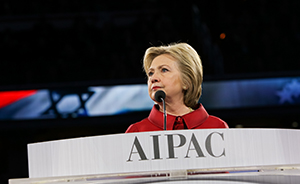


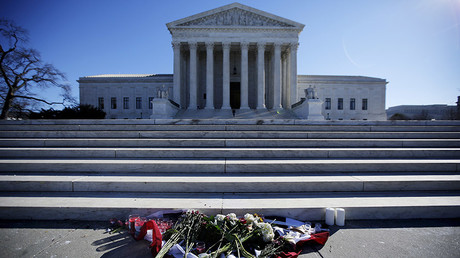





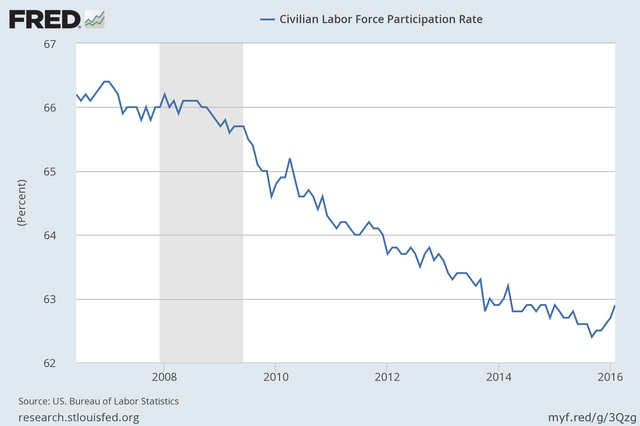 Millions of workers have abandoned hope of finding a job.
 Credit: DANNY YAGAN, Assistant Professor of Economics, University of California, Berkeley

 Map showing the DWSD and the KWA pipelines


 James Dewitt Yancey, J Dilla [Photo by Roger Erickson, © Stones Throw Records]