Revenge Porn: How a Jilted Lover Can Destroy Your Life

0

What does it say about society that websites where angry men shame their ex-lovers are thriving?

January 29, 2013  |  

Like this article?

Join our email list:

Stay up to date with the latest headlines via email.

In the centuries-old tradition of human beings looking at images of other human beings naked, the internet is perhaps the biggest game-changer since the film camera.

Porn sites are some of the most-visited places on the web, and just about anything you could imagine (and lots of things you probably couldn’t have come up with on your own) is a mere Google search away. While that’s great news for folks who have, say, an unrequited zombie fetish or a deep desire to see old men swaddled in mohair diapers, the almost entirely unregulated buffet of internet pornography also has a whole host of downsides — one of the most odious being the popular genre of “revenge porn”.

On revenge porn sites, users upload x-rated photos of women (often ex girlfriends or lovers) without the women’s permission. Send a naughty photo to your boyfriend and when it turns out he’s a pig, your image is all over the internet, often with your name, location and links to your social media accounts. The purpose of revenge porn isn’t to allow regular guys the opportunity to see some naked girls-next-door; it’s explicitly purposed to shame, humiliate and destroy the lives and reputations of young women.

Luckily, some of those women are refusing to be shamed into silence. More than two dozen of them have filed a lawsuit against one of the websites, Texxxan.com, as well as its host, GoDaddy.com. Some of the women have lost their jobs; all of them have been exposed and exploited, first by men they trusted and then by entities simply looking to make a buck off of misogyny.

Gender cyber harassment is nothing new (pdf), and revenge porn sites are part of a widespread, deeply sexist online culture everywhere from blog comment sections to YouTube videos to message boards. Anonymous sexualized harassment of women online has been around since AOL chatrooms, and it seems to be getting more mainstreamed, more organized and more efficient. The internet is not a nice place to be a woman — something I found out first-hand, and not just through the ongoing threats, harassment and stalking I’ve received as a feminist blogger.

When I was a law student at NYU, I found myself the subject of hundreds of threads and comments on a website called AutoAdmit. Reading post after anonymous post about how your classmates and future professional peers want to rape you is not a particularly pleasant experience; seeing those posts right next to details of what outfit you wore to school yesterday, how tall you are or what kinds of comments you made in class feels awfully threatening.

It’s hard to explain the psychological impact these kind of anonymous posts have, when these people know your name, face and exactly where you are during the day. You can’t walk down the hall at school without wondering if that guy who just made eye contact with you is going to go home and write something disgusting about you on the internet, or if anything you say in class is going to be quoted on a message board as evidence that you are a stupid cow, or if any one of these anonymous commenters is going to take their sexually violent urges offline and onto your body.

My reaction was to shut down. I felt like I was in a fishbowl, so I just refused to look outside of the glass. I’m a very social person, but in three years of law school I made only two friends. I skipped a lot of my classes; when I did go, I kept my head down.

Obama Administration Fails to Prosecute Banking Fraud to “Save the System”

James S. Henry commenting on PBS documentary “The Untouchables”: If one of these institutions was indicted and made an example of, it would have a profound affect on the whole industry – but Obama raises money on Wall St.

Guest: James S. Henry is a leading economist, attorney and investigative journalist who has written extensively about global issues. James served as Chief Economist at the international consultancy firm McKinsey & Co and as an investigative journalist his work has appeared in numerous publications like Forbes, The Nation, and the The New York Times. He was the lead researcher of the recently released report titled “’The Price of Offshore Revisited.’

Paul Jay, Senior Editor, TRNN: Welcome to The Real News Network. I’m Paul Jay in Baltimore.

Lanny Breuer, who’s head of the Criminal Justice Division at the Justice Department, has announced he’s stepping down. According to The Washington Post, quote, Breuer is widely credited with aggressively going after white-collar crime in the aftermath of the crisis. Well, a recent PBS documentary suggests a somewhat different description of how Breuer has done on this front. Here’s a clip towards the end of the film.

~~~

Martin Smitth, Correspondent, PBS Frontline: You gave a speech before the New York Bar Association, and in that speech you made a reference to losing sleep at night worrying about what a lawsuit might result in at a large financial institution. Is that really the job of a prosecutor, to worry about anything other than simply pursuing justice?

Lanny Breuer, Assistant Attorney General, US Department of Justice: Well, I think I am pursuing justice, because if I bring a case against institution A, and as a result of bring that case there’s some huge economic effect, if it creates a ripple effect so that suddenly counterparties and other financial institutions or other companies that had nothing to do with this are affected badly, it’s a factor we need to know and understand.

Ted Kaufman, Former US Senator (D-DE): That was very disturbing to me, very disturbing. That was never raised at any time during any of our discussions. That is not the job of a prosecutor, to worry about the health of the banks, in my opinion. The job of prosecutor is to prosecute criminal behavior. It’s not to lie awake at night and kind of decide the future of the banks.

Narrator (VOICEOVER): So far in civil proceedings the government has levied several billion dollars in penalties for misconduct in a crisis that’s cost investors and homeowners many hundreds of billions of dollars. But to date not one senior Wall Street executive has been held criminally liable by the Department of Justice for activities related to the financial crisis.

~~~

Jay: Now joining us to talk about the record of the Justice Department in relation to this type of crime or fraud and prosecuting or lack of it is James Henry. James is a leading economist, attorney, investigative journalist who’s written extensively about global issues. He served as the chief economist at the international consultancy firm McKinsey & Company. As an investigative journalist, his work has appeared in numerous publications like Forbes, Nation, and The New York Times.Thanks for joining us again, James.

James S. Henery, Economist, Lawyer and Investigative Journalist:  You’re quite welcome.

Jay: So talk a bit about this, this conundrum, you could say, that Brewer says he was faced with, more or less that if he goes after executives from the big banks, even though he kind of acknowledges it was probably fraud and the FBI agent or FBI official in the film says, you know, if he thinks it was not unintentional the way banks did things–a pretty understated way to say it. But Breuer says he couldn’t have done it, because the systemic implications were just too big–not his words, but that’s what he’s saying.

Henry: Yeah. I mean, that’s what he made a statement in September of last year in a speech, saying that he was kind of up nights worrying about what would happen to these massive institutions if he indicted some of these senior executives criminally. I think a lot of outsiders would say that’s nonsense, that, you know, you could clearly just put some of the executives in jail–and I think that’s what they were actually expecting–without jeopardizing the institutions themselves.Maybe some of these institutions deserve to be corporately indicted and made examples of, and maybe the entire–you know, kind of the salutary effect on the banking system would be great enough to justify putting one of them out of its misery because of the effect it would have on all the others.So I think there’s at least a strong argument that this Justice Department, when it came to large financial institutions, was asleep at the switch. And we have no indictments or prosecutions of any individual senior Wall Street executive in the last four years.

Jay: What for you is the sort of two or three most outstanding examples of fraud that should have been prosecuted?

Henry: Well, we now see a lot of private lawsuits going on from investors in some of the securitized mortgage packages and people who bought things like CDOs from Goldman Sachs at the same time Goldman Sachs was shorting these securities themselves. So these private suits and the law firms that have been prosecuting them have managed to turn up, you know, reams of evidence of real fraud. And it’s all emerging in the course of these private law suits which are about to unfold.It’s ironic, given all that evidence, that the Justice Department, with its thousands of attorneys, and, you know, the SEC be able to help out as well, couldn’t come to a similar kind of finding, couldn’t turn up the whistleblowers that even in the PBS documentary, you know, investigative journalists were able to surface in a matter of weeks. And the New York State attorney general’s office has piggybacked already on some of these private lawsuits and has–pursuing its own investigations of some of the largest firms on Wall Street, including Goldman Sachs, JPMorgan, Citibank, Bank of America.These major institutions have basically walked away from justice when it comes to the federal government, and it’s been left to the private lawsuits and to the SEC, to the state of New York, to actually piggyback on these private lawsuits and make these cases. It begs the question of, you know, whether or Lenny Breuer and his team was really doing their job when it came to these major financial institutions. They seem to have a soft place in their hearts.And that also extends to other kinds of corporate crime, for example the settlements that they engaged in with HSBC and the money laundering, the tap on the wrist that UBS got for being at the heart of the Libor scandal. It’s not just the bank crises; it’s also these other kind of shenanigans. So, many of us have been expecting the Justice Department to act here, but they haven’t.

Jay: So let’s talk a little bit about the bigger picture here. The power of finance seems to be such, the biggest financial institutions, their hold over Congress, their hold over the Obama administration, their hold over the Justice Department, it seems to be so deep and profound that they can’t be regulated, they can’t be prosecuted. Where does this lead? Where does this go?

Henry: I think you can’t even get them out of the Treasury Department. I mean, Obama’s pick for the successor to Tim Geithner this month is taking office at the Treasury, the secretary of Treasury, is Jacob Lew, who is the guy who was running Citibank’s global private banking department in 2006, you know, and then moved on to the White House chief of staff. But here we have, right at the core of power, another senior Wall Street executive.Now, I think Ted Kaufman, who was a senator from Delaware in 2010, then retired, and was a big proponent of prosecutions, basically said that, you know, Wall Street calls the shots in Washington. Dick Durbin said they own this town. And I think that’s not only due to financial influence and contributions; it’s also due to the fact that there’s this revolving-door policy of basically gifting the Treasury Department to former executives from the major banks.You know, we have Bill Daley from JPMorgan, vice chairman of JPMorgan, serving as Obama’s chief of staff. It’s hard to imagine those folks being tough on the institutions that have provided their bread and butter. And so the track record is entirely consistent with this evidence that we see from the Justice Department’s failure to prosecute any of these major institutions.

Jay: I mean, I don’t think it’s anything new with the Obama administration, but Barack Obama the candidate was heavily financed by Wall Street. Everyone was kind of surprised in the primaries that he was actually raising more money than Hillary Clinton was on Wall Street.

Henry: You know, Wall Street’s contributions from 1990 to 2008 was an average of $2,500 per day per congressman. You know, it’s just hard to compete with that kind of immediate financial clout.And I think there’s also a kind of insidious influence on just the ideology. You know, we’ve had presidential candidate after presidential candidate basically arguing for hands off when it comes to financial regulation–don’t really have a good explanation from those folks about what went wrong in 2008. I guess it was, you know, just bad weather. But, you know, to this day, we really haven’t had a fundamental, deep examination of the role of the private sector financial institutions in the policies that led to that very, very costly collapse that we’re still paying for.

Jay: Isn’t some of this kind of so inherent in the way the global capitalist system works right now–and it’s not new, but it’s reached new heights, meaning that the size of the global economy’s just so big, there is so much capital moving back and forth, the enterprises, global companies, are so big and operate on such a scale that you need banks that can operate in massive ways? On the other hand, when they get so big, you can’t regulate them–they’re essentially above the law. I mean, it’s a conundrum, is it not?

Henry: If one of these institutions were indicted corporately and made an example of and exposed to the world for their behavior, you’d have a very, very profound effect on the behavior of the whole industry, because they all–you know, they say that bankers could exchange strategies and no one would care, ’cause they all basically pursue the same strategies.

Jay: But that’s sort of my point, like, if one of them was indicted, if some modest legislation was passed. But my point is you can’t even pass the modest reforms. You can’t even indict one institution. You can’t–the power finance has over the politics, you can’t even get, you know, simple, modest things changed in terms [crosstalk]

Henry: Yeah, I think that’s the dilemma, that this has been an issue where it’s very difficult to mobilize masses of Americans to understand. You know, it’s not like on the gun control issue we seem to be making some progress now because people are outraged at a relatively simple situation and they can understand what they need to do about it; in the case of the banking institutions, everyone believes it’s so terribly complicated that we have to defer to, you know, the Illuminati. So that’s kind of the problem.And then this is an ideal case for presidential leadership. This is exactly where the president should be focusing his attention, because he does have the intellectual horsepower and support in his own team to get this kind of legislation done.

Jay: So far what we’ve seen, he appoints and nominates these people, not prosecute.HENRY: I think his basic interest is not in economics. It’s in more political issues. And he’s kind of put the Treasury on autopilot. He’s trusted to Tim Geithner to run the Treasury. And, you know, he’s the technocrat who’s been not only head of the New York Fed, but also was a senior official at the IMF. So it’s not an area that Obama really wants to worry about in addition to everything else in foreign policy and, you know, the complicated domestic issues that he faces anyway.So he wanted, I think, to assume–part of his stance here has been to say, okay, let Treasury run the economy. And that’s been a mistake.

Jay: Yeah. Well, it’s been a mistake for most Americans. It may have been the right call for some of the mavens of Wall Street, but it wasn’t a very good call for anybody else.

Henry: You know, as many of his, you know, people on his political team have been saying, well, this will help us raise money from Wall Street. And indeed it has. I mean, he basically raised a lot more than people expected, given that Romney was in the race, from the very people that have made this economic crisis.

Jay: Right. Thanks for joining us, James.

Henry: You’re quite welcome.

Jay: And thank you for joining us on The Real News Network.

New Violence Policy Center Study Warns of “Next Wave” of Assault Pistols for Sale in the United States

0

WASHINGTON – January 29 – Not since the late 1980s and early 1990s has there been such a wide variety of assault pistols available for sale on the U.S. civilian market warns the new Violence Policy Center (VPC) study Assault Pistols: The Next Wave (http://www.vpc.org/studies/awpistols.pdf). The study contains more than 20 examples of assault pistols currently marketed in the United States, led by AK-47 and AR-15 pistols that offer assault rifle power in a compact pistol format. Each of the assault pistols detailed in the study would be banned by legislation introduced last week by Senator Dianne Feinstein (D-CA). The study notes that in addition to next-generation AK-47 and AR-15 assault pistols, assault pistols that were banned by name under the now-expired federal assault weapons ban, such as the UZI pistol, MAC, and Calico, are also being marketed.

Josh Sugarmann, VPC executive director and author of the study states, “There is now a wider variety of assault pistols available on the civilian market than ever before. Able to accept high-capacity ammunition magazines filled with assault rifle rounds that can penetrate police body armor, concealable next-generation AK-47 and AR-15 pistols place law enforcement at an unprecedented risk. At the same time, assault pistols that defined the drug wars of the late 1980s and early 1990s, such as the UZI pistol and MAC-10, are being sold under federal law with no more restrictions than a traditional six-shot revolver.”

In a YouTube segment (http://www.youtube.com/watch?v=B9DdiGu6ZYI) from his cable television show Ted Nugent’s Spirit of the Wild titled “Uncle Ted’s Favorite Guns,” National Rifle Association Board Member Ted Nugent cheerfully acknowledges the military pedigree and lauds the rifle power of the Century International Arms Centurion 39 AK-47 pistol, “This is a variation of what they lovingly refer to as the Kalashnikov, the AK-47….This is a handgun version, almost what you see the bad guys in Afghanistan use…7.62 x 39mm, out of a little, short, rifle basically, but it’s a handgun, this is a handgun.”

Research by the Violence Policy Center and others makes it clear that AK-47 pistols are a “weapon of choice” of cross-border illegal gun traffickers who purchase firearms in the United States and then smuggle them into Mexico. A VPC review of 114 federal gun trafficking prosecutions in 16 states (http://www.vpc.org/indicted.htm) catalogued more than 4,800 firearms detailed in court and other legal documents. Of the 262 assault pistols tabulated, almost all were variants of AK-47 assault pistols (the remainder were mostly AR-15 assault pistols).

Examples of assault pistols presented in the study include the following:

–A headline for catalog copy for the aforementioned Century International Arms Centurion 39 AK Pistol boasts, “We brought you the 1st 100% American Made AK. Now we bring you the 1st 100% American Made AK Pistol!” The ad text reads: “Wow! This new Centurion 39 Pistol is totally awesome and is 100% made in the good old U.S. of A.! The new bird cage muzzle brake and ‘shark fin’ front sight, gives the small package a sexy new look. An ergonomic pistol grip and our proprietary quad rail, high-tech, poly furniture, gives an incredibly cool appearance that just oozes strength, quality and style…Perfect for home protection, CQB [Close Quarters Battle], or a fun day of inexpensive shooting at the range, the C39 is a trusty tool that is ready when you are. Takes all standard AK type magazines.”

–According to the 2010 catalog of Masterpiece Arms, which manufactures MAC-10 pistols, “The MAC is back, and its [sic] better than ever before.” The company promises that its products have “the tactical look and feel so popular in today’s market. There is nothing that will catch the attention of a fellow gun enthusiast like the MAC.”

–The 2012 catalog for I.O. Inc. explains, “The Hellpup is the little brother to the Hellhound [AK-47] rifle. This tactical AK pistol is in 7.62×39 caliber with a 9.25” barrel and no rear stock…and almost every assault rifle option known can be fitted to this five pound pistol.”

–Catalog copy for the DSA Inc. SA58 PKP pistol brags, “The power of the 7.62×51 cartridge in a package a little larger than a full-size UZI. Despite it’s [sic] size, the FAL Pistol comes with the standard features you would expect to see on a full size FAL…. “

–A 2011 article published in Handguns magazine titled “AR Pistols: The Hugely Popular Rifle Platform Makes a Pretty Cool Handgun as Well” noted, “There’s no doubt in the last few years that AR pistols have become extremely popular.”

The Violence Policy Center is a national tax-exempt educational organization working for a safer America through research, investigation, analysis, and advocacy. The VPC provides information to policymakers, journalists, organizations, advocates, and the general public.

L’arte della guerra : La riconquista dell’Africa

0

Hillary missionnaire en Afrique

Nel momento stesso in cui il presidente democratico Obama ribadiva nel discorso inaugurale che gli Stati uniti, «fonte di speranza per i poveri, sostengono la democrazia in Africa», giganteschi aerei Usa C-17 trasportavano truppe francesi in Mali, dove Washington ha insediato l’anno scorso al potere il capitano Sanogo, addestrato negli Usa dal Pentagono e dalla Cia, acuendo i conflitti interni. La rapidità con cui è stata lanciata l’operazione, ufficialmente per proteggere il Mali dall’avanzata dei ribelli islamici, dimostra che essa era stata da tempo pianificata dal socialista Hollande. L’immediata collaborazione degli Stati uniti e dell’Unione europea, che ha deciso di inviare in Mali specialisti della guerra con funzioni di addestramento e comando, dimostra che essa era stata pianificata congiuntamente a Washington, Parigi, Londra e in altre capitali. Le potenze occidentali, i cui gruppi multinazionali rivaleggiano l’uno con l’altro per accaparrarsi mercati e fonti di materie prime, si compattano quando sono in gioco i loro interessi comuni. Come quelli che in Africa sono messi in pericolo dalle sollevazioni popolari e dalla concorrenza cinese. Il Mali, uno dei paesi più poveri del mondo (con un reddito procapite 60 volte inferiore a quello italiano e oltre la metà della popolazione sotto la soglia di povertà), è ricchissimo di materie prime: esporta oro e coltan, il cui ricavato finisce però nelle tasche delle multinazionali e dell’élite locale. Lo stesso nel vicino Niger, ancora più povero (con un reddito procapite 100 volte inferiore a quello italiano) nonostante sia uno dei paesi più ricchi di uranio, la cui estrazione ed esportazione è in mano alla multinazionale francese Areva. Non a caso, contemporaneamente all’operazione in Mali, Parigi ha inviato forze speciali in Niger. Analoga situazione in Ciad, i cui ricchi giacimenti petroliferi sono sfruttati dalla statunitense ExxonMobil e altre multinazionali (ma stanno arrivando anche compagnie cinesi): ciò che resta dei proventi va nelle tasche dell’élite locale. Per aver criticato tale meccanismo, il vescovo comboniano Michele Russo è stato espulso dal Ciad lo scorso ottobre. Niger e Ciad forniscono allo stesso tempo migliaia di soldati, che sotto comando francese, vengono inviati in Mali per aprire un secondo fronte. Quella lanciata in Mali, con la forza francese come punta di lancia, è dunque un’operazione a vasto raggio, che dal Sahel si estende all’Africa occidentale e orientale. Essa si salda a quella iniziata in Nordafrica con la distruzione dello stato libico e le manovre per soffocare, in Egitto e altrove, le ribellioni popolari. Un’operazione a lungo termine, che fa parte del piano strategico mirante a mettere l’intero continente sotto il controllo militare delle «grandi democrazie», che tornano in Africa col casco coloniale dipinto dei colori della pace.

Manlio Dinucci

Disclaimer: The contents of this article are of sole responsibility of the author(s). The Centre for Research on Globalization will not be responsible for any inaccurate or incorrect statement in this article. The Center of Research on Globalization grants permission to cross-post original Global Research articles on community internet sites as long as the text & title are not modified. The source and the author’s copyright must be displayed. For publication of Global Research articles in print or other forms including commercial internet sites, contact: publications@globalresearch.ca

www.globalresearch.ca contains copyrighted material the use of which has not always been specifically authorized by the copyright owner. We are making such material available to our readers under the provisions of “fair use” in an effort to advance a better understanding of political, economic and social issues. The material on this site is distributed without profit to those who have expressed a prior interest in receiving it for research and educational purposes. If you wish to use copyrighted material for purposes other than “fair use” you must request permission from the copyright owner.

For media inquiries: publications@globalresearch.ca

Maddow: ‘Liberal’ Group Running Anti-Hagel Ads Probable Fake

0

Monday night Rachel Maddow expanded on her Friday report about the weird ad running in opposition to Chuck Hagel’s nomination. The group running the ad calls themselves “Use Your Mandate” and claims to be a group of liberals — gay liberals, even — who are afraid to come out into the light for fear of White House retribution.

Because this White House has been so bitterly retributive, don’t you know? When I first heard about it I thought it was bull too, because liberals tend to oppose nominations loudly and without any guise of secrecy. In fact, I can’t think of a time where any liberal group I’ve had contact with has been secretive about who they are and why they’re running an ad. That seems to be the province of the US Chamber of Commerce and Koch-funded front groups..

Rachel’s instinct seems to be right on the money. As she reports, “Use Your Mandate” used a media buyer in San Diego to place the ad by the name of Del Cielo Media, LLC*. Del Cielo Media is the company name for Sarah Linden, who is the west coast media director for Smart Media Group.

On Smart Media Group’s resumé: Official media buyers for the McCain-Palin campaign, Republican National Committee, NRSC, and the US Chamber of Commerce, among others.

DelCielo Media’s website is a splash page and a link to a map now, but as Rachel reports, one of Linden’s clients is the Emergency Committee for Israel, a relatively new neocon group whose directors include Bill Kristol, Gary Bauer, and Michael Goldfarb. Michael Goldfarb is an advisor to Liz Cheney’s neocon message machine, Keep America Safe, where Kristol also serves as a director.

The other firm Rachel mentions is Tusk Strategies. Michael Tusk was Michael Bloomberg’s campaign director in 2009 and now has his own New York PR firm. Tusk’s client list boasts of relationships with Michelle Rhee’s StudentsFirst and Education Reform Now, two groups which call themselves liberal but which are not, by any stretch of the imagination, liberal.

Tusk also served as deputy governor of Illinois from 2003-2006, during Rod Blagojevich’s term, and testified against him about Blago’s attempted shakedown of Rahm Emanuel.

All of the objections to Chuck Hagel’s nomination seem to emanate from the fact that he isn’t interested in blowing up the world on Israel’s behalf. They word them in different ways, but that’s the gist of things.

You be the jury. Based on Rachel’s report and the information here, I’d say the odds of the anti-Hagel ad coming from a liberal group shaking in their boots over Obama’s reprisals is the same as that of being struck by lightning three times in the same day.

Here are the other groups opposing Hagel’s nomination, according to ABC News and the New York Times:

  • American Future Fund: American Future Fund is the Iowa astroturf organization, funded in part by the Wellspring Committee.
  • Americans For a Strong Defense: This is a new front group. According to their website, two of their board members are Brian Hook and Mauricio Claver-Carone. Hook is a Bushie who served in the White House from 2003-2008, dealing with matters of Homeland Security, and then went to the Department of State to serve as Assistant Secretary of State for International Organization Affairs from October, 2008 to January 20, 2009 when Barack Obama took over. Claver-Carone is an ardent anti-Castro advocate who sits on the board of Cuba Democracy Advocates, a non-profit organization which shares the goal of spreading democracy around the world, and in particular, to Cuba. It appears to be aligned philosophically with neocon goals.
  • AIPAC: Well, not directly as far as anyone knows. But as this writer points out, they’ve got a former lobbyist roaming at large who is free to undertake whatever campaigns someone might want to finance. Bibi Netanyahu isn’t pleased, I’m sure, with the Hagel nomination. According to that article, AIPAC is fond of using “cutouts” (what we would call astroturf) to advance Bibi’s particular agenda wherever necessary.

Opposition to Chuck Hagel’s nomination is unprecedented. I believe that it is as likely to come from the US Chamber of Commerce as it is AIPAC, given that Hagel’s nomination will spell the beginning of the end of corporate defense complex dominance in favor of other industries. It shifts the center of thought around defense and its role from one of aggressor to one where the United States stops throwing its weight around the world and starts tending to other business. This does not please those who profit from perpetual war.

What I can say with a high degree of certainty, however, is that “Use Your Mandate” is neither liberal nor gay.

*Del Cielo is the name of Ronald Reagan’s Santa Barbara ranch.

Free Press: AT&T Plan Would End All Oversight of Communications Networks

0

WASHINGTON – January 29 – On Monday, Free Press filed comments with the Federal Communications Commission concerning AT&T’s request for the FCC to facilitate the transition to all-IP networks. If granted under the FCC’s current broadband classification framework, AT&T’s request would result in the complete removal of all regulatory oversight of our nation’s critical telecommunications infrastructure.

Free Press urged the Commission to first address the lingering questions about FCC authority over broadband transmission networks. This deliberation must take place before the agency even considers taking any action that would lead to the removal of all the consumer protections and competitive safeguards Congress enacted for our nation’s communications markets.

To read the comments go to: http://www.freepress.net/sites/default/files/resources/FP_Petition_to_Launch_Comments.pdf.

Free Press Research Director S. Derek Turner made the following statement:

“The communications infrastructure that connects us to each other is a critical utility for all Americans. We welcome a dialogue about the appropriate regulatory approach a 21st-century network needs, but we must recognize that telecommunications regulations and the law they are based on exist to ensure interconnection, promote universal service and protect consumer rights.

“But make no mistake: AT&T doesn’t want a discussion about a reasonable regulatory framework. Rather, AT&T is asking the FCC to end all oversight of our nation’s communications markets. The company is trying to exploit an FCC-created legal loophole: AT&T previously convinced the Commission that the mere use of IP places a service outside the laws governing two-way communications networks. Thus the otherwise unremarkable progression of telecom technology from circuit to packet switching will now, under the FCC’s current framework, result in total deregulation.

“The Commission must confront the lingering and politically difficult questions concerning its authority over next-generation networks. If it doesn’t, American consumers will face increasing prices, accountability-free service disruptions, the loss of reliable emergency communications, second-class services in rural areas, declining competition and the end of the open Internet.”

Smart Talk on the Next Austerity Disaster

0

The United States is in the midst of the most protracted unemployment crisis in modern history, and for vast segments of the population, the recession has never ended. Wages are still sinking; more than 20 million people are in need of full-time work. Yet, the national debate is fixated on fixing the debt rather than fixing the economy.

This is “austerity” economics, which demands cuts in government spending in the belief that this will reduce government deficits, even as it costs jobs and imposes hardships on people.

Mass unemployment, declining wages, and faltering growth suggests the United States has already suffered too much austerity, too soon. And yet the political debate is focused on how much more to impose. Washington imposed $1.5 trillion in spending cuts over 10 years in the 2011 “debt ceiling” deal. Washington stumbled past the year-end “fiscal cliff” with a deal that featured about $600 billion in tax hikes over ten years, including returning rates for the richest Americans back to Clinton era levels, and ending the payroll tax holiday, adding 2 percent to every working family’s payroll tax rate.

Now Congress has created an even more precarious fiscal peril to extort even greater cuts. Between now and the middle of May, we’ll hit the debt ceiling again, the automatic cut (sequester) of military and domestic budgets for the remainder of the year will kick in, and the temporary appropriations for government will expire. This sets up a new negotiation to forestall these ruinous calamities, now with Social Security, Medicare and Medicaid directly targeted.

The leaders of both parties suggest that more deficit reduction is needed and that it would help the economy. Not surprisingly, polls suggest that most Americans believe that cutting spending will help the economy, not harm the recovery. The reality is that spending is not out of control, the deficit is already plummeting, and we should be focused on fixing the economy to make it work for working people, not on austerity driven by wrong-headed deficit hysteria.

Here’s how we can make the case against it.

Start with the struggles families are facing. The budget debate now underway in Washington, focused on “fixing the debt,” misses the point. Americans are still suffering record levels of long-term unemployment. Poverty has risen to a level unseen in generations. Inequality is at new extremes. Wages are at the lowest percentage of the economy on record, while corporate profits are at the highest. We should be focused on fixing our economy.

Challenge the austerity myth. And here’s the real deal. You can’t fix the economy by “fixing the debt.” Cutting spending now will only slow the recovery, put more people out of work — and as we have seen in Europe, end up adding to our debt burdens.

In fact, fixing the economy is the necessary first step in getting our books back in order. Our deficits are largely due to the recession, with the costs of unemployment and the lost revenue from the loss of jobs. In these conditions, the best deficit reduction program is to put people back to work.

Even the slow growth we’ve witnessed has begun to reduce our deficits as jobs have been created. Despite all the hysteria, deficits are down by 25% compared to the economy, according to the Congressional Budget Office. They are falling faster than anytime since the demobilization at the end of World War II. And our debt level is basically stabilized for the next decade. More austerity — whether balanced between taxes and spending as the president calls for or focused just on spending cuts as Republicans suggest — will only serve to slow growth, cost jobs, and impede the recovery needed to get our books back in shape.

Worse, the austerity debate is now focused on whacking at the basic pillars of family security — Social Security, Medicare and Medicaid. The cuts under discussion — slowing the inflation adjustment for Social Security, raising the eligibility age for Medicare or the retirement age for Social Security – would harm the most vulnerable in our society.

Describe the way out. Fixing our economy requires a very different agenda than mindless cuts. We need to invest in areas vital to our future, and stop squandering resources on things we don’t need and can’t afford. End the wars abroad, bring our troops home, and invest the savings in rebuilding America — putting people to work while modernizing our decrepit infrastructure, from roads and rail to broadband and the electric grid.

End the subsidies and tax breaks to big oil companies and invest the resources in research and development to capture a lead in clean energy and the green industrial revolution sweeping the country.

Crack down on global tax havens, tax Wall Street speculation, tax investors at the same rate as workers, and use that income to provide every child with the opportunity to learn, from universal preschool to affordable college.

Lift the minimum wage, empower workers to gain a fair share of the profits they help to generate and curb perverse CEO compensation schemes that give them million-dollar incentives to ship jobs abroad.

And fix the sole source of our projected long-term debt problems — our broken health care system. Don’t cut benefits for Social Security, Medicare and Medicaid. Instead, take on the insurance and drug company lobbies that have made our health care cost nearly twice what the rest of the industrial world pays,.

This is an excerpt from the latest edition of Smart Talk, a regular series of issue briefs on how to talk about the economic issues facing working-class people. Richard Eskow contributed to this post.

© 2012 Campaign for America’s Future

Immigration Policy Beyond the Hype

0

WASHINGTON – January 29 – President Obama is scheduled to address immigration policy today at a speech in Las Vegas.

JEFF BIGGERS, [email]
Biggers is author of State Out of the Union: Arizona and the Final Showdown Over the American Dream. He stresses the need to look at “border security realities, including the militarization of the U.S.-Mexico border and the largely forgotten impact – including thousands of migrant deaths – from Operation Gatekeeper passed by President Bill Clinton nearly 20 years ago.” See a recent review of his book in the El Paso Times: “Taking back Arizona: Author casts state’s politics as community vs. carpetbaggers.”

MAEGAN ORTIZ, [email], @mamitamala
Ortiz is publisher of VivirLatino. She recently wrote the piece on “Comprehensive Immigration Reform” titled “It’s Like #CIR All Over Again,” which states: “There is so much hype about what comprehensive immigration reform could be that the rhetoric about what may happen is really an industry on it’s own. …Some are anxious for a real sign that President Obama is serious about reform. His tenure in office has brought increased funding for enforcement and record deportation numbers.”

Most recently, she wrote “Blueprint for a Road that Already Is,” which states: “And they’re off! ‘The Road to Immigration Reform Starts Today!’ announced one organizational email. They are talking about a set of immigration reform principles – not an actual bill – that was released today by a bi-partisan group of eight senators. … What’s interesting about all the congratulatory messages that ask people to support immigration reform is that they lack an actual analysis of what is in the principles. Since the principles include ‘a pathway to citizenship,’ it’s assumed to be good enough.” Ortiz lists nine points that are skewing the discussion:

1: The border is “secure” so let’s stop pouring money into agencies and organizations that put more boots on the ground and enforcement technology.

2: Being able to live in the United States “with papers” shouldn’t be based on some merit system that awards the “smart” immigrants. If we really want to award success then we need to look at how the educational system in the U.S. perpetuates cycles of poverty and underachievement, filtering a limited amount of “success stories.”

3: Employment verification systems like E-Verify have proven themselves flawed and harmful to the labor market so stop the push to make this mandatory. … We will not accept the introduction of a biometric identification card which has been the subtext for much of … the discussion in years past.

4: We don’t want a guest worker program. We want fair labor standards for farmworkers. How is the proposed Agricultural Worker Program different from H-2A visa program already in place?

5. This get-to-the-back-of-the-line language means people who are already in the United State will have to wait how long before they can get papers? Ten years? Twenty years? Is this the beginning of an expanded DACA-like [Deferred Action for Childhood Arrivals] program that will allow people to stay in the U.S. in a limbo status indefinitely? How do immigration court backlogs figure into this line?

6: Who will determine what makes an immigrant “seriously criminal” or a threat to national security and thus ineligible for citizenship and targeted for deportation?

7. Limits on accessing federal public benefits for “lawful probationary immigrants” helps to perpetuate poverty and poor health outcomes in immigrant communities. This isn’t being “tough” – this is punishment.

8: Having an English language requirement in order to earn a green card is reminiscent of Jim Crow era literacy laws. There is already a proficiency requirement to become a naturalized citizenship. Making it a requirement for permanent residency has one intention, to limit the amount of people eligible.

9: Creating a fast track to citizenship for DREAMers and some agricultural workers while leaving others to languish in undefined lines will serve to further separate families who have mixed statuses and mixed immigration histories. No to a hierarchy of applicants.

US, a top terrorist state: Chomsky

American academic Noam Chomsky says the United States will be recognized as a leading terrorist state if international law is applied, Press TV reports.

“I took the official definitions of terrorism, which were very good, I took the definition that is given in US and British law, which is a fine definition but has a flaw; If you apply it, it turns out the United States is one of the leading terrorist states in the world,” Chomsky told Press TV in an interview on Tuesday.

The academic added that he had predicted the ongoing so-called war on terror by the US when Ronald Reagan was president in the 1980s.

“I’ve been writing about terrorism since 1981, since Ronald Reagan came into office and declared that a war on terror would be the centerpiece of the American policy,” Chomsky stated.

He called into question the legality of the US-led invasion of Iraq in 2003, saying, “The US and Britain tried to provide a kind of a thin legal cover for the invasion. The legal cover was, as you know, that Saddam had not ended his programs of weapons of mass destruction.”

US-led forces attacked Iraq in 2003 and toppled Saddam Hussein on the pretext of possessing weapons of mass destruction. But no WMD was ever discovered in Iraq.

At the peak of the US-led military operation in Iraq, there were 170,000 US troops and more than 500 bases in Iraq.

More than one million Iraqis were killed as the result of the US-led invasion and subsequent occupation of the country.

KA/SS/IS

Senate Panel Diagnoses Primary Health Care Crisis

0

WASHINGTON – January 29 – A Senate panel today examined a “major crisis” in primary health care at a time when 30 million more patients will soon get health insurance under the Affordable Care Act and worsen an already acute doctor shortage.

One in five Americans today live in areas where they do not have adequate access to primary care due to a shortage of providers, according to Sen. Bernie Sanders (I-Vt.), the chairman of the Senate Primary Care and Aging Subcommittee.

“In our country today we are spending almost twice as much per capita on health care as any other major country yet our health outcomes in terms of life expectancy, infant mortality and disease prevention are not particularly good,” Sanders said. “One of the reasons for that is that we have a major crisis regarding primary health care access which results in lower quality health care for our people and greater expenditures.”

According to a report released at the hearing, as many as 45,000 people die each year because they do not have health insurance and do not get to a doctor on time. A significant reason for the lack of access to care is that less than one-third of all doctors in America today practice primary care, down for half of all physicians 50 years ago. The problem is likely to get worse because many primary care doctors are nearing retirement and fewer and fewer medical students are interested in becoming family practitioners.

Dr. Claudia M. Fegan, the chief medical officer at Cook County Hospital in Chicago, told the subcommittee she sees evidence every day of patients without primary doctors. “Every single day, people without a physician line up across the street from our hospital to be seen in our walk-in clinic … They hope to be one of the lucky ones who will be given a physician of their very own, who will get to know them and take care of them and be available when they have a problem or question, someone to help them meet their medical needs, someone to help them navigate our complicated health care system to get what they need.”

Another witness, Princeton economist Uwe E. Reinhardt, said Medicare and Medicaid payments should be realigned to address the acute shortage of primary care physicians.

Tess Kuenning, executive director of the Montpelier, Vt.-based Bi-State Primary Care Association, testified that community health centers could provide affordable care for more patients. The 2010 health care law included a Sanders provision that authorized $11 billion to double the number of patients cared for at health centers. Funds needed to reach that goal, however, have not been committed.

In Vermont, Kuenning said, more than 110,000 patients receive care at one of eight community health centers throughout the state. With additional funding, she added, three more communities “are fully poised to apply for competitive federal funding to bring medical, dental and behavioral health services to communities in need.”

‘US allows excessive pay for executives’

0

Special Inspector General Christy Romero. (File photo)

The US Treasury Department has provided “excessive” pay for executives tied to the bailed-out corporations rescued from the financial crisis, a new report shows.

The Office of the Inspector General for the Troubled Asset Relief Program (TARP) released a report on Monday accusing the Treasury Department for approving 18 executive pay raises and other extravagant packages to bailed-out companies including General Motors, Ally Financial and AIG.

The executives “continue to rake in Treasury-approved multimillion-dollar pay packages that often exceed guidelines,” according to the statement released by Special Inspector General Christy Romero’s office.

The watchdog criticized the government agency for pushing through pay packages worth more than USD 5 million, while also allowing extra pay packages worth over USD 3 million for executives at Ally Financial “despite knowing that the subsidiary was planning to file for bankruptcy” weeks later.

Experts recommend that the government monitor executive salaries and slash pay based on performance to prevent a worsening of the current financial crisis.

“One lesson of this financial crisis is that regulators should take an active role in monitoring and regulating factors that could contribute to another financial crisis, including executive compensation that encourages excessive risk-taking,” Romero concluded.

The report also revealed that General Motors has requested Treasury Secretary Timothy Geithner to remove executive pay restrictions for the automaker.

This comes as Geithner formally notified Congress last month that the country has reached its USD 16.4 trillion debt ceiling, with the National Debt continuing to increase at an average rate of USD 3.83 billion per day since September 28, 2007.

The debate over the debt limit resembles the disagreement between the Democrats and the Republicans over the “fiscal cliff,” where an agreement was finally reached in the last few hours of the January 1 deadline.

The financial disputes have left rival American political leaders and lawmakers with no definitive strategy as to how to deal with what is likely to emerge as a persisting bitter clash over the country’s economic crisis.

GMA/PKH

CREW Releases New Report on Increased NFL Lobbying Activity in Washington

0

WASHINGTON – January 29 – In anticipation of the Super Bowl, today Citizens for Responsibility and Ethics in Washington (CREW) released its latest report, Defensive Game, which examines patterns in lobbying spending by both the National Football League (NFL) and the National Football League Players’ Association (NFLPA). CREW’s research shows that over the past five years, the NFL has been on the defensive, beefing up its lobbying team and creating its first political action committee (PAC) in light of increased congressional interest in player safety, drug testing, and labor issues.

Read more about Defensive Game or download the full report

In 2012, the NFL spent $1.14 million on federal lobbying, a more than five-fold increase of what it spent a decade ago. The NFLPA, which spends far less on lobbying, saw its spending triple from $40,000 in 2002 to $120,000 in 2012.

“With increasing scrutiny and coverage of the lasting, debilitating effects football careers can have on players’ health, the NFL has gone into damage control mode – pumping up its lobbying spending and donations to influential members of Congress,” said CREW Executive Director Melanie Sloan.

Gridiron-PAC, formed by the NFL in 2008, did not start making donations until the 2010 election cycle, when labor negotiations with the NFLPA grew tense and Congress began to express interest in the NFL’s response to concussions and head trauma. During the 2012 election cycle, the PAC contributed $838,000 to federal candidates, PACs, and party committees – an increase of 26 percent from the 2010 election cycle.

The top recipients of donations from the PAC have mostly been a bipartisan group of congressional leadership and key members on committees exercising jurisdiction over NFL issues. For instance, Rep. Fred Upton (R-MI), the chairman of the powerful House Energy and Commerce Committee, received $30,000 over the 2010 and 2012 election cycles. In July 2012, Rep. Upton and three other committee leaders wrote to the NFL and the NFLPA expressing concern about whether a comprehensive testing program for human growth hormone would be in place prior to the start of the 2012 season. Three weeks before the letter was sent, Rep. Upton’s campaign committee accepted a $5,000 contribution from Gridiron-PAC.

“Given the NFL’s estimated $9 billion in annual revenue, both sides can clearly afford to maintain their influence in Washington,” continued Ms. Sloan. “While the league is dealing with numerous challenges off the gridiron – including a renewed interest in drug testing – it is worth keeping an eye on how the billionaire owners and millionaire players use their deep pockets to influence Congress.”

Why the Ideas of Karl Marx are More Relevant Than Ever

0

Capital used to sell us visions of tomorrow. At the 1939 World’s Fair in New York, corporations showcased new technologies: nylon, air conditioning, fluorescent lamps, the ever-impressive View-Master. But more than just products, an ideal of middle-class leisure and abundance was offered to those weary from economic depression and the prospect of European war.Although he did not explicitly use the phrase, Karl Marx is credited with explaining the ‘creative destruction’ of capitalism. (Photograph: Bettmann/Corbis)

The Futurama ride even took attendees through miniature versions of transformed landscapes, depicting new highways and development projects: the world of the future. It was a visceral attempt to renew faith in capitalism.

In the wake of the second world war, some of this vision became a reality. Capitalism thrived and, though uneven, progress was made by American workers. With pressure from below, the state was wielded by reformers, not smashed, and class compromise, not just class struggle, fostered economic growth and shared prosperity previously unimaginable.

Exploitation and oppression didn’t go away, but the system seemed not only powerful and dynamic, but reconcilable with democratic ideals. The progress, however, was fleeting. Social democracy faced the structural crisis in the 1970s that Michal Kalecki, author of The Political Aspects of Full Employment, predicted decades earlier. High employment rates and welfare state protections didn’t buy off workers, it encouraged militant wage demands. Capitalists kept up when times were good, but with stagflation — the intersection of poor growth and rising inflation — and the Opec embargo, a crisis of profitability ensued.

An emergent neoliberalism did curb inflation and restore profits, but only through a vicious offensive against the working class. There were pitched battles waged in defense of the welfare state, but our era has largely been one of deradicalization and political acquiescence. Since then, real wages have stagnated, debt soared, and the prospects for a new generation, still wedded to a vision of the old social-democratic compact, are bleak.

The 1990s technological boom brought about talk of a light and adaptive “new economy”, something to replace the old Fordist workplace. But it was a far cry from the future promised at the 1939 World’s Fair.

The 2008 recession shattered those dreams, anyway. Capital, free of threats from below, grew decadent, wild, and speculative.

For many in my generation, the ideological underpinnings of capitalism have been undermined. That a higher percentage of Americans between the ages of 18 and 30 have a more favorable opinion of socialism than capitalism at least signals that the cold war era conflation of socialism with Stalinism no longer holds sway.

At an intellectual level, the same is true. Marxists have gained a measure of mainstream exposure: Foreign Policy turned to Leo Panitch, not Larry Summers, to explain the recent economic crisis; and thinkers like David Harvey have enjoyed late career renaissances. The wider recognition of thought “left of liberalism” — of which the journal I edit, Jacobin, is a part — isn’t just the result of the loss of faith in mainstream alternatives, but rather, the ability of radicals to ask deeper structural questions and place new developments in historical context.

Now, even celebrated liberal Paul Krugman has been invoking ideas long relegated to the margins of American life. When thinking about automation and the future of labor, he worries that “it has echoes of old-fashioned Marxism — which shouldn’t be a reason to ignore facts, but too often is.” But a resurgent left has more than worries, they have ideas: about the reduction of working time, the decommodification of labor, and the ways in which advances in production can make life better, not more miserable.

This is where what’s evolving, however awkwardly, into the 21st-century socialist intellectualism shows its strengths: a willingness to present a vision for the future, something deeper than mere critique. But intellectual shifts don’t mean much by themselves.

A survey of the political landscape in America, despite Occupy’s emergence in 2011, is bleak. The labor movement has shown some signs of life, especially among public sector workers combating austerity, but these are at best rearguard, defensive struggles. Unionization rates continue to decline, and apathy, not revolutionary fervor, reigns.

Marxism in America needs to be more than an intellectual tool for mainstream commentators befuddled by our changing world. It needs to be a political tool to change that world. Spoken, not just written, for mass consumption, peddling a vision of leisure, abundance, and democracy even more real than what the capitalism’s prophets offered in 1939. A socialist Disneyland: inspiration after the .

Israel boycotts UNHRC rights review

0

File photo shows an illegal Israeli settlement in the occupied West Bank.

Tel Aviv has boycotted a UN Human Rights Council (UNHRC) review, which is taking place in the Swiss city of Geneva to examine Israel’s violations of Palestinians’ rights.

The UNHRC is reviewing Israel’s human rights records on Tuesday as part of the Universal Periodic Review process. Tel Aviv is not a member of the Council but it is required to undergo UPR like all UN members.

The Universal Periodic Review (UPR), which is held once every four years, was established by the UN General Assembly in 2006 to examine human rights records of the United Nations’ members.

Israel severed all ties with the Council in March 2012 after the UNHRC adopted a resolution condemning Tel Aviv’s announcement of new settlement homes and demanded a reversal of the settlement policy.

This is the first time, since the reviews began, that a member under evaluation is absent in the meeting.

A group of human rights organizations have already slammed Tel Aviv’s announcement that it would shun the meeting, saying the decision shows Israel is fearful of a rigorous study of its violations of international law.

More than half a million Israelis live in over 120 illegal settlements built since Israel’s occupation of the Palestinian territories of the West Bank and East al-Quds (Jerusalem) in 1967.

The UN and most countries regard the Israeli settlements as illegal because the territories were captured by Israel in a war in 1967 and are hence subject to the Geneva Conventions, which forbid construction on occupied lands.

PG/SS

The Complete World Currency War Heatmap

0

A regular feature back in 2010 when we had our first taste of global currency warfare as Brazil’s finance minister accurately summarized when he said “a currency war has broken out” (and yes: currency war existed then, and especially in the 1930s which led to the Great Depression, long before the recent eponymous book came out desperate to take credit for this simplistic concept) were the global FX heatmaps which showed how any given currency is doing on any given day. Since currency warfare is now back and more violent than at any time in the past 80 years, it only makes sense to bring back a long-time reader favorite: the currency warfare heatmaps which show who, on any given day, is winning and losing, the global race to debase and in the process beggar all globalized and SWIFT-interlinked neighbors. But don’t forget: in a relativistic fiat world, nobody can actually win the global race to debase. Well, not nobody: gold (and other precious metals) can, assuming it is not confiscated as it was the last time the US ended the global currency war with a 50%+ devaluation of the USD relative to gold… and promptly confiscated all gold.

Legend for the charts below for any given currency:

  • red indicates a given country/insolvent monetary union is winning the FX debasement war relative to any given currency;
  • green indicates it is losing it.

Below are the currency warfare charts for today:

USD – doing solidly well, trouncing Brazil, South Africa, India, Canada and Russia showing Europe who is boss. The only clear winners against King Dollar: tiny Iceland.

EUR – not too shabby either, mauling Brazil, South Africa and landlocked Switzerland, but retreating against the US, China, Argentina, and of course Iceland.

JPY – today’s clear winner, except again for Iceland which just like in Risk, remains a key strategic hotspot for anyone hell bent on destroying their currency. 

GBP – the biggest loser today, is this once powerful colonial nation, whose currency has appreciated against most of the world.

But one day is tactics. One year is strategy. Here is what the fallout of currency warfare over the past year looks like. The undisputed winner of the past year’s currency nuke out is…

JPY – That’s right: the Japanese Yen is the winner by a mile from all the coordinated currency intervention in the past year: not one country has managed to destroy its currency nearly by as much. The only problem now is if China will actually agree to import any of Japan’s products and services any time soon, as not even a JPY at 0.00 will help much unless this key export market remains shut over that whole island fiasco.

Since every clear winner needs a clear loser, here it is:

EUR – the European currency has soared in the past year, and in the process has made life for both its export industry and its current account next to impossible. One can only hope the ECB can reponzify as much capital into the troubled nations to offset the increasing trade isolation of the insolvent continent, which will soon have to figure out a way to boost German exports or else. 

Curiously, the USD is doing only so-so despite the fact that it has been long priced in that Bernanke will print some $1+ trillion in 2013, and another $1 trillion in 2014, and so on.

As for Cable, well, Mark Carney has yet to introduce the BOE to just how Goldman suicides your currency:

Your rating: None Average: 5 (1 vote)

‘Suitcases Of Cash’ Smash UAE’s Residential Loan Restrictions

0

Amid growing concern of yet another liquidity-fueled real estate bubble in the UAE (real estate firms up 92% in the last year in USD terms), the government (via bank regulations) have drastically restricted the proportion of loans that can be provided to foreign investors. However, this has had absolutely no impact as Bloomberg reports that increasingly ‘suitcases of cash’ are being used to pay for the property. With relatively lax capital controls ‘cash is king’ as the efforts of the UAE central bank to cap speculation in real estate (which saw property prices crash 65% from their peak in 2009) are failing as one local realtor noted “[the market] is increasingly dominated by cash buyers,” and UAE real estate stocks are up over 20% in the last month alone. From Russian diamond dealers to Iranian speculators, Morgan Stanley notes that “property prices … have continued to rise because of ample liquidity given negative real interest rates and nominal mortgage rates below rental yields,” as the world’s central banks do what they do best – blow bubbles in unintended places.

UAE Real Eatate Stock Index are up 92% (in USD terms) in the last year (after falling 65% from its peak in 2009…

Charts: Bloomberg

Your rating: None

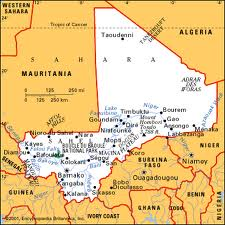
UK to deploy troops to Mali, W Africa

0

French army troopers arrive at the base camp in Sevare, Mali, January 25, 2013.

Britain has expressed readiness to send over 300 military personnel to Mali and West Africa to boost support for the French-led war on the African country.

British Defense Secretary Philip Hammond said on Tuesday that London has offered to deploy as many as 40 personnel for a European Union training mission in Mali.

The minister further highlighted that the British government is ready to deploy up to 200 military personnel for a separate training force in neighboring English-speaking West African countries.

This comes as some 20 British personnel have already been sent to operate a Royal Air Force C-17 cargo aircraft that supports the French-led war in Mali. In addition, 70 British personnel are sent to Senegal to operate a Sentinel surveillance plane.

Also on Tuesday the leaders of African nations as well as representatives from the United States, the European Union, the United Nations, and Japan attended an international donors’ conference in the Ethiopian capital of Addis Ababa to raise funds for the French war in Mali.

Some Western states and their allies pledged hundreds of millions of dollars in aid to Mali’s ruling junta.

The conference, however, did not provide the clear figure of the required finance for the Malian army in its combat against the country’s fighters.

Meanwhile British Prime Minister David Cameron’s spokesman said London has offered to transport French vehicles and equipment from France via using a British roll-on roll-off ferry.

Britain has already sent two transport planes and a high-altitude surveillance aircraft to aid the French war in Mali, where some 3,000 French forces have so far been deployed.

France launched the war on January 11 under the pretext of halting the advance of the fighters in the African country.

Meanwhile, reports said that French-led forces have taken control of the access points to the Malian desert town of Timbuktu on Monday as they continued advancing further across the north of the country.

Thousands of people in Mali have been forced to flee their homes amid the French war.

MR/PKH

‘Iraq unity will foil enemy plots’

0

Iran Majlis Speaker Ali Larijani (R) talks to Chairman of the Islamic Supreme Council of Iraq Ammar Hakim in Tehran on Tuesday, January 29, 2013.

Iran Majlis (parliament) Speaker Ali Larijani says the Iraqi nation will foil conspiracies by practicing national unity and avoiding political disputes.

“The vigilant and revolutionary people of Iraq will neutralize these plots [hatched by enemies] by steering clear of differences,” Larijani said in a meeting with the head of the Islamic Supreme Council of Iraq Ammar al-Hakim in Tehran on Tuesday.

Larijani stressed the importance of strengthened unity among Iraqi tribes and ethnic groups.

He further lauded Tehran-Baghdad brotherly and friendly relations and expressed the Islamic Republic’s willingness to enhance cooperation with its neighbor.

Hakim, for his part, briefed Larijani on the latest developments in Iraq, and said the enemies’ plots will fail due to the finesse of Iraqi officials and the vigilance of Iraqi people.

Iraq has been the scene of anti-government demonstrations since December 23, 2012, when the bodyguards of Finance Minister Rafie al-Issawi were arrested on terrorism-related charges.

The demonstrators allege that the arrests were made on sectarian grounds and demand an end to anti-terrorism laws. However, Baghdad says it is up to the parliament to decide on abolishing those laws.

YH/KA/SS

Lost in Their Own Wilderness

0

Don’t let the forces of regression dominate the media in 2013 – click here to support brave, independent reporting today by making a contribution to Truthout.

Washington, DC — Republicans shouldn’t worry that President Obama is trying to destroy the GOP. Why would he bother? The party’s leaders are doing a pretty good job of it themselves.

As they try to understand why the party lost an election it was confident of winning — and why it keeps losing budget showdowns in Congress — Republican grandees are asking the wrong questions. Predictably, they are coming up with the wrong answers.

They prefer to focus on flawed tactics and ineffectual “messaging” rather than confront the essential problem, which is that voters don’t much care for the policies the GOP espouses.

In post-debacle speeches and interviews, Republicans are sounding — and there’s no kind way to put this — paranoid and delusional. House Speaker John Boehner said in a speech to the Ripon Society that the Obama administration is trying to “annihilate the Republican Party.” Rep. Paul Ryan of Wisconsin, the party’s fiscal guru and failed vice presidential candidate, claimed Sunday on “Meet the Press” that Obama seeks “political conquest” of the GOP.

It is no secret that Obama is trying to advance a progressive agenda. He promised as much in his campaign speeches. Were Republicans not listening? Did they think he was just joshing?

In five of the last six presidential elections, Democrats have won the popular vote. Republicans have done well at the state level, and through redistricting have made their majority in the House difficult to dislodge. But it’s not possible to lead the country from the speaker’s chair, as Boehner can attest. To have a chance at effecting transformative change, you have to win the White House.

And to win the White House, you have to convince voters that the policies you seek to enact are the right ones. This is what the GOP doesn’t seem to understand.

“We’ve got to stop being the stupid party,” Louisiana Gov. Bobby Jindal, one of the GOP’s brightest young stars, said in a much-anticipated speech at the party’s winter meeting last week. “We’ve got to stop insulting the intelligence of voters. We need to trust the smarts of the American people.”

That’s all well and good. But Jindal also warned that the party should not “moderate, equivocate or otherwise change our principles” on issues such as abortion, gay marriage, “government growth” and “higher taxes.”

On abortion, there is an uneasy consensus that the procedure should be legal but uncommon; the GOP wants to make abortion illegal, and the party’s loudest voices on the issue do not even favor exceptions for incest or rape. On gay marriage, public opinion is shifting dramatically toward acceptance; the Republican Party is adamantly opposed. On the size of government, Americans philosophically favor “small” — but, as a practical matter, demand services and programs that can only be delivered by “big.” And on taxes, voters agreed with Obama that the wealthy could and should pay a bit more.

“We must reject the notion that demography is destiny, the pathetic and simplistic notion that skin pigmentation dictates voter behavior,” Jindal said. These are noble and stirring words. But the GOP is insane if it does not at least ask why 93 percent of African-Americans, 71 percent of Latinos and 73 percent of Asian-Americans voted for Obama over Mitt Romney.

If minority voters continue to favor the Democratic Party to this extent, then demography will indeed prove to be destiny. What would be simplistic is to attribute the disparity to the fact that Obama is the first black president, or the fact that Republicans have been perceived as so unsympathetic on issues concerning immigration. If they want to attract minority support, Republicans will have to take into account what these voters believe on a range of issues, from the proper relationship between government and the individual to the proper role of the United States in a rapidly changing world.

I have to wonder if the GOP is even getting the tactics-and-messaging part right. Michael Steele (now an MSNBC colleague of mine) served as party chairman when Republicans won a sweeping victory in 2010; he was promptly fired. Reince Priebus presided over the 2012 disaster; last week, he was rewarded with a new term as chairman.

But no matter who’s in charge, the GOP will have a tough time winning national elections until it has a better understanding of the nation. If Boehner is worried about being shoved “into the dustbin of history,” what he and other Republicans need to do is put down the broom.

Iraq: Mass Social Uprisings against US Sponsored Puppet Regime

iraq

With all the rage, strikes, and civil disobedience going on in major Iraqi cities, people around the world are wondering what’s happening in Iraq these days. The answer to this question is that the people in Iraq cannot bear any longer to be the victims of this government assigned by the Anglo-American occupation.

During the ten years of violent occupation more than 1.5 million Iraqi have been killed, eight hundred thousand are missing, four million were forced to migrate outside Iraq and two million inside Iraq.

The American occupation imported corrupt politicians, who decided to commit further crimes to end their political opponents through their corrupt judicial system, while getting wealthy and rich.

Hundreds of thousands of innocent Iraqi young men and women have been locked up in prisons. Most of them are in detention for many years without any charges, accusation, or legal order.

The secret prisons of Maliki’s government are run by militias, others are run secretly by the Americans. In Kurdistan in the north of Iraq, these prisons are run by the Agencies of the two parties led by Barzani and Talabani. Only a few official prisons are administered by the Justice Ministry.

With all the corruption and theft of the members associated with the political parties, new ways of robbing the poor Iraqi citizens emerge. Prison administration members today are millionaires because they charge money from each and every prisoner.

They charge them fees just to let them see their families or lawyers. Families are bankrupt after selling all their belongings just to be able to see and check on their beloved ones in prison.

Corrupt police officers and other forces buy and sell the prisoners as commodities and never help lawyers to end the prisoner’s torture and agony through legal charges against them. Women and children are tortured and raped just because their husbands or fathers or brothers are resisting the occupation and its quisling government.

Human Rights Watch, Amnesty International, and all other Civil Rights Organizations have warned Maliki’s government not to politicize the Judiciary system in Iraq.

The following letter from Lawyer Badie Aref gives a good example of the injustice and bloodshed the innocent young people in Iraq are facing:

New Scandal in the case of Carrying out the Bombing and the Foreign and Finance Ministries in Iraq:

Lawyer BadiaAref

Middle East Newspaper published two days ago on its front page more news about one Mr. Rafie al-Issawi, who admitted that he was the one behind the bombing of the Foreign and Finance ministries. The newspaper quoted a well-informed source in the Ministry of Interior.

Lawyer BadieAref answers. (Read also: How many more innocent people will be sentenced to death for the bombing of the Foreign and Finance Ministries in Iraq?)

Two years ago, a spokesperson of the Iraqi Security Forces, Maj. Gen. Qassim Atta, announced to the Iraqi people on satellite television channels that his forces had succeeded to arrest Wissam Ali Kadhim, a Diyala Province resident, and he showed him on television as the accused of the Finance and Foreign ministries bombing under the guidance of Younis al-Ahmad, leader of the Baath Party who is residing in Syria.

Death sentences were issued against these citizens and against a group who was accused of complicity in the bombings of Foreign and Finance ministries. I Kept a CD of all these events as a document and I submitted it to the Federal Court of Cassation.

The executions of this innocent Iraqi citizen and his group were carried out and an arrest warrant was issued against Mr. Yunis al-Ahmad, as the responsible “gang leader” for these bombings.

Months later, the same spokesperson appeared again on TV and announced very cheerfully to the Iraqi public that eleven al-Qaeda members were captured for their responsibility in the bombing of the Foreign and Finance Ministries.

It seems he had forgotten his earlier statement that had already caused the death of innocent young men for the same crime of the bombing of these two ministries. Again, the court sentenced the second group to death, and the death penalties were ratified by the Federal Court of Cassation and also by the Republic’s Presidency. Those innocent citizens were waiting for their execution. Their families hired me as a lawyer to defend them despite the ratifications of the Federal Court of Cassation and the Presidency on these unjust rulings for the same crime that spokesman had attributed to Mr. Yunis al-Ahmad. The presidency of the prosecution thankfully stopped the execution of these young innocent men hours before their execution was scheduled.

A few months later, Rahim al-Rawi appeared on satellite TV and confessed publicly that he was responsible for the bombing of the Foreign and Finance ministries.  He stated that he belonged to the Islamic Army. He made no reference to any of the two groups that were previously sentenced to death for the same crime. I visited Munaf al-Rawi, and he told me that he and his group are solely responsible for carrying out this operation. His written confession was signed by his thumb and ratified by the prison administration. He was also sentenced to death and his group too, for the same act.

I wonder what is happening in this country!! And for how long the shedding of innocent people’s blood will continue???

We are now facing four groups, not related to one another, who are all sentenced to death for the same crime.
Please explain, dear officials, what is happening in this country, and how long this situation will go on? I call upon the public opinion and all legal organizations, humanitarian and human rights organizations (of course, the Iraqi Human Rights Ministry is excluded from this matter) and both Human Rights Watch and Amnesty International to intervene in this matter before shedding more new bloods of the citizens of this plagued country.

Lawyer: BadieArefIzzat
 — Baghdad 01 01 2013

badeeaezzat@hotmail.com

The people of Iraq are desperate and totally fed up.

They decided to go out to fight and get killed:

  • for their rights,
  • for their detained young men and women, so that they may be freed,
  • for their 5.3 million abused children who are deprived of their basic child rights,
  • for their beautiful country that has been destroyed by the US led occupation,
  • for their stolen oil wealth by the US occupation and their corrupt followers represented by Maliki and his government.

Additional editing: Dirk Adriaensens.

Dr.Souad Al-Azzawi is an Academic from Iraq and member of the Executive Committee of The BRussells Tribunal.

ALEC Has Opposed “Popular Vote” Efforts Which Would Protect Against Partisan Rigging of Electoral College

0

We need your help to sustain grassroots, groundbreaking journalism. Make a tax-deductible contribution to Truthout now by clicking here.

The American Legislative Exchange Council (ALEC) has actively lobbied against state plans to implement a national popular vote for president, urging state legislators to preserve the Electoral College — which GOP legislators are now trying to rig to ensure the the next president is a Republican. In late 2011, ALEC officially changed its policy on the Electoral College to implicitly support allocating electoral votes by congressional district.

ALEC Recently Shifted Policy on Electoral College

In December 2011, ALEC reconfirmed its support for the Electoral College, but with one tweak — official ALEC policy no longer supports allocating electoral votes based on the winner of a state’s popular vote for president.

Republican leaders, including Republican National Committee Chair Reince Priebus, have been criticized for recent proposals to allocate electoral votes according to the victor in each Congressional district, rather than according to the winner-take-all system. This change would significantly benefit the GOP’s presidential chances, in part because Republicans were able to re-draw Congressional districts to favor their party after the 2010 elections.

In Virginia, where the Republican-led legislature has taken the first step toward reallocating the state’s electoral votes, Mitt Romney would have garnered nine of Virginia’s electoral votes in 2012, and Obama would have won four — despite Obama beating Romney by 150,000 votes and four percentage points in the state as a whole.

The proposals come on the heels of a 2011-2012 legislative term where Republicans proposed bills to twist the democratic system for partisan gain through restrictive voter ID and registration requirements, many of which can be traced back to ALEC “model” bills.

ALEC Has Pushed Back on National Popular Vote

Even without the proposed rigging by GOP leaders, the Electoral College is an imperfect system. The winner of the national popular vote can still lose the presidential election, which has occurred four times in American history (three times over a century ago, and most recently in 2000 after the Supreme Court intervened to put George W. Bush in the White House). Under the Electoral College, presidential campaigns focus their energies on a handful of swing states and largely ignore the rest of the country, particularly those states where a majority consistently supports one party. Votes for president don’t really count from Republicans in blue states like California and Democrats in red states like Texas.

The GOP’s recently-proposed changes to the Electoral College make a bad system worse, further limiting the number of voters who actually matter in presidential elections. But a bipartisan movement has been underway in recent years to replace the Electoral College’s indirect election of the president with a system where the candidate who gets the most votes in all 50 states wins the presidency.

The bipartisan organization National Popular Vote (NPV) has been promoting an interstate compact where states agree to award their electoral votes to the winner of the nationwide popular vote, rather than according to votes within the state. Choosing the president by way of the Electoral College is part of the U.S. Constitution, but Article II leaves it up to state legislatures to decide how to allocate electors. Such an agreement between states would help create a more level playing field, particularly when compared to the Republican effort to split Electoral College votes in blue states but continue the “winner-take-all” method in red states.

“Our goal is to make sure every voter in every state matters equally,” says Pat Rosenstiel, a Senior Consultant to NPV. Rosenstiel, who is a Republican, says that “four out of five voters are on the sidelines” under the current system, where presidential elections are decided by just a few swing states like Ohio or Florida.

Eight states and the District of Columbia have passed national popular vote compact legislation into law. A national popular vote would take effect if the legislation is enacted by enough states to constitute a majority of electors (270 out of the country’s 538 electoral votes), and these nine enactments count for 132 electoral votes, bringing NPV nearly halfway to its goal of 270.

ALEC has pushed back hard against this effort. The group has adopted model resolutions in opposition to the national popular vote and in favor of the Electoral College, has repeatedly rejected appeals from NPV to support its legislation, and has actively lobbied legislators in opposition to the national popular vote interstate compact.

ALEC Lobbied Legislators to Defeat NPV

In 2007, Maryland was the first state in the country to adopt national popular vote legislation. That year, ALEC adopted its “Resolution in Opposition to the National Popular Vote Interstate Compact” and its“Resolution in Support of the Electoral College.”

“[T]he State of [insert state] shall defeat any legislation that creates a multi-state compact for the purpose of dismantling its current Electoral College system,” the latter ALEC document provides.

NPV paid thousands of dollars to join ALEC in 2008 and encourage ALEC legislators to drop their opposition to national popular vote legislation. The group was represented at ALEC meetings by former California Sen. Ray Haynes, a Republican who was the ALEC National Chairman in 2000, as well as other representatives. But according to minutes from ALEC meetings, NPV has been repeatedly rebuffed in their efforts.

Despite ALEC’s opposition, national popular vote legislation has nonetheless advanced in the states with bipartisan support. In 2008, New Jersey, Illinois, and Hawaii enacted legislation, followed by Washington in 2009 and both Massachussetts and Washington, D.C., in 2010. Legislation was enacted in California and Vermont in 2011 and proposed in multiple states that year.

ALEC spent considerable energy lobbying legislators in opposition to these bills.

“Under the National Popular Vote system, a candidate could emerge victorious from a multi-party race for president, having won only a majority of votes in one region of the country,” reads an ‘issue alert’ sent by ALEC to legislators in Louisiana when it was considering NPV legislation. “This interstate compact is an end-run around the Constitution … Louisiana should stick with its current system and reject the interstate compact.”

Identical “issue alerts” were sent to legislators in states like Alaska, Arizona, California, Connecticut,Delaware, Michigan, Nebraska, Oklahoma, Utah, Vermont, and West Virginia.

ALEC has consistently told the IRS that it does “zero” lobbying but these “issue alerts” tell another story. These and other “issue alerts” provided support for an IRS complaint filed by Common Cause alleging ALEC actively lobbies and has misled in its IRS filings.

ALEC Change to Resolution Opened Door for Electoral Rigging

In December 2011, at the final meeting of the “Public Safety and Elections Task Force” (before it was allegedly disbanded under public pressure after CMD connected ALEC to “Stand Your Ground” laws and voter ID), NPV representative Ray Haynes proposed an overhaul of the 2007 “Resolution in Support of the Electoral College” to replace the provisions opposing the national popular vote with language supporting it.

The task force’s private and public sector members — which included state legislators and lobbyists for the NRA and other groups — rejected all of his changes but one. Those ALEC legislators and corporate representatives amended the 2007 “Resolution in Support of the Electoral College” to eliminate this one line:

WHEREAS, the current Electoral College system ensures that (insert state)’s electoral votes are awarded based on how the majority of the State’s citizens vote;

This deletion effectively changed ALEC’s policy to sanction electoral votes being allocated based on Congressional district, rather than on the winner-take-all basis that has been the practice for decades.

At the time, the issue had already been placed on the political agenda. Legislators in Pennsylvania andWisconsin proposed awarding electoral votes by Congressional district in 2011 (months before the ALEC meeting), but the bills did not pass.

In 2013, ALEC members and their fellow Republicans in those states and others are again taking up proposals to rig the already-broken Electoral College in their favor — and with the 2012 “Resolution in Support of the Electoral College” amendments, official ALEC policy implicitly supports it.

Republicans are not discussing changes to electoral allocation in solidly red states, but only in states like Virginia, Wisconsin, Pennsylvania and Michigan — all states where a majority of residents voted for President Obama, but which are controlled by Republicans at the state level and whose congressional maps were recently gerrymandered to benefit the GOP. RNC Chair Priebus has said explicitly that the plan is only intended for “states that have been consistently blue that are fully controlled red.” If the proposed changes for these four states had been in place during the 2012 election, Mitt Romney would have received 35 electoral votes and Obama just 23, despite Obama winning the popular vote in each state (the proposal in Virginia would allocate all electoral votes according to Congressional district, but in the other states two votes would go to the statewide winner).

Making these changes to how electoral votes are allocated “takes a bad system and makes it worse,” says NPV’s Rosenstiel. By shifting the fight for electoral votes from just a few swing states to just a few contested districts, “It concentrates power in the hands of even fewer voters, not more.”

As for NPV and ALEC, Rosenstiel says, “our membership with ALEC has run its course.”

Nearly 50,000 Children Living Abroad Receive Benefits

0

Nearly 50,000 children who live abroad are receiving benefits claimed by immigrant families living in Britain, figures have revealed.

Just under 30,000 families are claiming child benefits and tax credit for offspring who live outside the UK but within the European Union, as well as Iceland, Liechtenstein and Norway.

Poland is home to the highest number of children in the region who are receiving benefits claimed in the UK with more than half the total, 25,659, receiving welfare.

The figures were disclosed by Treasury minister Sajid Javid in a written answer to Keith Vaz, chairman of the Home Affairs Select Committee.

Vaz said: “I am very surprised at this figure. Most people would consider it wrong for people to receive child benefit when the children are living abroad permanently.”

  • Number of ongoing child benefit awards and number of children receiving ongoing awards as at December 31 2012
  1. Poland – 15,499/25,659
  2. Republic of Ireland – 1,281/2,609
  3. Lithuania – 1,276/1,772
  4. Slovakia – 1,083/1,881
  5. France – 1,080/2,003
  6. Latvia – 853/1,117
  7. Spain – 756/1,275
  8. Germany – 366/641
  9. Portugal – 239/364
  10. Netherlands – 192/379
  11. Romania – 196/328
  12. Italy – 193/330
  13. Czech Republic – 176/282
  14. Bulgaria – 174/238
  15. Belgium – 138/274
  16. Switzerland – 122/238
  17. Hungary – 132/203
  18. Sweden – 66/122
  19. Cyprus – 53/80
  20. Greece – 51/76
  21. Estonia – 43/63
  22. Austria – 29/47
  23. Denmark – 20/35
  24. Norway – 14/65
  25. Finland – 16/30
  26. Malta – 14/21
  27. Luxembourg – 10/21
  28. Slovenia – 7/13
  29. Iceland – 3/5

On December 31 there were 24,082 ongoing child benefit awards in respect of 40,171 children living in the European Economic Area, Javid revealed.

There were also 4,011 ongoing child tax credit awards claimed in respect of 6,838 children.

Parents can claim child benefits of £20.30 a week for their eldest child and £13.40 a week for each of their other children, while child tax credit is worth at least £545 a year.

The data will add to concerns about the impact of an expected wave of immigration from Romania and Bulgaria when temporary controls lapse at the end of the year.

The Government has refused to give an estimate of the numbers of people who might move to Britain after gaining the right to live and work in the UK from the end of December.

But campaigners Migration Watch UK have predicted that up to 250,000 Romanian and Bulgarian immigrants – equal to the population of Newcastle – could come to Britain within five years.

Javid said: “The main purpose of child benefit and the child tax credit is to support families in the UK. Consequently, the rules for these benefits generally do not provide for them to be paid in respect of children who live abroad.”

However, Javid said child benefit and child tax credit are family benefits which are protected by European Commission regulations that cover the social security rights of nationals of all EEA member states.

Around 7.5 million families are currently claiming child benefit for around 13 million children and roughly 5.2 million families are receiving child tax credit for almost 9.3 million children.

David vs. Goliath: Keystone XL Multinational Bullies Pipeline Protestors into Settlement

0

Transcanada, the multinational giant behind the proposed Keystone XL tar sands pipeline, has followed a new corporate strategy by filing crushing lawsuits against individual activists and financially vulnerable organizations that have tried to halt to the construction of the controversial project.

(Photo: Tar Sands Blockade) Despite the repressive tactics designed to censor opposition and intimidate others from joining such activities, those targeted vow to continue the fight to protect “their homes and futures from toxic tar sands.”

The suit’s defendants, which included several environmental groups including anti-pipeline coalition Tar Sands Blockade and 19 individual protesters, “were threatened with losing their homes and life’s savings if the lawsuit went forward,” Tar Sands Blockade said a press statement.

Kevin Gosztola of FireDogLake explains:

The suit brought was what is known as a Strategic Lawsuit Against Public Participation (SLAPP). Such lawsuits enable fascism by providing a mechanism for a corporation to go after individuals or groups engaged in protest or freedom of speech. They are often used against people who lack resources or cannot afford to pay the legal expenses necessary to stand up to a corporation in court.

Despite the legal setback, members of Tar Sands Blockade vowed to keep fighting. 

“TransCanada is dead wrong if they think a civil lawsuit against a handful of Texans is going to stop a grassroots civil disobedience movement,” said spokesperson and defendant Ramsey Sprague. “This is nothing more than another example of TransCanada repressing dissent and bullying Texans who are defending their homes and futures from toxic tar sands.”

Tammie Carson, another target of the lawsuit and grandmother from Arlington, TX, said she took the action to protect her grandkids’ future. “I couldn’t sit idly by and watch as a multinational corporate bully abused eminent domain to build a dirty and dangerous tar sands pipeline right through Texans’ backyards,” she said. “I had no choice but to settle or lose my home and everything I’ve worked for my entire life.”

Citing one court’s opinion of the SLAPP lawsuit, the Civil Liberties Defense Center (CLDC) writes, “Short of a gun to the head, a greater threat to First Amendment expression can scarcely be imagined.”

In reaction to the settlement, Lauren Regan, veteran attorney with CLDC who helped coordinate legal representation for the activists, said:

This is a David versus Goliath situation, where an unethical, transnational corporation is using its weight to crush First Amendment rights of people speaking out and resisting the irreparable destruction that will result from construction of this highly controversial XL Pipeline…But the resistance to the pipeline is growing, not shrinking; it’s coming from everywhere. This is a national and global issue that will effect us all.

Lawyers from the CLDC represented the Tar Sands Blockade, Rising Tide North America and Rising Tide North Texas as well as the other targeted individuals. As part of the settlement, the activists agreed to no longer trespass or cause damage to Keystone XL property throughout the pipeline’s entire southern leg, including any demonstrations “aimed at interfering with pipeline construction,” the Toronto Star reports.

However, as Gosztola adds, “what it does not do is stop individuals unknown to TransCanada and groups other than Tar Sands Blockade or Rising Tide chapters from engaging in nonviolent civil disobedience or disruptive activity.”

The Politics of Debt in America: From Debtor’s Prison to Debtor Nation

0

[This essay will appear in the next issue of Jacobin. It is posted at TomDispatch.com with the kind permission of that magazine, and re-posted at Common Dreams with subsequent permission.]

Shakespeare’s Polonius offered this classic advice to his son: “neither a borrower nor a lender be.” Many of our nation’s Founding Fathers emphatically saw it otherwise. They often lived by the maxim: always a borrower, never a lender be. As tobacco and rice planters, slave traders, and merchants, as well as land and currency speculators, they depended upon long lines of credit to finance their livelihoods and splendid ways of life. So, too, in those days, did shopkeepers, tradesmen, artisans, and farmers, as well as casual laborers and sailors. Without debt, the seedlings of a commercial economy could never have grown to maturity.

Ben Franklin, however, was wary on the subject. “Rather go to bed supperless than rise in debt” was his warning, and even now his cautionary words carry great moral weight. We worry about debt, yet we can’t live without it.

Debt remains, as it long has been, the Dr. Jekyll and Mr. Hyde of capitalism. For a small minority, it’s a blessing; for others a curse. For some the moral burden of carrying debt is a heavy one, and no one lets them forget it. For privileged others, debt bears no moral baggage at all, presents itself as an opportunity to prosper, and if things go wrong can be dumped without a qualm.

Those who view debt with a smiley face as the royal road to wealth accumulation and tend to be forgiven if their default is large enough almost invariably come from the top rungs of the economic hierarchy. Then there are the rest of us, who get scolded for our impecunious ways, foreclosed upon and dispossessed, leaving behind scars that never fade away and wounds that disable our futures. 

Think of this upstairs-downstairs class calculus as the politics of debt. British economist John Maynard Keynes put it like this: “If I owe you a pound, I have a problem; but if I owe you a million, the problem is yours.”

After months of an impending “debtpocalypse,” the dreaded “debt ceiling,” and the “fiscal cliff,” Americans remain preoccupied with debt, public and private. Austerity is what we’re promised for our sins. Millions are drowning, or have already drowned, in a sea of debt — mortgages gone bad, student loans that may never be paid off, spiraling credit card bills, car loans, payday loans, and a menagerie of new-fangled financial mechanisms cooked up by the country’s “financial engineers” to milk what’s left of the American standard of living. 

The world economy almost came apart in 2007-2008, and still may do so under the whale-sized carcass of debt left behind by financial plunderers who found in debt the leverage to get ever richer. Most of them still live in their mansions and McMansions, while other debtors live outdoors, or in cars or shelters, or doubled-up with relatives and friends — or even in debtor’s prison. Believe it or not, a version of debtor’s prison, that relic of early American commercial barbarism, is back. 

In 2013, you can’t actually be jailed for not paying your bills, but ingenious corporations, collection agencies, cops, courts, and lawyers have devised ways to insure that debt “delinquents” will end up in jail anyway. With one-third of the states now allowing the jailing of debtors (without necessarily calling it that), it looks ever more like a trend in the making.

Will Americans tolerate this, or might there emerge a politics of resistance to debt, as has happened more than once in a past that shouldn’t be forgotten?  

The World of Debtor’s Prisons

Imprisonment for debt was a commonplace in colonial America and the early republic, and wasn’t abolished in most states until the 1830s or 1840s, in some cases not until after the Civil War. Today, we think of it as a peculiar and heartless way of punishing the poor — and it was. But it was more than that.

Some of the richest, most esteemed members of society also ended up there, men like Robert Morris, who helped finance the American Revolution and ran the Treasury under the Articles of Confederation; John Pintard, a stock-broker, state legislator, and founder of the New York Historical Society; William Duer, graduate of Eton, powerful merchant and speculator, assistant secretary in the Treasury Department of the new federal government, and master of a Hudson River manse; a Pennsylvania Supreme Court judge; army generals; and other notables.

Whether rich or poor, you were there for a long stretch, even for life, unless you could figure out some way of discharging your debts. That, however, is where the similarity between wealthy and impoverished debtors ended.

Whether in the famous Marshalsea in London where Charles Dickens had Little Dorritt’s father incarcerated (and where Dickens’s father had actually languished when the author was 12), or in the New Gaol in New York City, where men like Duer and Morris did their time, debtors prisons were segregated by class. If your debts were large enough and your social connections weighty enough (the two tended to go together) you lived comfortably. You were supplied with good food and well-appointed living quarters, as well as books and other pleasures, including on occasion manicurists and prostitutes. 

Robert Morris entertained George Washington for dinner in his “cell.” Once released, he resumed his career as the new nation’s richest man. Before John Pintard moved to New Gaol, he redecorated his cell, had it repainted and upholstered, and shipped in two mahogany writing desks.

Meanwhile, the mass of petty debtors housed in the same institution survived, if at all, amid squalor, filth, and disease. They were often shackled, and lacked heat, clean water, adequate food, or often food of any kind. (You usually had to have the money to buy your own food, clothing, and fuel.) Debtors in these prisons frequently found themselves quite literally dying of debt. And you could end up in such circumstances for trivial sums. Of the 1,162 jailed debtors in New York City in 1787, 716 owed less than twenty shillings or one pound. A third of Philadelphia’s inmates in 1817 were there for owing less than $5, and debtors in the city’s prisons outnumbered violent criminals by 5:1. In Boston, 15% of them were women. Shaming was more the point of punishment than anything else.

Scenes of public pathos were commonplace. Inmates at the New Gaol, if housed on its upper floors, would lower shoes out the window on strings to collect alms for their release. Other prisons installed “beggar gates” through which those jailed in cellar dungeons could stretch out their palms for the odd coins from passersby.

Poor and rich alike wanted out. Pamphleteering against the institution of debtor’s prison began in the 1750s. An Anglican minister in South Carolina denounced the jails, noting that “a person would be in a better situation in the French King’s Gallies, or the Prisons of Turkey or Barbary than in this dismal place.” Discontent grew. A mass escape from New Gaol of 40 prisoners armed with pistols and clubs was prompted by extreme hunger. 

In the 1820s and 1830s, as artisans, journeymen, sailors, longshoremen, and other workers organized the early trade union movement as well as workingmen’s political parties, one principal demand was for the abolition of imprisonment for debt. Inheritors of a radical political culture, their complaints echoed that Biblical tradition of Jubilee mentioned in Leviticus, which called for a cancellation of debts, the restoration of lost houses and land, and the freeing of slaves and bond servants every 50 years.

Falling into debt was a particularly ruinous affliction for those who aspired to modest independence as shopkeepers, handicraftsmen, or farmers. As markets for their goods expanded but became ever less predictable, they found themselves taking out credit to survive and sometimes going into arrears, often followed by a stint in debtor’s prison that ended their dreams forever. 

However much the poor organized and protested, it was the rich who got debt relief first. Today, we assume that debts can be discharged through bankruptcy (although even now that option is either severely restricted or denied to certain classes of less favored debt delinquents like college students). Although the newly adopted U.S. Constitution opened the door to a national bankruptcy law, Congress didn’t walk through it until 1800, even though many, including the well-off, had been lobbying for it.

Enough of the old moral faith that frowned on debt as sinful lingered. The United States has always been an uncharitable place when it comes to debt, a curious attitude for a society largely settled by absconding debtors and indentured servants (a form of time-bound debt peonage). Indeed, the state of Georgia was founded as a debtor’s haven at a time when England’s jails were overflowing with debtors.

When Congress finally passed the Bankruptcy Act, those in the privileged quarters at New Gaol threw a party. Down below, however, life continued in its squalid way, since the new law only applied to people who had sizable debts. If you owed too little, you stayed in jail. 

Debt and the Birth of a Nation

Nowadays, the conservative media inundate us with warnings about debt from the Founding Fathers, and it’s true that some of them like Jefferson — himself an inveterate, often near-bankrupt debtor — did moralize on the subject. However, Alexander Hamilton, an idol of the conservative movement, was the architect of the country’s first national debt, insisting that “if it is not excessive, [it] will be to us a national blessing.”

As the first Secretary of the Treasury, Hamilton’s goal was to transform the former 13 colonies, which today we would call an underdeveloped land, into a country that someday would rival Great Britain. This, he knew, required liquid capital (resources not tied up in land or other less mobile forms of wealth), which could then be invested in sometimes highly speculative and risky enterprises. Floating a national debt, he felt sure, would attract capital from well-positioned merchants at home and abroad, especially in England.

However, for most ordinary people living under the new government, debt aroused anger. To begin with, there were all those veterans of the Revolutionary War and all the farmers who had supplied the revolutionary army with food and been paid in notoriously worthless “continentals” — the currency issued by the Continental Congress — or equally valueless state currencies.

As rumors of the formation of a new national government spread, speculators roamed the countryside buying up this paper money at a penny on the dollar, on the assumption that the debts they represented would be redeemed at face value. In fact, that is just what Hamilton’s national debt would do, making these “sunshine patriots” quite rich, while leaving the yeomanry impoverished.

Outrage echoed across the country even before Hamilton’s plan got adopted. Jefferson denounced the currency speculators as loathsome creatures and had this to say about debt in general: “The modern theory of the perpetuation of debt has drenched the earth with blood and crushed its inhabitants under burdens ever accumulating.” He and others denounced the speculators as squadrons of counter-revolutionary “moneycrats” who would use their power and wealth to undo the democratic accomplishments of the revolution.

In contrast, Hamilton saw them as a disinterested monied elite upon whom the country’s economic well-being depended, while dismissing the criticisms of the Jeffersonians as the ravings of Jacobin levelers. Soon enough, political warfare over the debt turned founding fathers into fratricidal brothers.  

Hamilton’s plan worked — sometimes too well. Wealthy speculators in land like Robert Morris, or in the building of docks, wharves, and other projects tied to trade, or in the national debt itself — something William Duer and grandees like him specialized in — seized the moment. Often enough, however, they over-reached and found themselves, like the yeomen farmers and soldiers, in default to their creditors. 

Duer’s attempts to corner the market in the bonds issued by the new federal government and in the stock of the country’s first National Bank represented one of the earliest instances of insider trading. They also proved a lurid example of how speculation could go disastrously wrong.  When the scheme collapsed, it caused the country’s first Wall Street panic and a local depression that spread through New England, ruining “shopkeepers, widows, orphans, butchers… gardeners, market women, and even the noted Bawd Mrs. McCarty.”   

A mob chased Duer through the streets of New York and might have hanged or disemboweled him had he not been rescued by the city sheriff, who sent him to the safety of debtor’s prison. John Pintard, part of the same scheme, fled to Newark, New Jersey, before being caught and jailed as well.

Sending the Duers and Pintards of the new republic off to debtors’ prison was not, however, quite what Hamilton had in mind. And leaving them rotting there was hardly going to foster the “enterprising spirit” that would, in the treasury secretary’s estimation, turn the country into the Great Britain of the next century. Bankruptcy, on the other hand, ensured that the overextended could start again and keep the machinery of commercial transactions lubricated. Hence, the Bankruptcy Act of 1800.

If, however, you were not a major player, debt functioned differently. Shouldered by the hoi polloi, it functioned as a mechanism for funneling wealth into the mercantile-financial hothouses where American capitalism was being incubated.

No wonder debt excited such violent political emotions. Even before the Constitution was adopted, farmers in western Massachusetts, indebted to Boston bankers and merchants and in danger of losing their ancestral homes in the economic hard times of the 1780s, rose in armed rebellion. In those years, the number of lawsuits for unpaid debt doubled and tripled, farms were seized, and their owners sent off to jail. Incensed, farmers led by a former revolutionary soldier, Daniel Shays, closed local courts by force and liberated debtors from prisons. Similar but smaller uprisings erupted in Maine, Connecticut, New York, and Pennsylvania, while in New Hampshire and Vermont irate farmers surrounded government offices. 

Shays’ Rebellion of 1786 alarmed the country’s elites. They depicted the unruly yeomen as “brutes” and their houses as “sties.” They were frightened as well by state governments like Rhode Island’s that were more open to popular influence, declared debt moratoria, and issued paper currencies to help farmers and others pay off their debts. These developments signaled the need for a stronger central government fully capable of suppressing future debtor insurgencies.

Federal authority established at the Constitutional Convention allowed for that, but the unrest continued. Shays’ Rebellion was but part one of a trilogy of uprisings that continued into the 1790s. The Whiskey Rebellion of 1794 was the most serious. An excise tax (“whiskey tax”) meant to generate revenue to back up the national debt threatened the livelihoods of farmers in western Pennsylvania who used whiskey as a “currency” in a barter economy.  President Washington sent in troops, many of them Revolutionary War veterans, with Hamilton at their head to put down the rebels. 

Debt Servitude and Primitive Accumulation

Debt would continue to play a vital role in national and local political affairs throughout the nineteenth century, functioning as a form of capital accumulation in the financial sector, and often sinking pre-capitalist forms of life in the process. 

Before and during the time that capitalists were fully assuming the prerogatives of running the production process in field and factory, finance was building up its own resources from the outside. Meanwhile, the mechanisms of public and private debt made the lives of farmers, craftsmen, shopkeepers, and others increasingly insupportable.

This parasitic economic metabolism helped account for the riotous nature of Gilded Age politics. Much of the high drama of late nineteenth-century political life circled around “greenbacks,” “free silver,” and “the gold standard.” These issues may strike us as arcane today, but they were incendiary then, threatening what some called a “second Civil War.” In one way or another, they were centrally about debt, especially a system of indebtedness that was driving the independent farmer to extinction.

All the highways of global capitalism found their way into the trackless vastness of rural America. Farmers there were not in dire straits because of their backwoods isolation. On the contrary, it was because they turned out to be living at Ground Zero, where the explosive energies of financial and commercial modernity detonated. A toxic combination of railroads, grain-elevator operators, farm-machinery manufacturers, commodity-exchange speculators, local merchants, and above all the banking establishment had the farmer at their mercy. His helplessness was only aggravated when the nineteenth-century version of globalization left his crops in desperate competition with those from the steppes of Canada and Russia, as well as the outbacks of Australia and South America.

To survive this mercantile onslaught, farmers hooked themselves up to long lines of credit that stretched back to the financial centers of the East. These lifelines allowed them to buy the seed, fertilizer, and machines needed to farm, pay the storage and freight charges that went with selling their crops, and keep house and home together while the plants ripened and the hogs fattened. When market day finally arrived, the farmer found out just what all his backbreaking work was really worth. If the news was bad, then those credit lines were shut off and he found himself dispossessed.

The family farm and the network of small town life that went with it were being washed into the rivers of capital heading for metropolitan America. On the “sod house” frontier, poverty was a “badge of honor which decorated all.” In his Devil’s Dictionary, the acid-tongued humorist Ambrose Bierce defined the dilemma this way: “Debt. n. An ingenious substitute for the chain and whip of the slave-driver.”

Across the Great Plains and the cotton South, discontented farmers spread the blame for their predicament far and wide. Anger, however, tended to pool around the strangulating system of currency and credit run out of the banking centers of the northeast. Beginning in the 1870s with the emergence of the Greenback Party and Greenback-Labor Party and culminating in the 1890s with the People’s or Populist Party, independent farmers, tenant farmers, sharecroppers, small businessmen, and skilled workers directed ever more intense hostility at “the money power.”

That “power” might appear locally in the homeliest of disguises. At coal mines and other industrial sites, among “coolies” working to build the railroads or imported immigrant gang laborers and convicts leased to private concerns, workers were typically compelled to buy what they needed in company scrip at company stores at prices that left them perpetually in debt. Proletarians were so precariously positioned that going into debt — whether to pawnshops or employers, landlords or loan sharks — was unavoidable. Often they were paid in kind: wood chips, thread, hemp, scraps of canvas, cordage: nothing, that is, that was of any use in paying off accumulated debts. In effect, they were, as they called themselves, “debt slaves.” 

In the South, hard-pressed growers found themselves embroiled in a crop-lien system, dependent on the local “furnishing agent” to supply everything needed, from seed to clothing to machinery, to get through the growing season. In such situations, no money changed hands, just a note scribbled in the merchant’s ledger, with payment due at “settling up” time. This granted the lender a lien, or title, to the crop, a lien that never went away.

In this fashion, the South became “a great pawn shop,” with farmers perpetually in debt at interest rates exceeding 100% per year. In Alabama, Georgia, and Mississippi, 90% of farmers lived on credit. The first lien you signed was essentially a life sentence. Either that or you became a tenant farmer, or you simply left your land, something so commonplace that everyone knew what the letters “G.T.T.” on an abandoned farmhouse meant: “Gone to Texas.” (One hundred thousand people a year were doing that in the 1870s.) 

The merchant’s exaction was so steep that African-Americans and immigrants in particular were regularly reduced to peonage — forced, that is, to work to pay off their debt, an illegal but not uncommon practice. And that neighborhood furnishing agent was often tied to the banks up north for his own lines of credit. In this way, the sucking sound of money leaving for the great metropolises reverberated from region to region.

Facing dispossession, farmers formed alliances to set up cooperatives to extend credit to one another and market crops themselves. As one Populist editorialist remarked, this was the way “mortgage-burdened farmers can assert their freedom from the tyranny of organized capital.” But when they found that these groupings couldn’t survive the competitive pressure of the banking establishment, politics beckoned.

From one presidential election to the next and in state contests throughout the South and West, irate grain and cotton growers demanded that the government expand the paper currency supply, those “greenbacks,” also known as “the people’s money,” or that it monetize silver, again to enlarge the money supply, or that it set up public institutions to finance farmers during the growing season. With a passion hard for us to imagine, they railed against the “gold standard” which, in Democratic Party presidential candidate William Jennings Bryan’s famous cry, should no longer be allowed to “crucify mankind on a cross of gold.”

Should that cross of gold stay fixed in place, one Alabama physician prophesied, it would “reduce the American yeomanry to menials and paupers, to be driven by monopolies like cattle and swine.” As Election Day approached, populist editors and speakers warned of an approaching war with “the money power,” and they meant it. “The fight will come and let it come!”

The idea was to force the government to deliberately inflate the currency and so raise farm prices. And the reason for doing that? To get out from under the sea of debt in which they were submerged. It was a cry from the heart and it echoed and re-echoed across the heartland, coming nearer to upsetting the established order than any American political upheaval before or since. 

The passion of those populist farmers and laborers was matched by that of their enemies, men at the top of the economy and government for whom debt had long been a road to riches rather than destitution. They dismissed their foes as “cranks” and “calamity howlers.” And in the election of 1896, they won. Bryan went down to defeat, gold continued its pitiless process of crucifixion, and a whole human ecology was set on a path to extinction.

The Return of Debt Servitude

When populism died, debt — as a spark for national political confrontation — died, too. The great reform eras that followed — Progessivism, the New Deal, and the Great Society — were preoccupied with inequality, economic collapse, exploitation in the workplace, and the outsized nature of corporate power in a consolidated industrial capitalist system.

Rumblings about debt servitude could certainly still be heard. Foreclosed farmers during the Great Depression mobilized, held “penny auctions” to restore farms to families, hanged judges in effigy, and forced Prudential Insurance Company, the largest land creditor in Iowa, to suspend foreclosures on 37,000 farms (which persuaded Metropolitan Life Insurance Company to do likewise). A Kansas City realtor was shot in the act of foreclosing on a family farm, a country sheriff kidnapped while trying to evict a farm widow and dumped 10 miles out of town, and so on.

Urban renters and homeowners facing eviction formed neighborhood groups to stop the local sheriff or police from throwing families out of their houses or apartments. Furniture tossed into the street in eviction proceedings would be restored by neighbors, who would also turn the gas and electricity back on. New Deal farm and housing finance legislation bailed out banks and homeowners alike. Right-wing populists like the Catholic priest Father Charles Coughlin carried on the war against the gold standard in tirades tinged with anti-Semitism. Signs like one in Nebraska — “The Jew System of Banking” (illustrated with a giant rattlesnake) — showed up too often.

But the age of primitive accumulation in which debt and the financial sector had played such a strategic role was drawing to a close. 

Today, we have entered a new phase. What might be called capitalist underdevelopment and once again debt has emerged as both the central mode of capital accumulation and a principal mechanism of servitude. Warren Buffett (of all people) has predicted that, in the coming decades, the United States is more likely to turn into a “sharecropper society” than an “ownership society.”

In our time, the financial sector has enriched itself by devouring the productive wherewithal of industrial America through debt, starving the public sector of resources, and saddling ordinary working people with every conceivable form of consumer debt.

Household debt, which in 1952 was at 36% of total personal income, had by 2006 hit 127%. Even financing poverty became a lucrative enterprise. Taking advantage of the low credit ratings of poor people and their need for cash to pay monthly bills or simply feed themselves, some check-cashing outlets, payday lenders, tax preparers, and others levy interest of 200% to 300% and more. As recently as the 1970s, a good part of this would have been considered illegal under usury laws that no longer exist. And these poverty creditors are often tied to the largest financiers, including Citibank, Bank of America, and American Express.

Credit has come to function as a “plastic safety net” in a world of job insecurity, declining state support, and slow-motion economic growth, especially among the elderly, young adults, and low-income families. More than half the pre-tax income of these three groups goes to servicing debt. Nowadays, however, the “company store” is headquartered on Wall Street.

Debt is driving this system of auto-cannibalism which, by every measure of social wellbeing, is relentlessly turning a developed country into an underdeveloped one.  

Dr. Jekyll and Mr. Hyde are back.  Is a political resistance to debt servitude once again imaginable?

© 2013 Steve Fraser

Today’s Most Popular Stories

0

Most Popular Articles since:

  • facebook2

    By Soraya Sepahpour-Ulrich, January 26 , 2013

  • Who Owns The Federal Reserve?

    By Ellen Brown, January 29 , 2013

  • The Irish Slave Trade — The Forgotten “White” Slaves

    By John Martin, January 27 , 2013

  • cheney2

    By Paul Schreyer, January 28 , 2013

  • DRONERQ-170_Sentinel_impression_3-view

    By Prof Michel Chossudovsky, January 26 , 2013

  • France: Le président Hollande rencontre l’« opposition » syrienne soutenue par les Etats-Unis

    By Thierry Meyssan, January 28 , 2013

  • Iraq War Crimes: Haditha: Another Small Massacre — No One Guilty

    By Dirk Adriaensens, January 28 , 2013

  • iceland

    By Martin Zeis, January 28 , 2013

  • africom

    By Ben Schreiner, January 29 , 2013

  • bp2

    By Washington’s Blog, January 28 , 2013

  • "The True Story of the Bilderberg Group" and What They May Be Planning Now

    By Stephen Lendman, June 1 , 2009

  • africamap

    By Abayomi Azikiwe, January 29 , 2013

  • libya_clip_image002

    By Ronda Hauben, January 28 , 2013

  • cia

    By Russia Today, January 28 , 2013

  • By Socialist Project, January 28 , 2013

  • pacific command

    By Wayne Madsen, January 28 , 2013

  • israelflag

    By Wayne Madsen, January 28 , 2013

  • Trilateral Geithner: Corrupted Regulator?

    By Stephen Lendman, January 28 , 2013

  • mali

    By R. Teichman, January 15 , 2013

  • us ripped flag

    By Rebecca Solnit, January 28 , 2013

  • THE COUP OF 2012: Encroachment upon Basic Freedoms, Militarized Police State in America

    By Frank Morales, January 27 , 2013

  • SYRIA: CIA-MI6 Intel Ops and Sabotage

    By Felicity Arbuthnot, January 27 , 2013

  • Plans for Redrawing the Middle East: The Project for a “New Middle East”

    By Mahdi Darius Nazemroaya, January 27 , 2013

  • vietnam

    By Global Research News, January 28 , 2013

  • cia

    By Tom Carter, January 28 , 2013

  • school

    By Prof. James F. Tracy, December 25 , 2012

  • The New Mediterranean Oil and Gas Bonanza

    By F. William Engdahl, January 27 , 2013

  • mentalimaging

    By Prof. James F. Tracy, January 22 , 2013

  • The Federal Reserve Cartel: The Eight Families

    By Dean Henderson, June 1 , 2011

  • Mali's Tuareg-Uranium Conspiracy

    By Moeen Raoof, January 13 , 2013

  • Preparing for World War III, Targeting Iran

    By Prof Michel Chossudovsky, January 2 , 2013

  • By Dr. Gary G. Kohls, January 29 , 2013

  • GMO Scandal: The Long Term Effects of Genetically Modified Food on Humans

    By F. William Engdahl, January 22 , 2013

  • syriakurd438

    By Eric Draitser, January 27 , 2013

  • world

    By Lesley Docksey, January 27 , 2013

  • The Worldwide Network of US Military Bases

    By Jules Dufour, July 1 , 2007

  • parenti2

    By Michael Parenti, January 27 , 2013

  • ECHELON: The Global Eavesdropping Scheme

    By Sherwood Ross, July 20 , 2011

  • king

    By Carl Herman, January 22 , 2013

  • lethal silverware

    By Washington’s Blog, January 29 , 2013

  • israelus

    By Francis A. Boyle, January 26 , 2013

  • japan

    By Peter Symonds, January 26 , 2013

  • Gross National Product (GNP): How is it Calculated? What does it Measure?

    By John Kozy, January 19 , 2013

  • drone

    By Der Spiegel, December 16 , 2012

  • fed

    By Andre Damon, January 27 , 2013

  • africa america

    By Bonnie Faulkner, January 24 , 2013

  • GLOBAL WARMING OR THE "NEW ICE AGE"? FEAR OF "THE BIG FREEZE."

    By Washington’s Blog, January 2 , 2013

  • Egypt Referendum

    By Mahdi Darius Nazemroaya, January 22 , 2013

  • chemtrails

    By Prof. James F. Tracy, December 14 , 2012

  • By Vicky Pelaez, March 10 , 2008

Yes, He Can: 20 Ways Obama Can Use Executive Power to Push a Progressive Agenda

0

We need your help to sustain grassroots, groundbreaking journalism. Make a tax-deductible contribution to Truthout now by clicking here.

When President Obama announced his sweeping new plan for preventing gun violence on January 16, it included no fewer than twenty-three “executive actions,” in addition to a series of legislative proposals. The message was clear: in the face of congressional intransigence–on gun control and beyond–Obama will push changes through the executive branch that he believes to be for the good of the country. “Congress too must act, and Congress must act soon,” Obama said, while making it clear that the White House will not wait for the GOP-controlled House.

It was not the first time the president has flexed his executive muscle. Obama deployed such power during his first term on a number of notable occasions. The “Mini—Dream Act” executive action, for example, was hugely successful, both in terms of public policy and progressive politics. It helped people in an immediate and tangible way, was enormously popular with Latinos and Asian-Americans, and may well have won him re-election.

Others, like raising the CAFE standards to demand better fuel efficiency from carmakers and capping student loan payments, were part of the Obama administration’s “We Can’t Wait” initiative, launched in the fall of 2011, following the debt ceiling fiasco and the House Republicans’ refusal to seriously consider the American Jobs Act. “We can’t wait for an increasingly dysfunctional Congress to do its job,” Obama said at the time. “Where they won’t act, I will.”

The president has also acted through the appointment process. He made a recess appointment of Richard Cordray to head the Consumer Financial Protection Bureau, despite intense congressional opposition, and another three recess appointments to the five-member National Labor Relations Board, putting it back in action after the Republicans refused for months to confirm any new members. Obama also handed down the Health and Human Services Department contraception mandate–a critical fulcrum point in the GOP’s politically costly “war on women.”

Less high-profile measures have included utilizing the 1906 Antiquities Act, first used by Theodore Roosevelt to protect historic or beautiful public land, to preserve a few areas, including Fort Monroe in Virginia and Fort Ord in California. Last fall, Obama also named Colorado’s Chimney Rock Archaeological Area as a national monument, and dedicated the César E. Chávez National Monument in California.

The president can do much more. So can the cabinet departments and federal regulatory agencies. As Barack Obama begins his second term, and weighs his overall legacy, it will be crucial for progressives to push him to act on a broad range of issues for which there is an absence of congressional will (or a concerted effort to block progress). Pressing for reforms through executive action–using both “street heat” and “suite heat”–should be a serious focus of our work in the coming months.

An executive order, briefly defined, is a presidential directive that carries the force of law. Such actions have a long and checkered history in American politics: Abraham Lincoln’s Emancipation Proclamation was enacted via executive order, as was the internment of Japanese-Americans during World War II (one of a flurry of orders handed down by FDR). Executive orders were used sparingly, for the most part, until the presidency of Bill Clinton, who vastly expanded their use, handing down more than even George W. Bush. Obama has continued this broader trend, issuing 144 executive orders in his first four years. Less binding are executive actions, presidential recommendations that cannot be carried out by the executive branch unilaterally.

In the era after 9/11, the consolidation of executive authority has led to a number of dangerous policies [see David Shipler, in this issue], and we strongly oppose the extreme manifestations of this power, such as the “kill lists” that have already defined Obama’s presidency. Yet executive power, when properly deployed, can and has played a legitimate role in helping to realign the country with its values and the needs of Americans–as Obama attempted to do when he ordered the closing of Guantánamo and an end to torture just days into his first term.

With this goal in mind, The Nation has compiled a list of executive actions that the president should take across a broad range of issues–and asked our readers to submit their own. Many pointed to the excessive military, intelligence and police powers they would like to see rolled back, at home and abroad. Richard Nixon declared the “war on drugs” and created the Drug Enforcement Administration via executive order; Obama, some readers suggested, could finally end the “war on drugs”–or at least direct the DEA to stop enforcing disproportionate crackdowns on drug crimes–using the same power.

Indeed, in addition to ratcheting back the “war on drugs,” the executive branch could also–at least in theory–end the war in Afghanistan; help close some of our hundreds of overseas bases; follow through on its pledge to close Guantánamo; cut back on the use of drones; stop jailing whistleblowers; end the official harassment and surveillance of Muslims and activists; and even pardon Leonard Peltier.

Obviously, the president is unlikely to act on a number of these suggestions. But it is also obvious that our nation is facing multiple crises, many of which will not wait until an obstinate GOP House has evolved enough to act. Wherever possible, the president should act on his own to implement good public policies that can break the gridlock and ease at least some of our most serious crises, such as the heating of the earth’s atmosphere and the dangerous storms like Hurricane Sandy that result; our overextended and bloated military empire; and the corporate corruption of our political system, among many others. 

We believe that aggressive and progressive executive action will bring political benefits as well, because the public is tired of waiting for results from Washington. And even if it doesn’t, taking action is still the right thing to do–for the planet, for the jobless and the homeless, for the loyal voters who stood in long lines to make history with Barack Obama twice. Besides, what’s a second term for if you can’t use your presidential power for the good of the many?

What follows is a list of ways that Obama can act to achieve progressive goals in his second term. Some, like taking nuclear weapons off “hair-trigger alert” status, are long overdue–a relic of another age that nonetheless bears correcting. Others, like a plan to modernize voting protocols, are tied to our current political landscape. By no means is this an exhaustive list–it was designed to inspire and encourage further brainstorming along these lines, as well as action-building strategies on how to explicitly pressure the White House over the next four years.

* * *

Environment

Assemble a Commission on Climate Change
In his first press conference since winning a second term, President Obama said, “I am a firm believer that climate change is real, that it is impacted by human behavior and carbon emissions. And as a consequence, I think we’ve got an obligation to future generations to do something about it.” He should start by assembling a blue-ribbon Climate Change National Security Commission to take stock of the most pressing dangers posed by climate change. The commission would be composed of experts like Dr. James Hansen and Bill McKibben, and its members would outline a schedule for analyzing and making recommendations on how best to tackle this enormous and wide-reaching national security issue.

Direct the EPA to Regulate All Greenhouse Gases

In 2007, the Supreme Court ruled that the Environmental Protection Agency has the authority to regulate all greenhouse gases, yet it has not done so. It is long past time for Obama to order the EPA to exert this authority–not just when it comes to carbon dioxide, but methane gas and black carbon as well. Specifically, the president should direct the EPA to apply the approach advocated by NASA scientist James Hansen and the Center for Biological Diversity, which would set a national pollution cap of no more than 350 parts per million of carbon dioxide in the atmosphere. If that standard sounds overly ambitious, the president should bear in mind that regulations issued under the Clean Air Act are supposed to be “technology forcing”–inducing the private sector to develop and deploy superior technologies that will safeguard the health of the public and the planet.

Reject the Keystone Pipeline and ‘All of the Above’

With climate change already battering the nation’s great cities and ravaging our Farm Belt, it is unconscionable for federal policy to make things worse by encouraging major expansions in coal, oil and natural gas consumption. The president should reject the Keystone XL tar sands pipeline from Canada and replace his “All of the Above” energy strategy with a “Green Growth” one that rapidly phases out fossil fuels while scaling up energy efficiency and wind, solar and other renewable sources.

Foreign Policy And National Security

Take Nuclear Weapons Off ‘Hair-Trigger’ Status
To this day, the United States and Russia have several hundred missiles ready to launch at a moment’s notice. In 2000, George W. Bush called this “another unnecessary vestige of Cold War confrontation,” and eight years later, Barack Obama vowed to undo it. Yet nothing has changed since then. As Joe Cirincione, president of the Ploughshares Fund, points out, handing down an order to do so would not be unprecedented. “George H.W. Bush ended the practice of having our nuclear-armed bombers on strip alert as part of his unilateral 1991 nuclear initiatives,” he says. “He also took hundreds of missiles off alert.” Obama should make good on his promise and lay whatever diplomatic groundwork is necessary to issue this long-overdue executive order, which could make our planet a lot less dangerous.

Take Cuba Off the ‘State Sponsors of Terror’ List
In another relic of the Cold War, Ronald Reagan placed Cuba on the State Department’s list of terror-supporting countries to demonize its support for revolution in Central America. “This was, and continues to be, a grave injustice,” says Peter Kornbluh, director of the National Security Archive’s Cuba Documentation Project. “Rather than a terrorist advocate, Cuba has been, historically, a victim of terrorism, much of it shamefully emanating from US territory. The written justifications for keeping Cuba on the list over the last several years actually read like arguments to take Cuba off the list.” Kornbluh cites Cuba’s efforts to mediate a cease-fire and peace accord between the Colombian government and the FARC rebels as proof that Cuba, in fact, is “playing a fundamental and constructive role in seeking to end conflicts that breed terrorism in the region.”

Audit the Pentagon
Almost every federal agency routinely passes the yearly financial audit required by the Chief Financial Officers Act of 1990. The major exception is the Pentagon, which is “unauditable,” according to the Governmental Accountability Office (GAO). The Pentagon has broken every promise to Congress about when the audit would be done, even as Congress doubled Pentagon spending. It’s time to get serious, but no new laws are needed. “President Obama should request significant reductions in the Pentagon budget until the Pentagon can pass the audit,” said Rafael DeGennaro, a former taxpayer group leader who is starting the nonprofit Audit the Pentagon.

Economy

Create a National Development Bank
The president often invokes the need to invest in “nation building at home.” As he told a crowd in Virginia on the campaign trail last summer: “Let’s rebuild our roads and our bridges…. Let’s build broadband lines and high-speed rail. Let’s expand our ports and improve our airports. That’s what’s going to keep us at the cutting edge of a twenty-first-century economy. And we’ve got tens of thousands of construction workers ready to be put back to work.” To this end, a National Development Bank could provide the funding for such ambitious projects–and serve as a source of funding for reconstruction projects following Sandy-scale natural disasters.

Labor

Implement ‘High Road’ Contracting 
In fiscal year 2009, according to the GAO, the government awarded more than $6 billion in contracts to companies that had violated federal labor laws. Obama should instruct the Labor Department to implement a policy of rewarding and punishing potential contractors based on their labor, environmental and other records. In the absence of a congressional minimum-wage increase, Obama could mandate living-wage standards for federal contractors as well.

Grant Wage and Overtime Protections to Homecare Workers
In December 2011, as part of his “We Can’t Wait” initiative, Obama promised to extend federal minimum wage and overtime protections to homecare workers. “One year later, we are still waiting,” a number of homecare workers wrote to the president in December. According to the National Employment Law Project, “the long-delayed rules change would close a loophole–known as the companionship exemption–that allows most of the nation’s 2.5 million homecare workers to be shut out from basic minimum wage and overtime protections. The rules change would provide a rapidly growing workforce with the same basic wage guarantees that other workers have relied on for decades.”

Criminal Justice

Challenge the School-to-Prison Pipeline
Of the president’s twenty-three executive actions addressing gun violence–several of which were quite important–one was particularly troubling: his promise to “help schools hire more resource officers,” a euphemism for putting more police in schools. This will only accelerate what advocates call the “school-to-prison pipeline,” a phenomenon so catastrophic that the Senate held its first hearing on how to address it just two days before the Newtown massacre. Before following through on this action, the president should direct the Justice Department to draw up a racial impact statement to analyze how such a policy might disproportionately affect children of color, and take steps to ensure that it does not.

Pardon Prisoners and Commute Unjust Sentences
As Sasha Abramsky recently wrote in our pages, President Obama has been stingy in exercising his considerable pardon power, even for prisoners serving clearly unjust sentences. The New York Times has reported that he has granted a pardon for one out of every fifty applicants, “compared with 1 out of 33 for George W. Bush, 1 of 8 for Bill Clinton and 1 of 3 for Ronald Reagan”–and this despite the scores of federal nonviolent drug offenders ensnared by the drug war. Obama should not only hand down pardons to men and women serving time disproportionate to their crimes; he should also order the Federal Bureau of Prisons to regularly send the White House names of potential candidates for commutations and early release.

Tell the Justice Department to Focus on High-Level Offenses
To prevent such miscarriages of justice, Marc Mauer of the Sentencing Project suggests that “the president and/or attorney general could issue a policy recommendation asking United States attorneys to prosecute only high-level cases or those in which there is a clear federal interest.” This could include ordering the DEA to cease its raids on medical marijuana growers, which result in outrageous miscarriages of justice–as in the case of Chris Williams, arrested in Montana for growing then-legal medical marijuana, who at one point was facing more than eighty years in prison.

Immigration

Stop Deporting Undocumented Parents
On January 2, the Department of Homeland Security released a rule aimed at reducing the amount of time “US citizens are separated” from family members seeking legal residency status. This is a positive development, but it does not change the fact that Obama’s staggering number of deportations–1.5 million people in his first term–has left thousands of children in foster care after their parents were deported. A study by the Applied Research Center estimates that at least 5,100 kids are in foster care in twenty-two states–a number that could rise to 15,000 by the end of Obama’s second term if deportation levels continue apace. Given the hints that Congress will take up comprehensive immigration reform, Obama should take steps to halt the deportation of parents until this comes to pass.

Reproductive Rights

Tell HHS to Approve Over-the-Counter Plan B for All Women 
In December 2011, Secretary of Health and Human Services Kathleen Sebelius made the unprecedented decision to overrule a decision by the Food and Drug Administration to make the “morning-after pill” available over the counter to women of all ages. The president, much to the dismay of many American women, supported the move and went so far as to invoke his two daughters in doing so. Obama should reverse this decision, which was clearly born of political calculation: studies have shown that the emergency contraception pill known as Plan B has no adverse effects on young women and girls under 17.

Reinterpret the Helms Amendment
In 2009, President Obama fulfilled a campaign pledge and repealed the global gag rule, “one of the most ludicrous and paternalistic U.S. foreign policies in history,” in the words of RH Reality Check. Yet the “last stronghold of America’s oppressive overseas reproductive health policies, the Helms Amendment, is still alive and well.” This forty-year-old law prohibits any foreign aid that might be used for abortion, regardless of the law in those countries and in spite of supposed exceptions to accommodate cases of rape, incest and risk to the woman’s life. “Even our colleagues who oppose abortion rights regularly carve out these minimal exceptions to the harsh anti-abortion bills and amendments they introduce,” twelve members of Congress wrote to Obama in December 2011. “Conforming implementation of the Helms Amendment to the actual meaning of the law should not be controversial and, in any case, would be eminently defensible.”

Civil Liberties

Rewrite FBI Guidelines for Spying on Americans 
In 2009, The New York Times revealed new post-9/11 powers bestowed on the FBI that lowered the bar for targeting certain communities as possible terrorists. “One section lays out a low threshold to start investigating a person or group as a potential security threat,” the paper reported. “Another allows agents to use ethnicity or religion as a factor–as long as it is not the only one–when selecting subjects for scrutiny.” The result, as Center for Constitutional Rights president emeritus Michael Ratner points out, has been to criminalize communities and entrap individuals simply because of their religion, ethnicity or political activities. “Obama could protect our right to dissent and protest by ordering the FBI to curb surveillance and entrapment of activists and others not engaging in criminal activity.”

Release the Legal Memos on Targeted Killings
In this era of the so-called “disposition matrix,” Obama is not likely to reverse the dangerous course he has taken on targeted killings. But at the very least, he must stop ignoring the transparency pledge he made upon taking office in 2009, to “hold myself as president to a new standard of openness.” As Vicki Divoll, former deputy legal adviser to the CIA’s Counterterrorism Center, wrote in an impassioned op-ed for The New York Times, Obama “has refused to tell Congress or the American people why he believes the Constitution gives, or fails to deny, him the authority to secretly target and kill American citizens who he suspects are involved in terrorist activities overseas. So far he has killed three that we know of.” The president should release the secret memos that outline his administration’s rationale for targeted killings.

Voting Rights

Modernize Voting
When a newly re-elected President Obama thanked Americans for voting him back into office, he acknowledged that some had “waited in line for a very long time” to do so. “By the way,” he added, in an unscripted aside, “we have to fix that.” Although the states are in charge of administering their own voting practices, the Brennan Center for Justice has identified one way the president can unilaterally move to modernize voting methods across the country. “Several states have requested agreements to designate certain federal agencies as voter registration agencies, meaning that registration materials should be offered to all citizens when they directly interact with those agencies,” explains Nicole Austin-Hillery, director and counsel at the Brennan Center’s Washington office. “Where it is within his authority, we would like to see the president direct agencies to accept these designations. This will encourage other states to make additional designation requests and should significantly increase registration rates among those directly served by the agencies.”

Money in Politics

Appoint New Federal Election Commissioners
“The FEC is the most dysfunctional agency in government, thanks to partisan deadlock,” says Robert Weissman of Public Citizen. “Five of the six members are serving past their terms–including the former chair, who has announced she will step down February 1–because the president has not made new appointments.” It’s past time for Obama to appoint new commissioners to better equip this critical agency to do its job.

Make Government Contractors Reveal Political Donations

Congress has repeatedly failed to pass the DISCLOSE (Democracy Is Strengthened by Casting Light On Spending in Elections) Act. But the president could address this by requiring federal contractors to open the books on their campaign spending. As Public Citizen has pointed out, “among the 50 largest contractors, nearly all contractor political spending was disclosed to the public until 2010, when [an FEC] loophole and a Supreme Court decision combined to permit unlimited secret spending in elections.” In the post—Citizens United era, the president should take all actions necessary to rein in such secretive, uncontrolled spending.

Message from Mexico: US Is Polluting Water It May Someday Need to Drink

0

As ProPublica has reported in an ongoing investigation about America’s management of its underground water, the U.S. Environmental Protection Agency has issued more than 1,500 permits for companies to pollute such aquifers in some of the driest regions. Frequently, the reason was that the water lies too deep to be worth protecting.

But Mexico City’s plans to tap its newly discovered aquifer suggest that America is poisoning wells it might need in the future.

Indeed, by the standard often applied in the U.S., American regulators could have allowed companies to pump pollutants into the aquifer beneath Mexico City.

For example, in eastern Wyoming, an analysis showed that it would cost half a million dollars to construct a water well into deep, but high-quality aquifer reserves. That, plus an untested assumption that all the deep layers below it could only contain poor-quality water, led regulators to allow a uranium mine to inject more than 200,000 gallons of toxic and radioactive waste every day into the underground reservoirs.

But south of the border, worsening water shortages have forced authorities to look ever deeper for drinking water.

Today in Mexico City, the world’s third-largest metropolis, the depletion of shallow reservoirs is causing the ground to sink in, iconic buildings to teeter, and underground infrastructure to crumble. The discovery of the previously unmapped deep reservoir could mean that water won’t have to be rationed or piped into Mexico City from hundreds of miles away.

According to the Times report, Mexican authorities have already drilled an exploratory well into the aquifer and are working to determine the exact size of the reservoir. They are prepared to spend as much as $40 million to pump and treat the deeper water, which they say could supply some of Mexico City’s 20 million people for as long as a century.

Scientists point to what’s happening in Mexico City as a harbinger of a world in which people will pay more and dig deeper to tap reserves of the one natural resource human beings simply cannot survive without.

“Around the world people are increasingly doing things that 50 years ago nobody would have said they’d do,” said Mike Wireman, a hydrogeologist with the EPA who also works with the World Bank on global water supply issues.

Wireman points to new research in Europe finding water reservoirs several miles beneath the surface – far deeper than even the aquifer beneath Mexico City – and says U.S. policy has been slow to adapt to this new understanding.

“Depth in and of itself does not guarantee anything – it does not guarantee you won’t use it in the future, and it does not guarantee that that it is not” a source of drinking water, he said.

If Mexico City’s search for water seems extreme, it is not unusual. In aquifers Denver relies on, drinking water levels have dropped more than 300 feet. Texas rationed some water use last summer in the midst of a record-breaking drought. And Nevada – realizing that the water levels in one of the nation’s largest reservoirs may soon drop below the intake pipes – is building a drain hole to sap every last drop from the bottom.

“Water is limited, so they are really hustling to find other types of water,” said Mark Williams, a hydrologist at the University of Colorado at Boulder. “It’s kind of a grim future, there’s no two ways about it.”

In a parched world, Mexico City is sending a message: Deep, unknown potential sources of drinking water matter, and the U.S. pollutes them at its peril.

Scores of Syrians killed execution style

0

File photo shows a group of militants in Bustan al-Basha district in Syria’s northern city of Aleppo.

Syrian security personnel in the northern city of Aleppo have discovered the bodies of more than 80 people, saying the victims were killed execution style.

The bodies of young men and boys were found in the Quweiq River, which separates Bustan al-Qasr district from Ansari, in Aleppo’s southwest.

The area is under the control of the foreign-backed militants who are seeking to overthrow the government of President Bashar al-Assad.

Some of the bodies had their hands tied behind them and the others appear to had been shot in the head.

A senior security source said many of the victims had previously been reported kidnapped.

He blamed the terrorists of carrying out the executions. But the armed groups accuse the government of being behind the massacre.

The Syria crisis began in March 2011, and many people, including large numbers of army and security personnel, have been killed ever since.

The Syrian government says the chaos is being orchestrated from outside the country, and there are reports that a very large number of the militants are foreign nationals.

Damascus blames the West and its regional allies Qatar, Saudi Arabia, and Turkey for supporting the armed groups.

In addition, several international human rights organizations have accused the militants fighting the Syrian government of committing war crimes.

MRS/PKH/SS

The Sandy Hook Tragedy: An Inquisitive Visit to Newtown, Connecticut

0

Sandy_Hook_Elementary_School

Text and Photos by Scott DeLarm

Edited by Prof. James F. Tracy

My partner and I became fed up with the mainstream media’s depiction of what took place in Newtown, Connecticut on December 14, 2012.

So on January 20 we traveled there from our home in Ottawa, Canada in an effort to visit the sites and respectfully approach the locals.

Before we even got off the highway there was a display of dozens of American flags on the shoulder. There is a large tented memorial located just off the freeway. The tent had a sign on the outside, “Sandy Hook Memorial Never Forgotten.”

PD_0025

PD_0026

PD_0027

PD_0003

PD_0028

Inside the tent was a chaplain who asked that I not take any photos. There were hundreds of stuffed animals and candles as well as children’s art from around the country—if not the world. Inside was also a donation jar that was at mid-afternoon close to full of money.

We signed one of the boards with condolences from Canada. I saw adults and children inside the tent on the two visits we made. No one was there who was impacted directly. I asked the chaplain if she had seen any children whom had been impacted. She did not answer.

PD_0002

PD_0023

PD_0022
We spent January 21 in Newtown visiting the Sandy Hook School and Sandy Hook Volunteer Fire House, Gene Rosen’s residence, the 100 Church Hill Restaurant (and pub), the Newtown Bee offices, as well as the Newtown Police Department.

We found that the school can not be seen from the front when coming down Riverside Road which is the only access to the school passing the fire house. This may explain why there was no “media” photos of the broken / shot out glass at the front.

PD_0004

PD_0019

PD_0016

Dickenson Road was closed with layers of orange cones and numerous “No Trespassing” signs. The entire school is now enclosed with fencing, barbed wire, no trespass and surveillance signage.

PD_0014

PD_0018

PD_0015

The front of the school is entirely boarded up which would be consistent with broken glass. The lettering from the front of the school “Sandy Hook Elementary” is removed.

PD_0024

PD_0030

PD_0021

PD_0020

The side door and other windows were not boarded up. No cameras could be seen at the front door or anywhere on the property.

PD_0009
Gene Rosen lives next door to the fire house. Thus Ms. Victoria Soto’s students that landed on Mr. Rosen’s yard had to come down Dickenson Drive and turn right, passing the fire house, to get to Mr. Rosen’s. A lady at the Rosen house would not answer the door when I knocked.

PD_0011

PD_0010

We sat at the 100 Church Hill Restaurant for a couple of hours. There were about 10 people inside.

There were about 100 drawings from children from around the country (if not the world) offering condolences and well wishes. No one was talking about these. My partner and I spoke with a couple in their early twenties for an hour or so. They were life long locals.

Eventually they asked why we were in Newtown and we told them we had heard of their tragedy. They did not comment further and we did not push the issue.

PD_0008

PD_0005

We then went to the offices of The Newtown Bee, the community’s weekly newspaper, where we spoke with the editor, Mr. Curtis Clark. Mr. Clark did not offer a warm reception and stated from the start that they were concentrating the paper’s efforts on healing efforts and that he had little time. I told him I was there to follow up on The Bee’s report that stated, in part, “A man with a gun who was spotted in the woods near the school on the day of the incident was an off-duty tactical squad police officer from another town, according to the source.” I asked who this officer was, and why he was in the woods.

PD_0013

Mr. Clark told me that there was a number of “conspiracy theories floating around” and “some of them even suggest that the shooting didn’t even happen.” Furthermore, “Snopes.com debunks many of these conspiracy theories.”

I told Clark I was familiar with Snopes, but it was The Bee that reported that this was an off duty officer prancing about in the woods on the day of the shooting. Clark would not address this report and became very agitated with me “interrogating” him. “I don’t intend to discuss this any further with you,” he said. Mr. Clark then referred me to the Newtown Police for any additional questions. As I was walking out of the office I overheard a lady on the phone explaining to a caller that “there is an ongoing investigation,” and referring the caller to Snopes.com.

PD_0017

Next, we proceeded to the Newtown Police Department. After entering I walked up to the glassed-in safety window, picked up the phone on the wall and asked the attendant on the other side if I could speak with the Communications Officer. I explained why. He directed me to The Newtown Bee.

I advised him that The Bee had directed me to them and he asked me to have a seat. The room was rectangular with doors on both ends. Then, a male and female police officer simultaneously entered through each door. I addressed the female sergeant, telling her I would like to know who was the off duty tactical officer The Bee reported on on December 27. A male officer I was not addressing repeatedly ordered me to remove my hands from my pockets.

PD_0012

The female sergeant told me that the man detained was the uncle of a student at the school who had gone to get his niece. I asked about the police scanner audio where the dispatcher reports that a caller from inside the school saw “two shadows” run by the gym at the back of the school.

Additionally, an officer apparently arriving at the scene stated

“I’ve got ‘em (sic). They are running at me down Crestwood.”

Crestwood Drive borders that backside of the school beyond some woods. The sergeant told me that this was the confusion of the day and that there were not two individuals. “It was just someone that went crazy, killed a bunch of people and then killed himself,” she said consolingly.

“You have nothing to worry about. You are safe.”

I still wonder.

Edited by Prof. James F. Tracy

Bolshoi’s prima ballerina flees Russia after threatening letters

0

Svetlana Lunkina (RIA Novosti / Ruslan Krivobok)

Svetlana Lunkina (RIA Novosti / Ruslan Krivobok)

One of the Bolshoi ballet’s leading ballerinas, Russia’s Svetlana Lunkina, has reportedly fled to Canada after receiving multiple threats over a business dispute involving her husband’s work on a film about an imperial Russian ballerina.

­Svetlana Lunkina told Russia’s Izvestia daily she had taken leave from the landmark theater until the end of the season. The announcement comes less than two weeks after the artistic director of the Bolshoi Theater Sergey Filin suffered third degree burns in an acid attack near his Moscow home.

Lunkina, who has danced with the Bolshoi since 1997, said she and her husband, producer Vladislav Moskalyev, had allegedly received the threats from representatives of her husband’s business partner, with whom he worked on a film about the legendary Russian ballerina, Matilda Kshesinskaya. According to AFP, Moskalyev is being sued for $3.7 million by his former partner and thrown off the project.

“I think we need to react to these threats. These people have no right to interfere in our private lives or my professional work,” the ballerina told Izvestia.

Lunkina added that according to the people threatening her, the letters discrediting her have been “sent to all theaters”.

Although there seems to be no link between Lunkina’s situation and the attack on the Bolshoi ballet’s artistic director, her flight could be regarded as more evidence of the tense atmosphere at the Bolshoi theater.

The ballerina told Izvestia she was seeking help from the Bolshoi, but in vain.

“I wrote a letter to my artistic director Sergey Filin. I also sent him a request to extend my leave. I’ve asked him for support — I didn’t know who to turn to. He didn’t reply, while at the theater they told me, ‘We receive a lot of letters, bad and good. It doesn’t mean you should respond to each of them’”, Lunkina told Izvestia.

The ballerina told the newspaper she was “supposed to be doing a lot of interesting work, including several premieres.” Lunkina was due to appear in a new work by the renowned British choreographer Wayne McGregor. She said she “was looking forward to it for many years”.

She said she was shocked when she learnt about the attack on Filin. According to the ballerina, his attacker “may not be someone who works at the Bolshoi theatre but someone linked to the theatre and ballet.”

Filin has undergone several surgeries to save his eyesight. Next week he is due to be transferred for further treatment to a hospital in the German city of Aachen.

Guest Post: Why Employment In The U.S. Isn’t Coming Back

0

Submitted by Charles Hugh-Smith of OfTwoMinds blog,

If we understand the simple dynamics of value creation, total compensation costs and the cost-basis of doing business (general overhead), then we understand why employment isn’t coming back in the U.S.

It is impossible to understand job creation without understanding value creation and labor/overhead costs. People hire other people when their labor creates more value than it costs to hire them.

When labor costs are high, the value created must also be high; it makes no sense to hire someone if doing so generates a loss.

When labor is cheap, the bar of value creation is lowered, and so the risk of hiring a worker is also lower: they don’t have to add much value to be worth their wage.

This is why you see many low-value jobs in developing-world countries. There are night watchmen on duty in virtually every parking lot and building in urban Thailand, for example; these workers are providing a fundamental value, “eyes on the street,” but it is a low-value proposition: no special skill is required other than being a light sleeper. The cost of their labor is equivalently low, but in a low-cost basis economy such as Thailand’s, a very low wage is still a living wage.
 

In a self-employment example, many vendors in urban Thailand set up their informal food stall (a cart or a tent) for a few hours a day. Their net income is low, because what they provide–readymade food and snacks–is available in abundance, i.e. there are many competitors.

Nonetheless, because the cost basis of life is relatively low, modest earnings from a low cost, low-profit enterprise make the enterprise worthwhile.
 

Compare that with the typical government job in the U.S. or Europe. It is difficult to measure the true cost of government pension costs, as local governments do their best to mask their pension costs and inflate their pension funds’ projected returns. But a back-of-the-envelope calculation yields about a 100% direct labor overhead cost for the typical government job with full healthcare, pension and vacation benefits. So an employee earning $50,000 a year costs $100,000 in total compensation expenses.
 

Many local government employees on the left and right coasts earn close to $100,000, so their total compensation costs are roughly $200,000 per worker.
 

How much value must be created by each employee to justify that compensation? Government needn’t bother itself with that calculation, as the compensation is not set by market forces and the revenue stream can be increased via higher taxes, junk fees, tuition, licences, permits, etc.

As the legacy costs of healthcare and pensions for retirees become due, local government operating budgets are being gutted to pay these ballooning legacy costs.
 

As a result, it is now impossible for many local municipalities to fill potholes: it makes no sense to have $100,000/year employees performing low-value work like filling potholes. Put another way, there is a labor shortage in high-overhead government bureaucracies because after paying for legacy pension costs, there is no money left to hire more people at $100,000 a year in total compensation to fill potholes, a job that might be worth $35,000 in total compensation.
 

The value created by government employees filling potholes is completely out of alignment with the cost of their wages/benefits. If employees cost $100,000 (recall that their annual earnings may be $50,000–we must always use total compensation, not wages as reflected on pay stubs), then in effect all work that generates less than $100,000 in value can no longer be done.
 

This is why cities and infrastructure are falling apart. Once you raise the cost of compensation far above the value being created by the labor, then most lower-value but nonetheless essential work (e.g. filling potholes) becomes unaffordable to accomplish.
 

We can understand this dynamic very clearly in a private-sector example. Let’s say a high-tech start-up pays its programmers $90,000 a year, with minimal benefits. The total compensation costs of each programmer are thus around $125,000 annually.
 

Now let’s say that the owners are very egalitarian and they pay everyone they hire $90,000 a year ($125,000 in total compensation costs) regardless of their skills or how much value their labor creates. Does it make sense to pay someone $125,000 a year to empty the trash cans in the office? No, it does not. So the trash doesn’t get emptied. Does it make sense to have a $125K/year worker being a go-fer, typing correspondence and making copies? No, it does not.
 

Those menial tasks are pushed down to the programmers and managers, who must do those tasks themselves on a need-only basis.
 

The new hire is expected to create $200,000 of value annually (the minimum output of value needed to keep the company afloat) or they must be let go, or the firm will lose so much money it goes belly-up.
 

Now let’s say that the local minimum wage law sets the minimum total compensation costs of any employee at $40,000 annually. For example, $25,000 in wages and $15,000 in direct labor overhead (healthcare, disability, workers comp, vacation, 401K pension contributions, etc.)
 

What is the value created by an administrative assistant who makes copies and empties the trash cans? Let’s say the value added is $20,000 a year. At $40,000 per year minimum cost, it makes no sense to hire a “low-cost” worker because the value created by that worker is not even close to their total compensation costs.
 

As a result, the job of administrative assistant is not just unfilled–it vanishes. It makes no sense to hire workers when the value they create is less than their compensation costs.

How do we measure value created? The most accurate way is to let the market discover the value of the work performed by raising the price of our goods and services to reflect the value added.
 

Does our product or service become more valuable if the trash in our office is emptied? No; so the trash is not emptied, as the labor cost only raises the cost-basis and lowers gross profit, thus increasing the risk of insolvency.
 

The same can be said of all sorts of overhead: from healthcare costs that rise far faster than the company’s revenues, expansive offices, higher junk fees and taxes, higher energy costs, and so on.
 

In a global economy, the value added by labor is measured on a global scale. As the overhead costs of healthcare, energy, office rent, local government junk fees, etc. keep rising, each worker in the company must produce more value just for the firm to generate enough gross margins to pay overhead costs and stay solvent.
 

If overhead costs–the cost-basis of doing business in the U.S.–keep rising faster than gross profits (out of which overhead is paid), then the owners have little choice: they can either close the business before they are personally bankrupted, cut everyone’s pay or lay off some employees and somehow raise the productivity of the remaining workers to maintain enough value creation to survive.
 

This is the U.S. economy in a nutshell. If we understand the simple dynamics of value creation, total compensation costs and the cost-basis of doing business (general overhead), then we understand why employment isn’t coming back in the U.S.

Your rating: None Average: 4.3 (6 votes)

China Just Threatened a Currency War if the Fed Doesn’t Stop Printing

0

The tension between Central Banks that we noted yesterday continues to worsen. This time it was China and the EU, not just Germany, that fired warning shots at the US Fed.

A senior Chinese official said on Friday that the United States should cut back on printing money to stimulate its economy if the world is to have confidence in the dollar.

Asked whether he was worried about the dollar, the chairman of China’s sovereign wealth fund, the China Investment Corporation, Jin Liqun, told the World Economic Forum in Davos: “I am a little bit worried.”


“There will be no winners in currency wars. But it is important for a central bank that the money goes to the right place,” Li said.


Speaking at the same session, French Finance Minister Pierre Moscovici voiced concern that the euro was becoming overvalued as a result of quantitative easing and other stimulus actions taken by other nations’ central banks.


“Certainly, the level of the euro is high and creates some problem,” he said, attributing the single currency’s recent gains partly to the return of confidence created by the European Central Bank and euro zone governments in starting to overcome Europe’s debt crisis.


http://www.reuters.com/article/2013/01/25/us-davos-currencies-idUSBRE90O10620130125


So first Germany begins pulling its Gold reserves from the US, and now China and the EU are saying publicly that the Fed’s policies are damaging confidence in the US Dollar.

This does not bode well for the financial system. The primary role of Central Banks is to maintain confidence in the system. If the Central Banks begin to turn on one another it is only a matter of time before the system breaks down.

Remember, every time the Fed debases the US Dollar it forces the Euro and other currencies higher, hurting those countries’ exports. The Fed has recently announced it will be printing $85 billion every month until employment reaches 6.5% (obviously the Fed is ignoring the mountains of data that indicate QE doesn’t create jobs).

How long will the other Central Banks tolerate this before they initiate a currency war? Both Germany and China have fired warning shots at the Fed. And we all know that just beneath the veneer of goodwill, tensions are building between the primary players of the global financial system.

We offer several FREE Special Reports to help investors navigate this risks and others in the financial system. They include:

Preparing Your Portfolio For Obama’s Economic Nightmare

How to Protect Yourself From Inflation

And last but not least…

Bullion 101: Everything You Need to Know About Investing in Gold and Silver Bullion…

You can pick up free copies of all of the above at:

http://gainspainscapital.com/

Best

Phoenix Capital Research

Your rating: None

Shocking: Reporting Factory Farm Abuses to be Considered “Act of Terrorism” If New Laws Pass

0

Don’t let the forces of regression dominate the media in 2013 – click here to support brave, independent reporting today by making a contribution to Truthout.

This article was published in partnership with GlobalPossibilities.org.

How do you keep consumers in the dark about the horrors of factory farms? By making it an “act of terrorism” for anyone to investigate animal cruelty, food safety or environmental violations on the corporate-controlled farms that produce the bulk of our meat, eggs and dairy products.

And who better to write the Animal and Ecological Terrorism Act, designed to protect Big Ag and Big Energy, than the lawyers on the Energy, Environment and Agriculture Task Force at the corporate-funded and infamous American Legislative Exchange Council (ALEC).

New Hampshire, Wyoming and Nebraska are the latest states to introduce Ag-Gag laws aimed at preventing employees, journalists or activists from exposing illegal or unethical practices on factory farms. Lawmakers in 10 other states introduced similar bills in 2011-2012.  The laws passed in three of those states: Missouri, Iowa and Utah.  But consumer and animal-welfare activists prevented the laws from passing in Florida, Illinois, Indiana, Minnesota, Nebraska, New York and Tennessee.

In all, six states now have Ag-Gag laws, including North Dakota, Montana and Kansas, all of which passed the laws in 1990-1991, before the term “Ag-Gag” was coined.

Ag-Gag laws passed 20 years ago were focused more on deterring people from destroying property, or from either stealing animals or setting them free. Today’s ALEC-inspired bills take direct aim at anyone who tries to expose horrific acts of animal cruelty, dangerous animal-handling practices that might lead to food safety issues, or blatant disregard for environmental laws designed to protect waterways from animal waste runoff. In the past, most of those exposes have resulted from undercover investigations of exactly the type Big Ag wants to make illegal.

Wyoming’s HB 0126 is the perfect example of a direct link between an undercover investigation of a factory farm and the introduction of an Ag-Gag law. The bill was introduced mere weeks after nine factory workers at Wheatland, WY-based Wyoming Premium Farms, a supplier to Tyson Foods, were charged with animal cruelty following an undercover investigation by the Humane Society of the United States (HSUS). HSUS activists videotaped workers kicking live piglets, swinging them by their hind legs and beating and kicking mother pigs. Charges were filed in late December. In January, State Rep. Sue Wallis and Senator Ogden Driskill introduced Wyoming’s Ag-Gag bill which would make it a criminal act to carry out investigations such as the one that exposed the cruelty at Wyoming Premium Farms.

Wallis and Driskill both have ties to Big Ag. Wallis was the subject of a conflict-of-interest complaint filed in 2010 by animal welfare groups. The groups accused her of improper and fraudulent abuse of her position as a legislator after she introduced a bill allowing the Wyoming Livestock Board to send stray horses to slaughter. At the time she introduced the bill, Wallis also was planning to develop a family-owned horse slaughter plant in the state. Both Wallis and Driskill are members of the Wyoming Stockgrowers Association. Driskill has acceptedpolitical contributions from the livestock industry and Exxon Mobil, a member of ALEC.

Most of the Ag-Gag laws introduced since 2011 borrow the premise, if not the exact language, from model legislation designed by ALEC. ALEC’s sole purpose is to write model legislation that protects corporate profits. Industry then pushes state legislators to adapt the bills for their states and push them through. The idea behind the Animal and Ecological Terrorism Act is to make it illegal to “enter an animal or research facility to take pictures by photograph, video camera, or other or other means with the intent to commit criminal activities or defame the facility or its owner.”

In other words, these laws turn journalists and the investigators of crimes into criminals.

Many of the legislators involved in ramming through state Ag-Gag bills have ties to ALEC, including Missouri’s Rep. Casey Guernsey. Guernsey’s top donor in 2010 was Smithfield Foods, itself a target of undercover investigations that exposed widespread abuse of pigs. Of the 60 Iowa lawmakers who voted for Iowa’s Ag-Gag laws, at least 14 of them, or 23%, are members of ALEC

ALEC’s interest in large-scale factory farm operations, or in industry-speak, Confined Animal Feeding Operations (CAFOs), can be traced to one of its staunchest members, Koch Industries. Koch Industries once owned the Koch Beef Company, one of the largest cattle feeders in the U.S. When neighbors of one of the company’s huge cattle-feeding operations opposed a planned expansion, claiming it would pose health concerns, Koch persuaded local legislators to rule in its favor. ALEC subsequently wrote the “Right to Farm Act,” a bill to bar lawsuits by citizens claiming that neighboring farms, including industrial farms, are fouling their air and water. 

Ag-Gag bills a threat to animals, public health and the environment

Under U.S. laws, farm animals don’t get the same protection as other animals, such as dogs and cats. Anti-free speech Ag-Gag bills only serve to leave farm animals even more vulnerable to the routine pain and suffering on factory farms. The three federal statutes that address animal welfare, including the U.S. Animal Welfare Act, do not apply to animals raised for food. The Humane Methods of Slaughter Act regulates animals raised for food, but applies exclusively to slaughterhouses, where animals may spend only a short time before they are killed. That leaves the states to regulate the often-barbarous treatment of animals raised for food.

But as we’ve seen with the Ag-Gag bills, state laws often are written by big corporations. Nowhere is that more obvious than in states where cruel methods of treating animals are exempted from state laws on the basis of their being classified as “customary.” Who decides if a certain practice is “customary” even if most thinking people would consider that practice cruel? Corporations that own and operate CAFOs in that state.

Apart from the obvious ethical concerns, Ag-Gag laws also threaten public health and the environment, and undermine workers’ rights and free speech laws. Undercover investigations at factory farms have exposed the mishandling of meat, eggs and milk in ways that could potentially lead to health risks including mad cow disease, salmonella, e-coli and others. One investigation in Chino, Calif., revealed widespread mistreatment of “downed” cows — cows that are too sick or injured to walk. The facility is the second-largest supplier of beef to USDA’s Commodity Procurement Branch, which distributes the beef to the National School Lunch Program.

Ag-Gag bills also keep employees and others from blowing the whistle on environmental violations. Huge amounts of waste are generated by the billions of cows, pigs and chickens on factory farms. Much of that waste, full of antibiotics, growth promoters and synthetic hormones, finds its way into our waterways and municipal water supplies. State and federal laws require CAFOs to minimize their environmental damage, but the laws are often not enforced. One of the ways to expose violations is through undercover investigations.

And then there’s the matter of free speech. The American Civil Liberties Union has been an outspoken opponent of Ag-Gag bills. In a letter opposing the proposed Ag-Gag law in New Hampshire, the executive director of the New Hampshire Civil Liberties Union wrote that the proposed law “has serious implications for two fundamental rights protected by the U.S. and New Hampshire constitutions: the right to freedom of expression and the right against self-incrimination.”

There’s still time to stop Ag-Gag laws in New Hampshire, Wyoming and Nebraska

The majority of Americans see Ag-Gag laws for what they are: just another attack on consumers’ right to know. According to a poll conducted last year by the American Society for the Prevention of Cruelty to Animals (ASPCA), 71% of Americans oppose the laws. When consumers learn that 99% of the animals raised for food are raised in factory farms, they generally agree that lawmakers should focus on strengthening animal cruelty laws, not prosecuting the whistleblowers.

It was public outrage that killed proposed bills in seven states last year. Here are the three latest bills to be introduced, and links to petitions telling lawmakers in New Hampshire, Wyoming and Nebraska to reject the proposed laws:

New Hampshire: HB110 

Primary sponsor: Bob Haefner (R) ; Co-sponsors: Majority Leader Steve Shurtleff (D), Rep. Tara Sad (D), Senator Sharon Carson (R), and Bob Odell (R)

This is a 7-line bill written to look as if its main concern is the protection of animals. However the bill would require whistleblowers to report animal abuse and turn over videotapes, photographs and documents within 24 hours or face prosecution — a clear attempt to intimidate and deter people from conducting undercover investigations. Lawmakers know that in order for anyone to prove a pattern of abuse in factory farms, they must document repeated instances of cruelty. A video or photograph of only one instance will be dismissed as a one-time anomaly, which will get the agribusiness company off the hook.

Sign the petition to stop New Hampshire’s Ag-Gag bill.

Wyoming: HB0126 

Co-sponsors: Rep. Sue Wallis (R), Sen. Ogden Driskill (R)

Introduced within weeks after nine workers at a Wyoming factory farm werecharged with abuse. The bill’s sponsor, Rep. Sue Wallis, is planning to build horse slaughterhouses in Wyoming and other states. If this bill had been law in 2012, it would have prevented activists from exposing horrific acts of cruelty at Wheatland, WY-based Wyoming Premium Farms, a supplier to Tyson Foods. 

Sign the petition to stop Wyoming’s Ag-Gag bill.

Nebraska: LB 204http://openstates.org/ne/bills/103/LB204/

Introduced by Sen. Tyson Larson (R), Sen. Scott Lautenbaugh (R), and Sen. Ken Schilz (R)

The bill would make it a Class IV felony for any person to obtain employment at an animal facility with the broadly defined “intent to disrupt the normal operations,” It would require animal abuse reports to be filed within 12 hours. Co-sponsor Sen. Launtenbaugh has advocated in the past for horse slaughtering.

Sign the petition to stop Nebraska’s Ag-Gag bill.

Child Soldiers, Torture, A Humanitarian Crisis And An ‘Invisible War’

0

As Britain prepares to send hundreds of troops to West Africa to support French forces fighting Islamists in Mali, charities and human rights groups have warned of serious atrocities being committed on both sides of the conflict.

Reports from workers on the ground suggest child soldiers are being drafted into a war that is split down ethnic and geographical lines, and one that is threatening to turn into a major humanitarian crisis.

More than 2,000 French soldiers are currently supporting the army in Mali after Islamist fighters seized hold of several regions in the North more than nine months ago.

mali

Malian soldiers boarding a French Transall military plane in Bamako, Mali

“We are winning in Mali,” French President Francois Hollande told a news conference on Monday, after armed forces secured the key city of Timbuktu.

While news footage showed local Malians celebrating the departure of the Islamists and cheering the French, the situation is far more complicated than some bulletins suggest.

Phillipe Bolopion, the UN Director of Human Rights Watch, told the Huffington Post UK the organisation was documenting “serious evidence of multiple killings by the Malian army”, recounting how bodies are dumped and wilfully ignored by the local police.

mali

Malian soldiers walking through the rubble of a former army base leveled during fighting with Islamist rebels in Konna

Bolopion, speaking from Sévaré, a town in the Mopti Region of Mali, said a number of people from different ethnic groups were rounded up from around town and bus stations a few weeks ago and then slaughtered.

“The bodies were dumped in a well close to the Gendarmerie station and they are still there. No one is interested in investigating,” he said.

Islamist groups have been driven from the area, yet Bolopion painted a stark picture of the scene that will greet British troops, adding: “If Sevare is the test case of things to come in other liberated areas it is very worrying.”

“We are trying to piece it all together but the army are intimidating people and telling them not to talk. We told the Gendarmerie; ‘the bodies are still there, you can see them, but they say ‘why dont you ask my boss? or ‘it’s the fire service’s fault.’ And what this shows is there is no interest in investigation from local authorities.’

malian soldiers

Malian soldiers outside Gao airport

His disturbing account follows a report by The International Federation for Human Rights (FIDH) alleging that the Malian army is responsible for at least 33 killings since Jan 10, particularly in the towns of Sévaré, Nioro, and Mopti.

Refugees have told of horrific atrocities committed by the Islamists too, with public whippings, children being recruited to fight and rebels chopping off people’s hands.

As displaced families struggle with the emotional and physical toll of what they have witnessed, both Save The Children and UNHCR have reported on how members of different ethnic communities blame each other for supporting the separatist rebellion which led to the present conflict.

Many of these people have already survived the worst food crisis in living memory and there are fears that the situation could develop into a major humanitarian crisis.

burnt out car in konna

A burnt-out car in Konna after the fighting

Sévaré is not the only town that has seen conflict. Konna, in the centre of Mali, witnessed fierce fighting less than a week ago. Many of the town’s main buildings were razed to the ground after clashes between Malian army and rebel groups and then the French forces moved their troops in.

Bolopion claims they have collected evidence of civilian casulties after a French airstrike in Konna and said there had also been reports of people being taken away from the Malian army and turning up either dead or missing.

french soldiers mali

A crowd cheers the arrival of French soldiers in Timbuktu, in northern Mali

He said they had documented four civilians who were killed in the airstrike so far, with one woman, and three children, aged six, ten and 11.

He added: “Reports suggested there may be more but we did not have enough time to check as the Malian army did not allow it.”

There has been widespread frustration at the lack of access to the places where fighting has taken place, either to journalists or to people providing humanitarian aid. Al Jazeera’s Yasmine Ryan, who is in Mali, described the conflict as an ‘invisible war’ with no official death tolls for civilians or soldiers.

french soldier timbuktu

A French soldier guards the Timbuktu airport in Mali

Despite these accounts of violence, Tom McCormack of Save the Children said most people seem happy that the West has intervened.

Speaking from the capital Boloko, McCormack told the Huffington Post UK: “It seems most Malians accept that forceful intervention was needed and most people feel relieved that armed groups (Islamists) are gone.”

The brutal violence of these groups was documented in a January 2013 report by Amnesty, which told how Tuareg and Islamist armed opposition groups engaged in widespread rape and torture and killed of captured Malian soldier and recruited child soldiers.

“We dont have first hand reports but we are hearing stories of child soldiers being involved in the fighting, being lured into training camps with a little bit of money and being used in the conflict in various ways.”

McCormack said he thought the recent flurry of violence was now settling down into a “long simmering conflict” which came with its own set of challenges.

mali islamists

Angry crowds shout at suspected Islamist extremists in the back of an army truck in Gao

Thousands of people have been displaced by the fighting, with very few refugee camps and instead refugees staying with host families or extended relatives.

According to UNCHR some 380,000 people have fled northern Mali since the start of the conflict a year ago. This includes 230,000 who fled South, and more than 150,000 who are living as refugees in Mauritania, Niger, Burkina Faso and Algeria (despite the border being closed)

McCormack said this displacement threatens to push communities to breaking point. “These are some of the poorest people in the world and it wont take very much for people to be pushed over the edge,” he added.

“People have always been able to accept the many different ethnic groups in Malian society and prided themselves on getting along but these Islamist groups have proved really divisive.

“There’s an added factor of social strain now. A lot of people resent this, and blame the Touregs for this tension and some Northern Malians living down south fear they could be stigmatised and blamed for the crisis. People are pitted against people and there have been isolated cases where northern malians have been targeted.

“I fear there will be some social damage with reprisals as those in the south see it a chance to punish people in the north for the unrest.”

mali looting

Hundreds of Malians looted stores in Timbuktu, saying the shops belonged to ‘Arabs’ and ‘terrorists’ linked to the radical Islamists who occupied the desert town for 10 months

This is supported by a report by the UNHCR which talks of “tension between ethnic communities” and appeals to community leaders and to the Malian authorities “to give urgent priority to initiatives to promote peace and reconciliation between various ethnic groups.”

Additionally both the Red Cross and Crescent and Plan International have raised concern over the developing humanitarian situation in the region. ICRCC have been involved in large scale food distribution in the north, amid shortages of fuel needed to power water pumps and lack of chemicals to treat the water.

Dr Krishnan of Plan International told the Huffington Post UK: “We, the global humanitarian community, have been struggling to raise money to help almost 400,000 people displaced by the fighting. We are asking for just one-third of the military budget — US$370 million. But as of this morning only 1% has been committed.”

Lindsay German of Stop the War Coalition told the Huffington Post UK that intervention in these kinds of situations never worked “because it doesnt address the problems and grievances people are facing on the ground.”

“Every time the government does a knee jerk reaction like this you know its not addressing the real problems.

“They need to address the inequality of people living there. Islamists do well in part in these regions because the state is not functioning for the people and they provide some sort of alternative for people who are very very poor.”

Court suspends Peugeot’s layoff plans

0

A striking worker of the PSA Peugeot Citroen carmaker sits in a car being assembled at the Aulnay plant near Paris during a strike on January 28, 2013.

A French court has suspended Peugeot’s restructuring plan to slash thousands of jobs as unions gain an edge over the automaker’s misconduct.

According to PSA Peugeot Citroen on Tuesday, the Paris Court of Appeal ordered “the suspension of the restructuring in progress” until the company has consulted with workers at two sites belonging to automotive part manufacturer Faurecia.

The injunction comes a day after the General Confederation of Labor (CGT) union sent the appeal to court for Peugeot’s controversial plans to close the Aulnay plant near Paris and lay off 8,000 workers.

Despite the court ordering a temporary delay to the plan, Peugeot vows to continue talks with trade unions to reach an agreement on the cuts for its scheduled completion by March.

“The project was not suspended today because we are in a negotiating phase,” PSA spokesman said after the court ruling. He went on to say that the talks with Faurecia officials are set to begin soon.

The CGT called on workers to stage a strike over the layoffs on January 16 and 28, when hundreds of employees staged a sit-in at the Aulnay plant, paralyzing the 3,000-strong factory.

CGT officials say Peugeot started the false restructuring negotiations in November 2012, which gives employees at PSA Aulnay “absolutely nothing at all.” This comes while the management refuses “to address the demands of the employees.”

Peugeot fell under pressure from worldwide competition and experienced a drop in car sales in Europe in 2012.

French carmakers, since the European economic downturn in 2008, have tried to solve their problems with plummeting car sales through slashing capacity and cutting costs.

GVN/PKH

German Gold Repatriation Is Victory For Transparency And GATA

0

Gold fell $4.00 or 0.24% in New York yesterday and closed at $1,654.90/oz. Silver climbed to $31.30 in Asia before it eased off to $30.73 and finished with a loss of 1.09%.


Gold in USD, 1 Year — (Bloomberg)

Gold inched up on Tuesday as some investors judged the recent sell off overdone. Recent positive U.S. economic data is stirring misguided optimism of an economic recovery and may have led less aware investors to recently reduce allocations to gold.

Fitch’s rating agency said it is scaling back the chance of removing the U.S.’s AAA rating status, based on the recent deal reached on the debt limit. They cite this exercise in kicking the can down the road again as a reason to avoid the cut however they warned of continuing danger due to the appalling U.S. fiscal position.

Fitch said that the U.S. is not completely in the clear — which is putting it mildly. 


XAU/GBP, 1 Year — (Bloomberg)

England’s risk of a credit downgrade is said to have led to the sterling’s dive into a 13 month low against the euro and a 5 month low versus the greenback.

It also led to sterling falling 2.2% against gold in 2012 and those losses have accelerated in 2013 with sterling already down 2.4% in January alone. 

The U.S. Federal Open Market Committee meets today and tomorrow they will announce their policy statement but most economists expect their loose monetary stance to be unchanged which will support gold.

Economic data reporting today in the U.S. is the Case-Shiller 20-city Index (1400 GMT) and Consumer Confidence (1500 GMT).  ADP Employment, GDP, and a FOMC Rate Decision on tomorrow, Initial Jobless Claims, Personal Income and Spending, Core PCE Prices, the Employment Cost Index, and Chicago PMI on Thursday, and January’s jobs data, Michigan Sentiment, the ISM Index, and Construction Spending on Friday.

The Financial Times has said that the Bundesbank’s move to repatriate 674 tonnes of the German gold reserves from Paris and New York to Frankfurt is a victory for openness, transparency and for those who have campaigned for transparency in the gold market for years.

The FT said that the move is important –

“not for what it says about Germany’s faith in French or American vaults; nor for the cost of shifting 674 tonnes of gold; but because it is a major victory for transparency in the gold market.”

The move by the Bundesbank to be more transparent about the location of gold reserves was welcomed by the FT and the FT’s commodities correspondent Jack Farchy noted that while central banks should not have to reveal their trading strategies to the world, there is a world of difference between this and — 

“disclosing simple facts about your reserves — such as their quantity, where they are held, whether they have been lent or swapped, and so forth — with a delay if need be.”


XAU/EUR, 1 Year — (Bloomberg)

The article concluded:

“That the Bundesbank has been nudged into this new-found transparency must be chalked up as a victory for the groups of investors — most prominent among them, the Gold Anti-Trust Action Committee, or GATA — that have for years been asking central banks to reveal their activities in the gold market.”

“If central banks wish to refute suggestions from such groups that their gold does not exist, or that they are scheming to manipulate prices, they could do worse than to follow the Bundesbank’s lead.”

Those who have dismissed the Gold Anti-Trust Action Committee or GATA as “conspiracy theorists” may now wish to apologise and acknowledge the documentation and evidence that GATA have amassed over the years.

GATA have long made a strong case that certain banks may have been manipulating gold and silver prices lower. In the same way that banks conspired to rig LIBOR and interest rates.

The CFTC in the U.S. has been investigating the allegations for some years but have yet to come to a conclusion or adjudicate, leading to concerns that their extensive and lengthy investigations will come to nought.

The FT article is an important development and may help bring about a free market in gold and silver prices. This should lead to a revaluation of precious metal prices to the higher levels that have been expected by more astute analysts for some time and which are merited due to the very strong fundamentals. 

The inflation adjusted highs for gold and silver of $2,400/oz and $140/oz remain likely medium term price targets.

NEWS
Gold Snaps Four-Day Decline Before Fed Meeting as Silver Gains – Bloomberg

Gold off 2-1/2 week low but Fed meeting weighs – Reuters

China regulator mulls launch of gold ETFs — Market Watch

Gold coins from 17th century found in pub — The Independent

Mint Rations 2013 Silver Maple Leaf Coins — Silver Coins Today

COMMENTARY
Buba’s New Era Of Openness On Its Gold — The Financial Times

Two major warnings from history for investors in 2013 — Money Week

Are we going to ignore the obvious? – GoldSeek

Fed To Create Gold Rally & Bond Plunge Next Week — King World News

The Day the Music Died — 24HGold

For breaking news and commentary on financial markets and gold, follow us onTwitter.

Your rating: None

Turning Tide? Lawmakers Look to Pentagon for Budget Cuts

0

Don’t let the forces of regression dominate the media in 2013 – click here to support brave, independent reporting today by making a contribution to Truthout.

Washington, DC – As another debt-deal deadline looms this winter in Congress, an unusual alliance of lawmakers has joined forces to put the Pentagon budget under greater scrutiny and to end the almost carte blanche status it enjoyed in the years after the Sept. 11, 2001, terrorist attacks.

In a letter last month to President Barack Obama and congressional leaders, 11 Democratic and 11 Republican lawmakers asked that Defense Department spending be put squarely on the table in the coming clashes over debt reduction.

“We believe that substantial defense savings can be achieved over the long term without compromising national security, through strategic reductions in the Pentagon’s budget,” the lawmakers wrote in the letter.

Shifting fiscal and political pressures influence the emerging congressional coalition; approval ratings have hit historic lows among Americans upset by political gridlock.

But some military experts, both analysts who favor deeper spending cuts and those who oppose them, say there are additional reasons for the re-examination: The record federal debt, now at more than $16.4 trillion, has become a crucial priority that Pentagon leaders say affects military planning. At the same time, the national urgency over anti-terrorism has subsided as the Sept. 11 attacks recede into the chronological distance; the Iraq War has ended, the Afghanistan War is winding down and anti-terror efforts shift to new strongholds such as Mali and Yemen.

Lawrence Korb, who held a senior Pentagon post under President Ronald Reagan, sees a group of unlikely partners: Democrats who want to preserve social programs, tea party-backed Republicans focused on slashing the debt and libertarians aligned with Rep. Ron Paul — the Texas Republican and 2012 presidential candidate — who generally oppose U.S. military ventures abroad.

The congressional coalition has been at the center of a movement that’s stunted defense spending since its 2010 peak of $729 billion.

“The tide has turned,” Korb said.

First came the 2011 Budget Control Act, which imposed $487 billion in Pentagon funding cuts over a decade. It also directed Congress to find an additional $500 billion in reductions or accept forced across-the-board 8.6 percent cuts amounting to that total, now slated to start March 1.

Then, last July, the House of Representatives comfortably approved a one-year freeze on defense spending, with 89 Republicans joining 158 Democrats in voting for it. While the moratorium didn’t become law, it sent a signal that bipartisan resistance to unbridled military funding was rising.

Rep. Mick Mulvaney, a South Carolina Republican who helped spearhead the bipartisan letter, said it was intellectually dishonest for his party to protect the Pentagon while taking the knife to other large federal agencies.

“It undermines Republicans’ credibility on spending issues if we’re not willing to also look at the defense budget for possible savings,” said Mulvaney, who’s just starting his second term. “It’s hard to go home and say that we want to cut everything but not cut a penny on defense. People don’t believe that. More and more Republicans are willing to talk about this openly now.”

While the lawmakers who wrote last month’s letter have yet to get a response, the broader movement they represent alarms some defense analysts, who fear the pushback against military spending may go too far.

“By the time the Obama administration and Congress are done, we won’t have a big enough military to do what we need to do to remain a global power,” Thomas Donnelly, an analyst with the right-leaning American Enterprise Institute in Washington, told McClatchy.

“A lot of people who are in favor of cutting the Pentagon budget want to see the United States play a lesser role in the world,” Donnelly said.

Korb, though, said the Pentagon could easily absorb an additional $500 billion in cuts over a decade, which he said would take its budget down to 2007 levels when adjusted for inflation. He’d like to see Obama, lawmakers and top military brass find the cuts instead of having them indiscriminately imposed across the board.

“The defense budget went up so rapidly, they didn’t have to make any hard choices,” said Korb, who’s now a national security analyst at the liberal Center for American Progress in Washington. “They had waste like I’ve never seen. They spent $50 billion on weapons that they then canceled. Their cost overruns on new weapons systems were $400 billion to $500 billion.”

Korb said the last time Congress had forced significant cuts in military spending was during Reagan’s second term, after passage of the 1985 Gramm-Rudman-Hollings Balanced Budget Act, following a large surge in Pentagon funding that the late president had championed to counter the Soviet Union.

Rep. Keith Ellison, a Minnesota Democrat who joined Mulvaney in leading the effort, said the major defense contractors made it difficult for lawmakers to back military spending cuts by spreading subcontractors and suppliers for huge weapons systems such as the F-35 fighter jet across virtually every state.

“Members (of Congress) don’t evaluate the need for weapons systems in terms of national security,” Ellison said. “They’re worried about families coming up to them and asking why they’re cutting jobs.”

Mulvaney cited Republican President Dwight Eisenhower’s warnings about the growing might of “the military-industrial complex” in the former World War II commander’s January 1961 farewell address.

“It is a problem for Republicans who think that defense spending creates jobs but other government spending doesn’t create jobs,” Mulvaney said. “That opens us up to charges of hypocrisy, and rightly so. We’re selective in our Keynesian philosophy.”

Keynesian economists, following the late John Maynard Keynes’ ideas, believe that government intervention is often necessary for sustained growth, especially during recessions and other economic downturns.

Some independent studies have indicated that Pentagon funding of big weapons systems has diminishing returns when it comes to job creation.

Total federal money to the five biggest defense contractors — Lockheed Martin, Boeing, General Dynamics, Northrop Grumman and Raytheon — increased by 10 percent from 2006 to 2011. But their combined number of employees dropped by 3 percent during the same period, according to a report last year by the Project on Government Oversight, a watchdog group in Washington.

The Pentagon budget rose from $421 billion in 2001 — that inflation-adjusted figure is in current dollars — to $711 billion in 2011, a 69 percent hike. The increases were used mainly to finance the Iraq and Afghanistan wars and other anti-terror initiatives.

The defense budget fell to $656 billion last year, mainly because of the cuts in the 2011 Budget Control Act.

The Iraq and Afghanistan wars alone cost $1.4 trillion in the decade after the Sept. 11 attacks, with annual expenditures now declining thanks to the exit of most U.S. troops from Iraq and the ongoing drawdown in Afghanistan.

In last fall’s presidential campaign, Republican nominee Mitt Romney criticized Obama’s proposed future Pentagon funding levels and called for billions of dollars in new military spending.

Now some Republican senators have challenged Obama’s choice of former Sen. Chuck Hagel, himself a Republican, as defense secretary because of Hagel’s past opposition to the Iraq War and his recent calls for major decreases in Pentagon funding.

And lawmakers of both parties — especially those who represent heavy military states — warn of disastrous impacts on national security if the more than $500 billion in military cuts over 10 years proceeds under the forced spending reductions scheduled to begin March 1.

Rep. Tom McClintock, a California Republican who signed the Mulvaney-Ellison letter, said some calls for greater defense spending had baffled him.

“I’ve never understood why we continue to defend Europe from Russia more than two decades after the Soviet Union collapsed,” McClintock said. “We’re spending considerably more today, even inflation-adjusted, than we spent at the height of the Vietnam War, when we were facing down the Soviet Union and had 500,000 combat troops in the field.”

McClintock said the need to reduce the federal debt had made trimming military costs a necessity.

“Before you can provide for the common defense, you have to be able to pay for it. The ability of our country to do so is coming into grave doubt.”

From the Algerian Terror to Al Qaeda Meets Mali: The West’s Hidden Agenda

0

mali

When it comes to unfamiliar, far-off places, we trust our mainstream media to tell us what is going on with interminable conflicts raging through much of the world, and why–and most media trust Western governments’ explanations.

Thus, we learn that France (with the United States in the wings) intervened in the bloody upheavals besetting the West African country of Mali in order to help the government battle a threat as ubiquitous and expected as the old Red Menace: Al Qaeda.

But, as is usually true, things are not so simple. In fact, coming to grips with the searing civil war and foreign crisis du jour requires wading through multiple layers of tangled relationships–which threaten to turn the conflict into a yet another protracted, foreign-assisted internecine conflict.

A French soldier explains to Vietnamese (er, Malian) children why he thinks he is in their country

Amid cinematic gun battles claiming the lives of dozens of Western hostages at a gas field in neighboring Algeria, the world may be finally waking up to the complexity of the Malian crisis. Yet many of those who have studied the region in depth saw it coming. “This has for a very long time been an accident waiting to happen,” says Professor David Anderson, an expert of African politics at St Cross College, the University of Oxford.

And no wonder. Because, as always seems to be the case, these benighted and barren provinces sit atop some rather spectacular wealth.

But we are getting ahead of ourselves.

West Side Story

The current conflict long predates (and ultimately will transcend) the recent-vintage Al Qaeda and all of its amorphous and poorly-defined franchise operations.

For decades now, the Tuaregs–a native Berber tribe whose members are spread across the vast expanse of the Sahara desert–have launched periodic rebellions to gain independence from Mali, Niger, Algeria and other countries in the region, whose territories incorporate lands the Tuaregs claim as their own.

The current crisis may be said to have its roots in another Western intervention, when France, the United States and allies–notably including Islamists with Al Qaeda ties–invaded Mali’s northern neighbor, Libya, under pretenses of protecting a domestic uprising and vanquished the quasi-socialist leader there, Muammar Qaddafi, who had, among other things angered Western financial and business interests. (For more on that poorly understood story, see WhoWhatWhy’s reports, here and here.)

Malian Tuaregs, reinforced by a large contingent of their well-trained and heavily armed non-AlQaedite brethren–who had escaped from Libya after their benefactor, Qaddafi, was routed in 2011—captured the entire northern part of the country early last year.

On April 6, 2012, the Tuaregs in the north declared independence for their territory–which is larger than the state of Texas. By early June, however, clashes had broken out between the secular Tuareg movement (its main representative being the National Movement for the Liberation of Azawa, or MNLA) and Islamists, some of whom are allied with an AQ variant that calls itself Al Qaeda in the Maghreb. The MNLA was pushed out of the main cities, and the Islamists took over the fight against the government.

But wait: things are still more complicated.

Each side consists of many different factions, and many splinter groups add to the complexity. According to some reports, for example, the attack on the Algerian gas field, which ostensibly took place in revenge for the French intervention in Mali, was in fact part of a power struggle between two large Islamist factions, led by Mokhtar Belmokhtar and Abelmalek Droukdel. The Islamist banner is considered by some nothing more than a “legitimate” overlay on a sprawling criminal network that ran kidnap, protection and tobacco smuggling rackets. This mano-a-mano spills over both sides of the border.

More Arcana, Then the Proverbial Pot ‘o Gold

In any case, the president of Mali, Amadou Toumani Toure, was deposed in March 2012 by the Malian military–ostensibly as a result of his incompetent response to the Tuareg rebellion–an act that seems to have rent a dense web of local and regional relationships. To add a hint of tantalizing but obscure spice, several independent sources suggest that it was actually Toure, with regional and Western acquiescence, who had invited the radical Islamists to use the north as a base.

Consider, for example, the following report from the ground by May Ying Welsh, al-Jazeera’s correspondent:

Al-Qaeda has based itself in northern Mali for 10 years, as part of an alleged secret agreement with Amadou Toumani Toure (ATT), the president of Mali who was deposed in a military coup in March 2012 as northern cities were falling to Tuareg rebels…. While ATT relied increasingly on ethnic militias and special units to crush Tuareg insurgency, the Malian army was starved and demoralised, its hungry soldiers forced to sell their weapons to eat, to watch AQIM parade before their barracks, and planes filled with cocaine landing near their bases. The system was rotten. Could they be blamed for overthrowing it?

Here’s the good news: the explanation for this behavior is simple.

If the Tuaregs in Mali’s north were to achieve independence, this would destabilize all neighboring countries that harbor significant Berber populations. The desert areas inhabited by the nomadic tribes, moreover, contain some of the largest concentrations of valuable natural resources in the world–including gold, uranium, oil, gas, and various industrial metals. Mali alone is the third largest producer of gold in Africa–despite being also one of the poorest countries in the world. According to the United Nations Human Development Index, it ranks 175th of 187 countries, and the standard of living there is considerably below the average for sub-Saharan Africa.

Unlike the Tuaregs, most of the radical Islamists have little interest in independence–they fight largely for the establishment of sharia (Islamic law). For the most part, they are also ruthless against their rivals but avid trading partners–whether in the trade of hostages and cocaine (as has been the case in the region for the last several years) or in natural resources. Despite being a target of the post-9/11 War on Terror, they are often quietly preferred by members of the international community to the more secular local nomads.

It is a delicate balance. Neither the regional countries nor France can allow the Islamists to become too powerful, for fear that they would turn into a destabilizing factor themselves. Their push to take over southern Mali proved to be the last straw, leading to the current intervention.

According to Professor Anderson,

French concerns about wider regional stability are genuine, as are the worries of the Algerian government — who are a major target of some within Al Qaeda. France is the Western power with the strongest geo-political interests and financial investment here. The French have bases in Chad, to give but one example, and fear that instability in Algeria brings it too close to home. [Also they have] 6000 French citizens in Bamako [Mali] alone, [as well as significant] mining interests.

A “French Afghanistan”?

However, the situation could easily spin out of control and become a West African quagmire for France and the neighboring countries which are participating in the UN-sanctioned intervention. The Islamists have threatened to turn Mali into a “French Afghanistan,” and this appears to be more than an empty threat. Mali is almost twice the size of Afghanistan, and with its desert and mountainous terrain in the north, somewhat resembles its Asian counterpart. Central authority was never very well established in that part of the country, if at all.

Robert D. Kaplan, the noted foreign affairs analyst and correspondent, described in a recent Stratfor article his experiences in the region some years ago:

Here the Malian state did not exist. …These aren’t countries so much as city-states–Nouakchott, Bamako, Niamey, Ndjamena–with armies that try to keep some order in the far-flung, far less populated reaches. State armies never have ruled this desert; rather, they have maintained for much of the time a stable cease-fire with the Tuaregs there (often through integration of key Tuareg fighters into local military bases).

The mixture of rugged terrain, a vast expanse populated sparsely with nomadic tribes, and the presence of numerous militias with diverging agendas suggests that the war will be long, brutal and asymmetric.

Thus, when at the start of the operation the French government said that the military was going into Mali merely for several weeks, a colleague who specializes in Russia giggled. “This is exactly what the Russians said before they invaded Afghanistan,” he said. Mere days later, French Defense Minister Jean-Yves Le Drian announced that his country would continue to be involved in the conflict for “as long as necessary.”

And it all is redolent of foreign adventures past. According to a new report from a French-based human rights group, the “good guys,” i.e. the Malian army, may be carrying out summary executions and brutal abuses of civilians accused–often with no basis–of helping the rebels.

More recently, the MNLA–arguably the only indigenous force capable of taking on the Islamists–suggested through one of its leaders that it was willing to cooperate with the Western intervention forces.

It remains to be seen if a deal can be reached. It seems highly unlikely that the Malian government–or any of the international actors involved–would concede the MNLA’s demand for independence. On the other hand, the secular Tuaregs are reportedly afraid that, as has happened in the past, they will be the main victims of a war against Islamist terror. Given that both sides are under pressure, some sort of a compromise involving an increased autonomy in northern Mali may be possible.

By most accounts, a purely military solution imposed by foreign forces cannot hold. If the intervention forces hope to achieve their goal of stabilizing the country, they would need to negotiate with the Tuaregs and to address the deeper underlying issues. Unfortunately, so far there are few signs of that happening. And the deeper underlying issues do not play well with short-attentioned international audiences.

Oh, wait. Did we mention that there’s gold–and all kinds of amazing stuff, under the ground? Actually, when it comes to that subject, even a dauntingly complex stew like Afghanistan can seem very simple indeed.

Turkey happy with Iran gas import

0

Turkish Minister of Energy and Natural Sources Taner Yildiz says his country is satisfied with the unchanged level of gas trade with Iran.

“Iran successfully continues its performance on providing natural gas via pipeline. We are happy about the natural gas trade with Iran,” Yildiz said on Tuesday.

The minister stated that despite taking Iran to arbitration court over its gas price, the flow of the gas between the two countries has not been affected.

“We said we were not happy with the high gas price so we took Iran to international arbitration over the price paid for gas imports,” he added.

Iran’s natural gas is of crucial importance to Turkey, as it constitutes one-third of the country’s total natural gas imports. Turkey uses a significant portion of imported Iranian natural gas to generate electricity.

Iran, which owns the world’s second-largest natural gas reserves after Russia, is Turkey’s second-biggest supplier after Moscow.

In addition to exporting gas to Turkey, Armenia, and Pakistan, the country is currently negotiating gas exports to Iraq.

Turkey also imports oil from Iran.

PG/SS

The Politics of Debt in America From Debtor’s Prison to Debtor Nation

0

Shakespeare’s Polonius offered this classic advice to his son: “neither a borrower nor a lender be.” Many of our nation’s Founding Fathers emphatically saw it otherwise. They often lived by the maxim: always a borrower, never a lender be. As tobacco and rice planters, slave traders, and merchants, as well as land and currency speculators, they depended upon long lines of credit to finance their livelihoods and splendid ways of life. So, too, in those days, did shopkeepers, tradesmen, artisans, and farmers, as well as casual laborers and sailors. Without debt, the seedlings of a commercial economy could never have grown to maturity.

Ben Franklin, however, was wary on the subject. “Rather go to bed supperless than rise in debt” was his warning, and even now his cautionary words carry great moral weight. We worry about debt, yet we can’t live without it.

Debt remains, as it long has been, the Dr. Jekyll and Mr. Hyde of capitalism. For a small minority, it’s a blessing; for others a curse. For some the moral burden of carrying debt is a heavy one, and no one lets them forget it. For privileged others, debt bears no moral baggage at all, presents itself as an opportunity to prosper, and if things go wrong can be dumped without a qualm.

Those who view debt with a smiley face as the royal road to wealth accumulation and tend to be forgiven if their default is large enough almost invariably come from the top rungs of the economic hierarchy. Then there are the rest of us, who get scolded for our impecunious ways, foreclosed upon and dispossessed, leaving behind scars that never fade away and wounds that disable our futures. 

Think of this upstairs-downstairs class calculus as the politics of debt. British economist John Maynard Keynes put it like this: “If I owe you a pound, I have a problem; but if I owe you a million, the problem is yours.”

After months of an impending “debtpocalypse,” the dreaded “debt ceiling,” and the “fiscal cliff,” Americans remain preoccupied with debt, public and private. Austerity is what we’re promised for our sins. Millions are drowning, or have already drowned, in a sea of debt — mortgages gone bad, student loans that may never be paid off, spiraling credit card bills, car loans, payday loans, and a menagerie of new-fangled financial mechanisms cooked up by the country’s “financial engineers” to milk what’s left of the American standard of living.   

The world economy almost came apart in 2007-2008, and still may do so under the whale-sized carcass of debt left behind by financial plunderers who found in debt the leverage to get ever richer. Most of them still live in their mansions and McMansions, while other debtors live outdoors, or in cars or shelters, or doubled-up with relatives and friends — or even in debtor’s prison. Believe it or not, a version of debtor’s prison, that relic of early American commercial barbarism, is back. 

In 2013, you can’t actually be jailed for not paying your bills, but ingenious corporations, collection agencies, cops, courts, and lawyers have devised ways to insure that debt “delinquents” will end up in jail anyway. With one-third of the states now allowing the jailing of debtors (without necessarily calling it that), it looks ever more like a trend in the making.

Will Americans tolerate this, or might there emerge a politics of resistance to debt, as has happened more than once in a past that shouldn’t be forgotten?  

The World of Debtor’s Prisons

Imprisonment for debt was a commonplace in colonial America and the early republic, and wasn’t abolished in most states until the 1830s or 1840s, in some cases not until after the Civil War. Today, we think of it as a peculiar and heartless way of punishing the poor — and it was. But it was more than that.

Some of the richest, most esteemed members of society also ended up there, men like Robert Morris, who helped finance the American Revolution and ran the Treasury under the Articles of Confederation; John Pintard, a stock-broker, state legislator, and founder of the New York Historical Society; William Duer, graduate of Eton, powerful merchant and speculator, assistant secretary in the Treasury Department of the new federal government, and master of a Hudson River manse; a Pennsylvania Supreme Court judge; army generals; and other notables.

Whether rich or poor, you were there for a long stretch, even for life, unless you could figure out some way of discharging your debts. That, however, is where the similarity between wealthy and impoverished debtors ended.

Whether in the famous Marshalsea in London where Charles Dickens had Little Dorritt’s father incarcerated (and where Dickens’s father had actually languished when the author was 12), or in the New Gaol in New York City, where men like Duer and Morris did their time, debtors prisons were segregated by class. If your debts were large enough and your social connections weighty enough (the two tended to go together) you lived comfortably. You were supplied with good food and well-appointed living quarters, as well as books and other pleasures, including on occasion manicurists and prostitutes. 

Robert Morris entertained George Washington for dinner in his “cell.” Once released, he resumed his career as the new nation’s richest man. Before John Pintard moved to New Gaol, he redecorated his cell, had it repainted and upholstered, and shipped in two mahogany writing desks.

Meanwhile, the mass of petty debtors housed in the same institution survived, if at all, amid squalor, filth, and disease. They were often shackled, and lacked heat, clean water, adequate food, or often food of any kind. (You usually had to have the money to buy your own food, clothing, and fuel.) Debtors in these prisons frequently found themselves quite literally dying of debt. And you could end up in such circumstances for trivial sums. Of the 1,162 jailed debtors in New York City in 1787, 716 owed less than twenty shillings or one pound. A third of Philadelphia’s inmates in 1817 were there for owing less than $5, and debtors in the city’s prisons outnumbered violent criminals by 5:1. In Boston, 15% of them were women. Shaming was more the point of punishment than anything else.

Scenes of public pathos were commonplace. Inmates at the New Gaol, if housed on its upper floors, would lower shoes out the window on strings to collect alms for their release. Other prisons installed “beggar gates” through which those jailed in cellar dungeons could stretch out their palms for the odd coins from passersby.

Poor and rich alike wanted out. Pamphleteering against the institution of debtor’s prison began in the 1750s. An Anglican minister in South Carolina denounced the jails, noting that “a person would be in a better situation in the French King’s Gallies, or the Prisons of Turkey or Barbary than in this dismal place.” Discontent grew. A mass escape from New Gaol of 40 prisoners armed with pistols and clubs was prompted by extreme hunger. 

In the 1820s and 1830s, as artisans, journeymen, sailors, longshoremen, and other workers organized the early trade union movement as well as workingmen’s political parties, one principal demand was for the abolition of imprisonment for debt. Inheritors of a radical political culture, their complaints echoed that Biblical tradition of Jubilee mentioned in Leviticus, which called for a cancellation of debts, the restoration of lost houses and land, and the freeing of slaves and bond servants every 50 years.

Falling into debt was a particularly ruinous affliction for those who aspired to modest independence as shopkeepers, handicraftsmen, or farmers. As markets for their goods expanded but became ever less predictable, they found themselves taking out credit to survive and sometimes going into arrears, often followed by a stint in debtor’s prison that ended their dreams forever. 

However much the poor organized and protested, it was the rich who got debt relief first. Today, we assume that debts can be discharged through bankruptcy (although even now that option is either severely restricted or denied to certain classes of less favored debt delinquents like college students). Although the newly adopted U.S. Constitution opened the door to a national bankruptcy law, Congress didn’t walk through it until 1800, even though many, including the well-off, had been lobbying for it.

Enough of the old moral faith that frowned on debt as sinful lingered. The United States has always been an uncharitable place when it comes to debt, a curious attitude for a society largely settled by absconding debtors and indentured servants (a form of time-bound debt peonage). Indeed, the state of Georgia was founded as a debtor’s haven at a time when England’s jails were overflowing with debtors.

When Congress finally passed the Bankruptcy Act, those in the privileged quarters at New Gaol threw a party. Down below, however, life continued in its squalid way, since the new law only applied to people who had sizable debts. If you owed too little, you stayed in jail. 

Debt and the Birth of a Nation

Nowadays, the conservative media inundate us with warnings about debt from the Founding Fathers, and it’s true that some of them like Jefferson — himself an inveterate, often near-bankrupt debtor — did moralize on the subject. However, Alexander Hamilton, an idol of the conservative movement, was the architect of the country’s first national debt, insisting that “if it is not excessive, [it] will be to us a national blessing.”

As the first Secretary of the Treasury, Hamilton’s goal was to transform the former 13 colonies, which today we would call an underdeveloped land, into a country that someday would rival Great Britain. This, he knew, required liquid capital (resources not tied up in land or other less mobile forms of wealth), which could then be invested in sometimes highly speculative and risky enterprises. Floating a national debt, he felt sure, would attract capital from well-positioned merchants at home and abroad, especially in England.

However, for most ordinary people living under the new government, debt aroused anger. To begin with, there were all those veterans of the Revolutionary War and all the farmers who had supplied the revolutionary army with food and been paid in notoriously worthless “continentals” — the currency issued by the Continental Congress — or equally valueless state currencies.

As rumors of the formation of a new national government spread, speculators roamed the countryside buying up this paper money at a penny on the dollar, on the assumption that the debts they represented would be redeemed at face value. In fact, that is just what Hamilton’s national debt would do, making these “sunshine patriots” quite rich, while leaving the yeomanry impoverished.

Outrage echoed across the country even before Hamilton’s plan got adopted. Jefferson denounced the currency speculators as loathsome creatures and had this to say about debt in general: “The modern theory of the perpetuation of debt has drenched the earth with blood and crushed its inhabitants under burdens ever accumulating.” He and others denounced the speculators as squadrons of counter-revolutionary “moneycrats” who would use their power and wealth to undo the democratic accomplishments of the revolution.

In contrast, Hamilton saw them as a disinterested monied elite upon whom the country’s economic well-being depended, while dismissing the criticisms of the Jeffersonians as the ravings of Jacobin levelers. Soon enough, political warfare over the debt turned founding fathers into fratricidal brothers.  

Hamilton’s plan worked — sometimes too well. Wealthy speculators in land like Robert Morris, or in the building of docks, wharves, and other projects tied to trade, or in the national debt itself — something William Duer and grandees like him specialized in — seized the moment. Often enough, however, they over-reached and found themselves, like the yeomen farmers and soldiers, in default to their creditors. 

Duer’s attempts to corner the market in the bonds issued by the new federal government and in the stock of the country’s first National Bank represented one of the earliest instances of insider trading. They also proved a lurid example of how speculation could go disastrously wrong.  When the scheme collapsed, it caused the country’s first Wall Street panic and a local depression that spread through New England, ruining “shopkeepers, widows, orphans, butchers… gardeners, market women, and even the noted Bawd Mrs. McCarty.”   

A mob chased Duer through the streets of New York and might have hanged or disemboweled him had he not been rescued by the city sheriff, who sent him to the safety of debtor’s prison. John Pintard, part of the same scheme, fled to Newark, New Jersey, before being caught and jailed as well.

Sending the Duers and Pintards of the new republic off to debtors’ prison was not, however, quite what Hamilton had in mind. And leaving them rotting there was hardly going to foster the “enterprising spirit” that would, in the treasury secretary’s estimation, turn the country into the Great Britain of the next century. Bankruptcy, on the other hand, ensured that the overextended could start again and keep the machinery of commercial transactions lubricated. Hence, the Bankruptcy Act of 1800.

If, however, you were not a major player, debt functioned differently. Shouldered by the hoi polloi, it functioned as a mechanism for funneling wealth into the mercantile-financial hothouses where American capitalism was being incubated.

No wonder debt excited such violent political emotions. Even before the Constitution was adopted, farmers in western Massachusetts, indebted to Boston bankers and merchants and in danger of losing their ancestral homes in the economic hard times of the 1780s, rose in armed rebellion. In those years, the number of lawsuits for unpaid debt doubled and tripled, farms were seized, and their owners sent off to jail. Incensed, farmers led by a former revolutionary soldier, Daniel Shays, closed local courts by force and liberated debtors from prisons. Similar but smaller uprisings erupted in Maine, Connecticut, New York, and Pennsylvania, while in New Hampshire and Vermont irate farmers surrounded government offices. 

Shays’ Rebellion of 1786 alarmed the country’s elites. They depicted the unruly yeomen as “brutes” and their houses as “sties.” They were frightened as well by state governments like Rhode Island’s that were more open to popular influence, declared debt moratoria, and issued paper currencies to help farmers and others pay off their debts. These developments signaled the need for a stronger central government fully capable of suppressing future debtor insurgencies.

Federal authority established at the Constitutional Convention allowed for that, but the unrest continued. Shays’ Rebellion was but part one of a trilogy of uprisings that continued into the 1790s. The Whiskey Rebellion of 1794 was the most serious. An excise tax (“whiskey tax”) meant to generate revenue to back up the national debt threatened the livelihoods of farmers in western Pennsylvania who used whiskey as a “currency” in a barter economy.  President Washington sent in troops, many of them Revolutionary War veterans, with Hamilton at their head to put down the rebels. 

Debt Servitude and Primitive Accumulation

Debt would continue to play a vital role in national and local political affairs throughout the nineteenth century, functioning as a form of capital accumulation in the financial sector, and often sinking pre-capitalist forms of life in the process. 

Before and during the time that capitalists were fully assuming the prerogatives of running the production process in field and factory, finance was building up its own resources from the outside. Meanwhile, the mechanisms of public and private debt made the lives of farmers, craftsmen, shopkeepers, and others increasingly insupportable.

This parasitic economic metabolism helped account for the riotous nature of Gilded Age politics. Much of the high drama of late nineteenth-century political life circled around “greenbacks,” “free silver,” and “the gold standard.” These issues may strike us as arcane today, but they were incendiary then, threatening what some called a “second Civil War.” In one way or another, they were centrally about debt, especially a system of indebtedness that was driving the independent farmer to extinction.

All the highways of global capitalism found their way into the trackless vastness of rural America. Farmers there were not in dire straits because of their backwoods isolation. On the contrary, it was because they turned out to be living at Ground Zero, where the explosive energies of financial and commercial modernity detonated. A toxic combination of railroads, grain-elevator operators, farm-machinery manufacturers, commodity-exchange speculators, local merchants, and above all the banking establishment had the farmer at their mercy. His helplessness was only aggravated when the nineteenth-century version of globalization left his crops in desperate competition with those from the steppes of Canada and Russia, as well as the outbacks of Australia and South America.

To survive this mercantile onslaught, farmers hooked themselves up to long lines of credit that stretched back to the financial centers of the East. These lifelines allowed them to buy the seed, fertilizer, and machines needed to farm, pay the storage and freight charges that went with selling their crops, and keep house and home together while the plants ripened and the hogs fattened. When market day finally arrived, the farmer found out just what all his backbreaking work was really worth. If the news was bad, then those credit lines were shut off and he found himself dispossessed.

The family farm and the network of small town life that went with it were being washed into the rivers of capital heading for metropolitan America. On the “sod house” frontier, poverty was a “badge of honor which decorated all.” In hisDevil’s Dictionary, the acid-tongued humorist Ambrose Bierce defined the dilemma this way: “Debt. n. An ingenious substitute for the chain and whip of the slave-driver.”

Across the Great Plains and the cotton South, discontented farmers spread the blame for their predicament far and wide. Anger, however, tended to pool around the strangulating system of currency and credit run out of the banking centers of the northeast. Beginning in the 1870s with the emergence of the Greenback Party and Greenback-Labor Party and culminating in the 1890s with the People’s or Populist Party, independent farmers, tenant farmers, sharecroppers, small businessmen, and skilled workers directed ever more intense hostility at “the money power.”

That “power” might appear locally in the homeliest of disguises. At coal mines and other industrial sites, among “coolies” working to build the railroads or imported immigrant gang laborers and convicts leased to private concerns, workers were typically compelled to buy what they needed in company scrip at company stores at prices that left them perpetually in debt. Proletarians were so precariously positioned that going into debt — whether to pawnshops or employers, landlords or loan sharks — was unavoidable. Often they were paid in kind: wood chips, thread, hemp, scraps of canvas, cordage: nothing, that is, that was of any use in paying off accumulated debts. In effect, they were, as they called themselves, “debt slaves.” 

In the South, hard-pressed growers found themselves embroiled in a crop-lien system, dependent on the local “furnishing agent” to supply everything needed, from seed to clothing to machinery, to get through the growing season. In such situations, no money changed hands, just a note scribbled in the merchant’s ledger, with payment due at “settling up” time. This granted the lender a lien, or title, to the crop, a lien that never went away.

In this fashion, the South became “a great pawn shop,” with farmers perpetually in debt at interest rates exceeding 100% per year. In Alabama, Georgia, and Mississippi, 90% of farmers lived on credit. The first lien you signed was essentially a life sentence. Either that or you became a tenant farmer, or you simply left your land, something so commonplace that everyone knew what the letters “G.T.T.” on an abandoned farmhouse meant: “Gone to Texas.” (One hundred thousand people a year were doing that in the 1870s.) 

The merchant’s exaction was so steep that African-Americans and immigrants in particular were regularly reduced to peonage — forced, that is, to work to pay off their debt, an illegal but not uncommon practice. And that neighborhood furnishing agent was often tied to the banks up north for his own lines of credit. In this way, the sucking sound of money leaving for the great metropolises reverberated from region to region.

Facing dispossession, farmers formed alliances to set up cooperatives to extend credit to one another and market crops themselves. As one Populist editorialist remarked, this was the way “mortgage-burdened farmers can assert their freedom from the tyranny of organized capital.” But when they found that these groupings couldn’t survive the competitive pressure of the banking establishment, politics beckoned.

From one presidential election to the next and in state contests throughout the South and West, irate grain and cotton growers demanded that the government expand the paper currency supply, those “greenbacks,” also known as “the people’s money,” or that it monetize silver, again to enlarge the money supply, or that it set up public institutions to finance farmers during the growing season. With a passion hard for us to imagine, they railed against the “gold standard” which, in Democratic Party presidential candidate William Jennings Bryan’s famous cry, should no longer be allowed to “crucify mankind on a cross of gold.”

Should that cross of gold stay fixed in place, one Alabama physician prophesied, it would “reduce the American yeomanry to menials and paupers, to be driven by monopolies like cattle and swine.” As Election Day approached, populist editors and speakers warned of an approaching war with “the money power,” and they meant it. “The fight will come and let it come!”

The idea was to force the government to deliberately inflate the currency and so raise farm prices. And the reason for doing that? To get out from under the sea of debt in which they were submerged. It was a cry from the heart and it echoed and re-echoed across the heartland, coming nearer to upsetting the established order than any American political upheaval before or since. 

The passion of those populist farmers and laborers was matched by that of their enemies, men at the top of the economy and government for whom debt had long been a road to riches rather than destitution. They dismissed their foes as “cranks” and “calamity howlers.” And in the election of 1896, they won. Bryan went down to defeat, gold continued its pitiless process of crucifixion, and a whole human ecology was set on a path to extinction.

The Return of Debt Servitude

When populism died, debt — as a spark for national political confrontation — died, too. The great reform eras that followed — Progessivism, the New Deal, and the Great Society — were preoccupied with inequality, economic collapse, exploitation in the workplace, and the outsized nature of corporate power in a consolidated industrial capitalist system.

Rumblings about debt servitude could certainly still be heard. Foreclosed farmers during the Great Depression mobilized, held “penny auctions” to restore farms to families, hanged judges in effigy, and forced Prudential Insurance Company, the largest land creditor in Iowa, to suspend foreclosures on 37,000 farms (which persuaded Metropolitan Life Insurance Company to do likewise). A Kansas City realtor was shot in the act of foreclosing on a family farm, a country sheriff kidnapped while trying to evict a farm widow and dumped 10 miles out of town, and so on.

Urban renters and homeowners facing eviction formed neighborhood groups to stop the local sheriff or police from throwing families out of their houses or apartments. Furniture tossed into the street in eviction proceedings would be restored by neighbors, who would also turn the gas and electricity back on. New Deal farm and housing finance legislation bailed out banks and homeowners alike. Right-wing populists like the Catholic priest Father Charles Coughlin carried on the war against the gold standard in tirades tinged with anti-Semitism. Signs like one in Nebraska — “The Jew System of Banking” (illustrated with a giant rattlesnake) — showed up too often.

But the age of primitive accumulation in which debt and the financial sector had played such a strategic role was drawing to a close. 

Today, we have entered a new phase. What might be called capitalist underdevelopment and once again debt has emerged as both the central mode of capital accumulation and a principal mechanism of servitude. Warren Buffett (of all people) has predicted that, in the coming decades, the United States is more likely to turn into a “sharecropper society” than an “ownership society.”

In our time, the financial sector has enriched itself by devouring the productive wherewithal of industrial America through debt, starving the public sector of resources, and saddling ordinary working people with every conceivable form of consumer debt.

Household debt, which in 1952 was at 36% of total personal income, had by 2006 hit 127%. Even financing poverty became a lucrative enterprise. Taking advantage of the low credit ratings of poor people and their need for cash to pay monthly bills or simply feed themselves, some check-cashing outlets, payday lenders, tax preparers, and others levy interest of 200% to 300% and more. As recently as the 1970s, a good part of this would have been considered illegal under usury laws that no longer exist. And these poverty creditors are often tied to the largest financiers, including Citibank, Bank of America, and American Express.

Credit has come to function as a “plastic safety net” in a world of job insecurity, declining state support, and slow-motion economic growth, especially among the elderly, young adults, and low-income families. More than half the pre-tax income of these three groups goes to servicing debt. Nowadays, however, the “company store” is headquartered on Wall Street.

Debt is driving this system of auto-cannibalism which, by every measure of social wellbeing, is relentlessly turning a developed country into an underdeveloped one.  

Dr. Jekyll and Mr. Hyde are back.  Is a political resistance to debt servitude once again imaginable?

Locate the Gulags: Google unveils more detailed North Korea maps

0

North Korea is now more than a blank square on Google Maps. The company has revised its maps application and added what it says is the most detailed plan of one of the most isolated countries in the world.

­Until Tuesday the only spot labeled in North Korean territory was its capital Pyongyang. Now the update shows not only roads, railway stations, hotels and restaurants, but also the country’s several city-sized “gulags”. When zoomed in the grey-colored camps can be easily identified.

In the country’s northeast, for instance, Google has labeled what it calls the “Hwasong Gulag.” It’s cut through by a street called Gulag 16 Road, after the Gulag 16 Checkpoint that is also labeled on the new map. The first user reviews are mostly ironic. One of the “tips” suggests avoiding the checkpoint if “cavity searches” is not “your cup of tea” and proceeding straight to the gulag.  

According to a Google post, the map is a work of “a community of citizen cartographers” that voluntarily have been working on it through an interface known as Google Map Maker since 2009. In the case of North Korea, where access to the full-blown internet is restricted, almost all of a limited number of volunteers were working from outside of the country. They used information that was already public, bringing together details from analog and satellite maps. The data was fact-checked in a similar process to that used by Wikipedia.

“As a result, the world can access maps of North Korea that offer much more information and detail than before,” Jayanth Mysore, a senior product manager at Google Map Maker said in the statement posted Monday.  

However, the new map is said to have less information than other maps created by private efforts with the help of a different Google product, the satellite image program Google Earth. One of the maps was created by Curtis Melvin, who runs the North Korea Economy Watch blog. He also spent years spotting landmarks in North Korea.

In addition to a lack of information, the map fails to provide routes from one spot to another.

“We know this map is not perfect,” Google said in a statement, calling for people from around the world to continue helping to improve the maps’ quality.

As for who is to benefit from the new service the Google Map creators expect that it is most likely to be users from South Korea.

“While many people around the globe are fascinated with North Korea, these maps are especially important for the citizens of South Korea who have ancestral connections or still have family living there,” Mysore wrote.

With the two countries still technically at war, decent maps of the North are reportedly almost impossible to obtain in South Korea.

The release of the maps comes just weeks after Google Chairman, Eric Schmidt, visited Pyongyang. But his visit was unrelated to the map roll-out, a Google spokesman said.

Before (Image from Google Maps)

After (Image from Google Maps)

CA rally seeks probe into police violence

0

Protesters have taken to the streets in the US city of Anaheim to demand an investigation into the police department’s alleged use of excessive brutality, Press TV reports.

A group of community members in the California city staged the rally outside the Anaheim police department to protest at police brutality and excessive force, calling on federal investigators to examine the recurring fatal police shootings.

“A lot of these people don’t have family members or friends that were killed but it’s just an outraged community,” said Louise Sanchez, with the Anaheim Crusaders, adding that the “police department will see more [protests] if something doesn’t get done.”

Activists criticized the district attorney’s office for failing to cite a single officer with wrongful homicide in connection with shootings that occurred while on duty.

“They call it ‘justified homicide’. There was no investigation. They kicked around the crime scene. They let him go,” said Corie Cline whose brother was killed by Anaheim police five years ago.

“It’s gotten worse. It wasn’t like this, years ago. There is a lot of racial profiling going on. You look a certain way and you get treated different. You get pulled over, you get harassed,” said Sanchez.

Protesters went on to demand an investigation into the police department’s long history of violence, with five fatal shootings occurring just in the past 12 months.

“They will reopen [all cases] and they will see that all the evidence has been mixed around. I want justice. We want transparency and most of all we need to keep it peaceful,” said Cline, adding that the yearlong protests will continue until “our voices get heard.”

GMA/PKH

State Duma warns Russians against revolutions

0

The confrontation of the two branches of power in Russia between September 21 and October 4, 1993 resulted in forceful termination of the Soviet type power structure, in existence since 1917 (RIA Novosti / Vladimir Fedorenko)

The confrontation of the two branches of power in Russia between September 21 and October 4, 1993 resulted in forceful termination of the Soviet type power structure, in existence since 1917 (RIA Novosti / Vladimir Fedorenko)

Russian lawmakers have urge stability in the development of the country’s political system and say that anything other than should end in punishment.

“Stability is most important. It largely depends on us, what the political process [in Russia] will be like,” said Vladimir Vasiliyev, the head of the United Russia’s fraction in the Duma.

Revolution “mercilessly devours anyone who is keen on it,” the MP added speaking at a meeting of the recently created Council of Non-parliamentary Parties. He said that in the past the country has gone through a turbulent period of transition from the Soviet era to a new type of state.

It’s estimated up to two million Russians every year choose to live abroad and the main reason for that is “lack of stability,” Vasiliyev admitted.

Any breaches of the law will “certainly be punished,” as one person’s freedom ends where another person’s freedom begins, the majority party member emphasized.

Russia “doesn’t need any revolutions again,” even if parties will have to give up their political ambitions for that, agreed Vladimir Zhirinovsky, the head of Liberal-Democrats.

Members of the parliament along with representatives of about 30 political parties that have no seats in the Duma gathered on Tuesday to have their say on amendments to the Russian electoral law.

Earlier in December, President Vladimir Putin suggested the return to a mixed system of parliamentary elections. That would mean that half of the seats in the 450-member house would be filled on a proportional basis based on the number of votes each party gets. The other half of deputy mandates would go to candidates elected through direct voting.

The country’s political life has been active following the 2011 Duma election, when thousands took to streets to protest alleged vote fraud. The government, for its part, vowed to organize a dialogue with the opponents. The creation of the Non-parliamentary Parties’ Council was aimed to set up such a dialogue.

As part of an ongoing political reform, several crucial laws — including that on simpler registration for political parties — were adopted. As a result of that, the number of parties has increased dramatically.

Consumer Confidence Crashes To 2011 Levels After Biggest Plunge Since August 2011 Debt Ceiling Debacle

0

It would appear that the hike in taxes on 77% of Americans that was heralded as a success, has dented confidence just a little. As the efficient stock market moves to all-time nominal highs in many cases, Consumer Confidence just fell off a cliff. The conference board printed at the worst level in 13 months – so all those 2012 gains are gone – and fell month-over-month by the most since the August 2011 fiscal cliff debacle. For every income levels (except those earning under $15k) confidence plunged with the $35k-$50k bracket crashing the most. It would appear that the driver of 70% of the US economy is not buying the new normal being fed to us daily by any and every media outlet possible. No matter how much the market is held up by mysterious runs in FX markets or volatility compression, it would appear that – just as we have been noting – the underlying macro fundamentals will eventually be priced in, as this does not bode well for retail sales.

Worst print in 13 months, biggest drop in 17 months…

Perhaps it is time for some reality-reversion…

and the other reality…

Chart: Bloomberg

Your rating: None Average: 4.9 (7 votes)

Demand Progress Commends House Oversight Committee’s Call for DOJ Briefing About Aaron Swartz Prosecution

0

WASHINGTON – January 29 – Demand Progress is praising the leadership of the House Oversight Committee — Representatives Darrell Issa (R-CA) and Elijah Cummings (D-MD) — for demanding a briefing from the Department of Justice on the prosecution of Demand Progress co-founder Aaron Swartz. Their letter calling for such a briefing may be found here:

http://oversight.house.gov/wp-content/uploads/2013/01/2013-01-28-DEI-EEC…

A renown technologist and Internet activist, Swartz tragically committed suicide earlier this month. He was being threatened with decades in prison for downloading too many academic journal articles. Swartz’s friends and family believe that the heavy-handed prosecution by U.S. Attorney Carmen Ortiz and her deputy Stephen Heymann helped compel him to take his own life.

According to Demand Progress executive director David Segal, “We commend Representatives Issa and Cummings for taking the first steps in an investigation into Aaron’s prosecution. We believe that a non-partisan inquiry into prosecutors’ handling of Aaron’s case will air important facts, demonstrate the over-breadth of the Computer Fraud and Abuse Act — under which he was prosecuted, and might even reveal misconduct on the part of the prosecutors who led the crusade against him.”

Additionally, Demand Progress has demanded that the Obama administration issue a response to an online petition — housed on the White House’s website — that calls for the firing of Ortiz. The petition broke through the 25,000 signature threshold which is supposed to guarantee a response from the President more than two weeks ago, but the White House has yet to issue a statement. Internet users can join in Demand Progress’s calls for a response — and for Ortiz’s firing — by visiting:

http://act.demandprogress.org/sign/wh_ortiz/

The White House petition may be found here:

https://petitions.whitehouse.gov/petition/remove-united-states-district-…

According to Segal: “Thousands of Internet users have demanded answers. Congress is demanding answers. It’s time for the White House to respond and let us know if they’re going to do justice by Aaron and fire Ortiz.”

Hannity to Obama: Fox News Is Fair, You’re Radical!

0

The irony of this little Sean Hannity rant is almost too much for one sitting. While calling President Obama “the Anointed One”, calling him a radical left-wing failure, and ranting about how the President wants to take away free speech, Hannity breathlessly (and shamelessly) claims that Fox News is the “only media channel that has delivered fair and balanced coverage” of the president.

He’s serious. He delivers that message with bright-eyed ferocity in response to the president’s fairly mild remarks to The New Republic in an interview last week. According to Hannity, the reason the country is divided is because President Obama’s rhetoric is too polarizing.

In Hannity’s world, the fact that someone dares to disagree with the Supreme Conservative Voices in this country means they’re a polarizing force responsible for all of the division in this country. No one else, and especially not Fox News, is responsible for any of the divide.

He ends with this: “While he’s so busy bashing the first and second amendments of the constitution, sorry, Mr. President, we’re going to continue on this program to do our part to save America from your radical agenda.”

Gee, that’s not divisive at all. Not even a little bit, right? The unbalanced rants of Sean Hannity are all the evidence anyone needs of who it is who divides, and who doesn’t.

Beijing Smog: Before And After Pictures

0

We could tell readers’ that earlier today, just like two weeks ago when Beijing was blanketed by the worst smog on record, the official reading of Beijing air quality moved from “hazardous (at a 24 hour exposure at this level)” to the laughable “Beyond Index” reading (which maybe means Beijing needs a bigger index)…

… or we could just show these two pictures of Beijing before and after the smog: both taken at the same time, at the same place, with the only difference being the latest onslaught of what is now becoming a weekly occurrence of the worst breathing conditions recorded in any industrialized country. 

For those who want to learn more, here is the SCMP:

Key index from US Embassy shoots above 350 and authorities maintain ‘yellow’ smog warning amid growing calls for action against pollutants.

Air pollution went from bad to worse in Beijing, after residents of the capital and surrounding areas again found themselves inundated in thick smog, leading to broader calls for a solution.

On Tuesday morning, the US embassy’s air quality index (AQI) reading for Beijing stood at 495 and “hazardous” at 11am, after having reached 517, or “beyond index”, at 6am.

The index rates anything over 150 as “unhealthy”, over 300 as “hazardous”, while a reading above the upper limit of 500 is regarded as “beyond index”.

Meanwhile, the Beijing Municipal Environmental Monitoring Centre gave the figure at 10am as 393, indicating the air in the capital was “severely polluted”.

The centre says pollution across Beijing is expected to persist because there is little wind to disperse pollutants. It advises city residents to stay indoors as much as possible.

Yesterday municipal weather authorities retained the “yellow” smog warning as visibility remained below 3,000 metres.

Air quality index readings in much of downtown Beijing, as measured by the local environmental watchdog and the US embassy, shot above 350 yesterday – a significant increase from Sunday.

The US embassy’s air quality readings, published hourly on its Twitter feed, showed the level of PM2.5 rose drastically throughout the day to 496 at 4pm- far above the “hazardous” level of 300 micrograms per cubic metre.

The Beijing Municipal Environmental Centre, which is under the city’s Environmental Protection Bureau, rated air quality in most of the city as being seriously polluted, as PM2.5 readings fluctuated between 340 and 360.

When the level of PM2.5 in the air surpasses 100, it is deemed unhealthy for people with heart or lung disease, older adults and children, and those groups should reduce prolonged or heavy exertion, particularly outdoors, according to advice given by the US Embassy.

The smog also appeared to have spread farther to southeastern regions, with flight disruptions being reported yesterday morning at 10 mainland airports, including in Hebei’s Shijiazhuang and Henan’s Zhengzhou .

Visibility at the Shijiazhuang airport was reduced to around 100 metres, forcing the cancellation of at least seven flights, and in Zhengzhou more than 10,000 passengers were stranded by 11.30am, as up to 150 flights were either cancelled or delayed, China National Radio reports.

The good news for China is that unlike Japan it will not have to worry about such a petty concern as an aging population: all it needs to do is tell the plebs that the air is good and everyone should enjoy the lovely yellow day and poof: there go a few trillion in underfunded future pensions and entitlement benefits.

Your rating: None Average: 5 (1 vote)

David Cameron’s Reelection At Risk As ‘Spiteful’ Nick Clegg Kills Boundary Review

0

Nick Clegg took his revenge on David Cameron today by successfully killing Tory hopes of redrawing the electoral map in a way that would aid the prime minister’s reelection, prompting a serious rift between the coalition parties.

Lib Dem and Labour MPs cheered as they narrowly defeated by 334 votes to 292 an attempt by the Conservative Party to change the number and size of constituencies before 2015.

In an unprecedented move reflecting the split between coalition parties on the issue, Cameron agreed to suspend the requirement for government ministers to exercise collective responsibility for the vote.

To successfully win the vote, the prime minister needed to convince the six SNP MPs and the eight DUP MPs to join him — however he failed to get them on side.

Earlier this month Clegg ordered his peers to vote against their coalition colleagues in the House of Lords and side with Labour in order to successfully delay the planned boundary review until after 2015.

The changes would have seen see the number of MPs cut from 650 to 600. It is thought the new constituency borders would have helped Cameron win a crucial extra 20 seats.

The Conservative Party argues the current arrangement is unfair, as the party has to win a greater share of the national vote in order to win the same number of MPs as Labour.

The 2015 general election will now be conducted on the same constituency boundaries as the 2010 election that produced the current coalition.

Clegg initially supported the boundary review. But after Tory MPs killed off proposals to reform the House of Lords he took revenge by instructing his MPs and ministers to vote against it.

Tory MPs are furious at the deputy prime minister’s “betrayal”, arguing the Lib Dems were granted a referendum on changing the electoral system in exchange for supporting the boundary review.

Portsmouth North MP Penny Mordaunt told the Commons “there was never any obligation for Conservatives to support Lords reform” as she attacked the “spite, pettiness and self-interest”.

She said the Lib Dems had “exchanged their legendary sandals for flip-flops to keep their options open” for a coalition with Labour after 2015.

The Conservative leader of the Commons, Andrew Lansley, told MPs the Lib Dem alliance with Labour in the Lords was an “abuse of the parliamentary process”.

He said for unelected peers to try and “manipulate” the basis on which the Commons was elected was a “democratic travesty”.

According to the Labour Party four Tory MPs, David Davis, Philip Davies, Richard Shepherd and John Baron, voted with the Lib-Lab alliance.

Before the vote Philip Davies told HuffPost UK that while he was unimpressed with Clegg’s behaviour, he did not want to see his constituency be erased by the boundary review.

“How he has behaved is abysmal, It’s like a primary school child. It suits me on this issue but I don’t endorse his tactics,” he said.

Also on HuffPost:

Iran to produce jet fuel soon

0

File photo shows an Iranian technician installing hose for refueling an aircraft.

Iran is close to becoming self-sufficient in producing jet fuel with the renovation of Abadan Oil Refinery, the oldest crude oil treatment facility in the Middle East.

Next week, Iran’s President Mahmoud Ahmadinejad is expected to inaugurate the final phase of the development of Abadan Refinery in the southwestern province of Khuzestan.

Along with the Residual Fluid Catalytic Cracking (RFCC) unit which will also come on stream at Shazand Refinery in central Iran to mark the anniversary of the 1979 Islamic Revolution in early February, Abadan Refinery will be producing 30 million liters per day (mlpd) of gasoline conforming with Euro-4 and Euro-5 standards.

Iran is currently a leading producer of jet fuel for passenger and cargo planes. The gasoline production unit of Abadan Oil Refinery would allow the production of fuel for helicopters, crop dusters and trainers.

The alkylation unit of Abadan Refinery is forecasted to produce 2 mlpd of fuel for helicopters.

Deputy Minister of Oil Alireza Zeighami said the Abadan Refinery upgrade would enhance the country’s gasoline octane to 95, raise sulfur and liquefied gas, and cut fuel oil production to 2.7 mlpd in the facility.

He put at nearly one billion dollars the total costs for design, manufacturing, installation and operation of the project and an adjacent power plant.

Iran plans to inaugurate three mega-projects at Shazand, Lavan and Abadan refineries by the end of the current Persian calendar year (ending March 20, 2013) to enhance the production of the country’s premium gasoline from 12 mlpd to 25 mlpd.

Iran attained self-sufficiency in fuel production after its international suppliers stopped selling gasoline under US pressure.

KA/SS

‘Greater Mideast, plot to save Zionists’

0

Iranian President Mahmoud Ahmadinejad (R) talks to Chairman of the Islamic Supreme Council of Iraq Ammar Hakim in Tehran on Tuesday, January 29, 2013.

Iranian President Mahmoud Ahmadinejad has reiterated the Iranian authorities’ warning to regional countries against attempts to sow discord among them.

“Arrogant [powers] have said time and again that they seek to create a Greater Middle East and their sole objective is to save the Zionists and dominate the region once more,” Ahmadinejad said in a meeting with the visiting Chairman of the Islamic Supreme Council of Iraq (ISCI) Ammar Hakim in Tehran on Tuesday.

Ahmadinejad noted that the ongoing crises in the region are linked to the Western conspiracies which aim to guarantee their grip on the regional states.

Stressing the need for regional nations to be vigilant against the enemies’ plots aimed at stoking conflict among them, the Iranian president said, “Solidarity, integrity and attention to people’ conventional rights constitute the best solution to countering the enemies’ conspiracy.”

Ahmadinejad stated that the regional governments should act in a way to support all people and restore their rights.

“Governments should be standard-bearer in defending rights and prosperity of all people. No discrimination should be made between different ethnicities and groups of people.”

For his part, Hakim stated that arrogant powers are intent on triggering ethnic and sectarian conflict in Iraq to reach their own spiteful objectives in the war-wrecked country.

Earlier on Tuesday, the Leader of the Islamic Revolution Ayatollah Seyyed Ali Khamenei said, “Today the main policy of the global arrogance to counter [the wave of] Islamic Awakening is to sow discord and pit Muslims in Islamic countries against each other.”

KA/SS

Former senior Ukraine policeman gets life for journalist’s murder

0

Former General Aleksei Pukach of the Interior Ministry, charged with Ukrainian journalist Georgy Gongadze murder, seen listening to the reading of his sentence at the Pechersky district court, Kiev (RIA Novosti / Grigoriy Vasilenko)

Former General Aleksei Pukach of the Interior Ministry, charged with Ukrainian journalist Georgy Gongadze murder, seen listening to the reading of his sentence at the Pechersky district court, Kiev (RIA Novosti / Grigoriy Vasilenko)

Aleksey Pukach pleaded guilty to killing reporter Georgiy Gongadze in 2000 on the orders of then Interior Minister Yuri Kravchenko.

On Tuesday the Pechory district court in the Ukrainian capital Kiev ruled Pukach was guilty of Gongadze’s murder and sentenced the former police general to life in prison.

Gongadze’s case touches upon the highest echelons of power in Ukraine and triggered the events that led to the so called Orange Revolution in 2004.

Soon after the journalist’s beheaded body was found in a forest near Kiev in 2000 an agent of the Ukrainian President’s security service, Nikolay Melnichenko leaked a number of audio recordings claiming that Leonid Kuchma, who was president at that time, asked police commanders “to sort Gongadze out”. The recordings were one of the most powerful tools used by the opposition in the ousting of Kuchma in 2004, dubbed by the media as the Orange Revolution.

The authenticity of the tapes provided by the former presidential bodyguard has been questioned, but eventually the Ukrainian court recognized the recordings as genuine.

Soon after the regime changed former Interior Minister Yuri Kravchenko killed himself leaving a note in which he claimed to be a victim of Kuchma’s political intrigue. However, the investigation into the murder case continued and led to a group of former policemen who became the main suspects. In 2008 three of them were sentenced to lengthy prison terms for taking part in the killing, but the ring leader, former General Aleksey Pukach, remained at large till 2009.

After Pukach was detained he started cooperating with investigators and pleaded guilty to strangling Gongadze on Kravchenko’s orders. During the trial he said that he did not intend to kill the journalist, but did so after Gongadze refused to stop his relentless criticism of the authorities, and after the killing Pukach said he cut off the head to hide the traces of the crime. Pukach also told the court that after the murder he went to the Interior Minister to report the killing.

The ex-general also claimed that he believed that Gongadze was a CIA agent with a mission to prevent Kuchma’s re-election as President.

The ex-general also said he thought the original orders came from Leonid Kuchma and the former head of t Ukrainian parliament Vladimir Litvin, but could not produce any evidence to support these claims. Both Kuchma and Litvin strongly deny their complicity in the murder.

Case-Shiller Home Price Index Posts Second Consecutive Monthly Decline, Average Home Prices Back To Fall 2003 Levels

0

The Case-Shiller Home Price Index is unique among other economic data indicators for recommending that analysts focus solely on its Non-seasonal adjusted data series, as this is what the report uses in its own headline figures. It adds that “for analytical purposes, S&P Dow Jones Indices publishes a seasonally adjusted data set covered in the headline indices” – a far cry from the BLS, whose Arima X 12 models are the basis of the data “moves” on a monthly basis: moves which are based not so much in the underlying data but on the seasonal adjustment and fudging the government employees apply to it. And it is the unadjusted Case Shiller data that showed that in November, the 20 City Composite index posted its second consecutive monthly price decline in a row. Yes: on a year over year basis home prices did rise some 5.5%, but on the other hand, “average home prices across the United States are back to their autumn 2003 levels for both the 10-City and 20-City Composites.” And while the price decline into the year end is somewhat seasonal, it certainly does not fit with all the other economic data released by the government showing a housing picture so bright not even the tiniest drops in prices were allowed.

And in what is the biggest paradox for homebuyers in New York, Case Shiller reported that of the 20 cities tracked, home prices rose everywhere… except New York, yet oddly enough it is in NY that the uber-wealthy from China and Russia come to park their money and buy any $50 million + available duplex, triplex and quadruplex regardless of price, and where the bubble at the ultra expensive end of the market is raging like never before (not to mention the record December Hamptons real estate prices).

Perhaps just as importantly, the bubble is back in the west:

In the 12 months ended in November, prices rose in 19 of the 20 cities and fell in New York. In 19 cities prices rose faster in the 12 months to November than in the 12 months to October; Cleveland prices rose at the same pace in both time periods. Phoenix led with the fastest price rise — up 22.8% in 12 months as it posted its seventh consecutive month of double-digit annual returns.

Keeping it real, Vegas – the biggest housing bubble pop in history, saw home prices rise 10% Y/Y, while Detroit was up 11.9%. One word (Un)sustainable.

But maybe this time it is different.

Source

Your rating: None Average: 3 (1 vote)

ACLU Urges Congress to Pass Paycheck Fairness Act

0

WASHINGTON – January 29 – On the fourth anniversary of the Lilly Ledbetter Fair Pay Act, the American Civil Liberties Union is urging members of Congress to support and pass the Paycheck Fairness Act (S. 84/H.R. 377) — the next step in the fight for pay equity. Its reintroduction by Sen. Barbara Mikulski (D-MD) and Rosa DeLauro (D-CT) comes on the heels of President Obama’s inaugural speech highlighting equal pay for women as a priority for his next term.

Signed four years ago today by President Obama, the Ledbetter Act restored the law to ensure that the time limit for bringing pay discrimination claims would renew with each discriminatory paycheck, thereby giving women a reasonable amount of time to file after learning of discrimination. The Paycheck Fairness Act, on the other hand, which updates and strengthens the Equal Pay Act of 1963, would give women the tools they need to challenge the wage gap itself.

According to the U.S. Census Bureau, women who work full time, on average, earn 77 cents for every dollar men earn. Women of color fare far worse, with African American women earning 64 cents and Latinas 55 cents for each dollar earned by a white man.

“Fifty years after the signing of the Equal Pay Act, unacceptable disparities in what men and women earn for the same work persists,” said Deborah J. Vagins, Senior Legislative Counsel, ACLU Washington Legislative Office and Co-Chair of the National Paycheck Fairness Coalition. “In addition, many workers can still be fired for asking about their wages at work. In fact, Lilly Ledbetter worked at a company where employees could not share wage information. The Paycheck Fairness Act would give workers the help they need to be treated fairly, including strengthening remedies for discrimination against women and protecting employees’ jobs when they seek information about their wages. If you don’t know about discrimination, you can’t do anything about it. This ongoing injustice is particularly troubling when you consider that nearly 40 percent of women are primary breadwinners in their households.”

If Congress does not move the Paycheck Fairness Act forward, the ACLU urges the President to sign an Executive Order that would protect people employed by federal contractors from retaliation for disclosing or asking about their wages.

For additional information, read our factsheet on the Paycheck Fairness Act, letter to Members of Congress in support of the Paycheck Fairness Act, and letter to President Obama on an Executive Order on retaliation against wage disclosure.

What India Taught Me About How to End Hunger

0

Woman collecting vegetables from Dal Lake in Srinagar.(Photo: Tilman Cornelius Dette)

Back in the ’60s, Frances Moore Lappé realized that hunger is caused by a scarcity of democracy, not food. Then, a collective of courageous women farmers showed her how to change that.

In the late ’60s, my life changed forever. I asked, Why are millions of people going hungry? Every other species seemed to have figured out how to feed itself and its offspring. So what’s up with us?

Headlines screamed, “scarcity! There’s just not enough!” But lo and behold, as I added up the figures, one truth jumped out. There was enough food for all; and today, it’s even truer.

So over the decades after Diet for a Small Planet came out, I tugged away at layer after layer of “whys” and finally I came up with a sound bite I loved: Hunger is not caused by a scarcity of food but by a scarcity of democracy.

What does it mean?

At root, the problem is one of concentrations of social power so extreme that, from far-flung fields to the global supermarket, people are deprived not only of food, but of dignity and confidence in their own proven capacities.

My sound bite made sense to me, but what good was its “truth” without examples of people actually acting on it? What good was it without real-life proof of people seizing the root and transforming human relationships into true “living democracies”?

Certainly, I knew the weak notion of democracy I’d grown up with–democracy equals markets-plus-elections–wasn’t it. So what did I mean? Where is democracy emerging that’s vital, engaging, and empowering enough actually to get to the root of needless hunger?

Actually, the answer is: in many places, mostly invisible.

Never would I have imagined that one day I’d be sitting and sharing heart-to-heart with leaders embodying multiple dimensions of living democracy and simultaneously ending–not “alleviating”–hunger in their communities. 

Yet, this fall, there I was. In northern India, I celebrated withNavdanya its 25 years spreading empowering, ecologically renewing farming practices to hundreds of thousands of farmers. Then, in southern India, a few hours from Hyderabad, I sat surrounded by a dozen women in brilliant saris on a straw mat, gazing at beautifully arranged mounds of diverse seeds from their own fields.

These women make up the Deccan Development Society (DDS), a network of 5,000 women in 70 villages. They are farmers growing organic, diverse food crops and creating lives of courage, dignity, inclusion, and ongoing creativity.

I first asked the most basic questions. What was it like 20 years ago?

“We were so poor that in the rainy season our hut floors would turn to mud and we had to pile up branches to sleep on. We were always hungry. We depended on government ration cards. Sometimes the big landowner would pay us for a job with some grains and that would be the only food for our children. We were so poor we had only one sari–not even a second one to change into when we bathe.

My husband was a gambler, he was not ever here. I lived on sorghum and broken rice. Our life was dictated by bigger people. We had to suffer, even if they beat us. It was a dark time.”

And what changed?

“We started meeting, talking. Every week now, at nine in the evening our sanghams [groups of women] come together and make decisions together. We tell each other our problems. If someone was abused, all of us go together to confront him. And now if there is a conflict in our village, they call on us. Through the sanghams, we’ve reclaimed the land. We don’t use any chemicals. We grow as many as 25 crops on an acre or two.”

“What about the village food security solution I’d read about,” I asked, “where you come together as a village and reach consensus on storing enough food so the most vulnerable families get what they need in the lean season?”

“We don’t need to do that anymore. Every family has food security now.

The next day I walked into the fields that these women and their families farm. I learned more about their years of effort to rid the fields of rocks, create water conservation trenches, and establish synergistic cropping patterns. The soil still looked pretty dry and rocky to me, but proof of the women’s deep knowledge of how to make it productive anyway was waving above my head–yellow, white, brown, and red millet; and lower down, oil seeds and gram. There, too, were essential plants for natural pest control.

Like most of Indian farms, there’s no irrigation here. Rain matters a lot. So I asked, “Aren’t you worried about climate change bringing more drought?”

No. We know what to do. If rainfall is cut by half, we know which seeds will work. If it drops more, we have other seeds.”

Like what you’re reading? YES! is nonprofit and relies on reader support.
Click here to chip in $5 or more
 to help us keep the inspiration coming.

I learned how DDS women enhance biodiversity by saving and sharing seeds; how they create common plots for medicinal plants and learn and teach the healing arts.

A few years ago, DDS calculated that the women’s leadership has meant the production of almost 3 million extra meals each year.

Their 3,000-member cooperative market is growing by at least 20 percent a year. And DDS women also run their own “media trust,” learning and teaching videography through which they are documenting their journey, as well as their own community radio station that broadcasts tips on ecological farming, health, raising trees, and other relevant information, right along with traditional music.

DDS has calculated that the women’s leadership has meant the production of almost 3 million extra meals each year, as well as almost 350,000 additional days of employment in their villages. And that same leadership is re-balancing gender relationships and radically reducing domestic abuse.

We have achieved food sovereignty, they told me. But what struck me were these words: “From the sanghams what we’ve gained most is courage.”

And with courage comes dignity, there before me in full force in the pride of their gleaming smiles.

Today in India 46 percent of children are still stunted by malnutrition, and this state, Andhra Pradesh, has long been known both for its heavy use of agricultural chemicals and high rates of suicide by farmers trapped in debt, because buying seeds, fertilizer, and pesticides can typically eat up half a small farmer’s income .

All true. But the women of DDS, and millions of people like them in India and around the world, prove to me that there is a solution to world hunger. They live it.

I see now that it happens when we break free of imposed disconnection, find our courage, and combine our creativity. Then democracy is no longer something done “to us” or “for us.” It is our way of life.

9/11 trial censorship? Gitmo court feed cut

0

(L-R) Ramzi, Walid bin Attash and Khalid Sheikh Mohammad, three of the alleged conspirators in the 9/11 attacks, attend court dressed in camouflage during hearings in Guantanamo Bay, Cuba January 28, 2013 in this Pentagon-approved court sketch (Reuters / Janet Hamlin)

(L-R) Ramzi, Walid bin Attash and Khalid Sheikh Mohammad, three of the alleged conspirators in the 9/11 attacks, attend court dressed in camouflage during hearings in Guantanamo Bay, Cuba January 28, 2013 in this Pentagon-approved court sketch (Reuters / Janet Hamlin)

The first day of a pretrial hearing for five men accused of plotting the September 11 attacks was swirling with intrigue on Monday after the audio feed at a Guantanamo war crimes court was abruptly cut off.

The incident prompted the military judge to ask whether someone outside the courtroom was censoring the hearing.

Observers were listening to the trial behind a glass window when the feed was suddenly cut. The audio went silent when David Nevin, a lawyer for Khalid Sheik Mohammed — the alleged mastermind of the 9/11 attacks — asked if the lawyers and judges needed to meet in closed session before considering a request by the defense.

In previous hearings for alleged Al-Qaeda operatives sentenced to CIA prisons, a court security officer controlled a button which muffled audio to spectators when secret information was disclosed. During the censoring process, a red light flashes and observers hear nothing but static.

But that wasn’t the case this time around, as the judge’s reaction made clear once the sound was restored moments later.

“If some external body is turning things off, if someone is turning the commissions off under their own views of what things ought to be, with no reason or explanation, then we are going to have a little meeting about who turns that light on or off,” Army Colonel James Pohl told the courtroom.

Pohl seemed to be addressing the prosecution team, saying that Nevin had only referred to the caption of an unclassified document asking the judge to preserve as evidence the secret CIA prisons where the defendants say they were tortured, Reuters reported.

Nevin and the other defense attorneys said they wanted to know whether there was a third party monitoring the proceedings, and whether that entity could be listening to private communications between the lawyers and their clients, the Washington Post reported.

Justice Department lawyer Joanna Baltes said she could explain the reason behind the audio cut — but not in public. Pohl said he would meet in closed session with the lawyers and reopen the public part of the hearing on Tuesday. If the reason behind the cut could be explained to the public, he would do so then.

Mohammed and his four co-defendants are accused of training and aiding the hijackers who flew commercial airliners into the World Trade Center in New York, the Pentagon and a Pennsylvania field on September 11, 2001.

They could be sentenced to death if convicted on charges including terrorism, attacking civilians and murdering 2,976 people.

The men were among the suspected Al-Qaeda captives who were moved across borders without judicial review, and held and interrogated in secret CIA prisons overseas during the presidency of George W. Bush.

The CIA has acknowledged that Mohammed was subjected to the controversial interrogation practice known as waterboarding. The defendants also claimed they were subjected to threats, sleep deprivation and being chained in painful positions.

The defense lawyers have argued that the CIA’s treatment of the defendants constituted illegal pretrial punishment, and “outrageous government misconduct” that could justify dismissal of the charges, or at the very least spare the defendants from execution if convicted.

There are currently 166 detainees at Guantanamo Bay detention camp, including Mohammed. In 2009, US President Barack Obama ordered the prison to be shut within a year. However, it is still open and operational.

Guantanamo remaining open is yet another example of Congress overpowering the president — the prison was bundled together with the National Defense Authorization Act, which serves as the overall US defense budget. Obama has the power to veto the entire act, but not to individually challenge the administration of Guantanamo Bay.

Obama has threatened such a veto several times, but backed down on every occasion.

Son ‘beheaded witch-like mother’

0

A naked man seen walking around like a zombie had beheaded his mother because he thought she looked like a witch, the Old Bailey heard.

Daniel Coriat, 44, was arrested hiding in a wheelie bin at a local train station.

He told police he was the son of God and had been living in the bin since coming down from the sky, said Sarah Plaschkes QC, prosecuting.

Coriat, of Forest Hill, south London, pleaded guilty to manslaughter on the grounds of diminished responsibility.

Elizabeth Coriat, 76, was found on her bed at the flat they shared in March, last year.

She had been mutilated and decapitated with various weapons.

Mrs Coriat had told an advice worker that her mentally ill son could turn nasty when he was not taking his medication.

Miss Plaschkes said Coriat was seen completely naked outside the flat the morning after his mother was last seen alive.

“He had a blank, vacant stare. He was walking like a zombie.” she told the court.

The PLO and the Road to Neo-Liberalism

0

Context: As yet there are no context links for this item.

Bio

Raja Khalidi has spent most of his professional career with UNCTAD, where he is currently Chief, Office of the Director, Division on Globalization and Development Strategies. He holds a B.A. from Oxford University and M.Sc. from University of London SOAS. From 2000-2006, Mr. Khalidi was Coordinator of UNCTAD’s Programme of Assistance to the Palestinian people, which combines the analytical and operational expertise of the UNCTAD secretariat in an integrated manner. His assignments at UNCTAD have also dealt with Debt and Development Finance, the global economic crisis and institutional development and strategic management reform. His own publications include a book on the dynamics of Arab regional economic development in Israel and contributions on Palestinian economic development issues to the Palestinian Encyclopedia, the Journal of Palestine Studies, edited volumes, as well as Jadaliya online and Palestinian, Israeli and international media. The views expressed here are his own and do not necessarily reflect those of the United Nations.

Transcript

PAUL JAY, SENIOR EDITOR, TRNN: Welcome back to The Real News Network. I’m Paul Jay in Baltimore.

We’re continuing our discussion about whither the Middle East, particularly Palestine, and what kind of economies are going to be built there.Now joining us from Geneva is Raja Khalidi. He’s spent most of his professional career with the UN Conference on Trade and Development, UNCTAD, where he’s currently chief, Office of the Director, Division on Globalization and Development Strategies. He speaks here on his own behalf–his opinions are not necessarily those of UNCTAD. Thanks for joining us again, Raja.RAJA KHALIDI, SENIOR ECONOMIST, UNCTAD, GENEVA: Nice to be back.JAY: So let’s pick up the conversation. The forces at play in Palestine are a reflection of the same kind of struggle going on throughout the Middle East, but it has its own specific form. Back in the day of Yasser Arafat, certainly in the early days, there was a kind of more socialistic vision, you could say, for Palestine. It was the idea that, you know, not simply building a capitalist Palestine was the objective; it was independence plus a certain amount of social agenda. What’s the nature of that struggle now?KHALIDI: Well, it’s a great, you know, issue, because–you know, for me to say something about, because, you know, one of the first studies I did as an economist was back in 1980, ’81, ’82, when I participated in a UN study on Palestinian economic institutions in Lebanon. That’s when the PLO, of course, was at its apex, and it had a whole infrastructure, in fact–economic, social, consumer cooperatives [incompr.] production, factories, farms, employment, vast employment sort of network, trade union federations, etc.So, you know, I think, if anything, the PLO, the Palestinians were never closer to having a state with an active public sector than they were, unfortunately, in another country, in Lebanon in the early 1980s. Then, you know, in many ways it’s something that I think even Arafat after ’94 was dreaming of, that he could have that sort of control of the economy when–you know, that he assumed administration of under the Oslo Accords in 1993. However, the PLO was quickly trapped into several things. Globalization, you know, it was on the–the wave was definitely still building. The neoliberal policies that we’ve now come to question and calls neoliberal policies in those days were, you know, probably looked at very differently, had an extraordinary reach and influence among policymakers.The other thing is that the only–you know, the United Nations was involved in the reconstruction, etc., after ’94, assisting the Palestinian Authority to become a government or prepare to become a state. But, you know, the main drivers of the process, of course, were the IMF and the World Bank. And, you know, we know what sort of light-touch regulation, you know, private sector determined, market-based economy they advocated then–and less so, perhaps, now, but certainly then. And this was part of the terms of the deal, quite simply. You know.The deal was that you get administration of the West Bank and Gaza,very small parts of the West Bank and Gaza, but much of the population, Palestinian population in return, and some limited, you know, playing with tax regimes and certain aspects of trade, banking, various other things that had been exclusively within the hands of the occupation authority until then, in return for buying into the Israeli economy, i.e. you become part of that economy, effectively, through a customs union, which is the Paris Protocol, and you attach yourself to its fortunes as a people, as an occupied territory, supposedly, in an interim period that was supposed to lead–. Of course, after five years of Oslo we were supposed to have achieved Palestinian independence in 1999, 2000. That was the implicit, if not some explicit understandings, at least on the part of the PLO, certainly not on the part of a lot of other people. So what happened was that they basically said, look, guys, you know, let’s cut our losses, let’s do, you know, what is–not cut our losses; let’s do what is expected of us; you know, let’s play the good soldier; and we don’t know, we’ve never run a state before; let’s take the advice of these people and do what they say. And so that was the beginning of the process of liberalization, if you wish.But it was liberal to begin with. There hasn’t–I mean, what we’ve had since then, especially under the most recent Palestinian government since 2005, under Prime Minister Fayyad, is a much more elaborate version, a much more drawn-out and, you know, more pervasive version of the same policies that really were bought into by the PLO in the ’90s. I would add, though–and I think this is important–is that this was–again, you know, they were very conscious of the need to build a state and the need to build a strong public role in that state. But I think they really were quite naive about, you know, whether–the extent to which it would be possible. And the early visions, you know, of the ’94-’95 were very much those of an economy, market economy, open economy, but one where you have a very strong, an assertive role of government, because you’re talking about an economy which is supposedly recovering after occupation and war. It’s an economy which needs, you know, protection, it needs rebuilding, it needs, you know, agriculture, it has to be protected, you have to build your infant industries, all of those things.I think they really believe, to a certain extent, that they can do some of those things, i.e. carry–the baggage of the revolutionary period they brought with them when they arrived back in Palestine, they thought they could actually, you know, wear some of that stuff in the new circumstances. But it turned out they couldn’t. And once once that was the deal, I think, you know, with someone like Prime Minister Fayyad, who comes from the IMF and the World Bank in government, you know, his being there has helped them solve, you know, to be honest, a lot of their financial problems. But it’s been at the–I mean, you know, it’s kept the PA in business, let’s say, as the employer of last resort for the last two or three years, but it’s been at, I think, a terrible cost to the economy. Now, the cost to the economy is about–is not only the most, you know, sort of extreme episodes we’ve had of structural adjustment and attempts to further privatize, perhaps, what remains of some public utilities or public services or public assets, which has been continued in the last couple of years, but you have a lack of any sense–Palestinian policymakers do not seem to have the sense that they can change things by changing their policies. They see themselves as locked in by Oslo, which is a broader agreement. It’s not just an economic agreement. It’s a political agreement–which has failed, of course, [because] there’s no process anymore, and it’s a security agreement which has been successful. So, you know, the economic part of it is only part of it, is only one part of a broader sort of deal that if they’re going to start changing it, even if they believe they should–and I think that, you know, the protest of this last year in February against the income tax law, which were protests led both by middle income and lower income, but also the business sector because of–I think some of the provisions were ill-considered; and then further protest, much more widespread, in September about the cost of living, about inflation, about the energy prices and fuel prices, all of which are to do with this relationship with the Israeli economy.JAY: The other thing in Palestine which doesn’t get talked about very much in the West bank, and also in Gaza–when I was in Ramallah, I was absolutely blown away by the number of gorgeous condos and big villas and many members, leading members of the PA living in these and Fatah living in these great big houses. But also there’s a whole class of millionaires in Gaza and the West Bank, and they have quite entrenched interests. And I would assume some of them are actually doing okay under the status quo.KHALIDI: Yeah, sure. There’s been an extraordinary–these last few years have been an extraordinary opportunity for, you know, what I would call, so to speak, the cowardly capital, in reference to the previous–reference to the courageous capital (I’ve used this term in some work I’ve done), a lot of hot money that came in, quick bucks, you know, be it in the startups, you know, restaurants and retail trade and various services. But in real estate you have some major investments made by big capitalists, Palestinian, particularly, but with certain Arab partners. I mean, you have different forms of excessive consumption or capitalist aggrandizement, let’s say. The excessive consumption comes because you have 150,000 salaried PA employees whose salaries are used to deduct for bank loans, car loans, consumption loans, which has fueled the credit bubble, and in particular in the West Bank in the last couple of years a private credit bubble.And then you have a class of entrepreneurs who I think, you know, one should not put down, because they’ve survived against all odds, they’ve built up, you know, accumulated their capital gradually and, I think, more or less fairly, if one can use that term, and have struggled to survive and are good examples of, you know, what one could call national capital. And then you have–I won’t say vulture capital, but we have a class of Palestinian investors who it’s not so much because they’re making money; it’s more to do with the sort of values that their moneymaking are bringing into the country. I mean, if you drive down those same roads that you mentioned, you’ll see big public signs, for example, exhorting, you know, taxpayers to pay their–or “citizens”, quote-unquote, to pay their, you know, utility bills on time, exhorting good governance, a whole set of neoliberal slogans which have creeped into discourse and are very–. You know, they had the first Palestinian real estate conference. Now, this first Palestinian real estate conference is done–was supposedly an academic, you would assume, policymaking conference. It was underwritten by this real estate development company called Rawabi, which is building this model city outside of Ramallah, etc., etc. You know. So there’s, one would say, even conflicts of interest. So there’s a whole culture that’s been coming in with a lot of this capital, which I think is not–I don’t want to say it’s alien to Palestinian society, but it’s not really what Palestine needs.JAY: Now, let me ask you a question to wind things up. When I was in the West Bank and I met with a lot of activists and other people, there’s a real debate going on about what’s next for the Palestinian movement, you know, mass civil disobedience, is it really two states or one state that people should be fighting for. But in terms of a vision, a different kind of vision for the economy, how things are owned and how things are distributed, what do you think people might be asking, demanding, wanting? I mean, what is the alternative for Palestine?KHALIDI: The last few years, especially, of relative security and the good life, in the West Bank especially, have, you know, made people very wedded to what they have. And that’s reasonable, I think, for a people that have been, you know, under war, occupation, etc., for so many years. And we should not begrudge them that, and I don’t, to be honest.On the other hand, I think Palestinians are as thirsty for national liberation, independence, some form of real independence, freedom, simply freedom, and dignity as they are for the good life. And I think that as long as it’s unresolved and as long as you continue to have an aggressive colonial–settler colonial regime under which you’re living, you know, however good the life is and however much the, you know, Palestinians try to just put up with it and not somehow rebel, it’s just–I don’t see any history to tell us that that’s what’s going to happen. And the region, I think, is another reason to expect that this is not sustainable, namely, that, you know, the policies that in Arab countries, and many postcolonial countries around the world, in fact, came these neoliberal policies, liberalization, privatization, etc., that came as a result of the failure of some previous postcolonial socialist experiments, the, you know, central planning, etc. All of these governments who have now reached–or these regimes (it’s broader than the governments) have reached, I think, the logical sort of conclusion of the failure of many of these policies. Oddly enough, in the Palestinian context,these same policies have been applied in a colonial situation, which ultimately, as they fail around the region–and I think they’re failing also; we’ve seen signs of their own internal failure in the narrow Palestinian context–as they fail, then, you know, the people who, however much they might be wedded to the benefits of some of those policies or some of the benefits of those policies, you know, they’re going to start–there’s an identification process between the two. So as people will again reconsider whether they’re willing to live indefinitely under military occupation in the West Bank, under siege in Gaza, under segregation in Jerusalem, as they reconsider that over the coming years or months, I think they’ll realize that, you know, in rejecting that sort of a continued indignity and lack of freedom, that the policies that they’ve become accustomed to also should be reconsidered. And I think we saw that again in the demonstrations of September. We saw, you know, explicit public–you know, and this was not just some left-wing activist, active, like, left-wing group. This was widely based popular demands for the abrogation of the Paris Protocol, the economic agreement, because people understood the link between their misery and a certain specific agreement and accord. And I think that shows an awareness of how–you know, and the Palestinians, if–you know, all of the Arab people, given the amount of political change they’ve witnessed over 50 (whatever it is) years, but especially the Palestinians, you know, they’re very aware and they’re very responsible. They don’t–I don’t think they’re–you know, they’ve learned some things, some lessons from their experience, and I don’t think they will embark easily on another intifada. And I would be the last to predict it around the corner, as many–you know, if you look at the headlines these days, you’ll see it every other week. But on the other hand, I don’t see this as a sustainable economic project, I don’t see it as a sustainable human project. I mean, you know, as you said, one state, two states, three states, we don’t know. Ultimately the UN’s–you know, has described this as a one-state reality, regardless of whether, you know, [incompr.] the right solution [unintel.] there’s still a possibility for a two-state solution, or whether inevitably the one-state reality will impose a one-state solution.JAY: I know we’re going to get email about this. When you say “good life,” what are you talking about? You’re talking about somewhat better economic conditions in the West Bank. You’re not talking about good life in Gaza, right?KHALIDI: No, I was talking specifically about the West Bank, mainly about its cities. And when I talked about the private credit boom or bubble, it’s very much in those areas. Gaza’s a very different situation, certainly.JAY: Okay. Thanks very much for joining us. This is just the first in a series of interviews we’re going to do with Raja. So if you have questions or comments, please write in, and I think he’ll come back and respond to them. Thanks for joining us again, Raja.KHALIDI: Thank you very much.JAY: And thank you for joining us on The Real News Network.

End

DISCLAIMER: Please note that transcripts for The Real News Network are typed from a recording of the program. TRNN cannot guarantee their complete accuracy.


Comments

Our automatic spam filter blocks comments with multiple links and multiple users using the same IP address. Please make thoughtful comments with minimal links using only one user name. If you think your comment has been mistakenly removed please email us at contact@therealnews.com

Please enable JavaScript to view the comments powered by Disqus.

Failed Filibuster Reform Threatens Legislative Agenda

0

Despite Senate Majority Leader Harry Reid’s (Nev) repeated pronouncements that the Republican stranglehold on the Senate’s filibuster could no longer be tolerated, that is exactly the final outcome of recent reform efforts. With the success of important Obama legislative initiatives like depending on a Democratic Senate for enactment, what was Harry Reid thinking? Reid’s stunning flip in favor of retaining the most egregious elements of the Republican filibuster clearly jeopardizes the President’s legislative agenda.

Since the 2010 Congressional election when Senate Democrats lost their 60th vote to Scott Brown of Massachusetts, the minority Republicans played hardball requiring a 60 vote majority to bring any legislation to the Senate floor for a vote. Even with a clear advantage of 59 — 41 votes, Senate Democrats remained inexplicably unable to assert their legislative resolve as the business of running the government fell into disarray and public support for Congress dropped to historic lows.

As recently as the day after the 2012 election which kept the Senate majority in Democratic hands (56-44), Reid indicated that the filibuster rules were being abused by Republicans and that he would act to change them. With that encouragement, reform-minded Senators Tom Udall (NM) and Jeff Merkley (Ore) took up the banner as they had two years ago to require that any Senator who wanted to filibuster a bill must personally appear on the Senate floor to defend their filibuster and to inform the country why their filibuster was needed to stop what they considered to be an ill-conceived act. The current rules allow any Senator to ‘hold’ a bill without having to be publicly identified or to provide any explanation for that hold.

Yet given public anger at Congressional gridlock and the Senate’s inability to function as Republicans brazenly brought public business to a near-halt, last week Reid formalized a “gentlemen’s agreement” with Minority Leader Mitch McConnell (Ky) by stating that he was “not ready to get rid of the 60 vote threshold.”

What is unfathomable is Reid’s disregard for improving the Senate’s stature or making it an efficient, effective legislative body to assure passage of the President’s most important legislative issues. Yet to be explained is why the Udall-Merkley proposal could not muster a simple majority of 51 Democratic votes for adoption or why every Democrat in the Senate voted (86-9) to adopt the Reid McConnell watered -down ‘reform.’ Only Senator Bernie Sanders (Vt) and 8 ultra-conservative Republicans were in opposition. It is with no small irony that the vote to continue the requirement for a Super-Majority of 60 votes was adopted with the requirement of 60 votes.

Even as Republicans remain mired in a disconnect from political reality and despite reports of a bi-partisan agreement on an immigration reform ‘blueprint’, there is little reason to expect that the party of Lincoln will not continue to effectively stonewall every reasonable legislative initiative addressing the country’s most critical problems. And as Senate Democrats continue to stumble into an era of lost principles, there will be no one to blame but themselves.

Department of Energy Wants to Let Radioactive Scrap Metal Back into Consumer Products

0

lethal silverware

The overwhelming scientific consensus is that any amount of radiation — no matter how small — can cause cancer and other serious health effects.

(Current safety standards are based on the ridiculous assumption that everyone exposed is a healthy man in his 20s — and that radioactive particles ingested into the body cause no more damage than radiation hitting the outside of the body. In the real world, however, even low doses of radiation can cause cancer. Moreover, small particles of radiation — called “internal emitters” — which get inside the body are much more dangerous than general exposures to radiation. See this and this. And radiation affects small children much more than full-grown adults.)

But the Department of Energy — the agency which is responsible for the design, testing and production of all U.S. nuclear weapons, promotes nuclear energy as one of its core functions, which has been covering up nuclear accidents for decades, and has used mutant lines of human cells to promote voodoo, anti-scientific arguments — proposes letting radiation into our silverware.

Counterpunch notes:

Even the deregulation-happy Wall St. Journal sounded shocked: “The Department of Energy is proposing to allow the sale of tons of scrap metal from government nuclear sites – an attempt to reduce waste that critics say could lead to radiation-tainted belt buckles, surgical implants and other consumer products.”

Having failed in the ‘80s and ‘90s to free the nuclear bomb factories and national laboratories of millions of tons of their radioactively contaminated scrapand nickel, the DOE is trying again. Its latest proposal is moving ahead without even an Environmental Impact Statement. Those messy EISs involve public hearings, so you can imagine the DOE’s reluctance to face the public over adding yet more radiation to the doses we’re already accumulating.

Congressman Markey writes:

A Department of Energy proposal to allow up to 14,000 metric tons of its radioactive scrap metal to be recycled into consumer products was called into question today by Rep. Ed Markey (D-Mass.) due to concerns over public health. In a letter sent to DOE head Steven Chu, Rep. Markey expressed “grave concerns” over the potential of these metals becoming jewelry, cutlery, or other consumer products that could exceed healthy doses of radiation without any knowledge by the consumer. DOE made the proposal to rescind its earlier moratorium on radioactive scrap metal recycling in December, 2012.

The proposal follows an incident from 2012 involving Bed, Bath & Beyond stores in America recalling tissue holders made in India that were contaminated with the radio-isotope cobalt-60. Those products were shipped to 200 stores in 20 states. In response to that incident, a Nuclear Regulatory Commission spokesperson advised members of the public to return the products even though the amount of contamination was not considered to be a health risk.

This is not the first time this has happened.

As the Progressive reported in 1998, radioactive scrap metal was ending up in everything fromsilverware to frying pans and belt buckles:

The Department of Energy has a problem: what to do with millions of tons of radioactive material. So the DOE has come up with an ingenious plan to dispose of its troublesome tons of nickel, copper, steel and aluminum. It wants to let scrap companies collect the metal, try to take the radioactivity out, and sell the metal to foundries, which would in turn sell it to manufacturers who could use it for everyday household products: pots, pans, forks, spoons, even your eyeglasses.

You may not know this, but the government already permits some companies under special licenses, to buy, reprocess and sell radioactive metal: 7,500 tons in 1996, by one industry estimate. But the amount of this reprocessing could increase drastically if the DOE, the Nuclear Regulatory Commission (NRC), and the burgeoning radioactive metal processing industry get their way.

They are pressing for a new, lax standard that would do away with special permits and allow companies to buy and resell millions of tons of low-level radioactive metal.

***

The standard the companies seek could cause nearly 100,000 cancer fatalities in the United States, by the NRC’s own estimate.

(A couple of years later, Congressman Markey successfully banned most radioactive scrap … but now DOE is trying to bring it back.)

Radioactive scrap is a global problem. As Bloomberg reported last year:

“The major risk we face in our industry is radiation,” said Paul de Bruin, radiation-safety chief for Jewometaal Stainless Processing, one of the world’s biggest stainless-steel scrap yards. “You can talk about security all you want, but I’ve found weapons-grade uranium in scrap. Where was the security?”

More than 120 shipments of contaminated goods, including cutlery, buckles and work tools such as hammers and screwdrivers, were denied U.S. entry between 2003 and 2008 after customs and the Department of Homeland Security boosted radiation monitoring at borders.

The department declined to provide updated figures or comment on how the metal tissue boxes at Bed, Bath & Beyond, tainted with cobalt-60 used in medical instruments to diagnose and treat cancer, evaded detection.

***

“The general public basically isn’t aware that they’re living in a radioactive world,” according to Ross Bartley, technical director for the recycling bureau, who said the contamination has led to lost sales. “Those tissue boxes are problematic because they’re radioactive and they had to be put in radioactive disposal.”

Abandoned medical scanners, food-processing devices and mining equipment containing radioactive metals such as cesium-137 and cobalt-60 are picked up by scrap collectors, sold to recyclers and melted down by foundries, the IAEA says.

Dangerous scrap comes from derelict hospitals and military bases, as well as defunct government agencies that have lost tools with radioactive elements.

Chronic exposure to low doses of radiation can lead to cataracts, cancer and birth defects, according to the U.S. Environmental Protection Agency. A 2005 study of more than 6,000 Taiwanese who lived in apartments built with radioactive reinforcing steel from 1983 to 2005 showed a statistically significant increase in leukemia and breast cancer.

***

India and China were the top sources of radioactive goods shipped to the U.S. through 2008, according to the Department of Homeland Security. Bartley, a metallurgist who has tracked radioactive contamination since the early 1990s, said there’s no evidence the situation has improved.

***

Two years after an Indian scrap-metal worker died from radiation exposure, the world’s second-most populous country hasn’t installed alarms, the Ministry of Shipping said in December.

***

“The same thing could easily happen again tomorrow,” said Deepak Jain, 65, who owns the yard where the worker died. “We have no protection. The government promised a lot, but has delivered absolutely nothing.”

Indeed, we are being bombarded with low-level radiation from all sides:

  • In Japan, radioactive crops are being mixed into non-irradiated foods

(The government has even treated some people as guinea pigs.)

What can we do? Counterpunch notes:

You can tell the DOE to continue to keep its radioactive metal out of the commercial metal supply, commerce, and our personal items. You can demand a full environmental impact statement. Comment deadline is Feb. 9, 2013. Email to:scrap_PEAcomments@hq.doe.gov (with an underscore after “scrap_”). Snail mail to: Jane Summerson / DOE NNSA / PO Box 5400, Bldg. 401K. AFB East / Albuquerque, New Mexico 87185

The Non Zero-Sum Society: How the Rich Are Destroying the US Economy

0

As President Obama said in his inaugural address last week, America “cannot succeed when a shrinking few do very well and a growing many barely make it.”

Yet that continues to be the direction we’re heading in.

 A newly-released analysis by the Economic Policy Institute shows that the super-rich have done well in the economic recovery while almost everyone else has done badly. The top 1 percent of earners’ real wages grew 8.2 percent from 2009 to 2011, yet the real annual wages of Americans in the bottom 90 percent have continued to decline in the recovery, eroding by 1.2 percent between 2009 and 2011.

In other words, we’re back to the widening inequality we had before the debt bubble burst in 2008 and the economy crashed.

But the President is exactly right. Not even the very wealthy can continue to succeed without a broader-based prosperity. That’s because 70 percent of economic activity in America is consumer spending. If the bottom 90 percent of Americans are becoming poorer, they’re less able to spend. Without their spending, the economy can’t get out of first gear. 

That’s a big reason why the recovery continues to be anemic, and why the International Monetary Fund just lowered its estimate for U.S. growth in 2013 to just 2 percent. 

Almost a quarter of all jobs in America now pay wages below the poverty line for a family of four. The Bureau of Labor Statistics estimates 7 out of 10 growth occupations over the next decade will be low-wage – like serving customers at big-box retailers and fast-food chains.

It’s not a zero-sum game. Wealthy Americans would do better with smaller shares of a rapidly-growing economy than with the large shares they now possess of an economy that’s barely moving.

At this rate, who’s going to buy all the goods and services America is capable of producing? We can’t return to the kind of debt-financed consumption that caused the bubble in the first place.

Get it? It’s not a zero-sum game. Wealthy Americans would do better with smaller shares of a rapidly-growing economy than with the large shares they now possess of an economy that’s barely moving.

If they were rational, the wealthy would support public investments in education and job-training, a world-class infrastructure (transportation, water and sewage, energy, internet), and basic research — all of which would make the American workforce more productive.

If they were rational they’d even support labor unions — which have proven the best means of giving working people a fair share in the nation’s prosperity.

But labor unions are almost extinct.

The decline of labor unions in America tracks exactly the decline in the bottom 90 percent’s share of total earnings, and shrinkage of the middle class.

In the 1950s, when the U.S. economy was growing faster than 3 percent a year, more than a third of all working people belonged to a union. That gave them enough bargaining clout to get wages that allowed them to buy what the economy was capable of producing.

Since the late 1970s, unions have eroded — as has the purchasing power of most Americans, and not coincidentally, the average annual growth of the economy.

Last week the Bureau of Labor Statistics reported that as of 2012 only 6.6 percent of workers in the private sector were unionized. (That’s down from 6.9 percent in 2011.) That’s the lowest rate of unionization in almost a century.

What’s to blame? Partly globalization and technological change. Globalization sent many unionized manufacturing plants abroad.

Manufacturing is starting to return to America but it’s returning without many jobs. The old assembly line has been replaced by robotics and numerically-controlled machine tools.

Technologies have also replaced many formerly unionized workers in telecommunications (remember telephone operators?) and clerical jobs.

But wait. Other nations subject to the same forces have far higher levels of unionization than America. 28 percent of Canada’s workforce is unionized, as is more than 25 percent of Britain’s, and almost 20 percent of Germany’s.

Unions are almost extinct in America because we’ve chosen to make them extinct.

Unlike other rich nations, our labor laws allow employers to replace striking workers. We’ve also made it exceedingly difficult for workers to organize, and we barely penalized companies that violate labor laws. (A worker who’s illegally fired for trying to organize a union may, if lucky, get the job back along with back pay — after years of legal haggling.)

Republicans, in particular, have set out to kill off unions. Union membership dropped 13 percent last year in Wisconsin, which in 2011 curbed the collective bargaining rights of many public employees. And it fell 18 percent last year in Indiana, which last February enacted a right-to-work law (allowing employees at unionized workplaces to get all the benefits of unionization without paying for them). Last month Michigan enacted a similar law.

Don’t blame globalization and technological change for why employees at Walmart, America’s largest employer, still don’t have a union.

Don’t blame globalization and technological change for why employees at Walmart, America’s largest employer, still don’t have a union. They’re not in global competition and their jobs aren’t directly threatened by technology.

The average pay of a Walmart worker is $8.81 an hour. A third of Walmart’s employees work less than 28 hours per week and don’t qualify for benefits.

Walmart is a microcosm of the American economy. It has brazenly fought off unions. But it could easily afford to pay its workers more. It earned $16 billion last year. Much of that sum went to Walmart’s shareholders, including the family of its founder, Sam Walton.

The wealth of the Walton family now exceeds the wealth of the bottom 40 percent of American families combined, according to an analysis by the Economic Policy Institute.

But how can Walmart expect to continue to show fat profits when most of its customers are on a downward economic escalator?

Walmart should be unionized. So should McDonalds. So should every major big-box retailer and fast-food outlet in the nation. So should every hospital in America.

That way, more Americans would have enough money in their pockets to get the economy moving. And everyone — even the very rich — would benefit.

As Obama said, America cannot succeed when a shrinking few do very well and a growing many barely make it.

This work is licensed under a Creative Commons License

Childcare plans: Nursery ratios to be relaxed

0

The Government is set to announce a sweeping set of childcare reforms as it tries to reduce the burden on parents struggling to pay soaring nursery fees.

British families spend an average of 27% of their income on childcare – the second highest proportion in the world. But when it comes to the quality of care provided, the UK is said to be behind other European countries.

As part of the plans, nurseries and childminders will be allowed to look after more children.

The current ratio of one member of staff to every four two-year-olds will be increased to one carer for every six toddlers.

Nurseries will also be allowed to loosen ratios for under-twos, with one carer being allowed to look after four instead of three children.

Citing the example of France, Education Minister Elizabeth Truss will argue that easing the rules on ratios can give nurseries the “headroom to pay higher salaries”.

She is expected to tell an event at the Policy Exchange think-tank: “We have learned from other countries that deliver better value and better-quality childcare.

“We have looked across Europe and beyond. The aim is not to replicate another country’s approach but to learn from and apply best practice.”

Ministers also want youngsters to start being taught reading and maths at a younger age to reassure parents that their children are receiving a proper education.

And in return for deregulation and higher pay, Ms Truss will insist that nursery workers have tougher academic standards, including potential carers needing at least a grade C in English and maths to begin the two-year Early Years Educator Qualification.

Ms Truss said: “We want to see more of a continuum between childcare and the education system, we want to see more teachers in early years leading high quality group settings and also more people with English and maths GCSE going into early years.

“So this is about raising the quality and making sure our young children get the absolute best.”

Rachel Parangi, a mother-of-two, told Sky News: “The cost of childcare is a burden, it’s like a mortgage, in fact, it’s more than my mortgage – so yes it is expensive.

“It’s a price you have to pay for quality childcare. When you’re at work you want to know that someone is looking after your children.”

Qatar accused of ‘buying’ right to host 2022 World Cup

0

FIFA President Sepp Blatter (AFP Photo / Philippe Desmazes)

FIFA President Sepp Blatter (AFP Photo / Philippe Desmazes)

More than two years after FIFA awarded the 2022 World Cup to Qatar the influential French magazine France Football is alleging the gulf kingdom bribed its way to hosting the event.

­The 15-page article published on Tuesday and titled ‘The Qatargate’ reveals evidence pointing towards Qatar buying the right to host the 2022 World Cup.

The magazine claims African Confederation President Issa Hayatou of Cameroon and Jacques Anouma of Ivory Coast who both took part in the voting were accused of taking bribes by a former Qatari bid employee Phaedra Al Majid.

It was also revealed that Qatar reportedly poured around $1.25mn into the 2010 African Confederation Congress to gain exclusive access to the four Africans on the FIFA executive committee. One of them, Nigerian Amos Adamu, was later suspended from the executive committee following allegations made by the Sunday Times.

The magazine describes a meeting between the then French President Nicolas Sarkozy, the incumbent UEFA President Michel Platini and the Qatari crown prince Sheikh Tamim bin Hamad bin Khalifa Al-Thani in 2010. Platini later opted for Qatar during the vote, while the crown prince has since bought Paris St. Germain, making it one of the strongest football clubs in Europe, and launched beIN Sport in France.

The magazine says it will hand the evidence to FIFA so a supplementary investigation in the Qatar bid can be launched.

Wilkerson: Why Hagel is a Good Choice

0

Context: As yet there are no context links for this item.

Transcript

PAUL JAY, SENIOR EDITOR, TRNN: Welcome to The Real News Network. I’m Paul Jay in Baltimore. And welcome to this week’s edition of The Wilkerson Report with Colonel Lawrence Wilkerson.

Larry Wilkerson was the former chief of staff for U.S. Secretary of State Colin Powell. He’s currently an adjunct professor of government at the College of William & Mary and a regular contributor to The Real News. Thanks for joining us.COL. LAWRENCE WILKERSON, FMR. CHIEF OF STAFF TO COLIN POWELL: Thanks for having me, Paul.JAY: So I’ve been wanting to ask you about this for a couple of weeks now. What do you make of President Obama’s nomination of Chuck Hagel as secretary of defense?WILKERSON: I think the president has made a pretty astute move putting John Kerry in the State Department and, hopefully, Chuck Hagel in the Department of Defense. He’s covered his bases, so to speak, with national security issues with Chuck Hagel’s appointment, and he’s done the same thing with John Kerry at State. Both have almost unimpeachable credentials with regard to national security policy, and so I think it’s a good move on both counts.JAY: Now, he had to know that this was going to infuriate, first of all, one gentleman named Netanyahu, AIPAC and such, and the whole neocon constituency, ’cause, I mean, Chuck Hagel became a very strong critic of the Iraq War, and he’s been very unwilling to jump on board sort of hysteria about Iran, and they don’t like that.WILKERSON: That’s true. I like it a great deal, and I think 60 to 70 percent of Americans will appreciate it also, because that group of Americans, who constitute the bulk of Americans, of course, are not interested in another war in the Middle East, a war which would probably be catastrophic, as former secretary of defense Robert Gates called it. And so I think President Obama has made a move that is in line with his electoral mandate. After all, he won for another four years. And he’s selecting people whose views more or less reflect the views of a majority of Americans.JAY: But why are they so antagonistic to Hagel? I mean, he is a Republican. He caucused with them. They know him well. But they’re really pulling out their guns.WILKERSON: That’s the problem–they do know him well, just as they knew George Voinovich of Ohio well and Olympia Snowe and others–Susan Collins, and other Republicans who are of the–what I shall call the Nelson Rockefeller framework or the Lawrence Wilkerson framework or the Colin Powell framework. They’re people who think critically. They’re people who are interested in the national outcome of this country’s efforts in the world, both foreign and domestic. They’re people who believe in allies, believe in friends, believe in talking and acting diplomatically with enemies or potential enemies. They’re sane people, in other words. I don’t know, Paul, but you may have checked the Republican Party lately. It’s got a lot of crazy people in it. It’s got a lot of extremists in it. That’s why they lost the election. That’s why they’ll lose the next election if they don’t correct their problems. So I’m wonderful with this idea that we’ve got some Republicans who [are] moderate in their outlook and who are nonetheless going to be in positions of power.JAY: Now, I mean, the group that seems to really be opposing it is sort of not the kind of Tea Party types; it’s the old-guard neocon foreign policy guys, you know, Lindsey Graham and his gang of people, I guess the old Bush gang Karl Rove type people. What is it about Hagel? What has he done specifically that they’re so worried about?WILKERSON: It’s the John Boltons, it’s the Douglas Feiths, it’s the Elliott Cohens, its others who believe that American military power should be used almost as the sole instrument of American policy. And they’re irritated because Chuck Hagel doesn’t believe that way. They’re irritated because in the past Hagel has shown that he has a very balanced view towards the Israeli-Palestinian issue, that he knows all the guilt isn’t on the Palestinian and Arab side, that some of it’s on the Israeli side.He’s very balanced on the Iran issue. That is to say, he believes diplomacy should run its full course before any option looking like military force is turned to. [snip] also a person who understands, I think, that we are frittering away our military power on the fringes of our empire, and that that’s the way empires in the past have gone the route of the dodo. And he doesn’t want the American enterprise to go that way. So he’s very concerned about our getting our economic house in order, the ultimate bastion/foundation of our power in the world in general, and very [inaud.] in getting our foreign policy issues straight so that we don’t further diminish the ability of our domestic scene to correct itself.We’ve got a lot of work to do in this country, rebuilding infrastructure, addressing climate change, coming up with alternative energy sources, and leading the world, more or less, in this effort, so at the same time we restore our economic power while we’re leading the world in a way that will be sustainable to the end of this century. These are huge challenges confronting us. And only now do I see, you know, these brief inklings of recognition of some of these challenges beginning to blossom in the White House, maybe even in that Luddite group of congressmen, many of whom deny that global warming and climate change is even changing.So the challenges that are confronting us are huge, and we don’t need people who are so focused on what the neocons are focused on in positions of power. And I’m delighted to see people who have a wider vista and a more moderate approach to foreign and security policy in ministerial positions. It’s–this is a great change.JAY: Now, you once gave a speech–I think it was at the Samuel Adams awards that we taped that year, and you said that there’s kind of two roads here for people in positions of power who look at the current American empire. You said that there’s a fact here, which is the empire is going to come to an end over the next few decades, but sooner than later, and it can either manage that, where United States becomes a kind of a–more of a coequal player in the global scene, or you can manage it in a way that you kind of strike out and make, you know, every attempt to defend something that can’t be defended, and that gets very dangerous. What does Hagel’s appointment tell you, not so much about him, but even more about President Obama in that context?WILKERSON: I hope it tells me that he’s beginning to show he recognizes some of these long-term and far more serious challenges, for example, than Iran. Whether Iran has a nuclear weapon or not, it pales in significance when confronted with some of these other challenges.Richard Haass has a new book that’s coming out, Foreign Policy Begins at Home, and in that book I’m sure Richard is going to talk about how we need desperately to repair our home ground in order to have any hope of having an effective foreign and security policy. I think Senator Hagel believes that. I think Senator Kerry believes that. I hope–I hope–that President Obama believes that. [snip] no question about it. There are going to be 3 billion people, many of them in India and China, who are going to come into the middle class and are going to want the standard of living that that connotes.What we’re talking about is six to nine planets’ worth of resources just to satisfy those desires. We don’t have those six to nine planets’ worth of resources. So we’d best get busy building the kind of sustainable, the kind of regenerative agriculture, for example, that goes along with that sustainability, and building the kind of infrastructure, technologically and otherwise, that can accommodate this new, massive entry into the middle class, or we’re going to have by 2050 nothing but war and anarchy and chaos and, I’m sorry to say, probably a whole lot of death.JAY: So when you assess these personalities–President Obama, Hagel, Kerry–the question comes up about how much they can, even if they do believe in a more rational foreign policy–. And I take your point: I think at least the appointment of Hagel says something about Obama vis-à-vis Iran, that he’s not wanting to jump on the go to war with Iran bandwagon. But if you look at Kerry, I mean, Kerry began as this critic of Vietnam, but seems to come, like, full circle–or half a circle, maybe not full circle, ’cause he’s not back to being the critic–I mean, this is the guy that said, even if he knew there were no weapons of mass destruction in Iraq, he’d still vote for supporting it. But he’s even going further than some of the Republicans and others that voted at the time.WILKERSON: I think it’s mostly an effort to shore up what (at least until, maybe one can say, the killing of bin Laden) had been very, very weak foundation for the Democrats on national security. I know for someone who knows about Harry Truman, FDR, and all that they represented in those times, that seems nonsensical, but let’s face it. Since George McGovern and his run for the presidency in–what was it?–1968, I guess, the Democrats have really had problems bolstering their national security bona fides. They’ve had a tremendous problem competing with the Republicans in the realm of national security.And I think that accounts for some of the more, shall we say, out-of-character remarks from time to time from Democrats, because they’re trying to reestablish those bona fides. And in a time of post-9/11, it’s a very critical thing, politically, for some of them to do. So I think that accounts for some of the more bellicose remarks, if you will, coming from people like John Kerry. I hope it doesn’t represent a change in his basic outlook, because the basic outlook is that military force should be the last, the absolute last resort after you have exhausted political, economic, financial, diplomatic, informational, cultural, and all other aspects of national power. Military power should only be the last resort.JAY: Alright. Thanks for joining us, Larry.WILKERSON: Thanks for having me, Paul.JAY: And thank you for joining us on The Real News Network.

End

DISCLAIMER: Please note that transcripts for The Real News Network are typed from a recording of the program. TRNN cannot guarantee their complete accuracy.


Comments

Our automatic spam filter blocks comments with multiple links and multiple users using the same IP address. Please make thoughtful comments with minimal links using only one user name. If you think your comment has been mistakenly removed please email us at contact@therealnews.com

Please enable JavaScript to view the comments powered by Disqus.

Obama Admin. Fails to Prosecute Banking Fraud to ‘Save the System’

0

Context: As yet there are no context links for this item.

Bio

James S. Henry is a leading economist, attorney and investigative journalist who has written extensively about global issues. James served as Chief Economist at the international consultancy firm McKinsey & Co and as an investigative journalist his work has appeared in numerous publications like Forbes, The Nation, and the The New York Times. He was the lead researcher of the recently released report titled “’The Price of Offshore Revisited.’

Transcript

PAUL JAY, SENIOR EDITOR, TRNN: Welcome to The Real News Network. I’m Paul Jay in Baltimore.

Lanny Breuer, who’s head of the Criminal Justice Division at the Justice Department, has announced he’s stepping down. According to The Washington Post, quote, Breuer is widely credited with aggressively going after white-collar crime in the aftermath of the crisis. Well, a recent PBS documentary suggests a somewhat different description of how Breuer has done on this front. Here’s a clip towards the end of the film.~~~MARTIN SMITH, CORRESPONDENT, PBS FRONTLINE: You gave a speech before the New York Bar Association, and in that speech you made a reference to losing sleep at night worrying about what a lawsuit might result in at a large financial institution. Is that really the job of a prosecutor, to worry about anything other than simply pursuing justice?LANNY BREUER, ASSIST. ATTORNEY GENERAL, U.S. DEPARTMENT OF JUSTICE: Well, I think I am pursuing justice, because if I bring a case against institution A, and as a result of bring that case there’s some huge economic effect, if it creates a ripple effect so that suddenly counterparties and other financial institutions or other companies that had nothing to do with this are affected badly, it’s a factor we need to know and understand.TED KAUFMAN, FMR. U.S. SENATOR (D-DE): That was very disturbing to me, very disturbing. That was never raised at any time during any of our discussions. That is not the job of a prosecutor, to worry about the health of the banks, in my opinion. The job of prosecutor is to prosecute criminal behavior. It’s not to lie awake at night and kind of decide the future of the banks.NARRATOR (VOICEOVER): So far in civil proceedings the government has levied several billion dollars in penalties for misconduct in a crisis that’s cost investors and homeowners many hundreds of billions of dollars. But to date not one senior Wall Street executive has been held criminally liable by the Department of Justice for activities related to the financial crisis.~~~JAY: Now joining us to talk about the record of the Justice Department in relation to this type of crime or fraud and prosecuting or lack of it is James Henry. James is a leading economist, attorney, investigative journalist who’s written extensively about global issues. He served as the chief economist at the international consultancy firm McKinsey & Company. As an investigative journalist, his work has appeared in numerous publications like Forbes, Nation, and The New York Times. Thanks for joining us again, James.JAMES S. HENRY, ECONOMIST, LAWYER, AND INVESTIGATIVE JOURNALIST: You’re quite welcome.JAY: So talk a bit about this, this conundrum, you could say, that Brewer says he was faced with, more or less that if he goes after executives from the big banks, even though he kind of acknowledges it was probably fraud and the FBI agent or FBI official in the film says, you know, if he thinks it was not unintentional the way banks did things–a pretty understated way to say it. But Breuer says he couldn’t have done it, because the systemic implications were just too big–not his words, but that’s what he’s saying.HENRY: Yeah. I mean, that’s what he made a statement in September of last year in a speech, saying that he was kind of up nights worrying about what would happen to these massive institutions if he indicted some of these senior executives criminally. I think a lot of outsiders would say that’s nonsense, that, you know, you could clearly just put some of the executives in jail–and I think that’s what they were actually expecting–without jeopardizing the institutions themselves. Maybe some of these institutions deserve to be corporately indicted and made examples of, and maybe the entire–you know, kind of the salutary effect on the banking system would be great enough to justify putting one of them out of its misery because of the effect it would have on all the others.So I think there’s at least a strong argument that this Justice Department, when it came to large financial institutions, was asleep at the switch. And we have no indictments or prosecutions of any individual senior Wall Street executive in the last four years.JAY: What for you is the sort of two or three most outstanding examples of fraud that should have been prosecuted?HENRY: Well, we now see a lot of private lawsuits going on from investors in some of the securitized mortgage packages and people who bought things like CDOs from Goldman Sachs at the same time Goldman Sachs was shorting these securities themselves. So these private suits and the law firms that have been prosecuting them have managed to turn up, you know, reams of evidence of real fraud. And it’s all emerging in the course of these private law suits which are about to unfold.It’s ironic, given all that evidence, that the Justice Department, with its thousands of attorneys, and, you know, the SEC be able to help out as well, couldn’t come to a similar kind of finding, couldn’t turn up the whistleblowers that even in the PBS documentary, you know, investigative journalists were able to surface in a matter of weeks. And the New York State attorney general’s office has piggybacked already on some of these private lawsuits and has–pursuing its own investigations of some of the largest firms on Wall Street, including Goldman Sachs, JPMorgan, Citibank, Bank of America.These major institutions have basically walked away from justice when it comes to the federal government, and it’s been left to the private lawsuits and to the SEC, to the state of New York, to actually piggyback on these private lawsuits and make these cases. It begs the question of, you know, whether or Lenny Breuer and his team was really doing their job when it came to these major financial institutions. They seem to have a soft place in their hearts. And that also extends to other kinds of corporate crime, for example the settlements that they engaged in with HSBC and the money laundering, the tap on the wrist that UBS got for being at the heart of the Libor scandal. It’s not just the bank crises; it’s also these other kind of shenanigans. So, many of us have been expecting the Justice Department to act here, but they haven’t.JAY: So let’s talk a little bit about the bigger picture here. The power of finance seems to be such, the biggest financial institutions, their hold over Congress, their hold over the Obama administration, their hold over the Justice Department, it seems to be so deep and profound that they can’t be regulated, they can’t be prosecuted. Where does this lead? Where does this go?HENRY: I think you can’t even get them out of the Treasury Department. I mean, Obama’s pick for the successor to Tim Geithner this month is taking office at the Treasury, the secretary of Treasury, is Jacob Lew, who is the guy who was running Citibank’s global private banking department in 2006, you know, and then moved on to the White House chief of staff. But here we have, right at the core of power, another senior Wall Street executive.Now, I think Ted Kaufman, who was a senator from Delaware in 2010, then retired, and was a big proponent of prosecutions, basically said that, you know, Wall Street calls the shots in Washington. Dick Durbin said they own this town. And I think that’s not only due to financial influence and contributions; it’s also due to the fact that there’s this revolving-door policy of basically gifting the Treasury Department to former executives from the major banks. You know, we have Bill Daley from JPMorgan, vice chairman of JPMorgan, serving as Obama’s chief of staff. It’s hard to imagine those folks being tough on the institutions that have provided their bread and butter. And so the track record is entirely consistent with this evidence that we see from the Justice Department’s failure to prosecute any of these major institutions.JAY: I mean, I don’t think it’s anything new with the Obama administration, but Barack Obama the candidate was heavily financed by Wall Street. Everyone was kind of surprised in the primaries that he was actually raising more money than Hillary Clinton was on Wall Street.HENRY: You know, Wall Street’s contributions from 1990 to 2008 was an average of $2,500 per day per congressman. You know, it’s just hard to compete with that kind of immediate financial clout.And I think there’s also a kind of insidious influence on just the ideology. You know, we’ve had presidential candidate after presidential candidate basically arguing for hands off when it comes to financial regulation–don’t really have a good explanation from those folks about what went wrong in 2008. I guess it was, you know, just bad weather. But, you know, to this day, we really haven’t had a fundamental, deep examination of the role of the private sector financial institutions in the policies that led to that very, very costly collapse that we’re still paying for.JAY: Isn’t some of this kind of so inherent in the way the global capitalist system works right now–and it’s not new, but it’s reached new heights, meaning that the size of the global economy’s just so big, there is so much capital moving back and forth, the enterprises, global companies, are so big and operate on such a scale that you need banks that can operate in massive ways? On the other hand, when they get so big, you can’t regulate them–they’re essentially above the law. I mean, it’s a conundrum, is it not?HENRY: If one of these institutions were indicted corporately and made an example of and exposed to the world for their behavior, you’d have a very, very profound effect on the behavior of the whole industry, because they all–you know, they say that bankers could exchange strategies and no one would care, ’cause they all basically pursue the same strategies.JAY: But that’s sort of my point, like, if one of them was indicted, if some modest legislation was passed. But my point is you can’t even pass the modest reforms. You can’t even indict one institution. You can’t–the power finance has over the politics, you can’t even get, you know, simple, modest things changed in terms [crosstalk]HENRY: Yeah, I think that’s the dilemma, that this has been an issue where it’s very difficult to mobilize masses of Americans to understand. You know, it’s not like on the gun control issue we seem to be making some progress now because people are outraged at a relatively simple situation and they can understand what they need to do about it; in the case of the banking institutions, everyone believes it’s so terribly complicated that we have to defer to, you know, the Illuminati. So that’s kind of the problem.And then this is an ideal case for presidential leadership. This is exactly where the president should be focusing his attention, because he does have the intellectual horsepower and support in his own team to get this kind of legislation done.JAY: So far what we’ve seen, he appoints and nominates these people, not prosecute.HENRY: I think his basic interest is not in economics. It’s in more political issues. And he’s kind of put the Treasury on autopilot. He’s trusted to Tim Geithner to run the Treasury. And, you know, he’s the technocrat who’s been not only head of the New York Fed, but also was a senior official at the IMF. So it’s not an area that Obama really wants to worry about in addition to everything else in foreign policy and, you know, the complicated domestic issues that he faces anyway.So he wanted, I think, to assume–part of his stance here has been to say, okay, let Treasury run the economy. And that’s been a mistake.JAY: Yeah. Well, it’s been a mistake for most Americans. It may have been the right call for some of the mavens of Wall Street, but it wasn’t a very good call for anybody else.HENRY: You know, as many of his, you know, people on his political team have been saying, well, this will help us raise money from Wall Street. And indeed it has. I mean, he basically raised a lot more than people expected, given that Romney was in the race, from the very people that have made this economic crisis.JAY: Right. Thanks for joining us, James.HENRY: You’re quite welcome.JAY: And thank you for joining us on The Real News Network.

End

DISCLAIMER: Please note that transcripts for The Real News Network are typed from a recording of the program. TRNN cannot guarantee their complete accuracy.


Comments

Our automatic spam filter blocks comments with multiple links and multiple users using the same IP address. Please make thoughtful comments with minimal links using only one user name. If you think your comment has been mistakenly removed please email us at contact@therealnews.com

Please enable JavaScript to view the comments powered by Disqus.

Opponents of “Corporate Personhood” Eye US Constitution

0

A rally by Move to Amend Ohio, the state chapter of the national coalition seeking to amend the U.S. Constitution to abolish corporate constitutional rights. (Credit: Progress Ohio/cc by 2.0)ATLANTA, Georgia – There is a growing national movement to establish a 28th amendment to the constitution of the United States to address the issue of unlimited corporate spending in elections, although the groups working on the issue diverge on what exactly the amendment should say.

One national coalition called Move to Amend (MTA) is led by David Cobb. A Green Party candidate for president in 2006, Cobb has been touring the country calling for a constitutional amendment to “clearly establish that money is not speech, a corporation is not a person, all corporations are subject to regulation, all campaign contributions will be disclosed, and (that) allows for no loopholes,” according to the MTA website.

But passing a constitutional amendment is a daunting task, requiring the support of two-thirds of the U.S. House and Senate, followed by ratification by three-fourths of the 50 state legislatures.

Cobb believes that it will take about 10 years to build a grassroots movement to successfully lobby for the enactment of the amendment, but that it can be accomplished eventually.

“It’s a lot of work, but so was the Civil Rights Movement, so was women’s suffrage,” Cobb told IPS.

Proposed MTA Amendment

Section 1 of the MTA version states, “The rights protected by the Constitution of the United States are the rights of natural persons only. Artificial entities, such as corporations, limited liability companies, and other entities, established by the laws of any State, the United States, or any foreign state shall have no rights under this Constitution and are subject to regulation by the People, through Federal, State, or local law. The privileges of artificial entities shall be determined by the People, through Federal, State, or local law, and shall not be construed to be inherent or inalienable.”

Section 2 of the MTA version states, “Federal, State and local government shall regulate, limit, or prohibit contributions and expenditures, including a candidate’s own contributions and expenditures, for the purpose of influencing in any way the election of any candidate for public office or any ballot measure. Federal, State and local government shall require that any permissible contributions and expenditures be publicly disclosed. The judiciary shall not construe the spending of money to influence elections to be speech under the First Amendment.

Finally, Section 3 states, “Nothing contained in this amendment shall be construed to abridge the freedom of the press.”

“A small group of ruling elites has hijacked every one of the institutions in this country — the media and both political parties. There’s a corporatised culture and we have to change the power structure. The only way we see is to build a mass, multiracial movement,” he said.

“Move to Amend is a coalition coming together specifically to work together for (abolishing) corporate personhood. We’ve got 258,000 people who are participating with us specifically on this project. There’s lots of work going on now, and it’s coalescing.”

The effort to amend the U.S. constitution has in part been a reaction to the controversial ruling of the Supreme Court in Citizens United v. Federal Election Commission in 2010, which found that the first amendment to the U.S. constitution, on freedom of speech, prohibits the government from restricting independent political expenditures by corporations and unions.

In the ruling, corporations were essentially viewed as having the same rights as people, thus coining the term corporate personhood.

Activists held rallies across the U.S. earlier this month to protest the third anniversary of the Citizens United ruling. 

Data from the 2012 national elections have begun to reveal an unprecedented amount of spending in the elections, about six billion dollars, much of which is untraceable due to a new phenomenon called SuperPACs, political action committees that have literally no limit to how much they can spend, as well as shadow corporations, which are created for the sole purpose of funneling money into elections.

One of the main organising strategies by MTA and other groups to support an eventual constitutional amendment is to get local councils and commissions at the city and county levels to adopt resolutions in support of such an amendment.

According to the MTA website, there are at least 183 municipal government resolutions, 19 local ordinances, and three state-level resolutions in Hawaii, Montana, and Vermont that have passed to ban corporate personhood.

In addition, there are 79 local resolutions and 10 state resolutions that have also passed, but that MTA considers partial resolutions because they do not completely address the issue of corporate constitutional rights.

Most recently, on Jan. 22, the city council in Conway, Arkansas, passed a resolution with unanimous support.

MTA is itself a coalition of hundreds of organisations, and MTA has dozens of affiliates in cities throughout the U.S.

Other organisations that are working on this issue nationally include United for the People, which is also a coalition and which also has affiliates; in addition to Free Speech for the People, People for the American Way, and Public Citizen.

There has been some disagreement, though, among members of congress and various advocacy groups as to what the exact language of the constitutional amendment should be.

At least six different members of congress introduced legislation in 2011 to amend the constitution to in one way or another address the issue of unlimited corporate spending in U.S. elections.

Meanwhile, different organisations are supporting different versions of the bill. For example, Free Speech for the People is supporting the Edwards proposal and the McGovern proposal. People for the American Way is supporting the Udall proposal. And Public Citizen is supporting the Deutch proposal, which is the counterpart in the House to the Sanders proposal in the Senate.

Move to Amend presents on its website what it believes to be the strongest version of the proposed amendment, adding, “It is our belief that we need to operate on the assumption that once an Amendment comes out of Congress we won’t get another shot. So we MUST get it right!”

“I work on many issues. When you get to the bottom of just about every issue, you come up against the wall of the unholy alliance of money, corporate interest, and politicians,” Stacey Hopkins, lead organiser for United for the People Georgia and council organiser for MoveOn Atlanta, told IPS.

“I was active in doing voter registration, and we saw where dark money groups were backing voter suppression efforts around the country,” Hopkins said.

“We’ve also seen groups backing efforts to repeal Section Five of the Voting Rights Act, and as an African American, this is something that I take very personally,” Hopkins said.

© 2012 IPS North America

Mike’s Blog Round Up

0

I read the news today, oh boy…

Obsidian Wings wonders what happened with Dubya’s attempt to reform immigration. Did MiniTrue flush it?

Rubber Hose worries about what happens to laws and regulations previously passed during what are now illegal recess appointments.

Juanita Jean’s Most Dangerous Beauty Salon looks at the sexism of Conservative Christian radio hosts Kevin Swanson and Dave Buehner. The operative word is “looks.”

Bonus track: This Day In Science Fiction examines the predictions of yesteryear as they play out today… In The Future!

Round-up by Tengrain of Mock, Paper, Scissors who also blogs at Dependable Renegade. Send tips to: mbru AT crooksandliars DOT com

Land of the Free? Home of the Brave? Only When It’s Convenient

0

These days, it’s almost mandatory for public figures to laud our men and women in the military with praise and gratitude. “Thank you for your service,” rolls off the tongues of Republicans and Democrats alike.(Photo: AFP)

Certainly that’s the storyline fed us by politicians: our veterans are heroes — a thin green line between existential threats to our country and our freedom.

Odd then, that the principles these men and women ostensibly fought and died defending are being traded away like so much second hand junk at a garage sale. Let’s examine how.

Republican Hypocrisy of the Highest Order

Don’t look now, but Republicans are engaged in a systematic effort to disenfranchise voters. Yeah, that’s right–the Party that has sanctimoniously and aggressively wrapped itself in the flag for some 30 years now, is undercutting the one person, one vote principle that is the cornerstone of democracy.

See, as their attempts to use faux patriotism, fear, hate, greed and anger to forge a winning coalition began to unravel in the face of changing demographics, they started trying to prevent people who disagreed with them from voting. 

For Republicans, one person, one vote has given way to our people vote, yours don’t. 

It started in 2000 in Florida with a systematic attempt to exclude voters who were likely to vote for Democrats. It continued to 2004, where Ohio’s Secretary of State rigged distribution of voting machines so that Democratic leaning precincts were plagued with long lines and even longer delays in voting. 

In 2012, they tried to use trumped up fears about voter fraud to put voter ID laws in place that made it more difficult for seniors, minorities, and students to vote. Of course, these groups tend to vote for Democrats. How much voter fraud was there to justify this assault on freedom? Almost none.

Yet Republicans were ready to exclude tens of thousands — perhaps hundreds of thousands — of voters to fix a problem that barely existed. Land of the free? Not so much.

And now we have the latest Republican assault on democracy — tying the electoral college to gerrymandered districts. Gerrymandering has already disenfranchised voters. In 2012, 1,156,550 more people voted for Democratic candidates in House races than for Republicans, yet Republicans won the House. 

This latest scheme — endorsed by RNC Chair Reince Priebus would apply this anti-democratic strategy to presidential elections as well. If states with Republican governors and legislatures such as Wisconsin, Pennsylvania, Florida, Virginia, and Ohio had adopted this tactic, Mitt Romney would be President, despite losing the popular vote by nearly 5 million.

Yup, Republicans sure love freedom and democracy — unless of course, it interferes with their attempts to gain power.

And what about those heroes everyone loves to point to — the millions of men and women who, over the course of our history have been wounded, maimed, and killed defending freedom? Screw ‘em. 

Democrats, Cowards or Conspirators?

Of course, Democrats are doing their own bit to eviscerate our freedoms. 

Remember the Patriot Act, with all its illegal and immoral provisions violating the spirit or letter of the Bill of Rights? Well, four years after winning the election, it’s still in effect. Warrantless wiretapping, indefinite detention of citizens, the whole panoply of horrors hatched by Bush. In fact, recently these abuses have been expanded.

In 1759, Ben Franklin said, “Those who would give up essential liberty to purchase a little temporary safety deserve neither liberty nor safety.”

Home of the brave? Hardly. When a rag-tag group of stateless terrorists armed only with scavenged weapons and improvised explosives can frighten us into relinquishing essential freedoms, then we have become the home of the terrified. 

So here we are. Since the founding of our nation, nearly 750,000 people have died in battles, most defending the principles embedded in the Constitution. Yes, this document has not always been inclusive, and yes, many of these wars were more about aggression and expansion than defense of freedom. 

But until lately, our history has been marked by an expansion of rights to more and more people over the years. 

But no more. Republicans are trying to rig the system so the majority no longer wins, and Democrats are thumbing their noses at the Bill of Rights.

And where is the mainstream media on all this? If not quite silent, certainly herded into incoherence with cries of “balance” and fear of being accused of being “partisan.”

Here’s the deal. Tyranny more often comes silently from within than it does from heralded assaults from without. And a coup can be executed with money and fear as readily as it can be with arms and aggression.

So it is that a nation that once served as a beacon of freedom slips inexorably toward a third rate banana republic in which power, ambition, wealth, greed, fear and ignorance trump the Enlightenment principles upon which it was founded.

RIP, heroes.

WATCH: What Does Aussie PM’s Partner Suggest A ‘Small Asian Dr’ For?

0

Tim Mathieson, the partner of Australian prime minister Julia Gillard, has inexplicably responded to a question no-one ever asked with an answer no-one ever expected.

What type of doctor should you look for if you are going to get your prostate checked?

Asides from a professional one, Mathieson also suggests ensuring the medical practitioner is a “small Asian female doctor”.

In just a few words, Mathieson managed to potentially offend a huge majority of the world’s population in just three words.

In his defence, the poorly conceived comments were in the context of promoting awareness of prostate cancer.

At a reception for the West Indies cricket team at Gillard’s official residence in Canberra, he said: “We can get a blood test for it, but the digital examination is the only true way to get a correct reading on your prostate so make sure you go and do that, and perhaps look for a small Asian female doctor is probably the best way.”

Gillard, who became in internet hit last year with an anti-sexism rant against an opposition MP, can be seen in the background, her face practically turning to granite.

She told ABC radio after the gaffe: “Obviously, there’s various ways of getting that message across, but he’s certainly acknowledged that the joke cracked last night was in poor taste.”

Mathieson later said in a statement: “It was meant as a joke and on reflection I accept it was in poor taste,” he said in a brief statement issued by the Prime Minister’s office.

“I apologise for any offence caused.”

Indigenous Nationhood: Beyond Idle No More

0

Our collective action in Idle No More has shown that there is support among Canadians for a movement that embodies principled opposition to the destruction of the land and the extension of social justice to Indigenous peoples. When we as Indigenous people have a political agenda that’s consistent with our Original Teachings — to have a respectful relationship with the land and the natural environment and to have a respectful relationship among all of the nations that share this land — we have seen that this is a powerful draw for many people in our own nations and in the broader society.

But it is clear too that the movement has plateaued. Much of the passion, urgency and attention Idle No More generated is dissipating in the wake of Chief Theresa Spence’s fast and the “13 Point Declaration” supported by Chief Spence, the Assembly of First Nations and the two Canadian opposition parties – which to many people in the movement represents a cooptation of the movement’s demands by the chiefs of the Assembly of First Nations in support of their ongoing negotiations and long-running bureaucratic processes.

The question in the minds of many people in the movement who are committed to more serious and transformational goals is how do we revive the momentum driving us towards fundamental change that we had at the start of the movement? I think that the only way to keep this movement going is for us to see our actions in Idle No More as part of a larger and long-standing commitment to the restoration of Indigenous nationhood.

We need to focus our activism on the root of the problem facing our people collectively: our collective dispossession and misrepresentation as Indigenous peoples. Now is the time to put ourselves back on our lands spiritually and physically and to shift our support away from the Indian Act system and to start energizing the restoration of our own governments. Our people and our languages and our ceremonies should be saturating our homelands and territories. Our leaders should answer to us not to the Minister of Indian Affairs or his minions. Our governments should be circles in which we all sit as equals and participate fully and where all of our voices are heard, not systems of hierarchy and exclusion legitimized and enforced by Canadian laws. Restoring our nationhood in this way is the fundamental struggle. Our focus should be on restoring our presence on the land and regenerating our true nationhood. These go hand in hand and one cannot be achieved without the other.

Idle No More has been a good and necessary thing. Like thousands of others over the last couple of months, I am proud to have been a whole-hearted participant in educating the wider public, making the connection between our Native rights and the democratic rights of all citizens, and arguing for the protection of the environment under the Idle No More banner. But the limits to Idle No More are clear, and many people are beginning to realize that the kind of movement we have been conducting under the banner of Idle No More is not sufficient in itself to decolonize this country or even to make meaningful change in the lives of people.

Those of us in the movement need to ask ourselves this hard question: what have we accomplished through Idle No More? There’s been politicization of some Native people. There’s been some media attention. There have been rallies and demonstrations. Great art and music has been produced. These are all good. But in terms of meaningful change in the lives of people and the struggle for justice, things are no different now than when this whole thing started. The federal government has not responded or felt the need to address in any way the challenge we’ve presented so far. We are in danger of becoming institutionalized and predictable as a movement, or worse, becoming kind of a giant Facebook rant that like all Facebook rants is a closed circle easily ignored which has no real relation to things actually happening in people’s lives. What this means if we are committed to making change and achieving justice for our people is that we need to alter our strategies and tactics to present more of a serious challenge on the ground to force the federal government to engagement our movement and to respond to us in a serious way.

I believe that what our movement needs is a mobilization of people on the basis of Indigenous Nationhood, led by traditional chiefs and clan mothers, medicine people, elders and youth, to start acting on our inherent rights on the land and to demand respect for our traditional governments. In practical terms, we need to go beyond demonstrations and rallies in malls and legislatures and on public streets and start to reoccupy Indigenous sacred, ceremonial and cultural use sites to re-establish our presence on our land and in doing so to educate Canadians about our continuing connections to those places and how important they are to our continuing existence as Indigenous peoples.

If we do this we can, once again, make the Assembly of First Nations, the mainstream media, the opposition parties hear the true voice of Indigenous people in this country and if we are strong and tenacious in demonstrating our commitment to these goals, we can force the federal government to take us seriously.

Now is the time to transgress, reoccupy, rise… as Original Peoples.

© 2012 Gerald Taiaiake Alfred

The Setting Sun and the American Empire

0

The euphemisms will come fast and furious. Our soldiers will be greeted as “heroes” who, as in Iraq, left with their “heads held high,” and if in 2014 or 2015 or even 2019, the last of them, as also in Iraq, slip away in the dark of night after lying to their Afghan “allies” about their plans, few here will notice.Sunset in Afghanistan.

This will be the nature of the great Afghan drawdown. The words “retreat,” “loss,” “defeat,” “disaster,” and their siblings and cousins won’t be allowed on the premises. But make no mistake, the country that, only years ago, liked to call itself the globe’s “sole superpower” or even “hyperpower,” whose leaders dreamed of a Pax Americana across the Greater Middle East, if not the rest of the globe is… not to put too fine a point on it, packing its bags, throwing in the towel, quietly admitting–in actions, if not in words –to mission unaccomplished, and heading if not exactly home, at least boot by boot off the Eurasian landmass.

Washington has, in a word, had enough. Too much, in fact. It’s lost its appetite for invasions and occupations of Eurasia, though special operations raids, drone wars, and cyberwars still look deceptively cheap and easy as a means to control… well, whatever. As a result, the Afghan drawdown of 2013-2014, that implicit acknowledgement of yet another lost war, should set the curtain falling on the American Century as we’ve known it. It should be recognized as a landmark, the moment in history when the sun truly began to set on a great empire. Here in the United States, though, one thing is just about guaranteed: not many are going to be paying the slightest attention.

No one even thinks to ask the question: In the mighty battle lost, who exactly beat us? Where exactly is the triumphant enemy? Perhaps we should be relieved that the question is not being raised, because it’s a hard one to answer. Could it really have been the scattered jihadis of al-Qaeda and its wannabes? Or the various modestly armed Sunni and Shiite minority insurgencies in Iraq, or their Pashtun equivalents in Afghanistan with their suicide bombers and low-tech roadside bombs? Or was it something more basic, something having to do with a planet no longer amenable to imperial expeditions? Did the local and global body politic simply and mysteriously spit us out as the distasteful thing we had become? Or is it even possible, as Pogo once suggested, that in those distant, unwelcoming lands, we met the enemy and he was us? Did we in some bizarre fashion fight ourselves and lose? After all, last year, more American servicemen died from suicide than on the battlefield in Afghanistan; and a startling number of Americans were killed in “green on blue” or “insider” attacks by Afghan “allies” rather than by that fragmented movement we still call the Taliban. 

Whoever or whatever was responsible, our Afghan disaster was remarkably foreseeable. In fact, anyone who, from 2006 on, read Ann Jones’s Afghan reports at TomDispatch wouldn’t have had a doubt about the outcome of the war. Her first piece, after all, was prophetically entitled “Why It’s Not Working in Afghanistan.” (“The answer is a threefold failure: no peace, no democracy, and no reconstruction.”)  From Western private-contractors-cum- looters making a figurative killing off the “reconstruction” of the country to an Afghan army that was largely a figment of the American imagination to up-armored U.S. soldiers on well-guarded bases whose high-tech equipment and comforts of home blinded them to the nature of the enemy, hers has long been a tale of impending failure. Now, that war seems headed for its predictable end, not for the Afghans who, as Jones indicates in her latest sweeping report from Kabul, may face terrible years ahead, but for the U.S. After more than 11 years, the war that is often labeled the longest in American history is slowly winding down and that’s no small thing.

So leave the mystery of who beat us to the historians, but mark the moment. It’s historic.

© 2012 TomDispatch.com

New Activists Fight for the Life of the American Worker

0

As unions decline, new worker movements are rising up to preserve the dignity and health of hard-working people.

Photo Credit: Shutterstock.com

January 29, 2013  |  

Like this article?

Join our email list:

Stay up to date with the latest headlines via email.

America’s long and steady march toward a fully disposable workforce continues apace, the Bureau of Labor Statistics reported this week. Union membership is at its lowest point in nearly a century, with just 11.3% of all workers — the same level it was in 1916. To put this in proper historical perspective, union members are as rare today as they were at a time when being one could get you shot to death in a mining camp by the Colorado national guard.

Not that there is a great public outcry to return to the halcyon days of garment factory fires and tubercular slaughterhouses, or workers rallying to demand their bosses take away their pensions and bathroom breaks. Surveys show that most people wish they had more, not less input into their working conditions, and that a majority of non-union workers would choose to join a union, given the opportunity. Most do not get that opportunity, whether due to outright intimidation, or the ongoing shift of large parts of the economy toward part-time, temporary, low-wage and no-benefit jobs.

Union decline is nothing new: it began in the US in the mid 1950s and has been accelerating since the mid 70s. What’s new this year is why: while deunionization was long linked to deindustrialization, now union losses are concentrated in government, the last bastion of organized labor. Decades ago, facing factory closings, many unions shifted to the public sector, organizing what were then seen as stable jobs: teachers, firefighters, cops, state-funded healthcare and childcare workers.

Then came the recession, and a new breed of Republican governors who seized the moment as a chance to punish their political opponents. One of the sharpest declines has occurred in Wisconsin, where Governor Scott Walker stripped most state employees of their bargaining rights (notably excluding those unions that had endorsed him).

But if labor markets are adapting to the reality of a mostly union-free America, so too is labor activism. Last year, two of the highest profile labor actions in the country — one-day “flash” strikes at fast food restaurants in New York City, and at Walmart stores nationwide — were coordinated by groups that are not traditional unions: New York Communities for Change and OUR Walmart (though both received union support). And both strikes were carried out without the traditional aim of formal union recognition.

Networks of new, grassroots workers centers — including the Restaurant Opportunities Centers, Retail Action Project, National Day Laborer Organizing Network, and National Domestic Workers Alliance — have grown in sectors which unions have found nearly impossible to organize due to their contingent or informal nature. And their victories — exposing safety and health violations, winning raises and backpay owed to workers, freeing some from virtual domestic slavery — have been achieved largely outside the purview of the body that governs union elections, the National Labor Relations Board.

Just a week before the BLS released its sobering report, Chicago passed a new law imposing some of the strictest sanctions on employers who do not pay workers the wages they are owed. It’s an illegal but lightly enforced practice — and appallingly common in many industries, where it is used to force employees to work off-the-clock, as a means to avoid paying overtime rates, or simply as a way not pay staff for work they have done.

I volunteer at one legal clinic for low-income workers called the DC Employment Justice Center. The bulk of cases I’ve seen over the past decade have involved some form of wage theft perpetrated against construction workers, cleaners, housekeepers, and restaurant kitchen staff — most of them immigrants from Central America.

Bali drugs case: Briton Julian Ponder jailed

0

British national Julian Ponder has been jailed for six years for cocaine possession in Bali.

Prosecutors in Indonesia had asked for a seven-year prison term, and he could have faced a maximum sentence of life.

Lindsay Sandiford, the British grandmother sentenced to death for smuggling cocaine worth £1.5m onto the island, said Ponder was the man she was going to deliver the cocaine to.

He was originally charged with drug trafficking, but that was later reduced to possession.

More follows…

Man Utd star’s 4×4 stolen from drive

0

Thieves stole a top-of-the-range 4×4 owned by Manchester United star Paul Scholes as he defrosted the windscreen.

The footballer left the engine running to melt ice on his grey Chevrolet Captiva Estate while it was parked on his driveway and nipped back inside his home in Oldham, Greater Manchester.

When he returned, the car had been stolen.

The incident happened on Monday morning between 7.45am and 8am, Greater Manchester Police said.

A spokesman said: “Police are investigating after a car was stolen while the owner was defrosting the vehicle.

“The grey Chevrolet Estate was stolen from the drive of a house in the Greenfield area of Oldham between 7.45am and 8am on Monday 28 January 2013.

“Inquiries to locate the car are ongoing.”

Police urged drivers not to leave their cars running and unattended while defrosting as it only takes a thief a few seconds to steal the vehicle.

Scholes, 38, has played his entire professional career at Manchester United, making more than 700 appearances for the club.

He has also made 66 appearances for England.

WATCH: Bad Lip Reading Beyoncé’s Inauguration Performance

0

The Bad Lip Reading team have already given us their take on President Obama’s second inauguration – including Beyoncé’s rendition of ‘The Star-Spangled Banner’.

But now, they’ve tackled Ms Knowle’s epic performance in full. Ladies and gentlemen, will you please be upstanding for… ‘La Fway’!

“Last night I scratched your pig,” she warbles. “His name was Rusty,” she croons.

It’s pretty epic. And possibly more stirring than ‘The Star-Spangled Banner’. But then, we are British…

Also on HuffPost:

‘La Dolce Vita’ treatment: Rome’s Trevi Fountain to get fashion makeover

0

Trevi fountain in Rome (AFP Photo / Gabriel Bouys)

Trevi fountain in Rome (AFP Photo / Gabriel Bouys)

One of the best-known symbols of Rome, the Trevi Fountain, will receive a much needed facelift from Italian luxury fashion brand Fendi who are financing the $3,5million restoration of the baroque masterpiece.

­The restoration of the fountain, completed in 1762, is due to take 20 months. Rome’s fountains “are there to glorify water, which is the most important thing in life,” Fendi’s creative director Karl Lagerfeld told a press conference.

The Trevi Fountain was featured in an iconic scene in Fellini’s 1960 film La Dolce Vita, starring Anita Ekberg and Marcello Mastroianni. It also appeared in Roman Holiday which starred Audrey Hepburn.

La Dolce Vita directed by Federico Fellini (image from kinopoisk.ru)

­Fendi will be the only sponsor of the pricey restoration, which will be done in stages in order not to scare off millions of tourists. A plaque noting Fendi’s contribution will be placed on the landmark once completed.

The Fountain was last restored in 1989. Last summer parts of the stonework from the fountain’s façade started to crumble after being affected by winter weather.

Greek finance minister trumpets recovery in 2014

0

Greek Finance Minister Yannis Stournaras (AFP Photo / Angelos Tzortzinis)

Greek Finance Minister Yannis Stournaras (AFP Photo / Angelos Tzortzinis)

“The probability of Greece leaving the euro – Grexit – is now very small”, says Yannis Stournaras, the Greek Finance Minister. His words come when anti-austerity protests are intensifying, with farmers due to strike following public transport.

“Towards the last quarter of 2013, we are going to have recovery,” Stournaras told BBC News.

“We have managed to turn the economy around. From the markets, there’s much more optimism. Deposits are coming back to banks, the government is paying its arrears to the private sector and there is a change in how Europe sees us. So, all the leading indicators are positive. We are two-thirds of the way towards our target. So people can have hope,” Stournaras added.

The optimism comes at a time when general expectations for the Greek economy remain muted: analysts see its GDP contracting by about 4 — 4.3% in 2013, with a 2014 figure going down 2-3%.

As real economic indicators remain dulled in Greece, analysts are skeptical about the bold announcement. “Optimism is a good and pleasant thing, though these announcements look quite funny in the wake of the current state of the Greek economy and its perspectives that are not that positive,” Anna Bodrova of Investcafe wrote in an e-mail.

“Counting on the end of a recession in 2013 is still premature for the Athens, but doesn’t everybody have a right for hope?” Bodrova concluded.

Unemployment in Greece now remains the highest in Europe — at 26.8%, with the debt level at a sky- high 180% of GDP. Under the game plan Greece is seeking to cut it to 124% of GDP by 2020, which is expected to be reached mostly through a massive austerity package passed last year.

As for concrete measures that should help Greece realize its “economic miracle”, the Greek Finance Minister remained very diplomatic. “I would welcome a reduction of the level of debt — but there are many ways to achieve that”, he said “but it should happen in a way that minimises the loss to other parties,” Stournaras said.

Past November Greece agreed to implement a set of severe measures, including tax hikes and a 25% cut in the minimum wages in the public sector, which is expected to save Greece up to $3 billion in 2013.

After international creditors saw actual steps by Greece, they agreed to release another €34bn in bailout money to the crisis—stricken economy at the end of 2012. The European Central Bank (ECB) also kicked off a buy-out of sovereign bonds of eurozone countries to cut their yields and prevent sovereign defaults. This is smoothened analysts fears of Greece leaving the euro, with Olli Rehn, EU Commissioner saying in early January this year that “the danger of the eurozone’s split is over.”

The measures have just disguised problems of the eurozone, with Greece, Spain and Portugal still likely to leave the currency bloc according to Russia’s ex- Finance Minister Aleksey Kudrin speaking at the World Economic Forum in Davos. “Nothing has been settled, everything has been postponed. The thing is that this time will give the opportunity to these countries to get their act together, consolidate and finally settle the problems. So far it hasn’t been the case,” Kudrin concluded.

The people in Greece continue to demonstrate their anger at the sharp austerity package the country adopted last year. Most of the striking transport workers have ended their industrial action; farmers are expected to strike over changes in their tax status, the Guardian reports.

Farmers are being “eradicated” by increased taxes and higher production costs, according to Kostas Lioliopoulos of the farmers union talking to the Guardian.

“The economic crisis is killing us,” he said, adding that farmers from the region of Evros in the north to Crete in the south would wreak havoc if the governing coalition did not back down.

“The country will be paralysed if there is no progress,” said Lioliopoulos.

Electricity workers may also announce a strike, reports say.The country’s main power company, the Public Power Corporation, will strike on Thursday in support of public transport employees who were forced back to work at the end of last week, The Guardian says.

Public transport in Greece has been on strike for more than 10 days, with drivers ignoring a court ruling against the strikes. The court had ruled the strike, which stopped buses and trolleybuses in Athens, was illegal. The workers were protesting a cut in salaries, as well as show solidarity with the metro workers who terminated their nine-day protest last week after the government announced civil mobilization.

Meanwhile Yannis Stournaras says it’s necessary to bit the bullet and live through 2013.“If we implement this year’s reform programme, there will be no more austerity packages”, the Finance Minister told, “No more cuts in wages, benefits and pensions,” the minister concluded.

British embassy in Tripoli threatened

0

The British Foreign Office has announced it was aware of a “potential threat” against the country’s embassy in Tripoli, Libya.

“We are aware of reports of a potential threat against the British embassy in Tripoli and we are liaising closely with the Libyan government,” a foreign Office spokesperson said on Monday.

“There is no change to our travel advice, we still recommend against all but essential travel to Tripoli.”

The Foreign Office said it was working with the Libyan government in response to the unspecified threat against the British embassy.

Libyan officials, however, said they were not aware of such reports cited by the British embassy.

“The British embassy has not informed us of any threats towards it and there has been no coordination between us,” Libya’s Deputy Interior Minister Omar al-Khadrawi told Reuters.

This comes days after London urged British nationals to evacuate the eastern city of Benghazi due to a ‘specific, imminent threat’ against westerners.

Fears over the safety of British nationals in Africa have been highlighted after the attack on the In Amenas gas plant in Algeria claimed the lives of six Britons.

MOS/MOL/HE

UK police to vote for right to strike

0

British police officers are to start balloting on January 31 over the right to take industrial action, which they have been banned from for almost a century.

The Police Federation said it would need half of its members, about 65,000 officers, to secure mandate for change before the ballot closes on February 28.

About 36,000 police officers across England and Wales have so far registered to vote, The Guardian reported.

The vote follows a period of “unprecedented discontent and low morale” among police officers, the Police Federation chairman Steve Williams said.

“I believe the figure agreed would provide us with that mandate”.

The British Home Secretary, Theresa May, has made clear that any question of the right to strike is “off the table”, and claimed the police will remain the best paid of the emergency service.

More than 23,000 police officers in Britain earn a second income from none-police jobs as the country’s ailing economy takes more in-work poverty victims.

MOS/MOL/HE

MPs Say Premier League ‘Too Powerful’, Tell Football To Change

0

New laws could be put in place to drive sweeping changes to the way English football is run, following failures by the sport’s authorities to change the governance of the game.

A committee of MPs said the Premier League wielded too great an influence over the game in England and ordered reforms.

But the culture, media and sport select committee’s said it had been “very disappointed” by the football authorities’ response to its proposals for reform made in July 2011.

Its concerns cover financial management, the balance of power between the Premier League and the Football Association, and major financial risk-taking.

The committee proposed shaking up how the FA operates and making clubs adhere to financial rules, regulated by a licensing system.

But in a follow-up report MPS said the response of the football authorities to the proposals had been “very disappointing”.

Committee chairman John Whittingdale said: “While some progress has been achieved, much greater reform in football is needed to make the game inclusive, sustainable and driven from the grass roots, where it should be.

“The proposals for reform so far simply don’t address the fundamental problems: the licensing model, the way supporters are engaged at club level and the membership of the main [FA] board, which is not fully representative or able to balance interests adequately.

“In addition, the financial proposals were hugely disappointing: the financial risk-taking by clubs is a threat to the sustainability of football as a family and community-orientated game, which it should be.

“If football cannot reform itself, the Government should introduce legislation as soon as practically possible.”

Recommendations by the committee include:

  • Reducing the size of the FA board, and make FA executives and non-executive directors be in the minority compared to the “vested interests” of members appointed by the professional and amateur game;
  • The Premier League and Football League should be limited to one FA board member each – the leagues currently have two apiece;
  • The FA board should have fans’ representation.
  • Full information on the ownership of clubs should be made publicly available;
  • The FA should regulate a financial licensing system, and not leave it to the Premier League and Football League;
  • If spending controls such as financial fair play are not adopted by the clubs, legislation should be brought in to impose financial discipline;
  • Long-term funding plans should be agreed for Supporters Direct (SD), a group that promotes the value of supporter ownership and influence.

Sports minister Hugh Robertson insisted the warning on legislation was no empty threat. He said: “If football does not deliver the reforms then we will look at bringing forward legislation.”

In a joint statement, the FA, Premier League and Football League insisted the necessary reforms would be implemented.

It said: “Significant headway has already been made on many of these proposed reforms, not least on sustainability and transparency. The remaining reform proposals are the subject of consultation within the game and we are confident that the necessary progress will be made.”

In welcoming the report, SD chief executive David Lampitt said: “The committee has clearly been spurred on by what they called the ‘lack of direction and urgency’ of the football authorities and has recognised that a few minor changes do not add up to meaningful reform.

“A timetable for proper change is now required, backed up by government intervention if it is not delivered upon.

“It is supporters who sustain the game economically – whether through tickets or TV subscriptions – and who have the long terms interests of the game at heart.”

‘Local Afghan police chief assassinated’

0

An Afghan policeman stands guard at the site of a suicide attack in Kunduz city on January 26, 2013.

A local Afghan police chief has been assassinated in Afghanistan’s eastern province of Kapisa, Press TV reports.

The unknown gunmen opened fire at Syed Mushtaq Sadat, the police chief of Hesa Duwum Kohistan district, near his home in Saha-e-Jamal area on Tuesday, officials say.

Kapisa provincial governor spokesperson Qais Qaderi said that five suspects have been arrested in relation to the deadly shooting.

No group has yet claimed responsibility for the attack.

The wave of attacks has been rampant in war-torn Afghanistan during the past week.

On Saturday, 11 people were killed in a roadside bomb attack targeting an Afghan police truck packed with officers and detainees in the southern province of Kandahar.

Meanwhile, at least 10 policemen have lost their lives and 18 others sustained injuries wounded in a bomb attack carried out in northeastern city of Kunduz on the same day.

Militant groups always carry out deadly attacks against Afghan forces, foreign troops and civilians.

In the first six months of 2012, over 1,140 Afghan civilians were killed and around 2,000 were wounded, mostly by roadside bombs, according to statistics released by the United Nations. Thirty percent of the casualties were women and children.

DB/HN

Saudis protest in Riyadh again

0

Saudi protesters have once again taken to the streets in Riyadh, calling for the release of prisoners detained during anti-regime demonstrations.

The demonstrators chanted slogans against the excessive use of force by Saudi forces in quelling anti-regime protests and condemned the Al Saud regime’s suppressive actions against dissidents.

According to Human Rights Watch, the Saudi regime “routinely represses expression critical of the government.”

According to Saudi activists, most of the detained political thinkers are being held by the government without trial or legitimate charges and that they were arrested for merely looking suspicious.

In October, Saudi authorities warned that they would deal “firmly” with protests after hundreds of Saudis gathered outside Tafiya prison, north of the capital, in September to demand the release of their relatives.

Amnesty International has criticized Riyadh over the warning and urged the authorities to “withdraw their threat.” In Saudi Arabia, protests and political gatherings of any kind are prohibited.

Since February 2011, protesters have held demonstrations on an almost regular basis in Saudi Arabia, mainly in Qatif and Awamiyah in Eastern Province.

The demonstrations turned into protests against the Al Saud regime after November 2011 when Saudi security forces killed five protesters and injured many others in the province.

AO/HN

Mali: British Troops May Join French Mission

0

A decision to send an EU force to train soldiers in Mali is expected to be made in Brussels soon.

The deployment would include a small British contingent, likely to number in the ‘tens’.

Downing Street and the Ministry of Defence are still saying there is no question of combat troops but the Prime Minister has told President Francois Hollande that he is ready to offer more support for the French mission.

The two leaders spoke on Sunday night and Sir Kim Darroch, the Government’s national security adviser, was in Paris for further talks on Monday.

The plan for an EU training mission in west Africa was made late last year but minds were focused when the French military began its mission in Mali.

The UK has already sent two C-17 transport aircraft to help ferry troops and equipment around.

One has left after flying for the initial weekend of the conflict while the second remains on indeterminate loan.

Last Friday, it was announced that a Sentinel aircraft had taken off for Mali to provide surveillance and intelligence gathering capabilities.

It is understood that Britain will add further support to the French mission along these lines.

In recent days, French forces have pushed deep into the north of the country, entering the towns of Gao and Timbuktu.

President Hollande has said they are “winning this battle” and French soldiers appeared to meet little resistance as they seized Timbuktu from Islamists as part of their offensive against the radicals who have controlled the country’s vast desert north for 10 months.

Speaking from the historic city of Timbuktu, Sky News Special Correspondent Alex Crawford said any British soldiers would help Malian troops prepare for a future without French troops through training and logistical expertise.

She estimated around 30 or 40 British troops would be sent “to bolster” the Malian forces, which she described as “very depleted”.

Defence Secretary Denies Comparing Gay Marriage To Incest

0

Philip Hammond has denied comparing gay marriage to incest, ahead of a crunch vote on allowing same-sex weddings.

The defence secretary and Conservative MP was accused making the comments during a meeting with students on Friday.

Joe Rayment, chairman of the Royal Holloway Students’ Union who was present during the talk, said Hammond’s remarks came when confronted about his opposition to same-sex marriage.

He said: “I asked him what right the state has to tell two people who are in love that they can’t get married. He said: ‘Well, we don’t allow siblings to get married either.’

“We said something along the lines of the fact that homosexuality is nothing like incest. But he skirted over it and he did not apologise for using that comparison.”

Also present at the meeting was the union representative for the university’s gay community, Jack Saffery-Rowe.

Writing on a blog that night, Saffery-Rowe said: “When questioned why I shouldn’t have the same rights as a heterosexual couple, he brushed the question aside as a ‘silly game’ talking about human rights.

“And when asked why the state should be allowed to say who can and who cannot have their relationship recognised by the law, he retorted that you wouldn’t allow ‘two siblings who loved each other to get married’.

“He equated the love of a same-sex couple with incest…”

A spokesman for Hammond told The Guardian: “It’s untrue. He didn’t equate equal marriage to incest.”

Hammond is alleged to have made the comparison ahead of a Commons vote on same-sex marriage next week, an issue he has previously described as “too controversial”.

Students at the University of London Royal Holloway’s Egham campus in Surrey had planned to lobby the minister after he made clear he is against David Cameron’s plans to allow gay couples to marry.

According to Pink News, Hammond, who was at the university to talk about British security, was confronted by around 70 students waving pro-gay marriage placards.

Murdoch sorry over ‘grotesque’ Scarfe cartoon

0

Rupert Murdoch has offered a “major apology” for a “grotesque” cartoon in the Sunday Times that has sparked claims of anti-Semitism.

The chairman and CEO of News Corporation commented on Twitter on the Gerald Scarfe image, which appears to show Israeli prime minister Benjamin Netanyahu paving a wall with the blood and limbs of Palestinians.

Mr Murdoch said in his tweet: “Gerald Scarfe has never reflected the opinions of the Sunday Times.

“Nevertheless, we owe major apology for grotesque, offensive cartoon.”

The political cartoon, which was published on Holocaust Memorial Day, shows Mr Netanyahu holding a trowel and carries the lines: “Israeli elections. Will cementing peace continue?”

Jewish community leaders said they were disturbed by parallels they saw between the red-tinged drawing and historical anti-Semitic propaganda.

The Board of Deputies of British Jews said it had lodged a complaint with the Press Complaints Commission.

They said in a statement that the depiction of a Jewish leader using blood for mortar “is shockingly reminiscent of the blood libel imagery more usually found in parts of the virulently anti-Semitic Arab press”.

In a statement, the paper’s acting editor Martin Ivens said: “The paper has long written strongly in defence of Israel and its security concerns, as have I as a columnist.

“We are, however, reminded of the sensitivities in this area by the reaction to the cartoon, and I will, of course, bear them very carefully in mind in future.”

Kazakhstan plane crash kills 20 – airline

0

Plane crashes in Kazakhstan with 6 crew members, 15 passengers on board

Plane crashes in Kazakhstan with 6 crew members, 15 passengers on board

A plane has crashed in Kazakhstan with six cabin crew members and 15 passengers on board, Interfax reported, quoting local Emergency Ministry workers.

The plane crashed near Alma-Aty, the largest city in the country.

Thick fog may have caused the crash, local media reported.

DETAILS TO FOLLOW

Brazilian icon Kaka close to Anzhi move

0

Brazil's midfielder Kaka (AFP Photo / Gabriel Bouys)

Brazil’s midfielder Kaka (AFP Photo / Gabriel Bouys)

The Russian Premier League fat-cats Anzhi Makhachkala are close to signing Real Madrid star Ricardo Izecson dos Santos Leite, commonly known as Kaká, according to the Spanish media.

The reports suggest the deal could be reached on Tuesday. The source mentioned last week’s meetings between the Russian club’s sporting director Roberto Carlos and Real’s management in Madrid as indirect proof.

This winter the 30 year old, who seems to have completely lost the trust of Jose Mourinho and a place in Real Madrid’s starting 11, could have joined either AC Milan where he became famous, or Turkish giants Galatasaray.

However, the Italian side withdrew from talks due to financial reasons, while the Turks preferred Dutch star Wesley Snejder to the 2007 Ballon d’Or winner.

With the transfer period concluding in Europe on January 31, and Russia’ open till March, Anzhi is now the most likely destination for Kaka.

The Makhachkala side currently sit second in the Premier League close on CSKA Moscow’s heels, have already proven they can afford any player, at least in terms of finance.

‘Botox Parties’ Should Be Banned, Doctors Warn

0

At-home cosmetic procedure parties should be banned, according to leading doctors.

So called “botox” or “filler parties” – where groups of friends receive cosmetic treatments at home – are “wholly incompatible” with professional standards, the Royal College of Surgeons (RCS) said.

New guidance issued by the RCS says treatments should only be carried out on licensed premises with resuscitation equipment available in case of emergency.

Many companies offer “at home” cosmetic treatments, with special discounts for the event host.

But the RCS said such parties are “entirely at odds” with the standards set out in its new Professional Standards for Cosmetic Practice.

The standards also state popular cosmetic treatments can be delivered by people with no medical qualifications – including laser treatment and injectable anti-wrinkle treatments.

The RCS recommends that only doctors, dentists or nurses who have undergone the appropriate training should be allowed to perform the treatments.

And only qualified medical doctors should be allowed to carry out invasive procedures such as breast surgery or liposuction.

They also suggest that time-limited discounts on cosmetic surgery should be banned to prevent people from impulsively buying procedures.

RCS president Professor Norman Williams said: “While the colleges and professional organisations involved in cosmetic practice are neither regulators nor legislators, the profession has a responsibility to provide standards to which we would expect our members to work.

“We have serious concerns that not all those who offer cosmetic procedures are adequately qualified, or that patients are getting accurate information prior to treatment.

“We hope these standards will feed into the ongoing review of the industry led by the NHS Medical Director, Sir Bruce Keogh, and improve quality of care for patients going forward.”

Steve Cannon, chairman of the working party which developed the guidance, added: “As the majority of cosmetic procedures are not available on the NHS, we must ensure that commercial interests do not compromise patient safety.

“With the demand for cosmetic surgery and non-surgical treatments rising year on year, it is crucial that the highest level of professionalism is maintained amongst practitioners.”

Sugary drink tax ‘could pay for school meals’

0

Sugary drinks should be taxed at up to 20p a litre, say health campaigners — with the proceeds helping to pay for free school meals.

Food and farming charity Sustain said the Government could raise £1bn a year from the duty, while also saving lives by cutting excessive consumption of unhealthy drinks.

The report has been backed by more than 60 organisations, including the Academy of Medical Royal Colleges, Friends of the Earth, the National Heart Forum and the Royal Society for Public Health.

Diet-related illness is now costing the NHS £6bn every year, said the report.

Sustain urged Chancellor George Osborne to introduce the duty in his March 20 Budget and to channel most of the cash raised into a Children’s Future Fund for programmes to improve children’s health.

Money could be spent on campaigns to encourage youngsters to eat more fruit and vegetables, the report said.

The group’s campaigns manager, Charlie Powell, said: “Sugar-laden drinks are mini-health time bombs, contributing to dental diseases, obesity and a host of life-threatening illnesses which cost the NHS billions each year.

“We are delighted that so many organisations want to challenge the Government to show it has a public health backbone by including a sugary drinks duty in Budget 2013.

“It’s a simple and easy-to-understand measure which will help save lives by reducing sugar in our diets and raising much-needed money to protect children’s health.”

Sustain chairman Mike Rayner, of Oxford University’s Department of Public Health, added: “Just as we use fiscal measures to discourage drinking and smoking and help prevent people from dying early, there is now lots of evidence that the same approach would work for food.

“Our obesity epidemic causes debilitating illness, life-threatening diseases and misery for millions of people. It is high time Government did something effective about this problem.”

Iran holds Cultural Week in Ethiopia

0

Iranian Cultural Week has been held in the country’s Consulate General office in Ethiopia to introduce the Persian civilization and heritage.

Iranian Foreign Minister Ali Akbar Salehi along with several officials attended the opening ceremony held in the Iranian office in Addis Ababa on January 28.

A book titled Iran compiled in Amharic language (a Semitic language spoken in Ethiopia) was also unveiled during the ceremony.

The festival through displaying many Persian art pieces in various forms such as calligraphy, painting, carpet weaving, inlaid and illumination has represented Iranian national treasure.

To coincide with Iran’s cultural week, Addis Ababa University’s Arts College is hosting Iranian Film Week.

Iran’s Foreign Minister Ali Akbar Salehi was invited to Ethiopia along with the leaders and officials from 54 African Union (AU) member states to attend the 20th AU Summit held on January 27 and 28.

FGP/FGP

Data Privacy Day 2013: Twitter reveals US government makes 80% of info requests

0

Data Privacy Day 2013: Twitter reveals US government makes 80% of info requests

Data Privacy Day 2013: Twitter reveals US government makes 80% of info requests

Twitter has released its second transparency report, which demonstrated a frightening increase in requests for user data by the US government and ignited serious concerns over privacy and free expression.

­The list disclosed data requests from over 30 nations, and revealed that the US government was responsible for 815 of the 1,009 information requests in the second half of 2012 — just over 80 percent of all inquiries.

Twenty percent of all US requests were ‘under seal,’ meaning that users were not notified that their information was accessed.

The overall number of requests worldwide also steadily increased last year, rising from 849 in the January to June 2012 period to 1009 in the July to December 2012 period.

Twitter’s legal policy manager Jeremy Kessel blogged that, “it is vital for us (and other Internet services) to be transparent about government requests for user information.”

“These growing inquiries can have a serious chilling effect on free expression — and real privacy implications,”
he wrote.

He went on to express hopes that the publication of the transparency data would be helpful in two ways — “to raise public awareness about these invasive requests,” and “to enable policy makers to make more informed decisions.”

The majority of US requests were subpoenas, which comprised 60 percent of government demands for information. Subpoenas usually seek user information such as email addresses affiliated with accounts and IP logs. A user’s whereabouts can generally be located by the IP address they are using.  

Twitter complied with US government requests 69 percent of the time, according to the report.

Twitter released its transparency report on January 28, dubbed ‘Data Privacy Day.’ The US National Cyber Security alliance said it founded the day to “empower people to protect their privacy.”

According to Twitter’s report, several other governments made over 10 requests each for personal information, including Brazil, Canada, France, Japan and the UK. Japan ranked the second-highest on the list after the US; however, the US made 753 more demands for information than Japan.  

Google released a statement marking the occasion, saying that the company “[doesn’t] want our services to be used in harmful ways,” and that it is “important that laws protect you against overly broad requests for your personal information.”

Earlier this month, France ruled that Twitter must disclose to authorities the identities of people writing anti-Semitic tweets using the hashtags #UnBonJuif [A Good Jew] and #UnJuifMort [A Dead Jew]. The social networking platform will be fined 1,000 euros a day until it complies.

The publication of the survey came shortly after Google published its own transparency report, which showed a similarly disturbing 25 percent rise in data requests from government authorities. The report also revealed that the US had made the most requests for private information to Google of any government: Over 8,438 in the second half of 2012.

UK-based rights group Privacy International later commented that “Google, Facebook and Twitter are highly vulnerable to government intrusion.”

“I am alarmed by the number of government requests and concerned that so many are done with merely a subpoena,” said John Simpson, a consumer advocate with the California-based group Consumer Watchdog. “A warrant should be required.”

US lawmakers push immigration reform bid

0

US senators from both dominant political parties have announced agreement over a plan for the country’s immigration reform just before President Barack Obama is set to reveal his own, more liberal scheme, on the issue.

Following weeks of negotiations, a group of Republican and Democratic senators outlined a far-reaching blueprint in a joint news conference on Monday to overhaul US immigration laws, insisting that it is time to correct “our broken immigration system.”

The move came just a day before Obama is set to declare on Tuesday his own proposals on fixing the nation’s controversial immigration policy and facilitating the legalization of the nation’s more than 11 million undocumented immigrants living and working “illegally” throughout the country, often subjected to harassment and abuse by US police and immigration officers as well as employers and anti-immigrant groups and individuals.

The measures reportedly include increased border security through the use of drones and other surveillance systems, tighter immigration requirements, stricter employment checks and tougher measures, including deportation, against immigrants with even minor criminal.

The efforts come following an unprecedented voter turnout of immigrant US citizens during the country’s last presidential and congressional elections in November 2012, when Obama won the backing of overwhelming majority of migrant voters on his repeated pledge to overhaul and fix the nation’s immigration laws and streamline the process of legalization for the millions of existing undocumented immigrants.

Furthermore, the development comes after other attempts to pass immigration reform packages through the US Congress failed in 2007, during the administration of George W. Bush, and in 2010, during Obama’s first presidential term mainly due to fierce opposition by Republican lawmakers who have traditionally leaned against immigration.

Despite the claimed bipartisan support for the new bid to reform US immigration laws, the proposal is still expected to face sharp opposition in the US Congress.

A number of key Republicans who have long opposed such comprehensive reform bid in the past have reiterated that their worries on the issue have not faded, according to local press reports.

Texas Congressman Lamar Smith, who just concluded a term as chairman of the House Judiciary Committee, which oversees immigration issues, criticized the recent agreement on immigration reform, saying in a statement that “by granting amnesty, the Senate proposal actually compounds the problem by encouraging more illegal immigration.”

Furthermore, Republican Senators Jeff Sessions of Alabama and David Vitter of Louisiana, who had helped lead efforts to foil comprehensive immigration reform bill in 2007, again expressed “deep reservations” about the recent plan during a Senate session.

Meanwhile, Obama reportedly intends to provide some details of the White House immigration reform plans during a Tuesday appearance in Las Vegas. His address in expected to set off a public drive by the administration in support of the most comprehensive overhaul of the nation’s immigration law in the past 30 years.

US-based Human Rights Watch, however, has expressed concerns the reform plan will bring new pressures on illegal immigrants and make their waiting time even longer.

“The wait under the existing system already can be almost 20 years, because of the limited number of family-based immigration visas available. The wait could become even longer if legalization is to be contingent on the border being deemed secure,” the group said in a statement.

A coalition of immigration advocates, meanwhile, announced plans on Monday for a huge rally in support of comprehensive immigration reforms on April 10 in Washington.

MFB/GVN/MFB

Iran to send humans into space: Min.

0

In this photo, the monkey that was sent into space by Iran on January 27 and was returned safely can be seen after returning to the Earth. (File photo)

Iran’s Defense Minister Brigadier General Ahmad Vahidi says the successful mission of Pishgam (Pioneer) spacecraft, which successfully carried a monkey into space, is the first step for Iran towards sending humans into space.

“Sending a spacecraft and returning it is the first step towards sending humans to space in later stages,” Vahidi said on Monday.

On Monday, Iran launched Pishgam (Pioneer) spacecraft, which took a primate to the altitude of 120 kilometers, and returned it safely to Earth.

Iran sent its first bio-capsule of living creatures into space in February 2010, using the indigenous Kavoshgar 3 (Discoverer 3) carrier.

The country successfully launched its first indigenous data-processing satellite, Omid (Hope), into orbit in 2009.

As part of a plan to develop its space program, Iran successfully launched its second satellite, dubbed Rassad (Observation), into the earth’s orbit in June 2011. Rassad’s mission was to take images of the Earth and transmit them along with telemetry information to ground stations.

Iran also sent its indigenously-built Navid-e Elm-o Sanat (Harbinger of Science and Industry) satellite into orbit in February 2012. The records made by the telecom, measurement and scientific satellite could be used in a wide range of fields.

Iran is one of the 24 founding members of the UN Committee on the Peaceful Uses of Outer Space, which was set up in 1959.

The Iranian defense minister said Iran would also inaugurate the country’s space observatory, named after Shia’s sixth Imam, Imam Sadeq (PBUH), in February.

MYA/MA/HJL

Ratings of Canada banks downgraded

0

This file photo shows the signage for credit rating agency Moody’s in New York. (File photo)

Moody’s Investors Service has downgraded the long-term credit ratings of six top Canadian banks as the global financial crisis takes its toll on consumer debt and housing prices.

The rating agency said on Monday that it lowered by one notch the ratings of the Canadian Imperial Bank of Commerce, Bank of Montreal, Scotiabank, Caisse Centrale Desjardins, National Bank of Canada, and Toronto-Dominion Bank.

The banks now have a rating range between AA1 and AA3, which despite the downgrade still puts them as the world’s economically-sound financial institutions.

The downgrade came as Canada suffers from record-high consumer debt and soaring house prices, according to the agency.

“Today’s downgrade of the Canadian banks reflects our ongoing concerns that Canadian banks’ exposure to the increasingly indebted Canadian consumer and elevated housing prices leaves them more vulnerable to unpredictable downside risks facing the Canadian economy than in the past,” said Moody’s Vice President David Beattie.

Last year, the ratio of Canadian household debt reached a record 165 percent, and housing prices rose 20 percent.

Another rating agency, Fitch, also on Monday voiced concerns over the debt situation in Canada.

The new lowered ratings have hit the economic confidence in Canada.

GVN/SAB/HN/HJL

Hundreds Of British Troops Could Support France In Mali

0

Britain is sending up to 330 military personnel to help train a West African intervention force in Mali, Downing Street has said.

The move was announced a day after David Cameron assured French President Francois Hollande he was “keen” to assist operations against Islamist fighters in the former colony.

On Tuesday, Downing Street also confirmed that the UK would offering up to 40 troops as part of EU training mission in Mali.

Britain has also offered a roll-on roll-off ferry to help transport equipment to the French force in Mali, the Number 10 spokesman added.

The offer of assistance came after the prime minister told Francois Hollande on Sunday night that Britain fully supports the French government’s actions, “to deny terrorists a safe haven in Mali”.

mali soldier

A French soldier, second from right, shakes hands with a resident of Timbuktu, north Mali.

The soldiers could be sent to assist with logistics, surveillance, intelligence and transport alongside the proposed EU mission to train the Malian army.

Downing Street has insisted that troops would not be involved in combat.

Cameron and Hollande spoke earlier this week as French troops secured the key city of Timbuktu.

As insurgents retreated, they set fire to a library containing precious manuscripts thousands of years old, according to reports.

mali soldiers

Malian soldiers stationed at the entrance of of Gao, Northern Mali

Cameron’s official spokesman outlined the PM’s phone call with Hollande to reporters last night, saying: “The French president gave an update on the progress that French and Malian forces have been making and also thanked the Prime Minister for the UK transport assistance.

“The prime minister made clear that we fully support the French government’s actions, working with the Malian government at their request, to deny terrorists a safe haven in Mali.

The UK is offering:

  • 200 personel for training in West Africa countries.
  • 40 troops as part of EU training mission in Mali, but not for force protection.
  • The use of a “strategic roll on roll off” ferry to take French equipment from France to Africa.
  • A joint logistics HQ in Mali but France said it did not need it at this time.
  • The extended the use of one C17 transport plane by three months.
  • Allowing “allies” to fly air-to-air refuelling jets out of Britain.

“The prime minister went on to explain that we are keen to continue to provide further assistance where we can, and depending on what French requirements there may be.

The RAF has already provided two heavy-lift C17 transport planes and a Sentinel surveillance aircraft to assist France’s operation, and National Security Adviser Sir Kim Darroch has been sent to Paris to discuss what further help may be offered.

Lindsay German from Stop The War Coalition told the Huffington Post UK she feared British intervention in the conflict may escalate even further.

She said: “We fear intervention may escalate to much higher levels, dragging in more and more troops.

“That’s what happened in Vietnam; it started off with advisors being sent and then turned into full blown war. We’re not saying what happened in Vietnam is happening here, but intervention could escalate in the same way. “

mali soldiers

Chadian soldiers patrol the streets of Gao, Northern Mali

Shadow Defence Secretary Jim Murphy said it was important the government made it clear what role Britain was playing in the conflict.

He told the Mirror: “We support the mission in Mali but it’s important the government keeps the public and parliament informed about all major decisions so there is clarity about British aims in the region.”

Meanwhile Bernard-Henri Levy, one of France’s best known philosopher’s and a champion for intervention in conflict zones, has described the British response to the Mali crisis as “spineless”.

“The English airplanes were with the French airplanes to liberate Libya. Where are they today when we need to liberate Mali and stop the creation of a Jihadist state on Europe’s doorstep?” he was quoted as saying.

Former head of the Army General Sir Mike Jackson backed the government’s position but warned that nations involved may face a “protracted guerrilla warfare”.

“It doesn’t really surprise me that the British government feels it needs to be seen to be helping,” he told the BBC Radio 4 Today programme.

“We cannot let states fail because we know from recent history that failed states just lead to really difficult circumstances, instability.”

He added: “What Mali and France, and indeed other countries who may choose to assist may face, of course, is a protracted guerrilla warfare taking place away from the conurbations.”

Rallies held in Canada to support natives

0

Native protesters march up Wellington Street in Ottawa, Canada, Friday, January 11, 2013.

Members of Canadian aboriginal communities and human rights activists have rallied in several cities in Canada and around the world against Ottawa’s policies violating the rights of the aboriginals.

Supporters of “Idle No More,” a protest movement campaigning for the rights of the aboriginals in Canada, demonstrated Monday in 30 Canadian cities, including Montreal, Halifax, Ottawa, Vancouver, and Calgary, despite the country’s freezing winter weather.

Some 300 protesters marched on Parliament Hill in Ottawa as MPs returned to the House of Commons after the six-week-long winter break, urging the MPs to take action on the rights of the indigenous people.

Similar demonstrations were held in several states across the United States, including Florida, Massachusetts, New York, Texas, Washington State, and North Carolina.

Also in Europe, Idle No More supporters rallied in London, Paris, and the Swedish city of Malmo.

The organizers of the movement said in a statement on the Idle No More website that the day of action would “peacefully protest attacks on Democracy, Indigenous Sovereignty, Human Rights and Environmental Protections when Canadian MPs return to the House of Commons on January 28th.”

The movement began last November after Attawapiskat First Nations Chief Theresa Spence began a hunger strike over the violation of aboriginals’ rights. Spence ended her strike on Thursday after indigenous groups and opposition parties signed a deal spelling out a list of demands they would present to the government.

The declaration calls for the government to improve housing and schools as well as to acknowledge treaty rights for Canada’s 600 native tribes.

The protests over the past two months had prompted the United Nations to urge Canadian Prime Minister Stephen Harper’s government to set up talks in accordance with the standards expressed in the organization’s Declaration on the Rights of Indigenous Peoples.

Since December 14, 2012, indigenous peoples in Canada have held demonstrations against the government which, on that day, approved Bill C-45 through parliament to change the rules about aboriginal lands.

SAB/HN/HJL

Iran slams US meddling in IAEA talks

0

Tehran has condemned meddlesome remarks by the US about the latest round of talks between Iran and the International Atomic Energy Agency (IAEA) over the country’s nuclear energy program.

“Talks between Iran and the IAEA are making headway and if anyone intends to express his viewpoints in this regard, it should speak on behalf of itself, not as the guardian or the spokesperson of the agency,” Iran’s Foreign Minister Ali Akbar Salehi said on Monday.

Salehi’s remarks come more than a week after US State Department spokeswoman Victoria Nuland said that Washington was disappointed that Iran “once again missed an opportunity” to cooperate with the International Atomic Energy Agency.

The Iranian foreign minister said the talks with the UN agency focus on “legal and complicated issues” that are progressing.

On January 17, Iran and the UN nuclear agency wrapped up two days of talks in Tehran and agreed to hold a new round of talks in the Iranian capital on February 12.

However, the IAEA announced on January 21 that the next round of the talks with Iran would be held in Tehran on “February 13 rather than February 12.”

Iran’s Ambassador to the IAEA Ali Asghar Soltanieh and the agency’s deputy director general Herman Nackaerts led the talks, which focused on finding a structured framework for mutual cooperation.

The United States, Israel, and some of their allies have repeatedly accused Iran of pursuing non-civilian objectives in its nuclear energy program.

Iran argues that as a committed signatory to the nuclear Non-Proliferation Treaty (NPT) and a member of the IAEA, it is entitled to develop and acquire nuclear technology for peaceful purposes.

YH/MA/HJL

‘Terrorists only a small part of Syrian rebellion’ – Opposition VP

0

Another push to support the Syrian opposition has taken place in Paris, as the Western-backed Syrian National Coalition (SNC) met with its sponsors to secure more funding and weapons in a bid to bring peace to Syria, SNC’s vice president told RT.

­However, the renewed attempt on Monday to broker a political transition in Syria and put an end to the country’s 22-month-long conflict brought no visible success.

RT caught up with Syrian National Coalition Vice President George Sabra, and asked him what he thinks is needed to bring about peace in Syria.

“We need some new weapons against airplanes,” Sabra told RT’s Maria Finoshina. “You know Bashar Al Assad sends planes to damage villages and cities and civilians. We need to protect ourselves our children from killing every day.”

RT: So to help the Syrian people and to help end the Syrian crisis, you need weapons and money? Is that correct?

George Sabra: Yes, sure. Sure. And we need political support also. Who can cooperate with the man who killed more than 60,000 people? We are concerned, but we are not afraid, because the majority of fighter groups in Syria are not extremists and not terrorists, only fighting for freedom and dignity.

RT: And what about Al Nusra group from Iraq? Are these people fighting for freedom and democracy as well?

GS: They are fighting for freedom and democracy, but maybe we will face some problem with them. Anyway, they are a small part of the revolution in Syria.

RT: But these people are recognized even by the French President as extremists and terrorists…

GS: All over the world you can find extremists, but they are not the real picture, only a small part of it, please recognize that.

RT: So you are absolutely sure that you’ll be able to control them, these people

GS: Sure, very sure, very sure about that.

Though Sabra claims that extremists make up only a small number of the rebels and are easy to contain, historian Gerald Horne does not agree, and argued that a similar scenario played out in Libya.

“We are reassured by [the SNC vice president] that if dissidents come to power they’ll be able to handle the Al Nusra front, but the Libyan dissidents said the same thing when they worked with NATO in 2011 about toppling Colonel Gaddafi,” Horne said.

NATO’s push for a similar intervention in Syria suggests that Western powers have not learnt “even the most recent lessons of history,” he added. “Now we see that in Benghazi, which was the cradle of the revolt against Gaddafi, the North Atlantic countries have asked their nationals to flee because of presumed impending terrorist attacks launched by those they just helped into power.”

Horne believes that most of what the Syrian National Coalition’s representatives are saying should be taken “with a grain of salt,” as they have no hesitation “putting civilians in harm’s way by launching attacks from crowded urban communities.”

Horne was also struck by the fact that SNC leader stated they would not be involved in any negotiations with the Assad regime.

“The way wars end is that you negotiate with those who are shooting at you,” Horne said. “And this is how this war should end. But if they refuse to negotiate that tends to suggest that this conflict will continue indefinitely.”

Iraqis Seek Independent Public Inquiry Over British Torture Allegations

0

Scores of Iraqis will come to the High Court on Tuesday seeking an “independent” public inquiry into allegations that British interrogators abused, killed and tortured civilians in Iraq.

Public Interest Lawyers (PIL), acting on behalf of 180 Iraqis, allege there were a number of unlawful killings as well as incidents of torture from March 2003 to December 2008 in British-controlled detention facilities.

Two judges sitting in London will hear accusations that civilians were subjected to a number of techniques to disorientate and debilitate them, including deprivation of sleep, food and water.

Sir John Thomas and Mr Justice Silber will be told there was also hooding, forced nudity, sexual humiliation and repeated and lengthy interrogations.

The three-day application is the second legal challenge in a case in which PIL say there was systemic abuse, as opposed to ill treatment by “a few bad apples”.

iraq

Phil Shiner, of Public Interest Lawyers, outside the High Court

Defence Secretary Philip Hammond plans to investigate the claims through the Iraq Historic Allegations Team (IHAT), which includes members of the Royal Navy Police (RNP).

However PIL are seeking judicial review on the grounds that the RNP lack sufficient independence, because numerous Royal Navy officers were involved in interrogations with the UK Joint Forward Interrogation Team (JFIT).

PIL says a number of unlawful killings and cases of inhuman and degrading treatment were linked to JFIT’s activities as interrogators sought to extract information.

They argue justice requires a fully independent public inquiry.

Ministry of Defence lawyers are opposing the application.

A spokesman recently said: “The IHAT is the most effective way of investigating these unproven allegations rather than a costly public inquiry.”

Man Dies As Sign Falls From William Hill Shop

0

A man has died after being hit by a large metal sign that fell from a William Hill shop.

The man, believed to be in his 20s, was treated at the scene in Camden, north London, on Monday afternoon before being taken to hospital, where medics were unable to save him.

He has not yet been named.

“Every effort was made to resuscitate him at the scene and on the way to University College Hospital,” a London Ambulance Service spokeswoman said.

The 30ft sign, which had covered the length of the betting shop, was seen on the pavement. Police erected a forensic tent to cover the scene and taped off the surrounding area.

Ioana Nita, 21, was working at a nearby restaurant when she heard a “very loud noise”.

“Me and a colleague went outside and saw the guy lying on the floor,” she said.

“Five guys picked up the sign and it was put on the side. His hands were covered in blood and he wasn’t moving.

“Lots of people were in a circle around him, then the ambulance arrived and they were trying to get him back to life, pressing on his heart.”

She added: “I just want to go home and cry. I don’t know how that can happen. The sign is huge. Everyone said he was just walking past the shop.”

Ken Osbourne, 28, who works at the nearby Woody Grill restaurant, said: “I saw the guy lying down in the road, covered in blood.

“Hundreds of people walk past here every day. It could’ve been me or any one of them.”

Health and safety investigators entered a flat above the shop to take photographs of the sign. Flowers have been left at the scene.

A William Hill spokeswoman said: “There is an urgent investigation under way and we are still establishing facts and liaising with authorities.

“As such, we don’t have a comment to make at this time.”

Armed Robbery Victim Reduces Suspect To Tears

0

CCTV shows an armed robber being beaten up and then consoled by his would-be victim as he sobs on the floor.

The footage shows the masked suspect initially threatening the petrol station attendant, Robert B, 20, with a knife, demanding money.

Robert B, who works at the station in Oldenburg in Germany, pushes the alarm button and rushes next door to grab a baseball bat.

He hits the bat over the attacker’s head repeatedly until he drops his knife. Then in an unusual twist, the robber is seen hugging and pleading with his victim to stop.

According to Bild.de , he said: “Please let me go. I have a wife and kids.”

The bleeding, whimpering robber — who is seen crouched on the floor — is then handed a paper towel by the sympathetic worker.

Bild.de reports Robert B as saying: “Later the police told me that he was lying. He wanted to spend the money for drugs.”

According to the report the robber will go to jail for at least five years.

BACKFIRE: Seattle Gun Buyback Turns Into Gun Show; Collectors Waved “Wads of Cash” At Those In Line

0

Guns For Cash - Texas

Leave it to enterprising Americans to always find a loophole in the midst of ever-expanding government regulation.

While thousands of Seattle residents lined up for hours to trade their handguns, rifles and family heirlooms away in exchange for up to $200 in gift cards as part of the city’s latest gun buyback program, gun collectors who have seen prices for assault rifles and firearms accessories almost triple since November took advantage of a huge opportunity.

Police stood in awe as gun enthusiasts and collectors waved wads of cash for the guns being held by those standing in line for the buyback program.

…

Police officers in Seattle, Washington held their first gun buyback program in 20 years this weekend, underneath interstate 5,  and soon found that private gun collectors were working the large crowd as little makeshift gun shows began dotting the parking lot and sidewalks.

Some even had “cash for guns” signs prominently displayed.

People that had arrived to trade in their weapons for $100 or $200 BuyBack gift cards($100 for handguns, shotguns and rifles, and $200 for assault weapons) soon realized that gun collectors were there and paying top dollar for collectible firearms. So, as the line for the chump cards got longer and longer people began to jump ship and head over to the dealers.

John Diaz, Seattles Police Chief, wasn’t pleased with the turn of events stating “I’d prefer they wouldn’t sell them,” but admitted it’s perfectly legal for private individuals to buy and sell guns, FOR NOW. Mayor Mike McGinn said at a news conference the private transactions are a loophole that needs to be closed. “There’s no background checks, and some (guns) could be exchanged on the streets that shouldn’t be in circulation.”

But Schuyler Taylor, a previous gun retailer attending the event in hopes of buying weapons, asked “Why not offer them cash versus a gift card? I’m still taking the guns off the streets; they’re just going in my safe.”

DCexposed via What Really Happened?, Before It’s News, Daily Paul

Pictures from the Gun buyback turned gun show in Seattle:

Will Buy Guns for Cash

Gun Buyback Line

Cash For Assault Rifles

Cash For Guns

As lawmakers and gun control advocates further press the issue of disarmament, law abiding American gun owners who see those very same politicians refusing to disarm their own armed security details and exempting themselves from gun control legislation they mandate upon the rest of us, are starting to push back.

New York gun owners are organizing and resisting the new registration requirement recently forced down their throats by the State legislature.

Calls for defiance are taking hold across the entire spectrum of gun owners, with even elected law enforcement officials now rejecting any forced Federal or State mandates that they deem unconstitutional.

In Milwaukee, and to the fury of Mayor Tom Barrett, Sheriff David A. Clarke Jr. launched a media ad campaign promoting a new partnership with residents of his city :

I’m Sheriff David Clarke and I want to talk to you about something personal: your safety. It’s no longer a spectator sport; I need you in the game.

But are you ready?

With officers laid off and furloughed, simply calling 911 and waiting is no longer your best option. You can beg for mercy from a violent criminal, hide under the bed, or you can fight back. But are you prepared? Consider taking a certified safety course in handling a firearm so you can defend yourself until we get there.

You have a duty to protect yourself and your family.

Law abiding gun owners in America minded their own business and simply asked to be left alone. Now, because of the actions of criminals and psychopaths who will not disarm despite any legislative action, we have government officials on all levels and even the private sector attempting to limit how we can protect ourselves and our families from the very people who are out there committing the violence.

Sides are being taken.

And while there may be an effort to weaken certain Constitutional protections and even repeal them altogether, there are tens of millions of Americans uniting behind a single cause. They come from all walks of life, different political ideologies, and many are members of our armed forces and local police departments.

Every attempt that gun grabbers have made in an effort to disarm Americans and limit our access to firearms has been vehemently rejected, and in the case of the Seattle impromptu gun show, used for the benefit of expanding gun ownership.

If certain government officials really believed in our right to bear arms and wanted to keep guns in the hands of responsible, law abiding people, they wouldn’t be trying to take them away from us. Instead, they’d be giving us a tax break for gun safes.

Pictures courtesy of statesman.com, Seattle Times, The Stranger, Guns Save Life

Market Buzz: Waiting with bated breath ahead of jobs reports

0

RIA Novosti / Ruslan Krivobok

RIA Novosti / Ruslan Krivobok

Global investors are currently holding off on making any drastic moves as they await a series of labor reports later this week.

“People are reluctant to pull the trigger one way or the other until we get more clarity,” J.J. Kinahan, chief derivatives strategist at TD Ameritrade, told CNN Money.

A Federal Reserve meeting scheduled for this week may also serve as another motivating factor for investors, Liliya Brueva of Investcafe added.

On Monday, Russian stocks closed on a positive note: The RTS rose 1.03% to 1,635.50 and the MICEX moved up 1.22%to finish at 1,562.93.

“Our [Russian] trading received a growth impulse from the positive news from China, where industrial companies have registered increased income for the fourth consecutive month,” Brueva explained.

Industrial earnings in China surged 20.4% in Q4 after negative growth over the first three quarters, according to the country’s National Bureau of Statistics.

Trading on Wall Street was mixed on Monday: The Dow Jones declined 0.1% and the S&P 500 lost 0.2%, while the Nasdaq added 0.1%.

Earlier gains on US floors, which hit new five-year highs on the back of strong corporate earnings, were hampered by “some conflicting economic data showing worse than expected pending home sales data, which came after some strong durable goods data that had initially given markets a bit of a boost,” explained Angus Campbell, head of market analysis for Capital Spreads.

The Census Bureau reported that orders for durable goods rose 4.6% in December, an increase over the 1.6% growth forecast by economists. The index of pending home sales also fell 4.3% during the same period; the index is based on the number of hosing contracts signed in a month, but does not measure actual closings.

European stocks closed mixed on Monday: The FTSE 100 gained 0.16%, the CAC 40 rose 0.07% and the DAX lost 0.32%.

Asian markets also finished mixed: The Shanghai Composite added more than 2%, closing at its highest level since June, while the Nikkei lost about 1%. The Hang Seng in Hong Kong also traded slightly higher.

Obama-Clinton tandem: Success or failure?

0

Barack Obama (R) and Hillary Clinton (AFP Photo / Jewel Samad)

(26.6Mb) embed video

Once election rivals, but now a unique US foreign policy tandem, President Obama described his partnership with the outgoing US Secretary of State as a “great collaboration.”

­In a televised joint interview on CBS’ “60 minutes,” the president could not hold back his affection for Clinton and her achievements as the chief diplomat in Obama’s first term in office. “I think Hillary will go down as one of the finest secretary of states we’ve had,” the president told American viewers as both touched on a wide range of US foreign policy issues.

In particular, Obama praised their effort in ousting Libyan leader Muammar Gaddafi and playing a crucial role in Egypt’s transition to democracy.

“We helped to put together and lay the groundwork for liberating Libya. You know, when it comes to Egypt, I think, had it not been for the leadership we showed, you might have seen a different outcome there,” the president said.

Clinton, now aged 65, is believed by many to be the leading contender for the 2016 presidency, but a recent public opinion poll by Pew Global shows that the White House’s approval rating in terms of foreign policy has fallen during Obama’s time in office.

In the period between 2009-2012, the overall European approval has dropped from 78 to 63 per cent, whereas the president’s boast of success in the Arab world has seen his rating plummet from 34 to 15 per cent.

Defending his policies in that part of the world, and particularly in Libya, Obama said “we are not going to be able to control every aspect of every transition and transformation” in conflicts around the world.

But both Obama and Clinton admit the conflict in Syria should be handled carefully, with the president hesitant on whether intervention would help resolve the crisis.

Journalist Afshin Rattansi told RT that Washington’s handling of the Syrian crisis and many other international issues has been a disastrous failure.

“Across Africa, the United States seems to have a policy in utter disarray; China of course is having all the running in Africa, another great success of Hillary Clinton administration.” Rattansi said. “So, we had failures there, failures in Latin America and the biggest failure presumably Saudi Arabia and Bahrain. One could perhaps say that Hillary Clinton has succeeded in destroying and attempting to destroy pro-democracy movements in Saudi Arabia and Bahrain.”

Syria has been another disaster in terms of US foreign policy, Rattansi said, “quite in tune with everything that this catastrophic US Secretary of State has done all around the world.”

Watch full interview with Afshin Rattansi

C&L’s Late Night Music Club With Cee-Lo

0

I am for: clean air, clean water, public safety, public education, public transportation, public health, Medicare, Medicaid, Social Security. Anyone who is =not= has no business being in government.

LeS BaNKRuPT SLoB…

0
williambanzai7's picture

LES BANKRUPT SLOB

.
VIVE LE FINANCE

Your rating: None

Similar Articles You Might Enjoy:

If You Don’t Want The U.S. to Be Greece, Forget Austerity

0

I hate the analogy that Lindsey Graham and his deficit-scold buddies use — that America is moments away from becoming Greece if we don’t Fix The Debt © now. It’s good for fear mongering to destroy our social safety nets, but not much else. But after seeing the Internation Monetary Fund implore Great Britain to ease off its austerity program so their economy could heal, I had a little change of heart.

See, one of the only reasons why many countries in Europe have suffered so much after the financial collapse has been because, instead of turning towards Keynesian policies that Paul Krugman has begged for, they’ve embraced the Conservative principles that the UK’s Cameron touted. And that decision ushered in very painful austerity measures upon the people of their nations. The effects of those decisions has been a non-existent financial recovery to their economy and an accompanying nightmare to their population.

“The IMF has never been wildly enthusiastic about Osborne’s tough austerity plan for the British economy and has been saying for at least a year that the Treasury should ease off if recovery falters. But up until now it has tended to avoid telling Osborne that his policy is failing.

No longer, it appears. “We said that if things look bad at the beginning of 2013 — which they do — then there should be a reassessment of fiscal policy”, Blanchard said.

Fiscal policy involves changes to tax and public spending, and Blanchard noted that the chancellor has the perfect opportunity “to take stock and make adjustments” in the March budget, due in less than two months.”

So in a way, Graham is right — only his formula is wrong. If we don’t want to become Greece (which can’t happen, anyway), we should never, ever consider austerity measures or conservative principles. How quickly the world forgets that it was under a conservative George Bush presidency that the global economy collapsed. Why should we ever turn to his acolytes’ beliefs to fix the problem now?

Who Owns The Federal Reserve?

0

Who Owns The Federal Reserve?

“Some people think that the Federal Reserve Banks are United States Government institutions. They are private monopolies which prey upon the people of these United States for the benefit of themselves and their foreign customers; foreign and domestic speculators and swindlers; and rich and predatory money lenders.”

— The Honorable Louis McFadden, Chairman of the House Banking and Currency Committee in the 1930s

The Federal Reserve (or Fed) has assumed sweeping new powers in the last year. In an unprecedented move in March 2008, the New York Fed advanced the funds for JPMorgan Chase Bank to buy investment bank Bear Stearns for pennies on the dollar. The deal was particularly controversial because Jamie Dimon, CEO of JPMorgan, sits on the board of the New York Fed and participated in the secret weekend negotiations.1 In September 2008, the Federal Reserve did something even more unprecedented, when it bought the world’s largest insurance company. The Fed announced on September 16 that it was giving an $85 billion loan to American International Group (AIG) for a nearly 80% stake in the mega-insurer. The Associated Press called it a “government takeover,” but this was no ordinary nationalization. Unlike the U.S. Treasury, which took over Fannie Mae and Freddie Mac the week before, the Fed is not a government-owned agency. Also unprecedented was the way the deal was funded. The Associated Press reported:

“The Treasury Department, for the first time in its history, said it would begin selling bonds for the Federal Reserve in an effort to help the central bank deal with its unprecedented borrowing needs.”2

This is extraordinary. Why is the Treasury issuing U.S. government bonds (or debt) to fund the Fed, which is itself supposedly “the lender of last resort” created to fund the banks and the federal government? Yahoo Finance reported on September 17:

“The Treasury is setting up a temporary financing program at the Fed’s request. The program will auction Treasury bills to raise cash for the Fed’s use. The initiative aims to help the Fed manage its balance sheet following its efforts to enhance its liquidity facilities over the previous few quarters.”

Normally, the Fed swaps green pieces of paper called Federal Reserve Notes for pink pieces of paper called U.S. bonds (the federal government’s I.O.U.s), in order to provide Congress with the dollars it cannot raise through taxes. Now, it seems, the government is issuing bonds, not for its own use, but for the use of the Fed! Perhaps the plan is to swap them with the banks’ dodgy derivatives collateral directly, without actually putting them up for sale to outside buyers. According to Wikipedia (which translates Fedspeak into somewhat clearer terms than the Fed’s own website):

“The Term Securities Lending Facility is a 28-day facility that will offer Treasury general collateral to the Federal Reserve Bank of New York’s primary dealers in exchange for other program-eligible collateral. It is intended to promote liquidity in the financing markets for Treasury and other collateral and thus to foster the functioning of financial markets more generally. . . . The resource allows dealers to switch debt that is less liquid for U.S. government securities that are easily tradable.”

“To switch debt that is less liquid for U.S. government securities that are easily tradable” means that the government gets the banks’ toxic derivative debt, and the banks get the government’s triple-A securities. Unlike the risky derivative debt, federal securities are considered “risk-free” for purposes of determining capital requirements, allowing the banks to improve their capital position so they can make new loans. (See E. Brown, “Bailout Bedlam,” webofdebt.com/articles, October 2, 2008.)

In its latest power play, on October 3, 2008, the Fed acquired the ability to pay interest to its member banks on the reserves the banks maintain at the Fed. Reuters reported on October 3:

“The U.S. Federal Reserve gained a key tactical tool from the $700 billion financial rescue package signed into law on Friday that will help it channel funds into parched credit markets. Tucked into the 451-page bill is a provision that lets the Fed pay interest on the reserves banks are required to hold at the central bank.”3

If the Fed’s money comes ultimately from the taxpayers, that means we the taxpayers are paying interest to the banks on the banks’ own reserves — reserves maintained for their own private profit. These increasingly controversial encroachments on the public purse warrant a closer look at the central banking scheme itself. Who owns the Federal Reserve, who actually controls it, where does it get its money, and whose interests is it serving?

Not Private and Not for Profit?

The Fed’s website insists that it is not a private corporation, is not operated for profit, and is not funded by Congress. But is that true? The Federal Reserve was set up in 1913 as a “lender of last resort” to backstop bank runs, following a particularly bad bank panic in 1907. The Fed’s mandate was then and continues to be to keep the private banking system intact; and that means keeping intact the system’s most valuable asset, a monopoly on creating the national money supply. Except for coins, every dollar in circulation is now created privately as a debt to the Federal Reserve or the banking system it heads.4 The Fed’s website attempts to gloss over its role as chief defender and protector of this private banking club, but let’s take a closer look. The website states:

* “The twelve regional Federal Reserve Banks, which were established by Congress as the operating arms of the nation’s central banking system, are organized much like private corporations — possibly leading to some confusion about “ownership.” For example, the Reserve Banks issue shares of stock to member banks. However, owning Reserve Bank stock is quite different from owning stock in a private company. The Reserve Banks are not operated for profit, and ownership of a certain amount of stock is, by law, a condition of membership in the System. The stock may not be sold, traded, or pledged as security for a loan; dividends are, by law, 6 percent per year.”

* “[The Federal Reserve] is considered an independent central bank because its decisions do not have to be ratified by the President or anyone else in the executive or legislative branch of government, it does not receive funding appropriated by Congress, and the terms of the members of the Board of Governors span multiple presidential and congressional terms.”

* “The Federal Reserve’s income is derived primarily from the interest on U.S. government securities that it has acquired through open market operations. . . . After paying its expenses, the Federal Reserve turns the rest of its earnings over to the U.S. Treasury.”5

So let’s review:

1. The Fed is privately owned.

Its shareholders are private banks. In fact, 100% of its shareholders are private banks. None of its stock is owned by the government.

2. The fact that the Fed does not get “appropriations” from Congress basically means that it gets its money from Congress without congressional approval, by engaging in “open market operations.”

Here is how it works: When the government is short of funds, the Treasury issues bonds and delivers them to bond dealers, which auction them off. When the Fed wants to “expand the money supply” (create money), it steps in and buys bonds from these dealers with newly-issued dollars acquired by the Fed for the cost of writing them into an account on a computer screen. These maneuvers are called “open market operations” because the Fed buys the bonds on the “open market” from the bond dealers. The bonds then become the “reserves” that the banking establishment uses to back its loans. In another bit of sleight of hand known as “fractional reserve” lending, the same reserves are lent many times over, further expanding the money supply, generating interest for the banks with each loan. It was this money-creating process that prompted Wright Patman, Chairman of the House Banking and Currency Committee in the 1960s, to call the Federal Reserve “a total money-making machine.” He wrote:

“When the Federal Reserve writes a check for a government bond it does exactly what any bank does, it creates money, it created money purely and simply by writing a check.”

3. The Fed generates profits for its shareholders.

The interest on bonds acquired with its newly-issued Federal Reserve Notes pays the Fed’s operating expenses plus a guaranteed 6% return to its banker shareholders. A mere 6% a year may not be considered a profit in the world of Wall Street high finance, but most businesses that manage to cover all their expenses and give their shareholders a guaranteed 6% return are considered “for profit” corporations.

In addition to this guaranteed 6%, the banks will now be getting interest from the taxpayers on their “reserves.” The basic reserve requirement set by the Federal Reserve is 10%. The website of the Federal Reserve Bank of New York explains that as money is redeposited and relent throughout the banking system, this 10% held in “reserve” can be fanned into ten times that sum in loans; that is, $10,000 in reserves becomes $100,000 in loans. Federal Reserve Statistical Release H.8 puts the total “loans and leases in bank credit” as of September 24, 2008 at $7,049 billion. Ten percent of that is $700 billion. That means we the taxpayers will be paying interest to the banks on at least $700 billion annually — this so that the banks can retain the reserves to accumulate interest on ten times that sum in loans.

The banks earn these returns from the taxpayers for the privilege of having the banks’ interests protected by an all-powerful independent private central bank, even when those interests may be opposed to the taxpayers’ – for example, when the banks use their special status as private money creators to fund speculative derivative schemes that threaten to collapse the U.S. economy. Among other special benefits, banks and other financial institutions (but not other corporations) can borrow at the low Fed funds rate of about 2%. They can then turn around and put this money into 30-year Treasury bonds at 4.5%, earning an immediate 2.5% from the taxpayers, just by virtue of their position as favored banks. A long list of banks (but not other corporations) is also now protected from the short selling that can crash the price of other stocks.

Time to Change the Statute?

According to the Fed’s website, the control Congress has over the Federal Reserve is limited to this:

“[T]he Federal Reserve is subject to oversight by Congress, which periodically reviews its activities and can alter its responsibilities by statute.”

As we know from watching the business news, “oversight” basically means that Congress gets to see the results when it’s over. The Fed periodically reports to Congress, but the Fed doesn’t ask; it tells. The only real leverage Congress has over the Fed is that it “can alter its responsibilities by statute.” It is time for Congress to exercise that leverage and make the Federal Reserve a truly federal agency, acting by and for the people through their elected representatives. If the Fed can demand AIG’s stock in return for an $85 billion loan to the mega-insurer, we can demand the Fed’s stock in return for the trillion-or-so dollars we’ll be advancing to bail out the private banking system from its follies.

If the Fed were actually a federal agency, the government could issue U.S. legal tender directly, avoiding an unnecessary interest-bearing debt to private middlemen who create the money out of thin air themselves. Among other benefits to the taxpayers. a truly “federal” Federal Reserve could lend the full faith and credit of the United States to state and local governments interest-free, cutting the cost of infrastructure in half, restoring the thriving local economies of earlier decades.

Ellen Brown, J.D., developed her research skills as an attorney practicing civil litigation in Los Angeles. In Web of Debt, her latest book, she turns those skills to an analysis of the Federal Reserve and “the money trust.” She shows how this private cartel has usurped the power to create money from the people themselves, and how we the people can get it back. Her eleven books include the bestselling Nature’s Pharmacy, co-authored with Dr. Lynne Walker, and Forbidden Medicine. Her websites are www.webofdebt.com  and www.ellenbrown.com .

Department of Homeland Security to Purchase 7,000 “Assault Weapons”

0

Via Michael Krieger of Liberty Blitzkrieg blog,

The hypocrisy of the government knows no bounds. I have said repeatedly, and continue to say, that I am against all gun control at the moment because our government is extremely violent and not only do I not expect it to protect the American people in general, I believe it is far more concerned with protecting the status quo from the people. It has become crystal clear that the political and financial oligarchs are quite intentionally attempting to disarm the populace while arming themselves to the teeth in anticipation of some horrible economic event they know is inevitable. From the Blaze:

The Department of Homeland Security is seeking to acquire 7,000 5.56x45mm NATO “personal defense weapons” (PDW) – also known as “assault weapons” when owned by civilians. The solicitation, originally posted on June 7, 2012, comes to light as the Obama administration is calling for a ban on semi-automatic rifles and high capacity magazines.

Citing a General Service Administration (GSA) request for proposal (RFP), Steve McGough of RadioViceOnline.com reports that DHS is asking for the 7,000 “select-fire” firearms because they are “suitable for personal defense use in close quarters.” The term select-fire means the weapon can be both semi-automatic and automatic. Civilians are prohibited from obtaining these kinds of weapons.

That being said, it is reasonable for the Department of Homeland Security to request these rifles as they are indeed effective personal defense weapons. The agency is tasked with keeping Americans safe from those who wish to do the country harm, and its officials should be equipped with all the tools they need to do so effectively.

See the meme being pushed here? These guys want the entire population completely domesticated. They want us to depend on the government for food. For healthcare. For self-defense. Two sets of laws. One for the “rulers” and one for the “ruled.” This is the opposite of how things function in a free society.

I am sorry, but unless you think the DHS is preparing for an invasion by Al Qaeda, it is quite clear these weapons are being bought for future use against the citizenry of the United States. The writing on the wall couldn’t be clearer.

Full article here.

Your rating: None Average: 5 (11 votes)

Bernanke To Oprah: “I’ve Been Doping for Years”

0

Beginning with the “Yes or No” questions only, everyone’s favorite talk-show host takes on The Bernank in this earth-shattering interview. While Lance Armstrong managed to keep the dream alive for over a decade as all around him showed point-blank-proof of artificial stimulation, it took Oprah to get the truth from his lips (oh and a USADA threat). It seems The Federal Reserve has been forced to ‘fess up in this entertaining interview as Bernanke sits sobbing across from Ms. Winfrey – and comes clean to years of monetary policy artificial stimulation and performance-enhancing economic-doping. Just like Armstrong, Bernanke admits that it is widespread and that this generation of central bankers “all do it” as he notes that “some retard from the FT or NYT will write excruciatingly thoughtful op-eds about how this is actually a good thing.” From the raging parties at Club-Fed to “good f##king times” with Alan Greenspan to “telling people to chillax and enjoy the good times” as the housing bubble popped, Bernanke leaves us with these chilling words: “Buy food, guns, and gold, this $hit is about to get real!” Print-strong.

Your rating: None Average: 5 (3 votes)

Corporate Speech and Advertising Are at the Heart of Solving Gun Violence

0

There’s a big difference between the free speech rights of individuals under the First Amendment and socially destructive marketing by corporations of products that kill.

January 28, 2013  |  

Like this article?

Join our email list:

Stay up to date with the latest headlines via email.

The Obama Administration’s gun-control agenda is unlikely to prevail unless it’s accompanied by a wrenching national struggle on two fronts: re-thinking the “well regulated” part of the Second Amendment, and curbing paid corporate gun glorification that undermines “free” speech under the First Amendment. As the president said in his inaugural address, we must re-impose rules of fair play on markets.

National Rifle Association vice-president Wayne LaPierre was right to charge that violent video-games such as Doom and Call of Duty seed social storms of fear and mistrust with gladiatorial spectacles that have been virtual instruction manuals for mass shooters in Colorado, Connecticut and Norway, who were inveterate players of those games.

But LaPierre didn’t note that game producers had “a mutually beneficial marketing relationship” with the very gun manufacturers that support his own NRA. As the New York Times reported, the games’ pictures of real guns come with embedded links to sales sites. Commercial speech like that can be regulated without violating the First Amendment.

Most of these games’ content isn’t free “speech” at all. Only the Supreme Court’s confusion of free speech with anything that profit-driven corporations pay anyone to say or depict makes it seem otherwise. Regulating some games’ marketing — or even content — would not suppress speech that a republic should protect.

The problem isn’t that the profit-driven, legally constrained corporations driving violent entertainment are malevolent; it’s that they’re civically mindless. They’re inherently incapable of free speech because the positions they take are just the result of fiduciaries — directors, managers and public relations officers — attempting to maximize stock value without regard to their own values, or anyone else’s. Advances in manipulative advertising and a narrow focus on profit have made them runaway engines that can’t be persuaded by rational or moral appeals to stop inciting exaggerated fears of armed home invasion, government takeovers, or fantasies of victory by gunplay. So long as the law and stock market demand they pursue profit, and selling guns and vengeance remains profitable, they’ll keep doing it.

The danger we’re facing isn’t majoritarian censorship of noisy argument, transgressive art, or survivalists’ politics. It’s law promoting profiteers’ own “sensor-ship,” if you will — their ever-more intrusive, intimate shaping of how people, especially of the immature and impressionable, view the world.

Rational and robust debate about the effects of gun violence is forced to compete with an eerily silent, algorithmically driven, massively funded effort to titillate and intimidate audiences — bypassing our brains and hearts on its way to our lower viscera and wallets.

We have every right to stop uses of corporate money that impair the public good, just as we can break up monopolies, require firms to pay for the pollution they cause, and stop misleading advertising.Only a few people take such messages literally, but the relentless depiction of “bad guys” who must be killed undermine hopes, along with republican politics. Lonely mass murderers may actually be attuned more acutely to these undercurrents than those who insist they don’t matter.

Nothing obligates us to let the minions of marketing manipulate our deliberations using “other people’s money,” as Justice Louis Brandeis put it in referring to corporate abuses of politics. We can change corporate law — without interfering with any actual citizen’s speech — to prevent customers’ and investors’ money from overwhelming democratic give and take by using it to pay for political and other messages driven only by the firms’ bottom lines, without regard to other priorities that citizens might share.

To do that, we need to insist on some crucial distinctions.

LEAKED: Mario Draghi And His Triumvirate Shut Up German Finance Minister To Keep Cyprus From Blowing Up The Eurozone

0

Wolf Richter  www.testosteronepit.com  www.amazon.com/author/wolfrichter

The state-sponsored chorus about the end of the debt crisis in the Eurozone has been deafening. It even has feel-good metrics: the Euro Breakup Index for January fell to 17.2%–the percentage of investors who thought that at least one country would leave the Eurozone within twelve months. In July, it stood at 73%. For Cyprus, the fifth Eurozone country to ask for a bailout, the index fell to 7.5%. “A euro breakup is almost no issue anymore among investors,” the statement said.

Just then, in a fight over whether or not to bail out Cyprus, top Eurocrats exposed what a taxpayer-funded con game they thought these bailouts really were–and how fragile the Eurozone was.

A debate has been raging in Germany about Cyprus. Not that the German parliament, which has a say in this, wouldn’t rubberstamp an eventual bailout, as it rubberstamped others before, but right now they’re not in the mood. Cyprus is too much of a mess. Bailing out uninsured depositors of Cypriot banks would set a costly precedent for other countries. And bailing out Russian “black money,” which makes up a large portion of the deposits, would be, well, distasteful in Germany, a few months before the federal elections.

For the tiny country whose economy is barely a rounding error in the Eurozone, it would be an enormous bailout. At €17.5 billion, it would amount to about 100% of GDP: €10 billion for the banks, €6 billion for holders of existing debt, and €1.5 billion to cover budget deficits through 2016. The new debt, a €2.5 billion loan that Russia extended in 2011, and other debt would amount to 150% of GDP, according to Moody’s. Unsustainable. So haircuts would be necessary. But whose hair would be cut?

As always, there is never an alternative to a bailout. “It’s essential that everybody realizes that a disorderly default of Cyprus could lead to an exit of Cyprus from the Eurozone,” said Olli Rehn, European Commissioner for Economic and Monetary Affairs. “It would be extremely stupid to take any risk of that nature.”

A risk German Finance Minister Wolfgang Schäuble would be willing to take. He’d been saying publicly that it wasn’t certain yet that a default would put the Eurozone at risk–”one of the requirements that any bailout money can flow at all,” he said. Cyprus simply wasn’t “systemically important.” In fact, there were alternatives.

Heretic words. He needed to be shut up, apparently. And that happened at the meeting of Eurozone finance ministers a week ago, details of which sources just leaked to the Spiegel.

The meeting was marked by the transfer of the Eurogroup presidency from Jean-Claude Juncker to the new guy, Dutch Finance Minister Jeroen Dijsselbloem. Cyprus was also on the agenda, but not much was accomplished, other than an agreement to delay the bailout decision until after the Cypriot general elections in February. The government has resisted certain bailout conditions, such as the privatization of state-owned enterprises and the elimination of cost-of-living adjustments for salaries. Now, everyone wanted to deal with the new government.

But what didn’t make it into the press release was that ECB President Mario Draghi, bailout-fund tsar Klaus Regling, and Olli Rehn, all three unelected officials, had formed a triumvirate to gang up on Schäuble.

That Cyprus wasn’t “systemically important” was something he kept hearing everywhere from lawyers, Draghi told Schäuble at the meeting. But it wasn’t a question that can be answered by lawyers, he said. It was a topic for economists.

A resounding put-down: Schäuble, a lawyer by training–not an economist–wasn’t competent to speak on the issue and should therefore shut up!

The two largest Cypriot banks had an extensive network of branches in Greece, the triumvirate argued. If deposits at these branches weren’t considered safe, Greek depositors would be plunged again into uncertainty, which could then infect Greek banks and cause a serious relapse in Greece.  

If Cyprus went bust, they contended, it would annihilate the flow of positive news that has been responsible recently for calming down the Eurozone.

For weeks, all signs have pointed towards an improvement, they argued. Risk premiums for Spanish and Italian government debt have dropped significantly, and balances between central banks, which had risen to dangerous levels, have been edging down. If the money spigot were turned off, this recovery could reverse, they argued. Contagion would spread and could jeopardize Ireland’s and Portugal’s return to the financial markets.

Further, Cyprus was carrying its portion of the bailout funds and therefore had a right to its own bailout–a legal argument even a mere lawyer should be able to grasp.

And so, letting tiny Cyprus default could tear up the rest of the Eurozone, they argued–saying essentially that bailouts were a delicate con game, and that Schäuble, by digging in his heels, was blowing it up.

It made for another bitter Eurozone irony: the democratically elected finance minister of a country whose taxpayers have to pay more than any other for the bailouts got shut down by unelected Eurocrats who, in a continued power grab, postulated that Cypriot banks, their bondholders, their depositors, even their uninsured depositors, even Russian “black money” depositors had a “right” to the German money (and anyone else’s). And if Schäuble refused, it would blow up the entire Eurozone. Schäuble’s response hasn’t bubbled to the surface yet. And bailout queen Chancellor Merkel, who is trying to avoid tumult ahead of her elections, has a new headache. Read… Russian “Black Money” Threatens To Boot Cyprus Out Of The Eurozone.

Your rating: None

‘Bahrain must stop jailing journalists’

0

Reporters Without Borders has censured Bahrain for imprisoning journalists and human rights activists.

“We are sounding the alarm about the recent arrests of journalists and human rights activists in Bahrain and we condemn the government’s nearly two-year-old policy of harsh repression,” Reporters Without Borders (Reporters Sans Frontières — RSF) said in a statement issued on Monday.

“The authorities clearly want to obstruct journalists and prevent the flow of information about demonstrations and their suppression by the security forces,” the statement added.

RSF cited the examples of Ahmed Humaidan, a Bahraini photojournalist, who has been in custody since December 29, 2012, and Sayed Yousif al-Muhafda, a human rights activist, who will go on trial on Tuesday on charges of circulating false news.

Al-Muhafda, who is the vice president of the Bahrain Center for Human Rights and the head of its documentation department, was arrested on December 17 and held for a month, but was finally released on bail on January 17.

He is charged with deliberately disseminating false news on Twitter with the aim of inciting violence.

RSF has asked the Bahraini judiciary to drop the charges against al-Muhafda, saying the charges were only filed to punish him for his commitment to the free flow of information about the human rights situation in Bahrain.

Reporters Without Borders has called for his immediate release and the dismissal of all the charges against him.

Over 30 international human rights organizations, including Reporters Without Borders, have sent a joint letter to the US president, calling on him to pressure the Bahraini government to free all the human rights defenders and activists being held in the Persian Gulf kingdom.

Since mid-February 2011, thousands of pro-democracy protesters have staged numerous demonstrations in the streets of Bahrain, calling for the Al Khalifa royal family to relinquish power.

On March 14, 2011, troops from Saudi Arabia and the United Arab Emirates invaded the country to assist the Bahraini government in its crackdown on the peaceful protesters.

According to local sources, scores of people have been killed and hundreds arrested.

Physicians for Human Rights says doctors and nurses have been detained, tortured, or disappeared because they have “evidence of atrocities committed by the authorities, security forces, and riot police” in the crackdown on anti-government protesters.

GJH/HGL

‘Egyptian protester killed in Port Said’

0

A minibus was set on fire by Egyptian protesters in Port Said on January 26, 2013.

A protester has been shot dead outside a police station in the Egyptian city of Port Said, according to a person working at a hospital.

“A young man called Mohammed Gharib was killed [on Monday] by gunfire during clashes outside the al-Arab police station in Port Said,” and the man died on his way to the hospital, AFP quoted the unnamed source as saying.

The protesters in Port Said are angry that people from their city were found guilty of murdering 74 people, who were killed in a riot that broke out in their town after Port Said-based Al-Masry defeated Cairo’s Al-Ahly 3-1 in a football match.

On Saturday, a judge sentenced 21 local people to death for their roles in the February 1, 2012 riot, in which 1,000 people were also injured.

Earlier on Monday, Egyptian media outlets reported that at least 11 members of the security forces were injured in Cairo in clashes between anti-government demonstrators and police.

Over the past few days, thousands of Egyptians have staged demonstrations in Cairo, Alexandria, Suez, Port Said, and many other cities and towns to call on President Mohamed Morsi, who took office in June 2012, to fulfill his election promises.

The protesters are demanding that Morsi provide them with a pay rise, official contracts, and better working conditions.

The Egyptians launched the revolution against the pro-Israeli regime on January 25, 2011, which eventually brought an end to the 30-year dictatorship of Mubarak on February 11, 2011.

MN/HGL

US considering new drone base in Africa – report

0

US Secretary of State Hillary Clinton holds a small US-made drone drone that the Ugandan military uses in Somalia to fight al-Qaida linked militants (AFP Photo / Pool / Jacquelyn Martin)

US Secretary of State Hillary Clinton holds a small US-made drone drone that the Ugandan military uses in Somalia to fight al-Qaida linked militants (AFP Photo / Pool / Jacquelyn Martin)

The US is planning to consolidate its position in Africa with a new drone outpost in Niger, with the stated purpose of providing unarmed surveillance support to French efforts in Mali and keeping tabs on al-Qaeda elements on the continent.

­In the future, though, the US command does not rule out using the base to conduct military strikes if the situation deteriorates or the extremist threat increases, military officials told The New York Times.

In the meantime, the US military’s Africa Command is reviewing the options for the base with other countries in the region, including Burkina Faso.

The Africa Command’s scheme still needs the go-ahead from the Department of Defense, President Barack Obama and Niger. No final decision had been made, but a status-of-forces agreement has been reached between the two governments in Niger on Monday, providing legal protection to American troops in the African country.

If the drone base plan goes through, the facility could become home to as many as 300 American military and contractual personnel.

The United States so far has only one permanent base in Africa, in Djibouti. The drone base there is widely used for missions in nearby Yemen and allows access to Somalian and Sudanese airspace. A base in Niger would drastically shorten the response time to developing situations in the region.

The ongoing discussions about the installation follow the French military intervention in Mali and the Algerian hostage crisis, which left at least 37 foreigners dead and highlighted the threat from al-Qaeda in the Islamic Maghreb.

On Wednesday, outgoing US Secretary of State Hillary Clinton promised not to let northern Mali become a “safe haven” for extremists in the region as al-Qaeda-affiliated insurgents have become a “a very serious, ongoing threat.”

Last week, Washington sent approximately 100 military trainers to nations that are prepared to, or have already deployed, troops to Mali — including Nigeria, Niger, Burkina Faso, Senegal, Togo and Ghana.

“We Are Doneski Gorgeous!” – How Bond Trading On Wall Street Really Works

0

For many years one of the best jobs on Wall Street in terms of a mix of job safety and compensation, was to be a fixed income trader-cum-salesman working for a major bank with a deep balance sheet, which could hold illiquid securities on its prop account, to dispose of as the “flow” (or clients) required, and on unsupervised and unregulated terms that were simply a verbal arrangement between the bank trader and the end client, usually a counterparty trader working for a major institutional buyside shop, including mutual or hedge funds.

Since for the most part, the buyside traders operated with other people’s money, they were largely indiscriminate on the fine pricing nuances of the acquisition (or disposition) of the securities at hand, and while to the “other people’s money” under management whether a given bond was bought for 55 or 55.75, or a given MBS was sold for 72-6 or 72-16 meant little (after all the trade was driven by a big picture view that the security would go up or down much more and certainly enough to cover the bid/ask spread, resulting in much larger profits upon unwind), the transaction price had a huge impact for the bank traders-cum-salesmen arranging said deals. Because when one is selling a $40 million MBS block, a 1 point price swing equals a difference of $400,000. Make 15 such deals per year, and one’s $1,000,000 bonus (assuming a ~15% cut on the profits) is in the bag.

It wasn’t necessarily an easy job – it required an extensive rolodex, a keen ear for who held what securities in one’s given space, constant schmoozing, and manning the phones constantly. More importantly, everyone knew how the game is played: everyone knew that the middlemen would usually skim a few basis points on the top or bottom of the bid-ask spread, in exchange for having the first call the next time a juicy security was being shopped around, or whenever one had to offload some debt in a hurry.

Keep in mind this type of trading of OTC (Over The Counter) instruments, which included and still includes most corporate bonds, Credit Default Swaps and all other derivatives, Mortgage Backed Securities, Bank Loans, Bankruptcy Claims, and other blocky piece of paper, was always vastly different from equity trading where every trade was electronically recorded, where the bid/ask spreads were negligible due to infinite competition for every trade, yet which ultimately led to the advent of such robotic predators as High Frequency Trading algorithms which do at the micro scale what the old equity specialist and current bond salesman/trader do at the macro level. In short: the highly lucrative and extremely profitable bid/ask skimming that every bond trader engaged in for years has been impossible in equities for the simple reason that the bid/ask spread on most equity-related securities is minute and the market is far deeper and (at least used to be) far more liquid.

It also explains why 4 years after the Great Financial Crisis, there is still no centralized, computerized trading portal for OTC trades, including corps, CDS, loans, etc. Doing so would mean that the banks would give up billions in additional commissions that they could charge if all such trades were facilitiated by the kind of sales coverage middlemen described above. Because while a salesman was incentivized to peel as much as they could of a given trade, they would at best pocket some 10-15% of the total spread. The rest went to the bank, and thus to management in the form a massive bonuses: comp at banks is not 40% of revenue for nothing, with some money left over for “retained earnings.”

But back to the credit traders which for years had built up their reputations in given product verticals, and which had a coverage of fiercely guarded clients, which no other salesmen at a given firm were allowed to converse with. Now was it well-known that salesguy X would pick an additional 50 bps on top of the price being quoted? Sure. After all, someone had to pay for those weekly trips to the Hustler Club, and that’s precisely what the Salesmen did. And who really cared about a little vig? Remember – it was all being down with “other people’s money.”

Well, the days of rampant skimming on top of the bid/ask spread, and with them record bonuses for bond traders and salesmen, may just ended with a whimper not a bang, and all bond traders hoping to make millions by misrepresenting what the true purchase or sale prices are to buysider clients, even if completely voluntary on both sides, may want to seek employment elsewhere.

They have Jesse Litvak to thank for it. 

Jesse is a former MBS trader from Jefferies, who got just a little too greedy, and proceeded to rip virtually all of his clients on seemingly every single trade he executed for the three years he was employed at Jefferies, lying to everyone in the process: both clients and in house colleagues, generating some $2.7 million in additional revenue for Jefferies for the duration of his tenure, and who knows how much in personal bonuses.

What excatly was the charge? The SEC summarizes it briefly as follows:

Jesse Litvak arranged trades for customers as part of his job as a managing director on the MBS desk at Jefferies. Litvak would buy a MBS from one customer and sell it to another customer, but on many occasions he lied about the price at which his firm had bought the MBS so he could re-sell it to the other customer at a higher price and keep more money for the firm. On other occasions, Litvak misled purchasers by creating a fictional seller to purport that he was arranging a MBS trade between customers when in reality he was just selling MBS out of his firm’s inventory at a higher price. Because MBS are generally illiquid and difficult to price, it is particularly important for brokers to provide honest and accurate information.

The SEC alleges that Litvak generated more than $2.7 million in additional revenue for Jefferies through his deceit. His misconduct helped him improve his own standing at the firm, as his bonuses were determined in part by the amount of revenue he generated for the firm.

A more detailed summary of what Litvak did over and over:

The MBS market operates through relationships between customers, who buy
and sell the bonds, and broker-dealers, like Jefferies, that arrange the trades. Customers seek to pay the lowest price for purchases and get the highest price on sales. It is not unusual for a customer’s view of the current market price for a security to come from the broker-dealer that is selling the security. Because of this, there is an emphasis on establishing relationships, building trust, and having a good reputation within the industry. In part because of the opacity of the market, and in part because the market relies on repeat transactions between the same parties, customers seek to avoid broker-dealers who are not honest with them. Upon learning that Litvak had lied to them about the price he paid for MBS, some customers indicated that their firms would have temporarily stopped doing business with Jefferies had they known the truth. At least one customer, upon learning that Litvak had lied, temporarily stopped doing business with Jefferies. Some customers indicated they would have sought lower prices on trades, or even tried to re-negotiate trades, had they known the truth.

As an intermediary, Litvak generally purchased MBS from one customer and then sold the same security to another customer. In those circumstances, Jefferies and Litvak typically re-sold the MBS on a riskless, principal basis; this meant that, while Jefferies would momentarily own the MBS in a principal account, it had minimal or no risk because it knew that it could re-sell the MBS to another customer. Litvak earned compensation for Jefferies by reselling the MBS at a higher price and collecting the spread (or difference) between the purchase price and the sale price. The customers were aware that Jefferies was compensated in this way, and the amount and source of the compensation were part of the negotiations around the purchase and sale of the MBS.

From 2009 to 2011, Litvak engaged in misconduct on over 25 trades. In each instance, Litvak made misrepresentations to, or otherwise misled, customers about the price at which Jefferies had purchased the MBS before re-selling it to the customer and Jefferies’ compensation for arranging the trade. In some cases, Litvak also pretended to be arranging the trade between customers when Jefferies was actually selling MBS out of its own inventory.

When Litvak offered customers MBS, he lied to them about how much Jefferies had paid (or was paying) for the securities. In order to negotiate a higher sale price to the customers, Litvak misled them into believing that Jefferies had paid a higher price for the MBS than it actually had.

By misrepresenting Jefferies’ purchase price, Litvak misled customers about the amount of compensation Jefferies would receive on the transaction. For example, if Litvak told the customer that Jefferies’ purchase price was 80 and the sale price was 80 and 4 ticks, the customer understood that Jefferies received 4 ticks in compensation. However, if Jefferies’ purchase price was actually 79 and the sale price was 80 and 4 ticks, then Jefferies received an extra point in compensation as a result of Litvak’s misrepresentation. On some occasions, Litvak and the customer explicitly agreed on the amount of Jefferies’ compensation based on the purchase price as represented by Litvak.

Sometimes, in addition to misrepresenting the price and Jefferies’ compensation, Litvak also misled his customers into believing that Jefferies was arranging a trade between two customers, when Jefferies actually was selling a MBS out of its own inventory. In these instances, Litvak pretended to be actively negotiating with an outside party to buy a MBS that he would then re-sell to his customer. Litvak communicated precise details to customers about the state of negotiations with the imaginary seller. But none of these negotiations were taking place; instead, Litvak fabricated the existence of the seller and every detail about active negotiations with it. In fact, as Litvak knew, Jefferies had purchased these MBS days (and even months) before and already held them in its inventory.

The above is the basis of SEC’s just announced case. In reality, Litvak’s biggest crime was getting too greedy. Because all of the above is well-known to everyone in the industry, and it certainly was known to Litvak’s clients, most of whom were sell-side traders and salesmen before they moved to the buyside, and certainly knew how the game is played.

And what the result of today’s civil charge against Litvak is that, for at least the foreseeable future, every single bank will come down like a brick house on any and all inhouse bond, loan, CDS and OTC salesmen and make sure that every single transaction is recorded, the entry and exit prices are fair and honest, and as represented, and in the process both banks and salespeople will make millions less in profits. This will continue at least for a year or so, or until the SEC finds some other major case to focus on, far away from the realities of modern day bond trading.

Another direct result is that courtesy of 31 page SEC complaint, the general public will now be aware just how much even very sophisticated traders were being abused as muppets by those who had the information about both sides of the trade. Because at the end of the day, as the old saying goes, the only true commodity on Wall Street is information.

Some excerpts:

While arranging a trade on May 28, 2009, Litvak lied to both the seller and buyer of $25 million of a MBS called IndyMac INDX Mortgage Loan Trust (“INDX”) 2007-AR7 2A1 (INDX 2007-AR7 2A1).

A representative of MFA Mortgage Investments, Inc. (“MFA”) told Litvak he was interested in bidding 42-00 for $25 million in the INDX MBS. After negotiating with the seller, Litvak told the MFA representative in an instant message, “I can sell to you at 42-8 . . . I Bot EM AT at 42-4.” MFA agreed to buy the MBS at 42-8.

Litvak lied to MFA about the acquisition price. He had bought the security at 41-4, not “42-4” as he had reported. The next day, Litvak admitted to a Jefferies colleague that he had lied to MFA, while also misrepresenting the purchase price to his colleague. Litvak wrote, “we bot at 41-12. Sold to him a[t] 42-8. He thinks we bot em @42-4 fyi.” Thus, he misrepresented the purchase price (41-4) both to MFA and to his own colleague.

While he was lying to the buyer, Litvak was also lying to the seller of the MBS, Third Point LLC (“Third Point”). Although he knew MFA was willing to pay 42-00 for the MBS, Litvak told a Third Point representative that the MFA representative–whom Litvak referred to as “one of my circle of trust guys”–had bid only 41-00. Litvak then reported that he had convinced MFA to raise its bid to 41-16.

Litvak acknowledged to a Jefferies colleague that he misled Third Point, writing, “So we bot [INDX] bonds from [the Third Point representative] at 41-4. . . . she thinks we sold at 41-16 . . . we really sold em at 42-8.”

Through his misconduct, Litvak generated more than $200,000 in extra profit for Jefferies on this trade.

A whole lot of lying to everyone involved to scalp a $200,000 profit.

Or this:

On December 23, 2009, Litvak approached a representative at Wellington Management LLP (“Wellington”) about purchasing a MBS called Wells Fargo Mortgage Backed Securities 2006-AR12 1a1 (WFMB 06-AR12 1a1). Litvak suggested to the representative that he was arranging a trade with an active outside party:

yo yo yo….if there is any color you can share on your wfmbs 06-ar10 4A1 from yest…maybe i can use that as leverage to go beat the guy up that owns the 06-ar12 1a1 bonds….as of late last nite it sounded like he was starting to warm up to the idea of coming off his level…..

The Wellington representative asked Litvak, “what’s the current size and offer” on the MBS, and Litvak responded, “its 3+mm current and he was offering them at 77….” About twenty minutes later, Litvak reported that the seller was not in yet: “he … usually rolls in around now…..so should know soon brotha…..” Half an hour later, Litvak told the Wellington representative that he had bought the MBS at 75-28 and provided details of the supposed negotiation:

winner winner chicken dinner…he is gonna sell em to me at 75-28 as I told him to not get cute and just sell the bonds so you can own them at 76….he said cool…..its 6.23mm orig….a’ight?

Wellington agreed to purchase $6.23 million of the MBS at 76. 42.

In actuality, Jefferies had purchased the MBS on December 14, 2009 at 70 (not “75-28”) and held it in its inventory at the time of the sale to Wellington. On December 23, 2009, Litvak concocted the supposed seller and fabricated the details of a negotiation. As he had done before, Litvak lied about the purchase price, Jefferies’ compensation on the trade, and the fact that the MBS was being sold out of Jefferies’ inventory.

Through his misconduct, Litvak made over $150,000 in additional compensation for Jefferies on this trade.

Many more lies, just to add another $150,000 in the bag.

It goes on:

On January 7, 2010, Litvak communicated with a representative at York Capital Management Global Advisors, LLC (“York”) about selling $40 million of a MBS called DLSA Mortgage Loan Trust 2006-AR1 2A1A (DLSA 2006-AR1 2A1A), held by York, to another customer. Litvak told the representative that the other customer had bid 60-24. The York representative asked Litvak how much he wanted to be compensated for the trade:

Litvak: i am happy when I get any trades…..lol…in all seriousness….i think 8/32s is great….so maybe you sell em to me at 60-28 and i sell em to him at 61- 4….something like that..but im also happy to get you 61 and just tell him to pay me 61-8…..wanna get you the highest i can…

York representative: well i want best execution obv so try to get him to 61-8!

Litvak: we are doneski gorgeous! im selling him bonds at 61-8……will buy em from you at 61 k?. . .

York representative: great! . . . .

As a result of this back-and-forth, York agreed to sell the MBS at 61.

Litvak misrepresented the resale price and the compensation he would receive for Jefferies. He did not sell the MBS at “61-8,” as stated, but at 62-12. Thus, instead of the “8/32s” he represented Jefferies would make, the firm actually was compensated 44 ticks for the trade.

Through his misconduct, Litvak made over $220,000 more for Jefferies on this trade.

More lies, another $220,000.

And on, and on, and on.

This continues to this day, and will continue tomorrow, albeit at a more modest pace for at least a few months, at every single Wall Street firm, and such skimming off the top is precisely what ends up going into both the bank’s bottom line, and the trader’s bonus.

Is it any wonder that virtually all Wall Street “professionals” are habituated sociopaths who lie for a living just to skim a few pennies (metaphorically speaking: make that millions of “other people’s” dollars in the real world). And is it any wonder that all banks demand their inner workings never see the light of day so they can operate in absolute secrecy, and exchanges like the above, and 22 more, are never read by the public.

Take these examples and multiply them by a thousand: only then will you have a sense of what truly goes on behind the scene of every Wall Street firm in the US and around the world on any given day: a shadowy netherworld populated by uber-wealthy sociopaths, whose ethics are dominated not by what is right or wrong, but who can lie the most, rip their clients off without their clients pulling the plug, and, of course, who has the biggest year-end bonus and shiniest and newest toys at the end of the year. Everything else is of tertiary importance.

And since everyone on the inside knows that only the most conniving, most sociopathic survive and, most importantly, make the most money, nobody complains, or else is shown the door.

That is how Wall Street truly works, for better or worse (we have omitted the inevitable bailout that happens once bank after bank loads up on too much prop risk and has to be bailed out by the government, but that is, by now, well-known).

The full complaint against Litvak can be found here.

Your rating: None Average: 5 (4 votes)

Guest Post: Soaring Debt Precedes Financial Crises…

0

Submitted by John Aziz of Azizonomics blog,

Things don’t look so good for China:

Screen-shot-2013-01-23-at-5.25.43-AM

Will we see a Chinese financial meltdown in 2013? Or 2014? Or 2015? With global GDP growth on a definite trend downward, with such a tepid Western recovery, and with global geopolitical tensions still high, the last thing the global economy needs is a financial crisis at the heart of the BRIC growth engine. But the data implies that that may just be what we get.

To those who believe that China is immune to such a thing, recall that America suffered the Great Depression immediately previous to becoming a global superpower. China’s economy has undergone a rapid transformation in recent years:

china-economy-12-4

Such a transformation is sure to necessitate some dislocation and fallout – just as America’s transformation from an agricultural to a manufacturing economy did. America ended that process as the global superpower. It remains to be seen if the same will happen for China, but controlling the world’s largest productive industrial base certainly suggests so. The other factor, of course, that presaged America’s rise was a global war…

Your rating: None

BoE’s Haldane: “Too Big To Fail Is Far From Gone”

0

Authored by Andrew Haldane (Executive Director, Bank of England); originally posted at VoxEU,

Have We Solved ‘Too Big To Fail’?

No.

That is not my pessimistic verdict; it is the market’s. Prior to the crisis, the 29 largest global banks benefitted from just over one notch of uplift from the ratings agencies due to expectations of state support. Today, those same global leviathans benefit from around three notches of implied support. Expectations of state support have risen threefold since the crisis began.

This translates into a large implicit subsidy to the world’s biggest banks in the form of lower funding costs and higher profits. Prior to the crisis, this amounted to tens of billions of dollars each year. Today, it is hundreds of billions (Haldane 2012). In other words, if the market’s expectations are to be believed, the regulatory response to the crisis has not plugged the ‘too-big-to-fail’ sink.

On the face of it, that sounds perplexing. Rarely a day passes without a warning from the financial industry about overbearing regulation of, in particular, the world’s biggest banks. What is certainly true is that, in the light of the crisis, regulation to quell the too-big-to-fail problem has come thick and (at least in regulatory terms) fast. This reform effort falls into roughly three categories:

(a) Systemic surcharges: of additional capital levied on the world’s largest banks according to their size and connectivity. This Pigouvian tax on systemic risk externalities is built on conceptually sound foundations (for example, Brunnermeier 2009). And, encouragingly, good economics has found its way into good public policy. Last year, the Financial Stability Board (FSB) agreed a sliding scale of systemic surcharges for the world’s largest banks. The highest surcharge was set at 2.5% of capital.

Yet therein lies the problem. Based on my estimates (Haldane 2012), a charge levied at this rate would leave the majority of the systemic externalities associated with the world’s biggest banks untouched. The reduction in default probabilities associated with lowering leverage by a percentage point or two would not offset the higher system-wide loss-given-default associated with the world’s largest banks. The systemic tax is being levied at rates which are too low to meet Pigouvian ends.

(b) Resolution regimes: In principle, orderly resolution regimes for banks could lower the collateral costs of a big bank defaulting, thereby tackling at source these systemic externalities. And significant public policy progress has been made on this front, with the FSB publishing (and the G20 approving) some Key Attributes for Effective Resolution Regimes during the course of the past 18 months. A key component of these plans is the ability to impose losses on private creditors — so-called ‘bail-in’ — rather than have those losses borne by taxpayers.

As with systemic surcharges, the issue here is not to so much the bail-in principle, but its application in practice. Bail-in, whether of big banks, sovereigns or companies, faces an acute time-consistency problem. Policymakers face a trade-off between placing losses on a narrow set of tax-payers today (bail-in) or spreading that risk across a wider set of tax-payers today and tomorrow (bail-out).

A risk-averse, tax-smoothing government may tend towards the latter path — and historically has almost always done so, most notably in response to the present financial crisis. Next time may of course be different. But the market is sceptical. For example, in the US the Dodd-Frank Act on paper rules in future bail-in and rules out future bail-out. Yet market expectations of state support for US banks are higher today than before the crisis struck and are unchanged since Dodd-Frank became law. The time-consistency dilemma, at least in the eyes of markets, is as acute as ever.

(c) Structural reform: One way of lessening that dilemma may be to act on the scale and structure of banking directly. Several recent regulatory reform initiatives have sought to do just that, notably the “Volcker rule” in the US, the ‘Vickers proposals’ in the UK and, most recently, the ‘Liikanen plans’ in Europe. While different in detail, each of these proposals shares a common objective: a degree of separation or segregation between investment and commercial banking activities.

In principle, these ringfencing initiatives confer both ex-post (improved resolution) and ex-ante (improved risk management) benefits. Because they act on banking structure, they have a greater chance of proving time-consistent. While this is a clear step forward, those benefits are only as credible as the ringfence itself. The issue raised by some is whether, in practice, the ring-fence could prove permeable. Without care, today’s ring-fence could become tomorrow’s string vest.

If each of these initiatives is necessary but none is individually or collectively sufficient to tackle too-big-to-fail, what is to be done? One solution might lie in strengthening these proposals. For example, re-sizing the capital surcharge, perhaps in line with quantitative estimates of the ‘optimal’ capital ratio (Miles et al (2012), Admati et al (2011)), would be one option for bearing down further on systemic externalities.

Another more radical option, mooted recently by a number of commentators and policymakers, would be to place size limits on banks, either in relation to the financial system as a whole or, more coherently, relative to GDP (Hoenig (2012), Tarullo (2012)). Proposals of this type typically face two sets of criticism.

The first, practical issue is how to calibrate an appropriate limit. Recent research on the link between and financial depth and growth provides a way into this question. This research has suggested that there is a threshold at which the private-credit-to-GDP ratio may begin to have a negative impact on GDP and, in particular, productivity growth (Arcand et al (2012), Cechetti and Kharroubi (2012)). By taking a view on this aggregate threshold, and on an appropriate degree of concentration within the financial system, an institution-specific threshold could be derived.

The second, empirical issue is whether size limits would erode the economies of scale and scope which might otherwise be associated with big banks. The empirical literature on these economies has, until recently, suggested they may be exhausted at relatively low balance sheet thresholds. But a number of recent papers have painted a more optimistic picture, with economies of scale found for banks with balance sheets in excess of $1 trillion (Wheelock and Wilson (2012), Feng and Serilitis (2009), Hughes and Mester (2011)).

Yet this evidence needs to be interpreted cautiously, not least because it fails to recognise the implicit subsidies associated with too-big-to-fail. These would tend to lower funding costs and boost measured valued-added for the big banks. In other words, the implicit subsidy would show up as economies of scale. Bank of England research has recently shown that, once those subsidies are accounted for, evidence of scale economies for banks with assets in excess of $100 billion tends to disappear (Davies and Tracey (2012)). Indeed, if anything, there may even be evidence of scale diseconomies, perhaps consistent with big banks being ‘too big to manage’.

Too-big-to-fail is far from gone. It is even more important it is not forgotten. Further analytical work, weighing the costs and benefits of different structural reform proposals, would help keep memories fresh and policies on the right track.

Your rating: None

Iran, Afghanistan sign energy coop deal

0
No Operation

The requested page was not found.
Please visit the PressTV homepage Here

© Copyright 2010 Press TV. All rights reserved.

Coalition tax hikes ‘to total 299’

0

Taxes will have been increased almost 300 times by the coalition Government before its term of office ends in 2015, according to new research.

The Taxpayers’ Alliance (TPA) said it had reviewed all of the Government’s tax policies and found 254 tax rises had already come into effect, with 45 more planned before the next election.

It calculated the amount of tax paid in Britain would rise in real terms by 15% as result. The TPA said its review of Treasury and HMRC documents had also uncovered 119 tax cuts, of which 10 are still to implemented.

Chief executive Matthew Sinclair said: “Families are struggling to bear an increasingly heavy tax burden. High taxes kill jobs, depress wages and increase prices. With nearly 300 tax rises since the Government came to power, it is no wonder everyone is feeling squeezed.

“The crisis in the public finances came after a decade of tax rises, not tax cuts, but politicians are still coming back for more. Endless tinkering at the edges of the tax system was a vice that George Osborne criticised in the last Government, but of which he is equally guilty now he is in office.

“Many of the coalition’s hundreds of changes create just as many new complications as they resolve and every one will have affected long term investments, often in quite subtle ways. That creates uncertainty which will undermine economic growth. Britain needs more lasting, strategic tax reform and less fiddling at the margins.”

The TPA said the full tax take would go from £513 billion in 2009/10 to £671 billion in 2015/16. Adjusted to 2012/13 prices, the increase is from £549 billion to £633 billion, they said.

In the detailed findings, the TPA said it was counting each change to a tax individually. It said this meant there had been 55 increases in VAT rates, and five cuts. Similarly, income tax had been increased 35 times but cut 24 times – referring variously to the position of tax bands, the level of personal allowance or reliefs, such as gift aid.

Responding to the TPA report, a Treasury spokesman said: “In 2010, the Government was faced with the challenge of restoring Britain’s worst public finances in peacetime history. We have had to take difficult decisions to deal with the deficit, including to increase some taxes, but we have done this while supporting hard-working people and businesses that create jobs through tax cuts and our programme of tax reform. The Government wants a fairer, more efficient and simpler tax system in which those with the most contribute the most.

“Since 2010, we have increased the tax-free personal allowance by £2,965, cutting the tax bills of 25 million people over the Parliament, and taking 2.2 million people out of income tax altogether by 2013. In December last year, the Chancellor cancelled the January 2013 fuel duty rise, meaning that it will have been frozen for nearly two-and-a-half years by September this year, providing £19 billion-worth of support to motorists over the parliament. We have cut corporation tax from 28% in 2010 to 21% in 2014 and our corporate tax reforms have been welcomed by business and are making the UK more globally competitive.”

David Shuster On ‘Little Progressive Radio Station That Could’

0

Nobody tells me anything! I remember hearing that progressive activists Alex Lawson (executive director of Social Security Works, spearheading the drive to protect it) and Cliff Schecter (bloggger and progressive PR consultant) bought an AM radio station in DC, which they christened We Act Radio, but I had no idea this was where David Shuster landed after his colorful exit from MSNBC. (He’s also on CurrentTV, and I didn’t know that, either.) Good to have him back!

It’s important, though, for progressives to keep pushing away to build progressive radio. Yeah, Air America didn’t last, but a lot of their alumni (Sam Seder and Nicole Sandler, just to name a few) are still hanging in there. And as my dear departed friend Joe Bageant said in his book talk radio is the only access most poor people get to information about their government. They listen at work, where they spend the most time awake, and after a while, it seeps in and warps their brains. That’s why it’s so important for us to offer some alternative to the wingnut brainwashing:

Officially launched January 1, 2012, We Act is a 5,000 watt (“of full truth-telling power,” says Kymone) AM station that covers DC, northern Virginia, and southern Maryland, which, per FCC rules, drops to 500 watts after sunset. In the modern media landscape, however, those “terrestrial limitations” mean less than they used to. Listeners can tune in live online, or on a mobile device using the “Tune-in” app for mobile, or a host of other methods. “There are two separate individuals from New Zealand who listen to this station via some website that hosts radio shows.” Alex says.

We Act relies heavily on syndicated content from progressive radio stars like Thom Hartmann, Bill Press, Stephanie Miller, and Ed Schultz, who, Lawson points out, had no broadcast presence in Washington, DC before We Act, despite the fact that Hartmann and Press both broadcast from DC.

But what makes them special is their local connection, and their homegrown talent. “Our slogan is ‘Do Something,’” Alex says. “Our mission is to raise people’s voices, make them heard.”

The station produces about 30 hours of local programming, and in its short life, has become a fixture in the community.

“The reason we moved to Anacostia is that we wanted to be a community-based radio station,” General Manager Ron Pinchback says. “Everyone involved in this is putting in blood, sweat, tears, and money into it because we all believe in what we’re doing here, raising people’s voices.”

Among the bleeders and sweaters is David Shuster, whom Pinchback describes as a “consummate professional. From jump street, his commitment was unparalleled.”

Shuster’s involvement with We Act Radio superficially mirrors that of Keith Olbermann‘s with Current TV; both were hired to give a jolt to progressive upstart media outlets, and both were instrumental in their employers’ early successes. The comparison diverges significantly from there, however, as Shuster is not breaking We Act’s bank, and as Ron says, “There’s no ego involved.”

Iran sends monkey into space, returns it

0

The Islamic Republic of Iran has sent a monkey into space on a suborbital flight and returned it to Earth safely.

On Monday, Iran launched the Kavoshgar Pishgam (Pioneer Discoverer) rocket, which took the primate to an altitude of 120 kilometers.

“In this project, we are sending a live animal, a monkey, into space. This kind of monkey’s physiology is very similar to humans. We are [using] this monkey to test life support systems and flight conditions. The capsule is completely sealed. It is equipped with machines that produce oxygen and absorb carbon dioxide. All the vital signs will be transmitted to Earth, and cameras inside the cabin will record the event,” Iranian Space Agency Director Hamid Fazeli said.

Iran launched its first domestically manufactured satellite, the Omid (Hope), in 2009. The Islamic Republic sent its first bio-capsule containing living creatures into space in February 2010, using the domestically manufactured Kavoshgar-3 (Explorer-3) carrier.

Iran is one of the 74 founding members of the UN Committee on the Peaceful Uses of Outer Space, which was set up in 1959.

NT/HGL

Here Come The Drones, Or The True Reason For The Mali Incursion

0

Given our recent discussion (here and here) of the rising importance of Africa in the world’s power and money echelons, it is not entirely surprising that the NY Times reports that US military command in Africa is actively preparing to establish a drone base in northwest Africa to increase “unarmed surveillance missions on the local affiliate of Al Qaeda and other Islamist extremist groups” that American and other Western officials say pose a growing menace to the region. It would appear Niger will be the most likely place for the base – from which officials envision flying only unarmed surveillance drones though, of course, they have not ruled out conducting missile strikes at some point if the threat worsens. “This is directly related to the Mali mission, but it could also give Africom a more enduring presence for I.S.R.,” one American military official said Sunday, referring to intelligence, surveillance and reconnaissance. Perhaps, actually scratch the “perhaps”, what is really happening is the US now has a drone base with which to supervise Chinese expansion in Northweast Africa, anda drone fleet to use defensively and offensively as it sees fit.

From –

And so it would appear we can draw a big red circle over northwest Africa in the map above which is where the US will literally have a bird’s eye view of all the resources that China is sequestering, and all the infrastructure that the world’s most populous nation is setting up.

Next we need a little dose of the perpetual “Al-Qaeda” bogeyman in Central, Eastern, and finally South Africa and the US will have military control over a continent that China is rapidly doing all it cen to colonize from the ground up.

Via NY Times,

The United States military command in Africa is preparing plans to establish a drone base in northwest Africa to increase unarmed surveillance missions on the local affiliate of Al Qaeda and other Islamist extremist groups that American and other Western officials say pose a growing menace to the region.

For now, officials say they envision flying only unarmed surveillance drones from the base, though they have not ruled out conducting missile strikes at some point if the threat worsens.

If the base is approved, the most likely location for it would be in Niger, a largely desert nation on the eastern border of Mali, where French and Malian troops are now battling Qaeda-backed fighters who control the northern part of that country…

The immediate impetus for a drone base in the region is to provide surveillance assistance to the French-led operation in Mali. “This is directly related to the Mali mission, but it could also give Africom a more enduring presence for I.S.R.,” one American military official said Sunday, referring to intelligence, surveillance and reconnaissance.

A handful of unarmed Predator drones would carry out surveillance missions in the region and fill a desperate need for more detailed information on a range of regional threats, including militants in Mali and the unabated flow of fighters and weapons from Libya. American military commanders and intelligence analysts complain that such information has been sorely lacking.

The United States military has a very limited presence in Africa, with only one permanent base, in Djibouti, more than 3,000 miles from Mali. …

If approved, the base could ultimately have as many as 300 United States military and contractor personnel, but it would probably begin with far fewer people than that, military officials said.

Some Africa specialists expressed concern that setting up a drone base in Niger or in a neighboring country, even if only to fly surveillance missions, could alienate local people who may associate the distinctive aircraft with deadly attacks in Pakistan, Yemen and Somalia.

Officials from Niger did not respond to e-mails over the weekend about the plan, but its president, Mahamadou Issoufou, has expressed a willingness to establish what he called in a recent interview “a long-term strategic relationship with the U.S.”

…

Senator Dianne Feinstein, a California Democrat who heads the Intelligence Committee, said on the CBS program “Face the Nation” on Sunday that in the wake of Osama bin Laden’s death and the turmoil of the Arab Spring, there was “an effort to establish a beachhead for terrorism, a joining together of terrorist organizations.”

…

General Ham said during an interview on his visit to Niger that it had been very difficult for American intelligence agencies to collect consistent, reliable intelligence about what was going on in northern Mali, as well as in other largely ungoverned parts of the sub-Saharan region.

“It’s tough to penetrate,” he said. “It’s tough to get access for platforms that can collect. It’s an extraordinarily tough environment for human intelligence, not just ours but the neighboring countries as well.”

The State Department has been extraordinarily wary of allowing drones to operate in the region, fearful of criticism that the United States is trying to militarize parts of Africa…

American drones regularly conduct surveillance flights over Somalia and occasionally launch airstrikes against people suspected of being members of the Shabab, a militant group linked to Al Qaeda.

…

“Without operating locations on the continent, I.S.R. capabilities would be curtailed, potentially endangering U.S. security,” General Ham said in a statement submitted to the House Armed Services Committee last March. “Given the vast geographic space and diversity in threats, the command requires increased ISR assets to adequately address the security challenges on the continent.”

Your rating: None Average: 5 (2 votes)

Government to Dispose of Radioactive Waste By Putting It In Our SILVERWARE

0

114982596706602958 cAlWuJMP b Government to Dispose of Radioactive Waste By Putting It In Our SILVERWARE


The overwhelming scientific consensus is that any amount of radiation — no matter how small — can cause cancer and other serious health effects.

(Current safety standards are based on the ridiculous assumption that everyone exposed is a healthy man in his 20s — and that radioactive particles ingested into the body cause no more damage than radiation hitting the outside of the body. In the real world, however, even low doses of radiation can cause cancer. Moreover, small particles of radiation — called “internal emitters” — which get inside the body are much more dangerous than general exposures to radiation. See this and this. And radiation affects small children much more than full-grown adults.)

But the Department of Energy — the agency which is responsible for the design, testing and production of all U.S. nuclear weapons, promotes nuclear energy as one of its core functions, which has been covering up nuclear accidents for decades, and has used mutant lines of human cells to promote voodoo, anti-scientific arguments — proposes letting radiation into our silverware.

Counterpunch notes:

Even the deregulation-happy Wall St. Journal sounded shocked: “The Department of Energy is proposing to allow the sale of tons of scrap metal from government nuclear sites – an attempt to reduce waste that critics say could lead to radiation-tainted belt buckles, surgical implants and other consumer products.”

Having failed in the ‘80s and ‘90s to free the nuclear bomb factories and national laboratories of millions of tons of their radioactively contaminated scrap and nickel, the DOE is trying again. Its latest proposal is moving ahead without even an Environmental Impact Statement. Those messy EISs involve public hearings, so you can imagine the DOE’s reluctance to face the public over adding yet more radiation to the doses we’re already accumulating.

Congressman Markey writes:

A Department of Energy proposal to allow up to 14,000 metric tons of its radioactive scrap metal to be recycled into consumer products was called into question today by Rep. Ed Markey (D-Mass.) due to concerns over public health. In a letter sent to DOE head Steven Chu, Rep. Markey expressed “grave concerns” over the potential of these metals becoming jewelry, cutlery, or other consumer products that could exceed healthy doses of radiation without any knowledge by the consumer. DOE made the proposal to rescind its earlier moratorium on radioactive scrap metal recycling in December, 2012.

The proposal follows an incident from 2012 involving Bed, Bath & Beyond stores in America recalling tissue holders made in India that were contaminated with the radio-isotope cobalt-60. Those products were shipped to 200 stores in 20 states. In response to that incident, a Nuclear Regulatory Commission spokesperson advised members of the public to return the products even though the amount of contamination was not considered to be a health risk.

This is not the first time this has happened.

As the Progressive reported in 1998, radioactive scrap metal was ending up in everything from silverware to frying pans and belt buckles:

The Department of Energy has a problem: what to do with millions of tons of radioactive material. So the DOE has come up with an ingenious plan to dispose of its troublesome tons of nickel, copper, steel and aluminum. It wants to let scrap companies collect the metal, try to take the radioactivity out, and sell the metal to foundries, which would in turn sell it to manufacturers who could use it for everyday household products: pots, pans, forks, spoons, even your eyeglasses.

You may not know this, but the government already permits some companies under special licenses, to buy, reprocess and sell radioactive metal: 7,500 tons in 1996, by one industry estimate. But the amount of this reprocessing could increase drastically if the DOE, the Nuclear Regulatory Commission … and the burgeoning radioactive metal processing industry get their way.

They are pressing for a new, lax standard that would do away with special permits and allow companies to buy and resell millions of tons of low-level radioactive metal.

A couple of years later, Congressman Markey successfully banned most radioactive scrap … but now DOE is trying to bring it back.

Radioactive scrap is a global problem. As Bloomberg reported last year:

“The major risk we face in our industry is radiation,” said Paul de Bruin, radiation-safety chief for Jewometaal Stainless Processing, one of the world’s biggest stainless-steel scrap yards. “You can talk about security all you want, but I’ve found weapons-grade uranium in scrap. Where was the security?”

More than 120 shipments of contaminated goods, including cutlery, buckles and work tools such as hammers and screwdrivers, were denied U.S. entry between 2003 and 2008 after customs and the Department of Homeland Security boosted radiation monitoring at borders.

The department declined to provide updated figures or comment on how the metal tissue boxes at Bed, Bath & Beyond, tainted with cobalt-60 used in medical instruments to diagnose and treat cancer, evaded detection.

***

“The general public basically isn’t aware that they’re living in a radioactive world,” according to Ross Bartley, technical director for the recycling bureau, who said the contamination has led to lost sales. “Those tissue boxes are problematic because they’re radioactive and they had to be put in radioactive disposal.”

Abandoned medical scanners, food-processing devices and mining equipment containing radioactive metals such as cesium-137 and cobalt-60 are picked up by scrap collectors, sold to recyclers and melted down by foundries, the IAEA says.

Dangerous scrap comes from derelict hospitals and military bases, as well as defunct government agencies that have lost tools with radioactive elements.

Chronic exposure to low doses of radiation can lead to cataracts, cancer and birth defects, according to the U.S. Environmental Protection Agency. A 2005 study of more than 6,000 Taiwanese who lived in apartments built with radioactive reinforcing steel from 1983 to 2005 showed a statistically significant increase in leukemia and breast cancer.

***

India and China were the top sources of radioactive goods shipped to the U.S. through 2008, according to the Department of Homeland Security. Bartley, a metallurgist who has tracked radioactive contamination since the early 1990s, said there’s no evidence the situation has improved.

***

Two years after an Indian scrap-metal worker died from radiation exposure, the world’s second-most populous country hasn’t installed alarms, the Ministry of Shipping said in December.

***

“The same thing could easily happen again tomorrow,” said Deepak Jain, 65, who owns the yard where the worker died. “We have no protection. The government promised a lot, but has delivered absolutely nothing.”

Indeed, we are being bombarded with low-level radiation from all sides:

  • In Japan, radioactive crops are being mixed into non-irradiated foods

What can we do? Counterpunch notes:

You can tell the DOE to continue to keep its radioactive metal out of the commercial metal supply, commerce, and our personal items. You can demand a full environmental impact statement. Comment deadline is Feb. 9, 2013. Email to: scrap_PEAcomments@hq.doe.gov (with an underscore after “scrap_”). Snail mail to: Jane Summerson / DOE NNSA / PO Box 5400, Bldg. 401K. AFB East / Albuquerque, New Mexico 87185

Dear Republicans: It’s Not Your ‘Messaging’. It’s You.

0

Psst, Bobby? You can’t stop ‘being’ the stupid party. You can only stop acting stupid!

Once, when I was embroiled in some relationship drama, I said to one of my male friends, “Why doesn’t he just tell me if he doesn’t want to be with me?” My friend paused and finally said, “Look, he’s telling you in every way he can without actually using the words.”

I never forgot that. Rejection is so painful, people tie themselves in knots just to avoid the soul-crushing reality. And it sounds like the Republicans are still in that stage where they just can’t acknowledge the truth: It’s not the way you look or that extra ten pounds. It’s you. The voters just aren’t into you!

But instead of real change, you just know they’re going for the new hairdo. Jamelle Bouie writes in the American Prospect:

Mitt Romney didn’t just lose to Obama in the 2012 presidential election: He underperformed. The consensus projection from political scientists and election forecasters was that it would be a close election, with a slight advantage for President Obama. Romney wouldn’t win, but he would come close to breaking 50 percent. This, it turns out, was too optimistic for the former Massachusetts governor, who lost by 4 million votes. In the end, he finished with 47.1 percent of the vote, a small improvement over John McCain’s performance in 2008.

Fundamentals can explain Obama’s win, but they don’t account for Romney’s surprisingly small share of the vote–and they certainly don’t explain the GOP’s poor performance in Senate elections, where mainstream and Tea Party Republicans lost to their Democratic counterparts. Twenty-twelve began as the year Republicans would win a majority in the Senate, and ended as the year Democrats expanded their advantage.

Exit polls provide a few clues about why voters rejected the Republican Party at all levels. Thirty-eight percent of voters said unemployment was the biggest issue facing people like themselves, and of them, 54 percent voted for President Obama. Fifty-five percent of voters said the U.S. economic system favors the wealthy (71 percent of them voted for Obama), and 53 percent said Mitt Romney’s policies “generally favor the wealthy” (87 percent voted for Obama).

If you weren’t well-off–if you were struggling–you didn’t vote for Romney; the GOP had nothing to offer you. Romney might disparage politicians who give “gifts” to the public, but the fact of the matter is that voters support leaders who provide–or can promise–tangible benefits. At most, Republicans promised greater “growth” from cutting taxes, slashing spending, and reducing regulations.

Americans didn’t bite, because those policies don’t work (they remember the previous administration) and because they don’t trust Republicans to govern (they remember the previous administration). The GOP brand is still reeling from the disastrous presidency of George W. Bush. To wit, 53 percent of voters last year said Bush was responsible for our current economic problems, compared with 38 percent for Obama. It’s no wonder voters gave Obama a second term–it takes more than four years to clean up a mess of that magnitude.

Any attempt to fix the problems of the Republican Party–to build a conservatism attuned to the needs of ordinary people–needs to start with an examination of the Bush years. So far, however, Republicans seem uninterested in self-reflection. The most prominent voices in the party–Louisiana governor Bobby Jindal, Florida senator Marco Rubio, Wisconsin representative Paul Ryan, Texas senator Ted Cruz–insist on purity as the way back to power. If Bush failed, it’s because he spent too much. Unmentioned is everything else–the belligerence, the wars, the general incompetence.

Mark Spitznagel On Confusing Means With Ends

0

Authored by Mark Spitznagel, Founder of Universa Investments, originally appearing in Forbes

The Role Of Capital Has Politicians Confused

The nonchalance with which politicians on both sides of the aisle discuss ever higher taxes as the solution to our endless budgetary ills is emblematic of a widespread and consequential misunderstanding of capital. Indeed, those who claim that higher taxes bring prosperity miss the point entirely. That is, they mistake means for ends.

You see, capital is not ends; capital is means. Capital is not what humans strive for, the triumphant reward of our material aims. Rather, it is what we strive with, the intermediate tool by which we attain those aims. It is the means of higher output per unit of input (bringing our species from its hand-to-mouth past to the present), whereby, when paired with more inputs – among which is labor – we get greater economic profit and real GDP growth.

But these means are typically far removed from their ends, both temporally (production takes time) and economically (production is costly); they are exceedingly indirect (or, as the Austrian economist Eugen von Behm-Bawerk said, they are “round-about”). The entrepreneur must navigate a circuitous path, and those who think it benign to hand their capital over to bureaucrats miss this path altogether; they see only the lucky pot of gold at the end. They fixate on the inanimate stuff of capital and overlook the human imagination, patience and effort to anticipate consumer desires and bring together the many factors of production to eventually satisfy them.

It is a tautology of corporate finance that growth in profits comes from the recursive reinvestment and compounding of past profits. For instance, GDP growth is a result of (in addition to population growth) the income reinvestment rate in the economy multiplied by the rate of return on that reinvestment (or the aggregate ROIC in the economy). So when taxes skim from the reinvestable-capital stock each year, they thus skim a proportional share from subsequent economic growth. (And, no, governments do not replace private ROIC with their own public ROIC.)

Politicians are certainly not alone in their profound misunderstanding of the process of capital and production (while the high-tax impresario himself, Warren Buffett, understands the compounding tax impact so well that he dis-ingenuously structures his investments to evade them). This misconception is often at the core of much bad thinking among economists and investors alike (two groups that should know better).

Consider most economists’ treatment of capital as a homogeneous blob fabricated by central bankers out of credit. They ignore that means, by necessity, are scarce (they are foregone consumption) and must be economized to attain the most desired ends. Circumventing that fact, as history has repeatedly shown (for instance, in past periods of economic growth despite high taxes), leads only to artificial booms canceled out by subsequent credit collapses.

In investing, ours is the age of immediate and direct ends. We have become a capitalism of momentum-based hedge Fund punters, quarterly earnings growth and the cash-out IPO dream: and it is the age of pundits pushing an incomprehensible world, such that meandering aims seem to trump the commitment of entrepreneurial long-range designs.

Amid all of this messy thinking we miss the simple truth behind our material wealth: It has been achieved through the accumulation, by us and inherited from our forefathers, of a stock of highly configured and embedded tools that make human effort more effective and things possible that never were before. And we turn our backs on this truth when we turn more and more of these tools over to government bureaucrats.

Profits are but an intermediate end of capital investment. Its ultimate end, in fact, is the material progression of our civilization. How easily we lose sight of this, at our and our progeny’s peril. We all want more economic growth, but we ignore the means to get there: the onerous choices and commitments made along the round-about path to those ends. We even confuse the means with the ends.

[ZH: As we have described before, Mark succinctly describes not just the misunderstanding of capital but its unintended flows as it is misallocated due to forced capital injection by central banks into an environment that is far from normal or stable…]

Since it is now quite clear that despite calling for even endless-er QE, the uberdovish Chicago Fed, and by implication the entire FOMC, is still clueless about the two most critical processes of modern fiat-based economics, namely bubble formation, and its counterpart, bubble bursting, we decided to give them a helping hand, and to explain just how these two fundamental events occur, with flow charts so simple, even an Economics PhD can get it.

Bubble Formation: start at the bottom left…

Bubble Bursting: …and end with a ‘debt crisis’ and a ‘rush for the exits’

Rinse and Repeat – Simple. QED

Your rating: None Average: 4.8 (5 votes)

Israeli health official addresses claims of forced contraceptions for Ethiopians

0

Reuters / Jacquelyn Martin / Pool

Reuters / Jacquelyn Martin / Pool

Israel’s health ministry has admitted to injecting Ethiopian Jewish women on their way to Israel with a birth control drug. It follows increasing publicity to the claim that it was administered without patient consent in a population control bid.

­The official acknowledgement came on Sunday with the publication of a letter written by Ron Gamzu, the director general of the Israeli Health Ministry, in response to comments made by the Association for Civil Rights in Israel (ACRI). The letter, published in Haaretz, ordered several organizations treating Ethiopian immigrants to immediately cease administering Depo-Provera injections to them.

The Israeli government had previously denied that it was administering the contraceptive drugs in a deliberate attempt to cut the birth rate among poor black immigrants.

Gamzu’s letter stated that gynecologists currently treating Ethiopian women at Health Ministry-associated clinics should not renew prescriptions for the drug if there was a possibility that the patient did not understand “the ramifications of the treatment,” and to procure translators from now on if needed.

In a letter to Gamzu, ACRI had accused Israeli authorities of “a paternalistic, haughty and racist attitude” that limits the freedom of Ethiopian immigrants to choose their birth control method.

The ministry’s response did not indicate whether there were explicit policy guidelines or clarify how long government-funded health facilities have been administering the drug to the Ethiopian women, or to how many.

Medical staff made Ethiopian women take the contraceptive at Israeli-linked transit centers in their home country that prepare them for immigration to Israel, according to last month’s report by Israel Educational Television. Officials at such centers allegedly threatened to deny an unspecified number of applicants entry into Israel if they refused to be injected.      

The issue was first raised almost five years ago, when investigative journalist Gal Gabbay interviewed 35 Ethiopian women who had immigrated to Israel, in an attempt to discover why birth rates in the community had fallen dramatically. The birth rate among Ethiopian Jews in Israel has declined by 50 per cent over the past ten years.

The television investigation broadcast testimony where immigrants claimed that they had been forced to receive the injection while waiting in transit camps in Ethiopia.

Medical staff“told us they are inoculations. We took it every three months. We said we didn’t want to,” one of these women is quoted as saying in the interview.

Depo-Provera is thought to be a highly effective and long-lasting contraceptive, and is to be injected every three months. The drug’s side effects include menstrual irregularities, abdominal pain, weight changes, headaches, depression, hair loss, nervousness and skin blemishes. 

About 100,000 Ethiopians have moved to Israel since the 1980s, but many Israelis doubt the authenticity of their Jewishness. Ethiopian immigrants often complain of discrimination in jobs, education and other areas.

Lib Dem MP David Ward Apologises For Comments On Israel

0

A Liberal Democrat MP issued a written undertaking tonight that he would not repeat a reference to “the Jews”, which caused outrage last week.

David Ward was formally censured by Lib Dem chief whip Alistair Carmichael after he said he was “saddened that the Jews, who suffered unbelievable levels of persecution during the Holocaust, could within a few years of liberation from the death camps be inflicting atrocities on Palestinians in the new state of Israel and continue to do so on a daily basis”.

The Bradford East MP, who initially defended his words, apologised yesterday for any “unintended offence” caused by a message posted on his website ahead of Holocaust Memorial Day.

After a meeting with Mr Carmichael this evening, the chief whip issued a letter saying: “I am strongly of the view that your use of the phrase ‘the Jews’ in this context was unacceptable and I formally censure you for that.

“In line with our conversation, and notwithstanding the strength with which you hold your views on the situation in the Middle East, I would be grateful if you would confirm the undertaking that you gave to me in our meeting that you will not again use the phrase ‘the Jews’ in this context.”

Responding, Mr Ward wrote: “I confirm that I am prepared to give you the undertaking that you asked for in our meeting.”

His controversial remarks were made in a website posting after signing a Holocaust memorial book.

Amid a furious backlash and a complaint from the Holocaust Educational Trust, he appeared on television to defend the comments and reinforce his point.

But in a new post yesterday he said he “never for a moment intended to criticise or offend the Jewish people as a whole, either as a race or as a people of faith, and apologise sincerely for the unintended offence which my words caused”.

He added: “I recognise of course the deep sensitivities of these issues at all times, and particularly on occasions of commemoration such as this weekend.”

He insisted however that he would “continue to make criticisms of actions in Palestine in the strongest possible terms for as long as Israel continues to oppress the Palestinian people”.

Organisers of a memorial day for victims of the Holocaust yesterday “utterly condemned” Mr Ward.

In Walmart and Fast Food, Unions Scaling Up a “Strike-First Strategy”

0

Small but highly publicized strikes by Walmart retail and warehouse workers last fall set the labour movement abuzz and gained new respect for organizing methods once regarded skeptically. “The labour movement is all about results,” says Dan Schlademan, who directs the Making Change at Walmart project of the Food and Commercial Workers (UFCW). “The results are creating the energy.”

Walmart is a particularly rich target because the company is so large that it sets wages and prices among suppliers and competitors.

What’s the strategy behind the latest surprising wave of activism? Like most new organizing in the private sector, decades of attempts to unionize Walmart stores in the U.S. and Canada have been met with firings, outsourcing, and even closings.

So retail workers who staff the stores, warehouse workers who move Walmart’s goods, and even guest workers who peel crawfish for a supplier are ignoring the path laid out by U.S. labour law, in which workers sign a petition asking to vote on a union. Instead, they’re exercising their rights to redress grievances together, whether a majority can be rallied to support the effort or not.

One-day strikes in dozens of stores last October and November protested illegal retaliation against those who had spoken up at their workplaces and joined the Organization United for Respect (OUR) at Walmart. Several had been fired and many experienced threats and cuts in hours for their participation. “We have a way to respond to illegal actions,” Schlademan said: “the power of the strike.”

Spread to Fast Food

Last summer, following the OUR Walmart model, the Service Employees (SEIU) started funding an effort to organize fast food workers in New York, Chicago, and other cities. Inspired by the Walmart warehouse and store strikes, workers launched one-day strikes in New York City a week after Black Friday. Workers marched back in with clergy, elected officials, and press, shaming managers who had hoped to retaliate, and reinstating one Wendy’s striker when her manager fired her for participating.

While last fall was the first time Walmart has faced strikes in the U.S., it’s not the first time groups of Walmart workers have organized successfully. The Service Employees (SEIU) and the Food and Commercial Workers funded a pilot project in 2005 to form store committees in Florida, where the company was expanding rapidly at the time, and then in California.

After a year, the Florida Walmart Workers Association (WWA) had 800 dues-paying members in around 40 stores, according to Rick Smith, a co-director of the project. “The goal was 25 per cent [membership] in the store, then do shop floor actions to get people some gains in the stores,” he said.

It worked. Workers in South St. Petersburg got a co-worker unfired after half the day shift quit in protest. After their hours were cut, workers in a small town circulated a petition in the community and got their schedules restored. Others won a place to park their bikes.

A chief complaint was skimpy schedules, so WWA organized workers to apply for unemployment checks when their hours were cut back. The jump in claims meant that Walmart had to pay higher unemployment insurance premiums, leading the company to rethink its scheduling at stores where WWA was strong.

Simultaneously, the unions created leverage by hindering Walmart’s expansion in Florida, by attending hearings and challenging permits for new stores and distribution centers.

“Walmart is all about logistics,” said Smith.

No one was fired for organizing, and WWA filed no charges with the Labor Board.

Don’t Use the Hotline

Although Walmart maintains a hotline to corporate headquarters in Bentonville, Arkansas, for any manager who suspects union activity, some Florida store managers avoided calling it, said Smith. They feared that anti-union teams sent by headquarters would blame them and transfer or demote them.

WWA members took advantage of management’s jumpiness, occasionally suggesting they would call Bentonville themselves if a problem could not be solved, Smith said. Store managers would back down, saying they were sure issues could be handled locally.

The Florida effort fell apart when the unions withdrew support, partly due to a fight between them. “It was frankly an experiment,” said Smith, who currently works for SEIU. “We believed you could build a workers’ organization without having collective bargaining.”

He described the effort as “outrageously successful… In some ways it’s harder now because of the economy.”

But the next steps are far from certain. “Are you trying to have a union like we have now? If so I would say forget it, don’t do it,” said Rick Smith, who was involved in a 2005 pilot project to organize Walmart in Florida. Instead, he advised activists to “figure it out as you go along.”

That’s pretty much the attitude of organizers who are making interesting things happen in warehouses, retail, restaurants, fast food, and along Walmart’s supply chain from the ports to the stores. Their efforts are part “non-majority” organizing on the job site, part strategic besmirching of their employers’ brands, part community-labour coalescing — and several parts chutzpah.

Born of Desperation

“The labour movement has tried a range of strategies over the last 20 years,” said Mark Meinster, who’s organizing Walmart warehouse workers in Illinois.

“Comprehensive campaigns, neutrality agreements, NLRB organizing — and while we’ve learned a lot through those strategies, none of it has reversed the decline.

“So now we’re at a point where there’s openness to new strategies. There’s an understanding that we won’t get labour law reform soon, that employers will continue to take a more aggressive stance toward workers and their unions, and so unions are looking at ways to impact those employers economically.”

Meinster also praised the skills labour has learned in its decades of operating from weakness: research, using the law, capital strategies, international work. The trick now, he said, is to combine those staff skills with building leaders in the workplaces and a willingness to use pre-majority organizing and, if workers so choose, strikes.

“I don’t know how to grasp corporate attention,” said Martha Sellers, a cashier in Paramount, California, who struck on Black Friday. “I expect we get to them through their paycheck.”

Interestingly Quiet

Despite Walmart’s fearsome reputation, the Black Friday strikes did not produce additional firings. “We’re not assuming a new reality inside the company, but it’s interestingly quiet,” said Schlademan.

The walkouts involved some 500 workers in dozens of stores. In some stores as few as two workers struck; in others half the shift walked out. Around 13 walked out of the Walmart in Paramount. “We were all scared, but we did it,” said Sellers. Though the store is now more understaffed than ever, managers have not taken action against the strikers, she said, and are “being very careful about what they say.”

That calm may be because the public eye is on Walmart. The actions at 1,000 stores held by community supporters, ranging from small informational pickets outside to musical flash mobs inside, gained plenty of media glare.

Walmart also wants to protect its image because it’s trying to convince city councils to let it build in urban areas that have thus far rejected the big box, markets like New York City and Seattle. Having paved rural and suburban America with its stores, Walmart is desperate to grow in cities.

Nick Allen of Warehouse Workers United believes Walmart cares about “reputational harm” that can’t be quantified, like the hit the company took when 112 apparel workers at a supplier were burned to death in Bangladesh. “When you’re the biggest employer it puts a level of scrutiny on you,” he said.

But even with Walmart on its best behavior for now, it’s unclear — even to organizers — how to take today’s retail effort to the next level. Many worker complaints, such as those about health care or pay, hit the heart of Walmart’s low-road business model and solutions can’t be extracted from local store managers. For example, workers want regular shifts. But managers get bonuses (and preserve their jobs) by keeping labour costs down using a hated just-in-time scheduling system, said Nelson Lichtenstein, a historian who writes about Walmart.

Still, “Walmart will accommodate various kinds of pressures,” said Lichtenstein, as long as it doesn’t mean recognizing a union. The penny-pinching corporation contradicted its own forecasts and raised wages in 700 of its stores in 2006, according to recently revealed company communications. The increase was likely a result of vigorous non-majority organizing in 2005 and 2006.

And on January 15 there was a sign the strikes have made top management defensive about scheduling. Walmart CEO Bill Simon announced vague intentions to change the company’s scheduling practices, which elicited a skeptical response from OUR Walmart: “We need these words to translate into real action.”

Raising Pay

If the current effort ends up raising Walmart pay substantially, it will be good news for retail and grocery workers around the country — another reason for organizers to target the company.

Walmart employs nearly one out of every 100 U.S. workers. It also sells more groceries than any of the largest U.S. grocery chains and undermines wages for grocery and other retail workers, many of them UFCW members. Walmart’s poor standards are used to justify low pay and unpredictable schedules everywhere from big box Target to New York boutiques.

OUR Walmart’s demands include $13 an hour, and fast food workers in New York and Chicago recently united under the banner of “Fight for $15.” Politicians are limping behind. In January, New York Governor Andrew Cuomo suggested that the state’s minimum wage should increase by $1.50 to $8.75, still miserably low. Nationally, the average Walmart worker makes around $8.81.

Trying to pit workers against customers, naysayers claim that higher wages will increase Walmart’s prices. But a recent study by the think tank Demos calculated that if all big low-wage retailers raised store workers to $12.25 a hour, it would lift three quarters of a million Americans above the poverty line — and cost customers only 15 cents per shopping trip.

Meanwhile, those same customers’ own wages have been dragged down by the Walmartized economy. According to the Economic Policy Institute, the Walton family controls $100-billion, more wealth than the bottom 42 per cent of Americans combined.

‘Open Source’ Organizing

Walmart has more than 4,000 stores and 1.4 million employees in the U.S., so OUR Walmart has just scratched the surface. Hoping to grow quickly, organizers describe the group as “open source,” meaning that workers can stumble upon it, talk to existing activists, and then organize themselves. The group boasts thousands of members, up from 100 in early 2011, in 43 states. Members pay dues of $5 a month. UFCW has put in considerable resources and is “in it for the long haul,” said Schlademan.


Bargaining Without a Majority?

OUR Walmart members aren’t a majority even in stores where they are relatively strong, and they aren’t seeking Labor Board elections because Walmart has a track record of closing stores in retaliation.

Labour law protects them when they take action together, but without collective bargaining, will they ever be able to establish the schedules, job security, pay, and health care they’re demanding?

U.S. labour law in the 1930s provided that any group of workers could bargain on behalf of its members, even if they weren’t a majority of the workforce, according to labour law scholar Charles Morris.

This is how fast food workers in New Zealand have gained contracts with better pay — which the employer then extends to all workers lest everyone join the union (see article here). In the U.S., though, the labour board and the courts have not recently allowed non-majority bargaining.

The United Electrical Workers have organized the most sustained examples of non-majority (or pre-majority) unions, in both private and public sector workplaces in North Carolina, Virginia, and West Virginia. UE is among several unions that have asked the NLRB to allow non-majority bargaining, arguing that the law clearly provides for it.

However, even if the Obama administration’s Labor Board did recognize non-majority bargaining, the concept would face an uphill battle in the courts and in Congress, said UE’s general counsel, Joseph Cohen.

Nonetheless, the general crisis in private sector organizing and the non-majority organizing at Walmart have stimulated some union strategists to take a new look.

The Illinois AFL-CIO is co-sponsoring a conference at the University of Illinois at Chicago on March 7 to discuss “New Models of Worker Representation,” including that employed by the UE’s Warehouse Workers for Justice. Charles Morris and AFL-CIO President Richard Trumka will speak.


Walmart managers are spreading the word, too. As Black Friday protests approached, workers around the country reported meetings warning them not to participate.

There is a spontaneous quality to the group. OUR Walmart’s Facebook page bustles with discussions of goings-on at the stores. Workers compare their quarterly profit-sharing bonuses (measly), tell stories about crazy managers (one in Alabama recently held a 30-minute meeting in the freezer to punish staff), compare their hours (dropping since Christmas), and write in to ask for help.

“I work at the Walmart in Moultrie, Georgia,” wrote Michael Brady on December 30. “Managers use their power to fire people just because they don’t like you… I heard about this group from a friend and we really need some help here.”

Others are frustrated at work but express skepticism about organizing. “There will never be respect for us, we just work, that’s all we do… The ones that bitch get fired, so good luck with your little deal here,” wrote Travis Ratajcyzk, an unloader in Covina, California. OUR Walmart activists in other stores reassured him they had been active for over a year and had not been fired.

It’s possible the current composition of the National Labor Relations Board is helping forestall retaliatory firings. In 2000, Walmart faced board charges for retaliation against store employees across the country. Forty-one were fired for concerted activity between 1998 and 2003, says UFCW.

The union hoped to win a broad injunction against the company, which might have given workers nationwide breathing room to organize. But, according to Lichtenstein, Walmart made a call to the White House, and the incoming Bush administration promptly fired sympathetic NLRB General Counsel Leonard Page. The complaint went nowhere.

Under President Obama, the board and general counsel have been more sympathetic to worker organizing and have even sought injunctions against anti-union activity at other companies.

The board could be helpful if the company returns to its “fire first, deal with the legal problems later” attitude.

“We’re assuming the worst and hoping for the best,” said Schlademan of the company’s recent behavior. “Walmart is good at being patient and waiting until the spotlight is off of them.”

In preparation, the union and OUR Walmart have been trying out adopt-a-store ideas, so community members can immediately raise a fuss if workers are fired. They’ve also been developing an electronic rapid-response system and connecting with sympathetic local clergy and elected leaders. And they plan more strikes. –

Jenny Brown is a staff writer for Labor Notes where this article first appeared.

The Sandy Hook School Massacre: Unanswered Questions

0

After writing a series of articles documenting the discrepancies and outright lies in the official narrative of the Sandy Hook shooting, Professor James Tracy of Florida Atlantic University shot to international attention when the establishment media began covering his work.

Now, Dr. Tracy is left trying to explain the misinterpretations, lies and soundbites that the mainstream media is using to discredit his work. Find out more in this week’s GRTV Feature Interview.

Who’s The Real ‘Destroyer Of Souls’?

0

Watching this CNBC segment with Jared Bernstein and Kudlow, I can only think how screwed the conservative mind truly is.They’ve morphed the takers and moochers talking points into attacks on Americans with disabilities. It’s very nasty and disgraceful, since it’s not just “urban Democrats” who are getting those benefits, but most likely many people who still support Republicans.

I was on disability for a time, and have been hampered for many years by severe nerve damage. Let me tell you, all that time, I only wished one thing: to be able to play music again — somewhat pain-free. I didn’t want to have to collect any benefits, I wanted to work in the profession to which I’d dedicated my life. I haven’t been able to tour for almost nine years now. The number of people who are gaming the system is minimal at best, but those people are the ones labeled as representive the entire disabled community.

Pethokoukis: Back about 1935, we had a Democratic president, Franklin Roosevelt, and when talking about the welfare state, the dole, he called it a narcotic, a destroyer of souls. Then the left forgot about that for about 60 years, woke up in the mid 90s for welfare reform and forgot about it again. we’ve had an explosion of people getting Social Security disability at the same time when the workforce has become less physical, fewer injuries and yet an explosion of people on disability. Why? Because those are people who have been misdiagnosed or who are I’m sorry to say on the dole, who should not be getting disability payments. We are creating exactly the thing Franklin Roosevelt warned us against, which is a narcotic, a destroyer of souls, a destroyer of our labor force.

Bernstein followed up with facts and figures backing up his claims while acknowledging the callous attempts to demonize disabled American workers.

So while these data show some growth in the DI rolls that may reflect folks getting DI who ought not to, much of the increase appears to be explainable by known, legitimate factors. Neither is there much cyclicality to the rolls, suggest that “takers/fakers” are exploiting the program.

In fact, as I emphasized in the segment, more than 90% of entitlement dollars go to people who are either elderly, disabled, or working. In other words, the makers/takers frame is factually wrong, not to mention mean-spirited and divisive.I admit that my ears aren’t exactly non-partisan, but that frame just sounds really nasty to me, as I suspect it does to most people. So I guess if I were Machiavellian, I’d urge Larry and Jimmy to stick with it. But as I’m not, I’d urge them and others to give it up.

I agree completely. It’s divisive, uninformed and painful when conservatives attack the disabled in this country with such wanton hatred. And let’s face it, disability sucks for many reasons:

The important thing to add to this is that disability benefits, like all benefits in our meager system, are not generous at all. Average monthly benefit is $1,132. This isn’t a replacement for full-time employment for most people. I’m sure there are a few people who “abuse” the system by doing some under-the-table work on the side, but if they’re earning $1,100 per month you can hardly blame them.

.
Paul Krugman debunks their angry rant by labeling those unfortunate souls as ‘Disabled Deadbeats’

What strikes me, however, isn’t just the way the right is trying to turn a reasonable development into some kind of outrage; it’s the political tone-deafness. I mean, when Reagan ranted about welfare queens driving Cadillacs, he was inventing a fake problem – but his rant resonated with angry white voters, who understood perfectly well who Reagan was targeting. But Americans on disability as moochers? That isn’t, as far as I can tell, an especially nonwhite group – and it’s a group that is surely as likely to elicit sympathy as disdain.

There’s just no way it can serve the kind of political purpose the old welfare-kicking rhetoric used to perform.The same goes, more broadly, for the whole nation of takers thing. First of all, a lot of the “taking” involves Social Security and Medicare. And even the growth in means-tested programs is largely accounted for by the Earned Income Tax Credit – which requires and rewards work – and the expansion of Medicaid/CHIP to cover more children.

Again, not the greatest of political targets.The point, I think, is that right-wing intellectuals and politicians live in a bubble in which denunciations of those bums on disability and those greedy children getting free health care are greeted with shouts of approval – but now have to deal with a country where the same remarks come across as greedy and heartless (because they are).

Do you want to know what the Destroyer of Souls really are? Here it is.

One part austerity:

Austerity plan is failing, IMF tells Osborne

And one part the politicians who lie about it.

Rachel Reeves writes to the UK Statistics Authority after Cameron claimed in a Conservative Party political broadcast that the coalition “was paying down Britain’s debts”.

Two shot dead in ongoing Egypt clashes

0

An Egyptian protester flashes victory signs near a police vehicle on fire in Cairo's Tahrir Square on January 28, 2013 (AFP Photo / Mohammed Abed)

An Egyptian protester flashes victory signs near a police vehicle on fire in Cairo’s Tahrir Square on January 28, 2013 (AFP Photo / Mohammed Abed)

A young man has been shot and killed in clashes near a police station in Port Said, a hospital source told AFP. Violent protests continue across Egypt despite the curfew that came as part of a state of emergency currently in effect there.

The man was killed as a crowd of protesters reportedly tried to attack a police station in Port Said. “The youth died on his way to a hospital in the city of Zagazig,” the source told AFP.

Thousands took to the streets of Port Said Monday during the funerals of the most recent victims of the clashes.

After Port Said’s Sunday clashes ended in the deaths of seven people, President Morsi set curfews in the country’s most volatile cities.

The 9pm to 6am curfew is currently in place in Port Said, Suez and Ismailia.

­DETAILS TO FOLLOW

Egyptian mourners carry a placard reading in Arabic "Port Said wants to trial the war criminal Morsi’" as they march in the canal city of Port Said on January 28, 2013 (AFP Photo / Str)
Egyptian mourners carry a placard reading in Arabic “Port Said wants to trial the war criminal Morsi’” as they march in the canal city of Port Said on January 28, 2013 (AFP Photo / Str)

Egyptian mourners carry the coffins of six people killed in clashes the day before, during their funeral in Port Said, on January 28, 2013 (AFP Photo / Str)

Mother loses all four children to Chicago gun violence

0

Scott Olson / Getty Images / AFP

Scott Olson / Getty Images / AFP

A shooting in Chicago left seven people dead on Saturday, one of which was the last remaining son of a woman whose other three children had already died as a result of gun violence. Six others were injured in numerous shootings throughout the city.

Ronnie Chambers, a 34-year-old Chicago man, was shot in the head while sitting in his car in Chicago. Chambers was the youngest of four children, the other three had already lost their lives in the violence of America’s Windy City.

A 16-year-old boy and a 32-year-old man were also killed on a double-homicide on Saturday, while two roommates in their 40’s were shot at a hamburger stand on the city’s notoriously dangerous South Side, the Associated Press reports.

Chicago’s homicide rate has been on the rise for years, and the city is on pace for more than 700 murders this year — a figure that is set to surpass last year’s 516 and leave New York City’s murder rate in the dust.

There were 18 homicides in the first ten days of 2013, 15 of victims died from gunshot wounds and two of them were stabbed.

Overall, the murder rate has been on the decline in the US, but Chicago has been left out of the trend. While the city’s homicide rate is half of what it was in the 1990s, it has seen an increase in the past few years. At the current rate, it could accumulate more than 730 homicides — which would be a record high since 1997.

“The nationwide murder rate has significantly declined the past couple of decades,” says NPR host Steve Inskeep.“Yet if you start plotting murders on a map, you will still find outbreaks — like outbreaks of disease.”

Chicago’s murder rate has outpaced New York City and Detroit, the latter of which is experiencing a 20-year-old murder rate high.

Ashton Kutcher Lands in the Hospital After Following Steve Jobs’ Fruitarian Diet

0

January 28, 2013  |  

Like this article?

Join our email list:

Stay up to date with the latest headlines via email.

Getting into character for his portrayal of Steve Jobs in a new biopic, Ashton Kutcher adopted a fruitarian diet, as Jobs was known to sometimes do. Jobs ate fruits, nuts and seeds. Ricardo Bilton writes for Venture Beat, “Jobs, who at one point went a whole week eating just apples, was fond of the diet, as Walter Isaacson discusses in his 2011 biography. ‘He believed in eating nothing but fruits and starchless vegetables, which he said prevented the body from forming harmful mucus, and he advocated cleansing the body regularly through prolonged fasts,’ Isaacson writes.”

Kutcher didn’t seem to take to the diet too well. The actor told reporters while at Sundance that he “ended up in the hospital two days before we started shooting the movie,” he said. “I was like doubled over in pain, and my pancreas levels were completely out of whack, which was completely terrifying, considering everything.” 

Jobs died of pancreatic cancer but there is no evidence connecting that with his diet. The Huffington Post reports:

A diet high in fruits and veggies can actually reduce the risk of pancreatic cancer, according to the American Cancer Society. Conversely, dietary risk factors for pancreatic cancer include meat-heavy diets and diets high in processed foods.

Still, a fruitarian diet can be unhealthfully incomplete. Columbia University’s Health Center reports that eating mostly or only fruit can cause deficiencies in essential vitamins and nutrients, including calcium, iron, zinc, vitamin D, B12 and other B-complex vitamins. It can also be too low in protein and fatty acids.  

While some people have reported relief from certain health conditions after following a fruitarian diet for periods of time, it’s unlikely most people could be very healthy on such a diet for an extended length of time. Tom Billings writes on the website Beyond Vegetarianism, that the fruitarian diet “almost never works in the long run. Specifically, credible successful examples–healthy individuals (both physically and mentally healthy) who have strictly followed the diet (i.e., no significant binge-eating, ‘cheating,’ or ‘exceptions’) long-term for more than five years–are either rare or non-existent.”

It’s unclear how long Kutcher followed the diet for and exactly what he was eating. One fruitarian website says that the motivation for such a diet varies:

To most Fruitarians, the diet is simply a natural progression, from omnivore to vegetarian, vegan, raw foods and finally Fruitarian. To some it is the chosen diet for health reasons. Others follow it because they believe humans were always destined to eat fruit, starting from the Garden of Eden. The one thing that more Fruitarians mention above all others is a knowingness, an internal feeling that the Fruitarian diet is the diet meant for mankind. …

Cooked food is an unnatural human creation and is toxic to the body. Fruitarians eat 100% raw food as close as possible to its natural state. It is never possible to improve upon nature, a fact that many humans find hard to accept. When our diet is in harmony with nature, our health excels and our consciousness expands.

Most nutritionists do not recommend extreme diets, as Jill Richardson wrote recently for AlterNet, “Perhaps Marion Nestle, a professor of nutrition at New York University and author of many books including What To Eat, puts it best. She says, ‘Stay away from weird dietary practices. If they sound weird, they are.’”

Tara Lohan is a senior editor at AlterNet and editor of the new book Water Matters: Why We Need to Act Now to Save Our Most Critical Resource. You can follow her on Twitter @TaraLohan.

Labor Minister Says France Is “Totally Bankrupt”

0

Things in France must not be very serious, because the French labor minister accidentally let the truth come out a little earlier today. As the Telegraph reports, France’s labour minister sent the country into a state of shock on Monday after he described the nation as “totally bankrupt.“

Remember: France is one of the supposedly stable countries in Europe.

“Michel Sapin made the gaffe in a radio interview, which left French President Francois Hollande battling to undo the potential reputational damage. “There is a state but it is a totally bankrupt state,” Mr Sapin said. “That is why we had to put a deficit reduction plan in place, and nothing should make us turn away from that objective.” It appears that once one wipes out the propaganda and the smooth politico talk, things are bad and getting worse at Europe’s core. “Data from Banque de France showed earlier this month that a flight of capital has already left the country amid concerns that France’s Socialist leader intends to soak the rich and businesses. The actor Gérard Depardieu has renounced his French citizenship and decamped to Russia in protest, while David Cameron said Britain will “roll out the red carpet” to attract wealthy individuals. Pierre Moscovici, the finance minister, said the comments by Mr Sapin were “inappropriate”.”

At least France can hike the tax on the millionaires to 75% to generate more money. Oh wait, no it can’t.

But if capital is leaving France, where is it going? The FT has the answer:

Almost €100bn of private funds flowed back into the eurozone’s periphery late last year after action by the European Central Bank encouraged reinvestment in the crisis-hit countries.

The scale of the net inflows, equivalent to about 9 per cent of the economic output of Spain, Italy, Portugal, Ireland and Greece according to calculations by ING, the Dutch bank, highlight the revival in investor confidence in Europe’s monetary union after Mario Draghi, ECB president, pledged to preserve its integrity.

The return of capital has encouraged policy makers to believe the eurozone crisis is over, with Mr Draghi this month pointing to “positive contagion” in the region. The euro has also moved sharply higher.

Turns out it isn’t, and the capital was merely rotating from the frying pan and into the 9th circle of insolvency hell. But at least the SNB is still buying up every French bond it can get its hands on to indicate that all is well with the “totally bankrupt state.”

And speaking of private capital rotation, well Europe needed it. Recall the chart of European M3 loans to non-financial corporations we showed earlier based on central bank data:

Yup – a record outflow.

So if it wasn’t for the private capital scrambling to fill the hole, Q4 in Europe would have been an absolutely epic disaster. One can only hope that private funds are as bottomless as the public central banks backstopping them, because should there be a reflaring of risk, all bets for Europe are off, precisely at a time when everyone is hoping that the worst is behind and that Europe, as every European politician was quoted as saying in past weeks, is now “fixed.“

Of course, if France is totally bankrupt, there’s nothing that a little diversionary war can’t fix. Perhaps it is time to expand the Mali offensive a bit: there’s a tempting little country in Asia called Vietnam…

Your rating: None Average: 5 (6 votes)

Mehdi’s Morning Memo: Did He Really Say That?

0

The ten things you need to know on Tuesday 29 January 2013…

1) DID HE REALLY SAY THAT?

Uh-oh. Yesterday, a Tory MP made a link between women wearing short skirts and then getting raped. Today, the papers go after a Tory cabinet minister for allegedly comparing gay marriage to incest – from the Guardian:

“Philip Hammond, the defence secretary, became embroiled in a row over equal marriage yesterday amid claims that he likened it to incest. The minister, who opposes David Cameron’s plans to grant gay couples the right to marry, denied equating equal marriage with incest after Pink News reported that he had linked the two issues.

“Hammond released a statement after Pink News said he had made the comments to two students at Royal Holloway, University of London, on Friday. The website reported that Hammond ‘told students in Surrey that allowing gay couples to marry would be like sanctioning “incest” … when the students asked why the MP [opposed] same-sex marriages he responded by likening the current ban on equal marriage to ‘incest’, where it is illegal for two siblings to enter into wedlock.’

“A spokesman for the defence secretary said: ‘It’s untrue. He didn’t equate equal marriage to incest.'”

2) BOUNDARY WARS

Today the Lib Dems will vote against the Tories in the Commons for the first time since the coalition was formed. My colleague Ned Simons reports:

“Furious Tory MPs will attempt use a Commons vote on Tuesday to overturn a Lib-Lab alliance that could cost David Cameron the next election.

“Earlier this month Lib Dem peers sided against their coalition colleagues and joined with Labour in order to delay a planned redrawing of the electoral map until after 2015.

“… Nick Clegg initially supported the plan. But after Tory MPs killed off proposals to reform the House of Lords he instructed his MPs and ministers to vote against it.

Cameron needs SNP and DUP votes in order to overturn a Lib-Lab alliance on this – but some of his own MPs may vote against him. There’s a hilarious quote from Philip Davies in the piece:

“Shipley MP Philip Davies has confirmed he plans to vote with Labour and the Lib Dems in the interests of self-preservation.

“Davies, who is no fan of the coalition, told HuffPost UK that while Clegg’s decision to oppose the changes helped him personally, he was less than impressed.

“‘How he has behaved is abysmal, It’s like a primary school child. It suits me on this issue but I don’t endorse his tactics,’ he said.”

Ahh….

3) HEY BMES, WE LOVE YOU

The Tories seem to have finally woken up to the fact that they probably need a few more BME voters on side if they’re going to win a majority at the next general election – from the Times splash:

“Big companies would be urged to publish the ethnic breakdown of their workforce under Conservative plans to help to repair the party’s image with Black and Asian voters.

“David Cameron has told the Cabinet to come up with policies to appeal to ethnic communities amid fears that without them the party will struggle to win an outright majority. One idea would encourage Stock Exchange-listed companies to state how many ethnic minority employees they have and how many they have recruited over the past year.”

Er, call me cynical, but I suspect BME communities will want a bit more than that, in order to wipe out the Tories’ dodgy legacy on race issues – from Enoch Powell to the primary purpose rule.

4) CHILD MINDER? IT’S HARDER TO BE AN ANIMAL MINDER

It’s long been claimed that the political party which can come up with a method for cutting soaring childcare costs will be able to vacuum up votes from ‘hard-working families’ in the ‘squeezed middle’ – from the Independent:

“Nursery staff and childminders will be better paid, require more qualifications and look after more children under a government drive to improve a childcare system lagging well behind its European counterparts.

“… After criticism that students need more qualifications to look after animals than children in England, childcare professionals will be required to have a GCSE grade C or above in English and Maths… Staff to child ratios will be relaxed to bring England more into line with the continent, but only when nurseries hire qualified people. Nursery staff will be able to look after four babies up to a year old instead of three as at present…”

Labour, and some childcare experts, say the plans could jeopardise child safety and won’t cut costs in the long-run. According to the Indy, the opposition also “released figures showing that more than 400 Sure Start children’s centres closed during the Coalition’s first two years after £430m earmarked for them was cut from council budgets, with more than half of those that are still open no longer providing any onsite childcare”.

5) MISSION TO MALI

Ever heard of the phrase ‘mission creep’, Dave? On Mali, our prime minister is getting more and more stuck in.

From the Guardian’s splash:

“Britain is prepared to take the risk of sending a ‘sizeable amount’ of troops, to Mali and neighbouring West African countries as David Cameron offers strong support to France in its operation to drive Islamist militants from its former colony.

“As news emerged that insurgents retreating from Timbuktu had set fire to a library containing thousands of priceless historic manuscripts, Downing Street said the prime minister told François Hollande on Sunday night Britain was ‘keen’ to provide further military assistance to France.

“… Downing Street is adamant that British troops will play no part in combat.”

Hmm. Let’s see how long that line holds…

BECAUSE YOU’VE READ THIS FAR…

Watch this weird video of ‘classic movies’ from the perspective of Google Street View.

6) ‘NOT GUILTY’

We have a date. From the Sun:

“Former Cabinet Minister Chris Huhne will stand trial next Monday over claims he got his ex-wife to take a threepoint drive fine for him. The Lib Dem MP, 58, denied perverting the course of justice in court yesterday. He spoke only to confirm his name and enter a ‘not guilty’ plea.”

7) MY FRIEND RUPERT

Who says King Rupert’s power has waned since Leveson? Top Tories who have their eye on their party’s leadership still seem keen to get the media mogul’s backing – despite everything.

From the Guardian:

“George Osborne has become the latest person revealed to have attended a private dinner last week with Rupert Murdoch at the media mogul’s apartment in Mayfair.

“… Murdoch regularly assembles some of London’s elite for dinners, and last Tuesday’s event was no different. Described by insiders at News International as a collection of ‘very interesting people’, the dinner was also attended by Boris Johnson and several NI executives and editors and given a sprinkling of Hollywood stardust with the attendance of the London mayor’s fellow Old Etonian, Damian Lewis, star of Homeland – a Fox21 production.”

8) LUCKY GEORGE

Perhaps Osborne, in between dining out with foreign billionaires, should keep on eye on his own backyard. From the Mail:

“Chancellor George Osborne is facing a personal backlash over the HS2 route, which carves through the countryside in his Cheshire constituency of Tatton.

“Tory councillors questioned the value of the project, with one calling it an ‘enormous waste of money’.

“Mr Osborne insisted it was essential for the economy, describing it as an ‘engine for growth’.”

My favourite bit of the piece:

“Mr Osborne will not be financially affected by the new line as he sold his £900,000 constituency home in January last year. Documents released yesterday revealed that officials at one point considered a route for the line that would have gone much closer to his old house than the final route.”

Meanwhile, the Telegraph adds:

“The Government faced claims of hypocrisy after it emerged that the northern section of the HS2 network, the route of which was unveiled yesterday, would include a £600million ‘detour’ around parts of the Chancellor’s seat of Tatton in Cheshire.

“… A spokesman for Mr Osborne insisted that he played no part in choosing the route. A Department for Transport spokesman said Mr Osborne’s constituents had not been given special treatment.”

Hmm…

9) ‘TOTALLY BANKRUPT’

Meet the French Liam Byrne (via the Daily Mail):

“Socialist France is ‘totally bankrupt’, a senior government minister admitted yesterday. Michel Sapin, President Francois Hollande’s jobs minister, appeared to be saying that his government’s tax-and-spend policies were not working.

Mr Sapin said: ‘There is a state but it is a totally bankrupt state. That is why we had to put a deficit reduction plan in place, and nothing should make us turn away from that objective.’

“… Pierre Moscovici, the finance minister, insisted: ‘France is a really solvent country. France is starting to recover.'”

Poor Pierre. Silly Sapin.

10) QUEEN GIVES UP HER THRONE TO SON

“Easy, Charles,” the Mirror explains, “it’s Queen Beatrix of Netherlands.”

Oh.

The paper adds:

“Her decision will undoubtedly open up the debate about Britain’s ageing monarchy as the Queen, 86, and Prince Philip, 91, prepare for another busy year of royal engagements.

“But while it is common in the Netherlands for monarchs to “retire” – Beatrix’s mother and grandmother both abdicated – Britain’s Queen has made it clear she sees her role as a “job for life”.

“So as Willem-Alexander becomes the first Dutch king since 1890 on April 30, at the age of 46, Britain’s Prince Charles, 65 this November, remains no closer to taking over as monarch.”

Poor ol’ Charles.

PUBLIC OPINION WATCH

From today’s Sun/YouGov poll:

Labour 41
Conservatives 35
Lib Dems 10
Ukip 9

That would give Labour a majority of 78.

140 CHARACTERS OR LESS

@Mike_Fabricant Irony: Labour has now adopted Conservatives’ pre 2010 route for HS2, while the Conservatives have accepted Labour’s route (Birm to London).

@TomHarrisMP Why oh why can’t we have more televised debates about “independence”? It’s like the Scottish media are just trying to avoid the subject…

@Queen_UK Don’t get any ideas, Charles. A party hat is the closest you’ll be getting to a crown any time soon. #abdication #beatrix

900 WORDS OR MORE

David Owen, writing in the Guardian, says: “My plan to save the NHS – in the nick of time.”

Rachel Sylvester, writing in the Times, says: “Why the ‘ethnicity effect’ terrifies Tories.”

Benedict Brogan, writing in the Daily Telegraph, says: “A big play from Osborne could stop Labour hijacking his legacy.”

Got something you want to share? Please send any stories/tips/quotes/pix/plugs/gossip to Mehdi Hasan (mehdi.hasan@huffingtonpost.com) or Ned Simons (ned.simons@huffingtonpost.com). You can also follow us on Twitter: @mehdirhasan, @nedsimons and @huffpostukpol

Brazil Nightclub Fire: Survivors Recall Horror

0

As the first funerals are held for the victims of a nightclub fire in Brazil, some of those who survived the inferno have been recalling a night of mayhem.

Survivor Kelly Rebello de Silva said a black toxic smoke filled the Kiss nightclub in Santa Maria and panicked partgoers began trampling each other.

The 21-year-old said the scene was reminiscent of a “horror movie”.

“Everyone was pushing and shoving,” another survivor, Taynne Vendruscolo, told reporters.

“The fire started out small, but within seconds it exploded. Those who were close to the stage could not get out.”

Many of the dead were found in the club’s two bathrooms, where they fled apparently because the blinding smoke caused them to believe the doors were exits.

Bodies blocked the club’s only exit. Other victims were strewn in the street and panicked screams filled the air as medics tried to help.

There was little to be done; officials said most of those who died suffocated within minutes.

The fire broke out around 2am on Sunday when the nightclub was hosting a university party. Most of the 231 people who died were under 20.

“It’s very sad, I lost 13, 14 classmates,” a 22-year-old called Felipe said.

Police said the “most plausible cause” of the inferno was that pyrotechnics being used by a band on stage set fire to sound insulation on the ceiling.

The band, Gurizada Fandangueira, is now fearing retaliation, but it has emerged one of their members was killed in the blaze.

Danilo Jacques, 28, originally escaped but died when he went back into the burning building to get his accordion.

The five other band members made it out alive, and two of them have since been arrested by police investigating the blaze.

A friend of 19-year-old engineering student Ana Paula Miller also escaped but later died.

“A friend of mine managed to get out but then had a heart attack and died,” Ms Miller said.

Police inspector Sandro Meinerz recalled the devastating scene inside the club.

“It was terrible inside – it was like one of those films of the Holocaust, bodies piled atop one another,” he said.

Body after body was taken to a nearby community gym and lined up on the floor, partially covered with black plastic.

Family members identified their kin at the gym, and as dawn broke on Monday, collective wakes were held there.

In one of dozens of urns lined up next to each other, were the ashes of Joao Carlos Barellos da Silva who ran a website covering the parties in the club. His body was found in a bathroom.

“He was a wonderful son. I have never felt such pain,” said his mother, Gelsa Ina Barcelos.

Elaine Marques Goncalves lost her son Deivis in the fire. Another son who was at the nightclub, Gustavo, was barely alive after suffering two cardiac arrests caused by smoke inhalation.

She learned of the blaze after the mother of her sons’ friends called her.

“My boys were not home and I had no news. I turned on the TV – the tragedy was all over the television,” she said at the makeshift morgue.

“All I knew was they had gone to a club, I didn’t know which one. I kept saying: ‘Where do I start? Where do I go?'”

At a cemetery in Santa Maria, Juliana was in a state of disbelief at the burial of her brother, Heitor Oliveira.

“Why? Why?” she asked during the funeral.

“Quiet Juliana, he has to go,” said her mother, Livia.

Brazil is observing three days of national mourning in the wake of the tragedy.

Stocks And Bonds Reconnect As Endangered Rising VIX Posts A Rare Appearance

0

Once again equity markets disconnected (positively) from their risk-related cousins at around the European close and while broad equity markets closed around unchanged, the weakness in HY credit, and rise in VIX and Treasury bond prices as the day wore on told a slightly more concerned story than stocks would suggest. AAPL rose helping the tech sector; homebuilders saw their biggest loss in 5 weeks following weaker than expected housing data; and CAT’s incredulous rally on total lack of clarity for their outlook provided just enough juice to keep the Dow near unchanged. S&P 500 futures fell rapidly to Friday’s low as the US day session opened but found support and oscillated around unch/VWAP for the rest of the day. The USD round-tripped from early strength to end unchanged with GBP weakness and JPY strength. Oil rallied, Silver slipped, Gold tracked the USD, but Treasuries’ overnight weakness halted instantly as the US day-session opened. Volume and average trade size were low which combined with the VIX expansion and broad risk-off suggests the equity rally is losing steam – but who knows anymore.

S&P 500 futures leaked higher all night as Treasuries weakened – as data hit early on, futures fell to Friday’s lows but as we headed into the European close futures had recovered and then oscillated on weak volume around VWAP for the rest of the day. The rally in AAPL coincided with the rapid sell-off in S&P 500 futures…

VIX has very notably disconnected (not just spot but out-months too) in recent days…

HY was considerably weaker than stocks all day but in a magical liftathon into the close they perfectly recoupled…

The USD rose modestly early on but fell back after US opened. GBP weakened notably and while JPY was volatile it ends the day stronger vs the USD…

Treasuries and stocks remain recoupled – though it is worth noting that Treasury yields were a one-way street from the US day-session open today and suggest slightly more risk-off…

and a little close-up on that orange oval shows today rather notable divergence between rates and stocks after recoupling early on…

Across broad risk assets, it is clear when the disconnect occurred (upper left chart) as VXX, HYG, and TLT ignored SPY’s strength. The overnight weakness in TSYs dragged CONTEXT (the broad risk proxy) up to stock’s perspective and from early in the day correlation picked up and they tracked rather well…

Yet another day when market breadth was dismal as TRIN ignored equity performance…

So market breadth weak, TSY strength all day (weakness was overnight – BoJ?), Equity disconnected from VIX and HY credit, and volume and average trade size weak… but apart from that – BTFD!!!

Source: Bloomberg and Capital Context

Capital Context (@CapitalContext) LLC is the leader in integrating credit-market data to actively trade equity markets. From our world-renowned intraday ‘CONTEXT’ and ‘SPY Arb’ models to the daily long-short equity portfolio, sector-weight updates and tactical asset-allocation strategies, Capital Context offers sophisticated hedge-fund strategies to the active trading community.

Your rating: None Average: 5 (1 vote)

‘Hit-And-Run’ Deaths: Tandem Cyclists Named

0

The car involved in an alleged hit-and-run crash that killed a husband and wife on a tandem bicycle was being followed by police, it has emerged.

The couple, who died at the scene of the collision in Bristol, have been named as 34-year-old Ross Matthews Simons and 30-year-old Clare Simons.

And police investigating the accident revealed the Citroen Picasso involved had collided with the cyclists just moments after officers tried to pull it over.

A statement issued by Avon and Somerset Police said: “Shortly before 4pm yesterday (Sunday), a police officer’s attention was drawn to a Citroen Picasso travelling along Lower Hanham Road at speed.

“The officer indicated to the car to stop but it made off. The officer began to follow the car but it was lost to sight almost immediately. Very shortly afterwards the car stuck another vehicle and then collided with two cyclists on a tandem bicycle.”

A 38-year-old man is being held by police after being arrested on suspicion of death by dangerous driving and the matter has been referred to the Independent Police Complaints Commission.

Police also said a 35-year-old woman had been arrested, on suspicion of dangerous driving.

And Inspector Frazer Davey urged any witnesses to come forward.

“Following investigations overnight the circumstances of this collision have become much clearer,” he said.

“However I would appeal to anyone who witnessed this incident or saw this car in the area shortly before the collision to come forward and contact us.

“This is a tragic incident in which two people have needlessly lost their lives. Our thoughts and deepest sympathies are with their families.”

Anyone with information is asked to call police on 101 or visit www.avonandsomerset.police.uk

Salinger and Harper to be replaced by Invasive Plant Inventory in US school curriculum

0

A new curriculum for public schools across the United States will soon make it mandatory for at least 70 percent of all assigned books to be works of non-fiction, eliminating classic works that have influenced great thinkers for centuries.

By 2014, schools in 46 out of 50 states will have adopted this new curriculum, which favors “informational texts” approved by the Common Core State Standards to prepare students for the workplace.

Suggested books included works by the Environmental Protection Agency, like the Recommended Levels of Insulation, as well as the Invasive Plant Inventory by California’s Invasive Plant Council.

While the new curriculum might provide practical information, it would also deprive students of classic literary works that have long been a part of the American culture. In studying the role of fiction in education, scientists have recently learned that fictional narratives develop human social and emotional life, giving students the ability to better understand people, the New York Times reports. 

Dr. Keith Oatley, an emeritus professor of cognitive psychology at the University of Toronto, said that reading provides a vivid stimulation of reality that “is a particularly useful simulation because negotiating the social world effectively is extremely tricky, requiring us to weigh up on myriad interacting instances of cause and effect.”

But books such as JD Salinger’s Catcher in the Rue and Harper Lee’s To Kill a Mockingbird will no longer be the preferred reading assigned in US schools. Classic novels by authors including Mark Twain, Jane Austen, Fyodor Dostoyevksy, Shakespeare, Edgar Allan Poe and Ernest Hemingway could soon be forgotten and replaced with textbook-style history books and other works of nonfiction put together by government departments or research groups.

“I’m afraid we are taking out all imaginative reading and creativity in our English classes,” Jamie Highfill, a teacher at Woodland Junior High School in Arkansas, told The Telegraph. “In the end, education has to be about more than simply ensuring that kids can get a job. Isn’t it supposed to be about making well-rounded citizens?”

Supporters of the new curriculum claim that informational texts would make students better prepared for both college and the workplace at a time when millions of high school students drop out of school each year. The nonfiction could teach them to write factually and concisely. 

“So many kids, often as many as 50 percent, graduate high school … demonstrably not ready for the demands of a first-year college course or job-training program,” David Coleman, president of the College Board, told NPR.

The new curriculum has stirred a heated debate among academics, with some teachers and professors employed in English departments hesitant about giving up their favorite literary works.

“English is the only compulsory class where students are encouraged to think differently, to be imaginative and creative, and if we take fiction out of the English curriculum, where are our kids going to get that?” said curriculum and instruction graduate research assistant Shea Kerkhoff in an interview with Technician Online.

The 46 US states who will implement the new curriculum have already signed onto the Common Core standards and some have already adopted the new guidelines.

‘Deficit’ Deal Included Sweetheart Tax Break For Biotech Firm

0

So much for the alleged “deficit reduction,” huh? (As Atrios keeps repeating, nobody really cares about the deficit.) Bill Moyers interviews Rep. Peter Welch (D-VT) about a corporate tax exemption for Amgen, the world’s largest biotech company, that was included in the “fiscal cliff” deal:

A recent article in The New York Times reported on a cost-control exception provided to Amgen, the world’s largest biotechnology firm. According to the report, the sweetheart deal – hidden in the Senate’s final “fiscal cliff” bill – will cost taxpayers half a billion dollars. Bill talks to U.S. Representative Peter Welch (D-VT) about the bi-partisan bill he recently sponsored to repeal that giveaway, and the political factors that allow such crony capitalism to occur.

“When there is this back room dealing that comes at enormous expense to taxpayers and enormous benefit to a private, well-connected, for-profit company, we’ve got to call it out,” Welch tells Bill. “Those members of Congress who are concerned about the institution, about our lack of credibility, about the necessity of us doing things that are in the public good as opposed to private gain, we’ve got to call it out.”

As Dave Johnson recently pointed out, let’s not call this “crony capitalism” or plain old political reality. Call it what it is. It’s corruption.

Our political culture is such that coercion, threats, extortion, blackmail and payoffs are now more common than not. And it all goes back to the same thing: Money in politics. Election finance reform would fix most of the problems. We’ve always had corrupt politicians, but we could at least minimize their impact.

Economic Update: Beyond Austerity to Economic Democracy

0

Updates on global capital’s devastating moves and on the FED’s huge recent expansion of the money supply. Interview with Prof. Jan Rehmann: a Gramscian analysis of the Occupy movement. Response to listeners (1) how transition to workers self-directed enterprises (WSDEs) would change education and (2) an  example of WSDEs today, New Era Windows of Chicago.

On Economic Update with Professor Richard Wolff, Wolff and guests will discuss the current state of the economy, both locally and globally in relation to the economic crisis.

Wolff will focus on wages, jobs, taxes, and debts – and on interest rates, prices, and profits. We aim to explain why certain economic changes are happening and other changes get postponed or blocked and we will explore alternative ways to organize enterprises, markets, and government policies. Economic Update is a weekly show for people who want to understand and change not only their own financial situation but also the larger economy we all depend on.

To listen in live on Saturdays at noon, visit WBAI’s Live Stream

Economic Update is in partnership with Truthout.org

Your radio station needs Economic Update! If you are a radio station, check this out. If you want to hear Economic Update on your favorite local station, send them this.

Iceland’s ‘Icesave’ Deposit Victory Slams Door On European Deposit Insurance Hopes

0

In yet another victory for not bowing to the great-and-good of modern orthodoxy, Iceland has won a court ruling that enables it to repay billions of Euros (in failed bank deposits to the UK and Holland) on its own terms. Icesave collapsed in 2008 and left thousands of depositors, who had chased higher yielding deposits, with losses. The Dutch and British governments demanded prompt payment; Iceland denied, preferring (rationally) to repay what they could from the then-bankrupt entity. As RTE notes, Icelanders in referenda twice voted against repayment schemes drawn up by their government to satisfy the British and Dutch claims, leaving the estate of Landsbanki to pay back the funds, which it has steadily done, instead of the taxpayers of Iceland being force per se to fund this shortfall. The implication being: Bank deposit insurance schemes in the European Economic Area are NOT backed by government liability, neither explicitly nor implicitly – which could well reignite concerns of the much-hoped-for Europe-wide deposit-guarantees.

Iceland has won a court ruling allowing it to repay billions of euros on its own terms to Britain and the Netherlands for bailing out depositors in a failed Icelandic bank.

Iceland has said it will fully repay both countries, but through a gradual process as it runs down the assets of failed bank Landsbanki.

It collapsed in 2008 leaving depositors of its Icesave online accounts stranded.

Britain and the Netherlands stepped in to repay savers, but it sparked a political row and the two countries sought court backing to say Iceland had failed to repay the money within time limits set by a European directive for deposit guarantee schemes.

A European court has now dismissed the case.

Officials on the small north Atlantic island expressed relief over the ruling.

“Icesave is now no longer a stumbling block to Iceland’s economic recovery,” Iceland’s Foreign Ministry said.

All of Iceland’s banks collapsed four years ago, early in the financial crisis, and the UK and Dutch governments wanted Iceland to pay them back directly and quickly.

Iceland did not comply, triggering a row between the governments and potentially complicating the island’s bid to join the European Union.

The court of the European Free Trade Association said Iceland did not break depositor protection laws by refusing to return the money, because the scale of its financial crisis was so big.

“The verdict is, of course, a fantastic and total victory for us,” said Icelandic Industries Minister Steingrimur Sigfusson, who was finance minister during the dispute.

“It’s good to have this whole unpleasant business out of the way,” he said in comments on public broadcaster RUV.

Iceland’s economy sank and the government had to take a bailout from the International Monetary Fund and Nordic countries after the 2008 crisis.

The row with the British and Dutch over the Icesave accounts added to bitterness in the aftermath of the crisis, when Iceland was especially angered at Britain’s use of anti-terrorism legislation to freeze Landbanki assets.

Britain had no immediate reaction to the verdict. The Dutch Finance Ministry said in a statement that it “regrets the judgment and will study the consequences of the judgment”.

The European Commission had also pressed the case against Iceland and said it was also studying the consequences.

Icelanders in referendums twice voted against repayment schemes drawn up by their government to satisfy the British and Dutch claims, leaving the estate of Landsbanki to pay back the funds, which it has steadily done.

The court of EFTA, a cooperation group of which Iceland is a member and which has links to the European Union, rejected all three claims brought by the EFTA Surveillance Authority – the body which oversees the bloc’s rules.

In its ruling, the court said the deposit guarantee directive in place in 2008 did not envisage the obligation to repay savers in Britain and the Netherlands “in a systemic crisis of the magnitude experienced in Iceland”.

The Icelandic Foreign Ministry said 585 billion Icelandic crowns of the 1,166 crowns of claims from Icesave had been repaid from the failed Landsbanki estate, representing more than 90% of the minimum deposit guarantee covering the savers.

“It is expected that the Icesave claims will be paid out in full by the actual debtor, the estate of the failed Landsbanki,” the Foreign Ministry said.

Murdoch sorry for Israel cartoon

0

Rupert Murdoch has offered a “major apology” for a “grotesque” cartoon in the Sunday Times that has sparked claims of anti-semitism.

The media mogul took to Twitter to comment on the Gerald Scarfe image, which appears to show Israeli prime minister Benjamin Netanyahu paving a wall with the blood and limbs of Palestinians.

Mr Murdoch said in his tweet: “Gerald Scarfe has never reflected the opinions of the Sunday Times.

“Nevertheless, we owe major apology for grotesque, offensive cartoon.”

The political cartoon, which was published on Holocaust Memorial Day, shows Mr Netanyahu holding a trowel and carries the lines: “Israeli elections. Will cementing peace continue?”

Jewish community leaders said they were disturbed by parallels they saw between the red-tinged drawing and historical anti-Semitic propaganda.

The Board of Deputies of British Jews said it had lodged a complaint with the Press Complaints Commission.

The deputies said in a statement that the depiction of a Jewish leader using blood for mortar “is shockingly reminiscent of the blood libel imagery more usually found in parts of the virulently anti-Semitic Arab press”.

In a statement, the paper’s acting editor Martin Ivens said that insulting the memory of Holocaust victims or invoking blood libel was “the last thing I or anyone connected with the Sunday Times would countenance”.

“The paper has long written strongly in defence of Israel and its security concerns, as have I as a columnist,” he said.

Succession Bill clears the Commons

0

New laws allowing a first born daughter to succeed the throne have cleared the Commons after only two days of debate in the House of Commons.

The Succession of the Crown Bill, which also permits an heir to the throne to marry a Catholic, received an unopposed third reading and will go to the House of Lords for further scrutiny.

The changes will mean that if the Duke and Duchess of Cambridge’s first child, expected in July, is a girl, she can become monarch even if she later has younger brothers.

But while an heir to the throne will be able to marry a Catholic, the new laws will still exclude Catholics from succeeding the throne.

Tory North East Somerset MP Jacob Rees-Mogg earlier tried to change the Bill so that Catholics could succeed the throne. He described the current rules as a “grating unfairness”, adding that he thought the Church of England could still be protected as the established church in the UK.

But Cabinet Office minister Chloe Smith said there was no public support to allow Catholics to succeed to the throne. Introducing such a fundamental change would also undermine the Church of England at a time when “instability was not welcome”, she said.

Moving the Bill’s third reading, deputy Commons leader Tom Brake said it was a “remarkable achievement” the Government had managed to bring the changes in across the Commonwealth so quickly.

He said: “The Succession to the Crown Bill is about equality. The prime ministers of the 16 Commonwealth nations of whom Her Majesty the Queen is head of state agreed during their meeting in Perth in 2011 to work together towards a common approach to amending the rules of succession to their respective crowns.

“The effect of the proposed change is if the Duke and Duchess of Cambridge were to have a daughter and then a son, the daughter would precede the son in the line of succession.

“I’m proud this Bill will remove two long-standing pieces of discrimination and modernise and affirm the place of our constitutional monarchy. As we look forward to the birth of the Duke and Duchess of Cambridge’s child, we can also celebrate that whether the baby is a boy or a girl, they will have an equal claim to the throne.”

Man killed by betting shop sign

0

A man has died after being hit by a sign which fell from a William Hill betting shop.

The man, believed to be in his 20s, died following the incident in Camden, north London, at 4.55pm, Scotland Yard said.

He was treated at the scene in Camden Road for a head injury and transferred to hospital where he later died, London Ambulance Service (LAS) said. “Every effort was made to resuscitate him at the scene and on the way to University College Hospital,” an LAS spokeswoman said.

A William Hill spokeswoman said: “There is an urgent investigation under way and we are still establishing facts and liaising with authorities. As such, we don’t have a comment to make at this time.”

The sign, which had covered the length of the shop front, fell on to the pavement.

Police erected a forensic tent on the pavement to cover the place where the man was killed, and cordoned off the surrounding area.

Ioana Nita, 21, was working at a nearby restaurant when the accident happened.

“I’m shocked. We heard a very loud noise. Me and a colleague went outside and saw the guy lying on the floor,” she said. “Five guys picked up the sign and it was put on the side. His hands were covered in blood and he wasn’t moving. Lots of people were in a circle around him, then the ambulance arrived and they were trying to get him back to life, pressing on his heart.”

She added: “I just want to go home and cry. I don’t know how that can happen. The sign is huge. Everyone said he was just walking past the shop. I cross that way five times a day. That could have been me.”

A Scotland Yard spokesman said: “Officers and London Ambulance Service attended and the man, believed to be aged in his 20s, was taken to a central London hospital for treatment. He died there a short while later. At this early stage it appears the man received his injuries after being struck by a sign or board which has fallen from a building.”

Kerry Confronted: “When are enough people going to be killed?”

0

US Senator John Kerry’s hearing to replace Hillary Clinton as Secretary of State this week was pretty uneventful… until this happened.

19-year-old Lachelle Roddy from Tampa, Florida was arrested for her outburst, who urged an end to excessive US financial aid to Israel, drone use and hawkish policies towards the Middle East region. In her first face-to-face interview, she spoke to Press TV to discuss why she interrupted the hearing.

Kerry responded to Roddy’s criticisms and addressed his Congressional colleagues after she was escorted out of the room by Capitol Police. She was later released with a citation.

Roddy, who is relatively new to activism, said she was surprised that Kerry acknowledged her demonstration at the hearing. Kerry is a Vietnam veteran who is most noted for speaking out against that war and other aggressive US military policies — sometimes facing unbeatable odds.

Kerry is expected to succeed Hillary Clinton as Secretary of State without much resistance unlike other Obama-backed nominees suggested to fill the top cabinet positions. Roddy says she’s cautiously optimistic about Kerry who seems to have empathy on scaling-down America’s military presence overseas, while assessing concerns of the international community.

Roddy is supported by the group Code Pink a well-known activist group here in Washington, DC. Roddy is currently studying political science and says as far as her activism is concerned, she’s just getting started.

Senator Confronted on Government Spending and Aggressive Military Policies

0

US Senator John Kerry’s hearing to replace Hillary Clinton as Secretary of State this week was pretty uneventful… until this happened.

19-year-old Lachelle Roddy from Tampa, Florida was arrested for her outburst, who urged an end to excessive US financial aid to Israel, drone use and hawkish policies towards the Middle East region. In her first face-to-face interview, she spoke to Press TV to discuss why she interrupted the hearing.

Kerry responded to Roddy’s criticisms and addressed his Congressional colleagues after she was escorted out of the room by Capitol Police. She was later released with a citation.

Roddy, who is relatively new to activism, said she was surprised that Kerry acknowledged her demonstration at the hearing. Kerry is a Vietnam veteran who is most noted for speaking out against that war and other aggressive US military policies — sometimes facing unbeatable odds.

Kerry is expected to succeed Hillary Clinton as Secretary of State without much resistance unlike other Obama-backed nominees suggested to fill the top cabinet positions. Roddy says she’s cautiously optimistic about Kerry who seems to have empathy on scaling-down America’s military presence overseas, while assessing concerns of the international community.

Roddy is supported by the group Code Pink a well-known activist group here in Washington, DC. Roddy is currently studying political science and says as far as her activism is concerned, she’s just getting started.

Chart Of The Day: Is The ECB Responsible For The Second Coming Of BitCoin?

0

That precious metals are not the best friends of central banks, whose sole provenance is in creating, and lately massively diluting, faith-based fiat currency is no secret, especially not after the recent snafu involving the Bundesbank and its shocking gold repatriation announcement which came in direct refutation of its public statements just 2 months earlier about faith in the NY Fed this, and bashing of a “phantom debate” on the safety of gold reserves that. Yet it was not gold gold, silver or even tungsten that was the object of derision in an amusing paper released by the ECB in early November titled “Virtual Currency Schemes”, which we profiled at the time, but rather the decentralized electronic currency BitCoin, which was supposed to highlight what, in the eyes of the Draghi-led Frankfurt institutions, is nothing but a Ponzi scheme.

Why the ECB suddenly felt threatened so much by Bitcoin, it felt an imperative to issue a 55 page paper decrying such electronic currencies we will never know. What we do know, however, courtesy of a reminder by Bloomberg’s Max Raskin, is that since the publication of said paper, the value of Bitcoin as tracked by the Mtgox exchange, has soared some 40% in just under three months, from a “fiat equivalent value” of $13 to a most recent closing price of $18.50, and has doubled in the past 12 months alone.

So one wonders: after soaring to an all time high of $30 before crashing concurrent with the epic May 1, 2011 takedown of silver, was none other than the European Central Bank responsible for the recent second coming of BitCoin which is now slowly but surely creeping back to its all time highs, and what happens to all alternative “virtual” currencies once BitCoin returns to all time highs: will the Fed, the ECB, and the BIS have their hands full with pushing gold lower to care too much about this electronic currency, or will their attention then be diverted away from the daily precious metals smackdown to focus on this threat that at least in Europe is so large, the ECB itself had to chime in?

More from Bloomberg:

The CHART OF THE DAY shows that bitcoin has more than doubled in the past 12 months, strengthening to $16.37 from $5.88, according to data from Mt. Gox, the world’s largest bitcoin exchange. The money, issued by a decentralized network of computers, has recovered after falling to $2.14 in November 2011 from a high of $29.58 five months earlier.

Greater demand for virtual currencies could have a negative impact on the reputation of central banks, according to a report published by the European Central Bank in October last year. Since the report was released, bitcoin has risen more than 55 percent against the dollar and use of the currency has surged.

Bitpay Inc., a bitcoin payment processing company that recently raised $510,000 in an investment round, this month announced that the number of companies using its services has increased almost 50 percent to more than 2,000 since November, when blog management firm WordPress.com said it would accept the digital currency.

I think the ECB obviously is concerned, and it’s not reputational,” said Steve Hanke, a professor at Johns Hopkins University in Baltimore who helped to establish new currency regimes in countries such as Argentina and Bulgaria. “I think it’s a competitive threat. Maybe virtual currencies will be so convenient that they will pose a threat because of their ease of use.”

And as a reminder, for pure comedy value, here is the ECB, again, defining what a Ponzi scheme is without referencing itself even once:

A Ponzi scheme is an investment fraud that involves the payment of purported returns to existing investors from funds contributed by new investors. Ponzi scheme organizers often solicit new investors by promising to invest funds in opportunities claimed to generate high returns with little or no risk. In many Ponzi schemes, the fraudsters focus on attracting new money to make promised payments to earlier-stage investors and to use for personal expenses, instead of engaging in any legitimate investment activity

Listen to the ECB: if nothing, it certainly is an expert on the topic of Ponzi schemes.

Your rating: None Average: 4.2 (5 votes)

Ulcer-hit Morrissey postpones shows

0

Former Smiths frontman Morrissey has postponed a series of concerts due to a bleeding ulcer.

The 53-year-old singer was forced to cancel six shows on his US tour as he required hospital treatment.

His spokeswoman Lauren Papapietro said: “Morrissey is expected to make a full recovery and thanks everyone concerned for their support during this time.

“Morrissey apologises greatly for any and all inconvenience and looks forward to continuing his US tour.”

He has postponed concerts in Asheville, North Carolina; Nashville, Tennessee; Atlanta, Georgia; Lawrence, Kansas; Clear Lake, Iowa; and Lincoln, Nebraska.

This followed the cancellation of three shows last week due to an unspecified illness in the band.

He is expected to return to the stage in Las Vegas on February 9.

On the News With Thom Hartmann: Senators Reach Across the Aisle to Promote Immigration Reform, and More

0
Jim Javinsky in for Thom Hartmann here — on the news…

You need to know this. A rare word is coming out of the Senate today: “compromise.” With President Obama set to tackle immigration reform on Tuesday, a bipartisan group of Senators came out today with their own compromised deal. The team of four Democrats and four Republicans introduced a plan that will put the more than 11 million undocumented immigrants, currently in the United States, on a path to citizenship. But first, they will have to register with the government, pass background checks, pay back taxes and penalties, and then move to the back of the line for full citizenship status. The proposal also puts in place new border security measures — and young people — or “DREAMers” who were brought to the country illegally when they were a child, but have gone to school here and kept their nose clean, will be put on a faster track toward citizenship. This is a good sign that a deal on comprehensive immigration reform can be struck this year. Stay tuned.

In screwed news..the banking sector is ruled by monopolies. New data from the Dallas Federal Reserve shows that a small group of “mega banks” control upwards of 70% of all banking assets. Just twelve banks, out of the total 56-hundred commercial banks in operation across the nation — have assets between $250 billion and $2.3 trillion dollars. They represent only point- 2% of all banks in operation, yet they account for 69% of the industry’s total assets. This is the definition of “Too Big to Fail.” In fact, as Senator Sherrod Brown has pointed out, these banks aren’t just too big to fail, “they’re too big to manage.”

In the best of the rest of the news…

As state senators in Virginia contemplate taking up legislation, to rig the Electoral College for the benefit of Republicans, lawmakers in Michigan are considering doing the same exact thing. Last Friday, Michigan’s Republican House Speaker, Jase Bolger, was quoted as saying, “I hear more and more from our citizens in various parts of the state of Michigan, that they don’t feel like their vote for president counts because another area of the state may dominate that, or could sway their vote…They feel closer to voting for their congressman or their congresswoman, and if that vote coincided with their vote for president they would feel better about that.” Michigan is one of the bluer states taken over by Republicans in 2010 — and if Republicans succeed in rigging the Electoral College there, then that would seriously hurt Democrats’ chances of taking the White House in the future. In fact, if all states took up this election rigging scheme last year — then Mitt Romney would be our president today.

Last Friday, the so-called pro-life movement marched in Washington, DC, to take away a woman’s right to make a choice about her body. And while they got all the media attention, a different kind of pro-life movement arrived in Washington, DC over the weekend. Thousands of protestors flocked to the nation’s capital, calling for national gun control legislation. The march was organized after the Newtown massacre — and more than 100 residents of the Connecticut town joined in, to demand a ban on military style assault weapons and high capacity ammo magazines. Senator Dianne Feinstein, who introduced an assault weapons ban last week, appeared on CNN on Sunday claiming that she does have the support for such a ban — and that she’s been promised by Senate Majority Leader Harry Reid, that it will receive an up-or-down vote on the floor of the Senate.

The NYPD’s controversial stop-and-frisk policy may have recently been ruled unconstitutional, but that doesn’t bother New York police, who are set to unveil a new type of technology that makes stop-and-frisk unnecessary. NYPD Commissioner Ray Kelly announced over the weekend, that within the year, his police force will begin using what are called Tera-Hertz scanners — or T-Ray machines — that can see through people’s clothing, to determine if they are carrying any weapons. As Raw Story reports, “The new device utilizes T-rays, which pass through fabric and paper, but cannot pass through metals.” The NYPD plans to deploy the machines in police cruisers at first, but eventually hope they can get the technology into a small enough machine, that it can fit on an officer’s belt. Privacy activists cheered the decision by the TSA, to get rid of the porno scanners in our airports, but now the fight for privacy continues on the streets of the Big Apple.

Don’t touch our libraries! That’s what the American people are saying amid the age of austerity and privatization, as they watch their community libraries lose funding, and close their doors. A new survey by the Pew Research center, found that 91% of Americans felt that libraries are important to their community. Another 76% said that libraries are important to them personally — and to their family. Unfortunately, public libraries are often the victim of budget cuts on a local, state, and federal level. In fact, the coming sequestration included a $19 million cut to a federal program that provides extra funding for public libraries around the nation.

And finally…Sarah Palin is out at Fox so-called News. Last Friday, Real Clear Politics reported that Fox News has decided to part ways with the gubernatorial quitter turned political celebrity. Over the last three years, she was a paid contributor, earning roughly a million bucks a year. A study out of the University of Minnesota analyzed Palin’s appearances on the network, and concluded that between 2010 and 2012 — Palin spoke nearly 190,000 words on the network — meaning she was paid roughly $15.85 per word. And that includes some of the words that none of us have ever heard before, and don’t even appear in any English language dictionary.

And that’s the way it is today — Monday, January 28, 2013. I’m Jim Javinsky in for Thom Hartmann — on the news.

Report: US Shops for New Drone Base in Africa

0

Reporting in the New York Times Monday reveals that the US government is busy in west Africa looking for a country willing to host a military base for a portion its fleet of Predator drones.

US government is looking for a new home in Africa for a base to operate a fleet of Predator drones. (Photo: Air Force) Officials who spoke to the newspaper say that only un-armed surveillance drones would be part of an original plan to establish a base, but “they have not ruled out conducting missile strikes” if they consider it necessary in the future.

According to the Times:

If the base is approved, the most likely location for it would be in Niger, a largely desert nation on the eastern border of Mali, where French and Malian troops are now battling Qaeda-backed fighters who control the northern part of that country. The American military’s Africa Command is also discussing options for the base with other countries in the region, including Burkina Faso, officials said.

The immediate impetus for a drone base in the region is to provide surveillance assistance to the French-led operation in Mali. “This is directly related to the Mali mission, but it could also give Africom a more enduring presence for ISR,” one American military official said on Sunday, referring to intelligence, surveillance and reconnaissance.

Established critics of the US war on terror will not be surprised at the news, as the Pentagon and CIA have been fighting aspects of the so-called ‘war on terror’ in Africa for much of the last decade. However, establishing a US drone base inside Niger, Burkina Faso or elsewhere will be a clear escalation on the part of AFRICOM.

As Dashiell Bennett writes at The Atlantic, a new US base “almost certainly guarantees a long-term U.S. presence in North Africa.” And continues:

It would also send a clear signal that the U.S. now considers North Africa to be a theater in the never-ending, non-declared war on terror (with lowercase letters). Now that Afghanistan and Iraq are officially “over,” the focus appears to be moving West, to Al Qaeda in the Islamic Maghreb, to the ethnic and religious violence in Nigeria, to the scattered militias in Libya, and toward terrorist attackers like those who hit the Algeria gas facility this month. This just continues the pattern of the Sahara region drawing more and more of America’s military resources and attention. And history shows that once the Pentagon establishes a presence in an foreign country, it becomes almost impossible to get them to leave.

It also proves that drones will continue to be the preferred first line of defense overseas. The Times also reports that Americans have already signed a “status of forces” agreement with Niger, the likely location of the new base. There are still several steps of approval to go through, but the wheels are in motion, and it won’t be long before the drones will be in the sky.

_________________________

Why Do Poor People Living in an Abandoned Skyscraper So Outrage the New Yorker?

0

Jon Lee Anderson is a reporter I’ve long admired—since reading Inside the League: The Shocking Expose of How Terrorists, Nazis and Latin American Death Squads Have Infiltrated the World Anti-Communist League, which he co-wrote in 1986. But his latest piece for the New Yorker, “Slumlord: What Has Hugo Chavez Wrought in Venezuela?” (1/28/13—subscription required), reads almost like a parody of corporate media coverage of an official enemy state.

“For decades…Venezuela was a dynamic and mostly stable democracy. As one of the world’s most oil rich nations, it had a growing middle class, with an impressively high standard of living…. Most other Latin Americans had come to regard the country as a beautiful place for beautiful people.”

Then Hugo Chavez came to power: “His pronounced goal was to elevate the poor,” Anderson writes. “In Caracas, the nation’s capital, the results of his fitful campaign are plain to see”:

After decades of neglect, poverty, corruption and social upheaval, Caracas has deteriorated beyond all measure…. Venders wade through the gridlock, hawking toys, insecticides and bootleg DVDs, while drug addicts wash windshields or juggle for change. Spray-painted graffiti covers facades; trash is piled up on roadsides. The Guaire River, which runs through the heart of the city, is a gray torrent of foul-smelling water. Along its banks live hundreds of homeless indigents, mostly drug addicts and the mentally ill.

Anderson goes on like this for 11 pages. The astute reader will note that Chavez has not been in power for “decades,” and at one point the reporter does note that “by the time Chavez assumed power, in 1999, the city center was neglected and run-down.” But how it fell to this state from what Anderson calls “the good life in Venezuela” is not discussed; nor is anyone blamed for any of Venezuela’s problems other than Chavez himself. This is, as the subhead says, a portrait of what Chavez has wrought.

And Chavez’s problem, aside from what Anderson calls his “typical grandiosity,” is that he takes things that don’t belong to him. Architecture professor Guillermo Barrios, whose judgments the story returns to repeatedly, says that Chavez’s urban policy “can be defined by confiscation, expropriation, governmental incapacity and the use of violence.” Later, talking about people living in abandoned buildings, Barrios fumes, “The political discourse that has justified the invasions, the outright thievery, has come out of Chavez’s speeches.”

The bulk of the article is devoted to a half-finished skyscraper called the Tower of David, abandoned since 1993, that’s been inhabited by squatters since 2007. Weirdly, Anderson seems to feel genuine moral outrage at the fact that people have turned a useless ruin into a home:

For many caraquenos, the Tower is a byword for everything that is wrong with their society: a community of invaders living in their midst, controlled by armed gangsters with the tacit acquiescence of the Chavez government.

When Anderson tours the building later in the piece, it seems relatively peaceful, but he never really gives up the idea that there’s all sorts of scary violence there that he never sees. The violence that is apparent is to the sacredness of private property, and that seems to trouble the New Yorker’s correspondent. A Venezuelan journalist describes the Tower’s residents as “refugees from an underdeveloped state living in a structure that belongs to the First World.”

When the Tower’s leader defends their occupation, saying, “We rescued it with the vision of living here in harmony,” Anderson sneers, “This was a minority opinion.” For proof, he turns again to Barrios: “The Tower of David wasn’t a beautiful example of self-determination by the people but a violent invasion.”

Of course, the idea that the Chavez-hating architect represents the majority opinion in Venezuela more than the Chavista community leader is dubious. As Anderson admits toward the end of the article, Chavez has won “one election after another.” But that just makes Venezuelans “the victims of their affection for a charismatic man, whom they allowed to become the central character on the Venezuelan stage, at the expense of everything else.”

Everything else? You’d be shocked to learn after reading the New Yorker piece that Venezuelans have done quite well economically under Chavez’s administration, with per capita income rising 58 percent since 1999. And as average income has risen, Venezuelan wealth has become markedly more equally distributed (Extra!, 12/12), so the gains for the poor have been even greater (FAIR Blog, 12/13/12).

Anderson’s acknowledgment of this could hardly be more grudging: “The poorest Venezuelans are marginally better off these days,” he writes. It seems like for the New Yorker, rising standards of living for the poor don’t matter much when weighed against the fact that rich people lost some property they weren’t using.

© 2012 Fairness & Accuracy In Reporting

Santelli And Biderman Slam The Market’s Four Faltering Fallacies

0

There are numerous myths flying around the screens we all remain glued to – from inflows suddenly becoming correlated with equity market performance to a ‘real recovery’ in housing. TrimTabs CEO Charles Biderman paid a brief but fact-full visit to CNBC’s Rick Santelli and the two somewhat skeptical gentlemen expounded on four of the critical fallacies supporting hope in our markets currently. First, the last time inflows were this big we saw dramatic reversals in stocks; and coincidentally, secondly, we also saw companies buying back less stock (in fact we saw float rising at those periods) and sure enough that is what Biderman notes is happening in January too. Third, current ‘economic’ euphoria appears due to the drag forward of incomes into Q4 2012 due to tax concerns (which is being spent/saved now) – however that means Q1 2013 and on will be negatively impacted (even if we see a decent print in Q4 GDP) as that pull-forward reverts; and finally, fourth, interest rates are rising and simultaneously refinances have plunged – hurting the ‘housing recovery’ meme which has been the driver of a lot of euphoria (be careful what you wish for). It appears facts, once again, get in the way of a good story.

Your rating: None Average: 4.7 (3 votes)

American Workers’ Access to Birth Control Must Not Be Subject to Employers’ Religion, Says Americans United

0

WASHINGTON – January 28 – American workers’ access to birth control should not be subject to their employers’ religious beliefs, Americans United for Separation of Church and State has told a federal appeals court.

In a friend-of-the-court brief, Americans United urged the 10th U.S. Circuit Court of Appeals to uphold the Obama administration’s contraceptive mandate, which requires most businesses to provide workers with a health insurance that includes no-cost birth control.

Several businesses, represented by Religious Right legal groups, have filed lawsuits contending that they have a religious liberty right to refuse to comply with the mandate, a federal regulation issued in conjunction with the Affordable Care Act.

Americans United disagrees.

“The decision to use birth control must rest with the individual,” said the Rev. Barry W. Lynn, Americans United executive director. “We simply can’t have a health care system in which Americans’ access to contraception varies depending on where the boss goes to church.”

The case, Newland v. Sebelius, concerns a Colorado firm called Hercules Industries that manufactures heating and air conditioning equipment. The company’s owners say they have religious objections to artificial contraceptives and are arguing that a 1993 federal law, the Religious Freedom Restoration Act, frees them from providing it to employees, even indirectly.

Americans United says the company has misconstrued the law. In the brief, AU argues that the firm’s owners don’t suffer a substantial burden because some employees might choose to use birth control.

“An exemption for [Hercules’ owners] would significantly burden Hercules Industries’s employees — many of whom do not share Plaintiffs’ religious beliefs — by making it more difficult, and sometimes impossible, for them to obtain contraception,” asserts the brief.

The brief goes on to assert, “[Hercules owners] have every right to refrain from using contraception and to attempt to persuade others to do the same. But once they enter the secular market for labor to staff their secular, for-profit corporation, they may not force their religious choices on their employees, who are entitled to make their own ‘personal decisions relating to marriage, procreation, contraception, family relationships, [and] child rearing.’”

The brief was drafted by Americans United Legal Director Ayesha N. Khan, Senior Litigation Counsel Gregory M. Lipper, and Madison Fellow Ben Hazelwood.

Americans United is a religious liberty watchdog group based in Washington, D.C. Founded in 1947, the organization educates Americans about the importance of church-state separation in safeguarding religious freedom.

Israel deploys Iron Dome batteries amid Syrian weapons fears

0

Reuters / Darren Whiteside

Reuters / Darren Whiteside

Israel has moved at least one Iron Dome missile defense battery to the north. This is reportedly to prepare for a possible attack on Syria or Lebanon, to prevent Syrian chemical weapons from falling into the hands of Islamist militants.

Speaking to AFP, an Israeli security source noted that Israeli intelligence believe Lebanon’s Shia militia, Hezbollah, have substantial forces in Syria supporting President Bashar Assad, against Sunni rebels. It believes the militia would quickly seize Assad’s chemical weapons if he falls, added the source.

Should that happen, “a decision to attack in Syria or Lebanon will need to be implemented immediately…there won’t be time to start deploying,” he said.

Despite speculation that two batteries have been moved, Israel says that only one battery has been relocated — and implied that the gesture was nothing more than a routine rotation.

“As part of the operational deployment program, which includes changing locations throughout Israel from time to time, [an] Iron Dome battery is currently in the north,” a statement said.

­

‘Keeping a close eye’

As Israel’s security fears continue to mount, Home Front Defense Minister Avi Dichter, confirmed that Tel Aviv is closely watching its Syrian neighbor.

“Israel, and not only Israel, is keeping an eye, a very close eye and trying to understand in the most precise way possible what is happening to the (weapons) stockpiles,” Dichter said in a public radio broadcast.

Witnesses in northern Israel have also reported heavy air force surveillance over Syria.

And Tel Aviv doesn’t believe its work will be in vain.

“It looks like Syria will fragment into smaller sections and there will be a measure of anarchy there for some time after the fall of Assad,” Cabinet Colleague Benny Begin told Israel’s army radio.

“We have to prepare for what lies in store, and there is a responsible government doing just that.”

Israel confirmed its fears on Sunday, warning that a transfer of chemical weapons to violent groups could trigger an attack on Syria.

“It would be crossing a line that would demand a different approach, including even action,” Vice Prime Minister Silvan Shalom told Israel’s army radio.  

When asked whether this might mean a pre-emptive attack, he said: “We will have to make the decisions.”

­

Asking for assistance

Israeli Prime Minister Benjamin Netanyahu has “urgently dispatched” his National Security Adviser Yaakov Amidror to Moscow, Maariv newspaper reported.

Amidror was to meet Russian Foreign Minister Sergey Lavrov to ask that Moscow use its influence to prevent Syrian chemical weapons from falling into the wrong hands.

Netanhayu also reached out to Washington on Sunday, holding talks with US ambassador to Israel Dan Shapiro.

Speaking to a delegation of US congressmen, Netanyahu said he was working closely with the US on the issue.

“We have had very close cooperation on all things, including the developing matters in Syria, very close cooperation between our two governments,” he said according to a statement from his office.

“This is important for the stability of the region, for the security of Israel, and it’s much appreciated.”

Washington seems to share Israel’s fears.

“There are two dangerous possibilities,” he said. “Either the regime will use chemical weapons against the Syrian people, or the chemical weapons will pass to Hezbollah or to other extremist organisations…we want to prevent both those possibilities taking place,” Shapiro said in an interview with Israel’s army radio.

9/11 suspects’ lawyers demand CIA ‘black sites’ to be preserved as evidence

0

AFP Photo / Michelle Shephard / Toronto Star / Pool

AFP Photo / Michelle Shephard / Toronto Star / Pool

Self-confessed 9/11 mastermind Khalid Sheikh Mohammed and four other defenders claim they were tortured in Guantanamo, prompting their lawyers to call for the preservation of the CIA secret prisons to use them as evidence.

The pretrial hearing for the suspected terrorist conspirators began Monday. Facing the death penalty for their involvement in the deadly attacks that killed 2,976 people on September 11, 2011, the five prisoners are making a last-ditch attempt to reduce sentence by describing their torture experiences at the Guantanamo Bay US Naval Base.

Mohammed previously accused the US government of killing millions of people and employing inhumane torture procedures “under the name of national security.” Attorneys representing the defendants are now calling for the judge to demand the preservation of the CIA “black sites” to use as evidence in the case against the US government. If the attorneys are able to prove that any of the evidence against the conspirators was obtained through torture, then this evidence may be excluded during the trial and lead to reduced sentences.

The defense team has also asked the judge to order the US government to give all White House and Justice Departments documents about the CIA’s handling of the prisoners to the defense. The agency moved its al-Qaeda prisoners across borders to the Guantanamo prison after the 9/11 attacks and questioned them without a judicial review. Documents regarding the actions of the intelligence agency have not yet been made available to the defense.

This week’s pretrial hearing is “the first step toward finding what happened in the torture of these men,” James Connell, an attorney for Ali Abdul Aziz Ali, an accused 9/11 conspirator and nephew of Mohammed, said in a press conference on Sunday.

Mohammed and the other defendants will argue that they were subjected to torture including waterboarding, sleep deprivation, and threats. The prisoners were allegedly also forced to endure painful positions while having their arms and legs tightly chained.

The preservation of the “black sites” could open the doors for investigation and analysis regarding the treatment of its inmates.

“If a person is in isolation,” Connell argues, “how that isolation is enforced is a relevant legal factor as to whether they’ve been illegally punished, and the building design is relevant to that.”

The legality of torture is negated by the Geneva Convention and the UN Convention Against Torture, and its practice is illegal in the US. The CIA has not always been opposed to torturous interrogation techniques, but their implementation was allegedly reduced in 2004 and banned after President Obama took office.

The team of defense lawyers in the 9/11 case will attempt to have some of their defendants’ charges dismissed by bringing up the misconduct that the CIA may have committed in torturing the detainees.

“By its nature, torture affects the admissibility of evidence, the credibility of witnesses the appropriateness of punishment and the legitimacy of the prosecution itself,” the defense lawyers wrote in court documents.

Ordering the preservation of a CIA “black site” is difficult, but not impossible: in 2004, the judge overlooking the 9/11 trial ordered the Abu Ghraib prison in Iraq to be preserved as a crime scene — even though Iraq was still under US occupation.

It is unclear whether the black sites are at risk of destruction, and in an interview with Wired, Connell said he can “neither confirm nor deny that”, but that the defense should have access to the evidence.

“If the government wants to go forward with a case seeking the death penalty against these men, it has to make the evidence which may still exist available to them,” Connell says. “If they will not make relevant evidence available, the law suggests the prosecution cannot go forward with the case. ”

Policymaker’s Guide To Playing The Global Currency Wars

0

G4+CHF can fight the currency wars longer and more aggressively than small G10 and EM countries can. However, as Citi’s Steven Englander notes, it also takes a lot of depreciation to crowd in a meaningful amount of net exports. His bottom line, GBP, CHF and JPY have a lot further to depreciate. In principle, the USD can easily fall into this category as well, but right now the USD debate is focused on Fed policy — were it to become clear that balance sheet expansion will end well beyond end-2013, the USD would fall into the category of currency war ‘winners’ as well. Critically, though, the reality of currency wars is that policymakers do not use FX as cyclical stimulus because of its effectiveness; they use it because they have hit a wall with respect to the effectiveness of fiscal and monetary policies, and are unwilling to bite the structural policy bullet. The following seven points will be on every policymakers’ mind – or should be.

Via Steven Englander, Citi: “Do you only know how to play? Or can you shoot as well?”

Policymakers who are indifferent to the consequences of depreciation or balance sheet expansion are likely to win the currency wars. They can stay the course with respect to liquidity expansion, a run-up in domestic asset prices and CPI inflation to a greater degree than policymakers with more orthodox policy preferences and less damaged economies. Countries that are more constrained because of concerns about domestic asset markets or inflation can ‘play’, but it is much harder for them to ‘shoot’.

Currency war winners typically have economies that face headwinds from excess government or private sector debt and that have been unresponsive to conventional monetary and fiscal tools, so it is hardly a sign of strength. However, it does give their policymakers a degree of credibility with respect to their policy stance.

(The quote above is from Sergio Leone’s “Once Upon a Time in the West”.)

Consider:

1)     Countries with deflation can stimulate for longer than countries where rising inflation rapidly becomes a policy issue.

If your price level is falling as in Japan or Switzerland, the vulnerability to inflation just isn’t there. So your credibility in voicing indifference to, or desire for, a weaker currency is pretty high. If you are afraid that a weaker currency or m liquidity provision will lead to higher inflation, you will be unwilling to stay in the game. At a minimum you will have to balance any competitive advantage against the domestic negatives.

2)     Being poor puts you in a more vulnerable position

Food and commodity prices will respond quicker than services or high value added products to any global liquidity surge. Food and commodities are a bigger share of EM consumer baskets than DM consumer baskets, so the first wave of any inflationary pressures will be felt more acutely in countries that are food and commodity intensive. DM consumption and production is service intensive, which tends to be more inertial with respect inflationary pressures.

3)     Caring about inflation puts you at a disadvantage

EM countries and G10 countries with an orthodox policy framework seem more attached to inflation targets than are G10 countries. There is relatively little discussion of alternative policy frameworks, temporarily breaching long established inflation norms, nominal GDP targeting or any of other heterodox policies that are under discussion. If you care about inflation more or less in real time, you have to tighten sooner than if you see room to overshoot.

For example, nominal GDP targeting has been discussed in academic circles for forty years or longer. It has been discussed in policy circles for almost as long, but was a complete nonstarter when a nominal GDP target would mean tightening. Now that nominal GDP is far below targets in much of the G4, it is gaining traction on the view that it allows you to be bad in the short term without compromising long-term credibility. In practice the asymmetry in the willingness to adopt it as a policy target means that investors will view it as indicating willingness to overshoot long-term inflation targets in the short term, while giving a somewhat less than binding promise to adhere to them in the long term. Such a loss of credibility may not be unwelcome, If it is accompanied by aggressive CB balance sheet expansion, it achieves the goal of a weaker currency.

When central bankers in the same speech discuss: i) disappointing economic outcomes; ii) the need to for net exports to grow significantly; and 3) revising the policy framework, the odds are that the revised policy framework will be more rather than less expansionary and give at least a wink and nod to measure that will will weaken the currency significantly.

4)     Caring about domestic asset price inflation puts you at a disadvantage

The Fed is encouraging, or at a minimum, extremely tolerant of domestic asset price inflation. Ask yourself whether they would like the S&P at 1600 and housing prices 20% higher. Japan and the UK are seen as moving in the same direction. The logic is that domestic asset price inflation will make households feel wealthier and encourage spending.

A 20% run-up in home prices will be much less welcome in Canada, Australia or China, and many other countries where asset prices are already high relative to activity and income. Even in countries where CPI inflation is low, there is concern that liquidity and low real interest rates are bidding up home prices and consumer borrowing. Unlike in their G4 counterparts, policymakers in these countries have to be mindful that excessive domestic asset market exuberance may carry negative long-term consequences. We saw in 2008 that currencies move quickly when the shock is big enough, while balance sheet adjustment takes places slowly and painfully.

5)     If the central bank is in the pocket of the Treasury, policymakers do not fear a backing up of rates

This is another ‘make me virtuous but not too fast’ situation. If your central bank is financing a large portion of your deficit, you are not afraid of rates backing up. In fact the more the CB protests that this is monetary policy, rather than monetization, the more committed it is to keeping rates from backing up. The CB’s involved all argue for long term fiscal consolidation, but in practice they worry more about the risk of abrupt short-term fiscal tightening than about the absence of long term tightening. So rates can stay low and unsustainable fiscal paths remain in place for a long period. And if investors don’t like this policy combination … they can always sell the currency.

6)     Setting a currency line in the sand is risky for countries with attractive countries

Policymakers with attractive currencies, such as AUD, CAD or high quality EM find the Swiss nuclear-option less attractive than at first glance. If the RBA were to decide that 0.95 was the AUD ceiling, they would soon discover that there was a lot of willingness to sell USD, GBP, EUR and JPY and buy RBA. Australian reserves would shoot up and the portfolio would consist of currencies that the global private and official sectors want to dump. In addition the portfolio yield would be essentially zero, so they would be in a significant negative carry situation.

If they thought these currencies were good investment, they could just go out and buy them, but if they accumulate them as a result of pegging their currency, it is hard to argue that the accumulation is voluntary. This has been China’s and other major reserve managers’ downside to their intervention versus the USD. At a certain point your reserves portfolio becomes big enough and bad enough to be an issue, even if competitiveness was the highest priority originally.

7)     Currency has become a clear policy target

Think of recent comments from UK, Swiss and Japanese policymakers. The openness with which the BoE, SNB and Japanese government now discuss the need to get an immediate boost from the export sector is striking. One can correctly argue that currency manipulation applies to many EM countries in greater or lesser degree, but few EM or small G10 countries have been as explicit as UK, CHF and JPY policymakers in their desire to make higher exports and immediate driver o a cyclical rebound. It is very unusual for G10 policymakers to lean on a weaker currency as the cyclical ticket out of a downturn. This is a big policy shift, given the effort to put in place rules of the game that all major G10 and EM countries signed on to.

The Table below shows how we see considerations 1) – 7) as they apply to the G4+CHF. We indicate where we think the issue conveys a significant advantage in the currency war with ‘*’. In a couple of cases we use a question mark to indicate that we are unsure of how important the issue is.

Right now we see JPY, CHF and GBP as most likely to fall because of these considerations. USD may fall as well, given the equivalence that many global investors see between QE and outright currency manipulation, but they have been overtaken by smaller countries with bigger FX emphases. The most likely outcome still seems that the USD falls against currencies that have a normal policy framework. Were the Fed to decide that it needed an unambiguous dose of balance sheet expansion, it is likely that the USD would fall, but it is a secondary ‘currency warrior’ now that investors are debating when the Fed will halt currency expansion.

We include the EUR, but sovereign risk still seems to be the biggest driver. It is unclear now whether the ECB will keep expanding its balance sheet, and the inflation commitment looks stronger.

Note also that the more closed you are as an economy the harder it is get leverage from a weaker currency. So reliance by the US and euro zone on competitive depreciation would be unlikely to work. This might apply to JPY as well, but the Nikkei/JPY link gives currency depreciation a bit more leverage in stimulating activity (well at least in making Japanese feel richer, even as they get poorer).

For the sake of comparison we would invite readers to assess themselves how Australia, Canada, Norway, Sweden and major EM countries would far in our table. There are very few countries that would get as many ‘*’s as GBP, CHF and JPY — or, for that matter, USD.

Finally, as an endnote we reiterate the other reality of currency wars. Policymakers do not use FX as cyclical stimulus because of its effectiveness. They use it because they have hit a wall with respect to the effectiveness of fiscal and monetary policies, and are unwilling to bite the structural policy bullet. In advanced economies the boost from a weaker currency is much less than advertized in Econ 101, with exporters often taking the higher margin in the hand than the higher export volume in the bush. So if currencies are going to stimulate growth they have to move a long way.

Taking our two propositions together we end up with the G4+CHF being better able to engage in currencies wars, even while needing big depreciations to generate any significant impact. Hence the surprise will be how much depreciation it takes for competitive devaluation to work, not how little.

Your rating: None

Brazil Fire: Club Owner And Band Members Held

0

Brazilian police have arrested the co-owner of a nightclub where 233 people were killed in a fire, according to the AFP news agency.

Police also apprehended two members of a band that was performing at the club, the report said.

Witnesses said a flare or firework lit by members of the band onstage had started the fire which broke out early on Sunday morning.

The fast-spreading blaze raged through the crowded Kiss nightclub in Santa Maria, with a cloud of toxic smoke setting off panic as party-goers gasping for air rushed to the exit.

Security guards tried to block people from leaving the club, survivors and rescuers have said.

A preliminary investigation found that the club’s single exit was blocked by the bodies of those already dead.

Brazilian bars routinely make patrons pay their entire tab at the end of the night before they are allowed to leave.

“It was chaotic and it doesn’t seem to have been done in bad faith because several security guards also died,” police inspector Marcelo Arigony said.

Police have said an arrest warrant has been issued for another owner of the club.

The detentions were for investigative purposes, and a police official said they were “temporary”.

Many of the 233 victims were under 20-years-old. Around 117 others were injured.

Funerals for some of the victims were being held on Monday.

More follows…

Syria army clears Arqaba from militants

0

Syrian army clears Damascus area from militants

Syrian army has cleared Arqaba area in capital Damascus from militants fighting against the government of President Bashar al-Assad.

PG/MA

Mali: French Troops Advance In Timbuktu

0

French troops are inside the historic city of Timbuktu in Mali after advancing north into an area held by Islamist militants.

As they fled, the insurgents apparently set fire to a library that is home to thousands of ancient manuscripts, an act described by the city’s mayor as a “devastating blow” to world heritage.

Sky’s Special Correspondent Alex Crawford was the first journalist to enter Timbuktu as the French were heading into the city.

She said: “In the centre of the town they are celebrating, they’re going absolutely bonkers with flags, cheering and waving and saying thank you to the French.”

But amid the apparent relief among local people, she reported the anger of those who said they were helpless to stop the Islamists burning ancient documents at the city’s main library, the Ahmed Baba Institute of Higher Islamic Studies and Research.

Inside the building, which had reportedly been used as a sleeping quarters by the Islamists, Crawford said the empty boxes strewn around her had contained thousands of historic manuscripts.

“Some of the documents date back to the 13th century,” she said. “This was all the documentation they’d built up over centuries of life in Timbuktu – all either burned by the Jihadists or they have disappeared.”

The city’s mayor, Ousmane Halle, said: “They torched all the important ancient manuscripts. The ancient books of geography and science. It is the history of Timbuktu, of its people. It’s truly alarming that this has happened.”

During their rule, the militants systematically destroyed UNESCO World Heritage sites in Timbuktu, long a hub of Islamic learning.

Crawford, who is embedded with the French forces, visited the tombs of three local Sufi saints, which were centuries old. Her report showed they had been reduced to piles of rubble.

UNESCO says that one of those destroyed was the tomb of Sidi Mahmoudou, a saint who died in 955.

A spokesman for the al Qaeda-linked militants has said the tombs were destroyed because they contravened Islam, encouraging Muslims to venerate saints instead of God.

Ground forces backed by French paratroopers and helicopters had taken control of Timbuktu’s airport and the roads leading to the town in an overnight operation.

It is part of the French-led mission to oust the radical Islamists from the northern half of Mali, which they seized more than nine months ago in the wake of a military coup in the distant capital of Bamako.

The French and Malian forces so far have met little resistance.

Timbuktu lies on an ancient caravan route and has entranced travellers for centuries. It is situated some 1,000km (620 miles) northeast of Bamako.

“Shocking” Recess Appointment Decision By Republican Judges Will Be Appealed

0

We need your help to sustain grassroots, groundbreaking journalism. Make a tax-deductible contribution to Truthout now by clicking here.

A penal of three Republican judges today knocked down the President’s three recess appointments last year to the National Labor Relations Board. The President appointed the three NLRB members following Republican filibusters of his nominees, intended to keep the agency from operating to protect the rights of working people to organize. This decision, if upheld, could invalidate hundreds of NLRB decisions.

The Obama administration will likely appeal the decision. Note that there were several similar decisions knocking down and supporting the Presidents health care reform act before it was finally upheld by the Supreme Court.

The ruling by the three judges might also invalidate Obama’s recess appointment of Richard Cordray to head the Consumer Financial Protection Bureau, after Republicans also filibustered his nomination in an attempt to kep that agency from operating to protect consumers. Republicans claim the ruling should also invalidate all of the consumer protections the agency has announced.

President Obama made these appointments following Senate Republican filibusters of these and other nominees, some of the more-than-380 filibusters by Senate Republicans in the last few years.

Reaction To The Decisions

Tom Donohue of the anti-union Chamber of Commerce business-lobbying organizationissued a statement saying he was “pleased” by the decision.

The blog of the anti-union National Association of Manufacturers business-lobbying organization said this is an “important moment” for “manufacturers that have been forced to deal with increased burdensome regulations.”

Karen Harned, executive director of the National Federation of Independent Business, another business-lobbying organization, said the decision is good because the NLRB is “a pro-union government agency.”

Republicans have claim that the NLRB, whose job is to protect union rights as well as business rights, is “pro-union.”

AFL-CIO President Richard Trumka tweeted, “Fully expect radical DC Circuit decision to be reversed, and that other courts will uphold the President’s recess appointment authority” and in an official statement called the 3-judge panel’s decision “shocking.”

Statement by AFL-CIO President Richard Trumka On Decision by the U.S. Court of Appeals for the District of Columbia Circuit on the NLRB Recess Appointments:

Today’s decision by a panel of Republican judges on the DC Circuit is nothing less than shocking. In a radical and unprecedented decision, the court has interpreted the Constitution in a way that would deprive both Republican and Democratic presidents of a critical tool they have used hundreds of times over the years — including 179 appointments by former President George W. Bush and 139 appointments by former President Clinton — to keep agencies functioning and make the government work. In this case, the affected agency is the National Labor Relations Board — a crucially important agency that enforces workers’ rights.

We strongly disagree with the court’s reasoning and decision. We fully expect this radical decision to be reversed, and that other courts addressing this issue will uphold the President’s recess appointment authority. In the meantime, the appointees to the National Labor Relations Board remain in their jobs and the NLRB remains open for business.

The rights protected by this agency are too important for the agency to have to operate under a legal cloud. We urge the Senate to promptly confirm a package of nominees to the NLRB.

The Judges

Nicole Flatow, writing at the ThinkProgress blog, in BREAKING: Federal Appeals Court Invalidates Obama’s Recess Appointments to NLRB, (click through for links and more),

The opinion is the latest demonstrations of the radical views of Judge David Sentelle, who authored this opinion and has previously suggested that all business, labor and Wall Street regulation is constitutionally suspect.

[. . .] The D.C. Circuit’s opinion, however, goes well beyond this technicality argument to invalidate at least a century of accepted recess appointments procedure. Acknowledging that then-Republican Attorney General Harry M. Daugherty had advised in 1921 that recess appointments constituted breaks of “substantial length,” Sentelle rejects “that practice of more recent vintage” and holds that only breaks between congressional sessions, and not during sessions can be considered a “Recess:”

… Sentelle’s opinion also rejects the ruling of another federal appeals court that such “intersession” appointments are entirely valid. In fact, his originalist analysis focuses only on the text of the clause, and overtly rejects any recent precedent, history, or context that would elucidate modern understanding of the words.

This opinion is the latest reminder of the influence of federal judges, particularly on the powerful U.S. Court of Appeals for the D.C. Circuit. President Obama’s attempts to get a single nominee confirmed to that court have been met with extreme resistance and obstruction – of the same sort that moved Obama to fill several urgent executive branch vacancies through recess appointments.

JPM’s Tom Lee Announces His Dow Jones Industrial Average Price Target: 20,000

0

Back in July 2008, just before all hell broke loose and the S&P was trading in the upper 1,200s, everyone’s favorite permabull, JPM strategist famously reiterated his S&P 500 price target for the end of 2012: 1450. Two months later Lehman filed for bankruptcy, and 4 months later the S&P closed 2008 some 40% lower than said price target. Another two months later and anyone who had listened to Tom Lee lost 50% of their investment.

Today, as the Fed’s balance sheet crosses $3 trillion, and the global central banks have pumped a total of some $15 trillion into the markets, Tom Lee ws back on CNBC with what is his most permabullish prediction ever: he now expects the S&P to generate some 150 in earnings to which he applies a 17x multiple. His conclusion “If you put a 17 multiple on $150, the S&P really sort of peaks around 2,400 or 2,500.” In Dow terms, this means a Dow Jones Industrial Average of, drumroll, 20000. He does, caveat it, however: “that’s obviously 4 years away.” And if Tom Lee was off by 40% in 4 months, we can’t help but wonder what the hit rate on his 4 year prediction will be, and if, by using the same ruler extrapolation mechanism he applies to corporate earnings nand multiples one extrapolates the Fed’s balance sheet at some $7 trillion in 4 years, what a loaf of bread will cost just as the DJIA crosses 20,000. For future humor purposes, it may be useful to bookmark this post.

Your rating: None Average: 5 (1 vote)

Huge New Slick at Site of BP’s 2010 Gulf Oil Spill

0

Wings of Care provided new photos of an oil slick in the area of the Gulf oil spill, noting:

Here is the large surface slick that has been sitting over the Macondo area since last autumn, with as yet no explanation from BP or the US Coast Guard as to its origin. Its persistence, even after the weeks of rough weather we have had in recent weeks and months, suggests that its flow is substantial. Scientists who have sampled it have found evidence of manmade products such as drilling mud.

Wings of Care provided an update yesterday:

The most troubling vision today was the Macondo area itself. The slick that we had first noticed last fall, which was spreading over the area within a half-mile or so of the scene of the Deepwater Horizon explosion, was huge today. It stretched over 7 nautical miles in the south-north direction and was almost a mile wide in some spots. There were some patches of rainbow sheen and even some weathered oil (brownish “mousse”), although overall it remained a light surface sheen.

***

There are patches of rainbow and weathered “mousse” in it as well, which we have not seen out there for many months.

Stuart Smith provides context:

In Louisiana, we are blessed to have a one-woman environmental protection agency by the name of Bonny Schumaker. A retired NASA physicist and pilot, Schumaker has found a way to merge her love of all creatures and her passion for flying to create an amazing operation called On Wings Of Care. She flies animal rescue missions but since 2010 has also devoted a lot of her energy toward helping her fellow citizens learn the truth about the aftermath of BP’s Deepwater Horizon disaster.

When the authorities wanted to restrict the public’s access to the site of the massive spill, Schumaker and her flights have documented both the scope of the spill and the extent of damage to marine life – and she hasn’t let up. In August 2011 and again in October 2012, her photographic evidence has forced BP, the U.S. Coast Guard, and other agencies to acknowledge and to investigate new sightings of fresh oil sheens near where BP’s rig blew up and sank. We’re still not satisfied with BP’s response to the problem, and we’re concerned that the oil may actually be coming from fissures under the sea.

One thing is undeniably clear from the photographic evidence: The oil is still there, 33 months after the explosion.

***

Massachusetts Rep. Edward Markey (who may win election to the U.S. Senate later this year) said of the ongoing problems at the site: “Back in 2010, I said BP was either lying or incompetent. Well, it turns out they were both. This is the same crime scene, and the American public today is entitled to the same information that BP was lying about in 2010 so that we can understand the full dimension of the additional environmental .”

BoE policymaker doubts value of long-term rate commitment

0

LONDON (Reuters) – A senior Bank of England policymaker raised doubts on Monday about whether the bank would benefit from longer-term policy commitments of the type championed two days ago by its future governor, Mark Carney.

The intervention by David Miles, an external member of the bank’s Monetary Policy Committee, adds to growing uncertainty about whether Carney’s arrival from the Bank of Canada in July will lead to big changes at the British central bank.

“I don’t think it would be helpful for the MPC to say: ‘Here is where policy is going to be for the next several months’. If we did that there wouldn’t be any point in having monthly meetings,” he told the London Evening Standard newspaper.

Carney has not yet made any detailed public comments about British monetary policy, but in some general remarks on central banking on Saturday he said there was still scope to do more to help the economy.

“Within the framework of flexible inflation targeting that exists in most of the developed economies, there remains considerable flexibility which includes the use of communications,” he told a conference in Davos, Switzerland.

At the Bank of Canada, Carney – who starts at the Bank of England in July – has favoured long-term commitments to keep interest rates low as an effective tool to stimulate the economy when interest rates cannot go lower.

But Miles said this would not be effective in Britain. “I think we are able in the current framework to give plenty of guidance about our thinking and how we see the economy evolving,” he said.

GUIDANCE NEEDED?

Unlike the Bank of Canada, the Bank of England produces detailed policy minutes of its MPC meetings, in which readers can see the debates and disagreements that lie behind each month’s interest rate decision.

The Bank of England’s chief economist, Spencer Dale, and its executive director for markets, Paul Fisher, expressed reservations about a change to their approach to future policy guidance and the correct target for monetary policy in comments last month, after Carney raised the issue in a speech.

But current governor Mervyn King said last week that there may be some benefit in clarifying how rapidly the Bank of England was expected to return inflation to target during periods of economic weakness.

Any change to the BoE’s remit would require approval from finance minister George Osborne, who repeatedly courted Carney to come to Britain.

In December, Osborne said he welcomed a debate on the remit, but that there would need to be a very strong case to do so.

Late on Sunday the Financial Times, reported that Osborne had told Carney in Davos that he may have accidentally raised unrealistic expectations of change.

A finance ministry spokeswoman declined to comment on the meeting between Carney and Osborne.

“The Chancellor has made clear there no plans to change the current monetary policy framework and agrees with the Governor (King) that keeping inflation under control is of vital importance,” she added.

According to the FT, Osborne still wants Carney to be more active in trying to put an end to Britain’s economic woes, but said there was no need to change the BoE’s remit from targeting inflation to targeting nominal gross domestic product, a measure that explicitly takes growth into account.

Carney mentioned nominal GDP targeting briefly in his speech in December, but has not raised it since, and Miles said on Monday that it would only be appropriate as a temporary emergency measure.

(Additional reporting by Costas Pitas; Editing by Hugh Lawson, Ron Askew)

Clashes injure 11 policemen in Egypt

0

File photo shows the scene of a recent clash in the Egyptian capital, Cairo.

Fresh clashes have erupted between anti-government demonstrators and security forces in the Egyptian capital city of Cairo, state media say.

Egyptian media reported on Monday that at least 11 security forces were injured as clashes turned violent along Qasr al-Nil Bridge in Cairo.

Reports further indicated that outraged protesters set fire to a police vehicle amid the ongoing skirmishes.

The demonstrators are angry at what they call Egyptian President Mohamed Morsi’s failure to fulfill his campaign promises.

This comes as ongoing violence in several Egyptian cities including Cairo, Alexandria, Suez and Port Said has left some 50 people dead since January 25.

Earlier in the day, at least one person was killed in the confrontation between Egyptian protesters and police forces near the iconic Liberation Square.

Violence in the country intensified after Egypt’s cabinet approved a draft law that would allow the president to deploy the armed forces on the streets “to participate with the police in preserving security and protecting vital establishments.”

The law, which should be approved by upper house of the Egyptian parliament, would apply until after the next parliamentary elections.

Meanwhile, Egypt’s main opposition group, the National Salvation Front (NSF) has rejected an invitation by the president to solve the crisis through dialogue. They have called for a nationwide protest on Friday.

On Sunday, Morsi announced a state of emergency in the cities of Port Said, Suez, and Ismailia following deadly clashes in the country.

MKA/JR

Frum Calls Palin Leaving Fox a ‘Milestone’ Similar to Removal of Beck

0

I hate to break it to Mr. Axis-of-Evil David Frum — who was more than happy to be one of those conservative flame throwers when he was still in the club — but Fox finally getting rid of Palin doesn’t represent any kind of sea change for the network. They’ve still got a long, long list of others who are just as bad as Palin and Beck still working at that network and so unless we see some mass firings there, it’s business as usual with or without Palin.

And CNN TeaNN doesn’t have much room to talk about giving extremists air time after watching them work every bit as hard as Fox to promote the AstroTurf “tea party” and giving these flame throwing politicians endless interviews with little to no push back. I don’t expect we’ll see Howard Kurtz talking about that on his Sunday show any time soon though.

KURTZ: For three years now the former governor of Alaska has been one of the most prominent voices on Fox News.

(BEGIN VIDEO CLIP)

SARAH PALIN, FORMER GOVERNOR OF ALASKA: Barack Obama is a socialist. He believes in socialism, in redistributing wealth and confiscating hard-earned dollars of our small business men and women.

(END VIDEO CLIP)

KURTZ: On Friday we learned that Sarah Palin’s contract will not be renewed. Sarah Palin was a very hot property when Fox hired in her 2009. What happened?

PAGE: That’s showbiz. You know, she has really kind of played out now I guess as far as is Fox is concerned and her appeal. But it’s been said Roger Ailes was not happy with the Palin arrangement. He wants to get away from that sort of showbiz punditry on the right, unless she’s going to it clear her candidacy, I suppose.

KURTZ: Is it the political climate has changed since Palin’s VP run, rise in the Tea Party or is it Sarah Palin’s star has simply faded?

FRUM: I think both are true. Watch this in tandem when Glenn Beck was taken off the air. There was this period from 2009 to 2011 where there was nothing to wild too put on Fox News. Beck began to frighten his programmers. This man was capable of saying anything, including things that could wreck his show, damage the network.

And as they backed away from him, as they have backed away from other characters who went, the whole exercise is, the whole network is an exercise in going too far, but as they retreated from those who went farthest, I think this is a milestone, as well.

KURTZ: My reporting shows that Fox News did offer Sarah Palin a new contract, but what I would call low ball offer, significantly less, a fraction of the million dollars a year she had been paid.

Rafsanjani urges Iraq Shia-Sunni unity

0

Chairman of the Expediency Council Akbar Hashemi Rafsanjani (R) confers with the Chairman of the Islamic Supreme Council of Iraq Ammar Hakim in Tehran on January 28, 2013.

Chairman of the Expediency Council (EC) Akbar Hashemi Rafsanjani has warned against enemies’ plans to intensify political and religious conflicts in Iraq, urging the country’s Shia and Sunni Muslims to remain united.

In a meeting with Chairman of the Islamic Supreme Council of Iraq (ISCI) Ammar Hakim in Tehran on Monday, Rafsanjani said enemies are not happy with the promotion of Islam in Iran, Iraq, and other countries and pursue their interests by taking advantage of minor differences among political, tribal and religious groups in Iraq.

He stressed the importance of bolstering unity among Shia and Sunni Muslims in Iraq and promoting cooperation among all Iraqi parties and tribes to prevent any form of foreign interference in the country’s internal affairs.

The EC chairman expressed Iran’s continued support for Iraq’s unity and independence, saying, “Meddling powers should not be allowed to achieve their goals through intensification of conflicts and spillover of regional crises to Iraq.”

Hakim, for his part, praised Iran’s wise stance on Iraq’s developments and expressed hope that Tehran and Baghdad would further expand cooperation.

The ISCI chairman added that unity and cooperation among Iraqi political and religious groups would resolve the ongoing problems in the country, saying that dialogue and interaction would head off more serious crises and the interference of foreign powers.

Iraq has been the scene of anti-government demonstrations since December 23, 2012, when the bodyguards of Finance Minister Rafie al-Issawi were arrested on terrorism-related charges.

The demonstrators allege that the arrests were made on sectarian grounds and demand an end to anti-terrorism laws. However, Baghdad says it is up to the parliament to decide on abolishing those laws.

SF/SS/MA

US to quintuple cyber security forces

0
No Operation

The requested page was not found.
Please visit the PressTV homepage Here

© Copyright 2010 Press TV. All rights reserved.

As Federal Prosecutors Cash In, Big Bankers Go Unpunished

0

Assistant Attorney General Lanny Breuer, center, testifies before the Senate Judiciary Subcommittee on Crime and Terrorism in Washington, Nov. 1, 2011. (Photo: Stephen Crowley / The New York Times) Assistant Attorney General Lanny Breuer, center, testifies before the Senate Judiciary Subcommittee on Crime and Terrorism in Washington, Nov. 1, 2011. (Photo: Stephen Crowley / The New York Times) We need your help to sustain grassroots, groundbreaking journalism. Make a tax-deductible contribution to Truthout now by clicking here.

We needed heroes after the financial crisis. Instead we got bureaucrats, compromisers, and perhaps something much worse. Federal law enforcement officials, our “thin gray line” against banker crime, were charged with restoring the balance of justice and reducing the threat of future crises. Seems they had other things on their minds.

Now the Obama administration’s first-term posse is riding off into the sunset. The most visible departure is Deputy Attorney General Lanny Breuer. Remember those submissive or avaricious sheriffs in the old Westerns, the ones who were always letting the bad guys run wild ?  ”Sorry, Ma’am, I’d like to help you and the boy but there ain’t nothin’ I can do.”  That’s Breuer, whose shattered credibility and extreme reluctance to prosecute has become the stuff of legend.

But he’s not the only one. Meet the senior partners in a firm that is more aptly named “Covington, Burling and Justice.”

Lanny Breuer

All it took was a well-edited compilation of his own words on PBS’ Frontline to spur an announcement of Breuer’s unscheduled resignation. (Mary Bottari has the Frontlinehighlights.) They’re denying any connection between the program and the resignation, of course, but the denials ring false. Breuer was already on the record in a speech before the New York City Bar Association as saying that “we must take into account the effect of an indictment on innocent employees and shareholders” at major Wall Street firms.

That’s like not arresting Tony Soprano because they’d all be out of a job down at the Bada Bing Club.

And note  that Breuer did not say “We must take into account the effect of unpunished wrongdoing on defrauded investors, homeowners, or the American and global economies.”  The entire premise is bogus anyway. It’s possible to criminally indict individual bankers without bringing down the whole bank. If necessary, the government can assume control of a failing institution to make sure that its workforce stays employed.

Besides, when did prosecutors start worrying about stock market value before deciding whether or not to indict suspected crooks? It must’ve been after Wall Street wrongdoing brought down the world economy and shattered global markets.

This anarchic reasoning reached its apotheosis (or nadir) with the Justice Department’s recent refusal to indict anyone at HSNBC for laundering money on behalf the murderous Mexican drug cartels.  Here’s what that means in very real terms: If you work at a big bank you can fatten your bonus by breaking the law as many times as you want. You won’t even be punished for colluding with crazed drug-dealing killers who have murdered 35,000 people, sometimes by tossing their severed heads onto a club’s dance floor or leaving them in the town square to show everybody who’s boss.

We know who’s boss on Wall Street, too.

If Attorney General Holder endorses Breuer’s thinking he’s had the good sense to keep it to himself. But Breuer, who met Holder when they both worked for Wall Street firm Covington & Burling, couldn’t resist the temptation to brag. Still, shed no tears. Public shame can be a ticket to Wall Street prosperity.

Robert Khuzami

Robert Khuzami was Breuer’s partner in crime non-punishment over at the SEC.  Khuzami ran the agency’s enforcement division until his resignation was announced earlier this month. That inspired a Ben Protess puff piece in The New York Times Dealbook page that reads like a regulatory ”Fifty Shades of Gray” – call it ”Fifty Shades of Gray Pinstripe” – with Khuzami as the “dominant” and the rest of us as “submissives.” We’re told that Khuzami is “an imposing presence with a piercing stare,” an effect he tries to replicate for the camera with lamentable results.

We’re also told Khuzami had “a knack for grilling lawyers” who worked for him — a knack that clearly did not extend to bankers under his scrutiny.

Dealbook claimed that Khuzami’s accomplishments include “becoming the public face of Wall Street enforcement and reining in firms like Goldman Sachs.”  Make that the public face of non-enforcement, as firms like Goldman Sachs openly mocked and defied enforcement efforts.  While his Justice Department colleagues looked the other way — at behavior that allegedly included Congressional perjury by Goldman CEO Lloyd Blankfein — Khuzami dutifully allowed executives at Goldman and other firms to buy their way out of trouble with other people’s money while “neither admitting nor denying wrongdoing.”

Note to journalists: It’s possible for a fine to be “record-breaking” in its size and also be inadequate for the gravity of the offense. That’s the Goldman Sachs story — and Khuzami’s. And since the fine was paid by shareholders, not the perps themselves, there’s no incentive not to keep committing the same crimes.  Dealbook informs us that Khuzami, the former general counsel for Deutsche Bank, is “is positioned for a lucrative job at a white-shoe law firm.” Tell us something we didn’t know.

We’re also told that Khuzami told his attorneys to ask themselves every evening, “How did I add value today?” Which begs the question: Value for whom?

Halls of Injustice

Bobby Kennedy took on the racketeers when he ran the Justice Department, and the motto on the Robert F. Kennedy Department of Justice Building says “Justice is founded in the rights bestowed by nature upon man. Liberty is maintained in security of justice.” It may be time to update both the building’s name and the letters engraved on its facade.

Peter Schweizer notes that Covinton & Burling, which gave us both Breuer and Holder, “currently represents Wells Fargo and J.P. Morgan Chase … Bank of America, Citibank, Deutsche Bank, Goldman Sachs, ING, Morgan Stanley, UBS, and Wilmington Trust — many of which the Department has investigated for potential criminal activity.”

Schweizer also observes that when Lanny Breuer ran Covington’s white-collar defense team, “his counselor at Justice was another colleague from Covington, Steve Fagell, who was responsible for coordinating the Criminal Division’s work with the Financial Fraud Enforcement Task Force. Fagell returned to Covington in 2010 to rejoin the firm’s white-collar defense practice.”

We’re not saying Covington & Burling is the Justice Department. Think of it more as lead counsel — for the defense, of course.  But other firms get a piece of the action, too. Another analysis from Dealbook (which has multiple contributors) noted that senior Justice Department oficial Greg Andres, who worked for Breuer at Justice, went to Covington competitor Davis & Polk.

Dealbook also notes that “Recent moves (from Holder’s Justice Department) include Christine A. Varney, the government’s former top antitrust lawyer, who left last year to join Cravath, Swaine & Moore, and Boyd M. Johnson III, the former deputy United States attorney in Manhattan, who recently departed for WilmerHale.”

The New Sheriff

Greg Andres’ new firm also employs Linda Chatman Thomsen, Robert Khuzami’s predecessor as the Securities and Exchange Commission’s head of enforcement. Now Obama has nominated Mary Jo White to run the entire SEC, and lots of smart people are hopeful.

It’s true that White was a tough and aggressive prosecutor — a “total badass,” says Business Insider – pursuing targets like John Gotti and Osama Bin Laden. But then she turned in her badge and went to work for the other side like the others, defending Bank of America CEO Ken Lewis — among the worst of the worst — as well as JPMorgan Chase and the board of Morgan Stanley (a group which includes Erskine Bowles of “Simpson Bowles” notoriety.)

It’s easy to lose your edge once you become part of a social circle. Jailing your friends and clients begins to feel unimaginable.  Still, White’s got guts and character.  Let’s make the forecast ‘guardedly optimistic,’ with some of the ‘guarded’ part coming from concerns about the Justice Department/Covington & Burling gang. They can make her task easier … or much, much harder.

Executive Inaction

It’s the president and the attorney general who call the shots, and who will ultimately be judged by their actions — or lack thereof. Change can only come from the top.  What are the prospects?

Judge for yourselves: Last week the Obama/Holder Justice Department told producers of the hard-hitting “Frontline” report that “they thought (the bank crime episode) was a hit piece” and that “they will never cooperate” with the program again.

Ask not for whom the revolving door turns, Wall Street. As of this writing, it still turns for thee.

Mark Carney Leaves Canada With ‘Stealth QE’ Rising At Fastest Pace Since 2009

0

As Mark Carney steps aside from his role at the Bank of Canada to undertake all manner of easy money in the UK, we thought a reflection on the ‘stealth’ QE that he has been engaged with, very much under the radar, in the US’ neighbor-to-the-north was worthwhile. It seems quietly and with little aplomb, Carney’s BoC has grown its balance sheet by over 21% YoY – the most since 2009. If that was not enough to make someone nervous, the quantity of Canadian government bonds on the BoC’s balance sheet has grown at a remarkable 46% YoY! All of this has taken place during a time when ‘supposedly’ the Canadian economy has been reasonably strong and foreign demand for debt high. With Canada’s CAD267bn debt due in 2013, we suspect this ‘stealth’ QE will continue to rise.

The Bank of Canada’s balance-sheet has grown at over 21% YoY…

and its ammassing of Canadian govvies has risen at over 46% YoY…

which looks set to continue as they enter 2013 with a massive CAD 267bn due…

(h/t Rishi)

Your rating: None

‘NATO spreads sectarian violence’

0

Speaker of Iran Majlis (parliament) Ali Larijani says NATO forces are stirring up sectarian division in Iraq and Afghanistan instead of helping restore calm to the war-torn countries.

“The presence of NATO [forces] in Iraq and Afghanistan has resulted in the intensification of domestic problems and emergence of sectarian strife and discrepancy in these countries,” Larijani said in a meeting with senior Turkish Shia cleric Sheikh Salahuddin Ozgunduz on Monday.

“NATO has never cared about the interests of Islamic countries,” Larijani added.

Noting that the Zionist regime and arrogant powers are undermining the Muslim world by fomenting sectarian strife among Muslims, Larijani added, “The entry of NATO into the region is detrimental to Muslims and the Islamic world.”

For his part, Ozgunduz stated that the enemies of Islam seek to undermine Muslim countries by disintegrating them and causing sectarian violence in the region.

KA/SS/MA

‘Saudi King overthrow imminent’

0

A close aide to US President Barack Obama has warned the president about the imminent downfall of the ruling monarchy in Saudi Arabia.

Bruce Riedel, an adviser on foreign policy to US President Barack Obama and also director for Near East and North African Affairs in the US National Security Council, recently penned a memorandum to the president noting that “Saudi Arabia is the world’s last absolute monarchy” and that “like [France’s] Louis XIV, King Abdullah has complete authority.”

He wrote that the ongoing wave of “Awakening” is making a revolution possible in the Arab kingdom most probably during the second term in office of President Obama.

“Revolutionary change in the kingdom would be a disaster for American interests across the board,” Riedel warned.

He noted that the United States would have “serious option for heading off a revolution” if it is going to happen in Saudi Arabia, which is Washington’s oldest ally in the Middle East.

Since February 2011, protesters have held demonstrations on an almost regular basis in Saudi Arabia, mainly in Qatif and Awamiyah in Eastern Province, primarily calling for the release of all political prisoners, freedom of expression and assembly, as well as an end to widespread discrimination.

However, the demonstrations turned into protests against the repressive Al Saud regime, especially after November 2011, when Saudi security forces killed five protesters and injured many others in the province.

KA/SS/MA

Finally: The UN Will Investigate Drone Strikes

0

A mock drone set up to protest government surveillance at a protest representing a variety of causes near the site of the Democratic National Convention in Charlotte, N.C., Sept. 2, 2012. (Photo: Max Whittaker / The New York Times) A mock drone set up to protest government surveillance at a protest representing a variety of causes near the site of the Democratic National Convention in Charlotte, N.C., Sept. 2, 2012. (Photo: Max Whittaker / The New York Times) Don’t let the forces of regression dominate the media in 2013 – click here to support brave, independent reporting today by making a contribution to Truthout.

It’s about time: the United Nations is set to investigate drone strikes, reports the New York Times. The technologically advanced killing machines have become a staple for developed nations, particularly the United States. However, the lack of oversight and accountability with drone usage has critics wondering whether the robots are successfully combatting the war on terror or merely spreading terror further.

Ben Emmerson, a British lawyer who works for the U.N.’s Human Rights Council, will head a panel for a nine-month investigation. While Emmerson said the findings will pertain to all nations utilizing drone technology, any proclamations the United Nations makes will be most relevant to the United States, the leader in that field by far.

The United Nations’s goal is not to eliminate drones altogether, but find acceptable regulations for drone usage. “This form of warfare is here to stay,” said Emmerson. “It is completely unacceptable to allow the world to drift blindly toward the precipice without any agreement between states as to the circumstances in which drone strike targeted killings are lawful, and on the safeguards necessary to protect civilians.”

The fact that most American citizens know nothing about drone attacks is no accident. Although the White House says that President Barack Obama authorizes many of the drone strikes himself, it does not acknowledge or comment on specific attacks. Names of the targets are not provided — and sometimes not even known by the CIA itself — and the U.S. does not need to provide evidence to anyone to show that the killings are warranted.

Despite the mystery surrounding this emerging technology, ProPublica has a great primer explaining the information that is known about the drone warfare. Around 3,000 individuals that the United States suspects of having ties with terrorism have been killed abroad, which includes a few American citizens. The U.S. gives itself the discretion to kill potential terrorists when capture of these individuals appears too difficult, although it now seems to be the primary mode of handling suspects.

Then there’s the matter of civilian casualties: though the White House’s estimates of bystander fatalities is significantly lower than that of independent journalists, the number of bystander fatalities seems to be at least a few hundred. That’s a lot of human lives with no terrorist connections to be chalked up to collateral damage.

Two Americans will serve on the ten-person United Nations panel: Captain Jason Wright, a lawyer for the U.S. Army, and Sarah Knuckey, a human rights lawyer and professor at NYU. They will be joined by a few British professionals as well as a judge from Pakistan and an activist from Yemen, two countries that have been the target of many drone strikes.

Although Emmerson acknowledges that the White House has been extremely secretive about its drone program thus far, he is “strongly optimistic” that the U.S. will adhere to any recommendations developed by the U.N.

Rioting Returns To Cairo: Live Webcast

0

Below is a live stream from Egypt which contrary to promises from the US department of state, appears to not be fixed after all. Contrary to some naive expectations, yesterday’s 30-day curfew imposed by the president in various Northern cities in hopes of cooling tempers has not achieved its goal, and may soon need to move to the capital Cairo where the riots are back. So while we wait for Athens’ Syntagma square to emerge from hibernation, here is a preview of how a very “fixed” Europe, where one will soon need scientific notation to express the levels of youth unemployment, will look like once the snow melts.

Your rating: None

Direct Bidders Take 30% Of 2 Year Auction As Indirect Flight Continues

0

There may be rotation out of bonds (there isn’t), but don’t tell the Direct bidders, who submitted a total $22 billion in bids for today’s $35 billion Two Year auction, and well below last month’s $18.2 billion, and were hit on just under half of this tendered amount, taking down a massive $10.4 billion, or precisely 29.99% of the entire auction. This was the second highest Direct takedown in history only less than October’s 35.41%. What is curious is that Indirect buyers, traditionally strong buyers of the 2 Year point on the curve, and taking down on average 31% in the past year, were left with just 18% of the auction, slightly better than last month’s record low 17.7%, and the second lowest as far as our time series goes. The balance of 52%, as always, was left to the Primary Dealers, who will promptly turn around and flip it back to the Fed at the first opportunity now that the Fed is monetizing across the curve and not just to the right of the belly. Other metrics of today’s auction included a 3.77 Bid to Cover, roughly in line with the trailing 12 month average, and higher than December’s 3.59, while the final high yield was not surprisingly, 0.288, just inside of the 0.289% When Issued at 1 PM trading. Overall hardly a flight from Treasurys, at least in the segment where the nominal return is absolutely laughable, and an indication that nobody believes for a second that ZIRP may be ending any time soon.

Your rating: None Average: 5 (1 vote)

Lower Mississippi River shut down after huge oil spill

0

Two barges struck a Mississippi River bridge Sunday morning, causing an oil spill that kept part of the waterway shut down to ship traffic and held up at least 21 boats, barges and vessels.

One of the two tank barges was carrying more than 80,000 gallons (302,833 liters) of light crude oil, an unknown amount of which spilled into the Mississippi River after the vessel hit the Vicksburg Railroad river bridge. Cleanup crews have not yet determined the extent of the oil spill, but a pollution response team is currently assessing the size of the spill and monitoring tank levels for further leakage, the US Coast Guard relayed in a press release. Each of the two ships contains eight tanks of oil.

A section of the lower Mississippi River has been closed to all traffic, backing up at least 21 tugboats, barges and other vessels going both northbound and southbound, Coast Guard spokesman Lt. Ryan Gomez told the Associated Press.

The spill occurred at around 1:30 a.m. Sunday, and oil was reported as far as three miles downriver later that day. Cleanup clews, including the US Environmental Services, are frantically trying to prevent the oil from spreading and have laid out containment booms — temporary floating barriers used to contain an oil spill.

“They have the boom to contain any cruise oil that’s leaking out of the barge. They have a secondary boom to corral any crude oil that gets past the first boom,” Gomez told AP.

“They are continuing to try to remove the product from the damaged tank to one of the non-damaged tanks on the same barge. The ultimate goal is to transfer all of the crude to a different barge,” he added.

Gomez said investigators are still trying to determine how the accident happened. Third Coast Towing LLC, the company that owns the two barges, has not made any public statements about the collision and has not responded to reporters’ requests for comment. At the time of the accident, both vessels were being pulled by the tugboat Nature’s Way Endeavor.

The Mississippi River has suffered numerous oil spills in the past few years, which carry the risk of further devastating the Gulf Coast. In February 2012, part of the river was shut down for one day after an oil barge collided with a construction barge and spilled about 10,000 gallons of oil. In 2008, a fuel barge collided with a tanker, breaking in half and spilling 283,000 gallons of heavy crude into the waterways and keeping a large part of the river shut down for nearly a week.

Large oil spills can leak into the Gulf of Mexico, but Gomez believes the newly spilled oil will not travel the 344 river miles to the gulf. If more oil had been released, then it could have affected residents and businesses in the Gulf Coast states who are still recovering from the 2010 explosion of the Deepwater Horizon drilling rig, which released 200 million gallons of oil into the water and killed 11 people.

Still, Environmental Protection Agency spokesman Jason McDonald said it’s too early to predict the environmental impact.

“Rivers have a different dynamic than oceans and gulfs,” he told the Clarion-Ledger. “It’s too early to tell.”

The Coast Guard does not know how long the afflicted portion of the Mississippi River will remain closed.

Gunships Over Miami: “Machine Gun Fire, Strafing Runs, Troops Rappelling From Choppers, and Road Blockades”

0
Mac Slavo
January 28th, 2013
SHTFplan.com

Read by 20,780 people

Gun control advocates say deadly assault weapons have no business being on the streets of America.

But, apparently, those same people who would restrict you of your ability to defend yourself have no objections to fully loaded military gunships flying over American population centers.

That’s exactly what happened in Miami, Florida recently when the U.S. military, in conjunction with local law enforcement agencies, staged an “urban training exercise,” justifying the action as as preparation of our troops for deployment overseas.

If we’re supposedly pulling our military out of Afghanistan and Iraq, which urban environment is it that the military and local police are training for?

Military “exercises” in populated urban environments are now so routine, so commonplace, they are no longer reported by the national media and are left as “human interest” stories for local news stations.

For instance, in Miami last Thursday, units of the military industrial complex staged yet another training exercise.

“Diving Blackhawks, blank rounds of machine gun fire, strafing runs, troops rappelling from choppers, and road blockades,” writes Karen De Coster. “All over the skies of Miami at night, just a few days ago. According to this local TV clown in the video, this event was for the purposes of ‘meeting requirements,’ preparing for overseas military drills, and making sure the equipment is in check.”

In the above video, we hear the staccato of door guns pounding away as “military-style choppers” swooped a couple hundred feet above traffic on I-395 in downtown Miami.

From the local CBS disinfo ministry:

The training is designed to ensure that military personnel are able to operate in urban areas and to focus on preparations for overseas deployment. It also serves as a mandatory training certification requirement.

Source: Kurt Nimmo at Infowars.com

The U.S. military has remote training installations all over the world. Why, then, would it be necessary for them to be engaging in exercises over a major U.S. city?

We are being systematically desensitized to a domestic police state. From being violated by security agents at our nation’s airports, to heavily armed hybrid security teams being deployed in martial red zones around the country, the government is reshaping our perceptions of what  ”normal” means.

In this context it’s important to note that Homeland Security secretary Janet Napolitano recently said that we no longer need to worry about Al Queda as a threat to America. Rather, DHS security and intelligence resources are shifting to the domestic front:

“There’s been a lot of evolution over the past three years,” she said. “The thing that’s most noticeable to me is the growth of the lone wolf,” the single attacker who lives in the United States or elsewhere who is not part of a larger global conspiracy or network, she said.

She named no examples, but it’s a phenomenon that is increasingly the focus of international anti-terror operations.

As has been previously noted, the US military, including the National Guard, have been training for domestic policing actions for many years, and have been actively war gaming large scale economic collapse and civil unrest scenarios.

Make no mistake. The goal of this live environment exercise is not to stop a terrorist threat from Al Queda or some other rogue foreign element.

It’s to stop you.

Hat tip: Infowars, Beyond Collapse

Author: Mac Slavo
Views: Read by 20,780 people
Date: January 28th, 2013
Website: www.SHTFplan.com

Copyright Information: Copyright SHTFplan and Mac Slavo. This content may be freely reproduced in full or in part in digital form with full attribution to the author and a link to www.shtfplan.com. Please contact us for permission to reproduce this content in other media formats.

The 9/11 Plan: Cheney, Rumsfeld and the “Continuity of Government”

0

cheney2

“If a mandarinate ruled America, the recruiting committee on September 11 would have had to find someone like Cheney.” Washington Post author Barton Gellman in his book “Angler: The Cheney Vice Presidency”

Terrorism. Emergency plans. Political careers. The history of 9/11 can be written from many angles.

But whatever point of view is chosen, Dick Cheney is a central figure. “Principle is okay up to a certain point”, he once said, “but principle doesn´t do any good if you lose the nomination”. He´s surely an elusive character. Not less than Donald Rumsfeld, his close companion. Both of their lifes are inseperably bound with a dark side of recent American history. The core of the following story was originally told by the authors James Mann and Peter Dale Scott whose thorough research is deeply appreciated. Yet a lot of background information was added. Thus a bigger picture slowly took shape, showing a plan and its actors …
Cheney and Rumsfeld were an old team. Major parts of their careers they had spent together. Both had no privileged family background. Cheney´s father worked as an employee for the department of agriculture, Rumsfeld´s father had a job in a real estate company. The families´ living conditions were modest. Both sons could go to university only with the backing of scholarships.

Rumsfeld, born 1932, chose political science. He was a rather small and sturdy person, but with energetic charisma. While at university he engaged in sport and was known as a succesful ringer. Later Rumsfeld went to the Navy to become a pilot. The Navy hat paid a part of his scholarship. At the end of the 1950s he eventually started his career in politics as assistant of a congressman. Meanwhile father of a young family, and following a short intermezzo at an investment bank, Rumsfeld himself ran for Congress, at the age of 29 only.

Getting backing

The prospects in his Chicago home district were unfavorable. He was inexperienced and almost without any voter base, compared to the other candidates. But the dynamic and ambitious Rumsfeld impressed some of Chicago´s business leaders, such as the boss of pharma heavyweight Searle. They paid for his campaign. With this economic power in his back also one of Chicago´s newspapers supported him. Rumsfeld won the election in 1962 and went to Washington as a republican representative.

At the beginning of the 1960s he visited lectures at the University of Chicago, where Milton Friedman was teaching, one of the most influental economists of his time. Friedman was one of the founding fathers of neoliberalism. He called for less influence of the state and praised the self regulation of the markets. In 1962 his bestseller Capitalism and Freedom was published. Rumsfeld was impressed by these thoughts. In a speech honoring Friedman 40 years later he remembered: “Government, he has told us, has three primary functions: It should provide for the military defense of the nation. It should enforce contracts between individuals. And it should protect citizens against crimes against themselves or their property.” (1) This self-imposed restriction of politics was also the core of Rumsfeld´s belief while he served in Congress in the 1960s.

An apprentice in politics

Cheney, 9 years younger than Rumsfeld, meanwhile studied political science as well. First at Yale, where he left soon because of poor grades, then at a less prestigious university in the Midwest. Contrary to the forceful Rumsfeld he appeared rather defensive, quiet and cautious. His imminent recruiting to the Vietnam war he avoided by getting defered from military service because of his study at the university and the pregnancy of his wife, until he couldn´t be recruited because of his age in 1967.

At the age of 27 Cheney was looking for a job in Washington. He applied for an internship at Rumsfeld´s office. But Rumsfeld rejected him. The failed interview was embarassing for Cheney who in later times liked to tell the story of this flop as an anecdote. But soon both men found together.

Under president Nixon, Rumsfeld had switched in 1969 from Congress to government. First he ran the Office of Economic Opportunity. There he administered federal social programs — not exactly one of his major concerns, but still one step forward in career. Rumsfeld was looking for new staffers to pass on work. By recommendation of a befriended representative he employed Cheney as his assistant. Cheney was a diligent worker and quickly made himself indispensable. Whoever wanted something from Rumsfeld, learned soon to try it via Cheney.

Rumsfeld´s career developed. People started becoming aware of him nationwide. He looked good, was energetic and had a catching smile. His intelligence was outstanding. But he also liked to exaggerate and escalate conflicts and often was unnecessarily blunt to others. Soon he became president Nixon´s advisor (who would praise him as a “ruthless little bastard”). Three years later he went to europe becoming NATO´s ambassador there — escaping from Washington shortly before the Watergate affair would kill the careers of many of Nixon´s advisors.

Tasting power

In the mid of the 1970s politics in America went through a time of upheaval. The economy was in crisis. With the lost war in Vietnam, nationwide student protests and Watergate the leadership of the superpower showed internal signs of decay, culminating in Nixon´s resignation in 1974. Successor Gerald Ford appointed Rumsfeld to become chief of staff with Cheney shadowing him closely as his deputy.

Now both men had arrived in the centre of power. The position of chief of staff was seen as highly influential in the White House. He was the closest advisor to the president, controlled his schedule and also decided who would meet him. After Nixon, Watergate and the extensively publicly discussed CIA scandals the new administration had to fight with a damaged reputation. This difficult situation, with a relatively weak president, increased the importance of the chief of staff.
Rumsfeld and Cheney were partners now and had great influence on president Ford. When he reshuffled his cabinet abruptly in 1975 in the so-called “Halloween massacre”, firing among others the CIA director and the secretary of defense, many suspected Rumsfeld being the wirepuller. Fact was at least that he and Cheney were profiteering.

Rumsfeld now took over the command at the Pentagon. There he started expensive and prolonged defense projects like the Abrams tank and the B-1 bomber, building economic impact for decades. At the same time the 34 years old Cheney moved up to become chief of staff in the White House. Now he was no longer only assistant but an authority with relevant beliefs. One of his rules went: “Principle is okay up to a certain point, but principle doesn´t do any good if you lose the nomination.” (2)

Revolving doors

However soon just that happened. After the defeat of the Republicans in 1976 both men dropped out of government. Together with their families they spent holidays with each other in the Caribbean. Rumsfeld remembers the relaxing break with pleasure: “We played Tennis, boated, and spent time in the sun talking about life. Cheney grilled steaks and made chili.” (3)

Back home Cheney started capitalizing his Washington insider knowledge by working for a consulting company, helping wealthy clients with their investment decisions. But soon he returned to politics. At the end of the 1970s he went as elected Congressman to the House of Representatives. Yet the stress and pressure had their effect on the cautious and restrained Cheney — at age 37 he suffered his first heart attack.

Rumsfeld on the other hand found his new place for a longer time in private business. Dan Searle, the Chicago pharma magnate who had financed his first election campaign 15 years before, now entrusted him his whole company, appointing him to Searle´s CEO. Financially Rumsfeld climbed to new heights with that job. As CEO he got 250.000 Dollars a year, about four times more than as secretary of defense. (4) And also in his new job he made no half measures. Within short time Rumsfeld fired more than half of the employees, generating a huge increase in corporate profit. The business newspapers praised him as an outstanding manager.

In the 1980s the Republicans came back to power with Ronald Reagan. The new president conjured up the threatening picture of the Soviet Union as an “evil empire” and increased military spending. The Cold War gained new momentum.

The Armageddon Plan

At this time the White House also developed a secret emergency plan, put in action however only at September 11th, 2001 for the first time. Initially it should guarantee that the government could continue its operations even after a Soviet nuclear strike. The plan was called COG (Continuity of Government) and called for a very special emergency measure: when disaster struck, three teams should be sent to different places in the country, replacing the government. Each team would have an own “president” as well as other people standing in for the different departments and government agencies. If one team would be killed, the next one could be activated. So the planners hoped to keep control over the military and the most important parts of the administration, after an atomic bomb or another disaster had wiped out the government in Washington. (5)

These worries about a possible “decapitation” of the national leadership were deemed very seriously because exactly this course of action was also part of the U.S. war strategy towards the Soviets. (6)

The COG plan existed not only on paper. It was exercised in reality regularly in the 1980s. Once a year the teams, each consisting of a “president”, a “chief of staff” and about 50 staffers, were secretly flown from Washington to a closed military base or a bunker somewhere in the United States. There they played the emergency scenario for several days. Not even their closest relatives knew about the location or purpose of the exercise. (7)

Richard Clarke, later anti-terror coordinator under the presidents Clinton and Bush junior, recalls one of the maneuvers at that time:

 ”I remember one occasion where we got the call. We had to go to Andrews Air Force Base and get on a plane and fly across the country. And then get off and run into a smaller plane. And that plane flew off into a desert location. And when the doors opened on the smaller plane, we were in the middle of a desert. Trucks eventually came and found us and drove us to a tent city. You know, this was in the early days of the program. A tent city in the middle of the desert – I had no idea where we were. I didn’t know what state we were in. We spent a week there in tents, pretending that the United States government had been blown up. And we were it. It’s as though you were living in a play. You play-act. Everyone there play-acts that it’s really happened. You can’t go outside because of the radioactivity. You can’t use the phones because they’re not connected to anything.” (8)

Part of every team was one authentic secretary, leading a government department also in real life. He had to play the president. Yet his real life portfolio didn´t matter — at one point even the secretary of agriculture played the president. In the end the secretary taking part in the exercise was usually just the one being dispensable. Apparently more important was the role of the chief of staff. This part was routinely played only by a person who had been White House chief of staff also in real life. (9)

+Therefore Rumsfeld and Cheney were regular participants of the secret annual COG exercises. Other attendants described them as being involved in shaping the program. (10) So at a time when the two men had no position whatsoever in government (Rumsfeld, as mentioned, was boss of a pharma company, Cheney was congressman), both of them disapeared every year for a few days to practice the take-over of the government after a disaster.

Above the law

The plan was secret also because it bypassed the constitution. Since the presidential succession was already explicitly fixed by law: if the president died, the vice president took over, then followed by the speaker of the house, after him the longest serving senator, then the secretaries of state, treasury, defense and so forth. However the COG plan simply ignored this well balanced constitutional arrangement. In an emergency it called instead for a president who was not democratically legitimized at all.

The plan was authorized with a secret directive by president Reagan. According to his security advisor Robert McFarlane Reagan personally decided who would lead the individual teams. The COG liaison officer in charge inside the National Security Council was Oliver North, who later became known as the key person in the center of the Iran-Contra scandal. (11)

Only incidentally, in connection with that scandal, the first details of the secret plan came to light in 1987. Under president Reagan Lieutenant Colonel Oliver North had coordinated a series of steps building in effect a shadow government, Congress didn´t know about, let alone having approved it. The Miami Herald wrote about this in 1987: “Oliver North helped draw up a controversial plan to suspend the Constitution in the event of a national crisis, such as nuclear war, violent and widespread internal dissent or national opposition to a U.S. military invasion abroad. (…) From 1982 to 1984, North assisted FEMA, the U.S. government’s chief national crisis-management unit, in revising contingency plans for dealing with nuclear war, insurrection or massive military mobilization.” (12)
That the COG plan, suspending the constitution, could indeed not only be activated in case of a nuclear war, was laid out in a further directive authorized by Reagan in the last days of his presidency in November 1988. According to this directive the plan should be executed in a “national security emergency”, defined rather vague as a “natural disaster, military attack, technological emergency, or other emergency, that seriously degrades or seriously threatens the national security of the United States”. (13) In effect this meant a massive undermining of democratic principles. The COG plan, executed unter the circumstances mentioned, could also be used as cover for a coup d’état.

Meanwhile Cheney and Rumsfeld went on secretly exercising the take-over of the government during their annually running maneuvers. Belonging to this inner circle of potential state leaders had to be an uplifting feeling for both men. In case of a huge disaster the fate of the nation would lie in their hands.

Reach for the presidency

At the end of the 1980s Cheney moreover had climbed to the board of the Council on Foreign Relations, the elite network connecting business leaders and politicians, well known for its huge influence on American foreign policy. In the meantime Rumsfeld had become a multimillionaire through the sale of the pharma company he had led. He planned running for the presidency in 1988. But his campaign didn´t succeed. From the outset Reagan´s vice president Bush senior had been the republican frontrunner — and finally also won the election.

But now Cheney got his chance. He became secretary of defense in the new administration, the same position Rumsfeld had already held 12 years before. Cheney successfully managed the first Iraq war in 1991, which led — parallel to the decline of the Soviet Union — to a permanent deployment of U.S. troops in the oil-rich Saudi Arabia. The control over Iraq was now in reach.

After the defeat of the Republicans in 1992 Cheney also considered an own presidential campaign. Yet soon he had to realize that he lacked support. Instead he moved to the private sector, becoming CEO of Halliburton, one of the world´s biggest oil supply companies. As secretary of defense he already had build connections to the firm, leading later to multi-billion-dollar contracts with the Pentagon. The new job now also filled Cheney´s pockets, making him a multimillionaire as well.

Meanwhile Rumsfeld had established himself as a highly effective and ambitious business executive. In the 1990s he first led a telecommunications company, then a pharma corporation.

The COG plan still existed, however with other presumptions. After the fall of the Soviet Union it no longer focused on the Russian nuclear threat, but on terrorism. Though it was reported in the mid 1990s that president Clinton wanted the program to phase out, it later became clear that this announcement only applied to the portion of the plan relating to a nuclear attack. (14) Then anti-terror coordinator Richard Clarke later disclosed that he had updated the COG plan in 1998. (15) The corresponding presidential directive (PDD-67) was secret. Its precise content was never made public. (16)

Cold War reloaded

At the same time a circle of neoconservatives around Rumsfeld and Cheney prepared for return to power. At the end of the 1990s they founded an organisation called “Project for the New American Century” (PNAC). Their self declared desire: “increase defense spending significantly” and “challenge regimes hostile to our interests”. (17)

In parallel Rumsfeld headed a congressional commission assessing the threat of foreign long range missiles. Already in the 1980s Ronald Reagan had started plans for a national missile defense, which burdened the national budget over the years with about 50 billion dollars. Yet in the 1990s even the own intelligence agencies saw no longer a real threat. Because who should fire missiles on Washington in the near future? Yeltsin´s Russia? Or China, that became economically more and more interdependent with the United States? However the so-called “Rumsfeld Commission” revised the assessment of the intelligence agencies. In its 1998 published report new possible aggressors were named: North Korea, Iran and Iraq. (18)

The same year Rumsfeld and his PNAC associates had already written an open letter to president Clinton, urging him to be tougher on Iraq. Saddam Hussein´s regime should be “removed”, the letter demanded. (19)

Finally, in September 2000, two month before the presidential election, PNAC published a lengthy strategy paper, giving policy guidance to the next administration. “Rebuilding America´s Defenses” was its programmatic title and it analysed principles and objections of a new defense policy.

Basically the paper called for a massive increase in defense spending and a transformation of the armed forces into a dominant but mobile, rapidly deployable power factor. The aim was enduring military supremacy, which according to PNAC would urgently require new weapons systems like the missile defense. Yet the paper made also clear that the process of implementing these demands would be a long one and provoke resistance, “absent” — quote — “some catastrophic and catalyzing event — like a new Pearl Harbor.” (20)

A question of energy

After George W. Bush´s inauguration in January 2001 the members of this circle secured important posts in the new administration. Cheney turned into the leading figure. This had become apparent well before the election. As early as April 2000 Bush had asked him to handle the selection of his vice presidential running mate. In the end Cheney had all but proposed himself for the job. (21) Meanwhile the workaholic had survived three heart attacks. One of his first recommendations to Bush was the appointment of Rumsfeld, almost 70, as secretary of defense. Deputy of his old associate became Paul Wolfowitz, a hardliner who had already worked for Cheney as chief strategist in the Pentagon at the beginning of the 1990s. Compared to these men president Bush himself was a newcomer in Washington. Though he was blessed with political instinct and a very practical intuition, he could hardly hold a candle to these old hands intellectually.

One of the first steps of the new administration was the creation of a “National Energy Policy Development Group”. It was headed directly by Cheney. Its final report, issued in May 2001, described the situation quite openly:

“America in the year 2001 faces the most serious energy shortage since the oil embargoes of the 1970s. (…) A fundamental imbalance between supply and demand defines our nation´s en­ergy crisis. (…) This imbalance, if allowed to continue, will inevitably undermine our economy, our standard of living, and our national security. (…) Estimates indicate that over the next 20 years, U.S. oil consumption will increase by 33 percent, natural gas consumption by well over 50 percent, and demand for elec­tricity will rise by 45 percent. If America´s energy production grows at the same rate as it did in the 1990s we will face an ever-in­creasing gap. (…) By 2020, Gulf oil producers are projected to supply between 54 and 67 percent of the world´s oil. Thus, the global economy will almost certainly continue to depend on the supply of oil from Organization of Petroleum Exporting Countries (OPEC) members, particularly in the Gulf. This region will remain vital to U.S. interests.” (22)

Later it was disclosed that Cheney´s energy task force had also secretly examined a map of the Iraqi oil fields, pipelines and refineries along with charts detailing foreign suitors for il-field contracts there. Again, the date was March 2001.

Anticipating the unthinkable

Concurrently to its effort in energy policy the new administration created an “Office of National Preparedness”. It was tasked with the development of plans responding to a possible terror attack and became assigned to the “Federal Emergency Management Agency” (FEMA). (23) FEMA was already responsible for the COG plan since the 1980s. To call it back to mind: “From 1982 to 1984, Oliver North assisted FEMA in revising contingency plans for dealing with nuclear war, insurrection or massive military mobilization.” (24)

Back then Cheney had played a role in shaping these plans. Now he could continue the work — because Bush appointed him to head the new program. (25) Director of FEMA on the other hand became Joe Allbaugh, who had little professional expertise, but could offer other qualities. Allbaugh was Bush´s campaign manager, a man for tough and rather rude matters and also one of the president´s closest confidants. Back in 1994 he had managed Bush´s campaign to become governor of Texas and at the end of 2000 he had helped stopping the recount of votes in Florida. (26) That an expert for political tricks was appointed to head FEMA indicates that the administration had political plans with the emergency management agency from the outset.

Till today it´s undisclosed how the COG plan was refined in detail under Cheney´s direction in 2001. However the following is apparent: in the months leading to 9/11 Cheney linked anti-terror and emergency management measures with national energy policy. Commissions working on both issues were handled by him simultaneously. This connection anticipated the policy after 9/11, which could be summarized as using a terror attack as rationale for extending the power of the executive and waging war to seize control of world regions important for energy supply.

The emergency plans Rumsfeld and Cheney were involved with since the 1980s culminated in autumn 2001. On the morning of September 11th the secret COG program was implemented for the first time. (27) Shortly before 10:00 a.m., after the impact of the third plane into the Pentagon, Cheney gave the order to execute it. (28)

The shadow government

Almost nothing is known about the content of the plan and the specific effects of its activation. The secrey in this respect appears grotesque. Even the simple fact of the plan´s implementation on 9/11 was concealed for months. After sporadic hints in the press the Washington Post finally disclosed some details in March 2002. In an article titled “Shadow government is at work in secret” it reported that about 100 high-ranking officials of different departments were working outside Washington as part of the emergency plan since 9/11:

“Officials who are activated for what some of them call ‘bunker duty’ live and work underground 24 hours a day, away from their families. As it settles in for the long haul, the shadow government has sent home most of the first wave of deployed personnel, replacing them most commonly at 90-day intervals. (…) Known internally as the COG, for ‘continuity of government’, the administration-in-waiting is an unannounced complement to the acknowledged absence of Vice President Cheney from Washington for much of the past five months. Cheney’s survival ensures constitutional succession, one official said, but ‘he can´t run the country by himself.’ With a core group of federal managers alongside him, Cheney — or President Bush, if available — has the means to give effect to his orders.” (29)

But what orders gave Cheney to his strange “shadow government” while his stays at the bunker? And what justified extending this emergency measure for seemingly infinite time? For the White House clearly hadn´t been wiped out by bombs. The president lived and his administration was able to act. Who needed a permanent second secret government?

After the first disclosure of these facts in spring 2002 leading politicians of the legislative immediately started expressing their astonishment. Soon it became clear that neither Senate nor House of Representatives knew anything about the activation of COG and the work of the “shadow government” in secret. The parliament had simply been ignored. (30) Later the 9/11 Commission experienced similar executive secrecy. Though it mentioned in its final report the implementation of the plan on 9/11, it also admitted not having investigated the issue in depth. Instead the Commission had only been briefed “on the general nature” of the plan. (31)

Patriots under pressure

An immediate response to 9/11 was the Patriot Act, passed only one month later, and allowing a broad range of highly controversial measures, from domestic wiretapping to warrantless detention of foreign terror suspects. The latter legalized the forthcoming procedures at Guantánamo, leading to secret U.S. prisons all over the world.

Two influential opponents of these legal changes were Tom Daschle, Senate Majority Leader, and Patrick Leahy, head of the Senate Judiciary Committee. Both received letters with spores of deadly anthrax. The source was never traced with certainty. After that Daschle and Leahy gave up their resistance against the new legislation and approved the Patriot Act. (32)

In their radical nature the hastily passed changes bore resemblance to decrees while a state of emergency. And indeed were they similarly already part of the COG plan in the 1980s. (33)

Government officials familiar with COG indicated after 9/11 that the plan could really have resulted in martial law — if additionally to the attacks on the World Trade Center and the Pentagon also large numbers of congressmen and executive branch leaders had been killed on that day. (34)

Is it in this context a coincidence only that the fourth hijacked plane on 9/11 was heading towards Washington to hit the Capitol or the White House? (35)

Killers from Sudan?

There is also circumstantial evidence for an assassination attempt on president Bush in Florida that morning. The Secret Service had received a related warning the night before at 4:08 a.m., according to a TV report by a local ABC affiliate. (36) A few hours later Secret Service agents searched an apartment in Sarasota and arrested four men from Sudan, apparently belonging to the south sudanese liberation army SPLA, a paramilitary force secretly supported by the United States. (37) Also AP reportet these arrests mentioning that the suspects had been released soon again because they had “no connection” to 9/11. The whole issue just would have been a “coincidence”. (38)
President Bush spent the night before 9/11 at a resort on Longboat Key, an island right next to Sarasota where he planned to visit an elementary school on the next morning. Longboat Key Fire Marshall Carroll Mooneyhan was a further witness of the possible assassination attempt. He said that at about 6 a.m. on September 11th a van with self-proclaimed reporters of middle eastern descent had pulled up at Bush´s resort, stating they had a “poolside” interview with the president. The men asked for a special Secret Service agent by name but where turned away by the guards. (39)

Were these “reporters” identical with the Sudanese temporarily arrested by the Secret Service later that morning in Sarasota? The incident resembled at least the successful assassination of Taliban foe Ahmed Shah Massoud two days before on September 9th in Afghanistan. The suicide attackers there were also a fake TV team using a bomb hidden in a camera, as the New York Times reported on September 10th. (40)

Additionally three witnesses remembered seeing Mohammed Atta and a companion at Longboat Key´s Holiday Inn on September 7th, three days before Bush would spend the night on that same small island. (41) September 7th was also the day the White House first publicly announced Bush´s schedule to travel to Sarasota. (42) In this context it is surely worth to consider if Atta scouted out the place for an assassination plot.

Completing the plot

The question arises: Did a circle around Cheney, Rumsfeld and some associates use 9/11 for a disguised coup d’état, partly failed in its execution?

Regardless of the answer to that question — 9/11 in fact allowed the implementation of emergency measures, the weakening of the legislative, the start of several wars and a massive increase in defense spending. The amounts in question easily exceed the imagination of observers.

While in the second half of the 1990s the average national defense budget totaled about 270 billion dollars a year, that number nearly doubled in the decade after 9/11, when the average annual budget went up to over 500 billion. (43) For the Pentagon´s private contractors that meant a sales increase of inconceivable 2.300 billion dollars between 2001 and 2010.

A national economy under arms

If one looks at the development of defense spending in the United States since 1940, some far-reaching conclusions arise. (44) It seems as if the attack on Pearl Harbor and the following involvement in World War II led to a structural change of the American economy. The budgetary value of the military was never reduced to a “normal” level after that. On the contrary it increased decade by decade. Thus the whole economy got into a fatal dependency on the defense business.

This ongoing development came to a halt only with the fall of the Soviet Union. Ten years later then 9/11 became the catalyzing event to kick-start the military buildup again — with all its broad economic effects on the country.

Cheney and Rumsfeld don´t seem to be driving forces in this “game”, but merely two talented managers, risen to the top in the stream of events. Author James Mann, who had disclosed their involvement in the COG plan first in 2004, described their political role this way:

“Their participation in the extra-constitutional continuity-of-government exercises, remarkable in its own right, also demonstrates a broad, underlying truth about these two men. For three decades, from the Ford Administration onward, even when they were out of the executive branch of government, they were never far away. They stayed in touch with defense, military, and intelligence officials, who regularly called upon them. They were, in a sense, a part of the permanent hidden national-security apparatus of the United States, inhabitants of a world in which Presidents come and go, but America keeps on fighting.” (45)

 Notes

 (1) US Department of Defense, 09.05.02, “Secretary of Defense Donald H. Rumsfeld speaking at Tribute to Milton Friedman”

http://www.defense.gov/speeches/speech.aspx?speechid=216

 (2) James Mann, “Rise of the Vulcans. The History of Bush ́s War Cabinet”, New York 2004, p. 73

 (3) Donald Rumsfeld, “Known and Unknown. A Memoir”, New York 2011, p. 240

 (4) Ibid., p. 245

 (5) James Mann, “Rise of the Vulcans. The History of Bush ́s War Cabinet”, New York 2004, pp. 138-145

(6) Ibid., p. 139

(7) Ibid., p. 138

(8) ABC, 25.04.04, “Worst Case Scenario — Secret Plan to Control U.S. Government After an Attack Went Into Motion on 9/11″

http://web.archive.org/web/20040429063810/

http://abcnews.go.com/sections/Nightline/Politics/armageddon_plan_040425.html

(9) James Mann, “Rise of the Vulcans. The History of Bush ́s War Cabinet”, New York 2004, p. 140

(10) Ibid., p. 138;

Washington Post, 07.04.04, “‘Armageddon’ Plan Was Put Into Action on 9/11, Clarke Says”, Howard Kurtz

http://www.washingtonpost.com/ac2/wp-dyn/A55877-2004Apr6

(11) James Mann, “Rise of the Vulcans. The History of Bush ́s War Cabinet”, New York 2004, p. 142

(12) Miami Herald, 05.07.87, “Reagan Aides and the ‚secret‘ Government”, Alfonso Chardy

http://theforbiddenknowledge.com/hardtruth/secret_white_house_plans.htm

(13) Peter Dale Scott, “The Road to 9/11. Wealth, Empire, and the Future of America”, Berkeley 2007, p. 185;

Executive Order 12656 — “Assignment of emergency preparedness responsibilities”, 18.11.88

http://www.archives.gov/federal-register/codification/executive-order/12656.html

(14) Peter Dale Scott, “The Road to 9/11. Wealth, Empire, and the Future of America”, Berkeley 2007, p. 186

(15) Richard Clarke, “Against All Enemies. Inside America ́s War on Terror”, New York 2004, p. 167

(16) PDD-NSC-67 — “Enduring Constitutional Government and Continuity of Government Operations”, 21.10.98

www.fas.org/irp/offdocs/pdd/pdd-67.htm

(17) Project for the New American Century, 03.06.97, “Statement of Principles”

http://newamericancentury.org/statementofprinciples.htm

(18) New York Times, 16.07.98, “Panel Says U.S. Faces Risk Of a Surprise Missile Attack”, Eric Schmitt

http://www.nytimes.com/1998/07/16/us/panel-says-us-faces-risk-of-a-surprise-missile-attack.html

(19) Project for the New American Century, 26.01.98, “Iraq Clinton Letter”

www.newamericancentury.org/iraqclintonletter.htm

(20) Project for the New American Century, September 2000, “Rebuilding America´s Defenses”, p. 51

(21) Barton Gellman, “Angler. The Cheney Vice Presidency”, New York 2008, Chapter 1

(22) “National Energy Policy — Report of the National Energy Policy Development Group”, 16.05.01

(23) White House press release, 08.05.01, “Cheney to Oversee Domestic Counterterrorism Efforts”

http://www.usembassy.it/file2001_05/alia/a1050801.htm

(24) Miami Herald, 05.07.87, “Reagan Aides and the ‚secret‘ Government”, Alfonso Chardy

http://theforbiddenknowledge.com/hardtruth/secret_white_house_plans.htm

(25) White House press release, 08.05.01, “Cheney to Oversee Domestic Counterterrorism Efforts”

http://www.usembassy.it/file2001_05/alia/a1050801.htm

(26) Peter Dale Scott, “The Road to 9/11. Wealth, Empire, and the Future of America”, Berkeley 2007, p. 210

(27) 9/11 Commission Report, p. 38

http://govinfo.library.unt.edu/911/report/911Report.pdf

(28) “Brief Timeline of Day of 9/11 Events, drafted by White House”

www.scribd.com/doc/12992821/Brief-Timeline-of-Day-of-911-Events-drafted-by-White-House

Washington Post, 27.01.02, “America’s Chaotic Road to War”, Dan Balz and Bob Woodward

http://www.washingtonpost.com/wp-dyn/content/article/2006/07/18/AR2006071801175_pf.html

(29) Washington Post, 01.03.02, “Shadow Government Is at Work in Secret”, Barton Gellman and Susan Schmidt

http://www.washingtonpost.com/wp-dyn/content/article/2006/06/09/AR2006060900891.html

(30) Washington Post, 02.03.02, “Congress Not Advised Of Shadow Government”, Amy Goldstein and Juliet Eilperin

http://www.washingtonpost.com/ac2/wp-dyn/A26212-2002Mar1

(31) 9/11 Commission Report, p. 555

http://govinfo.library.unt.edu/911/report/911Report.pdf

(32) Salon, 21.11.01, “Why Daschle and Leahy?”, Anthony York

http://dir.salon.com/story/politics/feature/2001/11/21/anthrax/index.html

(33) Miami Herald, 05.07.87, “Reagan Aides and the ‚secret‘ Government”, Alfonso Chardy

http://theforbiddenknowledge.com/hardtruth/secret_white_house_plans.htm

(34) ABC, 25.04.04, “Worst Case Scenario — Secret Plan to Control U.S. Government After an Attack Went Into Motion on 9/11″

http://web.archive.org/web/20040429063810/http://abcnews.go.com/sections/Nightline/Politics/armageddon_plan_040425.html

(35) 9/11 Commission Report, p. 14

http://govinfo.library.unt.edu/911/report/911Report.pdf

(36) Daniel Hopsicker, “Welcome to Terrorland”, 2004, p. 42

(37) Ibid., p. 44

(38) Ibid., p. 45

(39) Longboat Observer, 26.09.01, „Possible Longboat terrorist incident — Is it a clue or is it a coincidence?“, Shay Sullivan

http://web.archive.org/web/20030220064542/http://www.longboatobserver.com/showarticle.asp?ai=1874

(40) New York Times, 10.09.01, „Taliban Foe Hurt and Aide Killed by Bomb“

http://www.nytimes.com/2001/09/10/world/taliban-foe-hurt-and-aide-killed-by-bomb.html

(41) Longboat Observer, 21.11.01, „Two hijackers on Longboat?“, Shay Sullivan

http://web.archive.org/web/20021209013255/

http://www.longboatobserver.com/showarticle.asp?ai=2172

(42) White House, 07.09.01, „Press Briefing by Ari Fleischer“

http://web.archive.org/web/20010913052601/

http://www.whitehouse.gov/news/releases/2001/09/20010907-1.html#week

(43) US Office of Management and Budget, “Table 3.1 — Outlays by Superfunction and Function: 1940—2016″

www.whitehouse.gov/omb/budget/Historicals

(44) Ibid.

(45) The Atlantic, March 2004, “The Armageddon Plan”, James Mann

http://www.commondreams.org/views04/0318-14.htm

James Mann, “Rise of the Vulcans. The History of Bush ́s War Cabinet”, New York 2004, p. 145

Spies and the Media

0

Combat the epidemic of misinformation that plagues the corporate media! Click here to make a tax-deductible donation to Truthout and keep independent journalism strong.

Paul Jay, Senior Editor, TRNN: Welcome to The Real News Network. I’m Paul Jay in Baltimore. And welcome to this week’s edition of The Machon Report with Annie Machon, who now joins us from Germany.

Annie was an intelligence officer for the U.K.’s MI5 in the 1990s, but she left after blowing the whistle on incompetence and crimes of British spy agencies. She’s also a director of Law Enforcement Against Prohibition, or LEAP, in Europe. She’s a writer and political commentator.

Thanks for joining us again, Annie.

Annie Machon, Fmr. MI5 Intelligence Officer: My pleasure.

Jay: So what story have you been following recently?

Machon: Well, this is something that’s been in the U.K. media for a while now, the intimate linkage between top politicians and media proprietors, and corrupt relations between police officers and the politicians and the media. This is leading to a big trial against a number of political and also media figures, including Rebekah Brooks, who used to be the editor of a national newspaper in the U.K. And this has resulted in a big judicial inquiry, which has produced something called the Leveson Report, investigating exactly how this corruption occurs.

And this is an area that I’ve been very interested in for many years. First of all, I come from a journalistic family anyway, and we were always brought up to believe that the press should hold power to account. Then I ended up working as an intelligence officer for MI5 in the U.K., and then ended up, after that, blowing the whistle, going public about a whole series of crimes that the U.K. intelligence agencies had committed. And this resulted in a number of trials, a number of arrests, and also massive spin in the media against the whistleblowers. So for many years now I’ve been watching stories about how spin can be managed, about how the intelligence agencies and spies can control the media.

So the Leveson Report has laid bare the connections between politics and police and the intelligence agencies. And it sort of, I think, concerns many people across the world. It’s very difficult to trust the mainstream media these days, because they know that there are these sort of mechanisms going on in the background.

However, because of my experience as a whistleblower and my experience as a researcher and a speaker since, I think I’ve got quite a good handle on exactly how those levers of control are used against the mainstream media across the West. And this is a subject that I’ve been speaking about across Europe at investigative journalism conferences. And always after these talks, the journalists will come up to me and say it’s at least as bad as you’ve been talking about.

So I’d just like to set out, really, a few key areas in the way that governments and the intelligence agencies can control the mainstream media and why we should not trust them implicitly, especially after they have allowed intelligence to be classified and that intelligence to be used and abused to take us into wars, illegal wars, in the Middle East.

Jay: Is there some evidence that what’s happened in the U.K. with the Murdoch-owned newspaper and such that that’s going to be portrayed, I guess, as if it’s an anomaly, this one situation out of control? But is there evidence that it’s actually more systematic than that?

Machon: Very much so. I mean, virtually every newspaper in the U.K. has been implicated in abusive practices that have been revealed about the Murdoch empire and the News of the World. And the way it works is that journalists in the mainstream media now have no job security. They now rely on briefings from government or the intelligence agencies or sort of police officers or whatever to get stories, and once they get their stories, they are expected to publish them uncritically. Otherwise, they don’t get the next story and they can’t then keep their job and earn a living. So they become these sort of stooges of the spin machine.

But it can get worse, because if you are particularly pliant as a journalist in the mainstream media, then you might be asked to do more and become what is known as an agent of influence, where you then report back to the police or you report back to the government or to the spy agencies about the stories your media organization may be investigating. They were actually switching.

Jay: Right. One of the things I know from the Canadian experience when CSIS was formed, which is essentially the Canadian spy agency, there was a royal commission that led to it, and it had various recommendations. And I remember clearly that there was a specific recommendation–I believe this was in the 1970s, by memory–that there actually–that CSIS should make sure that it actually had people in the various newsrooms across the country, that it should try to have at least one paid informant in every newsroom. Have you come across things like this?

Machon: I have indeed. I mean, there is a similar operation in the U.S. I think it was called Operation Mockingbird. But in the U.K. particularly, within MI6, which is the external intelligence gathering agency, the sort of James Bond wannabes, they have a little department which used to be called Information Operations, which [incompr.] specifically to plant stories in the media, even fake stories, in order to gain political advantage or to manipulate the spin of the story. So this happens time and time again.

So there’s a whole sort of array of soft power that spies can use against the media in order to control their media profiles. So you have people being planted with stories, you have people reporting back to the spies, you have cozy lunches and interconnections between various agencies and the media, and then you also have this department in the U.K., IOPS, which plants fake stories in order to manipulate the perception. So it goes across a whole array of different methods. That’s the sort of soft power in the U.K.

The hard power–so the carrot and the stick–the stick bit is where they start using a battery of laws to protect government and spies and the military and the police. And I think the U.K. is probably the least accountable and most legally protected of all Western democracies when it comes to this. There’s a whole range of laws, starting with injunctions, super injunctions, government injunctions, libel laws, terrorist laws, whatever, that can be used against journalists trying to do their job.

But the worst one is the Official Secrets Act from 1989. And this makes it a crime for a whistleblower to report crimes committed by the spies or by the military or by governments. But it also makes it a crime for the journalists to report it. They can get two years in prison for exposing crimes up to and including murder committed by these people.

So they are very, very protected by this battery of laws, and it has a very chilling effect on democracy.

Jay: And I guess you add to that the extensive electronic surveillance now, which more or less every phone call, every email and such is being vacuumed up and looked at for key words. And they can do specific spying when they want to rather easily now. And I suppose journalists are well aware every time they pick up the phone, everything being said is no longer confidential.

Machon: I think they’re very aware of the problem. They’re just not very aware of what they can do about it. And that’s where the intersection between the sort of hacktivist community and the journalist community are growing. So, for example, if you have some contact with a potential whistleblower coming out of the central government or the spy agencies, the pushback from those agencies potentially could be very severe, lifechanging for both the whistleblower and the journalist. And ensuring that sort of degree of safety can be very difficult.

I’ve just been involved in helping to set up in the U.K. a new organization in the U.K. called Whistleblowers U.K., and these are exactly the ideas and processes we’ve been trying to thrash out.

So it is very difficult in this surveillance society for a journalist to get a good whistleblower and to protect that whistleblower adequately. And this is why I think organizations, the methodology of organizations like WikiLeaks has been so valuable now, the idea that a whistleblower can retain a degree of control by leaking information and then deciding, do they want to go public about it, do they want to sort of turn their lives inside out by fighting the cause around this information.

But WikiLeaks have changed the playing field for most mainstream media. And I think if I were a whistleblower now sitting behind my desk at MI5, I would think long and hard about how I would do it, and I would probably attempt to go to WikiLeaks, because there would be a sense that you retain control and at least your information will get out there. A lot of the mainstream media can act as a sort of self-censoring blockage of information between those who know information that’s important and those who need to know that important information, which is the citizenry, so they can make informed decisions.

Machon: So it’s a very difficult world now. I mean, it’s great that there’s more and more independent media, not the sort of corporatist media that so many people distrust. So The Real News Network is making a great contribution to it.

Jay: Well, thanks. And I’d like to also talk to anyone who might be listening to any of my phone calls or any of the work we’re doing at The Real News. I hope you’re not getting too bored. You’re welcome to listen in, because it’s not going to stop us. We don’t really have anything to hide. And you can actually see everything on The Real News Network anyway. Thanks very much for joining us, Annie.

Machon: Thank you.

Jay: Thank you for joining us on The Real News Network, those of you who are watching, and those of you who are just kind of listening in.

Dutch Queen Beatrix abdicates in favor of her son

0

Queen Beatrix of the Netherlands (L) and Crown Prince Willem-Alexander (Reuters / Edgar Su)

Queen Beatrix of the Netherlands (L) and Crown Prince Willem-Alexander (Reuters / Edgar Su)

Dutch Queen Beatrix, who has reigned for 33 years, has abdicated her throne in favor of her eldest son, Prince Willem-Alexander. The news comes as the Queen addressed the nation on television and radio.

­The coronation of Willem-Alexander will take place on April 30. The 45-year old Prince will become the first King of the Netherlands since the death of his great-great grandfather William III in 1890.

Her Majesty Queen Beatrix of the Netherlands, who will be 75 on January 31, came to the throne in 1980 following her mother’s, Queen Juliana, abdication after 31 years as head of state.

Krugman On Morning Joe: How Many Times Do I Have To Be Right?

0

I really enjoyed watching Paul Krugman on Morning Joe today, responding to the paid deficit hawkery of Very Serious People Ed Rendell and Richard Haas. (Watch for the return of the invisible bond market vigilantes!) He talked about why there’s no good reason to cut spending during a depression, and explained in detail why the deficit isn’t an urgent problem.

Ed Rendell said the best way to stimulate the economy was to get the debt under control.

“Have you been living in the same country I’m in these past five years?” Krugman retorted, saying the deficit is far down on his list of things to worry about.

In response, Mika gasped and said, “I feel like we’re talking about climate change! My God!” (What a dope.) Krugman said that was a destructive comparison, and explained why. But I doubt she listened.*

I especially liked it when he responded to Joe Scarborough: “How many times do people like these have to be wrong and people like me have to be right?”

Remember, Paul: Ignorance can be fixed. Stupidity is forever. And speaking of, the guest following you was… Marsha Blackburn, the Republican mall publicist from Tennesse. Because in the corporate media, knowledge followed by insanity is … “balance”!

*It is difficult to get a man to understand something, when his salary depends upon his not understanding it. – Upton Sinclair.

Obama: Rhetoric or New Direction?

0

Paul Jay, Eenior Editor, TRNN: Welcome to The Real News Network. I’m Paul Jay in Baltimore.

There’s been a lot of discussion and debate about President Obama’s inauguration speech. Many people are saying it rings a new, more, you could say, militant liberal tone than in his first term. Others are saying perhaps this is just rhetoric.

Now joining us to discuss the inauguration speech and what we might expect from the second term of President Obama is Professor James K. Galbraith. He teaches at the LBJ School of Public Affairs at the University of Texas at Austin. He’s the author of The Predator State and Inequality and Instability: A Study of the World Economy Just Before the Great Crisis. And he joins us from Austin.

Thanks for joining us again, James.

James K. Galbraith, LBJ School of Public Affairs, UT Austin: My pleasure, as always.

Jay: So what do you make of the inauguration speech? Rhetoric? Or a promise of something more?

Galbraith: This was a president who spoke with great clarity on the compelling ongoing civil and human rights issue of our time, which is the rights of the gay community. He said that with enormous clarity, essentially settled that issue, I think, and reflecting the change in mood of the American public on that one.

He spoke with great clarity about the priority that needed to be given to climate change. Now, we’re a long way from having a realization of effective action in that area, but to have the president use this speech to put that front and center indicates a certain, let’s say, determination to bring the country into line with the reality of that challenge.

If you take–come back into my particular little bailiwick, which is economic policy, and in particular these awful, dreary, tedious, repetitive debates that we’ve been having about the deficit and the debt, a subject whose importance is vastly blown up by a community of Washington insiders, press people, and lobbyists, frankly, it’s very interesting to ask: how did the president treat that topic in his second inaugural? And the answer to that is he gave the word deficit a passing mention in a sentence which properly placed the emphasis on the control of costs in health care, a problem which is unquestionably something that has to be dealt with.

And then he went on to say very clearly that Social Security, Medicare, and Medicaid, which have been in the crosshairs of this deficit debate for a long time, are programs which in fact strengthen our economy rather than weaken it, that they–he very correctly and accurately said that what they do is to enable people who are not direct beneficiaries but expect to be recipients of the security that Social Security and Medicare and Medicaid provide at some point later in their lives, that this permits them to be more risk-taking, to be more economically independent than they otherwise would be in the public discourse.

Jay: If you–let’s dig in both issues, the issue of health care and cutting costs and deficit issues, and then let’s talk a bit about the climate-change thing. In that sentence that he–in one sentence where he said, we have to control health-care costs and we have to make hard choices in relation to the deficit cutting, does he not still buy into the underlying logic that there has to be some cuts in social programs to deal with the deficit? And he’s made many promises over the last four years, to from right-wing pundits on, that he’s going to go after the quote-unquote “entitlement programs”. I mean, I understand he says yes, we need some of this, but is he not trying to have it both ways?

Galbraith: Well, you know, of course, it’s–there may be a little bit of that. But I think that if he were planning to make the signature achievement of, say, the next year of his presidency a massive victory for the budget hawks, for the deficit cutters, for the people who have been going after Social Security, Medicare, and Medicaid, he would not have phrased this speech in that way. Yes, he gives them a little bit of a concession in that one sentence, but the sentence is very clear that the deficit is almost an afterthought to the deficit issue, the deficit projections are almost an afterthought to the larger problem of managing the cost of health care, for which there are many potential solutions that do not involve reducing the health-care coverage available, let’s say, to the over-65 population or to the population that’s eligible for Medicaid.

Jay: But what can he do now in terms of reducing health-care costs other than–I mean, the legislation’s been passed, and a lot of people are debating how much it really controls health-care costs, and he made the deal with pharma not to go after the costs of prescription drugs and not allowing Canadian drugs in.

Galbraith: Well, there is the cost of prescription drugs. There’s the cost of insurance. There’s the cost of–.

Jay: But hasn’t he promised pharma that he’s not going to go after them?

Galbraith: Well, I didn’t see that in this speech.

Jay: No. But in the deal for the health-care reform–.

Galbraith: I understand, but policy moves on. You do what you have to do at each given time–at each given moment of time. So I’m just focusing on the tone set by this inaugural. Yes, one of the important things about this inaugural address is that it was in contrast to a lot of the discussion that went on before and to many things that this president has said in the past. But let’s not hold him to those things. Those things were things that I would have preferred he didn’t say. If he’s now preparing in this signature address a different tone for his second administration, I cannot see why in the world I should be objecting to that. It’s exactly what I would have wanted him to do. So I say let’s applaud and get behind him on that, so long as he’s consistent with the tone that he’s now declared.

Jay: And, now, on the issue of climate change, I guess what I’m saying is we’ve got to see some meat on the bones to know there’s a difference, because on climate change, if the policies of climate change are like kind of cap-and-trade that is–you know, essentially creates a speculative market for carbon trading, if it’s really more sort of financialization, in terms of dealing with climate change, you know, is that really progress?

Galbraith: Well, I agree with you that it’s possible that the approach actually taken will not be an effective one. And that’s something we have to be vigilant about and to guard against.

But let me come back to the basic point. Would you rather the president not have made a clear statement about climate change? The fact that he did and that he gave it this level of significance in that speech is by itself an important fact.

So, again, I’m saying, yes, of course one–to me this is not about, by the way, whether one is going to come to a favorable or unfavorable judgment on balance about the presidency of Barack Obama. That’s a decision that historians are going to take well down the road. This is about the direction that policy discussion takes in this country in the immediate future and about the priority that should be given to certain issues.

And it’s clear from the president’s speech that this issue, which is a real question, a serious challenge, should take very much greater priority than it has and well above the priority that he assigned in this speech to the phony question of deficits and public debt. The word public debt, incidentally, wasn’t even mentioned in the inaugural address, so far as I can recall–and I looked for it.

Jay: Okay. Just quickly, one or two concrete things you’d like to see in the next few months that suggest this is more than just rhetoric and that there is a new agenda or refreshed agenda, if you will.

Galbraith: Well, I was encouraged by the fact that he has ridden over the Republicans on the question of the debt ceiling. And, you know, there was a lot of discussion about ways he might finesse that question. I was part of that discussion.

But in the end what the president said was the way to deal with this is to not negotiate and to put the onus on the Republicans and see if they really have a firm determination to drive the country to the wall over this issue. And he correctly calculated that they didn’t.

So now they have made a tactical retreat for another three months. That is a good step, in my view. And when we get to that three-month deadline, they need to be pushed to make another tactical retreat, until it becomes clear that that’s all they’re willing to do on that question from then on, at which point the debt ceiling ceases to be a point of leverage.

Next issue: the sequesters and the continuing resolution which are going to be coming up. Once again there will be demands that they negotiate away Social Security, Medicare, and Medicaid in order to defer the damage that the Republicans and others are in position to inflict on domestic discretionary spending.

Well, if you’re not going to negotiate the, let’s say, harmful and unnecessary changes in order to get an increase in the debt ceiling, why should you negotiate them in order to satisfy the equally arbitrary and capricious sequestration bills? I say the right thing to do with the sequestration is to repeal it, at least on the domestic discretionary side.

On the defense side, defense budgets are coming down anyway, and it would be a very useful thing to get a real reorganization of our defense capabilities so that they are actually structured to meet our national security needs.

But the most important thing on the domestic discretionary side is not to do unnecessary and damaging things. And that should be the position that the administration takes at this point.

Jay: Okay. Well, we’ll come back to you when those things are announced, ’cause they’re going to have to take a position on these issues relatively soon.

Galbraith: That’s right. And there’s no guarantee, of course, at any given time that this administration is going to do the right thing. But as I say, when they place themselves in a position where they can do the right thing, then I’m all in favor of encouraging them.

Jay: Okay. Thanks very much for joining us, James.

Galbraith: Okay. You’re welcome. Always a pleasure.

Jay: And thank you for joining us on The Real News Network.

The Shocking Ways California Catholic Church Officials Protected a Priest Who Molested 26 Kids

0

The priest preyed on immigrant children, threatening them with deportation.

January 28, 2013  |  

Like this article?

Join our email list:

Stay up to date with the latest headlines via email.

Confidential letters between Los Angeles Catholic church officials that had been withheld for decades—despite long efforts by victims to obtain them and stonewalling by the Church—were released Monday after becoming part of a civil court case against a priest accused of molesting 26 Los Angeles children in the 1980s.

The notes from then-Archbishop Roger M. Mahony and Monsignor Thomas J. Curry, published by the Los Angeles Times, have provided even more insight as to how sexual- abuse accusations against priests have been covered up for years. The notes detail plans by the two men to keep police from discovering that children were being molested in Los Angeles parishes, with Curry suggesting the predator priestsnot see therapists who could then alert authorities; instead, he wanted to give priests out-of-state assignments to avoid criminal charges. Curry was the chief advisor to the Archbishop on sex-abuse cases at the time.

One priest discussed in the released files was Msgr. Peter Garcia, who tended to abuse undocumented children because he could keep them quiet by threatening to have them deported. He went to a treatment center for pedophile clergy in New Mexico, but left the priesthood in 1989 after returning to Los Angeles and refusing to take medication to contain his sexual urges toward children. Never prosecuted, he died in 2009.

Mahony’s own notes indicate that, while he was disturbed by the abuse and sent priests to treatment centers, he did little to investigate the priests or discover if there were additional victims.

J. Michael Hennigan, an attorney for the Archdiocese, told the Times that the Church’s policy in the 1980s was to let the victim’s families decide if they wanted to report the abuse to the police—rather than have the Church report it as a crime—and that the church is proud of the progress they’ve made since then in taking the abuse more seriously.

Because of a 2007 civil settlement involving more than 500 victims, files concerning at least 75 more accused abusers will become public in upcoming weeks, and more revelations of complicity by the L.A. Catholic hierarchy are expected.

“For years we have been told we were not telling the truth,” said Joelle Casteix, the Western regional director of SNAP (Survivors Network of those Abused by Priests):

We were told were trying to shame the church. We were told we were trying to sully our faith. But instead, what these documents show is that the children were telling the truth all along and that the children needed to be believed and it was men like Cardinal Mahony who were intentionally hurting children and hurting communities.

Abuse and cover-ups has been an unfortunate pattern for the Catholic Church, including accusations of moving around priests who have abused minors instead of immediately defrocking them. In comparison, Sister Margaret McBride at St. Joseph’s Hospital in Arizona was excommunicated in 2009 after being on an ethics committee that voted to break hospital policy in order to give a woman suffering from severe pulmonary hypertension a life-saving abortion. The hospital cut ties with the church the next year. According to hospital president Linda Hunt, “Morally, ethically, and legally, we simply cannot stand by and let someone die whose life we might be able to save.” (As of Dec. 2011 Sister Margaret McBride is no longer excommunicated and is in good standing with the Sisters of Mercy.)

The U.S. priest abuse scandal has now been going on for 20 years, and in more recent years revelations of abuse have been made in Europe as well. In May 2009 a report came out from Ireland showing cases of emotional, physical and sexual abuse of thousands of children over a 70-year period. It included testimonies from more than 2,000 people who attended some 200 Catholic schools. Belgium, Norway and Austria all experienced similar scandalous revelations in 2010. After such revelations broke in Germany in 2011, tens of thousands left the German Catholic Church.

A $14 Trillion Extortion for a Global Warming Scam

0
SARTRE, Contributor
Activist Post

This is the latest megalomaniacal threat from the financial globalists who want to saddle the world economy with a cost of trillions of dollars that benefits favorite corporatists.

The phony global warming cult has a core purpose. Their objective is to drive down the standard of living for non-elites and prevent the use of fossil fuel energy.

The fallacious science used to create a disinformation scare for politically unsophisticated “True Believers” is a direct result of transnational money manipulators. The Davos crowd sponsors the educational and media institutions that trump up junk research and manufacture idealistic solutions.

Make no mistake about it, the Davos Elites Enjoys the Global Depression, and love corporate welfare. They greatly profit from government subsidized “Green” ventures, which drive up energy costs and line the pockets of compadre companies, under the control of the financial barons. As the rest of us struggle to survive, pronouncements declare an every greater burden to bear. Note the ominous future in Davos Report Calls For Additional $14 Trillion To Restrain Global Warming.

The world must spend an additional $14 trillion on clean energy infrastructure, low-carbon transport and energy efficiency to meet the United Nations’ goal for capping the rise in average global temperatures, according to a World Economic Forum report released on Monday.

Former Mexican President Felipe Calderon states the globalist viewpoint.

Economic growth and sustainability are inter-dependent, you cannot have one without the other, and greening investment is the pre-requisite to realizing both goals.

What can be expected from these “greening investment” projects? In order to anticipate future plans, a comprehensive understanding of the past and present shady business practices is crucial.

Clashes injure 11 policemen in Egypt

0

At least 11 policemen have been wounded in the Egyptian capital city of Cairo after clashes broke out between police and protesters, Egyptian sources report.

MKA/MA

Yemenis protest US drone attacks

0

Yemeni protesters pull at and stamp on an American flag during an anti-US demonstration in Sana’a. (File Photo)

Yemeni people are protesting outside the house of President Abd-rabuh Mansur Hadi to denounce the US assassination drone attacks in their country.

Angry protesters shouted slogans outside the president’s house in the capital Sana’a on Monday, denouncing US drone strikes in the country.

The US has increased the number of drone strikes dramatically, with 53 taking place in 2012. This figure is three times higher than the figure for a year before.

The US regularly carries out assassination drone attacks in Yemen, which is located on the tip of the Arabian Peninsula and among the poorest in the region.

On Tuesday, three people were killed in a US assassination drone attack in the northern Yemeni province of al-Jawf, near the Saudi border.

According to AFP news agency, Tuesday’s attack brings to at least 32 the number of people killed in US drone strikes in nearly a month in Yemen.

Washington uses its assassination drones in Yemen, Pakistan, Afghanistan, and Somalia, claiming that they target the terrorists. The attacks, however, have mostly led to massive civilian casualties.

The United Nations has censured the US drone attacks as targeted killings, stressing that the raids flout international law. Reports, however, say that the CIA is seeking to expand its covert drone attacks in Yemen.

Yemenis have held several anti-US rallies across the country over the past months and have called on their government to cut all ties with Washington over the deadly airstrikes.

PG/JR

Davos Still Pushes Failed Global Vision

0

Truthout is able to confront the forces of greed and regression only because we don’t take corporate funding. Support us in this fight: make a tax-deductible donation today by clicking here.

Paul Jay, Senior Editor, TRNN: Welcome to The Real News Network. I’m Paul Jay in Baltimore. And welcome to this week’s edition of The Black Financial and Fraud Report with Bill Black.

Bill’s an associate professor of economics and law at the University of Missouri—Kansas City. He’s a white-collar criminologist, a former financial regulator, and the author of the book The Best Way to Rob a Bank Is to Own One. And Bill joins us today from Davos, Switzerland.

What are you doing in Davos, Bill?

Bill Black, Assoc. Prof. Economics and Eaw, UMKC: I’m part of the Greenpeace counter-Davos event.

So Davos has this annual meeting, the World Economic Forum, that brings the wealthiest corporate heads and some key politicians out as well, and they work together and purportedly make the world better–and some people are rather dubious about that. Greenpeace, as a counter-Davos event, gives the Public Eye Award to entities that people vote as the worst corporate entities in the world during that relevant time period. And I was brought out in particular for the award to Goldman Sachs, which focused on Goldman Sachs helping Greece lie about the state of its debt so that it could get into the euro and, you know, the disasters that followed from all of that.

But I was asked to talk about more why we have so much fraud, why we have these financial crises, and what role this World Economic Forum plays in actually making the world a worse place instead of what they purport to do, of course, which is make it a better place.

Jay: Yeah. So give us a sense of what you said there.

Black: So I researched what in God’s name the World Economic Forum actually does. And it has two primary products. One is this global competitiveness index, and the second is a global risk report. And I discovered that this competitiveness index is really a glorified expanded version of the Washington consensus.

And the Washington consensus, to review a bit on that, was what the IMF and the World Bank and the Bush and Reagan administrations and such agreed should be imposed on Latin America in the context of their debt crisis to ensure that we got repaid, our creditors got repaid. And the central policy of all of that was austerity. And no surprise, the World Economic Forum has been big on pushing austerity in the Eurozone. And we’ve discussed a number of times how that has led to pushing the entire Eurozone into recession in places like Greece, Spain, and Italy, into Great Depression levels of unemployment.

But it turns out that Davos does these indicators, these supposed competitiveness indicators, that also pick up a bunch of the things in the Washington consensus. And in particular they push for deregulation and they push for tying compensation of executives to supposed performance. And it turns out both of those things have been central to creating the criminogenic environments that have produced our crises. So instead of making things better, they’ve actually made things much worse. And it’s particularly nasty because the whole purpose of this competitive index is so you can, whatever country you’re in, take the index score for your country and go to your national legislature and say, we need to weaken regulation, we need to give–make it easier to fire employees, because we’re not very competitive compared to whatever neighboring nations are or [crosstalk]

Jay: Right. So, to put this in sports terms, this is like international standings of countries in the race to the bottom.

Black: Exactly. Designed by business for business to make it easy for business leaders to become ever wealthier at the expense of everyone else. Now, I don’t think they intend to make the world a better place for crime, but that is the unintended consequence of what they’re doing–and, of course, in some cases it’s quite intended by some of the business people that are doing it.

So it also means that this global competitiveness index is ridiculously embarrassing. So I looked at what they rated, places like Ireland, Iceland, Spain, the United Kingdom, in terms of the soundness of their banking system. It has a separate scale for that. And the way they create this is by just taking surveys of business leaders, which is, of course, not a very good scientific approach in any event. But who was top of the charts back in 2006, 2007? Well, none other than Ireland, the United Kingdom, and Spain, and Iceland not all that far behind. And guess who is today absolute rock-bottom the worst country in the world at 144th ranking? That would be Ireland, the one they claim was the third-best banking system in the world at a time when the Irish banks were actually deeply insolvent. Now they say, oops, sorry, it’s really the worst banking system in the world. And the United Kingdom, which they said was the absolute best banking system in the world, well, almost every large bank in England was insolvent. Well, they’re now 97th in the world.

Jay: Right. When you say that this encourages criminal activity, this is because if you tie executive salary compensation to performance, it encourages phony performance. As long as you can make it look on your books like you’ve made money, you get more money. It has no bearing on how sustainable or even how real it is.

Black: That’s correct. And it’s another weakness of their survey mechanism. You know, it just says something like, do you, your country, tie pay to performance. Well, yeah, supposedly, but in a way that actually encourages fraud because it’s heavily based on short-term reported results, which are easy to pervert through accounting fraud. And that’s exactly what it meant, and that’s exactly why it got those rankings so bad. I mean, the Irish banks, the United Kingdom banks, the Spanish banks, the Icelandic banks were all reporting record profits so that they could goose their bonuses to their executives under their performance plans.

And so the theme of the World Economic Forum is, you know, making sure the corporation does well for all the stakeholders. But the reality is that it creates a criminogenic environment in which control frauds flourish. And when control frauds operate, they put a stake in the stakeholder.

Jay: Now, is there any sense do you get from the–I don’t know if you had time to spend time talking to people in the official Davos, but do you get any sense that there’s a recognition that this great neoliberal vision they’ve been promoting–obviously for some of their stakeholders it worked very well, ’cause it made them very rich. On the other hand, the global economy’s a complete basket case.

Black: No. They, in fact, as recently as 2012 did a publication entitled Rethinking the Financial System. They said actually not a whole lot of need to rethink it, because while fraud is extremely negative when it happens, it’s also extremely rare, and you can simply get rid of it through mechanisms like having audits and good governance. And, of course, they have indexesthat purport to do audit and good governance, and no surprise, they said again that places like Ireland and the United Kingdom and Iceland and Spain had superb controls. And there are simply no success stories where–.

Jay: And I guess it also works well when the United States, for example, can say what happened simply isn’t fraud, even though I don’t know what else it would be, ’cause it meets every definition, one would think, of fraud in terms of what Goldman and others like them did.

Black: Absolutely. In fact, the government, through two different agencies, the federal housing finance administration and the Securities and Exchange Commission, has put in former legal pleadings that Goldman Sachs did engage in acts that constituted fraud against both Fannie Mae and Freddie Mac and their own customers.

Jay: Thanks very much for joining us, Bill.

BLACK: Thank you.

JAY: And thank you for joining us on The Real News Network.

Egypt opp. rejects Morsi call for talks

0

Egyptian protestors clash with riot police during a demonstration near Cairo’s Tahrir Square on January 28, 2013.

Egypt’s main opposition group, the National Salvation Front (NSF) has rejected an invitation by President Mohamed Morsi for talks, calling for massive protests on Friday.

“We will not participate in dialogue that is empty of content,” leading dissident Mohamed ElBaradei said on Monday following a meeting of the NSF which included mainly liberal and leftist movements.

Opposition leaders say the president’s proposal is not genuine. They say they will attend future talks only if a list of conditions is met.

The opposition leaders also call for nationwide protests to be held on Friday to achieve what they describe as the goals of the revolution.

This comes after Morsi called for talks to resolve the political crisis and to end the violence that had claimed dozens of lives. The opposition announced earlier they would welcome a national dialogue to end the unrest.

Earlier in the day, at least one person was killed in new clashes between Egyptian protesters and police forces near the iconic Tahrir (Liberation) Square in the capital Cairo.

On Sunday, President Mohamed Morsi declared a state of emergency in Port Said, Suez, and Ismailia following deadly clashes in the cities.

On the same day, as many as seven people were killed and over 460 others injured in clashes between protesters and police in the eastern Egyptian city of Port Said.

Sunday’s deaths occurred during a mass funeral procession held for 37 people who were killed in clashes a day earlier, and when rioters exchanged gunfire with policemen at three police stations and outside Port Said’s main prison.

The Saturday deadly chaos erupted when a court issued death sentences for 21 people for their role in a massacre following a football match in Port Said last year that led to the death of 74 people.

On Friday, nine people were killed by gunfire during clashes between police and protesters in Suez on the second anniversary of the revolution that toppled former dictator Hosni Mubarak.

Thousands of Egyptians staged demonstrations in Cairo, Alexandria, Suez, Port Said, and many other cities and towns to call on Morsi, who took office in June 2012, to fulfill his election promises.

The Egyptians launched the revolution against the pro-Israeli regime on January 25, 2011, which eventually brought an end to Mubarak’s 30-year-long dictatorship on February 11, 2011.

MAM/JR

‘Israel, main loser of Iran-Egypt ties’

0

An Iranian lawmaker says the Israeli regime will be the main loser of close ties and unity between Iran and Egypt and is hatching plots to prevent detente between the two important countries.

“Western governments are plotting against Muslim countries to undermine their unity and fan the flames of conflict and differences among them,” a member of Iran Majlis National Security and Foreign Policy Committee Mohammad Hassan Asafari said on Monday.

He added that Iran is an influential country at regional and international levels while Egypt is also among important Arab states and cooperation between them will be constructive to the entire region.

The legislator highlighted the significance of Iranian President Mahmoud Ahmadinejad’s forthcoming visit to Egypt to attend the Organization of Islamic Cooperation (OIC) summit, and noted that participants at the event can make major decisions to thwart enemies’ plots.

He added that the OIC summit in Cairo would be a proper opportunity to settle problems in the Muslim world and stop the ongoing conflicts in Muslim countries, particularly in Syria, Bahrain, Iraq and Afghanistan.

Iran’s President Mahmoud Ahmadinejad is scheduled to pay a state visit to Egypt on February 6-7 at the official invitation of his Egyptian counterpart Mohamed Morsi. Ahmadinejad will attend the 12th OIC summit and also negotiate with the Egyptian president and senior officials attending the event.

Meanwhile, Chairman of the Majlis National Security and Foreign Policy Committee Alaeddin Boroujerdi stated that President Ahmadinejad’s visit to Cairo would play a “very effective” role in improving mutual relations.

“Egypt is under the pressure of countries providing it with economic aid such as the US and Saudi Arabia and this is why Iran’s presence in this country will be very helpful,” he added on Monday.

Boroujerdi also underlined the significance of Iran’s presence in the OIC meeting, saying that it would give an opportunity to both countries to talk about the resumption of bilateral relations.

The legislator expressed hope that the participation of the Iranian chief executive in the OIC summit would prepare the ground for bilateral cooperation in various economic, cultural, political and tourism fields.

Iran severed ties with Egypt after Cairo signed the 1978 Camp David Accord with Israel and offered asylum to Iran’s deposed monarch Mohammad Reza Pahlavi.

However, the Egyptian revolution in February 2011 which led to the ouster of Egypt’s former dictator, Hosni Mubarak, caused relative thaw in relations between Tehran and Cairo.

SF/SS/MA

BeCKY AND WaRReN…

0

BECKY AND WARREN
.

Becky’s unable to talk

This sight has left Becky in shock

Her eyes must deceive

She cannot believe

The size of this Kleptocrat’s tub

The Limerick King

Your rating: None Average: 5 (1 vote)

Neoliberalism No More: Making Common Cause to Defeat the Harper Agenda

0

Stephen Harper has an agenda and it is all about turning Canada into a resource-extraction economy. He would like to make sure that nothing and no one stands in the way of exploiting the oil and the gas, the minerals and the water.

When Aboriginal people stand up for their rights and demand that they be consulted before natural resources are ripped out of the earth, the racist rhetoric begins to fly. When environmentalists suggest that this is a short-sighted, unsustainable and one-time-only plan, they are called radicals and terrorists. NGOs that network with the Global South peoples whose resources we exploit find themselves replaced by mining companies.

The list goes on: trade unions are demonized as big labour and compared to big corporations as though there is any real comparison between the power and influence wielded by corporations and that of the union movement. Aboriginal communities are abandoned by a Federal government which accuses their leaders of financial mismanagement.

These are the smoke-screens being put up to obscure a neo-liberal agenda that will brook no opposition. What I remember from my first anti-free trade protest more than a decade ago still rings true: deregulation, privatization and globalization is still the name of the game.

To me, much of this comes down to the sharp new focus on bilateral trade agreements that this Federal government has made its trademark. Free trade agreements and foreign investment promotion and protection agreements seem to be the Harper Conservatives answer to every problem we are facing. Their relentless drive to negotiate a free trade agreement with the EU is emblematic of their mistaken policies: at a time when Canada`s industrial heartland is struggling with the loss of unionized manufacturing jobs, we are deep in the final stages of negotiating an agreement that might open up other sectors of our economy to transnational competition.

The Comprehensive Economic and Trade Agreement (CETA) is a“next generation”free trade agreement that Canada and the EU have been negotiating since 2009. Make no mistake about this — it might not be called a free trade agreement but it will be Canada’s most expansive free trade initiative since NAFTA. It will impact the ability of our elected governments to regulate and it will have a huge impact on how municipal and provincial governments use procurement for local economic development or for environmental sustainability. As far as we can tell from the leaked documents that have been made public so far, the provisions that it will include on investor-state dispute resolution will once again allow foreign corporations to bypass our legal system and appeal to secretive tribunals. The EU’s demands around intellectual property translate into billions of extra dollars for brand-name pharmaceuticals.

And the Canada-EU CETA is only one among the stack of free trade deals that the Harper government has tied itself to: there are now on-going negotiations on free trade between Canada and India, Japan, Korea, Morocco, the Ukraine, the Dominican Republic and a number of other countries. There are also multi-lateral trade agreement negotiations that we are participating in such as the Trans-Pacific Partnership.

Investment promotion and protection agreements are another key feature of this government’s foreign policy initiatives: in 2011 and 2012 alone, FIPAs have been negotiated between Canada and the Czech Republic, Romania, Latvia, the Slovak Republic, Benin, Kuwait, Senegal, Tanzania, China — the now infamous one! — and Mali.

At a time when Canada is supporting a resource war in Mali, and when we “partnering” with multinational mining corporations as part of our international “development” work, it hardly surprising that this government is so enthusiastically supporting Canadian “investment” and “investors” in places such as sub-Saharan Africa and Eastern Europe.

This foreign policy — where the ultimate goal is to extract resources — is a mirror reflection of Harper’s economic roadmap for Canada. What the Global North exported to the Global South has now come home to us all: if we do not form Common Cause to stop this government, our home on native land will continue to experience the consequences of a single-minded drive for resource extraction combined with an attack on universal public services. It is more than time for us to come together, to act now, for ourselves and for those with whom we have Common Cause — aboriginal peoples, immigrants and migrants, environmentalists, trade unionists, students, seniors, the poor and the marginalized, activists — anyone who still believes that there is an alternative to the neo-liberal model of life. We cannot wait till 2015. We have to act together now.

Today, I will be standing up against Harper and his neo-liberal vision for us all as part of a joint day of action called by Idle No More and Common Causes. I hope it will be the first of many actions that Common Causes is part of, that it sparks the kind of committed, continuous action that will help us build a better Canada, and a better world.

© 2013 Archana Rampure

US shale revolution seen from space

0

AFP Photo / Mladen Antonov

AFP Photo / Mladen Antonov

Productions at US major shale formations flare off so much gas it can be clearly seen from space.

­The lights of the flares burning in North Dakota’s Bakken and Texas’ Eagle Ford shale fields can clearly be seen in night-time satellite photography, Financial Times reported Monday.

Oil companies working there waste enough gas to power all the homes in Chicago and Washngton combined, the newsoutlet reports, what fuels growing concerns about damage to environment and waste of resources.

North Dakota alone, leading state in recent shale boom, flared off 50% more of unwanted gas last year comparing to previous years, while figures from Texas formations went up more than six times from 2010 to 2012, Financial Times reported Monday. Total amount of gas flared in the United States has tripled in five years and makes the country fifth highest n the world behind Russia, Nigeria and Iran and Iraq, the news outlet reported, citing World Bank figures.

Flaring is the safest way to dispose of relatively cheap natural gas, that being released by oil productions in North America. It has been attracting attention of environmental campaigners because of the waste of gas and its consequences for greenhouse gas emissions and local air pollution. Investors involved in the production are concerned no less and have warned the leading US oil companies to cut excessive flaring.

The North Dakota legislature is considering a bill to encourage flaring reduction through tax breaks. The state is also pushing producers to use gas to power drilling rigs.

The shale revolution is believed to help the United States become a net fuel exporter by 2030 and achieve energy independence by 2035, the IEA said in November 2012. However hydraulic fracturing process, one of the key components of developing shale resources, causes heated debates. Environmentalists  say the process is too costly and ecologically unfriendly, while advocates insists bigger energy production from shale is a way to energy independence and lower imports.

Italy consumer morale hits 17-year low

0

Italy’s consumer morale falls to its lowest level in about 17 years. (File photo)

Newly-released figures show Italy’s consumer confidence has unexpectedly slipped in January to its lowest level in at least 17 years as the country’s recession continues to take its toll.

Italy’s National Institute for Statistics (Istat) said Monday that the country’s confidence index dropped to 84.6 from 85.7 percent in December, the worst slump since the series began in 1996.

Raj Badiani, an economist at IHS Global Insight said, “With confidence bouncing around record lows, cautious household spending will serve as a major obstacle to any recovery in economic activity during 2013-14.”

Italy has been in recession since the middle of 2011. Most analysts expect gross domestic product to slash around 1 percent in 2013, following a contraction of around 2 percent last year.

Istat further said average wage inflation in 2012 came in at 1.5 percent, the lowest since the start of the historic series in 1983.

According to the statistics institute, the negative gap between wages and consumer price inflation last year was the widest since 1995.

On January 18, the Bank of Italy also said the country’s economy is likely to contract by 1.0 percent this year, far worse than a previously expected downturn.

The eurozone’s third-largest economy also faced a 2.1-percent decline in its energy production and a 1.3-percent drop in investment goods output in November.

Over the past decade, Italy has been the slowest growing economy in the eurozone.

The worsening debt crisis has forced the EU governments to adopt harsh austerity measures and tough economic reforms, which have triggered incidents of social unrest and massive protests in many European countries.

MKA/JR

To End Extreme Poverty, Let’s Try Ending Extreme Wealth

0

Apologists for inequality have a standard retort to anyone who calls for a more equal distribution of the world’s treasure. If you took all the wealth of the wealthy and divvied it up equally among all the poor, the retort goes, no one would gain nearly enough to accomplish much of anything.

IMF chief Christine Lagarde told the world’s business elites in Davos last week that “the economics profession and the policy community have downplayed inequality for too long.”Oxfam International, one of the world’s premiere anti-poverty charitable organizations, would beg to differ. The world’s top 100 billionaires now hold so much wealth, says a new Oxfam report, that just the increase in their net worth last year would be “enough to make extreme poverty history four times over.”

“Oxfam’s mission is to work with others to end poverty,” Oxfam analyst Emma Seery noted last week. “But in a world with limited resources, this is no longer possible without an end to extreme wealth.”

Oxfam timed its new analysis, The cost of inequality: how wealth and income extremes hurt us all, to appear right on the eve of last week’s World Economic Forum in Davos, Switzerland. This earnest “issues” confab annually brings together a glittering array of global business and political leaders.

The world’s corporate and financial elites began this January trek into the Alps back in 1971. But the Davos sessions really didn’t start grabbing big-time global media attention until the go-go 1990s.

“Throughout the boom years,” as a UK Guardian profile last week noted, “chief executives would gather every winter high up in the Swiss Alps to discuss in a lordly fashion the world economy and how it could be revised to suit their objectives and views.”

But in these days of deep global economic uncertainty, the power suits that frequent Davos have lost their mojo – and even feel pressured to address the global economic inequality they’ve so long tried to sweep under the rug.

That pressure last week came from figures like Christine Lagarde, the former French finance minister who now directs the International Monetary Fund. Lagarde blasted outsized executive pay in high finance, attacked bankers for lobbying against new regulation, and called for more “robust social safety nets.”

Oxfam, for its part, is calling for much bolder steps to narrow the stunning gap between the global uber rich and everyone else. The group is urging world leaders to “commit to reducing inequality to at least 1990 levels.”

Meeting that goal, the new Oxfam report relates, would require a wide range of measures, everything from far more steeply graduated income tax rates to actual pay caps that limit how much corporate executives can take home to a multiple of what the lowest-paid workers in the firms they run are making.

Oxfam is also emphasizing the importance of cracking down on offshore tax havens. As much as a quarter of global wealth now sits shielded offshore.

But don’t hold your breath waiting for the Davos crowd to buy into any of this bolder agenda. Even the modest reforms that the IMF’s Lagarde urged last week found no wide support among the corporate and banking movers and shakers who ambled up to the Alps for this year’s Davos gathering.

One American on hand for the 2013 Davos festivities, JPMorgan Chase chief exec Jamie Dimon, made no move to hide his distaste for reformers. Bank regulators, he charged, were “trying to do too much, too fast” – and spreading “huge misinformation” about the noble work underway at banks like his.

“We’re doing the right thing,” Dimon assured his fellow Davos notables.

Other global corporate notables at Davos sang a similar tune. Azim Premji, the chairman of the Bangalore-based Indian high-tech giant Wipro, admitted that the new Oxfam data – on how the richest 100 people in the world are earning much more than enough to end the world’s worst poverty – do “sadden” him.

But Premji declined in an interview to term the incredible concentration of the world’s wealth in any way “unethical.” We need not waste time, he suggested, worrying about “redistribution.” We need instead to help the rich grasp their “obligation,” their “trusteeship responsibility,” to wield their wealth for good.

Trust the rich, in other words, to solve our problems.

Not on your life, says Oxfam.

In a world where even basic resources such as land and water are increasingly scarce,” Oxfam’s Jeremy Hobbs sums up, “we cannot afford to concentrate assets in the hands of a few and leave the many to struggle over what’s left.”

This work is licensed under a Creative Commons License

SNC calls for more arms, finance

0

President of the Syrian National Council George Sabra (2nd L) speaks with Emarati officials. (file photo)

The so-called Syrian National Coalition has called for more arms from foreign countries to continue its deadly war against the Syrian government and its people.

Georg Sabra, Vice-President of the so-called Syrian National Coalition (SNC), along with 2 other senior member of the group attended a conference in Paris on Monday, to plead for more arms and financial aid from foreign countries.

The group is asking for half a billion dollars in aid to form a transitional government.

French Foreign Minister, Laurent Fabius, called on participants at the conference’s opening ceremony to keep their promise to support the SNC. Members from Western and some Arab nations are also attending the meeting.

Syria has been experiencing unrest since March 2011. Many people, including large numbers of Army and security personnel, have been killed in the violence.

Damascus says certain Western states, especially the United States, and their regional allies are fueling the deadly unrest.

Syrian President Bashar Assad said on Monday that the country’s army could win the battle against the militants if Turkey stopped supporting them.

“If the Turkish border was closed to tackle the smuggling of arms and militants, this matter would be resolved in only two weeks.”

PG/JR

Groups Slam Senate Immigration Plan for Privacy Violations

0

Civil liberties organizations are raising flags about the proposed immigration reform framework being unveiled on Monday by a bipartisan Senate working group saying that the plan includes provisions that endanger personal freedoms for all US citizens. 

Recent polls show that the majority of Americans support fair immigration reform. (Photo: Shell Photographics/SEIU Int’l via Flickr) The purported “tough but fair path to citizenship” mandates the increased use of employment verification systems, which is causing alarm considering the notoriously error-prone record (.pdf) of the current E-Verify system. 

“The outline’s call for employers to be mandated to use E-Verify, an expensive electronic employment-verification system, is a thinly-disguised national ID requirement that undermines the privacy of every American worker while imposing new burdens on businesses. Mandatory E-Verify would not only lead to discrimination against those who look or sound “foreign,” but also increase the risk of identity theft and make it harder to get a job,” said Chris Calabrese, legislative counsel for the ACLU.

Critics also point out the system’s record of frequent false-positives “that can cost Americans and legal permanent residents their jobs.”

“The…plan is the beginning, not the end, of the discussion on immigration reform,” said ACLU legislative counsel Joanne Lin. She added, “We urge the passage of a roadmap that is just, humane and fair.”

The Huffington Post outlines some of the other key components of the proposed “enforcement force, green cards second” reform framework, which includes the increased use of surveillance drones as part of enhanced border security.

The bipartisan Senate working group–which includes: Chuck Schumer (D-NY), Dick Durbin (D-Ill.), Bob Menendez (D-NJ), Michael Bennet (D-Co.) Lindsey Graham (R-SC), Marco Rubio (R-Fl.), John McCain (R-Az.) and Jeff Flake (R-Az.)–will reveal the details of their plan at a press conference Monday afternoon. 

The Benghazi Affair: Uncovering the Mystery of the Benghazi CIA Annex

0

libya_clip_image002

“The U.S. effort in Benghazi was at its heart a CIA operation, according to the officials who briefed on intelligence.” WSJ, Nov 1, 2012

Hillary Clinton, the US Secretary of State, finally appeared before the US Senate and House Foreign Relations Committees on Wednesday, January 23, after a long delay. She was asked many questions by the Congress about what had happened in Benghazi on September 11 and how this could happen. The problem with the responses she gave to these questions was that she focused on the narrative presented in the State Department Report that had been released a month earlier, and which is deeply flawed.

In order to understand the nature of what happened on September 11, 2012 in Benghazi, and how the State Department under Hillary Clinton has been an important part of the cover up of what this second September 11 is actually a part of, it is important to understand the problem with the State Department Report being used to carry out the US government cover up of what I call the Benghazi Affair.

On December 18, the US State Department released its report on the September 11, 2012 attacks on two US facilities in Benghazi, Libya. These attacks had resulted in the deaths of the US Ambassador to Libya, Chris Stevens, and three other Americans working for the US government in Libya. The US government had claimed that its report would shed light on what had become a contentious Congressional and media debate over the cause and details of the attack on these two US government compounds in Benghazi.

Soon, however, it became clear that the State Department Report issued by the Accountability Review Board (hereafter ARB Report), offered the public little information to add to what had already been made available by the State Department or the media. Instead, the public version of the ARB Report, referred to as the “unclassified” version, actually functions as part of the cover-up of what happened on September 11, 2012 in Benghazi. Most of this public document carefully refrains from any discussion of the role or activities of the CIA and what bearing this had on the events of September 11-12 2012 in Benghazi. But the role of the CIA in Benghazi and its bearing on what happened there on September 11 is the crucial question that any legitimate investigation into the situation must explore.

The trick of the Accountability Review Board (ARB) was that it issued two different versions of its Report. One version was an “unclassified” report that was available to the press, the public and the US Congress to discuss in public.(1) The other version was a “classified” report that was to be hidden from public or press scrutiny and was only to be available to Congress in a closed Congressional process. The unclassified version of the ARB Report could not mention the CIA activities. It could only discuss the role of the State Department in what happened.

The problem with such a restriction is that one of the US government sites in Benghazi that was attacked was a CIA facility referred to as the ‘Annex’ (hereafter CIA annex compound). The other site was allegedly a State Department administered facility referred to as the ‘Special Mission Benghazi Compound’ (hereafter special mission compound). This second compound, according to the WSJ, was actually created to provide diplomatic cover for the CIA facility.(2)

While some US Congressional Committees have been conducting investigations into what happened in Benghazi, they have agreed to discuss only the activities of the State Department in their open, public sessions, and to reserve any consideration or questions about the activities of the CIA for closed sessions of their committees, away from public view.(3)

Not only is the US Congress restricted from discussing the role of the CIA in Benghazi in open session, some of the mainstream US media have agreed to a request by the US government to withhold details about the CIA operations in Benghazi. The New York Times (NYT) is one such publication. (4) In an article briefly referring to the CIA annex compound, which the NYT says “encompassed four buildings inside a low-walled compound….” The NYT acknowledges that, “From among these buildings, the C.I.A. personnel carried out their secret missions.” But then the article explains that, “The New York Times agreed to withhold locations and details of these operations at the request of Obama administration officials….”

To declare an investigation into or discussion of the activities regarding the role of the CIA and its Annex compound as a forbidden subject during an open committee meeting of Congress, is to prevent the US Congress from fulfilling its oversight obligations over the US Executive branch of government. For the US government to require the US media to restrict coverage is to shroud the needed public discussion and investigation in darkness.

The effort to cover up the role of the CIA in the events resulting in the attack on the two US government facilities in Benghazi, however, demonstrates that something important is at stake and worth investigating.

Despite the US government effort to impose such restrictions, there are media accounts and some Congressional documents that provide a glimpse into the details of hidden CIA activity that the attacks on the US facilities in Benghazi help to reveal.

To understand the nature of this hidden activity, requires a willingness not only to critique the official explanations, but also to examine the events that can help to uncover the actual forces at work in Benghazi and the role they played in CIA activities in Libya.

One Wall Street Journal (WSJ) article is particularly helpful. The article, is titled “CIA Takes Heat for Role in Libya.” It provides a rare window into details of the murky world of the CIA operation in Benghazi and how it came about.(5)

The article notes that former CIA Director David Petraeus did not greet the bodies of the four Americans killed in Benghazi when they were returned to the US, even though two of those killed are acknowledged to have worked for the CIA. “Officials close to Mr. Petraeus,” the WSJ explains, “say he stayed away in an effort to conceal the agency’s role in collecting intelligence and providing security in Benghazi.”

Of the 30 or more American officials evacuated from Benghazi, only seven worked for the State Department. According to the WSJ, “Nearly all the rest worked for the CIA, under diplomatic cover, which was a principle purpose” of the special mission compound.

Soon after the struggle against the government of Libya began in February 2011, the CIA set up a compound in Benghazi for its spy operations. Eventually, the CIA gave its compound a State Department office name, the Annex, to disguise its purpose, the WSJ reveals. According to the US government, the role of the CIA in Benghazi was “focused on countering proliferation and terrorist threats….A main concern was the spread of weapons….”

“At the annex,” the WSJ explains, “many of the analysts and officers had what is referred to in intelligence circles as ‘light cover’ carrying U.S. diplomatic passports.”

Providing a cover for the secret operation of the CIA, however, created problems for State Department officials who felt the CIA was not “forthcoming with information,” even in the midst of the attack on the US facilities. As the WSJ notes, on September 11, 2012, “At 5:41 p.m. Eastern time, Mrs. Clinton called Mr. Petraeus. She wanted to make sure the two agencies were on the same page.”

Even after the attack was over and the analysts and officers had been evacuated, the accounts in the WSJ and McClatchy Newspapers, describe how quickly the CIA acted to clean out documents and equipment from the Annex. By contrast, the US government left the premises of the special mission compound unguarded and open to looters for weeks after the attack.

“The significance of the annex was a well-kept secret in Benghazi,” the WSJ reporters conclude. A McClatchy article documents how a well guarded secret was even the location of the CIA Annex compound. (6)

The implication is that the attackers at the special mission compound intended to flush out the covert location and presence of the CIA Annex compound so as to end its ability to continue its secret activities.(7)

An opinion piece, “The Fog of Benghazi”, appeared in the WSJ on November 3. It discusses what was at stake for the US government as a result of the September 11 attack in Benghazi(8): “America has since closed the Libya diplomatic outpost and pulled a critical intelligence unit out of a hotbed of Islamism, conceding a defeat. U.S. standing in the region and the ability to fight terrorist groups were undermined, with worrying repercussions for a turbulent Middle East and America’s security. This is why it’s so important to learn what happened in Benghazi.”

The effort to learn what happened in the Benghazi Affair, is similarly the subject of a 10 page letter dated October 19 sent by two US Congressmen to President Obama. (9) One of the Congressmen, Darrell Issa, is Chairman of the House Committee on Oversight and Government Reform. The other, Jason Chaffetz, is Chairman of the House Subcommittee on National Security, Homeland Defense and Foreign Operations.

Their letter raises ten questions for President Obama, the answers to which they explain are needed for the US Congressional investigation to determine the significance of the Benghazi affair. Also in their letter they include an attachment of 160 pages of data and photos which document the lawless environment in Libya, and particularly in Benghazi in the months before the Benghazi attack. This data was obtained by the US Congress from the State Department. (10) Though the data is labeled as sensitive, it is not classified material.

This data documents in a way that is now public, the perilous environment existing in Libya, providing a graphic description of the armed militias who carry out bombings, murders and kidnappings of government officials and others who try to challenge the lawlessness.

The data demonstrates the details of what the ARB Report acknowledges as “a general backdrop of political violence, assassinations, targeting former regime officials, lawlessness, and an overarching absence of central government authority in eastern Libya.” (11)

The Internet has made possible the publication of a number of investigative accounts of various aspects of the Benghazi Affair. Several of these propose that the CIA and even Chris Stevens were part of a gun running operation, gathering up weapons from Libya and facilitating their shipment to the insurgents fighting against the government in Syria. Some of the articles also propose that the CIA operation in Benghazi helped to send mercenaries from other countries to fight against the government of Syria. (12)

Fox News and a number of associated websites have featured articles which offer such accounts. Often, however, the articles rely on anonymous sources to support their claims.

Rarely are media offering accounts that portray this reality able to present direct evidence to support the narratives they develop.

An important exception is an article that appeared in the Times of London on September 14, 2012. This was three days after Chris Stevens and three other Americans were killed.

The article documents that a ship, the Al Entisar (also written as Intisaar or The Victory in English), sailing under a Libyan flag with a 400 ton cargo, which included SAM-7 surface-to-air anti-aircraft missiles and rocket-propelled grenades (RPGs) and some humanitarian supplies, is said to have arrived September 6 at the Turkish Port of Iskenderun.(13)

The captain of the ship, Omar Mousaeeb, a Libyan from Benghazi, was accompanied by 26 Libyans who were on board to help smuggle the shipment from the Turkish Port across the border into Syria. The plan was then to distribute the weapons to insurgents in Syria who were allied with the Muslim Brotherhood.

This account by the Times of London provides specific details about the mechanisms and problems of this Libyan weapons pipeline to the insurgency in Syria. The article describes the conflict between the Muslim Brotherhood and other groups of the Free Syrian Army (FSA) over who would get the weapons from the Al Entisar shipment.

“The scale of the shipment and how it should be disbursed, has sparked a row between the FSA and the Muslim Brotherhood, who took control of the shipment when it arrived in Turkey,” writes Sheera Frenkel, the author of the Times of London article.

Though the ship arrived at the port in Turkey on September 6, not all of the cargo had been transported into Syria by September 14, the article notes, though this is over a week after the ship arrived at the port in Turkey. While “more than 80 percent of the ship’s cargo,” the Times of London explains, “had been moved into Syria, Mr. Mousaeeb and a group of Libyans who had arrived with the ship said they were preparing to travel with the final load into Syria to ensure it was being distributed.” Actually their concern appeared to be to whom it was distributed, not how.

The Times of London refers to two Syrian activists with the FSA who complained that infighting within the insurgent ranks had delayed the arrival of the weapons in Syria, “There was widespread talk of Syrian groups who allied themselves with the Islamist Muslim Brotherhood movement being given a larger share of the ship’s cargo.” One activist quoted objects that, “The Muslim Brotherhood, through its ties with Turkey, was seizing control of this ship and its cargo.”

While the Times of London does not directly link Chris Stevens or the CIA annex compound to the Al Entisar arms shipment to Turkey, the article does provide an important context for how the conflict over which insurgent group would get weapons from the shipment created a source of significant tension at the very time the attack on the two US compounds in Benghazi took place.

Given the question, “Why Chris Stevens would have traveled to Benghazi to be in this perilous environment on September 11,” an answer which points to some urgent matter which needed his attention, would help to provide the rationale for him to ignore the security considerations against his making such a trip.

Keeping in mind the importance of this shipment of weapons from Benghazi to Turkey, the need to work out the details of the weapons distribution process could very well have provided the motive for Stevens to plan a visit in Benghazi during such a perilous period as the 11th anniversary of the September 11, 2001 attack on the US.

By September 11, infighting among the Muslim Brotherhood and other insurgent groups, over who would be given the weapons from the Al Entisar shipment, suggests the likelihood that Turkey’s Consul General in Benghazi and the US Ambassador needed to discuss the conflict over the weapons and the problem of how they should be moved into Syria and distributed among the insurgent groups.

In line with this reasoning, it is not surprising that Chris Stevens had a meeting with Turkey’s Consul General to Benghazi, Ali Sait Akin on September 11 at the Benghazi special mission compound.

The description of the infighting over the Al Entisar shipment to a port in Turkey of weapons for the Syrian insurgency, raises the possibility that the Turkish Consul General to Benghazi and Stevens discussed the conflict over the weapons. As of September 11, there were weapons that had yet to be distributed and smuggled into Syria from the Al Entisar shipment.

On September 10, when Stevens arrived in Benghazi, the shipment of arms had only recently been received at the Turkish port of Iskenderun, and the conflict among the insurgent groups who were to receive the weapons was not yet resolved.

According to documents that Congress received from the State Department, soon after Stevens arrived in Benghazi on September 10, he visited the CIA annex compound for a briefing.

On September 11 he stayed at the special mission compound but had meetings scheduled with someone from the Arabian Gulf Oil Co. (AGOCO), and later in the afternoon with someone from the Al Marfa Shipping and Maritime Services Co. (The names of the individuals were blacked out.) Then he had dinner and discussion with Ali Sait Akin, Turkey’s Consul General to Benghazi.(14)

While there has been no specific information made available by the State Department about the content of the meetings Stevens had on September 10 and 11, Turkey’s role in the shipping of weapons and foreign fighters into Syria to assist the fight against the Syrian government is the subject of numerous articles. The Times of London article describes previous difficulty experienced in trying to ship a cargo of weapons to where they could be safely unloaded and moved to insurgents in Syria. Given this previous experience it is not surprising that it was necessary to have the Turkish government intervene to settle problems that arose with the Al Entisar weapons shipment. It had taken several weeks “to arrange the paperwork for the Turkish port authorities to release the cargo.”(15) The Times of London quoted Suleiman Haari, who worked with Captain Mousaeeb. Haari explained that “Everyone wanted a piece of the ship. Certain groups wanted to get involved and claim the cargo for themselves. It took a long time to work through the logistics.”

This could account for the surprise visit by the then head of the CIA, David Petraeus on September 2 to Ankara. (16) Petraeus arrived in Ankara for what appeared to be talks with the President of Turkey and other Turkish government officials. Were Petraeus’s meetings with Turkish government officials needed to help make the arrangements for the Libyan ship to dock at the port in Turkey and unload the weapons that were to be smuggled across the border into Syria? This is a question Petraeus could answer if he were to testify at a US Congressional hearing again.

In light of the WSJ claim that the special mission compound had been set up to provide diplomatic cover for the CIA operation run out of the Annex, the question is raised as to whether the special mission compound was actually a State Department facility or a CIA facility acting under cover as a State Department operation.

According to the unclassified version of the ARB Report, Chris Stevens had arrived in Benghazi on April 5, 2011, “via a Greek cargo ship at the rebel-held city of Benghazi to re-establish a U.S. presence in Libya.” He had been appointed the US government’s “Special Envoy to the Libyan Transitional National Council” (TNC), acting as an official contact between the insurgents fighting to overthrow the government of Libya and the US government that was aiding them to bring about regime change in Libya. (17) Such an activity is contrary to international law and provisions of the UN charter (Article 2 Sections 1, 4, 7) which prohibit interference in the internal affairs of sovereign states. (18)

Stevens’ mission, the Report states, “was to serve as the liaison with the TNC” for a post-Qaddafi government in Libya. The US embassy had been closed in February 2011, and was only reopened on September 22, 2011 with Gene Cretz as the Ambassador.

The ARB Report notes, however, that the CIA had set up the CIA compound in Benghazi in February 2011 soon after the insurgency arose against the Libyan government. This is a confirmation that the US government had put intelligence operatives on the ground in Benghazi just as the insurgency against the Libyan government was getting underway. This is also at least one month before Chris Stevens arrived in Benghazi.

The ARB Report also reveals that Chris Stevens stayed at the CIA Annex from the beginning of June, 2011 until June 21, 2011. Not until June 21 did “he and his security contingent move into what would become the Special Mission Benghazi compound….” According to the ARB Report the special mission compound in Benghazi was set up a few months after the CIA compound. (19)

This puts in perspective why the WSJ article on November 1 says that the special mission compound was established to provide diplomatic cover for the CIA facility, subsequently referred to as “the Annex”. Stevens remained as Special Envoy to the TNC and stayed in Benghazi until November 17, 2011. On May 26, 2012 Stevens arrived in Tripoli to replace Cretz as US Ambassador to Libya.

What was the State Department responsibility for the special mission compound? If its purpose was to provide diplomatic cover for the CIA, then what was the CIA responsibility? These are significant questions. But it is unlikely that such questions will be asked at the public Congressional oversight investigations because questions about the role of the CIA Annex in Benghazi have been declared to be a classified matter.

Though the NYT article, ”U.S. Approved Weapons for Libya Rebels Fell into Jihadis’ Hands,” about the Benghazi affair doesn’t go into detail about what the CIA was doing in Benghazi, it raises a significant issue that is likely to be at the root of why there was an attack on both the special mission compound and the CIA Annex compound.(20) The NYT refers to the concern US government officials involved in the program raise about the problems created by the US government helping to provide weapons to insurgents fighting in Libya and Syria. According to the NYT, what these Islamic militants will do with these weapons worries high level US government national security officials.

While officially, the US government claims it is not providing weapons, the Times of London article about the shipment of weapons from Benghazi to Turkey, provides a striking example of how the US and Turkish governments, both overtly, and covertly, appear to be involved in collecting weapons in Libya and helping to ship them to be used against the Syrian government and people.(21)

The NYT claims that the US government has little control over where these weapons go and the harm they do when used in Libya, Syria, or other conflicts in the region. The NYT reports, “Concerns in Washington soon rose about the groups Qatar was supporting, officials said. A debate over what to do about the weapons shipments dominated at least one meeting of the so-called Deputies Committee, the interagency panel consisting of the second-ranking officials in major agencies involved in national security. ‘There was a lot of concern that Qatar weapons were going to Islamist groups,’ one official recalled.” (22)

These supposed ‘Qatar’ weapons, however, did not originate with Qatar alone. By way of an example, the NYT quotes one US weapons dealer who wanted to sell weapons to the insurgency in Libya during the war against Libya. The NYT describes how he applied to the State Department for a license. “He also sent an e-mail to J. Christopher Stevens, then the special representative to the Libyan rebel Alliance, ” reports the NYT. According to e-mails provided to the NYT by the arms dealer, Marc Turi, Stevens wrote back to Turi that he would “share Mr. Turi’s proposal with colleagues in Washington.” Eventually the weapons dealer was encouraged to communicate with contacts in Qatar.(23)

Such examples help to demonstrate both that there is concern among US government officials in Washington about the US government arming militant Islamists, the very people the US government condemns as “terrorists” in other situations. Also though the weapons pipeline may have on the surface been made to appear unconnected to the US actually supplying the arms that are being distributed by Qatar or Saudi Arabia, in the case of Marc Turi, as one example, the weapons pipeline was arranged for by a license provided by the US government to ship the weapons to Qatar.

Such examples provide the context for how the US government has covertly and overtly been helping to provide the weapons that are then used by those hostile to the US to inflict harm on the Libyan and Syrian people and even on Americans, as those killed in Benghazi on September 11, 2012. This situation, several commentators have noted, is reminiscent to the Iran Contra Affair where the US government entities covertly acted in a way that jeopardized the interests and even the physical well being of US officials and civilians. And it is likely that the actions being taken by US government officials to arm and provide other forms of support for the Libyan and Syrian insurgencies, are contrary to US laws and constitutional obligations.(24)

Such considerations reflect some of the salient concerns raised by a number of online commentators about the Benghazi Affair. One example of many that have been published online in the last few months is the article “Benghazigate: The Cover-up continues” by Bill Shanefeld published at the American Thinker website. The article raises two important questions (25): “(1) The pre-”event” purpose of the compound and its Annex (since these operations probably motivated the perpetrators of the “event”); and (2) Team Obama’s failed policies in North Africa, the Middle East, and Afghanistan.”

The article also refers to some of the many contributions made by other online commentators. These various commentaries help to clarify that the Benghazi affair offers a relatively rare window into the on the ground actions of the US government’s clandestine operations. These actions are the partner to the role the US government is playing in the UN Security Council and the UN in general in its efforts to turn the UN into a partner in its CIA and NATO activities. The Benghazi Affair is an important situation and the question remains as to whether the illegal activities of the US government acting contrary to the obligations of the UN Charter in Libya and more recently Syria will come to light.
Notes

1. U.S. State Department Public Accountability Board Report

http://www.state.gov/documents/organization/202446.pdf

2.Margaret Coker, Adam Entous, Siobhan Gorman, Margaret Coker, ”CIA
Takes Heat for Role in Libya,” WSJ, November 1, 2012.

http://online.wsj.com/article/SB10001424052970204712904578092853621061838.html

3. Dana Milbanks, “Letting Us in on a Secret,” Washington Post,
October 10, 2012,

http://www.washingtonpost.com/opinions/dana-milbank-letting-us-in-on-a-secret/2012/10/10/ba3136ca-132b-11e2-ba83-a7a396e6b2a7_print.html

4.Helene and Eric Schmidt, Michael S Schmidt, “Deadly Attack In Libya
was Major Blow to CIA Efforts,” New York Times, September 23, 2012.

http://www.nytimes.com/2012/09/24/world/africa/attack-in-libya-was-major-blow-to-cia-efforts.html?pagewanted=all&_r=0

5. Margaret Coker, Adam Entous, Siobhan Gorman, Margaret Coker, ”CIA
Takes Heat for Role in Libya,” WSJ, November 1, 2012.

http://online.wsj.com/article/SB10001424052970204712904578092853621061838.html

6.Nancy A. Youssef, “Libyans, diplomats: CIA’s Benghazi station a
secret — and quickly repaired,” McClatchy Newspapers, November 12,
2012.

http://www.mcclatchydc.com/2012/11/12/174455/libyans-diplomats-cias-benghazi.html

7. Catherine Herridge, “CIA moved swiftly to scrub, abandon Libya
facility after attack, source says,” Fox News, December 5, 2012.

http://www.foxnews.com/politics/2012/12/05/cia-moved-swiftly-scrub-abandon-libya-facility-after-attack-source-says/#ixzz2IE8icKIQ

8. “The Fog of Benghazi,” Opinion Piece, WSJ, Nov. 3, 2012

http://online.wsj.com/article/SB10001424052970204712904578090612465153472.html

9. Letter from Representative Issa and Representative Chaffetz to
President Obama, October 19, 2012

http://oversight.house.gov/wp-content/uploads/2012/10/10.19.12-Issa-and-Chaffetz-to-President.pdf

10. The Oversight Committee’s letter was accompanied by 166 pages of
documents and photos.

http://oversight.house.gov/release/oversight-committee-asks-president-about-white-house-role-in-misguided-libya-normalization-effort/

documents

http://1.usa.gov/S89qG7

11. U.S. State Department Public Accountability Board Report

http://www.state.gov/documents/organization/202446.pdf

12. See for example, ”Interview with Clare M. Lopez”

http://goldandguns.wordpress.com/2012/10/31/former-cia-clare-lopez-on-the-benghazi-gun-running/

13. Sheera Frenkel, “Syrian rebels squabble over weapons as biggest
shipload arrives from Libya; Turkey,” Times (London), September 14,
2012, p. 23

14. Schedule of Chris Stevens activities on September 10 and September 14.

Included in data sent to President Obama by Issa and Chaffetz

15. Sheeran Frenkel, “Syrian rebels squabble over weapons as biggest
shipload arrives from Libya; Turkey,” Times (London), September 14,
2012, p. 23

16. “CIA chief Petraeus pays surprise visit to Turkey,” Hurriyet Daily
News, September 2, 2012

http://www.hurriyetdailynews.com/cia-chief-petraeus-pays-surprise-visit-to-turkey.aspx?pageID=238&nid=29175

J. Millard Burr, “The Benghazi Attack: Some Thoughts,” Economic
Warfare Institute Blog, Oct 24, 2012.

http://econwarfare.org/viewarticle.cfm?id=5109

17. U.S. State Department Public Accountability Board Report

http://www.state.gov/documents/organization/202446.pdf

18. Dr. Curtis Doebbler, “It is illegal to support rebels fighting a
legitimate government,” Note from Sibialiria.org,
http://syria360.wordpress.com/2012/11/20/supporting-the-doha-coalition-violates-international-law/

19. U.S. State Department Public Accountability Board Report

http://www.state.gov/documents/organization/202446.pdf

Margaret Coker, Adam Entous, Siobhan Gorman, Margaret Coker, ”CIA
Takes Heat for Role in Libya,” WSJ, November 1, 2012.

http://online.wsj.com/article/SB10001424052970204712904578092853621061838.html

20. Mark Mazzetti, James Risen, Michael S Schmidt, ”U.S. Approved Arms
for Libya Rebels Fell into Jihadis’ Hands,” NYT, December 5, 2012.

http://www.nytimes.com/2012/12/06/world/africa/weapons-sent-to-libyan-rebels-with-us-approval-fell-into-islamist-hands.html?pagewanted=all&_r=0

21. Sheera Frenkel, “Syrian rebels squabble over weapons as biggest
shipload arrives from Libya; Turkey,” Times ( London), September 14,
2012, p. 23

Also see other relevant articles such as:

Christina Lamb, “Covert US Plan to Arm Rebels,” The Sunday Times
(London), December 9, 2012, p. 1,2

Franklin Lamb, “Flooding Syria with Foreign Arms: A View from
Damascus”, Foreign Policy Journal, Nov. 5, 2012.

http://www.foreignpolicyjournal.com/2012/11/05/flooding-syria-with-foreign-arms-a-view-from-damascus/

J. Millard Burr, “You Can Kiss Petraeus Goodbye,” End Time News, Nov. 5, 2012

http://endtimesnews.wordpress.com/2012/11/07/benghazi-attack-reveals-split-in-gun-running-factions/

22. Mark Mazzetti, James Risen, Michael S Schmidt, ”U.S. Approved Arms
for Libya Rebels Fell into Jihadis’ Hands,” NYT, December 5, 2012.

http://www.nytimes.com/2012/12/06/world/africa/weapons-sent-to-libyan-rebels-with-us-approval-fell-into-islamist-hands.html?pagewanted=all&_r=0

23. Mark Mazzetti, James Risen, Michael S Schmidt, ”U.S. Approved Arms
for Libya Rebels Fell into Jihadis’ Hands,” NYT, December 5, 2012.

http://www.nytimes.com/2012/12/06/world/africa/weapons-sent-to-libyan-rebels-with-us-approval-fell-into-islamist-hands.html?pagewanted=all&_r=0

24. Michael Kelley, “The CIA’s Benghazi Operation May Have Violated
International Law,” Nov. 5, 2012

http://endtimesnews.wordpress.com/2012/11/07/benghazi-attack-reveals-split-in-gun-running-factions/

Oona A. Hathaway, Elizabeth Nielsen, Chelsea Purvis, Saurabh Sanghvi,
and Sara Solow, “ARMS TRAFFICKING: THE INTERNATIONAL AND DOMESTIC
LEGAL FRAMEWORK.,” Yale Law School Report. Posted Nov. 15, 2011.

http://www.law.yale.edu/documents/pdf/cglc/YLSreport_armsTrafficking.pdf

25. Bill Shanefeld, “Benghazigate the cover-up continues.” American
Thinker, January 9, 2013.

http://www.americanthinker.com/2013/01/benghazigate_the_cover-up_continues.html

A version of this article appears on my netizenblog at
http://blogs.taz.de/netizenblog/2013/01/24/benghazi-affair-cia-annex/

HS2 rail link: Second phase is unveiled

0

Details are to be published today of exactly where twin extensions of the planned London to Birmingham HS2 line will pass on their way to Manchester and Leeds.

The high speed rail project, which will cost £32.7bn and is expected to be finished by 2033, is one of the coalition’s priorities as it seeks to kickstart the stagnant economic recovery.

Prime Minister David Cameron has claimed high speed rail will be an “engine for growth” that will create at least 100,000 jobs with new stations in Manchester, Leeds, Sheffield and the East Midlands.

One branch of the line is expected to run via Manchester Airport and include a spur to Crewe to help speed up journey times to Liverpool and Scotland by better connecting with conventional train services.

The other branch of the Y-shape extension could prove more controversial, with Sheffield expected to be served by a station at the Meadowhall shopping centre rather than the city centre.

Officials said interconnections would be improved at any stations sited outside cities.

A “parkway” station could be included at Toton between Nottingham and Derby.

But a proposed spur to Heathrow has been put on hold pending the results of Sir Howard Davies’ review of future airport capacity – which is not due to give a final report until the summer of 2015.

Instead, passengers heading to the world’s busiest airport will have to change onto the new London east-west Crossrail service for an 11-minute transfer to terminals.

The Department for Transport said the journey from Manchester to Birmingham would be reduced to 41 minutes and from Manchester to London to 1 hour 8 minutes – almost half the present times.

Leeds will be 57 minutes away from Birmingham compared to 1 hour 58 mins today, and 1hr 22mins away from London Euston, down from 2hrs 12 minutes – official projections say.

Transport Secretary Patrick McLoughlin said the proposed routes were “a great starting point for the process of engagement
to follow”, and it would “deliver a priceless dividend” for the UK.

“While doing nothing would be the easy choice it would also be the irresponsible choice. This is an unparalleled opportunity to secure a step-change in Britain’s competitiveness and this Government will do everything possible to ensure that the towns and cities in the Midlands and the North get the connections they need and deserve to thrive,” he added.

The project has been welcomed by civic and business leaders in the region, who predict that the number of jobs created could in fact be far higher than the 100,000 cited by the DfT.

But it has also proved controversial, especially in picturesque Tory heartlands which will be affected, such as the Chilterns, infuriating MPs and countryside campaigners.

Conservatives in Chancellor George Osborne’s Tatton constituency have already indicated that they will object to any plans to route the line through parts of the Cheshire countryside.

Labour backs HS2 – which was begun under its administration – but says there are “worrying signs” that the timetable for delivering it is slipping.

The High Court is currently considering whether the first phase of the project, which will take high-speed trains from London to Birmingham, is legally flawed and needs to be reconsidered.

The challenge was taken to the court by campaigners who accused the Government of failing to undertake a “strategic environmental assessment” or arrange an adequate consultation process.

Senators release blueprint for Obama’s immigration reform

0

(L) Sen. John McCain (R-AZ) and Sen. Robert Menendez (D-NJ) (AFP Photo / Mark Wilson)

(L) Sen. John McCain (R-AZ) and Sen. Robert Menendez (D-NJ) (AFP Photo / Mark Wilson)

A group of bipartisan senators is on Monday announcing an immigration reform plan that would provide a path to citizenship for millions of illegal immigrants while also tightening border security.

Eight lawmakers — four of which are Democrats and four of which are Republicans — worked together on this legislation, which addresses issues they have tried to tackle for years. The plan will be unveiled the day before US President Barack Obama gives a speech on immigration in Nevada on Tuesday.

The proposed legislation would allow the approximately 11 million illegal immigrants to register with the government, pay a fine and receive probationary legal status to be able to find employment. This measure would reduce the number of employers illegally hiring immigrants, as well as protect undocumented foreigners from working for less than minimum wage.

Rather than fearing deportation, illegal immigrants could work towards eventual citizenship, even though they would have to “go to the end of the line” and apply for permanent status, reads the document drawn up by the senators.

Immigrants who obtain university degrees in science, math, technology or engineering would be awarded with green cards — an incentive that leads to higher education among immigrants and academic contributions to society.

“Let’s be very clear: having a pathway to earned legalization is an essential element. And I think that we are largely moving in that direction as an agreement,” said Sen. Robert Menendez, D-NJ, in an interview on ABC’s “The Week”.

The eight senators that will endorse these new principles on Monday are Democrats Dick Durbin of Illinois, Robert Menendez of New Jersey, Charles Schumer of New York, Michael Bennet of Colorado and Republicans John McCain of Arizona, Lindsey Graham of South Carolina, Marco Rubio of Florida, and Jeff Flake of Arizona.

While Democrats have primarily advocated for a path to citizenship, Republicans have long been concerned about border security — both of which the new legislation addresses. Borders would be more efficiently guarded and the US government would crack down on those with expired visas and employers who illegally hire undocumented immigrants. All immigrants who apply for a provisional status would also undergo a mandatory background check.

Rather than unlawful employment, the US government would permit hiring immigrants — as long as a company can first prove that it cannot recruit a US citizen.

The proposed legislation is still in its beginning stages, but the senators are hoping for input on border security and expired visas before completing the details of the 5-page document.

The bipartisan collaboration on this measure has sparked discussion about new GOP leniency on immigration. In past elections, Democrats have overwhelmingly won the Hispanic vote, which Republicans have recognized as a problem. In last November’s presidential election, Obama won more than 70 percent of the Latino vote, partially due to conservative opposition to immigration reform.

“What’s changed is, honestly, is that there is a new, I think, appreciation on both sides of the aisle — including, maybe more importantly on the Republican side of the aisle — that we have to enact a comprehensive immigration reform bill,” McCain said on ABC’s “This Week”.

“Well, I’ll give you a little straight talk: Look at the last election… We are losing dramatically the Hispanic vote, which we think should be ours for a variety of reasons,” he added.

The Senate is expected to debate on immigration this spring, after which the House of Representatives will take on the issue. The senators have not decided upon a proposed time period for a provisional status, but will outline their general ideas in a news conference Monday at 2:30 p.m. ET. 

Highway tank terror: T-90 video goes viral (VIDEO)

0

Russian right of way: T-90 tank on road ‘did not break traffic laws’ (VIDEO); Youtube video courtesy of 07121986serj

(1.2Mb) embed video

A video of a heavy armored tank startling drivers by popping out of nowhere on to a busy road has provoked outrage among Russian internet users. The factory that owns the tank says its driver did not violate any road regulations.

The widely-shared video, taken on Saturday by on-board video recorder, shows an unsuspecting colonnade of cars proceed down a asphalt road in an industrial area in Nizhniy Tagil in the Urals. Just as some cars go past a traffic light, a tank bursts out of the snow at the side of the road, before crossing it at full speed, and vanishing out of view.

“If we hadn’t stopped, the tank would have run us over,” says the voice of the somewhat stunned driver.

Despite internet outrage about the unexpected road intruder, Uralvagonzavod, the maker and owner of the tank, insists the T-90 was only following the rules.

“It’s those cars that passed the traffic lights as they were changing that broke traffic regulations,” said a company representative to RIA Novosti news agency.

“The tank was going past on a green light and had right of way.”

The company went on to explain that although the tank appeared suddenly as if from a snow bank, it was actually traveling down an established route between the factory and the testing range.

The T-90 tank costs upwards to $2 million to buy, and more than 1,500 of them in service around the world.

The potential impact of the tank, which weighs more than 47 tonnes, on an ordinary car, can only be guessed.

The video appears to join a growing tradition of on-board videos showing assorted Russian military equipment unexpectedly appearing in view of terrified road drivers.

Over the past year alone, videos have emerged of a Sukhoi jet and a military helicopter flying just feet above ordinary civilian cars on motorways.

Why Has Iceland Experienced a Strong Economic Recovery after Complete Financial Collapse in 2008?

0

iceland

Iceland’s President Olafur Ragnar GRIMMSON was interviewed over the weekend (26./27.01.2013) at the World Economic Forum in Davos on why Iceland has enjoyed such a strong recovery after it’s complete financial collapse in 2008, while the rest of the Western world struggles with a recovery that has no clothes.

Grimsson gave a famous reply to the financial MSM reporter, stating that Iceland’s recovery was due to the following primary reason:

„… We were wise enough not to follow the traditional prevailing orthodoxies of the Western financial world in the last 30 years. We introduced currency controls, we let the banks fail, we provided support for the poor, and we didn’t introduce austerity measures like you’re seeing here in Europe. …“

When asked whether Iceland’s policy of letting the banks fail would have worked in the rest of Europe, Grimsson replied:

„… Why are the banks considered to be the holy churches of the modern economy? Why are private banks not like airlines and tele-communication companies and allowed to go bankrupt if they have been run in an irresponsible way? The theory that you have to bail-out banks is a theory that you allow bankers enjoy for their own profit their success, and then let ordinary people bear their failure through taxes and austerity. 
People in enlightened democracies are not going to accept that in the long run. …“

The whole interview with Grimmson (02:56 min) is available — see:

www.youtube.com/watch?v=51-Jfh6ADH0

Disclaimer: The contents of this article are of sole responsibility of the author(s). The Centre for Research on Globalization will not be responsible for any inaccurate or incorrect statement in this article. The Center of Research on Globalization grants permission to cross-post original Global Research articles on community internet sites as long as the text & title are not modified. The source and the author’s copyright must be displayed. For publication of Global Research articles in print or other forms including commercial internet sites, contact: publications@globalresearch.ca

www.globalresearch.ca contains copyrighted material the use of which has not always been specifically authorized by the copyright owner. We are making such material available to our readers under the provisions of “fair use” in an effort to advance a better understanding of political, economic and social issues. The material on this site is distributed without profit to those who have expressed a prior interest in receiving it for research and educational purposes. If you wish to use copyrighted material for purposes other than “fair use” you must request permission from the copyright owner.

For media inquiries: publications@globalresearch.ca

Furious Tories Attempt To Overturn Lib Dem ‘Betrayal’ On Boundary Review

0

Furious Tory MPs will attempt use a Commons vote on Tuesday to overturn a Lib-Lab alliance that could cost David Cameron the next election.

Earlier this month the Lib Dem peers sided against their coalition colleagues and joined with Labour in order to delay planned changes to the electoral map until after 2015.

The changes, which will see the number of MPs cut from 650 to 600 and the boundaries redrawn, are thought to benefit the Tories to the tune of around 20 extra seats.

Nick Clegg initially supported the plan. But after Tory MPs killed off plans to reform the House of Lords he instructed his MPs and ministers to vote against it.

The squabble is potentially one of the most serious coalition splits since 2010 as many on both sides see it as pure political tactics rather than an argument over policy.

David Cameron’s uphill task to win a majority in 2015 is made even harder if the boundary review does not happen before the next election. He is hoping he can overturn the Lords vote today.

However it is a near impossible task, as the 57 Lib Dem MPs combined with the 255 Labour MPs total 312, enough to defeat the 303 Tories.

The prime minister is relying on support from the minor parties to swing the vote in his favour. If the six SNP MPs and eight DUP MPs vote with him he can win.

However he also faces the problem that not all Tory MPs can be relied to vote on party lines as the cut in the number of seats could see many out of a job.

Shipley MP Philip Davies has confirmed he plans to vote with Labour and the Lib Dems in the interests of self-preservation.

Davies, who is no fan of the coalition, told HuffPost UK that while Clegg’s decision to oppose the changes helped him personally, he was less than impressed.

“How he has behaved is abysmal, It’s like a primary school child. It suits me on this issue but I don’t endorse his tactics,” he said.

The SNP has denied it has done a “deal” with the Tories on to vote with them. However on Monday afternoon a spokesperson for Alex Salmond’s party refused to confirm which way its MPs would vote.

But other minor parties look sure to vote against the Tories including Brighton’s Green Party MP Caroline Lucas.

Conservative MPs are furious at Clegg for sabotaging the boundary review. They believe it was the agreed price for allowing the Lib Dems to hold a referendum on changing the electoral system and that Lords reform was not part of any deal.

On Monday Tory MP Sarah Wollaston accused the Lib Dems of “betraying” the coalition.

“If the Lib Dems abandon the coalition agreement on boundary reform they will be seen to be abandoning fairness for narrow-self interest,” she said.

The Conservatives argue the current arrangement is unfair, as the party has to win a great share of the national vote in order to win the same number of MPs as Labour.

Related on HuffPost:

Martha Raddatz Shuts Down George Will Over Women in Combat

0

On this Sunday’s This Week, guest host Martha Raddatz did a nice job of shooting down George Will’s flawed arguments on lifting the ban on women in combat. We’ve had women out there putting their lives on the line for years now, and it’s about time they were allowed the same opportunities and recognition as their male counterparts. That didn’t stop Will from throwing the red herring out there: that it’s a concern they won’t be able to get someone physically larger than themselves off a battlefield. As Raddatz pointed out to him, there are women on the battlefield doing exactly that right now.

RADDATZ: And you’ve given me the perfect segue with Army and Marines to talk about what happened this week, lifting the ban on women in combat. There were all sorts of headlines this week lauding what happened, supporting what happened rather openly.

George Will, you think it’s a good idea?

WILL: Well, it depends on how it’s implemented.

RADDATZ: They say the physical standards will not change.

WILL: Well, that’s what they always say. Let me give you an example. No Child Left Behind said we’re going to have 100 percent proficiency by 2014 in reading and math. And the scary thing is we might, because the only way we’ll get there is by dumbing down the standards, which is actually underway. The question is, will we change the physical fitness requirements so that we don’t have a disparate impact? Are we going to gender-norm the requirements?

Give you an example. You’ve been out, Martha…

RADDATZ: A few times.

WILL: … in these — in these combat zones. You’re 6’4″, 240-pound Marine, and you’re injured, and you need a Marine next to you to carry you back to safety, and the Marine next to you is a 5’4″ woman who weighs 115 pounds. It’s relevant.

RADDATZ: OK, can I tell you something? You know, George, I’ve met a lot of combat medics who are women…

WILL: I understand.

RADDATZ: … who rappel down, who pick up big, 6’4″ Marines and take them to safety. I just interviewed a woman.

WILL: OK. That’s fine. And pilots, we know that 152 women have been killed in Iraq and Afghanistan. We know that they’re now serving on submarines, and it’s all good for the military. But there are certain anatomical facts about upper body strength and stamina.

(CROSSTALK)

INSKEEP: If I may, though…

RADDATZ: OK, very quickly here, Steve.

INSKEEP: Those anatomical facts are averages. The average woman may not be fit for the Army, but the average man probably is not, either. The question is whether they’re going to deal with individuals, and there are surely individual women who could pick you or I up wounded and carry us off a battlefield.

RADDATZ: It probably would not be me, but there are lots of them.

Greek Tax Tzar: “I Have Difficulty Paying Property Taxes”

0

While it may be a little early for humor this week, this was just too ridiculous to pass up. As Keep Talking Greece notes, Charis Theocharis – Greece’s new revenues general secretary – recently appeared at a conference and made the rather intriguing “me neither” reply to an audience member’s “I have no money to pay property taxes” comment. “Me too, as all of you, I have difficulties to pay the property taxes,” a rather perplexed Theocharis told the audience in an effort to continue his speech.

This follows former deputy PM Theodoros Pangalos, a PASOK MP for several decades, who had often claimed he could not pay property taxes for his more than 50 residences.

If those who have salaries cannot pay property taxes, what should the unemployed or the pensioner do who has a roof over his head but no other income?

Your rating: None Average: 5 (1 vote)

Employees? Consumers? Feh!

0

Should the Supreme Court uphold it, last Friday’s decision by three Reagan-appointees to the D.C. Circuit Appellate Court appears at first glance to rejigger the balance of power between Congress and the president. The appellate justices struck down three recess appointments that President Obama had made to the five-member National Labor Relations Board during the break between the 2011 and 2012 sessions of Congress partly on the grounds that Congress wasn’t formally in recess, since one and sometimes two Republicans showed up to nominally keep it in session for the sole reason of denying Obama the right to recess appointments. Two of the three justices went further, ruling that the president can’t really make recess appointments at all.

It’s not that Obama has made a lot of recess appointments. He’s only made 32–compared to the 171 made by George W. Bush; one of Bush’s appointees was John Bolton to the post of UN ambassador. Presidents have been making recess appointments since the mid-19thcentury, but this is the first time that the courts have objected. Certainly, the three judges on the D.C. appellate court voiced no such opinions when Bush was president.

The real issue here is who Obama appointed, and to what agencies. The recess appointments he made in the 2011-2012 break were to the NLRB (two Democrats, one Republican) and the directorship of the Consumer Financial Protection Bureau (former Ohio attorney general Richard Cordray). Obama had sent these nominations to the Hill, but invoking the 60-vote supermajority rule, Republicans refused to consider them. They made clear that their problem with Cordray wasn’t Cordray; it was that they opposed the very existence of the Bureau, which had been created as part of Dodd-Frank in 2010. The idea of an agency that represented financial consumers solely–as opposed to other agencies like the Federal Deposit Insurance Corporation and the Controller of the Currency–struck them as a terrible idea. They proposed to amend the act by reconstituting the bureau as an agency, with multiple board members, that represented banks’ interests as well as their consumers. In short, they proposed a house divided against itself.

But Democrats still controlled the Senate in 2011-12, and Obama the White House, so the Republicans had no chance of passing legislation that would reduce the new agency to impotence. However, Dodd-Frank did stipulate that unless the agency had a director, it couldn’t write rules for banks’ treatment of consumers, so Senate Republicans filibustered against Cordray’s confirmation.

A similar logic informed their opposition to confirming Obama’s NLRB, even a Republican who’d been a longtime aide to Republican Senator Mike Enzi (Wyo). When Obama sent his three nominations to the Hill, the Board was down to two of its five members–and the Supreme Court had ruled in 2010 that unless the Board had a quorum of three, it could make no rulings –on unfair labor practices, worker rights, employer rights, anything. Viewing unions as among their primary election-time enemies, Republicans arrived at the expedient of confirming no appointees at all. Obama then made his three recess appointments, but Friday’s court decision means that the board’s rulings over the past year–including recent ones that gave workers the right to discuss their working conditions on Facebook without fear of being fired–probably will not stand. It means that workers illegally denied the right to join a union, or illegally fired during an organizing drive, will have no effective recourse.

What congressional Republicans have done, then, is used their power in the Senate minority not just to deny the president’s appointments, though they had majority support. They have blocked these particular appointments because they effectively repeal the legal authority of these two agencies to do anything. They’ve found a way to repeal some or all of major, foundational laws–the 1935 National Labor Relations Act and 2010’s Dodd-Frank financial reform bill–that empower employees in their workplaces and bank customers, without actually having the votes to repeal the laws. Indeed, this is repeal on the sly, since the laws are still on the books, but largely unenforceable.

So, were the Republican judges really seeking to rein in presidential power or simply advance the GOP’s war on workers and consumers? For 150 years, the president’s recess appointment powers weren’t challenged by Republican jurists. The real issue here looks to be the Republicans’ insistence on absolute unregulated employer and bank autonomy, and holding a minority of seats in the Senate, they’ve managed, for now, to get what they want.

Can’t we revisit filibuster reform?

Defiance: “This Is A Standing Invitation To My Fellow Americans…”

0

Editor’s Note: James Wesley Rawles is a  former U.S. Army Intelligence officer, owner of the wildly popular Survival Blog web site, and author of numerous books including Patriots: A Novel of Survival in the Coming Collapse.

In the following open letter, James Rawles addresses the one question that’s on the minds of millions of Americans who see their country being systematically stripped of their fundamental laws and protections. 

What can we do?

We will resist. We will defy. We will unite.

Not One More Inch. 


Nunc Pro Tunc: The Coming Day of Burn Barrels and Blessings

This is a standing invitation to my fellow Americans: If congress ever enacts a law mandating the registration and/or a production ban of detachable magazine semiautomatic rifles then you are hereby invited to the town square of your local community. There, burn barrels will be set up and we will publicly burn Form 4473s, FFL Bound Books, state and local registration records, and the sales receipts for every firearm in the United States. On that same day, FFL holders and public officials holding electronic firearms records will simultaneously erase those records, permanently and irretrievably. (Using special file erasure software such as Blancco, X-Ways, and Stellar Wipe, or though the physical destruction of disk drives.)

Spontaneous Gatherings, Spontaneous Combustion

This burn barrel day—likely to be held the day after the President signs any new draconian legislation—will include speeches, public prayers, and the blessing of those who have gathered by ministers, rabbis, and priests.

The core of the activities on that day will be stalwart public defiance of any new unconstitutional law(s), the open and notorious destruction of records that might be used to enslave us, and vocal public affirmations of solidarity of free men and women, in the face of tyranny. This will be a defining moment for America—a line drawn in the sand. We will forthrightly declare that we will not obey any unconstitutional law and that we will treat it dismissively, as if it had never been enacted — nunc pro tunc. We will pledge ourselves to the defense of liberty, both individually and collectively. We will vow that if ever called to jury duty, we will nullify any unconstitutional laws, vacating the charges against the accused, in accordance with our long-standing right as jurors. (See: www.FIJA.org.)

The Law is On Our Side

We will publicly re-affirm some long standing precepts of American jurisprudence, to wit:

“The General rule is that an unconstitutional statute, though having the form and name of law is in reality no law, but is wholly void, and ineffective for any purpose; since unconstitutionality dates from the time of it’s enactment and not merely from the date of the decision so branding it. An unconstitutional law, in legal contemplation, is as inoperative as if it had never been passed. Such a statute leaves the question that it purports to settle just as it would be had the statute not been enacted.

Since an unconstitutional law is void, the general principles follow that it imposes no duties, confers no rights, creates no office, bestows no power or authority on anyone, affords no protection, and justifies no acts performed under it…

A void act cannot be legally consistent with a valid one. An unconstitutional law cannot operate to supersede any existing valid law. Indeed, insofar as a statute runs counter to the fundamental law of the lend, it is superseded thereby.

No one is bound to obey an unconstitutional law and no courts are bound to enforce it.” — 16 Am Jur 2d, Sec 177 late 2d, Sec 256

Never Again!

Recognizing the many sad lessons of civilian disarmament and subsequent genocides in the 20th Century, we will make bold and forthright statement: Never Again! Wewill not submit to the unlawful decrees of tyrants. We will not meekly go their jails and internment camps. We will fight for our liberty, to our dying breath.

Come Armed, Come Masked

I recommend that all adults who publicly assemble at these burn barrel events do so armed, as is our right. And those who come armed should also wear masks, to protect themselves from malicious prosecution. I plan to wear a Guy Fawkes mask, but you can wear a bandana, face muffler, or the face mask of your choice. Joining you, also wearing masks, will be many mayors, sheriffs and their deputies, chiefs of police and their officers, town council members, clergy, and people of all walks of life. We vastly outnumber the tyrants. The tyrants deserve nothing but our scorn and derision. Their fate is already sealed.

Plausible Denial

After this fateful day has come and gone, FFL holders and public officials will be able to recount: “I had no choice. My records were taken by men with guns who were wearing masks!” (So they’ll have no excuse if they don’t cooperate with this nationwide display of civil disobedience.)

God Bless The Republic. Down with Tyrants. We Will Prevail!

– James Wesley, Rawles — January 28, 2013

US Treasury Secretary Tim Geithner’s “Economic Legacy”

0

Trilateral Geithner: Corrupted Regulator?

From January 26, 2009 — January 25, 2013, he was Obama’s Treasury Secretary. He and Fed chairman Bernanke engineered crisis conditions.

Bankers profited hugely. They still do. Ordinary people were scammed. Geithner’s gone. His legacy speaks for itself. His background showed what to expect. He spent three years at Kissinger Associates.

From 1988 — 2002, he held various Treasury posts. He left to become Council on Foreign Relations international economics department senior fellow.

From 2001 — 2003, he was IMF Policy Development and Review director. He left to become New York Fed president.

He partnered with Treasury Secretary Hank Paulson and Bernanke. They planned the grandest of grand thefts. They implemented banker bailouts.

They looted the federal treasury. They stuck taxpayers with the bill. They debased the currency. They transformed America into an unprecedented money making racket.

As New York Federal Reserve Bank president/vice chairman of the Fed Open Market Committee (FOMC), Geithner helped engineer crisis conditions.

As Treasury Secretary, he exacerbated them. He turned them into a protracted mainstream depression.

In November 2008, Michel Chossudovsky asked “Who are the Architects of Economic Collapse?”

The “financial meltdown (wasn’t) the result of a cyclical economic phenomenon.” It was willful government policy. It was implemented “through the Treasury and the US Federal Reserve Board.”

It was and remains “the most serious economic crisis in World history.” Banker bailouts exacerbated crisis conditions. They “trigger(ed) an unprecedented concentration of wealth.”

Economic and social inequality followed. Indebtedness “skyrocketed.” Everything that happened was planned. Robbing poor Peter to pay rich Paul became policy.

Geithner and Bernake bear full responsibility. They partnered in crime. Neil Barofsky was Troubled Asset Relief Program (TARP) watchdog. He served as SIGTARP (Special Inspector General for TARP).

In July 2009, he estimated the initial $700 billion bailout could balloon to $23.7 trillion. He said Obama administration secrecy concealed what’s essential to reveal.

Trillions were stolen. From $9 to $14 trillion is known. Estimates range to multiples that amount. Corrupt bureaucrats and crooked bankers alone know how much.

Five major ones matter most: JP Morgan Chase, Bank of America, Citibank, Goldman Sachs and Wells Fargo. They reflect more than too big to fail. What they say goes. They occupy Washington. They run America. They dictate policy.

Geithner and Bernanke are crime bosses. They’re complicit in grand theft. They abandoned Main Street for Wall Street. They know where the bodies are buried. They know the harm they caused.

Bankers got bailouts. Ordinary people were lied to and scammed. Geithner and Bernanke exceeded the worst of Bush administration policies. Too big to fail became a license to steal.

They serve Wall Street giants. They engineered a financial coup d’etat. They created a fraudulent housing and debt bubble. They illegally shifted vast amounts of capital offshore.

Privatization became piracy. It was used as pretext to shift government assets to private investors. They did so at below-market prices.

At the same time, they moved private liabilities to government. They did it at no cost to private interests.

They’re waging war on middle America. They want social societies destroyed. They want banana republics replacing them. Labor is earmarked for destruction. Totalitarian neoliberal rule is planned.

Unaccountability is institutionalized. Crisis conditions remain unresolved. Much worse ahead looms. Expect Geithner to return to his ideological roots. He’s heading back to Wall Street. Expect him to cash in for services rendered.

Days before he left, he called his bailout scheme doomed to be unpopular. “You look like you’re giving aid to the arsonist,” he said.

He claims history will judge him more kindly. He turned reality on its head. He wrecked the economy. He claims he saved it. He didn’t avoid a Great Depression. He caused one.

He didn’t save millions of jobs. He destroyed them. He engineered fake financial reform. He capitulated to Wall Street. He avoided real change. He advanced global monetary control. He did it at the expense of fairness.

He took advantage of a corrupted system. It’s crisis-prone, unstable, anarchic, ungovernable, and self-destructive. It repeats boom and bust cycles.

Crooks run monetary and fiscal policy. Recessions and depressions follow. Ordinary people are hurt most. Bankers and other financial giants profit enormously. Add money laundering to their profit centers.

Money power controls America. Policy facilitates grand theft. Too big to fail banks consolidate. They become larger and more powerful.

They game the system for profit. They gamble with public money. They wage financial war on humanity. Massive fraud facilitates private gain. Reform is a figure of speech.

Last July, New York Fed documents implicated Geithner in rigging Libor (the London Interbank Offered Rate). It’s a fundamental rate-setting benchmark. It’s set daily between UK banks for overnight to 12 month durations.

It’s produced for ten currencies with 15 maturities. It represents the London market’s lowest cost of unsecured funding. It’s the primary global short-term rate benchmark.

Last summer’s scandal reflected a cesspool of financial fraud. Manipulating the rate up lets banks steal countless billions in inflated loan costs.

Downward manipulation deprives states, communities, pension funds, ordinary investors, and retirees of similar amounts from fixed income holdings.

As New York Fed president and Treasury Secretary, Geithner was complicit in fraud. His mandate was to facilitate it. He didn’t disappoint.

Instead of fixing a corrupted system, he advanced and exacerbated it. He turned crisis conditions into disaster. He and Bernanke share honors as public enemy number one.

They gave away the store to Wall Street. They laid foundational plans for greater grand theft. In real democracies, they’d be in prison. Washington will have to explain why not.

Stephen Lendman lives in Chicago and can be reached at lendmanstephen@sbcglobal.net. 

His new book is titled “Banker Occupation: Waging Financial War on Humanity.”

http://www.claritypress.com/LendmanII.html

Visit his blog site at sjlendman.blogspot.com and listen to cutting-edge discussions with distinguished guests on the Progressive Radio News Hour on the Progressive Radio Network Thursdays at 10AM US Central time and Saturdays and Sundays at noon. All programs are archived for easy listening.

http://www.progressiveradionetwork.com/the-progressive-news-hour

http://www.dailycensored.com/tim-geithners-legacy-of-shame/

AIG and Ethics: The Corporatization of Public Higher Education

0

We need your help to sustain grassroots, groundbreaking journalism. Make a tax-deductible contribution to Truthout now by clicking here.

The new Center for Ethics, Law, and Society at Sonoma State University in Northern California caused quite a stir among colleagues, students and community members during the first week of classes in 2013. Of central concern was its funding, and the further corporatization of public higher education.

The notorious insurance monolith AIG gave two-thirds of the Ethics Center’s $16,000 first year budget. What might AIG’s intentions have been for funding the Center? AIG has not been known for its ethics. In fact, the insurer’s risky bets on derivatives were central to the 2008 economic crash. They received a $182 billion bailout. Yes, billion.

Retired SSU Professor Robert Plantz reminded the university community on the faculty email list that AIG is “talking about suing our government for what they think is a lousy deal in the bailout.” So much for gratitude and ethics. AIG is one more mega-corporation jumping on the bandwagon to further privatize SSU and influence the education it offers students.

“If we allow economic entities to control our culture, to create the assumptions that underlie our lives, there can be no possibility of individual human freedom,” according to Abraham Entin of Move to Amend Sonoma County. “Economic entities need orderly access to resources and markets. They need docile workers and striving consumers. The last thing they desire are free human individuals. When they ‘support’ education it is for these ends and no others. We are fools when we allow them access to our children and our schools.”

Corporations are pumping an increasing amount of their ill-earned big money into public education throughout the United States, trying to bend it to meet their corporate goals. This threatens academic freedom and free speech.

It is bad enough when one is censored. But self-censorship can be even worse: when one holds back communicating what one really believes out of fear of repercussions. Humanities faculty are supposed to teach critical thinking. Instead, when corporations and millionaires buy their way into universities, receive unearned honorary doctorates, and fund research, their biases prevail and dissent is diminished. Students tend to fear challenging corporate power and policies and become obedient, partly so they can get jobs in an employment-scarce climate.

Former Citigroup CEO Sandy Weill — who was instrumental in helping to dismantle the Glass-Steagall Act that separated commercial from investment banking — gave $12 million to SSU’s controversial Green Music Center last year, for which he was rewarded with an honorary doctorate. Time magazine describes Weill as one of the “25 people to blame for the financial crisis.”

MasterCard then gave a few more million dollars to the GMC, in exchange for special access to students to sell its products. One wonders which other millionaires and corporations might already, or will soon, be knocking on SSU’s door to help direct education at the public university.

“The funding of SSU’s Ethics Center is one more example of the privatization of education,” said SSU alumnus Susan Lamont of the Peace and Justice Center, and a key organizer of the ShameOnSSU protest against Weill’s honorary doctorate at last year’s graduation.

“The wealthy and corporations make sure they pay little or no taxes, public institutions become financially stressed, bonds are sold and the wealthy profit at both ends of the deal,” said Lamont. “‘Philanthropists’ or corporations come in as saviors with wads of cash, the public is grateful, and academic freedoms are chipped away slowly, but surely.”

The public first heard about the Ethics Center in an article headlined “Some Topics Too Close to Home for SSU Ethics Center.” The sub-head of the Jan. 17 article in the daily Press Democrat was “Director of new venture opts not to weigh in on donor AIG’s role in economic crisis.”

When asked by PD reporter Jeremy Hay if the Center would deal with the controversy of financier Sandy Weill receiving an honorary doctorate for his gift to the Green Music Center, the Center’s director, philosophy lecturer Joshua Glasgow, responded, “I don’t think I can comment.” What happened to free speech and academic freedom at SSU?

“I’ve learned to zip it here,” a long-time SSU staff member commented, drawing her fingers across her lips, when asked about the Ethics Center. Such fear of reprisal for having an opinion is not conducive to educating students to be good citizens, which is allegedly part of SSU’s mission.

Many have expressed ethical reservations about the AIG funding, but Glasgow apparently has no qualms about it. “That’s just the way it flows,” he said.

This contention “has no standing as a moral argument; witness slavery, smoking, nuclear arms, human trafficking, etc,” writes retired Professor Philip Beard. He asserts that such a “shoulder shrug should itself be the target of an ethical investigation.”

“The Ethics Center has a basic challenge to speak to the ethics of taking money from AIG,” noted retired Political Science Professor John Kramer. “The goal of conservatives is to so starve the public-caring institutions of funding that they are overwhelmingly beholden to private and corporate interests. Now they are often intimidated about speaking their truth.”

“Any entity designated an ‘Ethics Center’ has a special responsibility to scrutinize the moral and ethical correlates of its own supporting foundation, structure, and functioning, especially its filtering of acceptable and unacceptable issues,” noted Sociology Professor Noel Byrne. “Such filtering merits close scrutiny. Hay’s [newspaper] story suggests that this issue is lost in the fog of myopic oversight.”

Tim Nonn, who has a doctorate in ethics, wrote in an unpublished letter to the same newspaper:

“The implications of sacrificing academic freedom in the name of ethics are mindboggling. What if a corporation based in the South had provided a grant to a university’s history department, but forbade teaching the history of slavery in America? Would the grant make the surrender of academic freedom acceptable?

“I had always assumed that a university existed to free, not enslave, minds. In this case, I was wrong. The popular motto on the walls of many universities throughout the world, veritas vos liberabit (the truth shall set you free), will never adorn the walls of SSU,” Nonn added.

“What good is an Ethics Center that won’t discuss it’s own ethics?” asked Thomas Morabito of Occupy Sebastopol. “They want to discuss your ethics, but not their own. They preach ‘do as I say, not as I do.’”

The Ethics Center plans to deal with issues such as immigration, water use, food ethics, clean technology, and income inequality, according to director Glasgow. “I look forward to many years of hard-nosed, sometimes gut-wrenching discussion of thorny issues,” Prof. Beard writes. We shall see.

The Center’s first event will be held on Feb. 6. While the talk is free, SSU has doubled its parking fees this semester to $5 – an increase that sends a clear message to the public that it is less welcome, although the university is funded primarily by taxpayer dollars.

What corporation or millionaire might be next at SSU? Wal-Mart? Monsanto, which funds the University of California at Irvine’s agriculture department?

May the the Center for Ethics, Law, and Society provide forums to discuss controversial issues and encourage critical thinking. Because right now, the take-over of public higher education by corporations is a serious threat.

The GOP Crackup: How Obama is Unraveling Reagan Republicanism

0

Combat the epidemic of misinformation that plagues the corporate media! Click here to make a tax-deductible donation to Truthout and keep independent journalism strong.

Soon after President Obama’s second inaugural address, John Boehner said the White House would try “to annihilate the Republican Party” and “shove us into the dustbin of history.”

Actually, the GOP is doing a pretty good job annihilating itself.  As Louisiana Governor Bobby Jindal put it, Republicans need to “stop being the stupid party.”

The GOP crackup was probably inevitable.  Inconsistencies and tensions within the GOP have been growing for years — ever since Ronald Reagan put together the coalition that became the modern Republican Party.

All President Obama has done is finally find ways to exploit these inconsistencies.

Republican libertarians have never got along with social conservatives, who want to impose their own morality on everyone else.

Shrink-the-government fanatics in the GOP have never seen eye-to-eye with deficit hawks, who don’t mind raising taxes as long as the extra revenues help reduce the size of the deficit.

The GOP’s big business and Wall Street wing has never been comfortable with the nativists and racists in the Party who want to exclude immigrants and prevent minorities from getting ahead.

And right-wing populists have never got along with big business and Wall Street, which love government as long as it gives them subsidies, tax benefits, and bailouts.

Ronald Reagan papered over these differences with a happy anti-big-government nationalism.  His patriotic imagery inspired the nativists and social conservatives. He gave big business and Wall Street massive military spending. And his anti-government rhetoric delighted the Party’s libertarians and right-wing populists.

But Reagan’s coalition remained fragile. It depended fundamentally on creating a common enemy: communists and terrorists abroad, liberals and people of color at home.

On the surface Reagan’s GOP celebrated Norman Rockwell’s traditional, white middle-class, small-town America. Below the surface it stoked fires of fear and hate of “others” who threatened this idealized portrait.

In his first term Barack Obama seemed the perfect foil: A black man, a big- spending liberal, perhaps (they hissed) not even an American.

Republicans accused him of being insufficiently patriotic. Right-wing TV and radio snarled he secretly wanted to take over America, suspend our rights. Mitch McConnell declared that unseating him was his party’s first priority.

But it didn’t work. The 2012 Republican primaries exposed all the cracks and fissures in the GOP coalition.

The Party offered up a Star Wars barroom of oddball characters, each representing a different faction – Bachmann, Perry, Gingrich, Cain, Santorum. Each rose on the strength of supporters and then promptly fell when the rest of the Party got a good look.

Finally, desperately, the GOP turned to a chameleon – Mitt Romney – who appeared acceptable to every faction because he had no convictions of his own. But Romney couldn’t survive the general election because the public saw him for what he was: synthetic and inauthentic.

The 2012 election exposed something else about the GOP: it’s utter lack of touch with reality, its bizarre incapacity to see and understand what was happening in the country.  Think of Karl Rove’s delirium on Fox election night.

All of which has given Obama the perfect opening – perhaps the opening he’d been waiting for all along.

Obama’s focus in his second inaugural – and, by inference, in his second term – on equal opportunity is hardly a radical agenda. But it aggravates all the tensions inside the GOP. And it leaves the GOP without an overriding target to maintain its fragile coalition.

In hammering home the need for the rich to contribute a fair share in order to ensure equal opportunity, and for anyone in America – be they poor, black, gay, immigrant, women, or average working person – to be able to make the most of themselves, Obama advances the founding ideals of America in such way that the Republican Party is incapable of opposing yet also incapable of uniting behind.

History and demographics are on the side of the Democrats, but history and demography have been on the Democrats’ side for decades. What’s new is the Republican crackup – opening the way for a new Democratic coalition of socially-liberal young people, women, minorities, middle-class professionals, and what’s left of the anti-corporate working class.

If Obama remains as clear and combative as he has been since Election Day, his second term may be noted not only for its accomplishment but also for finally unraveling what Reagan put together. In other words, John Boehner’s fear may be well-founded.

Duck and Cover 2.0

0

Truthout is able to confront the forces of greed and regression only because we don’t take corporate funding. Support us in this fight: make a tax-deductible donation today by clicking here.

Last year, Sheriff Tommy Gage of Montgomery County, Texas, was eager to show off his new surveillance toy. Having obtained a $300,000 Homeland Security grant from the federal government, his office had become the first police agency in the nation to have its very own drone, a pilotless aircraft to monitor and, yes, spy on people.

This beauty came with the deluxe eye-in-the-sky package, including infrared detection equipment and a power zoom camera. Filled with pride, the sheriff summoned the media to a big photo-op last March to witness him and the drone strutting their stuff. To add drama to this show of police power, Gage also had his SWAT team attend in full riot regalia, positioning them in their “Bearcat,” an armored vehicle.

The ground controller launched the pilotless aircraft as the sheriff beamed – but the demonstration went horribly wrong. Coming in for a landing, the high-tech marvel suddenly went on the fritz, losing contact with the controller. Not only did it crash in front of the startled media – but even more startling to Sheriff Gage, it crashed right into his SWAT squad’s Bearcat.

Luckily, the armored vehicle held up, so none of the SWAT teamers were injured. But what a show! For one thing, the photo-op showed that if the American people don’t stop the reckless rush by the police-industrial complex to deploy thousands of domestic drones in the next few years, all of us had better be shopping for Bearcats to drive.

Oh, in case you’re also concerned that these spy machines will crash into our Constitution and be used to invade our privacy rights, Sheriff Gage says not to worry.

“No matter what we do in law enforcement, somebody’s going to question it,” grumps the Lone Star sheriff, “but we’re going to do the right thing, and I can assure you of that.”

Hmmm. How assured does that make you feel?

Ordinary Evil: Vietnam’s History Reveals the Banality of Systemic Violence

0

MY LAI, Vietnam – My Lai is known to Americans as the site of a massacre of Vietnamese civilians by American troops. On the morning of March 16, 1968, American forces entered the village and gathered up all living things: elderly men and women, infants in mothers’ arms, pigs, chickens, and water buffalo. Then, the Americans proceeded to kill them all, slowly, carefully, methodically. It took four hours (this was no sudden outburst of passion), until all 504 people and all the animals were massacred. Fifty-six of the people killed were under seven years old; some of the infants were bayoneted to death. Women were raped before being shot.

After the killing orgy, two of the American soldiers (one a religious Mormon) sat down to lunch nearby. Unfortunately, their meal was interrupted by the moans of a few villagers shot and left for dead, but not yet fully dead. The two soldiers, disturbed by the interruption, finished off the few villagers still alive, and then went placidly back to their meal.

Today, there is a memorial here at the site of the massacre. Part of the memorial is an indoor museum. The highlight of the museum is a somber plaque containing the names and ages of each one of the 504 people killed. There is a large outdoor monument and several smaller sculptures on the grounds. There is also a large outdoor mosaic in a pattern that reminds one of Pablo Picasso’s “Guernica” (which was commissioned as a memorial to the victims of an earlier massacre). Here at My Lai, one can walk around the remains of the village and see the Thun Yen ditch in which 170 of the victims died. And one can see the remaining brick foundations of the few burned village houses that had brick foundations. It was raining today in My Lai. Neither the village nor the museum is very large, and it does not take long to see it all.

My friend, Lady Borton, who lives in Vietnam, tried to discourage me from visiting My Lai. Back in 1968, Lady had been living in Quang Ngai Province, where My Lai is located, working for the American Friends Service Committee (AFSC), the co-recipient of the 1947 Nobel Peace Prize. AFSC had a center in Quang Ngai, providing medical aid for civilian war victims. Lady had taken some of the first American journalists to My Lai after the massacre was first revealed in the West by Seymour Hersh. Lady said to me, “The point I made then, which was ignored then, is that this behavior by American GIs happened all the time. I had friends who survived and were killed in subsequent massacres in the same area. There were many massacres…. I hold a contrarian view about [these] tourist sites because they lift up one incident (or one individual) as if this were an aberration, when, at least to my observation, the truth is quite the opposite.”

Lady (that’s her name, not her title) is quite correct; the My Lai massacre was not an aberration. It was an exemplar of what American troops did in Vietnam. The issue that Lady raises is an important one, and it is part of a wider debate that has been going on for decades.

In 1962, Hannah Arendt covered the trial of Adolph Eichmann for The New Yorker magazine, and her articles were subsequently published as a book, Eichmann in Jerusalem: A Report on the Banality of Evil. Arendt’s book caused a firestorm of controversy. Her argument, reflected in the subtitle of the book, was that Eichmann was not a monster, not an aberration; he was an ordinary man, a bureaucrat, who did his job efficiently and well. In the 50 years since the Eichmann trial, Arendt’s central argument has become a commonplace – so much so that it is difficult for contemporary observers to appreciate how controversial Arendt’s thesis was at the time. Today, Daniel Goldhagen’s book, Hitler’s Willing Executioners: Ordinary Germans and the Holocaust, makes much the same point. Hitler did not kill six million Jews on his own, and atrocities were not limited to a few monsters in the Schutzstaffel (SS). The Holocaust was carried out with the cooperation and assistance of millions of ordinary people. Evil is banal, not extraordinary.

Lady argues that My Lai was just an ordinary example of a far wider phenomenon. Arendt argues that Eichmann was just an ordinary example of a far wider phenomenon. They are both correct.

This argument resonates for me because, growing up, I heard it from my own family, Viennese Jewish refugees who fled Vienna after the Anschluβ, the Nazi takeover of Austria in March 1938. For example, I keenly remember the controversy that erupted in 1972 over the elevation of the Austrian Kurt Waldheim to be Secretary General of the United Nations. During World War II, Waldheim had been an intelligence officer in the Nazi Wehrmacht. His defense of his actions was that Austria had been Hitler’s firstvictim. Don’t blame Austrians for Nazi atrocities, Waldheim said; we Austrians were victims of the Nazis. My grandmother was outraged. She told me how, when Hitler marched into Vienna, jubilant throngs of Austrians packed the streets to welcome him. Mothers held infants aloft to be blessed by Hitler. Austrians were not unwilling victims, my grandmother told me; the Austrians embraced Hitler eagerly and enthusiastically.

My grandmother’s personal experience agreed with Goldhagen’s scholarly research; the Holocaust was not caused only by Hitler and a few henchmen. Despite the controversy Arendt stirred up in 1962, she was absolutely correct: what was really scary about Eichmann was precisely his banality.

So, too, with My Lai. One leading scholarly account of the massacre describes Charlie Company, which carried out the atrocity, as “very average” for American forces (Four Hours in My Lai, by Michael Bilton and Kevin Sim, pp. 50-51). Of Lt. William Calley, the only American convicted of the crime, Bilton and Sim say that he was “a bland young man burdened with as much ordinariness as any single individual could bear … conventional and commonplace” (Id., p. 49). Another scholarly account of the massacre says: “There was simply nothing unusual about Charley Company” (My Lai: A Brief History with Documents, by James S. Olson and Randy Roberts, p. 10).

That is to say, I believe that Lady is correct. My Lai was not an aberration; it was very, very ordinary. But still I traveled many hours out of my way to visit. Why?

I believe that, while what happened on March 16, 1968 here at My Lai was in no way unusual, exemplars like this help us to remember important matters. In 1975, I visited the memorial that now stands at Dachau with my father. It was a very moving visit, not because this was the only place where the Holocaust was carried out, but because it was – in its typicality – an exemplar. Seeing the barracks, seeing the crematoria, reminded me that this was one of the very, very many places where the Holocaust was carried out.

In 1981, I was one of the first Westerners in Cambodia after the Khmer Rouge were driven from power. The killing field at Rolous Village that I visited, with its acres of skeletal remains and the stench of rotting corpses, was not unique; but it was an important exemplar of a much broader phenomenon. As an exemplar it was worth visiting, because it helped me to understand and remember the wider phenomenon.

So too with My Lai. Lady is correct; My Lai was not unusual. But I am glad I came here, because it helps me understand and remember the wider phenomenon.

Jerry Elmer is the author of Felon for Peace: The Memoir of a Vietnam-Era Draft Resister. The book has been published in Vietnam as Tôi ph?m vì hòa bìng, by Th? Gi?i Publishing House in Hanoi, which is bringing out a third edition of the book in January on the 40th anniversary of the signing of the Paris Agreement.

Guest Post: A Louisiana Grocery Store Is Forced To Raise Milk Prices By State Regulators

0

Via Michael Krieger of Liberty Blitzkrieg blog,

You might have to read this post twice to make sure your eyes didn’t deceive you. This article is actually completely different from my recent pieces on stealth inflation, but is even more infuriating. In this case, a grocery store called Fresh Markets decided to sell milk at a bargain basement price as part of a promotion, yet the state has deemed the price “too low.” As a result, the chain is being forced to raise the price. Yep, at a time when millions are struggling every day to make ends meet, this is what the state of Louisiana has decided it a priority that the cost of milk is higher for consumers in the state. This is exactly what happens when bureaucrats exert to much influence in our daily lives. From the Daily Caller:

Louisiana state regulators recently cracked down on a supermarket chain’s weekly promotional deal because it was selling milk too cheaply – which violates state law.

The upscale Fresh Markets was selling gallons of milk for $2.99 as part of a weekly promotional deal. Louisiana requires that retailer price markups be at least six percent above the invoice and shipping costs of the product.

“They can sell it six percent over cost all day long. It’s when they sell it below cost that it becomes a problem,” State Agriculture and Forestry Commissioner Mike Strain told The Advocate.

After getting a complaint about Fresh Market’s promotional deal, Strain’s office sent an auditor to a French Markets store.

At least one Fresh Market shopper was outraged when he found that the state government had intervened to control the store’s milk prices.

No one can seem to put a banker in jail, but sell milk too cheap and regulators are all over you. What a disgrace.

Full article here.

Your rating: None Average: 4 (5 votes)

‘Dirty Wars’: Documentary on US Covert Warfare Abroad, Takes Award at Sundance

0

The documentary “Dirty Wars: The World is a Battlefield” follows investigative journalist Jeremy Scahill to Afghanistan, Somalia and Yemen as he chases down the hidden truth behind America’s expanding covert wars, focusing on the Obama administration’s increasing use of armed drones and secretive units including the Joint Special Operations Command. On Saturday, the film’s director, Richard Rowley, was awarded the Sundance Film Festival prize for best cinematography in a U.S. documentary, honored for “elevating the art of observational cinema through sophisticated lensing and an electric-color palette.” Accepting the award, Rowley said: “Almost three years ago, when Jeremy and I knocked on a door in Gardez in rural Afghanistan, we were the first Americans that a family there had seen since Americans kicked their door in and killed half their family. And they invited us in, and they shared the most difficult story of their lifetime with us, because we promised them we’d do everything we could to make their story heard in America.”

© 2013 Democracy Now!

Hate Crimes in America (and Elsewhere): A Rape a Minute, a Thousand Corpses a Year

0

us ripped flag

Here in the United States, where there is a reported rape every 6.2 minutes, and one in five women will be raped in her lifetime, the rape and gruesome murder of a young woman on a bus in New Delhi on December 16th was treated as an exceptional incident. The story of the alleged rape of an unconscious teenager by members of the Steubenville High School football team was still unfolding, and gang rapes aren’t that unusual here either. Take your pick: some of the 20 men who gang-raped an 11-year-old in Cleveland, Texas, were sentenced in November, while the instigator of the gang rape of a 16-year-old in Richmond, California, was sentenced in October, and four men who gang-raped a 15-year-old near New Orleans were sentenced in April, though the six men who gang-raped a 14-year-old in Chicago last fall are still at large. Not that I actually went out looking for incidents: they’re everywhere in the news, though no one adds them up and indicates that there might actually be a pattern.

There is, however, a pattern of violence against women that’s broad and deep and horrific and incessantly overlooked. Occasionally, a case involving a celebrity or lurid details in a particular case get a lot of attention in the media, but such cases are treated as anomalies, while the abundance of incidental news items about violence against women in this country, in other countries, on every continent including Antarctica, constitute a kind of background wallpaper for the news.

If you’d rather talk about bus rapes than gang rapes, there’s the rape of a developmentally disabled woman on a Los Angeles bus in November and the kidnapping of an autistic 16-year-old on the regional transit train system in Oakland, California – she was raped repeatedly by her abductor over two days this winter – and there was a gang rape of multiple women on a bus in Mexico City recently, too.  While I was writing this, I read that another female bus-rider was kidnapped in India and gang-raped all night by the bus driver and five of his friends who must have thought what happened in New Delhi was awesome.

We have an abundance of rape and violence against women in this country and on this Earth, though it’s almost never treated as a civil rights or human rights issue, or a crisis, or even a pattern. Violence doesn’t have a race, a class, a religion, or a nationality, but it does have a gender.

Here I want to say one thing: though virtually all the perpetrators of such crimes are men, that doesn’t mean all men are violent. Most are not. In addition, men obviously also suffer violence, largely at the hands of other men, and every violent death, every assault is terrible. But the subject here is the pandemic of violence by men against women, both intimate violence and stranger violence.
What We Don’t Talk About When We Don’t Talk About Gender

There’s so much of it. We could talk about the assault and rape of a 73-year-old in Manhattan’s Central Park last September, or the recent rape of a four-year-oldand an 83-year-old in Louisiana, or the New York City policeman who wasarrested in October for what appeared to be serious plans to kidnap, rape, cook, and eat a woman, any woman, because the hate wasn’t personal (though maybe it was for the San Diego man who actually killed and cooked his wife in November and the man from New Orleans who killed, dismembered, and cooked his girlfriend in 2005).

Those are all exceptional crimes, but we could also talk about quotidian assaults, because though a rape is reported only every 6.2 minutes in this country, the estimated total is perhaps five times as high. Which means that there may be very nearly a rape a minute in the U.S. It all adds up to tens of millions of rape victims.

We could talk about high-school– and college-athlete rapes, or campus rapes, to which university authorities have been appallingly uninterested in responding in many cases, including that high school in Steubenville, Notre Dame University,Amherst College, and many others. We could talk about the escalating pandemicof rape, sexual assault, and sexual harassment in the U.S. military, where Secretary of Defense Leon Panetta estimated that there were 19,000 sexual assaults on fellow soldiers in 2010 alone and that the great majority of assailants got away with it, though four-star general Jeffrey Sinclair was indicted in September for “a slew of sex crimes against women.”

Never mind workplace violence, let’s go home. So many men murder their partners and former partners that we have well over 1,000 homicides of that kind a year – meaning that every three years the death toll tops 9/11’s casualties, though no one declares a war on this particular terror. (Another way to put it: the more than 11,766 corpses from domestic-violence homicides since 9/11 exceed the number of deaths of victims on that day and all American soldiers killed in the “war on terror.”) If we talked about crimes like these and why they are so common, we’d have to talk about what kinds of profound change this society, or this nation, or nearly every nation needs. If we talked about it, we’d be talking about masculinity, or male roles, or maybe patriarchy, and we don’t talk much about that.

Instead, we hear that American men commit murder-suicides – at the rate of about 12 a week – because the economy is bad, though they also do it when the economy is good; or that those men in India murdered the bus-rider because the poor resent the rich, while other rapes in India are explained by how the rich exploit the poor; and then there are those ever-popular explanations: mental problems and intoxicants – and for jocks,head injuries. The latest spin is that lead exposurewas responsible for a lot of our violence, except that both genders are exposed and one commits most of the violence. The pandemic of violence always gets explained as anything but gender, anything but what would seem to be the broadest explanatory pattern of all.

Someone wrote a piece about how white men seem to be the ones who commit mass murders in the U.S. and the (mostly hostile) commenters only seemed to notice the white part. It’s rare that anyone says what this medical study does, even if in the driest way possible: “Being male has been identified as a risk factor for violent criminal behavior in several studies, as have exposure to tobacco smoke before birth, having antisocial parents, and belonging to a poor family.”

Still, the pattern is plain as day. We could talk about this as a global problem, looking at the epidemic of assault, harassment, and rape of women in Cairo’s Tahrir Square that has taken away the freedom they celebrated during the Arab Spring – and led some men there to form defense teams to help counter it – or the persecution of women in public and private in India from “Eve-teasing” to bride-burning, or “honor killings” in South Asia and the Middle East, or the way that South Africa has become a global rape capital, with an estimated 600,000 rapeslast year, or how rape has been used as a tactic and “weapon” of war in Mali, Sudan, and the Congo, as it was in the former Yugoslavia, or the pervasiveness of rape and harassment in Mexico and the femicide in Juarez, or the denial of basic rights for women in Saudi Arabia and the myriad sexual assaults on immigrant domestic workers there, or the way that the Dominique Strauss-Kahn case in the United States revealed what impunity he and others had in France, and it’s only for lack of space I’m leaving out Britain and Canada and Italy (with its ex-prime minister known for his orgies with the underaged), Argentina and Australia and so many other countries.

Who Has the Right to Kill You?

But maybe you’re tired of statistics, so let’s just talk about a single incident that happened in my city a couple of weeks ago, one of many local incidents in which men assaulted women that made the local papers this month:

“A woman was stabbed after she rebuffed a man’s sexual advances while she walked in San Francisco’s Tenderloin neighborhood late Monday night, a police spokesman said today. The 33-year-old victim was walking down the street when a stranger approached her and propositioned her, police spokesman Officer Albie Esparza said. When she rejected him, the man became very upset and slashed the victim in the face and stabbed her in the arm, Esparza said.”

The man, in other words, framed the situation as one in which his chosen victim had no rights and liberties, while he had the right to control and punish her.  This should remind us that violence is first of all authoritarian. It begins with this premise: I have the right to control you.

Murder is the extreme version of that authoritarianism, where the murderer asserts he has the right to decide whether you live or die, the ultimate means of controlling someone. This may be true even if you are “obedient,” because the desire to control comes out of a rage that obedience can’t assuage. Whatever fears, whatever sense of vulnerability may underlie such behavior, it also comes out of entitlement, the entitlement to inflict suffering and even death on other people. It breeds misery in the perpetrator and the victims.

As for that incident in my city, similar things happen all the time. Many versions of it happened to me when I was younger, sometimes involving death threats and often involving torrents of obscenities: a man approaches a woman with both desire and the furious expectation that the desire will likely be rebuffed. The fury and desire come in a package, all twisted together into something that always threatens to turn eros into thanatos, love into death, sometimes literally.

It’s a system of control. It’s why so many intimate-partner murders are of women who dared to break up with those partners. As a result, it imprisons a lot of women, and though you could say that the attacker on January 7th, or a brutal would-be-rapist near my own neighborhood on January 5th, or another rapist here on January 12th, or the San Franciscan who on January 6th set his girlfriend on firefor refusing to do his laundry, or the guy who was just sentenced to 370 years for some particularly violent rapes in San Francisco in late 2011, were marginal characters, rich, famous, and privileged guys do it, too.

The Japanese vice-consul in San Francisco was charged with 12 felony counts of spousal abuse and assault with a deadly weapon last September, the same month that, in the same town, the ex-girlfriend of Mason Mayer (brother of Yahoo CEO Marissa Mayer) testified in court: “He ripped out my earrings, tore my eyelashes off, while spitting in my face and telling me how unlovable I am… I was on the ground in the fetal position, and when I tried to move, he squeezed both knees tighter into my sides to restrain me and slapped me.” According to the newspaper, she also testified that “Mayer slammed her head onto the floor repeatedly and pulled out clumps of her hair, telling her that the only way she was leaving the apartment alive was if he drove her to the Golden Gate Bridge ‘where you can jump off or I will push you off.’” Mason Mayer got probation.

This summer, an estranged husband violated his wife’s restraining order against him, shooting her — and six other women – at her spa job in suburban Milwaukee, but since there were only four corpses the crime was largely overlooked in the media in a year with so many more spectacular mass murders in this country (and we still haven’t really talked about the fact that, of 62 mass shootings in the U.S. in three decades, only one was by a woman, because when you say lone gunman, everyone talks about loners and guns but not about men – and by the way, nearly two thirds of all women killed by guns are killed by their partner or ex-partner).

What’s love got to do with it, asked Tina Turner, whose ex-husband Ike once said, “Yeah I hit her, but I didn’t hit her more than the average guy beats his wife.” A woman is beaten every nine seconds in this country. Just to be clear: not nine minutes, but nine seconds. It’s the number-one cause of injury to American women; of the two million injured annually, more than half a million of those injuries require medical attention while about 145,000 require overnight hospitalizations, according to the Center for Disease Control, and you don’t want to know about the dentistry needed afterwards. Spouses are also the leading cause of death for pregnant women in the U.S.

“Women worldwide ages 15 through 44 are more likely to die or be maimed because of male violence than because of cancer, malaria, war and traffic accidents combined,” writes Nicholas D. Kristof, one of the few prominent figures to address the issue regularly.

The Chasm Between Our Worlds

Rape and other acts of violence, up to and including murder, as well as threats of violence, constitute the barrage some men lay down as they attempt to control some women, and fear of that violence limits most women in ways they’ve gotten so used to they hardly notice – and we hardly address. There are exceptions: last summer someone wrote to me to describe a college class in which the students were asked what they do to stay safe from rape. The young women described the intricate ways they stayed alert, limited their access to the world, took precautions, and essentially thought about rape all the time (while the young men in the class, he added, gaped in astonishment). The chasm between their worlds had briefly and suddenly become visible.

Mostly, however, we don’t talk about it – though a graphic has been circulating on the Internet called Ten Top Tips to End Rape, the kind of thing young women get often enough, but this one had a subversive twist. It offered advice like this: “Carry a whistle! If you are worried you might assault someone ‘by accident’ you can hand it to the person you are with, so they can call for help.” While funny, the piece points out something terrible: the usual guidelines in such situations put the full burden of prevention on potential victims, treating the violence as a given. You explain to me why colleges spend more time telling women how to survive predators than telling the other half of their students not to be predators.

Threats of sexual assault now seem to take place online regularly. In late 2011, British columnist Laurie Penny wrote, “An opinion, it seems, is the short skirt of the Internet. Having one and flaunting it is somehow asking an amorphous mass of almost-entirely male keyboard-bashers to tell you how they’d like to rape, kill, and urinate on you. This week, after a particularly ugly slew of threats, I decided to make just a few of those messages public on Twitter, and the response I received was overwhelming. Many could not believe the hate I received, and many more began to share their own stories of harassment, intimidation, and abuse.”

Women in the online gaming community have been harassed, threatened, and driven out. Anita Sarkeesian, a feminist media critic who documented such incidents, received support for her work, but also, in the words of a journalist, “another wave of really aggressive, you know, violent personal threats, her accounts attempted to be hacked. And one man in Ontario took the step of making an online video game where you could punch Anita’s image on the screen. And if you punched it multiple times, bruises and cuts would appear on her image.” The difference between these online gamers and the Taliban men who, last October, tried to murder 14-year-old Malala Yousafzai for speaking out about the right of Pakistani women to education is one of degree. Both are trying to silence and punish women for claiming voice, power, and the right to participate. Welcome to Manistan.

The Party for the Protection of the Rights of Rapists

It’s not just public, or private, or online either. It’s also embedded in our political system, and our legal system, which before feminists fought for us didn’t recognize most domestic violence, or sexual harassment and stalking, or date rape, or acquaintance rape, or marital rape, and in cases of rape still often tries the victim rather than the rapist, as though only perfect maidens could be assaulted – or believed.

As we learned in the 2012 election campaign, it’s also embedded in the minds and mouths of our politicians. Remember that spate of crazy pro-rape thingsRepublican men said last summer and fall, starting with Todd Akin’s notorious claim that a woman has ways of preventing pregnancy in cases of rape, a statement he made in order to deny women control over their own bodies. After that, of course, Senate candidate Richard Mourdock claimed that rape pregnancies were “a gift from God,” and just this month, another Republican politician piped up to defendAkin’s comment.

Happily the five publicly pro-rape Republicans in the 2012 campaign all lost their election bids. (Stephen Colbert tried to warn them that women had gotten the vote in 1920.) But it’s not just a matter of the garbage they say (and the price they now pay).  Earlier this month, congressional Republicans refused to reauthorize the Violence Against Women Act, because they objected to the protection it gave immigrants, transgendered women, and Native American women.  (Speaking of epidemics, one of three Native American women will be raped, and on the reservations 88% of those rapes are by non-Native men who know tribal governments can’t prosecute them.)

And they’re out to gut reproductive rights – birth control as well as abortion, as they’ve pretty effectively done in many states over the last dozen years. What’s meant by “reproductive rights,” of course, is the right of women to control their own bodies. Didn’t I mention earlier that violence against women is a control issue?

And though rapes are often investigated lackadaisically — there is a backlog of about 400,000 untested rape kits in this country— rapists who impregnate their victims have parental rights in 31 states. Oh, and former vice-presidential candidate and current congressman Paul Ryan (R-Manistan) is reintroducing a bill that would give states the right to ban abortions and might even conceivably allow a rapist to sue his victim for having one.

All the Things That Aren’t to Blame

Of course, women are capable of all sorts of major unpleasantness, and there are violent crimes by women, but the so-called war of the sexes is extraordinarily lopsided when it comes to actual violence. Unlike the last (male) head of the International Monetary Fund, the current (female) head is not going to assault an employee at a luxury hotel; top-ranking female officers in the U.S. military, unlike their male counterparts, are not accused of any sexual assaults; and young female athletes, unlike those male football players in Steubenville, aren’t likely to urinate on unconscious boys, let alone violate them and boast about it in YouTube videos and Twitter feeds.

No female bus riders in India have ganged up to sexually assault a man so badly he dies of his injuries, nor are marauding packs of women terrorizing men in Cairo’s Tahrir Square, and there’s just no maternal equivalent to the 11% of rapes that are by fathers or stepfathers. Of the people in prison in the U.S., 93.5% are not women, and though quite a lot of them should not be there in the first place, maybe some of them should because of violence, until we think of a better way to deal with it, and them.

No major female pop star has blown the head off a young man she took home with her, as did Phil Spector. (He is now part of that 93.5% for the shotgun slaying of Lana Clarkson, apparently for refusing his advances.)  No female action-movie star has been charged with domestic violence, because Angelina Jolie just isn’t doing what Mel Gibson and Steve McQueen did, and there aren’t any celebrated female movie directors who gave a 13-year-old drugs before sexually assaulting that child, while she kept saying “no,” as did Roman Polanski.

In Memory of Jyoti Singh

What’s the matter with manhood? There’s something about how masculinity is imagined, about what’s praised and encouraged, about the way violence is passed on to boys that needs to be addressed. There are lovely and wonderful men out there, and one of the things that’s encouraging in this round of the war against women is how many men I’ve seen who get it, who think it’s their issue too, who stand up for us and with us in everyday life, online and in the marches from New Delhi to San Francisco this winter.

Increasingly men are becoming good allies — and there always have been some. Kindness and gentleness never had a gender, and neither did empathy. Domestic violence statistics are down significantly from earlier decades (even though they’re still shockingly high), and a lot of men are at work crafting new ideas and ideals about masculinity and power.

Gay men have been good allies of mine for almost four decades. (Apparently same-sex marriage horrifies conservatives because it’s marriage between equals with no inevitable roles.) Women’s liberation has often been portrayed as a movement intent on encroaching upon or taking power and privilege away from men, as though in some dismal zero-sum game, only one gender at a time could be free and powerful. But we are free together or slaves together.

There are other things I’d rather write about, but this affects everything else. The lives of half of humanity are still dogged by, drained by, and sometimes ended by this pervasive variety of violence. Think of how much more time and energy we would have to focus on other things that matter if we weren’t so busy surviving. Look at it this way: one of the best journalists I know is afraid to walk home at night in our neighborhood. Should she stop working late? How many women have had to stop doing their work, or been stopped from doing it, for similar reasons?

One of the most exciting new political movements on Earth is the Native Canadian indigenous rights movement, with feminist and environmental overtones, called Idle No More. On December 27th, shortly after the movement took off, a Native woman was kidnapped, raped, beaten, and left for dead in Thunder Bay, Ontario, by men whose remarks framed the crime as retaliation against Idle No More. Afterward, she walked four hours through the bitter cold and survived to tell her tale. Her assailants, who have threatened to do it again, are still at large.

The New Delhi rape and murder of Jyoti Singh, the 23-year-old who was studying physiotherapy so that she could better herself while helping others, and the assault on her male companion (who survived) seem to have triggered the reaction that we have needed for 100, or 1,000, or 5,000 years. May she be to women – and men – worldwide what Emmett Till, murdered by white supremacists in 1955, was to African-Americans and the then-nascent U.S. civil rights movement.

We have far more than 87,000 rapes in this country every year, but each of them is invariably portrayed as an isolated incident. We have dots so close they’re splatters melting into a stain, but hardly anyone connects them, or names that stain. In India they did. They said that this is a civil rights issue, it’s a human rights issue, it’s everyone’s problem, it’s not isolated, and it’s never going to be acceptable again. It has to change. It’s your job to change it, and mine, and ours.

Rebecca Solnit has written a version of this essay three times so far, once in the 1980s for the punk magazine Maximum Rock’n’Roll, once as the chapter on women and walking in her 2000 book Wanderlust: A History of Walking, and here. She would love the topic to become out of date and irrelevant and never to have write it again.

Counting Down to 2014 in Afghanistan: Three Lousy Options, Pick One

0

Don’t let the forces of regression dominate the media in 2013 – click here to support brave, independent reporting today by making a contribution to Truthout.

Compromise, conflict, or collapse: ask an Afghan what to expect in 2014 and you’re likely to get a scenario that falls under one of those three headings. 2014, of course, is the year of the double whammy in Afghanistan: the next presidential election coupled with the departure of most American and other foreign forces. Many Afghans fear a turn for the worse, while others are no less afraid that everything will stay the same. Some even think things will get better when the occupying forces leave. Most predict a more conservative climate, but everyone is quick to say that it’s anybody’s guess.

Only one thing is certain in 2014: it will be a year of American military defeat. For more than a decade, U.S. forces have fought many types of wars in Afghanistan, from a low-footprint invasion, to multiple surges, to a flirtation with Vietnam-style counterinsurgency, to a ramped-up, gloves-off air war. And yet, despite all the experiments in styles of war-making, the American military and its coalition partners have ended up in the same place: stalemate, which in a battle with guerrillas means defeat. For years, a modest-sized, generally unpopular, ragtag set of insurgents has fought the planet’s most heavily armed, technologically advanced military to a standstill, leaving the country shaken and its citizens anxiously imagining the outcome of unpalatable scenarios.

The first, compromise, suggests the possibility of reaching some sort of almost inconceivable power-sharing agreement with multiple insurgent militias. While Washington presses for negotiations with its designated enemy, “the Taliban,” representatives of President Hamid Karzai’s High Peace Council, which includes12 members of the former Taliban government and many sympathizers, are making the rounds to talk disarmament and reconciliation with all the armed insurgent groups that the Afghan intelligence service has identified across the country. There are 1,500 of them.

One member of the Council told me, “It will take a long time before we get to Mullah Omar [the Taliban’s titular leader]. Some of these militias can’t even remember what they’ve been fighting about.”

The second scenario, open conflict, would mean another dreaded round of civil war like the one in the 1990s, after the Soviet Union withdrew in defeat — the one that destroyed the Afghan capital, Kabul, devastated parts of the country, and gave rise to the Taliban.

The third scenario, collapse, sounds so apocalyptic that it’s seldom brought up by Afghans, but it’s implied in the exodus already underway of those citizens who can afford to leave the country. The departures aren’t dramatic. There are no helicopters lifting off the roof of the U.S. Embassy with desperate Afghans clamoring to get on board; just a record number of asylum applications in 2011, a year in which, according to official figures, almost 36,000 Afghans were openly looking for a safe place to land, preferably in Europe. That figure is likely to be at least matched, if not exceeded, when the U.N. releases the complete data for 2012.

In January, I went to Kabul to learn what old friends and current officials are thinking about the critical months ahead. At the same time, Afghan President Karzai flew to Washington to confer with President Obama. Their talks seem to have differed radically from the conversations I had with ordinary Afghans. In Kabul, where strange rumors fly, an official reassured me that the future looked bright for the country because Karzai was expected to return from Washington with the promise of American radar systems, presumably for the Afghan Air Force, which is not yet “operational.” (He actually returned with the promise of helicopters, cargo planes, fighter jets, and drones.) Who knew that the fate of the nation and its suffering citizens hinged on that? In my conversations with ordinary Afghans, one thing that never came up was radar.

Another term that never seems to enter ordinary Afghan conversation, much as it obsesses Americans, is “al-Qaeda.” President Obama, for instance, announced at a joint press conference with President Karzai: “Our core objective — the reason we went to war in the first place — is now within reach: ensuring that al-Qaeda can never again use Afghanistan to launch attacks against America.” An Afghan journalist asked me, “Why does he worry so much about al-Qaeda in Afghanistan? Doesn’t he know they are everywhere else?”

At the same Washington press conference, Obama said, “The nation we need to rebuild is our own.” Afghans long ago gave up waiting for the U.S. to make good on its promises to rebuild theirs. What’s now striking, however, is the vast gulf between the pronouncements of American officialdom and the hopes of ordinary Afghans. It’s a gap so wide you would hardly think — as Afghans once did — that we are fighting for them.

To take just one example: the official American view of events in Afghanistan is wonderfully black and white. The president, for instance, speaks of the way U.S. forces heroically “pushed the Taliban out of their strongholds.” Like other top U.S. officials over the years, he forgets whom we pushed into the Afghan government, our “stronghold” in the years after the 2001 invasion: ex-Taliban and Taliban-like fundamentalists, the most brutal civil warriors, and serial human rights violators.

Afghans, however, haven’t forgotten just whom the U.S. put in place to govern them — exactly the men they feared and hated most in exactly the place where few Afghans wanted them to be.  Early on, between 2002 and 2004, 90% of Afghans surveyed nationwide told the Afghan Independent Human Rights Commission that such men should not be allowed to hold public office; 76% wanted them tried as war criminals.

In my recent conversations, many Afghans still cited the first loya jirga, an assembly convened in 2003 to ratify the newly drafted constitution, or the first presidential election in 2004, or the parliamentary election of 2005, all held under international auspices, as the moments when the aspirations of Afghans and the “international community” parted company. In that first parliament, as in the earlier gatherings, most of the men were affiliated with armed militias; every other member was a formerjihadi, and nearly half were affiliated with fundamentalist Islamist parties, including the Taliban.

In this way, Afghans were consigned to live under a government of bloodstained warlords and fundamentalists, who turned out to be Washington’s guys. Many had once battled the Soviets using American money and weapons, and quite a few, like the former warlord, druglord, minister of defense, and current vice-president Muhammad Qasim Fahim, had been very chummy with the CIA.

In the U.S., such details of our Afghan War, now in its 12th year, are long forgotten, but to Afghans who live under the rule of the same old suspects, the memory remains painfully raw. Worse, Afghans know that it is these very men, rearmed and ready, who will once again compete for power in 2014.

How to Vote Early in Afghanistan

President Karzai is barred by term limits from standing for reelection in 2014, but many Kabulis believe he reached a private agreement with the usual suspects at a meeting late last year. In early January, he seemed to seal the deal by announcing that, for the sake of frugality, the voter cards issued for past elections will be reusedin 2014. Far too many of those cards were issued for the 2004 election, suspiciously more than the number of eligible voters. During the 2009 campaign, anyone could buy fistfuls of them at bargain basement prices. So this decision seemed to kill off the last faint hope of an election in which Afghans might actually have a say about the leadership of the country.

Fewer than 35% of voters cast ballots in the last presidential contest, when Karzai’s men were caught on video stuffing ballot boxes. (Afterward, President Obama phoned to congratulate Karzai on his “victory.”) Only dedicated or paid henchmen are likely to show up for the next “good enough for Afghans” exercise in democracy. Once again, an “election” may be just the elaborate stage set for announcing to a disillusioned public the names of those who will run the show in Kabul for the next few years.

Kabulis might live with that, as they’ve lived with Karzai all these years, but they fear power-hungry Afghan politicians could “compromise” as well with insurgent leaders like that old American favorite from the war against the Soviets, Gulbuddin Hekmatyar, who recently told a TV audience that he intends to claim his rightful place in government. Such compromises could stick the Afghan people with a shaky power-sharing deal among the most ultra-conservative, self-interested, sociopathic, and corrupt men in the country. If that deal, in turn, were to fall apart, as most power-sharing agreements worldwide do within a year or two, the big men might well plunge the country back into a 1990s-style civil war, with no regard for the civilians caught in their path.

These worst-case scenarios are everyday Kabuli nightmares. After all, during decades of war, the savvy citizens of the capital have learned to expect the worst from the men currently characterized in a popular local graffiti this way: “Mujahideen=Criminals. Taliban=Dumbheads.”

Ordinary Kabulis express reasonable fears for the future of the country, but impatient free-marketeering businessmen are voting with their feet right now, or laying plans to leave soon. They’ve made Kabul hum (often with foreign aid funds, which are equivalent to about 90% of the country’s economic activity), but they aren’t about to wait around for the results of election 2014.  Carpe diem has become their version of financial advice. As a result, they are snatching what they can and packing their bags.

Millions of dollars reportedly take flight from Kabul International Airport every day: officially about $4.6 billion in 2011, or just about the size of Afghanistan’s annual budget. Hordes of businessmen and bankers (like those who, in 2004, set up the Ponzi scheme called the Kabul Bank, from which about a billion dollars went missing) are heading for cushy spots like Dubai, where they have already established residence on prime real estate.

As they take their investments elsewhere and the American effort winds down, the Afghan economy contracts ever more grimly, opportunities dwindle, and jobs disappear. Housing prices in Kabul are falling for the first time since the start of the occupation as rich Afghans and profiteering private American contractors, who guzzled the money that Washington and the “international community” poured into the country, move on.

At the same time, a money-laundering building boom in Kabul appears to have stalled, leaving tall, half-built office blocks like so many skeletons amid the scalloped Pakistani palaces, vertical malls, and grand madrassas erected in the past four or five years by political and business insiders and well-connected conservative clerics.

Most of the Afghan tycoons seeking asylum elsewhere don’t fear for their lives, just their pocketbooks: they’re not political refugees, but free-market rats abandoning the sinking ship of state. Joining in the exodus (but not included in the statistics) are countless illegal émigrés seeking jobs or fleeing for their lives, paying human smugglers money they can’t afford as they head for Europe by circuitous and dangerous routes.

Threatened Afghans have fled from every abrupt change of government in the last century, making them the largest population of refugees from a single country on the planet. Once again, those who can are voting with their feet (or their pocketbooks) — and voting early.

Afghanistan’s historic tragedy is that its violent political shifts — from king to communists to warlords to religious fundamentalists to the Americans — have meant the flight of the very people most capable of rebuilding the country along peaceful and prosperous lines. And their departure only contributes to the economic and political collapse they themselves seek to avoid. Left behind are ordinary Afghans — the illiterate and unskilled, but also a tough core of educated, ambitious citizens, including women’s rights activists, unwilling to surrender their dream of living once again in a free and peaceful Afghanistan.

The Military Monster

These days Kabul resounds with the blasts of suicide bombers, IEDs, and sporadic gunfire. Armed men are everywhere in anonymous uniforms that defy identification. Any man with money can buy a squad of bodyguards, clad in classy camouflage and wraparound shades, and armed with assault weapons. Yet Kabulis, trying to carry on normal lives in the relative safety of the capital, seem to maintain a distance from the war going on in the provinces.

Asked that crucial question — do you think American forces should stay or go? — the Kabulis I talked with tended to answer in a theoretical way, very unlike the visceral response one gets in the countryside, where villages are bombed andcivilians killed, or in the makeshift camps for internally displaced people that now crowd the outer fringes of Kabul. (By the time U.S. Marines surged into Taliban-controlled Helmand Province in the south in 2010 to bring counterinsurgency-style protection to the residents there, tens of thousands of them had already moved to those camps in Kabul.) Afghans in the countryside want to be rid of armed men. All of them. Kabulis just want to be secure, and if that means keeping some U.S. troops at Bagram Air Base near the capital, as Afghan and American officials are currently discussing, well, it’s nothing to them.

In fact, most Kabulis I spoke to think that’s what’s going to happen. After all, American officials have been talking for years about keeping permanent bases in Afghanistan (though they avoid the term “permanent” when speaking to the American press), and American military officers now regularly appear on Afghan TV to say, “The United States will never abandon Afghanistan.” Afghans reason: Americans would not have spent nearly 12 years fighting in this country if it were not the most strategic place on the planet and absolutely essential to their plans to “push on” Iran and China next. Everybody knows that pushing on other countries is an American specialty.

Besides, Afghans can see with their own eyes that U.S. command centers, including multiple bases in Kabul, and Bagram Air Base, only 30 miles away, are still being expanded and upgraded. Beyond the high walls of the American Embassy compound, they can also see the tall new apartment blocks going up for an expanding staff, even if Washington now claims that staff will be reduced in the years to come.

Why, then, would President Obama announce the drawdown of U.S. troops to perhaps a few thousand special operations forces and advisors, if Washington didn’t mean to leave? Afghans have a theory about that, too. It’s a ruse, many claim, to encourage all other foreign forces to depart so that the Americans can have everything to themselves. Afghanistan, as they imagine it, is so important that the U.S., which has fought the longest war in its history there, will be satisfied with nothing less.

I was there to listen, but at times I did mention to Afghans that America’s post-9/11 wars and occupations were threatening to break the country. “We just can’t afford this war anymore,” I said.

Afghans only laugh at that. They’ve seen the way Americans throw money around. They’ve seen the way American money corrupted the Afghan government, and many reminded me that American politicians like Afghan ones are bought and sold, and its elections won by money. Americans, they know, are as rich as Croesus and very friendly, though on the whole not very well mannered or honest or smart.

Operation Enduring Presence      

More than 11 years later, the tragedy of the American war in Afghanistan is simple enough: it has proven remarkably irrelevant to the lives of the Afghan people — and to American troops as well. Washington has long appeared to be fighting its own war in defense of a form of government and a set of long-discredited government officials that ordinary Afghans would never have chosen for themselves and have no power to replace.

In the early years of the war (2001-2005), George W. Bush’s administration was far too distracted planning and launching another war in Iraq to maintain anything but a minimal military presence in Afghanistan — and that mainly outside the capital. Many journalists (including me) criticized Bush for not finishing the war he started there when he had the chance, but today Kabulis look back on that soldierless period of peace and hope with a certain nostalgia. In some quarters, the Bush years have even acquired something like the sheen of a lost Golden Age — compared, that is, to the thoroughgoing militarization of American policy that followed.

So commanding did the U.S. military become in Kabul and Washington that, over the years, it ate the State Department, gobbled up the incompetent bureaucracy of the U.S. Agency for International Development, and established Provincial Reconstruction Teams (PRTs) in the countryside to carry out maniacal “development” projects and throw bales of cash at all the wrong “leaders.”

Of course, the military also killed a great many people, both “enemies” and civilians. As in Vietnam, it won the battles, but lost the war. When I asked Afghans from Mazar-e-Sharif in the north how they accounted for the relative peacefulness and stability of their area, the answer seemed self-evident: “Americans didn’t come here.”

Other consequences, all deleterious, flowed from the militarization of foreign policy. In Afghanistan and the United States, so intimately ensnarled over all these years, the income gap between the rich and everyone else has grown exponentially, in large part because in both countries the rich have made money off war-making, while ordinary citizens have slipped into poverty for lack of jobs and basic services.

Relying on the military, the U.S. neglected the crucial elements of civil life in Afghanistan that make things bearable — like education and health care. Yes, I’ve heard the repeated claims that, thanks to us, millions of children are now attending school. But for how long?  According to UNICEF, in the years 2005-2010, in the whole of Afghanistan only 18% of boys attended high school, and 6% of girls. What kind of report card is that?  After 11 years of underfunded work on health care in a country the size of Texas, infant mortality still remains the highest in the world.

By 2014, the defense of Afghanistan will have been handed over to the woefulAfghan National Security Force, also known in military-speak as the “Enduring Presence Force.” In that year, for Washington, the American war will be officially over, whether it’s actually at an end or not, and it will be up to Afghans to do the enduring.

Here’s where that final scenario — collapse — haunts the Kabuli imagination. Economic collapse means joblessness, poverty, hunger, and a great swelling of the ranks of children cadging a living in the streets. Already street children are said to number a million strong in Kabul, and 4 million across the country. Only blocks from the Presidential Palace, they are there in startling numbers selling newspapers, phone cards, toilet paper, or simply begging for small change. Are they the county’s future?

And if the state collapses, too? Afghans of a certain age remember well the last time the country was left on its own, after the Soviets departed in 1989, and the U.S. also terminated its covert aid. The mujahideen parties — Islamists all — agreed to take turns ruling the country, but things soon fell apart and they took turns instead lobbing rockets into Kabul, killing tens of thousands of civilians, reducing entire districts to rubble, raiding and raping — until the Taliban came up from the south and put a stop to everything.

Afghan civilians who remember that era hope that this time Karzai will step down as he promises, and that the usual suspects will find ways to maintain traditional power balances, however undemocratic, in something that passes for peace. Afghan civilians are, however, betting that if a collision comes, one-third of those Afghan Security Forces trained at fabulous expense to protect them will fight for the government (whoever that may be), one-third will fight for the opposition, and one-third will simply desert and go home. That sounds almost like a plan.

Crash of River Barge Creating Oil Disaster in the Mississippi

0

(Photo: AP)A unknown amount of crude oil continues to pour into the Mississippi River after a barge carrying 80,000 gallons of oil crashed into a railroad bridge in Vicksburg, Miss., early Sunday morning.

“It’s still considered an active leak,” said Lt. Ryan Gomez of the Coast Guard’s office in Memphis, Tenn. “We don’t have an estimate or accurate amount of what was released,” he said, though an oily sheen was reportedly spotted three miles downriver of Vicksburg.

According to reports, “a towing vessel was pushing two barges side-by-side and they struck one of the Vicksburg railroad bridge piers.” 

Cleanup crews are currently on the scene trying to contain the ongoing spill, the Jackson Clarion Ledger reports. The Coast Guard, the Ledger adds, has closed the waterway for eight miles in each direction.

Though the second barge was damaged, there is reportedly no indication that any oil is leaking from the second vessel. The two barges are owned by Third Coast Towing LLC, based in Corpus Christi, Texas.

Obama-Clinton ‘show’: ‘US at war with more states than it’s been since 1945’

0

US Secretary of State Hillary Clinton (L) listens to US President Barack Obama speak during a meeting with members of his cabinet at the White House in Washington November 28, 2012 (Reuters / Kevin Lamarque)

(46.9Mb) embed video

President Barack Obama lavished praise on Hillary Clinton, calling her one of the best secretaries of state in US history. But journalist Don Debar wonders if the Libya takeover can be dubbed Clinton’s “biggest success” after the Benghazi deaths.

­Obama and Clinton appeared together at a press conference as America’s top diplomat prepares to step down next month.

A joint interview of praise aired Sunday speculations that President Obama may prefer Clinton to succeed him in the White House after the 2016 elections.

The two however batted away questions about the future in US politics.

“And I don’t think, you know, either he or I can make predictions about what’s going to happen tomorrow or the next year,” Clinton said.

“I was literally inaugurated four days ago. And you’re talking about elections four years from now,” answered Obama.

Barack Obama called the incumbent secretary of state a friend and an extraordinary talent and paid tribute to “her discipline, her stamina, her thoughtfulness, her ability to project.”

But journalist and human rights activist Don Debar says the praise is gratuitous.

RT: You saw this interview — the president may have praised the secretary of state. But what is your sentiment on her achievements in the position, including the Middle East policy?

Don Debar: Well, look at the condition of the world right now, and know that Hillary Clinton has been active for four years. A really disheartening thing about the show — which is what it was, shown for 60 minutes exclusively in the United States — they spent a lot of time trying to explain to people how these two former primary campaign 2008 adversaries could work together for four years. When most of the rest of the world has the coalition government, or all kinds of adversarial interests, sitting down and hashing things out, and making things go forward. Hillary Clinton’s the biggest achievement was the takeover of Libya, and Barack Obama said if it wasn’t for Hillary Clinton, we wouldn’t have achieved success in Libya, which now, of course, being used as the excuse for fresh intervention in Mali, and laying out the groundwork for much more aggressive action.

RT: You mentioned that this was a bit of a show. What do you make of the timing of this interview? Just last week, Clinton took responsibility for the deadly attack in Benghazi, you were just mentioning the situation in Libya acknowledging the mistakes of American foreign policy there?

DD: You know, she avoided testimony or testifying in the hostile Republican committee. The American ambassador to Libya post-Jamaharia was killed. He was identified by people all over of Libya for a long time, and as being one of the CIA’s point people. And in fact, this country, which was bombed through eight months by NATO, by the US and its allies, with thousands of people dying, many homes, the infrastructure that’s been built in the last 40 years, being devastated in front of the people, it shouldn’t surprise anyone that there would be people that were angry over that, that might want to kill those they identify as being responsible. Yet the entire presentation here and over the last couple of weeks has been something quite different.

Clinton avoided the actual testimony, so everyone else had testified but her — and then you can’t be contradicted by any subsequent testimony. And at this point in time, she is leaving with glasses, we were reminded several times, that are consequence of brain injury she suffered that didn’t allow her to testify. And now she’s being patted on the back by Obama for success in Libya that she didn’t account for the failure of! It’s like watching teenagers.

RT: Obama has declared it a success that his administration has wound down two wars and dismantled the Al-Qaeda leadership. What’s your take?

DD: The United States is now at war with more nation states than it’s been since 1945. And whether you consider drone attacks and active war under the old rules, certainly drone attacks are taking place in countries that are not included in that total, so the world is more at war than it’s been since 1945: in terms of the number of people who die every day, in terms of they get blown up, in terms of assertion of one extrinsic national interest over other national interests on the ground. So for him to claim that, you know, “I’ve wrapped up a war and things are okay” is a joke. But it makes sense, too, because the two things that mobilized Democrats against the Bush administration were the two wars, primarily, the Iraq war, also the Afghanistan war, and now that those are moving off the radar, anti-war Democrats are going to slip, and that allows these people broad movement across the world to continue wars as long as they don’t make Democratic activists upset.

RT:And, briefly, some Republicans see Hillary Clinton as a very strong candidate. If she is to run for the next presidency of the United States, what would be your opinion?

DD: I hope they’re wrong. I don’t want to see a Republican president elected, but I also don’t want to see Hillary Clinton elected, which would be again a Republican president. I have a friend who’s a Republican; he reminds me when a Republican runs against a Republican, a Republican always wins. Hillary Clinton’s husband was the premier Republican president of the late 20th century. He did away with welfare as we knew it, he started war again in Europe, he did away with possibility of keeping down the military after the fall of the Soviet Union. And Hillary Clinton is all the same, with her tenure as the secretary of state.

Is Obama About to Blow His Climate Credentials?

0

Faced with rising anger from environmentalists last year over his plans for a transcontinental pipeline to deliver treacly Canadian tar (Photo: tarsandsaction via Flickr)sands to Texas oil refineries on the Gulf of Mexico, the CEO of TransCanada, Russ Girling, expressed surprise. After all, his company had laid 300,000 kilometers of such pipes across North America. “The pipeline is routine. Something we do every day,” he told Canadian journalists.

But that’s the point. It is routine. The oil industry does do it every day. And if it carries on, it will wreck the world.

We need not rely on climate-changing fossil fuels. Alternative energy technologies are available. But fossil fuels, and the pipelines and other 20th-century infrastructure that underpin them, have created what John Schellnhuber, director of Germany’s Potsdam Institute for Climate Impact Research, describes in a new paper as “lock-in dominance” (PNAS, DOI: 10.1073/pnas.1219791110). Even though we know how harmful it is, the “largest business on Earth” has ossified and is proving immovable, he says.

The question is how to break the lock and let in alternatives. Schellnhuber, a wily and worldly climate scientist, has an idea, to which I will return. But first the tar-sands pipeline, known as Keystone XL in the parlance of outsize clothing. Proponents say it would create jobs and improve US energy security. But for environmentalists in the US, the decision – due any time – on whether it should go ahead is a touchstone for Barack Obama’s willingness to confront climate change in his second term.

Superficially, Keystone XL doesn’t look like a huge deal. Since 2010, there has been a cross-border pipe bringing oil from tar sands in northern Alberta to the US Midwest. But this second link would double capacity and deliver oil to the refineries of the Gulf for global export. It looks like the key to a planned doubling of output from one of the world’s largest deposits of one of the world’s dirtiest fuels. And because the pipe would cross the US border, it requires state department and presidential sign-off.

Environmentalists are up in arms. They fear leaks. No matter what its sponsors suggest, this is no ordinary pipeline. The tar-sands oil – essentially diluted bitumen – is more acidic than regular oil and contains more sediment and moves at higher pressures. Critics say it risks corroding and grinding away the insides of the pipes. The US National Academy of Sciences has just begun a study on this, but its findings will probably be too late to influence Obama.

If there is a leak, clean-up will be difficult, as shown by the messy, protracted and acrimonious attempt to cleanse the Kalamazoo river in Michigan after tar-sands oil oozed into it in 2010.

To make matters worse, the pipeline would cross almost the entire length of the Ogallala aquifer, one of the world’s largest underground water reserves, from South Dakota to Texas. Ogallala is a lifeline for the dust-bowl states of the Midwest. While TransCanada has agreed to bypass the ecologically important Sand Hills of Nebraska, where the water table is only 6 metres below the surface in places, a big unseen spill could still be disastrous.

Climate change is still the biggest deal. Extracting and processing tar sands creates a carbon footprint three times that of conventional crude. Obama would rightly lose all environmental credibility if he were to approve a scheme to double his country’s imports of this fossil-fuel basket case. Yet he may do it. Why? Because of fossil-fuel lock-in. Changing course is hard. Really hard.

Part of the reason for the lock-in is the vast infrastructure dedicated to sustaining the supply of coal, oil and gas. There is no better symbol of that than a new pipeline. Partly it is political. Nobody has more political muscle than the fossil fuel industry, especially in Washington. And partly it is commercial. As Schellnhuber puts it: “Heavy investments in fossil fuels have led to big profits for shareholders, which in turn leads to greater investments in technologies that have proven to be profitable.”

The result is domination by an outdated energy system that stifles alternatives. The potential for a renewable energy revolution is often compared to that of the IT revolution 30 years ago. But IT had little to fight except armies of clerks. Schellnhuber compares this lock-in to the synapses of an ageing human brain so exposed to repetitious thought that it “becomes addicted to specific observations and impressions to the exclusion of alternatives”. Or, as Girling puts it, new pipelines become “routine”.

What might free us from this addiction? With politicians weak, an obvious answer is to hold companies more financially accountable for environmental damage, including climate change. But Schellnhuber says this won’t be enough unless individual shareholders become personally liable, too.

Here, he says, the problem is the public limited company (PLC), or publicly traded company in the US, which insulates shareholders from the consequences of decisions taken in their name. Even if their company goes bankrupt with huge debts, all they lose is the value of their shares. The PLC was invented to promote risk-taking in business. But it can also be an environmental menace, massively reducing incentives for industries to clean up their acts.

“If shareholders were held liable,” he says, “then next time they might consider the risk before investing or reinvesting.” More importantly, it could prevent us being locked into 20th century technologies that are quite incapable of solving 21st century problems. Fat chance, many might say. But just maybe Keystone XL and its uncanny ability to draw global attention will help catalyze growing anger at the environmental immunity of corporate shareholders.

© 2013 Reed Business Information Ltd.

As The Euro Soars, This Is Where The “Max Pain” In Europe Is

0

Determining the “pain threshold” beyond which the euro appreciation would significantly impair the recovery is crucial at this juncture. Deutsche Bank’s quantification of this “pain threshold”, is not fixed but depends critically on the pace of global growth. If world demand accelerates from a current pace of 1.3% YoY to 4.2% YoY by Q3 2013 (30% below trend), as per OECD forecasts, the EURUSD exchange rate which would be consistent with maintained competitiveness would stand at 1.37 (not far from where we are).

However, if growth is lower (as we humbly suspect) the threshold for currency strength to hamper growth is considerably below current levels. What is more concerning, as a dysfunctional union of economies might be suspected of, is the divergences between member states and their pain thresholds.

Crucially, the fact that Italy and France are already facing problems as the current EURUSD rate is well above their pain threshold, while Germany remains below (despite its protestations) may be fuel for more Franco-German instability as the push-pull of easier monetary policy places Draghi between a rock of core stability and a hard place of depression.

EURUSD at 12-month highs…

Via Deutsche Bank, Euro appreciation: the moving pain threshold

Exchange rate issues have made a spectacular come-back in European policy debate this week, on the back of speculations on “currency wars” emanating from emerging economies and Japan. While market sentiment towards the Euro area and specifically on the periphery has improved significantly over the last few months, a higher euro is seen as a potential “spanner in the works” which could rekindle doubts surrounding debt sustainability there, if the expected export led recovery is postponed by several quarters by a loss in competitiveness.

When controlling for the pace of world demand and when looking at the Euro area as an aggregate, we are according to our estimates currently in or near the “danger zone” where the exchange rate is effectively undermining competitiveness.

We apply our model to the four largest economies of the Euro area. We find that while the pain threshold for Germany, and probably more counter-intuitively for Spain, now stands higher than any level ever reached since the beginning of monetary union, it is actually quite low for France (1.24) and Italy (1.17), for a world demand pace of 4.2%.

It is therefore surprising, at first glance, to observe that most of the recent flurry of comments on exchange rate issues came from Germany. We suggest that the German concerns over currency wars do not primarily stem from a fear of the consequence for German exporters, but rather from the fact that further euro appreciation could unduly delay the normalization of the ECB monetary policy framework.

What these comments from Germany reflect in our view is a concern that currency wars ultimately generate global inflation which the ECB could not easily resist given the persistent fragility of the periphery.

It follows from these considerations that on balance further euro appreciation is the likeliest path, short of a rapid relapse in widespread doubts in the periphery’s sustainability (which would be likely if the Euro area “misses the recovery” in 1H 2013. This means that France and Italy must make rapid progress on productivity and flexibility (as well as possibly off-shoring) to enhance their resilience to currency appreciation.

Your rating: None

Fox News Flash: Progressives Despise War! Oh, The Horror.

0

[h/t Heather]

Newsbusters and Fox are stoking up the outrage over this segment aired Saturday morning on the Melissa Harris-Perry show. Wow. All I can really say is, they’re really digging deep into their little bag of archetypes to come up with the appropriate trigger.

Harris-Perry actually made a really important point about affirmative action and the military, which was a theme of her Saturday show. In different segments, she showed how minorities’ military service fueled the civil rights movement, and helped minorities to overcome prejudice and barriers to advancement in civilian society.

It’s not the substance of this segment that so inflamed these conservative media bastions. It’s her intro, where she made a statement of fact:

It is a surprising historical truth that the U.S. military, despised as an engine of war by many progressives, has been a leading institution in America’s fight for racial equality.

This statement shouldn’t surprise anyone, progressive or conservative. Progressives do view the US military as an engine of war, because that’s what it is. Progressives despise war. This seems like a reasonable viewpoint to have, don’t you think? Why would this be a surprise to anyone?

Indeed, it appears that the only words Newsbusters heard was “progressives despise the military” so they could use that as an excuse to raise the spectre of Vietnam, or something. Forget Harris-Perry’s real message, which is compelling and far more important in the larger scheme of things. No, they simply want their base to be outraged and shocked — SHOCKED — that progressives despise war and view the military as an engine of war.

But wait, conservatives. Progressives aren’t alone. Who said this?

Disarmament, with mutual honor and confidence, is a continuing imperative. Together we must learn how to compose differences, not with arms, but with intellect and decent purpose. Because this need is so sharp and apparent I confess that I lay down my official responsibilities in this field with a definite sense of disappointment. As one who has witnessed the horror and the lingering sadness of war — as one who knows that another war could utterly destroy this civilization which has been so slowly and painfully built over thousands of years — I wish I could say tonight that a lasting peace is in sight.

Yes, those words were uttered by that paragon of progressive values, Dwight D. Eisenhower, in his final speech to the nation before his term ended. The one where he warned about the military-industrial complex, where he also spoke of concerns about the military war machine:

Until the latest of our world conflicts, the United States had no armaments industry. American makers of plowshares could, with time and as required, make swords as well. But now we can no longer risk emergency improvisation of national defense; we have been compelled to create a permanent armaments industry of vast proportions. Added to this, three and a half million men and women are directly engaged in the defense establishment. We annually spend on military security more than the net income of all United States corporations.

This conjunction of an immense military establishment and a large arms industry is new in the American experience. The total influence — economic, political, even spiritual — is felt in every city, every State house, every office of the Federal government. We recognize the imperative need for this development. Yet we must not fail to comprehend its grave implications. Our toil, resources and livelihood are all involved; so is the very structure of our society.

In the councils of government, we must guard against the acquisition of unwarranted influence, whether sought or unsought, by the militaryindustrial complex. The potential for the disastrous rise of misplaced power exists and will persist.

If you’re Newsbusters, this offhand remark of Harris-Perry is now the center of everything. It overshadows her arguments about how the military has not only been an engine of war, but also an engine of progress. In their words, “when you need a war to be fought, you want the biggest, baddest military around.” This presumes, of course, that all wars are begun and fought on the basis of need. They’re not. Afghanistan and Iraq had no foundation in “need.” There was no need to fight either one of those wars, there was no need to invade and occupy their countries, there was no need whatsoever to sacrifice thousands of our own and hundreds of thousands of their people. None.

The American military is an engine of war, not peace. Saying so doesn’t subtract from the sacrifice and service of service men and women at all. It’s not a slap at the military. It’s simply a fact that over the past century or so, our armed services have been used as engines of war, rather than engines of peace. They’re the first option rather than the last one.

Why was Newsbusters so anxious to stoke the outrage machine over what was a throwaway line? Maybe because the substance of her argument about affirmative action is one they’d like their readers to ignore.

Scientists strive to save dying spoken language of Jesus

0

British scientists are attempting to preserve the Aramaic language spoken by Jesus and tied to Hebrew and Arabic.

­Professor of linguistics at the University of Cambridge, Geoffrey Khan, has begun a quest to record the ancient language that’s been around for three thousand years before it finally disappears.

Prof Khan decided to record the language after speaking to a Jew from Erbil in northern Iraq. “It completely blew my mind,” Khan told Smithsonian.com.

“To discover a living language through the lips of a living person, it was just incredibly exhilarating,” he added.

By recording some of the remaining native Aramaic speakers, the linguist hopes to preserve the 3,000-year-old language on the verge of extinction. Speakers can be found in different parts of the world, from America to Iraq.

Over the past twenty years Prof. Khan has published several important books on the previously undocumented dialects of Barwar, Qaraqosh, Erbil, Sulemaniyya and Halabja, all areas in Iraq, as well as Urmi and Sanandaj, in Iran. He is also working on a web-based database of text and audio recordings that allows word-by-word comparisons across dozens of Aramaic dialects, Smithsonian.com reported.

Aramaic which belongs to the Semitic family of languages is known for its use in large sections of the biblical books of Daniel and Ezra. It is also the main language of Rabbinic Judaism’s key text, the Talmud. Parts of the ancient Dead Sea scrolls were written in Aramaic

The language was used in Israel from 539 BC to 70 AD. According to linguists it was most likely spoken by Jesus.

A Quick Caption Contest

0

Maybe Uncle Warren doesn’t like to ‘make it rain’ (see here) because Becky forgot her umbrella again? And yes, the fact that even TMZ is on to the Octogenarian of Omaha, and his perpetual arm candy, is probably most amusing of all.

And here is why Buffett will never be seen walking to a Saturday night gala with a block of gold:

Today the world’s gold stock is about 170,000 metric tons. If all of this gold were melded together, it would form a cube of about 68 feet per side. (Picture it fitting comfortably within a baseball infield.) At $1,750 per ounce — gold’s price as I write this — its value would be $9.6 trillion….You can fondle the cube, but it will not respond.

Your rating: None Average: 5 (1 vote)

Holy Grail of UK citizenship: New test poses Monty Python puzzlers

0

The crowd waves their Union Jack flags as The Queen leaves Seaham, Sunderland (AFP Photo / John Giles)

The crowd waves their Union Jack flags as The Queen leaves Seaham, Sunderland (AFP Photo / John Giles)

Immigrants to the UK will now have to make sure they know all about Monty Python and the Queen’s exact age — all this is included in a new citizenship test. This comes as London is set to launch an ad campaign to discourage the immigrant influx.

­The ‘Life in the United Kingdom’ test and accompanying handbook will be aimed at migrants wanting to settle permanently in the UK who already speak English to a high level. It is intended to encourage participation in all aspects of British life, but completely passes over questions based on more practical knowledge.

Those sitting the test will be expected to have detailed knowledge of all the cultural intricacies at the ‘heart of being British’. The UK Home Office’s list of sample questions requires knowledge of traditional British holiday customs, patron saints, and locations of historic landmarks.

Foreigners angling for the right to reside in the UK will also be expected to learn about all aspects of British culture, from how to deal with trick-or-treaters at Halloween to comedy acts such as Monty Python and the Two Ronnies. Meanwhile duller, more routine questions regarding water meters and job interviews have all been phased out.

The new 45-minute exam features questions such as “At her jubilee in 2012, how many years as queen did Queen Elizabeth II celebrate? A: 20 B: 40 C: 50” and “What flower is traditionally worn by people on Remembrance Day? A. Poppy B. Lily C. Daffodil D. Iris”. The quiz will be issued effective March this year. All those wishing to gain British citizenship will have to take it. A score of 75 per cent from 24 questions will be the pass mark.

However, at least part of the intention behind it could be to reduce the numbers of immigrants entering the UK.

Minister for Immigration Mark Harper said on the Home Office website that they “have made radical changes to the immigration system and are determined to reduce net migration from the hundreds of thousands into the tens of thousands by the end of the Parliament. The latest figures show these reforms are working, with net migration falling by a quarter in the last year.”

 Under-selling to Eastern Europe

Alongside the announcement of the new test, potential immigrants from Bulgaria and Romania may no longer appreciate the opportunity to attempt the broad-reaching series of questions, as simultaneous plans are announced to launch a “negative advertising campaign” which one minister said would “correct the impression that the streets here are paved with gold,” according to The Guardian.

Instead, it will focus on the downsides of British life — perhaps the excessive rain, lack of jobs, or expensive public transport costs.

However, the idea comes in contrast with recent PR efforts which include the billions of pounds Britain spent on the Olympics or the Home Office launching a guide to ‘Britishness’ for potential citizens that opens with the phrase: “Britain is a fantastic place to live: A modern thriving society.”

The move comes after Conservative party MP Philip Hollobone claimed that the Romanian and Bulgarian communities in the UK will treble to 425,000 within two years.

Overall, more than 150,000 ‘Life in the UK’ tests were taken nationally last year.

Don Flynn of The Migrants’ Rights Network told the BBC that the test was “like an entry examination for an elite public school,” and reiterated criticisms that have been aired over how relevant naturalization procedures are to the adoption of the British lifestyle.

However, the Home Office website declared that the measure will ensure “Britain continues to attract the brightest and the best migrants from across the world.” A spokesperson from the Scottish Refugee Council told Herald Scotland that the changes would make the test much harder for refugees to pass and called for the entire process to be reformed.

Bombing kills eight soldiers in Yemen

0

File photo shows a vehicle ruined in a bomb attack carried out in the Yemeni capital city of Sana’a.

At least eight soldiers have been killed in a car bomb attack carried out in southern Yemen, local officials say.

Local sources said on Monday that a bomber rammed his explosive-laden vehicle to a military checkpoint in Yemen’s southern city of Radda in al-Bayda province, killing eight soldiers and wounding 10 others.

No group has claimed responsibility of the attack so far.

However, an official said that the attack in Radda was likely a retaliatory move by al-Qaeda affiliates after Yemeni forces stormed them in the area.

Al-Qaeda in the Arabian Peninsula has taken advantage of the weakness of the Yemeni central government during about two years of anti-government demonstrations to expand their presence in the impoverished country.

Al-Qaeda loyalists have carried out a spate of deadly attacks against Yemeni security forces since Ali Abdullah Saleh’s successor, President Abdrabuh Mansur Hadi, came to power in February 2012.

MKA/JR

9 hurt in Palestinian Israeli clashes

0

At least nine people have been injured and seven arrested after protesters clashed with Israeli troops, who were trying to destroy Palestinian homes.

PG/MA

Spies and the Media

0

Context: As yet there are no context links for this item.

Transcript

PAUL JAY, SENIOR EDITOR, TRNN: Welcome to The Real News Network. I’m Paul Jay in Baltimore. And welcome to this week’s edition of The Machon Report with Annie Machon, who now joins us from Germany.

Annie was an intelligence officer for the U.K.’s MI5 in the 1990s, but she left after blowing the whistle on incompetence and crimes of British spy agencies. She’s also a director of Law Enforcement Against Prohibition, or LEAP, in Europe. She’s a writer and political commentator. Thanks for joining us again, Annie.ANNIE MACHON, FMR. MI5 INTELLIGENCE OFFICER: My pleasure.JAY: So what story have you been following recently?MACHON: Well, this is something that’s been in the U.K. media for a while now, the intimate linkage between top politicians and media proprietors, and corrupt relations between police officers and the politicians and the media. This is leading to a big trial against a number of political and also media figures, including Rebekah Brooks, who used to be the editor of a national newspaper in the U.K. And this has resulted in a big judicial inquiry, which has produced something called the Leveson Report, investigating exactly how this corruption occurs.And this is an area that I’ve been very interested in for many years. First of all, I come from a journalistic family anyway, and we were always brought up to believe that the press should hold power to account. Then I ended up working as an intelligence officer for MI5 in the U.K., and then ended up, after that, blowing the whistle, going public about a whole series of crimes that the U.K. intelligence agencies had committed. And this resulted in a number of trials, a number of arrests, and also massive spin in the media against the whistleblowers. So for many years now I’ve been watching stories about how spin can be managed, about how the intelligence agencies and spies can control the media. So the Leveson Report has laid bare the connections between politics and police and the intelligence agencies. And it sort of, I think, concerns many people across the world. It’s very difficult to trust the mainstream media these days, because they know that there are these sort of mechanisms going on in the background. However, because of my experience as a whistleblower and my experience as a researcher and a speaker since, I think I’ve got quite a good handle on exactly how those levers of control are used against the mainstream media across the West. And this is a subject that I’ve been speaking about across Europe at investigative journalism conferences. And always after these talks, the journalists will come up to me and say it’s at least as bad as you’ve been talking about. So I’d just like to set out, really, a few key areas in the way that governments and the intelligence agencies can control the mainstream media and why we should not trust them implicitly, especially after they have allowed intelligence to be classified and that intelligence to be used and abused to take us into wars, illegal wars, in the Middle East.JAY: Is there some evidence that what’s happened in the U.K. with the Murdoch-owned newspaper and such that that’s going to be portrayed, I guess, as if it’s an anomaly, this one situation out of control? But is there evidence that it’s actually more systematic than that?MACHON: Very much so. I mean, virtually every newspaper in the U.K. has been implicated in abusive practices that have been revealed about the Murdoch empire and the News of the World. And the way it works is that journalists in the mainstream media now have no job security. They now rely on briefings from government or the intelligence agencies or sort of police officers or whatever to get stories, and once they get their stories, they are expected to publish them uncritically. Otherwise, they don’t get the next story and they can’t then keep their job and earn a living. So they become these sort of stooges of the spin machine.But it can get worse, because if you are particularly pliant as a journalist in the mainstream media, then you might be asked to do more and become what is known as an agent of influence, where you then report back to the police or you report back to the government or to the spy agencies about the stories your media organization may be investigating. They were actually switching.JAY: Right. One of the things I know from the Canadian experience when CSIS was formed, which is essentially the Canadian spy agency, there was a royal commission that led to it, and it had various recommendations. And I remember clearly that there was a specific recommendation–I believe this was in the 1970s, by memory–that there actually–that CSIS should make sure that it actually had people in the various newsrooms across the country, that it should try to have at least one paid informant in every newsroom. Have you come across things like this?MACHON: I have indeed. I mean, there is a similar operation in the U.S. I think it was called Operation Mockingbird. But in the U.K. particularly, within MI6, which is the external intelligence gathering agency, the sort of James Bond wannabes, they have a little department which used to be called Information Operations, which [incompr.] specifically to plant stories in the media, even fake stories, in order to gain political advantage or to manipulate the spin of the story. So this happens time and time again. So there’s a whole sort of array of soft power that spies can use against the media in order to control their media profiles. So you have people being planted with stories, you have people reporting back to the spies, you have cozy lunches and interconnections between various agencies and the media, and then you also have this department in the U.K., IOPS, which plants fake stories in order to manipulate the perception. So it goes across a whole array of different methods. That’s the sort of soft power in the U.K. The hard power–so the carrot and the stick–the stick bit is where they start using a battery of laws to protect government and spies and the military and the police. And I think the U.K. is probably the least accountable and most legally protected of all Western democracies when it comes to this. There’s a whole range of laws, starting with injunctions, super injunctions, government injunctions, libel laws, terrorist laws, whatever, that can be used against journalists trying to do their job. But the worst one is the Official Secrets Act from 1989. And this makes it a crime for a whistleblower to report crimes committed by the spies or by the military or by governments. But it also makes it a crime for the journalists to report it. They can get two years in prison for exposing crimes up to and including murder committed by these people. So they are very, very protected by this battery of laws, and it has a very chilling effect on democracy.JAY: And I guess you add to that the extensive electronic surveillance now, which more or less every phone call, every email and such is being vacuumed up and looked at for key words. And they can do specific spying when they want to rather easily now. And I suppose journalists are well aware every time they pick up the phone, everything being said is no longer confidential.MACHON: I think they’re very aware of the problem. They’re just not very aware of what they can do about it. And that’s where the intersection between the sort of hacktivist community and the journalist community are growing. So, for example, if you have some contact with a potential whistleblower coming out of the central government or the spy agencies, the pushback from those agencies potentially could be very severe, lifechanging for both the whistleblower and the journalist. And ensuring that sort of degree of safety can be very difficult.I’ve just been involved in helping to set up in the U.K. a new organization in the U.K. called Whistleblowers U.K., and these are exactly the ideas and processes we’ve been trying to thrash out.So it is very difficult in this surveillance society for a journalist to get a good whistleblower and to protect that whistleblower adequately. And this is why I think organizations, the methodology of organizations like WikiLeaks has been so valuable now, the idea that a whistleblower can retain a degree of control by leaking information and then deciding, do they want to go public about it, do they want to sort of turn their lives inside out by fighting the cause around this information.But WikiLeaks have changed the playing field for most mainstream media. And I think if I were a whistleblower now sitting behind my desk at MI5, I would think long and hard about how I would do it, and I would probably attempt to go to WikiLeaks, because there would be a sense that you retain control and at least your information will get out there. A lot of the mainstream media can act as a sort of self-censoring blockage of information between those who know information that’s important and those who need to know that important information, which is the citizenry, so they can make informed decisions.MACHON: So it’s a very difficult world now. I mean, it’s great that there’s more and more independent media, not the sort of corporatist media that so many people distrust. So The Real News Network is making a great contribution to it.JAY: Well, thanks. And I’d like to also talk to anyone who might be listening to any of my phone calls or any of the work we’re doing at The Real News. I hope you’re not getting too bored. You’re welcome to listen in, because it’s not going to stop us. We don’t really have anything to hide. And you can actually see everything on The Real News Network anyway. Thanks very much for joining us, Annie.MACHON: Thank you.JAY: Thank you for joining us on The Real News Network, those of you who are watching, and those of you who are just kind of listening in.

End

DISCLAIMER: Please note that transcripts for The Real News Network are typed from a recording of the program. TRNN cannot guarantee their complete accuracy.


Comments

Our automatic spam filter blocks comments with multiple links and multiple users using the same IP address. Please make thoughtful comments with minimal links using only one user name. If you think your comment has been mistakenly removed please email us at contact@therealnews.com

Please enable JavaScript to view the comments powered by Disqus.

Egypt opposition calls for protests

0

Egypt’s main opposition group, the National Salvation Front (NSF), has called for massive protests on Friday after rejecting an invitation by President Mohamed Morsi for talks.

MAM/MA

Apestronaut: Iran ‘successfully sends’ monkey into space

0

An image grab taken from Iran's Al-Alam TV on January 28, 2013, shows the Iranian flag at an unknown location flying in front of a capsule containing a live monkey which the Tehran-based Arab-language channel said they sent up into space and later retrieved intact (AFP Photo)

An image grab taken from Iran’s Al-Alam TV on January 28, 2013, shows the Iranian flag at an unknown location flying in front of a capsule containing a live monkey which the Tehran-based Arab-language channel said they sent up into space and later retrieved intact (AFP Photo)

Iran has successfully sent a monkey into space and back as part of its preparations for a manned space flight. The primate was sent up in an Explorer rocket to a height of 120km, according to Al-Alam TV.

“Iran successfully launched a capsule, codenamed Pishgam (Pioneer), containing a monkey and recovered the shipment on the ground intact,” the Defense Ministry’s aerospace department said in a statement.

A previous attempt to send a monkey into space failed in 2011. Tehran did, however, successfully launch a rocket carrying a mouse, a turtle, and multiple worms in 2010.

Iran says Monday’s mission is in preparation of sending a man into space in the year 2020, but the US and its allies worry that technology from the space program could be used to develop long-range missiles which could potentially be armed with nuclear warheads.

Tehran has repeatedly denied allegations that it’s using its nuclear facilities to develop atomic weapons.

Iran also says it wants to put its own satellites into orbit to monitor natural disasters, improve telecommunications and expand military surveillance in the region. The country has announced several successful launches of satellites in the past, dating back to 2005 in a joint project with Russia.

: An image grab taken from Iran′s Al-Alam TV on January 28, 2013, shows an Iranian scientists at an unknown location holding a live monkey which the Tehran-based Arab-language channel said they sent up into space in a capsule and later retrieved intact (AFP Photo)
: An image grab taken from Iran’s Al-Alam TV on January 28, 2013, shows an Iranian scientists at an unknown location holding a live monkey which the Tehran-based Arab-language channel said they sent up into space in a capsule and later retrieved intact (AFP Photo)

Al-Qaeda in Africa stronger than suspected — Russian envoy

0

Al-Qaeda in the Islamic Maghreb (AQIM) fighters preparing for war in northern Mali (AFP Photo / Monitoring Service)

Al-Qaeda in the Islamic Maghreb (AQIM) fighters preparing for war in northern Mali (AFP Photo / Monitoring Service)

The military contingent of African countries in Northern Mali will be increased, the Russian President’s special envoy to Africa Mikhail Margelov said.

­”The main result of this summit is the decision to enlarge the African military contingent in northern Mali,” Margelov noted. “It has become clear in the course of hostilities that al-Qaeda forces in the Islamic Maghreb (AQIM) are bigger, better trained and armed than suspected.” 

The legislator represented the Russian Federation at the African Union Summit, held in Addis Ababa on January 27-28.

The comments were made in response to the Malian government’s fight against Islamists who have attempted to form a new state based on strict Muslim law in the north.

French President Francois Hollande on January 11 ordered French ground forces to assist the Malian army in their battle against the al-Qaeda fighters. Two weeks later, the combined operation against the rebel forces has succeeded in retaking large parts of northern Mali. 

Analysts admit, however, there has been little resistance on the part of the Islamists, who have largely melted back into the population, waiting of another day to continue their attacks.

The Russian delegation’s meetings with the heads of other African countries focused on the activity of the African-led International Support Mission to Mali and preparations for the BRICS summit, scheduled to take place in Durban in March. 

Russia actively cooperates with the African Union, and at the end of 2012 Russia sent two million dollars to the African Monetary Fund: $700,000 was donated to the negotiating process in Mali, and $1 million was set aside to support the African police in Soamlia.

Robert Bridge, RT

White Power to the Rescue

0

Don’t let the forces of regression dominate the media in 2013 – click here to support brave, independent reporting today by making a contribution to Truthout.

Nathan Bedford Forrest's grave and memorial in Nathan Badford Forrest Park on Union Ave in Memphis, Tennesse. Nathan Bedford Forrest’s grave and memorial in Nathan Badford Forrest Park on Union Ave in Memphis, Tennesse. (Photo: Thomas R Machnitzki)On a windy afternoon a few days ago I went to a depressed section of North Memphis to visit an old clapboard house that was once owned by a German immigrant named Jacob Burkle. Oral history–and oral history is all anyone has in this case since no written documents survive–holds that Burkle used his house as a stop on the underground railroad for escaped slaves in the decade before the Civil War. The house is now a small museum called Slave Haven. It has artifacts such as leg irons, iron collars and broadsheets advertising the sale of men, women and children. In the gray floor of the porch there is a trapdoor that leads to a long crawl space and a jagged hole in a brick cellar wall where fugitives could have pushed themselves down into the basement. Escaped slaves were purportedly guided by Burkle at night down a tunnel or trench toward the nearby Mississippi River and turned over to sympathetic river traders who took them north to Cairo, Ill., and on to freedom in Canada.

Burkle and his descendants had good reason to avoid written records and to keep their activities secret. Memphis, on the eve of the Civil War, was one of the biggest slave markets in the South. After the war the city was an epicenter for Ku Klux Klan terror that included lynching, the nighttime burning of black churches and schools and the killing of black leaders and their white supporters, atrocities that continued into the 20th century. Martin Luther King Jr. was assassinated in Memphis in 1968. If word had gotten out that Burkle used his home to help slaves escape, the structure would almost certainly have been burned and Burkle or his descendants, at the very least, driven out of the city. The story of Burkle’s aid to slaves fleeing bondage became public knowledge only a couple of decades ago.

The modest public profile of the Burkle house stands in stunning contrast with the monument in the center of Memphis to native son Nathan Bedford Forrest. Forrest, who is buried in Forrest Park under a statue of himself in his Confederate general’s uniform and mounted on a horse, is one of the most odious figures in American history. A moody, barely literate, violent man–he was not averse to shooting his own troops if he deemed them to be cowards–he became a millionaire before the war as a slave trader. As a Confederate general he was noted for moronic aphorisms such as “War means fighting and fighting means killing.” He was, even by the accounts of those who served under him, a butcher. He led a massacre at Fort Pillowin Henning, Tenn., of some 300 black Union troops–who had surrendered and put down their weapons–as well as women and children who had sheltered in the fort. Forrest was, after the war, the first grand wizard of the Ku Klux Klan. He used his skills as a former cavalry commander to lead armed night raids to terrorize blacks.

Forrest, like many other white racists of the antebellum South, is enjoying a disquieting renaissance. The Sons of Confederate Veterans and the West Tennessee Historical Commission last summer put up a 1,000-pound granite marker at the entrance to the park that read “Forrest Park.” The city, saying the groups had not obtained a permit, removed it with a crane. A dispute over the park name, now raging in the Memphis City Council, exposes the deep divide in Memphis and throughout much of the South between those who laud the Confederacy and those who detest it, a split that runs like a wide fault down racial lines.

A call last week by Memphis City Councilwoman Janis Fullilove, who is African-American, to strip Forrest’s name from the park and rename it after the crusading black journalist Ida B. Wells set off such an acrimonious debate between her and some white council members that Fullilove left a meeting in tears.

Wells was one of the nation’s most courageous and important journalists. She moved to Memphis as a young woman to live with her aunt. Her investigations revealed that lynching was fundamentally a mechanism to rid white businessmen of black competitors. When Thomas Moss of Memphis, a black man who ran the People’s Grocery Co., was murdered with his partners by a mob of whites and his store was looted and destroyed, Wells was incensed. “This is what opened my eyes to what lynching really was,” she wrote. She noted “that the Southerner had never gotten over this resentment that the Negro was no longer his plaything, his servant, and his source of income” and was using charges of rape against black business owners to mask this resentment. The lynching of Moss, she wrote, was “[a]n excuse to get rid of Negroes who were acquiring wealth and property and thus keep the race terrorized and ‘keep the nigger down.’ ”

Her newspaper, Free Speech, which railed against white mob violence, the inadequate black schools, segregation, discrimination and a corrupt legal system that denied justice to blacks, was destroyed by whites. Wells was forced to flee the city, becoming, as she wrote, “an exile from home for hinting at the truth.”

The split between those in Memphis who hold up authentic heroes–those who fought to protect, defend and preserve life, such as Wells and Burkle–and those who memorialize slave traders and bigots such as Forrest points up a disturbing rise of a neo-Confederate ideology in the South. Honoring figures like Forrest in Memphis while ignoring Wells would be like erecting a statue to the Nazi death camp commander Amon Goeth in the Czech Republic town of Svitavy, the birthplace of Oskar Schindler, who rescued 1,200 Jews.

The rewriting of history in the South is a retreat by beleaguered whites into a mythical self-glorification. I witnessed a similar retreat during the war in Yugoslavia in the 1990s. As Yugoslavia’s economy deteriorated, ethnic groups built fantasies of a glorious past that became a substitute for history. They sought to remove, through exclusion and finally violence, competing ethnicities to restore this mythological past. The embrace by nationalist groups of a nonreality-based belief system made communication with other ethnic groups impossible. They no longer spoke the same cultural language. There was no common historical narrative built around verifiable truth. A similar disconnect was illustrated last week in Memphis when the chairman of the city’s parks committee, William Boyd, informed the council that Forrest “promoted progress for black people in this country after the war.” Boyd argued that the KKK was “more of a social club” at its inception and didn’t begin carrying out “bad and horrific things” until it reconstituted itself with the rise of the modern civil rights movement.

“Lord, have mercy,” Fullilovemuttered as she listened.

But Forrest is only one of numerous flashpoints. Fliers reading “Loyal White Knights of the Ku Klux Klan Wants You to Join” appeared in the mailboxes of white families in Memphis in early January. The Ku Klux Klan also distributed pamphlets a few days ago in an Atlanta suburb. The Tennessee Legislature last year officially declared July 13 as Nathan Bedford Forrest Day to honor his birthday. There are 32 historical markers honoring Forrest in Tennessee alone and several in other Southern states. Montgomery, Ala., which I visited last fall, has a gigantic Confederate flag on the outskirts of the city, planted there by the Sons of Confederate Veterans. Confederate monuments dot Montgomery’s city center. There are three Confederate state holidays in Alabama, including Martin Luther King/Robert E. Lee Day. Alabama, Florida, Georgia and Mississippi also honor Lee’s birthday. Jefferson Davis’ birthday is a state holiday in Alabama and Florida. And re-enactments of Confederate victories in the Civil War crowd Southern calendars.

The steady rise of ethnic nationalism over the past decade, the replacing of history with mendacious and sanitized versions of lost glory, is part of the moral decay that infects a dying culture. It is a frightening attempt, by those who are desperate and trapped, to escape through invented history their despair, impoverishment and hopelessness. It breeds intolerance and eventually violence. Violence becomes in this perverted belief system a cleansing agent, a way to restore a lost world. There are ample historical records that disprove the myths espoused by the neo-Confederates, who insist the Civil War was not about slavery but states’ rights and the protection of traditional Christianity. But these records are useless in puncturing their self-delusion, just as documentary evidence does nothing to blunt the self-delusion of Holocaust deniers. Those who retreat into fantasy cannot be engaged in rational discussion, for fantasy is all that is left of their tattered self-esteem. When their myths are attacked as untrue it triggers not a discussion of facts and evidence but a ferocious emotional backlash. The challenge of the myth threatens what is left of hope. And as the economy unravels, as the future looks bleaker and bleaker, this terrifying myth gains potency. 

Achilles V. Clark, a soldier with the 20th Tennessee Cavalry under Forrest during the 1864 massacre at Fort Pillow, wrote to his sister after the attack: “The slaughter was awful. Words cannot describe the scene. The poor deluded negroes would run up to our men, fall upon their knees, and with uplifted hands scream for mercy but they were ordered to their feet and then shot down. … I, with several others, tried to stop the butchery, and at one time had partially succeeded, but General Forrest ordered them shot down like dogs and the carnage continued. Finally our men became sick of blood and the firing ceased.”

Explosion at Fordow: Israeli propaganda or Iran’s biggest secret?

0

Contradictory reports of an explosion at Iran’s uranium enrichment site have been emerging. Iran denies it ever happened, calling it “Western propaganda” while Israel confirms it, putting tensions around upcoming nuclear talks.

Reports of the explosion at the underground Fordow plant, near the city of Qom, central-northern Iran, originally surfaced on Friday after a former Iranian Revolutionary Guard, Reza Kahlili, published his report on the WND.com website.

Iran has denied the reports, while Israel and some of US media reported that the explosion occurred and caused significant damage.

The West has maintained that the Fordow plant (which was discovered in 2009) has been producing uranium enriched to 20 per cent fissile purity since late 2011, compared to the 3.5 per cent level required for nuclear energy plants, and has been operating 700 centrifuges there since the start of the year.

‘Sabotage’ and ‘propaganda’

Iran has accused Israel and the US of trying to influence upcoming nuclear negotiations due to happen in coming weeks.

“The false news of an explosion at Fordow is Western propaganda ahead of nuclear negotiations to influence their process and outcome,” Reuters quoted the deputy head of Iran’s Atomic Energy Organization, Saeed Shamseddin Bar Broudi, as saying.

While Israeli intelligence has confirmed that the explosion occurred and caused serious damage, but the area had not been evacuated, The Sunday Times reported.

Israel is still in the “preliminary stages of understanding what happened and how significant it is,” the UK newspaper quoted one official as saying. It is still unclear whether the explosion was “sabotage or an accident”.

Another source within Israeli intelligence has confirmed the same to The Times of London.

“Israel believes the Iranians have not evacuated the surrounding area. It is unclear whether that is because no harmful substances have been released, or because Tehran is trying to avoid sparking panic among residents,” the source said.

Initial report

The first to report about the explosion was Reza Kahlili for WND.com. The explosion “destroyed much of the installation and trapped about 240 personnel deep underground” including scientists and workers, many of whom are foreign nationals, Kahlili wrote.

The report cites a “source in the security forces protecting Fordow,” who states that the explosion occurred last Monday and that the plant itself is located inside a mountain to protect it from aerial attacks.

“The blast shook facilities within a radius of three miles. Security forces have enforced a no-traffic radius of 15 miles, and the Tehran-Qom highway was shut down for several hours after the blast,” the report said.

The emergency exits have collapsed at the site and regime fears more loss of life due to possible radiation.

On Monday, Kahlili, speaking to the Jerusalem Post, confirmed that the explosion could have been very damaging in terms of radiation leaks.

“This is the center of the Iranian nuclear program. It’s essential for the regime, its activities, and its nuclear program. If such a blow was given to Fordow, it definitely harms [Iran] drastically. They were reaching for 20 per cent uranium enrichment, and were increasing output,” he added.

Kahlili believes that the alleged explosion will be “receiving more coverage in the US” and that “more information” will become available to verify the incident.

But the credibility of the report has not been confirmed by most of the international media.

And the main problem with it remains that there are no supporting evidence to confirm it, according to Haaretz.

Credibility questioned

The objectivity of the report’s author has been called into question. Kahlili worked for CIA in the 1980s while living in Iran, collecting information, then in a few years he was moved to the US with his family.

“Kahlili himself is a frequent speaker at events in US organized by right-wing organizations and those that support the right in Israel … He also compared the regime in Tehran to that of the Nazis, and called upon Israel to bomb Iran’s nuclear installations”, Haaretz journalist Anshel Pfeffer reported.

Right now he makes his living writing books and giving lectures on Iran. Kahlili claims “to still have an impressive network of sources in various government agencies.”

He has never revealed his face, citing fear of retribution as the reason, appearing always in a baseball cap, dark glasses and a surgical mask.

“His employment by the CIA has been confirmed by agency sources and an approving review of his book [A Time to Betray] even appeared on the CIA website,” added Pfeffer.

It has also been pointed out by the media that if the explosion did indeed occur, why were there no satellite photos of emergency vehicles and rescue operations afterwards and no affected relatives speaking out.

Israel involved?

There had been reports of sightings of Israeli aircraft near the facility at the time of the explosion, which Israel has denied, the Sunday Times reported.

Israel’s acting defense minister on Sunday said the news of the explosion is “welcomed” and that any deterrence to Iran’s nuclear program is good news.

However, it has been argued that Israel lacks the capability to penetrate the Fordow site and could not be involved, while the US on the other hand possesses the necessary military technology.

“There have been many references to the fact that Israel doesn’t have strong enough bombs to penetrate [Fordow] from the air, but the US MOP [massive ordnance penetrator] is reported to be able to penetrate it,” Emily Landau, director of the Arms Control and Regional Security Project at the Tel Aviv-based Institute for National Security Studies, told the Jerusalem Post, adding that America’s MOP is operational.

The complete shutdown of the Fordow plant was one of the three demands made by the P5+1 Nations (the United States, Britain, France, Russia, China and Germany) on Iran during nuclear talks, which ended last year after officials from the Islamic Republic refused to negotiate.

The West has been concerned that Iran is working towards developing a nuclear weapon. While Iran has maintained its program is peaceful and that it needs to produce highly-enriched uranium for medical use.

Torch and go: Islamists burn down manuscript library in Timbuktu

0

Ancient manuscripts displayed at the library in the city of Timbuktu. Islamists fleeing Timbuktu in the face of a French-led offensive have torched a building housing ancient Arabic manuscripts, security and army sources said on January 28, 2013 (AFP Photo / Evan Schneider)

Ancient manuscripts displayed at the library in the city of Timbuktu. Islamists fleeing Timbuktu in the face of a French-led offensive have torched a building housing ancient Arabic manuscripts, security and army sources said on January 28, 2013 (AFP Photo / Evan Schneider)

Islamist rebels have burnt down a library full of ancient manuscripts in the Malian town of Timbuktu as they fled, according to officials. The South African-funded library contained thousands of priceless documents dating back to the 13th century.

“The rebels sit fire to the newly-constructed Ahmed Baba Institute built by the South Africans … this happened four days ago,” Timbuktu Mayor Halle Ousmane Ciffe told Reuters by telephone from Bamako.

According to the official, he received the information from his chief of communications, who had traveled south from the town on Sunday.

The manuscripts were being kept in two different locations, an old warehouse and a new research center — the Ahmed Baba Institute. Both buildings were burned down, according to the mayor, who was unable to say immediately if any of the manuscripts had survived in fire. Named after a Timbuktu-born contemporary of William Shakespeare, the Ahmed Baba Institute housed more than 20,000 scholarly manuscripts. Some were stored in underground vaults.

“The manuscripts were a part not only of Mali’s heritage, but the world’s heritage. By destroying them they threaten the world. We have to kill all of the rebels in the north,” added Ciffe.

The majority of the ancient books burnt were written in Arabic and covered a wide range of topics such as astronomy, music, poetry, medicine, geography, history and religion. The oldest dated back to the beginning of the 13th century.

The Islamist fighters also burned down the town hall and the governor’s office, and reportedly shot dead a man who was celebrating the arrival of the French military.

French troops and the Malian army closed in on Timbuktu on Saturday night and secured the local airport and roads leading to the desert town. But they got there too late to save the leather-bound manuscripts from fire, which were a record of sub-Saharan Africa’s medieval history.

The Islamist rebels had captured the trading town nine months ago. During their rule, the militants have had systematically destroyed UNESCO World Heritage sites in Timbuktu, according to its mayor.

A researcher for the Ahmed Baba Institute, Seydo Traore, told media that some rebels had been sleeping in the new institute.

“They were the masters of the place,” he said, adding that the militants had also destroyed the shrines of more than 300 Sufi saints dotted around the town.

Timbuktu is situated 950km north of Mali’s capital of Bamako and lies on an ancient caravan route. The destruction of the town’s library marked the latest inroad by the two-week-old French mission to oust radical Islamists from the northern half of Mali.

White Power to the Rescue

0

On a windy afternoon a few days ago I went to a depressed section of North Memphis to visit an old clapboard house that was once owned by a German immigrant named Jacob Burkle. Oral history–and oral history is all anyone has in this case since no written (Illustration: Mr. Fish)documents survive–holds that Burkle used his house as a stop on the underground railroad for escaped slaves in the decade before the Civil War. The house is now a small museum called Slave Haven. It has artifacts such as leg irons, iron collars and broadsheets advertising the sale of men, women and children. In the gray floor of the porch there is a trapdoor that leads to a long crawl space and a jagged hole in a brick cellar wall where fugitives could have pushed themselves down into the basement. Escaped slaves were purportedly guided by Burkle at night down a tunnel or trench toward the nearby Mississippi River and turned over to sympathetic river traders who took them north to Cairo, Ill., and on to freedom in Canada.

Burkle and his descendants had good reason to avoid written records and to keep their activities secret. Memphis, on the eve of the Civil War, was one of the biggest slave markets in the South. After the war the city was an epicenter for Ku Klux Klan terror that included lynching, the nighttime burning of black churches and schools and the killing of black leaders and their white supporters, atrocities that continued into the 20th century. Martin Luther King Jr. was assassinated in Memphis in 1968. If word had gotten out that Burkle used his home to help slaves escape, the structure would almost certainly have been burned and Burkle or his descendants, at the very least, driven out of the city. The story of Burkle’s aid to slaves fleeing bondage became public knowledge only a couple of decades ago.

The modest public profile of the Burkle house stands in stunning contrast with the monument in the center of Memphis to native son Nathan Bedford Forrest. Forrest, who is buried in Forrest Park under a statue of himself in his Confederate general’s uniform and mounted on a horse, is one of the most odious figures in American history. A moody, barely literate, violent man–he was not averse to shooting his own troops if he deemed them to be cowards–he became a millionaire before the war as a slave trader. As a Confederate general he was noted for moronic aphorisms such as “War means fighting and fighting means killing.” He was, even by the accounts of those who served under him, a butcher. He led a massacre at Fort Pillow in Henning, Tenn., of some 300 black Union troops–who had surrendered and put down their weapons–as well as women and children who had sheltered in the fort. Forrest was, after the war, the first grand wizard of the Ku Klux Klan. He used his skills as a former cavalry commander to lead armed night raids to terrorize blacks.

Forrest, like many other white racists of the antebellum South, is enjoying a disquieting renaissance. The Sons of Confederate Veterans and the West Tennessee Historical Commission last summer put up a 1,000-pound granite marker at the entrance to the park that read “Forrest Park.” The city, saying the groups had not obtained a permit, removed it with a crane. A dispute over the park name, now raging in the Memphis City Council, exposes the deep divide in Memphis and throughout much of the South between those who laud the Confederacy and those who detest it, a split that runs like a wide fault down racial lines.

A call last week by Memphis City Councilwoman Janis Fullilove, who is African-American, to strip Forrest’s name from the park and rename it after the crusading black journalist Ida B. Wells set off such an acrimonious debate between her and some white council members that Fullilove left a meeting in tears.

Wells was one of the nation’s most courageous and important journalists. She moved to Memphis as a young woman to live with her aunt. Her investigations revealed that lynching was fundamentally a mechanism to rid white businessmen of black competitors. When Thomas Moss of Memphis, a black man who ran the People’s Grocery Co., was murdered with his partners by a mob of whites and his store was looted and destroyed, Wells was incensed. “This is what opened my eyes to what lynching really was,” she wrote. She noted “that the Southerner had never gotten over this resentment that the Negro was no longer his plaything, his servant, and his source of income” and was using charges of rape against black business owners to mask this resentment. The lynching of Moss, she wrote, was “[a]n excuse to get rid of Negroes who were acquiring wealth and property and thus keep the race terrorized and ‘keep the nigger down.’ ”

Her newspaper, Free Speech, which railed against white mob violence, the inadequate black schools, segregation, discrimination and a corrupt legal system that denied justice to blacks, was destroyed by whites. Wells was forced to flee the city, becoming, as she wrote, “an exile from home for hinting at the truth.”

The split between those in Memphis who hold up authentic heroes–those who fought to protect, defend and preserve life, such as Wells and Burkle–and those who memorialize slave traders and bigots such as Forrest points up a disturbing rise of a neo-Confederate ideology in the South. Honoring figures like Forrest in Memphis while ignoring Wells would be like erecting a statue to the Nazi death camp commander Amon Goeth in the Czech Republic town of Svitavy, the birthplace of Oskar Schindler, who rescued 1,200 Jews.

The rewriting of history in the South is a retreat by beleaguered whites into a mythical self-glorification. I witnessed a similar retreat during the war in Yugoslavia in the 1990s. As Yugoslavia’s economy deteriorated, ethnic groups built fantasies of a glorious past that became a substitute for history. They sought to remove, through exclusion and finally violence, competing ethnicities to restore this mythological past. The embrace by nationalist groups of a nonreality-based belief system made communication with other ethnic groups impossible. They no longer spoke the same cultural language. There was no common historical narrative built around verifiable truth. A similar disconnect was illustrated last week in Memphis when the chairman of the city’s parks committee, William Boyd, informed the council that Forrest “promoted progress for black people in this country after the war.” Boyd argued that the KKK was “more of a social club” at its inception and didn’t begin carrying out “bad and horrific things” until it reconstituted itself with the rise of the modern civil rights movement.

“Lord, have mercy,” Fullilove muttered as she listened.

But Forrest is only one of numerous flashpoints. Fliers reading “Loyal White Knights of the Ku Klux Klan Wants You to Join” appeared in the mailboxes of white families in Memphis in early January. The Ku Klux Klan also distributed pamphlets a few days ago in an Atlanta suburb. The Tennessee Legislature last year officially declared July 13 as Nathan Bedford Forrest Day to honor his birthday. There are 32 historical markers honoring Forrest in Tennessee alone and several in other Southern states. Montgomery, Ala., which I visited last fall, has a gigantic Confederate flag on the outskirts of the city, planted there by the Sons of Confederate Veterans. Confederate monuments dot Montgomery’s city center. There are three Confederate state holidays in Alabama, including Martin Luther King/Robert E. Lee Day. Alabama, Florida, Georgia and Mississippi also honor Lee’s birthday. Jefferson Davis’ birthday is a state holiday in Alabama and Florida. And re-enactments of Confederate victories in the Civil War crowd Southern calendars.

The steady rise of ethnic nationalism over the past decade, the replacing of history with mendacious and sanitized versions of lost glory, is part of the moral decay that infects a dying culture. It is a frightening attempt, by those who are desperate and trapped, to escape through invented history their despair, impoverishment and hopelessness. It breeds intolerance and eventually violence. Violence becomes in this perverted belief system a cleansing agent, a way to restore a lost world. There are ample historical records that disprove the myths espoused by the neo-Confederates, who insist the Civil War was not about slavery but states’ rights and the protection of traditional Christianity. But these records are useless in puncturing their self-delusion, just as documentary evidence does nothing to blunt the self-delusion of Holocaust deniers. Those who retreat into fantasy cannot be engaged in rational discussion, for fantasy is all that is left of their tattered self-esteem. When their myths are attacked as untrue it triggers not a discussion of facts and evidence but a ferocious emotional backlash. The challenge of the myth threatens what is left of hope. And as the economy unravels, as the future looks bleaker and bleaker, this terrifying myth gains potency.

Achilles V. Clark, a soldier with the 20th Tennessee Cavalry under Forrest during the 1864 massacre at Fort Pillow, wrote to his sister after the attack: “The slaughter was awful. Words cannot describe the scene. The poor deluded negroes would run up to our men, fall upon their knees, and with uplifted hands scream for mercy but they were ordered to their feet and then shot down. … I, with several others, tried to stop the butchery, and at one time had partially succeeded, but General Forrest ordered them shot down like dogs and the carnage continued. Finally our men became sick of blood and the firing ceased.”

© 2013 TruthDig

Syrian army has upper hand: Assad

0

Syrian President Bashar al-Assad says army forces have gained “upper hand” in the battle with the foreign-backed militants.

“The army has a very large lead on the ground and has achieved significant gains,” Assad said in an interview with the Lebanese newspaper Al-Akhbar published on Monday.

He further said the Syrian army could even win the battle against the militants if Turkey stopped supporting them.

“If the Turkish border was closed to tackle the smuggling of arms and militants, this matter would be resolved in only two weeks.”

Many people, including a large number of security personnel, have been killed in the violence that broke out in the Arab country in March 2011.

Damascus says certain Western states, especially the United States, and their regional allies are fueling the deadly unrest.

The Syrian president went on to say that the militants’ “playground is limited to some border areas with Turkey, Jordan and Lebanon, and some pockets in the countryside of the capital, which are being dealt with.”

Assad said that the situation in the capital, Damascus, has improved, adding, “The externally-funded armed groups received strong blows recently.”

He also stressed that Damascus will continue to cooperate with the UN-Arab League Special Envoy to Syria Lakhdar Brahimi to solve the crisis in the country.

In a key speech on January 6, Assad stated that Damascus was always ready to hold talks with the opposition and political parties and that he would call for a “comprehensive national dialog” after the terrorist activities stopped in the country.

The Syrian president also urged “concerned states and parties” to stop funding, arming and harboring militants.

MKA/MA

‘Iran to unveil new missiles in February’

0

Iran successfully tested Ya Zahra 3 indigenous missile system during the third day of a massive drill on Wednesday, November 14, 2012.

Iranian Armed Forces are planning to unveil the country’s latest achievements in missile technology in early February, a senior Iranian commander says.

“We will soon unveil long, intermediate and short-range missiles as well as tanks and armored vehicles during the Ten-Day Fajr (Dawn) [celebrations] (January 31-February 10, 2013),” Iranian Armed Forces Deputy Chief of Staff Brigadier General Massoud Jazayeri told reporters on Monday.

He noted that the Armed Forces will also break “good news” on Iran’s achievements in space and satellite technology.

The announcement comes on the same day as Iran successfully sent a monkey into space aboard an indigenous bio-capsule, code-named Pishgam (Pioneer), and returned it alive.

According to Iran Space Agency, the measure is part of the country’s broader project to send human beings on space missions within the next five to eight years.

Earlier on Sunday, Iran also inaugurated the production line of its indigenous short-range air defense system called Ya Zahra, which is capable of detecting, tracking and destroying short-range aerial targets including various kinds of aircraft.

ASH/SS/MA

Pentagon’s New Massive Expansion of ‘Cyber-Security’ Unit is About Everything Except Defense

0

As the US government depicts the Defense Department as shrinking due to budgetary constraints, the Washington Post this morning announces “a major expansion of [the Pentagon’s] cybersecurity force over the next several years, increasing its size more than fivefold.”

The National Security Agency (NSA) headquarters in Fort Meade, Maryland. Among other forms of intelligence-gathering, the NSA secretly collects the phone records of millions of Americans, using data provided by telecom firms AT&T, Verizon and BellSouth. (Photo: NSA/Getty Images)

Specifically, says the New York Times this morning, “the expansion would increase the Defense Department’s Cyber Command by more than 4,000 people, up from the current 900.” The Post describes this expansion as “part of an effort to turn an organization that has focused largely on defensive measures into the equivalent of an Internet-era fighting force.” This Cyber Command Unit operates under the command of Gen. Keith Alexander, who also happens to be the head of the National Security Agency, the highly secretive government network that spies on the communications of foreign nationals – and American citizens.

The Pentagon’s rhetorical justification for this expansion is deeply misleading. Beyond that, these activities pose a wide array of serious threats to internet freedom, privacy, and international law that, as usual, will be conducted with full-scale secrecy and with little to no oversight and accountability. And, as usual, there is a small army of private-sector corporations who will benefit most from this expansion.

Disguising aggression as “defense”

Let’s begin with the way this so-called “cyber-security” expansion has been marketed. It is part of a sustained campaign which, as usual, relies on blatant fear-mongering.

In March, 2010, the Washington Post published an amazing Op-Ed by Adm. Michael McConnell, Bush’s former Director of National Intelligence and a past and current executive with Booz Allen, a firm representing numerous corporate contractors which profit enormously each time the government expands its “cyber-security” activities. McConnell’s career over the last two decades – both at Booz, Allen and inside the government – has been devoted to accelerating the merger between the government and private sector in all intelligence, surveillance and national security matters (it was he who led the successful campaign to retroactively immunize the telecom giants for their participation in the illegal NSA domestic spying program). Privatizing government cyber-spying and cyber-warfare is his primary focus now.

McConnell’s Op-Ed was as alarmist and hysterical as possible. Claiming that “the United States is fighting a cyber-war today, and we are losing”, it warned that “chaos would result” from an enemy cyber-attack on US financial systems and that “our power grids, air and ground transportation, telecommunications, and water-filtration systems are in jeopardy as well.” Based on these threats, McConnell advocated that “we” – meaning “the government and the private sector” – “need to develop an early-warning system to monitor cyberspace” and that “we need to reengineer the Internet to make attribution, geolocation, intelligence analysis and impact assessment – who did it, from where, why and what was the result – more manageable.” As Wired’s Ryan Singel wrote: “He’s talking about changing the internet to make everything anyone does on the net traceable and geo-located so the National Security Agency can pinpoint users and their computers for retaliation.”

The same week the Post published McConnell’s extraordinary Op-Ed, the Obama White House issued its own fear-mongering decree on cyber-threats, depicting the US as a vulnerable victim to cyber-aggression. It began with this sentence: “President Obama has identified cybersecurity as one of the most serious economic and national security challenges we face as a nation, but one that we as a government or as a country are not adequately prepared to counter.” It announced that “the Executive Branch was directed to work closely with all key players in US cybersecurity, including state and local governments and the private sector” and to “strengthen public/private partnerships”, and specifically announced Obama’s intent to “to implement the recommendations of the Cyberspace Policy Review built on the Comprehensive National Cybersecurity Initiative (CNCI) launched by President George W. Bush.”

Since then, the fear-mongering rhetoric from government officials has relentlessly intensified, all devoted to scaring citizens into believing that the US is at serious risk of cataclysmic cyber-attacks from “aggressors”. This all culminated when Defense Secretary Leon Panetta, last October, warned of what he called a “cyber-Pearl Harbor. This “would cause physical destruction and the loss of life, an attack that would paralyze and shock the nation and create a profound new sense of vulnerability.” Identifying China, Iran, and terrorist groups, he outlined a parade of horribles scarier than anything since Condoleezza Rice’s 2002 Iraqi “mushroom cloud”:

“An aggressor nation or extremist group could use these kinds of cyber tools to gain control of critical switches. They could derail passenger trains, or even more dangerous, derail passenger trains loaded with lethal chemicals. They could contaminate the water supply in major cities, or shut down the power grid across large parts of the country.”

As usual, though, reality is exactly the opposite. This new massive new expenditure of money is not primarily devoted to defending against cyber-aggressors. The US itself is the world’s leading cyber-aggressor. A major purpose of this expansion is to strengthen the US’s ability to destroy other nations with cyber-attacks. Indeed, even the Post report notes that a major component of this new expansion is to “conduct offensive computer operations against foreign adversaries”.

It is the US – not Iran, Russia or “terror” groups – which already is the first nation (in partnership with Israel) to aggressively deploy a highly sophisticated and extremely dangerous cyber-attack. Last June, the New York Times’ David Sanger reported what most of the world had already suspected: “From his first months in office, President Obama secretly ordered increasingly sophisticated attacks on the computer systems that run Iran’s main nuclear enrichment facilities, significantly expanding America’s first sustained use of cyberweapons.” In fact, Obama “decided to accelerate the attacks . . . even after an element of the program accidentally became public in the summer of 2010 because of a programming error that allowed it to escape Iran’s Natanz plant and sent it around the world on the Internet.” According to the Sanger’s report, Obama himself understood the significance of the US decision to be the first to use serious and aggressive cyber-warfare:

“Mr. Obama, according to participants in the many Situation Room meetings on Olympic Games, was acutely aware that with every attack he was pushing the United States into new territory, much as his predecessors had with the first use of atomic weapons in the 1940s, of intercontinental missiles in the 1950s and of drones in the past decade. He repeatedly expressed concerns that any American acknowledgment that it was using cyberweapons – even under the most careful and limited circumstances – could enable other countries, terrorists or hackers to justify their own attacks.”

The US isn’t the vulnerable victim of cyber-attacks. It’s the leading perpetrator of those attacks. As Columbia Professor and cyber expert Misha Glenny wrote in the NYT last June: Obama’s cyber-attack on Iran “marked a significant and dangerous turning point in the gradual militarization of the Internet.”

Indeed, exactly as Obama knew would happen, revelations that it was the US which became the first country to use cyber-warfare against a sovereign country – just as it was the first to use the atomic bomb and then drones – would make it impossible for it to claim with any credibility (except among its own media and foreign policy community) that it was in a defensive posture when it came to cyber-warfare. As Professor Glenny wrote: “by introducing such pernicious viruses as Stuxnet and Flame, America has severely undermined its moral and political credibility.” That’s why, as the Post reported yesterday, the DOJ is engaged in such a frantic and invasive effort to root out Sanger’s source: because it reveals the obvious truth that the US is the leading aggressor in the world when it comes to cyber-weapons.

This significant expansion under the Orwellian rubric of “cyber-security” is thus a perfect microcosm of US military spending generally. It’s all justified under by the claim that the US must defend itself from threats from Bad, Aggressive Actors, when the reality is the exact opposite: the new program is devoted to ensuring that the US remains the primary offensive threat to the rest of the world. It’s the same way the US develops offensive biological weapons under the guise of developing defenses against such weapons (such as the 2001 anthrax that the US government itself says came from a US Army lab). It’s how the US government generally convinces its citizens that it is a peaceful victim of aggression by others when the reality is that the US builds more weapons, sells more arms and bombs more countries than virtually the rest of the world combined.

Threats to privacy and internet freedom

Beyond the aggressive threat to other nations posed by the Pentagon’s cyber-threat programs, there is the profound threat to privacy, internet freedom, and the ability to communicate freely for US citizens and foreign nationals alike. The US government has long viewed these “cyber-security” programs as a means of monitoring and controlling the internet and disseminating propaganda. The fact that this is all being done under the auspices of the NSA and the Pentagon means, by definition, that there will be no transparency and no meaningful oversight.

Back in 2003, the Rumsfeld Pentagon prepared a secret report entitled “Information Operations (IO) Roadmap”, which laid the foundation for this new cyber-warfare expansion. The Pentagon’s self-described objective was “transforming IO into a core military competency on par with air, ground, maritime and special operations”. In other words, its key objective was to ensure military control over internet-based communications:

dod cyber

It further identified superiority in cyber-attack capabilities as a vital military goal in PSYOPs (Psychological Operations) and “information-centric fights”:

dod cyber

And it set forth the urgency of dominating the “IO battlespace” not only during wartime but also in peacetime:

dod cyber

As a 2006 BBC report on this Pentagon document noted: “Perhaps the most startling aspect of the roadmap is its acknowledgement that information put out as part of the military’s psychological operations, or Psyops, is finding its way onto the computer and television screens of ordinary Americans.” And while the report paid lip service to the need to create “boundaries” for these new IO military activities, “they don’t seem to explain how.” Regarding the report’s plan to “provide maximum control of the entire electromagnetic spectrum”, the BBC noted: “Consider that for a moment. The US military seeks the capability to knock out every telephone, every networked computer, every radar system on the planet.”

Since then, there have been countless reports of the exploitation by the US national security state to destroy privacy and undermine internet freedom. In November, the LA Times described programs that “teach students how to spy in cyberspace, the latest frontier in espionage.” They “also are taught to write computer viruses, hack digital networks, crack passwords, plant listening devices and mine data from broken cellphones and flash drives.” The program, needless to say, “has funneled most of its graduates to the CIA and the Pentagon’s National Security Agency, which conducts America’s digital spying. Other graduates have taken positions with the FBI, NASA and the Department of Homeland Security.”

In 2010, Lawrence E. Strickling, Assistant Secretary of Commerce for Communications and Information, gave a speech explicitly announcing that the US intends to abandon its policy of “leaving the Internet alone”. Noting that this “has been the nation’s Internet policy since the Internet was first commercialized in the mid-1990s”, he decreed: “This was the right policy for the United States in the early stages of the Internet, and the right message to send to the rest of the world. But that was then and this is now.”

The documented power of the US government to monitor and surveil internet communications is already unfathomably massive. Recall that the Washington Post’s 2010 “Top Secret America” series noted that: “Every day, collection systems at the National Security Agency intercept and store 1.7 billion e-mails, phone calls and other types of communications.” And the Obama administration has formally demanded that it have access to any and all forms of internet communication.

It is hard to overstate the danger to privacy and internet freedom from a massive expansion of the National Security State’s efforts to exploit and control the internet. As Wired’s Singel wrote back in 2010:

“Make no mistake, the military industrial complex now has its eye on the internet. Generals want to train crack squads of hackers and have wet dreams of cyberwarfare. Never shy of extending its power, the military industrial complex wants to turn the internet into yet another venue for an arms race.

Wildly exaggerated cyber-threats are the pretext for this control, the “mushroom cloud” and the Tonkin Gulf fiction of cyber-warfare. As Singel aptly put it: “the only war going on is one for the soul of the internet.” That’s the vital context for understanding this massive expansion of Pentagon and NSA consolidated control over cyber programs.

Bonanza for private contractors

As always, it is not just political power but also private-sector profit driving this expansion. As military contracts for conventional war-fighting are modestly reduced, something needs to replace it, and these large-scale “cyber-security” contracts are more than adequate. Virtually every cyber-security program from the government is carried out in conjunction with its “private-sector partners”, who receive large transfers of public funds for this work.

Two weeks ago, Business Week reported that “Lockheed Martin Corp., AT&T Inc., and CenturyLink Inc. are the first companies to sign up for a US program giving them classified information on cyber threats that they can package as security services for sale to other companies.” This is part of a government effort “to create a market based on classified US information about cyber threats.” In May, it was announced that “the Pentagon is expanding and making permanent a trial program that teams the government with Internet service providers to protect defense firms’ computer networks against data theft by foreign adversaries” – all as “part of a larger effort to broaden the sharing of classified and unclassified cyberthreat data between the government and industry.”

Indeed, there is a large organization of defense and intelligence contractors devoted to one goal: expanding the private-public merger for national security and intelligence functions. This organization – the Intelligence and National Security Alliance (INSA) – was formerly headed by Adm. McConnell, and describes itself as a “collaboration by leaders from throughout the US Intelligence Community” and ” combines the experience of senior leaders from government, the private sector, and academia.”

As I detailed back in 2010, one of its primary goals is to scare the nation about supposed cyber-threats in order to justify massive new expenditures for the private-sector intelligence industry on cyber-security measures and vastly expanded control over the internet. Indeed, in his 2010 Op-Ed, Adm. McConnell expressly acknowledged that the growing privatization of internet cyber-security programs “will muddy the waters between the traditional roles of the government and the private sector.” Indeed, at the very same time McConnell published this Op-Ed, the INSA website featured a report entitled “Addressing Cyber Security Through Public-Private Partnership.” It featured a genuinely creepy graphic showing the inter-connectedness between government institutions (such as Congress and regulatory agencies), the Surveillance State, private intelligence corporations, and the Internet:

Private-sector profit is now inextricably linked with the fear-mongering campaign over cyber-threats. At one INSA conference in 2009 – entitled “Cyber Deterrence Conference” – government officials and intelligence industry executives gathered together to stress that “government and private sector actors should emphasize collaboration and partnership through the creation of a model that assigns specific roles and responsibilities.”

As intelligence contractor expert Tim Shorrock told Democracy Now when McConnell – then at Booz Allen – was first nominated to be DNI:

Well, the NSA, the National Security Agency, is really sort of the lead agency in terms of outsourcing . . . . Booz Allen is one of about, you know, ten large corporations that play a very major role in American intelligence. Every time you hear about intelligence watching North Korea or tapping al-Qaeda phones, something like that, you can bet that corporations like these are very heavily involved. And Booz Allen is one of the largest of these contractors. I estimate that about 50% of our $45 billion intelligence budget goes to private sector contractors like Booz Allen.

This public-private merger for intelligence and surveillance functions not only vests these industries with large-scale profits at public expense, but also the accompanying power that was traditionally reserved for government. And unlike government agencies, which are at least subjected in theory to some minimal regulatory oversight, these private-sector actors have virtually none, even as their surveillance and intelligence functions rapidly increase.

What Dwight Eisenhower called the military-industrial complex has been feeding itself on fear campaigns since it was born. A never-ending carousel of Menacing Enemies – Communists, Terrorists, Saddam’s chemical weapons, Iranian mullahs – has sustained it, and Cyber-Threats are but the latest.

Like all of these wildly exaggerated cartoon menaces, there is some degree of threat posed by cyber-attacks. But, as Single described, all of this can be managed with greater security systems for public and private computer networks – just as some modest security measures are sufficient to deal with the terrorist threat.

This new massive expansion has little to do with any actual cyber-threat – just as the invasion of Iraq and global assassination program have little to do with actual terrorist threats. It is instead all about strengthening the US’s offensive cyber-war capabilities, consolidating control over the internet, and ensuring further transfers of massive public wealth to private industry continue unabated. In other words, it perfectly follows the template used by the public-private US National Security State over the last six decades to entrench and enrich itself based on pure pretext.

© 2013 Guardian News and Media Limited

Attack on gas pipeline kills 3 in Algeria

0

The In Amenas gas field in Algeria where a hostage-taking siege ended with the deaths of almost 40 people. (file photo)

Witnesses in Algeria say that at least three people have lost their lives and three others wounded in an attack on a gas pipeline in the southeastern part of the African country.

The attack happened on Monday in Djebahia, a town located some 120 kilometers east of the capital Algiers. Reports say that the victims were part of an armed unit protecting the pipeline. Local residents say radical groups were behind Monday’s violence.

The incident comes nearly two weeks after another deadly attack on a gas plant in the southern Sahara desert. That attack on the In Amenas gas field led to a hostage-taking siege that ended with the deaths of almost 40 people – most of whom were foreigners. The violence was blamed on armed men who had infiltrated into Algeria from Mali.

Algeria has authorized French warplanes to use its airspace for launching airstrikes on the northern parts of Mali, which are controlled by fighters.

France launched a war on Mali under the pretext of halting the advance of the fighters in the African country on January 11. The United States, Canada, Britain, Belgium, Germany and Denmark have voiced support for the French war on Mali.

Analysts believe motives to exploit untapped resources including oil, gold as well as uranium in the region are behind the multinational military campaign in Mali.

MAM/JR

Timothy Geithner Saved Wall Street, Not the Economy

0

The accolades for Timothy Geithner came on so thick and heavy in the last week that it’s necessary for those of us in the reality-based community to bring the discussion back to earth. The basic facts of the matter are very straightforward. Timothy Geithner and the bailout he helped engineer saved the Wall Street banks. He did not save the economy.

We can’t know exactly what would have happened if we did not have the TARP in October of 2008. We do know there was a major effort at the time to exaggerate the dangers to the financial system in order to pressure Congress to pass the TARP.
For example, Federal Reserve Board Chairman Ben Bernacke highlighted the claim that the commercial paper market was shutting down. Since most major companies finance their ongoing operations by issuing commercial paper, this raised the threat of a full-fledged economic collapse because even healthy companies would not be able to get the cash needed to pay their bills.

What Bernanke neglected to mention was that he personally had the ability to sustain the commercial paper market through direct lending from the Fed. He opted to go this route by announcing the creation of a Fed special lending facility to support the commercial paper market the weekend after Congress voted to approve the TARP.

It is quite likely that Bernanke could have taken whatever steps were necessary himself to keep the financial system from collapsing even without the TARP. The amount of money dispersed through the Fed was many times larger than the TARP, much of which was never even lent out. The TARP was primarily about providing political cover and saying that the government stood behind the big banks.

Of course we can never know the right counterfactual had the TARP and related Treasury efforts not been put in place, but even if we assume the worst, the idea that we would have seen a second Great Depression was always absurd on its face.  The example of Argentina proves otherwise.

In December of 2001 Argentina did have a full-fledged financial collapse. In other words, all the horrible things that we feared could happen in the United States in 2008 actually did happen in Argentina. Banks shut down. People could not use their ATMs or get access to their bank accounts.

This led to a 3-month period in which the economy was in free fall. It stabilized over the next 3 months. Then it began growing rapidly in the second half of 2002. By the middle of 2003 it had made up all the ground lost in financial crisis. Its economy continued to grow strongly until the world economic crisis brought it to a standstill in 2009.

Even if Obama’s economic team may not have been quite as competent as the folks in Argentina, they would have to be an awful lot worse to leave us with a decade of double-digit unemployment, the sort of story that would be associated with a second Great Depression. In short, the second Great Depression line was just a bogeyman used to justify the government bailout of the Wall Street banks.

As it is, the economy has already lost more than $7 trillion in output ($20,000 per person) compared to what the Congressional Budget Office projected in January of 2008. We will probably lose at least another $4 trillion before the economy gets back to anything resembling full employment. And, millions of people have seen their lives turned upside down by their inability to get jobs, being thrown out of their homes, or their parents’ inability to get a job. And this is all because of the folks in Washington’s inability to manage the economy.

But the Wall Street banks are bigger and fatter than ever. As a result of the crisis, many mergers were rushed through that might have otherwise been subject to serious regulatory scrutiny. For example, J.P. Morgan was allowed to take over Bear Stearns and Washington Mutual, two huge banks that both faced collapse in the crisis. Bank of America took over Merrill Lynch and Countrywide. By contrast, there can be little doubt that without the helping hand of Timothy Geithner, most or all of the Wall Street banks would have been sunk by their own recklessness.

There is one other hoary myth that needs to be put to rest as Timothy Geithner heads off to greener pastures. The claim that we made money on the bailout is one of those lines that should immediately discredit the teller. We made money on the loans in the same way that if the government issued mortgages at 1 percent interest it would make money, since the vast majority of the mortgages would be repaid.

The TARP money and other bailout loans were given to banks at way below market interest rates at a time when liquidity carried an enormous premium. Serious people know this, and the people who don’t are not worth listening to. It was a massive giveaway as the Congressional Oversight Panel determined at the time.   

It’s impossible to know whether the economy would have bounced back more quickly and we would be closer to full employment now without the bailouts, since none of us know what other policies would have been pursued. We do know that we would have been freed of the albatross of a horribly bloated financial sector that sucks the life out of the economy and redistributes income upward to the very rich. For that fact, Timothy Geithner bears considerable responsibility.  

Immigration curbs examined: No 10

0

An advertising campaign highlighting the pitfalls of life in the UK such as the rain expected to drench the country this week could be used by the Government to put off would-be immigrants from Romania and Bulgaria.

The measure is reported to be among ideas being considered by officials seeking ways to curb the expected arrivals from the two newest European Union member states when temporary restrictions expire in December.

They are also looking at the potential to deport anyone who failed to find work within three months of arriving or to show they could support themselves for six months.

No official estimate has been put on the anticipated number of arrivals – with ministers wary of the situation when Poland joined the EU and much larger numbers than predicted came to the UK.

Communities Secretary Eric Pickles has admitted such an influx would “cause problems” with services such as housing, with the highest numbers likely to pick London boroughs which already have significant populations from the countries.

However, he insisted it was not “reasonable” to assume that 300,000 would move to the UK – the figure suggested by some Tories based on migration levels after Poland, the Czech Republic, Latvia and Lithuania acceded.

The Government has confirmed it will not seek to extend temporary curbs on 29 million Romanian and Bulgarian nationals’ right to live and work in Britain, which are due to expire in December.

I Don’t Think Facebook Investors Will “Like” This!!! Google Has Already Caught Up In Terms Of Active Users

0

For those who don’t follow me, I’ve been bearish on Facebook’s stock since day one, primarily due to valuation and pricing issues.  I’vemade (or saved) my subscribers a fortune on the Facebook IPO, from pre-IPO private trading to IPO at $38, to its fall to $17 or so. Lately, the stock has been on a tear. On January 10th, I posted “As Facebook Finally Starts To Approach Its IPO Price The Competition Thoroughly Outclasses It – Buyer Beware“, basically a warning that my many admonitions concerning FB’s risk adjusted prospects for success are still rather optimistic considering the offerings of its most dangerous competitor, Google. The piece illustrated how Google+ was not only technically superior to Facebook in nearly every way, but far cheaper for advertisers (Facebook’s only real revenue stream) as well. Well, here’s another potential nail in the like button coffin…

Facebook has two major caveats to its current business model. One is the monetization of its user base. The second is the growth of said user base itself….

 image005image005

Facebook’s subscriber growth has actually slowed materially since this graphic was made.  

FB IPO Analysis Valuation Note Page 09FB IPO Analysis Valuation Note Page 09

Well, here’s the real kicker….

… and to make things worse, Google also owns the number three social platform as well. When combined, they have effectively caught up to Facebook already after just a single year of effort. That should scare the shit out of Facebook investors!

Google+, who despite being branded a failure or ghost town by large portions of the media, grew in terms of active usage by 27% to 343m users to become the number 2 social platform. Interestingly for Google, YouTube (not previously tracked by us as a social platform) comes in at number 3, demonstrating the immense opportunity of linking Google’s services through the G+ social layer. This is also a key indication of why Google+ integrated with the Google product set is so key to the future of search and the internet. We’ve got more coming on Google+ later this week as well.
Source: +GlobalWebIndex 
Link: http://goo.gl/hgU4k

Here are some very interesting comments from the Google+ post that I sourced this from, one being from the Google+ head himself (Vic).

  • I recently read an article about Exxon using G+ in place of Facebook and Microsoft to create global collaborative workgroups. The article noted the seamless G+ integration with video, messaging, and document sharing as a key factor in their decision to utilize Google over similar services offered by MS and the like. Another interesting growth area has been in education.#GooglePlusInTheClassroom. IMO Google Plus isn’t as much of a social networking platform as much as a Information Enterprise platform for the masses.

vicsreponsevicsreponse 

This level of social interaction from Google managment is both impressive and commendable. Now, to reminisce on past pontifications Facebook….Here’s where I broke it down on Capital Account

I also happened to do the same on the Max Kesier show…

Subscribers who haven’t refreshed their viewing of our Facebook research should do so now – (subscription only) FaceBook IPO & Valuation Note Update. Pro and instititional subscribers are welcome to peruse the downloadable Facebook Valuation Model, allowing you to input your own assumptions in the very unlikely event you may not agree 180% with me :-)

And from the archives…

I discussed Facebook on the Peter Schiff radio show, the Facebook excerpt is below…

Additional Facebook analysis, valuationa and commentary.

On Max Keiser, go to the 13:55 marker for more on Facebook…

Professional and institutional BoomBustBlog subscribers have access to a simplified unlocked version of the valuation model used for this report, available for immediate download – Facebook Valuation Model 08Feb2012. I just nominally input some very generous numbers and the best case scenario chart (see the chart tab after your own individual inputs) is quite revealing, indeed! The full forensic opinion is available to all subscribers here FaceBook IPO & Valuation Note Update, and the latest iteration can be found here FB IPO Analysis & Valuation Note – update with per share valuation 05/21/2012. It is recommended that subscribers (click here to subscribe) also review the original analyses (file iconFB note final 01/11/2011).

Your rating: None Average: 5 (1 vote)

Cashin On Icahn Vs Ackman: “Like A Car Chase – And About As Meaningful”

0

Cramer called it the greatest piece of financial TV history. He was the only one. Here is Art Cashin’s take on last week’s 1 hour slow motion trainwreck between Ackman and Icahn.

Stocks opened solidly better and began to build on those gains. Disappointing home sales at 10:00 seemed to dent the rally and stocks struggled through the morning, finally regaining the morning highs around noon.

Then came a rather bizarre TV soap opera. As someone on the floor called it, it was like Jerry Springer with limos.

Actually, on Jerry Springer, I am told, the protagonists are live and often rush to confront each other physically. Here they were formless voices that phoned their enmity in.

While it diverted trading desks and floors somewhat — like a car chase — it was about as meaningful. Traders wondered if the performance dented the confidence of mom and pop investors watching at home. It certainly didn’t make the financial arena sound solid and businesslike.

Financial arena: “solid” and “businesslike?” 

Actually no Art, it showed the financial arena precisely for what it is: nothing more than an endless pissing match between the uber rich, who just happen to be the only ones left in this market, a market where investing is not based on fundamentals, but purely on ego trips to prove that i am right, and you are wrong, and naturally subsidized by every central planner’s now endless dilution of fiat equivalents, everywhere.

Your rating: None Average: 4.9 (7 votes)

Obama’s Vendetta against Whistleblowers: Former CIA Agent Who Revealed US Agents Involved in Torture, Sentenced to Prison

0

cia

The Obama administration’s vendetta against whistleblowers continues with the sentence of 30 months jail time handed down on Friday for former CIA agent John C. Kiriakou, who in 2007 acknowledged that US agents were involved in torture.

On December 10, 2007, Kiriakou was interviewed on ABC News about the capture of Abu Zubaydah, who the Bush administration claimed was an Al Qaeda “mastermind” and aide to Osama Bin Laden. In the course of the interview, Kiriakou acknowledged that CIA agents waterboarded Zubaydah.

Kiriakou’s statements about torture in the 2007 interview were ambivalent. On the one hand, Kiriakou stated that the torture of Zubaydah was effective in obtaining information. On the other hand, Kiriakou was apparently troubled by the political, legal, and moral implications of torture.

Whatever Kiriakou’s intentions in his initial ABC News interview, his statements represented the first public confirmation by a government agent that Zubaydah had been waterboarded. The interview was widely reported and lauded internationally, but it also made Kiriakou a number of enemies in high places.

Kiriakou’s 2007 interview represented a step forward in efforts to bring to light the criminal abduction, torture, and murder apparatus erected by the US government in the course of the so-called “war on terror.” The revelation that Zubaydah was tortured certainly implicated top personnel in the US government, as well as the torturers themselves, in war crimes and other serious violations of US and international law.

In the upside-down world of the US justice system, the orchestrators of torture remain at large, and Kiriakou is going to prison.

According to his 2010 memoir entitled, The Reluctant Spy: My Secret Life in the CIA’s War on Terror (which the CIA prevented him from publishing for two years), Kiriakou did not participate in the torture of Zubaydah. Kiriakou instead relied in the 2007 interview on one internal agency cable, according to which Zubaydah had been waterboarded only once and had provided “actionable intelligence.” In fact, the cable was false. Two years later it emerged that Zubaydah was waterboarded 83 times.

In the course of his capture, Zubaydah was shot and seriously injured as he attempted to flee. In secret CIA “black sites,” Zubaydah endured brutal beatings, sexual humiliation, sleep deprivation, extreme temperatures, stress positions, being locked in a crouching position in a tiny box for long periods of time, and loud music at debilitating volumes. At one point, CIA agents removed Zubaydah’s left eye.

The Bush administration claimed that Zubaydah was Al Qaeda’s “number three” leader and the “hub of the wheel.” However, in subsequent legal proceedings, the US government admitted that Zubaydah had not been a “member” of Al Qaeda or even “formally” identified with the organization, and he had no advance knowledge of the September 11, 2001 attacks.

According to his attorneys, Zubaydah currently suffers from permanent brain damage and can no longer remember his father’s name or his mother’s face.

The torture of Zubaydah and others was carried out at the behest of top figures in the US political establishment. The August 2002 “torture memos” drafted by Deputy Assistant Attorney General John Yoo, which recommend waterboarding, include the following description of the procedure:

“In this procedure, the individual is bound securely to an inclined bench, which is approximately four feet by seven feet. The individual’s feet are generally elevated. A cloth is placed over the forehead and eyes. Water is then applied to the cloth in a controlled manner. As this is done, the cloth is lowered until it covers both the nose and mouth. Once the cloth is saturated and completely covers the mouth and nose, airflow is slightly restricted for 20 to 40 seconds due to the presence of the cloth… During those 20 to 40 seconds, water is continuously applied from a height of twelve to twenty-four inches. After this period, the cloth is lifted, and the individual is allowed to breathe unimpeded for three or four full breaths… The procedure may then be repeated. The water is usually applied from a canteen cup or small watering can with a spout…”

While Kiriakou is chiefly known for his role in exposing torture, his memoir also contains several damning revelations concerning the Bush administration’s criminal preparations for the invasion of Iraq in 2003, which were the subject of a Truthout investigative report.

According to Kiriakou, he and another CIA official were approached in August 2002 by the CIA’s unnamed director of Iraq operations. “Okay, here’s the deal,” the director said. “We’re going to invade Iraq next spring…It’s a done deal…The decision’s already been made…the planning’s completed, everything’s in place.”

Kiriakou said he was told to ignore the public “debate” as to whether the US should invade Iraq. “We were going to war regardless of what the legislative branch or what the federal government chose to do,” Kiriakou wrote. Kiriakou identified the office of Vice President Dick Cheney as one of the principal moving forces behind the war.

The pretext for the Obama administration’s prosecution of Kiriakou was his alleged leak of the names of covert CIA agents involved in torture to journalists in 2008. Kiriakou, for his part, claims the leak was inadvertent. “If I’d known the guy was still under cover,” Kiriakou said, according to the New York Times, “I would never have mentioned him.”

The prosecution of Kiriakou marks the sixth in a string of prosecutions by the Obama administration of individuals who have leaked “classified” information. Before these six prosecutions, there were only three such prosecutions in US history, including the Nixon administration’s prosecution of Daniel Ellsburg, who famously leaked the Pentagon Papers.

The New York Times reported on January 5 that the “leak prosecutions,” including of Kiriakou, “have been lauded on Capitol Hill as a long-overdue response to a rash of dangerous disclosures and have been defended by both Mr. Obama and his attorney general, Eric H. Holder Jr. ”

“We know the government wants to send a signal…that the U.S. is intent on protecting its secrets from disclosure in cases relating to torture, and wants to chill further disclosures by anyone,” read a statement by the Friends of John Kiriakou, soliciting donations for his legal defense fund.

“But this is a case that should never have been brought anywhere–let alone in a country that values free speech and the protections of the First Amendment. Journalists covering national security issues understand the stakes here, and what this case represents.”

The Obama administration’s trademark political prosecution method is to seek gratuitously excessive prison time for the targeted individual in order to bully that person into making a guilty plea to a lesser charge. In this case, Kiriakou was threatened with up to 45 years in prison, with violations of the World-War-I-era Espionage Act included among the charges in the indictment.

Kiriakou has stated that he accepted the plea deal for 30 months prison time out of concern for his family and young children, who at one point were reduced to living on food stamps following his indictment. In addition to prison time, Kiriakou has accrued approximately $500,000 in legal fees associated with his defense, according to one account.

Kiriakou’s prosecution for allegedly leaking the names of undercover intelligence agents cannot help but recall the Valerie Plame affair. In June 2007, I. Lewis “Scooter” Libby, Vice President Dick Cheney’s chief of staff, was convicted in connection with the leak of the name of CIA agent Valerie Plame. Plame’s name was leaked in apparent retaliation for revelations by former ambassador Joseph Wilson, Plame’s husband, concerning the falsity of the Bush administration’s “weapons of mass destruction” claims in the period leading up to the invasion of Iraq. In 2007, the Bush administration commuted Libby’s prison sentence.

To date, Kiriakou is the only CIA agent to be prosecuted by the Obama administration in connection with torture.

Secret Donors Finance Fight Against Hagel

0

A brand new conservative group calling itself Americans for a Strong Defense and financed by anonymous donors is running advertisements urging Democratic senators in five states to vote against Chuck Hagel, President Obama’s nominee to be secretary of defense, saying he would make the United States “a weaker country.”

Another freshly minted and anonymously backed organization, Use Your Mandate, which presents itself as a liberal gay rights group but purchases its television time through a prominent Republican firm, is attacking Mr. Hagel as “anti-Gay,” “anti-woman” and “anti-Israel” in ads and mailers.

Those groups are joining at least five others that are organizing to stop Mr. Hagel’s confirmation, a goal even they acknowledge appears to be increasingly challenging. But the effort comes with a built-in consolation prize should it fail: depleting some of Mr. Obama’s political capital as he embarks on a new term with fresh momentum.

The media campaign to scuttle Mr. Hagel’s appointment, unmatched in the annals of modern presidential cabinet appointments, reflects the continuing effects of the Supreme Court’s 2010 Citizens United decision, which loosened campaign finance restrictions and was a major reason for the record spending by outside groups in the 2012 election. All told, these independent and largely secretly financed groups spent well over $500 million in an attempt to defeat Mr. Obama and the Democrats, a failure that seemed all the greater given the huge amounts spent.

While the campaign against Mr. Hagel, a Republican, is not expected to cost more than a few million dollars, it suggests that the operatives running the independent groups and the donors that finance them – many of whom are millionaires and billionaires with ideological drive and business agendas that did not go away after the election – are ready to fight again.

“We were anxious to get back into the battle,” said Nick Ryan, a Republican strategist and the founder of the American Future Fund, which started as a small, Iowa-based political committee in 2007 and has grown larger since taking a leading role now against Mr. Hagel. “Postelection we have new battle lines being drawn with the president; he kicks it off with these nominations and it made sense for us.”

Groups like his would have been able to operate freely against Mr. Hagel even before Citizens United. But the ruling has served to erase what had been traditional fears among donors that their involvement in the fight of the day would lead to legal trouble or, for those who prefer to stay anonymous, unwanted public exposure. That confidence, in turn, has helped spur the increase in the number of political organizations that pop up to engage in the big political entanglement of the moment.

American Future Fund was formed under a section of the tax code that allows it to keep its donors secret. It spent more than $20 million seeking to defeat Mr. Obama and the Democrats last year, according to the Center for Responsive Politics, a nonpartisan research group. Other major conservative groups like Americans for Prosperity – partly financed by the industrialist Koch family – and Crossroads GPS are not involved in the Hagel nomination, but have made it clear that they will continue to combat the president’s agenda on several fronts.

The outside activity is not confined to Republicans. Mr. Obama’s campaign apparatus has transformed itself into a nonprofit political group, though it said it would disclose the names of its donors (and it is not getting involved in the Hagel fight).

After Mr. Obama won re-election in November and Democrats kept their majority in the Senate and made inroads in the House, Republican Party officials and senior strategists with conservative outside groups predicted that some of the big financiers of the larger outside efforts would pull back and reassess their involvement and whether their millions were wasted. But while the donors have said they will insist that the groups they finance find lessons in last year’s losses, their interest and stakes in what happens in Washington have certainly not waned.

For instance, the biggest individual financier of the so-called super PACs that sought to defeat Mr. Obama, Sheldon Adelson, is so invested in the fight over Mr. Hagel that he has reached out directly to Republican Senators to urge them to hold the line against his confirmation, which would be almost impossible to stop against six Republican “yes” votes and a unified Democratic caucus.

Given the more than $100 million he donated to the anti-Obama effort last year, no lawmakers need to be reminded of his importance to their future endeavors. People briefed on his involvement said Mr. Adelson, chairman of the Las Vegas Sands Corporation and a longtime supporter of Israel, was calling in conjunction with the Republican Jewish Coalition, a group he has financed for several years.

In an interview with The Wall Street Journal in December, Mr. Adelson said he was prepared to “double” his investment in politics in the coming year.

But it is unclear whether he is directly financing any of the anti-Hagel advertising. An associate of his, speaking about Mr. Adelson’s thinking on condition of anonymity, said he did not believe that expensive television campaigns are the answer to every political push given that Mr. Obama’s re-election team accomplished so much of its success through online and volunteer efforts.

Citing similar reasons, another major Republican donor, Foster Friess, said in an interview that he had developed his own skepticism over “the whole idea of these multimedia ads from 45,000 feet.” After last year’s losses he said he was devoting most of his resources to an effort he called “Left-Right, Left-Right Forward March,” which finds projects liberals and conservatives can support together, like water purification in developing countries.

Still, he said, “no one in this effort is going to give up the values that they think are important.” For him, that extends to Mr. Hagel, whose “past statements about Israel should be really taken into consideration” Mr. Friess said, adding, “and I would hope they could find a better person to serve in that position.”

Whatever its chances of success, the blitz against Mr. Hagel is of a sort that has generally been reserved for elections and some Supreme Court nominations. The last major cabinet skirmish, over President George W. Bush’s nomination of John R. Bolton as the United States ambassador to the United Nations, had no comparable outside media blitz. Though goaded along by a phone campaign organized by the political action arm of the liberal group MoveOn, Democrats succeeded in blocking him in the Senate, forcing Mr. Bush to appoint him during a congressional recess.

That was before the Citizens United decision.

“This is the first big cabinet fight since Bolton,” said Michael Goldfarb, a strategist for a conservative group opposed to Mr. Hagel called the Emergency Committee for Israel and a founder of a conservative Web site called The Washington Free Beacon, which is running a steady stream of anti-Hagel news articles. “And things have evolved in the last seven years.”

The most mysterious of the new groups is Use Your Mandate. Portraying itself as a gay rights group, it has sent mailers to voters in seven states – including New York, New Jersey, Maryland and Montana – and run television ads against Mr. Hagel in New York and Washington. It has sent out posts on Twitter questioning his gay rights record and asking, “Is this what we worked so hard for?” Established gay rights activists have expressed skepticism about the group’s authenticity.

It has no Web site and it only lists as its address a post office box in New York. But paperwork filed with the Federal Communications Commission link it back to Tusk Strategies, a bipartisan political group founded by Bradley Tusk, a former strategist for Mayor Michael R. Bloomberg of New York.

In an interview, Mr. Tusk would only identify its financiers as Democratic “gay and L.G.B.T. people who have been active in campaigns around the country.”

Yet federal records show that Use Your Mandate uses Del Cielo Media, an arm of one of the most prominent Republican ad-buying firms in the country, Smart Media, with clients that have included the presidential campaigns of former Gov. Jon M. Huntsman Jr. of Utah and Senator John McCain of Arizona; the 2010 Senate campaign of Christine O’Donnell, who was known for positions against homosexuality, in Delaware; and, as it happens, the Emergency Committee for Israel.

Artukhin’s fists unleashed (VIDEO)

0

From right: SKA player Yevgeny Artyukhin arguing with judges Ivan Sazonov and Alexander Sadovnikov during the Kontinental Hockey League’s Gagarin Cup semifinal match HC Dynamo Moscow vs. HC SKA St. Petersburg (RIA Novosti / Ramil Sitdikov)

(19.8Mb) embed video

Evgeny Artukhin’s violent assault on Dynamo’s Janne Jalasvaara has become the most discussed event of the week in KHL, with the SKA player getting a three-game ban for his action.

­With a play-off spot safely secured, SKA St. Petersburg still has the regular season title to fight for.

Forward Evgeny Artyukhin took this literally as the former NHL player beat up Dynamo Moscow defenseman, Janne Jalasvaara.

The Finn was lucky to avoid a serious eye injury, while the hot-tempered Artyukhin was sin-binned and later given a three-match ban for his antics.

This meant he was on the sidelines as SKA went on to beat holders Dynamo 2-1, on Tuesday before drubbing rock-bottom Avtomobilist 4-1 — this time on home ice, on Saturday.

Third-placed Ak Bars Kazan suffered a 2-1 shootout loss to visiting Avangard in another big game of the week.

Dmitry Semin got the all-important goal to help the Hawks go three points behind KHL’s leaders SKA.

Severstal thrashed Amur 7-1 to ruin new coach Evgeny Popikhin’s first match in charge, while the winning team’s keeper, Vasily Koshechkin, was named goaltender of the week for a second straight time.

Elsewhere, Metallurg Magnitogorsk suffered a bitter 4-1 defeat at local rivals Traktor in the Urals derby.

But top scorer Sergey Mozyakin did net Magnitka’s only goal to take his league-leading tally to 33.

In other net-bulging action, Sergey Drozd volleyed in a freak goal, but it still wasn’t enough to save Dynamo Minsk from a 2-1 loss at CSKA Moscow.

And it was Miks Indrasis from Dynamo Riga, who shone the brightest, as the Latvian posted a lacrosse-style goal to level the game at home to Lokomotiv.

But Dynamo still lost in a shootout before going down to Amur 4-2 in their next match.

Click the VIDEO for the best goals, saves and fistfights from the last week of action in the Kontinental Hockey League.

10Y Hits 2% As Boeing Order Boost To Durable Goods Sparks Risk-On

0

Where ever you look – apart from AAPL (-0.5%) – risk-related assets are on another tear this morning. Following the better-than-expected (though totally noisy) goods orders headlines – which a mere scratch below the surface show to be considerably less exuberant than expected, EURUSD surged back up to unchanged, 10Y Treasury yields pushed back above 2% for the first time in 9 months, and S&P 500 futures touched 1500. Bonds and stocks are modestly recoupling but not as much as one would think given the 10Y shift. Meanwhile CAT is up 2.5% on a cautious outlook and BA is down 0.6% (as driver of the macro rally?).

and for a sense of bond vs stocks – there is some narrowing of the divergence but not as much as one would expect…

Your rating: None Average: 4.5 (2 votes)

What’s in the New Immigration Reform Deal?

0

Lawmakers have put forth a deal. Here’s what’s in it.

January 28, 2013  |  

Like this article?

Join our email list:

Stay up to date with the latest headlines via email.

Eight US lawmakers crossed party lines to unveil a plan Monday that would provide a pathway to citizenship for 11 million illegal immigrants currently living in the shadows in the United States.

“We recognize that our immigration system is broken,” the senators said in their bipartisan framework, which comes as President Barack Obama vows a fresh push on immigration in his second term.

It promises a “tough but fair” path to citizenship for undocumented immigrants, reform that would build the US economy, an “effective” employment verification system and an improved process to admit future workers.

The proposed legislation also increases the number of drones and other surveillance equipment, as well as the number of agents at and between ports of entry in a bid to better secure the long borders the United States shares with Canada to the north and especially Mexico to the south.

Senators backing the measure are Republicans John McCain, Marco Rubio, Lindsey Graham and Jeff Flake, along with Democrats Robert Menendez, Chuck Schumer, Dick Durbin and Michael Bennet.

Rubio’s Republican support would be vital to any deal going forward. He has spoken in recent weeks about his immigration stance, which includes a multi-step pathway to citizenship, as well as improved skill-based immigration, visa enforcement and border safety and enforcement.

“We can’t round up millions of people and deport them,” Rubio, the son of Cuban immigrants, wrote in an opinion article published in the Las Vegas Review-Journal ahead of Obama’s visit to the state of Nevada on Tuesday.

“But we also can’t fix our broken immigration system if we provide incentives for people to come here illegally — precisely the signal a blanket amnesty would send.”

Although the bill seeks to boost security measures, it also vows to “strengthen prohibitions against racial profiling and inappropriate use of force,” as well as improve training for border patrol agents and increase oversight.

In a bid to combat visa overstays, the lawmakers offered a requirement for those in the country illegally to register with the government.

Around 40 percent of the illegal immigrants now in the United States entered the country legally but then let their visa expire, according to official estimates.

But under the plan, they would also be able to earn “probationary” legal status — to live and work legally in the US — after passing a background check and paying a fine and back taxes.

Those with a “serious” criminal background or who otherwise threaten US national security would not be eligible for legal status and would face deportation, according to the framework document.

“Individuals with probationary legal status will be required to go to the back of the line of prospective immigrants” and pass an additional background check, among other requirements, the document said.

Under the plan, individuals who fulfill the requirements could eventually obtain a green card for permanent residency.

On Sunday, the bitterly divided lawmakers expressed optimism they could unite on immigration reform.

“I’m confident, guardedly optimistic, that this time we can get it done,” McCain told ABC television’s “This Week,” confirming that Republican and Democratic senators had been meeting on the issue in recent weeks.

McCain, who once championed comprehensive reform but backtracked during his failed 2008 presidential run, said there was a greater willingness to address the issue after last year’s election, in which the increasingly important Hispanic vote swung strongly behind Obama’s Democrats.

He also acknowledged that Republicans were “losing dramatically” the Hispanic vote.

Menendez, a New Jersey Democrat who attended a meeting on Friday between Obama and congressional Hispanic leaders, said he too was “cautiously optimistic.”

Obama: Rhetoric or New Direction?

0

Context: As yet there are no context links for this item.

Transcript

PAUL JAY, SENIOR EDITOR, TRNN: Welcome to The Real News Network. I’m Paul Jay in Baltimore.

There’s been a lot of discussion and debate about President Obama’s inauguration speech. Many people are saying it rings a new, more, you could say, militant liberal tone than in his first term. Others are saying perhaps this is just rhetoric.Now joining us to discuss the inauguration speech and what we might expect from the second term of President Obama is Professor James K. Galbraith. He teaches at the LBJ School of Public Affairs at the University of Texas at Austin. He’s the author of The Predator State and Inequality and Instability: A Study of the World Economy Just Before the Great Crisis. And he joins us from Austin. Thanks for joining us again, James.JAMES K. GALBRAITH, LBJ SCHOOL OF PUBLIC AFFAIRS, UT AUSTIN: My pleasure, as always.JAY: So what do you make of the inauguration speech? Rhetoric? Or a promise of something more?GALBRAITH: This was a president who spoke with great clarity on the compelling ongoing civil and human rights issue of our time, which is the rights of the gay community. He said that with enormous clarity, essentially settled that issue, I think, and reflecting the change in mood of the American public on that one. He spoke with great clarity about the priority that needed to be given to climate change. Now, we’re a long way from having a realization of effective action in that area, but to have the president use this speech to put that front and center indicates a certain, let’s say, determination to bring the country into line with the reality of that challenge.If you take–come back into my particular little bailiwick, which is economic policy, and in particular these awful, dreary, tedious, repetitive debates that we’ve been having about the deficit and the debt, a subject whose importance is vastly blown up by a community of Washington insiders, press people, and lobbyists, frankly, it’s very interesting to ask: how did the president treat that topic in his second inaugural? And the answer to that is he gave the word deficit a passing mention in a sentence which properly placed the emphasis on the control of costs in health care, a problem which is unquestionably something that has to be dealt with.And then he went on to say very clearly that Social Security, Medicare, and Medicaid, which have been in the crosshairs of this deficit debate for a long time, are programs which in fact strengthen our economy rather than weaken it, that they–he very correctly and accurately said that what they do is to enable people who are not direct beneficiaries but expect to be recipients of the security that Social Security and Medicare and Medicaid provide at some point later in their lives, that this permits them to be more risk-taking, to be more economically independent than they otherwise would be in the public discourse.JAY: If you–let’s dig in both issues, the issue of health care and cutting costs and deficit issues, and then let’s talk a bit about the climate-change thing. In that sentence that he–in one sentence where he said, we have to control health-care costs and we have to make hard choices in relation to the deficit cutting, does he not still buy into the underlying logic that there has to be some cuts in social programs to deal with the deficit? And he’s made many promises over the last four years, to from right-wing pundits on, that he’s going to go after the quote-unquote “entitlement programs”. I mean, I understand he says yes, we need some of this, but is he not trying to have it both ways?GALBRAITH: Well, you know, of course, it’s–there may be a little bit of that. But I think that if he were planning to make the signature achievement of, say, the next year of his presidency a massive victory for the budget hawks, for the deficit cutters, for the people who have been going after Social Security, Medicare, and Medicaid, he would not have phrased this speech in that way. Yes, he gives them a little bit of a concession in that one sentence, but the sentence is very clear that the deficit is almost an afterthought to the deficit issue, the deficit projections are almost an afterthought to the larger problem of managing the cost of health care, for which there are many potential solutions that do not involve reducing the health-care coverage available, let’s say, to the over-65 population or to the population that’s eligible for Medicaid.JAY: But what can he do now in terms of reducing health-care costs other than–I mean, the legislation’s been passed, and a lot of people are debating how much it really controls health-care costs, and he made the deal with pharma not to go after the costs of prescription drugs and not allowing Canadian drugs in.GALBRAITH: Well, there is the cost of prescription drugs. There’s the cost of insurance. There’s the cost of–.JAY: But hasn’t he promised pharma that he’s not going to go after them?GALBRAITH: Well, I didn’t see that in this speech.JAY: No. But in the deal for the health-care reform–.GALBRAITH: I understand, but policy moves on. You do what you have to do at each given time–at each given moment of time. So I’m just focusing on the tone set by this inaugural. Yes, one of the important things about this inaugural address is that it was in contrast to a lot of the discussion that went on before and to many things that this president has said in the past. But let’s not hold him to those things. Those things were things that I would have preferred he didn’t say. If he’s now preparing in this signature address a different tone for his second administration, I cannot see why in the world I should be objecting to that. It’s exactly what I would have wanted him to do. So I say let’s applaud and get behind him on that, so long as he’s consistent with the tone that he’s now declared.JAY: And, now, on the issue of climate change, I guess what I’m saying is we’ve got to see some meat on the bones to know there’s a difference, because on climate change, if the policies of climate change are like kind of cap-and-trade that is–you know, essentially creates a speculative market for carbon trading, if it’s really more sort of financialization, in terms of dealing with climate change, you know, is that really progress?GALBRAITH: Well, I agree with you that it’s possible that the approach actually taken will not be an effective one. And that’s something we have to be vigilant about and to guard against. But let me come back to the basic point. Would you rather the president not have made a clear statement about climate change? The fact that he did and that he gave it this level of significance in that speech is by itself an important fact. So, again, I’m saying, yes, of course one–to me this is not about, by the way, whether one is going to come to a favorable or unfavorable judgment on balance about the presidency of Barack Obama. That’s a decision that historians are going to take well down the road. This is about the direction that policy discussion takes in this country in the immediate future and about the priority that should be given to certain issues. And it’s clear from the president’s speech that this issue, which is a real question, a serious challenge, should take very much greater priority than it has and well above the priority that he assigned in this speech to the phony question of deficits and public debt. The word public debt, incidentally, wasn’t even mentioned in the inaugural address, so far as I can recall–and I looked for it.JAY: Okay. Just quickly, one or two concrete things you’d like to see in the next few months that suggest this is more than just rhetoric and that there is a new agenda or refreshed agenda, if you will.GALBRAITH: Well, I was encouraged by the fact that he has ridden over the Republicans on the question of the debt ceiling. And, you know, there was a lot of discussion about ways he might finesse that question. I was part of that discussion. But in the end what the president said was the way to deal with this is to not negotiate and to put the onus on the Republicans and see if they really have a firm determination to drive the country to the wall over this issue. And he correctly calculated that they didn’t.So now they have made a tactical retreat for another three months. That is a good step, in my view. And when we get to that three-month deadline, they need to be pushed to make another tactical retreat, until it becomes clear that that’s all they’re willing to do on that question from then on, at which point the debt ceiling ceases to be a point of leverage. Next issue: the sequesters and the continuing resolution which are going to be coming up. Once again there will be demands that they negotiate away Social Security, Medicare, and Medicaid in order to defer the damage that the Republicans and others are in position to inflict on domestic discretionary spending.Well, if you’re not going to negotiate the, let’s say, harmful and unnecessary changes in order to get an increase in the debt ceiling, why should you negotiate them in order to satisfy the equally arbitrary and capricious sequestration bills? I say the right thing to do with the sequestration is to repeal it, at least on the domestic discretionary side. On the defense side, defense budgets are coming down anyway, and it would be a very useful thing to get a real reorganization of our defense capabilities so that they are actually structured to meet our national security needs.But the most important thing on the domestic discretionary side is not to do unnecessary and damaging things. And that should be the position that the administration takes at this point.JAY: Okay. Well, we’ll come back to you when those things are announced, ’cause they’re going to have to take a position on these issues relatively soon.GALBRAITH: That’s right. And there’s no guarantee, of course, at any given time that this administration is going to do the right thing. But as I say, when they place themselves in a position where they can do the right thing, then I’m all in favor of encouraging them.JAY: Okay. Thanks very much for joining us, James.GALBRAITH: Okay. You’re welcome. Always a pleasure.JAY: And thank you for joining us on The Real News Network.

End

DISCLAIMER: Please note that transcripts for The Real News Network are typed from a recording of the program. TRNN cannot guarantee their complete accuracy.


Comments

Our automatic spam filter blocks comments with multiple links and multiple users using the same IP address. Please make thoughtful comments with minimal links using only one user name. If you think your comment has been mistakenly removed please email us at contact@therealnews.com

Please enable JavaScript to view the comments powered by Disqus.

Global Mining and Tar Sands Oil Drive Canadian Foreign Policy

0

Context: As yet there are no context links for this item.

Transcript

PAUL JAY, SENIOR EDITOR, TRNN: Welcome to The Real News Network. I’m Paul Jay in Baltimore. And we’re continuing our series of interviews with Yves Engler, author of the book The Ugly Canadian, all about Stephen Harper’s foreign policy. And Yves now joins us from Ottawa. Thanks for joining us, Yves.

YVES ENGLER, AUTHOR AND POLITICAL COMMENTATOR: Thanks for having me.JAY: When you look at Stephen Harper’s foreign policy in sort of big-picture terms, in terms of the political centers in the United States, the sort of neocons around the Republican Party, the sort of center, center-right neoliberals, if you want to call them, in the Democratic Party, I mean, both see America as–needs to be the dominant power. Both want to project American strength and so on and shape events in the globe as best they can through military strength. But there is a difference between that neocon strategy that led to the Iraq War and the sort of, you could say, more–some people call more rational or more pragmatic strategy, empire strategy of Obama. During the time of the Iraq War, Stephen Harper was against Jean Chrétien, the prime minister of Canada. Chrétien was–mostly kept Canada out of the Iraq War. But Stephen Harper was gung ho. He wanted Canada to join in with Iraq. ~~~STEPHEN HARPER, MEMBER, CANADIAN HOUSE OF COMMONS: Mr. Speaker, the situation in Iraq is moving towards imminent crisis and military action. Canadian forces have been on the ground there for some time. In fact, 150 military personnel are involved in joint command arrangements with British and American troops on the ground. Is this deployment continuing? Will these personnel remain in the event of war with Iraq?~~~JAY: Does Harper come down more on the side of the neocons? And is he part of that both mindset and alliances?ENGLER: Yeah, I think so. I mean, he called for Canada to join the Iraq War. I think it’s, like, 45 times in the House of Commons he criticized the Liberal government for not explicitly joining or demanding to join. So, yeah, I think he comes down more on the neocon side. I think part of what–and there is a sense of the Conservatives’ party, I think, wants–to a certain extent want to kind of replicate what the hard right of the Republican Party has created, in terms of a political party based upon, you know, big-business interests and a sort of base of the party that is very socially conservative kind of Christian fundamentalist. And I think that the Harper government wants to–would like to replicate that and sees that very positively.And a lot of the Harper government foreign policy, you know, one element of understanding this is that foreign policy is the place where he really plays to the most right-wing sectors of the party–the Christian fundamentalists, the right-wing Jewish organizations, the Islamophobes, the mining sector, this military, mining and oil executives, military types. And foreign policy’s the place where Harper gets to be as right-wing as he would want to be. On a lot of–on domestic issues he hasn’t been as right-wing as a lot of the base would want him to be. And so he–foreign policy sort of–that’s how it fits with his sort of electoral strategy. At the more kind of structural level, this rightward shift on Canadian foreign policy, I think, is largely explained by the incredible rise of Canadian mining investment abroad, going from $30 billion in 2002 to $210 billion today; in the case of Africa, going from about $250 million of Canadian investment in–mining investment in Africa in 1989 to $29 billion today. Canadian companies over the past 20, 25 years have just become huge players in international mining. And that’s very much tied into the rise of structural adjustment programs that the International Monetary Fund pushed in Latin America and Africa. This sort of opening up of a country’s national resource sector to foreign ownership has been very beneficial to Canadian companies. So I think that and the rise of Canadian mining investment’s a big explanation for the more rightward shift in Canadian foreign policy. Another explanation is the rise of the tar sands and the oil there, the very highly–very dirty oil, heavy carbon emitting fuel that comes out of the tar sands. And basically, if you’re going to expand the tar sands like the Conservative government, like the oil companies would like to see, you’re basically telling the rest of the world to screw off when it comes to international climate negotiations. So they’ve sort of developed a sort of hostility towards the UN because of those oil interests in Latin America. So I think at a structural level the explanation for the more rightward shift in Harper’s foreign policy is the rise in mining investment abroad and the rise of the tar sands over the past ten, 20 years.JAY: And in terms of Canadian public opinion, in the last federal election, foreign policy wasn’t that big an issue, and he doesn’t seem to be suffering consequences from a rightward shift in foreign policy. And even though, I guess, people can argue that the Harper government would not have been elected if there hadn’t been sort of a split between the Liberals and NDP of some of the vote, they still didn’t do very bad; they did pretty well, and many ridings won outright, in spite of the–they would have won anyway, even if there wasn’t a split vote. Has something shifted in terms of Canadians, more broadly speaking, about foreign policy?ENGLER: No, I don’t think the public attitude has shifted in–very minimally. I think that the reality is foreign policy is very rarely a major issue when it comes to elections. And most of the time, the dominant media and the opposition parties just go along with whatever the foreign-policy establishment puts forward. That’s the general tendency. And so foreign policy’s–because there’s so little opposition, it is the place to really please the base of his party, right, because there’s so little opposition being put up among the official sort of, you know, established political parties and media institutions.So there hasn’t–I don’t think that–if anything, in fact, Canadians are more internationalist today than they’ve ever been, I think, much more multicultural, people from many different countries around the world, you know, living in Canada and the population being more aware of global affairs. It’s just that foreign-policy issues don’t tend to be that high on people’s lists of concerns.JAY: Let me ask you a question about Canadian media. What do you make of Canadian media coverage of foreign policy, and then particularly CBC, which one could say at least in the past was more willing to be critical of Canadian foreign policy, but I’m not so sure about these days?ENGLER: Yeah. I mean, the Canadian media is–it’s owned by–vast majority of it’s owned by a handful of companies. It’s much more concentrated than U.S. media is, even. So, you know, it’s–the coverage is absolutely terrible from the standpoint of an internationalist, humanist perspective. It’s terrible coverage.And the CBC is very much unwilling to forthrightly criticize the Conservative government. Just a couple of nights ago, there was a four-person panel on The National, 15, 20 minutes where they dealt with Canadian foreign policy. And there’s–you know, none of the four panelists are willing to–The National being the most important news show that is on the CBC, the nightly news, and there’s almost no–the four panelists, basically no substantive criticism, or, you know, very soft criticism of the Conservative government.And, you know, there’s–the media’s not willing to stand up and say that, you know, Palestinians have been dispossessed for 100 years by Zionism in Israel and it’s, you know, morally indefensible to support Israel’s ongoing dispossession. You know, media’s not willing to say, you know, climate change is already causing hundreds of thousands of people’s deaths around the world, and, you know, it’s a crime against humanity to try to block all international climate negotiation meetings like the Conservative government has done. Like, the media’s not–you know, I had a producer at The Current, one of the big radio programs on the CBC, where he told me about how he’d bring to higher-up producers a story of a Canadian mining company involved with a local community in sort of devastating the local community. And the producer was [incompr.] didn’t we cover that story last week? Well, yeah, you did, you covered that story last week from Guatemala. This story’s about a Canadian mining company in Mexico, and the story is precisely the fact that this is happening all over the world, that Canadian mining companies are involved in these abuses all over the world, and that there needs to be, you know, public policy change in Canada to rein in some of these practices. But, you know, the media, the producer, higher-up producers, you know, didn’t see it that way.JAY: Don’t forget Canada’s involved in a war. You wouldn’t know it. Canada’s still fighting in Afghanistan, and next to no debate about why Canada’s there. I mean, I used to do a show on CBC called CounterSpin, and we had lots of debates, but we got canceled, and I don’t think there’s–even at that time, other than our show, there was debates about do Canadian jeeps have enough armor on them. There weren’t a heck of a lot of debate on CBC other than CounterSpin–and since, not much–about why Canada’s there anyway.ENGLER: Exactly. The media, that’s one of the recent times they’ve just basically taken the government’s talking points that the 950 Canadian troops that are still in Afghanistan, that’s just training; we don’t need to discuss that anymore; that’s just training. Well, if you want to train Afghan troops, there’s a very easy way of doing it: bring Afghan troops to Canada and train them here. It would be cheaper to do it than to maintain 950 Canadian troops there. It’s about supporting the ongoing U.S.-led military mission in Afghanistan. That’s the point. It’s–you know, we–very clearly. But the media just basically, you know, does the government’s talking points. And that’s–unfortunately, that’s been mostly the nature of the dominant media. They basically follow the government’s perspective.JAY: I should throw in there are exceptions that are notable. And on CBC you do find, you know, on certain shows, certain radio shows, you find individuals in some of the shows, like Fifth Estate, and on The Current, like you mentioned, you can find exceptions where there really is a critique, there’s a guest. But they really are the exceptions.ENGLER: Of course. And I think those exceptions are becoming less and less. One of the things in the case of the CBC is the government has cut the CBC’s budget back and has made it very clear that, you know, it’s prepared to do, you know, further cutbacks if it is not pleased by what’s on the CBC. But the CBC’s just one example. For myself personally, I’ve now written five books about Canadian foreign policy. I can submit op-eds to from The National Post to The Toronto Star, the most left-wing newspaper in the country, and none of papers in the country will publish the op-eds, right, on Canadian foreign policy. On domestic issues, I’ve been able to submit some op-eds and get those pieces in. When it comes to foreign policy, the room for debate, the narrowness of the spectrum is very tight.JAY: Any mainstream media, CBC or otherwise, paying attention to your recent book about the ugly Canadian?ENGLER: I got a nice review in The Halifax Chronicle Herald, which is the daily in Halifax–you know, smaller marketplace; a small mention in The Toronto Star by a columnist, paragraph mentioned in a larger column; and, you know, a few very community–during the tour, a few sort of community or smaller-center newspapers, a little bit of coverage. But no one at the CBC, both at TV or radio–are completely unwilling to cover it. You know, a producer–I’ve been in communication with a producer at The Current. You know, she says, oh, yeah, I got your book, but, you know, can’t do a story on this; maybe I’ll keep you in mind for the future.JAY: It’s kind of outrageous.ENGLER: I mean, the book is incredibly topical, right? There’s all these stories about what the Conservatives are doing in terms of foreign policy. But their willingness to go to the point of saying things, making criticisms of the Conservative policy to say, you know, these are tantamount to crimes against humanity or that, you know, the fundamental moral criticisms of what’s taking place, there’s very little room for that. You can say, yes, these are mistakes they’re making, these are–you know, this is weakening Canada’s influence in the world. Those types of criticisms are sort of acceptable. If you start talking about these being fundamentally immoral policies, there’s very little room for making those types of criticisms.JAY: Well, Yves’s going to be a regular commentator on The Real News. So, Canadians, you’ll have to stick with us if you want to see more of Yves Engler. Thanks for joining us, Yves.ENGLER: Thanks for having me.JAY: And thank you for joining us on The Real News Network.

End

DISCLAIMER: Please note that transcripts for The Real News Network are typed from a recording of the program. TRNN cannot guarantee their complete accuracy.


Comments

Our automatic spam filter blocks comments with multiple links and multiple users using the same IP address. Please make thoughtful comments with minimal links using only one user name. If you think your comment has been mistakenly removed please email us at contact@therealnews.com

Please enable JavaScript to view the comments powered by Disqus.

Media Politics: Outrage, Lies and Occasional Facts

0

[h/t Heather at VideoCafe]

This moment on This Week wasn’t earthshaking. There are no snappy soundbites, no one to get your blood boiling. Yet, it was one of the most interesting topics raised on a Sunday show in a long time not only because of the content but also because it offered a glimpse into how political media looks at political media.

In the course of his interview for 60 Minutes aired Sunday, President Obama addressed the role of Fox News and conservative media on our political reality, saying “If a Republican member of Congress is not punished on Fox News or by Rush Limbaugh for working with a Democrat on a bill of common interest, then you’ll see more of them doing it.”

He mentioned it again at another point in the interview in the context of the balkanization of news, and political news in general. These two mentions raised a rare point of self-examination among the panel members. What I found most interesting was what Steve Inskeep from NPR had to say:

HUGHES: I think that there’s a growing sense that there’s a need for a media — for media outlets and media opportunities that are not necessarily centrist, but that have different perspectives and make it easy for us to hear people that we might disagree with and actually engage on the merits, rather than just recycling old ideas.

RADDATZ: Steve?

INSKEEP: There’s a specific problem, as well, in that we have all trained ourselves — or many of us have trained ourselves to go directly past anyone’s argument to their motivations, and that actually is what you hear a lot on the more partisan media networks. You don’t actually hear the arguments being engaged. You don’t actually hear a lot of analysis. You hear a lot people saying, “Remember, whatever he says, don’t believe him. Don’t trust him.”

And that’s a danger. That’s a difficulty. We face it when we’re interviewing people on NPR. Why are you talking to that person on the extreme right? Why are you talking to that person on the extreme left? We hear that from listeners. Why are you putting on this person who makes absolutely no sense? And at some point you have to get a variety of voices out there and trust people to listen carefully to them and actually listen to their arguments.

In a different era, I might actually have agreed with Inskeep on this. There’s nothing dangerous about listening to other points of view and weighing their ideas against your own. Challenges to one’s dearly-held principles are a good thing. But it’s not possible in today’s media environment.

Inskeep’s idealism is admirable, but we live in the era of the Fox News phony outrage machine. As long as Fox News exists in its current form, we will continue to have balkanized media, on and offline. The only way to balance Fox is to work the refs on the other side, which MSNBC does occasionally, but not enough.

I want to ask Inskeep what price he thinks the craft of journalism has paid for having to contend with a right wing outrage machine whose sole objective is shove this country right and farther right.

The notion of putting on people with extreme views who are then presented as right/left actors is preposterous. They’re extremists. It wasn’t all that long ago that Fox News presented Glenn Beck as a credible conservative voice, and in fact, they still do. Bill O’Reilly regularly invites Beck on the show to tell us all why BillO is right (and everyone else is wrong). They put on whoever can light their viewers’ hair on fire the fastest, and beat the drum for whatever outrage of the day their consultants have selected — and of course right wing bloggers are already howling on cue.

Sean Hannity. Mike Huckabee. Michelle Malkin. Ann Coulter. These are not credible voices for any movement, conservative or otherwise. They lack the credentials and the knowledge to be credible. The only benefit they offer is the ability to annoy liberals and fire up conservatives with incendiary lies.

With that in mind, it’s silly to say that people should approach news with discernment and objective thought processes, and sillier still to believe that people with extreme views should represent the “right” or the “left.”

What, after all, is extreme? Would conservatives consider Katrina Vanden Heuvel extreme? Bob Herbert? Would an objective person see a counterbalance between their views and the views of Rush Limbaugh? Hardly.

This is a mistake those of us here at C&L see all the time. Not a day goes by that we don’t write about it. Journalists have to understand that conservatives don’t have any boundaries. Nothing is off limits. Nothing. From stealing elections to calling President Obama a traitor for daring to see people have access to health care, conservatives do not operate under normal rules for normal behavior. They live by the rule that outrage drives interest; interest drives message absorption.

Journalists have somehow decided the best approach is to simply put these people out there in the name of “diverse voices” without any fact-checks, without any pushback, and without any sense of what is actually reasonable for their viewers and/or readers to hear. Their biggest failure is in the fact-checking realm. David Gregory, for example, routinely allows guests to make outrageous claims and leaves them unchallenged on Meet the Press. But he isn’t the only one.

Just today, on Melissa Harris-Perry’s show, she allowed her guest from “No Labels” to state unequivocally that a Grand Bargain is imperative, because “entitlements are going to bankrupt the country” and no one pushed back on that. No one asked him if that was the opinion of the corporate backers of his organization, or actual fact. Not one person. His statement was simply allowed to stand. It’s not just Fox News, folks. When claims like that are made with no factual analysis of whether they’re true or not and no real-time counterweight, they stand as fact to the uninformed viewer whether that person is speaking on Fox News, MSNBC, or Al Jazeera.

Let’s not even consider the fact that our media is far too concentrated in the hands of conglomerates and billionaires for a minute, or that journalism will always be imperfect because it involves imperfect humans. It’s that we’ve come to a place where facts take a back seat to opinion, particularly in the political arena. There are so many platforms and so many opportunities to be heard that it’s now routine to watch opinions magically morph into facts under the maxim “If a lie is repeated often enough, it becomes fact.”

My advice for the next navel gazing session on the Sunday shows? Start by agreeing that you’re all a dismal failure, and figure out what you might do to actually become credible again.

December Core Capital Goods Plunge 4.3% Y/Y As Durables Headline Boosted By Boeing Orders

0

Yet another government data release, yet another epic case of baffle with BS. As expected (and as pretweeted by us) The headline Durable goods orders was a massive 4.6% increase M/M, rising to $230.7 billion from $220.7 billion, the biggest beat to expectations of a 2.0% headline print since December 2011. A key reason for this was the ridiculous 56.4% explosion in Nondefense aircraft and part from $5.1 billion to $7.9 billion, while Nondefense aircraft soared by 10.1% to $14 billion. Excluding this incredibly volatile data set, the headline number would have been a miss, and will likely be revised lower next month, because the primary driver of the boost was Boeing, which said it had received 183 orders in December, compared to 124 in November. One wonders how many of these fully cancelable orders were for the Dreamliner. Ah details.

And more details: the only consistent series that matters for a credible Capital Expenditure picture without monthly aberations, is the orders of Non-defense Capital Goods excluding Aircraft category, which rose by a whopping 0.2% month over month. But more importantly, looking at this on a Year over Year basis, as this is a seasonal series and looking at it on a sequential basis makes zero sense, we just experienced a whopping -4.3%, negating the transitory 1.5% Y/Y bounce posted in November, and resuming the downward glideslope in the key corporate CapEx indicator.

To summarize: corporate capital spending has yet to pick up.

Source: The always amusing Census Bureau

Your rating: None Average: 4.7 (3 votes)

In Canada, Progressives Stand Against Harper in ‘Common Cause’

0

Social justice groups, indigenous groups and Canadians from communities across the country are coming together under a banner of “Common Causes” on Monday as part of what organizers are calling an “unprecedented movement” to push back against the Harper government’s erosion of environmental protections, workers’ rights, and the general social welfare.

Common Causes ( or Causes Communes in French) is an assembly of movements, say the nearly 50 groups involved, dedicated to “defending democracy, social justice, the environment and human rights.”

“In keeping with the values of the significant majority of peoples who reside in Canada, Quebec, and on Indigenous lands, we provide alternatives to the current Conservative government’s agenda,” the coalition group explained in a statement. “We believe that coordinated action is needed to take a strong stand against this agenda that is changing society in critical areas such as the economy, the environment, labour rights, health care, food safety, education, social programs, culture, civil liberties, peace, and poverty.”

The day’s actions are being held in cities and provinces across the country, including Ottawa, Nanaimo, Sechelt/Sunshine Coast, Vancouver, Kelowna, Edmonton, Saskatoon, Prince Albert, Toronto, Guelph, London, Windsor, Montreal, Halifax, Charlottetown, Saint John, and elsewhere.

The new effort of ‘Common Causes’ is both part of and in support of the ongoing First Nations movement known as ‘Idle No More‘ and specifically champions both the rights of Canada’s indigenous people and notes the broad concerns that all members of Canadian society share.

_____________________________

_____________________________

Describing the nature of the new campaign and the existing social movements that have informed it, Council of Canadian‘s national chairperson Maude Barlow writes:

Common Causes is made up of groups and organizations that represent workers, the poor, students, First Nations, women, environmentalists, farmers, educators, human rights and social justice advocates, immigrants and refugees, writers and artists, scientists, aid and development workers, front-line health care workers, and many others. We are deeply troubled by the Harper government’s agenda that is changing society in such critical areas as the economy, the environment, labour rights, health care, food safety, education, social programs, science, culture, foreign policy, civil liberties, peace and poverty. Our mission is to unite people and communities to work in solidarity for change, and our goal is the just, equitable world and country that we know is possible. […]

The time has come for Canada-wide coordinated action against the Harper government’s agenda, which is fundamentally changing our society and our country. Common Causes will work to support the many mobilizations and campaigns that already exist, but also to create a strategic, coordinated plan to ensure that the Harper agenda is stopped at the next election and replaced with a progressive alternative. Common Causes will work cross-sectorally, locally, provincially and nationally to create an extended network for solidarity, resistance, action and change. Through this coordination, we will shape priorities for common action and maximum impact.

Barlow concludes:

We believe the Harper government is undemocratically and profoundly changing the role and structure of government in this country in a way that threatens our core values. Far too much power is now in the hands of the private sector, unaccountable to democratic oversight.

Democracy is being savaged. The future of our country and our society is at stake. We will unite our Common Causes to defeat this agenda and work for a just and sustainable future.

As part of the new effort, the Council of Canadians released a report, Common Causes: Progressive forces acting together to build a better society, the summary of which can be read here (pdf)or the complete report downloaded here (pdf).

_____________________________

Desperate People Ripping Off Copper in One of Our Poorest Cities

0

From 2008 to 2011, metals stolen for resale to recyclers rose 81 percent nationwide.

Photo Credit: Darcy Padilla, Agence VU

January 28, 2013  |  

Like this article?

Join our email list:

Stay up to date with the latest headlines via email.

Editor’s note: There are more than one million homeless people in America and 138 million people who live paycheck to paycheck. Many more are struggling, wondering how they’ll make rent or get enough food. Those numbers are astounding. This is America. Many proudly think our society is fair, but the evidence overwhelmingly shows that fairness in America is a myth. In the weeks and months ahead, AlterNet will shine more light on America’s economic injustice in an ongoing series, Hard Times USA. Since many have chosen to look aside, or think the traditional ways of doing politics will fix things, there is still much to learn about how this problem will be solved, or not solved. Read our  previous poverty coverage here. Much more to come.

— Don Hazen, executive editor of AlterNet

FRESNO, Calif.–The thieves strike in the middle of the night and work fast, in pairs or teams.  They can make an entire neighborhood go dark in minutes. They screw open the street light maintenance boxes, find the copper wires and cut. Zip, zip.

While police nab copper thieves in the act, they can’t be everywhere. Come nighttime, some streets are as black as caves. Even if thieves stopped today, utility crews would need up to a year to fix all the damage. Meanwhile, darkened neighborhoods entice crooks bent on robbing houses, stealing cars or worse.

Lately, thieves have taken and created bigger risks, stealing copper from the lights, signs and metering signals on freeways that rim the city. Caltrans, the state agency in charge of the roads, has had to divert workers from fixing potholes, guardrails and fencing to repair damaged lights before some horrible accident happens. They too, cannot keep up with the copper thieves, who are striking several times a week.

As if Fresno, one of the poorest cities in the country, didn’t have enough problems, what with high unemployment and rampant gangs, crime and methamphetamine abuse. Now, the city of 509,000 in the heart of California’s Central Valley farm country is the epicenter of a plague of copper wire theft afflicting recession-ravaged cities across the country.

“We think we’re a year from having all the lights back,” said Lee Brand, a Fresno City Councilman who devised a plan to thwart thieves by having public works crews entomb the copper wire in over 20,000 maintenance boxes in quick-dry cement. But, he added, “There are a lot of desperate people out there.”

Since the price of copper has risen to record highs–to upwards of $4.50 a pound for scrap, from as low as $1 or so a pound five years ago–it has proven irresistible to cash-hungry scavengers everywhere. But places the recession has hit hardest, that are least able to afford another calamity, are bearing the brunt of the crisis. In Phoenix, Ariz., plagued by foreclosures, copper thieves hit AT&T stations more than 20 times last year, disrupting service to thousands and costing millions of dollars in repairs, security and lost revenue. In Haddonfield, N.J., a suburb a few miles from the busted slums of Camden, copper thieves have been stealing copper downspouts from single-family homes. In McDowell County, West Virginia, one of the poorest counties in Appalachia, copper thieves are doing serious damage to telephone lines, according to reports in scraptheftalert.com, which tracks thefts of copper and other recyclables. 

From 2008 to 2011, when the recession was at its worst, metals stolen for resale to recyclers rose 81 percent nationwide, according to an insurance industry report released last spring. Copper accounted for 96 percent of the theft.

Streetlights and telephone lines are obvious targets. But thieves will steal copper wherever they could mine it. They break into padlocked foreclosures and bust the walls for copper wiring and pipes. They steal copper from air conditioners and hook-ups to major appliances, from statues in graveyards, from engines in cars. They black out schools, factories, day care centers, Main Streets.  The Department of Energy conservatively estimates the copper wire theft costs the nation more than $1 billion per year.

Baby rescue: Nurse revived harbour fall boy

0

A woman who gave CPR to a six-month-old baby after he had been rescued following a fall into freezing waters says she had never done it before.

The boy, Sam Cooper Stevens, was rescued from the water by a dockmaster and then revived by Tanya Allen, a nurse who had rushed to the scene after hearing screams of help.

“I was really quite worried when I was doing the CPR on him that I didn’t hurt him, that I didn’t break his ribs. And was I doing it right? Because he was a baby,” Ms Allen told Sky News.

Sam is recovering in hospital, where doctors say his condition is no longer life-threatening.

The baby, who was strapped to his buggy, was swept into the water by strong winds as his mother Kate Cooper walked along Watchet Harbour, Somerset, on Sunday morning.

The pushchair was upturned in the water.

“It just suddenly became horrific,” Ms Allen recalled.

Dockmaster George Reeder dived in and pulled it to the wall, and then Ms Allen threw a rope over and, with the help of others, hauled it to dry land.

“It must have been 10-12 foot down, it was a long way down and it took three or four of us pull it up because it was very heavy by that time,” Ms Allen said.

“We were hoping that he was going to be OK, but he had been under the water for a little while so it wasn’t looking too good at that time.”

She said Sam did not appear to be conscious as he was pulled out of the water. 

“I took the baby out of the pushchair and I started CPR on him straight away,” added Ms Allen, who said she had received training many times as a psychiatric nurse but had never performed CPR before.

The first aid technique can be used where someone is not breathing properly or if their heart has stopped, and consists of chest compressions and sometimes rescue breaths.

“I’ve never, ever – thankfully – had to give this sort of life support in a real-life situation,” she said.

Ms Allen was worried she might hurt the tiny baby. “But then I thought, ‘Well if I don’t do anything this is going to be disastrous’,” she said.

She soon noticed the baby started breathing, though keeping him warm until the air ambulance got to the scene was also a problem.

Soon after, Sam was airlifted to hospital.

“I’m so glad I had the training and I think a lot more people should have that training so if they come across something like that your instincts kick in,” she said.

The infant’s father, Martyn Stevens, said Ms Allen had been “brilliant”, and he thanked all the rescuers involved. He said he was at home at the time of the accident.

“I just remember the brilliance of everyone,” he said, saying their response had been amazing.

Avon and Somerset Police said a gust of wind appeared to have blown the buggy into the water.

The Explanatory Power of Interest Rate Developments

0

The euro has risen almost 2% against the US dollar thus far this year, while the yen has fallen about 4.5% against the greenback. Beneath this divergence may be a common consideration: Interest rate developments. 

One of the key developments has been the steep backing up of short-term European interest rates. Consider that the implied yield on the March Euribor 13 futures contract has risen from about 10 bp in early in Dec to 35 bp last week. The yield rise in the Dec ’13 contract has been even more pronounced. In early Dec, the implied yield was about 11 bp. Now it is near 56 bp.

It is important to note that the increase in yields began at the end of last year and has accelerated this year. It is being driven by at least three considerations. First, this may be partly a reflection of less need to safe haven. There has been a transformation of the main guiding principle from capital preservation to taking on more risk. 

Second, European banks have been borrowing less from the European Central Bank. The ECB’s balance sheet was shrinking even before the European banks repay part of their LTRO borrowings. Third, the repayment of the LTRO funds was greater than expected at 137 bln euros. If the borrowings from the second LTRO are repaid in similar proportion, the ECB’s balance sheet will shrink another 148 bln euros next month. Of course it is possible that the banks simply shift some funding from the long-term repo to shorter-term refinancing from the ECB and the weekly operations will be closely monitored. 

One of the consequence these considerations is that the US-German 2-year spread, which historically tracks the euro-dollar exchange rates, has collapsed. In early December 2012, at about 32 bp, the US was offering the largest premium over German on 2-year money in four months. It is now flirting to move into Germany’s favor.   Over the past 30 and 60 day periods the euro and the 2-year rate differential move in the same direction about 71% of the time. 

The 10-year interest rate differential between the US and German has also moved toward Germany. The US was offering a 44 bp premium at the end of last year and less than 30 now. Over the past 30 days, the correlation with the euro and the 10-year interest rate differential is as high as the correlation with the 2-year differential.

What about the weakness of the yen? Is it simply rhetoric, or do interest rate developments also help explain what is happening? The 2-year premium over Japan has increased 15 bp the end of 2012 to over 20 bp today., which is the upper of the eight month trading range.  

Just as striking has been the widening differential at the long-end of the curve. At the end of last year, the US offered about 90 bp more than Japan and now it is offering more than 120 bp. The correlation between the dollar-yen and the 10-year differential is just below 0.90.

The widening of the interest rate differential is largely a function of the increase in US 10-year yields. Thus far this year, the 10-year Treasury yield has risen 21 bp compared with a 4 bp decline in the 10-year JGB. We remain struck by how well Japanese government bonds have performed in the face of the yen’s depreciation. While there has been some steepening at the long end (10 yr-30-yr), since the start of the year and for the past three months, Japan’s 10-year yield has matched the yield decline seen in the 2-year. 

By extension, interest rate differentials may also help explain the euro’s strength against the yen. In addition, the same consideration is bolstering the euro against sterling. The premium the UK offers over Germany on 2-year money is below 8 bp, the smallest since Dec 2011.

Your rating: None

Putin replaces head of South Russian republic of Dagestan

0

Russian President Vladimir Putin (left) and Magomedsalam Magomedov (RIA Novosti / Aleksey Nikolskyi)

Russian President Vladimir Putin (left) and Magomedsalam Magomedov (RIA Novosti / Aleksey Nikolskyi)

The Russian president has accepted the resignation of the head of the volatile republic of Dagestan, Magomedsalam Magomedov, and appointed MP Ramazan Abdulatipov acting head of the region.

The news was preceded by media reports that Abdulatipov’s appointment was predetermined. This came after Magomedov, whose term was due to expire only in 2015, was summoned to Moscow for consultations with federal authorities. The Kremlin initially denied Abdulatipov’s appointment, but in a manner that still left room to maneuver.

After his dismissal, Magomedov was appointed deputy head of the presidential administration, which is not a demotion, but still the move indicates that the Russian federal authorities are seriously concerned by the situation in Dagestan.

On Monday Vladimir Putin’s press secretary Dmitry Peskov said that Magomedov’s new official responsibilities will be determined in the nearest future.

Earlier, Russian mass media reported that Magomedov’s popularity rating in Dagestan was relatively low and most of the economic projects that could revive the region have reportedly failed. Among these are the building of a new airport, a glass factory and a beach resort on the Caspian Sea.

A weak economy and lack of life opportunities can push the numerous and relatively young population of the predominantly Muslim region towards crime and even terrorism.

The most serious recent attacks took place in August, when a suicide bomber killed the head of the Dagestan Muslim community Sheikh Said Afandi and in mid-January when unidentified gunmen killed the chief judge of the republic.According to some media, the latter incident became the last straw that caused Moscow to urge immediate action.

Some Russian editions also pointed at the disagreements between the Kremlin and Magomedov over the possibility of return to direct gubernatorial elections — the federal authorities were cautious about re-introducing direct polls in the volatile region, while the head of the republic insisted that direct elections were as real in Dagestan as in every part of the Russian Federation.

Ramazan Abdulatipov said in an earlier interview with Dagestani website Caucasus Politics that his appointment was decided as the stabilization of the situation in the region was the primary interest of the federal authorities and he was an established politician with personal connections to all influential personalities. Abdulatipov also reminded journalists that he had been elected as a State Duma deputy from Dagestan for four terms.

Abdulatipov is a veteran Russian politician who began work in the Soviet parliament and made it to the post of the upper chamber of the Soviet Union. After the USSR’s collapse he continued to represent his region in the parliament of the Russian Federation. After the latest parliamentary poll Abdulatipov worked as deputy head of the lower house’s committee on local self-government.

Abdulatipov is also the main backer of the bill aimed at introducing criminal responsibility for regional authorities for provoking ethnic hatred.

The Cycling Of Money

0

Via Mark J. Grant, author of Out of the Box,

“Money may not buy you happiness but it certainly will let you be unhappy in nice places.”
 
                        -The Wizard
 
In one sense the trajectory of money is similar to what recently occurred with Lance Armstrong which is that he admitted to doping. The financial markets have been living on the drugs provided by the world’s central banks and that has been more and more and ever more money pumped into the system. We have become addicted to the stuff and never mind that more pieces of green and blue paper decrease the value of the currency because, with the possible exception of gold, there is nowhere else to go and so the global slosh of capital keeps driving the markets higher; all of the markets.
 
“It takes money to look this cheap.”
 
                    -Dolly Parton
 
Many point to the rise in the markets as a sign that conditions are improving but this is not the case. If things were getting better then the fundamentals would be telling a very different story but they are not and when one answer doesn’t make sense then another answer must be found. All of our current run-up has an explanation; just not the one that is commonly presented. The explanation is simple enough; the wide open spigot of printing and creating money which must go somewhere because it gets invested and does not lie placidly on the floors of the bank vaults. If you consider the financial progress of the United States you see a limping dog and not a Greyhound that is springing to new all-time highs. The continuing bond compression and the new highs in equities are not based upon any improving financial conditions, not at all, but they solely rest upon the green ink that has been loosened upon the world and must be used somewhere and so it has.
 
“Dance like it hurts, love like you need money, work when people are watching you.”
 
                      -Dilbert
 
In Europe it is even more obvious. The economies in Spain, Italy, Cyprus, Portugal and Ireland are worsening, unemployment is rising and the financial conditions of these countries are deteriorating and yet sovereign yields are falling, most are able to fund in the markets and the Europeans are waving the flag of improved conditions. This, however, is not the case. They would like you to believe this is the reason of course and the spin everything possible in that direction but it is not the truth. In Europe there are just two factors that buoy all of the recent run-up and that is the Draghi promise, yet untested, and the cycling of money which is on the constant search for yield and appreciation and so, as time distances us from our last financial crisis, as safe credits have been pushed to no-yields and as riskier credits have compressed to almost no yields and as equities have forged their way into higher ground the hunt continues for yield and appreciation and it has reached European sovereigns and banks as one of the last places left to go. There is a term for this and it is the “cycling of money.” It fills up one pot, goes on to the next, fills it up and then arrives at the next container. There is no good reason why equities are back at their all-time highs until you realize just how much capital has been pumped into the system. Now the stock markets are where they are and there is no denial and fortunes have been made and lost as usual but if you lose sight of the reason for all of this then you may not do so well when the central bank spigots are gradually turned off. That will be the moment to run for the hills because the flood waters of the Fed and the other central banks have been all that has been floating the Ark.
 
“The governments in Europe sit in the rain and inform everyone that it is sunny. They make up numbers and provide debt to GDP ratios that can only be found in a Hans Christen Andersen fairy tale. The tires are punctured, the transmission is shot, the motor was stolen by the Greeks and yet they assure us that the car will be running momentarily. Politically they are the largest bunch of pimps on Earth and make no apologies for it. Then there is the negative side.
 
                      -Princess, The Sage
 
Now one can make the argument, and it is an interesting argument academically, that why can’t the central banks, who currently have a total of $14 trillion in assets/liabilities, have $41 trillion or $140 trillion on their balance sheets. In other words, why can’t this game keep going on forever? Relative values would stay the same afterall and it would only be intrinsic values and absolute values that would be suspect. The answer is a matter of faith. The Great Game is run on faith and, when lost, the capital filled balloon of the marketplaces will get pricked with such a great whooshing sound that no other noise will be heard or appreciated. So far, as indicated by the markets, so good; and I and my clients have reaped the rewards but soon, quite soon in my estimation, the air at these lofty heights will become harder to breathe, the trudge will be more difficult and the reasons we are here will become more difficult to find and rationalize. It may be the March 1 imposition of automatic spending cuts in the United States or it could be Greece and the rest lining up for more money which gets refused by some nation or it could be a bank failure somewhere but someone or something will show up with pin in hand. You can count on it and then be prepared to run as fast and as far as your legs will carry you because it will not be quick or far enough. What the markets give they can take away and when lofty heights have been attained almost solely upon the printing of paper then the downward slope will be the furious rush of some waterslide in Disneyland.
 
Since our last financial crisis I have spent a lot of money on Grand Marnier, large houses, women, yachts and fast cars. The rest I just squandered.

Your rating: None Average: 3.8 (5 votes)

The CIA’s Secret Prisons in Poland

0

A Polish investigation into secret CIA jails is being suppressed because it will embarrass the top echelon of the country’s government, lawyers of two men held illegally in one of the CIA’s ‘black sites’ in Poland tell media.

Reportedly, the results of this investigation could link some of Poland’s most senior politicians with illegal detention and torture, as well as impact negatively on the relationship between Poland and its key ally, the US, according to Reuters.

The news agency’s sources, including lawyers and human rights activists, reveal that the investigation was halted after the original investigators were taken off the case early last year.

The probe began in 2008 with prosecutors from the capital Warsaw, but in early 2012 the prosecutor-general transferred the investigation to the southern city of Krakow.

“The image is of a complete lack of action,” Mikolaj Pietrzak, lawyer for Saudi national Abd al-Rahim al-Nashiri who says he was detained in a CIA jail on Polish soil, told Reuters. “The case is obviously, in my opinion, under political control … The most convenient thing politically is for the case to drag on,” Pietrzak added.

Bartlomiej Jankowski, a lawyer for the second alleged ex-detainee, Abu Zubaydah, has confirmed this.

“I am not receiving any information [from prosecutors] about new documents, nor am I informed about any new hearings. This is something that worries me,” Jankowski said.

CIA-run prison was discovered in a small remote village Stare Kiejkuty and was operational from December 2002 to the fall of 2003. It was used to transport suspected Al-Qaeda members outside the US territory to interrogate without having to adhere to US law.

Polish officials say the investigators are still in the midst of collecting evidence and the investigation is taking so long because US officials have not been responding to information requests.

In 2006, then-President George W. Bush revealed the US had CIA detention facilities overseas, but no details came out as to their exact locations.However, human rights groups named Afghanistan, Lithuania, Poland, Romania and Thailand as the most likely hosts.

The CIA’s black sites in Europe are rumored to have detained and tortured suspected terrorists, and to hold them in custody before being transported to the prison at Guantanamo Bay. The sites and the prisoners existed in legal limbo, with no oversight from citizens of the host countries. The CIA is believed to have operated with the knowledge and cooperation of the governments of those countries.

Poland is the second country to have opened a criminal investigation into the matter, after Lithuania (though that case has been closed).

Polish investigation is entering its fifth year, scheduled to end this month, but there are reports that the prosecutors may apply for an extension.

‘Investigation implicated senior levels of Polish government’

One of the main problems with the investigation is the fact that it affects top levels of Polish government, argues Polish Senator Jozef Pinior, who has pushed for a full investigation.

” [The government] are in a sandwich between opening this issue up and the pressure from the hard core of the Polish state, the secret service, the prosecutor’s office, who say: ‘Let’s keep this secret’,” Pinior told Reuters.

In response, Prime Minister Donald Tusk’s office stated that the investigators are independent from external influence. “No executive body can influence the prosecutor’s actions,” it said in a statement.

Rumors about Poland hosting a CIA-run prison had circulated for years, though the country’s authorities dismissed them as absurd.However, the UN and the Council of Europe had long claimed they had evidence of the site’s existence.

Also aware of the CIA program was Marek Dukaczewski, who was head of military intelligence when the alleged jail was in operation. He was the only one to acknowledge the CIA prison publicly in 2010.

Two prisoners from Guantanamo Bay, Abd al-Rahim al-Nashiri and Abu Zubaydah, claimed they were prisoners at this black site. Polish prosecutors have already given the two ‘victim status’.

Among other possible detainees are self-proclaimed 9/11 terrorist mastermind Khalid Sheikh Mohammed, perpetrator of the 2000 USS Cole bombing Abd al-Rahim al-Nashiri, and Palestinian terror suspect Abu Zubaydah.

Mubarak-Like Moves as Egyptian President Mohamed Morsi Declares ‘State of Emergency’

0

Following an extended weekend of protests from its liberal and more secular opponents, the Egyptian government of President Mohamed Morsi on Sunday–in a move reminiscent of the former Mubarak regime–declared “states of emergency” in cities across the country, suspending normal governance and imposing a de facto martial law.

Riot police officers arrest a protester opposing Egyptian President Mohamed Morsi, who threw stones at riot police during clashes, along Qasr Al Nil bridge, which leads to Tahrir Square in Cairo. (Credit: REUTERS/Mohamed Abd El Ghany) Al-Jazeera reports that clashes continued Monday for the fifth consecutive day and that state police forces “fired tear-gas at protesters in downtown Cairo, just hours after Morsi declared a state of emergency and a curfew in three Suez Canal cities.”

The Egypt Independent reports:

In a speech broadcast live on state TV, Morsi said he made these decisions after reviewing the Constitution, and that while he does not want to take extraordinary measures, he has been forced to do so, given the situation.

He added that if violence continues, he would be forced to take stricter measures to protect the country.

This is the first time for Morsi to take such measures, particularly the state of emergency, which will be enforced starting at midnight.

Egypt was ruled under an emergency law for 30 years under ousted President Hosni Mubarak. The state of emergency gives police ultimate powers to question or detain citizens and was seen as a tool of Mubarak’s repression. The military council that ruled the country during its post-revolution transition lifted the law in May 2011.

Al-Jazeera video:

____________________

France’s President François Hollande is Afraid of His Military High Command: “Security Services Fear a Military Attempt on the Life of the President”

0

The military adventures of Nicolas Sarkozy and François Hollande in Afghanistan, Ivory Coast, Libya, Syria and now in Mali are hotly discussed in the French army. And the opposition they face is at a critical point. Some examples:

In 2008, when Nicolas Sarkozy had just changed the mission of the French soldiers in Afghanistan to become supplementary forces of the U.S. occupation, the Chief of Staff of the Army, General Bruno Cuche, refused to send in Leclerc tanks. The crisis was so profound that President Sarkozy took advantage of the first opportunity to force General Cuche to resign.

In 2011, it was Admiral Pierre-François Forissier’s turn. The Chief of Naval Staff had publicly expressed his doubts about the operation in Libya which, according to him, took the French forces away from their primary mission of defending the homeland.

In 2012, General Jean Fleury, former Chief of Staff of the Air Force, was even more explicit in saying that France has neither the vocation nor the means to attack Syria.

Over the past five years, the senior officers-most often very observant Catholics- have become convinced that the power of the French army has been diverted by presidents Sarkozy and Hollande to serve private or foreign interests, U.S. and Israeli.

This is confirmed by the very organization of recent external operations. Since 2010, most of them have escaped the command of Chief of Defence Staff, Admiral Edouard Guillaud, to accrue to the command of General Benedict Puga, from the Elysée.

This paratrooper, a specialist of Special Operations and Intelligence, embodies both dependence on Israel and the revival of colonialism. It was he who oversaw, in Egypt, the construction of the steel wall to complete the closure of the Gaza Strip, turning it into a giant ghetto.

We know that Nicolas Sarkozy did not enjoy contact with the military. François Hollande, on his part, flees their company. Thus, when he went to Lebanon to urge President Michel Suleiman to support the secret war in Syria, on November 4, he did not see fit to greet the French contingent of UNIFIL. This affront is not attributable to disdain, but to Hollande’s his fear of coming into contact with them.

The crisis of confidence has reached a point where the security service of the Elysée fears a military attempt on the life of the President of the Republic. Thus, January 9, at the President’s address to the French armed forces, at the 12th regiment of Cuirassiers d’Orléans base, the Elysée required the neutralization of weapons. The firing pins of assault rifles and machine guns were removed, and pistols were also incapacitated. Ammunition was confiscated and stored in sealed bags. Such a measure had not been taken since the Algerian crisis, sixty years prior.

When François Hollande said: “The military community is a family, with the active units and reserves (…) I know the stability, solidarity and I also appreciate the sense of discipline, cohesion and even of discretion“, the behavior of his security services belied his words. The President is afraid of his armed forces. He distrusts his soldiers because he knows he cannot justify the missions he assigns to them.

This crisis will not fail to deepen if the president continues his commitment to extending covert operations to Algeria. Moreover, since the suspension of conscription and the professionalization of the armed forces, many recruits are drawn from Muslim families from Algeria. They will not fail to react emotionally to the rampant recolonization of their parents’ homeland.

Filibuster Reform a Bust?

0

Context: As yet there are no context links for this item.

Transcript

FOR MANY, THE WORD FILIBUSTER CONJURES UP IMAGES OF THE CLASSIC FILM MR. SMITH GOES TO WASHINGTON. JIMMY STEWARD PLAYING SENATOR JEFFERSON SMITH HOLDS THE SENATE FLOOR FOR HOURS IN ORDER TO DELAY A VOTE .

NAT SOUND – “Somebody will listen…..somebody.”BUT THAT’S HOLLYWOOD’S RENDITION. IN THE 112TH CONGRESS, SENATORS WERE ABLE TO OBSTRUCT LEGISLATION GOING TO A VOTE WITHOUT EVEN BEING ON THE SENATE FLOOR. IT’S CALLED A SILENT FILIBUSTER. AND HOW DO YOU END IT? IT TAKES 60 VOTES TO END DEBATE IN WHAT IS KNOWN AS CLOTURE.IN THIS GRAPH CREATED BY THE BRENNAN CENTER FOR JUSTICE, IT SHOWS THAT SINCE 2006, 385 CLOTURE MOTIONS HAVE BEEN FILED. THAT’S MORE THAN THE NUMBER OF CLOTURES FILED IN 70 YEARS BETWEEN 1917 AND 1988, ILLUSTRATING HOW FILIBUSTERS HAVE BEEN ON THE RISE. THE LAST CONGRESS WAS HISTORICALLY UNPRODUCTIVE — PASSING A RECORD LOW OF 2.8 PERCENT OF ALL INTRODUCED BILLS.THESE ACTIONS OR INACTIONS EARNED THE 112TH CONGRESS THE NAME – THE DO-NOTHING CONGRESS.IT MADE HISTORY A SECOND TIME WHEN SENATE MINORITY LEADER MITCH MCCONNEL FILLBUSTERED HIS OWN BILL.BUT WITH A NEW CONGRESS IN SESSION, SENATE MAJORITY LEADER HARRY REID SAID HE WANTED TO PASS FILIBUSTER REFORM. SOT (Harry Reid (D-NV), Senate Majority Leader): I think that the rules have been abused. And that we’re going to work to change them. We’re not going to do away with the filibuster. But we’re going to make the Senate a more meaningful place. We’re going to make it so so that we can get things done.SENATOR REID AND SENATOR MCCONNELL ARRIVED AT A BACKROOM DEAL THAT MODESTLY LIMITS THE USE OF THE FILIBUSTER.AND ON JANUARY 24TH, THE SENATE FILIBUSTER REFORM BILL PASSED WITH 78 VOTES IN FAVOR AND 16 VOTES OPPOSED. AS PART OF THE BILL, THE MAJORITY – CURRENTLY THE DEMOCRATS – CAN ORDER A DEBATE ON A BILL WITHOUT THE PREVIOUSLY REQUIRED 60 VOTES. BUT BOTH PARTIES MUST BE ALLOWED TWO AMENDMENTS TO ANY BILL.THIS IS A FAR CRY FROM A PROPOSAL PRESENTED BY DEMOCRATIC SENATOR JEFF MERKLEY OF OREGON AND OTHER LAWMAKERS. THEY CALLED FOR AN END TO THE SILENT FILIBUSTER AND THE END TO THE 60 VOTE REQUIREMENT IN ORDER TO CEASE DEBATE. AFTER A CAUCUS LUNCH, SENATOR MERKLEY SPOKE WITH THE REAL NEWS NETWORK EXPRESSING THAT CRITICS HAVE MISLABELED HIS REFORM AS AN EFFORT TO SILENCE THE MINORITY.SOT ( Sen. Jeffrey Merkly (D-OR): Anything that I’ve supported, I’ll support int the minority. That was the litmus test. That you can still filibuster an amendment, you can still filibuster the bill. But if you choose to vote for additional debate, then as an individual you’re committing yourself that there’s more to say. I think there should be a dialogue in front of the American people. I’m going to make my claims. And I have the courage in my convictions to stand before others and do that, stand before the citizens and do that. They can weigh in on whether they think I’m a hero or a bum.STANDUP (Jessica Desvarieux, Capitol Hill Correspondent): With Senate Democrats in the majority, Senate Majority Leader Harry Reid earlier warned Republicans that he would push filibuster reform through the Senate without Republican support. But since he chose not use this constitutional option, some reformers were left disappointed — arguing that silent filibusters keep the American public in the dark.SOT (Shane Larson, Legislative Director – CWA): Let the American public see for themselves and hear for themselves why you think this bill or this nomination or whatever it is such a bad idea or such a bad nomination that you’re trying to slow it down. Let them help judge as well also. And so you have to explain yourself. So that’s one of the big reforms that we’re looking for.SHANE LARSON IS A LEGISLATIVE DIRECTOR FOR THE COMMUNICATIONS WORKERS OF AMERICA. HE IS A PART OF A DIVERSE GROUP OF ORGANIZATIONS KNOWN AS FIX THE SENATE NOW. THEY HAVE SPENT HUNDREDS OF THOUSANDS OF DOLLARS ON A TV AD CAMPAIGN TO GET THE PUBLIC AWARE OF THE IMPORTANCE OF FILIBUSTER REFORM. AD NAT SOUND BREAKFIX THE SENATE NOW WAS STARTED BEFORE THE 112TH CONGRESS IN DECEMBER 2010 BUT DEMOCRATS STILL CONTROLLED THE MAJORITY. LARSON SAYS REGARDLESS OF WHICH PARTY IS IN POWER, THESE REFORMS DO NOT TAKE AWAY THE MINORITY PARTY’S RIGHT TO FILIBUSTER.SOT (Shane Larson, Legislative Director – CWA): But the filibuster can be used to help slow down legislation. We’ve seen its benefit over the years. What we’re asking for doesn’t take that way. It would still allow the minority to have a right to speak, to have a voice on the Senate floor and be able to slow things down. The difference is is that you can’t just slow things down for the sake of slowing things done. Or the silent filibuster that we’re seeing. You actually have to take the floor and explain it.REGARDLESS OF WHICH PARTY IS IN POWER, UNIVERSITY OF MASSACHUSETTS BOSTON POLITICAL SCIENCE PROFESSOR TOM FERGUSON ARGUES THAT THE SENATE WAS DESIGNED TO GIVE SENATORS LEGISLATIVE LEVERAGE TO SLOW DOWN THE PASSING OF BILLS.SOT (Tom Ferguson, Political Science Professor, UMass – Boston): Fundamentally, think of the US Senate as the world’s most exclusive private club. In which, I remember my time in Washington when I was a elevator operator. US Senators looked like the most expensive tropical fish in the tank. And you could tell them immediately when they got on your elevator.The thing about Senators because of this ability that one or two of them can stop everything by talking or filibustering, it gives them enormous leverage. It’s effectively close to an individual veto. The Senate was plainly designed as check on popular power. You could thwart democracy and simultaneously satisfy the with the two house legislative. They killed many birds with one stone. FERGUSON ADDS THAT THOUGH THESE REFORMS RE-ENFORCE GOVERNANCE BY A SUPER MAJORITY, BUT THERE IS ONE MAJOR IMPROVEMENT TO THE NEW RULES.SOT (Tom Ferguson, Political Science Professor, UMass – Boston): The decision to put some limits on how long you delay confirmation on lower level federal employees and judges. You’ve come to an effect that the government often paralyzed. Everyone is running around with interim appointments while Congress is out of session. This is not a great change and you’re still going to have government by super majority unless some side really wants it or at least most of the time. THE NEXT TIME, THE SENATE WILL BE ABLE TO PROVE HOW EFFECTIVE THESE NEW RULES ARE WILL BE IN MARCH. THE 113TH CONGRESS WILL BE NEGOTIATING THE HIGHLY CONTROVERSIAL SEQUESTER CUTS AND THE BUDGET RESOLUTION. IT’S THEN THE PUBLIC WILL SEE IF THE FILIBUSTER REFORM WAS A TOTAL BUST.FOR THE REAL NEWS NETWORK, JESSICA DESVARIEUX, WASHINGTON.


Comments

Our automatic spam filter blocks comments with multiple links and multiple users using the same IP address. Please make thoughtful comments with minimal links using only one user name. If you think your comment has been mistakenly removed please email us at contact@therealnews.com

Please enable JavaScript to view the comments powered by Disqus.

Mike’s Blog Round Up

0

Good Morning, Crooks. Greetings and salutations, Liars. Tengrain here, mourning Faux Noise’s loss of Sarah Palin, who is reaching out broadly to deliver her word salad. This should be an interesting week for us…

Pleasantly Eccentric shoots a gun.

Zandar Versus The Stupid notes that nothing ever changes in the War on Women.

Frankly Curious vets SEC-nominee Mary Jo White.

Bonus track: My Ready Room noticed that someone dangled a microphone in front of John McCain again.

Round-up by Tengrain of Mock, Paper, Scissors who also blogs at Dependable Renegade. Send tips to: mbru AT crooksandliars DOT com

The GOP’s Class Warriors: Makers, Takers, Fakers

0

Republicans have a problem. For years they could shout down any attempt to point out the extent to which their policies favored the elite over the poor and the middle class; all they had to do was yell “Class warfare!” and Democrats scurried away. In the 2012 election, however, that didn’t work: the picture of the G.O.P. as the party of sneering plutocrats stuck, even as Democrats became more openly populist than they have been in decades.Republican Lousiana Governor Bobby Jindal and Wisconsin Congressman and former VOP candidate Paul Ryan.

As a result, prominent Republicans have begun acknowledging that their party needs to improve its image. But here’s the thing: Their proposals for a makeover all involve changing the sales pitch rather than the product. When it comes to substance, the G.O.P. is more committed than ever to policies that take from most Americans and give to a wealthy handful.

Consider, as a case in point, how a widely reported recent speech by Bobby Jindal the governor of Louisiana, compares with his actual policies.

Mr. Jindal posed the problem in a way that would, I believe, have been unthinkable for a leading Republican even a year ago. “We must not,” he declared, “be the party that simply protects the well off so they can keep their toys. We have to be the party that shows all Americans how they can thrive.” After a campaign in which Mitt Romney denounced any attempt to talk about class divisions as an “attack on success,” this represents a major rhetorical shift.

But Mr. Jindal didn’t offer any suggestions about how Republicans might demonstrate that they aren’t just about letting the rich keep their toys, other than claiming even more loudly that their policies are good for everyone.

Meanwhile, back in Louisiana Mr. Jindal is pushing a plan to eliminate the state’s income tax, which falls most heavily on the affluent, and make up for the lost revenue by raising sales taxes, which fall much more heavily on the poor and the middle class. The result would be big gains for the top 1 percent, substantial losses for the bottom 60 percent. Similar plans are being pushed by a number of other Republican governors as well.

Like the new acknowledgment that the perception of being the party of the rich is a problem, this represents a departure for the G.O.P. – but in the opposite direction. In the past, Republicans would justify tax cuts for the rich either by claiming that they would pay for themselves or by claiming that they could make up for lost revenue by cutting wasteful spending. But what we’re seeing now is open, explicit reverse Robin Hoodism: taking from ordinary families and giving to the rich. That is, even as Republicans look for a way to sound more sympathetic and less extreme, their actual policies are taking another sharp right turn.

Why is this happening? In particular, why is it happening now, just after an election in which the G.O.P. paid a price for its anti-populist stand?

Well, I don’t have a full answer, but I think it’s important to understand the extent to which leading Republicans live in an intellectual bubble. They get their news from Fox and other captive media, they get their policy analysis from billionaire-financed right-wing think tanks, and they’re often blissfully unaware both of contrary evidence and of how their positions sound to outsiders.

So when Mr. Romney made his infamous “47 percent” remarks, he wasn’t, in his own mind, saying anything outrageous or even controversial. He was just repeating a view that has become increasingly dominant inside the right-wing bubble, namely that a large and ever-growing proportion of Americans won’t take responsibility for their own lives and are mooching off the hard-working wealthy. Rising unemployment claims demonstrate laziness, not lack of jobs; rising disability claims represent malingering, not the real health problems of an aging work force.

And given that worldview, Republicans see it as entirely appropriate to cut taxes on the rich while making everyone else pay more.

Now, national politicians learned last year that this kind of talk plays badly with the public, so they’re trying to obscure their positions. Paul Ryan, for example, has lately made a transparently dishonest attempt to claim that when he spoke about “takers” living off the efforts of the “makers” – at one point he assigned 60 percent of Americans to the taker category – he wasn’t talking about people receiving Social Security and Medicare. (He was.)

But in deep red states like Louisiana or Kansas, Republicans are much freer to act on their beliefs – which means moving strongly to comfort the comfortable while afflicting the afflicted.

Which brings me back to Mr. Jindal, who declared in his speech that “we are a populist party.” No, you aren’t. You’re a party that holds a large proportion of Americans in contempt. And the public may have figured that out.

© 2012 The New York Times

‘No Team GB, No Olympic Dream, No Goal’

0

Luol Deng, Britain’s biggest basketball star, has written a furious letter to David Cameron, vowing he will not sit back and allow the legacy of his sport to be “demolished”, following an announcement that the sport will receive no funding for Rio 2016.

The six-foot-nine Chicago Bulls Star, who has a £50m, six-year contract with the basketball team, is a bigger star than David Beckham across the Atlantic.

Deng, who is described as the Chicago Bulls’ “new Michael Jordan”, the face of President Barack Obama’s home team, said funding cuts to his home sport were “deeply upsetting and confusing at the least.”

luol deng

Luol Deng jumps to score during the Men’s Basketball at London 2012

Deng, a civil war refugee from Sudan who attended school in Croydon, captained the Team GB basketball team at London 2012. He returns home to the UK often to mentor kids from all backgrounds and promote the sport in the UK.

“We all heard about the ‘legacy’ that London 2012 was going to bring to sport in the UK and I refuse to sit back and let that legacy be completely demolished for basketball.

“I, along with other people involved in the game, have put too much in and care too greatly to let this happen.

“The sport of basketball is a pathway, a pathway that teaches so many valuable lessons on and off the court – how are we supposed to motivate these kids to carry along their journey when there’s now nothing at the end?

“No Team GB, no Olympic dream, no goal.”

British Basketball intends to make an “informal representation” to UK Sport this week and ask for a rethink of the cut.

Its performance chairman Roger Moreland said: “Luol’s support for us is massively important.

“He recognises the value of funding, not just for the elite levels of sport but to carry on investing in grass roots and creating a route for young people to realise their dreams.”

If this is unsuccessful, then a formal appeal could be lodged. This would be heard by the Sport Dispute Resolution Panel.

Stephen Mosley, the Conservative MP for Chester, has secured an adjournment debate in Parliament on funding for basketball, which will take place on Monday night.

So far 11,630 people, including Deng, have signed an online petition which asks: “What happened to Olympic ‘legacy’?”
With its worldwide popularity, basketball has huge potential to grow and improve. It argues that Britain needs a high profile national team programme to succeed.

Some sports were given two or three cycles of funding before they achieved a medal, while others who underperformed at London 2012 only saw reductions in funding, not a complete end to it, the petition adds.

A UK Sport spokesman said: “UK Sport has a very clear remit to target resources at the top end of the high performance system to deliver success at the Olympic and Paralympic Games.

“Our investment approach helped lead Britain’s athletes to the impressive 65 Olympic and 120 Paralympic medal haul at London 2012.

“Our investment allocations for the Rio 2016 Olympic and Paralympic Games followed an intensive planning process and dialogue with summer Olympic and Paralympic sports, which began over a year ago.

“Sports were invited and supported to produce business cases for investment in their programmes for the Rio cycle, which provided UK Sport with evidence of medal potential for Rio 2016 and/or the following summer Games in 2020.

“This has been the most robust and challenging process ever carried out by UK Sport with sports to ensure that the record investment of £347m will be to the right athletes as we aim to win more medals in Rio than we did at London 2012.”

Hero dock master saves baby from icy waters

0

A dock master has rescued a six-month-old baby after his buggy was blown into freezing cold waters by strong winds.

The infant, who was strapped in the buggy, was swept into the water as his mother walked along Watchet Harbour, Somerset, at 8am.

After hearing screams for help George Reeder, 63, initially thought a dog had fallen in but was horrified to see the pushchair upturned in the water.

He dived in and pulled the pushchair to the wall, before a member of the public helped attach a rope and hauled it to dry land – but not before the baby had spent around five minutes in the water.

The baby was revived by a passerby who administered CPR, before being taken to hospital, where he is believed to be out of intensive care.

Mr Reeder, who has worked at the marina for 11 years, said he heard screaming from a couple of hundred yards away before jumping on his bike to see what had happened.

He added: “I don’t know exactly how he went in, but I was on the esplanade and heard the commotion and I assumed somebody’s dog had gone into the water, so I went cycling over.

“They were on the West Pier, where you walk up to the lighthouse, some way away, but the noise travels and I could hear screaming from a woman.

“The mother was there and she said ‘my baby has gone in the water’, so I went to the edge and I could see the pushchair upside down, floating away.

“I just jumped in and pulled the pushchair back over to the edge of the quay, and then somebody put a rope down over and I tied it on and they lifted it out.

“As far as I know, what the police told me was that the wind blew the buggy in.”

Mr Reeder said it was “amazing” that the baby survived, adding: “The baby was still in the pushchair, it was very cold, it is amazing really because he must have been in there for a good five minutes, under the water.

“They pulled up the pushchair and a lady started doing CPR, and then the coastguard came, and the ambulance and the police, so I backed out the way.”

A local member of the coastguard took over the CPR from the woman and Mr Reeder said the baby started to take in breaths.

He said: “You could his little mouth opening and taking in a breath and that’s when I thought it’s ok, he’s going to be ok.

“I know the family and the granddad came over and said he’s out of intensive care now and on the ward.

“The poor mother, she’ll probably never get over something like that, it’s your worst nightmare.”

A spokesman for Avon and Somerset Police said: “Police were called to the harbour in Watchet at 8.17am this morning to reports of a baby in the water.

“It is believed a gust of wind blew the buggy with the child in it into the water,” he said.

“A local fisherman rescued the six month old boy and he was airlifted to hospital for treatment.

“The condition of the baby is believed to be no longer life-threatening.”

Only Three Choices for Afghan Endgame: Compromise, Conflict, or Collapse

0

KABUL, Afghanistan — Compromise, conflict, or collapse: ask an Afghan what to expect in 2014 and you’re likely to get a scenario that falls under one of those three headings. 2014, of course, is the year of the double whammy in Afghanistan: the next presidential election coupled with the departure of most American and other foreign forces. Many Afghans fear a turn for the worse, while others are no less afraid that everything will stay the same. Some even think things will get better when the occupying forces leave. Most predict a more conservative climate, but everyone is quick to say that it’s anybody’s guess.

Only one thing is certain in 2014: it will be a year of American military defeat. For more than a decade, U.S. forces have fought many types of wars in Afghanistan, from a low-footprint invasion, to multiple surges, to a flirtation with Vietnam-style counterinsurgency, to a ramped-up, gloves-off air war. And yet, despite all the experiments in styles of war-making, the American military and its coalition partners have ended up in the same place: stalemate, which in a battle with guerrillas means defeat. For years, a modest-sized, generally unpopular, ragtag set of insurgents has fought the planet’s most heavily armed, technologically advanced military to a standstill, leaving the country shaken and its citizens anxiously imagining the outcome of unpalatable scenarios.

The first, compromise, suggests the possibility of reaching some sort of almost inconceivable power-sharing agreement with multiple insurgent militias. While Washington presses for negotiations with its designated enemy, “the Taliban,” representatives of President Hamid Karzai’s High Peace Council, which includes 12 members of the former Taliban government and many sympathizers, are making the rounds to talk disarmament and reconciliation with all the armed insurgent groups that the Afghan intelligence service has identified across the country. There are 1,500 of them.

One member of the Council told me, “It will take a long time before we get to Mullah Omar [the Taliban’s titular leader]. Some of these militias can’t even remember what they’ve been fighting about.”

The second scenario, open conflict, would mean another dreaded round of civil war like the one in the 1990s, after the Soviet Union withdrew in defeat — the one that destroyed the Afghan capital, Kabul, devastated parts of the country, and gave rise to the Taliban.

The third scenario, collapse, sounds so apocalyptic that it’s seldom brought up by Afghans, but it’s implied in the exodus already underway of those citizens who can afford to leave the country. The departures aren’t dramatic. There are no helicopters lifting off the roof of the U.S. Embassy with desperate Afghans clamoring to get on board; just a record number of asylum applications in 2011, a year in which, according to official figures, almost 36,000 Afghans were openly looking for a safe place to land, preferably in Europe. That figure is likely to be at least matched, if not exceeded, when the U.N. releases the complete data for 2012.

In January, I went to Kabul to learn what old friends and current officials are thinking about the critical months ahead. At the same time, Afghan President Karzai flew to Washington to confer with President Obama. Their talks seem to have differed radically from the conversations I had with ordinary Afghans. In Kabul, where strange rumors fly, an official reassured me that the future looked bright for the country because Karzai was expected to return from Washington with the promise of American radar systems, presumably for the Afghan Air Force, which is not yet “operational.” (He actually returned with the promise of helicopters, cargo planes, fighter jets, and drones.) Who knew that the fate of the nation and its suffering citizens hinged on that? In my conversations with ordinary Afghans, one thing that never came up was radar.

Another term that never seems to enter ordinary Afghan conversation, much as it obsesses Americans, is “al-Qaeda.” President Obama, for instance, announced at a joint press conference with President Karzai: “Our core objective — the reason we went to war in the first place — is now within reach: ensuring that al-Qaeda can never again use Afghanistan to launch attacks against America.” An Afghan journalist asked me, “Why does he worry so much about al-Qaeda in Afghanistan? Doesn’t he know they are everywhere else?”

At the same Washington press conference, Obama said, “The nation we need to rebuild is our own.” Afghans long ago gave up waiting for the U.S. to make good on its promises to rebuild theirs. What’s now striking, however, is the vast gulf between the pronouncements of American officialdom and the hopes of ordinary Afghans. It’s a gap so wide you would hardly think — as Afghans once did — that we are fighting for them.

To take just one example: the official American view of events in Afghanistan is wonderfully black and white. The president, for instance, speaks of the way U.S. forces heroically “pushed the Taliban out of their strongholds.” Like other top U.S. officials over the years, he forgets whom we pushed into the Afghan government, our “stronghold” in the years after the 2001 invasion: ex-Taliban and Taliban-like fundamentalists, the most brutal civil warriors, and serial human rights violators.

Afghans, however, haven’t forgotten just whom the U.S. put in place to govern them — exactly the men they feared and hated most in exactly the place where few Afghans wanted them to be.  Early on, between 2002 and 2004, 90% of Afghans surveyed nationwide told the Afghan Independent Human Rights Commission that such men should not be allowed to hold public office; 76% wanted them tried as war criminals.

In my recent conversations, many Afghans still cited the first loya jirga, an assembly convened in 2003 to ratify the newly drafted constitution, or the first presidential election in 2004, or the parliamentary election of 2005, all held under international auspices, as the moments when the aspirations of Afghans and the “international community” parted company. In that first parliament, as in the earlier gatherings, most of the men were affiliated with armed militias; every other member was a former jihadi, and nearly half were affiliated with fundamentalist Islamist parties, including the Taliban.

In this way, Afghans were consigned to live under a government of bloodstained warlords and fundamentalists, who turned out to be Washington’s guys. Many had once battled the Soviets using American money and weapons, and quite a few, like the former warlord, druglord, minister of defense, and current vice-president Muhammad Qasim Fahim, had been very chummy with the CIA.

In the U.S., such details of our Afghan War, now in its 12th year, are long forgotten, but to Afghans who live under the rule of the same old suspects, the memory remains painfully raw. Worse, Afghans know that it is these very men, rearmed and ready, who will once again compete for power in 2014.

How to Vote Early in Afghanistan

President Karzai is barred by term limits from standing for reelection in 2014, but many Kabulis believe he reached a private agreement with the usual suspects at a meeting late last year. In early January, he seemed to seal the deal by announcing that, for the sake of frugality, the voter cards issued for past elections will be reused in 2014. Far too many of those cards were issued for the 2004 election, suspiciously more than the number of eligible voters. During the 2009 campaign, anyone could buy fistfuls of them at bargain basement prices. So this decision seemed to kill off the last faint hope of an election in which Afghans might actually have a say about the leadership of the country.

Fewer than 35% of voters cast ballots in the last presidential contest, when Karzai’s men were caught on video stuffing ballot boxes. (Afterward, President Obama phoned to congratulate Karzai on his “victory.”) Only dedicated or paid henchmen are likely to show up for the next “good enough for Afghans” exercise in democracy. Once again, an “election” may be just the elaborate stage set for announcing to a disillusioned public the names of those who will run the show in Kabul for the next few years.

Kabulis might live with that, as they’ve lived with Karzai all these years, but they fear power-hungry Afghan politicians could “compromise” as well with insurgent leaders like that old American favorite from the war against the Soviets, Gulbuddin Hekmatyar, who recently told a TV audience that he intends to claim his rightful place in government. Such compromises could stick the Afghan people with a shaky power-sharing deal among the most ultra-conservative, self-interested, sociopathic, and corrupt men in the country. If that deal, in turn, were to fall apart, as most power-sharing agreements worldwide do within a year or two, the big men might well plunge the country back into a 1990s-style civil war, with no regard for the civilians caught in their path.

These worst-case scenarios are everyday Kabuli nightmares. After all, during decades of war, the savvy citizens of the capital have learned to expect the worst from the men currently characterized in a popular local graffiti this way: “Mujahideen=Criminals. Taliban=Dumbheads.”

Ordinary Kabulis express reasonable fears for the future of the country, but impatient free-marketeering businessmen are voting with their feet right now, or laying plans to leave soon. They’ve made Kabul hum (often with foreign aid funds, which are equivalent to about 90% of the country’s economic activity), but they aren’t about to wait around for the results of election 2014. Carpe diem has become their version of financial advice. As a result, they are snatching what they can and packing their bags.

Millions of dollars reportedly take flight from Kabul International Airport every day: officially about $4.6 billion in 2011, or just about the size of Afghanistan’s annual budget. Hordes of businessmen and bankers (like those who, in 2004, set up the Ponzi scheme called the Kabul Bank, from which about a billion dollars went missing) are heading for cushy spots like Dubai, where they have already established residence on prime real estate.

As they take their investments elsewhere and the American effort winds down, the Afghan economy contracts ever more grimly, opportunities dwindle, and jobs disappear. Housing prices in Kabul are falling for the first time since the start of the occupation as rich Afghans and profiteering private American contractors, who guzzled the money that Washington and the “international community” poured into the country, move on.

At the same time, a money-laundering building boom in Kabul appears to have stalled, leaving tall, half-built office blocks like so many skeletons amid the scalloped Pakistani palaces, vertical malls, and grand madrassas erected in the past four or five years by political and business insiders and well-connected conservative clerics.

Most of the Afghan tycoons seeking asylum elsewhere don’t fear for their lives, just their pocketbooks: they’re not political refugees, but free-market rats abandoning the sinking ship of state. Joining in the exodus (but not included in the statistics) are countless illegal émigrés seeking jobs or fleeing for their lives, paying human smugglers money they can’t afford as they head for Europe by circuitous and dangerous routes.

Threatened Afghans have fled from every abrupt change of government in the last century, making them the largest population of refugees from a single country on the planet. Once again, those who can are voting with their feet (or their pocketbooks) — and voting early.

Afghanistan’s historic tragedy is that its violent political shifts — from king to communists to warlords to religious fundamentalists to the Americans — have meant the flight of the very people most capable of rebuilding the country along peaceful and prosperous lines. And their departure only contributes to the economic and political collapse they themselves seek to avoid. Left behind are ordinary Afghans — the illiterate and unskilled, but also a tough core of educated, ambitious citizens, including women’s rights activists, unwilling to surrender their dream of living once again in a free and peaceful Afghanistan.

The Military Monster

These days Kabul resounds with the blasts of suicide bombers, IEDs, and sporadic gunfire. Armed men are everywhere in anonymous uniforms that defy identification. Any man with money can buy a squad of bodyguards, clad in classy camouflage and wraparound shades, and armed with assault weapons. Yet Kabulis, trying to carry on normal lives in the relative safety of the capital, seem to maintain a distance from the war going on in the provinces.

Asked that crucial question — do you think American forces should stay or go? — the Kabulis I talked with tended to answer in a theoretical way, very unlike the visceral response one gets in the countryside, where villages are bombed and civilians killed, or in the makeshift camps for internally displaced people that now crowd the outer fringes of Kabul. (By the time U.S. Marines surged into Taliban-controlled Helmand Province in the south in 2010 to bring counterinsurgency-style protection to the residents there, tens of thousands of them had already moved to those camps in Kabul.) Afghans in the countryside want to be rid of armed men. All of them. Kabulis just want to be secure, and if that means keeping some U.S. troops at Bagram Air Base near the capital, as Afghan and American officials are currently discussing, well, it’s nothing to them.

In fact, most Kabulis I spoke to think that’s what’s going to happen. After all, American officials have been talking for years about keeping permanent bases in Afghanistan (though they avoid the term “permanent” when speaking to the American press), and American military officers now regularly appear on Afghan TV to say, “The United States will never abandon Afghanistan.” Afghans reason: Americans would not have spent nearly 12 years fighting in this country if it were not the most strategic place on the planet and absolutely essential to their plans to “push on” Iran and China next. Everybody knows that pushing on other countries is an American specialty.

Besides, Afghans can see with their own eyes that U.S. command centers, including multiple bases in Kabul, and Bagram Air Base, only 30 miles away, are still being expanded and upgraded. Beyond the high walls of the American Embassy compound, they can also see the tall new apartment blocks going up for an expanding staff, even if Washington now claims that staff will be reduced in the years to come.

Why, then, would President Obama announce the drawdown of U.S. troops to perhaps a few thousand special operations forces and advisors, if Washington didn’t mean to leave? Afghans have a theory about that, too. It’s a ruse, many claim, to encourage all other foreign forces to depart so that the Americans can have everything to themselves. Afghanistan, as they imagine it, is so important that the U.S., which has fought the longest war in its history there, will be satisfied with nothing less.

I was there to listen, but at times I did mention to Afghans that America’s post-9/11 wars and occupations were threatening to break the country. “We just can’t afford this war anymore,” I said.

Afghans only laugh at that. They’ve seen the way Americans throw money around. They’ve seen the way American money corrupted the Afghan government, and many reminded me that American politicians like Afghan ones are bought and sold, and its elections won by money. Americans, they know, are as rich as Croesus and very friendly, though on the whole not very well mannered or honest or smart.

Operation Enduring Presence      

More than 11 years later, the tragedy of the American war in Afghanistan is simple enough: it has proven remarkably irrelevant to the lives of the Afghan people — and to American troops as well. Washington has long appeared to be fighting its own war in defense of a form of government and a set of long-discredited government officials that ordinary Afghans would never have chosen for themselves and have no power to replace.

In the early years of the war (2001-2005), George W. Bush’s administration was far too distracted planning and launching another war in Iraq to maintain anything but a minimal military presence in Afghanistan — and that mainly outside the capital. Many journalists (including me) criticized Bush for not finishing the war he started there when he had the chance, but today Kabulis look back on that soldierless period of peace and hope with a certain nostalgia. In some quarters, the Bush years have even acquired something like the sheen of a lost Golden Age — compared, that is, to the thoroughgoing militarization of American policy that followed.

So commanding did the U.S. military become in Kabul and Washington that, over the years, it ate the State Department, gobbled up the incompetent bureaucracy of the U.S. Agency for International Development, and established Provincial Reconstruction Teams (PRTs) in the countryside to carry out maniacal “development” projects and throw bales of cash at all the wrong “leaders.”

Of course, the military also killed a great many people, both “enemies” and civilians. As in Vietnam, it won the battles, but lost the war. When I asked Afghans from Mazar-e-Sharif in the north how they accounted for the relative peacefulness and stability of their area, the answer seemed self-evident: “Americans didn’t come here.”

Other consequences, all deleterious, flowed from the militarization of foreign policy. In Afghanistan and the United States, so intimately ensnarled over all these years, the income gap between the rich and everyone else has grown exponentially, in large part because in both countries the rich have made money off war-making, while ordinary citizens have slipped into poverty for lack of jobs and basic services.

Relying on the military, the U.S. neglected the crucial elements of civil life in Afghanistan that make things bearable — like education and health care. Yes, I’ve heard the repeated claims that, thanks to us, millions of children are now attending school. But for how long?  According to UNICEF, in the years 2005-2010, in the whole of Afghanistan only 18% of boys attended high school, and 6% of girls. What kind of report card is that?  After 11 years of underfunded work on health care in a country the size of Texas, infant mortality still remains the highest in the world.

By 2014, the defense of Afghanistan will have been handed over to the woeful Afghan National Security Force, also known in military-speak as the “Enduring Presence Force.” In that year, for Washington, the American war will be officially over, whether it’s actually at an end or not, and it will be up to Afghans to do the enduring.

Here’s where that final scenario — collapse — haunts the Kabuli imagination. Economic collapse means joblessness, poverty, hunger, and a great swelling of the ranks of children cadging a living in the streets. Already street children are said to number a million strong in Kabul, and 4 million across the country. Only blocks from the Presidential Palace, they are there in startling numbers selling newspapers, phone cards, toilet paper, or simply begging for small change. Are they the county’s future?

And if the state collapses, too? Afghans of a certain age remember well the last time the country was left on its own, after the Soviets departed in 1989, and the U.S. also terminated its covert aid. The mujahideen parties — Islamists all — agreed to take turns ruling the country, but things soon fell apart and they took turns instead lobbing rockets into Kabul, killing tens of thousands of civilians, reducing entire districts to rubble, raiding and raping — until the Taliban came up from the south and put a stop to everything.

Afghan civilians who remember that era hope that this time Karzai will step down as he promises, and that the usual suspects will find ways to maintain traditional power balances, however undemocratic, in something that passes for peace. Afghan civilians are, however, betting that if a collision comes, one-third of those Afghan Security Forces trained at fabulous expense to protect them will fight for the government (whoever that may be), one-third will fight for the opposition, and one-third will simply desert and go home. That sounds almost like a plan.

© 2013 Ann Jones

Belgian police clash with steelworkers

0

Belgian police clash with ArcelorMittal steelworkers who held a demo to protest against planned layoffs in Brussels on January 25, 2013.

Belgian security forces in Brussels have clashed with steelworkers who held a demonstration to protest against the announcement of plans to shut seven steelmaking facilities in the country.

The employees of ArcelorMittal — the world’s biggest steelmaker — faced riot police outside the prime minister’s office on Friday as the Federal Government, the Walloon Government and ArcelorMittal unions held a meeting.

On Thursday , the steelmaking giant announced plans to close a coke plant and six production lines that would lead to the loss of 1,300 jobs in a plant in the eastern region of Liege.

Trade unions have demanded that the workers strike in Liege until Monday, when talks between management and employees will start.

“The workers are under shock,” said Robert Rouzeeuw, the head of the General Federation of Belgian Labor (FGTB), adding, “We will have to pull ourselves together. We need to see how the politicians will react.”

The company says the decision was made due to the weak European demand for steel in the wake of the eurozone debt-crisis.

The steel giant posted over 200 million euros in losses in the first three quarters of 2012 and has forecasted major setbacks in the market this year.

“We deeply regret that the economic situation has further deteriorated to the extent that the proposal of further closures at Liege has become necessary,” ArcelorMittal said in the Thursday statement.

The Liege plant was a main steel hub in the 1970s with over 30,000 steel workers that shrank to some 5,000 in 2005, and Rouzeeuw said after the plans, “No more than 500 jobs will remain in the Liege basin.”

GVN/MHB

Attack on gas pipeline kills 2 in Algeria

0

Witnesses in Algeria say that at least two people have lost their lives in an attack on a gas pipeline in the southeastern part of the African country.

MAM/MA

Salieri ‘belongs to Vienna’: Austria refusing to return composer’s remains to Italy

0

Salieri's grave, Austria (Image from flickr.com @felibrilu)

Salieri’s grave, Austria (Image from flickr.com @felibrilu)

Austrian authorities have refused to return the remains of Italian composer Antonio Salieri to his birthplace. According to legend Salieri was jealous of his great rival Mozart, to the point of poisoning him.

­“Salieri belongs to the music history of Vienna”, a spokesperson of the city’s Culture Agency told Austria’s ‘Oesterreich’ newspaper adding that returning the body of Salieri, who is buried in Vienna’s central cemetery Zentralfriedhof, is “pretty unlikely”.

The head of the committee of the town of the Italian’s birthplace Verona is expected to make a formal request to Austrian authorities for the return of the remains of Salieri who died in 1825.

“We haven’t forgotten the previous unsuccessful attempts and know that the path to bring Salieri back home will be long,” Franco Bozzolin told L’Arena.

The Poison We Never Talk About in School

0

The most dangerous substance in the world is barely mentioned in the school curriculum. Coal.

According to the International Energy Agency, burning coal creates more greenhouse gases than any other source–including oil. James Hansen, director of NASA’s Goddard Institute for Space Studies and arguably the world’s foremost climatologist, has called coal “the single greatest threat to civilization and all life on the planet.”

banksy_globalwarming_romanyWGAnd, as 350.org founder Bill McKibben pointed out recently in a remarkable article in Rolling Stone magazine, “Global Warming’s Terrifying New Math,” from a mathematical standpoint, it is demonstrably impossible to prevent the climate from spinning out of control with unimaginably horrible consequences, if we burn the fossil fuels that energy corporations are in the process of exploiting and selling. And the worst fossil fuel from a climate standpoint is coal–responsible for 45 percent of global greenhouse gas emissions, a third more polluting in terms of carbon dioxide than oil, and twice as polluting as natural gas.

So when you think about Superstorm Sandy, melting ice caps, wildfires in Australia, drought in the Southwest, floods in Pakistan, climate refugees from Bangladesh, dying polar bears and species you’ve never heard of, increased rates of asthma, and farmland that can no longer be farmed–think coal.

Given coal’s enormous role in the most significant challenge facing humanity–the climate crisis–you’d imagine that coal would occupy a similarly central place in our textbooks. You’d be wrong.

No, what textbooks do instead is to leave students with the impression that coal is something we should regard as a 19th-century phenomenon. Take the widely used Modern World History, published by McDougal Littell, owned by giant Houghton Mifflin Harcourt. The text devotes three sentences to coal mining in the 1840s, telling students: “The most dangerous conditions of all were to be found in coal mines.” And: “Many women and children were employed in the mining industry because they were the cheapest source of labor.” Three hundred pages later, a single brief mention of coal in one sentence on nonrenewable sources of energy underscores the book’s subtext: Coal was a problem in the 19th century, but today it’s no big deal.

In environmentally conscious Portland, where I live, the sole adopted high school U.S. history textbook, History Alive!, similarly dumps coal in a distant and polluted past. History Alive! manages simultaneously to ignore the contemporary role of coal as well as to adhere to the Great Man Makes History script: “[President Theodore] Roosevelt helped improve working conditions for coal miners. In 1902, he pressured coal mine owners and the striking United Mine Workers to submit to arbitration, a legal process in which a neutral outside party helps to resolve a dispute.” One would think that the union and activists like Mother Jones might earn some credit for organizing workers to challenge the rich and ruthless mine owners, but instead Teddy Roosevelt appears in this passage as the angel of progress. According to History Alive!, the union was as big an obstacle to improved working conditions as were the mine owners.

The silence about coal does not just enforce kids’ ignorance about the world, it fails to equip them to think critically about crucial issues in their lives.

The more significant point is that yet another textbook fails to alert students to “the single greatest threat to civilization and all life on the planet.” And in too many schools these days, the textbooks shape curriculum.

The silence about coal does not just enforce kids’ ignorance about the world, it fails to equip them to think critically about crucial issues in their lives. Here in the Northwest, for example, coal and rail corporations hope to transport tens of millions of tons of coal through the Columbia River Gorge every year. Single-commodity trains lugged by poison-spewing diesel engines and barges would turn the Gorge into a virtual coal chute, shipping 150 million tons of coal to Asia every year. Indeed, in only three years, between 2009 and 2011, coal exports from the United States to Asia, via British Columbia, tripled–to more than 21 million tons in 2011. NASA’s James Hansen calls coal trains “death trains.”

And electricity throughout much of the eastern United States still comes from burning coal mined through mountaintop removal in Appalachia–a process that scrapes away entire mountains to access the thin coal seams below. The coal companies’ exploitative worldview is reflected in the language they use to describe this attack on nature and communities; anything that is not coal is lumped into the this-is-garbage term: “overburden.” The trees, the boulders, the streams, the bushes and herbs, the critters that depend on the land: an annoyance, a burden, to be blasted away and dumped into the valleys. To say nothing of the land’s beauty and the memories that once adhered to those mountains.

What’s needed is a curriculum not chained to tests and textbooks–a curriculum that fires students to life by addressing the most pressing issues facing humanity–like our sources of energy and climate change–all the while teaching students to question, to imagine, to read critically, to explore the interconnections between math and science and music and social studies, to speak their minds, to make a difference.

The good news is that the challenge to the curriculum’s pro-coal bias is gaining momentum. Last year, a coalition of education and environmental groups, spearheaded by Rethinking Schools and the Campaign for a Commercial-Free Childhood, exposed the cozy relationship between the coal industry and Scholastic, the world’s largest publisher of materials for children. After publication of an exposé of Scholastic’s propagandistic “The United States of Energy” in Rethinking Schools magazine, a campaign to pressure Scholastic to break its ties with the coal industry led to a New York Times editorial, “Scholastic’s Big Coal Mistake,” and then quickly to Scholastic pulling the curriculum off its website and promising not to shill for the coal industry any longer.

No thanks to the giant curriculum corporations, teachers around the country are beginning to piece together school events and lessons that deal honestly with the climate crisis, and the role of coal in filling the atmosphere with unprecedented amounts of carbon dioxide. As I write, teachers at the public Sunnyside Environmental School, in Portland, Ore., serving students from kindergarten to 8th grade, are holding a weeklong energy teach-in and bringing in experts and educators from around the region to help students think through the consequences of the world’s energy choices. Every student in the upper grades is participating in a role play on the Indigenous Peoples’ Global Summit on Climate Change, watching the poignant mountaintop removal film The Last Mountain, and engaging in a “mixer” activity in which they take on the personas of individuals–from Northern Cheyenne activists in Montana to longshore workers in Columbia River ports to riverkeepers in China to ranchers in parched southeast Australia–affected by the current proposals to export coal from the Powder River Basin to Asia. This is not a woe-is-me curriculum of despair. The teach-in concludes with groups of students working on making-a-difference action plans; students are invited to celebrate hope and to imagine themselves as changemakers.

Slowly but surely it seems that teachers are finding the confidence they will need to defy a corporate-dominated curriculum that is bulked up with facts and dates and accomplishments of famous people–but is silent about almost everything that matters.

Those corporate textbooks have made coal seem so old-fashioned, so last-century. Coal is an antique, a relic, and besides, it’s dirty, it’s ugly, it’s far away. But as more and more teachers begin to challenge the corporate curriculum, they will also come to recognize coal’s starring role as the worst planetary poison. The sooner the better.

© 2013 Zinn Education Project

FDR’s Four Freedoms: Diminished and Defiled

0

If asked why we live in a great country, an American is likely to respond: “Because we are free.” Fortunately for the respondent, explanation is rarely required. Freedom is difficult to define, and today it seems to exist more in our minds than in reality.

In a 1941 Message to Congress Franklin Delano Roosevelt tried to explain what it means to be free. He outlined the “four essential human freedoms”:

The first is freedom of speech and expression…
The second is freedom of every person to worship…
The third is freedom from want…
The fourth is freedom from fear.

The 2013 version shows how our freedoms have been diminished, or corrupted into totally different forms.

Freedom from Want? Poverty Keeps Getting Worse.

For every three people in poverty in the year 2000, there are now four. Almost 50 million people were impoverished in 2011. Over 20 percent of our children live in poverty, including almost half of young black children. Among industrialized countries only Romania has a higher child poverty rate than the United States.

It goes well beyond economics. Not long after the FDR era, in 1960, the U.S. ranked near the top among 34 OECD countries in Life Expectancy and Infant Mortality. By 2008 we were close to the bottom. A 2007 UNICEF report ranked us last among 21 OECD nations in an assessment of child health and safety.

Freedom from Want has been least attainable for people of color. For every $100 owned by a white family, a black family has $2. For every $100 owned by a single white woman, a single black or Hispanic woman has 25 cents.

Freedom from Fear? The New Jim Crow.

In the decades before FDR young black men were under constant threat of arrest for ‘vagrancy,’ and the resulting slave-like conditions of forced labor. Today vagrancy has been replaced by petty drug offenses. In “The New Jim Crow,” Michelle Alexander documents the explosion of the prison population for drug offenses, with blacks and Hispanics the main targets even though they use drugs at about the same — or lesser — rate as white Americans. In Colorado and Washington and New York City and Seattle the patterns are disturbingly similar: minority arrests are vastly out of proportion to their percentages of the population.

Freedom of Worship? Distorted by Visions of The Rapture.

In 2005 Bill Moyers wrote about the far-right evangelical beliefs that dominate much of conservative American thinking, and which impact social and environmental policies. He repeats a theology professor’s summary of the Rapture credo: “The world cannot be saved.” Believers are not responsible for the environment, and should focus only on personal salvation. Droughts and floods, which have been occurring with greater regularity as the earth warms, are simply signs of the apocalypse as foretold in the Bible, and thus should be welcomed.

With this attitude, freedom of worship is twisted into a radical dogma that threatens the health and safety of our entire population. Senator James Inhofe (R-OK), like many on the conservative right, favors the Bible over science. “My point is,” notes Inhofe with reference to a verse from Genesis, “God’s still up there. The arrogance of people to think that we, human beings, would be able to change what He is doing in the climate is to me outrageous.”

Also to be welcomed by extremists is war with Islam in the Middle East, for it is an “essential conflagration on the road to redemption.” At a Florida conference on “Biblical Prophecy about End Times,” diatribes poured forth with a vengeance: “Islam is an intolerant religion…Islam is a Satanic religion.” A reporter came away convinced that “A terrible, final war in the [Middle East] is inevitable.”

Freedom of Speech? No, Surveillance and Harassment.

In De Jonge v. Oregon, 1937, the Supreme Court decided that the right of peaceable assembly is “cognate to those of free speech and free press and is equally fundamental.”

Recently released FBI documents reveal that the agency repeatedly monitored Occupy Wall Street activities, viewing them as possible terrorism.

Peaceable assembly and free speech might also describe the act of young men gathering on the streets of New York City. But their First Amendment rights, along with the Fourth Amendment prohibition against illegal search, are constantly violated by Stop & Frisk abuses by the police, which at times border on sexual assault.

In addition, our freedom of expression is increasingly compromised by advanced surveillance technologies. The Foreign Intelligence Surveillance Act Amendments Act gives the government license to spy on us. New techniques such as Iris Scans, License Plate Recognition, GPS devices in pharmaceutical products, and Facial Recognition Technology invade our privacy. Drones are flying over our homes. The National Security Agency is building a data center big enough to store every email, text, phone call, web search, and video in the United States. With the Electronic Communications Privacy Act on its side, government is authorized to take anything it can get.

Franklin Delano Roosevelt once said, “True individual freedom cannot exist without economic security.” As inequality destroys our economic security, and the prison population grows, and religion continues to impact public policy, and our privacy is invaded, our precious freedoms become more and more a failed American dream.

World powers, Iran need to end quarrels, start talking – Lavrov

0

A handout picture released by Iranian President Mahmoud Ahmadinejad's official website shows him (R) listening to an expert during a tour of Tehran's research reactor centre (AFP Photo)

A handout picture released by Iranian President Mahmoud Ahmadinejad’s official website shows him (R) listening to an expert during a tour of Tehran’s research reactor centre (AFP Photo)

Russia’s Foreign Minister accused international mediators in the Iran crisis of “behaving like little children,” imploring them to set a date for negotiations over Tehran’s nuclear program.

­”Some of our partners in the six powers and the Iranian side cannot come to an agreement about where to meet,” Sergey Lavrov told reporters after talks with Belgian Foreign Minister Didier Reynders on Monday.

The hawkish government of Israeli Prime Minister Benjamin Netanyahu continues to beat the drum for a military offensive against Iran, at the same time that US naval forces are silently building up forces in the Persian Gulf.

On Sunday, in a speech marking International Holocaust Day, Netanyahu once again accused Tehran of plotting “the destruction of the Jewish state.”

The Israeli leader, recently reelected to his leadership position by a narrow margin, declared that his government’s main priority is to ensure that Iran never acquires nuclear weapons.

Tehran, which is bearing the brunt of a harsh international sanctions regime, insists that its nuclear energy research is for peaceful purposes.

It is within this tense environment that Russian diplomats are working to ensure that “common sense will prevail” in the escalating standoff, but this will require that both sides “stop behaving like little children,” Lavrov declared.

Arguing that the “essence of our talks” is far more important (than the site), Lavrov emphasized that Russian mediators “are willing to meet at any location.”

In June, Iran and the five permanent members of the UN Security Council — Russia, Britain, China, France, the United States, plus Germany — met for talks in Moscow to little avail.

Another round of negotiations had been expected to take place in January, but those plans collapsed.

Lavrov called the latest breakdown in the negotiation process between Tehran and the international mediators “unsatisfactory.”

“The meeting has really been adjourned and, to my big disappointment, I deem the cause of this delay absolutely unsatisfactory,” the minister said.

Robert Bridge, RT

Court Ruling on Labor Board a Bid to Return to Era of Open Season on Workers

0

(Photo: National Nurses United)The appeals court ruling Friday overturning President Obama’s recess appointments to the National Labor Relations Board is a huge gift to Wall Street, big corporations and the politicians they control who have worked for years to overturn protections for working people in the U.S.

In healthcare the implications are especially insidious. It is a clear assault on the ability of nurses to act collectively to improve safety standards and public protections for patients. If nurses are unable to speak out for patients and act together to safeguard conditions, all patients are threatened in an era in which most hospital employers place their bottom line above patient safety.

When the board is not dominated by corporate-oriented appointees, as it has been most of the past four decades, the game plan of the anti-union crowd is to bar it from operating, either by refusing to confirm appointees, defunding or other destabilization tactics. That was what prompted these recess appointments, made by President Obama only after the Senate minority blocked confirmation of his nominees needed to restore a quorum on the board to enable it to function.

Without a quorum, the effect of the court ruling and the goal of those who brought it, workers experience delays that can drag on for years if they object to unfair discipline, intimidation or harassment by employers, or attempt to form a union to represent them.

In 2007, for example, the California Nurses Association filed labor board charges in response to retaliation by a rural Northern California hospital against RNs for legally protected union activity and other violations of federal law. 

After initial board delays, an NLRB administrative law judge ruled in 2009 that the hospital had acted illegally. But when the hospital employer appealed to Washington, the NLRB was unable to act for years because of the lack of a quorum on the NLRB.

Only after the recess appointments were made was the NLRB able to act on this case along with a large backlog of other delayed decisions. 

A final decision on the 2007 charge was issued just days ago affirming the 2009 law judge ruling. Now that decision, too, is in jeopardy, further delaying justice for the nurses. Once again justice delayed is justice denied.

That, of course, is the real intent of this court challenge, the obstruction of the Senate in confirming Presidential appointees, and blatant attempts by the U.S. Chamber of Chamber and the politicians they heavily influence. They want to gut any semblance of federal protection for workers who need a collective voice to counter multi-million dollar employers who profit off denying workplace rights, consumer rights, and reducing worker living standards.

Labor law was enacted in the 1930s precisely to provide some balance in the workplace and fairer treatment for workers. It helped sustain the growth of unions which led to dramatic improvements in living standards for all Americans in the 1950s and 1960s.

Since then, the neo-liberal agenda has been to overturn any labor law rights for workers which has contributed to the growing decline of union membership and the concurrent stagnation in wages and economic security for all U.S. workers, while more wealth is transferred to corporate board rooms and private jet owners.

 This decision is a further reminder that the labor movement, and all those who believe in workplace and democratic rights, need to step up our efforts to challenge Wall Street, the Chamber and those on its strings. We need to get back in the streets, forcefully challenge those who would deny our rights, and unite a broad movement to press for participatory democracy and social change.

Iran sends living creature into space

0

Iran launched its first domestically-produced Omid (Hope) satellite in 2009 onboard Safir (Ambassador) carrier. (File photo)

The Islamic Republic of Iran has sent a monkey into space aboard an indigenous bio-capsule as a prelude to sending humans into space.

.
The space capsule, code-named Pishgam (Pioneer), was launched on Tuesday on the auspicious birthday anniversary of Prophet Mohammad (PBUH).

On January 15, the director of Iran Space Agency (ISA) Hamid Fazeli said because of biological similarities between humans and monkeys, the latter were selected for the space mission.

Fazeli further highlighted that the plan to send animals into the space is part of a broader project to send human beings on space missions.

The ISA director stated that Iran’s first manned mission to space would be launched within the next five to eight years.

Elsewhere in his remarks, Fazeli said the indigenous Sharifsat satellite will be put into the orbit by the end of the current Iranian calendar year (ends on March 20, 2013).

Iran launched its first indigenous satellite, Omid (Hope), in 2009. The country also sent its first bio-capsule containing living creatures into the space in February 2010, using the indigenous Kavoshgar-3 (Explorer-3) carrier.

In June 2011, Iran put the 15.3-kilogram Rasad (Observation) orbiter in space. Rasad’s mission was to take images of the Earth and transmit them along with telemetry information to the ground stations.

Iran also launched Navid-e Elm-o Sanat (Harbinger of Science and Industry), another indigenous satellite, into the orbit on February 3, 2012.

The satellite was a telecom, measurement and scientific one, whose records were reportedly used in a wide range of fields.

Iran is one of the 24 founding members of the UN Committee on the Peaceful Uses of Outer Space, which was set up in 1959.

MP/MA

Chris Huhne To Stand Trial On 4 February Over Speeding Points Claim

0

Former Cabinet minister Chris Huhne and his ex-wife are to stand trial next Monday over claims she took speeding points for him so he could avoid prosecution.

Huhne and his former wife Vicky Pryce were both charged last year with perverting the course of justice over the allegation, said to relate to a speeding offence in 2003.

Pryce previously pleaded not guilty on the grounds of marital coercion and Huhne today also entered a not guilty plea to the charge.

Former energy secretary Huhne, 58, from Dutton Lane, Eastleigh, Hants, stood down from the Cabinet following the charge last year, but remained the Lib Dem MP for Eastleigh.

The events which led to the charges date back to March 2003 when Huhne’s car was allegedly caught by a speed camera on the motorway between Stansted Airport in Essex and London.

Accusations of impropriety emerged only in 2010 after he had admitted an affair with PR adviser Carina Trimingham and ended his 26-year marriage to Pryce.

It is alleged that between March 12 2003 and May 21 2003, Pryce, 60, of Crescent Grove, Clapham, south London, falsely informed police that she was the driver of the car so Huhne could avoid prosecution.

Both defendants are on bail and their trial at Southwark Crown Court is due to start next Monday.

Related on HuffPost:

Ancient bones identified ocean predator

0

Scientists have found that the prehistoric remains discovered more than a century ago near Peterborough belonged to a prehistoric ocean predator.

A team of experts led by the University of Edinburgh studied the bones and suggested that the old creature was distantly related to modern-day crocodiles.

Study of the ancient skeletons found in the early 1900s revealed that the creature had pointed saw-like teeth and a large jaw which were appropriate for gobbling up large prey.

Researchers claim that the species named Tyrannoneustes lythrodectikos, meaning blood-biting tyrant swimmer, belonged to a group of crocodiles that were similar to dolphins.

According to the study published in the Journal of Systematic Palaeontology, the findings will help scientists better understand how marine reptiles were evolving about 165 million years ago.

“It is satisfying to be able to classify a specimen that has been unexamined for more than 100 years, and doubly so to find that this discovery improves our understanding of the evolution of marine reptiles,” said Dr Mark Young of the University of Edinburgh’s School of GeoSciences.

The found skeletons are held at Glasgow’s Hunterian museum in Scotland.

FGP/FGP

The Trouble with Roe

0

The Supreme Court Decision legalizing a woman’s right to terminate a pregnancy has turned forty years old. Protestors last week turned out at the court in support of the decision and also against. For opponents, the problem is the way Roe was decided. The problem for supporters is, in many ways, the same.

Roe vs. Wade was decided on privacy grounds. Eight years before, the Supreme Court heard arguments Griswold v. Connecticut, and ruled that a Connecticut law prohibiting the use of contraceptives violated the constitutionally protected “right to privacy.” In Roe, the court decided the abortion decision fell under that same rubrick.

The trouble is, privacy doesn’t get a mention in the Constitution. At the basis of the Justices’ verdict was the idea that there’s an implied commitment to civil liberties. The First Amendment protects free speech, the fourth protects one’s private belongings and there’s protection for religious choice, etc. In deciding Roe, the Court wrapped the right to make healthcare decisions into individual rights, but it did not, for example, rule on women’s status as equal citizens deserving of equal freedoms and protections say, even when they happen to get pregnant. And there’s the rub.

You’d think after the 2012 elections swept a record-breaking number of women into Congress; after eighteen congressional seats swopped from unreliable or anti- to pro-choice; after the GOP suffered and 18-point gender gap, the anti-choice Right would be cowed.  Far from it.  As soon as the new term started, failed presidential candidate Michele Bachmann introduced a bill to repeal the Affordable Healthcare Act (which required most employers to cover contraception in their insurance), and failed vice presidential candidate Rep. Paul Ryan co-sponsored the Sanctity of Human Life Act again, a bill that specifies that a “one-celled human embryo” should be granted “all the legal and constitutional attributes and privileges of personhood.”

Not choice. Not privacy. Not individual rights but “personhood.” Paul Ryan knows what the battle over control of reproduction is really about.

Conservatives aren’t cowed because their cause has historic resonance and roots that run deep. For a bit of history, colonial America was ok with abortion. In 1800 abortion wasn’t even mentioned in the laws of any jurisdiction. One hundred years later, it was a criminal offense in every state. As historian James Mohr has written, criminalization of abortion took off at the same time that criminalization of free Blacks took off, after the Civil War. More than thirty anti-abortion laws were passed in just the years from 1866 to 1877.

Think about it: while Southern plantation owners were passing so called “Black codes” and “anti-vagrancy” laws that made it virtually impossible for freed slaves to work for themselves or make a go of it as free people; so-called social reformers and newly established professional doctors’ associations were pushing anti-abortion laws. By way of justification they talked about fetal rights and morality and the glories of “Victorian motherhood.” What were women actually doing at the time? Thousands of women who’d been working in paid jobs in factories and offices while their men fought the Civil War were hankering to limit their childbearing and stay in paid work.

“The question isn’t are you for or against abortion. It’s do you believe that upon becoming pregnant we put women in a new category or underclass?” reproductive justice attorney Lynn Paltrow said this month, when her group, National Advocates for Pregnant Women released a study of just how criminalized pregnant women have become in the US.

NAPW’s identified 413 criminal and civil cases across 44 states involving the arrest, detention and equivalent denial of women’s basic rights between 1973 and 2005 and another 250 or so since. Women of all races, but especially low-income women and women of color are “significantly more likely to be arrested, reported by hospital staff, and subjected to felony charges” reports NAPW. In the majority of cases, the denial of fundamental rights to pregnant women was done in the name of protecting fetuses.

“Women are experiencing what amounts to regime of Jane Crow” says Paltrow. It’s a phrase that gives us a lot to think about.

In his Inauguration Address this week, Barack Obama made at least one important point. “Preserving our individual freedoms ultimately requires collective action,” he said. The comment reflects an idea about government that’s been debated throughout the history of the US.

Individual, personal, private rights: are they sufficient? Unions and mass movements exist because they’re not. In our time, millions of dollars have gone into reversing the notion that government has any responsibility to act assertively to protect the vulnerable or make this country a fairer place. The New Deal, the War on Poverty, the right to bargain collectively, integration, civil rights… It’s not just that the drive to criminalize abortion is embraced by the same party that has all but destroyed those things. The attack on women’s autonomy and the attack on workers are part of the same attack. Deciding Roe on the grounds of privacy was a dodge. The Congress has never legislated women’s equality. The sooner we change that the better.  Forty years of privacy rights have brought some women some distance, but not enough women, far enough.

© 2013 CounterPunch

Boris Johnson Under Fire For Murdoch Links

Boris Johnson was accused of “totally inappropriate” contacts with Rupert Murdoch after it was revealed he attended a private dinner at the media mogul’s home.

The London Mayor defied critics again by joining a number of high-profile guests including Homeland actor Damian Lewis at the gathering.

His office said it would not comment on the Mayor’s “private engagements” but Johnson has never shied away from admitting close contacts with the News Corporation boss.

He was previously criticised for inviting Murdoch and his wife as Olympic Games guests and the latest encounter prompted claims of a conflict of interest over Scotland Yard investigations involving Murdoch-owned newspapers.

A spokesman for campaign group Hacked Off, which represents some high-profile victims of phone hacking, said: “It beggars belief that anyone could describe a dinner between the most powerful politician in London and the head of News Corporation, the company at the centre of the phone-hacking scandal, as a ‘private arrangement’.

“The Mayor is also in charge of the Metropolitan Police Authority and it is totally inappropriate for him to be meeting Murdoch in private while the Met are carrying out an investigation into Murdoch companies.

“We urge all politicians to comply with the Leveson recommendations and publish full and up-to-date accounts of their meetings with media proprietors and editors.

“Given their past record of excessive closeness, and all the harm it has done, that is the very least the public can expect from those who represent them.”

Len Duvall, leader of the Labour group at the London Assembly, said: “He is the Mayor of London and has a duty to uphold the highest standards.

“Does he really think meeting for a private dinner with Rupert Murdoch is a normal meeting? What planet does he live on?”

‘Iran-Egypt ties no threat to region states’

0

Iranian Foreign Minister Ali Akbar Salehi says the restoration of ties between Iran and Egypt would not threaten the interests of other countries in the region.

“The Islamic republic of Iran and Egypt have announced that relations between the two countries are not against the [interests of] other countries in the region,” Salehi, who is in the Ethiopian capital of Addis Ababa to take part in the 20th African Union (AU) Summit, told reporters on Monday.

Salehi expressed satisfaction with the growing cooperation between Tehran and Cairo, and voiced optimism that greater steps would be taken toward the enhancement of bilateral ties.

Iran severed ties with Egypt after Cairo signed the 1978 Camp David Accord with Israel and offered asylum to Iran’s deposed monarch Mohammad Reza Pahlavi.

However, the Egyptian revolution in February 2011 which led to the ouster of Egypt’s former dictator, Hosni Mubarak, led to a relative thaw in relations between Tehran and Cairo.

Commenting on the disputes between Sudan and South Sudan, the Iranian foreign minister expressed the Islamic Republic’s readiness to help resolve the differences between the two African neighbors.

As the current chair of the Non-Aligned Movement (NAM), Iran is prepared to help settle the dispute between the two countries, Salehi said.

“The Islamic Republic of Iran is ready to use the capacity of NAM to resolve the issues and problems between the two countries.”

South Sudan gained independence from Sudan in July 2011 as part of a 2005 peace treaty, which ended decades of war between the two countries.

Despite the treaty, the African neighbors are still at loggerheads over oil revenues and border demarcation.

The two sides have agreed on a demilitarized border buffer zone. Under the deal, troops must withdraw ten kilometers from the de facto line of control along the border.

YH/HMV

Contours of the FX Market in the Week Ahead

0

There are two main forces shaping exchange rates. The first is the continued depreciation of the Japanese yen and the second is the appreciation of the euro. 

The newly elected government in Japan is pursuing an aggressive stimulative policy to strengthen the economy and finally arrest deflation. Many, however, doubt that the combination of new government spending and measures by the BOJ are sufficient in themselves to push inflation to even 1% this year. Neither the BOJ nor the Abe government itself believes it, as reflected in their forecasts. 

Japanese officials are encouraging the market to weaken the yen. Yet previously Japanese officials have tried talking the yen down, but with little results. What makes this time different? Although the push back against Japanese official rhetoric appears to be widening, there is more to the yen’s weakness than official desires.

There are several other considerations. Japan’s once-heralded trade surplus has swung into deficit. It exports are weak. Part of the weakness of Japan’s exports to China may be a reflection of the territorial dispute, but also Japan’s reliance on energy imports has intensified after the nuclear accident. In addition, the recent CPI data indicates that the deflationary forces have hardly moderated. 

Moreover, the same consideration that has pushed the Swiss franc to a year and a half low against the euro, has also weighed on the yen. There has been a collectively sigh of relief, as it were; the need for safe havens have diminished. The yen and Swiss franc benefited from the disruption of the global economy and the finance sector in particular. European officials have successfully maneuvered the EMU project away from the edge the abyss. The worst of the US fiscal cliff appears to have been avoided. The Chinese economy, which has slowed for the better part of two years, appears to have stabilized. 

It is not just that the yen (and Swiss franc) are weak, but the euro has been appreciating. Reports suggest real money and official interest, especially out of the Middle East, have joined speculative forces (gross long euro future contracts in non-commercial hands was at its highest level even before the euro finally succeeded in breaching the $1.34 cap). 

The greater than expected repayment of LTRO funds has served to accelerate forces already at work essentially tightening monetary conditions. Bank borrowing at the normal repo operations has fallen off and now they repay 137 bln euros. If the second LTRO is paid down in a similar proportion, another 148 bln euros will be removed.

The ECB is passively accepting the tightening of monetary conditions that has resulted in a nearly 25 bp backing up of Euribor rates. As the ECB meeting on Feb 7 approaches, this will likely become an increasingly key point. Broadly consistent with this is the news reported today that money supply (M3) growth slowed to a 3.3% year-over-year pace from 3.9% in December. with private sector loans shrinking 0.7%.

The euro zone economy may still be contracting here in Q1, and especially so, if one excludes the German locomotive.  Later this week, a new record high in unemployment (Dec estimate 11.9%) for region in likely to be reported. Inflation, and especially excluding administrative prices, is low. Europe can ill-afford a tightening of monetary conditions. 

Meanwhile, the Federal Reserve’s balance sheet continues to expand, a new record of $3 trillion was recently set.  If an FOMC meeting can be a nonevent, this week’s meeting it is. It was just at the last meeting that the decision was made to expand QE3+ by $45 bln of Treasuries a month. It is far too soon to expect a serious review.

The FOMC is unlikely to alter its economic assessment very much, though some recognition of the improvement in global conditions may be warranted. Although the FOMC is not going to take new action, it would not be very surprising is one of the new Fed President voters rotating on, dissent to make point, though with little impact. 

Progress toward the 6.5% unemployment or 2.5% inflation is little changed. At midweek the US will report the first estimate of Q4 GDP. This preliminary report is subject to great revisions. The consensus is for 1.25-1.50% annualized GDP. First quarter growth is expected to be around the same rate. 

The Dec jobs report, at the end of the week, is likely to come in line with the recent averages. Through December, the 3-month average net job growth was 151k and the 6 month average was 160k. Over the past 2-years the US economy has created an average monthly net 153k jobs.  Comments from Fed officials suggest a desire to see closer to 200k a month for several months. 

It is a relatively light data week for the Europe. The main highlight in Europe will be the PMI readings at the end of the week. German employment data the day before may get an extra look for confirmation that softness in Q4 ended. However, the unemployment queues likely grew as have in every month since last April. 

Japan will share several data points, including retail sales, employment, industrial production and the PMI. However, given the more aggressive policy by the Abe government, the economic data is too backward looking. In some ways, as we have seen with trade and inflation reports, the worse the data, the more necessary Abe’s stimulus may appear, and weigh on the yen. 

Lastly, we note that there five emerging market central banks that meet this week. We expect 25 bp rate cuts to be delivered by the Hungary, India and Colombia. Note that Colombia is also expected to extend and possibly expand its $20 mln a day purchases.   We expected the Israel and Malaysia to keep rates steady. If there is a surprise, we think it most likely to come from Malaysia, where inflation is low and the economy weak.  

Your rating: None

Vladivostok welcomes 2013 Universiade flame on Russian soil

0

Lighting the flame of the Kazan 2013 Summer Universiade in the Russian city of Vladivostok (RIA Novosti / Alexandr Kryazhev)

(23.1Mb) embed video

The flame that will light the 27th Universiade or World Student Games in Kazan this summer has landed in the Far Eastern city of Vladivostok ahead of National Students’ Day, before beginning its journey across Russia’s nine time zones.

­The torch for the Kazan 2013 Universiade was lit on July 12 in Paris — the city that hosted the first World Student Games, in 1923.

It then began a round-the-world journey on the Russian sailing ship Sedov around the five continents. Severe storms in the Pacific Ocean delayed the ship’s arrival in Vladivostok, so a special lantern transported the flame, by air, from the South Korean city of Pusan.

“The flame has finally arrived in Russia — and it’s a big event for us,” Kazan Mayor Ilsur Metshin said. “It’s made a long trip, and let this fire light up the enthusiasm for sport for everybody around the country.”

Vladivostok is the city in Russia where the next leg of the relay kicks-off. Travelling from east to west — from January to July — the torchbearers will carry the flame through all of Russia’s student cities.

The captain of Kazan’s ice hockey side Ak Bars, Alexey Morozov, was the first runner to start the relay from the Far Eastern Federal University on Russky Island — 6.500 kilometers from Moscow.

Despite temperatures as low as minus 20 Celsius, with strong winds 35-year-old Morozov didn’t feel the cold.

“I enjoyed taking part in it,” he told RT. “Hopefully; this torch relay will be remembered for a long time. I was really touched by it.”

It’s hoped that up-and-coming athletes will be inspired by this event and, for some students; the Universiade could be a stepping stone towards professional sport.

January 25 is Students’ Day in Russia, also known as Saint Tatiana’s Day, and it was symbolic that local student, and Kazan Universiade volunteer Tatiana Zubareva, finished the Vladivostok stage of the relay, before lightning the city’s cauldron.

“It’s an honor and a great privilege for me,” she said. “I was delighted to be a part of it, and talk to some of the athletes. We were all one team.”

The torch relay has started its 30,000 kilometer journey across Russian soil to the finish line at the Universiade.

After visiting thirty major student cities the lighting of the flame will become the climax to the Games’ opening ceremony in Kazan, on July 6.

Ousted mayor to help tycoon Prokhorov win seat in Moscow Duma

0

Businessman Mikhail Prokhorov (RIA Novosti / Vitaliy Belousov)

Businessman Mikhail Prokhorov (RIA Novosti / Vitaliy Belousov)

Russian businessman-turned-politician Mikhail Prokhorov is set to take part in 2012 Moscow city council elections and hopes to become the legislative body’s speaker.

The billionaire also does not rule out running for Mayor of the Russian capital in 2015.

Former Moscow Mayor Yury Luzhkov said he will support Prokhorov’s candidacy in the Moscow Duma vote. “You know, we’re in good relations with [Prokhorov]. And I don’t let my friends down,” Luzhkov told Izvestia daily.

The two reportedly held a meeting last week to discuss possible cooperation in next year’s polls. So far, they have agreed that the former mayor will regularly advise Prokhorov. However, Luzhkov may later take a more active part in the billionaire’s election campaign, a source told the paper.

Luzhkov was once considered one of the most influential regional leaders. He was in power for almost two decades before then-President Dmitry Medvedev sacked him in 2010 due to a “loss of confidence.”

Prokhorov, the 47-year-old tycoon, has a good chance of making it to the city council if he runs in the independent constituency, Luzhkov believes.

A newcomer to Russian politics, Prokhorov managed to come third in the March 2012 presidential ballot with almost 8 per cent of the votes. In Moscow, he came second after Vladimir Putin. Following the elections, the Brooklyn Nets owner announced he was quitting business to focus on his political career. Currently, he leads his brainchild Civil Platform political party, which was registered in August.

Yury Luzhkov (RIA Novosti / Alexey Filippov)

Israel attacks Palestinian tent camp

0

Israeli border guards have stormed another Palestinian protest village newly set up in the occupied West Bank city of Jenin, Press TV reports.

Israeli forces shot tear gas canisters and rubber bullets at the Palestinians, injuring many of them, including a Palestinian officer. Most of the injuries were caused as a result of tear gas inhalation.

The protest encampment was set up as part of a non-violent initiative in the village of Anin to protest Israeli land grabs and express solidarity with Palestinian prisoners being held without charge or trial in Israeli prisons.

The tent camp was named Al-Asra, meaning prisoners, and was located next to the Israeli-made separation wall.

“First of all, Anin is… the first village that has been affected by the wall. Most of its land became isolated behind the wall. So this village has been suffering for now more than 10 years of this situation,” Jamal Jumaa of Stop the Wall Organization said.

Anin Initiative is also aimed to support the prisoners who have been held in Israeli jails since two years ago, he added.

Over the past two weeks, Israeli forces have raided and dismantled several Palestinian protest encampments in the West Bank set up by Palestinian and foreign activists with the aim of challenging Israeli expansion policies and settlement activities at the so-called E1 area near East al-Quds (Jerusalem).

The E1 project aims to connect the West Bank settlement of Maale Adumim to East al-Quds, about six kilometers away. The plan will cut off the northern part of the West Bank from the south.

AO/HJL

Nightclub blaze: Brazil mourns the dead

0

Security guards tried to block people from leaving a nightclub in Brazil where more than 230 people were killed in a fire, survivors and rescuers have said.

A preliminary investigation also found that the club’s single exit was blocked by the bodies of those already dead.

The fast-spreading blaze raged through the crowded Kiss nightclub in Santa Maria, with a cloud of toxic smoke setting off panic as party-goers gasping for air rushed to the exit.

Witnesses said a flare or firework lit by members of a band onstage started the fire.

Police inspector Marcelo Arigony confirmed survivors’ accounts that security guards initially tried to block people from exiting the club.

Brazilian bars routinely make patrons pay their entire tab at the end of the night before they are allowed to leave.

But Mr Arigony said the guards did not appear to block fleeing patrons for long.

“It was chaotic and it doesn’t seem to have been done in bad faith because several security guards also died,” he said.

Officials say 233 people died, and around 117 others were injured.

The blaze broke out while the band, called Gurizada Fandangueira, was performing in the club, which was overcrowded with some 1,500 people.

Some of those who escaped the building tried to smash a hole in the wall to allow other trapped people out.

Fire chief Guido de Melo said there was panic after the fire started and many revellers were trampled. He said the main cause of death was asphyxiation.

Mr Melo said firefighters had a hard time getting inside the club because “there was a barrier of bodies blocking the entrance”.

“Security guards blocked their exit and did not allow them to leave quickly. That caused panic,” he said.

Within hours, the bodies of the victims were lined up in a community gym, partially covered with black plastic as desperate family members identified their relatives.

Many of those who died were under 20 years old, including some children.

The cause of the blaze was under investigation.

Mr Melo said the club was authorised to be open, though its permit was in the process of being renewed.

But he pointed to possible safety violations – from the flare that went off during the show to the locked door that kept people from getting out.

“The problem was the use of pyrotechnics, which is not permitted,” Mr Melo said.

Police inspector Sandro Meinerz told the Agencia Estado news agency the band was to blame for a pyrotechnics show and that manslaughter charges could be filed.

The club’s management said in a statement that its staff were trained and prepared to deal with any emergency. It said it would help authorities with their investigation.

Television images showed black smoke billowing out of the nightclub as shirtless young men who had attended a university party joined firefighters using axes and sledgehammers to pound at windows and pink exterior walls to free those trapped inside.

Bodies of the dead and injured were strewn in the street and panicked screams filled the air as medics tried to help.

“There was so much smoke and fire, it was complete panic, and it took a long time for people to get out, there were so many dead,” survivor Luana Santos Silva told the Globo TV network.

Another survivor, Michele Pereira, told the Folha de S Paulo newspaper she was near the stage when members of the band lit flares that started the fire.

“The band that was onstage began to use flares and, suddenly, they stopped the show and pointed them upward,” she said.

“At that point, the ceiling caught fire. It was really weak, but in a matter of seconds it spread.”

Guitarist Rodrigo Martins told Radio Gaucha that the band had started playing at 2.15am.

“We had played around five songs when I looked up and noticed the roof was burning,” he said.

“It might have happened because of the Sputnik, the machine we use to create a luminous effect with sparks. It’s harmless, we never had any trouble with it.

“When the fire started, a guard passed us a fire extinguisher, the singer tried to use it but it wasn’t working.”

He confirmed that accordion player Danilo Jacques, 28, had died, while the five other members made it out safely.

Mr Martin told Radio Gaucha that the band was already seeing hostile messages.

“People on the social networks are saying we have to pay for what happened,” he said. “I’m afraid there could be retaliation.”

Brazil President Dilma Rousseff arrived to visit the injured after cutting short her trip to a Latin American-European summit in Chile.

“It is a tragedy for all of us,” Ms Rousseff said.

Britain’s Foreign Office Minister Hugo Swire said he was “deeply saddened” by “tragic accident” and sent his condolences.

The blaze was the deadliest in Brazil since at least 1961, when a fire that swept through a circus killed 503 people in Niteroi, Rio de Janeiro.