Nightclub blaze: Brazil mourns the dead

0

Security guards tried to block people from leaving a nightclub in Brazil where more than 230 people were killed in a fire, survivors and rescuers have said.

A preliminary investigation also found that the club’s single exit was blocked by the bodies of those already dead.

The fast-spreading blaze raged through the crowded Kiss nightclub in Santa Maria, with a cloud of toxic smoke setting off panic as party-goers gasping for air rushed to the exit.

Witnesses said a flare or firework lit by members of a band onstage started the fire.

Police inspector Marcelo Arigony confirmed survivors’ accounts that security guards initially tried to block people from exiting the club.

Brazilian bars routinely make patrons pay their entire tab at the end of the night before they are allowed to leave.

But Mr Arigony said the guards did not appear to block fleeing patrons for long.

“It was chaotic and it doesn’t seem to have been done in bad faith because several security guards also died,” he said.

Officials say 233 people died, and around 117 others were injured.

The blaze broke out while the band, called Gurizada Fandangueira, was performing in the club, which was overcrowded with some 1,500 people.

Some of those who escaped the building tried to smash a hole in the wall to allow other trapped people out.

Fire chief Guido de Melo said there was panic after the fire started and many revellers were trampled. He said the main cause of death was asphyxiation.

Mr Melo said firefighters had a hard time getting inside the club because “there was a barrier of bodies blocking the entrance”.

“Security guards blocked their exit and did not allow them to leave quickly. That caused panic,” he said.

Within hours, the bodies of the victims were lined up in a community gym, partially covered with black plastic as desperate family members identified their relatives.

Many of those who died were under 20 years old, including some children.

The cause of the blaze was under investigation.

Mr Melo said the club was authorised to be open, though its permit was in the process of being renewed.

But he pointed to possible safety violations – from the flare that went off during the show to the locked door that kept people from getting out.

“The problem was the use of pyrotechnics, which is not permitted,” Mr Melo said.

Police inspector Sandro Meinerz told the Agencia Estado news agency the band was to blame for a pyrotechnics show and that manslaughter charges could be filed.

The club’s management said in a statement that its staff were trained and prepared to deal with any emergency. It said it would help authorities with their investigation.

Television images showed black smoke billowing out of the nightclub as shirtless young men who had attended a university party joined firefighters using axes and sledgehammers to pound at windows and pink exterior walls to free those trapped inside.

Bodies of the dead and injured were strewn in the street and panicked screams filled the air as medics tried to help.

“There was so much smoke and fire, it was complete panic, and it took a long time for people to get out, there were so many dead,” survivor Luana Santos Silva told the Globo TV network.

Another survivor, Michele Pereira, told the Folha de S Paulo newspaper she was near the stage when members of the band lit flares that started the fire.

“The band that was onstage began to use flares and, suddenly, they stopped the show and pointed them upward,” she said.

“At that point, the ceiling caught fire. It was really weak, but in a matter of seconds it spread.”

Guitarist Rodrigo Martins told Radio Gaucha that the band had started playing at 2.15am.

“We had played around five songs when I looked up and noticed the roof was burning,” he said.

“It might have happened because of the Sputnik, the machine we use to create a luminous effect with sparks. It’s harmless, we never had any trouble with it.

“When the fire started, a guard passed us a fire extinguisher, the singer tried to use it but it wasn’t working.”

He confirmed that accordion player Danilo Jacques, 28, had died, while the five other members made it out safely.

Mr Martin told Radio Gaucha that the band was already seeing hostile messages.

“People on the social networks are saying we have to pay for what happened,” he said. “I’m afraid there could be retaliation.”

Brazil President Dilma Rousseff arrived to visit the injured after cutting short her trip to a Latin American-European summit in Chile.

“It is a tragedy for all of us,” Ms Rousseff said.

Britain’s Foreign Office Minister Hugo Swire said he was “deeply saddened” by “tragic accident” and sent his condolences.

The blaze was the deadliest in Brazil since at least 1961, when a fire that swept through a circus killed 503 people in Niteroi, Rio de Janeiro.

Chicago gun victims doubt legal system

0

Ninety-four percent of all non-fatal shootings that took place in the city of Chicago during 2012 did not lead to any charges due to the victims frustration with a due judicial process.

Of the 1,893 incidents registered by Chicago Police in 2012, only 111 shootings, that is about 6 percent, resulted in charges being pressed against the perpetrators. This new data is lower than the 8.5 percent registered in 2011.

“If only 6 percent of people involved in nonlethal shootings are charged, it clearly doesn’t set much of a deterrent,” said former Chicago Police official Jody Weis, and added, “What it says is you have pretty good odds that you won’t wind up in court or wind up in jail.”

One reason for the low percentage is the people’s “lack of trust of law enforcement” according to an official at the state attorney’s office.

An additional reason is that witnesses to the shootings fear that they will be retaliated against for testifying.

Of the nonlethal shootings last year, 6 percent are still under investigation and 5 percent were “cleared exceptionally”, meaning that the police knew the shooter; however, officers were not able to bring charges due to the witnesses’ refusal to testify or the death of the offender.

Chicago Police Department registered 513 homicides for 2012, a 15 % increase from 448 homicides in 2011.

CAH/HJL

Is The House Of Lords Shooting Range Cost Effective?

0

The House of Lords should reveal the cost of its “anachronistic” shooting gallery, a Liberal Democrat peer has said.

Lord Tyler, a former MP, has raised questions about who pays for the House of Lords rifle range and how Parliament ensures the security of weapons used there for sport.

Read the whole story at The Telegraph

One killed in new clashes in Cairo

0

At least one person has been killed in new clashes between Egyptian protesters and police forces near the iconic Tahrir Square in the capital, Cairo.

AO/HJL

‘Frightening’ Number Of Murderers And Rapists Have Absconded From Prison

0

A “frightening” number of murderers, robbers and rapists have absconded from British prisons over the past three years, figures show, and many may still be unaccounted for.

Government figures released on Monday showed a total of 679 prisoners have fled open prisons or disappeared while on day release in the last three years.

Among the offenders were 149 robbers, 36 murderers, five rapists, six arsonists and a number of violent attackers.

Philip Davies, Conservative MP for Shipley, who asked for the figures during Prime Minister’s Questions, told the Daily Mail: “The public expect to be protected from serious offenders, and the fact that so many can abscond is outrageous and unacceptable.”

He added: “What is frightening is that we don’t know how many of these committed offences while they were absconding. We don’t even know whether they are still at large.”

phillip davies

Davies, Conservative MP for Shipley, asked for the figures at PMQs

The majority of the prisoners would have already served long sentences in secure prisons before being moved to open jails, where many are allowed to leave on day visits and to undertake work in the community to prepare them for their release.

The latest figures for 2011/2012 show a drop in the number of absconders, down to 175, from 235 in 2010/2011 and 269 in 2009/2010.

Last year Marcus Barney, 27, had an extra four months added to his jail term for causing death by dangerous driving after absconding from an open prison and fleeing to Australia.

He was jailed for seven years at Oxford Crown Court in May 2007 after admitting responsibility for the death of 26-year-old Carol Tegg on a road in Woodcote, Oxfordshire, in July 2006.

Barney, from Hinckley, Leicestershire, failed to return to Sudbury prison in Derbyshire when he was granted temporary leave in August 2009.

prison

Prison absconder numbers have gone down over the past three years

Two years later he was arrested in New South Wales and extradited back to the UK where magistrates in Derby added four months to the remainder of his sentence.

In October Ivan Leach, 47, sparked a two month man-hunt by police in Scotland and England after absconding from North Sea Camp open prison in Boston, Lincolnshire.

Leach, from Preston, who was jailed in 2005 for robbing a 90-year-old woman in her home, was found by police in Camden, north London, in December and has since appeared at court.

A Prison Service spokesman said: “Prison absconds are at an all time low.

“We do everything possible to help the police find those who do abscond and more than 97% are returned to prison where they can face further prosecution.”

Gazprom bills Ukraine $7bn

0

Gazprom (RIA Novosti / Mikhail Mokrushin)

Gazprom (RIA Novosti / Mikhail Mokrushin)

Russia and Ukraine are again involved in an energy dispute, after Gazprom accused Naftogas of importing less gas in 2012. Experts worry a “full-blown trade war between Russia and Ukraine” may emerge “over this issue.”

Gazprom sent Ukraine a $7bn bill for failing to meet the import requirements stipulated in the 2009 contract, the Financial Times (FT) reports.

In 2012 Ukraine bought 32.9bn cubic metres of Russian gas, with Naftogas importing 24.9bn and Ostchem Holding — the other gas supplier to Ukraine — the remaining 8bn cubic meters. Gazprom insists that under a 2009 contract Ukraine should buy 52bn cubic metres of Russian gas a year, with the possibility of it being reduced by 20% — to 42bn cubic metres. The lower volumes are linked to the ‘take it or pay it’ clause in the contract, which means Ukraine needs to pay for a set minimum of 42bn cubic metres of gas whether the country uses it or not.

Ukraine says the requirement should be lowered to 33bn cubic metres, provided there is enough warning, since Ostchem Holding began sharing gas importing responsibility with Naftogas in April 2011, according to Kommersant daily.

Neither Gazprom nor Naftogas has so far given any detail on whether Ostchem coming to the market changed the terms of the gas deal between Russia and Ukraine.

The bill, that exceeds 4% of the country’s GDP, comes at a time when Ukraine is already struggling to pay about $10bn of external sovereign debt due to mature this year.

Gazprom’s demand also casts a shadow on the developments of the $15bn IMF bailout package that Ukraine is striving to get to patch up its budget holes. An IMF mission is scheduled to arrive in Kiev on Tuesday.

Naftogaz told Kommersant newspaper it wasn’t going to pay the bill.“We perceive that as an element of pressure on Ukraine at a time of continuing negotiations to set up a gas transport consortium and cut gas prices for Ukraine. This way Gazprom seeks to forge better terms for creating the consortium on the base of the Ukrainian gas pipeline network,” the paper quotes its sources as saying.

The current claim by Gazprom may have a political context, experts agree. The Russian gas major will try to escape court hearings and is simply producing formal requirements to strengthen its position in negotiations on gas prices for Ukraine, as well as some other issues, according to Dmitry Marunich, head of the Kiev Institute for Energy Strategy. In 2010 Ukraine imported 36bn cubic metres of gas, while Gazprom remained silent, Marunich said.

Also, a contract between Gazprom and Naftogas “stipulates distribution of gas supplies by quarters” and “the absence of claims to the quarterly results allowed them to think that there was an agreement between the parties,” added Michael Korchyomkin, a head at East European Gas Analysis.

Should Ukraine choose to go to an international court, Gazprom is highly likely to lose, as it was the case with German RWE, when the Russian monopoly wanted to sue for $500mn for a purchase shortage under take —or —pay clause, added Vitaly Kruykov from IFD — Kapital.

Gazprom experts in Ukraine point to the country’s effort to cut its dependence on Russian gas. Among the current alternatives are German gas delivered through Poland, with extraction of shale gas also being in the pipeline.

The most recent case of Ukraine diversifying its energy ties was a deal with Royal Dutch Shell — Europe’s biggest oil company. They agreed to section products developed at Yuzovsky field in the Kharkov and Donetsk regions. Ukraine hopes to get at least 10bn cubic meters of gas from the field, with the prime cost of $250 per thousand cubic meters.

“Clearly, Kiev angered Moscow by signing the gas shale deal with Shell,” as the FT quotes Timothy Ash, head of emerging market research at Standard Bank. “The Russians are now expected to play real hardball with Ukraine. Things look set to get very testy. The dangers are now building of a full-blown trade war between Russia and Ukraine over this issue.”

Fool of remorse: Veteran TV anchor retracts Duma insult after ban threat

0

TV host Vladimir Pozner (RIA Novosti / Vladimir Astapkovich)

TV host Vladimir Pozner (RIA Novosti / Vladimir Astapkovich)

Television guru Vladimir Pozner has apologized for calling the lower house a “state fool” after MPs threatened to draft a bill that would ban people with foreign citizenship from working for Russian federal TV channels.

The veteran journalist and former president of the Russian Television Academy officially apologized in the Sunday broadcast of his show on Channel One television, about one month he called the State Duma a “state fool” — the expressions sound similar in Russian.

The anchor said that what the parliament considered a deliberate insult was a slip of the tongue and he had already said sorry for it, but was ready to apologize again. However, Pozner emphasized that he was only referring to this one error.

In reply to Pozner’s initial statement, four Russian MPs (representing the United Russia party, Liberal Democrats, Communists and a group of independent MPs who previously associated with the Fair Russia party) told the press that they intended to draft a bill that would forbid those who hold foreign citizenship to work on the state television channels.

They also promised to name the bill after Pozner. In addition, the parliamentary anti-corruption committee officially requested that Channel One report on the salary paid to the anchorman.

Vladimir Pozner is the son of a Russian immigrant and a French mother. He holds citizenships of Russia, France and the United States. He gained notoriety after hosting TV bridges with the United States together with Phil Donahue, and eventually headed the Russian Television Academy — the major NGO acting in the interests of TV producers and broadcasters and also handing out the most prestigious awards.

In 2008, Pozner retired from the post of Academy president, but his influence in the industry is still great.

The proposed ban caused wide resonance in the community, even though the parliamentarians have not produced even a project of the draft within a month since the start of the scandal.

Pozner’s retraction apparently satisfied the authors of the initiative. One of the proponents of the foreigner ban, MP Mikhail Starshinov, told Interfax that the State Duma was ready to accept the contrition, but added that the Pozner Bill had been prepared and would be put on hold in case of possible incidents in the future.

“We understand that the apologies by the anchorman were a forced step caused by persistent and strong measures taken by the State Duma,” Starshinov noted.

Vedomosti daily quoted a source in the presidential administration as saying that the officials in the Kremlin did not like the idea of the Pozner Bill as it was dangerously close to introducing censorship in the mass media. However, the authorities wanted to remind reporters about their responsibility for public statements and therefore supported the bill’s authors.

The source also said that to his awareness all MPs were satisfied with the compromise and will now cease to work on this issue.

President Vladimir Putin’s press secretary Dmitry Peskov said in a press comment that the Kremlin considered the insults to the legislative branch power unacceptable, but also did not find it justifiable to affect the process of hiring anchors on television.

Egypt clashes continue after Morsi’s ‘emergency’ announcement (PHOTOS)

0

Protesters against Egypt's President Mohamed Mursi stand in front of fire during clashes near Tahrir Square in Cairo January 27, 2013 (Reuters / Mohamed Abd El Ghany)

Protesters against Egypt’s President Mohamed Mursi stand in front of fire during clashes near Tahrir Square in Cairo January 27, 2013 (Reuters / Mohamed Abd El Ghany)

Police tear-gassed protesters Cairo on Monday as clashes still gripped Egypt despite a state of emergency being declared. Some 50 people have died in five days of unrest, and there are reports of yet another death and sexual assaults in the capital.

­Egyptian President Mohamed Morsi declared a 30-day state of emergency in Egypt starting Monday evening after ongoing clashes and protests led to multiple deaths and left hundreds injured. Morsi also set curfews from 9pm to 6am in the three most volatile cities of Port Said, Suez and Ismailia. Further unrest is anticipated as many plan to violate the restrictions.

But the violent unrest has continued, leading many to believe a curfew will also be imposed on the capital. Police again fired teargas at rock-throwing protesters in Tahrir Square and one person was killed in clashes near the iconic venue, AFP reported Monday morning.

Protesters against Egypt′s President Mohamed Mursi throw a tear gas canister fired by riot police into the Nile during clashes near Tahrir Square in Cairo January 27, 2013 (Reuters / Mohamed Abd El Ghany)
Protesters against Egypt’s President Mohamed Mursi throw a tear gas canister fired by riot police into the Nile during clashes near Tahrir Square in Cairo January 27, 2013 (Reuters / Mohamed Abd El Ghany)

­“I promised not to take extraordinary measures unless I was forced to, and here I am doing so,” President Morsi said in his televised address on Sunday evening. “I instructed Interior Ministry officials to strictly deal with whoever threatens people and public and private institutions.”

The president also called for a meeting with senior politicians and groups. Egypt’s main opposition later arranged to meet with Morsi on Monday, according to a member of the National Salvation Front.

However, Cairo-based journalist Bel Trew told RT that there “have already been calls for protests to break this curfew starting at 8pm [Monday night], they say, in defiance of the president.”

“Security forces are now able to arrest citizens and detain them for up to 30 days without charges. So we’re likely to see a wave of arrests across those three cities as people violate the curfew and clash with police,” she said.

“Opposition, coalition, and National Salvation Front are still maintaining a stance against the president. They are demanding that the cabinet resign, the constitution be revoked, and a national salvation government take over…it is unlikely that they will actually have dialogues with the president at this point.”

Despite this, Trew told RT that some have welcomed the move as Morsi had been criticized for sitting on the fence.

Shortly after the state of emergency was declared, some 200 people marched in the streets of Ismailia, Reuters reported citing witnesses. “Down with Morsi, down with the state of emergency,” they chanted.

An image grab taken from a TV channel shows Egyptian President Mohamed Morsi as he gives an address on January 27, 2013 in Cairo (AFP Photo)

­There have been reports of male mobs groping and assaulting isolated women in Tahrir Square amid the unrest. Twenty-five casesof sexual assault have been reported over the last few days. Some have been stripped naked and one was raped, local women’s rights campaigners told the Guardian.

­Rallies have been taking place in Cairo, Alexandria, Suez and half a dozen other places. Many of the actions have become violent. Protesters have taken to the streets in greater numbers following Saturday’s death sentence verdicts over a stadium stampede last February.

On Sunday, thousands turned out for the funerals of 35 rioters who were killed in previous Port Said protests on Saturday. Teargas was fired in the vicinity and gunfire was heard nearby. In Cairo, there was so much teargas in the air that Trew was struggling to get her words out.

Digital Providence: US theater offers free ‘tweet seats’ for live comments

0

Tweeter and theater are not meant to be enjoyed at one and the same time. But Rhode Island’s Providence Performing Arts Center has offered a ‘tweet seat’ section of seats for those who will live-tweet from the performance using a special hash tag.

­Theater-loving tweeter users have a chance to share their impressions of the production from where they are in the theater. Those who sit in the tweet seats get their tickets for free.

The Providence Performing Arts Center also allowed its cast members to tweet from backstage during the show “Million Dollar Quartet” based on the true story of a 1956 recording session that united Johnny Cash, Elvis Presley, Jerry Lee Lewis and Carl Perkins.

“I think that it’s important that PPAC and cultural institutions in general kind of jump on the social media bandwagon and learn to engage a broader audience,” Sarah Bertness, who runs the blog The Rhode Islander, told AP. “I think it’s such a valuable tool,” she added.

Other theaters across America are also trying to engage patrons who can’t stay without their digital devices. In Boston, the Huntington Theater is due to introduce a “Twittermission” where an artist affiliated with the production or someone from the theater’s staff will be answering questions about the show on Twitter during intermissions. Although the theater won’t be introducing tweet seats, the tweets will be projected on screens in the theater lobby, according to spokeswoman Rebecca Curtiss.

“We feel strongly that the experience that an audience member has in our theater should be limited to what they are seeing on the stage,” Curtiss told AP. “When the lights go down and the show begins, we want the art on stage to speak for itself,” she explained.

Bombs, riots mar N Ireland 2013 prospect

0

Northern Ireland has seen no relief from bombings after the New Year with six bombing incidents recorded only this month, including two bombs targeting police officers amid violent episodes of riots.

The police are now investigating a bombing near the house of an officer.

The device was found in the Coolnagard area of Omagh, County Tyrone, on Saturday when officers were investigating another incident on Friday night during which an off-duty police fired shots.

The discovery led to the evacuation of several homes in the area, while army bomb disposal experts dealt with the bomb.

The bombing follows the January 18 letter bomb sent to the head of the Police Service of Northern Ireland, Chief Inspector Andy Lemon.

That device was luckily intercepted by postal workers at the town’s sorting office before the envelope addressed to Lemon found its target.

At the time the Chief Inspector described the incident as a “worrying development” for both himself and his officers and he appeared to have a point when the Omagh device was confirmed as viable on Saturday.

The first week in January ended with a potentially catastrophic bombing in Dundalk, County Louth, that saw army bomb disposal experts team tackles four viable devices planted in a derelict house in a residential area.

The Improvised Explosive Devices (IEDs) raised serious worries among residents in an area where several houses as well as a restaurant had to be evacuated to avoid fatalities in case the devices went off.

At a time of pro-British flag riots in Belfast over limiting the number of days the City Hall could fly the Union Jack, office of Community Restorative Justice Ireland (CRJI), a community justice group established in collaboration with the British government in the city, was also targeted with a pipe bomb on January 9.

Bomb disposal experts had also to defuse another bomb in Belfast just two days later on Friday January 11.

That was followed with another bombing in the same area on Saturday, which closed down part of the southern Belfast railway line and led to the evacuation of a number of houses.

This comes as the incidents mentioned here do not include other security alerts and evacuations over devices later found to be hoax bombs.

Belfast’s almost two months of flag riots were billed as the most serious episode of violence since the 1998 Good Friday Agreement and a threat to the peace accord.

The bombings and the riots are believed to paint a grim year ahead for Northern Ireland especially after Northern Irish police discovered high-powered “explosively formed penetrator devices” (EEPs) from dissident anti-British group IRA in four different occasions over the past months.

AMR/HE

Iran underlines unity among Palestinians

0

Iran’s Deputy Foreign Minister for Arab and African Affairs Hossein Amir-Abdollahian

Iranian Deputy Foreign Minister for Arab and African Affairs Hossein Amir-Abdollahian says the rights of the Palestinian people can only be realized through unity among all Palestinian groups.

“The experience of the past six decades shows that… the Palestinians’ rights cannot be materialized through any other route other than unity among various groups in this country,” Amir-Abdollahian said during a meeting with Speaker of the Palestinian National Council (PNC) Salim al-Zanon in the Jordanian capital of Amman on Sunday.

The Iranian official further reiterated the Islamic Republic’s support for the Palestinian efforts to attain their rights and liberate all Palestinian territories from Israeli occupation.

Al-Zanon, for his part, underlined the necessity of unity among the Palestinian people and groups and praised the Islamic Republic for it role in supporting the Palestinian people.

During his one-day trip to Jordan, Amir-Abdollahian also met with several Jordanian other officials, including Foreign Minister Nasser Joudeh, with whom he discussed Iran-Jordan bilateral relations and regional developments, particularly the Syrian crisis.

Amir-Abdollahian renewed Iran’s opposition to any foreign intervention in Syria, saying foreign meddling has further complicated the situation in the crisis-hit Arab country.

He also expressed Iran’s readiness to send humanitarian aid to the Syrian refugees in Jordan via the Red Crescent Society.

Unrest began in Syria in March 2011. Many people, including large numbers of army and security personnel, have been killed ever since.

YH/HMV/HJL

Iraq will foil divisive plots: Iran official

0

Secretary of Iran’s Supreme National Security Council Saeed Jalili (R) meets head of the Islamic Supreme Council of Iraq Ammar al-Hakim in Tehran, January 27, 2013.

Secretary of Iran’s Supreme National Security Council Saeed Jalili says the Iraqi nation will vigilantly thwart the divisive and sectarian plots against the Arab country.

During a meeting with the head of the Islamic Supreme Council of Iraq Ammar al-Hakim in Tehran on Sunday, Jalili said the Iraqi government’s democratic and popular foundation had helped it to overcome security and political crises.

Jalili further urged respect for the rights of all Iraqi individuals and ethnic tribal groups.

Hakim, for his part, briefed Jalili on the latest developments in Iraq. He further cited the cooperation among Iraqi political groups as a sign of the institutionalization of democracy in the country.

Thanks to their vigilance and deep political understanding, the Iraqi leaders and nation will foil the plots devised to disrupt the security in Iraq and impede the progress in this country, Hakim said.

MP/HMV/HJL

Tory MP Says Short Skirts And Heels ‘Make Women Vulnerable To Rapists’

0

A Tory MP who claimed short skirts and high heels prevented women getting away from potential rapists has denied he was “victim blaming” and said his comments were about “risk management.”

Gloucester MP Richard Graham told the Gloucestershire Citizen on Friday: “If you are a young woman on her own trying to walk back home through Gloucester Park, early in the morning in a tight, short skirt and high shoes and there’s a predator and if you are blind drunk and wearing those clothes how able are you to get away?”

But on Monday he said he never intended to take the issue lightly, and said he had been affected deeply by the story of a family member who had been raped.

He said: “I remember being told many years ago by a close family member that she had been raped. I will never forget her words as she told me what happened.

“I owe it to her and all my female constituents never to take this issue lightly.”

Jo Wood, a trustee of Rape Crisis England and Wales, commented: “It doesn’t matter if you are off your face and lying naked on a bench — that man takes it upon himself to rape you. We should put the blame back on perpetrators.”

Graham’s words came as a response to the recent comments from actress Joanna Lumley: “Don’t be sick in the gutter at midnight in a who came in for heavy criticism when she said silly dress with no money to get a taxi home, because somebody will take advantage of you.

“Either they’ll rape you or knock you on the head or rob you.

“It’s not me being a snob about it. I promise you it is better to look after yourself properly.”

richard graham

Gloucester MP Richard Graham

Graham said he did not agree with the Ab Fab actress but believed Lumley had been “right to highlight the issue”.

“I stressed the issue was about risk management, about being aware of what behaviour or clothes might put you more at risk and less at risk. Risk management is a million miles from saying anything like ‘she was asking for it’.”

In a blog post in response to the issue, he said: “A night out is about having fun without putting yourself at risk’.

“I stick by these words. When asked more questions by the reporter I gave examples of things — including getting drunk or wearing clothes that are hard to run away in — that might increase rather than reduce risk for young women.

“Encouraging a sensible approach to risk management in no way intimates any excuse for predatory behaviour, let alone rape, and I have asked The Citizen to clarify that and to apologise for claiming that I agreed with Lumley’s views.

“As the father of a 20 year old daughter I rightly have strong views both on the importance of risk management and the hideousness of rape. Let no reader be any doubt about both, and not misled by a misleading article and inappropriate editorial.”

Gloucester’s Labour council leader Kate Haigh is organising a ‘slut walk’ in response to the MP’s comments, where women lead a march through the city, dressed in short skirts.

“They should be able to go out, wearing what they want, and feel safe” Haigh told the Gloucester Citizen.

Politicians controversially wading into the rape debate has been a big issue in America too.

Former Missouri Republican Senate candidate, Todd Akin, claimed last August that women who were the victims of “legitimate rape” rarely became pregnant.

Last October, Indiana’s Tea Party Senate candidate, state Treasurer Richard Mourdock, claimed pregnancies stemming from rape, however horrible, are “something that God intended to happen“.

Neither candidate was re-elected.

George Osborne Brands Nick Clegg ‘Odd’ For Opposing EU Referendum

0

George Osborne today said it would be “odd” for Labour and the Liberal Democrats to go into the next general election telling voters that they do not trust them to make a decision on Britain’s future in Europe, while the Conservatives do.

The chancellor piled additional pressure on both Labour and the Lib Dems, who have refused to match prime minister David Cameron‘s promise of an in/out referendum on EU membership in the course of the next Parliament.

And the Chancellor rejected the warning from Lib Dem deputy prime minister Nick Clegg that the referendum pledge will create damaging uncertainty for business by “tying us up in knots” for years.

Osborne told BBC1’s Breakfast: “I don’t agree with him on this and I don’t think it’s any secret that Liberal Democrats and the Labour Party don’t think the people should be asked about our future in Europe, whereas the Conservative Party does.”

Many businesses have said that one of Britain’s biggest problems is the burden of tax and regulation from Europe, he said.

And he added: “I think the business community understands what we are doing. Above all, people can be trusted with their future and their country’s future.

“I think we could find ourselves in a very odd situation if we get to a general election and parties like the Labour Party and the Liberal Democrats are not prepared to trust the people.

“The Conservative Party is prepared to trust the people and we are going to ask people’s consent for that at the next general election.”

Also on HuffPost:

‘I had to keep my promises’ — two-time snowboarding world champ Tudegesheva

0

Russia's Ekaterina Tudegesheva (RIA Novosti / Ramil Sitdikov)

Russia’s Ekaterina Tudegesheva (RIA Novosti / Ramil Sitdikov)

Russia’s top female snowboarder, Ekaterina Tudegesheva, says her second World Championship gold came at a harder price than her first success in 2007 as many people had pinned their hopes on her.

­“I’m very happy. I have fulfilled my task,” Tudegesheva told Sovetsky Sport newspaper. “Even before the start of the season, I promised a gold medal at the World Championship. I promised it to myself, to Russia, to the Federation of Skiing and Snowboarding. And I just couldn’t let them all down. For me, this gold medal is a great success. I really needed to win today.”

“I love snowboarding, and I hope that after my victories, more of our youth will take up wonderful sport,” she added.

Tudegesheva beat Patrizia Kummer of Switzerland in the parallel slalom final in Stoneham-et-Tewkesbury in Canada on Sunday to claim her second career World Championship gold.

In 2007, the 27-year-old became Russia’s first ever snow boarding world champion after taking gold in the parallel giant slalom at the event held in Arosa, Switzerland.

“Back then I was young. Nobody set big tasks before me — six years ago, things just went my way somehow,” she explained. “This time it was more responsibility. A lot of people pinned their hopes on me and psychologically it was a great burden. Today I had no room for error, so the current medal came a lot harder.”

The 2013 World Championships became the most successful in the Russian team’s history as they leave Canada with two medals in the bag. Vic Wild won the bronze in the men’s parallel giant slalom.

Russia′s Ekaterina Tudegesheva at the awards ceremony after she won a gold medal in competitions at the World Championships in women′s snowboard parallel slalom in Stoneham, Quebec Canada (RIA Novosti / Ramil Sitdikov)
Russia’s Ekaterina Tudegesheva at the awards ceremony after she won a gold medal in competitions at the World Championships in women’s snowboard parallel slalom in Stoneham, Quebec Canada (RIA Novosti / Ramil Sitdikov)

‘Israel uses deadly force on protesters’

Palestinian protesters are chased by Israeli border guards during clashes in the West Bank city of Nablus on November 21, 2012, as they protest against the ongoing Israeli military offensive on the Gaza Strip.

An Israeli rights group has criticized Israel for the excessive use of force against unarmed Palestinian protesters in the occupied West Bank.

The Human rights organization, B’Tselem, reiterated that at least 56 people have been killed in clashes between Israeli soldiers and rock-throwing Palestinians since 2005.

“The Israeli military’s standing orders explicitly state that live ammunition may not be fired at stone-throwers,” it said, adding, however, that the Israeli military “extensively and systematically violated” rules.

The Israeli military, however, rejected B’Tselem’s report, saying the report “presents a biased narrative, relying primarily on incidents that are either old or still under investigation by the Military Police.”

B’Tselem’s report went on to say that, of the Palestinian fatalities since 2005, six were killed by rubber-coated metal bullets and two by teargas canisters, both supposedly non-lethal weapons which were however fired directly at the protesters.

“In practice, members of the security forces make almost routine use of these weapons in unlawful, dangerous ways, and the relevant Israeli authorities do too little to prevent the recurrence of this conduct,” the report said.

In the past two weeks alone, Israeli forces shot dead two Palestinians in the West Bank in protests, which Tel Aviv fears is the beginning of a third uprising, known as the intifada.

AO/HJL

‘Israel uses deadly force on protesters’

0

Palestinian protesters are chased by Israeli border guards during clashes in the West Bank city of Nablus on November 21, 2012, as they protest against the ongoing Israeli military offensive on the Gaza Strip.

An Israeli rights group has criticized Israel for the excessive use of force against unarmed Palestinian protesters in the occupied West Bank.

The Human rights organization, B’Tselem, reiterated that at least 56 people have been killed in clashes between Israeli soldiers and rock-throwing Palestinians since 2005.

“The Israeli military’s standing orders explicitly state that live ammunition may not be fired at stone-throwers,” it said, adding, however, that the Israeli military “extensively and systematically violated” rules.

The Israeli military, however, rejected B’Tselem’s report, saying the report “presents a biased narrative, relying primarily on incidents that are either old or still under investigation by the Military Police.”

B’Tselem’s report went on to say that, of the Palestinian fatalities since 2005, six were killed by rubber-coated metal bullets and two by teargas canisters, both supposedly non-lethal weapons which were however fired directly at the protesters.

“In practice, members of the security forces make almost routine use of these weapons in unlawful, dangerous ways, and the relevant Israeli authorities do too little to prevent the recurrence of this conduct,” the report said.

In the past two weeks alone, Israeli forces shot dead two Palestinians in the West Bank in protests, which Tel Aviv fears is the beginning of a third uprising, known as the intifada.

AO/HJL

1000s mark Bloody Sunday anniversary

0

1000s mark Bloody Sunday anniversary in Derry, N. Ireland

Thousands of marchers in the Northern Irish city of Derry have marked the 41st anniversary of Bloody Sunday when British army soldiers opened fire on civil rights demonstrators in the killing 14 people.

Reports put the number of marchers at up to 3,000 who listened to an address by Bernadette McAliskey, the main speaker at the Bloody Sunday rally in 1972.

The British army formerly maintained that the civil rights protestors were armed, had become violent and had instigated a gunfight.

However, following a public inquiry the Prime Minister finally apologized to the families in June 2010, cleared the protestors’ names and said the shooting by the army was an “unjustified and unjustifiable” attack on unarmed protesters.

Northern Ireland’s top policeman has confirmed that a murder inquiry will finally be launched but such an investigation is said to take around four years.

This comes as families of the victims of the massacre say members of the Parachute Regiment involved in the killings should be arrested and put to trial as soon as possible.

AMR/HE

French-led troops set to seize N Mali city

0

French army troopers arrive at the base camp in Sevare, Mali, January 25, 2013.

French-led forces have taken control of the Malian desert town of Timbuktu as they continue advancing further across the north of Mali, which is controlled by fighters.

The French-led troops had taken control of the Timbuktu airport late on Sunday.

“We control the airport at Timbuktu,” said a senior officer with the Malian army on condition of anonymity on Monday, adding that, “We did not encounter any resistance.”

A French military spokesman also said that the French-led forces now controlled the territory between the towns of Timbuktu and Gao.

French troops and Malian soldiers seized the town of Gao on Saturday after French warplanes and helicopters bombed areas in and around the town. A number of civilians were killed during the operation.

The French Defense Ministry said on Sunday that the French warplanes have carried out some 20 airstrikes on targets in Gao and Timbuktu.

“Around 20 air missions have been carried out in the last 36 hours in the regions of Gao and Timbuktu,” the French ministry said in a statement.

There have been reports of civilian casualties in the latest French-led attacks.

At least 12 civilians also have been killed and more than a dozen others injured in a French air raid on the town of Konna.

Meanwhile, thousands of people in Mali have been forced to flee their homes amid the French-led war on the West African nation.

The United Nations High Commissioner for Refugees (UNHCR) said that more than 5,000 Malian refugees have arrived in Mauritania alone since January 11, when France launched a war on Mali under the pretext of halting the advance of fighters in the country.

The United States, Canada, Britain, Belgium, Germany and Denmark have voiced support for the French war on Mali.

Analysts believe motives to exploit untapped resources including oil, gold as well as uranium in the region is behind the multinational military campaign in Mali.

DB/HJL

Pentagon to increase cyber security force fivefold – report

0

AFP Photo / Philippe Huguen

AFP Photo / Philippe Huguen

The Pentagon will expand its cyber security force from 900 personnel to a massive 4,900 troops and civilians over the next few years following numerous concerns over the dangerously vulnerable state of their defenses, according to US officials.

­The Washington Post exposed details of the plan for the wide-scale expansion late on Sunday. An official confirmed that plans for an extremely significant expansion were underway, but remained ambiguous about the precise figure.

US Defense Secretary Leon Panetta said earlier this month that a ‘cyber Pearl Harbor’ would soon hit the US.  

Whilst the Washington Post reported the official statistic to be 4,900, a US official told Reuters that the exact figures were “pre-decisional,” whilst still confirming that Cyber Command was planning an enormous increase in the number of security personnel, potentially putting it on the same level as major combatant commands.

However, there are not yet any formal plans to change Cyber Command into a ‘unified’ command in the likeness of US Strategic Command, which is currently responsible for cyber security.

Included in the expansion would be the establishment of three separate forces united under the Cyber Command banner: ‘national mission forces’ (in charge of protecting computer systems that administer the US’s power grid and critical infrastructure); ‘combat mission forces’ (in charge of planning and executing attacks on enemies); and ‘cyber protection forces’ (in charge of Pentagon computer system security).

The Pentagon will be on the lookout for “world class cyber personnel,” to recruit, a defense official told the Washington Post on Sunday. They continued to report that as the expansion takes place, the Pentagon is making many cuts elsewhere, including in the size of its conventional armed forces.

An official who was not authorized to speak publicly told Reuters that any changes would be based on strategic and operational demands, and would take in to consideration the necessity to use taxpayers’ money efficiently.

It has frequently been pointed out that the United States is in dire need of improving its cyber defenses, and particular concern has been aired over a series of attacks which destroyed the functions of over 30,000 computers at the Saudi Arabian state oil company, Saudi Aramco, in October. The decision to expand the security force was also made late last year.

The US suspected that the attacks were orchestrated in Iran, and some officials stated the deep-rooted concern that full-on cyber warfare was emerging between the two countries.

On January 18, RT reported the concerns of US General William Shelton, who described the atmosphere in Iran following the Stuxnet virus attack which targeted Iran’s Natanz uranium enrichment facility.

“It’s clear that the Natanz situation generated a reaction by them. They are going to be a force to be reckoned with, with the potential capabilities that they will develop over the years and the potential threat that will represent to the United States,” he said.

A newsletter published by the Homeland Security Department’s Industrial Control Systems Cyber Emergency Response Team, (ICS-CERT Monitor), reported earlier this month that 2012’s cyber assault statistics demonstrated a ‘terrifying’ increase. While they identified 198 incidents last year, in 2009 that number was only nine.

These attacks are directed at important US infrastructure, and have been conducted primarily against the US’s energy sector, which accounted for 40 per cent of all reported incidents. The ICS-CERT Monitor additionally stated the belief that there are only 18 to 20 people in the whole country qualified to protect the nation from such concerted attacks.

Police Need To Recruit ‘More Ethnic Minorities’ Says Chief Constable

0

Police forces should positively discriminate to recruit more black and ethnic minority officers, a chief constable has said.

Sir Peter Fahy, Chief Constable of Greater Manchester Police, said there was a growing diversity problem within the police service and that he was “embarrassed” at the lack of progress to address it.

The lead spokesman on workforce development for the Association of Chief Police Officers (Acpo) believes it should be a legal requirement to create a more diverse service, including more black and ethnic minority officers in high-ranking positions.

sir peter fahy

Sir Peter Fahy, Chief Constable of Greater Manchester Police

He said his views were not about “targets or political correctness” but about a “great” operational need.

“Policing is unique, we need to be legitimate within the community because of the exercise of power,” he said.

“Often we are out there resolving disputes between communities and we need officers that understand different communities and different backgrounds.

“Then there is the practical stuff about surveillance and undercover officers, we need to be a more diverse police service.”

There are 48 black or ethnic minority superintendents and chief superintendents in England and Wales, and six chief officers – representing 3% of all chiefs, the Guardian reported.

Mr Fahey added that budget cuts and the removal of senior posts from the service will worsen the diversity problem and reduce the opportunity for promotion to senior roles.

He would like to see black and ethnic minority officers follow the progress of women within the service.

Police Minister Damian Green said he was “struck” at how much needs to be done to improve the representation of black and minority ethnic populations, especially at senior levels, The Guardian reported.

But he added that it was not an issue for the government to address.

“My firm belief is that the police must take ownership for these issues,” he said.

‘Please Don’t Come To Britain’

0

An advertising campaign highlighting the pitfalls of life in the UK (such as the rain) could be used by the government to put off would-be immigrants, it has been suggested.

The measure is among ideas being considered by officials seeking ways to curb arrivals from Romania and Bulgaria. The temporary restrictions on immigrants from, the two newest EU member states expire in December.

miserable

London: a miserable place

A Downing Street source told the Guardian: “It is true that options are being looked at but we are not commenting on the specific things mentioned … as obviously it is an ongoing process and we will bring forward any proposals in due course.”

It’s not clear what other aspects of life in Britain the government intends to advertise in order to put off potential immigrants, but no doubt there’s a wide range of things to choose from, as Britain looks at the prospect of a triple-dip recession, record levels of youth unemployment and public cuts hitting health services and welfare.

david cameron

Medical care on the NHS has come under criticism

It would certainly be ironic if the government was to capitalise on their perceived failures and advertise them abroad.

britain drinking

Britain and binge drinking: Who’d want to live in a country like this?

Of course any adverts focussing on denigrating Britain on would also have to counteract the £500,000 spent on convincing people to come to Britain ahead of the Olympics.

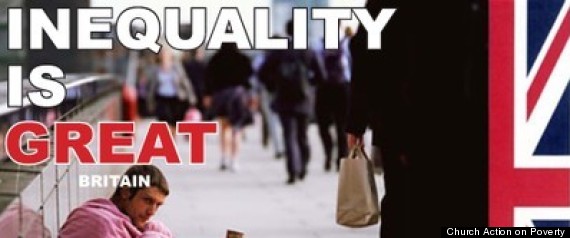
great britain

The Great Britain campaign encouraged people to visit to our shores

The irony of the campaign was not lost at the time, with Church Action on Poverty bringing out their own version of the ad.

inequality

Anti-British adverts have appeared abroad before, though never pioneered by our own sceptred isle. In the wake of the BP oil spill, both New Orleans tourist board and Chrylser attempted to cash in on anti-British feeling.

Loading Slideshow...

  • The Cabinet’s Dr Evil, aka George Osborne

  • The Great British Summer

    The weather here is pants. Don’t bother coming.

  • NHS Waiting Times

    We love our doctors and nurses, but honestly, parts of the health service is a shambles.

  • The Daily Express

  • Our transport system is in the dark ages

    We all have to go to work on steam trains. Which are either delayed or cancelled. And we have to pay hundreds of pounds for the privilege.

  • The food here is bad

    Deep-fried mars bars, jellied eels and tripe are among Great British delicacies. You might think you’re safe with a burger, but then it turns out to be HORSE. Stay at home. Honestly.

  • Queuing

    A skill it’s important to perfect before entering Britain.

  • The Adult Onesie

    Currently a ‘trend’ in Britain. Even our deputy PM owns one of these adult baby-gros.

  • This man is now taken seriously as a political campaigner

  • Too many dogs

    There are 8 million dogs in the UK, approximately one for every seven people. Britain is a nation of dog lovers, with pet pooches overtaking cats for the first time ever in 2011. There’s handbag dogs, crufts and even dog salons (for mongrel massages). So if you don’t like dogs, the UK probably isn’t for you.

Other tongue-in-cheek portrayals of British culture abroad has included Eurostar’s adverts in Belgium for trips to London showing a skinhead urinating into a teacup.

come to london

Come to London, where we have very few public toilets and even fewer shirts

The government is also looking at the potential to deport anyone who failed to find work within three months of arriving or to show they could support themselves for six months.

No official estimate has been put on the anticipated number of arrivals – with ministers wary of the situation when Poland joined the Union and much larger numbers than predicted came to the UK.


UKIP

“Open-door immigration from Romania and Bulgaria after December 31 will affect ordinary working families more than anybody else.”

Communities Secretary Eric Pickles has admitted the influx would “cause problems” with services such as housing, with the highest numbers likely to pick London boroughs which already have significant populations from the countries.

However, he insisted it was not “reasonable” to assume that 300,000 would move to the UK – the figure suggested by some Tories based on migration levels after Poland, the Czech Republic, Latvia and Lithuania acceded.

The government has confirmed it will not seek to extend temporary curbs on 29 million Romanian and Bulgarian nationals’ right to live and work in Britain, which are due to expire in December.

High Speed Rail Links North Of Birmingham Revealed

0

Plans to extend the high-speed railway to Manchester and Leeds have been unveiled, in a move David Cameron claimed would boost Britain’s stagnant economy.

Extending London to Birmingham HS2 line to cities in the north of England is designed to cut journey times, ease overcrowding and boost regional business and create at least 100,000 jobs. I

However the next stage of the £32.7 billion project is likely to face fierce opposition from rural communities through which the line will pass and also the chosen location of stations.

According to the Department for Transport there will be five stops on the 211-mile Y-shaped extension northwards from Birmingham – scheduled to be completed in 2032, six years after the first phase.

The planned stops are:

  1. Manchester – alongside the existing Piccadilly station;
  2. Manchester Airport – interchange by the M56 between Warburton Green and Davenport Green;
  3. East Midlands – at Toton, between Nottingham and Derby and one mile from the M1;
  4. Sheffield – at Meadowhall shopping centre;
  5. Leeds – at New Lane in the South bank area connected to the main station by walkway.

hs2

The plans are likely to be controversial

There will also be a “dedicated link” alongside the high-speed line at Crewe to link up with standard trains – reducing journey times to Liverpool and Glasgow.

But a proposed spur to Heathrow has been put on hold pending the results of Sir Howard Davies’ review of future airport capacity – which is not due to give a final report until the summer of 2015.

Instead passengers heading to the world’s busiest airport will have to change onto the new London east-west Crossrail service for an 11-minute transfer to terminals.

The journey from Manchester to Birmingham is set to be reduced to 41 minutes and from Manchester to London to 1 hour 8 minutes – almost half the present times.

Leeds will be 57mins away from Birmingham compared to 1hr 58 mins today, and 1hr 22mins away from London Euston, down from 2hrs 12mins – official projections say.

Critics have suggested that siting the Sheffield station outside the city centre – requiring passengers to take a connecting train of around 7-12mins – will mean standard trains will get people there more quickly.

The project has been welcomed by many civic and business leaders in the region.

But the first tranche proved controversial, especially in picturesque Tory heartlands which will be affected, such as the Chilterns, infuriating MPs and countryside campaigners.

Residents there will not enjoy the economic or personal benefits of a station and some have opposed the project on environmental grounds – a pattern expected to be repeated this time around.

Conservatives in Chancellor George Osborne’s Tatton constituency have already indicated that they will object to any plans to route the line through parts of the Cheshire countryside.

The High Court is considering whether the first phase of the project, which will take high-speed trains from London to Birmingham, is legally flawed and needs to be reconsidered.

The challenge was taken to the court by campaigners who accused the Government of failing to undertake a “strategic environmental assessment” or arrange an adequate consultation process.

Labour backs HS2 – which was begun under its administration – but says there are “worrying signs” that the timetable for delivering it is slipping.

Shadow transport secretary Maria Eagle said: “We believe ministers should be working more vigorously to ensure the proposals are delivered on time.”

The “botched” consultation on the first phase may have to be rerun if the High Court upholds the campaigners’ cases, she said, urging ministers to learn lessons.

Transport Secretary Patrick McLoughlin said that he intended to bring forward the consultation on phase two to begin this year, not 2014, and has asked officials to see whether the entire project can be speeded up.

The route is due to be finalised by the end of next year.

“As with previous consultations, we will work closely with communities and interested parties to find the right balance between delivering the essential infrastructure that we need and respecting the rights and justifiable concerns of those who will be most affected by HS2’s construction,” he said.

The proposed routes were “a great starting point for the process of engagement to follow”, he said, saying it would “deliver a priceless dividend” for the UK.

“While doing nothing would be the easy choice it would also be the irresponsible choice.

Officials said there would be “a generous compensation package for people living near the line” as well as noise and other nuisance mitigation measures such as tunnels.

Mr Cameron said: “Linking communities and businesses across the country and shrinking the distances between our greatest cities, High Speed Rail is an engine for growth that will help to drive regional regeneration and invigorate our regional economies.

“It is vital that we get on board the high-speed revolution.

“We are in a global race and this government’s decision to make High Speed Rail a reality is another example of the action we taking to equip Britain to compete and thrive in that race.

“High Speed Rail is a catalyst that will help to secure economic prosperity across Britain, rebalance our economy and support tens of thousands of jobs.”

Market Buzz: US ‘stats of the nation’ drive bourses

0

Russian investors are expected to be looking overseas, where the US stats are set to be a major newsmaker during the entire week. On Monday the world’s biggest economy will release its December durables figures.

“During the day Russian floors will be mostly focusing on an overall news environment and the way foreign investors behave,” according to Yulia Voitovich, an analyst at Investcafe.

As for the US durable report, analysts expect a 1.8% month-to-month increase of the December figure. “Excess of the actual reading above the expected could support the world stock indicators,” she added.

And given positive closure of Friday trading in the US and mostly in Asia, Russian stocks may also open higher on Monday, Voitovich said.

Domestic markets were positive on Friday. The RTS added 0.01% to 1, 618.84 and the MICEX was up 0.88% to 1,618.84.

Asian stocks are mostly up in early Monday trading, with Shanghai Composite going up 1.5%, Hang Seng rising 0.51% and just Nikkei going down 0.08%.

In Wall Street news, the most anticipated block of unemployment data is set to be released on Friday. The Labor Department releases its first monthly employment report for 2013.

Overall, unemployment is now one of the key economic issues the US authorities target. So far the unemployment rate has remained above and beyond a desirable figure. Last year it held steady at about 7.8%, while 6.5% serves is the target.

Stocks in the US ended last week on a positive note, with the Dow Jones adding 1.8%, the S&P rising 1.1% and Nasdaq going up 0.5%.

European markets finished broadly higher on Friday, where Germany leads the region. The DAX was up 1.42% while France’s CAC 40 added 0.69% and London’s FTSE 100 rose 0.31%.

Melting snow and downpours cause flooding

0

There are fears of flooding in the UK as rain moves in and rising temperatures spark a rapid thaw of the snow and ice which built up in the past fortnight.

The Environment Agency has warned there is a risk of surface water and river flooding this weekend across England and Wales.

The agency has issued around 15 warnings, mostly in the South West, and about 80 less serious flood alerts, mainly in the south, the Midlands and Wales.

Warnings mean flooding is expected and immediate action is required, while alerts signify floods are possible.

A spokesman said: “Emergency teams from the Environment Agency will be out in force throughout the weekend to shore up defences, monitor river levels and clear blockages from watercourses.”

The Met Office has also issued a severe weather warning about possible localised flooding in many parts of the country on Sunday, and the public should be aware of potential disruption to travel.

Forecasters are predicting up to 50mm of rain on Saturday over high ground.

And temperatures will steadily rise above freezing before reaching more than 10C in the south on Sunday.

Sky News Weather Presenter Isobel Lang said: “During today much of eastern England and eastern Scotland will be fine but rather chilly, with some good sunny spells. This evening and tonight it will turn wet and windy with snow thawing rapidly. It will be mild.

“Across Western Scotland, western England, the Midlands and Wales there will be a few showers but many places should be dry and sunny.

“Through the afternoon, cloud will increase from the west bringing outbreaks of rain by to most places by evening. Winds will strengthen too bringing in mild air overnight and leading to the rapid thaw of snow.

“Around 30 to 50mm (two inches) of rain is possible over high ground exposed to the strong southerly wind. Some local flooding is possible.”

She added: “Sunday will see rain and strong, gusty winds clearing eastern Britain followed by sunshine but scattered blustery showers.”

Forecasters are predicting a very wet spell through the latter part of Monday and through Tuesday.

FeMa MeIN KaMPF

0

MEIN FEMA KAMPF (with editorial)


FEMA MEIN KAMPF (an Uncomfortable Reflection)


What is interesting is the following. Four years ago people did Hitler images of Obama that were deemed politically incorrect and in terribly bad taste. There was no apparent factual context justifying such satire.


Here we are 4 years on and an analogy what was seen as politically incorrect  has become perfectly legitimate satire for any number of good reasons. Many people still don’t like it when they see this. But it is the reality conveyed by the image  that they should dislike. Here we see another great sovereign who decides the exception.

Those repelled by an image like this would be better served directing thier indignation the facts that put wheels on the satire.


Liberals and conservatives should stop hammering each other over the head and start looking at their common enemies. You want your guns and you want your civil liberties; and they want to take it all from both of you!


Last week we heard all kinds of inaugural blathering and pontifications about American ideals. 


Meanwhile, reports of untouchable corruption and cronyism reached a fevered pitch. When legal scholars and judges argue that the Constitution is dead, we all have a great deal to be concerned about. When the rats that enable Wall Street lawlessness while hounding people like Aaron Swartz to the grave are allowed to scurry back to their cushy white shoe enclaves, it is compulsory to be outraged.


There can be no crony elite respect for the the concept of “a nation of laws and not men.” 


For Hitler and the Nazis, the ends always justified their means as well. For too many in the halls of power, looking at an image like this certainly can be unsettling, because it has become a kind of crony American mirror. A mirror that projects itself with reflections of truth.

To them I say: Time to wake up to the smell of populist napalm you morons!


There is a reason behind the renaissance popularity of Orwell’s 1984. He apparently got the date wrong. He actually meant 2014.


History does not it repeat itself, but it rhymes, to paraphrase Mark Twain.


And fascism is alive and well in klepto-corporatist Amerika.


h/t @ElizaWindsor


Your rating: None

Netanyahu Deploys ‘Syrian’ Iron-Dome As Israeli Minister Claims US Preparing ‘Surgical’ Strikes Against Iran

0

Israeli PM Benjamin Netanyahu says his nation must prepare for the threat of a chemical attack from Syria, amid concern at enemy efforts to test a post-election coalition Israel, and, as Bloomberg reports, has deployed its new Iron Dome anti-missile system near the border with its northern neighbor. Along with this concern, as many have perhaps suspected, the Israeli Defense Minister confirmed yesterday that the US has prepared plans for a ‘surgical’ military operation to delay Iran’s nuclear program.

As The Jerusalem Post reports, Ehud Barak, speaking in Davos, does not believe any military operation against Iran would devolve into a “full fledged war the size of the Iraqi war” but rather “there should be a readiness and an ability to launch a surgical operation that will delay them by a significant time frame and probably convince them that it won’t work because the world is determined to block them.”

Barak added that in the past the US has been heavy-handed but that under Barack Obama, the United States has “prepared quite sophisticated, fine, extremely fine, scalpels,” if the worse comes to the worst – even though the Israeli preference would be to end the nuclear threat diplomatically , calling for tougher sanctions (though he expressed doubt that diplomacy would lead to success).

Just another geopolitical hotspot that the world’s markets choose to ignore in deference to the one true leader – central bankers.

Via Bloomberg,

Prime Minister Benjamin Netanyahu said that Israel must prepare for the threat of a chemical attack from Syria as the army deployed its new Iron Dome anti- missile system near the border with its northern neighbor.

Netanyahu told members of the Cabinet during the weekly meeting in Jerusalem today that Israel faces dangers from throughout the Middle East. Top security officials held a special meeting last week to discuss what may happen to Syrian stocks of chemical weapons amid the civil unrest there, Vice Prime Minister Silvan Shalom told Army Radio.

“We must look around us, at what is happening in Iran and its proxies and at what is happening in other areas, with the deadly weapons in Syria, which is increasingly coming apart,” Netanyahu told his Cabinet, according to an e-mailed statement.

Syrian rebels, mostly Sunni Muslims, have been fighting to oust President Bashar al-Assad since March 2011 in a conflict that the United Nations says has left at least 60,000 people dead. Israel captured the Golan Heights from Syria in the 1967 Middle East war.

The Iron Dome system, which was used to shoot down hundreds of rockets fired from the Gaza Strip during Israel’s November conflict with Hamas and other militant groups, is being deployed at an unspecified site in the north, according to an Israeli army spokeswoman. She spoke anonymously in accordance with military regulations and said setting up the anti-missile battery was part of routine operations.

Israeli forces must be particularly alert during the period following last week’s election in which Netanyahu is trying to form a new coalition government and enemies are looking for signs of weakness, the prime minister said. Netanyahu’s Likud- Beitenu alliance lost 11 parliamentary seats in the vote and the prime minister said he needs a broad and stable coalition to deal with security threats from the region.

Via The Jerusalem Post,

Defense minister challenges idea that military operation against Iran would develop into a “full fledged war the size of the Iraqi war”; says surgical strikes will delay Tehran’s nuclear drive “by a significant time frame.”

The United States has prepared plans for a “surgical” military operation to delay Iran’s nuclear program in the event that diplomatic efforts to thwart Tehran’s drive for nuclear weapons capability fail, Defense Minister Ehud Barak said in an interview with The Daily Beast on Friday.

Speaking from Switzerland, where he is attending the Davos World Economic Forum, Barak challenged the notion that a military operation against Iran would develop into a “full fledged war the size of the Iraqi war or even the war in Afghanistan.”

“What we basically say is that if worse comes to worst, there should be a readiness and an ability to launch a surgical operation that will delay them by a significant time frame and probably convince them that it won’t work because the world is determined to block them,” Barak told The Daily Beast.

The defense minister stated that, while the US was once heavy-handed in its attempts to carry out pinpointed military actions, under the leadership of President Barack Obama, the United States has “prepared quite sophisticated, fine, extremely fine, scalpels. So it is not an issue of a major war or a failure to block Iran. You could under a certain situation, if worse comes to worst, end up with a surgical operation.”

Barak said that even a small-scale series of surgical strikes was a last resort, and that Israel’s preference would be to neutralize the Iranian nuclear threat diplomatically.

Barak called for harsher sanctions against the Islamic Republic, but noted that he did not believe the diplomatic path was likely to succeed in halting Iran’s nuclear drive given Russia and China’s tendency to thwart harsher measures in the United Nations.

Your rating: None Average: 3.7 (3 votes)

Massive pro-gay rally takes to Paris streets (PHOTOS)

0

People take part in a demonstration for the legalisation of gay marriage and LGBT (lesbian, gay, bisexual, and transgender) parenting, in Paris on January 27, 2013.(AFP Photo / Thomas Samson)

People take part in a demonstration for the legalisation of gay marriage and LGBT (lesbian, gay, bisexual, and transgender) parenting, in Paris on January 27, 2013.(AFP Photo / Thomas Samson)

Tens of thousands of people took to the streets of the French capital on Sunday, to rally in support of a government-proposed bill that would legalize same-sex marriage and adoption.

The demonstrators marched from Denfert-Rochereau Square in the southern part of Paris, waving flags and carrying banners reading phrases such as “Equality of rights is not a menace.”

Some 125,000 people attended the event, according to police estimates. However the Sunday rally did not surpass the march against the cause that took place in the city back in December and saw a turnout of some 340,000.

As civil unions have been available for gay couples since 1999, the provision that allows adoption is now at the heart of the debate. Opponents of gay marriage and adoption, including most faith leaders in France, argue that the proposed reform would create psychological and social problems for children.

People take part in a demonstration for the legalisation of gay marriage and LGBT (lesbian, gay, bisexual, and transgender) parenting, in Paris on January 27, 2013.(AFP Photo / Thomas Samson)

However, despite strong opposition to the proposed bill, a recent survey showed that about 63 per cent of French citizens supported legalizing gay marriage.

“There is a big difference between today’s march and the one two weeks ago, which is that this demonstration is one of brotherhood, not of hatred,” Paris mayor Bertrand Delanoe, who is openly gay, said on French television. “The majority of French people want all couples to have equality in love and parenthood.”

The French government will start debating the bill on Tuesday and it is predicted to easily pass the Socialist-dominated parliament.

Should it be passed, France would become the 12th country in the world to legalize same-sex marriage after such nations as Belgium, Portugal, the Netherlands, Spain, Sweden, Norway and South Africa, as well as nine US states and Washington, DC.

People take part in a demonstration for the legalisation of gay marriage and LGBT (lesbian, gay, bisexual, and transgender) parenting, in Paris on January 27, 2013.(AFP Photo / Kenzo Tribouillard)

Two women kiss each other during a demonstration for the legalisation of gay marriage and LGBT (lesbian, gay, bisexual, and transgender) parenting, in Paris on January 27, 2013.(AFP Photo / Thomas Samson)

People take part in a demonstration for the legalisation of gay marriage and LGBT (lesbian, gay, bisexual, and transgender) parenting, in Paris on January 27, 2013.(AFP Photo / Thomas Samson)

People take part in a demonstration for the legalisation of gay marriage and LGBT (lesbian, gay, bisexual, and transgender) parenting, in Paris on January 27, 2013.(AFP Photo / Thomas Samson)

Israeli Spy was Central Cog in Nuclear Weapons Proliferation Alliance

0

israelflag

It is clear that during the middle of December of last year that the Obama White House had settled on former Nebraska Republican Senator Chuck Hagel to be the Secretary of Defense. The U.S. Intelligence Community and defense establishment was told to come up with a strategy to combat the expected strong opposition to the nomination of the critical of Israel Hagel by that nation’s lobby in the United States.

The pro-Hagel circles needed a secret weapon to counteract the Israel supporters who would stress that Hagel was not supportive of the «special relationship» between the United States and Israel. There was no better way to demonstrate that Israel was no special ally of the United States but a longtime hostile intelligence threat to America by declassifying a large part of the Central Intelligence Agency’s Damage Report arising from the intense espionage carried out by one-time U.S. Naval Intelligence spy Jonathan Jay Pollard on behalf of Israel…

The declassification of the long-classified Pollard report was made on December 16, 2012. However, the first substantial media reports on the report began around December 26. The Jewish media, including Yeshiva World, Tablet Magazine, and Jewish Week, contended the report only showed that Pollard disclosed classified information on Arab and Soviet military capabilities, ignoring the fact that Pollard’s disclosures revealed the nature of U.S. intelligence sources and methods in obtaining such information, thereby putting U.S. civilian and military assets in extreme jeopardy.

The one major explosive revelation in the declassified report is Pollard’s involvement in a highly-classified Israeli-South African program to test a nuclear weapon in the South Atlantic/South Indian Ocean region in September 1979.

The Pollard Damage Assessment was prepared by the Director of Central Intelligence’s Foreign Denial and Deception Analysis Committee and issued on October 30, 1987. The report reveals for the first time that Pollard began working as a U.S. naval intelligence watch officer the same month that Israel and South Africa, possibly with the financial support of Taiwan, detonated a nuclear device in the South Atlantic/South Indian Ocean near South Africa’s Prince Edward Islands. The un-redacted damage assessment report also provides details of Pollard’s espionage work for South Africa before or at the same time he was spying for Israel.

Pollard’s espionage for Israel and South Africa provide evidence of his a key role in providing faulty intelligence to higher U.S. intelligence echelons concerning the nuclear test. Pollard’s mission was clear: his Israeli handlers wanted the details of the nuclear test kept secret. If it were proven that Israel was violating South African sanctions, the Symington Amendment would have required the United States to cut off all military and economic assistance to Israel. Even the powerful Jewish Lobby could not get around what was U.S. law.

The report describes Pollard’s work in September 1979 in the Navy Field Operational Intelligence Office (NFOIO) in Suitland, Maryland, outside of Washington, DC. The report states: “He began work as an Intelligence Research Specialist assigned to the Naval Ocean Surveillance Information Center (NOSIC} of the Navy Field Operational Intelligence Office in September 1979.” The report also states that during the same month of the South African-Israeli nuclear test Pollard “admitted that he had attended a clandestine meeting with the South African Defense Attaché.”

In July 1980 Pollard admitted to his superiors that he lied about his contacts with South African intelligence. However, this «admission» was to cover up what Pollard knew about the successful nuclear test the previous year and after Pollard and, presumably other Israeli moles, tainted U.S. intelligence into believing that the double flash normally associated with a nuclear detonation spotted on September 22, 1979 by the bhangmeter photo sensors on U.S. VELA 6911 nuclear detection satellite, orbiting over the South Atlantic at one-third the distance to the moon, was nothing more than a meteor entering the atmosphere or some other natural event.

Pollard failed to highlight several key indicators from his ocean surveillance duties that would have prompted U.S. intelligence assets to turn their attention toward South African extended waters on September 22, 1979. The entire South African Navy was placed on alert for the entire week surrounding September 22 and the Simonstown and Saldanha naval bases were placed under tight security that same week, But Pollard sat on the information and likely deep sixed analysis reports from co-workers on South Atlantic/South Indian Ocean operations during the fateful week.

It is clear that certain intelligence quarters in the U.S. Navy began feeding false intelligence on the double nuclear flash to the CIA. The CIA decided to hire the contractor firm MITRE to analyze recorded acoustic data gathered by the Navy’s Sound Surveillance System (SOSUS) and the Air Force Technical Applications Center (AFTAC) less than one-hertz acoustic monitoring systems that piggybacked off the Navy’s SOSUS acoustic hydrophone arrays extending from Bermuda, Wales, and Iceland. The tests revealed that there was a 2-4 kiloton nuclear bomb test in the South Atlantic with acoustic intelligence confirming concussive blast low-level harmonics from Navy and Air Force sonar arrays.

An auroral flash normally associated with nuclear blasts was detected by meteorological stations on Norway’s Bouvet Island, France’s île de la Possession in the nearby Crozet Islands, and at the Japanese Showa station in Antarctica. Further intelligence supporting the nuclear blast event was compiled by the Defense Intelligence Agency, the Naval Research Laboratory, and Los Alamos National Laboratory including increased radiation found in sheep downwind of the blast site in Western Australia, Tasmania, and Victoria and in ionospheric disturbances detected by the Arecibo radio telescope in Puerto Rico.

Someone within the ranks of Navy intelligence was preparing incorrect intelligence reports and covering for Israel’s and South Africa’s involvement in a nuclear test. One of those suspected is Pollard, whose job was to monitor naval operations around the world the day the nuclear test was conducted in the South Atlantic.

The report’s description of Pollard’s early association with South Africa, which some authors of the damage report attempted to debunk, at the same time Israel and the apartheid regime were cooperating on nuclear weapons development is as follows:

“The following factors that have come to light about his employment with the Navy indicate that Pollard was unsuited for access to sensitive national security information:

– False claims concerning professional qualifications. Pollard falsely stated on his naval employment application that he had a ‘provisional’ M.A. degree from the Fletcher School of Law and Diplomacy. Moreover, in February 1980 during an interview with Task Force 168, the intelligence element charged with HUMINT collection, Pollard falsely claimed to have an M.A. degree, to be proficient in Afrikaans, and to have applied for a commission in the naval reserve. Pollard made another, more farfetched statement to his immediate supervisor in NOSIC: he said he had key South African contacts who could provide him with valuable information, and that he had known South African citizens for many years because his father bad been the CIA Station Chief in South Africa.”

The report also states: “Pollard claimed in a post-arrest debriefing that he had come very close to volunteering to commit espionage while holding a conversation in Hebrew with the Israeli Naval Attaché during a U.S.-Israeli intelligence exchange in 1983. Although it is not clear exactly when Pollard first began to consider espionage, we believe it was at least as early as 1980-81.”

The damage report’s Executive Summary is surprisingly soft on Israel’s use of Pollard as a spy. The summary states that Pollard’s “short but intensive espionage career on behalf of Israel lasted from June 1984 until his arrest on 21 November 1985.” However, other sections of the report state that Pollard considered spying for Israel at least as early as 1980-81. Other parts of the report indicate that Pollard’s espionage for both Israel and South Africa began much earlier and that even as a teen Pollard was a committed Zionist who placed loyalty to Israel above the United States.

Of course, it is this sort of hard intelligence that can be used to show that Israel has long been an adversary of the United States and a dangerous espionage center for anti-U.S. operations. At the time of the South African-Israeli nuclear test, the administration of President Jimmy Carter was actively enforcing military sanctions against South Africa imposed by UN Security Council resolution 418 of 1977.

Two years before Pollard was arrested by the FBI after trying to seek political asylum in the Israeli embassy in Washington, the FBI arrested in New York South African Navy Commodore Dieter Gerhardt and his East German spy wife, Ruth, based on a tip from a Soviet defector code named «Farewell.» Gerhardt was the commander of the South African Navy’s Simonstown naval base and had access to signals intelligence intercepts from South Africa’s secret Silvermine listening post near Cape Town. South Africa and the U.S.U.K. signals intelligence alliance shared some intelligence at a low level during this time frame.

Gerhardt’s role as a possible liaison to Pollard and Israeli intelligence in the United States becomes apparent when Gerhardt’s own admission: that he was an important liaison in South African — Israeli military cooperation. Gerhardt later revealed that he was aware of the South African-Israeli nuclear test in the South Atlantic, which he said was code named Operation Phoenix. Gerhardt’s later admission also revealed that the nuclear test was a «clean» blast, an indication that South Africa and Israel had tested a neutron bomb. Israel’s possession of neutron bombs is one of the Jewish state’s most closely-guarded secrets. The Israeli Lobby’s unofficial conspiracy debunking journal, Popular Mechanics, which ruled out any official U.S. or Israeli government involvement in the 9/11 attack, stated that there was no nuclear explosion and that Gerhardt lacked credibility. The Pollard Damage Report and other revelations have substantiated Gerhardt’s claims. Pollard also was dealing with both the South Africans and Soviets. Moreover, it was later determined that Israel later swapped some of Pollard’s classified information with the Soviets in return for an increase in exit visas for Soviet Jews to Israel.

After Gerhardt was sentenced to life imprisonment in South Africa, and Gerhardt’s wife received a ten year sentence, South African President P. W. Botha offered amnesty to some prisoners in 1988, including Nelson Mandela. Ruth Gerhardt applied for the amnesty. The request was turned down by none other than Justice Richard Goldstone, the self-proclaimed Zionist who has run hot and cold on Israeli atrocities in Gaza. Goldstone in 1988 was obviously acting under orders from Israel to keep Ruth Gerhardt under lock and key. In 1985, Israeli nuclear scientist Mordechai Vanunu began passing secrets on Israel’s nuclear weapons program to the media, including the fact that South African uclear scientists were frequent guests at the top secret Israeli nuclear facility at Dimona in the Negev Desert.

In 1986, Vanunu was forcibly kidnapped by Israeli agents in Rome after he was lured into a Mossad «honey trap» and imprisoned in Israel. Efforts by some in U.S. intelligence to trade Vanunu for Pollard were met with stony silence from Israeli officials. In 1988, Israel was trying to get Pollard released from the life prison sentence handed down in 1987 and Goldstone was under pressure to ensure that the Gerhardts remained silent, especially after Vanunu’s embarrassing disclosures about Israeli nuclear weapons and South Africa. Ruth was released in 1990 and her husband was released in 1992. In 1999, Gerhardt received amnesty and his rank of Rear Admiral was restored. Vanunu was eventually released but his «freedom» has largely consisted of virtual house arrest in Israel.

Later, Deputy South African Foreign Minister Aziz Pahad and former CIA Pretoria station officer Tyler Drumheller confirmed that Israel and South Africa jointly tested the South Atlantic nuclear weapon.

The Pollard deception continues to haunt the world today. One of the key players in the Israel-South African nuclear weapons research was Israeli arms smuggler Shaul Eisenberg, the head of the Israel Corporation and a provider of military hardware to China, North Korea, and the Khmer Rouge in Cambodia. Eisenberg, whose Wikipedia entry has been re-written by Israeli propagandists, controlled Israel Aircraft Industries and Zim Israel Navigation Shipping Company. Eisenberg was able to provide needed nuclear weapons components from Operation Phoenix to China and two of its major allies, North Korea and Pakistan.

It is with this knowledge of Israel’s destructive actions against America that Hagel and his supporters prepare to do battle with the nefarious Israel Lobby during the expected heated Senate confirmation hearings.

The Pacific Ocean: The Pentagon’s Next “Human Battleground”

0
The Pentagon planners and their paid anthropologist shills are gearing up for the Pentagon’s next battle: the one for the Pacific that will ensure that the island nations that dot the vast maritime expanse will remain a part of the Anglo-American sphere of influence and not become part of a «Chinese lake».The Pacific Ocean has been a favorite stomping ground for U.S. government-financed anthropologists ever since Margaret Mead ‘s 1928 treatise on the Samoan people, Coming of Age in Samoa, laid the groundwork for the intelligence-related anthropological study of the peoples of the Pacific Ocean by the U.S. military and intelligence services. Mead later became a researcher for the CIA-connected RAND Corporation and became a supporter of CIA funding of anthropologic surveys and studies via laundered academic research grants from the U.S. Agency for International Development (USAID).USAID / CIA/Special Operations projects with names like Phoenix, Prosyms, Sympatico, and Camelot used anthropologists and social scientists to reconnoiter targeted tribal areas in South Vietnam, Indonesia, Pakistan, Colombia, and Chile to determine how U.S. Special Forces and intelligence agents could use indigenous peoples to further American military goals. The operations in the cases of Phoenix in South Vietnam and Prosyms in Indonesia resulted in genocide on a massive scale…

Today, the military’s tribal and native peoples targeting programs fall under the nomenclature of «human terrain systems» or HTS. Brought back to life in Afghanistan and Iraq, these genocidal programs now have their eyes on the Pacific in order to gear up for what the Pentagon and Langley planners believe is an inevitable war with China.

It is fitting, therefore, the U.S. Army Corps of Engineers are now looking for up to 15,000 acres of land to lease on American Samoa. The U.S. military wants to establish a major training base on American Samoa for at least five years and probably longer. The base is to provide 24-hour road access that will permit 60 full days of training per year. The Army also wants the base to permit the use of pyrotechnic and blank ammunition during daytime and nighttime training. It is certain that the U.S. is looking at building a simulated rural and village tropical environment for the use of U.S. and future «coalition of the willing» armies to practice battling an enemy in the Pacific region. That «enemy» is China.

The United States obviously foresees the Pacific as a future battleground between American and its allied forces and China for control of the important trade routes that crisscross the vast maritime region. Not since the U.S. military campaign against Japan during World War II has the Pacific seen such an American military projection of power.

The decision by the Obama administration to «pivot» its military forces into Asia and the Pacific has brought about a strong response from China, which sees itself as the ultimate target for the increased U.S. military presence. China’s ambassador to Australia Chen Yuming called the stationing of 2500 U.S. Marines in Darwin an «affront» and a Cold War containment policy toward China.

The establishment of a U.S. military training base on American Samoa follows Secretary of State Hillary Clinton’s first ever attendance by a U.S. Secretary of State of a Pacific Islands Forum (PIF) summit in Rarotonga, Cook Islands on August 31, 2012. It was the first such visit to the Cook Islands and underscored America’s decision to maintain its stranglehold over the small Pacific island nations while at the same time beefing up its military forces in the region.

The United States and its two Pacific overseers — Australia and New Zealand —- are attempting to cement their neo-colonialist hegemony over the Pacific states, which are independent in name only. Enter the Human Terrain practitioners from the Pentagon and CIA to keep the Pacific islanders divided. Clinton’s participation in the PIF summit is aimed at not only maintaining the status quo but in promoting the rivalries between Polynesians, Micronesians, and Melanesians among the island states.

The United States, having virtual ownership of the quasi-independent Micronesian nations of Micronesia, Palau, and the Marshall Islands, as well as total control over the U.S. territories of Guam and the Northern Marianas, can use its influence over Micronesians to play them off against the other two major ethnic groups. They are the Melanesian Spearhead Group of Papua New Guinea, Fiji, Solomon Islands, Vanuatu, and the New Caledonia (Kanaky) liberation front and the Polynesian Leaders Group of Samoa, Tonga, Tuvalu, Cook Islands, Niue, Tokelau, French Polynesia, as well as the intelligence eyes and ears of Washington, American Samoa. The United States, Australia, and New Zealand can use their Human terrain System knowledge of ethnic rivalries in the Pacific to ensure that China is kept out of the area.

Part of the strategy relies on Taiwan’s «checkbook» diplomacy to maintain Taiwanese rather than Chinese embassies and aid missions in the small island states. There are currently Taiwanese embassies in Tuvalu, Solomon Islands, Marshall Islands, Palau, Nauru, and Kiribati. Among these, Nauru, Solomon Islands, and Kiribati switched their recognition back to Taiwan after opening up diplomatic relations with China. Kiribati came under pressure after it decided to allow China to build a missile tracking station on south Tarawa. The U.S. believed the China Space Telemetry Tracking Station was going to spy on the «Star Wars II» activity at the Ronald Reagan Ballistic Missile Defense Test Site in the Kwajalein Atoll of the Marshall Islands. The Marshallese on the atoll are under constant surveillance by well-armed U.S. security personnel.

In 2004, Vanuatu switched its recognition back to China from Taiwan after Prime Minister Serge Vohor paid a secret visit to Taiwan and was ejected from office in a vote of no confidence. Vohor actually punched the Chinese ambassador after Vohor returned from Taiwan. Such incidents in the Pacific Islands have been known to set off riots between opposing political parties and ethnic groups. The Pentagon will use such politico-ethnic tinderboxes as a secret weapon against China.

The CIA, Australian Security Intelligence Organization (ASIO), and New Zealand Secret Intelligence Service (NZSIS) have programs to undermine South Pacific governments that establish close relations with Beijing. However, the Human Terrain operatives have gone further. Aware of the animosity that poor Pacific Islanders have toward local successful Chinese businessmen, the bought–and-paid for anthropologists have stirred up riots, especially in Solomon Islands and Tonga, to marginalize China’s influence in the region.

There are contingency plans to foment riots against ethnic Chinese in Fiji, Vanuatu, and Papua New Guinea. The CIA’s Operation Prosyms in Indonesia relied on longstanding animosity between Muslim Indonesians and ethnic Chinese to stoke riots against the Chinese in the aftermath of the 1965 CIA coup against President Sukarno. The mayhem resulted in the deaths of over 100,000 ethnic Chinese and a severance of relations between the CIA-installed Suharto government and China. President Obama’s anthropologist mother, Stanley Ann Dunham, played a crucial role in Prosyms. Mrs. Dunham’s son appears prepared to reenact anti-Chinese pogroms in the islands of the Pacific.

It is clear that the U.S. military training in American Samoa will be used to train Pacific Islander mercenaries, many of whom, such as Marshall Islanders, American Samoans, and Guamanians already serve in the U.S. military, to train young men from impoverished Kiribati, Micronesia, Samoa, and Fiji. Fijian and Tongan mercenaries, battle-hardened from Western campaigns in Iraq, Afghanistan, and other regions, are also available to supplement the U.S. Pacific Command’s training complex on American Samoa. If Fiji’s military-led government , which has been the subject of diplomatic sanctions by Australia and New Zealand, continues to get close to China and North Korea, these Fijian mercenaries could see coup d’état duty on behalf of the CIA, ASIO, and NZSIS in their homeland of Fiji. And the diplomats of the small Chinese embassy in Nuku’alofa, Tonga have witnessed how fast the fury of local Tongans can be turned on the Chinese business community. These blood-soaked scenarios all figure heavily into Pentagon HTS plans for the Pacific.

The United States will continue to keep the Pacific Islands within its vast gulag to prevent the extension of Chinese influence. Today, Pacific Islanders are faced with a virtual «Berlin Wall» that keeps Pacific Islanders confined to their own islands while outsiders, like Chinese and Russians, are kept out. The method by which Washington, Canberra, and Wellington have created airline and sea transit monopolies and transit visa requirements means that Samoans from the Independent State of Samoa cannot visit nearby American Samoa without a special permit. And the U.S. Department of Homeland Security decides who will receive special permits and transit visas, including for those traveling on diplomatic passports. Any scheduled airline that connects any of the islands via American Samoa, Guam, or Hawaii requires a U.S. transit visa and that entails invasive interviews by U.S. Immigration and Customs Enforcement personnel.

There is a reason why so many negotiations and agreement to establish the Trans-Pacific Strategic Economic Partnership have been secret. As the title indicates, the TPP, as it is known, is a «strategic» trade bloc, which means it also has a military dimension. In essence, it is no different than the Greater East-Asia Co-Prosperity Sphere established by Imperial Japan during World War II. The United States, not wanting to be viewed as starting the bloc but wanting it to be a replacement for the Cold War military alliance, the Southeast Asia Treaty Organization (SEATO), sat in the background while New Zealand, Singapore, Brunei, and Chile signed up as charter members in 2005.

As more nations joined, the TTP’s military profile became clearer. The countries that signed up to the TPP were all being groomed for the anti-China military bloc for the Pacific: Australia, Canada, Malaysia, Mexico, Vietnam, Peru, and the United States signed on. Japan, Thailand, South Korea, the Philippines, Colombia, Costa Rica, Laos, and Taiwan later expressed an interest in joining the TPP. The eastward blockade of China became clear. The United States already had existing military alliances with six of the other ten TPP member nations. From Darwin, Australia and Subic Bay, Philippines to Cam Ranh Bay, Vietnam and the U.S. built Mataveri Airport on Easter Island (Rapa Nui), the U.S. was delineating the borders of its own Asia-Pacific Sphere and a line over which China would be warned not to cross.

Mrs. Clinton may have arrived in Rarotonga last year amid waves and smiles but her sinister plans for the Pacific region have more to do with using the Pacific Islanders for cannon fodder in what Washington expects to be a coming regional war with China.

What Fox Doesn’t Want You To Know About Texas Taxes

0

Fox & Friends hosted former California Republican Senatorial candidate Chuck DeVore this morning to hype discuss his book promoting Texas’ zero income taxes and corporate taxes as a model for the rest of us. In case you were wondering, DeVore has left California and is now Vice President of Communications for the Texas Public Policy Foundation, a Koch-funded institution dedicated to “educating and affecting policy makers” among other goals. But he was merely introduced as an author. If you blinked during the brief period that Fox fessed up to his current job title (without pointing out the Koch connection), you might never know. Also not discussed? How Texas’ no-income-tax policy likely means higher taxes overall for most of us.

DeVore couldn’t seem to say enough bad things about the state he hoped to represent in the U.S. Senate just a few years ago. Host Clayton Morris, who talked about having family there, joined suit. Morris started with the Freudian slip of saying that the “burdensome tax rate in that country.… is a major problem.” He also complained about the “burdensome regulations” his father-in-law faces running a “large landscape business” there. He said he has other family members in California who “want to move their business out of that state.” He didn’t say anything about anyone planning to do so, however.

After some more California bashing, Morris said, “I want to know what is Texas doing right that California is not.” He put up a graphic with Texas’ supposedly favorable poverty and unemployment rates and noted that it has zero income taxes compared to California’s “highest bracket” of 9.3% and zero corporate taxes compared to California’s “flat 8.8%.”

“Remember during the election we were talking about Texas as a model for the nation? What were they doing right?” he “asked.” On cue, DeVore talked up not only the lack of taxes but how the lack of funding for state government supposedly prevented it from ruining everybody’s lives through regulations. He claimed that taxes and regulations in California were causing a “massive out migration.”

Not according to Reuters. They cited findings from a September 2012 review of state tax records by the Stanford Center on Poverty and Inequality:

In fact, more millionaires came to the state than left after California’s so-called Millionaire’s Tax was introduced in 2005 – adding 1 percentage point of tax to incomes over $1 million. A 1996 cut to taxes for those earning $110,000 and up did not spur migration into the state, either.

The number of millionaires has risen or fallen by about 10,000 a year, but that change has been almost entirely due to the state economy, not wealthy people coming into or leaving the state. Such migration accounted for about 47 people, net, on average.

The very richest, who were likely to have houses and properties in many parts of the world with creative means to finesse their taxes, were the least likely to move after the tax hike, but even those at the bottom end of the millionaires scale did not pick up and leave, according to the September study.

These findings matched behavior in New Jersey after it raised its top rates, it was noted.

Meanwhile, there’s plenty not to love about Texas’ taxes. In 2011, when Rick Perry was talking up Texas economics as part of his bid for the presidency, the Texas Star-Telegram took the kind of look behind the numbers that “fair and balanced” Fox & Friends didn’t:

What draws less attention is that sales, property and wireless service taxes are higher in Texas than in most other states.

…At the state level, Texas draws most of its revenue from federal funding and sales taxes. At the local level, property taxes play a major role.

…Combining state and local rates, Texas has the 14th-highest sales tax rates in the country and the 22nd-highest property tax rates, according to the Tax Foundation.

…Texas ranks near the top in property taxes as a percentage of home value.

“Once you start adding it all up and writing the check, you see there is no free lunch,” (Texas Republican pollster David Hill) said. “Texas is a nice state with medium-to-high taxes.”

…Texas has the fifth-most-regressive tax system in the country, according to a 2009 study by the Institute on Taxation & Economic Policy.

But Morris was too busy slobbering over DeVore to go into any of those pesky details. He closed by reiterating the title of DeVore’s new book and saying, “Knows what he’s talking about”

‘AU monitors CAR peace deals’

0

CAR President Francois Bozize (R) shaking hands with Michel Djotodia, leader of the Seleka rebels coalition, during peace talks in Gabon on January 11,2013.

An African Union (AU) official says the continental body monitors the implementation peace agreements in Central African Republic (CAR).

“Experience shows that when one has a baby, he protects it from any attack. This is why regarding the issue of the Central African Republic, the AU will remain vigilant just as the rest of the international community,” Ramtane Lamamra, the AU’s Peace and Security Commissioner, said on Sunday, Xinhua reported.

“It’s normal that while trying to manage any conflict, vigilance should be sustained at all time,” Lamamra added.

On January 11, CAR President Francois Bozize and representatives of the Seleka rebels signed an agreement in Libreville, Gabon after three days of negotiations brokered by regional neighbors.

Under the deal, Bozize dismissed former Prime Minister Faustin Archange Touadera.

On January 14, an opposition lawyer, named Nicolas Tiangaye, was selected by the Seleka rebels and other opposition groups as the African country’s new prime minister.

The new premier, who had a key role in leading the rebels to negotiations, will lead the transitional government until parliamentary elections are held.

Tiangaye is still awaiting the appointment of a new Cabinet.

The Seleka rebels launched an offensive against the CAR government in December 2012.

There are many mineral resources, including gold and diamonds, in the Central African Republic. However, the country is extremely poor and has faced a series of rebellions and coups since it gained independence in 1960.

NT/HN

Germany Fires a Warning Shot at the Fed

0

Germany has the second largest Gold reserves in the world behind the US. Since the early ‘80s, it has stored the majority of these reserves with the NY Fed (45% vs. 13% in London, 11% in Paris and the remaining 31% in Frankfurt).

With that in mind, everyone needs to be aware that last Monday Germany’s Bundesbank announced it will be moving a major portion of its reserves from the US and all of its reserves from France back to Frankfurt.

Nearly half of Germany’s gold reserves are held in a vault at the Federal Reserve Bank of New York – billions of dollars worth of postwar geopolitical history squirreled away for safe keeping below the streets of Lower Manhattan.


Now the German central bank wants to make a big withdrawal – 300 tons in all.


On Wednesday, the Bundesbank said that it would begin moving some of the reserves, the second-largest stock in the world after that of the United States. The goal is to house more than 50 percent of German gold in Bundesbank vaults in Frankfurt by 2020, up from a little less than a third today, the bank said…


The new policy will include the complete withdrawal of 374 tons of German gold stored at the Banque de France in Paris, about 11 percent of the total. Bundesbank officials were quick to note that the decision was not a reflection of French trustworthiness. Rather, because France and Germany now share the euro, there is no need for reserves as insurance against currency crises.


http://www.nytimes.com/2013/01/17/business/global/german-central-bank-to-repatriate-gold-reserves.html

This announcement came with the usual political statements that the decision had nothing to do with a lack of trust between the Bundesbank and the US Fed or Bank of France, but the message is obvious: Germany sees the writing on the wall and is moving to secure its Gold reserves.

Remember, Germany has spent the better part of two years preparing for financial chaos. Since the autumn of 2011, it has:

  1. Implemented legislation that would permit Germany to leave the Euro but remain a part of the EU.
  2. Revived its Special Financial Market Stabilization Funds, or SoFFin for short, allocating 480 billion Euros to the fund (and also providing German banks with a place to dump their Euro-zone Government bonds if they need to).
  3. Implemented reforms that would allow it to close off its borders for as long as 30 days if it needed to (so individuals and capital couldn’t leave Germany)
  4. Created a working group to assess both the economic impact of a Greek exit from the Euro as well as how to manage the impact of a collapse in France.
  5. Pulling all of its Gold from France as well as a major portion of its Gold from the US.

All of these are verifiable facts that the Western Media has avoided talking about. It is very easy to connect the dots here: Germany is implementing a contingency plan to put a firewall around its financial system for when the EU finally breaks down.

A final note here: the tension between the world’s Central Banks just increased dramatically.

Since the Great Crisis began in 2008, the world’s Central Banks have collectively pumped $10 trillion into the global financial system. Every major Central Bank from Germany to the US and China wants to debase its currency to benefit exports and facilitate dealing with its debt load (even China sports a real Debt to GDP north fo 200%).

This competitive debasement has lead to increased tension between the world’s Central Banks. You will never hear their stated outright for the simple reason that the single most important responsibility of the Central Banks is to maintain confidence in the system.

However, underneath the veneer of goodwill and the occasional necessary coordinated intervention, tensions are rising between Central Banks. When the US debases the US Dollar it pushes the Euro higher. This hurts German exports which in turn angers the Bundesbank.

The Bundesbank fired a warning shot at the Fed last autumn when it announced it wanted to have its Gold reserves at the Fed audited. To be clear here: no one of major financial import has ever questioned the Fed’s trustworthiness before. However, at the time of this announcement Germany stated it had no intentions of actually moving its reserves.

Fast-forward to today and Germany has not only audited and checked its Gold reserves at the Fed but it is now moving them. In plain terms, Germany has told the world that A) it does not trust the Fed and B) it is through playing around.

This situation will likely be getting worse going forward. The fact that Germany will be removing all of its Gold reserves from France certainly doesn’t bode well for future German French relations if push ever comes to shove (it’s not as though Europe has a history of getting along well).

On that note, we have produced a FREE Special Report available to all investors titled What Europe’s Collapse Means For You and Your Savings.

This report features ten pages of material outlining our independent analysis of the real debt situation in Europe (numbers far worse than is publicly admitted), the true nature of the EU banking system, and the systemic risks Europe poses to investors around the world… including the US.

It also outlines a number of investments to profit from this; investments that anyone can use to take advantage of the European Debt Crisis.

Best of all, this report is 100% FREE. You can pick up a copy today at:

http://gainspainscapital.com/eu-report/

Best Regards,

Phoenix Capital Research

PS. We offer several FREE Special Reports to help investors navigate other risks in the financial system. They include:

Preparing Your Portfolio For Obama’s Economic Nightmare

How to Protect Yourself From Inflation

And last but not least…

Bullion 101: Everything You Need to Know About Investing in Gold and Silver Bullion…

You can pick up free copies of all of the above at:

http://gainspainscapital.com/

Your rating: None

$600 Billion In Trades In Four Years: How Apple Puts Even The Most Aggressive Hedge Funds To Shame

0

Everyone knows that for the better part of the past year Apple, Inc. (“AAPL”, or “The Company”) was the world’s biggest company by market cap, with Exxon finally regaining that title on Friday, following AAPL’s latest price drop in the aftermath of its disappointing earnings. Most know that AAPL aggressively uses all legal tax loopholes to pay as little State and Federal tax as possible, despite being one of the world’s most profitable companies.

Many also know, courtesy of our exclusive from September, that Apple also is the holding company for Braeburn Capital: a firm which with a few exceptions (Bridgewater; JPM’s CIO prop trading desk) also happens to be one of the world’s largest hedge funds, whose function is to manage Apple’s massive cash hoard, with virtually zero requirements, and whose obligation is to make sure that AAPL’s cash gets laundered legally and efficiently in a way that complies with prerogative #1: avoid paying taxes.

What few if any know, is that as part of its cash management obligations, Braeburn, and AAPL by extension, has conducted a mindboggling $600 billion worth of gross notional trades in just the past four years, consisting of buying and selling assorted unknown securities, or some $250 billion in 2012 alone: a grand total which represents some $1 billion per working day on average, and which puts the net turnover of some 99% of all hedge funds to shame!

Finally, what nobody knows, except for the recipients of course, is just how much in trade commissions AAPL has paid over the past four years on these hundreds of billions in trades to the brokering banks, many (or maybe all) of which may have found this commission revenue facilitating AAPL having a “Buy” recommendation: a rating shared by 52, or 83% of the raters, despite the company’s wiping out of one year in capital gains in a few short months.

The Perfectly Legal Tax Evasion Scheme

Apple’s massive cash hoard is something that gets its 15 minutes of fame each and every quarter, because for now at least, it keeps growing and growing and growing. However, that is not exactly correct. In fact, the company’s cash and cash equivalents at December 31, 2012 is just $16.2 billion: barely $9 billion more than it was 4 years ago, on December 31, 2008. Where the bulk of AAPL’s profits are kept, however, is not in cash and equivalents, but in various undisclosed short- and long-term securities.

It is these, and particularly the latter, that have soared in a near parabolic fashion in the past 4 years. As the chart below shows, while cash and short-term marketable securities have been virtually flat for the better part of the past 16 quarters, it is the long-term marketable securities that have exploded from just $2.5 billion to a whopping $97.3 billion.

So why does AAPL funnel its profits in a fashion that redirects it to investments instead of domestically hoarded cash? Simple: to take advantage of offshore venues which allow it to avoid paying any tax on the cash that gets redirected for trading purposes. As per the company’s filings, of the massive $137.1 billion in cash and investments AAPL has access to, a near record 68.7%, or $94.2 billion, is held offshore.

The chart above means that contrary to popular disinformation, AAPL “only” has ready access to some $43 billion in domestically held cash for corporate purposes such as dividends, stock buybacks and local M&A. The rest of the cash is essentially in offshore lockboxes, which are non-recourse for domestic corporate purposes, absent repatriation. And herein lies the rub. From the latst 10-Q:

As of December 29, 2012 and September 29, 2012, $94.2 billion and $82.6 billion, respectively, of the Company’s cash, cash equivalents and marketable securities were held by foreign subsidiaries and are generally based in U.S. dollar-denominated holdings. Amounts held by foreign subsidiaries are generally subject to U.S. income taxation on repatriation to the U.S.

Apply a 30% tax to the offshore holdings and suddenly one can see why broad statements that AAPL has some $130/share in cash are largely meaningless: if AAPL wishes to have full access to dispose with this cash as it saw fit, it would first have to pay Uncle Sam some $30/share in cash before it had full recourse.

So why does AAPL chose to have cash stock up offshore instead of being able to dispose of it? Simple, and logical. Taxes, or rather the lack thereof.

The chart below shows that while AAPL has generated some $136 billion in operating profits in the past four years, the amount of cash taxes it has paid, as per the company’s cash flow statements, has been a grand total of $18.6 billion: a 13.6% effective tax rate. And this $18.6 billion also includes taxes paid in offshore venues, so realistically the cash taxes paid in the US are likely well under 10% of profits.

The same on a quarter by quarter basis: operating income grows, cash taxes paid stay the same:

But far form us making an ethical claim here: AAPL is merely following the same legal loopholes that are available to all, yet made a mockery of the tax shelters used by recent presidential candidates. Perhaps one should ask Congress why these laws are there in the first place to allow the same companies that spend millions on lobbying members of Congress to retain billions in unpaid taxes via various tax shelters: a rather amazing IRR, if only for the corporations involved.

None of the above is news, and AAPL’s aggressive use of tax loopholes has been known for years.

What has not been known is just how the cash from the company’s seemingly endless profits gets moved from the Income Statement to the Balance Sheet: profits, which until recently were assumed would grow in perpetuity, until something strange happened: Samsung became cooler and faddier than AAPL, which coupled with accelerated margin erosion at AAPL grappling with an end-consumer who has increasingly less disposable cash flow, has led to a drubbing of the stock to new 52 week lows.

A Hedge Fund On Stroids

The conventional wisdom of Apple, and by implication of Braeburn, is of a boring old shop which invests its money prudently and cautiously in ultra-safe securities.

This is what AAPL itself has to say about its allocation of capital. From the just released 10-Q:

The Company’s marketable securities investment portfolio is invested primarily in highly-rated securities and its investment policy generally limits the amount of credit exposure to any one issuer. The policy requires investments generally to be investment grade with the objective of minimizing the potential risk of principal loss.

Good but… “primarily” and “generally“? One doesn’t have to be an MF Global and JPM London Whale fallout expert to know that Jon Corzine’s or Jamie Dimon’s (or any other prop trading institution for that matter), was “primarily and “generally” supposed to be invested in highly-rated securities whose objective was avoiding risk and loss. Until it was uncovered they aren’t. And as we explained previously, when we dissected AAPL’s arm’s length asset manager Braeburn, there is little more out there:

Braeburn has no reporting obligations: there is no Investment Advisor Public Disclosure (IAPD) entry on Braeburn for the logical reason that it is not an investment advisor: it merely manages an ungodly amount of cash for AAPL’s millions of shareholders. There is also no SEC filing 13-F filing on Braeburn’s holdings. As such, not confined by the limitations of being a “long-only”, it is in its full right to hold any assets it feels like, up to and including CDS on housing, puts on Samsung, or Constant Maturity Swaps that pay if the 10 Year collapses. It just doesn’t have to report any of them.

Nobody knows: and that’s the beauty of Braeburn. It is the world’s largest hedge fund that is not really a hedge fund, nobody has heard of, and nobody knows just what assets it holds.

Indeed nobody does know just what goes on behind the door of Suite 225 at 730 Sandhill Road in Reno, Nevada where Braeburn in situated. However, one can extrapolate some rather curious things.

Such as that starting December 2008, and through December 2012, according to its own filings, AAPL has bought and sold a grand total of $600 billion in “marketable securities“, of which the sales alone amount to a whopping 205 billion!

What is not shown above is that over the same period, maturities on AAPL’s ever-growing portfolio amount to some $82 billion. In other words, between maturities and sales, AAPL has generated nearly $300 billion in cash for investment and reinvestment purposes.

Shortening the time frame somewhat, just in 2012 AAPL’s gross trading on its securities holdings amounts to a whopping $250 billion, or nearly $1 billion for every working day of the year: an amount that would put the turnover of some 99% of the most active daytrading hedge funds in the US to shame!

What is very curious is that even as AAPL’s overall portfolio rose and rose, with purchases “primarily” of supposedly safe investment grade securities, an amount which has peaked at $121 billion as of December 31, 2012, the actual quarterly maturity of AAPL’s portfolio, or the natural roll off, has decline to a near record low, or just 2.9% of total. How it is possible that the quarterly maturing notional continues to decline even as the portfolio, of both short- and long-term securities grows, is frankly, beyond our meager comprehension skills.

What is even more curious is that AAPL can’t even make the excuse that it is merely churning its short-term marketable securitie. As the chart below shows, beginning in March 2011, the total amount of sales and maturities exceeds the quarterly total holdings of short-term securities, which naturally implies that a substantial portion of the long-term securities is also being sold.

So why would AAPL engage in what increasingly appears to be not only active portfolio management, but extremely aggressive and overzealous portfolio management, one which includes massive trades – buys but more importlanly sales – on a day to day basis?

Said otherwise: why is the world’s premier maker of gizmos also one of the biggest under-the-radar day traders of unknown securities nobody has ever heard of?

* * *

We don’t know the answer to these questions. We do know however, that if one is indeed engaged in plain vanilla money management, such as investing in ultra safe investments, there would be no need of such aggressive purchases and dispositions of securities.

In fact, adding the simple average of the short- and long-term marketable securities holdings of AAPL over the past 4 years amounts to some $59 billion. Yet, as noted above, the total amount of gross trades -buys and sales – over the same period is $600 billion, or a total portfolio turnover of some ten mindboggling times!

This is hardly what one would call boring investing in safe securities, and certainly something one would call aggressive to quite aggressive money management, one that not even some of the world’s most successful hedge fund managers are equipped or willing to do.

Yet Braeburn Capital, a/k/a AAPL, has been doing it for the past 4 years, and does so to the tune of $1 billion per day.

* * *

Finally, there is the minor question of who exactly is it that executes these trades, or, in other words, which are the banks that have pocketed billions in commissions on AAPL’s furiously traded portfolio?

We don’t know, but we wonder: could it be the same banks that come rain or shine, gave AAPL a Buy rating, one which is still held by some 52 of the 63 banks covering the company, among which naturally are the most prominent brokers of “investment grade” securities:

Perhaps it would be very informative one day, years after the AAPL craze is long gone, to inquire just how much money AAPL paid out to any/all of the banks listed above in the form of trade commissions and other forms of “soft dollar” compensation. After all, any client which has conducted some $600 billion in trades in the past 16 quarters is known by one word at every single bank: “dream.”

And parallel to that, one wonders what AAPL’s total profits would have been and thus total marketable securities holdings, how much less the total trading churn and commissions to the sell side would have been had the downgrade battery started long ago, and thus broken the hypnotic and very much reflexive relationship between the world’s most profitable company and its “coolness” factor, which in a feedback loop made it sell more products, making its market cap bigger, making its securities holdings larger, and making sellside profits greater, and so on ad inf… until one day it all snapped.

* * *
The point of the above analysis is not to take away from the operational side of the business: the fact that AAPL created and dominated the smartphone and tablet sector for years is undisputable. Yet now that many challengers are emerging, both new and old, both premium and commoditized, more and more attention is shifting to AAPL’s balance sheet, and the main asset thereon: the company’s cash and marketable securities.

The point of the above analysis is to show that when it comes to said cash and marketable securities there is much more than meet the superficial eye, and certainly much, much more than just a summary assessment that “AAPL has nearly $140 billion in cash so it has to hand this cash out to investors.”

If there is one thing that the above should have made quite clear, it is that just as the AAPL product ecosystem is supposed to ensnare customers into always and only buying AAPL products, so the AAPL’s portfolio management “ecosystem” may have made it impossible for AAPL to break away from what is now 4 years of uber-aggressive asset management in the vein of some of the world’s most aggressive investors.

And that any hopes for a quick and easy disposal of cash to the benefit of shareholders may well not be coming any time soon.

* * *

Finally, a tangent: if indeed AAPL is invested in plain vanilla fixed income securities, as it reports, amounting to well over $120 billion which have a DV01 in the tens if not hundreds of millions, and if indeed, the great rotation from bonds into stocks has begun, AAPL, which many have jokingly called Fed-lite will suddenly develop a very, very big headache: how to dump over a hundred billion in debt in a market that suddenly has gone if not bidless, the bidweak.

Because while the Fed can print its own liquidity, AAPL, well, can’t…

Source: AAPL public filings

Your rating: None Average: 5 (8 votes)

Boris accused over Murdoch dinner

0

Boris Johnson has been accused of “totally inappropriate” contact with Rupert Murdoch after it was revealed he attended a private dinner at the media mogul’s home.

The London Mayor again defied critics by joining a number of high-profile guests including Homeland actor Damian Lewis at the gathering.

His office said it would not comment on the Mayor’s “private engagements” but Mr Johnson has never shied away from admitting close contacts with the News Corporation boss.

He was previously criticised for inviting Mr Murdoch and his wife as Olympic Games guests and the latest encounter prompted claims of a conflict of interest over Scotland Yard investigations involving Murdoch-owned newspapers.

A spokesman for campaign group Hacked Off, which represents some high-profile victims of phone hacking, said: “It beggars belief that anyone could describe a dinner between the most powerful politician in London and the head of News Corporation, the company at the centre of the phone-hacking scandal, as a ‘private arrangement’.

“The mayor is also in charge of the Metropolitan Police Authority and it is totally inappropriate for him to be meeting Mr Murdoch in private while the Met are carrying out an investigation into Murdoch companies.

“We urge all politicians to comply with the Leveson recommendations and publish full and up-to-date accounts of their meetings with media proprietors and editors.

“Given their past record of excessive closeness, and all the harm it has done, that is the very least the public can expect from those who represent them.”

Len Duvall, leader of the Labour group at the London Assembly, said: “He is the Mayor of London and has a duty to uphold the highest standards.

“Does he really think meeting for a private dinner with Rupert Murdoch is a normal meeting? What planet does he live on?”

Guest Post: Why Employment Is Dead in the Water

0

Submitted by Charles Hugh-Smith of OfTwoMinds blog,

Employment is dead in the water because opportunities for organic expansion are few and the cost basis of doing business in the U.S. keeps rising.

Let’s start by reviewing the basics of employment in the U.S. Courtesy of the St. Louis Federal Reserve, here is the non-institutional civilian population of the U.S. (Note that the Civilian Non-institutional Population With No Disability, 16 years and over (LNU00074593)–roughly speaking, the workforce of the nation– is 215 million).

Here is the percentage of the population with some kind of job: note this could be self-employment that earns $1,000 a year or a job with 4 hours a week; recall that 38 million American workers earn less than $10,000 per year, 50 million earn less that $15,000 a year and 61 million earn less than $20,000 annually. All these numbers are drawn directly from Social Security Administration payroll data.

Here is real (adjusted) gross domestic product (GDP), which includes government spending: (in other words, as you borrow-and-blow trillions of dollars, GDP rises).

Unfortunately, employment hasn’t risen along with the population or the GDP: the only metric with any meaning is full-time employment, as self-employed and part-time jobs may pay a few thousand dollars a year and should not be included in the same category as full-time jobs.

In sum: the population and GDP have both expanded smartly since 2000, but full-time employment has barely edged above levels reached 13 years ago.

Academic economists and political progressives would have us believe that the only thing restraining employers from hiring millions more people is lack of access to cheap credit.

The explicit assumption here is that cheap credit is all employers need to expand their workforce. This is so out of touch with reality that it beggars description.Progressives and academic economists generally claim the Federal Reserve’s zero-interest policy (ZIRP) and its other policies of flooding the economy with liquidity “are working,” i.e. boosting the economy.

Here is what the Fed’s policies are boosting: financial sector profits Please compare this chart with the chart above of full-time employment, and then decide where the Fed’s free money/easy credit is flowing.

Here are financial profits per capita:

The only way to understand why employment is dead in the water is to stand in the shoes of a potential employer or entrepreneur. Remarkably, this perspective is unknown to economists and progressive politicians because they have never been an employer (and no, hiring a grad student to grade papers or an illegal nanny to watch your kids does not make you an employer.)

I have described this vast divide between small business employers, entrepreneurs and the self-employed and those working in government or Corporate America as one of the least explored social/economic divisions in the nation.

Those who have spent their careers in government or academia have little idea what it takes to hire more people. Number one is a business with strong demand for one’s products or services. In a developed world with too much of everything except energy, that is no small challenge: the world is awash in over-capacity in every field except niche industries such as deepwater oil rigs.

Second, you need a process that generates so much value (specifically surplus value) that you will generate immediate profits by hiring more people.

If the value added by additional labor is low, then you have no reason to hire more employees, even if Ben Bernanke personally knocked on your door begging you to borrow a couple million dollars at low rates of interest.

If an additional unskilled worker will cost $10 an hour and might generate $100 a day in additional gross revenues, that is $20 in gross profit. But the overhead costs of operating a business are rising faster than inflation: junk fees imposed by cities, counties and states, workers compensation and disability premiums, healthcare costs (if you hire full-time workers), energy costs, and so on.

For most businesses, overhead costs 50% to 100% of total employee compensation–wages plus benefits and payroll taxes. So adding another employee to gross 20% more doesn’t make it worthwhile–it actually generates a loss once overhead costs are paid.

The only time it makes sense to hire another worker is if that worker will create 100% or more surplus value from their labor. For example, a worker paid $200 a day in total compensation generates $400 more in gross revenues–enough to not only support the added overhead but net the business a profit.

In a global economy, competition constantly lowers the premium most businesses can charge. That places most businesses in the vice of declining gross margins and higher labor/ overhead costs. The only way to stay solvent is to grow revenues and slash costs so declining gross margins are still enough to pay the bills and leave some return on capital/time/risk invested.

Cheap credit doesn’t create surplus value, increase gross margins or get rid of over-capacity. It is a financial non-sequitur for all but a relative handful of enterprises. The only firms interested in borrowing money for expansion are those relative few in sectors that are not burdened with overcapacity. That might include oil services, network security and a handful of others.

But high-margin sectors such as technology either get funding from venture capital or their high margins generate enough income to fuel expansion without taking on debt.

The only companies borrowing vast sums of money are those paying off higher-cost existing debt with new cheap-credit loans. The savings from lower interest payments don’t flow to new hires, they flow to the bottom line and from there to executives, owners or stock buybacks that boost the portfolios of institutional owners.

Employment is dead in the water because opportunities for organic expansion are few and the cost basis of doing business in the U.S. keep rising. That vise forces businesses large and small to reduce labor costs while boosting productivity. There is no other way to stay solvent in a post-bubble, over-capacity, over-indebted consumerist economy awash in too much of everything but energy, common sense and fiscal prudence.

Your rating: None Average: 4 (3 votes)

Kim orders ‘important state measures’

0

Photo shows North Korean leader Kim Jong Un waving to soldiers.

North Korean leader Kim Jong Un has ordered the country’s top security officials to take “substantial and high-profile important state measures.”

Kim’s order for firm action came on Sunday, while state media reported that the North Korean leader had “advanced specific tasks to the officials concerned”.

The move came a day after Pyongyang reiterated that it would carry out a high-level nuclear test in defiance of fresh UN sanctions against its rocket launch in December 2012.

“A nuclear test is the demand of the people,” Rodong Sinmun, the official daily newspaper of the ruling communist party, said on Saturday.

The daily further said that the demand of the people is that “we must do something even greater than a nuclear test. The United Nations Security Council has left us with no other options. We have no other ways but to push forward to the final showdown.”

On Friday, the East Asian nation said the recent UN sanctions amounted to a “declaration of war,” and threatened South Korea with “physical countermeasures” if it participates in the sanctions.

“As long as the South Korean puppet traitors’ regime continues with its anti-DPRK (North Korea) hostile policy, we will never sit down with them.”

Also on Thursday, Pyongyang announced that it would launch more long-range rockets and carry out a high-level nuclear test aimed at its “arch-enemy the United States.”

On January 22, the UN Security Council adopted a resolution to impose new sanctions on North Korea for launching a long-range rocket on December 12, 2012.

Pyongyang announced it had launched a long-range rocket from the Sohae Satellite Launching Station, located in Cholsan County of North Pyongan Province, and successfully placed a satellite into orbit.

This came while Washington and its allies said the North Korean launch had been a cover for testing an intercontinental ballistic missile capable of carrying a nuclear warhead.

The rocket launch also drew widespread criticism from the European Union and the UN.

MR/HN

Israel places missiles near Syria border

0

Israel has deployed missiles in the Haifa area near the Syrian border, a move that the Tel Aviv regime claims is “routine.”

On Sunday, an Israeli Army spokesman confirmed reports that two “Iron Dome” missile batteries were moved to the Haifa area.

The official, however, insisted that the move is not due to any specific security situation but part of a routine of rotating these missile systems.

The deployment came after NATO’s first Patriot missile batteries on the Turkish border with Syria became operational on Saturday.

The six missile batteries are being deployed in the southeastern cities of Gaziantep, Kahramanmaras, and Adana.

The US and Germany will provide two Patriot batteries and 400 troopers each to man the missiles. The Netherlands will also dispatch 360 forces and the other two batteries. Each Patriot battery has an average of 12 missile launchers.

Meanwhile, Israeli Vice Prime Minister Silvan Shalom on Sunday threatened Syria with military strikes if Damascus uses chemical weapons against the foreign-backed militants.

In December 2012, Syrian Ambassador to the UN, Bashar Ja’afari said in letters to the UN Security Council and UN Secretary-General Ban Ki-moon that the foreign-backed militants could use chemical weapons against Syrians and try to shift the blame to the government.

Damascus is “genuinely worried” that Syria’s enemies could provide chemical weapons to armed groups “and then claim they had been used by the Syrian government,” Ja’afari stated.

Syria has been experiencing unrest since March 2011. Damascus says outlaws, saboteurs, and armed terrorists are the driving factor behind the unrest and deadly violence.

The Syrian government has said that the chaos is being orchestrated from outside the country, and that a very large number of the militants operating in the country are foreign nationals.

GJH/HN

Obama unaware of crisis, Ryan thinks

0

Chairman of US House Budget Committee, Paul Ryan says he thinks President Barack Obama does not reckon the country has a fiscal crisis.

“I don’t think that the president actually thinks we have a fiscal crisis,” the Republican lawmaker and former vice presidential candidate said in a Sunday interview.

“He’s been reportedly saying to our leaders that we don’t have a spending problem, we have a healthcare problem. That leads me to conclude that he just thinks we ought to have more government-run healthcare and rationing,” he added.

Ryan noted that if the outgoing Secretary of State Hillary Clinton or the White House Chief of Staff Erskine Bowles had been elected as president, “We would have fixed this fiscal mess by now.”

The US Congress is headed towards a new stalemate with Obama wanting to raise taxes to curb the USD-16-trillion-plus debt, while Republicans are opposed to any tax hikes.

Ryan said on Wednesday that his party’s budget proposal includes balancing the country’s budget within a 10 years’ time without imposing any new tax revenues.

Obama and the democratic leaders in Congress have proposed reducing spending by hundreds of billions of dollars over the next ten years.

Official figures from September 2012 show that more than 46 million Americans, 15 percent of the US population, are living in poverty, making it the highest rate during the past 40 years.

ASH/HN

Iran to hold export capabilities fair

0

File photo shows a view of Tehran’s Permanent International Fairgrounds.

The Islamic Republic of Iran will hold its first Export Capabilities Exhibition in Tehran in February.

On Sunday, Hamid Reza Fazlali, the head of the headquarters responsible for holding the exhibition, said that the fair would be held at Tehran’s Permanent International Fairgrounds from February 6 to February 9, IRNA reported.

Fazlali stated that, “More than 200 domestic companies have registered to attend the first exhibition” to offer their products and services.

He also said, “Despite the sanctions against Iran, 30 countries are supposed to attend” the exhibition.

The illegal US-engineered sanctions were imposed based on the unfounded accusation that Iran is pursuing non-civilian objectives in its nuclear energy program.

Iran rejects the allegations, arguing that as a committed signatory to the nuclear Non-Proliferation Treaty (NPT) and a member of the International Atomic Energy Agency (IAEA), it has the right to use nuclear technology for peaceful purposes.

NT/HN

‘Mali civilian casualties cause concerns’

0

Human rights groups and journalists have voiced concern over the information blackout on the number of civilian casualties during the French war in Mali, Press TV reports.

While France’s Ministry of Defense has told Press TV that there have been no civilian casualties thanks to the precision of their airstrikes, human rights groups and journalists say they have not been permitted access to Malian war zones or given information on civilian and military casualties.

The mayor of the Malian town of Konna recently declared that 11 civilians, including women and children, were killed as a result of French airstrikes.

There is no information if there have been similar deaths in other areas of conflict, because Mali’s government has not issued any figure about the war’s human casualties since the war started.

Marie-pierre Allie from Doctors Without Borders says a number of wounded civilians have been hospitalized so far, but the number of injured could be more than what has been observed.

Meanwhile, people in the northern part of Mali are concerned over the imminent threats against the lives, she pointed out.

Malian troopers have been accused of summarily executing dozens of people, some only because of their ethnicity or for lacking identity papers.

The Malian civil war has already resulted in nearly 400,000 refugees, and the number is expected to grow as the French war has exacerbated the crisis.

Reports say that African heads of state have suggested that civilian observers monitor the human rights situation in areas under the control of the Malian junta.

While human rights groups accuse Malian and French troops of committing serious rights abuses, France has been accused of eying the West African country’s rich natural resources.

On January 11, France launched its war on Mali under the pretext of halting the advance of the fighters who control the northern part of the African country. Nearly 2,300 French troops have so far been deployed to the country.

ASH/HN

Egypt Faces ‘Arab Spring II’ As Morsy Imposes 30-Day Curfew

0

Egypt appears to be coming unhinged once again. Egyptian President Mohamed Morsy has imposed a 30-day curfew (from 9pm to 6am) on several of the nation’s largest cities as tensions rise from several perspectives. The most glaring ‘flare’ in riots is due to the death-sentences handed out this week to 21 people involved in a Port Said soccer riot – where fans bashed each other with rocks and chairs) about a year ago (where 73 people died and more than 1000 were injured). CNN reports that there are 38 deaths and 415 injuries so far in Port Said – and so the ‘Morsy Moment’ has occurred imposing curfews. However, while ‘blame’ has been apportioned to a population started by relatives of the sentenced, it seems there is more at the core of this as clashes between anti-government protesters and security forces enter their third day near Cairo’s infamous Tahrir Square. The former Muslim Brotherhood leader, who became Egypt’s first democratically elected leader last year, has come under fire by some who compared him to Mubarak and said he has amassed power for himself and his Islamist allies.

The protests in Cairo, Alexandria, Suez and elsewhere in recent days have focused their anger at Morsy.

The bipolar reaction to the soccer riot sentencing…

The broader-based unrest…and Morsy’s more aggressive stance…

Egyptian President Mohamed Morsy imposed a 30-day curfew on the restive city of Port Said after dozens of people were killed in riots that followed death sentences for people involved in fatal clashes at a soccer match last year.

In a nationwide address, Morsy said the curfew would also apply to the cities of Suez and Ismailia near the Suez Canal.

A riot broke out Saturday after news that 21 people had been sentenced to death for their roles in the deadly clashes at the Port Said stadium.

“All of Egypt condemns this behavior. We will face and confront any threat severely,” Morsy said, threatening the increased use of military force. “This is for the security of the citizens and (nation).”

Using emergency powers, Morsy set the curfew from 9 p.m. to 6 a.m.

“I will act, and now I am acting,” the defiant Morsy said as he wagged his finger.

At the beginning of his statement. Morsy said he regretted the sorrowful developments from the violence, but the legal process should be respected.

“The rules of the law, they are not for specific factions,” he said.

…

By Sunday afternoon, the death toll in Port Said had climbed to 38 over the weekend, health officials said. More than 415 were injured.

…

The violence began Saturday outside a prison after relatives of those convicted clashed with police and prison guards, the head of Port Said hospitals told state-run Nile TV.

…

A deadly match

They were angry because 21 of their relatives had just been sentenced to death for their role in a February 1, 2012, riot that occurred at the close of a match between Cairo’s prestigious Al-Ahly football club and the host Al-Masry team.

When the riot ended at the stadium, 73 people were dead and more than 1,000 wounded.

Egypt’s general prosecutor charged 75 people with premeditated murder and attempted murder, while three Al-Masry officials and nine police officers were charged with “assisting the murderers.”

According to the prosecutor’s office, those charged with assisting knew about the assault ahead of time, didn’t confiscate weapons in advance, didn’t stop them and — in the case of an electricity engineer who was charged — turned off the lights directly over the bleachers where the Al-Ahly fans were sitting right after the visiting team wrapped up its 3-1 victory.

Fans from both sides bashed each other with rocks and chairs, yet prosecutors claimed the Port Said supporters were also armed with knives and other weapons.

Many died after falling from bleachers inside the stadium, while others suffocated.

Clashes enter third day in capital

Clashes between anti-government protesters and security forces in Cairo entered its third day on Sunday.

Police and soldiers used tear gas to quell a sometimes violent demonstration near Cairo’s Tahrir Square — the symbolic center of Egypt’s revolution. Demonstrators threw rocks and burned tires and boxes, according to the state-run al-Ahram newspaper.

Police closed all the main roads and highways near Tahrir Square, and vehicles were not allowed to stop or wait near the square, the state-run al-Ahram newspaper reported.

Citing the unrest in the vicinity of Tahrir Square, the U.S. Embassy closed its offices on Sunday, according to its website. The British Embassy in Cairo also closed for the day.

The protests in Cairo, Alexandria, Suez and elsewhere in recent days have focused their anger at Morsy.

The former Muslim Brotherhood leader, who became Egypt’s first democratically elected leader last year, has come under fire by some who compared him to Mubarak and said he has amassed power for himself and his Islamist allies. He has insisted his moves were necessary to move Egypt forward in the face of pressing issues and persistent obstacles.

…

Mehdi’s Morning Memo: The Great Train Rebellion

0

The ten things you need to know on Monday 28 January 2013…

THE GREAT TRAIN REBELLION

First, there were the Euro-rebels. Then the gay-marriage rebels. Now, it’s the train-spotting rebels. David Cameron, it seems, can’t stop picking fights with his backbenchers.

The Times splashes on the Tories’ “high speed rebellion”:

“David Cameron faces a grassroots Tory rebellion after he unveils plans today to drive the fastest railway in Europe through the party’s heartlands to Manchester and Leeds.

“The Times can reveal that a blueprint for the £33 billion High Speed 2 line, to be published this morning, will” – among other things – “pledge to create 100,00 jobs, including 10,000 during construction”. Hmm, they had me at “100,000 jobs”.

This could be the moment that former Welsh secretary Cheryl Gillan – leader of parliament’s Nimby brigade, whose Amersham and Chesham seat is on the route and has described it as “the wrong railway in the wrong place at the wrong time and for such a high cost” – takes revenge on the PM for sacking her from the cabinet last year. Dave may come to regret giving Cheryl the boot while swilling a glass of red wine…

Note: Apologies for the lack of a Morning Memo yesterday. I was out of the country, at a conference. Normal Sunday service will resume next weekend.

2) DAVE VS ADAM

Perhaps Cheryl Gillan will have to get in line. Yesterday, a new challenger appeared on the scene: (backbench) Conservative MP for Windsor, Adam Afriyie. (Adam who?)

The Independent’s Andy McSmith reports:

“The debate began after three Tory-supporting Sunday newspapers reported a ‘well-organised’ campaign to secure the leadership for Mr Afriyie, who was a frontbench spokesman for the Conservatives in opposition but was excluded from the Government.

“… Mr Afriyie said he almost choked on his breakfast cereal when he read the reports. He told Sky News: ‘I will never stand against David Cameron. I am 100 per cent supportive of David Cameron… There is no truth to any of it. We are working very hard to keep David Cameron secure, to make sure there is not a vacancy.’

“However, he also said he and his allies had talked about ‘the long-term future of the party,’ indicating that he sees himself as a candidate in a post-2015 leadership contest if the Tories lose the general election.

“The promise not to stand against Mr Cameron is actually meaningless, because the rules of the Conservative Party, revised after the fall of Margaret Thatcher, do not permit a direct challenge to a Tory Prime Minister, who must be felled by a vote of no confidence before an election can be held to choose a successor.”

The Telegraph reveals, on its front page, that “a handful of former ministers who were sacked by Mr Cameron in the reshuffle have been working for weeks, trying to cement support for Mr Afriyie if the Tories lose the likely May 2015 election”.

The paper’s leader concludes: “The silly season appears to have started early this year.”

Indeed.

3) LIB DEMS FOREVER

“England does not love coalitions,” Benjamin Disraeli famously remarked. This morning’s Independent has this as one of its front-page headlines: “Prepare for an era of coalitions, say Lib Dems.”

The paper’s Andrew Grice has interviewed the Tories’ favourite Lib Dem minister, David Laws, and reports:

“Liberal Democrat leaders want all three main parties to draw up a slimline manifesto for an era of ‘coalition politics’ as well as an ‘age of austerity’ at the 2015 general election.

“In an interview with The Independent, David Laws, who heads the Liberal Democrats’ manifesto group, said: ‘We have to learn the lesson of tuition fees.'”

The Indy also notes how party leader Clegg told the BBC’s Andrew Marr programme yesterday that the Lib Dems would be up for joining a coalition with Labour if the latter beat the Conservatives at the next election.

Is the country ready for its own version of Germany’s Free Democrats – i.e. a third party that is permanently in government via ever-changing coalitions?

4) DON’T COME TO BRITAIN. IT SUCKS HERE.

This is my favourite story of the day – from the Guardian’s front page:

“Please don’t come to Britain — it rains and the jobs are scarce and low-paid. Ministers are considering launching a negative advertising campaign in Bulgaria and Romania to persuade potential immigrants to stay away from the UK.

“The plan, which would focus on the downsides of British life, is one of a range of potential measures to stem immigration to Britain next year when curbs imposed on both country’s citizens living and working in the UK will expire.

“A report over the weekend quoted one minister saying that such a negative advert would ‘correct the impression that the streets here are paved with gold’.”

Well, of course, they’re not. We’re on the verge of a triple-dip recession, with real wages falling and child poverty on the rise. Thanks, in part, to policies backed by that unnamed, anonymous minister.

But, take a step back, what kind of government is so obsessed with ‘cracking down’ on immigration that it’s willing to consider doing down the country’s international image in order to keep migrants out? You could not make it up.

To be fair, the FT reports: “Downing Street played down any such campaign yesterday, with one aide dismissing the idea as ‘kite flying’.”

5) DON’T FORGET MALI

Hats off to the Indy and the Guardian for keeping news the conflict in Mali on their front pages.

The Independent’s splash headline reads: “Revealed: how French raid killed 12 Malian villagers.”

The paper reports:

“A father last night described the moment a French attack helicopter bombed his town in Mali, killing his wife and at least three children from another family. Amadou Jallo, 57, lost his wife, Aminata, in the attack on Konna, in which 12 civilians died and 15 more were injured.”

Meanwhile, the Guardian’s Luke Harding reports:

“Just two weeks after intervening in Mali, French troops, together with the Malian army, have wrested back control of most of the north of the country from Islamist rebels.

But, he adds:

“… despite these swift successes, it is uncertain whether France’s giddy military advance will deliver any kind of lasting peace. So far the ‘war’ in Mali has involved little fighting. Instead Islamist rebels have simply melted back into the civilian population, or disappeared.”

Hmm. Sounds like Afghanistan circa late 2001.

BECAUSE YOU’VE READ THIS FAR…

Watch this video: “Six dogs. One Dish. One incredibly cute trick.”

6) ERIC PICKLES VS ‘CHEATING’ COUNCILS

The Telegraph splashes on the “minister at war over ‘cheating’ councils”:

“Councils are treating local residents ‘with contempt’ and will be cheating taxpayers if they increase local taxes without public backing, the Local Government Secretary warns.

“In an article for The Daily Telegraph, Eric Pickles says he will introduce new laws to stop councils abusing the system by hitting householders with stealth tax rises next year.

“Mr Pickles, who describes some councils as ‘cheating their taxpayers’, discloses that only about a third have so far signed up for a national council tax freeze, with dozens more threatening to defy government calls for restraint amid the ongoing economic turmoil.”

Perhaps, just perhaps, if the coalition hadn’t frontloaded their cuts to local government budgets, councils wouldn’t need to raise council tax.

7) VOTE TORY, GET NO HOLIDAYS?

From the Guardian:

“David Cameron will use EU reforms to repatriate and weaken workers’ rights, Frances O’Grady, the new leader of the Trades Union Congress will warn on Monday.

“Speaking at a conference in Madrid she will say that, if the prime minister gets his way, employees across Europe may no longer receive health and safety protection, equal treatment as part-time workers and women, or paid holidays.”

8) NO NEED TO SMELL THE COFFEE

The papers this morning are all ove the so-called ‘spat’ between the government and Starbucks. The Express reports:

“Conservative party chairman Grant Shapps yesterday denied that the Tories had ‘singled out’ coffee giant Starbucks over how much tax it paid.

“His comments follow claims that the US firm had threatened to stop investing in Britain after Prime Minister David Cameron urged business last week to ‘wake up and smell the coffee’ about public anger over tax avoidance.

“It was seen as a dig at Starbucks, which has paid no corporation tax in the last three years and only £8.6million in 14 years in Britain.”

9) ‘DIVERSITY CRISIS’

The Guardian’s splash is a self-professed ‘exclusive’:

“Police forces should be made to positively discriminate in favour of black and ethnic minority officers in the face of a growing diversity crisis, according to one of the country’s leading chief constables.

“The radical proposal — which would mean a change in the law — from Sir Peter Fahy, of Greater Manchester, comes in the face of what he said was an embarrassing paucity of black and minority ethnic officers (BME) at the top of British policing.”

I’m all for more diversity, and even – as a last resort – positive discrimination, but Fahy’s rather odd comments about more BME officers helping with “undercover surveillance” won’t go down that well with BME communities…

10) BARACK AND HILLARY SITTING IN A TREE…

It’s not often you see the president of the United States sit down for a joint interview alongside his secretary of state.

From the Guardian:

“Barack Obama and Hillary Clinton coyly batted away questions over any White House succession plan during a mutually appreciative interview on Sunday…

“‘You guys in the press are incorrigible. I was literally inaugurated four days ago, and you’re talking about the elections four years from now,’ offered Obama.

“Clinton likewise gave an answer that could be interpreted any number of ways: ‘Obviously the president and I care deeply about what’s going to happen for our country in the future. And I don’t think, you know, either he or I can make predictions about what’s going to happen tomorrow or the next year,’ she said.”

Obama declared, with Clinton at his side: “I’m going to miss her.” Awww – to think it was only five years ago that they were tearing strips out of each other in public as they tried to destroy each other’s political careers.

PUBLIC OPINION WATCH

From yesterday’s Sunday Times/YouGov poll:

Labour 41
Conservatives 35
Lib Dems 12
Ukip 7

That would give Labour a majority of 78.

140 CHARACTERS OR LESS

@TomHarrisMP If Cameron fails to win a majority in 2015, then obviously *someone* will take over. That doesn’t necessarily mean there’s a conspiracy.

@BevanJa Is it possible for newspapers to suggest a black politician may be a future party leader without a crude comparison to Obama?

@DanHannanMEP Does Nick Clegg lack all self-awareness? A referendum on AV was critical, but a referendum on the EU is a distraction?

900 WORDS OR MORE

Boris Johnson, writing in the Telegraph, says: “Only a coward would deny the people their voice on Europe.”

Gavin Kelly, writing in the Guardian, says: “Could the Tories’ plan for re-election in 2015 cost just 10p?”

David Blunkett, writing in the Daily Mail, says: “Coalition’s constituency boundary reforms are a complete mess and an insult to voters.”

Got something you want to share? Please send any stories/tips/quotes/pix/plugs/gossip to Mehdi Hasan (mehdi.hasan@huffingtonpost.com) or Ned Simons (ned.simons@huffingtonpost.com). You can also follow us on Twitter: @mehdirhasan, @nedsimons and @huffpostukpol

This Week: In Memoriam

0

(h/t Heather the Amazing)

This Week with George Stephanopoulos notes the passing of a single serviceman in Afghanistan:

US Army SGT Mark H Schoonhoven, 38, Plainwell, MI

According to iCasualties, the total number of allied service members killed in Afghanistan is now 3,257.

In addition, the following notable names lost their lives this week:
Film director Michael Winner, AL state politician Hinton Mitchem, Irish republican activist Dolours Price, diplomat Max Kampelman and Canadian politician Martial Asselin.

Anonymous Lays Easter Egg In US Sentencing Commission’s Website

0

Go to ussc.gov…

hit: UP, UP, DOWN, DOWN, LEFT, RIGHT, LEFT, RIGHT, B,A [ENTER]

Have fun

(For more on Anonymous’ hack of the USSC read here)

Your rating: None Average: 5 (3 votes)

Paul Ryan Says Sequester Likely To Take Place

0

When the Republican party agreed last week to a push back on the debt ceiling discussion by three months to May 19, virtually without a fight in a move that may presage what is set to become a quarterly can kicking exercise on the US credit card max, some were curious what the quo to this particular quid may be. Earlier today on Meet the press Paul Ryan explained: the pound of spending flesh demanded by the GOP in exchange for caving on yet another key GOP hurdle is, as our readers have known for over two weeks, the Sequester, which is set to hit on March 1 and possibly the stop-gap government funding on March 27, after which various government agencies will start shutting down. Both programs are set to kick in automatically as incremental spending cuts, chopping away even more basis points from the 2013 US GDP, unless the GOP votes affirmatively to extend them in what would then be seen as a move that destroys any last trace of leverage and credibility that GOP may have had.

From The Hill:

Rep. Paul Ryan (R-Wis.) predicted Sunday that “the sequester is going to happen,” and blamed Democrats for not producing an alternative set of spending reductions to circumvent the across-the-board cuts.

“We think these sequesters will happen because the Democrats have opposed our efforts to replace those cuts with others and they’ve offered no alternative,” Ryan said on NBC’s Meet the Press.

The sequester cuts, delayed by the “fiscal cliff” deal reached at the beginning of the year, are now slated to take effect on March 1.

Ryan added that the cuts needed to happen because Republicans can’t risk losing the only leverage they have when it comes to cutting spending.

“I think the sequester is going to happen, because that $1.2 trillion in spending cuts, we can’t lose those spending cuts, that was to pay for the last debt-ceiling increase, let alone any future increase.”

Ironically it is the military – so dear to the republicans – that may be impacted most acutely by the sequester, as Reuters explains:

Some Republicans have called for delaying the planned spending cuts in defense while increasing cuts in other areas of the federal government. The Pentagon said on Friday it had begun laying off most of its 46,000 temporary and term employees and cutting maintenance on ships and aircraft in an effort to slow spending before nearly $50 billion in new cuts are due to go into effect on March 1.

In addition to the sequester, there is also the stop-gap government funding measure, which is set to take place on March 27, and following which various government agencies will begin shutting down without much if any clarity as to what happens next:

March 27 is the expiration date for a stop-gap government funding measure. If Congress does not authorize a new spending bill by that date, government agencies and programs would have to start shutting down. In such a scenario, military activities could be curtailed and federal employees put on unpaid leave.

While Republicans in the past have threatened similar shutdowns to press for spending cuts, the tactic could backfire. Republican-led government shutdowns in 1995 and 1996 met with strong public disapproval.

Ryan played down a potential fight with Democrats over the stop-gap spending measure.

“No one is talking about shutting the government down,” Ryan said.

The House last Wednesday passed a Republican plan to allow the government to keep borrowing money through mid-May, clearing it for quick enactment after the top Senate Democrat and White House endorsed it.

The measure includes a measure requiring the House and Senate to pass a formal budget resolution by April 15. Under the provision, if either chamber fails to meet this deadline, lawmakers’ pay would be suspended until they pass a budget.

Ryan’s interview can be seen in the clip below.

Visit NBCNews.com for breaking news, world news, and news about the economy

The one topic that has been left untouched is what the impact on US growth as a result of the sequester will be, because while it is known that the expiration of the payroll tax cut extension will cut 1% of GDP, few have discussed the impact of the sequester. Luckily, some ten days ago we covered just this. We repost that analysis in its entirety now that the sequester is more than a fleeting possibility.

Here Comes The Sequester, And Another 1% Cut To 2013 GDP

Several days ago we showed an analysis that indicated that the elimination of the payroll tax cut would likely eat into 1.5% of 2013 US GDP and subtract as much as 3.5% of 2013 growth based on one submodel – a deduction to overall US growth which already puts US GDP forecasts in borderline recession territory. We also added the caveat that “no estimates take into account spending cuts, which may happen, and which will serve as a double whammy to consumption in addition to already enacted tax hikes.” Today, we present the flip side to the GDP calculation, namely what may and likely will happen to US growth once the pound of flesh is extracted by the GOP in exchange for raising the debt ceiling, which will eventually be raised even if it means a shutdown in the government for an indefinite period of time.

The reason: the sequester, whose implementation most thought would be delayed until well into 2014, is now starting to loom as the logical counterpoint to the debt ceiling compromise. And here comes Goldman with the first shot across the bow on what this quid pro quo would likely mean for US GDP: “Allowing the sequester to hit would, in our view, have greater implications for growth than a short-lived government shutdown, but would not be as severe as a failure to raise the debt limit. Although Republicans in Congress generally support replacing the defense portion of the sequester with cuts in other areas, there is much less Republican support for delaying them without offsetting the increased spending that would result.”

And in bottom line terms: “Sequestration would reduce the level of spending authority by $85bn in fiscal year (FY) 2013 and $109bn for subsequent fiscal years through 2021. The actual effect on spending in calendar 2013 would be smaller–around $53bn, or 0.3% of GDP–since reductions in spending authority reduce actual spending with a lag. The reduction in spending would occur fairly quickly; the change would be concentrated in Q2 and particularly Q3 and could weigh on growth by 0.5pp to 1.0pp.“

In other words: payroll tax eliminates some 1.5% of 2013 GDP growth; on the other side the sequester cuts another 1%: that’s a total of 2.5%. So: is the US now almost certainly looking at a recession when all the fiscal components to “growth” are eliminated? And what will the Fed do when it is already easing on “full blast” just to keep US growth barely above 0%?

Of course, don’t tell the market, whose only illogical response to what is an increasingly ugly fundamanetal picture would be to… sell vol, and push the ES to new 5 year highs.

Full note from Goldman:

Spending Cuts Under the Sequester: A Question of When, Not If

  • Failure to raise the debt ceiling would have severe economic consequences, but for this reason Congress seems likely to increase it. By contrast, a temporary government shutdown would have a limited effect on growth if it were resolved quickly, and this lack of severe consequences makes it more likely to occur. In the middle of these two extremes lie the spending cuts under sequestration–allowing them to take effect in full could impose a meaningful drag on growth, but the effect might not be severe enough to dissuade Congress from allowing it to occur.
  • Our forecast assumes that $15bn in sequestration-related spending cuts will take effect in 2013, with the remainder implemented in 2014 and 2015. But while we have been assuming that the sequester will be allowed to take effect eventually, that moment may come sooner than we had expected, for two reasons: (1) many members of Congress dislike the sequester, but reversing it amounts to a spending increase, which would be politically difficult; and (2) the sequester takes effect March 1, and Congress may not have resolved the two other fiscal issues by that point.
  • While there is a growing risk that some of these cuts are allowed to take effect, we suspect that Congress will reverse at least some of them, potentially replacing them with phased-in savings elsewhere in the budget. The Dept. of Defense has already announced that it will have to undertake several disruptive steps, including employee furloughs, if the cut is implemented on schedule. Delaying it until the start of the coming fiscal year would avoid most of this disruption, but would not have that significant an effect on the 10-year budget projections.

Once again, the White House and congressional Republicans find themselves with seemingly irreconcilable differences on key fiscal issues. Speaker Boehner has insisted that an increase in the debt limit must be matched with spending cuts of an equal amount (when measured over ten years), while President Obama reiterated today that he will not negotiate on any other policy changes in return for the increase. Settling this disagreement will be harder than it was in 2011, when the debt limit was increased by $2.1 trillion in return for $2.1 trillion in spending cuts over ten years. Further budget savings would need to come mainly from entitlement programs or tax increases, which are much more controversial.

President Obama is unlikely to accept entitlement cuts without a second tax increase. Republicans are therefore looking for a way to convince the administration that agreeing to entitlement cuts will be better than what would occur if no agreement is reached. To be successful, the mechanism Republicans use to force the issue must have severe enough consequences that the White House will want to reach an agreement instead, but not so severe that no one believes it could be allowed to happen. They have three options to choose from:

Debt limit – severe effects but low likelihood: The Treasury has indicated it expects to exhaust its borrowing capacity “between mid-February and early March,” similar to our previous projection of March 1. There is little risk to Treasury’s ability to make scheduled interest or principal payments, in our view, given their small size relative to Treasury’s overall cash flows. But there still would be two important consequences: first, the inability to borrow would force the Treasury to immediately eliminate the budget deficit, leading to a delay in payments to federal employees, federal contractors, and beneficiaries of entitlement programs, among others; second, rating agencies might downgrade the US rating following a failure to raise the limit in a timely manner. Even Speaker Boehner has described potential failure to raise the debt limit as a “financial disaster.” The upshot is that since leaders of both parties accept the need to raise it and recognize the negative consequences of a failure to do so, opposing an increase in the debt limit is no longer as credible a threat as it was in 2011.

A government shutdown — modest effects but increasingly likely: Congress opted in September 2012 to extend spending authority for six months, until March 27, 2013. This has been done frequently in recent years when lawmakers cannot agree on full-year spending levels. If spending authority is not extended further, the Obama administration will lose its authority to carry out activities funded by appropriations and will be forced to shut down non-essential government operations. This is not as bad as it sounds, for a few reasons: first, only 40% of federal spending relies on congressional appropriations; the remainder is unaffected by a failure to extend spending authority. Second, about two-thirds of that 40% is deemed “essential” and continues even without a renewal of spending authority. This includes defense functions and services “essential to protect life and property.” The upshot is that a one-week shutdown of these activities would reduce federal spending by $8bn to $12bn (annualized). Since a shutdown that begins on March 27 would straddle the end of Q1 and the start of Q2, the effect on quarterly growth is hard to estimate but might be around 0.1pp in each quarter. (For more discussion of the effects of a government shutdown, see our April 8, 2011 US Economics Analyst).

Sequester — meaningful effects and quite possible: Allowing the sequester to hit would, in our view, have greater implications for growth than a short-lived government shutdown, but would not be as severe as a failure to raise the debt limit. Although Republicans in Congress generally support replacing the defense portion of the sequester with cuts in other areas, there is much less Republican support for delaying them without offsetting the increased spending that would result.

Among these three options, the sequester may present the greatest risk to growth in 2013 because it might actually happen–unlike a debt-limit induced default which is very unlikely–and because it would have longer lasting effects, unlike a government shutdown, which would be reversed quickly.

Sequestration would reduce the level of spending authority by $85bn in fiscal year (FY) 2013 and $109bn for subsequent fiscal years through 2021. The actual effect on spending in calendar 2013 would be smaller–around $53bn, or 0.3% of GDP–since reductions in spending authority reduce actual spending with a lag. The reduction in spending would occur fairly quickly; the change would be concentrated in Q2 and particularly Q3 and could weigh on growth by 0.5pp to 1.0pp.

The sequester would weigh on growth mid-year

Unlike the other two issues noted above, the sequester is not a “cliff.” There would be few spending cuts implemented in the days immediately following March 1 if Congress allows the sequester to take effect on schedule. It would probably take federal agencies several weeks to put the cuts into effect. Moreover, the law provides federal agencies 120 days to take “administrative regulations or similar actions implementing sequestration.” So it is possible for Congress to allow the sequester to be implemented on schedule, but to “turn off” the sequester a few weeks later without a significant effect on spending.

If the sequester were fully implemented, it would have very disruptive effects in some areas of the budget, particularly defense. In order to fulfill the requirements of the sequester, the Department of Defense (DoD) would need to reduce spending authority by around 9% for FY2013. The administration would have little flexibility in how to implement this cut, so every program, project, and account would need to be cut by the same amount. This would mean, for example, furloughing most civilian DoD employees for a full month before the end of the fiscal year, and cutting basic activities like healthcare for active-duty military and aircraft maintenance. On the non-defense side, the cuts would be similarly disruptive though the political effects might not be as salient.

Sequestration would be much more disruptive in 2013 than it would be in 2014 and beyond. The budget agreement that Congress reached in the summer of 2011 cut spending through two mechanisms: (1) annual caps on congressional appropriations and (2) the sequester, which cuts the level of spending authority by $109bn below the cap just mentioned. Since the 2011 law called for sequestration to take effect January 1, 2013–three months into the fiscal year–it was structured as an across the board cut to the spending level already in place. For 2014 and beyond, the sequester simply lowers the cap mentioned earlier by an additional $109 billion. That means that instead of across the board cuts, for FY 2014 and beyond Congress can appropriate funds as it sees fit as long as it stays below the caps. Delaying the sequester to the start of the coming fiscal year would not simply “kick the can” on fiscal restraint but it would also allow a less disruptive and more efficient cut to be implemented.

However, the cost of a delay could be a problem. Delaying the entire sequester until the next fiscal year starts (October 1, 2013) would increase projected spending over the next ten years by $85bn. Finding savings elsewhere in the budget to offset that increase in spending would be difficult, particularly if Republicans insist that the new deficit reduction measures used to replace the sequester should come entirely from domestic spending like entitlement programs. If the budget effects of a delay become prohibitive, Congress might opt to reduce but not eliminate the sequester for FY2013.

Even if Congress does manage to delay the onset of the sequester past March 1, the cuts are likely to be implemented eventually. As noted above, our forecast assumes that $15bn of the cuts will be implemented in 2013 (versus $53bn if Congress takes no further action) with the remainder implemented in 2014. This is based on the premise that although neither party likes the sequester, the entitlement spending cuts and tax increases that would be necessary to replace the sequester over the longer term are even less popular.

Ultimately, it is only a matter of time before the sequester will be implemented. While we have assumed that Congress would delay part of the sequester until 2014, when it could be implemented with much less disruption to the military and other federal activities, it is very possible that some or most of it could take effect earlier than expected, in 2013.

Your rating: None Average: 5 (1 vote)

Russian juniors bag CIS Cup

0

Russian national under-21 team players after the awarding ceremony after the Commonwealth of Independent States Cup's final match between Russia and Ukraine..(RIA Novosti / Igor Rustak)

Russian national under-21 team players after the awarding ceremony after the Commonwealth of Independent States Cup’s final match between Russia and Ukraine..(RIA Novosti / Igor Rustak)

The Russian Under-21 squad have claimed the CIS Cup topping Ukraine 4-2 in a dramatic finally on an indoor pitch in Saint Petersburg.

­
The Russians went in front after an own goal from one of the Ukrainian defenders during the 5th minute.

But the guests found an equalizer six minutes later, after a great long-range effort from Yury Kalitvintsev, 1-0.

But it was Team Russia, who went into the break a goal up, thanks to striker Andrey Panyukov.

Vutaly Ivanko made it 2-2 soon after the restart, but the second goal of the night from Panyukov on 76th minute granted victory to Nikolay Pisarev’s men.

The battle in front of an 8.000-strong crowd remained heated till the final whistle as the last minute saw Ukrainian keeper Aleksey Shevchenko sent off and Emin Makhmudov settling the final 4-2 score from the spot.

“It was a game worthy of the final,” Nikolay Pisarev, Russia’s coach, told Sport-Express newspaper. “From the start I said that we and the Ukrainians are the favorites for the tournament. It is good that the teams produced such a great match. I want to thank the guys for the win. It was a difficult tournament, with a lot of meetings in a short period of time, but in the final we saw a very good game.”

The coach, who was checking out his reservists in Saint Petersburg, added that some of the players proved themselves worthy of going to the Under-21 European Championships to take place in Israel this June.

The CIS Cup began its history in the 1990s as a tournament for the club champions from the former Soviet states.

The formula of the tournament has changed many times since and is now an event for junior teams.

Russia′s Alexei Nikitin, left, against Ukraine′s Yury Yakovenko in the Commonwealth of Independent States Cup′s final match between Russian and Ukrainian national under-21 teams.(RIA Novosti / Igor Rustak)
Russia’s Alexei Nikitin, left, against Ukraine’s Yury Yakovenko in the Commonwealth of Independent States Cup’s final match between Russian and Ukrainian national under-21 teams.(RIA Novosti / Igor Rustak)

Trading The Macro-Market Disconnect

0

As we recently noted, the US Macro picture is considerably less sanguine than every talking head would have you believe. Not only are earnings for Q4 coming in notably weak, but the top-down macro picture is its worst in almost five months – and turned negative this week. Of course, the fact that our ‘market’ is dislocated from any sense of reality will come as no surprise to anyone; but, the chart below provides some, perhaps useful, insight into how to trade this disconnect (and its inevitable convergence). To add a little more impetus to this decision, the past two weeks have seen the US macro picture drop at its fastest rate since June 2011 – right before the last debt-ceiling debate, which was followed by a quite notable decline in stocks.

While not perfect, the combination of the 20/100 DMA with the fact that US ECO has turned negative is a strong indication of a short-term correction in stocks

What could generate a correction now? We see the following near term concerns:

1. A complacent ECB. Whereas the Fed and BoJ are adding to asset purchases, and the BoE may do so soon judging by the King Speech Tuesday night, the ECB will likely (continue to) contract its balance sheet as LTROs are repaid and does not seem in the mood to cut rates either. This might present most problems via the currency. But if the ECB makes the same mistakes by tightening policy as under Trichet in mid 2011, European stocks could really suffer. Since our economists expect instead further cuts eventually, and OMT activation could generate balance sheet expansion, our base case is underperformance, not Armageddon, in European equities. But it is worth noting that a theme in meetings in 7 European financial capitals over the past couple of weeks has been: why shouldn’t European equities do better this year? This suggests that investors are already positioned for gains/ outperformance.

2. Another concern is Japan. Well before Elections in Japan on 16 December last year, aggressive investors built short JPY (and long NKY) positions anticipating pressure for easier monetary policy from Japan. While the Election outcome and subsequent BoJ decisions (more QE, higher CPI inflation target) have to a large degree validated these expectations, we think this move might have run its course for now. In part this reflects the slightly disappointing BoJ decision to postpone further balance sheet expansion to 2014. And in part recent official comments that JPY rapid depreciation may have downside risks. There may be pressure from trading partners if Japanese government spokesmen return to too explicit a policy of talking the JPY lower. The JPY/ NKY move may have another leg when the BoJ Governorship changes on 8 April but we have cut our tactical position to zero for now. If the market confuses JPY short term strength/ NKY weakness for a general risk off move, this could also cause near term volatility more generally.

3. Another investor focus is the recent softness of the data, particularly in the growth outperformers. In very recent days, better than expected European data have kept our G10 ESI from falling further though zero. But the US index remains soft and so does the EM overall index. On the US ESI, after 4.5 months in positive territory, the index has moved negative, partly because of the way it is designed to mean revert over time. Positive surprises last year decay out of the index over 3 months and at an accelerating rate. This may lead to some participants citing ESIs as a concern for risk assets. Our own Risk-On/ Risk-Off (RORO) rule for markets based on ESIs was triggered on 17 January – as seen above.

Of course, there is all the other usual stuff too such as the debt ceiling deadlines, politics in Europe and elsewhere, deleveraging etc. However, the three concerns listed are where we would see a more serious setback coming if it did.

Source: Citi

Your rating: None Average: 2 (1 vote)

McCain Now Says Immigration Reform Must Include Path to Citizenship

0

As McCain openly admitted during his interview on This Week, there’s nothing like losing huge segments of the population in a national election to finally get politicians to moderate their views and as Think Progress pointed out, that includes his own: McCain: Comprehensive Immigration Reform Must Include Path To Citizenship:

Senator John McCain (R-AZ) confirmed on Sunday morning that he that he and a bipartisan group of senators will roll out a comprehensive immigration reform effort in Congress. Speaking on ABC’s “This Week,” McCain, who has previously fluctuated on his support of a full path to citizenship, stressed that any reform bill must include such a measure, and that the effort must be done in one piece of all-encompassing legislation.

His support for the bill is a pivot from earlier comments that citizenship for undocumented immigrants would be “amnesty.” But McCain defended his shift by pointing out how citizenship for Latinos would benefit the Republican party, and by questioning what would otherwise happen to those undocumented people “living in the shadows”: […]

McCain said that Sens. Bob Menendez (D-NJ), Chuck Schumer (D-NY), Lindsay Graham (R-SC), Dick Durbin (D-IL), and others will be working on the legislation. The exact outline of what will be in the bill is unclear, but McCain said the Senators will announce its key “principals” this week.

RADDATZ: Welcome, Senator McCain. You have spent a great deal of time in your career working on immigration issues. When do you think you can get this bipartisan plan out? And how much can you tell us about what’s in it?

MCCAIN: Well, we’re going to be announcing the principles that will be guiding our translation of it into legislation. We’ve still got a lot of hard work ahead, but I’m very pleased with the progress. Frankly…

RADDATZ: You’re announcing this week?

MCCAIN: Yeah, we’ll be — Senator Menendez and I and Senator Schumer, Senator Graham, Senator Durbin, and some — we are — we’ve been working together for some weeks now. We’ll be coming forward. It’s not that much different from what we tried to do in 2007. Martha, what’s changed is — honestly, is that there is a new, I think, appreciation on both sides of the aisle — including maybe more importantly on the Republican side of the aisle — that we have to enact a comprehensive immigration reform bill.

RADDATZ: So this is comprehensive. It’s not piecemeal?

MCCAIN: Yeah, this piecemeal stuff, the way the Senate works — very briefly — is that you bring up one section of it, somebody has an amendment that brings up another part.

RADDATZ: We’ve seen a lot of that lately. We’ve definitely seen a lot of that. But what about a path to citizenship?

MCCAIN: That has to be also part of it. But from my perspective, also — and I’m sure that Senator Menendez understands, as Senator Schumer and Durbin do, that my state, most of the drugs now coming across the Mexican border into the United States comes through — across the Arizona-Sonora border. So border enforcement, also, is a very important aspect of this. We have made progress on border enforcement. There has been significant improvements. But we’ve still got a ways to go. But I’m confident, guardedly optimistic, that this time we can get it done.

RADDATZ: Citizenship is obviously the most controversial aspect for some of your Republican colleagues, and you’ve gone back and forth. In 2005, you were for it. By 2010, you wanted border security first and, quote, “certainly no amnesty,” so you’re solidly behind a pathway to citizenship. How do you convince some of those Republicans who are not behind it?

MCCAIN: Well, first of all, I’ve always been for border security. I mean, there are citizens in my state who do not live in a secure environment. We live in a pretty secure environment here, certainly in the Senate. We’ve got guards around and everything. There’s people every night in the part — in the southern part of my state that have drug-traffickers and people going across, the guns, that…

(CROSSTALK)

RADDATZ: So how do you convince Republicans about the path to citizenship?

MCCAIN: Well, look, I’ll give you a little straight talk. Look at the last election. Look at the last election. We are losing dramatically the Hispanic vote, which we think should be ours, for a variety of reasons, and we’ve got to understand that.

Second of all, this — we can’t go on forever with 11 million people living in this country in the shadows in an illegal status. We cannot forever have children who were born here — who were brought here by their parents when they were small children to live in the shadows, as well.

So I think the time is right. By the way, we just acted to avert a nuclear option in the Senate. Believe it or not, I see some glimmer of bipartisanship out there.

RADDATZ: But how about — we’ve got President Obama out this week also pushing a plan.

MCCAIN: Yes.

RADDATZ: Does that help, hurt?

MCCAIN: I think it helps. I think it’s important that we all work together on this. I think it can be helpful, and I look forward to sitting down. I’m sure we will, the group of us who are working on this legislation, with the president and the White House and our colleagues on the other side of the Capitol.

Brazil Nightclub Fire: More Than 230 Dead

0

At least 180 people have died after a fire swept through a crowded nightclub in southern Brazil.

Around 200 others were injured after the blaze broke out at the Kiss club in the city of Santa Maria while a band was performing.

Fire chief Guido de Melo said there was panic after the fire started and many revellers were trampled on.

He said the main cause of death was asphyxiation.

A security guard reportedly said the venue was at its maximum capacity of between 1,000 and 2,000, and partygoers were pushing and shoving to escape.

The blaze is reported to have begun at 2am (local time) and officials said the cause was not yet known.

The sound proofing of the building apparently caught fire and smoke from this then asphyxiated victims.

The blaze spread quickly and produced a thick black smoke.

It is thought the venue only had one emergency exit and firefighters made a hole in the wall to help people escape.

The band reportedly used pyrotechnics as part of its show.

Civil Police and regional government spokesman Marcelo Arigoni told Radio Gaucha a truck carrying 70 bodies had arrived at the Municipal Sports Centre, which was being used as an improvised morgue.

Police believe there are about 20 bodies still inside the club.

Santa Maria is a major university city with a population of around a quarter of a million.

More follows…

High Profile Rape Trial Puts Haiti’s Justice System to the Test

0

Despite the odds, 2012 was a good year for the prosecution of rape in Haiti. The Haitian justice system has historically struggled to effectively prosecute rape cases, but as human rights lawyer Meena Jagannath has noted, rape cases were 28% of all cases for last summer’s criminal trial sessions in Port-au-Prince. Meena describes how grassroots women’s activists and women lawyers used the trials as an opportunity for public education about rape and to effect balance in the typically male-dominated courtroom atmosphere. Haitian lawyers with the Rape Accountability and Prevention Project (RAPP) at the Bureau des Avocats Internationaux (BAI) brought seven cases to trial in 2012, all resulting in convictions and significant jail time. The prosecution of a Haitian official this week for rape was both troubling and encouraging.

These advances in enforcing the rights of victims of gender-based violence faced a test as 2012 came to a close, when one of Haiti’s most powerful officials—Josué Pierre-Louis–was charged with rape against Marie-Danielle Bernardin. Mr. Pierre-Louis is one of Haiti’s most powerful and experienced officials. He is currently the President of the national Electoral Council, after having served as the Minister of Justice, General Director of the Ministry of Justice, Chief Prosecutor of the Port-au-Prince trial and appeals courts and Academic Director of the Magistrate’s Academy. He is also a high-profile counselor to President Michel Martelly. Ms. Bernardin was, until she made the rape accusations in November, employed by the Ministry of the Interior as assistant to Pierre-Louis at the Electoral Council.

I have collaborated with Josué several times over the past dozen years, on the Raboteau Massacre trial and the case against Jean-Claude Duvalier, among others. On a personal level, I was sad to see him involved in this incident. But Ms. Bernardin’s accusations are credible, so on a professional level I am eager to see Haiti’s justice system pursue them fairly and aggressively.

Pierre-Louis categorically denies the accusations. People believed to be his supporters have posted nude photos of a woman on the internet. Mr. Pierre-Louis’s lawyer has told the press that the photos depict Ms. Bernardin, and show that she and Pierre-Louis had a relationship that would imply consent. Ms. Bernardin denies the relationship. She is clearly not the person in the photo. Even if she were, under Haitian law, as in the U.S., consent must be established for each and every instance of sexual conduct, and a prior relationship is not insufficient. Mr. Pierre-Louis has also filed a criminal complaint against her for “espionage.” He claims that he caught Ms. Bernardin looking through files on is computer and phone.

The current Minister of Justice, Jean-Renel Sanon, responded by visiting the Investigating Judge then on the case, Joseph Jeudilien Fanfan, the morning of a pre-trial hearing. We do not know what was discussed, but the visit itself was highly improper. In seventeen years of working on human rights in Haiti, I have never heard of a Minister of Justice visiting a judge in his office for any reason, nor had any of the Haitian lawyers I asked today. Judge Fanfan reported that Pierre-Louis’s half-brother, Ikenson Edume, who is also a judge, threatened him after he prohibited Pierre-Louis from traveling, in front of many other judges in December. Judge Edume was not punished for the threats, and was at work in the courthouse today.

Judge Fanfan lifted the travel prohibition, then excused himself from the case. He was replaced by Judge, Merlan Delabre. Both judges refused calls from Ms. Bernardin’s supporters, including some of the best-known human rights and women’s groups in Haiti, to impose other restrictions on Pierre-Louis’s freedom (most rape defendants in Haiti are held without bail. That practice is also problematic, but demonstrates Mr. Pierre-Louis’ preferential treatment).

Today was supposed to be the day for Pierre-Louis to give his version of the events. Judge Delabre had scheduled a “confrontation”, a pretrial hearing where the accuser repeats her accusation with the defendant present, and the defendant responds.

I went to the courthouse with Ms. Bernardin’s legal team, three human rights lawyers, to observe the confrontation. The lawyers were happy to see several supporters of Ms. Bernardin–from grassroots, women’s and human rights groups–as we approached the gate to the court complex. But the lawyers were also nervous. They were nervous for their client, because of all the political pressure in the case. They were also nervous for themselves. Even before they took the Bernardin case, all three faced enough harassment from the government and anonymous death threats for the Inter-American Commission on Human Rights to have issued a “Precautionary Measures” order for their protection in November.

The lawyers were planning to start the hearing by requesting Judge Delabre to recuse himself from the case, because they felt that it would be hard for the judge to provide a fair hearing. They noted that Judge Delabre and Mr. Pierre-Antoine were from the same provincial city, that the Judge had been Pierre-Louis’s student at the Judicial Academy, and that they had information that Pierre-Louis had been instrumental in Judge Delabre’s nomination to the bench. Judge Delabre is a respected judge, but those factors, combined with Pierre-Louis’s immense influence from his impressive career in the justice system, his Presidential connections, the Minister of Justice’s visit to the Judge, the system’s failure to punish Pierre-Louis’s brother for his threats, and Judge Delabre’s refusal to impose any restrictions on Josué, seemed to provide a strong case for recusal.

I joined the lawyers huddled in a hallway around the corner from the courtroom, putting the final touches on their strategy. Suddenly, a chant broke out “Jistis pou Josué”, followed by signs of commotion. I followed the noise around the corner, and saw a bunch of agitated men- maybe a dozen- in the hallway outside the open door to a room, clenched fists and signs in the air, supporting Pierre-Louis and angrily denouncing his prosecution. I learned later that the room they were shouting into was the room for our hearing, and that Pierre-Louis and Ms. Bernardin  were inside, with Judge Delabre. At least twenty reporters were present for the hearing, and they quickly filed into the hallway with cameras, recorders and notebooks. The police did not match the reporters’ speed: it took at least fifteen minutes for a handful of officers to arrive, and another ten for the more heavily armed riot police. Haiti’s police response times are justifiably hampered by understaffing and resource constraints, but this was an important hearing at the country’s largest courthouse–there should have been a greater police presence

After a few minutes the human rights groups started a counter chant. They had better signs- my favorite was “Down With Necktied Vagabonds in Government Offices”, but were smaller and less loud. Eventually the police did come, and cleared the hallway gradually, without further incident.

All this was highly unusual. In Haiti, as elsewhere, courts take security and decorum very seriously. I have observed many high-profile, controversial trials there, and have yet to see a single person allowed to wander the halls with a sign, never mind two large groups. Police typically move quickly to nip any disruptive activity in the bud, and set an example.

The lawyers, meanwhile, headed outside, where they and the human rights activists were outraged and shaken (one of the lawyers left his coat with Ms. Bernardin to hide her face from the cameras). They accused Josue of organizing the protest—he was reportedly in the courtroom, and certainly did not try to stop it–in order to intimidate Ms. Bernardin. They accused the police and the courts of letting this disruption go on long enough to send a message- a very chilling one–to Ms. Bernardin, her lawyers and supporters, and anyone who would try to use the justice system against powerful men in Haiti.

The action inside the courthouse was dispiriting, but there was cause for hope outside. After recording the protest and counterprotest in the hallways, the reporters streamed out the building and attended a series of impromptu press conferences by Ms. Bernardin’s supporters and lawyers. From the journalists’ questions, they seemed to understand why Ms. Bernardin’s team was scared (journalists in Haiti complain of their own harassment) and outraged. They also seemed to relish the role of reporting on the abuse of power evident in the courtroom.

There was more cause for hope back at the Bureau des Avocats Internationaux office where one of Ms. Bernardin’s lawyers worked. Other lawyers and paralegals at the office- all women–were providing intake for four rape victims who had come to the office seeking justice. The appearance of more rape victims is disconcerting, but not new for the BAI. What is new is that there is now a solid chance that the justice system, properly pressed, will provide these victims a fair trial, and will give potential perpetrators a reason to fear punishment. The victims, their lawyers and the groups that support them are persistently and courageously building, cases by case, a justice system that can apply the rule of law even against the most powerful, even in favor of the most marginalized.

Berlusconi defends Mussolini on Holocaust Remembrance Day, sparks outrage

0

Former Italian Prime Minister Silvio Berlusconi.(Reuters / Max Rossi)

Former Italian Prime Minister Silvio Berlusconi.(Reuters / Max Rossi)

Former Italian PM Silvio Berlusconi defended Italian fascist leader, Benito Mussolini as he spoke at a Holocaust remembrance ceremony. Other than passing ‘racial laws’ the Italian dictator “did good” in many ways, he said, provoking outrage.

Berlusconi, currently the leader of the center-right People of Freedom party, didn’t think twice as he defended one of the key figures of fascism on the International Holocaust Remembrance Day.

He went as far as to advocate Mussolini’s alliance with Hitler, implying the dictator had little choice.

“Certainly the government then, fearing that German power would turn into a general victory, preferred to be allied with Hitler’s Germany rather than oppose it,” Berlusconi said, adding that it’s difficult to judge such actions without putting yourself “in the shoes of who was making decisions back then.”

It is through this alliance that the anti-Jewish laws had to be imposed, Berlusconi added, placing the blame on Germany’s Nazi regime. “Thus, the racial laws are the worst fault of Mussolini, who, in so many other aspects, did good,” Berlusconi said.

Under the 1938 laws imposing oppressive restrictions on Jews, Mussolini’s government started persecuting Italy’s Jewish population and deported up to 10,000 people, most of whom died in concentration camps.

Italy, however, “does not have the same responsibilities as Germany,” the politician and media tycoon Berlusconi claimed.

He didn’t elaborate on what aspects of Mussolini’s rule, characterized by aggressive nationalism, a harsh police state and neo-imperialistic overseas wars, he actually preferred.

‘A disgrace to Italy’

Berlusconi’s comments have sparked outrage among Italian public figures.

While the former prime minister is known for outspoken statements, including comments in favor of Mussolini he’s made before, some Italian politicians said he’s gone too far.

As it is outlawed in Italy to encourage Fascism in any form, a candidate for local elections Gianfranco Mascia pledged to see Berlusconi prosecuted for his words by filing a formal complaint.

Berlusconi’s political rivals from the center-left Democratic Party (PD) condemned his statements as “disgusting.”

“Only Berlusconi’s political cynicism, combined with the worst historic revisionism, could separate the shame of the racist laws from the Fascist dictatorship,” a center-left leader Rosy Bindi was quoted as saying by AP.

“Our republic is based on the struggle against Nazi fascism and these are intolerable remarks which are incompatible with leadership of democratic political forces,” PD’s spokesman, Marco Meloni said.

Another left-wing coalition member Antonio Ingroia called Berlusconi “a disgrace to Italy.”

Monuments to “Il Duce” Mussolini still stand in many Italian cities, including Rome, and some factions of Italian parliament trace their history back to the Italian Social Movement (MSI), which grew out of the fascist party.

But Berlusconi is one of the very few openly sympathizing with the Italian dictator.

In recent national polls, ahead of February’s election, Berlusconi’s coalition came second.

Podhoretz Blames Bush Failure in Iraq For Right’s Extremism Now

0

(h/t Heather for video and transcripts)

At the National Review Conference (which was televised by C-Span), the overriding topic under discussion is how the right got things so very wrong. Reihan Salam interviewed the Jabba pundit emeritus John Podhoretz about how the Republican Party had gotten away from these great thinkers and have run away from the Bush legacy, ignoring the huge deficits they supported when Bush enacted them, pretending that the economy was booming until a black man moved into the Oval Office.

J-Pod’s answer is that Bush’s utter incompetence in Iraq made Americans distrust his domestic policy.

PODHORETZ: I think obviously politically Republicans distanced themselves from George W. Bush because it was the politic thing to do. Numbers don’t lie. He became very unpopular. Parties tend not to embrace figures and politicians who become unpopular.

My view is that a lot of the distress over Bush’s domestic agenda, from which Republicans fled, beginning really in 2005 had… it was an ancillary result of the failure to secure victory in Iraq early and to have a favorable reckoning…

SALAM: So Iraq sank what might have been a successful domestic policy agenda.

PODHORETZ: Right. Well, what I mean is that I think the entire country stopped listening to President Bush on what would be advantageous for the country when it lost faith that he was managing the war effectively and so he found it more difficult to get hearings on some of the issues that now are bedeviling the Republican party.

J-Pod isn’t entirely wrong. I think that even the willfully blind loyalty of the Republican Party couldn’t ignore that the Bush presidency was an exercise in failure. And so it was natural for many Republicans (including the talking heads, who couldn’t turn their back on Bush fast enough) to distance themselves from that sinking ship, to keep the taint of failure off them.

But it also ignores the Frankenstein’s monster the Republican Party have created in the tea party. Decades and decades of conservative talking points (“Everyone knows lower taxes means economic growth!’ “The free market rises all boats!” “We must cut entitlements to strengthen the economy!” “Abortion is murder!”) were given with a wink. Politicians knew that for all their talk about ending abortion, they really would never do it, because they needed that wedge issue to run on for elections. They knew that even though they cried for cutting taxes, they could always sneak tax increases in the forms of fees or adjustments, as Reagan did over and over. They understood that it was all stagecraft. But after decades of these talking points without substance, they have birthed a generation of true believers in the form of the tea party. And let’s be honest, the tea party are merely Republicans with another name. These tea partiers have accepted these truisms without examining them and believe them wholly. They missed the winks; they’ve ignored the reality and they’re ready to implement the Republican agenda full bore. The only problem is that the establishment Republicans aren’t interested in doing so, because as Bush’s presidency proved so well, the Republican agenda is a one way ticket to failure. And hence, the implosion of the Republican Party, between the cynicism of the establishment and the willful ignorance of the tea party.

But for J-Pod, it’s all about Bush’s suspicious immigration policy, not his disasterous economic policies, that killed the Republican Party. His proof? No conservative radio host wanted to talk about his nasty smear book on Hillary Clinton.

In 2006 I published a book on Hillary Clinton called Can She Be Stopped… (crosstalk)

The morning that I did my… I had 150 radio interviews scheduled. The book was sort of being sent off in a big way… the first book about Hillary Clinton in 2008 and I did eight interviews the first day and every single one of those interviews, I came on, on a conservative radio station somewhere in the country and I said, yes, I’m here to talk about my book, Can She Be Stopped? and the conservative radio talk show host would say, this is April 2006, I don’t want to talk about that. I want to talk about immigration and what Bush is doing and what is going on? Why is he doing this? What’s the matter with the President? What’s going on?

These were… this was supposed to be a friendly audience that hated Hillary and would love to hear about how she should be stopped in 2008 and no… no conservative in the country wanted to talk about the Democrats. They wanted to talk about Bush and distance themselves from him on immigration.

Republicans didn’t want to talk smack about Hillary Clinton??? My god, they *are* in disarray!

Britain’s Moral Standing ‘At Risk’ Over Plans For Secret Court Hearings

0

Britain’s moral standing in the world is at risk unless major changes are made to a controversial piece of legislation that will see a rise in secret court hearings, a joint report from a senior Tory and a human rights barrister has warned.

The Justice and Security Bill, which goes to committee stage in the House of Commons on Tuesday, outlines plans to allow court doors to close and evidence to be heard in secret on grounds of national security.

old bailey

Old Bailey in London: secret court hearings could go ahead under the bill

But in a scathing report for the Centre for Policy Studies think-tank, Conservative MP Andrew Tyrie and Anthony Peto QC said the bill would make it more difficult to establish the truth about Britain’s complicity in kidnap and torture.

Urging the government to alter the legislation, the report said “ministers still have the scope to enhance, rather than diminish, Britain’s moral standing”.

It goes on: “That Britain allowed itself to be dragged into complicity in ‘extraordinary rendition‘ – the kidnap and torture of individuals as a matter of policy – is a disgrace.

“That, nearly a decade later, the extent and limits of Britain’s involvement are still unknown is almost as shocking.

“Far from bolstering that confidence, the Justice and Security Bill would weaken it. The effect of the Government’s proposals would make it more difficult to establish the truth about Britain’s complicity in kidnap and torture. The bill would provide a route neither more just nor more secure.”

The report targets three major areas of concern in the bill.

Firstly, the expansion of secret justice through the introduction of Closed Material Procedures (CMPs) to civil cases.

Secondly, removing the courts’ power to hear special applications, which seek the disclosure of information held by UK authorities, in cases deemed to be “sensitive”.

And finally, inadequate proposals to strengthen the Intelligence and Security Committee, which is supposed to oversee the intelligence services but which failed to uncover the truth about rendition.

Tyrie and Peto found changes introduced by the House of Lords were not sufficient to make it “less unacceptable”.

The report demands further amendments at committee stage, including ensuring a judge should have to exhaust all possibilities before considering the use of a secret hearing.

ken clarke

Ken Clarke has defended the plan

The bill was given a second reading by a majority of 244 after Cabinet minister Ken Clarke insisted the legislation was necessary to allow the security and intelligence agencies to defend themselves in court.

Minister Without Portfolio Clarke said the use of CMPs in in civil cases was essential in allowing MI5 and MI6 to give evidence against compensation claims without jeopardising national security.

Clarke said the legislation would also allow the Government to fight claims when it is being sued rather than simply settle them out of court because giving evidence would have compromised intelligence sources.

Nick Pickles, director of civil liberties campaign group Big Brother Watch, backed the findings of Tyrie and Peto’s report.

He said: “Open justice is an essential part of keeping the Government in check. There is a clear danger that the Justice and Security Bill would draw a cloak of secrecy over wrongdoing while doing little to improve the oversight of intelligence agencies.

“This legislation does not deal with issues of public safety but proposes sweeping restrictions on the ability of ordinary people to challenge assertions made by the state in court.”

Ken Clarke said: “This Bill will allow light to be shone on material that is currently kept in the dark. It will allow for cases to be heard where there is currently no means of hearing them. It will allow judges to examine national security sensitive material and establish the truth which is just not possible at present.

“This should give the public greater confidence that the intelligence services are being held to account.

“It is simply not correct to say that the Bill will undermine the public’s ability to know what has truly happened regarding British involvement in rendition. In practice nothing will be heard in closed court under these proposals which is currently heard in open. Crucially, the Bill will mean the public receives a final judgment in more cases as to whether the Government is culpable or not.

“The Bill will ensure that we get to the bottom of more of the sorts of cases we all want to see resolved. Retaining the status quo, or exhausting PII first, which ensures material which is national security sensitive is excluded from the hearing, is quite unequivocally not going to help us get to the bottom of questions about rendition.”

When the Law Won’t Call it “Rape”

0

If there’s confusion among the public (and politicians) about rape, baffling, conflicting state laws make it worse.

January 27, 2013  |  

Like this article?

Join our email list:

Stay up to date with the latest headlines via email.

The night of August 18, 2011, 25-year-old Lydia Cuomo could barely sleep. The next day was her first day of work teaching second grade at an elementary school in the South Bronx. She’d just landed the job a few days before, and she was pumped. In the morning, she planned to get a ride with her new principal, who also lived in upper Manhattan’s Inwood neighborhood. While waiting outside of the principal’s home, off-duty police officer Michael Pena approached her. He asked for directions to the subway, then showed her his gun, and pushed her into an alleyway, where he forcibly penetrated her with his penis – orally, anally and vaginally. (It’s usual practice to conceal the name of a rape victim in news reports, but in this case, Cuomo preferred to be identified. “I want to take the most negative thing that ever happened to me in my life and turn it into something positive,” she said. “At the end of the day this is my story and attaching my name to it allows me to own it and take back what happened to me.”)

It seems fair to call all three of those acts “rape.” But the legal definition is more complicated than that. Under New York state law, rape is defined as forcible vaginal penetration. Forced oral and anal contact both go under the term “criminal sexual act.” If the same crimes had occurred elsewhere, they might not legally be considered rape at all. Twenty-five states and the District of Columbia have stopped using the word “rape” in their criminal codes entirely and instead use terms such as “sexual abuse,” “sexual assault” and “criminal sexual conduct.” This variety of language exists in a country in which the word “rape” is becoming increasingly politicized and where politicians qualify rape as “forcible” or “legitimate,” intimating that other times it’s not. Because the laws – and many lawmakers – differ so wildly on the meaning of rape, it can be hard for us as a society to develop a shared understanding of what it actually is.

In New York, Michael Pena’s case went to trial in March. The charges included rape, criminal sexual act and – because he threatened Cuomo with a gun during the attack – predatory sexual assault. Cuomo testified that she knew she had been penetrated because it hurt. Accounts of the trial say an eyewitness reported seeing Pena push into a woman in the alleyway. Another witness testified to seeing “joyless sex.” Physical evidence is not required for proof of rape, though reports of the trial say Pena’s DNA was found on Cuomo’s underwear. Pena’s attorney, Ephraim Savitt, maintained that while Pena had attacked Cuomo, he hadn’t vaginally penetrated her.

Pena was found guilty of the criminal sexual act and predatory sexual assault charges. But the jury deadlocked on the rape charge. In other words, the jury believed that Pena’s penis had made oral and anal contact with Cuomo, but the jurors couldn’t agree on whether he’d vaginally penetrated her. It’s not clear why. One juror told the New York Times that one of the three holdout jurors questioned Cuomo’s memory because she hadn’t remembered a car in the driveway near where she’d been attacked.

When the verdict was announced, Cuomo said she just lost it. “It was like, oh my god. I’ve sat through this. I’ve waited for this. And this jury just told me ‘you were sexually assaulted, but you weren’t raped because you couldn’t remember the color of a car.’ Apparently there was a car in the alleyway. I honestly don’t remember a car at all. I was in shock. There was a gun pressed to the side of my head. I don’t need to justify it. It’s just insulting. It was offensive. And it was just devastating to think ‘I might have to relive this again.’”

Armed robber ‘was career criminal’

0

A masked armed robber collapsed and died after being disarmed and pinned down by customers in a bookies, police have said.

The man, in his 50s, was believed to be wearing a gas mask and holding a gun when he stormed into the Ladbrokes branch on Crownhill Road in Plymouth, Devon, shortly before 7pm on Friday.

Brave customers disarmed the man, Devon and Cornwall Police said, and held him on the floor while others raised the alarm.

Police arrested the man, who was already unconscious, upon arrival but he was declared dead a short time later. The police watchdog, the Independent Police Complaints Commission (IPCC), has been informed of the incident.

A police spokesman said: “It quickly became clear the man was unresponsive and an ambulance was immediately requested by police who carried out CPR until they arrived.

“A few minutes later three paramedics arrived at the scene and continued to carry out further CPR. Around 20 minutes later the man was declared dead at the scene by the paramedics.

“This incident has been voluntarily referred to the Independent Police Complaints Commission.”

Chief Inspector Ian Drummond-Smith said: “This is a very serious incident. We cannot speculate on what has actually taken place here today. A full investigation has now begun and while the IPCC carry out their investigation it is not appropriate to comment further.”

The man has been identified but next of kin have not yet been informed, said police.

Ladbrokes declined to comment.

Obama, Civil Rights is About Legislation, Not Alliteration

0

Please Don’t get me wrong. I enjoy a charismatic speaker, a gay marching band and a nice bit of alliteration as much as the next lesbian. But by the time President Obama invoked in his inauguration speech, I was ready to flog him with an It Gets Better DVD. If words were action, this president would be a progressive’s dream. But the LGBT community has been to this rodeo before: the one where Obama at his best — which is to say, in campaign mode — suckers us with platitudes about his commitment to fairness and change, civil rights and constitutional values, and then sits on his butt until we force him to seek an actual political solution.

Cynical, me? No indeed. The Obama who boomed on Monday that “our journey is not complete until our gay brothers and sisters are treated like anyone else under the law — for if we are truly created equal, then surely the love we commit to one another must be equal as well” sent out his press secretary the very next day to assure us that the president won’t be expending any political capital to make his rhetoric a reality. When it comes to audacity, Obama’s real legacy is not one of hope, but of feigned helplessness. There’s plenty he could do about LGBT inequality in America if he wanted to, Congress be damned.

Serious about marriage equality, Mr President? Have your administration file an amicus (friend of the court) brief regarding the Proposition 8 marriage equality case the United States supreme court will be hearing this spring.

Serious about your administration’s commitment to policies on LGBT non-discrimination (a still unfulfilled 2008 campaign promise)? Pick up a pen and sign the executive order you refused to sign last April — the one that would ban federal contractors from discriminating against employees based on sexual orientation or gender identity, thereby protecting approximately 26 million people, or nearly 22% of the total civilian workforce.

That would be a great first step and best pathway toward passage of the Employment Non-Discrimination Act in a country where, as of now, only 16 states and the District of Columbia have statutes that protect against both sexual orientation and gender identity discrimination in employment in public and private sectors.

The man who vowed on the Capitol steps that should check out the Guardian’s chart showing LGBT rights in America state by state. He should ponder the chances of a poor lesbian mother making a go of it with her kids in the south-western states, where she’ll have no protection against discrimination of any kind, not in employment, housing, or education, and be denied all marital rights. What must it be like, Mr President, to love someone, then be fired for having their picture on your desk, or denied visitation in hospital because they’re not kin under the law?

And then, as the political strategist Paul Yandura has put it: “Obama needs to do what he’s been avoiding doing for four years: get involved legislatively, as he has with gun control, first by signing the executive order, then by publicly declaring ENDA an administrative priority, and finally by having his congressional liaison start bartering with Senate Democrats to bring it up for a vote.”

It will be up to LGBT activists to hound the president for real reform while others swoon over being mentioned in the inaugural speech. “Fear of chaos is literally the only thing that has ever gotten the Obama administration to move,” said Heather Cronk, the managing director of GetEQUAL. She should know. The same candidate who vowed to be a “fierce advocate” for LGBT rights during his 2008 campaign scattered little more than breadcrumbs in our path until GetEQUAL helped spur Obama into action on the policy on gays in the army in April 2010 — first by having hecklers challenge him during a fundraiser, and then by having Lieutenant Dan Choi chain himself to the White House fence.

Likewise, the president’s heartfelt conversion to marriage equality occurred the month before Gay Pride and the major campaign fundraising season, at a time when advocates disgusted with his waffling had successfully reined in the gAyTM that initially helped propel him into office and half a dozen major polls showed most Americans supporting same-sex marriage. Hardly the stuff that merits a Profile in Courage Award.

Not that “Seneca Falls” or “Selma” fared any better. Obama promised immigration reform, but deported more people than any prior president, including more than 200,000 parents of US citizens. Young Dreamers marched, protested outside of fundraisers, and “came out” in droves. But only when Obama began losing the Latino vote did he relent last June and order Deferred Action for Childhood Arrivals, which addresses the short-term needs of only 1 million of the 11 million undocumented people in the US and provides no route to US citizenship. His sole gift to his millions of reproductive rights supporters was including free contraception in health coverage, albeit with exceptions for religiously opposed non-profit organisations with an extension on resolution until August. And then he waved to us at inauguration as though he were our champion. You’ll be hearing from Seneca Falls and Selma and Stonewall a lot over the next four years, Mr President. No justice, no peace.

Hope and Climate Change

0

While there is a vast chasm between rhetoric and reality, however, it’s hard to not be optimistic that President Obama made specific mention of actively working towards solutions to deal with the very real fact of climate change in his inaugural address.

“We will respond to the threat of climate change, knowing that failure to do so would betray our children and future generations,” Mr. Obama said on Monday at the start of eight sentences on the subject, more than he devoted to any other specific area. “Some may still deny the overwhelming judgment of science, but none can avoid the devastating impact of raging fires, and crippling drought, and more powerful storms.”

Laying out an agenda to deal with climate change may be the single most important legacy that the Obama presidency could have. It’s hard to look at the devastating hurricanes in both the Gulf Coast and Eastern Seaboard, the fires in the West, earthquakes due to fracking, droughts in the Midwest and not come to the obvious conclusion that we’re facing some very real threats that will magnify exponentially the longer we avoid dealing with it. Chris Hayes:

[W]hen it comes to domestic and economic policy the president isn’t really the most pressing issue. If you were to start listing the obstacles to climate progress in order you’d start with the major fossil fuel companies themselves, you’d then go to the conservative noise machine that has converted climate change into a culture war issue, another example of out of touch elites trying to tell you what to do, and then the House Republican caucus, which almost unanimously committed to the most depraved kind of denialism, then Senate Republicans who managed to kill the last big climate bill and then Democrats from coal country and other regions that depend on fossil fuel extraction, then Democrats who say they care about climate change but wouldn’t go along with the kind of reform of the filibuster that would make a Senate climate bill a reality and only after that would you get to President Barack Obama.

For this reason, it’s somewhat perverse to focus discussions of climate policy exclusively on Barack Obama. But Barack Obama is also the most powerful person in the world who says he’s committed to averting climate disaster, and with acknowledging that comes some responsibilities. It turns out that even short of congressional action there are a number of extremely significant things the executive branch could do to reduce emissions, develop alternatives and move us closer to the radical, generative transformation of our industrial life we must have very soon. The environmental protection agency actually has the legal authority to begin regulating carbon under the Clean Air Act—no need for congressional approval. The executive branch is such a massive purchaser of energy, vehicles and equipment, it could use that purchasing power to create new, vibrant markets for clean energy.

And the White House currently has the authority to block the Keystone XL pipeline, which would pipe extremely carbon intensive tar sands oil from Canada to refineries in Texas. If that pipeline is built, it means a huge new source of emissions into the foreseeable future. The cliche about second presidential terms, one with, I think, a good deal of truth to it, is that in a second term, a president’s attention turns to leaving a legacy. I am almost certain that 50 or 100 years from now, the only issue that will really matter to people is what we did about the climate.

US Increases Aid to France for Mali Quagmire

0

The U.S. has significantly increased its aid to France for its current military operations in Mali, the Pentagon announced Saturday night, including aerial refueling and more planes to transport soldiers from other African nations.

French soldiers check an aircraft at Bamako airport on Jan. 26, 2013.War in Mali (Source: Washington Post) The Pentagon made the announcement after Defense Secretary Leon E. Panetta spoke to “his French counterpart” Jean-Yves Le Drian on Saturday about the conflict in Mali, the Washington Post reports.

The move comes as French forces attempt to violently regain power in the former French Colony and current ‘trade partner’, alongside the Mali military, for fear that Islamists will take over the West African nation.

Critics of U.S. support for French intervention have pointed out that U.S. law forbids foreign assistance funds to leaders that came to power through a coup, the Post reports. Mali’s military leaders, many of whom were trained by U.S. troops, seized power last year via military coup, causing an increase in conflict in the country–a hint towards the complex effects of U.S. foreign policy on Mali’s internal politics, which, as many have argued, has largely been exasperated in the rifts created in the region by the recent U.S. and NATO intervention in Libya.

As the current conflict heightens, French forces reportedly move quickly through the country, and reports surface of innocent civilians being killed–including children–many commentators have shown that an imminent quagmire has already formed for the involved nations.

Victor Kotsev for WhoWhatWhy recently wrote:

The situation could easily spin out of control and become a West African quagmire for France and the neighboring countries which are participating in the UN-sanctioned intervention. The Islamists have threatened to turn Mali into a “French Afghanistan,” and this appears to be more than an empty threat. Mali is almost twice the size of Afghanistan, and with its desert and mountainous terrain in the north, somewhat resembles its Asian counterpart. Central authority was never very well established in that part of the country, if at all. […]

The mixture of rugged terrain, a vast expanse populated sparsely with nomadic tribes, and the presence of numerous militias with diverging agendas suggests that the war will be long, brutal and asymmetric.

Thus, when at the start of the operation the French government said that the military was going into Mali merely for several weeks, a colleague who specializes in Russia giggled. “This is exactly what the Russians said before they invaded Afghanistan,” he said. Mere days later, French Defense Minister Jean-Yves Le Drian announced that his country would continue to be involved in the conflict for “as long as necessary.”

And Pepe Escobar for Asia Times adds today:

It’s enlightening to regard all this under the perspective of President Obama 2.0 administration’s foreign policy, as (vaguely) outlined in his inauguration. Obama promised to end US wars (shadow wars are much more cost-efficient). He promised multilateral cooperation with allies (while Washington effectively calls the shots), negotiation (as in our way or the highway) and no new war in the Middle East.

To take the president at his word, this translates into no US war against Syria (just the shadow variety); no Bomb, Bomb Iran (just murderous sanctions); and France gets the Mali prize. Or will it?

Before I Had My First Child Nobody Told Me That Babies Are Boring

0

I aspired to be the ultimate earth-mother-Gaia-worshipping-priestess from another dimension.

Photo Credit: mypokcik via Shutterstock/skodonnell via iStock/Salon

January 27, 2013  |  

Like this article?

Join our email list:

Stay up to date with the latest headlines via email.

When I first gave birth and brought my baby girl home, I aspired to be the ultimate earth-mother-Gaia-worshipping-priestess from another dimension. Those first few weeks with my child I thought I had transcended all trivialities and was officially crowned the “New Age Queen of the Now.” I was so present in the moment, I put Buddhist monks to shame. Absolutely enthralled by my child, I watched her sleep for hours, finding peace in the sound of her breath. I avoided my phone and computer, and arrogantly decided everyone else was merely living a devastating life of distraction. The rest of humanity could be consumed with their technology and gadgets, but I had moved on.

A few weeks later, however, I discovered something no one ever warned me about: Babies are pretty freaking boring.

Despite my initial moral superiority, I looked longingly at my phone across the room, yearning to caress it. I was afraid that exposure to my phone’s evil waves would seep into my baby’s brain (even though men have them nestled in their pockets next to their precious packages all day), but the idea of interacting with my phone became more compelling by the day. There’s a whole universe inside there. Articles to read, seeing how many people liked my status update, friends to talk to, one more time with that status update, and Twitter feeds from celebrities to make me feel inadequate. Parenting can be isolating, and monotonous, and lonely, and monotonous. My phone is my connection to the outside world, and it was too hard to abandon.

Eventually I caved, and my relationship with my phone became a part of my relationship with my child. When breast-feeding the milk-sucking vampire indefinitely suctioned to my nipple for hours, I looked at pictures of my ex getting chubby and bald. After two jaded hours of pushing her on the stupid swing, and saying “yes, that is a plane” and “the birdies do fly,” I also listened to podcasts deluding me into feeling that I was part of an actual adult conversation. While endlessly rocking her to sleep, I could listen to Radiohead and drown out the gut-wrenching soulless rendition of “Wheels on the Bus” – the lullaby version. At any moment I could take 10,000 pictures of her and of course a few selfies of me because my hair has been looking good lately.

When my baby became a talking toddler, I learned the next rule the parenting books neglected to mention: Toddlers are really annoying. They are unreasonable, demanding and relentless, and once they start talking, they never shut up. They also have no sense of time. My phone allowed me to get lost in some article about “Girls” and Lena Dunham’s body, helping kill the urge to throw myself against a wall every time my kid takes 25 minutes to walk 10 feet.

But then I did the unthinkable: I let my daughter into the world of my phone. I remember once being judgmental of parents who let their kids watch movies in the car. I wondered, “Why can’t those kids just stare out the window and imagine like I did as a child?” But now I get it. It’s just easier to give your screaming kid a cartoon to watch, or gently push your phone in their face when they are being obnoxious at a restaurant (somehow she always ends up on the video of an Indonesian baby smoking cigarettes, but at least she is quiet).

The phone serves as both a diversion from my boredom, and a baby sitter for my kid when I don’t want to deal. Does this mean that I am a lazier, more impatient parent than my mother who didn’t have an iPhone as pacifier? Yeah. It probably does. Yet I am also pretty convinced that if cavemen had iPhones, they wouldn’t have been so “one with nature” either. The seduction of the phone is hard to resist; our digital culture is one of immediacy and constant technological stimulus.  The phone taps into, and superficially satisfies, very primal needs in all of us. The desire to feel connected to others and the fear of dealing with the chatter of our own thoughts. I can’t remember the last time I took a dump, or waited in line for more than two minutes and wasn’t scrolling through my news feed just to avoid seeing where my mind will wander.

Ordinary Evil: Vietnam’s History Reveals the Banality of Systemic Violence

0

My Lai is known to Americans as the site of a massacre of Vietnamese civilians by American troops. On the morning of March 16, 1968, American forces entered the village and gathered up all living things: elderly men and women infants in mothers’ arms, pigs, chickens, and water buffalo. Then, the Americans proceeded to kill them all, slowly, carefully, methodically. It took four hours (this was no sudden outburst of passion), until all 504 people and all the animals were massacred. Fifty-six of the people killed were under seven years old; some of the infants were bayoneted to death. Women were raped before being shot.

After the killing orgy, two of the American soldiers (one a religious Mormon) sat down to lunch nearby. Unfortunately, their meal was interrupted by the moans of a few villagers shot and left for dead, but not yet fully dead. The two soldiers, disturbed by the interruption, finished off the few villagers still alive, and then went placidly back to their meal.

Today, there is a memorial here at the site of the massacre. Part of the memorial is an indoor museum. The highlight of the museum is a somber plaque containing the names and ages of each one of the 504 people killed. There is a large outdoor monument and several smaller sculptures on the grounds. There is also a large outdoor mosaic in a pattern that reminds one of Pablo Picasso’s “Guernica” (which was commissioned as a memorial to the victims of an earlier massacre). Here at My Lai, one can walk around the remains of the village and see the Thun Yen ditch in which 170 of the victims died. And one can see the remaining brick foundations of the few burned village houses that had brick foundations. It was raining today in My Lai. Neither the village nor the museum is very large, and it does not take long to see it all.

My friend, Lady Borton, who lives in Vietnam, tried to discourage me from visiting My Lai. Back in 1968, Lady had been living in Quang Ngai Province, where My Lai is located, working for the American Friends Service Committee (AFSC), the co-recipient of the 1947 Nobel Peace Prize. AFSC had a center in Quang Ngai, providing medical aid for civilian war victims. Lady had taken some of the first American journalists to My Lai after the massacre was first revealed in the West by Seymour Hersh. Lady said to me, “The point I made then, which was ignored then, is that this behavior by American GIs happened all the time. I had friends who survived and were killed in subsequent massacres in the same area. There were many massacres…. I hold a contrarian view about [these] tourist sites because they lift up one incident (or one individual) as if this were an aberration, when, at least to my observation, the truth is quite the opposite.”

Lady (that’s her name, not her title) is quite correct; the My Lai massacre was not an aberration. It was an exemplar of what American troops did in Vietnam. The issue that Lady raises is an important one, and it is part of a wider debate that has been going on for decades.

In 1962, Hannah Arendt covered the trial of Adolph Eichmann for The New Yorker magazine, and her articles were subsequently published as a book, Eichmann in Jerusalem: A Report on the Banality of Evil. Arendt’s book caused a firestorm of controversy. Her argument, reflected in the subtitle of the book, was that Eichmann was not a monster, not an aberration; he was an ordinary man, a bureaucrat, who did his job efficiently and well. In the 50 years since the Eichmann trial, Arendt’s central argument has become a commonplace – so much so that it is difficult for contemporary observers to appreciate how controversial Arendt’s thesis was at the time. Today, Daniel Goldhagen’s book, Hitler’s Willing Executioners: Ordinary Germans and the Holocaust, makes much the same point. Hitler did not kill six million Jews on his own, and atrocities were not limited to a few monsters in the Schutzstaffel (SS). The Holocaust was carried out with the cooperation and assistance of millions of ordinary people. Evil is banal, not extraordinary.

Lady argues that My Lai was just an ordinary example of a far wider phenomenon. Arendt argues that Eichmann was just an ordinary example of a far wider phenomenon. They are both correct.

This argument resonates for me because, growing up, I heard it from my own family, Viennese Jewish refugees who fled Vienna after the Anschluβ, the Nazi takeover of Austria in March 1938. For example, I keenly remember the controversy that erupted in 1972 over the elevation of the Austrian Kurt Waldheim to be Secretary General of the United Nations. During World War II, Waldheim had been an intelligence officer in the Nazi Wehrmacht. His defense of his actions was that Austria had been Hitler’s first victim. Don’t blame Austrians for Nazi atrocities, Waldheim said; we Austrians were victims of the Nazis. My grandmother was outraged. She told me how, when Hitler marched into Vienna, jubilant throngs of Austrians packed the streets to welcome him. Mothers held infants aloft to be blessed by Hitler. Austrians were not unwilling victims, my grandmother told me; the Austrians embraced Hitler eagerly and enthusiastically.

My grandmother’s personal experience agreed with Goldhagen’s scholarly research; the Holocaust was not caused only by Hitler and a few henchmen. Despite the controversy Arendt stirred up in 1962, she was absolutely correct: what was really scary about Eichmann was precisely his banality.

So, too, with My Lai. One leading scholarly account of the massacre describes Charlie Company, which carried out the atrocity, as “very average” for American forces (Four Hours in My Lai, by Michael Bilton and Kevin Sim, pp. 50-51). Of Lt. William Calley, the only American convicted of the crime, Bilton and Sim say that he was “a bland young man burdened with as much ordinariness as any single individual could bear … conventional and commonplace” (Id., p. 49). Another scholarly account of the massacre says: “There was simply nothing unusual about Charley Company” (My Lai: A Brief History with Documents, by James S. Olson and Randy Roberts, p. 10).

That is to say, I believe that Lady is correct. My Lai was not an aberration; it was very, very ordinary. But still I traveled many hours out of my way to visit. Why?

I believe that, while what happened on March 16, 1968 here at My Lai was in no way unusual, exemplars like this help us to remember important matters. In 1975, I visited the memorial that now stands at Dachau with my father. It was a very moving visit, not because this was the only place where the Holocaust was carried out, but because it was – in its typicality – an exemplar. Seeing the barracks, seeing the crematoria, reminded me that this was one of the very, very many places where the Holocaust was carried out.

In 1981, I was one of the first Westerners in Cambodia after the Khmer Rouge were driven from power. The killing field at Rolous Village that I visited, with its acres of skeletal remains and the stench of rotting corpses, was not unique; but it was an important exemplar of a much broader phenomenon. As an exemplar it was worth visiting, because it helped me to understand and remember the wider phenomenon.

So too with My Lai. Lady is correct; My Lai was not unusual. But I am glad I came here, because it helps me understand and remember the wider phenomenon.

In North Carolina, Nation: School Resegregation by Charter?

0

North Carolina could soon see a dramatic increase in the number of charter schools, with as many as 150 of the public-private hybrids opening across the state next year.

But new research from Duke University suggests the charter school boom will result in greater racial imbalance in the state’s public education system — and that can have negative educational consequences for students.

North Carolina limited the number of charter schools that could operate in the state to 100 until 2011. That’s when the General Assembly — with Republicans controlling both the House and Senate for the first time since Reconstruction and embracing a school-choice agenda — lifted the cap.

Charter schools are K-12 schools that are publicly funded but privately run, are exempt from some regulations that traditional public institutions must follow, and are attended by choice rather than by assignment. Though operated as nonprofits, some are managed by for-profit corporations.

Since North Carolina lifted its cap, applications for new charter schools have soared, with one charter advocate recently telling The News & Observer of Raleigh, N.C. that the cap removal was “sort of like seeing a dam break.”

Charter school advocates, whose ranks include President Obama as well as North Carolina Gov. Pat McCrory (R), tout them as bastions of educational innovation and excellence. But research raises questions about those claims.

An authoritative 2009 study by Stanford University researchers found that 37 percent of charter school students showed poorer academic gains than their counterparts in traditional public schools. Only 17 percent of charter school students experienced academic gains that were significantly better than their traditional public school students, while 46 percent showed no difference.

That study, which looked at charters in 16 states including North Carolina, also found that the learning gains of African-American and Latino charter school students were significantly worse than their counterparts in traditional public schools.

Students with disabilities have also experienced problems in charter schools. In New Orleans — the only place in the country where a majority of students attend charter schools as a result of policy changes made in the wake of Hurricane Katrina — some charters have failed to adequately serve special-needs students, which sparked the filing of a federal lawsuit against the school system.

Now new research suggests another problem with charters: They increase racial isolation, which can harm educational quality.

Last week, researchers at Duke University in Durham, N.C. released an update of their earlier study on racial and economic disparities in the state’s public school system. They found that the racial balance in North Carolina’s public schools has remained steady over the past seven years, ending the previous decade’s trend of growing racial disparity.

However, they also found that charter schools are much more likely than traditional public schools to be racially unbalanced. According to a an announcement about the study from Duke’s Sanford School of Public Policy:

Whereas 30 percent of regular public school students attended a racially unbalanced school (one with less than 20 percent or more than 80 percent minority enrollment), more than 60 percent of charter school students attended a racially unbalanced school.

Mecklenburg County, N.C., whose single public school system has the highest number of students enrolled in charter schools of any county the state, is also among the counties with the greatest racial imbalance in their schools, according to the Duke researchers.

The Duke study also found that students in North Carolina schools — both charters and traditional public institutions — are increasingly separated by family income. Looking at the percentage of students eligible for free lunch in schools within each of the state’s 100 counties, the researchers discovered that imbalance by economic status has increased steadily since 1994-95.

“These disparities are important because research shows they can have negative educational consequences for students,” said Helen Ladd, a Sanford School professor and one of the study’s authors.

Schools serving a disproportionately African-American, Latino or low-income student body tend to have teachers with weaker credentials in terms of teaching experience, degrees from competitive colleges, and regular teaching licenses or National Board Certification, the Duke researchers note. In addition, students who attend racially isolated schools miss out on opportunities to interact and learn from with students from different backgrounds.

Charles Clodfelter, a co-author of the Duke study, called the disparities “among the most pressing civil rights issues of our time.”

What’s happening in North Carolina is taking place in a national context of growing school segregation. A study released last year by the Civil Rights Project at UCLA found that while residential segregation was declining nationwide, school segregation for black students remains very high across the United States.

That research also found that segregation is increasing most dramatically in the South, which in the past has led the nation in school desegregation efforts. The changes now underway in North Carolina’s public schools suggest that — without a concerted effort toward integration — that trend won’t be reversing any time soon.

© 2012 Facing South

Truthout Radio With Thom Hartmann: Guns and the Second Amendment

0

Ted Asregadoo interviews Thom Hartmann on “Truthout Radio” about the Second Amendment, guns, gun violence, and the article he wrote on Truthout entitled, “The Second Amendment was Ratified to Preserve Slavery.”

Common Causes: Progressive Forces Acting Together to Build a Better Society

0

Common Causes is an assembly of social movements dedicated to defending democracy, social justice, the environment and human rights in the face of an all-out assault by the Harper government. On September 13, 2012, 47 diverse regional and national organizations came together to share concerns about the country’s direction under the Harper government, and to create strategies to counter a federal government agenda that we believe is at odds with the values of the significant majority of people who live in Canada, Québec and on Indigenous lands.

Common Causes is made up of groups and organizations that represent workers, the poor, students, First Nations, women, environmentalists, farmers, educators, human rights and social justice advocates, immigrants and refugees, writers and artists, scientists, aid and development workers, front-line health care workers, and many others. We are deeply troubled by the Harper government’s agenda that is changing society in such critical areas as the economy, the environment, labour rights, health care, food safety, education, social programs, science, culture, foreign policy, civil liberties, peace and poverty. Our mission is to unite people and communities to work in solidarity for change, and our goal is the just, equitable world and country that we know is possible.

What’s at stake

 We are very concerned about targeted attacks by the Harper government on democracy, environmental protections, public services, workers’ rights, indigenous communities, charitable organizations, independent scientists, civil liberties, and migrant, immigrant and refugee rights.

The list is long and growing. These attacks, together with a radical right-wing policy agenda, are fundamentally changing the nature of Canada.

We are also very concerned about the use of anti-democratic tactics to push forward this agenda. Accusations of electoral fraud are now before the courts. Faith in our democracy has been shaken by prorogations, contempt of Parliament citations, omnibus legislation rammed through Parliament, trade and foreign investment agreements not opened to debate, and violations of financing regulations.

We do not accept that having a majority, won with a mere 39.6 per cent of the vote, gives the Harper government the right to undo decades of social, environmental and human rights policies. Very little in the platform of the Conservative Party before the last election prepared us for changes so profound they undermine people’s most basic human rights and democratic freedoms.

What we hope to achieve

Over the last two years, we have witnessed amazing organizing and mobilizing in Canada — from student movements in Québec, to the “Defend Our Coast” struggle against tar sands pipelines in British Columbia, to scientists speaking out against the “Death of Evidence,” to the environmental community standing together through the “Black Out Speak Out” campaign. Courageous doctors have stepped forward to challenge the attacks on refugee benefits, and librarians and archivists have marched to save our collective history. Workers are fighting for their rights. First Nations have taken direct action through the “Idle No More” movement, and Chief Theresa Spence of the Attawapiskat First Nation launched a hunger strike to protest unjust omnibus bills.

The time has come for Canada-wide coordinated action against the Harper government’s agenda, which is fundamentally changing our society and our country. Common Causes will work to support the many mobilizations and campaigns that already exist, but also to create a strategic, coordinated plan to ensure that the Harper agenda is stopped at the next election and replaced with a progressive alternative. Common Causes will work cross-sectorally, locally, provincially and nationally to create an extended network for solidarity, resistance, action and change. Through this coordination, we will shape priorities for common action and maximum impact.

Our concerns

Although by no means an exhaustive list, our concerns can be broken into five major policy areas.

Social Justice

Stephen Harper is dismantling the social security net.

– New corporate tax cuts will cost Canadians $6 billion annually, resulting in 19,000 job cuts affecting every area of public service.

– Public sector cuts hurt women most, especially the Harper government’s decision to eliminate childcare funding, reject a national childcare program and cut projects to improve Aboriginal women’s health.

– Our public health care system will suffer from a dramatic reduction in federal funding.

– Workers have been targeted through eroding Employment Insurance, raising the age of retirement, and ramming through back-to-work legislation against striking or locked out workers.

– Arts and culture have been on the chopping block since 2008, with the decades-old Canadian Conference of the Arts being the latest victim.

The environment 

Stephen Harper is wiping out decades of environmental protections to promote unbridled resource extraction.

– Under the Harper government, Canada became the only country in the world to have ratified and then abandoned the Kyoto Protocol, and has failed dismally to address climate change.

– Far fewer projects must undergo a federal environmental assessment, while tar sands subsidies cost us $1.38 billion.

– Ninety-nine per cent of lakes and rivers are no longer protected as navigable waters, and cuts to freshwater research and monitoring endanger them further.

– The Harper government has shut down dozens of research projects, facilities and institutes conducting basic scientific research and eliminated the grants programs.

Human rights

Canada’s traditional reputation as a human rights leader has eroded precipitously under Stephen Harper, undoing decades of human rights leadership.

– Omnibus budget bills and the abandonment of the Kelowna Accord have undermined the safety, sovereignty and security of First Nations.

– We now have a two-tier system of refugee protection that is vulnerable to political whims.

– Oversight bodies, including the CSIS Inspector General and the Military Police Complaints Commission, are being dismantled, while Canadian mining companies continue to escape scrutiny for human rights abuses abroad.

– The government has failed to ratify international human rights treaties dealing with political disappearances, torture prevention, and disabled children, and has opposed the UN Declaration on the Rights of Indigenous Peoples and the General Assembly Resolution on the Human Right to Water and Sanitation.

Foreign policy 

Stephen Harper has moved Canada’s foreign policy sharply to the right, embracing a more militaristic role for our armed services, putting trade before human rights and using aid to promote the interests of Canada’s infamous mining industry abroad.

– As starkly set out in a leaked 2012 confidential government document, trade and economic opportunities for corporations have become the driving forces behind Stephen Harper’s foreign policy.

– Stephen Harper’s aggressive trade agenda extends not only to countries with poor human rights histories such as China, Colombia and Peru, but also restricts our economic and environmental policies by giving foreign-based transnational corporations new powers.

– Foreign aid has been frozen since 2010, with money tied to mining companies.

– The Harper government has abandoned Canada’s traditional role as a global peacekeeper and is changing our armed forces to become more aggressive and militaristic.

– Defiant international diplomacy has left Canada’s reputation for bridge building and evenhandedness in tatters.

Democracy

No government in Canadian history has so abused the rules of Parliament, or so threatened dissenting civil society voices.

– Stephen Harper prorogued Parliament twice–to avoid defeat and to stave off scrutiny over allegations that Canada wilfully looked the other way when Afghan detainees were transferred despite a risk of torture.

-Harper’s office compulsively monitors all government communication, and scientists, civil servants and embassy staff are regularly muzzled.

-Harper silences dissent, targeting those who advocate for equality and social justice, the environment, human rights or peace.

Conclusion

We believe the Harper government is undemocratically and profoundly changing the role and structure of government in this country in a way that threatens our core values. Far too much power is now in the hands of the private sector, unaccountable to democratic oversight.

Democracy is being savaged. The future of our country and our society is at stake. We will unite our Common Causes to defeat this agenda and work for a just and sustainable future.

© 2012 Rabble.ca

The Hidden War on Nature

0

world

Western governments are blind to the campaign they should be waging, that of climate change, the degradation of the environment and the destruction of the natural world upon which all humanity depends.

We have been told for years about the catastrophic felling of the rain forests; the reduction of tiger, gorilla, whale or bluefin tuna populations; the extinction of countless species of small insects, reptiles, birds and plants; and the loss of biodiversity and habitats in far-off lands. But closer to home and far more subtle is the gentle, almost invisible eating away of the environment and its protections by governments, even while they prate about destruction elsewhere. It is happening in all those countries whose governments are in thrall and tied to big business and making money regardless of tomorrow. It is happening near you. And it is accompanied by a lot of cynical promises, pledges and ‘public consultations’ that the genuine public never seem to be involved in.

Politicians kowtow to voters’ concerns by parading their ‘green’ credentials, but statements are cheap. So are new logos. Back in 2006 the Conservatives, recognising that many voters were tired of the lack of environmental action by the Labour government, produced the new Tory logo , a scribbled tree.  Meant to show off new green credentials, what it really suggests is that all things green can be rubbed out and redrawn to suit the Tory agenda. At the same time David Cameron demonstrated just how green he was by flying up to the Arctic Circle for a photo-shoot with huskies. Bearing in mind that the Tories are the party of the ‘landed gentry’ who own an awful lot of Britain (only 0.6 per cent of the UK’s population owns 50 per cent of our rural land), how green have they proved to be?

When Cameron became Prime Minister he said he was going to head the ‘greenest government ever’. They showed their true colours when they announced the sell-off of publicly-owned forests to private buyers. Such was the outcry from people waking up to the realisation that ‘their’ woods meant a lot to them, that a U turn was taken and the policy finally scrapped. But it was clear that the only value our beloved countryside had for the Tories was monetary.

Having to manage a large national debt, they announced massive cuts in the budgets of various ministries. Fair enough — but look at this: Defra (Department for Environment, Farming & Rural Affairs) was asked to cut its small annual budget of £2.9bn by 25%. Yet the £46.1bn budget of the Ministry of Defence was only cut by 8%, demonstrating all too clearly where the government’s priorities lie.  Within Defra is the Environment Agency. A major part of the EA’s role is flood defence work. Last summer Britain suffered exceptionally wet weather with thousands of homes flooded — not helped by the fact that flood defence schemes had not been built because of the cuts.

In their drive for cuts they have axed, among other bodies, the Renewables Advisory Board, Advisory Committee on Organic Standards, the Commons Commissioners, Expert Panel on Air Quality Standards and the Royal Commission on Environmental Pollution. Natural England, whose remit is to conserve the natural environment, was threatened, as were Wildlife Trusts across the country. No change there then. Back in 1995 a former Conservative government cut the budget of Scottish Natural Heritage, apparently in retaliation for its support of the campaign against the proposed super quarry on the Isle of Harris.

The Tories do not like wildlife. The Chancellor, George Osborne, accused  the habitats directive, aimed at safeguarding wildlife and biodiversity, of “placing ridiculous costs on British businesses”. After this country finally banned the hunting of animals (mainly foxes, deer and hares) by dogs in 2004, Tory MPs mutter about repealing the law so they can get back to killing for fun. And the Heythrop Hunt, which Cameron himself follows, was convicted last December of illegally hunting foxes.

All birds of prey, protected by law, are seen as enemies of the rich who own large estates and love shooting pheasant and grouse. Such a man is Owen Paterson, appointed by Cameron to be the Environment Secretary, an appointment that provoked outrage among environmentalists. His department, Defra, came up with a scheme to deal with the awful threat to young pheasants. As the RSPB’s conservation director Martin Harper said, “We are shocked by Defra’s plans to destroy buzzard nests and to take buzzards into captivity to protect a non-native game bird released in its millions”. Pheasants are bred almost entirely for the idle rich to shoot. And Defra admitted no studies had been done to find out whether buzzards really are a threat.  Another public outcry and a retreat into ‘consultations and studies’.

For many of these people our ‘green and pleasant land’ is not there to be cherished and protected, but simply a place to enjoy yourself in, (the Labour party, urban-oriented as they are, also have little interest in the countryside other than as a place for entertainment). But even when farming, truly the one essential ‘industry’ as it provides our food, is considered, more killing is proposed. This time badgers, also protected by law, were the target. They were to be culled because they are carriers of bovine TB and some of our milk herds are infected. In vain did people point out that killing the badgers made the survivors move into other TB-free areas. In vain did people call for cattle or badgers to be vaccinated. In vain did the government’s chief scientist advise against it. The killing would go ahead. Luckily for the badgers, Defra got its figures, timing and finance wrong and the cull has been delayed. For now.

But the war against the environment is relentless. If we are down to just one breeding pair of hen harriers, we may also lose that iconic animal of the Highlands, the wildcat. One of our few remaining predators, the wildcat is about to become extinct in the wild. But the people who protect these endangered species are also in danger of becoming extinct. The National Wildlife Crime Unit, a strategic police unit, will probably lose its funding — hardly a great saving: 10 people and a budget of £136,000. I was told the other day that my county police force has already lost its wildlife officer. But these are the people who go after and successfully prosecute those who kill our birds of prey. Funny, that.

Despite pleas the government refused to prevent the import of ash trees until too late and the ash dieback disease is now established in our woodlands. It refuses to ban the use of neonicotinoid pesticides that studies say are damaging bees. As usual it wants even more ‘proof’. Even where the voters are concerned, its green policies are worthless. The ‘green deal’, providing subsidies to help people insulate Britain’s cold and draughty homes was introduced in 2012. It could have made a major contribution in cutting our carbon emissions. But it then decided to restrict the deal to the very poor (who can’t take up the offer because they don’t own their own homes) with the result that only a tiny percentage of the homes will be insulated.

Last year the GM companies started to promote GM crops again on the premise again that many of the world’s people were starving. They were backed up by an endless parade of government spokesmen including Owen Paterson insisting that GM food will sort our problems — no worries. Their campaign was spoilt early this year by a report stating that almost 50% of the world’s food is wasted. The hunger is a result of how we manage the world, not the earth’s inability to feed us. But politicians in favour of genetically modified food do gloriously get it wrong at times in their eagerness to earn their biotech wages.

Of course, governments aren’t alone in trying to present themselves as ‘green’. In 2000 British Petroleum launched a new logo telling us how they were working towards a green sustainable future. They weren’t the only energy company to take that line, but their corporate-speak doesn’t mention that now. They’re too busy rushing after Arctic drilling, tar sands or shale gas. They will have a champion in Paterson who is really enthusiastic about fracking.

Britain isn’t alone in this — far from it. Wherever you live you will find politicians chipping away at our precious environment on behalf of big business and the rich. But if they won’t protect the small things, there’s no hope they will take action on the huge issue of climate change. They are now admitting that the likely global temperature rise will be between 4-6 degrees C by the end of this century, but still pretending this is ‘manageable’.

Life does not depend on money, on economic growth, national interests or politicians. It depends on the rocks and the soil, the water and the air, the miracle of seeds sprouting and animals giving birth.

Footnote: just occasionally nature succeeds in getting in the way of ‘progress’. Great Crested Newts, another protected species, held up the proposed development of the St. Athan Military Academy in Wales. They’ve done it again!

From Welfare Queens to Disabled Deadbeats

0

If you want to understand the trouble Republicans are in, one good place to start is with the obsession the right has lately developed with the rising disability rolls. The growing number of Americans receiving disability payments has, for many on the right, become a symbol of our economic and moral decay; we’re becoming a nation of malingerers.

As Jared Bernstein points out, there’s a factual problem here: a large part of the rise in the disability rolls reflects simple demographics, because aging baby boomers are a lot more likely to have real ailments than those same workers did when they were in their 20s and 30s. The Social Security Administration does a formal adjustment for this reality, and as Jared says, it looks like this:

It looks a lot less dramatic, doesn’t it?

And as for the rest of what’s going on, CBO – which also concludes (pdf) that a lot of it is demographics – adds this description of policy changes:

In 1984, lawmakers enacted the Disability Benefits Reform Act, which expanded the ways in which people could qualify for the DI program. That legislation, in addition to reversing several of the cost-containment measures enacted as part of the 1980 Social Security Disability Amendments, shifted the criteria for DI eligibility from a list of specific impairments to a more general consideration of a person’s medical condition and ability to work. The legislation allowed applicants to qualify for benefits on the basis of the combined effect of multiple medical conditions, each of which taken alone might not have met the criteria. It also allowed symptoms of mental illness and pain to be considered in assessing whether a person qualified for admission to the DI program, even in the absence of a clear-cut medical diagnosis.

So yes, there has been some liberalization of the criteria – if you have multiple interacting conditions or mental illness, you may qualify in ways you didn’t before – but that liberalization is pretty reasonable. It’s still quite hard to qualify for DI.

What strikes me, however, isn’t just the way the right is trying to turn a reasonable development into some kind of outrage; it’s the political tone-deafness.

I mean, when Reagan ranted about welfare queens driving Cadillacs, he was inventing a fake problem – but his rant resonated with angry white voters, who understood perfectly well who Reagan was targeting. But Americans on disability as moochers? That isn’t, as far as I can tell, an especially nonwhite group – and it’s a group that is surely as likely to elicit sympathy as disdain. There’s just no way it can serve the kind of political purpose the old welfare-kicking rhetoric used to perform.

The same goes, more broadly, for the whole nation of takers thing. First of all, a lot of the “taking” involves Social Security and Medicare. And even the growth in means-tested programs is largely accounted for by the Earned Income Tax Credit – which requires and rewards work – and the expansion of Medicaid/CHIP to cover more children. Again, not the greatest of political targets.

The point, I think, is that right-wing intellectuals and politicians live in a bubble in which denunciations of those bums on disability and those greedy children getting free health care are greeted with shouts of approval – but now have to deal with a country where the same remarks come across as greedy and heartless (because they are).

And I don’t think this is a problem that can be solved with a slight change in the rhetoric.

© 2012 New York Times

To Follow in MLK’s Footsteps, Join the Fight Against Foreclosure

0

Today we celebrate Martin Luther King Jr’s birthday, almost fifty years after the historic 1963 March on Washington. Today we also bear witness to the second inauguration of President Barack Obama. The simultaneity of these events is remarkable, serving both as a signal of how far we’ve come as a nation, and how far we’ve left to go.

The economic crisis Barack Obama discussed in his first inaugural address–a new iteration of the economic crisis Martin Luther King jr. spent the last years of his life fighting–continues unabated. More specifically, the foreclosure crisis, which disproportionately affects people of color, continues to exact harsh costs.

But unlike the situation in King’s time, no significant movement exists to transform the crisis into an opportunity to generate economic equity. Just last week, the Consumer Financial Protection Bureau announced new provisions that should make it harder for banks to give mortgages to unqualified men and women, and that should help people going through foreclosure. Banks now have to ensure that the person applying for a mortgage has a high enough income to be able to pay the monthly bills and associated fees, as well as any other debts that individual may have, whether it be credit card debt or student loan debt. Furthermore, banks can no longer “dual-track” homeowners, foreclosing on their homes even as they work through the loan-modification process. These new provisions should help some homeowners.

But they do not go far enough.

The new provisions do little to nothing to ease the burden of the millions of American homeowners who are either underwater because their homes have fallen drastically in value, or on the verge of foreclosure because of job loss or health issues. It’s time for concerned Americans to figure out some new organizing strategies that will keep us in our homes and prevent further evictions.

Nationwide, a variety of groups have begun to do this, using a number of tactics up to and including civil disobedience. But the challenge here is a straightforward one: people are still too ashamed to even talk about their circumstances amongst family and friends, much less in a broader public forum, and as a result these organizations have found it difficult to build a critical mass of support for their activities.

Movements, like people, need homes

Five months after Occupy Wall Street began, a group of civil rights leaders formed Occupy the Dream. Although it amounted to little more than a photo opportunity, I think the idea of connecting the fight against rampant economic inequality to the strategies and tactics of the civil rights movement is one that deserves further examination.

We should begin with the church.

Approximately 57 years ago last year, a group of political organizers in the Deep South made a tactical decision to fight busing segregation. Though they’d had some success in finding individuals willing to challenge Jim Crow, they hadn’t yet found a way to mobilize the broader community.

They needed a central space within which to dialogue, to organize, and to provide legitimacy for their work. They chose the church because it was one of the few institutions blacks had a modicum of control over, one of the few institutions a significant number of blacks routinely participated in, perhaps the only institution with moral authority, one of the few institutions they could gain legitimacy from.

After Rosa Parks was arrested, the organizers identified a church led by young Martin Luther King jr. and Ralph Abernathy, and were able to successfully use the church to wage what would become the longest boycott Montgomery had ever seen. Victory came a full year later, when the Supreme Court upheld a federal district court ruling that found the segregation of buses in Alabama unconstitutional. The Southern Christian Leadership Conference was created as a result.

Now, the causes and consequences of the Montgomery Bus Boycott are far more complex than I note above. Furthermore, the circumstances we face now are very different than the ones faced by black Montgomery denizens suffering under Jim Crow. Black churches are not the force they used to be (for good reason).

Yet a few facts remain. America remains a nation deeply segregated by race and class. Along those lines, even though churches are not as central a part of black life as they once were, they still represent an important gathering spot for African Americans. And they are still one of the only places where people from different walks of life routinely gather to gain moral and ethical instruction and guidance.

Given these realities, churches could be a wonderful place for organizing and mobilizing Americans against foreclosures. Organizations like Take Back the Land, Occupy Our Homes Atlanta, and Occupy Baltimore (among others), have done a masterful job of getting citizens to realize that the foreclosure crisis is not driven by irresponsible individuals taking out loans they can’t afford, but rather by an irresponsible system. But imagine how this movement could be broadened if churches became involved, given how many churchgoers routinely attend church once a week if not more.

What would it look like?

I believe that a church-led movement against mortgage debt should have a few key components.

It would begin with a church-based anti-shame campaign modeled off the one developed by Strike Debt. Once a week or one Sunday a month, churchgoers either would be given (or should take) the opportunity to speak candidly about their mortgage debt. At best, this should be combined with sermons that emphasize the immorality of the ongoing debt crisis. Contrary to the views of prosperity gospel adherents–who believe that material wealth is a sign of God’s approval–Jesus was far from what we would today call a capitalist. The den of thieves he refers to in Matthew 21 was arguably the biggest bank in Jerusalem. If done correctly, the personal testimonies and sermons should reduce stigma around foreclosure within the church membership, and create a space for public conversations and political actions around debt. Churches can involve everyone in this activity–choirs can perform songs, children can draw pictures, and so on.

The second component is creating debt committees. These committees would exist for the purpose of identifying the roots of churchgoer debt. Are the mortgages held by one bank in particular or several? Are the terms of the loan onerous, as they were with the subprime mortgages disproportionately handed out to African Americans and latinos? Are the mortgages themselves under water? If individuals are in the foreclosure process, where are they in the process?

These committees would exist as both a short-term means of giving churchgoers the means of coping with the stresses and anxieties of being in debt and as long-term means of both giving churchgoers the information they need to take individual control over their debt and placing them within a broader community able to aggressively fight unfair practices.

The third component would be foreclosure defense committees. These committees would work to keep individuals who are in foreclosure in their homes through non-violent methods. This is perhaps the most critical component, the one most needed to transform the mortgage crisis from a fiscal crisis with minor moral consequences into a fully moral crisis. Churchgoers should learn nonviolent foreclosure defense tactics.

Note here that I am not simply talking about marches and/or boycotts–tactics associated with the civil rights movement but today used more often to release steam than to foment change. I am talking about engaging in tactics of civil disobedience designed to prevent bank officials and law officers from taking people out of their homes, tactics that force bankers, police, locksmiths, and the like to make a tough moral choice. Community outreach is important here–informing people in the affected communities of their plans to prevent foreclosures from happening. At best, given the concentration of the housing crisis in black communities, they will find other individuals willing to speak out and act against foreclosures.

Fifty years ago, Martin Luther King jr. spoke plaintively about a “promissory note” that guaranteed all Americans, regardless of race, “the unalienable rights of life, liberty, and the pursuit of happiness.” For African Americans, he said, that note had come back marked “insufficient funds.” Just four years ago, Barack Obama noted that “the success of our economy has always depended not just on the size of our gross domestic product, but on the reach of our prosperity…”

These visions overlap, but not enough. Let’s begin to use our churches to bring Obama’s vision more in line with the one that made his re-election possible.

Australian Open: Djokovic Too Good For Murray

0

Novak Djokovic has beaten Britain’s Andy Murray in four sets to take the Australian Open title in Melbourne.

Murray’s bid to claim back-to-back grand slam titles ended in disappointment but Djokovic’s victory makes him the first man to win the tournament three times in a row.

The first two serve-dominated sets were decided on tie-breaks before Djokovic claimed the first break of the match late in the third.

It proved a pivotal moment with US Open champion Murray, who was struggling with blisters on his right foot and a hamstring problem, unable to mount a fightback as Djokovic cruised through the fourth to complete a 6-7 7-6 6-3 6-2 success.

A clearly emotional Murray was gracious in defeat, saying on court: “Firstly obviously, I’d like to congratulate Novak. His record here is incredible.

“I’d also like to thank my team. They’ve done a great job with me and they help me all the time.

“I’d also like to thank the whole crowd, there’s such a great atmosphere to play in and you’re all very fair, so thank you very much.”

He added: “I’ll see you guys next year. Thank you.”

Djokovic had the better chances in the first set with five break points over two games, only for Murray to serve his way out of danger.

The world number one’s frustration at failing to convert his chances, coupled with irritation with his footwear, boiled over in the tie-break as his game fell apart, allowing Murray to take the lead in the match.

The Scot was the aggressor in the second set as he looked to double his advantage.

He had three chances to leap into a 2-0 lead but Djokovic held on to take it to another tie-break, which was tight until Murray threw in just his third double fault of the tournament at 2-2.

The 25-year-old put his first serve into the net and was shaping up to deliver the second when he noticed a feather dropping on to the court out of the corner of his eye.

Having removed it, he appeared to lose his focus and put the second serve long.

It was all Djokovic needed to level the match and the momentum appeared to swing further in his favour when Murray had to call a medical time-out for blisters at the change of ends, with television pictures showing the extent of the damage to his right foot.

The momentum was with the top seed and he needed no second invitation as he set up three break points for a 5-3 lead.

Two poor forehands saw the first two come and go but Murray could not escape a third as Djokovic claimed the first break of the match before serving it out.

Murray was clearly upset at umpire John Blom for not doing more to quieten the crowd and in particular one heckler who had forced him to halt his service action twice at important points of the third set.

Yet he started the fourth on the front foot, setting up his first break point chance since the second game of the second set only for Djokovic to close the door with a booming serve out wide.

By now, Murray was also clutching his left hamstring and it was no surprise that Djokovic broke again for 2-1, winning a long rally at 30-40 after a tired-looking Murray jammed a backhand into the net.

The match was slipping away from Murray and he dropped his serve once more on a double fault, allowing Djokovic to establish a 4-1 lead.

The effort was certainly there as the world number three continued to chase down every ball despite being in obvious discomfort but there was no let-up from Djokovic as he completed his 21st consecutive win in Melbourne and gained revenge for his defeat to Murray in the US Open final last September.

MP made to apologize for Israel attack

0

A British Liberal Democrat MP facing axe from the party over criticisms about the Israeli regime’s violent treatment of Palestinians has apologized under pressure from the country’s Zionist lobby.

In an item posted on his website last week, David Ward, the Bradford East MP, accused “the Jews” in Israel of having failed to learn lessons from their persecution by the Nazis in World War II by continuing to “inflict atrocities” on Palestinian people “on a daily basis.”

Ward’s comments, which were released ahead of Sunday’s Holocaust Memorial Day, were condemned by his party, but the MP said he would not retract his remarks and would defend them in the event of disciplinary action.

However, in a blog posting on Saturday, he made a public apology for the “unintended offence,” saying that he had not intended to insult Jewish people.

The British MP also said that he had been “trying to make clear that everybody needs to learn the lessons of the Holocaust.”

This comes as analysts believe the pro-Israeli lobby inside the UK is the most powerful, untouchable lobby in the country, which enjoys the capacity to bankroll politicians and shape the agenda about future policy and work.

For example, the Liberal Democrat Friend of Israel (LFI) is a UK parliament-based lobby group promoting support within the British Liberal Democrat Party for a strong bilateral relationship between Britain and the Israeli regime.

SSM/PKH/HE

Bahraini forces clash with mourners

0

A protester is arrested by riot police during a demonstration on January 18, 2013, in the capital Manama.

Heavy clashes have reportedly erupted between anti-regime protesters and Saudi-backed security forces in the Bahraini village of Daih.

Protesters clashed with security forces, as they were moving towards Manama’s Pearl Square, also known as Martyr Square, the birthplace of the popular uprising that began two years ago.

Security forces fired tear gas and gunshots to break up the rally, which was also held to commemorate Qasim Habib Ja’far, an eight-year old boy who lost his life after inhaling tear gas fired by the Al Khalifa regime forces a few days ago.

Over the past months, a number of Bahrainis, including children, have died due to the inhalation of poisonous tear gas fired by Bahraini forces.

Last year, Amnesty International warned about the Bahraini regime’s misuse of tear gas against protesters and called for an investigation into the tear gas-related deaths.

Bahrainis have been staging demonstrations since mid-February 2011, demanding political reform and a constitutional monarchy, a demand that later changed to an outright call for the ouster of the ruling Al Khalifa family following its brutal crackdown on popular protests.

The Manama regime has arrested many rights activists, doctors and nurses since the uprising began.

Bahrainis say they will continue anti-regime demonstrations until their demand for the establishment of a democratically-elected government and an end to rights violations is met.

TE/PKH/SS

Groups Slam Multinationals After Another Deadly Blaze in Bangladesh

0

Smoke rises from a two-storied garment factory after a fire swept through it in Dhaka, Bangladesh, Saturday, Jan.26, 2013. (AP / A.M. Ahad) Another fire in a Bangladesh garment factory killed several workers on Saturday, sparking fresh calls for investigations into the safety and labor rights of garment producers in factories that commonly export products to U.S. companies such as Walmart and Walt Disney.

The fire Saturday, which occurred at the Smart Export Garment Ltd. factory, killed seven female workers, an official said Sunday.

“When I tried to escape through the emergency exit I found the gate locked,” Raushan Ara, a worker at the factory, told newspaper Prothom Alo.

Local reports said at least 50 people were injured in a stampede triggered by the fire. Several of the injured jumped out of the windows of the two-story factory, survivors said. Roughly 250 workers were in the factory at the time of the fire.

In November, a similar fire killed at least 112 workers in another garment factory near the capital–a record setting disaster in which all of the exits were locked with metal gates. The fire sparked international outrage and a call for tougher regulations on both factory owners and the international corporations which exploit their cheap labor.

Government official Jahangir Kabir Nanak said an investigation has been ordered into the cause of Saturday’s fire and allegations that the emergency exit was locked.

Altaf Hossain, father of a garment worker killed on Saturday, has filed a police case against the three directors of the factory, accusing them of negligence involving the fire, Dhaka Metropolitan Police Sub-inspector Shamsul Hoque told The Associated Press on Sunday.

It was not immediately reported which, if any, international companies were in business with the factory.

However, in response to the fire and the likelihood that western corporations will be implicated in the disaster, on Sunday International labor rights groups called for global clothing retailers to ensure adequate safety measures for garment workers in Bangladesh, asking retailers and brands to sign a fire safety agreement with Bangladesh.

“After more than two decades of the apparel industry knowing about the risks to these workers, nothing substantial has changed,” the Executive Director of the International Labor Rights Forum, Judy Gearhart, said in a statement issued along with The Worker Rights Consortium (WRC) and the Clean Clothes Campaign (CCC).

“Brands still keep their audit results secret. They still walk away when it suits them and trade unions are still marginalized, weakening workers’ ability to speak up when they are at risk,” she added.Bangladeshi firefighters and volunteers work to douse a fire at a two-storied garment factory in Dhaka, Bangladesh, Saturday, Jan.26, 2013. (AP / A.M. Ahad)

Iran responds to EU oil and gas sanctions with… oil and gas sanctions

0

Turning home? An oil tanker is seen off the port of Bandar Abbas, southern Iran (AFP Photo/Atta Kenare)

Turning home? An oil tanker is seen off the port of Bandar Abbas, southern Iran (AFP Photo/Atta Kenare)

Iran has slapped a ban on oil and gas exports to the European Union, even though the EU has already forbidden Iranian petrochemicals from entering its territory.

“Despite many requests by EU countries on buying oil and gas from Iran, Iran will not sell any oil and gas to those countries,” Oil Ministry Spokseman Alireza Nikzad Rahbar told the official Mehr news agency.

It is not clear what “requests” Nikzad Rahbar was referring to, as the EU stopped importing crude oil in July last year, and gas under the latest round of sanctions that came into force earlier this month.

It comes as fresh restrictions are being implemented by the EU, preventing Iranian banks from dealing with Europe, unless for humanitarian purposes. The embargoes are aimed at hindering Tehrans nuclear program, which Brussels believes is aimed at developing a nuclear weapon.

Iran’s Central Bank’s assets in the EU have also been frozen and European shipyards cannot construct oil tankers destined for the Islamic Republic.

Nikzad Rahbar said Tehran’s counter-sanctions were a direct response to these “hostile decisions”.

The exact effectiveness and impact of the sanctions on Iran has been disputed, due to sketchy information coming from Tehran’s officials.

The US has estimated that Iran has lost more than $40 billion in revenues as a result of oil import bans gradually imposed over the past year, mostly by Western countries.

Earlier this month, Iranian oil minister Rostam Qasemi also confirmed that oil exports had fallen by 40 percent, which tallies with the US estimate.

At the same time, Nikzad Rahbar insisted to Mehr that the exports hadn’t been “affected much” and that “Iran has signed new contracts with other world oil companies”.

There has also been mounting speculation that Iran is circumventing the EU sanctions by setting up fronts in other countries, particularly neighboring Turkey, and exporting petrochemicals through third parties, though the scope of these transactions is unclear.

Officially, Iran’s GDP contracted by 1 percent last year, while its currency lost 80 percent of its value against the dollar.

Tehran insists that its nuclear program is entirely peaceful, while the US and the EU say Iran is producing ever-greater quantities of enriched uranium, which is a key component of a functioning nuclear weapon.

Latest negotiations between the sides have hinged on Iran accepting a new inspection program from the UN’s nuclear watchdog, the IAEA.

After continually failing to even set a date for possible negotiations, the sides are now likely to meet for talks next month.

This Time Is Different

0

Authored by Dr. Tim Morgan, Tullet Prebon,

The 2008 crash resulted from the bursting of the biggest bubble in financial history, a ‘credit super-cycle’ that spanned more than three decades. How did this happen?

As Carmen Reinhart and Kenneth Rogoff have demonstrated in their magisterial book This Time Is Different, asset bubbles are almost as old as money itself. The Reinhart and Rogoff book tracks financial excess over eight centuries, but it would be no surprise at all if the Hittites, the Medes, the Persians and the Romans, too, had bubbles of their own. All you need for a bubble is ready credit and collective gullibility.

Some might draw comfort from the observation that bubbles are a long established aberration, arguing that the boom-and-bust cycle of recent years is nothing abnormal. Any such comfort would be misplaced, for two main reasons: first, the excesses of recent years have reached a scale which exceeds anything that has been experienced before; and second, and more disturbing still, the developments which led to the financial crisis of 2008 amounted to a process of sequential bubbles, a process in which the bursting of each bubble was followed by the immediate creation of another.

Though the sequential nature of the pre-2008 process marks this as something that really is different, we can, nevertheless, learn important lessons from the bubbles of the past.

  • First, bubbles follow an approximately symmetrical track, in which the spike in asset values is followed by a collapse of roughly similar scale and duration. If this holds true now, we are in for a very long and nasty period of retreat.
  • Second, easy access to leverage is critical, as bubbles cannot happen if investors are limited to equity.
  • Third, most bubbles look idiotic when seen with hindsight.
  • Fourth — and although institutional arrangements are critical — the real driving dynamic of bubbles is a psychological process which combines greed, the willing suspension of disbelief and the development of a herd mentality.

“tulips from Amsterdam”

One of the most famous historical bubbles is the tulip mania which gripped the United Provinces (the Netherlands) during the winter of 1636-37. Tulip bulbs had been introduced to Europe from the Ottoman Empire by Obier de Busbeq in 1554, and found particular favour in the United Provinces after 1593, when Carolus Closius proved that these exotic plants could thrive in the harsher Dutch climate.

The tulip was a plant whose beauty and novelty had a particular appeal, but tulip mania would not have occurred without favourable social and economic conditions. The Dutch had been engaged in a long war for independence from Spain since 1568 and, though final victory was still some years away, the original Republic of the Seven Provinces of the Netherlands declared independence from Spain in 1581. This was the beginning of the great Dutch Golden Age. In this remarkable period, the Netherlands underwent some fundamental and pioneering changes which included the establishment of trading dominance, great progress in science and invention, and the creation of corporate finance, as well as the accumulation of vast wealth, the accession of the Netherlands to global power status, and great expansion of industry.

This was a period in which huge economic, business, scientific, trading and naval progress was partnered by remarkable achievements in art (Rembrandt and Vermeer), architecture and literature. The prosperity of this period created a wealthy bourgeoisie which displayed its affluence in grand houses with exquisite gardens. Enter the tulip.

For the newly-emergent Dutch bourgeoisie, the tulip was the “must have” consumer symbol of the 1630s, particularly since selective breeding had produced some remarkably exotic new plants. Tulips cannot be grown overnight, but take between seven and twelve years to reach maturity. Moreover, tulips bloom for barely a week during the spring, meaning that bulbs can be uprooted and sold during the autumn and winter months. A thriving market in bulbs developed in the Netherlands even though short-selling was outlawed in 1610. Speculators seem to have entered the tulip market in 1634, setting the scene for tulip mania.

The tulip bubble did not revolve around a physical trade in bulbs but, rather, involved a paper market in which people could participate with no margin at all. Indeed, the tulip bubble followed immediately upon the heels of the creation by the Dutch of the first futures market. Bulbs could change hands as often as ten times each day but, because of the abrupt collapse of the paper market, no physical deliveries were ever made.

Price escalation was remarkable, with single bulbs reaching values that exceeded the price of a large house. A Viceroy bulb was sold for 2,500 florins at a time when a skilled worker might earn 150 florins a year. Putting these absurd values into modern terms is almost impossible because of scant data, but the comparison with skilled earnings suggests values of around £500,0003, which also makes some sense in relation to property prices. In any event, a bubble which began in mid-November 1636 was over by the end of February 1637.

Though tulip mania was extremely brief, and available data is very limited, we can learn some pertinent lessons from this strange event.

For a start, this bubble looks idiotic from any rational perspective — how on earth could a humble bulb become as valuable as a mansion, or equivalent to 17 years of skilled wages? Second, trading in these ludicrously overvalued items took place in then novel forms (such as futures), and were conducted on unregulated fringe markets rather than in the recognised exchanges.

Third, participants in the mania lost the use of their critical faculties. Many people — not just speculators and the wealthy, but individuals as diverse as farmers, mechanics, shopkeepers, maidservants and chimney-sweeps — saw bulb investment as a one-way street to overnight prosperity. Huge paper fortunes were made by people whose euphoria turned to despair as they were wiped out financially.

The story that a sailor ate a hugely valuable bulb, which he mistook for an onion, is probably apocryphal (because it would have poisoned him), but there can be little doubt that this was a period of a bizarre mass psychology verging on collective insanity.

all at sea

The South Sea Bubble of 1720 commands a special place in the litany of lunacy that is the history of bubbles.

The South Sea Company was established in 1711 as a joint government and private entity created to manage the national debt. Britain’s involvement in the War of the Spanish Succession was imposing heavy costs on the exchequer, and the Bank of England’s attempt to finance this through two successive lotteries had not been a success. The government therefore asked an unlicensed bank, the Hollow Sword Blade Company, to organise what became the first successful national lottery to be floated in Britain. The twist to this lottery was that prizes were paid out as annuities, thus leaving the bulk of the capital in government hands.

After this, government set up the South Sea Company, which took over £9m of national debt and issued shares to the same amount, receiving an annual payment from government equivalent to 6% of the outstanding debt (£540,000) plus operating costs of £28,000. As an added incentive, government granted the company a monopoly of trade with South America, a monopoly which would be without value unless Britain could break the Spanish hegemony in the Americas, an event which, at that time, was wildly implausible.

The potentially-huge profits from this monopoly grabbed speculator attention even though the real likelihood of any returns ever actually accruing was extremely remote. Despite very limited concessions secured in 1713 at the end of the war, the trading monopoly remained all but worthless, and company shares remained below their issue price, a situation not helped by the resumption of war with Spain in 1718.

Even so, shares in the company, effectively backed by the national debt, began to rise in price, a process characterised by insider dealing and boosted by the spreading of rumours.

Between January and May 1720, the share price rose from £128 to £550 as rumours of lucrative returns from the monopoly spread amongst speculators. What, many argued, could be better than a government-backed company with enormous leverage to monopolistic profits in the fabled Americas? Legislation, passed under the auspices of Company insiders and banning the creation of unlicensed joint stock enterprises, spurred the share price to a peak of £890 in early June. This was bolstered by Company directors, who bought stock at inflated prices to protect the value of investments acquired at much lower levels. The share price peaked at £1,000 in August 1720, but the shares then lost 85% of their inflated market value in a matter of weeks.

Like the Dutch tulip mania, the South Sea Bubble was an example which fused greed and crowd psychology with novel market practices, albeit compounded by rampant corruption in high places. Even Sir Isaac Newton, presumably a man of common sense, lost £20,000 (equivalent to perhaps £2.5m today) in the pursuit of the chimera of vast, but nebulous, unearned riches.

Any rational observer, even if unaware of the insider dealing and other forms of corruption in which the shares were mired, should surely have realised that an eight-fold escalation in the stock price based entirely on implausible speculation was, quite literally, ‘too good to be true’.

In his Extraordinary Popular Delusions and the Madness of Crowds, Charles Mackay ranked the South Sea Company and other bubbles with alchemy, witch-hunts and fortune-telling as instances of collective insanity. Whilst other such foibles have tended to retreat in the face of science, financial credulity remains alive and well, which means that we need to know how and why these instances of collective insanity seem to be hard-wired into human financial behaviour.

made in Japan

In some respects, the Japanese asset bubble of the 1980s provided a ‘dry run’ for the compounded bubbles of the super-cycle. Japan’s post-war economic miracle was founded on comparatively straightforward policies. Saving was encouraged, and was channelled into domestic rather than foreign capital markets, which meant that investment capital was available very cheaply indeed. Exports were encouraged, imports were deterred by tariff barriers, and consumption at home was discouraged. The economic transformation of Japan in the four decades after 1945 was thus export-driven, and led by firms which had access to abundant, low-cost capital.

By the early 1980s, Japan’s economic success was beginning to lead to unrealistic expectations about future prosperity. Many commentators, abroad as well as at home, used the ‘fool’s guideline’ of extrapolation to contend that Japan would, in the foreseeable future, oust America as the world’s biggest economy. The international expansion of Japanese banks and securities houses was reflected in the proliferation of sushi bars in New York and London. Boosted by the diversion of still-cheap capital from industry into real estate, property values in Japan soared, peaking at $215,000 per square metre in the prized Ginza district of Tokyo.

Comforted by inflated property values, banks made loans which the borrowers were in no position to repay. The theoretical value of the grounds of the Imperial Palace came to exceed the paper value of the entire state of California. Meanwhile, a soaring yen was pricing Japanese exports out of world markets.

Though comparatively gradual — mirroring, in true bubble fashion, the relatively slow build-up of asset values — the bursting of the bubble was devastating. Properties lost more than 90% of their peak values, and the government’s policy of propping up insolvent banks and corporations created “zombie companies” of the type that exist today in many countries. Having peaked at almost 39,000 at the end of 1989, the Nikkei 225 index of leading industrial stocks deteriorated relentlessly, bottoming at 7,055 in March 2009.

The Japanese economy was plunged into the “lost decade” which, in reality, could now be called the ‘lost two decades’. In 2011, Japanese government debt stood at 208% of GDP, a number regarded as sustainable only because of the country’s historic high savings ratio (though this ratio is, in fact, subject to ongoing deterioration as the population ages).

2008 — the biggest bust

With hindsight, we now know that the Japanese asset bust was an early manifestation of the ‘credit supercycle’, which can be regarded as ‘the biggest bubble in history’. The general outlines of the super-cycle bubble are reasonably well understood, even if the underlying dynamic is not. To understand this enormous boom-bust event, we need to distinguish between the tangible components of the bubble and its underlying psychological and cultural dimensions.

Conventional analysis argues that tangible problems began with the proliferation of subprime lending in the United States. Perhaps the single biggest contributory factor to the subprime fiasco was the breaking of the link between borrower and lender. Whereas, traditionally, banks assessed the viability of the borrower in terms of long-term repayment, the creation of bundled MBSs (mortgage-backed securities) severed this link.

Astute operators could now strip risk from return, pocketing high returns whilst unloading the associated high risk. The securitisation of mortgages was a major innovative failing in the system, as was the reliance mistakenly placed on credit-rating agencies which, of course, were paid by the issuers of the bundled securities. Another contributory innovation was the use of ARM (adjustable rate mortgage) products, designed to keep the borrower solvent just long enough for the originators of the mortgages to divest the packaged loans.

The authorities (and, in particular, the Federal Reserve) must bear a big share of culpability for failing to spot the mispricing of risk which resulted from the on-sale of mortgage debt. The way in which banks were keeping the true scale of potential liabilities off their balance sheets completely eluded regulators, and Alan Greenspan’s belief that banks would always act in the best interests of shareholders was breathtakingly naive. In America, as for that matter in Britain and elsewhere, central banks’ monetary policies were concentrated on retail inflation (which had for some years been depressed both by benign commodity markets and by the influx of ever-cheaper goods from Asia), and ignored asset price escalation.

Meanwhile, banks’ capital ratios had expanded, in part because of ever-looser definitions of capital and assets and in part because of sheer regulatory negligence. Just as Greenspan’s Fed believed that bankers were the best people to determine their shareholders’ interests, British chancellor Gordon Brown took pride in a “light touch” regulatory system which saw British banks’ total risk assets surge to more than £3,900bn on the back of just £120bn of pure loss-absorbing capital or TCE (tangible common equity).

It does not seem to have occurred to anyone — least of all to the American, British and other regulatory authorities — that a genuine capital reserve of less than 2% of assets could be overwhelmed by even a relatively modest correction in asset prices.

Both sides of the reserves ratio equation were distorted by regulatory negligence. On the assets side, banks were allowed to risk-weight their assets, which turned out to be a disastrous mistake. Triple-A rated government bonds were, not unnaturally, regarded as AFS (‘available for sale’) and accorded a zero-risk rating, but so, too, in practice, were the AAA portions that banks, with the assistance of the rating agencies, managed to slice out of MBSs (mortgage-backed securities) and CDOs (collateralised debt obligations).

Mortgages of all types were allowed to be risk-weighted downwards to 50% of their book value which, at best, reflected a nostalgic, pre-subprime understanding of mortgage risk on the part of the regulators. In the US, banks were allowed to net-off their derivatives exposures, such that J.P. Morgan Chase, for example, carried derivatives of $80bn on its balance sheet even though the gross value of securities and derivatives was close to $1.5 trillion. The widespread assumption that potential losses on debt instruments were covered by insurance overlooked the fact that all such insurances were placed with a small group of insurers (most notably AIG) which were not remotely capable of bearing system-wide risk.

Meanwhile, innovative definitions allowed banks’ reported capital to expand from genuine TCE to include book gains on equities, and provisions for deferred tax and impairment. Even some forms of loan capital were allowed to be included in banks’ reported equity.

Together, the risk-weighting of assets, and the use of ever-looser definitions of capital, combined to produce seemingly-reassuring reserves ratios which turned out to be wildly misleading. Lehman Brothers, for example, reported a capital adequacy ratio of 16.1% shortly before it collapsed, whilst the reported pre-crash ratios for Northern Rock and Kaupthing were 17.5% and 11.2% respectively.

Well before 2007, the escalation in the scale of indebtedness had rendered a crash inevitable. Moreover, the two triggers that would bring the edifice crashing down could hardly have been more obvious. First, the resetting of ARM mortgage interest rates made huge subprime default losses inevitable unless property prices rose indefinitely, which was a logical impossibility. Subprime defaults would in turn undermine the asset bases of banks holding the toxic assets that the sliced-and-diced mortgage-based instruments were bound to become as soon as property price escalation ceased.

The second obvious trigger was a seizure in liquidity. The escalation in the scale of debt had far exceeded domestic depositor funds, not least because savings ratios had plunged as borrowing and consumption had displaced saving and prudence in the Western public psyche. Unlike depositors — a stable source of funding, in the absence of bank runs — the wholesale funding markets which had provided the bulk of escalating leverage were perfectly capable of seizing up virtually overnight. For this reason, a liquidity seizure crystallised what was essentially a leverage problem.

At this point, three compounding problems kicked in.

  • The first was the termination of a long-standing ‘monetary ratchet’ process — low rates created bubbles, and the authorities countered each ensuing downturn by cutting rates still further, but, this time around, prior rate reductions left little scope for further relaxation.
  • Second, economies had become dependent upon debt-fuelled consumption, and any reversal in debt availability was bound to unwind the earlier (and largely illusory) ‘growth’ created by debt-fuelled consumer spending. As figs. 2.2 and 2.3 show, the relationship between borrowing and associated growth had been worsening for some years, such that the $4.1 trillion expansion in nominal US economic output between 2001 and 2007 had been far exceeded by an increase of $6.7 trillion in consumer debt, and the growth/borrowing equation had slumped.
  • Third, some countries — most notably the United Kingdom — had compounded consumer debt dependency by mistaking illusory (debt-fuelled) economic expansion for ‘real’ growth, and had expanded public spending accordingly, a process which created huge fiscal deficits as soon as leverage expansion ceased. Ultimately, the leverage-driven ‘great bubble’ in pan-Western property values had created the conditions for a deleveraging downturn, something for which governments’ previous experience of destocking recessions had provided no realistic appreciation.

familiar features

Though, as we shall see, the bursting of the super-cycle in 2008 had some novel aspects, the process nevertheless embraced many features of past bubbles.

A number of points are common to these past bubbles, factors which include easy credit, low borrowing costs, financial innovation (in the form of activities which take place outside established markets, and/or are unregulated, and/or are outright illegal), weak institutional structures, opportunism by some market participants, and the emergence of some form of mass psychology in which fear is wholly ousted by greed.

Often, the objects of speculation are items which can seem wholly irrational with the benefit of hindsight (how on earth could tulip bulbs, for instance, have become so absurdly over-valued?) A further important point about bubbles is that they can inflate apparent prosperity, but the post-burst effects include the destruction of value and the impairment of economic output for an extended period. In reality, though, the bursting of a bubble does not destroy capital, but simply exposes the extent to which value has already been destroyed by rash investment.

Of course, the characteristics of earlier excesses have not been absent in contemporary events. As with tulip bulbs, South Sea stock and Victorian railways, recent years have witnessed the operation of mass psychologies in which rational judgement has been suspended as greed has triumphed over fear. Innovative practices, often lying outside established markets, have abounded. Examples of such innovations have included subprime and adjustable-rate mortgages, and the proliferation of an ‘alphabet soup’ of the derivatives that Warren Buffett famously described as “financial weapons of mass destruction”. Credit became available in excessive amounts, and the price of credit was far too low (a factor which, we believe, may have been exacerbated by a widespread under-reporting of inflation).

why this time is different

Whilst it shared many of the characteristics of previous such events, the credit super-cycle bubble which burst in 2008 differed from them in at least two respects, and arguably differed in a third dimension as well.

The first big difference was that the scale and scope of the 2008 crash far exceeded anything that had gone before. Though it began in America (with parallel events taking place in a number of other Western countries), globalisation ensured that the crash was transmitted around the world. The total losses resulting from the crash are almost impossible to estimate, not least because of notional losses created by falling asset prices, but even a minimal estimate of $4 trillion equates to about 5.7% of global GDP, with every possibility that eventual losses will turn out to have been far greater than this.

The second big difference between the super-cycle and previous bubbles lay in timing. A gap of more than 80 years elapsed between the tulip mania of 1636-37 and the South Sea bubble of 1720, though the latter had an overseas corollary in the Mississippi bubble of the same year. The next major bubble, the British railway mania of the 1840s, followed an even longer time-gap, and a further interval of about seven decades separated the dethroning of the crooked “railway king” (George Hudson) in 1846 from the onset of the ‘roaring twenties’ bubble which culminated in the Wall Street Crash. Though smaller bubbles (such as Poseidon) occurred in between, the next really big bubble did not occur until the 1980s, when Japanese asset values lost contact with reality.

In recent years, however, intervals between bubbles have virtually disappeared, such that the decade prior to the 2008 crash was characterised by a series of events which overlapped in time. Property price bubbles were the greatest single cause of the financial crisis, but there were complementary bubbles in a variety of other asset categories.

The dot-com bubble (1995-2000) reflected a willing suspension of critical faculties where the potential for supposedly ‘high tech’ equities were concerned, and historians of the future are likely to marvel at the idiocy which attached huge values to companies which lacked earnings, cash flow or a proven track record, and were often measured by the bizarre metric of “cash-burn”. Other bubbles occurred in property markets in the United States, Britain, Ireland, Spain, China, Romania and other countries, as well as in commodities such as uranium and rhodium. Economy-wide bubbles developed in countries such as Iceland, Ireland and Dubai. Perhaps the most significant bubble of the lot — for reasons which will become apparent later — was that which carried the price of oil from an average of $25/b in 2002 to a peak of almost $150/b in 2008.

This rash of bubbles suggests that recent years have witnessed the emergence of a distinctive new trend, which is described here as a credit super-cycle, a mechanism which compounds individual bubbles into a broader pattern.

This report argues that a third big difference may be that the super-cycle bubble coincided with a weakening in the fundamental growth dynamic. What we need to establish is the ‘underlying narrative’ that has compressed the well-spaced bubble-forming processes of the past into the single, compounded-bubble dynamic of the credit super-cycle.

It is suggested here that this narrative must include:

  • A mass psychological change which has elevated the importance of immediate consumption whilst weakening perceptions both of risks and of longer-term consequences.
  • Institutional weaknesses which have undermined regulatory oversight whilst simultaneously facilitating the provision of excessive credit through the creation of high-risk instruments.
  • Mispricing of risk, compounded by false appreciation of economic prospects and by the distortion of essential data.
  • A political, business and consumer mind-set which elevates the importance of the immediate whilst under-emphasising the longer term.
  • A distortion of the capitalist model which has created a widening chasm between ‘capitalism in principle’ and ‘capitalism in practice’.

Before we can put the credit super-cycle into its proper context, however, we need to appreciate three critical issues, each of which is grossly misunderstood.

  1. The first of these is the vast folly of globalisation. This has impoverished and weakened the West whilst ensuring that few countries are immune from the consequences of the unwinding of a world economy which has become a hostage to future growth assumptions at precisely the same time that the scope for generating real growth is deteriorating.
  2. The second critical issue is the undermining of official economic and fiscal data, a process which has disguised many of the most alarming features of the super-cycle.
  3. Third, there has been a fundamental misunderstanding of the dynamic which really drives the economy. Often regarded as a monetary construct, the economy is, in the final analysis, an energy system, and the critical supply of surplus energy has been in seemingly-inexorable decline for at least three decades.

Your rating: None Average: 5 (2 votes)

Canoeist rescued from swollen river

0

An RAF Sea King helicopter has joined a major rescue operation involving firefighters, police and mountain rescue volunteers after reports of a person in difficulty in a swollen river.

A number of fire engines, police vehicles and an air ambulance are involved in the rescue bid taking place at a bridge near the village of Reeth, Swaledale, North Yorkshire.

North Yorkshire Fire and Rescue Service and North Yorkshire Police both confirmed they were involved in an ongoing incident, which unfolded earlier this afternoon, but neither could give any more details.

The RAF search and rescue team based at RAF Leconfield, near Hull, and the Swaledale Mountain Rescue team also confirmed they were involved.

One man who lives near the scene said: “We’ve seen multiple fire engines, police and the air ambulance and there’s also been a Sea King down there.

“We’re just trying to find out what’s happening.”

‘Tougher bans not halting Iran progress’

0

Iranian President Mahmoud Ahmadinejad tours the country’s Natanz nuclear facility. (File photo)

An Iranian lawmaker says intensification of the Western sanctions against Iran will not stop the Iranian nation from reaching the summits of science and technology.

Member of the Majlis Foreign Policy and National Security Committee Mohammad Hassan Asafari said on Sunday that the US and Israel can never disrupt Iran’s domestic affairs, particularly in the field of peaceful nuclear energy.

Asafari added that the Islamic Republic has attained self-sufficiency in every way and contrary to Western belief, the sanctions have not been effective against the Islamic Republic.

At the beginning of 2012, the United States and the European Union imposed sanctions on Iran’s oil and financial sectors with the goal of preventing other countries from purchasing Iranian oil and conducting transactions with the Central Bank of Iran. The sanctions entered into force last summer.

On October 15, 2012, EU foreign ministers reached an agreement on another round of sanctions against Iran.

The illegal US-engineered sanctions were imposed based on the unfounded accusation that Iran is pursuing non-civilian objectives in its nuclear energy program.

Iran rejects the allegation, arguing that as a committed signatory to the Non-Proliferation Treaty and a member of the International Atomic Energy Agency (IAEA), it has the right to use nuclear technology for peaceful purposes.

In addition, the IAEA has conducted numerous inspections of Iran’s nuclear facilities but has never found any evidence showing that the country’s civilian nuclear program has been diverted toward military objectives.

PG/HGH/SS

FBI Militant Informant Tells All

0

Bill Fulton, undercover FBI informant in the “Alaska Militia Trial,” gave a lengthy interview to The Mudflats about his role in the case, and his controversial life in Anchorage before it was revealed. In this article, he shares his candid opinion about local Anchorage media, national progressive media, Joe Miller, and what they got wrong. Yours truly didn’t even escape entirely unscathed.

Bill Fulton came to Alaska, the biggest small town in the world, and became instantly “known.” He owned a shop in Anchorage that was utterly unforgettable. A military supply store, which doubled as offices for a security company, and a fugitive recovery service. The name was Drop Zone, and to members of the military, outdoor and gun enthusiasts, Alaska survivalists, and members of the many militia groups in the state, it was a haven and a gathering place. To those outside that world, who drove past the foreboding store front and saw the large poster of Obama with a joker face in the window, it was a little creepy to say the least.

Its owner was chummy with well-known fringe right wing personalities in Anchorage, like radio personality Eddie Burke and other outspoken Tea Party activists. His security services were utilized widely, including by then US Senate candidate Joe Miller. Fulton’s company provided security for Miller, whom he characterizes as “paranoid.”

The security wing of Drop Zone was forced to shut down after an infamous incident in which Fulton arrested Alaska Dispatch journalist Tony Hopfinger at a Miller campaign event. Fulton calls what happened “the Hopfinger incident,” and after it went viral, and hit the national media, Hopfinger and Fulton were paired forever — broadcast into living rooms across the country. To many, Hopfinger became a symbol of the First Amendment, the rights of journalists, and those who stood nose-to-nose with a right wing faction whom they saw as becoming increasingly militant. But on the other side, the militia movement, and those with anti-media anti-government sentiments who believed the Tea Party candidate was the last best hope, saw Fulton as a hero with real steely-spine cred, defending the candidate, and sticking it to the liberal media.

Miller won the Republican nomination in 2010 with his support from the Tea Party crowd, but was ultimately defeated in a historic write-in candidacy by the incumbent Republican Senator Lisa Murkowski.

During the course of the militia trial, Fulton was outed as one of the two informants the FBI used to solidify their case against Cox and others. He was immediately whisked out of Alaska, and he and his family were located out of reach of those who might wish him harm. Imagine finding out that the dynamic and infamous poster boy for one side, is really a mole for the other side. The right wing felt betrayed and duped. The left had an awkward moment where the guy they loved to hate became the guy they were supposed to just love, and the harsh words and vitriol they’d hurled in his direction became a little awkward. Old habits die hard.

Hero to goat, and goat to hero in a matter of moments for Fulton. For Alaska, there was one big simultaneous, “Holy crap.”

After the trial drew to a close, militia leader Schaeffer Cox, and Lonnie Vernon both received more than 25 years in prison for conspiracy to commit murder, and a third member Coleman Barney got a 5 year sentence on weapons charges.

And Fulton was now free to speak. Speak he did to Salon, the Los Angeles Times, The Huffington Post, and other outlets — national and local — including the Alaska Dispatch, the online newspaper started by Tony Hopfinger, of the Hopfinger incident.

And as you can imagine, with the worlds of everyone who had contact with Fulton turned upside-down, there was a flurry of accusations and damage control. Fulton called Miller paranoid and talked about fitting him with a bullet-proof vest on primary night in the bathroom at Election Central. Miller countered by saying that Fulton had been following him around, and was exaggerating Miller’s desire for protection. Others on the right began accusing Fulton of working for the left, and deliberately trying to sabotage Miller’s campaign by falsely arresting Hopfinger just to give Miller bad press.

And today, a hyperbolic story in the Alaska Dispatch asserts that Fulton “apparently had an agenda to undermine Miller’s campaign.” Not “apparent” to Fulton who said that the Huffington Post had taken some offhanded comments, and created “a hit piece on Miller, which the Dispatch (who can contact me but didn’t) runs an article based off theirs and solidifies, and regurgitates the slant he put on it. Frustrating.”

I spend four and a half hours on the phone Friday. I’m not sure how much time others did, but I figured the best way to find out what Fulton was actually thinking was not to cut and paste the impressions of “Outside journalists,” whose opinions are generally condemned by Craig Medred, the author of the Alaska Dispatch piece, but simply to ask Fulton himself. Since he’s the only real source, any journalism had to originate with him. There’s no need to “play telephone” as a story gets further and further from its primary source.

I’ve reported enough on the trial, and the characters in it to know that people are complicated, and rarely fit the stereotype. So, rather than to rely on pre-existing conclusions, or call Fulton a “rogue security agent,” I decided to let him tell his own story, and let the reader decide.

The Meeting

Devon:  So, you first met Schaeffer Cox in a meeting with Joe Miller, correct?

Fulton: It was at the 2008 Republican convention — a meeting with (Palin aide) Frank Bailey and Joe. I’ve known Joe for a long time. It’s funny to see what they’re putting out.

So, Schaeffer was this young up-and-coming guy. They said, “He can bring Ron Paul delegates — delegates to help with the coup to oust [Republican Party Chair] Randy Ruedrich.

[Activists like Miller, and Bailey, with the nod from then Governor Sarah Palin, were actively seeking to eliminate Ruedrich whose corrupt practices Palin had exposed, and replace him with Tea Partier Cathy Giessel (now a state senator), or Miller himself. They were unsuccessful in 2008, but managed to replace Ruedrich at his retirement with Tea Partier Russ Millette, the new incoming Chair.]

Fulton: And I’m thinking there’s something wrong with this guy. He wouldn’t shut up. This guys is like a complete nobody, except that he won’t shut the hell up. He keeps interrupting Frank and Joe. I’m trying to listen, which is what you do as a junior. I’m thinking, “Who is this guy? Who does he think he is?”

I still find this as unbelievable as everyone. This is impossible. This is nuts. I can tell you that every so often I have to ask, “Did this really happen? It’s so crazy. It can only happen in Alaska, because everybody knows everybody.

Somebody not from Alaska wouldn’t understand that something like this can just happen. It could only happen there.

The fact that I as a first time delegate was sitting in a smoke filled room with these guys.

And this is where I first figured out Joe Miller was paranoid. After that meeting, it was either that night or the next day, Joe’s like, “Hey, you have a security company, that does personal protection stuff, right?”

And I’m like, “Yeah, that’s our specialty. That’s what we do.”

And he says, “Well, these people are trying to kill me.”

So, I’m like,  ”In Alaska? No. Really? Ohhkay…. Well, what’s going on?”

“Well, somebody loosened the nuts on my SUV, and this has happened, and that’s happened…”

And so I pull out our threat assessment form, because we actually had a form. And I started asking him questions — and he doesn’t know who it is, and he doesn’t know why they’re doing it. So, the whole threat assessment doesn’t work — which is kind of what we base these whole things off of.

So, there’s something wrong here, because nobody doesn’t know what their threat is. (laughs)

Devon: So, what did you do?

Fulton: I said, “Sure. We’ll pull a security team in, and do security on you.” At this point I’m like, screw it. Why not? He’s a friend of the governor, he wants our help, fine. You know? So, I pull a team in, we run a security detail on him. The next time we did security for him was the night he won the Republican nomination for Senate, against Murkowski.

Who Invited Cox?

Devon: Before we move on, a spokesman for Joe Miller stated that, “Fulton may very well have invited Cox [to the meeting], but Joe does not have any specific memory of inviting him to the meeting.” Did you have a comment on that?

Fulton: Bullshit! He didn’t know Cox? Cox is the one who knew Miller’s kids! They knew each other. He’d been helping Joe out on his campaign. I mean, come on. Really? I really don’t like politicians. On either side. They all make me angry. But I guess he’s not even a politician any more — he’s a blogger now, or something.

The Politics

Devon: Somebody also quoted you as saying you’ve “become disillusioned” with Joe Miller’s politics, and I wondered what that meant.

Fulton: (laughs)

Devon: Because I didn’t get the impression that you were ever in line with his politics to begin with.

Fulton: No, not at all!

Devon: So “becoming disillusioned” is a mischaracterization.

Fulton: (laughs) Yes.

I had a store that sold items to the military, and crazy right-wing people. Our relationship with Joe Miller and anyone else in the right wing was to further those causes. My politics are that I’m an Independent. I don’t carry a party. I’m very, very socially liberal, and fiscally conservative.

I don’t think we should spend money on shit that doesn’t work. But I think that if two gay people want to get married, I think that’s great, and I don’t even think we should have a debate on it. I just think that’s asinine. And global warming is real.

Devon: And Barack Obama?

Fulton: I’ve sworn to uphold and protect the Constitution. That’s why I do a lot of what I do. He’s better than the guy with the magic underwear, or somebody stupid enough to pick Sarah Palin as a running mate.

But, I mean, let’s look at our options, here. I’m definitely not happy with the guy. There are a lot of things I don’t like. He said he’d get us out of Afghanistan, and close Gitmo. He’s using all the drone strikes. There’s a lot of things with him I’m not happy about. But there are also a lot of things about him that make him the lesser of two evils in my mind. They’re all politicians. It’s not like any of them are great. It’s just I don’t think he believes in magic underwear, and that’s enough for me. And you can quote me on that one.

Devon: OK, I will.

Sabotage?

Devon: And I want to get your comment on another quote from Bill Peck, Joe Miller’s communications person.

Fulton: Joe Miller has a communications person?

Devon: He does. And he said, “Although Joe has not adopted this theory, some have suggested that Fulton may have been used by the federal government to sabotage Joe Miller’s campaign.

Fulton: Absolutely not. Unequivocably, absolutely, NOT. He did that all on his own. I had bigger fish to fry than Joe Miller’s campaign, or Lisa Murkowski.

And I’ll get into more when we talk about the Hopfinger incident, and you’ll probably be able to write the best of anyone about that. Those were the dark days.

Eddie Burke as Muse

Devon: Thank you. I’ll certainly try.  Can I ask how exactly were you involved in Eddie Burke’s campaign? Were you just security, or did you have another function?

[Eddie Burke was a well-known and infamous former radio talk show host in Anchorage. He and Fulton were often seen together. Burke ran an unsuccessful campaign for Lt. Governor in 2010.]

Fulton: His wife was the campaign manager, and I was the treasurer, or the campaign advisor or something. And I like Eddie. I don’t believe everything that he believes, but I kind of like Eddie. He’s a big, gruff, kind of rude guy, a Navy vet with lots of good stories. And I kind of used him as my… what do actors use to get ready for their roles? He was my case study. Eddie Burke was good for business at the shop, and he was deeply embedded with the fringe right wing, which you know. And if one is playing in the world of the fringe right wing, there’s nothing better than helping their poster boy run for public office. It might actually help you get in deeper. I worked for Eddie, and again, there was no “sabotage” there. I did my job. Even though I know that the left-wing conspiracy theorists (which I did not even know existed until I read the Huffington Post today) would like to believe that I was the cape-wearing Superman liberal superhero, we all just had a job to do. If it meant that I was going to go be Eddie Burke’s treasurer, then that’s exactly what I did. If it meant go do security for Joe Miller, that’s what I did.

The whole Joe Miller thing, I think, is a little paranoia on their part. It wasn’t about that. It was never about that.

It was about us, integrating ourselves. And it wasn’t like the FBI said, “Hey, go work for Joe Miller. It was me going, “You know what? That’s a good opportunity. We’re going to do that.”

It wasn’t them saying, “Hey, get in close with Eddie Burke.” It was me going, “You know, that’ll be good for business at the shop, and whatever the shop made, we just recycled back into investigations.

It’s kind of funny to see what’s coming out now on both sides, that there’s this huge conspiracy theory thing. I mean, Joe Miller was connected to the right wing, so…

For God’s sake, he’s got guys walking down the street with assault weapons next to his Hummer. If you think that somebody who’s trying to get in with the right wing is not going to cozy up next to him, you’re out of your mind.

But there was nothing nefarious there, just because I didn’t like him didn’t mean I wasn’t going to do the job. But there’s a lot of people who will just never accept that.

Devon: Oh, I know. Believe me. Yeah. From writing as much as I have about Sarah Palin, you don’t have to explain that phenomenon. I totally get it.

Fulton: There’s even a lot of liberal people out there who can’t accept the fact that I’m not a right wing crazy that was trying to avoid criminal charges. There are still people out there saying that. Even on Democratic Underground today. I even responded to some guy’s post saying that I was under investigation for illegal weapons sales. And I’m just like, “Come on, folks… It was said in court, not just by me, but by multiple federal agents that I was not under investigation for anything.”

Devon: Right. I remember that.

Fulton: I wasn’t a criminal. And I see a lot of this on the right wing, but even on the left wing, a lot of those people are never going to accept the truth. And because of the Hopfinger incident a lot of that was reported by the media — not you in particular — but there was some from you and Shannyn [Moore], but not the majority from you guys, but a lot of that will forever be questioned. That’s just my opinion on that.

Devon: Yes, I think that’s true. I think it’s a valid opinion. People tend to believe the first thing they hear. So back on track…

Joe Miller & The Bulletproof Vest

Fulton: So, Eddie loses, I’m at Election Central. And this is something that is total bullshit that they’re reporting on, saying I was following Joe Miller around. He came over to me and was like, “Hey, Bill. Do you have a bullet-proof vest?” And I told this as a funny story  to Ryan at the Huffington Post when he interviewed me. I told him as just a funny story and he turned the whole article into it.

But as Joe Miller is winning this nomination, we’re in the bathroom of the Egan Center and I’m fitting him in a bulletproof vest. I just found it freaking hilarious. So that’s the bullet-proof vest story. And then he asked me if I had a few guys around. I already knew Joe was a little bit nuts after the first thing, so I was like, “OK. Par for the course. But, hey; the guy might be a US senator and he’s nuts, so I better get close — it’s my job.

So, we did security for him, dropped him off at the travel trailer he was staying at, and then I didn’t see Joe again until the Hopfinger incident.

Devon: He was staying in a travel trailer?

Fulton: Yeah, that night. It was like an RV.

I don’t know whose RV it was. I really didn’t care.

By the time we got back there it was like 3 in the morning, and I needed to get my body armor back and go home. I had fugitives to capture the next day and I needed that.

Devon: Gosh, you have such a boring job.

Fulton: Yeah, I had a real boring job. (laughs) I don’t miss it, though. This is nice. I pick up my kids from school, I help with crafts. I like that.

So, the next time our story picks up is going to be the Hopfinger incident, which a lot of people up there are still interested in.

The Hopfinger Incident

Fulton: This is what happened. The night before his campaign event, I get a call from somebody in his campaign. “Joe’s had some problems with people,” and I just start thinking in my head again, “this guy’s starting to get a little old.”

“So, can you guys pull some security for us?” I’m like, “Sure man, no problem.” You know? I was like, “What time? Where do you need us?” And just so you know, we do security unarmed. There was a lot of reporting when that happened that we were armed. I want to make it clear that while we wore body armor, we did not do armed security. Because there’s been a lot of reporting that we were armed. And that’s not the case at all.

So, we get to the school, I check in with the front office, said we were security, he shows us around, we check radios. Again, we do this all the time. Nothing different. And then one of the Joe Miller campaign workers comes in, and she’s like, “Why are you guys wearing suits?” And I said, “Because we’re doing security. I mean, we can go put on big shirts that say ‘Security’…” And she’s like, “No, but you guys are going to kind of stand out.” And I told her, “That’s kind of the idea, when you do security. You don’t want people doing things.

And I figured out that this was one of the national people who would have come in to help him. And then she says, “Um, well, can you guys not stand up?” And I’m like, “What kind of security do you actually want us to do here?” “Well, you know, somebody could damage something in the school, or if somebody rushes Joe…” And we’re like, “Well, that’s kind of why we should be standing up.”

And the campaign lady says, “Yeah, but you know, there’s already a little talk that Joe’s paranoid in the media.” And I’m thinking in my brain, “Yeah, no shit!”

(laughs) But I said, “Yeah, OK.” So I told the guys to take their ear pieces out of their ears, sit down around the room, keep your eyes open, and if anything looks weird we’ll deal with it then.”

And we also at that time got a copy of the lease. Because we had to make sure they had a lease on the building, which made it private property at the time. So, we got a copy of the lease and we’re good to go. Because you can’t do anything on school district property, or any kind of government property unless it’s leased, you know what I’m saying?

Devon: Yeah, I do. Although I didn’t at the time.

Fulton: So, you can’t just say, “Hey, the school’s going to let us use the school building, and bring security in. It doesn’t work like that. Because security has to have the authority for the building under lease law in Alaska, and it’s important for us. So we get a copy of the lease, we sit down, it’s just a little campaign thing. It’s all over.

So afterwards, the guys stood up, it’s time for Joe to leave, and I’ve got this lady’s words in the back of my mind, and I’m thinking we should probably back off a little bit, while Joe’s leaving, but keep him within eyesight. And we put our radios back in our ears so we could talk to each other.

And for us, this is getting really uncomfortable because we do these types of security details all the time, but we’re not trying to hide while we do them — we just do them.

So, as Joe’s leaving, this guy starts running towards him, yelling things at him, with this white thing in his hand.

And Joe turns around and looks at me, and he’s got this look in his eyes like, “Do something!” And I’m like, “Let’s go, guys,” because we do this all the time. This is some crazy guy.

We go up, and we get between Joe and this guy, and this guy is just screaming these questions at Joe, and stuff, and I’m wondering if this is one of those people they talked about. And he starts banging up against us. And I get between him and Joe, because this is the job we were hired for.

And so I start explaining to him that he needs to leave. And he starts yelling, “This is a public event!” And I’m like, “No, It’s a private event.”

“Well, it’s a public school and I’m allowed to be here!” And I’m saying, “No, it is a public school during the day, but we have a lease for this facility, and it’s private property right now, so you need to leave. It’s a private event that the public was invited to, and you need to leave.” We keep telling him he needs to leave, and then we start in with the trespass. And we have a policy that you trespass them 3 times before you put them in custody. Well, we’re telling him that he’s trespassing, and then it comes to this thing where he’s with the press. Well, everyone else that was there with the press that we knew about had badges on. You know what I’m talking about? Or they had a jacket that said KTUU, or they had like you see at a concert except that it had their picture, and Anchorage Daily News on it or something. So, everybody had these badges and stuff on. This guy didn’t have that on.

At this point I figured out that the little thing he was holding was a camera. But, I’m like, you know dude, whatever. I don’t care what your job is, you’re trespassing, and you need to leave. “No, I don’t! This is a public school!” And I’m like, “No, you can’t do any of this.” And I don’t know what’s going on with Joe behind me at this point, because I’m busy dealing with this — what I thought was a crazy guy in front of us.

As we’re working through this, and telling him he’s trespassing — all this transpired in 3 or 4 minutes. It doesn’t take you that long to get through all this. There’s a guy that comes along side him, and I think he did think it was one of our guys, and he pushes the guy into one of the lockers in the hallway. At that point I said, “That’s it, you’re done. You’re under arrest.” And he’s like, “You can’t arrest me, I’m a reporter!” And I said, “Well actually I can, and I am.” So, we put Tony into custody, take him around the corner, and sit him in a chair where he’ll be comfortable and he’ll be away from other people, because that’s one of our policies. We don’t want to arrest someone and leave them out there where they can hurt themselves, someone else can hurt them, or they’re a spectacle.

And all the other reporters in the room thought that we were trying to get him away from them. And what they didn’t understand was that we have a responsibility, once we put someone into custody before we pass them along to the police. If anything happens to that human being, we are responsible for it. Period. Until the police show up. So we started asking the other reporters to back off and leave, and they start refusing. So we start again, back to our policy — you’re trespassing, you need to leave. During this, one of our guys has called APD, told him that we have a trespassing issue, which we had done a hundred times before.

The unique thing about the law in Alaska is that anybody can arrest anyone for any crime that they see. So, if you witness a crime, and it’s an arrestable offense, you can actually go arrest somebody. You don’t need to be a cop, you don’t need to be a licensed security guard. And I wanted to explain all that because that never got explained correctly. Alaska still has a lot of those laws on the books from when there were only like 10 state troopers. So, in Alaska if you observe a crime, you may make the arrest, and deposit them either with the nearest magistrate or the nearest law enforcement person. We, of course, do that all the time with security and bail bonds, because that’s what we do. So for us, up until APD got there, this was totally normal. We had zero idea what this was about to become. It was as straightforward as doing our job, gave him the warnings, touched somebody, escalated the situation, went into custody, we called APD.

As soon as APD gets there, and they figure out it’s a reporter, they said, “We can’t take this guy.” And I make an offhanded comment to the APD dude like “Yeah, dude, thanks for screwing my liability insurance.” It wasn’t like we thought we’d done wrong, even though it played that way in the press. The Sergeant was just like, “hey, we can’t take this guy.” And that was one of the things I was so mad about. That’s kind of messed up that that out of everything else that happens, that comment would come out. My sense of humor — probably not OK to be used at that point in time. (laughs) So, APD says we have to forward charges to the prosecutor, and I was like “Why aren’t you going to take him?” And they were like, “Do you really want the answer to that question?” And I said, “Yeah, I do.”

“They’re not going to spend a million dollars for accusing a reporter of trespass. And we’re not going to give them a million dollars to take him into custody.” And I said, “I don’t care what the guy’s job is, this is the deal.” And he said, “We’ll, forward it to the DA. It’s not going to be on our ass.” And I said, “OK.”

And we kind of cleaned up there, and Tony was giving an interview. His first interview with KTUU he admitted to pushing someone. He never really admitted to it after that. But that’s OK. I don’t really hold any ill will against Tony, and if Tony actually looks back on it, I think he does still hold some ill will towards me. But if he actually looks back on it, that event catapulted him into the stratosphere of liberal love. He got to meet Maddow, The Dispatch started paying its own bills. So all in all, it didn’t work out so bad for Mr. Hopfinger. I don’t want to make it sound like it was good that we arrested him, but it was actually good for him that he got arrested. It was 20 minutes of his life that he got to sit there, and then it was the next two months of him being foo-fooed over by every reporter in the country.

The Blowback

I remember after that KTUU wanted a statement from me, and the campaign approved it. And I went down to KTUU, and I walk through, andthere’s this lady there, and a reporter from ADN. I don’t remember the name, and she asked if I minded talking to him and I I said, “No. Not at all. We don’t have anything to hide.” So I start talking and this guy starts screaming at me. Up until this event, I actually thought… I had a different impression of the media. This reporter is like, “You knew that the guy was a reporter, and Joe Miller’s people told you who this guy was beforehand.” And I’m like “who is this guy? You’re a reporter. You’re not supposed to be telling me what my thoughts are. I’m here to answer questions to who they may be.” And I’m thinking what is wrong with this dude? And that’s when I think it began to dawn on me that there was an issue going on here, and this is really going to suck. Because, even now, when I look back on that and think you’re not allowed to create your own story, and that’s exactly what he was trying to do. He was so mad that we’d arrested another reporter that he had lost total sight of actually being a journalist. It really sucked. But that’s when I figured out this whole thing was going to suck.

And over the next couple days, it was you and Shannyn and ADN and a lot of the local guys. After Maddow and Olbermann picked it up, and what they said, that’s when the death threats rolled in. And I think that was the hardest on me, and definitely on my wife.

Devon: Wow, I didn’t realize that.

Fulton: Oh, yeah. We had people calling our house, telling my wife they were going to come kill our kids, and burn our house down, and that we were Nazis. And we had people coming by our house, people following me and my wife around town. I was up for 3 days straight trying to answer phone calls at the shop. Because the media wouldn’t stop calling, and then crazy people wouldn’t stop calling.

So about 2 days into this, the FBI steps in and says, “Hey, we are the FBI, we handle interstate threats via telecom. We can deal with this.” And I said, “Absolutely not. I have not done the last two and a half years worth of work to have it ruined by you guys stepping in and helping.” You know? It was kind of one of those Catch 22 things, where the militia was loving us at that time, right?

They just thought we were the greatest thing since sliced bread because we’d just arrested this reporter, and protected Joe Miller. And the press hated us, which made the militia like us more.

And you couldn’t have the FBI investigate the death threats because it would have exposed that we were… well, it wouldn’t have exposed that I was working with the FBI, but it would have told the militia that we’d invited the FBI to help us, you know what I’m saying.

Devon: Yeah, I see what you’re saying.

Fulton: So all in all, I had to just sit there and take it, and it just sucked. Because up until then, I watched Maddow. I watched Olbermann. These were people that I got my news from .

I remember when Maddow called me a Nazi, and I was just like, “What the…?”

Devon: That must have been very surreal.

Fulton: Oh, it was! I remember when her producers called me. It was the day after she aired that show where she talked about me on it. And they were like, “She’s coming up to Alaska. Would you like to do an interview?” And I said, “Well, normally you interview people before you do a segment on them — the same thing you guys did last week when you called me a nazi. Normally one would do an interview before you put that out to the world. There’s no freaking way I’m going to give you an interview, (laughs) You just called me a nazi on national TV! On top of that, I couldn’t have given them an interview anyway, because 90% of it would have been false. Talking Points Memo asked me a question — are you part of the militia? And I said no, we do business with the militia. If you look at the questions I answered, they were all honestly answered, but I was just unable to answer them fully.

Devon: So how did this all play out?

Then I became the “militia supply store.” Then I became a “member of the militia.” I became all these things I wasn’t, in the media. And it was destroying my reputation and my family, so it was hard. That was probably the darkest time for me in this whole investigation.

The darkest time was having to deal with my wife crying in a corner because she got another death threat, and not being able to do anything about it because we had dangerous people we needed to catch.

And I was disappointed with the left wing. I really was. I mean, I know that they were left-wing crazies out there, but they were just as bad as the right wing.

Devon: I guess in a way it validates the good job you were doing. You were clearly convincing to both sides.

Fulton: Yeah, I guess.

I’ve got this letter hanging on my wall. I kept it and I can read it to you.

It says:

“Dear Nazi Douche C**t,” which is why I kept it. (chuckles) Because I was in the military for 8 years, and I have heard a lot of profanity, and I have used a lot of profanity, as you well know.

Devon: Yes, I remember the surveillance tapes.

Fulton: I had never heard that before, and I liked it, so I kept the letter and framed it and put it on my wall. The guy that wrote it would probably be very unhappy to know that it’s there.

It says:

“You should be thrown in jail for trampling civil liberties and unlawfully detaining a journalist,” and it’s OK because he wrote it out in ink, and people just don’t do that any more unless they care.

“You teabaggers are showing your true colors as jack-booted, wannabe Gestapo thugs. You have serious issues. Go into therapy. Go into a closet and suck each other off. Whatever. Just stop assaulting citizens at the bidding of your Nazi wannabe overlords. Fuck you.”

That’s it verbatim — a letter I received where they guy used a Mutual of Omaha envelope so there wasn’t a return address, and had been sent from a mailbox, and he rubbed it clean and washed the paper.

And that’s the general tone of the letters and the phone calls that we were receiving, but I kept that one because I’d never heard that particular phrase of profanity, and had my eyes opened to that.

Devon: How was this affecting your wife?

Fulton: I’ve been in the army. It freaked me out a little bit but it didn’t really faze me. My wife? If I ever find the people who made those phone calls, I’m going to want to punch them all in the face individually. There was just no reason to do that to her. You know? That really, really sucked.

Devon: Is there anything else you think people got wrong?

Fulton: The people that said we were a security guard agency, which we weren’t. The statute for a security guard agency in Alaska is very, very definitive, and we stay away from it. Always did. We called our guys ‘agents.’ We didn’t ever protect facilities, we protected individuals or events. There was a bar exemption, so we protected bars, but we never did anything in the security guard license realm. We never called ourselves that, and we’d actually gone to the state prior, the year before, to make sure that we were good.

And so the media reported, “They’re being investigated by the Alaska State Troopers.” Well, a week later the investigation was over, but nobody reported that we got cleared. And “They’re being investigated by APD.” Even the FBI again asked if we needed help, and I was like, “No, we’re good. It was a clean arrest, it was a good arrest.” The attorney for Anchorage never prosecuted us for making a false arrest, which he would have done if we had. We just didn’t. And he chose not to prosecute Tony’s charge, and I believe he was right. It wouldn’t have been worth the money.

The media not only painted an incorrect picture of what went on, they continued to paint that picture for quite a few weeks, because it didn’t fit what they wanted it to fit.

They wanted it to fit a certain mold, and it didn’t. And both sides of the media do it all the time — I’m not blaming any particular side here. But this was the first time I ever saw it that blatant. And it was sad. We had to close down our security business after that, because I wasn’t willing to go through it again. And my wife told me to close it down because we weren’t going through it again. When I closed that down, that was the jobs for some of my guys, so I had to let guys go.

We closed down the fugitive recovery business, where we got 600 fugitives in 2 years that didn’t cost the taxpayers of Anchorage a dime. And that got closed down over it.

And then you had APD who had two fugitive recovery guys that would capture, you know, maybe 30 guys a year. There were times when they asked us to slow down because the jail was full. There were days we’d go out and get 10, 15, 20 people in a day. There were a lot of unforeseen consequences to that. And it gave us huge props from the right wing, but it really hurt our ability to do our jobs, which was essentially tracking these guys . We couldn’t, because we had to dal with the media, and people calling in death threats, and driving by our homes.

The two poor guys that were there in the army had to deal with all that. The funny thing about that is how everyone said they didn’t have permission. They did. They’d had a change of command, and their new commander hadn’t given them permission yet. They still had permission from their old commander. These guys never got in trouble for that because they never did anything wrong. They had permission. But when the media asked, “Has their commander given them permission?” the Army, of course, is going to cover its ass. And the commander is going to say, “No, I never gave permission,” because he’d only gotten there a week earlier. Of course he hadn’t, but the one who’d been there the year prior had. So everybody was covering their own ass, and their own agenda. That’s the way it turned out. But then again, it was kind of good for us on getting our stripes with the militia. Yeah. But it sucked. Sorry. I didn’t mean to talk about it for that long. It was just very dark.

Devon: Oh, that’s OK. It sounds like what you’re saying was the most frustrating part was not being able to say then what you just said now.

Fulton: Yeah. I’m not that guy. That was probably the worst part. And also to have my wife be brought into it and not be able to defend her against it. Any time that you do something like this, and it affects your family negatively, and you can’t fix it. That sucks, because then you’re having to choose other people’s safety and other people’s wellbeing over the wellbeing of your family. I had to do that when we had to move out when they closed up the case with Schaeffer. I had to make the decision to give up a million dollar business and move my family out of Alaska so Schaeffer Cox doesn’t kill people. Those are the tougher decisions in this job, and they suck, and there is no right decision in it. I’d still do it again but it does suck. My wife is a very strong, wonderful woman.

Devon: It sounds like it.

Fulton: Yeah. She’d have to be to put up with me.

Devon: And your crazy job.

Fulton: Yeah, everybody’s got their crazy stuff. At least I’m not into golf. I find better hobbies than golf.

Flood warning fear as snow melts

0

More than 200 flood alerts are in place across the UK as heavy rain mixed with melting snow marks the latest weather battle.

There have been more reports of flooding in south Wales overnight as the downpours replace almost two weeks of snow, said weather experts.

Norfolk Police have reported flooding caused by melting snow and ice, which has closed a number of roads in the area.

Wales, central England, and the south west will be the worst-hit areas where at least one inch of rain is expected to have fallen by mid-morning, while the rest of the UK can expect around half-an-inch.

Rising temperatures of up to 12C have sparked a rapid thaw of the snow and ice which has built up in the recent cold snap, further exasperating potential flooding problems.

The Environment Agency has issued 30 flood warnings, urging people to take immediate action against predicted flooding, in the Midlands, the west of England, central England and Wales. A further 218 flood warnings are in place across England, Scotland and Wales affecting all but the east of England and north of Scotland.

Chris Burton, a forecaster for MeteoGroup, the weather division of the Press Association, said: “The rain started falling overnight in the west and will move east across all areas of the UK, with at least half-an-inch falling in most areas.

“The worst affected areas will be Wales and the south west. We have had some reports of flooding in south Wales which have had heavy downpours. There is also likely to have been some in north England and the Midlands where there is a large amount of snow melting.

“But from mid-morning the rain should lift and it should remain largely dry, with some scattered showers. Winds of up to 60mph will also cross the UK today.”

He added that the heavy rain will return on Monday along with the risk of flooding as the surface water and river levels build up ahead of an unsettled week.

QUIZ: New UK Citizenship Test: How Would You Do?

0

The Government has unveiled changes to the test taken by foreign nationals who wish to become UK citizens to place greater focus on the “values and principles at the heart of being British”.

If you had to take the test, how well would you do?

Take the sample test below and find out…

Master thieves: Dutch art heist accused face Romanian court

0

The Court of Bucharest is pictured on January 25, 2013 in Bucharest, Romania. (AFP Photo/Daniel Mihailescu)

The Court of Bucharest is pictured on January 25, 2013 in Bucharest, Romania. (AFP Photo/Daniel Mihailescu)

A lawyer for three Romanian men accused of stealing a number of masterpieces from a museum in the Netherlands, including works by Picasso, Monet and Matisse, says there is insufficient evidence to charge them.

­”There is no evidence that this was an organized criminal group,” defense lawyer Doina Lupu said. “The arrests were based on assumptions and on simple declarations and these are not enough,” she added, urging that the trio not be extradited to the Netherlands.

The theft is said to be one of the largest in Dutch history.

All three men deny any links to the theft at Rotterdam’s Kunsthal gallery, AP reported.

It proved to be a case of ‘easier done than said’ for the thieves who stole seven masterpieces worth millions of dollars from the Dutch gallery in mid-October. The police say security at Rotterdam’s Kunsthal was not up to scratch.

The art gallery said the thieves were able swiftly to snatch the artworks by Matisse, Monet and Picasso in an overnight burglary after an alarm briefly deactivated a rear door’s electronic lock. Although the door had mechanical locks, the thieves managed to break inside, the Dutch museum explained. Images caught on camera revealed they entered and left within 120 seconds, ahead of the police who arrived five minutes after the alarm sounded.

According to the prosecutor, suspect Radu Dogaru took two paintings — one each by Henri Matisse and Paul Gauguin — to be evaluated by the curator for foreign paintings at the Romanian National Art Museum, Maria Dragu. Both denied the accusations.

The other two suspects, Alexandru Bitu and Eugen Darie, also denied being involved in the theft. Darie did tell the court he had visited the Kunsthal gallery twice to look at its bronze sculptures.

The Bucharest Court decided that the men should be kept in custody pending an investigation.

The investigators have posted a YouTube video showing two masked individuals slipping inside and coming out with their bags filled. The police said they have had more than 60 tips in connection with the burglary.

The pictures were part of an exhibition which opened in early October as part of the gallery’s 20th anniversary celebrations. The works belonged to the Triton Foundation which holds pieces by the most important and influential artists of the late nineteenth century to the present day.

Drone Wars: “The Ethics of Killing Civilians”

0

While Americans debate the ethics of killing American citizens abroad without a trial, as happened when a U.S. predator drone targeted U.S.-born Al Qaeda campaigners Anwar Al-Awlaki and Samir Khan last month, there has been little talk about the ethics of killing civilians.

In Yemen, however, the subject is on everyone’s mind.

Although drones have been flying over the country for almost a decade, the frequency of the attacks have increased significantly in recent years. Locals in southern Yemen, where the drone strikes are primary concentrated, said that these days, the U.S. drones have been bombing on a near daily basis.

Yemen drone wars 2011 10 7Yemeni boys vent their anger at a rally in Sanaa on Sept. 30, 2011. (Mohammed Huwais/AFP/Getty)

The practice of using unmanned aerial vehicles to target suspected terrorists in southern Yemen has had myriad repercussions, beyond just civilian casualties. Local government officials say outside of the psychological impact of hearing the endless buzz of drones flying overhead, they have had an economic impact on the region, as well as a political one.

Despite the claims of large numbers of civilian deaths, Yemeni President Ali Abdullah Saleh, a controversial U.S. ally in the war on terror, has always supported the drones. As a result – and likely the reason for his continued support, analysts say – the United States remained largely quiet during the massive protests that engulfed the country earlier this year, only backing an internationally-brokered plan for a transfer of power after his security forces opened fire on unarmed activists in Sanaa, Yemen’s capital.

Saleh’s cooperation with the United States, and his support of the air strikes, has further enraged average Yemenis and is often cited as one of the reasons why millions of people have risen up against his government over the last eight months.

“The Saleh regime allowed the U.S. to intervene and desecrate our homeland from end to end,” said a local politician in the rural village of Muajala, located in southern Abyan Province, speaking on the condition of anonymity. “Yemen has been turned into Afghanistan and its people, either in mountains or valleys, were turned into [members] of Al Qaeda.”

The political repercussions don’t stop with the protests.

The Drone Wars: The humans behind the technology

In May 2010, an errant U.S drone strike killed Jabr Al-Shabwani, the popular deputy governor of Marib Province, in the country’s east. Al-Shabwani had been mediating a discussion between militants and the government when the hellfire missile struck. The death of Al Shabwani outraged Yemenis across the country. And the government approval of the drone strikes has stoked separatist sentiments in the south that have plagued the country for generations.

“Our reaction [to the presence of drones] is like any Yemeni’s. It is a violation of Yemen’s sovereignty and a crime committed against the Yemeni people,” said Ahmed Al-Shabwani, the deputy governor’s brother.

The Al-Shabwani family retaliated, carrying out a series of attacks against the country’s oil and power industry, demanding that Saleh stop cooperating with the U.S. drone program.

Yemeni Vice President Abd Rabo Mansur Hadi, in a speech in July, revealed that the United States was providing “logistical” support to the Yemeni military in their operations against militants in the country’s south. Later, after President Saleh returned from Saudi Arabia after being injured in an assassination attempt on his palace, Saleh himself thanked the United States, as well as Saudi Arabia, for their help in fighting militants in southern Yemen.

“The drones fly over Marib every 24 hours and there is not a day that passes that we don’t see them. The atmosphere has become weary because of the presence of U.S. drones and the fear that they could strike at any time. The drones themselves are getting inaccurate information … and that is what happened when they martyred Sheikh Jabr Al-Shabwani,” said Ibrahim Al-Shabwani, another one of the deputy governor’s brothers.

“Marib’s sovereignty has been breached. We demand that they [the Yemeni and American governments] give us the truth, otherwise disastrous things will happen to either Americans or Yemenis,” he added.

Although, since no one keeps track, it’s nearly impossible to tally just how many civilians have been killed in drone strikes, local reports put the number well into the hundreds or more.

Days before the attempted Christmas Day bombing of a Detroit-bound jet liner in 2009, the Obama administration authorized a cruise missile strike on Muajala against suspected Al Qaeda militants. Fifty-two civilians were killed in that attack, many of who were women and children.

“There were elements of Al Qaeda about three kilometers away from civilians when the missiles hit,” said Yaslam Al-Anbory, a resident of Muajala, whose relative was killed in the 2009 missile strike. “But the majority of those killed were civilians.”

Locals claim that the drones have been only marginally more accurate. While the U.S. government hails the killing of Awlaki has a major success in the fight against Al Qaeda around the world, Yemenis themselves, who say they have barely heard of the man, are forlorn. They know that with every perceived success, the drone program gains legitimacy. And they are worried that more civilians will be killed.

Today, with little success, some relatives are seeking justice for the loved ones they have lost.

“We have asked for compensation from the government but have received nothing. I swear nothing was paid. We demand fair compensation from America,” Al-Anbory said.

Additionally, the link between the failing Yemeni economy and American drone and missile strikes is a strong one, according to Yemeni political analyst Abdul Ghani Al-Iryani.

For instance, as tribes continue to attack Yemen’s already meager oil infrastructure in retaliation for the death of Jabr Al Shabwani, the economic cost is felt.

“That one drone strike in May of last year has cost Yemen over $1 billion,” he said.

Iran can build refineries overseas

0

File photo shows Iranian workers installing equipment at Shazand Oil Refinery.

A senior Iranian oil industry official says Iranian engineers are capable of building refineries in other countries.

Managing Director of National Iranian Oil Engineering and Construction Company (NIOEC) Farhad Ahmadi said after building the Shazand Oil Refinery near the central city of Arak, Iran has gained necessary experience to build refineries abroad.

He added that NIOEC has been flooded with demands from refining companies in neighboring countries.

“With the implementation of this giant refining project [in Arak], we have acquired the know-how to construct a fully Iranian refinery, and also achieved the capability to export technical and engineering services related to refining projects.”

Shazand’s Imam Khomeini Refinery, due to be inaugurated in the coming days, is to enhance the country’s premium gasoline production by eight million liters per day (lpd).

The treatment facility produces gasoline, liquefied gas, propylene, kerosene, gasoil as well as fuel oil and tar.

The refinery has undergone development with an investment of USD3.3 billion by NIOEC.

Iran plans to inaugurate three mega-projects at Shazand, Lavan and Abadan refineries by the end of the current Persian calendar year (ending March 20, 2013) to enhance production of the country’s premium gasoline from 12 million lpd to 25 million lpd.

The projects will increase Iran’s total gasoline output to 70 million lpd, enabling the country to become a long-term exporter of gasoline.

Iran attained self-sufficiency in fuel production after its international suppliers stopped selling gasoline to Tehran under US pressure.

KA/HGH/SS

UK closes its embassy in Egypt

0

Egyptian protesters clash with security forces near Liberation Square in Cairo on January 25, 2013.

The British Embassy in Cairo has suspended its public services, as clashes continue for the fourth consecutive day between Egyptian protesters and the police forces.

“The British Embassy will be closed to the public on 27 January 2013,” said a post on the official website of the UK diplomatic mission.

The US Embassy in Cairo, which is located near Tahrir Square, has also suspended its services to the public on Sunday because of security concerns.

“Due to security situation around embassy today, our public services will be closed, including visas, American Citizen Services, and IRC,” the embassy said on its official Twitter account on January 27.

Anti-government demonstrations started in the North African country on Thursday on the second anniversary of the revolution that toppled longtime dictator Hosni Mubarak in 2011.

Many Egyptian cities, including Cairo, Alexandria, Suez and Port Said were the scene of clashes over the past days, and at least 41 people lost their lives.

The protesters called for a new constitution and demanded the incumbent President Mohamed Morsi live up to his election promises.

At least 32 people lost their lives in Port Said on Saturday alone during protests and riots provoked by a court verdict that sentenced 21 people to death for a deadly stadium event last year.

SSM/PKH/HE

Syria vows to ease return of opposition

0

Syrian Interior Minister says Damascus will facilitate the return of opposition members to take part in a national dialogue called by President Bashar al-Assad.

“Executive orders will be issued to border crossings to facilitate and guarantee that all political opposition forces may enter the country, maintain residency and leave at will,” Syrian state news agency SANA quoted Mohammed al-Shaar as saying on Saturday.

The orders were outlined during a meeting between high-ranking ministry officials and Shaar, who reiterated his country’s critical stance towards the foreign-backed insurgents who use violence against the people and government of Syria.

“There is a big difference between those who safeguard their nation and those who are complicit in foreign agendas,” he said.

In a key speech on January 6, Assad called for an end to the terrorist operations inside Syria and urged “concerned states and parties” to stop funding, arming and harboring militants.

He said his government is always ready to hold talks with the opposition and political parties and will call for a “comprehensive national dialog” after foreign parties end their support for the militants and the terrorist activities cease in the country.

Syria has been experiencing unrest since March 2011. Many people, including large numbers of army and security personnel, have been killed in the turmoil.

Iran hosted a two-day meeting between the representatives of the Syrian government and opposition groups in November 2012 with participants unanimously opposing foreign interference and calling for a peaceful resolution to the conflict in the Arab country.

According to a UN report, militants from 29 countries have so far filtered into Syria to fight against the Damascus government, most of whom are extremist Salafists.

The Syrian government has repeatedly said that the chaos is being orchestrated from outside the country, and that a very large number of the militants operating in the country are foreign nationals.

TE/PKH

IceCap Asset Management: “The Queen”

0

From IceCap Asset Management, January 2013

The Queen

She adores hats. She is always very polite and respectful of others. She waves to everyone, and consistently avoids conflict. She is a lady; she is The Queen.

Without a doubt, Queen Elizabeth lives a life quite unlike everyone else in the World — after all, royalty does have its privileges. Yet, when it comes to investing, the Queen is swimming in the same pool of stock market sharks as us common people.

Like everyone else, she pours through her quarterly statements to see how she’s fared. And like everyone else, she loves to make money and simply deplores negative returns.

It was rumored that the 2008 crisis hit her particularly hard — over USD 40 million in stock market losses. This experience must have jilted something, as when The Queen was visiting the esteemed London School of Economics she asked the professor a rather “un-queen” like question — why did economists fail to predict the biggest global recession since the Great Depression?

Speaking on behalf of economists, investment managers and mutual fund sales people everywhere, the professor responded that “at every stage, someone was relying on somebody else and everyone thought they were doing the right thing.“ In short, no one could have predicted the 2008 crash.

Meanwhile, in the parallel universe called America, Ben Bernanke was selling everyone the exact same story.

February 15, 2006. “Our expectation is that the decline in activity or the slowing in activity will be moderate; that house prices will probably continue to rise but not at the same pace that they had been rising.”

— America housing prices would eventually decline by up to 50%.

March 28, 2007. “At this juncture, however,” he testified, “the impact on the broader economy and financial markets of the problems in the subprime market seems likely to be contained.”

– The subprime housing market wasn’t contained, in fact it collapsed. January 10, 2008. “The Federal Reserve is not currently forecasting a recession,” – The 2008-09 recession was so severe, it was called the Great Recession.

If the famed London School of Economics and the Chairman and full committee of the US Federal Reserve were unable to predict the crisis, what hope does the World have with predicting future crisis’s?

In actual truth, and despite claims by the US Federal Reserve and the London School of Economics, many people accurately predicted the collapse of the US housing market and the subsequent collapse of the stock market.

In fact, using the exact same data points as the US Federal Reserve, these brave people concluded that nothing good would come out of the misguided policies at the time and actually put their money where their mouth was.

One such famed investor was Michael Burry of Scion Capital. Featured by author Michael Lewis in his book “The Big Short,” Mr. Burry spoke how despite being 100% correct about the market crash and making millions in profits for his clients — they actually despised him.

Now, we’ve never met Mr. Burry, but he seems like a nice enough fella. His educational achievements are certainly top notch, and his penchant for removing subjectiveness from his analysis should be the goal for every investment manager. Yet, just as Shakespeare burdened his protagonists as tragic heroes, so too had Mr. Burry’s clients.

His crime: he wasn’t an optimist. This lack of bullish thinking certainly had no place in the investment World. After all, from 1982 to 1999 the stock market always increased by double-digits. Yes, stock markets did experience a mild case of an upset stomach from 2000 to 2002, but this was merely an exception.

Bullish thinking was so prevalent during that time that the once-mighty Merrill Lynch splashed the airwaves with their ever un-prescient “be bullish” mantra every chance they could.

Today of course, the mighty Merrill Lynch is no longer mighty — yet the inherent bullish bias still lives in the investment industry.

Big banks are once again hypnotizing their clients to buy the dip, while universities continue to shape their student’s heads to nicely fit the round holes offered by the industry at graduation time.

Fortunately, it doesn’t have to be that way. Accepting, understanding, and embracing the fact that today there are plenty of investment professionals who are willing to view the World objectively should be comforting.

At the same time, those dark days of 2008 seem like a lifetime ago. Perhaps it was a bad dream. Perhaps it never did happen. And perhaps the fuss about Europe’s debt, Britain’s triple dip recession, America’s debt ceiling and Japan’s 20 year recession is just that — a fuss.

Most investors today do not realize that many investment firms are simply not structured to:

a) anticipate a significant market decline, and

b) position client portfolios in anticipation of a significant stock market decline.

One would think that both options would be an integral component of any investment management process — yet it isn’t. Instead, most firms are built to do two entirely different things:

a) gather new assets ie. new clients

b) remain invested at all times ie. never anticipate anything

There are many things you are not told about the investment business. For starters, it is a billion dollar fee bonanza — it is well known that stock brokers and advisors routinely pay more attention to their compensation grid and trailer fees than client performance.

Next, there are many untruths bouncing around — all with the sole objective to sell you more investments. One such untruth, is that if you miss the 10 best days of the year, your return will be significantly less — therefore do not try to time the market and stay invested at all times.

Well, the corollary is also true — if you miss out on the worst 10 days of the year, you’ll be considerably better off as well. When was the last time your advisor mentioned this?

Our favourite axiom is that according to the nice fellas at Ibbotson Research, since 1926, the long-term stock market return is about 10%. Therefore stay invested long-term and the bounces will flatten out — enjoy the ride.

What the Ibbotson folks didn’t mention, was that if their little calculation started a few years earlier or later — the average return is reduced to about 7%.

At first glance, the relative difference between 7% and 10% may not appear to be that significant. However, to see the real difference, just ask your financial planner to show you the hypothetical growth of your investments with these two different returns. The difference is significant.

How can such a difference in long-term return expectations exist? We’re still viewing 80-100 years of stock market returns which is easily long enough to meet anyone’s definition of long-term. Yet the difference is startling and the difference likely hasn’t been explained in your quarterly mutual fund statement.

The answer? It just so happens that the key driver of stock market returns is the PE ratio. Yes, IceCap has droned on about stock market returns and PE ratios before. The reason we mention it again is due to the message falling on deaf ears. This is important stuff here. Investment professionals, media and the investing public all want to desperately believe that all you need for stocks to rise is earnings growth. We tell you that is simply not true.

Dividends, interest rates and inflation combined are way more important than precious earnings growth. In general, a rising stock market has declining dividend yields, declining interest rates, and a steady improvement in inflation.

Today, dividend yields can’t go much lower, interest rates can’t go any lower, and inflation is in a nirvana-like state. All of these factors directly influence the oft-misunderstood PE ratio. Ignoring the mathematical computations, all one needs to know is that when the PE ratio is increasing — stocks are sure to follow. And, as one would expect, the opposite is true as well.

* * *

More in the full report (pdf):

Ice Cap The Queen by zerohedge

Your rating: None Average: 5 (2 votes)

‘No flexibility yet’ in Russia-US relations — PM Medvedev

0

Russian Prime Minister Dmitry Medvedev gives an interview to CNN news channel (RIA Novosti/Dmitry Astakhov)

Russian Prime Minister Dmitry Medvedev gives an interview to CNN news channel (RIA Novosti/Dmitry Astakhov)

Prior to the US presidential election, Obama promised ‘more flexibility’ with Russia during his second term in the office. But Prime Minister Dmitry Medvedev says Washington’s position on the missile shield is still driving the two countries apart.

“No ease in relations over missile defense, no flexibility arose. We stand at the same positions — the position of the United States is one, the position of the Russian Federation is, unfortunately, different. And the convergence of these positions is not happening,” Medvedev told CNN.

Speaking to the “Fareed Zakaria GPS” program at the World Economic Forum in Davos, the prime minister expressed his concerns over the on-going anti-missile defense program provided by NATO, involving several countries bordering on Russia.

“We clearly understand that if we do not have guarantees such as the pairing of our programs, that means that missile defense could also work against the Russian nuclear arsenal. What does this mean? This means that the parity, which we recorded with President Obama by signing the New START treaty (a very important and very helpful treaty, by the way: I think this is the achievement of the so-called reset), [the parity] is being cracked by that, because the missile defense — is a direct continuation of nuclear offensive capability, combat nuclear weapons,” emphasized Medvedev.

Assad’s chances of retaining power get ‘smaller and smaller’

Discussing the ongoing civil war in Syria, which has seen around 60,000 people killed there during almost two years, Medvedev said that Syrian President Bashar Assad’s chances of retaining power are getting “smaller and smaller” every day.

“President Assad made a mistake in carrying out political reforms. He had to do everything much more quickly, attracting to his side part of the moderate opposition, which was ready to sit with him at the same table. This is a considerable mistake, maybe a fatal one,” said Medvedev adding that Assad’s days could be numbered.

Medvedev reiterated calls for talks between the government and its foes and repeated Moscow’s position that Assad must not be pushed out by external forces.

“Therefore, the task of the international community and all countries — and the United States and the Europeans, and regional powers, such as Saudi Arabia, Qatar and other countries — to put parties together at the negotiating table, but not just demand that Assad should leave, and then he is either executed like Gaddafi, or carried on a stretcher at the hearing, as they are carrying now Hosni Mubarak,” concluded the PM.

Fire Kills Hundreds in Panic Stricken Brazilian Nightclub

0

A devastating fire inside of a nightclub in Brazil has taken the lives of at least 245 people and injured many others after a band’s pyrotechnics set the building on fire early Sunday morning.

Victims of the Brazil nightclub fire receive medical assistance in Santa Maria. (Germano Roratto/AFP) Patrons scrambled to find exits in a panic while the fire quickly spread and noxious fumes filled the Boate Kiss nightclub in the southern city of Santa Maria. Police say most of the victims died of asphyxiation or from being trampled.

Officials said that fleeing concert goers were unable to find emergency exits. The fire spread “in seconds,” said Luiza Sousa, a civil police official, while at least one exit was locked.

The 245 dead represent almost half of the attendees, as officials said 500 in total were in the club.

Firefighters had to break through an outside wall to get to many of the victims.

One of the club’s owners has already surrendered to police in Santa Maria for questioning.

“Who’s to blame for the fire will have to be determined in an investigation, but clearly we are starting to see early on that people were not able to escape,” said Gabriel Elizondo, Al Jazeera’s correspondent in Brazil.

“When I looked around, all I saw were dead bodies all around, lying on the floor. It was macabre,” survivor Taynne Vendrusculo told GloboNews TV. “It all happened so fast. Both the panic and the fire spread rapidly, in seconds.”

Starbucks Plays Down ‘Threats’ Over Tax Row

0

Starbucks is distancing itself from reports that it threatened to pull millions of pounds of investment out of the UK because of “cheap shots” from the Prime Minister over tax.

The company’s UK managing director Kris Engskov demanded talks after David Cameron said tax-avoiding firms need to “wake up and smell the coffee”, according to The Sunday Telegraph.

The Prime Minister’s use of the phrase in a speech to the World Economic Forum in Davos was widely interpreted as a direct attack on Starbucks, which has faced criticism for not paying UK corporation tax.

A “source close to the firm” told the newspaper: “The PM is singling the business out for cheap shots, a company that, it should not be forgotten, has pledged to pay tax now and into the future.”

The US coffee chain has faced criticism after it emerged that since its arrival in Britain in 1998, it has paid £8.5m in corporation tax, despite total sales of £3bn. 

It later agreed voluntarily to pay additional tax of at least £20m over the next two years.

Sources close to the business have reportedly said that plans announced last year to invest £100m in new UK branches could be put on hold, meaning fewer jobs will be created.

But in a statement, Starbucks said: “We had a very constructive meeting which was long-scheduled. We do not discuss the details of our government meetings but can say that we do not recognise how it has been reported.

“Starbucks agrees with the Prime Minister that all businesses should pay their fair share.

“In the UK, we employ 9,000 people, contribute £300m a year to the economy and are forgoing tax deductions that will make the Exchequer at least £20m better off.”

Conservative Party chairman Grant Shapps told Sky News that the Government was not singling out any company for criticism.

He told Sky’s Dermot Murnaghan: “I don’t think we’d ever single out a single company but I do think that companies in this country need to pay their way and that applies to that company (Starbucks) and any other company you’d care to mention.

“It certainly applies to the millions of smaller businesses in this country, people who work very hard…and are paying their fair share to taxes all the way through. The same rules have to apply to everyone.”

“The American Military Coup of 2012″: Encroachment upon Basic Freedoms, Militarized Police State in America

0

THE COUP OF 2012: Encroachment upon Basic Freedoms, Militarized Police State in America

Back in 1992 the Pentagon’s Joint Chiefs of Staff held a “Strategy Essay Competition.”

The winner was a National War College student paper entitled, “The Origins of the American Military Coup of 2012.” Authored by Colonel Charles J. Dunlap, Jr. the paper is a well documented, “darkly imagined excursion into the future.”

The ostensibly fictional work is written from the perspective of an imprisoned senior military officer about to be executed for opposing the military takeover of America, a coup accomplished through “legal” means. The essay makes the point that the coup was “the outgrowth of trends visible as far back as 1992,” including “the massive diversion of military forces to civilian uses,” particularly law enforcement.

http://www.carlisle.army.mil/USAWC/Parameters/Articles/1992/1992%20dunlap.pdf

Dunlap cites what he considered a dangerous precedent, the 1981 Military Cooperation with Civilian Law Enforcement Agencies Act, an act that sanctioned US military engagement with law enforcement in domestic “support operations,” including “civil disturbance” operations. The act codified the lawful status and use of military “assets” in domestic police work. 

http://www.law.cornell.edu/uscode/text/10/subtitle-A/part-I/chapter-18

Encroachment upon Basic Freedoms

Since that time the American people have been subject to a series of deeper and deeper encroachments upon our basic freedoms, increasingly extensive deployment of military operations on the home front, perpetrated by a corporate driven military mission creep that now claims the right and duty to arrest and detain us on the word of a Pentagon or White House operative. President Obama’s signing of the 2012 National Defense Authorization Act (NDAA) whose Section 1021 sanctions the military detention of American citizens without charge, essentially aims to put the last nail in the coffin of our Constitution, our teetering Republic and our most basic democratic traditions.

The statute contains a sweeping worldwide indefinite detention provision. While President Obama issued a signing statement saying he had “serious reservations” about the provisions, the statement only applies to how his administration (“you can trust me”) would use the authorities granted by the NDAA, and would not affect how the law is interpreted by subsequent administrations. The White House had threatened to veto an earlier version of the NDAA, but reversed course (of course) shortly before Congress voted on the final bill, which the President signed on the 31st of December 2011, a day that will go down in infamy.

“President Obama’s action today is a blight on his legacy because he will forever be known as the president who signed indefinite detention without charge or trial into law,” said Anthony D. Romero, ACLU executive director. “The statute is particularly dangerous because it has no temporal or geographic limitations, and can be used by this and future presidents to militarily detain people captured far from any battlefield.” According to Senator Dianne Feinstein. “Congress is essentially authorizing the indefinite imprisonment of American citizens, without charge,” she said. “We are not a nation that locks up its citizens without charge.” Think again. (Guardian, 12/14/11)

Under the legislation, suspects can be held without trial  ”until the end of hostilities.” They will have the right to appear once a year before a committee that will decide if the detention will continue. A spokesperson for Human Rights Watch implied that the signing of such a bill by a President would have once been unthinkable, noting that “the paradigm of the war on terror has advanced so far in people’s minds that this has to appear more normal than it actually is.” Further, “it wasn’t asked for by any of the agencies on the frontlines in the fight against terrorism in the United States. It breaks with over 200 years of tradition in America against using the military in domestic affairs.”

In fact, the heads of several “security agencies,” including the FBI, CIA, the director of national intelligence and the attorney general objected to the legislation. Even some within the Pentagon itself said they were against the bill. No matter, and no matter the intention inherent in lip service opposition, the corporate elite who drive the disastrous and inhumane polices of this country see it otherwise, and they, not the generals or anyone else, call the shots!

And they’ve been at this for some time. A persistent and on-gong counter-insurgency directed against the American people, the detention provisions embedded in the NDAA are about more than “social control.” It amounts to a direct attack on the person, an “unreasonable search and seizure” in the cause of maintaining the shaky capitalist ship of state; suppressing popular resistance, dissent and protest, movements of peace and justice, recast as “civil disorder,” “civil disturbance” and “domestic terror.”

Current U.S. military preparations for suppressing “civil disturbance” and “domestic terrorism” including the training of National Guard troops, local police and the authorization of massive surveillance, are part of a long history of American “internal security” measures dating back to the first American Revolution. Generally, these measures have sought to thwart the aims of social justice movements, embodying the concept, promulgated by elite sectors intent on maintaining their grip on the levers of state; that within the civilian body politic lurks an enemy that one day the military might have to fight; or at least be ordered to fight. (See: Army Surveillance in America, 1775-1980, Joan M. Jensen, Yale University Press, 1991)

Thus, in reaction to a period of social upsurge flush with movements of liberation, justice and peace, and the mounting of powerful campaigns which threatened the status quo and elite control, the US military’s stand alone apparatus for conducting “civil disturbance suppression” operations, including detention, was born, immediately on the heels of the assassination of Dr. Martin Luther King Jr. in April 1968.

The Garden Plot Operation

US Military Civil Disturbance Plan 55-2, code-named Operation Garden Plot, follows, as was mentioned, in the footsteps of a long tradition of US military involvement in the suppression of dissent. Intriguingly, the Garden Plot operation is cited in documents related to the assassination of Dr. Martin Luther King. (See: Orders to Kill: The Truth Behind the Murder of Martin Luther King, William Pepper, Carroll and Graf, 1995)

http://www.dod.gov/pubs/foi/operation_and_plans/Other/GARDEN_PLOT_DoD_Civil_DisturbancePlan.pdf

http://www.911truth.org/osamas/morales.html

Currently, the Garden Plot operation is centered at the Pentagon’s Northern Command (USNORTHCOM). “Stood up” in 2002, (though In the works prior to 9/11), NORTHCOM, America’s “domestic military command,” is tasked with various “counter-terror,” “homeland defense” and “homeland security” activities, including “civil disturbance suppression” operations, and “assisting law enforcement” within Canada, the United States and Mexico. http://www.northcom.mil/

Under NORTHCOM, Operation Garden Plot functions, with the US Army as “executive agent,” as “ConPlan 2502.” In two parts, the “con plan” is officially listed as: United States Northern Command, Concept Plan (CONPLAN) 3501 (formerly 2501), Defense Support of Civil Authorities (DSCA), dated 11 April 2006; and the United States Northern Command, Concept Plan 3502 (formerly 2502), Defense Support of Civil Authorities for Civil Disturbance Operations (CDO), 23 January 2007.

As noted above, the latest development in the Pentagon’s evolving mission of suppressing, at the behest of it’s corporate “civilian” overseers, a detention provision, is buried within the massive National Defense Authorization Act (NDAA) of 2012 signed by President Obama in the fog (grog) of this past New Years Eve.

http://www.gpo.gov/fdsys/pkg/BILLS-112hr1540enr/pdf/BILLS-112hr1540enr.pdf

NDAA 2012

Section 1021 of the NDAA 2012 seemingly allows (the language is evasive) for the detention (without trial or charges) of American citizens redefined by the “executive” elite as “enemy combatants” in the so-called “war on terror, ” a “war” which has become in the eyes of many, a war against the Constitution and civil liberties, a war against the disenchanted, fed-up and dissenting American public, spearheaded by a militarized police state allied to imperial military courts and “tribunals,” buttressed and rationalized with mind-bending mil-speak of “enemy combatants,” “unlawful combatants,” “enemy belligerents,” “homeland battlefield” “domestic extremists” “domestic terrorists” and the like.

And yet, behind all the sophistry, lies and manipulation, the brutal truth is obvious: The corporate elite that directs things has seen fit to unleash it’s military on it’s own people in a desperate attempt to suppress the democratic (read: protest) rights of it’s citizenry, us! Why? Simple: the paranoia of the thief, the well founded fear that knows that forced deprivation and scarcities, violence at home and abroad, rooted in greed, has run it’s course in America. And they are right! And so, it makes ominous sense that we are confronted with the horrific machinations of forced detention for those who resist a “new world order” come home in a “homeland” which opportunistically collapses all distinction between dissent and terrorism, police and military, right and wrong, obfuscating the truth of who the real terrorists are!

When Congress passed the 2012 National Defense Authorization Act (NDAA), it included provisions that authorized U.S. armed forces to detain persons who are captured in the conflict with al-Qaeda, the Taliban, or “associated forces.”

Section 1021 entitled “AFFIRMATION OF AUTHORITY OF THE ARMED FORCES OF THE UNITED STATES TO DETAIN COVERED PERSONS PURSUANT TO THE AUTHORIZATION FOR USE OF MILITARY FORCE” allows for the President (whoever that may be) “to use all necessary and appropriate force pursuant to the Authorization for Use of Military Force … to detain covered persons …pending disposition under the law of war.”

“A covered person,” according to the edict’s malleable lingo, is “any person … who planned, authorized, committed, or aided the terrorist attacks that occurred on September 11, 2001, or harbored those responsible for those attacks …” or, who “was a part of or substantially supported al-Qaeda, the Taliban,” or “associated forces that are engaged in hostilities against the United States or its coalition partners, including any person who has committed a belligerent act or has directly supported such hostilities in aid of such enemy forces.”

Accordingly, “the disposition of a person under the law of war” will include “detention under the law of war without trial until the end of the hostilities …” Now, by stating that “nothing in this section is intended to limit or expand the authority of the President or the scope of the Authorization for Use of Military Force,” and that “nothing in this section shall be construed to affect existing law or authorities relating to the detention of United States citizens, lawful resident aliens of the United States, or any other persons who are captured or arrested in the United States,” it would appear that the law exempts American citizens from the threat of detention. Correct?

Detention is a Booming Industry

Don’t be too confident. Detention is a booming industry. In 2006 the Journal of Counterterrorism & Homeland Security International reported that Halliburton off-spring, “global engineering and technical services powerhouse KBR [Kellogg, Brown & Root] announced in January 2006 that its Government and Infrastructure division was awarded an Indefinite Delivery/Indefinite Quantity (IDIQ) contract to support U.S. Immigration and Customs Enforcement (ICE) facilities in the event of an emergency.” The $385 million dollars over 5 year contract “is to be executed by the U.S. Army Corps of Engineers” building “temporary detention and processing capabilities to augment existing ICE Detention and Removal Operations (DRO) in the event of an emergency influx of immigrants into the U.S., or to support the rapid development of new programs.” Could the 2012 NDAA / Section 1021 be such a “new program?”

There has been some confusion over what Section 1021 actually means, and that in and of itself is cause for concern. Congressional spokespeople have stated that the provisions of NDAA 2012 / Sec 1021 do not provide any “new authority” to detain U.S. citizens or others who may be captured in the United States. Obama waffled likewise in the lead up to his signing the provision. Sen. Carl Levin, chair of the Senate Armed Services Committee, ho-hummed and said that, “we are simply codifying existing law.” But that was an evasion, since existing law, like it or not, regarding the detention of U.S. persons in the “war on terror” is indeterminate in important respects. And “indeterminate” is not good enough!

A recent report from the Congressional Research Service fleshes out the law of detention as set forth in Section 1021, identifying what is known to be true as well as what is unsettled and unresolved. It is perfectly clear, for example, that a U.S. citizen who fights alongside “enemy forces” against the United States on a foreign battlefield could be lawfully detained. This was affirmed by the U.S. Supreme Court in the case Hamdi v. Rumsfeld.

http://www.fas.org/sgp/crs/natsec/R42337.pdf

On the other hand, the CRS report explains, “the President’s legal authority to militarily detain terrorist suspects apprehended in the United States has not been definitively settled.” Nor has Congress helped to settle it. “This bill does not endorse either side’s interpretation,” said Sen. Dianne Feinstein, “but leaves it to the courts to decide.”

So, if a detention of a U.S. person does occur, the CRS said, “it will be up to a court to determine Congress’s intent when it enacted the AUMF [the 2001 Authorization to Use Military Force], or alternatively, to decide whether the law as it was subsequently developed by the courts and executive branch sufficiently established that authority for such detention already exists.”

Up to now, “lower courts that have addressed questions the Supreme Court left unanswered have not achieved a consensus on the extent to which Congress has authorized the detention without trial of U.S. persons as ‘enemy combatants,’ and Congress has not so far clarified its intent.”

Well, it is certainly reassuring that a New York court has sought to clarify it’s intent on the matter. On May 16, 2012 a newly appointed federal district judge, Katherine Forrest of the Southern District of New York, issued a ruling, hailed by many, which preliminarily enjoins (prohibits) enforcement of the indefinite detention provisions (Sec 1021) of the NDAA 2012.

http://sdnyblog.com/wp-content/uploads/2012/05/12-Civ.-00331-2012.05.16-Opinion-Granting-PI.pdf

The “temporary restraining order” came as a result of a lawsuit brought by seven dissident plaintiffs – including Chris Hedges, Dan Ellsberg, Noam Chomsky, and Birgitta Jonsdottir – alleging that the NDAA violated both their free speech and associational rights guaranteed by the First Amendment as well as due process rights guaranteed by the Fifth Amendment of the United States Constitution. “The government was unwilling or unable to state that these plaintiffs would not be subject to indefinite detention under [Section] 1021,” Judge Forrest said in her ruling. “Plaintiffs are therefore at risk of detention, of losing their liberty, potentially for many years.”

Where it will go from here is anybodies guess. Judge Forrest’s ruling was not permanent. A day after the ruling, the Wall Street Journal, for it’s part, offered it’s sour grapes, pontificating that the ruling “will be overturned on appeal,” while “its reasoning needs to be deconstructed so it doesn’t do more harm in the meantime.” A week later, on the 25th, federal prosecutors from Obama’s Department of Justice, calling Judge Forrest’s ruling “extraordinary,” suggested that she lift the injunction, claiming further that her ruling only effects those plaintiffs named and not other potential or future targets of the draconian legislation.

http://sdnyblog.com/wp-content/uploads/2012/05/12-Civ.-00331-2012.05.25-Govt-Motion-for-Reconsideration.pdf

Well, a few days ago on June 6th the upright Judge Forrest responded with an 8 page, “memorandum and opinion” in which she sought to “eliminate any doubt as to the May 16 order’s scope.” (New York Times, “Detention Provision is Blocked” 6/7/12). And as to whom and for whom her original order was intended: “The May 16th order enjoined enforcement of Section 1021(b)(2) against anyone until further action by this, or a higher, court — or by Congress.” That’s clear enough!

So, as it stands now now, although Judge Forrest’s decision may temporarily protect Americans from provision 1021, it remains to be seen what the higher courts do should Obama’s people appeal. And unfortunately, Judge Forrest’s ruling, as praiseworthy as it is, does nothing to spare both foreign reporters and civilians from a life of imprisonment, let alone the more than 6 billion citizens of foreign nations who can still be handcuffed and hauled away to a US military prison without ever being brought to trial.

So, bottom line, given the indeterminate nature of a law that would snatch us up off the streets, throw away the key, and grant us little or no access to a trial let alone legal counsel of choice not vetted by the Pentagon, we should have no illusions that we are well along the slippery indeterminate slope to a full blown militarized police state; the complete identification, coordination and consolidation of the police and military function in America in the interests of an elite who regard us as the enemy, maybe even their property! Maybe even as targets for assassination!

Naked violation of the 4th and 5th Amendments to the US Constitution

We should recall, that the current attempt by the executive to designate American citizens for detention without trial; a naked violation of the 4th and 5th Amendments to the US Constitution against unreasonable search and seizure and the guarantee of a trial, was preceded by the administration’s “resolve” to assassinate at will Americans abroad, place them on a “kill list,” and eliminate them. According to the New York Times “Secret ‘Kill List’ Proves a Test of Obama’s Principles and Will,” (5/29/12) the President and his advisors have made it clear that they have the authority “to order the targeted killing of an American citizen, in a country with which the United States was not at war, in secret and without the benefit of a trial.”

The Justice Department’s Office of Legal Counsel rationalized such a move in “a lengthy memo justifying that extraordinary step, asserting that while the Fifth Amendment’s guarantee of due process applied, it could be satisfied by internal deliberations in the executive branch.” (New York Times, “Secret U.S. Memo Made Legal Case to Kill a Citizen,” 10/8/11) Accordingly, after a dubious period of “internal deliberations,” Mr. Obama gave his approval, and the cleric Anwar al-Awlak was assassinated in September 2011, along with an associate Samir Khan, an American citizen who was not on the target list but happened to be traveling with Mr. al-Awlak. Apparently, campaign rhetoric and public demeanor to the contrary, when asked what surprised him most about Mr. Obama, Mr. Donilon, the national security adviser, answered immediately: “He’s a president who is quite comfortable with the use of force on behalf of the United States.”

The Posse Comitatus Act

How did we get here? We need to recognize that the “massive diversion of military resources” into domestic law enforcement for the purposes of suppressing dissent and worse has a long history, a history that has witnessed the steady evisceration of the 1878 Posse Comitatus Act, the sole federal statute that criminalizes military incursions into the domain of domestic law enforcement. The Act is the backbone of our democratic republican tradition of separating the military and police function in this country and represents the ultimate bulwark against military dictatorship in the interests of the rich. That is the reason it is and continues to be attacked, ridiculed and ignored by elements in both the corporate and military spheres. For example, “Current Obstacles to Fully Preparing Title 10 Forces for Homeland Defense and Civil Support” by Commander James S. Campbell, United States Navy, May 2008 and, “The Role of Federal Military Forces in Domestic Law Enforcement Title” by COL (Ret) John R. Brinkerhoff, December 2004, both seek to delegitimize and undercut the status and importance of the Act, a law so critical to the maintenance of our freedoms, and yet, a law about which most Americans remain unaware.

http://www.dtic.mil/cgi-bin/GetTRDoc?AD=ADA487235

http://usacac.army.mil/cac2/call/docs/10-16/ch_11.asp

The 1878 Act, 18 USC § 1385 — USE OF ARMY AND AIR FORCE AS POSSE COMITATUS, more popularly known as The Posse Comitatus Act, reads as follows:

“Whoever, except in cases and under circumstances expressly authorized by the Constitution or Act of Congress, wilfully uses any part of the Army or the Air Force as a Posse Comitatus or otherwise to execute the laws shall be fined under this title or imprisoned not more than two years, or both.”

As noted, the 1981 Military Cooperation with Law Enforcement law would seemingly violate the spirit if not the letter of this Act. Nonetheless, like a slowly boiling pot relentlessly eating away at our freedom of movement, assembly, association and expression, the utilization of military assets, under cover of law enforcement to suppress our democratic rights has proceeded steadily by design, virtually un-noticed.

Historical milestones: eating away at our freedom of movement, assembly, association and expression

A very limited listing of some historical milestones:

* In 1968, as mentioned above, concurrent with the creation of the Federal Commission on Civil Disorder, better known as the Kerner Commission, the Pentagon hatched it’s very own “civil disorder” operation. “US Military Civil Disturbance Plan 55-2,” code named “Garden Plot,” coordinates, until this day, all aspects of “civil disturbance suppression” in America, including the use of so-called “non-lethal weapons” during conveniently designated domestic “operations other than war” (OOTW), and “military operations in urban terrain” (MOUT), a “war” which pits “non-combatant” citizens and protesters (overwhelmingly non-violent) against militarized police on the streets of America.

* Only a few months after the round up and detention of 7,000 anti-war protesters in Washington DC, imprisoned in RFK stadium, an early Garden Plot operation, the 1971 Non-Detention Act was passed, specifically to repeal portions of the 1950 “anti-communist” “Emergency Detention Act” which had allowed for detention of suspected subversives without the normal Constitutional checks required for imprisonment. The Non-Detention Act required specific Congressional authorization for such detention. It reads that, “no citizen shall be imprisoned or otherwise detained by the United States except pursuant to an Act of Congress.” In recent years, the statute has been used to challenge military detainment of U.S. citizens accused of terrorist activity, as in the case of Jose Padilla.

http://www.jenner.com/system/assets/assets/5417/original/18.pdf?1321652398

A Congressional Research Service report on the history of the Non-Detention Act noted that, “legislative debate, committee reports, and the political context of 1971 indicate that when Congress enacted Section 4001(a) it intended the statutory language to restrict all detentions by the executive branch, not merely those by the Attorney General.” Further, “lawmakers, both supporters and opponents of Section 4001(a), recognized that it would restrict the President and military authorities.”

As for the Padilla case, the Supreme Court of the United States originally took the 2004 case of Rumsfeld v. Padilla to decide the question of whether Congress’s Authorization for Use of Military Force (AUMF) authorized the President to detain a U.S. citizen, which would run afoul of the Non Detention Act. But it did not give an answer, instead ruling that the case had been “improperly filed.” And so the issue, as to whether and under what circumstances the military can pick you up, detain and imprison you, without charging you, from the point of view the Supreme Court, remains “unsettled.”

* Also in 1971, the California Specialized Training Institute (CSTI) was created. Headed up by Louis Giuffrida, formerly of Army Combat Command, the first director of the Federal Emergency Management Agency (FEMA), CSTI introduced the Special Weapons And Tactics (SWAT) concept, offering courses on “civil disorder management” for select “militarized” police and National Guard units armed and trained for domestic operations in the urban centers of America. During this period the Law Enforcement Assistance Administration (LEAA) facilitated federal funding and other military largess to the burgeoning militarized sectors of the domestic police forces along with training of selected National Guard units. Still in operation, CSTI is currently headed up by William J. Hatch Colonel, USA (RET), while funding for militarizing local police departments these days is facilitated by the Department of Homeland Security and FEMA, funding which has increased drastically since 9/11.

http://americaswarwithin.org/articles/2011/12/21/local-police-stockpile-high-tech-combat-ready-gear

* In 1975 the Trilateral Commission, a Western European, Japanese, US corporate think-tank convened by David Rockefeller, issued a report entitled, “The Crisis of Democracy.” (NYU Press, 1975) Authored by none other than Samuel Huntington. (“Clash of Civilizations”). Huntington’s book is a blueprint for the on-going counter-revolution in America, emphasizing the elite requirement of suppressing democratic “insurgency,” the “distemper” of the 60s, a “distemper” that according to Huntington, stemmed from an “excess of democracy.” The only and final solution therefore is to “moderate” and “shrink democracy,” concluding that, “there are potentially desirable limits to the indefinite extension of political democracy.”

http://www.wrijneveld.nl/Boekenplank/BoekenVanAanhangersVanDeNieuweWereldOrde/1975-TC-The-Crisis-of-Democracy.pdf

* In 1983, the US Army published Field Manual 3-19-15, Civil Disturbance Operations (since updated in 2005). The manual addresses civil disturbance operations in both continental United States (CONUS) and outside continental United States (OCONUS). It states that, “today, United States (US) forces are deployed on peacekeeping, peace enforcement, and humanitarian assistance operations worldwide. During these operations, US forces are often faced with unruly and violent crowds intent on disrupting peace and the ability of US forces to maintain peace. Worldwide instability coupled with increasing US military participation in peacekeeping and related operations requires that US forces have access to the most current doctrine and tactics, techniques, and procedures (TTP) necessary to quell riots and restore public order.”

“In addition to covering civil unrest doctrine for CONUS operations, FM 3-19.15 addresses domestic unrest and the military role in providing assistance to civil authorities requesting it for civil disturbance operations …The principles of civil disturbance operations, planning and training for such operations, and the TTP [“tactics, techniques and procedures”] employed to control civil disturbances and neutralize special threats are discussed in this manual. It also addresses special planning and preparation that are needed to quell riots in confinement facilities are also discussed. In the past, commanders were limited to the type of force they could apply to quell a riot. Riot batons, riot control agents, or lethal force were often used. Today, there is a wide array of nonlethal weapons (NLW) available to the commander that extends his use of force along the force continuum. This manual addresses the use of nonlethal (NL) and lethal forces when quelling a riot.” And as noted, the training is meant to be operative in both foreign and domestic contexts, the war abroad, the war at home.

http://www.fas.org/irp/doddir/army/fm3-19-15.pdf

* In 1986, the Pentagon issues Department of Defense Directive 5525.5, or DoD Cooperation with Civilian Law Enforcement Officials. US military involvement in domestic law enforcement is subsumed and rationalized under “doctrines” entitled Operations Other Than War (OOTW) and Military Operations in Urban Terrain (MOUT), along with divisions known as Military Support to Law Enforcement Agencies (MSLEA) and Military Support to Civil Authorities (MSCA)

http://www.dtic.mil/whs/directives/corres/pdf/552505p.pdf

* In 1992 President Clinton’s Justice Department consolidated a partnership with the Pentagon in the area of “technology transfer.” The so-called “technology transfer agreements” allowed for the military to weaponize domestic police forces, further enhancing the growth of para-military “special forces” like “special units” in local police departments across the country, including “civil disturbance” units and training. The Clinton administration extended the police/military connection by mandating that the Department of Defense and its associated private industries form a partnership with the Department of Justice to “engage the crime war with the same resolve they fought the Cold War.” The program, entitled, “Technology Transfer From Defense: Concealed Weapons Detection,” (“Technology Transfer from Defense: Concealed Weapons Detection,” National Institute of Justice Journal, No 229, August, 1995), calls for the transfer of military technology to domestic police organizations to better fight “crime.” Previously, direct “transfers” of this sort were made only to friendly foreign governments. The Clinton directive enhanced and formalized direct militarization of domestic police forces.

http://www.scribd.com/doc/39680373/The-Militarization-of-the-Police-by-Frank-Morales

Currently, Title XIV of an earlier NDAA in 2007 entitled, “Homeland Defense Technology Transfer Legislative Provisions,” authorizes “the Secretary of Defense to create a Homeland Defense Technology Transfer Consortium to improve the effectiveness of the Department of Defense (DOD) processes for identifying and deploying relevant DOD technology to federal, State, and local first responders.” In other words, the law facilitates the “transfer” of the newest in so-called “crowd control” and surveillance technology to local militarized (politicized) police units.

* In 1993, the US Army and Marine Corps publish Domestic Support Operations Field Manual 100-19.

http://www.dtic.mil/doctrine/jel/service_pubs/fm100_19.pdf

* In 1994, the Department of Defense issued Directive 3025.12, Military Assistance for Civil Disturbances (MACDIS) that details the rationale and means (“tactics, techniques and procedures”) for suppressing dissent. It states that, “the President is authorized by the Constitution and laws of the United States to suppress insurrections, rebellions, and domestic violence under various conditions and circumstances. Planning and preparedness by the Federal Government and the Department of Defense for civil disturbances are important, do to the potential severity of the consequences of such events for the Nation and the population.”

http://www.dtic.mil/whs/directives/corres/pdf/302512p.pdf

* In 1995, the Council on Foreign Relations (CFR), an key elite “policymaker” headquartered in New York City, set up an “Independent Task Force on Nonlethal Weapons (NLW)” in order “to assess the current status of non-lethal weapons development and availability within the Department of Defense, in light of their potential to support U.S. military operations and foreign policy,” not to mention the suppression of dissent at home. The 16 member Task Force, which published its’ findings in 1999, was chaired by IBM executive Richard L. Garwin, CFR “Senior Fellow for Science and Technology.” Other members of the Task Force included CFR “military fellow” David Jones, United States Navy, Commander, Edward N. Luttwak, member, “National Security Study Group administered by the Department of Defense,” Edward C. Meyer, USA (Ret.), Chair of Mitretek Systems, formerly Chief of Staff, US Army, and a member of the Joint Chiefs of Staff, Janet and Christopher Morris, President/Vice President, M2 Technologies, Inc, members US Global Strategy Council.

The Director of the CFR task force on non-lethal “technologies” was W. Montaque Winfield, former Executive Officer to the Commander of the “Stabilization Force” stationed in Sarajevo, Yugoslavia. Also a 1998-9 CFR “military fellow,” Brigadier General Winfield, some of you might recall, was the deputy director for operations (DDO) in the National Military Command Center (NMCC) at the Pentagon on the morning of 9/11, who according to the 9/11 Commission, left his post that very morning to attend a “pre-scheduled meeting” and allowed a colleague who had only recently qualified to take over his position, to stand in for him. He didn’t return to his post until after the terrorist attacks had ended. http://www.historycommons.org/entity.jsp?entity=montague_winfield

The CFR had issued an earlier report on the subject of “non-lethal” weapons in 1995, and stated in the 1999 report that they had regrettably “found that the DoD has made only limited progress developing and deploying nonlethal weapons since 1995.” The CFR, offering a bit of a tongue lashing to it’s hired generals, considered the “shortfall” the result of a “continued lack of appreciation for NLW among civilian and military policymakers.” Taking a firm line, the CFR report recommends that, “senior civilian and military leaders should make NLW development a priority.” After all, “nonlethal weapons could give policymakers a more potent weapon than economic sanctions.” In fact, “used alone”, the report notes, “NLW could penalize civilian economies without high civilian casualties.” Looking for something between “diplomatic table thumping and outright annihilation,” the armchair corporate warriors at the CRR continued to pound away at the need for accelerated “non-lethal” R and D.

http://revoltrevolt.org/demilitarizethepolice/nonlethal.html

* Subsequently, on July 9, 1996, the Department of Defense complied, issuing Directive 3000.3, Policy for Non-Lethal Weapons. The Directive established Department of Defense policies and responsibilities for the development and employment of so-called “non-lethal weapons,” designating the Commandant of the Marine Corps as Executive Agent for the Department of Defense Non-Lethal Weapons Program. On July 1, 1997, the Joint Non-Lethal Weapons Directorate was established to support the Executive Agent for Non-Lethal Weapons in the day-to-day management of the Department of Defense Non-Lethal Weapons Program putting the “best and the brightest” at work in designing soft-kill means (including neuro-weapons) of “crowd dispersal” and “social control” set within a strategy of so-called “low-intensity warfare” and “counter-insurgency.”

http://jnlwp.defense.gov/pdf/2011%20Public%20%20Release%20%20NLW%20Reference%20Book%20V1.pdf

http://www.zcommunications.org/electromagnetic-weapons-by-frank-morales

http://www.thebulletin.org/web-edition/columnists/hugh-gusterson/the-militarization-neuroscience

Recently, this past May 17, 2012 the DoD issued Instruction 3200.19. Entitled “Non-Lethal Weapons (NLW) Human Effects Characterization,” the “instruction” “establishes policy, assigns responsibilities, and provides procedures for a human effects characterization process in support of the development of NLW, non lethal technology and NLW systems.” It also establishes a “Human Effects Review Board,” which “scientifically” evaluates and quantifies levels of pain, calculating the most desirable “effects” in regard to the use of non-lethal force against non-combatants and protesters. In this regard, they receive a lot of assistance from their friends and associates in academia.

http://cryptome.org/dodi/dodi-3200-19.pdf

In 1997 Penn State University established the Institute for Non-Lethal Defense Technologies. The Institute is “dedicated to providing a base of multidisciplinary knowledge and technology that supports development and responsible application of non-lethal options for both military and civilian law enforcement. “ The Institute is administered by Penn State’s Applied Research Laboratory (ARL), under the direction and support of the University’s Office of the Vice President for Research. http://nldt2.arl.psu.edu/

Its Human Effects Advisory Panel sponsored a conference in September 2000, whose purpose was “to assess crowd behavior and the potential for crowd control … a leading core capability sought by the Joint Non-lethal Weapons Program.” Their 2001 report was entitled, “Crowd Behavior, Crowd Control, and the Use of Non-Lethal Weapons.”

http://nldt2.arl.psu.edu/documents/crowd_control_report.pdf

Meanwhile, the University of New Hampshire’s Non-Lethal Technology Innovation Center (NTIC) was created by a grant from the DoD’s Joint Non-lethal Weapons Directorate about the same time “to effect the next generation of NL capabilities by identifying and promoting the development of innovative concepts, materials and technologies within the academic community.” Its “Society of Force Effectiveness, Analysis and Techniques” (FEAT) was “established to engage primary source scientists to share results and analyses from studies of applied force, whether physical, psychological, or emotional. The Society’s scope of interests includes the impact of non-lethal or less lethal force intervention on sustained attention; performance degradation due to fatigue or intentional distraction; compliance; vigilance; and stress resilience.” The Society, given its specific intent on affecting “motivational behavior,” is keen on identifying “disciplines that support the development of tools of behavioral modification through force (e.g., kinetic and electromagnetic energies, psychological operations).”

http://www.unh.edu/ntic/

* In August of 2001, the Pentagon issued Field Manual 3-19.40, Internment and Resettlement Operations. Explicating the role of military police engaged in law enforcement, including at the point of domestic detention activities set within the context of “emergency” support, the extensive manual covers detention policies and methodologies and the use of non-lethal weapons. Chapter 10, Sections 49-66 detail the nature of “emergency services” within the “continental United States,” explaining that “MP (military police) units assisting ES (emergency service) operations in CONUS involve DoD-sponsored military programs that support the people and the government at all levels within the US and its territories.” Classified as “domestic support,” the manual states that, “federal armed forces can be employed when …” in the face of a declared “emergency,” “state and local authorities do not take appropriate action.”

In that instance, FEMA would serve as “the single POC within the government.” With a nod to the Posse Comitatus Act the document goes on to state that, “the MP support to ES in CONUS varies significantly from other I/R (internment/resettlement) operations. The basic difference is that local and state governments and the federal government and its agencies have a greater impact and role in supporting and meeting the needs in an affected community.” “If tasked to set up and operate an I/R facility, the MP commander retains control of military forces under his command,” and can operate “in conjunction with local, state and federal law enforcement officials.”

http://www.aclu.org/torturefoia/released/a22.pdf

* September 11 provided the elite Project for a New American Century and their associates with the “new Pearl Harbor” they sought, as set forth in Rebuilding America’s Defenses (pg.51), a major consequence of which was the September 18, 2001 passage of the Authorization for Use of Military Force or AUMF.

http://www.newamericancentury.org/RebuildingAmericasDefenses.pdf

http://news.findlaw.com/hdocs/docs/terrorism/sjres23.es.html

The Pentagon can invade, occupy and destroy at will, pre-emptively (with little or no reason), anyone, anywhere in the world

This singular, presumably legal rationale for much of what we now endure, the AUMF substantiates the notion that the Pentagon can invade, occupy and destroy at will, pre-emptively (with little or no reason), anyone, anywhere in the world, any time it chooses. In addition, apparently as we now see, the AUMF gives the Pentagon and it’s covetous corporate directors justification for the military takeover of America itself and the detention of its people. Thus, the AUMF is cited by the peddlers of Section 1021 of the NDAA 2012.

The modern “military tribunal” structure, which is a major piece of the detention/repression apparatus, came into formal existence as a consequence of the 2002 Department of Defense Military Commission Order No.1, issued on March 21, 2002 by former president (war criminal) George W. Bush.

http://www.defense.gov/news/Mar2002/d20020321ord.pdf

The entire military commission/tribunal structure is a work in progress, or more precisely, a dynamic and strategic power play on the part of the rulers set in motion following 9/11; a “might makes right” gambit undertaken by the militarist directors in the smoke of 9/11. Like the so-called Patriot Act, it was forced down the throats of a submissive, clueless public, sufficiently softened by means of prime time terror, fear and panic. Taking two steps forward and one step back, the militarists act first and then rationalize (or more precisely have their employees in the Congress) baptize the move after the fact. Where do presidents like Dubya, and now Obama get the authority to issue such blanket, unilateral decrees, totalitarian “executive orders,” such as Obama’s “National Defense Preparedness Order” of this year, which would force us to work for the Pentagon? The answer: No where! They have no authority! Particularly to set up parallel systems of jurisprudence as a means of by-passing Constitutional protections. In historical fact, this approach has a parallel in earlier maneuvers of another former “executive,” Adolph Hitler. (see Hitler’s Justice: The Courts of the Third Reich, Ingo Muller, Harvard, 1991)

http://www.whitehouse.gov/the-press-office/2012/03/16/executive-order-national-defense-resources-preparedness

Concurrent with the round-up of over a thousand people following the September 11 attack, many of whom are still being held, many in solitary confinement, with no charges being filed, President Bush signed in November 2001 an order, establishing military “tribunals” for those non-citizens, accused, anywhere, of “terrorist related crimes.” And now, with the NDAA, citizens might soon face the same fate. Just imagine some smug and starchy government lawyer arguing that “the right to equal protection,” a fundamental principle of both U.S. and international law, demands that Americans be detained too!

At the time (2001), the National Legal Aid & Defender Association stated that the Bush promulgated “military order” violated the constitutional separation of powers:

“It has not been authorized by the Congress and is outside the President’s constitutional powers … the order strips away a variety of checks and balances on governmental power and the reliability and integrity of criminal judgments… undermines the rule of law worldwide, and invites reciprocal treatment of US nationals by hostile nations utilizing secret trials, a single entity as prosecutor, judge and jury, no judicial review and summary executions.”

More recently, in October 2009, the U.S. Congress passed and Obama dutifully signed the Military Commissions Act of 2009 (2009 MCA), which remains in effect today, legalizing further, if you will, the naked power grab by the executive in behalf of the elite. Since then the “Office of Military Commissions” has been set up as a public relations/propaganda front for the dictatorship. It promises to “provide fair and transparent trials of those persons subject to trial by Military Commissions while protecting national security interests.” Kind of like Fox’s “fair and balanced” news reporting. http://www.mc.mil/

Finally, we should recall that the NDAA of past years, aside from providing the funding of vast sums for illegal and immoral wars, torture and assassination, has been the site of various embedded measures designed to further limit our democratic rights of free expression and assembly, which is the foundation of effective and meaningful dissent. One such measure dates back to 2007, to the then so-called John Warner NDAA, named after militarism’s best friend and sponsor of the iconic AUMF.

Public Law 109-364, or the “John Warner Defense Authorization Act of 2007″ (H.R.5122), was signed by George Bush on October 17th, 2006, in a private Oval Office ceremony. It allowed the President to declare a “public emergency” and subsequently station troops anywhere in America, seizing control of state-based National Guard units without the consent of the governor or local authorities, in order to “suppress public disorder.” Well, fortunately, a massive protest ensued and the sections of the law that allowed for such were eventually repealed in the midst of which Senator Pat Leahy commented that, “we certainly do not need to make it easier for Presidents to declare martial law.” Preparing to order the military onto the streets of America, the presumption is that some form of martial law would be in evidence. Note that the term for putting an area under military law enforcement control is precise; the term is “martial law.”

http://towardfreedom.com/home/content/view/911/

The concept of martial rule, as distinct from martial law, is not written, and therefore is an eminently more workable arrangement for “law enforcement forces.” That’s because, as US Army Field Manual 19-15 points out, “martial rule is based on public necessity. Public necessity in this sense means public safety.” According to the manual (cited above), updated in 2005, U.S. state authorities “may take such action within their own jurisdictions.” And yet, “whether or not martial rule has been proclaimed, commanders must weigh each proposed action against the threat to public order and safety. If the need for martial rule arises, the military commander at the scene must so inform the Army Chief of Staff and await instructions. If martial rule is imposed, the civilian population must be informed of the restrictions and rules of conduct that the military can enforce.”

Now, respecting the power of free speech, the manual suggests that, “during a civil disturbance, it may be advisable to prevent people from assembling. Civil law can make it unlawful for people to meet to plan an act of violence, rioting, or civil disturbance. Prohibitions on assembly may forbid gatherings at any place and time.” And don’t forget, “making hostile or inflammatory speeches advocating the overthrow of the lawful government and threats against public officials, if it endangered public safety, could violate such law.”

Further, during civil disturbance operations, “authorities must be prepared to detain large numbers of people,” forcing them into existing, though expanded “detention facilities.” Cautioning that, “if there are more detainees than civil detention facilities can handle, civil authorities may ask the control forces to set up and operate temporary facilities.” Pending the approval of the Army Chief of Staff, the military can detain and jail citizens en masse. “The temporary facilities are set up on the nearest military installation or on suitable property under federal control.” These “temporary facilities” are “supervised and controlled by MP officers and NCOs trained and experienced in Army correctional operations. Guards and support personnel under direct supervision and control of MP officers and NCOs need not be trained or experienced in Army correctional operations. But they must be specifically instructed and closely supervised in the proper use of force.”

According to the Army, the detention facilities are situated near to the “disturbance area,” but far enough away “not to be endangered by riotous acts.” Given the large numbers of potential detainees, the logistics (holding, searching, processing areas) of such an undertaking, new construction of such facilities “may be needed to provide the segregation for ensuring effective control and administration.” It must be designed and “organized for a smooth flow of traffic,” while a medical “treatment area” would be utilized as a “separate holding area for injured detainees.” After a “detainee is logged in and searched,” “a file is initiated,” and a “case number” identifies the prisoner. In addition, “facility personnel also may use hospital ID tags. Using indelible ink, they write the case number and attach the tag to the detainees wrist. Different colors may be used to identify different offender classifications ”

Finally, if and when it should occur, “release procedures must be coordinated with civil authorities and appropriate legal counsel.” If the “detainee” should produce a writ of habeas corpus issued by a state court, thereby demanding ones day in court, the Army will “respectfully reply that the prisoner is being held by authority of the United States.”

In conclusion:

There is no question that the militarized police state, in all its myriad permutations has arrived. In fact, the militarizing of American cities and society as a whole proceeds apace in lock step (Cities Under Seige: The New Military Urbanism, Stephen Graham, 2010) with the racist, anti-immigrant “defense” of the borders, a veritable cash cow for military contractors, booming. The cities, the borders, so how bout the skies? Well, as this is being written, the latest 2013 NDAA discussions include a Senate Armed Services Committee call to allow drones to operate “freely and routinely” in America!

http://www.fas.org/irp/congress/2012_cr/sasc-uas.html

http://nacla.org/blog/2012/6/7/bringing-battlefield-border-wild-world-border-security-and-boundary-building-arizona

Meanwhile, the GAO has just issued a report to Congress entitled “DOD Should Reevaluate Requirements for the Selective Service System” which calls for an evaluation of Pentagon “manpower needs for the Selective Service System in light of current national security plans.” Such an evaluation would, the report notes, “better position Congress to make an informed decision about the necessity of the Selective Service System or any other alternatives that might substitute for it.”

http://cryptome.org/2012/06/gao-12-623.pdf

Yes indeed, the water is boiling. Not to mix metaphors, but it’s time to jump out of the frying pan and hopefully not into the fire, which I take to mean that we must confront and deconstruct, in a non-violent way, the increasing potential for far more violence and suppression of our basic freedoms. The handing over of our resources, lives, fortune and reputation to a clique of thieves and murderers dressed up as presidents, congress people and corporate military executives and underlings is to foster our continued enslavement to the perpetrators of injustice and genocide, here and broad, inequality and greed, here and abroad, and signals the political suicide for our republic. We have got to act to stop the police state and reassert the values of community, justice and equality in the councils of governance. And to do so we must dis-empower the militarists.

One thing we can do right now is to initiate organizing campaigns in neighborhoods and communities across the country aimed at the passing of Posse Comitatus-like legislation on the local and state level, encouraging dialogue on the de-militarization of our communities, and raising the human right to be free of the violation inherent in all forms of militarism. By removing all aspects of militarism from domestic policing, lock, stock and barrel, we can expand the terrain of dissent and begin to reclaim our country back from the economic vultures and parasites and their violent mercenaries who are killing this country and the world. But first we must criminalize, like the Posse Comitatus Act does, all military involvement in law enforcement.

Communities must organize to de-militarize their police

Communities must organize to de-militarize their police. By analyzing police budgets, cutting the “special ops” training and funding and weapons transfers that fuel the militarization of law enforcement, we will most certainly decrease the level of police violence directed against the citizenry, and bridge issues and communities concerned with the epidemic of racist “police brutality” and the burgeoning of militarized police forces, veritable occupation armies in communities of color across America.

Along with criminalizing the militarization of local police we must work to criminalize racial profiling on the part of the police, a practice (indoctrinated in soldiers) that provides naked justification for “stop and frisk” harassment and the murdering of young black men. Make killer cops liable for these murders, stripped of the “sovereign immunity” that is their 007 license to kill. Ditto for “stand your ground” or more-arms-for-the-white-right laws, which along with the high rates of gun ownership in certain demographic regions of the country, create the ominous potential for “deputized” armed posses, who along with state sponsored “defense forces” on a mission to presumably protect the “homeland” promise only more violence and repression. Disarm and expose them, expose the fraud of a hyped-up “law enforcement” establishment willing to break any laws to please the master, the financiers, the power brokers who manipulate them for gain, who are really only pawns in their game.

It is irrational and a violation of the civil and human rights of the citizenry to perpetuate the arming of militarized police trained to suppress constitutionally insured rights to free speech and assembly. They are supposed to defend the Constitution, not “detain” those who do! They are supposed to defend the civil rights of the people, not “partner” with the CIA and FBI and spy on activists and Muslim communities, entrapping their youth, victims of the racist charade called “the war on terror.” (Associated Press, “Post-9/11, NYPD targets ethnic communities, partners with CIA,” 8/24/11)

http://www.justice.gov/oig/special/s1009r.pdf

They are supposed to defend the right to protest, not brutalize those who do, peacefully, as in the most recent police crack-down on the Occupy movement. (New York Times, “When the Police Go Military” 12/3/11). They are supposed to be sensitive to the civil and human rights of all the people, respect the cultural diversity of their environment, “serve and protect,” not to be trained in “quick shoot reflex” by outfits such as the Firearms Training Systems which trains both the NYPD and the US marines!

Police departments are public institutions subject to the will of local governments, to the will of the public, the people. But only if we act! Where and under what circumstances the police receive their training, are granted “immunity” and what armaments they possess, (paid for by public funds) and what sort of institutional relationships with US military and intelligence agencies (which public documents would make evident) are they engaged in …

These are the kinds of questions and avenues of approach common throughout history in the struggle of citizens against police/military dictatorships. And despite the recent May 17, 2012 issuance of the “DoD Civil Liberties Program,” which defines civil liberties as “fundamental rights and freedoms protected by the Constitution of the United States,” except when “operational requirements” of “an authorized law enforcement, intelligence collection, or counterintelligence activity” dictate otherwise; despite the tightening noose, in the end we must rely on the law, on “the rule of law,” specifically, on the ability (necessity) of reasonable people of good will acquiring sufficient power to draft new and enforceable laws, laws which promote justice, healing, growth, life and peace. And to make them stick!

We claim and hope to be a society of laws, by the people, for all the people. But we are not. Never have been. Nonetheless, we are capable of evolving, of igniting a revolution of values in this country and becoming the land we all aspire to “with justice and freedom for all.” But in order to get there, we will have to overcome the coup of 2012.

Frank Morales / Memorial Day / 2012

WWIII Scenario

“It’s Not Going to be the Same”: The School Year After Hurricane Sandy

0

It’s been more than two months since Hurricane Sandy devastated the East Coast, but for many students, the storm has continued to affect daily life and routines. “It was pretty tough,” says Calvary, a 17-year-old high school senior from Rockaway Beach. “You have to adjust to this.” Her school was one of dozens displaced by the storm, and she was just able return to her home school, Beach Channel High, on January 2.

Monday morning, the day the storm hit, Calvary went to the store to get candy and saw how high the water was rising. “And I live by the beach too, so I was like — it’s real out here,” she said. “And then we evacuated.” Her family fled to their church in Brooklyn and stayed there into November, since their building remained without power for several weeks. Luckily, Calvary’s home wasn’t damaged by the storm beyond lack of electricity, but several of her classmates’ houses were.

Due to severe damage to the building’s heating system, Beach Channel was temporarily relocated to a larger high school, Franklin K Lane, about 9 miles away near the border of Brooklyn and Queens. Before the Department of Education began providing buses, it took Calvary over an hour to get there via public transit. And she was hardly the only one struggling. One boy, Beach Channel’s homecoming king, “came to the new school to tell [us] he’s not coming [to school] anymore,” Calvary said. “He was in gym clothes, so you knew all his stuff was really destroyed.”

It’s difficult to find much clear data about exactly how many students were displaced, transferred or forced to relocate or leave their schools due to the storm. There are over 10,000 families and 20,000 children in New York City’s shelter system, but that data, from the Department of Homeless Services, does not distinguish how many of those were displaced because of the storm. It also does not include families who are staying with friends, family, or in temporary FEMA residences.

Students who lost their homes were able to enroll in a new school closer to their temporary location, or to receive transportation to their regular school thanks to an existing law meant to protect homeless students. And while 94% of NYC schools were able to reopen a week later, the Department of Education’s Web site lists 84 schools that were temporarily closed, nine of which are still relocated according to the most recent documents available. A number of schools have returned to their original sites but still have no working phone service. In November, Chancellor Walcott announced that displaced students would be able to continue their educations by taking classes online through a program called iLearnNYC (though, presumably, displaced or homeless students might have trouble accessing the Internet).

For students in highly affected areas, the storm has profoundly disrupted the flow of the academic year. KK, a seventh-grader in Far Rockaway, said it was a relief to get back to school after several weeks without power. “It felt like a normal day, like nothing happened,” she said of her first day back. When I asked what her teachers said to students on the first day back to school, KK said, “They were just happy we were okay,” but added, “They said we have to catch up on a lot of work because of the time we missed.”

The students have been preparing for the state standardized tests administered in the spring semester. “When we take the New York State tests, they’re not going to care because of the [storm]… they’re still going to give us the tests no matter what.” I asked if her teachers seemed worried about the tests, but KK said they weren’t. “They’re just making sure they give us the right education.”

Calvary from Rockaway Beach agreed that teachers and school administrators are doing their best to take care of the students, even while they were displaced at their temporary high school. Some of her teachers were also displaced by the storm. “They weren’t in their houses, but they came every day,” said Calvary. “My math teacher, she’s a trooper. She came every day. It’s tiring, because I have math every day,” she said with a laugh. “But she came, and she was like, ‘Oh my god, I missed you!’”

The students also received a new guidance counselor at their temporary school, who helped make sure that seniors were submitting college applications on time and others were prepared for the SATs. “They made sure [we] came to every class,” she said. “We got stuff done.”

Students like Calvary and KK have been expected to keep up with the regular timeline of the school year, from college applications to state tests, regardless of how the storm has affected their lives. However, for students with more specific educational needs, particularly students with disabilities, state and national requirements have sometimes been impossible to meet.

In November, a memo from the State Education Department detailed some of the problems that special-needs students and educators are facing in the wake of the storm. Students with disabilities are provided educational plans known as Individualized Education Programs (or IEPs), that addresses each child’s specific academic goals and identify the areas where they need support. If students with IEPs were suddenly placed in new schools as a result of Hurricane Sandy, there’s no guarantee that these new schools are equipped to address that child’s specific IEP recommendations. For students who may require extra support or specific educational needs, displacement could put their academic year in an even more precarious state than their peers in general ed.

Educators and children’s advocacy organizations have worked hard to provide support and access to information for newly homeless families and families of children with special needs. “Schools have done a tremendous job marshaling public support and getting resources to families in need,” said Jennifer Solar, director of communications at Advocates for Children, which provides legal and advocacy services for students in temporary housing. “What remains to be seen is how schools will deal with the longer-term aftermath of the storm. For example, will we see a rise in suspensions related to more stressful living situations both for students as well as teachers?” Solar said that in some communities, both students and teachers had lost all their housing.

Calvary told me that although she’s finally back at her home school, things feel far from familiar. “Because of the time we spent out of the building, or because of the… people that aren’t there anymore, it’s not going to be the same.” She said that there are no after-school activities set up yet, and that the building feels “cold” after being away from it so long. Kids who had gone out for the basketball team at the temporary site, Franklin K Lane, had to leave that team once they returned to their original building. “They bought all the equipment, the gym bag, everything, and now they’re not there anymore,” Calvary said.

For many residents of the hard-hit areas, the time that has passed since the storm has not brought relief, and community members are still struggling to recover from the damage. And the Rockaways, with many low-income neighborhoods, high-rise public housing towers and small family homes, continues to reel from the lack of institutional support. “Things are staying the same,” said KK, who has been volunteering with Occupy Sandy and the local relief efforts in her community. “We [asked] for help and we didn’t get it. They don’t really care about Far Rockaway.”

KK and Calvary both seem like happy kids back to a semi-regular routine, supported by the staff at their schools. But for the students who didn’t return, and the thousands who remain in temporary housing, the academic year marches on without stability, support and access, and the consequences may last far beyond this school year. For KK, the volunteer effort in her community means a lot to her, although “it has its ups and downs.” But she feels like she’s making a difference. “Having one less sad person in the world feels actually good for me.”

US Chamber CEO Donohue: Fracking Is Our Future, Safety Nets Be Damned

0

If you want to understand the source of the world’s problems, follow the Davos coverage by CNN and Bloomberg News for a few days. Not only will they tell you what the source is, they’ll prove that your instincts are right about billionaires and those who present them as the arbiters of all things fair and right.

Davos is the annual billionaires’ conclave where they network, get their message straight, gladhand hungry politicians, and try to determine our fate. Ladies and gentlemen, our problem isn’t what the billionaires think it is. Our problem is the billionaires.

Last year, the billionaires were obsessing on income inequality. Following the Occupy protests, they saw it as a source of instability and actually, for a short moment, thought it might be something they should try to solve. At least, that’s how our corporate media spun it for us. This year, nary a peep out of them about income inequality. No, this year was all fearmongering over the US budget deficit and the European debt crisis.

Donohue on deficits and cuts

Ali Velshi spoke to US Chamber of Commerce President Tom Donohue on Friday about his solutions to the deficit problem. After the requisite hand-wringing about unemployment rates in Europe which have come about largely because the billionaires forced austerity on Greece, Spain and Italy, Donohue turned to the United States budget deficit, where he drew a distinction between European austerity and American austerity measures.

Donohue explained that American austerity measures involve “the spending that is automatic and that is entitlements — Social Security a little bit, but primarily Medicare — and it goes up, up, up.”

Is Donohue suggesting that on that basis, it’s not really austerity because it’s cuts to necessities, so people will pay with or without the social safety net. Really?

We all know better, and we also know that health care spending has decreased during this recession. Not because costs have decreased, but because people are foregoing health care in order to save money. So sure, billionaires, take aim at the two government programs reaching the most people and doing the most good. That makes a ton of sense, right?

Donohue insists that longer life expectancies require lawmakers to “turn the curve down.” I will let you speculate on how cutting Medicare might affect life expectancies, and whether that’s what Donohue means by turning the curve down.

Keep in mind, this comes from a guy who was paid nearly $5 million dollars in salary in 2010 from a trade organization that spends millions to elect wingnuts to Congress. What the heck does he know about what that “small” Social Security cut and larger Medicare cut would do to anyone?

Donohue: Fracking is our future

All is not lost, peasants. Tom Donohue has the answer to our economic woes. All we need to do, according to the God of Commerce, is open federal lands and frack the hell out of them. Really. Here is his claim, verbatim:

Fracking, for example, has created 1.75 million jobs in less than two years. There’s billions and billions of dollars going to the states and the federal coffers. We have more energy than anybody in the world and, if we, in an environmentally friendly way, acquire it, go on the federal lands, do it in the right way, we’ll get that extra piece of cash and bring manufacturing and jobs back to the United States or create them in the United States because of our energy.

In laymen’s English, Donohue’s constituents — the Kochs, the Hunts, and other Texas oil barons — see the answer to our economic woes as being pretty simple. Sell federal lands to them, let them frack the heck out of it (in an environmentally friendly way, of course — cough), and there will be more jobs than the eye can see!

Speaking strictly for me, I’d prefer to leave my children and grandchildren with pristine, unpolluted, unmarred federal lands and find a different way to build the economy, but Donohue does reveal the center of the conflict between the Obama administration and the robber oil barons of the 21st century. Earlier in the interview, Donohue whined that the president was going to tackle climate change using his regulatory authority specifically with regard to the EPA and said the US Chamber was going to have to “work on that.”

Oil oligarchs are struggling to remain relevant even as the rest of the world realizes oil dependency is a national security and economic danger we must mitigate, not celebrate. Donohue is simply the oligarchs’ public relations mouthpiece.

Perhaps the Chamber minions in the House could pass a few more bills abolishing the EPA? That might work. Or not.

I trust that this year’s billionaire boys’ concerns will not be overlooked like last year’s were. After all, income inequality is only a problem for as long as the minions cry out about it. Deficits and debt, on the other hand, are a real opportunity for wealth building at the expense of the peasants who were in the streets not that long before.

This is why I loathe Davos and all of the breathless celebrity reporting around it. The financial reporters practically scream like teenagers whenever a billionaire breathes, much less says anything substantive. Davos and the coverage surrounding it are meant to remind everyone that we serve at the pleasure of the oligarchs.

Transcript follows below the fold, courtesy of CNN:

ALI VELSHI, CNN CHIEF BUSINESS CORRESPONDENT: Tom, so much has happened with you in the last few years. You have been a force to reckon with for this administration and, in fact, you sort of went down some paths to not see them re-elected.

They got re-elected. What’s your relationship with the president and the administration going to be?

TOM DONOHUE, PRESIDENT & CEO, U.S. CHAMBER OF COMMERCE: First, we have nothing to do with presidential elections. We, of course, involve ourselves in senatorial and congressional elections and other.

VELSHI: Right.

DONOHUE: Our relationship with the White House is very broad. We have helped them on many issues. We have opposed them on issues.

We work closely with treasury and OMB and others and, from time to time, with people directly in the White …

VELSHI: But would you say it’s good?

DONOHUE: I’d say I have to deal with the White House on behalf of the American business community. They have to deal with us.

VELSHI: You’ve taken sort of harder political positions in the last few years. Let’s talk about one of them.

You didn’t really like the climate change stuff that the administration was up to. They may go into that again in the second term. It’s probably not the highest priority, but they may go down that road.

DONOHUE: I think it is a high priority. It was the first thing the president said when he did his inaugural address and he isn’t going to go to the Congress to do it. He’s going to do it on a regulatory basis.

And, if you look what he’s brought out of the EPA before, he can do a lot more going forward and we’re all going to have to work on that.

VELSHI: All right, let’s talk about spending cuts. One of the things you would like to see is deficits getting under control, spending cuts.

Here we are in Europe where the austerity of the sort that they imposed is not certainly in the short-term working. We’ve just seen new unemployment numbers out of Spain and Portugal, Spain at 26 percent, youth unemployment at 60 percent.

We’ve gotten to the point where we’re lapping ourselves in Europe because so many people are unemployed that the idea of organic growth anytime in the next five years is impossible to see.

How do we manage that in the United States? How do we manage a cut in spending that doesn’t send us into a downward growth spiral?

DONOHUE: It is where you cut the spending. And you’re absolutely right the way you evaluated the trouble in Europe and that’s a problem for us because they’re our largest export partner.

But the spending that we want to adjust is the spending that is automatic and that is entitlements — Social Security a little bit, but primarily Medicare — and it goes up, up, up.

I’m the problem. It’s people living much longer than anybody ever thought. You don’t have to cut it. You have to turn the curve down. You have to make adjustments.

If you do it, A, you’ll get some benefit in budgets. You’ll get a lot of benefit in debt.

VELSHI: We got waylaid a little bit in the last four years, talking about government waste and fraud and stuff like that. In the long- term, that’s not the stuff that moves the needle.

DONOHUE: No. We’ve …

VELSHI: That’s what you’re talking about is what we have to fix.

DONOHUE: It is entitlements. We have to fix Social Security because for years we’ve been spending the surplus. Now, we’re having to borrow money to pay Social Security.

Medicare, we borrow three out of every four dollars and have from the beginning that we spent. We have to fix it.

VELSHI: What is your recommendation for the process of how we fix this? We have the math. It is actuarial. We know how to do it, but we can’t get the — we can’t get it done.

DONOHUE: Well, I’ve got a process different than some people do. We have been talking about fixing this in two buckets. One bucket is reducing costs and the other bucket is increasing taxes.

If you think you can get this all done, to the amount we have to do with, let’s say, a 10-year program, you’re going to have to dig very deep. We need a third bucket and it is sitting right there and we should use it. It’s energy.

Fracking, for example, has created 1.75 million jobs in less than two years. There’s billions and billions of dollars going to the states and the federal coffers. We have more energy than anybody in the world and, if we, in an environmentally friendly way, acquire it, go on the federal lands, do it in the right way, we’ll get that extra piece of cash and bring manufacturing and jobs back to the United States or create them in the United States because of our energy.

VELSHI: The last four years of the Obama presidency was marred by not great relationships between the business community and the administration.

You are one of the key faces of the business community. Have you reached out to the president or has he reached out to you since his election to say, let’s make this four years look very different?

DONOHUE: Just remember, my job’s to represent the business people …

VELSHI: Right.

DONOHUE: He’s the president of the United States. We deal with each other when we should and when we need to and sometimes we agree, sometimes we disagree.

VELSHI: But do you have a good relationship with him? Would you like a better relationship with him?

DONOHUE: Oh, I would like to have a more regular relationship with him, but we’re doing just fine.

Kiriakou and Stuxnet: The Danger of the Still-Escalating Obama Whistleblower War

0

The permanent US national security state has used extreme secrecy to shield its actions from democratic accountability ever since its creation after World War II. But those secrecy powers were dramatically escalated in the name of 9/11 and the War on Terror, such that most of what the US government now does of any significance is completely hidden from public knowledge. Two recent events – the sentencing last week of CIA torture whistleblower John Kirikaou to 30 months in prison and the invasive investigation to find the New York Times’ source for its reporting on the US role in launching cyberwarfare at Iran – demonstrate how devoted the Obama administration is not only to maintaining, but increasing, these secrecy powers.Former CIA officer John Kiriakou becomes the only government official convicted in connection with the US torture program: not for having done it, but for having talked about it. Photograph: Jacquelyn Martin/AP

When WikiLeaks published hundreds of thousands of classified diplomatic cables in 2010, government defenders were quick to insist that most of those documents were banal and uninteresting. And that’s true: most (though by no means all) of those cables contained nothing of significance. That, by itself, should have been a scandal. All of those documents were designated as “secret”, making it a crime for government officials to reveal their contents – despite how insignificant most of it was. That revealed how the US government reflexively – really automatically – hides anything and everything it does behind this wall of secrecy: they have made it a felony to reveal even the most inconsequential and pedestrian information about its actions.

This is why whistleblowing – or, if you prefer, unauthorized leaks of classified information – has become so vital to preserving any residual amounts of transparency. Given how subservient the federal judiciary is to government secrecy claims, it is not hyperbole to describe unauthorized leaks as the only real avenue remaining for learning about what the US government does – particularly for discovering the bad acts it commits. That is why the Obama administration is waging an unprecedented war against it – a war that continually escalates – and it is why it is so threatening.

To understand the Obama White House’s obsession with punishing leaks – as evidenced by its historically unprecedented war on whistleblowers – just consider how virtually every significant revelation of the bad acts of the US government over the last decade came from this process. Unauthorized leaks are how we learned about the Bush administration’s use of torture, the NSA’s illegal eavesdropping on Americans without the warrants required by the criminal law, the abuses at Abu Ghraib, the secret network of CIA “black sites” beyond the reach of law or human rights monitoring, the targeting by Obama of a US citizen for assassination without due process, the re-definition of “militant” to mean “any military age male in a strike zone”, the video of a US Apache helicopter gunning down journalists and rescuers in Baghdad, the vastly under-counted civilians deaths caused by the war in Iraq, and the Obama administration’s campaign to pressure Germany and Spain to cease criminal investigations of the US torture regime.

In light of this, it should not be difficult to understand why the Obama administration is so fixated on intimidating whistleblowers and going far beyond any prior administration – including those of the secrecy-obsessed Richard Nixon and George W Bush – to plug all leaks. It’s because those methods are the only ones preventing the US government from doing whatever it wants in complete secrecy and without any accountability of any kind.

Silencing government sources is the key to disabling investigative journalism and a free press. That is why the New Yorker’s Jane Mayer told whistleblowing advocate Jesselyn Radack last April: “when our sources are prosecuted, the news-gathering process is criminalized, so it’s incumbent upon all journalists to speak up.”

Indeed, if you talk to leading investigative journalists they will tell you that the Obama war on whistleblowers has succeeded in intimidating not only journalists’ sources but also investigative journalists themselves. Just look at the way the DOJ has pursued and threatened with prison one of the most accomplished and institutionally protected investigative journalists in the country – James Risen – and it’s easy to see why the small amount of real journalism done in the US, most driven by unauthorized leaks, is being severely impeded. This morning’s Washington Post article on the DOJ’s email snooping to find the NYT’s Stuxnet source included this anonymous quote: “People are feeling less open to talking to reporters given this uptick. There is a definite chilling effect in government due to these investigations.”

For authoritarians who view assertions of government power as inherently valid and government claims as inherently true, none of this will be bothersome. Under that mentality, if the government decrees that something shall be secret, then it should be secret, and anyone who defies that dictate should be punished as a felon – or even a traitor. That view is typically accompanied by the belief that we can and should trust our leaders to be good and do good even if they exercise power in the dark, so that transparency is not only unnecessary but undesirable.

But the most basic precepts of human nature, political science, and the American founding teach that power exercised in the dark will be inevitably abused. Secrecy is the linchpin of abuse of power. That’s why those who wield political power are always driven to destroy methods of transparency. About this fact, Thomas Jefferson wrote in an 1804 letter to John Tyler [emphasis added]:

“Our first object should therefore be, to leave open to him all the avenues of truth. The most effectual hitherto found, is freedom of the press. It is therefore, the first shut up by those who fear the investigation of their actions.”

About all that, Yale law professor David A Schultz observed: “For Jefferson, a free press was the tool of public criticism. It held public officials accountable, opening them up to the judgment of people who could decide whether the government was doing good or whether it had anything to hide. . . . A democratic and free society is dependent upon the media to inform.”

There should be no doubt that destroying this method of transparency – not protection of legitimate national security secrets- is the primary effect, and almost certainly the intent, of this unprecedented war on whistleblowers. Just consider the revelations that have prompted the Obama DOJ’s war on whistleblowers, whereby those who leak are not merely being prosecuted, but threatened with decades or even life in prison for “espionage” or “aiding the enemy”.

Does anyone believe it would be better if we remained ignorant about the massive waste, corruption and illegality plaguing the NSA’s secret domestic eavesdropping program (Thomas Drake); or the dangerously inept CIA effort to infiltrate the Iranian nuclear program but which ended up assisting that program (Jeffrey Sterling); or the overlooking of torture squads in Iraq, the gunning down of journalists and rescuers in Baghdad, or the pressure campaign to stop torture investigations in Spain and Germany (Bradley Manning); or the decision by Obama to wage cyberwar on Iran, which the Pentagon itself considers an act of war (current DOJ investigation)?

Like all of the Obama leak prosecutions – see here – none of those revelations resulted in any tangible harm, yet all revealed vital information about what our government was doing in secret. As long-time DC lawyer Abbe Lowell, who represents indicted whistleblower Stephen Kim, put it: what makes the Obama DOJ’s prosecutions historically unique is that they “don’t distinguish between bad people – people who spy for other governments, people who sell secrets for money – and people who are accused of having conversations and discussions”. Not only doesn’t it draw this distinction, but it is focused almost entirely on those who leak in order to expose wrongdoing and bring about transparency and accountability.

That is the primary impact of all of this. A Bloomberg report last October on this intimidation campaign summarized the objections this way: “the president’s crackdown chills dissent, curtails a free press and betrays Obama’s initial promise to ‘usher in a new era of open government.'”

The Obama administration does not dislike leaks of classified information. To the contrary, it is a prolific exploiter of exactly those types of leaks – when they can be used to propagandize the citizenry to glorify the president’s image as a tough guy, advance his political goals or produce a multi-million-dollar Hollywood film about his greatest conquest. Leaks are only objectionable when they undercut that propaganda by exposing government deceit, corruption and illegality.

Few events have vividly illustrated this actual goal as much as the lengthy prison sentence this week meted out to former CIA officer John Kiriakou. It’s true that Kiriakou is not a pure anti-torture hero given that, in his first public disclosures, he made inaccurate claims about the efficacy of waterboarding. But he did also unequivocally condemn waterboarding and other methods as torture. And, as FAIR put it this week, whatever else is true: “The only person to do time for the CIA’s torture policies appears to be a guy who spoke publicly about them, not any of the people who did the actual torturing.”

Despite zero evidence of any harm from his disclosures, the federal judge presiding over his case – the reliably government-subservient US District Judge Leonie Brinkema – said she “would have given Kiriakou much more time if she could.” As usual, the only real criminals in the government are those who expose or condemn its wrongdoing.

Exactly the same happened with revelations by the New York Times of the illegal Bush NSA warrantless eavesdropping program. None of the officials who eavesdropped on Americans without the warrants required by law were prosecuted. The telecoms that illegally cooperated were retroactively immunized from all legal accountability by the US Congress. The only person to suffer recriminations from that scandal was Thomas Tamm, the mid-level DOJ official who discovered the program and told the New York Times about it, and then had his life ruined with vindictive investigations.

This Obama whistleblower war has nothing to do with national security. It has nothing to do with punishing those who harm the country with espionage or treason.

It has everything to do with destroying those who expose high-level government wrongdoing. It is particularly devoted to preserving the government’s ability to abuse its power in secret by intimidating and deterring future acts of whistleblowing and impeding investigative journalism. This Obama whistleblower war continues to escalate because it triggers no objections from Republicans (who always adore government secrecy) or Democrats (who always adore what Obama does), but most of all because it triggers so few objections from media outlets, which – at least in theory – suffer the most from what is being done.

© 2012 The Guardian

ALEC Has Opposed “Popular Vote” Efforts Which Would Protect Against Partisan Rigging of Electoral College

0

The American Legislative Exchange Council (ALEC) has actively lobbied against state plans to implement a national popular vote for president, urging state legislators to preserve the Electoral College — which GOP legislators are now trying to rig to ensure the the next president is a Republican. In late 2011, ALEC officially changed its policy on the Electoral College to implicitly support allocating electoral votes by congressional district.

ALEC Recently Shifted Policy on Electoral College

In December 2011, ALEC reconfirmed its support for the Electoral College, but with one tweak — official ALEC policy no longer supports allocating electoral votes based on the winner of a state’s popular vote for president.

Republican leaders, including Republican National Committee Chair Reince Priebus, have been criticized for recent proposals to allocate electoral votes according to the victor in each Congressional district, rather than according to the winner-take-all system. This change would significantly benefit the GOP’s presidential chances, in part because Republicans were able to re-draw Congressional districts to favor their party after the 2010 elections. 

In Virginia, where the Republican-led legislature has taken the first step toward reallocating the state’s electoral votes, Mitt Romney would have garnered nine of Virginia’s electoral votes in 2012, and Obama would have won four — despite Obama beating Romney by 150,000 votes and four percentage points in the state as a whole.

The proposals come on the heels of a 2011-2012 legislative term where Republicans proposed bills to twist the democratic system for partisan gain through restrictive voter ID and registration requirements, many of which can be traced back to ALEC “model” bills.

ALEC Has Pushed Back on National Popular Vote

Even without the proposed rigging by GOP leaders, the Electoral College is an imperfect system. The winner of the national popular vote can still lose the presidential election, which has occurred four times in American history (three times over a century ago, and most recently in 2000 after the Supreme Court intervened to put George W. Bush in the White House). Under the Electoral College, presidential campaigns focus their energies on a handful of swing states and largely ignore the rest of the country, particularly those states where a majority consistently supports one party. Votes for president don’t really count from Republicans in blue states like California and Democrats in red states like Texas. 

The GOP’s recently-proposed changes to the Electoral College make a bad system worse, further limiting the number of voters who actually matter in presidential elections. But a bipartisan movement has been underway in recent years to replace the Electoral College’s indirect election of the president with a system where the candidate who gets the most votes in all 50 states wins the presidency.

The bipartisan organization National Popular Vote (NPV) has been promoting an interstate compact where states agree to award their electoral votes to the winner of the nationwide popular vote, rather than according to votes within the state. Choosing the president by way of the Electoral College is part of the U.S. Constitution, but NPV notes that Article II leaves it up to state legislatures to decide how to allocate electors. Such an agreement between states would help create a more level playing field, particularly when compared to the Republican effort to split Electoral College votes in blue states but continue the “winner-take-all” method in red states.

“Our goal is to make sure every voter in every state matters equally,” says Pat Rosenstiel, a Senior Consultant to NPV. Rosenstiel, who is a Republican, says that “four out of five voters are on the sidelines” under the current system, where presidential elections are decided by just a few swing states like Ohio or Florida.

Eight states and the District of Columbia have passed national popular vote compact legislation into law. A national popular vote would take effect if the legislation is enacted by enough states to constitute a majority of electors (270 out of the country’s 538 electoral votes), and these nine enactments count for 132 electoral votes, bringing NPV nearly halfway to its goal of 270.

ALEC has pushed back hard against this effort. The group has adopted model resolutions in opposition to the national popular vote and in favor of the Electoral College, has repeatedly rejected appeals from NPV to support its legislation, and has actively lobbied legislators in opposition to the national popular vote interstate compact.

ALEC Lobbied Legislators to Defeat NPV

In 2007, Maryland was the first state in the country to adopt national popular vote legislation. That year, ALEC adopted its “Resolution in Opposition to the National Popular Vote Interstate Compact” and its  “Resolution in Support of the Electoral College.”

“[T]he State of [insert state] shall defeat any legislation that creates a multi-state compact for the purpose of dismantling its current Electoral College system,” the latter ALEC document provides. 

NPV paid thousands of dollars to join ALEC in 2008 and encourage ALEC legislators to drop their opposition to national popular vote legislation. The group was represented at ALEC meetings by former California Sen. Ray Haynes, a Republican who was the ALEC National Chairman in 2000, as well as other representatives. But according to minutes from ALEC meetings, NPV has been repeatedly rebuffed in their efforts.

Despite ALEC’s opposition, national popular vote legislation has nonetheless advanced in the states with bipartisan support. In 2008, New Jersey, Illinois, and Hawaii enacted legislation, followed by Washington in 2009 and both Massachussetts and Washington, D.C., in 2010. Legislation was enacted in California and Vermont in 2011 and proposed in multiple states that year.

ALEC spent considerable energy lobbying legislators in opposition to these bills.

“Under the National Popular Vote system, a candidate could emerge victorious from a multi-party race for president, having won only a majority of votes in one region of the country,” reads an ‘issue alert’ sent by ALEC to legislators in Louisiana when it was considering NPV legislation. “This interstate compact is an end-run around the Constitution . . . Louisiana should stick with its current system and reject the interstate compact.” 

Identical “issue alerts” were sent to legislators in states like Alaska, Arizona, California, Connecticut, Delaware, Michigan, Nebraska, Oklahoma, Utah, Vermont, and West Virginia. 

ALEC has consistently told the IRS that it does “zero” lobbying but these “issue alerts” tell another story. These and other “issue alerts” provided support for an IRS complaint filed by Common Cause alleging ALEC actively lobbies and has misled in its IRS filings.

ALEC Change to Resolution Opened Door for Electoral Rigging

In December 2011, at the final meeting of the “Public Safety and Elections Task Force” (before it was allegedly disbanded under public pressure after CMD connected ALEC to “Stand Your Ground” laws and voter ID), NPV representative Ray Haynes proposed an overhaul of the 2007 “Resolution in Support of the Electoral College” to replace the provisions opposing the national popular vote with language supporting it. 

The task force’s private and public sector members — which included state legislators and lobbyists for the NRA and other groups — rejected all of his changes but one. Those ALEC legislators and corporate representatives amended the 2007 “Resolution in Support of the Electoral College” to eliminate this one line:

WHEREAS, the current Electoral College system ensures that (insert state)’s electoral votes are awarded based on how the majority of the State’s citizens vote;

This deletion effectively changed ALEC’s policy to sanction electoral votes being allocated based on Congressional district, rather than on the winner-take-all basis that has been the practice for decades. 

At the time, the issue had already been placed on the political agenda. Legislators in Pennsylvania and Wisconsin proposed awarding electoral votes by Congressional district in 2011 (months before the ALEC meeting), but the bills did not pass.

In 2013, ALEC members and their fellow Republicans in those states and others are again taking up proposals to rig the already-broken Electoral College in their favor — and with the 2012 “Resolution in Support of the Electoral College” amendments, official ALEC policy implicitly supports it.

Republicans are not discussing changes to electoral allocation in solidly red states, but only in states like Virginia, Wisconsin, Pennsylvania and Michigan — all states where a majority of residents voted for President Obama, but which are controlled by Republicans at the state level and whose congressional maps were recently gerrymandered to benefit the GOP. RNC Chair Priebus has said explicitly that the plan is only intended for “states that have been consistently blue that are fully controlled red.” If the proposed changes for these four states had been in place during the 2012 election, Mitt Romney would have received 35 electoral votes and Obama just 23, despite Obama winning the popular vote in each state (the proposal in Virginia would allocate all electoral votes according to Congressional district, but in the other states two votes would go to the statewide winner). 

Making these changes to how electoral votes are allocated “takes a bad system and makes it worse,” says NPV’s Rosenstiel. By shifting the fight for electoral votes from just a few swing states to just a few contested districts, “It concentrates power in the hands of even fewer voters, not more.”

As for NPV and ALEC, Rosenstiel says, “our membership with ALEC has run its course.” 

— Calvin Sloan, of People for the American Way, contributed to this article —

© 2012 PR Watch

‘We’re trying to build capitalism without capitalists’ — Russian tycoon

0

Russia’s ‘failure’ to build capitalism without a market economy costs it almost two thirds of GDP, Russian tycoon Oleg Deripaska told RT on the sidelines of the World Economic Forum in Davos. He also says the country lacks entrepreneurial expertise.

The World Economic Forum has ended, with three scenarios of Russia’s development presented during the event — energy sector review, institutional reforms and social cohesion.

RT spoke with Russian tycoon Deripaska, who is most pessimistic about Russia’s method of building its economy.

­RT:Why do you think one of the key speakers was Prime Minister Dmitry Medvedev? He was obviously showcasing Russia as an investment opportunity. What do you think are the main hurdles at the moment that are not allowing foreign investors to flock to Russia?

Oleg Deripaska: Because maybe they have a better opportunity. And for us it’s important to improve in our own situation and provide them with a more predictable climate, to give them a more transparent picture. The practice should be changed. And I think that was the main reason why government and officials now at Davos just to show they have a strong commitment not to do this.

RT:What do you think is the first thing that needs to be done? What do you think the government should focus on to really address that?

OD: First of all they should change management of the central bank. Because, what you said, the whole country all around the world tried to cure a problem which happened in 2008, and we have the complete opposite, actually. We have a central bank which creates more problems for the growth than try to support it.

RT: Well, speaking of the central bank, when you had the opportunity to speak during the Prime Minister Medvedev’s session, the only thing you said was that Russia has two great banks, VTB and Sberbank, and that is certainly not enough. Can you elaborate on that? Can you tell me why you think that’s not enough for a country like Russia, and what exactly needs to be done in this respect?

OD: Russia is not just Moscow, Russia is not just a resource sector. Russia is vast opportunity from Vladivostok to St. Petersburg, from agriculture to IT. And of course, we should have a better financial system. But no one could grow it — it’s not a mushroom. Not enough to have rain. Financial system — it is a commitment of the country, a commitment of the state institutions, central bankers, people, you know, to grow a proper infrastructure for capital market, for debt market.

We already have a naïve view on opportunities in the beginning of the ’90s when we tried to build capitalism —not even democracy — no one has interest in democracy. We are trying to build capitalism without capitalists, without market economy, without people who understand how to run enterprise, private enterprise, and we fail. And this failure cost us almost two thirds of GDP. Now we try to develop country without that market. We try to bring innovation, we try to bring and use opportunity not to benefit out of WTO without comparing what is the cost of capital in Russia and in the country which we want to compete with — Germany, with the United States, with Korea. And we have a cost of capital, you know, which is four times higher than the same cost of capital in the US, three times higher than Korea, and of course it is …it will not add us more opportunity, and this is what we should do. It’s not foreign investment; it is not foreign media or analysts. It’s our homework, and we haven’t started yet.

­Oleg Deripaska
– CEO of the largest aluminum company in the world, RUSAL.
– Chairman of Russian company Basic Element
– President of Enplus group
– Vice-president of the Russian Union of Industrialists and Entrepreneurs
– Chairman of the Executive Board of the Russian National Committee of the International Chamber of Commerce
– Member of the Competitiveness and Entrepreneurship Council, an agency of the Russian Government
– Named Businessman of the Year in 1999, 2006, and 2007 by Russia’s leading business newspaper Vedomosti, published in partnership with Wall Street Journal and The Financial Times

RT:Well, the cost of capital in many ways is tied to inflation, so that is one of the issues that should be tackled — would you agree with that?

OD: Yeah, but Russian inflation has no monitory base. It’s everyone knows. Even central bank analysts show this. And we’re not talking about inflation as a basic problem. It’s about money supply. There are basic failures. We don’t have institutions who provide. We don’t have middle class. We don’t have foreign investment which could provide money supplies. It’s only central bank, and central bank should not sit in comfortable chairs teaching us there is a structural problem, there is inflation, lying to us about the costs, and about what’s going on with our inflation, with our costs of capital, with our cost of debt, and this is something that should be changed immediately.

RT:And how do you think it should be changed? And how do you think the central bank’s approach could be changed — what is the main problem? What is the main reason for it being the way it is?

OD: The main problem is the people. If you look at the CVs, no one was in private banking. No one. And they run, almost market economy. We still have a great state presence, we still have a lot of inefficiency. It’s ridiculous. We need to have people who experience a problem, we need to have people who know what’s true customer relations and solve this issue, otherwise it will…it could run forever. 

‘Africa becoming next China is a dream’

RT:You are very big on China. And there’s been a lot of talk this time around in Davos that Africa is going to be the next China. You have assets there. Would you agree with that assessment?

OD: No.

RT: What prevents them from being the next hotspot for growth?

OD: No governments, no stability, no competence, lack of education. As a result of lack, lack, lack — it’s just a dream.

‘WTO accession as such won’t benefit Russian economy’

RT:You mentioned the WTO and obviously that’s one of the hot topics for Russia in general. We have a lot of expectations but, you know, nobody really understands how our economy’s going to benefit from the WTO accession — how do you think it’s going to unravel?

OD: The WTO will not change monetary policy — our economy will not benefit for sure. It’s an opportunity — you need to use this opportunity. But again, if cost of capital and debt in Korea three times less than in Russia, who would invest in component somewhere in the Ural region instead of, you know, to buy enterprise in Korea to have proper supply base, productive workforce, and no barrier to bring this component back to Russia and assemble it. This is the reality — it’s not a charity club. What we are saying, industrial people to our government. First prepare the economy. Try to recognize what sector would be developed. Try to organize support for this sector, and then you know jump into this shark ocean.

­

‘No one wants to support business’

RT:Well, do you think that this lack of available capital is one of the reasons Russia’s economy is not diversifying away from its dependence on the energy exports at the rate that perhaps some would hope?

OD: It’s one of the main problems.We need to not just have sectorial diversification, regional diversification. Now only four regions in Russia benefit out of development for the last 10 years and I think main problem is human perception. Still people would not look at the business as opportunity not to solve many problems. They still believe that the government should, you know, do some miracle and provide solution which is huge mistake. And of course no one wants to support the business… we talk about energy reform — it is nowhere. Monetary reform which we already discussed. We talk about access to infrastructure, we talk about investment in infrastructure. We try to look at the development in transportation sector, in energy sector. We try to develop a system when the customer through yearly increase in tariffs will pay for development of utilities. It’s ridiculous.

RT:You mentioned image and the perception — that’s really also been one of the main issues here — everybody talking about the image of Russia not quite being up to par , not really quite being up to what the reality of what doing business in Russia is. But according to many surveys less than 30 per cent of Russians are actually interested in having their own businesses — that’s a very low number compared to pretty much any developed country. Why do you think that is, and do you think it’s a matter of entrepreneurs having a bad reputation or having the wrong image, or do you think there are deeper underlying problems?

OD: I think the country should recognize it is hard work and you need to commit almost whole of your free time to do it. We need to help them to grow. We need to reduce barrier to start the business. As I said, banking system, monetary policy, access to resources, infrastructure, and through support of the regional government. And actually fair budget system. Now we consolidate all money from the budget to Moscow and then redistribute it. In nature it’s killing incentive for regional governors to develop something because then it would be equalized.

RT:So there’s a big divide between the center, Moscow, and the regions, we all know about that, and that’s also been one of the issues discussed here at the forum on a global level — this divide between the rich and the poor — the haves and the have nots. How big of an issue do you think it is for Russia?

OD: Unless we will not move our capital some way in the region, like Yekaterinburg, Novosibirsk, it will become even worse. It’s actually creating wrong signal for the labor market. We attract so many people from ex-Soviet republics which actually creates more burden for Moscow, St. Petersburg’s Region, Moscow Region, St. Pete’s Region infrastructure and will actually create more tension, and this is completely unnecessary. The only way is to move capital somewhere not so close to Moscow — it is decided now because it is another mistake — and try to develop the same way as Brazil did, as Kazakhstan did, and it would be very beneficial and would solve a lot of problems.

RT:It looks like China is really driving the demand in the metals and mining sector at the moment. Do you think that’s going to be the trend going forward?

OD: Yes. Because they’re in the industrial phase. They need more commodities to complete their programs. There was a cycle in China development when they had very fast growth rate in terms of consumption of these commodities and they create misperception in the world it’s over and now we need to rationalize our output not to meet demand, not to produce waste, not to produce metal and resources for the ‘stock’ and this is the reality. There will be less investment in mining sector in the future and investors should be very cautious, you know, to choose what project to follow.

RT: If there will be less investment in the mining sector, what other sectors are you looking at yourself?

OD: We look at Russian development in the factory and financial sector construction.

RT:In the financial sector what are you interested in?

OD: It’s a future story.

Israeli football fans mutiny against Muslims in squad

0

Beitar Jerusalem fans (AFP Photo/Menahem Kahana)

Beitar Jerusalem fans (AFP Photo/Menahem Kahana)

A group of the Jerusalem-based Beitar fans have lashed out at the club’s boss’s decision to bring two Muslims from the Russian Chechen republic into the squad.

At the latest Israeli domestic championship’s game on Saturday, a group of Beitar Jerusalem supporters, reportedly known as La Familia, held a banner reading “Beitar will always remain pure”. The more moderate central stands howled down the move.

Deputy Prime Minister Moshe Yaalon lined up with the latter group.

“I was shocked by the racism displayed in the Beitar Jerusalem stands yesterday against having Muslim or Arab players on the team. We cannot ignore these displays of racism which not long ago were directed — and are still being directed — towards the Jewish people,” Euronews website quotes his tweet.

The club’s supporters are widely known in the region for their right-wing political views, while the team remains the only leading one in the country never to have signed an Arab player because of fan pressure.

The club’s owner, Russian-born billionaire Arkady Gaydamak, says he would bring the two Chechens, Zaur Sadayev and Dzhabrail Kadiyev from Russian Premier League side Terek Grozny to Israel anyway.

Gaydamak made it clear in an interview with Israeli Army Radio. “The small group of so-called supporters do not represent the general opinion of the Israeli public, and they should not be allowed to win,” he said.

Dead Children and Arrested Babies: Palestinian Life under Israeli Colonialism

0

The Palestinian West Bank has been illegally de facto annexed by Israel. This territory was not awarded to Israel even in the UN General Assembly partition plan of 1947, and indeed Israel’s possession of it is not recognized even by the US, much less the rest of the world. It was conquered by main force in 1967 and has been settled by hundreds of thousands of Israeli colonists, who have encroached on Palestinian orchards and farms, and have diverted Palestinian water. The Palestinians there have been kept stateless and without the rights of citizenship. They are sentenced in Israeli military courts. Israel controls their land, water and air space, and simply takes what land of theirs it wants, at will. Palestinians have been divided by Israeli Apartheid highways, checkpoints and the Apartheid Wall, so that often getting to hospital in an emergency is impossible and a one-hour journey now takes 8 hours. Israel controls the contours of their lives, but they have no vote in Israel. Here are some recent news items about the West Bank Palestinians. It is like this all the time, but Western media almost never report from the West Bank.

Since 2000, roughly 6700 Palestinians have been killed by Israelis. About 1100 Israelis have been killed by Palestinians in the same period. Although Israelis have been steadily encroaching on Palestinian territory, Western media almost never categorize Palestinian responses as resistance, using the Israeli propaganda term ‘terrorism’ instead. Israeli aggression is almost always portrayed as ‘retaliation,’ even when Israelis initiated the violence. Israelis are depicted as the ones in danger, even though Palestinians are in 7 times more danger.

Israeli soldiers shot Saleh al-Amareen, 16, in the head on Friday Jan. 17 during an altercation at a refugee camp in Bethlehem (Palestinian territory). He died last Wednesday of his wounds. Why is there a refugee camp in Bethlehem? Because Israelis ethnically cleansed hundreds of thousands of Palestinians from their homes in Palestine in 1948. Why are there Israeli troops in the Palestinian West Bank? Because Israel took it by main force in 1967, refuses to relinquish it, and is assiduously stealing the Palestinians’ land and settling Israelis on it (illegal under the Geneva Accords of 1949). Why is Saleh al-Amaraeen dead? Apparently Israel can’t be bothered to use non-lethal methods or rubber bullets for crowd control.

Wednesday January 23; Israeli soldiers fired at the entrance to the al-Arroub Agricultural College near al-Khalil (Hebron) on Wednesday, killing a young woman studying there— Lobna Hannash, 21, of Bethlehem.

Israeli authorities made the implausible charge that the troops, in an unmarked car, had had molotov cocktails thrown at them from the direction of the college gate. Even if it were true, there is no reason to think Lobna was involved. Will any old dead Palestinian do?

Israeli troops shot and killed Samir Awad, an unarmed 17-year-old Palestinian protester at Budrus who attempted to protest the Apartheid Wall that has damaged the economy of his village. He was accused by Israel of “breaching” the wall, but Palestinian sources say he was just protesting it. The wall often bifurcates Palestinian villages and puts agricultural land on the Israeli side, stealing it from them.

Israeli troops last Wednesday abruptly arrested Palestinian human rights worker Hassan Karajeh, from Saffa village in Ramallah. He is a youth coordinator for Stop the Wall.

Israeli authorities announced an intention to steal Palestinian land near Beit Iksa. Palestinians flocked there to try to stop it, and 100 set up a tent village on the Palestinian-owned property. On Friday morning, Israeli troops razed the tent village.

The protest city erected by Palestinian rights activists on a private Palestinian plot of land in the E-1 area of the Palestinian West Bank to forestall its settlement by Israel was razed by Israeli authorities last week.

Israel treats its Palestinian prisoners very differently than it does Israeli criminals with regard to family visits and interaction. It also does things like add 15 years to a 15-year sentence for making defiant statements to the court.

Palestinian protesters demanding the release of Palestinian prisoners from Israeli prisons briefly raised Palestinian flags over the old Palestinian village of al-Khader, which is now the Israeli settlement of Eliezar. The Palestinians were chased away by the Israeli military.

Israeli border police are being investigated for a 2009 incident, videoed by one of the police, in which they humiliated and brow-beat a mentally disabled Palestinian man who could not remember his i.d. number.

When Palestinians went out to protest the Israeli annexation of their lands in the South Hebron Hills, the Israeli army abruptly declared the area a closed military zone and arrested them, including a woman with a baby in her arms. It is not clear if the baby was charged.

© 2012 Juan Cole

Pension Panic Fueled by Anti-Worker Politics?

0

It’s a common refrain in local papers: State faces pension funding crisis! Retiree benefits out of control! Public pensions bog down taxpayers! Pension costs seem to loom over so many state and local budget battles like a sinister sword of Damocles, a dark reminder of Big Government’s tyrannical profligacy.New Jersey Gov. Chris Christie led the conservative charge to wiggle out of pension promises. (Bob Jagendorf/Flickr/Creative Commons)

Should we panic? Well, according to a new report by the Pew Center on the States, 61 cities face a collective fiscal retirement burden of more than $210 billion, in part because consistent underfunding of benefits leaves yawning gaps in long-term cost projections. The report surveyed all U.S. cities with populations over 500,000, along with the most populous city in each state. Some cities are doing better than others in maintaining funds, but gaps persist, according to Pew’s estimates for fiscal years 2007-2010, especially in municipalities where local governments have lacked the “fiscal discipline” to keep up pension fund contributions–a situation exacerbated by the Great Recession.

But different political actors have different motives for expressing alarm over pension gaps. In some cases, dubiously calculated figures have inflated public concern. 

Sometimes, politicians frame cost-cutting proposals as if “generous” benefits themselves are the problem, as opposed to officials failing to uphold the commitments they’ve made to civil servants.

In New Jersey, brazenly conservative Governor Chris Christie has pushed through short-term austerity measures that ostensibly shore up pensions by shifting costs onto beneficiaries, increasing employee contributions and freezing vital cost-of-living adjustments. But the long-term liabilities remained unresolved. Shortly after Christie trumpeted his pension fix, the New Jersey Star Ledger noted that liabilities would spike again after the stopgap measures petered out, warning, “because the state won’t be making full pension payments, the gap will swell again to $58 billion by 2019, according to the state’s estimates.”

While such fixes may be temporary, they threaten to bring lasting pain for labor. After lawmakers approved benefit reform legislation in 2011, the Communications Workers of America blasted the plan as “anti-worker and anti-union” because it not only attacked benefits, but contained provisions that eroded unions’ collective bargaining rights, potentially undermining their leverage in future contract talks.

Proposals by far-right groups such as Americans for Tax Reform, however, make Christie’s scheme look modest. Some pension alarmists have put a nuclear option on the table. Delicately ignoring the global chaos unleashed by financial markets in recent years, conservative groups have seized precisely this moment of crisis to push for more dependence on the “free market” as a fix for troubled public benefits systems.

In Louisiana, pension troubles have prompted Governor Bobby Jindal to move toward dismantling altogether defined-benefit pensions (which provide stable long-term income in retirement) in favor of a more unstable, market-oriented system of 401(k)-type benefits. According to one actuarial analysis by the Louisiana State Employees Retirement System, this reform could backfire on both public workers and the state, because eligibility restrictions would make the plan fail to meet a “Social Security equivalency test.” Since the current system of benefits effectively serves as a replacement for Social Security, a new scheme that falls short of that could ultimately heap extra costs on the state.

Other states, including California, along with some cities, have explored or implemented 401(k)-style restructuring schemes to replace traditional pensions.

The Pew report does not explicitly endorse 401(k)-type plans as a blanket solution but flags it as one potential reform idea. At the same time, Pew researchers point out that healthcare costs, not pensions, could pose an even larger fiscal burden. That healthcare funding “cliff” raises a broader debate about the role of the state and employers (which are one and the same in the case of civil servants) in providing for workers’ and retirees’ health.

The bottom line is that pension reform can be a political Trojan horse. The reaction to pension crunches reflects political priorities that are often hostile to workers. Across the country, governments have opted to protect their financial commitments to bondholders on at the expense of their commitments to future retirees and unions, who have seen benefits frozen or sharply cut.

More reasonable analyses by progressive economists show that public-sector benefits tend to offset relatively low wages, so the overall compensation package is fair and by no means lavish, as right-wingers like Christie suggest.

Monique Morrissey, an economist at the labor-oriented Economic Policy Institute, takes a different approach than anti-government politicians. In some cases, she acknowledges, state budget problems may require cuts or force renegotiations in benefit plans. But in her opinion, completely abandoning defined-benefit pensions (which are, on balance, a good value for workers) is pennywise and pound foolish. “With very few exceptions, all of the cities and states where there are severe problems, it’s because the politicians for many years have neglected to make the pension payments. And this really doesn’t have much to do with the pensions or the public sector workers,” she tells Working In These Times. “It doesn’t reflect the pensions being too lavish or being expensive or being unaffordable or anything to do with that. What it reflects is simply that this is one way of getting around balanced budget rules. And certainly some of these cities that are flagged as having problems are chronic offenders.”

Meanwhile, pensions are going the way of the dinosaur in the private sector and politicians are whipping disgruntled citizens into a bitter rage toward civil servants who have managed to hold onto a modicum of hard-earned retirement security.

Instead of dismantling public sector benefits, local governments might address budget deficits by, say, making the tax system more progressive. As with many of the cries of “crisis” coming from the right, the obsession over public pension “unsustainability” too often takes a real problem of governments failing to uphold public promises and spins it into a false problem of workers supposedly demanding too much.

© 2012 In These Times

CIA’s secret prison: ‘Poland dragging out investigation’

0

AFP Photo/Anne-Christine Poujoulat

AFP Photo/Anne-Christine Poujoulat

A Polish investigation into secret CIA jails is being suppressed because it will embarrass the top echelon of the country’s government, lawyers of two men held illegally in one of the CIA’s ‘black sites’ in Poland tell media.

Reportedly, the results of this investigation could link some of Poland’s most senior politicians with illegal detention and torture, as well as impact negatively on the relationship between Poland and its key ally, the US, according to Reuters.

The news agency’s sources, including lawyers and human rights activists, reveal that the investigation was halted after the original investigators were taken off the case early last year.

The probe began in 2008 with prosecutors from the capital Warsaw, but in early 2012 the prosecutor-general transferred the investigation to the southern city of Krakow.

“The image is of a complete lack of action,” Mikolaj Pietrzak, lawyer for Saudi national Abd al-Rahim al-Nashiri who says he was detained in a CIA jail on Polish soil, told Reuters. “The case is obviously, in my opinion, under political control … The most convenient thing politically is for the case to drag on,” Pietrzak added.

Bartlomiej Jankowski, a lawyer for the second alleged ex-detainee, Abu Zubaydah, has confirmed this.

“I am not receiving any information [from prosecutors] about new documents, nor am I informed about any new hearings. This is something that worries me,” Jankowski said.

CIA-run prison was discovered in a small remote village Stare Kiejkuty and was operational from December 2002 to the fall of 2003. It was used to transport suspected Al-Qaeda members outside the US territory to interrogate without having to adhere to US law.

Polish officials say the investigators are still in the midst of collecting evidence and the investigation is taking so long because US officials have not been responding to information requests.

In 2006, then-President George W. Bush revealed the US had CIA detention facilities overseas, but no details came out as to their exact locations.However, human rights groups named Afghanistan, Lithuania, Poland, Romania and Thailand as the most likely hosts.

The CIA’s black sites in Europe are rumored to have detained and tortured suspected terrorists, and to hold them in custody before being transported to the prison at Guantanamo Bay. The sites and the prisoners existed in legal limbo, with no oversight from citizens of the host countries. The CIA is believed to have operated with the knowledge and cooperation of the governments of those countries.

Poland is the second country to have opened a criminal investigation into the matter, after Lithuania (though that case has been closed).

Polish investigation is entering its fifth year, scheduled to end this month, but there are reports that the prosecutors may apply for an extension.

‘Investigation implicated senior levels of Polish government’

One of the main problems with the investigation is the fact that it affects top levels of Polish government, argues Polish Senator Jozef Pinior, who has pushed for a full investigation.

” [The government] are in a sandwich between opening this issue up and the pressure from the hard core of the Polish state, the secret service, the prosecutor’s office, who say: ‘Let’s keep this secret’,” Pinior told Reuters.

In response, Prime Minister Donald Tusk’s office stated that the investigators are independent from external influence. “No executive body can influence the prosecutor’s actions,” it said in a statement.

Rumors about Poland hosting a CIA-run prison had circulated for years, though the country’s authorities dismissed them as absurd.However, the UN and the Council of Europe had long claimed they had evidence of the site’s existence.

Also aware of the CIA program was Marek Dukaczewski, who was head of military intelligence when the alleged jail was in operation. He was the only one to acknowledge the CIA prison publicly in 2010.

Two prisoners from Guantanamo Bay, Abd al-Rahim al-Nashiri and Abu Zubaydah, claimed they were prisoners at this black site. Polish prosecutors have already given the two ‘victim status’.

Among other possible detainees are self-proclaimed 9/11 terrorist mastermind Khalid Sheikh Mohammed, perpetrator of the 2000 USS Cole bombing Abd al-Rahim al-Nashiri, and Palestinian terror suspect Abu Zubaydah.

Djokovic makes Australian Open history

0

Serbia's Novak Djokovic celebrates after victory in his men's singles final against Britain's Andy Murray on day fourteen of the Australian Open tennis tournament in Melbourne on January 27, 2013. (AFP Photo/Greg Wood)

Serbia’s Novak Djokovic celebrates after victory in his men’s singles final against Britain’s Andy Murray on day fourteen of the Australian Open tennis tournament in Melbourne on January 27, 2013. (AFP Photo/Greg Wood)

There is only one tennis player to have won the Australian Open three times in a row in the sport’s open era and his name is Novak Djokovic. The Serb gave Andy Murray no chance in Sunday’s decider – 6-7, 7-6, 6-3, 6-2.

The world No. 1 won a rematch of the 2011 final, worsening Murray’s career record to five losses in six Grand Slam finals.

Both players kept their serve throughout the opening two sets and only tiebreakers could separate the players. The first went to Murray after Djokovic made a double fault in the beginner and Murray never offered him an opportunity to make a return break — 7-2. Just over an hour later, Djokovic’s time came to respond as he breezed past Murray — 7-3.

The Serb went on to break Murray for the first time early in the third, which was just enough to take the lead in the match.And he built on his success as Murray looked tired and was broken two more times on the way to Djokovic’s third consecutive triumph Down Under.

“I would like to congratulate Novak. His record here is obviously incredible,” Murray told the crowd during the trophy ceremony.

“What a joy. It’s an incredible feeling to win this trophy again,” said Djokovic, who also grabbed a record $2.5 million in prize money. “This is definitely my favorite Grand Slam. I love this tournament. I love this court.

“I have to congratulate Andy and thank him,” he said. “We have played so many great matches in the last two years. Bad luck for tonight, but I wish you best of luck for the season.”

NATO Terrorists in Syria Attack Kurdish Minority

0

 The Western media and Western government representatives from the United States and across the European Union, still insist that the sectarian bloodbath unfolding in Syria, fueled by US, British and EU weapons and cash, is a so-called “pro-democracy” uprising. Why then, one might ask, are these so-called “pro-democracy” freedom fighters turning their weapons on Syria’s Kurdish minority if the “rebels” are allegedly locked in mortal combat with a “dictatorship” they seek to overthrow for the sake of all Syrians?

The answer of course is that the conflict is most certainly not a “pro-democracy” uprising, but rather Saudi-Qatari inspired sectarian extremists imported and armed by NATO from abroad, to subjugate and conquer the people of Syria — to subjugate and conquer anyone who does not subscribe or submit to Saudi-inspired, NATO underwritten extremism in pursuit of foreign-backed regime change and regional geopolitical reordering.

To explain the recent violence visited upon Kurds in Syria, PressTV interviewed New York City-based geopolitical analyst Eric Draitser of StopImperialism.com:

Anonymous hacks US government agency website

0

JAMES LEGGE
Independent

Internet hackers yesterday took over the US Sentencing Commission’s website, in anger over the death of cyber-legend and internet freedom advocate Aaron Swartz.

Anonymous, a web of loosely connected “hacktivists” which rails against controls on internet freedom, appears to be responsible.

The commission’s website home page was replaced with a statement from the group saying they, “have been watching and waiting.”

After decrying the state of the American justice system, it continues: “Two weeks ago today, Aaron Swartz was killed. Killed because he faced an impossible choice. Killed because he was forced into playing a game he could not win – a twisted and distorted perversion of justice – a game where the only winning move was not to play.”

Swartz, 26, gained fame for his involvement in the social news site Reddit, and in the development of RSS feeds.

He killed himself a fortnight ago while facing trial for hacking a university’s trove of online journals, intending to release them for free online.

Though he had a history of depression, his family and friends say the threat of 30 years in prison motivated the suicide, and at a memorial service last weekend, supporters called for the prosecutors to be held accountable for their actions.

It has since emerged he was offered a plea deal of six months, and officials have insisted they did not over-reach in their pursuit of Swartz.

The commission is an independent agency of the judicial branch involved in sentencing.

The hackers also said they had infiltrated several government computer systems and copied secret information they threatened to make public.

Saying the information was like a nuclear weapon, the group said it had “enough fissile material for multiple warheads” which it would launch against the justice department and organisations linked to it.

By late Saturday morning, the website was offline, but cached versions could be found where the message appeared.

The FBI’s Richard McFeely, executive assistant director of the Criminal, Cyber, Response, and Services Branch, said: “we were aware as soon as it happened and are handling it as a criminal investigation. We are always concerned when someone illegally accesses another person’s or government agency’s network.”

Waterbeds: First underwater hotel to be created in Dubai

0

Dubai boasts the world’s tallest building and world’s largest mall. The new challenge is to create the world’s largest underwater hotel, The Water Discus.

­The hotel will boast 21 excusive suites designed by Polish company Deep Ocean Technology and Swiss BIG InvestConsult AG. It’s expected to comprise two discs, one under the water and the other above.

“The Water Discus Hotel project opens many new fields of development for the hotel and tourism sector, housing and city sector in the coastal off-shore areas, as well as new opportunities for ecology support by creation of new underwater ecosystems and activities on underwater world protection,” President of BIG Bogdan Gutkowski told World Architecture News.

“Additionally we would like to create here in the UAE the International Environmental Program and Center of the Underwater World Protection — with Water Discus Hotel as a laboratory tool for ocean and sea environment protection and research,”
he added.

The ambitious project isn’t the first attempt to create an underwater hotel. The Maldives’ Rangali Islands resort has one underwater suite; the one-room Utter Inn can be found on Lake Mälaren, in Sweden; and the three-room Jules’ Undersea Lodge is said to be the only underwater hotel in America.

Palestinians Preparing to Take Israel to International Criminal Court

0

Context: As yet there are no context links for this item.

Bio

Phyllis Bennis is a Fellow and the Director of the New Internationalism Project at the Institute for Policy Studies in Washington DC. She is the author of Before and After: US Foreign Policy and the September 11 Crisis , Ending the US War in Afghanistan: A Primer and Understanding the US-Iran Crisis: A Primer.

Comments

Our automatic spam filter blocks comments with multiple links and multiple users using the same IP address. Please make thoughtful comments with minimal links using only one user name. If you think your comment has been mistakenly removed please email us at contact@therealnews.com

Please enable JavaScript to view the comments powered by Disqus.

Sunday Morning Bobblehead Thread

0

The Rachel Maddow Show — November 22, 2012

Guess who is going to be wrong on the Sunday shows again? That’s right, Mr. Perennial John McCain. There is a truly unique sense of “failing up” that takes place within the Beltway and the Sunday shows that I don’t think you could find anywhere else. If you or I in our job was as consistently wrong as John McCain has been, we would be on the unemployment rolls. But there is literally no way for a Republican or conservative to be so wrong, so out of touch that he or she will not be invited back to sit on the Sunday shows panels, especially someone like McCain. I suspect that he has a staffer whose sole purpose is to keep in touch with bookers for all the news outlets and offer his availability week after week.

And bookers, lazy little buggers that they are, don’t want to work to find different and maybe better voices.

And hosts, as compromised as they are, don’t want to make their golfing buddies or the guy they just sat next to at a fundraiser the night before, feel dismissed or ignored.

And executive producers, as cognizant as they are of the interests of their parent company, aren’t invested in informing viewers or framing issues that follow the concerns of anyone outside the Beltway.

And so we are left with yet another Sunday with John McCain being wrong. And Paul Ryan being wrong, and Marsha Blackburn being wrong, and Newt Gingrich, being so very wrong. Thanks, Beltway media.

ABC’s “This Week” — Sens. Robert Menendez, D-N.J., and John McCain, R-Ariz. Panel: ABC News’ George Will; Rep. David Schweikert, R-Ariz.; Democratic strategist and ABC News contributor Donna Brazile; NPR “Morning Edition” host Steve Inskeep; and New Republic owner and publisher Chris Hughes. Zero Dark Thirty” screenwriter and producer Mark Boal and Atlantic national correspondent Mark Bowden, best-selling author of “Blackhawk Down.”

NBC’s “Meet the Press” — Rep. Paul Ryan, R-Wis.; Panel: Incoming President of the Heritage Foundation, former Senator Jim DeMint (R-SC); President and CEO of the NAACP Ben Jealous; Washington Post Associate Editor Bob Woodward; NBC’s Chief Foreign Affairs Correspondent Andrea Mitchell; and NBC News Special Correspondent Ted Koppel.

NBC’s “The Chris Matthews Show” — Chuck Todd, NBC News Chief White House Correspondent; Kelly O’Donnell, NBC News Capitol Hill Correspondent; Kathleen Parker, The Washington Post; Chris Frates, National Journal.

CBS’ “Face the Nation” — Sen. Dianne Feinstein, D-Calif.; New York City Police Commissioner Ray Kelly; Rep. Marsha Blackburn, R-Tenn.; former House Speaker Newt Gingrich; former Romney Senior Adviser Kevin Madden and Obama deputy campaign manager Stephanie Cutter.

MSNBC’s “UP with Chris Hayes” — Ambassador Swanee Hunt, the former ambassador to Austria, now the Elizabeth Roosevelt Lecturer in Public Policy at Harvard University’s Kennedy School of Government; Robin Wright, joint fellow at the U.S. Institute of Peace and the Woodrow Wilson International Center, author of “Rock the Casbah: Rage and Rebellion across the Islamic World;” Horace Campbell, professor of African politics, African-American studies and political science at Syracuse University, author of “Pan Africanism, Pan Africanists, and African Liberation in the 21st Century;” Joshua Trevino, vice president of external public relations at the Texas Public Policy Foundation; Vince Warren, executive director of the Center for Constitutional Rights; Phyllis Bennis, director of the New Internationalism Project at the Institute for Policy Studies, author of “Ending the Iraq War;” Adam Serwer, reporter and blogger for Mother Jones.

“Melissa Harris-Perry” — Guest list not released.

CNN’s “State of the Union” — Retired Gen. Stanley McChrystal; former CIA Director Michael Hayden; Sen. Dianne Feinstein (D-Ca); Govs. Bob McDonnell, R-Va., and Scott Walker, R-Wis.; Mia Love, mayor of Saratoga Springs, Utah; former Commerce Secretary Carlos Guttierez.

CNN’s “Fareed Zakaria GPS” — Russian Prime Minister Dmitry Medvedev, King Abdullah II of Jordan.

CNN’s “Reliable Sources” — Bob Costas; Newsweek/Daily Beast’s David Frum, Chicago Tribune’s Clarence Page; Washington Post’s “Reliable Source” columnist Amy Argetsinger.

“Fox News Sunday” — Sens. Dick Durbin, D-Ill., and Bob Corker, R-Tenn.; retired Air Force Col. Martha McSally; retired Army Lt. Gen. Jerry Boykin, executive vice president of the Family Research Council. Panel: Brit Hume, Fox News Senior Political Analyst; Jeff Zeleny, The New York Times; Kimberley Strassel, The Wall Street Journal; Juan Williams, Fox News Contributor.

So, what’s catching your eye this morning?

SYRIA: CIA-MI6 Intel Ops and Sabotage

0

SYRIA: CIA-MI6 Intel Ops and Sabotage

This incisive article by veteran war correspondent Felicity Arbuthnot was published by Global Research a year ago, on February 2, 2012.

You will not read it in the New York Times.

At a time of mounting media fabrications —when “objective truths are fading” and “lies are passing into history”— this analysis reveals the diabolical modus operandi of US-NATO terrorism and how covert intelligence ops are applied to trigger conditions for the collapse of nation states. One of these “conditions” is the outright killing of innocent civilians as part of a cover operation and then blaming president Bashar Al Assad of have committed atrocities against his own people

Michel Chossudovsky, Global Research , January 27, 2012


“In order to facilitate the action of liberative (sic) forces, …a special effort should be made to eliminate certain key individuals. …[to] be accomplished early in the course of the uprising and intervention, …

Once a political decision has been reached to proceed with internal disturbances in Syria, CIA is prepared, and SIS (MI6) will attempt to mount minor sabotage and coup de main (sic) incidents within Syria, working through contacts with individuals. …Incidents should not be concentrated in Damascus …

Further : a “necessary degree of fear .. frontier incidents and (staged) border clashes”, would “provide a pretext for intervention… the CIA and SIS [MI6 should use … capabilitites in both psychological and action fields to augment tension.” (Joint US-UK leaked Intelligence Document, London and Washington, 1957)


“’The very concept of objective truth is fading out of the world. Lies will pass into history.”
(George Orwell (Eric Arthur Blair, 1903-1950.)

For anyone in two minds about what is really going on in Syria, and whether President Assad, hailed a decade ago as “A Modern Day Attaturk”, has become the latest megalomaniacal despot, to whose people a US-led posse of nations, must deliver “freedom”, with weapons of mass, home, people, nation and livelihood destruction, here is a salutary tale from modern history.

Have the more recent sabre rattlings against Syria* been based on US-UK government papers, only discovered in 2003 – and since air brushed (or erroneously omitted) from even BBC timelines, on that country?(i)

In late 2003, the year of the Iraq invasion, Matthew Jones, a Reader in International History, at London’s Royal Holloway College, discovered “frighteningly frank” documents:1957 plans between then UK Prime Minister, Harold Macmillan, and then President, Dwight Eisenhower, endorsing: “a CIA-MI6 plan to stage fake border incidents as an excuse for an invasion (of Syria) by Syria’s pro-western neighbours.” (ii)

At the heart of the plan was the assassination of the perceived power behind then President Shukri al-Quwatli. Those targeted were: Abd al-Hamid Sarraj, Head of Military Intelligence; Afif al-Bizri, Chief of Syrian General Staff: and Khalid Bakdash, who headed the Syrian Communist Party.

The document was drawn up in Washington in the September of 1957:

“In order to facilitate the action of liberative (sic) forces, reduce the capabilities of the regime to organize and direct its military actions … to bring about the desired results in the shortest possible time, a special effort should be made to eliminate certain key individuals.

“Their removal should be accomplished early in the course of the uprising and intervention, and in the light of circumstances existing at the time.”

In the light of President Assad’s current allegations of foreign forces and interventions, cross border incursions (as Colonel Qadafi’s before him, so sneered at by Western governments and media — and, of course, ultimately proved so resoundingly correct.) there are some fascinating, salutary phrases:

“Once a political decision has been reached to proceed with internal disturbances in Syria, CIA is prepared, and SIS (MI6) will attempt to mount minor sabotage and coup de main (sic) incidents within Syria, working through contacts with individuals.

“Incidents should not be concentrated in Damascus … care should be taken to avoid causing key leaders of the Syrian regime to take additional personal protection measures.”

Further : a “necessary degree of fear .. frontier incidents and (staged) border clashes”, would “provide a pretext for intervention”, by Iraq and Jordan – then still under British mandate.

Syria was to be: “made to appear as sponsor of plots, sabotage and violence directed against neighbouring governments … the CIA and SIS [Her Majesty’s Secret International Serivce, MI6] should use … capabilities in both psychological and action fields to augment tension.”

Incursions in to Iraq, Jordan and Lebanon, would involve: “sabotage, national conspiracies, and various strong arms activities”, were, advised the document, to be blamed on Damascus.

In late December 2011 an opposition “Syria National Council” was announced, to “liberate the country”, representatives met with Hilary Clinton. There now seems to be a US — endorsed “Syrian Revolutionary Council.”

The Eisenhower-Macmillan plan was for funding of the: “Free Syria Committee” and “arming of political factions with paramilitary or other actionist capabilities”, within Syria.

CIA-MI6, planned fomenting internal uprisings and replacing the Ba’ath-Communist-leaning government, with a Western, user-friendly one. Expecting this to be met by public hostility, they planned to: “probably need to rely first on repressive measures and arbitrary exercise of power.”

The document was signed off in both London and Washington. It was, wrote Macmillan in his diary: “a most formidable report.” A Report which was: “withheld even from British Chiefs of Staff …”

Washington and Whitehall had become concerned at Syria’s increasingly pro-Soviet, rather than pro-Western sympathies — and the Ba’ath (Pan Arab) and Communist party alliance, also largely allied within the Syrian army.

However, even political concerns, were trumped by Syria then controlling a main pipeline from the Western bonanza of Iraq’s oil fields, in those pre-Saddam Hussein days.

Briefly put: in 1957, Syria allied with Moscow (which included an agreement for military and economic aid) also recognized China — and then as now, the then Soviet Union warned the West against intervening in Syria.

Syria, is unchanged as an independent minded country, and the loyalties remain. It broadly remains the cradle of the Pan Arab ideal of Ba’athism, standing alone, since the fall of Saddam Hussein’s regime.

In 1957, this independent mindedness caused Loy Henderson, a Senior State Department official, to say that:“the present regime in Syria had to go …”

Ultimately, the plan was not used, since, British mandate or not, neighbouring countries refused to play. However, the project, overtly, bears striking similarity to the reality of events over the last decade, in Syria — and the region.

In a near 1957 re-run, Britain’s Foreign Minister, William Hague has said President Assad “will feel emboldened” by the UN Russia-China vote in Syria’s favour.

Hilary (“We came, we saw, he died”) Clinton, has called for: “friends of a democratic Syria”, to unite and rally against the Assad government:

“We need to work together to send them a clear message: you cannot hold back the future at the point of a gun”, said the women filmed purportedly watching the extrajudicial, illegal assassination of may be, or may be not, Osma Bin Laden and others — but certainly people were murdered — by US illegal invaders — at the point of lots of guns.

Supremely ironically, she was speaking in Munich (5th February) historically: “The birth place of the Nazi party.”

The Russia-China veto at the UN on actions against Syria, has been condemned by the US, varyingly, as: “Disgusting”, ‘shameful”, “deplorable”, “a travesty.”

Eye opening, is the list of US vetoes to be found at (iii). Jaw dropping double standards can only be wondered at (again.).

Perhaps the bottom line is: in 1957, Iraq’s oil was at the top of the agenda, of which Syria held an important key. Today, it is Iran’s — and as Michel Chossudovsky notes so succinctly: “The road to Tehran is through Damascus.”(iv)

Notes

i. http://www.bbc.co.uk/news/world-middle-east-14703995

ii. http://www.guardian.co.uk/politics/2003/sep/27/uk.syria1

iii. http://www.jadaliyya.com/pages/index/4237/us-on-un-veto_disgusting-shameful-deplorable-a-tra

iv. http://www.globalresearch.ca/index.php?context=va&aid=25955

Campaigners blast comments on Jews

0

Organisers of a memorial day for victims of the Holocaust have “utterly condemned” a Liberal Democrat MP who accused “the Jews” of atrocities against Palestinians.

David Ward has apologised for the comments posted on his website ahead of Holocaust Memorial Day and is facing disciplinary action by his party.

Congregating in central London to mark the 68th anniversary of the liberation of Auschwitz-Birkenau concentration camp, campaigners blasted his comparison between Israel’s treatment of Palestinians and the Holocaust.

Olivia Marks-Woldman, chief executive of the Holocaust Memorial Day Trust, said: “We utterly condemn those original remarks that he made.

“The Holocaust was a unique event. It was a tragedy of unique proportions and scale.

“We condemn utterly any attempts to make comparisons between that event and any other atrocities that are going on across the world.

“We are glad to hear he has made an apology.”

The Bradford East MP initially strongly defended the article and hit out at criticisms by his party – which has summoned him to the Whip’s Office for a meeting.

But in a new post he said he “never for a moment intended to criticise or offend the Jewish people as a whole, either as a race or as a people of faith, and apologise sincerely for the unintended offence which my words caused”.

In his original online blog, Mr Ward said: “Having visited Auschwitz twice – once with my family and once with local schools – I am saddened that the Jews, who suffered unbelievable levels of persecution during the Holocaust, could within a few years of liberation from the death camps be inflicting atrocities on Palestinians in the new State of Israel and continue to do so on a daily basis in the West Bank and Gaza.”

Chaucer, Churchill And The Magna Carta

0

The Government has unveiled changes to the test taken by foreign nationals who wish to become UK citizens to place greater focus on the “values and principles at the heart of being British”.

The revised Life in the UK test, set to be introduced in March, will cover events and people “who have contributed to making Britain great”, the Home Office said.

Immigrants will be quizzed on a range of topics, including sport, music and key historical facts, as part of the overhaul designed to focus less on the practicalities of daily living in Britain and more on the nation’s culture and past.

A new handbook will go on sale tomorrow and form the basis of the modified 45-minute exam all aspiring British citizens must pass.

Immigration minister Mark Harper said: “We’ve stripped out mundane information about water meters, how to find train timetables, and using the internet.

“The new book rightly focuses on values and principles at the heart of being British. Instead of telling people how to claim benefits it encourages participation in British life.

“This is just part of our work to help ensure migrants are ready and able to integrate into British society and forms part of our changes which have broken the automatic link between temporary and permanent migration.

“We have made radical changes to the immigration system and are determined to reduce net migration from the hundreds of thousands into the tens of thousands by the end of the Parliament.”

The test will cover some of Britain’s most celebrated writers, scientists and politicians, from William Shakespeare and Robert Burns to Isaac Newton and Winston Churchill.

Immigrants will be expected to know British history stretching back to the Stone Age, through to the Romans, Norman Conquest and the Magna Carta, the Home Office said.

Sporting knowledge, including questions on the London 2012 Olympics, will also be included.

The handbook features “an exploration of Britons’ unique sense of humour and satire”, the Home Office said, and highlights the natural beauty of the country’s National Parks and countryside.

Knowledge of British cultural and artistic heritage will be tested, from the music of composer Henry Purcell to the worldwide influence of the Beatles and Andrew Lloyd Webber.

Foreign nationals will be asked about the nation’s artistic achievements, Britain’s love of gardening and garden design and the work of influential architects including Christopher Wren and Norman Foster.

References to literary masterpieces by poets and authors such as Geoffrey Chaucer, Jane Austen and Wilfred Owen are also included in the handbook.

More than 150,000 Life in the UK tests were taken nationally last year, including 77,000 tests in London.

Murray comes up short in Australia

0

British hearts were broken as fans shared Andy Murray’s pain after he lost in the Australian Open final to fierce rival Novak Djokovic in a gruelling encounter.

Despite a brave performance, the Scot went down by three sets to one, and friends and family back home suffered the collective agony of the defeat.

A clearly emotional Murray was gracious in defeat, saying on court: “Firstly obviously, I’d like to congratulate Novak. His record here is incredible.

“I’d also like to thank my team. They’ve done a great job with me and they help me all the time.

“I’d also like to thank the whole crowd, there’s such a great atmosphere to play in and you’re all very fair, so thank you very much.”

He added: “I’ll see you guys next year. Thank you.”

The bruising battle, which left Murray with huge blisters that required treatment during the match, was received in his hometown of Dunblane with disappointment.

Eyes dropped to the floor as fans buried their heads in hands as the final shot was played.

Around 40 people had gathered at a bar in the Dunblane Hotel – many had been there from 8am, for what they hoped would be a historic win for the tennis ace.

Drone Proliferation — Crimes Against Humanity for “Global Security”

0
DRONERQ-170_Sentinel_impression_3-view

The Children Killed by America’s Drones. “Crimes Against Humanity” committed by Barack H. Obama., Prof Michel Chossudovsky, January 26, 2013

Behind each name there is the face of a child with a family history in a village in a far away country, with a mom and a dad, with brothers and sisters and friends.


U.S. government smear campaign against reporters exposing the drone wars

Proliferation of Armed Drones for “Global Security”: Will the UN Drone Inquiry Get to the Heart of the matter?, Chris Cole, January 26, 2013

The UN inquiry into the use of armed drones for targeted killing, announced yesterday by London-based UN Special Rapporteur on Counter-Terrorism and Human Rights, Ben Emmerson, is very much to be welcomed. Undertaken at the direct request of several…


drone

UN Launches Major Investigation into Civilian Drone Deaths, 

Chris Woods and Alice K Ross, January 26, 2013

A UN investigation into the legality and casualties of drone strikes has been formally launched, with a leading human rights lawyer revealing the team that will carry out the inquiry. The announcement came…


martin-luther-king-jr

Obama Inauguration Day: Two Nobel Peace Laureates, “Drones Apart”. Martin Luther King: “From Every Mountainside, Let Freedom Ring.”, Felicity Arbuthnot, January 21, 2013

One day … Children at school will ask: What is war? You will answer them. You will tell them: Those words are not used any more. Like stagecoaches, galleys or slavery. Words no longer meaningful … (Martin Luther King,15th January…


DRONERQ-170_Sentinel_impression_3-view

Institutionalized Killing: Obama to Approve Drone Assassination Manual, 

Patrick Martin, January 21, 2013

President Obama is about to sign off on a manual that will institutionalize the process by which the White House orders and approves killings by remote-controlled drones, according to a report Sunday. The so-called counterterrorism “playbook” will define the circumstances…


DRONERQ-170_Sentinel_impression_3-view
 Drone Wars UK, January 20, 2013

“What is needed is a clear understanding of the issues involved so that informed decisions can be made.” The UK Approach to Unmanned Aircraft Systems, MoD 2011 In 2011 the MoD published its policy document on the use of armed…


king2
 Norman Solomon, January 19, 2013

A simple twist of fate has set President Obama’s second Inaugural Address for January 21, the same day as the Martin Luther King Jr. national holiday. Obama made no mention of King during the Inauguration four years ago – but since then, he has done much to distinguish himself from the man who said “I have a dream.”


Click here for all articles published this week.

Disclaimer: The contents of this article are of sole responsibility of the author(s). The Centre for Research on Globalization will not be responsible for any inaccurate or incorrect statement in this article. The Center of Research on Globalization grants permission to cross-post original Global Research articles on community internet sites as long as the text & title are not modified. The source and the author’s copyright must be displayed. For publication of Global Research articles in print or other forms including commercial internet sites, contact: publications@globalresearch.ca

www.globalresearch.ca contains copyrighted material the use of which has not always been specifically authorized by the copyright owner. We are making such material available to our readers under the provisions of “fair use” in an effort to advance a better understanding of political, economic and social issues. The material on this site is distributed without profit to those who have expressed a prior interest in receiving it for research and educational purposes. If you wish to use copyrighted material for purposes other than “fair use” you must request permission from the copyright owner.

For media inquiries: publications@globalresearch.ca

Payday Loan Sites’ Dirty Tricks To Boost Traffic

0

A Sky News investigation has found that some payday loan brokers have benefitted from hacking into websites to divert the history and status of a legitimate business to their domain.

This increases their ranking on Google, and the tactic has given unregulated brokers access to online traffic worth millions of pounds.

The findings come as the Office of Fair Trading (OFT) prepares its report into dirty tricks in the market, due to be published in February.

Every month, tens of thousands of potential customers use Google to search for payday loans.

The search engine has a complex algorithm based on a website’s history and credibility which tries to ensure that users are directed to the most appropriate websites.

However, Google’s natural listings system can be tricked. Sky News found three payday websites that were stealing the credibility of other websites to boost their ranking. The target victim sites included a music business, a graduate website and even a church website.

In November last year, Sky News discovered established music licencing website Ricordi was one of several domains that began ranking highly for selling payday loans on the front pages of Google. Clicking on the link diverted the user to a payday broker’s site.

Web analyst Dr Joseph Somerhalder from search optimisation company Chillicow explained what was happening.

He told Sky News: “They hack into the website. They optimise the website for something that it is not about such as payday loans. Then they wait for the right moment, and then they forward all the history and all the credibility from the old website, the legitimate business, into the illegitimate business.”

He added: “It’s a bit like stealing your identity online. They take the website’s identity and history and they point it somewhere else.”

Ricordi is owned by Universal Music Group. A spokesperson for the company said: “We recently discovered the unauthorised access to our Ricordi UK website. UMG takes the protection of its sites very seriously and has implemented measures to prevent a recurrence of this type of event.”

But other companies may not be aware of the hacking. Using web analysis software, we found that over 10,000 websites have been compromised by this technique on one server alone.

Sky News spoke to the owners of UK graduate website Gradfunding which was also in the process of being hijacked.

Dr Luke Blaxill, director of the website, said he was also trying to deal with the problem.

“To get rid of this we are going to have to rewrite every bit of code on the website and transfer it to a new server.”

The payday loan intrusion meant his company was starting to fall down the listings for its own business operations and it could lose years of building up an online reputation.

Dr Blaxill said: “It has taken years for us to get to the position that we are in this particular market and for that effectively to be almost rewritten overnight by a scammer, is a real problem.”

Raiham Islam from Jar Applications , which fixed the problem for Gradfunding, told Sky News: “What they did was inject a malicious code into the web server, and the files trick Google by the method of cloaking.

“They then bomb the site with payday loan links to increase its ranking for payday loans and redirect the traffic to their scam website. That’s when the hacker starts making money.”

During the investigation we found church website Canada had been hacked for this purpose. We also discovered 21,000 payday loan links had been pointed at a Bonsai society website.

There are concerns these tactics leave UK loan customers exposed to unscrupulous, unregulated brokers.

Over the last two months Sky News conducted test searches on Google for payday loans which produced websites high in the natural listings that were in breach of OFT regulations.

Several had no consumer credit licence, a requirement for any loan broker and lead generator.

Some websites claimed to be 100% secure, but actually had no data protection when customers entered their bank details. This exposes customers to fraud and identity theft.

We also found many websites broke legal requirements on transparency to customers, such as failing to prominently display a representative APR or an address where the company can be contacted.

Some legitimate lenders in the industry have told us they are aware of the problem. Many of them advertise on Google’s pay per-click service as an alternative to the natural listings.

One lender who did not want to be identified suggested the price of Google’s sponsored links have gone up because demand has increased with legitimate companies struggling to get on the natural listings.

“Google could solve this problem by tightening up their algorithm” he suggested. “But they have no incentive to do so. We’re all having to use the sponsored listings to get any traffic to our websites.”

He added: “But customers don’t realise that some companies on the natural listings don’t have a consumer credit licence, which means they don’t have to tell the customer how much they’re going to pay back, which feeds into some of the problems we’re seeing at the moment of customers not able to pay back their loans.”

Google says its key motivation is to try to direct customers to the best websites.

A spokesman told Sky News: “As part of our on-going effort to reduce webspam and return high-quality websites to our users, we are constantly improving our search algorithm to better detect and decrease rankings for sites that we believe are violating Google’s quality guidelines and engaging in webspam tactics to manipulate search engine rankings.”

For legal reasons we are not naming the websites linked to hacking but we have passed our evidence to the OFT, which told us: “The OFT is clear regarding the standards it expects from those businesses that it regulates and has publicised an extensive suite of guidance documents. We take very seriously any evidence tending to show that businesses are not meeting the standards set out in our guidance.

“The guidance for credit brokers and intermediaries states that creditors should satisfy themselves that persons they deal with are appropriately licenced. Accepting leads from unlicensed sources would raise concerns about a lender’s fitness to hold a consumer credit licence.”

At one point during our investigation we found the highest ranking website on Google was a four-day-old domain registered to a field in California.

Just a few days in this position can earn the web owner tens of thousands of pounds. Yet this site was in breach of several regulations and displayed nothing on the website to suggest it was licenced to sell loans in the UK.

Last November, the OFT opened formal investigations into the tactics used by an number of payday lenders. But if the regulator wants to properly police the market, it seems it is going to have to work with Google.

‘Assange effectively denied opportunity to enjoy asylum’ – Ecuadorian FM

0

By not allowing passage to WikiLeaks founder Julian Assange from London to Latin America, where he was granted asylum, Britain infringes same international documents it vigorously lobbied for, Ecuador’s Foreign Minister Ricardo Patino tells RT.

Patino says London’s pressure, which forces Assange to live in the Ecuadorian embassy in Britain, is a serious infringement of his rights. The WikiLeaks frontman applied for and was eventually granted asylum by Ecuador in August 2012 to avoid UK extradition to Sweden, where police want to question him over sex crime allegations. Assange believes extradition would result in his being turned over to the US and prosecuted for disclosing thousands of classified US documents.

RT:Minister, I’d like to ask you about the situation with Julian Assange. President Correa said that the solution depends entirely on Europe. What is the Ecuadorian Embassy’s stand on the British authorities’ unwavering refusal to let the founder of WikiLeaks leave the country?

Ricardo Patino: It does concern us, and we bring up this issue every day, emphasizing that denying Assange the freedom to leave the UK is a serious infringement on his rights. According to the Universal Declaration of Human Rights — and I’d like to stress the word “universal” — an individual is entitled not only to request asylum, but also to be granted it.

At the time the declaration was penned, the British diplomats insisted that it didn’t read “everyone has the right to seek and to be granted asylum”; the Latin American countries suggested this wording: “seek and be granted asylum”. They insisted that it read “to seek and to enjoy asylum”. Meanwhile, Julian Assange is effectively being denied an opportunity to enjoy asylum.

There are plenty of legal reasons and international regulations that validate Ecuador’s decision to grant asylum to Julian Assange, including the international treaties that our country signed, along with the UK, more than a hundred years ago. We sincerely regret the British government’s failure to make the right decision, but we are not authorized to demand something from them. The UK is independent in its decisions.

Nevertheless, we believe this case concerns the human rights of a specific individual. And it goes back a long time, because Mr. Assange has faced persecution before, and this was also one of the reasons behind Ecuador’s decision. Julian Assange’s life was at risk at the time because of his activities as he exercised his freedom of expression. And we believe that Britain’s refusal to let Mr. Assange leave the country is an encroachment on his rights.

To be sure, we cannot force the UK to let him go, so we have decided to wait for a reasonable period of time. If we fail to find a diplomatic solution within that timeframe — and we keep looking for one; I had requested a meeting with Mr. William Hague for several months before we finally met last September during a UN summit; later, we sent them a communication requesting another meeting, but haven’t received a response as yet — then we will be left with no alternative but to seek legal remedies, which will definitely prove time-consuming, and altogether won’t be the best possible option. A diplomatic solution would be the best option.

The only thing I am empowered to do is courteously request the British government to consider the legal reasons for letting Mr. Assange leave the United Kingdom (which we have laid out for them in detail), and to end this day-to-day practice of disregarding Mr. Assange’s rights, whereby he is being deprived of the opportunity to take up asylum, although a sovereign nation has granted him one a month ago.

‘Chavez was strong and firm last time a saw him’

The Ecuadorian foreign minister also shared the latest information on the health of Venezuelan President Hugo Chavez, who is slowly recuperating after a surgery in Cuba. It was the fourth cancer-related operation Chavez has undergone. He was not able to attend his presidential inauguration in Venezuela on January 11, prompting the opposition to call for an early election. The government denied the demands, saying it was based on an incorrect reading of the country’s constitution.

RT:Just recently, before this visit of yours, Mr. Patino, you had the opportunity to have a talk with the foreign minister of Venezuela. What is the current condition of Hugo Chavez, could you perhaps give us any details?

Ricardo Patino: I have had a chance to talk to the incumbent foreign minister of Venezuela, and the previous one, Mr. Nicolas Maduro, who later became vice-president, and currently serves as the acting head of state. They told me Mr. Hugo Chavez was feeling better, recuperating after surgery, and I have no doubt on that account.

Those were the first few days following his operation, when Mr. Chavez happened to contract an infection, which Nicolas Maduro informed the entire world about. I don’t doubt those gentlemen’s information, because I had seen President Chavez a few hours prior to his surgery. I was in the hospital together with President Correa, and we had a very long conversation with President Chavez.

It was Monday night, and in the morning he was up for surgery, so there were only a few hours left. Therefore, we wanted to be polite and tried not to be intrusive. But I couldn’t even begin to describe to you the strength I felt in Hugo Chavez when we spoke, the firmness of his handshake. So when they tell you he is in a dire condition, you’d do well to take that with a grain of salt. When I saw Hugo Chavez before the surgery, he was tough, his handshake was firm, and he was in a very good condition.

I didn’t see him after the surgery, but I’ve had contact with his closest relatives and friends, and I was told that he’s conscious. Nicolas Maduro told me that he is recuperating, more than that he’s already taking presidential decisions such as the appointment Elias Jaua [as Venezuela’s new foreign minister] — that was the president’s direct order.

Elias told me this himself last Monday during our meeting. And in a private conversation he told me that he saw the president, and that he’s getting better. My only comment on this is that I’m very glad to hear it, and all Ecuadorians and Latin Americans are very happy that Hugo Chavez, who is the spirit of the Latin American revolution himself, is recovering and will soon come to Venezuela so that the entire population, all the 8,300,000 Venezuelans may celebrate his presence and his presidency.

Pussy Riot ‘Punk Prayer’ praised by Sundance jury

0

A documentary about jailed punk band Pussy Riot, who became a household name after their controversial act at Russia’s main cathedral, ‘Pussy Riot–A Punk Prayer’ has won the World Cinema Documentary Special Jury Award in America.

­The Russian and British co-production, directed by Mike Lerner and Maxim Pozdorovkin, was screened at the Sundance Film Festival, competing against 11 other titles.

The three members of the feminist punk group were arrested after they stormed Christ the Savior Cathedral, in February 2012, and performed a profanity-laden ‘punk prayer.’ The trio was sentenced to two years each in a medium-security prison for hooliganism motivated by religious hatred.

The women insisted they never intended to offend people’s religious sensibilities. One of members was released on probation after successfully appealing her conviction.

“I think that one of the things that interested us is why those 40 seconds — what they did when they went into the cathedral — why it became such a perfect storm of everything,” one of the film’s creators, Maxim Pozdorovkin, told The Hollywood Reporter.

“We often talk about how this possibly could be one of the most controversial and the most resonant pieces of performance art in history. The trial was important because it really brought together all these elements: Russia not having a punk culture, not having a performance-art culture, the resurgence of religious fundamentalism in Russia, the political situation, and all these things kind of came together in the story. In a way, once it was a sentencing and an outcome, that story was done — but, you know, future stories are made to be told,” he added.

The Sundance Film Festival was founded and by the star of Indecent Proposal, Robert Redford. Since 1978, the film forum has been held annually to celebrate independent moviemaking from across the world.

Breaking Up the Big Banks is Not a Solution

0

Context: As yet there are no context links for this item.

Bio

Leo Panitch is the Canada Research Chair in Comparative Political Economy and a Distinguished Research Professor of Political Science at York University in Toronto. Panitch is also the author of “Global Capitalism and American Empire” and his most recent release “American Empire and the Political Economy of International Finance”. In addition to his university affiliation he is also a co-editor of the Socialist Register the latest volume of which is The Crisis This Time

Transcript

PAUL JAY, SENIOR EDITOR, TRNN: Welcome to The Real News Network. I’m Paul Jay in Baltimore.

Secretary of the Treasury Tim Geithner leaves his position the end of this month. And it’s a good time to talk about the state of the global economy. Now joining us to do just that is Professor Leo Panitch, who joins us from Toronto. Leo is Canada research chair in comparative political economy and a distinguished research professor of political science at York University in Toronto. He’s the coauthor of Global Capitalism and the American Empire and The Making of Global Capitalism. Thanks for joining us again, Leo.PROF. LEO PANITCH, YORK UNIVERSITY: Hi, Paul.JAY: So if we kind of look at the global economy, it seems to me you’ve got a kind of conundrum here. The globalization, the size of global companies are so massive, they require massive financial institutions in order to ensure the flow of global capital, to provide capital when big companies need it and such. And there’s so much capital sitting in investors’ hands, you know, in the trillions, ridiculous amounts of money that has to go somewhere, they need big institutions to deal with this. On the other hand, when you have such enormous financial institutions, they have an inordinate amount of political power, so that you can’t regulate them. You can’t–you know, they can’t pass legislations or prosecute them when they’re involved in fraud. So if this picture is kind of right, where are we at with this? ‘Cause it seems to be a bit of an impasse in a way.PANITCH: Well, we’re, you know, at that juncture where it looks like there ought to be more regulation of these massive financial institutions. But the type of regulation that they’ve been operating under for a very long time now is a type that facilitates the kind of role they play in exactly doing what you were describing, that is, greasing the wheels of global capitalism, including, I might say, ensuring that states are able to sell the bonds they need in order to cover their own expenditures, not least the American state. So the type of regulation is of a kind that doesn’t want to hamstring these corporations, these corporate banks, and the role they play, and the innovative role they play in developing all types of new financial instruments and credit instruments that allow corporations and states to access the capital sloshing around in the market, that allows those countries that have trade surpluses to invest those trade surpluses so that they’re getting returns on them and they’re safe, etc., etc.Now, if you introduce the kind of regulation in the wake of this chaotic financial system and the crisis it just produced–it’s not the first one, but it’s the biggest one–if you introduce those types of regulations that would prevent that, which would be what the Treasury called in the 1990s failure prevention, you get in the way of those institutions playing this kind of role in global capitalism. And for that reason, the main thing that the Treasury and the Fed was doing for 20 years or more was orienting itself to containing what they saw as the inevitable crises that this necessary but very volatile financial system would produce. And they were walking a tightrope. They knew they were walking a tightrope. They fell off it a number of times but managed to balance themselves. In 2007, 2008, they really fell off. But the regulation of it that would prevent this happening in the future is simply not possible, for the reasons that you identify. So Geithner’s main motto–and he told a meeting of bankers from 27 countries this in Atlanta, June 2011: our main goal is to learn how to better contain the inevitable crises that this system will produce, recognizing that it’s all the more difficult and complex to do it because you have to coordinate with so many other regulators around the world.JAY: And containing, for them, means the financial institutions survive, the system survives. It’s not contained in the sense that tens of thousands or millions of people’s lives aren’t destroyed in terms of losing homes and jobs and [crosstalk]PANITCH: No, no. Well, that’s the fallout. And, you know, they might do and they do do minor things to mitigate the fallout and the way it undermines the legitimacy of these players. But no. The main thing to do is to keep these giant private banks going. And were they not to do that, they would be–and it would be a disaster, given the way in which everyone in the system, including students who depend on them for loans, workers who find their paycheques deposited there, and the massive corporations, of course, which run their own corporate bonds through the sale of these brokerage houses which are now all banks, they depend on this. So it would be a disaster. The only way in which one can get out of this–and, you know, one doesn’t say this in any sense for ideological reasons any longer. It’s quite pragmatic. The only way you can get out of it is to turn these financial institutions into public utilities.JAY: Before we go there, ’cause–and I do want to go there–there’s just one other piece to this, which is they’re not only too big to fail, which means, you know, the states have to jump in and make sure the financial institutions, no matter what, are shoveled money to make sure they survive, but they’re too big to prosecute, people have been saying. And, in fact, there’s a PBS film came out just recently [crosstalk]PANITCH: Yes, I saw that. And, you know, it was a decent show. And I’m sure there was a lot of pressure on the Justice Department not to prosecute. And I don’t know that it would have been impossible to have found a couple of culprits who were CEOs. But, you know, it wouldn’t have changed the dynamics of the thing, and it probably would have undermined bankers’ confidence. And this market, because it’s so chaotic, because the bankers (and it’s very competitive) aren’t sure that one of these banks is not so overleveraged they might go under and bring down much of the system with them, you can’t undermine bankers’ confidence. And this is what’s going on in Europe as well. I mean, having caused this problem, the Europeans find themselves subject to the confidence of these bond markets, and these bond markets are run through these banks. JAY: Now, the other part of it is–I shouldn’t say other part–one of the solutions that’s being offered is that there should be a breaking up of the big banks. Now, I don’t know how on earth you would ever pass such a thing, given the power the banks have in the parliaments and the congresses and such around the world, and particularly in the United States. But even if you could, is that a solution, breaking up the big banks?PANITCH: Yeah. I mean, first of all, as you say, politically that’s inconceivable, and not only in the United States, I must say. But even beyond that, given the current political order, even beyond that, the types of functions that these banks perform for, say, the Treasury, for the New York Fed, as it markets Treasury bonds for where I’m sitting, for the Ontario government–every provincial government in Canada markets its bonds through the New York banks, not to mention the kinds of functions they perform for, you know, the insurance pension funds–no, you know, you couldn’t conceive that you could break this up into, you know, banks–what, there are 55,000 banks in the United States. Only 1,000 of them have any significant large assets. So you try to break them down to the level of the 4,500 other banks, and they would immediately have to eat each other up, start concentrating, and play that much larger role, which is not going to happen, because of the dominance, inevitably, of the larger banks in the whole system. In fact, these smaller banks, what do they do if the deposits that they raise, they immediately deposit them in the large banks themselves, who then buy the types of securities that these banks need in order to meet their customers’ demands?JAY: Okay. So if breaking up the banks isn’t a really viable alternative, then let’s go where you were going. Then what is the alternative?PANITCH: Well, you know, part of the problem of the American left political culture is that it has this–you know, like the right, it has this image that capitalism would be fine if it was only made up of small competitors. In fact, small competitors, when you have that, tend to pay their workers a lot less, tend to be more right-wing, very often, than the large capitalists, who are, if anything, a little more knowledgeable with regard to how the system works and how you have to keep the legitimacy of the under class. This has always been an illusion on the American left, and one’s hearing it again, as if the culture of small bankers on Main Street in some Midwest or Texas town is actually more progressive than the culture of Wall Street. It’s not. But beyond that, the much more pragmatic and possible thing to do is to take these very large banks into the public domain and turn them into public utilities and have them serve the functions that are needed, in terms of a financial market, in a way that is determined by state policy and by a system of democratic planning, so that the decisions they now make about where things will be invested and into what they’ll be invested would be made in relation to democratic public policymaking, that to–of course, I entirely grant, to imagine democratic public policymaking would entail a fundamental change in the American state and the party system. It’s not just that the banks are too powerful outside the Treasury and Fed. The Treasury and Fed are part of the Wall Street nexus, and they are organized in such a way, and the people who work in them are trained in such a way, as to be reproducing the current system. So one’s talking about when one says this: not just a change on Wall Street, where these banks become public utilities, but a change in Washington. Obviously this is the case. And in order to be able to get that, you have to have a change in a different type of democratic politics you have in the United States, an opening in the political system. All of this is a very long-term process. It isn’t going to happen quickly. Neither are you going to break up the big banks quickly, if at all. But it does mean that at least one’s educating people to the type of long-run goals and the type of political project, the type of new political institutions we need in order to realistically get beyond a situation in which our state is engaged in what Geithner calls failure containment, recognizing that these crises are inevitable, but that the capitalist system is dependent on them, and all the state can try to do is contain the crises when they happen.JAY: But even in the short term, if there was will and political will even within the sort of existing corporate culture, you could even imagine, you know, an administration in Washington without this sort of political transformational change taking place saying, you know, when AIG was in such crisis and some of those big banks were in crisis, at the very least passing stuff that, for example, forces loans, that create a kind of stimulus of some sort, with some kind of public interest hooked to it–what I’m saying is it’s within the realm of doable, but you don’t even find that kind of will to do that.PANITCH: Well, you know, even where you do find the will–and, you know, sometimes they have no choice but to take AIG into the public domain, or, for that matter, General Motors–or the British Labour government took a number of the largest banks in Britain into the public domain, as we know. But the balance of political forces, the political culture, the orientation of these people at the head of these parties, and indeed at the head of the civil service, is such that they immediately promise that they will not interfere in the commercial decisions of these corporations, that they will not stick their noses into their investment decisions, that they want to be equivalent of investors who get the highest return for the taxpayer. That’s exactly what was argued with regard to General Motors and with regard to the banks that the Labour government took over in 2008, 2009. So in a sense, you know, it’s not the Treasury socializing these private corporations; it’s rather the private corporations incorporating the government departments.Now, this has a lot to do, of course, with what’s happened even in the Democratic Party and social democratic parties over the last 30, 40 years. It has a lot to do with the fact that the type of radical people who would have an image of democratic economic planning, once they state that, if they get a job inside a department of finance or a central bank, are sent to clean the toilets rather than use their knowledge in a way that would be useful for democratic planning.JAY: Alright. Thanks for joining us, Leo.PANITCH: It’s great to talk to you, Paul.JAY: And thank you for joining us on The Real News Network.

End

DISCLAIMER: Please note that transcripts for The Real News Network are typed from a recording of the program. TRNN cannot guarantee their complete accuracy.


Comments

Our automatic spam filter blocks comments with multiple links and multiple users using the same IP address. Please make thoughtful comments with minimal links using only one user name. If you think your comment has been mistakenly removed please email us at contact@therealnews.com

Please enable JavaScript to view the comments powered by Disqus.

Hamas Stronger as Jihadi Groups in Gaza Support Truce

0
RealNewsNetwork.com, Real News Network, Real News, Real News For Real People, IWT are trademarks and service marks of IWT.TV inc. “The Real News” is the flagship show of IWT and Real News Network.

All original content on this site is copyright of The Real News Network. Click here for more

Problems with this site? Please let us know

Linux VPS Hosting by Star Dot Hosting

More clashes, teargas and violence as Egypt street protests enter 4th day

0

Egyptian protesters run for cover after throwing stones at riot police during a demonstration in Cairo's Tahrir Square on January 26, 2013. (AFP Photo/Mohhamed Abed)

Egyptian protesters run for cover after throwing stones at riot police during a demonstration in Cairo’s Tahrir Square on January 26, 2013. (AFP Photo/Mohhamed Abed)

The death toll has risen to 47 as violence on the streets of Egypt continues for the fourth day in a row. Sunday saw clashes renew in Cairo’s Tahrir Square. Gunfire was reported in the city of Port Said at the funeral of people killed earlier.

­Rallies have been taking place in Cairo, Alexandria, Suez and half a dozen other places, many of which have become violent. Police in Cairo have fired teargas at stone-wielding protesters who have taken to the streets in greater numbers following Saturday’s death sentence verdicts over a stadium stampede last February. Protesters have also been burning tires and boxes.

on Sunday afternoon, a funeral procession was interrupted by a tear gas attack, forcing it to be redirected.

­The Egyptian city of Port Said has experienced the most violent clashes, with 32 killed on Saturday alone. Armored vehicles and military police have attempted to quell the violent protests in the town of 600,000. However, protests reach back to Friday when nine people were killed in a separate demonstration against of the Islamist Egyptian President Mohamed Morsi.

Egyptian protesters carry an injured boy during a demonsration in Cairo′s Tahrir Square on January 26, 2013. (AFP Photo/Mohhamed Abed)
Egyptian protesters carry an injured boy during a demonsration in Cairo’s Tahrir Square on January 26, 2013. (AFP Photo/Mohhamed Abed)

­The outbreak of violence is a consequence of Saturday’s sentencing of 21 people to death for their role in the deaths of 74 people at a soccer stadium riot and stampede last year.

Spectators were trampled and eyewitnesses saw some thrown off balconies following a match between Al Ahly and local team al-Masri. Many Al Ahly fans accused police of playing a role in the deaths.

The sentencing was reportedly followed by the immediate deaths of two policemen

n Egyptian protester next to a fire, throws stones towards riot police during a demonstration in Cairo′s Tahrir Square on January 26, 2013. (AFP Photo/Mohhamed Abed)
n Egyptian protester next to a fire, throws stones towards riot police during a demonstration in Cairo’s Tahrir Square on January 26, 2013. (AFP Photo/Mohhamed Abed)

­About 18 prisoners in Suez police stations managed to escape during the violence, a security source reported. Approximately 30 police weapons were stolen. Soldiers have taken up positions at important state facilities, including the local power and water stations, administration buildings, banks and courts.

Protests have been spreading throughout Egyptian cities since Thursday, prior to the sentencing. Opponents of Morsi have been gathering to mark the second anniversary on Friday of the beginning of the revolution that led to Hosni Mubarak’s overthrow.

Morsi has condemned the violence, and appealed for calm among the population. He has proposed “a broad national dialogue”, and Egypt’s army has been summoned to prevent any further escalation for the violence. However, his opposition believes that he has betrayed the economic and representative goals of the previous revolt.

Over 450 people have allegedly been killed in the unrest, and 47 have been killed since January 25.

The 52 defendants not sentenced yesterday will have their verdict read out on March 9, according to the judge.

Morsi will face elections, which will supposedly mark the country’s transition to democracy in June.

The US embassy in Cairo, said on Sunday that it was suspending public services on account of “the security situation in the vicinity” of its building in Tahrir Square.

Egyptian protesters carry a wounded man during a demonstration in Cairo′s Tahrir Square on January 26, 2013. (AFP Photo/Mohhamed Abed)
Egyptian protesters carry a wounded man during a demonstration in Cairo’s Tahrir Square on January 26, 2013. (AFP Photo/Mohhamed Abed)

Al Ahly fans, also known as "Ultras", celebrate with local hand-made gun and shout slogans in front of the Al Ahly club after hearing the final verdict of the 2012 Port Said massacre in Cairo January 26, 2013. (Reuters/Amr Abdallah Dalsh)
Al Ahly fans, also known as “Ultras”, celebrate with local hand-made gun and shout slogans in front of the Al Ahly club after hearing the final verdict of the 2012 Port Said massacre in Cairo January 26, 2013. (Reuters/Amr Abdallah Dalsh)

Protesters opposing Egyptian President Mohamed Mursi flee from tear gas fired by riot police during clashes along Mohamed Mahmoud street which leads to the Interior Ministry, near Tahrir Square in Cairo January 26, 2013. (Reuters/Amr Abdallah Dalsh)

A protester opposing Egyptian President Mohamed Mursi carries a wounded boy affected by tear gas during clashes along Mohamed Mahmoud street which leads to the Interior Ministry, near Tahrir Square in Cairo January 26, 2013. (Reuters/Amr Abdallah Dalsh)

Protesters opposing Egyptian President Mohamed Mursi damage the door of the French Lycee School (L) along Mohamed Mahmoud street, which leads to the Interior Ministry, near Tahrir Square in Cairo January 26, 2013. (Reuters/Amr Abdallah Dalsh)

Amazon job hunt: Frenchman’s creative CV goes viral

0

Screenshot from phildub.com

Screenshot from phildub.com

Creativity trumps unemployment and a bad economy — at least for one jobless Frenchman, whose online CV went viral after he created a mock Amazon.com webpage and offered himself for sale based on his skills as a web product manager.

Parisian Philippe Dubost caused an internet sensation by creating an Amazon-like webpage that invited prospective employers to bid for him.

The price has been scratched out from $999,999, encouraging employers to offer their own salary options. The fake page urges buyers to “order soon”, as there is “only one left in stock”.

The page includes a profile picture, skills and experience. It also has personal information like his height, languages spoken, and his best marathon time.

By clicking to add Dubost to your ‘cart’, his contact information pops up. He also links his resume to his blog.

Under ‘shipping’ he indicated, “This item is available for shipping anywhere in the world!” demonstrating his willingness to travel.

Dubost even developed a “frequently bought together” section and included running shoes (sold on Amazon) and airline tickets.

“I wanted to do something fun. Résumés are not fun. They’re not fun to write, not fun to read”, Dubost told The Independent. “I thought it would be fun to build a small web product that would feel a little bit like a game you could interact with, like those baby toys where every button you push makes a different noise.”

After the online CV went viral, around 100 employers had offered various job opportunities, Dubost says.

“So many awesome companies, projects, entrepreneurs, I’m starting to feel like a spoilt kid with too many toys,” Dubost added. “And yes, among those there are indeed a few opportunities that match what I’m looking for and that I’m going to pursue.”

Unprecedented unemployment levels are putting a big strain on the young professionals to innovate traditional methods of job search. Earlier in January, the UK’s Adam Pacitti, 24, spent his last $800 on a billboard featuring his picture and a message “please give me a job”.

In France, the number of jobless has continued to increase in December for the 19th consecutive month, affecting at least 3 million people, which is a near-15-year high.

Brazil nightclub fire toll to pass 200

0

Brazil nightclub death toll likely to pass 200, police say

Police in Brazil say that death toll from a huge fire in a night club in the southern city of Santa Maria is likely to surpass 200.

MA/MA

Philippines to fine US for damaging reef

0

The photo shows the USS Guardian, a US Navy minesweeper, stuck off Tubbataha Reef in the Sulu Sea, January 19, 2013.

Philippine President Benigno Aquino says the US Navy will have to pay the penalties for damaging a UNESCO-listed World Heritage coral reef in the Southeast Asian country’s waters.

Since January 17, the 68-meter minesweeper USS Guardian has been stuck off Tubbataha Reef in a remote part of the Sulu Sea, after running aground and damaging 1,000 square meters of the marine site.

The head of the marine park supervising Tubbataha says the vessel ignored warnings that it was entering a protected marine sanctuary.

The incident stirred fury in the Philippines, prompting a US apology.

Speaking to reporters in Davos, Switzerland, on Sunday, Aquino accepted the US apology, saying, “But that doesn’t exempt them from having to comply with our laws.”

“They violated it (the reef), there are penalties,” he said.

Last week, the Philippine government said it was seeking heavy fines for the coral damage, but Aquino says penalties will be assessed after the US minesweeper is plucked from the reef.

Under Philippine law, only research and tourism vessels approved by the government can enter the Tubbataha marine sanctuary.

ASH/HMV

Egypt protests, clashes enter 4th day

0

A night scene of clashes between Egyptian protesters and police forces on January 26, 2013.

Clashes continue for the fourth consecutive day between Egyptian protesters and the police forces in the Egyptian capital, Cairo.

The Egyptian security forces fired tear gas at protesters to disperse the angry crowd, who started anti-government demonstrations on Thursday.

Many Egyptian cities, including Alexandria, Suez and Port Said were also the scene of clashes over the past days, in which at least 41 people lost their lives.

The protesters called for a new constitution and demanded the incumbent President Mohamed Morsi live up to his promises.

The workers also demanded pay rise, official contracts, and better working conditions.

At least 32 people lost their lives in Port Said on Saturday alone during protests and riots provoked by a court verdict that sentenced 21 people to death for a deadly stadium event last year.

On Friday, the protesters set fire to the Muslim Brotherhood’s headquarters in the northeastern city of Ismailia as Egyptians staged nationwide rallies against the president on the second anniversary of the revolution that toppled longtime dictator Hosni Mubarak in 2011.

Security forces also clashed with stone-throwing protesters near government offices and the state television building in Cairo the same day.

AO/MA

‘Muslim unity must end Zionism’

0

Iran’s President Mahmoud Ahmadinejad addresses the 26th International Islamic Unity Conference in Tehran on January 27, 2013.

Iran’s President Mahmoud Ahmadinejad has called on Muslim nations to pursue “specific aims” to achieve unity, saying putting an end to Zionism should be among the goals of unity.

“Under circumstances that the corrupt, uncultured and murderous Zionists are occupying and killing oppressed people, we should not sit idly by,” President Ahmadinejad said in an address to the 26th International Islamic Unity Conference in Tehran on Sunday.

He added that Muslims should unite against the evil and bullying powers and noted that monotheism, justice and love for humans are among other objectives of unity among Muslim nations.

The Iranian chief executive censured the existence of dissension among Muslims and stated that an incomplete understanding of the Holy Quran and Prophet Mohammad (PBUH) is the reason behind such differences.

Ahmadinejad further criticized the ongoing economic system in the world, saying the global economic system transferes the assets of nations to the pockets of certain powers.

The 26th International Islamic Unity Conference started in Iran’s capital, Tehran, with the presence of Shia and Sunni thinkers from 102 countries. The participants are scheduled to discuss the issue of unity among Islamic Ummah and the existing problems of the Muslim world during the two-day event.

The 25th International Islamic Unity Conference was held in Tehran in February 2012. A major part of the conference revolved around the topic of Islamic Awakening and the popular uprisings in the Arab world.

The Islamic unity conference provides an opportunity for scholars to share views and review problems facing Muslims while presenting solutions.

SF/MA

African Union discusses war on Mali

0

The African Union discusses the French war on Mali as the major topic of its 20th ordinary summit held in Ethiopia.

The African states have pledged 7,700 troops to support the French and Malian forces against the fighters in northern Mali.

African heads of state attended the event in Addis Ababa on Sunday. The summit will continue on Monday.

Ramtane Lamamra, the peace and security commissioner of the African Union, told reporters on Friday, “We definitely know, based on the first assumptions… that the force size will have to be significantly augmented.”

Lamamra said the African Union would also seek urgent “temporary” logistical support, including transport, medicine, and field hospitals, from the United Nations for the African-led International Support Mission to Mali (AFISMA).

The African Union has asked the UN to “authorize… the immediate establishment by the UN of temporary arrangements that would enable AFISMA to speedily deploy and effectively implement its mandate,” Lamamra stated.

The United Nations has already authorized the deployment of a 3,300-strong force under the auspices of the Economic Community of West African States (ECOWAS).

On January 11, France launched its war on Mali under the pretext of halting the advance of the fighters who control the northern part of the African country. Nearly 2,300 French troops have so far been deployed to the country.

French warplanes and helicopters have been bombing Mali’s northern cities.

On Friday, French troops along with Malian forces advanced on the fighters’ stronghold in the city of Gao after recapturing the northern town of Hombori, French officials said.

France has also imposed media restrictions on the developments on the ground with the help of the Malian army, which human rights groups say has committed ‘serious abuses.’

Meanwhile, local officials said fighters, based in the town of Ansongo, destroyed a bridge near the Nigerien border to stop the advance of African troops, who are stationed in Niger.

The United Nations High Commissioner for Refugees (UNHCR) has warned that the war in Mali could leave at least 700,000 people homeless.

Some political analysts believe that Mali’s abandoned natural resources, including gold and uranium reserves, could be one of the reasons behind the French war.

MSH/HSN/MA

Pakistan to take US drone issue to UN

0

Pakistan says it plans to take the issue of US assassination drone attacks on its territory to the United Nations General Assembly in September.

Pakistani sources said on Sunday that Islamabad will also contact with the Human Rights Commission to discuss the drone strikes.

The move came days after UN Special Rapporteur Ben Emmerson announced the launching of an investigation by UN experts to inspect 25 terror drone attacks carried out in Yemen, Pakistan, Somalia, Afghanistan and the Palestinian territories by the US, UK and Israel.

The UN official further said that the assassination drones are not the only manner of conducting targeted killings, “but the relative ease with which they are used and their devastating effects have spotlighted the legal unease around them,” the report adds.

Ties between Pakistan and the US have already been tense over the air raids which are viewed by Islamabad as violation of its sovereignty.

Last week, Pakistani Foreign Minister Hina Rabbani Khar expressed concern over the US assassination drone strikes in her country, describing them as “counter-productive.”

“We repeatedly have raised our concerns on the US drone strikes which are proving counterproductive …,” she said in a statement released on Tuesday.

Referring to thousands of Pakistani civilians who have been killed by CIA-operated drones in recent years, she went on to say that “We will take up drone attacks issue with Washington and its ambassador to Pakistan.”

Pakistan’s tribal regions are attacked by US terror drones almost regularly, with Washington claiming that militants are the targets. However, casualty figures clearly indicate that civilians are the main victims.

Despite Pakistan’s repeated calls on the US to end the drone attacks, the US government continues its deadly strikes on the country’s tribal belt.

Over the past few months, massive protests have also been staged across Pakistan to condemn the United States for violating the country’s sovereignty.

The US military also uses its assassination drones to hit targets in Pakistan, Somalia, Yemen and Afghanistan.

DB/MA

Nightclub fire kills at least 200 in southern Brazil (PHOTOS)

0

Nightclub fire kills at least 90 in southern Brazill

Nightclub fire kills at least 90 in southern Brazill

A major blaze at a nightclub in southern Brazilian town of Santa Maria has left at least 90 people dead, according to local police. The fire happened in the city center, with the area remaining isolated.

­A major blaze at a nightclub in the southern Brazilian town of Santa Maria has left at least 90 people dead, according to local police. The fire happened in the city center, with the area remaining isolated. 

All effective fire brigades in the city are taking part in putting out the blaze engulfing the Kiss Nightclub in Andradas Street.

The local governor tweeted, “Sad Sunday. We are taking appropriate action and possible. I’ll Be in Santa Maria in the late morning.”

DETAILS TO FOLLOW

Is This Man Plotting A Coup Against Cameron?

0

Speculation in three Sunday newspapers suggests Tory MP, Adam Afriyie, is a surprise contender to be the next party leader if David Cameron fails to deliver a majority at the 2015 general election.

MPs are reported to have been approached to endorse the credentials of the self-made IT millionaire – who became the party’s first black MP in 2005.

A number of sources however have questioned the story with Tory MP, Margot James, dismissing the rumours as “ridiculous”.

The alleged campaign was said to be a “well organised” by individuals concerned about the party’s prospects of being returned to office amid poor opinion poll ratings and grim economic news.

But the Prime Minister’s popular promise of an in/out referendum on Europe appeared to have squashed speculation that it could be part of a plot to oust him before the election.

Mark Field, one of those reported to have been pushing Afriyie as a potential leader, said: “I do not think it’s any plot against the Prime Minister”.


Sophy Ridge

That’s some briefing operation – Adam Afriyie leadership bid in three Sunday papers…

When the Mail on Sunday, who refer to Windsor MP Afriyie as the “Tory Barack Obama”, asked about the campaign, he said: “You are being very mischievous.

“I supported David Cameron to become leader. I love him and want him to be leader for the next 20 years.”

He later told the newspaper in an email: “David Cameron is Prime Minister and I am concerned that the media is taking attention away from the promised referendum.


Walaa Idris

The story of Adam Afriyie ‘coup’ is so ridiculous & insulting but it shows the media’s desperation for a Tory division

“We are all working hard to achieve a Conservative majority so the British people get their say on the EU.”

The newspaper said MPs approached to give their support had been told Afriyie had the backing of 40 MPs although others put the number at half that.

Field told the Mail on Sunday that he had had “a handful of conversations with people” but that there was “no mass campaign” in support of Afriyie.


Jonathan Haynes

About 9 out of 10 who replied (and you’re an engaged group!) have not heard of Adam Afriyie, who MoS and ST are touting as a Tory challenger

“Discussing him as a long-term option has nothing to do with destabilising the Coalition or plotting against the current leadership. It would be impossible to do that given how the rules operate and counter-productive.”

The Sunday Times quoted a “friend” of Afriyie, who is 47, as saying: “The team are well organised.

“They are very concerned about the long-term future of the party and believe Adam is the future. He has a fantastic back story and is very impressive.”

Among factors in favour of the relatively-unknown MP – who was shadow science minister before the 2010 election – are said to be his upbringing in a poor part of south London and the fact that he has never claimed travel or second home expenses.

‘We Want Christians To Take To The Streets’

0
  • Women shout during a demonstration in Paris, Sunday, Jan. 13, 2013. Many thousands of protesters are mobilizing against the French president’s plan to legalize gay marriage, streaming into Paris by bus, car and specially reserved high-speed train. (AP Photo/Michel Euler)

  • Protestors wave flags during a demonstration in Paris, Sunday, Jan. 13, 2013. Hundreds of thousands of protesters are mobilizing against the French president’s plan to legalize gay marriage, streaming into Paris by bus, car and specially reserved high-speed train. (AP Photo/Thibault Camus)

  • In this over-head view made from the Eiffel Tower, some thousands of people gather on the “Champs de Mars”, in Paris, Sunday, Jan. 13, 2013. Protesters are mobilizing against the French president’s plan to legalize gay marriage, streaming into Paris by bus, car and train. (AP Photo/Michel Euler)

  • In this over-head view made from the Eiffel Tower, some thousands of people gather on the “Champs de Mars”, in Paris, Sunday, Jan. 13, 2013. Protesters are mobilizing against the French president’s plan to legalize gay marriage, streaming into Paris by bus, car and train. (AP Photo/Michel Euler)

  • Members of the fundamentalist Catholic group Civitas demonstrate with a poster reading “Family is Sacred”, right, in Paris, Sunday, Jan. 13, 2013. Many thousands of protesters are mobilizing against the French president’s plan to legalize gay marriage, streaming into Paris by bus, car and specially reserved high-speed train. Police are expecting about 300,000 people to march towards the Eiffel Tower from three different points in the city, tying up traffic and closing subway stations for hours in what could be the largest demonstration in a decade. (AP Photo/Michel Spingler)

  • People march behind a banner reading “All guards of the Civil Code” during a demonstration in Paris, Sunday, Jan. 13, 2013. Many thousands of protesters are mobilizing against the French president’s plan to legalize gay marriage, streaming into Paris by bus, car and specially reserved high-speed train. (AP Photo/Thibault Camus)

  • A just married couple attends a demonstration in Paris, Sunday, Jan.13, 2013. Many thousands of protesters are mobilizing against the French president’s plan to legalize gay marriage, streaming into Paris by bus, car and specially reserved high-speed train. It is not known whether the couple is acting or if they are really married.(AP Photo/Thibault Camus)

  • A protester holds a poster reading “Made in Dad and Mom” during a demonstration in Paris, Sunday, Jan.13, 2013. Hundreds of thousands of protesters are mobilizing against the French president’s plan to legalize gay marriage, streaming into Paris by bus, car and specially reserved high-speed train. (AP Photo/Thibault Camus)

  • Women dressed like during the French Revolution hold the Civil Code during a demonstration in Paris, Sunday, Jan.13, 2013. Many thousands of protesters are mobilizing against the French president’s plan to legalize gay marriage, streaming into Paris by bus, car and specially reserved high-speed train. (AP Photo/Thibault Camus)

  • People march during a demonstration in Paris, Sunday, Jan. 13, 2013. Many thousands of protesters are mobilizing against the French president’s plan to legalize gay marriage, streaming into Paris by bus, car and specially reserved high-speed train. (AP Photo/Thibault Camus)

  • Women dressed like during the French Revolution hold the Civil Code during a demonstration in Paris, Sunday, Jan. 13, 2013. Many thousands of protesters are mobilizing against the French president’s plan to legalize gay marriage, streaming into Paris by bus, car and specially reserved high-speed train. (AP Photo/Thibault Camus)

  • French people take to the streets as they demonstrate against French President Francois Hollande’s plan to legalize marriage and adoption for gay people in Paris, with placards reading “Made in vitro”, left, and “Frozen child to be born”, right, Sunday, Jan. 13, 2013. Police are expecting about 300,000 people to march towards the Eiffel Tower in what could be the largest demonstration in a decade. (AP Photo/Michel Spingler)

  • People demonstrate with red placards reading ‘One father, one mother, it’s obvious” and in Paris, Sunday, Jan. 13, 2013. Many thousands of protesters are mobilizing against the French president’s plan to legalize gay marriage, streaming into Paris by bus, car and specially reserved high-speed train. Placard at center reads: Pro-marriage, not anti gay. (AP Photo/Michel Euler)

  • A man marches with a placard reading “Made in Dad and Mom” in Paris, Sunday, Jan.13, 2013. Many thousands of protesters are mobilizing against the French president’s plan to legalize gay marriage, streaming into Paris by bus, car and specially reserved high-speed train. (AP Photo/Michel Euler)

  • People march with flags past the Eiffel Tower in Paris, Sunday, Jan.13, 2013. Many thousands of protesters are mobilizing against the French president’s plan to legalize gay marriage, streaming into Paris by bus, car and specially reserved high-speed train. (AP Photo/Michel Euler)

  • People demonstrate with a banner reading ‘We are all born from a man and a woman’ in Paris, Sunday, Jan.13, 2013. Many thousands of protesters are mobilizing against the French president’s plan to legalize gay marriage, streaming into Paris by bus, car and specially reserved high-speed train. (AP Photo/Michel Euler)

  • A woman demonstrates with a sticker reading ‘Everybody in Paris’ on Jan. 13′ In Paris, Sunday, Jan. 13, 2013. Many thousands of protesters are mobilizing against the French president’s plan to legalize gay marriage, streaming into Paris by bus, car and specially reserved high-speed train. (AP Photo/Michel Euler)

  • People demonstrate with placards reading ‘One father, one mother, it’s obvious” in Paris, Sunday, Jan.13, 2013. Many thousands of protesters are mobilizing against the French president’s plan to legalize gay marriage, streaming into Paris by bus, car and specially reserved high-speed train. (AP Photo/Michel Euler)

  • FRANCE-GAY-MARRIAGE-DEMO

    People take part in a protest against same-sex marriage on January 13, 2013 in Paris. Tens of thousands march in Paris on January 13 to denounce government plans to legalise same-sex marriage and adoption which have angered many Catholics and Muslims, France’s two main faiths, as well as the right-wing opposition. The French parliament is to debate the bill — one of the key electoral pledges of Socialist President — at the end of this month. AFP PHOTO / DAMIEN MEYER (Photo credit should read DAMIEN MEYER/AFP/Getty Images)

  • FRANCE-GAY-MARRIAGE-DEMO

    A boy holds a placard reading ‘Catholics but not crazy’ during a march against same-sex marriage on January 13, 2013 in Paris. Tens of thousands march in Paris on January 13 to denounce government plans to legalise same-sex marriage and adoption which have angered many Catholics and Muslims, France’s two main faiths, as well as the right-wing opposition. The French parliament is to debate the bill — one of the key electoral pledges of Socialist President — at the end of this month. AFP PHOTO / FRED DUFOUR (Photo credit should read FRED DUFOUR/AFP/Getty Images)

  • FRANCE-GAY-MARRIAGE-DEMO

    People take part in a march against same-sex marriage on January 13, 2013 in Paris. Tens of thousands march in Paris on January 13 to denounce government plans to legalise same-sex marriage and adoption which have angered many Catholics and Muslims, France’s two main faiths, as well as the right-wing opposition. The French parliament is to debate the bill — one of the key electoral pledges of Socialist President — at the end of this month. Banner on top reads : ‘Two fathers, two mothers, child in disarray. AFP PHOTO / FRED DUFOUR (Photo credit should read FRED DUFOUR/AFP/Getty Images)

  • FRANCE-GAY-MARRIAGE-DEMO

    People take part in a protest against same-sex marriage on January 13, 2013 in Paris. Tens of thousands march in Paris on January 13 to denounce government plans to legalise same-sex marriage and adoption which have angered many Catholics and Muslims, France’s two main faiths, as well as the right-wing opposition. The French parliament is to debate the bill — one of the key electoral pledges of Socialist President — at the end of this month. AFP PHOTO / DAMIEN MEYER (Photo credit should read DAMIEN MEYER/AFP/Getty Images)

  • FRANCE-GAY-MARRIAGE-DEMO

    People take part in a march against same-sex marriage on January 13, 2013 in Paris. Tens of thousands march in Paris on January 13 to denounce government plans to legalise same-sex marriage and adoption which have angered many Catholics and Muslims, France’s two main faiths, as well as the right-wing opposition. The French parliament is to debate the bill — one of the key electoral pledges of Socialist President — at the end of this month. AFP PHOTO / FRED DUFOUR (Photo credit should read FRED DUFOUR/AFP/Getty Images)

  • TOPSHOTS-FRANCE-GAY-MARRIAGE-DEMO

    People take part in a protest organized by French far-right party Front national (FN) party against same-sex marriage on January 13, 2013 in Paris. Tens of thousands march in Paris on January 13 to denounce government plans to legalise same-sex marriage and adoption which have angered many Catholics and Muslims, France’s two main faiths, as well as the right-wing opposition. The French parliament is to debate the bill — one of the key electoral pledges of Socialist President — at the end of this month. AFP PHOTO / THOMAS COEX (Photo credit should read THOMAS COEX/AFP/Getty Images)

  • FRANCE-GAY-MARRIAGE-DEMO

    A girl holds a flag of the ‘Coeur de Jesus’ (Jesus heart) in a march against same-sex marriage on January 13, 2013 in Paris. Tens of thousands march in Paris on January 13 to denounce government plans to legalise same-sex marriage and adoption which have angered many Catholics and Muslims, France’s two main faiths, as well as the right-wing opposition. The French parliament is to debate the bill — one of the key electoral pledges of Socialist President — at the end of this month. AFP PHOTO / FRED DUFOUR (Photo credit should read FRED DUFOUR/AFP/Getty Images)

  • FRANCE-GAY-MARRIAGE-DEMO

    People take part in a march against same-sex marriage on January 13, 2013 in Paris. Tens of thousands march in Paris on January 13 to denounce government plans to legalise same-sex marriage and adoption which have angered many Catholics and Muslims, France’s two main faiths, as well as the right-wing opposition. The French parliament is to debate the bill — one of the key electoral pledges of Socialist President — at the end of this month. Banner on top reads : ‘A father and a mother, nothing is better for a child’. AFP PHOTO / FRED DUFOUR (Photo credit should read FRED DUFOUR/AFP/Getty Images)

  • FRANCE-GAY-MARRIAGE-DEMO

    Young people in favor of same sex marriage kisses each other and hold a board reading in French ‘Free to love’ in front of the Eiffel Tower, to protest at the end of a march against same-sex marriage on January 13, 2013 in Paris. Tens of thousands march in Paris on January 13 to denounce government plans to legalise same-sex marriage and adoption which have angered many Catholics and Muslims, France’s two main faiths, as well as the right-wing opposition. The French parliament is to debate the bill — one of the key electoral pledges of Socialist President — at the end of this month. AFP PHOTO / MIGUEL MEDINA (Photo credit should read MIGUEL MEDINA/AFP/Getty Images)

  • FRANCE-GAY-MARRIAGE-DEMO

    A person holds a placard reading ‘No to homosexual marriage’ during a protest organized by fundamentalist Christians group Civitas Institute against same-sex marriage on January 13, 2013 in Paris. Tens of thousands march in Paris on January 13 to denounce government plans to legalise same-sex marriage and adoption which have angered many Catholics and Muslims, France’s two main faiths, as well as the right-wing opposition. The French parliament is to debate the bill — one of the key electoral pledges of Socialist President — at the end of this month. AFP PHOTO / KENZO TRIBOUILLARD (Photo credit should read KENZO TRIBOUILLARD/AFP/Getty Images)

  • FRANCE-GAY-MARRIAGE-DEMO

    Virginie Tellene, known as ‘Frigide Barjot’ (3rdR) sings on stage during a rally against same-sex marriage on the Champs-de-Mars in Paris, on January 13, 2013. Tens of thousands march in Paris on January 13 to denounce government plans to legalise same-sex marriage and adoption which have angered many Catholics and Muslims, France’s two main faiths, as well as the right-wing opposition. The French parliament is to debate the bill — one of the key electoral pledges of Socialist President — at the end of this month. AFP PHOTO / THOMAS SAMSON (Photo credit should read THOMAS SAMSON/AFP/Getty Images)

  • FRANCE-GAY-MARRIAGE-DEMO

    People take part in a protest against same-sex marriage on the Champs-de-Mars in Paris, on January 13, 2013. Tens of thousands march in Paris on January 13 to denounce government plans to legalise same-sex marriage and adoption which have angered many Catholics and Muslims, France’s two main faiths, as well as the right-wing opposition. The French parliament is to debate the bill — one of the key electoral pledges of Socialist President — at the end of this month. AFP PHOTO / THOMAS COEX (Photo credit should read THOMAS COEX/AFP/Getty Images)

  • FRANCE-GAY-MARRIAGE-DEMO

    People dance during a protest against same-sex marriage on the Champs-de-Mars in Paris, on January 13, 2013. Tens of thousands march in Paris on January 13 to denounce government plans to legalise same-sex marriage and adoption which have angered many Catholics and Muslims, France’s two main faiths, as well as the right-wing opposition. The French parliament is to debate the bill — one of the key electoral pledges of Socialist President — at the end of this month. AFP PHOTO / THOMAS COEX (Photo credit should read THOMAS COEX/AFP/Getty Images)

  • FRANCE-GAY-MARRIAGE-DEMO

    People dance during a protest against same-sex marriage on the Champs-de-Mars in Paris, on January 13, 2013. Tens of thousands march in Paris on January 13 to denounce government plans to legalise same-sex marriage and adoption which have angered many Catholics and Muslims, France’s two main faiths, as well as the right-wing opposition. The French parliament is to debate the bill — one of the key electoral pledges of Socialist President — at the end of this month. AFP PHOTO / LIONEL BONAVENTURE (Photo credit should read LIONEL BONAVENTURE/AFP/Getty Images)

  • FRANCE-GAY-MARRIAGE-DEMO

    People take part in a protest against same-sex marriage on the Champs-de-Mars in Paris, on January 13, 2013. Tens of thousands march in Paris on January 13 to denounce government plans to legalise same-sex marriage and adoption which have angered many Catholics and Muslims, France’s two main faiths, as well as the right-wing opposition. The French parliament is to debate the bill — one of the key electoral pledges of Socialist President — at the end of this month. AFP PHOTO / THOMAS COEX (Photo credit should read THOMAS COEX/AFP/Getty Images)

  • FRANCE-GAY-MARRIAGE-DEMO

    A person holds a placard reading ‘Don’t touch to my marriage’ during a protest against same-sex marriage on the Champs-de-Mars in Paris, on January 13, 2013. Tens of thousands march in Paris on January 13 to denounce government plans to legalise same-sex marriage and adoption which have angered many Catholics and Muslims, France’s two main faiths, as well as the right-wing opposition. The French parliament is to debate the bill — one of the key electoral pledges of Socialist President — at the end of this month. AFP PHOTO / DAMIEN MEYER (Photo credit should read DAMIEN MEYER/AFP/Getty Images)

  • FRANCE-GAY-MARRIAGE-DEMO

    A woman holds a placard reading ‘All born from a man and a woman’ during a protest against same-sex marriage on the Champs-de-Mars in Paris, on January 13, 2013. Tens of thousands march in Paris on January 13 to denounce government plans to legalise same-sex marriage and adoption which have angered many Catholics and Muslims, France’s two main faiths, as well as the right-wing opposition. The French parliament is to debate the bill — one of the key electoral pledges of Socialist President — at the end of this month. AFP PHOTO / THOMAS COEX (Photo credit should read THOMAS COEX/AFP/Getty Images)

  • FRANCE-GAY-MARRIAGE-DEMO

    People take part in a protest against same-sex marriage on the Champs-de-Mars in Paris, on January 13, 2013. Tens of thousands march in Paris on January 13 to denounce government plans to legalise same-sex marriage and adoption which have angered many Catholics and Muslims, France’s two main faiths, as well as the right-wing opposition. The French parliament is to debate the bill — one of the key electoral pledges of Socialist President — at the end of this month. AFP PHOTO / THOMAS COEX (Photo credit should read THOMAS COEX/AFP/Getty Images)

  • FRANCE-GAY-MARRIAGE-DEMO

    A man holds a placard reading ‘Families, I hate (crossed) love you’ during a protest against same-sex marriage on the Champs-de-Mars in Paris, on January 13, 2013. Tens of thousands march in Paris on January 13 to denounce government plans to legalise same-sex marriage and adoption which have angered many Catholics and Muslims, France’s two main faiths, as well as the right-wing opposition. The French parliament is to debate the bill — one of the key electoral pledges of Socialist President — at the end of this month. AFP PHOTO / LIONEL BONAVENTURE (Photo credit should read LIONEL BONAVENTURE/AFP/Getty Images)

  • FRANCE-GAY-MARRIAGE-DEMO

    People gather to protest against same-sex marriage on January 13, 2013 on the Champs-de-Mars in Paris. Tens of thousands march in Paris on January 13 to denounce government plans to legalise same-sex marriage and adoption which have angered many Catholics and Muslims, France’s two main faiths, as well as the right-wing opposition. The French parliament is to debate the bill — one of the key electoral pledges of Socialist President — at the end of this month. AFP PHOTO / LIONEL BONAVENTURE (Photo credit should read LIONEL BONAVENTURE/AFP/Getty Images)

  • FRANCE-GAY-MARRIAGE-DEMO

    People take part in a protest against same-sex marriage on the Champs-de-Mars in Paris, on January 13, 2013. Tens of thousands march in Paris on January 13 to denounce government plans to legalise same-sex marriage and adoption which have angered many Catholics and Muslims, France’s two main faiths, as well as the right-wing opposition. The French parliament is to debate the bill — one of the key electoral pledges of Socialist President — at the end of this month. AFP PHOTO / THOMAS COEX (Photo credit should read THOMAS COEX/AFP/Getty Images)

  • FRANCE-GAY-MARRIAGE-DEMO

    Partial view taken shows people gather to protest against same-sex marriage on January 13, 2013 on the Champs-de-Mars in Paris. Tens of thousands march in Paris on January 13 to denounce government plans to legalise same-sex marriage and adoption which have angered many Catholics and Muslims, France’s two main faiths, as well as the right-wing opposition. The French parliament is to debate the bill — one of the key electoral pledges of Socialist President — at the end of this month. AFP PHOTO / MIGUEL MEDINA (Photo credit should read MIGUEL MEDINA/AFP/Getty Images)

  • FRANCE-GAY-MARRIAGE-DEMO

    A protester holding a placard reading ‘There are no eggs in the testicles (Frigide Barjot)’ passes by the Eiffel Tower during a march against same-sex marriage on January 13, 2013 in Paris. Tens of thousands march in Paris on January 13 to denounce government plans to legalise same-sex marriage and adoption which have angered many Catholics and Muslims, France’s two main faiths, as well as the right-wing opposition. The French parliament is to debate the bill — one of the key electoral pledges of Socialist President — at the end of this month. AFP PHOTO / MIGUEL MEDINA (Photo credit should read MIGUEL MEDINA/AFP/Getty Images)

  • FRANCE-GAY-MARRIAGE-DEMO

    A man holds a placard reading ‘A father, a mother and children, it’s fundamental !’ during a protest against same-sex marriage in Paris, on January 13, 2013. Tens of thousands march in Paris on January 13 to denounce government plans to legalise same-sex marriage and adoption which have angered many Catholics and Muslims, France’s two main faiths, as well as the right-wing opposition. The French parliament is to debate the bill — one of the key electoral pledges of Socialist President — at the end of this month. AFP PHOTO / LIONEL BONAVENTURE (Photo credit should read LIONEL BONAVENTURE/AFP/Getty Images)

  • Devastating floods strike Queensland, disaster declared (VIDEO)

    0

    People look at a boat that has been washed up onto rocks at Airlie Beach located around 120 km (75 miles) south-east of the city of Townsville in Queensland January 25, 2013. Heavy rains - the remnants of Tropical Storm Oswald - caused some major highways and dozens of roads to be cut off, isolating towns and flooding properties, according to local authorities. (Reuters/Bon Fenney)

    People look at a boat that has been washed up onto rocks at Airlie Beach located around 120 km (75 miles) south-east of the city of Townsville in Queensland January 25, 2013. Heavy rains – the remnants of Tropical Storm Oswald – caused some major highways and dozens of roads to be cut off, isolating towns and flooding properties, according to local authorities. (Reuters/Bon Fenney)

    Floods have wreaked havoc in Bundaberg on Australian’s east coast, causing hundreds of homes to be evacuated. Six tornadoes have already brought about at least one death in the northeastern state of Queensland as authorities declare a disaster.

    ­An elderly man was found dead following heavy flooding which has devastated the area in the aftermath of ex-tropical cyclone Oswald.

    “The damage is absolutely extraordinary — trees have been shredded, leaves thrown everywhere, trees pulled down, power lines pulled down, and a series of serious car accidents,” Jessie Grayson told Australia’s Ten News.

    Army helicopters were called in to aid with the unfolding crisis. Eight people have already been airlifted from danger zones. Only one fisherman was found on Sunday morning, after two were reported missing following a skipper’s emergency call in the early hours of Thursday morning, saying that the boat was taking on water.

    An emergency evacuation warning was issued in Bundaberg, north of Brisbane, after the Burnett River’s banks broke on Sunday afternoon. It is expected to peak at more than 9 meters, topping the levels recorded in the 2010/2011 floods. The town of Gladstone is also preparing for the possibility of major floods, and 400 properties have been evacuated.

    Up to 300mm of rainfall is expected in the next 24 hours, and in some areas it may even reach 400mm, according to Queensland weather services manager Richard Wardle. The flooding has blocked more than 70 roads, including major highway since Oswald was downgraded to a storm, after crossing Cape York Peninsula’s west coast on Tuesday.

    Destructive wind gusts of up to 120km/h and further tornados are likely, according to the Australian weather bureau.

    The State Emergency Service has reportedly received over 300 calls for help in the Queensland region.

    The Australasia and South-East Asia region is no stranger to the severe rainfall, and Indonesia has been plagued with sporadic flooding, leaving parts of Jakarta submerged for weeks and, most recently, killing nine on Sumatra Island. Indonesia is taking measures to circumvent their proneness to flooding, such as employing a Hercules plane to carry out cloud seeding measures, which will force approaching clouds to rain at sea before they arrive over the country.

    As the floods swamp Indonesia and northeastern Australia, Australia’s south is falling victim to violent bushfires. The Country Fire Authority reported an out-of-control blaze, also on Sunday, which has destroyed 750 hectares of and is heading towards the community of Boho, near Benalla in northeast Victoria. The sparks from the fire is igniting fresh fires 1km ahead of itself.

    Gunpowder, Treason And Plot?

    0

    The latest member of the UK Independence Party is hoping to explode onto the Westminster scene and you can bet there will be fireworks (possibly).

    Retired headteacher Philip Fawkes is the “10 times great grandson” of the leader of the 1605 Gunpowder Plot, Guy Fawkes, and the party speculated that he might one day get to the Commons by legitimate means.

    Ukip hailed the recruitment of Fawkes, with leader Nigel Farage saying it showed “the blood of rebellion still runs in his veins”.

    guy fawkes ukip

    This was the rather unfortunate fate that Guy Fawkes was subjected to

    A spokeswoman said that in fact he was not directly descended but shared a common ancestor in the Catholic plotter’s fifteenth century great great grandfather.

    Guy Fawkes’ plan to kill King James I, MPs and Lords at the State Opening of Parliament, by detonating 36 barrels of gunpowder stashed around the Palace of Westminster, was foiled.

    “Was Guy Fawkes the last man to enter Westminster with honest intentions?” Farage wrote on Twitter.

    “Ukip has its own Fawkes, sharing the same lineage.”

    He later added: “I’m absolutely delighted to welcome Philip aboard into our ever-expanding team, It is obvious that the blood of rebellion still runs in his veins.”

    Philip will be hoping to have a better time in Westminster than his relative who was hanged, drawn and quartered after being horrifically tortured.

    The EU Effect

    0

    David Cameron’s pledge of an in/out referendum on EU membership if the Tories win the next general election appears to have secured the party a significant boost in the polls.

    A survey conducted in the wake of the Prime Minister’s long-awaited speech on Wednesday showed a five-point Conservative jump on last month – mostly at the expense of the UK Independence Party – almost halving Labour’s lead to six.

    Cameron insists he wants to stay in the EU but pledged to renegotiate the relationship to claw back powers and offer voters a choice of that deal or exit by the end of 2017 if the Conservatives are returned to power in 2015.

    His pledge came amid intense pressure from eurosceptic backbenchers concerned about the threat posed by a resurgent Ukip but has been attacked by Labour and his Liberal Democrat coalition partners.

    The poll, by ComRes for the Sunday Mirror and the Independent on Sunday, put the Tories on 33%, with Labour stood still at 39% and the Liberal Democrats up two at 11%.

    Ukip, which has registered significant advances in recent months, fell back four points to 10%.

    The poll found a majority of voters backed Labour and Lib Dem warnings that Cameron’s position would cause “years of uncertainty which will be bad for the British economy” by 43% t0 30%.

    But a majority also now believe that leaving the EU would in itself be bad for the economy in terms of lost jobs and trade – by 38% to 36%, a turnaround from November when 40% disagreed and 36% agreed.

    There was also a significant shift in the numbers saying the UK should quit Brussels regardless of whether powers could be returned, voters disagreeing by 43% to 33% – the exact opposite of the previous poll.

    However the change in the numbers expecting to vote “yes” if powers were returned rose only slightly.

    Cameron enjoys the confidence of 42% of voters that he is “good at standing up for Britain’s interests in the European Union” while only 22% said they believed Miliband would be if he became prime minister.

    And though the Tory leader still has an overall negative personal rating as premier – by 32% to 46% – it has significantly improved since the 27% to 51% gap of last month and is his best since June 2011.

    The poll was released as Miliband – who has said the party is not in favour of the referendum promised by the Prime Minister – faced renewed calls from within his own party for an immediate in/out referendum.

    But in an interview with the Sunday Times, the Labour leader was confident about his decision.

    He said: “I just don’t think it’s in the national interest.

    “Right now it doesn’t make sense to commit to a referendum years ahead.”

    He added that he believes the Prime Minister is putting his party ahead of the country by offering an EU referendum.

    “Has he changed his mind because he’s changed his view about the national economic interest? Or has he changed his mind because there’s pressure in the Conservative party and he’s worried about UKIP?

    “I contend it’s the second, not the first. That’s why I’ve stuck to the positioning we’ve always had,” Miliband said.

    On Radio 4 on Saturday, both shadow Foreign Secretary Danny Alexander and Shadow Welsh Secretary Peter Hain said they backed Miliband’s view that it was the wrong timescale for a referendum.


    BBC Radio 4 Today

    ‘We are not convinced the case has been made for an in/out referendum’ on the UK’s membership, tells

    politicshomeuk

    . on whether EU referendum will draw Labour and Lib Dems together: “Not on its own.”

    Former Europe minister Keith Vaz, a supporter of EU membership, said it was “time to settle the question of Britain’s membership in the EU once and for all”.

    “I support a referendum because, like David Cameron, Ed Miliband and Nick Clegg, I believe the future of our country is in Europe. I am supportive, but pragmatic about the European project,” he wrote in the Sunday Mirror.

    “I accept British people rightly feel the EU is not delivering on its promises. Reform is necessary. We need better, stronger and earlier scrutiny by Parliament of EU measures.

    “However, the proposed timescale is wrong.

    “A four-year wait is destabilising for our country, but also for what we are hoping to achieve in Britain’s interest in the EU. It sends the wrong message to the rest of the world at a time of global financial crisis.

    “The PM cannot allow the European Question to overshadow the critical issues that will confront our economy over the next few years. The time for a referendum is now. The people must decide. Let’s do it!”

    Labour former prime minister Tony Blair used an article in the Mail on Sunday to issue a rallying cry to the “sensible, solid majority” in favour of membership to start campaigning hard to make the case for a “yes” vote.

    The UK leaving the EU would be an “extraordinary denial of its own interests”, he wrote, accusing Mr Cameron of alienating potential European allies by opening the door to exit for party political gain.

    “We don’t know what the rest of Europe will decide. The referendum won’t happen for four or five years. The only certain
    thing is the uncertainty.

    “That is why Ukip is rejoicing and it really doesn’t matter what David Cameron comes back with by way of a deal. It will never be enough for them.

    “They’re like the old Left in the Labour Party or the new Right in the fringe parties of Europe and the Tea Party in the US.

    They have a perfect right to make their point. But they shouldn’t decide the policy of a serious nation.”

    He warned that Britain spent 20 years trying to get into Europe after Winston Churchill “didn’t feel the need for Britain to be part of it.

    “It is important not to repeat that pattern. I believe there is a sensible, solid majority in the UK for us to stay in Europe. It is time to start mobilising it.”

    David Ward ‘Apologises Sincerely’ For Offensive Holocaust Comments

    0

    A Liberal Democrat MP facing disciplinary action after accusing “the Jews” of atrocities against Palestinians has issued a public apology for causing “unintended offence”.

    David Ward’s comments – posted on his website ahead of Sunday’s Holocaust Memorial Day – were condemned by party chiefs and sparked a furious backlash.

    He initially strongly defended the article and hit out at criticisms by the party – which summoned him to the Whip’s Office for a meeting on Monday morning.

    david ward

    David Ward MP with Lib Dem leader Nick Clegg

    But in a new post he said he “never for a moment intended to criticise or offend the Jewish people as a whole, either as a race or as a people of faith, and apologise sincerely for the unintended offence which my words caused”.

    He added: “I recognise of course the deep sensitivities of these issues at all times, and particularly on occasions of commemoration such as this weekend.”

    Ward said that in raising the treatment of the Palestinians he had simply been “trying to make clear that everybody needs to learn the lessons of the Holocaust”.

    He added: “I will continue to make criticisms of actions in Palestine in the strongest possible terms for as long as Israel continues to oppress the Palestinian people.”

    The Bradford East MP composed his original posting after signing a Holocaust memorial book in the city, describing Auschwitz as “the Nazi concentration and extermination camp which is the site of the largest mass murder in history”.

    But in the addition which caused the uproar, he added: “Having visited Auschwitz twice – once with my family and once with local schools – I am saddened that the Jews, who suffered unbelievable levels of persecution during the Holocaust, could within a few years of liberation from the death camps be inflicting atrocities on Palestinians in the new State of Israel and continue to do so on a daily basis in the West Bank and Gaza.”

    An Israeli embassy spokesman said on Sunday” ‘David Ward’s comments show a troubling ignorance of the brutal campaign of terrorist attacks waged against Israeli children, women and men by Palestinian terrorist groups, and of the extraordinary efforts made by Israel to protect its citizens in an effective and humane manner.

    “His decision to make his remarks in the context of Holocaust Memorial Day, and his reference to Auschwitz concentration camp, shows a shocking insenstivity to the feelings of both Holocaust survivors and Israeli victims of terrorism.’

    C&L’s Late Night Music Club With Tame Impala

    0

    Title: Feels Like We Only Go Backwards

    Got a favorite prog/pop/psych/electronica/rock song?

    Lonerism
    Lonerism

    Artist: Tame Impala

    Price: $7.58

    (As of 01/26/13 06:32 pm details)

    Maddow Looks at List of Wingnuts Hoping to Succeed Chambliss

    0

    Now that Saxby Chambliss has decided he doesn’t want to have to face a primary race for his Senate seat, Rachel Maddow took her viewers through the list of potential replacements that would like to succeed him, and it’s a doozy.

    Georgia’s Saxby Chambliss to retire:

    Just a few months ago, Sen. Saxby Chambliss, a two-term Republican incumbent from Georgia, started facing credible primary threats in advance of his 2014 re-election bid. In a bit of a surprise, the senator has said there won’t be a re-election campaign — Chambliss is retiring at the end of his term (via James Carter). […]

    The news was not widely expected, and Chambliss was expected to win re-election if he sought another term.

    What’s especially interesting now, however, is the field of Republican candidates who may try to succeed Chambliss in 2014. One of the leading GOP officials to watch is Rep. Paul Broun (R-Ga.), who said just this week that was considering taking on Chambliss in a primary, and with the incumbent stepping down, the congressman is that much more likely to run himself.

    That would set up quite a campaign — Broun is one of Congress’ more ridiculous members, and a Senate campaign would create an Akin-in-Missouri situation in which a candidate may simply be too nutty to compete on a statewide level, even in the South. In this case, Broun is perhaps best known for arguing that that cosmology, biology, and geology are, quite literally, “lies straight from the pit of Hell,” and that President Obama only believes in supporting “the Soviet constitution.”

    In other words, even among loony extremists, Broun is almost a caricature of himself.

    This matters because Georgia could prove to be far more interesting than expected. In 2008, when Chambliss sought a second term, he won by a narrow margin after being forced into a runoff when he won 49% of the vote on Election Day. Since then, Georgia’s population has only grown more diverse.

    If a strong Democratic candidate faced off against a ridiculous right-wing extremist, could this become a blue-to-red pick-up opportunity? Quite possibly, yes.

    We’ve got more on Broun here: Is Paul Broun the dumbest member of Congress? Signs point to Yes and here: Rep. Paul Broun: Evolution, Embryology, and the Big Bang Theory are ‘Lies Straight from the Pit of Hell’.

    And as Rachel mentioned, another potential candidate is Karen Handel whose anti-abortion views are so extreme they just about took down a cancer charity: Former Susan G. Koman Exec May Run For Senate In Georgia.

    And then there’s Todd Akin’s buddy Phil Gingrey: Republican Congressman Backs Akin’s ‘Legitimate Rape’ Comments: ‘He’s Partly Right’.

    Steve Benen’s article also mentioned Herman Cain, but Rachel informed her viewers that alas, Cain has said he’s not running.

    Majority of Brits support EU exit plan

    0

    Poll shows more Britons support leaving the EU, but PM Cameron looks still undecided and concerned about what he has floated.

    An estimated 40 percent of British people want to leave the European Union, according to a recently released survey, local media reported.

    In the wake of Prime Minister David Cameron’s high profile speech on giving voters a say on severing ties with Brussels, research showed 40 percent of people now back an exit while 37 percent want to stay in, British media reported.

    The survey of 2,000 people, conducted by YouGov on last Sunday and Monday, reconfirmed a long-established trend of the British preference to leave the EU, after an earlier poll had seemed to indicate a shift.

    Another YouGov poll conducted on January 17-18 found that 40 per cent of 2,000 people asked wanted Britain to remain in the EU, beating the number who would rather leave – 34 per cent – for the first time in at least two years.

    Cameron has insisted he wants Britain to remain within the EU but only after negotiating a fresh settlement, clawing back powers from Brussels.

    The Conservatives are to start drawing up legislation now to hold a referendum, which would be staged after the next election but before 2017.

    According to the Populus/Times poll, Cameron’s long-awaited speech has done little to help his prospects of securing a Conservative majority at the 2015 election.

    Three quarters of supporters of the Eurosceptic UK Independence Party said they were unmoved by the speech, and 17 percent said they were less likely to back the Tories in future. Just 8 percent of UKIP supporters said they were no more minded to back Cameron.

    MOL/HE

    Protesters storm police station in Suez

    Egyptian police used tear gas and water cannons to disperse the crowds, who responded by attacking police vehicles in Suez on January 26, 2013.

    Hundreds of protesters have stormed the main police station of the eastern Egyptian city of Suez and freed many prisoners from its jail.

    Late on Saturday, the protesters captured a number of weapons at the police station and set the building on fire, the Egyptian news website Ahram Online reported.

    Fierce clashes continued for hours until the police were finally able to repel the protesters and force them to retreat.

    Nine people were killed by gunfire during clashes between police and protesters in Suez on Friday, which was the second anniversary of the beginning of the revolution that toppled former president Hosni Mubarak.

    Thousands of Egyptians staged demonstrations in Cairo, Alexandria, Suez, Port Said, and many other cities and towns to call on President Mohamed Morsi, who took office in June 2012, to fulfill his election promises.

    The protesters demanded that Morsi provide them with a pay rise, official contracts, and better working conditions.

    The Egyptians launched the revolution against the pro-Israeli regime on January 25, 2011, which eventually brought an end to the 30-year dictatorship of Mubarak on February 11, 2011.

    Police clashed with the protesters in Cairo, Alexandria, Suez, Port Said, Giza, Ismailia, Damietta, and Kafr el-Sheikh.

    Many activists also chanted slogans criticizing Morsi and accusing him of acting too slowly to meet their demands.

    GJH/HGL

    How Iceland Overthrew The Banks: The Only 3 Minutes Of Any Worth From Davos

    0

    “Why do we consider banks to be like holy churches?” is the rhetorical question that Iceland’s President Olafur Ragnar Grimson asks (and answers) in this truly epic three minutes of truthiness from the farce that is the World Economic Forum in Davos. Amid a week of back-slapping and self-congratulatory party-outdoing, as John Aziz notes, the Icelandic President explains why his nation is growing strongly, why unemployment is negligible, and how they moved from the world’s poster-child for banking crisis 5 years ago to a thriving nation once again. Simply put, he says, “we didn’t follow the prevailing orthodoxies of the last 30 years in the Western world.” There are lessons here for everyone – as Grimson explains the process of creative destruction that remains much needed in Western economies – though we suspect his holographic pass for next year’s Swiss fun will be reneged…

    Your rating: None

    New Rule: America Needs to Show It’s the Home of the Brave by Acting Like It

    0

    Bill Maher took on our bloated defense budget and the “vessels of our outsourced masculinity” in America during his New Rules segment on Real Time this Friday night.

    ‘Don’t dismiss NYPD spy lawsuit’

    A group of New Jersey Muslims who have taken legal action against New York City over its surveillance of Muslims say the city’s request for the lawsuit to be dismissed should be denied by the court.

    On Friday, lead plaintiff Syed Farhaj Hassan argued that the lawsuit should proceed since the extensive intelligence-gathering program of the New York Police Department (NYPD) violated his First Amendment rights because it targeted Muslims based solely on their religion and without any suspicion of wrongdoing.

    “This is for everybody; this isn’t just for Muslim Americans. This is for all Americans,” Hassan said, adding, “This is just another way of my personal little bit to defend the Constitution.”

    Hassan stopped visiting the New Jersey mosque Masjid-e-Ali in 2011 when he found out that NYPD was spying on it.

    Hassan, who works with the US Army’s 304th Civil Affairs Brigade, told NYPD that he stopped going to the mosque because he was afraid that his “security clearance would be in danger.”

    NYPD was also spying on many other Muslim businesses, schools and mosques

    The lawsuit, which was filed in June 2012, was the first to directly challenge the NYPD’s out-of-state surveillance programs, which targeted Muslim neighborhoods and chronicled people’s daily lives, such as where they ate, prayed, and got their hair cut.

    Six months later, in December, NYPD asked the court to dismiss the lawsuit, claiming the police had done nothing wrong and their surveillance was constitutional since it has no discriminatory intent.

    Commenting on the lawsuit, NYPD said that the plaintiff’s “allegations of injury are based upon fears and speculation,” and media outlets were to blame for any actual injuries because they revealed the program.

    CAH/NT/HGL

    Thousands march for gun control in Washington (PHOTOS)

    0

    Washington DC Mayor Vincent Gray (4th L) helps lead the March on Washington for Gun Control on the National Mall in Washington, January 26, 2013. (Reuters / Jonathan Ernst)

    Washington DC Mayor Vincent Gray (4th L) helps lead the March on Washington for Gun Control on the National Mall in Washington, January 26, 2013. (Reuters / Jonathan Ernst)

    Amid growing national debate over gun violence, thousands of people marched in Washington on Saturday to press Congress and state legislators to back gun control measures.

    The marchers were joined by some 100 residents of Newtown, Connecticut, where a mass elementary school shooting left 20 first-graders and six teachers dead.

    People in the crowd were seen carrying signs reading “We Are Newtown,” “Guns Control Now,” “Stop NRA,” “What Would Jesus Pack” and many more. The demonstrators walked from the Capitol to the Washington Monument. Some held signs with the names of the victims of gun violence.

    Among the speakers at the event was Education Secretary Arne Duncan who reassured the crowd that gun control was not about limiting firearm rights guaranteed by the Second Amendment. “This is about gun responsibility. This is about gun safety. This is about fewer dead Americans, fewer dead children, fewer children living in fear.”

    People gather near the U.S. Capitol to participate in the March on Washington for Gun Control on the National Mall in Washington, January 26, 2013. (Reuters / Jonathan Ernst)
    People gather near the U.S. Capitol to participate in the March on Washington for Gun Control on the National Mall in Washington, January 26, 2013. (Reuters / Jonathan Ernst)

    He said he and President Barack Obama would do everything possible to enact gun control policies. The organizers of the march backed Obama’s proposed sweeping package of federal gun-control laws, such as a ban on military-style assault weapons and high-capacity ammunition magazines.

    “This is about trying to create a climate in which our children can grow up free of fear,” Duncan said. “This march is a starting point; it is not an ending point … We must act, we must act, we must act.”

    The horrific massacre at the Sandy Hook Elementary School in Newtown, Connecticut, has reinvigorated the national debate about gun violence. With exceptionally liberal gun control laws the United States has seen almost 88,000 Americans die in gun violence between 2003 and 2010, a UN reports says.

    According to a 2007 Arms Survey, Americans possess an average of 88 guns per 100 people — the highest rate of gun ownership in the world.

    Participants from Newtown, Connecticut, wearing the green and white colors of Sandy Hook Elementary School where 26 children and adults were killed. (Reuters / Jonathan Ernst)
    Participants from Newtown, Connecticut, wearing the green and white colors of Sandy Hook Elementary School where 26 children and adults were killed. (Reuters / Jonathan Ernst)

    Saturday’s rally comes a week after gun right advocates rallied across the country to show their opposition to firearms control. They argue that gun ownership is a constitutional right protected under the Second Amendment and helps protect their freedom.

    With a powerful gun lobby even bereaved family members, who’ve lost loved ones to gun violence admit that the change would be difficult to be achieved.

    “It’s difficult to get laws changed when politicians are bought out, but we have to start somewhere,” said Amy Journo, 38, an occupational therapist whose two sons, ages 5 and 7, attended Sandy Hook.

    “I want to ensure that they (children) are safer, not just my children but all across the United States,” Journo said.

    Meanwhile, on the same day as the march took place, an unknown gunman opened fire outside a nightclub in Washington, DC, injuring at least five people, according to NBC4 Washington.

    People hold signs memorializing Sandy Hook Elementary School. (Reuters / Jonathan Ernst)
    People hold signs memorializing Sandy Hook Elementary School. (Reuters / Jonathan Ernst)

    A pair of pro-gun rights protesters carry signs across the street from thousands who gathered at the start of the March on Washington for Gun Control on the National Mall in Washington, January 26, 2013. (Reuters / Jonathan Ernst)
    A pair of pro-gun rights protesters carry signs across the street from thousands who gathered at the start of the March on Washington for Gun Control on the National Mall in Washington, January 26, 2013. (Reuters / Jonathan Ernst)

    Peyton Tremont, aged seven, holds a sign as people gather near the U.S. Capitol to begin the March on Washington for Gun Control on the National Mall in Washington, January 26, 2013. (Reuters / Jonathan Ernst)
    Peyton Tremont, aged seven, holds a sign as people gather near the U.S. Capitol to begin the March on Washington for Gun Control on the National Mall in Washington, January 26, 2013. (Reuters / Jonathan Ernst)

    People carry signs as they gather near the U.S. Capitol to participate in the March on Washington for Gun Control on the National Mall in Washington, January 26, 2013. (Reuters / Jonathan Ernst)
    People carry signs as they gather near the U.S. Capitol to participate in the March on Washington for Gun Control on the National Mall in Washington, January 26, 2013. (Reuters / Jonathan Ernst)

    More women die of alcohol abuse in UK

    0

    More career women are dying of alcohol-related deaths in Britain than men and the number of deaths has been fast growing during the past decade, fresh figures show.

    According to figures published by the British media, the number of deaths caused by drinking among women in high-flying roles such as chief executives, doctors and lawyers, has increased by 23 percent.

    The figures also show a 17 percent rise – 247 to 290 – in the number of women at lower management level, who lost their lives to liver disease and other conditions caused by alcohol use.

    The number of deaths among men, in both categories, was higher but rose less sharply – the toll for 2011 was 15 percent higher than in 2001, figures showed.

    Harmful drinking among middle-class and middle-aged women is also fuelling rising rates of liver disease, cancer and high blood pressure, which can cause strokes and heart attacks.

    “A harmful drinker is drinking more than 35 units a week. That’s the equivalent of half a bottle of wine a night”, said Tory MP Tracey Crouch, chairman of the All-party Group on Alcohol Misuse.

    “A lot of people drink far more units than they realise, especially women. I think there are a whole combination of reasons – it’s become more socially acceptable, the availability and low cost of wine and the pressures on professional women when you are working and also have a house to run”, she said.

    “We need to look at education and raising awareness about this at the workplace”, Crouch added.

    Among women, deaths caused by alcohol poisoning, liver disease, hepatitis or alcohol-related heart and pancreas failure reached 1,402 in 2011, the most recent figures available, compared to 1,177 a decade earlier – a 20 per cent rise.

    In men, deaths from alcohol rose from 2,850 to 3,488 over a decade, a 22 per cent increase, of which the highest toll was among those in manual jobs.

    Professor Ian Gilmore, chair of the UK Alcohol Health Alliance, said rates of almost all serious diseases in the young and middle-aged have fallen as we live longer, but liver disease is rising ‘dramatically’.

    “These figures are just the tip of the iceberg, as they are the cases where alcohol is specifically mentioned on the death certificate”, he added.

    “When you look at diseases where alcohol is a major factor, such as oesophageal and throat cancer, or strokes, the true toll is much larger.
    When I became a liver consultant 30 years ago, to see a woman dying with alcohol-related liver disease was really rare”, Gilmore said.

    “Today it’s not common, but every liver specialist will have seen women in their late 20s or early 30s dying of alcoholic liver disease”, he concluded.

    Professor Gilmore backs the government’s planned introduction of a minimum alcohol price per unit.

    MOL/HE

    The End Of An Era

    0

    Authored by Dr. Tim Morgan, Tullet Prebon,

    The economy as we know it is facing a lethal confluence of four critical factors — the fall-out from the biggest debt bubble in history; a disastrous experiment with globalisation; the massaging of data to the point where economic trends are obscured; and, most important of all, the approach of an energy-returns cliff-edge.

    Through technology, through culture and through economic and political change, society is more short-term in nature now than at any time in recorded history. Financial market participants can carry out transactions in milliseconds. With 24-hour news coverage, the media focus has shifted inexorably from the analytical to the immediate. The basis of politicians’ calculations has shortened to the point where it can seem that all that matters is the next sound-bite, the next headline and the next snapshot of public opinion. The corporate focus has moved all too often from strategic planning to immediate profitability as represented by the next quarter’s earnings.

    This report explains that this acceleration towards ever-greater immediacy has blinded society to a series of fundamental economic trends which, if not anticipated and tackled well in advance, could have devastating effects. The relentless shortening of media, social and political horizons has resulted in the establishment of self-destructive economic patterns which now threaten to undermine economic viability. We date the acceleration in short-termism to the early 1980s.

    Since then, there has been a relentless shift to immediate consumption as part of something that has been called a “cult of self-worship”. The pursuit of instant gratification has resulted in the accumulation of debt on an unprecedented scale. The financial crisis, which began in 2008 and has since segued into the deepest and most protracted economic slump for at least eighty years, did not result entirely from a short period of malfeasance by a tiny minority, comforting though this illusion may be. Rather, what began in 2008 was the denouement of a broadly-based process which had lasted for thirty years, and is described here as “the great credit super-cycle”.

    The credit super-cycle process is exemplified by the relationship between GDP and aggregate credit market debt in the United States (see fig. 1.1). In 1945, and despite the huge costs involved in winning the Second World War, the aggregate indebtedness of American businesses, individuals and government equated to 159% of GDP. More than three decades later, in 1981, this ratio was little changed, at 168%. In real terms, total debt had increased by 214% since 1945, but the economy had grown by 197%, keeping the debt ratio remarkably static over an extended period which, incidentally, was far from shock-free (since it included two major oil crises).

    From the early 1980s, as figs. 1.1 and 1.2 show, an unmistakeable and seemingly relentless upwards trend in indebtedness became established. Between 1981 and 2009, debt grew by 390% in real terms, far out-pacing the growth (of 120%) in the American economy. By 2009, the debt ratio had reached 381%, a level unprecedented in history. Even in 1930, when GDP collapsed, the ratio barely topped 300%, and thereafter declined very rapidly indeed.

    This report is not, primarily, about debt, and neither does it suggest that the problems identified here are unique to the United States. Rather, the massive escalation in American indebtedness is one amongst a host of indicators of a state of mind which has elevated immediate consumption over prudence throughout much of the world.

    This report explains that we need only look beyond the predominant short-termism of contemporary thinking to perceive that we are at the confluence of four extremely dangerous developments which, individually or collectively, have already started to throw more than two centuries of economic expansion into reverse.

    Before the financial crisis of 2008, this analysis might have seemed purely theoretical, but the banking catastrophe, and the ensuing slump, should demonstrate that the dangerous confluence described here is already underway. Indeed, more than two centuries of near-perpetual growth probably went into reverse as much as ten years ago.

    Lacking longer-term insights, today’s policymakers seem bewildered about many issues. Why, for instance, has there been little or no recovery from the post-2008 economic slump? Why have traditional, tried-and-tested fiscal and monetary tools ceased to function? Why have both austerity and stimulus failed us?

    The missing piece of the economic equation is an appreciation of four underlying trends, each of which renders many of the lessons of the past irrelevant.

    trend #1 — the madness of crowds

    The first of the four highly dangerous trends identified here is the creation, over three decades, of the worst financial bubble in history. In his 1841 work Extraordinary Popular Delusions and the Madness of Crowds, Charles Mackay (1814-89) identified a common thread of individual and collective idiocy running through such follies of the past as alchemy, witchhunts, prophecies, fortune-telling, magnetizers, phrenology, poisoning, the admiration of thieves, duels, the imputation of mystic powers to relics, haunted houses, crusades — and financial bubbles.

    A clear implication of Mackay’s work was that all of these follies had been consigned to the past by intelligence, experience and enlightenment. For the most part, he has been right. Intelligent people today do not put faith in alchemy, fortune-telling, witchcraft or haunting, and — with the arguable exception of the invasion of Iraq — crusades have faded into the history books.

    But one folly remains alive and well. Far from confining financial bubbles to historical tales of Dutch tulips and British South Sea stock, the last three decades have witnessed the creation and the bursting of the biggest bubble in financial history.

    Described here as ‘the credit supercycle’, this bubble confirmed that one aspect, at least, of the idiocy identified by Mackay continues to wreak havoc. Insane though historic obsessions with tulip bulbs and south seas riches may appear, they are dwarfed by the latterday, ‘money for nothing’ lunacy that, through the credit super-cycle, has mired much of the world in debts from which no escape (save perhaps hyperinflation) exists.

    Perhaps the most truly remarkable feature of the super-cycle was that it endured for so long in defiance of all logic or common sense. Individuals in their millions believed that property prices could only ever increase, such that either borrowing against equity (by taking on invariably-expensive credit) or spending it (through equity release) was a safe, rational and even normal way to behave.

    Regulators, meanwhile, believed that there was nothing wrong with loosening banking reserve criteria (both by risk-weighting assets in ways that masked leverage, and by broadening definitions of bank capital to the point where even some forms of debt counted as shock-absorbing equity).

    Former Federal Reserve boss Alan Greenspan has been ridiculed for believing that banks would always act in the best interests of their shareholders, and that the market would sort everything out in a benign way. But regulators more generally bent over backwards to ignore the most obvious warning signs, such as escalating property price-to-incomes ratios, soaring levels of debt-to-GDP, and such obviously-abusive practices as sub-prime mortgages, NINJA loans and the proliferation of unsafe financial instruments.

    Where idiocy and naïveté were concerned, however, regulators and the general public were trumped by policymakers and their advisors. Gordon Brown, for example, proclaimed an end to “boom and bust” and gloried in Britain’s “growth” despite the way in which debt escalation was making it self-evident that the apparent expansion in the economy was neither more nor less than the simple spending of borrowed money.

    Between 2001-02 and 2009-10, Britain added £5.40 of private and public debt for each £1 of ‘growth’ in GDP (fig. 1.3). Between 1998 and 2012, real GDP increased by just £338bn (30%) whilst debt soared by £1,133bn (95%) (fig. 1.4).

    Asset managers have a very simple term to describe what happened to Britain under Brown — it was a collapse in returns on capital employed.

    No other major economy got it quite as wrong as Britain under Brown, but much the same was happening across the Western world, most notably in those countries which followed the disastrous Anglo-American philosophy of “light-touch” financial regulation.

    trend #2 — the globalisation disaster

    The compounding mistake, where the Western countries were concerned, was a wide-eyed belief that ‘globalisation’ would make everyone richer, when the reality was that the out-sourcing of production to emerging economies was a self-inflicted disaster with few parallels in economic history. One would have to look back to a Spanish empire awash with bullion from the New World to find a combination of economic idiocy and minority self-interest equal to the folly of globalization.

    The big problem with globalisation was that Western countries reduced their production without making corresponding reductions in their consumption. Corporations’ outsourcing of production to emerging economies boosted their earnings (and, consequently, the incomes of the minority at the very top) whilst hollowing out their domestic economies through the export of skilled jobs.

    This report uses a measure called ‘globally-marketable output’ (GMO) as a metric for domestic production, a measure which combines manufacturing, agriculture, construction and mining with net exports of services. By definition, activities falling outside this category consist of services provided to each other.

    At constant (2011) values, consumption by Americans increased by $6,500bn between 1981 and 2011, whilst consumption on their behalf by the government rose by a further $1,700bn, but the combined output of the manufacturing, construction, agricultural and extractive industries grew by barely $600bn. At less than $200bn in 2011, net exports of services did almost nothing to bridge the chasm between consumption and production.

    This left two residuals — domestically consumed services, and debt — with debt the clincher. Between 1981 and 2011, and again expressed at constant values, American indebtedness soared from $11 trillion to almost $54 trillion.

    Fundamentally, what had happened here was that skilled, well-paid jobs had been exported, consumption had increased, and ever-greater quantities of debt had been used to fill the gap. This was, by any definition, unsustainable. Talk of Western economies modernising themselves by moving from production into services contained far more waffle than logic — Western consumers sold each other ever greater numbers of hair-cuts, ever greater quantities of fast food and ever more zero-sum financial services whilst depending more and more on imported goods and, critically, on the debts used to buy them. Corporate executives prospered, as did the gateholders of the debt economy, whilst the vast majority saw their real wages decline and their indebtedness spiral. For our purposes, what matters here is that reducing production, increasing consumption and taking on escalating debt to fill the gap was never a remotely sustainable course of action. What this in turn means is that no return to the pre-2008 world is either possible or desirable.

    trend #3 — an exercise in self-delusion

    One explanation for widespread public (and policymaker) ignorance of the truly parlous state of the Western economies lies in the delusory nature of economic and fiscal statistics, many of which have been massaged out of all relation to reality.

    There seems to have been no ‘grand conspiracy’ here, but the overall effect of accretive changes has been much the same. In America, for example, the benchmark measure of inflation (CPI-U) has been modified by ‘substitution’, ‘hedonics’ and ‘geometric weighting’ to the point where reported numbers seem to be at least six percentage points lower than they would have been under the ‘pre-tinkering’ basis of calculation used until the early 1980s. US unemployment, reported at 7.8%, excludes so many categories of people (such as “discouraged workers”) that it hides very much higher levels of inactivity.

    The critical distortion here is clearly inflation, which feeds through into computations showing “growth” even when it is intuitively apparent (and evident on many other benchmarks) that, for a decade or more, the economy has, at best, stagnated, not just in the United States but across much of the Western world. Distorted inflation also tells wage-earners that they have become better off even though such statistics do not accord with their own perceptions. It is arguable, too, that real (inflation-free) interest rates were negative from as long ago as the mid-1990s, a trend which undoubtedly exacerbated an escalating tendency to live on debt.

    Fiscal figures, too, are heavily distorted, most noticeably in the way in which quasi-debt obligations are kept off the official balance sheet. As we explain in this report, the official public debts of countries such as the United States and the United Kingdom exclude truly enormous commitments such as pensions.

    trend #4 — the growth dynamo winds down

    One of the problems with economics is that its practitioners preach a concentration on money, whereas money is the language rather than the substance of the real economy. Ultimately, the economy is — and always has been — a surplus energy equation, governed by the laws of thermodynamics, not those of the market.

    Society and the economy began when agriculture created an energy surplus which, though tiny by later standards, liberated part of the population to engage in non-subsistence activities.

    A vastly larger liberation of surplus energy occurred with the discovery of the heat engine, meaning that the energy delivered by human labour could be leveraged massively by exogenous sources of energy such as coal, oil and natural gas. A single US gallon of gasoline delivers work equivalent to between 360 and 490 hours of strenuous human labour, labour which would cost perhaps $6,500 if it were paid for at prevailing rates. Of the energy — a term coterminous with ‘work’ — consumed in Western societies, well over 99% comes from exogenous sources, and probably less than 0.7% from human effort. Energy does far more than provide us with transport and warmth. In modern societies, manufacturing, services, minerals, food and even water are functions of the availability of energy. The critical equation here is not the absolute quantity of energy available but, rather, the difference between energy extracted and energy consumed in the extraction process. This is measured by the mathematical equation EROEI (energy return on energy invested).

    For much of the period since the Industrial Revolution, EROEIs have been extremely high. The oil fields discovered in the 1930s, for example, provided at least 100 units of extracted energy for every unit consumed in extraction (an EROEI of 100:1). For some decades now, though, global average EROEIs have been falling, as energy discoveries have become both smaller and more difficult (meaning energy-costly) to extract.

    The killer factor is the non-linear nature of EROEIs. As fig. 1.5 shows, the effects of a fall-off in EROEI from, say, 80:1 to 20:1 do not seem particularly disruptive but, once returns ratios have fallen below about 15:1, there is a dramatic, ‘cliff-edge’ slump in surplus energy, combined with a sharp escalation in its cost.

    Research suggests that the global average EROEI, having fallen from about 40:1 in 1990 to 17:1 in 2010, may decline to just 11:1 by 2020, at which point energy will be about 50% more expensive, in real terms, than it is today, a metric which will carry through directly into the cost of almost everything else — including food.

    crisis, culpability and consequences

    If the analysis set out in this report is right, we are nearing the end of a period of more than 250 years in which growth has been ‘the assumed normal’. There have been setbacks, of course, but the near-universal assumption has been that economic growth is the usual state of affairs, a rule to which downturns (even on the scale of the 1930s) are the exceptions. That comfortable assumption is now in the process of being over-turned.

    The views set out here must provoke a host of questions. For a start, if we really are nearing a cliff-edge economic crisis, why isn’t this visible already? Second, who is to blame for this? Third, how bad could it get? Last, but surely most important, can anything be done about it?

    Where visibility is concerned, our belief is that, if the economy does tip over in the coming few years, retrospect — which always enjoys the 20-20 vision of hindsight — will say that the signs of the impending crash were visible well before 2013.

    For a start, anyone who believed that a globalisation model (in which the West unloaded production but expected to consume as much, or even more, than ever) was sustainable was surely guilty of wilful blindness. Such a state of affairs was only ever viable on the insane assumption that debt could go on increasing indefinitely. Charles Mackay chronicled many delusions, but none — not even the faith placed in witchcraft — was ever quite as irrational as the belief (seldom stated, but always implicit in Western economic policy) that there need never be an end to a way of life which was wholly dependent on ever-greater debt.

    Even to those who were happy to swallow the nonsense of perpetually expanding indebtedness, the sheer scale of debt — and, relevantly in this context, of quasi-debt commitments as well — surely should have sounded warning bells. From Liverpool to Los Angeles, from Madrid to Matsuyama, the developed world is mired in debts that can never be repaid. In addition to formal debt, governments have entered into pension and welfare commitments which are only affordable if truly heroic assumptions are made about future prosperity.

    At the same time, there is no real evidence that the economy is recovering from what is already a more prolonged slump than the Great Depression of the 1930s. We are now more than four years on from the banking crisis and, under anything approaching normal conditions, there should have been a return to economic expansion by now. Governments have tried almost everything, from prolonged near-zero interest rates and stimulus expenditures to the creation of money on a gigantic scale. These tools have worked in the past, and the fact that, this time, they manifestly are not working should tell us that something profoundly different is going on.

    The question of culpability has been the equivalent of Sherlock Holmes’ “dog that did not bark in the night”, in that very few individuals have been held to account for what is unarguably the worst economic disaster in at least eighty years. A small number of obviously-criminal miscreants have been prosecuted, but this is something that happens on a routine basis in normal times, so does not amount to an attribution of blame for the crisis. There has been widespread public vilification of bankers, the vast majority of whom were, in any case, only acting within the parameters of the ‘debtfuelled, immediate gratification’ ethos established across Western societies as a whole.

    Governments have been ejected by their electorates, but their replacements have tended to look very similar indeed to their predecessors. The real reason for the seeming lack of retribution is that culpability is far too dispersed across society as a whole. If, say, society was to punish senior bankers, what about the thousands of salesmen who knowingly pushed millions of customers into mortgages that were not remotely affordable? The suspicion lingers that there has been a ‘grand conspiracy of culpability’, but even the radical left has failed to tie this down to specifics in a convincing way.

    The real causes of the economic crash are the cultural norms of a society that has come to believe that immediate material gratification, fuelled if necessary by debt, can ever be a sustainable way of life. We can, if we wish, choose to blame the advertising industry (which spends perhaps $470bn annually pushing the consumerist message), or the cadre of corporate executives who have outsourced skilled jobs in pursuit of personal gain. We can blame a generation of policymakers whose short-termism has blinded them to underlying trends, or regulators and central bankers who failed to “take away the punch-bowl” long after the party was self-evidently out of control.

    But blaming any of these really means blaming ourselves — for falling for the consumerist message of instant gratification, for buying imported goods, for borrowing far more than was healthy, and for electing glib and vacuous political leaders.

    Beyond visibility and culpability, the two big questions which need to be addressed are ‘how bad can it get?’ and ‘is there anything that we can do about it?’

    Of these, the first question hardly needs an answer, since the implications seem self-evident — economies will lurch into hyper-inflation in a forlorn attempt to escape from debt, whilst social strains will increase as the vice of resource (including food) shortages tightens. In terms of solutions, the first imperative is surely a cultural change away from instant gratification, a change which, if it is not adopted willingly, will be enforced upon society anyway by the reversal of economic growth.

    The magic bullet, of course, would be the discovery of a new source of energy which can reverse the winding-down of the critical energy returns equation. Some pin their faith in nuclear fusion (along lines being pioneered by ITER) but this, even if it works, lies decades in the future — that is, long after the global EROEI has fallen below levels which will support society as we know it. Solutions such as biofuels and shales are rendered non-workable by their intrinsically-low EROEIs.

    Likewise, expecting a technological solution to occur would be extremely unwise, because technology uses energy — it does not create it. To expect technology to provide an answer would be equivalent to locking the finest scientific minds in a bankvault, providing them with enormous computing power and vast amounts of money, and expecting them to create a ham sandwich.

    In the absence of such a breakthrough, really promising energy sources (such as concentrated solar power) need to be pursued together, above all, with social, political and cultural adaptation to “life after growth”.

    Your rating: None Average: 3.7 (3 votes)

    Tories Handed EU Referendum Polls Boost

    0

    David Cameron’s pledge to hold a referendum on EU membership if the Conservatives win the next General Election appears to have given the party a boost in the polls.

    A survey conducted in the wake of the Prime Minister’s speech on Wednesday showed the Tories had enjoyed a five-point jump from last month, mostly at the expense of the eurosceptics of UKIP.

    The poll, by ComRes for the Sunday Mirror and the Independent on Sunday, put the Tories on 33%, with Labour stood still at 39% and the Liberal Democrats up two at 11%.

    UKIP, which has registered significant advances in recent months, fell back four points to 10%.

    Mr Cameron has insisted he wants to stay in the EU but said he would aim to renegotiate the relationship before offering voters the choose whether the UK should stay in under the new terms or leave.

    However, despite the resurgence in the latest polls, many voters backed Labour and Lib Dem warnings that Mr Cameron’s position would cause “years of uncertainty which will be bad for the British economy” by 43% t0 30%.

    The majority also now believe that leaving the EU would in itself be bad for the economy in terms of lost jobs and trade – by 38% to 36%, a turnaround from November when 40% disagreed and 36% agreed.

    There was also a significant shift in the numbers saying the UK should quit Brussels regardless of whether powers could be returned, voters disagreeing by 43% to 33% – the exact opposite of the previous poll.

    Other polls also showed a post-speech Tory bounce.

    One by Survation for the Mail on Sunday put the Tories up two at 31%, Labour stable at 38%, Ukip down two to 14% and the Lib Dems down one at 10%.

    Exactly half of those polled said they favoured a UK exit, but of those more (43%) said they would consider switching to the “yes” camp if significant powers were returned than wouldn’t (36%).

    An Angus Reid Public Opinion for the Sunday Express showed a three-point rise for the Conservatives to 30% with Labour dipping three to 39%.

    The success of Mr Cameron’s EU speech , however, has not stopped speculation within the party about his possible successor should he fail to secure a majority at the next election.

    Several Sunday newspapers reported that MPs had been approached about whether they would consider supporting Adam Afriyie, an IT millionaire who became the Tories first black MP in 2005.

    The latest polls were released as Labour leader Ed Miliband – who has said the party is not in favour of the referendum promised by the Prime Minister – faced renewed calls from within his own party for an immediate in/out referendum.

    Former Europe minister Keith Vaz, a supporter of EU membership, said it was “time to settle the question of Britain’s membership in the EU once and for all”.

    “I support a referendum because, like David Cameron, Ed Miliband and Nick Clegg, I believe the future of our country is in Europe. I am supportive, but pragmatic about the European project,” he wrote in the Sunday Mirror.

    “I accept British people rightly feel the EU is not delivering on its promises. Reform is necessary. We need better, stronger and earlier scrutiny by Parliament of EU measures.”

    UKIP leader Nigel Farage told the Sunday Express his party would now be “going for the Labour Party’s jugular” over its failure to back the referendum.

    “Here was an open goal for the Labour Party to demand that referendum now. They could have called his bluff. Ed Miliband could have pressed the Prime Minister to give voters a say on Europe without ifs and buts. Yet they didn’t,” he wrote.

    A Terrible Normality: The Massacres and Aberrations of History

    0

    parenti2

     Through much of history the abnormal has been the norm.

    This is a paradox to which we should attend. Aberrations, so plentiful as to form a terrible normality of their own, descend upon us with frightful consistency.

    The number of massacres in history, for instance, are almost more than we can record.  There was the New World holocaust, consisting of the extermination of indigenous Native American peoples throughout the western hemisphere, extending over four centuries or more, continuing into recent times in the Amazon region.

    There were the centuries of heartless slavery in the Americas and elsewhere, followed by a full century of lynch mob rule and Jim Crow segregation in the United States, and today the numerous killings and incarcerations of Black youth by law enforcement agencies.

    Let us not forget the extermination of some 200,000 Filipinos by the U.S. military at the beginning of the twentieth century, the genocidal massacre of 1.5 million Armenians by the Turks in 1915, and the mass killings of African peoples by the western colonists, including the 63,000 Herero victims in German Southwest Africa in 1904, and the brutalization and enslavement of millions in the Belgian Congo from the late 1880s until emancipation in 1960–followed by years of neocolonial free-market exploitation and repression in what was Mobutu’s Zaire.

    French colonizers killed some 150,000 Algerians. Later on, several million souls perished in Angola and Mozambique along with an estimated five million in the merciless region now known as the Democratic Republic of the Congo.

    The twentieth century gave us–among other horrors–more than sixteen million lost and twenty million wounded or mutilated in World War I, followed by the estimated 62 million to 78 million killed in World War II, including some 24 million Soviet military personnel and civilians, 5.8 million European Jews, and taken together:  several million Serbs, Poles, Roma, homosexuals, and a score of other nationalities.

    In the decades after World War II, many, if not most, massacres and wars have been openly or covertly sponsored by the U.S. national security state. This includes the two million or so left dead or missing in Vietnam, along with 250,000 Cambodians, 100,000 Laotians, and 58,000 Americans.

    Today in much of Africa, Central Asia, and the Middle East there are “smaller” wars, replete with atrocities of all sorts. Central America, Colombia, Rwanda and other places too numerous to list, suffered the massacres and death-squad exterminations of hundreds of thousands, a constancy of violent horrors. In Mexico a “war on drugs” has taken 70,000 lives with 8,000 missing.

    There was the slaughter of more than half a million socialistic or democratic nationalist Indonesians by the U.S.-supported Indonesian military in 1965, eventually followed by the extermination of 100,000 East Timorese by that same U.S.-backed military.

    Consider the 78-days of NATO’s aerial destruction of Yugoslavia complete with depleted uranium, and the bombings and invasion of Panama, Grenada, Somalia, Libya, Yemen, Western Pakistan, Afghanistan, and now the devastating war of attrition brokered against Syria. And as I write (early 2013), the U.S.-sponsored sanctions against Iran are seeding severe hardship for the civilian population of that country.

    All the above amounts to a very incomplete listing of the world’s violent and ugly injustice. A comprehensive inventory would fill volumes. How do we record the countless other life-searing abuses: the many millions who survive wars and massacres but remain forever broken in body and spirit, left to a lifetime of suffering and pitiless privation, refugees without sufficient food or medical supplies or water and sanitation services in countries like Syria, Haiti, South Sudan, Ethiopia, Somalia, and Mali.

    Think of the millions of women and children around the world and across the centuries who have been trafficked in unspeakable ways, and the millions upon millions trapped in exploitative toil, be they slaves, indentured servants, or underpaid laborers. The number of impoverished is now growing at a faster rate than the world’s population. Add to that, the countless acts of repression, incarceration, torture, and other criminal abuses that beat upon the human spirit throughout the world day by day.

    Let us not overlook the ubiquitous corporate corruption and massive financial swindles, the plundering of natural resources and industrial poisoning of whole regions, the forceful dislocation of entire populations, the continuing catastrophes of Chernobyl and Fukushima and other impending disasters awaiting numerous aging nuclear reactors.

    The world’s dreadful aberrations are so commonplace and unrelenting that they lose their edge and we become inured to the horror of it all. “Who today remembers the Armenians?” Hitler is quoted as having said while plotting his “final solution” for the Jews. Who today remembers the Iraqis and the death and destruction done to them on a grand scale by the U.S. invasion of their lands? William Blum reminds us that more than half the Iraq population is either dead, wounded, traumatized, imprisoned, displaced, or exiled, while their environment is saturated with depleted uranium (from U.S. weaponry) inflicting horrific birth defects.

    What is to be made of all this? First, we must not ascribe these aberrations to happenstance, innocent confusion, and unintended consequences.  Nor should we believe the usual rationales about spreading democracy, fighting terrorism, providing humanitarian rescue, protecting U.S. national interests and other such rallying cries promulgated by ruling elites and their mouthpieces.

    The repetitious patterns of atrocity and violence are so persistent as to invite the suspicion that they usually serve real interests; they are structural not incidental. All this destruction and slaughter has greatly profited those plutocrats who pursue economic expansion, resource acquisition, territorial dominion, and financial accumulation.

    Ruling interests are well served by their superiority in firepower and striking force. Violence is what we are talking about here, not just the wild and wanton type but the persistent and well-organized kind. As a political resource, violence is the instrument of ultimate authority. Violence allows for the conquest of entire lands and the riches they contain, while keeping displaced laborers and other slaves in harness.

    The plutocratic rulers find it necessary to misuse or exterminate restive multitudes, to let them starve while the fruits of their land and the sweat of their labor enrich privileged coteries.

    Thus we had a profit-driven imperial rule that helped precipitate the great famine in northern China, 1876-1879, resulting in the death of some thirteen million. At about that same time the Madras famine in India took the lives of as many as twelve million while the colonial forces grew ever richer.  And thirty years earlier, the great potato famine in Ireland led to about one million deaths, with another desperate million emigrating from their homeland. Nothing accidental about this: while the Irish starved, their English landlords exported shiploads of Irish grain and livestock to England and elsewhere at considerable profit to themselves.

    These occurrences must be seen as something more than just historic abnormalities floating aimlessly in time and space, driven only by overweening impulse or happenstance. It is not enough to condemn monstrous events and bad times, we also must try to understand them. They must be contextualized in the larger framework of historical social relations.

    The dominant socio-economic system today is free-market capitalism (in all its variations). Along with its unrelenting imperial terrorism, free-market capitalism provides “normal abnormalities” from within its own dynamic, creating scarcity and maldistributed excess, filled with duplication, waste, overproduction, frightening environmental destruction, and varieties of financial crises, bringing swollen rewards to a select few and continual hardship to multitudes.

    Economic crises are not exceptional; they are the standing operational mode of the capitalist system. Once again, the irrational is the norm. Consider U.S. free-market history: after the American Revolution, there were the debtor rebellions of the late 1780s, the panic of 1792, the recession of 1809 (lasting several years), the panics of 1819 and 1837, and recessions and crashes through much of the rest of that century. The serious recession of 1893 continued for more than a decade.

    After the industrial underemployment of 1900 to 1915 came the agrarian depression of the 1920s–hidden behind what became known to us as “the Jazz Age,” followed by a horrendous crash and the Great Depression of 1929-1942. All through the twentieth century we had wars, recessions, inflation, labor struggles, high unemployment–hardly a year that would be considered “normal” in any pleasant sense. An extended normal period would itself have been an abnormality. The free market is by design inherently unstable in every aspect other than wealth accumulation for the select few.

    What we are witnessing is not an irrational output from a basically rational society but the converse: the “rational” (to be expected) output of a fundamentally irrational system. Does this mean these horrors are inescapable? No, they are not made of supernatural forces. They are produced by plutocratic greed and deception.

    So, if the aberrant is the norm and the horrific is chronic, then we in our fightback should give less attention to the idiosyncratic and more to the systemic. Wars, massacres and recessions help to increase capital concentration, monopolize markets and natural resources, and destroy labor organizations and popular transformative resistance.

    The brutish vagaries of plutocracy are not the product of particular personalities but of systemic interests. President George W. Bush was ridiculed for misusing words, but his empire-building and stripping of government services and regulations revealed a keen devotion to ruling-class interests.  Likewise, President Barack Obama is not spineless. He is hypocritical but not confused. He is (by his own description) an erstwhile “liberal Republican,” or as I would put it, a faithful servant of corporate America.

    Our various leaders are well informed, not deluded. They come from different regions and different families, and have different personalities, yet they pursue pretty much the same policies on behalf of the same plutocracy.

    So it is not enough to denounce atrocities and wars, we also must understand who propagates them and who benefits. We have to ask why violence and deception are constant ingredients.

    Unintended consequences and other oddities do arise in worldly affairs but we also must take account of interest-driven rational intentions. More often than not, the aberrations–be they wars, market crashes, famines, individual assassinations or mass killings–take shape because those at the top are pursuing gainful expropriation. Many may suffer and perish but somebody somewhere is benefiting boundlessly.

    Knowing your enemies and what they are capable of doing is the first step toward effective opposition. The world becomes less of a horrific puzzlement. We can only resist these global (and local) perpetrators when we see who they are and what they are doing to us and our sacred environment.

    Democratic victories, however small and partial they be, must be embraced. But the people must not be satisfied with tinseled favors offered by smooth leaders. We need to strive in every way possible for the revolutionary unraveling, a revolution of organized consciousness striking at the empire’s heart with the full force of democracy, the kind of irresistible upsurge that seems to come from nowhere while carrying everything before it.

    Michael Parenti’s most recent books are The Culture Struggle (2006), Contrary Notions: The Michael Parenti Reader (2007), God and His Demons (2010), Democracy for the Few (9th ed. 2011), and The Face of Imperialism (2011). For further information about his work, visit his website: www.michaelparenti.org.

    The New Mediterranean Oil and Gas Bonanza

    0

    The New Mediterranean Oil and Gas Bonanza

    The discovery in late 2010 of the huge natural gas bonanza off Israel’s Mediterranean shores triggered other neighboring countries to look more closely at their own waters. The results revealed that the entire eastern Mediterranean is swimming in huge untapped oil and gas reserves. That discovery is having enormous political, geopolitical as well as economic consequences. It well may have potential military consequences too.

    Preliminary exploration has confirmed similarly impressive reserves of gas and oil in the waters off Greece, Turkey, Cyprus and potentially, Syria.

    Greek ‘energy Sirtaki’

    Not surprisingly, amid its disastrous financial crisis the Greek government began serious exploration for oil and gas. Since then the country has been in a curious kind of a dance with the IMF and EU governments, a kind of “energy Sirtaki” over who will control and ultimately benefit from the huge resource discoveries there.

    In December 2010, as it seemed the Greek crisis might still be resolved without the by-now huge bailouts or privatizations, Greece’s Energy Ministry formed a special group of experts to research the prospects for oil and gas in Greek waters. Greece’s Energean Oil & Gas began increased investment into drilling in the offshore waters after a successful smaller oil discovery in 2009. Major geological surveys were made. Preliminary estimates now are that total offshore oil in Greek waters exceeds 22 billion barrels in the Ionian Sea off western Greece and some 4 billion barrels in the northern Aegean Sea. [1]

    The southern Aegean Sea and Cretan Sea are yet to be explored, so the numbers could be significantly higher. An earlier Greek National Council for Energy Policy report stated that “Greece is one of the least explored countries in Europe regarding hydrocarbon (oil and gas-w.e.) potentials.” [2] According to one Greek analyst, Aristotle Vassilakis, “surveys already done that have measured the amount of natural gas estimate it to reach some nine trillion dollars.” [3] Even if only a fraction of that is available, it would transform the finances of Greece and the entire region.

    Tulane University oil expert David Hynes told an audience in Athens recently that Greece could potentially solve its entire public debt crisis through development of its new-found gas and oil. He conservatively estimates that exploitation of the reserves already discovered could bring the country more than €302 billion over 25 years. The Greek government instead has just been forced to agree to huge government layoffs, wage cuts and pension cuts to get access to a second EU and IMF loan that will only drive the country deeper into an economic decline. [4]

    Notably, the IMF and EU governments, among them Germany, demand instead that Greece sell off its valuable ports and public companies, among them of course, Greek state oil companies, to reduce state debt. Under the best of conditions the asset selloffs would bring the country perhaps €50 billion. [5] Plans call for the Greek state-owned natural gas company, DEPA, to privatize 65% of its shares to reduce debt. [6] Buyers would likely come from outside the country, as few Greek companies are in a position in the crisis to take it.

    One significant problem, aside from the fact the IMF demands Greece selloff its public oil interests, is the fact that Greece has not declared a deeper exclusive economic zone like most other countries which drill for oil. There was seen little need until now. An Exclusive Economic Zone (EEZ) gives a state special mineral rights in its declared waters under the Third United Nations Convention on the Law of the Sea (UNCLOS), which came into force in November 1994. Under UNCLOS III, a nation can claim an EEZ of 200 nautical miles from its coastline. [7]

    Turkey has previously stated it would consider it an act of war if Greece drilled further into the Aegean. [8] Until now that did not seem to have serious economic consequences, as no oil or gas reserves were known. Now it’s an entirely different ballgame.

    Evangelos Kouloumbis, former Greek Industry Minister recently stated that Greece could cover “50% its needs with the oil to be found in offshore fields in the Aegean Sea, and the only obstacle to that is the Turkish opposition for an eventual Greek exploitation.” [9]

    Hillary dances the Sirtaki too…

    In July 2011 Washington joined the Greek energy Sirtaki. Secretary of State Hillary Clinton flew to Athens with energy on her mind. That was clear by the fact she brought with her her Special Envoy for Eurasian Energy, Richard Morningstar. Morningstar was husband Bill Clinton’s Special Advisor to the President on Caspian Basin Energy Diplomacy, and one of the Washington strategic operatives in the geopolitical battles to dismember the Soviet Union and surround a chaos-ridden Russia with hostile pro-NATO former states of the USSR. Morningstar, along with his controversial aide, Matthew Bryza, have been the key Washington architects of Washington’s geopolitically-motivated oil and gas pipeline projects that would isolate Russia and its Gazprom gas resources from the EU. Bryza is an open opponent of Russian Gazprom’s South Stream gas pipeline that would transit the eastern Mediterranean states. [10] Clearly the Obama Administration is not at all neutral about the new Greek oil and gas discoveries. Three days after Hillary left Athens the Greek government proposed creation of a new government agency to run tenders for oil and gas surveys and ultimate drilling bids.

    Morningstar is the US specialist in economic warfare against Russian energy diplomacy. He was instrumental in backing the controversial B-T-C oil pipeline from Baku through Tbilisi in Georgia across to the Turkish Mediterranean port of Ceyhan, a costly enterprise designed solely to bypass Russian oil pipeline transit. He has openly proposed that Greece and Turkey drop all historic differences over Cyprus, over numerous other historic issues and agree to jointly pool all their oil and gas reserves in the Aegean Sea. He also has told the Greek government it should forget cooperation with Moscow on the South Stream and Bourgas-Alexandroupolis gas pipeline projects. [11]

    According to a report from Greek political analyst Aristotle Vassilakis published in July 2011, Washington’s motive for pushing Greece to join forces with Turkey on oil and gas is to force a formula to divide resulting oil and gas revenues. According to his report, Washington proposes that Greece get 20% of revenues, Turkey another 20% and the US-backed Noble Energy Company of Houston Texas, the company successfully drilling in the Israeli and Greek offshore waters, would get the lion’s share of 60%. [12]

    Secretary of State Hillary Clinton’s husband, Bill, is a Washington lobbyist for Noble Energy. [13]

    And some Cyprus complications…

    As if these geopolitical complications were not enough, Noble Energy, has also discovered huge volumes of gas off the waters of the Republic of Cyprus. In December 2011 Noble announced a successful well offshore Cyprus in a field estimated to hold at least 7 trillion cubic feet of natural gas. Noble’s CEO, Charles Davidson remarked to the press, “This latest discovery in Cyprus further highlights the quality and significance of this world-class basin.” [14]

    Cyprus is a complicated piece of real estate. In the 1970’s as declassified US Government documents recently revealed, then-US Secretary of State Henry Kissinger actively encouraged and facilitated arms to the Turkish regime of Kissinger’s former Harvard student and then- Prime Minister Bulent Ecevit, to stage a military invasion of Cyprus in 1974, in effect partitioning the island between an ethnically Turkish north and an ethnically Greek Republic of Cyprus in the south, a division which remains. The Kissinger strategy, backed by the British was believed intended to create a pretext for a permanent US and British military listening post in the eastern Mediterranean during the Cold War. [15]

    Today the ethnically Greek south, where Noble has discovered large gas deposits, is a member of the EU. Its President, Demetris Christofias, is the only national leader in the European Union who is a communist. He is also a close friend of Israel, and of Russia. In addition, he is a major critic of American foreign policy, as well as of Turkey. [16]

    Now Israel is planning to build an underwater gas pipeline from the Israeli Levantine fields across Cyprus waters onto the Greek mainland where it would be sold on the EU market. The Cyprus and Israel governments have mutually agreed on delimitation of their respective economic zones, leaving Turkey in the cold. Turkey openly threatened Cyprus for signing the agreement with Noble Energy. That led to a Russian statement that it would not tolerate Turkish threats against Cyprus, further complicating Turkish-Russian relations. [17]

    Turkish-Israeli relations, once quite friendly, have become increasingly strained in recent years under the Erdogan foreign policies. Ankara has expressed concern about Israel’s recent ties with its historic antagonists, Greece and the Greek side of Cyprus. Turkey’s ally the Turkish Republic of Northern Cyprus, fears it could miss out on its fair share of the gas after Israel and Nicosia signed an agreement to divide the 250 kilometers of sea that separate them. [18]

    It becomes evident, especially when we glance at a map of the eastern Mediterranean, that the oil and gas prospective bonanza there is a rapidly unfolding conflict zone of tectonic magnitude involving strategic US, Russian, EU, Israeli and Turkish, Syrian and Lebanese interests.

    F. William Engdahl is the author of A Century of War: Anglo-American Oil Politics and the New World Order       

    Notes

    1. Ioannis Michaletos, Greek Companies Step Up Offshore Oil Exploration–Large Reserves Possible, December 8, 2010, accessed in http://www.balkanalysis.com/greece/2010/12/08/greek-companies-step-up-offshore-oil-exploration-large-reserves-possible/.

    2. Ibid.

    3. Hellas Frappe, Hillary came to Greece to seal oil exploration deals!, July 21, 2011, accessed in http://hellasfrappe.blogspot.com/2011/07/special-report-hillary-came-to-greece.html.

    4. Chris Blake, Drilling for oil in the Aegean nay help ease Greece’s debt crisis, July 7, 2011, accessed in https://www.hellenext.org/reinventing-greece/2011/07/drilling-for-oil-in-the-aegean-may-help-ease-greeces-debt-crisis/

    5. Ibid.

    6. John Daly, Greece Considering Plugging Aegean Islands into Turkish Energy Grid, 22 November 2011, accessed in http://www.businessinsider.com/greece-considering-plugging-aegean-islands-into-turkish-energy-grid-2011-11.

    7. United Nations, United Nations Convention on the Law of the Sea of 10 December 1982: PART VI: CONTINENTAL SHELF, Article76, Definition of the continental shelf, accessed in http://www.un.org/depts/los/convention_agreements/texts/unclos/part6.htm.

    8. Chris Blake, op. cit.

    9. Ioannis Michaletos, op. cit.

    10. Hellas Frappe, op. cit.

    11. Ibid.

    12. Ibid.

    13. Hugh Naylor, Vast gas fields found off Israel’s shores cause trouble at home and abroad, January 24, 2011, accessed in http://www.thenational.ae/news/world/middle-east/vast-gas-fields-found-off-israels-shores-cause-trouble-at-home-and-abroad#full.

    14. Noble Energy Press Release, Significant Natural Gas Discovery Offshore Republic of Cyprus, December 28, 2011, accessed in http://www.maritime-executive.com/article/significant-natural-gas-discovery-offshore-republic-of-cyprus.

    15. Larisa Alexandrovna and Muriel Kane, New documents link Kissinger to two 1970s coups, June 26, 2007, accessed in http://rawstory.com/news/2007/Intelligence_officers_confirm_Kissinger_role_in_0626.html.

    16. Yilan, Cyprus conflict defies ready solution, May 30, 2011, accessed in http://turkeymacedonia.wordpress.com/2011/05/30/cyprus-conflict-defies-ready-solution/.

    17. Stephen Blank, Turkey and Cyprus Gas: More Troubles Ahead in 2012, Turkey Analyst, vol. 5 no. 1, 9 January 2011, accessed in http://www.silkroadstudies.org/new/inside/turkey/2012/120109B.html.

    18. Hugh Naylor, op. cit.

    Harry lacks characters of ‘a gentleman’

    0

    This photo shows Prince Harry (R) playing videogame in the UK troops’ camp in Afghanistan.

    Britain’s Prince Harry, who served in Afghanistan as part of the NATO-led occupation of the country, has recently returned as an army officer but not much of a gentleman.

    Upon return from a 4-month tour of duty as a co-pilot in Apache attack helicopters, Harry, the third in line to the British throne, compared shooting Afghans to playing video games, something that prompted the Taliban in Afghanistan to say that “the prince has probably developed a mental problem”.

    However, what could have been a PR coup for the Royal Family – and the Armed Forces – turned into a graceless whinge from a young man who wears the uniform of an officer, but not quite enough of the dignity.

    In a series of interviews to mark the end of his service in Afghanistan, Prince Harry admitted that he had killed members of the Taliban during his 20-week posting, saying: “’Take a life to save a life. That’s what we revolve around, I suppose”.

    But Lindsey German, convenor of the Stop the War Coalition, called the 28-year-old’s comments “crass”, and asked how he knew those he’d killed were actually members of the Taliban.

    “In recent months many civilians have been killed by air strikes. This arrogant and insensitive attitude to killing Afghans, whoever they are, is hardly likely to win hearts and minds – a supposed aim of the war,” German said.

    “Prince Harry returns to a life of idleness and luxury, unlike most soldiers who face unemployment, austerity and social problems”, she added.

    Harry’s comments drew a long list of complaints: the way other soldiers stared at him in the mess; the fact no woman would want to be his wife; and most of all, of course, how the media intruded on his privacy.

    He’s three Harrys, he says: the royal, the soldier and the private person. Well, here we got a glimpse of a fourth Harry – the petulant prince.

    Harry desperately lacks maturity and judgment, according to many of the complaints.

    Take, for example, the way he revealed he had killed Taliban by ‘taking them out of the game’, as though warfare was just another video game. How desperately insensitive and reckless. Prince Harry’s behaviour since has shown him to be a fine officer, but not much of a gentleman.

    MOL/HE

    MP apologises for Palestine comment

    0

    A Liberal Democrat MP facing disciplinary action after accusing “the Jews” of atrocities against Palestinians has issued a public apology for causing “unintended offence”.

    The comments by David Ward – posted on his website ahead of Holocaust Memorial Day – were condemned by party chiefs and sparked a furious backlash.

    He initially strongly defended the article and hit out at criticisms by the party, which has summoned him to the Whip’s Office for a meeting on Monday morning.

    But in a new post he said he “never for a moment intended to criticise or offend the Jewish people as a whole, either as a race or as a people of faith, and apologise sincerely for the unintended offence which my words caused”.

    “I recognise of course the deep sensitivities of these issues at all times, and particularly on occasions of commemoration such as this weekend,” he added.

    Mr Ward said that in raising the treatment of the Palestinians he had simply been “trying to make clear that everybody needs to learn the lessons of the Holocaust”.

    “I will continue to make criticisms of actions in Palestine in the strongest possible terms for as long as Israel continues to oppress the Palestinian people,” he added.

    The Bradford East MP composed his original posting after signing a Holocaust memorial book in the city, describing Auschwitz as “the Nazi concentration and extermination camp which is the site of the largest mass murder in history”.

    But in the addition which caused the uproar, he added: “Having visited Auschwitz twice – once with my family and once with local schools – I am saddened that the Jews, who suffered unbelievable levels of persecution during the Holocaust, could within a few years of liberation from the death camps be inflicting atrocities on Palestinians in the new State of Israel and continue to do so on a daily basis in the West Bank and Gaza.”

    Harry played tea boy in Afghan base

    0

    He may be third-in-line to the throne, an army captain and responsible for attack helicopters worth £45 million, but Prince Harry was not exempt from making the tea in Afghanistan.

    Losing the daily round of Uckers, a traditional military board-game, would consign the 28-year-old to a shift of servitude, at the beck and call of his bell-ringing comrades.

    “Whoever loses that becomes the ‘brew b****’, and then you have to make brews for everybody all day,” Harry said.

    The relaxed setting of the Uckers board outside the airmen’s VHR (very high readiness) tent belies both the fierce competitive edge to the game and the ever-present threat of a call to scramble to the Apaches.

    Harry and the three other pilots on his flight of two aircraft kick back, eat chocolate, tune in to the radio and swat at the irrepressible flies.

    They are surrounded by reminders of the war they are fighting – their benches are propped up on empty ammunition boxes and the wire frames of Hesco defence barriers, overhead is a camouflage net giving some much-needed shade. At arm’s reach is always the “shout” telephone, which triggers a dash to their primed attack helicopters.

    Captain Simon Beattie, Harry’s flight commander, explained the Uckers routine: “It’s always the thing we do first in the morning, with my flight. And the loser ends up being on call. We ring the bell and they make the brews, and for anyone that comes by.”

    The four airmen in Harry’s team were so determined not to suffer the indignity of being the on-call servant, underhand tactics were not out of the question. Asked if it was particularly satisfying to force the prince to play butler, Capt Beattie beamed: “Absolutely. Especially when you’ve cheated the whole way round!”

    Harry defended his Uckers record amid rumours he was not as good at the game as he is on the PlayStation. “I don’t know who told you that, it was probably Si,” the royal said. “I lost two days ago, and yesterday, so since you guys have been here I’ve only lost. I won last night, which was good. Very quickly.”

    Similar to Ludo, Uckers is traditionally a Royal Navy game, but it is also very popular in the Army Air Corps.

    Plans for Redrawing the Middle East: The Project for a “New Middle East”

    Plans for Redrawing the Middle East: The Project for a “New Middle East”

    The following path-breaking analysis was first published by Global Research in November of 2006

    “Hegemony is as old as Mankind…” -Zbigniew Brzezinski, former U.S. National Security Advisor

    The term “New Middle East” was introduced to the world in June 2006 in Tel Aviv by U.S. Secretary of State Condoleezza Rice (who was credited by the Western media for coining the term) in replacement of the older and more imposing term, the “Greater Middle East.”

    This shift in foreign policy phraseology coincided with the inauguration of the Baku-Tbilisi-Ceyhan (BTC) Oil Terminal in the Eastern Mediterranean. The term and conceptualization of the “New Middle East,” was subsequently heralded by the U.S. Secretary of State and the Israeli Prime Minister at the height of the Anglo-American sponsored Israeli siege of Lebanon. Prime Minister Olmert and Secretary Rice had informed the international media that a project for a “New Middle East” was being launched from Lebanon.

    This announcement was a confirmation of an Anglo-American-Israeli “military roadmap” in the Middle East. This project, which has been in the planning stages for several years, consists in creating an arc of instability, chaos, and violence extending from Lebanon, Palestine, and Syria to Iraq, the Persian Gulf, Iran, and the borders of NATO-garrisoned Afghanistan.

    The “New Middle East” project was introduced publicly by Washington and Tel Aviv with the expectation that Lebanon would be the pressure point for realigning the whole Middle East and thereby unleashing the forces of “constructive chaos.” This “constructive chaos” —which generates conditions of violence and warfare throughout the region— would in turn be used so that the United States, Britain, and Israel could redraw the map of the Middle East in accordance with their geo-strategic needs and objectives.

    New Middle East Map

    Secretary Condoleezza Rice stated during a press conference that “[w]hat we’re seeing here [in regards to the destruction of Lebanon and the Israeli attacks on Lebanon], in a sense, is the growing–the ‘birth pangs’–of a ‘New Middle East’ and whatever we do we [meaning the United States] have to be certain that we’re pushing forward to the New Middle East [and] not going back to the old one.”1 Secretary Rice was immediately criticized for her statements both within Lebanon and internationally for expressing indifference to the suffering of an entire nation, which was being bombed indiscriminately by the Israeli Air Force.

    The Anglo-American Military Roadmap in the Middle East and Central Asia 

    U.S. Secretary of State Condoleezza Rice’s speech on the “New Middle East” had set the stage. The Israeli attacks on Lebanon —which had been fully endorsed by Washington and London— have further compromised and validated the existence of the geo-strategic objectives of the United States, Britain, and Israel. According to Professor Mark Levine the “neo-liberal globalizers and neo-conservatives, and ultimately the Bush Administration, would latch on to creative destruction as a way of describing the process by which they hoped to create their new world orders,” and that “creative destruction [in] the United States was, in the words of neo-conservative philosopher and Bush adviser Michael Ledeen, ‘an awesome revolutionary force’ for (…) creative destruction…”2

    Anglo-American occupied Iraq, particularly Iraqi Kurdistan, seems to be the preparatory ground for the balkanization (division) and finlandization (pacification) of the Middle East. Already the legislative framework, under the Iraqi Parliament and the name of Iraqi federalization, for the partition of Iraq into three portions is being drawn out. (See map below)

    Moreover, the Anglo-American military roadmap appears to be vying an entry into Central Asia via the Middle East. The Middle East, Afghanistan, and Pakistan are stepping stones for extending U.S. influence into the former Soviet Union and the ex-Soviet Republics of Central Asia. The Middle East is to some extent the southern tier of Central Asia. Central Asia in turn is also termed as “Russia’s Southern Tier” or the Russian “Near Abroad.”

    Many Russian and Central Asian scholars, military planners, strategists, security advisors, economists, and politicians consider Central Asia (“Russia’s Southern Tier”) to be the vulnerable and “soft under-belly” of the Russian Federation.3

    It should be noted that in his book, The Grand Chessboard: American Primacy and Its Geo-strategic Imperatives, Zbigniew Brzezinski, a former U.S. National Security Advisor, alluded to the modern Middle East as a control lever of an area he, Brzezinski, calls the Eurasian Balkans. The Eurasian Balkans consists of the Caucasus (Georgia, the Republic of Azerbaijan, and Armenia) and Central Asia (Kazakhstan, Uzbekistan, Kyrgyzstan, Tajikistan, Turkmenistan, Afghanistan, and Tajikistan) and to some extent both Iran and Turkey. Iran and Turkey both form the northernmost tiers of the Middle East (excluding the Caucasus4) that edge into Europe and the former Soviet Union.

    The Map of the “New Middle East”

    A relatively unknown map of the Middle East, NATO-garrisoned Afghanistan, and Pakistan has been circulating around strategic, governmental, NATO, policy and military circles since mid-2006. It has been causally allowed to surface in public, maybe in an attempt to build consensus and to slowly prepare the general public for possible, maybe even cataclysmic, changes in the Middle East. This is a map of a redrawn and restructured Middle East identified as the “New Middle East.”

    MAP OF THE NEW MIDDLE EAST


    Note:
    The following map was prepared by Lieutenant-Colonel Ralph Peters. It was published in the Armed Forces Journal in June 2006, Peters is a retired colonel of the U.S. National War Academy. (Map Copyright Lieutenant-Colonel Ralph Peters 2006).

    Although the map does not officially reflect Pentagon doctrine, it has been used in a training program at NATO’s Defense College for senior military officers. This map, as well as other similar maps, has most probably been used at the National War Academy as well as in military planning circles.

    This map of the “New Middle East” seems to be based on several other maps, including older maps of potential boundaries in the Middle East extending back to the era of U.S. President Woodrow Wilson and World War I. This map is showcased and presented as the brainchild of retired Lieutenant-Colonel (U.S. Army) Ralph Peters, who believes the redesigned borders contained in the map will fundamentally solve the problems of the contemporary Middle East.

    The map of the “New Middle East” was a key element in the retired Lieutenant-Colonel’s book, Never Quit the Fight, which was released to the public on July 10, 2006. This map of a redrawn Middle East was also published, under the title of Blood Borders: How a better Middle East would look, in the U.S. military’s Armed Forces Journal with commentary from Ralph Peters.5

    It should be noted that Lieutenant-Colonel Peters was last posted to the Office of the Deputy Chief of Staff for Intelligence, within the U.S. Defence Department, and has been one of the Pentagon’s foremost authors with numerous essays on strategy for military journals and U.S. foreign policy.

    It has been written that Ralph Peters’ “four previous books on strategy have been highly influential in government and military circles,” but one can be pardoned for asking if in fact quite the opposite could be taking place. Could it be Lieutenant-Colonel Peters is revealing and putting forward what Washington D.C. and its strategic planners have anticipated for the Middle East?

    The concept of a redrawn Middle East has been presented as a “humanitarian” and “righteous” arrangement that would benefit the people(s) of the Middle East and its peripheral regions. According to Ralph Peter’s:

    International borders are never completely just. But the degree of injustice they inflict upon those whom frontiers force together or separate makes an enormous difference – often the difference between freedom and oppression, tolerance and atrocity, the rule of law and terrorism, or even peace and war.

    The most arbitrary and distorted borders in the world are in Africa and the Middle East. Drawn by self-interested Europeans (who have had sufficient trouble defining their own frontiers), Africa’s borders continue to provoke the deaths of millions of local inhabitants. But the unjust borders in the Middle East – to borrow from Churchill – generate more trouble than can be consumed locally.

    While the Middle East has far more problems than dysfunctional borders alone – from cultural stagnation through scandalous inequality to deadly religious extremism – the greatest taboo in striving to understand the region’s comprehensive failure isn’t Islam, but the awful-but-sacrosanct international boundaries worshipped by our own diplomats.

    Of course, no adjustment of borders, however draconian, could make every minority in the Middle East happy. In some instances, ethnic and religious groups live intermingled and have intermarried. Elsewhere, reunions based on blood or belief might not prove quite as joyous as their current proponents expect. The boundaries projected in the maps accompanying this article redress the wrongs suffered by the most significant “cheated” population groups, such as the Kurds, Baluch and Arab Shia [Muslims], but still fail to account adequately for Middle Eastern Christians, Bahais, Ismailis, Naqshbandis and many another numerically lesser minorities. And one haunting wrong can never be redressed with a reward of territory: the genocide perpetrated against the Armenians by the dying Ottoman Empire.

    Yet, for all the injustices the borders re-imagined here leave unaddressed, without such major boundary revisions, we shall never see a more peaceful Middle East.

    Even those who abhor the topic of altering borders would be well-served to engage in an exercise that attempts to conceive a fairer, if still imperfect, amendment of national boundaries between the Bosphorus and the Indus. Accepting that international statecraft has never developed effective tools – short of war – for readjusting faulty borders, a mental effort to grasp the Middle East’s “organic” frontiers nonetheless helps us understand the extent of the difficulties we face and will continue to face. We are dealing with colossal, man-made deformities that will not stop generating hatred and violence until they are corrected. 6

    (emphasis added)

    “Necessary Pain”

    Besides believing that there is “cultural stagnation” in the Middle East, it must be noted that Ralph Peters admits that his propositions are “draconian” in nature, but he insists that they are necessary pains for the people of the Middle East. This view of necessary pain and suffering is in startling parallel to U.S. Secretary of State Condoleezza Rice’s belief that the devastation of Lebanon by the Israeli military was a necessary pain or “birth pang” in order to create the “New Middle East” that Washington, London, and Tel Aviv envision.

    Moreover, it is worth noting that the subject of the Armenian Genocide is being politicized and stimulated in Europe to offend Turkey.7

    The overhaul, dismantlement, and reassembly of the nation-states of the Middle East have been packaged as a solution to the hostilities in the Middle East, but this is categorically misleading, false, and fictitious. The advocates of a “New Middle East” and redrawn boundaries in the region avoid and fail to candidly depict the roots of the problems and conflicts in the contemporary Middle East. What the media does not acknowledge is the fact that almost all major conflicts afflicting the Middle East are the consequence of overlapping Anglo-American-Israeli agendas.

    Many of the problems affecting the contemporary Middle East are the result of the deliberate aggravation of pre-existing regional tensions. Sectarian division, ethnic tension and internal violence have been traditionally exploited by the United States and Britain in various parts of the globe including Africa, Latin America, the Balkans, and the Middle East. Iraq is just one of many examples of the Anglo-American strategy of “divide and conquer.” Other examples are Rwanda, Yugoslavia, the Caucasus, and Afghanistan.

    Amongst the problems in the contemporary Middle East is the lack of genuine democracy which U.S. and British foreign policy has actually been deliberately obstructing. Western-style “Democracy” has been a requirement only for those Middle Eastern states which do not conform to Washington’s political demands. Invariably, it constitutes a pretext for confrontation. Saudi Arabia, Egypt, and Jordan are examples of undemocratic states that the United States has no problems with because they are firmly alligned within the Anglo-American orbit or sphere.

    Additionally, the United States has deliberately blocked or displaced genuine democratic movements in the Middle East from Iran in 1953 (where a U.S./U.K. sponsored coup was staged against the democratic government of Prime Minister Mossadegh) to Saudi Arabia, Egypt, Turkey, the Arab Sheikdoms, and Jordan where the Anglo-American alliance supports military control, absolutists, and dictators in one form or another. The latest example of this is Palestine.

    The Turkish Protest at NATO’s Military College in Rome

    Lieutenant-Colonel Ralph Peters’ map of the “New Middle East” has sparked angry reactions in Turkey. According to Turkish press releases on September 15, 2006 the map of the “New Middle East” was displayed in NATO’s Military College in Rome, Italy. It was additionally reported that Turkish officers were immediately outraged by the presentation of a portioned and segmented Turkey.8 The map received some form of approval from the U.S. National War Academy before it was unveiled in front of NATO officers in Rome.

    The Turkish Chief of Staff, General Buyukanit, contacted the U.S. Chairman of the Joint Chiefs of Staff, General Peter Pace, and protested the event and the exhibition of the redrawn map of the Middle East, Afghanistan, and Pakistan.9 Furthermore the Pentagon has gone out of its way to assure Turkey that the map does not reflect official U.S. policy and objectives in the region, but this seems to be conflicting with Anglo-American actions in the Middle East and NATO-garrisoned Afghanistan.

    Is there a Connection between Zbigniew Brzezinski’s “Eurasian Balkans” and the “New Middle East” Project?

    The following are important excerpts and passages from former U.S. National Security Advisor Zbigniew Brzezinski’s book, The Grand Chessboard: American Primacy and Its Geo-strategic Imperatives. Brzezinski also states that both Turkey and Iran, the two most powerful states of the “Eurasian Balkans,” located on its southern tier, are “potentially vulnerable to internal ethnic conflicts [balkanization],” and that, “If either or both of them were to be destabilized, the internal problems of the region would become unmanageable.”10

    It seems that a divided and balkanized Iraq would be the best means of accomplishing this. Taking what we know from the White House’s own admissions; there is a belief that “creative destruction and chaos” in the Middle East are beneficial assets to reshaping the Middle East, creating the “New Middle East,” and furthering the Anglo-American roadmap in the Middle East and Central Asia:

    In Europe, the Word “Balkans” conjures up images of ethnic conflicts and great-power regional rivalries. Eurasia, too, has its “Balkans,” but the Eurasian Balkans are much larger, more populated, even more religiously and ethnically heterogenous. They are located within that large geographic oblong that demarcates the central zone of global instability (…) that embraces portions of southeastern Europe, Central Asia and parts of South Asia [Pakistan, Kashmir, Western India], the Persian Gulf area, and the Middle East.

    The Eurasian Balkans form the inner core of that large oblong (…) they differ from its outer zone in one particularly significant way: they are a power vacuum. Although most of the states located in the Persian Gulf and the Middle East are also unstable, American power is that region’s [meaning the Middle East’s] ultimate arbiter. The unstable region in the outer zone is thus an area of single power hegemony and is tempered by that hegemony. In contrast, the Eurasian Balkans are truly reminiscent of the older, more familiar Balkans of southeastern Europe: not only are its political entities unstable but they tempt and invite the intrusion of more powerful neighbors, each of whom is determined to oppose the region’s domination by another. It is this familiar combination of a power vacuum and power suction that justifies the appellation “Eurasian Balkans.”

    The traditional Balkans represented a potential geopolitical prize in the struggle for European supremacy. The Eurasian Balkans, astride the inevitably emerging transportation network meant to link more directly Eurasia’s richest and most industrious western and eastern extremities, are also geopolitically significant. Moreover, they are of importance from the standpoint of security and historical ambitions to at least three of their most immediate and more powerful neighbors, namely, Russia, Turkey, and Iran, with China also signaling an increasing political interest in the region. But the Eurasian Balkans are infinitely more important as a potential economic prize: an enormous concentration of natural gas and oil reserves is located in the region, in addition to important minerals, including gold.

     The world’s energy consumption is bound to vastly increase over the next two or three decades. Estimates by the U.S. Department of Energy anticipate that world demand will rise by more than 50 percent between 1993 and 2015, with the most significant increase in consumption occurring in the Far East. The momentum of Asia’s economic development is already generating massive pressures for the exploration and exploitation of new sources of energy, and the Central Asian region and the Caspian Sea basin are known to contain reserves of natural gas and oil that dwarf those of Kuwait, the Gulf of Mexico, or the North Sea.

    Access to that resource and sharing in its potential wealth represent objectives that stir national ambitions, motivate corporate interests, rekindle historical claims, revive imperial aspirations, and fuel international rivalries. The situation is made all the more volatile by the fact that the region is not only a power vacuum but is also internally unstable.

    (…)

    The Eurasian Balkans include nine countries that one way or another fit the foregoing description, with two others as potential candidates. The nine are Kazakstan [alternative and official spelling of Kazakhstan] , Kyrgyzstan, Tajikistan, Uzbekistan, Turkmenistan, Azerbaijan, Armenia, and Georgia–all of them formerly part of the defunct Soviet Union–as well as Afghanistan.

    The potential additions to the list are Turkey and Iran, both of them much more politically and economically viable, both active contestants for regional influence within the Eurasian Balkans, and thus both significant geo-strategic players in the region. At the same time, both are potentially vulnerable to internal ethnic conflicts. If either or both of them were to be destabilized, the internal problems of the region would become unmanageable, while efforts to restrain regional domination by Russia could even become futile. 11

    (emphasis added)

    Redrawing the Middle East

    The Middle East, in some regards, is a striking parallel to the Balkans and Central-Eastern Europe during the years leading up the First World War. In the wake of the the First World War the borders of the Balkans and Central-Eastern Europe were redrawn. This region experienced a period of upheaval, violence and conflict, before and after World War I, which was the direct result of foreign economic interests and interference.

    The reasons behind the First World War are more sinister than the standard school-book explanation, the assassination of the heir to the throne of the Austro-Hungarian (Habsburg) Empire, Archduke Franz Ferdinand, in Sarajevo. Economic factors were the real motivation for the large-scale war in 1914.

    Norman Dodd, a former Wall Street banker and investigator for the U.S. Congress, who examined U.S. tax-exempt foundations, confirmed in a 1982 interview that those powerful individuals who from behind the scenes controlled the finances, policies, and government of the United States had in fact also planned U.S. involvement in a war, which would contribute to entrenching their grip on power.

    The following testimonial is from the transcript of Norman Dodd’s interview with G. Edward Griffin;

    We are now at the year 1908, which was the year that the Carnegie Foundation began operations. And, in that year, the trustees meeting, for the first time, raised a specific question, which they discussed throughout the balance of the year, in a very learned fashion. And the question is this: Is there any means known more effective than war, assuming you wish to alter the life of an entire people? And they conclude that, no more effective means to that end is known to humanity, than war. So then, in 1909, they raise the second question, and discuss it, namely, how do we involve the United States in a war?

    Well, I doubt, at that time, if there was any subject more removed from the thinking of most of the people of this country [the United States], than its involvement in a war. There were intermittent shows [wars] in the Balkans, but I doubt very much if many people even knew where the Balkans were. And finally, they answer that question as follows: we must control the State Department.

    And then, that very naturally raises the question of how do we do that? They answer it by saying, we must take over and control the diplomatic machinery of this country and, finally, they resolve to aim at that as an objective. Then, time passes, and we are eventually in a war, which would be World War I. At that time, they record on their minutes a shocking report in which they dispatch to President Wilson a telegram cautioning him to see that the war does not end too quickly. And finally, of course, the war is over.

    At that time, their interest shifts over to preventing what they call a reversion of life in the United States to what it was prior to 1914, when World War I broke out.

    (emphasis added)

    The redrawing and partition of the Middle East from the Eastern Mediterranean shores of Lebanon and Syria to Anatolia (Asia Minor), Arabia, the Persian Gulf, and the Iranian Plateau responds to broad economic, strategic and military objectives, which are part of a longstanding Anglo-American and Israeli agenda in the region.

    The Middle East has been conditioned by outside forces into a powder keg that is ready to explode with the right trigger, possibly the launching of Anglo-American and/or Israeli air raids against Iran and Syria. A wider war in the Middle East could result in redrawn borders that are strategically advantageous to Anglo-American interests and Israel.

    NATO-garrisoned Afghanistan has been successfully divided, all but in name. Animosity has been inseminated in the Levant, where a Palestinian civil war is being nurtured and divisions in Lebanon agitated. The Eastern Mediterranean has been successfully militarized by NATO. Syria and Iran continue to be demonized by the Western media, with a view to justifying a military agenda. In turn, the Western media has fed, on a daily basis, incorrect and biased notions that the populations of Iraq cannot co-exist and that the conflict is not a war of occupation but a “civil war” characterised by domestic strife between Shiites, Sunnis and Kurds.

    Attempts at intentionally creating animosity between the different ethno-cultural and religious groups of the Middle East have been systematic. In fact, they are part of a carefully designed covert intelligence agenda.

    Even more ominous, many Middle Eastern governments, such as that of Saudi Arabia, are assisting Washington in fomenting divisions between Middle Eastern populations. The ultimate objective is to weaken the resistance movement against foreign occupation through a “divide and conquer strategy” which serves Anglo-American and Israeli interests in the broader region.

    Mahdi Darius Nazemroaya is in an independent writer based in Ottawa specializing in Middle Eastern and Central Asian affairs. He is a Research Associate of the Centre for Research on Globalization (CRG).

    Notes

    1 Secretary of State Condoleezza Rice, Special Briefing on the Travel to the Middle East and Europe of Secretary Condoleezza Rice (Press Conference, U.S. State Department, Washington, D.C., July 21, 2006).

    http://www.state.gov/secretary/rm/2006/69331.htm

    2 Professor Mark LeVine, The New Creative Destruction, Asia Times, August 22, 2006.

    http://www.atimes.com/atimes/Middle_East/HH22Ak01.html

    3 Professor Andrej Kreutz, The Geopolitics of post-Soviet Russia and the Middle East, Arab Studies Quarterly (ASQ) (Washington, D.C.: Association of Arab-American University Graduates, January 2002).

    http://findarticles.com/p/articles/mi_m2501/is_1_24/ai_93458168/pg_1

    4 The Caucasus or Caucasia can be considered as part of the Middle East or as a separate region

    5 Lieutenant-Colonel (retired) Ralph Peters, Blood borders: How a better Middle East would look, Armed Forces Journal (AFJ), June 2006.

    http://www.armedforcesjournal.com/2006/06/1833899

    6 Ibid.

    7 Crispian Balmer, French MPs back Armenia genocide bill, Turkey angry, Reuters, October 12, 2006.

    James McConalogue, French against Turks: Talking about Armenian Genocide, The Brussels Journal, October 10, 2006.

    http://www.brusselsjournal.com/node/1585

    8 Suleyman Kurt, Carved-up Map of Turkey at NATO Prompts U.S. Apology, Zaman (Turkey), September 29, 2006.

    http://www.zaman.com/?bl=international&alt=&hn=36919

    9 Ibid.

    10 Zbigniew Brzezinski, The Grand Chessboard: American Primacy and Its Geo-strategic Imperatives (New York City: Basic Books, 1997).

    http://www.perseusbooksgroup.com/basic/book_detail.jsp?isbn=0465027261

    11 Ibid.

    Related Global Research articles on the March to War in the Middle East

    US naval war games off the Iranian coastline: A provocation which could lead to War? 2006-10-24

    “Cold War Shivers:” War Preparations in the Middle East and Central Asia 2006-10-06

    The March to War: Naval build-up in the Persian Gulf and the Eastern Mediterranean 2006-10-01

    The March to War: Iran Preparing for US Air Attacks 2006-09-21

    The Next Phase of the Middle East War 2006-09-04

    Baluchistan and the Coming Iran War 2006-09-01

    British Troops Mobilizing on the Iranian Border 2006-08-30

    Russia and Central Asian Allies Conduct War Games in Response to US Threats 2006-08-24

    Beating the Drums of War: US Troop Build-up: Army & Marines authorize “Involuntary Conscription” 2006-08-23

    Iranian War Games: Exercises, Tests, and Drills or Preparation and Mobilization for War? 2006-08-21

    Triple Alliance:” The US, Turkey, Israel and the War on Lebanon 2006-08-06 

    The War on Lebanon and the Battle for Oil 2006-07-26 

    Is the Bush Administration Planning a Nuclear Holocaust? 2006-02-22 

    The Dangers of a Middle East Nuclear War 2006-02-17 

    Nuclear War against Iran 2006-01-03 

    Israeli Bombings could lead to Escalation of Middle East War 2006-07-15 

    Iran: Next Target of US Military Aggression 2005-05-01 

    Planned US-Israeli Attack on Iran 2005-05-01

    The Irish Slave Trade — The Forgotten “White” Slaves

    The Irish Slave Trade — The Forgotten “White” Slaves

    They came as slaves; vast human cargo transported on tall British ships bound for the Americas. They were shipped by the hundreds of thousands and included men, women, and even the youngest of children.

    Whenever they rebelled or even disobeyed an order, they were punished in the harshest ways. Slave owners would hang their human property by their hands and set their hands or feet on fire as one form of punishment. They were burned alive and had their heads placed on pikes in the marketplace as a warning to other captives.

    We don’t really need to go through all of the gory details, do we? We know all too well the atrocities of the African slave trade.

    But, are we talking about African slavery? King James II and Charles I also led a continued effort to enslave the Irish. Britain’s famed Oliver Cromwell furthered this practice of dehumanizing one’s next door neighbor.

    The Irish slave trade began when James II sold 30,000 Irish prisoners as slaves to the New World. His Proclamation of 1625 required Irish political prisoners be sent overseas and sold to English settlers in the West Indies. By the mid 1600s, the Irish were the main slaves sold to Antigua and Montserrat. At that time, 70% of the total population of Montserrat were Irish slaves.

    Ireland quickly became the biggest source of human livestock for English merchants. The majority of the early slaves to the New World were actually white.

    From 1641 to 1652, over 500,000 Irish were killed by the English and another 300,000 were sold as slaves. Ireland’s population fell from about 1,500,000 to 600,000 in one single decade. Families were ripped apart as the British did not allow Irish dads to take their wives and children with them across the Atlantic. This led to a helpless population of homeless women and children. Britain’s solution was to auction them off as well.

    During the 1650s, over 100,000 Irish children between the ages of 10 and 14 were taken from their parents and sold as slaves in the West Indies, Virginia and New England. In this decade, 52,000 Irish (mostly women and children) were sold to Barbados and Virginia. Another 30,000 Irish men and women were also transported and sold to the highest bidder. In 1656, Cromwell ordered that 2000 Irish children be taken to Jamaica and sold as slaves to English settlers.

    Many people today will avoid calling the Irish slaves what they truly were: Slaves. They’ll come up with terms like “Indentured Servants” to describe what occurred to the Irish. However, in most cases from the 17th and 18th centuries, Irish slaves were nothing more than human cattle.

    As an example, the African slave trade was just beginning during this same period. It is well recorded that African slaves, not tainted with the stain of the hated Catholic theology and more expensive to purchase, were often treated far better than their Irish counterparts.

    African slaves were very expensive during the late 1600s (50 Sterling). Irish slaves came cheap (no more than 5 Sterling). If a planter whipped or branded or beat an Irish slave to death, it was never a crime. A death was a monetary setback, but far cheaper than killing a more expensive African. The English masters quickly began breeding the Irish women for both their own personal pleasure and for greater profit. Children of slaves were themselves slaves, which increased the size of the master’s free workforce. Even if an Irish woman somehow obtained her freedom, her kids would remain slaves of her master. Thus, Irish moms, even with this new found emancipation, would seldom abandon their kids and would remain in servitude.

    In time, the English thought of a better way to use these women (in many cases, girls as young as 12) to increase their market share: The settlers began to breed Irish women and girls with African men to produce slaves with a distinct complexion. These new “mulatto” slaves brought a higher price than Irish livestock and, likewise, enabled the settlers to save money rather than purchase new African slaves. This practice of interbreeding Irish females with African men went on for several decades and was so widespread that, in 1681, legislation was passed “forbidding the practice of mating Irish slave women to African slave men for the purpose of producing slaves for sale.” In short, it was stopped only because it interfered with the profits of a large slave transport company.

    England continued to ship tens of thousands of Irish slaves for more than a century. Records state that, after the 1798 Irish Rebellion, thousands of Irish slaves were sold to both America and Australia. There were horrible abuses of both African and Irish captives. One British ship even dumped 1,302 slaves into the Atlantic Ocean so that the crew would have plenty of food to eat.

    There is little question that the Irish experienced the horrors of slavery as much (if not more in the 17th Century) as the Africans did. There is, also, very little question that those brown, tanned faces you witness in your travels to the West Indies are very likely a combination of African and Irish ancestry. In 1839, Britain finally decided on it’s own to end it’s participation in Satan’s highway to hell and stopped transporting slaves. While their decision did not stop pirates from doing what they desired, the new law slowly concluded THIS chapter of nightmarish Irish misery.

    But, if anyone, black or white, believes that slavery was only an African experience, then they’ve got it completely wrong.

    Irish slavery is a subject worth remembering, not erasing from our memories.

    But, where are our public (and PRIVATE) schools???? Where are the history books? Why is it so seldom discussed?

    Do the memories of hundreds of thousands of Irish victims merit more than a mention from an unknown writer?

    Or is their story to be one that their English pirates intended: To (unlike the African book) have the Irish story utterly and completely disappear as if it never happened.

    None of the Irish victims ever made it back to their homeland to describe their ordeal. These are the lost slaves; the ones that time and biased history books conveniently forgot.

    Iceland’s President: Let Irresponsible Banks Go Bankrupt

    0

    Sure would be nice if the Obama administration was paying attention:

    Iceland President Olafur Ragnar Grimsson tells Al Jazeera’s Stephen Cole that Europe should let banks that are ran “irresponsibly” go bankrupt. Speaking at the annual World Economic Forum in Davos, Grimsson also held his country as a model of economic recovery after its near-collapse four years ago. “We didn’t follow the traditional prevailing orthodoxies. And the end result four years later is that Iceland is enjoying progress and recovery.”

    German minister faces plagiarism inquiry

    0

    A German university has opened an inquiry to investigate allegations that German Education Minister Annette Schavan plagiarized parts of her Ph.D. dissertation.

    The University of Dusseldorf opened the case on January 24 after a board of monitors found questionable text in 56 pages of Schavan’s doctoral thesis, which was completed in 1980.

    “The board has discussed the facts in detail and voted with a secret ballot by a score of 14-0 with one abstention to open a full investigation,” said Bruno Bleckmann, the university’s dean.

    The board is scheduled to meet again on February 5 to discuss the issue.

    Schavan, who is one of German Chancellor Angela Merkel’s closest allies, has denied the plagiarism charges first raised by an unknown blogger.

    “I’m convinced these unfounded plagiarism charges will be disproved,” she said.

    However, the issue could cost Merkel’s conservative government votes in the upcoming parliamentary election.

    In 2011, then German defense minister Karl-Theodor zu Guttenberg had to resign after it was proven that large parts of his doctoral thesis were copied.

    The center-left opposition has called on Schavan to resign. However, the education minister says she will not step down.

    On Wednesday, Merkel’s spokesman said that the chancellor “values and has full confidence” in the work of the education minister.

    SAB/NT/HGL

    Daniel Hannan Destroys The 3 Unquestionable Myths Of Our Crisis

    0

    The past and present bailouts of each and every bank (and ‘important’ industry) will, one day, be seen as a generational offense is how MEP Daniel Hannan begins this thoroughly British demolition of the three critical myths surrounding the crisis, that despite market optics, we are still living through. From the idea that capitalism has failed (it has not in his view, it has been ravaged by political pandering), to the crisis being caused by lack of regulation, and that greed is the single-driver of the mess that we remain in; Hannan suggests in a brief but extremely eloquent debate that there is a world of difference between being pro business and pro market as he destroys any semblance of credibility that the political (and elite) class has echoing a young Ron Paul in his thoroughly libertarian free-market sensibilities.

    Your rating: None Average: 5 (4 votes)

    Message from Mexico: U.S. Is Polluting Water It May Someday Need to Drink

    mexicowater

    By Abrahm Lustgarten, ProPublica, Jan. 25, 2013

    Mexico City plans to draw drinking water from a mile-deep aquifer, according to a report in the Los Angeles Times. The Mexican effort challenges a key tenet of U.S. clean water policy: that water far underground can be intentionally polluted because it will never be used.

    U.S. environmental regulators have long assumed that reservoirs located thousands of feet underground will be too expensive to tap. So even as population increases, temperatures rise, and traditional water supplies dry up, American scientists and policy-makers often exempt these deep aquifers from clean water protections and allow energy and mining companies to inject pollutants directly into them.

    As ProPublica has reported in an ongoing investigation about America’s management of its underground water, the U.S. Environmental Protection Agency has issued more than 1,500 permits for companies to pollute such aquifers in some of the driest regions. Frequently, the reason was that the water lies too deep to be worth protecting.

    But Mexico City’s plans to tap its newly discovered aquifer suggest that America is poisoning wells it might need in the future.

    Indeed, by the standard often applied in the U.S., American regulators could have allowed companies to pump pollutants into the aquifer beneath Mexico City.

    For example, in eastern Wyoming, an analysis showed that it would cost half a million dollars to construct a water well into deep, but high-quality aquifer reserves. That, plus an untested assumption that all the deep layers below it could only contain poor-quality water, led regulators to allow a uranium mine to inject more than 200,000 gallons of toxic and radioactive waste every day into the underground reservoirs.

    But south of the border, worsening water shortages have forced authorities to look ever deeper for drinking water.

    Today in Mexico City, the world’s third-largest metropolis, the depletion of shallow reservoirs is causing the ground to sink in, iconic buildings to teeter, and underground infrastructure to crumble. The discovery of the previously unmapped deep reservoir could mean that water won’t have to be rationed or piped into Mexico City from hundreds of miles away.

    According to the Times report, Mexican authorities have already drilled an exploratory well into the aquifer and are working to determine the exact size of the reservoir. They are prepared to spend as much as $40 million to pump and treat the deeper water, which they say could supply some of Mexico City’s 20 million people for as long as a century.

    Scientists point to what’s happening in Mexico City as a harbinger of a world in which people will pay more and dig deeper to tap reserves of the one natural resource human beings simply cannot survive without.

    “Around the world people are increasingly doing things that 50 years ago nobody would have said they’d do,” said Mike Wireman, a hydrogeologist with the EPA who also works with the World Bank on global water supply issues.

    Wireman points to new research in Europe finding water reservoirs several miles beneath the surface – far deeper than even the aquifer beneath Mexico City – and says U.S. policy has been slow to adapt to this new understanding.

    “Depth in and of itself does not guarantee anything – it does not guarantee you won’t use it in the future, and it does not guarantee that that it is not” a source of drinking water, he said.

    If Mexico City’s search for water seems extreme, it is not unusual. In aquifers Denver relies on, drinking water levels have dropped more than 300 feet. Texas rationed some water use last summer in the midst of a record-breaking drought. And Nevada – realizing that the water levels in one of the nation’s largest reservoirs may soon drop below the intake pipes – is building a drain hole to sap every last drop from the bottom.

    “Water is limited, so they are really hustling to find other types of water,” said Mark Williams, a hydrologist at the University of Colorado at Boulder. “It’s kind of a grim future, there’s no two ways about it.”

    In a parched world, Mexico City is sending a message: Deep, unknown potential sources of drinking water matter, and the U.S. pollutes them at its peril.

    Europe’s ‘Bank Sector Involvement’

    0

    Via Mark J. Grant, author Out of the Box,

    How many European Union officials does it take to change a light bulb?
     
    None. There is nothing wrong with the light bulb; its condition is improving every day. Any reports of its lack of incandescence are an illusional spin from the American media. Illuminating European rooms is hard work. That light bulb has served honorably, and any commentary not approved by the EU undermines the lighting effort.
     
    One thing that is rationally learned from watching Europe is that what is said, what is fed to the media as fact, is often only factual in the minds of those that have created the fairy tale. Whether it is the debt to GDP ratios of the nations in Europe or the uncounted liabilities of a country or the loans to some bank that are recorded as investments and not liabilities; the drape of charade hangs resiliently over the entire spectacle. It is often a farce interwoven with a sham presented as fully cooked pie that is really half-baked and then we are all expected to eat it and rave about not just the recipe but the ingredients and the presentation. All well and good for the sheep and the herders leading them; but I have been to the top of Mt. Olympus and there are neither gods nor temples.
     
    Now on January 30 the ECB will get paid back $182.2 billion from the European banks that borrowed the money in the LTRO operations. This is not 25% of the loans made, as touted in almost every headline, but about 10% of the loans outstanding as somehow it is conveniently forgotten that there were two loan packages totaling $1.3 trillion which were initiated in December 2011 and the second in February 2012. This is not two years ahead of schedule as headlined in the Press as about half of the loans ($655 billion) were made in the 2011 tranche. Let us begin then with a nod to accuracy and explore the rest of what we are told.
     
    I have learned, over the last several years, that Europe is psychotic. They create an illusion, tell us that it is reality and then are angered when we question the validity of what we are told. This is not authenticity but pretense and this sort of pretense is concocted to lead you into places that no rational man wants to wander.
     
    The interest rate, being paid by the European banks to the ECB is 0.75%, so one may rationally assume that no financial institution, in their right mind, would pay off such a loan for economic reasons. The banks cannot borrow on their own for three years at this level and so to pay them off early makes no economic sense. Yet they are being paid off and if it does not make sense economically then it must make sense for some other reason or reasons. If the agenda is devoid of common sense in its presentation then there must be a hidden agenda and a man working feverishly behind the curtains and manipulating the levers. Here it may well be the financial condition of the ECB itself which, without doubt, is stuffed with both loans and securitizations that given the wretched state of most economies in Europe, must be in very poor condition where the assets are only worth cents on the dollar or perhaps not even that if one considers the Real Estate markets in Greece, Spain, Portugal and Ireland. It is then quite obvious that the banks did not want to pay off the loans but that they were “encouraged” to do so for other reasons and one reason may well be to fund the ECB so that the central bank does not have to take on even more debt and inflate its own balance sheet as its assets values have deteriorated. Here we have a variation of the “Public Sector Involvement” which can be termed “Bank Sector Involvement” which may not cause losses on its face but which will certainly increase the funding costs for the European banks and so impair their balance sheets by the increased cost of funding which of course goes unmentioned in any European Press release and so uncommented upon by an accepting European media that blissfully accepts and willingly comments upon what it has been officially told.
     
    “It is dangerous to let the public behind the scenes. They are easily disillusioned and then they are angry with you, for it was the illusion they loved.”
     
                    -W. Summerset Maugham
     
    The Wall Street Journal, yesterday, published an article, “Europe’s Banks to Repay Aid Early,” which stated, “The data provide one of the clearest illustrations to date of the surprisingly swift healing of large swaths of the European banking system. It removes a major impediment to a gradual recovery of the broader European economy, which hinges on the health of its banks.” With great respect for the Journal I must say that they have it totally wrong. The banks, without doubt, will have higher funding costs in paying off these loans and less attractive balance sheets as a result and so it is neither Europe nor her banks that will benefit with the only possible beneficiary being the European Central Bank. All of this has been made possible not by healthier economies nor by particular cheaper funding rates for the European sovereigns or banks but by the continual and unobstructed flow of money created by the ECB and other central banks. The world has become addicted, like in Frank Herbert’s marvelous Science Fiction novel, “Dune,” where “The spice must flow.” Whether it is the global equity or debt markets, the troubled nations in Europe and even the economy in America; there is but one pillar supporting the construct and that is the printing of money and the use of the newly created pieces of paper that are supporting the various houses of cards where politics in America and on the Continent have no other answer other than to spew out money in such a torrent and at such a velocity that it puts Niagara Falls to shame.
     
    The world seems devoid of politicians that sensibly lead though they have been quite adept at spending past what can be afforded. The worlds’ central banks have been left to pick up the bills. The balance sheets bulge, the quality of the assets, especially in Europe, deteriorate. More is spent, more money is created, the markets head higher, more money is created, there is no other answer or response than more new paper, more green ink, more blue ink, and the bubble is systemic and perilous and chock full of fiscal risks. Remember, this morning, what I have told you because there will come a time when you will wish that you had considered more carefully what I said.
     
    “Try looking into that place where you dare not look! You’ll find me there, staring out at you!”
     
               -Frank Herbert, Dune

    Your rating: None

    Egypt: Death Sentences Spark Deadly Riots

    0

    A court in Egypt has sentenced 21 men to death for taking part in violence at a football match that killed 74 people.

    As the verdict was read out in court, families of those who were killed who were in the public gallery wailed in disbelief and relief and shouted “God is great!”

    The judge said in his statement read live on state TV that he would announce the verdict for the remaining 52 defendants on March 9.

    Protesters had gathered at the prison where many of the defendants in the case were being held and shortly after the verdict was announced, two policemen were shot dead outside the jail.

    But some in Port Said were angry that people from their city were being held responsible for the disaster, and many rampaged
    through the streets and attempted to storm a police station.

    More than 70 people were killed in Port Said in February 2012 during clashes between fans of home side Al Masry and diehard supporters of Cairo’s Al Ahly, known as ‘Ultras’.

    Doctors treating the victims said some had been stabbed to death. One player caught up in the rioting described it as “a war”.

    Witnesses said most of the deaths involved people who had been trampled in the crush of panicked crowds, or who fell from terraces.

    After the violence, deputy health minister Hesham Sheiha told state television: “This is unfortunate and deeply saddening. It is the biggest disaster in Egypt’s soccer history.”

    Among those on trial are nine security officials. The riot was the world’s deadliest soccer violence in 15 years.

    As is customary in Egypt, the death sentences will be sent to religious authority, the Grand Mufti, for approval.

    Iran wins Asian beach soccer title

    0

    Iran’s national beach soccer team has claimed its first Asian title after edging defending champion Japan in the final of the Asian qualifiers for the 2013 FIFA Beach Soccer World Cup.

    The Iranian outfit, which defeated the United Arab Emirates 3-2 in the semifinals on Friday to book a berth at the FIFA Beach Soccer World Cup in Papeete on the southern Pacific island of Tahiti in September, played a thrilling and eventful match against the Japanese team at Katara Beach in the Qatari capital Doha on Saturday.

    The game ended 6-6 in regulation time, and there were no goals in the two 3-minute extra periods.

    Iran then scored all 5 goals in the penalty shootout, while Japan’s fifth kick was saved by Iranian goalkeeper Peyman Hosseini, giving Iran a 5-4 win in the shootout and making the team the champion of Asian beach soccer.

    The Asian beach soccer World Cup qualifiers opened in Doha on January 22 and wrapped up on January 26.

    The two finalists and the UAE, the third-place playoff winner, secured Asia’s three qualifying berths for the 2013 FIFA Beach Soccer World Cup in Tahiti, which will be held from September 18 to 28.

    The winning team received a cash prize of 12,000 Qatari riyals (about $3,300), the runners-up got 8,000 Qatari riyals (about $2,200), and the third-place team was awarded 5,000 Qatari riyals (about $1,380).

    MP/HGL

    British Bahrainis want Saudi troops out

    0

    Bahraini nationals, residing in London, have staged a sit-in protest outside Saudi Embassy in the British capital, demanding that Saudi army’s troops leave Bahrain.

    Protestors chanted slogans against the al Khalifa regime and condemned death sentences and life imprisonment for prisoners issued by the Manama regime.

    They urged western countries stop arming the dictatorial regime of al Khalifa in order to prevent the regime from issuing unjust verdicts and have al Khalifa regime observe human rights and freedom of speech, and also release prisoners.

    Protesters also insisted that the peaceful movement of the oppressed Bahraini nation will continue until their demands are fully fulfilled.

    The al Saud regime of Saudi Arabia has deployed its troops and military equipment to the tiny Persian Gulf nation to assist Bahraini regime’s authorities to suppress the widespread public protests.

    Bahraini protesters have been seeking political reforms and securing democracy since two years ago.

    MOL/HE

    CNN Taps Crazy Wingnut Allen West to Weigh in on Women’s Combat Pay

    0

    I would love to know why Anderson Cooper and his producers at CNN thought anyone in their audience would benefit from hearing what wingnut former Rep. Allen West had to say about the recent announcement that the Pentagon is removing military’s ban on women serving in combat, given his background.

    I don’t know about anyone else, but someone who bragged about torturing Iraqi policemen is not the person I want to hear from when it comes to any matters involving our military, but here he was, on CNN, being treated like he’s someone who’s sane and credible, which he’s not.

    Allen West Slams Women In Combat ‘Social Experiment,’ Suggests They Should Also Join NHL And NBA:

    Former Republican Congressman and Army veteran Allen West made his views about the recent decision to allow women to serve in combat roles known this morning on Twitter and Facebook. And tonight, he brought those views to CNN.

    Appearing on Anderson Cooper 360 along with retired General Rick Hillier of the Canadian Forces, West laid out his opposition to the new rule, saying that with all of the budget issues the military is having right now, the focus shouldn’t be on “this foray into an inequality trip.”

    West then went off into an extended sports metaphor that seemed to have both Anderson Cooper and General Hillier baffled:

    “I have to tell you, if this is the case, then why do we have separate hockey leagues? Women should be out there playing ice hockey with the guys in the NHL. We should not have a WNBA. I can’t shoot a three-pointer, but there are ladies who could certainly take me to the hoop. Maybe they should be competing with Kobe Bryant.”

    Cooper quickly steered the conversation back to the more practical concerns surrounding women in combat, asking Hillier if he had seen any advantages in his career working with women in combat. Read on…

    I’m guessing there are a whole lot of people out there that would rather have a woman serving next to them in combat than a loose cannon like West. He’s no longer in the Congress but it seems our corporate media isn’t done allowing him to pollute our airways.

    Salehi arrives in Ethiopia for AU summit

    0

    Iranian Foreign Minister Ali Akbar Salehi has arrived in the Ethiopian capital Addis Ababa to attend the 20th summit of the African Union.

    Salehi arrived at Addis Ababa Bole International Airport on Saturday evening and was welcomed by officials from the Ethiopian Foreign Ministry and Iranian Ambassador Ali Bahraini.

    AU Commission Chairwoman Nkosazana Dlamini-Zuma invited Salehi to attend the 20th AU summit, which is being held on January 27 and 28.

    During his stay, the Iranian foreign minister will discuss Tehran’s cooperation with the AU and diplomatic relations with some African countries, meet several African heads of state and foreign ministers, elaborate on Iran’s national and international policies, and attend press conferences.

    Iran’s accession to the rotating presidency of the Non-Aligned Movement is one of the issues that spotlight Iran’s presence at the summit.

    Every year, the African Union convenes two summits, one in January and another June.

    There are reports that Israel made efforts to participate in the event but was rebuffed.

    In line with Iran’s agenda to expand ties with African states, Iranian diplomatic envoys have attended all the AU summits over the past six years.

    MP/HGL

    India parades brand-new intercontinental ballistic missile (PHOTOS)

    0

    Missile Agni V is displayed during the Republic Day parade in New Delhi on January 26, 2013. (AFP Photo/Raveendran)

    Missile Agni V is displayed during the Republic Day parade in New Delhi on January 26, 2013. (AFP Photo/Raveendran)

    India used its annual Republic Day parade to display its first-ever intercontinental ballistic missile, just hours after the country’s president made loaded comments about its relationship with long-time antagonist Pakistan.

    Republic Day, nominally a national holiday celebrating the introduction of a constitution following independence, is traditionally a display of nationalistic fervor, capped by a massive procession showing off all the latest military hardware.

    The pride of place this year was taken by Agni-V, a new-generation missile capable of carrying nuclear warheads as far as China and central Russia, which has been developed at a cost of more than half a billion US dollars. Although the missile underwent a successful test launch in August last year, this was the first time it has been shown to the wider public.

    With a range of at least 5,500 km (with some experts claiming its true “classified” reach is actually 8,000 km) the project puts India in an elite club of nuclear superpowers with intercontinental capabilities. The only other countries with such weapons are the US, Russia, UK, France and China (Israel also produces long-range missiles, but does not officially possess nuclear weapons).

    Missile Agni V is displayed during the Republic Day parade in New Delhi on January 26, 2013. (AFP Photo/Raveendran)
    Missile Agni V is displayed during the Republic Day parade in New Delhi on January 26, 2013. (AFP Photo/Raveendran)

    The display was covered closely by Chinese media, which have previously reacted warily to India’s desire to develop a longer-range weapon.

    Meanwhile, tensions with neighboring Pakistan, with whom India has long had a simmering conflict over the disputed region of Kashmir, was ratcheted up by comments from new President Pranab Mukherjee.

    “We believe in peace on the border and are always ready to offer a hand in the hope of friendship… but this hand should not be taken for granted,” warned Mukherjee in a speech that was televised twice on the eve and the day of the parade.

    The two countries agreed a tentative ceasefire last week after a spate of shootings, killing several border guards in recent months.

    Last year India invested nearly $50 billion into its armed forces — making it the world’s seventh biggest national defense spender.

    Other prominent display items included a scale model of INS Vikramaditya, a converted Soviet-era aircraft carrier that will enter into service later this year, and Arjun tanks, the mainstay of the country’s modern armed forces.

    In this handout photograph received from the Ministry of Defence on January 26, 2013 Indian Army soldiers march down the ceremonial boulevard Rajpath during the Republic Day parade in New Delhi on January 26, 2013. (AFP Photo/Defence Ministry)
    In this handout photograph received from the Ministry of Defence on January 26, 2013 Indian Army soldiers march down the ceremonial boulevard Rajpath during the Republic Day parade in New Delhi on January 26, 2013. (AFP Photo/Defence Ministry)

    Indian Air Force bomber aircraft fly past during the Republic Day parade in New Delhi on January 26, 2013. (AFP Photo/Raveendran)
    Indian Air Force bomber aircraft fly past during the Republic Day parade in New Delhi on January 26, 2013. (AFP Photo/Raveendran)

    Indian soldiers march down the ceremonial boulevard Rajpath during the Republic Day parade in New Delhi on January 26, 2013. (AFP Photo/Raveendran)
    Indian soldiers march down the ceremonial boulevard Rajpath during the Republic Day parade in New Delhi on January 26, 2013. (AFP Photo/Raveendran)

    A float representing the Indian state of West Bengal rolls down the ceremonial boulevard Rajpath during the Republic Day parade in New Delhi on January 26, 2013. (AFP Photo/Raveendran)
    A float representing the Indian state of West Bengal rolls down the ceremonial boulevard Rajpath during the Republic Day parade in New Delhi on January 26, 2013. (AFP Photo/Raveendran)

     In this handout photograph received from the Ministry of Defence on January 26, 2013 Indian defence force personell perform stunts on motorcycles on the ceremonial boulevard Rajpath during the Republic Day parade in New Delhi on January 26, 2013. (AFP Photo/Defence Ministry)
    In this handout photograph received from the Ministry of Defence on January 26, 2013 Indian defence force personell perform stunts on motorcycles on the ceremonial boulevard Rajpath during the Republic Day parade in New Delhi on January 26, 2013. (AFP Photo/Defence Ministry)

    Numbers of India′s main battle tank ′Arjun′ roll down the ceremonial boulevard Rajpath during the Republic Day parade in New Delhi on January 26, 2013. (AFP Photo/Raveendran)
    Numbers of India’s main battle tank ‘Arjun’ roll down the ceremonial boulevard Rajpath during the Republic Day parade in New Delhi on January 26, 2013. (AFP Photo/Raveendran)

    In this handout photograph received from the Press Information Bureau (PIB) on January 26, 2013 the motorbike riders of the Border Security Force (BSF) perform stunts on the ceremonial boulevard Rajpath during the Republic Day parade in New Delhi on January 26, 2013. (AFP Photo/PIB/B M Meena)
    In this handout photograph received from the Press Information Bureau (PIB) on January 26, 2013 the motorbike riders of the Border Security Force (BSF) perform stunts on the ceremonial boulevard Rajpath during the Republic Day parade in New Delhi on January 26, 2013. (AFP Photo/PIB/B M Meena)

    James Turk: Central Banks Are Losing The War to Suppress Gold & Silver Prices

    0

    Submitted by Adam Taggart of PeakProsperity

    James Turk: Central Banks Are Losing The War to Suppress Gold & Silver Prices

    My guess is that 2013 and 2014 are going to be big up year for the precious metals, but we still have to contend with the central planners and the various government policies, which have been actively trying to keep the gold and silver prices from reaching fair value. The central planners are losing the war. They may win an occasional battle or two, but they’re losing the war, and eventually gold and silver are going to go higher.

    So predicts James Turk, founder and Chairman of GoldMoney.com.

    From James’ perspective, gold is not an investment. It’s a sterile asset, meaning it does not generate income. What it is, is money. Its function is to store wealth.

    But money, like investments, can be overvalued or undervalued. And what we’re witnessing on the world stage is a gross mispricing of money as central banks engage in depreciation of their fiat currencies via inflation (i.e. money printing).

    The process causes a transfer of wealth from those holding overvalued money to those who hold undervalued money. That’s what’s been going on for the past decade as the price of gold has steadily marched upwards versus fiat currencies.

    But this process is not efficient. Mass awareness of this wealth transfer is low, so confidence in paper currencies is still high, supporting their perceived value. Market intervention by central banks and other parties conspires to keep the prices of precious metals artificially low and suspect.

    This maintains an arbitrage for individuals to buy gold and silver at a discount to true value, which James believes will be slowly realized in full over the next several years as the bull market in precious metals approaches its third and final phase.

    A factor in this rise will be the increasing fragmentation of coordination among the central banks. Increasingly, central banks outside the influence of the US’ Federal Reserve are treating the precious metals as true money, and becoming net buyers of bullion for their reserves.

    Ultimately, Turk predicts the price of gold will move to somewhere between $8,000-10,000/oz, and that we’ll see even higher price appreciation in silver.

    The way markets normally work is, after you do have a big move, you get a correction. Even over the past 12 years, if you look at gold, you had big moves in 2005, 2006, and 2007 where you were in some years generating over 20% appreciation in gold. Then you had the correction in 2008. Even though that was a correction, gold was still up that year. Then, in 2009 and 2010 and the earlier part of 2011, you had again big moves. Then you had the correction where basically they moved sideways. My guess is that 2013 and 2014 are going to be big moves on the upside, because what’s important here is not so much the price of gold, but whether it’s a good value.

    The proper way to manage a portfolio is, you move assets that are overvalued out of your portfolio and you concentrate on assets that are undervalued. That’s true regardless of whether you’re talking about investments or money. You want undervalued forms of money. You want undervalued investments. I use a couple of mathematical formulas which I’ve written a lot about, one being the Fear index and the other being the Gold money index; by both of those measures, gold is still very, very undervalued, as is silver, for that matter. Silver is even more undervalued than gold. My expectation is that these undervalued assets will continue to rise in price, because the market doesn’t like levels of overvaluation or undervaluation. The market is always constantly changing, moving money out of overvalued assets and moving into undervalued ones. And that’s what we’re basically seeing in the precious metals: people are moving out of overvalued fiat currencies and moving into undervalued gold and silver.

    My guess is that 2013 and 2014 are going to be big up years, but we still have to contend with the central planners and the various government policies, which have been actively trying to keep the gold and silver prices from reaching fair value. The central planners are losing the war. They may win an occasional battle or two, but they’re losing the war, and eventually gold and silver are going to go higher — assuming that governments and central planners and central banks still continue to follow these same policies that they’ve been doing, which is defacing fiat currencies.

    An interesting thing is that when we saw the price drop in gold and silver at the end of 2012, the demand for physical metal rose tremendously because people recognized that these assets are undervalued, and if they’re going to be sold down to such cheap prices, they may as well just pick them up and continue to accumulate them. So it certainly has a perverse affect when the central banks intervene. In fact, as we’ve noted, gold has risen 12 years in a row against the U.S. dollar — double-digit rates of appreciation. But I guess the best way is using an analogy. If you’ve got a pot of water boiling on the stove and it’s bubbling away, every once in a while you have to release or pull off the lid to let a little bit of steam out, and then you put the lid back on.

    That’s sort of what the central planners are doing. Every year they release the lid, and gold on average has risen over the last 12 years by 16.8%. Then they put the lid back on. One of these days they’re not going to be able to put the lid back on, and you’re going to go into the third stage of a bull market where gold just keeps rising and rising and rising because confidence will be lost in the currency. I think that’s what we have to be focusing on.

    I can’t say that trust between central banks is waning, but you have to recognize that there are two categories of central banks: There are central banks that are in the U.S. circle of control and dominance, and then there are central banks outside the circle of U.S. control and dominance. The ones that are outside of the U.S. control and dominance are accumulating physical gold. The ones within the U.S. control tend not to do that, although it’s interesting that Germany, Netherlands, and now Austria, too, are talking about bringing their gold back.

    It’s quite clear that a lot of promises have been made, particularly by politicians and most governments around the world, and those promises cannot possibly be fulfilled. A lot of those promises are going to be broken. Particularly when it comes to the area of gold, a lot of central banks are relying on the promises of other central banks. Oh, yeah, we’ll be good for the gold if you ever ask for it. Those promises are likely to be broken as well, as the demand for physical metal continues to grow. Whether it’s going to accelerate in 2013, 2014, I don’t know. But, my guess is the demand for physical metal is indeed going to accelerate over the next couple of years, because I’m looking for serious financial problems to be hitting. 

    Click the play button below to listen to Chris’ interview with James Turk (34m:47s):

    Click here to read the full transcript

    Your rating: None Average: 5 (1 vote)

    Teacher Boycott of Standardized Test in Seattle Continues to Spread

    0

    A boycott of Washington state’s mandated standardized test by teachers at a Seattle school is spreading to other schools and winning support across the country, including from the two largest teachers’ unions, parents, students, researchers and educators.

    The decision by teachers at Garfield High School to boycott the state’s Measures of Academy Progress because, they say, the exams don’t evaluate learning and are a waste of time is fueling a growing debate about the misuse of standardized tests in public education.

    The Garfield teachers have now been joined by some teachers at a few other schools in Seattle, including the alternative Orca K-8 school. Colleagues at other schools have sent letters of support, as have groups including the Garfield PTSA, the Seattle Student Senate and a group of more than 60 researchers, educators and education activists, including Diane Ravitch and Jonathan Kozol.

    The boycott is the most recent nationally publicized event in an expanding revolt against high-stakes standardized tests and the use of students’ scores to evaluate teachers, schools, districts and states. The test approach is being followed nationwide with the support of the Obama administration but against the advice of assessment experts who say these exams are not designed for such use.

    Parents have started to opt out of having their children take high-stakes tests; school boards have approved resolutions calling for an end to test-based accountability systems; thousands of people have signed a national resolution protesting high-stakes tests; some superintendents have spoken out, and so have teachers. It has been building momentum in the last year, since Robert Scott, then the commissioner of education in Texas, said publicly that the mentality that standardized testing is the “end-all, be-all” is a “perversion” of what a quality education should be. In fact, the Texas House just zeroed out funding for the state’s standardized tests in a draft budget to make a statement about over-testing.

    Almost all of the teachers and staff at Garfield High are boycotting the test because they say it is not aligned with curriculum and is inappropriately being used by administrators to evaluate teachers, a purpose for which it was not designed. District administrators have defended the test.

    The presidents of both the National Education Association and the American Federation of Teachers, which collectively have more than 4.5 million members, issued separate statements supporting the Garfield-led boycott.

    AFT President Randi Weingarten, in this statement, thanked the Garfield teachers “for taking a courageous stand against the fixation on high-stakes testing and its harmful impact on our ability to give our students the high-quality public education they deserve.”

    NEA President Dennis von Roekel said in his statement, “I, along with 3 million educators across the country, proudly support their efforts in saying ‘no’ to giving their students a flawed test that takes away from learning and is not aligned with the curriculum.”

    Here’s a question: Has anybody told President Obama that his education policies have resulted in a growing revolt against standardized testing?

    © 2012 The Washington Post

    Robbery Death: ‘Customers Held Suspect Down’

    0

    A local resident has described the moment he saw a suspected robber being restrained by customers shortly after an attempted raid at a bookmakers.

    They managed to disarm the alleged masked gunman, in his 50s, and held him on the floor while others raised the alarm, police said.

    Officers then arrested the suspect, who was already unconscious, but he was later declared dead.

    The alleged robber was believed to be wearing a gas mask and holding a gun when he entered a Ladbrokes branch on Crownhill Road in Plymouth shortly before 7pm.

    Witness David Walker, 55, from West Park, Plymouth, said he walked in just five minutes after the botched robbery happened.

    He said: “I went in about 6.55pm, to put a bet on the football. When I went in there, they were on the floor, they were scuffling on the floor, I just thought it was just a fight or something.

    “There were the two men, customers I think, on top of him, and the bloke on the floor. There was a bloke behind the counter and an old guy with glasses standing around.

    “The bloke behind the counter told me they weren’t taking any bets and I had to leave.”

    He added: “I didn’t see their faces, as they were holding the guy down at the back of the shop. I couldn’t see any mask and there wasn’t any physical movement, they were just holding him.”

    Ivor Green, 67, also from West Park, said he was not surprised at all that the customers had leapt to the defence of the staff.

    “They would do that in a shop like this, it is our betting shop,” he said.

    “The staff become your friends, it’s a little family, and it’s no different to a member of your family being threatened. The guys in there would be protective of them.”

    The case has been referred to the police watchdog, the Independent Police Complaints Commission (IPCC).

    A police spokesman said: “It quickly became clear the man was unresponsive and an ambulance was immediately requested by police who carried out CPR until they arrived.

    “A few minutes later three paramedics arrived at the scene and continued to carry out further CPR. Around 20 minutes later the man was declared dead at the scene by the paramedics.”

    The suspect has been identified but next of kin have not yet been informed, officers added.

    Winger Astroturfers Declare Feb. 23rd ‘Day of Resistance’

    0

    foxnews_teaparty.jpeg

    This time around they don’t have their buddy Rick Santelli to do their PR work, but just like 2009, the ultra-conservatives are declaring the public relations war ON. I’m certain it’s no coincidence that this comes on the heels of the NRA unleashing their gun manufacturer lobbyists and PR machine on the American public.

    Via Right Wing News:

    While Barack Obama is calling for Americans to give up their freedom, their rights, and their guns, we’re calling for Americans to resist. We’re calling on Tea Partiers, moderate Republicans, Libertarians and even moderate Democrats to stand up one month from today, on the 23rd of February and say, “No more!” Right Wing News is joining Dustin Stockton, Western Representation PAC andThe Tea Party.net in calling for rallies all across the nation next month on the 23rd. It’ll be a Day of Resistance where gun owners and patriots can peacefully gather and show Barack Obama, the media, and the knockkneed Republicans in Congress that we may have lost a battle last November, but we haven’t lost the war. Don’t meekly give up your 2nd Amendment rights when you can stand with us and RESIST!

    Oh, my, my, my. Now, these folks would love for everyone to believe this is just a grassroots effort by dedicated patriots, right?

    Western Representation PAC (WRPAC) was born in the astroturf health care reform wars of 2009. Formed in April, 2009, it morphed into just another arm of the Republican money river by 2012. WRPAC’s director is Roger Stockton of Nevada, who also serves as President of Innovative Networks, Inc., an company which coincidentally earned a whole lot of money from the WRPAC 2012 election efforts for providing email services. Along with Dustin Stockton,
    WRPAC supported Allen West’s 2012 campaign along with Richard Mourdock and several others.

    Put Niedermeyer on it, he’s a sneaky little sh*t!

    One of WRPAC’s more interesting consultants is Edward Niedermeyer, who wrote op-eds for the Weekly Standard, the Wall Street Journal, and has been a vocal critic of the Chevy Volt, which I’m sure has contributed to Fox News’ and Rush Limbaugh’s periodic trash talk about the Volt.

    Neidermeyer was paid $11,000 total from September to November 11, 2012. In the days leading up to the election, his op-ed pieces about the Chrysler Jeep story, long debunked, were published on the Wall Street Journal and Weekly Standard. He received a check for $5,000.00 on November 11, 2012. Nowhere did he disclose that he was being paid by a political action committee for “consulting services” in those articles.

    WRPAC also made five-figure transfers on a regular basis to “Stop This Insanity, Inc“, a 501(c)4 organization run by Todd Ceferatti, better known as TeaParty.Net. Stop This Insanity’s consulting firm is DB Capitol Strategies, run by attorney Dan Backer. Ceferatti is a pyramid builder in Arizona. Here’s some background on him:

    Among the findings of the CBS 5 News investigation, the organization spent $181,000 on Google, Facebook and other websites for advertising. As a result, when CBS 5 producers typed the phrase “tea party” into the Google search engine, the first paid advertisement that popped up was for JoinTheTeaParty.us. Additional digging into the organization’s background revealed the director of the nonprofit also has ties to companies that collect and sell people’s personal information. Todd Cefaratti is listed as the director the the nonprofit, as well as a company known asreverseleadclub.com.

    Raw Story reported on them in 2010, and it wasn’t pretty. They collected nearly $500,000 in donations, but none of it went to support candidates.

    I’m certain Fox News and Rush Limbaugh will be picking up the drumbeat for this “Day of Resistance” after Dan Backer reaches out to them and they pay a few more “journalists” to write about it without disclosing their affiliation.

    They’re not going to get away with it this time. We’ve all gotten a little smarter and a little quicker about identifying these so-called grassroots efforts for what they are: cheap, dirty astroturf.

    First NATO Patriot battery goes operational in Turkey

    0

    Dutch soldiers, with the Patriot system in the background, chat during media day at a military airbase in Adana, southern Turkey, January 26, 2013. (Reuters / Murad Sezer)

    Dutch soldiers, with the Patriot system in the background, chat during media day at a military airbase in Adana, southern Turkey, January 26, 2013. (Reuters / Murad Sezer)

    NATO has declared operational the first Patriot anti-missile battery deployed in southern Turkey, set to intercept possible rockets fired from Syria. The other five units are expected to be in place and operational over the next few days.

    The first battery to go combat ready was provided by the Netherlands, according to NATO. The unit is the latest version of the US-made Patriots, which is optimized for intercepting incoming rockets. It’s deployed in the city of Adana.

    Other Patriot systems, which are expected to be set up and made fully operational by the end of January, will be stationed in the Turkish cities of Kahramanmaras and Gaziantep.

    The United States, Germany and the Netherlands are providing two such anti-missile facilities each. NATO claims the deployment of the surface-to-air missile Patriot systems is ‘defensive only’ and ‘it will in no way support a no-fly zone or any offensive operation’.

    Turkey has raised fears that more violence could spread across the border from Syria, including the possible use of chemical weapons, following an incident earlier in October, when several shells of Syrian origin fell on Turkish territory, killing several civilians. Ankara retaliated with artillery strikes. It later asked for NATO help in December to beef up its air defenses against a possible Syrian attack. The request was granted, as the United States, Germany and the Netherlands decided to send Patriots to Turkey, along with a contingent of 1,200 soldiers to operate them.

    Military vehicles of a Patriot missile system are loaded on a ship in the harbour of Travemuende, January 8, 2013. (Reuters / Fabian Bimmer)
    Military vehicles of a Patriot missile system are loaded on a ship in the harbour of Travemuende, January 8, 2013. (Reuters / Fabian Bimmer)

    The Syrian government has described the NATO deployment as a provocation, while Russia and Iran have protested against the deployment of Patriot missile systems.

    “The more military hardware you accumulate in one place the more risk you have that this hardware one day would be used,” Russia’s Foreign Minister Sergey Lavrov told RT earlier in December. “As for the purpose of this deployment, yes, I read and hear that some experts believe that if it is intended to prevent any Syrian crossfire then it could be positioned a bit differently. And as it is envisaged to be positioned, some people say it is quite useful to protect the American radar which is part of the American missile defense system they are building quoting, ‘the threat from Iran’. If this is the case then it is even more risky, I would say, because this multiple purpose deployment could create additional temptations.”

    Turkey has already witnessed some negative reaction inside the country, amid protest still underway. Many of the local population in the port cities, where the missiles due to be based, are strongly against the deployment. In the town of Kahramanmaras protesters burnt US, NATO and Israeli flags several days ago.

    The Patriot system is pictured during media day at a military airbase in Adana, southern Turkey, January 26, 2013. (Reuters / Murad Sezer)
    The Patriot system is pictured during media day at a military airbase in Adana, southern Turkey, January 26, 2013. (Reuters / Murad Sezer)

    “Is there a war of Syria against Turkey? No, there isn’t. These missiles are for Israel and against Iran,” Turkish citizen Malik Ecder Kirecci, told the media.

    Like many Turkish locals, independent observers are also skeptical about the nature of the Patriot’s mission and if the missiles will protect the Turks at all.

    “Considering that the US wants to use Turkey as an advance missile shield, the Patriots might be stationed there forever. Turkey wanted to modernize its weapons anyway and had already started taking bids for similar weapons systems. Under these circumstances, the weapons are most likely directed against Iran,” Dmitry Polikanov, the vice president of the Moscow-based PIR Center and an independent think-tank, told RT.

    The North Atlantic alliance also deployed Patriot batteries on Turkish soil during the US-led invasion of Iraq 10 years ago. However, they were never used and were withdrawn a few months later.

    Dutch soldiers Geroal Bakker and Nick Hoetjes (R), with the Patriot system in the background, chat during media day at a military airbase in Adana, southern Turkey, January 26, 2013. (Reuters / Murad Sezer)
    Dutch soldiers Geroal Bakker and Nick Hoetjes (R), with the Patriot system in the background, chat during media day at a military airbase in Adana, southern Turkey, January 26, 2013. (Reuters / Murad Sezer)

    One fifth of the world had swine flu due to 2009 pandemic — WHO report

    0

    Children wearing a surgical masks to protect themselves against influenza A (H1N1). (Reuters / Henry Romero)

    Children wearing a surgical masks to protect themselves against influenza A (H1N1). (Reuters / Henry Romero)

    A fifth of the global population was infected with swine flu during the 2009-2010 pandemic, with nearly half of them children, a new study by the WHO reveals. But despite extensive fears, it proved less deadly people than seasonal flu.

    The WHO’s report found that between 20 and 27 per cent of people worldwide caught the H1N1 virus, commonly known as swine flu, during that period.

    The study revealed that those aged between five and 19 showed the greatest rate of infection, with around forty-seven per cent suffering.In contrast around 11 per cent of people aged 65 and over were infected with the virus.

    To draw such conclusions researchers from the World Health Organization (WHO) and Imperial College London examined 90,000 blood samples collected during and after the pandemic from as many as 19 countries where the disease was present.

    The study, published in the journal Influenza and Other Respiratory Viruses, is based on data from published and unpublished H1N1 seroepidemiological studies, scientists explained.

    “This study is the result of a combined effort by more than 27 research groups worldwide, who all shared their data and experience with us to help improve our understanding of the impact the pandemic had globally,” one of the authors, Maria Van Kerkhove, from Imperial College London said.

    The countries from which data was gathered include: Australia, Canada, China, Finland, France, Germany, Hong Kong SAR, India, Iran, Italy, Japan, Netherlands, New Zealand, Norway, Reunion Island, Singapore, United Kingdom, United States, and Vietnam.

    Seen as every time a person became infected the virus’ antibodies are produced, the research group looked for traces of antibodies to H1N1 virus in numerous blood samples to determine the rates of infection. Therefore, by simply analyzing the prevalence of people with the antibodies before and after the virus pandemic, the researchers managed to estimate the number of those who were infected. At the same time while antibodies are evidence of infection, it does not mean that the person fell ill.

    Scientists believe that the low rate among older people was due to previous influenza viruses they already had in their blood. So to say, during the H1N1 pandemic, antibodies reacted to swine flu and protected them from being completely infected. Thus, in 14 percent of blood taken from that group showed the presence of such a ‘protection’.

    In some countries data was not available, but researchers believe the infection rates there were likely to have been similar.

    “Knowing the proportion of the population infected in different age groups and the proportion of those infected who died will help public health decision-makers plan for … pandemics,” said the WHO’s Anthony Mounts who helped lead the study.

    The WHO declared H1N1 swine flu a pandemic in June 2009, after laboratories had identified cases in 74 countries. That status was officially lifted only in August 2010.

    In 2009 the world was overwhelmed by fear and panic over the ‘deadly’ virus.

    In countries like Britain or Japan travelers with flu-like symptoms weren’t allowed to disembark without a certificate.

    In Tokyo’s airport passengers arriving from Mexico, where the outbreak affected many people, were screened for swine flu.

    In Ukraine the spread of the virus was even depicted as a political act ahead of presidential elections as then president Viktor Yushchenko wanted to postpone the vote. It was seen by the critics as an attempt to win time to gain more support.

    Critics alleged that the WHO declared the disease a “pandemic” — meaning the disease affects the population of an extensive region, multiple countries or even worldwide — after advice from doctors with close links to pharmaceutical companies as the 16-month episode sparked a surge in demand for vaccines.

    Some states announced a program of mandatory swine flu vaccination for their public sector workers, sparking fears that it may become compulsory for all of their citizens and residents. The vaccine’s safety has also been also doubted. The latest report by European scientists linked the use of the vaccine to the sleep disorder narcolepsy, in some 800 children and teenagers across Europe.

    More than 30 million people in 47 countries were inoculated with Pandemrix, which was produced by UK pharmaceutical firm GlaxoSmithKline (GSK) in 2009.

    It took people more than a year to realize that what was supposed to be a deadly pandemic, turned out to be nothing more than a serious cold.

    “Our results taken together with recent global pandemic respiratory-associated mortality estimates suggest that the case fatality ratio of the pandemic virus was approximately 0,02%,” the WHO report said in June 2012.

    That figure is in the low range of death tolls from annual “seasonal” flu.

    The recent study is said to be crucial for better understanding of the H1N1 virus and preparing efforts to improve prediction of future pandemics.

    “That’s incredibly important because we know this will happen again and there is a lot of effort being put into trying to prepare now…for the next one,” Maria Van Kerkhove told Reuters in a phone interview.

    The Stock Market Is Back To December 2007 Levels; Here Is What Isn’t

    0

    This past week, America’s premier financial comedy channel, which lately specializes in such “epic financial journalism” as the real billionaire hedge husbands of New York (because sagging Nielsen ratings are always a direct corollary of central market planning) wasted no time in advising its few remaining viewers that the market, which soared past 1,500, has now regained levels last seen before the start of the recession in December 2007. Sadly, this is the only thing that has been regained. Below we present some things that have not been regained since the last time the S&P 500 was at 1500.

    First, as the chart below shows, the S&P is indeed above 1500 for the first time since December 2007.

    Unfortunately for the economy, which has ceased to correlate to the stock market courtesy of the Federal Reserve, the stock market and the underlying fundementals, in this case jobs, are now completely independent. The chart below shows that while the stock market may be at its pre-recession levels, the employment situation has only managed to recoup half the total lost jobs, and with 4 million jobs still to go before all the jobs lost are recovered, it is very likely that not even by the end of Obama’s second term will the economy have regained all the lost jobs since December 2007.

    The chart above assumes that the job picture is static. It isn’t. Because while America was losing jobs, its population was growing – there is now a staggering 16 million difference between the number of jobs lost and the increase in the US population.

    Naturally, the BLS has an explanation for the above chart. It wants the world to believe that while the US population was increasing by some 200K each month, this was offset by the surge of people not in the labor force – orange line below – which has increased by a record 9.6 million people in the past 5 years, or some 160K each month. The implication is that over the past 5 years, the US labor force – blue line below – increased by a tiny 1.6 million: a number designed with one thing in mind: to show a declining US unemployment rate. Because had the the Labor participation rate kept up with the US population, the US unemployment rate now would be about 11%: not quite as politically palatable as an unemployment rate below 8% for an incumbent president.

    The punditry is well aware of the oddity above, so the explanation that the “consensus” has come up with is that during what we already showed is the worst recovery in US history, the baby boomers, whose savings and interest income is virtually nil, can’t wait to retire and are doing so in droves.

    Great. There is, however, one small problem with this explanation – it is only the Americans aged 55-69, or those who are supposed to be scrambling to retire, who have seen gains in the nubmer of jobs. As the gray line in the chart below shows, since December 2007 it is only the old age cohort of US workers that has seen a pick up in employment, as some 5 million jobs have gone to US workers aged 55 and older.

    To all those other American workers aged 55 and young? Sorry: the number of jobs lost since December 2007 in the 16-54 age group cohort is a stunning 8 million!

    So to summarize: since December 2007:

    • The stock market is now green
    • US population : +12 million
    • US workers who have left the labor force: +9.6 million
    • US civilan labor force: +1.6 million
    • Jobs for Americans aged 55 and above: +5 million

    That’s the good news. The bad:

    • Total jobs: -4 million
    • Jobs for workers aged 16-54: -8 million

    So who is driving this amazing stock market, and only stock market recovery: it is obviously not the workers which are still below 2007 levels, nor is it the actual economy, which as we showed previously, has “recovered” at the worst pace in US history:

    Who is it? Here is the answer:

    Your rating: None Average: 4.9 (11 votes)

    Reince Priebus: President Obama Turned Dems Into Moochers

    0

    After Reince Priebus was re-elected as RNC Chair at their annual meeting Friday afternoon in Charlotte, NC, he painted a vision of the future for Republicans. Okay, he really didn’t paint a new vision. He just whitewashed their old one and promised that they’d deliver the same crummy policy ideas — this time, with a smile on their faces and a song in their heart.

    After faintly congratulating him for winning the election, Preibus then scolded Obama, claiming that “[Obama] made your party into one of the most outrageous, government-dependent parties that we’ve ever seen in modern time.” Preibus went on to claim that the president has “delivered less and less from our economy, particularly for Hispanics and African Americans, who have struggled disproportionately in the Obama economy.”

    Gosh, I think he just called Democrats a bunch of moochers. Again. This came right on the heels of his claim that Republicans would stand on principle but smile while they were serving up those policies, in order to win back disaffected Republicans and welcome newcomers.

    How is what Priebus said any different than Paul Ryan calling 60 percent of the nation “takers”? Or Romney’s claim that 47 percent of us are dependent on government and unwilling to take responsibility for ourselves?

    As if to put an exclamation point on things, the next order of business after Priebus’ speech was re-electing Sharon Day as co-chair of the RNC. Because Republicans love women, dontcha know? I won’t mention that Sharon Day has been co-chair alongside Priebus since 2011 when he was elected, because then you’d know that her presence makes no difference to women whatsoever. It’s pure window-dressing.

    Gather, ye moochers, and celebrate! Republicans are going to save us by making sure we don’t mooch and we don’t have anything, either. Privatize everything, and life expectancies won’t be a problem anymore, right?

    Thousands March In Washington for Gun Control

    0

    Thousands of protesters marched in Washington, DC on Saturday calling for national gun control legislation in the wake of recent gun violence tragedies in the U.S. The sea of protesters held signs reading “Ban Assault Weapons Now,” “Gun Control Now” and “Stop NRA,” among other messages.

    Participants from Newtown, Conn., wearing the green and white colors of Sandy Hook Elementary School gather for the March on Washington for Gun Control on Jan. 26, 2013 (Jonathan Ernst/Reuters) The march was organized in remembrance of the recent mass shooting in Newtown, Conn., where a gunman killed 20 first-graders and six teachers at Sandy Hook Elementary School in December. About 100 residents of Newtown joined the march.

    The demonstration culminated in a massive rally at the foot of the Washington Monument. The crowd stretched for about two blocks along Constitution Avenue, Associated Press reports.

    Speakers at the Washington Monument called for a ban on military-style assault weapons and high-capacity ammunition magazines.

    “We’re living in the middle of a crisis,” said Dave Ackert, a father of two from Newtown, who helped organize the group that also included residents from other parts of Connecticut. “Many, many people want to take action. Newtown wants to be remembered as a tipping point for positive change to reduce gun violence.”

    “[Newtown] has been the tipping point for so many people in this country,’’ said Molly Smith, one of the march’s organizers. “This is a movement — an honest to God movement.”

    One Million Moms For Gun Control: Origins Of A Movement

    0

    How these women, despite facing fierce odds, are coming together to fight gun violence.

    January 26, 2013  |  

    Like this article?

    Join our email list:

    Stay up to date with the latest headlines via email.

    It began because Shannon Watts didn’t know what to tell her 12-year-old son about Newtown. The boy had been undone by what he still calls “The Batman Shooting” and left a movie theater sobbing a few days after Aurora, certain the man next to him had a gun. After months of therapy and medication he was just getting his balance back. What would she tell him now, Watts wondered, with 20 children dead in their first-grade classroom?

    It began because Amy R. heard the news from Newtown over morning coffee in her North Carolina kitchen, and fought the urge to pull her 8-year-old out of school immediately. The more she read, the more she realized “how ignorant I was that so many guns were out there,” she says. Finally, she wiped her tears and brought her son home from school 30 minutes early. “It’s one of those moments when you just need to hold your child.”

    It began because Kim Russell went ahead with her son’s fourth birthday party as planned, two days after Newtown — then had flashbacks about the days after Columbine, when she had gone to dinner with a teacher who said “that could have been at his school,” Russell says. Her dinner date was shot and killed by a 17-year-old mugger with a stolen Glock that night.

    These women and others like them — tens of thousands of others, it turns out — are coming together to fight gun violence. They want to be a force for change, they say, like the bipartisan Mothers Against Drunk Driving (and the liberal progressive Momsrising.org, the conservative Christian OneMillionMoms.com and the new Moms Clean Air Force).

    They know they are facing fierce odds: foes with more organization and money, the tendency of Americans to forget about guns between tragedies and a history of other groups that have tried and failed. But they want to become a movement and they think their time is now.

    GETTING STARTED

    In any tragedy there are two circles of victims. The smaller, more wounded cluster is filled with those who were hurt personally, who lost something they could name, or count, or touch. The second circle, much larger, contains the rest of us. Change begins with the first group but cannot succeed without the second.

    The morning after Newtown, Watts woke up angry. “If I don’t do something, I am culpable,” she remembers thinking. She’d worked in corporate communications for 15 years before becoming a stay-at-home mom, and while not a pro with computers, she knew enough to create a Facebook page. She called it “One Million Moms For Gun Control,” and shared the link with her 175 Facebook friends.

    Halfway across the country, in Brooklyn, Marcie Bohan, a mother of three who is training to be a social worker, was also on Facebook and had just spontaneously written a note to a friend: “We need to organize a million mamas for gun control.” Not long afterward, she received a reply from an acquaintance in Virginia who was also connected to Watts. “I have a friend who just posted the same idea,” he said. “You two should talk.”

    Bohan shared a link to Watts’s page, writing: “Come on Brooklyn. Let’s do this.” Russell, who knew Bohan from a long ago playgroup added a comment to the post. “I’m a victim of gun violence and I have wanted to do something for 13 years,” she wrote.

    By the next day, the two were among the five founders of the Brooklyn chapter of One Million Moms For Gun Control — or 1MM4GC — who gathered in Bohan’s kitchen, with Watts attending the meeting via Skype. They created a mission statement: “To reinstitute the assault weapons ban and establish other laws that will limit gun availability and misuse in the United States.” They also sorted through the emails that kept pouring in from around the country offering to form other chapters — in Las Vegas and Boston, Denver and Florida, Northern Virginia and Southern Maine. Now there are more than 70 branches (including a chapter for Aurora, Colo., as well as one each for Grandmothers, Teachers and Dads), and the original page has accumulated more than 40,000 “likes” in its first 40 days.

    Obama’s Record Belies Inaugural Words

    0

    A friend asked me what I was thinking while listening to President Obama’s inaugural address. Here were my reactions:

    Obama: “They [the Patriots of 1776] gave to us a republic, a government of and by and for the people.”
    The flood of money-shaping elections and politics has given us a corporate government of the Exxons, by the General Motors, for the DuPonts.

    Obama: “Together we resolve that a great nation must care for the vulnerable and protect its people from life’s worst hazards and misfortune.”
    In his first term Obama was indifferent to the more than 300,000 preventable fatalities a year in this country from hospital infections and malpractice, adverse drug effects, and occupational disease/trauma, in addition to coming perils of viral epidemics from abroad.

    Obama: “…our country cannot succeed when a shrinking few do very well and a growing many barely make it.”
    He reneged and kept silent on his repeated 2008 campaign promise to push for a $9.50 minimum wage by 2011 and for a card-check system to facilitate the growth of unions. In his first term he discouraged Democrats from championing these measures in Congress even though thirty million workers are making wages less than workers made in 1968, adjusted for inflation (see timeforaraise.org). He also opposed a Wall Street financial transaction tax and declined to reduce gigantic corporate welfare programs (that conservatives call “crony capitalism”) that beg for repeal.

    Obama: “We will respond to the threat of climate change, knowing that the failure to do so would betray our children and future generations.”
    Obama and the emissaries he sends to international climate change conferences have brought up the rear among nations, infuriating our allies who looked to the U.S.A. for leadership. He never pressed for a carbon tax that even Exxon and leading conservatives, such as Gregory Mankiw, support (Mankiw was the chairman of the Council of Economic Advisers under George W. Bush). I also believe that Obama will approve the Keystone XL Pipeline that will carry 900,000 barrels of dirty tar sands oil through the U.S. every day. A decision that Jim Hansen of NASA said would be catastrophic.

    Obama: “[E]nduring security and lasting peace do not require perpetual war….We will defend our people and uphold our values through strength of arms and the rule of law.”
    Hello! This coming from the ex-Constitutional law teacher who has turned his imperial presidency into an institutionalized violator of the Constitution, federal statutes and international treaties. He has personally ordered many unlawful military incursions and slayings in countries that are not at war with the U.S. against people who do not constitute “imminent threats.” (See the new documentary Dirty Wars.)

    The week of his inauguration President Obama sent drones to destroy “suspects” and whoever may be with or near them, including children, without the rule of law being observed. He is the law — the secret prosecutor, judge, jury, and executioner for such attacks that have taken many civilian lives and produced increased hatred toward the U.S. from Pakistan to Yemen. The alleged “secret law” in Justice Department memos that he relies on is designed to strip the Congress and the courts of their Constitutional roles, as well as to keep the American people in the dark about drone attack decisions he makes on what his aides called “Terror Tuesdays.”

    Obama: “We will support democracy from Asia to Africa, from the Americas to the Middle East….”
    What about attending to our deteriorating democratic protections and civil liberties in our country? Washington, D.C. is corporate occupied territory in all three branches of government. Never in the past half century have the people and concern for their necessities been more shut out of their government. It continues to be “pay to play” time in the nation’s capital.

    Obama: “You and I, as citizens, have the obligation to shape the debates of our time…”
    Well, then how about working to shift more power away from the few and toward the many? How about campaign finance reform and federal ballot access reform so voters can have more choices from third parties whose candidates, by the way, he should have been gracious enough to invite to his January 21, 2013 gala.

    Granted, inaugural addresses are meant to be general and inspirational, not programmatic and revelatory. In a few days, Mr. Obama will have a chance to present his program in his more lengthy State of the Union address before the Congress. But inaugurations set tones as did the dominant militaristic displays and the managed adulation of the “imperial presidency.”

    Tom Sherwood, a local commentator, watching the Inaugural parades up Pennsylvania Avenue from the sixth-floor balcony of the Newseum decried “the extraordinary expense — financial and psychological — of turning America’s Main Street into an armed camp where democracy is suspended for several days…. Protest groups are ‘assigned’ demonstration areas, and required to pay fees and adhere to strict assembly instructions…. This being the week of the Martin Luther King Jr. holiday, it makes you wonder what success would have been achieved if civil rights workers had acceded to police demands not to march here or there, or to pay to get detailed permits first.”

    Sherwood adds: “but why not a parade that showcases the social services, arts and industries, and sciences along with our military services.” He then gives examples for his refreshing proposal. (You can follow him on Twitter @tomsherwood.)

    Writing in The New York Times, David Brooks had qualms in an otherwise laudatory column on Obama’s speech, concluding that “we have no party that is comfortable with civil society, no party that understands the ways government and the market can both crush and nurture community, no party with new ideas about how these things might blend together.”

    Good point, Mr. Brooks, but not true for some third parties and their candidates who were the Obama parade’s uninvited ones.

    ‘Polish soldier killed in Afghanistan’

    0

    US-led soldiers protect a wounded comrade from dust and smoke flares after an explosion during a patrol in Logar Province on October 13, 2012.

    Taliban militants say they have killed a Polish soldier serving with the US-led NATO forces in a bomb attack carried out in central Afghanistan.

    According to reports, the bomb explosion occurred in the war-torn country’s central province of Ghazni, killing the soldier who was on patrol in Shelgar area.

    Two other Polish soldiers were reportedly wounded in the attack.

    On January 23, Captain Krzysztof Wozniak, who was a member of Poland’s Elite Special Forces Unit (GROM), succumbed to his injuries hours after a gunman opened fire on a group of Polish soldiers on patrol in the same province.

    The new casualty brought to nearly 40 the number of Polish troops killed in the war-torn country since March 2002 when Poland deployed its troops to Afghanistan.

    The increasing number of military casualties in Afghanistan has caused widespread anger in the US and other NATO member states, undermining public support for the Afghan war.

    The United States and its allies invaded Afghanistan in 2001 as part of Washington’s so-called war on terror. The offensive removed the Taliban from power, but insecurity remains high across the country.

    MKA/HGH

    Geithner’s Legacy: The “0.2%” Hold $7.8 Trillion, Or 69% Of All Assets; And $212 Trillion Of Derivative Liabilities

    0

    As of this morning Tim Geithner is no longer Treasury Secretary. And while Tim Geithner’s reign of clueless pandering to the banks has left the US will absolutely disastrous consequences, an outcome that will become clear in time, the most ruinous of his policies is making the banks which were too big to fail to begin with, so big they can neither fail nor be sued, as the recent fiasco surrounding the exit of Assistant attorney general Lanny Breuer showed. Just how big are these banks? Dallas Fed’s Disk Fisher explains.

    It is important to have an accurate view of the landscape of banking today in order to understand the impact of this proposal.

    As of third quarter 2012, there were approximately 5,600 commercial banking organizations in the U.S. The bulk of these–roughly 5,500–were community banks with assets of less than $10 billion. These community-focused organizations accounted for 98.6 percent of all banks but only 12 percent of total industry assets. Another group numbering nearly 70 banking organizations–with assets of between $10 billion and $250 billion–accounted for 1.2 percent of banks, while controlling 19 percent of industry assets. The remaining group, the megabanks–with assets of between $250 billion and $2.3 trillion–was made up of a mere 12 institutions. These dozen behemoths accounted for roughly 0.2 percent of all banks, but they held 69 percent of industry assets.

    What does this mean numerically?

    As the most recent weekly H.8 statement shows, there was $11.25 trillion in total assets at domestically chartered commercial banks. Which means that just 12 banks now control some $7.76 trillion.

    And that is Tim Geithner’s true legacy: the “0.2%” now control 69% of everything.

    But wait, this is just the asset side. What about the liabilities that these assets support, and especially the over the counter derivative side?

    Well, according to the latest Q3 OCC report, the total amount of derivative exposure at just the Top 4 banks is now some $212 trillion, or 93.2% of the total $227 trillion in outstanding US derivatives.

    To summarize: the top 12 banks control 69% of all financial assets, some $7.8 trillion yet just the top 4 are responsible for 93.2% of all derivative exposure.

    A job well done, Mr Geithner.

    And now, can you please head the Federal Reserve when Bernanke retires in one year to finish your job of completely dismantling these here United States and destroying the country’s middle class?

    Your rating: None Average: 5 (2 votes)

    Arizona Bill to Force Students to Take Loyalty Oath

    0

    Needless to say this is unconstitutional.

    January 26, 2013  |  

    Like this article?

    Join our email list:

    Stay up to date with the latest headlines via email.

    Public high school students in Arizona will have to “ recite an oath supporting the U.S. Constitution” to receive a graduation diploma, if a new bill introduced in the new session of the state legislature is passed and signed into law. The measure, House Bill 2467, was offered by Rep. Bob Thorpe (R), a freshman tea party members who also backs a bill preventing state enforcement of federally enacted gun safety laws. Here is the text of HB 2467:


    As written, the bill does not exempt atheist students or those of different faiths from the requirement, though Thorpe has pledged to amend the measure. “In that we had a tight deadline for dropping our bills, I was not able to update the language,” he wrote in an e-mail to the Arizona Republic. “Even though I want to encourage all of our students to understand and respect our Constitution and constitutional form of government, I do not want to create a requirement that students or parents may feel uncomfortable with.”

    A separate measure introduced by Thorpe’s colleague would also “require all students in first through 12th grades” “to say the pledge of allegiance each day.” Currently, “schools must set aside time for the pledge each day, but students may choose whether to participate.”

    Constitutional experts warn that both proposals are unconstitutional. As American Civil Liberties Union of Arizona Public Policy Director Anjali Abraham explained, “You can’t require students to attend school … and then require them to either pledge allegiance to the flag or swear this loyalty oath in order to graduate. It’s a violation of the First Amendment.”

    Igor Volsky is a Health Care Researcher/Blogger for ThinkProgress.org and The Progress Report at the Center for American Progress Action Fund. Igor is co-author of Howard Dean’s Prescription for Real Healthcare. Reform.

    The Children Killed by America’s Drones. “Crimes Against Humanity” committed by Barack H. Obama.

    0

    DRONERQ-170_Sentinel_impression_3-view

    This is a list of names of children killed by America’s drones.

    But behind each name there is the face of child with a family history in a village in a far away country, with a mom and a dad, with brothers and sisters and friends.

    Among the list, are infants of 1, 2, 3 and 4 years old.

    In some cases brothers and sisters of an entire family are killed.

    Four sisters of the Ali Mohammed Nasser family in Yemen were killed. Afrah was 9 years old when she and her three younger sisters Zayda (7 years old) , Hoda (5 years old) and Sheika (4 years old) were struck by an American drone.

    Ibrahim, a 13 year old boy of the Abdullah Mokbel Salem Louqye family in Yemen was struck by a US drone, together with his younger brother Asmaa (9 years old) and two younger sisters, Salma (4 years old) and Fatima (3 years old) 

    These children are innocent. They are not different from our own children.

    Their lives were taken away at a very young age as part of a military agenda, which claims to be combating “international terrorism”

     These drone attacks are extremely precise. We are not dealing with “collateral damage”.

    Drone operators have the ability of viewing from a computer screen their targets well in advance of a strike.

    A family home is referred to as a “structure” or a “building” rather than a house. When they target a home with family members, they kill children. And they know that in advance of the drone strike.

    These children were killed on the orders of the US President and Commander in Chief Barack H. Obama.

    The commander in chief sets the military agenda and authorizes these killings to proceed.

    The killings were quite deliberate. They are categorized as “crimes against humanity” under international law.

    Those who ordered these drone killings, including the president of the United States, are war criminals under international law and must be indicted and prosecute.

    It should be noted that the drone attacks on civilians have increased dramatically during the Obama presidency (see below).

    Michel Chossudovsky, January 26, 2012

    Pakistan strikes


    The List of Names was compiled by The Bureau of Investigative Journalism

    CIA Drone Strikes in Pakistan 2004—2013

    Total US strikes: 362
    Obama strikes: 310
    Total reported killed: 2,629-3,461
    Civilians reported killed: 475-891
    Children reported killed: 176
    Total reported injured: 1,267-1,431

    US Covert Action in Yemen 2002—2013

    Total confirmed US operations (all): 54-64
    Total confirmed US drone strikes: 42-52
    Possible extra US operations: 135-157
    Possible extra US drone strikes: 77-93
    Total reported killed (all): 374-1,112
    Total civilians killed (all): 72-177
    Children killed (all): 27-37

    US Covert Action in Somalia 2007—2013

    Total US strikes: 10-23
    Total US drone strikes: 3-9
    Total reported killed: 58-170
    Civilians reported killed: 11-57
    Children reported killed: 1-3

    Drone Infographics

    Interactive map
    Globe - Flickr / joelthomas

    This map details the locations of CIA drone strikes in the remote Pakistani tribal areas.

     Partial List of Children Killed

    PAKISTAN

    Name | Age | Gender

    Noor Aziz | 8 | male
    Abdul Wasit | 17 | male
    Noor Syed | 8 | male
    Wajid Noor | 9 | male
    Syed Wali Shah | 7 | male
    Ayeesha | 3 | female
    Qari Alamzeb | 14| male
    Shoaib | 8 | male
    Hayatullah KhaMohammad | 16 | male
    Tariq Aziz | 16 | male
    Sanaullah Jan | 17 | male
    Maezol Khan | 8 | female
    Nasir Khan | male
    Naeem Khan | male
    Naeemullah | male
    Mohammad Tahir | 16 | male
    Azizul Wahab | 15 | male
    Fazal Wahab | 16 | male
    Ziauddin | 16 | male
    Mohammad Yunus | 16 | male
    Fazal Hakim | 19 | male
    Ilyas | 13 | male
    Sohail | 7 | male
    Asadullah | 9 | male
    khalilullah | 9 | male
    Noor Mohammad | 8 | male
    Khalid | 12 | male
    Saifullah | 9 | male
    Mashooq Jan | 15 | male
    Nawab | 17 | male
    Sultanat Khan | 16 | male
    Ziaur Rahman | 13 | male
    Noor Mohammad | 15 | male
    Mohammad Yaas Khan | 16 | male
    Qari Alamzeb | 14 | male
    Ziaur Rahman | 17 | male
    Abdullah | 18 | male
    Ikramullah Zada | 17 | male
    Inayatur Rehman | 16 | male
    Shahbuddin | 15 | male
    Yahya Khan | 16 |male
    Rahatullah |17 | male
    Mohammad Salim | 11 | male
    Shahjehan | 15 | male
    Gul Sher Khan | 15 | male
    Bakht Muneer | 14 | male
    Numair | 14 | male
    Mashooq Khan | 16 | male
    Ihsanullah | 16 | male
    Luqman | 12 | male
    Jannatullah | 13 | male
    Ismail | 12 | male
    Taseel Khan | 18 | male
    Zaheeruddin | 16 | male
    Qari Ishaq | 19 | male
    Jamshed Khan | 14 | male
    Alam Nabi | 11 | male
    Qari Abdul Karim | 19 | male
    Rahmatullah | 14 | male
    Abdus Samad | 17 | male
    Siraj | 16 | male
    Saeedullah | 17 | male
    Abdul Waris | 16 | male
    Darvesh | 13 | male
    Ameer Said | 15 | male
    Shaukat | 14 | male
    Inayatur Rahman | 17 | male
    Salman | 12 | male
    Fazal Wahab | 18 | male
    Baacha Rahman | 13 | male
    Wali-ur-Rahman | 17 | male
    Iftikhar | 17 | male
    Inayatullah | 15 | male
    Mashooq Khan | 16 | male
    Ihsanullah | 16 | male
    Luqman | 12 | male
    Jannatullah | 13 | male
    Ismail | 12 | male
    Abdul Waris | 16 | male
    Darvesh | 13 | male
    Ameer Said | 15 | male
    Shaukat | 14 | male
    Inayatur Rahman | 17 | male
    Adnan | 16 | male
    Najibullah | 13 | male
    Naeemullah | 17 | male
    Hizbullah | 10 | male
    Kitab Gul | 12 | male
    Wilayat Khan | 11 | male
    Zabihullah | 16 | male
    Shehzad Gul | 11 | male
    Shabir | 15 | male
    Qari Sharifullah | 17 | male
    Shafiullah | 16 | male
    Nimatullah | 14 | male
    Shakirullah | 16 | male
    Talha | 8 | male

    YEMEN

    Afrah Ali Mohammed Nasser | 9 | female
    Zayda Ali Mohammed Nasser | 7 | female
    Hoda Ali Mohammed Nasser | 5 | female
    Sheikha Ali Mohammed Nasser | 4 | female
    Ibrahim Abdullah Mokbel Salem Louqye | 13 | male
    Asmaa Abdullah Mokbel Salem Louqye | 9 | male
    Salma Abdullah Mokbel Salem Louqye | 4 | female
    Fatima Abdullah Mokbel Salem Louqye | 3 | female
    Khadije Ali Mokbel Louqye | 1 | female
    Hanaa Ali Mokbel Louqye | 6 | female
    Mohammed Ali Mokbel Salem Louqye | 4 | male
    Jawass Mokbel Salem Louqye | 15 | female
    Maryam Hussein Abdullah Awad | 2 | female
    Shafiq Hussein Abdullah Awad | 1 | female
    Sheikha Nasser Mahdi Ahmad Bouh | 3 | female
    Maha Mohammed Saleh Mohammed | 12 | male
    Soumaya Mohammed Saleh Mohammed | 9 | female
    Shafika Mohammed Saleh Mohammed | 4 | female
    Shafiq Mohammed Saleh Mohammed | 2 | male
    Mabrook Mouqbal Al Qadari | 13 | male
    Daolah Nasser 10 years | 10 | female
    AbedalGhani Mohammed Mabkhout | 12 | male
    Abdel- Rahman Anwar al Awlaki | 16 | male
    Abdel-Rahman al-Awlaki | 17 | male
    Nasser Salim | 19

    Why Are Right-Wingers So Crazy in Love With Israel?

    0

    It’s much more than evangelical Christians hoping for the rapture.

    Ever since word leaked that Chuck Hagel would be nominated for Secretary of Defense, Senate Republicans have launched a non-stop attack against their former colleague from Nebraska. It’s not just neoconservatives. The assault comes from across the ranks of the GOP. The charge that first dominated the headlines and is still, in many quarters, the loudest: Hagel is “anti-Israel.”

    To call the evidence for this charge thin is an understatement. In the Senate Hagel went on record with the same pro-Israel sentiments expected of every senator: “The United States will remain committed to defending Israel. Our relationship with Israel is a special and historic one,” he said.

    The L.A. Times notes that he put American money where his mouth was, “voting repeatedly to provide [Israel] with military aid.” He supported an Israeli-Palestinian peace as long as it did not compromise Israel’s security or its Jewish identity — a crucial demand for most Israelis.

    So what are his alleged “anti-Israel” crimes?

    1. He suggested that Israel should negotiate directly with Hamas — which in fact Israel is already doing, since it’s obvious that no peace agreement can endure and keep Israel secure unless Hamas signs on to it.

    1. When Hagel affirmed America’s enduring support for Israel, he added that “it need not and cannot be at the expense of our Arab and Muslim relationships.” In other words, he wants an even-handed policy that puts American interests first.

    1. In an interview Hagel once said that, as a senator, he did put U.S. interests first: “The Jewish lobby intimidates a lot of people [on Capitol Hill]. … I support Israel, but my first interest is I take an oath of office to the Constitution of the United States.” The interviewer, the State Department’s long-time (and Jewish) Mideast expert Aaron David Miller, saidthat Hagel was merely stating “a fact: the pro-Israeli community or lobby has a powerful voice. … To deny that is simply to be completely out of touch with reality.” Miller called the attempts to paint Hagel as anti-Semitic “shameful and scurrilous.”

    To sum up the charge, Hagel has shown that when it comes to the Israel-Palestine issue he faces the facts, takes a reasonable view, and as Secretary of Defense would put his own country’s interest first.

    To his critics, that’s simply unacceptable. Like most supporters of the Israeli government, they treat even the slightest hint of criticism as if it were a mortal attack on Israel itself. The slightest deviation from their “Israel can do no wrong” agenda evokes howls of condemnation.

    Who are these American devotees of (right-wing) Israel? Here is the one place Hagel can be faulted. His widely cited comment about the power of “the Jewish lobby” suggests that Jews are to blame for keeping U.S. Mideast policy so blatantly one-sided all these years. Hagel later apologized, saying that he really meant the “pro-Israel lobby.” But the mistaken stereotype persists that Jews control U.S. Mideast policy.

    In fact, what American Jews do is debate vigorously among themselves about Israel and U.S. policy. There are multiple Jewish “pro-Israel” lobbies promoting quite different views. A spokesman for one of those lobbies, J Street, rightly says that by now “the center of the community is exactly where Sen. Hagel is on issues relating to Israel.” And J Street has recent polling data to prove it.

    Maybe that’s one big reason AIPAC (the American-Israel Public Affairs Committee), the Anti-Defamation League, and other old-guard Jewish groups that typically support Israel, right-wing and wrong, are so far remaining silent on the Hagel nomination. Maybe they’re finally recognizing the truth that Peter Beinart and so many others are revealing: Those big-name organizations are run by aging conservatives who are out of step with the rest of American Jewry. Few serious observers credit their claim to speak for the Jewish community as a whole. As their credibility fades, so does their political power.

    Another sign of the changing times: Even the Senate’s most prominent Jewish “pro- (right-wing) Israel” hawk, Charles Schumer, has announced his support for the Hagel nomination.

    Recent polls from CNN, the Huffington Post, and Pew make it clear that, in the U.S., the strongest support for Israel’s right-wing policies now comes not from Jews but from Republicans. They’re roughly twice as likely as Democrats to take Israel’s side, while Democrats are about five times as likely as GOP’ers to sympathize with Palestinians. (About 70 percent of Jews vote Democratic.)

    These polls, taken after Israel attacked Gaza in November 2012, showed that men, whites and older people (dare we say, “Romney voters”?) were most likely to support Israel unreservedly in the conflict.

    Now we know that Republicans will attack an Obama nominee unreservedly, even when their charges on his Mideast views are irrational, to say the least. The Republican Party has become the strongest “pro- (right-wing) Israel” lobby, demanding 100% blind support for whatever Israel’s government does.

    Why are Republicans so crazy in love with Israel?

    One common explanation points to a love triangle: Republicans, Israel and evangelical Christianity. But after studying the interface of religion and politics in America for many years, I’m convinced that the power of religion to shape political life is usually overrated.

    Some evangelical theologies do preach that Jews must control all of the Holy Land before the second coming of Christ. (The organized “Christian Zionist” movement is based on this concept, but as a political group they get little press and have relatively little clout in Washington.)

    However, in the evangelical vision of the future, the powerful Jewish state is just a passing phase. In the next phase (to oversimplify a bit) all the Jews become Christians or go to hell. The New Testament image of Jews as “Christ-killers,” rejecting and therefore rejected by the true God, has never been totally erased either. So, although white evangelicals are more likely than other Americans to support Israel, their religion makes them rather ambivalent toward the Jewish religion, to say the least.

    What’s more, conservative evangelicals were enthusiastic supporters of Israel in the state’s earliest years, when a large majority of Israelis were strictly secular and avoided anything that smacked of religion.

    In fact many of those first Israelis were socialists. Yet American conservatives, evangelical or not, gave full support to the fledgling Jewish state.

    The main reason was not religion, but politics. Israel was created in 1948, the very same year that the U.S. committed itself wholeheartedly to cold war against the “communists.” Israel soon agreed (under strong U.S. pressure, some historians say) to be the main U.S. ally in the Middle East, where, most Americans believed (inaccurately), the Arabs were all turning pro-communist.

    Israel served U.S. military needs in various ways, especially as an intelligence-gathering outpost. When Richard Nixon and Henry Kissinger formulated their doctrine of appointing regional “policemen” to serve U.S. interests around the world, Israel and the Shah’s Iran got the job for the Middle East. With the fall of the Shah in 1979, Israel was left alone as our cop on the Mideast beat.

    But Republican affection for Israel reflects much more than that nation’s military usefulness. The deepest root of the feeling is the symbolic meaning of Israel in the conservative worldview. The cold war reinforced the conservative penchant for seeing the world in moral absolutes. So Israel became the Middle East’s only “good guy,” surrounded by a sea of “bad guys.”

    The Israeli government played on this simplistic dualism with a skillful PR campaign, depicting their nation as an outpost of civilized American values in a savage Arab wilderness. To most Americans, it looked like our own “Wild West” story all over again: Brave pioneers turning the desert into a fertile garden, with a plow in one hand and a gun in the other, using the gun only when they were forced to defend themselves.

    In the Israeli narrative, Jews were always the victims, constantly on guard against unprovoked attacks — just like the pioneers of the American Wild West. The fact that Jews had displaced Arabs, just as whites displaced Native Americans, often by violent means, simply wasn’t allowed into the story. Nor was the fact that Israel’s military strength made its existence quite secure. Few Americans questioned the myth of Israel’s constant insecurity.

    Americans of the Cold War era empathized with Israel all the more because here in the U.S. we were immersed in our own myth of homeland insecurity, constantly on guard against the imagined threat of communist aggression. In this way as in so many others Israel seemed like a miniature America, a partner in the global battle of good against evil.

    Though the Cold War is long gone, that sense of kinship remains just as strong among conservatives, who still see the U.S. and Israel as champions of absolute good in a war against the “evildoers.” Indeed Israel looks even better now because conservatives assume that the “evildoers” plotting to destroy us are the very same Arab “terrorists” who are supposedly trying to wipe out Israel.

    Conservatives simply ignore the facts. West Bank Palestinians have shifted almost entirely to nonviolent tactics in their struggle against military occupation. Even in Gaza, Hamas has long observed a truce, firing rockets only when Israeli attacks provoke them. And for years Hamas leaders have been supporting a two-state peace agreement. But none of this fits the conservatives’ beloved Wild West stereotype or their narrative of endless insecurity. So they mistakenly go on assuming that Israel is constantly under attack by vicious savages.

    The conservative love for Israel has been strengthened by another mistaken belief: that all Israeli Jews are white folks. In fact a sizeable number of Jewish Israelis came from Muslim lands; they and their descendants have brown skin. But few Americans know it. Yet all know that Arabs generally have brown skin. No one can say exactly how strong the racial (and sometimes, no doubt, racist) factor is in the Republican feeling for Israel. But no one can deny that it’s part of the picture.

    Conservatives’ tenuous sense of security depends on the reassurance they get from believing that there’s a permanent structure in the world, based on permanent dividing lines — between nations, races, religions, and most importantly, between good and evil, with their own kind carrying the banner of the good.

    As long as they can see good battling evil, it doesn’t matter exactly who the “good guys” and “bad guys” are. It’s all essentially a matter of symbolism. So the roles can switch in surprising ways. (Osama bin Laden was once the darling of the right-wingers when he fought the communists in Afghanistan.)

    Israelis are well aware of how easily American affections can change. Their press is full of discussions about the risk of losing their sole remaining ally.

    For now, though, the Republican love for Israel is holding firm. It has been cemented by the recent shift to the right among Israeli Jews. Politically, the last few years in Israel have looked a lot like the Reagan years in the U.S., making it easier for the GOP to feel that sense of kinship.

    Even if Israel moves back toward the center, it’s not likely to lose the fervent devotion of Republicans. They’ve been so convinced for so long that Israel can do no wrong, it hardly matters to them what Israel does. It’s Israel the symbol, not the reality, that the Republicans love.

    Now they are demonstrating their ardor by acting out a symbolic drama in the Senate, attacking Chuck Hagel on the flimsiest grounds. The “pro- (right-wing) Israel” stance is “very much a litmus test for many in the Republican Party,” as Washington Post analyst Aaron Blake says, “and it will make it difficult for any Republican senator to vote for him.” Like all true lovers, they let their passion overrule reason.

    So they’re taking a political gamble. In the latest polls, between 39% and 59% of Americans say they support Israel in its conflict with the Palestinians. (Between 9% and 13% support Palestine.) That imbalance might make the Republican position look safe enough. But it leaves a huge portion of the electorate holding no clear preference. How all those undecided voters respond to this latest display of Republican fanaticism is anyone’s guess.

    And even among those who back Israel, many will agree with what Chuck Hagel has said: “I’m a supporter of Israel, always have been. It’s in Israel’s best interest to get a peace. …Peace comes through dealing with people. Peace doesn’t come at the end of a bayonet or the end of a gun.”

    The Hagel confirmation hearings should trigger a public debate, weighing the nominee’s view against the Republicans’ irrational love for Israel, which may serve their own needs in a perverse way but wreaks such terrible harm on Arabs, Israelis and the U.S. position in the Middle East. 

    Obama to America: Work Harder

    0

    Liberal pundits and Republican congressmen agree: Barack Obama’s second inaugural was the most liberal speech of his presidency. They may be right. But just what kind of liberalism is this?

    The speech’s claim to liberalism rests on at least three grounds. First, Obama spoke with unusual urgency about the threat of climate change – a pleasant surprise given his recent reticence on the topic. Second, he argued for a role for government in a mixed economy, including the need not to scrap Social Security or Medicare (though he also praised “initiative and enterprise,” and reiterated his call for “hard choices” to attack the deficit). And third, the president celebrated the role of collective action and organizing in American history, including by militant queer activists — making Obama’s the first inaugural address to acknowledge the existence of gay people.

    Obama called the declaration “that all of us are created equal” the “star that guides us still; just as it guided our forebears through Seneca Falls, and Selma, and Stonewall…” That’s not what you would have heard in a Mitt Romney Inaugural Address (though it’s not hard to imagine Romney, with a different emphasis, also touting a mixed economy and the need to secure entitlements for future generations).

    But Obama’s celebration of collective action was also noteworthy for the proper nouns he didn’t name: Lowell. Pullman. Flint. Memphis. Delano. Obama’s speech celebrated feminist activism, civil rights activism, and LGBT activism, but didn’t mention labor activism. That’s a noteworthy omission, not an accident of alliteration.

    Consider the ways the president does and doesn’t talk about labor. In last year’s State of the Union, Obama twice alluded to unions: He touted support for paying teachers better, while making it easier for schools to fire them. And he praised a CEO who decided, given rising costs abroad and rising productivity at home, to bring jobs back to a unionized factory in the United States. (Obama’s first term record on labor is decidedly mixed.)

    In Monday’s speech, Obama said that “America thrives when every person can find independence and pride in their work; when the wages of honest labor liberate families from the brink of hardship.” (This line appeared some union press releases praising the speech.) But he didn’t celebrate workplace activism to secure those wages. After declaring that “a little girl born into the bleakest poverty” must be “free” and “equal” in the eyes of Americans’, Obama said, “We must harness new ideas and technology to remake our government, revamp our tax code, reform our schools, and empower our citizens with the skills they need to work harder, learn more, reach harder.”

    Set aside for a moment that “education reform” here includes attacking collective bargaining. Consider that, at a moment when productivity gains are flowing overwhelmingly to the wealthiest, the president of the United States is calling upon the country to empower workers to work harder. (Never mind that, as liberal economists have observed, what’s lacking is demand, not skills, and the multi-decade decline in good jobs has hit the “skilled” workforce as well.)

    Obama may believe it will take a mass movement of citizens to wring support for these “new ideas and technology” from a recalcitrant Republican House. But once that mission is accomplished, his speech’s prescription for US workers is heavy on individual uplift.

    Of course, Seneca Falls, Selma, and Stonewall were all about workers as well (a reality Obama arguably alluded to in saying that “our journey is not complete until our wives, our mothers, and daughters can earn a living equal to their efforts.”) True liberation for women, or African-Americans, or gay people doesn’t stop at the workplace door. That’s where the limits of this inaugural’s liberalism lie. Rooting out prejudicial treatment among workers isn’t enough to end exploitation. And a call to arms against racism, sexism, and homophobia that treads lightly around the workplace has a very circumscribed form of social transformation in sight.

    Obama’s speech was a far cry from the message of the modern Republican Party. But much of it would fit snugly in a handbook from Human Resources: Discrimination will not be tolerated. Active citizenship is everyone’s responsibility. Work harder.

    Iraqis Demand Justice After Troops Shoot Down Six Unarmed Sunni Protesters

    0

    Sunni Arab tribes in Falluja (presumably branches of Dulaim) on Saturday demanded that the government turn over to them within 7 days the troops who fired on protesters on the outskirts of the western city of Falluja, killing 6 and wounding 19 on Friday. Otherwise, they say, they will declare jihad on government troops. The protesters came from a nearby village and were attempting to join a demonstration in downtown Falluja, but were blocked by an army road block. When the protesters began throwing stones and water bottles, and then advanced on a police care, attempting to set it ablaze, the troops began firing live ammunition, first in the air and then at the protesters. The army says that the protesters tries to set a police care afire.

    Residents carry a coffin during teh funeral of a victim killed in clashes with security forces in Fallujah, January 26, 2013 (Reuters/Thaier Al-Sudani) The mistake of the al-Maliki government was to attempt to prevent people freely from coming to Falluja for a peaceful demonstration in the first place. A second error was to use troops who had automatic weapons and live ammunition, instead of riot police with rubber bullets.

    The killings of unarmed protesters has worsened al-Maliki’s crisis. Protesters in Falluja say they will camp out in the city square until their demands are met, and similar protests and small tent cities are popping up in Ramadi, Baquba, Samarra and other Sunni Arab urban centers. Many of them are now saying that al-Maliki must step down, and that they will camp out until he does (thus echoing tactics deployed by Cairo protesters at Tahrir Square in 2011).

    During the past few weeks, Sunni Arabs have been regularly demonstrating against the Shiite-dominated government of Prime Minister Nouri al-Maliki. Initially they were demanding the release of Sunni Arab youth who they assert were falsely arrested. They also wanted an end to ‘debaathification’ or the exclusion of members of the Baath Party from public office (Sunnis were disproportionately prominent in that party). Al-Maliki has released hundreds of prisoners, but has not reached out to leaders in the Sunni-dominated provinces in an attempt to bring them back into the Iraqi mainstream. Because there are also Sunni Arab guerrilla groups who engage in massive terrorism, the Shiite government of al-Maliki views the whole Sunni Arab population as dangerous and as perhaps running interference for the terrorists. (I suppose there is an analogy to the view the British took of Catholic neighborhoods in Northern Ireland during the troubles; but the British were better about trying to develop community policing methods).

    It may be that al-Maliki’s support for Syria’s president Bashar al-Assad is among the grievances driving the protesters to come out. Many Sunni Arabs in northers and western Iraq are supporting the Syrian rebels.

    Many Sunni Arabs feel cheated because the Iraqi Party, which they largely backed, got the most votes in the 2010 parliamentary elections. But it was still a minority in a divided parliament and it was al-Maliki’s Islamic Mission (Da`wa) Party that was able to form the government by creating a coalition with more than 51 percent of the seats.

    One of al-Maliki’s coalition partners in fall of 2010, the Sadr II Bloc of Muqtada al-Sadr, has withdrawn from his cabinet and denounced his government as dictatorial, and although it is strongly Shiite, it is supporting the Falluja demonstrators. Muqtada al-Sadr condemned the killing of the demonstrators, but called on them to pursue peaceful protest and to exercise self-restraint in their continued confrontation with the government.

    Theoretically, al-Maliki could, in accordance with the constitution, be removed from power by a parliamentary vote of no confidence. If he lost the backing of more Shiite groups and of the Kurds, his government could fall, which is what many Sunni Arabs are now seeking.

    In speeches on Saturday, some in Falluja asked who the Iraqi army serves, implying that it has become a tool of Shiite Iran.

    Aljazeera English reports:

    © 2012 Juan Cole

    Japan’s Currency War. Militarization and Monetary Policy

    0

    japan

    Japan’s new Liberal Democratic Party (LDP) government has begun implementing an aggressive nationalist program on two fronts. An expansion of the military unshackled from constitutional restraints is being matched by a unilateralist monetary policy aimed at weakening the yen and expanding exports at the expense of Japan’s rivals.

    Under intense pressure from Prime Minister Shinzo Abe, the Bank of Japan (BoJ) announced on Tuesday that it would expand its inflation target from 1 to 2 percent “at the earliest possible time” through an open-ended purchase of bonds and other assets–a policy in line with the US Federal Reserve’s “quantitative easing.”

    However, the central bank, which has been resistant to demands for monetary easing, put off bond purchases until January next year. Money markets responded accordingly. Having driven down the value of the yen by 12 percent against the US dollar since November on the expectation of Abe’s new monetary policy, the markets bid the value of the yen higher following the BoJ announcement.

    Abe praised the central bank’s decision, saying that it represented “a step toward bold monetary easing.” This move will not be the last, however. Abe warned in the course of last month’s election campaign that he would, if need be, legislate to force the BoJ to carry out his monetary policy. Moreover, he has the opportunity to install a new BoJ governor when the term of the incumbent ends in March.

    The BoJ decision immediately provoked warnings from Japan’s economic rivals that it could trigger a round of competitive devaluations–a “currency war.” Bank of England Governor Mervyn King said that if other countries followed suit, it would be “hard to be optimistic about how easy it will be to manage the resulting tensions.” Michael Meister, a senior member of Germany’s ruling party, warned that the decision could “create a spiral that hurts us all,” and indicated that Berlin might seek G20 support to pressure Japan to change course.

    Speaking to the Financial Times, Japan’s economy minister, Akira Amari, hit back at concerns expressed by Jens Weidmann, the president of Germany’s Bundesbank, over “alarming infringements” of the BoJ’s independence. Rejecting the accusation, Akira declared: “Germany is the country whose exports have benefited most from the euro area’s fixed exchange rate system. He’s not in a position to criticise.”

    The Abe government’s policies are being driven by the country’s worsening economic crisis. The protracted stagnation following the collapse of speculative property and share bubbles in the late 1980s is intersecting with the global economic breakdown that began with the 2008 financial crisis. Repeated attempts to boost growth through public works programs failed. The result is an unsustainable public debt, currently at 240 percent of gross domestic product–the highest level of any industrialised country.

    One of the factors in Japan’s ability to weather the economic storm has been its large trade surpluses, but the trade balance turned sharply negative in past two years. In 2012, Japan experienced its largest-ever trade deficit. Exports plunged 5.8 percent overall and by 15.8 percent to China amid sharp tensions over disputed islands in the East China Sea. Imports increased, particularly of energy, in the wake of the Fukushima nuclear disaster and the shutdown of nuclear power plants.

    Japan’s inherent economic vulnerabilities are being exposed. As an island nation largely devoid of natural resources, Japanese capitalism has always been heavily dependent on export markets and access to cheap raw materials. The air of desperation surrounding the Abe government’s aggressive monetary policy and renewed economic stimulus measures echoes Japan’s response in the 1930s.

    Hard hit by the Great Depression and a dramatic slump in exports, the Japanese government that assumed office in December 1931 ended the gold backing for the yen, greatly expanded public spending, especially on the military, and cut interest rates to stimulate business. The value of the yen plunged by 60 percent against the US dollar and 44 percent against the pound sterling.

    Writing in Britain’s Daily Telegraph, business commentator Ambrose Evans-Pritchard described Abe’s policies as “a copy of what happened in the early 1930s under [Finance Minister] Korehiyo Takahashi, the first of his era to tear up the rule book and pull his country out of the Great Depression… Few dispute that Japan pioneered the world’s most successful [economic] experiment from 1932 to 1936. The trick was to hit hard and combine all forms of stimulus, each leavening the other.”

    This so-called “success,” however, came at a terrible price. Takahashi’s policies were in line with the beggar-thy-neighbour agenda increasingly pursued by all the imperialist powers, which greatly heightened geo-political tensions. Moreover, Japan’s economic program was accompanied by police-state repression against the working class at home and military aggression abroad to open up markets and access to raw materials. Japan’s invasion of Manchuria in 1931 and China in 1937 set the stage for the eruption the Pacific War in 1941, with devastating consequences for the working class.

    Today, the right-wing Abe government is pursuing a similarly perilous mixture of nationalist economic policies and militarism–and it is not alone. The Obama administration’s resort to unlimited quantitative easing and its aggressive “pivot to Asia” to contain China have encouraged Abe to fire his own shot in the developing international currency wars, as well as to remilitarise Japan. After a decade of US-led neo-colonial wars in the Middle East and an emerging scramble for Africa, the Japanese ruling class is drawing the conclusion that a strong military is necessary to prosecute their economic and strategic interests.

    This slide towards an even more devastating global war is being accompanied by the whipping up of poisonous nationalism in every country. The only social force that can prevent war is the international working class through a unified struggle to abolish the profit system and its division of the globe into rival nation states, and establish a worldwide planned socialist economy to meet the social needs of humanity as a whole.

    Jordanians Vote for the First Time Since Arab Spring

    0

    Islamic Action Front and opposition groups boycott parliamentary elections, regime not responding to demands for real government reform.

    TRANSCRIPT:

    [B-roll of Prime Minister Abdullah Ensour from AJ interview]

    VO: A new parliament was voted into office in Jordan by 56% of 2.3 million registered voters. The Islamic Action Front and leftist opposition groups boycotted the elections, calling them “cosmetic” and not dealing with their demands for real reform. Voters said they were forced to choose among the same tribal and pro-government figures who have dominated previous, corruption-ridden parliaments. Jordanians ended 2012 with street protests calling for the first time the downfall of King Abdullah’s regime. Last November, Prime Minister Abdullah Ensour introduced austerity measures, slashing subsidies and raising fuel prices by 54%. The International Monetary Fund hailed the move as an “important step” towards fixing the country’s $3 billion deficit. [broll of protests]

    [protest chants]

    Om Hashem

    We can’t marry-off the children, we can’t pay the rent…they raise the prices and we remain silent.

    The (burkan) needs to make a difference. It’s the first time I go down to protest. I can’t marry off the kids. I am taking my kids out of university. What now? How long will this last for? [ya pharoan shoo pharanak?], he said “no civilian will hinder me from raising the prices”. The gas has become so expensive that us and our children have to sleep in one room to stay warm.

    Abdel Hiyat

    I am looking for another citizenship. I can’t survive! I can’t find anything ______ in this country! Why should I leave my country? It seems that other countries respect their citizens and be able to eat, drink and educate my children!

    University Student

    They raised the prices without consulting with the public. Without warning even. We woke up and found they had increased. How and why? That wasn’t important. What was important was that they raised the prices and they don’t care what we think. [I am here because] I won’t allow my parents to stand in line at the post office to get a social assistance cheque to get 23 Dinars ($32 USD) every four months. I plan on receiving a 4 year university degree, and I will not stop half-way so I can stand with my mother to receive her 23 JOD/four months–which I know that after the first installment comes they won’t receive a cheque again.

    VO: A resource poor landlocked country, Jordan imports 96% of its energy. It’s economy is heavily dependent on foreign aid. Last year alone, Saudi Arabia, Qatar, Kuwait and the UAE have EACH pledged to provide $1.2 billion in aid. The government has had to cut more than 10 percent of its spending to secure a promised $2 billion IMF loan.

    Yasser Melhim, Student

    With regards to foreign aid, USAID at its head, these organizations have replaced the state’s role. Today, we are lacking essential state services and has weakened the state, and a result has allowed these organization to get involved in political decisions.

    Ren Wahbe, Architect

    I am here today because I am concerned about the economic problems we are facing under this regime–especially the conditional IMF loans. We are taxed people to lower the deficit, but continue to take foreign loans to implement projects ridden with corruption and theft. This also comes at the price of oppression and imprisonment, even murder.

    Yasser Melhim, Student

    With regards to increasing the prices, the Jordanian parties came up with alternative methods to cover the deficit of the general budget by incriminating corruption, reclaiming stolen Jordanian resources, and reclaiming corrupt privatization deals of public assets. Any capable lawyer can revise these shady contracts and reclaim the companies that were sold to support the Jordanian budget.

    VO: Fearing spillover from Syria’s revolution in the North, and eyeing Egypt’s Muslim Brotherhood now in power, Jordanians have not taken chants for regime change lightly. Threatened by a violent confrontation with police, opposition groups quickly scaled back their demands and called for electoral reforms, investigations into corrupt privatization deals, and an end to a heavy-handed security state.

    JAMAL Hussein, Lawyer, Activist: The youth who chanted [for the downfall of the regime], from the political movement, I believe that they were trying to accelerate the course of events. They didn’t take into consideration that the average citizen is only demanding reform. Even the political groups are still not proposing it as a solution. We’ve seen in other Arab countries the calls on the street was faster than political group’s demands. But this is not the case in Jordan. The street has not called for bringing down the regime.

    I believe this has impacted the movement and people’s reaction in the street. We haven’t made solid gains, but we’ve broken a barrier with the regime and he is now worried. However, the ones we’ve scared the most is the average citizen.

    VO: Jordan’s main opposition group is the Islamic Action Front, an arm of the Muslim Brotherhood. The IAF receives the majority its support from Palestinian Refugees, making up almost half of Jordan’s population. The group has called for the cancellation of the Israeli peace treaty, Jordan being one of two countries that have signed. The IAF has boycotted the elections, and has rejected offers for seats in the parliament and senate.

    Nimer Al-Assaf, Deputy General Secretary, IAF

    The Islamic Action Front stems really from the Brotherhood organization in Jordan. And it represents something, what we call, a popular movement. We do not actually aim to be ministers or members of parliament. We were offered to be ministers and given seats in parliament. How many seats do you want in parliament? 25, 30? 40? But participate in the elections.”

    It is an absolute monarchy, and we demand that it goes back to a parliamentary monarchy.

    Constitutional reforms which means we are asking for a parliament which does not gets dissolved by the King; we are asking for a government which stems from the parliament.

    We believe fighting corruption is what should have been carried out first.

    We are also asking for the upper house to be elected. We are asking for the secret service police to stop interfering in the civilian and political life. We are asking for the reform of the electoral law.

    VO: Unions in Jordan have led street protests in the past months and have joined calls for government reform and an end to price hikes.

    Jamal Hussein, Lawyer, Activist

    The unions play a clear political role and they are trying to put pressure on the political parties. and there was formed one of the strongest organizations across the nation, and an important opposition force against the regime.

    The teachers’ union is considered the largest union in Jordan. It was taken by force from the regime’s control by using public pressure, staging street protest and sit-ins. There was also a two-week teachers’ strike across the country.

    They have also played an important role in speaking out against the price hikes by going on strike for two days, and are putting lots of pressure on the regime.

    The movement benefited from the teachers’ union’s pressure since throughout the last year when the teachers were gaining their rights in the union, a group of teachers came out of this fight more politicized. The teachers started engaging more in the public sphere, and as a result encouraged the youth to challenge leaders of political parties.

    President of the Health Workers’ Union

    Jordanians and the unions are against the government’s decision to increase the prices. We are against the economic path we have been headed towards for years, and we are against that these economic woes impact our citizens. The middle class, the poor, the workers and the farmers are most impacted by the price hike. We for reforming the system, and we refuse this decision. We demand the current parliament be dissolved and to form a National Rescue Committee, and to stop this decision immediately. If our demands aren’t met, we will continue making our voices heard.

    VO: Jordanians have demanded an end to intimidation tactics historically used by state police for stifling dissent. Jordan’s Interior Ministry has reportedly been raiding candidate supporters’ homes to allegedly curb any attempts at vote buying during the elections.

    Moyad Ghowador

    At this moment, the regime represents [el kame7]. This regime does not allow us freedom of expression. We are here at a peaceful protest with a various union groups, and the Darak have been sent to stop us. This regime has driven the Jordanian economy into chaos and borderline bankruptcy.

    VO: The Islamic Action Front, workers’ unions and leftist groups have all called for a boycott of the parliamentary elections. Protesters say they have little faith these, elections will put an end to corruption, an ailing economy and a heavy handed police state. King Abdullah will continue facing challenges as further cuts in electricity subsidies and public sector benefits are promised to soon secure a $2 billion IMF loan.

    This is Danya Nadar, for the Real News.

    Bill Maher: How Did America Become a Country of “D*ckless Armchair Warriors”?

    0

    We’re no longer the home of the brave.

    January 26, 2013  |  

    Like this article?

    Join our email list:

    Stay up to date with the latest headlines via email.

    On Friday night, Bill Maher asked if America was undergoing a masculinity crisis. Why do we spend more on defense than the next 13 countries combined, Maher wondered?

    “Let me ask you: if a guy on your block was so frightened of mostly nonexistent prowlers that he spent all his resources on alarm systems and guns and cameras, so much so that he didn’t even have enough money left to maintain his home or send his kids to college, would you call him brave?”

    We’re not the “home of the brave” anymore, Maher says, before asking: “When did we become a nation of dickless armchair warriors?” 

    Watch below:

    • submit to reddit
    Liked this article? Join our email list
    Stay up to date with the latest headlines via email

    “The Square”: Jehane Noujaim’s New Film Captures Egypt’s Ongoing Revolution After Mubarak’s Fall

    0

    As Egyptians mark the second anniversary of the Egyptian revolution, we look at a new documentary that captures the ongoing protest movement in Egypt well after the downfall of Hosni Mubarak. “The Square” follows a group of activists as they risk their lives in the uprising that ousted Mubarak only to face further threats under the transitional military regime. We’re joined by the film’s Egyptian-American director, Jehane Noujaim, at the Sundance Film Festival in Park City, Utah. Noujaim’s previous work includes the famed Al Jazeera documentary, “Control Room.”

    AMY GOODMAN: This is Democracy Now!, democracynow.org, The War and Peace Report. And we are here again at the Sundance Film Festival in Park City, Utah. And a new documentary has captured the immediacy and intensity of the Egyptian revolution. It’s called The Square. In a moment, we’ll be joined by the film’s director, Jehane Noujaim, but first, part of the film’s trailer.

    UNIDENTIFIED EGYPTIAN 1: [translated] You won’t believe what happened. I still don’t believe it.

    VOICEOVER: January 2011, Cairo.

    MAJ. GEN. ISMAIL ETMAN: [translated] President Mubarak has decided to step down and entrust his powers to the Army. We all know the magnitude of this decision.

    VOICEOVER: Eight months later. This is our story.

    UNIDENTIFIED EGYPTIAN 2: The first one was really about breaking something. This one is about building something.

    UNIDENTIFIED EGYPTIAN 3: [translated] Today, power in this country comes from the Square.

    KHALID ABDALLA: Tahrir has become the place in which we gather, the place in which we’re able to have a voice, and that’s carrying our dreams.

    UNIDENTIFIED EGYPTIAN 4: What people are fighting centers right now on the army. There’s no doubt about it, because there they remain in power.

    AMY GOODMAN: The trailer for the new documentary The Square, by the Egyptian-American director Jehane Noujaim. In 2004, she directed the film Control Room about Al Jazeera.

    Well, Jehane, welcome back to Democracy Now! It’s great to have you with us.

    JEHANE NOUJAIM: It’s great to be here.

    AMY GOODMAN: Can you talk about the significance of–you have been filming for what? Two years now?

    JEHANE NOUJAIM: Yes, that’s correct.

    AMY GOODMAN: Talk about how you started this project.

    JEHANE NOUJAIM: I guess, similar to Sharif. You know, Sharif’s Egyptian; I’m Egyptian. We all felt like we had to be back there when the uprising started to happen. And I had made a film in 2007, actually, called Egypt We Are Watching You, which was about a few women who had been fighting for freedom of speech and against corruption in Egypt. And so, I was very well aware of the movement that had been happening for a long time in the streets. And when it started to gather power and force at the beginning of 2011, this was a very exciting time. I went back.

    And I met my crew in the Square. All of us met in the Square. And we basically started filming. We had five cameras in the Square, led by an incredible director of photography, and we began following five characters from very different backgrounds, wanting to follow people who were putting everything on the line, their life on the line, to fight for what they believed in and to fight for change in their country. And two years later, I think the story still continues, but we had this chance to come to Sundance to show the film, and so we took it.

    AMY GOODMAN: I wanted to talk about some of the people who you covered. In December 2011, the violence breaking out in Tahrir, one of several hundred peaceful protesters staging a sit-in outside the Parliament building was reportedly detained and beaten by troops. Up to 14 people were killed, hundreds injured, over three days of clashes. Let’s go to a clip of The Square that explained what happened. And a warning to our TV viewers around the world, some of these images are graphic.

    JONATHAN RUGMAN: These battles have been raging not for hours, but for days.

    AMY GOODMAN: Up to 14 people have been killed, hundreds injured. A video uploaded yesterday on YouTube has circulated widely, provoked outrage at the extent of police brutality.

    UNIDENTIFIED EGYPTIAN 5: [translated] The gas enters, and then the people outside stampeded into the field hospital, because they were dying. Even the doctors were dying from the gas. It’s black. Nerve gas, I think. It makes you collapse and convulse. I filmed, but then I fell down. I was shaking and suffocating. Everyone was, too. And the patients have to be moved, or they will die.

    REPORTER: There were clashes between security forces and protesters, which resulted in the death of many throughout the past days. General Tantawi denied that they had fired any live bullets.

    MAJ. GEN. ISMAIL ETMAN: [translated] Glorious people of Egypt. What we are witnessing now on the streets and television are just accusations attempting to smear the image of the military. The armed forces has decided to go ahead with parliamentary elections as planned. And presidential elections will take place before the end of June 2012.

    KHALID ABDALLA: [translated] It’s the first time he dares speak to us!

    [in English] There are as many people here as there were on the day Hosni Mubarak left town. We got here in the space of three or four days, to this number. There are people who’ve come from all over Egypt. There are people all over Egypt right now who are protests. There are people in Sinai, people in Suez, people in Asyut, people Alexandria, people in Mersa Matruh. People all over the country are fighting for the future right now. I have no fear about the future of this country. I have fear for a future of this country which includes the military and a military that wants to be above the rule of law, a military that wants to be above the Constitution, a military that doesn’t want to tell us how much money it is stealing from this country, a military that is receiving aid in the millions and billions from the U.S. and other governments.

    [translated] The revolution is on again!

    AMY GOODMAN: That is Jehane Noujaim’s new film, The Square, an excerpt. But it’s not just a film; it’s the real thing. And you’ve been doing this for two years. Talk us out of that.

    JEHANE NOUJAIM: The clip you just saw, you see a few of our characters in it. And it was taking place during Mohamed Mahmoud, which, as you described, was a time when there was extreme police brutality and attacks by the army. And what happens during this time is that Khalid Abdalla, who I think you’ve had on the show before, who’s an actor but comes from a family who has been fighting for political change and reform in the country for a long time, he starts an organization called Mosireen, where he gets cameras out to people. And his wife, Cressida Trew, who’s actually one of our teammates on shooting the film, films the dragging of a body across the Square, which was then uploaded on Mosireen, picked up by larger television stations. And you could see the power of social media, because people just came flooding down to the Square. And that’s what happened. I mean, people are using their cameras, they’re uploading, and that’s bringing people down.

    AMY GOODMAN: One of the people who worked on The Square is Sanaa El Seif. Now she’s 19 years old. She – Democracy Now!’s Sharif Abdel Kouddous fullinterview”>interviewed her in 2011 about a month after the revolution. Sanaa helped to publish a newspaper, in defiance of laws requiring government permission, when she was 17 years old, in the Square. And now I bumped to her–into her in Sundance as part of your team and asked her to talk about how it felt to go from printing this newspaper that brought out the voices of Tahrir when she was 17 to now, at 19, being an assistant editor of this film called The Square.

    SANAA EL SEIF: It’s an amazing experience. And the best thing–the thing that makes me really respect Jehane and that made me want to work with her is that most of the cameras left the Square after the stepdown. While–

    AMY GOODMAN: The stepdown is when Mubarak was forced out.

    SANAA EL SEIF: When Mubarak stepped down, yes. Everybody was talking all over the world, were talking about the Arab Spring, the Arab Spring, but all the cameras left, and we were left alone in the Square. And the army was really vicious. And these cameras, this media–we didn’t get that media attention back, until like we lost like a huge number of people. It takes, like–if you have two people or three people dying in the Square, the media is not going to be interested in that story. But if you have like a big massacre like Maspero, 28 people being crushed by army tanks, then now the media cares. I think if there had been much more media attention, it could have stopped the bloodshed. It’s possible.

    The good thing about Jehane is that she’s the camera that stayed. And every time I would see her before, even before I started working with her, every time I would see her during clashes or during a clearing, I would be relieved that someone is still caring enough to stay here and document this. So when she told me to work with her, I didn’t think about it; I was like, “Definitely.”

    AMY GOODMAN: Sanaa El Seif is now 19 years old, working with Jehane Noujaim on The Game [sic]. Final comments, Jehane, here in–

    JEHANE NOUJAIM: On The Square.

    AMY GOODMAN: On The Square.

    JEHANE NOUJAIM: But Sanaa is one example of an incredible group of people that have come together, worked for free for the last two years. We needed to keep completely independent, even though we desperately needed financing. But now we have just launched the Kickstarter campaign to pay people back and to finish the film. And so, we are–we’re at the Kickstarter, at The Square at Kickstarter.com. And every dollar counts. So–

    AMY GOODMAN: Well–

    JEHANE NOUJAIM: Keep us independent. Don’t let us be hijacked. Thank you so much for having us.

    AMY GOODMAN: Well, Jehane Noujaim, I want to thank you very much for being with us. It’s great to see you again.

    JEHANE NOUJAIM: Thank you. Thanks, Amy.

    AMY GOODMAN: In 2004, she did the Control Room, which raged throughout the world, a film that certainly caught fire, and now The Square, that has premiered here at Sundance at the film festival in Park City, Utah.

    This is Democracy Now! When we come back, we’re going to talk about a new remarkable dramatic film that premiered here called Fruitvale, about the police killing of Oscar Grant. Stay with us.

    West Point Think Tank Buries the Dynamite

    0

    The United States Military Academy at West Point’s Combating Terrorism Center (CTC) is often referred to as a “think tank,” whose primary mission is to inform and shape counterterrorism policy and strategy. CTC’s recent study on domestic right-wing terrorist groups clearly reveals that more taxpayer-funded “tanking” than thinking goes on at the CTC. Indeed, after carefully reviewing the study myself, I am confident that the ladies and gentlemen that worked on this project have gone down in flames in the attempted accomplishment of their mission.

    The CTC attempts to aim a blinding spotlight at the Racist/White Supremacist Movement, the Anti-Federalist Movement, and the Christian fundamentalist Movement and their potential for violence. While exorbitant amounts of money and time were wasted on the CTC’s flimsy, tissue-thin report, it fails to focus so much as a dim penlight on a far greater threat to the liberty of our brave military personnel. Allow me to fill in the blanks for you.

    We at the Military Religious Freedom Foundation (MRFF) consider the report pathetically cold consolation to the countless members of our military whose Constitutionally-guaranteed civil and human rights are unceasingly violated by vicious attacks from a far greater and more sinister enemy within. As the founder and President of MRFF, a United States Air Force Academy graduate, and a sentient human being with access to public media, I observe on a daily basis the despicable and systemic abuse of authority by the members of our nation’s military, up and down and through the chains of command. The forced imposition of fundamentalist Christianity throughout our American armed forces is the perpetual “flavor of the day,” and has been for decades.

    To paraphrase, more irreparable harm has been done with the point of a pen than at the point of a gun. The CTC obsesses on skinheads and the most extreme fundamentalist Bible-wavers. In doing so, it ignores the daily, relentless assault on freedom committed by those with stars on their chests and stripes on their shoulders.

    There have been an unfathomable number of personal accounts of our nation’s servicemembers being given little choice in whether or not to take part in Christian events, and even many commanders throwing hazard to the wind (along with the United States Constitution) and making participation in religious ceremonies outright mandatory! We live in a world where our enemies are already hostile to our country because they believe that our leaders are using our armed forces for the purposes of latter day Crusades. How, then, does allowing this utterly reprehensible nonsense to continue not produce a greater threat than the handful of neo-Nazis still getting together for bonfires and hate parades?

    The CTC report wantonly ignored the continual, systemic proselytizing among United States military personnel. This brainwashing results in widespread, brutal stigmatizing of those opposed or indifferent to fundamentalist Christian doctrine–a savage trampling of their Constitutional rights!

    Foolishly, the CTC engages in high-minded dithering about domestic terrorist groups and their potential for violence. That’s like having a casual discussion about removing piles of newspapers and oily rags from the garage, while inside the house, the kitchen, the living room, and the bedrooms are blazing away in full conflagration! Money and time are better spent on exposing to the light of day and aggressively punishing the single-minded, unconstitutional religious predators who serve ubiquitously in our military, constituting literal multitudes of constitutionally crooked American military personnel.

    Blake Page, Director of MRFF Affairs at West Point, recently stated, “Some may attempt to mince words… with claims that Christianity is a philosophy and Christmas is a cultural tradition.” Page refers to officers who blithely use disgusting ruses such as “ceremony” and “custom” to excuse the blatant and systematic advancement of a rapacious sectarian religious agenda.

    Breathless media coverage trumpeted the news of Page’s bravery in withdrawing from the Military Academy. Page, a veteran and proud cadet, was a mere six months shy of graduation. His fearless action exposed him to liability for a small fortune in academy tuition and risked his being forced involuntarily back into the Army as a junior enlisted soldier. With the buzz of personal attacks and malcontent directed toward former Cadet Page that resounded up and down the Academy’s hallowed halls for weeks after his viral blog titled “Why I Don’t Want to be a West Point Graduate,” no one could dare argue that the authors of the CTC’s report were unaware the problem existed. Page continues to fight–a la Rosa Parks–against the insidious, ingrained forces that trample on his rights and those of his fellow cadets.

    One hundred and fifty-one West Point cadets, faculty, and staff are MRFF clients, and 90% of those cadets, faculty, and staff are Christians. Clearly, MRFF’s battle is not with the Christian religion, despite the bloodthirsty, threatening hate mail, phone calls, and “other serious category” threats that MRFF staffers, my family, and I receive continuously. The content of these deranged attacks is beyond vitriolic, furthering the false and hateful characterization that MRFF is somehow guilty of the canard of “anti-Christian” bigotry.

    Perhaps the CTC has taken a step farther and begun to physically plug their ears and close their eyes to news that might scuff the shine on their donors’ highly polished low-quarters. Earlier in 2012, due to MRFF’s demands, unabashed Islamophobe General Boykin was forced to back out after having been invited to speak at an official West Point event, ludicrously dubbed a “Prayer Breakfast.” Boykin is now the Executive Vice President of the wretchedly hateful, Christian extremist Family Research Council.

    The skinheads, the sheet-wearers, and the cross-burners are easy to spot. But the more devastating injury, as MRFF has shown repeatedly, is the stark and severe NATIONAL SECURITY THREAT wrought by those in suits, in vestments, and–most disgracefully of all–in the uniform of our nation’s armed forces.
     
    In short, West Point’s Combating Terrorism Center has completely failed to investigate whatsoever the pervasive “inside job” emanating from and permeating the official military establishment of the United States armed forces. There should be no mystery as to why an organization situated at West Point would prefer to feign ignorance. They do it because they know that speaking up from within can cost them their careers and worse.

    As Frederick Douglass said, “Power concedes nothing without a demand.” It’s hard and it’s dangerous to stand up and demand one’s civil rights. Look, when even the President of the United States of America gives a nontrivial, symbolic endorsement of Christian exceptionalism at his second inauguration by having a prayer “In Jesus’ name,” followed by a choir singing “The Battle Hymn of the Republic,” an unabashed anthem of Christian supremacy, who would dare to step up and say, “No Mr. President, our Constitution applies to you too!”? If no one else, then MRFF and I will.

    Dam Shame: Rivers and Resistance

    0

    As we look for a solution to global energy problems and a way out of the climate crisis- some are turning to dams and hydroelectric power as a source of “green” energy. But at what cost? Massive dams are being built and considered all over the world, despite mounting concern over their economic, environmental and human impacts. On this edition, we’ll take a closer look at the damage caused by hydropower projects, and we’ll visit a community trying to keep their culture and homeland free from the destructive influence of river dams.

    Featuring:

    Derrick Jensen, author; Jason Rainey, International Rivers executive director; Shanet Pilot, Pishu Pilot, Denise Jourdain and Elyse Vollant, Innu activists; Marie Louise Andre Mackenzie, Innu elder; Gary Sutherland, HydroQuebec spokesperson; Chris Scott, l’Alliance Romaine activist.

    New Englanders Converge: ‘No Tar Sands Pipeline’

    0

    (Photo: Common Dreams / Creative Commons)Opponents of a proposed pipeline project that would bring Canadian tar sands oil through New England gathered in Portland, Maine Saturday for a regional protest against the scheme by oil pipeline companies to use existing lines to transport what experts call the “world’s dirtiest fuel”.

    Regional allies from across the northeast and Canada took to the streets of the small, coastal city to protest proposed plans to bring toxic tar sands oil from Montreal, Canada to Portland, Maine through an existing pipeline system.

    Opposition has been growing in the northeast on both sides of the border against the oil giants behind the toxic plan–Canada’s Enbridge and the US-based ExxonMobil.

    “This is our water, our land, our homes, our climate and our future. And we say ‘No’ to dirty tar sands oil.” —David Stember, 350.org

    In the largest rally against tar sands ever seen in the region, more than two thousand people braved the sub freezing weather, marching to the Maine State Pier for a rally overlooking Casco Bay where the proposed pipeline from Montreal would end at an export terminal. Saturday’s Portland rally was the culminating event which followed a week-long series of smaller actions in towns and cities in Vermont, New Hampshire, Massachusetts and other places.

    “Our goal this week and here today is to put the powers who think they can make this pipeline decision behind closed doors on notice,” said David Stember of Vermont, and an organizer with 350.org, at the rally Saturday.

    “Whether it’s the National Energy Board deciding on Enbridge’s plan to bring tar sands into Montreal, or President Obama who can stop this Exxon/Portland Montreal Pipeline Company project by denying it a new premit, the voice of the people will he heard,” he said. “This is our water, our land, our homes, our climate and our future. And we say ‘No’ to dirty tar sands oil.”

    _______________________

    </![cdata[>

    _______________________

    The Portland Montreal Pipeline Company, a subsidiary of ExxonMobil and headquartered in South Portland, says they have no current plans to reverse the flow of their pipeline to transport tar sands oil, but would be open to that option if it became available. Enbridge, for its part, is openly pushing for the reversal of the so-called “Number 9 Line” in Canada.

    “The people of eastern Canada and New England have their own plan and are forming a wall of opposition to keep the east tar sands free,” the coalition of local and national campaign groups who organized Saturday’s actions said in a joint statement.

    US Congresswomen Chellie Pingree made news at the rally by telling the crowd that she agreed a flow reversal “would pose serious environmental risk” and would, on behalf of her consituents, “ask the Obama administration to do a full environmental review of any attempts to pump tar sands through that old pipeline.”

    “Let’s just say here and now,” Pingree continued, “That ExxonMobil should not be allowed to move ahead with a risky scheme without a presidential permit, and I don’t believe the facts will support one.”

    “Maine and the region have everything to lose and nothing to gain from sending toxic tar sands across our state,” said Lisa Pohlmann of the Natural Resources Council of Maine.

    “We cannot afford the risk of tar sands oil oozing across the Northeast in Exxon’s pipeline and we will be calling on the State Department to demand an environmental review of this risky proposal,” she added. “There is too much at stake.”

    “We call on the National Energy Board of Canada to deny approval of the Canadian section of this tar sands pipeline, and on the U.S. State Department to conduct a full environmental review which allows complete public input,” said Stember from 350.org, which helped organize the rally along with other national groups including the Sierra Club and National Wildlife Federation, and local groups including 350 Maine, Environment Maine and the Natural Resources Council of Maine.

    The already existing 236-mile long, 62-year old pipeline is currently used to pump light crude oil from Portland to Canada; however, the Enbridge/Exxon plan would use the pipeline to pump tar sands originating from Alberta, Canada, to Portland’s Casco Bay.

    The highly toxic substance is known to be far more corrosive than other forms of oil and presents a much higher risk of pipeline leakage and spills.

    “If tar sands are pumped through that pipeline, a leak could endanger the area’s water supply at Sebago Lake and be almost impossible to clean up, because the heavy oil sinks to the bottom of waterways,” writes William Hall at Bangor Daily News.

    In addition to Saturday’s protest, EcoWatch reports that dozens of solidarity protests have been taking place throughout the week, including the “Hands across the Connecticut River demonstration where the tar sands pipeline crosses the Connecticut river in Vermont and New Hampshire, picket lines and marches in front of numerous Exxon Mobil Stations, Flash Mobs in downtown centers, human oil spills and numerous drop in visits to local offices of members of Congress.”

    The march wound its way through the streets and alleys Portland’s Old Port district:

    _______________________

    (All Photos: CommonDreams / Creative Commons)

    _______________________

    N. Korea says third nuclear test is ‘demand of the people’

    0

    Anti-North Korea protesters burn a mock North Korean missile, its flag and an effigy of North Korean leader Kim Jong-un during a protest denouncing North Korea's rocket launch in central Seoul December 13, 2012. (Reuters/Kim Hong-Ji)

    Anti-North Korea protesters burn a mock North Korean missile, its flag and an effigy of North Korean leader Kim Jong-un during a protest denouncing North Korea’s rocket launch in central Seoul December 13, 2012. (Reuters/Kim Hong-Ji)

    North Korea has confirmed its intention to carry out a third nuclear test, saying it is the “demand of the people.” It comes after the UN tightened sanctions against the regime, following its December long-range rocket launch.

    “The people’s demand is that we must do something even greater than a nuclear test. The United Nations Security Council has left us with no other options. We have no other ways but to push forward to the final showdown,” Rodong Sinmun, the official daily newspaper of the ruling communist party, wrote in a commentary on Saturday.

    Last Tuesday’s UN Security Council resolution was led by the Washington, prompting North Korean state media to accuse the UN of being a “marionette of the US.”

    Pyongyang said the UN sanctions were a “declaration of war” and subsequently threatened South Korea with “physical counter-measures” if they take part in the sanctions.

    “The greatest threat to peace and security on the Korean Peninsula comes from the hostile policy of evil forces led by the United States and the vast US nuclear arsenal backing them,” it added.

    The UN banned North Korea from developing missiles and atomic weapons after nuclear tests which took place in 2006 and 2009.

    The new UN resolution demands North Korea abandon its nuclear weapons program in a “complete, verifiable and irreversible manner,” as well as Pyongyang cease rocket launches.

    Pyongyang’s reaction to the sanctions was anything but amenable — it responded by vowing to boost its nuclear stockpile and conduct a third nuclear test with longer-range rocket launches in an “all-out action” against its “sworn US enemy.” 

    Burning bridges?

    Beijing and Washington have agreed that a nuclear test would lead to further isolation of North Korea and set back efforts to restart regional talks on its nuclear disarmament, US Envoy for North Korea Glyn Davies said in a statement.

    “We reached strong consensus that a nuclear test will be troubling and will set back efforts to de-nuclearize the Korean Peninsula. De-nuclearization is a necessary precondition to peace and stability on the Korean Peninsula,” Davies said.

    He said North Korea can choose to follow through with a third nuclear test or return to disarmament talks that involve South Korea, Japan, Russia, the US, and China.

    Davies’ comments came after Friday talks with senior Chinese officials in Beijing. The US envoy has also visited South Korea and Japan to discuss North Korea’s nuclear situation.

    China called on all sides to be calm and avoid any escalation of tensions. 

    ­

    Signs of imminent launch?

    The promised nuclear test may be taking place sooner rather than later, according to a recent satellite image of the Punggye-ri nuclear site.

    The photo shows that nearby roads have been kept clear of snow and that North Koreans may have been sealing the tunnel into a mountainside where a nuclear device would be detonated, the US-Korea Institute at Johns Hopkins School of Advanced International Studies said Friday.

    Pyongyang has stated that a nuclear test was part of “upcoming” action, but has so far declined to say when or where the launch would take place.

    Tensions reached boiling point in December, when North Korea successfully launched a long-range rocket despite international opposition.

    Pyongyang’s National Defense Commission says the launch was a peaceful bid to send a satellite into space. However, the US and its allies — including South Korea and Japan — believe the launch was being used to test the country’s ballistic missile technology.

    There is international concern surrounding whether Pyongyang will use highly-enriched uranium to get better results in its third nuclear test. Previous tests used plutonium, were detonated underground, and had limited success.

    Lap snap snapped up: Rare ‘censored’ Princess Diana photo sold for $18,000

    0

    A previously unseen press photo of a teenaged Princess Diana is held by Bobby Livingston of RR Auctions on January 16, 2013. The black-and-white image from the 1980s shows Diana smiling at the camera as she lies in the lap of an unidentified young man reading a book. (AFP Photo)

    A previously unseen press photo of a teenaged Princess Diana is held by Bobby Livingston of RR Auctions on January 16, 2013. The black-and-white image from the 1980s shows Diana smiling at the camera as she lies in the lap of an unidentified young man reading a book. (AFP Photo)

    A previously unseen image of then-20-year-old Diana Spencer pictured with a handsome young man two days after the announcement of her engagement to Prince Charles has sold for over $18,000. A London tabloid once deemed it ‘too hot to print’.

    ­The black-and-white photo from the early 1980s captures Diana smiling at the camera as she lies in the lap of the unidentified man reading a book, with a bottle of Johnnie Walker whisky standing by the window. 

    The words “not to be published” are written across the 20×25-centimeter photo, dated February 26, 1981 on its back — two days after Buckingham Palace announced the engagement of Prince Charles and Diana Spencer.

    According to British media, the man is the great-grandson of former British Prime Minister Stanley Baldwin, Adam Russell.

    Bobby Livingstone of RR Auctions of Amherst told AFP that the photograph would typically sell for around $1,000, “but because it has that [not-to-be-published] marking on it, we expect it to go for much more.”

    “It captures the moment when the engagement had been announced two days before and the press was going mad over Diana but the Daily Mirror just wasn’t going to publish this picture of her in a comfortable position with a man other than Prince Charles,” he said.

    The auctioneers did not identify the buyer who got hold of Diana’s picture during the internet bidding.

    Egypt: The People Still Want the Fall of the Regime

    0

    On the two-year anniversary of the demonstration that kicked off the Egyptian Revolution and the Second Republic, hundreds of thousands of Egyptians came out to demonstrate. They were not so much commemorating the fall of the Mubarak regime as protesting its successor, the government of Muhammad Morsi, the first freely elected Egyptian president in history. In the city of Suez on the canal, anti-government forces clashed with police, and 7 of the protesters and one policeman are said to have been killed. Another protester was killed in Ismailia. Hundreds were wounded throughout the country.

    In Egypt’s second city, Alexandria, a huge crowd assembled at Qa’id Ibrahim Mosque after Friday prayers, demanding the abrogation of the constitution and a correction of the course of the revolution.

    In the provinces, angry crowds attacked government offices, blocked rails, and in some instances attacked the local HQ of the Muslim Brotherhood. In the Delta depot town of Damanhour, protesters set the Muslim Brotherhood HQ on fire.

    The Muslim Brotherhood itself, which has substantial support in rural Egypt, decided against engaging in counter-demonstrations, for fear that clashes would break out between pro-Morsi and anti-Morsi factions. But the police and security forces, now under the command of the fundamentalist president, were deployed in attempts to disperse the young protesters, just as they had been in the time of Mubarak.

    Many of the protesters are demanding revisions to the hastily-passed, fundamentalist-leaning constitution, and are demanding that Morsi step down and pave the way for new presidential elections. Morsi expects to be in power for at least 4 years, and by the new constitution could serve two terms. He is preparing for parliamentary elections in late February, in which his Freedom and Justice Party (the civil wing of the Muslim Brotherhood) hopes to emerge dominant. The ascendancy of the Religious Right and its male chauvinist and puritanical emphases has alienated mainstream Egyptians, even many religious ones.

    Morsi, representing the fundamentalist Muslim Brotherhood, has acted high-handedly has favored market-based solutions to the country’s problems, and has cracked down on striking laborers. It has provoked the anger of secular, centrist, feminist, Coptic Christian, leftist and labor groups.

    In Cairo, there were several centers of protest, including the iconic Tahrir Square downtown, the presidential palace, the Maspero area around the state television station, and October 6 bridge linking the downtown area with neighborhoods beyond the Nile. There were active clashes between protesters and police on October 6 bridge for much of Friday. The army and state security forces used tear gas against the protesters. A youth anarchist group, the “Black Bloc,” which dressed themselves in black, including masks, attempted to set fire to the presidential palace with Molotov cocktails before being dispersed with heavy tear gas barrages. But most of the Cairo protests, despite provocation by security forces, remained peaceful.

    Protesters are consolidating their position in Tahrir Square and pledging to camp out in it until their goals are met.

    © 2012 Juan Cole

    Dozens Dead After 21 Convicted in Egyptian Soccer Trial Riots

    0

    At least 30 people have been killed in the Egyptian city of Port Said Saturday in clashes that erupted over the sentencing of 21 people to death regarding last year’s deadly soccer stadium riot. The fighting follows a day of deadly protests that marked the second anniversary of the country’s unresolved revolution.

    A protester opposing Egyptian President Mohamed Mursi walks near burning barricades while fleeing from tear gas fired by riot police during clashes along Mohamed Mahmoud street near Tahrir Square in Cairo January 25, 2013. (Reuters /Amr Abdallah Dalsh) On Saturday, Morsi called on the Egyptian military to “establish calm and stability” in Port Said; however, the day’s death toll was still expected to rise.

    The 21 convicted men were the first to be sentenced for their alleged involvement in the deaths of 74 people in the chaos that erupted after a local soccer match on February 1, 2012. Family and friends of the convicted men expressed outrage throughout the day, claiming they had been wrongfully accused.

    Gunshots were reported near the prison where most of the defendants were being held, as protesters took to the streets immediately after the verdict. Two police were shot dead when the protesters, who say residents of the town have been unfairly scapegoated for the incident, attempted to break into the prison and free the defendants, Associated Press reports.

    Police fired tear gas, rubber bullets, and live rounds at the crowd outside the prison, killing at least 14, security officials stated.

    Judge Sobhi Abdel-Maguid said in a statement that he would announce the verdict for the remaining 52 defendants, and explain his decision to impose the death sentence, on 9 March.

    On Friday, at least seven protesters died and 379 were injured across the country in the day of protests which resulted in clashes between police and pro- and anti- Morsi groups.

    Early Saturday, President Mohamed Morsi also sent in the military to Suez where multiple demonstrators and one soldier were killed, Al Jazeera reports.

    ______________________

    Three Strategies to Block the Gerrymandering of the Electoral College

    0

    As Republican National Committee chairman Reince Priebus promotes one of the most blatant assaults on democracy in modern times–a scheme to gerrymander the Electoral College so that the loser of the popular vote could win key states and the presidency–the number-one question from frustrated citizens is: What can we do about it?Reince Priebus speaks at the 2011 Republican Leadership Conference. (Flickr/Gage Skidmore)

    After so many assaults on voting rights and the electoral process itself have been advanced, it is easy to imagine that Priebus, Karl Rove and their team could get away even with so audacious an initiative as the rigging of presidential elections.

    Priebus is counting on precisely that cynicism, as well as the neglect of the story by major media, to enable the plan to have Republican legislatures and governors in key swing states–Florida, Michigan, Ohio, Pennsylvania, Virginia and Wisconsin–arrange for the distribution of electoral votes not to winners of the popular vote statewide but to the winners of individual congressional districts. Because of the gerrymandering of congressional district lines, the scheme would in 2012 have shifted the circumstance so that, in Pennsylvania for instance, the losing candidate, Republican Mitt Romney, would have won the overwhelming majority of the state’s electoral votes.

    Under at least one scenario entertained by Priebus and his minions, Romney’s 5 million—vote loss of the popular vote nationally still would not have prevented him from assuming the presidency.

    Impossible? Hardly. Because of gerrymandering and the concentration of Democratic votes in urban areas and college towns, a 1.4-million vote majority for Democrats in congressional races nationwide in 2012 was converted into Republican control of the US House and gridlocked government.

    So can Priebus be stopped? It’s possible. But democracy advocates need to move fast, and smart.

    What to do?

    1. “NAME AND SHAME” THOSE WHO WOULD RIG ELECTIONS

    Because election rules are often arcane, those who write them have an advantage. If they move quickly and quietly, they can “fix” the system to their advantage.

    Priebus made a mistake several weeks ago when he spoke openly about the Electoral College scheme, announcing: “I think it’s something that a lot of states that have been consistently blue [Democratic in presidential politics] that are fully controlled red [in the statehouse] ought to be considering.”

    When The Nation began writing several weeks ago about the Priebus plan, and specific efforts in swing states, the stories went viral. Social media matters in this struggle. So, too, does the attention coming from television and radio hosts such as MSNBC’s Ed Schultz, Democracy Now!’s Amy Goodman and Thom Hartmann.

    The attention “names and shames” Republicans who are implementing the Priebus plan in states such as Virginia. But it also puts pressure on Republicans who are considering doing so. Significantly, when Florida legislative leaders were asked by The Miami Herald about the proposal, the biggest swing state’s most powerful Republicans scrambled to distance themselves from the anti-democratic initiative. Florida House Speaker Will Weatherford said, “To me, that’s like saying in a football game, ‘We should have only three quarters, because we were winning after three quarters and the beat us in the fourth. I don’t think we need to change the rules of the game, I think we need to get better.”

    Florida Senate President Don Gaetz was similarly dismissive. “I think we should abolish the Electoral College but nobody in Washington has called to ask for my opinion,” said Gaetz. “If James Madison had asked me, and I had been there, I would have said a popular vote is a better way to do it.”

    He’s right.

    2. ENGAGE IN THE DEBATE AND OFFER A POPULAR-VOTE ALTERNATIVE

    Priebus and his allies will claim that assigning electoral votes via gerrymandered congressional districts gives more Americans a voice in the process–even though that “voice” could allow a minority to claim a state and the presidency.

    The right response is to highlight the anti-democratic character of the Electoral College and to push for a national popular vote. This will require a constitutional amendment. That takes work. But the process is in play. States across the country have endorsed plans to respect the popular vote that are advanced by FairVote: The Center for Voting and Democracy.

    “The very fact that a scenario [in which a rigged Electoral College allows a popular-vote loser to become president] is even legally possible should give us all pause,” argues FairVote’s Rob Richie. “Election of the president should be a fair process where all American voters should have an equal ability to hold their president accountable. It’s time for the nation to embrace one-person, one-vote elections and the ‘fair fight’ represented by a national popular vote. Let’s forever dismiss the potential of such electoral hooliganism and finally do what the overwhelming majorities of Americans have consistently preferred: make every vote equal with a national popular vote for president.”

    Understanding, talking about and promoting the National Popular Vote campaign is an essential response to every proposal to rig the Electoral College. It pulls the debate out of the weeds of partisanship and appeals to a sense of fairness in Democrats, independents and responsible Republicans.

    3. MAKE GERRYMANDERING AN ISSUE

    The assignment of electoral votes based on congressional district lines is not unheard of. Two smaller states–Nebraska and Maine–have done it for years. But this approach with gerrymandering schemes that draw district lines to favor one party has the potential to dismantle democracy at the national level.

    The courts have criticized gerrymandering, and even suggested that there may be instances where it is unconstitutional. But they have been shamefully lax in their approach to the issue–at least in part out of deference to the authority extended to individual states when it comes to drawing district lines. But when gerrymandering threatens the integrity of national elections and the governing of the country, this opens a new avenue for challenging what remains the most common tool for rigging elections.

    It is time for state attorneys general who have track records of supporting democracy initiatives, such as New York’s Eric Schneiderman, and state elections officials, such as Minnesota’s Mark Ritchie, to start looking at legal strategies to challenging the Priebus plan in particular and gerrymandering as it influences national elections. This really is an assault on the one-person, one-vote premise of the American experiment. And retired Supreme Court Justice John Paul Stevens, among others, is advocating for a renewed push on behalf of fair elections.

    “[It] goes back to the fundamental equal protection principle that government has the duty to be impartial. When it’s engaged in districting it should be impartial,” Stevens explained in a recent interview. “Nowadays, the political parties acknowledge that they are deliberately trying to gerrymander the districts in a way that will help the majority.”

    This, argues Stevens, is “outrageously unconstitutional in my judgment. The government cannot gerrymander for the purpose of helping the majority party; the government should be redistricting for the purpose of creating appropriate legislative districts. And the government ought to start with the notion that districts should be compact and contiguous as statutes used to require.”

    Stevens says the courts, which often intervene on voting rights cases involving minority representation, and in cases where states with divided government cannot settle on new district lines, should engage with the purpose of countering gerrymandering.

    “If the Court followed neutral principles in whatever rules they adopted, the rules would apply equally to the Republicans and Democrats,” says the retired Justice, a key player on voting and democracy issues during his thirty-five-year tenure on the High Court. “I think that line of cases would generate a body of law such as the one-person, one-vote cases that would be administered in a neutral way. This is one of my major disappointments in my entire career: that I was so totally unsuccessful in persuading the Court on something so obviously correct. Indeed, I think that the Court’s failure to act in this area is one of the things that has contributed to the much greater partisanship in legislative bodies…”

    Justice Stevens is right. That partisanship has moved from gerrymandering the state lines and US House lines to gerrymandering the presidential vote. The moment is ripe for a constitutional intervention.

    © 2012 The Nation

    Don’t Buy Lies About Social Security

    0

    Let’s be brutally frank today: The claim by some of those Wall Street money changers and politicians like Wisconsin’s own Paul Ryan and many of his Republican colleagues that Social Security is contributing to the national debt and therefore needs to be “fixed” is nothing more than an outright lie.

    Because the late President Franklin D. Roosevelt wanted to make sure that the Social Security Trust Fund was protected from the ever-changing political winds, it was set up as a separate self-financed system that gets its revenues from three sources – roughly 80 percent from the payroll tax of 6.2 percent for both the employee and employer (the 6.2 was reduced to 4.2 for employees to help provide relief during the recession and went back to 6.2 percent on Jan. 1), another 15 percent from interest earned by the trust fund, and the other 5 percent from taxes that Social Security recipients wind up paying at income tax time. In Social Security’s 75-year history, it has collected $15.5 trillion and currently has $2.6 trillion in the bank, enough money to pay full benefits until about 2037.

    It cannot borrow, but the government itself can borrow from it and always does. The Social Security Trust Fund currently holds roughly 18 percent of the federal government’s debt, twice as much as China, the country Republicans like to claim is holding our debt. Former Michigan Sen. Donald Riegle, who believes the government ought to repay Social Security, has pointed out that President George W. Bush borrowed heavily from the trust fund to mask the budget costs of his two wars and the tax reductions he engineered in his first term.

    And now it’s the congressional Republicans and Wall Street financiers who are spreading the lie that we can’t tackle the national debt problem without changing Social Security.

    In a recent op-ed, Riegle named Wall Street insider Pete Peterson as a leading advocate of this lie. He has dedicated a billion dollars of his fortune to destroy the system as we know it.

    “Peterson is joined in his efforts by other wealthy special interests that have much to gain if Social Security is cut or eliminated,” the retired senator said. “The same Wall Street firms that needed the taxpayers to bail them out – and individuals like Peterson who took advantage of a tax loophole that enabled him to pay taxes on his Wall Street profits at the same rate as a janitor cleaning his office – are conducting a massive lobbying campaign to reduce Social Security protections” by claiming it’s a way to lower the deficit.

    In fact, Riegle points out, Wall Street ought to be reimbursing the system for the money it lost when workers lost their jobs and interest rates plummeted thanks to the reckless behavior of Wall Street banks and other financiers.

    “Social Security did not create the economic problem or the budget deficit,” he adds. “Wall Street and other government spending did. But the opponents of Social Security don’t want to pay back all the money that was borrowed from Social Security. Instead they want to cut Social Security benefits.”

    That, of course, would be a hard hit for millions of older Americans, many of whom rely on Social Security to keep them out of poverty. And all for the benefit of those who least need it, but are willing to lie to get it.

    © 2012 The Capital Times

    Forging an Independent Foreign Policy

    0

    On January 23, 2013, The Jerusalem Post reported on a meeting held by Chuck Hagel, President Barak Obama’s defense secretary nominee, in which Hagel stated his strong commitment to preventing Iran from acquiring a nuclear weapon and to maintaining Israel’s qualitative military edge. In addition, Hagel’s office stated, “Hagel appreciated the opportunity to have a constructive, informed and wide-ranging discussion.” What is wrong with this picture?Chuck Hagel shakes hands with t Leon Panetta, at a convention in Washington on May 9, 2012. (Photo: Glenn Fawcett)

    At the meeting were present US Vice President Joe Biden, and leaders of the Anti-Defamation League, the American Jewish Committee and the American Israel Public Affairs Committee (AIPAC). This meeting followed a previous one held by Hagel with top Jewish Democrats in which he apologized for a 2006 comment in which he described the “Jewish lobby” as intimidating”. During the meeting, he reassured them that despite his past critical stance on war with Iran to prevent it from obtaining a nuclear weapon, he was now on board with President Obama’s stand on this issue.

    And the inevitable question is why does a nominee for defense secretary of an independent country have to explain his intentions to anybody, least of all to people who advocate an aggressive policy against another independent country? And why does the United States Vice President have to be present to give additional authority to his statements?

    And the obvious answer seems to be that these organizations, widely known as the pro-Israel lobby, are the ones that through their influence could derail Hagel’s confirmation as secretary of defense. What is the meaning of all of this? Let me bring the voice of Uri Avnery, one of the most honest, lucid and courageous observers of the US and Israel political scene, a former member of the Knesset and a staunch peace activist.

    “Americans must be race of angels,” he writes, “how else to explain the incredible patience with which they suffer the fact that in a vital sphere of US interests, American foreign policy is dictated by a foreign country? For five decades, at least, US Middle East policy has been decided in Jerusalem. Almost all American officials dealing with this area are, well, Jewish. The Hebrew-speaking American ambassador in Tel Aviv could easily be the Israeli ambassador in Washington. Sometimes I wonder if in meetings of American and Israeli diplomats, they don’t sometimes drop into Yiddish.”

    If anyone doubts the accuracy of Avnery’s characterization, it would be a good memory exercise to remember Netanyahu’s last address to the US congress, where practically all senators and congressmen wildly applauded Netanyahu’s every single sentence, while at the same time jumping up and down like children at a “piñata” party. Is this the behavior one should expect from representatives of an independent country? Why are they so subservient to the interests of a foreign country?

    Lawrence Davidson, a professor of history at West Chester University in West Chester, Pennsylvania, offers an explanation through a process that he calls “lobbification.” According to him, at some point in time every single Congressman or Senator has been approached by a lobbyist–in the case of the Middle East, by one representing AIPAC.

    The lobbyist offers the representatives financial campaign assistance, good media coverage, briefings on the Middle East and even trips to Israel. All that he is asked in return is that they consistently vote in a pro-Israel way. Should they refuse this offer the lobbyist group will probably support the opponent party, making sure that those who refuse the offer are defeated in the next election.

    As a result, Davidson points out, “…the national interest is replaced by the parochial interests of lobbies that are successful at suborning Congress and the White House

    -Zionists pushing support for a racist and expansionist foreign power, Cuban-Americans carrying on a 53 year old vendetta against the government in Havana, the NRA striving to protect the right of every American to own a submachine gun, and the like.” Is this the kind of foreign policy we want our country to have? Is this how we want our democracy to work?

    RINF Video: The Secret Government War Against The Most Vulnerable

    0

    RINF News speaks to a healthcare whistleblower who reveals how the government are using unqualified staff to assess whether or not if sick and disabled people are fit for work. This results in the death of 32 innocent people every week.

    Atos, the company behind these decisions are also attempting to remove criticism from the Internet.

    Russia hits top-10 in budget transparency report

    0

    RIA Novosti/Alexey Kudenko

    RIA Novosti/Alexey Kudenko

    Russia has significantly improved its budget transparency over the years and is now telling its public more about the government income and spending than countries such as Germany or Spain, a new survey suggests.

    The Open Budget Survey 2012 released this week was penned by the International Budget Partnership, an international NGO advocating government transparency.

    The international think-tank calculates the so-called Open Budget Index (OBI), a 0 to 100 score indicating the comprehensiveness of the information a certain country’s government reports about its budget planning and execution.

    The new report also evaluates the strength the legislature and supreme auditors over budget issues and the degree of public participation.

    The index is given based on questionnaires completed by independent researchers in each country. The survey “does not reflect opinions,” but “measures observable facts related to budget transparency, accountability, and participation,” the report says.

    Topping the list are countries like New Zealand, Norway, Britain and, surprisingly to some, South Africa. Together with Sweden and France, their OBI score is over 80, the benchmark separating the countries ensuring merely “significant” budget transparency from those providing “extensive” information on their budgets.

    On the bottom of the rating are countries with OBI score of 20 or less, indicating that the public there has little or no information on how the government earns and spends state money. Qatar, Myanmar and Equatorial Guinea all received an unflattering rating of 0 in the survey. Twenty-one countries don’t bother to publish their budgets at all, making it available for internal use only.

    Globally, “the state of budget transparency and accountability is generally dismal,” the report says. The average OBI score for the 100 countries surveyed is just 41. Wealthy democracies tend to be more transparent that oil-exporting autocracies or poor countries.

    But the examples of Afghanistan, Mexico, Jordan and South Africa, all of which score significantly better than their peers, show that “any government that has the political will to advance reforms can make its budget appropriately transparent,” the report says. The document recommends those with great room for improvement to release budget documents already used by the authorities as an obvious low-cost step to raise transparency.

    On the brighter side, progress is evident. The first open Budget Survey prepared in 2006 had the average score of 47, but included just 47 countries. If only those were taken into account now, the average score would jump to 57, with those who started low showing the most significant improvement.

    Russia is among those. It started with the OBI score of 47 back in 2006 and currently rates a 74. The biggest improvement happened between 2010 and 2012, over which the country leaped forward by 14 points. It shares the 10th place in the rating with Slovenia.
    The countries moving fastest “in the wrong direction” are Egypt, Serbia, Sri Lanka, Zambia — which lost at least 15 points since the previous survey — as they ceased to publish key budget documents or barred the general public from reading them.

    The report singles out South Korea as an example of how the government can extensively engage the public in budgetary issues. Seoul by far outperformed other participants in the area.

    Washington Governor Encouraged After Marijuana Legalization Meeting with Feds

    0
    It appears that the US Department of Justice may indeed let Washington state proceed with marijuana legalization.

    Washington Governor Jay Inslee met with US Attorney General Eric Holder this week to discuss marijuana legalization in the state. Inslee said the meeting was “very satisfying” and that he was “encouraged” that the Feds will respect the will of Washington voters.

    This past Election Day Washington voters passed Initiative 502 by a wide margin of 56-44, joining Colorado to legalize recreational marijuana.

    “I do believe it is my duty to follow the intentions of the voters of Washington” Inslee said. “I went into this (Holder meeting) believing our state should go ahead with implementation. Nothing that I heard dissuaded me from that view.”

    Adrian Donohoe Killing Condemned By Irish PM

    0

    Irish Taoiseach Enda Kenny has described the fatal shooting of a Garda detective during a botched hold-up as “cold blooded violence”.

    Detective Garda Adrian Donohoe was with a colleague escorting a cash delivery to a credit union in Dundalk, County Louth, when he was killed.

    Several shots were fired during the attack at the Lordship Credit Union, on the Cooley Road in the town at around 9.30pm.

    Mr Kenny said: “This was an outrageous act of cold blooded violence that has left a family without a husband and father and the Garda Siochana without a brave and valued member.

    “On behalf of the Government and of the people I would like to express my condolences to Adrian’s wife and children and to all his extended family at this unbearably sad time.”

    It is believed the force is now hunting four men in a grey Volkswagen Passat which fled the scene.

    Sky’s Ireland correspondent David Blevins said: “There is a very significant security operation under way with the Garda helicopter hovering overhead.

    “The Irish police have set up checkpoints on the southern side of the Irish border and the Police Service of Northern Ireland have checkpoints on the northern side of the Irish border.”

    The officer, who was based at Dundalk Garda station, was fatally injured in the shooting.

    Garda Commissioner Martin Callinan said: “I am deeply saddened to hear of the death of my colleague Detective Garda Adrian Donohoe.

    “Detective Garda Donohoe died as a result of injuries sustained in the course of his duty following a shooting incident in Dundalk.

    “At this time my thoughts and prayers and those of the entire force are with the family, friends and close colleagues of Adrian.”

    Det Donohoe is understood to leave behind three children. He lived in the Lordship area, half a mile from the credit union where he was killed.

    Local councillor Jim Loughran described him as a quiet, decent family man.

    “I just spoke to him last week on the street in town. I can’t believe this has happened,” he said.

    The Sinn Fein councillor, who knew the detective through their local GAA (Gaelic Athletic Association) club St Patrick’s, also condemned those responsible for the shooting.

    “This was not just an attack on a Garda detective, it was an attack on the whole community,” he said.

    It is believed staff at the credit union were locking up when the shooting occurred.

    Gardai have appealed for witnesses to contact them at Dundalk Garda Station on 042-9388400.

    Two soldiers killed in Iraq shootings

    0

    At least two soldiers have been killed and another one injured in a series of shootings in the Iraqi city of Fallujah.

    Police say gunmen attacked several security checkpoints across Fallujah and opened fire on soldiers on Saturday.

    They also stormed a military outpost and kidnapped three other soldiers stationed there.

    The incident comes after four people were killed and nearly 20 others were injured in clashes between Iraqi security forces and anti-government protesters in the city on Thursday.

    Iraq has been the scene of anti-government demonstrations since December 23, 2012, when the bodyguards of Finance Minister Rafie al-Issawi were arrested on terrorism-related charges.

    The demonstrators allege that the arrests were made on sectarian grounds and demand an end to anti-terrorism laws. However, Baghdad says it is up to the parliament to decide on abolishing those laws.

    On January 9, Iraqi Prime Minister Nouri al-Maliki warned anti-government protesters that security guards could intervene to end illegal demonstrations across the country.

    “There is a difference between a peaceful rally and an act of disobedience and blocking off a highway,” Maliki stated.

    PG/HGH

    Russian-made pop culture icon ‘Chinese Girl’ up for sale

    0

    'Chinese Girl', the most iconic work of Vladimir Tretchikoff (Image from www.bonhams.com)

    ‘Chinese Girl’, the most iconic work of Vladimir Tretchikoff (Image from www.bonhams.com)

    An iconic image of the Chinese Girl, created by the Russian painter Vladimir Tretchikoff and believed to be the world’s most widely-reproduced print, will go under the hammer in London. The Green Lady could fetch up to $800,000.

    ­Millions of reproductions of the picture recognized by the model’s unusual blue-green skin tone, have been sold since it was painted in the 1950s and it has featured on t-shirts, mugs and posters.

    A Russian émigré who settled in South Africa, Tretchikoff claimed that by the end of his career he had sold half a million large-format reproductions of the ‘Chinese Girl’ print worldwide. This doesn’t include smaller print versions.

    Having spent his childhood in Harbin after his family fled Russia, Tretchikoff later moved to Shanghai, where he worked in advertising and commercial illustration until 1934.

    The ‘Chinese Girl’ is said to be inspired by the sitter Monika Sing-Lee whom the artist spotted in Cape Town and asked her to model for him.

    The picture was bought directly from Tretchikoff by an American woman in Chicago when he was touring the country in the 1950’s. Since then it has been in the same family and is currently being sold by the original buyer’s granddaughter.

    The author of the forthcoming book ‘Incredible Tretchikoff’, Boris Gorelik, was the first researcher to trace Sing-Lee in 2010. He remarks on the unmistakable resonance between photographs of Sing- Lee in 1952, and the painting of the ‘Chinese Girl’.

    “This is one of the most important pop culture icons in Britain and the Commonwealth in the 1950s to early 1960s. Today, even prints of the ‘Green Lady’ in mint condition, which went for a couple of pounds in their day, change hands for hundreds of pounds,” Gorelik said.

    The painting is up for grabs at Bonhams’ South African art sale on 20 March.

    “The iridescent hues of ‘Chinese Girl’ reflect Tretchikoff’s experimentation with the possibilities of his color palette…Notably, the combination of lustrous golden silk and the blue-sheen of the model’s skin combine to produce an otherworldly glow: a luminescence that is the leitmotif of Tretchikoff’s best works,” director of South African Art at Bonhams, Giles Peppiatt, added.

    Murray mother expects ‘great match’

    0

    Andy Murray’s mother is expecting a “cracking match” when her son competes for the Australian Open title against Novak Djokovic.

    Judy Murray said there was “a lot to look forward to I hope” when speaking on BBC Radio Scotland before the final in Melbourne.

    She said: “If it’s anything like the US Open Final it is going to be a great match. I think both Novak and Andy are in the form of their lives. They are very similar players, they are great athletes and if they both play their best it could be an absolutely cracking match.”

    She also said that each Grand Slam event was completely different from the others and experience of playing in them was very important to going on to win.

    “Now that he’s won one, now that he’s 25, he’s much more mature both mentally and physically and he’s very confident. He knows what it’s about and how to prepare for them so he’s in a much better mindset to handle a final,” she said.

    “He’s also got Ivan Lendl in his corner now who has been in this situation many, many times before and that’s a huge, huge bonus as well.”

    Watching Andy’s semi-final against Roger Federer was a “major torture” for his mother who described the experience as “a mixture between nausea and a heart attack”.

    She said: “You would hope that it would get easier all the times that you go through it but it doesn’t. It’s very tough, especially when you get to the back end of these big events.”

    She also said that Andy has benefited from the support from home and out in Melbourne where there are many Union Jacks and Saltires in the crowd.

    Azarenka defends Australian Open title

    0

    Belarus's Victoria Azarenka (L) addresses the crowd as she holds the trophy after victory in her women's singles final against Li Na of China on day thirteen of the Australian Open tennis tournament in Melbourne on January 26, 2013. (AFP Photo/Greg Wood)

    Belarus’s Victoria Azarenka (L) addresses the crowd as she holds the trophy after victory in her women’s singles final against Li Na of China on day thirteen of the Australian Open tennis tournament in Melbourne on January 26, 2013. (AFP Photo/Greg Wood)

    Tennis queen Victoria Azarenka has retained her Australian Open title and No. 1 spot in the WTA ranking with a hard-fought victory over China’s Li Na.

    Li, the 2011 French Open winner, stunned the favorite in the first set, breaking Azarenka early and not letting the Belarusian cut the deficit right to the end.

    Azarenka woke up in the second, racing out to a 3-1 lead before Li slipped and twisted her left ankle. She had it strapped, but apparently had problems pivoting as Azarenka leveled things on court with the same scoreline — 6-4.

    The Chinese harnessed her willpower and took a 2-1 lead in the decider, only for Azarenka to strain every sinew and jump to a 4-2 lead. The deficit remained insurmountable for Li, as she capitulated 6-3.

    The Belarusian consequently repeated her last year’s success Down Under, which ensured she retained the number one ranking.

    “It’s been a long two weeks for me,” says Azarenka, who collected a winner’s cheque for a record $2.43 million.

    Six killed, 5 injured in fire at Moscow underground parking lot

    0

    Eight die in fire at Moscow underground parking lot

    Eight die in fire at Moscow underground parking lot

    At least six people have died in a massive blaze at an underground parking lot in Moscow. The accident happened in a building under construction.

    At least one person has been rushed to hospital by helicopter with carbon monoxide poisoning. According to the latest information, three people have been placed in intensive care with injuries.

    The cause of the blaze on the basement parking lot in a luxurious apartment building is reported to be a construction waste bin catching fire.

    At least 15 fire brigades were involved in extinguishing the fire, which has now been put out.

    Nazi tortures of sick children portrayed in new opera

    0

    Katerina Beranova (L) and Alexandra Diesterhoeft (R) perform during the premiere of the opera &quot;Spiegelgrund&quot; , depicting atrocities perpetrated by Nazis to children during the Holocaust in a Vienna hospital, and staged at the Austrian Parliament in Vienna, Austria on January 25, 2013. (AFP Photo/Dieter Nagl)

    Katerina Beranova (L) and Alexandra Diesterhoeft (R) perform during the premiere of the opera “Spiegelgrund” , depicting atrocities perpetrated by Nazis to children during the Holocaust in a Vienna hospital, and staged at the Austrian Parliament in Vienna, Austria on January 25, 2013. (AFP Photo/Dieter Nagl)

    An opera depicting how the Nazis slaughtered mentally or physically disabled children, mainly Jewish, during World War II had its world premiere at Austria’s Parliament in the light of the Holocaust Memorial Day observed worldwide on January 27.

    ­The composer has dedicated the score to his great-grandfather who died in a concentration camp. Peter Androsch said the fact that it was hidden for generations “says a lot about conditions in totalitarian regimes and should serve as a reminder for me and many others,” AP reported.

    The opera recalls the atrocities that took place at Vienna’s Am Spiegelgrund clinic between 1938 and 1945, where a great number of children died.

    Thousands of disabled children lost their lives as part of the Third Reich’s ‘euthanasia’ policy aimed at detoxifying society of people proclaimed ‘unworthy to live’.

    Up to 800 sick children died at Vienna’s Spiegelgrund psychiatric ward. The killings were part of a large-scale campaign that resulted in the deaths of 75,000 people — homosexuals, the handicapped, or others the Nazis deemed ‘unworthy lives’ — and served as a prelude to the Holocaust, AP informed.

    Among the first spectators of the opera were Holocaust survivors and former Spiegelgrund patients.

    One of them, Spiegelgrund survivor Friedrich Zavel, was reportedly brought to the clinic back in 1940, accused of homosexuality. “I know neither revenge nor hate,” the 83-year-old man told AP.

    Second NY hospital warns nearly 2,000 patients of possible HIV infection from insulin pens

    0

    A medical assistant holds an insulin pen administered to diabetes patients (AFP Photo)

    A medical assistant holds an insulin pen administered to diabetes patients (AFP Photo)

    A hospital in New York State has notified 1,915 patients that they may have been exposed to HIV, hepatitis B and hepatitis C — days after another hospital in NY admitted making the same mistake – through reusing insulin pens, used by diabetics.

    Olean General Hospital is mailing 1,915 patients who received insulin between November 2009 and last week and advising them to have a blood test, although the risk of infection of HIV or hepatitis B and C is very low, a hospital official told AP.

    Staff at Olean General said they ordered the action after a review carried out at a nearby veteran’s hospital in Buffalo found that more than 700 patients may have been exposed to the same trio of deadly diseases over a two year period when they also may have used multiuse insulin pens on more than one person, though only intended for use on a single patient.

    Olean General had not identified any specific patients who had been infected, but were not taking any chances.

    “Interviews with nursing staff indicated that the practice of using one patient’s insulin pen for other patients may have occurred on some patients. Regardless, to the extent there may be a chance, however remote, that any patient was provided insulin from an insulin pen other than their own, Olean General Hospital has decided to be proactive and aggressive with respect to notification of our patients,” said Timothy Finan, president and chief executive of Upper Allegheny Health System, the parent company of Olean hospital.

    Although the needles were changed in the insulin pens each time they were used, there was still a risk of infection because insulin stored in the cartridge could have become contaminated through the backflow of blood.

    There was a clinical alert from the Centers for Disease Control and Prevention (CDC) last year after continued reports of the practice.

    US federal health agencies have been warning against sharing insulin pens for several years. An alert was issued by the Food and Drug Administration (FDA) in March 2009 after more than 2,000 patients may have been contaminated between 2009 and 2010 at a Texas hospital.

    A further case of unsanitary hospital procedure occurred in Missouri in June 2010, also at a Veterans Administration (VA) hospital, where 1,800 veterans were exposed to HIV and hepatitis after being treated with dental instruments which had been used by other patients and not properly cleaned.

    “No veteran who has served and risked their life for this great nation should have to worry about their personal safety when receiving much needed healthcare services from a Veterans Administration hospital,” then-Republican Senator Russ Carnahan told CNN at the time.

    The websites for the FDA and CDC both clearly state the dangers of infection in using insulin pens on multiple people.

    Responding to the admission last week of potential contamination at the VA Center in Buffalo, Senator Charles E. Schumer (D-NY) said the reuse of insulin pens was shocking and should not be so easily dismissed.

    “What has happened can only be described as the grossest of irresponsible and dangerous behavior. The VA must immediately deal with the health of those that were victimized, and promptly launch a top-to-bottom investigation to root out how this happened and tell us what is being done to prevent it happening again, in Buffalo or elsewhere in the country,” the senator said in a press release on January 15.

    Weather: Snow Storm Brings M6 To Standstill

    0

    Heavy snow is falling across large parts of the UK with forecasters warning that rain and snow melt could lead to flooding.

    Poor driving conditions have lead to collisions and delays on routes across the country.

    The southbound M6 between junctions 28 and 27 saw long jams after a crash and drivers have had to take extra care on the M4 in Wales.

    Manchester Airport was forced to close its runway for over an hour while snow was cleared and flights in and out of Leeds Bradford Airport were suspended.

    The Met Office has 12 amber warnings in place from the Midlands up to central England, urging the public to be prepared for likely disruption caused by the heavy snow.

    There are also a number of yellow warnings in Wales, southwest England and London and the South East.

    Weather experts have warned of the risk of flooding on Saturday, as heavy rain moves in and rising temperatures spark a rapid thaw of the built-up snow and ice.

    In southwest Wales emergency services are already responding to a rise in calls as roads and properties become flooded.

    There were also reports of flooding on the M5 between junction 25 for Taunton and junction 26.

    The Environment Agency has four flood warnings in place, three for Wales and one for the South West.

    A further 65 flood alerts have been issued, including 40 for the South West,15 for the South East and six for Wales.

    A spokesman said: “Emergency teams from the Environment Agency will be out in force throughout the weekend to shore up defences, monitor river levels and clear blockages from watercourses.”

    Temperatures will steadily rise from tomorrow to an average of 4C before reaching more than 10C in the south on Sunday followed by wet and windy weather next week.

    Egypt verdit death toll rises to 22

    0

    At least 14 people have been killed in clashes in Egypt’s city of Port Said after a court there sentenced 21 to death for their role in the violence that left dozens dead after a football match in the city last year.

    MA/MA

    French troops in Niger to guard uranium

    0

    France has ordered its military forces to protect uranium mines in Niger run by Paris-owned Areva, the French nuclear company, as threats against its interests in North Africa surges following the war it has waged in Mali.

    Paris is reportedly deploying special forces and more military hardware to Niger to help protect Areva’s uranium production sites at Arlit and Imouraren, according to Western press reports on Thursday and Friday, citing French magazine Le Point, which first reported the news.

    France gets nearly 75 percent of its electricity from nuclear reactors and most of the uranium used for fueling its reactors comes from the mines in Niger.

    Additionally, France has intensified security measure within the country, where heavy presence of police and military units at government buildings, subway and railway stops as well as major tourist sites were ordered after it began its war in Mali. Uniformed French troops are reportedly patrolling inside subway trains and monitoring major streets.

    The French military launched aerial attacks and deployed hundreds of troops into Mali earlier this month in a major war that Paris claims is intended to drive out anti-government fighters in its former colony.

    The fighters have in turn threatened to wage revenge attacks against French-owned facilities across the Sahel region while a foreign-run gas plant in Algeria was run-over by militants in the region during which dozens of workers were taken hostage or killed.

    Meanwhile, reports indicate that Areva has been mining for and producing uranium in Niger for over 50 years and the African country, also a former French colony, provides one third of the state-owned company’s uranium supplies.

    MFB/MR/MFB

    Farhadi finishes new film shooting

    0

    Academy Award-winning Iranian director Asghar Farhadi has completed shooting of his new project The Past in Paris during recent days.

    The movie’s shooting which started on October 8, 2012, was completed on its schedule few days ago after three-month shooting plan.

    The internationally acclaimed Iranian cinematographer Mahmoud Kalari has contributed to Farhadi’s new film production as a cinematographer.

    The Artist’s Argentine-French actress Bérénice Bejo who replaced former candidate Marion Cotillard along with the French actor of Algerian origin, Tahar Rahim and the renowned Iranian actor Ali Mosaffa star in the movie.

    As Farhadi’s sixth directorial experience, The Past depicts the story of an Iranian girl and a boy of North African origin.

    Farhadi’s new project as an immigrant romantic drama has been named among the top 100 most anticipated films of 2013.

    Pitched at €11-million budget, The Past is Farhadi’s first filmmaking experience in a foreign country.

    Produced by International Memento Films Production co-director Alexander Mallet-Guy, the movie is scheduled to hit French screens from May, 2013.

    The Memento Films Production has also distributed Farhadi’s previous films About Elly and A Separation in France.

    Farhadi’s Nader and Simin: A Separation won the Oscar for the Best Foreign Language Film at the 84th Academy Awards.

    FGP/FGP

    Apple products made with child labor — internal report

    0

    Employees work at a Foxconn factory in Wuhan, Hubei province (Reuters)

    Employees work at a Foxconn factory in Wuhan, Hubei province (Reuters)

    Apple Inc. used child labor in the making of its products by employing 106 underage workers across 11 facilitates in 2012, an internal audit revealed. According to a report, the company also discovered wage problems and forced pregnancy tests.

    Apple’s annual ‘Supplier Responsibility’ report, which includes nearly 400 audits, 72 per cent more than in 2011, reviewed sites where over 1.5 million workers make some of the world’s leading products, including iPhone and iPad.

    In addition to 106 underage children that were employed, the report discovered 70 more that either left or passed the age of 16 by the time of the audit.

    Seventy-four of 106 underage individuals were employed by a single Chinese manufacturer, Guangdong Real Faith Pingzhou Electronics, responsible for producing circuit-board components for Apple.

    The California-based company terminated work with all of the underage individuals following the investigation into the matter.

    Inquiry revealed that a labor agency, Shenzhen Quanshun Human Resources, “knowingly” provided children with fake records after conspiring with families to forge identification documents, the report stated.

    Upon discovery, Apple reported the labor agency to local authorities.

    Instances triggered by working conditions in Apple’s supply facilities overseas:

    July 2009: A Foxconn worker fell from apartment building after reportedly losing an iPhone prototype. 18 more workers were linked to attempted suicides in 2010 and over the next two years.

    2010: 137 workers were injured by poisonous chemical, n-hexane, used to clean iPhone screens at Suzhou facility, owned by Apple suppliers Wintek.

    May 2011: Four workers died and 18 injured in dust explosion at Foxconn factory that produces iPad parts in Chengdu, China.

    December 2011: 61 workers were injured in a gas explosion in Shanghai, China at Riteng Computer Accessory Co factory that makes iPad 2 back panels.

    September 2012: A fight involving up to 2,000 workers forced Foxconn to close a plant in Shanxi province in northern China.

    The children’s age was not disclosed, but according to Apple’s code of conduct, the company cannot employ workers under the age of 15, or under the legal working age in any given jurisdiction, which is 16 years old in China.

    “Our approach to underage labor is clear: We don’t tolerate it, and we’re working to eradicate it from our industry,” report said.

    Apple demanded that all the underage workers be returned to their families and the employer was “required to pay expenses to facilitate their successful return”, including education fees.The company instructed the suppliers to reimburse excessive recruitment fees amounting to higher than one month’s wages.

    Other offences noted in the report included 34 suppliers demanding mandatory pregnancy tests, eight factories implementing wage confiscation from bonded workers to pay off debts imposed by recruitment agencies, 90 workplaces docking wages as punishment, and one supplier dumping waste oil down toilets.

    In the past, Apple has faced criticism of profiteering off severely underpaid workers and bad working conditions overseas.

    Apple’s report was commissioned under Chief Executive Tim Cook shortly after a series of at least 18 employee suicides in China linked to working conditions at Foxconn, the Taiwanese company that puts together iPads and iPhones, and a number of explosions at other plants.

    UK lists Israel as human rights abuser

    0

    British Foreign Office has listed the Israeli regime’s human rights record as one”of particular concern” in its quarterly report on human rights, over the Zionist entity’s brutal attack on the Gaza Strip in November and its new settlement expansion plans.

    The British government’s criticism against the illegal regime follows recent warnings by the British government that the regime’s illegal settlements, especially the new buildings planned in E1 area, will alienate its international allies.

    Britain’s new policy turn on the regime comes despite the fact that London has always been one of Tel Aviv’s staunchest allies with British Prime Minister David Cameron priding himself on being a friend of Israel.

    The British listing, which puts the regime alongside 27 other countries including Bahrain, follows Tel Aviv’s aggressive bombing of Gaza that left over 100 Palestinian civilians killed and another 700 wounded including many who were critically hurt.

    The Israeli regime has also announced it would push ahead with the hugely controversial plans to build 3,000 new settler homes on Palestinian lands.

    The report reiterated an earlier warning by British Foreign Secretary William Hague who said the illegal settlement building in the West Bank and east Jerusalem “constitutes a serious provocation and an obstacle to peace.”

    This comes as British Ambassador to Israel Matthew Gould has also warned the Israeli regime that the continued illegal expansion of settlements was draining its so-called international support.

    British Foreign Secretary had also launched a tirade on the regime on Tuesday.

    “I condemn recent Israeli decisions to expand settlements. I speak regularly to Israeli leaders stressing our profound concern that Israel’s settlement policy is losing it the support of the international community,” Hague said.

    BGH/AMR/HE

    UNHCR renews Mali refugee aid appeal

    0

    File photo shows Malian refugees inside the Mentao refugee camp, 185 km north of Ouagadougou the capital city of Burkina Faso on July 26, 2012.

    The United Nations High Commissioner for Refugees (UNHCR) has renewed its appeal for international aid for an increasing number of displaced Malian people since crisis started in the West African country a year ago.

    The UN agency said aid is needed to prevent what it calls the worsening of the now acutely fragile humanitarian situation across the Sahel region.

    It said nearly 380,000 people have fled their homes to seek safety both inside and outside of Mali.

    Chaos broke out in the African country after Malian President Amadou Toumani Toure was toppled in a military coup on March 22, 2012. The coup leaders said the move was in response to the government’s inability to contain the Tuareg rebellion in the north of the country.

    “Since the start of the conflict in northern Mali a year ago, more than 150,000 refugees have fled to neighbouring Mauritania, Niger and Burkina Faso, while nearly 230,000 have sought safety in other areas inside Mali,” the UN agency said.

    Earlier the UN reported that over 4,000 Malian refugees have arrived in Mauritania alone since January 11, when France launched a war on Mali under the pretext of halting the advance of fighters in the country.

    The United States, Canada, Britain, Belgium, Germany, and Denmark have already said they would support the French war.

    The Economic Community of West African States (ECOWAS) has also pledged to support the war by sending 5,800 soldiers to Mali.

    Some political analysts believe that Mali’s abandoned natural resources, including gold and uranium reserves, could be one of the reasons behind the French war.

    YH/HN

    Latest GDP Drop Puts Pressure On Osborne

    0

    A lot of people suspected the news would not be good. It turns out it was even worse than expected.

    Britain’s economy is shrinking once again – and far deeper into negative territory than was anticipated.

    That 0.3% decline in the fourth quarter of 2012 leaves Britain’s gross domestic product 3.3% shy of its 2008 peak.

    It’s deeply embarrassing for the Chancellor, who told Sky News earlier today that despite this setback it was “a reminder that Britain faces a very difficult situation.

    “We have problems at home but there are also problems abroad. You can either run away from them – and the British public understand there is no overnight solution and we are heading in the right direction.”

    But according to the Shadow Chancellor, Ed Balls, the figures are the “moment when David Cameron and George Osborne’s complacency is completely exposed”.

    And it leaves the UK even further shy of its international counterparts. In Canada, the US, Germany, China and plenty of other major countries, GDP has already rebounded to the level it was before the crisis.

    Britain, on the other hand, remains below that peak – even five years after the crisis started.

    The National Institute for Economic and Social Research defines a depression as a “period when output is depressed below its previous peak.”

    By that definition, Britain is still stuck in a depression – and this depression is longer than any in recorded economic history: even the 1930s.

    In the end, this is the challenge for George Osborne. Britain’s total capacity to produce wealth – which is in essence what GDP measures – has diminished substantially during this crisis. That, when it comes down to it, is what lies behind the squeeze so many families are facing on their incomes.

    And the economy’s inability to regain meaningful growth is something that should concern the Chancellor. There is now growing pressure (even more than the significant amount there was before) for him to reconsider his fiscal plans.

    It isn’t merely Nick Clegg: the International Monetary Fund’s chief economist, Olivier Blanchard, believes that having warned Mr Osborne multiple times that he needs to be ready to change course if the UK economy disappoints, that moment has now come.

    Whether this pressure will be enough to force Mr Osborne to change course is another question. He has been so forthright about the need for austerity all the way through the crisis that it would surely be politically humiliating to do an about-turn now.

    And indeed, the evidence is that the austerity practiced in the UK hasn’t actually been as aggressive as the Chancellor has made it sound.

    However, the Chancellor refused to answer whether he agreed or disagreed with Mr Blanchard’s advice.

    Pointing to alternative support from the former IMF chief economist he said: “You’re going to get economists disagreeing. I’m absolutely clear: we have the right plan. It was not a plan that was going to deliver results overnight.” 

    Osborne Vows Not To ‘Run Away’ From Economy

    0

    George Osborne is under pressure to do more to jump start the ailing economy after another set of negative growth figures put the UK on course for an unprecedented triple-dip recession.

    The Chancellor George Osborne vowed not to “run away” from Britain’s economic woes after the first official estimate suggested the economy shrank by an even-worse-than-expected 0.3% in the final quarter of 2012.

    But the dismal picture swelled the chorus of voices on all sides demanding Osborne use his Budget in March to slow his austerity drive in bid to inject life into the sluggish recovery.

    george osborne

    The chancellor has been urged to change course after a poor year for growth

    Office for National Statistics (ONS) calculations showed the economy flatlined in 2012 as a whole and experts predicted it would not regain its peak level for another two years.

    London mayor Boris Johnson urged his Tory colleague to “junk talk of austerity” and press ahead with major infrastructure projects to revive the economy, saying confidence was crucial.

    Among senior financiers speaking out was Jim O’Neill, chairman of Goldman Sachs Asset Management, who told The Independent that the GDP reverse showed fiscal policy had been “tightened too much” by the Chancellor.

    The added voices come days after the International Monetary Fund slashed the UK’s growth outlook to 1% in 2013 and its chief economist Olivier Blanchard suggested spending cuts should now be slowed.

    cameron

    Osborne is with prime minister David Cameron at the World Economic Forum in Davos

    Deputy Prime Minister Nick Clegg had also appeared to admit the coalition cut spending too deeply when it took power, saying there should have been more investment in infrastructure to support growth.

    He conceded on Friday that there was “some way to go before the recovery really takes root”.

    The Government is also braced for the loss of Britain’s coveted AAA credit rating with all three major ratings agencies putting the country on negative outlook.

    pizza gate

    Osborne, Cameron and Johnson were pictured dining together in Davos the night before the figures were released

    Shadow chancellor Ed Balls accused Osborne of being “asleep at the wheel” and said now was the time for a “plan B” to promote growth through VAT cuts and spending on infrastructure.

    He said: “The longer David Cameron and George Osborne cling on to their failing plan the more long-term damage will be done. They must finally listen and act to kick start this economy.”

    But a defiant Osborne, in the Swiss ski resort of Davos for the annual World Economic Forum, declared: “We can either run away from those problems or we can confront them and I am determined to confront them so that we can go on creating jobs for the people of this country.”

    READ MORE:

    Israeli Elections: The Center Cannot Hold

    0

    Context: As yet there are no context links for this item.

    Bio

    Max Blumenthal is an award-winning journalist and best-selling author. He’s a writing fellow at the Nation Institute. He’s a senior writer at Al Akhbar English, and he’s author of the book “Republican Gomorrah: Inside the Movement That Shattered the Party.”

    Transcript

    PAUL JAY, SENIOR EDITOR, TRNN: Welcome to The Real News Network. I’m Paul Jay in Baltimore. And now joining us from Ramallah and the occupied West Bank is Max Blumenthal.

    Max is an award-winning journalist and best-selling author of the book Republican Gomorrah: Inside the Movement that Shattered the Party.Thanks for joining us again, Max.MAX BLUMENTHAL, AUTHOR AND JOURNALIST: Great to be with you.JAY: So what’s your take on the Israeli election results?BLUMENTHAL: Well, the election results did surprise me a little. I confess to having followed some of the conventional wisdom that the far-right was going to move into at least an influential position, be in the front seat with Netanyahu. I saw Likud, Benjamin Netanyahu’s Likud Party and his coalition with Avidgor Lieberman’s far-right Yisrael Beiteinu not doing very well. I wasn’t surprised that they underperformed. They had expected to get over 40 seats in the Knesset and wound up with about 31.But the party that I was following, along with a lot of journalists out here, was called Jewish Home, or HaBayit HaYehudi. This is a party led by the former director of the official lobby of the settlement movement, the Yesha Council. His name is Naftali Bennett. He’s a 40-year-old high-tech entrepreneur, very politically savvy, sort of attractive, kind of like the Paul Ryan of Israel–very extreme, though. And his platform included openly bringing the right-wing agenda into the open, which means blocking formation of a Palestinian state anywhere in the West Bank, bringing Gaza into a confederation with Egypt, annexing 60 percent of the West Bank, which is already under Israeli control, and bringing all the settlements into what is considered Israel proper, putting the West Bank under a full Israeli security umbrella. And I was sort of fascinated that someone who was projected to get 14 to 16 seats, which would have made him maybe the second-largest party in Israel, third-largest party, was challenging the status quo in such a direct way and was so popular. But what wound up happening was that Bennett’s Jewish Home party performed very well. They got 12 seats. I mean, the last Knesset, they were, like, this marginal party that had three seats. So they’re going to have an influence.But the big winner was someone named Yair Lapid from the Yesh Atid party. He’s being portrayed in the U.S. as a centrist, and he is in the center of the Israeli political spectrum, whatever that means.But who is Yair Lapid and what role will he play in the next coalition government, which is almost certain to be led by Benjamin Netanyahu as prime minister? He is now the second-largest party in Israel, this newly formed party. Who is he? No one really knows who he is. He spent a lot of the ’90s in Hollywood. He’s actually spent way more time in Hollywood than Washington. He was the head of some mid-level studio in Hollywood. There’s a lot of Israelis in Hollywood, and this is sort of a story no one’s done. And he’s a broadcast TV celebrity in Israel. He’s very attractive. He’s sort of a blank screen for Israelis to project their ambitions on.And what he wound up becoming was a cipher for people’s rejection of Netanyahu. Netanyahu’s just not an attractive character to a lot of Israelis, but he’s the de facto choice, because they always vote for security, and Netanyahu campaigns on security. But here comes Lapid. Now he’s the second-largest party.What does that mean, especially for the issue that we talk about the most on this outlet’, the issue of the Palestinians, the occupation? Does this mean, as The Washington Post said, that Israel has more flexibility in negotiations? I would say no. What it means is with Lapid as possibly his foreign minister or one of his top ministerial positions, Netanyahu has more flexibility to solidify the status quo. And by the status quo, I mean continuing to pay lip service to a two-state solution that will never happen and to a peace process that is dead, which Israel killed, and building thousands of settlement units. And that’s what Israel’s been doing since the dawn of the peace process. It’s a clear strategy they have. And with Lapid, Israel has more flexibility, because he’s not Avigdor Lieberman. Avigdor Lieberman is Israel’s current foreign minister. He’s the top diplomat. He is–you know, the person that he–Netanyahu actually can’t send him to Washington, because every time Lieberman speaks, he seems to verge on belligerent incitement against Arabs.But Lapid understands the U.S. environment. He understands the language that Washington wants to hear. Especially, he understands American pop culture. And this makes him the perfect person for Netanyahu to send to Washington to sweet-talk about the two-state solution while the occupation deepens. And I think that’s a terrible scenario for people who care about the rights of Palestinians.JAY: Now, so he keeps up the perpetual negotiations. And that’s what he talked about. He doesn’t talk about finding a solution, Lapid, with the Palestinians. He finds–he talks about decreasing Israel’s isolation, so keep up the appearance of negotiations. But if Israelis had a chance to express this being fed up with Netanyahu–and we’re also told that there’s this building resentment of non-religious Jews against the ultra-Orthodox–and they had two ways to express this: through the far-right, which are also anti-Orthodox, or Lapid, and more chose Lapid, a somewhat more moderate version of all this, given the Israeli political spectrum. Does that say anything about Israeli public opinion?BLUMENTHAL: Well, the opinion of–the secular Israeli opinion, you know, the opinion of Israeli Jews who are secular and the opinion of Israeli Jews who are religious nationalists (and the religious nationalist camp is ascendant; it is the most dynamic force in Israeli society today, and it’s dictating the future) are both very resentful of the non-Zionist ultra-Orthodox, who are basically given free benefits and given a free ride and spend their days in yeshivas studying Torah and don’t perform army service, because they’ve been given kind of this bargain because Israel needs to project itself as a Jewish state, and here are the true Torah Jews–they would reject this state openly if they weren’t given this bargain. So a confrontation is definitely looming with the ultra-Orthodox. I think the ultra-Orthodox community in Israel’s becoming politicized. These are people who embrace an insular, cloistered, and even medieval lifestyle, but who really have no interest in dominating the Palestinians. They just want to be left alone. And so I personally really reject the resentment towards the ultra-Orthodox that we hear so much in liberal circles in the U.S. and in Israel.But the only clear position of Yair Lapid and the Yesh Atid party that I can discern is forcing the ultra-Orthodox and Palestinian citizens of Israel to perform either national service or join the army. And this is also the position of Naftali Bennett’s Jewish Home Party.So if Netanyahu wants to keep the ultra-Orthodox out of his governing coalition, which means keeping the Shas party and one other ultra-Orthodox party out of the coalition, then he has to go with a combination of Yesh Atid and Jewish Home, which gives Jewish Home a very important role, sort of the third partner. They also, I think, are going to be more influential than Yesh Atid because they have a clear ideology, a clear plan, and a clear blueprint for what they want to see happen. So definitely the ultra-Orthodox issue is going to influence the composition of the next governing coalition.JAY: So you could actually have a situation where there’s supposedly return or a call for return to negotiations, but in substance even being more obstinate about any concessions to the Palestinians.BLUMENTHAL: Well, Netanyahu’s been doing that as a strategy since 2009. And 2009, at Bar-Ilan University in Israel, which is sort of like the university that’s the home of the religious nationalists [unintel.] Netanyahu called for two states and, you know, recently just authorized thousands of settlement units in the E1 sector, which would permanently sever occupied Palestinian East Jerusalem from the West Bank. So you see this clear strategy. And then he attacks Abbas for not returning to the negotiation table, which, you know, no Palestinian leader, no matter how much of a puppet they are, could do.And so you have Yair Lapid. Where does he stand on these issues? What does Yair Lapid believe? He’s given some signs that he has almost no difference in policy with Netanyahu in terms of the Palestinians. He has said in–first of all, he opened his campaign at Ariel, which is an illegal megasettlement that cuts deep into the West Bank. That was a symbolic move. And when he opened his campaign there, he said, let’s get rid of the Palestinians. Lapid didn’t mean, let’s eliminate them. He didn’t mean, let’s transfer them. He meant, let’s completely surround them with fences and checkpoints and separate from them entirely, which is also Netanyahu’s strategy, while they carry out kind of a slow-motion program of unofficial annexation in the parts of the West Bank that are dominated by settlers.In 2007, Lapid wrote a really striking editorial in which he said, you know, the occupation is bad, but if we end it, I will die and my whole family will die because Palestinians are endemically violent. He invoked the image of his family being killed with an axe on a street by a Palestinian. So he said, we need to maintain those checkpoints and those walls, as bad as they are. He rejects the idea of a Palestinian capital in East Jerusalem outright.And on the issue of African asylum seekers, which has become a major issue in Israeli society, Yair Lapid favors–and this is almost a direct quote–rounding them up, placing them in detention camps, and deporting them all. He campaigned on that. So I see no difference between him and Netanyahu on the issue of Palestinians or non-Jews living inside Israel. He also, it’s worth mentioning, rejected a coalition, rejected including Arab parties in the coalition, which would have allowed them to keep the far right Jewish Home Party out of the coalition.JAY: Alright. Thanks for joining us, Max.BLUMENTHAL: Thanks for having me.JAY: And thank you for joining us on The Real News Network.

    End

    DISCLAIMER: Please note that transcripts for The Real News Network are typed from a recording of the program. TRNN cannot guarantee their complete accuracy.


    Comments

    Our automatic spam filter blocks comments with multiple links and multiple users using the same IP address. Please make thoughtful comments with minimal links using only one user name. If you think your comment has been mistakenly removed please email us at contact@therealnews.com

    Please enable JavaScript to view the comments powered by Disqus.

    The Best Reactions to Sarah Palin’s Split With Fox News

    0

    The former vice presidential candidate “parts ways” with Fox news, and the Internet reacts accordingly.

    January 25, 2013  |  

    Like this article?

    Join our email list:

    Stay up to date with the latest headlines via email.

    On Friday, Fox News announced that it has “parted ways” with Sarah Palin and will not renew her contract as a contributor.

    The New York Times reports:

    It was unclear whether the parting was Ms. Palin’s choice. Bill Shine, an executive vice president at Fox, said in a statement, “We have thoroughly enjoyed our association with Governor Palin. We wish her the best in her future endeavors.”

    As of last week, Ms. Palin remained in negotiations with Fox News about a new contract. Her original contract with the network started in January 2010 and ended this month.

    Twitter, as expected, was delighted:

    • submit to reddit
    Liked this article? Join our email list
    Stay up to date with the latest headlines via email

    UN to probe UK and US drone strikes

    The United Nations (UN) is to examine Britain and the US drone strikes in Afghanistan and Pakistan based on requests by several nations, including Pakistan and two permanent members of the UN Security Council.

    UN special rapporteur Ben Emmerson QC, who will head the inquiry that is to look into the military use of unmanned aerial vehicles (UAVs) by Britain in Afghanistan and the US in Pakistan as well as in Africa in the Malian conflict.

    The probe will cover about 20 or 30 strikes in order to assess the number of any civilian casualties, the identity of militants targeted and the legality of the strike actions, The Guardian reported.

    The investigation into targeted killings by the two countries will lead to a report to the UN general assembly in autumn where, depending on the results, further action will be recommended.

    Britain has spent more than £2 billion over the last five years, developing its assassination drones.

    The deployment of assassination drones by the US and its allies has led to deaths of at least hundreds of innocent civilians, including many women and children, in the Middle East.

    This comes as media requests for further details about Britain’s drone strikes, including locations and dates, the circumstances leading to the strikes and casualty figures have so far been rejected by the Ministry of Defense.

    MOS/AMR/HE

    1000s attend anti-abortion demo in DC

    0

    Pro-life activists march past Capitol Hill during the March for Life in Washington, DC, January 25, 2013.

    Tens of thousands of anti-abortion activists have marched to the US Supreme Court for a demonstration to protest against the Roe versus Wade ruling, three days after the 40th anniversary of the ruling that legalized abortion throughout the United States.

    The organizers of Friday’s pro-life demonstration said over 400,000 attended the event to denounce the landmark 1973 Roe versus Wade Supreme Court ruling that made abortion strictly a private matter between a woman and her doctor.

    The organizers of the annual March for Life on the National Mall in Washington say that each year more US citizens are leaning toward the movement as awareness over the scientific effects of abortion spreads across the country.

    “Abortion is not good for women,” March for Life Director Jeanne Monahan said, adding, “Experience, science and research continue to show what common sense tells us. Abortion takes the life of the baby and wounds the mother.”

    Last year, a Gallup poll found half of US citizens view themselves as pro-life or support the fundamental ideas of the movement, showing a swing of opinion from support for legalized abortion.

    “Every year [since the law], abortion takes the lives of more than 1.2 million unborn children [in the US], leaving their mothers susceptible to emotional and physical risks,” National Right to Life President Carol Tobias said in a statement.

    “In our society, no mother should ever feel like abortion is her only option and no unborn child should ever be considered expendable,” Tobias added.

    The pro-life movement says its ultimate goal is to restore “unborn children’s legal right to life.”

    The pro-lifers intend to overturn the Supreme Court ruling, which they say took away unborn children’s rights 40 years ago.

    In recent years, pro-life activists have lobbied for change in state laws in order to tighten restrictions on abortion.

    The government of every US state has enacted legislation restricting abortion, which include parental involvement laws, waiting periods, and conscience protections for health care workers.

    Pro-lifers’ attempts to overturn Roe versus Wade failed when the Supreme Court ruled against them in the Webster versus Reproductive Health Services case in 1989 and the Planned Parenthood versus Casey case in 1992.

    GVN/HGL

    Athens Metro workers end 9-day strike

    0

    Athens Metro resumes service amid govt. threats of arrest

    Police block access to the main Athens metro depot to break up a sit-in by striking workers on January 25, 2013.

    Striking Athens Metro workers have ended a 10-day strike after the Greek government threatened to arrest dissenting staff.

    Metro services returned to normal on Friday after nine days of closure that disrupted the public transport network in the Greek capital and caused havoc to the system’s 1.1 million daily commuters.

    “Trains have begun to operate” with a low frequency service “for the time being… but the situation is returning to normal,” said a Development Ministry source.

    The biggest union in Greece, the General Confederation of Greek Workers (GSEE), had backed the strike along with hundreds of unionists assembled outside the metro depot headquarters as the police blocked access to its entrance earlier on Friday.

    Some 300 riot police forces stormed the workers’ sit-in at the depot early in the morning to take charge over the worsening transport crisis as bus workers went on solidarity strike with their union colleagues.

    The metro workers staged the protest against the government’s public sector unified wage scheme that would cut their salaries as part of the government’s austerity program.

    GVN/KA/MHB

    ‘GOP should stop being the stupid party’

    0

    Louisiana Gov. Bobby Jindal speaks in Hot Springs, Arkansas. (file photo)

    Louisiana Governor Bobby Jindal says the Republican Party has to stop being the “stupid” party, as its approval ratings dipped to between 10 and 30 percent in recent public opinion polls.

    Jindal made the remarks about his own party on Thursday in an address at the three-day winter meeting of the Republican National Committee, which was held in Charlotte, North Carolina and concluded on Friday.

    It seems that Jindal has decided to resort to shock therapy to convince GOP officials that they must make serious efforts to improve the Republican Party’s image at this critical juncture.

    “The Republican Party does not need to change our principles — but we might need to change just about everything else we are doing.”

    “We’ve got to stop being the stupid party. It’s time for a new Republican Party that talks like adults,” Jindal said. “We had a number of Republicans damage the brand this year with offensive and bizarre comments. I’m here to say we’ve had enough of that.”

    Jindal, thought to be a potential 2016 presidential contender, said Republicans have become obsessed with Capitol Hill number crunching and have failed to publicize the party’s strong points on financial growth policies.

    He contended that the Republicans had gone too far in the recent debates with the Democrats over “which party can better manage the federal government” and added, “If our vision is not bigger than that, we do not deserve to win.”

    Over the past two months, conservative Republicans have held high-stakes budget battles with President Barack Obama over raising the debt limit and “fiscal cliff” spending cuts and tax increases, which have been a public relations catastrophe for the party.

    “We as Republicans have to accept that government number crunching — even conservative number crunching — is not the answer to our nation’s problems,” Jindal stated.

    “If you take nothing else away from what I say today, please understand this — we must not become the party of austerity. We must become the party of growth,” he added.

    GVN/HGL

    At least 50 killed, 90 injured in Venezuela prison riot (PHOTOS)

    0

    At least 50 people are reported to have been killed and 90 more injured as inmates at a Venezuelan prison clashed with National Guard troops on Friday.

    Most of those injured at the Uribana prison in Lara state suffered gunshot wounds, hospital official Ruy Medina told AFP. He stressed that the death toll was “alarming,” saying it was based solely on bodies brought to the hospital.

    Penitentiary Service Minister Iris Varela confirmed on state television that a riot had broken out in the prison in the city of Barquisimeto, when groups of inmates attacked National Guard troops who were attempting to carry out an inspection.

    Bahraini police, protesters clash after protest request denied

    0

    Bahraini Shiite Muslim women shout slogans during an anti-regime demonstration in Manama on January 25, 2013.(AFP Photo / Mohammed Al-Shakh)

    Bahraini Shiite Muslim women shout slogans during an anti-regime demonstration in Manama on January 25, 2013.(AFP Photo / Mohammed Al-Shakh)

    Bahraini police used tear gas and stun grenades to disperse hundreds of anti-government demonstrators in the capital Manama on Friday.

    Protesters clashed with riot police after the interior ministry denied a request by the main Shiite-led opposition bloc al-Wefaq to hold a major rally.

    Despite a recent agreement to hold talks with the ruling family, opposition leaders insist that the protests will continue.

    Anti-government protesters have been holding peaceful demonstrations across Bahrain since February 2011, calling for an end to the Al-Khalifa family’s nearly four-decade rule. The protesters also demand an end to state discrimination against the country’s Shiite majority by the predominantly Sunni political class.

    Some 80 people are believed to have been killed and thousands arrested since the unrest began. Many opposition figures have been arrested on allegations of conspiring to topple the government.

    According to a 2011 report by Human Rights Watch, the government regularly abuses its citizens. The abuses include denying defendants the right to counsel and to present a defense, denial of medical access to protesters injured by security forces, torture and general ill treatment during interrogations.

    Bahraini Shiite Muslims shout slogans while holding a banner reading "We will not stop demanding our rights" during a demonstration in Manama on January 25, 2013.(AFP Photo / Mohammed Al-Shakh)
    Bahraini Shiite Muslims shout slogans while holding a banner reading “We will not stop demanding our rights” during a demonstration in Manama on January 25, 2013.(AFP Photo / Mohammed Al-Shakh)

    Guest Post: The Gold Guarantee Blowing Up In Singapore?

    0

    Originally posted at The World Complex blog,

    Today’s reminder of the importance of taking physical delivery of gold at the best price possible comes from Singapore.

    The Gold Guarantee is (was?) a company based in Singapore allowing “investments” in gold. They had two separate schemes. One allowed victims to take delivery of their gold, but at an approximately 30% premium,  albeit with a monthly repayment of a small portion of the premium for as long as the gold was held (and the company remained solvent) and an option for the company to buy back the gold at a price related to the spot price. The other scheme offered a gold certificate and a higher monthly payout.

    The monthly payouts amounted to over 20% p.a. I am unaware of any method by which a company could sustain such payouts through normal business practices. Were I aware of such a business, I would invest in it.

    Today’s Straits Times reports (unfortunately this story is not in the free online section) that the owner of the company is unreachable, and the offices have been shuttered since about January 9. The last communication most shareholders had was an email sent on January 8, announcing a merger between The Gold Guarantee and a similar company called Asia Pacific Bullion.

    Customers have been dropping by the office and showing up at the CEO’s home since he vanished, but to no avail. Some are facing losses of hundreds of thousands of dollars.

    The latest gold price reported on the company’s website is dated January 7. What appears to be an apologist blog posting for the company is dated January 3.

    Here is a link to a discussion group which includes some unfortunates who bought gold from this company within the last few months. Note the advice they have received.

    The scheme looks like a carbon-copy of the Geneva scam which fell apart in October.

    Avoid certificates, and if you take delivery of gold, verify the spot price (it should be part of your due diligence).

    Update:

    Here is an article on the topic by a local financial blogger.

    Your rating: None Average: 5 (1 vote)

    Nine people shot and killed in Suez

    0

    An Egyptian protester waves national flag as he is surrounded by tear gas fired by police in Cairo’s Tahrir Square on January 25, 2013.

    Nine people have been killed by gunfire during clashes between police and protesters in the Egyptian city of Suez.

    Seven protesters and two policemen were shot dead on Friday, which was the second anniversary of the beginning of the revolution that toppled former president Hosni Mubarak.

    Egyptian government officials said another 280 civilians and 55 members of the security forces were injured in anti-government demonstrations across the country.

    Thousands of Egyptians staged demonstrations in Cairo, Alexandria, Suez, Port Said, and many other cities and towns to call on President Mohamed Morsi, who took office in June 2012, to fulfill his election promises.

    The protesters demanded that Morsi provide them with a pay rise, official contracts, and better working conditions.

    The Egyptians launched the revolution against the pro-Israeli regime on January 25, 2011, which eventually brought an end to the 30-year dictatorship of Mubarak on February 11, 2011.

    Police clashed with the protesters in Cairo, Alexandria, Suez, Port Said, Giza, Ismailia, Damietta, and Kafr el-Sheikh.

    Many activists also chanted slogans criticizing Morsi and accusing him of acting too slowly to meet their demands.

    The Egyptian president recently came under fire from leftist groups and young revolutionaries for requesting a $4.8 billion loan from the International Monetary Fund. They say such a loan could make Egyptians poorer.

    “Our revolution is continuing. We reject the domination of any party over this state. We say no to the Brotherhood state,” leftist protester Hamdeen Sabahy said.

    GJH/HGL

    British Economy Is WORSE than During the Great Depression

    0

    Bad Policy Has Us Stuck In the Mud

    Leading British newspaper the Telegraph reports today:

    Ministers today admitted Britain is facing “very, very grave difficulties” after figures showed the economy did not grow at all in 2012.

    ***

    Economists from the Royal Bank of Scotland said the last four years have produced the worst economic performance in a non post-war period since records started being collected in the 1830s.

    ***

    “It’s the worst economic performance since at least 1830, outside of post-war demobilisations,” he told The Daily Telegraph. “It’s worse than the 1920s, it’s worse than the Great Depression.”

    He said the economy has been “heading this way for a long time” because of the scale of the problems that came to a head in the 2008 financial crash.

    ***

    The top economist at RBS, which is mostly owned by the Government, said it is difficult to recover when much of the world is facing similar problems.

    “It’s the scale of what happened in 2008 but also the build-up to that,” he said. “Compared with other recessions [like in the 1980s and 1990s], this is happening all over the world. There’s not a quick and easy way to export your way out of this.”

    We’ve repeatedly warned that this is worse than the Great Depression …

    What Do Economic Indicators Say?

    We’ve repeatedly pointed out that there are many indicators which show that the last 5 years have been worse than the Great Depression of the 1930s, including:

    Mark McHugh reports:

    Velocity of money is the frequency with which a unit of money is spent on new goods and services. It is a far better indicator of economic activity than GDP, consumer prices, the stock market, or sales of men’s underwear (which Greenspan was fond of ogling). In a healthy economy, the same dollar is collected as payment and subsequently spent many times over. In a depression, the velocity of money goes catatonic. Velocity of money is calculated by simply dividing GDP by a given money supply. This VoM chart using monetary base should end any discussion of what ”this” is and whether or not anybody should be using the word “recovery” with a straight face:

     British Economy Is WORSE than During the Great Depression

    In just four short years, our “enlightened” policy-makers have slowed money velocity to depths never seen in the Great Depression.

    (As we’ve previously explained, the Fed has intentionally squashed money multipliers and money velocity as a way to battle inflation. And see this)

    Indeed, the number of Americans relying on government assistance to obtain basic food may be higher now that during the Great Depression. The only reason we don’t see “soup lines” like we did in the 30s is because of the massive food stamp program.

    And while apologists for government and bank policy point to unemployment as being better than during the 1930s, even that claim is debatable.

    What Do Economists Say?

    Indeed, many economists agree that this could be worse than the Great Depression, including:

    Bad Policy Has Us Stuck

    We are stuck in a depression because the government has done all of the wrong things, and has failed to address the core problems.

    For example:

    • The government is doing everything else wrong. See this and this

    Quantitative easing won’t help … it will only make things worse.

    This isn’t an issue of left versus right … it’s corruption and bad policies which help the super-elite but are causing a depression for the vast majority of the people.

    Your rating: None

    Taleb On “Skin In The Game” And His Disdain For Public Intellectuals

    0

    Nassim Taleb sits down for a quite extensive interview based around his new book Anti-Fragile. Whether the Black Swan best-seller is philosopher or trader is up to you but the discussion is worth the time as Taleb wonders rigorously from the basic tenets of capitalism – “being more about disincentives that incentives” as failure (he believes) is critical to its success (and is clearly not allowed in our current environment) – to his intellectual influences (and total disdain for the likes of Krugman, Stiglitz, and Friedman – who all espouse grandiose and verbose work with no accountability whatsoever). His fears of large centralized states (such as the US is becoming and Europe is become) being prone to fail along with his libertarianism make for good viewing. However, his fundamental premise that TBTF banks should be nationalized and the critical importance of ‘skin in the game’ for a functioning financial system are all so crucial for the current ‘do no harm’ regime in which we live. Grab a beer (or glass of wine, it is Taleb) and watch…

    Via Redmond Weissenberger of the Ludwig von Mises Institute Of Canada,

    A must see interview with Nassim Taleb

    Nassim Nicholas Taleb is a former trader and hedge fund manager, a best-selling author, and a ground-breaking theorist on risk and resilience.

    Taleb drew wide attention after the 2007 publication of The Black Swan: The Impact of the Highly Improbable, which warned that our institutions and risk models aren’t designed to account for rare and catastrophic events. Among other things, the book cautioned that oversized and unaccountable banks using flawed investment models could bring on a financial crisis. He also warned that the government-sanctioned housing finance agencies, Fannie Mae and Freddie Mac, were sitting on a “barrel of dynamite.”

    One year after The Black Swan was published, a global banking crisis was brought on by the very factors he identified.

    Taleb doesn’t identify as a libertarian, but he often sounds like one. He has argued that we need to build a society where major actors have “skin in the game” and our public intellectuals can bloviate without subjecting the rest of us to the consequences of their bad ideas. He supported Ron Paul in the 2012 presidential election and has cited the libertarian economist Friedrich Hayek as an influence.

    Taleb has called New York Times columnist Thomas Friedman “vile and harmful” and coined the phrase the “Stiglitz Syndrome” after Nobel-prize winning economist Joseph Stiglitz, which refers to the phenomenon of public intellectuals being held utterly unaccountable for their bad predictions. Paul Krugman and Paul Samuelson are among Taleb’s other Nobel laureate bête noires.

    Taleb’s new book – Antifragile: Things That Gain from Disorder Taleb’s new book is Antifragile: Things that Gain with Disorder, which argues that in order to create robust institutions we must allow them to build resilience through adversity. The essence of capitalism, he argues, is encouraging failure, not rewarding success.

    Reason’s Nick Gillespie sat down with Taleb for a wide-ranging discussion about:

    • why debt leads to fragility (5:16);
    • the importance of “skin in the game” to a properly functioning financial system (10:45);
    • why large banks should be nationalized (21:47);
    • why technology won’t rule the future (24:20);
    • the value of studying the classics (26:09);
    • his intellectual adversaries (33:30);
    • why removing things is often the best way to solve problems (36:50);
    • his intellectual influences (39:10);
    • why capitalism is more about disincentives than incentives (43:10);
    • why large, centralized states are prone to fail (44:50);
    • his libertarianism (47:30);
    • and why he’ll never take writing advice from “some academic at Cambridge who sold 2,200 copies” (51:49).

    Your rating: None

    The Resistance Begins: New York Gun Owners Refuse to Register; “Largest Act of Civil Disobedience in State History”

    0
    Mac Slavo
    January 25th, 2013
    SHTFplan.com

    Read by 81,033 people

    Resistance Begins

    With emotions running high in the aftermath of the Newtown Sandy Hook shooting, politicians on the State and Federal level have begun introducing legislative actions to curtail access to firearms protected by the Second Amendment. In Missouri, parents may soon be forced to register firearms with their child’s school under threat of criminal penalties. In Massachusetts, another proposal would require storage of semi-automatic rifles at government approved storage depots. And, in the State of New York, congressional representatives have already passed legislation that requires registration of every semi-automatic rifle and reduces maximum magazine capacity to 7 rounds of ammunition, and Governor Cuomo has floated the idea of gun confiscation.

    Now, in what is sure to be a growing trend across the entire country, New York gun owners are organizing a resistance against what many believe to be the most, “brazen infringement on the right to keep and bear arms anywhere in the nation,” according to The New American:

    Preparations are already being made for mass resistance.

    “I’ve heard from hundreds of people that they’re prepared to defy the law, and that number will be magnified by the thousands, by the tens of thousands, when the registration deadline comes,’’ said President Brian Olesen with American Shooters Supply, among the biggest gun dealers in the state, in an interview with the New York Post.

    Even government officials admit that forcing New Yorkers to register their guns will be a tough sell, and they are apparently aware that massive non-compliance will be the order of the day. “Many of these assault-rifle owners aren’t going to register; we realize that,’’ a source in the Cuomo administration told the Post, adding that officials expect “widespread violations” of the new statute.

    Threats of imprisoning gun owners for up to a year and confiscating their weapons are already being issued by governor’s office, headed by a rabid anti-Second Amendment extremist who suggested before the bill passed that “confiscation” of all semi-automatic rifles was being considered. If tens or even hundreds of thousands of otherwise law-abiding citizens refuse to comply, however, analysts say New York would either have to start raising taxes and building a lot more prisons, or give up on the scheme that experts say will do nothing to reduce violence and that lawmakers say is aimed at eventual confiscation.

    Activists involved in the state-wide boycott against the unconstitutional statute who spoke to the Post almost taunted authorities, saying gun owners would essentially dare authorities to “come and take it away.”

    According to the paper, leaders of some of the state’s hundreds of gun clubs, dealers, and non-profit organizations, citing the New York Constitution’s guarantee that gun rights “cannot be infringed,” are currently involved in organizing the resistance. Among the primary concerns is that, with registration, authorities would know where to go for confiscation, an idea already proposed openly by Governor Cuomo himself.

    “They’re saying, ‘F– the governor! F– Cuomo! We’re not going to register our guns,’ and I think they’re serious. People are not going to do it. People are going to resist,” explained State Rifle and Pistol Association President Tom King, who also serves on the National Rifle Association board of directors. “They’re taking one of our guaranteed civil rights, and they’re taking it away.”

    Opponents of the right to bear arms, take heed. The American people know what you’re up to and they will not stand for it.

    The resistance has begun.

    Author: Mac Slavo
    Views: Read by 81,033 people
    Date: January 25th, 2013
    Website: www.SHTFplan.com

    Copyright Information: Copyright SHTFplan and Mac Slavo. This content may be freely reproduced in full or in part in digital form with full attribution to the author and a link to www.shtfplan.com. Please contact us for permission to reproduce this content in other media formats.

    Susie Sampson Covers Obama’s Last Inauguration

    0

    I like the look on the guy’s face after Susie says “we punish the mothers” in answer to his comment about punishing the innocent parties in cases of rape. Hmm that thought never occurred to him. The question comes around the 1:28 mark. I guess women that get raped aren’t an innocent party in his book. Maybe it’s just the women that get pregnant from rape that aren’t innocent according to him.

    Marc Faber Fears 1987 Redux As “Markets Will Punish Interventionists”

    0

    “Regardless of what the markets do near-term, a correction is overdue,” Marc Faber tells Bloomberg TV’s Betty Liu. From discussing Europe’s ‘apparent’ stabilization – “anything can go up when you print money”; to US equity exuberance – “a correction is overdue and February is a seasonally weak month”; Faber sees no change from Geithner’s handover to Lew as he opines: “The only thing I know is one day the markets will punish the interventionists, the Keynesians and the monetary policy that the Federal Reserve and ECB has enforced because the markets will be more powerful one day. How will this look like? Will the bond market collapse or equity markets become a bubble, which would be embarrassing for the Fed’s sake if the U.S. market became a gigantic bubble and at the same time the economy does not recover.“

    Faber: on whether he agrees with George Soros that Europe has been stabilized:

    “It has been stabilized for now, but the big question as he said is the imbalances have not been solved and these could come back and harm the markets and the euro at some point in the future. In terms of stock markets, I have advocated one year ago between April and June of last year to buy European stocks in Portugal, Spain, Italy, Greece and France because they were extremely depressed. Since then, the markets have rallied very sharply. Greece is up from the lows by 100%. That tells you anything can go up when you print money.”

    On whether he’s getting out of European markets:

    “Not really because we made the secular low roughly one year ago, but I have argued that it is the time right now to reduce equity positions. I think the markets are at the difficult juncture between overbought and a euphoric state. I am not ruling out that they could go up somewhat more like in 1987, going up 40% between January and August, but we also fell 40% in two months’ time. So the gains were wiped out quickly. In March of 2009 we are close to 1500. We had already a huge bull market, and a lot of the good news has been discounted already.”

    On whether there will be a correction on the S&P:

    “I think regardless of what the markets do, near-term, a correction is overdue and usually February is a seasonally weak month…It will be interesting to see how the correction unfolds.”

    On why he’s not going big on any short in the market:

    “The problem with shorting the markets nowadays is that you have this huge intervention by governments. Look at bonds of Italy Portugal and Spain–they rallied last year, there was a huge profit opportunity, and I admit that I missed it, but the profit opportunity came about as a result of government intervention. I feel the markets are — some people say it is intervention. I can call it manipulation. If manipulation continues, you do not know how far they will go. The only thing I know is one day the markets will punish the interventionists, the Keynesians and the monetary that the Federal Reserve and ECB has enforced because the markets will be more powerful one day. How will this look like? Will the bond market collapse or equity markets become a bubble, which would be embarrassing for the Fed’s sake if the U.S. market became a gigantic bubble and at the same time the economy does not recover.”

    On Tim Geithner’s legacy and whether anything will change under Jack Lew:

    “I doubt there will be much change. To be fair to Mr. Geithner, he inherited a colossal mess. he is involved in politics and he has to listen to what the politicians want to do. He did an ok job. Where it is not ok is that basically nobody that has committed financial fraud or contributed to the fraud was prosecuted.”

    Your rating: None Average: 5 (1 vote)

    Central Banking with “Other People’s Gold”: A Multi-billion Treasure Trove in Lower Manhattan

    0

    Germany is repatriating its gold reserves from the New York Federal Reserve. This decision has created a frenzy in the gold market. But that is just the tip of the iceberg.

    According to the NY Fed, there are (2012) approximately 530,000 gold bars, with a combined weight of circa 6,700 metric tonnes stashed away in the Fed’s Lower Manhattan vaults.

    These are official figures which are impossible to verify.

    The gold is stored in the fifth sub-floor of the New York Fed building on Liberty Street. The vaults on the bedrock of Manhattan Island are located 80 feet below street level.

    Each of the 530,000 gold bars weighs 400 troy ounces, or about 12.44kg.

    At today’s market value of approximately US$1700 dollars a troy ounce, the New York Fed has within its vaults a multi-billion dollar treasure trove.

    The 400-ounce gold bar is quoted at $677,640.

    A 1kg gold bar is quoted at about $55,000. (purchase price)

    Each metric tonne of gold is worth approximately $55 million.

    The total value of the New York Federal Reserve’s gold bullion trove of 6700 tonnes is a staggering $368.5 billion.

    But according to the New York Federal Reserve: “We do not own the gold. We are mere custodians.”

    A wall of gold bricks in the globally owned collection at the Federal Reserve Bank of New York. (Photo courtesy of the New York Fed’s press center)

    The gold is in “safe-keeping” on behalf of more than 60 sovereign countries and a few organizations. Close to 98 per cent of the gold bullion stored in the NY Fed’s lower Manhattan vaults, according to the Fed, belongs to central banks of foreign countries.

    The remaining 2 per cent “is owned by the United States and international organizations such as the IMF.”

    Germany’s central bank owns a total of 3400 tonnes of gold. According to recent reports, a staggering 69 per cent of its gold bullion bars (namely 2346 tonnes) are held in custody at the New York Federal Reserve, the Bank of England and the Banque de France.

    The NY Federal Reserve Bank holds in custody 1536 metric tonnes of gold owned by the Bundesbank of the Federal Republic of Germany, 22.9 per cent of its total gold holdings in custody (6700 tonnes).

    The Bundesbank has announced that it will repatriate “all of its 374 metric tonnes stored at the Banque de France (11 per cent of its total reserves), and 300 metric tonnes held in the vault of the New York Fed, reducing its share in the US from 45 per cent to 37 per cent.” .

    Two other European countries, namely Italy and the Netherlands, have significant yet undisclosed gold bullion reserves held in custody in the vaults of the NY Federal Reserve Bank. There are no immediate plans to repatriate this bullion.

    While the NY Federal Reserve Bank does not actually own the gold, it is guardian of a multibillion-dollar gold treasure, which indelibly provides ‘collateral’ (at virtually no cost) as well as ‘leverage’ in its multibillion-dollar central banking operations, often at the expense of its European partners.

    The New York Fed’s gold vault on the basement floor of its main office building in Manhattan provides account holders with a secure location to store their monetary gold reserves.

    None of the gold stored in the vault belongs to the New York Fed or the Federal Reserve System. The New York Fed acts as the guardian and custodian of the gold riches on behalf of account holders, which include the US government, foreign governments, other central banks and official international organizations.

    In other words, the Fed runs its operation ‘with other people’s gold’, using this huge treasure as ‘collateral’ to back its various financial undertakings.

    Foreign countries around the world were pressured after World War II into depositing their gold reserves, not within the vaults of their own central banks, but in that of the world’s foremost imperial power.


    A view of the strongroom of the Swiss National Bank SNB in Berne. (Reuters)

    According to the NY Federal Reserve:

    “Much of the gold in the vault arrived during and after World War II as many countries wanted to store their gold reserves in a safe location. Holdings in the gold vault continued to increase and peaked in 1973, shortly after the United States suspended convertibility of dollars into gold for foreign governments.” (emphasis added)

    For many countries, part of the US dollar proceeds of commodities sold to the US, were converted into gold at 32 dollars an ounce (1946-71) and then ‘returned’ — so to speak — to the US for deposit in the vaults of the NY Federal Reserve.

    Germany’s decision to repatriate part of its gold has sent a cold shiver into the gold and forex markets.

    The German Federal Court of Auditors has recently called for an official inspection of German gold reserves stored at the New York Federal Reserve, “because they have never been fully checked.”

    Are these German bullion reserves held in the vaults of Lower Manhattan ‘separate’ or are they part of the Federal Reserve’s fungible ‘big pot’ of gold assets.

    According to the Fed, “the gold is not commingled between account holders.”

    Does the New York Federal Reserve Bank have “Fungible Gold Assets to the Degree Claimed”?

    Could the Fed reasonably handle a process of homeland repatriation of gold assets initiated by several countries simultaneously?

    According to the Fed, there are 122 separate gold accounts mainly held by the central banks of foreign countries, as well as a few organizations including the International Monetary Fund.

    Following the verification process, the gold is moved to one of the vault’s 122 compartments, where each compartment contains gold held by a single account holder. In rare cases, small deposits are placed on separately numbered spaces on shelves in a ‘library’ compartment shared by several account holders. Each compartment is secured by a padlock, two combination locks and an auditor’s seal. Compartments are numbered rather than named to maintain confidentiality of the account holders.

    The New York Fed does not indicate in any of its reports, including its annual financial statements, the names of the countries and account holders.

    Most of the 122 accounts are held by the central banks of sovereign countries, which in addition to their gold accounts have statutory agreements with the NY Federal Reserve.

    An employee of Deutsche Bundesbank uses a metal analysis device on a gold bar. (Reuters / Lisi Niesner)

    Money and national sovereignty

    America’s Unipolar World hinges on sustaining the US dollar as a global reserve currency. US hegemony in monetary matters is supported by the custody in the USA of gold bullion reserves on behalf of more than 60 countries.

    Instead of gold bullion, national central banks (with the exception of the US) hold US dollar paper instruments as ‘reserves’. Gold reserves under national jurisdiction are central to establishing sovereignty in monetary policy, without depending on the Federal Reserve which holds a nation’s gold bullion in safe-keeping in its Lower Manhattan vault.

    National sovereignty requires the repatriation of the gold bullion deposited in custody with the NY Fed. The leverage and collateral in all monetary transactions largely accrues to the NY Federal Reserve Bank rather than to the owners of the bullion deposited in custody.

    Follow the example of Germany. Repatriate your gold.

    In a related development, both China and Russia are dumping their US dollars and building up their gold reserves.

    In turn, both China and Russia have boosted domestic production of gold, a large share of which is being purchased by their central banks.

    Michel Chossudovsky for RT

    Visualizing The Euphoria

    0

    Drip…drip…drip… day by day, stocks leak higher, gradually inching up to record nominal highs; credit yields compress to record lows (and spreads near record pre-crisis tights); and volatility compresses (realized and implied) to near all-time-record lows. We have discussed the positioning of the market (S&P 500 futures at their net longest since 2007), crowded nature (JPY Shorts and NKY Longs), and sentiment (AAII Bulls near record highs). But, it is Credit Suisse indicator of risk appetite that should be worrisome for most investors. With Credit Risk Appetite well beyond any previous record high and Global Risk Appetite at its highest since 2006, perhaps it is time to consider the hedging discussion we had yesterday? With the euphoria dramatically dislocated from fundamentals and empirical world wealth trough-to-peak moves indicating a turning point, the lack of bearish arguments is deafening.

    Record High Risk Appetite!!

    Extreme large disconnect between ‘euphoria’ in markets and Global fundamentals (IP)…

    and the last three global troughs in world wealth suggest we do not have much more upside to come…

    Charts: Credit Suisse

    Your rating: None

    Barack Obama versus Martin Luther King; The Mali Endgame, Imperial Handover

    0

    globe

    “Obama is not the lesser of two evils, he is the more effective of two evils… Obama is getting away with things that no white president could get away with .. .those who have orchestrated his two terms are well aware of that.” -Jared Ball, crediting Glen Ford.

    Obama is NOT the Realization of King’s Dream

    Barrack Obama is the first African-American to hold the office of President of the United States. This is a major milestone to be sure. In 1963, when civil rights leader Dr. Martin Luther King gave his famous and iconic “I have a Dream” speech, such an achievement would have seemed unachievable, if not unthinkable.

    Considerable attention has been brought to the fact that this year, the date of his second and final presidential nomination falls on Martin Luther King Day. This would not be the first time comparisons have been made between the two men.

    A popular sentiment in America is that the election of Barrack Obama to the US Presidency represents the realization of King’s dream. However, anyone who has taken a close look at Obama’s background and record in office should find this puzzling.

    In one of his last speeches, King spoke of the triple evils not only of racism, but of materialism and militarism. Obama has overseen the expansion of Bush’s wars, as well as government bail-outs of financial interests implicated in the scandalous sub-prime mortgage fiasco. (Incidentally, seven of those Wall Street firms — Goldman Sachs, UBS AG, Lehman Brothers, JP Morgan Chase, Citigroup, Morgan Stanley and Credit Suisse were by February 2008, among the top fourteen donors to Obama’s first campaign for US President. ) [1]

    This week’s Global Research News Hour focuses on the role of Barack Obama within the framework of the American power structure. Our guest is Jared Ball, Associate Professor of Communication Studies at Morgan State University in Baltimore, MD. The interview focuses on Obama’s track record in office, his inaugural address, and what his Cabinet picks tell us about his policy priorities moving forward.

    Mali The End Game. Imperial Hand-Over?

    In one of his most recent essays, Al Qaeda in the Islamic Maghreb: Who’s Who? Who is Behind the Terrorists? Professor Michel Chossudovsky of the Centre for Research on Globalization addresses the current crisis in Northern Mali, and the hostage-taking in Algeria.

    Professor Chossudovsky spent years in Mali doing research work. In this interview he deconstructs the propaganda surrounding the rebel fighters in Northern Mali and presents the remarkable thesis that France’s military build-up to defeat rebel activity in Northern Mali is actually part of a re-colonization of former French Africa…by the US!

    References

    1) Pam Martens, “Obama’s Money Cartel“, Counterpunch.org, May 8, 2008

    LISTEN TO THE SHOW

    Length (59:26)

    Click to download the audio (MP3 format)

    The Global Research News Hour hosted by Michael Welch airs on CKUW 95.9FM in Winnipeg Thursdays at 10am CDT. The programme is broadcast weekly by CKUW News, 95.9 FM out of Winnipeg, MB, and on Canadian community radio networks. The weekly programme is available for download on the Global Research website.

    Jon Stewart Slams the House and Senate ‘No Sh*t Sherlock’ Hearings on Benghazi

    0

    Jon Stewart took quite a few swipes at the GOP clown show we witnessed this week, with Republicans grilling Sec. Hillary Clinton over their drummed up Benghazi witch hunt. After opening things up with a reminder of the fact that Republicans and the talking heads over at Fox were claiming that Clinton was faking her health problems, Stewart took his audience back through some of the highlights of the most obnoxious moments during Clinton’s over five hour long testimony before the House and Senate committees.

    As Stewart noted, Clinton did a really good job of taking the better part of their criticisms of her, and turning it right back around on them and called her the “Magneto of finger-pointing.”

    Stewart didn’t spare the Democrats, who he slammed as too “ass-licky, and who for the most part, looked like they were more worried about getting a job in a future Clinton administration if Hillary were to run and win a presidential race in the 2016.

    He wrapped things up showing how Fox took her contentious back and forth with Sen. Ron Johnson completely out of context and he got one last shot in on Sen. Rand Paul for his ridiculous statement that Benghazi was the “worst tragedy since 9/11.”

    Weekly Bull/Bear Recap: Jan. 21-25, 2013

    0

    From Rodrigo Serrano of Rational Capitalist Speculator,

    This objective report concisely summarizes important macro events over the past week. It is not geared to push an agenda. Impartiality is necessary to avoid costly psychological traps, which all investors are prone to, such as confirmation, conservatism, and endowment biases. 

    Bull

    + Existing home sales may have underperformed the consensus forecast, but for good reason.  A lack of homes for sale (supply), particularly at the low-value end, was the culprit.  This development will help maintain upward momentum in home prices throughout 2013.  Moreover, New Home Sales may have printed a negative MoM growth-rate, but this was due to a huge upward revision in November and doesn’t deter the bigger picture of continued growth for the sector in 2013.  Overall, inventory levels remain very lean.  Higher home prices will result in a positive wealth effect for consumers and help support consumption.  Furthermore, low inventory levels will act as an incentive for homebuilders to hire, buttressing economic activity.

    + The U.S. job market is clearly on the mend from the looks of the jobless-claims data.  At roughly 352K, the 4-week average is now at its lowest level in almost 5 years.  This development is a harbinger for a solid January payrolls report, due in a week from today.  

    + The bears’ strongest point, a stalling manufacturing sector, isn’t confirmed at all by Markit’s latest preliminary PMI reading.  For January, the overall index rose from 54 to 56.1, a 10-month high.  Furthermore leading indicators in the report, such as New Orders, point to further expansion in the months ahead.  

    + The world’s largest economic bloc, the European Union, is clearly stabilizing.  Germany’s manufacturing PMI rises to the highest in almost a year, while consumer confidence in the European region expands for the second month in a row.  Both reports are for January.  Meanwhile, the ZEW Center for European Economic Research reports that investor confidence in Germany skyrocketed 24.6 pts, hitting a level not seen in more than 2.5 years (same story for Euro-area confidence).  Finally on the financial front, investors are giving the thumbs up at recent reforms in Spain and Portugal; both countries issue bonds to strong demand –- meanwhile, many banks that participated in the LTRO at the zenith of the crisis, are now repaying their loans quicker than expected, a sign of confidence that the worse is over.  

    + China continues to surprise to the upside.  The country’s manufacturing PMI, released by HSBC, hits a 2-year high in January.  Furthermore, Copper is about to break out of its multi-year triangle to the upside (see 3-yr view).  

    + The Conference Board’s U.S. leading indicator points to strengthening economic growth in the months ahead, rising 0.5% in December. “Housing, which has long been a drag, has turned into a positive for growth and will help improve consumer balance sheets and strengthen consumption,” says Conference Board economist Kenneth Goldstein.  

    Bear

    – Manufacturing has stalled and is looking to contract soon, as the Federal Reserve Bank of Richmond reports that its manufacturing index slumped to a 6-month low in January.  This report follows news of weakness in the sector from the New York and Philly Federal Reserve Banks.  Housing, which now only accounts for only 3% of U.S. GDP economy will not be able to pick up the slack (manufacturing accounts for 12% according to the National Association of Manufacturers)…  

    – …furthermore consumption, which accounts for roughly 70% of the economy is set to shift down a gear as consumers hunker down as they face an expiring 2-year payroll tax holiday.  Bloomberg’s Consumer Comfort, which confirms recent falls in the University of Michigan and Conference Board consumer confidence surveys, falls to a 3-month low.   

    – Complacency reigns in Euroland as Draghi states that the darkest times have passed.  Are we really out of the woods?  Investors are ignoring worrisome developments.  Spanish unemployment hits a record high while stories of corruption within the country’s government swirl about, creating political uncertainty at the flashpoint of the debt crisis.  Meanwhile in France, Europe’s second largest economy, recession is knocking on the door and could result in another flashpoint.

    – From a technical perspective, stocks are very overbought at these levels.  Now is not the time to make risk-on bets as the S&P 500 also approaches multi-year resistance and many macro risks remain lurking in the background.

    image  

    –(Source Bespoke Investment Group)

    – Common sense says that constant intervention and warping of financial markets by central banks will inevitably come back to haunt investors and the global economy.  Warnings grow of a credit bubble as rampant central bank intervention has masked the true cost of money.  The subsequent adjustment will undoubtably be painful.

    Your rating: None

    “Bad Terrorists” versus NATO’s “Good Terrorists”

    0

    osamaobama

    The chief of the Spanish police Enrique Baron told La Razon newspaper on January 24th that Spanish « jihadists » have left Spain for Syria where they are fighting in Japhat Al Nousra, the Al Qaeda affiliated terrorist group currently at war against the Al Assad government, while other Spaniards have gone to Mali to join the fighting against French forces there. [1]

    According to the report, three Spanish jihadists have already been killed in Syria. Baron expressed concerns that these terrorists could pose a future threat to Spanish national security. On March 11th 2004, several trains were bombed in Madrid killing 191 people and wounding hundreds more. The barbaric attacks were blamed on Al Qaeda.

    In December 2011, former Spanish Prime Minister José Maria Aznar wrote an article for CNBC where he outlined the dangers presented by the Islamist direction of the Arab Spring and the war in Libya. He noted that the Libyan rebel military commander Abdul Hakim Belhadj was “one of the suspects involved in the Madrid bombing of March 2004”. [2]

    Belhadj was made “governor” of Tripoli by NATO during its conquest of Libya in 2011. The Libyan terrorist also enjoyed a brief stint as a columnist with Britain’s “left-wing” Guardian newspaper, where the Islamist claimed to promote “democratic” values. [3]

    As calls for president Assad to step down continue to be heard, a strange alliance between Western liberal democracies and Islamic terrorism is manifesting itself throughout Europe. The presence of jihadist fighters from Britain is also well documented. Yet the British government seems blithely indifferent.[4]

    Ireland has the distinction of having provided one of the most important jihadi psychopaths for the destruction of Libya in 2011 and the current war on Syria, a Dublin-based thug called Mehdi al-Herati. [5]

    Ireland, a country that fought colonialism for hundreds of years, is constitutionally a neutral country. During the War of Independence in 1919, the British government sent dozens of death squads, known as the Black and Tans into Ireland to terrorize the country into submission. This is precisely what NATO is doing to Syria today, yet the Irish Tánaiste and Minister for Foreign Affairs Eamon Gilmore, joins his pals in NATO to blame the Syrian government for doing precisely what his forefathers did to protect the motherland against foreign aggression and colonialism.[6]

    According to the German daily Die Welt, over one hundred European jihadists are now fighting for Al Qaeda in Syria, where they are preparing a base for operations against European citizens. Florian Flage and Clemens Wergin write :

    According to Western intelligence sources, Al Nousra commander Abu Mohammad Al-Dschulani is already planning to extend his operations base from Syria through Turkey into Europe. He is preparing for the day for the fall of Assad, in order to make Syria a centre for Jihadist activity in other countries.” [7]

    Yet the German and EU governments continue to support these criminals in Syria while claiming to fight them in Mali. The hollow, mortifying chant of Western governments and corporate media that Assad is “killing his own people” is finally being exposed, as people in Europe wake up to the nightmare that they are being ruled by the mentally ill.

    French jihadists are also fighting in Syria. Jacques Bérès, a doctor from Médecins Sans Frontières, said last year that many of the patients he treated in a hospital in Aleppo were jihadists from Paris. Responding to the revelation that French terrorists were fighting the Assad government in Syria, French “anti-terrorist” judge Marc Trévidic smiled and said “ they are our friends, how can we call them terrorists”. It is difficult to know if Trévidic’s smile was meant to indicate the unutterable absurdity of French foreign policy or rather an open admission that the French security state will decide who is a terrorist in accordance with its geopolitical interests. [8]

    In an interview with French state radio France Inter on January 5th Trévidic warned that an unlawful system of incarceration similar to Guantanamo Bay could be put in place if France was to experience a wave of terrorist attacks. Yet this same judge openly admits that the French state is aiding Islamist terrorists in its war on Syria. In a normal society Trévidic would have been accused of condoning Islamist terrorism. But ours is not a normal society! [9]

    On January 11th Trévidic was interviewed again by France Inter where he was asked if the French jihadists fighting the Syrian government could present a danger to French national security, Trévidic declared that:

    “There are many young jihadists who have gone to the Turkish border in order to enter Syria to fight Bachar’s regime, but the only difference is that there France is not the enemy. Therefore we don’t look on that in the same way. To see young men who are at the moment fighting Bachar Al-Assad, they will be perhaps dangerous in the future but for the moment they are fighting Bachar Al-Assad and France is on their side. They will not attack us. Here (in Mali) the problem is that we are not on the same side” Trévidic went on to warn that if the Assad regime does not fall, Assad could attempt to bomb Paris! Terrorists are ok as long as they serve our political interests. Assad and not Al Qaeda could bomb Paris.Reality is turned upside down!

    He we have an open admission that the West is helping Islamist terrorists to destroy the Syrian nation while supposedly fighting Islamist terrorists in Mali from the mouth of France’s top anti-terrorist judge! In the same programme Jean-Pierre Filiu, a terrorism expert from Science Po university stated that the terrorists France is fighting in Mali are nothing more than drug trafficking criminals. But it is perfectly acceptable to fight alongside such people in Syria when NATO geopolitical interests seek to replace the government there with their own gang of neo-colonial puppets. [10]

    Independent media and geopolitical analysts alerted the world to NATO’s plan to recruit Mujahedeen terrorists to fight in Syria at the very start of the Levantine tragedy in 2011. [11]

    Now as many mainstream media sources and Western legal authorities themselves are admitting that this is the case, the infernal rhapsody of “Assad must go” and “Assad is killing his own people”, this sick, psychopathic cover story continues to block the voices of reason that occasionally punctuate the mainstream media matrix.

    The infinite cynicism, hubris, absolute hypocrisy, and collective pathology of the Western ruling elite bode ill for the future of humanity.

    Notes

    [1]http://www.prensa-latina.cu/index.php?option=com_content&task=view&idioma=1&id=1041991&Itemid=1

    [2] http://www.cnbc.com/id/45600052

    [3] http://www.guardian.co.uk/commentisfree/2011/sep/27/revolution-belongs-to-all-libyans

    [4] http://www.dailymail.co.uk/debate/article-2189192/How-British-jihadists-causing-mayhem-Syria.html

    [5] http://www.welt.de/politik/ausland/article111974882/Syrien-als-al-Qaidas-Terrorbasis-gegen-Europa.html

    [6] http://www.rte.ie/news/2012/0706/328036-syria-conflict-paris/

    [7]http://www.welt.de/politik/ausland/article111974882/Syrien-als-al-Qaidas-Terrorbasis-gegen-Europa.html

    Quotation in German: “Nach Erkenntnissen westlicher Geheimdienste soll Al-Nusra-Kommandeur Abu Mohammad al-Dschulani schon jetzt planen, seine Operationsbasis von Syrien über die Türkei nach Europa auszudehnen. Er bereitet sich auf den Tag nach dem Sturz Assads vor, um Syrien zu einem Zentrum für dschihadistische Aktivität auch in anderen Ländern zu machen.”-

    [8] http://www.lefigaro.fr/actualite-france/2012/10/03/01016-20121003ARTFIG00569-mali-syrie-les-nouvelles-terres-du-djihad-pour-les-francais.php

    [9] http://www.dailymotion.com/video/xbqyx3_marc-trevidic-juge-d-instruction-au_news#.UQKt4R26dD0

    [10] http://www.franceinter.fr/emission-le-79-marc-trevidic-et-jean-pierre-filiu

    [11 http://www.globalresearch.ca/the-al-qaeda-insurgency-in-syria-recruiting-jihadists-to-wage-nato-s-humanitarian-wars/26351

    Peter Stringfellow Could Fight Nick Clegg In 2015 Election

    0

    Nightclub owner Peter Stringfellow has signalled he could stand against Nick Clegg at the 2015 general election after the Deputy Prime Minister twice singled him out as someone who did not deserve state-funded pensioner benefits.

    He said that at 72 he had “done everything a guy would probably like to do… and I might take a serious view of moving into politics”, with his home town of Sheffield the most likely target.

    Mr Clegg has riled the millionaire by using him as ammunition in his fight to remove the winter fuel payment from the wealthiest OAPs – a move opposed by Prime Minister David Cameron.

    “You cannot ask people to take big cuts in their… benefits, and say it’s okay for Peter Stringfellow and Alan Sugar to be given a whole bunch of free benefits when they don’t need it, paid for by other taxpayers,” he said.

    He repeated the charge yesterday in his weekly phone-in on radio station LBC 97.3.

    Asked by the station’s James Whale tonight about the chances he might stand in Mr Clegg’s Sheffield Hallam constituency, he said: “I think ‘why not?’. It has opened my mind to the possibility and the idea of going back to my home city and taking him on would be my first choice.

    “Everybody knows my clubs are full of beautiful girls taking their clothes off. I don’t want to be Hugh Hefner… so a bit later on in life I like the idea of going into politics and I think I could contribute the reality.”

    Although a Tory supporter, he said he knew his line of business would make him an “easy target” so would probably stand as an independent, though he added: “If they’d like to adopt me, fine.”

    And he said he would live in the South Yorkshire city, adding: “My God, do you know how cheap those bloody big houses are up there.”

    New Mexico moves to ban aborting rape pregnancies as ‘tampering with evidence’

    0

    Cathrynn Brown.(Screenshot from YouTube user nminfocus)

    Cathrynn Brown.(Screenshot from YouTube user nminfocus)

    A New Mexico lawmaker has introduced legislation that would prohibit rape victims from having an abortion and charge violators with a third-degree felony for “tampering with evidence”.

    The evidence, in this case, would be the fetus. Republican Rep. Cathrynn Brown on Wednesday introduced House Bill 206, which forces victims of rape to carry their pregnancies to term as evidence for the sexual assault trial that would ensue after the baby’s birth.

    The bill states that “tampering with evidence shall include procuring or facilitating an abortion, or compelling or coercing another to obtain an abortion, of a fetus that is the result of criminal sexual penetration or incest with the intent to destroy evidence of the crime.”

    In the state of New Mexico, a third-degree felony carries a sentence of up to three years in prison.

    Democrats hold a majority in the New Mexico legislature, making it unlikely that the bill will pass. But even though few believe it will go into effect, the proposal has sparked an outcry of criticism against Brown.

    “The bill turns victims of rape and incest into felons and forces them to become incubators of evidence for the state,” said Pat Davis of the nonprofit group, ProgressNow New Mexico. “According to Republican philosophy, victims who are ‘legitimately raped’ will now have to carry the fetus to term in order to prove their case.”

    In response to the criticism, Brown came out with a statement on Thursday, promising to revise the bill and ‘clarify’ what she intended.

    She told the New Mexico Telegram that the bill “was never intended to punish or criminalize rape victims” and was instead drafted to further punish offenders.

    “Its intent is solely to deter rape and cases of incest. The rapist — not the victim — would be charged with tampering of evidence,” she said. “I am submitting a substitute draft to make the intent of the legislation abundantly clear.”

    But the original wording of the bill does not support Brown’s statement. It considers “procuring an abortion as tampering with evidence” a third-degree felony, which would penalize the woman.

    After the media widely disseminated articles about the bill, accompanied with immense criticism, Brown removed her contact information from her website and posted the amended version of the bill.

    “A person who commits criminal sexual penetration or incest and who procures an abortion of a fetus resulting from the crime with the intent to destroy evidence of the crime is guilty of tampering with evidence,” the new version of the bill states. But instead of clarifying the legislation, the new wording makes it even more vague, since a male rapist cannot “procure” an abortion in the way that the wording applies.

    “We fail to see how saddling a rape victim with an unwanted pregnancy is punishing a rapist,” wrote Cosmopolitan’s Korin Miller. “Not only are we disappointed in this law, … we’re really ticked that it came from a woman.”

    If passed, the legislation would go into effect on July 1, 2013.

    Britain’s economy flirts with “triple dip” recession

    0

    LONDON (Reuters) – Britain’s economy shrank more than expected at the end of 2012 with a North Sea oil production slump, lower factory output and a hangover from London’s Olympics pushing it perilously close to a “triple-dip” recession.

    The country’s gross domestic product fell 0.3 percent in the fourth quarter, the Office for National Statistics said on Friday, a sharper fall than the 0.1 percent decline forecast by analysts.

    The news is a blow for Britain’s Conservative-led government, which a day earlier defended its austerity programme against criticism from the International Monetary Fund. It needs solid growth to meet its budget targets, keep a triple-A debt rating and bolster its chances of winning a 2015 election.

    Sterling fell to its lowest in 13-1/2 months against the euro and hit a five-month low against the dollar in response to the data. The euro was also buoyed by a stronger-than-expected German Ifo sentiment survey.

    “This is a very disappointing outturn,” said Philip Shaw, economist at Investec in London. “Clearly now the talk will focus on whether we are in a triple dip recession. Certainly the news is unwanted.”

    Britain’s economy is now 3.3 percent smaller than its peak in Q1 2008, having recovered only about half the output lost during the financial crisis – a worse performance than most other major economies.

    The country slipped back into recession in the last three months of 2011, and only emerged from it in the third quarter of 2012, after a boost from the London Olympics.

    After a bout of inclement snowy weather in January – which is likely to have hit spending and output – the risk is that the economy will continue to shrink in the first three months of this year, technically pushing it into a rare and unwelcome “triple dip” recession.

    Britain’s biggest department store group, John Lewis, said earlier on Friday that snow was responsible for its sales growth stalling in the latest week.

    POLITICALLY INCENDIARY

    In economic terms, the picture remains one of stagnation over the past year. But politically, the latest dip in national output is more incendiary.

    “Stagnation is going to be the theme for the next couple of quarters or so. This obviously brings Osborne’s strategy into sharp relief and also the (Bank of England) strategy of maintaining or not sanctioning further monetary policy action,” said Rob Wood at Berenberg Bank. “The Bank of England were forecasting a return to some growth in Q1 and that is likely to be disappointed.”

    Chancellor George Osborne stuck fast to his austerity plan on Thursday, rejecting suggestions from the International Monetary Fund’s chief economist that he should consider slowing his deficit reduction plan.

    Prime Minister David Cameron this week staked his political future on offering a referendum on Britain’s place in the European Union. But it is Osborne’s gamble that austerity will deliver strong growth before a 2015 election that will be crucial in determining his Conservative party’s chance of winning.

    After the figures were released, the Treasury conceded that Britain still faced a “very difficult economic situation”.

    “While the economy is healing, it is still a difficult road,” it said in a statement.

    Britain’s chief central banker Mervyn King expects no more than a “gentle recovery” this year, while this week the IMF cut its 2013 forecast for British economic growth to 1.0 percent from 1.1 percent predicted in October.

    However, economists and business groups warn that even such lacklustre growth could be derailed by a hit to firms’ and consumers’ confidence from talk of a triple-dip recession.

    That prospect will add to pressure on the ruling coalition of Conservatives and Lib Dems to loosen its deficit-cutting drive and bolster the economy as George Osborne prepares his 2013 budget, due in March.

    The biggest driver for the fourth-quarter fall in GDP was a 10.2 percent drop in mining and quarrying output, the biggest since records began in 1997, driven by disruption from extended maintenance affecting North Sea oil and gas fields.

    This knocked 0.18 percent off GDP, while slightly smaller amounts of damage were done by falls in factory output and in the ‘government and other services’ category, where the Olympics had boosted sports and recreation services in the third quarter.

    Friday’s figures showed output in the service sector — which makes up more than three quarters of GDP — was flat in the fourth quarter. Industrial output was 1.8 percent lower.

    (Reporting by David Milliken and Olesya Dmitracova, writing by Mike Peacock. Editing by Jeremy Gaunt.)

    Has America Become an Authoritarian State?

    On the destruction of our democracy.

    The debate in both Washington and the mainstream media over austerity measures, the alleged fiscal cliff and the looming debt crisis not only function to render anti-democratic pressures invisible, but also produce what the late sociologist C. Wright Mills once called “a politics of organized irresponsibility.”

    For Mills, authoritarian politics developed, in part, by making the operations of power invisible while weaving a network of lies and deceptions through what might be called a politics of disconnect. That is, a politics that focuses on isolated issues that serve to erase the broader relations and historical contexts that give them meaning. These isolated issues become flashpoints in a cultural and political discourse that hide not merely the operations of power, but also the resurgence of authoritarian ideologies, modes of governance, policies and social formations that put any viable notion of democracy at risk. Decontextualized ideas and issues, coupled with the overflow of information produced by the new electronic media, make it more difficult to create narratives that offer historical understanding, relational connections and developmental sequences. The fragmentation of ideas and the cascade of information reinforce new modes of depoliticization and authoritarianism.  

    At the same time, more important issues are buried in the fog of what might be called isolated and manufactured crises, that when given legitimacy, actually benefit the wealthy and hurt working- and middle-class individuals and families. Gerald Epstein rightly argues that the debate about the fiscal cliff is

    a debacle on the part of the Obama administration and for progressives and for workers and for families. It’s a real disaster…. We shouldn’t be having to sit here talking about this; we should be talking about what are going to do about the employment cliff or the climate change cliff. But instead we’re talking about this fiscal cliff, which is a  manufactured crisis.

    The fiscal cliff argument is manufactured both in that it is not a real crisis (except for its impact on poor and middle-class families), and it serves as a diversion from pressing issues ranging from mass unemployment and widespread poverty, to the housing crisis and the student debt bomb. Moreover, it undermines understanding how these various problems are interrelated ideologically and structurally as part of an assault by religious and market fundamentalists on all aspects of public life that address the common good.

    The expanded reach of politics in this discourse of distraction shrinks, and in doing so separates private troubles from public considerations, while undermining any broader understanding of the confluence of socio-economic-cultural interests and interrelated issues and problems that characterize a particular age. For instance, the debate on gun control says little about the deep-rooted culture of symbolic and structural violence that nourishes America’s infatuation with guns and its attraction to the spectacle of violence. Similarly, the mainstream debate over taxing the rich refuses to address this issue through a broader analysis of a society that is structurally wedded to producing massive inequities in income and wealth along with the considerable suffering and hardships produced by such social disparities.

    In this denuded notion of politics, the connection between facts and wider theoretical frameworks and the connection between politics and power disappear just as the relationship between private troubles and larger social realities are covered over. Under such circumstances, politics is cleansed of its extremist elements and informed modes of dissent are not only marginalized but also actively suppressed, as was obvious in the FBI surveillance of Occupy Wall Street protesters and the police’s ruthless suppression of student dissenters on campuses across the country.

    Blind Publics in an Authoritarian Age

    Apple’s Flash Dump In The Last Second Of Trading Caught On Tape

    0

    Sure, the retail “investors” are coming back into the “markets”… They are coming back in shifts. And just so they know what to expect, here is what happened to Apple stock in the last second of regular trading today, courtesy of Nanex. Unlike traditional flash crashes where the trade is an HFT error, or a few shares traded through the entire bid or offer stack, in this case it looks like a very premeditated unloading of some 800K shares (some $350 million worth) of AAPL in the last second, with the full knowledge it was shake the market. Why anyone would want (or wait until the very last second) to do that, while covering the offsetting ES short in the pair trade, to ramp the market into the close, is anyone’s guess.

    Your rating: None Average: 4.8 (6 votes)

    Stringfellow may contest Clegg seat

    0

    Nightclub owner Peter Stringfellow has signalled he could stand against Nick Clegg at the 2015 general election after the Deputy Prime Minister twice singled him out as someone who did not deserve state-funded pensioner benefits.

    He said that at 72 he had “done everything a guy would probably like to do… and I might take a serious view of moving into politics”, with his home town of Sheffield the most likely target.

    Mr Clegg has riled the millionaire by using him as ammunition in his fight to remove the winter fuel payment from the wealthiest OAPs – a move opposed by Prime Minister David Cameron.

    “You cannot ask people to take big cuts in their… benefits, and say it’s okay for Peter Stringfellow and Alan Sugar to be given a whole bunch of free benefits when they don’t need it, paid for by other taxpayers,” he said.

    He repeated the charge on Thursday in his weekly phone-in on radio station LBC 97.3.

    Asked by the station’s James Whale about the chances he might stand in Mr Clegg’s Sheffield Hallam constituency, he said: “I think ‘why not?’. It has opened my mind to the possibility and the idea of going back to my home city and taking him on would be my first choice.

    “Everybody knows my clubs are full of beautiful girls taking their clothes off. I don’t want to be Hugh Hefner… so a bit later on in life I like the idea of going into politics and I think I could contribute the reality.”

    Although a Tory supporter, he said he knew his line of business would make him an “easy target” so would probably stand as an independent, though he added: “If they’d like to adopt me, fine.”

    And he said he would live in the South Yorkshire city, adding: “My God, do you know how cheap those bloody big houses are up there.”

    Weather: Snow Causes Road And Rail Delays

    0

    A final snowfall will sweep across the country dumping as much as 20cm (8ins) in some places before Britain escapes the grip of the cold snap.

    The last flurries will come ahead of the big thaw which is due over the weekend and will bring with it the threat of flooding.

    As temperatures rise, heavy rain is expected and will increase the flood risk, bringing more misery to those dealing with the aftermath of last month’s heavy rains.

    Joanna Robinson, Sky News Weather Producer, warned that the cold snap’s last gasp would see heavy snow and blizzards moving slowly eastwards across the country today, reaching the far east of England after dark.

    She said: “Scotland and northern England can expect 5-10cm (2-4ins), with 20cm (8ins) possible over the hills. The Midlands and East Anglia will see around 2-5cm.”

    She warned: “There will be drifting and blizzards in the strong wind.”

    Temperatures are expected to rise to an average of 4C before reaching more than 10C in the south on Sunday.

    The Met Office has 12 amber warnings in place from the Midlands up to central England, urging the public to be prepared for likely disruption caused by the heavy snow.

    There are also a number of yellow warnings in Wales, southwest England and London and the South East.

    The number of deaths during the cold snap, which is now into its second week, is now in double figures.

    The latest victim was a 42-year-old man who died after his car careered into a river as he was driving his daughter on the school run along a bridle path near the Monsal Trail, north of the A6 in Derbyshire.

    Other casualties of the cold spell include postman John Bircham, 57, who collapsed soon after he was towed out of a snowdrift in Dulverton, Somerset, on Saturday, and Bernadette Lee, 25, who was found collapsed in the snow in Deal, Kent, on Sunday following a night out.

    The Environment Agency has warned of the risk of flooding.

    The agency’s flood risk manager, Phil Rothwell, said: “A combination of rain and snow melt over the weekend will increase the risk of flooding, especially in south west England, Wales, the West Midlands and northern England.

    “We are closely monitoring the situation and have teams ready to respond to any potential flooding.”

    Darron Burness, of the AA, said the current cold spell would go out with a bang today.

    He said: “It’s difficult for forecasters to know the extent of the snowfall, so check the local weather and traffic reports before heading out and be prepared for possible disruption.

    “Take extra care, particularly on higher ground, and allow extra time for your journey.”

    The severe weather has caused widespread disruption over the past week, including hundreds of flights cancelled and schools closed.

    At one stage 30 people had to spend the night in a shelter after becoming stranded when the A39 between Bridgwater and Williton in Somerset became impassable in the early hours of Wednesday.

    Is Britain Intent Upon Leaving the European Union?

    0

    ukmap

    British Prime Minister David Cameron finally set out his position on Britain’s relationship with the European Union (EU).

    His speech [January 23 2013], committing the Conservative Party to a referendum on EU membership in 2017, had been postponed for a week, ostensibly due to the hostage crisis in Algeria. In truth, it was a speech that Cameron had postponed for seven years, since taking over leadership of the Tories, for fear that it would rip his party apart. In the end, it is primarily the fact that the Tories are already being pulled apart by opposing positions on the EU that forced his hand.

    As Philip Stephens commented in the Financial Times, this was “politics on a tightrope”, motivated by Cameron’s hope that his commitment to a referendum would “forestall a historic split in his own party comparable to its 19th century ruptures over the Corn Laws and imperial trade preferences in the early 20th”.

    But Cameron’s attempt to hold his party together, at least through the general election scheduled for 2015, came at a price. In the first place, his “red line commitment” to a referendum has placed the Conservatives in opposition to their Liberal Democrat coalition partners, who have attacked the move.

    More worryingly for Cameron, and the British bourgeoisie as a whole, has been condemnation of the prospect of a British referendum by EU members and, more especially, by Washington.

    Although the referendum is not scheduled for another four years and is dependent on the Tories winning re-election–itself a big ask–Cameron had been admonished for injecting further uncertainty into the European project when it is already in crisis. Philip Gordon, US assistant secretary of state for European affairs, publicly made clear Washington’s displeasure last week when he stressed that Britain’s continued membership of the EU was “in the American interest”.

    Cameron’s remarks were crafted to try and appease several constituencies–each of which is just as reactionary as the other.

    To placate the sizeable anti-EU wing of his own party, and face off the political challenge from the UK Independence Party, he pledged to renegotiate the terms of Britain’s membership of the EU and then put these terms to an “in-out” referendum in 2017.

    To his EU partners, Washington and the substantial section of big business opposed to such a risky move, Cameron pledged that in such a referendum he would campaign for British membership with all his “heart and soul”.

    Notwithstanding justified fears that the ballot would result in Britain’s exit from the EU, Cameron presented his move as a means of saving the European project, rather than burying it. Europe’s crisis, he said, stemmed from its lack of competitiveness and flexibility in the “new global race of nations” now underway, and the challenge posed by the “surging economies in the east and south”.

    With “Europe’s share of world output … projected to fall by almost a third in the next two decades”, Cameron condemned “complex rules restricting our labour markets” and “excessive regulation” on business as “self-inflicted” wounds.

    To underscore his point, the prime minister cited German Chancellor Angela Merkel’s earlier pronouncement that Europe’s system of welfare and social provision is unsustainable and has to go.

    His entreaty essentially consists of a demand that the austerity measures that have created a social catastrophe in Greece, Spain and elsewhere must be extended and deepened across the continent, in tandem with the levelling down of wages and working conditions to the benchmark set in Asia.

    It is for this reason that, even while demanding a “loosening” of the EU so as to protect the City of London, the prime minister gave his backing for greater fiscal and political consolidation within the euro zone. He insisted that the euro zone countries needed “the right governance and structures to secure a successful currency for the long term”–i.e., it must have the economic and political mechanisms in place to enforce the diktats of finance capital–while stressing that Britain had no intention of adopting the currency itself.

    On the decimation of the living standards of the European working class, Cameron, the EU, Washington and big business are united. All of which makes Cameron’s poise as the defender of “democratic accountability and consent” hogwash. The prime minister hypocritically referenced “growing frustration” with the EU across the continent that has led to “demonstrations on the streets of Athens, Madrid and Rome” In Britain too, he said, “democratic consent for the EU … is now wafer-thin”.

    But Cameron’s proposed referendum has nothing to do with establishing the democratic right of working people to oppose and defeat the vicious austerity being imposed by the “troika”–the EU, European Central Bank and the International Monetary Fund–that has brought millions onto the streets. Quite the opposite. He hopes to consolidate a right-wing bloc pledged to even more draconian economic measures, in which the interests of the City are paramount, while overturning workers’ remaining legal rights. Hence his attack on legislation limiting working hours.

    This is the EU to which Cameron is committed. And again, on this the prime minister is knocking on an open door. While various European foreign ministers criticised Cameron’s speech, it was not on its substance but for his lack of a collegiate approach and for opening up a nest of worms with his pledge for a referendum.

    Referring to Cameron’s demand to renegotiate the terms of EU membership, German Foreign Minister Guido Westerwelle said that “cherry picking was not an option” while his French equivalent Laurent Fabius complained, “If you join a [football] club, you can’t say you want to play rugby.”

    Merkel, however, said that Berlin would listen to “British wishes” over EU membership in the hope of finding a “fair compromise”. Only on Tuesday, Merkel and French President Francois Hollande had vowed to speed up euro zone integration and promote European competitiveness in terms similar to Cameron’s. Speaking on the 50th anniversary of the Franco-German Alliance, they stressed the need for “budget discipline” and labour reforms.

    The Labour Party condemned the prospect of a referendum, with leader Ed Miliband flatly rejecting an “in-out” referendum. In doing so, Labour made clear that its overtly anti-democratic stance is motivated by fears that uncertainty over the result will damage London’s leading role as a financial centre.

    Writing in the Financial Times, Labour’s Peter Mandelson opined that a better example for the UK in re-negotiating its terms of EU membership had been given by Labour Prime Minister Harold Wilson in 1974. When Wilson re-negotiated Britain’s accession to the European Community as it was at the time, Mandelson wrote, “he did so by finessing the agreement and not by re-opening the accession treaty itself.”

    The Confederation of British Industry and the Institute of Directors welcomed Cameron’s speech, stating that a “reformed EU” and a “competitive and deregulated” Europe represented the “best deal for Britain”.

    Mark Boleat, chairman of the policy and resources committee of the City of London, was more cautious. Cameron’s “lengthy timetable for the planned referendum … in itself risks delaying important investment decisions by international businesses in the City,” he warned. “[I]t is vital that we are up front about the need for the UK to remain a full member of the European Union, continue to operate completely within the single market and continue to have its say on EU regulations affecting us. Europe needs to adapt and meet the competitiveness challenge posed by the changing global economic landscape.”

    Samsung Total revives Iran oil deal

    0

    A petrochemical plant in the South Korean city of Daesan. (file photo)

    A Franco-Korean petrochemical company has revived a contract, stalled one year ago, to resume buying Iranian oil in defiance of Western sanctions against the Islamic Republic.

    Samsung Total Petrochemicals Company resumed imports from Iran by purchasing 30,000 tons of Kangan condensate, planned to be delivered to its plant in the port city of Daesan in March, Reuters reported on Friday.

    Samsung Total — a joint venture between South Korea’s Samsung Group and France’s energy giant Total — experienced a sharp 90% fall in operating costs in the second quarter of 2012 after it stopped importing Iranian oil due to the sanctions.

    “The deal can be easily understood if you look at Samsung Total’s financial situation,” a Korean government source was quoted as saying.

    In December 2012, South Korea’s imports of Iranian crude increased by almost a fourth compared to a year earlier.

    According to statistics released by Korea Customs Service on January 15, Seoul purchased 793,361 tons of Iranian oil last month.

    At the beginning of the 2012, the United States and the European Union imposed new sanctions on Iran’s oil and financial sectors.

    On October 15, 2012, EU foreign ministers agreed on another round of sanctions against Iran.

    The illegal US-engineered sanctions were imposed based on the unfounded accusation that Iran is pursuing non-civilian objectives in its nuclear energy program.

    Iran rejects the allegations, arguing that as a committed signatory to the nuclear Non-Proliferation Treaty (NPT) and a member of the International Atomic Energy Agency (IAEA), it has the right to use nuclear technology for peaceful purposes.

    In addition, the IAEA has conducted numerous inspections of Iran’s nuclear facilities but has never found any evidence showing that Iran’s civilian nuclear program has been diverted to nuclear weapons production.

    KA/MHB

    Geithner’s Farewell Present: Gold Slammed, S&P Over 1,500 On Best January In Stocks Since 1994

    0

    A close above 1500, and the last time the S&P 500 managed 8 close-to-close gains in a row was November 2004 (with the 9th higher close marking the end of the run that time). The rise of the Dow Industrials is the best January since 1994 – which saw a rather painful 10% decline in Febuary. Today saw bonds monkey-hammered to catch up (yields) to equity’s strength on the week. FX markets saw more JPY weakness (-1% on the week) as EUR strength from this morning’s LTRO news followed on – dragging the USD down 0.3% on the week. Commodities were mixed with Oil unch on the week, Copper down (but global growth?), and Gold and Silver slammed on what looks like AAPL collateral calls. AAPL spent the day wiggling up to VWAP and getting dumped to new 52-week lows unable to get any bid and once again we saw VIX totally ignoring the equity exuberance. Builders outperformed (+3.2%), Tech underperformed (-0.4%), as trade-size and volume were relatively low. The close with AAPL smashing lower on huge volume and ES ripping to new highs confirms the pairs-trade unwind we have been banging on about.

    Best January for the Dow in 19 years…but the follow-through was not so fun…

    Leaving US equities the winner across broad asset-classes from the 12/28 pre-fiscal-cliff decision… USD and Gold practically unch and Silver just losing its winning spot…

    AAPL was smashed into the close…

    AAPL’s last three minutes saw 2.2mm shares (and 133k contracts in ES) as the bulk of the trade was done at $439.90…

    S&P 500 futures waivered around VWAP once again – as once again we see the trend from the US open to European close revert as POMO finished… and the late-day smash higher in ES is simply the antithesis of the AAPL sell-off as the dominance of the long-AAPL, short-ES pair is unwound en masse…

    Perhaps a little clearer here…

    VIX remains notably disconnected from stocks since before the AAPL earnings news…

    Today’s move in Treasuries was a total collapse catch-up (in yields) to equity strength on the week…

    The JPY has lost 3.4% in 2 days against the USD – quite an impressive swing relatively. EUR rallied on bigger LTRO repayment this morning which given its weight dragged the USD lower and provided some early juice for risk assets…

    Even though the USD only lost 0.3% on the week, Copper doubled that loss (as opposed to relatively strengthening) and Gold and Silver were slammed…

    As a reminder – things are diverging!!!! US Macro just turned negative – its worst level in five months…

    Charts: Bloomberg and Capital Context

    Your rating: None Average: 5 (2 votes)

    Is the Outrageous Exploitation of College Athletes Finally Coming to an End?

    0

    A growing chorus of doubters is beginning to see through the NCAA’s insistence that its athletes are amateurs.

    January 25, 2013  |  

    Like this article?

    Join our email list:

    Stay up to date with the latest headlines via email.

    Confetti rained on the University of Alabama football team as they stood on the makeshift stage that had been quickly assembled atop the turf of Miami’s Sun Life Stadium. The team had just completed its third national championship in four years by walloping Notre Dame in the Bowl Championship Series National Championship Game, and now it was time to celebrate. The 80,000-plus crowd — smaller now that the Notre Dame contingent had largely vacated, but still boisterous thanks to Alabama fans and those lucky enough to afford a ticket — looked on admirably as the trophy was awarded to Nick Saban, the Tide’s $5 million-a-year head coach.

    To an outsider unfamiliar with American collegiate sports, or to anyone watching objectively, it would be impossible to differentiate between the scene on that balmy Miami night and the one that will commence in three weeks when the National Football League crowns its champion at Super Bowl XLVII. But there is one distinction that lies beneath the hoopla, and it is one that makes all the difference between the college spectacle and the professional one: Alabama’s players, unlike their NFL counterparts, are not paid to play the game.

    The National Collegiate Athletic Association, college sports’ governing body since 1906, does not look fondly on the idea of paying its players, even as its games have grown into a billion-dollar industry. The NCAA argues that its players are amateurs, that amateurism is the defining goal and attribute of college sports, that without amateurism, the entire system would collapse on top of itself.

    There have been challenges to the NCAA’s amateurism mystique before, but it was author and civil rights historian Taylor Branch who framed it in a new way and drew new attention to the debate with ,” a tour de force against the NCAA that graced the cover of the Atlantic. The piece laid waste to the idea that the players were “student-athletes” upholding the ideals of amateurism, and as such, had no right to compensation.

    Branch raised the specter that the biggest travesty in college athletics is not that the athletes are unpaid, but that they do not have a say in whether they should be paid or whether the scholarships they are provided are fair compensation for their work. He framed the issue of paying college athletes as one of fundamental rights and challenged the notion that the athletes — particularly football players — were anything less than employees operating in a big business, one that operates much like a cartel. “Rights are rights because they should come first,” Branch told me when I spoke to him about the issue last year. “Whether it’s $3,000 or $30,000 is something schools should work out, but players should have a voice.”

    There are many ways players could get that voice, and action has been taken both inside and outside college sports to make it happen. The possibility that the biggest conferences could leave the NCAA and compensate their players has arisen even among the ranks of recognizable coaches. Former players have begun challenging the NCAA in court, arguing that the organization is violating their rights. College professors and labor attorneys have studied the argument that players are indeed employees and have pushed ways that they could organize to better advocate for themselves, while outside groups have attempted to help players do just that. State legislators, meanwhile, have begun proposing legislation that would force the NCAA’s hand.

    Across the country, a debate that was once relegated to the barroom has moved into boardrooms and classrooms, statehouses and courthouses. What it all adds up to is an unprecedented push for the rights of college athletes coming from fronts both inside and outside the NCAA structure.

    A number of issues have precipitated that debate from the inside. In recent years, football’s biggest conferences have begun poaching teams from each other in a race for the money that new members in new, bigger television markets could bring. Since the University of Miami, Virginia Tech and Boston College shunned the Big East for the Atlantic Coast Conference in 2004, 10 other schools have left one of football’s six major conferences for another. The motivation is money: bigger conferences with teams in more television markets mean more lucrative television packages from networks like ESPN, CBS and Fox Sports.

    That expansion, along with the BCS playoff that will begin in 2014, will generate millions of dollars in new revenue for universities, all because of football.

    The big business that is American college athletics continues to prosper, even if the labor on which it depends does not. But because players are defined as student-athletes and not as employees, they don’t share in the wealth. And the NCAA’s arguments continue to shift from amateurism to sustainability.

    That paying players is unsustainable, that there isn’t enough money to make it work, is a laughable excuse to people like Jay Bilas, a college basketball analyst for ESPN who regularly sees the business up close. There would be plenty of money to pay players, he argues, if it was allocated differently. “They always go to amateuris; then, when that fails, they say there’s not enough money,” Bilas said of NCAA defenders. “They pay themselves first, then say there’s not enough left over for the athlete. That’s absurd.”

    At the biggest schools, that would seem to be the case. The University of Texas pays just four members of its athletics staff — its athletic director, men’s and women’s basketball head coaches, and football head coach — $9.8 million a year, according to salary reports from USA Today and Forbes. Ohio State University pays a collective $8.7 million to the same four positions. Twelve schools paid a collective $31 million in buyouts after firing their coaches this year. Ohio State embarked on a $19 million renovation of its basketball arena in 2012; at the same time, it made a $7 million upgrade to the video screens at its football stadium. Texas is planning a full-scale renovation of athletic facilities that will undoubtedly have a price tag in the tens of millions.

    Across the top-tier of college athletics, the stories are the same. In 2011, there were 31 men’s basketball coaches who made at least $1 million, according to Forbes. There were five coaches in women’s basketball, long considered a non-revenue sport, who topped that same threshold (in 2007, just one women’s coach made more than $1 million). The $5.4 million Alabama paid Nick Saban to coach its football team in 2012 would make him one of the 10 highest-paid coaches in the NFL and would put him just outside the top 10 of highest paid coaches in American professional sports. The average head coaching salary in college football’s top division is now $1.64 million, a 44 percent increase since 2007, and that average is $2.3 million or higher in three of the six BCS conferences.

    The money will only continue to pour in. The Southeastern Conference has two television deals worth more than $3 billion combined, and after adding Texas A&M and the University of Missouri last year, it is in the process of renegotiating them for even more money. The Big XII, Big Ten, ACC, and Pac-12 have followed with similar, if slightly less lucrative, deals. The Big Ten now has its own 24-7 sports network; Texas started the Longhorn Network to broadcast its sporting events across the state. The BCS recently signed a 12-year agreement with ESPN that will reportedly pay it $5.6 billion, or roughly $470 million a year. That money will be divvied among schools too.

    At the same time, universities have begun exempting more and more costs from the value of a full scholarship, adding fees that aren’t covered by the aid athletes receive and creating a gap between that amount and the amount they owe their schools.

    The response from the NCAA has been to add a yearly stipend to the value of the scholarship, though smaller schools have balked repeatedly and blocked final approval. Such a stipend, the organization argues in a bizarre display of logical gymnastics, amounts to an extension of financial aid and maintains the integrity of amateurism. It is not, NCAA president Mark Emmert asserts, a path toward paying players.

    The proposal is supported broadly, at least by college coaches at the biggest schools. All 14 of the Southeastern Conference’s head football coaches have said players should have some stake in the financial success of their programs, which are collectively the most lucrative in college football. So has Texas head coach Mack Brown, who makes $5.3 million a year at the helm of one of college football’s richest empires.

    The rise of the mega-conferences and frustration with a lack of progress in the stipend process, though, has driven speculation about other alternatives. And in recent years, one of the NCAA’s most well-recognized coaches, the leader of one of college sports’ most well-recognized teams, spoke of a new possibility: leaving the NCAA altogether.

    The idea that the biggest schools could abandon the NCAA was little more than backroom speculation during the recent college shake-ups, but it hit the mainstream when John Calipari, the charismatic head coach of the University of Kentucky men’s basketball team, floated the idea last spring. Calipari, ever the provocateur, predicted that the large schools would consolidate into four major conferences and break away from the NCAA before his career was finished.

    “They’re not going to be around long. The NCAA will not,” Calipari told the Sporting News. “Before I retire from coaching, they will no longer oversee college athletics. They will, but it won’t be the four power conferences–they’ll be on their own.”

    Eden Hazard Ballboy Clash: FA Charges Player

    0

    The Football Association has charged Chelsea’s Eden Hazard with violent conduct following his clash with a Swansea ballboy.

    The FA said that the normal three-match ban that is a mandatory sanction for violent conduct “was clearly insufficient.”

    The charge came as ballboy Charlie Morgan briefly broke his silence around the drama.

    The 17-year-old tweeted that the last 24 hours had been “crazy”, adding he had spoken to the footballer and would not be pressing charges.

    An FA statement read: “The FA has charged Chelsea’s Eden Hazard following his side’s League Cup semi-final at Swansea on January 23, 2013.

    “It is alleged that Hazard’s behaviour in relation to a Swansea ball boy, for which the player was dismissed in the 78th minute, constituted violent conduct whereby the standard punishment that would otherwise apply was clearly insufficient.

    “The player has until 6pm on Tuesday, January 29, 2013 to respond to the charge.

    “The FA will remind all clubs of their responsibilities in ensuring ball boys and other personnel around the pitch act in an appropriate manner at all times and will liaise with competitions accordingly.”

    Hazard claims he was trying to wrestle the ball away from Morgan in Wednesday’s Capital One Cup match at the Liberty Stadium.

    The ballboy had apparently refused to hand over the ball after it had gone out for a goal kick towards the end of the semi-final second leg game.

    Hazard was sent off by referee Chris Foy and Chelsea will not appeal his red card for violent conduct.

    The red card carries a minimum three match suspension.

    The match ended 0-0, the Welsh side going through to the final 2-0 on aggregate, and the kick affair became a worldwide talking point, including on Twitter.

    South Wales Police are following up complaints from members of the public in Sussex, Kent and south Wales.

    Swansea will not face any action over the teenager’s role in the controversy, as any complaint of time-wasting is considered an issue to be handled by the officials during the game.

    ‘Obamacare’ to hit smokers with huge penalties

    0

    AFP Photo / Justin Sullivan

    AFP Photo / Justin Sullivan

    Smokers, beware: tobacco penalties under President Obama’s Affordable Care Act could subject millions of smokers to fees costing thousands of dollars, making healthcare more expensive for them than Americans with other unhealthy habits.

    The Affordable Care Act, which critics have also called “Obamacare”, could subject smokers to premiums that are 50 percent higher than usual, starting next Jan 1. Health insurers will be allowed to charge smokers penalties that overweight Americans or those with other health conditions would not be subjected to.

    A 60-year-old smoker could pay penalties as high as $5,100, in addition to the premiums, the Associated Press reports. A 55-year-old smoker’s penalty could reach $4,250. The older a smoker is, the higher the penalty will be.

    Nearly one in every five U.S. adults smokes, with a higher number of low-income people addicted to the unhealthy habit. Even though smokers are more likely to develop heart disease, cancer and lung problems and would therefore require more health care, the penalties might devastate those who need help the most — including retirees, older Americans, and low-income individuals.

    “We don’t want to create barriers for people to get health care coverage,” California state Assemblyman Richard Pan told AP. “We want people who are smoking to get smoking cessation treatment.”

    Nearly 450,000 US residents die of smoking-related diseases each year, making the unhealthy habit a serious concern for lawmakers. One legislator is trying to criminalize smoking in his state, while others have raised taxes on cigarettes and the Obama administration has tried to inflict hefty fines upon smokers’ premiums.

    Karen Pollitz, a former consumer protection regular, told AP that no insurers want to provide coverage for Americans who have been smoking for decades, and that the penalties might prompt people to abandon the habit.

    “You would have the flexibility to discourage them,” she told AP.

    But quitting is not easy, and charging older smokers up to three times as much as younger ones could make it difficult for them to seek care in the first place. A 60-year-old smoker charged with the penalty could be paying about $8,411 per year for health insurance, which is about 24 percent of a $35,000 income and is considered “unaffordable” under federal law.

    “The effect of the smoking (penalty) allowed under the law would be that lower-income smokers could not afford health insurance,” said Richard Curtis, president of the Institute for Health Policy Solutions.

    Ultimately, the law that is meant to make health care more affordable could have the opposite effect on older smokers at a time when smoking-related illnesses usually arise.

    MeMoRieS oF TuRBo TiM GeiTHNeR…[167 Images of a WaLL STReeT DouCHe WeaSel]

    0

    TIMOTHY LAW 2013

    “Fog is often useful in getting things done.”

    Turbo Timothy Geith-Law


    .


    Grid view of entire set: Here

    Your rating: None Average: 5 (5 votes)

    Friday Humor: Miniature Predator Drone Goes On Sale To Bipolar Public Reception

    0

    Just because there is a superficially-pacifist, yet supraficially genocidal, dictatorially-inclined egomaniac in every one of us, the moment the Maisto Fresh Metal Tailwinds 1:97 Scale Die Cast United States Military Aircraft – US Air Force Medium Altitude, Long Endurance, Unmanned Aerial Vehicle (UAV) RQ-1 Predator went on loss at Amazon (we would say sale, but that would imply some probability of profit, which as even the hotdog guy, knows is never going to happen at AMZN), everyone scrambled to buy one.

    However, only those first in line got one: everyone else was greeted by a “Currently unavailable. We don’t know when or if this item will be back in stock” sign. So what does one do: what one should have done in the first place before going for the one impulse purchase that can murder innocent children half way around the world courtesy of the latest iPad app “iKiller”: read the customer reviews of course.

    Below is a broad sample of the rather bipolar main street America response when faced with the opportunity of having the same great power, if not so great – or any – responsibility, as is given, by some 25% of the population (factoring for the 55% or so who don’t vote) to the president of the USA, even if on a 1:97 scale.

    First the big thumbs up:

    By Raini Pachak

    This is the best toy ever. Finally, I can pretend that I’m a winner of the Nobel Peace Prize!
    It’s like I’m sitting right there in the White House with my very own kill list!

    By Rambone

    My son is very interested in joining the Imperial forces when he grows up. He says he’s not sure if he wants to help police the homeland or if he wants to invade foreign countries. So I thought a new Predator drone toy would be a nice gift for him. These drones are used both domestically and internationally, to spy on people and assassinate them at the Emperor’s discretion. He just loves flying his drone around our house, dropping Hellfire missiles on Scruffy, our dog. He kept saying that Scruffy was a terror suspect and needed to be taken out. I asked him if Scruffy should get a trial first, and he quoted Lindsay Graham, Imperial Senator: “Shut up Scruffy, you don’t get a trial!” I was so proud. I think I’ll buy him some video games that promote martial law for Christmas.

    By Maurice Cobbs

    You’ve had a busy play day – You’ve wiretapped Mom’s cell phone and e-mail without a warrant, you’ve indefinitely detained your little brother Timmy in the linen closet without trial, and you’ve confiscated all the Super-Soakers from the neighborhood children (after all, why does any kid – besides you, of course – even NEED a Super-Soaker for self-defense? A regular water pistol should be enough). What do you do for an encore?

    That’s where the US Air Force Medium Altitude, Long Endurance, Unmanned Aerial Vehicle (UAV) RQ-1 Predator from Maisto comes in. Let’s say that Dad has been labeled a terrorist in secret through your disposition matrix. Rather than just arrest him and go through the hassle of trying and convicting him in a court of law, and having to fool with all those terrorist-loving Constitutional protections, you can just use one of these flying death robots to assassinate him! Remember, due process and oversight are for sissies. Plus, you get the added bonus of taking out potential terrorists before they’ve even done anything – estimates have determined that you can kill up to 49 potential future terrorists of any age for every confirmed terrorist you kill, and with the innovative ‘double-tap’ option, you can even kill a few terrorist first responders, preventing them from committing terrorist acts like helping the wounded and rescuing survivors trapped in the rubble. Don’t let Dad get away with anti-American activities! Show him who’s boss, whether he’s at a wedding, a funeral, or just having his morning coffee. Sow fear and carnage in your wake! Win a Nobel Peace Prize and be declared Time Magazine’s Person of the Year – Twice!

    This goes well with the Maisto Extraordinary Rendition playset, by the way – which gives you all the tools you need to kidnap the family pet and take him for interrogation at a neighbor’s house, where the rules of the Geneva Convention may not apply. Loads of fun!

    By Jonathan D

    Brown people around the world beware! Always ready to drop a few Hellfire’s worth of freedom on unsuspecting civilian gatherings in various middle eastern nations, this Predator model is the perfect addition to any toy collection. Instead of just talking with your children about how our country conducts diplomacy by assassinating people we don’t like along with whatever innocent bystanders may be in the blast radius, this Predator model allows for creative play acting and recreation of the murder scene itself. I was sorely disappointed to find out that it’s now out of stock and I can’t buy dozens more to add to the realism.

    By Mr. Ronald M. Ayers

    Like most children, my sons and daughters fantasize a lot about killing, usually their teachers and/or other kids at school. For a modest amount of money this toy allows them to take their fantasies to a new level. Instead of using a toy gun or knife or even a video game, this baby takes their blood lust over the top. Now, with a fleet of killer drones, mass genocide of third world peoples is possible for my little ones. As others have noted, a lack of bloodied bodies to go along with the drone is a problem. Perhaps the maker will see fit to remedy that problem in the future.

    BTW, I first found about about the toy drones through my children’s therapist. The kids have been torturing kittens and puppies and the wife and I sent them to a headshrinker to try to get them to transfer their murderous impulses to third world humans. Their therapist recommended this little gem of a toy. The kids are so excited by it, my son is even talking about joining the military when he turns 18 just so he can pilot a drone. Thank you Amazon for making this excellent product available so kids can experience the glory of killing.

    By holmestim

    I enthusiastically await the prospects of teaching my grandchildren how to promote Democracy from the comfort of my Desktop! Nothing like making church parking lots out of wedding parties and family events!

    By Vanessa Carlisle

    I bought this for my son and he spent countless, blissful hours simulating massacres of weddings, funerals, and other family gatherings of brown skinned foreigners! He even realized that if he circled the drone back around on the first responders, his effective kill rate soared! Neat-o!

    Educationally, this toy can’t be beat – inculcating a predilection for indiscriminate, imperialist violence against non-combatants from oppressed and marginalized communities is precisely in accordance with truly “American values!”

    By Trilobyte

    This is an awesome toy to instill a sense of exploration in your child. Geography of foreign lands will come naturally as you and your child act out imaginary strikes on Pakistan, Afghanistan, Yemen, Syria, Libya, and many more! Combined with the optional targets, the wedding,the funeral and the dusty road with an American citizen and his son, you can act out these scenarios very realistically! Teaching the moral superiority and callous disregard for other people and nations has never been easier.

    By Julia Nelson

    The Maisto replica RQ-1 Predator satisfies the requirement for realism, accuracy and detail in manufacture alongside excellent of playability. The blister pack reminds us of the danger of choking, this attention to detail (especially when the Predator is used in dusty countries in the troubled Middle east) suggests that the Maisto marketing department have really done their homework. I bought ten of these for my boy because, as he so rightly says, “So many countries, so little time”. He hasn’t played with his Matchbox V2 Buzz Bomb once since he became a “Drone Operator”. It’s given him a real grasp of imperialism, murder of innocents, the art of war and the complex geography of the Middle East. Thank You Maisto, we look forward to your Cluster Bomb, Land Mine and Gas canister multi pack with anticipation hitherto unseen in the world of play.

    By Gordon M. Wagner

    The coolest detail about this toy are the small body fragments you can litter around your target area following a drone missile strike on a wedding party. THEN (this is where the real fun begins) you circle back in an hour and fire MORE missiles at the people rescuing survivors and mourning the dead! Sure if another country did such a thing we’d decry it as heinous terrorism, but when good Ol’ Uncle Sam’s finger is on the joystick, you can bet that we call what we hit our target, no matter what.

    Seriously? This toy is inappropriate and ought to be removed from Amazon as soon as possible. If it hasn’t occurred to you, “drone” murder is still murder. As in “war crime”. As in “international tribunal”.

    ORDER NOW and get FREE packs of Cluster Bombs (banned by all countries except the US and Israel) as well as the latest 2013 assortment of Land Mines (also banned by international treaty except for the US and Israel).

    By redpleb

    Nothing teaches your kids about the fact that they may one day be the target of an extra-judicious execution by executive order via a flying death robot from the movie Terminator, then this beautiful piece of replica toy war crimes.

    By Michael Liszewski

    This model is a 100% accurate scale model, and you will likely be thrilled that the “for ages 3 and up” disclaimer only applies to those remotely flying the Predator, not its potential victims.

    … and those not quite so enthusiastic:

    By Defenestrate

    I thought if I bought this, I could kill random people without facing justice. It doesn’t work! It won’t kill people, not even brown ones.

    THIS IS AN EDUCATIONAL TOY AND I HOPE TO GOD THAT MY FELLOW MURCUN SHEEPLE LEARN SOMETHING FROM IT.


    By sandinista death squad “sandinista death squad”

    I thought this would come with “baseball cards” of American civilians living in other countries that I could target for termination, I had to satisfy myself by destroying everything in my house and giving up on everything I ever believed in, liberty, freedom, and due process!

    By HDTV shopper “HDTV”

    Whenever my 7-year-old takes his dose of psychotropic medication, he’s always obsessed with First Person Shooter videogames. Boy, I want to thank Amazon for their patriotic act of making this MALE (awesome friggin’ acronym, Maisto!) unmanned aerial vehicle (UAV) available. At first, when little Tommy unwrapped this gift from Santa, he said, “this blows,” but when I informed him that this would give him an opportunity to blow up people “Who Hate Us For Our Freedoms,” well, little Tommy just lit up.

    Now, father and son sit in Little Tommy’s tree fort, pretending we’re in a 63-degree military installation in Tampa or New Mexico, toggling a joystick and doing some real “collateral damage” on women and children in Pakistan, Afghanistan or Yemen! It’s a true bonding experience for father and son — we’re Real American Heroes, making up our own kill list and angling for that Nobel Peace Prize we so richly deserve for bringing Democracy to The Middle East and Africa! […]

    Plus, the real bonus is that I’m preparing Little Tommy for a future career. Let’s face it — our Congress has shipped all our manufacturing jobs to China, and Little Tommy is hopelessly addicted to psychotropic medication. His brain is fried, OK? So I thought he might have a great future with the TSA, groping other 7-year-olds or grandmothers at unconstitutional checkpoints, but considering there will be 30,000 REAL DRONES OVER THE SKIES OF THE U. S. OF A. by 2015, Little Tommy is actually preparing himself for the career of a lifetime by practicing to take out his fellow American citizens with a Hellfire missle. Hoowah! www. nowtheendbegins .com/blog/?p=8504

    Look, I listen closely to everything the Brit Piers Morgan tells me. The Second Amendment right to own firearms is evil. So I’ve destroyed all of Little Tommy’s toy guns. But piloting a killer drone is freaking awesome. I highly recommend that all you sheeple step up like me and be REAL American patriots. Turn in your guns, eat your GMO foods, drink your fluoride water, breathe in your chemtrails and BUY YOUR BOYS THIS AWESOME, AWESOME TOY for your kid! Remember — they hate us for our freedoms. So we need to kill thousands of brown people we don’t know remotely with the push of a button. Baba booey, y’all!

    By Barry D. Berns

    What’s next, depleted uranium Play-doh? Yes, let’s teach our children that endless war for the benefit of billionaire defense contractors and bankers is okay, that it’s okay to kill unarmed civilians as long as it’s in the name of “Democracy,” that murdering innocent men, women and children is okay as long as it’s the government telling you to murder them. I won’t mention 9/11 “conspiracies,” but isn’t it obvious to all by now that war is a racket? Only the mega-rich profit from war while everyone else either suffers or dies. Oh yeah, let’s arm and install those evil terrorists in Libya and Syria while we irradiate and/or sexually molest people at our airports to protect us from them. No wonder Al Qaeda has been called “Al CIA Duh.” Of course, you need a nebulous “enemy” or boogeyman to fight an unending war. Orwell’s “1984” was not supposed to be a book of prophecy.

    In a word, disgusting.

    By USS LIBERTY

    My Ritalin®-fueled first grade son thought it would be so much fun to play “Drop the Hellfire missiles”. But when he brought it to school, the taxpayer-funded armed guard overheard him say the word “Hellfire” during recess. The principal immediately assigned him to indefinite detention. Then she called the media, and shamed him at the national level. Now he’s depressed and taking Zoloft®. Where did we go wrong? Oh well, at least my new husband and I can finally take that 7 million dollar vacation to Hawai’i! Talk about change… “Yes we did!”

    By Gk Harris

    A toy but it’s still quite dangerous. My 7-year-old son launched this in the school playground and hit a Pakistani kid in the eye. These things just can’t help themselves.

    By Chai T. “texaschai

    Disappointed in the price of this toy. Thought it would be paid for with my hard-working, middle-class, high tax rate taxes as the real ones are, but apparently not! Of course I’m kidding. There is no middle-class anymore.

    By zc2012

    DO NOT BUY THIS TOY! JUST MOVE TO PAKISTAN AND YOU WILL SEE THEM DROPPING BOMBS ON YOU.. AND IT ITS FREE! WELL NOT FREE… JUST PAID FOR BY THE AMERICAN TAXPAYER.

    h/t Redpill

    Your rating: None Average: 5 (15 votes)

    US Debt Ceiling Maneuvers Sets the Stage for New Budget Cuts

    0

    budget

    The Republican-controlled House of Representatives pushed back the deadline for raising the federal debt ceiling Wednesday, voting for a measure that would suspend the current limit on federal borrowing until May 19. The vote averted an immediate crisis over the debt ceiling that threatened to destabilize US and world financial markets.

    The move sets the stage for negotiations over the next several months between the two big-business parties over deep cuts in social programs.

    The White House endorsed the postponement of the debt ceiling, issuing a conciliatory statement Tuesday, the day before the vote, with White House press secretary Jay Carney saying that if the bill “reaches the president’s desk he would not stand in the way of the bill becoming law.”

    Senate Majority Leader Harry Reid hailed the House action, declaring, “I’m very glad that they are going to send us a clean debt-ceiling bill.” Democratic Senator Patty Murray of Washington state, chair of the Senate Budget Committee, immediately embraced the requirement in the House bill that the Senate pass a budget by April 15.

    As the price of voting for this extension, more Republicans demanded an intensification of the assault on essential social benefit programs like Social Security, Medicare and Medicaid. This is comprised of at least three separate initiatives:

    – The House will adopt a budget resolution, drafted by Budget Committee chairman Paul Ryan, aimed at reducing the annual federal deficit to zero over the next ten years. While Ryan gave no details, the cuts required would go far beyond his two previous proposals, in 2011 and 2012, which included transforming Medicare into a voucher program and effectively eliminating Medicaid.

    – Congressional Republicans will enter the next round of fiscal negotiations on the so-called sequester, spending cuts that take effect March 1, with the demand that the full $110 billion in across-the-board cuts take effect. Any rescinding of scheduled cuts, for example in military spending, as demanded by many congressional Democrats and Republicans, would require equivalent offsetting cuts somewhere else.

    – The debt ceiling extension is tied to a requirement that the Democratic-controlled Senate adopt a budget resolution of its own by April 15. Murray’s support means that Senate Democrats will go on record with their own proposal for cuts in entitlement programs for the first time since Obama entered the White House in 2009.

    These maneuvers set the stage for a new and greatly accelerated attack on the social programs on which tens of millions of working, disabled and elderly Americans rely on for their health coverage and basic income.

    Pushing the debt ceiling back into May gives priority to the budget talks over the sequester cuts, set to take effect March 1, and to a measure that would authorize federal spending for the remainder of the 2013 fiscal year. The current authorization, known in Washington jargon as a “continuing resolution,” was adopted before the 2012 election and expires March 27. At that point, many federal operations would be shut down for lack of funding.

    The Treasury hit the previous debt ceiling of $16.4 trillion on December 31 and has been engaged in stopgap measures to avoid further borrowing. Treasury Secretary Timothy Geithner had said that these efforts would be exhausted as early as mid-February, warning that federal payments, including March 1 Social Security checks, might be endangered.

    The House bill does not raise the debt ceiling now, but rather suspends enforcement of it, a largely semantic distinction, since the measure automatically increases the debt ceiling May 19 to whatever level of borrowing has been reached by then.

    The Treasury would presumably adopt a new set of stopgap measures after May 19, with some financial market commentators suggesting that the effect of the House bill is to defer any further debt ceiling crisis until late summer.

    The vote for the temporary suspension of the debt ceiling was 285-144, with most Republicans supporting the bill (199 for and 33 against) while Democrats were split (86 for and 111 against). Most Democrats withheld their votes until all the Republicans had voted, in an effort to compel as many Republicans as possible to support the measure, which was opposed by Tea Party groups.

    The House Republicans decided to push back the debt ceiling deadline largely because of pressure from corporate America, where there was concern that another debt ceiling crisis, like that which led to a downgrade in the US credit rating in August 2011, could have a shock effect on the US and world financial system. This is especially so under conditions of slowdown in China and other previously fast-growing economies in Asia and Latin America, and outright slump in Europe.

    The Wall Street Journal voiced the consensus in financial circles with an editorial Wednesday endorsing the House Republican leadership’s decision to put off any direct clash over the debt ceiling, even though they dropped their insistence that any rise in the debt ceiling be matched, dollar for dollar, by spending cuts.

    The editorial declared, “Mr. Boehner’s tactical retreat buys some time and puts more spending pressure on Democrats. The automatic sequester cuts that Congress agreed to in 2012 will arrive on March 1, causing an immediate cut of $69 billion in discretionary spending, to $974 billion.”

    This argument reflects calculations that there was a better chance to reach a bipartisan budget-cutting deal with the Obama administration in talks over the sequester and the continuing resolution during the next two months.

    Obama has repeatedly signaled his willingness to revive a tentative deal with House Speaker John Boehner, reached in July 2011, which called for substantial cuts in both Medicare and Social Security: raising the eligibility age for Medicare from 65 to 67, and cutting future cost-of-living increases for Social Security recipients by changing the formula by which they are calculated.

    The Obama administration was quick to welcome the Republican move on the debt ceiling because, while it is concerned about the status of US treasuries, it is united with Republicans on its commitment to enforce unpopular cuts to key social programs.

    Liberal commentators have hailed Obama’s Second Inaugural address as a renewed commitment to “modern liberalism.” What this means is the combination of empty demagogy and identity politics with a historic attack on the working class.

    Re-Calculated Results in Pennsylvania Show Charter Schools Fail Their Own Hype

    0

    The nationwide push for privatization of education through corporate-backed charter schools received a rebuke this week after newly calculated data in Pennsylvania showed that such schools are markedly out-performed by their public counterparts.

    Both brick-and-mortar charters and online institutions called “cyber charters” came up short in comparisons with traditional public schools. 

    As the Philadelphia Inquirer reports:

    The percentage of Pennsylvania charter schools that met academic benchmarks plummeted after the state Department of Education was forced to recalculate the performance rates.

    Under a new and controversial method the department used last fall, 49 percent of 156 charter schools met benchmarks based on student tests scores in 2011-12.

    The rate dropped to 28 percent after the department released a recalculation this week. In Philadelphia, the percentage of the 80 charter schools that met the standards declined from 54 percent to 29 percent.

    None of the 12 cyber charter schools that provide online in-home instruction to students statewide met the benchmarks. Previously, one met the standard.

    As the state’s association of school boards said in a statement, its members “had expressed concerns that [the earlier calculations were an] attempt to artificially inflate the number of charter schools regarded as making annual yearly progress (AYP)”–a key measure of a school’s success in this age of high-stakes testing and amid mantras of “accountability.”

    In addition, the group suggested, the attempt may have been an effort “to mask deficiencies in charter schools,” but that charter school advocates repeated insistence that charter schools are the solution to education reform should mean that “academic achievement issues” should be critical considerations in the charter school renewal process.

    Flawed EPA Air Pollution Plan for “Scenic Landscape” States Challenged by Clean Air Advocates

    0

    DENVER, Colo. – January 25 – Conservation and public health groups seeking to restore clear skies over some of our nation’s most scenic landscapes filed a challenge today with the U.S. Court of Appeals for the 10th Circuit in Denver against plans approved by the Environmental Protection Agency (EPA) that allow coal-fired power plants in Utah, New Mexico and Wyoming to escape federal requirements to reduce their emissions of haze-causing pollutants. The plans create a giant loophole in EPA rules designed to limit sulfur dioxide (SO2) emissions, which not only obscure visibility in our most spectacular protected lands, but also contribute to serious illnesses.

    EPA’s plans exempt Utah, New Mexico, and Wyoming from air pollution rules that would otherwise require them to reduce SO2 emissions from eight coal-fired power plants to decrease pollution in the region’s national parks and wilderness areas, including Grand Canyon National Park. The exemptions are being challenged by HEAL Utah, National Parks Conservation Association (NPCA), Powder River Basin Resource Council, and Sierra Club, represented by Earthjustice.

    “From Bandelier National Monument to Grand Teton and Canyonlands national parks, the three states exempting major polluters are home to some of the most treasured protected areas in the nation,” said NPCA Clean Air Counsel Stephanie Kodish. “People expect these precious places to have clean air and it is the responsibility of states and EPA to require real reductions in SO2 to ensure that the air is clear for present and future generations.”

    The federal regional haze program requires states to develop plans that assure reasonable progress toward meeting the national goal of restoring natural visibility conditions to national parks and wilderness areas by reducing manmade pollution, such as SO2. The eight plants identified in the three exempt states emit SO2 at rates that are, in some cases, greater than twice the rates that EPA has found necessary and achievable for other coal plants across the country.

    “The Clean Air Act requires industry to clean up and improve visibility for our nation’s most iconic parks,” said Earthjustice attorney Jenny Harbine, one of the attorneys handling the case. “Industrial sources of pollution across the country are using technology to limit their emissions of haze-causing sulfur dioxide, and there is no excuse for not requiring the same technology on power plants that pollute Grand Canyon and Yellowstone national parks, and some of our other most scenic federal lands.”

    The pollutants that cause haze in our national parks are the same pollutants that contribute to heart attacks, asthma attacks and emergency room visits for asthma, chronic bronchitis and respiratory illness. Health related costs from hospital admissions, lost work days, and premature death are the hidden price of continued pollution.

    In 1977, Congress set a national goal of clean, haze-free air in our country’s treasured national parks and wilderness areas so Americans could enjoy the views and breathe clean air. But EPA and the states have repeatedly dragged their feet and delayed complying with the law.

    In contrast with its actions in other states, EPA has approved a plan for Utah, New Mexico, and Wyoming that exempts some of the oldest and dirtiest pollution sources from reducing their visibility-impairing emissions of SO2. Ironically, EPA approved the plan under a provision of the Clean Air Act that recognizes Grand Canyon National Park as a special place that is particularly in need of solutions to improve visibility. EPA’s action unfortunately fails to live up to the goal of protecting and improving the scenic vistas enjoyed by millions of Americans at Grand Canyon and other magnificent federal lands.

    ‘School Choice Week’ Promotes Vouchers, Undermines Public Schools, Says Americans United

    0

    WASHINGTON – January 25 – Sectarian lobbies and right-wing interest groups are waging war on the public school system, and “National School Choice Week” is part of that effort, according to Americans United for Separation of Church and State.

    From Jan. 27-Feb. 2, pro-private school forces are sponsoring hundreds of events around the country that supposedly promote “effective education options for every child.” In fact, civil liberties advocates say the real goal is enactment of voucher schemes that undercut public schools and subsidize religious and other private schools with taxpayer dollars.

    Event sponsors include the Heritage Foundation, the National Catholic Educational Association, the American Legislative Exchange Council and Betsy DeVos’ Alliance for School Choice.

    Said the Rev. Barry W. Lynn, Americans United executive director, “No one should be fooled. This is a carefully orchestrated propaganda exercise to promote voucher aid to religious and other private schools.

    “This isn’t about ‘choice,’” he continued. “It’s about diverting taxpayer dollars from the public schools to private schools that are free to discriminate and indoctrinate. With vouchers, it’s private school authorities, not parents, who have the choice.”

    Lynn noted that aggressive voucher crusades are expected in legislatures in Tennessee, Texas, Mississippi, North Carolina, Alaska, Indiana, Maine and other states.

    Lynn said repeated studies have shown that voucher students perform no better academically than their public school counterparts, yet sectarian and ideological interests are still demanding that taxpayers subsidize private school tuition.

    Voters in 24 state referenda have overwhelmingly rejected proposals intended to divert public dollars to private schools.

    For more information about the myriad problems with vouchers and other “school choice” schemes, visit AU’s special Web page: voucherFAIL

    Americans United is a religious liberty watchdog group based in Washington, D.C. Founded in 1947, the organization educates Americans about the importance of church-state separation in safeguarding religious freedom.

    Scam Complete: The US Government Takes A Page From Diocletian’s Book…

    0

    Via Simon Black of Sovereign Man blog,

    Early in the 4th century, Emperor Diocletian issued an infamous decree to control spiraling wages and prices in the rapidly deteriorating Roman Empire.

    As part of his edict, Diocletian commanded that any merchant or customer caught violating the new price structures would be put to death.

    This is an important lesson from history, and a trend that has been repeated numerous times. When nations are in terminal economic decline, governments will stop at nothing to keep the party going just a little bit longer.

    I thought of Diocletian’s desperation a few days ago when I read about the recent sanctions imposed on US rating agency Egan-Jones. It’s a similar story—

    For years, major rating agencies (S&P, Moody’s, and Fitch) have championed the outright fraud of our financial system by pinning pristine credit ratings on insolvent governments and their heavily inflated currencies.

    In doing so, the rating agencies are effectively claiming that the greatest debtor that has ever existed in the history of the world is nearly ‘risk-free’.

    Clearly this is a ridiculous assertion. With a debt level over 100% of GDP, the US is so broke that the government must borrow money just to pay interest on the money it’s already borrowed. They’ve lost over a trillion dollars a year since 2008, yet they still spend money on things like drones and body scanners. It’s crazy.

    As with any good scam, the government must maintain public confidence. The moment someone says ‘the Emperor has no clothes,’ that shallow, fragile confidence will come crashing down and expose the scam. Dissent must be vigorously and swiftly pursued.

    So when S&P finally downgraded the US one notch in August 2011, the SEC and Justice Department announced that S&P was under investigation, just two weeks later.

    Egan-Jones, a smaller rating agency, has been even more aggressive, downgrading the US credit rating three times in 18 months. And while the federal government may not have imposed Diocletian’s death penalty, they are just as willing to squash dissent.

    In a country that churns out thousands of pages of new regulations each week, it’s easy to find a reason to go after someone. As you read this letter, in fact, you are probably in violation of at least a dozen regulatory offenses.

    In the case of Egan-Jones, the SEC brought administrative action against the agency within two weeks of their second downgrade. And a few days ago, the case was settled.

    I’m sure you have already guessed the ending: Egan-Jones is banned from for the next 18 months from rating US government debt. They’ve effectively been silenced from telling the truth.

    The lesson here is obvious. Just as in Roman times, bankrupt nations today will stop at nothing to keep up the scam just a little bit longer.

    Given that all this is happening at a time when Congress is voting to suspend the debt ceiling entirely, these actions are the clearest sign yet of just how desperate the government has become.

    Could the warning signs be any more obvious?

    Your rating: None Average: 4.9 (11 votes)

    Finally, the Swaggering Republicans Are Afraid

    0

    House Speaker Boehner warned his fellow GOPers that Obama may be preparing “to annihilate” the GOP, marking a stunning reversal of fortune.

    January 25, 2013  |  

    Like this article?

    Join our email list:

    Stay up to date with the latest headlines via email.

    During a private luncheon of the Republican Ripon Society on Tuesday, Boehner cited Obama’s progressive agenda as outlined in his Second Inaugural Address as representing an existential threat to the GOP.

    “It’s pretty clear to me that he knows he can’t do any of that as long as the House is controlled by Republicans,” Boehner said. “So we’re expecting over the next 22 months to be the focus of this administration as they attempt to annihilate the Republican Party.” The Ohio Republican also claimed that it was Obama’s goal “to just shove us into the dustbin of history.”

    Of course, Boehner may be wildly exaggerating the Republican plight to shock the party out of its funk, raise more money, and get right-wing activists back to the barricades. Still, his comments marked a remarkable reversal of fortune, like the playground bully getting his nose bloodied and running to the teacher in tears.

    Even if hyped from political effect, Boehner’s lament also might force some progressives to rethink their negative views about President Obama. If indeed Obama has gotten the upper hand on America’s swaggering Right, then he might not be the political wimp that many on the Left have pegged him to be.

    Without doubt, America’s political landscape has shifted from what it was just eight years ago when President George W. Bush was talking about using his political capital to privatize Social Security and Bush’s political guru, Karl Rove, was contemplating an enduring Republican control of all three branches of the U.S. government.

    As part of that Zeitgeist of 2005, as Bush entered his second term, right-wing activist Grover Norquist joked about keeping the Democrats around as neutered farm animals. The president of Americans for Tax Reform — most famous for getting Republicans to pledge never to raise taxes — told the Washington Post that congressional Democrats should grow accustomed to having no power and no reproductive ability.

    “Once the minority of House and Senate are comfortable in their minority status, they will have no problem socializing with the Republicans,” Norquist said. “Any farmer will tell you that certain animals run around and are unpleasant. But when they’ve been ‘fixed,’ then they are happy and sedate. They are contented and cheerful.”

    How We Got There

    That moment of right-wing arrogance represented a culmination of decades of hardball Republican politics, a take-no-prisoners style that usually encountered only the softest of responses from the Democrats and progressives.

    Arguably the pattern was set in fall 1968 when President Lyndon Johnson learned that GOP presidential nominee Nixon was sabotaging the Vietnam peace talks to ensure his victory over Vice President Hubert Humphrey — but Johnson stayed silent about what he called Nixon’s “treason” out of concern that its exposure would not be “good for the country.” [See Robert Parry’s America’s Stolen Narrative.]

    Nixon’s success in 1968 — and the Democratic silence — contributed to his decision several years later to create an extra-legal intelligence unit to spy on and undermine the Democrats heading into Election 1972. Finally, Nixon’s political chicanery undid him when his team of burglars was arrested inside the Democratic National Committee in the Watergate building. The resulting scandal led to his resignation in 1974.

    But the Republican response to Watergate wasn’t to mend the party’s ways but rather to learn how to protect against ever again being held accountable. That reality became the political back story of the next three decades, as the Right built up a fearsome media apparatus and deployed well-funded operatives to shield Republicans and to discredit anyone who presented a threat, whether untamed Democrats, nosy reporters or average citizens.

    What Turns You On? 10 Fascinating Facts About Sexual Attraction

    0

    Your brain is reacting to stimuli and sending out signals that you may not even be aware of.

    Photo Credit: Shutterstock.com/maryp

    January 25, 2013  |  

    Like this article?

    Join our email list:

    Stay up to date with the latest headlines via email.

    “Turn-ons: The color green and sports cars. Turn-offs: Women drivers.” 

    Those were the stated turn-ons and turn-offs for Linda Gamble, Playboy’s Playmate of the Year, 1961. Oh, how we love turn-ons and turn-offs — as much a must-read as the centerfold was a must-see. It was fun to wonder how you would answer the question, and to wonder what constitutes a turn-on or a turn-off, anyway? People’s likes and dislikes are marvelously capricious, but when it comes to actual sexual turn-ons or attractions, your brain is reacting to stimuli and sending out signals that you might not be aware of, shaping your reactions and choices. From certain sounds to actual physical changes that could alter your sexual self in bizarre ways, here are 10 ways your brain might be controlling the on/off switch for your attractions.

    1. Get your motor running.

    “You and that car. It was like Love Story. You got it and you loved it and it died.”

    That’s what my friend Bob said about the used Mercedes I bought for a song in the ’90s, a car that spent more time with the mechanic than with me. The car’s engine had a distinctive sound, and to this day when I hear one like it my entire system perks up.

    That’s why I’m not terrifically surprised by the stereotype-confirming study by Hiscox (no joke), a British insurance company reporting that the testosterone in women’s saliva rises when they hear the sound of a sports car. ( Testosterone is an important hormone for female sexual arousal, although most of us associate it with men, who produce 20 times more of it.) 

    Keith Barry of Wired reported in 2008 that psychologist David Moxon had men and women listen to the sounds of four cars — a Ferrari, a Lamborghini, a Maserati, and an economical compact, a Volkswagon Polo — and then tested their saliva afterward. Testosterone went up in both men and women after listening to the sports cars, “but the amount women had was off the charts,” Barry wrote. Even women who weren’t into cars had the same reaction.

    By contrast, after listening to the Polo testosterone in all groups dropped. 

    What? Vroom-vroom is sexier than a down-to-earth consideration of fuel economy? Make of it what you will. I’m going to take a moment to listen to this Mercedes engine and dream of what might have been. 

    2. Right on the left.

    We probably listen to the sound of sports cars with both ears, but when it comes to whispering sweet somethings it might be advantageous to lovers to try to get around to one ear specifically: the left one. A study from Sam Houston University found that the left ear is better at picking up emotional words than the right. Sixty-two men and women listened to some emotional words (“loving”) and some neutral words (“combine”) read in a voice devoid of emotion, with the words presented to the left or right ear. In an abstract on MITCogNet, study authors T.C. Sim and Carolyn Martinez write, “When emotion stimuli appeared on the left ear, the accuracy of recall was higher, with a mean of 64.43% and 58.15% for the right ear. Our study shows that in the face of competing verbal information, emotional words compete more strongly when they are presented through the left ear.”

    An NIH abstract on the study notes that the “findings are consistent with the role of the right hemisphere in the perception of emotional information.” 

    So, “I love you,” might have stronger impact whispered in the left ear. Anyone else trying to remember which side of the bed you sleep on and wondering how to sneakily switch places? 

    From the Algerian Terror to Al Qaeda Meets Mali: West’s Hidden Agenda and One Big Mess

    0

    When it comes to unfamiliar, far-off places, we trust our mainstream media to tell us what is going on with interminable conflicts raging through much of the world, and why–and most media trust Western governments’ explanations.”(Photo: AFP)

    Thus, we learn that France (with the United States in the wings) intervened in the bloody upheavals besetting the West African country of Mali in order to help the government battle a threat as ubiquitous and expected as the old Red Menace: Al Qaeda.

    But, as is usually true, things are not so simple. In fact, coming to grips with the searing civil war and foreign crisis du jour requires wading through multiple layers of tangled relationships–which threaten to turn the conflict into a yet another protracted, foreign-assisted internecine conflict.

    Amid cinematic gun battles claiming the lives of dozens of Western hostages at a gas field in neighboring Algeria, the world may be finally waking up to the complexity of the Malian crisis. Yet many of those who have studied the region in depth saw it coming. “This has for a very long time been an accident waiting to happen,” says Professor David Anderson, an expert of African politics at St Cross College, the University of Oxford.

    And no wonder. Because, as always seems to be the case, these benighted and barren provinces sit atop some rather spectacular wealth.

    But we are getting ahead of ourselves.

    West Side Story

    The current conflict long predates (and ultimately will transcend) the recent-vintage Al Qaeda and all of its amorphous and poorly-defined franchise operations.

    For decades now, the Tuaregs–a native Berber tribe whose members are spread across the vast expanse of the Sahara desert–have launched periodic rebellions to gain independence from Mali, Niger, Algeria and other countries in the region, whose territories incorporate lands the Tuaregs claim as their own.

    The current crisis may be said to have its roots in another Western intervention, when France, the United States and allies–notably including Islamists with Al Qaeda ties–invaded Mali’s northern neighbor, Libya, under pretenses of protecting a domestic uprising and vanquished the quasi-socialist leader there, Muammar Qaddafi, who had, among other things angered Western financial and business interests. (For more on that poorly understood story, see WhoWhatWhy’s reports, here and here.)

    Malian Tuaregs, reinforced by a large contingent of their well-trained and heavily armed non-AlQaedite brethren–who had escaped from Libya after their benefactor, Qaddafi, was routed in 2011—captured the entire northern part of the country early last year.

    On April 6, 2012, the Tuaregs in the north declared independence for their territory–which is larger than the state of Texas. By early June, however, clashes had broken out between the secular Tuareg movement (its main representative being the National Movement for the Liberation of Azawa, or MNLA) and Islamists, some of whom are allied with an AQ variant that calls itself Al Qaeda in the Maghreb. The MNLA was pushed out of the main cities, and the Islamists took over the fight against the government.

    But wait: things are still more complicated.

    Each side consists of many different factions, and many splinter groups add to the complexity. According to some reports, for example, the attack on the Algerian gas field, which ostensibly took place in revenge for the French intervention in Mali, was in fact part of a power struggle between two large Islamist factions, led by Mokhtar Belmokhtar and Abelmalek Droukdel. The Islamist banner is considered by some nothing more than a “legitimate” overlay on a sprawling criminal network that ran kidnap, protection and tobacco smuggling rackets. This mano-a-mano spills over both sides of the border.

    More Arcana, Then the Proverbial Pot ‘o Gold

    In any case, the president of Mali, Amadou Toumani Toure, was deposed in March 2012 by the Malian military–ostensibly as a result of his incompetent response to the Tuareg rebellion–an act that seems to have rent a dense web of local and regional relationships. To add a hint of tantalizing but obscure spice, several independent sources suggest that it was actually Toure, with regional and Western acquiescence, who had invited the radical Islamists to use the north as a base.

    Consider, for example, the following report from the ground by May Ying Welsh, al-Jazeera’s correspondent:

    Al-Qaeda has based itself in northern Mali for 10 years, as part of an alleged secret agreement with Amadou Toumani Toure (ATT), the president of Mali who was deposed in a military coup in March 2012 as northern cities were falling to Tuareg rebels…. While ATT relied increasingly on ethnic militias and special units to crush Tuareg insurgency, the Malian army was starved and demoralised, its hungry soldiers forced to sell their weapons to eat, to watch AQIM parade before their barracks, and planes filled with cocaine landing near their bases. The system was rotten. Could they be blamed for overthrowing it?

    Here’s the good news: the explanation for this behavior is simple.

    If the Tuaregs in Mali’s north were to achieve independence, this would destabilize all neighboring countries that harbor significant Berber populations. The desert areas inhabited by the nomadic tribes, moreover, contain some of the largest concentrations of valuable natural resources in the world–including gold, uranium, oil, gas, and various industrial metals. Mali alone is the third largest producer of gold in Africa–despite being also one of the poorest countries in the world. According to the United Nations Human Development Index, it ranks 175th of 187 countries, and the standard of living there is considerably below the average for sub-Saharan Africa.

    Unlike the Tuaregs, most of the radical Islamists have little interest in independence–they fight largely for the establishment of sharia (Islamic law). For the most part, they are also ruthless against their rivals but avid trading partners–whether in the trade of hostages and cocaine (as has been the case in the region for the last several years) or in natural resources. Despite being a target of the post-9/11 War on Terror, they are often quietly preferred by members of the international community to the more secular local nomads.

    It is a delicate balance. Neither the regional countries nor France can allow the Islamists to become too powerful, for fear that they would turn into a destabilizing factor themselves. Their push to take over southern Mali proved to be the last straw, leading to the current intervention.

    According to Professor Anderson,

    French concerns about wider regional stability are genuine, as are the worries of the Algerian government — who are a major target of some within Al Qaeda. France is the Western power with the strongest geo-political interests and financial investment here. Tthe French have bases in Chad, to give but one example, and fear that instability in Algeria brings it too close to home. [Also they have] 6000 French citizens in Bamako [Mali] alone, [as well as significant] mining interests.

    A “French Afghanistan”?

    However, the situation could easily spin out of control and become a West African quagmire for France and the neighboring countries which are participating in the UN-sanctioned intervention. The Islamists have threatened to turn Mali into a “French Afghanistan,” and this appears to be more than an empty threat. Mali is almost twice the size of Afghanistan, and with its desert and mountainous terrain in the north, somewhat resembles its Asian counterpart. Central authority was never very well established in that part of the country, if at all.

    Robert D. Kaplan, the noted foreign affairs analyst and correspondent, described in a recent Stratfor article his experiences in the region some years ago:

    Here the Malian state did not exist. …These aren’t countries so much as city-states–Nouakchott, Bamako, Niamey, Ndjamena–with armies that try to keep some order in the far-flung, far less populated reaches. State armies never have ruled this desert; rather, they have maintained for much of the time a stable cease-fire with the Tuaregs there (often through integration of key Tuareg fighters into local military bases).

    The mixture of rugged terrain, a vast expanse populated sparsely with nomadic tribes, and the presence of numerous militias with diverging agendas suggests that the war will be long, brutal and asymmetric.

    Thus, when at the start of the operation the French government said that the military was going into Mali merely for several weeks, a colleague who specializes in Russia giggled. “This is exactly what the Russians said before they invaded Afghanistan,” he said. Mere days later, French Defense Minister Jean-Yves Le Drian announced that his country would continue to be involved in the conflict for “as long as necessary.”

    And it all is redolent of foreign adventures past. According to a new report from a French-based human rights group, the “good guys,” i.e. the Malian army, may be carrying out summary executions and brutal abuses of civilians accused–often with no basis–of helping the rebels.

    More recently, the MNLA–arguably the only indigenous force capable of taking on the Islamists–suggested through one of its leaders that it was willing to cooperate with the Western intervention forces.

    It remains to be seen if a deal can be reached. It seems highly unlikely that the Malian government–or any of the international actors involved–would concede the MNLA’s demand for independence. On the other hand, the secular Tuaregs are reportedly afraid that, as has happened in the past, they will be the main victims of a war against Islamist terror. Given that both sides are under pressure, some sort of a compromise involving an increased autonomy in northern Mali may be possible.

    By most accounts, a purely military solution imposed by foreign forces cannot hold. If the intervention forces hope to achieve their goal of stabilizing the country, they would need to negotiate with the Tuaregs and to address the deeper underlying issues. Unfortunately, so far there are few signs of that happening. And the deeper underlying issues do not play well with short-attentioned international audiences.

    Oh, wait. Did we mention that there’s gold–and all kinds of amazing stuff, under the ground? Actually, when it comes to that subject, even a dauntingly complex stew like Afghanistan can seem very simple indeed.

    © 2012 WhoWhatWhy.com

    Ex-CIA officer: Torture great way to get false confessions

    0

    Torture brings forth unreliable information and false confessions, apart from the fact that it is a serious violation of all manner of international agreements, former CIA officer Ray McGovern told RT.

    “You can’t get reliable information from torture. But torture works beautifully if you want unreliable information” says McGovern.

    His comments come amid the trial of John Kiriakou, a CIA veteran sentenced to two years in prison, after leaking sensitive information about Washington’s torture program.

    Kiriakou, the man who oversaw the capture of Al-Qaeda’s third-in-command, blew the lid on America’s torture program, revealing the name of an alleged torturer at Guantanamo Bay.

    Kiriakou came out against Washington’s torture program supporting the notion that torture is illegal, says McGovern adding that the accusations against Kiriakou are political andhe is being punished out due to rank-hypocrisy.

    RT: John Kiriakou says he is not punished for what he did but for what he is. What are your thoughts on this?

    Ray McGovern: It’s mostly of what he said. He’s being punished out of rank-hypocrisy. Look at the chronology here,in 2007 he came out very loudly against torture as being not worthy of the US and not efficient, not a way to get information.Less than a year later two lawyers confirmed it : one’s name was Obama, the others name was Holder. Obama having become president, Eric Holder another lawyer having become attorney general. They said water boarding is torture, torture is illegal. What happened? Nothing happened to the torturers. What is now happening is with the person who happened to agree with Holder andObama, and disagree with the previous president Bush. What did Bush say? At his exist interview with Matt Lauer, he said that he is proud to have authorized that, the lawyer told me it was legal.

    RT: So you are saying that a bearer of bad news is being used as a scape goat here? Ultimately as we all know post 9/11 security has been paramount for America. I suppose one might argue that can indeed former CIA agents run loose with secrets?

    RM: The instructions were to make people ‘confess’. Confess to what? Confess to the existence of weapons of mass destruction in Iraq? Confess to the existence of operational ties between al-Qaeda and Saddam Hussein? It was all a croc. They had to make this stuff up. You can’t get reliable information from torture. But torture works beautifully if you want unreliable information. So they drew up not only ties weapons of mass destruction but also ties between Iraq and al-Qaeda. When UK and US invaded Iraq, 69 percent of the people in the United States believed that there were operational ties between al-Queda and Iraq. And that Saddam Hussein had something to do with 9/11. It was a masterful propaganda performance on the part of the US and UK. How did they do that? One of the ways was that they tortured this one prisoner Alibi sent him to Egypt where he confessed that he sent people from Al-Queda to Hussein in Iraq to receive instruction in explosives…

    RT: It’s all kind of murky. There have been people in the past that have said invading Iraq for 9/11 is like invading Mexico for the bombing of Cahaba. Essentially when John Kiriakou comes out with his information about waterboarding, I want to ask you where is the line between whistleblowing and that of leaking sensitive information? It certainly seems a little blurry.

    RM: John Kiriakou didn’t leak any sensitive information. George Bush did, so did Eric Holder and Obama. Waterboarding is torture. Torture is a violation of all manner of international agreements. So Kiriakou’s crime is sticking with the notion that torture was illegal. And he is accused I suppose of having identified or leaked to the press a person who is involved in torture. Now that person’s name was already in the press. He lives in northern Virginia, where I live. I’d like to knock on his door and say‘ Do you think its fair for you to have supervised the torture program and John Kiriakou who is against torture going to jail?’ I’d really like to do that. As a matter of fact I may do that when I get home.

    Japan may shutter world’s largest nuclear plant over earthquake threat

    0

    Tokyo Electric Power Co.'s (TEPCO) Kashiwazaki Kariwa nuclear power plant (Reuters / Kim Kyung-Hoon)

    Tokyo Electric Power Co.’s (TEPCO) Kashiwazaki Kariwa nuclear power plant (Reuters / Kim Kyung-Hoon)

    The world’s largest nuclear power plant may be forced to shut down under stricter rules proposed by Japan’s new nuclear watchdog. The measures are intended to safeguard against future natural disasters following the 2011 tsunami.

    The Kashiwazaki-Kariwa nuclear power plant in the heart of Japan is now facing permanent closure following a move by the country’s Nuclear Regulation Authority (NRA) to expand the definition of an active fault — a crack in the earth’s crust. The operators of the plant, Tokyo Electric Power are the same company which powered the stricken Fukishima plant.

    The watchdog hopes to redefine an active fault as one that has moved any time within the last 400,000 years, as opposed to the current 120,000 to 130,000-year limit, an official told AFP. The reclassification would effectively shut Kashiwazaki-Kariwa down.

    Two faults designated alpha and beta run under the plant’s No. 1 reactor.

    TEPCO had previously maintained that neither fault line had moved for between 120,000 and 240,000 years, though geological experts doubted their conclusions. Prior to 2006, only faults that had moved in the last 50,000 years were considered active.

    TEPCO opted to conduct another study to date the fault lines, the results of which will be released next month.

    “The new guidelines will be put into effect in July, and then we will re-evaluate the safety of each of Japan’s nuclear plants,” said the NRA official, who added that no final decisions would be taken until the new rules were implemented.

    The measures include the installation of vents capable of filtering out radioactive gases, the use of mobile back-up electrical generators, as well as set criteria for evacuating areas around nuclear power plants in case of an emergency.

    Plants must also have back-up control rooms located away from reactor buildings, reducing the risk of plant workers being irradiated in emergency situations. Protective barriers would also be set up to bolster the facilities against potential terrorist attacks.

    All of Japan’s nuclear plants were shut down after an magnitude 9.0 earthquake and tsunami in March 2011 claimed over 19,000 lives and wrecked the TEPCO’s Fukushima Daiichi plant, causing widespread radiation contamination. Public concerns regarding nuclear safety has left all but two of the country’s 50 plants offline.

    The Kashiwarazaki-Kariwa plant may be susceptible the same type of cataclysmic event which led to Fukushima Daiichi nuclear disaster, as the plant itself is situated in an active fault zone.

    The plant was damaged during the 2007 Chūetsu offshore earthquake, which triggered a fire and radiation leaks. All seven of the plants reactors reportedly sustained damage, and critics warn a magnitude 8.0 earthquake along nearby fault lines could spark a major disaster no matter what safety measures are implemented.

    Three of its reactors were still being repaired and were not operational at the time of the Fukushima disaster.

    McCain Accuses Clinton of Having an ‘Adoring Media’

    0

    Looks like Grandpa McCranky-Pants McCain is still irritated over the exchange between Hillary Clinton and Sen. Rob Johnson at her hearing this Wednesday. And as we’ve come to expect, the man’s hypocrisy meter is completely broken: The pot accuses the kettle of having an ‘adoring media’:

    At yesterday’s Senate hearing on September’s Benghazi attack, Sen. John McCain (R-Ariz.) asked Secretary of State Hillary Clinton a series of questions, all of which seemed rather familiar. Indeed, the odd thing about McCain’s inquiries is that he would already know the answers to all of his questions if he’d familiarized himself with the publicly available information, including the findings (pdf) of the independent investigation.

    And while I was willing to let that go, McCain’s appearance on Fox News this morning was even more difficult to endure. […]

    Clinton never said it “didn’t matter” how the four Americans were killed. She said the opposite.

    As was obvious to anyone paying attention, Sen. Ron Johnson (R-Wis.) was preoccupied with preliminary intelligence reports about a possible protest in Benghazi and Clinton said that was irrelevant as compared to the death of four Americans — and she was correct.

    If McCain found this too confusing to understand, perhaps the Senate Foreign Relations Committee isn’t the best place for him to serve.

    What’s more, Clinton has “an adoring media”? This from a man who spends so much time on the Sunday shows that he has his mail forwarded to green rooms? This from a senator who’s so adored by the D.C. political establishment that he’s considered reporters his base?

    Yep. Heaven forbid McCain ever turns down a chance to get his mug in front of the camera, just like his BFF Lindsey Graham. If there’s ever a day where I don’t have to see either of them on the television again, it can’t come soon enough.

    Transcript below the fold.

    CAMEROTA: Senator McCain, let’s talk about what happened on Capitol Hill yesterday when Secretary Clinton came in front of you to talk about Benghazi. What did you learn yesterday?

    MCCAIN: Not much. Not much. She was called feisty according to the mainstream media. She obviously has an adoring media. She really didn’t answer any questions. Her response to Senator Johnson about whether there was a spontaneous demonstration or not, saying it didn’t matter. It didn’t matter how these people died? That was stunning. That was really stunning. Of course it matters. It matters for a whole lot of reasons, including to the families and Americans because the American people deserve to be told the truth, and they were not told the truth in her talking points.

    CAMEROTA: Well, her points that she went on to say after she said it didn’t matter was basically there are four Americans dead. Forget the message. Forget the messaging, the labeling. What are we doing about it? Where are the people who are being prosecuted? Where are the suspects in custody? Is that for her to answer or the FBI, and why don’t we have answers about that?

    MCCAIN: We don’t have answers because they haven’t done anything. One thing they called it an FBI investigation, which is a criminal investigation. This was obviously an act of terror. But by saying it doesn’t matter, then that sets aside or diminishes the importance of all the measures they failed to take. There were warnings. There was attacks on a British ambassador. There was a request to keep an additional security force there because of the rising threat. It was obvious that there was, including rather urgent messages sent by our ambassador back to Washington which she said she never saw.

    I was in Tripoli with Christopher Stevens on July 7. He was deeply concerned about security there. A CNN reporter found a message from him weeks later in the burned-out consulate. So, look, this thing has been, it’s been a cover-up. It, I’m sorry to tell you that probably the adoring media will now say, “Well, that chapter is over.” Well, it’s not over for the families of those who have sacrificed needlessly, in my view, and it’s not over because we are not changing our policies because we let this happen in Libya and it continues to happen.

    Is Miscarriage Murder? States That Put Fetal Rights Ahead of a Mother’s Say So

    0

    Back in 1872, just after she was arrested for casting an illegal vote, Susan B Anthony gave a rousing speech in which she posed the question of whether women are actually persons. Her point, of course, was that if women were indeed flesh and blood persons, then there could be no legal basis under the constitution to deny them a vote. It took nearly 50 more years — women finally achieved suffrage in 1920 — to get a definitive answer to what was a rhetorical question.Several states have pursued murder charges for women who have miscarried. (Photograph: Graham Turner for the Guardian)

    Now, however, less than 100 years after that long-delayed answer, the question of whether women — or at least, pregnant women — are still persons endowed with all the human, civil, and constitutional rights that personhood bestows, is once again in play. And the evidence suggests that the answer is, at best, a “maybe”.

    This week, just in time for the 40th anniversary of Roe v Wade, the National Advocates for Pregnant Women (NAPW) released a study (pdf) on the “criminalization of pregnancy“, as reported last week by the Guardian’s Karen McVeigh. It details hundreds of cases of women who were arrested, forced to undergo medical procedures, and held in jails, prisons, or mental institutions.

    These arrests and detentions were made possible by the relentless quest to undo Roe v Wade and restrict access to legal abortions. But there is a bigger issue, according to NAPW’s executive director Lynn Paltrow:

    “We are no longer just talking about [attacks on] reproductive rights, but whether, in the guise of trying to end just abortion rights, we are going to remove pregnant women from the community of constitutional persons.”

    That sentence should send chills up the spine of any woman in America who is pregnant or who may someday become pregnant (which covers quite a few of us). There are now anti-foeticide laws in 38 states. Colorado and Mississippi have tried (and intend to try again) to pass personhood laws that would grant full constitutional rights to a fertilized egg.

    Georgia tried, and thankfully failed, to pass a law that would have had all miscarriages investigated as possible homicides. Alabama did pass a chemical endangerment law that is being used to prosecute (mostly poor and minority) pregnant women suspected of taking drugs. The upshot of all this attempted legislation is that terminating a pregnancy is still lawful, but hundreds of women who miscarry or have stillborn babies can be charged with murder and sentenced as murderers.

    Many reproductive rights advocates have long suspected that these various laws are more about controlling women than genuine attempts to protect babies. I would argue that anyone genuinely pro-life should be demanding universal healthcare for pregnant women, not prison terms for a failure to provide their unborn babies with a level of care and well-being they themselves do not enjoy. Whatever the intention of these laws, what has become clear is that rather than protecting the rights of the fetus, this legislation steadily erodes the rights of the women on whom those fetuses are dependent.

    The Roe v Wade decision explicitly rejected the argument that fetuses were to be treated as separate constitutional persons under the law. Yet, we now have documented evidence of hundreds of women being forced to undergo medical procedures against their will, against their doctors’ advice and sometimes in restraints, on the grounds that the fetus has its own set of rights separate from those of its mother.

    Lynn Paltrow recounts the tragic case of Angela Carder, who was ordered by a court to undergo caesarian surgery — against the advice of her doctors, her family, and her own wishes.

    “Ms Carder was 27 years-old and 25 weeks pregnant when she became critically ill. She, her family and her attending physicians all agreed on treatment designed to keep her alive for as long as possible. The hospital however called an emergency hearing to determine the rights of the fetus.

    “Despite knowing that Caesarian surgery could kill Ms Carder, the court ordered it, claiming that the fetus had independent legal rights. The fetus was born alive but died two hours later. Angela Carder died two days later, with the surgery listed as a contributing factor.”

    A higher court later ruled that Carder’s rights had been violated — scant comfort to her grieving family. The dissenting judge in that ruling, however, gave some frightening insight into what women are up against: he argued that the viable unborn child is a person with rights separate from the pregnant woman, and that an expectant mother by “undertaking to bear another human being places herself in a special class of persons”.

    I don’t imagine that “special class of persons” is one Susan B Anthony, or indeed, any self-respecting woman, would care to be a part of. In this class, a pregnant woman can apparently be expected to forgo her own right to life, whether or not there is a chance that the fetus she is carrying might outlive her.

    We (women, I mean) should be grateful that, for now, this particular judge’s dissenting opinion is not the law of the land. But these increasingly common opinions, and not the law of the land, are driving continued arrests, detentions, and illegal interventions into the lives of pregnant women.

    What does this mean for American women in the future? I do not know, but what is certain is that as legal battles to undo abortion rights continue (and they will), women — and men who care about them — need to realize it’s no longer just reproductive rights we have to worry about, but our basic civil and human rights.

    Tina Turner gives up US passport to become Swiss citizen

    0

    U.S. singer Tina Turner.(Reuters / Stefano Rellandini)

    U.S. singer Tina Turner.(Reuters / Stefano Rellandini)

    Tina Turner, a 73-year-old American-born singer whose career has spanned more than half a century, has lived in Switzerland since the mid-1990s and was officially granted citizenship by the Swiss government on Friday.

    The Tennessee native, who was born Anna Mae Bullock, plans to surrender her US passport once she receives her Swiss one. The local Swiss council’s decision still requires formal approval from cantonal and federal authorities. 

    Turner resides in the Zurich suburb of Küsnacht, where she has lived in a lake house called Chateau Algonquin since 1995. She has been in a relationship with German music executive Erwin Bach since 1986 and moved to the Zurich suburb to be with him after his job sent him to Switzerland.

    Although the eight-time Grammy Awards winner has other residences in London, Cologne, Germany and the French Riviera, she chose to live in Switzerland for 20 years and applied for citizenship in early 2013.

    “I’m very happy in Switzerland and I feel at home here. … I cannot imagine a better place to live,” she told the Swiss newspaper Blick. The pop star has been learning German for years and told the local paper that she loves the country’s cleanliness, the countryside, and its people. She said she also enjoys the privacy she experiences while living in Switzerland.

    But her home state in the US appears less enthusiastic about the decision.  The mayor of Brownsville, Tenn., said she was “surprised” to hear about Turner’s decision to give up her US citizenship and said it might be time to think about why someone would do that.

    “I think anytime a person, whether they’re world-renowned or the most meek and mild, makes a decision to change their citizenship we need to step back and think what causes that decision,” Mayor Jo Matherne told FOX411. But even though the mayor expressed concern about the singer’s US abandonment, she said Turner still keeps in contact with her hometown.

    “Tina Turner — as she has gotten worldwide fame — has never forgotten her roots,” Matherne said. “We’ve been in recent contact with some of her people talking about some projects we have in Brownsville.”

    Although Turner is estimated to be worth about $200 million and says she wasn’t motivated by taxes, keeping her US citizenship would have forced her to continue paying the IRS, even if she never returns to the US.

    For 150 years, Switzerland has also offered tax breaks for foreign millionaires to boost tourism, making them exempt from an income tax and allowing them to pay a flat fee. More than 5,000 foreigners have been using the tax breaks, but opponents of the deal have been gathering signatures to scrap the breaks, putting it up for a popular vote to take place within the next two years.

    Four of Switzerland’s 26 cantons — including Zurich — have already scrapped the tax breaks for wealthy foreigners.

    During most of her 20 years in Switzerland, Turner benefited from the tax breaks. Although she will now be paying Swiss taxes as a citizen, which are high, she will no longer have to pay American taxes in addition.

    “There’s little to suggest taxes motivate the decision, and Swiss rates are high. Yet filing tax returns in multiple nations and claiming foreign tax credits is an imperfect process that often results in tax mismatches,” writes Forbes contributor Robert W. Wood.

    Even though the multimillionaire doesn’t have to worry about her finances, giving up her US citizenship will at least reduce the paperwork — and save her a million or two.

    And Turner isn’t the first one to give up her citizenship. Scrapping US passports is becoming more common each year. At least 1,788 Americans gave up their US citizenship in 2011, which exceeded totals from 2007, 2008 and 2009 combined. A number of prominent and wealthy Americans have already done so, including Facebook co-founder and billionaire Eduardo Saverin.

    The US requires Americans to pay taxes even while living abroad. Both US citizens and resident aliens are required to file income, estate and gift tax returns and file estimated taxes no matter where they are living. Their worldwide income is also subject to US income tax.

    And a few lawmakers are trying to subject Americans to taxes even after giving up their citizenship. Sens. Charles Schumer and Bob Casey last year suggested that Congress vote for a law that would force former US citizens to pay taxes for years after renouncing their citizenship — as well as ban them from every returning to the US.

    If millionaires and billionaires like Turner and Saverin kept their US citizenships even while living abroad, they would continue to pay large sums of money to the IRS for a passport that they aren’t even using.

    In situation’s like Turner’s, it is easier to give up US citizenship than continue to pay the IRS for years, even though her intent is to keep living in Switzerland. 

    US-NATO “Economic Terrorism”: The Collapse of Syria’s Industry and Agriculture

    0

    syriaflag

    The Syrian economy is being hit by the combined impacts of the US-NATO sponsored terrorist attacks and the economic sanctions regime. 

    The ultimate objective of the US-NATO covert war on Syria is the destabilization of the Syria economy and the destruction of Syria as a nation state.

    Economic destabilization is conducted through various means:

    • An economic sanctions regime which has contributed to paralyzing trade and investment,
    • Acts of deliberate sabotage and piracy directed against the country’s industrial base.

    Confirmed by the Syrian Chamber of Commerce, the Turkish government has sponsored the outright “stealing of production lines and machines from hundreds of factories in Aleppo city” with a view to disabling Syria’s industrial base.

    • The closing down and/or bankruptcy of the country’s industrial enterprises.

    According to a recent report: “More than half of the country’s larger factories and small- and medium-sized workshops have shut down”.

    “The state-owned Syrian General Organisation of Engineering Industries announced that it had shut eight of the 12 companies it owns because of sabotage, looting, burning of production lines and warehouses, and the destruction of machines.” albawaba.com

    • The destruction of the country’s agricultural base, leading to food shortages, undernourishment and child malnutrition.

    The Sanctions Regime

    The Obama administration has imposed sweeping sanctions on Syria. The sanctions regime was initiated in August 2011 through the issuing of an executive order “prohibiting the exportation, sale or supply of services from the United States to Syria.” as well as concurrent legislation by the US Congress.

    Obama’s Executive order:

    “…blocks investment and the export of oil from Syria. On May 30 [2011], the U.S. levied sanctions on the Syria International Islamic Bank. The Treasury Department said the bank has acted as a front for other Syrian financial institutions seeking to circumvent sanctions. A few days prior to this, the U.S. and around a dozen other countries expelled Syrian diplomats following a massacre in al-Houla, Syria, that was blamed without conclusive evidence on al-Assad’s military.

    In August of 2011, Congress introduced S.1472, a “bill to impose sanctions on persons making certain investments that directly and significantly contribute to the enhancement of the ability of Syria to develop its petroleum resources, and for other purposes.”

    In November 2011, the Arab League suspended Syria’s membership and adopted “unprecedented sanctions at a meeting in Cairo by a vote of 19 to three,”

    In the United States, the House Foreign Affairs Committee passed the Syrian Freedom Support Act by a unanimous vote in March of this year. It is intended to “strengthen sanctions against the Government of Syria, to enhance multilateral commitment to address the Government of Syria’s threatening policies, to establish a program to support a transition to a democratically-elected government in Syria, and for other purposes.” (See Kurt Nimmo Crippling Sanctions against Damascus,  Global Research, June 2012)

    The Collapse of Syrian Agriculture

    The terrorist actions of the US-NATO sponsored “Free Syrian Army” (FSA) and its affiliated death squads directed against civilians including farmers has led to the dislocation of agriculture. The supply of farm inputs including seeds and fertilizer has been disrupted.

    The distribution of agricultural goods in urban areas is affected. Terrorist attacks on the transportation and distribution of agricultural commodities is another related factor.

    The terror attacks have uprooted small scale agriculture and have led to the devastation of commercial agriculture.

    In a recent report, the Food and Agricultural Organization (FAO) confirms a massive drop in agricultural production:

    “Twenty-two months of conflict have left Syria’s agricultural sector in tatters with cereal, fruit and vegetable production dropping for some by half and massive destruction of irrigation and other infrastructure, a UN mission has found.

    “Destruction of infrastructure in all sectors is massive and it is clear that the longer the conflict will last, the longer it will take to rehabilitate it,” he said.

    Of the 10 million Syrians who live in rural areas — about 46 percent of the population — 80 percent derive their livelihoods from agriculture.

    …

    Wheat and barley production dropped to less than 2 million tonnes last year from 4 to 4.5 million tonnes in normal years.

    Vegetable, fruit and olive production declined significantly in both Homs and Dara’a Governorates, including a 60 percent drop in vegetable production in Homs and a 40 percent drop in olive oil production in Dara’a.

    Only 45 percent of the farmers were able to fully harvest their cereal crops while 14 percent reported they could not harvest due to insecurity and lack of fuel. There is a lack of access to agricultural inputs including quality seeds and fertilizers. There is a lack of irrigation due to damage to main irrigation canals especially in Homs and lack of fuel for irrigation pumps. Movement of livestock to grazing areas has not been possible and their survival is compromised by the lack of animal feed and veterinary drugs, the importation of which is hampered by sanctions. The production of poultry, a traditional source of cheap animal protein has also been severely hit with major farms destroyed in Homs, Hama and Idleb.FAO Media Centre: Syrian agricultural production drops massively as conflict continues

    Hikes in Fuel and Gasoline Prices

    In recent developments, there have been significant hikes in fuel and gasoline prices which have contributed to disrupting production as well as transportation. These hikes in prices have also led the compression of real purchasing power by households.

    The economic sanctions as well as the demise of local industries have led to shortages in essential commodities including medicine.

    The monetary system and foreign exchange market are in crisis, characterized by a major decline in the value of the Syrian pound.

    The State fiscal structure has been disrupted as the government is no longer able to collect taxes from companies which have closed down.

    Reversing the Achievements of Economic and Social Development

    Prior to 2011, Syria’s external debt was low when compared to other developing countries.Syria’s foreign debt burden had been reduced through bilateral rescheduling deals with its main creditors including Russia, Germany, Iran and France. Syria also managed to settle its debt with the World Bank

    According to World Bank figures:

    • primary school enrollment (% gross) was of the order of 118% (2010),
    • life expectancy at birth —which is an indicator of the state of health of the population— was of the order of 76 years, compared to 72 for the Middle East and 65.5 years for the average of lower middle income countries. (World Bank, Data on the Syrian Arab Republic)
    • secondary school enrollment was of the order of 72 percent (% gross) World Bank data on Secondary School Enrollment

    Iran rejects Bahraini interference claims

    0

    Iran’s Deputy Foreign Minister for Arab and African Affairs Hossein Amir-Abdollahian

    A senior Iranian official has categorically rejected allegations by Bahraini officials of Iran’s interference in the domestic affairs of the Persian Gulf kingdom.

    In an interview with Mehr news agency on Friday, Iran’s Deputy Foreign Minister for Arab and African Affairs Hossein Amir-Abdollahian described as popular the uprising in Bahrain against the ruling Al Khalifa regime and said the allegations against Iran were “an insult to the wise Bahraini nation.”

    The people of Bahrain have “for more than two years been patiently demanding civil rights through democratic and peaceful means but have instead faced murder, suppression, expulsion from their jobs and threats,” Amir-Abdollahian said.

    Pointing to the flagrant violations of human rights in Bahrain and the adamancy of the Al Khalifa regime in employing security and military means to silence the people, Amir-Abdollahian said the unrest in the kingdom can only be handled diplomatically and resolved through negotiations.

    “The Islamic Republic of Iran supports such negotiations, and we hope that by respecting the public’s democratic demands the Bahraini government prepares the ground for talks.”

    The Bahraini revolution began in mid-February 2011, when the people, inspired by the popular revolutions that toppled the dictators of Tunisia and Egypt, started holding massive demonstrations.

    The Bahraini government promptly launched a brutal crackdown on the peaceful protests and called in Saudi-led Arab forces from neighboring states.

    Dozens of people have been killed in the crackdown, and the security forces have arrested hundreds, including doctors and nurses accused of treating injured revolutionaries.

    A report published by the Bahrain Independent Commission of Inquiry in November 2011 found that the Al Khalifa regime had used excessive force in the crackdown and accused Manama of torturing political activists, politicians, and protesters.

    The protesters say they will continue holding anti-regime demonstrations until their demand for the establishment of a democratically elected government is met.

    MP/HMV

    Gazprom joins shale oil race

    0

    RIA Novosti / Boris Babanov

    RIA Novosti / Boris Babanov

    Gazprom Neft, oil arm of the energy giant Gazprom, is drilling for shale oil in Western Siberia. Realization of the shale oil project is believed to breathe new life into oil development as traditional deposits have been showing signs of dwindling.

    ­Gazprom Neft has started exploration of Bazhenov formation that potentially contains minimum 8-9 billion tonnes of shale oil. Saturated with oil formation lays at the depth of over 2km and occupies 1.2 million sq km in Western Siberia alone, which exceeds the territories of France and Spain combined.

    How much of that oil is extractable is yet to be seen. Gazprom Neft does not expect to extract considerable volumes of shale oil earlier than in 2021, but in the end expects to extract a total of at least 150 million tonnes. Annually, the company develops over 59 million tonnes of crude oil equivalent.

    The Bazhenov formation holds deposits of light low-sulfur oil with small amount of impurities; its quality is close to that of Brent.

    Geologist Ivan Nesterov, corresponding member of the Russian Academy of Science, has been researching oil recovery from bituminous clay since 1964. For years he pointed out that the future of oil development in Russia lays in recovering oil from the horizons of Bazhenov formation.

    It was Nesterov who initiated discussion on shale oil development in modern Russia and made his voice heard on the very top. He believes the Bazhenov formation might contain as much as 100 billion tonnes of shale oil.

    Gazprom, which has always been reluctant to follow the American trend of shale gas development, has finally become interested in shale oil. The tendency of the last years exposed that newly-discovered oil deposits do not compensate for those going out of development. Many experts agree that Russia is facing oil development decline in the nearest future.

    So Gazprom Neft opted to start developing alternative oil deposits.

    “Unlike the situation with shale gas, the development of which is absolutely not relevant in Russia, Gazprom is really interested in shale oil exploration. We do intend to actively develop in this direction,” Gazprom and Gazprom Neft CEO Aleksey Miller said.

    On October 26, 2012, the board of directors of Gazprom Neft adopted a new company development strategy that includes enhanced oil recovery technology and shale oil development.

    Because no other company in Russia has ever invested in shale oil, Gazprom Neft needed the technology know-how because shale oil recovery is more complicated than traditional oil extraction. Gazprom’s long-standing foreign partner Royal Dutch Shell Company agreed to share the technology via Salym Petroleum Development N.V. (SPD), a 50/50 joint venture of Gazprom Neft and Royal Dutch Shell.

    Actually, the shale oil drilling is currently being done by two subsidiaries, SPD and Gazpromneft-Hantos (recovers 5 per cent of all oil extracted in Russia). Both companies operate in Khanty-Mansi Autonomous region, where half (259.9 million tonnes of a total 517 million tonnes) of Russian oil is developed.

    Gazprom Neft, Shell and SPD engineers jointly elaborated a road map to develop shale oil production into industrial scale.

    Salym Petroleum Development is conducting a massive 3D seismic campaign, exploring new and already existing oil areas, mapping potential drilling sites to develop Bazhenov formation in Upper Salym oilfield. 

    Reportedly, Russia’s leading oil companies Lukoil, Rosneft and Surgutneftegaz are undertaking shale oil extraction projects of their own. Rosneft is teaming up with the Norwegian Statoil to explore shale oil deposits of Khadum Formation in Russia’s Stavropol Region.

    Jon Stewart Rips Randian Paul Ryan for ‘Makers vs. Takers’

    0

    Jon Stewart had a field day with former vice presidential candidate Rep. Paul Ryan for his remarks claiming that President Obama used a “straw man” argument during his inaugural speech:

    Rep. Paul Ryan (R-Wis.) reacted to President Barack Obama’s inauguration speech in an interview on “The Laura Ingraham Show” Tuesday, complaining that Obama used a “straw man” argument to purposely misconstrue the Republican position on entitlements.

    During his speech, Obama argued that America was “not a nation of takers.” That rhetoric of makers and takers, frequently employed by the former Republican vice presidential nominee, came under scrutiny during the 2012 election. Many observers interpreted Obama’s mention of “takers” as pointed criticism of Ryan and his political ideology.

    When asked about Obama’s comment, Ryan said the president used rhetoric to muddy the GOP’s position on entitlements.

    “No one is suggesting that what we call our earned entitlements — entitlements you pay for, like payroll takes for Medicare and Social Security — are putting you in a ‘taker’ category,” he said.

    “When the president does a switcheroo like that, what he’s trying to say is that we are maligning these programs that people have earned throughout their working lives. It’s kind of a convenient twist of terms to try and shadowbox a straw man in order to win an argument by default.”

    However, as Nick Baumann of Mother Jones points out, Ryan has repeatedly included government benefits such as Medicare and Social Security when using the phrase “makers and takers.”

    Stewart responded by showing a number of clips of Ryan using the makers vs. takers terminology to describe Social Security and Medicare, and then explained what the definition of a “straw man.”

    Stewart also pointed out that Ryan didn’t share that same opinion about Social Security benefits turning you into a lazy moocher back when his family needed them — something I wrote about here back in April of last year: Paul Ryan Touts His ‘Self Reliance’ During His Teenage Years, Ignoring His Family’s Reliance on Social Security Benefits.

    Stewart went on to show the part of Obama’s inauguration speech where he said our social safety nets strengthened us, and finished up with this:

    STEWART: So the rhetorical device Obama used wasn’t a straw man. It wasn’t even passive aggression. It was plagiarism.

    Saudi prince calls for arming militants

    0

    A senior member of Saudi Arabia’s monarchy has called for militants fighting against the Syrian government to be given sophisticated weapons, including anti-aircraft weapons.

    Prince Turki al-Faisal, a former intelligence chief and brother of the Saudi foreign minister, made the remarks on Friday at the World Economic Forum in Davos, Switzerland.

    “What is needed are sophisticated, high-level weapons that can bring down planes, can take out tanks at a distance. This is not getting through,” Reuters quoted the Saudi prince as saying.

    He also admitted that his country is arming the militants fighting against the Damascus government and justified Riyadh’s anti-Syrian move as “leveling the playing field”.

    “I’m not in government so I don’t have to be diplomatic. I assume we’re sending weapons and if we were not sending weapons it would be terrible mistake on our part,” al-Faisal said adding that “You have to level the playing field. Most of the weapons the rebels have come from captured Syrian stocks”.

    Syria has been experiencing unrest since mid-March 2011. Many people, including large numbers of security forces, have been killed in the violence.

    Syria accuses Saudi Arabia, Qatar, Turkey as well as some Western countries of fanning the flames of violence in the country by arming and funding the terrorists.

    HM/JR

    Health Care in Syria before and During the Crisis

    0

    syriaflag

    by Kherallah M, Alahfez T, Sahloul Z, Eddin KD, Jamil G.

    Syrian International Coalition for Health, Global Health Equity Foundation, Geneva

    The Syrian International Coalition for Health (SICH) is a consortium of organizations and health professionals who are committed to improving health care and healthcare delivery in Syria. SICH was formed in 2012 in response to increasingly urgent calls for comprehensive reform. The coalition adopted five principles: Quality, equity, sustainability, broad participation and shared responsibility. Global Health Equity Foundation (GHEF), as a major contributor to human and community development worldwide, combines its core strategies of research, advocacy and capacity building to host this coalition. From administrative headquarters in Geneva, GHEF supports the SICH agenda in an equitable and neutral fashion. The coalition with its affiliates (Syrian American Medical Society, Syrian British Medical Society, Middle East Critical Care Assembly and others) along with its experts and specialists will play a major role in the Post-Conflict Needs Assessment in Syria and will evaluate the capacity and functionality of the health system to develop and implement the needed strategies and projects.

    Before the crisis: Baseline health status

    Health indicators improved considerably in the Syrian Arab Republic over the past three decades according to data from the Syrian Ministry of Health with life expectancy at birth increasing from 56 years in 1970 to 73.1 years in 2009; infant mortality dropped from 132 per 1000 live births in 1970 to 17.9 per 1000 in 2009; under-five mortality dropped significantly from 164 to 21.4 per 1000 live births; and maternal mortality fell from 482 per 100 000 live births in 1970 to 52 in 2009. [1] The Syrian Arab Republic was in epidemiological transition from communicable to non- communicable diseases with the latest data showing that 77% of mortalities were caused by non-communicable diseases. [2] Total government expenditure on health as a percentage of Gross Domestic Product was 2.9 in 2009. [3] Despite such low public investment access to health services increased dramatically since the 1980s, with rural populations achieving better equity than before. [1]

    Despite the apparent improved capacity of the health system, a number of challenges prevail which need to be addressed to reduce inequities in access to health care and to improve the quality of care; these include, addressing validity of the data, overall inequity, lack of transparency, inadequate utilization of capacity, inadequate coordination between providers of health services, uneven distribution of human resources, high turnover of skilled staff and leadership, inadequate number of qualified nurses and allied health professionals. More recently there has been an uncontrolled and largely unregulated expansion of private providers, resulting in uneven distribution of health and medical services among geographical regions. Standardized care and quality assurance and accreditation are major issues that need to be addressed; a recent study revealed that mortality rates among critically ill patients admitted to the intensive care units with severe 2009 H1N1 influenza A was 51% in Damascus compared to an APACHE II predicted mortality rate of 21% with a standardized mortality ratio of 2.4 (95% confidence interval: 1.7-3.2, P-value < 0.001). [4]

    During the crisis: Health care provision

    Syria is experiencing a protracted political and socioeconomic crisis that resulted in a severe deterioration of living conditions which has also significantly eroded the health system.

    • At least 25,000 Syrians have been killed with many more were injured, among them women and children among the casualties; health staff were killed and injured while on-duty. Injuries include multiple traumas with head injuries, thorax and abdominal wounds. A Total of 192,825 refugees were registered by UNHCR as of September 7, 2012and residing in refugee camps in Turkey, Jordan, Lebanon and Iraq in addition to 53,442 refugees who are awaiting registration together with an undetermined number of displaced people who are being sheltered with host families outside Syria [5] . It is estimated that more than 2.3 million have been internally displaced; these numbers are rising by the day as the crisis is escalating very rapidly.
    • Vital infrastructure has been compromised or destroyed, resulting in a lack of shelter and energy sources, deterioration of water and sanitation services, food insecurity and serious overcrowding in some areas.
    • Access to health care is severely restricted, hampered by security factors. Maternal and child health services at the primary health care (PHC) level are disrupted. The consequences for maternal and child morbidity and mortality, among deliveries that took place during the conflict period remains unclear.
    • Specific concerns remain for the chronically sick. It is estimated that more than half of those chronically ill have been forced to interrupt their treatment. These concerns are exacerbated by the virtual halt of referrals of ordinary patients outside the conflict areas as life-threatening injuries receive higher priority in an overwhelmed health care system. Elective surgery and nonurgent routine medical interventions are delayed or interrupted indicating that a growing number of patients, mainly with chronic conditions are facing a dire situation, while awaiting treatment.
    • The quality of health care has been further affected by the deterioration in the functionality of medical equipment due to the lack of spare parts and maintenance shortages of drugs and medical supplies due to sanctions. [6] Routine operations are affected and many elective interventions suspended.

    Very few assessments were taken place to assess the status of health care services at the conflict areas; the World Health Organization (WHO) completed a rapid assessment in late June to assess the availability and functionality of health services and resources in affected areas. The survey included 342 primary health care centers (PHC) and 38 hospitals in several affected provinces: Rural Damascus, Homs, Hama, Idleb, Der El Zor, Dara’a, and Tartous. The first six provinces were selected to assess the effect of the current unrest on health services, while Tartous was selected to assess the degree of overburdened health facilities, due to high numbers of internal refugees from other affected provinces. It was found that about 43% of PHCs are partially functioning, and 2% of PHCs are nonfunctioning, 13% PHCs are inaccessible due distance of PHC from patients (50%, mostly in Idleb); lack of safety (34%, mostly in Homs and Hama); difficulties in public transportation (8%, mostly in Tartous) or temporary relocation of patients (2%) while only 50% of hospitals are fully functioning due to lack of staff, equipment and medicine. The report showed an urgent need for infant incubators in some hospitals, CT scans, Doppler, echography, anesthesia equipment, and ambulances. Antibiotics, anti-ulcer medication, sterilizers and antidotes are also urgently needed. The major obstacles are a lack of safety related to the current situation, long distances to hospitals, and difficulties in available public transportations (12.5%). These issues exist mainly in Rural Damascus, Daraa, Homs and Der El Zor provinces. The majority of PHCs and hospitals also count on the national water supply system as a main source of water (88%, 87%, respectively). A large proportion of PHCs have no available sanitation system (mostly in Hama, Der El Zor and Dara’a). Only one-tenth of PHCs have usable generators; the majority has usable blood pressure apparatuses (94%); Availability of nebulizers, fetoscopes and suction machines are 44%, 30% and 18%, respectively. This assessment is limited due security issues, the dynamic situation and the rapid escalation of the crisis, it is expected the needs are at larger scale after the recent escalation in the last 2 months. [7]

    There is a need for a larger assessment and evaluation of health services in the affected areas. Prompt coordinated efforts and proactive solutions of health care services for displaced people are necessary in order to mitigate the serious and negative outcomes. Multiple interventions have been attempted by the WHO in response to the crisis including the distribution of surgical kits and equipment of mobile health units in Homs and rural Damascus. [7]

    After the crisis: Post-conflict needs assessment

    In the postcrisis phase, there will be an urgent need for a development process designed to examine and assess the health situation in the country using a holistic approach; one that encompasses the health sector, socioeconomic status, the determinants of health, and upstream national policies and strategies that have a major bearing on health.

    Post-conflict needs assessments (PCNAs) are multilateral exercises that should be undertaken by the international organizations in collaboration with the national government of Syria. The Syrian International Coalition for Health with its affiliates (Syrian American Medical Society, Syrian British Medical Society, Middle East Critical Care Assembly and others) along with its experts and specialists will play a major role in the PCNAs and in the development and implementation of strategies and needed projects. PCNAs are increasingly used by national and international actors as an entry point for conceptualizing, negotiating and financing a common shared strategy for recovery and development in fragile, post-conflict settings. The PCNA includes both the assessment of needs and the national prioritization and costing of needs in an accompanying transitional results matrix. The assessment will evaluate the capacity and functionality of the health system in addition to the following points:

    • Complications and permanent disabilities for people with traumatic injuries and hearing impairment caused by explosions due to inappropriate follow-up and treatment.
    • Potential risks for women who went into labor as well as infants born during the crisis period associated with the lack of appropriate care during labor, delivery and postpartum.
    • Complications and excess mortality in patients with chronic diseases due to suspension of treatment and delayed access to health care.
    • Epidemic outbreaks of water and food-borne diseases due to limited access to clean water and sanitation and a weak public health surveillance system.
    • Outbreaks of vaccine-preventable diseases due to interrupted vaccination programs.
    • Psychological trauma and mental health problems particularly upon children due to the effects of the conflict, ongoing insecurity and lack of protective factors.
    • Deterioration of health and nutritional status leading to increasing morbidity and mortality due to a further decline in socioeconomic and security conditions and in the quality of health care.
    • The extent of vulnerable groups (elderly, pregnant women, and children) or individuals who are severely affected by the emergency, having reduced coping mechanisms and limited access to appropriate services or support networks.
    • The magnitude of restricted access to specialized tertiary care.

    The Syrian International Coalition for health is determined within its scope and limitation to do all what it is possible not to allow a repeat of what has happened in other countries of the region, namely a total collapse of existing health infrastructure and systems.

    References Top
    1. Syrian Arab Republic, Ministry of Health Statistics, 2009, Available from: http://www.moh.gov.sy/Default.aspx?tabid=337. [Last accessed on 2012 July 29]. Back to cited text no. 1
    2. Syrian Arab Republic, Ministry of Health Statistics, 2009, Available from: http://www.who.int/nmh/countries/syr_en.pdf. [Last accessed on 2012 July 29]. Back to cited text no. 2
    3. WHO, Global health Observatory Data Repository: Available from: http://apps.who.int/ghodata/?theme=country#. [Last accessed 2012 July 29] Back to cited text no. 3
    4. Alsadat R, Dakak A, Mazlooms M, Ghadhban G, Fattoom S, Betelmal I, et al. Characteristics and outcome of critically ill patients with 2009 H1N1 influenza infection in Syria. Avicenna J Med 2012;2:34-7. Back to cited text no. 4
    Medknow Journal
    5. UNHCR, Syria Regional Refugee Response: Available from: http://data.unhcr.org/syrianrefugees/download.php?id=683 [Last accessed 2012 Sept 9]. Back to cited text no. 5
    6. Al Faisal W, Al Saleh Y, Sen K. Syria: Public health achievements and sanctions. Lancet 2012;379:2241. Back to cited text no. 6
    [PUBMED]
    7. Word Health Organization, regional office of Eastern Mediterranean, Situation reports for the Syrian Arab Republic. Available from: http://www.emro.who.int/images/stories/eha/documents/Sitrep_7_for_the_Web.pdf. [Last accessed on 2012 July 29]. Back to cited text no. 7

    Obama names new chief of staff

    0

    US President Barack Obama has named his current principal deputy national security adviser Denis McDonough as his new White House chief of staff.

    Obama made the announcement on Friday, calling McDonough a hard worker whom nobody could outwork.

    The US president also said that his 43-year-old aide had played a key role in all national security decisions made during his administration.

    McDonough will replace Treasury Secretary-designate Jack Lew and replacing Mr. McDonough at the National Security Council will be Tony Blinken, the national security adviser to Vice President Joseph R. Biden Jr.

    McDonough joined the Obama administration after the 2008 presidential elections to serve as the National Security Council’s head of Strategic Communication and the National Security Council Chief of Staff.

    He was then appointed to replace Thomas E. Donilon as Deputy National Security Advisor in October 2010.

    McDonough is Obama’s latest move overhaul his national security team for his second term as the president of the United States.

    He nominated Democratic Senator John Kerry to replace Hillary Clinton as the next Secretary of State in December 21, 2012.

    Obama is also expected to nominate a new defense secretary to take over for retiring Leon Panetta and a new director of the Central Intelligence Agency to replace former spy chief David Petraeus, who resigned over an extramarital affair with his biographer.

    TE/JR

    ‘Torture in Saudi jails shows savagery’

    0

    An Iranian lawmaker says torture of Yemeni nationals in Saudi Arabia prisons proves Al Saud regime’s savagery and extensive violation of human rights.

    “Al Saud security forces send thousands of Yemenis, who are only guilty of illegal entry into Saudi Arabia for finding a job, to ghastly prisons without mentioning any reason for the arrest,” Hadi Shoushtari said on Friday.

    He went on to say that the Western countries, which claim to be advocates of human rights, have turned a blind eye to Al Saud’s anti-human rights measures.

    “Rights organizations have always been critical of the harsh torturing in Saudi Arabia prisons and have announced that a large number of prisoners have been killed due to torture and some have suffered mental illnesses and physical disabilities,” Shoushtari noted.

    According to rights activists, many prisoners remain locked up in Saudi jails under harsh conditions and without access to legal representation.

    Reports say a large number of Yemenis are detained in Saudi Arabia prisons. In October 2012, an 18-year-old Yemeni youth died of severe torture by jail officers in a prison of the Saudi intelligence agency.

    Al Saud even treats with “utter brutality” the criminals who have rights in the civilized world today and this is a sign of extreme savagery, the Iranian lawmaker said.

    TNP/HMV/SS

    Photos: American Presidents Packing Heat

    0
    Mac Slavo
    January 25th, 2013
    SHTFplan.com

    Read by 11,157 people

    Not everyone in the Oval Office is anti-second Amendment. In fact, until recently, most American Presidents embraced our historically pro-gun culture.

    Here’s a collection of images that include U.S. Presidents enjoying some of our country’s most treasured past times — shooting, hunting and sharing an appreciation for really kick-ass guns.


    George Washington once said guns “deserve a place of honor with all that’s good.” He probably felt the same way about this cannon:

    President Washington

    President Theodore Roosevelt loved the outdoors and was an avid hunter, and very much enjoyed going on Safari to Africa. Here he is posing with a favorite rifle in 1885. Notice the ammo belt — because you just never know when you’re going to need more ammunition:

    Theodore Roosevelt

    President Franklin Roosevelt enjoyed popping off some rounds every so often. Here he is (2nd in prone position) in 1919, when he was the Assistant Secretary of the Navy, taking in some target practice at a Marine Corp range:

    Franklin Roosevelt

    Before he was President, the man who dropped two nukes on Japan was a Senator. Here is President Harry Truman showing off a pair of his revolvers in 1938. The guns once belonged to infamous outlaw Jesse James:

    Harry Truman

    President Dwight Eisenhower was no stranger to firearms. Here he is (3rd from the right) along with Winston Churchill and General Omar Bradley having some good old fashioned fun at a British shootin’ range in 1945 (back then you could still have guns in the UK!). The trio was reportedly firing at targets 200 yards down range. Out of 45 targets, they recorded 29 hits:

    Ike

    Incidentally, President Eisenhower was such a fan of firearms that he built a skeet shooting range at Camp David while serving as President. Here’s President John F. Kennedy having some fun at that very range in 1963:

    JFK

    Somebody better tell President Kennedy that there are no assault rifles allowed in the Oval Office! Then again, it was 1961, so it was still legal for JFK to be in possession of an M15 militarized weapon of war:

    JFK Checks Out an M15

    Stop the presses. Is that President Jimmy Carter in 1978, at the height of his Presidency, shooting rifles with CHILDREN watching? Wait, hold on a second. Are some of those kids armed?

    Jimmy Carter

    Who does this cowboy think he is, some actor in an action movie? Didn’t somebody tell President Ronald Reagan that he’s holding a deadly AR-15 assault weapon? Someone needs to put this rifle on a ban list one of these days:

    Ronald Reagan

    President Bill Clinton loves styling like the Arkansas militia when he goes duck hunting. These days clothes like that might get you red listed as a domestic terrorist on a DHS watchlist:

    President Clinton

    Here are President George Herbert Walker Bush and his son President George Walker Bush doing a bit of quail hunting:

    George HW Bush

    GWB

    And, while he may not have been President, Vice President Dick Cheney often hunted with the Bushes. He even shot a friend of his in the face once with a shotgun by accident. But it’s all good — it was only bird shot. But, if you ever going hunting with the former VP, be sure to wear one of those orange vests, just in case:

    VP Cheney

    Oh, and last but not least, who says President Barack Obama doesn’t know how to have fun with guns, and be safe while doing it? (Is that a high-capacity water magazine? Mr. President, let’s hope Dianne Feinstein doesn’t see this picture!)

    Obama

    The above photo of President Barack Obama reportedly struck fear deep into the marrow of the bones of Russian President Vladimir Putin:

    Vladimir Putin

    Via SHTFplan.com

    Images made available via various sources including the Library of Congress, Mother Jones, and Google Images

    Author: Mac Slavo
    Views: Read by 11,157 people
    Date: January 25th, 2013
    Website: www.SHTFplan.com

    Copyright Information: Copyright SHTFplan and Mac Slavo. This content may be freely reproduced in full or in part in digital form with full attribution to the author and a link to www.shtfplan.com. Please contact us for permission to reproduce this content in other media formats.

    WWJD? Conservative Christian Radio Host Freaks Out About “Family-Destroying Whores”

    0

    The conservative Christian take on feminism.

    January 25, 2013  |  

    Like this article?

    Join our email list:

    Stay up to date with the latest headlines via email.

    Christian conservative radio hosts Kevin Swanson and Dave Buehner are not exactly big fans of feminism in any of its forms. So far this month, they have opined that a woman fired for being too attractive  shouldn’t have been working for a man who wasn’t her husband in the first place; that “socialist” single women are taking over America; and that Sandra Fluke isn’t “ladylike” enough to be considered for Woman of the Year.

    On Tuesday’s edition of Generations Radio, Swanson and Buehner sat down in Swanson’s basement studio to discuss a report they came across that claims “rising college costs are driving a new trend called ‘Sugar Daddies.’” This led to a wide-ranging discussion of the scourge of women’s independence and a new unified theory of feminism.

    There are “two forms of feminism,” Buehner argued. There are “cute” feminists like Sarah Palin who will find jobs in the “marketplace” and “get themselves a husband” but will “never submit to the husband, in fact they will use their power probably to make their husband submit to them.” Then, there are the “ugly” feminists whose “lack of attractiveness has not given them access to power that they wanted in the marketplace.” These “attractively challenged” feminists will only find careers in academia and in government agencies, for instance, “you can run the EPA.”

    What all these feminists have in common, Swanson argues, is that “all of them want to be free from the family” and together with “the homosexuals” are “destroying society.” Buehner speculates that in the future, feminism will be remembered as “a time in which women lost the love of their children” and “decided to become selfish, narcissistic, family-destroying whores.”

    Swanson: Now remember, the goal is that these women have to be independent. The goal is lots and lots of birth control. The goal is lots and lots and lots of fornication. The goal is abortion. The day-after pill will help. And it will help a lot. Remember, the goal is to get that girl a job because she needs no stinkin’ husband, she’s got the fascist corporation and government-mandated insurance programs and socialist welfare that will take care of her womb to tomb. Who needs a cotton-pickin’ husband? Who needs a family? That’s pretty much the worldview that’s dominating, my friends. That’s what the college is all about.

    Buehner: Because her feminist professors have told her her husband will abuse her, she will be like a slave to him. Instead she will just go to the slave market and sell herself, at least sell her body, to the highest bidder. See, that’s much, much better!

    Swanson: And Dave, you talk about the two kinds of feminists now, this is your new division, you say there’s two kinds of feminists.

    Buehner: There are.

    Swanson: All of them want to be free from the family. They want to be free from the husband. Who needs a stinkin’ husband? Who wants to be submitting to a husband and find security in the family when she can find security in the state or a sugar daddy for the four years that she needs to get through college?

    Buehner: Right. Actually, you’re talking about perhaps even a third stream of feminism. There’s the Sarah Palin kind of feminism that wants to have a husband, just not one to submit to. And she still wants to..

    Swanson: But talk about the two forms of feminism you see that are rising today.

    Buehner: Right, there are two forms of feminism, and it actually has to do with a division of how attractive a woman is. So, you have the group that is very attractive, they’re in the sororities, they’re gonna be in the beauty contests. They’re actually going to get the good jobs. They’re going to leverage their attractiveness in the marketplace because it has a market value. Marketing. It helps market who you are. They’re going to proceed, now they will probably some of them become the Sarah Palin-style feminists, they’ll get themselves a husband, but they’ll never be dependent on the husband, they’ll never submit to the husband, in fact they will use their power probably to make their husband submit to them.

    Chilli powder and knifes given to women in Mumbai to fend off rapists

    0

    AFP Photo / Punit Paranjpe

    AFP Photo / Punit Paranjpe

    The Shiv Sena party has handed out knifes and chilli powder to women in Mumbai to send a message to ‘eve-teasers’ after the fatal gang rape of a student in Delhi last month, which has ignited debate on India’s appalling rise in sexual offenses.

    The Shiv Sena party, an ally of the main opposition Bharatiya Janata Party (BJP), has distributed 21,000 knives with 3-inch (7 cm) blades to women in Mumbai and its surrounding areas and plans to hand out a total of 100,000.

    “This is a symbolic gesture. Its only to pass a signal to eve-teasers, anti-social elements and perpetrators of crime against women that women are empowered and can take care of themselves,” said Rahul Narvekar, a spokesman for the party. Eve teasing is an Indian euphemism for molesting women.

    “Don’t be afraid of using this knife if someone attacks you. We have set up a team of nine advocates to protect you from any potential court cases that may arise.” Ajay Chaudhari, who is running the knife campaign for Shiv Sena, was quoted as saying by the Party’s newspaper, Saamana.

    The knifes, at only three inches, are shorter than six inches and therefore do not fit the definition of a weapon.

    However, Mumbai police said they were examining the knives and considering whether to pursue legal action.

    Women were also given small bags of chilli powder, apparently to throw into assailant’s eyes.

    An attack on a woman on December 16th in New Delhi caused public outrage and brought the country’s shocking rise in sexual attacks on women to the forefront of national debate. A rape is reported in India on average every 20 minutes, but those that go unreported in the world’s second largest country are thought to be much higher.

    The victim, a 23-year old physiotherapy student, was raped and beaten on a moving bus and was then thrown bleeding onto a busy road in New Delhi. She died two weeks later in a hospital in Singapore. New Delhi is known as India’s ‘rape capital’ whereas Mumbai is generally considered safer for women.

    As well as sparking national debate on the issue, a government commission has been set up to look at India’s sex crimes laws and announced this week that if a woman kills an attacker during an attempted rape, she should be able to plead self-defense.

    As well as Chilli powder and knifes Indian women have been taking up self-defense classes and carrying pepper spray.

    ‘One-percenters own US political fate’

    0

    A political analyst says wealthy Americans own the country’s political parties and do not let the masses to develop businesses and bring in equality measures, Press TV reports.

    “The inequality of wealth in the United States is beyond the imagination,” said political commentator Ralph Schoenman. “One percent of the population owns more than 99 percent of the population combined.”

    A recent study by AlterNet (online journalism community) also documented that it is 0.1 percent that hoards most of the country’s wealth.

    “This particular report by AlterNet, the economic elite versus the people, they document how the economic top 1/10th of one percent has a decisive control of most of that going to the top 1/100th of one percent. It’s enormous concentration,” Schoenman said.

    He also noted that the American public cannot challenge the existing concentration of power unless the masses have a political party of their own.

    “We need a political instrument that reflects the needs of the masses of our populations; is answerable to them; and which challenges the political parties, which are really the tool and the instrument of the 1/10th of one percent of our people,” he said.

    Nobel Prize-winning American economist Joseph Stiglitz has also condemned America’s wealth inequality and called for government to generate opportunity for the masses.

    Speaking at the World Economic Forum in Davos, Switzerland on Thursday, Stiglitz said the shrinking in size and income of the middle class is giving rise to inequality which in turn is holding back the economic recovery in the United States.

    TE/JR

    Foul Play in the Senate

    0

    The inauguration of a president is one of those spectacles of democracy that can make us remember we’re part of something big and enduring. So for a few hours this past Monday the pomp and circumstance inspired us to think that government of, by, and for the people really is just that, despite the predatory threats that stalk it.The exterior view of Amgen Inc. offices in Fremont, Calif. (AP Photo/Paul Sakuma)

    But the mood didn’t last. Every now and then, as the cameras panned upward, the Capitol dome towering over the ceremony was a reminder of something the good feeling of the moment couldn’t erase. It’s the journalist’s curse to have a good time spoiled by the reality beyond the pageantry. Just a couple of days before the inaugural festivities, The New York Times published some superb investigative reporting by the team of Eric Lipton and Kevin Sack, and their revelations were hard to forget, even at a time of celebration.

    The story told us of a pharmaceutical giant called Amgen and three senators so close to it they might be entries on its balance sheet: Republican Minority Leader Mitch McConnell, Democratic Senator Max Baucus, chair of the Senate Finance Committee, and that powerful committee’s ranking Republican, Orrin Hatch. A trio of perpetrators who treat the United States Treasury as if it were a cash-and-carry annex of corporate America.

    The Times story described how Amgen got a huge hidden gift from unnamed members of Congress and their staffers. They slipped an eleventh hour loophole into the New Year’s Eve deal that kept the government from going over the fiscal cliff. When the sun rose in the morning, there it was, a richly embroidered loophole for Amgen that will cost taxpayers a cool half a billion dollars.

    “Two guys nurtured at public expense, paid as public servants, disappear through the gold-plated revolving door of Congress and presto, return as money changers in the temple of crony capitalism.”

    Amgen is the world’s largest biotechnology firm, a drug maker that sells a variety of medications. The little clause secretly sneaked into the fiscal cliff bill gives the company two more years of relief from Medicare cost controls for certain drugs used by patients who are on kidney dialysis, including a pill called Sensipar, manufactured by Amgen.

    The provision didn’t mention Amgen by name, but according to reporters Lipton and Sack, the news that it had been tucked into the fiscal cliff deal “was so welcome, that the company’s chief executive quickly relayed it to investment analysts.” Tipping them off, it would seem, to a jackpot in the making.

    Amgen has 74 lobbyists on its team in Washington and lobbied hard for that loophole, currying favor with friends at the White House and on Capitol Hill. The Times reporters traced its “deep financial and political ties” to Baucus, McConnell and Hatch, “who hold heavy sway over Medicare payment policy.”

    All three have received hefty campaign donations from the company whose bottom line mysteriously just got padded at taxpayer expense. Since 2007, Amgen employees and its political action committee have contributed nearly $68,000 to Senator Baucus, $73,000 to Senator McConnell’s campaigns, and $59,000 to Senator Hatch.

    And lo and behold, among those 74 Amgen lobbyists are the former chief of staff to Senator Baucus and the former chief of staff to Senator McConnell. You get the picture: Two guys nurtured at public expense, paid as public servants, disappear through the gold-plated revolving door of Congress and presto, return as money changers in the temple of crony capitalism.

    Inside to welcome them is a current top aide to Senator Hatch, one who helped weave this lucrative loophole. He used to work as a health policy analyst for – you guessed it – Amgen.

    So the trail winds deeper into the sordid swamp beneath that great Capitol dome, a sinkhole where shame has all but disappeared. As reporters Lipton and Sack remind us, just weeks before this backroom betrayal of the public interest by elected officials and the mercenaries they have mentored, Amgen pleaded guilty to fraud. Look it up: fraud means trickery, cheating and duplicity. Amgen agreed to pay $762 million in criminal and civil penalties; the company had been caught illegally marketing another one of its drugs.

    The fact that their puppet master had been the subject of fines and a massive federal investigation mattered not to its servile pawns in the Senate, where pomp and circumstance are but masks for the brute power of money.

    Peter Welch, Vermont’s Democratic congressman, has just introduced bipartisan legislation to repeal the half billion-dollar giveaway to Amgen [see the video clip below]. Its co-sponsors include Republican Richard Hanna of New York and Democrats Jim Cooper of Tennessee and Bruce Braley of Iowa.

    The Amgen deal “confirms the American public’s worst suspicions of how Congress operates,” Representative Welch told us this week. “As the nation’s economy teetered on the edge of a Congressional-created fiscal cliff, lobbyists for a private, for-profit company seized an opportunity to feed at the public trough. It’s no wonder cockroaches and root canals are more popular than Congress.”

    In his inaugural address, Barack Obama said the commitments we make to each other through Medicare, Medicaid, and Social Security don’t make us a nation of takers. But the actions of Amgen and its cronies under the dome on Capitol Hill show who the real takers are – not those who look to government for support in old age and hard times but the ones at the top whose avarice and lust for profit compel them to take as much as they can from that government at the expense of everyone else

    Homeland Security’s Napolitano invokes 9/11 to push for CISPA 2.0

    0

    U.S. Homeland Security Secretary Janet Napolitano.(Reuters / Baz Ratner)

    U.S. Homeland Security Secretary Janet Napolitano.(Reuters / Baz Ratner)

    In an attempt to scare the public with a looming cyber attack on US infrastructure, US Homeland Security Secretary Janet Napolitano is once again pushing Congress to pass legislation allowing the government to have greater control over the Internet.

    Napolitano issued the warnings Thursday, claiming that inaction could result in a “cyber 9/11” attack that could knock out water, electricity and gas, causing destruction similar to that left behind by Hurricane Sandy.

    Napolitano said that in order to prevent such an attack, Congress must pass legislation that gives the US government greater access to the Internet and cybersecurity information from the private sector. Such a bill, known as CISPA or Cyber Intelligence Sharing and Protection Act, was already introduced last year, but failed to pass in Congress due to concerns expressed by businesses and privacy advocates.

    “We shouldn’t wait until there is a 9/11 in the cyber world. There are things we can and should be doing right now that, if not prevent, would mitigate the extent of the damage,” Napolitano said in a speech at the Wilson Center, a Washington, DC think tank.

    Defense Secretary Leon Panetta has also been a strong advocate for increased governmental grip on the web and in October warned that the US is facing a possible “cyber-Pearl Harbor” by foreign hackers.

    “A cyber attack perpetuated by nation states or violent extremist groups could be as destructive as the terrorist attack of 9/11,” he said during a speech. “Such a destructive cyber terrorist attack could paralyze the nation.”

    Last September, Napolitano reiterated disappointment with Congress for failing to pass the cybersecurity legislation in August.

    “Attacks are coming all the time,” she said in a speech at the Social Good Summit. “They are coming from different sources, they take different forms. But they are increasing in seriousness and sophistication.”

    Despite Homeland Security’s constant warnings that hackers could shut down critical US infrastructure, the Cybersecurity Act of 2012 was shot down by the Senate in August, even though the Obama administration had pushed for the bill in numerous hearings and briefings.

    Privacy advocates had expressed concern that the US government would be able to read Americans’ personal e-mails, online chat conversations, and other personal information that only private companies and servers might have access to. The head of the National Security Agency promised it wouldn’t abuse its power, but critics have remained skeptical.

    A coalition of Democrats this year pledged to make this legislation a priority.

    “Given all that relies on a safe and secure Internet, it is vital that we do what’s necessary to protect ourselves from hackers, cyber thieves, and terrorists,” said Sen. Tom Carper (D-Del.), the new chairman of the Homeland Security Committee.

    The White House is also working on an executive order that would encourage companies to meet government cybersecurity standards.

    Questions That Need Asking

    0

    Washington, DC — Republicans wanted nothing more than to summon Secretary of State Hillary Clinton to Capitol Hill and grill her about the tragic fiasco in Benghazi. Sadly for them, they got their wish.

    Clinton’s smooth and confident performance at Wednesday’s Senate and House committee hearings was fun to watch. When her would-be inquisitors asked serious questions, she gave serious answers. But when Sen. Ron Johnson, R-Wis., full of bombast and faux outrage, accused the administration of initially misstating the nature of the Benghazi attack, she responded with table-pounding thunder: “What difference, at this point, does it make?” And when Sen. Rand Paul, R-Ky., said he would have fired her had he been the president, she answered with an icy cut of her eyes that said: Fat chance.

    The engrossing theatrics of the hearings obscured the important and troubling substance: While the al-Qaeda terrorist organization that was founded and led by Osama bin Laden has been decimated, affiliate and successor groups are growing — and perhaps coalescing — into a significant new threat, especially in North Africa.

    Analysts believe the group called al-Qaeda in the Islamic Maghreb may have been involved in the storming of the U.S. consulate in Benghazi last September that left four Americans dead, including Ambassador Chris Stevens. This is the same group that seized control of a vast expanse of savannah and desert in northern Mali — and was on the verge of conquering the whole country before France, the former colonial power, intervened this month.

    A breakaway faction of the Islamic Maghreb group responded to the French military action by seizing scores of foreign hostages who worked in a remote gas field in Algeria. It is still unclear how many of the foreigners — who included Americans — were killed when Algerian authorities stormed the compound to end the siege.

    “The Arab revolutions have scrambled power dynamics and shattered security forces across the region,” Clinton said in her testimony before the Senate Foreign Relations Committee. “Instability in Mali has created an expanding safe haven for terrorists who look to extend their influence and plot further attacks of the kind we saw just last week in Algeria.”

    These events are what critics should be pressing President Obama and his foreign policy team about. Instead, they make themselves look petty and foolish by narrowing their focus to one word: Benghazi.

    What Republicans seem to be trying to suggest is that Obama and his aides, with just weeks to go before the election, tried to keep voters from learning that the Libyan incident was apparently a terrorist attack. As evidence, they cite statements made by U.N. Ambassador Susan Rice one morning — one single morning — as she made the rounds of the Sunday talk shows, linking the attack to anti-American demonstrations across the Islamic world over an insulting video produced in the United States.

    If this is a cover-up scenario, it must be the lamest ever devised. Obama had already called Benghazi an act of terror. It was already known that the attackers were well-organized and armed with heavy weapons. Rice was speaking from slapdash talking points, thrown together at a time when intelligence assessments of the incident were still fluid. No one could rationally believe there was an attempt to deceive.

    But the GOP’s Benghazi fixation has never been rational. That’s a shame, because there are legitimate, tough questions that need to be asked about the evolving threat from Islamic extremists fueled by jihadist fantasies.

    The Arab spring created power vacuums across North Africa and the Middle East that Islamist parties, factions and militias are rushing to fill. Insurrections in Libya and Syria have produced a new cohort of battle-hardened fighters, much as the resistance to the Soviet invasion of Afghanistan produced an earlier generation of religious warriors.

    More alarming is the possibility that some 2.0 version of al-Qaeda will carve out a territorial haven that becomes a magnet for jihadists from around the region — and a launching pad for attacks against American and other Western targets. Perhaps France’s intervention will be enough to keep northern Mali from becoming such a refuge. Perhaps not.

    The correct U.S. response is not to go looking for wars to fight; we’ve been there, done that. But neither should we blithely ignore developments that may turn into threats. Now that Republicans have gotten Benghazi out of their system, maybe we can debate foreign policy questions that actually matter.

    Tehran Reds, Blues settle for drab draw

    0

    A view of the match between Iranian football clubs Perspolis and Esteqlal at Tehran’s Azadi Stadium on January 25, 2013

    The derby between Tehran football clubs Esteqlal and Perspolis in the 27th week of Iran’s Premier League (IPL) has ended in a goalless draw following an anemic display from both sides.

    The popular Iranian clubs exhibited the lackluster performance in the presence of nearly 100,000 spectators at Azadi Stadium in western Tehran on Friday.

    The first half was a particularly drab affair with both sides cautious and defensive and neither producing any real opportunity. After the break, however, the Reds played with more vigor and valor, conjuring and squandering in equal number their few goal scoring opportunities.

    Esteqlal and Persepolis have played each other 76 times, with the Blues winning 24 games, the Reds recording 18 victories, and 34 ties.

    Esteqlal currently leads the IPL standings with 43 points from 22 games, followed by Traktorsazi and Foulad with 41 and 38 points respectively. Perspolis is 8th in the 18-team table with 30 points.

    MP/HMV

    New Report Shows Extent of ‘Kochtopus’ Empire of Climate Denial

    0

    Charles and David Koch, a.k.a. the Koch Bros.–who have come to represent the face (or faces) of the US conservative movement and its primary, though certainly not only, source of private funding–have continued, and perhaps deepened, according to new reporting, their involvement with the ongoing masquerade of climate change denial politics on both sides of the Atlantic.

    The two men symbolize, for many at least, the best example of the worst kind of people: billionaire titans of industry who use their outrageous wealth to push libertarian policies that thwart the hopes and possibilities of a better and more sustainable world for all.

    Between the reams of investigative work (most notably by the folks at Center for Media & Democracy and other progressive media outlets) and their own exploits and public comments, the goals of the Koch’s, and their network of allies–monikered as a singular and tyrannical ‘Kochtopus‘–have been made impeccably clear.

    Still, a new report by journalist Steve Connor, at the UK-based Independent, has uncovered new information about the depth and manner of the Koch’s secretive and ongoing funding of the international effort to undermine climate science.

    As Connor shows, the ‘Kochtopus’ annually delivers millions to a cabal of front groups, think tanks, and non-profits–both in the US and abroad–whose sole purpose is to shield the public from the reality that the fossil fuel-driven economey of modern society is driving the capacity of Earth’s biosphere to its breaking point.

    Anonymous private funding of global warming sceptics, who have criticised climate scientists for their lack of transparency, is becoming increasingly common. The Kochs, for instance, have overtaken the corporate funding of climate denialism by oil companies such as ExxonMobil. One such organisation, Americans for Prosperity, which was established by David Koch, claimed that the “Climategate” emails illegally hacked from the University of East Anglia in 2009 proved that global warming was the “biggest hoax the world has ever seen”.

    Robert Brulle, a sociologist at Drexel University in Philadelphia, has estimated that over the past decade about $500m has been given to organisations devoted to undermining the science of climate change, with much of the money donated anonymously through third parties.

    Read the full report here.

    ______________________________________

    Court: Obama NLRB recess appointments unconstitutional

    0

    If the ruling stands, all NLRB decisions made since the appointments will be invalid:

    A federal appeals court panel unanimously agreed that President Obama violated the Constitution last year by appointing three members to the National Labor Relations Board while the Senate was not technically in recess, circumventing Senate Republicans who had held up his picks for months.

    The D.C. circuit court’s ruling could also raises questions about Obama’s recess appointment of Richard Cordray to lead the Consumer Financial Protection Bureau, which is being challenged in a separate case.

    Of course, this is a wingnut judge from the famously-nutty D.C. Circuit. From Lawyers, Guns and Money:

    Oh, great. The opinion is an atrocity, classic “hack originalism for dummies,” relying heavily on the fact that recess appointments during nominal sessions of the Senate are a relatively recent phenomenon (although there’s precedent going back to 1867, and “[t]he last five Presidents have all made appointments during intrasession recesses of fourteen days or fewer”), without considering that the Senate systematically refusing to consider presidential nominees is also a contemporary phenomenon. The “pro forma” sessions the D.C. Circuit sees as breaking the constitutional “Recess” are intended solely to prevent the president from exercising the recess appointment power, the very check that the framers included to counteract the possibility that the Senate would obstruct the functioning of government by serially refusing to consider nominees. Separation of powers analysis that refuses to acknowledge how the government actually functions provides a clinic in the limitations of law-office history.

    And the hackishness is also obvious – one branch is allowed to push the constitutional envelope as far as it wants while the other is unable to respond using the tools the framers explicitly made available because 18th century presidents didn’t have to use this power in the same way because they had no reason to. Loose construction for me, implausibly arid formalism for thee, and it defeats the purpose of the recess power appointment, which if it means anything should allow the president to stop the minority party in one house of Congress from thwarting the functioning of regulatory bodies. And – what are the odds? – it just happens that the result coincides with the policy preferences of the Republican author of the opinion, who considers the 20th century regulatory state unconstitutional. The implications of this decision are far-reaching, as it would invalidate the good decisions the NLRB has made during this period and (because of a recent Supreme Court decision requiring a quorum of three) effectively stop the NLRB from operating until the minority party in the Senate chooses to allow it do so.

    Of course, also important here that between Obama’s strange inattention to federal judicial appointments and Republican filibusters he’s the first president in at least 50 years not to get a single nominee confirmed to the D.C. Circuit.…and, yes, if upheld this would also allow the minority party in the Senate to unilaterally destroy the CFPB.

    Unified First Nation Leaders Vow to ‘Seize the Moment’ in Fight for Rights

    0

    First Nations leaders vowed Thursday to keep up the pressure on the federal government as they declared that the grassroots indigenous-rights Idle No More campaign was both unified and hear to stay.

    Alex Rogers wears a grass dance headdress near a railway blockade line in Sarnia, Ont. in December. (Photo: Dave Chidley/Canadian Press) “Make no mistake, the energy that’s coming from our people is not going anywhere,” said national chief of the Assembly of First Nations Shawn Atleo, who just returned from a medical leave, in a press conference Thursday.

    Referring to the increased pressure on the Canadian government to recognize the universal issues of individual sovereignty and environmental protections which have underscored the movement’s focus, Atleo continued:

    It’s not only a single person in the prime minister. It’s the fact that this country is now recognizing that we need to address the issues and the relationship between First Nations and Canada, and there’s some shared objectives.

    [The status quo is] not working not only for First Nations, it’s not working for Canadians and it’s not working for governments. And so we need to with great haste seize on this moment and say that we’re not going to let it go by.

    Atleo was one of the First Nations leaders who held a “working meeting” with Prime Minister Stephen Harper on January 11, despite boycott by some chiefs–including Attawapiskat Chief Theresa Spence–because the meeting did not include Canadian Governor General David Johnston.

    Touching upon the conflict, he added, “On principles of substance, we are unified.”

    A spokesperson for Spence seconded Atleo’s statement Thursday, also vowing that the struggle will continue.

    Earlier that day, Spence and Manitoba elder Raymond Robinson ended their 43-day hunger strike after representatives from the Assembly of First Nations and various governmental groups endorsed a declaration of specific commitments “to undertake political, spiritual and all other advocacy efforts to implement a renewed First Nations – Crown relationship,” including full implementation of the United Nations Declaration of the Rights of Indigenous Peoples (UNDRIP), CBC reports.

    A full text of the agreement can be read here.

    Going forward, movement leaders are planning an Idle No More World Day of Action on Monday, January 28 (#J28) during which they will “peacefully protest attacks on Democracy, Indigenous Sovereignty, Human Rights and Environmental Protections” as Canadian Members of Parliament convene at the House of Commons in Ottawa.

    Also, demonstrating the reach and international resonance of the campaign, major flash mobs are planned for this Saturday by supporters in the US and Australia. 

    Violence hikes in Egypt, scores injured

    0

    Egyptian protesters clash with security forces near Liberation Square in Cairo on January 25, 2013.

    At least 100 people have been injured in mass rallies marking the second anniversary of Egypt’s revolution after clashes erupted between protesters and police in major cities.

    Protesters set fire to the Muslim Brotherhood’s headquarters in the northeastern city of Ismailia on Friday as Egyptians staged nationwide rallies against President Mohamed Morsi on the second anniversary of the revolution that toppled longtime dictator Hosni Mubarak in 2011.

    The party said protesters also attempted to storm one of its offices in the Cairo district of Tawfiqia.

    In Alexandria, police fired tear gas and warning shots to disperse protesters who burned tires and blocked roads in some neighborhoods.

    Security forces also clashed with stone-throwing protesters near government offices and the state television building in Cairo.

    Among the crowds were several opposition leaders including Hamdeen Sabbahi and Mohamed ElBaradei, who had called for a massive turnout on Friday’s anti-Morsi protests.

    The opposition accuses Morsi of failing to meet his campaign promises and putting himself above the law.

    MRS/JR/SS

    CIA Torture Whistleblower Sentenced to 30 Months

    0

    CIA whistleblower John Kiriakou was sentenced to 2 ½ years in prison on Friday for what critics of his prosecution are calling trumped-up charges by the Department of Justice for his exposure of the spy agency’s torture program established by the former Bush administration.

    (Associated Press) In a letter urging President Barack Obama to pardon the whistleblower, several high profile civil rights defenders including Ralph Nader and retired CIA officer Raymond McGovern stated:

    [Kiriakou] is an anti-torture whistleblower who spoke out against torture because he believed it violated his oath to the Constitution. He never tortured anyone, yet he is the only individual to be prosecuted in relation to the torture program of the past decade. […]

    The interrogators who tortured prisoners, the officials who gave the orders, the attorneys who authored the torture memos, and the CIA officers who destroyed the interrogation tapes have not been held professionally accountable.

    Please, Mr. President, do not allow your legacy to be one where only the whistleblower goes to prison.

    “He [was] prosecuted not by the Bush administration but by Obama’s,” added Robert Shetterly, an artist and activist who pointed to the fact that President Obama has prosecuted more whistleblowers than all other presidents combined, despite pledges during his first presidential campaign to protect whistleblowers.

    “The CIA leadership was furious that I blew the whistle on torture and the Justice Department never stopped investigating me…” — John Kiriakou

    Such protections, then Senator Obama said, were vital “to maintain integrity in government.”

    In October, Kiriakou was charged by the DoJ for violating the Intelligence Identities Protection Act (IIPA) for releasing the name of an officer implicated in a CIA torture program to the media. Federal prosecutors had originally charged Kiriakou for violations against the Espionage Act–which held a sentence of up to 35 years–but a plea agreement saw those charges lessened.

    Kiriakou was the first employee of the CIA to publicly acknowledge and describe details of the torture program that thrived under the Bush administration.

    “There is a legal definition of whistleblower and I meet that legal definition,” Kiriakou told Firedoglake in an interview Thursday.

    He continued:

    I was the first person to acknowledge that the CIA was using waterboarding against al Qaeda prisoners. I said in 2007 that I regarded waterboarding as torture and I also said that it was not the result of rogue CIA officers but that it was official US government policy. So, that’s whistleblowing. That’s the definition of whistleblowing. […]

    The CIA leadership was furious that I blew the whistle on torture and the Justice Department never stopped investigating me from December 2007…They found their opportunity and threw in a bunch of trumped up charges they knew they could bargain away and finally found something with which to prosecute me. […]

    I don’t think I am overstating this when I say I feel like we’re entering a second McCarthy era where the Justice Department uses the law as a fist or as a hammer not just to try and convict people but to ruin them personally and professionally because they don’t like where they stand on different issues… they can convict anybody of anything if they put their minds to it.

    On the eve of the sentencing, Americans Who Tell the Truth and the Government Accountability Project unveiled a portrait of Kiriakou by Shetterly, the latest in the AWTT portrait series. Kiriakou was heralded for his opposition to “this country’s flagrant use of torture and its attempt to justify that use.”

    RT provides footage from that evening’s event:

    The Great Dismal: How to Arrive Singing in a World Undone

    0

    “Real generosity towards the future lies in giving all to the present.” — Albert Camus:

    The repercussions of our acts–the constructs we create–endure well past the dissolution of our convictions and desires. Our actions exist as living architecture that surrounds the breathing moment. Future generations will dwell in the world we erect, thought by thought, deed by deed.

    And what if we construct an architecture of evasion and deception?

    What does such a place look like? If you live in the current day U.S., take a perusal around you. 

    Take in our culture’s shoddily constructed, ugly, prefab, commercial structures–its archipelago of strip malls, fast food outlets, suburban, shitbox housing developments –gaudy mcmansion to cookie cutter trackhouse. Glance at its corporate state media, a self-perpetuating, self-referential dominion devoted to hype and hustle–a 24-7, enveloping sales pitch contrived to evoke the misplaced fear and manic compulsion required to create an unquestioning desire to consume ever proliferating arrays of unneeded, commercial products, as, all the while, its soul-defying criteria is internalized and the system’s byproduct–climate chaos–roils land, sea and sky of our besieged planet.     

    This is the world we have made. We tend to believe that our present day actions will pass into the shadow of memory, but they will remain in the world as ghostly architects of the future.

    And this is where we stand, at present: We are transmigrating through a cultural landscape showing significant evidence of decline–a collective, psychical wasteland, defined by media mirages, political legerdemain, and ecological devastation. We find ourselves in an era in which arrogance and cupidity are enthroned while the veracities of the heart wander in the wilderness.

    Presently, cunning is lauded as a virtue, yet steadfast compassion is viewed as weakness. Our ancestors would have regarded our predicament as catastrophic–a loss of soul… thus making it imperative that the gods be appeased–or else travail will follow travail.

    We know these spurned and vengeful gods as alienation, as displaced rage, desperate anomie, as cultural atomization, inertia and decay.

    The latest electronic gadget will not bring you balm; your guns will not preserve you; and it is evident the nation’s political class will not assist us. 

    How does one avoid being drowned in dumbness?

    An inner conviction–a deep-dwelling knowledge akin to grace exists within–when your opinion on a matter aligns with the realities at hand. Often, one must stand against rising currents of worldly, wrongheaded opinion–a cacophonous flood of stupid; a raging torrent of collective pathology.

    This is when your own inner idiot and delusion-prone maniac can be of service to you. Ergo, you can think like your adversaries e.g., Smart can envisage Stupid and Crazy, but Stupid and Crazy cannot comprehend what is intelligent and sane.

    Thus, as surging tides of stupid crash upon you, you can breathe, with amphibian-like mutability, in the rarefied air of wit and knowledge, and you can breathe, as well, when immersed beneath the floodwaters of surging stupid and inundating insanity.

    There are times when a bauble-bedazzled idiot can serve as a role model, because he knows how to surrender to the joys of his heart. But, because you are not an idiot, there is no need to surrender to idiocy.

    This evokes the question: What is it that I should give myself over to with idiotic abandon?

    There is a vast difference between going supine before one’s oppressors and surrendering to the vast, ineffable order of the heart of creation. The task is ongoing–and arduous, even, at times, terrifying.

    It involves a drowning–a baptism of sorts, but of the poetic (not fundamentalist) variety– a washing away of calcified habit and a rebirth by an immersion in the embracing waters of a larger order–one that is not defined by a compulsion for domination of the things of the world one cannot control.

    “The aim of art is to represent not the outward appearance of things, but their inward significance.” — Aristotle

    Subject to the status quo politics of late stage capitalism, we find ourselves stranded in the era of The Great Dismal.

    Because a small cadre of elitist elements own the means of manufacturing and control of imagery and storyline, it is difficult to envisage the epic drama inherent to our circumstance.

    As an example, the fate of the earth’s biosphere and its capacity to sustain human life is being subjected to an unfolding, desperate campaign–craven as it is noxious–in its intentions, scope, and side affects, by the elite of an arrogant order to maintain their grip on privilege and power. By propaganda and coercion, they proceed, with cult-like conviction, on a course of catastrophic folly involving a race to secure and exploit the remaining resources of our ecologically taxed planet (the only planet available to us). If their agendas remain unchecked, the biosphere will be rendered unviable to our species.

    In an era of urban alienation, suburban atomization, corporate state domination of the public realm, and electronic media saturation of the human psyche, in an era when desire is defined by consumer impulsiveness, individual liberty is circumscribed by debt, and freedom monitored by the dehumanizing apparatus of the national security state panopticon, one hears the lament–I don’t even know how to go about embodying the truths of my heart…How do I even begin to glide along the pollen path of my soul? 

First ask yourself, how powerfully does the longing live with in you? Does it blaze through your blood? Does it bestow a love of life itself? Does it provide you with a love so potent that it allows you to even love the obstacles in your path? Do you love your adversaries like a Delta bluesman who wails in lamentation about the treachery of a dirty, lowdown betrayer? 

Notice this: It is the obstacles along your way that have given impetus to inspiration. The antidote is contained in the dragon’s venomous bite. Passion’s path winds through the monster of the world.

    “I feel the beautiful, beating heart of God in the monster of the world.” — Federico García Lorca

    What did you expect–a perpetual glide across eternal pools of bliss while lounging upon some kind of cosmic pool toy? There would only be a tinkling top to such music; it would be devoid of the heartbeat of an earthbound bottom–the vital rhythm section of the monster’s heart. 

    Here at the crossroads of Eternity and the Living Moment, and near the last exit ramp of Empire’s End, the roadside attractions have become more than a bit empty and garish i.e., a Cracker Barrel of the bottomless cravings attendant to the marketing of counterfeit desires.

    “What we speak becomes the house we live in.” — hafiz

    Is it any wonder then, in the U.S., enmeshed as we are in the consumer paradigm of late capitalism, that we exist within a Landscape of Nada that is reflective of an inner Architecture of Nowhere?

    Sterile malls and ugly strip malls, big box stores, fast food outlets, convenience stores and agora-devoid subdivisions–these flimsy, banal structures, we have conjured into existence by our hollow, poetry-devoid incantations.

    Wasteland within. Wasteland extant. The word and the landscape are one. 

    So what is the Grail that will restore the dry, sterile landscape to fecundity? And whom does the Grail serve? And where can it be located?

    The question pertains both to where and to whom. The who in question is you. And the where is: the living landscape of your stalwart heart. The first step in allowing the wasteland to bloom is a reclamation of empathy and the embrace of imagination.

    Or else, all you hold dear will be rendered dust and ash–and find dismal dominion in the indifferent winds of fate.

    “Art evokes the mystery without which the world would not exist.” — Rene Magritte

    We must sing the world back into vital and vivid being. The heart will awaken once the task has begun. Art bestows flesh on phantoms; music spins garments for reborn flesh.

    “Music is a moral law. It gives soul to the universe, wings to the mind, flight to the imagination, and charm and gaiety to life and to everything.” — Plato

    The Imagination is a charming seductress, an enchanter of harsh Verities. Baudelaire averred that when we love we have found a means of subsisting on the essence of invisible flowers. A sublime forgetting and relearning takes hold, as lovers take up residence in redolent air.

    The act of looking upon the world as if it is the face of your beloved can serve to lift life’s burdens over grim landscapes, like Chagall’s lovers wafting over dour, quotidian rooftops, beneath which squat the compulsive folly of foolishly earnest men.

    Bring an end to the Empire of Endless Burgers by giving voice to inspiration. Bring down the walls of airless, gated subdivisions of the mind with the heart’s reverberant soundscape.

    Without your voice, nothing is possible, and nowhere is where you are bound.

    Therefore, the only sound choice becomes… to arrive singing. 

    Words, Phrases, Sentences–they are more than simply verbal constructs. They are living things–the progeny of the union of the image-plangent soul of earth and sea–and the holy spirit’s lambent, inhuman illuminations. We know them as the dance of affinities attendant to the mating rituals of eros and logos–the Word and Flesh made one.

    At paradigm’s end, buffeted and shaken–yet held enthralled within the maelstrom–by the vast and sweeping scope of unsolvable governmental/cultural forces — we feel the pull of a gravity that feels akin to love. We yearn for some remedy, like lovers whose blazing love threatens to burn away all their moorings and upend all they know.

    Thus, rejoice in this: There is rebirth, dwelling deep, in the irreparable problem we know as the world.

    Find solace in the knowledge that poets (who should not be imagined as an elitist covenant of the elect–but those who have chosen to avail their hearts to the art of living in a poetic manner) are out there now: wounded by beauty; indentured to logos.

    And even when exploring our current day wilderness of alienation, poets are laboring to limn a psychical map of its terrain of terror and beauty. All who live pass through this soul-plangent landscape.

    Know this: It is an illusion that you have ever been alone, even within the nadascape comprising The Great Dismal of the current era.

    ‘Iran N-case must be solved peacefully’

    0

    Director General of International Atomic Energy Agency (IAEA) Yukiya Amano has underlined the need for a peaceful resolution to the West’s standoff with Iran over Tehran’s nuclear energy program.

    During a meeting with Israeli President Shimon Peres at the World Economic Forum in Switzerland on Thursday, Amano said the Vienna-based UN body has intensified “dialogue” with Iran.

    Iran and the IAEA wrapped up two days of talks in the Iranian capital Tehran on January 17-18. The IAEA has announced that the next round of talks with Tehran will be held in the Iranian capital on February 13.

    According to a statement released by the IAEA on Friday, Amano “made clear the Agency’s commitment to dialogue, and the need to resolve issues with Iran through diplomatic means.”

    The comments come after Israeli Prime Minister Benjamin Netanyahu once again threatened Iran over its nuclear energy program in an election victory speech on January 23.

    The United States, Israel and some of their allies have repeatedly accused Iran of pursuing non-civilian objectives in its nuclear energy program.

    Iran has categorically rejected the allegation, arguing that as a committed signatory to the Non-Proliferation Treaty (NPT) and a member of the IAEA, it is entitled to develop and acquire nuclear technology for peaceful purposes.

    “Amano also stressed the importance of a successful conference on a Middle East free of nuclear and other weapons of mass destruction,” the IAEA statement added.

    Israel, the only possessor of nuclear weapons in the Middle East, is widely known to have between 200 and 400 nuclear warheads.

    The Israeli regime rejects all the regulatory international nuclear agreements — the NPT in particular — and refuses to allow its nuclear facilities to come under international regulatory inspections.

    MP/HMV/SS