Jordanians slam Obama visit in Amman

0

Jordanian protesters burn a US flag during a demonstration against the visit of US President Barack Obama in front of the US embassy in Amman, March 21, 2013.

Jordanians have staged a demonstration in the capital, Amman, to express their discontent with US President Barack Obama’s visit to the region.

Jordanian demonstrators gathered outside the US Embassy in Amman on Thursday, chanting slogans against the US president and burning American flags.

The US president will travel to Jordan to hold talks with King Abdullah II on Friday on the last leg of his Middle East tour.

The two sides are expected to discuss the crisis in neighboring Syria and the so-called Israeli-Palestinian peace talks.

Obama began its three-day trip to the region on Wednesday and held talks with Israeli Prime Minister Benjamin Netanyahu in Tel Aviv, where he reiterated strong support for the regime.

He also paid a visit to the occupied West Bank and met with acting Palestinian Authority Chief Mahmoud Abbas in Ramallah on Thursday.

Palestinians have also staged similar protest rallies against Obama’s visit over the past two days, saying he is not doing enough to stop Israel’s settlement activities and the arbitrary arrest of Palestinians by Israeli troops.

On Wednesday, Palestinian activists set up a protest camp on the controversial E1 area near al-Quds (Jerusalem) where the Israeli regime intends to build thousands of illegal settler homes.

They also took to the streets in Ramallah on Thursday and voiced their anger at Obama over his all-out support for the occupying Israeli regime.

MKA/MA

Sarkozy under probe on campaign fraud

0

Former French President Nicolas Sarkozy has been placed under a formal investigation over charges of taking financial advantages of the richest woman in France during his 2007 election campaign.

Sarkozy’s lawyer said Thursday that he was accused of receiving illegal donations from French billionaire Liliane Bettencourt, the elderly heiress of L’Oreal group, to fund the election campaign.

The former French president was unexpectedly summoned to the Bordeaux offices of Jean-Michel Gentil, the judge in charge of the case, where he encountered at least four ex-members of Bettencourt’s staff.

Gentil intended to determine how many times Sarkozy had visited Bettencourt during his successful campaign.

The former president said, however, that he had visited Bettencourt only once during the campaign, while the rich woman’s staff gave contradictory accounts of the event.

Sarkozy’s lawyers said they would file an appeal against the “legally incoherent and unfair decision” to formally investigate him over accusations of accepting thousands of euros from Bettencourt while she was vulnerable due to weakness.

Medical experts say the 90-year-old heiress’s mental capacity began to deteriorate from the autumn of 2006.

In 2010, Claire Thibout, Bettencourt’s former accountant, said she had given envelopes filled with cash to Bettencourt’s fortune manager on the understanding it was to be passed on to Sarkozy’s campaign treasurer.

Investigators suspect that up to four million euros (about $5.2 million) had been transferred to Sarkozy’s campaign, while the French law permits each individual to donate no more than 4,600 euros of campaign contribution.

Sarkozy had already been questioned over the case in November 2012.

The recent charges could shatter Sarkozy’s hopes of a comeback to the political arena as he has repeatedly hinted that he would once again run for president in 2017.

MKA/HSN

‘Cyber attack affects South Koreans’

0

A South Korean academic says the recent cyber attack on South Korean television broadcasters and banks has taken a psychological toll on the country’s citizens, Press TV reports.

Lim Jong-in, with the Korea University, said on Thursday, “Broadcasters and banks cannot suffer physical or actual damage, but attacking such agencies can greatly affect the public psychologically.”

Lim added that the attack seems to have a “political purpose to cause confusion in our society.”

On March 20, a cyber attack coming from a single organization partially or entirely crippled computers at major South Korean broadcasters and banks, state media reported.

Only one of the banks was reported to be back online by Thursday, while all media companies expect a full recovery next week.

Won Jin, an office worker, said, “I’m a citizen of South Korea and a patron of these companies. I can’t help but feel uneasy about the hacking incident… I hope the situation does not occur again.”

South Korean cyber security experts have traced a malicious code to an IP address in China. However, Seoul suspects that hackers loyal to North Korea were responsible for the attack.

The cyber attacks caused major disruptions in commerce, public services and banking across the nation.

People in South Korea rely on a largely cashless system.

GMA/HSN

Falklands: Thatcher Papers Reveal Tory Splits

0

Wide divisions within the Conservative Party over how the Government should respond to Argentina’s invasion of the Falklands are revealed in Margaret Thatcher’s private papers which have been made public.

While the Tories publicly presented a united front in 1982, briefing notes prepared for the-then Prime Minister demonstrate the polarised opinions she had to contend with in the early days of the crisis.

Until now the backroom deliberations have remained largely private but the notes are among those released by the Margaret Thatcher Archive Trust as it opens its files from a year which came to define Lady Thatcher’s career.

They range from Ken Clarke, then a junior minister, arguing to “blow up a few ships but nothing more” to West Devon MP Peter Mills who warned “my constituents want blood”.

Historian Chris Collins, from the trust, said the papers reflected the “chaos” within the party and more widely following the surprise attack.

He added: “These papers reveal how stressful this situation was, it was a massive undertaking which tested her to the full.

“In the early days of the conflict there was great confusion and doubt on behalf of the party and more widely.

“People were feeling very down about the whole process and what was going to happen next. There was tremendous chaos.

“But of course a party has to show a united face as far as it can.”

On April 6, four days after the incursion, the Chief Whip, Michael Jopling, prepared a note for the Prime Minister saying: “You may like to have general re-action to events in the Falkland Islands.”

Mr Clarke, along with Sir Timothy Raison, MP for Aylesbury, are attributed with the view: “Hopes nobody thinks we are going to fight the Argentinians. We should blow up a few ships but nothing more.”

Lady Thatcher has marked the comment with two blue biro lines.

Sir John Page was said to be “desperately depressed” by the situation and Ian Gilmour, later Baron Gilmour of Craigmillar, said: “We are making a big mistake. It will make Suez look like common sense.”

Five MPS urged Lady Thatcher to “keep calm” adding “we can get away without a fight” while others were “all taking a hard line”.

A similar note the following day described Stephen Dorrell as “very wobbly”.

It adds: “Will only support the fleet as a negotiating ploy. If they will not negotiate we should withdraw.”

Meanwhile, referring to Keith Stainton, the note reads: “Intends to attack the Government. His wife has large interests in the Falklands.”

Lady Thatcher is the first British Prime Minister whose private and official papers have been released in this way.

Charles Moore, her authorised biographer, said: “The Thatcher archive is a marvellous resource for all those interested in her career as Prime Minister and in this country’s recent political history.

“This release will provide the raw material to help researchers study and understand the changing political landscape of her first year as Prime Minister.”

The latest release is open to the public at the Churchill Archive Centre in Cambridge and is available online.

:: A hand-written note by Lady Thatcher, prepared after April 2, 1982, possibly in preparation for a speech or press conference, shows that she settled on a brief but broadly supportive position on the Duke of York’s deployment as part of the Falklands task force.

“If asked about Prince Andrew it is the express wish of The Queen, the Duke of Edinburgh, and of Prince Andrew himself, that if the Invincible sails he sails with her,” it says.

:: The papers mention an early meeting with Robert Mugabe, who had been elected as Prime Minister of Zimbabwe in 1980 and was then still considered a hero by many after his role against white-minority rule.

At a lunch held in his honour on May 19, 1982, Lady Thatcher praised him for his “friendly and open manner”.

UK tax rises likely after 2015 election

0

Tax rises of up to £9 billion could be imposed on British households and businesses after the next general election in 2015, a leading economic forecaster has warned.

According to the Institute for Fiscal Studies (IFS), British Chancellor George Osborne’s fourth budget, presented this week, had paved the way for bigger tax increases after 2015 general election.

“That is after an election and it is much more possible that a future government will prefer to increase taxes instead,” said Rowena Crawford of the IFS.

This comes as he estimated tax rises, equal to 2 percent in the basic rate of income tax, could drag more British people into poverty.

In his speech at the House of Commons on Budget Day, Osborne said Britain’s economy will grow less this year and the next as the country is bracing itself for drastic austerity cuts.

The Chancellor warned the country’s growth would halve this year to 0.6 percent from the 1.2 percent.

Earlier in February, credit ratings agency Moody’s downgraded the British government’s bond rating from the top AAA to AA1 due to Britain’s rising debt and slowing growth.

There are speculations that Britain could face its second credit downgrade as a result of the country’s sluggish recovery.

MOS/HE

A Safe and a Shotgun or Publicly-owned Banks? The Battle of Cyprus

0

A Safe and a Shotgun or Publicly-owned Banks? The Battle of Cyprus

Email this item Email   Print this item Print   Share this item... Share
Posted on Mar 22, 2013
loop_oh (CC BY-ND 2.0)

By Ellen Brown, Web of Debt

This article first appeared at Web of Debt.

“If these worries become really serious, . . . [s]mall savers will take their money out of banks and resort to household safes and a shotgun.”
–Martin Hutchinson on the attempted EU raid on private deposits in Cyprus banks

The deposit confiscation scheme has long been in the making. US depositors could be next . . . .

On Tuesday, March 19, the national legislature of Cyprus overwhelmingly rejected a proposed levy on bank deposits as a condition for a European bailout. Reuters called it “a stunning setback for the 17-nation currency bloc,” but it was a stunning victory for democracy. As Reuters quoted one 65-year-old pensioner, “The voice of the people was heard.” 

The EU had warned that it would withhold €10 billion in bailout loans, and the European Central Bank (ECB) had threatened to end emergency lending assistance for distressed Cypriot banks, unless depositors — including small savers — shared the cost of the rescue. In the deal rejected by the legislature, a one-time levy on depositors would be required in return for a bailout of the banking system. Deposits below €100,000 would be subject to a 6.75% levy or “haircut”, while those over €100,000 would have been subject to a 9.99% “fine.”

The move was bold, but the battle isn’t over yet. The EU has now given Cyprus until Monday to raise the billions of euros it needs to clinch an international bailout or face the threatened collapse of its financial system and likely exit from the euro currency zone. 

The Long-planned Confiscation Scheme

The deal pushed by the “troika” — the EU, ECB and IMF — has been characterized as a one-off event devised as an emergency measure in this one extreme case. But the confiscation plan has long been in the making, and it isn’t limited to Cyprus.

In a September 2011 article in the Bulletin of the Reserve Bank of New Zealand titled “A Primer on Open Bank Resolution,” Kevin Hoskin and Ian Woolford discussed a very similar haircut plan that had been in the works, they said, since the 1997 Asian financial crisis. The article referenced recommendations made in 2010 and 2011 by the Basel Committee of the Bank for International Settlements, the “central bankers’ central bank” in Switzerland.

The purpose of the plan, called the Open Bank Resolution (OBR), is to deal with bank failures when they have become so expensive that governments are no longer willing to bail out the lenders. The authors wrote that the primary objectives of OBR are to:

– ensure that, as far as possible, any losses are ultimately borne by the bank’s shareholders and creditors . . . . 

The spectrum of “creditors” is defined to include depositors:

At one end of the spectrum, there are large international financial institutions that invest in debt issued by the bank (commonly referred to as wholesale funding). At the other end of the spectrum, are customers with cheque and savings accounts and term deposits.

Most people would be surprised to learn that they are legally considered “creditors” of their banks rather than customers who have trusted the bank with their money for safekeeping, but that seems to be the case. According to Wikipedia:

In most legal systems, . . . the funds deposited are no longer the property of the customer. The funds become the property of the bank, and the customer in turn receives an asset called a deposit account (a checking or savings account). That deposit account is a liability of the bank on the bank’s books and on its balance sheet. Because the bank is authorized by law to make loans up to a multiple of its reserves, the bank’s reserves on hand to satisfy payment of deposit liabilities amounts to only a fraction of the total which the bank is obligated to pay in satisfaction of its demand deposits.

The bank gets the money. The depositor becomes only a creditor with an IOU. The bank is not required to keep the deposits available for withdrawal but can lend them out, keeping only a “fraction” on reserve, following accepted fractional reserve banking principles. When too many creditors come for their money at once, the result can be a run on the banks and bank failure.

The New Zealand OBR said the creditors had all enjoyed a return on their investments and had freely accepted the risk, but most people would be surprised to learn that too. What return do you get from a bank on a deposit account these days? And isn’t your deposit protected against risk by FDIC deposit insurance?

Not anymore, apparently. As Martin Hutchinson observed in Money Morning, “if governments can just seize deposits by means of a ‘tax’ then deposit insurance is worth absolutely zippo.” 


New and Improved Comments

If you have trouble leaving a comment, review this help page. Still having problems? Let us know. If you find yourself moderated, take a moment to review our comment policy.

Please enable JavaScript to view the comments powered by Disqus.

Shooting at US military base kills 3

0

A shooitng at a major US Marines base in Quantico, Virgina near Washington DC has so far killed three individuals with the suspect reportedly barricaded in barracks.

MFB/MA

3 dead including shooter at Marine Base Quantico, VA

0

Published time: March 22, 2013 06:51

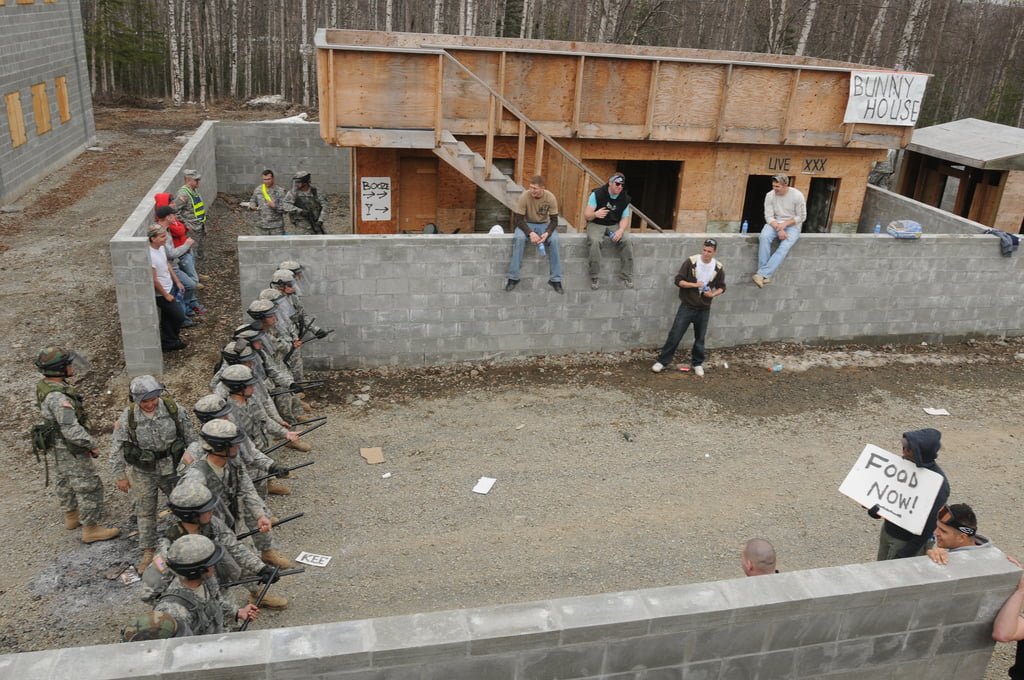
US Marines attack a ''town of insurgents'' during their ''The Making of a Marine - Urban Warfare Training'' at the Marine Corps base in Quantico, Virginia, on June 3, 2009.(AFP Photo / Jewel Samad)

Quantico Marine Base in Virginia is in lockdown following a shooting that left one man dead, say US authorities. The gunman, believed to be a marine, is now barricaded inside a building on the base.

Marine Corps spokesperson Agustin Solivan told press that the shooter has been surrounded by Prince William County police and military police. He added that the motives behind the attack remain unclear.

A message posted on the base’s Facebook page shortly after the shooting warned all residents to stay in their homes until the suspect is apprehended.

“Base residents are to follow all instructions being delivered by the Giant Voice System. Please remain inside your homes with your doors locked,” read the post.

DETAILS TO FOLLOW.

Cyprus Should Let the Banks Go Bankrupt

0
Share to Facebook

I support The Real News Network because it lets viewers voice their uncensored opinions. – David Pear

Log in and tell us why you support TRNN

Bio

Costas Lapavitsas is a professor in economics at the University of London School of Oriental and African Studies. He teaches the political economy of finance, and he’s a regular columnist for The Guardian.

Comments

Our automatic spam filter blocks comments with multiple links and multiple users using the same IP address. Please make thoughtful comments with minimal links using only one user name. If you think your comment has been mistakenly removed please email us at contact@therealnews.com

Please enable JavaScript to view the comments powered by Disqus.

ECB To Set “Fair” Cypriot Standard Of Living Via Capital Controls

0

As Europe wakes up to what could be a tumultuous day, Handelsblatt reports that the ECB has decided that, due to the “great danger” of a bank run once they reopen next week, it will enforce capital controls independently of Cypriot (elected) officials. With perhaps a nod towards negotiating some ELA funding for Cypriot banks next week (if the government accepts this ECB-enforced ‘program’), the rather stunning restrictions on people’s private property include:

  • Freezing Savings – no time-frame (it’s not your money anymore)
  • Make bank transfers dependent on Central Bank approval (a money tzar?)
  • Lower ATM withdrawal limits (spend it how we say?)

The capital controls will be designed “so that citizens have access to sufficient cash to go about their lives.” So, there it is, a European Union imposed decision on just how much money each Cypriot can spend per day. Wasn’t it just last week, we were told Europe is fixed?

Handelsblatt cites unidentified central bank sources so we wonder whether this is yet another strawman shot across the bow as the Cypriot government heads in for an early start of discussions at 10am (GMT)

Your rating: None Average: 4.5 (2 votes)

BRICS key element of emerging multipolar world — Putin

0

Published time: March 22, 2013 04:55

Russian President Vladimir Putin (AFP Photo)

Russian President Vladimir Putin holds hopes that the BRICS group of emerging economies will turn into “a full-scale strategic cooperation mechanism” and become more involved in global politics.

Putin gave an interview to the ITAR-TASS news agency ahead of the March 26-27 BRICS summit in Durban, South Africa. Apart from Russia, the bloc consists of Brazil, India, China and the host country.

ITAR-TASS: BRICS’ relatively new phenomenon attracts increased global attention due to the optimistic predictions about its development, especially against the backdrop of global crisis developments in the world economy. What is BRICS’ immediate and long-term significance for Russia? Is such a format practical for the development of relations among these countries?

Vladimir Putin: There are a number of long-term factors working on BRICS’ success. For the last two decades the economies of Brazil, Russia, India, China and South Africa have been in the lead of global economic growth. Thus, in 2012, the average GDP growth rate in the group amounted to 4 per cent, while for the G7 this index was estimated at 0.7 per cent. In addition, GDP of the BRICS countries derived from the national currency purchasing power parity is currently over 27 per cent of the global GDP and its share continues to increase.

BRICS is a key element of the emerging multipolar world. The Group of Five has repeatedly affirmed its commitment to the fundamental principles of the international law and contributed to strengthening the United Nations central role. Our countries do not accept power politics or violation of other countries’ sovereignty. We share approaches to the pressing international issues, including the Syrian crisis, the situation around Iran, and Middle East settlement.

The BRICS’ credibility and influence in the world is translated into its growing contribution to the efforts to stimulate global development. This important matter will be specifically addressed at the BRICS Leaders — Africa Dialogue Forum to be held on the sidelines of the Durban summit.

BRICS members advocate the creation of a more balanced and just system of global economic relations. The emerging markets are interested in long-term sustainable economic growth worldwide and reforms of the financial and economic architecture to make it more efficient. This is reflected in last year’s joint decision to contribute $75 billion to the IMF lending program, thus increasing the participation of the fastest growing economies in the Fund’s authorized capital.

Russia, as the initiator of the BRICS format and chair at its first summit in Yekaterinburg in 2009, sees the work within this group among its foreign policy priorities. This year, I have approved the Concept of the Russian Federation’s Participation in the BRICS group, which sets forth strategic goals we seek to achieve through interaction with our partners from Brazil, China, India and South Africa.

Such cooperation in international affairs, trade, capital exchange and humanitarian sphere facilitates the creation of the most favourable environment for further growth of Russian economy, improvement of its investment climate, quality of life and well-being of our citizens. Our membership in this association helps foster privileged bilateral relations with the BRICS nations based on the principles of good neighbourliness and mutually beneficial cooperation. We believe it crucial to increase Russia’s linguistic, cultural and information presence in the BRICS member nations, as well as expand educational exchanges and personal contact.

ITAR-TASS: What are the group’s short-term objectives and how do you see strategic directions for BRICS’ economic development?

VP: BRICS identifies what is to be done based on action plans adopted at the group’s annual summits. Last year’s Delhi Action Plan outlined 17 areas of cooperation, including meetings of Foreign Ministers on the sidelines of the UN General Assembly session, joint meetings of Finance Ministers and Central Bank Governors on the sidelines of the G20, World Bank and International Monetary Fund meetings, as well as contacts between other agencies.

We are currently negotiating a new plan we will discuss at the meeting in Durban. I am confident that it will help us develop a closer partnership. We expect that we will be able to closer coordinate our approaches to key issues on the agenda of the forthcoming G20 summit in St Petersburg, increase our cooperation in the fight against drug trafficking and production, and our efforts to counter terrorist, criminal and military threats in cyberspace.

It is of great importance for Russia to increase its trade and investment cooperation with its BRICS partners and launch new multilateral business projects involving our nations’ business communities. In Durban we intend to announce the formal establishment of the BRICS Business Council designed to support that activity. The summit will be preceded by the BRICS Business Forum, which will bring together more than 900 business community representatives from our countries.

ITAR-TASS: The potential of the BRICS economies brings up not only the question of economic policy coordination but also that of close geopolitical interaction. What is BRICS’ geopolitical role and mission in today’s world? Does it go beyond the purely economic agenda and should the BRICS countries accept greater responsibility for geopolitical processes? What is their policy with regard to the rest of the world, including its major actors such as the United States, the European Union, Japan… What future do you see for this association in this regard?

VP: First and foremost, the BRICS countries seek to help the world economy achieve stable and self-sustaining growth and reform the international financial and economic architecture. Our major task is to find ways to accelerate global development, encourage flows of capital in real economy and increase employment. This is particularly important in the context of poor global economic growth rates and unacceptably high unemployment. Although this is mainly true of western countries, the BRICS states are also negatively affected; export markets are shrinking, global finance lacks stability, and our own economic growth is slowing down.

At the same time, we invite our partners to gradually transform BRICS from a dialogue forum that coordinates approaches to a limited number of issues into a full-scale strategic cooperation mechanism that will allow us to look for solutions to key issues of global politics together.

The BRICS countries traditionally voice similar approaches to the settlement of all international conflicts through political and diplomatic means. For the Durban summit, we are working on a joint declaration setting forth our fundamental approaches to pressing international issues, i.e. crisis in Syria, Afghanistan, Iran and the Middle East.

We do not view BRICS as a geopolitical competitor to western countries or their organisations – on the contrary, we are open to discussion with any country or organisation that is willing to do so within the framework of the common multipolar world order.

ITAR-TASS: Russia and China are important strategic and historic partners. How do you see the significance of such partnership not only for the development of the two countries, but also for the entire system of international relations and the world economy?

VP: Russia and China are two influential members of the international community, they are permanent members of the UN Security Council, and they are among the world’s largest economies. That is why the strategic partnership between us is of great importance on both a bilateral and global scale.

Today the Russian-Chinese relations are on the rise, they are the best in their centuries-long history. They are characterised by a high degree of mutual trust, respect for each other’s interests, support in vital issues, they are a true partnership and are genuinely comprehensive.

President of the People’s Republic of China Xi Jinping is currently on a state visit to Russia. The fact that the new Chinese leader makes his first foreign trip to our country confirms the special nature of strategic partnership between Russia and China.

In the last five years only, the volume of bilateral trade has more than doubled. China has firmly taken the first place among our trading partners. In 2012 the Russian-Chinese trade turnover increased by 5.2 per cent to constitute $87.5 billion (in 2007 the figure was $40 billion).

The commonality of our approaches to fundamental issues of world order and key international problems has become an important stabilising factor in world politics. Within the framework of the UN, the Group of Twenty, BRICS, the SCO, APEC and other multilateral formats, we are working together, helping to shape a new, more just world order, ensure peace and security, defend basic principles of international law. That is our common contribution to strengthening sustainable global development.

Russia and China show an example of a balanced and pragmatic approach to solving the most critical issues, such as the situation in the Middle East and North Africa, nuclear problem on the Korean Peninsula, situation around Iran’s nuclear program.

ITAR-TASS: Before the BRICS summit your schedule features a working visit to South Africa. What do you expect from the upcoming negotiations with South African party? Will this visit give impetus to the development of bilateral relations?

VP: Russia and South Africa have old ties of friendship and mutual respect. Multifaceted cooperation is developing between our countries, with constructive political dialogue established at the highest level, between governments, ministries and agencies. Interparliamentary, interregional, business and humanitarian contacts are consistently expanding.

During the visit to South Africa we certainly hope to give new impetus to our bilateral relations. The adoption of the Declaration on Strategic Partnership between Russia and South Africa is being prepared; it will confirm the new quality of our relations, determine key areas of joint work in the future. We plan to sign a number of important intergovernmental and interagency documents in Durban: the declaration on strategic partnership, the agreements on cooperation in the energy sector, agriculture, etc.

Trade and economic cooperation will be in the focus of our attention during negotiations. Last year the volume of trade between Russia and South Africa grew by 66 per cent and reached $964 million (in 2011 the figure was $580 million). Big Russian businesses, including such companies as Renova, Norilsk Nickel, Evraz Group, Basic Element, Severstal, Renaissance Capital and Vnesheconombank are actively entering the South African market, they are interested in further expanding their presence in South Africa.

Russia and South Africa can significantly, by many times, increase the volume of bilateral trade and investments, the number of mutually beneficial projects in the mining sector, power industry (including nuclear power), space exploration, military and technical sphere.

We consider it important to develop cooperation in the field of education and culture by strengthening direct ties between universities, promoting Russian language teaching in South African educational institutions, organising film festivals and tours by leading artists, and exchanging museum exhibitions.

We will discuss practical steps to achieve these goals with President Jacob Zuma.

No evidence to support chemical weapons use in Syria – US official

0

Published time: March 22, 2013 03:11

Man is brought to a hospital in the Khan al-Assal region in the northern Aleppo province, as Syria's government accused rebel forces of using chemical weapons for the first time on March 19, 2013 (AFP Photo / SANA)

A US official has revealed that there may have been no chemical weapons used in a deadly incident occurring Tuesday in Syria’s Aleppo. Meanwhile the UN has launched a full-scale investigation into the disputed attack.

“Our growing sense is that weaponized chemical weapons were not used,” claimed the US official, speaking anonymously on Thursday. A European security official has taken the same stance, saying that the death toll in the event of a chemical attack would be much higher than presently recorded. He added that there was no evidence to support the allegation, despite prior accusations by a multitude of Western officials.

The Syrian government and rebel forced have been accusing each other of using chemical agents after a recent rocket attack near the province of Aleppo claimed 26 lives.

While Barack Obama reiterated his stance regarding President Bashar Assad, saying that he would be held accountable if found to have carried out the attack, UN chief Ban Ki-moon promised a probe as soon as possible. “I have decided to conduct a United Nations investigation into the possible use of chemical weapons in Syria,” Ban Ki-moon told reporters, specifying that the investigation will focus on the Aleppo attack, “the specific incident brought to my attention by the Syrian government.”

The UN investigators will cooperate with experts with the Organization for the Prohibition of Chemical Weapons (OPCW) and the World Health Organization (WHO). The incident will be investigated as a single case, which goes against France and the UK’s initial request to investigate another supposed attack, allegedly in Damascus.

Moscow has expressed hope that the US and France are not going to hamper the UN investigation into the Aleppo chemical attack in Syria. “I expressed hope that their initiatives are not attempts to postpone, hamper or prevent the investigation into what happened on March 19, because this issue needs urgent attention,” Russia’s Permanent Representative to the UN, Vitaly Churkin stated.

Churkin’s US counterpart, Susan Rice, supported the probe in a statement on Thursday. “As the U.N. proceeds with these efforts, we will also continue to work closely with our partners to obtain further information regarding any and all credible allegations of the potential or actual use of chemical weapons in Syria,” said Rice.

Meanwhile, Republican Senator John McCain and the Democrat Chairman of the Senate Armed Services Committee, Carl Levin, continued with the anti-Assad rhetoric, saying in a letter to President Obama that “the potential use of chemical weapons only makes the case for greater action more compelling and urgent.”

UBS’ George Magnus Asks “Why Are The European Streets Relatively Quiet?”

0

The wave of social unrest that rumbled across Europe between 2008 and 2011 has become less intense. This has come as a cause for relief in financial markets, as it has helped to underpin the marginalization of ‘tail risk’ already addressed by the ECB and the Greek debt restructuring. And yet the latest crisis over the Cyprus bail-out/bail-in not only shoots an arrow into the heart of the principles of an acceptable banking union arrangement, if it could ever be agreed, but also signifies the deep malaise in the complex and fragile trust relationships between European citizens and their governments and institutions. Some people argue that protest, nationalist and separatist movements are just ‘noise’, that the business of ‘fixing Europe’ is proceeding regardless, and that citizens are resigned to the pain of keeping the Euro system together. UBS’ George Magnus is not convinced, even if public anger is less acute now than in the past, it is far from dormant, and its expression is mostly unpredictable. So is the current lull in social unrest a signal that the social fabric of Europe is more robust than we thought, or (as we suggested 14 months ago) is the calm deceptive?

Social unrest is a systemic phenomenon, which, according to an OECD report, meets two principal criteria. It is highly uncertain, complex and ambiguous; and it is highly likely to generate ripple effects into other sectors of the economy and society, possibly leading to the toppling of governments, or even political systems. Although European social unrest since the crisis in Greece began has claimed a small number of fatalities and considerable damage to property, it has been notable more for the public expression of lack of trust in the institutions of government, including in Brussels. If a rising number of people give up on the willingness and ability of their institutions to address grievances, then the lull is most likely deceptive.

We have been here before. The economic and political context of the 1930s was, of course, different. Then there was much historical and unresolved geo-political baggage, and a rupture of the political centre as two radically different ideological veins erupted from the backlash against free trade and the gold standard. One championed radical social reform, the other what may be euphemistically called ‘nation-building’ 5 . And there was no EU. But the problem today, as then, is the same, namely the inadequacy of mainstream, political channels to address rising public concern about the loss of economic security, social stability and, yes, cultural identity6. How else to explain both the rise of Spain’s indignados, and other similar national protest movements in Europe, and the increase in nationalist, populist and separatist sentiment, and representation in national parliaments from Greece, France, and Spain to Finland and the Netherlands, and now Italy?

…

Still an austerity zone

Even though the financial crisis in Europe has faded, for the time being at least, the economic stress nurturing protest movements hasn’t. The best that can be said is that the incidence of austerity may not be as significant as it was in 2010-11

…

Backlash link to austerity

Let’s assume nothing changes, and that while European elites debate how — or if — they can build strong European banking, fiscal and economic institutions, with the required transfer mechanisms between creditors and debtors, the economic lot of European citizens, an unhappy one for five years now, shows no improvement. This seems a decent assumption.

…

The principal economic lesson is that an austerity regime with recurring reductions in public outlays won’t work a) when the private sector is trying to delever and shrink liabilities at the same time b) when it is a generic phenomenon and c) when its principal impact is to depress the level of money GDP and sustain the economy in a liquidity trap. But thanks to some interesting empirical work, another lesson concerns the corrosive and dangerous effects of large and sustained austerity in creating a social backlash that results in greater uncertainty, and therefore inertia, when it comes to corporate hiring and capital spending. As a result, output and public sector tax revenues suffer, reinforcing the negative dynamic between debt and the economy.

…

when expenditure cuts, specifically, rise to more than 2% of GDP, and particularly when they rise towards or over 5% of GDP, the number and the severity of incidents of unrest rise sharply.

…

Self-evidently, there have been heightened levels of social unrest and shocks to the political system in Greece, Spain, Portugal and Italy, but not in the UK or Ireland, or in the US, for that matter, though neither the US nor the UK, for example, have been immune to social unrest, sometimes requiring the force of the state to suppress it.12. But the main difference between many incidents of social unrest and the ones that damage the social fabric and the economic environment is the impact (sometimes more perceived than real, perhaps) of highly restrictive budgetary measures. Some governments may be better able to implement and absorb them, and sustain the trust or belief in citizens in perseverance. Mostly, this comes down to the robustness of local institutions, and the performance of leaders, as well as culture and history.

The most fundamental manifestation of this damage is, of course, unemployment. But this is only the most visible sign of the upheaval in Europe’s famed social model, and overlooks other important social and economic fault lines, including stagnant or declining real wages, rising income inequality, levels of youth unemployment of between 25% and 50%, and the rise in the numbers of long-term unemployed.

These phenomena didn’t begin with the financial and Euro crises, of course, but they have certainly been exacerbated by it and by the response of governments, and citizens are certainly making the connection, regardless.

So why are the streets relatively quiet?

The short answer is we don’t know. None of the reasons we can think of add up to much, but judge for yourself. It could have something to do with Europe’s rapid ageing demographic transition. The proportion of young adults, aged 15-24 has already been falling from peak levels seen in the mid 1980s, and is on track to decline further in the next 20 years. The proportion of 15-59 year olds, or what we might imagine as the part of the population most likely to express non-voting anger, is peaking now, but a significant decline is predicted. Perhaps the baby boomers have expended their protest energy!

Rapid growth in, and a rising proportion of, the numbers of young people, say aged 15-29, certainly feed the potential for social protest and upheaval. But they also need a catalyst, which could be the emergence of high inflation.

Empirically, there is an unequivocal association, but this is best applied, in contemporary times at least, to the experience of emerging and developing countries, for example, as in the Arab Spring. Although the European upheavals in the 1960s and 1970s were set against a backdrop of rising inflation, those in the 1930s and today are the product of depression and awkward questions of self-determination, not inflation.

Perhaps the relative calm in Europe has something to do with European family structures. The Bank Credit Analyst recently published a chart, emphasizing the role of the family as a shock absorber. The authors suggest that the countries with the highest youth unemployment rates are also those with the highest proportion of young adults living with their parents, who fulfill the role of effecting transfers and economic and social support.

We are not sure about this one either, although having an extended family structure on which to rely is clearly a mitigating factor against poverty and social exclusion. But the two variables may simply be spuriously correlated since both represent symptoms of a depressed economy. In any event, those countries with the highest youth unemployment and numbers living at home have already claimed the bragging rights for anti-austerity protest, while six of the other eight countries have been characterized by fallen or weakened governments, and the rise of nationalist and anti-immigrant political parties and policies.

A conclusion to this discussion is not possible.

In a benign outcome, the potential for social disorder will be defused by a new approach to economic burden-sharing, a re-sequencing of the pursuit of austerity and growth objectives, and steady progress towards the establishment of credible and trusted European banking, economic and political institutions, including financial transfer mechanisms. Motherhood, to be sure, and this has at least two vital caveats, namely the willingness of Germany and other northern European countries to accept significant sovereignty compromises, and the implications for the EU project, if this level of integration proves a bridge too far for UK voters in the promised 2017 referendum.

Social and political upheavals would doubtless haunt the worst-case outcome, where muddling through leads nevertheless to a fragmentation of the Eurozone, or, in extremis, a collapse, in spite of OMTs and the like. The possible consequences, including for the social fabric of Europe, have been well aired in the last couple of years.

The middle way, so to speak, is a muddling through that never scales the successful outcome hurdles, but carries on regardless. Political bonds, maybe fear, sustain the Euro system, but European leaders are unable to reach an agreed and acceptable framework for durable economic recovery and full integration. This outcome describes the status quo, and is the base case for most people. But it is also about stagnant, low growth, persistent high unemployment, retreating targets for debt sustainability, more bail-outs and bail-ins, latent financial instability, and likely sovereign default. The current Eurozone news could not be more apt, and doesn’t seem like the ideal scenario in which to expect European social unrest and political turbulence to fade away.

Netflix CEO’s Education Reform Views Sneak Into House of Cards

0

I blame John Amato for getting me hooked on the new Netflix Series, House of Cards. Kevin Spacey is fantastic, the pace is great, but unfortunately, the policy issues they tackle in this first season are predictably corporate.

Nothing screams corporate like the storyline about education reform. After Frank Underwood (Kevin Spacey) forces his colleague to abandon education reform because he’s “too left”, Underwood finds himself negotiating a package with union representatives that feels a lot like Reed Hastings’ dream “reform package.”

Adam Bessie introduces Ms. Reform, Hastings’ dream girl of education reform:

Ms. Reform is the Marilyn Monroe of domestic policy. The corporate media — and the President himself — can’t get enough of her.

It’s no surprise she’s become famous. Ms. Reform is sexy and seductive, especially to the powerful: she looks like a philanthropist — kind and nurturing, committed to helping the poor, forgotten black and brown children in the inner-cities. Who in their right mind could be against her plans to help our children — especially our most vulnerable and least privileged — have a fair shot in life? But inside — a side she never shows the camera, and when she does, it’s Photoshopped — Ms.Reform is a cutthroat businesswoman: she’s read Ronald Reagan’s economic advisor Milton Friedman’s Capitalism and Freedom from cover to cover, she has complete faith in “free enterprise,” she’s never heard of John Dewey nor deigned to teach a day in her life, and boy, does she friggin’ hate unions. In short, Ms. Reform appeals not just to the bleeding heart social justice Obamaites, but also, to venture capitalists that think Obama is fomenting a socialist take-over of America. The only surprise is that she didn’t become famous sooner.

Now, Ms. Reform is starring once again, this time, along (another) Academy Award winner Kevin Spacey in the NetFlix original seriesHouse of Cards, which explores the sordid underbelly of Washington politics. The protagonist Congressman Frank Underwood — who has no allegiance but to his own power — takes on the education reform bill for the new President, one which looks strikingly similar to No Child Left Behind and Race to the Top: the bill increases charter schools, and ties test scores to teacher evaluation, echoing the corporate style, free enterprise reforms both bills have implemented. And of course, as is always the case, Ms. Reform is cast as heroine — and the unions, at best obstructionist and only interested in the needs of the teachers, and not the children (To be fair, though, it’s clear that the real villain in the show is not the unions, but Underwood himself — and as Underwood is supporting the bill, it might cast a negative light on the policies to some viewers).

[…]

To be clear, Ms.Reform’s on-screen portrayal mirrors Hasting’s values and his hefty investments. Hastings — who objectifies and commodifies education by characterizing it as business “space,” devoid of humanity — is invested both in for-profit, non-profit, and lobbying efforts that push for the very reforms reflected in House of Cards.

Alyssa Rosenberg at ThinkProgress noticed it too:

Elsewhere in the education fight, the only discussion of policy are facile mentions of charter schools, collective bargaining, and performance standards. A union official appears in one scene to declare that “Charters jeapordize our ability to organize, which is reason enough” to object to Frank’s draft of the bill. Otherwise, the movement is represented only by picketers who melt when Frank and his wife serve them barbeque, and by a paid lobbyist who is manipulated into decking Frank in his office, giving him the advantage he needs to force a settlement to a teacher’s strike and a legislative deadlock. When Frank manipulates Congressman Russo (Corey Stoll) into running for Governor of Pennsylvania, his opposition is largely personified by the head of a shipbuilder’s union decimated by the BRAC process that shutters a local shipyard.

It’s true that Hastings didn’t write the script, but I can’t help thinking he shaped a narrative that lends itself to such a script. The casual treatment and perception of unions as thugs, of teachers as incompetent, of solutions as simply privatizing the effort altogether while using data analysis as the benchmark for nearly everything is characteristic of today’s reform discussion.

News broke late tonight that Chicago Public Schools may be closing 50 public schools. FIFTY. There is absolutely no way the school system can absorb that kind of shock. I don’t think the number 50 is a coincidence. Back in the days when the Gates Foundation thought charters were the answer to everything, the foundation put millions into the district to create charter schools, including 50 new high schools under their “small high school” initiatve.

In 2012, the Gates Foundation announced they would not put any more funds into CPS, leaving the district with a choice as to which schools to de-fund and which to keep. That wouldn’t have anything to do with Chicago teachers going on strike last year, would it?

Shall we take bets on which schools stay open and which ones close? I’m betting on the charters staying open and the public schools closing. You?

It worries me that we’re seeing the reformers worm into popular culture without fully exploring all of the issues around education reform. I realize Reed Hastings, Bill Gates, Betsy DeVos and Michelle Rhee think they have all the answers, but they really don’t.

A show like House of Cards is uniquely positioned to honestly explore all facets of an issue like this in a fast-paced and entertaining way. It’s disappointing to see the writers reach for the corporate solution without even looking at the other side of things.

US Begins Regulating BitCoin, Will Apply “Money Laundering” Rules To Virtual Transactions

0

Last November, in an act of sheer monetary desperation, the ECB issued an exhaustive, and quite ridiculous, pamphlet titled “Virtual Currency Schemes” in which it mocked and warned about the “ponziness” of such electronic currencies as BitCoin. Why a central bank would stoop so “low” to even acknowledge what no “self-respecting” (sic) PhD-clad economist would even discuss, drunk and slurring, at cocktail parties, remains a mystery to this day. However, that it did so over fears the official artificial currency of the insolvent continent, the EUR, may be becoming even more “ponzi” than the BitCoins the ECB was warning about, was clear to everyone involved who saw right through the cheap propaganda attempt. Feel free to ask any Cypriot if they would now rather have their money in locked up Euros, or in “ponzi” yet freely transferable, unregulated BitCoins.

For the answer, we present the chart showing the price of BitCoin in EUR terms since the issuance of the ECB’s paper:

Therein, sadly, lies the rub.

As central banks have been able to manipulate the price of precious metals for decades, using a countless plethora of blatant and not so blatant trading techniques, whether involving “banging the close”, abusing the London AM fix, rehypothecating and leasing out claims on gold to short and re-short the underlying, creating paper gold exposure out of thin air with which to suppress deliverable prices, or simply engaging in any other heretofore unknown illegal activity, the parabolic surge in gold and silver has, at least for the time being – and especially since the infamous, and demoralizing May 1, 2011 silver smackdown – lost its mojo.

But while precious metals have been subject to price manipulation by the legacy establishment, even if ultimately the actual physical currency equivalent asset, its “value” naively expressed in some paper currency, may be in the possession of the beholder, to date no price suppression or regulation schemes of virtual currencies existed.

It was thus only a matter of time before the same establishment was forced to make sure that money leaving the traditional M0/M1/M2/M3 would not go into alternative electronic currency venues, but would instead be used to accelerate the velocity of the money used by the legacy, and quite terminal, monetary system.

After all, what if not pushing savers to spend, spend, spend and thus boost the money in circulation, was the fundamental purpose of the recent collapse in faith in savings held with European banks?

So, as we had long expected, the time when the global Keynesian status quo refocused its attention from paper gold and silver prices, to such “virtual” currencies as BitCoin has finally arrived.

The WSJ reports that, “the U.S. is applying money-laundering rules to “virtual currencies,” amid growing concern that new forms of cash bought on the Internet are being used to fund illicit activities. The move means that firms that issue or exchange the increasingly popular online cash will now be regulated in a similar manner as traditional money-order providers such as Western Union Co. They would have new bookkeeping requirements and mandatory reporting for transactions of more than $10,000. Moreover, firms that receive legal tender in exchange for online currencies or anyone conducting a transaction on someone else’s behalf would be subject to new scrutiny, said proponents of Internet currencies.

And just like that, there goes a major part of the allure of all those virtual currencies such as BitCoin that consumers had turned to, and away from such rapidly devaluing units of exchange as the dollar and euro. Because if there was one medium of exchange that was untouched, unregulated, and unmediated by the US government and other authoritarian, despotic regimes around the insolvent “developed world”, it was precisely transactions involving BitCoin.

That is no longer the case, as the bloodhound of the Federal Reserve has now turned its attention toward BitCoin, and will not stop until it crashes both its value to end-users, and its utility, in yet another attempt to force the USD, and other fiat, upon global consumers as the only forms of allowed legal tender.

More from the WSJ:

The rising popularity of virtual currencies, while no more than a drop in the bucket of global liquidity, is being fueled by Internet merchants, as well as users’ concerns about privacy, jitters about traditional currencies in Europe and the age-old need to move money for illicit purposes.

The arm of the Treasury Department that fights money laundering said Monday that the standard federal banking rules aimed at suspicious dollar transfers also apply to firms that issue or exchange money that isn’t linked to any government and exists only online.

Naturally, the actual object of US monetary persecution, is BitCoin:

“We are beyond the stage where this was just funny money and a fun online thing. This is used as a currency,” said Nicolas Christin, associate director of Carnegie Mellon University’s Information Networking Institute.

Bitcoins can be used in a host of legitimate transactions–for example, website Reddit allows users to upgrade services using bitcoins and blog service WordPress.com’s store accepts them as a form of payment. Pizzaforcoins.com also lets bitcoin savers pay for deliveries through Domino’s and other pizzerias.

The problem with virtual currencies is that defining what is permitted in a narrow regulatory sense, is impossible, which is why any definition will be as broad as possible: after all what better way to spook users than to make virtually any transaction borderline illegal:

Creating clear-cut rules for virtual currencies is difficult. A FinCen official said that anti-money-laundering rules would apply depending on the “factors and circumstances” of each business. The rules don’t apply to individuals who simply use virtual currencies to purchase real or virtual goods.

The new guidance “clarifies definitions and expectations to ensure that businesses…are aware of their regulatory responsibilities,” said Jennifer Shasky Calvery, FinCen director.

The FBI report last year said Bitcoin attracts cybercriminals who want to move or steal funds. “Bitcoin might also logically attract money launderers and other criminals who avoid traditional financial systems by using the Internet to conduct global monetary transfers,” the report said. An FBI spokeswoman declined to comment when asked about the agency’s concerns regarding virtual currencies.

We were not the only ones to expect imminent intervention from Big Brother:

Some firms say they anticipated the rules. Charlie Sherm, chief executive of bitcoin payment processor BitInstant, said his company is already compliant.

Mr. Christin of Carnegie Mellon said that he believes Bitcoin’s dominant use right now is speculation.

“When you have a commodity or currency whose value has grown as rapidly as Bitcoin it makes sense to hold on to it as a speculative instrument,” he said. It also is commonly used for online black markets or gambling sites. “Whether used for money laundering…there is no smoking gun.”

As to the question of timing – why now – the answer is simple. Europe. After all, it was only yesterday that we wrote that “In Spain, The Bitcoin Run Has Started.” It is self-explanatory that if such an exodus away from legacy currencies and into BitCoin was left unchecked, more and more people would follow suit, which is why it had to be intercepted as early as possible.

The jump in the bitcoin exchange rate this week also coincides with concerns euros could be taken from retail bank accounts in Cyprus to fund a bailout. Internet blogs say speculators are looking toward currency alternatives.

Well, if internet blogs say… Of course, internet blogs also say that if and when the fascination with virtual currencies fizzles, all those who are disgusted with the abuse of fiat will not cease from seeking USD, EUR, JPY, GBP and CHF alternatives, but will merely go back to the safety of having hard assets as a currency, namely silver and gold, instead of electronic ones and zeroes, which the US government, in all its Orwellian benevolence may one day, for lack of a better word, hack right out of existence.

On the other hand, the regime’s desperation is reaching such a level that a Executive Order 6102-type confiscation of all hard asset currencies may not be far behind.

Because forewarned, is forearmed.

Your rating: None Average: 4.9 (14 votes)

Truth vs. Reality: Nicole Sandler Tries to Interview Michelle Shocked

0

(language NSFW)

If there is any difference between one’s truth and one’s reality, I tried to explore it this morning. This was to be a pretty big show. Michelle Shocked agreed to come on with me to clarify the statements she made from the stage Sunday night at Yoshi’s in San Franciso. From her music and what I’ve seen in this woman whom I’ve interviewed a few times over the years, I believed her to be a compassionate, caring, far-from-bigoted person that was being reported by disgusted concert goers Sunday night.

So, I wanted to give her the benefit of the doubt. I had a lengthy email conversation earlier this week with one of the attendees Sunday night who had a different opinion of the episode. Colin Epstein, who had been on a real high earlier during the Yoshi’s show as he was a fan who was able to accompany Michelle on harp during a song, believed that she was trying to say something different, albeit clumsily, and then mob rule took over.

“At the start of the second set, Shocked said a lot of disjointed, garbled things. These included thoughts about Jesus, sin, and gays, but for the life of me I couldn’t make heads or tails of it. Some of it was even in Spanish for some reason. In my eyes, it was far too unfocused to qualify as any sort of rant. I do think some of the stuff was said ironically. I know she made one statement criticizing some Christians that seems to have gone completely unreported. She said (paraphrasing as accurately as I can from memory) “I’m tired of Christians who hide their hypocrisy behind the cross.” What did she mean? I don’t know. It was just one of many statements she made that lacked any apparent cohesion. The most infamous soundbite, (which I remember as “now y’all can go on Twitter and say Michelle Shocked says God hates fags,” though it’s been reported with drastically different syntax elsewhere) I took as sad, ironic surrender to how the crowd had turned on her and mis-read her rather than the boastful statement others are reporting. But the crowd took anything she said at full face value and things got ugly fast. While I wish Shocked had calmed down and explained herself instead of letting the reactionaries in the audience control the conversation, I’m not sure she could have.”

So when Michelle agreed to come on my show today, I was thrilled. I wanted to give her the opportunity to tell what happened — to reconcile what she was trying to say with the the words that we’ve all now heard with our own ears, as this recording surfaced yesterday:

Unfortunately, I didn’t get to ask her any of the questions I had hoped to, and didn’t hear her clarify anything this morning as she wouldn’t answer the phone when I called. And I tried. Repeatedly. When she did answer, she just read some of her “Open Letter” that was released yesterday. If I remember correctly, she picked up a second time, but was obsessed with the delay between the phone conversation and when the sound came through her computer speakers that her paranoia took over. I tried to tell her to turn down the sound on her computer and just talk to me on the phone, but she began counting the seconds of the delay. She later tweeted that to music journalist Chris Willman of Yahoo music that she thought I “was going to ‘fact check’ during the delay the way you do”. (Note: I’ve known Chris since my LA radio days when he wrote for the LA Times, and he bent over backwards to give Michelle the benefit of the doubt on this story, as I did. Yet she has attacked him mercilessly via Twitter) Instead of talking with me — human to human, Shocked decided she wanted to continue to speak her own, strange version of reality via twitter. Michelle seems to be somewhat obsessed with the Twitters these days. As you can hear from the recording from Sunday night, it was that way during the show. She actually agreed to come on the show via twitter:

shocked sandler 1.png

shocked sandler 2.png

When I texted her last night to confirm the interview today, she attempted to back out. I wasn’t going to release our text conversation, but thought it necessary in that she, again, went back on her word and did what she proposed last night, which I categorically did not agree with.

Shocked text.jpg

(Ed. Note: Text exchange is not readable via our graphics, please read exchange at Radio or Not)

Since we wanted to hear her words, I played much of the recording, embedded above, from the Sunday night show that surfaced yesterday on the show this morning, all the while attempting to get her to talk to me… to us! I really wanted to hear Michelle clarify what she was trying to say. Instead, she seems to be digging herself a deeper hole — and alienating the few people who’ve been attempting to help her. She lashed out at me in the final moments of the show, when she called back in as I was playing my favorite Michelle Shocked song, “Come a Long Way” — for the last time. I’m sorry she’s going through this, and I hope she can get some help. Perhaps she should go back and listen to the first hour of the show in which I had the pleasure of interviewing former Congressman Bob Ney. In Bob’s book, Sideswiped: Lessons Learned Courtesy of the Hit Men of Capitol Hill, and on my show this morning, Bob admitted the mistakes he made. He’s said he’s sorry. I have a lot more respect for Ney today than I do for Michelle Shocked. And I still wish I understood what point Michelle Shocked is trying to make with her Truth vs. Reality meme. She might be on to something, but I don’t think we’ll ever know.

Guest Post: The “Fracking” Revolution Comes to China

0

Submitted by Elliot Brennan of The Diplomat,

As shale gas fever sweeps through Beijing, analysts are looking at the costs and benefits of extracting what is increasingly a controversial source of energy. But for China, with its growing middle class, the immediate and long-term demand for energy has the potential to spark a revolution in shale gas before sufficient and safe technological know-how and regulations are developed.

A very vocal debate continues to rage in the U.S. and Europe as to the environmental consequences of shale gas extraction. Meanwhile, China’s National Oil Companies (NOCs) continue to purchase and buy into North American oil and gas companies with specific expertise in shale gas extraction. For better or worse, China’s shale gas revolution looks set to be thrust into the public spotlight, both at home and abroad.

Extracting shale gas is tricky. Shale, a sedimentary rock that is typically highly porous and has low permeability, traps hydrocarbons as it is formed. To remove the gas, shale formations must be stimulated, most commonly using hydraulic fracturing, or “fracking.” The technique involves pumping water, sand and chemicals at high pressure into the shale formation, cracking the rock and allowing the gas to be released to the surface. The 1 to 3 million gallons of water that are pumped into the shale formation must then either be recycled or pumped into water disposal wells in subsurface rock formations.

In addition to these skill-intensive practices, the extraction process also demands three-dimensional seismic surveying, which evaluates potential subsurface resources, and horizontal drillingtechnology. Both demand expertise and experience, yet the capability of most companies outside of North America, including China’s National Oil Companies (NOCs), to safely and effectively perform such high-tech extraction is limited.

The emergence of shale gas is a game changer. Countries that have traditionally relied on hydrocarbon exports for political clout (the Persian Gulf, Russia, Venezuela) will inevitably lose some of their petro power. Europe could become less energy dependent on Russian supply by importing liquid natural gas (LNG) from North America and by exploiting the potentially significant shale gas deposits in Poland and other countries. Australia, which has significant deposits and much of the pre-existing infrastructure to begin extraction, could see its clout in the energy politics of the region increase— forcing a significant redraft of Canberra’s “Australia in the Asian Century” White Paper.

In effect, the “shale revolution” signals the end of the peak oil debate. New technology means new resources, which in turn could mean a new geopolitical map. However the mere presence of the resources doesn’t mean that their extraction in the short-term is viable, a problem China knows all too well.

China’s oil fields are drying up. The International Energy Agency’s (IAE) World Energy Outlook for 2010predicts China will import 79% of its oil by 2030, a figure that demonstrates the pressing need for China to develop new energy sources. Enter shale gas and the “unconventionals.”

Estimates of China’s shale gas resources differ. China’s Ministry of Land and Resources estimates reserves of 886 trillion cubic feet (tcf), while the U.S. Energy Information Administration puts the country’s resources at 1,275 tcf. The upper estimates would mean China sits atop more shale gas than the U.S. and Canada combined. According to China’s 12th Five-Year Plan, by 2015 China should be extracting 6.5 billion cubic meters of shale gas per year, with a view of producing 100 billion cubic meters by 2020. China’s goal is to meet 10 percent of the country’s energy demands from shale gas the same year. To successfully meet the goal, China’s oil and gas industry needs to bridge its large knowledge deficit. Despite some progress, recent successes in domestic extraction technology have been modest.

Under the Shale Gas Development Plan for 2011-2015, shale gas has been labeled by the Ministry of Land and Resources as a separate mineral from conventional hydrocarbons. This move frees shale resources from the clutches of “the big three;” Chinese state-owned majors — China National Petroleum Corporation (CNPC), China Petroleum & Chemical Corporation (Sinopec) and China National Offshore Oil Corporation (CNOOC) — allowing Beijing to redistribute exploration contracts. Importantly, the move encourages competition among state-owned majors, local enterprises and foreign companies.

China’s NOCs, while not state-run, benefit from state financing. Their capital flows during the global downturn in 2008 gave them the flexibility to expand globally. For China’s NOCs, establishing partnerships with other international oil companies allows them to diversify risks and gain technical know-how through the supply chain.

At home and abroad China is making waves. The opening of a recent tender to foreign companies demonstrates the extent to which the often go-it-alone Chinese Communist Party feels it needs to secure a rapid and successful energy boom. Royal Dutch Shell, Chevron, Exxon Mobil and British Petroleum are alljointly surveying the key provinces of Sichuan and Guizhou with local companies. As part of the new tender, other joint ventures are expected to follow.

Flush with state financing, China’s NOCs have in recent years begun buying up stakes in North American energy companies and their subsidiaries. Some of their recent buy-ins have been the purchase of Nexen and a stake in Devon Energy Corp, one of the founders of shale gas extraction. Such purchases allow China’s NOCs to absorb expertise. While this in itself isn’t enough to meet their energy needs, it is a step toward building capacity for China’s NOCs in shale gas exploration and extraction.

China’s NOCs have been known to employ a “market-for-resources strategy,” whereby access to China’s market is granted to a resource holder in exchange for imports of resources from that country. This now looks to be morphing into a “market-for-know-how strategy.” In the early stages of coal bed methane exploration in China, foreign groups contributed 70 percent of the funding. With already significant foreign involvement, the shale gas industry looks set to emulate this model.

However, the all-important extraction process of shale gas, hydraulic fracturing, just as its name suggests, needs water — and large amounts of it. So while shale could provide energy, it will require large volumes of water that will be costly both to consume and to recycle. Water scarcity remains a key concern for the Chinese government, while water pollution is an increasing worry for the Chinese public. One recent report noted that already “up to 40 percent of China’s rivers were seriously polluted” and “20 percent were so polluted their water quality was rated too toxic even to come into contact with.”

Experts warn that China will face growing water shortages in coming years. Water-intensive industries such as mining are competing for increasingly scarce water sources. Low rainfall in the northwest of the country, where much of the shale is believed to be, means these areas will have to rely on limited and finite groundwater. In the face of these shortages, China established a special 25 million USD fund for a cloud seeding program in 2012 to operate in “areas prone to drought and haze.” Water can be transported into China’s northwest via pipeline but that would be costly and require significant new infrastructure, such as desalination plants and pipelines that would likely need to stretch across the country for thousands of kilometers — a similar feat to the 4,200 km Xijiang to Shanghai gas pipeline.

Shale gas has approximately half the carbon content of coal. For China, the replacement of coal for gas in power generation could reduce emissions and pollution.  It would kill two birds with one big stone, as criticism grows over the country’s pollution levels both in air and water. However, some warn that shale gas may also reduce investment in renewable energy sources.

In the U.S., environmental concerns dominate the debate. Public concern over water contamination and the release of harmful gases during shale gas extraction are gaining increasing media attention. This has been exacerbated by claims that research commissioned by industry-friendly lobby groups in the U.S., such as the American Petroleum Institute and the American Natural Gas Alliance, have muddied the water on the environmental impact of shale gas extraction. However, according to an IAE report, Golden Rules for a Golden Age of Gas, the environmental risks inherent in the process can be easily mitigated. The report outlines the “golden rules” required to address the environmental and social impact of developments in unconventional gas. It predicts that major risks can be decreased and safety improved if the cost of drilling and completing of a shale gas well is increased by 7 percent.

A dozen or more chemicals may be added to the water and sand pumped into a shale-gas well, including radioactive tracers that help assess the formation and relevant fractures. While these tracers are strictly monitored under guidelines handed down by the Nuclear Regulatory Commission in the U.S., in China the regulations may be less stringent. In addition, other radioactive material may be dislodged in the fracking process and may have to be disposed of from flowback water.

If strict regulations are not in place to seal the well from leaching, aquifers and ground water may become contaminated by run-off chemicals, methane or radioactive minerals displaced in the process. A 2011 US Environmental Protection Agency (EPA) report suggests that fracking may have resulted in the contamination of ground water.

Recent and successful protests in China to stop the construction of a chemical plant in Ningbo demonstrate growing public concern about some government-backed developments. The October 2012 protests followed other victories to stop the construction of petrochemical plants in Xiamen and Dalian. In Dalian, some 10,000 protesters took to the streets. With a growing middle-class, increasing internet and social media access, and more public involvement and activism in key local concerns, the government and local authorities will likely have to be accommodating of public displeasure in order to maintain stability as China grows. A Tiananmen-style alternative appears unlikely as it could backfire, both at home and abroad.

If the current hype proves correct and gas prices remain strong, China’s shale gas could be just the energy boom that Beijing seeks. It could allow China to meet its ambitious growth targets. As many commentators have suggested, however, shale gas may prove less of a blessing and more of a “resource curse,” spelling environmental disaster and nationwide instability. Either way, as Sino-American partnerships are forged and shale gas extraction in China ventures into unchartered waters, one thing is certain: The world will be watching.

Your rating: None Average: 2.3 (3 votes)

Bernanke Fails to Answer Concerns about a Cyprus-Style Seizure of American Bank Deposits

0

The government of Cyprus wants to grab bank deposits, and the chief economist of the German Commerzbank has called for private savings accounts in Italy to be similarly plundered, and other nations may be moving in that direction as well.

The American government has seized private assets before, and President Obama authorized seizure of property again last year. (The Argentinian government grabbed 401k assets; and some in the American government have mulled the same thing. And the U.S. government’s take-down of Megaupload was also an exercise of the power to seize all of the legal property held in a storage facility because a handful of crooks have illegal property in theirs. )

Zero Hedge has been warning for years that Western governments — including the U.S. — would eventually seize bank assets.

Bernanke was asked yesterday whether a Cyprus-style grab of bank deposits is possible in the U.S. :

Question: I was wondering if you can tell me how if a run on the banks happens in Cyprus, how that might affect U.S. markets. And also is it possible for the U.S. to levy a tax on regular deposits here? Or why not?

Bernanke: As someone mentioned Cyprus is a tiny economy. I don’t think these issues as worrisome as they are and as concerned as we would be for the Cyprus people, I don’t think that they have a direct implications for the U.S. economy.

The only way that they would create a problem would be if the runs became contagious in some sense, if depositors in other countries lost confidence. But to this point I’m not aware of any evidence that that is in fact the case.

The argument the Europeans are making is that Cyprus is a unique situation, very different situation, and indeed, it is quite unusual to have a banking sector as large as they have relative to their economy.

In terms of the United States, the FDIC was founded in 1934, and we have insured deposits and they are very proud of the fact that no one has ever lost a dime in insured deposits.

And during the crisis the response of the government was in fact to increase the level of deposit or account sizes that were insured. So I consider that to be extremely unlikely in the United States.

Bernanke’s response is unsatisfactory for 2 reasons.

Initially, the FDIC only insures deposits up to $250,000. So deposits over that amount are unprotected.

Indeed, the FDIC has, in fact, come very close to being insolvent at various times. See the following articles from the New York Times, American Banker, Bloomberg, Zero Hedge and Mish.

True, the Treasury Department would likely just bail out the FDIC if the FDIC really went belly up. But that would take a political act of will. And so Bernanke should have said, “we will always make sure the FDIC has enough money”.

Second — and more important – Bernanke failed to answer the question altogether.  The question was not about whether the government would save bank depositors from economic conditions caused by others. The question was whether the government itself would grab deposits.

People didn’t think any European country would seize bank deposit assets. But the EU demanded that the government of Cyprus seize private bank deposits. The attempt of a government to seize private property is undermining confidence in Europe … and many people worry that that contagion will spread. That is what the question was about.

Bernanke entirely failed to answer the question which was actually asked … and has thereby caused a tsunami of distrust on the Internet.

In the same way that the Department of Justice’s wishy-washy assurances that it probably wouldn’t assassinate Americans on U.S. soil hasn’t reassured anyone, Bernanke shouldn’t have given a half-hearted reply. He should have said:

The U.S. will never, ever seize any American’s bank deposits under any scenario whatsoever … without exception. We respect the rule of law as the basis for our economy, and we will never do anything which interferes with private property rights.

Bernanke’s failure to reassure couldn’t have come at a worse time.

British MP Nigel Farage just gave the following advice in response to the Cyprus bank deposit grab:

Get your money out while you still can.

The failure of American economic “leaders” to provide real reassurance regarding our bank deposits will just increase mistrust.

Indeed, more and more Americans realize that the government has bailed out the super-elite of the big banks, and enabled their fraud … while hosing the little guy again and again (and again). People see that we have socialism for the rich, but cut-throat, sink-or-swim capitalism for everyone else. They see that we have a malignant synergism between D.C. politicians and giant companies. Look here, here, here.

Indeed, after Wall Street giants such as MF Global and JP Morgan got caught seizing segregated client funds — but were never prosecuted by the government — both amateur and sophisticated investors have lost trust in the American financial system and financial regulators. (It has become obvious to all that the government is trying to cover up for the stunning crimes of the big banks.)

Your rating: None Average: 5 (1 vote)

Bachmann Says Obamacare Will Kill You, Fey Revives Palin Impression, and More

0

Bachmann Says Obamacare Will Kill You, Fey Revives Palin Impression, and More

Email this item Email   Print this item Print   Share this item... Share
Posted on Mar 21, 2013

Open for Business: By passing a $984 billion spending bill Thursday, the House has ensured the government will avoid a shutdown at the end of the month and stay funded through the end of the fiscal year. The bill, which was already cleared by the Senate, now heads to President Obama’s desk, where it’s expected to be signed. The House on Thursday also passed Paul Ryan’s atrocious plan, which promises a balanced budget by slashing social programs, repealing most of Obamacare and giving corporations and the rich a big tax break. However, as The Daily Beast noted: “It’s unlikely to go much further though: it pretty much has everything in it that President Obama campaigned against.” (Read more)

Pop the Question: With recent public opinion polls showing more and more Americans supporting gay marriage, Politico asked Saxby Chambliss, R-Ga., whether his opinion on the issue had changed. In response, Chambliss said, “I’m not gay. So I’m not going to marry one.” It appears Chambliss selfishly believes that since he’s not going to get same-sex married, no one else should either. As Talking Points Memo Publisher Josh Marshall wrote, “So Sen. Saxby Chambliss has to become gay apparently before he’ll support marriage equality.” (Read more)

Death by Obamacare: Rep. Michele Bachmann insisted Thursday that President Obama’s health care law will “literally” kill people. In a speech delivered on the House floor on the topic of repealing Obamacare, Bachmann said, “We’re here because we’re saying let’s repeal this failure before it literally kills women, kills children, kills senior citizens. Let’s not do that. Let’s love people, let’s care about people. Let’s repeal it now while we can.” Bachmann loves and cares about people so much, in fact, that she wants to repeal a program that will provide millions with health insurance they could otherwise not afford and leave them with no health coverage. The clueless Bachmann must have missed the 2009 Harvard study that showed that nearly 45,000 Americans die each year because, in large part, they don’t have health care. (Read more)

For Your Information: Rising Republican star Rand Paul had some harsh words for Ann Coulter and Rush Limbaugh after they ripped the Kentucky senator’s plan to allow undocumented immigrants in the U.S. to work legally. It was an issue brought up to Paul by Fox News host Bill Hemmer during an interview Thursday. Hemmer pointed out to Paul that “Coulter and Limbaugh say that people like you are being suckered into an agreement here and what they argue is that conservative principles should not be sacrificed here.” Paul fired back with a “news flash” for them, arguing that “what we have now is de facto amnesty.” He added, “We have 11 million people here that have been here, some of them for a decade or more. No one is telling them to go home.” Paul also had another news flash for Coulter: “We haven’t been too competitive in the last two national elections,” he said. (Read more)

Video of the Day: One of the highlights of “Saturday Night Live” in 2008 was Tina Fey’s spot-on impression of then-Republican vice presidential nominee Sarah Palin. During a recent appearance on “Inside the Actors Studio,” Fey brought back the impeccable impersonation. So does Fey still got it? You betcha! Take a look.

–Posted by Tracy Bloom.

More Below the Ad


New and Improved Comments

If you have trouble leaving a comment, review this help page. Still having problems? Let us know. If you find yourself moderated, take a moment to review our comment policy.

Please enable JavaScript to view the comments powered by Disqus.

The Streets of America in the Very Near Future…

0
Mac Slavo
March 21st, 2013
SHTFplan.com

Read by 31,036 people

We’ve seen it time and again over the last five years. Governments overstepping their authority and punishing their people because of the actions of elite banking conglomerates, dirty politicians and bought-off regulators.

Iceland, Greece, Ireland, Hungary, Argentina, Spain, and Portugal have all been pillaged in the name of purported recovery and stability.

Today we’re seeing it in Cyprus, where Euro Zone financiers have threatened to not only rob the populace of their personal savings, but shut off access to bank accounts indefinitely. And, as we’ve seen elsewhere, the people are having none of it.

Like the aftermath of Hurricane Sandy, it took a mere 72 hours of restricted access to funds, and thus essential goods, before the people took to the streets in mass protest and rioting.

The following pictures depict what’s in store for the United States in the very near future, when our own banking system re-collapses and Americans are left with no ability to access their money or are restricted to how much cash they are able to withdraw.

When the banks close your only option will be ATM’s, most of which will be empty:

cyprus-atm1

cyprus-atm2

cyprus-atm3

(Images Courtesy of Zero Hedge)

And within 72 hours, when the realization of the magnitude of this event takes hold, people will no longer stand in line peacefully, but rather, will storm their banks and government offices, just as they have done in Cyprus (and elsewhere).

There is one key distinction to consider between the rioting in Cyprus and what we’ll experience here in the United States.

You see, the US government and the Pentagon have been actively war-gaming this very scenario for years. They know an economic  collapse and the civil unrest that follows is an inevitable outcome of our current paradigm. Thus, they have spent the better part of this crisis training the National Guard to respond to mass riots, along with coordinated exercises that involve local law enforcement and military forces.

Vigilant Guard

There’s a reason that Department of Homeland Security has stockpiled nearly two billion rounds of ammunition.

What’s waiting for Americans when this goes down is starkly different from the response by government officials in other parts of the world.

Police Tank

A financial collapse in this country cannot be avoided. Do everything you can now to ensure you aren’t part of the mob when it happens.

Author: Mac Slavo
Views: Read by 31,036 people
Date: March 21st, 2013
Website: www.SHTFplan.com

Copyright Information: Copyright SHTFplan and Mac Slavo. This content may be freely reproduced in full or in part in digital form with full attribution to the author and a link to www.shtfplan.com. Please contact us for permission to reproduce this content in other media formats.

Renowned Science Writer Sandra Steingraber Puts Her Body On the Line to Defend Against Fracking

0

Steingraber says civil disobedience is a last-resort show of bravery that can change the outcome — but you have to get there before the bulldozers do.

Photo Credit: © Benjamin Gervais / The PPC

March 21, 2013  |  

Like this article?

Join our email list:

Stay up to date with the latest headlines via email.

This article was published in partnership with  GlobalPossibilities.org.

Watkins Glen, New York made Yahoo! Travel’s top 10 list of America’s coolest small towns. This Finger Lake village is described as having “Award-winning wineries, awe-inspiring gorges and waterfalls, and a racetrack that draws visitors to auto-racing events.” The story mentions hiking, NASCAR and “crisp Rieslings.”

Here’s what it doesn’t say about this dream town: it’s at the heart of the battle over hydraulic fracturing, or fracking, for unconventional shale gas in the Marcellus. 

Companies aren’t drilling for gas here, but they’re drilling into the land in order to store fracked gas. Sandra Steingraber was among a group of individuals willing to put her body between drilling rig trucks and their destination on shores of Seneca Lake on Monday. Steingraber was arrested for her bravery, which is but one step in her evolving journey as a scientist, writer, and now activist.

Steingraber is a renowned scientist, currently a scholar in residence in Ithaca College. She’s also a lyrical writer, author of four books: Post-Diagnosis (written after being diagnosed with bladder cancer at age 20); Living Downstream: An Ecologist’s Personal Investigation of Cancer and the Environment (later optioned as a film); Having Faith: An Ecologist’s Journey to Motherhood; and most recently Raising Elijah: Protecting Our Children in an Age of Environmental Crisis.

On World Water Day, this is a good time to reflect on the threats of drought and water contamination, in which fracking plays a key role. Steingraber talked with AlterNet about the health effects of fracking, her own personal connection to the issue, and what keeps her up at night. (Spoiler: it’s cement, but more on that soon.)

Tara Lohan: If I’m reading the news correctly, it looks like you were arrested earlier this week.

Sandra Steingraber: Yes, I was.

TL: How did you get involved in that action?

SS: It has an odd trajectory. I was writing about three other people who were arrested for civil disobedience at that same facility last September. One of them, the night before, showed up on my front porch and asked me if I would come the next morning to bear witness to what he was about to do and be available to talk to the press about compressor stations, which was something I was researching. I was happy to talk about the kinds of chemicals that compressor stations put into the atmosphere and what the problem is with this whole project. The whole project being a storage facility for fracked gases that a company called Inergy from Kansas City is trying to build. The plan they have for this part of the world is to use depleted salt caverns where salt mining has been done for probably a century at least, and use it as a storage facility for gas from the fracking fields in Pennsylvania. The idea is that the gas would be pressurized to the point of liquidification, then injected into salt caverns.

So I went last September and served as a sort of science writer/interpreter and witness and what impressed me was that the three people who chained themselves to this fence were not young people. The youngest was my age and I’m 53, she was a nurse. And then there was Rev. Gary Judson who is a retired Methodist minister who is 72 and he spoke eloquently about the underground geology of these caverns, about the history of salt caverns being used to store liquified petroleum products and their terrible track record with catastrophic accidents in other states. And then there was also the moral and ethical issue of using these caverns to store something toxic and explosive knowing that they have cracks and fissures and that this is a source of drinking water for 100,000 people. He, himself was an avid fisherman and he felt strongly that this was a treasure and we are called to defend creation.

Saxby Chambliss’ Repulsive Response To Gay Marriage

0

(h/t Scarce)

While support for gay marriage has surged the last ten years in America there are still those in the Senate that cling to the religious right’s archaic beliefs about the subject. And then there are those like Saxby Chambliss who are utterly asinine in how they express their views.

Support for gay marriage is picking up steam all over the country – except on Capitol Hill.Take Sen. Saxby Chambliss. When asked if his views had changed on gay marriage, the Georgia Republican quipped: “I’m not gay. So I’m not going to marry one.”

“I’m not gay. So I’m not going to marry one.” WTF does that mean? Gay marriage is not for non-gays, you ass. Gay marriage is for teh gays, hence the name, get it? How repulsive is this man? Is there any wonder why Congress is so frakked up with morons like this?

And then there’s Senator Rand Paul, the media darling of the past few weeks. Right after he stood up against the droning of US citizens on US soil he immediately began to kowtow to the religious right with his push for “Life at Conception Act” and when asked again about gay marriage, said this:

“I believe in traditional, historic and the religious nature of marriage,” said Kentucky Sen. Rand Paul, the tea party Republican and possible 2016 presidential candidate. “Marriage is always a state issue, and I think it should remain a state issue.”

States’ rights doesn’t work as an excuse with this issue because married couples move from state to state all the time. And that’s not even getting into the civil rights issue either.

Oy, my head hurts. Please make it stop.

Nicolas Sarkozy charged in corruption scandal

0

Published time: March 21, 2013 21:52

French former President Nicolas Sarkozy (AFP Photo)

Former French President Nicolas Sarkozy has been charged with taking financial advantage of one the world’s richest women, elderly L’Oreal heiress Liliane Bettencourt.

Sarkozy was placed under formal investigation on Thursday, his lawyer told AFP.

This comes after the former president was unexpectedly summoned for a face-to-face encounter with staff members of Bettencourt over claims he accepted funds from her to illegally finance his 2007 election campaign. Sarkozy has repeatedly denied the allegations.

DETAILS TO FOLLOW

What It Costs the Worst Bank to Be Truly Evil

0

Billions paid for misdeeds; but nothing changes.

March 21, 2013  |  

Like this article?

Join our email list:

Stay up to date with the latest headlines via email.

$16 billion.

That’s how much JPMorgan Chase has paid in fines, settlements and other litigation expenses in the last four years alone.

More than half of that amount, $8.5 billion, was paid out in fines and settlements as the result of illegal actions taken by bank executives.

$8.5 billion is almost 12 percent of the net income the mega-bank brought in during the same period.

High Overhead

These figures comes from ” JPMorgan Chase: Out of Control,” an impressive analysis of the bank’s performance by Joshua Rosner, an investment analyst at GrahamFisher. And there’s more. Since Rosner published his report only last week, JPMorgan Chase has settled another dispute.

This latest agreement is with the trustee for customers of fraudulent investment firm MF Global.

The MF Global deal included a $100 million cash payout from Chase, and an agreement to waive the $417 million in claims it had made against MF Global’s clients. If you add in the full amount of this agreement, the bank has given up more than $9 billion in settlements since 2009.

Now we’re over 12 percent just in payouts. Throw in all the other litigation costs and the total comes to well over 20 percent of the bank’s net income in a four year period.

And illegalities aren’t the only thing that’s costing JPMorgan Chase’s shareholders a lot of money. There’s also the London Whale foul-up, an apparently illegal series of trades that’s already lost the bank $6.2 billion.

Add it all up. Then throw in the massive fines JPMorgan Chase paid before 2009, but after Dimon took the helm. Then add in the likely cost of the cases which loom before the bank today. You’ll find that the Price of Evil for Dimon & Co. is very high — at least by normal standards.

Bad Company

Is “evil” too harsh a word? Merriam-Webster defines evil as “morally reprehensible,” “arising from actual or imputed bad character or conduct,” “causing discomfort or repulsion,” or “causing harm.” Which of those descriptions is not true for the leaders of an institutions that’s paid billions for misdeeds such as:

  • Reportedly taking MF Global’s customers’ money as that firm was collapsing under the weight of its own fraud;
  • Closing the bank account and freezing the credit card of a hedge fund manager because he criticized its handling of MF Global on television;
  • Bribing officials in Jefferson County, Alabama, which subsequently went bankrupt;
  • Fraudulently submitting court documents in support of its foreclosures, using a group of untrained college students and other young people (known in the firm as “Burger King Kids”) to prepare and submit the papers.

Follow the links at the bottom of the page if you want more information, but here’s a sneak preview: Angels, they ain’t.

The Gang That Couldn’t Cheat Straight

If “evil” strikes you as too harsh you may not like the word “incompetent” either. But the Office of the Controller of the Currency, which is not known for being overly aggressive with bankers, secretly downgraded its internal assessment of the bank’s management and ruled that its internal oversight “needs improvement.”

The OCC found that the “Matters Requiring Attention” within the bank include its much bragged-about risk management, its money-laundering controls, audit oversight, and its valuation of its trading positions.”

What’s a little laxity about money-laundering between friends?

They’re not just taking us for a ride. They’re bad drivers. By being both unethical and incompetent, the management at JPMorgan Chase has violated the moral principle expressed so eloquently the late, great country singer Vern Gosdin: “If you’re gonna do me wrong, do it right.”

Cyprus: Could it Happen Here?

0

Confiscation has been avoided for the moment. But the plan was long in the making, and it isn’t limited to Cyprus.

March 21, 2013  |  

Like this article?

Join our email list:

Stay up to date with the latest headlines via email.

“If these worries become really serious, . . . [s]mall savers will take their money out of banks and resort to household safes and a shotgun.” — Martin Hutchinson on the attempted EU raid on private deposits in Cyprus banks.

The deposit confiscation scheme has long been in the making. US depositors could be next . . . .

On Tuesday, March 19, the national legislature of Cyprus overwhelmingly rejected a proposed levy on bank deposits as a condition for a European bailout. Reuters called it “a stunning setback for the 17-nation currency bloc,” but it was a stunning victory for democracy. As Reuters quoted one 65-year-old pensioner, “The voice of the people was heard.” 

The EU had warned that it would withhold €10 billion in bailout loans, and the European Central Bank (ECB) had threatened to end emergency lending assistance for distressed Cypriot banks, unless depositors — including small savers — shared the cost of the rescue. In the deal rejected by the legislature, a one-time levy on depositors would be required in return for a bailout of the banking system. Deposits below €100,000 would be subject to a 6.75% levy or “haircut”, while those over €100,000 would have been subject to a 9.99% “fine.”

The move was bold, but the battle isn’t over yet. The EU has now given Cyprus until Monday to raise the billions of euros it needs to clinch an international bailout or face the threatened collapse of its financial system and likely exit from the euro currency zone.

The Long-planned Confiscation Scheme

The deal pushed by the “troika” — the EU, ECB and IMF — has been characterized as a one-off event devised as an emergency measure in this one extreme case. But the confiscation plan has long been in the making, and it isn’t limited to Cyprus.

In a September 2011 article in the Bulletin of the Reserve Bank of New Zealand titled “ A Primer on Open Bank Resolution,” Kevin Hoskin and Ian Woolford discussed a very similar haircut plan that had been in the works, they said, since the 1997 Asian financial crisis. The article referenced recommendations made in 2010 and 2011 by the Basel Committee of the Bank for International Settlements, the “central bankers’ central bank” in Switzerland.

The purpose of the plan, called the Open Bank Resolution (OBR) , is to deal with bank failures when they have become so expensive that governments are no longer willing to bail out the lenders. The authors wrote that the primary objectives of OBR are to:

  • ensure that, as far as possible, any losses are ultimately borne by the bank’s shareholders and creditors . . . .    

The spectrum of “creditors” is defined to include depositors:

At one end of the spectrum, there are large international financial institutions that invest in debt issued by the bank (commonly referred to as wholesale funding). At the other end of the spectrum, are customers with cheque and savings accounts and term deposits.

Most people would be surprised to learn that they are legally considered “creditors” of their banks rather than customers who have trusted the bank with their money for safekeeping, but that seems to be the case. According to Wikipedia:

In most legal systems, . . . the funds deposited are no longer the property of the customer. The funds become the property of the bank, and the customer in turn receives an asset called a deposit account (a checking or savings account). That deposit account is a liability of the bank on the bank’s books and on its balance sheet. Because the bank is authorized by law to make loans up to a multiple of its reserves, the bank’s reserves on hand to satisfy payment of deposit liabilities amounts to only a fraction of the total which the bank is obligated to pay in satisfaction of its demand deposits.

Venezuelan police fire teargas as protesters clash with Chavez supporters (PHOTOS)

0

Published time: March 21, 2013 21:27

Venezuelan opposition students demonstrate in downtown Caracas on March 21, 2013 demanding to the National Electoral Council (CNE) transparency during the presidential elections next February 14 (AFP Photo / Juan Barreto)

Police fired teargas to disperse several hundred of anti-government student protesters who clashed with supporters of late President Hugo Chavez in the Venezuelan capital Caracas, ahead of the upcoming snap presidential elections.

At least 300 students marched towards the election board’s headquarters in central Caracas to demand that the government not interfere in politics and to request that the electoral commission eliminate requirements that voters have their fingerprints recorded before voting. Students rallied carrying signs including “Free and fair elections” and “Nicolas is a liar” — referring to Chavez’s hand-picked successor, Nicolas Maduro.

They encountered over a hundred Chavez supporters, who began hurling stones, bottles and eggs at them after which fistfights broke out.

The students surrounded by splinter groups of Chavez supporters were trapped, as nearby side streets were blocked. “It’s horrible, they’re attacking us,” said 19-year-old student Boris Walcheff.

 Supporters of late President Hugo Chavez burn a banner of opposition presidential candidate Henrique Capriles in downtown Caracas on March 21, 2013 during a demonstration of opposition students demanding to the National Electoral Council (CNE) transparency during the presidential elections next February 14 (AFP Photo / Juan Barreto)

Police fired three canisters of tear gas and used plastic bullets on government supporters to disperse the crowd, forming a cordon between the two sides. No casualties were reported.

The unrest comes ahead of an April 14 vote to replace the late President Hugo Chavez, who died from cancer two weeks ago after a protracted treatment in Cuba. The acting president Nicolas Maduro was named as a preferable successor by Chavez before he died. Maduro promises to continue the late president’s radical socialism in Venezuela. His opponent, Henrique Capriles is the leading opposition candidate, who lost to Chavez in the previous election.

Capriles, who unlike Chavez and Maduro comes from a wealthy family of businessmen, is a free market proponent and disapproves of the regulation of the economy as practiced by Chavez. If he takes office, Capriles is also expected to change Venezuelan foreign policy dramatically, possibly strengthening relations with the US.

In the most recent Venezuelan election last October, Capriles got 44 per cent of the vote, giving Chavez a close shave — the incumbent winning with 54 per cent.

The ongoing campaign has been marked by an unpleasant atmosphere, with both sides trading bitter personal accusations as they rally supporters for the vote.

Police in riot gear deploy in downtown Caracas on March 21, 2013 during a demonstration of opposition students demanding to the National Electoral Council (CNE) transparency during the presidential elections next February 14 (AFP Photo / Juan Barreto)

A riot police officer runs in downtown Caracas on March 21, 2013 during a demonstration of opposition students demanding to the National Electoral Council (CNE) transparency during the presidential elections next February 14 (AFP Photo / Juan Barreto)

Cannabis Helped Heal My Cancer

0

Cannabis is a healing plant and can even assist in healing cancer if we let it.

March 21, 2013  |  

Like this article?

Join our email list:

Stay up to date with the latest headlines via email.

Editor’s note: Michelle Aldrich, 66, has been working for marijuana legalization –which she defines as “the right to grow it for free in your backyard”– for most of her life.  She and her husband Michael live in a comfortable old apartment near the San Francisco Marina which they moved into 40 years ago. The following is adapted from a talk Michelle gave in July 2012 to the Women’s Visionary Congress.

I had smoked cannabis since 1967 but early in 2011 I kept saying I could not get high. I was smoking a lot. I now believe that THC was going to the tumor and lymph nodes, which is why the cancer did not spread more than it had.

On November 15, 2011,  I was supposed to have lunch with Diane Fornbacher from the NORML Women’s Alliance. I was too sick to go. I felt like I had the flu.

That week I got a call from Linda Ward, who is now my therapist. I had been looking for a new therapist since 2009, when I got off all the meds that I had been taking for 20 years for depression –Prozac, Lamictal, and Trazadone. Rick Doblin [director of the Multidisciplinary Association for Psychedelic Studies]  found Linda for me just when I really needed to talk to someone. The start of synchronicity.

I felt well enough to go see the doctor on November 22. It was my first visit with a physician’s assistant named Sally Holland. The first thing I told her was that I smoked marijuana. She asked if I vaporized? I told her I didn’t. Then I said my husband and I got the lifetime achievement award from High Times Magazine last June. Her response was that her brother was the general counsel for High Times. I knew at that point that Sally and I would get along and I could trust her and didn’t have to educate her about cannabis. Lovely…

Sally said that I had bronchitis, which I usually get at least once a year. She asked when was the last time I had a chest x-ray. I said a long time. She sent me for a chest x-ray and gave me antibiotics. The next day Sally called to tell me I had pneumonia.

I saw Sally again on November 30 for a follow-up. I was still sick and was given more antibiotics. Sally informed me that the x-ray showed a growth on my right lung, which would need to be checked out. My first response was “cut it out”  if it was so small. I wanted to be aggressive. I saw Sally again on December 9. She sent me for lab work and said the doctor wanted to see me.

On December 21, I saw Gary Feldman, MD, my primary care physician, who gave me a thorough workup. I told Gary about the heat I had felt in the middle of my chest for almost a year. The tumor and lymph nodes were right on my heart chakra. He sent me for a CT scan on December 23.

The CT scan showed that the tumor on my lung measured 23 x 28 millimeters. [25.4 millimeters = one inch.] There was also a growth on my left kidney.

On January 4th, 2012, I had another CT scan to evaluate the growth they had found on my kidney.

On January 5th I had an echocardiogram, a procedure using ultrasound to show a two-dimensional picture of the heart.

On January 6th I had a CT fine-needle aspiration biopsy of the lung. Tissue was taken for analysis in a lab.  

How the True Parasites from the Private Sector Suck the System Dry

0

The real “takers” in America are the unproductive rich .

March 21, 2013  |  

Like this article?

Join our email list:

Stay up to date with the latest headlines via email.

You don’t have to be a Tea Party conservative to believe that the economy is threatened when there are too many “takers” and not enough “makers.” The “takers” who threaten the dynamism and fairness of industrial capitalism the most in the 21st century are not the welfare-dependent poor – the villains of Tea Party propaganda – but the rent-extracting, unproductive rich.

The term “rent” in this context refers to more than payments to your landlords. As Mike Konczal and many others have argued, profits should be distinguished from rents. “Profits” from the sale of goods or services in a free market are different from “rents” extracted from the public by monopolists in various kinds. Unlike profits, rents tend to be based on recurrent fees rather than sales to ever-changing consumers. While productive capitalists – “industrialists,” to use the old-fashioned term – need to be active and entrepreneurial in order to keep ahead of the competition, “rentiers” (the term for people whose income comes from rents, rather than profits) can enjoy a perpetual stream of income even if they are completely passive.

Rents come in as many kinds as there are rentier interests. Land or apartment or rental-house rents flow to landlords. Royalty payments for energy or mineral extraction flow to landowners. Interest payments on loans flow to bankers and other lenders. Royalty payments on patents and copyrights flow to inventors. Professions and guilds and unions can also extract rents from the rest of society, by creating artificial labor cartels to raise wages or professional fees. Tolls are rents paid to the owners of necessary transportation and communications infrastructure. Last but not least, taxes are rents paid to territorial governments for essential public services, including military and police protection.

All of these goods or services are necessary to make or distribute the goods and services generated by productive industry (which can be government-owned or nonprofit, as well as for-profit). If one or more of the sectors providing inputs or infrastructure to productive industry charges excessive rents, then industry can be strangled. Industry cannot flourish if too much rent is paid to landlords, if credit is too expensive, if excessive copyright protections stifle the diffusion of technology. Even progressives must concede that guilds or unions or professions can use the power of labor monopolies to demand excessive incomes for their members and that at some point high taxes really do strangle the economy. (The evidence of successful high-tax-big government countries like those of Scandinavia suggests that you can go safely up to about 40-50 percent of GDP going to government, assuming the taxes are well spent and raised largely by less-distortionary taxes including consumption, property and wealth taxes).

All of this suggests that, if we want a technology-driven, highly productive economy, we should encourage profit-making productive enterprises while cracking down on rent-extracting monopolies, whether they are natural products of geography and geology (real estate and energy and energy and mineral deposits) or artificial (chartered banks, professional licensing associations, labor unions, patents and copyrights). This is a valid distinction between “makers” and “takers.”

Unfortunately, with the exception of some leftist and liberal economic thinkers who distinguish “rentier capitalism” or “financial capitalism” from “industrial capitalism,” conventional political discourse doesn’t distinguish among profit-earning “makers” and rent-extracting “takers.” Many progressives and populists indiscriminately denounce “big business” and “the corporations” as though a productive consumer electronics manufacturer were no different than a company that monopolizes the tolls from a privatized municipal parking meter system. At the same time, the center-left, whose upscale supporters tend to be credentialed upper-middle-class professionals, tend to ignore the antisocial aspects of the rent-extracting schemes of the professional guilds – medicine, law and the professoriate – as well as of their elite accomplices, the credential-granting universities.

D.C. Council Should Ban Campaign Contributions From Government Contractors

0

WASHINGTON – March 21 – The District of Columbia should adopt ethics reforms that would prohibit campaign contributions and expenditures by government contractors in D.C. elections without further delay, Public Citizen’s Craig Holman testified today.

“The District of Columbia is embroiled in accusations that business interests seeking lucrative government contracts from city government are footing the bill to elect those who have authority over awarding those contracts,” said Craig Holman, government affairs lobbyist for Public Citizen’s Congress Watch division. “Pay-to-play abuses waste taxpayer dollars when contracts are awarded based on campaign donations rather than merit and undermine the public’s confidence in D.C. government.”

In the wake of the most recent allegations, D.C. Mayor Vincent Gray and Attorney General Irvin Nathan have drafted the “Comprehensive Campaign Finance Reform Amendment Act of 2013.” The measure offers a number of much-needed campaign reforms but, most importantly, it contains sweeping pay-to-play restrictions that would squarely address the recent campaign finance scandals of government contractors attempting to influence District elections.

Holman testified before the Committee on Government Operations. Another committee hearing is scheduled next week; the committee could vote as soon as April. The measure would then go to the full Council.

If adopted, the mayor’s pay-to-play reforms would be among the strongest in the nation. Government contractors would be prohibited from making campaign contributions to, or expenditures on behalf of, any District candidate or official who is or could be involved in awarding the contract.

“Government contractor” is broadly defined in the legislation to include all senior executives of the company seeking a contract, aggregated together as a single entity. The spouses and dependent children of the executives would be limited to contributions of no more than $300 per election to covered officials and their committees.

Moreover, the mayor’s proposal offers strong enforcement actions against egregious violations, including civil and criminal penalties for violations by government officials and disqualification from receiving future government contracts for violations by contractors.

“By taking the simple step of divorcing campaign contributions from government contracts, this reform proposal will go a very long way toward cleaning up District politics and ensuring the integrity of the government contracting process,” said Lisa Gilbert, director of Public Citizen’s Congress Watch division.

Holman’s testimony is available at http://www.citizen.org/documents/holman-dc-pay-to-play-testimony-march-21-2013.pdf.

Public Citizen is a national, nonprofit consumer advocacy organization founded in 1971 to represent consumer interests in Congress, the executive branch and the courts.

Budget Debate includes Corporate Offshore Loopholes and Tax Avoidance

0

WASHINGTON – March 21 – As the Budget Resolution debate begins, 100 diverse organizations, including The Presbyterian Church USA, Jubilee USA Network and various Catholic Religious Orders, expressed support to end corporate offshore tax loopholes in a letter to Senators. New estimates put the amount of lost revenue as high as $90 billion from corporate tax avoidance. Senator Bernie Sanders (I-VT) amendment 264 to the Budget Resolution will create a reserve fund to reduce the deficit and create jobs by eliminating offshore tax abuse by large corporations.

“As people of faith, we believe our budget is a moral document that must end corporate tax avoidance,” said Eric LeCompte, Jubilee USA Network Executive Director. “These offshore tax abuses take from the poor and place additional tax burdens on everyday Americans.”

Due to the substantial loss of revenue, governments at all levels, here and around the world, cut programs and jobs that are critical to economic recovery and growth. “By closing these corporate tax loopholes we send a message around the globe that corporate tax avoidance is unacceptable whether in the developing or developed world,” said LeCompte. More than half of all banking assets and a third of multinational company investments are routed through tax havens. It is estimated that for every $10 a country receives in development aid, $15 exits the country as a result of tax dodging. Corporations are operating in developing countries and robbing resources by using offshore tax havens to hide their money instead of paying their taxes.

“By addressing this behavior in the US, it sends a strong message that this kind of behavior worldwide is unacceptable. This is behavior that makes dodgy business practices the status quo and perpetuates the cycle of poverty around the globe,” said LeCompte.

Jubilee USA Network supports the proposed Senate budget resolution by Senate Budget Committee Chair Patty Murray (D-WA) that calls for $975 billion in revenues by closing loopholes and eliminating wasteful spending in the tax code that benefits the wealthiest Americans and large corporations.

Jubilee USA Network also supports these two pieces of legislation:

  • The Cut Unjustified Loopholes Act (S.268) introduced by Senators Carl Levin (D-MI) and Sheldon Whitehouse (D-RI), would close multiple offshore tax loopholes that would raise at least $190 billion over ten years
  • The Corporate Tax Dodging Prevention Act (S.250), introduced by Senator Bernie Sanders (I-VT) and Representative Jan Schakowsky (D-IL), would eliminate the ability of corporations to indefinitely keep profits offshore and raising nearly $600 billion over ten years

Jubilee USA Network is an alliance of more than 80 religious denominations and faith communities, human rights, environmental, labor, and community groups working for the definitive cancellation of crushing debts to fight poverty and injustice in Asia, Africa, and Latin America.

Democrats Agreeing to Cut Social Security and Medicare

0

Robert Reich just wrote the piece “Selling the Store: Why Democrats Shouldn’t Put Social Security and Medicare on the Table,” which states: “Prominent Democrats – including the President and House Minority Leader Nancy Pelosi – are openly suggesting that Medicare be means-tested and Social Security payments be reduced by applying a lower adjustment for inflation.

“This is even before they’ve started budget negotiations with Republicans – who still refuse to raise taxes on the rich, close tax loopholes the rich depend on (such as hedge-fund and private-equity managers’ “carried interest”), increase capital gains taxes on the wealthy, cap their tax deductions, or tax financial transactions.

“It’s not the first time Democrats have led with a compromise, but these particular pre-concessions are especially unwise.”

MAX RICHTMAN, PAMELA CAUSEY [email]
Richtman is president of the National Committee to Preserve Social Security and Medicare. Causey is communications director of the group. Today Richtman wrote a letter to Obama that his pledges regarding Social Security have been “contradicted by statements made in recent months that both the chained CPI and Medicare means-testing remain a part of your deficit reduction proposal. The ‘chained CPI’ is not a ‘technical tweak, and no amount of rationalization can make it so. In reality, the chained CPI is a benefit cut for the oldest and most vulnerable Americans who would be least able to afford it. To offer to trade it away outside the context of a comprehensive Social Security solvency proposal ignores the fact that Social Security does not even belong in this debate because it does not contribute to the deficit. Cutting Social Security benefits to reduce the deficit is unacceptable to the vast majority of Americans across all ages and political affiliation.

“Likewise, we are concerned about proposals to raise the Medicare eligibility age from 65 to 67 and to increase the Social Security full retirement age from 67 to 69. Contrary to popular belief, not everyone is living longer or is able to work into their late 60s. While life expectancy has risen six years in the top half of income earners, workers in the bottom half have only gained 1.3 years. What is more, the bottom 40 percent of income earners depend on Social Security for nearly 90 percent of their total income. Benefit cuts through the chained CPI and delaying access to Medicare for millions of Americans would harm seniors, people with disabilities and children; and have a disproportionately negative affect on women and communities of color.

“When taken together, these benefit cuts will generate a tsunami of seniors living in poverty. …”

On the News With Thom Hartmann: Walmart Is Illegally Targeting Employees That Protested During Black Friday, and More

0

In today’s On the News segment: There is a new effort in Washington to loosen Wall Street regulations and water down the 2010 Dodd Frank Act is getting bipartisan support in Congress; Walmart is illegally targeting employees that took part in the Black Friday protests last year; Culinary workers in Las Vegas are standing up to Casino owners with acts of civil disobedience; and more.

Thom Hartmann here — on the news… 

You need to know this. Despite gridlock in Washington, a new effort to loosen Wall Street regulations and water down the 2010 Dodd Frank Act is getting bipartisan support in Congress.  Republican Representatives Patrick Henry and Scott Garrett are backing the measure, as is Democratic Rep. Gwen Moore.  Moore justified her support by saying the plan is only meant to relieve regulatory burdens on companies that do business with big banks.  Another democrat, Representative Jim Himes, even wants to roll-back Dodd Frank, and stick taxpayers with the bill, should the derivative market implode again.  But some Democrats still understand the dangers of banks-gone-wild, and are fighting for tougher regulations to protect us all.  Less than a week ago, Senator Carl Levin issued a scathing report on the devastation JP Morgan caused with risky multibillion-dollar derivative trades.  Levin said, “It is incredible that less than a week after new JPMorgan Whale hearings detailed how the bank’s London office piled up risk, hid losses, and dodged regulatory oversight, that some House members are again supporting the weakening of derivative safegaurds.”  It’s only been five years since the banksters crashed our economy by gambling with derivatives, and the modest legislation we’ve enacted is meant to prevent another economic meltdown.  Representative Alan Grayson, a leading voice for financial reform, criticized his colleagues for considering putting our nation at risk again. He said, “the road to hell is paved with these bills.”  We should be strengthening regulations on Wall Street, not giving banksters another free pass to gamble with our economic future.  Call Congress today and tell them they must stop the next derivatives debacle before it’s too late. 

In screwed news… On Black Friday last year, Walmart employees made national headlines by staging a walkout to protest low-wages, unsafe working conditions, and anti-union management practices.  And now it appears the mega-retailer is illegally targeting employees that took part in the protest.  According to a new report by The Nation, The National Labor Relations Board has issued a complaint alleging that four companies, which are involved in staffing and managing Walmart’s largest distribution center, have repeatedly threatened and punished warehouse workers for taking part in union activities.  The allegations include canceling employee breaks, increasing work hours, telling workers they are under surveillance, and even terminating six individuals for participating in pro-union activites.  As the NLRB was weakened by a recent Supreme Court ruling, that agency has been slow to process complaints and dole out punishments for Walmart’s illegal practices. One employee told The Nation, “they’re not terribly afraid to break labor law, because there’s not really a penalty for doing so.”  Because Republicans continue to block agency nominations — effectively neutering the NLRB, Walmart workers shouldn’t expect the agency to provide more help any time soon.  But employees have a legal right to demand higher wages and better working conditions, and they must not give up on this important fight.

In the best of the rest of the news… 

Culinary workers in Las Vegas are standing up to Casino owners with acts of civil disobedience.  Ninety-eight protestors were arrested yesterday for blocking traffic during a protest outside of the Cosmopolitan Hotel and Casino.  The workers have been in contract negotiations with casino management for about two years, demanding an agreement that outlines wages, benefits, and job security.  According to the Associated Press, the two-year-old casino is one of only a few in Las Vegas that is not unionized, despite the majority of workers saying they want representation. As protestors blocked the streets for about an hour, they chanted, “If we don’t get no contract, you don’t get no peace.”  Representatives of Deutsche Bank, that owns the casino, said they are stalling because they intend to sell the resort, and don’t want to be burdened with a union contract. Any sale worth making, and any casino worth buying, can afford to pay it’s workers a living wage.  Perhaps they should consider that it will be even more difficult to sell the casino if they can’t get employees to work there.  Unions are under attack throughout our nation, and this is one more battle in the fight to preserve collective bargaining. We’ll have to wait and see how this turns out. Stay tuned. 

In June of last year, Barclays Bank in the UK was fined 290 million Euros for it’s role in the international Libor rate-rigging scandal.  So, it stands to reason that the bank executives don’t deserve a reward for their actions… but yesterday, that’s exactly what they got.  According to The Guardian, Barclays attempted to “bury” the news of bankster bonuses by announcing it the same day much of the city was distracted with news on a city budget.  But, reports of the 38.5 million euro payouts did not go unnoticed. The bank did not respond to claims it tried to bury the news of massive bonuses, but a person close to the company said the announcement date was selected back in December. John Hunter, of the UK Shareholder Association, said “society’s first reaction is that bankers are a bunch of sleazeballs, and this makes them look even sleazier.”  It’s bad enough that banksters are getting rewarded for lying and manipulating the financial markets, but it’s even worse that they think no one will notice.  

And finally…  Talk about a return on investment. Reuters reports that an unnamed New York family bought a $3 dollar bowl at a yard sale, and they just sold the 1,000 year-old Chinese artifact at auction for $2.25 million dollars.  Apparently the family had the bowl displayed on a mantlepiece, and only learned of it’s value after speaking with experts.  A Sotheby’s representative said the piece is almost identical to one that’s been featured in the British Museum for over 60 years.  So, next time you consider getting rid of a few things around the house, you may want to look a little more carefully at what you sell. One man’s trash in another man’s treasure.  And in this case, that treasure happened to be worth over $2 million dollars. 

And that’s the way it is today — Thursday, March 21, 2013. I’m Thom Hartmann — on the news. 

Cable Condemns Plans To Reduce Immigration

0

Business Secretary Vince Cable has rubbished plans to reduce net immigration saying it would do “enormous damage” to the UK.

The Liberal Democrat said meeting a pledge to reduce immigration to under 100,000, was an “unattainable” target unless areas that benefited Britain, such as international student numbers, were hit. It wasn’t part of the Coalition agreement.

In an interview for parliamentary journal The House Cable said: “It isn’t Government policy, it is Conservative policy. And it’s also not true because that policy purely relates to non-EU people.

“We have obviously no control over the European Union and that is actually where much of the movement comes. And a lot of the public anxiety which is experienced in by-elections and elsewhere has actually been about people from Eastern Europe.

“Now, you can argue whether that’s a good thing or a bad thing but it’s got nothing to do with the non-EU, which is the area which is controlled by government.

“The reducing to under 100,000 is not Government policy and it would be unattainable without, if it was attainable enormous damage would be done, notably through overseas students, which is one of the biggest components, actually.”

Home Secretary Theresa May wants to reduce non-EU migration to the tens of thousands by 2015. Figures released by the Office for National Statistics last month show a net flow of 163,000 migrants came to the UK in the year to June 2012, down from 247,000 in the previous year.

But MPs on the Business, Innovation and Skills Committee have criticised the Government for refusing to take international students out of the target.

Asked if he believed the pledge would be hit by the end of the parliament, he replied: “The argument that Government can somehow deliver this, when you think about the logic of it: net immigration means reducing the number of people coming in or increasing the number of British people emigrating. Is that the policy objective? I don’t know.”

He added: “The problem we have in many of these emerging markets with prospective overseas students, it’s not the system, it’s what they’ve read in the newspapers of the system, it’s a perception issue, they’ve read ‘Britain is Closed’ and they don’t come here or they don’t apply, particularly in India. Less so in China where they don’t have independent newspapers to read.

“We want overseas students, they are good for us, they are not bad for us. They bring in lots of money. We want to have lots of visitors from all over the world coming here without hassle, an easy flexible visa system and we have lots of highly specialised people in engineers, top managers who we need in our companies and they’ve got to be able to come and go freely otherwise we are not going to be able to compete internationally. So I do have to keep banging the drum for that.”

Asked about the government’s immigration policy at a regular Westminster briefing, the Prime Minister’s official spokesman said: “The government’s policy, it’s unchanged.”

In the wide-ranging interview, Mr Cable said he would stand for election again in 2015, pointing out he was in the company of great prime ministers by continuing in politics at an older age.

Asked if Gladstone was his role model: “Yes, well, he became Prime Minister when he was over 80, didn’t he? I think Churchill was over 70, wasn’t he?”

“Talking of role models, Deng Xiaoping totally transformed China in the last century. I think he was 80 when he took over. And he survived the Long March.”

”O Papa de Washington”? Quem é o Papa Francis I? Cardinal Mario Bergoglio e a “Guerra Suja” da Argentina.

0

bergolio

O conclave do Vaticano elegeu o Cardinal Jorge Mario Bergoglio como o Papa Francis I

Quem é Jorge Mario Bergoglio?

Em 1973 ele foi nomeado o “provincial” da Argentina para a Companhia dos Jesuitas.

Nessa capacidade Bergoglio foi o mais alto dignitário da Ordem Jesuíta da Argentina durante a ditadura militar liderada pelo General Jorge Videla (1976-1983).

Mais tarde ele foi nomeado bispo e depois arcebispo de Buenos Aires. O Papa João Paulo II o consagrou Cardinal em 2001.

Quando a junta militar abandonou o poder em 1983, o devidamente eleito presidente Raúl Alfonsin abriu um inquérito, a Comissão da Verdade, para investigar os crimes relacionados com que ficou conhecidos como a Guerra Suja — “La Guerra Sucia”.

A junta militar tinha sido encobertamente apoada por Washington.

O Secretário do Estado norteamericano, Henry Kissinger, fez o seu papel nos bastidores do golpe militar de 1976.

O vice-representante mais importante de Kissinger na América Latina, William Rogers, o informou dois dias depois do golpe que “teremos que esperar uma quantia considerável de repressão, provávelmente muita sanguenta, dentro em pouco tempo.”…(Arquivo da Segurança Nacional, 23 de março, 2006)

“Operação Condor”

Um grande julgamento foi ironicamente aberto em 5 de março 2013, uma semana antes da investidura do Cardinal Bergoglio como Pontífice. O processo sendo desenvolvido em Buenos Aires tem em vista:

 “uma avaliação da totalidade dos crimes cometidos abaixo da Operação Condor, uma campanha coordenada por vários ditadores da América Latina, apoiados pelos Estados Unidos nos anos de 1970 e 1980, para caçar, torturar e matar dezenas de milhares de oponentes desses regimes militares”

Para mais detalhes veja Operation Condor: Trial On Latin American Rendition and Assassination Program By Carlos Osorio and Peter Kornbluh,,March 10, 2013.

(Foto acima: Henry Kissinger e General Jorge Videla (anos de 1970)

NÃO CLASSIFICADO    8/3/76

DEPARTAMENTO DO ESTADO

Washington D.C.

DO:  Secretariado

PARA: ARA — Harry W. Shlaudeman

ARA RELATÓRIO MENSAL( JULHO)

A TERCEIRA GUERRA MUNDIAL E A AMÉRICA LATINA

Os regimes militares do cone sul da América do Sul veêm-se

como tendo que pôr-se em ordem de batalha:

—  de um lado pelo marxismo internacional e seus exponentes terroristas, e

— do outro lado pela hostilidade das democracias industriais que são enganadas pela propaganda marxista.

Em resposta eles estão se unindo no que se poderá tornar num bloco político de uma certa coesão. Mas, mais importante, eles estão juntando forças para erradicar a “subversão”, uma palavra que mais e mais vem se tornando num sinônimo de oposição não-violenta de esquerda, e de centro-esquerda. As forças de segurança do cone sul

— agora estão a coordenar mais estritamente suas atividades de inteligência;

— estão também operando nos territórios dos países uns dos outros em busca de “subversivos”;

— eles estabeleceram a Operation Condor para achar e matar terroristas do “Comité Revolucionário de Coordenação” nos seus próprios países, e na Europa. O Brazil está cooperando, mas não em operações homicidas.

A junta militar liderada pelo General Jorge Videla (a esquerda) foi responsável por incontáveis assassinatos, incluindo assassinatos de  sacerdotes e freiras que se opuseram ao domínio militar que acompanhou o golpe patrocinado pela CIA, golpe esse que derrubou o governo de Isabel Peron,  em 24 de março de 1976.

“Videla estava entre os generais que foram condenados por crimes contra os direitos humanos, crimes esses que incluiam  “desaparecimentos”, tortura, assassinatos, e sequestramentos. Em 1985, Videla foi sentenciado a prisão perpétua, na prisão militar de Magdalena.

Wall Street e a Agenda Econômica Neoliberal

Uma das nomeações mais importantes da junta militar (como consequência das intruções de Wall Street) foi a do Ministro da Economia, José Alfredo Martinez de Hoz, um membro do estabelecimento de negócios, comércio e investimentos da Argentina; um amigo íntimo de David Rockefeller.

O pacote neoliberal da política macro-econômica adotada sob Martinez de Hoz foi uma “cópia-carbono” daquela imposta em outubro de 1973 no Chile pela ditadura de Pinochet abaixo dos conselhos vindos dos “Meninos de Chicago”- “Chicago Boys”; política essa imposta depois do golpe de estado de 11 de setembro de 1973, e do assassinato do presidente Salvador Allende.

Os salários foram imediatamente congelados, por decreto. O poder aquisitivo real no país caiu em colápso por mais de 30 porcento, nos tres meses que se seguiram ao golpe militar de 24 de março de 1976. (Avaliações do autor, Cordoba, Argentina, julho de 1976). A população argentina ficou repentinamente empobrecida.

Abaixo da direçäo do Ministro da Economia José alfredo Martinez de Hoz, a política monetária do banco central foi em grande parte determinada por Wall Street e pelo FMI, o Fundo Monetário Internacional. O mercado de câmbio foi manipulado. O Peso argentino foi propositadamente posto acima do seu valor real, o que levou a um débito exterior insuperável. Toda a Economia Nacional foi precipitada à falência.

(Foto acima: Da esquerda para a direita: José Alfredo Martinez de Hoz, David Rockefeller e General Jorge Videla)

Wall Street e a Hierarquia da Igreja Católica  

Wall Street esteve sólidamente apoiando a junta militar que empenhava-se na “Guerra Suja” em benefício da mesma. Por seu turno, a hierarquia da Igreja Católica teve o papel, um papel central, de manter a legitimidade da junta militar.

A Ordem dos Jesuitas —que representava a Conservadora, mas no entanto a mais influente facção da Igreja Católica-  estava intimamente associada com a elite econômica da Argentina, e isso contra os chamados “de esquerda” do movimento Peronista.

“A Guerra Suja”: Alegações dirigidas contra o Cardinal Jorge Mario Bergoglio

Condenar a ditadura militar (inclusive suas violações dos direitos humanos) era um tabú na Igreja Católica. Enquanto os altos escalões da Igreja apoiavam a junta militar, a base popular da mesma estava firmemente contra a imposição do governo militar.

Em 2005  a advogada de direitos humanos Myriam Bregman entrou com um processo judicial contra o Cardinal Jorge Bergoglio, acusando-o de conspirar com a junta militar quando do sequestro de dois padres jesuítas em 1976.

Alguns anos mais tarde, os sobreviventes da “Guerra Suja” acusaram abertamente o Cardinal Jorge Bergoglio de cumplicidade nos sequestros dos padres Francisco Jalics e Orlando Yorio, assim como nos sequestros de seis membros de suas paróquias, (El Mundo, 8 de novembro de 2010)

(Foto acima: Jorge Mario Bergoglio e General Jorge Videla)

Bergoglio, que na época era o “provincial” da Companhia dos Jesuitas, tinha dado ordens para que os dois padres, jesuitas, “de esquerda”, e oponentes do governo militar “deixassem seus trabalhos paroquiais”, o que quer dizer que foram despedidos. Isso acompanhando divisões na Companhia dos Jesuitas quanto ao papel da Igreja Católica em relação a junta militar.

Enquanto os dois padres — Francisco Jalics e Orlando Yorio — sequestrados pelos esquadrões da morte em maio de 1976 foram soltos cinco meses mais tarde depois de terem sido torturados; outras seis pessoas relacionadas a paróquia, pessoas essas que também tinham sido sequestradas na mesma operação, foram dadas como “desaparecidas”. Esses sequestrados desaparecidos eram quatro professores e dois dos maridos de duas das professoras do grupo dos seis.

De quando de sua libertação o padre Orlando Yorio acusou Bergoglio de efetivamente os terem entregue [incluindo as seis outras pessoas] para os esquadrões da morte … Jalics se recusou a discutir a queixa depois de ter entrado em reclusão num monastério alemão.” (Associated Press, 13 de março de 2013, ênfases acrescentadas).

“Durante o primeiro julgamento da junta militar em 1985, Yorio declarou: “Eu tenho certeza de que ele mesmo deu uma lista com os nossos nomes para a Marinha.” Os dois padres tinham sido levados para o centro de tortura da Escola de Mecânica da Marinha (ESMA na sigla inglesa) e mantidos lá por cinco meses antes de serem arrastados e jogados numa cidade dos subúrbios. (Veja Bill van Auken, “The Dirty War” Pope, World Socialist Website and Global Research, March 14, 2013)

Entre aqueles “desaparecidos” pelos esquadrões da morte estavam Mónica Candelaria Mignone e María Marta Vásquez Ocampo. Mónica Mignone era filha do fundador do Centro de Estudos Legais e Sociais, CELS, e María Marta Ocampo era filha da presidente das Madres de Plaza de Mayo, Martha Ocampo de Vásquez (El Periodista Online, março 2013).

María Marta Vásquez, seu marido César Lugones (veja foto)  e Mónica Candelaria Mignone alegadamente “entregues aos esquadrões da morte” pelo provincial” jesuita Jorge Mario Bergoglio estão entre os milhares de “desaparecidos da “Guerra Suja” da Argentina, a qual foi encobertamente apoiada por Washington, abaixo da “Operação Condor”. (Veja memorialmagro.com.ar)

No decorrer do julgamento iniciado em 2005:

 “Bergoglio [Papa Francis I] por duas vezes invocou seu direito abaixo da lei argentina de poder se recusar a apresentar-se em tribunal público, e quando ele afinal testemunhou em 2010 suas respostas foram evasivas”. “Pelo menos dois casos envolviam Bergoglio diretamente. Um examinava a tortura de dois dos seus padres jesuitas — Orlando Yorio e Francisco Jalics — que tinham sido sequestrados em 1976 em bairros pobres onde eles defendiam a teologia da liberação. Yorio acusou Bergoglio de efetivamente os terem entregue aos esquadrões da morte … do quando recusando-se a declarar ao regime que ele endossava o trabalho desses dois seus padres.  Jalics recusou-se a comentar o caso depois de ter se retirado para um monastério alemão.” (Los Angeles Times, 1 de abril, 2005)

“Santa comunhão para os ditadores”

As acusações dirigidas contra Bergoglio em relação aos dois padres jesuitas e aos seis membros das paróquias dos mesmos, seriam sómente a ponta do icebergue. Conquanto Bergoglio fosse uma pessoa importante da Igreja Católica, ele não seria o único a apoiar a junta militar.

De acordo com a advogada Myriam Bregman:  “As próprias declarações de Bergoglio provam que representantes oficiais da igreja sabiam, e isso logo do começo que a junta estava torturando e matando seus cidadãos” e ainda assim endossaram publicamente os ditadores. “A ditadura não poderia ter agido dessa maneira sem esse apoio chave,” (Los Angeles Times, 1 abril de 2005, ênfases acrescentadas.

(Foto acima: General Jorge Videla comungando. A data e o nome do padre não confirmados)

Toda a hierarquia católica estava apoiando a ditadura militar patrocinada pelos Estados Unidos. Vale a pena recordar que em 23 de março de 1976, na véspera do golpe militar:

“Videla e outros conspiradores receberam a benção do arcebispo do Paraná, Adolfo Tortolo, que também serviu como o vigário das forças armadas. No próprio dia da tomada do poder, os líderes militares tiveram um longo encontro com os líderes da conferência dos bispos. Quando ele saiu dessa conferência o arcebispo Tortolo declarou que mesmo que “a igreja tenha sua própria missão específica … há circunstâncias nas quais ela não pode deixar de participar, mesmo quando isso relacione-se a problemas da ordem específica do estado.” Ele fez mesmo pressão moral para que os argentinos “cooperassem duma maneira positiva” com o novo governo.”   (The Humanist.org, janeiro de 2011, ênfases acrescentadas)

Numa entrevista conduzida pelo El Sur, o General Jorge Videla, que agora está servindo uma pena de prisão perpétua, por causa dos seus crimes contra a humanidade confirmou que:

 “Ele tinha mantido a hierarquia católica do país informada quanto a “fazer desaparecer” oponentes políticos, e que os líderes católicos tinham oferecido conselhos de como “conduzir” a política de desaparecimentos.

Jorge Videla disse que ele tinha tido “muitas conversações” com o Cardinal Raúl Francisco Primatesta, da Argentina, a respeito da guerra suja do governo contra os ativistas da esquerda. Ele disse que também havia havido conversações com outros bispos líderes da conferência episcopal na Argentina, assim como com o núncio papal do país na época, Pio Laghi. “Eles nos aconselharam a respeito da maneira de como lidar com a situação,” disse Videla” (Tom Henningan, Former Argentinian dictator says he told Catholic Church of disappeared, Irish Times, 24 de julho de 2012, ênfases acrescentadas)

É de valor o observar-se, que de acordo com uma declaração do arcebispo Adolfo Tortolo, os militares deveriam sempre consultar com alguma membro da alta hierarquia católica no caso de “prisão” de algum membro nas alas mais baixas da hierarquia do cléro. Essa declaração foi feita especialmente em relação aos dois padres jesuitas sequestrados, dos quais as atividades pastorais estavam abaixo da autoridade do “provincial” da Companhia Jesuita, Jorge Mario Bergoglio. (El Periodista Online, março de 2013).

Em endossando a junta militar, a hierarquia católica foi cúmplice de tortura e de morte de massas, num estimado de “22.000 mortos e desaparecidos, de 1976  a 1978. …  Milhares de outras vítimas foram mortas entre 1978 e 1983, quando os militares foram forçados a deixar o poder.” (Arquivo da Segurança Nacional, 23 de março de 2006).

O papel do Vaticano

O Vaticano abaixo da direção do Papa Paulo VI e do Papa João Paulo II fez um papel central em apoiando a junta militar argentina.

Pio Langhi, o Núncio Apostólico do Vaticano na Argentina admitiu o conhecimento a respeito de tortura e massacrres.

Langhi tinha contatos pessoais com membros da direção da junta militar incluindo o General Videla e o Almirante Emilio Eduardo Massera.

O Almirante Emilio Massera, em próximo contacto com seus dirigentes americanos, foi o mentor “Da Guerra Suja”. Abaixo dos auspícios do regime militar ele estabeleceu:

“um centro de interrogatório e tortura na Escola Naval de Mecânica — Naval School of Mechanics, ESMA [perto de Buenos Aires], … Esse era um estabelecimento sofisticado, para muitos fins, vital ao plano militar de assassinar cerca de 30.000 “inimigos do estado”. …Muitos milhares dos prisioneiros da ESMA, incluindo, por exemplo, duas freiras francesas, foram de maneira rotineira torturados brutalmente sem misericórdia, antes de serem assassinados ou jogados de algum avião no Rio de la Plata.

(Veja foto acima: O Nuncio do Vaticano Pio Langhi e o General Jorge Videla)

Massera, o membro mais vigoroso do triunvirato, fez o seu melhor para manter seus elos com Washington. Ele participou no desenvolvimentoo do Plano Condor, que era um plano de colaboração para coordenar o terrorismo sendo praticado pelos regimes militares sulamericanos. (Hugh O´ Shaughnessy,  Amiral Emilio Massera: Naval officer who took part in the 1976 coup in Argentina and was later jailed for his part in the junta’s crimes, The Independent, 10 de novembro de 2010, ênfases acrescentadas)

Relatórios confirmam que o representante do Vaticano Pio Laghi e Amiral Emilio Massera eram amigos.

(Foto: Almirante Emilio Massera, o arquiteto da “Guerra Suja” sendo recebido pelo Papa Paulo VI, no Vaticano)

A Igreja Católica: Chile vs Argentina

Tem valor por si mesmo o notar-se que nas águas do golpe militar no Chile, em 11 de setembro de 1973, o Cardinal de São Tiago do Chile,  Raul Silva Henriquez, tinha condenado abertamente a junta militar liderada pelo General Augusto Pinochet. Em forte contraste com a Argentina, a posição da hierarquia católica no Chile foi eficaz em pôr freio as ondas de assassinatos polítiocs, assim como conter a extensão das violações dos direitos humanos cometitas contra os apoiantes de Salvador Allende e os oponentes do regime militar.

O homem atrás do ecumênico, e não-partidário, Comité Pro-Paz era o Cardinal Raúl Silva Henríquez. Logo depois do golpe, Silva… tomou o papel de “atores” — “upstander”, esse sendo um termo em inglês que a autora e ativista Samantha Power criou para distinguir pessoas que se levantavam contra a injustiça — muitas vezes a custo de grandes riscos pessoais — dos que denominava então, de “expectadores”.

… Logo após o golpe, Silva e outros líderes da igreja do Chile publicaram uma declaração condenando as ações dos golpistas e exprimindo dor e desgosto pelo derramamento de sangue. Esse foi um ponto fundamental de reversão para muitos membros do cléro chileno … O Cardinal Raul Silva Henriquez visitou o Estádio Nacional, e escandalizado pela escala da violência desintegradora, instruiu seus auxiliares a começarem a documentar os acontecimentos reunindo informação das milhares de pessoas que voltavam-se as igrejas, para refúgio.

As ações do Cardinal Silva o levaram a um conflito aberto com Pinochet, que não hesitou em ameaçar a igreja e o Comité Pro-Paz (Taking a Stand Against Pinochet: The Catholic Church and the Disappeared — pdf)

Se a hierarquia católica na Argentina e Jorge Mario Bergoglio tivessem tomado uma posição semelhante a do Cardinal Raul Silva Henriquez, milhares de vidas teriam sido salvas, também na Argentina.

Jorge Mario Bergoglio não era, nas palvras de Samantha Powers um expectador, “bystander”. Ele foi cúmplice em crimes contra a humanidade, crimes esses que foram muito abrangentes.

O Papa Francis I não é “um homem do povo” cometido a “ajudar os pobres” nas pegadas de São Francisco de Assis, como retratado em côro pela mantra da mídia ocidental. Muito pelo contrário: os seus esforços durante a junta militar, consistentemente atacando progressivos membros do cléro católico, assim como os ativistas empenhados em salvaguardar dos direitos humanos, ativistas esses envolvidos em implementar programas contra a grande miséria e pobreza.

Em apoiando a “Guerra Suja” argentina, José Mario Bergoglio violou abertamente os próprios dogmas e doutrinas da moralidade cristã, dogmas e doureinas esses que dão grande valor a vida humana.

“Operação Condor” e a Igreja Católica

A eleição do Cardinal Bergoglio pelo conclave do Vaticano para servir como Papa Francis I terá repercussões imediatas em relação ao corrente julgamneto “Operação Condor”, em Buenos Aires.

A Igreja estava envolvida em apoiar a junta militar. Esse é um fator que irá emergir no decorrer dos procedimentos do processo judicial. Não há dúvidas de que lá haverá esforços para obscurecer o papel da hierarquia católica e a recente nomeação do Papa Francis I, que serviu como chefe da Ordem Jesuita da Argentina durante a ditadura militar.

Jorge Mario Bergoglio: O Papa de Washington no Vaticano?

A eleição do Papa Francis I tem grandes implicações para toda a região da América Latina

Nos anos de 1970, Jorge Mario Bergolio apoiou a ditadura militar patrocinada pelos Estados Unidos.

A hierarquia católica da Argentina apoiou o governo militar. O programa militar de tortura, assassinatos e “desaparecimentos” de milhares de oponentes políticos foi apoiada e coordenada por Washington, durante a “Operação Condor”, da CIA.

Os interesses da Wall Street foram sustentados através do gabinete de Jose Alfredo Martinez de Hoz no Ministério da Economia.

A Igreja Católica na América Latina tem influência política. A Igreja também exerce um controle sobre a opinião pública. Isso é sabido e compreendido pelos arquitetos da política exterior dos Estados Unidos, assim como dos sectores de inteligência dos mesmos.

Na América Latina onde governos estão agora desafiando a dominância dos EUA, se pode esperar — dado os antecedentes de Bergoglio — que o novo Pontífice Francis I, como líder da Igreja Católica na América Latina irá, de facto, desempenhar um papel político discreto e as encobertas, mas a favor de Washington.

Com Jose Mario Bergoglio, Papa Francis I no Vaticano — homem esse que fielmente serviu os interesses dos Estados Unidos no dias de apogeu do Generla Jorge Videla e Almirante Emilio Massera — a hierarquia da Igreja Católica na América Latina poderá mais uma vez ser efetivamente manipulada para underminar governos “progressistas”, ou seja, de esquerda, não só na Argentina (em relação ao governo de Cristina Kirschner) como também através de toda a região sulamericana, incluindo Venezuela, Equador e Bolívia.

A instalação de “um papa pro-EUA” ocorreu uma semana após a morte do presidente Hugo Chavez.

“Troca de Regime” no Vaticano  

O Departamento do Estado dos Estados Unidos como uma questão de rotina faz pressão sobre membros do Conselho de Segurança das Nações Unidas com o fim de influenciar os votos pertencentes as resoluções do Conselho de Segurança.

Também como uma questão de rotina as operações encobertas assim como as campanhas de propaganda dos Estados Unidos são empregadas com o objetivo de influenciar eleições nacionais, em diferente países ao redor do mundo.

A CIA de maneira similar também tem tido uma longa relação encoberta de afinidade com o Vaticano.

Teria o governo dos Estados Unidos tentado influenciar o resultado da eleição do novo pontífice?

Fortemente envolvido em servir os interesses da política exterior dos Estados Unidos na América Latina, Jorge Mario Bergoglio era o candidato preferido de Washington.

Teriam discretas pressões encobertas sido exercidas por Washington dentro da Igreja Católica, pressões essas que direta ou indiretamente, poderiam ter caido sobre os 115 cardinais, membros do conclave do Vaticano?

Notas do Autor

No começo do regime militar em 1976, eu estava trabalhando como professor visitante no Instituto de Política Social da Universidade Nacional de Cordoba, Argentina. O ponto focal da minha pesquisa, nesse tempo, era a investigação dos impactos sociais das mortais reformas macro-econômicas adotadas pela junta militar.

Eu era professor na Universidade de Cordoba durante a onda inicial dos assassinatos, a qual também mirava membros progressivos da bases populares do cléro católico.

A cidade industrial de Córdoba, localisada no norte da Argnetina, era o centro do movimento de resistência. Eu fui testemunha de como a hierarquia católica, activa e de maneira rotineira apoiava a junta militar, criando uma atmosfera de intimidação e medo através de todo o país. O sentimento geral nesse tempo era de que a Argentina tinha sido traida pelos altos escalões da Igreja Católica.

Tres anos antes quando do golpe militar no Chile em 11 de setembro de 1973,  o qual levou a derrubada do governo da Unidade Popular de Salvador Allende, eu estava trabalhando como professor visitante no Departamento de Economia da Universidade Católica do Chile, em Santiago do Chile.

Nas imediatas consequências do golpe do Chile eu fui testemunha de como o Cardinal de Santiago, Raul Silva Henriquez —  agindo em nome da Igreja Católica – confrontou a ditadura militar.

Michel Chossudovsky

Global Research (atualizado em 16 de março de 2013)

14 de março de 2013-03-18

Artigo em inglês :

bergolio

“Washington’s Pope”? Who is Pope Francis I? Cardinal Jorge Mario Bergoglio and Argentina’s “Dirty War”, March 16, 2013

Tradução Anna Malm — *Licenciatura: Economia e Psicologia; Bacharelado: Ciência Política e Economia.


Why Democrats Shouldn’t Put Social Security and Medicare on the Table

0

Why Democrats Shouldn’t Put Social Security and Medicare on the Table

Email this item Email   Print this item Print   Share this item... Share
Posted on Mar 21, 2013

By Robert Reich

This post originally ran on Robert Reich’s Web page.

Prominent Democrats – including the President and House Minority Leader Nancy Pelosi – are openly suggesting that Medicare be means-tested and Social Security payments be reduced by applying a lower adjustment for inflation.

This is even before they’ve started budget negotiations with Republicans – who still refuse to raise taxes on the rich, close tax loopholes the rich depend on (such as hedge-fund and private-equity managers’ “carried interest”), increase capital gains taxes on the wealthy, cap their tax deductions, or tax financial transactions.

It’s not the first time Democrats have led with a compromise, but these particular pre-concessions are especially unwise.

For over thirty years Republicans have pitted the middle class against the poor, preying on the frustrations and racial biases of average working people who can’t get ahead no matter how hard they try. In the Republican narrative, government takes from the hard-working middle and gives to the undeserving and dependent needy. 

In reality, average working people have been stymied because almost all the economic gains of the last three decades have gone to the very top. The middle has lost bargaining power as unions have shriveled. American politics has been flooded with campaign contributions from corporations and the wealthy, which have used their clout to reduce marginal tax rates, widen loopholes, loosen regulations, gain subsidies, and obtain government bailouts when their bets turn sour.

Now five years after the worst downturn since the Great Depression and the biggest bailout in history, the stock market has recouped its losses and corporate profits constitute the largest share of the economy since 1929. Yet the real median wage continues to fall – wages now claim the lowest share of the economy on record – and inequality is still widening. All the economic gains since the trough of the recession have gone to the wealthiest 1 percent of Americans; the bottom 90 percent continue to lose ground.

What looks like the start of a more buoyant recovery is a sham because the vast majority of Americans have neither the pay nor access to credit that allows them to buy enough to boost the economy. Housing prices and starts are being fueled by investors with easy money rather than would-be home buyers with mortgages. The Fed’s low interest rates have pushed other investors into stocks by default, creating an artificial bull market.

If there was ever a time for the Democratic Party to champion working Americans and reverse these troubling trends, it is now – forging an alliance between the frustrated middle and the working poor. This need not be “class warfare” because a healthy economy is in everyone’s interest. The rich would do far better with a smaller share of a rapidly-growing economy than a ballooning share of one that’s growing at a snail’s pace and a stock market that’s turning into a bubble.

But the modern Democratic Party can’t bring itself to do this. It’s too dependent on the short-term, insular demands of Wall Street, corporate executives, and the wealthy. 

It was Bill Clinton, after all, who pushed for repeal of Glass-Steagall, championed the North American Free Trade Act and the World Trade Organization without adequate safeguards for American jobs, and rented out the Lincoln Bedroom to a steady stream of rich executives.

And it was Barack Obama who continued George W. Bush’s Wall Street bailout with no strings attached; pushed a watered-down “Volcker Rule” (still delayed) rather than renew Glass-Steagall; failed to prosecute a single Wall Street executive or bank because, according to his Attorney General, Wall Street is just too big to jail; and permanently enshrined the Bush tax cuts for all but the top 2 percent.

Meanwhile, over the last several decades Democrats have allowed Social Security taxes to grow and its revenue stream to become almost as important a source of overall government funding as income taxes; turned their backs on organized labor and labor-law reforms that would have made it easier to form unions; and then, even as they bailed out Wall Street, neglected the burdens of middle-class homeowners who found themselves underwater and their homes worth less than what they paid for them because of the Street’s excesses.

In fairness, it could have been worse. Clinton did stand up to Gingrich. Obama did get the Affordable Care Act. Congressional Democrats have scored tactical victories against social conservatives and Tea Party radicals. But Democrats haven’t responded in any bold or meaningful way to the increasingly concentrated wealth and power, the steady demise of the middle class, and further impoverishment of the nation’s poor. The Party failed to become a movement to reclaim the economy and our democracy.

And now come their pre-concessions on Social Security and Medicare.

Technically, a “chained CPI” might be justifiable if seniors routinely substitute lower-cost alternatives as prices rise, as most other Americans do. But in reality, seniors pay 20 to 40 percent of their incomes for healthcare, including pharmaceuticals – the prices of which are rising much faster than inflation. So there’s no practical justification for reducing Social Security benefits on the assumption inflation isn’t really eating away at those benefits as much as the current cost-of-living adjustment allows. 

Robert B. Reich, chancellor’s professor of public policy at UC Berkeley, was secretary of labor in the Clinton administration. Time magazine named him one of the 10 most effective Cabinet secretaries of the last century. He has written 13 books, including the best-sellers “Aftershock” and “The Work of Nations.” His latest, “Beyond Outrage,” is now out in paperback. He is also a founding editor of The American Prospect magazine and chairman of Common Cause.


New and Improved Comments

If you have trouble leaving a comment, review this help page. Still having problems? Let us know. If you find yourself moderated, take a moment to review our comment policy.

Please enable JavaScript to view the comments powered by Disqus.

Fed Chairman Bernanke: ‘I Agree With Elizabeth Warren 100 Percent’ on Big Banks

0

Fed Chairman Bernanke: ‘I Agree With Elizabeth Warren 100 Percent’ on Big Banks

Email this item Email   Print this item Print   Share this item... Share
Posted on Mar 21, 2013
AP/Alex Brandon

After seemingly clashing with Sen. Elizabeth Warren during a recent hearing over whether the problem of too-big-to-fail banks has been solved, Federal Reserve Chairman Ben Bernanke now says he sides with the Massachusetts Democrat on the issue.

During last month’s Senate hearing, Bernanke seemed to imply that policymakers had come up with a solution to the problem that the failure of giant U.S. banks would be a major threat to the economy, though he appeared to waffle on that conviction the more he was pressed by Warren.

But on Wednesday, he said he now sided with Warren on the issue. “Too big to fail is not solved and gone,” Bernanke conceded during a news conference. He added, “I agree with Elizabeth Warren 100 percent that it’s a real problem.”

If Bernanke’s new stance is any indication, Warren, who was just sworn in this January, is already having a positive impact on Washington. Now if only we could say that about more of our nation’s lawmakers.

The Huffington Post:

He also sided with Warren against those banks and others who suggest that having gigantic banks is not really a problem at all.

“Too Big To Fail was a major source of the crisis,” he added a little later, “and we will not have successfully responded to the crisis if we do not address that successfully.”

He talked about some of the tools policy makers could use to address the problem, including Dodd-Frank rules forcing the biggest banks to hold more capital or pay regulators a little more than smaller banks.

“If we don’t achieve the goal” of solving too big to fail with these measures, Bernanke said, “we will have to take additional steps. It is important.”

Read more

–Posted by Tracy Bloom.

More Below the Ad


New and Improved Comments

If you have trouble leaving a comment, review this help page. Still having problems? Let us know. If you find yourself moderated, take a moment to review our comment policy.

Please enable JavaScript to view the comments powered by Disqus.

Making Connections: From “Shock and Awe” in Iraq to the Plague of Wall Street Banking

0

USdollars

This week marks the tenth anniversary of the “Shock and Awe” US invasion of Iraq.

The ravages of that invasion continue at home and in Iraq, the US is still at war in Afghanistan (troops and contractors remain in Iraq) and unofficially waging war on countries like Pakistan and Yemen, is aggravating aggression with North Korea as part of an Asian pivot encircling China, is putting more military into Africa and Obama is in Israel where he sings a duet for war with Netanyahu against Syria and Iran. Meanwhile, poverty, unemployment and homelessness continue to grow in the US with threats of austerity for everything except the national security state.

When we occupied Freedom Plaza in October, 2011, we made the connection between US Empire and the corporate control of our political process, between unlimited military spending and cuts to necessary domestic programs. We understood the misreporting in the corporate media about the Iraq War. Kathy Kelly from Voices for Creative Nonviolence was in Baghdad during Shock and Awe. On this tenth anniversary, she reminds us of the horrible price of war and warns of never ending war as the US seems to edge toward more war in the region. The need to understand those connections grows more important each day as we see the costs of war affecting people on every level.

And this report details the tremendous costs in loss of life, the US legacy of cancer in Iraq from poisons we brought there, the number of refugees, orphans, widows and people now living in poverty. Violence continues in Iraq including a series of attacks on the tenth anniversary that left 98 people dead and 240 wounded.

Iraq War veteran Tomas Young is bringing increased attention to the human costs at home as he prepares to die from his wounds. Over 130,000 Iraq vets have been diagnosed with PTSD. Over 250,000 are suffering from traumatic brain injuries. The ongoing costs of caring for veterans is expected to bring the total cost of the Iraq invasion alone to $6 trillion. And, vets fight homelessness, sometimes with the aid of Occupy activists who protest to save the homes of vets.  Veterans are also experiencing unemployment and medical debt.

These are some of the costs of war, not to mention that the US Military is the greatest polluter on the planet.

As we join the national week of actions in solidarity with the Strike Debt Rolling Jubileeand the coast-to-coast actions in support of the Tar Sands Blockade, let us remember that all of these issues are connected. As our allies at Veterans For Peace have been saying lately it is time to Stop the War on Mother Earth. VFP has been joining with groups like Radical Action for Mountain People’s Survival and the Tar Sands Blockade to protect the planet.

The breadth of opposition to the extraction economy that undermines the ecology of the planet is shown by the people involved in the Great Plains Tar Sands Resistance and the “Sacred Journey for Future Generations,” a march across Canada by hundreds in support of the Idle No More Movement. The fracking movement has also shown the kind of culture of resistance needed to stop hyrdo-fracking as we saw in Watkins Glen, NYthis week.

Let us remember that there is strength in solidarity and all these issues are connected by policies that put corporate greed before human needs and protection of the Earth.

Solidarity has produced some real successes recently. In the UK, 21 climate activists were being sued by the energy giant EDF for shutting down an energy plant for 8 days. But when 64,000 customers signed a petition in support for the “No Dash for Gas” activists; EDF dropped its civil suit. Criminal charges remain, so solidarity with the activists continues to be important. And in Cyprus, the EU tried to impose a tax on the population in exchange for assistance with their debt. Massive protests resulted in the Cypriot Parliament saying no to the tax.

The plague of Wall Street banking affects people across the globe. Wall Street was a key focus of Occupy. This week, activists in Philadelphia explained their protest against Wells Fargo which led to their arrest and acquittal, indeed being thanked by the judge for their actions.  This was one of five recent court victories for Occupy. Now, people are standing up in New York with a class action lawsuit against the abusive stop and frisk searches which had beenprotested by occupiers and others.

Single payer groups are joining with Strike Debt to fight medical debt and our debt-based society. Chicago Teachers invited Occupy Wall Street to teach them protest skills. And, the Imokalee workers are walking across Florida to protest low wages. In Maryland, Fund Our Communities is holding a day long“Prosperity Not Austerity” Bus Tour that links issues such as health care, education and food security with the cost of war. The Strike Debt Resistor’s Manual provides a guide for communities to learn more about ways that debt affects them and what they can do about it.Perhaps you see opportunities for making connections around issues where you are?

It is through these connections that we can grow stronger and become more effective. And it is through these connections that we can have real conversations about the root causes of our shared situations, about the real needs that we have and how we can meet them together and build a unified movement that can say “No” to war at home and abroad. Let us not be afraid to talk about US imperialism and the effects of capitalism and a debt-based world. Let us look for the truth and not be lied into another war in Syria, Iran or North Korea. And let us all join together in the urgent need for climate justice.

We can succeed too. As we make connections and build solidarity, we are preparing for the day when we will shift power to the people. An important issue that needs your attention, particularly next week, is the hunger strike in Guantanamo. Don’t let these prisoners die in vain. Witness Against Torture is calling for a week of national solidarity actions starting March 24th. Join them.

This article is based on our weekly newsletter from October2011.org/OccupyWashington DC which covers protest and resistance movements.To sign up for this free newsletter, click here.

Kevin Zeese JD and Margaret Flowers MD co-host ClearingtheFOGRadio.org on We Act Radio 1480 AM Washington, DC and on Economic Democracy Media, co-direct It’s Our Economy and were organizers of the Occupation of Washington, DC. Their twitters are @KBZeese and @MFlowers8.

Cyprus…What You Can Learn From Iceland

0

As the Eurozone financial crisis continues to plague the island nation of Cyprus, its citizens are receiving a crash course in how an out-of-control banking industry and its corrupt banksters can bring an entire economy to its knees.

The Cypriot economy has ground to a halt, thanks to massive losses that its oversized banking sector sustained from investments in Greece and a deep recession.

Banks in Cyprus have been shut all week, and are not due to reopen until next Tuesday at the earliest, to try to prevent a run on the banks.

When all is said and done, and if the Cypriot economy ever recovers from this financial collapse, Cypriots will hopefully have a new-found awareness of the banks, and implement better oversight and regulation over their financial industry.

That’s exactly what they did in Iceland, and its working wonders for the small island nation.

In 2008, when the global financial crisis began taking down economies one by one, Iceland was hit incredibly hard.

All three of the country’s major privately owned banks collapsed, and Iceland’s stock exchange, the OMX Iceland 15, plummeted. Pension funds were slashed, and businesses were wiped out.

Iceland could have responded to that financial crisis the same way that the United States did, and come up with a massive bailout package to save the banks, and let their crimes go unpunished.

Or, Iceland could arrest the banksters that brought down the economy, bail out those most affected by the collapse — the average Icelanders themselves — and begin to rebuild the financial industry.

Iceland chose the latter. Jail the bums.

In December of 2008, the Icelandic parliament passed a bill establishing an Office of the Special Prosecutor.

The job of this new office was to investigate suspected criminal conduct leading up to, in connection with, or in the wake of the banking crisis, and to follow up these investigations by bringing criminal charges against those responsible for the crisis.

Since the Office of the Special Prosecutor was created, Iceland has been rounding up their banksters one after another.

In March of 2011, Robert and Vincent Tchenguiz were arrested in London, as part of the Special Prosecutor’s Office investigation into the collapse of the Icelandic bank Kaupthing.

In December of last year, a Reykjavik court sentenced two of the top executives at Icelandic bank Glitnir to jail time.

And just yesterday, nine more banksters from the Iceland bank Kaupthing were indicted and charged for their roles in orchestrating five large-scale market manipulation conspiracies.

These are only a few of the arrests that have been made, as Iceland cleans up its banking industry, and holds its own corrupt banksters accountable for their actions in the 2008 financial collapse.

Meanwhile, here in the United States, the Wall Street banksters that brought our economy to its knees are still sitting pretty in their corner offices or retired with hundreds of millions of dollars of your money.

Just look at Jamie Dimon, CEO of JPMorgan.

In a recent report on JPMorgan’s monumental multi-billion dollar trading loss, Dimon is alleged to have criminally withheld from regulators key details about the bank’s daily losses.

And numerous other reports have suggested that Dimon may have been complicit in JPMorganChase engaging in additional criminal and/or unethical activity.

But Dimon and the rest of his fat-cat buddies are doing just fine today, continuing to rake in multi-million dollar bonuses or golden-parachute retirements.

And Dimon’s actions pale in comparison to executives at the HSBC bank, who recently admitted in court to allowing Mexican and Colombian drug cartels to launder nearly $900 million through their bank. If you’d done that, you’d be in jail for the rest of your life, but these are rich white banksters who give millions to politicians and political parties.

Executives of the banks also admitted to using various schemes to move around hundreds of millions of dollars to nations subject to trade sanction, including Iran, Cuba and Sudan. And, reports suggest that some of this money made its way into the hands of terrorist organizations. If you’d done that, you might be in Guantanamo. But, then again, you’re not a bankster.

Despite these egregious criminal actions, the United States has yet to jail a single HSBC bankster.

So, what’s the bottom line to all of this?

Eventually, when Cyprus’ economy recovers, the Cypriot government will have a choice to make.

They can choose to let their banksters go free, and risk another financial meltdown like we in the United States have chosen to do. Or they can take the Icelandic approach, crack down on corruption in their financial industry, and prosecute and jail those responsible for causing and worsening the collapse.

At the start of the 2008 worldwide economic collapse, Iceland was in worse shape financially than just about every country in the world.

Today, Iceland is home to one of the fastest growing economies in the world.

They got from there to here by throwing their banksters in jail.

Hopefully Cyprus will take a page out of the Icelandic playbook, and lock-up the banksters.

And America should do the same thing, too!

Breaking the Cycle of War: It’s Time for a Season of Peace

0

peace

Worldwide, March brings about changing seasons, shifting temperatures and unpredictable weather — but the one thing we have come to count on is that March is also the month of choice for militarized intervention, armed conflict and declarations of all-out war.

As Michel Chossudovsky writes:

“With the exception of the War on Afghanistan (October 2001), all major US-NATO led military operations over a period of almost half a century — since the invasion of Vietnam by US ground forces on March 8, 1965 — have been initiated in the month of March.” (Read more in “The Pentagon’s “Ides of March”: Best Month to Go to War”)

Is this really a tradition we want to maintain? More importantly, is any time EVER the right time to go to war?

When is it appropriate to kill indiscriminately to further our own agendas?

When is it acceptable to commit unbridled, large-scale murder and label it “humanitarian intervention”?

When do we realize that no month, no season, no time is the right time to attack sovereign nations simply because they have the land we want, the resources we need and the unwillingness to hand them over merely to feed our greed?

How about… NOW?

NATO and the Pentagon have decided that March is the month of war, but the time has come for the people to put a change to that. The time has come to make March a time for PEACE, to END WAR, to enter a new season of AWARENESS.

And knowing the TRUTH about war is the first step in making this a reality.

As F. William Engdahl states:

“There are few online sites besides Global Research where we can go to find analyses of the world we live in today, with its escalating wars, conflicts, betrayal of trust. I strongly urge readers who value one of the few remaining serious sources of truthful analysis to not take that enjoyment passively but to actively support the work of Global Research by your financial contribution.”
— F. William Engdahl, author of “Seeds of Destruction” (available through Global Research) and “Myths, Lies and Oil Wars”

Help us break the cycle of war. Please scroll down to learn how you can support Global Research.

Donate online, by mail or by fax

Become a member of Global Research

Show your support by becoming a Global Research Member
(and also find out about our FREE BOOK offer!)

Browse our books, e-books and DVDs

Visit our newly updated Online Store to learn more about our publications. Click to browse our titles:

Join us online

“Like” our FACEBOOK page and recommend us to your friends!

Subscribe to our YouTube channel for the latest videos on global issues.

A note to donors in the United States:
Tax Receipts for deductible charitable contributions by US residents

Tax Receipts for deductible charitable contributions by US residents can be provided for donations to Global Research in excess of $400 through our fiscal sponsorship program. If you are a US resident and wish to make a donation of $400 or more, contact us at crg.online@yahoo.com (please indicate “US Donation” in the subject line) and we will send you the details. We are much indebted for your support.

US Supreme Court Considers ALEC Voting Bill

0

The U.S. Supreme Court is hearing oral arguments on March 18 to decide whether an Arizona statute that imposes restrictions on voter registration conflicts with federal law. The case could potentially decide the balance between the state and federal governments when it comes to elections and voting rights. After becoming law in Arizona, the bill at issue was adopted as a “model” by the American Legislative Exchange Council (ALEC).

The case, Arizona v. Inter Tribal Council of Arizona, arises in the wake of the state’s efforts to narrow access to the ballot box through limits like restrictive voter ID requirements, and could have wider implications for the degree of latitude states have to regulate voting.

In 2004, Arizona voters approved a law requiring election officials to reject voter registration forms that did not include certain forms of documentation proving citizenship. Like many GOP-led efforts that make it harder for Americans to vote, the bill was pushed through the spectre of voter fraud.

There was little evidence of any widespread practice of undocumented workers voting in state or federal elections, and critics said the real intent of the law was to shut down successful community voter registration drives. The law also imposes additional burdens on naturalized citizens by, for example, requiring they bring their naturalization papers to the voter registrar, while native-born citizens use regular mail. Arizona rejected more than 30,000 registration applications, and the law was challenged by a variety of Native American, Latino, and Asian groups, as well as voting rights advocates.

In April 2012, the U.S. Court of Appeals for the Ninth Circuit ruled that the Arizona law is preempted by the National Voter Registration Act of 1993 (NVRA). That decision has been appealed to the U.S. Supreme Court.

Appeals Court Finds AZ Conflicts with Clinton’s Motor Voter Act

The NVRA, also known as the “Motor Voter Act,” is a federal law designed to make voter registration simpler and more uniform, perhaps most notably by requiring states to accept registration using a uniform federal mail application (sent on a postcard). Arizona’s refusal to accept federal voter registration forms without proof of citizenship, the Ninth Circuit held in April 2012, imposed additional restrictions beyond what was called for under the federal law.

The Ninth Circuit ruled that the requirements under the NVRA and Arizona’s law “do not operate harmoniously” and “are seriously out of tune with each other in several ways.” The federal law requires states to “accept and use” the federal form which, the court found, is thwarted by Arizona rejecting forms that do not include the additional restrictions on proving citizenship that are imposed under the state law.

The federal court also spelled out a formula for judging when state election laws are preempted by federal law. The Ninth Circuit issued its ruling under the Constitution’s Election Clause, which gives Congress the final word over election procedures. According to the U.S. Constitution, states have authority to decide “the time, place and manner” of holding federal elections, but Congress is also authorized to “make or alter such regulations.”

The Election Clause is distinct from the Constitution’s Supremacy Clause, which is often cited as a basis for federal law preempting state law. The latter, however, generally presumes that a state law is not preempted without clear direction from Congress. Under the Election Clause, the Ninth Circuit found, Congress did not have to provide that it had a clear intention in the NVRA to override state procedures.

In its appeal to the Supreme Court, Arizona is arguing that the Ninth Circuit’s formulation of the Election Clause was incorrect and that the state’s proof of citizenship requirement should stand.

Arizona’s broader argument, though, is that the Election Clause only applies to the “time, place, and manner” of elections, leaving states the exclusive power to determine voter qualifications. Under this theory, if the NVRA were interpreted as telling states which voter qualifications to accept, the NVRA would be an unconstitutional infringement on state’s rights.

If the Court were to accept Arizona’s argument about the narrow scope of federal power under the Election Clause, such decision could significantly shift the power between states and federal government for regulating elections. Given the recent wave of legislation that makes it harder for many Americans to access the polls, voting rights advocates fear that giving states the exclusive power to determine “voter qualifications” could offer some state legislators with a new legal toehold to defend voter suppression efforts.

Adopted as ALEC Bill

Arizona Proposition 200 became law in 2004 and required election officials to reject voter registration forms that did not include documentation proving citizenship.

The law was another piece of anti-immigrant legislation supported by Arizona state Senator (and then-ALEC member) Russell Pearce. After Proposition 200 became Arizona law, Pearce brought the bill to ALEC, and in 2008 the “private sector” (corporate lobbyists and special interest group representatives) and legislative members of ALEC’s Public Safety and Elections Task Force adopted Proposition 200 as a “model” they titled the Taxpayer and Citizen Protection Act. (In 2009, that task force also adopted the “model” Voter ID Act, and versions of the legislation were proposed in numerous state legislatures over the following years.)

Pearce was also behind Arizona’s controversial SB 1070 law that required local law enforcement enforce federal immigration law. That same ALEC task force — whose corporate members included representatives of the private prison and private bail industries — approved the bill that became SB 1070 as an ALEC model in December 2009, before it was introduced in the Arizona legislature, in 2010. The U.S. Supreme Court struck down many parts of that law in June of 2012.

In 2011, Pearce was recalled by his constituents, largely because of his cozy relationships with out-of-state special interests and his controversial stances against immigrants.

Now-former State Senator Pearce nonetheless weighed-in on the Arizona v. Inter Tribal Council of Arizonacase before the Supreme Court with an amicus brief, as did his ally, Kansas’ anti-immigrant Secretary of State, Kris Kobach, among others.

Third Time AZ Law Goes to the Supreme Court

This is the third time Arizona’s law has been considered by the highest court in the country. In 2006, the Justices allowed Arizona to use the ballot measure provisions for elections that year, but without deciding on the validity of the law.

After that, the law was again challenged by civil rights organizations and voting rights advocates, which ultimately led the Ninth Circuit to hold that Arizona’s Proposition 200 (the ALEC Taxpayer and Citizen Protection Act) was preempted by the NVRA.

In June of 2012, the U.S. Supreme Court declined to stay the Ninth Circuit’s decision, which had the effect of allowing the law to remain blocked for the 2012 elections. A full appeal is now before the court.

Oral argument in the case is scheduled for 10am Eastern on Monday.

The Last Letter: A Message to George W. Bush and Dick Cheney From a Dying Veteran

0

bushcriminal

To: George W. Bush and Dick Cheney
From: Tomas Young

I write this letter on the 10th anniversary of the Iraq War on behalf of my fellow Iraq War veterans. I write this letter on behalf of the 4,488 soldiers and Marines who died in Iraq. I write this letter on behalf of the hundreds of thousands of veterans who have been wounded and on behalf of those whose wounds, physical and psychological, have destroyed their lives. I am one of those gravely wounded. I was paralyzed in an insurgent ambush in 2004 in Sadr City. My life is coming to an end. I am living under hospice care.

I write this letter on behalf of husbands and wives who have lost spouses, on behalf of children who have lost a parent, on behalf of the fathers and mothers who have lost sons and daughters and on behalf of those who care for the many thousands of my fellow veterans who have brain injuries. I write this letter on behalf of those veterans whose trauma and self-revulsion for what they have witnessed, endured and done in Iraq have led to suicide and on behalf of the active-duty soldiers and Marines who commit, on average, a suicide a day. I write this letter on behalf of the some 1 million Iraqi dead and on behalf of the countless Iraqi wounded. I write this letter on behalf of us all–the human detritus your war has left behind, those who will spend their lives in unending pain and grief.

You may evade justice but in our eyes you are each guilty of egregious war crimes, of plunder and, finally, of murder, including the murder of thousands of young Americans–my fellow veterans–whose future you stole.

I write this letter, my last letter, to you, Mr. Bush and Mr. Cheney. I write not because I think you grasp the terrible human and moral consequences of your lies, manipulation and thirst for wealth and power. I write this letter because, before my own death, I want to make it clear that I, and hundreds of thousands of my fellow veterans, along with millions of my fellow citizens, along with hundreds of millions more in Iraq and the Middle East, know fully who you are and what you have done. You may evade justice but in our eyes you are each guilty of egregious war crimes, of plunder and, finally, of murder, including the murder of thousands of young Americans–my fellow veterans–whose future you stole.

Your positions of authority, your millions of dollars of personal wealth, your public relations consultants, your privilege and your power cannot mask the hollowness of your character. You sent us to fight and die in Iraq after you, Mr. Cheney, dodged the draft in Vietnam, and you, Mr. Bush, went AWOL from your National Guard unit. Your cowardice and selfishness were established decades ago. You were not willing to risk yourselves for our nation but you sent hundreds of thousands of young men and women to be sacrificed in a senseless war with no more thought than it takes to put out the garbage.

I joined the Army two days after the 9/11 attacks. I joined the Army because our country had been attacked. I wanted to strike back at those who had killed some 3,000 of my fellow citizens. I did not join the Army to go to Iraq, a country that had no part in the September 2001 attacks and did not pose a threat to its neighbors, much less to the United States. I did not join the Army to “liberate” Iraqis or to shut down mythical weapons-of-mass-destruction facilities or to implant what you cynically called “democracy” in Baghdad and the Middle East. I did not join the Army to rebuild Iraq, which at the time you told us could be paid for by Iraq’s oil revenues. Instead, this war has cost the United States over $3 trillion. I especially did not join the Army to carry out pre-emptive war. Pre-emptive war is illegal under international law. And as a soldier in Iraq I was, I now know, abetting your idiocy and your crimes. The Iraq War is the largest strategic blunder in U.S. history. It obliterated the balance of power in the Middle East. It installed a corrupt and brutal pro-Iranian government in Baghdad, one cemented in power through the use of torture, death squads and terror. And it has left Iran as the dominant force in the region. On every level–moral, strategic, military and economic–Iraq was a failure. And it was you, Mr. Bush and Mr. Cheney, who started this war. It is you who should pay the consequences.

I would not be writing this letter if I had been wounded fighting in Afghanistan against those forces that carried out the attacks of 9/11. Had I been wounded there I would still be miserable because of my physical deterioration and imminent death, but I would at least have the comfort of knowing that my injuries were a consequence of my own decision to defend the country I love. I would not have to lie in my bed, my body filled with painkillers, my life ebbing away, and deal with the fact that hundreds of thousands of human beings, including children, including myself, were sacrificed by you for little more than the greed of oil companies, for your alliance with the oil sheiks in Saudi Arabia, and your insane visions of empire.

I have, like many other disabled veterans, suffered from the inadequate and often inept care provided by the Veterans Administration. I have, like many other disabled veterans, come to realize that our mental and physical wounds are of no interest to you, perhaps of no interest to any politician. We were used. We were betrayed. And we have been abandoned. You, Mr. Bush, make much pretense of being a Christian. But isn’t lying a sin? Isn’t murder a sin? Aren’t theft and selfish ambition sins? I am not a Christian. But I believe in the Christian ideal. I believe that what you do to the least of your brothers you finally do to yourself, to your own soul.

My day of reckoning is upon me. Yours will come.

I hope you will be put on trial. But mostly I hope, for your sakes, that you find the moral courage to face what you have done to me and to many, many others who deserved to live.

I hope that before your time on earth ends, as mine is now ending, you will find the strength of character to stand before the American public and the world, and in particular the Iraqi people, and beg for forgiveness.

Iraq War Vet Pens ‘Last Letter’ to Bush and Cheney Accusing Them of War Crimes

0

An Iraq War veteran who joined the U.S. Army two days after 9/11 has written a powerful open letterto former President George W. Bush and ex-Vice President Dick Cheney accusing them of war crimes, “plunder” and “the murder of thousands of young Americans — my fellow veterans — whose future you stole.”Tomas Young, who was shot and paralyzed during an insurgent attack in Sadr City in 2004, five days into his first deployment, penned the letter from his Kansas City, Mo., home, where he’s under hospice care.

“I write this letter, my last letter, to you, Mr. Bush and Mr. Cheney,” Young wrote in the letter published on Truthdig.com. “I write not because I think you grasp the terrible human and moral consequences of your lies, manipulation and thirst for wealth and power. I write this letter because, before my own death, I want to make it clear that I, and hundreds of thousands of my fellow veterans, along with millions of my fellow citizens, along with hundreds of millions more in Iraq and the Middle East, know fully who you are and what you have done. You may evade justice but in our eyes you are each guilty of egregious war crimes, of plunder and, finally, of murder, including the murder of thousands of young Americans — my fellow veterans — whose future you stole.”

© Truthdig.com Tomas Young

The 33-year-old, who was the subject of Phil Donahue’s 2007 documentary “Body of War,” continued:

I joined the Army two days after the 9/11 attacks. I joined the Army because our country had been attacked. I wanted to strike back at those who had killed some 3,000 of my fellow citizens. I did not join the Army to go to Iraq, a country that had no part in the September 2001 attacks and did not pose a threat to its neighbors, much less to the United States. I did not join the Army to “liberate” Iraqis or to shut down mythical weapons-of-mass-destruction facilities or to implant what you cynically called “democracy” in Baghdad and the Middle East. I did not join the Army to rebuild Iraq, which at the time you told us could be paid for by Iraq’s oil revenues.

Young believes he was injured fighting the wrong war:

I would not be writing this letter if I had been wounded fighting in Afghanistan against those forces that carried out the attacks of 9/11. Had I been wounded there I would still be miserable because of my physical deterioration and imminent death, but I would at least have the comfort of knowing that my injuries were a consequence of my own decision to defend the country I love. I would not have to lie in my bed, my body filled with painkillers, my life ebbing away, and deal with the fact that hundreds of thousands of human beings, including children, including myself, were sacrificed by you for little more than the greed of oil companies, for your alliance with the oil sheiks in Saudi Arabia, and your insane visions of empire.

“When Tomas Young saw President Bush on television speaking from the ruins of the Twin Towers, his life changed,” his bio on the “Body of War” website reads. “As his basic training began at Ft. Hood, he assumed that he would be shipped off to Afghanistan where the terrorist camps were based, routing out Al Qaeda and Taliban warriors. But soon, Bush ordered the invasion of Iraq.”

In an interview with Truthdig.com, Young — who suffered an anoxic brain injury in 2008 — said he had been contemplating “conventional” suicide, but decided to go on hospice care, “stop feeding and fade away.”

He said, “This way, instead of committing the conventional suicide and I am out of the picture, people have a way to stop by or call and say their goodbyes,” Young said. “I felt this was a fairer way to treat people than to just go out with a note.”

Protests in Cyprus as government meet to solve banking crisis (PHOTOS)

0

Published time: March 21, 2013 18:53

A Cypriot holds a placard during a protest outside the Parliament on March 21, 2013 in Nicosia (AFP Photo / Patrick Baz)

Angry protesters gathered outside the parliament building in Nicosia Thursday to protest against the government’s handling of the banking crisis that has left the country teetering on bankruptcy.

About 100 Cypriots are protesting in the capital Nicosia over possible job cuts and the ongoing banking crisis. 

The demonstrators tried to enter the building but were pushed back by police, according to the Ria Novosti news agency. No injuries were reported in the clashes.

The protesters are also venting their angry that Laika bank, one of Cyprus’ largest banks, which is at the center of the banking crisis, may have to close down altogether and is almost certainly facing job cuts.

Eurozone finance minsters have acknowledged that the situation in Cyprus is “in a mess”.

RT’s Tesa Arcilla who is in Cyprus went to talk to locals and found that many were getting increasingly desperate.

A Russian shop owner in Cyprus says he has lost 70% of business in the last few days and doesn’t know how he will pay his rent. Many shops and businesses on the island are now only accepting cash.

The Cyprus Popular Bank imposed a 260 euro per day limit on ATM withdrawals on Thursday.

Tesa Arcilla reports that a poll of Cypriots found that 67% want to exit the euro zone and instead want closer ties with Russia.

A Cypriot empoyee of the Laiki (Popular) Bank cries as she holds a placard reading in Greek, Russian and English "Merkel Caput" during a protest outside the Parliament on March 21, 2013 in Nicosia (AFP Photo / Patrick Baz)

The European Union has given Cyprus until Monday to raise the 5.8 billion Euros it must contribute to clinch an international bailout deal or face the collapse of its financial system and almost certain withdrawal from the Euro.

The government is currently in emergency meetings to try and resolve the crisis and hammer out a deal, with an announcement expected on Thursday evening. Any agreement reached by the Cypriot government must then be agreed on by parliament. 

The EU is ready to banish the island from the Euro in the belief that it will contain damage to the wider European economy.

The European Central Bank has kept Cypriot banks operating on a liquidity lifeline, but it will be cut off on Monday if a deal is not in place.

Cypriot police faces demonstrators during a protest outside the Parliament on March 21, 2013 in Nicosia (AFP Photo / Patrick Baz)

Cypriots hold placards during a protest outside the Parliament on March 21, 2013 in Nicosia (AFP Photo / Patrick Baz)

As Occupations Go On, Peace Vigils Continue Steadfast Resistance to US Imperialism

0
Common Dreams
Breaking News & Views for the Progressive Community.
Independent, non-profit newscenter since 1997.

To inform. To inspire. To ignite change for the common good.

Look: Yoko Ono’s Anti-Gun Tweets Include Photo of John Lennon’s Bloody Glasses

0

Look: Yoko Ono’s Anti-Gun Tweets Include Photo of John Lennon’s Bloody Glasses

Email this item Email   Print this item Print   Share this item... Share
Posted on Mar 21, 2013
Photo via Yoko Ono’s Twitter

In a plea to end gun violence, Yoko Ono has tweeted a powerful picture showing blood on the glasses that John Lennon was wearing when he was shot to death in New York City on Dec. 8, 1980.

Since that day, the text above the photo reads, more than 1,057,000 people have been killed by gun violence in the U.S.

The 80-year-old widow of the former Beatle included the photo in a series of anti-gun tweets Thursday, a day after what would have been the couple’s 44th wedding anniversary.

The Guardian:

Ono tweeted the image a further three times, with the messages: “31,537 people are killed by guns in the USA every year. We are turning this beautiful country into war zone”; “Together, let’s bring back America, the green land of peace”; and finally, “The death of a loved one is a hollowing experience. After 33 years our son Sean and I still miss him. Yoko Ono Lennon”.

Ono has been a political activist for decades, but her contribution to the gun control debate is notable in the aftermath of the shooting in December last year in which 20 young children were killed at a primary school in Newtown, Connecticut.

Read more

Click here to see a larger version of the photo.

–Posted by Tracy Bloom.

More Below the Ad

Get truth delivered to
your inbox every week.

Previous item: Celebrated Scientist Renounces National Academy and War


New and Improved Comments

If you have trouble leaving a comment, review this help page. Still having problems? Let us know. If you find yourself moderated, take a moment to review our comment policy.

Please enable JavaScript to view the comments powered by Disqus.

Bush’s Court: How the D.C. Circuit Threatens the Future of Progressive Reform

0

WASHINGTON – March 21 – Four years into President Obama’s presidency, he has yet to have a single judge confirmed to the hugely influential Court of Appeals for the D.C. Circuit. This lapse, caused initially by a slow start from the administration but perpetuated by a blockade of obstruction in the Senate, threatens to hinder progressive advances for years to come, argues a new report from People For the American Way.

The report, AMERICA’S PROGRESS AT RISK: RESTORING BALANCE TO THE DC CIRCUIT COURT OF APPEALS, can be found here.

“The D.C. Circuit is the most important court most Americans have never heard of,” said Marge Baker, Executive Vice President of People For the American Way. “The D.C. Circuit’s judges have the final word on scores of federal laws each year, from air pollution controls to financial regulations to workers’ rights. Republicans have long understood this, and have packed the court with far-right ideologues who threaten to hold back American progress for decades to come. And they have so far blocked confirmation of judges who would bring any balance to this court.”

President Obama is the first president since Woodrow Wilson to fail to have a single nominee confirmed to the D.C. Circuit during his first full term in office, despite the fact that four of the eleven seats on the court are now vacant. His first nominee to the court, the indisputably qualified Caitlin Halligan, was twice blocked by Senate Republicans for reasons widely recognized as spurious.

As a result, the D.C. Circuit continues to be dominated by judges pushing a right-wing ideology long rejected by the American people. The right-wing majority of the D.C. Circuit has continuously sought to dismantle progressive efforts to defend consumers, protect public health, and ensure the rights of workers. Recent D.C. Circuit decisions highlighted in the report include:

· Noel Canning v. NLRB: In January, the D.C. Circuit invalidated three presidential appointments to the National Labor Relations Board, undermining the Board’s ability to protect the rights of workers and giving the green light to Senate Republicans who wish to decimate any federal agency by blocking appointees.

· EME Homer City Generation v. EPA: In 2012, the D.C. Circuit sided with utility companies to strike down EPA air pollution regulations that would have prevented an estimated 34,000 premature deaths and saved $280 billion a year in healthcare costs.

· Business Roundtable v. SEC: In 2011, the D.C. Circuit overturned an SEC rule requiring greater accountability from corporations to their shareholders in selecting board members. One observer noted that in doing so the judges — none of them securities experts — had “waded into a political fight under the guise of dispassionate scientific oversight.”

· RJ Reynolds Tobacco v. FDA: Last year, the D.C. Circuit ruled that FDA regulations requiring cigarette manufacturers to place graphic, factually accurate warnings on their product violated tobacco companies’ First Amendment free speech rights.

· Hein Hettinga v. USA: George W. Bush nominee Janice Rogers Brown used a case about milk market regulation last year to issue a call to arms against eight decades of progressive reforms. Courts that have allowed the government to implement reasonable regulations of industry have, she said, put “property…at the mercy of pillagers.”

“President Obama has a chance in his second term to restore ideological balance to the D.C. Circuit,” added Marge Baker. “It is critically important that he do so. Otherwise, D.C. Circuit will continue to stand in the way of progressive reforms — reforms chosen by American voters — and threaten to roll back decades of hard-won protections for working people and consumers.”

US General Downplays Scope and Significance of Guantánamo Hunger Strike

0
Common Dreams
Breaking News & Views for the Progressive Community.
Independent, non-profit newscenter since 1997.

To inform. To inspire. To ignite change for the common good.

China’s coastal waters pollution doubles in just one year

0

Published time: March 21, 2013 18:23

Reuters / Cheryl Ravelo

China’s coastal waters are experiencing severe pollution, with the size of the worst affected areas up 50% on last year according to The State Oceanic Administration (SOA).

The SOA, found that 68,000 square kilometers (26,300 square miles) had the worst official pollution rating, up 24,000 square kilometers on 2011, it was reported by the China Daily Thursday.

Affected waters are deemed unsuitable for swimming, fish-farming, port use and are not even fit for some industrial purposes under this classification.

The SOA statement found that pollution from 72 monitored rivers increased by 17 million tonnes in 2012 and included 46,000 tonnes of heavy metals and 93,000 tonnes of oil. While discarded plastic rubbish accounted for 80% of pollution in coastal waters.

“The pollution of coastal waters and damage to the eco-system remained acute,” the statement read.

The SOA found that the impact on China’s estuaries, including the Yangtze and Pearl River deltas, which are huge centers of population and industry, were particularly badly affected. More than 80% of the coast of the Bohai Sea in northern China is built up with factories and other construction projects, while only 5% was still in a natural state.

The data reflects China’s rising environmental problems, which are a result of its rapid economic growth and booming economy and have sparked widespread public anger and protests.

China’s leaders have promised action on the country’s appalling pollution problems. Protests have reportedly grown by almost 30% a year since 1996.

The results of an eight year marine survey, some of which were revealed by the magazine Nature in November last year gave a disturbing picture of the overall marine environment in China.

China’s mangrove swamps have shrunk by 73% and coral reefs by 80% since the 1950’s, while coastal wetlands have declined by 57%.

It also revealed that over the past 20 years China’s coasts have suffered repeated harmful algae blooms. There has been an average of 83 ‘red tides’ a year, called thus because of the red pigment in the phytoplankton species.

‘Green tides’ of green algae occur mostly in the Yellow Sea, while ‘brown tides’, which kill shellfish, hit China in 2009.

As a result of the state of China’s coastal waters, some species of fish in the East China Sea are on the brink of extinction.

“There is an urgent need to set up a long-term monitoring network to access changes in coastal water chemistry and their impact on marine ecosystems,” Gao Kunshan, a marine ecologist, at Xiamen University, told Nature.

Dahr Jamail Returns to Iraq to Find Rampant Torture and a Failed State Living in “Utter Devastation”

0

Investigative journalist Dahr Jamail reported for Democracy Now! throughout the early stages of the U.S. invasion of Iraq 10 years ago. Now with Al Jazeera, Jamail has just returned from Iraq once again, finding what he calls a “failed state” living in “utter devastation.” In part one of our interview, Jamail discusses the harrowing security situation for Iraqis living in fear of bombings, executions and kidnappings, the widespread torture in Iraq’s prisons, and the breakdown of security in what he calls a “lawless state.” Jamail is the author of “Beyond the Green Zone: Dispatches from an Unembedded Journalist in Occupied Iraq” and “The Will to Resist: Soldiers Who Refuse to Fight in Iraq and Afghanistan.”

This is a rush transcript. Copy may not be in its final form.

Nermeen Shaikh: On the 10th anniversary of the U.S.-led attack on Iraq, a series of deadly bomb blasts has hit the capital city of Baghdad. The first attack came early morning Tuesday and killed a Finance Ministry official. It was followed by more than a dozen bombings that targeted a vegetable market, a bank and a restaurant. At least 65 people were killed, and hundreds more were wounded. The spate of violence comes as many Iraqis are reflecting on what has changed in their country since the invasion, which led to the ouster of longtime leader Saddam Hussein. Many say they have yet to see any of the benefits they were promised.

Ghali Al-Atwani: [translated] The decision to go to war in Iraq was incorrect. Firstly, Iraq was put under Chapter VII. Then the war was waged. Nothing has changed in Iraq. There was Saddam’s dictatorship before, but now there’s a collective dictatorship in Iraq. What has changed in Iraq? The economic situation is very bad. The public services are in poor condition. Baghdad was flooded with water because of heavy rains. So the Americans always bring destruction and death in every place they go and invade.

Amy Goodman:The almost nine-year U.S. occupation of Iraq led to the deaths of at least 134,000 Iraqi civilians and contributed to the deaths of hundreds of thousands more. Many in Iraq continue to suffer the consequences of the invasion.

Later we’ll also talk about the war’s impact on U.S. military veterans, but first we’re joined by longtime Democracy Now! contributor Dahr Jamail, now an investigative reporter for Al Jazeera English in Doha. If you watched our coverage during the 10 years of the invasion, you will remember his reports from Fallujah and elsewhere. Dahr recently returned to Baghdad, where he filed several major reports. His recent stories for Al Jazeera include  and  He’s also reported on the million displaced Iraqis who are struggling without government aid. Dahr Jamail is the author of Beyond the Green Zone: Dispatches from an Unembedded Journalist in Occupied Iraq and The Will to Resist: Soldiers Who Refuse to Fight in Iraq and Afghanistan.

Welcome welcome back to Democracy Now!, Dahr. It’s good to have you with us. We last saw you when we were in Doha, as well. That’s where you are, at the studios of Al Jazeera. Dahr, talk about what you found in your most recent trip to Iraq.

Dahr Jamail:Well, it’s a huge question, Amy, because the situation in Iraq today, 10 years after the U.S.-led invasion and occupation began, it’s just utter devastation. It’s a situation where, overall, we can say that Iraq is a failed state. The economy is in a state of crisis, perpetual crisis, that began far back with the institution of the 100 Bremer orders during–under the Coalition Provisional Authority, the civil government set up to run Iraq during the first year of the occupation. And it’s been in crisis ever since.

The average Iraqi is just barely getting by. And how can they get by when there’s virtually no security across much large swaths of country to this day, where, you know, as we see in the headlines recently, even when there’s not these dramatic, spectacular days of dozens of people being killed by bombs across Baghdad and other parts of Iraq, on any given day there’s assassinations, there’s detentions, there’s abductions and people being disappeared and kidnapped? One of the demands, for example, of the ongoing Sunni protests in Fallujah and across much of Al Anbar province is to ban silencer weapons, as they describe them, because there are so many hidden executions happening. Iraq has basically become a lawless state where the government is laughingly referred to oftentimes as the “sidewalks government,” because one of the only things visible that they’ve actually accomplished is to install some new sidewalks across parts of Baghdad.

But it’s really hard to describe the amount of devastation. I mean, we’re having to talk about a country where, since 2003 began, we can cite the Lancet study that was published in the peer-reviewed Lancet medical journal in 2006, which way back in that time, seven years ago–excuse me, seven years ago now, found 655,000 excess deaths in Iraq. And that’s now a grossly outdated study, particularly given the level of violence we saw in 2006, 2007, and the low-level chronic violence that perpetuates to this day.

Nermeen Shaikh: Dahr Jamail, a lot of people say that what’s going on in Iraq now is not so much the result of the U.S. invasion but rather sectarian war between Sunnis and Shias. Could you respond to that? Do you agree?

Dahr Jamail:I don’t agree. I think all of this is a direct result of–either direct or indirectly a result of the U.S. invasion and occupation and the strategy applied. I mean, we saw something come out just last week in a joint investigation of BBC Arabic and The Guardian, which gave hard evidence, insider evidence, of the machinations of the U.S. using retired Lieutenant Colonel James Steele, infamous during the Reagan administration of orchestrating so many of the death squads in Central America along with Negroponte. Well, Negroponte happened to be the U.S. ambassador to Iraq for some of the occupation and, of course, brought in his old buddy James Steele to set up the same types of tactics, the detentions, the types of torture techniques that we’re seeing rampant across today–across Iraq today, the blatant attempts to foment sectarian violence, sort of a divide-and-conquer policy. Even Rumsfeld, former Secretary of Defense Don Rumsfeld under Bush, back around 2006, 2007, referred to kind of casually using the “Salvador Option” in Iraq, and that’s precisely what he was describing.

So, the sectarianism fomented where, you know, we don’t have a natural sectarianism or animosities between the sects in Iraq, but it was only after the occupation began and these strategies were applied by the Bush administration that we saw the violence, the purging in the mixed neighborhoods, that continues to this day, and the sectarianism, and basically turning Iraqis against one another very effectively. And this is a direct result of the Bush administration policy, as well as bringing in Maliki as prime minister himself.

We have to remember that when neoconservative Zalmay Khalilzad was the U.S. ambassador to Iraq, Maliki was basically the guy that the U.S. government and Iran could agree with as having as prime minister. And so, there wasn’t a whole lot of democracy involved in that whatsoever. I say, tongue in cheek, he was basically appointed by Zalmay Khalilzad and agreed upon by the powers that be in Iran, and he of course remains prime minister to this day despite–we’ve had elections that clearly he has not won, yet he remains in power.

Amy Goodman:Dahr, I wanted to go to that Guardian/BBC Arabic report that found that a key U.S. general behind the effort, James Steele, as you said, had firsthand knowledge of brutal torture carried out by Iraqi surrogates but did nothing to stop it. Steele served as then-Defense Secretary Donald Rumsfeld’s liaison with Iraq’s Special Police Commandos. His stint in Iraq came 20 years after overseeing the U.S. special operations forces that trained government death squads in El Salvador. Speaking to The Guardian, an Iraqi general said Steele was unfazed when the torture of a young prisoner interrupted his lunch.

Gen. Muntadher Al-Samari:[translated] One of the detainees was screaming. By chance, James Steele was there outside, washing his hands. He opened the door and saw the detainee. He was hanging by his legs, upside down. James Steele didn’t react at all when he saw this man. It was just normal. He closed the door and came back to his seat in the advisers’ room.

Amy Goodman:Steele was a colonel. Dahr Jamail?

Dahr Jamail:Well, he’s a veteran of that kind of tactic. This goes way back to the ’80s all across Central America, which, you know, he clearly had plenty of opportunity to streamline his techniques. And that type of torture described in the clip that you just played is rampant.

The story that I did, talking primarily about the tactics and strategies being used by Maliki’s security forces, and particularly within the prisons–first of all, we have a situation where detentions across Iraq, primarily in Sunni-dominated parts of Baghdad, as well as in areas like Fallujah, predominantly Sunni cities, where people are being detained, en masse at times, nightly home raids, same type of stuff that the U.S. military used when they were in Iraq. And then the types of torture being described coming out of the prisons is truly horrific: people being hung by their ankles for days at a time while their heads are in buckets of water on the ground; people having their hands tied behind their backs and then hung from their hands for sometimes days at a time; electrical shock being used on people’s limbs, on their genitals, on their tongues; men being raped by broom handles as well as bottles; women in prison being raped. I spoke with one woman released just over a week ago at this point, talking about how she had been in prison for four years and was raped repeatedly by Iraqi forces.

Other types of techniques being used–and again, all of this comes back to the types of workings of Colonel James Steele, where as people are being–men are being threatened. And I interviewed several Iraqis who said this, that when they were detained, they said, “Look, they threatened me that if I didn’t talk and give them the information they wanted or give them some names that would help them acquire the information that they wanted,” that their sisters, their mothers, their wives would be brought in and raped repeatedly in front of them. So, of course people would just start giving them anything that they thought they wanted to hear.

But the types of torture is ongoing. It’s rampant. It’s one of the driving factors as to why we’re seeing massive Friday protests now, well into the three month, across Al Anbar province and the Adhamiyah district of Baghdad, where Sunnis are demanding a halt for the detentions, a halt of the so-called Article 4, which is the legislation passed and being used in the Iraqi government that–basically where they took a page out of the Bush playbook of giving them carte blanche to arrest anybody for any reasons under the guise of terrorism charges, of suspected terrorism, and then they can be held indefinitely. I spoke with people both at Amnesty International and Human Rights Watch about this, and they said one of the problems now is, it’s the detentions and the being held secretly is so rampant now by the Iraqi security forces that there isn’t really even a need for secret prisons anymore. Remember a ways back, we had–it all came out that there were secret Maliki prisons. Well, now, today in Iraq, they’re referring–they’re being referred to by a lot of Iraqis as “secret prisoners,” because people are being detained, their families aren’t–there’s no law requiring that the families be notified, nobody knows where these people are. They can be held in any prison anywhere in broad daylight, because no name is being registered anywhere. So, literally, we have untold numbers of people being detained, being treated horrifically.

And as people in Fallujah have told me, they said, “Look, we think that the Maliki regime tactics are even worse than the Americans,” because when the Americans–when they detain people, there was at least hope that they would eventually be released, and likelihood that they would. Under Maliki, that hope is gone; there’s not a hope. The Fallujahns also referred to as the Americans therefore being at least somewhat more merciful than the tactics being employed by the Maliki regime, because people are being detained and not being heard from again, except in one instance, I interviewed the mother of a young man. He was 17 years old when he was detained. He was held for a year and a half. They never could find him, until she received a phone call from him saying, “Look, I’ve been a prisoner in these prisons, and I’m getting one last phone call to say goodbye to you, because tomorrow I’m going to be executed.”

Amy Goodman:Dahr Jamail, we’re going to come back to you. Dahr Jamail, investigative journalist who has just returned from Iraq, he’s speaking to us from Al Jazeera headquarters in Doha. This is Democracy Now! We’ll be back with him in a minute.

Canadian Government Fights US Opposition to Tar Sands Pipeline

0

Yves Engler: Unprecedented aggressive lobbying campaign by Canada to push Obama to say yes to XL pipeline.

PAUL JAY, SENIOR EDITOR, TRNN: Welcome to The Real News Network. I’m Paul Jay in Baltimore. And welcome to this edition of The Engler Report with Yves Engler. He now joins us from Ottawa.

Yves is a commentator and an author. His most recent book is The Ugly Canadian: Stephen Harper’s Foreign Policy.

Thank you for joining us again, Yves.

YVES ENGLER, AUTHOR, POLITICAL COMMENTATOR: Thanks for having me.

Jay: So The New York Times came out and said now’s the time to say no to the Keystone XL tar sands pipeline. There’s been a massive movement in the United States against it, the big protests and personalities coming out, trying to stop this pipeline taking Alberta tar sands oil in a pipeline down to Texas. How’s all this being received in Canada by, you could say, the public and by the Harper government?

Engler: Well, the Harper government is basically freaking out about the possibility that Obama would say no to the pipeline. They’ve launched a full-court press in terms of lobbying in the U.S. for the pipeline. John Baird, the foreign affairs minister, just the other day said it’s been the number-one priority for more than two years for a Canadian team based in Washington at the Canadian embassy there. And there was just access to information documents that came out about–detailed a little bit about the strategy to convince U.S. journalists to support the pipeline and Canadian officials taking a New York Times journalist out to the, you know, fancy restaurant, you know, paid $129 for, you know, two people to go out for dinner.

So the aggressiveness of the lobbying campaign is unprecedented, I think, certainly in the history of recent Canadian relations with the U.S. To have a government in this country so aggressively, basically, in a battle, political battle with a social movement in the U.S. is not something that I think maybe has ever been seen in the history of Canadian-U.S. relations.

Where the Canadian public is on the matter is a little bit unclear, but the dominant media is almost overwhelming in their endorsement of the pipeline. You have the premier from Saskatchewan, from Alberta, repeatedly going down to Washington [incompr.] lobby on behalf of the pipeline. So you have a strong, you know, full, political elite, really, in Canada supporting it.

But you know that there is significant opposition to the tar sands. One of the reasons why they need the pipeline down south is because of so much opposition to the Enbridge pipeline through B.C. and the Kinder Morgan pipeline through B.C. There’s so much opposition to the tar sands in B.C. that they need the southern route. But it is really an unprecedented political battle by the Conservative government in favor of this pipeline.

Jay: Now, I heard something about a potential pipeline that’s actually going to go through Toronto. What is that about?

Engler: Yeah. There is a reversal of a pipeline that’s currently in place, Line 9, and that’s before the National Energy Board right now. And that’s about getting tar sands oil over to refineries in Montreal and possibly in the Maritimes, but also moving some of that oil down to Portland, Maine.

And there’s been significant demonstrations in Vermont and in Maine against the pipeline. And recently, I think actually just last weekend, even, there were votes, municipal votes in Vermont where dozens of different municipalities–or counties, I guess, in the U.S. expressed overwhelming opposition in these referendums to tar sands oil coming through there.

So they’re desperate. The oil companies that have plans for, you know, doubling and tripling of tar sands extraction over the next couple of decades, they are desperate to find outlets for that oil. And, you know, the geography of Alberta means that it’s not so easy to get that oil out, and they’re trying all the different methods, the preference being, obviously, the Keystone XL, then taking it to the Gulf coast because the refineries are already there. They already have access to most of the international market [crosstalk]

Jay: Apparently, one of the bigger refineries that can deal with this heavy crude is owned by the Koch brothers.

Engler: They have significant interests. I believe they have some interest in the pipeline itself, even, they have some investment in the pipeline itself. And the lobbying, obviously, is, you know, really strong.

And one of the things that’s interesting about the Canadian lobbying is just how involved Canadian diplomats are with American oil companies and working with the American oil companies and really stoking their lobbying for the pipeline. It’s really an alliance, Canadian government really working in alliance with the most reactionary and big oil interests within the U.S.

Jay: And China’s also moved into the tar sands with some oomph, have they not?

Engler: A more than $15 billion investment, the state-owned oil company, that the Harper government approved a few months back. It was very controversial, the Chinese investment into the tar sands interests, and controversial within Canada because of the question of China–not controversial because of all the carbon that’s emitted from tar sands extraction, but controversial because of, you know, the sort of geopolitics of China being not a country that’s fully aligned with the Western powers.

Jay: And just–I guess, just as a little bit of background, particularly for American viewers, does Harper completely discount the whole issue of climate change? Or he pays lip service to it?

Engler: He pays lip service to it, a bare-minimum lip service to it. Even after Obama’s speech, his inauguration, where he, you know, referred to some of the climate disturbances, the Hurricane Sandy and other disturbances within the U.S. of recent, there were–a lot of the commentaries noted how you would never hear that from Harper. He doesn’t deny climate change. He did until pretty recent, before he took office, as late as 2002. There’s an infamous letter he sent that basically denied climate change. But since he’s taken office, that’s, you know, changed officially. But he certainly downplays it or rarely discusses it. He goes out of his way to cut funding to scientists, government-funded scientists that are investigating the matter, and obviously pulled Canada out of the Kyoto Protocol.

And they’ve really put their eggs in the tar sands basket. And that’s one of the reasons why the question of Keystone XL is so important to them, because if–currently, Canadian–or Alberta oil is sold at quite a significant discount on international markets, about $35 discount from the price that American oil is selling at. And that’s in large part because there is limited access to refining, limited pipeline capacities, and the difficulty of getting it to market. And so they’re very nervous that that price differential will continue and actually get worse, making the tar sands unviable economically. And so that’s, you know, a big part of their campaign.

They’ve been so tied into tar sands interests, and really to the detriment of much of the manufacturing sector of the Canadian economy. The price of oil [crosstalk]

Jay: Let me ask that question. How big or how significant is the tar sands in the Canadian economy?

Engler: Ultimately it’s–I don’t know the exact GDP proportion, but it’s, you know, a couple of points of GDP. It’s fairly small in the overall–you know, housing sector would be, you know, up there at the top end, and manufacturing probably still above it. But the price of oil being high and the reliance on tar sands and all the–.

Canada’s one of the few places that has lots of reserves that have completely opened to foreign investment, right? So there’s a huge influx of foreign investment into the tar sands. Most oil-producing countries have, you know, national state-owned energy companies that restrict, you know, foreign ownership. But because Canada doesn’t have that, it’s, you know, very sought after, obviously, by the big, you know, foreign multinational oil companies. And so that–the influx of money at that level has had a real pushing-up of the Canadian dollar, to the detriment of the Canadian manufacturing sector.

And so there’s been some studies–a recent one that came out just showing how few jobs are actually being created from the oil sands, from the tar sands sector, and yet they’re undermining, you know, tens of thousands more jobs in the manufacturing sector.

And there’s a regional component to this. The Conservative Party is very strong. Their base is in Alberta. And so that’s where the tar sands are. So there’s a regional component to that policy [incompr.] being so [incompr.]

There’s, you know, personal components. Harper has very strong personal ties to the oil sector.

So if the tar sands collapses, economically speaking, or even stagnates, they’ve put so many of their–they’ve put so much emphasis on that sector that that’s very dangerous for the Conservative government politically. I think that’s one of the reasons why they’re so aggressive in their lobbying in the U.S. to get the Keystone XL built.

And alongside that is the fact that this is starting to come back–it’s already come back to bite them a little bit, their pulling out of the Kyoto Protocol, their constant criticism of the NDP, the opposition, for discussing a carbon tax, in the context of Obama’s recent declarations about a desire to bring in a carbon tax and, you know, concern about climate disturbances. This is–the Conservative Party policy has started to cause them a little bit of trouble politically within Canada.

And so they’ve already started changing their rhetoric a little bit because of the protests in the U.S. against the Keystone XL. They’ve been changing their rhetoric a little bit with regards to climate change. It’s–I think at this level it’s just a rhetorical thing. Whether it will move to policy, that’s sort of a matter of, you know, where things go in terms of–politically. But they’ve been really forced on the defensive.

So it’s an interesting dynamic where you have a social movement in the U.S. that’s basically forced a, at minimum, rhetorical shift in gears by a Canadian government on the question of climate change.

Jay: Alright. Thanks for joining us, Yves.

Engler: Thanks for having me.

Jay: And thank you for joining us on The Real News Network.

Top pro-Assad Sunni cleric killed as suicide bombing hits Damascus mosque

0

Published time: March 21, 2013 17:40

A blast ripped through a mosque in the Syrian capital, reportedly killing a prominent pro-regime Sunni cleric Sheikh Mohammed Said Ramadan Bouti. The total number of causalities remains unknown.

Syrian TV says that a “terrorist suicide blast” hit the Iman mosque in Damascus, although local residents said they initially believed the explosion was caused when a mortar shell hit a nearby political office, Reuters reports.

DETAILS TO FOLLOW

Solution to Student Debt is to Get the Banks Out of the Education Business

0

Michael Hudson: Crippling student debt, which is also a drag on the whole ecnonomy, developed as governments pushed the burden of higher education costs onto students and pushed them into the arms of the banks.

PAUL JAY, SENIOR EDITOR, TRNN: Welcome back to The Real News Network. I’m Paul Jay in Baltimore. And we’re continuing our discussion about the 80th anniversary of the inauguration of FDR and the New Deal.

Now joining us to continue our chat is, first of all, Professor Leo Panitch. He’s the Canada Research Chair in Political Economy and distinguished research professor of political science at York University in Toronto. And he’s the author of the book Global Capitalism and American Empire and coauthor of the book The Making of Global Capitalism.

Also joining us again, Professor James K. Galbraith. He’s the Lloyd M. Bentsen Chair in Government and Business Relations at the LBJ School of Public Affairs at the University of Texas, Austin. And he’s the author of The Predator State and Inequality and Instability: A Study of the World Economy Just Before the Great Crisis.

Thank you both for joining us again.

So, Leo, we’ll start with you this time. So we ended part one basically that the Fed has been able to stop a crash of the global banking system, but they haven’t had the effect perhaps some thought they might in terms of actually restarting growth in the American economy and global economy. In fact, Europe is a total mess. We’re looking at deep recession in many of the countries of Europe. We don’t know about China. There’s been lots of talk about the burst in the China real estate bubble. And in terms of the American economy, many people are saying what’s needed is a massive government intervention, both in terms of spending and in terms of labor law, in terms of facilitating a general rise in wages, not just a $9 an hour minimum wage, which I don’t think is going to have that much effect on demand. So, first of all, do you think that’s what’s needed? But more so, is it possible given today’s politics?

LEO PANITCH, PROF. POLITICAL SCIENCE, YORK UNIVERSITY: I think that it isn’t possible given today’s politics. And it goes back to what I was saying in the first segment when I was pointing to the massive mobilizations, the influence of very radical communists on that mobilization, how that even affected the rhetoric that Roosevelt–and one can point to many others, including Truman–spoke at the time. And that’s missing. There’s nothing on the scale of it, although there certainly has been some stuff going on.

But I think it’s important to point out that what has been effective is a prevention of that financial crisis equating to what the 1929 crisis led to in terms of an economic crisis. The pouring of liquidity into the system, the coordination by the American state of the G20 other states agreeing not to engage in beggar-my-neighbor policies, in that sense to keep globalization going. That involves keeping all the unequal power structures of it going as well. But nevertheless, for a crucial period in 2007, 2008, 2009–there was a coordinated fiscal stimulus in 2009 as well–that prevented the spiral that one saw back in the Depression.

But the main point I’d want to make is this, that what the New Deal didn’t do–and this is what I was trying to get to before–was take the private banking system, the financial system, into the public domain. It certainly regulated private banking, it provided protections, and in that sense was important, but it incubated a banking system that returned, eventually, to the kind of competitive speculative dynamism that led us to the 2007 crisis.

And what I would say is that in terms of the kind of policies we need and shift in the balance of forces we need, that does involve beginning to take class power away from the banks, not just regulate them, because what you ended up getting, of course–and James was alluding to it in the first section–not only by 1951, but even earlier, was a reversion to the kind of relationship that the Fed and Treasury, very close relationship, inevitably have with Wall Street when Wall Street is the power that it is. So one needs to think in terms of a shift in the balance of power. Eventually, if we’re not going to be facing crises like this into the future, it seems to me we’re just going to have to turn banking into a public utility.

Short of that, we don’t have in any sense the political forces to do this. Short of that, one could at least have an ambitious enough president, a self-conscious enough president who would be prepared to undertake massive direct public expenditure and public employment, at least to call for it in the run-up to the next congressional elections so people know what’s at stake, because even though the level of unemployment is nothing like it was in 1933, Heaven knows it continues to be severe enough.

Jay: James?

Galbraith: Well, your question to begin with was can we have another New Deal. I think the answer to that is no. History is not going to repeat itself, and the conditions that gave us the New Deal are not going to recur. And in part the reason for that is that we had the New Deal, and the New Deal changed the nature of our economy in irreversible ways.

We are still fighting a battle to preserve the most important institutions of the New Deal, which are–include–New Deal and its successor, the Great Society, which are Social Security, Medicare, and Medicaid, and to preserve the larger regulatory functions that the federal government has assumed, and which in a complex economy are absolutely essential underpinnings to the functioning of the market. If air traffic control is curtailed, air travel will be curtailed, and everything that depends on it will also be affected.

So we are in a very different phase of, let’s say, the outfall from the last crisis than Roosevelt was four or five years after the crash of 1929.

That said, the New Deal would not have been possible in 1930 either. It would not have been possible, I don’t think, in 1931. It took a certain amount of time for the realization to set in that the system was not going to correct itself, that a truly great disaster, irreversible changes had occurred, and that fundamental institutional reconstruction was required. And that had happened by 1933.

I was just reading, for example, a little passage from Frances Perkins, who became the secretary of labor under FDR, talking about setting up, at Roosevelt’s instruction in the first days, some hearings with the coal mine operators who came in asking plaintively for the government to take over the coal mines. And Perkins, along with Harold Ickes, the secretary of the interior, who was also deputized by Roosevelt to listen to these people, were saying, how on earth would we do that? The government doesn’t have anybody who knows how to run a coal mine. And they simply importuned the coal mine operators to keep going for a while until they could get some income flowing through a revival of demand, which in fact they achieved.

I disagree with Leo about the role of the New Deal with respect to the financial sector. I think the New Deal institutions did keep the financial sector effectively under discipline, and that the benefits of that extended well into the–through the ’60s into the early 1970s, and even a bit beyond. It was only really in the last 30 years that we have begun to revert to the idea that–or have reverted to the idea that banking institutions can call the tune that public policy has to dance to. And the culmination of that, a relatively recent reversion, was the crisis of 2009.

We do in fact [incompr.] back to, you know, agreement that we do in fact face a major problem with these unreformed massive institutions, heavily concentrated, in control–six institutions–of more than half of U.S. banking assets, which are not serving the purpose that a publicly chartered bank needs to serve. I think that is a big part of our problem.

The way you deal with that is to utilize, use the instruments that actually do already exist. The Federal Deposit Insurance Corporation has the authority to assume control of banks when they are nearing insolvency, and so as to protect the government’s exposure via the insurance fund. And the new legislation, the Dodd-Frank legislation, does have in principle resolution plans even for large institutions that are more complicated than the FDIC felt it could handle in 2009.

Jay: Leo, just do you want to respond to this issue that the banks were regulated and there was–.

Panitch: The reason I’m confirmed in my socialism, I must say, is that I think that the financialization of capitalism in the ’80s and ’90s was a product of the contradictions that the New Deal reforms ran into by the 1960s, indeed by 1951, when, as James indicated, the Fed-Treasury Accord was established to further beef up the role of investment banks in New York.

The truce with business by 1938 had already preserved financial capital as a very powerful force in the United States, and it ran a rearguard campaign against Bretton Woods and already softened a good many of the New Deal reforms, including the labor reforms and others, by the end of the 1940s, if not earlier. So I do think it’s right to see in the long term the extent to which the preservation of especially financial power through the course of the New Deal era led to the contradictions when full employment started producing wage pressure and inflation, when a completely unregulated Euro dollar market in London began to make it very, very difficult for American banks not to try to escape the New Deal regulation [kju] limits on interest rates, etc. These were contradictions that eventually were to undo the New Deal reforms in a capitalist economy which the American state was sponsoring around the world from 1945 on.

So it wasn’t just a matter that some bad guys with bad ideas got in. It was that the Keynesian New Deal reforms were increasingly running into contradictions in the face of a dynamic and changing capitalism. And I think we need to draw the conclusion from this that we should be looking at this inherent crisis-ridden tendency of capitalism as an opportunity to educate people to the need to democratize our economies. And that has to begin with democratizing, turning into democratic public utilities those institutions that control the fundamental decisions about where investment is to go. That’s the conclusion, I think, that needs to be drawn in the long run, although I entirely agree that obviously the political horses aren’t there right now to even begin to put that on the American political agenda. But I think one even wins smaller reforms by putting that larger issue of the lack of democracy in the economy being at the core of the problem. If we put that on the agenda, I think even the smaller reforms are more easily won.

Jay: James, if you look at ’08, when the banks were so vulnerable, a time where perhaps there could have been this discussion of nationalization of some sector of it or some creation of public utility banking, what happens instead of that, the banks are, you know, bailed out, as everyone knows. But they also regain their political power so that you can’t even regulate them. Like, Dodd-Frank, the regulations to enact Dodd-Frank are, you know, filled with loopholes and holes. The Commodity Futures Trading Commission can barely pass the weakest position limits that the agencies you’re talking about that you say the tools are there, but given the politics, they can’t do anything. They’re getting underfunded. They’re becoming smaller. Their mandates are getting weaker.

Galbraith: What happened in late ’08 and early ’09 was, I think, an avoidable tragedy, really. And one had a competent federal agency, the Federal Deposit Insurance Corporation, under an eminently nonpolitical leader, a Republican, in fact, appointed by President Bush, Sheila Bair, who has written about this very clearly in her book Bull by the Horns, and who would have, I think, given her agency’s evaluation of the situation, moved to resolve at least several of the largest American banks at that time.

The decision to do so had to be approved by the Treasury Department. And when President Obama appointed Secretary Geithner to the Treasury Department, that option was foreclosed, and what one had was a Treasury which constantly took the line that nothing could be done along these lines because that would destroy the confidence of the financial markets, as if the confidence of the financial markets had not already been destroyed.

And I think one also has seen a complete failure of the Justice Department to pursue financial fraud, which underlay a great part of the development of the crisis, underlay the entire structure of the securitization of subprime mortgages–liar’s loans and so forth–in the run-up to the crisis. And we have seen figure after figure, insider after insider, being given a pass, to the point where one gets the impression that to be a senior officer of a major bank is to be immunized against criminal liability for practically anything, including, for that matter, the laundering of the money of the drug cartels in Mexico in a recent case.

So we are really seeing–have seen a very depressing example of the culture of complacency and power of the financial sector in the period since the crisis.

And the argument I would make is twofold. One is that this in fact has contributed seriously to the failure and inability to reconstruct the financial sector, because after all, who is going to trust a set of institutions which are known to be infested with fraud and where the fraud has been treated with the kind of impunity that it has in fact received? This is a very serious problem of economic functioning, not just a problem of justice and the rest. It has practical implications for the ability of the financial sector to actually return to a regular order in the aftermath, and secondly, that in fact the government does have and must have the power to begin to clean up this sector. It did in fact do so in the savings and loan debacle, and it could have done so in this series of events to a substantial extent. The methods are not secret. They are known to regulators and prosecutors and investigators, and they do tend to have a disciplining effect on the behavior of the sector for a time.

Now, Leo would like to, in some sense, say that, well, the whole system cannot be reformed, and therefore we have to resolve the contradictions in some other way. I say–to that I say, well, you know, I’m sympathetic, but good luck. The contradictions will always reemerge. There has to be what another Galbraith referred to as countervailing power. And it’s a never ending task of a reasonably well-functioning government to exercise that power and to keep the tendency of unregulated financial institutions from blowing themselves and the economy up under control. I do think that has to–we have to believe that that’s a possibility.

Panitch: To which I say, James, good luck. I mean, I agree with your diagnosis, but I think the way in which the Treasury and the other agencies are structured–and indeed, you pointed to a leader of one of the agencies who was prepared to go a little further, and she got smashed–the way they are structured is in terms of their embeddedness with Wall Street. And the notion that these institutions are interested or willing, or if you simply drop me or you or Paul Jay into them, that given the way they’re structured, they would play the kind of role that you think a regulated capitalist economy can play, I would say, good luck. I think that’s actually more utopian than–.

Galbraith: Well, I would start with reforming the Treasury Department. I think you could make out a reasonable program for achieving that. And that is largely a question of personnel, sure.

Panitch: No, I think it’s also–it’s personnel, but it’s also structure, certainly it’s also structure, especially in the case of the New York Fed, which is so embedded in Wall Street.

So, no, I think people like us have a lot of room for agreement. And I would want to put the stress on the contradictions that emerge when you leave a very powerful private capitalist class in place, which isn’t just the market. It isn’t just competing institutions that are engaged in private capital accumulation. They are a powerful social force. And when you leave that, that powerful social force in place and you expect the state to be able to rein it in, I think that’s relatively utopian. And I think we’ve seen the consequences. Sure, it took a very long time until it all worked itself out, but I think we’ve seen the consequences of the contradictions that emerged out of the New Deal.

And I would hope the lessons we would draw would–that were there to be the kind of mobilization from below, were there to be the kind of political leader who in his inauguration address would be self-confident enough to use the phrases that I quoted Roosevelt used–and I could have quoted many more–that I would hope that this time it would be to the end of developing some more radical perspective than thinking that we’re going to get a capitalist state to adequately sit on a capitalist financial system.

Galbraith: Well, I guess I can say I’m happy to play the role of the practical-minded conservative in this conversation. It’s not a role I get to play very often.

Panitch: That’s right. And I think this is a lovely conversation, I have to say.

Jay: Okay. We’re going to do one more final segment, one more segment. It will be the final segment. And I want to free the conversation up. So we’re going to imagine that there is such a mobilization, that there is a new alliance of forces that takes over the Democratic Party and is actually in power, and it’s in today’s world, more or less, although today’s world doesn’t have all those factors I just said. But what would that president do? That will be the next segment. Sort of we could say maybe it’s utopian, but a vision people could fight for.

Now, thanks again for joining us. Thank you both. And join us again for the continuation of this discussion on The Real News Network.

What Abigail Fisher’s Affirmative Action Case Is Really About

0

What Abigail Fisher’s Affirmative Action Case Is Really About

Email this item Email   Print this item Print   Share this item... Share
Posted on Mar 21, 2013
AP/Susan Walsh

Abigail Fisher and Edward Blum, whose nonprofit is bankrolling Fisher’s lawsuit, outside the Supreme Court the day oral arguments were heard in the case in October.

By Nikole Hannah-Jones, ProPublica

This report was first published on ProPublica.

When the NAACP began challenging Jim Crow laws across the South, it knew that, in the battle for public opinion, the particular plaintiffs mattered as much as the facts of the case. The group meticulously selected the people who would elicit both sympathy and outrage, who were pristine in form and character. And they had to be ready to step forward at the exact moment when both public sentiment and the legal system might be swayed.

That’s how Oliver Brown, a hard-working welder and assistant pastor in Topeka, Kan., became the lead plaintiff in the lawsuit that would obliterate the separate but equal doctrine. His daughter, whose third-grade innocence posed a searing rebuff to legal segregation, became its face.

Nearly 60 years after that Supreme Court victory, which changed the nation, conservatives freely admit they have stolen that page from the NAACP’s legal playbook as they attempt to roll back many of the civil rights group’s landmark triumphs.

In 23-year-old Abigail Noel Fisher they’ve put forward their version of the perfect plaintiff to challenge the use of race in college admissions decisions.

Publicly, Fisher and her supporters, chief among them the conservative activist who conceived of the case, have worked to make Fisher the symbol of racial victimization in modern America. As their narratives goes, she did everything right. She worked hard, received good grades, and rounded out her high school years with an array of extracurricular activities. But she was cheated, they say, her dream snatched away by a university that closed its doors to her because she had been born the wrong color: White.

The daughter of suburban Sugar Land, Texas, played the cello. Since the second grade, she said, she dreamed of carrying on the family tradition by joining her sister and father among the ranks of University of Texas at Austin alumni.

And the moment for her to lend her name to the lawsuit might never be riper: The Supreme Court has seated its most conservative bench since the 1930s. The Court is expected to issue a decision any week now in what is considered one of the most important civil rights cases in years. 

On a YouTube video posted by Edward Blum, a 1973 University of Texas graduate whose nonprofit organization is bankrolling the lawsuit, she is soft-spoken, her strawberry blond hair tucked behind one ear. Not even a swipe of lip gloss adorns her girlish face.

“There were people in my class with lower grades who weren’t in all the activities I was in, who were being accepted into UT, and the only other difference between us was the color of our skin,” she says. “I was taught from the time I was a little girl that any kind of discrimination was wrong. And for an institution of higher learning to act this way makes no sense to me. What kind of example does it set for others?”

It’s a deeply emotional argument delivered by an earnest young woman, one that’s been quoted over and over again.

Except there’s a problem. The claim that race cost Fisher her spot at the University of Texas isn’t really true.

In the hundreds of pages of legal filings, Fisher’s lawyers spend almost no time arguing that Fisher would have gotten into the university but for her race.

If you’re confused, it is no doubt in part because of how Blum, Fisher and others have shaped the dialogue as the case worked its way to the country’s top court.

Journalists and bloggers have written dozens of articles on the case, including profiles of Fisher and Blum. News networks have aired panel after panel about the future of affirmative action. Yet for all the front-page attention, angry debate and exchanges before the justices, some of the more fundamental elements of the case have been little reported.

Race probably had nothing to do with the University of Texas’s decision to deny admission to Abigail Fisher.

In 2008, the year Fisher sent in her application, competition to get into the crown jewel of the Texas university system was stiff. Students entering through the university’s Top 10 program – a mechanism that granted automatic admission to any teen who graduated in the upper 10 percent of his or her high school class – claimed 92 percent of the in-state spots.

Fisher said in news reports that she hoped for the day universities selected students “solely based on their merit and if they work hard for it.” But Fisher failed to graduate in the top 10 percent of her class, meaning she had to compete for the limited number of spaces up for grabs.

She and other applicants who did not make the cut were evaluated based on two scores. One allotted points for grades and test scores. The other, called a personal achievement index, awarded points for two required essays, leadership, activities, service and “special circumstances.” Those included socioeconomic status of the student or the student’s school, coming from a home with a single parent or one where English wasn’t spoken. And race.

Those two scores, combined, determine admission.

Even among those students, Fisher did not particularly stand out. Court records show her grade point average (3.59) and SAT scores (1180 out of 1600) were good but not great for the highly selective flagship university. The school’s rejection rate that year for the remaining 841 openings was higher than the turn-down rate for students trying to get into Harvard.

As a result, university officials claim in court filings that even if Fisher received points for her race and every other personal achievement factor, the letter she received in the mail still would have said no.

It’s true that the university, for whatever reason, offered provisional admission to some students with lower test scores and grades than Fisher. Five of those students were black or Latino. Forty-two were white.

Neither Fisher nor Blum mentioned those 42 applicants in interviews. Nor did they acknowledge the 168 black and Latino students with grades as good as or better than Fisher’s who were also denied entry into the university that year. Also left unsaid is the fact that Fisher turned down a standard UT offer under which she could have gone to the university her sophomore year if she earned a 3.2 GPA at another Texas university school in her freshman year.

1 2 3 NEXT PAGE >>>

Get truth delivered to
your inbox every week.

Previous item: Men Who Kick Down Doors


New and Improved Comments

If you have trouble leaving a comment, review this help page. Still having problems? Let us know. If you find yourself moderated, take a moment to review our comment policy.

Please enable JavaScript to view the comments powered by Disqus.

Democrats Also to Blame for Iraq War, Journalist Scahill Says

0

Democrats Also to Blame for Iraq War, Journalist Scahill Says

Email this item Email   Print this item Print   Share this item... Share
Posted on Mar 21, 2013
Screenshot

Nation writer Jeremy Scahill ripped into Republicans and Democrats on the 10th anniversary of the U.S.-led invasion of Iraq, claiming that both parties are to blame for the war during a recent appearance on MSNBC.

“I don’t see this as the 10th anniversary of the Iraq War,” Scahill told Martin Bashir. “This was a war that started in 1991 and was waged consistently by the United States, and it was a bipartisan war.”

He argued that the key members of the Obama administration, including Vice President Joe Biden and Secretary of State John Kerry, should have to answer for their actions in the runup to the conflict.

But Scahill also said that Bush administration officials such as Donald Rumsfeld, Paul Wolfowitz and Douglas Feith “should not be able to show their faces in public in this country without getting confronted with what they did to Iraq.” He later added that Dick Cheney, Rumsfeld and Wolfowitz were not deserving of being given “any honor in this society. They should be held accountable for the U.S. soldiers who were killed and the many more than 100,000 Iraqis that were killed.”

(h/t The Nation)

–Posted by Tracy Bloom.

Get truth delivered to
your inbox every week.

Previous item: Tomas Young Out Loud


New and Improved Comments

If you have trouble leaving a comment, review this help page. Still having problems? Let us know. If you find yourself moderated, take a moment to review our comment policy.

Please enable JavaScript to view the comments powered by Disqus.

Senate and House Bills Would Require Police to Obtain Warrant for Location Tracking

0

WASHINGTON – March 21 – Sen. Ron Wyden and Rep. Jason Chaffetz introduced in the Senate and the House today the Geolocation Privacy and Surveillance Act, which would require a warrant from a judge based on probable cause before police can track someone using a GPS device or cell phone location data. The American Civil Liberties Union expressed support for the legislation, which was also introduced by Rep. Chaffetz (R-Utah) and Sen. Wyden (D-Ore.) last Congress.

“Cell phones are also portable tracking devices, and the law needs to catch up with technology to protect Americans from the indiscriminant use of this type of invasive surveillance,” said Chris Calabrese, legislative counsel in the ACLU’s Washington Legislative Office. “Police routinely get people’s location information with little judicial oversight because Congress has never defined the appropriate checks and balances. Under the GPS Act, all that would change. Police would need to convince a judge that a person is likely engaging in criminal activity before accessing and monitoring someone’s location data. Innocent people shouldn’t have to sacrifice their privacy in order to have a cell phone.”

More information on government location tracking is at:
aclu.org/tracked

The American Civil Liberties Union (ACLU) conserves America’s original civic values working in courts, legislatures and communities to defend and preserve the individual rights and liberties guaranteed to every person in the United States by the Constitution and the Bill of Rights.

Tomas Young Out Loud

0

Tomas Young Out Loud

Email this item Email   Print this item Print   Share this item... Share
Posted on Mar 21, 2013
Democracy Now!

Tomas Young, the 33-year-old veteran and author of “The Last Letter: A Message to George W. Bush and Dick Cheney from a Dying Veteran,” appeared with his wife on “Democracy Now!” on Thursday to talk about his decision to end his life amid unrelenting pain and suffering from wounds sustained in the Iraq War, and to read his letter aloud.

“The reason I decided to do this now is I am, on one hand, sick and tired of being sick and tired, and on the other hand I don’t want to watch my body waste away,” Young said on the show.

When asked whether anything could persuade him not to end his life in the next few months, Young responded: “Not at this moment. There may come a time in the future when I say, ‘Hey, things are getting better; maybe I should reconsider this.’ But at this moment, nothing in this world has made me change my mind as to what I’m going to do.”

Phil Donahue, a former MSNBC talk show host who was fired from the supposedly liberal network in 2003 for bringing too many anti-war voices on his program, joined the conversation on “Democracy Now!” to discuss the mainstream media’s complicity in taking the nation into the now 10-year-old war.

–Posted by Alexander Reed Kelly.

‘Democracy Now!’:


New and Improved Comments

If you have trouble leaving a comment, review this help page. Still having problems? Let us know. If you find yourself moderated, take a moment to review our comment policy.

Please enable JavaScript to view the comments powered by Disqus.

Obama Speaks Loftily, but Betrays Palestinian Demands on Israeli Settlements

0

In a televised press conference from the city of Ramallah in the occupied West Bank on Thursday, President Obama sparred with PA President Mahmoud Abbas over Israeli settlements and dismayed many Palestinians by denying the central role that the continued illegal construction has on the ability for meaningful peace talks to resume.

U.S. President Barack Obama (L) and Palestinian President Mahmoud Abbas leave after a joint news conference at the Muqata presidential compound in the West Bank city of Ramallah March 21, 2013. Obama said on Thursday that settlement building in the occupied West Bank did not “advance the cause of peace”, but stopped short of demanding a construction freeze to enable negotiations to resume. (REUTERS/Ammar Awad) “The core issue right now is how do we get sovereignty for the Palestinian people and security for Israeli people,” Obama said.

“That’s not to say settlements aren’t important. That’s to say if we solve those two problems, the settlement issue will be resolved,” he added.

President Abbas, however, responding in a tone that the Ma’an new agency described as “defiant,” pushed back by saying that the Palestinian refusal to negotiate while Israel continued to build homes in the occupied territories was something fundamental to the principle of sovereignty and that this position was widely supported by the international community.

“It isn’t just our perception that settlements are illegal. It is a global perspective. Everybody views settlements not only as a hurdle, but more than a hurdle to a two-state solution,” said Abbas.

“We are asking for nothing outside the international legitimacy. It is the responsibility of the Israeli government to halt settlement activities so we can at least speak.”

He added: “We hope that the Israeli government understands this. We hope they listen to the many opinions inside Israel itself speaking of the illegality of settlements.”

Earlier in the day, while addressing Israeli students and gathered dignitaries at a university in Jerusalem, Obama challenged the Israeli settlements but fell short of renewing his call for a “freeze” on construction.

“I’ve been clear with Prime Minister Netanyahu and other Israeli leadership that,” Obama said, “… [the U.S.] does not consider continued settlement activity to be constructive, to be appropriate, to be something that can advance the cause of peace.”

But as The Guardian‘s Mideast editor Ian Black observed:

‘Counter-productive’ isn’t a very strong word. It is on the settlement issue that Obama has famously failed in his confrontation with Netanyahu … We didn’t see him repeat that demand that settlements be frozen, but he made no bones about the fact that it was urgent to restart those talks. I don’t think there were any messages in that that would have seriously discomfited the Israeli government.

And though Obama once again promised unwavering US support for Israel, he also asked Israelis to try to see the conflict through the eyes of Palestinians.

“Put yourself in their (Palestinians’) shoes. Look at the world through their eyes,” Obama said. “It is not fair that a Palestinian child cannot grow up in a state of her own, and lives with the presence of a foreign army that controls the movements of her parents every single day.”

Despite thoughtful phrasing such as this, not all Palestinians were comforted by the words that seldom live up to the action–stronger pressure applied to Israel, for example–they believe is necessary.

As Ma’an News reports:

Palestinian analysts had not predicted any progress from the visit.

Muhammad Jadallah, a Palestinian leader in Jerusalem, told Ma’an that “We are a nation that welcomes all visitors but it looks like the Palestinians are not satisfied with Mr Obama’s visit.”

“They don’t respect him, and he is the worst US president. He used the (UN Security Council) veto to help the settlements and used it again against the establishment of a Palestinian state.

“For these reasons we can’t welcome the president, and we can’t consider him a peacemaker just because he got a Nobel prize for peace — he didn’t bring any peace during his presidency.”

He added: “After every visit of a US president to our land, we watch peace slip further away.”

___________________________________________

This work is licensed under a Creative Commons Attribution-Share Alike 3.0 License

Statutes of Limitations Are Expiring on Some Bush Crimes

0

Americans have been facing a number of momentous deadlines, including the expiration of the Bush tax cuts and the “sequester” of $1 trillion from federal programs. But another critical deadline is fast approaching without attracting much notice. Statutes of limitations applicable to possible crimes committed by former President George W. Bush and his top aides, with respect to wiretapping of Americans without court approval and to fraud in launching and continuing the Iraq War, may expire in early 2014, less than a year from now.Vice President Dick Cheney, center, and senior administration officials, June 4, 2008. (Reuters/Larry Downing)

President Bush has publicly admitted to authorizing wiretaps of Americans on more than thirty separate occasions without a court order, an apparent violation of the Foreign Intelligence Surveillance Act (FISA). In justification, Bush claimed legal advice exempted him as commander-in-chief from obeying FISA. Normally, a lawyer’s advice is not a defense to prosecution, particularly when the client shapes the advice. Here, the White House worked closely with Justice Department lawyer John Yoo on the legal opinion and blocked standard Justice Department review, even though the opinion was seriously flawed according to Yoo’s successors. The opinion bears the hallmarks of a handy stay-out-of-jail card, instead of a serious independent analysis prepared and relied upon in good faith.

Because secrecy still surrounds the Bush wiretaps, we don’t know the dates on which they may have ended and therefore cannot calculate exactly when the five-year statute of limitations expires. Assuming that the warrantless wiretapping ended when Bush left office on January 20, 2009, the statute would run out on January 20, 2014.

President Bush and his team may have also violated the Conspiracy to Defraud the United States statute, which was used to prosecute top officials in the Watergate and Iran/Contra scandals. Together with others in his administration, he made many misstatements to Congress about the Iraq War. In one noteworthy example, just before the invasion, he notified Congress that the invasion met conditions it had set for an attack, including that it was aimed at persons or nations that “planned” or “aided” the 9/11 attacks. But neither Saddam Hussein nor Iraq planned or aided the attacks of 9/11.

The five-year statute of limitations for defrauding the US started running the day President Bush left office, because the Iraq War was undertaken not just to remove Saddam Hussein and install a new government but also, as the former president explained, to secure “victory” and create a “stable” Iraq, an effort that lasted through the end of Bush’s second term. That means the statue of limitations will expire on January 20, 2014.

Since no prosecutions can be brought after the statutes run out, unless investigations are started soon, any crimes that did occur will go unprosecuted and unpunished, deeply entrenching the principle of impunity for top officials. This would be shameful for our country and strike at the heart of the rule of law

After carefully reviewing the facts and law, a fair-minded prosecutor may decide that no prosecution of President Bush and his team is justified. As a former prosecutor, I know that there is a big difference between an apparent violation of a statute and a prosecutable case. I also know, however, that the failure to investigate apparent violations of law because of the high positions of those involved undermines our democracy. There cannot be two standards of justice in America, one for the powerful and another for the rest of us.

Nothing would corrode Americans’ respect for the rule of law more than enshrining a perception of impunity for top government officials. Nothing would encourage future criminality by presidents more than a belief that they are above the law. That is why it is incumbent upon the attorney general to appoint a well-regarded, independent prosecutor promptly, so that appropriate investigations can be completed in the time remaining.

President Bush and Vice President Cheney may also be criminally culpable for waterboarding and other forms of torture. This should also be investigated now, even though there is no statute of limitations for waterboarding and other life-threatening forms of torture–those responsible may be prosecuted as long as they live. Both President Bush and Vice President Cheney have publicly admitted their involvement in waterboarding detainees abroad. The federal anti-torture statute makes it an apparent crime to have done so. Attorney General Holder’s previous exoneration of CIA agents relying on the Justice Department memos regarding torture should not apply to President Bush and Vice President Cheney, because of their role in producing the memos.

The attorney general does not need Congressional approval to appoint a special prosecutor. Nor can political opponents prevent it. President Obama, however, has said that he wants to look forward and not back, and, given the enormous hostility of the congressional Republicans to his existing agenda, it is understandable his attorney general might want to avoid the partisan animosity appointing a special prosecutor would generate.

Despite the political consequences, it is hard to justify letting these statutes expire without conducting any investigation. The president’s oath of office requires him to take care that the laws are faithfully executed, arguably leaving him little political discretion on a subject of this weight and importance. Moreover, justice requires an impartial investigation, not a particular outcome, so the appointment of a special prosecutor is not a partisan endeavor. The investigation may not lead to prosecution, and in any case Obama has the power to pardon Bush as Ford pardoned Nixon if he feels prosecution is unjust.

But failing to act at all, not even to investigate the ample indications of possible crimes, sends a toxic message that a president is above the law. Letting the clock run out on investigating Bush administration misdeeds is an omission which could have disastrous consequences for the rule of law and an unpredictable effect on President Obama’s own place in history.

© 2013 The Nation

UN to probe Aleppo chemical attack

0

A woman and a child are treated in an Aleppo hospital following the terrorist chemical weapons attack on March 19, 2013.

The United Nations will launch an independent investigation into the recent use of chemical weapons in the Syria unrest, which would be “a crime against humanity.”

UN Secretary-General Ban Ki-moon announced the decision on Thursday a day after the Syrian government called for an independent inquiry into the terrorist chemical attack in Aleppo.

“I have decided to conduct a United Nations investigation into the possible use of chemical weapons in Syria,” Ban told reporters in his office, adding that “I intend for this investigation to start as soon as practically possible.”

The UN chief said he is working with the Organization for the Prohibition of Chemical Weapons, which oversees the Chemical Weapons Convention, and the World Health Organization to set up the inquiry.

Ban also urged full cooperation from all parties involved in the Syrian unrest, including “unfettered access.”

On Wednesday, Russian Ambassador to the UN Vitaly Churkin voiced Moscow’s support for the Syrian government’s call for an independent inquiry into the chemical attack by foreign-backed militants in Aleppo. He also accused Western powers, including France and Britain, of attempting to delay a UN probe into the incident.

At least 25 people were killed and many others injured after militants fired a rocket containing poisonous gas into Khan al-Assal village near Syria’s northern city of Aleppo on March 19.

The deadly attack came hours after Syria’s opposition coalition picked Ghassan Hitto, a naturalized American citizen, as the prime minister of the so-called opposition interim government.

HM/JR/SL

Big Bang in HD: Astronomers map universe origin

0

Published time: March 21, 2013 16:18

Map of relic radiation (microwave sky) from the Big Bang, composed of data gathered by ESA's Planck satellite, launched in May 2009 to study Cosmic Microwave Background (AFP Photo / ESA / LFI & HFI Consortia)

The most detailed map yet of the afterglow of the Big Bang has been revealed by the European Space Agency (ESA). The cosmological chart has shed further light on when exactly the universe began, what it is made of and where it is going.

The 50-million pixel image, which gives a glimpse of the universe soon after the Big Bang, was created with data captured by the ESA’s Plank space telescope.

“This is a giant leap in the understanding of the origins of the universe,” the agency’s director-general Jean-Jacques Dordain told a press conference in Paris.

“What we are seeing is a picture of the microwave sky, a picture of the universe as it was 380,000 years after the Big Bang,” George Efstathiou, director of the Kavli Institute for Cosmology at the University of Cambridge, told reporters.

The Planck craft has determined that the age of the universe is precisely 13.82 billion years old — 80 million years older than previous estimates. The ESA has also discovered that the universe is expanding at a slightly more leisurely pace than previously believed.

Information obtained from the satellite has further revealed that the composition of the cosmos entails slightly more ordinary matter than once believed — 4.9 per cent as opposed to 4.6 — and slightly less of the hypothetical dark energy that pervades all of space — 68.3 per cent compared to 71.

Most detailed map ever created of the cosmic microwave background –- the relic radiation from the Big Bang –- revealing the existence of features that challenge the foundations of our current understanding of the Universe (AFP Photo / ESA–Planck Collaboration)

There is also a bit more of the non-light-emitting or -absorbing dark matter, which makes up a sizeable chunk of the cosmos — 26.8 per cent rather than 24 per cent.

The findings released Thursday bolster a key theory called inflation, which posits that the universe erupted at warp speed from subatomic size to its now-observable expanse in a fraction of a second.

Launched in May 2009, the US$900 million satellite mapped the heavens by studying the uniform, cosmic microwave background radiation (CMB) which permeates the entire universe.

“This cosmic microwave background [CMB] shows tiny temperature fluctuations that correspond to regions of slightly different densities at very early times, representing the seeds of all future structure: the stars and galaxies of today,” the ESA said in a statement.

In line with inflationary models of the universe, CMB was emitted some 380,000 years after the big bang, when the universe was a cooling cauldron of protons, electrons and photons. As the universal thermostat dropped to below 2,700 degrees Celsius, protons and electrons joined to form hydrogen atoms, releasing light in the process.  

“Planck has produced the most precise picture of the CMB ever obtained,” Astronomy Now cites Professor George Efstathiou of the University of Cambridge as saying at an ESA press conference on Thursday.

Karzai welcomes NATO pullout plan

0

Afghan President Hamid Karzai has welcomed an announcement by US-led International Security Assistance Force (ISAF) about the withdrawal of its troops from Afghanistan’s Maidan Wardak Province.

On Thursday, Karzai also said that “The decision for withdrawal follows repeated local complaints of harassment and annoyance by the American Special Forces, and a decision by the National Security Council as well as a presidential order.”

On Wednesday, President Karzai and Commander of US-led International Security Assistance Force (ISAF) General Joseph Dunford agreed on a plan for phased withdrawal of coalition forces from the area.

“Gen. Joseph F. Dunford, the ISAF commander, met with President Karzai at the Palace earlier today to finalize the details on the way forward in Wardak Province,” the ISAF said in a statement.

The US-led forces will first withdraw from Nerkh District, which is currently controlled by afghan Local Police (ALP) aided by the Coalition forces, and then from other districts.

Based on the agreement, the Afghan government will soon move Afghan National Security Forces (ANSF) into the area.

The statement did not mention the exact date for the withdrawal, only noting, “The timeline for moving the ANSF into Nerkh District will be determined by the Afghan Government.”

Late in February Karzai accused US Special Forces of killings and torturing villagers in Wardak Province and order them to leave the area within two weeks.

The deadline expired at midnight Saturday, March 9.

Karzai issued the order only days after US Secretary of Defense Leon Panetta unveiled a proposal during a NATO meeting in Brussels, suggesting that US and European forces remain in Afghanistan beyond the 2014 withdrawal plan.

The US invaded Afghanistan in October 2001 under the pretext of combating terrorism.

The offensive removed the Taliban from power, but insecurity continues to rise across the country despite the presence of thousands of US-led soldiers.

MAM/JR/SL

Iran’s 24th fleet docks in Sri Lanka

0

File photo shows the Iranian Kharg helicopter carrier.

The 24th fleet of Iran’s Navy has docked at a port in Sri Lanka after patrolling Southeast Asia’s Strait of Malacca and successfully conducting its mission in the Indian and Pacific oceans.

Commander of the 24th fleet of Iran’s Navy, Capitan Seyyed Omid Golestaneh, said the flotilla anchored at the Port of Colombo — the largest and busiest port in Sri Lanka – on Thursday. He added that the armada conveys the message of peace and friendship to regional countries, Eastern and Southeastern Asian states in particular.

The Iranian Navy’s 24th fleet of warships, comprising Sabalan destroyer and Kharg helicopter carrier, docked in Zhangjiagang port on March 4 after sailing 13,000 kilometers in 40 days.

In recent years, Iran’s Navy has been increasing its presence in international waters to protect naval routes and provide security for Iranian merchant vessels and tankers.

In addition, in line with the international efforts to combat piracy, the Iranian Navy has been conducting anti-piracy patrols in the Gulf of Aden since November 2008 to safeguard the vessels involved in maritime trade, especially the ships and oil tankers owned or leased by Iran.

MP/MA

Cyprus: The Mouse that Roared

0

Protesters raise their open palms showing the word “No” during an anti-bailout rally outside the parliament in Nicosia March 18, 2013. (Photo: REUTERS/Yorgos Karahalis)The Cyprus banking crisis presents, in microcosm, everything that is perverse about the European leaders’ response to the continuing financial collapse. And bravo to the Cypriot Parliament for rejecting the EU’s insane demand to condition a bank bailout on a large tax on small depositors.

If this crisis threatens to spread to other nations, it’s a good object lesson. Here is the punch line of this column: Its time for Europe’s small nations, who are getting slammed into permanent depression by the arrogance of Berlin and Brussels, to think about abandoning the euro. At least the threat would strengthen their bargaining position, and if they actually quit the euro, the result could hardly be worse than their permanent sentence to debtors’ prison. More on that in a moment.

This is not rocket science, folks–austerity doesn’t work.

The back story: Cyprus, with just over a million people, is not a poor country. Its per capita GDP is actually above the European Union average. Cyprus has only used the euro since 2008.

Once Cyprus was in the Eurozone, like the banks of Ireland and Iceland before them, the two main Cypriot banks got cute. They offered above-market interest rates to suck in lots of deposits, mainly, as it turned out, from Russians. Then, to pay the high interest, they made speculative investments. You can guess the rest.

When the Cyprus government turned to the EU and the European Central Bank for a bailout, the idiots in charge came up with a scheme requiring ordinary depositors to pay for the sins of the bankers. (Imagine if the Fed had done that when it bailed out Wall Street.)

Though the details are much more complex in the austerity schemes imposed on Greece, Spain, Portugal, and Ireland, the basic story is the same. The big guys get greedy and the little guys pay the price. This time, the double standard was even more naked than usual.

The Cyprus government went along, but after massive protests by ordinary citizens, the Parliament failed to approve the tax. So, what now?

The Cypriots tried to do a deal with the Russians, offering to sell them rights of offshore natural gas deposits, in exchange for a bailout by Moscow. But that doesn’t seem to be going forward. So now, the Cypriots, inadvertently, have the power of the weak. If they refuse to cave, their European masters may soften the terms.

Or not. The German government, in particular, is dug in. Fiscal sinners must pay dearly. For now, there’s a bank holiday, withdrawals are strictly limited, and the economy is grinding to a halt.

Interestingly, however, the ECB has not suspended advances to Cypriot banks, which would cause a total collapse with wider repercussions. So what’s really occurring is a high-stakes game of chicken.

Enough is enough, I’d say. These policies of no-mercy have pushed all of Europe into prolonged depression. Unemployment rates in Greece and Spain are upwards of 25 percent. Among the young, they approach 50 percent.

Britain, which doesn’t use the Euro, volunteered for austerity. They more they cut spending and raise taxes, the more the economy shrinks and the worse the ratio of debt to GDP gets–because GDP keeps shrinking as a consequence of the austerity.

This is not rocket science, folks–austerity doesn’t work.

But, austerity elsewhere is good for Germany, because it pulls in capital and leaves Germany with the Continent’s lowest interest rates, and because the euro is an undervalued currency where Germany is concerned, which is good for German exports.

It’s time for the peripheral European countries–Greece, Spain, Portugal, Ireland, and now Cyprus–to push back. Only a unified threat to quit the euro might get the attention of Brussels and Berlin.

What would happen if one or more countries actually reverted to their own currencies? Financial elites around the world say that would be catastrophic, but for Europe’s small nations, the catastrophe is now.

If Cyprus or Greece or Spain or Portugal (or better yet, all of them en bloc) decided to quit the euro and revert to drachmas and pesetas, they would need to block bank accounts, impose currency and capital controls, and default on some of all of their foreign debts, which would be re-denominated in the new local currency. There would be lawsuits up the gazork, but the IMF and ECB would have to step in to limit the broader damage even if they disapproved.

It would not be pretty, but it has been done before. In fact, in the past century, some 69 countries have abandoned currencies. It happened after the break-up of the Soviet Union. It happened after World War II. In fact, withdrawal of the Hitler-era Reichsmark in favor of the post 1948 Deutschmark was accompanied by massive debt relief for Germany. (How about that, Ms. Merkel?)

After a relative brief period of worse economic pain, these small nations would emerge with far greater freedom of action over their own economic destiny. They would have currencies that were a lot cheaper internationally, which would be good for exports and for tourism. In the short run, they would have to finance most of their capital needs internally, but foreign capital would soon return. It always does–especially once economies start growing again. And freed from artificial austerity burdens, these nations could resume growth.

The Germans, of course, would have fits. Because Germany enjoys the greatest advantage from the mismanaged euro and would suffer a relative loss if the Eurozone shrank and some debts to German banks were written off. But what are the Germans going to do–invade? Happily, the allies after World War II insisted on a very small German army.

Even if these nations did not end up actually quitting the euro, a credible threat might get the elite in charge to soften the terms of austerity.

In his poem, “I Sing of Olaf Glad and Big,” an ode to an abused conscientious objector who refused to be cowed by psychological torture and beatings, E.E. Cummings wrote:

Olaf (upon what were once knees)

does almost ceaselessly repeat

“there is some shit I will not eat.”

That’s not a bad credo for the small, peripheral, suffering nations of Europe.

Canadian Government Fights US Opposition to Tar Sands Pipeline

0
Share to Facebook

I support The Real News Network because it lets viewers voice their uncensored opinions. – David Pear

Log in and tell us why you support TRNN

Bio

Yves Engler is a Canadian commentator and author. His most recent book is The Ugly Canadian – Stephen Harper’s Foreign Policy, and previously he published The Black Book of Canadian Foreign Policy and Canada in Haiti: Waging War on The Poor Majority

Transcript

PAUL JAY, SENIOR EDITOR, TRNN: Welcome to The Real News Network. I’m Paul Jay in Baltimore. And welcome to this edition of The Engler Report with Yves Engler. He now joins us from Ottawa.Yves is a commentator and an author. His most recent book is The Ugly Canadian: Stephen Harper’s Foreign Policy.Thank you for joining us again, Yves.YVES ENGLER, AUTHOR, POLITICAL COMMENTATOR: Thanks for having me.JAY: So The New York Times came out and said now’s the time to say no to the Keystone XL tar sands pipeline. There’s been a massive movement in the United States against it, the big protests and personalities coming out, trying to stop this pipeline taking Alberta tar sands oil in a pipeline down to Texas. How’s all this being received in Canada by, you could say, the public and by the Harper government?ENGLER: Well, the Harper government is basically freaking out about the possibility that Obama would say no to the pipeline. They’ve launched a full-court press in terms of lobbying in the U.S. for the pipeline. John Baird, the foreign affairs minister, just the other day said it’s been the number-one priority for more than two years for a Canadian team based in Washington at the Canadian embassy there. And there was just access to information documents that came out about–detailed a little bit about the strategy to convince U.S. journalists to support the pipeline and Canadian officials taking a New York Times journalist out to the, you know, fancy restaurant, you know, paid $129 for, you know, two people to go out for dinner.So the aggressiveness of the lobbying campaign is unprecedented, I think, certainly in the history of recent Canadian relations with the U.S. To have a government in this country so aggressively, basically, in a battle, political battle with a social movement in the U.S. is not something that I think maybe has ever been seen in the history of Canadian-U.S. relations.Where the Canadian public is on the matter is a little bit unclear, but the dominant media is almost overwhelming in their endorsement of the pipeline. You have the premier from Saskatchewan, from Alberta, repeatedly going down to Washington [incompr.] lobby on behalf of the pipeline. So you have a strong, you know, full, political elite, really, in Canada supporting it.But you know that there is significant opposition to the tar sands. One of the reasons why they need the pipeline down south is because of so much opposition to the Enbridge pipeline through B.C. and the Kinder Morgan pipeline through B.C. There’s so much opposition to the tar sands in B.C. that they need the southern route. But it is really an unprecedented political battle by the Conservative government in favor of this pipeline.JAY: Now, I heard something about a potential pipeline that’s actually going to go through Toronto. What is that about?ENGLER: Yeah. There is a reversal of a pipeline that’s currently in place, Line 9, and that’s before the National Energy Board right now. And that’s about getting tar sands oil over to refineries in Montreal and possibly in the Maritimes, but also moving some of that oil down to Portland, Maine.And there’s been significant demonstrations in Vermont and in Maine against the pipeline. And recently, I think actually just last weekend, even, there were votes, municipal votes in Vermont where dozens of different municipalities–or counties, I guess, in the U.S. expressed overwhelming opposition in these referendums to tar sands oil coming through there.So they’re desperate. The oil companies that have plans for, you know, doubling and tripling of tar sands extraction over the next couple of decades, they are desperate to find outlets for that oil. And, you know, the geography of Alberta means that it’s not so easy to get that oil out, and they’re trying all the different methods, the preference being, obviously, the Keystone XL, then taking it to the Gulf coast because the refineries are already there. They already have access to most of the international market [crosstalk]JAY: Apparently, one of the bigger refineries that can deal with this heavy crude is owned by the Koch brothers.ENGLER: They have significant interests. I believe they have some interest in the pipeline itself, even, they have some investment in the pipeline itself. And the lobbying, obviously, is, you know, really strong.And one of the things that’s interesting about the Canadian lobbying is just how involved Canadian diplomats are with American oil companies and working with the American oil companies and really stoking their lobbying for the pipeline. It’s really an alliance, Canadian government really working in alliance with the most reactionary and big oil interests within the U.S.JAY: And China’s also moved into the tar sands with some oomph, have they not?ENGLER: A more than $15 billion investment, the state-owned oil company, that the Harper government approved a few months back. It was very controversial, the Chinese investment into the tar sands interests, and controversial within Canada because of the question of China–not controversial because of all the carbon that’s emitted from tar sands extraction, but controversial because of, you know, the sort of geopolitics of China being not a country that’s fully aligned with the Western powers.JAY: And just–I guess, just as a little bit of background, particularly for American viewers, does Harper completely discount the whole issue of climate change? Or he pays lip service to it?ENGLER: He pays lip service to it, a bare-minimum lip service to it. Even after Obama’s speech, his inauguration, where he, you know, referred to some of the climate disturbances, the Hurricane Sandy and other disturbances within the U.S. of recent, there were–a lot of the commentaries noted how you would never hear that from Harper. He doesn’t deny climate change. He did until pretty recent, before he took office, as late as 2002. There’s an infamous letter he sent that basically denied climate change. But since he’s taken office, that’s, you know, changed officially. But he certainly downplays it or rarely discusses it. He goes out of his way to cut funding to scientists, government-funded scientists that are investigating the matter, and obviously pulled Canada out of the Kyoto Protocol.And they’ve really put their eggs in the tar sands basket. And that’s one of the reasons why the question of Keystone XL is so important to them, because if–currently, Canadian–or Alberta oil is sold at quite a significant discount on international markets, about $35 discount from the price that American oil is selling at. And that’s in large part because there is limited access to refining, limited pipeline capacities, and the difficulty of getting it to market. And so they’re very nervous that that price differential will continue and actually get worse, making the tar sands unviable economically. And so that’s, you know, a big part of their campaign.They’ve been so tied into tar sands interests, and really to the detriment of much of the manufacturing sector of the Canadian economy. The price of oil [crosstalk]JAY: Let me ask that question. How big or how significant is the tar sands in the Canadian economy?ENGLER: Ultimately it’s–I don’t know the exact GDP proportion, but it’s, you know, a couple of points of GDP. It’s fairly small in the overall–you know, housing sector would be, you know, up there at the top end, and manufacturing probably still above it. But the price of oil being high and the reliance on tar sands and all the–.Canada’s one of the few places that has lots of reserves that have completely opened to foreign investment, right? So there’s a huge influx of foreign investment into the tar sands. Most oil-producing countries have, you know, national state-owned energy companies that restrict, you know, foreign ownership. But because Canada doesn’t have that, it’s, you know, very sought after, obviously, by the big, you know, foreign multinational oil companies. And so that–the influx of money at that level has had a real pushing-up of the Canadian dollar, to the detriment of the Canadian manufacturing sector.And so there’s been some studies–a recent one that came out just showing how few jobs are actually being created from the oil sands, from the tar sands sector, and yet they’re undermining, you know, tens of thousands more jobs in the manufacturing sector.And there’s a regional component to this. The Conservative Party is very strong. Their base is in Alberta. And so that’s where the tar sands are. So there’s a regional component to that policy [incompr.] being so [incompr.]There’s, you know, personal components. Harper has very strong personal ties to the oil sector.So if the tar sands collapses, economically speaking, or even stagnates, they’ve put so many of their–they’ve put so much emphasis on that sector that that’s very dangerous for the Conservative government politically. I think that’s one of the reasons why they’re so aggressive in their lobbying in the U.S. to get the Keystone XL built.And alongside that is the fact that this is starting to come back–it’s already come back to bite them a little bit, their pulling out of the Kyoto Protocol, their constant criticism of the NDP, the opposition, for discussing a carbon tax, in the context of Obama’s recent declarations about a desire to bring in a carbon tax and, you know, concern about climate disturbances. This is–the Conservative Party policy has started to cause them a little bit of trouble politically within Canada.And so they’ve already started changing their rhetoric a little bit because of the protests in the U.S. against the Keystone XL. They’ve been changing their rhetoric a little bit with regards to climate change. It’s–I think at this level it’s just a rhetorical thing. Whether it will move to policy, that’s sort of a matter of, you know, where things go in terms of–politically. But they’ve been really forced on the defensive.So it’s an interesting dynamic where you have a social movement in the U.S. that’s basically forced a, at minimum, rhetorical shift in gears by a Canadian government on the question of climate change.JAY: Alright. Thanks for joining us, Yves.ENGLER: Thanks for having me.JAY: And thank you for joining us on The Real News Network.

End

DISCLAIMER: Please note that transcripts for The Real News Network are typed from a recording of the program. TRNN cannot guarantee their complete accuracy.


Comments

Our automatic spam filter blocks comments with multiple links and multiple users using the same IP address. Please make thoughtful comments with minimal links using only one user name. If you think your comment has been mistakenly removed please email us at contact@therealnews.com

Please enable JavaScript to view the comments powered by Disqus.

Gailbraith and Panitch: Is a New “New Deal’ Possible? Pt.2

0
Share to Facebook

TRNN is giving us real understanding of the issues and a way around the corporate news spin. – heylair

Log in and tell us why you support TRNN

Bio

Leo Panitch is the Canada Research Chair in Comparative Political Economy and a Distinguished Research Professor of Political Science at York University in Toronto. He is the author of many books, the most recent of which are: The Making of Global Gapitalism: the Political Economy of American Empire (Verso 2012); and, In and Out of Crisis: The Financial Meltdown and Left Alternatives (PM Press 2010). In addition to his university affiliation he is also a co-editor of the Socialist Register, whose 2013 volume is entitled The Question of Strategy.

James K. Galbraith teaches at the LBJ School of Public Affairs, The University of Texas at Austin. He is a Senior Scholar of the Levy Economics Institute and the Chair of the Board of Economists for Peace and Security. The son of a renowned economist, the late John Kenneth Galbraith, he writes occasional commentary for many publications, including Mother Jones, The Texas Observer, The American Prospect, and The Nation. He directs the University of Texas Inequality Project, an informal research group based at the LBJ School, and is President this year of the Association for Evolutionary Economics.

Comments

Our automatic spam filter blocks comments with multiple links and multiple users using the same IP address. Please make thoughtful comments with minimal links using only one user name. If you think your comment has been mistakenly removed please email us at contact@therealnews.com

Please enable JavaScript to view the comments powered by Disqus.

US insists on regime change in Syria

0

US President Barack Obama speaks at the Convention Center in al-Quds (Jerusalem) on March 21, 2013.

US President Barack Obama has repeated Washington’s call for the overthrow of the legitimate government of Syrian President Bashar al-Assad.

During a key speech in al-Quds (Jerusalem) on Thursday, Obama asserted that Assad must step down so that Syria’s “future can begin.”

“America will also insist that the Syrian people have the right to be freed from the grip of a dictator,” he said.

The remarks come amid continued attempts made by Britain and France to arm anti-Assad militants even without an agreement with other European Union nations to lift a current arms embargo on the Arab country.

On March 18, US Secretary of State John Kerry said “Obama has made it clear that the United States does not stand in the way of other countries that have made a decision to provide arms, whether it’s France or Britain or others.”

However, Several European countries have voiced opposition to the influx of arms into the crisis-hit country warning that increasing the number of weapons on the ground will intensify the Syrian conflict.

Syria has been experiencing unrest since March 2011. Many people, including large numbers of Syrian army and security personnel, have been killed in the violence.

The Syrian government says that the chaos is being orchestrated from outside the country, and there are reports that a very large number of the insurgents are foreign nationals.

Damascus says the West and its regional allies including Qatar, Saudi Arabia, and Turkey are supporting the armed groups.

MRS/MA

A Bank Robbery in Cyprus

0

Could a failed bank robbery in Cyprus cause the collapse of the euro? It’s hard to imagine how anything that happens in Cyprus, with less than one million people, could bring down the common currency shared by three hundred million Europeans, but there are few human behaviours as infectious as a run on the banks.Cyprus’ President Nicos Anastasiades (C) chairs a meeting with party leaders and governor of the Central Bank of Cyprus at the presidential palace in Nicosia March 20, 2013. Cyprus overwhelmingly rejected a proposed levy on bank deposits as a condition for a European bailout on Tuesday. (REUTERS/Yorgos Karahalis)

Strictly speaking, the Greek-Cypriots are not having a bank run, because their banks have all been closed since last Saturday and the cash machines will only give out 500 euros (about $650) per customer. But there would certainly be a nationwide bank run if they reopened the banks without strict limits on cash withdrawals and transfers overseas.

A financial disaster in remote Cyprus will not directly affect the fate of the rest of the European Union, but any suspicion that the bail-out of a EU country might involve the actual confiscation of money in people’s bank accounts is financial and political dynamite. The terms of the Cyprus bail-out have just confirmed that suspicion.

The banks in Cyprus had certainly got too big for their boots. They had grown fat on the deposits of Russians, many of whom were using the island republic as “a gigantic washing machine” to launder illegal funds. And they had lent out far too much money, especially to Greek banks and companies: their loans amounted to eight times the entire country’s national income.

Everything seemed all right until Greece’s economy crashed and needed not one but two bail-outs. During the second one, last year, foreign investors holding Greek bonds were forced to take a “haircut”: they had to agree to a 70 percent cut in the value of their holdings. That gave Greece a little relief, but it plunged the Greek-Cypriot banks into a nearly terminal crisis.

So now it was Cyprus’s turn for a 17 billion euro bail-out — but this time it was not the bond-holders who got a “haircut”; it was the depositors.

Cyprus was ordered to raise 5.8 billion euros of the bail-out money itself. It was to do it by confiscating 6.75 percent of the money in the savings accounts of everyone with less than 100,000 euros in their account, and 9.9 percent of the money in all larger accounts. In most people’s eyes, that is just straight theft. Worse yet, people in other EU countries realised the awful truth: EU bail-outs CAN cause bank runs.

If there’s going to be a run on the banks, you want to be first at the counter. If you think there might be an EU bail-out for your country, you should get all your money out right away, just in case. And while Cyprus is too small to be significant, much bigger EU countries like Italy and Spain, with one-third of the eurozone’s population, are also potential candidates for a bail-out. Bank runs in those countries could spell the end of the euro.

How did the geniuses who designed this bail-out get it so wrong? They included the European Central Bank, the European Commission, and the International Monetary Fund, but the real culprit appears to be Germany. Wolfgang Schaeuble, the German Finance Minister, insisted on targeting bank accounts in Cyprus (although they have never been directly raided in any other bail-out), and the rest of the geniuses went along with it.

Schaeuble’s problem was that there will be an election in Germany in a few months, and German voters are deeply reluctant to see their money bailing out (as they see it) feckless Southern Europeans. They are particularly unhappy to see it being spent to save Cypriot banks, where some 40 percent of the money on deposit belongs to Russians and much of it is “dirty”.

So rather than make the Cypriot banks’ investors (mostly other banks) pay the price of their folly, Schaeuble made the depositors pay it instead. Some of them were very rich Russians — though the really big deposits were probably moved to Singapore or Dubai a year ago, at the first hint of trouble — but most of them were ordinary Greek-Cypriots who were seeing their savings taken to pay for rich people’s greed and stupidity.

So Greek-Cypriots took to the streets in protest, and they didn’t go home when the government promised to exempt accounts with less than 20,000 euros in them. Newly elected President Nicos Anastasiades urged parliament to back the bail-out, but in the vote on Tuesday not a single MP supported it.

The whole deal is dead, and Schaeuble is now warning that the banks in Cyprus may never reopen if it is not resurrected in some form. Cyprus’s finance minister is off in Moscow to see if the Russians will bail the country out. But the real crisis may be happening in other EU countries that are vulnerable to a bail-out, including Italy and Spain.

The geniuses swore that the Cyprus bank heist was a one-off, and that no such measure would ever be imposed on another EU country. Nobody in Spain or Italy believes them, of course, and the wealthy and well-informed will already be moving their euros to accounts in other countries. The less rich and knowledgeable will just be taking their money out of the bank and hiding it in socks under the mattress.

Could all this end up with bank runs that bring down the euro itself? It’s still unlikely, but it’s certainly not impossible.

CIA Has Plan to ‘Collect Everything and Hang on to it Forever’

0

Speaking at a technology conference in New York City Wednesday night, CIA chief technology officer Ira Hunt stated that the CIA “fundamentally [tries] to collect everything and hang on to it forever,” referring to massive troves of personal data that have become increasingly accessible through online and wireless technology.

(Image: Thinkstock) Text messages, social media, online videos, and ‘cloud’ data storage technologies have proliferated in recent years and the CIA is hungry for more development in technology that could potentially store and organize all such information in unprecedented databases, referred to as ‘Big Data’.

“The value of any piece of information is only known when you can connect it with something else that arrives at a future point in time,” Hunt said. “Since you can’t connect dots you don’t have, it drives us into a mode of, we fundamentally try to collect everything and hang on to it forever.”

Hunt did not reveal how and through what vehicles the CIA would gain access to every piece of cyber information that citizens put out there, but he did express the agency’s unrelenting desire for technology and intelligence capabilities–such as advanced storage facilities–that would allow them to do so.

“It is really very nearly within our grasp to be able to compute on all human generated information,” Hunt said.

“You’re already a walking sensor platform,” he added. “You are aware of the fact that somebody can know where you are at all times, because you carry a mobile device, even if that mobile device is turned off,” he said. “You know this, I hope? Yes? Well, you should.”

Hunts statements arrive shortly after reports surfaced earlier this week that Amazon has signed a 10-year contract with the CIA worth $600 million to develop a vast cloud storage infrastructure for the agency–similar to the ‘big data’ capabilities Hunt was drooling over.

Watch Hunt’s speech:

_______________________

This work is licensed under a Creative Commons Attribution-Share Alike 3.0 License

China oil imports from Iran rise 81%

0

File photo shows Iran Najm supertanker.

A recent report shows that China’s February crude oil imports from the Islamic Republic of Iran have increased by more than eighty percent compared to the corresponding period last year.

China, Iran’s top crude oil customer, bought nearly 2.0 million tons of Iranian crude in February, equivalent to about 521,330 barrels per day (bpd). The figure rose 81 percent from 288,576 bpd a year earlier, Reuters reported.

Earlier this month, China’s biggest refiner announced that it will process more Iranian crude oil at its second-largest plant in 2013 than in 2012.

“We have followed the government’s requirement to maximize our import volume from Iran (this year),” Yu Xizhi, president of Sinopec Maoming Petrochemical Corp, said.

“After all, China and Iran enjoy good relations,” he noted.

At the beginning of 2012, the United States and the European Union (EU) imposed new sanctions on Iran’s oil and financial sectors.

On October 15, 2012, the EU foreign ministers agreed on another round of sanctions against Iran.

The illegal US-engineered sanctions were imposed based on the unfounded accusation that Iran is pursuing non-civilian objectives in its nuclear energy program.

Iran rejects the allegation, arguing that as a committed signatory to Non-Proliferation Treaty and a member of the International Atomic Energy Agency (IAEA), it has the right to use nuclear technology for peaceful purposes.

MP/MA

Cyprus Popular Bank To Be Shuttered (Or Not)

0

UPDATE: Cyprus Central Bank says hasn’t been informed of closure (and then back-pedals)…

  • *CYPRUS CENTRAL BANK HASN’T BEEN INFORMED, TAKEN SUCH DECISION
  • *CYPRUS CENTRAL BANK SAYS REORGANISATION NOT SAME AS CLOSURE

Refuting earlier comments from the regulator that Cyprus Popular Bank would not be shuttered, CYBC is reporting (following the failure to sell it to the Russians) that the bank is to be shut down, split into good-bank-bad-bank, and that deposits under EUR100,000 will be protected.

  • *CYPRUS POPULAR BANK TO BE SHUT DOWN, STATE-RUN CYBC SAYS
  • *CYPRUS POPULAR BANK TO BE SPLIT IN GOOD, BAD BANKS: CYBC
  • *CYPRUS POPULAR BANK ASSET PROCEEDS TO BE RETURNED TO DEPOSITORS
  • *CYPRUS POPULAR BANK DEPOSITS OF LESS THAN EU100,000 GUARANTEED

Of course, we await the re-refutation but for now it seems the latest news trumps the regulators ‘lies’ earlier.

Your rating: None Average: 5 (4 votes)

Efficient Market Hypothesis: Up 50%, Then Down 50% In 90 Minutes

0

Remember that infamous business school in Illinois known for its farcical and utterly ridiculous hypothesis that the market is efficient? We disagree. Exhibit A: nationalized mortgage lender, Fannie Mae, and no news.

Fannie Mae has been in much demand in recent days. Having risen from $0.295 to $1.08, it smashed higher today to $1.47 (~50% surge from the close) only to plunge minutes later in a linearly spectacular way that only an efficient human could execute we are sure, to $0.55 (a 50% plunge from the close)…

and over the last few days… ‘normal’

Your rating: None Average: 4.5 (2 votes)

New York Times Slams Britain’s Press Crackdown

0

The US newspaper that helped expose the phone-hacking scandal has slated proposed new controls for Britain’s press.

The New York Times said the “unwieldy” measures agreed by David Cameron, Ed Miliband and Nick Clegg would “chill free speech.”

new york times

The New York Times helped expose phone-hacking

The newspaper played a key role in uncovering the scale of phone-hacking at the News of the World, with a 2010 investigation uncovering widespread abuse.


Tom McTague

Nail. Head. NY Times: “Misdeeds far better handled as violations of existing British criminal and civil laws.”

On Monday Britain’s three main parties agreed a Royal Charter – backed up by law – to enforce the power of a new independent regulator to manage the press in the aftermath of the Leveson Inquiry.

  • Sir Christopher Meyer: Britain’s international humiliation over Leveson

The measures were welcomed by Hugh Grant’s pressure group, Hacked Off, but have been criticised by most national newspapers.

The New York Times said the shakeup would “threaten the survival of small publishers and Internet sites.”

“Publishers who do not agree to subject themselves to the jurisdiction of this body – and many have already said they will not – could still take their chances in court but could be hit with higher, punitive fines if they were found liable.”

Cameron has insisted that using a Royal Charter means there is no press law needed.

But the New York Times editorial adds: “That is a distinction largely without substance.

“In reality the proposal would effectively create a system of government regulation of Britain’s vibrant free press, something that has not happened since 1695, when licensing of newspapers was abolished.”

Phone-hacking and other abuses are already catered for by the criminal and civil law, it said.

Budget 2013: George Osborne Accused Of Fiddling The Books To Save Face

0

George Osborne has been sharply criticised by the director of the Institute for Fiscal Studies (IFS) for shifting spending into next year in order to avoid political embarrassment.

Paul Johnson said the chancellor wasted civil servants’ time by asking them to find a way to allow him to say he will be able to bring borrowing in this year below last year’s total – down from £121 billion to £120.9 billion.

“There is every indication that the numbers have been carefully managed with a close eye on the headline borrowing figures for this year. It is unlikely that this has led either to an economically optimal allocation of spending across years or to a good use of time by officials and ministers,” Johnson said.

Speaking at a post-Budget briefing in central London on Thursday, Johnson said: “The truth is that borrowing is the same this year as it was last year and it will be the same next year as this year. Because of that, this year’s precedent suggests that there must be a risk that effort will be expended again next year to shift spending into 2014-15.”

Johnson said the borrowing figures were “desperately disappointing” for Osborne, who would now have to borrow £70bn more in 2013-15 than he had originally hoped.

The IFS also warned that Wednesday’s Budget could lead to “severe” public spending cuts and possible tax rises after the next election in 2015.

The economic forecaster said that given healthcare, schools and international development were protected from spending cuts the outlook for other departments was “grim”.

“While the overall spending envelope has not been increased since the eye wateringly tight one implied by the Autumn Statement, nearly £5bn of additional spending on capital, childcare and social care has been committed to. That leaves even less for everything else,” Johnson said.

The economic forecaster said the chancellor’s decision to cancel the rise in fuel duty and increase the income tax allowance threshold and cut corporation tax meant he would be spending a “remarkable” £24bn a year on those changes by 2016-17.

“That would be a big investment at any time. In the current fiscal climate this is a striking investment in an arrow range of priority areas,” he said.

Osborne was defended by former Tory chancellor Norman Lamont, who told HuffPost UK he did not believe there had been a “fiddling of the accounts” as Treasury officials “don’t let you get away with” such “tricks”.

Related on HuffPost:

Cyprus Presents “Plan C” – The Solidarity Fund

0

Given the public unrest of the last few days, it would appear that the Cypriot government, having tried and failed with Plan A (wealth tax versions 1 and 2) and Plan B (beg the Russians directly), they have decided to go with Plan C (Collateralized Cypriot Obligations). The current proposal, ekathimerini reports, to theoretically be voted on in a few hours (about to be in cabinet), is that Cyprus will form an investment fund to raise the capital needed to payoff their EU overlords. This fund will be collateralized by state assets, possibly including natural gas revenues, church property, and social security fund reserves. Though some form of deposit tax was ‘apparently’ not ruled out, it seems the next last best hope for Cyprus is begging the Russians to extend a loan and begging the world to fund more debt from a nation about to see huge capital outflows. The approach is, it appears, a ‘solidarity’ approach – rather than tax the current wealth of depositors (and hand it over to Troika), ‘tax’ the future possibility of wealth creation and sell that to the next greater fool sovereign wealth fund (or will the ECB decide that these CCOs are acceptable collateral?)

Via ekathimerini,

Political leaders in Cyprus have agreed that their country should form an investment fund to raise the capital needed to agree a bailout with the eurozone and International Monetary Fund and avert a collapse of its banking system.

…

“We will find a solution,” said Neofytou. “We have no other choice. We are making a united effort to avoid our country’s bankruptcy and I think we will succeed.”

Nicosia plans to create a fund collateralized by state assets, possibly including natural gas revenues, church property and social security fund reserves. A proposal is due to be submitted to the House of Representatives on Thursday evening.

A government official who declined to be named told Bloomberg that some kind of deposit tax was not being ruled out.

…

“We are asking for help clearly, but something that would make also economic sense for Russia,” Sarris told reporters earlier.

Cyprus is also asking Moscow to extend the maturity of an existing 2.5-billion-euro loan. Sarris said that Russia was unable to provide Cyprus with a new loan.

Neofytou said that Cyprus would welcome Russian assistance but still needed to balance this against the requirements of remaining in the eurozone.

“We cannot reject any form of help but we are in the euros and we need the continue support of the ECB for liquidity,” he said. “Any support is welcome but we should not forget that we are in Europe and we need European institutions to stabilize our economy.”

Earlier, the ECB warned Cyprus on Thursday morning that the island’s banks might not qualify for emergency lending when they reopen next week.

“The Governing Council of the European Central Bank decided to maintain the current level of Emergency Liquidity Assistance (ELA) until Monday, 25 March 2013,” it said in a statement.

“Thereafter, Emergency Liquidity Assistance (ELA) could only be considered if an EU/IMF programme is in place that would ensure the solvency of the concerned banks.”

It is thought Cyprus Popular Bank (Laiki) — the island’s largest lender – would not be eligible for emergency funding under the ELA terms as it would be deemed insolvent.

…

Speaking to a European Parliament committee, Eurogroup chief Jeroen Djisselbloem said he felt a solution including some kind of deposit levy would be found.

…

“In the present situation I think there is definitely a systemic risk and I think the unrest of the last couple of days has proven this, unfortunately,” he said

Your rating: None Average: 4.3 (3 votes)

Russia hails latest P5+1-Iran talks

0

Russian Deputy Foreign Minister Sergei Ryabkov has expressed Russia’s content over the latest round of expert-level talks between Iran and the six major world powers in the Turkish city of Istanbul.

“We believe there’s been a certain progress following the expert panel in Istanbul,” Ryabkov said at a press briefing in Moscow on Thursday.

He added, “It is tangible but not sufficient to call it a breakthrough.”

“The dynamics of these talks suggest that this progress can still be reversed. We find it a bit unsettling, although the discussion has taken on a more serious, deep and businesslike approach after the string of negotiations,” the Russian diplomat noted.

Iran and the P5+1 group — China, Russia, France, Britain and the US plus Germany — held their latest round of expert-level negotiations in Istanbul on March 17-18.

Iran and the P5+1 agreed to hold the expert-level meeting during their previous negotiations in Almaty, Kazakhstan, on February 26-27. The two sides agreed to convene again in Istanbul on April 5-6 to continue the negotiations.

In a statement issued on Tuesday, Iran’s Supreme National Security Council said during their meeting in Istanbul, the Iranian and P5+1 experts discussed various aspects of the proposals put forward by both sides.

According to the statement, the discussions revolved around proposals presented by Iran during the meeting in Moscow in June 2012, and offers given by the P5+1.

Michael Mann, a spokesman for European Union (EU) foreign policy chief, Catherine Ashton, also said in a statement on Tuesday that the meeting provided an opportunity for experts of both Iran and the P5+1 group to explore each other’s positions on a number of technical subjects.

The United States, Israel and some of their allies have repeatedly accused Iran of pursuing non-civilian objectives in its nuclear energy program.

Iran has categorically rejected the allegation, arguing that as a committed signatory to NPT and an IAEA member, it is entitled to acquire and develop nuclear technology for peaceful purposes.

In addition, the IAEA has conducted numerous inspections of Iran’s nuclear facilities but has never found any evidence showing that the Iranian nuclear program has been diverted toward military objectives.

MP/MA

Solution to Student Debt is to Get the Banks Out of the Education Business

0
Share to Facebook

TRNN has… made its mark with amazing original reporting on the Middle East and international protest movements. – Caroline Lewis

Log in and tell us why you support TRNN

Bio

Michael Hudson is a Wall Street Financial Analyst, Distinguished Research Professor of Economics at the University of Missouri, Kansas City and author of Super-Imperialism: The Economic Strategy of American Empire (1968 & 2003), Trade, Development and Foreign Debt (1992 & 2009) and of The Myth of Aid (1971). His most recent book is “Beyond the Bubble.”

Transcript

PAUL JAY, SENIOR EDITOR, TRNN: Welcome to The Real News Network. I’m Paul Jay in Baltimore.A recent New York Times editorial about the student debt says this:”The Federal Reserve Bank of New York recently released a study showing just why many young people are being strangled by student loans. It found that 43 percent of 25-year-olds had student debt in 2012, an increase from 27 percent in 2004.”Further on in the editorial, they say:”According to the new study, student debt almost tripled between 2004 and 2012, and is approaching $1 trillion, while the percentage of borrowers who were more than 90 days delinquent had risen to 17 percent, from 10 percent in 2004. In addition, student loan debt was the only kind of household debt that continued to rise through the Great Recession, and it is now the second largest after mortgage debt.”Further on:”The Federal Reserve study estimates that nearly 18 percent of borrowers now have student loan debts of $25,000 to $50,000, and nearly 4 percent have balances greater than $100,000.”Now joining us to talk about the underlying causes of the student debt, possible solutions to it, is Michael Hudson. He was a Wall Street financial analyst and is now a distinguished research professor of economics at the University of Missouri-Kansas City. His recent books are The Bubble and Beyond and Finance Capitalism and Its Discontents.Thanks for joining us, Michael.MICHAEL HUDSON, RESEARCH PROF., UMKC: Thank you, Paul.JAY: So let’s get into the sort of underlying systemic reasons why there was so much student debt, and then let’s talk about what could be done about it.HUDSON: Well, one reason there’s so much student debt is the whole educational system has been transformed completely in the last generation. When I went to school at the University of Chicago, it cost about $500 a semester for me to go there in the 1950s. Now it’s about $25,000 a semester.JAY: Twenty-five thousand’s a deal compared to some schools.HUDSON: To some schools. And what it means now is that people had thought that getting a higher education was going to be the way into the middle class. But now it’s become a larger burden on them than the mortgage debt, and especially now that the lower fifth of Americans can’t get mortgage debts. Student loans can absorb 25 or 30 percent of their income, as much as housing used to do.So the problem is that education has been financialized. Just like roads are being turned into toll roads and sold off to Wall Street firms, you’ve had the school system basically become an appendage of the commercial banking system.And it’s interesting that when The New York Times or The Wall Street Journal talk about student debt, they talk about it from two perspectives. One, how can we politicians save the banks from losing money on the debt? By tightening the screws on the debtors. We’ve got to make these deadbeats pay. And The Wall Street Journal today said, well, student loans are just another example of Obama’s socialism. Well, it’s not socialism when you don’t have the state running the education.But when you have a privatized education department school running it and when you’ve had a phenomenon of last ten years of–first of all, you’ve had much less public support of education, less revenue sharing from the government, less state support. And at the same time, you’ve had an increasing financialization of the organization of the schools.For instance, the presidents of the universities, their cronies, their middle management, their sub middle management, and their top middle management with no-show jobs have proliferated. And how do they pay the top administrators? People like the new Treasury secretary, Lew, was at NYU, and there was a big to-do.This week at New York University there was a no-confidence vote in the president of the university, because they say, you turned a school into an adjunct of the bank. In New York City, the second- and third-largest real estate owners were Columbia University and New York University. So in essence, New York University was a real estate company that got tax exemption on its holdings in exchange for holding classes in some of its universities. When New York University bought a spaghetti company, they said, that’s part of the educational process; we want tax exemption on that. It went to court. They weren’t allowed to pull that trick.But basically now that they have raised the tuition so sharply that the results of the tuition have not gone to pay for higher professors. They have been replacing full-time tenured professors with part-time professors. The president of New York University last week said, we’re in business to make money, basically, and if we can save money by hiring part-time professors at one-tenth the rate of tenured professors, we’re going to do it. And let me tell you, nobody has job security at New York University. So you’re having the tuition go up.And the question is: how are they going to make the students pay for it? Well, in 2005 they rewrote the bankruptcy law so that the government would guarantee student loans, so they would create this vast, $1 trillion market for the banks in making student loan, a market bigger than the banks’ credit card. And at the same time, the Republicans in Congress–or the Democrats got the Republicans to pressure them to say, well, if the public’s guaranteeing it, we have to make sure that the students who borrow cannot wipe out this loan by bankruptcy.In America, normally in every country, if you go into debt, you’re allowed to wipe out your loan when you go bankrupt and you can’t pay. Well, students are graduating now with a $200,000, $300,000 worth of student loan debt. They are unable to get jobs. They’re living with their parents. They cannot afford to marry and form new households.JAY: In fact, there was a recent study that the majority of new jobs won’t even require a high school diploma, never mind a university education.HUDSON: That’s right. But all the same, getting a university education is the entry price to the middle class. But instead of being an entry price to the middle class, it’s the road to debt peonage.JAY: Okay. So if you look at the New York Times editorial I was quoting, when it comes to solutions, it’s a public-private partnership for refinancing. It’s not about breaking the chains between students and banks.HUDSON: That’s right. And the result is what they’ve done is raise the cost of living tremendously.Basically, 100 years ago everybody thought of education as being a public service, much like roads and public utilities. And the idea was to keep down the price of public services so that you lower the cost of living. And that lowers the cost of business, because companies don’t have to pay new recruits, new labor, so much that they have to pay for these services. The idea was to make the economy more competitive.When people are talking about de-industrialization of America and you realize what an engineer, a doctor, a dentist, a lawyer has to pay to get through school, you realize why American labor is being priced out of the market. So much of the income of–25 percent to 30 percent of the income goes to pay the student loan debt, 40 percent–43 percent now under government guarantees just for mortgage debt. Then already you’re dealing with about 70 percent of income before you begin to pay the other 15 percent in wage withholding for Social Security and Medicare. When people ask, why is the economy slowing down so much, why are people not buying the goods and services they produce, well, the reason is they’re paying the banks.So what they’ve done by insisting on tight credit standards for the debtors, by not letting them wipe out the debt through bankruptcy, by not reducing the student loans to the real ability to repay, they’re contributing to the depression.And the government is–if it were running schools like a public utility, like an electric company or a gas company, they wouldn’t let the upper management be taking more and more money. They wouldn’t let Mr. Lew, who was not even the president of NYU, make $1.2 million in salary, get paid $3 million when he left. They wouldn’t let this kind of siphoning off of wealth at the top, pressing down the professors, lowering the teaching standards, and just telling the students, we’re here not to give you education, we’re here to give you a union card to get into the middle class, and it’s going to cost you. And that’s what they’re selling. They’re selling the union card to get into–.JAY: The demand that came out of the Quebec student strike last summer, which–hundreds of thousands of people in the streets, and it’s a demand you can see in student movements in different parts of the world, is that university, as all education, should be a right and there should actually be no tuition. Is that what it means when you’re saying education should be a public utility?HUDSON: Yes, and that’s how it used to be 100 years ago. For instance, in New York City, it cost more money to get your child into kindergarten and grade school than it does to go to college in most universities throughout the whole country.JAY: Private. Private. Private.HUDSON: Private school. America was divided into squares all for the local education districts, and the whole American tax system, the American geography was shaped by public education. Here is a school district. It’s going to finance itself by local property taxes. Well, now what’s happened is there’s been a disconnect between property taxes and education. The property owners, especially the schools that are the largest ones, don’t have to pay property taxes. All of a sudden, instead of having the property owners pay for education, you freed property owners in this country from having to pay. The government is refusing to pay and is pushing all of the pressure for education on the students. And because students haven’t yet got a job, they’re lent the money.So somehow they’ve turned the educational system into an adjunct of the banking system and the real estate system, just to make more money for–a vehicle for banks to make money that is guaranteed. They’re guaranteed at a markup. And then they say, our most profitable area of lending is student loans, and that’s our compensation for risk. And the risk, apparently, is that they can’t give enough money to the politicians to guarantee to pay all of the loans for the defaults that you mentioned at the beginning of this interview.Of course there are defaults. If you graduate and the economy’s shrinking and there are no jobs, of course you’re not going to be able to pay. Of course you’re going to live with your parents unless your parents give you a trust fund. And you’re not going to be able to buy new apartments. And the educational–the student loan debt is part of the overall financial problem that’s depressing the economy right now.JAY: Great. Thanks very much, Michael.HUDSON: Thank you.JAY: And thank you for joining us on The Real News Network.

End

DISCLAIMER: Please note that transcripts for The Real News Network are typed from a recording of the program. TRNN cannot guarantee their complete accuracy.


Comments

Our automatic spam filter blocks comments with multiple links and multiple users using the same IP address. Please make thoughtful comments with minimal links using only one user name. If you think your comment has been mistakenly removed please email us at contact@therealnews.com

Please enable JavaScript to view the comments powered by Disqus.

Is The Market Cheap?

0

Overly optimistic expectations are commonplace in non-recessionary periods, and confirming what we discussed here, estimates have continued to decline over the past few quarters while markets have pushed higher. In fact, as JPMorgan notes, and despite the protestations of the commission-takers, S&P 500 EPS are now forecast to be less than they were at the previous peak in 2007/2008. Of course, the multiple expansion argument comes to save them but we note that given where we are in the profit cycle with margins at their current levels (as discussed here) the majority of earnings growth moving forward must come from revenues rather than margin expansion. Revenues for the S&P 500 have historically grown in-line with nominal global GDP, so let’s hope that FDX, CAT, and ORCL are all one-offs. So given indices are at all-time highs but EPS expectations are well below the previous peak – we wonder just how this market is deemed ‘cheap’?

Your rating: None Average: 4.3 (3 votes)

Iran will destroy Israel cities of Tel Aviv and Haifa if attacked — Supreme leader

0

Published time: March 21, 2013 14:54

Ayatollah Ali Khamenei addressing the nation on the occasion of Noruz, the Iranian New Year, in Tehran on March 20, 2013 (AFP Photo / HO / Iranian Supreme Leader's Website)

Iran’s most powerful authority, Ayatollah Ali Khemenei, said the Islamic Republic would raze the cities of Tel Aviv and Haifa “to the ground” if Israel launched a military strike against it.

“At times the officials of the Zionist regime [Israel] threaten to launch a military invasion, but they themselves know that if they make the slightest mistake the Islamic Republic will raze Tel Aviv and Haifa to the ground,” Ayotollah Ali Khamenei said during an address on live state television.

Israel has threatened military action against Iran unless it abandons its nuclear activates which the West fears are aimed at building an atomic bomb. Tehran denies the allegations and says its nuclear industry is for peaceful purposes only.

Khamenei also said that he is not optimistic but “not opposed” to direct nuclear talks with US.

“I am not optimistic about these talks. Why? Because our past experiences show that talks for American officials does not mean for us to sit down and reach a logical solution… What they mean by talks is that we sit down and talk until Iran accepts their viewpoint,” Ayatollah Ali Khamenei said on the live TV address.

US President Barack Obama is currently on a visit to Israel where he noted that Israeli President Netanyahu was “absolutely correct” in his belief that any Israeli strike on Iran would be a measure of self-defense.

Obama added that American and Israeli intelligence are at roughly the same place on how far Iran may be from developing a bomb, but said that “there is still time to resolve this diplomatically. The question is, will the Iranian leadership seize this opportunity?” he said.

Jeffrey Laurenti, a senior fellow at the Century Foundation on International Affairs, told RT that Israel is unlikely to go it alone on an Iranian strike without US backing.

“The reality is that Israel cannot dare to act on an attack against Iran and be confident of having the United States to protect it from retaliation, unless it has made the case why such an attack is desperate and a last resort. And that he has not been able to do with the Obama administration,” he said.

Is Alex Salmond Having A Laugh?

0

Alex Salmond is not a Scot made of the dour Gordon Brown-cloth, but an altogether gregarious politician, boasting eyebrows that could shelter a family of five.

Scotland’s robust First Minister may not be everybody’s cup of tea, but he’s finally (finally!) named a date for the much-anticipated Independence Referendum. It will take place on 18 September 2014.

According to the opposition, Salmond is having a laugh with some of his cock-eyed policies.

Well, he’s certainly a man who likes a good guffaw, as these photographs show. Take a look through the evolution of the First Minister’s laugh. It looks like running Scotland’s a lot easier than dealing with stressed-out Southerners.

Celebrated Scientist Renounces National Academy and War

0

Celebrated Scientist Renounces National Academy and War

Email this item Email   Print this item Print   Share this item... Share
Posted on Mar 21, 2013
lubrio (CC BY 2.0)

Members of the Yanomami give a cultural demonstration in Caracas, Venezuela, in 2011.

Last month, University of Chicago anthropologist Marshall Sahlins resigned from the National Academy of Sciences to protest the election to the group of Napoleon Chagnon, a peer whose specious arguments in favor of a natural human tendency toward violence have helped militarize the discipline and legitimize wars of aggression.

Saint Martin’s University anthropology professor David Price writes in CounterPunch that Chagnon descended into infamy in the eyes of many of his colleagues when he published a best-selling and widely influential ethnography that described the Yanomami of Brazil (whom he observed during fieldwork in the 1960s and ’70s) as “the fierce people.” He did this, he says, because of the high levels of violence he witnessed within the group and against neighboring tribes. Chagnon put his observations forward as evidence that humans are innately violent, in what he claimed (erroneously, as many anthropologists contend) to be their natural state.

Chagnon’s conclusions have been criticized as being the result of bad scientific practice. Anthropologist Jon Marks, on his blog Anthropomics, recently described Chagnon as an “incompetent anthropologist.” He clarified as follows:

Let me be clear about my use of the word “incompetent”. His methods for collecting, analyzing and interpreting his data are outside the range of acceptable anthropological practices. Yes, he saw the Yanomamo doing nasty things. But when he concluded from his observations that the Yanomamo are innately and primordially “fierce” he lost his anthropological credibility, because he had not demonstrated any such thing.  He has a right to his views, as creationists and racists have a right to theirs, but the evidence does not support the conclusion, which makes it scientifically incompetent.

Throughout his career, Sahlins has worked to demonstrate that culture can motivate people in ways that have nothing to do with biology. This puts him at direct odds with Chagnon, whose controversial and broadly contested view is that biology is the prime driver of social behavior. Sahlins’ response to the academy’s granting one of its few limited seats to Chagnon echoes Marks’:

By the evidence of his own writings as well as the testimony of others, including Amazonian peoples and professional scholars of the region, Chagnon has done serious harm to the indigenous communities among whom he did research. At the same time, his “scientific” claims about human evolution and the genetic selection for male violence—as in the notorious study he published in 1988 in Science—have proven to be shallow and baseless, much to the discredit of the anthropological discipline. At best, his election to the NAS was a large moral and intellectual blunder on the part of members of the Academy. So much so that my own participation in the Academy has become an embarrassment.

Another reason for his resignation, he added, was a moral objection to the academy’s increasing role in research that facilitates the United States’ general posture of war:

Nor do I wish to be a party to the aid, comfort, and support the NAS is giving to social science research on improving the combat performance of the US military, given the toll that military has taken on the blood, treasure, and happiness of American people, and the suffering it has imposed on other peoples in the unnecessary wars of this century. I believe that the NAS, if it involves itself at all in related research, should be studying how to promote peace, not how to make war.”

Scientists worldwide have risen to support Sahlins’ principled stance. Professor Eduardo Viveiros de Castro of the National Museum in Rio de Janeiro told Sahlins and others in an email that Chagnon is “an enemy of Amazonian Indians,” and thanked “Prof. Sahlins for his courageous and firm position in support of the Yanomami and of anthropological science.”

The controversy raises an issue that has plagued the scientific community since its clear emergence in the Enlightenment: How can people of conscience keep science from becoming a pawn for power?

–Posted by Alexander Reed Kelly.

David H. Price at CounterPunch:

We are left to wonder what is to become of science, whether practiced with a capital (at times blind) “S” or a lower case inquisitive variety, when those questioning some its practices, misapplications and outcomes are increasingly marginalized, while those whose findings align with our broader cultural values of warfare are embraced. The NAS’s rallying around such a divisive figure as Chagnon, demonizing his critics, claiming they are attacking not his practices and theories, but science itself damages the credibility of these scientists. It is unfortunate that the National Academy of Sciences has backed itself into this corner.

The dynamics of such divisiveness are not unique to this small segment of the scientific community. In his 1966 essay on, “The Destruction of Conscience in Vietnam,” Sahlins argued that to continue wage the war, America had to destroy its own conscience–that facing those destroyed by our actions was too much for the nation to otherwise bare, writing: “Conscience must be destroyed: it has to end at the barrel of a gun, it cannot extend to the bullet. So all peripheral rationales fade into the background. It becomes a war of transcendent purpose, and in such a war all efforts on the side of Good are virtuous, and all deaths unfortunate necessary. The end justifies the means.”

Read more

More Below the Ad


New and Improved Comments

If you have trouble leaving a comment, review this help page. Still having problems? Let us know. If you find yourself moderated, take a moment to review our comment policy.

Please enable JavaScript to view the comments powered by Disqus.

Men Who Kick Down Doors: Tyrants at Home and Abroad

0

Picture this. A man, armored in tattoos, bursts into a living room not his own. He confronts an enemy. He barks orders. He throws that enemy into a chair. Then against a wall. He plants himself in the middle of the room, feet widespread, fists clenched, muscles straining, face contorted in a scream of rage. The tendons in his neck are taut with the intensity of his terrifying performance. He chases the enemy to the next room, stopping escape with a quick grab and thrust and body block that pins the enemy, bent back, against a counter. He shouts more orders: his enemy can go with him to the basement for a “private talk,” or be beaten to a pulp right here. Then he wraps his fingers around the neck of his enemy and begins to choke her.

No, that invader isn’t an American soldier leading a night raid on an Afghan village, nor is the enemy an anonymous Afghan householder. This combat warrior is just a guy in Ohio named Shane. He’s doing what so many men find exhilarating: disciplining his girlfriend with a heavy dose of the violence we render harmless by calling it “domestic.”

It’s easy to figure out from a few basic facts that Shane is a skilled predator.  Why else does a 31-year-old man lavish attention on a pretty 19-year-old with two children (ages four and two, the latter an equally pretty and potentially targeted little female)? And what more vulnerable girlfriend could he find than this one, named Maggie: a neglected young woman, still a teenager, who for two years had been raising her kids on her own while her husband fought a war in Afghanistan? That war had broken the family apart, leaving Maggie with no financial support and more alone than ever.

But the way Shane assaulted Maggie, he might just as well have been a night-raiding soldier terrorizing an Afghan civilian family in pursuit of some dangerous Talib, real or imagined. For all we know, Maggie’s estranged husband/soldier might have acted in the same way in some Afghan living room and not only been paid but also honored for it.  The basic behavior is quite alike: an overwhelming display of superior force. The tactics: shock and awe. The goal: to control the behavior, the very life, of the designated target. The mind set: a sense of entitlement when it comes to determining the fate of a subhuman creature. The dark side: the fear and brutal rage of a scared loser who inflicts his miserable self on others.

As for that designated enemy, just as American exceptionalism asserts the superiority of the United States over all other countries and cultures on Earth, and even over the laws that govern international relations, misogyny — which seems to inform so much in the United States these days, from military boot camp to the Oscars to full frontal political assaults on a woman’s right to control her own body — assures even the most pathetic guys like Shane of their innate superiority over some “thing” usually addressed with multiple obscenities.

Since 9/11, the further militarization of our already militarized culture has reached new levels. Official America, as embodied in our political system and national security state, now seems to be thoroughly masculine, paranoid, quarrelsome, secretive, greedy, aggressive, and violent. Readers familiar with “domestic violence” will recognize those traits as equally descriptive of the average American wife beater: scared but angry and aggressive, and feeling absolutely entitled to control something, whether it’s just a woman, or a small wretched country like Afghanistan.

Connecting the Dots

It was John Stuart Mill, writing in the nineteenth century, who connected the dots between “domestic” and international violence. But he didn’t use our absurdly gender-neutral, pale gray term “domestic violence.” He called it “wife torture” or “atrocity,” and he recognized that torture and atrocity are much the same, no matter where they take place — whether today in Guantanamo Bay, Cuba, Wardak Province, Afghanistan, or a bedroom or basement in Ohio. Arguing in 1869 against the subjection of women, Mill wrote that the Englishman’s habit of household tyranny and “wife torture” established the pattern and practice for his foreign policy.  The tyrant at home becomes the tyrant at war. Home is the training ground for the big games played overseas.

Mill believed that, in early times, strong men had used force to enslave women and the majority of their fellow men. By the nineteenth century, however, the “law of the strongest” seemed to him to have been “abandoned” — in England at least — “as the regulating principle of the world’s affairs.” Slavery had been renounced. Only in the household did it continue to be practiced, though wives were no longer openly enslaved but merely “subjected” to their husbands. This subjection, Mill said, was the last vestige of the archaic “law of the strongest,” and must inevitably fade away as reasonable men recognized its barbarity and injustice. Of his own time, he wrote that “nobody professes” the law of the strongest, and “as regards most of the relations between human beings, nobody is permitted to practice it.”

Well, even a feminist may not be right about everything. Times often change for the worse, and rarely has the law of the strongest been more popular than it is in the United States today. Routinely now we hear congressmen declare that the U.S. is the greatest nation in the world because it is the greatest military power in history, just as presidents now regularly insist that the U.S. military is “the finest fighting force in the history of the world.” Never mind that it rarely wins a war. Few here question that primitive standard — the law of the strongest — as the measure of this America’s dwindling “civilization.”

The War Against Women

Mill, however, was right about the larger point: that tyranny at home is the model for tyranny abroad. What he perhaps didn’t see was the perfect reciprocity of the relationship that perpetuates the law of the strongest both in the home and far away.

When tyranny and violence are practiced on a grand scale in foreign lands, the practice also intensifies at home. As American militarism went into overdrive after 9/11, it validated violence against women here, where Republicans held up reauthorization of the Violence Against Women Act (first passed in 1994), and celebrities who publicly assaulted their girlfriends faced no consequences other than a deluge of sympathetic girl-fan tweets.

America’s invasions abroad also validated violence within the U.S. military itself. An estimated 19,000 women soldiers were sexually assaulted in 2011; and an unknown number have been murdered by fellow soldiers who were, in many cases, their husbands or boyfriends. A great deal of violence against women in the military, from rape to murder, has been documented, only to be casually covered up by the chain of command.

Violence against civilian women here at home, on the other hand, may not be reported or tallied at all, so the full extent of it escapes notice. Men prefer to maintain the historical fiction that violence in the home is a private matter, properly and legally concealed behind a “curtain.” In this way is male impunity and tyranny maintained. 

Women cling to a fiction of our own: that we are much more “equal” than we are. Instead of confronting male violence, we still prefer to lay the blame for it on individual women and girls who fall victim to it — as if they had volunteered. But then, how to explain the dissonant fact that at least one of every three female American soldiers is sexually assaulted by a male “superior”? Surely that’s not what American women had in mind when they signed up for the Marines or for Air Force flight training. In fact, lots of teenage girls volunteer for the military precisely to escape violence and sexual abuse in their childhood homes or streets.

Don’t get me wrong, military men are neither alone nor out of the ordinary in terrorizing women. The broader American war against women has intensified on many fronts here at home, right along with our wars abroad. Those foreign wars have killed uncounted thousands of civilians, many of them women and children, which could make the private battles of domestic warriors like Shane here in the U.S. seem puny by comparison. But it would be a mistake to underestimate the firepower of the Shanes of our American world. The statistics tell us that a legal handgun has been the most popular means of dispatching a wife, but when it comes to girlfriends, guys really get off onbeating them to death.

 Some 3,073 people were killed in the terrorist attacks on the United States on 9/11. Between that day and June 6, 2012, 6,488 U.S. soldiers were killed in combat in Iraq and Afghanistan, bringing the death toll for America’s war on terror at home and abroad to 9,561. During the same period, 11,766 women were murdered in the United States by their husbands or boyfriends, both military and civilian.  The greater number of women killed here at home is a measure of the scope and the furious intensity of the war against women, a war that threatens to continue long after the misconceived war on terror is history.

Getting the Picture

Think about Shane, standing there in a nondescript living room in Ohio screaming his head off like a little child who wants what he wants when he wants it. Reportedly, he was trying to be a good guy and make a career as a singer in a Christian rock band. But like the combat soldier in a foreign war who is modeled after him, he uses violence to hold his life together and accomplish his mission.

We know about Shane only because there happened to be a photographer on the scene. Sara Naomi Lewkowicz had chosen to document the story of Shane and his girlfriend Maggie out of sympathy for his situation as an ex-con, recently released from prison yet not free of the stigma attached to a man who had done time. Then, one night, there he was in the living room throwing Maggie around, and Lewkowicz did what any good combat photographer would do as a witness to history: she kept shooting. That action alone was a kind of intervention and may have saved Maggie’s life.

In the midst of the violence, Lewkowicz also dared to snatch from Shane’s pocket her own cell phone, which he had borrowed earlier. It’s unclear whether she passed the phone to someone else or made the 911 call herself. The police arrested Shane, and a smart policewoman told Maggie: “You know, he’s not going to stop. They never stop. They usually stop when they kill you.”

Maggie did the right thing. She gave the police a statement. Shane is back in prison. And Lewkowicz’s remarkable photographs were posted online on February 27th at Time magazine’s website feature Lightbox under the heading “Photographer As Witness: A Portrait of Domestic Violence.”

The photos are remarkable because the photographer is very good and the subject of her attention is so rarely caught on camera. Unlike warfare covered in Iraq and Afghanistan by embedded combat photographers, wife torture takes place mostly behind closed doors, unannounced and unrecorded. The first photographs of wife torture to appear in the U.S. were Donna Ferrato’s now iconic images of violence against women at home.

Like Lewkowicz, Ferrato came upon wife torture by chance; she was documenting a marriage in 1980 when the happy husband chose to beat up his wife. Yet so reluctant were photo editors to pull aside the curtain of domestic privacy that even after Ferrato became a Life photographer in 1984, pursuing the same subject, nobody, including Life, wanted to publish the shocking images she produced.

In 1986, six years after she witnessed that first assault, some of her photographs of violence against women in the home were published in the Philadelphia Inquirer, and brought her the 1987 Robert F. Kennedy journalism award “for outstanding coverage of the problems of the disadvantaged.” In 1991, Aperture, the publisher of distinguished photography books, brought out Ferrato’s eye-opening body of work as Living with the Enemy (for which I wrote an introduction). Since then, the photos have been widely reproduced.Time used a Ferrato image on its cover in 1994, when the murder of Nicole Brown Simpson briefly drew attention to what the magazine called “the epidemic of domestic abuse” and Lightbox featured a small retrospective of her domestic violence work on June 27, 2012.

Ferrato herself started a foundation, offering her work to women’s groups across the country to exhibit at fundraisers for local shelters and services. Those photo exhibitions also helped raise consciousness across America and certainly contributed to smarter, less misogynistic police procedures of the kind that put Shane back in jail.

Ferrato’s photos were incontrovertible evidence of the violence in our homes, rarely acknowledged and never before so plainly seen.  Yet until February 27th, when with Ferrato’s help, Sara Naomi Lewkowicz’s photos were posted on Lightbox only two months after they were taken, Ferrato’s photos were all we had. We needed more. So there was every reason for Lewkowicz’s work to be greeted with acclaim by photographers and women everywhere.

Instead, in more than 1,700 comments posted at Lightbox, photographer Lewkowicz was mainly castigated for things like not dropping her camera and taking care to get Maggie’s  distraught two-year-old daughter out of the room or singlehandedly stopping the assault. (Need it be said that stopping combat is not the job of combat photographers?) 

Maggie, the victim of this felonious assault, was also mercilessly denounced: for going out with Shane in the first place, for failing to foresee his violence, for “cheating” on her already estranged husband fighting in Afghanistan, and inexplicably for being a “perpetrator.” Reviewing the commentary for theColumbia Journalism Review, Jina Moore concluded, “[T]here’s one thing all the critics seem to agree on: The only adult in the house not responsible for the violence is the man committing it.”

They Only Stop When They Kill You

Viewers of these photographs — photos that accurately reflect the daily violence so many women face — seem to find it easy to ignore, or even praise, the raging man behind it all. So, too, do so many find it convenient to ignore the violence that America’s warriors abroad inflict under orders on a mass scale upon women and children in war zones.

The U.S. invasion and occupation of Iraq had the effect of displacing millions from their homes within the country or driving them into exile in foreign lands. Rates of rape and atrocity were staggering, as I learned firsthand when in 2008-2009 I spent time in Syria, Jordan, and Lebanon talking with Iraqi refugees. In addition, those women who remain in Iraq now live under the rule of conservative Islamists, heavily influenced by Iran. Under the former secular regime, Iraqi women were considered the most advanced in the Arab world; today, they say they have been set back a century.

In Afghanistan, too, while Americans take credit for putting women back in the workplace and girls in school, untold thousands of women and children have been displaced internally, many to makeshift camps on the outskirts of Kabul where 17 children froze to death last January. The U.N. reported 2,754 civilian deaths and 4,805 civilian injuries as a result of the war in 2012, the majority of them women and children. In a country without a state capable of counting bodies, these are undoubtedly significant undercounts. A U.N. official said, “It is the tragic reality that most Afghan women and girls were killed or injured while engaging in their everyday activities.” Thousands of women in Afghan cities have been forced into survival sex, as were Iraqi women who fled as refugees to Beirut and particularly Damascus.

That’s what male violence is meant to do to women. The enemy. War itself is a kind of screaming tattooed man, standing in the middle of a room — or another country — asserting the law of the strongest. It’s like a reset button on history that almost invariably ensures women will find themselves subjected to men in ever more terrible ways. It’s one more thing that, to a certain kind of man, makes going to war, like good old-fashioned wife torture, so exciting and so much fun.

Cyrpus: Our of the Frying Pan into the Fire

0

Whew! Cyprus parliament began the week rejecting the tax on depositors. It has been scrambling to find an alternative source of funds. As a percentage of GDP, the 10 bln euro EU package that has been offered to Cyprus is larger than the initial package for Greece, Ireland and Portugal. Still 5.8 bln euros that Cyprus is being demanded to pony up is incredibly difficult. There are no easy answers.

The solution proposed to raiding the pension funds, giving them government bonds, which all three rating agencies as well below investment grade, seems to likely target many of the same people who would have been hurt by the tax on small depositors. Moreover, that would not stabilize the debt/GDP ratios, making it more likely that the government debt is restructured.

 
Given the bank holdings of government bonds, a restructuring of the government debt would also spur a banking crisis and likely trigger the deposit insurance, which Cyprus cannot make good on. The two largest Cyprus banks had a combined 50 bln euros of deposits at the end of 2011. This is more than twice the country’s GDP.  In addition, another obstacle to a sovereign restructuring is that much of the country’s debt is under the governance of UK law, which make it easier for the creditors to block it.

Cyprus initially request assistance last summer. However, because the president at the time refused to consider privatization and that the creditors wanted to do their own analysis of Cyprus’ banking system even though the OECD had previously said that Cyprus has met the 40 EU directives against money laundering. In November, a German study found that more than 21 bln euros of Russian and Middle East funds had found a home in the Cyprus haven.

Cyprus banks have not been good guardians of those foreign or domestic deposits. With roughly 50% of their deposits they bought Greek bonds. This was a huge leveraged carry trade that collapsed. The loan book has also soured. In Q3 last year, the top two banks tripled (Bank Popular/ Laiki) and quadrupled (Bank of Cyprus) their loan loss reserves.

Cyprus banks have long run out of collateral that is acceptable to the ECB. They have relied on Emergency Lending Assistance (ELA), which is provided by the national central bank, at its own risk, but with the ECB’s approval. In January, the ECB warned Cyprus banks that they had two months to recapitalize or it would no longer sanction ELA funding. Those two months are up and the ECB now says officials have until Monday to reach an agreement.

There was a conference call yesterday, according to wire accounts, among euro area officials to discuss views and potential solutions. Cyprus officials reportedly did not take part, leaving European officials dumbfounded.

Clearly, the risk of an exit from the euro area has increased.   Many of the critics of EMU, who think it is better to be out, may be able to test their hypothesis. We think Cypriots’ lives will be made significantly worse on an exit. Small depositors will not simply seen 6 1/2 of their savings taken, but will lose much of savings. The banking system will collapse and the means to recapitalizing it are not obvious. The economy will collapse and unemployment will soar. The social fabric will be torn asunder.

The increase in miser in Cyprus, however, will likely have minimal impact on the euro area. If anything the misery of Cyprus, if our analysis of what an exit would mean, may be sufficient to scare other weak members of the euro area and convince them that it is better in, with all the yielding of sovereignty that it entails, than outside, where the degrees of freedom are limited, although in different ways.

Because of the economic and financial integration, Greece appears to be the most vulnerable to a Cyprus exit. A bankrupt Cyprus, cut off from the EMU and EU, may vulnerable, from a geopolitical vantage point, which also needs to be considered.

Although our medium term outlook is for a weaker euro ($1.20 for year end), we suspect that once there is closure on Cyprus, one way or the other, the euro may bounce. We continue to place technical significance in the gap on the bar charts created by Monday’s sharply lower opening, The gap now extends from last Friday’s low of $1.30 to yesterday’s high near $1.2980. A move above the gap would be constructive and suggest another 1-2 cent advance. Until that gap is closed though, the risk is on the downside, where our next target is in the $1.2680-$1.2700 area. 

Your rating: None

Climate Change Is Here; Why Aren’t We Doing Anything About It?

0

Climate Change Is Here; Why Aren’t We Doing Anything About It?

Email this item Email   Print this item Print   Share this item... Share
Posted on Mar 21, 2013
mariopiperni

Regarding the impending climate crisis, Yale scientist Anthony Leiserowitz tells Bill Moyers: “You almost couldn’t design a problem that is a worse fit with our underlying psychology.” The solution? Part of it involves turning the issue into talking points for conservatives.

How about describing global warming as a threat to Americans’ freedoms? “If you’re a rancher or a farmer in the Great Plains today,” Leiserowitz says, “your freedom is enormously constrained by the fact that you’re in the midst of a two-year severe drought, OK. You don’t get to choose what you’re going to plant. You don’t get to choose what cows you’re going to slaughter. In fact, we’ve just seen in Texas in the past year 2 million head of cow, cattle are no longer in Texas; they had to move them out because they couldn’t provide the food and forage and water for them because of that drought. That’s not freedom, OK. You are literally not able to do the thing that you were raised and that you believe in as part of your culture because the climate has changed.”

Another approach Leiserowitz recommends, however difficult it is to imagine gaining traction among the Republican Party’s entrenched corporate backers, is to cast support for climate change legislation as an opportunity to win more votes from the American public.

Read a transcript of their conversation here.

–Posted by Alexander Reed Kelly.

‘Moyers & Company’:

Get truth delivered to
your inbox every week.

Previous item: Iraq War ‘Smartest Thing Bush Did,’ Fox News Host Says


New and Improved Comments

If you have trouble leaving a comment, review this help page. Still having problems? Let us know. If you find yourself moderated, take a moment to review our comment policy.

Please enable JavaScript to view the comments powered by Disqus.

Panama becomes tax haven for German uber rich – report

0

Published time: March 21, 2013 14:18

Panama City (Reuters / Henry Romero)

Germany’s super rich are stashing their cash as far afield as Panama in search of an offshore tax haven, newspaper Suddeutsche Zeitung has uncovered. A number of high profile names have emerged from the report, including Porsche and Jacobs.

The German publication obtained data dug up by British hacker Dan O’Huiginn, who published information from national records on various German multi-millionaires with Panamanian companies under their names on his blog.

The Porsche and Piech families, owners of the billion-dollar car brands Volkswagen and Porsche were found to have several companies in Panama registered under their names, founded between 2005 and 2007.

Contacted for comment by the German publication, a representative of the Porsche family stated that the companies were inactive and categorically denied claims of tax evasion. In addition, Germany’s richest woman Silvia Quandt claimed to have no knowledge of an investment under her name in Panama.

Panama has a longstanding reputation as a tax haven, given that over 50 per cent of international investments are not taxed in the Caribbean country, tax expert Markus Meinzer said.

Meinzer told the publication that he could see no viable reason why a German citizen would have an offshore company in Panama other than to take advantage of the lucrative tax regime. However, he signaled that the investment of such capital in Panama could have a significant negative effect on the country’s economy.

Panama’s economy has been going from strength to strength recently, despite the worsening financial crisis in the US and Europe. Panama’s GDP grew by over 10 per cent last year and is slated to expand by a further 8.5 per cent this year, according to government estimates.

However, the country’s economic boom has been dogged by widespread reports of corruption among government officials.

“Panama’s geographic location makes it very attractive for international mafia organizations,” said Jose de Gracia from Interpol to Panamanian publication Critica. He went on to say that mafia organizations flocked to the Central American nation because of its highly lucrative illicit drugs trade.

Rosa Parks Syndrome in Palestine

0

The same week President Obama honored Rosa Parks Parks’ 100th birthday, Israel announced two newly segregated bus lines for Palestinian workers traveling to Israel from the West Bank. The “Palestinian only” buses were introduced after Israeli settlers complained that fellow Palestinian passengers posed a “security risk.”

The timing of Israel’s announcement set the internet abuzz with moralizing references to the Montgomery Bus Boycott and Jim Crow. If only Palestinians could produce their own Rosa Parks. More sophisticated Palestine analysts observed that for Palestinians, segregation is already routine. Israeli society functions thanks to a complex web of segregated highways, neighborhoods, and educational institutions. Potential Palestinian “Martin Luther King Jr.’s”cycle in and out of Israeli jails.

Of course, President Obama avoids Jim Crow/Israel analogies. His administration continues to oppose international efforts to recognize Palestinian self-determination and the itinerary for Obama’s upcoming Israel trip resembles a POTUS version of Birthright. His first activity is a photo op with missile battery. Obviously, a spell of liberal indignation over bus segregation and a brief flurry of Rosa Park’s references will not translate into US policies shifts on Israel/Palestine. But in this faux-outrage, there is something valuable to be learned about the shortcomings of liberalism and its failure to fully comprehend both the plight of Palestinians and America’s own history of racial oppression.

As Samir Sonti pointed out in Jacobin last week, contemporary liberals sanitize the movement for black liberation as a fundamentally individual struggle for “civil rights,” stripped of its working class roots, revolutionary goals, and strong ties to organized labor.

For liberals, racial oppression is an uncomfortable concept because it lays the blame for inequality at the feet of society at large and implicates the very legitimacy of liberal institutions. For that reason, Martin Luther King Jr. is remembered more for his leadership of the Montgomery Bus Boycott – with its modest goals of bus integration – than for his Poor People’s Campaign and his deeper indictment of American society.

Liberals who generally support Israel, but find themselves cringing when Israeli politicians make racist remarks, seize on incidents like Israeli bus segregation because it packages the conflict in digestible terms. This impulse does signal some empathy for the Palestinian plight. But it also smacks of triumphalism. Realizing African American civil rights, we are told, is the landmark achievement of 20th century liberalism – a hard but necessary journey. When we chastise Israel for segregating buses there is a clear subtext: America has come so far from the days of Jim Crow and our little sibling in the Middle East has some catching up to do.

But Palestinians know that bus segregation is merely a cosmetic feature of their oppression. Commuter discrimination amounts to a red herring. The separate buses are only significant for how they reflect on the general ideological predicament of Israeli society. In fact, many of the Palestinian workers who actually ride the buses welcome the segregation. The new routes are more direct and save the Palestinians from having to endure harassment from settlers.

The perspectives of Palestinian laborers fail to register with liberals, who are desperate to recast Palestinian oppression as an individualistic struggle for civil rights. For them, Palestinian oppression is comfortably framed as “inequality before the law,” a condition easily remedied by extending the largess of the Jewish state. This limited understanding works to reinforce the primacy of Israel – its courts, government, and military – as flawed but ultimately legitimate liberal institutions capable of reform.

If the problem is primarily a problem of civil rights, an issue of inequality rather than oppression, then the solution must be new laws, better courts ,and more sensitive politicians. This is a very comfortable position for liberals because it forecloses far reaching criticism of Israeli society at large and quashes difficult questions about the very foundation of that state.

By sidestepping the question of oppression and dismissing the potential for restructuring Israeli society, liberals do not pause to consider the claims of Palestinians. The age-old Palestinian demand for the “right of return” is considered inconceivable because it would undermine the very nature of the Jewish state. Palestinians are encouraged to set aside their historic grievances and embrace the existing “facts on the ground.” The liberal view holds that by working within the system Palestinians can overcome inequality. It does not leave much room for, in MLK’s words, “radically restructuring society itself.”

The same tendency infects the liberal civil rights mythos. In the push for a color blind society, any system-wide attempts to reach equal racial outcomes are cast outside the mainstream. The ultimate watchdog of American liberalism, the U.S. Supreme Court, is poised to strike down Section 5 of the Voting Rights Act, one of the lone vestiges of a transformative approach to racial equality. For liberals, contemporary racism is the fault of a few bad apples and any push to fundamentally alter the distribution of resources is considered in poor taste.

Rosa Parks is cast as an ordinary woman, fed up with the indignity of her commute, rather than a lifelong activist with revolutionary aspirations and ties to the American Communist Party. Thus, the sanitized perception of Rosa Parks enables people like Mitch McConnell to bask in the achievement of civil rights alongside President Obama.

As liberalism fails to offer compelling solutions to racial inequality, a growing chorus of voices on the Left are shining a light on persistent Jim Crow-like segregation in American society. Under the “New Jim Crow” one in three black men are destined to go to prison and blacks are ten times more likely than whites to be incarcerated for drug crimes.

Critical race theorists like Charles Lawrence III have long anticipated this reconfiguration of racial castes. Lawrence III warned that the dominant individualistic understanding of racial inequality would prove inadequate to reverse centuries of oppression: “Racial equality [should be seen] as a substantive societal condition rather than as an individual right.” Yet radical solutions to persistent racial inequality – more aggressive affirmative action, slavery reparations, dismantling the criminal justice system as we know it, legalizing drugs that are the overwhelming cause of black incarceration – all fall beyond the purview of liberal criticism.

Liberals bring this same limited scope to their understanding of Israel/Palestine and their range of solutions for the conflict exposes grave ideological contradictions. Of course, Palestinians deserve equal rights, liberals proclaim, but fundamental questions about the very nature of Israel and its foundation remain taboo. Those who oppose the right of Israel to exist as a Jewish state are quickly labeled anti-semites.

Liberals balk at racism within Israeli society but the roots of that racism go unexamined. Religion and State should be kept separate, say the liberals, but theocratic and overtly racist Israeli political parties continue to grow. For the foreseeable future Israeli politics will increasingly ruffle liberal sensibilities, but the liberal frame will continue to view Palestinian oppression as an understandable, if regrettable, blip in Israel’s democratic journey.

CIA Plans To Collect And Keep Your Data Indefinitely

0

RINF Alternative News

cia

The CIA’s chief technology officer, Gus Hunt, has revealed the agency’s plan to collect and keep data forever.

He admitted that the CIA are attempting to gather as much information as it can on the American public and hold it for future analysis, including; text messages, tweets, Facebook activity and videos.

Speaking at the ‘GigaOM Structure: Data’ conference he said that the CIA have been working on new algorithms that will allow them to closely examine public trends.

“Technology in this world is moving faster than government or law can keep up. It’s moving faster, I would argue, than you can keep up. You should be asking the question of what are your rights and who owns your data.

“The value of any piece of technology is only known when you can connect it with something else that arrives at a future point in time. Since you can’t connect dots you don’t have … we fundamentally try to collect everything and hang on to it forever.

“You are aware of the fact that somebody can know where you are at all times, because you carry a mobile device, even if that mobile device is turned off. You’re already a walking sensor platform – you know this, I hope? Yes? Well, you should.”

Is Cyprus in Our Future?: The Plague of Wall Street Banking

0

The economic news this week highlights what happens when governments are unable to confront the root cause of the financial collapse — the risky speculation and securities fraud of the big banks. What happens? They blame the people, cut their benefits, tax their savings and demand they work harder for less money.

In the United States there have been no criminal prosecutions for securities fraud in the big banks. Just as the Justice Department has made it clear that the big banks are too big to jail because doing so jeopardizes the stability of the banking system; financial fraud investigator Bill Black points out that the SEC cannot institute fines that are too big for the same reason. “The art is to make the number sound large to fool the rubes, but to insure that the fine poses only a modest inconvenience to our ‘most reputable’ fraudulent banks.” So, the SEC trumpets “more than 150 firms and individuals, with sanctions totaling $2.7 billion.” Black points out that this number sounds big, but it isn’t compared to the losses caused by the fraud epidemic in the US which are well in excess of $15 trillion. A trillion is a thousand billion. Are we, ‘the rubes’ or do we know that our government is in cahoots with big finance?

In fact, the big banks have been engaged in all sorts of nefarious activity for a long time, asWashington’s Blog points out with this jaw-dropping list of crimes, and are rife with fraud. And, this week the biggest of the too big to prosecute, JP Morgan, had its financial fraud and disrespect for government on display when the Senate Banking Committee issued a massive 300 page indictment, errr report, documenting the $6.2 billion “London Whale” scandal. The report traces the scandal right to the top, CEO Jamie Dimon, and shows how the bank lied to bank examiners and investors. Experts state the obvious from this evident fraud; investigations and fines, and possibly a large monetary settlement are possible but a prosecution by DOJ remains unlikely. Obvious because everyone knows the game in Washington is one of no criminal prosecutions.

Although, another too big to jail bank, Goldman Sachs did have a loss in court this week, when the US Supreme Court refused to overturn a Court of Appeals decision requiring the bank to defend a civil suit by investors claiming securities fraud. There are lots of hurdles ahead, but this provides a glimmer of hope.

This week our too big to prosecute philosophy of the (lack of) Justice Department was shown to apply to foreign banks as well. The second largest bank in Germany got a pass when it offered a job to an IRS agent who cut its tax burden. Again, the rubes were told that Commerzbank paid $210 million in tax liability, sounds good, but it was only 62% of what it owed. The day after the agreement the IRS officer was offered a job at Commerzbank. The agent pled guilty to charges this week, but the bank and the officers involved were not prosecuted.

Europe is showing us what happens when government fails to confront the big banks — the people pay and the economy collapses into depression. Is this our future?

The horror story of the week for struggling workers and poor countries has to be Cyprus. The country was being built up as a big banking area but when it all went sour, they went to the EU for a bailout. The EU hemmed and hawed and finally agreed, but with a very big requirement which takes structural adjustment to a new level of abuse — they required “a one-off 10 percent tax on savings over €100,000 and a 6.75 percent tax on small depositors. Senior bank bondholders and investors in Cyprus’ sovereign debt will be left untouched.” [See update below.]

This is causing a run on the banks in Cyprus, but is also raising red flags in many other struggling Euro countries. Can bank accounts in Greece, Italy, Spain, Portugal or any other country in Europe be safe? Are more and more people going to take their money out of the banks and keep it under their mattress? It may seem like the sane thing to do but a run on the banks will just weaken shaky banks further.

Leaders of the EU, IMF and Germany are all staying with their demand for more austerity and greater productivity (i.e. lower wages for greater output). At the same time they are urging bailout of the banking system which remains weak. This same leadership recognizes their approach may lead to a “social explosion” and Standard & Poors is also warning that the situation is socially explosive. The reality is that southern Europe is essentially in a depression and Germany, EU and IMF are demanding that they squeeze more money out of impoverished people.

In Washington, DC, the two Wall Street parties keep talking about cuts to the budget — austerity measures that will hurt the old, the poor, the young and working class — and disregard the fact that government spending is actually not the problem. While they push austerity, they remain silent as big business interests go into their sixth year of big tax avoidance. Paul Buchheit summarizes “For over 20 years, from 1987 to 2008, corporations paid an average of 22.5 percent in federal taxes. Since the recession, this has dropped to 10 percent — even though their profits have doubled in less than ten years.” He highlights the worst of the worst. On top was Obama’s jobs czar, General Electric.

There is some sanity, but not much, among the US financial elite. Dallas Fed Chairman Richard Fisher told the Conservative Political Action Conference that it was time to break up the big banks and end the crony capitalism that protects them.  Liberal Democrat Sherrod Brown has introduced a bill to do just that. Of course it is opposed by the administration so it will probably not go anywhere.

Instead, President Obama is pushing the anti-democratic Trans Pacific Partnership which is a gift to the big banks and other transnational corporate interests. For the big banks it will require countries to let capital flow in and out without restriction, not allow the banning or regulation of risky investments like derivatives and credit-default swaps and will prevent the formation of much-needed public banks. Our Wall Street government continues to serve Wall Street first at the expense of the people’s necessities.

All of this shows it is time to remake the banking system: hold security fraud violators criminally accountable, break up the too big to jail banks, support community banks and credit unions and create public banks at least at the state and local level; and make the Fed transparent and accountable to democracy. This would be a transformed banking system that would serve the people and the economy, move toward economic democracy and take power away from corrupt Wall Street. Failure to confront and remove the plague of Wall Street-centered banking will continue to infect the entire economy.  Is Cyprus in our future? It doesn’t have to be.

Update: On Tuesday, March 19, the Parliament in Cyprus rejected the tax on bank accounts after mass protests by the people. This leaves Cyprus in a mess with no bailout and no money to contribute to a bailout. Will Russia invest in future oil found recently off the coast of Cyprus in return for the Parliament protecting $30 billion in Russian deposits that are in Cyprus banks? Will Germany and the EU bend, not requiring Cyprus to raise money for the bailout? Will Cyprus leave the EU? Lots of questions without answers right now, but the banks in the country will remain closed until they figure it out.

Privatization Limits Access to Public Information

0

Companies looking to take control of public services are winning government contracts for a wide array of services ranging from state prisons to local water systems to public schools, and often without much public oversight.

Private contractors are circumventing open records and sunshine laws as state and local governments push to privatize public services. For example, for-profit prison contractors are escaping scrutiny about prison conditions, financial information about government services that was once public such as management salaries and employee wage rates becomes “proprietary information” exempt from disclosure and even the names of corporations bidding to take control of public services are kept from the public. In Allentown, Pennsylania, the Mayor refused to release the identities of potential contractors that responded to his proposal to privatize the water system.

A 2012 report by In the Public Interest, demonstrates the real world consequences of privatization on government transparency. Recent examples show that some states are taking steps to strengthen their open records laws, while others are failing to protect public information.

For example:

In both New Jersey and Pennsylvania, the governors’ efforts to privatize the states’ lottery systems have been rushed, top-down approaches occurring outside of the public’s view. In Pennsylvania, Governor Corbett went so far as to award the operations contract to the sole bidder, Camelot Global Services, without full input from the Pennsylvania Gaming Control Board and the General Assembly. Ultimately, the proposal was rejected by the state’s attorney general.

As companies continue to evade transparency laws, demands for transparency are increasing. Recent court rulings across the country have ruled in favor of increased transparency of government contracting.

For example:

The Tennessee Court of Appeals ruled that the for-profit prison giant, Corrections Corporation of America, must make public certain documents that they previously refused to disclose, including reports and audits in which they had been found in violation of their contracts and lawsuit settlements where the company had to pay damages.

The Florida circuit court ruled that Aramark, the company that took control of housekeeping and maintenance services at the Florida State Hospital in Chattahoochee, must divulge information regarding the number of formerly public employees that were offered positions with the company following the privatization effort.

Stronger open records laws and more transparency would render these court cases unnecessary.

Several states are taking action to protect access to information and public input in the contracting process. Virginia recently passed a bill that requires contractors engaging in public-private partnerships for transportation services to make their proposals readily available to the public. New Mexico legislators are advancing legislation that would require large government contractors to disclose their political contributions and post them on the state’s Sunshine Portal.

Federal and state-based open records and sunshine laws are essential accountability protections and help ensure that public services operate in our best interests. The more we privatize, the less we know and the less control we have over our public services. Stronger open records laws are the right step towards maintaining that control.

Men Who Kick Down Doors and the War Against Women

0

Picture this. A man, armored in tattoos, bursts into a living room not his own. He confronts an enemy. He barks orders. He throws that enemy into a chair. Then against a wall. He plants himself in the middle of the room, feet widespread, fists clenched, muscles straining, face contorted in a scream of rage. The tendons in his neck are taut with the intensity of his terrifying performance. He chases the enemy to the next room, stopping escape with a quick grab and thrust and body block that pins the enemy, bent back, against a counter. He shouts more orders: his enemy can go with him to the basement for a “private talk,” or be beaten to a pulp right here. Then he wraps his fingers around the neck of his enemy and begins to choke her.A US Marine kicks in a locked door during a search of the village of Khabargho, Afghanistan in this photo from 2004. (Source: Wikimedia commons)

No, that invader isn’t an American soldier leading a night raid on an Afghan village, nor is the enemy an anonymous Afghan householder. This combat warrior is just a guy in Ohio named Shane. He’s doing what so many men find exhilarating: disciplining his girlfriend with a heavy dose of the violence we render harmless by calling it “domestic.”

It’s easy to figure out from a few basic facts that Shane is a skilled predator.  Why else does a 31-year-old man lavish attention on a pretty 19-year-old with two children (ages four and two, the latter an equally pretty and potentially targeted little female)? And what more vulnerable girlfriend could he find than this one, named Maggie: a neglected young woman, still a teenager, who for two years had been raising her kids on her own while her husband fought a war in Afghanistan? That war had broken the family apart, leaving Maggie with no financial support and more alone than ever.

But the way Shane assaulted Maggie, he might just as well have been a night-raiding soldier terrorizing an Afghan civilian family in pursuit of some dangerous Talib, real or imagined. For all we know, Maggie’s estranged husband/soldier might have acted in the same way in some Afghan living room and not only been paid but also honored for it.  The basic behavior is quite alike: an overwhelming display of superior force. The tactics: shock and awe. The goal: to control the behavior, the very life, of the designated target. The mind set: a sense of entitlement when it comes to determining the fate of a subhuman creature. The dark side: the fear and brutal rage of a scared loser who inflicts his miserable self on others.

As for that designated enemy, just as American exceptionalism asserts the superiority of the United States over all other countries and cultures on Earth, and even over the laws that govern international relations, misogyny — which seems to inform so much in the United States these days, from military boot camp to the Oscars to full frontal political assaults on a woman’s right to control her own body — assures even the most pathetic guys like Shane of their innate superiority over some “thing” usually addressed with multiple obscenities.

When tyranny and violence are practiced on a grand scale in foreign lands, the practice also intensifies at home.

Since 9/11, the further militarization of our already militarized culture has reached new levels. Official America, as embodied in our political system and national security state, now seems to be thoroughly masculine, paranoid, quarrelsome, secretive, greedy, aggressive, and violent. Readers familiar with “domestic violence” will recognize those traits as equally descriptive of the average American wife beater: scared but angry and aggressive, and feeling absolutely entitled to control something, whether it’s just a woman, or a small wretched country like Afghanistan.

Connecting the Dots

It was John Stuart Mill, writing in the nineteenth century, who connected the dots between “domestic” and international violence. But he didn’t use our absurdly gender-neutral, pale gray term “domestic violence.” He called it “wife torture” or “atrocity,” and he recognized that torture and atrocity are much the same, no matter where they take place — whether today in Guantanamo Bay, Cuba, Wardak Province, Afghanistan, or a bedroom or basement in Ohio. Arguing in 1869 against the subjection of women, Mill wrote that the Englishman’s habit of household tyranny and “wife torture” established the pattern and practice for his foreign policy.  The tyrant at home becomes the tyrant at war. Home is the training ground for the big games played overseas.

Mill believed that, in early times, strong men had used force to enslave women and the majority of their fellow men. By the nineteenth century, however, the “law of the strongest” seemed to him to have been “abandoned” — in England at least — “as the regulating principle of the world’s affairs.” Slavery had been renounced. Only in the household did it continue to be practiced, though wives were no longer openly enslaved but merely “subjected” to their husbands. This subjection, Mill said, was the last vestige of the archaic “law of the strongest,” and must inevitably fade away as reasonable men recognized its barbarity and injustice. Of his own time, he wrote that “nobody professes” the law of the strongest, and “as regards most of the relations between human beings, nobody is permitted to practice it.”

Well, even a feminist may not be right about everything. Times often change for the worse, and rarely has the law of the strongest been more popular than it is in the United States today. Routinely now we hear congressmen declare that the U.S. is the greatest nation in the world because it is the greatest military power in history, just as presidents now regularly insist that the U.S. military is “the finest fighting force in the history of the world.” Never mind that it rarely wins a war. Few here question that primitive standard — the law of the strongest — as the measure of this America’s dwindling “civilization.”

The War Against Women

Mill, however, was right about the larger point: that tyranny at home is the model for tyranny abroad. What he perhaps didn’t see was the perfect reciprocity of the relationship that perpetuates the law of the strongest both in the home and far away.

When tyranny and violence are practiced on a grand scale in foreign lands, the practice also intensifies at home. As American militarism went into overdrive after 9/11, it validated violence against women here, where Republicans held up reauthorization of the Violence Against Women Act (first passed in 1994), and celebrities who publicly assaulted their girlfriends faced no consequences other than a deluge of sympathetic girl-fan tweets.

America’s invasions abroad also validated violence within the U.S. military itself. An estimated 19,000 women soldiers were sexually assaulted in 2011; and an unknown number have been murdered by fellow soldiers who were, in many cases, their husbands or boyfriends. A great deal of violence against women in the military, from rape to murder, has been documented, only to be casually covered up by the chain of command.

Violence against civilian women here at home, on the other hand, may not be reported or tallied at all, so the full extent of it escapes notice. Men prefer to maintain the historical fiction that violence in the home is a private matter, properly and legally concealed behind a “curtain.” In this way is male impunity and tyranny maintained. 

Women cling to a fiction of our own: that we are much more “equal” than we are. Instead of confronting male violence, we still prefer to lay the blame for it on individual women and girls who fall victim to it — as if they had volunteered. But then, how to explain the dissonant fact that at least one of every three female American soldiers is sexually assaulted by a male “superior”? Surely that’s not what American women had in mind when they signed up for the Marines or for Air Force flight training. In fact, lots of teenage girls volunteer for the military precisely to escape violence and sexual abuse in their childhood homes or streets.

Don’t get me wrong, military men are neither alone nor out of the ordinary in terrorizing women. The broader American war against women has intensified on many fronts here at home, right along with our wars abroad. Those foreign wars have killed uncounted thousands of civilians, many of them women and children, which could make the private battles of domestic warriors like Shane here in the U.S. seem puny by comparison. But it would be a mistake to underestimate the firepower of the Shanes of our American world. The statistics tell us that a legal handgun has been the most popular means of dispatching a wife, but when it comes to girlfriends, guys really get off on beating them to death.

Some 3,073 people were killed in the terrorist attacks on the United States on 9/11. Between that day and June 6, 2012, 6,488 U.S. soldiers were killed in combat in Iraq and Afghanistan, bringing the death toll for America’s war on terror at home and abroad to 9,561. During the same period, 11,766 women were murdered in the United States by their husbands or boyfriends, both military and civilian.  The greater number of women killed here at home is a measure of the scope and the furious intensity of the war against women, a war that threatens to continue long after the misconceived war on terror is history.

Getting the Picture

Think about Shane, standing there in a nondescript living room in Ohio screaming his head off like a little child who wants what he wants when he wants it. Reportedly, he was trying to be a good guy and make a career as a singer in a Christian rock band. But like the combat soldier in a foreign war who is modeled after him, he uses violence to hold his life together and accomplish his mission.

We know about Shane only because there happened to be a photographer on the scene. Sara Naomi Lewkowicz had chosen to document the story of Shane and his girlfriend Maggie out of sympathy for his situation as an ex-con, recently released from prison yet not free of the stigma attached to a man who had done time. Then, one night, there he was in the living room throwing Maggie around, and Lewkowicz did what any good combat photographer would do as a witness to history: she kept shooting. That action alone was a kind of intervention and may have saved Maggie’s life.

In the midst of the violence, Lewkowicz also dared to snatch from Shane’s pocket her own cell phone, which he had borrowed earlier. It’s unclear whether she passed the phone to someone else or made the 911 call herself. The police arrested Shane, and a smart policewoman told Maggie: “You know, he’s not going to stop. They never stop. They usually stop when they kill you.”

Maggie did the right thing. She gave the police a statement. Shane is back in prison. And Lewkowicz’s remarkable photographs were posted online on February 27th at Time magazine’s website feature Lightbox under the heading “Photographer As Witness: A Portrait of Domestic Violence.”

The photos are remarkable because the photographer is very good and the subject of her attention is so rarely caught on camera. Unlike warfare covered in Iraq and Afghanistan by embedded combat photographers, wife torture takes place mostly behind closed doors, unannounced and unrecorded. The first photographs of wife torture to appear in the U.S. were Donna Ferrato’s now iconic images of violence against women at home.

Like Lewkowicz, Ferrato came upon wife torture by chance; she was documenting a marriage in 1980 when the happy husband chose to beat up his wife. Yet so reluctant were photo editors to pull aside the curtain of domestic privacy that even after Ferrato became a Life photographer in 1984, pursuing the same subject, nobody, including Life, wanted to publish the shocking images she produced.

In 1986, six years after she witnessed that first assault, some of her photographs of violence against women in the home were published in the Philadelphia Inquirer, and brought her the 1987 Robert F. Kennedy journalism award “for outstanding coverage of the problems of the disadvantaged.” In 1991, Aperture, the publisher of distinguished photography books, brought out Ferrato’s eye-opening body of work as Living with the Enemy (for which I wrote an introduction). Since then, the photos have been widely reproduced. Time used a Ferrato image on its cover in 1994, when the murder of Nicole Brown Simpson briefly drew attention to what the magazine called “the epidemic of domestic abuse” and Lightbox featured a small retrospective of her domestic violence work on June 27, 2012.

Ferrato herself started a foundation, offering her work to women’s groups across the country to exhibit at fundraisers for local shelters and services. Those photo exhibitions also helped raise consciousness across America and certainly contributed to smarter, less misogynistic police procedures of the kind that put Shane back in jail.

Ferrato’s photos were incontrovertible evidence of the violence in our homes, rarely acknowledged and never before so plainly seen.  Yet until February 27th, when with Ferrato’s help, Sara Naomi Lewkowicz’s photos were posted on Lightbox only two months after they were taken, Ferrato’s photos were all we had. We needed more. So there was every reason for Lewkowicz’s work to be greeted with acclaim by photographers and women everywhere.

Instead, in more than 1,700 comments posted at Lightbox, photographer Lewkowicz was mainly castigated for things like not dropping her camera and taking care to get Maggie’s  distraught two-year-old daughter out of the room or singlehandedly stopping the assault. (Need it be said that stopping combat is not the job of combat photographers?) When Maggie refused, Shane began grabbing her by the face and neck, choking her. “You can either get beat up here, or we can go talk alone,” he said. “Your choice.” (Photo: Sara Naomi Lewkowicz)

Maggie, the victim of this felonious assault, was also mercilessly denounced: for going out with Shane in the first place, for failing to foresee his violence, for “cheating” on her already estranged husband fighting in Afghanistan, and inexplicably for being a “perpetrator.” Reviewing the commentary for the Columbia Journalism Review, Jina Moore concluded, “[T]here’s one thing all the critics seem to agree on: The only adult in the house not responsible for the violence is the man committing it.”

They Only Stop When They Kill You

Viewers of these photographs — photos that accurately reflect the daily violence so many women face — seem to find it easy to ignore, or even praise, the raging man behind it all. So, too, do so many find it convenient to ignore the violence that America’s warriors abroad inflict under orders on a mass scale upon women and children in war zones.

The U.S. invasion and occupation of Iraq had the effect of displacing millions from their homes within the country or driving them into exile in foreign lands. Rates of rape and atrocity were staggering, as I learned firsthand when in 2008-2009 I spent time in Syria, Jordan, and Lebanon talking with Iraqi refugees. In addition, those women who remain in Iraq now live under the rule of conservative Islamists, heavily influenced by Iran. Under the former secular regime, Iraqi women were considered the most advanced in the Arab world; today, they say they have been set back a century.

In Afghanistan, too, while Americans take credit for putting women back in the workplace and girls in school, untold thousands of women and children have been displaced internally, many to makeshift camps on the outskirts of Kabul where 17 children froze to death last January. The U.N. reported 2,754 civilian deaths and 4,805 civilian injuries as a result of the war in 2012, the majority of them women and children. In a country without a state capable of counting bodies, these are undoubtedly significant undercounts. A U.N. official said, “It is the tragic reality that most Afghan women and girls were killed or injured while engaging in their everyday activities.” Thousands of women in Afghan cities have been forced into survival sex, as were Iraqi women who fled as refugees to Beirut and particularly Damascus.

That’s what male violence is meant to do to women. The enemy. War itself is a kind of screaming tattooed man, standing in the middle of a room — or another country — asserting the law of the strongest. It’s like a reset button on history that almost invariably ensures women will find themselves subjected to men in ever more terrible ways. It’s one more thing that, to a certain kind of man, makes going to war, like good old-fashioned wife torture, so exciting and so much fun.

© 2013 Ann Jones

Norman Lamont: Cutting Spending Does Hit Growth

0

One of the chancellor’s closest allies has said that George Osborne “should stick to the strategy” of deficit reduction, despite admitting that austerity measures have had an “effect” on “meagre” economic growth in the UK.

Reacting to Wednesday’s Budget, former Conservative chancellor Norman Lamont told the Huffington Post UK that George Osborne “was a man with his back to wall, [with] very little room for manoeuvre… in the circumstances, he did as well as anyone could”.

However, in response to comments about deficit reduction having “stalled”, from the chair of the Office for Budget Responsibility (OBR), Robert Chote, Lord Lamont conceded: “No one can argue reducing the budget deficit or cutting spending has no effect on the growth of an economy. It has some effect, but equally doing nothing carries a huge danger.”

Lamont, who served as chancellor of the exchequer in the John Major government between 1990 and 1993 and has advised Osborne in the past, rejected the argument that “there has been too much austerity”: “It is an absurd argument. What stands out is that Britain has been much more gradualist and much more moderate in its attempts to redice its deficit than most other countries in the world.”

It is “facile”, he added, to claim the deficit hadn’t “gone down as planned”. For Lamont, “the main problem for the British economy has been exports. The domestic economy has performed pretty well in line with the OBR’s forecasts. Even the consumer has not been completely cowed. We have had this growth in employment reflecting a domestic economy that is not doing badly in some respects.”

Lamont said that he didn’t think “anyone’s surprised” by the OBR’s downgrade to its forecast for growth in 2013 – from 1.2% to 0.6%. “You could make similar comparisons of expectations for growth for all the countries in the eurozone,” said the former chancellor. “It just hasn’t happened. Meagre as they are, ours are slightly better than those of the Eurozone as a whole.”

He added: “The gradualist approach, the moderate approach, that [the coalition] chose was right. They were trying to take advantage of the fact that we do have our own currency which gives us certain… freedoms that they don’t have in the eurozone. Austerity does have an impact but it’s not the only factor.”

In remarks pointed at the chancellor’s Tory critics on the backbenches, Lamont said he believes “as passionately as anyone else on the right wing of the Conservative Party, in smaller, more effective government but there is a tendency sometimes for people to believe that tax cuts always finance themselves… It doesn’t make sense always to cut taxes. I believe that tax cuts that are funded by borrowing can’t be justified.”

“I’m not going to criticise them but obviously there’s a lot nervousness in the Conservative Party… and the obviously difficult circumstances in which the government finds itself.”

The Tory peer also predicted that other major economies could lose their triple-A credit ratings as well: “I think that we’ll probably end up with a situation in which there are no large, triple A credit ratings. All of them, even Germany, could lose their triple-A rating eventually. It’s quite a possibility.”

Lamont defended Osborne’s 2012 cut to the 50p top rate of tax – despite the energetic attack that Labour leader Ed Miliband launched on Tory ministers over this particular issue in the Commons on Wednesday. “I personally don’t believe that it resonates in the way that [Miliband] obviously believes it [does]…. I personally believe it was the right thing to do.” Lamont added that the Tory leadership would have liked to have reduced the top rate to 40p, rather than 45p, but “there’s something called the coalition”.

At a post-Budget briefing by the Institute for Fiscal Studies (IFS) on Thursday lunchtime, IFS director Paul Johnson said the chancellor had “carefully managed” his “headline borrowing figures for this year – but Lamont told HuffPost UK that he didn’t believe “there’s been a fiddling of the accounts”. He said that Treasury officials “don’t let you get away with” such “tricks”.

The former chancellor, however, said it was “absolutely” right that the Treasury is conducting an inquiry “into the practice of the proactive pre-releasing of Budget information”, in the wake of the Evening Standard fiasco yesterday, and said it must have had an impact on Osborne’s delivery.

“I guess he must have felt pretty uncomfortable, with Balls waving it around… But the hero of the hour was Mr Deputy Speaker.”

Responding to Lord Lamont’s intervention, Jonathan Portes, director of the National Institute for Economics and Social Research (NIESR), told HuffPost UK: “It’s simply a matter of fact, as the IMF has repeatedly said, that there was sharp fiscal consolidation in the first two years of this Parliament. I do not think anyone seriously questions that this was a major policy mistake which did considerable damagne. Taxes also went up substantially.”

Portes, a former (civil servant) speech writer to Lamont at the Treasury, added: “The irony is that in the early 1990s Norman Lamont put in place a plan that did precisely the reverse of what we are seeing now – no deficit reduction until the recovery was well under way; indeed, the Lamont/Clarke spending cuts and tax increases didn’t really kick in until growth was well over 3%.

“That is, of course, textbook economics and the result was both a strong recovery and the relatively painless elimination of the deficit. “

Norman Lamont: Cutting Spending Does Hit Growth

0

One of the chancellor’s closest allies has said that George Osborne “should stick to the strategy” of deficit reduction, despite admitting that “no one can argue” austerity measures have had an “effect” on “meagre” economic growth in the UK.

Reacting to Wednesday’s Budget, former Conservative chancellor Norman Lamont told the Huffington Post UK that George Osborne “was a man with his back to wall, [with] very little room for manoeuvre… in the circumstances, he did as well as anyone could”.

However, in response to comments about deficit reduction having “stalled”, from the chair of the Office for Budget Responsibility (OBR), Robert Chote, Lord Lamont conceded: “No one can argue reducing the budget deficit or cutting spending has no effect on the growth of an economy. It has some effect, but equally doing nothing carries a huge danger.”

Lamont, who served as chancellor of the exchequer in the John Major government between 1990 and 1993 and has advised Osborne in the past, rejected the argument that “there has been too much austerity”: “It is an absurd argument. What stands out is that Britain has been much more gradualist and much more moderate in its attempts to redice its deficit than most other countries in the world.”

It is “facile”, he added, to claim the deficit hadn’t “gone down as planned”. For Lamont, “the main problem for the British economy has been exports. The domestic economy has performed pretty well in line with the OBR’s forecasts. Even the consumer has not been completely cowed. We have had this growth in employment reflecting a domestic economy that is not doing badly in some respects.”

Lamont said that he didn’t think “anyone’s surprised” by the OBR’s downgrade to its forecast for growth in 2013 – from 1.2% to 0.6%. “You could make similar comparisons of expectations for growth for all the countries in the eurozone,” said the former chancellor. “It just hasn’t happened. Meagre as they are, ours are slightly better than those fo the Eurozone as a whole.”

He added: “The gradualist approach, the moderate approach, that [the coalition] chose was right. They were trying to take advantage of the fact that we do have our own currency which gives us certain… freedoms that they don’t have in the eurozone. Austerity does have an impact but it’s not the only factor.”

In remarks pointed at the chancellor’s Tory critics on the backbenches, Lamont said he believes “as passionately as anyone else on the right wing of the Conservative Party, in smaller, more effective government but there is a tendency sometimes for people to believe that tax cuts always finance themselves… It doesn’t make sense always to cut taxes. I believe that tax cuts that are funded by borrowing can’t be justified.”

“I’m not going to criticise them but obviously there’s a lot nervousness in the Conservative Party… and the obviously difficult circumstances in which the government finds itself.”

The Tory peer also predicted that other major economies could lose their triple-A credit ratings as well: “I think that we’ll probably end up with a situation in which there are no large, triple A credit ratings. All of them, even Germany, could lose their triple-A rating eventually. It’s quite a possibility.”

Lamont defended Osborne’s 2012 cut to the 50p top rate of tax – despite the energetic attack that Labour leader Ed Miliband launched on Tory ministers over this particular issue in the Commons yesterday. “I personally don’t believe that it resonates in the way that [Miliband] obviously believes it [does]…. I personally believe it was the right thing to do.” Lamont added that the Tory leadership would have liked to have reduced the top rate to 40p, rather than 45p, but “there’s something called the coalition”.

At a post-Budget briefing by the Institute for Fiscal Studies (IFS) on Thursday lunchtime, IFS director Paul Johnson said the chancellor had “carefully managed” his “headline borrowing figures for this year – but Lamont told HuffPost UK that he didn’t believe “there’s been a fiddling of the accounts”. He said that Treasury officials “don’t let you get away with” such “tricks”.

The former chancellor, however, said it was “absolutely” right that the Treasury is conducting an inquiry “into the practice of the proactive pre-releasing of Budget information”, in the wake of the Evening Standard fiasco yesterday, and said it must have had an impact on Osborne’s delivery.

“I guess he must have felt pretty uncomfortable, with Balls waving it around… But the hero of the hour was Mr Deputy Speaker.”

Responding to Lord Lamont’s intervention, Jonathan Portes, director of the National Institute for Economics and Social Research (NIESR), told HuffPost UK: “It’s simply a matter of fact, as the IMF has repeatedly said, that there was sharp fiscal consolidation in the first two years of this Parliament. I do not think anyone seriously questions that this was a major policy mistake which did considerable damagne. Taxes also went up substantially.”

Portes, a former (civil servant) speech writer to Lamont at the Treasury, added: “The irony is that in the early 1990s Norman Lamont put in place a plan that did precisely the reverse of what we are seeing now – no deficit reduction until the recovery was well under way; indeed, the Lamont/Clarke spending cuts and tax increases didn’t really kick in until growth was well over 3%.

“That is, of course, textbook economics and the result was both a strong recovery and the relatively painless elimination of the deficit. “

Maliki’s Iraq: Rape, Executions and Torture

0

Iraq is wracked by detentions, torture, and executions, and fingers are pointing at Prime Minister Maliki.

Baghdad – Heba al-Shamary (name changed for security reasons) was released last week from an Iraqi prison where she spent the last four years.

“I was tortured and raped repeatedly by the Iraqi security forces,” she told Al Jazeera. “I want to tell the world what I and other Iraqi women in prison have had to go through these last years. It has been a hell.”

Heba was charged with terrorism, a fate faced by many Iraqis who are detained by security forces.

“I now want to explain to people what is occurring in the prisons that [Prime Minister Nouri al-] Maliki and his gangs are running,” Heba added. “I was raped over and over again, I was kicked and beaten and insulted and spit upon.”

Heba’s story, horrific as it is, unfortunately is but one example of what a recent report from Amnesty International refers to as “a grim cycle of human rights abuses” in Iraq today.

The report, “Iraq: Still paying a high price after a decade of abuses”, exposes a long chronology of torture and other ill-treatment of detainees committed by Iraqi security forces, as well as by foreign troops, in the wake of the US-led 2003 invasion.

One Iraqi woman, speaking on condition of anonymity, said her nephew was first detained when he was just 18. Held under the infamous Article Four which gives the government the ability to arrest anyone “suspected” of terrorism, he was charged with terrorism. She told, in detail, of how her nephew was treated:

“They beat him with metal pipes, used harsh curse words and swore against his sect and his Allah (because he is Sunni) and why God was not helping him, and that they would bring up the prisoners’ mothers and sisters to rape them,” she explained to Al Jazeera. “Then they used electricity to burn different places of his body. They took all his cloths off in winter and left them naked out in the yard to freeze.”

Her nephew, who was released after four years imprisonment after the Iraqi appeals court deemed him innocent, was then arrested 10 days after his release, again under Article 4. This law gives the government of Prime Minister Maliki broad license to detain Iraqis. Article four and other laws provide the government the ability to impose the death penalty for nearly 50 crimes, including terrorism, kidnapping, and murder, but also for offenses such as damage to public property.

While her nephew was free, he informed his aunt of how he and other detainees were tortured.

“They made some other inmates stand barefoot during Iraq’s summer on burning concrete pavement to have sunburn, and without drinking water until they fainted. They took some of them, broke so many of their bones, mutilated their faces with a knife and threw them back in the cell to let the others know that this is what will happen to them.”

She said her nephew was tortured daily, as he wouldn’t confess to a crime he says he didn’t commit. He wouldn’t give names of his co-conspirators, as there were none, she said.

“Finally, after the death of many of his inmates under torture, he agreed to sign up a false confession written by the interrogators, even though he had witnesses who have seen him in another place the day that crime has happened,” she added.

He remains in prison, where he has told his aunt he is now being tortured by militiamen and one of his eyes has been lanced by them.

Yousef Abdul Rahman has an equally shocking story, from being detained in 2011 and spending four months in “the worst of prisons”.

“I was kept in a Maliki prison, where they dumped cold water on me and used electricity on me,” he told Al Jazeera. “Many of the prisoners with me were raped. They were raped with sticks and bottles. I saw the blood on their bodies, and I saw so many men this happened to.”

In today’s Iraq, it is unfortunately all too easy to find Iraqis who have had loved ones who have been detained and tortured, and the trend is increasing, according to Iraqis Al Jazeera spoke with, along with several human rights groups.

‘This was really harmful to me’

Ahmed Hassan, a 43-year-old taxi driver, was detained by Iraqi police at his home in the Adhamiyah district of Baghdad in December 2008. He was charged with “terrorism”, and held in a federal police prison in nearby Khadimiyah.

Hassan told Al Jazeera the prison was run by the Ministry of Interior, but alleged it was overseen by Prime Minister al-Maliki himself.

He said he was regularly tortured and held in a six-by-four metre cell with “at least 120 detainees, with a small toilet that has no door, and scarce running water”.

Prisoners received one meal a day that was often undercooked. And it was so crowded that “most of us would be forced to sleep standing”, he said.

Hassan explained that his jailors had “various techniques of torture”.

Iraqis held in what are now commonly referred to as “Maliki’s jails” are telling horror stories of torture techniques used, including beatings, hangings, and electricity. [GALLO/GETTY]

“They forced me to drink huge amounts of water and then would tie up the head of my penis so I could not urinate. This was really harmful to me,” said Hassan.

Another method was to “take off my fingernails with a pair of pliers, one by one.”

This was an attempt to elicit confessions for crimes he said he never committed.

Hassan said he was also hung upside down from his feet with his head placed in a bucket of water while he was whipped with plastic rods.

Stories of detentions and torture and executions are everywhere in today’s Iraq.

Sheikh Khaled Hamoud Al-Jumaili, a leader of the ongoing demonstrations in Fallujah against the Maliki government, told Al Jazeera there that “thousands of Fallujans have been detained and we don’t know how many are now dead or on death row.”

“The fighting from 2004 has never stopped,” he added. “We simply switched from fighting the Americans to fighting Maliki and his injustice and corruption.”

Another Fallujah sheikh, who asked to speak on condition of anonymity, told Al Jazeera he was detained and tortured by “Maliki’s forces” in 2012.

“I was taken to the Khadamiyah prison [in Baghdad] and tortured there,” he said while pulling up his shirt to reveal dark puncture wounds across his back. “I was beaten with sticks, punched, starved, spit upon, and hung by my ankles and then wrists. Maliki is even worse than the Americans.”

Iraq currently has one of the highest rates of death sentences in the world, and Sunnis say they are suffering disproportionately from the killings.

Stories like those from Jassim and Hassan are exactly the kind referenced in the recent Amnesty International report.

“Torture is rife and committed with impunity by government security forces, particularly against detainees arrested under anti-terrorism while they are held incommunicado for interrogation,” the report states.

“Detainees have alleged that they were tortured to force them to ‘confess’ to serious crimes or to incriminate others while held in these conditions. Many have repudiated their confessions at trial only to see the courts admit them as evidence of their guilt, without investigating their torture allegations, sentencing them to long term imprisonment or death.”

Executions and International Condemnation

Saadiya Naif, 60, has had three of her sons executed — two by American forces during the occupation, and one in 2008 by Iraqis.

“Baker was arrested by Iraqi police and held for one and a half years,” she told Al Jazeera, while weeping. “He was only 19 when they executed him. I tried to use lawyers to get him out of prison, but all three of them received death threats. Then, after one and a half years in prison, he phoned me to say goodbye, because he was to be executed the next day.”

According to international human rights groups, at least 3,000 Iraqis received death sentences since 2005, which was the year capital punishment was reinstated after the fall of Saddam Hussein in 2003.

At least 447 prisoners have been executed since 2005, and hundreds of prisoners wait on death row. In addition, 129 prisoners were hanged in 2012.

The government of Prime Minister Maliki has been strongly criticised by both the UN and several other human rights groups for the number of executions being carried out.

Christof Heyns, UN Special Rapporteur on extrajudicial, summary or arbitrary executions, said last year he was alarmed by reports of individuals who remain at risk of execution. “I am appalled about the level of executions in Iraq. I deeply deplore the executions carried out.”

The surge in state-sanctioned killings has also drawn sharp criticism from the UN High Commissioner for Human Rights, Navi Pillay, who called it “a sharp increase from previous years”.

“Given the lack of transparency in court proceedings, and the very wide range of offences for which the death penalty can be imposed in Iraq, this is truly a shocking figure,” Pillay said.

Human Rights Watch’s deputy Middle East director, Joe Stork, said Iraq “has a huge problem with torture and unfair trials”.

Lisa Hajjar is a professor of sociology at University of California Santa Barbara and a visiting professor at American University Beirut. Her work focuses on torture and detention issues in the context of war.

She said the situation in Iraq is common in ongoing civil wars, with the regime in power attempting to eliminate opponents from the past. Hajjar described the executions and torture as “intentional state terror”.

“I call it terroristic torture,” Hajjar told Al Jazeera. “When people are tortured or there are extrajudicial executions, the purpose is to dissuade others. The goal is to create a visible spectacle, and the purpose is to terrorise communities into quiescence.”

In response to this kind of international criticism, Iraq’s Justice Ministry said torture might happen in isolated incidents, and the media exaggerates it.

“The international community has not been fair with the Iraqi people,” Justice Ministry spokesman Haider al-Sadee recently told Al Jazeera. “When there is an explosion in America the whole world is rocked and countries are invaded as a result. But when Iraq defends its rights and executes a person after convicting him of a crime, international organisations condemn it.”

“Speaking as an Iraqi citizen,” he added. “I believe the least that should be done to show justice to the families of victims is to execute them publicly.”

This cavalier attitude, along with increasing rates of detentions, reports of ongoing torture, and increasing executions, have factored largely into why predominantly Sunni areas of Iraq, like Baghdad’s Al-Adhamiyah neighbourhood and much of Al-Anbar province, are holding regular demonstrations against Maliki’s government.

Protests

Every Friday in Fallujah, for three months now, hundreds of thousands have demonstrated and prayed on the main highway linking Baghdad and Amman, which runs just past the outskirts of that city.

People in Fallujah, and the rest of Iraq’s vast Anbar province, are enraged at the government of Prime Minister Maliki. They say his security forces, heavily populated by members of various Shia militias, have been killing and detaining Sunnis in Anbar Province, as well as across much of Baghdad.

Sheikh Khaled Hamoud Al-Jumaili, a leader of recent demonstrations, made it clear to Al Jazeera why the protests have been ongoing.

Iraq’s Prime Minister Nouri al-Maliki is currently being accused of “being worse than the Americans” by people in Fallujah, or told Al Jazeera of ongoing detentions and executions being carried out by the Maliki government [GALLO/GETTY]

“We demand an end to checkpoints surrounding Fallujah, we demand they allow in the press, we demand they end their unlawful home raids and detentions, we demand an end to federalism and gangsters and secret prisons,” he told Al Jazeera inside a tent just prior to recent Friday demonstrations.

Sheikh Jumaili went on to tell Al Jazeera that the millions of people in Anbar province had withdrawn all their demands on the Maliki government, because none of them had been met.

“Now we demand a change in the regime and a change in the constitution,” he said. “We will not stop these demonstrations.”

The Sheikh was then asked what would happen if the Maliki government did not listen to the demands of the protestors.

“Maybe armed struggle comes next,” he replied.

While there is no way of linking the events, on March 14 Iraq’s Ministry of Justice was attacked by at least one car bomb and a suicide bomber, as part of a series of coordinated attacks that rocked Baghdad, killing 24 and injuring at least 50 others.

Meanwhile, protests against the Maliki government’s ongoing use of detentions, torture, and executions continue in Sunni areas around Iraq, with no sign of abatement.

Ongoing Condemnation

“Death sentences and executions are being used on a horrendous scale,” Amnesty International’s Hadj Sahraoui said in the group’s recent report. “It is particularly abhorrent that many prisoners have been sentenced to death after unfair trials and on the basis of confessions they say they were forced to make under torture.”

“It is high time that the Iraqi authorities end this appalling cycle of abuse and declare a moratorium on executions as a first step towards abolishing the death penalty for all crimes,” he added.

Human Rights Watch’s Erin Evers, a Middle East Researcher working on Iraq, said she has received a wide range of figures from various sources as to the number of actual detainees.

“Iraq’s Ministry of Justice claims 30,000 people in Ministry of Justice and Interior Ministry detention facilities, but there are a lot contradictions from the government,” Evers told Al Jazeera. “I’ve had another source put the number at 50,000. The fact that the number varies so widely and that information on where and how people are detained is not widely available points to a larger problem.”

A point made to Al Jazeera by many Iraqis is this: perhaps the Maliki government does not need secret prisons anymore, because it instead has “secret prisoners.”

What is meant by this is that since the Iraqi security apparatus is not operating by the rule of law by carrying out arbitrary detentions and no due process, it is thus easy enough to detain people and hold them in normal facilities without having any record of them.

In this way it is possible for the government to interrogate ordinary Iraqis using any method it chooses, because the families and friends of the detainees have no idea where the detainee is, or how long they will be kept there.

Human Rights Watch told Al Jazeera the problem in Iraq today is “secret prisoners” since so many Iraqis are being detained that are not being registered with the government [GALLO/GETTY]

Evers went on to point out that the fact that the Iraqi justice system is so opaque points to the route of the problem.

“Which is that these institutions are failing, and it is a misnomer to call it a justice system as it’s certainly not actually meting out justice,” she said.

Amnesty International’s report is based on information gathered from multiple sources, including interviews with detainees, victims’ families, refugees, lawyers, human rights activists and others, plus reviews of court papers and other official documents.

Amnesty International sent its latest findings to the Iraqi government in December 2012 but has yet to receive any response.

“The real tragedy here is that not only are ordinary Iraqis suffering from ongoing terrorist attacks, but from the fact that the institutions that are supposed to protect them are instead targeting them,” Evers concluded. “By invoking ordinary Iraqis’ suffering from ongoing terrorist attacks and instability, the government implies that somehow it’s OK to violate people’s human rights under the guise of protecting them, and clearly even this not working.”

Scottish Independence Referendum Date Announced

0

Scotland‘s first minister, Alex Salmond, has announced that the country’s independence referendum will take place on Thursday September 18th 2014.

Salmond said this would be the day “we take responsibility for our country” and “stand on our own two feet”.

There had been speculation over whether it could coincide with significant events such as the Commonwealth games or the anniversary of Bannockburn when patriotism would be high, but the date does not have any particular resonance.

alex salmond

Salmond emphasised the “parties n this chamber disagree fundamentally on independence”

Mr Salmond said that in the ballot the people of Scotland would have a choice.

“Next year the choice facing the people is one of two futures. A No vote means a future of governments we didn’t vote for, imposing cuts and policies we didn’t support.

“A Yes vote means a future where we can be absolutely certain, 100% certain, that the people of Scotland will get the government they vote for,” he said.

“I am honoured to announce that on Thursday September 18 2014 we will hold Scotland’s referendum – a historic day when the people will decide Scotland’s future.”

Scottish Labour leader, Johann Lamont, took her turn to ask questions on starting with a jibe.

Lamont said: “If the hand of history is on Salmond’s shoulder, I wish it would give him a shove and tell him to get on with it.”

She added: “This should be the day when the FM breaks the habit of a lifetime and starts answering questions.

“What’s the plan, Alec?”

“This is a fair, democratic test of the people of Scotland,” said Salmond.

The Scottish parliament also published its draft referendum bill, the legislation needed to hold the crucial vote and “the most important to be introduced at Holyrood”, according to Salmond.

Scottish deputy first minister, Nicola Sturgeon, told the BBC: “Everybody in Scotland, no matter what side of the debate they are on, will recognise this as a key milestone on the road to the referendum.

“The day of the referendum will be confirmed, when we can decide to take our own future into our own hands to vote for independence and the powers we need to build a fairer, more prosperous country that we all want to see.”

Speaking to Daily Politics she said that whatever date is chosen ”the sun will be definitely shining”.

There has also been much deliberation over recent months the phrasing of the question used in the referendum.

After accusations that Salmond was trying to introduce loaded terms a simple “Should Scotland become an independent country?” will be used.

The issue of independence has consumed Scottish politics since the Scottish National Party (SNP) took power almost two years ago.

Lamont, has accused Salmond in the past of being “dishonest” about independence at the expense of “every Scottish family”.

In Westminster, David Cameron has staunchly defended the union saying Scotland would be “better off in Britain”.

Vital questions still remain on the technicalities of an independent Scotland.

Issues such as North Sea gas and oil, defence, intelligence sharing and the Trident nuclear deterrent which is based in Scotland still remain largely unresolved.

Another major continuing issue is an independent Scotland’s relationship with international institutions such as the EU.

Who Is Your Favourite Scot?

0

Alex Salmond will announce the date of the Scottish independence referendum vote on Thursday no doubt boosting feelings of national pride across the border.

As Scotland prepares to tread the route towards deciding the future of the union the Huffington Post UK asks:

Who is your favourite Scot?

Some serious, some silly, have a look through our slideshow and let us know who gets your vote…

Loading Slideshow...

  • Robert Burns

    Poet and writer

  • Robert the Bruce

    Leader of the Revolt against the English

  • Sean Connery

    Actor and the the best Bond. Period.

  • Tony Blair

    Former PM Blair was born in Edinburgh, don’t you know.

  • Groundskeeper Willie

    Angry man.

  • Mel Gibson

    He is Scottish, right?

  • John Logie Baird

    Inventor of TV What did couch potatoes do before this man worked his magic?

  • Alex Ferguson

    Football manager and copious chewer of gum

  • Mary Slessor

    Scottish missionary and face of the ten pound note

  • J.K Rowling

    Author, previously habitual coffee shop inhabitant

Senate Passes Stopgap Spending Measure Full of Special Interest Favors

0

WASHINGTON – March 21 – “[On Wednesday] the Senate passed a continuing resolution that was laden with special interest policy riders. Senate Appropriations Chairwoman Barbara Mikulski (D-Maryland) and Ranking Member Richard Shelby (R-Alabama) abdicated their responsibility by offering a stale spending bill from last year that is loaded with special legislative giveaways to big agribusiness companies. The heavy-handed and undemocratic process used to force the Senate to accept a deeply flawed proposal allowed votes on only nine amendments.

“The Senate was not allowed to consider two amendments offered by Senator Tester (D-Montana) that would have removed policy riders that favored the largest seed companies and the largest meatpackers. Senator Tester rightly observed that these policy riders were worth millions of dollars to these companies.

“One of Senator Tester’s amendments would have removed a provision that prevents the U.S. Department of Agriculture from implementing livestock marketing and contract fairness rules that were included in the 2008 Farm Bill. Food & Water Watch and hundreds of farm groups worked to include these vital livestock provisions in the 2008 Farm Bill to protect farmers from unfair and deceptive practices by meatpacking and poultry companies.

“Another of Senator Tester’s amendments would have removed a giveaway to genetically engineered seed companies that would allow the continued planting of GE crops even when a court of law has found they were approved illegally. This provision undermines USDA’s oversight of GE crops and unnecessarily interferes with the judicial review process. This favor to the biotech industry was not included in the House-passed continuing resolution and should never have been included in the Senate version.

“One thing that the Senate got right was finding a solution for funding meat and poultry inspection that would avoid USDA inspector furloughs. The funding cuts triggered by sequestration would have required USDA to furlough its meat and poultry inspectors for up to two weeks this summer, causing the plants they inspect to stop operating. The House should maintain this funding for USDA meat and poultry inspection to ensure that this critical consumer protection program can continue to operate.”

Food & Water Watch is a nonprofit consumer organization that works to ensure clean water and safe food. We challenge the corporate control and abuse of our food and water resources by empowering people to take action and by transforming the public consciousness about what we eat and drink.

Obama in Israel

0

Stephen Lendman
RINF Alternative News

ObamainIsrael

His visit bodes ill, not good. He left late Tuesday night. On March 20, he arrived around noon Israeli time.

Secretary of State John Kerry came earlier. Scores of officials, aides and security personnel accompanied him and Obama.

Around 15,000 Israeli police provide security. So do US secret service and its Israeli counterpart.

Trips like this reflect more show than substance. They cost of millions of dollars. Taxpayers cover the expense. They gain nothing from doing so.

Obama’s entire visit is scripted. His entourage is extensive. His motorcade includes 60 vehicles. Ambulances, fire-fighting trucks and various security vehicles are involved. Contingency plans are readied just in case.

When Obama travels by car, all streets along his route are closed and sealed. Normal life is disrupted.

During his brief Ramallah visit, PA security will protect him. Ahead of his arrival, Palestinians rallied against him. He’s no friend of Palestine.

He’s persona non grata. Signs said so. Others called him an “AIPAC Poodle.” One in Arabic and English said “Obama: Return your Nobel Peace Prize.”

His first address began saying “it’s good to be in Israel again. We stand together because we share a common story, patriots determined to be free people in our lives.”

“We stand together because peace must come to the Holy Land. Even as we are clear eyed about the difficulties, we will never lose sight of the vision of an Israel at peace with its neighbors.”

No two nations spurn peace more than America and Israel. They prioritize war. They’re partners in crime. They menace humanity. Obama’s words ring hollow.

They entirely ignored Palestine. He said nothing about land for peace, Palestinian self-determination, East Jerusalem as their legitimate capital, the right of return, militarized occupation, stolen land, dispossessions, bulldozed homes, illegal settlements, or thousands of Palestinian political prisoners unjustly in gulag hell.

Netanyahu thanked him for coming and “for standing by Israel at this time of historic change.” What exactly, he didn’t explain.

Shimon Peres greeted Obama. We “welcome you with open arms,” he said.

“Thank you Mr. Mr. President. Thank you America. Thank you for what you are. Thank you for what you do.”

“Israeli spirit is inspired by American exceptionalism. A world without America would be a darker world. Obama is a historic friend of Israel.”

“The greatest danger is a nuclear Iran. We trust your policy. You have made it clear that your intention is not to contain but to prevent.”

A previous article said Obama and Netanyahu will discuss three issues: Iran, Syria and Palestine. Expectations are low. Expect more show than substance. Most trips turn out that way.

Expect no breakthroughs this time. Israel’s Reut Institute president Gidi Grinstein called Obama’s visit “ill-scheduled and ill-conceived.”

An Israeli Channel 10 commentator said “they can’t stand one another.”

PLO official Wasel Abu Yousef called Obama’s arrival “not a positive visit.” He’s dismissive about Palestinian concerns.

Hundreds of Palestinians erected a Bab al Shams tent village. They did so to protest Israel’s settlement policy. They oppose Washington’s tacit support.

One Palestinian spoke for others, saying:

From 1979 – 2011, US administrations used their veto 43 times. They did so “in support of Israel and against Palestinian rights.”

“They grant military aid to Israel of over $3 billion annually.” Doing so subverts “any positive contribution to achieve justice and rights for the Palestinian people.”

Other protests took place across the West Bank and Gaza. They told Obama he’s not wanted.

Mustafa Barghouti is a prominent Palestinian activist. “We are here to send a message to President Obama,” he said. “Our struggle, our nonviolent peaceful resistance will continue until we are free.”

A banner read “Palestinian blood is on your hands, Obama.” Another said “Obama, the Hitler of the 21st century.”

Popular Front for the Liberation of Palestine (PFLP) leader, Kayed Al-Ghoul, said all Palestinian factions believe Obama’s arrival only serves Israel.

“At this time, the visit aims to support the newly formed Israeli government and put pressure on the Palestinian leadership to return to bilateral talks that have proven to be a failure.”

Obama’s visit is business as usual. He’s a warrior president. He brings no peace to Palestine. He failed to do so in four years.

His second term will replicate the first. It’s likely to be worse. He spurns Palestinian rights.

On March 17, a critical London Guardian editorial surprised. It headlined “Obama in Israel: waiting for Godot,” saying:

“Rarely (have) such low expectations” accompanied a US presidential visit. Israel’s new coalition government “is uniquely unsuited to unravelling the occupation in the West Bank.”

America’s “well-established formula” prioritizes “keeping in lockstep with Israel on anything” security related.

It’s unlikely Palestinians “will ever inhabit anything more substantial than a bantustan, an imposed solution…”

“(W)hat has waiting for Godot achieved?”

“The international community is complicit through inaction. The message (Obama) should give (Netanyahu) is that (the status quo) is both dangerous and unpredictable.”

Washington and Israeli officials call Obama’s visit a “charm offensive.” It affirms a mutual “unbreakable alliance.”

At the same time, differences remain to be resolved. A Washington Post editorial headlined a “to-do list,” saying:

“Israel and (America made) different judgments about how soon and under what circumstances military action should be taken against Iran’s nuclear program.”

Unmentioned is its compliance with NPT provisions. It’s peaceful and legal. Israel’s a nuclear outlaw. America asserts a unilateral preemptive right to use nuclear weapons against targets able to withstand non-nuclear attacks.

Bush and Obama violated NPT provisions. Obama still does. The ABM and Comprehensive Test Ban Treaties are ignored. So are the Biological and Toxic Weapons Convention and Fissile Material Cutoff Treaty. It prohibits additions to current stockpiles.

In 2010, Obama’s Nuclear Posture Review “reserve(d) the right” to use nuclear weapons “that may be warranted by the evolution and proliferation of the biological weapons threat and US capacities to counter that threat.”

Bush’s 2005 Doctrine for Joint Nuclear Operations remained unchanged. It removed the distinction between defensive and offensive deterrents.

Washington and Israel threaten humanity. Iran threatens no one. Not according to Post editors.

Obama’s “interest lies in persuading Israel not to launch unilateral operations but rather to trust that the United States will intervene when and if that is needed.”

He vowed to prevent Tehran from building a bomb. So did Netanyahu. They say so knowing no plans exist. What most needs explaining goes unmentioned.

Mossad-connected DEBKAfile (DF) claims Iran’s able to develop “two types of nuclear bombs, one fueled by enrichment and the other by plutonium.”

Israel and Washington differ on how and when to react.

“The infamous Iranian-Syrian-Hizballah alliance has not suffered the slightest crack despite Obama’s promise to work it loose. Many Middle Easterners find it is stronger than ever.”

Obama “no longer” believes Assad’s fall is imminent. DF lied saying Syria’s air force “bombed targets inside Lebanon and fired a Scud missile armed with a chemical warhead in Aleppo….”

Lebanese media reported rockets struck Syrian territory near Lebanon’s border. Terrorists targeted Syrian civilians and soldiers southwest of Aleppo.

“Israeli officials made a point of confirming the onset of chemical warfare in Syria. Obama” pledged US intervention if confirmed.

Plans are prepared to do so. NATO commander, Admiral James Stavridis, told Senate Armed Service Committee members that Washington’s considering “a variety of options.” It’s “prepared if called upon to be engaged.”

Saying so suggests possible NATO intervention. Libya 2.0 may follow. Arming US-sponsored death squads hasn’t worked. They’re no match for Syria’s superior military. They’re proficient only in terror attacks. Air support could tip the balance.

Whether Obama has that in mind remains to be seen. It’s unclear if he’ll risk war with Iran. He’s waging multiple direct and proxy ones already. The fullness of time will reveal what else he has in mind.

A Final Comment

On March 20, Haaretz headlined “US has pinpoint attack ready on Iran, says Israeli official.”

An unnamed one said “The Americans are planning for this scenario very seriously.”

They’re “able to mount a focused operation on the Iranian nukes without necessarily sparking a comprehensive regional war.”

How he didn’t explain. If Iran’s attacked, a robust response will follow. Israel’s strategic targets are vulnerable. So are America’s. Greater regional conflict would follow.

Potentially it could go global. Claiming otherwise ignores enormous risks. Attacking Iran is madness.

Cooler heads in both countries understand. It remains to be seen if they’re able to stop what no leader should dare.

Perhaps more than ever in history, a global peace offensive warrants top priority.

Stephen Lendman lives in Chicago. He can be reached at lendmanstephen@sbcglobal.net.

His new book is titled “Banker Occupation: Waging Financial War on Humanity.”

http://www.claritypress.com/LendmanII.html

Visit his blog site at sjlendman.blogspot.com.

New York Times Hypocrisy

0

Stephen Lendman
RINF Alternative News

New York Times building

NYT’s attempts to set the record straight are duplicitous. They come too late to matter.

On May 26, 2004, Times editors headlined “The Times and Iraq,” saying:

“Over the last year this newspaper has shone the bright light of hindsight on decisions that led the United States into Iraq.”

“We have examined the failings of American and allied intelligence, especially on the issue of Iraq’s weapons and possible Iraqi connections to international terrorists.”

“We have studied the allegations of official gullibility and hype. It is past time we turned the same light on ourselves.”

It discussed “journalism that we are proud of.” It reflected “an accurate (picture) of the state of our knowledge at the time.”

It was based on duplicitous intelligence, hawkish neocons, and Iraqi exiles paid to lie.

Times editors admitted “a number of instances of coverage that was not as rigorous as it should have been.”

Information used was “controversial. (It) was insufficiently qualified or allowed to stand unchallenged. Looking back, we wish we had been more aggressive….”

“We consider the story of Iraq’s weapons, and of the pattern of misinformation, to be unfinished business. And we fully intend to continue aggressive reporting aimed at setting the record straight.”

Follow-through was woefully inadequate. Credible sources were ignored. Scott Ritter was America’s former chief weapons inspector.

He vocally criticized sanctions. He opposed US intervention. He said members of his team spied on Saddam. He spoke publicly.

He said no WMDs existed. Suspect sites inspections found nothing. They’d been abandoned for years. “Presidents lie to the American people,” he stressed.

“If Rumsfeld had information about Iraqis hiding weapons, why wasn’t he sharing this information with the inspectors on the ground?”

He said Bush officials wanted war. Media scoundrels regurgitated White House claims. They showed “a collective cowardice to confront the administration.”

They demonstrated a “horrific disregard for facts and for the truth.” Americans were willfully deceived. They got false information. They got it daily.

Times editors ignored him. So did other media scoundrels. The rest is history. Pre-2003 Iraq no longer exists. The cradle of civilization was destroyed.

Since 1990, millions died. Millions more were displaced. Iraq’s a dystopian wasteland. It’s one of history’s greatest crimes. It’s unsafe to live in.

Judith Miller bears much responsibility. So do Times editors. They featured her daily propaganda. They knew it lacked credibility.

On March 19, Times editors headlined “Ten Years After.” The Iraq war “still haunts the United States,” they said.

“(It) was unnecessary, costly and damaging on every level. It was based on faulty intelligence manipulated for ideological reasons.”

“The terrible human and economic costs over the past 10 years show why that must never happen again.”

More on that below.

When America goes to war or plans one, New York Times editors march in lockstep.

They played a lead role in supporting Washington’s Iraq war. Managed news misinformation substituted for truth and full disclosure.

Peace never had a chance. Judith Miller was a key instigator. The late Alex Cockburn called Iraq “Judy Miller’s war.”

“Lay all (her) New York Times stories end to end, from late 2001 to June 2003, and you get a desolate picture of a reporter with an agenda,” he said.

“With Miller, we sink to the level of straight press handout.”

She wrote daily Pentagon propaganda pieces. Times editors made them front page feature stories. Her most “sensational disclosures” were bald-faced lies.

She wrote “garbage, garbage that powered the Bush administration’s propaganda drive toward invasion.”

“She was a witting cheerleader for war. She knew what she was doing.” So did Times editors. They supported what they should have stopped.

They had ample evidence. Hussein Kamel was Saddam’s son-in-law. He headed Iraq’s weapons programs. He defected with crates of state secrets.

US intelligence operatives debriefed him. No nuclear program existed. After the Gulf War, “Iraq destroyed all its chemical and biological weapons stocks and missiles to deliver them,” he said.

The Times reported it. It then buried what he said and forgot it. It never resurfaced in the run-up to the 2003 war. Lies substituted for truth.

On July 1, 2003, Fairness and Accuracy in Reporting (FAIR) headlined “The Great WMD Hunt,” saying:

“Within the press, perhaps the most energetic disseminator of “inactionable intelligence” on Iraq’s putative weapons has been the New York Times’ Judith Miller.”

She “accumulated a bulging clippings file over the years full of splashy, yet often maddeningly unverifiable, exposes alleging various Iraqi arms shenanigans.” Reports about them included:

“Secret Arsenal: The Hunt for Germs of War” (2/26/98)

“Defector Describes Iraq’s Atom Bomb Push” (8/15/98)

“Iraqi Tells of Renovations at Sites For Chemical and Nuclear Arms” (12/20/01)

“Defectors Bolster US Case Against Iraq, Officials Say” (1/24/03).

Former Times writer Craig Pyes co-wrote a 2000 Al Qaeda report with Miller. He wanted his name removed.

“I’m not willing to work” with her, he said. “I do not trust her work, her judgment, or her conduct.”

“She is an advocate, and her actions threaten the integrity of the enterprise, and of everyone who works with her. (She uses) unproven assertions and factual inaccuracies. (She) tried to stampede it into the paper.”

She substituted propaganda for verifiable facts. She did it daily. She lied for power.

Ten years too late to matter, Times editors reflected. Bush/Cheney & Co. “wage(d) preemptive war against Saddam Hussein and a nuclear arsenal that did not exist,” they said.

“They promised a ‘free and peaceful Iraq’ that would be a model of democracy and stability in the Arab world.”

They turned Iraq into a free-fire zone. A State Department travel warning calls Iraq dangerous. Americans are “at risk of kidnapping and terrorist violence.”

Car-bombings and other attacks occur regularly. “Yet none of the Bush administration’s war architects have been called to account for their ‘mistakes….’ ”

They’re guilty of crimes of war, against humanity and genocide. They belong in prison doing hard time. Don’t expect Times editors to explain.

They claim Obama opposed the war “from the start.” In November 2004, he was elected US senator. In January 2005, he took office. He was uninvolved in the war’s run-up.

His voting record was hawkish. He backed defense authorization spending. He supported Homeland Security funding. In July 2005, he voted to reauthorize the Patriot Act. As president he’s supportive.

His Senate and presidential policies belie his rhetoric. He supports permanent wars and occupations. He’s militantly hardline. He opposes prosecuting Bush, Cheney and CIA torturers. He’s more pro-business than some Republicans.

Don’t expect Times editors to explain. “Iraqis are responsible for their own future,” they say. “It requires more sustained American involvement….”

“Iraq is a reminder of the need for political leaders to ask the right questions before allowing military action and to listen honestly rather than acting on ideological or political impulses.”

“Mr. Bush led the war, but Democrats as well as Republicans in Congress endorsed it.”

So did Times editors. They did so enthusiastically. They cheerled America to war. They did so duplicitously. They suppressed information potentially able to prevent it. They featured bald-faced lies instead.

They have blood on their hands. Reconsideration now doesn’t wash. Setting the record straight in time to matter alone counts. Times editors fail every time.

Stephen Lendman lives in Chicago. He can be reached at lendmanstephen@sbcglobal.net.

His new book is titled “Banker Occupation: Waging Financial War on Humanity.”

http://www.claritypress.com/LendmanII.html

Visit his blog site at sjlendman.blogspot.com.

Bankers Bonus Cap: System Is Easy To Game

RINF Alternative News

parliament

Tory MP Mark Garnier has warned that a cap on bankers’ bonuses will be ineffective.

On Wednesday night EU politicians passed a passed the bonus cap in Parliament, capping bankers’ bonuses at  a maximum of twice their base salaries, starting in 2014.

Speaking at an ACCA meeting, Mark Garnier warned: “Banks are going to get around [the cap], of course they’re going to get around it.”

He suggests that banks could circumvent the EU banker bonus cap through buying houses from bankers, stating:

“You can go to a banker and say you’ve got your house in Holland Park or Maylebone for £3m, we’ll buy it off you for £5m and actually that’ll be a tax-free bonus because it’s your principal place of residence and you avoid it.

“People will always game the system and it’s up to HMRC to try and deal with it.”

He also points out this Daily Telegraph cartoon as a possible way bankers can easily get round the cap:

MATT-web_2496236a


Budgets Votes in House Cast Long Shadow as ‘Grand Bargain’ Looms

0

The budget put forth by the Progressive Caucus (CPC) in the House went down in expected defeat on Wednesday with a vote of 84-327.

In this March 18, 2013 file photo, House Budget Committee Chairman Rep. Paul Ryan, R-Wis. is seen on Capitol Hill in Washington. It’s not this man, however, that progressives should be most worried about. It’s Democrats and what they’re willing to do in the name of ‘compromise.’ (Photo: AP) “The Back-to-Work budget is common sense, and it reflects the values of the American people,” said CPC co-chair Rep. Raul Grijalva from the floor ahead of the vote. “It recognizes the realities of our economic and social times. This budget is about investment, and the greatest resource we have in this country is the American people, we need to invest in them.”

It was not to be.

The Senate budget, approved by the Democratic-controlled upper-chamber, was also voted down in the House by a margin of 154-261. Among those who voted against it were 35 Democrats.

Also struck down was the the budget proposed by the Congressional Black Caucus (CBC). That vote was 105-305, with Democrats split with 105 in favor and 80 voting against it.

A vote on the Republican House budget, authored by Rep. Paul Ryan, is expected for a vote on Thursday. It will likely pass, of course, but will be dead on arrival in the Senate.

“Before we pass a grand bargain, we have got to take a hard and sober look at what’s happening economically in our country today.” – Sen. Bernie Sanders

All votes more or less expected, but the story their failures reveal is one of continued budgetary gridlock in a split Congress and a country stuck in an economic crisis that continues to pit the good of all against the interest of the wealthiest few.

Above all, the failure to pass a budget agreement in Congress pushes President Obama to stay on a trajectory to willingly foster cuts–in the name of “compromise” and “shared sacrifice”–to key social programs like Social Security, Medicare, and Medicaid as he succumbs to the invented mantra that instead of a massive crisis of unemployment and income inequality, the US economy is suffering from annual deficits or a tax code not preferential enough to corporate interests.

In the name of this ‘fabricated crisis,’ Obama and other Democrats, according to economists and progressive critics, are falling victim (or willingly playing along) to the Republican budget intransigence that has been their hallmark since Obama first took office in 2008.

As recently as last week, House Minority Leader Nancy Pelosi (D-Calif.) said she would be willing to consider the ‘chained CPI’, which economists widely agree is fundamentally a cut to Social Security. She also said she would consider means-testing Medicare, a shift that could undermine the public support it has long enjoyed.

It’s not the first time the Democrats have toyed with cutting program their constituents widely support, as economist and former Labor Secretary Robert Reich points out Thursday, but the Party’s current willingness to “lead with compromise” is particularly unwise and harmful.

“If there was ever a time for the Democratic Party to champion working Americans and reverse these troubling trends, it is now,” argues Reich. The Democrats should be “forging an alliance between the frustrated middle [class] and the working poor” and arguing that even the rich would be doing better “with a smaller share of a rapidly-growing economy than a ballooning share of one that’s growing at a snail’s pace.”

“The modern Democratic Party [is] too dependent on the short-term, insular demands of Wall Street, corporate executives, and the wealthy.” – Robert Reich

Unfortunately and frustratingly, however, Reich continues, “the modern Democratic Party can’t bring itself to do this. It’s too dependent on the short-term, insular demands of Wall Street, corporate executives, and the wealthy.”

And independent Senator from Vermont Bernie Sanders, who has repeatedly vowed to protect Medicare and Social Security and other earned benefit programs, warned Obama on Wednesday that a ‘Grand Bargain’ with Republicans should really be seen as a ‘Grand Sellout.’

Writing in The Hill newspaper, Sanders said:

At a time when the middle class is disappearing, 46 million Americans are living in poverty and the gap between the very rich and everyone else is growing wider, we need a “grand bargain” that protects struggling working families, not billionaires.

With corporate profits at record-breaking levels while the effective corporate tax is at its lowest level since 1972, and 1 out of 4 profitable corporations pays nothing in federal income taxes, we need a grand bargain that ends corporate loopholes and demands that corporate America starts helping us with deficit reduction. We must not balance the budget on the backs of the elderly, the children, the sick and the poor. We must not cut Social Security, disabled veterans’ benefits, Medicare, Medicaid, education and other programs that provide opportunity and dignity to millions of struggling American families.

Before we pass a grand bargain, we have got to take a hard and sober look at what’s happening economically in our country today. In doing so, we must acknowledge that the United States has the most unequal distribution of wealth and income of any major country on earth and that inequality is worse today than at any time since the late 1920s. Today, the wealthiest 400 individuals in this country own more wealth than the bottom half of America – 150 million Americans. The top 1 percent owns 38 percent of all financial wealth, while the bottom 60 percent owns just 2.3 percent. Incredibly, the Federal Reserve reported last year that median net worth for middle-class families dropped by nearly 40 percent from 2007-2010. That’s the equivalent of wiping out 18 years of savings for the average middle-class family.

And Isaiah Poole, writing about the defeated ‘Back to Work Budget’–which his Campaign for America’s Future fought hard to support–said:

Though this push has ended, the fight is not over. There will be other battles ahead in the coming weeks in which Congress will be forced to choose priorities, and the Back to Work Budget has made one thing clear: There is a right road to economic recovery and eventual deficit reduction, and progressives have it. Millions of Americans agree, and their representatives have been put on notice.

Stating clearly his priorities going forward, Sen. Sanders said:

We need a budget that puts millions of Americans back to work in decent-paying jobs by rebuilding our crumbling infrastructure and transforming our energy sector away from fossil fuels and into renewable energy and energy efficiency.

We need a budget that keeps the promises we have made to our seniors, veterans and the most vulnerable by protecting Social Security, Medicare and Medicaid benefits.

We need a budget that makes sure that the wealthiest Americans and most profitable corporations pay their fair share of taxes. We must end corporate loopholes that allow Wall Street banks, large corporations and the wealthy to avoid more than $100 billion a year in federal taxes by stashing their profits in the Cayman Islands and other tax havens.

And Reich concludes by arguing that the false narrative that the US is financially “broke” must be upended:

We are the richest nation in the history of the world – richer now than we’ve ever been. But an increasing share of that wealth is held by a smaller and smaller share of the population, who have, in effect, bribed legislators to reduce their taxes and provide loopholes so they pay even less.

The budget deficit “crisis” has been manufactured by them to distract our attention from this overriding fact, and to pit the rest of us against each other for a smaller and smaller share of what remains. Democrats should not conspire.

Needy children should be getting far more help, better pre-school care, better nutrition. Seniors need better healthcare coverage and more Social Security. All Americans need better schools and improved infrastructure.

The richest nation in the history of the world should be able to respond to the legitimate needs of all its citizens.

______________________________________________

This work is licensed under a Creative Commons Attribution-Share Alike 3.0 License

My Friend the Iraqi

0

My friend and I meet early for breakfast, cappuccinos and chocolate croissants at a French bakery in downtown Brooklyn, N.Y. My friend — I’ll call him Abraham – shows up in a dark suit and tie, an overcoat and a top hat, minus the prayer cap he sometimes wears.A photo of “Abraham,” an Iraqi who became an American citizen on the anniversary of the U.S. invasion. He asked that his identity be protected. (Photo courtesy of the author)

“Are you nervous?” I ask.

“A little bit,” he says, as we walk through a rainy morning toward the courthouse.

On the way his father calls to check in, and to share news from home. Multiple bombings in Baghdad. More than 60 dead. “He’s on old man now, he deserves to live in peace.” Abraham sighs, and lights a cigarette as we cross busy Jay Street and turn the corner toward Cadman Plaza, heading toward the Theodore Roosevelt Federal Courthouse, a shiny new building a few blocks from the Brooklyn Bridge. “But just for this one morning I feel like acting like a selfish American. I don’t want to worry about it. I want to be happy.”

It’s Tuesday, March 19, 2013, 10 years to the day after the U.S. invaded Iraq and began an occupation that spawned a bloody civil war and led to one of the worst refugee crises in the Middle East in half a century. Abraham fled death threats in Baghdad to become one of those millions of refugees, and here he is today with a letter in his hand from the U.S. government confirming that he’s passed his citizenship test, and inviting him to take the oath of citizenship. And because I’ve never been to a swearing in ceremony before, and because over the years Abraham and I have developed a deep and quirky friendship that isn’t quite like any other I have in this town, here I am too.

At the courthouse we relinquish our phones and cameras at the door and pass through the metal detectors. Abraham is ushered into a packed courtroom, and I’m sent up to a crowded cafe on the floor above where other friends and relatives of soon to be naturalized Americans are sitting, waiting and watching a big-screen TV in the corner that functions as a sort of “Big Brother Courtroom,” broadcasting the proceedings downstairs in real time, which for quite some hours is also mostly people sitting, watching, waiting.

Then there’s Abraham up on the big screen, fidgeting and standing in line to pass in his old travel documents, and I feel this immense surge of feelings for the guy. For all he’s been through. For all this country has put him through, has put his family through, has put his country through. And for everything that’s been possible for him here, and what will continue to be possible for him here now. And I think, “Goddamn, he deserves this.” Goddamn, he’s an American now.

* * *

I met Abraham on a winter night about five years ago, in Astoria Queens. He’d been referred to me by a former USAID officer in Iraq who was now back in the States, who’d started an organization to track the exploding population of Iraqis who had fled the country, or were seeking to flee, because their work with the U.S. government or related companies or organizations put them at risk from the bewildering proliferation of armed groups and sectarian militias. I’d written a few articles on the topic and it was a story I wanted to keep on top of.

We ate dinner together that evening and he told me the basics; his move back to Baghdad from the Emirates after the invasion and Saddam’s ouster, hoping to take part in reconstruction. Landing a job as a translator with USAID, meeting Americans, seeing the Green Zone up close and personal. And things quickly going from bad to worse. Car bombs and shootouts, friends killed, the death threats. Then the escape: flying to Mumbai on forged documents, getting turned back and deported to Syria, then eventually to Cairo, where Abraham is arrested, tortured and imprisoned in an Egyptian jail, before finally getting registered with the U.N., and after months of living in limbo, flown to the U.S. on a refugee visa.

In many ways Abraham is one of the lucky ones. Before his first-term election, President Obama vowed massive support for Iraqi refugees, for the millions displaced throughout the region as a result of the war, and more specifically for those Iraqis who’d worked as translators, interpreters or support staff for the U.S. Army or U.S. contractors in Iraq. Now 15 months after full U.S. troop withdrawal and well into Obama’s second term, fewer than 20 percent of the special immigrant visas meant to assist these Iraqis have actually been granted, according to this recent McClatchy story, meaning that tens of thousands of Iraqis who worked directly for the U.S. remain shut out.

In New York Abraham’s first job is with the same NGO that helped him get to the States, listening to nightmare stories from displaced Iraqis around the world, and helping them try to navigate a byzantine American resettlement bureaucracy that seems structurally designed to keep as many of them out as possible.

“When Obama was reelected, I thought America was a country that corrects itself,” he tells me over dinner in the East Village a week or so before the swearing in ceremony. “But I’ve learned Americans don’t like sad stories, so I can see why they don’t want Iraqis around.”

Abraham shares a sage bit of advice he received from a fellow student at Columbia University a few years back, where he completed a masters in international human rights law. “At first I was honest when other students would ask me about Iraq – that it’s a war, that it’s bloody, violent, no end in sight. But then this friend from India told me: ‘Don’t tell them the truth. Americans don’t want to hear sad stories. They’ll peg you as the negative guy.’ And I started to see this is true. I mean, nobody wants a friend who tells you how fat you are.”

Our friendship over the years has been punctuated by dinners like this. Good food, rambling conversation, and dark Iraqi humor. No topic is off-limits: swine flu, terrorism, suicide bombings. “An American once asked me if we have cars in Iraq,” he once tells me over dinner many years ago. “I told him of course we do. How do you think we make car bombs?”

My friend’s observations on American culture and politics, often couched in humor, are consistently spot on, especially his take on a particular kind of American know-it-all-ness that plays out just as much in casual relationships as it does in a media environment where talking heads pontificating about, say, Iraq are almost never, you know, Iraqi.

“The funny thing here is that people always try to teach me about Iraq. They say, ‘Saddam was a very bad man,’ in the same way my English teacher used to say, ‘Repeat after me, very bad.’ I feel like a lot of times I’m the entrée for many Americans, because I’m ‘the good guy’ who used to work with the U.S. government. People listen to me, then they interrupt me.”

There are plenty of reasons Abraham and I have become good friends, but one of them is definitely this shared comedic sense of the absurd. One night over Korean barbecue we hatched a plan for a “Candid Camera”-style series we wanted to launch, called, “Shariah: America, Are You Ready?” We would travel to Tennessee, where a number of towns had begun to pass strict anti-Sharia ordinances to stamp out the Muslim menace, and set ourselves up in a grocery store parking lot. Abraham would wear his prayer cap and grow out his beard, and I’d throw on a full body chador to pose as his subservient wife, but more important, to operate the hidden camera. We’d ask shoppers to sign a petition in support of a pro-Shariah ordinance and watch the sparks fly.

Like many of our late-night dinner schemes it never quite got off the ground, but our shared sense of the absurd is also sometimes not so funny. Two years ago, I worked with my friend on a letter to the editor to the New York Times, ultimately never published, about his feelings as an Iraqi refugee watching the uprisings of the Arab Spring from afar. Here’s a snippet:

This spring and summer we Iraqis watched with envy as our brothers and sisters in Tunisia, Egypt, Libya and now Syria had their moment in history. For generations to come those societies will have stories passed down from generation to generation, about the time when the people rose up against tyranny, and claimed their democracy. The stories us Iraqis will tell our children will be quite different. They will be about what happened when American tanks rolled into Baghdad, and about how in the ensuing years the country, already scarred and debilitated after decades under Saddam’s rule, further splintered, shattered, and fell apart under a brutal occupation and the chaos that it unleashed. We Iraqis deserved a better story to pass down, but we were deprived of that right. We were deprived of our moment in history.

And yet here in America is where Abraham is choosing to make his home. And here is where he wants to bring his family so they can retire in a quiet place, so his dad can garden, so his mother can read, so they don’t have to live through weekly bombings in their final years.

* * *

Abraham walks out of the courtroom with his citizenship certificate in hand, and two colleagues greet him at the courtroom door. They’ve come as a surprise. I snap a few photos and we walk out together – they’ll be ushering him off to a “surprise” party at work that is no longer much of a surprise. Like many unexpected things about his new life in the U.S., he now works full-time at a big NGO dedicated to monitoring and fighting hate groups and hate speech, the only Muslim in an office full of New York Jews.

Which reminds me of something Abraham told me the other night, while reflecting on the road that led him to today. “It takes some real chutzpah, as we say here, for somebody to challenge me being here, as if I came here on a picnic and overstayed my visa. I’ve become American the hard way.”

© 2013 Salon.com

US Looks to Overhaul Massive Immigration Detention System

0

WASHINGTON – Rights groups and government officials here have been testifying in a string of hearings, before both bodies of the U.S. Congress, on how to overhaul the United States’ huge immigration detention system, the scope of which has expanded massively in recent years in ways that some suggest impinge on civil and human rights.

Over the past two decades, the U.S. government has poured hundreds of billions of dollars into stepping up border security and taken an increasingly hard line on immigration issues. (Photo: Getty images) According to official estimates, the federal government will detain some 400,000 people on immigration charges this year, at a cost of around two billion dollars. Activists say the size and functioning of the immigration detention system are out of alignment with “U.S. values” — and, increasingly, Washington politicians appear to agree.

“We are a nation of immigrants, but our immigration law is inconsistent with America’s values,” Senator Chris Coons stated at a Senate Judiciary Committee hearing Wednesday. “Our immigration system exacts a high cost on families, on civil liberties and on human dignity. This cost is unnecessary, unwarranted and unfair.”

Coons said the U.S. government is currently paying more than 160 dollars per day for those kept in some 250 immigration detention centres. He also noted that Congress-stipulated “bed quotas” — around 34,000 at any given time — for these centres appear to be driving policies at the U.S. Immigration and Customs Enforcement (ICE) and are responsible for keeping far more people under detention than otherwise would be necessary.

If these people are not public safety risks … why are they detained at all?

That’s “enormously expensive”, Coons noted. “It could be cheaper while also better serving both our national security and our national commitment to civil rights.”

Indeed, the hearings come in the aftermath of a surprise announcement, early this month, that the government would be releasing nearly 2,300 people awaiting immigration trials. That number included “many who did not require detention by law”, according to testimony at the U.S. House of Representatives on Tuesday by John Morton, director of U.S. Immigration and Customs Enforcement.

While Morton explained the move as a necessary cost-cutting measure given the massive budget-cutting that came into effect at the beginning of March, the decision has outraged some conservatives. Yet ICE will save tens of millions of dollars on this move alone, simply in allowing immigrants awaiting trial to remain out on their own recognisance.

“It looks to me like maybe there’s an overuse of detention by this administration,” Representative Spencer Bachus, a conservative, told Morton, at Tuesday’s House hearing. “If these people are not public safety risks … why are they detained at all?”

In response, Morton admitted, “For many of the long-term residents, frankly, it doesn’t make any sense either as a matter of policy.”

The hearings are part of a flurry of bipartisan activity, both in Washington and nationally, aimed at reforming the United States’ sprawling, creaky immigration system. On Wednesday, Nancy Pelosi, a key Democratic leader in the House of Representatives, expressed optimism that the Congress would approve a comprehensive immigration reform package “before summer”.

Yet Senator Coons, who chaired Wednesday’s Senate hearing, warned that comprehensive reform “cannot be truly comprehensive if it does not address serious current flaws that deny immigrants minimum due process rights that are consistent with America’s values.”

He warned that today’s detention system “looks in many ways like a criminal proceeding”. Unlike in an actual criminal case, however, U.S. law does not offer those brought up on immigration charges the right to an attorney.

Compromised, punitive process

Over the past two decades, the U.S. government has poured hundreds of billions of dollars into stepping up border security and taken an increasingly hard line on immigration issues. The swollen detention system is one unintended corollary of this focus.

Legislation was significantly tightened in 1996, which among other things vastly expanded the number of immigration-related offences considered felonies and which would require automatic deportation. Some of these laws were again strengthened on terrorism worries in the aftermath of the attacks of Sep. 11, 2001, but President Barack Obama has surprised many by deporting far more people than his predecessors had.

Rolling back some of these automatic penalties are now a central part of the push for reforms. Under the 1996 law, for instance, Congress largely did away with immigration judges’ discretion in ruling on immigration violations — for instance, taking into account how long a migrant had been in the country, the person’s work experience and the hardship that deportation may impose on his or her family.

“This change made for a far more punitive system,” Muzaffar Chishti, director of the New York office of the Migration Policy Institute, a think tank, told IPS. “Since 1996 especially, we’ve had a much more compromised review process, both at the administrative level and at the official level.”

By 2002, an immigration-specific appeals system was experiencing a massive backlog, prompting officials to allow the appeals process to proceed on a simple up-or-down decision by a single judge, with no explanation for verdicts. This led to a huge increase in the amount of cases appealed to the federal court system, Chishti says, to the point where half of the caseloads in some circuits today are immigration cases.

At Wednesday’s Senate hearing, Ahilan T. Arulanantham, a staff attorney with the American Civil Liberties Union, noted that immigration defendants were being forced to spend months or even years behind bars awaiting trial. He also noted that new technologies are available today that would cheaply and efficiently allow the accused to remain outside of detention but still ensure that they appear at required court dates.

Commitment to refuge

Meanwhile, some within the U.S. immigration detention system probably shouldn’t even be there in the first place. Critics point in particular to refugees and asylum-seekers.

“The United States has a long history of protecting and providing refuge to victims of persecution,” Sarah Ibrahim, with Human Rights First, an advocacy group, told IPS.

“But what we’ve seen recently is the U.S. faltering in this commitment — for instance, by imposing deadlines that require asylum applications to be filed within a year of entry into the United States. We are also failing these people by keeping those under detention in jails and jail-like facilities without prompt judicial review, and at the behest of an underfunded and overstretched court system.”

In February, Human Rights First and more than 160 other organisations sent a letter to President Obama stating that “immigration reform legislation must include key changes to the U.S. asylum system to better ensure that refugees who seek the protection of the United States are afforded meaningful access to a fair, effective and timely asylum adjudication process.”

© 2013 IPS North America

Malala Yousafzai

0
Most Read

The Last Letter

Tomas Young and the End of the Body of War

Whom Did You Rape in the War, Daddy?

CNN’s Poppy Harlow Said to Be ‘Outraged’ by Steubenville Coverage Criticism

Bush Officials Should Be Prosecuted for Iraq War, Michael Moore Says

Most Comments

Most Emailed

Savior

Tarekman

Wake Up

War

Pig Shadow

Reports
 * NEW! * Good Intentions, Bad Information at CPAC
Ear to the Ground
A/V Booth
Arts & Culture
Sticks and Stones
Kill Anything That Moves
Fear Itself
Digs
Truthdig Bazaar

The Birth of the Palestinian Refugee Problem, 1947-1949

The Birth of the Palestinian Refugee Problem, 1947-1949

By Benny Morris (Author), Roger Owen (Editor), Edmund Burke (Editor), Michael C. Hudson (Editor), Walid Kazziha (Editor), Rashid Khalidi (Editor), Serif Mardin (Editor)

more items

Cartoons

Malala Yousafzai

Email this item Email   Print this item Print   Share this item... Share
Posted on Mar 21, 2013

Pat Bagley, Cagle Cartoons, Salt Lake Tribune

Click to see more Truthdig Cartoons

Financial Crisis CEOs

Republican Rebranding

Pope’s Past

Sinking Cyprus

More Below the Ad


New and Improved Comments

If you have trouble leaving a comment, review this help page. Still having problems? Let us know. If you find yourself moderated, take a moment to review our comment policy.

Please enable JavaScript to view the comments powered by Disqus.

Financial Crisis CEOs

0

Support independent voices.

Make a commitment to independent journalism and commentary with a donation to Truthdig and sign up for our newsletter to get the latest original content from Chris Hedges, Robert Scheer and our other award-winning contributors.

Support Truthdig

Republican Rebranding

0

Support independent voices.

Make a commitment to independent journalism and commentary with a donation to Truthdig and sign up for our newsletter to get the latest original content from Chris Hedges, Robert Scheer and our other award-winning contributors.

Support Truthdig

Pope’s Past

0

Support independent voices.

Make a commitment to independent journalism and commentary with a donation to Truthdig and sign up for our newsletter to get the latest original content from Chris Hedges, Robert Scheer and our other award-winning contributors.

Support Truthdig

Selling the Store: Why Democrats Shouldn’t Put Social Security and Medicare on the Table

0

Prominent Democrats – including the President and House Minority Leader Nancy Pelosi – are openly suggesting that Medicare be means-tested and Social Security payments be reduced by applying a lower adjustment for inflation. House Minority Leader Nancy Pelosi (D-Calif.) said last week she’s willing to consider cuts to Social Security as part of a sweeping deficit-reduction package, the so-called ‘Grand Bargain.’. (Photo: File)

This is even before they’ve started budget negotiations with Republicans – who still refuse to raise taxes on the rich, close tax loopholes the rich depend on (such as hedge-fund and private-equity managers’ “carried interest”), increase capital gains taxes on the wealthy, cap their tax deductions, or tax financial transactions.

It’s not the first time Democrats have led with a compromise, but these particular pre-concessions are especially unwise.

For over thirty years Republicans have pitted the middle class against the poor, preying on the frustrations and racial biases of average working people who can’t get ahead no matter how hard they try. In the Republican narrative, government takes from the hard-working middle and gives to the undeserving and dependent needy.

In reality, average working people have been stymied because almost all the economic gains of the last three decades have gone to the very top. The middle has lost bargaining power as unions have shriveled. American politics has been flooded with campaign contributions from corporations and the wealthy, which have used their clout to reduce marginal tax rates, widen loopholes, loosen regulations, gain subsidies, and obtain government bailouts when their bets turn sour.

Now five years after the worst downturn since the Great Depression and the biggest bailout in history, the stock market has recouped its losses and corporate profits constitute the largest share of the economy since 1929. Yet the real median wage continues to fall – wages now claim the lowest share of the economy on record – and inequality is still widening. All the economic gains since the trough of the recession have gone to the wealthiest 1 percent of Americans; the bottom 90 percent continue to lose ground.

If there was ever a time for the Democratic Party to champion working Americans and reverse these troubling trends, it is now – forging an alliance between the frustrated middle and the working poor.

What looks like the start of a more buoyant recovery is a sham because the vast majority of Americans have neither the pay nor access to credit that allows them to buy enough to boost the economy. Housing prices and starts are being fueled by investors with easy money rather than would-be home buyers with mortgages. The Fed’s low interest rates have pushed other investors into stocks by default, creating an artificial bull market.

If there was ever a time for the Democratic Party to champion working Americans and reverse these troubling trends, it is now – forging an alliance between the frustrated middle and the working poor. This need not be “class warfare” because a healthy economy is in everyone’s interest. The rich would do far better with a smaller share of a rapidly-growing economy than a ballooning share of one that’s growing at a snail’s pace and a stock market that’s turning into a bubble.

But the modern Democratic Party can’t bring itself to do this. It’s too dependent on the short-term, insular demands of Wall Street, corporate executives, and the wealthy.

It was Bill Clinton, after all, who pushed for repeal of Glass-Steagall, championed the North American Free Trade Act and the World Trade Organization without adequate safeguards for American jobs, and rented out the Lincoln Bedroom to a steady stream of rich executives.

And it was Barack Obama who continued George W. Bush’s Wall Street bailout with no strings attached; pushed a watered-down “Volcker Rule” (still delayed) rather than renew Glass-Steagall; failed to prosecute a single Wall Street executive or bank because, according to his Attorney General, Wall Street is just too big to jail; and permanently enshrined the Bush tax cuts for all but the top 2 percent.

Meanwhile, over the last several decades Democrats have allowed Social Security taxes to grow and its revenue stream to become almost as important a source of overall government funding as income taxes; turned their backs on organized labor and labor-law reforms that would have made it easier to form unions; and then, even as they bailed out Wall Street, neglected the burdens of middle-class homeowners who found themselves underwater and their homes worth less than what they paid for them because of the Street’s excesses.

In fairness, it could have been worse. Clinton did stand up to Gingrich. Obama did get the Affordable Care Act. Congressional Democrats have scored tactical victories against social conservatives and Tea Party radicals. But Democrats haven’t responded in any bold or meaningful way to the increasingly concentrated wealth and power, the steady demise of the middle class, and further impoverishment of the nation’s poor. The Party failed to become a movement to reclaim the economy and our democracy.

And now come their pre-concessions on Social Security and Medicare.

Technically, a “chained CPI” might be justifiable if seniors routinely substitute lower-cost alternatives as prices rise, as most other Americans do. But in reality, seniors pay 20 to 40 percent of their incomes for healthcare, including pharmaceuticals – the prices of which are rising much faster than inflation. So there’s no practical justification for reducing Social Security benefits on the assumption inflation isn’t really eating away at those benefits as much as the current cost-of-living adjustment allows.

Likewise, although a case can be made for reducing the Medicare benefits of higher-income beneficiaries, as a practical matter their savings are almost as vulnerable to rising healthcare costs as are the more modest savings of middle-income retirees. “Means-testing” Medicare also runs the risk of transforming it into a program for the “less fortunate,” which can undermine its political support.

Medicare for all, or even a public option for Medicare, would give the program enough clout to demand health providers move from a fee-for-service system to one that paid instead for healthy outcomes.

In short, Medicare isn’t the problem. The underlying problem is the sky-rocketing costs of health care. Because Medicare’s administrative costs are a fraction of those of private health insurance, Medicare might be part of the solution. Medicare for all, or even a public option for Medicare, would give the program enough clout to demand health providers move from a fee-for-service system to one that paid instead for healthy outcomes.

With healthcare costs under better control, retirees wouldn’t be paying a large and growing portion of their incomes for healthcare – which would alleviate pressure on Social Security. I’m still not convinced a “chained CPI” is necessary, though. A preferable alternative would be to raise the ceiling on the portion of income subject to Social Security taxes (now $113,600).

Besides, Social Security and Medicare are the most popular programs ever devised by the federal government, which is why Republicans hate them so much. If average Americans have trusted the Democratic Party to do one thing it has been to guard these programs from the depredations of the GOP.

Putting these two programs “on the table” is also tantamount to accepting the most insidious and dishonest of all Republican claims: That for too long most Americans have been living beyond their means; that we are rapidly approaching a day of reckoning when we can no longer afford these generous “entitlements;” and that prudence and responsibility dictate that we must now begin to live within our means and cut back these projected expenditures, particularly if we are to have any money left to invest in the young and the disadvantaged.

The truth is the opposite: That for three decades the means of most Americans have been stagnant even though the overall economy has more than doubled in size; that because almost all the gains from growth have gone to the top, most Americans haven’t been able to save enough for retirement or the rising costs of healthcare; and that because of this, Social Security and Medicare are barely adequate as is.

Democrats shouldn’t succumb the lie that the elderly and young are in competition for a portion of a shrinking pie, when in fact the pie is larger than ever. It’s just that those who have the largest and fastest-growing portions refuse to share it.

Paul Ryan’s House Republican budget takes on Medicare, but leaves Social Security alone. Why should Democrats lead the charge on either?

The Republicans are already slashing help for the young and the disadvantaged. Democrats shouldn’t succumb the lie that the elderly and young are in competition for a portion of a shrinking pie, when in fact the pie is larger than ever. It’s just that those who have the largest and fastest-growing portions refuse to share it.

We are the richest nation in the history of the world – richer now than we’ve ever been. But an increasing share of that wealth is held by a smaller and smaller share of the population, who have, in effect, bribed legislators to reduce their taxes and provide loopholes so they pay even less.

The budget deficit “crisis” has been manufactured by them to distract our attention from this overriding fact, and to pit the rest of us against each other for a smaller and smaller share of what remains. Democrats should not conspire.

Needy children should be getting far more help, better pre-school care, better nutrition. Seniors need better healthcare coverage and more Social Security. All Americans need better schools and improved infrastructure.

The richest nation in the history of the world should be able to respond to the legitimate needs of all its citizens.

This work is licensed under a Creative Commons License

Land Grabs Spread Throughout Developing World

0

Food Justice advocates have always argued that trade agreements need to respect and promote human rights, not drive a process of globalization that privileges commercial interests and tramples on public interests. In my new paper on land grabs from the Institute for Agriculture and Trade Policy, that position is affirmed.(Photo by Limaoscarjuliet under a Creative Commons license from flickr.com)

“Land grabs” are large-scale purchases or leases of agricultural or forested land on terms that violate the rights of the people who live on or near that land. The problem has commanded enormous public policy and media attention for the last few years. In our paper, IATP sets some context for the land grabs phenomenon. We focus on two forces that have contributed significantly to the problem:

Globalization, or the deregulation of trade and foreign investment laws, which has greatly eased cross-border capital flows; relaxed the limits on foreign land ownership; and, opened markets to agricultural imports.

The food price crisis of 2007-08, which highlighted how fragile food systems in many parts of the world have become, and which shattered the confidence of net-food importing countries in international markets as a source of food security.

The situation is compounded by climate change and the resulting destabilization of weather patterns, which in turn has made agricultural production less predictable. Climate change has made domestic food supplies less certain and exports, too. In 2012, The United States, still a huge source of grains for international markets, lost 40 percent of a record large number of acres planted with corn to drought.

The sense of food insecurity has driven some of the richer net-food importers–countries such as Saudi Arabia and Kuwait–to invest in growing food abroad for import to their domestic markets. That is one driver of land grabs.

The sense that our food systems are fragile and that supplies are scarce, where for decades they have been abundant, is another driver–companies such as South Korea’s Daewoo are looking to source raw materials directly, rather than buying them on the market.

It’s not that investment in agriculture is a bad thing. Indeed, it’s sorely needed. But unless we have the conversation about what kind of investment, in what kind of agriculture, and in whose interests, then the investment does more harm than good.

Land grabs, as the label implies, have been overwhelmingly negative. They are associated with weak institutional capacity (and sometimes corruption) in the recipient country governments, as well as authoritarian governments in the investors’ home countries, making it hard to bring pressure there for better practices. The communities whose land is leased or bought are not adequately protected.

IATP proposes four linked policy shifts to create a more stable and transparent international food system:

1) Reformed trade rules that ensure export restrictions in times of crisis are subject to transparency and predictability requirements and that allow all countries policy space for food security policies;

2) Publicly-managed grain reserves to dampen the effects of supply shocks;

3) Readily accessible funding for the poorest food importers, which would be triggered automatically when prices increase sharply in international markets; and

4) The development of strong national and international laws to govern investment in land, respecting the principles and guidelines set out in the Voluntary Guidelines on Land Tenure. Tanzania’s recently announced limits on how much land foreign and domestic investors can lease is a hopeful example of a national government taking the initiative to get serious about regulation.

The world, and agricultural production along with it, is getting less predictable. In thinking through how to manage demand given our planetary boundaries and the imperative of social justice, it’s clear that the scale and pace of land investment now underway is a threat to food security and a threat to sane and just outcomes for our planet and its people. Let’s change the rules that make land grabs possible.

This work is licensed under a Creative Commons License

Obama and the Blessing of Israel’s Government of Settlers

0

Those who hoped that Barack Obama would be arriving in Israel to bang Israeli and Palestinian heads together, after four years of impasse in the peace process, will be sorely disappointed.US President Barack Obama, left, and Israel’s prime minister Benjamin Netayahu laugh during a welcoming ceremony upon Obama’s arrival at Ben Gurion airport near Tel Aviv, Israel, Wednesday, March 20. (Photo: AP)

The US president’s trip this week may be historic — the first of his presidency to Israel and the Palestinian territories — but he did everything possible beforehand to lower expectations.

At the weekend, Arab-American leaders revealed that Obama had made it clear he would not present a peace plan, because Israel has indicated it is not interested in an agreement with the Palestinians.

Any lingering doubts about Israel’s intentions were removed by the announcement of a new cabinet, hurriedly sworn in before the president’s visit. This government makes Benjamin Netanyahu’s last one, itself widely considered the most hardline in Israel’s history, look almost moderate.

Ynet, Israel’s popular news website, reported that settler leaders hailed this as their “wet dream” cabinet. Zahava Gal-On, leader of the opposition Meretz party, concurred, observing that it would “do a lot for the settlers and not much at all for the rest of Israeli society”.

The settlers’ dedicated party, Jewish Home, has been awarded three key ministries — trade and industry, Jerusalem, and housing — as well as control of the parliamentary finance committee, that will ensure that the settlements flourish during this government’s term.

There is no chance Jewish Home will agree to a settlement freeze similar to the one Obama insisted on in his first term. Rather, the party will accelerate both house-building and industrial development over the Green Line, to make the settlements even more attractive places to live.

Uzi Landau, of Avigdor Lieberman’s far-right Yisraeli Beiteinu party, has the tourism portfolio and can be relied on to direct funds to the West Bank’s many Biblical sites, to encourage Israelis and tourists to visit.

The new defence minister, who oversees the occupation and is the only official in a practical position to obstruct this settler free-for-all, is Likud’s Moshe Yaalon, a former military chief of staff known for his ardent support of the settlements.

True, Yair Lapid’s large centrist party Yesh Atid is represented too. But its influence on diplomacy will be muted, because its five ministers will handle chiefly domestic issues such as welfare, health and science.

The one exception, Shai Piron, the new education minister, is a settler rabbi who can be expected to expand the existing programme of school trips to the settlements, continuing the settlers’ successful efforts to integrate themselves into the mainstream.

Far from preparing to make concessions to the US president, Netanyahu has all but declared his backing for Jewish Home’s plan to annex large parts of the West Bank.

The only minister with any professed interest in diplomatic talks, and that mostly driven by her self-serving efforts to stay popular with the White House, is Tzipi Livni. She is well aware that opportunities for negotiations are extremely limited: the peace process received just one perfunctory mention in the coalition agreement.

Obama, apparently only too aware he is facing an Israeli government even more intransigent than the last one, has chosen to avoid addressing the Knesset. Instead he will direct his speech to a more receptive audience of Israeli students, in what US officials have termed a “charm offensive”.

We can expect grand words, a few meagre promises and total inaction on the occupation.

In a sign of quite how loath the White House is to tackle the settlements issue again, its representatives at the United Nations refused on Monday to take part in a Human Rights Council debate that described the settlements as a form of “creeping annexation” of the West Bank and East Jerusalem.

Obama’s hands-off approach will satisfy his constituency at home. A poll for ABC-TV showed this week that most Americans support Israel over the Palestinians — 55 per cent to 9 per cent. An even larger majority, 70 per cent, think the US should leave the two sides to settle their future for themselves.

Ordinary Israelis, the US president’s target audience, are none too keen on his getting involved either. Recent survey data show that 53 percent think Obama will fail to protect Israel’s interests, and 80 per cent believe he will not bring progress with the Palestinians over the next four years. The mood is one of indifference rather than anticipation.

These are all good reasons why neither Obama nor Netanyahu will be much focused on the Palestinian issue over the three-day visit. As analyst Daniel Levy observed: “Obama is coming first and foremost to make a statement about the US-Israel bond, not the illegal occupation.”

That is also how it looks to most Palestinians, who have grown increasingly exasperated by US obstructionism. US officials who went to Bethlehem in preparation for Obama’s visit on Friday found themselves caught up in anti-Obama demonstrations. More followed in Ramallah on Wednesday.

Other Palestinians protested his visit by establishing a new tent community on occupied Palestinian land next to Jerusalem. Several previous such encampments have been hastily demolished by Israeli soldiers.

The organisers hope to highlight US hypocrisy in backing Israel’s occupation: Jewish settlers are allowed to build with official state backing on Palestinian land in violation of international law, while Palestinians are barred from developing their own territory in what is now considered by most of the world as the Palestinian state.

The unspoken message of Obama’s visit is that the Netanyahu government is free to pursue its hardline agenda with little danger of anything more than symbolic protest from Washington.

The new Israeli cabinet lost no time setting out its legislative priorities. The first bill announced is a “basic law” to change the state’s official definition, so that its “Jewish” aspects trump the “democratic” elements, a move the Haaretz newspaper termed “insane”.

Among the main provisions is one to restrict state funding to new Jewish communities only. This points to a cynical solution Netanyahu may adopt to placate the simmering social protest movement in Tel Aviv, which has been demanding above all more affordable housing.

By freeing up even more cheap land in the West Bank and East Jerusalem, he can expand the settlements, further eat away at Palestinian territory, silence the protests, and wrong-foot the opposition. All he needs is Obama’s blessing.

Tomas Young and the End of the Body of War

0

Tomas Young. (Photo by Claudia Cuellar)Tomas Young was in the fifth day of his first deployment to Iraq when he was struck by a sniper’s bullet in Baghdad’s Sadr City. The single bullet paralyzed him from the chest down, and changed his life forever. Now, nine years later, at the age of 33, Tomas has decided to end his life. He announced recently that he will soon stop his nourishment, which comes in the form of liquid through a feeding tube.

Tomas was the subject of the award-winning documentary “Body of War,” made by legendary TV talk-show host Phil Donahue and Ellen Spiro. The 2007 film follows Tomas’ rehabilitation, struggles with his injuries and his political awakening to become one of the most prominent anti-war U.S. veterans of the invasion and occupation of Iraq. He was first moved to action by the efforts of Cindy Sheehan to speak with President George W. Bush while he was on vacation at his so-called ranch in Crawford, Texas. Sheehan’s son, Casey, was killed in Baghdad, on the same day that Tomas was shot. She wanted to ask Pres. Bush, “For what noble cause did my son die?”

I asked Tomas if anything would change his mind about his decision to end his life. “No,” he said, adding that if he were not in such intense, constant pain, then he would not be taking this course. “We wouldn’t be having this conversation,” he said.

“I fought as hard as I could to keep young men and women away from military service. I fought as hard as I could to keep another me from coming back to Iraq. That is what I want to be remembered for.”

This week, Tomas released a letter titled “The Last Letter: A Message to George W. Bush and Dick Cheney From a Dying Veteran.”

In it, Tomas wrote, “You may evade justice but in our eyes you are each guilty of egregious war crimes, of plunder and, finally, of murder, including the murder of thousands of young Americans–my fellow veterans–whose future you stole.”

Phil Donahue has stayed in touch with Tomas for years since making “Body of War.” Donahue told me the making of the film was a “spiritual experience … a chapter of our lives.” He says he understands Tomas’ decision: “Four years after being shot in Sadr City, he sustained a pulmonary embolism. So he struggles now to speak, although you can understand him. He has difficulty grasping silverware, his opposable thumbs are at a serious deficit … so he has to be fed. When he and his wife, Claudia, have gone out to dinner, she would look for a corner of the restaurant, so when she fed him, they wouldn’t be stared at. He now has pressure sores, with exposed bone. He recently had a colostomy, so he has a bag on the side of his body. He is fed through a tube, and every other commercial he sees on television is about food. It is beyond awful what Tomas has sustained. He now lies immobile, in a dark bedroom in Kansas City, dutifully cared for by his wife, Claudia, who has been with him for five years.”

He added: “Throughout this whole ordeal, I have been with him often enough to know, he wanted to live. That is what makes it extra sad. He wanted to live. He has fought back against every setback, from the inadequate treatment at the Veterans Administration, to his own PTSD. Now the situation is so dire, that no one who is close to him can claim to not understand: He has given up.”

Donahue reflected: “When I look down on this young man, all I can think of is President Bush saying, ‘Bring ‘em on.’ There is almost no remorse. Everybody’s hiding. Richard Perle doesn’t get around much anymore. Cheney is speaking for six-figure fees. I don’t know where Wolfowitz is. Bush is behind a well-secured home.”

Tomas recently appeared via video call from his home in Kansas City, Mo., before a group in Ridgefield, Conn., where Phil Donahue screened “Body of War” and asked Tomas questions. It was at this February event that Tomas publicly announced his intention to die. When asked how he wants to be remembered, Tomas Young replied: “That I fought as hard as I could to keep young men and women away from military service. I fought as hard as I could to keep another me from coming back to Iraq. That is what I want to be remembered for.”

Denis Moynihan contributed research to this column.

© 2013 Amy Goodman

Palestinians set up protest camp in E1

0

Palestinians set up protest tents on the outskirts of al-Quds (Jerusalem), March 20, 2013.

Amid US President Barack Obama’s visit to Israel, Palestinian activists have set up a protest camp on a controversial site near al-Quds (Jerusalem) where the Israeli regime intends to build thousands of illegal settler homes.

Palestinian protesters pitched some 15 tents in E1 outside al-Quds on Wednesday to express their discontent with Obama’s visit to hold talks with Israeli Prime Minister Benjamin Netanyahu.

The demonstrators said Obama was not doing enough to stop the Israeli regime’s illegal settlement activities.

Abdullah Abu Rahma, one of the protest organizers, said the move is to send a “message to Obama to tell him: Obama – enough with bias and support for Israel.”

“This is our land and we are opposed to settlements and occupation which are backed by the US administration,” he added.

Mustafa Barghouthi, a senior Palestinian politician, also said, “We are here to send a message to President Obama, our struggle, our non-violent peaceful resistance will continue until we are free.”

The US president is set to arrive in the occupied West Bank city of Ramallah for talks with acting Palestinian Authority Chief Mahmoud Abbas later on Thursday.

Obama will only spend a few hours in Ramallah, before heading to al-Quds to deliver a speech.

Ahead of Obama’s first visit to Israel as president, Palestinians held a a similar demonstration in the occupied West Bank and defaced banners bearing Obama’s image.

E1 is a sensitive zone between East al-Quds and the West Bank and its expansion has been on Israel’s agenda since the 1990s.

More than half a million Israelis live in illegal settlements built since Israel’s occupation of the Palestinian territories of the West Bank and East al-Quds in 1967.

The Israeli settlements are considered illegal by much of the international community. However, Israeli Prime Minister Benjamin Netanyahu says the settlement construction is part of Tel Aviv’s policy and will not stop.

MKA/HMV

UK 2013 budget can’t save poor children

0

British Chancellor George Osborne’s policies on personal tax allowance will do almost nothing for poor children in the country who are going to be hit by the government’s squeeze on tax credits and benefits, a charity warns.

Child Poverty Action Group (CPAG) warned that the 2013 budget, delivered by Osborne yesterday, has failed to change the fact that 600,000 more children will be dragged into poverty during the coalition’s time in office.

“The chancellor described it as a budget for families, with children, looking to work hard and aspiring to get on,” said Alison Garnham, chief executive of the charity group.

“But most low-income families have very few reasons to be cheerful and plenty to be fearful.”

She also argued that the Chancellor’s plans for raising personal tax allowance, from £8,105 to £9,440 next month and to £10,000 from April 2014 will do almost nothing for the parents on the lowest incomes.

“Some don’t pay tax anyway, while others keep just 15 percent in every extra £1 because their in-work benefits like housing benefit get withdrawn,” she said.

Earlier in March, Britain’s largest unions body the Trades Unions Congress (TUC) announced that over half a million more British children will be pushed “below the breadline” in the next two years as a result of the government’s welfare cuts, tax rises and wage freezes.

MOS/HE

2 die as mosques torched in Myanmar

0

A file photo shows Rohingya men among houses set on fire during ethnic fighting in the city of Sittwe, June 10, 2012.

At least three people in Myanmar have been killed with five wounded as extremist Buddhists set fire to several mosques in the city of Meiktila.

Clashes erupted late on Wednesday between extremist Buddhists and Muslim Rohingyas, according to a report issued by the Myanmar Police Force.

Police imposed an overnight curfew to control the situation, saying that at least three mosques had been destroyed.

“The situation is unpredictable,” said a local man, adding, “I can’t guess what will happen next. The violence could get worse.”

The unrest comes amid heightened tensions between the two sides which have left at least 180 people dead and more than a 100,000 Muslims displaced since June 2012.

On October 21, 2012, at least 11 Rohingya Muslims in Myanmar were killed after extremist Buddhists set fire to their houses in two Muslim villages in the city of Sittwe in the western Rakhine state.

The silence of the human rights organizations toward abuses against the Rohingya Muslims has emboldened the extremist Buddhists and Myanmar’s government forces.

The Buddhist-majority government of Myanmar refuses to recognize Rohingyas and has classified them as illegal migrants, even though the Rohingyas are said to be Muslim descendants of Persian, Turkish, Bengali, and Pathan origin, who migrated to Myanmar as early as the 8th century.

GMA/HMV/SS

12 dead in Pakistan bombing

0

At least 12 people have been killed and 20 others wounded in a bomb attack at a refugee camp in Pakistan’s northern province of Khyber Pakhtunkhwa.

GMA/SS

Ahmadinejad heads to Turkmenistan

0

Leading a high-ranking delegation, Iranian President Mahmoud Ahmadinejad has departed Tehran for Turkmenistan’s capital of Ashgabat for an official visit.

President Ahmadinejad left Tehran Thursday morning for a one-day visit to Iran’s northeastern neighbor at the invitation of his Turkmen counterpart Gurbanguly Berdimuhamedow to participate in the International Nowruz Festival, which will be held with the theme of peace and humanity.

Nowruz, the first day of spring, marks the New Year for a number of regional countries, including Iran and Turkmenistan.

During his visit, the Iranian president further plans to meet the leaders of some regional and neighboring countries that will also partake in the conference in Ashgabat to discuss expanding bilateral ties and cooperation.

In a press briefing before his departure, the president described Nowruz as a divine celebration, saying that “culture-rich Iran” has celebrated the occasion for thousands of years and this “celebration of humaneness” serves as a reminder of monotheism, love, justice, beauty and truth to human beings.

Iran’s chief executive is accompanied in the trip by Foreign Minister Ali Akbar Salehi; Presidential Advisor Esfandiar Rahim Mashaei, who also chairs the secretariat of the Non-Aligned Movement (NAM); and Vice President for Executive Affairs Hamid Baqaie.

The international Nowruz celebration was held in Tajikistan’s capital of Dushanbe last year and in Tehran a year before that.

Leaders and high-ranking representatives of 10 countries, including the Islamic Republic, Afghanistan, Pakistan and Tajikistan are due to participate in this year’s Nowruz event in Ashgabat.

The people of Turkmenistan have been celebrating Nowruz on the first two days of spring (March 21 and 22) since 1992.

MFB/HMV/SS

UK civil servants stage mass strike on budget day (PHOTOS)

0

Published time: March 21, 2013 06:47

Striking members of the Public and Commercial Services Union (PCS) picket the Houses of Parliament on budget day, in central London, March 20, 2013 (Reuters / Toby Melville)

A quarter of a million UK civil servants staged a mass walk-out in protest of sweeping budget cuts. Union members claim the government has refused to negotiate on their contested budget and have launched a three-month campaign to push their demands.

The Public and Commercial Services union (PCS) has warned that the budget day strikes are just the tip of the iceberg and “the start of a rolling program of walkouts and disruptive action to put pressure on a government.”

Striking civil servants marched on number 10 Downing Street voicing their outrage at government cuts to pensions and wage packets, while the PCS held a rally in Westminster during Chancellor George Osborne’s speech.

“Civil and public servants are working harder than ever to provide the services we all rely on but, instead of rewarding them, the government is imposing cuts to their pay, raiding their pensions and trying to rip up their basic working conditions,” said General Secretary of the PCS Mark Serwotka.

Screenshot taken from Ruptly footage.

The British government criticized the civil servant strike as counterproductive. Minister for the Cabinet Office Francis Maude decried the walk-out as

“futile” and described its impact as

“minimal.” “The public will have been inconvenienced to a very small extent by the strike today,” he said to press.

He claimed that only 95,000 staff members took part in the mass walk-out, while the PCS disputes this, putting the total figure at around 250,000.

PCS members who work in customs offices, immigration and job centers are demanding a 5 per cent pay rise.

Chancellor of the Exchequer George Osborne unveiled the UK’s 2013 budget on Wednesday, prompting the nation’s growth forecast to be downgraded by more than half over the next year.

Screenshot taken from Ruptly footage.

Screenshot taken from Ruptly footage.

Screenshot taken from Ruptly footage.

Russia slams UK on Syria probe setback

0

UK accused of delaying a probe into insurgents’ use of chemical weapons in Syria

Foreign-backed armed insurgents in Syria (file photo).

Russia has accused Britain, France, and the United States of trying to torpedo an urgent investigation into the alleged use of chemical weapons by armed insurgents in Syria.

Russia condemned Britain and France for delaying a potential UN probe into the alleged use of chemical weapons by militants in the Arab country at the United Nations (UN) Security Council on Wednesday, March 20.

Russia’s UN ambassador Vitaly Churkin told the reporters that Britain and France wanted to focus on two alleged chemical weapons attacks rather than the one in Aleppo, adding that the countries were engaged in unnecessary “delaying tactics”.

“Instead of launching those propaganda balloons I think that it’s much better to get our focus right and I hope this is what the secretary general is doing,” Churkin said.

Syria asked the United Nations on Wednesday to order an “independent” investigation into the use of chemical weapons by foreign-backed militants in the northwestern city of Aleppo which killed at least 25 people.

The Arab country has been experiencing unrest since March 2011. Many people, including large numbers of Syrian army and security personnel, have been killed in the violence.

MOS/HE

Gaza fires 4 rockets at Israel

0

Published time: March 21, 2013 05:56

Field near the southern Israeli town of Sderot (Reuters / Amir Cohen)

A total of four rockets have been fired from Gaza into southern Israel on Thursday. Two of them land in Gaza, one in Sderot and another in Shaar Hanegev, RT’s Paula Slier reports.

Israeli authorities report no injuries.

One of the rockets hit a back yard in Sderot and caused some damage. Another landed in an open terrain hurting neither people nor property.

The attack took place while US president Barack Obama is visiting the region and is scheduled to meet with Palestinian leaders later in the day.

DETAILS TO FOLLOW

It’s Coming: “A Pan-Global Collapse Is Inevitable” *Must Watch Video*

0
Mac Slavo
March 20th, 2013
SHTFplan.com

Read by 1,429 people

Gregory Mannarino explains the devastating impact of America’s debt based economic model — and what the final outcome of trillion dollar deficits will be.

If you want to understand the economic and monetary policies that brought us to this breaking point, watch every minute of the following video.

You don’t need a degree in rocket science to figure this out.

The debt will continue to be added until it explodes.

…

This debt has built an alternate reality. We’ve borrowed monies from the future to live a better now. This bill is coming due.

We see what’s going on in Cyprus, what’s going on in Europe.

When it comes here to roost in the United States, and we’ve already seen cracks in the debt bubble, it’s going to make all that look like a walk in the park. 

The United States is going to be devastated.

The middle class is being systematically destroyed by the Federal Reserve, by the Obama administration.

…

Understand… this is not sustainable. This is not sustainable…

…

A pan global collapse is inevitable.

It’s coming.

There’s no way out of it.

Whether it happens next week, next month, or next year, it is coming. And, governments are going to become more and more desperate. Like Cyprus, this is going to sweep the Eurozone.

And it is coming here to the United States — right to your front door. 

We borrowed monies to live a better now… and it’s time to pay the piper.

Video via SGT Report


(Watch at Greg Mannarino’s Youtube Channel)

When the fiat monetary scheme of the U.S. central bank collapses — and it will — commerce as we know it will come to a complete halt.  Even in the event that, by some miracle, we avoid a total meltdown in the US dollar, never ending debt commitments and trillions in monetary easing will lead to massive price increases for essential goods like food, gas, and utilities. As noted by Greg Mannarino, we’ve already seen a 400% increase in gas prices since 1990, an effect experienced in other American staples like milk and eggs.

That inflation is destroying the purchasing power of Americans cannot be denied. What’s more, with the tripling of our debt in the last twenty years, the pace at which prices rise is accelerating.

This means, according to Mannarino, that the only protection you have against this exploding debt bomb is to own hard assets.

If you’re still in fiat currency and you refuse to believe that gold is going to continue to rise here, then you have got a serious denial problem.

You need to get out of fiat currency. You need to become your own central bank.

For those with excess fiat currency holdings, physical gold and silver are undoubtedly excellent investment vehicles to protect one’s wealth as the US dollar continues to degrade.

As more dollars — to the tune of trillions a year — are introduced into circulation, the only possible outcome is continued price increases for those items we utilize the most.

Thus, hard assets, for those who have neither the money or desire to invest in precious metals, can include anything from long-term supplemental and reserve food stores, to development of personal trade skills that will be in high demand in a post-collapse environment.

Hard assets — those things that become money when the system collapses — will be all that matter when global merchants and governments no longer accept the US dollar in trade.

Make sure you are prepared to deal with a world where life as you know it today no longer exists.

Author: Mac Slavo
Views: Read by 1,429 people
Date: March 20th, 2013
Website: www.SHTFplan.com

Copyright Information: Copyright SHTFplan and Mac Slavo. This content may be freely reproduced in full or in part in digital form with full attribution to the author and a link to www.shtfplan.com. Please contact us for permission to reproduce this content in other media formats.

‘Bull in a china shop’: Russian PM slams EU, Cyprus over crisis handling

0

Published time: March 21, 2013 04:48

Russia’s Prime Minister Dmitry Medvedev.(Reuters / Ueslei Marcelino)

Download video (65.27 MB)

Russian Prime Minister Dmitry Medvedev has criticized the actions of the EU and Cyprus in dealing with the island nation’s financial woes, describing the proposed deposit levy as a confiscatory measure.

This comes as Cyprus Finance Minister and top bankers are in Moscow seeking financial help after the EU proposal for a private savings levy was rejected by parliament.

“So far the EU together with the Cyprus parliament have unfortunately acted like a bull in a china shop. I think all possible mistakes which could’ve been made in this situation have been made,” Medvedev told journalists from European media outlets, saying that the mishandling of the crisis had undermined confidence in financial institutions, in Cyprus and beyond.

Finance Minister Michael Sarris, who heads the Cypriot delegation, has expressed hope that Moscow is going to lend money to Nicosia on acceptable conditions on Wednesday. This is despite calls from German Chancellor Angela Markel for Cyprus to hold talks only with the international creditors and not third parties like Russia. Earlier Cypriot President Nicos Anastasiades discussed the economic situation in Cyprus with the Russian President Vladimir Putin, who has slammed the proposed deposits as “unfair, unprofessional and dangerous.”

On Tuesday the Cypriot parliament voted against a revised bank deposit levy that international creditors, including the EU and the International Monetary Fund, had set as a condition for providing a 10 billion euro bailout. The tax was meant to shave 6.7 per cent off any deposits less than 100,000 euros and 9.9 per cent off larger deposits. The controversial move caused uproar in the country and abroad.

Nine Pollution Picture Perfect Days In Beijing

0

While one night in Bangkok is enough for most, the following images (via Reuters) taken over nine days in Tiananmen Square, Beijing should highlight just how appalling the smog situation is in that country. As we discussed recently, this is more than a major problem for health, the reforms that the government proclaims means significant shifts in the economy (to say nothing of the increasing appeals for clean water and purchased clean air).

Click image for interactive version at Reuters…

Day 1 – March 6th

Day 2 – March 7th

Day 3 – March 8th

Day 4 – Macrh 9th

Day 5 – March 10th

Day 6 – March 11th (misdated)

Day 7 – March 12th

Day 8 – March 13th

Day 9 – March 14th

Two out of nine ain’t bad!

Source: Reuters

Your rating: None Average: 5 (3 votes)

Music piracy surprisingly good for business, study claims

0

Published time: March 21, 2013 04:00

AFP Photo / Justin Sullivan

Downloading music illegally does not harm the music industry — in some cases it even helps it — according to a new study by the European Commission’s Joint Research Centre.

The results have been published in a paper entitled ‘Digital Music Consumption on the Internet: Evidence from Clickstream Data’, which can be found online. The study took a sample of some 16,000 Europeans and had as its main objective to find a link between music piracy and subsequent visits to legal digital music stores. It concludes that piracy can actually provide a boost to music revenues online, irrespective of the genre, and that it should not be viewed as a pressing issue by the industry at all.

“It seems that the majority of the music that is consumed illegally by the individuals in our sample would not have been purchased if illegal downloading websites were not available to them”, according researchers at The Institute for Prospective Technological Studies, which is part of the EC Joint Research Centre.

There has been a widely held belief that free and legal streaming websites were another part of the problem, but they were also in the scope of the study and likewise were found not to have a detrimental effect on online music purchasing habits. “The complementary effect of online streaming is found to be somewhat larger, suggesting a stimulating effect of this activity on the sales of digital music”, researchers concluded.

Those involved conducted the stuffy by first determining a person’s interest in music. It was then a case of finding a spike in online purchases and whether it followed a visit to a pirate website. The results showed a positive link. The scientists claim that “if this estimate is given a causal interpretation, it means that clicks on legal purchase websites would have been 2 percent lower in the absence of illegal downloading websites.”

Compared to those 2 per cent, a much larger 7 per cent increase was found when correlating visits to legal streaming services with subsequent visits to music purchasing websites and stores. Although, admittedly, there can be a multitude of other factors affecting consumer behavior, the researchers emphasize the fact that at least no negative effects were witnessed on music revenues in the course of the study. In fact, in Europe the relationship between piracy and music sales has only been a positive one.

Hammering the point home, the researchers concluded that “taken at face value, our findings indicate that digital music piracy does not displace legal music purchases in digital format. This means that although there is trespassing of private property rights, there is unlikely to be much harm done on digital music revenues”.

Although the researchers stated that they don’t wish to involve themselves in a policy discussion, at least now, the growing number of people opposed to increased government surveillance will have some argument to fall back on, while, predictably, the anti-piracy lobby is likely to feel threatened.

And this is already evident in the backlash from the international music industry body, the IFPI, who are quite critical of the study. A statement of theirs points to the fact that the body conducting the research was heavily relying on “conclusions based on approximations and estimates of music activity” and that transactions aren’t studied in detail, providing a very limited scope of consumer behavior.

Bernanke Conference Recap: “Mr. Chairman: Do I Still Have Time To Get In The Market?”

0

When someone tells the Fed Chairman, Ben Bernanke CFA, Series 7 and 63, certified, that “the stock market has been hitting all time highs, it’s recovered all of its losses from the financial crisis” and then proceeds to ask, even jokingly, during the Q&A of the most important monetary policy conference in the world, if he “still has time to get in,” you know it has all become, quite literally, one big joke.

The joke gets even funnier when the abovementioned chief stock market strategist of the Fed responds: “we are not targeting asset prices“, in direct refutation of his numerous prior statements which confirm the Fed is doing precisely this, and that he is not “measuring success in terms of the stock market” or that he does not see “anything that is out of line with historical patterns“, then you know the joke’s on you. Because this exchange, joke or not, is most comparable to this hypothetical one from 2007: “Mr Chairman, Bernie Madoff asset management is up 100% so far this year. Is there still time to get in?“

Fast forward to 29:48 in the clip below

Your rating: None Average: 5 (3 votes)

WTF Chart Of The Day: China PMI Vs Electricity Production

0

HSBC’s China Flash PMI just printed above expectations at 51.7, disappointing those hoping for more stimulus but just Goldilocks enough to satisfy the world that China is firing on all cylinders… But, and there’s always a but, the following chart suggests that the diffusion-driven survey-based PMI data may be just a little different from the hard data on the ground. Of course, everything could have magically turned around in the last 3 weeks (aside from Copper demand and PBoC repo/rev. repo that is). For now, we tip our hat to the well planned PMI print as indicative that all is well in the smog-ridden pig-barren nation but scratch our chin at just what is powering all this growthiness…

HSBC’s Flash PMI upticked more than expected but remains in that neverland zone…

and here are the stunning sub-indices showing the ‘surges’ – hhmm – employment? pricing? even New Export Orders are in ‘fence-sitting’ mode…

But when judged against the history of a relatively tight relationship to Electricity production… is it any wonder we call it the WTF Chart of the Day…

It seems we are about to witness a jump from -13% YoY decline (as we discussed here the largest ever) to a +10% YoY rise in the span of just one month…

Charts: Bloomberg

Your rating: None Average: 3.3 (6 votes)

North Korea threatens to attack US bases in Okinawa, Guam

0

Published time: March 21, 2013 01:31

North Korea has issued an air raid alert on Thursday and ordered its military to stand ready, the country’s state media reported.

The alert was issued at 9:32 a.m. with military units and civilians told to take cover, Korean Central Television said.

A news report by South Korea’s Yonhap news agency suggested that the warning appears to be a part of a military drill, though this has not been confirmed by Pyongyang.

US Restaurant Spending “Pretty Ugly” In February

0

February marks the first three-months of consecutive declines in restaurant sales in almost three years as Bloomberg reports consumers caught in “an emotional moment” spooked by higher payroll taxes, surging healthcare premia, and spiking energy costs. “February was pretty ugly” for many chains after January delivered an initial blow.”

Malcolm Knapp notes that “it’s important to keep in mind that companies also are facing unusually tough comparable sales because of favorable weather in 2012,” so the result is an industry that’s been “a lot softer so far this year.”

It will hardly be a surprise to ZH readers but it appears that gas prices are key as Knapp notes, “that one-week spike was a killer; it destroyed sales in the first week of February,” and has overall put “meaningful pressure on the discretionary purchasing power,” of restaurants’ (like Darden) customers.

“People are acting fearfully, or you could almost say rationally in a way,” because it’s not surprising they change their dining habits when they feel less confident as once again it’s the middle class that appears under pressure. Casual dining is “definitely being squeezed” because “it’s not food on-the-go and it’s not high-end food for people trying to treat themselves.”

Via Bloomberg,

Restaurants are reeling from their worst three months since 2010, as American diners spooked by higher payroll taxes cut back on eating out.

Sales at casual-dining establishments fell 5.4 percent last month, after declining 0.6 percent in January and 1.6 percent in December, according to the Knapp-Track Index of monthly restaurant sales. This was the first three months of consecutive declines in almost three years, with consumers caught in a “very emotional moment,” said Malcolm Knapp, a New York-based consultant who created the index and has monitored the industry since 1970.

“February was pretty ugly” for many chains — and probably will be the worst month of the year — after January delivered an “initial blow” while Americans grappled with increased payroll taxes and health-care premiums, rising gasoline prices and budget debates in Washington, Knapp said. “It’s important to keep in mind that companies also are facing unusually tough comparable sales because of favorable weather in 2012,” so the result is an industry that’s been “a lot softer so far this year.”

…

U.S. paychecks have shrunk this year after Congress and President Barack Obama let the tax that funds Social Security benefits revert to 6.2 percent from 4.2 percent. Meanwhile, the average price of a gallon of regular unleaded has risen about 12 percent since Dec. 31, to $3.69, including a one-week jump of 17 cents between Jan. 27 and Feb. 3, based on data from Heathrow, Florida-based AAA, the largest U.S. motoring organization.

“That one-week spike was a killer; it destroyed sales in the first week of February,” Knapp said.

All this has “put meaningful pressure on the discretionary purchasing power” of Darden’s customers, causing the company to pre-announce a decline in same-restaurant sales…

…

Consumers and industry contacts in surveys conducted this month by RBC Capital Markets said higher payroll taxes have been the biggest impediment to sales this year, hurting business for about 63 percent of companies, up from 36 percent last month. Meanwhile, 54 percent of Americans said they already cut back on dining out or intend to do so, the No. 1 reduced expense, followed by clothing and vacations.

“People are acting fearfully, or you could almost say rationally in a way,” because it’s not surprising they change their dining habits when they feel less confident, said Larry Miller, an analyst in Atlanta with RBC. The difference of five guests a day could move a restaurant’s traffic counts by 1 percentage point because the business is “very sensitive to marginal changes.”

…

Casual dining is “definitely being squeezed” because “it’s not food on-the-go and it’s not high-end food for people trying to treat themselves,” said Matthew Beesley…

“It seems to me Darden is caught between those two buckets of expenditures,” Beesley said. A sit-down meal away from home is “extremely discretionary,” while there’s also an excess of supply.

…

Although casual-dining sales took the biggest hit in February — down 4.9 percent — the weakness was broader, according to “channel checks” conducted by RBC. …

The environment still is “very, very tough” for Yum! Brands, operator of Taco Bell and KFC, said Chief Executive Officer David Novak. The Louisville, Kentucky-based company is bracing for “a tentative consumer, a tentative economy,” which probably will lead to a difficult year, …

…

In addition, Americans aren’t cutting back equally on where they eat out. Sales have varied based on the type of food offered, with steakhouses showing more strength, Miller and Knapp agreed.

…

Your rating: None

Monster Energy Drink Is Now Officially a ‘Beverage’ — And That Has Dangerous Implications for Consumers

0

Why lack of regulations on energy drinks is a serious issue.

Photo Credit: Slavoljub Pantelic/ Shutterstock.com

March 20, 2013  |  

Like this article?

Join our email list:

Stay up to date with the latest headlines via email.

A backlash against energy drinks is afoot. 

On Long Island, Suffolk County passed three new bills “aimed at keeping energy drinks out of the hands of minors, citing health concerns, over objections of beverage industry lobbyists who called it unfair,” reported Long Island Press. The bills haven’t been signed yet by the county executive.  

There is concern over the consumption of caffeine by kids, which has led many people to speak out, something that hasn’t made energy drink companies too happy. One of those, Monster Beverage, has threatened to sue nutritionist Deborah Kennedy who publishes a newsletter sent to elementary school children. The New York Times reports that the company, “objected to several statements in the newsletter, Build Healthy Kids, including one that said children had died from energy drinks and should ‘never drink’ them.”

Kennedy is not alone in her concern. Bloomberg reported that 18 doctors — including those from Johns Hopkins University School of Medicine and the University of Maryland School of Public Health– sent a letter to the FDA commissioner saying that energy drinks should not be allowed to have more caffeine than sodas and the caffeine content should be listed on labels.

Bloomberg reports: 

Products including Monster Beverage Corp. (MNST)’s signature energy drink and Living Essentials LLC’s 5-Hour Energy have been linked to reports of deaths, increased heart rate and abdominal pain, though no direct causation has been proven by regulators. The FDA, which didn’t immediately respond to the letter, said in November it was investigating whether energy drinks are dangerous and may need more regulation. …

Caffeine in energy drinks often ranges from 160 milligrams to 500 milligrams a serving, the FDA has said. Soda typically can have as many as 71 milligrams of caffeine per 12 ounces and be considered safe by the FDA.

Writing for the military publication Stars and Stripes, Pieter Cohen, an assistant professor of medicine at Harvard Medical School and Erin Edgar, a command surgeon for U.S. Central Command, expressed concern over energy drinks on military bases. They write:

So where might energy drinks go wrong? Caffeine, like any drug, has an upper limit to its efficacy and safety. When it comes to energy drinks, there’s no limit to the amount of caffeine that can be added, nor a requirement that the amount be disclosed. At high doses, caffeine can play havoc on the nervous system: nervous tremors, racing hearts and deteriorating cognitive performance.

Energy drinks sent 20,783 civilian men, women and children to hospital emergency rooms in 2011, an increase of 37 percent from 2010, according to a U.S. Department of Health and Human Services study published this year. Civilians may only require rest and intravenous fluids to recover from caffeine overdoses. But the consequences for our troops in combat, 45 percent of whom use energy drinks daily (according to a recent Centers for Disease Control and Prevention study), may be far more serious.

So what do they propose?

Ideally, the loopholes in the law should be closed to limit the amount of caffeine that can be added to any food or supplement, and to ensure that the amount of added caffeine is clearly indicated on the label. If these changes are made, our troops will be able to make informed decisions for themselves about the merit and safety of consuming energy drinks and sports supplements. 

No regulation is forthcoming, but two energy drink companies, Monster and Rockstar, have reclassified their products from “dietary supplement” to “beverage.” There is one piece of good news along with that: the New York Times reports that, “Monster Beverage’s new cans will also disclose caffeine content for the first time.”

In Spain, The Bitcoin Run Has Started

0

Something extreme is happening in Europe. Since Sunday, Bloomberg Businessweek reports a trio of Bitcoin apps have soared up Spain’s download charts, coinciding with news that cash-strapped Cyprus was planning to raid domestic savings accounts to pay off a $13 billion bailout tab. “This is an entirely predictable and rational outcome for what’s happening in Cyprus,” says ConvergEx’s Nick Colas. “If you want to get a good sense of the stress European savers are feeling, just watch Bitcoin prices.”

The value of the virtual currency has soared almost 30 percent in the last two days. “One hundred percent of that is due to Cyprus,” says Colas. “It means the Europeans are getting involved.” As German economist Peter Bofinger warned in an interview with Spiegel Online: “European citizens must now fear for their money.”

The same apps download data, however, showed that Italians aren’t ready to abandon commercial banking, remarkable as many Italians still recall that black day in 1992 when they woke up to a levy on their savings accounts to prop up the nation’s teetering finances.

The EUR price for a Bitcoin has jumped from around EUR37 to over EUR50 in the last two days as reality hits… and look at the volume…

Nassim Taleb (On Reddit) – via Mike Krieger (@LibertyBlitz):

“Bitcoin is the beginning of something great: a currency without government, something necessary and imperative.”

Chart: Bitcoincharts

Your rating: None Average: 4.6 (9 votes)

Japanese Exports Drop More Than Expected Smashing Adj. Trade Balance To New Record Low

0

It appears Abe and his henchmen had better stop doing things and say something as the huge devaluation of the JPY so far is NOT having the effect he had hoped for. Exports dropped 2.9% – more than expected – and while imports rose less than expected, the currency drop still meant an 11.9% surge in imports. All this means is that on a seasonally-adjusted basis, the Japanese Trade Balance just hit a new all-time record low (negative). USDJPY is strengthening on the news… it seems that well-placed non-news headline at 2am Japan time is well worth it now to cover this debacle… We assume the lesson is – just wait, “if we devalue, they will come.”

and the reaction…

Your rating: None Average: 5 (2 votes)

Economic Update: Guest Victor Wallis

0

Professor Wolff is joined by Victor Wallis to discuss ecology and economics comparing capitalist and socialist responses to environmental crisis. Part 2 deals with Keynesian economics as a theory that clashes with both the mainstream economics (“neoclassical”) that celebrates private capitalism and with critical theories such as Marxian economics that are opposed to capitalism.

On Economic Update with Professor Richard Wolff, Wolff and guests will discuss the current state of the economy, both locally and globally in relation to the economic crisis.

Wolff will focus on wages, jobs, taxes, and debts – and on interest rates, prices, and profits. We aim to explain why certain economic changes are happening and other changes get postponed or blocked and we will explore alternative ways to organize enterprises, markets, and government policies. Economic Update is a weekly show for people who want to understand and change not only their own financial situation but also the larger economy we all depend on.

To listen in live on Saturdays at noon, visit WBAI’s Live Stream

Economic Update is in partnership with Truthout.org

Your radio station needs Economic Update! If you are a radio station, check this out. If you want to hear Economic Update on your favorite local station, send them this.

Obama: If Syrian regime used chemical weapons, ‘red line’ crossed

0

Published time: March 20, 2013 20:38

US President Barack Obama speaks during a joint press conference with Israeli Prime Minister Benjamin Netanyahu (unseen) at the Prime Minister's Residence in Jerusalem, on March 20, 2013.(AFP Photo / Saul Loeb)

President Barack Obama said that the US is looking into reports that chemical weapons were used in Aleppo on Tuesday, killing two dozen people. If the Syrian government deployed them, it would mean a “red line” had been crossed, he warned.

Obama’s warning that the deployment of chemical weapons by the Syrian regime would be a “game changer” came during a joint press conference with Israeli Prime Minister Benjamin Netanyahu in Jerusalem on Wednesday.

On Tuesday, both the Syrian government and rebel fighters accused each other of launching a rocket chemical warhead in Aleppo which reportedly killed 25 and injured 86.

“With respect to chemical weapons, we intend to investigate thoroughly exactly what happened,” Obama said.

“So I’ve instructed my teams to work closely with all other countries in the region and international organizations and institutions to find out precisely whether this red line was crossed.”

Obama expressed deep skepticism regarding Syrian state media reports that “terrorists” had in fact fired the rocket, saying that the Syrian government both had the capability and had previously expressed a willingness to deploy chemical weapons “to protect themselves.”

“The broader point is that once we establish the facts, I have made clear that the use of chemical weapons is a game changer and I won’t make an announcement today about next steps because I think we have to gather the facts. But I do think that when you start seeing weapons that can cause potential devastation and mass causalities and you let that genie out of the bottle, then you are looking potentially at even more horrific scenes than we’ve already seen in Syria, and the international community has to act on that additional information,” Obama concluded.

Comedian Jim Davidson Re-Arrested

0

Comedian Jim Davidson has been re-arrested over fresh allegations of sexual offences, it has emerged.

The 59-year-old answered bail today after he was held in January by detectives working on Operation Yewtree, the national investigation prompted by the Jimmy Savile sex abuse scandal.

A Scotland Yard spokesman said a 59-year-old man had been “further arrested on suspicion of sexual offences in connection with further allegations made to Operation Yewtree”.

Davidson’s solicitor said tonight that the comedian “vigorously denies” the allegations made against him.

More follows…

Caption Contest: “Hope… Solid Value… Timeless”

0

From the cover pages of The Bank of Cyprus 2011 Annual Report…

or is this the view pre-belly flop?

And then there is this… All the gleaming shining awards for The Bank Of Cyprus…

(h/t Alex Gloy @Gloeschi)

Your rating: None Average: 5 (10 votes)

Britain’s growth halved, Osborne turns to Bank of England for help

0

By William Schomberg and David Milliken

LONDON (Reuters) – Chancellor George Osborne turned to the Bank of England on Wednesday to do more to help spur the country’s stagnant economy as he announced a halving of this year’s growth forecast.

In an annual budget statement peppered with cat-calls from opposition politicians, Osborne said the central bank’s inflation target would remain at 2 percent a year – but that that was not enough.

“As we’ve seen over the last five years, low and stable inflation is a necessary but not sufficient condition for prosperity,” he told parliament.

Osborne said the country’s economy was now expected to grow only 0.6 percent this year, half the rate predicted only three months ago, but he vowed to stick the course on austerity.

“It is taking longer than anyone hoped, but we must hold to the right track” he said.

Osborne said he was publishing a review of the Bank of England’s mandate and said the central bank might need to use “unconventional monetary policy instruments” and give a clearer idea of what it will do in the future.

Such instruments in the past have included printing money to buy assets as a way of pumping cash into the moribund economy.

“The new remit explicitly tasks the MPC (Monetary Policy Committee) with setting out clearly the tradeoffs it has made in deciding how long it will be before inflation returns to target,” he told parliament.

Such a change might make the Bank operate in a way similar to the U.S. Federal Reserve which has given increasingly explicit signs about how long it will continue to provide support to the U.S. economy.

Sterling briefly fell against the dollar and was weaker against the euro. British bond, or gilt, futures pared losses.

The Bank moves coincide with the arrival in July of a new governor of the Bank, Mark Carney, currently the head of the Bank of Canada. Carney has previously said he wanted a debate on the role of the Bank.

Osborne said Carney and the central bank’s current governor Mervyn King both agreed with the new remit which is set by the Chancellor each year.

A further review of the mandate would be carried out before the end of 2019.

CRAWLING

Shortly before Osborne began speaking in parliament, some details of his market-sensitive statement were leaked on the Internet, prompting goading by opposition leader Ed Miliband.

The Labour opposition argues that the Conservative-led government has stuck too long to austerity, failing to provide needed growth.

Forecasts by Britain’s budget watchdog showed growth was expected to pick up to 1.8 percent in 2014, after the 0.6 percent this year, Osborne said.

That was also lower than the watchdog’s December forecast but Osborne said UK growth was expected to be stronger than in France and Germany in 2013 and next year, Osborne said.

He said Britain remained on track to eliminate its underlying budget deficit within five years. But a secondary target of stopping the rise of debt as a share of GDP would take a year longer than forecast in December, when it was also pushed back by a year.

Despite a slump in opinion polls, Osborne and Conservative Prime Minister David Cameron have stuck to their push to fix Britain’s budget deficit and rising public debt, hoping for a recovery before they fight for re-election in two years time.

Britain’s economy may be back in a recession again, while rising inflation is hurting households.

Osborne announced several tax changes including a cut in corporation tax to 20 percent in 2015 and a cut in employment taxes for businesses.

Individuals would be able to pay no income tax on their first 10,000 pounds of income from 2014, a year earlier than previously expected.

(This story corrects name of opposition leader in 14th paragraph)

(Additional reporting by UK bureau; Editing by Jeremy Gaunt)

Report: State Education Cuts Causing ‘Surge’ in University Tuition Prices

0

The gross slashing of funds for public universities has caused a “surge” in tuition prices, disproportionately impacting low-income students says a new report from the Center on Budget and Policy Priorities (CBPP).

States are spending an average of 28 percent less this year on public university funding than they did in 2008–a decrease of $2,353 per student. According to CBPP, thirty-six states cut funding by over 20 percent and eleven slashed their budgets by more than one-third. Arizona and New Hampshire have cut their higher education spending in half.

To compensate for this massive gap in funding, the burden of cost has shifted to students in the form of surging tuition which, at four-year public colleges, has grown 27 percent since the 2007-08 year.

“These numbers are a vivid demonstration of why Washington’s post-recession path has been so disastrous,” said the Atlantic’s Jordan Weissman in response to the report.

According to the report:

Average annual tuition at four-year public colleges has grown by $1,850, or 27 percent, since the 2007-08 school year when adjusted for inflation. In seven states – Arizona, California, Florida, Washington, Georgia, Hawaii, and Alabama – average tuition has increased by more than 50 percent. In Arizona and California, tuition has risen by more than 70 percent.

“It’s very clear that rising costs dissuade students from attending college, particularly students from low-income families,” said CBPP policy analyst Phil Oliff on a call with reporters. Citing a 1995 study by Harvard University researcher Thomas Kane, CBPP notes that states that had the largest tuition increases during the 1980’s and early 1990’s “saw the greatest widening of the gaps in enrollment between high- and low-income youth.”

Compounding these rising costs, the rate of growth for public university tuition has outpaced the growth in median household income nearly 159 to 3 percent between 1991 and 2011, leaving students and families beholden to mounting levels of debt to cover the exploding cost of schools.

According to CBPP:

Between the 2007-08 and the 2010-11 school years, the amount of debt incurred by the average bachelor’s degree recipient at a public four-year institution grew from $11,800 to $13,600 (in 2011 dollars), an inflation adjusted increase of $1,800, or 15 percent. The average level of debt incurred had grown from $11,100 to $11,800, an increase of $700, or about 6 percent, over the previous eight years.

“We’re going to be living with the effects of these cuts for a long time,” added Weissman. “We’ll see them in the form of higher student loan bills and students who can’t graduate on time, because the classes they needed filled up too quickly.”

The report concludes that these disturbing figures will have widespread impacts on an already weak national education system and consequently, states’ future economic success. “At the very least,” the authors write, “states must avoid shortsighted tax cuts, which would make it much harder for them to invest in higher education, strengthen the skills of their workforce, and compete for the jobs of the future.”

_____________________

This work is licensed under a Creative Commons Attribution-Share Alike 3.0 License

Ronnie Biggs Defiant At Train Robber’s Funeral

0

Ronnie Biggs had a defiant message for the press at the funeral of fellow great train robber Bruce Reynolds, as he flipped the “V” sign to photographers.

Biggs, 83, who was freed four years ago after claims he was close to death due to a series of strokes, was among 200 people who paid tribute to his late friend.

Reynolds, who masterminded the 1963 robbery, died just months before the 50th anniversary of the famous heist, hailed as one of the most audacious crimes of the 20th century.

The gang targeted a Glasgow to London mail train and escaped with a then record haul of £2.6m, the equivalent of £40m today.

The train driver Jack Mills was struck with an iron bar and never worked again.

Reynolds died in his sleep on February 28 after a period of ill health and has been laid to rest at a private service at St Bartholomew The Great, a church in the City of London.

Biggs described him as a “good man”.

In a tribute read on his behalf, Biggs said: “Bruce was a true friend, a great friend. A friend through the good and the bad times, and we had many of both.

“He was a good friend to me and my family. My thoughts are with Nick, his son.

“It was Bruce who set me off on an adventure that was to change my life, and it was typical of Bruce that he was there at the end to help me back from Brazil to Britain.

“I am proud to have had Bruce Richard Reynolds as a friend. He was a good man. I miss him already.”

A number of other men with criminal backgrounds attended the funeral, including Freddie Foreman, Dave Courtney and Chris Lambrianou.

An emotional Nick Reynolds described his father as his best friend and greatest inspiration.

“He was a romantic, a true adventurer, a journeyman who chose a lunatic path and paid the price,” he said.

“He was an artist at heart and although he referred to the train robbery as his Sistine Chapel, his greatest triumph was in reassessing himself and changing his attitude about what is important in life.”

Mr Reynolds said his father’s death was “a terrible shock”, but he took comfort from being with him when it happened.

He also said Reynolds had “no interest” in the 50th anniversary of the heist.

The congregation laughed when he added: “So perhaps, true to form, as he had so often done in the past when wanted for questioning, he chose to split the scene.”

A tribute from Gordon Goody, who was Reynolds’ deputy in planning the robbery, was also read out.

It claimed they were the “most infamous rogues in British criminal history”.

He said: “Whatever Bruce did – and he did a lot – his driving motivation was for the betterment of his family.”

During the funeral, Nick Reynolds and his band Alabama 3 performed their song Too Sick To Pray, while John Cooper Clarke read out a poem he wrote after Reynolds’ death.

Tributes were given by Sky News crime correspondent Martin Brunt, actor David Thewlis and novelist Jake Arnott.

After the service, Reynolds’ coffin was carried out of the church and placed in a hearse, to be taken to the West London Crematorium.

The robbery took place in August 1963. The gang pounced shortly after 3am as the train passed through the Buckinghamshire countryside close to Cheddington.

Antiques dealer Reynolds was nicknamed Napoleon and after the robbery he fled to Mexico on a false passport and was joined by his wife, Angela, and son, Nick.

They later moved on to Canada but the cash from the robbery ran out and he came back to England.

Meanwhile In Global Logistics…

0

FedEx started the day down around 4% (on the disaster that we noted earlier) and has not looked back. Now at the lows of the day, down 7% (and 8.5% from its highs yesterday) this is the biggest drop and biggest volume (with 30 minutes left in the day) in 18 months.

So much for global trade volumes…

Your rating: None Average: 5 (4 votes)

Gazza: Paul Gascoigne Talks Of Booze Battle

0

Troubled former England star Paul Gascoigne has said negative press coverage helped him in his battle with alcoholism.

The popular ex-footballer has struggled with addiction for years, but told Sky Sports News that critical media stories forced him to face up to his situation.

Speaking just weeks after completing a stint at a US rehabilitation clinic, the 45-year-old said: “Over the last 11 years, I’ve probably drank 14 months out of it.

“The press say I’m drinking all the time. It’s not (true). I was three years sober, then I have a three-week binge and I’m in treatment again.

“I’ve just got to stop them binges … well, just don’t pick up a drink. What the press wrote, not only did it probably help myself, but it probably helped other alcoholics how close I was to passing away.”

Gascoigne said fellow former players had rallied around him after his plight was revealed in a series of stories.

“When I’m drinking I forget about everyone,” he said.

“I don’t realise the hurt I’m doing to others but, you know, I’ve got to think about the hurt I was doing to myself.

“People come up (and say) ‘never touch a drink again’. I don’t know (if) I’m going to touch a drink again. I just know that I’m not drinking today.”

Inequality Is Hurting Us All

0

Inequality hurts us all.

Imagine if you could go back 45 years to 1968. That year, after three decades of creative policy from President Franklin D. Roosevelt’s New Deal through President Lyndon B. Johnson’s Great Society, the United States was one of the world’s most equal nations.Picturing Economic Growth (OtherWords cartoon by Khalil Bendib)

Now imagine that instead of falling into the extreme inequality of today, the United States had stayed at the levels of greater equality of that era. What would be the benefits?

There would be a lot of them. This is the finding of a new study, “Closing the Inequality Divide,” that my organization, the Institute for Policy Studies, recently released with the Center for Sustainable Economy.

Our report looks at the world from the vantage point of the poorest fifth of people in my relatively affluent state of Maryland. Today, on average, the poorest fifth of the state earns about $15,000 a year. Maryland ranks among the country’s top-five states in terms of per-capita income. Yet many Marylanders work hard to earn the minimum wage, which remains painfully low at $7.25/hour, barely enough for them and their families to scrape by.

Consider this: If the levels of greater income equality of 1968 still prevailed today, that same poorest fifth of Marylanders would be earning twice what they take home now. Imagine the differences. They’d be able to purchase more goods and services, which would generate more jobs and income throughout the state.

We’d also be a lot healthier. We’d suffer less crime. Fewer of us would be injured and killed in car crashes. We’d suffer fewer divorces. We’d get the benefits of more education. Since a higher percentage of African-Americans and Latinos are poorer than whites, greater income equality would also reduce race inequality.

How do my colleagues and I who wrote this report know all of this? Well, thanks to a bold move by Maryland Gov. Martin O’Malley in 2009, that state now collects information on 26 measures of social, environmental, and economic well-being known as the Genuine Progress Indicator (GPI). In addition to measuring inequality, each year employees of the Maryland government are charting critical things such as the costs of pollution and crime, as well as the value of volunteer work and higher education.

In other words, measure what you treasure.

The idea is that these broader measures of well-being offer a better sense of how a state and its people are doing than the traditional economic measure of gross domestic product (GDP). That traditional measure only counts the increase in production of goods and services and doesn’t distinguish between the growth of “bad” things – like cancer or polluting industries – versus “good” things – like wind energy and sustainable farming.

Are there steps we can take to move in the direction of the greater equality we enjoyed a couple of generations ago?

Yes. Our research points to the good work of a wide range of Maryland organizations that have practical ideas on how to reduce inequality. A broad coalition has come together to raise Maryland’s minimum wage to $10.00 an hour by 2015, with an increase for restaurant workers and others who make tips as well. This state-level momentum is strengthening the efforts to pass a national bill introduced by Senator Tom Harkin and Representative George Miller to increase the minimum wage to $10.10 across the country.

President Barack Obama backed an increase in his February State of the Union address, and polls show strong public support. In early March, a Gallup poll showed 71 percent of Americans supporting an increase in the minimum wage to $9 an hour, the level Obama recommended.

We know how to make both Maryland and this country more equal, in part because we’ve done it before, from the 1930s to the 1960s. And we would all benefit from this shift.

This work is licensed under a Creative Commons License

On the News With Thom Hartmann: The Bill Meant to Strengthen Gun Regulations Could Turn Into One That Actually Enhances Guns Rights, and More

0

In today’s On the News segment: The bill the Senate is voting on next month to strengthen gun regulations could turn into one that actually enhances guns rights; nearly every state in our nation has reduced funding for public universities; the Westboro Baptist Church has a new neighbor; and more.


TRANSCRIPT:

Thom Hartmann here — on the news…

You need to know this. Next month, the Senate will vote on gun control legislation, but provisions that the majority of voters support won’t be in the bill. Yesterday, California Senator Diane Feinstein’s assault weapons ban was pulled from the legislation, despite a Pew Research poll showing 55% of Americans support the ban. Senate Majority Leader Harry Reid said he will allow the weapons ban to be offered as an amendment, but he will only introduce one measure, which increases the charges and penalties for gun trafficking. As Republicans would mount fierce opposition to the ban on military-style weapons, Mr. Reid said he felt sympathy for Diane Feinstein, but that her bill did not have the 60 votes needed to prevent a filibuster. The final bill may also include provisions to strengthen background checks, but it could be weighed down with pro-gun amendments from the other side of the isle. According to the New York Times, if that happens, the bill meant to strengthen gun regulations could turn into one that actually enhances guns rights. In an interview with reporters, Feinstein said, “How many assault weapons do you need circulating? To have these mass killings is such a blight on everything that America stands for.” So, the gun lobby wins again, and modest legislation, which would help keep military-style weapons out of criminals’ hands, can’t even be put up for a vote. The American people deserve to know which side their representatives stand on. Either Senators are with the majority of Americans that want these weapons off the street, or their with the gun lobby. As President Obama said in his State of the Union, “they deserve a vote,” and now is the time for that vote to happen.

In screwed news… In the five years since the 2008 financial meltdown, nearly every state in our nation has reduced funding for public universities. According to a new report from the Center on Budget and Policy Priorities, only North Dakota and Wyoming are investing in our future leaders at the same level they were before the Great Recession. The Think Progress Blog points out that some states have made these drastic cuts to education funding only to preserve tax breaks, leaving students on the hook for the skyrocketing tuition costs. Students in Arizona have been hit the hardest, with a 78% increase in college costs just since 2008 — all to preserve a $538 million corporate tax break enacted in 2011. So, while corporations in that state enjoy a 4.9% tax rate, students suffer with closed campuses, eliminated courses, inadequate school resources, and they pay nearly double the cost to obtain a degree. This is immoral… and extremely unwise. Our nation is 16th in the world at educating our future leaders, and huge cuts and ballooning tuition costs will only push us down further on that list. We must start investing in an educated workforce. If we’re supposed to be the greatest country in the world, why don’t we guarantee the right to a world-class education? This has to change.

In the best of the rest of the news…

Senator Elizabeth Warren is a warrior for the middle class. And in between taking on the banksters, and calling Republicans out for the pro-1% policies, Warren is also working on a book to document the battles she’s fought on behalf of working people of our nation. In an interview with the Associate Press on Tuesday, Sen. Warren said the new book, called “Rigged,” will tell the story of her time on a Congressional Oversight Panel, how she helped set up the Consumer Financial Protection Bureau, and how she ran a successful senate campaign to defeat Scott Brown. Warren said, “the title refers to how the economic system is too often rigged against families that work hard and play by the rules. The story is national, but it’s also personal.” Leave it to Senator Elizabeth Warren… not only does she fight everyday for the middle class, but manages to find time to document the story.

Next time you hear the Republican talking point about the U.S. having the highest corporate tax rate in the world, remember this: In 2012, some of our nation’s largest corporations actually got huge refunds. For instance, General Electric made $81 billion dollars in profits last year, yet received a whopping $3 billion dollar tax refund. Bank of America is another tax-dodger, as the company earned over $75 billion last year, yet wrote off so many legal settlements the company was eligible for a tax refund of over $1 billion. It is a privilege to do business in our nation, and to make huge profits off of hard-working American citizens, yet we’re actually paying corporations to be here. If Republicans are so worried about the debt and the deficit, they should be putting an end to this corporate welfare. If companies want to use our commons to make huge profits off our fellow citizens, let’s demand they start paying their fair share.

And finally… The Westboro Baptist Church has a new neighbor. About six months ago, Aaron Jackson, a founding member of a charity organization called Planting Peace, bought the house directly across the street from the anti-gay group. The purchase is part of a new nonprofit he calls “Equality House.” Mr. Jackson found out the house while playing around on Google Earth, and was struck with a brilliant idea. He said that as soon as he saw it was for sale he thought, “Oh my gosh, I could buy a house in front of the [Westboro Baptist Chuch]! And I’m going to paint that thing the color of the pride flag.” And yesterday, that’s exactly what he did. Out front of the newly-painted rainbow exterior, Mr. Jackson also flies the pride flag, and he is already working on the next steps in his fight for LGBT equality. Congrats to Aaron Jackson for standing up to Fred Phelps and his homophobic, hate group. In the words of Jesus, “love thy neighbor, as thy self.” I wonder if that includes neighbors living in a rainbow covered house…

And that’s the way it is today — Wednesday, March 20, 2013. I’m Thom Hartmann — on the news.

The Grand Bargain Could be Grand Sellout

0

The media appear fixated about when and if a so-called “grand bargain” on our economy will be reached. Wrong question! The question we should be asking is: What should be in a “grand bargain” that works for the average American?

(Photo: mfhiatt via Flickr)At a time when the middle class is disappearing, 46 million Americans are living in poverty and the gap between the very rich and everyone else is growing wider, we need a “grand bargain” that protects struggling working families, not billionaires.

With corporate profits at record-breaking levels while the effective corporate tax is at its lowest level since 1972, and 1 out of 4 profitable corporations pays nothing in federal income taxes, we need a grand bargain that ends corporate loopholes and demands that corporate America starts helping us with deficit reduction. We must not balance the budget on the backs of the elderly, the children, the sick and the poor. We must not cut Social Security, disabled veterans’ benefits, Medicare, Medicaid, education and other programs that provide opportunity and dignity to millions of struggling American families.

Before we pass a grand bargain, we have got to take a hard and sober look at what’s happening economically in our country today. In doing so, we must acknowledge that the United States has the most unequal distribution of wealth and income of any major country on earth and that inequality is worse today than at any time since the late 1920s. Today, the wealthiest 400 individuals in this country own more wealth than the bottom half of America – 150 million Americans. The top 1 percent owns 38 percent of all financial wealth, while the bottom 60 percent owns just 2.3 percent. Incredibly, the Federal Reserve reported last year that median net worth for middle-class families dropped by nearly 40 percent from 2007-2010. That’s the equivalent of wiping out 18 years of savings for the average middle-class family. 

The distribution of income is even worse. If you can believe it, the last study on the subject showed that all of the new income gained from 2009-2011 went to the top 1 percent. ALL of the new income!

In America today, the average middle-class family has seen its income go down by nearly $5,000 since 1999, adjusting for inflation. Real unemployment is not 7.7 percent, it is 14.3 percent, counting those workers who have given up looking for work or who are working part time when they want to be working full time. While youth unemployment is exceptionally high, millions of young people are struggling with student loans they can’t afford to pay back. While we talk about the need to strengthen the middle class, we have to understand that more than half of the new jobs that have been created since 2010 are low-wage jobs paying people between $7.80 and $13.80 an hour. 

That’s the economic reality facing a large majority of our people, and that’s what has to be taken into consideration when we discuss deficit reduction and a “grand bargain.”

As a member of the Senate Budget Committee, here are my priorities:

We need a budget that puts millions of Americans back to work in decent-paying jobs by rebuilding our crumbling infrastructure and transforming our energy sector away from fossil fuels and into renewable energy and energy efficiency.

We need a budget that keeps the promises we have made to our seniors, veterans and the most vulnerable by protecting Social Security, Medicare and Medicaid benefits.

We need a budget that makes sure that the wealthiest Americans and most profitable corporations pay their fair share of taxes. We must end corporate loopholes that allow Wall Street banks, large corporations and the wealthy to avoid more than $100 billion a year in federal taxes by stashing their profits in the Cayman Islands and other tax havens.

A federal budget is not just a set of numbers. It is a value statement of what we, as a nation, stand for. We must fight for a grand bargain that stands for justice, opportunity and the needs of our middle class. We must reject any approach that continues the economic assault on working families.

© 2013 Capitol Hill Publishing Corp.

Tar Sands Resistance Heats Up With Week of Actions From US to Canada

0

Climate activists on both sides of the U.S. and Canadian border are ratcheting up the fight against the Keystone XL tar sands pipeline this week as the U.S. Senate ponders a recently proposed bill that would expedite its approval and “short-circuit” the State Department’s pipeline environmental review.

In the past week over 30 protests have taken place in dozens of U.S. cities as part of a “March 16-23, Week of Action to Stop Tar Sands Profiteers,” which has been coordinated by over 50 grassroots organizations.

So far, thirty-seven protesters have been arrested “for disrupting business as usual at TransCanada and their investors’ offices,” with more actions planned in the coming days.

“Organizers seek to expose green-washed corporations like TD Bank, a top shareholder in TransCanada, and force them to divest from the controversial Keystone XL tar sands pipeline,” Tar Sands Blockade stated Wednesday.

“It’s encouraging to see people around the country taking action to stop tar sands profiteers,” said Ron Seifert, spokesperson for Tar Sands Blockade. “No longer will we allow them to build KXL and invest in toxic projects that endanger the health of low-income and communities of color. We will not allow ‘business as usual’ to continue.”

From the Tar Sands Blockade, below are a few highlights from the week of action so far:

Meanwhile, native leaders from both Canada and the U.S. took to the Canadian Parliament on Wednesday to urge opposition to both the Northern Gateway and Keystone XL pipelines–telling lawmakers that an alliance of native groups on both sides of the border are preparing to fight the pipelines in the courts and through unspecified direct action in the coming months.

Chief Allan Adam of the Athabasca Chipewyan First Nation said natives are determined to block the pipelines.

“It’s going to be a long, hot summer,” he said at a news conference.

“We have a lot of issues at stake.”

“We’re going to stop these pipelines on way or another,” said Phil Lane Jr. of the American Yankton Sioux.

“If we have to keep going to court, we’ll keep doing that,” said Chief Martin Louie of the Nadleh Whut’en First Nation in northern B.C., adding that pipeline opponents will never back down.

“We’re the ones that’s going to save whatever we have left of this Earth,” he said.

“We, as a nation, have to wake up,” said Chief Reuben George of the Tsleil-Waututh First Nation north of Vancouver. “We have to wake up to the crazy decisions that this government’s making to change the world in a negative way.”

More actions are expected throughout the U.S. in the coming days including six more actions against TD Bank in New York City, Washington D.C., Montpellier, Vt., Newark, Del., New Haven, Conn., and Asheville, N.C., Tar Sands Blockade reports.

On Thursday, March 21 in Oklahoma, the Great Plains Tar Sands Resistance is planning what is slated to be the largest action of the week. Activists have pledged to “physically stop KXL construction.“

Click here for a full list of actions and live updates from around the country. March 18 — Over 40 rally outside Michels Corporation in Kirkland, Washington (Alex Garland)March 19 — Banner Drop in Oklahoma Promotes Week of Action (Tar Sands Blockade)

This work is licensed under a Creative Commons Attribution-Share Alike 3.0 License

Tar Sands Resistance Heats Up With Week of Actions From US to Canada

0

Climate activists on both sides of the U.S. and Canadian border are ratcheting up the fight against the Keystone XL tar sands pipeline this week as the U.S. Senate ponders a recently proposed bill that would expedite its approval and “short-circuit” the State Department’s pipeline environmental review.

In the past week over 30 protests have taken place in dozens of U.S. cities as part of a “March 16-23, Week of Action to Stop Tar Sands Profiteers,” which has been coordinated by over 50 grassroots organizations.

So far, thirty-seven protesters have been arrested “for disrupting business as usual at TransCanada and their investors’ offices,” with more actions planned in the coming days.

“Organizers seek to expose green-washed corporations like TD Bank, a top shareholder in TransCanada, and force them to divest from the controversial Keystone XL tar sands pipeline,” Tar Sands Blockade stated Wednesday.

“It’s encouraging to see people around the country taking action to stop tar sands profiteers,” said Ron Seifert, spokesperson for Tar Sands Blockade. “No longer will we allow them to build KXL and invest in toxic projects that endanger the health of low-income and communities of color. We will not allow ‘business as usual’ to continue.”

From the Tar Sands Blockade, below are a few highlights from the week of action so far:

Meanwhile, native leaders from both Canada and the U.S. took to the Canadian Parliament on Wednesday to urge opposition to both the Northern Gateway and Keystone XL pipelines–telling lawmakers that an alliance of native groups on both sides of the border are preparing to fight the pipelines in the courts and through unspecified direct action in the coming months.

Chief Allan Adam of the Athabasca Chipewyan First Nation said natives are determined to block the pipelines.

“It’s going to be a long, hot summer,” he said at a news conference.

“We have a lot of issues at stake.”

“We’re going to stop these pipelines on way or another,” said Phil Lane Jr. of the American Yankton Sioux.

“If we have to keep going to court, we’ll keep doing that,” said Chief Martin Louie of the Nadleh Whut’en First Nation in northern B.C., adding that pipeline opponents will never back down.

“We’re the ones that’s going to save whatever we have left of this Earth,” he said.

“We, as a nation, have to wake up,” said Chief Reuben George of the Tsleil-Waututh First Nation north of Vancouver. “We have to wake up to the crazy decisions that this government’s making to change the world in a negative way.”

More actions are expected throughout the U.S. in the coming days including six more actions against TD Bank in New York City, Washington D.C., Montpellier, Vt., Newark, Del., New Haven, Conn., and Asheville, N.C., Tar Sands Blockade reports.

On Thursday, March 21 in Oklahoma, the Great Plains Tar Sands Resistance is planning what is slated to be the largest action of the week. Activists have pledged to “physically stop KXL construction.“

Click here for a full list actions and live updates from around the country. March 18 — Over 40 rally outside Michels Corporation in Kirkland, Washington (Alex Garland)March 19 — Banner Drop in Oklahoma Promotes Week of Action (Tar Sands Blockade)

This work is licensed under a Creative Commons Attribution-Share Alike 3.0 License

Where Are Progressives in the Fight To Save Public Schools?

0

This week, here was Paul Krugman’s assessment of the current policy agenda governing the nation’s public schools:(Pics by John Lawhead)

“We have the illusion of consensus, an illusion based on a process in which anyone questioning the preferred narrative is immediately marginalized, no matter how strong his or her credentials.”

Except, Krugman wasn’t writing about education policy, actually. He was writing about the nation’s run up to the Iraq War ten years ago. “Support for the war,” Krugman recalled, ” became part of the definition of what it meant to hold a mainstream opinion. Anyone who dissented, no matter how qualified, was ipso facto labeled as unworthy of consideration.”

Krugman compared the type of “groupthink” that preceded the war in Iraq to the current false consensus driving our nation’s flawed economic policy. But he may as well have been writing about the nation’s education policy as well.

For years, federal education policies have been characterized by a “Washington Consensus” that public schools are effectively broken and only a market based reform agenda will fix them.

People calling themselves “progressives” have tended to unite with conservative Republicans in this consensus — even while they chose to fight tooth-and-nail on other issues.

But the Washington Consensus on education was indeed illusionary. And now that the real intentions of the reform agenda are starting to play out on the ground, there are signs that progressives are making the fight for public schools another front in a broader grassroots struggle agains corporate hegemony.

Education Consensus Was A Collusion

In the 2012 elections, veteran education reporter Jay Mathews of The Washington Post. noted that whenever education was the focus, Republican and Democratic candidates “have been happily copying each other.”

The general shared agenda held that schools were in need of broad, top-down “reform” driven by stricter standards, high-stakes testing, and competitive charter schools — in short, a free-market perspective adopted from the business world that would base decisions on “objective data” gathered through testing and competitive ratings to weed out “bad” teachers and schools.

Although this agenda has been mostly driven by the federal government, it has gradually been implemented by most states too, as evidenced by the widespread adoption of test-based school and teacher evaluations and the rapid increase in the numbers of charter schools nationwide.

Like the “groupthink” Krugman noted above, education policy has been a consensus without diversity and without the input of skeptics.

A recent op-ed appearing in Education Week described perfectly how this “illusion of consensus” has been maintained over the years.

Declaring, “greater cooperation across political and ideological lines is badly needed in education,” Capitol Hill insider Jack Jennings described how he “put together an advisory group of people with different opinions” to determine whether the federal school policy known as No Child Left Behind was meeting its goal of increasing student achievement, especially for “historically low-performing groups of students.”

This panel was replete with the usual suspects we see time and again from The Very Serious People in America’s political class: a couple of respectable higher ed folks, an economist, and a preponderance of Beltway belief tank operatives.

There was no one who worked day-to-day in public schools — no district administrators, no school principals, and no classroom teachers in a leadership position. There were no representatives from school boards or parent organizations. No one from the civil rights or social justice community.

But the supposed magic of this panel was that it was “Bipartisan” — that is, if you think having two conservatives, a “nonpartisan,” and a decidedly centrist Democrat (Jennings himself) constituted “political diversity.”

Nevertheless, Jennings declared the panel’s work an unmitigated “success” because it showed that NCLB — a policy now held in such exceptional disrepute, states go to incredible lengths to become exempt from it — had achieved some modest achievement gains.

The panel’s success, of course, was all due to this unbelievable level of “cooperation and compromise.”

If Jennings and other Beltway insiders really wanted more of a consensus view, they should have populated their panel with the kind of diversity that comprised the Commission on Equity & Excellence which recently concluded that instead of achieving modest gains, federal policies for education have resulted in “schools in high poverty neighborhoods…getting an education that more closely approximates schools in developing nations.”

What Jennings’ tale of reaching “across the aisle” illustrated is that education policy-making among our leadership has been not so much a Washington Consensus as it has been a Washington Collusion.

Writing in Jacobin, Micah Uetricht observed that when the subject is education policy, “Democrats have swallowed the Right’s free market orthodoxy whole.”

Uetricht elaborated:

High-stakes standardized testing, merit pay for teachers, school closures, privatization and union-busting through charter school expansion, blaming teachers and unions for the dismal state of poor urban schools, an unshakable faith in the free market as the Great Liberator of the wretched, over-regulated student masses — all proposals and ideas [are] embraced and promoted by much of the Democratic Party, including President Obama and Secretary of Education Arne Duncan.

But a change is in the wind.

Chicago Teachers Strike:  When Progressives Woke Up?

Uetricht applied his analysis of the Democratic sellout on education to the reform agenda in Chicago, What he found:

Chicago has long been one of the principal testing grounds for neoliberal education reform. Mayor Richard M. Daley, a Democrat from a Democratic political family in that most Democratic of big cities, and Duncan, then CEO of CPS, crafted Renaissance 2010, a program begun in 2004 which pushed closures and ‘turnarounds’ of neighborhood schools and replacing them with nonunion, publicly funded charters, and is largely the basis for the Race to the Top program Duncan currently oversees as Secretary of Education.

Rahm Emanuel and the Board of Education — which includes billionaire hotel heiress and Democratic Party power player Penny Pritzker — have continued this push, particularly around school closures. Currently on the table is a proposal to close 100 unionized neighborhood public schools around the city and replace them with 60 nonunion charters — a move that would simultaneously decimate the union’s membership, redirect public money to privately-run charters that lack basic mechanisms for public accountability, slash teachers’ salaries and benefits, and cause massive disruption in the poor black and brown neighborhoods where the majority of closures would take place.

“The shift towards the destruction of public education through the embrace of the free market was well-known among Chicago teachers,” Uetricht noted.

But then something changed. Instead of entrusting the Democratic Party to “sway back” towards supporting a more progressive agenda, the Chicago Teachers Union decided to take a “more confrontational stance.”

That more controversial tone led to a teacher strike. The strike was strongly backed by Chicago voters and parents,  and the teachers eventually won the day by framing their demands on students’ basic education needs rather than obscure market-speak about “effective” schools and “value added” teaching.

The concessions teachers won “included textbooks for all students on the first day of school, 600 new teachers in the arts and physical education, and mandatory recall of laid-off veteran teachers (rather than replacing them with young, inexperienced, cheaper teachers) when positions become available. Teacher evaluation based on standardized testing was negotiated to its legal minimum, 30 percent — contrasting with the Obama administration’s push under Race to the Top to increase the proportion of teacher evaluations based on standardized tests.”

What happened in Chicago — where people on the ground took control of the narrative and made it about fighting the free market assault on the common good — is now spreading to other communities.

Education’s Progressive Pushback Is Spreading

A notable example of resistance to the corporate takeover of public schools is the campaign in Bridgeport, Connecticut to oust Paul Vallas as interim school superintendent.

Vallas is the granddaddy of free-market education reform resulting in more privatization of public schools. After stints in leading school reform campaigns in Philadelphia, Chicago, and New Orleans, Vallas left in his wake school systems that had been massively “reformed” but still, somehow, are in need of more reform, necessitating more “churn” in school closures and competitive charter schools — a hallmark of market-based reform. How this can be touted as a great success is indeed only possible in “illusionary consensus world.”

What happened in Bridgeport is that progressives got wind of this nonsense and decided it smelled pretty bad. After Vallas was hired as interim superintendent, people on the ground noticed not only was his track record troubling, he also didn’t legally meet the qualifications for the office.

What ensued was a grassroots push-back led in part by the progressive Connecticut Working Families Party. The campaign consisted of an online petition, knocking on doors, a staged sidewalk rally, and a retired teacher flown in from Chicago to testify about Vallas’ past transgressions.

The teacher, Gloria Warner, said, “It just makes me sick to hear that Paul Vallas is trying to do to this city what he did to Chicago. While Paul Vallas was wasting billions of taxpayer dollars, and making hundreds of thousands for himself, I had to spend my hard earned money to buy materials so that I could do my job.”

And parents have spoken up:

JoAnn Kennedy, a parent of two students at Bridgeport’s Bassick High School said, “Every day I sees the mess that is going on. Teachers are afraid to speak up. No teaching is going on. We need leadership that puts students first.”

Another Bridgeport parent, also a board member, Sauda Baraka said, “I expect a Bridgeport superintendent to have the required state certifications . . . with less emphasis on testing and more emphasis on providing school buildings with the necessary support to ensure student success.”

And parent and board member Maria Pereira said “I am not convinced that Paul Vallas is doing the best job for our students. He has a long record of privatizing schools, and turning tax dollars over to corporations, and I am deeply troubled with his decision to repeatedly violate CT State laws by awarding over $13,000,000 in no bid contracts.”

Although Vallas’ illegal contract ended up getting approved, by a consensus-dominated board, there is ample evidence that the community is energized to continue to press the case.

A Movement Grows In Brooklyn

Similar to Bridgeport, citizens in New York City have mobilized against school privatization efforts. According to the local education blog, Gotham News, “The [Mayor] Bloomberg administration has relied heavily on co-location, the practice of allowing one school to open in another school’s building, to open new schools. Its critics say the arrangement breeds unnecessary tension and takes resources away from existing schools.”

As colocations have redirected resources from neighborhood schools to privately operated charter schools — which frequently benefit from donations from foundations endowed with Wall Street money — more neighborhood schools experienced overcrowding and adverse conditions that interrupted students’ learning.

One colocation proposal in particular, at the Brownsville Academy High School in Brooklyn, drew stiff resistance. The colocation — which called for placing a K—5 elementary charter school in the same building as a “last chance” high school, with students “ranging from ages 17 to 21″ — would privatize the public space of a school that was A-rated according to the DOE and was valued by the students for having small class sizes and more personal attention.

When a governing panel hand-picked by the mayor approved the Brownsville colocation, Jason Lewis, for the Village Voice, reported that students from the school “stayed until 11 p.m. pleading with the panel to reconsider. They were trying to figure out why the panel would potentially disrupt one of the city’s rare high-performing transfer high schools to co-locate an elementary school.”

The approval of the Browsnville colocation and others, despite objections from citizens, prompted Lewis to observe, “Anyone who fought against the recent round of co-locations can now rest assured that they never had a say.”

But the Brownsville school community was determined to have a say. According to a report from another NYC education news blog, School Book, “Dozens of Brownsville students fought the co-location with the help of the group New York Communities for Change. Arthur Schwartz, an attorney, filed the suit on the students’ behalf, arguing that co-locating another school in the building would violate the rights of special-needs students who would lose the individualized attention needed in the classroom.

The lawsuit, combined with grassroots activism fomented by the NYCC group, pressured the DOE to rescind the colocation.

But the opposition to colocations isn’t satisfied with one victory. On the contrary, “To actually have them withdraw their proposal for Brownsville Academy, it means a lot,” said Amelia Adams, deputy director New York Communities For Change, in the Village Voice. “It builds momentum. We see this as an opportunity to continue organizing so that colocations aren’t rammed down people’s throats.”

A House Of Cards About To Collapse

The progressive awakening to mistaken education policies driven by the Washington Collusion is not limited to Bridgeport and New York. Nor is it confined to the issues of school leaders and colocations.

Across the country, there is a growing resistance to the emphasis on high-stakes testing that provides the infrastructure supporting market-based education policy, from school closures and ratings to teacher evaluations and merit pay.

FairTest, website for The National Center for Fair and Open Testing, recently reviewed the spreading resistance:

A nationwide protest movement against the stranglehold of high-stakes testing on our schools has escalated to a rolling boil. Boycotts, opt-out campaigns, demonstrations, and community forums are among the tactics being pursued in cities such as Austin, Seattle, Portland, Oregon, Chicago, Denver and Providence. Meanwhile, the number of signers of the National Resolution on High-Stakes Testing continues to grow.

Education historian Diane Ravitch has observed that the false consensus driving education policies is essentially a “house of cards” about to “come tumbling down.” When it does, it will be grassroots progressives who push it over.

© 2013 Education Opportunity Network

Non-News That Japan Will Ease “Boldly” Has Bigger Impact Than Bernanke

0

But wait – some regurgitated news from Japan of ‘moar easing’ and EURJPY ramps to pull S&P futures up to pre-Cyprus levels…

  • *BANK OF JAPAN GOV TO CALL FOR ‘BOLD EASING,’ NIKKEI SAYS

You have to wonder when no-news from the BoJ trumps no-news from the Fed in stirring S&P to move (but success as the S&P maaged to finally close the Cyprus gap). We can’t help but wonder who decided that at 2:05am Japan time this non-news algo-pumping headline should be released?

Success…

Your rating: None Average: 4 (1 vote)

Bernanke Press Conference – Live Webcast

0

Will the Chairman mention the tools the Fed has to unwind its $3.1 trillion balance sheet, as he did during his Humphrey Hawkins testimony, which included “belts, suspenders — two pairs of suspenders“, will he discuss the many hats broke savers have, will he repeat that he does not provide financial advise, will he praise his tremendous “inflation record” once more, will he discuss the complete lack of the currency war the entire world is engaged in, or will he simply focus on what Corker called the “faux wealth effect”? Found out in moments as Bernanke hand-picked journalists toss him a veritable cornucopia of softball questions.

Webcast source:

Your rating: None

CIA and FBI Counter-Terrorism Officials: Cheney Lied About 9/11 Hijacker

0

Preface: Obama is worse.

Everyone knew that Iraq did not possess weapons of mass destruction (update here).

Dick Cheney admits that he lied about 9/11.

MSNBC recently noted that these two facts are intertwined:

Mark Rossini, was then an FBI counter-terrorism agent detailed to the CIA. He was assigned the task of evaluating a Czech intelligence report that Mohammed Atta, the lead 9/11 hijacker, had met with an Iraqi intelligence agent in Prague before the attack on the World Trade Towers.

Cheney repeatedly invoked the report as evidence of Iraqi involvement in 9/11. “It’s been pretty well confirmed that he [Atta] did go to Prague and he did meet with a senior official of the Iraqi intelligence service in Czechoslovakia last April,” Cheney said on Meet the Press on Dec. 9, 2001.

But the evidence used to support the claim—a supposed photograph of Atta in Prague the day of the alleged meeting–had already been debunked by Rossini. He analyzed the photo and immediately saw it was bogus: the picture of the Czech “Atta” looked nothing like the real terrorist. It was a conclusion he relayed up the chain, assuming he had put the matter to rest.

Then he heard Cheney endorsing the discredited report on national television. “I remember looking at the TV screen and saying, ‘What did I just hear?’ And I—first time in my life, I actually threw something at the television because I couldn’t believe what I just heard,” Rossini says.

Rossini gave MSNBC an example in an interview for the documentary Hubris:

Mohammed Atta was a sleight guy … barely 5’5 or 5’6, and skinny. The guy in the photograph was muscular, thick, and had a neck like the size of two of my necks. And I thought, “that’s not Mohammed Atta in the photograph!” But I sent it to the lab anyway, knowing that would put it to rest.

McClatchy confirmed in 2009:

Former senior U.S. intelligence official familiar with the interrogation issue said that Cheney and former Defense Secretary Donald H. Rumsfeld demanded that the interrogators find evidence of al Qaida-Iraq collaboration…

For most of 2002 and into 2003, Cheney and Rumsfeld, especially, were also demanding proof of the links between al Qaida and Iraq that (former Iraqi exile leader Ahmed) Chalabi and others had told them were there.”

It was during this period that CIA interrogators waterboarded two alleged top al Qaida detainees repeatedly – Abu Zubaydah at least 83 times in August 2002 and Khalid Sheik Muhammed 183 times in March 2003 – according to a newly released Justice Department document…

When people kept coming up empty, they were told by Cheney’s and Rumsfeld’s people to push harder,” he continued.”Cheney’s and Rumsfeld’s people were told repeatedly, by CIA . . . and by others, that there wasn’t any reliable intelligence that pointed to operational ties between bin Laden and Saddam . . .

A former U.S. Army psychiatrist, Maj. Charles Burney, told Army investigators in 2006 that interrogators at the Guantanamo Bay, Cuba, detention facility were under “pressure” to produce evidence of ties between al Qaida and Iraq.

“While we were there a large part of the time we were focused on trying to establish a link between al Qaida and Iraq and we were not successful in establishing a link between al Qaida and Iraq,” Burney told staff of the Army Inspector General. “The more frustrated people got in not being able to establish that link . . . there was more and more pressure to resort to measures that might produce more immediate results.”

“I think it’s obvious that the administration was scrambling then to try to find a connection, a link (between al Qaida and Iraq),” [Senator] Levin said in a conference call with reporters. “They made out links where they didn’t exist.”

Levin recalled Cheney’s assertions that a senior Iraqi intelligence officer had met Mohammad Atta, the leader of the 9/11 hijackers, in the Czech Republic capital of Prague just months before the attacks on the World Trade Center and the Pentagon.

The FBI and CIA found that no such meeting occurred.

Postscript: Indeed the entire torture program was implemented in an attempt to justify the Iraq war. And the 9/11 Commission was set up with false torture testimony. More background on the Iraq war.

Your rating: None Average: 5 (1 vote)

Post-FOMC: Market Un-Response

0

The reaction to the FOMC statement is extremely significant in its almost entire lack of response.

  • Pre: 10Y 1.94%, ES 1550, Gold $1606, WTI $92.70, EUR 1.2950
  • Post: 10Y 1.935%, ES 1551.5, Gold $1606.5, WTI $92.95, EUR 1.2966

Mortgage spreads widened very modestly; Volume has died; VWAP is your friend; and the Great and Powerful Oz is about to speak. 

The FOMC reaction is the tiny little wiggle at the right hand side of this chart…

Your rating: None Average: 4 (1 vote)

The Worldwide Offshore Banking System: Cyprus, Offshore Haven of the Russian Oligarchs

0

Bankers-Rule-The-WorldThe-Network-Of-Global-Corporate-Control

The news about the Cyprus banks has been on the radar screen recently.

Somehow, the most frequently asked question is what will Russian oligarchs do about it, because it’s them who have created an offshore world of their own there.

Will they seek new offshore havens? Get the money back to Russia? Stay in Cyprus and adapt to the new realities of life on the island? In fact, the oligarchs and their money are an issue of minor importance. It all brings more serious things in focus, like, for instance, the future of world banking system that had became sick a long time ago. The Cyprus events produce evidence the system is at death’s door… 

Now, about the signs testifying to the assertion.

First. The banking system has lost the makings of an entity sticking to market laws. The last financial crisis has produced ample evidence of it. The banks displayed lack of vitality. If not for states lending a helping hand, there would have been no banks anymore, they would have all gone to the wall and vanished by now. Buying out dubious bad debts, acquiring shares in capital stock, granting various stabilization loans, the US and Western Europe injected flows of money into the system.

The US has injected around two trillion dollars of taxpayers into the banking sector. In fact, it was nothing else, but the nationalization of the largest financial bodies, the Wall Street topping the list. The banks nationalization in the United Kingdom was no less impressive.

True, the nationalizations in question have not been measures of strategic scope, but rather actions of tactical level. Gradually the state has started to pull out of banking sector and the situation has by and large returned to what it was in 2007-2008. Such state intervention was called “banking socialism” in the West. A taxpayer is being made accustomed to the idea it’s him who has to bail out large banks. Everybody knows the phrase “Too Big to Die”. It is addressed to Wall Street and London City. Still, the “banking socialism” appears to be too egregious against the background of comprehensive economic liberalism and stokes protest among 90% of people.

Second. For many centuries money-lenders have lobbied banking secrecy laws. It has always been a lynchpin of Western democracy and capitalist financial system.Nowadays the banking secrecy is vanishing in the hays. US financial regulators (first of all the U.S. Securities and Exchange Commission), the US Justice Department and US Tax Services launched an attack against Switzerland, or its banks to be more precise. This country has always been known to be a bastion of banking secrecy. The attack boiled down to providing information on those who evaded paying taxes to the US government.

The struggle lasted for around three years. Switzerland gave up. The banking secrecy institute doesn’t exist anymore there.  The success has inspired the United States. Foreign Account Tax Compliance Act — FATCA went into effect on January 1 2013. Actually, it requires all banks in the world to be the agents of US Tax Services. The law is an attempt to establish a direct control by the United States over world banks and financial bodies.  It goes without saying, that if the attempt is a success, there will be no banking secrecy in the world anymore.

Third. Banks have stopped to make profits as loan granting institutions. It’s not a phenomenon taking place only during crisis, but rather a fact of everyday life in the days of what we call normal economic growth. The reason is simple.  The United States Federal Reserve System, the European Central Bank, the Bank of England, the Bank of Japan let the printing press go in full swing after the last financial crisis. It had been considered to bea crime before. Now it is called “quantity alleviation”, sounds smart and nice to ear.

Money has become cheap and accessible. It cannot be expensive when the annual interest rates in the US and Japan are at zero level (0.25%).   Abundance leads to low interest rates for commercial banks. A profit from granting loans becomes an illusion. Banks become something hard to find a definition for instead of being institutions dealing with deposits and loans as they used to be. They convert into kind of transit-distribution entities rechanneling the production of printing presses into far away corners of the world to buy real assets. First of all, I mean undercover FBI activities in 2007-2011.

It has been mentioned many a time. Let’s remember the details. The Federal Reserve System gave out $16 trillion in loans to American and foreign banks in the given period of time. According to the audit conducted in the summer of 2011, the loans were never included into the Federal System’s balance sheets. Besides, the loans were granted without the approval by Congress, as required by law. Finally, not a dime had been redeemed by the time of audit. The debts appear not to be paid back till now. Looks like colossal sums of money were directed to different parts of the world to buy assets that had abruptly lost values in the interests of the Federal System’s share-holders, that is the Rockefellers and the Rotchilds.  It’s like feast in time of plague. The banks failed to become deposit-lending institutions again.

Fourth. The latest events in Cyprus serve as final symptoms of lethal disease. World banksters (they are called this way for behaving more like gangsters)have lost any shame. They have stuck the paws into the pockets of clients, ignoring such “prejudices” as national and international law. From legal point of view, the introduction of taxes on bank deposits is an encroachment on the rights of clientele — the very same private property that should be protected at any cost as they have said so many times. It’s not income taxes on deposits (a normal thing in many countries), but the partial confiscation of money that fully belongs to clientele according to the contracts between banks and customers. Nothing else but confiscation was meant  according to the order given by some murky structures of the European Union; the order of this kind could have been given only by global banksters.

The Cyprus confiscation brings something to mind. For instance, the confiscation of foodstuffs by Bolsheviks in the times of Civil War in Russia. Or the order by Franklin Delano Roosevelt in 1939 demanding all gold was to be given to the state by legal entities and individuals in a month.   Actually, it is banking Bolshevism what we are facing.  It has corresponding features. One is ample financial flows from the state to banks; the other is the confiscation of deposits. It’s limited by Cyprus so far. But it’s just a probe to start with.

Banks lose confidence in the world. Nobody wants to deal with banksters of one’s own accord.  Is it the end of world banking system? I doubt it. People can me made deal with banks. Coercion is not excluded. There is too much Bolshevism in the behavior of contemporary banksters. It brings to mind Financial Capital by Rudolf Hilferding, the book written half a century ago. Hilferding praised the bankers management skills that helped to establish the formation of a more stable “organized capitalism”. He saw little difference between this type of capitalism and socialism.  The kind of socialism Leon Trotsky Bronstein dreamed of. The system of internment camps.  There is a solid ground to believe the banksters have rushed to drastically reform world banking system to make it match the new world order.  New world order could be compared to “organized capitalism”. Or camp socialism. Whatever you prefer.

P.S. Late on March 19 the news came the parliament of Cyprus defeated a controversial bailout proposal that would have taxed bank deposits. Still the need to drastically change the world banking system remains. Probably the attempts to impose this kind if tax will be repeated, if not in Cyprus, then in some other country. One way or another, the probe is launched. Now about the deposits. For centuries bankers have made fortune on deposits. The profit has been received thanks to interest rates. These days appear to be coming to the end. For instance, large Swiss banks started to introduce commissions for putting money in deposits. This example may be followed by bankers of other countries. The commission is actually a tax paid not to the state but to a private structure dealing with deposits and loans with government’s permission (license). No matter what happens in Cyprus, the world banking system is in for great shocks and unavoidable transformation.

Police State Raids Family’s Home: “The Fight Has Officially Been Brought To My Front Door”

0
Mac Slavo
March 20th, 2013
SHTFplan.com

Read by 24,212 people

When certified firearms instructor Shawn Moore posted a photo of his 11 year-old son on Facebook the last thing he expected was a SWAT style raid on his home. The picture showed his son, a licensed hunter, holding his new birthday gift, a .22 caliber rifle.

jerseygun2

While Moore’s son proudly displaying his semi-automatic personal defense rifle was completely legal, an anonymous tipster contacted New Jersey’s Department of Children and Family Services and declared that the Moore family was neglecting and abusing their child, an unfounded accusation that led to the mobilization of local police who were apparently not at all concerned with the unconstitutionality of their actions which violated numerous protections of the Moore family including their right to bear arms, their right to be secure in their homes, their right to speak freely, and their right to be considered innocent until proven guilty.

Of critical importance is that the police who raided the Moore home never even saw the photo.

“It was all hear say. Just a phone call saying someone saw a pic of a child holding a gun,” reports Moore.

Shawn Moore recounted the incident at the Delaware Open Carry forums:

The fight has officially been brought to my front door.

Last night I was out with a buddy of mine. I got a text from my wife that the cops and DYFS [Division of Youth and Family Services] are at the house and they wanna check out my guns and needed me to open my safe.

I’m instantly on my way. I get in contact with [attorney] Evan Nappen on the way. I explain the situation.

I walk in my house and hand the phone to the first cop I see. Then direct all of them outside. DYFS got a call because of a pic of my son holding a gun.

They wanted to look around and check all my guns out, make sure they were all registered.

Obviously that didn’t go well because I refused.

I had Nappen on speaker phone the entire time so they had to deal with both of us. They kept trying to pressure me to open my safe. They had no warrant, no charges, nothing.

I didn’t budge.

I was told I was being “unreasonable” and that I was acting suspicious because I wouldn’t open my safe. Told me they were gonna get a search warrant. Told em go ahead.

Nappen (my lawyer) asked me for the DYFS workers name. She wouldn’t give it. I asked for credentials and she wouldn’t show them. I tried to take a pic of her and she turned around real fast and walked away.

After a while of them threatening to take my kids, get warrants and intimidation they left. Empty handed and seeing nothing.

People it can happen that fast.

Police and Family Services overstepped their bounds when they illegally entered this man’s home, demanded he open his gun safe, and threatened to take away his children because of an anonymous tip based on absolutely zero evidence. 

This is the world in which we now find ourselves, where an American exercising his right to bear arms is considered suspicious simply because he refuses to give up his Constitutionally protected rights.

If you resist in any form or fashion you are immediately considered a criminal or terrorist.

The government and its storm troopers will continue to act brazenly, violating the rights of Americans until they are held accountable. As citizens, we are left with no other choice than to resist the tyranny and fight back, just as Shawn Moore did when they came for his guns AND his children. We can do this by understanding the laws of the land, and by documenting every interaction with officials of the government, who will stop at nothing to pursue their agenda and stroke their own egos.

They will come to each of our front doors, and when they do, we must resist. We must fight back with every tool our Founding Fathers afforded us.

Author: Mac Slavo
Views: Read by 24,212 people
Date: March 20th, 2013
Website: www.SHTFplan.com

Copyright Information: Copyright SHTFplan and Mac Slavo. This content may be freely reproduced in full or in part in digital form with full attribution to the author and a link to www.shtfplan.com. Please contact us for permission to reproduce this content in other media formats.

How the Media Fueled the War in Iraq

0

Yesterday, the U.S. marked the 10th anniversary of the start of the Iraq War. And, over the course of the past ten years, we’ve learned more and more about how the war with Iraq actually started.

It’s incredibly easy to blame the Bush administration for its lies that led us into Iraq. But Cheney, Rumsfeld and company weren’t the only ones who played an integral role in convincing this nation that Saddam Hussein was a threat, and that WMD’s were a forgone conclusion.

In the days and weeks leading up to the invasion of Iraq, corporate media — and even NPR and PBS – were abuzz with the talking points of the Bush Administration, echoing claims that Iraq had its hands on “yellow cake uranium” and that it had a massive arsenal of “weapons of mass destruction.”

Thanks to the media’s repeated claims that Iraq and Saddam Hussein were immediate threats to our nation, in the weeks leading up to the invasion, nearly three-quarters of Americans believed the lie promoted by Donald Rumsfeld that Saddam Hussein was somehow involved in the attacks of 9/11.

One of the biggest proponents of the Iraq War was Bill O’Reilly.

Nearly every day leading up to the invasion of Iraq, O’Reilly used his pedestal on Fox so-called News to pitch the pro-war lies of the Bush Administration.

In March of 2003, prior to the invasion of Iraq, O’Reilly interviewed actress and political activist Janeane Garofalo, about her opposition towards going to war with Iraq.

O’Reilly asked Garofalo if she would apologize to President Bush if she was wrong, and if it turned out that the United States went into Iraq, was met with jubilant America-loving crowds of Iraqis, and in fact found “all kinds of bad, bad stuff.”

Garofalo responded that she would gladly go to the White House, get on her knees, and apologize to Bush if she were wrong, but added that she didn’t think she would be.

Guess what. She was right. And O’Reilly, as usual, was wrong.

Our soldiers were not met by throngs of Iraqis who loved America. And we certainly didn’t find “all kinds of bad, bad stuff.”

So the real question here is, ten years after being so wrong, why hasn’t Bill O’Reilly apologized to Garofalo, and to the American public, for misleading us so badly?

In 2004, O’Reilly was on ABC’s Good Morning America, and offered a half-hearted apology for being so wrong. He said that, “Well, my analysis was wrong and I’m sorry.. I was wrong. I’m not pleased about it at all.”

But shouldn’t O’Reilly get down on his hands and knees, and offer a real apology to all of us, for being a mouthpiece of the Bush administration’s deeply misguided mission to invade Iraq?

And why stop there? O’Reilly shouldn’t be the only one apologizing to the American people.

After all, O’Reilly wasn’t the only one in the media to make the case for war with Iraq using the Bush administration’s lies.

Another shill for the Bush administration was Sean Hannity.

On a February 19th, 2003 episode of Hannity & Colmes, Hannity told Fox News contributor Ellis Henican that, “We’re going to go in and we’re going to liberate this country in a few weeks and it’s going to be over very quickly. No, it’s going to be over very quickly. And what I’m going to tell you here is, you’re going to find, I predict, mass graves. We’re going to open up those — hang on, let me finish — those gulags and those prisons and you’re going to hear stories of rape and torture and misery, and then we’re going to find all of the weapons of mass destruction that all of you guys on the left say don’t exist.”

Clearly, Hannity was wrong about the war. Shouldn’t he apologize to the American people?

Then there’s Steve Hayes, a Fox News contributor and writer for the conservative publication The Weekly Standard.

He repeatedly used his columns in the The Weekly Standard and his time on Fox so-called News to push the now debunked lie that Al Qaeda and Saddam Hussein were inextricably linked.

In fact, Hayes even wrote a book about the so-called link, called “The Connection: How Al Qaeda’s Collaboration With Saddam Hussein Has Endangered America.”

But as we all know, he was wrong too. So where’s his apology?

Then there’s Hayes’ colleague at Fox News, Charles Krauthammer. At the time of the war, Krauthammer was a Fox News contributor and columnist for the Washington Post.

And, much like Hayes, he used his power of the pen to argue that the Iraq War would usher in unprecedented levels of democracy in the Middle East.

In April of 2002, he wrote in the Washington Post that, “Time is running short. Saddam has weapons of mass destruction. He is working on nuclear weapons. And he has every incentive to pass them on to terrorists who will use them against us. We cannot hold the self-defense of the United States hostage to the solving of a century-old regional conflict.”

Krauthammer was 100 percent wrong about the Iraq War.

Finally, there’s MSNBC‘s Joe Scarborough. He was one of the strongest proponents of war with Iraq outside of Fox News.

In March of 2003, he repeatedly made claims that toppling Saddam Hussein would “mean the end of his weapons of mass destruction.”

In April of 2003, Scarborough said that, “For six months now, George Bush, Dick Cheney and Donald Rumsfeld have been telling the world that the people of Iraq needed to be liberated from Saddam Hussein’s bloody reign. The past three weeks have shown us just how right these three men have been.”

In that same commentary, Scarborough pondered whether “journalists at The New York Times and NPR or at ABC or at CNN are going to ever admit just how wrong their negative pronouncements were over the past four weeks.”

Well Joe, turns out the occasional anti-war activists who made it onto the mainstream media — and they were few and far between – were right, and you were wrong. So where’s your apology?

Ten years after going to a war based on intentional lies, and after thousands of American lives have been lost, the majority of the media has yet to offer any semblance of an apology for being so wrong, and for not playing the real role of journalism and questioning the Bush administration hard.

The media failed us leading up to the Iraq War, and its cost hundreds of thousands of human beings their lives and the United States has lost both trillions of dollars and our standing in the world as a moral force.

It’s time for our media to offer us — and the people of Iraq — an apology. And make sure this sort of thing never happens again.

Like it’s getting ready to with Iran…

Budget 2013: The Key Points You Need To Know

0

George Osborne’s Budget lasted 54 minutes and contained a raft of measures as well as data about the state of the economy. Here is a handy guide.

ECONOMY

:: The independent Office for Budget Responsibility predicts Britain will avoid a second quarter of negative growth and slipping into a triple-dip recession.

:: OBR forecasts put growth for this year at 0.6%, down a massive 50% on its previous forecast of 1.2%.

:: Growth forecasts for the coming years are now: 2014 – 1.8%, 2015 – 2.3%, 2016 – 2.7% and 2017 – 2.8%.

:: The deficit has been cut by a third from 11.2% of GDP in 2009/10 to 7.4% this year. It is forecast to drop to 2.2% by 2017/18.

:: Borrowing forecast to hit £114bn this year instead of £108bn, then £108bn in 2014, £97bn in 2014/15, then £87bn, £61bn and £42bn in the following years.

:: Proportion of national income spent by the state has fallen to 43.6%.

:: Public sector net debt is due to be 75.9% of GDP this year, then 79.2%, 82.6%, 85.1%, 85.6% in following years falling to 84.8% in 2017/18.

:: The Bank of England’s Monetary Policy Committee keeps 2% inflation target but has its remit overhauled.

CUTS AND SPENDING

:: Whitehall departmental budgets cut by 1% after £11bn underspend this year.

:: Bigger savings of £11.5bn sought in the spending review for 2015/16, up from £10bn.

:: Public sector pay cap of 1% extended by a year in 2015/16. Military will receive full recommended increase and be exempt from changes to profession pay.

:: New limit on “annually managed expenditure”, which includes welfare budget, debt interest and payments to the EU.

:: Deal on the European budget secured by David Cameron saved Britain £3.5bn.

:: Infrastructure plans given and annual £3bn boost from 2015/16 – a total of £15bn over the next decade.

:: Plans to take forward two major carbon capture and storage projects.

:: “Generous” new tax regime to promote early investment in shale gas and tax incentives for the manufacture of ultra low emission vehicles.

TAX AND WELFARE

:: Corporation tax cut another 1% to 20% in April 2015 and small company and main rates of corporation tax merged at 20p.

:: Corporation tax cut paid by rise in bank levy rate to 0.142% next year.

:: Help for employees with more generous shareholder status, Capital Gains Tax relief for sales of business to workers and doubling tax free loans for commuter season tickets to £10,000.

:: Large new package of measures targeting tax avoidance and evasion to bring in £3bn in unpaid taxes.

:: New Employment Allowance from April 2014 taking off first £2,000 from employer National Insurance bills. Means around 450,000 small businesses will pay no employer NI at all.

:: Rise in personal allowance brought forward to 2014, meaning no income tax will be paid on the first £10,000 of earnings.

:: Extension to the Capital Gains Tax holiday.

:: Tax-free child care vouchers worth £1,200 per child and increased support for families with children on universal credit.

HOUSING

:: New Help-to-Buy scheme for people struggling to build up a deposit to buy a house, worth £130bn in loans.

:: Includes £3.5bn for shared equity loans and Government interest-free loan worth 20% of the value of a new build house.

PENSIONS AND SOCIAL CARE

:: Flat rate pension of £144-a-week brought forward to 2016.

:: Cap on social care introduced in 2017 and set at £72,000. Threshold for means-testing of help raised from £23,000 to £118,000.

:: Help for Equitable Life Policy holders extended to those who bought with-profits annuities before 1992, with payments of £5,000 and extra £5,000 for those on lowest incomes.

FUEL AND BEER

:: Planned rise in fuel duty this autumn is cancelled.

:: Planned 3p rise in beer duty tax scrapped and replaced by a 1p cut on a pint of beer.

:: Beer duty escalator axed. Planned rises for other alcohol duties is retained. 

Budget: 2013 Growth Forecast Is Cut In Half

0

George Osborne has unveiled tax breaks for beer drinkers, drivers and first time buyers as he admitted the economy is still struggling.

The Chancellor’s Budget contained a string of moves designed to ease the cost-of-living, including a 1p cut in the price of beer and the cancellation of a planned fuel duty hike.

A £130bn mortgage guarantee scheme will help people without big deposits buy homes, with interest-free loans worth 20% of the value of a new build property also available. 

And in what he called a Budget for “the aspiration nation”, Mr Osborne said the income tax threshold will rise to £10,000 in 2014, a year earlier than planned.

The Chancellor also gave small businesses a boost by unveiling a new employment allowance which will save employers £2,000 on their National Insurance bills.

But he was forced to admit that the recovery was taking far longer than expected as he confirmed growth forecasts for this year have been cut in half to just 0.6%.

The independent Office for Budget Responsibility does expect Britain to avoid a triple-dip recession but public borrowing will be higher because of the floundering recovery.

It is now forecast to hit £114bn this year instead of £108bn before eventually falling to £42bn in 2017/18.

Driving home the problems facing Britain, figures released hours before the Budget showed the first rise in unemployment for a year – up 7,000 to 2.52m.

But despite growing calls to change course from his austerity regime, Mr Osborne insisted there could be no turning back.

“It is taking longer than anyone hoped but we must hold to the right track,” he said.

Labour leader Ed Miliband claimed: “All he offers is more of the same – higher borrowing and lower growth – a more of the same Budget from a downgraded Chancellor.

“He is the wrong man in the wrong place at the worst possible time for the country.”

But Mr Osborne declared: “This is a Budget that doesn’t duck our nation’s problems. It confronts them head on. It is a Budget for an aspiration nation. It is a Budget for a Britain that wants to be prosperous, solvent and free.”

He fleshed out plans for a further £2.5bn in Whitehall cuts over the next two years to fund capital spending projects.

And he confirmed plans to help working parents with tax-free childcare support and to introduce a flat rate pension by 2016.

The Capital Gains Tax holiday will also be extended and corporation tax cut further by 1% to 20% in April 2015.

But there will be anger at the extension of the 1% public sector pay cap to 2015/16, which came as civil servants staged a 24-hour strike.

There will also be further cuts in spending review for 2015/16, up from £10bn to £11.5bn.

The House of Commons was extremely rowdy as Mr Osborne delivered one of the most important speeches of his career.

Shadow chancellor Ed Balls was singled out by the deputy speaker for barracking from Labour’s front bench.

The Office for Budget Responsibility (OBR) now predicts growth of 2.3% for 2015, 2.7% in 2016 and 2.8% in 2017.

Figures also show that the deficit has fallen from 11.2% of GDP in 2009/10 to 7.4% this year and is set to continue dropping until it reaches 2.2% in 2017/18.

But public sector net debt will rise from 75.9% of GDP this year to 79.2, 82.6, 85.1 and then 85.6% in the following years before falling to 84.8% in 2017/18.

Mr Osborne announced that the Bank of England’s remit was being overhauled but that it will keep its inflation target of 2%.

Meanwhile, London’s Evening Standard newspaper apologised for posting its front page with details of the Budget on Twitter ahead of the statement.

John Longworth, director general of the British Chambers of Commerce, criticised Mr Osborne for not going far enough to support business and boost growth.

“We are at an unprecedented moment in economic history, and the Government should be doing everything in its power to get the economy moving”, he said.

But Simon Walker, director general of the Institute of Directors, said: “We applaud this Budget. The Chancellor has stuck to his guns and held his nerve – which is exactly what we wanted to see.

“Deficit reduction is not an optional policy, it is an absolute necessity, and he is right to reject the siren calls to abandon it.

37 Percent of People Don’t Have a Clue About What’s Going on

0

But who’s more naive — the ignorant, or the educated who can’t deal with the idea that there are ignorant people in the world.

March 20, 2013  |  

Like this article?

Join our email list:

Stay up to date with the latest headlines via email.

Six percent of Americans believe in unicorns. Thirty-six percent believe in UFOs. A whopping 24 percent believe dinosaurs and man hung out together. Eighteen percent still believe the sun revolves around the Earth. Nearly 30 percent believe cloud computing involves… actual clouds. A shockingly sad 18 percent, to this very day, believe the president is a Muslim. Aren’t they cute? And Floridian?

Do you believe in angels? Forty-five percent of Americans do. In fact, roughly 48 percent — Republicans and Democrats alike — believe in some form of creationism. A hilariously large percent of terrified right-wingers are convinced Obama is soon going to take away all their guns, so when the Newtown shooting happened and 20 young children were massacred due to America’s fetish for, obsession with and addiction to firearms, violence and fear, they bought more bullets. Because obviously.

In sum and all averaged out, it’s safe to say about 37 percent of Americans are just are not very bright. Or rather, quite shockingly dumb. Perhaps beyond reach. Perhaps beyond hope or redemption. Perhaps beyond caring about anything they have to say in the public sphere ever again. Sorry, Kansas.

Did you frown at that last paragraph? Was it a terribly elitist and unkind thing to say? Sort of. Probably. But I’m not sure it matters, because none of those people are reading this column right now, or any column for that matter, because reading anything even remotely complex or analytical is something only 42 percent of the population enjoy doing on a regular basis, which is why most TV shows, all reality shows, many major media blogs and all of Fox News is scripted for a 5th-grade education/attention span. OMG LOL kittens! 19 babies having a worse day than you. WTF is up with Justin Timberlake’s hair?!?

It is this bizarre, circular, catch-22 kind of question, asked almost exclusively by intellectual liberals because intellectual conservatives don’t actually exist, given how higher education leads to more developed critical thinking (you already know the vast majority of university professors and scientists identify as Democrat/progressive, right?) which leads straight to a more nimble, open-minded perspective. In short: The smarter you are, the less rigid/more liberal you become.

Until you get old. Or rich. And scared. And you forget. And you clamp down, seize up, fossilize. And the GOP grabs you like a mold.

Oh right! The question: How to reach the not-very-bright hordes, when they simply refuse to be reached by logic, fact, or modern mode? How to communicate obvious and vital truths (conservation, global warming, public health, sexuality, basic nutrition, religion as parable/myth, the general awfulness of Mumford & Sons) the lack of understanding of which keep the country straggling and embarrassing, the laughingstock of the civilized world?

And who are these people, exactly? And are they all really in Kentucky and Florida and Mississippi? Are they all in the Tea Party? Is failing education to blame? A dumbed-down media? Reality TV? In the wealthiest and most egomaniacal superpower in the world, why is the chasm so wide?

There is no easy answer, but there is a great deal of irony. It is a wicked conundrum that you and I can debate the definition of elitism, whether or not it’s fair to criticize those who believe that, say, gay marriage means kids will be indoctrinated into homosexuality, or that evolution is still a theory, or that Jesus literally flew up out of a cave and into the sky, when the discussion itself is, by nature, elitist, exclusionary, requiring fluid, abstract thinking the very people we’re discussing simply do not possess, and therefore cannot participate in.

FDA Ready to Approve Frankenfish Despite Fishy Science

0

Some day soon, you might tuck into a plate of salmon without knowing that the fish you are eating was genetically engineered. The so-called AquAdvantage salmon, a salmon genetically engineered to grow faster than normal salmon, just moved one step closer to legalization. If so, (Photo: Andrea Pokrzywinski via Flickr)it will be the first genetically engineered (GE) animal allowed for consumption in the United States. Thus, every part of the regulatory process related to the GE salmon sets a precedent for all future GE animals in the United States — and so far, according to experts, that precedent is a sloppy, inadequate one.

What Is AquAdvantage Salmon?

To create the GE salmon, the Boston-based public company AquaBounty Technologies inserted DNA from another salmon species and an eel-like fish into the genome of an Atlantic salmon. The new genes make the GE salmon produce growth hormone all year round instead of just for three months a year as they normally would. This helps them grow to market size in 16 to 18 months instead of the usual 30 months required for an Atlantic salmon.

To prevent any GE salmon from escaping into the wild, surviving, and reproducing there, AquaBounty will only produce female GE salmon, each with three sets of DNA instead of the normal two. Triploids, as organisms with three sets of DNA are called, are infertile. Therefore, producing only female, triploid GE fish should provide two mechanisms of preventing reproduction should any fish escape into the wild. (Obviously, it takes a bit of scientific tinkering to create an all-female triploid fish population and the process used to do this might make your stomach turn.)

AquaBounty will produce salmon eggs in Prince Edward Island, Canada. Then it will transport them to an inland facility in Panama, where it will grow the fish, harvest, and process them. The firm claims no live fish will ever enter the United States.

How Are GE Animals Regulated?

The next question one might ask is how the federal government goes about deciding whether or not a GE animal should be allowed in our food supply. Under a 1980s decision, written by anti-regulation ideologues in the Reagan and Bush I era before any GE foods — plants or animals — were ready for commercialization, the government decided that no new laws were needed to regulate GE plants or animals. This decision is called “the Coordinated Framework for the Regulation of Biotechnology,” or the Coordinated Framework for short.

Whereas the European Union debated the regulation of GE foods and drafted new laws to address issues such as safety, traceability, allergenicity and environmental impacts, the U.S. never passed any new laws specific to GE animals or had the kind of public debate passing a new law would require. Instead, they decided to regulate GE animals as “animal drugs,” using laws that are not well-suited to the unique, complex issues posed by GE animals. Specifically, the government considers the extra DNA added to the GE animals as the “animal drug.” New Animal Drugs are regulated by the Food and Drug Administration, and they receive input from the Veterinary Medicine Advisory Committee (VMAC) — a committee mostly made up of veterinarians, not genetic engineering experts.

When a new animal drug is approved, it is only approved for production in a specific facility. Therefore, if you invent a new pill for cats, you submit data on its production in a specific facility, and you receive approval to produce it only in that facility. If you decide to build eight more factories because your drug is so popular, you must go back to the FDA to receive approval for the eight new facilities.

2010: Sloppy Science on Trial

Back in 2010, the FDA took the first steps to approve AquaBounty’s application to produce the GE salmon. It released a draft Environmental Assessment (EA) and several hundred pages of safety testing data from experiments performed by AquaBounty on the GE salmon. Then it gave the public a mere two weeks to comment on the data, and it convened VMAC to advise it on the GE salmon.

For watchdog groups, this was the first signal that something was, well, fishy. Consumers Union senior scientist Michael Hansen excoriated the safety data as “sloppy,” “misleading,” and “woefully inadequate.” In addition to using small sample sizes and culling deformed fish and thus skewing the data, AquaBounty only provided data gathered in its Prince Edward Island facility, where it will produce GE salmon eggs. But, by law, it must also provide data from its Panama facility, where it will grow the salmon to full size.

The VMAC committee didn’t give a resounding approval either. The New York Times summarized their findings, saying, “While a genetically engineered salmon is almost certainly safe to eat, the government should pursue a more rigorous analysis of the fish’s possible health effects and environmental impact.” However, the committee only advises the FDA, and its decisions are not binding.

2012: FDA Readies Its Rubber Stamp

Following the VMAC meeting and a second, public meeting on labeling issues surrounding the GE salmon, the FDA went silent. Over the next two years, it quietly examined the public comments and the input from the VMAC committee. But despite VMAC’s suggestion for a more rigorous analysis, the FDA moved the application one step closer to approval without really addressing the gaping holes in the AquaBounty’s science. In May of 2012, it produced an ever-so-slightly improved Environmental Assessment (EA) compared to the original draft it made public in 2010, and a preliminary “Finding of No Significant Impact” (FONSI).

The preliminary FONSI and draft EA were not made public until they were published in the Federal Register on December 26, 2012. At that point, the FDA began a 60-day period in which the public could review its findings and submit comments.

What happened between 2010 and 2012 to improve our confidence that the GE salmon is safe for human consumption and for the environment? Nothing. There’s no new data whatsoever. The only changes are a few minor additions to the EA — certainly not enough to inspire confidence that the government heard the critiques made in 2010 and addressed them.

After a group of Senators led by Mark Begich (D-AK) sent the FDA a letter asking for a 60-day extension to the comment period, the FDA agreed to take comments until April 26, 2013.

What’s Fishy About the GE Salmon?

“There are still unanswered safety and nutritional questions and the quality of the data that was submitted to the FDA was the worst stuff I’ve ever seen submitted for a GMO. There’s stuff there that couldn’t make it through a high school science class,” reflected Hansen in early 2013, after reviewing the newly released documents.

Almost laughing, Hansen remarks on the obvious flaws in AquaBounty’s scientific justification of the fish’s safety, saying, “That’s not science, that’s a joke!” Becoming more serious, he adds, “There’s allergenicity questions and other health questions. It shouldn’t be approved. They don’t have any data to show that it’s safe.”

“There are environmental issues as well,” Hansen continues. “Not so much in Panama, but on Prince Edward Island. That’s where they’re going to producing eggs. Guess what, to produce eggs, you’ve gotta have fertile adults.” Before the wild Atlantic salmon population was decimated, the waters around Prince Edward Island was salmon habitat. An escaped GE fish could easily thrive there. “Yet,” adds Hansen, “they conclude that even if they get out the water’s too cold!”

In an interview with Flash in the Pan, environmental risk scientist Anne Kapuscinski also criticized the FDA’s process. Back in the 1990s, she authored the reports on how to perform environmental risk assessment. But, by 2007, her 1990s publications were so out of date that she led a team of scientists to write an updated book on the subject. Despite the updated scientific methods, the FDA opted to use the old, outdated methods from the 1990s to conduct its environmental risk assessment on the GE salmon.

The 2007 publication was rigorously peer reviewed by reviewers from around the world. Yet, the FDA ignored it. Kapuscinski calls their methods unscientific, adding that if the FDA were a student who submitted this report for a grade, it would fail. “Students would get into serious trouble if they were citing really old methods, and there had been huge advances in the methods since then and they ignored that. That would be a reason to fail them.”

She submitted comments back in 2010, but says, “it looks like either they didn’t read our comments or they just decided to ignore them.” She points out that the Panama facility that AquaBounty will use to grow the fish out of is not large enough for a commercial venture. “It’s at a scale to show proof of concept of the commercial viability of this,” she said. “Once the company scales up to selling millions and millions of eggs, the fish will be farmed by producers with all kinds of facilities.” Those facilities might not be as well protected as the one in Panama. Unless the FDA brings its risk assessment methods up to date, we have no adequate, scientific assurance that GE salmon won’t escape into the wild.

Next Steps

Despite the scientific questions, there’s no sign that the FDA will overturn its preliminary decision to allow commercialization of the GE salmon. The best Michael Hansen is hoping for at this point is a requirement that the GE salmon — one legalized — will be labeled as genetically engineered. He calls this “an outside chance.”

Unfortunately, as Hansen notes, “This is to set a precedent. If they let the GE salmon go through, why would any other company that wants to get a genetically engineered animal through bother” producing rigorous, scientifically valid data to prove its product’s safety?

If you don’t want to see GE salmon in your local supermarket in as little as a few years, you can take action. The FDA is accepting public comments until April 26, 2013. You can write your own message and submit it at Regulations.gov or you can join Food and Water Watch’s campaign against the GE salmon here. You can also write your representatives to let them know your point of view.

© 2013 Center for Media and Democracy

On April 16, Let Experts Who Did On-the-Ground Research in Pakistan Testify About the Drone Strikes

0

Predator drone transparent(Image: Predator drone via Shutterstock)On April 16, the Constitution Subcommittee of the Senate Judiciary Committee, chaired by Democratic Sen. Dick Durbin of Illinois, is holding a hearing about US drone strikes in Pakistan, Yemen and Somalia: about their constitutionality, about their legality, about whether they are really in the interest of the United States, and about whether they are just and moral.

This is historic. There’s never been such a Congressional hearing before.

Before this year – before President Obama nominated John Brennan to head the CIA – there was virtually no public Congressional discussion of the drone strike policy at all. Then a bipartisan group of 11 senators led by Oregon Democrat Ron Wyden wrote to the Obama administration, hinting that if the administration didn’t hand over to the Senate Intelligence Committee the secret Justice Department Office of Legal Counsel memos that purport to legally justify the drone strike policy, there could be problems with the Brennan nomination. Wyden continued to insist that the memos had to be handed over prior to Brennan’s confirmation, and finally, the administration complied, at least in part, turning over some drone strike memos to the Senate Intelligence Committee.

As of this writing, the administration has still not handed over any drone strike memos to the Senate Judiciary Committee, chaired by Sen. Patrick Leahy (D-Vermont), although, 1) the Judiciary Committee is supposed to oversee the Justice Department, which produced the memos; 2) Attorney General Eric Holder stated in Senate testimony that you need the memos to understand the leaked “white paper” on the drone strike policy; and 3) Senator Leahy has threatened to issue a subpoena for the memos.

It was the Senate Intelligence Committee, not Sen. Rand Paul (R-Kentucky), which first raised, in its pre-confirmation written questioning of Brennan, the question of whether the administration was claiming that it had the legal authority to conduct drone strikes in the United States. Brennan answered: “This administration has not carried out drone strikes inside the United States and has no intention of doing so.” And that answer drove a lot of people wild – not just Senator Paul – because it was clearly a dodge of the question. The question was about what legal authority the administration was claiming, not about what it was planning to do. It was Senator Paul’s unhappiness with Brennan’s response to the Senate Intelligence Committee’s question that led to Paul’s historic talking filibuster (should there ever be any other kind?) of Brennan’s nomination.

So now, as of this year, we can say that there’s been “discussion of the policy in hearings,” and a discussion of the policy on the Senate floor (the filibuster), but until now, there still hasn’t been a prominent, media-covered Congressional hearing focused on the policy.

That’s going to change on April 16.

That means that Durbin’s hearing could be a historic opportunity for Americans to learn something about what is actually going on with the drone strike policy.

That could be a game-changer. The status quo is that many Americans – in particular, many Democrats and liberals – have no idea what is going on under the “secret” drone strike policy. And this is reflected in polls.

On March 14, the Huffington Post published a poll saying that the majority of Democrats thought that Senator Paul’s filibuster was “an unnecessary political stunt.”

To come to that conclusion, you had to be late to the movie. The movie didn’t start with Paul’s filibuster. Was it an unnecessary political stunt when Wyden’s group of 11 wrote to the administration, threatening Brennan’s nomination unless the administration handed over the drone strike memos? The letter got the attention of the administration, but it didn’t get the attention of the public. The filibuster got the public’s attention, because it turned the volume up to 11. It was one louder.

On February 8, the Huffington Post reported that the opinion on the drone strike program of the majority of Americans – including the majority of Democrats – depends on who is being killed. The majority support the use of drone strikes to target top terrorist leaders, not anyone suspected of being associated with a terrorist group. A plurality oppose drone strikes if there is a risk of killing innocent civilians.

Thus, the majority of the public supports the policy that the administration has announced. The majority of the public does not support the policy that the administration has actually been executing. More transparency could reveal the gap between the policy that the administration has announced and the policy that it has been executing; it could reveal to the public that it doesn’t actually support the policy that has been taking place. Superficially, we have a paradox: the same people who are telling The Huffington Post that they would oppose administration policy if they knew what it was are also telling The Huffington Post that they are ambivalent about political tactics that might be necessary in order for them to find out.

To understand that there’s a crucial difference between the policy that the administration has announced and the policy that it has actually been executing, you have to know something about what has actually happened in Pakistan with the drone strikes since 2004. That’s what the majority of Democrats have no idea about. And that’s what Durbin’s hearing could change.

But in order for Durbin’s hearing to change that, he has to invite witnesses who can speak to that. He has to invite witnesses who can speak with authority to what has actually been happening in Pakistan.

Now, of course, it is not true that there are only two people in the world who can do that. But it is true that there are two people who could definitely do that, who live in the United States, who are professors of law who went to Pakistan and interviewed survivors of US drone strikes and wrote a report about it. And although I haven’t asked them, I feel confident that if Durbin invited them to his hearing, they would clear their calendars for April 16. Durbin should invite them, and he should say publicly that he supports issuing a subpoena for the drone strike memos if the administration won’t hand them over

Towards the Globalization of CIA Torture and Rendition

0

cia

by Jeff Lincoln

A report released in early February by the Open Society Justice Initiative titled “Globalizing Torture: CIA Secret Detention and Extraordinary Rendition” establishes that the Central Intelligence Agency, acting under the direction of the highest levels of the US government, has utilized a global network of secret prisons, foreign intelligence agents, and interrogation and torture centers to send detainees to without any legal protections.

This arrangement is worldwide and includes the involvement of at least 54 different countries touching almost every continent.

There is enormous diversity among the countries involved. They include Middle Eastern countries such as Egypt, Pakistan, Syria and Jordan, which carried out the torture on suspects that the CIA rendered to them. Poland, Lithuania, Romania and Thailand hosted secret prisons operated by the CIA where detainees could be held clandestinely and have interrogations or torture conducted directly by American intelligence operatives.

European nations such as Macedonia, Georgia, and Sweden detained and delivered suspects to the CIA to be tortured. Larger countries such as Britain or Germany conducted some of the interrogations themselves while smaller countries such as Iceland, Denmark, Belgium, or Greece provided intelligence, logistical support, use of airspace, etc.

On the whole, the report stands as an indictment against all of Washington’s allies and client states in its self-proclaimed “war on terror.”

The Australian government stands implicated in the rendition of Mamdouh Habib, an Australian national, to Egypt where he was tortured and then later transferred to Guantanamo Bay where he was detained until he was released without charge in 2005.

Egypt stands as the country that has interrogated, tortured and abused the most people subject to extraordinary rendition. The relationship between the US and Egypt dates back to the Clinton administration that used the country almost exclusively for its rendition program, which was dramatically ramped up after September 11, 2001.

Italy’s secret services played a role in the abduction of Abu Omar, an Egyptian cleric who was previously given asylum in Italy but was abducted in Milan in 2003; he was then placed on a flight to Egypt. Italian authorities authorized some 46 stopovers by CIA operated aircraft at Italian airports.

The United Kingdom, the country that enjoys the closest relationship with US imperialism, has extensive involvement with America’s rendition program. In addition to providing airspace, MI6 and other British intelligence worked hand in glove with the CIA to abduct and interrogate suspects. Omar Deghayes, a Libyan national but a British resident was arrested in 2002 and transported by US and British intelligence agents to Bagram, where he was subjected to abuse. After interrogation by MI5 agents, he was sent to Guantanamo where he underwent further physical abuse, suffering a broken finger, a broken nose, and damage to his right eye.

In 2004, the British government arranged to have a former member of the Libyan Islamic Fighting Group, Sami al-Saadi, rendered into Libyan custody by approaching him in China and convincing him to fly to the British embassy in Hong Kong where he would be allowed to return to the UK. Instead, his whole family was taken into custody in Hong Kong and flown over to Libya where Mr. al-Saadi remained for six years and was subjected to torture by physical beatings and electric shocks.

While the report sheds some light on what countries are involved, the numbers of individuals subjected to rendition remains unknown. By 2005, it is estimated that about 150 persons were rendered to foreign countries according to admissions made by then-president George W. Bush. The real number is likely much higher, as Egypt alone has had to acknowledge that it received sixty to seventy terror suspects since September 11, 2001. Human Rights Watch has attempted to compile a list of persons who have been held in CIA prisons, and they have identified almost forty people who have either gone missing or whose whereabouts are unknown.

There are dozens more countries detailed in the report than just the ones mentioned above. Still, the report is extremely limited in scope in that it does not document transfers or detentions by any agency other than the CIA. It does not include the detention practices of the Defense Department, for example, and its notorious facilities in Guantanamo Bay or Afghanistan. Moreover, what is known is only based on the experiences of 139 individuals who have been released from custody. Nevertheless, it is now clear that the US government has been running a detention and “enhanced interrogation” operation with tentacles that span the globe.

It appears likely that the United States intentionally sought out the widespread involvement of so many countries to ensure that those who might later nominally reject these practices would themselves be so implicated that they would be unwilling to publicly expose the details of Washington’s dirty deeds.

Indeed, none of the countries mentioned in the report, save one, has even admitted any culpability for their participation in gross human rights violations. The lone exception is Canada, which assisted in the rendition of Canadian citizen Maher Arar in 2002 to Syria where he was tortured. A hastily conducted commission placed blame on the Royal Mounted Police but absolved those higher up in government of any responsibility. Other nations, such as Britain, Sweden and Australia have quietly settled lawsuits alleging their participation but have made no admission of liability.

As a matter of fact, far from acknowledging their complicity in abduction, rendition, and torture, many of the countries in the report were publicly denouncing these practices by the US government at the same time they were secretly abetting them.

A number of liberal and human rights organizations have reacted to the revelations in the Open Society Justice Initiative report by calling for and supporting the efforts of international tribunals to hear cases brought against officials of some of the countries complicit in assisting in the rendition of persons by the US Government.

While there are some actions pending in the European Court of Human Rights and other high courts against some of the countries named in the report for their role in assisting in rendition, the cases will have no impact on the operations of the CIA.

Setting aside the obvious fact that cases can only be brought by individuals whom the CIA has already decided to release, the outcome of these actions hinge on the narrow issue of the extent to which the participating countries knew or should have known torture was likely to occur. This glosses over the more fundamental issue that, unlike extradition, extraordinary rendition is, by definition, a transfer without legal process. In fact, the whole CIA program is designed to place detainee interrogations completely beyond the reach of law. Moreover, the US government has refused to recognize the jurisdiction of international courts of human rights.

President Barack Obama for his part, despite making claims of reversing the Bush-era CIA policies, has further escalated the crimes committed by his predecessor.

In January 2009, Obama issued a series of executive orders that purported to close down then existing CIA detention facilities and also created a task force to examine rendition practices and make recommendations to ensure humane treatment. These orders were nothing more than a sham to conceal the fact that, rather than restricting the ability of the CIA to conduct extraordinary renditions, the orders were purposely crafted to preserve it.

While Obama has ordered the CIA to shut down certain detention facilities, the directive specifically exempts facilities designed to hold people on a temporary or transitory basis. In other words, the executive order essentially codifies the CIA’s authority to detain suspects and then to render them to other countries to face interrogation, trial, or worse. Furthermore, if the CIA wanted the detainees to remain in the custody of the United States, they could be sent to a facility operated by the Department of Defense or kept offshore on a Navy vessel.

The task force created by Obama’s order functions merely as a fig leaf for the continuation of Bush-era policies. The report, which was completed in 2009, has not been made public and is not binding on any agency. However, as an example of its toothlessness, a Justice Department press release disclosed that one of the recommended safeguards was relying on assurances from the receiving country that the detainees would be treated humanely.

The Justice Department under Obama appointee Eric Holder has closed inquiries into the treatment of over 100 detainees who were in CIA custody overseas, including several who died while in custody, stating that no criminal charges would be pursued.

New Legislation Would Push Genetically Modified Foods Onto Our Plates

0

Bill Would Strip Courts of Power … And Push Genetically Modified Foods Onto Our Plates

America has been decimated by the breakdown of the separation of powers between different branches of government. For example, the executive branch is negotiating laws in secret — and grabbing powers — without telling Congress.

And life-and-death decisions about who the government labels an “enemy combatant” and assassinates are being kept away from the judges altogether.

At the same time, government agencies like the FDA go to great lengths to cover up the potential health damage from genetically modified foods, and to keep the consumer in the dark about what they’re really eating. Remember, genetically engineered foods have been linked to obesity, cancer, liver failure, infertility and all sorts of other diseases (brief, must-watch videos here and here).

Things are about to get a lot worse within the next week … unless we stand up and say “NO!”

Specifically, a law has been snuck into the Agriculture Appropriations bill — which will be approved by March 27th — which would destroy the separation of powers by stripping courts of the power to challenge genetically modified foods.

 Do We Have a Right to Know If Our Food Has Been Genetically Modified?

Painting by Anthony Freda: www.AnthonyFreda.com.

 How?

The “Monsanto Rider” (section 735) uses “farmer-friendly” happy talk, but is an iron-fisted ploy to allow GMO crops to be planted even if a court has ruled that planting them is illegal.

If the United States Department of Agriculture — which suffered “regulatory capture” by the big food companies decades ago — approves a genetically modified food without any testing, a court can enjoin (i.e. halt) production of that food until testing occurs.

Yet the Monsanto Rider would strip the courts of power, and would allow GMO crops to be planted and put in our food … no matter what a judge has ruled.

As the Weston Price Foundation notes:

If a GMO crop approval was shown to violate the law and require further analysis of its harmful impacts (as several courts have concluded in recent years, for example with GMO alfalfa and GMO sugar beets) this provision would override any court-mandated caution and allow continued planting and commercialization while further review takes place.

Luckily, Senator Tester has introduced an amendment to kill the Monsanto Rider. Tester’s amendment — Amendment 74 — is backed by Senators Boxer, Gillibrand, and Leahy.

Amendment 74 will help to keep genetically engineered foods out of your rood … and help to preserve the Constitutional principal of separation of powers.

It is urgent that you call both of your senators today … and tell the to vote for Senator Tester’s Amendment 74 to the Agriculture Appropriations bill.

Iraq, The Illegal War, Ten Years On: Curbing the Rights of Antiwar Activists

0

peace4

It is sad that well-known peace campaigners should drop below the radar, not just of the politicians who hate them, but of the so-called peace campaigners who idolised them when they were still there. One such man, who dedicated the last 10 years of his life to confronting the UK Parliament with their outrageous decision to invade Iraq, was Brian Haw.

As a committed Christian and a father, and angered by the sanctions the West had imposed on Iraq that resulted in the tragic and avoidable deaths of too many Iraqi children, Brian left his home and arrived in London. More particularly, he arrived in Parliament Square, where he camped at the side of the road facing the Houses of Parliament. Always, for those of us who continued to protest about the invasion of Iraq and the awful damage our actions were doing to that nation, Brian was a figurehead, an inspiration. Few of us could claim his courage, his determination and his perseverance.

For nearly ten years he stayed — night after night of sleeping on the pavement, in all weathers and with little protection. Nothing the police or Parliament did could break him and make him move. Brian’s protest caused them no end of problems as he and his anti-war placards and banners were a constant reminder of all the lies that were told in the run up to the attack on Iraq in 2003 and continued to be told to justify the invasion. Members of Parliament had to pass his huge collection of displays and peace messages every time they went in and out of the Parliament.

In their haste to be rid of this ‘turbulent priest’ of a campaigner, who harangued MPs daily with his megaphone as they went into the august halls of Westminster, reminding them of their ghastly error in backing up Tony Blair and his eagerness to invade Iraq, the then Home Secretary David Blunkett introduced the bill SOCPA (Serious Organized Crime and Police Act 2005) which was aimed at removing Brian by banning protests within 1 km (about half a mile) of Parliament without police permission. This came into effect on 1 August 2005. But where else should we protest for peace if not outside the place that had rubber-stamped Blair’s desire to illegally attack Iraq?

Comedian Mark Thomas headed an action to keep protest going within the legal 1 km. He wanted to demonstrate how very ludicrous this ban was. To quote Mark: “The point is simply that if one person with a banner can be deemed to be a protester by the police and they need to get a licence six days in advance to enter the designated zone, then we have reached a state of absurdity.” And it is true if hardly believable that one woman in Parliament Square was threatened with arrest for having an iced cake with ‘Peace’ written on it. On certain days individual protestors, who had each registered their very individual protests with the police (including, for instance, the right to jump off Westminster Bridge) held their protests within the designated zone. It made the new law look very stupid indeed.

But so hasty had Parliament’s action been in creating this law that when it was challenged, they discovered that the one person they had failed to ban was Haw himself! So he stayed — and stayed. For some time he was alone, although visited (and supported) by many well-wishers. He became a tourist attraction. MPs complained that they could not properly debate in the chamber because of the noise of his megaphone protest in the Square outside — presumably the constant traffic noise complete with police and ambulance sirens is conducive to a good debate!

In May 2006 his much-photographed display of placards and banners was reduced from 40 metres to just 3 metres by a night raid of some 78 police (which cost a staggering £27,000). Not so oddly, this happened within hours of artist Mark Wallinger showing two curators from the Tate Gallery Brian’s display and announcing he wanted to recreate it for an exhibition. Never the less, Mark had his way and the exhibition, State Britain, ran at the Tate from January to August 2007.

Brian continued to protest with his truncated display despite numerous arrests and assaults. He was on crutches for his last years in the Square — the result of the not-so-gentle arrest techniques of the famed London Bobby.  He died of cancer in June 2011 and the world is a poorer place.

Brian was joined in December 2005 by Melbourne-born Barbara Tucker. While Brian had some legal authority to stay there, Barbara didn’t, which has meant that she has been arrested an astonishing 47 times while in the square, usually on a charge of `unauthorized demonstration`. When Brian died she nobly carried on. She has served two short spells in Holloway prison as well as suffering constant harassment from police, heritage wardens and passing rowdies.

Until January 2012 she had a tent but that was confiscated under the Police Reform and Social Responsibility Act (PRSA). After that she sat in a chair on the pavement trying to sleep under a large green umbrella wrapped up in multiple layers of clothing. She has slept in the open for over a year now without a tent and has been treated for exposure. In the hope of getting her confiscated tent back, Barbara took the decision to go on hunger strike, starting on December 27th 2012.

While Brian managed to achieve some media recognition for his stance, Barbara has had little to none. The latest reference I can find to her hunger strike dates from January 10th. She and her colleague Neil Kerslake are no longer in the Square and have not been seen for some weeks — disappeared, tidied away perhaps, so as to make the 10th anniversary of the invasion a little less contentious.

One day maybe, when the world stops fighting needless, illegal and cruel wars, people will finally give these dedicated campaigners they recognition they deserve. I’d like to see a statue of Brian in Parliament Square, confronting Westminster and challenging its dishonesty and hypocrisy as he did for so many cold hard years. Until then, those of us who still call ourselves peace campaigners should at least make the effort to remember how much he once meant to us all. Parliament may not like dissenters — I for one do.

Lesley Docksey (with additional information from Paul O’Hanlan)

Greece: The Crisis Behind the Crisis and the Challenges Facing the Left

0

Neoliberal policies created a disaster in the country now shredded by austerity measures. The Syriza party and the Greek left have much work ahead if they are to build a just and sustainable economic and social order.

When the global financial crisis of 2008 reached Europe’s shores sometime in late 2009, the eurozone, with its faulty design and distinct neoliberal policymaking framework, experienced its first major crisis since the introduction of the euro as a single currency; the danger of an imminent collapse was suddenly all too real. From the beginning, there were warnings about the dire consequences of introducing a single currency into a region with sharp economic and cultural differences, but the European political elite turned a deaf ear on the skeptics.(1) European business interests were too big to be compromised over concerns about future financial busts or speculations about the risk of adopting a foreign currency without the backing of a federal treasury and a central bank acting as lender of last resort. Indeed, like the owner of the Titanic who told the captain to go full speed although several warnings had been received about icebergs ahead, European policymakers at the time could not resist the temptation to launch euro as a cash currency in spite of the fact that the Eurosystem was built on a weak institutional foundation. And they compounded the error by allowing highly problematic candidates to join the union, thereby violating the principles of optimal currency areas.(2)

Unfit to Join the Euro

The first crack in the EU wall occurred in Greece, the weakest link of the currency union. Economically, socially and culturally, Greece was ill prepared to join the euro when it did back in 2001, but the country managed nevertheless to do so mainly because of its legacy of contribution to the development of Western culture.(3) The nation’s domestic political and economic elite were eager to join Euroland not just because of the perceived benefits, but also because they were very much in need of a psychological boost: if you are weak and marginal, and incapable of change and improvement, joining a group of strong and rich nations gives you the illusion that you are on a par with them.(4) Hence the hilarious statement of then Greek Finance Minister, Yannos Papantoniou, who described the joining of the euro as “‘an historic day that would place Greece firmly at the heart of Europe,”‘ or the equally laughable statement of then prime minister Costas Simitis, who propounded that “we all know that our inclusion in EMU (European Monetary Union) ensures for us greater stability and opens up new horizons.”

Apparently, both of these political midgets felt that what shapes a nation’s economy is its currency, not its productive base, technological know-how, human skills, etcetera. Be that as it may, the euro produced, for the most part, a rocky ride for Greece (GDP increased, but both public and private debt levels reached new heights while competitiveness declined significantly) that ten years later crashed against the brick wall erected by international credit markets when they refused to extend further lending on account of the country’s massive fiscal deficit and humongous public debt burden. And perhaps not without coincidence, both of the aforementioned euro cheerleaders ended up having reigned over the longest unbroken period of political corruption in the modern period of Greece, courtesy of neoliberal “socialist” governance.(5)

When the global financial crisis erupted, the Greek economy had already entered a downturn phase, with GDP expansion having slowed down in 2008. The industrial sector, in fact, had entered a phase of recession as far back as 2005. In 2008, the industrial production indicator had fallen by 4.2 percent and reached a 10 percent decline in 2009.(6) Yet, when the crisis initially reached Greece, everyone was in an apparent and inexplicable state of denial, including leading EU officials. Thus, in October 2008, Kostas Karamanlis, then Greece’s prime minister and leader of the conservative New Democracy party, declared in a speech to his cadres that the Greek economy was largely “shielded” from the effects of the economic crisis thanks to the structural adjustments his government had initiated. And his main political opponent, PASOK leader George Papandreou and current prime minister, assured the citizenry that “there was plenty of money around” and that, if elected, his government would exhibit “‘the political will”‘ to find money for the toiling population, just as it had been found for the bailouts of the banks. But the most problematic example of unwillingness on the part of leading public officials to recognize the trouble that lay ahead for Greece came from the EU chiefs themselves: thus, EU Commissioner Joaquín Almunia announced as late as February 2009 that “the Greek economy is in better condition compared with the average condition in the Eurozone, which is currently in recession.”(7)

Why were the Greek and EU political elites unable and unwilling to face up to the gravity of the Greek situation before things got out of hand? This question remains vital as the Greek economic crisis is now turning into a humanitarian crisis and EU leaders continue to ignore the pressing reality of the situation, intent on pushing forward with the destructive policies of austerity and fiscal adjustment.

But Greece’s sovereign debt crisis did not come out of the blue. It may have been precipitated by the financial global crisis of September-October 2008 (the deficit had climbed to 15.4 percent of GDP, although there are accusations made from a former employee of the Greek Statistical Authority, Zoe Georganta, a professor of economics at the University of Macedonia, that the official figures for the 2009 budget deficit had been inflated by the Papandreou government in 2010 in an apparent attempt to legitimize the harsh austerity measures that came along with the bailout plan orchestrated by the European Union and the International Monetary Fund (IMF); an inquiry is now underway by Greek prosecutors). But it had long been in the making. It was, in effect, a time bomb waiting to explode. The Greek economic model of growth was highly flawed: growth was not based on economic fundamentals; income tax rates were always very low, tax evasion massive, and Greek governments ran a continual deficit – building up an immense stock of national debt consistently well over 100 percent of GDP.

The Triple Nature of the Greek Crisis

Still, the Greek crisis must be seen as something much more than the simple outcome of corrupt government practices, although corruption, including tax evasion, is a major component of the economic ills facing the country today. It is the story of a kleptocratic state and a parasitic capitalist elite who got caught in the web of the eurozone’s flawed design when the US financial crisis of 2007—2008 hit Europe’s shores.(8) It is also the story of an economy that did not meet the prerequisites for entering an alleged optimum-currency area, nor did it make much attempt to fit in properly. But it is also the story of the general failure of the global neoliberal project, the financialization of the economy and free-market orthodoxy.(9) Indeed, how else could eurozone countries with such dissimilar economies – Greece, a statist and highly corrupt economy; Ireland, a poster-child for neoliberal capitalism; Spain, a faithful follower of EU dictates about deficits and debt – end up suffering the same fate?

The reason is rather simple: because they all orbited the same central entity, the black hole of European neoliberal capitalism. As such, political and ideological differences between social democratic and conservative political parties have long ago vanished. Thus, in Greece, Spain, Portugal and elsewhere, “‘social democratic”‘ governments long ago discarded even the pretext of being agents of progressive reform.(10) Hence the ease with which such governments went along with the EU/IMF dictates in imposing unprecedented cuts and austerity measures that have drastically reduced the standard of living for the working people in their respective countries. In sum, the Greek crisis:

  • stands as a severe fiscal and public debt crisis (during the 1980s and 1990s, annual government expenditures exceeded revenue by an average of more than 8 percent of GDP, while the national debt exceeded 100 percent of GDP) stemming from the deep and long-term structural problems of the Greek economy and the deformities of the domestic political and cultural system
  • represents a European crisis due to the intricate trade and financial ties between Greece and the other eurozone member-states, and
  • reflects the deadly failure of the neoliberal project, which has become institutionalized throughout the EU’s operational framework, all while the IMF remains the world’s single most powerful enforcer of market fundamentalism. 

At the heart of the neoliberal vision is a societal and world order based on the prioritization of corporate power, “free” markets, and the abandonment of public services. The neoliberal claim is that economies would perform more effectively, producing greater wealth and economic prosperity for all, if markets were allowed to function without government intervention. This claim is predicated on the idea that “free” markets are inherently just and can create effective, low-cost ways to produce consumer goods and services. Subsequently, an interventionist or state-managed economy is wasteful and inefficient, choking off growth and expansion by constraining innovation and the entrepreneurial spirit.

This is the version of neoliberalism developed by Milton Friedman and the Chicago School and usually associated with the Pinochet regime in Chile, and, later, with the free-market policies of Margaret Thatcher and Ronald Reagan – an ideological revolution that was long in the making but that gained ascendancy over Keynesianism with the appearance of stagflation.(11) And it is by far the most dangerous ideology of our time (12), spreading havoc with its “economics of social disaster.”(13)

In April 2010, with the bond vigilantes having woken up as a result of Dubai’s debt crisis in late 2009, Greece was shut out of the international bond markets and – facing the prospect of a default – sought refuge under an EU/IMF financial rescue scheme. Months prior, the Papandreou government (14) had approached the IMF to extend its “‘technical know-how and experience”‘ to the EU by administering a dose of shock therapy. Greece needed to be “rescued,” and the Europeans needed not only the Fund’s expertise but also to add an element of legitimacy to the austerity experiment that was about to be performed on a peripheral member-state. In this context, the invitation to the IMF to join in the operation on an ailing European patient served multiple purposes.

The neoliberal quacks were quick to rush to judgment about the roots of the Greek crisis – allegedly, a bloated public sector that wasted too many resources on lazy, unproductive citizens and hindered the potential of the private sector – and lost no time in recommending brutal austerity measures. What if the facts did not fit this narrative? Indeed, all the available data showed that the Greek public sector, while inefficient and corrupt, was actually smaller than the public sector of many other European nations; that Greeks worked on average more than most other Europeans; and that even Greek productivity in the years leading up to the crisis compared favorably with that of Germany.(15) And what if there were huge imbalances in the eurozone, with the core states running huge surpluses and the peripherals running huge deficits?(16) Greece was judged to be solely responsible for the sad state of its fiscal condition in the age of the euro and had to be punished, both as penance for its sins and as a warning to its southern cousins that the same fate awaited them if they didn’t put their own fiscal houses in order.

It is this cynical, brutal perspective that led to Greece becoming an unwilling test subject for the EU’s neoliberal vision and kept Germany’s game going when things got rough in Euroland. Most of the German banks were overexposed to Greek debt and nearly insolvent. The May 2010 bailout of 110 billion euros (with a usurious interest rate of 5 percent) was orchestrated by the EU and the IMF – the twin monsters of neoliberal capitalism – in an apparent attempt to have Greece keep up with its debt payments to foreign banks: hence the rejection of even the slightest consideration of a debt restructuring, even though this would have been the quickest and safest way to allow Greece some breathing room. Helping its economy recover through the coordinated implementation of a large-scale development plan would also have been appropriate in a proper economic and monetary union. Indeed, such moves could have secured the confidence of international bond investors in the euro’s sustainability and might even have prevented contagion in the rest of the periphery. They would certainly have prevented the spread of an otherwise avoidable contagion from the periphery to the center, which is clearly underway as of last year. But with the adoption of punishment as policy, contagion in the periphery became inevitable, and with the deficit economies in the periphery wrapped in an austerity straightjacket, the surplus economies of the center were bound to feel the effects of their insane and brutal policies. The economies of both Germany and France contracted in the last quarter of 2012. GDP in the eurozone as a whole fell by 0.5 percent last year, and, more significant, 2012 will go down in history as the first year since 1995 in which no quarter produced growth.(17)

The Catastrophic Effects of Austerity

Indeed, as a policy, the bailout scheme proved to be a dismal failure on every possible front, save for ensuring that debt payments kept flowing to foreign banks. The crude macro-stabilization program and the harsh austerity measures that accompanied the loan to Greece (amounting to 11 percent of the country’s GDP) had the opposite of the intended effect on the markets and choked off all prospects of recovery for the Greek economy: demand plummeted due to the deadly combination of massive budget spending cuts, reductions in wages and pensions, and sharp tax increases, causing thousands of small businesses to go bankrupt and forcing several multinationals to move their production facilities to nearby Balkan countries, thereby producing explosive unemployment rates, sharply diminishing state revenues and substantially increasing the debt-to-GDP ratio.(18) The policy pursued by the EU/IMF duo is so fundamentally flawed that Keynes must be rolling over in his grave. Still, economic dogmas ought, apparently, to be respected, no matter what results they produce, so in the mind of the neoliberal zealots, they should be pursued to the bitter end. Thus, less than two years later, a second “bailout” of 130 billion euros was extended to beleaguered Greece, with terms and conditions for allegedly turning the economy around that are much harsher than the first “rescue” attempt. The “pay while you bleed” and “suffer for your sins” policy of the twin monsters should by now be clear to everyone.

In drafting the document for the so-called Second Economic Adjustment Program for Greece, the EU’s neoliberal lackeys contended that “Greece made mixed progress towards the ambitious objectives of the first adjustment program.”(19) On the positive side, it is noted, the general government deficit was reduced “from 15.75 percent of GDP in 2009 to 9.25 percent in 2011.” On the negative side, the recession “was much deeper than previously projected” because, it is claimed, factors such as “social unrest” and “administrative incapacity” (including a lack of effectiveness in combating tax evasion) “hampered implementation.” The antigrowth “fiscal and structural adjustment” program was perfectly designed and would have produced all the anticipated results if the government were better able to carry out the policies (perhaps it should have ordered the police and the army to arrest all public administrators and have them shot for disobeying the troika’s commands), and if the citizenry did not on occasion make some fuss about the austerity program by staging demonstrations here and there, or by occupying the square outside the Greek parliament building. In essence, this is what the neoliberals’ above comments are saying.

The feeble excuses of the EU bureaucrats for the fiscal consolidation program’s causing a much sharper economic decline than “previously projected” fly in the face of the recent partial concessions made by the IMF: that the policies carried out in Greece ended up having much more adverse effects on the economy because the IMF miscalculated the impact of the fiscal multiplier. Indeed, the executive summary of the Second Economic Adjustment Program for Greece goes on to state unequivocally that, insofar as the prospects of the success of the second adjustment program are concerned, “the implementation risks … remain very high” but the success of the program “depends chiefly on Greece.”(20)

The neoliberal economics applied to Greece by Germany, the EU and the IMF did not simply cause a greater decline in Greek GDP than “originally projected” or make the debt grow substantially bigger in the course of the last two years (from 126.8 percent in 2010 to 180 percent in 2012). It also produced an economic and social catastrophe of proportions unparalleled in peacetime Europe. In May 2010, when the first bailout was approved and the austerity measures kicked into high gear, the unemployment rate in Greece stood at 12 percent. It has since climbed to 27 percent, and the youth unemployment rate has reached 62 percent. According to the Greek Statistical Authority, the actual number of unemployed reached 1.35 million in November 2012, with the number of employed standing at 3.642 million.(21)

Poverty is also spreading rapidly, affecting all groups in society, including children. In a recent report released by Eurostat, 31 percent of Greeks had a standard of living in 2011 that was close to the poverty line,(22) while the Labor Institute of the Greek General Confederation of Labor (INE-GSEE) states in its monthly publication Enimerosi that by the end of last year, 3.9 million people had fallen below the poverty line.(23) Income levels for workers have also taken a big hit over the last two to three years, and there is more wage suppression to come. According to research data released by the INE-GSEE, incomes dropped by 22.8 percent, or 19 billion euros, during 2010-2011, with a projected decline of 33 billion euros in available income in 2012.(24)

Perhaps most indicative of the catastrophic impact of the EU/IMF austerity measures imposed on Greece is that many schools throughout the country have gone on for a second year without heating oil (the nation was shocked recently by the death of two college students who died in their sleep due to inhalation of carbon monoxide from a makeshift stove as they could not afford heating oil, whose cost has gone through the roof because of the government’s ingenious scheme to find extra revenues by raising the taxes on heating oil by 450 percent), the public health care system has collapsed to the point that even medication for cancer patients is not available, and suicides, for a nation that used to have the lowest recorded suicide rates in Europe, are taking place at a record pace.

The aim of the EU/IMF structural adjustment program with regard to the Greek labor market (employment and wages) is crystal clear: total liberalization, minimum wages comparable to those in Bulgaria and Romania (two relatively backward-looking Balkan nations, and with levels of corruption equal to those in Greece), and a potential ban on strikes. The first two elements of the subversive neoliberal labor market policy are well advanced, while the third one is in the works. Again, these measures have an official stamp of approval from the Greek government, including the current administration, a tripartite coalition consisting of the leader of the conservative party as prime minister and the leaders of the Socialist party and the Democratic Left as vice presidents. Moreover, as with every Greek administration since the outbreak of the crisis, the Ministry of Finance serves as a Trojan horse for inflicting the scorched-earth policy of the EU and IMF on Greece’s economy and its people.

“The Left’s Moment”: Problems and Challenges

The scorched-earth policies pursued in Greece over the last three years by Germany and the twin monsters of neoliberalism, i.e., the EU and the IMF, have produced an economic and social catastrophe of unprecedented proportions for a nation in peacetime conditions. For the past three years, Greece has been a guinea pig for the policy prescriptions of a neoliberal EU under the command of Germany and its northern allies. A public debt crisis has been used as an opportunity to dismantle the social state, to sell off profitable public enterprises and state assets at bargain prices, to deprive labor of even its most basic rights after decades of hard-fought struggles against management, and to substantially reduce wages and pensions, creating a de facto banana republic – all with the support of a significant segment of the Greek industrial/financial class and with the assistance of the domestic political elite.

Greece is a nation experiencing a catastrophic crisis of immense proportions inside one of the world’s richest regions, yet its government celebrates the fact that the deficit has been reduced as a result of the fiscal adjustment efforts (when virtually all other economic and social variables have gone from bad to worse every year) and expects the citizens to offer more “blood, tears, toil and sweat.” At the same time, it is launching a brutal frontal attack on the left, using lies and propaganda and, increasingly, the iron fist of the state, as public opinion polls show consistently for the last few months that the conservative party of New Democracy (which is at the helm of the tripartite government currently ruling the nation) and Syriza, the Coalition of the Radical Left, are in a neck-and-neck race.

The political landscape of Greece has changed radically as a result of the economic crisis. First, the socialists, the true masters of calculated political and ideological duplicity, the real maestros of corruption in Greece, are all but finished as a political force. In the 2012 national elections, the Socialist Party received 12.3 percent of the popular vote, and the latest polls show that its popularity has dropped to about 7 percent. This is the price paid for surrendering Greece to the EU/IMF rescue mechanism in May 2010 and for collaborating since the 2012 elections with the conservatives in finalizing the conversion of Greece into a neoliberal zombie society.

Second, the conservatives, under the leadership of the current prime minister, Antonis Samaras, have shifted from being opponents of the memorandum of agreement with the EU and the IMF when they were the opposition to become its obsequious servants. Their credibility and base support has weakened considerably in the course of the last couple of years, but the conservative constituency in Greece feels trapped and has few options other than perhaps to throw its support behind Golden Dawn, the neo-Nazi party of Greece. To be sure, a good percentage of conservative voters have already done so: the neo-Nazis received 7 percent of the popular vote in the 2012 elections, and their numbers seem to be growing in spite of (in fact, maybe because of) being nothing more than preachers for hate and thugs who carry out organized attacks against immigrants throughout Greece. Ideologically, they embrace Hitler’s National Socialism doctrine, strive for racial purity and openly envision the reestablishment of concentration camps for leftists and communists.

Greece’s neo-Nazi political party represents a real threat to the social fabric of Greece; however, it remains to be seen how the appeal of the extreme right will be countered when society itself is facing a meltdown because of the harsh austerity measures and the traditional political establishment is morally bankrupt and has lost much of its legitimacy.(25)

The emergence of Syriza as the second-largest party (pulling 26.89 percent of the vote against 29.66 percent for the conservatives) represents the biggest change in the Greek political landscape. In many ways, this is indeed the “left’s moment in Greece,”(26) but the reality of the support rate that the left enjoys is more complicated than what the numbers report. Most of its votes in the 2012 elections came from former Pasok voters. This is not to imply that Syriza may eventually rise to power on a protest vote, but it does mean that the left finds itself in the uncomfortable situation of having the backing of a huge percentage of “political orphans.” Even more troubling is the fact that many former Socialist Party hacks look to relaunch their political careers by seeking to attach themselves to Syriza’s political cause. These are, of course, political opportunists of the highest caliber, and Syriza must turn its back on them if it wishes to keep intact the left’s overall mission, vision and core principles.

The general impression among analysts and an increasing number of average citizens is that Syriza is about to become a “new Pasok.” This is not far from the truth, especially as some elements close to the leadership of the party appear to be willing to make whatever compromises may be necessary in order to have Syriza rise to power. The party also lacks a clear and coherent agenda for change, and its position on the current crisis has shifted remarkably in the course of the last several months from calling for the abolition of the EU/IMF fiscal adjustment program (but without having an overall strategy for managing the crisis, or even solid support at the grassroots level) to renegotiations of the agreement (when the “troika” – the European Commission, the IMF, and the European Central Bank, or ECB – supervising the fiscal consolidation effort has opposed outright any attempt aiming towards renegotiations of its terms of agreement for the bailout schemes). Conscious, perhaps, of the immaturity of Greek citizenry, but also reflecting its own political and ideological ambiguities, Syriza has also opted not to confront direct exit from the euro as a possible policy option, even though this may, in the final analysis, be the only effective strategy (but with a potentially huge short-term cost) for stopping the permanent decline of the nation’s economy. Indeed, as things stand, the current eurozone is doomed to fail, and the peripheral nations will go on experiencing worsening economic and social conditions as the core remains adamantly opposed to any policy options that would mutualize the debt in the eurozone, provide relief for the beleaguered south, or end austerity.

To be sure, Syriza faces daunting challenges ahead, while finding the resolve to deal with them is undermined by the cacophony of views that prevail inside the party and by its lack of apparent influence among working-class organizations and trade unions. The extent to which the organization might be able to find qualified members among its ranks for the tormenting task of turning around a highly inefficient public administrative system and managing an economy which, by the end of the current year, will have seen its GDP shrink by an incredible 25 percent since the onset of the global financial crisis of 2008, is also highly debatable. For a party of the left, Syriza has also shown reluctance, or unwillingness, or inability to embark on an open discussion about the country’s future political culture, having chosen, instead, to consume itself scoring political points over the way political corruption was sustained in the past by the conservative and socialist parties.

Yet, if there is anything that the economic crisis in Greece reveals, other than the fact that neoliberal policies wreak havoc on the standard of living and produce massive unemployment and widespread poverty, and that a way must be found to restart the engine of the economy and get the unemployed back to work, it is the need to come to terms with the norms and patterns of the nation’s political culture, including revisiting questions of civic virtue, fairness and social provision, expectations and obligations, and articulating visions of a good and decent society.

Having said all that, Syriza remains in Greece today the only political force that can offer hope for the future, put an end to the ongoing catastrophe, and, under certain conditions, work its way toward the realization of a sustainable economic and social order based on those core principles that have long defined progressives worldwide: employment opportunities for all, decent wages, a vigorous and efficient welfare system, free health care services, free education, quality social services, a progressive tax system, democratic accountability, environmental protection, respect for the “other,” democratic participation at the workplace, sound business practices, and incentives for new business undertakings.

In politics, there is a huge gap between theory and practice, so Syriza should be neither idealized nor undermined for what it is trying to do, which is to answer history’s call and try to rescue the country that gave birth to democracy from becoming ultimately a wretched society and a failed state inside one of the world’s richest regions.

C. J. Polychroniou is a policy fellow at the Levy Economics Institute of Bard College. Certain parts of the above article are included in a recent Policy Note (2013/1) published by the Levy Institute and titled “The Tragedy of Greece: A Case Against Neoliberal Economics, the Domestic Political Elite, and the EU/IMF Duo.” The views expressed here do not necessarily represent those of the Institute’s board nor its advisers.

Endnotes

1.
Some of the most dire warnings against the launching of the euro came from inside Germany itself. Wilhelm Hankel, Karl Albrecht Schachtschneider, Joachim Starbatty, and Wilhelm Nφlling were four renegade professors who opposed the euro from the start and tried to stop it with a legal challenge to Germany’s highest court. Obviously, they lost the case. They tried again 12 years later against a German bailout of Greece. They lost again. Their basic claim all along has been was that the euro was an architectural flaw which would lead to the downfall of European economies. Moreover, and in sharp contrast to the original arguments in support of the creation of a single currency zone in Europe, the euro has led to greater economic and social inequality among the various national economies, has exacerbated the problem of unemployment in the peripheral economies, and has produced huge transfers from the periphery to the core.

2.
The original optimal currency area approach was laid out by Robert Mundell in his article “A Theory of Optimum Currency Areas,” American Economic Review Vol. 51, No 4 (1961), pp. 657—665. See also R. I. McKinnon, “Optimum Currency Areas,” American Economic Review Vol. 53, No. 4 (1963), pp. 717—725.

3.
Greece gained entry into the eurozone by fabricating – with significant help from Goldman Sachs – the true state of the country’s fiscal condition. The EU political elite was clearly aware of Greece’s actual fiscal condition, but opted to look the other way.

4.
This is the reason that, in spite of the irreparable damage that three years of catastrophic austerity measures – part of the bailout agreements orchestrated by the European Union (EU) and the International Monetary Fund (IMF) – have caused, both to the national interests and to Greece’s social fabric, the discussion of exiting the euro remains a taboo virtually across the political spectrum.

5.
The conservative government of Kostas Karamanlis, which came to power in 2004 and governed until 2009, proved to be equally, if not even more, corrupt and immensely incompetent. In fact, from the 1980s onwards, the socialists and the conservatives had ruled the nation in a similar fashion, both of them using the state and its coffers as a means to enrich themselves and their parasitic capitalist partners and to cater to the needs and demands of their political clientele in order to maintain an army of faithful party voters, making it thus virtually impossible to tell which of the two political parties has caused greatest damage to the common good. Both have been implicated in various large-scale scandals that involved exploiting state resources in order to transfer wealth from the public to the private sector and to redistribute wealth from the bottom to the top. Both of them, as well as the private sector, squandered European Union structural funds with reckless abandon, in the process allowing the destruction of vital sectors of the economy to take place (e.g., agriculture). Insofar as the culture of corruption – which the elite saw fit to let spread throughout society, thus creating a system of “corrupt legality” – is concerned, foreign actors also had a major role in it. The German industrial giant Siemens was in the habit of handing out bribes to political figures in order to gain preferential treatment over business deals (i.e., gain state contracts). This was a global practice of Siemens’, and it is estimated that the bribes to Greek officials in both main political parties may have been as much as 100 million euros over a ten-year period. Charges were filed in 2008 for money laundering and bribery, but a parliamentary investigative committee that had been formed to examine the Siemens scandal conveniently swept the case under the rug.

6.
Greek Statistical Authority (March 18, 2010). See www.statistics.gr.

7.
Cited on the web site of the Greek Embassy in Washington, DC. See http://www.greekembassy.org/embassy/Content/en/Article.aspx?office=3&folder=1013&article=24631

8.
See Dimitri B. Papadimitriou and L. Randall Wray, “Euroland’s Original Sin,” Policy Note 2012/8. Annandale-on-Hudson, N.Y.: Levy Economics Institute of Bard College (July 2012). Online: http://www.levyinstitute.org/publications/?docid=1559

9.
C. J. Polychroniou, “The Greek and the European Crisis in Context,” New Politics Vol. 13, No. 4 (Winter 2012), pp. 49—56.

10.
See C. J. Polychroniou, “The Mediterranean Conundrum: Crisis in the European Periphery,” Economic and Political Weekly, Vol. XLVII, No. 21 (May 26, 2012), pp. 35-41.

11.
A fine new source discussing the history and the policies of neoliberalism is that of Daniel Stedman Jones, Masters of the Universe: Hayek, Friedman, and the Birth of Neoliberal Politics ( Princeton, N.J.: Princeton University Press, 2012).

12.
Among the many profound pieces by Henry A. Giroux on the ideology of neoliberalism, see in particular his latest one “The Politics of Disimagination and the Pathologies of Power,” Truthout (February 27, 2013). Online: http://www.truth-out.org/news/item/14814-the-politics-of-disimagination-and-the-pathologies-of-power

13.
See C. J. Polychroniou, “Greece’s Bailouts and the Economics of Social Disaster,” Policy Note 2012/11. Annandale-on-Hudson, New York: The Levy Economics Institute of Bard College (September 2012). Online: http://www.levyinstitute.org/publications/?docid=1569

14.
George Papandreou, son of Andreas Papandreou, founder of the Panhellenic Socialist Movement (Pasok) and prime minister of Greece for almost ten years, after having won three national elections, became prime minister in October 2009. With no charisma whatsoever and lacking in intellectual prowess and administrative and leadership skills, his failure as a top political dog was all but ensured. He resigned in November 2011, after having ruled the most excruciatingly amateurish and agonizingly incompetent government in modern Greek history, but will always be remembered as the prime minister who “masterminded” the unconditional surrender of Greece to Germany and the IMF and imposed brutal austerity – the prime minister whose ultimate vision was “one working person per family.” He is still the leader of The Socialist International, one of the most shameful contemporary political organizations, allegedly at the service of democratic socialism but whose members included, among other “devotees to the cause of socialism and democracy,” Egypt’s Hosni Mubarak and Tunisia’s Zine al-Abidine Ben Ali; and, the irony of all ironies, he gets paid hefty fees to lecture for a few weeks at prestigious institutions like Harvard and Columbia, probably on how to ruin an economy and destroy a nation’s sovereignty.

15.
See Dimitri B. Papadimitriou, Gennaro Zezza, and Vincent Duwicquet, “Current Prospects for the Greek Economy: Interim Report,” Annandale-on-Hudson, New York: Levy Economics Institute of Bard College (October 2012). Online: http://www.levyinstitute.org/publications/?docid=1589

16.
See Jörg Bibow, “The Euro Debt Crisis and Germany’s Euro Trilemma.” Working Paper No. 721. Annandale-on-Hudson, New York: Levy Economics Institute of Bard College (May 2012). Online: http://www.levyinstitute.org/publications/?docid=1535

17.
Philip Blenkinsop and Annika Breidthardt, “Euro Zone Economy Falls Deeper than Expected into Recession,” Reuters (February 14, 2013). Online: http://uk.reuters.com/article/2013/02/14/uk-europe-economy-idUKBRE91D0CS20130214

18.
C. J. Polychroniou, “Greece’s Bailouts and the Economics of Social Disaster,” Policy Note 2012/11. Annandale-on-Hudson, New York: The Levy Economics Institute of Bard College (September 2012). Online: http://www.levyinstitute.org/publications/?docid=1569

19.
European Commission, “European Economy: The Second Economic Adjustment Programme for Greece,” Occasional Papers 94 (March 2012), p. 1.

20.
European Commission, “European Economy: The Second Economic Adjustment Programme for Greece,” Occasional Papers 94 (March 2012), p. 4.

21.
Greek Statistical Authority, “Labour Force Survey: November 2012,” Press Release (February 14, 2013).

22.
Cited in ekathimerini.com. “3.4 Million Greeks near Poverty Line in 2011, Eurostat Reports,” (December 3, 2012). Online: http://www.ekathimerini.com/4dcgi/_w_articles_wsite1_1_03/12/2012_472690.

23.
INE-GSEE (Labour Institute of the Greek General Confederation of Labour), Enimerosi, No. 200 (December 2012), p. 1.

24.
INE-GSEE (Labour Institute of the Greek General Confederation of Labour), The Greek Economy and Employment: Yearly Report (2012), p.21.

25.
Greece’s two main political parties, the conservatives (New Democracy, or ND) and the socialists (Pasok), used to draw, until recently, over 75 percent of the combined vote. In the 2012 elections, both parties together managed to attract less than 35 percent of the popular vote – and if elections were held today, it is unlikely that they would get more than 28 percent of the combined vote.

26.
The phrase is borrowed from the title of an article by Costas Lapavitsas, which appeared in The Progressive, Vol. 76, Issue 7 (July 2012).

Fukushima Rescue Mission Lasting Legacy: Radioactive Contamination of Nearly 70,000 Americans

0

Who are the victims of Japan’s great 3.11 earthquake-tsunami-nuclear meltdown? Japan Focus has documented the heavy price paid by the more than 20,000 who died in the tsunami, the hundreds of thousands driven from their homes by the combination of tsunami and meltdown, and the nuclear workers who have fought to bring the radiation at the Tepco plants under control at risk of their lives. Roger Witherspoon extends this analysis to the US servicemen and women of Operation Tomodachi who were exposed to dangerous levels of radiation with little preparation or protection. This is the first of two major articles on their plight and their fight.

The Department of Defense has decided to walk away from an unprecedented medical registry of nearly 70,000 American service members, civilian workers, and their families caught in the radioactive clouds blowing from the destroyed nuclear power plants at Fukushima Daiichi in Japan.

The decision to cease updating the registry means there will be no way to determine if patterns of health problems emerge among the members of the Marines, Army, Air Force, Corps of Engineers, and Navy stationed at 63 installations in Japan with their families. In addition, it leaves thousands of sailors and Marines in the USS Ronald Reagan Carrier Strike Group 7 on their own when it comes to determining if any of them are developing problems caused by radiation exposure.

The strike group was detoured from its South Pacific duties and brought to Fukushima for Operation Tomodachi, using the Japanese word for “friend.” It was an 80-day humanitarian aid and rescue mission in the wake of the earthquake and massive tsunami that decimated the northern coastline and killed more than 20,000 people and left hundreds of thousands homeless.

The rescue operation was requested by the Japanese Government and coordinated by the US State Department, the Nuclear Regulatory Commission, and the Departments of Defense and Energy. In addition to the USS Ronald Reagan with its crew of 5,500, the Strike Group included four destroyers — The Preble, McCampbell, Curtis Wilbur, and McCain — the cruiser USS Chancellorsville, and several support ships.

It was the participants in Operation Tomodachi — land based truck drivers and helicopter crews, and carrier based aircraft and landing craft — who were repeatedly trying to guess where the radioactive clouds were blowing and steer paths out of the way. It was unsuccessful on more than one occasion, according to Defense Department records and participants, resulting in efforts to decontaminate ships travelling through contaminated waters and cleansing helicopters only to send them right back into radioactive clouds.

So far, however, more than 150 service men and women who participated in the rescue mission have since developed a variety of medical issues — including tumors, tremors, internal bleeding, and hair loss — which they feel were triggered by their exposure to radiation. They do not blame the Navy for their predicament, but are joined in an expanding law suit against the Tokyo Electric Power Company, TEPCO, for providing false information to the US officials about the extent of spreading radiation from its stricken reactors at Fukushima. And the decision by the Defense Department to abandon the registry leaves them on their own.

Jobs are compartmentalized at sea explained Navy Quartermasters Maurice Enis and Jaime Plym, two of the navigators on the carrier Reagan. Few of those on board knew there were dangerous radioactive plumes blowing in the wind and none knew what ocean currents might be contaminated. They did know there were problems when alarms went off.

“We make our own water through desalinization plants on board,” said Plym, a 28-year-old from St. Augustine, Florida. “But it comes from the ocean and the ocean was contaminated. So we had to get rid of all the water on the ship and keep scouring it and testing it till it was clean.

“You have a nuclear power plant inside the ship that uses water for cooling, and they didn’t want to contaminate our reactor with their reactors’ radiation.”

But avoiding it was not easy. It meant going far enough out to sea where there were no contaminated currents, washing down the ship and its pipes, and then going back towards shore.

“We could actually see the certain parts of the navigation chart where radiation was at, and to navigate through that was nerve wracking,” said Enis. “The general public, like the ship, didn’t really know where it was or what it was and relied on word-of-mouth and rumors. We have more information, but there was no absolute way for us to know how much radiation was out there because we were still being told by the (Japanese) power company that we shouldn’t worry.

“We stayed about 80 days, and we would stay as close as two miles offshore and then sail away. It was a cat and mouse game depending on which way the wind was blowing. We kept coming back because it was a matter of helping the people of Japan who needed help. But it would put us in a different dangerous area. After the first scare and we found there was radiation when they (the power company) told us there was none, we went on lockdown and had to carry around the gas masks.”

When it came to getting timely information on radiation, the Americans on land were just as much at sea. Gregory Jaczko, then Chairman of the US Nuclear Regulatory Commission, urged the evacuation of all Americans within 50 miles of the stricken reactors. And the Defense Department evacuated women and children from the Yokosuka Naval Base, located 300 miles south of Fukushima, after sensors picked up increases in background radiation.

Information was hard to come by, exacerbated by the rigidity of the Japanese bureaucracy. Two nuclear experts at the Union of Concerned Scientists, David Lochbaum, who has worked as a consultant for the NRC and industry, and Ed Lyman, a nuclear physicist, have examined thousands of government emails and cable traffic during a confusing period when the data base shifted by the hour and concrete information was hard to come by.

“After the explosion in Fukushima Daiichi Unit #4 the Japanese were not able to get enough water into the building to keep the spent fuel pool cool,” Lochbaum said. “So the US airlifted a concrete pumper truck all the way from Australia to an American naval base in the northern part of the island. And the Japanese would not let it leave the base because it wasn’t licensed to travel on Japanese roads. Given the magnitude of their problems, that seemed to be the wrong priority.

“But the Japanese culture is more like a symphony, where everyone follows the conductor’s lead. Whereas American society is more like a jazz ensemble where everyone is playing together, but improvisation is prized.”

The inability to get cohesive, trustworthy information from the Japanese hampered the American rescue effort.

Michael Sebourn, senior chief mechanic for the helicopter squadron based at Atsugi,about 60 miles from Fukushima, recalled that “after the earthquake and tsunami we were given one day notice to pack up the command and go to Misawa, Japan Air Base to provide relief efforts to the Sendai and Fukushima areas. All of the other squadrons were evacuating to Guam. There was a big possibility that the base at Atsugi would be shut down and we would never be returning. We were told to put our names and phone numbers on the dashboards of the cars because we would probably not get them back.

“We were in Misawa 3 ½ weeks, working every day, flying mission after mission after mission to pick people up, rescue people, ferry supplies and things like that. There were a few nuclear technicians scanning individuals coming back from missions. Many times they would cut off their uniforms.” The decontamination team cut off their uniforms to avoid touching them and further contaminating them.

Sebourn was sent to Guam for three days of intensive training and became the designated radiation officer. It wasn’t easy.

“This was a completely unprecedented event,” he said. “We had never dealt with radiation before. We were completely brand new to everything and everyone was clueless. We had had drills dealing with chemical and biological warfare. But we never had any drills dealing with radiation. That was nuclear stuff and we didn’t do nuclear stuff. The aviation guys had never dealt with radiation before. We had never had aircraft that was radiated. So we were completely flying blind.”

There were rules for Sebourn’s group of mechanics. They scanned the returning helicopters for radiation, and then removed any contaminated parts and put them in special containers filled with water and stored on an isolated tarmac. It began snowing in Misawa so the group moved back to their base at Atsugi, closer to Fukushima. Sebourn tracked varying radiation levels in units called Corrected Counts Per Minute on their electronic detectors.

“Normal outside radiation exposure is between five and 10 CCPM,” he said. “And that’s from the sun. At Atsugi, the background readings were between 200 and 300 CCPM in the air. It was all over. The water was radiated. The ground was radiated. The air was radiated.

“The rule was if there was anything over a count of 500 you needed special gloves. Over 1,000 CCPM and you needed a Tyvek radiation suit. And if it was over 5,000 you needed an entire outfit — suit, respirator, goggles, and two sets of gloves. You couldn’t put a contaminated radiator back into the helicopters — they had to be replaced. I remember pulling out a radiator and it read 60,000 CCPM.”

But in the end, the safety equipment may not have been enough.

The Tomodachi Medical Registry, developed over a two year-period and completed at the end of 2012, was a collective effort of the Departments of Defense, Energy, and Veterans Affairs launched at the insistence of Vermont Senator Bernie Sanders, chairman of the Senate Veterans Affairs Committee.

It was an exhaustive registry essential to develop a medical baseline from which to determine if there were any long lasting repercussions from exposure to radioactivity — particularly iodine and cesium — spewing for months from the Fukushima Daiichi reactor units 1 through 4 into both the air and the sea.

The Registry was unparalleled in its depth. The Defense Department’s 252-page assessment of radiation doses the 70,000 Americans may have been exposed to is broken down by a host of factors, including proximity to Fukushima, the type of workbeing done and its impact on breathing rates, changing weather patterns, sex, size, and age. In the latter category children were divided into six different age groups, reflecting their varying susceptibility to radiation. (link)

In addition, the report states, “over 8,000 individuals were monitored for internal radioactive materials and the results of those tests were compared with the calculated doses.”

In the end, however, the Department concluded that their estimates of the maximum possible whole body and thyroid doses of contaminants were not severe enough to warrant further examination.

Navy spokesman Lt. Matthew Allen, in a written statement, said “The DoD has very high confidence in the accuracy of the dose estimates, which were arrived at using highly conservative exposure assumptions (i.e., assuming individuals were outside 24 hours a day for the 60 days in which environmental radiation levels were elevated and while breathing at higher than normal rates).

“The estimated doses were closely reviewed by the Veterans’ Advisory Board on Dose Reconstruction and by the National Council on Radiation Protection and Measurements who both agreed that the methods used to calculate the estimates were appropriate and the results accurate. In addition the dose estimates were consistent with the estimates made by the Japanese government and by the World Health Organization.”

Defense Department spokeswoman Cynthia Smith added that as a result of the agency’s decision that there was no serious contamination, “There are no health surveillance measures required for any member of the DoD-affiliated population who was on or near the mainland of Japan following the accident and subsequent radiological release from the Fukushima Daiichi Nuclear Power Station beginning on or about March 11, 2011.”

But there are skeptics of the Defense Department’s blanket conclusion that there was not enough radiation poured into the environment to warrant continuous monitoring of the men, women, and children living and working there.

“Radiation does not spread in a homogenous mix,” said Lochbaum. “There are hot spots and low spots and nobody knows who is in a high zone or in a low zone. Who knows what the actual radiation dose to an individual is? There are no measurements of what they consumed in water and food.

“This is the Navy’s best attempt to take a few data points they have and extrapolate over the entire group. They took a lot of measurements, but those represent just a point in time. It’s like taking a strobe light outside to take a picture of a nighttime scene. Every time the strobe flashes you will get shots in spots of the area. But do you really capture all of the darkness?”

The Navy Life — Into the Abyss

To the US Government, Operation Tomodachi was just another big humanitarian aid and rescue mission in which the nearest Navy fleet and many land-based personnel rushed to the aid of an ally in need. In this case, the northeast coast of Japan had been flattened by a massive earthquake and tsunami, which destroyed infrastructure, killed some 20,000 citizens and left 315,000 refugees, many of whom may never return to their homes in contaminated areas.

Operation Tomodachi — named after the Japanese word for Friend — began as a large logistical exercise. It seemed that way to the American sailors, both land based and in the USS Ronald Reagan Aircraft Carrier Strike Group. The view from Washington was that Operation Tomodachi would enhance the long ties between allies.

Then everything changed.

The nuclear fuel in reactors 1, 2, and 3 at Fukushima Daiichi overheated and melted down, creating a hydrogen cloud in the process, which exploded, spiking radiation readings on detection monitors across Japan. Hydrogen from Unit 3 migrated through a shared venting system into Unit 4 and blew off its roof as well, exposing the spent fuel pool and its 1,500 bundles of fuel rods containing a lethal mix of cesium, iodine and plutonium.

Transcripts of meetings and conference calls hosted by Nuclear Regulatory Commission Chairman Gregory Jaczko showed steadily increasing concern as newer data contradicted previous data and measurements of radiation from the Navy differed markedly from the information coming from the Japanese government and TEPCO, the giant utility which owned the stricken reactors. (NRC’s Operation Center Fukushima Transcript. Note large censored passages, including the identity of the speaker)

The NRC itself was flying blind. The agency had believed it was virtually impossible to have multiple meltdowns at the same site. As a result, their emergency models all involved the healthy plant using its working systems to control critical systems in the stricken plant until the problems were solved. Jaczko had publicly urged calm and for Americans in Japan to follow the guidelines of the Japanese government. NRC press releases in the United States all stated prominently that there was no danger from radioactive fallout.

But the transcripts tell another story.

On March 14 Jaczko’s conference call was interrupted by Jack Grobe, Deputy Director for Engineeringin the Office of Nuclear Reactor Regulation, with bad news:

“JACK GROBE: Okay, guys, I apologize for bothering you, but things are degenerating quickly. This reminds me of the drill. […]

what’s really troubling is that we, we have had that wind shift – the Chairman’s here, by the way – we’ve had that wind shift and the wind is out of the northeast blowing towards the southwest. That’s inland and towards Tokyo. And there’s an aircraft carrier in the port just south of Tokyo. It’s about 180 miles from the site, about 10 miles southwest of Tokyo, and they’re measuring on the order of 10 to 20 millirem over a 12-hour period total effective dose and roughly five to 10 times that, thyroid. […]

JACK GROBE: The, the answer is the dose rates don’t seem to be consistent either with what would be released or with the timing that it would take for a plume to get 180 miles away from the site to the southwest.

MIKE WEBER: Yeah, well, that’s what struck me when you told us what’s going on.

JACK GROBE: Yes, but the, the feedback through Trapp from the admiral is that they used multi* instruments and confirmed this in multiple ways [BLACKED OUT]

MIKE WEBER: Wow.

JACK GROBE: They do operate nuclear-powered aircraft carriers, so they must have a level of competence that’s fairly decent. […]”

This was new territory, and they could not trust data from the Japanese.

For the Americans in Operation Tomodachi, this meant they would be improvising throughout the crisis. They faced the dual needs to conduct search and rescue missions in a devastated landscape with little functioning infrastructure while guarding against unseen and unforeseen contamination from the stricken reactors.

To officials at the Defense and State Departments, and Nuclear Regulatory Commission, Operation Tomodachi was a successful, limited duration event in which the military worked in a civilian humanitarian mission. It was requested, logged, and finished.

But military operations are carried out in real time by people implementing orders from half a world away who have to live with the consequences of making the mission succeed.

And for some of the Americans sent into action, Operation Tomodachi would mean the end of a career and dream of service in the US Navy, and the start of a new life laced with anxiety.

The Junkie’s Kid

Michael Sebourn was just another kid nobody wanted, from a neighborhood nobody cared about, with a future leading towards jail or death and a life nobody would have missed. Then he met the US Navy.

“My mother was a drug addict and my father was killed when I was 18 months old trying to rob a drug dealer,” he said. “We lived in the housing projects in Charleston, South Carolina. My stepfather was abusive and spent all the money my mother made on drugs and alcohol. I was malnourished and underweight.”

At age five he was sent to live with his grandparents, who died two years later. He moved in with an aunt in Gary, Indiana, a poor white kid in a predominantly poor, black part of a decaying city.

“I never thought I would ever be able to accomplish anything,” Sebourn said. “I knew college was out of the question because I was poor. I worked in a factory for a while after high school, but that didn’t work out and I was homeless for three months, living out of a truck and driving to Wal-Mart parking lots to sleep.”

He moved back in with his aunt. He had a bad attitude, made bad choices, and “had a couple of run-ins with the law. I needed something new. I had nothing going for myself at all and I wanted a fresh start. I asked my aunt if I should join the military and she ran into the kitchen and got her car keys and said ‘let’s go’. Two days later I was gone.”

He did well in the Navy’s Great Lakes training station and when he was offered a choice of assignments, it turned out to be administrative. “Something clicked,” he said of his entry into the Navy in 1993. “I got my pride back. I got a sense of worth and I started succeeding. I decided serving in the Navy was something I needed to do.

“It was the first time I felt I had a home. It was the first time I felt I had a family.”

It would not be his only family.

He landed in Japan 17 years ago, loved it and stayed at the Navy’s Misawa naval air base, working his way up to head mechanic for the helicopter squadrons based there. He married a Japanese woman and, eventually they had a son. He was half a world and a full life away from the drug dens of South Carolina. He was a Navy man.

The Athlete and the Musician

Maurice Enis was a tall, strapping kid from the frost belt of Rochester, Minnesota whose world revolved around sports and physical fitness. “I was running track at Century High School in Rochester,” he recalled, “doing the 400 and 200 meters and wanted to continue.

“My coach was an ex-Marine who had traveled the world, competing for the military. It sounded like a great life and I wanted to compete for the Navy, too. When I was 19, we went down to the recruiting station and talked about the opportunities they had, and I enlisted. It was 2007, but there was a lot of crying at home because my Mom was afraid I would get hurt because of the war and 9/11. But I told her that this is what I want to do with my life.

“And it was good. It saved me, in a way. I was aimless and it taught me a lot more about my time and what you can do and accomplish. Being deployed, you have no time to do anything extra. Every minute of the day is accounted for. When you get out and have 24 hours to play with, I can accomplish so much more now because I can manage my time and I learned how to prioritize.

“I really did grow up in the Navy. They didn’t have track and field in the Navy anymore, so I chose navigation and general quartermaster. There is the old school way, navigation using different celestial bodies, and the new way, which is all math and computers. You learn to use all the different navigation systems that we have. You apply it to the paper nautical charts and use the satellites and you can actually figure out exactly where we are in the water.”

He also fell in love.

Jaime Plym came from as far away from the snow as one can get without swimming in the Caribbean, which she also enjoyed. She grew up in St. Augustine, Florida, one of the nation’s oldest cities and went on to attend Jacksonville University for two years as a music major, playing bass clarinet.

I decided I wanted music in my life,” Plym said, “but I didn’t want it as my job. I quit school and just worked as a pre-school teacher in Gainesville. I wanted to go back to school, but I had been on a music scholarship and I didn’t have the money for any other major.”

She felt aimless, and went home and loafed on the beach as 2007 drew to a close. She had a brother who was in the Marines and decided she, too, could join the service. “But I wanted to be out to sea,” she said. “I wanted to be on a big ship.”

Plym and Enis were in the same class at the Great Lakes training center and came together at the end. “I was trying to figure out what I wanted to do,” she said. “They told me about quartermaster, which meant we worked at the command center and were responsible for navigation. I signed up for it.”

Navigation is critical, especially on an aircraft carrier. Other naval craft can move and shift to be in the most favorable position regarding the wind and the currents, with their navigators finding the best and quickest routes to take. That is especially important if there is danger approaching, like a slow moving radioactive cloud.

Navigators on an aircraft carrier do not have that luxury. Their quarter-mile deck slowly rolls side to side, and up and down in accordance with the sea. They must find the smoothest spot and hold it for the duration of the mission, regardless of what comes. After the aircraft leave the deck, the ship must remain at that spot so they can find their way back.

That makes dodging dangerous winds and radioactive currents problematic.

But they didn’t know that when they graduated from the training camp and began life as quartermasters and navigators on the USS Ronald Reagan, head of a carrier battle group plying the South Pacific.

“We had a lot of fun,” said Plym. “We were friends at first, and then we started dating.”

On March 11, 2011, the USS Ronald Reagan and Carrier Strike Group 7 were headed for port in South Korea as a tsunami struck the northeastern coast of Japan.

“We knew right away they were going to redirect us to go to Japan and provide aid,” Plym said. “We were there by 5 AM the next morning.

“We didn’t know about the reactors,” said Enis. “Wedidn’thave outside contact like the internet or cable to know what was going on on land. We just knew there was a major crisis. We had no idea about the nuclear plants till they notified the captain of a possible radiation scare. That’s when we found out that there might be a possible radiation leak.

Something New: Radiation

Operation Tomodachi began with the request for help from the Japanese Embassy to Kurt Campbell, assistant secretary of state for East Asian and Pacific affairs who quickly turned to Gregory Jaczko, then chairman of the US Nuclear Regulatory Commission, and Admiral Mike Mullen, Chairman of the Joint Chiefs of Staff, who would regularly brief President Barak Obama on the escalating difficulties on land.

What had begun as a rescue mission was being increasingly complicated by spreading radiation from Unit 1 at the six-reactor, Fukushima-Daiichi nuclear complex. At least three other reactors were in danger of failing, including the spent fuel pool of reactor Unit 4, holding 1,535 bundles of irradiated fuel.

On March 12, as the USS Ronald Reagan and Carrier Strike Group 7 arrive two miles off the coast, Fukushima Unit 1 blows up. Unit 3 would explode March 14, and the hydrogen gases migrating through a shared vent would also destroy the containment building at Unit 4, exposing the spent fuel pool to the air. Unit 2 would explode March 15. Tokyo Electric Power Company (TEPCO) would announce that most of the fuel in Units 1,2, and 3 are intact. They were not. They had fused into a molten mass and were oozing through the bottom of their destroyed reactors.

The Japanese government, not wanting to acknowledge that the situation was getting out of control, did not activate its military, the Self Defense Forces, to airlift water to the stricken Unit 4 and continuously drop it on the spent fuel to keep it from exploding in a nuclear fuel fire. According to Asahi Shimbun, a leading Japanese newspaper, which obtained the communications between Tokyo and Japan’s embassy in Washington, Mullen sent a cable to Fujisaki Ichiro, Japan’s ambassador to the US, stating that the SDF should be used to cool the reactors:

“The U.S. military believes the No. 4 reactor is in danger. It feels every step should be taken to cool the reactor, including using the SDF,” the cable said. “The United States has made various preparations to deal with the nuclear accident. The president is also very concerned…” (link)

At the Nuclear Regulatory Commission, Jack Grobe is leading a crisis team in the 24-hour Operations Center in nearly constant conference calls with Jaczko and a team in Japan. Their previous scenarios — including the long held belief that it was impossible to have multiple meltdowns in a single nuclear complex, and that the containment structure would stop radiation from spreading from a reactor to the environment — have proved disastrously wrong and their scenarios for keeping people safe from spreading radiation are being called into question.

The NRC’s redacted transcript of those conversations shows that after the explosion at Unit 4 Grobe says in exasperation, “The projections on releases with the containment intact are completely insignificant now.

“I mean, this is beginning to feel like an emergency drill where everything goes wrong and you can’t, you know, you can’t imagine how these things, all of them, can go wrong.”

But the NRC released several daily press releases, all reassuring the public that there was no danger to the public.

And on the high seas and at the American naval installations, the sailors of Operation Tomodachi were on their own.

This is part one of a two part series by Roger Witherspoon.

‘Forever’? Palestinians Decry ‘Endless’ US Support of Israel

0

What President Obama describes as a support for Israel that goes on “forever,” many Palestinians see as a foreign policy that continually betrays hopes of a true and meaningful peace in the region.

Barack Obama with Shimon Peres and Binyamin Netanyahu at Ben Gurion airport, Tel Aviv. (Photograph: Oliver Weiken/EPA) At a welcoming ceremony in his honor at Tel Aviv’s Ben Gurion airport, President Obama told the crowd of Israeli officials on Wednesday that the U.S. would continue its commitment to the country, describing the relationship as ‘eternal.’

As his first to Israel as president, Obama described the trip as an opportunity to “reaffirm the unbreakable bond between our nations” and “to restate America’s unwavering commitment to Israel’s security.” Obama went on to say the alliance between the two countries would be “eternal”.

Describing the scene, the Associated Press reported:

“It is forever,” he said to applause as Israeli and U.S. flags fluttered in a steady breeze under clear, sunny skies.

The words Palestine or Palestinians, however, were not mentioned. And though Obama does have scheduled plans to visit the West Bank on Thursday, few in the region–especially those on occupied side of the militarized border that separates the West Bank and Gaza from Israel–believe that any meaningful progress will be made during the three-day visit.

On Tuesday, residents in the West Bank staged a protest in Ramallah to voice their opposition to Obama’s policy of neglect when it came to Palestinian rights.

“We’ve heard Obama’s promises in the past and saw his actions,” said Omar Shehada, 24, an unemployed Ramallah resident. “Why should we expect that he’s going to change now?”

And as Al-Jazeera reports:

Hopes for a new policy are low, with the White House having deliberately minimized expectations of any major breakthroughs, a reversal from Obama’s first four years in office when aides said he would only visit Israel if he had something concrete to accomplish.

“Analysts say they don’t expect any new action on Iran, or even Syria, in a trip that even the White House has indicated is meant to create a lot of publicity but not new policy,” said Al Jazeera’s Patty Culhane, reporting from Washington.

Workers have hung hundreds of US and Israel flags on lampposts across Jerusalem, as well as banners that boast of “an unbreakable alliance,” but the apparent lack of any substantial policy push has bemused many diplomats and analysts.

However with both Netanyahu and Obama starting new terms, the visit could be seen as the American leader’s endorsement of Israel’s government, said Ali Abunimah, a Palestinian journalist and founder of Electronic Intifada.

Speaking to Al Jazeera from Chicago, he said: “This visit coming just days after Israel swore in perhaps its most openly extreme government in its history…must be seen as the strongest staunchest endorsement of this extremist Israeli government’s policies. That’s the only message Palestinians and the broader world can take away from this visit.”

Ahead of the visit, and tasked with being the voice of Palestinian frustration, independent Palestinian legislator Mustafa Barghouti told reporters on Tuesday that as the US continued to offer clear signals for its deference to Israeli interests, Palestinians were on the verge of throwing in the towel on ‘the two state solution.’

“We are in an emergency situation,” Barghouti said from Ramallah, where Obama will visit on Thursday to meet with President of the Palestinian Authority Mahmud Abbas. He criticized the international community, but “especially the United States” for its “passivity” when it came to legitimate talk of fostering peace in the region.

“We don’t have time,” Barghouti continued. “Either the settlements are stopped immediately… or you can kiss the two-state solution goodbye.”

Further describing Bargouti’s comments, Haaretz’s Amira Hass reported:

He noted that he had personally been encouraged by Obama’s election, which could not have happened without the success of the civil rights movement against segregation in the United States. He said he hoped that this president would be the one who could appreciate the nonviolent Palestinian struggle against the Israeli occupation and express his support for it. Maybe such a miracle will happen after he visits the Church of the Nativity, said Barghouti.

Every responsible Palestinian leader must tell Obama: Either construction of the settlements stops immediately or the death of the two-state solution should finally be declared, he said. After Obama’s visit, the PLO must speed up the process of being accepted in the various UN bodies, and in particular should file a petition to the International Criminal Court over the settlements, he stressed. Demonstrations in the occupied territories should be intensified along with the BDS (boycott, divestment and sanctions) movement against Israel, such as those during the time of the apartheid regime in South Africa, said Barghouti.

On Tuesday, warning of possible “political collapse” of the West Bank economy, the Palestinian Authority issued a report calling on the international community for help to ease its financial crisis by pressuring Israel to release Palestinian-owned revenues held hostage since last year.

Putting these new developments in context this week, Professor of History and Arab Studies at Columbia University Rashid Khalidi, speaking on Democracy Now!, described that more than anything, US foreign policy in the region is a block on a path to peace, not a call for it.

“For the past 35 years,” Khalidi said, the US role in Israel/Palestine has been “to exacerbate the conflict, to make it much worse, by, in effect, supporting an Israeli position which really wasn’t directed at ending the conflict or at ending the occupation or at stopping settlement. By supporting that, in a variety of ways, we have made this thing infinitely more intractable.”

Watch the full Democracy Now! interview with Khalidi here:

___________________________________

This work is licensed under a Creative Commons Attribution-Share Alike 3.0 License

Obama Won’t Bring Peace to Palestine

0

If US President Barack Obama wanted to move the Palestine/Israel issue along, he would need to demand that Israel free thousands of political prisoners it holds in violation of international law, end its violations of Palestinian human rights, lift the siege on Gaza or at the very least end the indiscriminate killing of Palestinian civilians.US President Barack Obama at the Israel lobby group AIPAC’s conference in 2011. (AIPAC)

However, because the fear that retribution by Israel’s lobby will be swift and painful, none of these things will be said – much less demanded – even though they are well-documented and widely known. And so, President Obama’s planned trip to Israel will not offer any solution to the Palestine/Israel conflict.

The Israeli-Palestinian issue is, politically, a toxic wasteland that no US president in his right mind would want to clean up. It has become a vicious cycle of deceit and double standards, and it will contaminate any US politician who tries to clean it up. One may trust that President Obama, being fully aware of this, will avoid getting involved with this issue in his second term, just as he did in his first term.

Even if he does visit the West Bank city of Ramallah during his planned visit, there can be little doubt that Barack Obama will continue to stand behind Israel and place his real efforts elsewhere. It’s the cost of doing business.

Blank check

The official US stance on the Israeli-Palestinian issue is that it needs to be resolved within the framework of a two-state solution but without the US pressuring the parties to reach a resolution. The pressures placed upon politicians in the US by the Israel lobby have created a reality in which criticizing Israel constitutes political suicide.

Israeli Ambassador to the US Michael Oren, the Torquemada of the Israel lobby, stated recently on the satirical television program The Colbert Report that: “there are not many issues for which there is bipartisan support, the support for Israel is a true bipartisan issue” (“Obama’s Israel trip – Michael Oren,” 5 March 2013).

“Support for Israel” means a blank check. Understandably, Oren takes pride in this because it is an accomplishment for which his inquisition-style lobby has worked tirelessly. So much so, that the only vote on this issue that is acceptable in Washington is a vote that is aligned with Israel.

Reckless and destructive

The price of doing business in US politics is to applaud, encourage and pay for Israel to do whatever it wants, regardless how reckless and destructive it may be, and to ignore the plight of the Palestinians. This was true before the last Israeli elections, and now with the results of the Israeli elections clearly showing that Israelis have no interest in resolving the Palestinian issue, the president would have to go against Israeli electorate as well as the Israel lobby in the US, and all this to accomplish something no American president would even dare to articulate: peace and justice for Palestinians.

The naïve hope that Obama’s second term in office will be different than his first on this issue is just that, naïve. A just resolution of the Israeli-Palestinian question will not come from an American president, nor will it come from an Israeli prime minister. The resolution of the conflict will come as a result of the fall of the Zionist state, not unlike the fall of the apartheid regime in South Africa.

No substance at all

As student groups, churches, trade unions, civil society organizations and the movement calling for boycott, divestment and sanctions against Israel increase their pressure, Western governments who are now complicit in Israel’s crimes will inevitably be forced to halt their support for Israel.

This, along with the ongoing pressure from popular Palestinian resistance, disobedience and defiance of the laws that allow the Zionist occupation of Palestine to function, will bring about a democracy in Palestine, in place of the Zionist state.

But this will not come about of its own accord. People who care about Palestinians and Israelis and who care about justice and peace need to act vigorously and demand a democracy with full equal rights in Palestine/Israel. As for the president’s planned visit, we may expect, and we will surely see no substance at all.

© 2013 Electronic Intifada

‘Worse Than Nixon’: Pentagon Papers Lawyer on Obama, Secrecy and Press Freedoms

0

In 1971, when the New York Times decided to publish the Pentagon Papers leaked to it by Daniel Ellsberg, it knew it was triggering a major fight with the secrecy-obsessed Nixon administration. As expected, the Nixon administration sued the NYT in an attempt to ban it from publishing the documents, but the US Supreme Court, in a landmark decision for press freedom, ruled the prior restraint unconstitutional. The paper’s general counsel at the time, James Goodale, said that he counseled the paper to publish despite “the more likely scenario that everyone feared was the fact that they could have gone to jail,” and he subsequently became an outspoken defender of press freedoms. He now has a new book entitled “Fighting for the Press” in which he argues, as the Columbia Journalism Review puts it, that “Obama is worse for press freedom than former President Richard Nixon was.”The former US president Richard Nixon. (Photograph: AP)

CJR has an amazing interview with Goodale, some relevant excerpts from which relate to many topics written about here:

Let’s talk about some of the challenges to press freedom now.

The biggest challenge to the press today is the threatened prosecution of WikiLeaks, and it’s absolutely frightening. . . .

“The one case that is troublesome and is still out there as we speak is the case of James Risen, who was a journalist who was leaked national security information in respect to the warrantless wiretapping program, which was disclosed by The New York Times.

“He’s won his case, but most people are going to be surprised if he can win it on appeal. It’s been sitting on appeal for a year. Now what’s going to happen – if the shoe drops and we’re back to Judy Miller, it means Risen goes to jail. And if in fact it doesn’t turn out that way and it turns out well, we’ll have the question of whether the government will go to the Supreme Court and we will always have the question whether it will turn out well for the next Risen. And who’s behind this one? Obama.”

Could you talk a bit about President Obama’s approach to classified information and press freedom?

Antediluvian, conservative, backwards. Worse than Nixon. He thinks that anyone who leaks is a spy! I mean, it’s cuckoo.”

Could you compare what we see in the Pentagon Papers and what we see in WikiLeaks?

Well, I think it’s very much the same thing. We have a leak of classified information. And by the way – you’ve got to remember [Bradley] Manning’s the leaker. Everyone says Assange is a leaker. He’s not a leaker. He’s the person who gets the information.

“So why we’re so concerned about the prosecution of Assange is what he did is the same as what the Times did in the Pentagon Papers, and indeed what they did with WikiLeaks. The Times published on its website the very same material WikiLeaks published on its website. So if you go after the WikiLeaks criminally, you go after the Times. That’s the criminalization of the whole process.”

So you think that if John McCain or Mitt Romney were the president and doing this, there would be a different response?

We’d be screaming and yelling and the journalists would be going crazy. And that doesn’t speak well of journalists.”

Read the entire excellent interview here. This is from somebody who has worked on press freedom and excessive government secrecy for his entire career, including during the Bush years when he told PBS: “I think that Bush is as anti-press as the Nixon administration [was]”. But citing Obama’s unprecedented war on whistleblowers, targeting of core journalism, and expansion of radical secrecy doctrines, he’s now sounding the alarm that Obama is worse to the point where basic press freedoms and transparency are seriously threatened.

One of the last chapters of Goodale’s book deals specifically with Obama’s record on press freedom and secrecy, while the other deals with the Obama DOJ’s pursuit of WikiLeaks and Manning; and in those, he writes:

“President Barack Obama has seamlessly carried forward the main ingredients of Bush’s war against the press. . . . There is no easy way to explain why Obama the president is so different from Obama the candidate on national security matters. . . . Whatever the reason, Obama became a national security hawk. . . .

“Obama is no better than Bush in many aspects of the war against the press——and in some respects he is worse. He has used the criminal system to plug leaks to the press in an unprecedented fashion. He has watered down a proposed federal shield law. He has asked a New York Times reporter to disclose sources. But there may be more anti-press action to come from the Obama presidency. Obama is presently pursuing Julian Assange for publishing information leaked to him by Bradley Manning. If he succeeds in this effort, he will have succeeded where Richard Nixon failed.”

Goodale is particularly compelling when documenting in detail all of the positions Obama claimed to believe in on these issues while in the Senate, and the way he has systematically breached all of them. None of this is new to readers here, of course, but the fact that Goodale is making this case, and making it with such ample documentation and detail, and so unblinkingly, is significant indeed.

© 2013 Guardian News and Media

Gailbraith and Panitch: Is a New “New Deal’ Possible?

0
Share to Facebook

I support The Real News Network because it lets viewers voice their uncensored opinions. – David Pear

Log in and tell us why you support TRNN

Comments

Our automatic spam filter blocks comments with multiple links and multiple users using the same IP address. Please make thoughtful comments with minimal links using only one user name. If you think your comment has been mistakenly removed please email us at contact@therealnews.com

Please enable JavaScript to view the comments powered by Disqus.

Drilling Deeper: The Wealth of Business Connections for Obama’s Energy Pick

0

When President Obama nominated Ernest Moniz to be energy secretary earlier this month, he hailed the nuclear physicist as a “brilliant scientist” who, among his many talents, had effectively brought together “prominent thinkers and energy companies” in the continuing effort to figure out a safe and economically sound energy future for the country.

Ernest Moniz (Getty Images) Indeed, Moniz’s collaborative work 2013 best captured in the industry-backed research program he oversaw at The Massachusetts Institute of Technology 2013 is well known. So, too, is his support for Obama’s “all of the above” energy strategy 2013 one that embraces, fossil fuels, nuclear, and renewable energy sources.

But beyond his job in academia, Moniz has also spent the last decade serving on a range of boards and advisory councils for energy industry heavyweights, including some that do business with the Department of Energy. That includes a six-year paid stint on BP’s Technology Advisory Council as well as similar positions at a uranium enrichment company and a pair of energy investment firms.

Such industry ties aren’t uncommon for cabinet nominees, and Obama specifically praised Moniz for understanding both environmental and economic issues.

Still, Moniz’s work for energy companies since he served in President Clinton’s Energy Department has irked some environmentalists.

“His connections to the fossil fuel and nuclear power industries threaten to undermine the focus we need to see on renewables and energy efficiency,” said Tyson Slocum, director of the energy program at the consumer advocacy group Public Citizen.

Slocum pointed out that Moniz, if confirmed, will set research and investment priorities, including at the department’s network of national laboratories.

The Energy Department hands out billions of dollars in contracts and loan guarantees as it pushes energy research and development and administers the nation’s nuclear weapons stockpile and cleanup efforts. (On fracking, probably the highest-profile energy issue of the moment, the Environmental Protection Agency has jurisdiction.)

Reaction to Moniz’s nomination has been mixed among environmental groups, ranging from support (Natural Resources Defense Council) to concerned acceptance (Sierra Club) to outright opposition (Food and Water Watch).

What criticism there has been has focused on his support for nuclear power and for natural gas extracted through fracking as a “bridge fuel” to transition away from coal.

Here’s what we know about Moniz’s recent involvement with the energy industry:

  • He was on BP’s Technology Advisory Council between 2005 and 2011, a position for which he received a stipend, according to BP. Spokesman Matt Hartwig said the company does not disclose details of such payments. (A 2012 BP financial report disclosed that one council member received about $6,200.) The council “provides feedback and advice to BP’s executive management as to the company’s approach to research and technology,” according to the company. BP has also provided $50 million in funding to Moniz’s MIT Energy Initiative. Moniz talked about that relationship while delivering a warm introduction before a 2009 speech at MIT by BP’s then-CEO Tony Hayward.
  • From 2002 to 2004, Moniz sat on the strategic advisory council of USEC, a public company that provides enriched uranium to nuclear power plants. A company spokesman said Moniz was paid for his role on the nine-member council, but declined to say how much. USEC, which has been seeking a $2 billion loan guarantee from the Energy Department for a centrifuge plant in Ohio, has applauded Moniz’s nomination.
  • He’s on the board of ICF International, a Fairfax, Virginia-based company which does energy and environmental consulting. It has received Energy Department contracts as part of what one executive called a “longstanding relationship with the Department of Energy.” As a board member, Moniz got $158,000 in cash and stock in 2011, according to the company’s most recent annual report.
  • He is on the strategic advisory council of NGP Energy Technology Partners, a private equity firm that invests in both alternative energy and fossil fuel companies. The Washington, D.C.-based firm declined to comment.
  • He is on the board of advisers of another private equity firm, the Angeleno Group,which says it provides “growth capital for next generation clean energy and natural resources companies.” The Los Angeles-based firm didn’t respond to requests for comment.  
  • He is a trustee of the King Abdullah Petroleum Studies and Research Center (KAPSARC), a Saudi Aramco-backed nonprofit organization. The organization did not respond to requests for comment.
  • He was on the board of directors of the Electric Power Research Institute from 2007 to 2011, following a stint on the group’s advisory council that began in 2002. A nonprofit utility consortium, the organization does research for the industry with an annual budget of over $300 million. The group paid Moniz $8,000 between 2009 and 2011, according to its most recent tax returns.
  • Since 2006, Moniz has been on the board of General Electric’s “

A spokesperson for the MIT Energy Initiative said Moniz is not giving interviews, and the White House didn’t respond to requests for comment.

Moniz’s nomination has not encountered resistance from the Senate, where the Energy and Natural Resources Committee is scheduled to hold a hearing on Moniz April 9.

As part of the nomination process, Moniz has to fill out a financial disclosure that will become public, along with an ethics agreement on how he will avoid any conflicts of interest.

If confirmed Moniz won’t be the first energy secretary who has been close to industry.

Steven Chu, the outgoing energy secretary, received scrutiny over his ties to BP. The company had chosen the lab Chu headed at the University of California, Berkeley, to lead a $500 million energy research project. BP’s chief scientist at the time of the grant, Steven Koonin, became Chu’s undersecretary for science.

When the Energy Department became involved in the government’s response to the 2010 Gulf oil spill, Koonin recused himself. Critics who thought the administration was too soft on the company pointed to Chu’s ties to BP. But no evidence emerged that Chu had played any role going to bat for BP within the administration.

© Copyright 2013 Pro Publica Inc.

West Virginia Activists Storm Capitol in Protest Against ‘Dirty and Deadly Industries’

0

(Photo: Ritza Francois)In a story the flew below most national media radars last week, hundreds of anti-fracking and anti-mountaintop removal activists stormed the West Virginia capitol on Friday to “speak in one voice” against coal and gas companies and their ongoing destruction of Appalachian communities.

Marching into the capitol rotunda in Charleston, the protesters chanted “Hey, Governor Tomblin, stop mountain bombing!” as they unfurled a giant banner which read, “Support the People, not the Polluters.“

Taking the megaphone, Dustin White of Boone County declared, “It is not our patriotic duty to die for gas or coal. We will stand up and demand a better West Virginia. We will fight. We will fight for clean air. We will fight for clean water. We will fight for our history and our future. And one day we will win.”

He continued: “We’re here today to mainly talk about the health impacts of these practices. There are ways to produce electricity that doesn’t put people in jeopardy. We are fighting for that type of future.”

According to a statement released by Radical Action for Mountain People’s Survival (RAMPS), the protest was spurred by a recent onslaught of proposed legislation, such as HB 2579 which slashes water safeguards for selenium poisoning undercutting West Virginia’s “already meek pollution control standards.” 

Before entering the building, activists from across Appalachia gathered outside the the capitol. Despite the scant media coverage of the event, an opposition rally of coal workers and supporters also gathered on the lawn.

Deirdre, an activist from the Pennsylvania gasfields, spoke to the crowd:

We are here to show that we are united and saying ‘no’ to all dirty and deadly industries. What we want is a clean and healthy economy in West Virginia, Pennsylvania and beyond, an economy that doesn’t poison our water, toxify our air, sicken our bodies and fracture our communities… The West Virginia governor, just like our governor in Pennsylvania, has blood on his hands. They have followed the orders of polluting industries. They have acted as traitors to the people who elected them.

Friday’s protest kicked off a season of escalating actions against ‘Big Energy’ companies planned throughout Appalachia including Mountain Justice’s Spring Break campaign.

“We will be back in more numbers until this stops” declared protester Junior Walk. “We’re not gonna stop.”

_____________________

_____________________

This work is licensed under a Creative Commons Attribution-Share Alike 3.0 License

UK Budget Protects Corrupt Energy Corps

RINF Alternative News

osborneflag

Surprise surprise, as the mainstream media subserviently celebrates the announcement that a pint of beer will now be 1p cheaper, what is seemingly an act of misdirection, George Osborne – responsible for the UK budget, has gotten away with it again.

As the Chancellor of the Exchequer used his Budget to cut corporation tax by 1% to 20%, Osborne also introduced new measures that will help his powerful friends in the energy sector.

Osborne announced the introduction of a generous field allowance, alongside tax relief, for the development of shale gas in the UK. As you would expect, this has not received the headlines that it deserves.

Hydraulic fracturing, or “fracking”, is the process of drilling and injecting fluid into the ground at a high pressure in order to fracture shale rocks to release natural gas inside. Up to 600 chemicals are used in fracking fluid, including known carcinogens and toxins.

In the US, there have been over 1,000 documented cases of water contamination next to areas of gas drilling as well as cases of sensory, respiratory, and neurological damage due to ingested contaminated water.

So let’s take a closer look and connect the dots.

It transpires that George Osborne has some very close and personal links to the fossil fuel industry. In fact, his father-in-law, Lord Howell of Guildford, is a lobbyist and president of the British Institute for Energy Economics.

Lord Howell was the Secretary of State for Energy under Margaret Thatcher, he has also served as Minister of State in the Foreign Office in David Cameron’s government, under William Hague as Foreign Secretary.

George Osborne married his daughter, Frances, in 1998.

Interestingly, the Institute for Energy Economics is funded by Shell and BP, and boasts both these companies, alongside the BG Group, as its corporate members, while the Energy Department is one of its eight sponsors.

The connections don’t end there.

Osborne has met representatives of the fossil fuel industry multiple times since becoming chancellor, and has received tens of thousands of pounds in donations from Michael Hintze, the Chief Executive Officer and Senior Investment Officer for CQS Asset Management.

The company oversees funds that invest in fossil fuels and is responsible for billions of pounds flowing into the energy sector.

Osborne is also a beneficiary of donations in kind from audit firms KPMG and Deloitte, both of which have specialist oil and gas departments.

It becomes clear that even if we just barely scratch the surface, connections emerge between the government and corporations at the very top of politics, and hints toward a system that is so corrupt that decision-making, more often than not, is only for the benefit of the very few, irrespective of how detrimental the impact of those choices are to the very people who place these criminals in power.

US President’s Visit: Obama comes to Bless Israel’s Government of Settlers

0

netanyauobama

Those who hoped that Barack Obama would be arriving in Israel to bang Israeli and Palestinian heads together, after four years of impasse in the peace process, will be sorely disappointed.

The US president’s trip beginning today may be historic — the first of his presidency to Israel and the Palestinian territories — but he has been doing everything possible beforehand to lower expectations.

At the weekend, Arab-American leaders revealed that Obama had made it clear he would not present a peace plan, because Israel has indicated it is not interested in an agreement with the Palestinians.

Any lingering doubts about Israel’s intentions were removed by the announcement of a new cabinet, hurriedly sworn in before the president’s visit. This government makes Benjamin Netanyahu’s last one, itself widely considered the most hardline in Israel’s history, look almost moderate.

Ynet, Israel’s popular news website, reported that settler leaders hailed this as their “wet dream” cabinet.

Zahava Gal-On, leader of the opposition Meretz party, concurred, observing that it would “do a lot for the settlers and not much at all for the rest of Israeli society”.

The settlers’ dedicated party, Jewish Home, has been awarded three key ministries — trade and industry, Jerusalem, and housing — as well as control of the parliamentary finance committee, that will ensure that the settlements flourish during this government’s term.

There is no chance Jewish Home will agree to a settlement freeze similar to the one Obama insisted on in his first term. Rather, the party will accelerate both house-building and industrial development over the Green Line, to make the settlements even more attractive places to live.

Uzi Landau, of Avigdor Lieberman’s far-right Yisraeli Beiteinu party, has the tourism portfolio and can be relied on to direct funds to the West Bank’s many Biblical sites, to encourage Israelis and tourists to visit.

The new defence minister, who oversees the occupation and is the only official in a practical position to obstruct this settler free-for-all, is Likud’s Moshe Yaalon, a former military chief of staff known for his ardent support of the settlements.

True, Yair Lapid’s large centrist party Yesh Atid is represented too. But its influence on diplomacy will be muted, because its five ministers will handle chiefly domestic issues such as welfare, health and science.

The one exception, Shai Piron, the new education minister, is a settler rabbi who can be expected to expand the existing programme of school trips to the settlements, continuing the settlers’ successful efforts to integrate themselves into the mainstream.

Far from preparing to make concessions to the US president, Netanyahu has all but declared his backing for Jewish Home’s plan to annex large parts of the West Bank.

The only minister with any professed interest in diplomatic talks, and that mostly driven by her self-serving efforts to stay popular with the White House, is Tzipi Livni. She is well aware that opportunities for negotiations are extremely limited: the peace process received just one perfunctory mention in the coalition agreement.

Obama, apparently only too aware he is facing an Israeli government even more intransigent than the last one, has chosen to avoid addressing the Knesset. Instead he will direct his speech to a more receptive audience of Israeli students, in what US officials have termed a “charm offensive”.

We can expect grand words, a few meagre promises and total inaction on the occupation.

In a sign of quite how loath the White House is to tackle the settlements issue again, its representatives at the United Nations refused on Monday to take part in a Human Rights Council debate that described the settlements as a form of “creeping annexation” of the West Bank and East Jerusalem.

Obama’s hands-off approach will satisfy his constituency at home. A poll for ABC-TV showed this week that most Americans support Israel over the Palestinians — 55 per cent to 9 per cent. An even larger majority, 70 per cent, think the US should leave the two sides to settle their future for themselves.

Ordinary Israelis, the US president’s target audience, are none too keen on his getting involved either. Recent survey data show that 53 per cent think Obama will fail to protect Israel’s interests, and 80 per cent believe he will not bring progress with the Palestinians over the next four years. The mood is one of indifference rather than anticipation.

These are all good reasons why neither Obama nor Netanyahu will be much focused on the Palestinian issue over the three-day visit. As analyst Daniel Levy observed: “Obama is coming first and foremost to make a statement about the US-Israel bond, not the illegal occupation.”

That is also how it looks to most Palestinians, who have grown increasingly exasperated by US obstructionism. US officials who went to Bethlehem in preparation for Obama’s visit on Friday found themselves caught up in anti-Obama demonstrations. More are expected today in Ramallah.

Other Palestinians protested his visit by establishing today a new tent community on occupied Palestinian land next to Jerusalem. Several previous such encampments have been hastily demolished by Israeli soldiers.

The organisers hope to highlight US hypocrisy in backing Israel’s occupation: Jewish settlers are allowed to build with official state backing on Palestinian land in violation of international law, while Palestinians are barred from developing their own territory in what is now considered by most of the world as the Palestinian state.

The unspoken message of Obama’s visit is that the Netanyahu government is free to pursue its hardline agenda with little danger of anything more than symbolic protest from Washington.

The new Israeli cabinet lost no time setting out its legislative priorities. The first bill announced is a “basic law” to change the state’s official definition, so that its “Jewish” aspects trump the “democratic” elements, a move the Haaretz newspaper termed “insane”.

Among the main provisions is one to restrict state funding to new Jewish communities only. This points to a cynical solution Netanyahu may adopt to placate the simmering social protest movement in Tel Aviv, which has been demanding above all more affordable housing.

By freeing up even more cheap land in the West Bank and East Jerusalem, he can expand the settlements, further eat away at Palestinian territory, silence the protests, and wrong-foot the opposition. All he needs is Obama’s blessing.

Jonathan Cook won the Martha Gellhorn Special Prize for Journalism. His latest books are “Israel and the Clash of Civilisations: Iraq, Iran and the Plan to Remake the Middle East” (Pluto Press) and “Disappearing Palestine: Israel’s Experiments in Human Despair” (Zed Books). His website is www.jkcook.net.

A version of this article first appeared in The National, Abu Dhabi.

Through a Looking Glass Darkly

0
Most Read

The Last Letter

Whom Did You Rape in the War, Daddy?

The Shame of America’s Gulag

Elizabeth Warren Debunks GOP Talking Points on Minimum Wage

Borowitz on How Dick Cheney Marked 10th Anniversary of Iraq War

Most Comments

Most Emailed

Cinderfella

Savior

Tarekman

Wake Up

War

Reports
 * NEW! * Katrina ‘Could Soon Happen Every Other Year’
Whom Did You Rape in the War, Daddy?
Ear to the Ground
A/V Booth
Arts & Culture
 * NEW! * Sticks and Stones
Kill Anything That Moves
Fear Itself
Digs
Truthdig Bazaar

Caspian Rain

Caspian Rain

By Gina B. Nahai
$25.00

more items

Cartoons

Through a Looking Glass Darkly

Email this item Email   Print this item Print   Share this item... Share
Posted on Mar 20, 2013

By Mr. Fish


Click to see more Truthdig Cartoons

Savior

Tarekman

Wake Up

War

More Below the Ad


New and Improved Comments

If you have trouble leaving a comment, review this help page. Still having problems? Let us know. If you find yourself moderated, take a moment to review our comment policy.

Please enable JavaScript to view the comments powered by Disqus.

When in Rome

0
Most Read

The Last Letter

Whom Did You Rape in the War, Daddy?

The Shame of America’s Gulag

Elizabeth Warren Debunks GOP Talking Points on Minimum Wage

Borowitz on How Dick Cheney Marked 10th Anniversary of Iraq War

Most Comments

Most Emailed

Cinderfella

Savior

Tarekman

Wake Up

War

Reports
 * NEW! * Katrina ‘Could Soon Happen Every Other Year’
Whom Did You Rape in the War, Daddy?
Ear to the Ground
A/V Booth
Arts & Culture
 * NEW! * Sticks and Stones
Kill Anything That Moves
Fear Itself
Digs
Truthdig Bazaar

The Prison Letters of Fidel Castro

The Prison Letters of Fidel Castro

by Fidel Castro (Author), Luis Conte Aguero (Epilogue), Ann Louise Bardach (Introduction)
$11.86

more items

Cartoons

When in Rome

Email this item Email   Print this item Print   Share this item... Share
Posted on Mar 20, 2013

By Mr. Fish


Click to see more Truthdig Cartoons

Savior

Tarekman

Wake Up

War

More Below the Ad


New and Improved Comments

If you have trouble leaving a comment, review this help page. Still having problems? Let us know. If you find yourself moderated, take a moment to review our comment policy.

Please enable JavaScript to view the comments powered by Disqus.

Enemies failed to isolate Iran: Leader

0
No Operation

The requested page was not found.
Please visit the PressTV homepage Here

© Copyright 2010 Press TV. All rights reserved.

Polish trooper killed in Afghanistan

0
No Operation

The requested page was not found.
Please visit the PressTV homepage Here

© Copyright 2010 Press TV. All rights reserved.

IMF chief’s Paris home searched over ‘illegal’ payout under Sarkozy

0

Published time: March 20, 2013 12:16

Christine Lagarde (Reuters / Charles Platiau)

French authorities are searching the home of IMF Chief Christine Largarde over a probe into a million-dollar payout to a supporter of ex-President Sarkozy. Lagarde has been under investigation since 2011, but denies any wrongdoing.

Lagarde’s lawyer told to Reuters that the search would exonerate her client of all criminal responsibility in connection with the Tapie affair.

“This search will help uncover the truth, which will contribute to exonerating my client from any criminal wrongdoing,” Lagarde’s lawyer, Yves Repiquet, told Reuters.

Police are investigating allegations that Lagarde acted illegally as finance minister in 2008 when she approved a payout of 285 million euro ($367 million) to business mogul Bernard Tapie.

The Court of Justice of the Republic ordered a probe into the case under the suspicion that Lagarde had committed an abuse of power by releasing the funds to Tapie. The then socialist opposition alleged that Nicolas Sarkozy’s government was rewarding the businessman Tapie for his support during the 2007 elections.

DETAILS TO FOLLOW.

President Obama Visits Israel, But Expectations are Low

0
Share to Facebook

TRNN is a rare source of objective facts, analysis and commentary, not available in mainstream news. – Robert

Log in and tell us why you support TRNN

Bio

Transcript

Shir Hever: From March 20th to March 22nd, president Barack Obama will hold an official visit to Israel and the occupied Palestinian territory.President Obama’s policies towards Israel/Palestine has been attacked both by pro-Israelis and pro-Palestinians, and even the significance of his current visit is interpreted either as a trip to scold Israel for its warmongering, or as a trip to show his support for Israel.In an interview prior to his visit, Obama was asked if he plans to propose an outline to restart negotiations between Israel and the Palestinian Authority. Obama replied that he doesn’t believe the Israeli government is interested in promoting any such plans, an overt critical statement regarding Israel.But in another interview, he piled flattery on Israel, and tried to clarify his staunch support for Israel and its policies.Actions speak louder than words. During his presidency, Obama increased the U.S military aid to Israel, and had the U.S vote in the United Nations against Palestinian recognition as a state.The complexity and internal contradictions in U.S policy towards Israel are very apparent in this visit. The president’s staff made great efforts to reduce expectations from Obama’s visit. The visit has been therefore criticized as a “maintenance visit” and nothing more.Obama will stay in Israel for approximately 48 hours. In the short visit his itinerary will be very intensive, allowing for very little time for discussion. Rather, Obama will visit a series of symbolic locations.He will visit the Yad Vashem Holocaust Museum, and will lay a wreath on the grave of Theodor Herzl, considered to be the father of Zionism.Obama decided not to speak in the Israeli parliament, the Knesset, but rather in the Shrine of the Book in the nearby Hebrew University.Obama asked to speak with Israeli students. The students which were invited to the meeting have been selected in Israeli academic institutions which are known for their discrimination against Palestinian students, their special scholarships for soldiers and their involvement in developing weapons for Israel’s army. However, student’s from Israel’s newest university, the Ariel University built in a colony in the occupied West Bank in violation of international law, were not invited to the meeting.With regards to religious sites, Obama will visit only the Church of Nativity in occupied Bethlehem. He has already visited the Wailing Wall in occupied East Jerusalem as a senator in 2008, as part of his campaign for presidency. He will not visit the Al Aqsa Mosque, possibly to distance himself from the Muslim religion.It is not clear what Obama plans to achieve in his visit, whether he plans to pressure Israel on certain matters or just show his unflinching support regardless of Israel’s blatant violations of international law. But it is clear that the Israeli government attempts to make the most of Obama’s visit. Netanyahu plans to try to convince Obama to attack Syria and to lower the bar for approving an attack against Iran.The Israeli government found a way to exploit Obama’s visit for commercial gain. The new Israeli missile system “Iron Dome,” produced by the government-owned Rafael company, will be moved especially to the airport, so that Obama can have a photo-op next to the rockets, which Israel is promoting as an export. The Iron Dome are anti-rocket missiles designed to prevent Palestinian home-made Qassam rockets from reaching targets inside Israel. A photo-op with Obama will be a free advertisement for the newly designed system.To make the most of the public relations potential of the president’s visit, the Israeli government paid more than 100,000 dollars to a private media center to provide infrastructure for press coverage and a platform for Israeli officials to disseminate propaganda, or as it is called in Israel, “Hasbara.” Interestingly, the media center chosen for the contract is a right-wing institution, the Begin Center, dedicated to the memory and ideology of Israel’s late right-wing prime minister, Menachem Begin.In order to secure Obama’s visit, Israel will deploy 15,000 police, which are about 60% of Israel’s entire police force. The ability to mobilize such large numbers is yet another demonstration of Israel’s “security prowess.” This prowess is not just a source for national pride, but also one of Israel’s major export sectors.The president will also meet briefly with Mahmoud Abbas, president of the Palestinian Authority, in Ramallah. But after Obama’s conduct towards the Palestinians in his first term as president, there is very little hope among Palestinians that his visit will make any difference.Dr. Sufian Abu Zaida, senior Fateh member and former Palestinian minister of detainees, said to Al Monitor: “We don’t expect to come of it. The fact that he said, I’m not coming with any diplomatic plan, speaks for itself. In other words, he is just coming to sightsee.”The recent upheavals in the Middle East, the Egyptian revolution, the Syrian civil war, the wake of the U.S invasion of Iraq and the international sanctions against Iran have drawn some attention from the fact, that Israel remains the biggest recipient of U.S military aid in the Middle East, and is the most active U.S ally in the region in the application of military force.This is Shir Hever for the Real News.


Comments

Our automatic spam filter blocks comments with multiple links and multiple users using the same IP address. Please make thoughtful comments with minimal links using only one user name. If you think your comment has been mistakenly removed please email us at contact@therealnews.com

Please enable JavaScript to view the comments powered by Disqus.

NYPD’s Stop and Frisk Put on Trial in “Historic” Class Action Lawsuit

0
Share to Facebook

I support the Real News because without The Real News we would have no real news at all. – WWH

Log in and tell us why you support TRNN

Bio

Comments

Our automatic spam filter blocks comments with multiple links and multiple users using the same IP address. Please make thoughtful comments with minimal links using only one user name. If you think your comment has been mistakenly removed please email us at contact@therealnews.com

Please enable JavaScript to view the comments powered by Disqus.

Dying vet to Bush: Day of Reckoning near

0

Tomas Young, an Army veteran took a bullet in Iraq that confined him to a wheelchair and inspired his vocal opposition to the war.

I write this letter on the 10th anniversary of the Iraq War on behalf of my fellow Iraq War veterans. I write this letter on behalf of the 4,488 soldiers and Marines who died in Iraq.

I write this letter on behalf of the hundreds of thousands of veterans who have been wounded and on behalf of those whose wounds, physical and psychological, have destroyed their lives.

I am one of those gravely wounded. I was paralyzed in an insurgent ambush in 2004 in Sadr City. My life is coming to an end. I am living under hospice care.

I write this letter on behalf of husbands and wives who have lost spouses, on behalf of children who have lost a parent, on behalf of the fathers and mothers who have lost sons and daughters and on behalf of those who care for the many thousands of my fellow veterans who have brain injuries.

I write this letter on behalf of those veterans whose trauma and self-revulsion for what they have witnessed, endured and done in Iraq have led to suicide and on behalf of the active-duty soldiers and Marines who commit, on average, a suicide a day.

I write this letter on behalf of the some 1 million Iraqi dead and on behalf of the countless Iraqi wounded. I write this letter on behalf of us all-the human detritus your war has left behind, those who will spend their lives in unending pain and grief.

You may evade justice but in our eyes you are each guilty of egregious war crimes, of plunder and, finally, of murder, including the murder of thousands of young Americans-my fellow veterans-whose future you stole.

I write this letter, my last letter, to you, Mr. Bush and Mr. Cheney. I write not because I think you grasp the terrible human and moral consequences of your lies, manipulation and thirst for wealth and power.

I write this letter because, before my own death, I want to make it clear that I, and hundreds of thousands of my fellow veterans, along with millions of my fellow citizens, along with hundreds of millions more in Iraq and the Middle East, know fully who you are and what you have done.

You may evade justice but in our eyes you are each guilty of egregious war crimes, of plunder and, finally, of murder, including the murder of thousands of young Americans-my fellow veterans-whose future you stole.

Your positions of authority, your millions of dollars of personal wealth, your public relations consultants, your privilege and your power cannot mask the hollowness of your character.

You sent us to fight and die in Iraq after you, Mr. Cheney, dodged the draft in Vietnam, and you, Mr. Bush, went AWOL from your National Guard unit.

Your cowardice and selfishness were established decades ago. You were not willing to risk yourselves for our nation but you sent hundreds of thousands of young men and women to be sacrificed in a senseless war with no more thought than it takes to put out the garbage.

I joined the Army two days after the 9/11 attacks. I joined the Army because our country had been attacked. I wanted to strike back at those who had killed some 3,000 of my fellow citizens.

I did not join the Army to go to Iraq, a country that had no part in the September 2001 attacks and did not pose a threat to its neighbors, much less to the United States.

I did not join the Army to “liberate” Iraqis or to shut down mythical weapons-of-mass-destruction facilities or to implant what you cynically called “democracy” in Baghdad and the Middle East.

I did not join the Army to rebuild Iraq, which at the time you told us could be paid for by Iraq’s oil revenues. Instead, this war has cost the United States over $3 trillion.

I especially did not join the Army to carry out pre-emptive war. Pre-emptive war is illegal under international law. And as a soldier in Iraq I was, I now know, abetting your idiocy and your crimes.

The Iraq War is the largest strategic blunder in U.S. history. It obliterated the balance of power in the Middle East.

On every level-moral, strategic, military and economic-Iraq was a failure. And it was you, Mr. Bush and Mr. Cheney, who started this war. It is you who should pay the consequences.

I would not be writing this letter if I had been wounded fighting in Afghanistan against those forces that carried out the attacks of 9/11. Had I been wounded there I would still be miserable because of my physical deterioration and imminent death, but I would at least have the comfort of knowing that my injuries were a consequence of my own decision to defend the country I love.

I would not have to lie in my bed, my body filled with painkillers, my life ebbing away, and deal with the fact that hundreds of thousands of human beings, including children, including myself, were sacrificed by you for little more than the greed of oil companies, for your alliance with the oil sheiks in Saudi Arabia, and your insane visions of empire.

I have, like many other disabled veterans, suffered from the inadequate and often inept care provided by the Veterans Administration.

I have, like many other disabled veterans, come to realize that our mental and physical wounds are of no interest to you, perhaps of no interest to any politician. We were used. We were betrayed. And we have been abandoned.

You, Mr. Bush, make much pretense of being a Christian. But isn’t lying a sin? Isn’t murder a sin? Aren’t theft and selfish ambition sins?

I am not a Christian. But I believe in the Christian ideal. I believe that what you do to the least of your brothers you finally do to yourself, to your own soul.

My day of reckoning is upon me. Yours will come. I hope you will be put on trial. But mostly I hope, for your sakes, that you find the moral courage to face what you have done to me and to many, many others who deserved to live.

I hope that before your time on earth ends, as mine is now ending, you will find the strength of character to stand before the American public and the world, and in particular the Iraqi people, and beg for forgiveness.

Originally posted at Veterans Today

TY/SL

Hawks Defend War on Low-Key 10th Anniversary of Iraq Invasion

0

WASHINGTON – Ten years after President George W. Bush launched his “shock and awe” campaign to overwhelm Iraq — and the rest of the world — with the futility of resisting Washington’s military might, the public and much of the foreign policy elite appear remarkably uninterested in marking the anniversary, let alone assessing the results.

“If I had to do it over again, I’d do it in a minute,” former vice president Dick Cheney told an interviewer about invading Iraq in a television biography that aired last Friday. The lack of interest may be explained by the fact that media attention to Iraq dwindled rapidly after 2008 as President Barack Obama instituted a rapid drawdown — ultimately withdrawing virtually all U.S. troops from Iraq by late 2011 — the same time that he more than doubled the U.S. military presence in Afghanistan.

“The only way Americans learn about the rest of the world is when we get involved in foreign wars,” noted one Washington veteran.

The lack of interest may also be explained by the fact that the war was an experience that many — even some of its defenders — would prefer to forget.

After all, the balance sheet doesn’t look very good: nearly 4,500 U.S. military personnel and another 3,400 U.S. private contractors killed and tens of thousands more badly wounded both physically and psychologically, while direct war-related costs to a cash-strapped Treasury exceeding two trillion dollars over the decade, according to the latest estimates of the Costs of War Project at Brown University released last week.

The Project also estimated the number of Iraqi civilians killed in the war at at least 134,000. It stressed, however, that that figure should be considered very conservative and, in any case, did not include deaths caused by war-related hardships which it said could total many hundreds of thousands more.

Also not included in the Project’s report were the more than 50 people killed in Baghdad Tuesday in a series of bombings — probably by Sunni insurgents — designed apparently to both mark the 10th anniversary of the U.S. invasion and remind the world that Washington’s goal of restoring stability to Iraq remains elusive at best.

The anniversary would seem to offer an important opportunity for reflection. This is particularly so given the growing domestic pressure here to intervene more forcefully in Syria — a “Free Syria Act of 2013” authorising the administration to spend 150 million dollars in lethal and non-lethal aid to the rebels was introduced by the Democratic chairman of the House Foreign Affairs Committee Monday – and the still-looming possibility of war with Iran.

Yet, with just a couple of exceptions, Washington’s most prominent foreign policy think tanks, as well as cable news and newspapers, focused their discussions and op-eds this week far more on Obama’s trip this week to Israel, the West Bank, and Jordan than on the Iraq War and the lessons learned from it.

One notable exception was the American Enterprise Institute (AEI), the neo-conservative stronghold whose pre-war “black coffee briefings” and close ties to Vice President Dick Cheney and Pentagon chief Donald Rumsfeld ensured its “scholars” a leading role in both promoting and actually planning the invasion and subsequent occupation — under the careful guidance of Ahmad Chalabi, the exiled Iraqi banker and confidence man who had hoped to be installed as the country’s new president.

In a one-hour briefing Tuesday afternoon that dwelled heavily on the supposed “success” of the 2007 so-called surge of 30,000 additional U.S. troops to prevent Iraq from falling into an all-out sectarian civil war, AEI associates, joined by Sen. John McCain, defended their advice throughout the war.

They have also run a flurry of op-eds published this past week, including one for FoxNews by former Deputy Defence Secretary Paul Wolfowitz, entitled “Iraq War taught us tough lessons, but world is better off without Saddam Hussein.”

Wolfowitz, a key architect of the war and major backer of Chalabi, argued that Washington should have adopted a Surge-like counter-insurgency (COIN) strategy much earlier in the war, a particularly ironic observation given his very public denunciation on the eve of the war of Gen. Eric Shinseki, then-Army chief of staff, who warned Congress of the need for several hundred thousand troops to keep the peace after the U.S. invasion.

Indeed, the war’s defenders — mostly neo-conservatives and aggressive nationalists, like Cheney and former U.N. Amb. John Bolton, another AEI “scholar” — spent most of the past week insisting that they had done nothing wrong.

“If I had to do it over again, I’d do it in a minute,” Cheney told an interviewer about invading Iraq in a television biography that aired last Friday.

Like his fellow hawks, the former vice president insisted that U.S. and other intelligence services were convinced that Hussein had weapons of mass destruction (WMD) that he was theoretically prepared to give to terrorists — and that, in the wake of 9/11 — justified the invasion.

Indeed, the notion that the only flaw in the decision to go to war was “bad intelligence” has become a mantra of the war’s defenders who, like Wolfowitz, appear to miss the irony of their complaints, given their own interference in the intelligence process in the run-up to the war.

“Intelligence did not drive or guide the decision to invade Iraq — not by a long shot, despite the aggressive use by the Bush administration of cherry-picked fragments of intelligence reporting in its public sales campaign for the war,” according to Paul Pillar, a veteran CIA analyst who served as the National Intelligence Officer for the Near East and South Asia at the time.

Indeed, the White House systematically ignored key reports by the intelligence community and the State Department that warned of the likely consequences of invading Iraq, even if it had WMD and was inclined to share them with terrorists, according to Pillar and a 2007 report by the staff of the Senate Intelligence Committee.

Among other things, these reports accurately predicted a breakdown in civil order — for which the Pentagon was completely unprepared – after the invasion.

It also predicted — accurately, it turns out – that a far-reaching de-Baathification programme of the kind promoted heavily by AEI and Chalabi would lead to violent sectarian conflict; that political Islam and anti-U.S. sentiment would surge across the region; and that any successor government would align itself more closely with Iran.

As for the general public, it, too doesn’t appear too inclined toward a major re-appraisal of the war. A spate of polls released this week suggests that opinions about the war have remained relatively stable over the past five years.

A majority (58 percent) told an ABC/Washington Post poll earlier this month they believed the war was “not worth fighting” — down from a high of 64 percent in late 2008), while 59 percent in a CNN survey released Tuesday characterised the decision to invade as a “dumb thing to do”.

A Pew Research Center poll released Monday found a virtually even split among respondents when asked whether using military force against Iraq was a “right” or “wrong” decision and whether the U.S. “mostly succeeded” or “mostly failed” in achieving its goal in Iraq.

© 2013 IPS North America

The 2013 All Male Treasury Minister Line-Up

0

Budget 2013 live : Follow George Osborne’s announcement here with our ‘At A Glance’ guide to all the big decisions on the economy.

It appears that something was missing from the traditional pre-Budget ministerial photo op in front of Downing Street on Wednesday.

A woman.

budget 2013

The all male minister line up – plus a PPS

A feature of every Budget, the photo of the chancellor holding the ubiquitous red briefcase, is usually only reserved for ministers.

This year, however, there are no female ministers working in the Treasury so Amber Rudd, Osborne’s parliamentary private secretary (PPS) appears to have been drafted in for some ‘gender balance’.

Last year, Osborne’s PPS was not included in the photo. Then again, last year, Chloe Smith was the economic secretary to the Treasury.

Loading Slideshow...

  • The Longest Ever Budget Speech

    William Gladstone delivered an epic Budget speech in 1853 that lasted four hours and 45 minutes. He was fuelled by a mixture of egg and sherry which he sipped throughout.

  • Alcohol In The Commons Chamber

    A Chancellor of the Exchequer delivering his Budget is the only person permitted to take alcohol into the Commons Chamber.

  • Winston Churchill

    Winston Churchill preferred to drink brandy when delivering his Budgets.

  • First Televised Budget

    Thankfully, Gladstone’s almost five hour Budget was not televised. That began back in 1990 with John Major’s first and only speech. Nice glasses John…

  • The Very Old Briefcase

    George Osborne’s first Budget speech also marked the last appearance of the famous battered old red briefcase. The Parliamentary stalwart was made for Gladstone way back in 1860 and had become too fragile to use. It is now displayed in the Churchill War Rooms in Whitehall.

  • The Snappy Dresser

    Labour MP, Leo Abse, was known for his flamboyant dress sense and used to get suits specially tailored for the Budget. Here he is on Budget Day, 1969.

  • A Dog Named Budget

    Chancellor of the Exchequer from ’79-’83, Sir Geoffrey Howe, named his dog “Budget”. Not a word of a lie. Here he is with Budget and his wife, Elspeth.

  • The Budget One-Liner

    Not known for their humour, Chancellor Derick Heathcoat-Amory, managed the near impossible with the line: <blockquote>”There are three things not worth running for – a bus, a woman or a new economic panacea. If you wait a bit, another one will come along.”</blockquote> In 1960, Heathcoat-Amory collapsed mid-speech.

  • The Budget That Never Was

    Tory Iain Macleod, is the only Chancellor to have not delivered a speech, dying shortly after his appointment.

  • What’s In The Briefcase, Norman?

    You’d be forgiven for thinking the old Gladstone briefcase in this picture contained Norman Lamont’s 1993 Budget speech, but you’d be wrong. It actually contained a bottle of whisky while an aide, by the name of William Hague (yes, that one) carried the speech to the chamber. Hague later said of the incident: “It would have been a major disaster if the bag had fallen open.” Indeed.

PICS: George Osborne’s Twitter Photo Gets Hijacked

0
  • David Cameron

    Britain’s Prime Minister David Cameron leaves Downing Street to attend Parliament in London, Wednesday, March 20, 2013. Later Wednesday Britain’s Chancellor George Osborne will deliver the Spring Budget Statement in Parliament. (AP Photo/Kirsty Wigglesworth)

  • David Cameron

    Britain’s Prime Minister David Cameron leaves Downing Street to attend Parliament in London, Wednesday, March 20, 2013. Later Wednesday Britain’s Chancellor George Osborne will deliver the Spring Budget Statement in Parliament. (AP Photo/Kirsty Wigglesworth)

  • Budget 2013

    Business Secretary Vince Cable leaves 10 Downing Street on the morning of budget day, in Westminster, central London.

  • David Cameron

    Britain’s Prime Minister David Cameron leaves Downing Street to attend Parliament in London, Wednesday, March 20, 2013. Later Wednesday Britain’s Chancellor George Osborne will deliver the Spring Budget Statement in Parliament. (AP Photo/Kirsty Wigglesworth)

  • Budget 2013

    Prime Minister David Cameron leaves 10 Downing Street on the morning of budget day, in Westminster, central London.

  • Budget 2013

    Chief Secretary to the Treasury Danny Alexander leaves 10 Downing Street on the morning of budget day, in Westminster, central London.

  • Budget 2013

    Prime Minister David Cameron leaves 10 Downing Street on the morning of budget day, in Westminster, central London.

  • Budget 2013

    Prime Minister David Cameron leaves Downing Street on the morning of budget day.

  • Budget 2013

    Prime Minister David Cameron leaves Downing Street on the morning of budget day.

  • Government employees, who are members of Public and Commercial Services Union, take part in a picket outside the Customs and Revenue building (the British Tax revenue service) during a one day strike in London, Wednesday, March, 20, 2013. British civil service unions members in government departments, driving test centres, museums and galleries will stage a 24-hour strike on Budget day in a bitter row over pay, pensions and working conditions. (AP Photo/Alastair Grant)

  • Government employees, who are members of Public and Commercial Services Union, take part in a picket outside the Place of Westminster during a one day strike in London, Wednesday, March, 20, 2013. British civil service unions members in government departments, driving test centres, museums and galleries will stage a 24-hour strike on Budget day in a bitter row over pay, pensions and working conditions. (AP Photo/Alastair Grant)

  • Government employees, who are members of Public and Commercial Services Union, take part in a picket outside the Place of Westminster during a one day strike in London, Wednesday, March, 20, 2013. British civil service unions members in government departments, driving test centres, museums and galleries will stage a 24-hour strike on Budget day in a bitter row over pay, pensions and working conditions. (AP Photo/Alastair Grant)

  • Government employees, who are members of Public and Commercial Services Union, take part in a picket outside the Place of Westminster during a one day strike in London, Wednesday, March, 20, 2013. British civil service unions members in government departments, driving test centres, museums and galleries will stage a 24-hour strike on Budget day in a bitter row over pay, pensions and working conditions. (AP Photo/Alastair Grant)

  • Budget 2013

    Foreign Secretary William Hague arrives for a cabinet meeting at 10 Downing Street, Westminster, central London.

  • Budget 2013

    Work and Pensions Secretary Iain Duncan Smith arrives for a cabinet meeting at 10 Downing Street, Westminster, central London.

  • The Chancellor George Osborne Prepares To Give His Budget To Parliament

    LONDON, ENGLAND – MARCH 20: Deputy Prime Minister Nick Clegg arrives in Downing Street for a Cabinet meeting ahead of the annual budget being presented to Parliament at 11 Downing Street on March 20, 2013 in London, England. The Chancellor, under pressure after the UK lost its AAA credit rating last month and the lack of growth in the economy, is predicted to reveal plans to continue with his austerity strategy to cut the UK’s deficit. It is likely that Mr. Osborne will announce further spending cuts to Whitehall departments with the savings put in place to boost large scale infrastructure projects, with both tax breaks on childcare and a rise in fuel duty also high on the agenda. (Photo by Matt Cardy/Getty Images)

  • Budget 2013

    A protestor takes part in a demonstration by the PCS trade union, outside the Houses of Parliament, in central London, as part of a protest over pay and working conditions.

  • Budget 2013

    Kenneth Clarke arrives for today’s pre- budget cabinet meeting in Downing Street.

  • Budget 2013

    Defence Secretary Philip Hammond arrives for today’s pre- budget cabinet meeting in Downing Street.

  • ‘A Hunched Ball Of Scowling, Scarlet Crossness’

    0

    Parliamentary sketch writers have taken their revenge on an MP who called for “parasitic” journalists to be banned from Westminster.

    Labour’s Jim Sheridan must have anticipated the abuse that came his way after he claimed some members of the press gallery “have abused their position in here, in terms of hiding behind their pens and calling people names.”

    Speaking in the aftermath of controversial plans to regulate the press, the member for Paisley and Renfrewshire North told a Commons committee: “I dont understand why they are allowed to come into this place and behave in the way they do.

    “Under these proposals it’s not going to stop them behaving the way they behave, but hopefully it will bring some sort of decency to them.”

    An attempt to clarify his remarks only fanned the flames, as Sheridan claimed writers who attacked politicians’ appearances should be “banned”.


    Jim Sheridan

    Press in Parliament important but when attacking MPs appearances instead of policies said they should be banned. Have been misquoted.

    He later told Metro his attack was aimed at the “trivial” sketch writers sitting in the press gallery.

    Their response duly came in Thursday’s newspapers.

    In the Daily Telegraph, Michael Deacon dedicated his column to Sheridan, “the noblest politician of this or any era.”

    He said he would not mention Sheridan’s expenses claims for a “42-inch plasma TV and a leather bed.”

    “A parasitical element might, for instance, call him a cavilling joy-vacuum, a waddling autocrat manqué, a great swollen zeppelin of self-importance, his face sour as vinegar and his voice dull as drizzle,” he wrote, adding: “I, however would write no such thing.”

    At the Mail, Quentin Letts let rip at “the old booby,” dubbing him “a hunched ball of scowling, scarlet crossness.”

    Describing the moment Sheridan made his remark, he wrote: “‘The words rose from the murky depths, down in the tripe linings of Vesuvius’s belly. Glurp! Out they shot, purple-hot projectiles of bile, their master sitting there with chin to chest, balefulness in an off-the-peg suit.”

    Island afloat? Cyprus turns to Moscow for cash

    0

    Published time: March 20, 2013 11:50

    Michael Sarris near the Russian Ministry of Finance in Moscow (RIA Novosti / Alexey Kudenko)

    Cyprus Finance Minister and top bankers are in Moscow searching financial help after the EU proposal implying private savings levy was rejected by parliament. The Cypriot delegation is looking into whether Moscow’s terms are better.

    Finance Minister Michael Sarris, who heads the Cyprus delegation, has expressed hope that Moscow is going to lend money to Nicosia on acceptable conditions on Wednesday.

    The negotiations between Sarris and his Russian counterpart Anton Siluanov have not brought practical results so far.

    “There were no offers, nothing concrete… We’re happy with a good beginning,” Sarris said.

    He told reporters after talks that the discussion with Siluanov had been “very honest” and that the Cypriot delegation “underscored how difficult the situation is.”

    But Sarris shared hope that “We’ll now continue our discussion to find the solution by which we hope we will be getting some support.”

    Allegedly, Cyprus has asked Russia for a five-year extension of an existing loan of 2.5 billion euro Moscow that granted the island nation in 2011.

    Besides that Nicosia needs a credit line of several billion euro to bail out its banks.

    The demands of the European creditors pledging 10 per cent deposit levy in exchange for bailout of the Cyprus economy caused panic among country’s citizens and investors. Parliament on Tuesday voted against the EU demand to tax all accounts registered on the country. The measure supposed to claim 6.75 per cent from accounts under 100,000 euro and 9.9 per cent from those over 100,000 euro.

    On Tuesday, credit rating company Fitch announced it is going to reconsider ratings of Cyprus’ three major banks: Bank of Cyprus (BOC), Cyprus Popular Bank (CPB) and Hellenic Bank (HB) if the EU-proposed tithe is introduced in the country.

    Cyprus Popular Bank was de-facto nationalized in 2012 after it demanded 1.8 billion euro for recapitalization. The crisis in Cyprus Popular Bank (branded Laiki at home) became one of the reasons why the Cypriot government had to address to the EU and IMF for financial support.

    Cyprus banking system is paralyzed since March 18. All banks will remain closed till at least the end of the week.

    Germany’s Finance Minister Wolfgang Schauble warned that without the EU financial support Cypriot financial institutions are going bankrupt. Austrian Finance Minister Maria Fekter warned that the European Central Bank would not support Cyprus banking system forever and that without liquidity from ECB Cypriot banks would not be able to open.

    On Tuesday evening, President of Cyprus Nikos Anastasiadis called on Russian leader Vladimir Putin to discuss the immediate situation. Putin expressed concern that expropriation of private savings proposed by the EU in Cyprus might harm the interests of the Russian citizens and welcomed further dialogue.

    The day after the phone talks between presidents, the Cypriot delegation boarded the plane for Moscow.

    According to various estimates the amount of cross-border loans Russian banks issued to Russia-related companies registered in Cyprus totals between US$30 billion and $40 billion. Most of Russia’s largest banks are somehow involved in crediting Cyprus-based businesses.

    The attempt to introduce private deposit levy in Cyprus undermines the world financial system in general, said Russian Deputy Prime Minister Arkady Dvorkovich on Wednesday.

    “The question is that is does not matter who is punishing whom with this decision. The matter is if this is possible in Cyprus — it is possible everywhere,” Dvorkovich pointed out.

    “This decision would mean that there is no place to keep your savings, that banking system does not work anymore. It is easy to lose credibility to banks, but it is hard to restore it. There are other means of punishment — well known and easily applicable,” he concluded.

    The presence of Minister of Commerce, Industry and Tourism Giorgos Lakkotripis in the Cypriot delegation only adds intrigue to talks in Moscow.

    Speculation is raging as to what Russia is planning to ask from Cyprus in exchange for the money.

    The Wall Street Journal assures that Nicosia is preparing to exchange some shares in the island’s banks and energy projects in return for a Moscow credit line.

    Russian energy giant Gazprom has reportedly offered Cyprus a private bailout plan of its own, proposing to lend money in exchange for rights to offshore gas deposits in the Mediterranean Sea, the New York Times reports.

    Cyprus’ gas reserves appear to be promising, yet undeveloped so far. Cypriot gas fields lie next to similar gas deposits recently found off the coast of Israel.

    In December 2012 Gazprom lost a bid for Israel’s Leviathan natural gas field to Australia’s largest oil and gas firm Woodside Petroleum, which bought a 30 per cent stake.

    Gazprom decided to approach the same gas deposits from a different shore, to gain entry to the gas supply of the Mediterranean.

    ‘Unbreakable Alliance’: Obama Israel trip mere PR stunt?

    0

    Published time: March 20, 2013 11:41

    US President Barack Obama (C), Israeli Prime Minister Benjamin Netanyahu (R) and President Shimon Peres listen to the national anthem at Israel’s Ben Gurion airport on March 20, 2013 upon Obama’s arrival (AFP Photo / Jack Guez)

    Download video (74.01 MB)

    It’s the first time that Barack Obama has set foot on Israeli soil as US president, despite being his second term. The need may be great, but critics say it’s nothing but a PR move, and expectations from this visit are the lowest in history.

    Israel is on high security alert as the US president and his 600-strong delegation arrive for a three-day stay. Key roads are closed, whole Jerusalem neighborhoods fenced off, while police and security forces are fully mobilized to provide the highest level of safety: Obama is ‘in town’ on a friendly visit to re-set America’s ‘special relationship’ with the Jewish state.

    It doesn’t seem his arrival is raising much excitement on the ground. US policies in and towards the region have made puzzled Israelis over whether they will be left alone to face what they perceive a grave Iranian threat, while the Arabs fail to see any action on the US side to make Israel backtrack on the West Bank settlement construction.

    Relatives of prisoners of Palestinians held in Israeli jails burn pictures of US President Barack Obama during a protest against his visit to the region at the Jabalyia refugee camp, in the northern Gaza Strip, on March 20, 2013 (AFP Photo / Mahmud Hams)

    Israeli authorities have branded the visit the ‘Unbreakable Alliance’, hoping Obama’s physical presence will send a clear message to the international community about the closeness the two allies enjoy. Among other things, Obama is scheduled to pay respects at the grave of Theodor Herzl in Jerusalem, the ‘Father’ of Zionism, acknowledging support to the Israeli case in the Middle East. 

    In reality, US-Israeli relationship is far from at its best. The fact that it’s the very first Obama visit as president speaks for itself.

    “There are policy differences, on Iran, on the Palestinian issue, on the attitude toward the rise of Islamist forces in countries like Egypt. What you see from Jerusalem nearby is not what you see from Washington at a distance” Iramar Rabinovich, former Israeli ambassador to the US, told RT.

    According to a recent poll by the Israel Democracy Institute at Tel Aviv University, a majority of the Jewish public – 51 per cent – believes Obama’s attitude toward Israel is merely neutral, while 10.5 per cent regard him as hostile.

    The general mood in the Israeli society is that the US is not keeping its promises to stay close and ensure political and military protection. Gas masks distributed among the people and ‘strike’ warnings through the media made the attack on Iran a looming reality for the Israelis, whether or not they enter ‘the war’ alone or with the US.

    America is strongly against a strike, hoping diplomacy and sanctions will ensure Iran stays without a nuclear bomb.

    “If we can resolve this diplomatically, that is a more lasting solution,” Obama said in his interview to Israeli Channel Two last week.

    Israeli Prime Minister Benjamin Netanyahu does not believe in diplomacy, though, when it comes to Iran. He’s gearing his country towards a preemptive strike.

    “Striking Iran in spite of American explicit objection would certainly hamper Israel’s relations with the United States, might even break them altogether,” Yiftah Shapir from the Middle East Military Balance Project told RT.

    With that in mind, the Obama-Netanyahu dynamics look unsettling. Obama, however, insists there is nothing to worry about.

    “I’ve met with Bibi more than any other world leader one-on-one,” he told Channel Two. “He is very blunt with me about his views on issues, and I am very blunt with him about my views on issues. And we get stuff done. We could not coordinate militarily or on the intelligence side had it not been for our capacity to work together.”

    Palestinians demonstrate against the upcoming visit of US President Barack Obama on March 19, 2013 in the West Bank city of Ramallah (AFP Photo / Abbas Momani)

    Another pointy issue between the two is the Israeli settlements on the West Bank and the consequently stalled peace talks with the Palestinians. Netanyahu has been known for his aggressive promotion of the settlements policy for years.

    The new parliament, elected in January, has been supportive of his stance. Most members of the new government, formed only a few days ago, are known to be pro-settlement. The settlers feel confident to follow the lead.

    “We don’t see ourselves leaving our communities. We live here with the encouragement and support of the Israeli government,” Miri Maoz-Ovadia, Israeli settler community representative told RT.

    The US has explicitly condemned the settlement policy, but has done nearly nothing that would change the reality on the ground, raising Palestinian anger.

    “In his statements, President Obama has repeatedly voiced his opposition to illegal land expropriation, and we think he’s right, now all that remains is to translate words into action,” the Palestinian leader Mahmoud Abbas told RT.

    Obama is meeting him on Thursday.

    A Palestinian woman holds a sign during a protest against the visit of U.S. President Barack Obama, in Gaza City March 20, 2013 (Reuters / Mohammed Salem)

    The scheduled Hertzl tomb tribute didn’t go unnoticed either, with speculations Obama should also go to the resting place of the late Palestinian leader and Nobel Peace Prize-winner Yasser Arafat.

    On the eve of the arrival hundreds of Palestinians rallied in Ramallah with placards saying ‘No Hope for Obama’. Angered by the American leniency towards the Israeli settlements, they expect little of his visit.

    “Obama came just to beautify the ugly face that Bush left. The American governments work the same whether the president is Obama or Bush. The only difference is that one president smiles, while the other doesn’t,” Afu Agbaria, Arab Knesset member, told RT. 

    The third most pressing issue on the table for Obama’s time in the Middle East is the deteriorating situation in Syria, with little progress expected on that side either.

    Palestinian demonstrators hold shoes and flags as they take part in a protest in the West Bank city of Ramallah March 19, 2013 (Reuters / Ammar Awad)

    At A Glance Guide To The Budget

    0

    Follow George Osborne’s Budget 2013 live here with our ‘At A Glance’ guide to all the big decisions on the economy.

    George Osborne started by saying:

    “Today, I’m going to level with people about the difficult economic circumstances we still face and the hard decisions required to deal with them.

    “It is taking longer than anyone hoped, but we must hold to the right track. And by setting free the aspirations of the nation, we will get there.

    “This is a Budget for those who aspire to own their own home; who aspire to get their first job; or start their own business; A Budget for those who want to save for their retirement and provide for their children.

    “It is a Budget for our Aspiration Nation.”

    On the ECONOMY Osborne says:

    • Compared to this time last year, the OBR now expect 600,000 more jobs in 2013 — and there will be 60,000 fewer people claiming unemployment benefit.
    • We’ve seen more people in work than ever before — including a record number of women.
    • A quarter of a million fewer workless households than two years ago.
      • The employment rate has been growing faster than in the US and three times as fast as in Germany.
      • And the unemployment rate is lower than when we came to office.
        • Deficit has fallen from 11.2 per cent of GDP in 2009-10, to a forecast of 7.4 per cent this year.
          • Public sector net debt is forecast to be 75.9 per cent of GDP this year.

          Osborne adds:

          “Ask the British people and they’ll tell you: our problem as a country is not that we’re taxed too little but that the government spends too much.

          “I agree with them. So the tax cuts in this Budget aren’t borrowed; they are paid for. That’s our way — and it’s the only responsible way to lower taxes.”

          He added: “When money is short, we make no excuses for the rigorous financial management we have run across Whitehall.”

          TAX
          From 2014, there will be no income tax at all on the first £10,000 of your salary.

          HOUSING

          • Help to Buy. Equity loan worth up to 20 per cent of the value of a new build home — to anyone looking to move up the housing ladder.
          • You put down a five per cent deposit from your savings, and the government will loan you a further 20 per cent.
          • The loan is interest free for the first five years. It is repaid when the home is sold.
          • Only constraint will be that the home can’t be worth more than £600,000 — but this covers well over 90 per cent of all homes.
          • Help families who want a mortgage for any home they’re buying, old or new, but who cannot begin to afford the kind of deposits.
          • A new Mortgage Guarantee. This will be available to lenders to help them provide more mortgages to people who can’t afford a big deposit.
          • Offering guarantees sufficient to support £130 billion of mortgages.
          • It will be available from start of 2014 — and run for three years.

          BUSINESS

          • Employment Allowance will work by taking the first two thousand pounds off the employer National Insurance bill of every company.
          • 450,000 small businesses — one third of all employers in the country – will pay no jobs tax at all.
          • Increase by fivefold the value of government procurement budgets spent through the Small Business Research Initiative.
          • Introducing capital gains tax relief for sales of businesses to their employees.
          • Double to £10,000 the size of the loans that employers can offer tax free to pay for items such as season tickets for commuters.
          • Increasing the rate of the above the line R & D credit to 10 per cent.
          • Abolish the schedule 19 tax which is only payable by UK domiciled funds.
          • Abolishing altogether stamp duty on shares traded on growth markets such as AIM.
          • Reduce the main rate of corporation tax by another 1 per cent.
          • Increasing the Bank Levy rate next year to 0.142 per cent.

          HEALTH

          • Budgets will remain protected — “because our promise to our NHS is a promise we will keep.”

          EDUCATION

          • Budgets will remain protected

          LOCAL GOVERNMENT AND POLICE

          • Local government and police allocations for 2013-14 have already been set out and will not be affected

          ARMED FORCES

          • Exempt our military from changes to progression pay
          • Further awards from the LIBOR banking fines have gone to good military causes

          TRANSPORT

          • Boost our infrastructure plans by £3 billion a year from 2015-16

          ENERGY

          • I am introducing a generous new tax regime, including a shale gas field allowance, to promote early investment.

          TAX AVOIDANCE

          • New rules to stop the abuse of partnership rules, corporate tax losses and offshore employment intermediaries.
          • First ever General Anti-Abuse Rule.
          • Name and shame the promoters of tax avoidance scheme.

          PENSIONS

          • Flat rate pension accessible to everyone and worth £144 a week.
          • Bringing forward the introduction of the new Single Tier Pension to 2016.
          • Ex-gratia payments of £5,000 to those Equitable Life policyholders; and we’ll make an extra £5,000 available to those on the lowest incomes who are on pension credit.
          • Protect savings above £72,000, and we’ll raise the threshold for the means test on residential care from just over £23,000 to £118,000.

          DUTY

          • Cancelling this September’s fuel duty increase altogether.
          • Scrap the beer duty escalator altogether. And instead of the 3p rise in beer duty tax planned for this year I am cancelling it altogether.
          • Cut beer duty by 1p. “We’re taking a penny off a pint.”

          A croaky Osborne finishes:

          “We understand that the way to restore our economic prosperity is to energise the aspirations of the British people.

          “If you want to own your own home;
          “If you want help with your childcare bills;
          “If you want to start your own business;
          “Or give someone a job;
          “If you want to save for your retirement;
          “And leave your home to your children;
          “If you want to work hard and get on;
          we are on your side.

          “This is a Budget that doesn’t duck our nation’s problems.

          “It confronts them head on.

          “It is a Budget for an aspiration nation.

          “It is a Budget for a Britain that wants to be prosperous, solvent and free.

          “And I commend it to the House.”

    Germany’s Lufthansa workers plan strike

    0

    Lufthansa striking crew members gather during a demo in front of the Munich airport, September 7, 2012.

    Workers at Germany’s largest airline, Lufthansa, are set to stage another one-day strike over pay and working conditions.

    German union Verdi said Wednesday that it has called on 33,000 employees at the flagship airline to walk off their jobs in Frankfurt, Berlin, Hamburg, Munich and other airports on Thursday.

    Verdi further said Lufthansa’s operations in Frankfurt and Hamburg would be most affected by the walkout ahead of the next round of wage talks scheduled to be held on Friday.

    Lufthansa has said it wants to freeze wages and ask employees to work one hour more per week in an effort to compete with its rivals. Verdi, however, has slammed the move as “wholly unacceptable.”

    In January, the German union called for a similar strike which stranded many passengers at the country’s Hamburg Airport.

    Also in September 2012, Lufthansa grounded half of its scheduled flights due to a 24-hour strike called by Verdi.

    MKA/HMV

    NATO reveals Syria intervention plans

    0

    Admiral James Stavridis, commander of US European Command and NATO’s Supreme Allied Commander Europe (SACEUR)

    NATO’s supreme commander says the alliance is drawing up contingency plans for a possible military intervention in Syria.

    Admiral James Stavridis, commander of US European Command, said at the Senate Armed Services Committee that US military would be ready to take part in the aggression, the Washington Post reported on Tuesday.

    Stavridis also serves as NATO’s Supreme Allied Commander Europe (SACEUR).

    The United States is “looking at a variety of operations. We are prepared if called upon to be engaged,” he said.

    The US commander said the 28-member military alliance is also looking into the option of assisting the foreign-backed militants fighting against the Syrian government.

    Stavridis further added that the negotiations within the NATO member states also concentrated on imposing a no-fly zone over Syria and providing lethal support to the militants.

    The official confirmed that targeting Syria’s air defenses would also be taken into consideration.

    On March 18, US Secretary of State John Kerry said Washington would not ‘stand in the way’ of Europeans if they decide to arm the militants fighting against the Syrian government.

    The Los Angeles Times reported on March 16 that the CIA is considering a secret contingency plan to expand the US assassination drone strikes to Syria, according to former and current US officials.

    The US publicly claims that its role in Syria is merely limited to providing food and medical supplies to the anti-government militants, but the Croatian daily Jutarnji List revealed on March 7 that the US has coordinated shipments of weapons from Croatia to the militants in Syria.

    The report said 3,000 tons of weapons in 75 planeloads have been transferred from Zagreb to the militants in Syria via Jordan and Turkey. The weapons were reportedly paid for by Saudi Arabia at the request of the US.

    MKA/HMV

    Iranians celebrate Persian New Year

    0

    Iranians celebrate Nowruz as the nation remains determined to overcome the illegal Western sanctions.

    Iranians are celebrating the beginning of their New Year, Nowruz, as the nation remains determined to overcome the illegal Western sanctions.

    Nowruz, the arrival of spring in the northern hemisphere, is the first day of the Iranian month of Farvardin on the Persian calendar, which usually falls on March 20. But in leap years, it coincides with March 21.

    People in Iran celebrate Nowruz by visiting their loved ones, going on trips and spending time in nature.

    Nowruz is one of the oldest and most cherished festivities, which has been celebrated for at least 3,000 years.

    The International Day of Nowruz was registered on the UNESCO List of the Intangible Cultural Heritage of Humanity on February 23, 2010, and the festivities are now celebrated in many countries including the United States and Canada.

    Iran has been the target of illegal sanctions imposed by Washington and its allies on the baseless grounds that the Islamic Republic has been pursuing military objectives in its nuclear energy program. Tehran categorically denies the unfounded allegation.

    Senior Iranian officials have time and again stressed that the nuclear technology is solely used for civilian purposes, saying that Tehran’s nuclear energy program is only an excuse for the West to impose sanctions on Iran with the actual aim of stopping its progress toward further independence from the Western technology and science in various fields.

    Due to the unilateral sanctions, certain medicines are no longer imported into Iran, endangering the lives of a significant number of patients especially those suffering from rare diseases.

    DB/HSN

    Grand Theft Cyprus

    0

    Stephen Lendman
    RINF Alternative News

    cyprus-financial-crisis

    Cyprus is tiny. Its population numbers about a million. Its GDP is miniscule by Western standards. It’s 0.2% of Europe’s economy. It’s entrapped under Eurozone straightjacket rules.

    They impose financial tyranny. Dissimilar countries surrender monetary and fiscal control. Doing so abandons effective ways to combat recessions.

    They can’t devalue their currencies to make exports more competitive. They can’t print money freely. They can’t spend, spend, spend.

    Euro policy expert Bernard Connolly explained more.

    His 1995 book titled, “The Rotten Heart of Europe: The Dirty War for Europe’s Money” called the euro system a harebrained idea. It’s doomed to fail, he predicted.

    He’s considered the foremost European economic, monetary, and political integration expert.

    Before the euro’s 1998 introduction, he said one or more of Europe’s weakest countries would face rising budget deficits, troubled economies, and a “downward spiral from which there is no escape unaided.”

    “When that happens, the country concerned will be faced with a risk of sovereign default.”

    In 1979, Europe’s Exchange Rate Mechanism (ERM) was introduced. It’s part of the European Monetary System (EMS). It was intended to propel the continent to one European currency unit (ECU).

    ERM never worked. ECU failed. Connolly’s views were prescient. His book explained.

    His “central thesis is that the ERM and the EMU (European Monetary Union, the mechanism which ultimately brought the Euro into technical existence) are not only inefficient but also undemocratic: a danger not only to our wealth but to our freedom and ultimately, our peace.”

    “As we shall see, in France, the long arm of the authoritarian state pressurized dissident economists and bankers, deployed financial information programs on international TV channels, threatened securities houses with loss of business if they questioned the official economic line, and shamelessly used state-owned and even private-sector banks, in complete contradiction with their shareholder’s interests and Community law, to support official policy.”

    “The economic profession in Europe organized literally hundreds of conferences, seminars and colloquia to which only conformist speakers were invited; and the Commission’s ‘research’ programs financed large numbers of economic studies to provide the right results from known believers.”

    In other words, a system doomed to fail was fraudulently reengineered to look workable.

    Europe is banker occupied territory. So is America. Finance is a new mode of warfare. Banking giants run things.

    Economies are strip-mined for profit. Communities are laid waste. Ordinary people are impoverished. They’re marginalized and left out.

    Corrupt governments go along. Bankers control them. They’re more powerful than standing armies. They inflict greater damage. John McMurtry describes a money sequencing cancer system.

    Banker controlled money power is hugely destructive. It assures disproportionate private enrichment. Co-existence with democracy is impossible.

    Bankers hold nations hostage. They turn crises into catastrophes. They create mass impoverishment, high unemployment, neo-serfdom, and human misery.

    Austrian economist Ludwig von Mises (1881 – 1973) once said:

    “There is no means of avoiding a final collapse of a boom brought about by credit expansion. The alternative is only whether the crisis should come sooner as a result of a voluntary abandonment of further credit expansion, or later as a final and total catastrophe of the currency system involved.”

    Greece is a failed state. It’s plundered for profit. It’s a zombie country. It awaits its obituary to be written. Southern Europe is troubled. It’s crumbling. It faces protracted Depression.

    Cyprus now makes headlines. It’s troubled. It’s been so for months. Last June, Moody’s and Standard & Poor’s downgraded its debt to junk. It’s practically worthless.

    Depression conditions exist. Economic output is shrinking. It’s banks are troubled. It’s solution is grand theft. It wants ordinary Cypriots’ bank accounts taxed.

    If legislatively approved, savings accounts over 100,000 euros will be taxed 9.9% tax. Small depositors face a 6.75% one. It’s a one-off levy. Sovereign debt holders and other investors are exempt.

    At issue is agreeing to troika terms (the EU, ECB and IMF). Debt peonage comes with strings. It reflects financial terrorism.

    Eurocrats proposed taxing deposits above 100,000 euros 15.6%. Many are held by Russians. Moscow’s Finance Minister, Anton Siluanov objects, saying:

    “The EU took action to levy a tax on deposits without consulting Russia, and for this reason we will further consider the issue of our participation from the point of view of restructuring the earlier loan.”

    Prime Minister Dmitry Medvedev compared it to Soviet-era private property confiscation. The Economist calls it “unfair, short-sighted and self-defeating.”

    An alternative bill was drafted. Legislators are considering it. Savers with less than 20,000 euros will be spared. Doing so won’t meet Troika demands. It falls about 300,000 million euros short.

    Eurocrats remain adamant. They want savers taxed 5.8 billion euros. Getting an agreed 10 billion euro bailout depends on it.

    A bank holiday continues. Banks remain shut. They’ll stay closed through March 20. Extending it may follow. Savers rushed to ATMs.

    Lines formed. Cash machines were emptied. Cypriots resent having their money confiscated. Those unable to act in time are stuck. So are overseas depositors.

    On March 19, the Financial Times headlined “Cyprus braces for defeat on deposit levy,” saying:

    Cypriot President Nicos Anastasiades said “Parliament is destined to reject this bill because (it’s) considered unjust. We didn’t expect such demands from our European partners.”

    Other ways to raise revenue may be considered. Parliament won’t do anything unfriendly to international business. It wants burden sharing done by ordinary people. Robbing poor Peter to pay rich Paul is policy.

    Expect other proposed measures. They reflect IMF terrorism. They include mass layoffs, wage, benefit and social spending cuts, other tax increases on working households, and selling state assets at fire sale prices.

    Bailout out bankers matters most. So does protecting large investors. Eurocrats are adamant. They want ordinary people bearing the burden.

    Significant risks are involved. Capital flight may follow. Greece, Portugal, Ireland, Italy and Spain risk trouble. Last year, a run on its banks nearly brought Spain to its knees.

    Cypriot depositors aren’t safe. If they flee, banks have to sell assets to raise cash. They’re under-capitalized and troubled. Systemic collapse is possible. Southern Europe’s at risk. Contagion affects the continent.

    What harms Europe hits America. Contagion spreads. Debt peonage, banker occupation, and austerity undermine every debt-entrapped country.

    Cyprus’ loan has other strings. Force-fed austerity is mandated. It’s public debt will rise from 90% of GDP to about 140%. It’s unsustainable. A race to the bottom will follow.

    Public debt will rise. GDP will decline. More loans will be needed. Poverty will increase. So will unemployment and human misery.

    Taxing depositors is grand theft. At stake are bank deposit guarantees across Europe. Perhaps America’s next.

    Bad policies beget bad results. At best they buy time. They solve nothing. They assure eventual greater trouble.

    Connolly was right. The euro’s doomed to fail. It’s just a matter of time.

    Historians one day will reflect. Why did hairbrained policies replace sensible ones? Why wasn’t something done to prevent it? Why was so much pain and suffering inflicted?

    Why aren’t responsible policies considered now? Why isn’t sustained public rage demanding it? There’s no other way to change things. The alternative assures endless pain and suffering.

    A Final Comment

    On Tuesday, Cyprus legislators overwhelmingly rejected taxing bank deposits. They voted 36 nay, 19 abstentions and one absence.

    It’s anyone’s guess what next. Government officials are working on Plan B. It involves Russian support. Observers call it a long shot.

    Obvious steps aren’t taken. They include exiting the Eurozone, regaining sovereignty, shutting or nationalizing insolvent banks, and forcing debt holders to take a haircut.

    Expect it sooner or later. Whether Cyprus acts remains to be seen. It’s high time other troubled Eurozone countries did. It’s the first step to recovery. Delay assures greater trouble.

    Stephen Lendman lives in Chicago. He can be reached at lendmanstephen@sbcglobal.net.

    His new book is titled “Banker Occupation: Waging Financial War on Humanity.”

    http://www.claritypress.com/LendmanII.html

    Visit his blog site at sjlendman.blogspot.com.

    America’s Genocidal Iraq War

    0

    Stephen Lendman
    RINF Alternative News

    occupation-of-iraq

    March 19 marked its 10th anniversary. Permanent occupation is policy. Killing, destruction, toxic pollution, and human misery remain unabated. Pre-2003 Iraq no longer exists.

    America’s Iraq war is one of history’s greatest crimes. It followed Gulf War devastation and punishing sanctions.

    They caused about 1.5 million deaths. Most were young children. Up to 7,000 died monthly. Former UN humanitarian coordinator Dennis Halliday resigned in protest. He refused to be part of what he called “genocide.”

    Gideon Polya keeps count. From 1990 – 2011, he estimates 1.7 million violent deaths, 2.9 million avoidable ones (from sanctions, disease, deprivation and displacement), up to six million refugees, and a dysfunctional, repressive occupied nation.

    The cradle of civilization was erased. An occupied wasteland cum giant free-trade zone replaced it. Nation-building was reinvented. Chicago School fundamentalists moved in.

    “Shock therapy” followed “shock and awe.” So did repression, daily killings, deprivation, mass detention and torture. More on that below.

    Iraq’s one of history’s greatest terror bombing victims. It’s permanently occupied. It’s afflicted by violence, devastation, repression, corruption and deprivation.

    In 2010, Refugees International (RI) described “a dire humanitarian crisis that sees huge numbers of (Iraqis) struggl(ing) to survive.” America “bears special responsibility.”

    Conditions today are no better. “Overall,” says RI, “Iraq continues to face long-standing large-scale displacement and pressing (unresolved) humanitarian needs.”

    In 2003, virtually everything needed for normal functioning was demolished. Shock and awe bombing destroyed:

    power plants;

    dams;

    water purification facilities;

    sewage treatment and disposal systems;

    telephone and other communications;

    hospitals;

    mosques;

    thousands of homes, apartments and other dwellings;

    irrigation sites;

    food processing, storage and distribution facilities;

    hotels and retail establishments;

    transportation infrastructure;

    oil wells, pipelines, refineries and storage tanks;

    chemical plants;

    factories and other commercial operations;

    government buildings;

    schools;

    historical sites; and

    other non-military related targets.

    Iraq was the region’s most developed country. The cradle of civilization no longer exists. Dystopian hell replaced it. It’s balkanized.

    It’s illegally occupied. It’s colonized for capital. It’s victimized by genocide. Vital infrastructure is absent.

    Poverty is extreme. So are unemployment, malnutrition, repression, fear and human misery. Squatters struggle to survive. They live under bridges, alongside railroad tracks, and near garbage dumps. Others are externally displaced.

    Over eight million Iraqis need humanitarian aid. Child mortality is horrific. Only around half of all primary-aged children attend school.

    About five million orphans get by best they can. Around 70% of Iraqis have no potable water. Around 80% have no clean sanitation. Millions depend on food aid.

    War crimes continue. Daily killing persists. Iraq’s a virtual free-fire zone. Washington bears full responsibility. What Bush began, Obama continues.

    Permanent occupation is official policy. Thousands of detainees are held without trial. Torture and other human rights violations are commonplace.

    On March 18, the BRussels Tribunal said “crippling devastation of Iraq today overwhelms everything else.”

    Joseph Stiglitz estimates at least $3 trillion spent.

    An Indian Strategic Foresight Group report calculated the regional cost over the past two decades. It estimates $12 trillion.

    Washington waged lawless aggression. It’s America’s forgotten war. It continues out of sight and mind.

    Iraq’s a toxic wasteland. Scores of pollutants include depleted uranium, dangerous chemicals and metals, oil, gasoline, pesticides, bacteria, and other poisons.

    Tigris and Euphrates river waters are contaminated and unsafe. Pollution causes birth deformities, typhoid, dysentery, cholera, hepatitis, cancer, diarrheal diseases, and others.

    Bremer laws institutionalized pillage. They remain policy. Mass layoffs followed. Social services eroded or ended. Infrastructure rebuilding’s ignored. Corporate priorities matter most.

    Iraq’s a giant free-market paradise. It’s colonized for capital. It’s a cutthroat capitalist laboratory. It reflects plunder on a grand scale.

    Ordinary Iraqis are shut out. Corporate predators took full advantage.

    New economic laws instituted low taxes. Foreign asset ownership is 100%. Profits are freely expropriated.

    Imports are unrestricted. Multi-decade deals are consummated. Iraqis are dispossessed of their own resources. They have no say on policy.

    No-bid contracts benefit Big Oil. They take full advantage. Iraq reflects out-of-control cutthroat capitalism. It’s predatory, merciless, corrupt and bankrupt. It’s a weapon of mass destruction. It’s an anti-Marshall Plan. It’s pure pillage.

    Genocide continues unabated. America’s war on humanity rages. It’s out-of-control. Imperial priorities matter most.

    War criminals go unpunished. Coverup and denial suppress vital truths. Managed news misinformation substitutes. What’s most important to know goes unreported.

    Nothing ahead suggests change. Obama prioritizes war. He has lots more death and destruction in mind. Today is the most perilous time in world history. Humanity may not survive his second term.

    A Final Comment

    Ahead of the Iraq war, a virtual Noar’s Ark of scam artists promoted it. Media scoundrels featured them ad nauseam.

    Discredited New York Times columnist, Judith Miller, was a weapon of mass destruction. She promoted war. She wrote daily propaganda pieces. They were front page Pentagon features. She’s an award-winning Pulitzer Prize recipient.

    Fouad Ajami lies for power. He’s done so for years. Scoundrel media feature him. In early 2003, he headlined “Iraq and the Arabs’ Future.”

    He was unapologetic about America’s impending war. “The region can live with and use (its) unilateralism,” he said.

    “The considerable power now at America’s disposal can be used by one and all as a justification for going along with American goals.”

    There’s no turning back, he stressed. “Any fallout of war is certain to be dwarfed by the terrible consequences of America’s walking right up to the edge of war and then stepping back, letting the Iraqi dictator work out the terms of another reprieve.”

    On March 18, Ajami headlined “Ten Years Ago, an Honorable War Began With Wide Support.”

    Whether or not he had WMDs didn’t matter. “(H)e swaggered and let the world believe” he did. He had to go.

    War “offer(ed) a new aim: the reform and freedom of Iraq, and the example of a decent Iraq in the ‘heart of the Arab world.’ ”

    “To Iraq’s east lay the Iranian despotism….To the west in Syria there was the Baath dictatorship of the House of Assad.”

    War “delivered the Iraqis from a tyranny that they would have never been able to overthrow on their own.”

    America’s war on Iraq is one of history’s greatest crimes. Don’t expect media scoundrels or op-ed contributors to explain. Ajami lies for power. He’s one of the worst.

    Stephen Lendman lives in Chicago. He can be reached at lendmanstephen@sbcglobal.net.

    His new book is titled “Banker Occupation: Waging Financial War on Humanity.”

    http://www.claritypress.com/LendmanII.html

    Visit his blog site at sjlendman.blogspot.com.

    Mistake or not? People who started Iraq war are having second thoughts

    0

    Published time: March 20, 2013 10:42

    An Iraqi baby lies in a cradle while a woman argues with U.S. soldiers of 1/8 Bravo Company searching for weapons, explosives and information about militants in the area during a foot patrol in a neighbourhood of Mosul June 26, 2008 (Reuters / Eduardo Munoz)

    The number of Americans thinking the Iraq invasion was a good thing dwindled from 75% in 2003 to 42% in a recent Gallup poll. RT asked some of the politicians behind the decision to intervene if ten years on they still think it was right thing to do.

    The 2003 “shock and awe” attack on Baghdad, which began an almost decade-long campaign in Iraq was first to be approved of by US and British MPs The two countries summoned the so-called ‘coalition of the willing’, after the UN Security Council did not agree on a military operation in Iraq. The pretext for invading was allegations Iraq had weapons of mass destruction. As they’ve been never found, the main justification for the invasion is lacking.

    An explosion rocks Baghdad during air strikes March 21, 2003 (Reuters / Goran Tomasevic)

    Still, some of those who voted for invading don’t think they were wrong:

    “No, I don’t regret voting in that way, because I think the people of Iraq have been freed… Of course, you regret any number of people who died, but the big question is: what was the intent of Saddam Hussein against his own people? We have already seen that we had a very repressive regime,” Liam Fox, UK Conservative Party chairman from 2003 to 2005 said RT. 

    What Iraqis got in exchange for “a very repressive regime” could hardly be called a better and safer life. In fact it has been ten years of bloodshed, which is not over yet. Baghdad is seeing explosions in its streets almost on a daily basis.

    At least 134,000 civilians in Iraq have lost their lives following the US-led invasion and according to a report by the Watson Institute for International Studies at Brown University the overall number of casualties could be 4 times higher. Around 5,000 coalition soldiers died according to estimates by iCasaualties.org. UN High Commission for Refugees says more than 2 million people were displaced in the conflict.

    A U.S.soldier of the 1st Battalion (22nd regiment) of the fourth Division of the U.S. army stands guard next to detained Iraqis caught during a raid in Tikrit, September 10, 2003 (Reuters / Arko Datta)

    Add to that the US war expenses, which the Brown University study has so far put at more than 2 trillion dollars. And still some American military officials remain undaunted by the numbers and believe what they did 10 years ago was actually a good thing.

    “I think it was very necessary for us to do something to help the Middle East achieve a degree of freedom that it hadn’t had before. Now, a lot of people are going to argue with that, the Iraq invasion did not provide the types of freedom that we had originally envisioned, but what they were dealing with was the regime that did not allow any freedoms and now, depending on where you are in Iraq, there’s at least a semblance of some freedom,” Col. Cedric Leighton from Washington DC told RT.

    He didn’t specify where exactly the places with semblance of freedom are to be found.

    An Iraqi girl holds her sister as she waits for her mother (R) to bring over food bought in Basra, March 29, 2003 (Reuters / Jerry Lampen)

    The number of Americans, thinking the military campaign in Iraq wasn’t worth it has been growing. Ten years ago a Gallup poll showed 75% were for and 23% against the invasion. According to the same poll, conducted on the eve of the 10th anniversary, 42% still support the move while 53% of Americans consider it a mistake.

    At least some of the decision makers have joined those 53 percent and acknowledge they were wrong.

    “In anyone’s candid moments, they will tell you were it not for the WMD, we wouldn’t have authorized use of force there,” said Senator Jeff Flake in an interview with USA Today. Flake, who as a member of the House voted in support of the joint resolution that led to the Iraq invasion, went on to say: “I don’t attribute any nefarious motives to President Bush or those involved. I think we were just wrong. Sometimes, you’re wrong.”

    U.S. Marine Corp Assaultman Kirk Dalrymple watches as a statue of Iraq's President Saddam Hussein falls in central Baghdad April 9, 2003 (Reuters / Goran Tomasevic)

    Among British decision makers acting a decade ago there’s also a man, who changed his mind. Lord John Prescott, who in 2003 was Tony Blair’s Deputy Prime Minister and believed a military operation against Saddam Hussein was necessary told RT he would not agree to it, if he had known what he knew now. He believes it was regime change, though “it always used to be denied that it was regime change.”

    “And I want the lesson to be learned and we shouldn’t repeat it again. These countries must develop in their own ways,” Lord Prescott concludes.

    UN concerned by Gitmo hunger strike

    0

    Published time: March 20, 2013 10:24

    AFP Photo / Jim Watson

    The UN Human Rights body has finally responded to mounting media coverage of the Guantanamo crisis. In a letter answering RT’s inquiry, spokesman for the High Commissioner said the office was looking into the details of the mass hunger strike.

    “While aware of some of the allegations of mistreatment of inmates said to have provoked the hunger strike – which include undue interference with the inmates’ personal effects – we are still trying to confirm the details,” the letter said.

    The statement from the office of the High Commissioner goes on to say UN Human Rights chief Navi Pillay has “repeatedly regretted that the US Government has not closed Guantanamo Bay.”

    She is concerned with fact that the National Defense Authorization Act has created obstacles for the closure of Guantanamo and also trial of detainees in civilian courts as well as releasing those cleared of allegations.

    The UN has not been afforded sufficient access to the island prison, which will make it difficult for the organization’s human rights body to obtain the data they need.

    The International Committee of the Red Cross (ICRC), which visited the island prison from February 18 to 23, was the first among international organizations to comment on the situation at the Guantanamo detention camp. It released the following statement:

    “The ICRC believes past and current tensions at Guantanamo to be the direct result of the uncertainty faced by detainees.”

    Meanwhile, Gitmo officials have become more open on the hunger strike. On Tuesday Guantanamo Communications director Captain Robert Durand confirmed the number of protesting detainees nearly doubled over a 10-day period, reaching 24.

    Still, he rejected claims by the detainees’ attorneys that the majority of inmates were involved in the protest, which reportedly started in the Guantanamo Bay detention facility on February 6.

    The strike thus enters Day 43 on Wednesday, with medical experts predicting that by Day 45, participants can experience potential blindness and partial hearing loss.

    The Center for Constitutional Rights has sent a letter to US Defense Secretary Chuck Hagel urging him “to address this growing crisis at Guantánamo before another man dies at the prison.”

    South Korea hit by cyber attack

    0

    Two South Korean banks and three television broadcasters have come under a cyber attack. (File photo)

    Three South Korean broadcasters and two banks have come under a cyber attack that paralyzed computer networks and ATMs across the country.

    Computer networks at KBS, MBC and YTN television broadcasters and the Shinhan and Nonghyup banks were “partially or entirely crippled” during a simultaneous cyber attack at 2:00 p.m. local time on Wednesday, said the Korea Internet Security Agency.

    Screens turned blank as skulls started popping up on the monitors of some computers, indicating that hackers planted a malicious code, the agency added.

    Some computers came back online hours later, only after having caused major disruptions in banking and public services across the nation whose citizens rely on a largely cashless system.

    Authorities said the origin of the attack was not clear but speculated that North Korea was likely to blame.

    Pyongyang recently accused the United States and South Korea of carrying out cyber attacks against North Korean Internet servers on a daily basis.

    Tension has gripped relations between North Korea and South Korea along with its allies.

    On March 11, South Korea and the United States launched a week-long annual joint military exercise near the Korean Peninsula despite warnings from North Korea, which condemned the maneuvers as a launch pad for a “nuclear war.” Pyongyang cut off its communication hotline with Seoul as the drills kicked off.

    GMA/HSN

    Unemployment Increases To 2.52 Million

    0

    Budget 2013 live : Follow George Osborne’s announcement here with our ‘At A Glance’ guide to all the big decisions on the economy.

    Unemployment has increased for the first time in a year, delivering a pre-Budget blow to chancellor George Osborne and the government.

    The jobless total jumped by 7,000 to 2.52 million, ending a run of reductions, with all the increase caused by more 18 to 24-year-olds becoming unemployed.

    The total is still 152,000 lower than a year ago, while the number of people claiming jobseeker’s allowance fell in February by 1,500 to 1.54 million, the fourth consecutive monthly reduction.

    There were 993,000 jobless 16 to 24-year-olds in the latest quarter to January, up by 48,000 from the three months to October, but the rise among 18 to 24-year-olds was 53,000.

    The number of unemployed women increased by 5,000, the latest data from the Office for National Statistics showed.

    Other figures revealed that public sector employment fell for the 13th consecutive quarter, by 20,000 to 5.7 million, the lowest for over a decade.

    Local government employment fell by 32,000 and civil service jobs by 4,000, but the figure increased by 11,000 in central government.

    Employment in private companies increased by 151,000 to 24 million.

    The number of people out of work for between six and 12 months increased by 5,000 to 447,000, but fell by 16,000 for those unemployed for over a year to 887,000.

    There were 29.7 million people in work, up by 590,000 on a year ago.

    There were 8.9 million people classed as economically inactive, including those looking after a relative or who had given up looking for a job, a fall of 118,000.

    Total pay rose by 1.2% in the year to January, down by 0.1% on the previous month and less than half the rate of inflation.

    The unemployment rate remained at 7.8%, compared with 8.3% a year ago.

    Regional unemployment between November and January (tabulate under region, total unemployed, change on quarter and unemployment rate)

    North East 127,000 plus 3,000 9.8%

    North West 301,000 plus 3,000 8.6%

    Yorkshire and the Humber 246,000 plus 3,000 9.0%

    East Midlands 178,000 minus 7,000 7.7%

    West Midlands 241,000 plus 4,000 8.7%

    East of England 207,000 minus 9,000 6.6%

    London 365,000 minus 17,000 8.5%

    South East 299,000 plus 16,000 6.6%

    South West 156,000 plus 1,000 5.8%

    Wales 125,000 plus 7,000 8.4%

    Scotland 200,000 minus 4,000 7.4%

    Northern Ireland 73,000 plus 5,000 8.5%

    ‘A Hero In Prison’

    0

    Former Cabinet Minister Chris Huhne is reportedly proving a hit with his fellow inmates.

    The Daily Mail reported the ex-Energy Secretary, who is serving an eight-month sentence in Wandsworth prison for perverting the course of justice, has become “a bit of a hero figure”, and treated to luxuries like deodorant and Twix bars

    Huhne pleaded guilty to transferring his speeding points to ex-wife Vicky Pryce, who was also jailed for eight months.

    A fellow inmate, self-styled ‘Lord’ Eddie Davenport, told a visitor: “You’d think he would be getting a bad time from all the men in here, some of whom are very serious gangsters.

    ‘But you would be quite wrong. It’s astonishing. Everybody feels rather sorry for him, plus he has also become a bit of a hero figure.

    ‘That’s because there is a lot of macho posturing in here and everyone sticks together when it comes to a case, such as his, involving a woman who they think has behaved badly by getting revenge on a man.

    ‘That’s how they view what happened to him.

    ‘Everybody wants to have their picture taken with him.’

    Davenport, a convicted fraudster, added: “You could describe it as male bonding. Everyone has been nice to Chris, making cheery comments and giving him stuff.

    ‘You are not allowed to bring much in with you so people have been sorting him out with deodorant, soap, aftershave, things like that.

    ‘They have also been offering to get him little extras from the canteen that improve life a bit, like Twix bars.’

    Saudis stage fresh protest in Buraidah

    0

    Security forces dispersed a protest in the central Saudi Arabian city of Buraidah and detained some 15 women on March 1, 2013

    Saudis have staged another anti-regime demonstration in the city of Buraidah, calling for the immediate release of political prisoners.

    The demonstrators once again defied a protest ban imposed by the Al Saud regime and took to the streets in the central city of Buraidah on Wednesday to demand the release of a group of women and other prisoners arrested during a recent rally.

    On March 1, Saudi security forces arrested over 300 protesters, including 15 women, after hundreds of people gathered outside the investigation and prosecution bureau in Buraidah to demand the release of political prisoners.

    The kingdom, hit by anti-regime protests, has intensified its campaign of terror and crackdown against dissidents.

    Activists said Saudi regime forces arrested dozens of prominent figures, including two Shia clerics Sheikh Mohammad al-Atiyah and Sheikh Badr al-Taleb, during the two-day period of March 17 and 18.

    Since February 2011, demonstrators have held anti-regime protest rallies on an almost regular basis in Saudi Arabia, mainly in the Qatif region and the town of Awamiyah in Eastern Province, primarily calling for the release of all political prisoners, freedom of expression and assembly, and an end to widespread discrimination.

    However, the demonstrations have turned into protests against the repressive Al Saud regime, especially after November 2011, when Saudi security forces killed five protesters and injured many others in the province.

    According to Human Rights Watch, the Saudi regime “routinely represses expression critical of the government.”

    MKA/HMV

    UK papers refuse to endorse press deal

    0

    The deal on Britain’s press regulation is running into difficulty as some key newspaper groups refused to endorse it, saying that the deal includes “contentious issues” which have not been discussed with them.

    Earlier this week, British politicians from three main political parties in the country finally clinched a deal on press regulation which aimed at curbing the abuses of the past.

    Several biggest newspapers, including News International, the Telegraph Media group, and the Express publishers, however, said in a statement that the deal included “several deeply contentious issues which have not yet been resolved with the industry”.

    The deal on press regulation which was proposed for the first time by people outside the industry was strongly opposed by the groups.

    A senior executive in one newspaper group said, “This is a political deal between the three parties and Hacked Off. It is not a deal with the newspapers.”

    The deal was introduced after it emerged that journalists had hacked thousands of phones in their attempts to get first time news reports.

    The scale of the long-running phone hacking scandal in the country has led to dozens of arrests and the resignation of several senior police officers so far.

    The scandal also led to the closure of media mogul Rupert Murdoch’s 168-year-old British newspaper The News of the World.

    MOS/HE

    Iraq marks US-led invasion anniversary

    0

    A file photo showing Iraqis inspecting the damage caused by an explosion in central Baghdad

    Iraq is marking the 10th anniversary of the US-led invasion as the country grapples with escalating violence.

    The Wednesday commemorations come a day after a spate of deadly bombings and gun attacks left over 60 people dead in the country.

    On March 19, 2003, US-led forces invaded Iraq under the pretext of wiping out the stocks of Weapons of Mass Destruction (WMD) belonging to the executed Iraqi dictator Saddam Hussein’s regime. However, no such weapons were ever discovered in the country.

    Hundreds of thousands of people were killed and Iraq’s infrastructure was destroyed following the US-led invasion and subsequent occupation of the country.

    According to a report published by the Guardian on March 6, the clean-up of depleted uranium (DU) contamination across Iraq, which has been spread by the US military during the invasion and occupation of the country, would cost at least USD 30 million.

    Iraq’s Health Ministry has also reported an increase in cancer cases and birth defects linked to DU exposure in the country.

    Ahead of the anniversary, brutal unrest has spiked in Iraq with more than 100 people killed over the past week.

    On Tuesday, deadly attacks carried out in Shia-populated neighborhoods of the capital, Baghdad, claimed at least 65 lives and injured 200 others.

    MKA/HMV

    Baghdad attacks linked to al-Qaeda

    0

    The al-Qaeda-inspired Islamic State of Iraq network has once again claimed responsibility for bomb attacks that killed 65 people and injured over 200 others in the capital, Baghdad.

    In a statement issued on Wednesday, the terrorist group claimed responsibility for at least 20 bomb explosions and multiple shooting attacks carried out in mainly Shia-populated neighborhoods of Baghdad on March 19.

    Al-Qaeda-linked militants often target civilians and Iraqi government officials in an attempt to destabilize the country.

    On March 17, the terrorist network also claimed responsibility for the March 14 attack on the Iraqi Justice Ministry in the capital that claimed the lives of nearly 20 people and injured some 30 others.

    Al-Qaeda in Iraq is a shadowy group that was once allegedly led by Jordanian militant Abu Musab al-Zarqawi, who was reportedly killed in June 2006.

    According to the US government and military officials, after Zarqawi’s death, the group’s leadership fell to Ayyub al-Masri, who was killed, along with Abu Omar al-Baghdadi — another leader of the group — in a joint operation by Iraqi and US troops in Salahuddin Province in April 2010.

    Al-Qaeda in Iraq has been blamed for some of the deadliest attacks in the country since the US-led invasion in March 2003.

    DB/MYA/HSN

    Karachi holds funeral of Shia victim

    0

    Tens of thousands of Pakistanis have taken part in the funeral procession of a renowned Shia scholar who was recently assassinated in the city of Karachi, Press TV reports.

    The funeral of Sibte Jaffar, a prominent Shia poet, academic and social figure who was killed by pro-Taliban militants on March 18, was held in the largest city of Pakistan on Tuesday.

    Shia Muslims gathered on the streets to honor the victim and protest against the government, which has been under criticism for what the Pakistani protesters say is its failure to protect the citizens of Pakistan, particularly the Shias.

    “I think in Punjab, the government is supporting the banned outfits. How can you expect the government to take action against them? We want peace for Pakistan. We are a peaceful nation,” a mourner at the funeral told Press TV.

    The assassination was the latest in a series of attacks on the Shia community in Pakistan over the past few weeks.

    On March 3, over 45 people were killed and 150 others wounded in a car bomb attack carried out in Karachi. Women and children were among those killed and injured.

    On February 16, a bomb attack targeting Shia Muslims in the main bazaar of the southwestern city of Quetta killed at least 90 people, including women and children, and injured more than 200 others.

    Also on January 10, a twin bomb attack at a crowded billiard hall in Quetta, which is the capital of Balochistan Province, killed more than 90 people, mostly Shia Muslims.

    Reports say the anti-Shia terrorist group of Lashkar-e-Jhangvi (LeJ) was behind most of the attacks on Shia Muslims in Pakistan.

    Human Rights Watch says more than 400 Shias were killed in Pakistan in 2012, which was the deadliest year on record for the Pakistani Shia Muslim community.

    Shias in Pakistan say the government must take decisive action against the forces involved in the targeted killings of Muslims. They also accuse Islamabad of failing to provide security for the Muslim community.

    GMA/HSN

    One step from meltdown: Fukushima NPP avoids another crisis

    0

    Published time: March 20, 2013 08:44

    Spent fuel pool of the unit four reactor at TEPCO's Fukushima Daiichi nuclear power plant at Okuma town in Fukushima prefecture on May 7, 2011 (AFP Photo / HO / TEPCO)

    A blackout of unknown origin that put all Fukushima NPP cooling systems out of action has finally been resolved. The latest technical glitch at the plant comes as Japan returns to the use of nuclear power halted after the 2011 disaster.

    The Fukushima Dai-Ichi nuclear power plant devastated by a tsunami two years ago continues to bring bad news to Tokyo Electric Power Co (TEPCO).

    On Monday, March 18, at 6:57am local time, an electricity outage disabled nine facilities at the Fukushima plant, including cooling systems of the four storage pools for used fuel rods.

    TEPCO dispatched 25 specialists to deal the problem, but it took all of 30 hours for technicians to repair the systems.

    On Wednesday, just 12 minutes after midnight (15:12 GMT), power supply to the cooling systems was fully restored, reported TEPCO. However, certain questions remain.

     MOX fuel storage pool inside the Tokyo Electric Power CO's (TEPCO) Fukushima No.1 plant third reactor building at Okuma town, Futaba district in Fukushima prefecture with the reactor situated behind the poolon August 21, 2010 (AFP Photo / JIJI Press)

    Speaking at a briefing in Tokyo, TEPCO’s general manager Masayuki Ono was honest: “We haven’t found the cause,” he said.

    Ono explained that due to cable repairs the cooling systems of the nuclear station have been without a back-up power supply since March 6, relying on a single source of electricity. That source failed.

    The general manager did not specify whether the back-up electric supply of nuclear power plants is mandatory or whether any regulations have been violated this time.

    Masayuki Ono made a supposition that the electricity outage could possibly be caused by failure of a distribution box affected by sand and wind.

    Another questionable moment of the emergency is exactly the same as during the initial disaster two years ago.

    Back in 2011, TEPCO was well aware of the disastrous consequences of the earthquake and tsunami striking the Fukushima plant, but opted to play down the scale of the catastrophe for several months for fear of the reputational and financial costs.

    This time, TEPCO informed the government’s regulatory agency immediately about the blackout, but the company waited for three hours before issuing an official public press release.

    Though no radiation spikes have been registered near Fukushima plant during the blackout, a real problem was imminent. If not cooled, even used uranium fuel tends to heat up because of the fission that continues within it. Uncontrolled heating leads to increasing fission and, as a result, a meltdown of the rods, exactly as it happened with the fuel from three of the four reactors at Fukushima Dai-Ichi after the March 2011 events put plant’s cooling systems out of order.

    TEPCO has particularly stressed that the temperatures of all the fuel pools remained below the maximum safety limit of 65 degrees Celsius.

    The latest incident at Fukushima Dai-Ichi comes as the newly—elected Japanese government is opting to revive the national nuclear power industry.

    After winning national elections in December with a landslide victory, Japan’s Liberal Democratic Party and its leader, Prime Minister Shinzo Abe, promised to reconsider plans of the previous government to give up nuclear energy altogether by the end of the 2030s.

    PM Shinzo Abe believes that nuclear energy and plans to revive the world’s third-biggest economy are inseparable.

    The Fukushima catastrophe became the biggest nuclear incident after the Chernobyl tragedy in 1986. Japanese authorities had to evacuate 160,000 citizens living in the 20km no-go zone that became uninhabitable because of radiation fallout.

    Baghdad Bombs Kill Dozens 10 Years After U.S. Invasion

    0

    Baghdad Bombs Kill Dozens 10 Years After U.S. Invasion

    Email this item Email   Print this item Print   Share this item... Share
    Posted on Mar 20, 2013
    AP/Hadi Mizban

    People gather at the scene of a car bomb attack close to one of the main gates to Baghdad’s heavily-fortified Green Zone, which houses major government offices and the embassies of several countries, including the United States and Britain.

    Nearly 10 years to the day after the start of the Iraq war, some 19 car bombs and a shooting in the country’s capital left 57 people dead, almost 200 wounded and many more wondering if they’ll ever feel safe again.

    The Tuesday bombings were just the latest in an ongoing saga of sectarian attacks that, we learned recently, were originally fostered by American invaders.

    The legacy of the American military planners who sought to gain the advantage by turning one sect against the other is, as in so many imperial misadventures, never-ending violence.

    Where is John McCain to remind us that his surge worked? Where is George W. Bush to declare the mission accomplished? Where is Thomas Friedman to say it was all worth it? Sadly only one of those warmongers has had the decency to go into seclusion.

    More below about the bombings from the New York Times:

    By midmorning, the familiar sight of black smoke rose above a cityscape of palm fronds, turquoise-tiled mosque domes and squat concrete buildings. By midafternoon, the numbers had stacked up: 57 dead and nearly 190 wounded in separate attacks that included 17 car bombs, 2 adhesive bombs stuck to cars, and a killing with a silenced gun.

    Most attacks hit Shiite neighborhoods. Their targets varied: restaurants, a bank, a vegetable market and a parking garage. Others were near a courthouse and a university, and some seemed to have no target other than innocent passers-by. Many Iraqis say they worry about an increase in sectarian tensions. Though there were no immediate claims of responsibility, the attacks were carried out in the fashion of Al Qaeda in Mesopotamia, the Sunni insurgent group weakened but not vanquished by the American military.

    –Posted by Peter Z. Scheer. Follow him on Twitter: @peesch.

    More Below the Ad


    New and Improved Comments

    If you have trouble leaving a comment, review this help page. Still having problems? Let us know. If you find yourself moderated, take a moment to review our comment policy.

    Please enable JavaScript to view the comments powered by Disqus.

    Sticks and Stones

    0

    Sticks and Stones

    Email this item Email   Print this item Print   Share this item... Share
    Posted on Mar 19, 2013

    By Vinca LaFleur

    “Sticks and Stones: Defeating the Culture of Bullying and Rediscovering the Power of Character and Empathy”
    A book by Emily Bazelon

    In researching her book “Sticks and Stones,” Emily Bazelon was struck by how many of the adults she interviewed “could access, with riveting clarity, a memory of childhood bullying.” Whether they had been victims, bullies or bystanders didn’t seem to matter. “These early experiences of cruelty were transformative,” she writes, “no matter which role you played in the memory reel.”

    Bullying isn’t new. But our attempts to respond to it are, as Bazelon explains in her richly detailed, thought-provoking book. Scholarship on bullying has its roots in the 1970s, when Swedish psychologist Dan Olweus developed what became the gold standard for prevention programs in schools. Yet it wasn’t until 1999, when Dylan Klebold and Eric Harris opened fire on their Columbine classmates, that the United States began tackling the issue in a serious way.

    Today, however, the challenge has been complicated by kids’ access to new technologies, which have given rise to virtual tormentors, cyberbullies and “Facebook thugs.” Whether or not the Internet has made bullying more frequent, it has made it more pernicious and pervasive. Malicious gossip that once was limited to the hallways or the bathroom walls now spreads like wildfire through “the constant connectivity of cellphones and laptops.” Harsh words hastily exchanged online can hit harder than when delivered face-to-face. Kids can’t get away from bullies who pop up on the screens in their bedrooms. Emotional violence in the virtual world can inflict real pain.

    Young girls, who tend to be greater users of social media, are especially at risk. As Bazelon describes, when the Pew Research Center asked 12- and 13-year-old girls, “Have you had a bad experience online that made you nervous about going to school the next day?,” more than 25 percent said yes. The vicious online exchanges reprinted in “Sticks and Stones” could turn this 21st-century mom into a Luddite. Combine that with the headline-grabbing tragedies of young bullying victims who turn to suicide, and parents of adolescents can be forgiven for obsessing about the tech-toting teen barbarians at the gate.

    Yet “Sticks and Stones” is not intended to fuel parental hysteria. Rather than bemoan the bullying epidemic, Bazelon reassures us that none exists–or at least that the statistics haven’t really changed since the 1970s. To deal effectively with bullying, she asserts, we should “choose the response that fits the facts, not our less rational fears.”

    True bullying is characterized by repeated acts of physical or verbal aggression in which a physically stronger or more popular child wields that power over a weaker one. Conflict among equals and random acts of meanness don’t qualify. This doesn’t mean that what kids call “drama” is pleasant to live through. But the vast majority of young people never get involved in the oppressive brutality of bullying, and broadcasting that fact could in fact be helpful in combating the problem. As Bazelon points out, “When kids understand that concerted cruelty is the exception and not the rule, they respond: bullying drops, and students become more active about reporting it.”

    A law school graduate and journalist, Bazelon makes her case through the lens of three teenagers’ experiences: A 13-year-old girl whose persecution began over a hairdo and escalated to the point that she changed schools; an eighth-grade boy who sued his school for failing to protect him against anti-gay harassment; and a female high school student who faced criminal charges in connection with the suicide of another teen who had been bullied before her death. Comprehensive in her reporting and balanced in her conclusions, Bazelon extracts from these stories useful lessons for young people, parents and principals alike.

    To see long excerpts from “Sticks and Stones” at Google Books, click here.

    Most enlightening and disturbing, however, is her discussion of social networking sites like Formspring and Facebook. These platforms can be potent conduits for cruelty; a 2011 survey by the Pew Center found that 15 percent of teens “said they’d been harassed on a social networking site in the last twelve months.” Twenty million kids are Facebook users; and as Bazelon persuasively describes, Facebook could easily devote more resources to tackling online bullying, helping schools to do the same, and enforcing its own policies.

    I was impressed, for example, by the influence Facebook holds over young users; 94 percent of objectionable Facebook users under 18 never caused a problem again after receiving just one official warning that “content they posted prompted an abuse report the site had investigated and confirmed.” Yet Bazelon reports that the Facebook employees who review harassment complaints spend only a few seconds per case, and with 2 million abuse reports of all kinds pouring in every week, many seem to slip through the cracks. There’s no hotline to get immediate relief from anti-social networking.

    Bazelon concludes by urging parents to rethink the balance between how we let our kids spend their time and the way we supervise them: “If you wouldn’t let your kids out at night alone, why would you give them unfettered access to every corner of the Internet?” In-person contact and communication are the cornerstones of healthy relationships. In an age where our kids can have 5,000 “friends,” they need to learn what it really means to be one.

    Vinca LaFleur is a partner at West Wing Writers.

    ©2013, Washington Post Book World Service/Washington Post Writers Group

    More Below the Ad

    Get truth delivered to
    your inbox every week.

    Previous item: Kill Anything That Moves


    New and Improved Comments

    If you have trouble leaving a comment, review this help page. Still having problems? Let us know. If you find yourself moderated, take a moment to review our comment policy.

    Please enable JavaScript to view the comments powered by Disqus.

    The Iraq War Wouldn’t Have Happened Under President Al Gore, That’s for Sure

    0

    Former Vice President and Nobel laureate Al Gore during his speech on energy at Constitution Hall in Washington, Thursday, July 17, 2008. (Photo: Brendan Smialowski / The New York Times) Former Vice President and Nobel laureate Al Gore during his speech on energy at Constitution Hall in Washington, Thursday, July 17, 2008. (Photo: Brendan Smialowski / The New York Times) Denied the presidency by the United States Supreme Court (in a 5-4) vote, Al Gore became a Jeremiah for awhile during the worst of the Bush years. Generally, the mainstream media ignored him or derided him, even as he spoke truth to power about the War in Iraq and the threats to democracy.

    Since then he’s become an apostle about the crisis of climate change, an entrepreneur, and a visionary.

    In his latest book, “The Future: Six Drivers of Global Change,” Gore offers a futurist manifesto. As with most chroniclers of the human condition and the debate over the challenges ahead for our species, Gore has his advocates and detractors.

    Gore considers himself an optimist, as he notes at the end of his introduction:

    “Indeed, I am an optimist–-though my optimism is predicated on the hope that we will find ways to see and think clearly about the obvious trends that are even now gaining momentum, that we will reason together and attend to the dangerous distortions in our present ways of describing and measuring the powerful changes that are now under way, that we will actively choose to preserve human values and protect them, not least against the mechanistic and destructive consequences of our baser instincts that are now magnified by technologies more powerful than any that those in previous generations, even Jules Verne, could have imagined.”

    When you read that Gore hopes that “we will reason together,” you can tell that he has been away from Washington DC for a long, long time.

    But his book is not about the circus of politics; it is about the survival of the planet and the co-existence of people that transcends national boundaries.

    Support Truthout’s mission. “The Future: Six Drivers of Global Change” is yours with a minimum donation to Truthout of $40 (which includes shipping and handling) or a monthly donation of $15. Click here.

    The following excerpt is the introduction to “The Future: Six Drivers of Global Change”:

    Like many fulfilling journeys, this book began not with answers but with a question. Eight years ago, when I was on the road, someone asked me: “What are the drivers of global change?” I listed several of the usual suspects and left it at that. Yet the next morning, on the long plane flight home, the question kept pulling me back, demanding that I answer it more precisely and accurately–-not by relying on preconceived dogma but by letting the emerging evidence about an emerging world take me where it would. The question, it turned out, had a future of its own. I started an outline on my computer and spent several hours listing headings and subheadings, then changing their rank order and relative magnitude, moving them from one category to another and filling in more and more details after each rereading.

    As I spent the ensuing years raising awareness about climate change and pursuing a business career, I continued to revisit, revise, and sharpen the outline until finally, two years ago, I concluded that it would not leave me alone until I dug in and tried to thoroughly answer the question that had turned into something of an obsession.

    What emerged was this book, a book about the six most important drivers of global change, how they are converging and interacting with one another, where they are taking us, and how we as human beings–-and as a global civilization–-can best affect the way these changes unfold. In order to reclaim control of our destiny and shape the future, we must think freshly and clearly about the crucial choices that confront us as a result of:

    – The emergence of a deeply interconnected global economy that increasingly operates as a fully integrated holistic entity with a completely new and different relationship to capital flows, labor, consumer markets, and national governments than in the past;

    – The emergence of a planet–wide electronic communications grid connecting the thoughts and feelings of billions of people and linking them to rapidly expanding volumes of data, to a fast growing web of sensors being embedded ubiquitously throughout the world, and to increasingly intelligent devices, robots, and thinking machines, the smartest of which already exceed the capabilities of humans in performing a growing list of discrete mental tasks and may soon surpass us in manifestations of intelligence we have always assumed would remain the unique province of our species; 

    – The emergence of a completely new balance of political, economic, and military power in the world that is radically different from the equilibrium that characterized the second half of the twentieth century, during which the United States of America provided global leadership and stability–-shifting influence and initiative from West to East, from wealthy countries to rapidly emerging centers of power throughout the world, from nation–states to private actors, and from political systems to markets;

    – The emergence of rapid unsustainable growth–-in population; cities; resource consumption; depletion of topsoil, freshwater supplies, and living species; pollution flows; and economic output that is measured and guided by an absurd and distorted set of universally accepted metrics that blinds us to the destructive consequences of the self–deceiving choices we are routinely making;

    – The emergence of a revolutionary new set of powerful biological, biochemical, genetic, and materials science technologies that are enabling us to reconstitute the molecular design of all solid matter, reweave the fabric of life itself, alter the physical form, traits, characteristics, and properties of plants, animals, and people, seize active control over evolution, cross the ancient lines dividing species, and invent entirely new ones never imagined in nature; and 

    – The emergence of a radically new relationship between the aggregate power of human civilization and the Earth’s ecological systems, including especially the most vulnerable–-the atmosphere and climate balance upon which the continued flourishing of humankind depends–-and the beginning of a massive global transformation of our energy, industrial, agricultural, and construction technologies in order to reestablish a healthy and balanced relationship between human civilization and the future.

    This book is data–driven and is based on deep research and reporting–-not speculation, alarmism, naïve optimism, or blue–sky conjecture. It represents the culmination of a multiyear effort to investigate, decipher, and present the best available evidence and what the world’s leading experts tell us about the future we are now in the process of creating.

    There is a clear consensus that the future now emerging will be extremely different from anything we have ever known in the past. It is a difference not of degree but of kind. There is no prior period of change that remotely resembles what humanity is about to experience. We have gone through revolutionary periods of change before, but none as powerful or as pregnant with the fraternal twins–-peril and opportunity–-as the ones that are beginning to unfold. Nor have we ever experienced so many revolutionary changes unfolding simultaneously and converging with one another.

    This is not a book primarily about the climate crisis, though the climate crisis is one of the six emergent changes that are quickly reshaping our world, and its interaction with the other five drivers of change has revealed to me new ways to understand it. Nor is it primarily about the degradation of democracy in the United States and the dysfunctionality of governance in the world community–-though I continue to believe that these leadership crises must be resolved in order for humankind to reclaim control of our destiny. Indeed all six of these emergent revolutionary changes are threatening to overtake us at a moment in history when there is a dangerous vacuum of global leadership.

    Neither is this a manifesto intended to lay the groundwork for some future political campaign. I have run for political office often enough in the past. The joke I often use to deflect questions about whether I have finally surrendered any intention to do so again is actually as close to the truth as any words I can summon in describing my attitude toward politics: I am a recovering politician and the chances of a relapse have been diminishing for long enough to increase my confidence that I will not succumb to that temptation again. In the Conclusion, however, you will find a recommended agenda for action that is based on the analysis in this book.

    A New Law of Nature

    As a young freshman member of the U.S. House of Representatives elected in 1976, I joined a new bipartisan group of congressmen and senators known as the Congressional Clearinghouse on the Future, founded by the late Charlie Rose of North Carolina. In my second term, Rose asked me to succeed him as chair of the group. We organized workshops on the implications of new technologies and scientific discoveries and met with leaders in business and science. Among our other initiatives, we persuaded all 200 subcommittees in the Congress to publish a list of the most important issues they expected to emerge over the following twenty years and published it as “The Future Agenda.” Most of all, we studied emerging trends and met regularly with the leading thinkers about the future: Daniel Bell, Margaret Mead, Buckminster Fuller, Carl Sagan, Alvin Toffler, John Naisbitt, Arno Penzias, and hundreds of others.

    The visiting scholar who made perhaps the biggest impression on me was a short and balding scientist born in Russia a few months before the 1917 Revolution but educated in Belgium: Ilya Prigogine, who had just won the Nobel Prize in Chemistry for his discovery of a major corollary to the Second Law of Thermodynamics.

    Entropy, according to the Second Law, causes all isolated physical systems to break down over time and is responsible for irreversibility in nature. For a simple example of entropy, consider a smoke ring: it begins as a coherent donut with clearly defined boundaries. But as the molecules separate from one another and dissipate energy into the air, the ring falls apart and disappears. All so–called closed systems are subject to the same basic process of dissolution; in some, entropy operates quickly, while in others the process takes more time.

    Prigogine’s discovery was that an open system–-that is, a system that imports flows of energy from outside the system into it, through it, and out again–-not only breaks down, but as the flow of energy continues, the system then reorganizes itself at a higher level of complexity. In a sense, the phenomenon described by Prigogine is the opposite of entropy. Self–organization, as a law of nature and as a process of change, is truly astonishing. What it means is that complex new forms can emerge spontaneously through self–organization.

    Consider the increased flows of information throughout the world following the introduction of the Internet and the World Wide Web. Elements of the old information pattern began to break down. Many newspapers went bankrupt, readership sharply declined in most others, bookstores consolidated and closed. Many business models became obsolete. But the new emergent pattern led to the self–organization of thousands of new business models, and volumes of online communication dwarfing those that characterized the world of the printing press.

    The Earth itself, when viewed as a whole, is also an open system. It imports energy from the sun that flows into and through the elaborate patterns of energy transfer that make up the Earth system, including the oceans, the atmosphere, the various geochemical processes–-and life itself. The energy then flows from the Earth back into the universe surrounding it as heat energy in the form of infrared radiation.

    The essence of the emergent crisis of global warming is that we are importing enormous amounts of energy from the crust of the Earth and exporting entropy (that is, progressive disorder) into the previously stable, though dynamic, ecological systems upon which the continued flourishing of civilization depends. These new flows of energy, originally imported to the Earth from the sun ages ago, have been stabilized underground for millions of years as inert deposits of carbon.

    By mobilizing them and injecting the waste products from their combustion into the atmosphere, we are breaking down the stable climate pattern that has persisted since not long after the end of the last Ice Age ten millennia ago. This was not long before the first cities and the beginning of the Agricultural Revolution, which began to spread in the valleys of the Nile, Tigris, Euphrates, Indus, and Yellow rivers 8,000 years ago after Stone Age women and men patiently picked and selectively bred the plant varieties on which our modern diet still depends. In the process, we are forcing the emergence of a new climate pattern very different from the one to which our entire civilization is tightly configured and within which we have thrived.

    While Prigogine’s discovery of this new law of nature may seem arcane, its implications for the way we should think about the future are profound. The modern meaning of the word “emergence,” and the entire field of knowledge known as complexity theory, are both derived from Prigogine’s work. The motivation for his exploration of emergence was his passion for understanding how the future becomes irreversibly different from the past. He wrote that, “given my interest in the concept of time, it was only natural that my attention was focused on . . . the study of irreversible phenomena, which made so manifest the ‘arrow of time.’ ”

    The History of the Future

    The way we think about the future has a past. Throughout the history of human civilization, every culture has had its own idea of the future. In the words of an Australian futurist, Ivana Milojevi´c, “Although the conception of time and the future exist universally, they are understood in different ways in different societies.” Some have assumed that time is circular and that past, present, and future are all part of the same recurring cycle. Others have believed that the only future that matters is in the afterlife. 

    The crushing disappointments that are so often part of the human condition have sometimes led to crises of confidence in the future, replacing hope with despair. But most have learned from their life experiences and the stories told by their elders that what we do in the present, when informed by knowledge of the past, can shape the future in objectively better ways. 

    Anthropologists tell us of evidence dating back almost 50,000 years of humans trying to divine the future with the help of oracles or mediums. Some attempted to see into the future by reading clues to the unfolding patterns of life in the entrails of animals sacrificed to the gods, by studying the movements of fish, by interpreting marks on the Earth, or in any of a hundred other ways. Some still read the patterns of palms or Tarot cards for the same purpose. The implicit assumption in such searches is that all reality is of one fabric encompassing past, present, and future, according to a design whose meaning can be divined from particular portions of the whole and applied to other parts of the fabric in order to interpret the unfolding future. 

    Doctors and scientists now divine clues about the future of individuals from the pattern of DNA that is found in every cell. Mathematicians discern the nature of fractal equations–-and the geometric forms derived from them–-by observing the “self–sameness” of the patterns they manifest at every level of resolution. Holographic images are contained in their entirety in each molecule of the gaseous cylinders onto which the emergent larger image is projected.

    According to historians, astrologers of ancient Babylon used a double clock–-one for measuring the timescale of human affairs, and another for tracking the celestial movements they believed had an influence on earthly events. In divining our own future, we too must now pay due attention to a double clock. There is the one that measures our hours and days, and the other that measures the centuries and millennia over which our disruptions of the Earth’s natural systems will continue to occur. 

    Even as teams of scientists race against the clock to compete with other teams in making new genetic discoveries that may cure diseases and lay the foundation for multibillion–dollar products, we must consult another clock that measures the timescales over which evolution operates–-because the emergent capabilities bursting forth from the revolutionary advances in the life sciences are about to make us the principal agent of evolution.

    Because of the new power that seven billion of us collectively wield with our new technologies, voracious consumption, and outsized economic dynamism, some of the ecological changes that we are setting in motion are going to unfold, the scientists tell us, in geologic time, measured by a planetary clock that tracks timespans that strain the limits of human imagination. Roughly a quarter of the 90 million tons of global warming pollution we put into the atmosphere each day will still linger there–-still trapping heat–-more than 10,000 years from now.

    Consequently, in reconciling the difference between what “is” and what “ought to be,” we are faced with an existential conundrum. Though we have great difficulty conceiving of geologic time, we have nevertheless become a geologic force; though we cannot imagine evolutionary timescales, we are nevertheless becoming the chief force behind evolution.

    The idea that human history is characterized by progress from one era to the next is not, as some have long thought, an invention of the Enlightenment. The explosion of philosophy in ancient Greece marked the beginning of recorded contemplations about the future of humankind. In the fourth century bce, Plato wrote about progress as “a continuous process, which improves the human condition from its original state of nature to higher and higher levels of culture, economic organization and political structure towards an ideal state. Progress flows from the growing complexity of society and the need to enlarge knowledge, through the development of sciences and arts.”

    In the fourth century ce, St. Augustine, who frequently quoted Plato, wrote, “The education of the human race, represented by the people of God, has advanced, like that of an individual, through certain epochs, or, as it were, ages, so that it might gradually rise from earthly to heavenly things, and from the visible to the invisible.”

    Nor is progress exclusively a Western invention. Many interpret the Tao of ancient China as a guide for those who wish to progress as they make their way forward in the world–-though its conception of progress is very different from what emerged in the West. The eleventh–century Islamic philosopher Muhammad al–Ghazali wrote that Islam teaches that “Sincere accomplished work towards progress and development is, therefore, an act of religious worship and is rewarded as such. The end result will be a serious, scrupulous and perfect work, true scientific progress and hence actual achievement of balanced and comprehensive development.” 

    At the beginning of the Renaissance, the rediscovery of the Aristotelian branch of ancient Greek philosophy–-which had been preserved in Alexandria in Arabic and reintroduced to Europe in Al–Andalus–-contributed to a fascination with the physical as well as the philosophical legacies of both Athens and Rome. The legacies of that recovered past nourished dreams that would find fruition in the Enlightenment, when a strong consensus emerged that secular progress is the dominant pattern in human history.

    The discoveries of Copernicus, Galileo, Descartes, Newton, and the others who launched the Scientific Revolution helped to ignite a belief that, whatever God’s role or plan, the growth of knowledge made progress in human societies inevitable. Francis Bacon, who more than any other emphasized the word “progress” in describing humanity’s journey into the future, was also among the first to write about human progress with a special emphasis on subduing, dominating, and controlling nature–as if we were as separate from nature as Descartes believed the mind was separate from the body.

    Centuries later, this philosophical mistake is still in need of correction. By tacitly assuming our own separateness from the ecological system of the planet, we are frequently surprised by phenomena that emerge from our inextricable connections to it. And as the power of our civilization grows exponentially, these surprises are becoming increasingly unpleasant.

    The cultural legacy that still influences the scientific method is reductionist – that is, by dividing and endlessly subdividing the objects of our research and analysis, we separate interconnected phenomena and processes to develop specialized expertise. But the focusing of attention on ever narrower slices of the whole often comes at the expense of attention to the whole, which can cause us to miss the significance of emergent phenomena that spring unpredictably from the interconnections and interactions among multiple processes and networks. That is one reason why linear projections of the future are so often wrong.

    A New Vision of the Past and the Future

    The invention of powerful new tools and the development of potent new insights – and the discovery of rich new continents – led to exciting new ways of seeing the world and expansive optimism about the future. In the seventeenth century, the father of microbiology, Antonie van Leeuwenhoek, fashioned new lenses for the microscope (which itself had been invented in Holland less than a century earlier), and by looking through them discovered cells and bacteria. Simultaneously, his close friend in Delft, Johannes Vermeer, revolutionized portraiture with the use (most art historians agree) of the camera obscura, made possible by the new understanding of optics.

    As the Scientific Revolution accelerated and the Industrial Revolution began, the idea of progress shaped prevailing conceptions of the future. In the years before his death, Thomas Jefferson wrote about the progress he had witnessed in his life and noted, “And where this progress will stop no one can say. Barbarism has, in the meantime, been receding before the steady step of amelioration, and will in time, I trust, disappear from the earth.”

    Four years after Jefferson’s death, the publication by Charles Lyell of his masterwork, Principles of Geology, in 1830, profoundly disrupted the long prevailing view of humanity’s relationship to time. In the Judeo–Christian world especially, most had assumed that the Earth was only a few thousand years old, and that humans were created not long after the planet itself, but Lyell amply proved that the Earth was not thousands, but at the very least millions of years old (4.5 billion, we now know). In reshaping the past, he also reshaped the idea of the future. And he provided the temporal context for the discovery by Charles Darwin of the principles of evolution. Indeed, as a young man Darwin took Lyell’s books with him during his voyage on the Beagle. 

    The previously unimaginable longevity of the past revealed by Lyell inspired symmetrical dreams of distant futures in which the progress of man might reach limitless heights. In the generation that followed Lyell, Jules Verne conjured a future with rockets landing on the moon, a submarine traversing the oceans’ depths, and men traveling to the center of the Earth.

    The exuberant optimism of the nineteenth century was dampened for many by the excesses of the Second Industrial Revolution, but was revivified during the first decade of the twentieth century with the birth of a political movement based on the belief that progress required governmental policy interventions and social changes in order to ameliorate the problems accompanying industrialization and consolidate its obvious benefits. As the scientific and technological revolution brought some of the visions conjured by Verne and his successors into reality, optimism about the future gained further momentum.

    But the balance of the twentieth century brought two world wars and the murder of millions by totalitarian dictators of the left and right to serve their own twisted conceptions of progress–-and our view of the future began to change. The malignant nightmare of the Thousand Year Reich, the Holocaust, and the cruelties of Stalin and Mao came to be emblematic of the potential for emergent evil emanating from the use of any means, however horrific, in an effort to impose grand designs for the future of humanity that conformed to the visions of twisted men with too much power.

    In the aftermath of World War II, the lingering dismay at the way totalitarian governments had used the wondrous new communications technologies of radio and film to persuade millions to suppress their better instincts and conform their lives to an evil design–-coupled with the deep emotional and spiritual impact of the atomic sword of Damocles that the emergence of the nuclear arms race left hanging over civilization–-reawakened concerns that new inventions might be double–edged. The uneasiness in the popular mind that powerful technologies–-whatever their benefits–-might also magnify the innate human vulnerability to hubris deepened for many the loss of their confidence that progress was a reliable guiding star.

    The prophecies of Jules Verne were replaced by those of Aldous Huxley, George Orwell, and H. G. Wells, and popular movies about destructive monsters from the ancient past–awakened by nuclear testing or dangerous creatures modified by genetic engineering gone awry–and malevolent robots from the distant future or distant planets, all seemingly bent on ravaging humanity’s future.

    And now many wonder: who are we? Aristotle wrote that the end of a thing defines its essential nature. If we are forced to contemplate the possibility that we might become the architects of our own demise as a civilization, then there are necessarily implications for how we answer the question: what is our essential nature as a species? As a scientist once reframed the question: is the combination of an opposable thumb and a neocortex viable as a sustainable form of life on Earth?

    Our natural and healthy preference for optimism about the future is difficult to reconcile with the gnawing concerns expressed by many that all is not well, and that left to its own devices the future may be unfolding in ways that threaten some of the human values we most cherish. The future, in other words, now casts a shadow upon the present. It may be comforting, but of little practical use, to say, “I am an optimist!” Optimism is a form of prayer. Prayer does, in my personal view, have genuine spiritual power. But I also believe, in the words of the old African saying, “When you pray, move your feet.” Prayer without action, like optimism without engagement, is passive aggression toward the future.

    Even those who understand the different dangers we are facing and are committed to taking action often feel stymied by a sense of powerlessness. On the issue of climate, for example, they change their own behaviors and habits, reduce their impact on the environment, speak out and vote, but still feel they are having precious little impact, because the powerful momentum of the global machine we have built to give us progress seems almost independent of human control. Where are the levers to pull, the buttons to push? Is there a steering mechanism? Do our hands have enough strength to operate the controls?

    More than a decade before writing Faust, Goethe wrote his well–known poem “The Sorcerer’s Apprentice” about a young trainee who, left to his own devices, dared to use one of his master’s magic spells in order to bring to life the broom he was supposed to be using to clean the workshop. But once animated, the broom could not be stopped. Growing desperate to halt the broom’s increasing frenzy of activity, the apprentice split the broom with an axe–-which caused it to self–replicate, with each half growing into another new animated broom. Only when the master returned was the process brought back under control. 

    Democratic Capitalism and Its Discontents  

    The idea of making truly meaningful collective decisions in democracy that are aimed at steering the global machinery we have set in motion is naïve, even silly, according to those who have long since placed their faith in the future not in human hands, but in the invisible hand of the marketplace. As more of the power to make decisions about the future flows from political systems to markets, and as ever more powerful technologies magnify the strength of the invisible hand, the muscles of self-governance have atrophied.

    That is actually a welcome outcome for some who have found ways to accumulate great fortunes from the unrestrained operations of this global machinery. Indeed, many of them have used their wealth to reinforce the idea that self-governance is futile at best and, when it works at all, leads to dangerous meddling that interferes with both markets and technological determinism. The ideological condominium formed in the alliance between capitalism and representative democracy that has been so fruitful in expanding the potential for freedom, peace, and prosperity has been split asunder by the encroachment of concentrated wealth from the market sphere into the democracy sphere.

    Though markets have no peer in collecting, processing, and utilizing massive flows of information to allocate resources and balance supply with demand, the information in markets is of a particularly granular variety. It is devoid of opinion, character, personality, feeling, love, or faith. It’s just numbers. Democracy, on the other hand, when it operates in a healthy pattern, produces from the interactions of people with different perspectives, predispositions, and life experiences emergent wisdom and creativity that is on a completely different plane. It carries dreams and hopes for the future. By tolerating the routine use of wealth to distort, degrade, and corrupt the process of democracy, we are depriving ourselves of the opportunity to use the “last best hope” to find a sustainable path for humanity through the most disruptive and chaotic changes civilization has ever confronted.

    In the United States, many have cheered the withering of self-governance and have celebrated the notion that we should no longer even try to control our own destiny through democratic decision making. Some have recommended, only half in jest, that government should be diminished to the point where it can be “drowned in the bathtub.” They have enlisted politicians in the effort to paralyze the ability of government to serve any interests other than those of the global machine, recruited a fifth column in the Fourth Estate, and hired legions of lobbyists to block any collective decisions about the future that serve the public interest. They even seem to sincerely believe, as many have often written, that there is no such thing as “the public interest.” 

    The new self-organized pattern of the Congress serves the special interests that are providing most of the campaign money with which candidates – incumbents and challengers alike – purchase television commercials. It no longer responds to any but the most emotional concerns of the American people. Its members are still “representatives,” but the vast majority of them now represent the people and corporations who donate money, not the people who actually vote in their congressional districts. 

    The world’s need for intelligent, clear, values-based leadership from the United States is greater now than ever before – and the absence of any suitable alternative is clearer now than ever before. Unfortunately, the decline of U.S. democracy has degraded its capacity for clear collective thinking, led to a series of remarkably poor policy decisions on crucially significant issues, and left the global community rudderless as it faces the necessity of responding intelligently and quickly to the implications of the six emergent changes described in this book. The restoration of U.S. democracy, or the emergence of leadership elsewhere in the world, is essential to understanding and responding to these changes in order to shape the future. 

    One of the six drivers of change described in this book – the emergence of a digital network connecting the thoughts and feelings of most people in every country of the world – offers the greatest source of hope that the healthy functioning of democratic deliberation and collective decision making can be restored in time to reclaim humanity’s capacity to reason together and chart a safe course into the future.

    Capitalism – if reformed and made sustainable – can serve the world better than any other economic system in making the difficult but necessary changes to the relationship between the human enterprise and the ecological and biological systems of the Earth. Together, sustainable capitalism and healthy democratic decision making can empower us to save the future. So we have to think clearly about how both of these essential tools can be repaired and reformed.

    The structure of these decision-making systems and the ways in which we measure progress – or the lack thereof – toward the goals we decide are important have a profound influence on the future we actually create. By making economic choices in favor of “growth,” it matters a lot which definition of growth we use. If the impact of pollution is systematically removed from the measurement of what we call “progress,” then we start to ignore it and should not be surprised when much of our progress is accompanied by lots of pollution. 

    If the systems we use for recognizing and measuring profit are based on a narrow definition – for example, quarterly projections of earnings per share, or quarterly unemployment statistics that don’t include people who have given up looking for work, those who have been forced to take large pay cuts in order to continue working, or those who are flipping hamburgers instead of using higher–value skills hard won with education or prior experience – then what we are seeing is an imperfect and partial representation of a much larger reality. When we become accustomed to making important choices about the future on the basis of distorted and misleading information, the results of those decisions are more likely to fall short of our expectations.

    Psychologists and neuroscientists have studied a phenomenon called selective attention–-a tendency on the part of people who are so determined to focus intensely on particular images that they become oblivious to other images that are present in the field of vision.

    We select the things to which we pay attention not only by curiosity, preference, and habit, but also through our selection of the observational tools, technologies, and systems we rely on in making choices. And these tools implicitly mark some things as significant and obscure others to the point that we completely ignore them. In other words, the tools we use can have their own selective attention distortions.

    For example, the system of economic value measurement known as gross domestic product, or GDP, includes some values and arbitrarily excludes others. So when we use GDP as a lens through which to observe economic activity, we pay attention to that which is measured and tend to become oblivious to those things that are not measured at all. British mathematician and philosopher Alfred North Whitehead called the obsession with measurements “the fallacy of misplaced concreteness.”

    Here is a metaphor to illustrate the point: the electromagnetic spectrum is often portrayed as a long thin horizontal rectangle divided into differently colored segments that represent the different wavelengths of electromagnetic energy – usually ranging from very low frequency wavelengths like those used for radio on the left, extending through microwaves, infrared, ultraviolet, X-rays, and the like, to extreme high frequency gamma radiation at the right end of the rectangle.

    Somewhere near the middle of this rectangle is a very thin section representing visible light – which is, of course, the only part of the entire spectrum that can be seen with the human eye. But since the human eye is normally the only “instrument” with which most of us attempt to “see” the world around us, we are naturally oblivious to all of the information contained in the 99.9 percent of the spectrum that is invisible to us.

    By supplementing our natural vision with instruments capable of “seeing” the rest of the spectrum, however, we are able to enhance our understanding of the world around us by collecting and interpreting much more information. During the eight years I worked in the White House, I started every day, six days a week, with a lengthy briefing from the intelligence community on all the issues affecting national security and vital U.S. interests, and it routinely contained information collected from almost all parts of the electromagnetic spectrum. It was, as a result, a much more complete and accurate picture of a very complex reality.

    One of the current realities in the business world that has been most surprising to me is the near consensus that markets are “short on long and long on short” – that is, there is an unhealthy focus on very short–term goals, to the exclusion of long-term goals. If the incentives routinely provided for business leaders – and political leaders – are focused on extremely short-term horizons, then no one should be surprised if the decisions they make in pursuit of the rewards to be gained are also focused on the short term – at the expense of any consideration of the future. Compensation and incentive structures reinforce these biases and penalize most CEOs and businesses that dare to focus on more sustainable longer-term strategies. “Short-termism” has long since become a frequently used buzzword in business circles. In both business and politics, short-term decision making is dominant.

    “Quarterly capitalism” is a phrase some use to describe the prevailing practice of managing businesses from one three-month period to the next, and focusing budgets and strategies on the constant effort to ensure that each quarter’s earnings per share report never fails to meet projections or the market’s expectations. When investors and CEOs focus on a definition of “growth” that excludes the health and well–being of the communities where businesses are located, the health of the employees who do most of the work, and the impact of the businesses’ operations on the environment, they are tacitly choosing to ignore material facts with the potential to make real growth unsustainable.

    Similarly, the dominance of money in modern politics – particularly in the United States – has now led to what might be described as “quarterly democracy.” Every ninety days, incumbent officeholders running for reelection and challengers in political contests are required to publicly report their fundraising totals for the previous ninety days. At the end of each of these quarters, there is a flurry of fundraising events, email solicitations, and fundraising telephone calls to maximize the amount that can be reported – much as a puffer fish increases its perceived size in the presence of another puffer fish encroaching on its territory.

    Our evolutionary heritage has made us vulnerable to numerous stimuli that trigger short-term thinking. Though we also have the capacity for long-term thinking, of course, it requires effort, and neuroscientists tell us that distractions, stress, and fear easily disrupt the processes by which we focus on the longer term. When elected officials are under constant systemic stress to focus intently on short-term horizons, the future gets short shrift.

    This is particularly dangerous during a period of rapid change. Some of the trends now under way are so well documented by observations in the past that projections of those same trends into the future can be made with a very high degree of confidence. The rate of advancement in computer chips, to pick a well-known example, is understood more than well enough to justify predictions that computer chips will continue to advance rapidly in the future.

    The speedy drop in the cost of sequencing DNA has occurred for reasons that are understood more than well enough to justify predictions that this trend too will continue to shape our future. The accumulation of greenhouse gases in the past and the rise in global temperatures they have caused is also understood more than well enough to justify predictions of what will happen to global temperatures if we continue to increase emissions at the same rate in the future – and what the consequences of much higher global temperatures would be.

    Other changes, however, burst upon the world seemingly fully formed: a brand-new pattern that represents a sudden shift from an older pattern that persisted for as far back in the past as humans can recall. In our own lives, we are accustomed to gradual, linear change. But sometimes the potential for change builds up without being visibly manifested until the inchoate pressure for change reaches a critical mass powerful enough to break through whatever systemic barriers have held the change back. Then suddenly one pattern gives way to another that is entirely new. This “emergence” of systemic change is often difficult to predict, but does occur frequently both in nature and in complex systems designed by human beings.

    Many who were once fascinated and excited about the possibilities of the future are now focused solely on the implications of the future’s potential for the business, political, and security strategies of the present. As the Scientific Revolution accelerated in the last decades of the twentieth century, corporate planners and military strategists began to devote considerably more attention to the study of alternative futures, motivated by a concern that the potency of new scientific and technological discoveries could threaten the strategic interests – or even survival – of business models and the balance of power among nations.

    What is our present conception of the future? How does our image of the future affect the choices we are making in the present? Do we still believe that we have the power to shape our collective future on Earth and choose from among the alternative futures one that preserves our deepest values and makes life better than it is in the present? Or do we have our own crisis of confidence in humanity’s future?

    If the spectrum of past, present, and future were displayed as a long thin rectangle similar to that used to portray the electromagnetic spectrum, the birth of Planet Earth 4.5 billion years ago would be at the far left end. Moving to the right, we would see the emergence of life 3.8 billion years ago, the appearance of multicellular life 2.8 billion years ago, the appearance of the first plant life on land 475 million years ago, the first vertebrates more than 400 million years ago, and the first primates 65 million years ago. Then, moving all the way to the right end of the rectangle, the death of the sun would appear 7.5 billion years from now.

    The narrow slice of time to the left of the midpoint in this spectrum – the one that represents the history of the human species – is an even narrower slice of the spectrum of time than is visible light of the electromagnetic spectrum. The thoughts we devote to these vast stretches of time in the past and future are often fleeting at best.

    There are ample reasons for optimism about the future. For the present, war seems to be declining. Global poverty is declining.

    Some fearsome diseases have been conquered and others are being held at bay. Lifespans are lengthening. Standards of living and average incomes – at least on a global basis – are improving. Knowledge and literacy are spreading. The tools and technologies we are developing – including Internet-based communication – are growing in power and efficacy. Our general understanding of our world, indeed, our universe (or multiverse!) has been growing exponentially. There have been periods in the past when limits to our growth and success as a species appeared to threaten our future, only to be transcended by new advances – the Green Revolution of the second half of the twentieth century, for example. 

    So the positive and negative sets of trends are occurring simultaneously. The fact that some are welcome and others are not has an effect on our perception of them. The unwelcome trends are sometimes ignored, at least in part because they are unpleasant to think about. Any uncertainty about them that can be conjured to justify inaction is often seized upon with enthusiasm, while new hard evidence establishing their reality is often resisted with even stronger denial of the reality the evidence supports.

    Just as naïve optimism can amount to self-deception, so too can a predisposition to pessimism blind us to bases for legitimate hope that we can find a path that leads around and through the dangers that lie ahead. Indeed, I am an optimist – though my optimism is predicated on the hope that we will find ways to see and think clearly about the obvious trends that are even now gaining momentum, that we will reason together and attend to the dangerous distortions in our present ways of describing and measuring the powerful changes that are now under way, that we will actively choose to preserve human values and protect them, not least against the mechanistic and destructive consequences of our baser instincts that are now magnified by technologies more powerful than any that those in previous generations, even Jules Verne, could have imagined. I have tried my best to describe what I believe the evidence shows is more likely than not to present us with important choices that we must consciously make together. I do so not out of fear, but because I believe in the future.

    Support Truthout’s mission. “The Future: Six Drivers of Global Change” is yours with a minimum donation to Truthout of $40 (which includes shipping and handling) or a monthly donation of $15. Click here. 

    Excerpted from The Future by Al Gore. Copyright © 2013 by Al Gore. Excerpted by permission of Random House, a division of Random House, Inc. All rights reserved. No part of this excerpt may be reproduced or reprinted without permission in writing from the publisher.

    N.C. Church Won’t Perform Straight Weddings Until Gay Marriage Is Legal

    0

    N.C. Church Won’t Perform Straight Weddings Until Gay Marriage Is Legal

    Email this item Email   Print this item Print   Share this item... Share
    Posted on Mar 19, 2013
    Jeff Belmonte (CC BY 2.0)

    A North Carolina church is making a powerful statement by refusing to marry straight couples until gay ones have the same right.

    “As our nation struggles to provide legal recognition to people in same-sex relationships and provide them the privileges allotted to opposite-sex married couples, our denomination struggles to overcome the sin of reserving these sacramental privileges for straight people only,” Green Street United Methodist Church said in a statement. “We, the leaders of Green Street Church, see people in same-sex relationships as completely worthy of the Sacrament of Marriage. We reject any notion that they are second class citizens in the Kingdom of God.”

    The church’s affirmation of marriage equality comes less than a year after voters in North Carolina approved a ban on gay marriage in the state.

    Salon:

    More than just protesting their state’s constitutional ban on same-sex marriage, the Green Street congregation is resisting the United Methodist Church’s official book of laws and doctrines, which calls homosexuality “incompatible with Christian teaching.” In a vote of 61 to 39 percent, delegates voted against changing the Book of Discipline’s long-contested language at a 2012 annual convention.

    But the ruling seems to be out of touch with the everyday values among its community, at least at Green Street.

    “This is just part of who we are as a church,” Katherine Skarbek, Green Street Leadership Council chair, told a local news outlet. “We’re a welcoming community. One of our phrases we like to use on Sunday mornings is all means all. So whoever wants to come here and worship with us is welcome.”

    Read more

    –Posted by Tracy Bloom.

    More Below the Ad


    New and Improved Comments

    If you have trouble leaving a comment, review this help page. Still having problems? Let us know. If you find yourself moderated, take a moment to review our comment policy.

    Please enable JavaScript to view the comments powered by Disqus.

    SCOTUS Declines To Protect The Great Vampire Squid From Claims

    0

    Well, boo fucking hoo. How dare these pesky people hold them accountable for their lying, cheating and stealing? This is some satisfaction, since there is nothing significant in sight from the ironically-named Department of Justice:

    (Reuters) – Goldman Sachs Group Inc suffered a defeat on Monday as the U.S. Supreme Court let stand a decision forcing it to defend against claims it misled investors about mortgage securities that lost value during the 2008 financial crisis.

    Without comment, the court refused to consider Goldman’s appeal of a September 2012 decision by the 2nd U.S. Circuit Court of Appeals in New York.

    That court’s action lets the NECA-IBEW Health & Welfare Fund, which owned some mortgage-backed certificates underwritten by Goldman, sue on behalf of investors in certificates it did not own, but that were backed by mortgages from the same lenders.

    In afternoon trading, Goldman shares were down $2.47, or 1.6 percent, at $152.37 on the New York Stock Exchange.

    Other bank stocks also fell, amid concern about an escalation of the euro zone crisis, with the S&P financial sector index down 0.7 percent.

    Goldman and other banks have faced thousands of lawsuits by investors seeking to recoup losses on mortgage securities.

    The bank has said that letting the 2nd Circuit decision stand could cost Wall Street tens of billions of dollars.

    Well, if the politicians won’t break up the banks, maybe we can bankrupt them instead. Hey, I can dream, can’t I?

    Next: Capital Controls

    0

    As is painfully clear to even the most naive observer, the biggest threat for Europe from this point on, now that Cyprus is officially “unfixed” is what happens when… if the Cyprus banks reopen – will the deluge of bank withdrawals drain 10% of the savings as the country’s central banker warned earlier today, 20%, 50% or all of it? It is certain that any and all foreign “oligarch” accounts will be promptly pulled never to be heard of again, and after being treated like third grade European citizens, we doubt the locals will care much for having their cash in a banking system that Europe has shown is equal to all the other “united” banking systems, which however also happen to be just that much more equal. And once foreign TV crews show lines of people scrambling to pull money in Cyprus to the local viewers in Greece, Italy and Spain, will those countries also get comparable ideas? That is precisely the Pandora’s box that Europe has now opened, and which it is scrambling to close. How? With the dreaded “contingency plans”, among which are such last ditch efforts as capital controls, including “imposing limits on daily withdrawals from bank accounts; capping the amount of money that can be electronically taken out of the country and making these transactions slower to clear; and introducing border checks to cap the amount of cash leaving in the country,” most recently utilized in the banana-est of republics such as Argentina.

    From WSJ:

    The contingency measures, described by three European officials, may not need to be implemented if the deposit outflow looks containable. But the plan includes imposing limits on daily withdrawals from bank accounts; capping the amount of money that can be electronically taken out of the country and making these transactions slower to clear; and introducing border checks to cap the amount of cash leaving in the country.

    One official also said the IMF had been tasked with developing a plan to merge the country’s two biggest banks–Laiki Bank and Bank of Cyprus–putting their healthy assets into a smaller entity and the nonperforming assets into a “bad bank,” which wouldn’t do any new business.

    A spokeswoman for the IMF had no immediate comment. European officials have repeated that the goal is to shrink the island’s banking sector over time.

    After the Saturday morning meeting where finance ministers presented the bank-deposit tax plan, Jörg Asmussen, the German member of the ECB’s executive board, said the Cypriot central bank and treasury have “prepared a contingency action plan, they are monitoring deposit flows, even on an intra-daily basis and will take the necessary actions if appropriate.”

    The officials said neighboring countries had been instructed to be on the ready to fly euro bank notes into Cyprus should the need arise, but one official said this hadn’t yet happened.

    In a sign that even worse is to come, is the use of the most dreaded comparison in modernity: Cyprus is now Greece:

    He said the ministry was “proactively approaching personnel to ask if they want their March and future months’ salaries paid into U.K. bank accounts, rather than Cypriot accounts.”

    The officials said such planning shouldn’t be a surprise.

    “This is exactly what is to be expected and exactly what was in place for Greece last summer,” one official said, referring to the critical Greek elections in June 2012, during which depositors were removing large sums of cash out of Greek banks, spooked by the prospect of a euro exit.

    Spokesmen for the European Commission and the ECB declined to comment on the contingency plans. ECB officials have said it is a matter for the Cyprus government. A spokeswoman for the Central Bank of Cyprus didn’t respond to calls for comment.

    All that said, please don’t worry: Cyprus is small and thus meaningless, the benign despots of the Europas say it is a “very special case”, Europe is solvent, its banks are overflowing with cash and Spiderman towels, all people in Europe are equal but those who share bank vaults with Russian billionaires in places like Cyprus, or Switzerland, are less equal than others, and general there is nothing to be afraid of: because if bank runs haven’t started by now, they certainly never will. Ever. Promise.

    Remember – Europe is fixed: every European politician has already said so. Twice.

    Your rating: None Average: 4.5 (11 votes)

    The FOMC’s ‘Two-Handed’ Economy

    0

    President Truman famously called for a one-handed economist, so he would not have to hear, “on the other hand…” and so, BofAML notes, it may be the same at the March FOMC meeting with regard to the labor market – the apparent key to both QE and forward guidance. On the one hand, the recent US employment data have been stronger. On the other, the sequester is likely to result in significant job loss. On the one hand, the FOMC’s unemployment-rate projections are likely to be revised down. On the other, the labor market remains a long way from “substantially improved.” The back-and-forth is likely to be broken by Chairman Bernanke’s press conference, where BofAML expect him to decisively come down on the side of an extended QE program. This should reduce concerns around the exit process and likely ratify market expectations of the first hike (priced for mid 2015), but one glance at the chart below tells you all you need to know about the diverging realities of our two-handed economy.

    Chart: BofAML

    Your rating: None Average: 5 (3 votes)

    James O’Keefe Teaches Freedomworks His Secrets of Success

    0

    I felt obligated to watch the FreedomWorks webcast Monday afternoon, if only to capture a few golden moments with star videographer lying liar James O’Keefe. O’Keefe was sharing his secrets of successful videography with the FreedomWorks crowd, while tossing in an occasional pitch for that bastion of integrity, the Franklin Center and their MediaTrackers project.

    I took the liberty of editing the video to save you seventeen minutes of O’Keefe’s peculiar brand of smirk-laced bravado, but I think I caught the essence of what he was trying to say in just under five minutes.

    Here are O’Keefe’s Five Rules, summarized:

    1. Force a consequence: A different way of saying this is “Be the story.” When O’Keefe addressed the criticism he’s gotten for the editing he did to create a false narrative, he didn’t deny he did it, but justified it by saying laws were changed after he released those videos. He failed to note that the consequences of the 47 percent video weren’t forced, but were the quite natural consequence of seeing Mitt Romney, up close and unscripted.

      As to the laws changing, yes, they did but unfortunately they aren’t laws that serve society in the least. They’re laws that only serve conservatives who would love to limit voting rights to old white land-owning folks.

      Oddly, no one there reminded O’Keefe that ALEC had more to do with the Voter ID law changes than O’Keefe ever did, because his videos proved no voter fraud was taking place. Well, no voter fraud except for the voter fraud O’Keefe and his associates committed, anyway. Maybe not so odd, now that I think about it.

    2. Screen Shot 2013-03-18 at 10.49.34 PM.pngLast story: March 3, 2013

      Be disruptive! O’Keefe is counting on the demise of mainstream media in order that all news consumers will simply choose a silo and cling to it. This enables dishonest reporting, which is O’Keefe’s specialty. James would like for the more respected (and I use the term loosely) media outlets to look to people like him, and of course, the Franklin Center for their news. Just for fun, click that image to your right for a look at the current landing page. The last story is dated March 3rd, and there are two tributes to Andrew Breitbart on the front page.

      News, just the way you like it.

    3. World Domination, Pinky! – Rules 1 and 2 on steroids.
    4. Tinker, Change, Repeat – Let’s ask ACORN, NPR, Planned Parenthood, the SEIU and the NYU School of Journalism how they feel about this one. Also, Bloomberg, given that the soda story appears to be the latest target of tinkering, changing, repeating.
    5. Make Media Cry – You get the media you deserve, I guess.

    I expect we will be seeing much more of Mr. O’Keefe in the days and months to come. After all, he has a book to pimp, wingnut welfare to earn.

    Snark aside, when I hear Ted Cruz tell a bunch of bloggers who are partying down with Foster Friess at CPAC that mainstream media is no longer the gatekeeper, I worry for our democracy. Citizen journalism is just fine, but O’Keefe’s style of citizen journalism will send us down a rabbit hole we will never escape.

    O’Keefe hasn’t reformed. He’s just gotten more confident about being the guy who shouts into the echo chamber first.

    False Flags, Fake Media Reporting, Deceiving the Public: Social Engineering and the 21st Century “Truth Emergency”

    0

    news1

    On March 9, 1995 Edward Bernays died at the age of 103. His professional endeavors involved seeking to change popular attitudes and behavior by fundamentally altering social reality.[1] Since he laid the modern groundwork for deceiving the public we are for better or worse living out his legacy today.

    Several years ago Project Censored directors Peter Phillips and Mickey Huff identified and explained the “truth emergency” that is among the greatest threats to civil society and human existence. This crisis is manifest in flawed (or non-existent) investigations into 9/11 and other potential false flag events, fraudulent elections, and illegal wars vis-à-vis a corporate-controlled news media that fail to adequately inform the public on such matters. While neglecting or obscuring inquiry into such events and phenomena major media disparage independent and often uncredentialed researchers as “conspiracy theorists” or, more revealingly, “truthers.”[2]

    The truth emergency continues today, and social engineers like Bernays long understood the significance of undermining the use of reason, for it is only through reason that truth may be determined and evaluated. To be sure, individuals and institutions that have successfully achieved legitimacy in the public mind are recognized as having a monopoly on the capacity to reason and are thus perceived as the foremost bearers of truth and knowledge. Through the endorsement of “experts”–figures perceived as authoritative in their field–the public could easily be persuaded on anything from tobacco use and water fluoridation to military intervention abroad.

    Today reason is defined one dimensionally; its relationship to truth largely taken-for-granted. Yet as Leibniz observed, reason marks our humanity, suggesting a portion of the soul capable of a priori recognition of truth. With this in mind the modern individual in the mass has been rendered at least partially soulless through her everyday deferral to the powerfully persuasive notion and representation of expertise. However narrowly focused, under the guise of objectivity the institutionally-affiliated journalist, academic, bureaucrat, and corporate spokesperson have become the portals of reason through which the public is summoned to observe “truth.”

    These agents of reason are largely bereft of emotion, moderate in temperament, and speak or write in an unsurprisingly formulaic tone. The narratives they relate and play out present tragedy with the expectation of certain closure. And with a century of commercial media programming the mass mind has come to not only accept but anticipate such regulation and control under the regime of institutionally-sanctioned expertise.

    The selection and arrangement of experts by corporate media guarantees a continued monopoly on “truth,” particularly when presented to an uninquisitive and politically dormant public. Yet this phenomenon extends to ostensibly more trustworthy media outlets such as public broadcasting, where a heightened utilization of credentialed expertise is required to ensure the consensus of those who perceive themselves as more refined than the Average Joe.

    This preservation of what passes for reason and truth cannot be sustained without a frequent dialectical struggle with unreason and falsity. Since many individuals have unconsciously placed their genuine reasoning faculties in abeyance and often lack a valid knowledge of politics and history, their unspoken faith in government and the broader political economy to protect and further their interests is groundless. Against this milieu those genuinely capable of utilizing their reasoning capacities in the pursuit of truth are often held up as heretical for their failure to accept what is presented as reality, with the requisite “conspiracy theory” label wielded in Orwellian fashion to denote such abnormal intellectual activity.

    Lacking the autonomous use of reason to recognize truth, form often trumps substance. For example, a seemingly obscure news website with unconventional graphics or an emotional news presenter purporting to discuss the day’s affairs is typically perceived as untrustworthy and illegitimate by a public conditioned to accept forms of news and information where objectivity and professionalism often camouflage disinformation.

    In 2013 the truth emergency is greater than ever, and in the era of seemingly never-ending pseudo-events and Potemkin villages presented by major media as the reality with which we must contend, the application of independent reason in pursuit of truth has all too frequently been replaced with an unthinking obeisance toward the smokescreen of expertise disguising corporate power and control.

    Notes

    [1] Peter Phillips and Mickey Huff, “Truth Emergency and Media Reform,” Daily Censored, March 31, 2009.

    [2] “Edward Bernays, ‘Father of Public Relations’ and Leader in Opinion Making, Dies at 103,” New York Times, March 10, 1995.

    What Does A ‘No’ Vote Mean For Cyprus And The Eurozone?

    0

    Originally posted at Open Europe,

    19 Mar 2013

    The Cypriot parliament tonight voted against a bill to introduce a tax on bank deposits, in return for a €10bn bailout offered to the country by Germany and other eurozone governments. Not a single Cypriot MP voted for the deal. The structure of the tax in the bill is shown in the table below. The vote leaves Cyprus’ place in the eurozone hanging in the balance and threatens the escalation of the crisis to a new level, though the most likely outcome is that the Cypriot parliament votes a second time, on a revised deal.   


    Results of the vote
     

    The governing party (DISY) abstained (with one member absent), while the junior coalition partner (DIKO) voted against — this signifies the huge political divisions at work in Cyprus. Even if a bailout deal is eventually approved the government’s position continues to look untenable.  

    What does the vote against the deposit levy mean?

    As we have noted before, this has the potential to be a very serious twist in the eurozone crisis. Previously, Germany and the eurozone have stressed that Cyprus has no alternatives to the deposit levy. Now, all eurozone partners are forced back into difficult negotiations.  

    What timeline are Cyprus and the eurozone working on?

    Cyprus will run out of cash on 3 June, when it has to repay a €1.4bn international bond. However, the decision will need to be taken long before that. Cypriot banks cannot stay closed for long but they cannot be reopened until a decision is taken, otherwise there will almost certainly be a deposit run. While people can reportedly withdraw up to €700 per day from ATMs, businesses, large and small, cannot function without banks being open. We would expect some decision would need to be taken by early next week before the lack of liquidity and lack of economic activity begins to severely harm the Cypriot economy.  

    What are the possible outcomes?

    Both sides have some serious decisions to make. Below we outline the potential scenarios (as highlighted here):  

    1. Cyprus votes again and approves a revised tax: The governing party pushed for the vote to be delayed and hence abstained. This may be seen as delegitimising the result, not least because they hold 36% of the seats in the Cypriot parliament. The deal could see a few small tweaks along with some additional cash (either from the eurozone or Russia — see below), which would then be put to another vote in parliament — after all, being asked to vote twice is a common practice in the EU. But such a decision and vote must come quickly. In addition to running out of government cash, banks would have to remain closed during the interim period, meaning businesses and the wider economy could not practically function. The vote would therefore have to take place by the start of next week to avoid another escalation of the crisis. In our view, this remains the most likely option (possibly in combination with part of option 2).  

    2. The eurozone blinks: With the possibility of a country exiting the eurozone becoming very real and the “irreversibility” of the single currency coming under direct threat the eurozone may present Cyprus with a more palatable deal. After all the cash in question — €5.8bn — is only 0.06% of eurozone GDP. The real issue will be how to provide this cash while keeping Cypriot debt sustainable.  

    Options include:  

    • providing the full €17bn loan but with very long maturity and low rates;

    • linking the repayment of the loan to future gas revenues;

    • using the ESM or another vehicle to recapitalise banks directly;

    • restructuring domestic bonds to extend maturity;

    • accepting losses on some of the official loans.

    None of these is perfect but if push came to shove, one or several could be moulded to make the deal look viable — at least on paper.  

    The main issue here remains political. It would be very tricky to push any increased bailout / relaxed conditions through the German, Finnish and Dutch parliaments, who don’t want to be seen to prop up a bloated Cypriot financial sector dominated by Russian interests. After all that is partly why we got here in the first place. Such a deal would be also reliant on the ECB agreeing to continue providing liquidity to Cypriot banks.  

    3. Cyprus looks to ‘other plans’ (i.e. Russia): Cypriot President Nicos Anastasiades suggested that Cyprus is considering “other plans” in case the parliament voted down the deposit levy and no new bailout deal was forthcoming. As of now, it is not clear exactly what these plans are, however, it is a decent bet that many, if not all, involve Russia in some way.  

    Cypriot Finance Minister Michalis Sarris will be in Moscow tomorrow to discuss the situation with his Russian counterpart. As we have argued before, Russia has significant self interest in helping Cyprus out — it could reduce the losses for the reported €20bn in Russian deposits held in Cyprus, it could gain favourable terms for future contracts on gas exploration in Cyprus (and therefore the future revenues) and it could also improve its geopolitical foothold in the region (as we have highlighted before, there is speculation that Russia has previously sought to move its naval base from Tartus, Syria to Cyprus).  

    Russia may therefore step up and provide additional financing, potentially to cover the circa €2bn which may have come from Russian depositors under the tax. Reports have also suggested that Sarris may propose a 20% tax on Russian deposits in Cyprus in exchange for a stake in a future Cypriot national gas company and board positions at Cypriot banks.  

    However, the EU will not want to see one of its members become so closely intertwined with Russia, so could actually strengthen Cyprus bargaining chip.  

    4. Cyprus exits the eurozone: No compromise can be found under any of the scenarios above (at least not within the necessary timeline — see above). With the largest Cypriot banks going without a recapitalisation, the ECB could be forced to follow through on its threat to withdraw liquidity from Cypriot banks — not just to reduce its risk exposure but also to ensure its threat of action remains credible to the rest of the eurozone and financial markets. If so, the ECB Governing Council would also probably promptly vote (a 2/3 majority is needed) to turn off the Emergency Liquidity Assistance to Cyprus leaving the banks illiquid and insolvent.  

    This combined with the previous threat of a deposit tax would likely lead to a deposit run on the banks and their likely collapse. In the face of all this, without an ECB or eurozone backstop, Cyprus would find it impossible to bail out its banks or support the guarantee of deposits — it would be forced to exit the eurozone and print its own currency.  

    The logistics are messy, but as we suggested with respect to Greece, some use of Article 50 in the EU Treaty to exit the EU would be the most likely option.  

    The new Cypriot currency would have little international trust, particularly in financial markets — not least because it would have just defaulted on a significant amount of its debt, particularly foreign-held debt. This would be worsened by the Cypriot Central Bank having to print massive amounts of liquidity to keep the banks afloat and backstop deposits. It would likely also have to monetise the government deficit, which is due to be 4.5% of GDP this year, or Cyprus would have to enforce massive austerity. In any case, this scenario has all the hallmarks of an inflation spiral and collapsing GDP.  

    This could be combined with option 3 to some extent. Russia could offer Cyprus a significant bailout, particularly of the banking sector. Alternatively some currency link could be envisaged. In either case this would help increase trust in the new currency and the Cypriot economy.  

    Would the ECB really pull the plug on liquidity to Cypriot banks?

    The key turning point here will be whether the ECB cuts off Cypriot banks. It is to some extent the vital difference between option 2 and 4, while keeping liquidity on could help facilitate option 1. To pull the plug on ELA the ECB needs a 2/3 majority (15 out of 23 votes) at the ECB Governing Council. Although the Bundesbank and maybe the Dutch and Finnish central banks might vote to turn off the ELA a 2/3 majority is not certain. In fact since Mario Draghi took over the ECB it has not been particularly hawkish. Bloomberg reports that the ECB said after the vote: “The ECB reaffirms its commitment to provide liquidity as needed within the existing rules”. The crisis has shown so far that the rules of the ECB are incredibly malleable, so what exactly that statement means is unclear, but the vote could certainly go either way.

    Your rating: None Average: 4.7 (9 votes)

    Self-Determination for Falklands but Nowhere Else in the Remaining British Empire

    0

    turks and caicos

    Britain is loudly proclaiming that the inhabitants of the Falkland Islands, the South Atlantic island group that is hotly contested between Britain and Argentina, voted 99.8 percent to remain an overseas territory of the United Kingdom. British Prime Minister David Cameron publicly rebuked the Argentine government and the new Pope, Francis I, for their support of Argentine sovereignty over the Falklands. As Archbishop of Buenos Aires, Cardinal Jorge Mario Bergoglio supported Argentina’s historical claim to the islands.

    If only Mr. Cameron were as dedicated to the wishes of the inhabitants of some of Britain’s other far-flung and nearer —to—home territories as he is toward the “Kelpers,” as the Falkland Islanders call themselves.

    In the cases of the Turks and Caicos Islands and Anguilla in the Caribbean, the Tory-Liberal Democratic government in London has rolled back the self-government previously afforded the two island colonies.

    The British government imposed direct rule on the Turks and Caicos in 2009, citing misrule and corruption by the island’s then-premier, Michael Misick. Britain appointed a Commission of Inquiry led by Sir Robyn Auld that recommended direct rule of the islands from London through Governor Gordon Wetherell; his successor Ric Todd; Attorney General Huw Shepheard; and Chief Financial Officer Hugh McGarel Groves. The Commission of Inquiry was replaced by a Special Investigation and Prosecution Team (SIPT) that began investigating Turks and Caicos government officials for corruption.

    The new Premier, Galmo Williams, declared, “Our country is being invaded and re-colonized by the United Kingdom, dismantling a duly elected government and legislature and replacing it with a one-man dictatorship, akin to that of the old Red China, all in the name of good governance.”

    The British neo-colonial government brought criminal charges against a dozen Turks and Caicos official, including five ministers in the Misick government, including Misick himself. The former premier fled to Brazil and was arrested pursuant to an extradition request from Britain. However, the breakdown in relations between London and Latin America over the Falklands issue may have compelled the Brazilian government to release Misick on bail awaiting a final determination on the extradition request.

    Last November, an election was held in the Turks and Caicos and the Progressive National Party of former Premier Misick barely eked out a victory in an 8 seat to 7 seat vote for the opposition People’s Democratic Party in the House of Assembly. Dr. Rufus Ewing became Premier and among his first acts was to demand London restore constitutional powers from the abrogated constitution to the elected government and sack the governor, Attorney General, and other appointed officials. Cameron and Foreign and Commonwealth Secretary William Hague have resisted these calls. Essentially, when the white population and government of the Falklands demand something from London, they are heard and the request in positively acted upon. However, when it is an Afro-Caribbean population in the Turks and Caicos that makes a demand, they are ignored. It is the British colonial way.

    In a letter to Hague, Ewing wrote that the investigation of the previous Misick government was a “farce, impregnated with cloak and dagger acts on the part of the Governor, AG Chambers and SIPT, to incarcerate Turks and Caicos Islanders at all costs, even the cost of the violation of the principles of justice and the human rights of individuals.”

    Ewing told a summit of the Caribbean Community (CARICOM) in Port au Prince, Haiti, “We are today being governed by a constitution that was conceived in Whitehall, and was, for all intents and purposes, thrust upon the people of the Turks and Caicos Islands, at a time when they were without representation.” Ewing was referring to the 2011 Constitution that afforded the island less rights than the previous Constitution of 2006.

    One of the main objectives of the London-appointed government was to impose a tax hike and austerity measures on the Turks and Caicos. Hague rejected Ewing’s request and stated: “We expect the territories to meet the same high standards of good governance and public financial management as in the UK.” That is rich coming from a British government that has been mired in financial and sexual scandal since it came to power. But, again, the rationale in London is based on the fact that when white ministers and Tory and Liberal Democratic MPs are engaged in scandal, it is a minor infraction, but when a government composed of people of color are accused of scandal, an unconstitutional, anti-democratic, neo-colonialist sacking of the entire government ensues.

    It is clear that the Turks and Caicos wants to join its fellow CARICOM partners as an independent nation but London has thrown in a number of obstacles to full sovereignty. The Turks and Caicos are not alone in having neo-colonialism imposed on them from the halls of power along the banks of the Thames.

    Britain, working with France, the Netherlands, the United States, Morocco, New Zealand, Canada, Israel, and Australia, has sought to diminish the role of the United Nations’ Special Committee on Decolonization in speeding independence for the 16 Non-Self-Governing Territories recognized by the committee, which includes the Turks and Caicos and another Caribbean island where Britain has re-stamped its colonial imprimatur, Anguilla.

    In the 1960s, Anguilla declared unilateral independence from the Federation of St. Kitts-Nevis-Anguilla because it wanted to retain its ties to Britain and not shed them in favor of a colonial status within a West Indies mini-federation. However, after some forty years, things have started to change on the island. Britain, instead of allowing Anguilla more self-government under Anguilla Constitutional Order 1 April 1982, amended in 1990, has reversed course and started to retain and retake more powers for itself. This has resulted in more Anguillans bringing up the independence option decades after the Anguillan Revolutions of 1967 and 1969.

    Britain is trying to eliminate a provision in the Anguillan Constitution that provides for an option of independence. It is clear that Britain is trying to do to Anguilla what the Netherlands did to the three small Caribbean island territories of Bonaire, Saba, and Saint Eustatius after the dissolution of the self-governing Netherlands Antilles, make Anguilla part of Britain and incorporate it into the United Kingdom and European Union. The Netherlands incorporated its three territories as municipalities of the Netherlands in a move that was not clearly explained to the residents of the islands.

    Last year, Anguillan Chief Minister Hubert Hughes told the UN that his government “decided that the Anguilla people will have to decide whether they want to stay in slavery or go on to freedom.”

    As with the Turks and Caicos, Britain has imposed economy-crippling austerity on Anguilla using the pretext that the island is rife with financial corruption.

    As bad as the Turks and Caicos islanders and Anguillans are in being re-colonized by Britain, no people have suffered more than the Ilois of the Chagos Archipelago in the Indian Ocean. In the 1960s, they were removed by Britain against their wishes and relocated to Mauritius where they live in squalor. Britain removed the islanders to make way for a U.S. nuclear weapons, intelligence, and, more recently, a gulag for detainees, on the island of Diego Garcia.

    So, while Mr. Cameron lectures the Pope and Argentina on respecting the wishes of the Falkland Islanders, he continues to run roughshod over the wishes of the peoples of the Turks and Caicos, Anguilla, the Chagos Archipelago, and even those closer to home in the Channel Islands and Isle of Man, who would opt for independence if not for the heavy jackboot of British colonial rule…

    Jorge Mario Bergoglio: ¿El Papa de Washington? Papa Francisco y la “Guerra Sucia” en Argentina

    0

    bergolio

    El cónclave del Vaticano ha elegido el Cardenal Jorge Mario Bergoglio como Papa Francisco I

    ¿Quién es Jorge Mario Bergoglio?

    En 1973, había sido nombrado “Provincial” de la Argentina por la Compañía de Jesús.Por este cargo, Bergoglio era el jesuita de más alto rango en Argentina durante la dictadura militar encabezada por el general Jorge Videla (1976-1983).

    Más tarde se convirtió en obispo y arzobispo de Buenos Aires. El Papa Juan Pablo II lo elevó al rango de cardenal en 2001.

    Cuando la Junta Militar entregó el poder en 1983, el presidente debidamente electo Raúl Alfonsín creó una Comisión de la Verdad respecto a los delitos vinculados a la “Guerra Sucia”.

    La junta militar había sido apoyada secretamente por Washington.

    El Secretario de Estado norteamericano, Henry Kissinger tuvo un papel detrás de la escena en el golpe militar de 1976.

    El lugarteniente de Kissinger en América Latina, William Rogers, le dijo dos días después del golpe de Estado que “tenemos que esperar una buena cantidad de represión, probablemente una buena cantidad de sangre, en la Argentina en poco tiempo“…. (National Security Archive, 23 de marzo de 2006)

    “Operación Cóndor”Irónicamente, un importante juicio comenzó en Buenos Aires el 5 de marzo de 2013, una semana antes de la investidura cardenal Bergoglio como Pontífice. El juicio en curso en Buenos Aires busca: “considerar la totalidad de los crímenes cometidos bajo la Operación Cóndor, una campaña coordinada por varias dictaduras apoyadas por Estados Unidos en América Latina en las décadas de 1970 y 1980 para perseguir, torturar y asesinar a miles de opositores de esos regímenes”.Para más detalles, consulte Operation Condor: Trial On Latin American Rendition And Assassination Programde Carlos Osorio y Peter Kornbluh, 10 de marzo de 2013La junta militar encabezada por el general Jorge Videla fue responsable de asesinatos, incluyendo el de un sinnúmero de sacerdotes y monjas que se opusieron al dominio militar tras el golpe de estado del 24 de marzo de 1976, patrocinado por la CIA, que derrocó al gobierno de Isabel Perón:

    “Videla fue uno de los generales culpables de crímenes contra los derechos humanos, incluyendo las “desapariciones”, torturas, asesinatos y secuestros. En 1985, Videla fue condenado a cadena perpetua en la prisión militar de Magdalena.”

    Wall Street y la agenda económica neoliberal

    Una de las citas clave de la junta militar (bajo instrucciones de Wall Street) fue el ministro de Economía, José Alfredo Martínez de Hoz,miembro de establishment comercial de la Argentina y gran amigo de David Rockefeller.El conjunto de medidas macro-económicas neoliberales medidas adoptadas por Martínez de Hoz eran una “copia” de las impuestas en octubre de 1973 en Chile por la dictadura de Pinochet bajo el asesoramiento de los “Chicago Boys”, tras el golpe de Estado del 11 de septiembre 1973 y la muerte del presidente Salvador Allende.Los salarios fueron congelados inmediatamente por decreto. El poder adquisitivo real se desplomó más de un 30 por ciento en los 3 meses siguientes al golpe militar del 24 de marzo de 1976. (Estimaciones del autor, Córdoba, Argentina, julio de 1976). La población argentina se empobreció.

    Bajo el mando del Ministro de Economía José Alfredo Martínez de Hoz, la política monetaria del Banco Central fue determinada en mayor medida por Wall Street y el FMI. El mercado de divisas fue manipulado. El peso fue sobrevaluado deliberadamente para conducir a una deuda externa impagable. La economía nacional se precipitó a la bancarrota.

    Wall Street y la jerarquía de la Iglesia Católica

    Wall Street estaba firmemente detrás de la junta militar que libró la “Guerra Sucia” en su nombre. A su vez, la jerarquía de la Iglesia Católica desempeñó un papel central en el mantenimiento de la legitimidad de la Junta Militar.

    La Orden de Jesús — que representaba la facción conservadora más influyente dentro de la Iglesia católica, estrechamente relacionada con las elites económicas de la Argentina — estaba firme detrás de la junta militar, en contra de los llamados “izquierdistas” del movimiento peronista.

    “Guerra Sucia”: las acusaciones contra el cardenal Jorge Mario Bergoglio

    En 2005, la abogada de derechos humanos Myriam Bregman presentó una querella criminal contra el cardenal Jorge Bergoglio, acusándolo de conspirar con la junta militar en 1976 en el secuestro de dos sacerdotes jesuitas.

    Bergoglio, quien en ese momento era “Provincial” de la Compañía de Jesús, había ordenado a dos sacerdotes jesuitas “izquierdistas”, “terminar su trabajo pastoral” (es decir, que fueran despedidos) producto de las divisiones dentro de la Compañía de Jesús respecto al papel de la Iglesia Católica y sus relaciones con la Junta militar.

    Condenar la dictadura militar (incluyendo las violaciones de derechos humanos) era un tabú dentro de la Iglesia Católica. Mientras que las altas esferas de la Iglesia apoyaban a la Junta militar, las bases de la Iglesia se opusieron firmemente a la imposición del régimen militar.

    En 2010, sobrevivientes de la “guerra sucia”, acusaron al cardenal Jorge Bergoglio de complicidad en el secuestro de dos miembros de la Compañía de Jesús, Francisco Jalics y Orlando Yorio, (El Mundo, 8 de noviembre de 2010)

    En el curso del juicio iniciado en 2005, “Bergoglio dos veces invocó su derecho en virtud de la legislación argentina de negarse a comparecer en audiencia pública, y cuando finalmente testificó en el año 2010, sus respuestas fueron evasivas”:

    “Por lo menos dos casos involucran directamente a Bergoglio. Uno se relaciona con la tortura de dos de sus sacerdotes jesuitas — Orlando Yorio y Francisco Jalics — que fueron secuestrados en 1976 en los barrios pobres donde abogaban por la teología de la liberación. Yorio acusó a Bergoglio de haberlo efectivamente entregado a los escuadrones de la muerte… al negarse a decirle al régimen que apoyaba su labor. Jalics se negó a hablar de ello después de mudarse a reclusión en un monasterio alemán.” (Los Angeles Times, 1 de abril de 2005)
    Las acusaciones dirigidas contra Bergoglio respecto a los dos sacerdotes jesuitas secuestrados no son más que la punta del iceberg. Así como Bergoglio era una figura importante en la Iglesia católica, ciertamente no era el único que apoyó la Junta Militar.Según el abogado de Myriam Bregman: “las declaraciones del propio Bergoglio demostraron que funcionarios de la iglesia sabían desde el principio que la junta estaba torturando y asesinando a sus ciudadanos, y sin embargo, respaldaron públicamente a los dictadores.” La dictadura no podría haber funcionado de esta manera sin este apoyo clave“. (Los Angeles Times, 1 de abril 2005, énfasis añadido)La jerarquía católica entera estaba detrás de la dictadura. Vale la pena recordar que el 23 de marzo de 1976, en vísperas del golpe militar:
    “Videla y otros conspiradores recibieron la bendición del arzobispo de Paraná, Adolfo Tortolo, quien también se desempeñó como vicario de las fuerzas armadas. El mismo día de la toma de posesión, los líderes militares tuvieron una larga reunión con los dirigentes de la Conferencia Episcopal. Al salir de esa reunión, el arzobispo Tortolo declaró que si bien “la iglesia tiene su misión específica… hay circunstancias en las que no pueden abstenerse de participar, incluso cuando se trata de problemas relacionados con el orden específico del Estado.” Él instó a los argentinos a “cooperar de manera positiva” con el nuevo gobierno“. (The Humanist.org, enero de 2011, énfasis añadido)

    En una entrevista con El Sur, el general Jorge Videla, quien actualmente cumple una pena de cadena perpetua confirmó que:

    “Mantuvo a la jerarquía católica del país informada sobre la política de su régimen de “desaparecer” a los opositores políticos, y que los líderes católicos ofrecieron consejos sobre cómo “manejar” dicha política.

    Jorge Videla dijo que tuvo “muchas conversaciones” con el prelado de Argentina, el cardenal Raúl Francisco Primatesta, sobre la guerra sucia de su régimen contra activistas de izquierda. Dijo también que hubo conversaciones con otros obispos importantes de la Conferencia Episcopal Argentina, así como con el nuncio papal en el país en ese momento, Pío Laghi.

    “Ellos nos aconsejan sobre la manera de hacer frente a la situación“, dijo Videla” (Tom Henningan, Former Argentinian dictator says he told Catholic Church of disappeared, Irish Times, 24 de julio de 2012, énfasis añadido)
    Al apoyar a la Junta militar, la jerarquía católica fue cómplice de los asesinatos y la tortura en masa, un estimado de “22.000 muertos y desaparecidos, desde 1976 hasta 1978… Miles de víctimas adicionales fueron asesinados entre 1978 y 1983, cuando los militares fueron depuestos.”(National Security Archive, 23 de marzo 2006).

    La Iglesia Católica: Chile versus Argentina

    Vale la pena señalar que, a raíz del golpe militar en Chile el 11 de septiembre de 1973, el cardenal de Santiago de Chile, Raúl Silva Henríquez, condenó abiertamente la junta militar encabezada por el general Augusto Pinochet. En marcado contraste con Argentina, esta postura de la jerarquía católica en Chile fue fundamental para frenar la ola de asesinatos políticos y violaciones de derechos humanos dirigidas contra partidarios de Salvador Allende y opositores al régimen militar.Si Jorge Mario Bergoglio hubiese adoptado una postura similar a la del Cardenal Raúl Silva Henríquez, miles de vidas se habrían salvado.

    La “Operación Cóndor” y la Iglesia Católica

    La elección del cardenal Bergoglio en el cónclave del Vaticano para servir como Papa Francisco I tendrá repercusiones inmediatas en el presente juicio contra la “Operación Cóndor” en Buenos Aires.

    La Iglesia estuvo involucrada en el apoyo a la Junta Militar. Esto es algo que emergerá durante el curso de las actuaciones judiciales. Sin duda, habrá intentos para ocultar el papel de la jerarquía católica y del recién nombrado Papa Francisco I, quien se desempeñó como jefe de la orden jesuita en Argentina durante la dictadura militar.

    Jorge Mario Bergoglio: ¿”El Papa de Washington en el Vaticano”?

    La elección del Papa Francisco I tiene amplias implicaciones geopolíticas para toda la región de Latinoamérica.

    En la década de 1970, Jorge Mario Bergoglio apoyó a una dictadura militar de patrocinio estadounidense.

    La jerarquía católica en la Argentina apoyó al gobierno militar.

    Los intereses de Wall Street se mantuvieron a través de la oficina de José Alfredo Martínez de Hoz en el Ministerio de Economía.

    La Iglesia Católica en América Latina es políticamente influyente. También posee control sobre la opinión pública. Esto es conocido y comprendido por los arquitectos de política exterior estadounidense.

    En América Latina, donde varios gobiernos están ahora desafiando la hegemonía de Estados Unidos, uno podría esperar — dada la trayectoria de Bergoglio — que el nuevo Pontífice Francisco I como líder de la Iglesia Católica, jugará de facto, un discreto rol político “encubierto” a nombre de Washington.

    Con Jorge Bergoglio, el Papa Francisco I, en el Vaticano (que sirvió fielmente a los intereses estadounidenses en el apogeo del general Jorge Videla) la jerarquía de la Iglesia Católica en América Latina puede volver a ser efectivamente manipulada para socavar a los gobiernos “progresistas” (de izquierda), no sólo en la Argentina (respecto del gobierno de Cristina Kirchner), sino en toda la región, incluyendo Venezuela, Ecuador y Bolivia.

    El restablecimiento de un “Papa pro-estadounidense” se produjo una semana después de la muerte del presidente Hugo Chávez.

    ¿El Papa de Washington y Wall Street en el Vaticano?

    El Departamento de Estado norteamericano presiona rutinariamente a los miembros del Consejo de Seguridad con miras a influir en la votación relativa a las resoluciones del Consejo.

    Operaciones encubiertas y campañas de propaganda estadounidenses se desarrollan rutinariamente con objeto de influir en las elecciones nacionales en diferentes países alrededor del mundo.

    ¿El gobierno estadounidense habrá intentado influir en la elección del nuevo pontífice? Jorge Mario Bergoglio era el candidato preferido por Washington.

    ¿Hubo presiones encubiertas ejercidas discretamente por Washington, dentro de la Iglesia Católica, directa o indirectamente, a los 115 cardenales que son miembros del cónclave del Vaticano, para llevar a la elección de un pontífice que fielmente sirve a los intereses de la política exterior estadounidense en América Latina?

    Nota del Autor

    Desde el comienzo del régimen militar en 1976, fui profesor visitante en el Instituto de Política Social de la Universidad Nacional de Córdoba, Argentina. Mi principal objetivo de investigación en ese momento era investigar los efectos sociales de las letales reformas macroeconómicas aprobadas por la Junta Militar.

    Impartí clases en la Universidad de Córdoba durante la primera oleada de asesinatos que también apunto a miembros del clero católico de base progresista.

    La ciudad norteña industrial de Córdoba era el centro del movimiento de resistencia. Fui testigo de cómo la jerarquía católica activa y sistemáticamente apoyó a la junta militar, creando un clima de intimidación y temor en todo el país. El sentimiento general era en ese entonces que los argentinos habían sido traicionados por las altas esferas de la Iglesia Católica.

    Tres años antes, al momento del golpe militar del 11 de septiembre de 1973 en Chile, que llevó al derrocamiento del gobierno de la Unidad Popular de Salvador Allende, era profesor visitante del Instituto de Economía de la Universidad Católica de Chile, en Santiago de Chile.

    Inmediatamente después del golpe de Estado en Chile, fui testigo de cómo el cardenal de Santiago, Raúl Silva Henríquez, actuando a nombre de la Iglesia Católica, se enfrentó a la dictadura militar.

    Michel Chossudovsky es autor galardonado, Profesor de Economía (Emérito) de la Universidad de Ottawa, Director del Centre for Research on Globalization (CRG), y Editor de globalresearch.ca. Es el autor de Globalization of Poverty and The New World Order (2003) y America’s “War on Terrorism” (2005). También es colaborador de la Enciclopedia Británica. Sus escritos publicados se encuentran en más de veinte idiomas.

    The Long Hot Summer of 2013

    0

    I spent a couple of nights last week on the lookout for a cloud of rising smoke. From the chimney at the Vatican? No, thank you — there were already thousands of journalists around the globe fixated on the ancient mystical wizardry in St. Peter’s Square. I was a lot more concerned that black smoke was going to rise from the damp, raw streets of East Flatbush, in a corner of Brooklyn many blocks removed from the high-tech glitz of that borough’s new Barclays Center. Night after night, hundreds of young people — most from the neighborhood — marched on their local police station house because they wanted answers to a simple question.

    Why was a 16-year-old boy named Kimani Gray shot seven times by the New York cops — three times in the back?

    Of course, I had to follow the waves of Brooklyn protest — which teetered for a time on the brink of a riot — by way of Twitter, since the mainstream media gave very slight, and usually belated, coverage to the doings in East Flatbush. I guess issues of law and order, civil rights and civil unrest, and the right to assemble on a major street right here in the United States can’t really compete with the nearly 2000-year-old rituals of wrinkled men with their bright robes and their white smoke.

    Still, I couldn’t help but think that — stop me if you’ve heard this one before — there’s something happening here. Maybe it was because East Flatbush wasn’t the only place in America where unusual things were taking place — the scattered shrieks of regular people who’ve been pushed to the edge. As the protests in Brooklyn dragged on, I heard the annual budget speech from the mayor of Philadelphia drowned out and finally shut down by the voice of angry blue-collar municipal workers, frustrated that City Hall will no longer listen to them. Just a couple of weeks ago and about 10 blocks away, so many Philly teens, parents and teachers were so upset at the knee-jerk closing of 23 neighborhood public schools that they filled the expanse of Broad Street as they tried to flood the room where the vote was taking place.

    There were 19 people arrested at the Philly school shutdown; about 45 arrested in various encounters and scuffles with the NYPD in Brooklyn. All of these events were treated by the media as a total out-of-left-field shock — as if a spaceship had landed from Mars and deposited these mad-as-hell aliens on the hardscrabble streets of the inner city. And if you haven’t been paying attention, you’d indeed think these scattered events had nothing to do with each other. But to the contrary, the same river of bruised blood runs through all of them — people who are at long last tired of the drumbeat of disrespect.

    grayriot.jpg

    Yes, there’s the daily harassment of stop-and-frisk, the yearly push for just one more wage cut or pension givebacks even as CEO pay — and that of top governmental aides — never seems to stop going up, or thebillionaire-funded death of the dream of educational opportunity for all. But the real reason we’re at the snapping point is even more simple than that.

    It keeps coming back to a famous quote that I saw pinging around the Internet a lot last week after it was repeated by the city councilman for East Flatbush, Jumanne Williams, at a hearing. It was uttered by Dr. Martin Luther King in a famous address known as “The Other America” speech. He delivered it a couple of times, including outside of Detroit just months after that city had erupted in flames. The civil rights leader re-affirmed his lifelong commitment to non-violent solutions, but he added this:

    I think America must see that riots do not develop out of thin air. Certain conditions continue to exist in our society which must be condemned as vigorously as we condemn riots. But in the final analysis, a riot is the language of the unheard.

    Dr. King was murdered exactly three weeks to the day later.

    Flash forward 45 years later, and there are many conditions in American society that need to be condemned as vigorously as we condemn riots, arguably more than there were in Dr. King’s time — obscene income inequality, stagnant wages, record levels of long-term unemployment, a diminished watchdog media, failing urban schools, militarized police departments and civil rights abuses from rampant spying to a crackdown on public-serving whistleblowers to targeted assassinations.

    It’s reached the point where people are straining to be heard over the drone of our all-encompassingkleptocracy. It almost broke loose once, in 2011, with the realization that both political parties were selling out the middle-class in a phony debt crisis, and then the world was stunned by the out-of-nowhere Occupy movement — thousands of unheard struggling to find their own language. That movement faltered for a variety of reasons, including the risen-again hope that democracy in 2012 could redress the people’s grievances.

    I think those hopes may have crossed a Rubicon, then crashed and burned for good earlier this month when the Dow Jones hit an all-time record, corporate profits swelled — and not a dime of it trickled down to the American worker, who has watched nearly every dollar of income growth in recent years accumulate to the 1 Percent.

    Into this tinderbox walked the 16-year-old Brooklyn kid named Kimani Gray. Those seven police gunshots later, his short life was over. The naysayers were quick to point to Kimani’s flirtation with the gangs of East Flatbush and several arrests, and the allegation by police — fiercely disputed by eyewitnesses — that he had a gun and pointed it at the plainclothes officers, to dismiss both the value of his life and the cries of the protesters. But the community deserves answers that it’s not getting about what really happened 10 nights ago, as well as the dubious track record of the officers involved.

    And New York City officials are doing everyone a huge disservice when they pretend that this is about one kid, and not the daily beatdown of disrespect from programs like stop-and-frisk, which has made it difficult for thousands of young, law-abiding blacks and Latinos to walk down a sidewalk without having to justify their very existence. Today, the courts in the nation’s largest city are dealing with a massive class-action lawsuitover the alleged abuses of this policy.

    The bottom line is, if it wasn’t Kimani Gray, it would have been somebody else.

    But no one ever sees it coming. That was the case in Philadelphia, suffering from years of benign and sometimes not-so-benign neglect of public schools and a multi-million-dollar push from the usual suspect of hedge funders, profit-seekers and  to boost charter schools and destroy public education as we know it. The co-conspirators tried (and largely succeeded) to rush through a large-scale scale shutdown of neighborhood schools, but the people formerly known as the unheard did raise of a hell of a ruckus. And they’re probably just getting started.

    These things don’t happen in a vacuum. At the height of the schools crisis, someone emailed me a remarkable document that had been prepared by the Broad Foundation of billionaire Los Angeles “do-gooder” Eli Broad, who wages war on inner-city public education even as his foundation, not so ironically, has trained most of our top urban superintendents.(Now Broad wants to take over the L.A. Times, too — God help us.) It’s an 83-page guide “School Closure Guide” that was published in 2009 to guide presumably Broad-trained superintendents on a step by step method to implement mass closures of public schools in already distressed communities — exactly what’s happening now in Philadelphia, Chicago and elsewhere.

    But Broad’s minions must act quickly and smartly…before the voices of the unheard become too loud.

    But here’s the thing: Unheard voices are like water — they are going to find the path of least resistance. Unless our leaders finally start listening, a trickle in Brooklyn, a leak in Philly, and suddenly there’s a full-blown flood. (If you don’t understand the oceanography, ask the folks down in New Orleans, another battered American community.)

    When we look back on the long hot summer of 2013, and we will, I pray that we’ll think of it as a few balmy days on a beach or in the mountains with family and friends after a season of coming together, of finally tackling our root problems from rising inequality to falling civil liberties.

    But I worry terribly that it will be the other kind.

    Will Bunch is a Pulitzer Prize winning reporter and senior political writer for the Philadelphia Daily News. He blogs at Attytood.com.

    The Annotated Schaeuble Cyprus Post-Mortem

    0

    Confused by the litany of threats, palliatives, urgings, promises and outright lies just uttered by the German’s finmin wheelchair maestro? Fear not for we are here to explain it all:

    • SCHAEUBLE SAYS IT’S A “SERIOUS SITUATION” – Which as Juncker told us, means “you have to lie.”
    • SCHAEUBLE SAYS GERMANY REGRETS CYPRUS DECISION – Cyprus regrets the German regret
    • SCHAEUBLE SAYS CYPRUS WILL GET NO MONEY IF THEY DONT ACCEPT OUR OFFERS – Unless Russia and China submit their own better “offers”
    • SCHAEUBLE SAYS CREDITORS HAVE TO BE INVOLVED WHEN THERE IS AN INSOLVENCY – They usually are, and usually end up with nothing or just more than nothing
    • SCHAEUBLE SAYS NO ONE EXCEPT CYPRUS IS TO BLAME FOR ITS CURRENT SITUATION – Likewise for its creditors
    • SCHAEUBLE SAYS CYPRUS GOVT THINKS WITH ITS DECISION IT CAN ATTRACT LARGE INVESTORS TO CYPRUS IN FUTURE – Russia is happy that Germany thinks it is large
    • SCHAEUBLE SAYS CYPRUS’S “BUSINESS MODEL” DOESN’T WORK ANY MORE, RATINGS AGENCY HAVE DOWNGRADED TO JUNK LEVEL – Italy and Spain’s business models are therefore about to break next
    • SCHAEUBLE SAYS 2 LARGE CYPRUS BANKS ARE ESSENTIALLY INSOLVENT WITHOUT HELP – All large banks are insolvent without help
    • SCHAEUBLE SAYS HE THINKS CYPRUS MUST ACT QUICKLY, THERE ISN’T ENOUGH TIME TO WAIT UNTIL JUNE – And certainly not until September when the German elections are
    • SCHAEUBLE SAYS EURO ZONE IS MUCH MORE STABLE THAN PREVIOUSLY – sell first bullet

    Your rating: None Average: 4.7 (15 votes)

    Guest Post: What’s Supposed To Happen, And What Might Happen: 3 Baseline Scenarios

    0

    Submitted by Charles Hugh-Smith of OfTwoMinds blog,

    What might happen: printing money and issuing propaganda lose their effectiveness.

    We all know what’s supposed to happen in the global economy: we get more of everything: more stuff manufactured, more coal dug up and burned, more “aggregate demand” i.e. insatiable desire for more of everything, more innovation, more wealth, more money printed, more debt taken on to buy more stuff and more education, more tourists occupying more beaches sipping more drinks, more strip malls built, more airports expanded, more jobs created, more taxes collected– more “growth” of everything, in every way and every day.

    Beneath this expansive more-of-everything splendor, the power structure is supposed to remain unchanged: a small political-financial Elite holds all the reins of power, a manufacturing-consent propaganda machine (a.k.a. mainstream media) persuades the masses all is well, wealth continues to accumulate in the top 1/10th of 1%, money is printed/created and distributed to the State-financial partnership’s fiefdoms and cartels, moderate inflation eats away at the value of wages but makes debt cheaper to service, and the Upper Caste of technocrats continue their well-paid enabling of the Aristocracy’s dominance.

    The dream of tens of millions of young people is to join the Upper Caste of lackeys, factotums, toadies and apparatchiks serving the Aristocracy’s cartels and fiefdoms.

    In sum, the pie of wealth is supposed to expand so fast that the 10% left for the bottom 90% will be enough to satisfy their high expectations of endlessly rising prosperity.

    That is Baseline Scenario #1: the Status Quo remains as it is, unchanged. This is what’s supposed to happen as a result of central bank money-printing and central government borrowing and spending: the Status Quo of endless growth ruled by an Elite will continue on the same trendline it has traced since 1946: more growth, more financialization, more concentration of wealth and political power, more technological innovation, and so on.

    Baseline Scenario #2 is the center cannot hold, and the Status Quo devolves.Those living through Scenario #2 will not notice any sudden changes; financial, political and geopolitical crises become the background noise to daily life.

    The changes will be gradual and incremental: things will stop working as well, the homeless population will increase, stores will close, government offices will shorten their hours of operation, streets will remain unrepaired, hours will be cut, benefits will be trimmed, stadiums will no longer be filled during sporting events or musical extravaganzas.

    There will be less of everything, not more, and a gradual but steady erosion of all “growth” baselines: fewer jobs, lower wages, fewer taxes collected, less profits, fewer retail outlets.

    Faced with a shrinking pie to plunder and skim, the Aristocracy and its Upper Caste of technocrats will be forced to increase their share of the dwindling national surplus. Taxes and junk fees will rise, squeezing legitimate small enterprises into the informal economy, and the gulf between the Aristocracy/technocrat Upper Caste and the bottom 90% will widen: this can be characterized as the “third-worldization” of developed economies.

    The disposable income of the top 10% will continue to rise, enabling them to retreat to the security of gated communities and luxury urban highrises, just like in Third-World megalopolises, while the gradual impoverishment of the bottom 90% erodes life outside the protected circles of the Elites and their well-paid worker-bees.

    Anger and frustration rise, but food stamps, unemployment and transfer payments privatize the social mood: people are paid to stay home and watch TV or otherwise amuse themselves in political isolation. Nothing is sharp enough or drastic enough to spark a politically meaningful response. As long as the bread and circuses are ample, the masses are content to “get the best of what’s still around” and go about their business without threatening the top 10%’s dominance of the national surplus.

    Baseline Scenario #3 is something breaks: perhaps the trigger is a global credit event or a war, or perhaps it is the price of oil spiking on some disruption. The basic dynamic is this: increasingly fragile systems are increasingly vulnerable to sudden disruption and breakdown. On the surface, everything looks secure, until some event unleashes a cascade of unintended consequences.

    The ultimate driver of Baseline Scenario #3 is diminishing returns: the political-financial Elite will respond as it did in 2008, by printing money to bail out banks and private cartels, by reassuring the masses via the propaganda mills, and so on, but these responses will have lost their initial effectiveness: the saturation of debt and propaganda will have reached 100%.

    Printing more money and spewing more reassuring propaganda will no longer tamp down the crisis. Rather, the failure of these Status Quo responses will unleash an even more destabilizing crisis.

    Baseline Scenario #3 will result when one of a network of highly interconnected systems breaks down, and all the other systems fall in a domino-like cascade of instability.

    The key dynamic in Baseline Scenario #3 is the standard-issue official responses (print more money and issue more reassuring propaganda) will fail to stem the destabilization, and this failure will unleash an even larger wave of instability and breakdown.

    Order will eventually be restored, but at a much lower level of wealth and prosperity. Baseline Scenario #3 will be replaced by Baseline Scenario #2–another period of erosion–until structural changes are allowed to reshape the political and financial landscape of power and wealth.

    Your rating: None Average: 4.3 (4 votes)

    Nigel Farage Message To Europeans: “Get Your Money Out While You Can”

    0

    In Nigel Farage’s first TV appearance since the Cypriot wealth tax was announced, the Englishman pulls no punches. In all his years and all his experience of the desperation of the European Union’s leadership “never did [he] think they would resort to stealing money from people’s savings accounts.” The simple fact is that they know they cannot let any country leave, no matter how small, for “once one country goes, the whole deck of cards will come tumbling down.” There is now “clear irreconcilable differences” between the North and the South of Europe and now that they have done this in one country, “they are quite capable of doing it in Italy, Spain and anywhere.” The message that sends to people is “get your money out while you can.” As far as his British constituents, he strongly recommends George Osborne (UK Chancellor) urge ex-pats to remove all their money and do monthly transfers from home. “Do Not Invest In The Euro-Zone,” he concludes, “you have to be mad to do so – as it is now run by people who do not respect democracy, the rule of law, or the basic principles upon which Western civilization is based.”

    “They are propping up a Eurozone that, in the end, will collapse in disastrous failure and they are prepared to do anything to do so.”

    5 minutes of reality from a European MP – must watch…

    Your rating: None Average: 5 (11 votes)

    Crimes Against Humanity: No Amnesty for Guatemala’s Former Dictator General Efraín Ríos Montt

    0

    centralamerica

    On March 13th the Center of Legal Action in Human Rights, revealed the Court of Constitutionality (Guatemala’s highest court) ruled in its favour, refusing amnesty to Efraín Ríos Montt.

    The country’s Supreme Court previously denied Montt amnesty.

    The trial of the ex-dictator on charges of genocide among other crimes against Mayan peoples resumes March 19th after numerous challenges (previous 1 & 2) The Associated Press reports the prosecution holds that Montt failed to stop the crime when he had the power to, while Montt’s defense claims he knew nothing about the crimes. Co-defendants are General José Mauricio Rodríguez Sánchez (ret., former chief of military intelligence), Montt’s defense minister Hector Mario Lopez Fuentes (reported by the National Institute of Forensic Sciences to be mentally unfit for trial), and Luis Enrique Mendoza — vice-minister of defense (who is still ‘at large’).

    An overview of Guatemala 2013

    In 2012 the country elected as President former general Otto Perez Molina, often called the American Embassy’s candidate, a graduate of the School of the Americas, former head of Guatemalan military intelligence, and in 1982-3 during the genocide against Ixil Mayan Indians for which Rios Montt is charged in court — a commander of the region  where genocide occurred. Under his tenure as head of military intelligence, Jennifer Harbury’s husband was tortured for a year until killed as a rebel.

    A Catholic priest who didn’t cooperate with government terror, Bishop Juan José Gerardi Conedera, was assassinated. President Molina was also a member of the SOA trained Guatemalan special forces unit called ” Kaibiles,” known for their tactic of dismembering people and other atrocities; in 2011 four former “Kaibiles” and their commander were sentenced to over 6000 years for the inhumanity of their acts (rightsaction).

    Perez’s appointed minister of defense, joint chiefs commander and sub-commander, were all “Kaibiles”. The Guatemalan human rights community and those involved in prosecuting war crimes cases have since 2011 been subjected to spurious war crimes charges laid in great number by supporters of the military. So the trial of Rios Montt occurs within a context which may be reluctant to question the responsibility and sources of genocidal programs from beyond Guatemala’s borders. The bravery of Guatemala’s human rights community, attorney general Claudia Paz y Paz, and the judiciary, reveals a commitment to justice beyond the imagination of North American judiciaries which have witnessed genocide against the people of Iraq, among other national groups, without encouraging charges against the leaders responsible.

    Presentation of evidence will take several months. The trial is a victory for the people of Guatemala and an affirmation of the United Nations’ Convention on Genocide. U.N. High Commissioner for Human Rights, Navi Pillay, has asked that authorities “take all necessary measures to ensure that judges, prosecutors, lawyers and other stakeholders to carry out their duties without fear for their life, integrity and security, and that of their families. The protection of all those involved in this crucial case is essential, if the rule of law is to be seen to be respected, and truth and justice are to prevail in Guatemala.” Guatemala adhered to the Rome Statute of the International Criminal Court, April 2, 2012.

    Some background. Partial sources online:

    “Guatemalan court strikes down amnesty claim by ex-dictator Efrain Rios Montt in genocide case,” Associated Press, March 13, 2013,

    The Washington Post; “Guatemala court upholds genocide trial for ex-dictator Ríos Montt,” March 13, 2013,

    tico times.net; “Ex-Guatemala strongman on trial after 30 years,” Sonia Perez-Diaz, March 18, 2013,

    Google News; “The Ríos Montt genocide trial finally begins in Guatemala,” Guadalupe Marengo, March 18, 2013,

    The Independent; “Tribunal adelanta fecha de juicio a Ríos Montt,” Sonia Perez, Feb. 20, 2013,

    terra; “Otto Pérez Molina,” current, Wikipedia; “Today the Cup of Justice in Guatemala is 1% Full: Retired General Arrested on charges of Genocide & Forced Disappearances,”

    Grahame Russell, June 1011, Rights Action; “Pillay hails start of genocide trial in Guatemala,”Press release OHCHR, March 18, 2013,

    United Nations Human Rights; “Marching towards the past in Guatemala: a new government head by a ‘genocidal’ general; an army trained by former Kaibil elite forces, some of who are implicated in the Zetas drug cartel in Mexico,” Annie Bird, Dec. 27, 2011, Rights Action.

     by John Bart Gerald, March 19, 2013

    On the News With Thom Hartmann: Judge Rules Against Attempt to Strike Down Health Care Law on Religious Grounds

    0

    In today’s On the News segment: The RNC released an “autopsy” of the GOP’s 2012 failure; No matter how you calculate it, minimum wage hasn’t kept pace with gains over the past 50 years; A Missouri Court has struck down a law undermining the Affordable Care Act; Days before the landmark DOMA and Prop 8 cases are argued before the Supreme Court, Hillary Clinton has come out in favor of gay marriage, and More.

    TRANSCRIPT

    You need to know this. Yesterday, the RNC released an “autopsy” of the GOP’s 2012 failure. The 100 page, so-called “Growth & Opportunity Project,” highlights America’s rapidly changing demographics, and the Republican Party’s failure to welcome new voices, and new ideas into it’s midst. The author’s wrote, “We have lost the ability to be persuasive with, or welcoming to, those who do not agree with us on every issue.” In other words, Conservatives are really good at speaking to other conservatives… and really bad at talking to everybody else. In a breakfast meeting at the Press Club, RNC Chair Reince Priebus addressed the report. He said, “The way we communicate our principles isn’t resonating widely enough. Focus groups described our party as ‘narrow-minded,’ ‘out of touch,’ and ‘stuffy old men.’ The perception that we’re the party of the rich continues to grow.” But Priebus is missing the point. The GOP’s problem isn’t communicating their message. Their message is the problem. The Republican party is anti-science, anti-gay, anti-immigrant, and anti-worker. Maybe this new report will be their wake up call, and the party will finally move into the 21st century. If not, next time Reince Priebus delivers a report on the GOP — it very well may be a eulogy.

    In screwed news… No matter how you calculate it, minimum wage hasn’t kept pace with gains over the past 50 years. That’s the finding in a 2012 study from the Center for Economic Policy Research. The study reads, “By all of the most commonly used benchmarks — inflation, average wages, and productivity — the minimum wage is now far below its historical level.” If wages had kept up with productivity gains since 1968, it would be nearly $22 dollars an hour. Senator Elizabeth Warren cited the study in a Senate Committee Hearing last week, calling for the national minimum wage to be tripled. While questioning University of Massachusetts Amerherst Professor, Dr. Arindrajit Dube, who has studied the economic impact of minimum wage, Warren said, “with a minimum wage of $7.25 an hour, what happened to the other $14.75? It sure didn’t go to the worker.” Dube said if wages had kept pace with income going to the top 1%, today it would stand at $33 an hour. Productivity gains show Americans are working harder than ever, and profits have skyrocketed over the last half century. It’s time businesses in our nation start rewarding that hard work, and start paying workers a living wage. 

    In the best of the rest of the news…A Missouri Court has struck down a law undermining the Affordable Care Act. U.S. District Court Judge Audrey Fleming ruled that the law, which allowed employers to deny women contraceptive coverage under a “religious freedom” exemption, violated federal supremacy. Missouri’s Republican Legislature enacted the law last September, overriding a veto by Democratic Governor Jay Nixon. It required insurance companies to issues policies which did not cover contraceptives if employers objected to their use for religious reasons. This is a major victory for women in that state, and a victory for the Obama Administration, but we should expect many more battles in the healthcare fight.

    Just days before the landmark DOMA and Prop 8 cases are argued before the Supreme Court, Hillary Clinton has come out in favor of gay marriage. In a video posted online Monday by the Human Rights Campaign, the former secretary of state said “gay rights are human rights.” And according to ABC News, Mrs. Clinton is in the majority, as public opinion is now strongly in favor of same-sex marriage — with 58% of our nation supporting the rights of gay and lesbian couple to wed. This a remarkable turnaround, as back in 2004, only 32% of registered voters supported same-sex marriage. Hillary Clinton said, “LGBT Americans are our colleagues, our teachers, our soldiers, our friends, our loved ones, and they are full and equal citizens and deserve the rights of citizenship. That includes marriage.” And she’s exactly right. Marriage equality is now in the hands of the Supreme Court. Stay tuned. 

    Free college for every student… that’s the plan proposed by one gubernatorial candidate in Arkansas. Former Lieutenant Governor Bill Halter is running as a democratic candidate in that state, and he believes that every student should have the right to a high-quality college education. According to his new plan, which he calls the Arkansas Promise, students who maintain a 2.5 GPA, and plan to attend a public university in Arkansas, would be eligible to attend college tuition-free. In his proposal, he wrote, “If you wouldn’t hire a football coach who doesn’t aspire to winning the national championship and have a plan to do so, then why would you hire a Chief Executive Officer of the state who doesn’t aspire to make Arkansas the best state in America and have a plan to make it happen.” Mr. Halter recognizes that educating our future leaders is one of the best investments we can make as a nation. Hopefully, the voters of Arkansas also recognize the value in his plan, and that elected leaders in every state take a cue from Bill Halter.

    And finally… Today, South Carolina Republicans will choose among 16 candidates in a special congressional primary election. The GOP primary candidates are battling to see who will likely face Democrat Elizabeth Colbert Busch — the sister of comedian Steven Colbert — in the upcoming election for the House seat vacated by Republican Tim Scott. Leading the pack of prospective nominees is disgraced former Governor Mark “Appalachian Trail” Sanford, who resigned in 2009 after admitting to an extra-marital affair in Argentina. Although Sanford is virtually guaranteed to finish first in today’s primary, he must win more than 50% of the vote to avoid another runoff election. There are several other leading candidates vying for the number two spot, including Teddy Turner — son of CNN founder, Ted Turner. This race sounds like the making of a bad joke… A nude hiker, a comedian’s sister , and the son of a media mogul walk down the Appalachian Trail… I guess the voters of South Carolina will have to choose how this punchline ends.

    And that’s the way it is today — Tuesday, March 19, 2013. I’m Thom Hartmann — on the news. 

    ALEC Is Now Deciding What You Eat

    0

    Chickens in battery cages. Chickens in battery cages. (Photo: Wikipedia)ALEC is back.

    The Conservative corporate-friendly group funded in part by the Koch brothers and responsible for the infamous Stand Your Ground and Voter Suppression ID laws, and a slew of other corporate-friendly laws, now doesn’t want you to know about the food that you’re eating.

    The way they come up with all this is that a couple of times a year they get corporate lobbyists and executives together in a fancy hotel or resort with mostly Republican state representatives and state senators. The ratio is roughly one-to-one of lobbyists to elected officials.

    ALEC is now parading around bills in six states that would make it a crime to film animal abuse at factory farms, or lie on job applications in order to get a job in a factory farm with the goal of taking pictures. All of this is to stop animal rights activists who infiltrate slaughterhouses to expose their deplorable conditions.

    The bill proposals pushed by ALEC require all evidence of animal abuse at factory farms be turned over to law enforcement authorities within 48 hours, or those who took the pictures face a financial penalty.

    The proposals also make it a crime to lie on slaughterhouse job applications, which activists commonly do in order to get documentation of animal abuse.

    Right now, according to the Associated Press, the bills to block animal rights activists are under consideration in California, Nebraska, Tennessee, Indiana, Arkansas and Pennsylvania.

    Three other states — New Mexico, Wyoming and New Hampshire — have already rejected similar bills this year.

    And several states already have laws similar to what ALEC is currently pushing. Utah has a law that bans unauthorized photography in farms, and Iowa has a law that makes it a crime to lie to gain access to a farm’s staff.

    But despite what ALEC may argue, Americans should have an absolute right to know what’s happening to the food they eat.

    Take chickens and eggs for instance.

    When most Americans eat a chicken’s egg, they don’t think twice about where it came from.

    Or, if they do, they think of the egg coming from a chicken that could mosey around a farm, with free reign to move whenever they wanted to.

    Unfortunately, this idealistic view of a chicken farm is the exception, and not the norm.

    In reality, according to People for the Ethical Treatment of Animals, chickens are arguably the most abused animal in the world.

    In the United States alone, more than 7 billion chickens are killed for their flesh each year, while 452 million hens are used for their eggs.

    Nearly 99 percent of these chickens spend their lives in total confinement, from birth until death.

    Chickens raised on factory farms in the U.S never have a chance to do what comes naturally to them, like taking dust baths, resting in the sun, and building nests. And baby chicks born on factory farms are never allowed contact with their mothers.

    Chickens raised for meat spend their entire lives in dirty sheds with tens of thousands of other birds, and as a result, the intense crowding and close conditions often lead to outbreaks of disease.

    These animals are bred and drugged to grow so large that their legs and organs can’t keep up with the growth, making heart attacks, organ failure, and growth deformities quite common.

    And those chickens used to lay eggs, called laying hens by the agriculture industry, have lives that are just as bad.

    Laying hens are crammed together in wire cages, where there’s not enough room to move and spread out, and because the hens are so close together, they are forced to urinate and defecate on one another.

    In fact, hens are kept in cages above large manure pits, and the cages are stacked so high that excrement from birds in higher cages often falls on those below, who then eat it.

    For chickens on the second and third layer down, the chicken poop from above has some nutritional value, because chickens don’t have 100 percent efficient digestive systems — something that some chicken factory farms know and use to save money.

    Why feed a chicken food when it’s cheaper to have it eat the poop of the chicken above it?

    The important thing to realize is that these are not wildly abnormal practices when it comes to factory farming in the United States, whether we’re talking about chickens, cows, or pigs.

    Like the rest of corporate America, Big Agriculture’s primary concern is with profit, and everything else comes second, including treating animals with dignity and respect.

    And it’s because of these injustices that are taking place each and every day that animal activists do what they do, and take the graphic photos and video that they take.

    We have a right to know where our food has come from, and what it looks like.

    It’s time to knock down ALEC’s factory-farm abuse cover-up efforts, so every American can see the truth — and the pain — behind the food they eat.

    Bill O’Reilly’s Holy War On His Ex-Wife

    0

    Did Bill-O tattle to his buddy Tim Dolan about his ex-wife’s communion habits? Inquiring minds want to know!

    Crossposted from News Hounds

    At News Hounds, we have theorized privately for quite some time that something deeply disturbing must be going on in Bill O’Reilly’s private life to be driving him so far off the rails so often lately. Thanks to a post on Gawker yesterday afternoon, I think we now know. O’Reilly’s involved in a very nasty custody battle with his ex-wife and he seems to think he can get God to side with him against her. Seriously.

    We’ve previously reported that O’Reilly and his wife had separated and that he had allegedly tried to wreak revenge on his wife’s police-detective boyfriend by having him investigated by the internal affairs unit. It turns out that O’Reilly is now divorced from his ex and she has married that detective. Gawker and the ACLU are suing for the public records showing whether O’Reilly engaged in any activity designed to intimidate his wife’s lover that could be inappropriate at best and illegal at worst. In yesterday’s post, Gawker’s John Cook says that action is still pending.

    Meanwhile, Cook has this at Gawker:

    In October 2011, (ex-wife) McPhilmy took O’Reilly to court after learning that the woman she thought had been a neutral therapist serving the needs of her children was in fact a member of her ex-husband’s household staff. The therapist, a Long Island licensed social worker named Lynne Kulakowski, was working long days and some evenings in O’Reilly’s house, on his payroll, and basically acting as the children’s nanny.
    …

    At a Second Department hearing in January, McPhilmy’s attorney claimed–and O’Reilly’s attorney did not dispute–that Kulakowski was earning a six-figure salary from O’Reilly. All of this, of course, made a mockery of the custody agreement’s appointment of Kulakowski as a neutral arbiter of disputes–O’Reilly rigged the game against his ex-wife. A lower court initially denied McPhilmy’s request for a hearing about O’Reilly’s co-optation of the therapist, but the appellate court agreed with McPhilmy and sent the case back for a hearing.

    But wait, there’s more. O’Reilly – a staunch demander of family values in others – is working to get the marriage annulled at the same time that he’s attacking the legitimacy of his wife’s second marriage. Gawker notes:

    While he’s busy harassing McPhilmy for asserting the holiness of her second marriage, O’Reilly is trying to deny the existence of his first: He is, Gawker has learned, seeking an annulment of his 15-year marriage, which produced two children. Null and void. Invalid in the eyes of God. Never happened. This despite his manifest belief in the and concern at the (purportedly) declining marriage rates in countries that allow gay people to marry one another. If successful, the annulment would presumably render his 2004 escapade with former producer Andrea Mackris, whom he repeatedly and vividly sexually harassed with threats to take retroactively kosher with Jesus. (It would also make him even more of an asshole than his familial nemesis Joseph Kennedy, who tried and failed to have his 12-year marriage annulled.)

    I highly recommend the entire article. Besides the fascination of the lurid details, it also gives me some compassion for the world of pain O’Reilly must be in over this. However, that’s certainly no excuse for O’Reilly’s hypocritical vindictiveness.

    Oy gevalt.

    War Without End

    0

    U.S. Marines occupy Baghdad in front of the Al Fanar hotel that housed Voices activists throughout the Shock and Awe bombing. (Photo: WNV/Iraq Peace Team)U.S. Marines occupy Baghdad in front of the Al Fanar hotel that housed Voices activists throughout the Shock and Awe bombing. (Photo: WNV/Iraq Peace Team)Ten years ago today, Iraqis braced themselves for the anticipated “Shock and Awe” attacks that the United States was planning to launch against them. The media buildup for the attack assured Iraqis that barbarous assaults were looming. I was living in Baghdad at the time, along with other Voices in the Wilderness activists determined to remain in Iraq, come what may. We didn’t want U.S.-led military and economic war to sever bonds that had grown between ourselves and Iraqis who had befriended us over the past seven years. Since 1996, we had traveled to Iraq numerous times, carrying medicines for children and families there, in open violation of the economic sanctions which directly targeted the most vulnerable people in Iraqi society – the poor, the elderly and the children.

    I still feel haunted by children and their heartbroken mothers and fathers whom we met in Iraqi hospitals.

    “I think I understand,” murmured my friend Martin Thomas, a nurse from the U.K., as he sat in a pediatric ward in a Baghdad hospital in 1997, trying to comprehend the horrifying reality. “It’s a death row for infants.” Nearly all of the children were condemned to death, some after many days of writhing in pain on bloodstained mats, without pain relievers. Some died quickly, wasted by water-borne diseases. As the fluids ran out of their bodies, they appeared like withered, spoiled fruits. They could have lived, certainly should have lived – and laughed and danced, and run and played – but instead they were brutally and lethally punished by economic sanctions supposedly intended to punish a dictatorship over which civilians had no control.

    The war ended for those children, but it has never ended for survivors who carry memories of them.

    Likewise, the effects of the U.S. bombings continue, immeasurably and indefensibly.

    Upon arrival in Baghdad, we would always head to the Al Fanar Hotel which had housed scores of previous delegations.

    Often, internationals like us were the hotel’s only clients during the long years when economic sanctions choked Iraq’s economy and erased its infrastructure. But in early March of 2003, rooms were quickly filling at the Al Fanar. The owner invited his family members and some of his neighbors and their children to move in, perhaps hoping that the United States wouldn’t attack a residence known to house internationals.

    Parents in Iraq name themselves after their oldest child. Abu Miladah, the father of two small girls, Miladah and Zainab, was the hotel’s night desk clerk. He arranged for his wife, Umm Miladah, to move with their two small daughters into the hotel. Umm Miladah warmly welcomed us to befriend her children. It was a blessed release to laugh and play with the children, and somehow our antics and games seemed at least to distract Umm Miladah from her rising anxiety as we waited for the United States to rain bombs and missiles down on us.

    When the attacks began, Umm Miladah could often be seen uncontrollably shuddering from fear. Day and night, explosions would rattle the windows and cause the Al Fanar’s walls to shake. Ear-splitting blasts and sickening thuds would come from all directions, near and far, over the next two weeks. I would often hold Miladah, who was three years old, and Zainab, her 18-month-old baby sister, in my arms. That’s how I realized that they both had begun to grind their teeth, morning, noon and night. Several times, we witnessed eight-year-old Dima, the daughter of another hotel worker, gazing up in forlorn shame at her father from a pool of her own urine, having lost control of her bladder in the first days of “Shock and Awe.”

    And after weeks, when the bombing finally ended, when we could exhale a bit, realizing we had all survived, I was eager to take Miladah and Zainab outside. I wanted them to feel the sun’s warmth, but first I headed over to their mother, wanting to know if she felt it was all right for me to step out with her children.

    She was seated in the hotel lobby, watching the scene outside. U.S. Marines were uncurling large bales of barbed wire to set up a check point immediately outside our hotel. Beige military jeeps, armored personnel carriers, tanks and Humvees lined the streets in every direction. Tears were streaming down Umm Miladah’s face. “Never before did I think that this would happen to my country,” she said. “And I feel very sad. And this sadness, I think it will never go away.”

    She was a tragic prophet.

    The war had just ended for those killed during the “Shock and Awe” bombing and invasion, and it was to abruptly end for many thousands killed in the ensuing years of military occupation and civil war. But it won’t end for the survivors.

    Effects go on immeasurably and indefensibly.

    Effects of war continue for the 2.2 million people who’ve been displaced by bombing and chaos, whose livelihoods are irreparably destroyed, and who’ve become refugees in other countries, separated from loved ones and unlikely to ever reclaim the homes and communities from which they had to flee hastily. Within Iraq, an estimated 2.8 million internally displaced people live, according to Refugees International, “in constant fear, with limited access to shelter, food, and basic services.”

    The war hasn’t ended for people who are survivors of torture or for those who were following orders by becoming torturers.

    Nor has it ended for the multiple generations of U.S. taxpayers who will continue paying for a war which economists Linda Bilmes and Joseph Stiglitz have so far priced at $4 trillion.

    For Bradley Manning, whose brave empathy exposed criminal actions on the part of U.S. warlords complicit in torture, death squads and executions, the war most certainly isn’t over. He lives as an isolated war hero and whistleblower, facing decades or perhaps life in prison.

    The war may never end for veterans who harbor physical and emotional wounds that will last until they die. On March 19, on the 10th anniversary of the Shock and Awe invasion, members of Iraq Veterans Against the War, joined by the Center for Constitutional Rights and other activist groups, will gather in front of the White House in Washington, D.C., to launch an initiative claiming their right to heal. Rightfully, they’re calling for health care, accountability and reparations, and just as rightfully, they’re calling for our support.

    A civilized country would heed their call. A civilized country would demand heartfelt reparations to the people of Iraq and cease to interfere in their internal affairs, would secure freedom and official praise for whistleblowers like Bradley Manning, and would rapidly begin to liberate itself from subservience to warlords and war profiteers. Gandhi was once asked, “What do you think of western civilization?” And famously, he answered, “I think it would be a good idea.”

    Pope Francis Accused by Family and Friends of Tortured Priests

    0

    Jorge Mario Bergoglio known for his opposition to progressive governments and clerics, is accused of silence, cooperation with Argentinean dictatorship.

    Steubenville Rape Trial: Blogger Who Exposed Case Speaks Out After Ohio Teens Found Guilty

    0

    Two high school football players in Steubenville, Ohio, have been found guilty of raping a 16-year-old girl at a party last August. On Sunday, the teenagers, Trent Mays and Ma’lik Richmond, were found delinquent in the sexual assault of the girl who witnesses testified was too drunk to move or speak. The case sparked a national controversy following the emergence of images and social media postings from the night of the assault. We’re joined by Alexandria Goddard, a crime blogger who first exposed crucial evidence in the case by taking screen shots of incriminating social media posts, photographs and videos, before they could be deleted. The hacker group Anonymous picked up on Goddard’s posts and released shocking video from the night of the assault. We also speak to Marc Randazza, a First Amendment lawyer who represented Goddard when she was unsuccessfully sued for defamation. “I’m convinced that if Ms. Goddard hadn’t started blogging about this and Anonymous hadn’t taken up the standard, that this case would have been swept under the rug,” Randazza says.

    Transcript

    Amy Goodman: We begin our show in Steubenville, Ohio, where two high school football players have been found guilty of raping a 16-year-old girl at a party last August. On Sunday, the teenagers, Trent Mays and Ma’lik Richmond, were found delinquent in the sexual assault of the girl who witnesses testified was too drunk to move or speak. Mays, who was a high school quarterback, was also found delinquent on a second charge: taking and distributing a picture of the girl. Both young men had insisted that any sex that occurred between them and the girl was consensual. After the ruling, they broke down into tears, apologized to the victim, and were sent to a juvenile detention facility. They were also required to register as juvenile sex offenders.

    Ohio state Attorney General Mike DeWine, a former U.S. senator, said he plans to convene a grand jury to determine if other crimes had been committed.

    Attorney General Mike Dewine: As I’ve indicated, we’ve been involved in an extensive investigation, trying to determine, trying to learn if any other individuals committed any crimes. While we have interviewed almost 60 individuals, 16 people refused to talk to our investigators. I have reached the conclusion that this investigation must–cannot be completed, this investigation simply cannot be completed, that we cannot bring finality to this matter without the convening of a grand jury.

    Amy Goodman: Although the attack occurred in the summer, it only gained national attention after the cyber-activist group Anonymous obtained and published a shocking video from the night of the assault. The now-notorious 12-minute video shows a former classmate of the young men mocking the victim, laughingly referring to her as dead, and continuously joking about sexual assault.

    Steubenville Teen 1: Is it really rape? Because you don’t know if she wanted to or not. She might have wanted to. That might have been her final wish.

    Steubenville Teen 2: No, y’all think she’s dead?

    Steubenville Teen 1: She’s dead.

    Amy Goodman: Along with the video, an Instagram photo also went viral. The now-infamous photo shows the two Steubenville high school football players holding their 16-year-old victim over a basement floor, one by her arms, one by her legs. State forensic analysts reportedly sifted through more than 396,000 text messages and 940 video clips recovered from cellphones as part of the investigation.

    The Steubenville story has made national and international headlines, largely thanks to a local crime blogger. Before many of the partygoers could delete incriminating social media posts, the blogger, Alexandria Goddard, made copies and publicized them on her website, Prinniefied.com. She was sued for defamation, but the charges have since been dropped. Many Steubenville locals criticized Goddard for bringing negative public attention to the football team; others have praised her for holding sexual perpetrators accountable.

    Well, for more, we’re joined right now by Alexandria Goddard. And in Las Vegas, Nevada, we’re joined by her First Amendment lawyer, Marc Randazza.

    We welcome you both to Democracy Now! First, Alexandria, your reaction to Friday–to the verdict that came down yesterday?

    Alexandra Goddard: I’m glad that the victim had her day in court and that justice was served and, you know, hope that the grand jury that’s going to convene will hold others accountable who might be found accountable.

    Amy Goodman: Let’s talk about that grand jury. Talk about Attorney General Mike DeWine and what he said yesterday.

    Alexandra Goddard: He stated that the investigation can’t be completed until they convene a grand jury to determine if other charges can be brought forward.

    Amy Goodman: And why has this taken so long? Can you go back to August, Alexandria, and just give us a timeline? Explain what happened and when you came to know and make public what you knew.

    Alexandra Goddard: I came to know about it on August 22nd, the date that the two were arrested. The incident occurred on August 11th. And I believe in October, November, sometime, they had the probable cause hearing. And, I mean, it’s a juvenile matter. And the trial was yesterday. But I came to know of it on August 22nd.

    Amy Goodman: And explain what actually took place. Go back to Steubenville, where you are from, and talk about what happened.

    Alexandra Goddard: There were various end-of-the-summer parties, and the victim was alleged to have been at three different locations, and the rape occurred at the last location. All of these kids were tweeting about the state of her sobriety and taking pictures, sending them back and forth. But that’s what happened. I mean, there were just several parties, and she was at various parties that evening with the two that were convicted yesterday.

    Amy Goodman: I want to ask you about the role of cyber-activists in exposing what happened. In January, we spoke to, well, he called himself “X,” a member of the hacktivist group Anonymous, using a pseudonym.

    “X”: I think it’s apparent to anybody who can stomach watching it for the entire 12 minutes. I, myself, here at our location–we’ve been working night and day on this operation, and I’ve watched it at least a dozen times, and it makes me sick each time we watch it. I think it speaks for itself.

    Amy Goodman: He’s talking, of course, about this video. However, special prosecutor Marianne Hemmeter claimed the actions of the cyber-activist group Anonymous put more pressure on the rape victim.

    Marianne Hemmeter: No matter how you cut this case, she was the center of the storm. And it wasn’t just Steubenville or Ohio; it became international. She’s a 16-year-old girl. She didn’t want to go forward on charges. She knew something bad had happened. But she was piecing it together like everybody else. And here is a girl who’s 16 who’s going to have to testify to the most intimate details of her life, some of which might be embarrassing. And to have not just a local stage, but an international stage, was unbelievably pressure-filled for her–and other witnesses. You know, we had pretty good working relationships with some of the witnesses that you heard from, but once Anonymous hit, there was a chilling effect.

    Amy Goodman: That was special prosecutor Marianne Hemmeter standing next to Ohio’s attorney general, Mike DeWine. Alexandria, your response?

    Alexandra Goddard: You know, those–the kids put it on the Internet, and the Internet is an international audience. You know, I believe that Anonymous did bring attention to the case, and–you know, but it’s also empowered others to speak out and demand that justice be meted out.

    Amy Goodman: On Sunday, CNN covered the news of the guilty verdict in the Steubenville case in a way that raised some eyebrows. Correspondent Poppy Harlow lamented that the “promising” lives of the rapists had been ruined.

    Poppy Harlow: Incredibly difficult, even for an outsider like me, to watch what happened, as these two young men, that had such promising futures–star football players, very good students–literally watched as they believed their life fell apart. One of–one of the young men, Ma’lik Richmond, when that sentence came down, he collapsed. He collapsed in the arms of his attorney, Walter Madison. He said to him, “My life is over. No one is going to want me now.” Very serious crime here, both found guilty of raping this 16-year-old girl at a series of parties back in August.

    Amy Goodman: CNN correspondent Poppy Harlow. Alexandria Goddard, your response?

    Alexandra Goddard: My father told me when I was a child, if you do the crime, you do the time. We all know the difference between right and wrong and are responsible for our decisions. And, you know, when–again, if you break the law, you get punished for it. We all know that.

    Amy Goodman: Can you talk about the role of the football team in Steubenville, where you come from, how important is it, and who these two young men were in the community?

    Alexandra Goddard: I don’t have knowledge of them personally in the community. I haven’t lived in the area for some years. The football team is very revered in the town. I mean, they’re very proud of their football team. But it’s–you know, it’s not just Steubenville that loves their football team. That whole Ohio Valley area, you know, their high school football is important to them.

    Amy Goodman: And what happened around the larger issue of other people taking pictures, not intervening, but photographing, videoing, using their cellphones to–you know, to film what was taking place rather than stopping it, going to this issue of the attorney general, Mike DeWine, saying they’re going to convene a grand jury?

    Alexandra Goddard: Well, you have a number of children who were taking photographs, retweeting them. And rather than stand up and say, “Stop it,” they were passing around the information and, you know, humiliating and revictimizing this girl through the use of social media.

    Amy Goodman: I want to talk to you about the lawsuit brought against you, Alexandria, which also brings in your lawyer, Marc Randazza, the lawsuit about you making public these images that you got on Facebook. Can you talk about what you found and how–why you were sued?

    Alexandra Goddard: There were no images from Facebook. Anything that was posted on my website was for public viewing. All Twitter accounts were open. Nothing was private. The lawsuit itself was not because pictures were posted. It was because anonymous commenters on my blog basically dared to have an opinion about some members–you know, some of the people who were involved in the events of that night. And so, the family of the ex-boyfriend sued me and 25 commenters for defamation of character.

    Amy Goodman: And you were named in the suit, though it was later dropped. Marc Randazza, can you talk about this First Amendment issue?

    Marc Randazza: Yeah, the lawsuit was filed as a classic SLAPP suit. The point of it was to shut Alexandria up and to shut up the commenters. I think you’ve touched on the fact that this was a–the people involved in this enjoy a position of privilege in the community, and they are not used to having their misdeeds laid bare. And Alexandria really picked up the ball when the local mainstream media dropped it and stuffed the story, essentially. And in order to keep that story stuffed, that’s why I’m convinced that the lawsuit itself was filed, because it wasn’t just against her–and, frankly, against her for comments that she made–but they sued her as well for allowing comments by other people, which there’s very clear federal law that renders her immune for those–for liability for those comments.

    Amy Goodman: Talk about who Cody Saltsman was–is, Marc Randazza.

    Marc Randazza: Well, he was the plaintiff in the case. But, you know, he is–he pretty wisely decided to drop the case, after we began to put up some kind of a fight, along with my local counsels, Mr. Nye and Mr. [Haren]. And the fact is that he actually seemed to have some level of contrition for bringing the case. So, you know, I don’t want to get too much into him, because he seems to have done the right thing.

    Amy Goodman: And, Alexandria Goddard, your reaction to them dropping the case?

    Alexandra Goddard: Oh, you know, I was elated. No one wants to be sued. Lawsuits take up very precious time, and I would rather be out doing things I enjoy than battling a defamation suit.

    Amy Goodman: And, Marc, the issue of other people now–it’s many months later, but the attorney general talking about convening a grand jury to go after others. Many years ago, there was the New Bedford rape case in a bar in New Bedford, Massachusetts, and the call of the community to not only go after the actual perpetrator, of the men–the people who had raped the woman in the bar, but all those who had been egging them on and who were there and didn’t try to stop it or call anyone to stop it.

    Marc Randazza: And so, what’s your question?

    Amy Goodman: The question around the issue of a convening of a grand jury now, many months later, but talking about widening the targets of people who should be prosecuted.

    Marc Randazza: Well, look, that’s–you know, that’s not the case I’m involved in. I’m not the criminal lawyer here; I’m the First Amendment lawyer here. But I think that the grand jury being convened is a direct result of all of the sunlight put on this case. I’m convinced that if Ms. Goddard hadn’t started blogging about this and Anonymous hadn’t taken up the standard, that this case would have been swept under the rug. And I think that not only were–not only would perhaps justice not have been brought yesterday, but I think we also might have found that the limited amount of justice that was brought would have been brought only upon the heads of the two boys who were sentenced yesterday. If there is wider responsibility, well, then the investigation needs to continue. And I’m glad that it is.

    Amy Goodman: In January, we spoke to Monika Johnson Hostler, president of the National Alliance to End Sexual Violence. She said the Steubenville case has forced America to take a hard look at its views on rape.

    Monika Johnson Hostler: What we are calling for is not just how this is handled in Steubenville, Ohio, but really asking America to take a hard look at ourselves in how we are–handle sexual violence and rape in our country. I think we’ve been able to point our fingers and turn our heads to rapes that have happened in other countries and not held ourselves accountable as Americans to say that we absolutely still have a culture of rape, where women and girls are still degraded and dehumanized, and rape is in the fabric of this country. And unfortunately, I would think, centuries later, that we would be further along in terms of our response, but yet we still see Americans blaming victims. So, in terms of our overall response, we’re calling for America to take a hard look at itself and really think about the culture that we’re raising our kids in and the things that we are allowing to happen by not acknowledging, as a community, as a society, the importance of supporting the rape victim.

    Amy Goodman: That was Monika Johnson Hostler, president of the National Alliance to End Sexual Violence. Alexandria Goddard, as we wrap up, your response to what she said? And also, given what you went through with the lawsuit, though it was dropped, the kind of chilling effect you think that has for future people like you to get involved in the way that you did as a blogger?

    Alexandra Goddard: I think everyone–you know, we have a responsibility to be involved in our community. And, you know, if you see what you perceive to be injustice, you shouldn’t sit by and do nothing about it. You should stand up and, you know, protect your right to free speech, but, you know–and what you believe in. That’s what our country is founded on.

    Amy Goodman: And will you continue to follow this case, Alexandria?

    Alexandra Goddard: Yes, I will.

    Amy Goodman: Alexandria Goddard, Steubenville-based blogger. Marc Randazza, lawyer who represented Alexandria when she was sued for defamation after documenting the rape case. That suit was ultimately dropped.

    This is Democracy Now!, democracynow.org, The War and Peace Report. When we come back, it’s the 10th anniversary of the bombing of Iraq. We’ll be back in a minute.

    Arundhati Roy on Iraq War’s 10th: Bush May Be Gone, But “Psychosis” of US Foreign Policy Prevails

    0

    Amy Goodman: March 19th marks the 10th anniversary of the U.S. invasion of Iraq. According to a new report by Brown University, a decade of war led to the deaths of roughly 134,000 Iraqi civilians and potentially contributed to the deaths of many hundreds of thousands more. According to the report, the Iraq War has cost the U.S. more than $2 trillion, including half-a-trillion dollars in benefits owed to veterans. The report says the war has devastated rather than helped Iraq, spurring militant violence, setting back women’s rights and hurting the healthcare system. Most of the more than $200 billion supposedly set aside for reconstruction in Iraq was actually used for security or lost amid rampant fraud and waste. Many in Iraq continue to suffer the consequences of the invasion. This is Basma Najem, whose husband was shot dead by U.S. forces in Basra in 2011.

    Basma Najem: [translated] We expected that we would live in a better situation when the occupation forces, the U.S. forces, came to Iraq. We expected that the situation would be improved. But contrary to our expectation, the situation deteriorated. And at the end, I lost my husband. I have no breadwinner in this world now, and I have six kids. I could not imagine my life would be changed like this. I do not know how it happened.

    Amy Goodman: The consequences of the war are still visible here in the United States, as well. Military veterans continue to face extremely high levels of unemployment, traumatic brain injury, PTSDand homelessness. Almost a quarter of recent veterans come home injured either physically or emotionally, and an estimated 18 veterans commit suicide every day. This is Ed Colley, whose son, Army Private Stephen Colley, took his own life in 2007.

    Edward Colley: We lost our son shortly after he returned from Iraq. He had asked for help, but he didn’t get the help that he needed. And clearly, he was trying to do what he could for himself and could think of no other cure, obviously, than to take his own life.

    Amy Goodman: To talk more about this 10th anniversary, we’re joined by the award-winning writer and activist Arundhati Roy, one of the most vocal critics of the Iraq War. In a moment, she’ll join us from Chicago. But first let’s go back to 2003 to a speech she gave at Riverside Church here in New York.

    Arundhati Roy: When the United States invaded Iraq, a New York Times/CBS News survey estimated that 42 percent of the American public believed that Saddam Hussein was directly responsible for the September 11th attacks on the World Trade Center and the Pentagon. And an ABC News poll said that 55 percent of Americans believed that Saddam Hussein directly supported al-Qaeda. None of this opinion is based on evidence, because there isn’t any. All of it is based on insinuation or to suggestion and outright lies circulated by the U.S. corporate media, otherwise known as the “free press,” that hollow pillar on which contemporary American democracy rests. Public support in the U.S. for the war against Iraq was founded on a multitiered edifice of falsehood and deceit, coordinated by the U.S. government and faithfully amplified by the corporate media.

    Apart from the invented links between Iraq and al-Qaeda, we had the manufactured frenzy about Iraq’s weapons of mass destruction. George Bush the Lesser went to the extent–went to the extent of saying it would be suicidal for Iraq–for the U.S. not to attack Iraq. We once again witnessed the paranoia that a starved, bombed, besieged country was about to annihilate almighty America. Iraq was only the latest in a succession of countries. Earlier, there was Cuba, Nicaragua, Libya, Granada, Panama. But this time it wasn’t just your ordinary brand of friendly neighborhood frenzy. It was frenzy with a purpose. It ushered in an old doctrine in a new bottle: the doctrine of preemptive strike, also known as the United States can do whatever the hell it wants, and that’s official. The war against Iraq has been fought and won, and no weapons of mass destruction have been found, not even a little one.

    Amy Goodman: Arundhati Roy, speaking in October of 2003 at Riverside Church here in New York, seven months after the U.S. invasion of Iraq. Arundhati has written many books, including The God of Small Things, which won the Booker Prize. Her other books include Walking with the Comrades and Field Notes on Democracy: Listening to Grasshoppers, among others. She now joins us from Chicago.

    Arundhati Roy, welcome to Democracy Now! As you watch yourself 10 years ago and reflect back 10 years ago to this week when the U.S. invaded Iraq, your thoughts today?

    Arundhati Roy: Well, Amy, before that, we remember how–I think it was 50 million people across the world who marched against the war in Iraq. It was perhaps the biggest display of public morality in the world–you know, I mean, before the war happened. Before the war happened, everybody knew that they were being fed lies. I remember saying, you know, it’s just the quality of the lies that is so insulting, because we are being–used to being lied to.

    But, unfortunately, now, all these years later, we have to ask ourselves two questions. One is: Who benefited from this war? You know, we know who paid the price. I heard–I heard you talking about that, so I won’t get into that again. But who benefited from this war? Did the U.S. government? Did the U.S. people benefit? Did they get the oil contracts that they wanted, in the way that they wanted? The answer is no. And yet, today you hear Dick Cheney saying he would do it all over again in a second.

    So, unfortunately, we are dealing with psychosis. We are dealing with a psychopathic situation. And all of us, including myself, we can’t do anything but keep being reasonable, keep saying what needs to be said. But that doesn’t seem to help the situation, because, of course, as we know, after Iraq, there’s been Libya, there’s Syria, and the rhetoric of, you know, democracy versus radical Islam. When you look at the countries that were attacked, none of them were Wahhabi Islamic fundamentalist countries. Those ones are supported, financed by the U.S., so there is a real collusion between radical Islam and capitalism. What is going on is really a different kind of battle.

    And, you know, most people are led up a path which keeps them busy. And in a way, all of us are being kept busy, while the real business at the heart of it–I mean, apart from the people who suffered during the war. Let’s not forget the sanctions. Let’s not forget Madeleine Albright saying that a million children dying in Iraq because of the sanctions was a hard price but worth it. I mean, she was the victim, it seems, of the sanctions; you know, her softness was called upon, and she had to brazen herself to do it. And today, you have the Democrats bombing Pakistan, destroying that country, too. So, just in this last decade, Afghanistan, Pakistan, Iraq, Libya, Syria–all these countries have been–have been shattered.

    You know, we heard a lot about why–you know, the war in Afghanistan was fought for feminist reasons, and the Marines were really on this feminist mission. But today, all the women in all these countries have been driven back into medieval situations. Women who were liberated, women who were doctors and lawyers and poets and writers and–you know, pushed back into this Shia set against Sunnis. The U.S. is supporting al-Qaeda militias all over this region and pretending that it’s fighting Islam. So we are in a situation of–it is psychopathic.

    And while anyone who resisted is being given moral lessons about armed struggle or violence or whatever it is, at the heart of this operation is an immorality and a violence and a–as I keep using this word–psychopathic violence, which even the people in the United States are now suffering for. You know, there is a connection, after all, between all these wars and people being thrown out of their homes in this country. And yet, of course we know who benefits from these wars. May not be the oil contracts, but certainly the weapons industry on which this economy depends for–you know, for a great part. So, all over, even between India and Pakistan now, people are advocating war. And the weapons industry is in with the corporations in India.

    So, we are really being made fools of. You know, this is what is so insulting. We are being, you know, given lessons in morality while tens of thousands are being killed, while whole countries are shattered, while whole civilizations are driven back decades, if not centuries. And everything continues as normal. And you have–you have people, like criminals, really, like Cheney, saying, “I’ll do it again. I’ll do it again. I won’t think about it. I’ll do it again.” And so that’s the situation we are in now.

    Amy Goodman: Arundhati, a decade after the invasion of Iraq, former British Prime Minister Tony Blair stood by his decision to go to war, saying it saved Iraq from a fate worse than Syria’s at the moment.

    Tony Blair: I think if we’d–if we’d backed off and we’d left him in power, you just imagine, with what is happening in Syria now, if you’d left Saddam in charge of Iraq, you would have had carnage on an even worse scale in Syria and with no end in sight. So, you know, this was the most difficult decision I ever took and the most balanced decision. But I still–personally, I still believe we were better to remove him than leave him.

    Amy Goodman: That was British Prime Minister Tony Blair, former prime minister. Arundhati Roy, your response?

    Arundhati Roy: Well, you know, I don’t know. Maybe they need to be put into a padded cell and given some real news to read, you know? I mean, how can you say this, after creating a situation in Iraq where no–I mean, every day people are being blown up? There are–you know, mosques are being attacked. Thousands are being killed. People have been made to hate each other. In Iraq, women were amongst the most liberated women in the world, and they have been driven back into having to wear burqas and be safe, because of the situation. And this man is saying, “Oh, we did such a wonderful thing. We saved these people.” Now, isn’t that like–isn’t it insane? I mean, I don’t know how to respond to something like that, because it’s like somebody looking at somebody being slaughtered and saying, “Oh, he must be enjoying it. We are really helping him,” you know? So, how do you argue rationally against these people?

    Amy Goodman: Can you–

    Arundhati Roy: We just have to think about what we need to do, you know? But we can’t have a conversation with them in this–at this point.

    Amy Goodman: Do you see President Obama going in a different direction?

    Arundhati Roy: Of course not. I don’t see him going in a different direction at all. I mean, the real question to ask is: When was the last time the United States won a war? You know, it lost in Vietnam. It’s lost in Afghanistan. It’s lost in Iraq. And it will not be able to contain the situation. It is hemorrhaging. It is now–you know, of course you can continue with drone attacks, and you can continue these targeted killings, but on the ground, a situation is being created which no army–not America, not anybody–can control. And it’s just, you know, a combination of such foolishness, such a lack of understanding of culture in the world.

    And Obama just goes on, you know, coming out with these smooth, mercurial sentences that are completely meaningless. I was–I remember when he was sworn in for the second time, and he came on stage with his daughters and his wife, and it was all really nice, and he said, you know, “Should my daughters have another dog, or should they not?” And a man who had lost his entire family in the drone attacks just a couple of weeks ago said, “What am I supposed to think? What am I supposed to think of this exhibition of love and family values and good fatherhood and good husbandhood?” I mean, we’re not morons, you know? It’s about time that we stopped acting so reasonable. I just don’t feel reasonable about this anymore.

    Amy Goodman: We’re going to break and then come back and talk about what’s happening in Kashmir, a place you’ve been focusing on recently, Arundhati. Arundhati Roy is the award-winning writer, renowned global justice activist. Among her books, The God of Small Things, her most recent book, Walking with the Comrades, and Field Notes on Democracy: Listening to Grasshoppers. This is Democracy Now! We’ll be back in a minute.

    10 Years After the War in Iraq, the Same Political Forces are Planning a War with Iran

    0
    Share on Facebook

    TRNN has… made its mark with amazing original reporting on the Middle East and international protest movements. – Caroline Lewis

    Log in and tell us why you support TRNN

    Bio

    Transcript

    PAUL JAY, SENIOR EDITOR, TRNN: Welcome to The Real News Network. I’m Paul Jay in Baltimore. And welcome to this week’s edition of The Wilkerson Report with Lawrence Wilkerson, who now joins us.Larry was former chief of staff to Secretary of State Colin Powell. He’s currently an adjunct professor of government at the College of William & Mary. And he’s a regular contributor.Thanks very much for joining us, Larry.COL. LAWRENCE WILKERSON, FMR. CHIEF OF STAFF TO COLIN POWELL: Thanks for having me, Paul.JAY: So ten�years ago you were very involved in Colin Powell’s presentation to the United Nations. You were in the midst of all the preparations and politics for the Iraq War. And I’m not going to actually ask you again about that. You and I have discussed that many times, and down below this video player or next to it you’ll find a link to a whole series of interviews we’ve done with Larry about that.But I want to talk about more today on what we have or have not learnt from the Iraq War and how it began. So I guess the simple question to kick off, Larry, is: could it all happen again?WILKERSON: Unfortunately, Paul, I think it could, and probably at the hands of some of the very same people, the neoconservatives in general. But the Richard Perles, the Bill Kristols, the other people like them could march us into war, another catastrophic war, in Western Asia, this time with Iran.JAY: Now, last time, they had this document called the Project for a New American Century, which kind of set a tone, I think, for the Bush administration, the idea that the United States should use its overwhelming superiority in military power to sort of reshape the world as it likes. And it really came down to the issue of regime change. And one could manipulate the media and the intelligence in whatever way was necessary to achieve that. Is that still the agenda?WILKERSON: I think that’s basically the game plan. It’s a little more sophisticated this time, as you might suspect. They learned a little bit. And it features some new characters. But it’s basically the same plotting, careful, methodical use of the media, use of the Congress, use of Israel and AIPAC, use of all the instruments that they can get their hands on to kind of prod the American people, and mostly, of course, the administration, into a point where it doesn’t really have any choice but to go to war with Iran.Now, that said, I’m confident here lately–at least, I’m more confident and I’m guardedly optimistic that we’re going to stop it, partly because it’s a different administration, partly because the American people are war-weary, partly because they are sick and tired also of fiscal irresponsibility and trillions of dollars going down the drain, but in many respects because they are beginning to realize just how badly, how truly badly we have messed up Iraq and Afghanistan and how much that has hurt our prestige and real power in the world.JAY: So is it fair to say, now that you can look back ten�years–and, again, we’ll bring it back to current time–that the die was set when the Bush-Cheney administration was elected? They already knew they wanted to find an excuse, a way, a rationale for regime change in Iraq that would be the first in a set of dominoes, which would include Syria, which would include Iran. I’m not so sure they actually cared about Libya at the time. That sort of fell into place. But they would say kind of–or do anything to achieve that agenda.WILKERSON: I think that’s true. Various ones of them, whether you’re talking about Paul Wolfowitz or Bill Kristol or Richard Perle or Douglas Feith or whatever, or the ultimate non-neoconservative but ultranationalist Dick Cheney, whose single-man documentary is making its way ponderously across Showtime right now, you’d get a different angle, a different perspective, and maybe a different force behind it. But basically it’s about pushing American power across the face of the globe at anyone who gets in our way.JAY: And the group that recently–I don’t know. I don’t think they’ve actually passed this resolution in the Senate yet, but Lindsey Graham is pushing this resolution that essentially says that if Israel attacks Iran, then the United States has to come to the defense of Israel. Am I reading that right? ‘Cause doesn’t that mean that Israel gets to decide what war the United States participates in?WILKERSON: You’re reading it right, Paul. You’re reading that a senator of the United States Congress wants to surrender the sovereign war power of the United States of America to another state, in this case Israel.JAY: Now, the alliance of forces that helped bring us the Iraq War was not just the neocons, though. At the same time we’re running this interview, we’re running an interview we did with Michael Ratner, and he focused to a large extent on the role The New York Times played in all of this. Is that kind of, you know, unholy alliance, if you will, also still there to be had, in other words, forces that like to describe themself as liberals teaming up with neocons to bring us a war?WILKERSON: I think that’s true. I think you’ve got oil interest who are behind it. I think you’ve got people who are on the right wing, like AIPAC, who are behind it. You’ve got people who are messianic about freedom and democracy.But let me just address that last point you made about liberals. Paul, I was in New York City at Temple Emmanual, which is the synagogue in Great Neck, New York, Saturday, Friday and Saturday. And Friday night, after having Shabbat dinner and then going into the synagogue service with them, they asked me to speak, and I spoke. And my subject was we need not be enemies, Iran and the U.S., in the 21st century.And I will tell you that I got an overwhelming feeling in both conversation afterwards, in the Q&A, and their response during my general remarks that that community is very much opposed to war with Iran, very much opposed to the current situation that seems to be marching us there. So this is a liberal Jewish community, very affluent, very, shall we say, comfortable, taking care of themselves in that area of the world–got their schools there and everything, doing a good job, basically looking after one another, warm, hospitable community that’s very much opposed to war with Iran. So I think it’s unfair, for example, to say that the bulk of America’s Jewish community is marching along with these neoconservatives.JAY: That brings up an interesting point, which was back in 2003–I guess it was on February�15, before the war, there was massive protests around the world, in the tens of millions of people if you add it all up, I think the greatest antiwar protest in the history of the world.WILKERSON: I was in London and saw some of it there, and I can tell you it was awesome.JAY: And did it have any influence at all? I mean, the war went ahead. Does an administration pay attention to such a thing?WILKERSON: Well, that administration didn’t. And that brings up another point, Paul. You know, I lived through the ’60s. You did, too. I saw the rage generated by the war in which I participated. And I’ve talked to many who either participated in that war or participated in that rage. And, frankly, I have a lot of respect for the people who participated in the rage part, particularly people like Mohammed Ali, Cassius Clay, who actually went to prison for his beliefs. They were right, and basically I was wrong.And I don’t see that rage today. I do not see people standing up and going out in the streets and saying, stop this silliness, stop this murder, stop this slaughter, stop sending less than 1�percent of America’s citizens, most of whom are socio-economically determined, to war and to death and to horrible wounds. I just don’t see the rage. And I wonder what’s happening to this country that it’s become so apathetic.JAY: Well, some people argue it’s–now, at least, it’s partly because there’s a Democratic Party in power and the president sounds like he’s more rational about all these things. But, in fact, what’s going on even still in Afghanistan, one would think there’d be a more serious antiwar movement about that, and you don’t see it. How much of that is because it’s a Democrat and not a Republican?WILKERSON: I’m sure that’s part of it. And the Democrats are trapped, of course, in their own political need for not showing any ankle, any weakness at all on the issue of national security now that they seem to be balancing the polls or even maybe ahead in the polls with the Republicans.But that said, too, someone somewhere in here–and it ought to be the American people–have got to pull this back from polls and politics and put it back in the venue of the interests of this country, the ultimate interest of this country. And once that’s done, I think we probably could right the ship of state, so to speak, and get it back on a more palatable course. But I think it’s going to take the people. I don’t see any moral courage, with very few exceptions–Angus King from Maine, for example, the independent from Vermont, maybe one or two–Jones from North Carolina. I don’t see–other than these sort of mavericks, I don’t see any moral courage amongst the leadership of this country. So I have to turn to the American people and say, over to you; it’s your turn.JAY: Alright. Thanks for joining us, Larry.WILKERSON: Thanks for having me, Paul.JAY: And thank you for joining us on The Real News Network.

    End

    DISCLAIMER: Please note that transcripts for The Real News Network are typed from a recording of the program. TRNN cannot guarantee their complete accuracy.


    Comments

    Our automatic spam filter blocks comments with multiple links and multiple users using the same IP address. Please make thoughtful comments with minimal links using only one user name. If you think your comment has been mistakenly removed please email us at contact@therealnews.com

    Please enable JavaScript to view the comments powered by Disqus.

    Google Glass – Wearable Orwellian Surveillance Devices

    RINF Alternative News

    sergey-brin

    Nick Pickles, Director of Big Brother Watch, has raised concern over new technology developed by Google.

    Google Glasses are wearable surveillance devices that can record every aspect of a users life, and those around them.

    He points out:

    It’s Orwellian surveillance with fluffier branding. And this isn’t just video surveillance — Glass uses audio recording too. For added impact, if you’re not content with Google analysing the data, the person can share it to social media as they see fit too.

    Yet that is the reality of Google Glass. Everything you see, Google sees. You don’t own the data, you don’t control the data and you definitely don’t know what happens to the data. Put another way — what would you say if instead of it being Google Glass, it was Government Glass? A revolutionary way of improving public services, some may say. Call me a cynic, but I don’t think it’d have much success.

    Pickles also draws attention to the fact that Google, yet again, have ignored privacy laws in favour of profit as the stability of the company depends on their ability to collect personal data.

    He states:

    There is a gaping hole in the middle of the Google Glass world and it is one where privacy is not only seen as an annoying restriction on Google’s profit, but as something that simply does not even come into the equation. Google has empowered you to ignore the privacy of other people. Bravo.

    Google are no stranger to privacy violations.

    Earlier this year it was revealed that almost 70% of Brits are concerned about the company’s disregard for their privacy.

    It also emerged that Google Wallet had been intentionally sharing personal data with app developers without user consent.

    This comes ahead of the fact that the company has received multiple fines and legal action for breaching privacy in a variety of ways.  None of this has done seemingly little to prevent, or even slow down, Google’s agenda of global surveillance.

    The New York Times and “Liberal Media” Helped Sell the Iraq War

    0
    Share on Facebook

    I support The Real News Network because it is one of the few remaining political voices of the people. – David Pear

    Log in and tell us why you support TRNN

    Bio

    Transcript

    PAUL JAY, SENIOR EDITOR, TRNN: Welcome to The Real News Network. I’m Paul Jay in Baltimore. And welcome to this week’s edition of The Ratner Report with Michael Ratner, who joins us now from New York City.Michael’s president emeritus of the Center for Constitutional Rights in New York, chair of the European Center for Constitutional and Human Rights in Berlin, and a board member of The Real News.Thanks for joining us again, Michael.MICHEAL RATNER, PRESIDENT EMERITUS, CENTER FOR CONSTITUTIONAL RIGHTS: Good to be with you, Paul.So we’re coming up on the 10th anniversary of the Iraq War, March 20, 2003, when it began. In a few days it’ll be March 20, 2013. And I think it’s really important for everybody out there to know how many people we murdered in Iraq, how we got into that war, and who were some of the liberals, supposed liberals, who led us into that war, so that we don’t depend on–we don’t make that mistake again.And, of course, people should know how many people were killed. Nobody knows the real figure. There’s numbers that go from 170,000 people killed, including combatants, maybe 120,000 civilians, up to 1 million. The Lancet reports 600,000 people killed with some kind of violence, whether that includes starvation or just plain old murders, but it’s a huge number.And when you think about that number, you have to think: how did we get into this war, which I considered at the time an illegal and unnecessary war, in which I was not alone? It was the biggest demonstrations ever in the world against a war. In fact, they called the demonstration in Rome against the war in February 2003–it was 3 million people in Rome, 36 million people worldwide, hundreds of thousands, perhaps millions in the United States as well. And yet we went to war in the United States, or on behalf of the United States, despite this.And, of course, many of us called it Bush’s war. But as I’ll explain, it’s not just Bush’s war. It was The New York Times’ war, it was Bill Keller’s war, Tom Friedman’s war, and a number of other people who I will mention.The way they sold the war to the American people were two primary things. One was that Iraq was somehow developing weapons of mass destruction, of which they have literally no evidence, none at all. There were weapons inspectors who kept going there, came back with no evidence. The weapons inspectors group said there was no evidence of weapons of mass destruction. Yet they sold us to war based in part on weapons of mass destruction.The other way–and it’s an important lesson going forward–they sold us the war: by claiming that there was a relationship between Saddam Hussein, who led Iraq at the time, and al-Qaeda. And of course al-Qaeda was on everyone’s mind, because this was just two years after 9/11. And how did they go about getting and achieving and establishing that relationship, which even Colin Powell spoke about when he spoke to the UN in a speech that convinced many people that we had to go to war with Iraq? They did it through torture.And in particular there was a man named al-Libbi who was waterboarded. And when he was waterboarded, as he said later, I would have said anything to stop being waterboarded. And what he said and what actually Cheney, our vice president at the time, was looking for and why he was actually torturing people–or directing them to be tortured, was because he wanted to prove a link between al-Qaeda and Iraq. And what al-Libbi said was that members of al-Qaeda were sent to Iraq for training in how to use weapons of mass destruction.Of course, it was an utterly false story. It was actually a story, in some way, you could say was manufactured, because they tortured people to try and get that story. But it also shows you how bad torture is, in the sense that people will say anything to stop it. And whatever people say about the ticking time bomb scenario and torture, and saving a life of someone’s here or there, in the end, this torture was a key element in proving something, allegedly proving something that led us into a war that killed well over, probably, a half a million people. So that’s one lesson you ought to take out of this, or we ought to all take, is torture is one of the worst things you can use for gaining actual intelligence.A second thing which has always bothered me is the role of the so-called liberal media, whether that’s The New York Times, The New Yorker, New Republic, and the key people who ran all of that media. This is called the liberal media. You know, I don’t think, Paul, that there’s a war that The New York Times has not supported. But it was a particularly nasty piece of business on the Iraq War.You had, first of all, Bill Keller–I’m not sure was executive editor during the beginning, but right around that period the head of The Times, a major reporter, major person at The New York Times. He wrote earlier, after 9/11, a 8,000-word article in The New York Times Magazine about what the effect of one kiloton bomb would be if it went into Times Square, in other words, getting everybody totally fearful of what would happen if Iraq had a weapon of mass destruction. Then The Times published column after column by Judy Miller and others pushing the idea that Iraq had weapons of mass destruction, columns that The Times ultimately had to apologize for. So we have Bill Keller.And I’m going to look at a paper for a second. We had Bill Keller, The New York Times; Tom Friedman, columnist for The New York Times; George Packer, New Yorker writer; Zakaria, Newsweek, Newsday reporter; Jeffrey Goldberg, The Atlantic; Peter Beinart; Sullivan; Hitchens; Anne-Marie Slaughter, professor; Paul Berman; a whole host of what I would have to call almost neoliberal liberals going for this war, going for it either because they thought we were in a war of civilizations or because they accepted [incompr.] there were weapons of mass destruction, etc.I asked myself at the time, how can these people believe this stuff? Any rational person can see that this is a BS story. This is a Bush war. This is a war in which they want to slap around a country that they can easily topple. This is about continuing U.S. hegemony in the Middle East, continuing our hegemony over oil, etc., making sure China and Russia are out there, whatever reasons. But how did these guys buy it?You know, I came–it’s not that they just made a mistake. What I really have come to is that they are part and parcel of a belief in who this country–they really believe that this country is exceptional, it has to rule the world, and they buy into that fact. And therefore they’re willing to really suspend their judgment and their reason and go for a war that was just completely fictitious.Now, I should say, when I have talked to some of these people about it, they say, well, we’ve done our mea culpas. We agree we were wrong about this war. This was a huge mistake. It’s one of the worst wars we could have ever gone into. But when you read their explanations for it, their mea culpas, it’s not that they thought the war itself was bad, or most of them didn’t think the war itself was bad or that it was a bad idea; they thought it was executed badly, that we went into Iraq expecting or overestimating that the people would welcome us when they didn’t. We botched up the post-war. We made lots of mistakes. We allowed the counterinsurgency to move forward, etc., etc. So they don’t actually get at what I’m saying, which is they actually believed in this war. And I find mea culpas just completely insufficient, because at the core what these people did was believe in an American aggressive, illegal foreign policy that wound up killing half a million people. And in my view, there’s no apologies for that.The best writer on this, and wrote an incredibly good article, was an intellectual who died, a writer, Professor Tony Judt. He died within the last couple of years. He wrote an article, and what he said in that about all of these so-called liberals who supported the war, what he said was today America’s liberal armchair warriors are the, quote, “useful idiots,” end quote, of the war on terror. And what he titled his article was “Bush’s Useful Idiots”.Now, I wish I could say that things have gotten better among this crowd–maybe a few of them a little better. You know. But a lot of them are still very, very aggressive about supporting the so-called war on terror, what was Bush’s policy. Their mea culpas are just not very good.Bill Keller I want to single out because he still has these incredibly bloated, you know, superficial columns in The New York Times. And they had one recently that was related to my clients, particularly WikiLeaks’ Julian Assange, and it was in the context of talking about Bradley Manning. And again he shows his stripes as completely biased and irrelevant.What he says is–first of all, he says that, well, had Bradley Manning given the documents directly to The New York Times, there probably wouldn’t have been as much anger at either Bradley Manning or Julian Assange and WikiLeaks. And I must say that’s the one thing he got right in the article, because Bill Keller is right, because Bill Keller, like he did in the case of the warrantless wiretap story, he ran to the White House and said, should I expose the warrantless wiretapping story, and they said, no, hold it up, don’t do it, and he only did it when James Risen was going to go forward with it in a book. So Bill Keller, this man who brought us into the war in many ways, at least paved the way, is still writing the kind of bunk he was writing in 2001, ’02, and ’03.I mean, he did the same thing with Bradley Manning’s motives. He said about Bradley Manning’s motives, well, I don’t think they were necessarily that political; his talk that he gave pleading guilty, which said they were all political, seems to be made up after the fact. And in fact that’s not true. In fact, if you go to the early Bradley Manning statements that he made way before he was actually indicted, you would find that he was making political reasons.So this same core of so-called liberals is still out there. They’re still controlling–I mean, another one is David Remnick at The New Yorker. He supported the war. So they just go on and on.And the question is, for all of us, [incompr.] in some way it’s an advertisement for you, Paul. But, you know, how do we get an accurate picture out there and how do we get journalists out there who are not just going to lead us into the next war? One of the stories I think you plan on doing is the Pentagon links to the Iraq torture centers. That’s, of course, another story about the Iraq War and a story in 2004 and 2005 in which the U.S. sent two people there, a guy named Steele and Kaufmann, to essentially oversee what were set up as many, many detention and torture centers, in which literally tens of thousands of people were tortured.As a close to that, ’cause I know you’re going to cover the story, I just want to point out that it again brings out the importance of WikiLeaks’ documents. When I talk to the people who did that story, what they did was they combed through the Iraq War Logs, which were revealed by Bradley Manning to WikiLeaks. Those war logs had reports in it of soldiers from the U.S., their daily logs, telling about that they had perceived or seen that there was torture going on at these torture centers, or illegal activity, etc. And those are in the War Logs. And as a result of that, this important story, Guardian-BBC story, came out about the U.S. link to these detention and torture centers, and the link ultimately up the chain of command to Petraeus, and even to Rumsfeld. So, again, it’s again about Iraq, it’s about WikiLeaks, and it’s about really great reporting.JAY: There’s one other thing, I think, one other piece to this, because not all the liberals were in favor of this war–and by liberals, using your terminology, I’m talking about Democrats–and some Republicans, if you want–who believe in projecting American power but thought the Iraq War was stupid and opposed it on that basis ’cause it actually wasn’t useful for projecting American power. And one of those people was Barack Obama, who came out against the war not ’cause he’s against projecting American power any–this is back pre-Iraq War, and clearly we can see as president he’s very gung-ho about projecting American power. But he and a lot of other foreign policy professionals thought this was just a completely dumb move in Iraq. And The New York Times should have known that. You’d think The New York Times would have reflected that.So there’s something–I think there’s something else going on other than being useful idiots, which is also the case. There’s something about the money that gets made in the lead-up to war. The newspapers it sells, the fervor, the bloodlust, the chauvinism that this section of this kind of supposed liberals, they get excited by all this. And then there was also direct, nefarious connections between Judith Miller and the Bush White House. But The New York Times in theory is at odds with that White House, one would think, politically. There’s some interest here.RATNER: You’re making a very interesting point. You know, I talked to some people who were at the Barack Obama speech that he gave against the war–quote, against the war–in Chicago at the time. And what they said was he was careful, as you’re sort of implying. What he said is he was against this particular thing, this war, but in fact he wasn’t, like, just an antiwar person in general, that there were certain times that you would need to do war, I think. And that’s what you’re saying, that he’d still believe in the projection of American force.JAY: Yeah, I watched that very carefully, that speech, and he says, I’m not a pacifist; I’m against this war. But he did a followup interview, more in-depth. I can’t remember if it was with 60 Minutes or somewhere else–not too long after that interview. Maybe it was six months or a year. And he was very explicit. He said, I thought this would actually weaken our ability to project power around the world. He said, I’m for projecting American power, I believe in it.RATNER: I think that’s a good point, and I think he certainly illustrated that from the surge, both in Iraq and in Afghanistan and all the wars we’re now carrying out in Somalia and Yemen.One important person I left out of this–and I’d be interested in how you see how she fit in here–is Hillary Clinton. I mean, it’s hard to forgive Hillary Clinton for her vote, really hard, because let’s assume she’s, like, a projection person like you’re saying Obama was, a projection of American force. What it seems to is she clearly could never have believed that this war was necessary. You had to be, as Tony Judt said, a useful idiot to believe that this war was actually a weapons of mass destruction war or an al-Qaeda, you know, BS war. You had to be a dummy. So the only thing I can think about Hillary is that she made a wrong judgment. Barack Obama must have felt this was going to help him be president. Hillary made a judgment that said, I need to vote for the war so I can be president. If I vote against the war, I won’t be president. And it’s actually what ultimately was her Achilles’ heel. So I think she was an opportunist, which is to me almost the worst thing you could be is to actually kill people in the name of opportunism.JAY: Yeah. I think actually this goes–what you’re saying goes to the core of it, because for The New York Times–remember the day. This is post 9/11. This is when there’s all this tremendous buildup that we have to defend America and you’re a traitor if you even critique the White House. And the way the media succumbed to that, they were–you know, both from the point of view of being worried about being labeled traitors, and even from a straight–and maybe more from a straight business interest, you know, you’d lose some of your market share if you’re seen as soft on this stuff.RATNER: No, I think that’s right. I agree. I mean, as I said, when I opened, I think I said, I don’t think there’s any war The New York Times has ever opposed. You know, I haven’t looked back in history before probably the Second World War, but I think it’s been right up there with the best of them.JAY: Thanks very much, Michael.RATNER: Thanks for having me, Paul, and I really appreciate what was a very useful discussion, particularly in the end.JAY: Thank you.And thank you for joining us on The Real News Network.

    End

    DISCLAIMER: Please note that transcripts for The Real News Network are typed from a recording of the program. TRNN cannot guarantee their complete accuracy.


    Comments

    Our automatic spam filter blocks comments with multiple links and multiple users using the same IP address. Please make thoughtful comments with minimal links using only one user name. If you think your comment has been mistakenly removed please email us at contact@therealnews.com

    Please enable JavaScript to view the comments powered by Disqus.

    MP Wants Journalists Banned From Parliament

    0

    RINF Alternative News

    May 16th 2009 UNITE National March for Jobs Demo Birmingham

    A Senior Labour MP, Jim Sheridan, has suggested that some journalists should be banned from reporting in the Houses of Parliament.

    His comments came after John Whittingdale, chairman of the committee, called on Lord Leveson to answer questions in Parliament regarding his plans for press regulation.

    Speaking at the Commons culture, media and sport committee, he said:

    “What concerns me is the parasitical elements within the press who abuse their position in here in terms of hiding behind their pen and calling people names.

    “I don’t understand why they are allowed to come into this place and behave in the way that they do.”

    So what do we need to know about Sheridan, and what does he stand for?

    He had previously attempted to exempt himself from the Freedom of Information Act, with the apparent aim of stopping the public from finding out the details of expense claims.

    He voted strongly in favour of ID cards, strongly in favour strongly for the Iraq war, and very strongly against an investigation into war.

    He voted against a transparent Parliament and voted for tighter integration with the EU.

    Conservative Nick de Bois labeled Sheridans outburst as dangerous, saying:

    “It’s both absurd and dangerous. Is he really saying we must now have MPs deciding what journalists report and who does the reporting?”

    Iran marks oil nationalization day

    0

    Iran has marked the 62nd anniversary of the nationalization of its oil industry as a momentous breakthrough in the nation’s movement for independence, Press TV reports.

    On March 20, 1961, members of the Iranian parliament passed a bill introduced by then Prime Minister Mohammad Mosaddeq on the nationalization of the oil industry.

    Mosaddeq garnered the support of his nationalist party and religious groups led by prominent cleric, Ayatollah Abolqasem Kashani, for the initiative.

    Experts say before nationalization of Iran’s oil industry, the British government, which controlled Iran’s oil industry through the Anglo-Persian Oil Company, reaped higher profits from Iran’s oil resources than the Iranian government.

    Some scholars believe that nationalization of Iran’s oil industry was the main reason behind the 1953 joint CIA-MI6-sponsored coup d’état, codenamed Operation Ajax, which overthrew Mosaddeq.

    ASH/SS

    World Bank Must End Support fo Honduran Palm Oil Company Implicated in Dozens of Murders

    0

    WASHINGTON – March 19 – Today several Non-Governmental Organisations (NGOs) condemned a statement by the World Bank’s International Finance Corporation, IFC [1] which defends the record of a Honduran palm oil company, Grupo Dinant, implicated in dozens of murders as well as other human rights abuses. The IFC statement explicitly admits to supporting training for the company’s armed security guards.

    The NGOs are : Friends of the Earth International, Global Forest Coalition, Global Initiative for Economic, Social and Cultural Rights, Urgewald, Rights Action, Rettet den Regenwald/Rainforest Rescue, Global Justice Ecology Project, and Biofuelwatch.

    A World Bank Ombudsman [2] is currently investigating an IFC loan of $30 million for Grupo Dinant which was approved in 2009, at least half of which has already been disbursed.

    This month, an Open Letter by 17 NGOs [3] and an international petition signed by over 63,000 people [4] have protested the loan and called on the World Bank to immediately cease their support for Grupo Dinant.

    Since 2009, international human rights bodies have documented dozens of murders of peasant activists and their supporters in connection with land conflicts involving Grupo Dinant, the company’s armed security guards and Honduran military and police.

    The evidence includes a fact-finding mission report by international human rights organisations in March 2011, a hearing before the Inter-American Commission of Human Rights in October 2011, an international public hearing on human rights in the region in May 2012 [5] and a report about human rights abuses attributed to military forces in the region by Rights Action, published this month [6].

    The recent Rights Action report confirms that at least 88 members and supporters of peasant movements have been murdered in targeted killings in the Bajo Aguan Valley over the past three years. It documents the direct involvement of Grupo Dinant’s armed security forces in the violence against peasant movements. Contrary to the World Bank’s claims that the violence ended in 2012, two peasant activists were found tortured and murdered in February 2013. [7]

    Annie Bird from Rights Action says: “It is a serious indictment of World Bank’s role in Honduras’s land conflicts that their International Finance Corporation admits to directly engaging with the training of Grupo Dinant’s paramilitary ‘security guards’. It is not clear whether this engagement is a response to concerns over human rights abuses but retraining paramilitaries implicated in killings is never an acceptable response. The World Bank must cease such engagement and stop supporting Grupo Dinant at once.”

    Almuth Ernsting from Global Forest Coalition and Biofuelwatch adds: “The World Bank’s claims that killings are being investigated by Honduran courts with full cooperation from Grupo Dinant contradict the findings of human rights missions which show a state of total impunity surrounding those murders. Such a state of impunity has been confirmed by the UN Working Group on Mercenaries. Not only must the World Bank cancel its loan but there needs to be a full investigation into their role in human rights abuses in Honduras.”

    In 2011, the German development bank, DEG, cancelled a loan for Grupo Dinant due to the company’s involvement in serious human rights abuses.Yet the World Bank continues to back the company and dismiss all independent evidence, as their recent statement shows.

    Jeff Conant from Friends of the Earth US adds: “The World Bank’s statement on Bajo Aguan reveals the extent of their complicity with a palm oil company implicated in some of the most serious human rights abuses in Central America today. Years after a damning audit of their palm oil funding and a supposed overhaul of their policies, the World Bank is legitimising the use of armed paramilitaries in land conflicts against peasants who are trying to reclaim their own land, dismissing a vast volume of evidence from independent fact finding missions.”

    The NGOs demand cancellation of the World Bank’s loan to Grupo Dinant and an immediate full and independent investigation into the World Bank’s involvement with Grupo Dinant, which must go beyond the remit of the current Ombudsman investigation.

    Egypt calls for end to Syria crisis

    0

    Egyptian President Mohamed Morsi (L) listens as Indian Prime Minister Manmohan Singh delivers the media statement after a meeting in New Delhi on March 19, 2013.

    Egyptian President Mohamed Morsi has called for an end to the crisis in Syria, which is gripped by an ongoing conflict.

    In a meeting with Indian leaders including Prime Minister Manmohan Singh in New Delhi on Tuesday, Morsi called for an immediate cessation of the violence and foreign intervention in the crisis-hit Arab state.

    President Morsi went on to say that the international community should work together to end the “bloodshed in Syria and find a peaceful solution.”

    Morsi made the remarks after Pakistani President Asif Ali Zardari said Egypt and Pakistan should jointly work to end the escalating violence in Syria.

    During a meeting with Egyptian president in Islamabad on Monday, Zardari also called for “a peaceful solution to the crisis.” He highlighted that “the drive for peace in Syria must be led and owned by the Syrian people and offered Pakistan’s readiness to play its role.”

    Unrest has gripped Syria for nearly two years and clashes continue between the Syrian army and the foreign-backed militant groups.

    Many people, including large numbers of Syrian army and security personnel, have been killed in the turmoil.

    Damascus says that the chaos is being orchestrated from outside the country, and there are reports that a large number of militants are foreign nationals.

    In an interview recently broadcast on German television, Syrian President Bashar al-Assad said that the government did not start the conflict and the militant groups were the ones killing Syrian citizens and destroying the country’s infrastructure.

    MAM/JR/SL

    Hinkley Point Nuclear Plant Given Go-Ahead

    0

    A new nuclear plant at Hinkley Point in Somerset has moved a step closer after Energy Secretary Ed Davey granted planning permission.

    The proposed development of Hinkley Point C by French energy company EDF is a boost for the nuclear industry following a series of setbacks in plans to construct a new fleet of reactors in the UK, which ministers say are needed to cut carbon and keep the lights on.

    The deal is expected to be rubber-stamped within weeks when EDF and the Government secure agreement on the price the company will be paid for the electricity it generates.

    Once up and running it is anticipated that the plant’s two reactors will generate enough electricity to provide 7% of the country’s needs, or power five million homes.

    Mr Davey told the Commons that affordable new nuclear would play a “crucial role” in ensuring secure, diverse supplies of energy in the UK and decarbonising the electricity sector and the economy.

    He also confirmed that EDF had now secured the majority of consents it needed to build and operate the plant and that he expected to announce shortly a deal on the so-called ‘strike’ price.

    Under electricity market reforms, low-carbon power such as nuclear reactors and offshore wind farms will have long-term contracts with a guaranteed price for their electricity, to give investors certainty to invest in projects with high capital costs.

    It has been reported that the costs of the new power station would run to around £14bn.

    More follows…

    Budget: Extra £2.5bn Boost For Spending

    0

    George Osborne has ordered government departments to slash their budgets by another £2.5bn to fund extra capital spending.

    The Chancellor and Chief Secretary to the Treasury Danny Alexander told ministers that they can afford to trim another 1% a year until 2015.

    Mr Osborne said at Cabinet that it was possible because departments have under-spent their budgets this year by more than the average.

    The extra cuts will not hit the departments protected by ring-fences – the NHS, international aid and schools. HMRC is also protected, as is the police budget for the first year.

    There is no detail yet on how the extra cash will be spent, but it will help Mr Osborne satisfy critics that he is not doing enough to boost growth.

    The announcement comes on the eve of his Budget, in which he is under intense pressure to inject some life into an economy teetering on the brink of a triple-dip recession.

    The Ministry of Defence will be allowed to roll over unspent money to compensate for the cuts being demanded from the department.

    But others including environment, energy, transport and justice will have to find the 1% annual savings to day-to-day resource budgets in full.

    More follows…

    Weather: No Sign Of Spring Amid More Snow

    0

    Snow has covered the north of the UK overnight as persistently cold weather keeps an unusual grip on March.

    Heavy snow – up to 10cm across lowlands and 25cm on higher ground – has fallen across Scotland, with temperatures hovering around a bitter three degrees.

    The Met Office has issued amber alerts for many parts of Scotland, while gale force winds are also forecast.

    Driving conditions have been made difficult and more than 100 schools have closed. Aberdeenshire and the Borders are among the worst hit areas.

    Sky News Weather Presenter Isobel Lang warned people to prepare for disruption.

    She said: “Heavy snow and strong winds will bring travel disruption today with the worst of the conditions likely to be across central and eastern Scotland, northeast England and Northern Ireland.

    “Bitter east winds will blow the snow around causing drifting and blizzard conditions.”

    The outlook for the rest of the UK also looks typically unseasonal.

    Lang said: “Heavy showers in other parts of Britain could also bring hail, sleet or snow, especially later today and tonight.”

    Meanwhile, the whole country should be braced for further snow storms and cold wet weather throughout the week – and beyond.

    “Tomorrow may start with some snow in the morning, perhaps disruptive in places, but it should turn drier during the day.

    “Concerns increase again, though, later in the week as wet and windy weather, preceded by snow, moves in across the southwest and spreads north across the country.

    “Although rainfall totals may be enough to cause some problems across the south and southwest, it is likely to be snow that is most disruptive, especially across central and northern parts,” Lang said.

    The latest snowy spell continues a cold month across the UK which has brought an unwelcome delay to springtime weather.

    Forecasters said that while snow was not uncommon in March, the persistent dumpings and low temperatures were unusual.

    It is too early to predict if it will be a white Easter or not, but Lang warned that the run-up looked “unsettled and unspring-like”.

    US Bankers To US Depositors: “Don’t Panic, Nothing To See Here”

    0

    While we explained exactly why there is a possibility of a Europe-style wealth tax in the US, it appears the American Banking Association has decided to put out fires early…

    While the crisis in Cyprus is a real concern for depositors in Cypriot’s banks, it has no implication for depositors in U.S. institutions. Depositors in U.S. banks are insured up to $250,000 and no insured depositor has ever lost money in a bank failure. The U.S. banking industry has rapidly returned to health with strong earnings, lower losses and significant increases in capital.

    The FDIC insurance fund has over $25 billion in reserves and the banking industry — which bears all the financial costs of supporting the FDIC — pays over $12.3 billion each year to assure adequate funding.

    Simply put, U.S. insured depositors are safe and their deposits are protected by a strong FDIC fund, a financially secure banking system and the full faith and credit of the U.S.

    So, it seems, the basis for not worrying about US deposits is the rule of law and the deposit insurance? Remind us again what Cypriots thought they had?

    Brings to mind…

    Via: ABA

    Your rating: None Average: 5 (2 votes)

    US to deploy missile system in Romania

    0

    Bucharest says the United States is going ahead with deploying controversial anti-missile interceptors in Romania despite opposition from Russia.

    Romanian Defense Minister Mircea Dusa says the missile system will most likely be deployed in 2015.

    “I have very serious assurances from the American side that the investment in Romania will continue,” said Dusa, adding that the military cooperation between the two sides was an “exceptional one.”

    This is while US officials have said short-range missiles will be deployed to Romania and Poland.

    Moscow has criticized the plan, part of a larger US missile system in Europe, by saying that it will eventually threaten Russian security and allow Western powers to shoot down its ballistic missiles.

    When asked to comment regarding Moscow’s opposition, the Romanian defense minister only said that his country had “normal” relations with Russia.

    Meanwhile on Monday, Russia announced that it will install multi-role Kalibr (3M-54 Klub) missile systems on three of its Krivak IV-class frigates for use against surface and subsurface naval combatants along with static land targets.

    Last week, US Defense Secretary Chuck Hagel said that his country had abandoned plans to place long-range missile interceptors in the final stage of its European system.

    SZH/JR/SL

    Way Worse Than a Dumb War: Iraq Ten Years Later

    0

    This Thursday, March 14, 2013, photo shows a general view of the crossed swords monument at the site of an Associated Press photograph taken by Karim Kadim of US soldiers taken on November 16, 2008. (AP Photo/Maya Alleruzzo)Editor’s Note: This statement on the tenth anniversary of the launch of the Iraq War was signed by Phyllis Bennis, John Cavanagh and Steve Cobble (Institute for Policy Studies); Judith LeBlanc and Kevin Martin (Peace Action); Laura Flanders (GritTV); Bill Fletcher (The Black Commentator); Andy Shallal (Iraqis for Peace); Medea Benjamin (Code Pink); Michael T. McPhearson and Leslie Cagan (United for Peace and Justice); Michael Eisenscher (US Labor Against the War) and David Wildman. All organizations for identification only.

    It didn’t take long for the world to recognize that the US invasion and occupation of Iraq constituted a dumb war, as then Senator Barack Obama put it. But “dumb” wasn’t the half of it.

    The US war against Iraq was illegal and illegitimate. It violated the UN Charter, the Geneva Conventions and a whole host of international laws and treaties. It violated US laws and our Constitution with impunity. And it was all based on lies: about nonexistent links between Iraq and Al Qaeda, about never-were ties between Saddam Hussein and Osama bin Laden, about Iraq’s invisible weapons of mass destruction and about Baghdad’s supposed nuclear program, with derivative lies about uranium yellowcake from Niger and aluminum rods from China. There were lies about US troops being welcomed in the streets with sweets and flowers, and lies about thousands of jubilant Iraqis spontaneously tearing down the statue of a hated dictator.

    And then there was the lie that the US could send hundreds of thousands of soldiers and billions of dollars worth of weapons across the world to wage war on the cheap. We didn’t have to raise taxes to pay the almost one trillion dollars the Iraq war has cost so far, we could go shopping instead.

    But behind these myths the costs were huge–human, economic and more. More than a million US troops were deployed to Iraq; 4,483 were killed; 33,183 were wounded and more than 200,000 came home with PTSD. The number of Iraqi civilians killed is still unknown; at least 121,754 are known to have been killed directly during the US war, but hundreds of thousands more died from crippling sanctions, diseases caused by dirty water when the US destroyed the water treatment system and the inability to get medical help because of exploding violence.

    And what are we leaving behind? After almost a decade the US finally pulled out most of its troops and Pentagon-paid contractors. About 16,000 State Department-paid contractors and civilian employees are still stationed at the giant US embassy compound and two huge consulates, along with unacknowledged CIA and FBI agents, Special Forces and a host of other undercover operatives. The US just sold the Iraqi government 140 M-l tanks, and American-made fighter jets are in the pipeline too. But there is little question that the all-encompassing US military occupation of Iraq is over. After more than eight years of war, the Iraqi government finally said no more. Their refusal to grant US troops immunity from prosecution for potential war crimes was the deal-breaker that forced President Obama’s hand and made him pull out the last 30,000 troops he and his generals were hoping to keep in Iraq.

    But as we knew would be the case, the pull out by itself did not end the violence. The years of war and occupation have left behind a devastated country, split along sectarian lines, a shredded social fabric and a dispossessed and impoverished population. Iraq remains one of the most violent countries in the world; that’s the true legacy of the US war. We owe a great debt to the people of Iraq–and we have not even begun to make good on that commitment.

    The US lost the Iraq War. Iraq hasn’t been “liberated.” Violence is rampant; the sectarian violence resulting from early US policies after the 2003 invasion continues to escalate. Of course we didn’t bring democracy and freedom to Iraq–that was never on the US agenda. The failure to “liberate” Iraq cannot be the basis for assessing the war.

    The real assessment must be based on whether the war achieved the goals that the Bush administration and its neo-conservative, military CEO and Pentagon profiteering partners established for this war:

    Consolidating permanent US control over Iraq’s oil. Nope, US oil companies are just some of the myriad of foreign oil interests in Iraq’s oil fields.

    Leaving behind a pro-US, anti-Iranian government in Baghdad. Hardly, Prime Minister al-Maliki is barely on speaking terms with anyone in Washington.

    Guaranteeing permanent access to US bases in Iraq. Not even close, all but two of the 500 plus US bases and outposts were either closed down or turned over to the Iraqi military.

    Ensuring that a post-war Iraqi government would allow the US to use Iraq as a jumping off point to attack Iran. No way, despite continuing billions of dollars of our tax money, the Iraqi government today is allied more closely to Iran than the US.

    In the buildup to the war, too many media, government officials, academics and others allowed fear to curb their tongue or their eagerness to curry favor with those in power to stifle their speech. This remains a crucial lesson as we stand up to the escalation of Obama’s drone war and continue to challenge those who call for war against Iran.

    The war in Iraq began with significant support, with many people accepting the false claims that this new war would bring security to a still-frightened US public. But that support did not last long. Within the first years, pro-war assumptions had been reversed, and by the end, the anti-war movement and escalating casualties had turned around public opinion so thoroughly that overwhelming majorities admitted the war in Iraq was wrong and should never have been fought in the first place.

    And this war showed us our power. It proved the possibility of globalizing opposition even before the war began. The mobilization of February 15, 2003, when the broad United for Peace and Justice coalition joined with allies around the world on the day the world said “No to War!” February 15 created what The New York Times called “the second super-power,” ready to challenge the US drive towards empire. Our movement changed history. While we were not able to prevent the invasion of Iraq a month later, that mobilization proved the illegality of the war. It demonstrated the isolation of the Bush administration, pulled governments and the United Nations into a trajectory of resistance, helped prevent war in Iran and inspired a generation of activists, including some of those who, eight years later, would create the Arab Spring in Cairo’s Tahrir Square.

    The US troops left behind a devastated, tortured Iraq. What they didn’t leave behind is one dollar for reparations or compensation. That battle still lies ahead. The US war in Iraq may be over, but we owe an apology to all those who suffered from the war. And that apology must be grounded in recognition of our enormous debt to the people of Iraq, a debt for which compensation and reparations are only a start. Our real obligation, to the people of Iraq and the region and the rest of the world, is to transform our government and our country so that these resource-driven wars, shaped by lies and fought for power and for empire, whether in Iran or somewhere else, can never be waged again.

    © 2013 The Nation

    Iran to pursue Saudi diplomat accident

    0

    File photo shows the car of the Saudi Embassy’s drunk staffer after its fatal accident in Tehran.

    Iran Foreign Ministry says it is following up on the recent deadly car crash caused by a drunk Saudi diplomat in Tehran through judicial and diplomatic channels.

    “The Foreign Ministry immediately followed the issue through judicial and diplomatic channels after being informed [of the accident] and has taken the necessary measures in this regard,” Iran Foreign Ministry Spokesman Ramin Mehmanparast said on Tuesday.

    Mehmanparast mentioned violating Iranian laws, exceeding the speed limit and driver’s intoxication as the causes of the deadly accident, adding that Iran has strongly protested to the Saudi Embassy staffer’s behavior and has notified the Saudi Arabian Embassy in Tehran of its complaint.

    On Monday, a drunk Saudi Embassy staffer killed an Iranian driver and injured a passer-by in a car accident in a northeastern neighborhood in Tehran.

    The Saudi staffer rammed his vehicle into the Iranian car before veering off the road. The Iranian driver was killed on the spot.

    Four bottles of alcoholic beverage have been found in the Saudi Embassy employee’s car. Police were present at the scene and started an investigation into the case.

    The Saudi Embassy has made no comment on the incident yet.

    PG/SS

    Progressives’ Budget Merits a Closer Look

    0

    Last week in Washington was a tale of two budgets. One of them used popular, common-sense plans to create millions of jobs. The other had a battery of discredited ideas that would kill jobs and derail the recovery. Guess which one much of the mainstream media were chattering about?

    On Tuesday, failed vice presidential nominee Rep. Paul Ryan (R-Wis.) unveiled this year’s version of his much-heralded “Ryan budget.” Like its past incarnations, this budget offers the kind of economic medicine that would kill the patient. While excluding some of Ryan’s politically toxic past schemes, such as Social Security privatization, it veers even farther to the right in crucial ways, caving to pressure from tea partyers who thought Ryan’s past efforts weren’t extreme enough. The congressman’s new effort includes a mad dash to completely eliminate the deficit within a decade, at a catastrophic cost: savage cuts to essential services and protections and the destruction of millions of jobs. As Europe reminds us again and again, austerity will only dig us deeper into recession.

    Ryan’s budget is cruel, deceptive and incomplete. Even as the Affordable Care Act and Medicare expansion are being embraced by reality-based Republican governors (or those, such as Florida’s Rick Scott, who are experiencing a momentary bout of poll-induced realism), Ryan stubbornly ignores Congressional Budget Office evidence that the ACA decreases the deficit. Even at a moment when we need the safety net more than ever, Ryan wants to shred and slash programsincluding Medicare, Medicaid, food stamps and domestic violence prevention. And even as Ryan coasts on his unearned reputation as a serious wonk, his budget math is full of holes. As The Atlantic’s Matthew O’Brienput it, this time “his magic asterisk needs to be even more magic.” Paul Krugman was less generous, calling Ryan’s successive plans “all smoke (I couldn’t even find any mirrors).”

    Still, Paul Ryan remains a media darling, no matter how dangerous or unpopular his proposals are. But where’s the media love for the just and popular alternative?

    On Wednesday, the Congressional Progressive Caucus (CPC) unveiled its own offering in the budget debate: The Back to Work Budget. It’s a detailed plan to create nearly 7 million jobs while bringing down the deficit by $4.4 trillion over a decade. It does this the right way: higher taxes on the wealthiest (including a 49 percent rate on incomes over a billion – yes, billion – dollars); a financial transaction tax that would discourage reckless speculation; a long-awaited end to tax advantages for outsourcers and corporate jets; a forward-looking carbon tax; a public option for health insurance; sensible military cuts; and investment in infrastructure, school construction, child care, and putting teachers and firefighters back to work.

    “Americans face a choice,” says Rep. Keith Ellison (D-Minn.), co-chairman of the Progressive Caucus. “We can either cut Medicare benefits to pay for more tax breaks for millionaires and billionaires, or we can close these tax loopholes to invest in jobs.”

    As blogger Bill Scher argues, “the Progressive Caucus holds an unfair advantage: It includes policies the public actually supports.” In a sane world, that would be enough to earn the Back to Work Budget equal time with Ryan’s latest slash-fest. Instead, if past is prologue, the Progressive Caucus alternative will be covered as an afterthought at best.

    It doesn’t have to be that way. When all-too-savvy reporters dismiss reasonable ideas as doomed fantasies, they do the public a disservice. When they shower right-wing pseudo-wonkery with the air of seriousness, they make it that much worse. (There are praiseworthy exceptions to the trend,including the New York Times’ Paul Krugman and The Post’s Ezra Klein, who called the Progressive Caucus budget the “correct counterpart to the unbridled ambition of the Ryan budget.”)

    This week, both budgets will likely get a vote in the House. The truth is, neither Ryan’s budget nor that of the Progressive Caucus stands a chance of being passed into law as is. But each is an attempt to shift U.S. policy – and national discussion – in a different direction. Since too much of the Inside the Beltway media keep treating Ryan’s budget as a serious blueprint, it falls to the rest of us to break open Washington’s all-too narrowly-framed debate.

    “The Ryan budget chooses to slash every job-creating investment in jobs,” says Rep. Ellison, “not just Medicare, but student loans, medical research, and funding for roads and bridges. We choose jobs.”

    © 2013 The Washington Post

    Chart Of The Day: Housing Starts – Found In Seasonal Translation… Again

    0

    Today, we got more great news on the housing front as housing starts rose from an upward revised 910K (was 890K) to 917K, modestly beating expectations of a 915K print. This was a blistering number, and as the mainstream media will have you know, was the second highest since early 2008, lower only compared to the very amusing 982K starts recorded in the dead of winter in December of 2012. All of this would be great if it didn’t have one rather profound two-word caveat: “seasonally-adjusted.” What happens when one strips away the Arima-X-12 seasonal adjustments? We have the answer! As the chart below shows, when one maps the seasonal pattern in the winter, the November-February three month period, one gets the following chart….

    … What one doesn’t get, is how a 0.2K increase in not-seasonally adjusted housing starts (from 62.2K to 62.4) manifests itself in a 76K surge in seasonally adjusted house starts.

    We are confident the government’s assorted propaganda outlets will promptly explain…

    Don’t believe us: check for yourselves.

    Your rating: None Average: 5 (7 votes)

    US thanks Albania for MKO asylum offer

    0

    The United States has welcomed an offer from the NATO member Albania to grant asylum to members of the anti-Iranian terrorist group Mujahedin-e Khalq Organization (MKO).

    State Department Spokeswoman Victoria Nuland on Monday thanked Albanian Prime Minister Sali Berisha for his “humanitarian gesture” and called on the MKO to accept Tirana’s “generous” offer immediately.

    Berisha announced the decision in a statement on Saturday, saying the Albanian government is ready to accommodate in Tirana 210 members of the MKO group “for humanitarian reasons.”

    Political experts, however, warn that Albania’s decision to grant asylum to the MKO members has nothing to do with humanitarian concerns, and will give the terrorists a safe haven where they can work with former members of the Kosovo Liberation Army (KLA).

    The KLA is notorious as a murderous group of drug runners and terrorists who receive training from NATO and the United States for operations around the world.

    The United States removed the Mujahedin-e Khalq Organization from its terror list On September 28, 2012, following similar moves by Britain and the European Union in 2008 and 2009.

    MKO terrorists fled to Iraq in the 1980s and had the support of Iraq’s executed dictator Saddam Hussein, who allowed them to set up a military base called Camp Ashraf in Diyala Province, near the Iranian border.

    MKO members currently live at Camp Liberty, a former US military camp near Baghdad Airport, after their relocation from Camp Ashraf under growing pressure from the Iraqi government and people for the terrorist group to leave the country.

    MRS/SS

    SEIU Hospital Workers Strike for Affordable Healthcare

    0

    Healthcare workers on strike. (Credit: SEIU1199 NW)“Providence Health & Services is a not-for-profit Catholic healthcare ministry committed to providing for the needs of the communities it serves–especially for those who are poor and vulnerable.”

    So reads the Providence website. But ask the members of SEIU Healthcare 1199NW what they think of the five-state healthcare giant’s commitment to vulnerable workers, and they paint a very different picture. 

    More than 700 union workers went on strike in Olympia, Washington, to protest the nonprofit’s unilateral decision while at the bargaining table to switch employees from an affordable healthcare plan to a high-deductible plan. These workers at Providence St. Peter Hospital–which include everyone but the doctors, registered nurses and social workers–and the Providence SoundHomeCare and Hospice earn an average of $31,000 annually. 

    SEIU says the deductibles increased on January 1 from $750 to $3,000 for family coverage, and the workers face higher co-pays as well. The Segal Company, a benefits and human resources consulting firm, estimates that the workers will pay a total of $75,000 more in premiums under the new plan while Providence will pay $437,000 less. The lower a worker is on the wage scale, the more regressive the new healthcare plan is. 

    The problem isn’t that Providence is lacking in resources: the company reported $286 million in profits in 2011, and the CEO’s compensation rose from $3.1 million in 2010 to $6.4 million in 2011; the senior VP and chief administration officer’s pay rose from $1.5 million to $3.3 million; and the executive VP, western Washington region, saw his pay increase from $2.4 million to $3.5 million.

    “The major healthcare provider in Thurston County is going in the wrong direction for our community,” said Thurston County Commissioner Karen Valenzuela. “[Providence] is increasing costs on workers who are least able to afford it. It’s not a good thing for our community to have workers choosing between their healthcare and other basic needs.”

    Providence claims that the high deductibles will largely be offset by payments to workers for participating in a wellness plan, resulting in net deductible increases of roughly $250 for individuals and $150 for families.

    But an SEIU source close to the negotiations says that the documents Providence is sharing with the union “show very different things than what they are saying in public.” Further, the wellness initiative was in place last year and only half of the eligible union members were able to meet the requirements–partly because the requirements kept changing, and partly because it was difficult for employees with irregular work schedules to meet with specific providers at prescribed times.

    “I now work a second a job just to be able to afford my family’s healthcare,” said Abbey Bruce, a certified nursing assistant at Providence St. Peter Hospital. “My husband has cystic fibrosis and needs to take enzymes to absorb his food. This used to be covered, but now it costs our family $300 a month. We work in a hospital, it’s outrageous that any of us have to work a second job or worry about how we’ll afford our care.”

    This dispute is one that should be of concern not only to the SEIU workers in Olympia–and 6,000 SEIU hospital workers in Seattle with a contract that expires in 2015–but any employee who isn’t well off and in optimal health. 

    High-deductible “catastrophic” or “consumer directed health plans” shift the cost of healthcare from employers to employees and are a permitted form of coverage under the Affordable Care Act. According to SEIU, companies that have moved all or most of their workers to these plans include: JPMorgan, Wells Fargo, American Express, Whole Foods and General Electric. According to Towers Watson and the National Business Group on Health, nearly one-fifth of large companies said that catastrophic, high-deductible coverage will be the only kind of plan they offer in 2013.

    Studies show that lower-wage workers in these high-deductible plans often skip necessary treatment in order to avoid high out-of-pocket expenses. A 2011 Rand study found a marked decrease in preventive care such as childhood vaccinations, cervical and colorectal cancer screening, and routine blood tests for people with diabetes. Even when catastrophic plans waived the deductible for preventive services, people in these plans still cut back on such care, fearing that a diagnosis would result in further expenses that they wouldn’t be able to afford. In fact, a Kaiser Family Foundation study found that people covered by catastrophic plans were twice as likely to report going without needed medical care as those in other health plans. 

    It’s not only the patients who suffer under this approach, providers also often take a hit. Ellis Medicine is the largest provider of hospital services to General Electric workers and retirees in the country. As of June 30 of last year it had reported $7.8 million in bad debt, up $1 million from the year before.

    “My guess is that we are seeing more bad debt coming through our ER because of high deductibles,” Ellis Medicine CEO James Connolly told The Business Review.

    SEIU says that there is a much better alternative for workers and providers. The union also represents registered nurses at Group Health, a local HMO that has come out against high-deductible plans. When Group Health needed to reduce employee healthcare costs, it joined SEIU in developing a wellness initiative to focus on smoking cessation, weight management and chronic disease management. The result is that healthcare inflation was held to a total of 4 percent over four years, and last year healthcare costs actually went down. 

    “We want to do this with Providence but they won’t come to the table and work with us,” said Bob Wilson, a surgical technologist at Providence St. Peter Hospital. “They prefer to slash and burn.”

    © 2013 The Nation

    A Decade After Iraq War Began, We Whould Make Amends

    0

    I was born in Iraq, and in 2003, I was in Baghdad. My family and I spent the first weeks of March preparing for the U.S.-led invasion. I was in charge of storing gas for the generator, placing tape across windows, and hiring a contractor to dig a well in our backyard.

    As we feared, President Bush launched his war of choice on March 20. We survived, but we were among the lucky ones.

    Millions of Iraqis have been killed, injured or displaced. One of the most developed countries in the region at the time of the invasion, Iraq now is among the worst in terms of infrastructure and public services. Baghdad ranks lowest in the quality of life of any city in the world, according to a recent global survey from the consultant group Mercer.

    Moreover, the Iraqi national identity has been replaced by ethnic and sectarian affiliations.

    I am half Sunni and half Shiite – or “Sushi,” as Iraqis jokingly call kids of mixed marriages. I was never asked my sect before 2003. I did not know who from my friends was a Sunni or a Shiite until then. But now, these sectarian divisions have become a core component of Iraq’s new identity, and they continue to threaten its territorial integrity and national unity.

    The invasion and occupation of Iraq took a heavy toll on the United States, as well.

    America must apologize to Iraq, pay for what it broke and hold the individuals behind the war accountable.

    Almost 4,500 young American men and women were killed, some 32,000 were injured, and hundreds of thousands came back home with psychological trauma. According to Nobel Prize laureate Joseph Stiglitz and Harvard professor Linda Bilmes, U.S. taxpayers will end up spending $3 trillion on the Iraq invasion, occupation, and care for returning soldiers.

    The Iraq fiasco also damaged America’s credibility and reputation around the world.

    Bush and his senior aides, supported by pundits, sold the American people a lemon. Americans were told Iraq had weapons of mass destruction, and the U.S. invasion would save the world from imminent danger. Americans were also promised a clean and swift operation that would liberate Iraq and be welcomed by Iraqis.

    None of that happened.

    Yet, after all this, no apology has been given to Iraqis, no politicians have been prosecuted, no pundits have been held responsible, and no compensation has been given to Iraq.

    If you don’t support the idea of compensating Iraq, consider this: Kuwait has been receiving compensation from a country that illegally and immorally invaded it in 1990. That country, believe it or not, is Iraq.

    Ten years after Bush waged this senseless war, I am now a U.S. citizen and homeowner in Washington, D.C., where my first child was born a few weeks ago.

    More than ever, I am eager to turn over a new leaf in U.S.-Iraqi relations. But for that to happen, we can’t just sweep the war under the rug.

    America must apologize to Iraq, pay for what it broke and hold the individuals behind the war accountable.

    © 2013 The Progressive

    Cyprus Vote Delayed Once More As Latest Haircut Proposal Proves Insufficient For Parliament Support

    0

    As we suggested, the ongoing wranglings in Cypriot political quarters has resulted in more changes. The President just proposed the ‘levy’ on deposits begin at EUR 20,000 just hours ahead of today’s planned vote.

    • CYPRUS REVISED BILL SEES NO LEVY ON DEPOSITS UP TO EU20,000

    However, it is still theft of private property which appears to be the philosophical stumbling block for the parties involved and therefore today’s vote appears to be delayed:

    • ANASTASIADES TO MEET PARTY LEADERS 9 AM TOMORROW: SPOKESPERSON
    • CYPRUS PARLIAMENT BANK-LEVY VOTE MAY HAPPEN TOMORROW, CYBC SAYS

    We patiently await news that the stock exchange and banks will be closed the whole week…

    Your rating: None Average: 5 (1 vote)

    Chart of the Week: Natural Gas

    0

    Given the technical set up — a break out above a cluster of negative divergence bars in an issue with a rising trend already (i.e., a series of rising lows) — and given the speculative, easy money, QE induced, the Federal Reserve has my back frenzy already gripping the markets, it would not surprise me to see natural gas accelerate higher and actually tag our price targets.

    TacticalBeta offers a FREE Newsletter:

    cow 3.17.13 from ARL Advisers, LLC on Vimeo.

    TacticalBeta offers a FREE Newsletter (http://tactical-beta.com/9402-2/)

    Your rating: None Average: 1 (1 vote)

    Pope Francis inauguration: Live video as he greets crowds

    0

    Pope Francis knelt at the tomb of St Peter and donned a ring symbolising his new papal powers at a sumptuous inauguration on Tuesday as tens of thousands of pilgrims cheered Latin America’s first pontiff.

    Francis swept into a sun-drenched St Peter’s Square to greet the throngs and walked in a procession along the length of the basilica as prelates chanted a Litany of Saints in Latin.

    The 265th successor to St Peter, considered the first pope, also received from his cardinals the pallium — a lambswool strip of cloth that symbolises the pope’s role as a shepherd.

    The “Fisherman’s Ring” bestowed on him by Angelo Sodano, the dean of the college of cardinals, is a personalised signet ring traditionally worn by popes in honour of St Peter — a fisherman.

    Crowds had gathered from the early morning to see the Argentine pope’s enthronement in a rare ceremony laden with centuries-old rituals and lavish imagery.

    Francis gave the thumbs-up to ecstatic crowds and stopped to kiss babies, getting off the car at one point to bless a handicapped man.

    “With Pope Francis, the Church will be closer to the people and to the modern world,” said Rodrigo Grajales, a 31-year-old Colombian priest.

    The former archbishop of Buenos Aires, Jorge Mario Bergoglio has already won hearts in Rome with a disarmingly informal style which contrasted with Tuesday’s pomp and ceremony.

    The Vatican said 132 foreign delegations attended.

    Bergoglio was the surprise choice at a conclave of cardinals to find a successor to 85-year-old Benedict XVI, who last month brought a sudden end to a papacy that had often been overshadowed by scandal, saying he was too old to carry on.

    He was the first pope to resign since the Middle Ages.

    The jovial Francis has said he chose his papal name in honour of the mediaeval Italian saint St Francis of Assisi and has called for a “poor Church for the poor”, warning the world’s cardinals against pursuing worldly glories.

    “Go Francis! We Will Be With You Wherever You Go!” read a sign held up by a group of Brazilian nuns in St Peter’s Square.

    Sister Rosa, an elderly Italian nun, said she expected the pope would be “another St Francis on Earth for love, goodness, poverty and humility”.

    The son of an Italian immigrant railway worker from a working-class quarter of Buenos Aires has been effusive in a way that is unusual in the Vatican.

    But the arrival of world leaders has presented him with a first diplomatic headache in the form of a request from compatriot President Cristina Kirchner of Argentina to mediate in a row with Britain over sovereignty of the Falkland Islands.

    Francis is still haunted by criticism at home for failing to speak out against the excesses of Argentina’s military rule during the dictatorship of the 1970s and 1980s.

    The Chinese government has also said it will not be sending any representatives after Taiwanese President Ma Ying-jeou said he was attending.

    Zimbabwean President Robert Mugabe also flew in, sidestepping an EU travel ban over human rights abuses that does not apply to the Vatican.

    Latin America was heavily represented at the inauguration of the first non-European pope in nearly 1,300 years, with the presidents of Argentina, Brazil, Chile, Costa Rica, Mexico and Paraguay all in attendance.

    German Chancellor Angela Merkel, Spanish Prime Minister Mariano Rajoy, French Prime Minister Jean-Marc Ayrault and European Union leaders were also present.

    Leaders of the Eastern Catholic Rite were also in attendance, including Bartholomew I, the Ecumenical Patriarch of Constantinople.

    Vatican radio said it was the first time a patriarch of Constantinople had attended an inauguration since 1054 when the eastern and western halves of Christendom split.

    The Vatican was in security lockdown for the event, with 3,000 officers deployed including sharpshooters on the rooftops and bomb disposal experts.

    Three Red Cross tents could be seen on the square and giant screens have been placed all down Via della Conciliazione — the main avenue leading to St Peter’s.

    The mass proper will include a homily by Francis, who has often strayed from prepared texts with off-the-cuff jokes, anecdotes and passionate exhortations for spiritual renewal.

    Church leaders have urged Francis to move quickly to reform the intrigue-filled Roman Curia, the central administration of the Roman Catholic Church, and his appointments in the coming weeks will be closely watched.

    Francis has indicated he will press for a friendlier faith that is closer to ordinary people and for social justice, although the moderate conservative is unlikely to change major tenets of Catholic doctrine.

    Vatican experts say he has also signalled he will pursue a more inclusive “collegial” style of leadership together with the cardinals and bishops.

    Vast crowds also gathered on the other side of the Atlantic outside the Buenos Aires cathedral to dance and sing as they watched the inauguration.

    Catholic high school students chanted slogans praising Francis, while seminarians and nuns waved Vatican flags and signs supporting the new pope.

    “This pope has awakened deep emotions within me, not only because he’s from Argentina, but because of his warmth as a person,” Celia Farias, 33, told AFP.

    “As a Catholic, it has renewed my faith.”

    JP Morgan Cleared Of Conspiracy “To Drive Down Silver Prices”

    0

    From GoldCore

    JP Morgan Cleared Of Conspiracy “To Drive Down Silver Prices”

    Today’s AM fix was USD 1,602.50, EUR 1,238.41 and GBP 1,059.78 per ounce.
    Yesterday’s AM fix was USD 1,599.50, EUR 1,236.09 and GBP 1,057.45 per ounce.

    Silver is trading at $28.86/oz, €22.38/oz and £19.16/oz. Platinum is trading at $1,605.25/oz, palladium at $757.00/oz and rhodium at $1,250/oz.

    Gold climbed $13.70 or 0.86% and closed yesterday at $1,578.10/oz. Silver hit a high of $29.05 finished +0.56%. A national holiday was observed in Ireland yesterday and markets were closed.

    The Troika’s raid on the deposits of families and businesses in Cyprus is still being digested but it may be another watershed moment leading towards gold again becoming a foundation asset and key core holding of savers and investors internationally.


    Cross Currency Table — (Bloomberg)

    JP Morgan Chase & Co won their case of a nationwide investors’ lawsuit accusing them of conspiring to drive down silver prices.

    U.S. District Judge Robert Patterson in Manhattan said the investors, who bought and sold COMEX silver futures and options contracts, failed to show that JPMorgan manipulated prices, by creating long short positions that were not in synch with market events at the time period.

    The judge acknowledged that the firm could influence prices, but said that it was not proven that the bank “intended to cause artificial prices to exist” and acted accordingly.


    Gold Commodity, 6March2013-19March2013 — (Bloomberg)

    The plaintiffs had nearly 43 complaints filed from 2010-2011, which accused banks of profiteering in over $100,000,000 by illegally manipulating silver prices.

    The lawsuits against major Wall Street firms were consolidated, naming JPMorgan and 20 unnamed individuals as defendants.


    Gold in Euros, 6March2013-19March2013 — (Bloomberg)

    The complaint had sought triple damages for what it saw as antitrust violations in jiggering silver prices from 2007-2010, including through alleged “fake” trades during low market volumes. 

    The CFTC began investigating queries of silver price manipulation in 2008, and after 2 years it tightened its regulations to foil traders who try to manipulate prices.

    Silver remains a vital diversification and remains undervalued vis-à-vis gold and most assets.

    NEWS   

    Gold hovers above $1,600/oz on Cyprus concerns – Reuters

    JP Morgan wins dismissal of silver price-fixing lawsuit – Reuters

    Gold Tops $1600; Silver Eagle Bullion Coins Top 13 Million — Coin News

    Bullish Bets Jump Most Since July as Gold Rebounds – Bloomberg

    COMMENTARY

    Daylight robbery in Cyprus will come to haunt EMU — The Telegraph

    — Zero Hedge

    Risk, complacency, perception and gold – Mineweb

    Your rating: None

    Cyprus – Oh The Irony!?

    0

    By Ben Davies of Hinde Capital

    Cyprus – Oh The Irony!?

    In history seemingly innocuous events portend more serious outcomes — albeit we recognise them in hind(e)sight. This is the dramatic irony of history. Just as a single shot in Sarajevo, took out a largely unknown European aristocrat, Archduke Franz Ferdinand, who would have known then that the world would plunge into World War I. The Cypriot savers must have thought the authorities were being highly ironic, of the Socratic kind, when they were told they were receiving a bail-out, except it was a “bail-in”. I don’t know the Greek/Turkish for — you are having a laugh, but I bet that’s what they are saying. So what is a bail-in?

    A bail-in takes place before a bankruptcy, and involves losses being imposed on bondholders, something that has rarely taken place throughout the GFC and euro crisis. In fact taxpayers (the government) have consistently bailed-out the private sector in full. The Cypriot bank rescue is no exception, except this time there is a bail-in and ironically again not of bondholders but of the depositors first. This is a direct contravention to the usual legal claims on the capital structure.

    So there you have it — on Friday 14th March Cyprus became the 5th country to receive an EU bail-out (in), except this one was a bail-in but one with a significant and severe twist of fate. The Cypriot government in Nicosia is scheduled to vote on a EU bail-out plan which calls to extract a “tax” on bank depositors (savers) some €5.8 billion: 6.75 per cent for anyone with less than €100,000 in a Cypriot bank account, 9.9 per cent for anyone with more than that.

    This is an unprecedented assault on individual property rights and every individual in the developed world should take notice, and far from stabilising the eurozone, the bail-out likely heightens contagion risk across the EU.

    Why bother holding a bank account when your government can expropriate your savings? Far from containing a bank run in Cyprus it will exacerbate it, absent capital controls, and likely begin significant depositor flights across the European periphery.

    These events I believe signify one of the most alarming developments in the Eurozone crisis and by dint the global economy since the financial crisis began.

    Cypriot Disputes and Levies

    For a sovereign entity so small, Cyprus is a country that has had more than its fair share of international controversy and disputes. Cyprus has a long and convoluted history with the British, Turks and Greeks, whose tensions have wreaked havoc across Europe over two World Wars. This weekend marked yet another period of disquiet in the history of this troubled island.

    Cyprus is reeling from an oversized and ailing banking system. Technically bankrupt, domestic banks stand at €126.4 billion in size, or over 7 times the size of the economy.  Without a bail-in, depositors would be wiped out and Cyprus would undergo economic collapse, bringing along with it all the attendant social misery and deprivation of a depression. 

    Ironically Cyprus is no stranger to levies.  The British extracted taxes in the 19th century to cover the compensation they owed to the Ottoman Sultanate, who had conceded the island to the British.

    In 1878, under the Cyprus Convention, the Cyprus became a protectorate of the British in a secret agreement between the United Kingdom and Ottoman Empire. The Greek Cypriots believed the British would eventually help Cyprus unite with mother Greece, just as with the other Ionian Islands. The indigenous Cypriots believed it their natural right to reunite the island with Greece; after all the very first census showed the population was comprised of 74% Greeks and 24% Turks.

    Fast forward half a century and most of us over the age of 40 refer to the Cyprus dispute as that of the conflict between the Republic of Cyprus, and Turkey, over Turkish-occupied North Cyprus. My knowledge of the origins of the Cyprus dispute is a little sketchy but as I understand it, the dispute originally was born out of the Cypriots’ desire for self-determination away from the British Crown, which had unlawfully declared itself the constitutional ruler after Greece failed to fulfil its WWI obligations to invade Bulgaria; in return the Republic of Turkey recognized British rule of the island.

    Eventually this colonial dispute became an ethnic one between Greek and Turkish islanders and their respective mother countries. In 1974 Turkey invaded Northern Cyprus and declared unilateral independence, as well as itself a sovereign entity — the Turkish Republic of Northern Cyprus — but has never received UN and international recognition. There has been a UN no-go zone buffering North and South ever since.

    Another irony of the day was that in return for the British protectorate the Ottoman Empire received military support against Russia in Asia. As I will cover later Russia has been integral to the demise and now the future well-being of Cyprus. Another legacy dispute that has compounded the Cypriot collapse was their adherence to Enosis. This refers to ‘the union’, literally speaking, of the Greek-Cypriot population to incorporate the island of Cyprus into Greece.  Observance of this tradition led the Cypriot banks to misguidedly purchase vast amounts of Greek sovereign debt before and during the euro crisis. Cyprus became a casualty of the Greek’s very own bailout restructuring. Oh the irony again. 

    Creditor Structure

    Bank depositors by now will have realised that bank deposit guarantees are not worth the paper they are written on and the legal precedent to label this confiscation of assets as a ‘stability levy’ or tax has no doubt been framed as such so as to circumvent EU deposit guarantee law, which this levy clearly violates. This is stealing — period.

    Every saver in Italy, Spain, Portugal, but not limited to these countries, as it potentially applies to any saver in northern Europe and the UK, are at risk of a confiscation of their hard-earned money. We will likely see depositor flight from the periphery to the supposedly more robust surplus countries — principally Germany. This is despite the very large outstanding Target2 balances owed Germany by the periphery, but don’t expect the man in the street to be aware of this fact. This is unfortunate as some progress was being made in the reduction of Target2 imbalances as deposits in the periphery showed renewed signs of growth. 

    The Troika has run roughshod over the rule of law. By calling for a universal bail-in of depositors (the securest part of bank capital ladder) before extracting money from shareholders, junior and subordinated bondholders, the EU bureaucrats and IMF have unilaterally ripped up the legal framework for property rights. This is a truly worrying and frightening progression — actually regression — in economic freedom.

    At Hinde Capital, we have no issue with uninsured depositors contributing to the bail-out of a banking system, even as unpalatable and clearly undesirable as this would seem.

    Unfortunately bank depositors (savers) have long been under the misguided impression that they are potentially immune from a bank collapse, with the State providing a safety net in the form of deposit guarantees up to a declared sum. I would argue that individuals, partly due to government propaganda in the good times, have long since forgotten — or indeed have never understood — that once you deposit your money into a bank, you give up your right to ownership, ie, It’s a LOAN! An asset which is lent out multiple times as is the agreed practice under fractional reserve banking, clearly has a risk of no return, albeit a seemingly a low risk when confidence and trust is high in the economic system.

    In truth the correct order of claims on the creditor structure in this ‘bankruptcy’ proceeding has been largely ignored as the Cypriot banks have such a small sliver of equity and debt, and have an unusually large depositor base. It is the involvement of the depositor base that turns this whole debacle into a plot of immense political intrigue and, indeed, even conspiracy. 

    Cyprus-sia ‘Tax’ Haven

    It has been long known that Cyprus has held a vast sum of deposits from Russian lenders, and because of that Russia has been its biggest direct foreign investor. Low corporate tax rates, sub 10%, were the attraction, with Russians transferring their money into companies based in Cyprus. Some of this was then reinvested back in Russia.  According to Der Spiegel: 

    An internal study by the German foreign intelligence agency, the Bundesnachrichtendienst (BND), says banks in Cyprus hold $26 billion (€20.33 billion) in deposits by Russian investors. According to the BND, most of this money has been illegally moved abroad to evade Russian tax authorities. By Cypriot standards it’s a tremendous sum given that the island’s entire annual GDP amounts to €17 billion.

    The Cypriot government on Monday denied the money-laundering accusation. A government spokesman said SPIEGEL was trying to besmirch the reputation Cyprus has as an international investment location. The country had effective money-laundering rules and adhered to EU law, the spokesman said.

    Indeed, Russians aren’t the only ones who sought the refuge of this once tax safe-haven, and consequently other European countries were not keen to be seen to be using their own tax payers’ money to afford a bail-out for ‘tax dodgers’ and money laundered in Cypriot banks by Russian KGB, mafia and their own citizens. So you could call the tax on uninsured depositors actually a levy on money laundering — call it a 10% haircut for washing your dirty linen. I bet any good money launderer worth his salt would take that cut. 

    Conspiracy Talk

    The question is why have the small savers been penalised? This is the point in the plan which makes the EU bureaucrats look so dysfunctional or at best dishonest — I meant to phrase it that way round. By penalising small depositors, mostly local Cypriots, they, as I have stated, undermined the universally agreed EU depositor guarantee that currently stands at €100,000. The talk is that the Cypriot government who took a line of credit of some €2.5 billion from Russia in 2011, and having utilised it fully, wanted to appease the ‘motherland’. So they have agreed not to levy the full tax on deposits above €100,000. By doing this they hope for further assistance from Russia. I suspect they will offer support as Russian banks have loaned in excess of $40 billion to Cypriot companies of Russian origin (according to financial reports).

    The Private Sector Initiative (PSI) on depositors is a victory for the ‘northern league’ of Europe, for now at least.  With a German election year in full swing Merkel needed to satiate German taxpayers by no longer exposing their euros to the profligacy of the periphery. Yes, a victory in round one for Merkel and the CDU, but ‘ding ding’, here comes round two: I bet the Cypriots pull a few punches by pushing back on the levy on small depositors. ‘Ding, ding’ — round 3 — I say Merkel gets knocked off her feet as depositors flee the periphery and then (eventually) Mario has to step in and decide whether to cite ‘irreversibility’ status as a clause to stem a banking sector collapse in Europe, and provide unlimited monetary support, but without the conditionality clause of austerity. I say ‘eventually’ as Mario had repeatedly slapped the EU finance ministers, and Schauble particularly, for advocating a haircut on bank deposits. So he could really make Germany sweat by holding back on a re-load of its big bazookas’ — long-term LTROs and OMTs.

    In the interim the national central bank (NCB), in this case Cyprus is no doubt utilising the ELA (Emergency Liquidity Assistance) to supply the Cypriot banks with sufficient funds to remain liquid in the event of insolvency and failure. This is at the risk of the NCB concerned and outside the ECB’s refinancing operational framework. It is completely opaque and in truth it will appear as a Target 2 ledger or on the ECB asset side as ‘Other assets’.

    For now the Cypriot banks are now on holiday, forcibly closed for business until at least Thursday at time of writing, so depositors cannot withdraw their money. Likewise, ATMs have been deactivated and electronic wire transfers suspended. They will be opened once the Cypriot parliament has ratified (or not) the deposit levy and other terms of the bail-in. It could well be that the terms change yet to protect small savers as they should have been all along. Either way, the psychological damage has been exacted across European populations. 

    Contagion Risk

    Those who think there is little risk of a levy being imposed on other periphery members are missing the point. The seeds of doubt have been planted. As a saver facing zero yields on deposits and a potential haircut, why keep your savings in a bank? Sure it is convenient for electronic transactions, but individuals can adapt easily. As one of my more amusing colleagues put it, “mattresses now hold a 10 per cent premium”.

    Talk of ‘exceptional’ circumstances and a ‘one-off’ are true but only because Germany and the Troika would never succeed in enforcing such illegal measures on Italy and Spain without risking social unrest and a collapse of the euro. The Cypriots have more leverage than they realise. The Russians don’t need a failure as it could mean Russian bank risk. Moreover, Target 2 imbalances likely ensure that the ECB would not cut off the ELA and risk a euro currency break-up.

    Conclusion

    What this should reaffirm to you all is how the handling of the crisis has only succeeded in heightening the risks associated with this current monetary order. The excessive amounts of debt have continued to grow and are clearly not sustainable. Policymakers have resorted to draconian methods of expropriating private sector assets (households, pension funds and corporates) either by excessive explicit ‘taxation’ and/or stealth taxation administered by a policy of negative real rates to help reduce the fixed real burden of debts.

    It also reinforces our long-held views that when push comes to shove policymakers (the State) will escalate oppressive tactics against their electorate in a bid to maintain their status quo and that of their fiat currency system.

    Of most importance is the adherence to retrospective changes of law and different rules for different people and countries. Insolvencies are generally well-defined in law. First equity, then subordinated debt, then deposits and senior bonds together, take the hit in that order. The creditor structure has been up-ended and more than merely tweaked over the last few years. I suspect with levels of ignorance high amongst populations they haven’t quite woken up to the reality that the state is not in fact here for your protection as it once was and that we all need to take on self-reliance and a heightened sense of responsibility for ourselves. Some notable rule changes of late are subtle but growing in number:

    1. The ECB, holders of Athens-law and foreign law Greek debt all received different treatment
    2. The Dutch didn’t restructure SNS Reaal paper, they confiscated it
    3. The Irish banned lawsuits against the ultimate wind-down of Anglo Irish
    4. Portuguese private pensions were confiscated

    The list is long but you get the idea.  Rule-changes are getting ‘regressively’ more creative and sinister. As a friend pointed out to me this as if the “football referee has gone from being a quasi-neutral arbiter, to pulling off his black shirt to reveal a Manchester United one underneath and awarding himself a series of penalties.”

    The bail-out should have been a legal bail-in whereby equity is wiped out, and all bank debt is written down. Then unsecured (uninsured) depositors ie above €100,000 should have taken a double digit hit. By doing this EU finance ministers and lawmakers would have been respecting the creditor hierarchy while adhering and honouring the rule of law. The retrospective change of law is what should alarm us all. The insidious and subtle nature of this encroachment on our civil rights sets an ominous precedent and those who glibly mock libertarians for their ‘rants’ are no doubt those same people who thought PIIGS really do fly.

    The bail-in announcement for the Cypriot banks late Friday night was one of those events when we all look back and think that was the beginning of the end of the real global financial crisis. This should leave any individual in Europe under no illusion that the political elite will enact whatever it deems fit to protect their positions in the name of the euro and their own positions of power.

    It is very clear that markets and investors underestimate the reality that debt restructurings are very necessary but won’t necessarily be enacted which leaves only more private sector wealth transfers (confiscation) and likely circumvention of the underlying problem of sovereign insolvency by central bank deficit financing.

    So much for EMU solidarity…comrades.

    Your rating: None Average: 4.3 (3 votes)

    Iraq After Ten Years

    0

    Paul Craig Roberts
    RINF Alternative News

    shock_and_awe

    March 19, 2013. Ten years ago today the Bush regime invaded Iraq. It is known that the justification for the invasion was a packet of lies orchestrated by the neoconservative Bush regime in order to deceive the United Nations and the American people.

    The US Secretary of State at that time, General Colin Powell, has expressed his regrets that he was used by the Bush regime to deceive the United Nations with fake intelligence that the Bush and Blair regimes knew to be fake. But the despicable presstitute media has not apologized to the American people for serving the corrupt Bush regime as its Ministry of Propaganda and Lies.

    It is difficult to discern which is the most despicable, the corrupt Bush regime, the presstitutes that enabled it, or the corrupt Obama regime that refuses to prosecute the Bush regime for its unambiguous war crimes, crimes against the US Constitution, crimes against US statutory law, and crimes against humanity.

    In his book, Cultures Of War, the distinguished historian John W. Dower observes that the concrete acts of war unleashed by the Japanese in the 20th century and the Bush imperial presidency in the 21st century “invite comparative analysis of outright war crimes like torture and other transgressions. Imperial Japan’s black deeds have left an indelible stain on the nation’s honor and good name, and it remains to be seen how lasting the damage to America’s reputation will be. In this regard, the Bush administration’s war planners are fortunate in having been able to evade formal and serious investigation remotely comparable to what the Allied powers pursued vis-a-vis Japan and Germany after World War II.”

    Dower quotes Arthur Schlesinger Jr.: “The president [Bush] has adopted a policy of ‘anticipatory self-defense’ that is alarmingly similar to the policy that imperial Japan employed at Pearl Harbor on a date which, as an earlier American president said it would, lives in infamy. Franklin D. Roosevelt was right, but today it is we Americans who live in infamy.”

    Americans paid an enormous sum of money for the shame of living in infamy. Joseph Stiglitz and Linda Bilmes calculated that the Iraq war cost US taxpayers $3,000 billion dollars. This estimate might turn out to be optimistic. The latest study concludes that the war could end up costing US taxpayers twice as much. http://www.reuters.com/article/2013/03/14/iraq-war-anniversary-idUSL1N0C5FBN20130314

    In order to pay for the profits that have flowed into the pockets of the US military-security complex and from there into political contributions, Americans are in danger of losing Social Security, Medicare, and the social cohesiveness that the social welfare system provides.

    The human cost to Iraq of America’s infamy is extraordinary: 4.5 million displaced Iraqis, as many as 1 million dead civilians leaving widows and orphans, a professional class that has departed the country, an infrastructure in ruins, and social cohesion destroyed by the Sunni-Shia conflict that was ignited by Washington’s destruction of the Saddam Hussein government.

    It is a sick joke that the United States government brought freedom and democracy to Iraq. What the Washington war criminals brought was death and the destruction of a country.

    The US population, for the most part, seems quite at ease with the gratuitous destruction of Iraq and all that it entails: children without parents, wives without husbands, birth defects from “depleted” uranium, unsafe water, a country without hope mired in sectarian violence.

    Washington’s puppet state governments in the UK, Europe, the Middle East and Japan seem equally pleased with the victory—over what? What threat did the victory defeat? There was no threat. Weapons of mass destruction was a propaganda hoax. Mushroom clouds over American cities was fantasy propaganda. How ignorant do populations have to be to fall for such totally transparent propaganda? Is there no intelligence anywhere in the Western world?

    At a recent conference the neoconservatives responsible for the deaths and ruined lives of millions and for the trillions of dollars that their wars piled on US national debt were unrepentant and full of self-justification. While Washington looks abroad for evil to slay, evil is concentrated in Washington itself. http://nationalinterest.org/blog/paul-pillar/still-peddling-iraq-war-myths-ten-years-later-8227

    The American war criminals walk about unmolested. They are paid large sums of money to make speeches about how Americans are bringing freedom and democracy to the world by invading, bombing and murdering people. The War Crimes Tribunal has not issued arrest warrants. The US Department of State, which is still hunting for Nazi war criminals, has not kidnapped the American ones and sent them to be tried at the Hague.

    The Americans who suffered are the 4,801 troops who lost their lives, the thousands of troops who lost limbs and suffer from other permanent wounds, the tens of thousands who suffer from post-traumatic stress and from the remorse of killing innocent people, the families and friends of the American troops, and the broken marriages and single-parent children from the war stress.

    Other Americans have suffered on the home front. Those whose moral conscience propelled them to protest the war were beaten and abused by police, investigated and harassed by the FBI, and put on no-fly lists. Some might actually be prosecuted. The Unites States has reached the point where any citizen who has a moral conscience is an enemy of the state. The persecution of Bradley Manning demonstrates this truth.

    A case could be made that the historians’ comparison of the Bush regime with Japanese war criminals doesn’t go far enough. By this October 7, Washington will have been killing people, mainly women, children, and village elders, in Afghanistan for 12 years. No one knows why America has brought such destruction to the Afghan people. First the Soviets; then the Americans. What is the difference? When Obama came into the presidency, he admitted that no one knew what the US military mission was in Afghanistan. We still don’t know. The best guess is profits for the US armaments industry, power for the Homeland Security industry, and a police state for the insouciant US population.

    Washington has left Libya in ruins and internal conflict. There is no government, but it is not libertarian nirvana.

    The incessant illegal drone attacks on Pakistani civilians is radicalizing elements of Pakistan and provoking civil war against the Pakistani government, which is owned by Washington and permits Washington’s murder of its citizens in exchange for Washington’s money payments to the political elites who have sold out their country to Washington.

    Washington has destabilized Syria and destroyed the peace that the Assad family had imposed on the Islamic sects. Syria seems fated to be reduced to ruins and permanent violence like Libya and Iraq.

    Washington is at work killing people in Yemen.

    As the video released to WikiLeaks by Bradley Manning shows, some US troops don’t care who they kill—journalists and civilians walking peacefully along a street, a father and his children who stop to help the wounded. As long as someone is killed, it doesn’t matter who.

    Killing is winning.

    The US invaded Somalia, has its French puppets militarily involved in Mali, and perhaps has Sudan in its crosshairs for drones and missiles.

    Iran and Lebanon are designated as the next victims of Washington’s aggression.

    Washington protects Israeli aggression against the West Bank, Gaza, and Lebanon from UN censure and from embargoes. Washington has arrested and imprisoned people who have sent aid to the Palestinian children. Gaza, declares Washington which regards itself as the only fount of truth, is ruled by Hamas, a terrorist organization according to Washington. Thus any aid to Gaza is aid to terrorism. Aide to starving and ill Palestinian children is support of terrorism. This is the logic of an inhumane war criminal state.

    What is this aggression against Muslims about?

    The Soviet Union collapsed and Washington needed a new enemy to keep the US military/security complex in power and profits. The neoconservatives, who totally dominated the Bush regime and might yet dominate the Obama regime declared Muslims in the Middle East to be the enemy. Against this make-believe “enemy,” the US launched wars of aggression that are war crimes under the US imposed Nuremberg standard that was applied to the defeated WWII Germans.

    Although the British and French started World War II by declaring war on Germany, it was Germans, defeated by the Red Army, who were tried by Washington as war criminals for starting a war. A number of serious historians have reached the conclusion that America’s war crimes, with the fire-bombings of the civilian populations of Dresden and Tokyo and the gratuitous nuclear attacks on the civilian populations of Hiroshima and Nagasaki, are of the same cloth as the war crimes of Hitler and the Japanese.

    The difference is that the winners paint the defeated in the blackest tones and themselves in high moral tones. Honest historians know that there is not much difference between US WWII war crimes and those of the Japanese and Germans. But
    the US was on the winning side.

    By its gratuitous murder of Muslims in seven or eight countries, Washington has ignited a Muslim response: bitter hatred of the United States. This response is termed “terrorism” by Washington and the war against terrorism serves as a source of endless profits for the military complex and for a police state to “protect” Americans from terrorism, but not from the terrorism of their own government.

    The bulk of the American population is too misinformed to catch on, and the few who do
    understand and are attempting to warn others will be silenced. The 21st century will be one of the worst centuries in human history. All over the Western world, liberty is dying.

    The legacy of “the war on terror” is the death of liberty.

    The Folly of Endless Growth on a Finite Planet

    0

    Ask any policy wonk, politician or pundit — Republican, Independent or Democrat — about the sine qua non of economic policy, and the chances are pretty good their answer will boil down to one word: growth.

    No matter what their stripe, a growing economy is practically synonymous with a good economy.

    Yet this flies in the face of reality. It is a disconnect, a non sequitur, an impossibility, a folly of immense proportions. Because the plain fact is, the economy can’t continuously grow in a finite world, and we are already bumping up against limits.

    Right now, it takes 1.5 Earths worth of resources to maintain our current economy. By 2050, assuming only moderate growth, we’ll consume nearly 3 Earths worth.

    But of course, we only have one planet.

    Those extra worlds we consume represents debt — assets taken from our children. In ecologic terms, it is called “overshoot.” And living systems cannot long survive in overshoot mode.

    The term overshoot comes from ecology, and a classic example of an ecological overshoot might serve to make this concept more real.

    So here you go. In 1944, the US Coast Guard released 29 reindeer onto St. Mathew Island. By the summer of 1963, the population had exploded to over 6,000 animals. 

    Quite a success, eh?

    Not really. By the end of 1963, the population plummeted to fewer than 50 scrawny, starving animals. They’d experienced an ecological overshoot.

    And notwithstanding the economists and politicians advocating more and more growth, we humans are pretty close to the reindeer’s plight in 1963, and we’re taking the rest of the species with us. Fueled by increasing population and increased per capita consumption, we are perched on the edge of a global ecological abyss.

    Exhibit A has to be climate change. Exhibit B has to be commodity reserves. They are two sides of why economic growth can’t be our economic polestar. Nearly four decades ago, economist Herman Daly pointed out that our macroeconomic models were all circular and self-contained, while in reality, the economy was a subset of the environment, taking resources from the natural world, using them to provide goods or services, and discarding the wastes.

    Resource depletion and waste such as carbon emissions are not priced in our growth oriented market. Indeed, as Robert Repetto demonstrated, we treat resource depletion as wealth generation in national accounts such as GDP.  

    Commodity supplies are finite, and as Chris Martenson points out in his excellent book “The Crash Course,” we are rapidly depleting non-renewable resources. 

    On the other end of our economic growth model, wastes are accumulating at an alarming rate. Whale carcasses contain enough persistent organic chemicals that they could be considered hazardous waste. Carbon dioxide has gone from about 285 ppm atmospheric concentration at the turn of the 19th Century to 395 today, and on our current trajectory, we will reach nearly 1000 ppm by 2100.

    Water is becoming increasingly scarce and increasingly privatized.

    Desertification, fueled by global warming, is expanding throughout the world.

    So yes, we are very much like the reindeer on St. Mathew island in the early 1960’s — growing rapidly and in imminent danger of overshoot. In fact, when it comes to climate change we’re already locked into eons of rising seas and melting ice caps.

    But if growth cannot be our goal, what should it be?

    There is an alternative. We can develop. 

    Developing means investing in reducing the throughput of resources and output of pollutants, while preserving prosperity. For example, according to the National Renewable Energy Laboratory, the US could get 80% of its energy from renewables by 2050, using technology available today. This would mean zero depletion of resources and near zero emissions for most of our energy supply. 

    Similarly, designing for disassembly and reuse could drastically reduce resource use and waste generation.  

    And retooling our economy to accomplish this would create high paying jobs. In fact, clean energy investments generate 3 times as many jobs per dollar invested than fossil fuels do.

    We can avoid overshoot by 1) being poorer, 2) reducing the ecological throughput of our economy by using more efficient and cleaner technologies, or 3) by reducing population. Another way to look at this is that the better our technologies and the lower our population, the more prosperity we can sustain.

    But this demands a government with strong regulatory authority and that demands an educated populace capable of critical thinking skills. Don’t hold your breath.

    War without End

    0

    Ten years ago today, Iraqis braced themselves for the anticipated “Shock and Awe” attacks that the United States was planning to launch against them. The media buildup for the attack assured Iraqis that barbarous assaults were looming. I was living in Baghdad at the time, along with other Voices in the Wilderness activists determined to remain in Iraq, come what may. We didn’t want U.S.-led military and economic war to sever bonds that had grown between ourselves and Iraqis who had befriended us over the past seven years. Since 1996, we had traveled to Iraq numerous times, carrying medicines for children and families there, in open violation of the economic sanctions which directly targeted the most vulnerable people in Iraqi society – the poor, the elderly and the children.(WNV/Iraq Peace Team)

    I still feel haunted by children and their heartbroken mothers and fathers whom we met in Iraqi hospitals.

    “I think I understand,” murmured my friend Martin Thomas, a nurse from the U.K., as he sat in a pediatric ward in a Baghdad hospital in 1997, trying to comprehend the horrifying reality. “It’s a death row for infants.” Nearly all of the children were condemned to death, some after many days of writhing in pain on bloodstained mats, without pain relievers. Some died quickly, wasted by water-borne diseases. As the fluids ran out of their bodies, they appeared like withered, spoiled fruits. They could have lived, certainly should have lived – and laughed and danced, and run and played – but instead they were brutally and lethally punished by economic sanctions supposedly intended to punish a dictatorship over which civilians had no control.

    The war ended for those children, but it has never ended for survivors who carry memories of them.

    Likewise, the effects of the U.S. bombings continue, immeasurably and indefensibly.

    Upon arrival in Baghdad, we would always head to the Al Fanar Hotel which had housed scores of previous delegations.

    Often, internationals like us were the hotel’s only clients during the long years when economic sanctions choked Iraq’s economy and erased its infrastructure. But in early March of 2003, rooms were quickly filling at the Al Fanar. The owner invited his family members and some of his neighbors and their children to move in, perhaps hoping that the United States wouldn’t attack a residence known to house internationals.

    Parents in Iraq name themselves after their oldest child. Abu Miladah, the father of two small girls, Miladah and Zainab, was the hotel’s night desk clerk. He arranged for his wife, Umm Miladah, to move with their two small daughters into the hotel. Umm Miladah warmly welcomed us to befriend her children. It was a blessed release to laugh and play with the children, and somehow our antics and games seemed at least to distract Umm Miladah from her rising anxiety as we waited for the United States to rain bombs and missiles down on us.

    When the attacks began, Umm Miladah could often be seen uncontrollably shuddering from fear. Day and night, explosions would rattle the windows and cause the Al Fanar’s walls to shake. Ear-splitting blasts and sickening thuds would come from all directions, near and far, over the next two weeks. I would often hold Miladah, who was three years old, and Zainab, her 18-month-old baby sister, in my arms. That’s how I realized that they both had begun to grind their teeth, morning, noon and night. Several times, we witnessed eight-year-old Dima, the daughter of another hotel worker, gazing up in forlorn shame at her father from a pool of her own urine, having lost control of her bladder in the first days of “Shock and Awe.”

    And after weeks, when the bombing finally ended, when we could exhale a bit, realizing we had all survived, I was eager to take Miladah and Zainab outside. I wanted them to feel the sun’s warmth, but first I headed over to their mother, wanting to know if she felt it was all right for me to step out with her children.

    She was seated in the hotel lobby, watching the scene outside. U.S. Marines were uncurling large bales of barbed wire to set up a check point immediately outside our hotel. Beige military jeeps, armored personnel carriers, tanks and Humvees lined the streets in every direction. Tears were streaming down Umm Miladah’s face. “Never before did I think that this would happen to my country,” she said. “And I feel very sad. And this sadness, I think it will never go away.”

    She was a tragic prophet.

    The war had just ended for those killed during the “Shock and Awe” bombing and invasion, and it was to abruptly end for many thousands killed in the ensuing years of military occupation and civil war. But it won’t end for the survivors.

    Effects go on immeasurably and indefensibly.

    Effects of war continue for the 2.2 million people who’ve been displaced by bombing and chaos, whose livelihoods are irreparably destroyed, and who’ve become refugees in other countries, separated from loved ones and unlikely to ever reclaim the homes and communities from which they had to flee hastily. Within Iraq, an estimated 2.8 million internally displaced people live, according to Refugees International, “in constant fear, with limited access to shelter, food, and basic services.”

    The war hasn’t ended for people who are survivors of torture or for those who were following orders by becoming torturers.

    Nor has it ended for the multiple generations of U.S. taxpayers who will continue paying for a war which economists Linda Bilmes and Joseph Stiglitz have so far priced at $4 trillion.

    For Bradley Manning, whose brave empathy exposed criminal actions on the part of U.S. warlords complicit in torture, death squads and executions, the war most certainly isn’t over. He lives as an isolated war hero and whistleblower, facing decades or perhaps life in prison.

    The war may never end for veterans who harbor physical and emotional wounds that will last until they die. On March 19, on the 10th anniversary of the Shock and Awe invasion, members of Iraq Veterans Against the War, joined by the Center for Constitutional Rights and other activist groups, will gather in front of the White House in Washington, D.C., to launch an initiative claiming their right to heal. Rightfully, they’re calling for health care, accountability and reparations, and just as rightfully, they’re calling for our support.

    A civilized country would heed their call. A civilized country would demand heartfelt reparations to the people of Iraq and cease to interfere in their internal affairs, would secure freedom and official praise for whistleblowers like Bradley Manning, and would rapidly begin to liberate itself from subservience to warlords and war profiteers. Gandhi was once asked, “What do you think of western civilization?” And famously, he answered, “I think it would be a good idea.”

    This work is licensed under a Creative Commons Attribution-Share Alike 3.0 United States License

    Remembering Rachel Corrie

    0

    Stephen Lendman
    RINF Alternative News

    U.S. CITIZEN RACHEL COREY SPEAKS ON A MEGAPHONE TO AN ISRAELI ARMY BULDOZER IN RAFAH.

    Rachel represented the best of courageous activism. She put her body on the line for justice. She did so because it matters. She’s gone but not forgotten.

    Ten years ago on March 16, an Israeli bulldozer driver murdered her in cold blood. She tried stopping a Rafah refugee camp home demolition.

    Eye witnesses said she climbed atop a giant Caterpillar tractor. They designed to destroy homes. They’re weapons of mass destruction. Caterpillar’s complicit in Israeli crimes.

    Rachel spoke to the driver. She climbed down. She knelt 10 – 20 meters in front. She blocked its path with her body. She was in clear view.

    The tractor lurched forward. Activists screamed for it to stop. The soldier-operator pressed on. He crushed Rachel to death. He did so maliciously.

    He ran over her twice to be sure she was dead. He remains unaccountable. Rachel’s family wants justice. So should everyone.

    The Rachel Corrie Foundation for Peace & Justice (RCFPJ) supports it. Its mission and guiding principles state:

    The Foundation continues what Rachel began. It reflects “her vision, spirit, and creative energy….”

    “It supports “build(ing) understanding, respect, and appreciation for differences, and that promote cooperation within and between local and global communities.”

    “The foundation encourages and supports grassroots efforts in pursuit of human rights and social, economic, and environmental justice, which we view as pre-requisites for world peace.”

    Its guiding principles include:

    challenging injustice and resisting oppression;

    teaching justice and peacemaking skills;

    advancing “human rights and social, economic, and environmental justice for all….;”

    seeking creative ways to achieve these goals; and

    committing to people and places the way Rachel did, especially those most disadvantaged and repressed.

    Rachel was 23 when murdered. She believed in nonviolent direct action. She supported oppressed Palestinians. It became her life’s struggle. She gave it doing what’s right. What greater sacrifice than that!

    In her own words, she said:

    “I’m here for other children.

    I’m here because I care.

    I’m here because children everywhere are suffering and because forty thousand people die each day from hunger.

    I’m here because those people are mostly children.

    We have got to understand that they dream our dreams and we dream theirs.

    We have got to understand that they are us. We are them.

    My dream is to stop hunger by the year 2000.

    My dream is to give the poor a chance.

    My dream is to save the 40,000 people who die each day.

    My dream can and will come true if we all look into the future and see the light that shines there.

    If we ignore hunger, that light will go out.

    If we all help and work together, it will grow and burn free with the potential of tomorrow.”

    Her dedication and humility came out in comments like “I can’t be Picasso. I can’t be Jesus. I can’t save the planet single-handedly. I can wash dishes.”

    Cindy and Craig are Rachel’s parents. Their struggle for justice continues. It’s long denied.

    On March 16, they thanked people everywhere for support. Worldwide observances remembered Rachel. Activists did across America.

    They did so in Argentina, Canada, France, Italy, Malaysia, Scotland, Turkey, Occupied Palestine and elsewhere.

    Rachel was an International Solidarity Movement (ISM) volunteer. On March 16, ISM remembered her courage. It quoted her saying:

    “I feel like I’m witnessing the systematic destruction of a people’s ability to survive. It’s horrifying.”

    “Sometimes I sit down to dinner with people and I realize there is a massive military machine surrounding us, trying to kill the people I’m having dinner with.”

    She’s remembered with love. New generations won’t forget her. She symbolizes what’s right. She inspires others to continue her struggle.

    Mondoweiss contributor Phan Nguyen remembered her. On March 16, 2003, he was home when he heard what happened. “Rachel’s dead,” he was told.

    She traveled to Rafah. She did so to make a difference. She got ISM training. She was prepared for the unexpected. She died two months after arriving. An official Israeli statement called it an “accident.”

    An Israeli court said:

    “It is clear the death of Ms Corrie was not caused as a result of a direct action by the bulldozer or by its running her over.”

    “(She) was not run over by an engineering vehicle but rather was struck by a hard object, most probably a slab of concrete which was moved or slid down while the mound of earth which she was standing behind was moved.”

    Eye witnesses said otherwise. It was cold-blooded murder. Rachel was a committed activist. She was an anti-war movement organizer. Israel and media scoundrels blamed her for her death. They did so cynically and maliciously.

    She provided material support to terrorists, they claimed.

    She put herself in harm’s way. She did so because it mattered.

    On the 10th anniversary of her death, Rachel’s parents called for a “thorough, credible, transparent investigation.”

    They want America’s military, political and economic support ended. They want truth and justice for “all civilians killed or maimed by US-funded weapons.”

    Israeli ruthlessness is policy. Occupation harshness reflects it. Obama supports Israel’s worst crimes. So do nearly all congressional members.

    Nothing ahead suggests change. Righteous struggle continues. It does so unabated. Rachel gave her life trying. Likeminded activists risks theirs. Liberating Palestine matters.

    Stephen Lendman lives in Chicago. He can be reached at lendmanstephen@sbcglobal.net.

    His new book is titled “Banker Occupation: Waging Financial War on Humanity.”

    http://www.claritypress.com/LendmanII.html

    Visit his blog site at sjlendman.blogspot.com.

    Energy Costs Push Inflation To 9-Month High

    0

    Rising energy and petrol bills combined to push inflation to a nine-month high in February, tightening the household spending squeeze.

    The Office for National Statistics (ONS) measured the Consumer Prices Index (CPI) at an annual rate of 2.8% in February, up 0.1% on the previous month and in line with economists’ forecasts.

    The ONS said the increase was also driven by higher video game and photographic equipment costs.

    Higher energy bills saw housing costs rise 0.5% between January and February, while transport prices rose 1.2% due to a 4p-a-litre surge in the cost of petrol and 9% increase in air fares.

    CPI continues to outstrip wage growth in the UK and the gap is expected to widen as experts predict inflation will top 3% by the summer.

    The Treasury shrugged off the increase, insisting it was “in line with market expectations and down by almost a half from its peak of 5.2%.”

    But there are signs of even further inflationary pressure in the economy as the weaker pound leads to higher oil import costs.

    Just last month, the Bank of England forecast that CPI inflation would remain above its 2% target into 2016, pushed up by higher energy and university tuition prices.

    The latest inflation figures also cast doubt on the bank’s ability to pump more money into the flat-lining economy through its quantitative easing programme.

    We learn on Wednesday whether out-going governor, Sir Mervyn King, voted again to extend QE by a further £25bn when the minutes of this month’s meeting of the monetary policy committee (MPC) are released.

    In February, the MPC voted 6-3 against further stimulus.

    :: The Retail Prices Index (RPI), which also includes housing costs, dropped to 3.2% in February from 3.3% in January as food inflation eased slightly.

    Syrian rebels fire chemical weapons in Aleppo, killing 15 – state news agency

    0

    Published time: March 19, 2013 09:50

    Syrian rebels have used rockets containing chemical substances in the conflict, killing 15 people, says a Syrian news agency. Reports say most of the casualties killed in the attack in the flashpoint city of Aleppo were civilians.

    “Terrorists fired a rocket containing chemical substances in the Khan al-Assal area of rural Aleppo and initial reports indicate that around 15 people were killed, most of them civilians,” SANA news agency said.

    Roache slammed over abuse comments

    0

    Coronation Street star Bill Roache has been criticised after saying victims of paedophiles bring abuse upon themselves because of what they have done in previous lives.

    The star, 80, who has played strait-laced Ken Barlow in the ITV soap for more than 50 years, told New Zealand’s One News that the public should not be judgmental but be “totally forgiving” of people who have committed child sex crimes.

    The actor, talking about the furore around the Jimmy Savile sex abuse revelations, also defended people “on the fringes”, especially pop stars, who he said were “caught in this trap” by sexually active young female groupies.

    His comments were condemned by the National Association for People Abused in Childhood (NAPAC), which said his comments were an insult to abuse victims. The organisation’s Dr Jon Bird condemned Roache’s “hippy-dippy” spiritualist beliefs, saying child sex abuse left people with horrific physical and mental scars.

    In a behind the scenes interview for the television channel, Roache discussed the exposure of former DJ Savile as one of the country’s most prolific ever paedophiles who may have abused hundreds of children. He said: “If you accept that you are pure love, and if you know that you are pure love and therefore live that pure love, these things won’t happen to you.”

    Interviewer Garth Bray replied: “To some people that sounds perhaps like you’re saying victims bring things on themselves – is that what you’re saying?”

    Roache replied: “No, not quite, but and yet I am, because everything that happens to us has been a result of what we have been in previous lives or whatever.”

    The Corrie veteran went on to call for anonymity for all those accused of child sex offences because of the stigma they faced even if innocent, saying: “Paedophilia is absolutely horrendous. Paedophiles should be sought out, rooted out and dealt with. But there’s a fringe of people who, particularly pop singers, they have these groupies, these girls, who come, they’re sexually active, sexually mature, they don’t ask for their birth certificate, they don’t know what age they may be.

    “But they’re certainly not grooming them and exploiting them, but they can be caught in this trap. These people are instantly stigmatised, some will be innocent, some will not, but until such time as it’s proven there should be anonymity for both.”

    He added: “If someone has done something wrong the law will take its course. But even so, all of them, whether they are proven guilty or not, we should not be judgmental about anybody, ever. We shouldn’t go around condemning, unforgiving. We should all be totally forgiving about everything.”

    Press scheme ‘will work and endure’

    0

    Newspapers are considering whether to sign up to a new regulator agreed by the main political parties, amid deep divisions over the implications for Britain’s centuries-old tradition of press freedom.

    Some of the biggest national newspaper publishers warned that there were a number of “deeply contentious issues” surrounding the scheme unveiled in Parliament which had still to be resolved.

    There was outright condemnation from the Newspaper Society, representing the UK’s 1,100 local newspapers, which warned the plans – including fines of up to £1 million – would place a “crippling burden” on local press. “A free press cannot be free if it is dependent on and accountable to a regulatory body recognised by the state,” said Newspaper Society president Adrian Jeakings.

    Meanwhile, the 57-nation Organisation for Security and Co-operation in Europe (OSCE) urged Britain not to abandon a tradition of press self-regulation regarded around the world as best practice.

    In the Commons, David Cameron said the deal hammered out in late night talks between the Conservatives, Labour and Liberal Democrats, would safeguard investigative journalism and freedom while protecting the victims of press intrusion, in line with the recommendations of Lord Justice Leveson. But there was immediate division between the parties as to the extent to which the new regulator had the “statutory underpinning” demanded by the Hacked Off group campaigning for tighter press regulation.

    Under the plan, a royal charter – set to be approved by the Queen at the May meeting of the Privy Council – will establish a “regulation panel” to oversee the new system of press self-regulation. At the same time, bills going through the Lords and Commons were amended to prevent the charter being changed without the support of a two-thirds “super majority” in both Houses and to enable the courts to impose “exemplary” damages on newspapers which do not sign up to the new system.

    Mr Cameron insisted they did not “cross the Rubicon” of creating a press law, which could be used by future governments to suppress free speech. But Labour leader Ed Miliband maintained it did have “statutory underpinning”, while Lib Dem leader Nick Clegg – who sided with Labour against his Conservative coalition partner – said it was “a royal charter protected by legislation”.

    A joint statement signed by the Mail and Telegraph groups, News International and Northern and Shell, made clear they had serious concerns about the plan. It stressed that – unlike Hacked Off who had four representatives at the talks in Mr Miliband’s Commons office where the deal was clinched – they were not involved in the discussions.

    “We have only late this afternoon seen the royal charter that the political parties have agreed between themselves and, more pertinently, the recognition criteria, early drafts of which contained several deeply contentious issues which have not yet been resolved with the industry,” the statement said. “In the light of this we are not able to give any response on behalf of the industry to this afternoon’s proposals until we have had time to study them.”

    For the Newspaper Society, Mr Jeakings, the chief executive of the Archant group, said local newspapers were fiercely opposed to any form of statutory involvement or underpinning in the regulation of the press. “The royal charter proposals agreed by the Conservatives, Liberal Democrats and Labour – with huge financial penalties for newspapers which choose to be outside the system and an arbitration service which would open the floodgates to compensation claimants – would place a crippling burden on the UK’s 1,100 local newspapers, inhibiting freedom of speech and the freedom to publish,” he said.

    Criminal investigation into Magnitsky death canceled, ‘no crime’ ruled

    0

    Published time: March 19, 2013 09:35

    The criminal case into the death of Sergey Magnitsky, a lawyer for Hermitage Capital, has been closed for “the absence of a crime,” Russia’s Investigative Committee announced.

    DETAILS TO FOLLOW

    Mars mishap: Technical glitch halts NASA rover

    0

    Published time: March 19, 2013 09:08

    This image released by NASA on February 7, 2013, taken by Mars Hand Lens Imager (MAHLI) onboard NASA's Mars rover Curiosity, shows a self-portrait of NASA's Mars rover Curiosity that combines dozens of exposures taken by the rover's Mars Hand Lens Imager (MAHLI) during the 177th Martian day, or sol, of Curiosity's work on Mars (February 3, 2013). (AFP Photo/NASA/JPL-Caltech/MSSS)

    A computer systems hiccup has left the Mars rover Curiosity out of action after the probe detected the first chemical evidence of possible alien life. The rover was sidelined earlier this month following a first bout of technical troubles.

    Scientists had previously said that operations would be resumed on Monday after a problem with the Rover’s computer memory caused the mission to be put on hold two weeks ago.

    However, the latest technical upset that arose on Sunday forced engineers to extend the unexpected break in the mission.

    “This is not something that is rare or even uncommon,”
    John Grotzinger, lead scientist at the California Institute of Technology assured press at a news conference during the Lunar and Planetary Science Conference in Houston. He added that the setback is likely to delay the latest science results from the rover for the next couple of days.

    The latest hiccup occurred during an information transmission to Earth on Sunday night.

    The problems have arisen at a crucial time in the rover’s mission, just after the mission uncovered the first ever telltale signs that there was once life on the red planet.

    Chemical analysis of a sample obtained by NASA’s curiosity last month revealed traces of a benevolent environment capable of supporting life. The analysis also unearthed a life-sustaining chemical footprint comprised of sulfur, nitrogen, hydrogen, oxygen, phosphorus and simple carbon.

    The rover’s camera and Russian-manufactured probe are currently located in Mars’ Yellowknife Bay region, where more evidence of water has been discovered than anywhere else on the planet.

    “I see the difference between Yellowknife and the area which is just before Yellowknife … showing the different distribution of water. This is a significant variation,”
    Maksim Litvak of the Space Research Institute in Moscow told reporters.

    The rover mission, which was extended indefinitely in December of last year, seeks to ascertain whether Mars’ Gale Crater was able to support microbial life at some point in its history. The groundbreaking discoveries made by NASA’s mission are expected to pave the way for possible habitability studies during future exploration missions.

    “We have found a habitable environment that is so benign and supportive of life that probably if this water was around and you had been on the planet, you would have been able to drink it,”
    said Grotzinger.

    Pope Francis accused by family and friends of tortured priests

    0
    Share to Facebook

    The Real News is a vital answer to The New York Times, the house organ of the oligarchs. – Al Salzman

    Log in and tell us why you support TRNN

    Bio

    Oscar León is an experienced international press correspondent and documentary filmmaker based in Arizona. His work has reached continental TV broadcast in many occasions on Telesur, ECTV, Ecuavisa, Radio Canada, Canal Uno and even Fox Sports Latin America and El Garaje TV; he has been a TRNN correspondent since 2010. Oscar has reported from as many as 9 countries and more than 12 cities in US; his coverage includes TV reports, special reports and TV specials, not only covering social movements, politics and economics but environmental issues, culture and sports as well. This includes the series “Reportero del Sur”, “Occupy USA – El Otoño Americano”, “Habia una vez en Arizona”, “Motor X” all TV mini series broadcasted to all Americas and “Once upon a time in Arizona” finalist in Radio Canada’s “Migration” 2010 contest.

    Transcript

    OSCAR LEON, PRODUCER, TRNN: Pope Francis I assumes the rule of the Catholic Church, an institution with undisclosed net worth as well as an enormous influence over a number of Roman Catholics. The congregation that was estimated in about 1.2 billion people at the end of 2010.In Argentina outside the cathedral in Buenos Aires, many people expressed their joy and pride for the first Latin American Pope.Fernando Cibeira, a journalist from Argentina’s newspaper Pagina 12.FERNANDO CIBEIRA, JOURNALIST, PAGINA 12 (TRANSL.): This first signs he gave of austerity, of not using golden in the papal robes, of avoiding the limousine and ride in the bus along with many other cardinals are in deed Bergoglio’s own. Here in Buenos Aires he uses public transportation. He really kind of does a show of his austerity, which is kind of contradictory, but he really goes to lengths to show that side of him. Over the last years there has been many press reports talking about him riding the subway and public buses like everybody else.LEON: Jorge Mario Bergoglio’s record shows a grave stain. According to many, he did knew about the kidnapping and torture of thousands of people under Argentina’s military rule from 1976 to 1983. He actually declared as a witness on two judicial causes against military torturers.Estela de la Cuadra was a former chairman of the Abuelas de la Plaza de Mayo, a human rights NGO, the Grandmas From the Mayo Plaza, sadly known to be the mothers and relatives of the tortured and murdered family members.Estela says there is legal proof in a court case of appropriation of children born in torture cells, that Cardinal Bergoglio did knew about the disappearance of thousands of people as it was happening in 1977. She testified in that case.ESTELA DE LA CUADRA (TRANSL.): The Church as an institution participated actively in many aspects in times of dictatorship, even consulting, calming, and counseling those agents who participated on the “flights of the death” when they threw people alive into the sea. So the Church was part of it. Even now in many judicial process against the torturers, the role of the Church is being investigated.Two priests, Orlando Yorio and Francsco Jalics, former Jesuits, were kidnapped and tortured after being expelled from the order by Bergoglio, then local head of the Jesuits. They were allegedly branded “subversive” because of their work in poor neighborhoods.GRACIELA YORIO, SISTER OF ORLANDO YORIO (TRANSL.): My brother was kidnapped along with Francisco Jalics on May 23, 1976. He was then a Jesuit working on a very poor settlement–we call those emergency villas. His regional leader, who is now the Pope, had authorized that work. At some point after the work was underway, Bergoglio tells them to stop working, because dictatorship was approaching and any work with the poor was seen as “subversive.”He expels them from the congregation, asking them to leave, and suggest them to go to other congregations to find shelter and maybe work as priests there. At the same time, he writes bad reports about them and he sends them to the bishops.So while he tells my brother and Francisco Jalics to go look for shelter at those convents, he ask the bishops not to receive them. That is why we say (Bergoglio) did not protect them.It was precisely at that time that they were kidnapped by the armed forces. They are then taken to the Army School of Mechanics, a place of torture, kidnap, and death. There they were interrogated, naked, with their heads covered and chained all the time.LEON: Orlando Yorio died claiming that Jorge Mario Bergoglio not only had left them unprotected, but he directly signal them to be taken. However, it has not been proved that Bergoglio sent the military to take Orlando Yorio as the priest died claiming. This fact was not uncommon, as it has been proved that schools, university, public and private corporations, they gave list of people deemed to be leftist and undesirable to the military.YORIO: As far as we have documented, the new pope was not new to this situation. He collaborated with the dictatorship. He not only left my brother and Francisco Jalics unprotected, but he did spread rumors of them being subversives or guerrilla members.There are documents to prove it. Journalist Horacio Vervistky made an extensive investigation. He found documents at the Department of State, were Bergoglio ask that authority to deny a passport to Francisco Jalics, who by then was a refugee in U.S.A.LEON: Francisco Jalics, who underwent this Calvary with Orlando Yorio, lives now in Germany and recently said in a statement that he had forgiven Father Bergoglio and reconciled with him. He says that he consider this matter to be closed.Father Eduardo De la Serna, pastor of Jesus the Good Shepherd Parish in Quilmes, Buenos Aires, Argentina, knew personally both Orlando Yorio and Jorge Mario Bergoglio back in those days.FATHER EDUARDO DE LA SERNA, PASTOR, JESUS THE GOOD SHEPHERD PARISH, QUILMES, ARGENTINA (TRANSL.TION): I lived with Orlando Yorio more than a year in parish. I knew him very well. we were not close friends, but we had shared quite a lot of time, even on theological events we have attended, me from a more biblical perspective, him from a theoretical one–he was accomplished in theology.Graciela Yorio’s version is exactly what Orlando told us from day one, is not an exaggeration–those are Orlando’s exact words. Orlando was naive to believe that the Church was changing for good (after the return to democracy). I personally believe that not only he was devastated when Bergoglio was pronounced Buenos Aires’ bishop, but he completely fell apart. He sank. He left the country. He went to Uruguay, where after three years he died of a heart attack. His heart couldn’t take it any longer.I understand anyone that tells me: I got frightened, I got scared, I didn’t know, I was afraid to act. I understand that as long as they are telling me that straightforward. If they tell me, I understand I should have done otherwise but I was scared, I can understand that.The problem is when you stood silent and then it looks like you act appropriately.LEON: Forty-four accused tormenters of 471 people in a case of tortures at La Perla complex wore badges with the Vatican colors to celebrate Bergoglio’s appointment, spreading rumors and causing reactions on the families of the victims.The Vatican quickly released an statement to respond at the accusations made against Jorge Mario Bergoglio for its alleged ties to the military regime, branding these arguments as “defamations of anticlerical leftist” and as “not credible ones”. Reverend Lombardi, the Vatican spokesman, said, “there have been many declarations of how much he did for many people to protect them from the military dictatorship.”The support for Jorge Mario Bergoglio is broad in Argentina, but not always free of criticism. Fernando Pino Solanas, a progressive congressman and film director, described Pope Francis as a man of “enormous fairness and wisdom”, while Adolfo Perez Esquivel, Nobel Price for Peace, declared that: “Bergoglio was not part of the crimes, but he did not had the courage to fight with us.”The influence of the pope is not merely spiritual. The Catholic Church was one of, if not the first, transnational corporation. It has an autonomic state–the Vatican–inside Rome, but independent from Italy, and it has diplomatic relations with 177 countries, from many of which it receives money, this according to the Concordatos Treaties with those countries.It would pretty much take a statesman to run such transnational organization. Father De la Serna believes Pope Francis I is prepared to deal with the organizational aspect and the power struggle known to take place at the Vatican.DE LA SERNA: In that aspect I have hope in others not so much, but in that one I have hope, this because Bergoglio knows how to handle power. This can be proven by the facts that he was elected fairly fast when he was not a favorite in the Vatican experts’ forecast.Because Bergoglio thrives in power, I really doubt that the Roman Curia can step all over him like they did to Pope Benedict XVI. In that regard, the former pope proved to have no skill whatsoever to handle power, no executive skills.So I think Bergoglio is going to handle the power much better, and to the eyes of society and the Christian community he may also show a more humble and austere side of the Church.LEON: As far as Pope Francis’s position torwards the theology of liberation, which calls for the need for social equality, Father de la Serna says Jorge Mario Bergoglio is not friend of such line of thought.DE LA SERNA: I don’t think he is a close friend or is any friend at all of the Theology of Liberation. I don’t know if he is an enemy of it, which is very different. I mean, he has attitudes close to the poor, but I dint think it’s a liberate them attitude.We are still to see if he has words of criticism towards the causes of poverty, which is what the Theology of liberation does, meaning not only to be with the poor, but to bring them down from the cross.Around 1974, ’75, ’76, many Jesuits and other kinds of priest started abandoning the great congregations to go live in the poor neighborhoods called “misery villas”, Bergoglio was adamantly opposed to that. He became the main detractor of that movement of priests.That denoted issues related to his close relationship with the dictatorship. Following that trend he latter became close to the right wing of the Peronist political movement and a group called Iron Guard.LEON: Fernando Cibeira also believes that Jorge Mario Bergoglio has a political side and he has actually been a player on the last years of Argentinean politics.CIBEIRA: Bergoglio is regarded from the government as an opposition leader. He regularly meets rather in secret with opposition leaders. Every now and then you hear strong declarations by him, which is why the government consider Bergoglio an opposition leader.LEON: Father De la Serna agrees and expands that argument even further, suggesting that in many countries the Church seems to favor the non-socialist administrations.DE LA SERNA: As regrettably has happen in Latin America with progressive administrations, the leader of the opposition seems to be some bishop, as it has happen with Guayaquil’s Bishop in Ecuador, Caracas in Venezuela, Santa Cruz’s in Bolivia, and Buenos Aires’ in Argentina.One wonders why there are not bishops in the opposition with Uribe or Santos in Colombia or Pineira in Chile or Alan Garcia (former Peru president).LEON: Fernando Cibeira believes Bergoglio’s fierce opposition to same sex marriage as was approved on 2011 by the Argentinean state was the inflection point between the Argentinean Church and Cristina Kirchner’s administration.CIBEIRA: He’s had some very harsh pronouncements against projects that the government was pushing for, especially the one about equal marriage rights to same-sex couples, which was one of the administration central projects, and to which Bergoglio was its main opposition leader–he called it “the devil’s project” and such. That was the point of no return between Bergoglio and the government.LEON: President Cristina Kirchner, however, congratulated Pope Francis I and is scheduled to attend the ceremony of installation at the Vatican.Now with the ceremony of installation just days away, Latin America is watching to see if Pope Francis will use his new position to oppose the progressive governments and liberation theology clerics.For The Real News, this is Oscar Leon.

    End

    DISCLAIMER: Please note that transcripts for The Real News Network are typed from a recording of the program. TRNN cannot guarantee their complete accuracy.


    Comments

    Our automatic spam filter blocks comments with multiple links and multiple users using the same IP address. Please make thoughtful comments with minimal links using only one user name. If you think your comment has been mistakenly removed please email us at contact@therealnews.com

    Please enable JavaScript to view the comments powered by Disqus.

    Human rights watchdogs turn blind eye on Gitmo hunger strikers

    0

    Published time: March 19, 2013 07:18

    This image reviewed by the US military shows a member of the military asking for enterance at the front gate of "Camp Five" and "Camp Six" detention facility of the Joint Detention Group at the US Naval Station in Guantanamo Bay, Cuba, January 19, 2012. (AFP Photo/Jim Watson)

    Despite the prisoners’ hunger strike at Guantanamo Bay being acknowledged by the US military, there has so far been little reaction from the international humanitarian organizations to the action, which enters its 42nd day on Tuesday.

    The United Nations has yet to acknowledge or comment upon the Gitmo hunger strike. RT has reached out to UN human rights bodies in Geneva and officials have promised to respond to the inquiry with a comment by Tuesday afternoon.

    The only international organization to respond to what’s going on in Guantanamo is the Red Cross, which visited the island prison from February 18 to 23. It acknowledged that a hunger strike was really taking place, but so far all the organization has done is release a statement saying that “The ICRC believes past and current tensions at Guantanamo to be the direct result of the uncertainty faced by detainees.”

    Military censorship makes it quite difficult to access any information about Gitmo prisoners. It was the attorneys for the detainees that first expressed urgency and grave concern over the life-threatening mass hunger strike that reportedly started in the Guantanamo Bay detention facility on February 6.

    According to the Center for Constitutional Rights 130 prisoners went on a hunger strike to protest the alleged confiscation of personal items such as photos and mail and the alleged sacrilegious handling of their Korans.

    Prison spokesman Navy Capt. Robert Durand, however, acknowledged only 21 inmates to be on hunger strike. He also denied all allegations of prisoners being mistreated.

    Even if not for mistreatment and abuse, prisoners could have started the strike just to draw attention to their being kept in Guantanamo, with the US refusing to repatriate them, despite some being cleared for release.

    “There are 166 people at Guantanamo. Of those there are probably 20 guys who are bad guys… like Khalid Sheikh Mohammed. The other people… more than half of them – 86 of them have been cleared at least for three years and some during the Bush administration – cleared as innocent people. And they are still there and they are frustrated,” says Thomas Wilner, a lawyer, who used to represent some of the Guantanamo detainees in court.

    According to Durand, none of the inmates on hunger strike is in immediate health danger.

    Lawyers for the prisoners believe otherwise. They have reported some of their clients had weight loss of up to or more than 20 pounds (8kg) and have been hospitalized. Medical experts say that by day 45, hunger strikers can experience potential blindness and partial hearing loss.

    The Center for Constitutional Rights and habeas counsel have sent a letter to US Defense Secretary, Chuck Hagel, urging him “to address this growing crisis at Guantánamo before another man dies at the prison, this time under his watch. The hunger strike should be a wake-up call for the Obama Administration, which cannot continue to ignore the human cost of Guantánamo and put off closing the prison any longer.”

    Meanwhile, JTF-GTMO announced that flights to the island prison from South Florida will be terminated on April 5. The step is seen by the prisoners’ attorneys as an attempt by the Defense Department to limit access to their clients.

    At least 56 killed, 200 wounded in series of explosions in Baghdad (VIDEO)

    0

    Published time: March 19, 2013 06:58

    Car bombs and roadside blasts have killed at least 23 people and wounded nearly 90 in Shi’ite districts across the Iraqi capital Baghdad on Tuesday, according to police and hospital sources.

    Security forces have immediately stepped up searches at checkpoints, closing off key roads and worsening the capital’s morning gridlock, a reporter for AFP said.

    There was no immediate claim of responsibility for the blasts.

    The attacks coincide with the 10th anniversary of the US-led invasion of Iraq, which saw long-time dictator Saddam Hussein ousted.

    DETAILS TO FOLLOW

    C&L’s Late Nite Music Club With Songs:Ohia

    0

    Title: Farewell Transmission

    Jason Molina was not well known outside of indie circles, but his songwriting is certainly deserving of more recognition. He lost his battle with alcohol today at the age of 39. R.I.P.

    Magnolia Electric Co
    Magnolia Electric Co

    Artist: Songs: Ohia

    Price: $8.43

    (As of 03/18/13 06:31 pm details)

    Budget: Childcare Boost For Working Families

    0

    Working families could be paid up to £1,200 per child under a new Government childcare support scheme.

    More than two million families could eventually benefit from the tax-free plans set out ahead of the Budget.

    Up to £1,200 would be paid for each child annually – to a maximum of 20% of total childcare costs.

    But the scheme, which will replace the existing employer supported childcare programme (ESC) will not come into effect until late 2015, after the next general election.

    To qualify, both parents, or one parent in the case of lone parent families, will have to be in work and each must be earning less than £150,000 a year.

    Initially the measures will cover children up to five years old, but the level of support will build up “over time” to include children under 12.

    Ministers say to start with, 1.3 million families will benefit, compared to 450,000 under ESC, eventually rising to around 2.5 million.

    The Government is set to invest £1.4bn in the plans – half-funded by abolishing the current childcare vouchers scheme and with the rest of the cash diverted from other departments.

    Under the current scheme, parents get vouchers worth up to £55 a week, deducted from their salary before tax is paid.

    Prime Minister David Cameron and Deputy Prime Minister Nick Clegg announced in their January mid-term review that they would act to help working families with childcare costs.

    Ministers have already announced plans to let childminders look after more children, which they hope will reduce costs and make more nursery places available.

    Britain has some of the most expensive childcare costs in the world – with fees rising at more than twice the rate of inflation, according to the Daycare Trust .

    A report by the trust recently found that a place at the UK’s most expensive nursery cost £42,000 – some 25% more than a place at a top public school such as Charterhouse, which charges £30,574 a year.

    Things That Make You Go Hmmm… Such As Not Understanding The Bull Case Right Now

    0

    The relativity relationship that Grant Williams discusses in his latest ‘Things That Make You Go Hmmm’ newsletter is far simpler to understand than that proposed by Einstein (and far, far less likely to win him any prizes of a scientific nature, but we can live with that). Ladies and gentlemen, we are proud to unveil to you, for the first time:

    ‘Williams’s Theory of Disconnectivity’

    After long and painstaking research, I have distilled my theory down to the following equation:

    OS+ps2?R

    where OS is ‘official statistics’, ps2 is ‘political spin’ (squared) and R is ‘reality’.

    We must be missing something because, try as we might, we are having a hard time understanding the bull case right now. It seems to be predicated largely on the thesis that we should buy things ‘because they are going up’. (Japan is the poster child for this curious strategy, as those terrible results from Sony demonstrated a few weeks ago. Despite them, Sony stock is back to where it was before the company laid out, in no uncertain terms, just how poorly it was doing. In every single division.)

    Yes, we understand that, in nominal terms, money printing is good for stocks ‘just because’; but sooner or later, reality is going to reassert itself (painfully, we might add). The projected growth in profits that is being forecast for 2013 doesn’t tally with the projected growth (or lack of it) in GDP over the same period, and so something has got to give – a fact pointed out beautifully by Rick Santelli and his guest this past week in this video.

    Although the examples we could use to illustrate this discrepancy are approximately infinite right now, we will confine my selections to a few areas where the evidence is just too overwhelming to really leave anybody in any doubt…

    Let’s finish by applying some real-world values to our variables, with Cyprus as the example:

    OS: €5.8bn will be stolen (yes, stolen) from savers in Cypriot banks.

    +

    ps2: (WSJ, March 1, 2013): Cyprus’ newly appointed Finance Minister Michalis Sarris Friday rejected talk of depositors taking losses as part of the country’s bailout as he took control of the country’s purse strings following Sunday’s presidential elections.

    “There is nothing more foolish than talking about a deposits haircut,” Mr. Sarris told journalists

    (Bloomberg): When asked if a deposit assessment could be ruled out for future rescues, [Olli] Rehn said in an interview: “It can and there is no concrete case where it should be considered.”

    ?

    R: This will not be the last time depositors are screwed, and it will lead to additional capital flight elsewhere in the EU. The Europeans have not only not solved their problems, they are well along in the process of painting themselves into a corner where ‘whatever it takes’ and ‘everything we are capable of’ are at last proven to be two completely different things.

    But that’s an equation for another day…

    Full Things That Make You Go Hmmm note below…

    TTMYGH 3.18

    Your rating: None Average: 5 (1 vote)

    Cyprus, Why Now? Follow The Money

    0

    Authored by Steve Hanke of the Cato Institute,

    While the Cypriot Parliament may be dragging its feet on a proposed rescue plan for Cyprus’ banks, the country ultimately faces a choice between Brussels’ bitter pill… and bankruptcy. Cyprus’ newly-elected President, Nicos Anastasiades, has quite accurately summed up the situation:

    “A disorderly bankruptcy would have forced us to leave the euro and forced a devaluation.”

    Yes, Brussels and the IMF have finally decided to come to the aid of the tiny island, which accounts for just 0.2% of European output — to the tune of roughly $13 Billion. But, this bailout is different. Indeed, the term “bail-in” has emerged, a reference to the fact that EU-IMF aid is conditional upon Cyprus imposing a hefty tax on its depositors. Not surprisingly, the Cypriots, among others, are less than pleased about this so-called “haircut”.

    Still, the question lingers: Why now? The sorry state of Cyprus’ banking system is certainly no secret. What’s more, the IMF has supported a “bail-in” solution for some time. So, why has the EU only recently decided to pull the trigger on a Cyprus rescue plan?

    One reason can be found by taking a look at the composition of Cyprus’ bank deposits…


    There are three main take-aways from this chart:

    1. European depositors’ money began to flow out of Cyprus’ banks back in 2010.

    2. Indeed, most European depositors have already found the exit door.

    3. Over that same period, non-Europeans (read: Russians) have increased their Cypriot exposure.

    If the proposed haircut goes through, Russian depositors could lose up
    to $3 billion. No wonder Vladimir Putin is up in arms about the bail-in. Perhaps a different “red telephone” from Moscow will be ringing in Brussels soon.

    Your rating: None Average: 4.3 (6 votes)

    Is The “Buy to Rent” Party Over?

    0

    Submitted by Michael Krieger of Liberty Blitzkrieg blog,

    For well over a year now, I have been writing about how this whole “buy to rent” investment strategy is one of the biggest disasters waiting to happen within the U.S. economy.  I have repeatedly noted that these private equity clowns were crowding into these markets with reckless abandon and that this would ultimately crush their business model as there’s no way rents can rise enough to keep yields attractive in a country where most people are struggling to meet their daily expenses.  Well it seems the day of reckoning may be at hand.  From Bloomberg:

    Rents for single-family homes are rising slower than property prices as firms such asBlackstone Group LP (BX) flood the market with homes for lease, posing risks to investors betting billions on the burgeoning market.

    Monthly payments for properties in Phoenix rose 1.3 percent in February from a year earlier, compared with a 25 percent jump in for-sale asking prices, according to Trulia Inc. (TRLA), which operates an online listing service. In Atlanta, asking prices climbed 14 percent as single family rents gained 0.5 percent, and in Las Vegas rents dropped 1.7 percent even as asking prices soared 18 percent.

    Seems like a fantastic business model…

    “Investors are buying homes, in part, to rent them out, and that has added a lot of rental supply, and that’s preventing rents from rising,” Jed Kolko, San Francisco-based Trulia’s chief economist, said in a telephone interview. “It means some investors will start to think about selling those single-family rentals.”

    “They’re effectively pushing prices up on each other,” Chang, a former Morgan Stanley housing analyst, said in a telephone interview.

    Tina Africk, a Las Vegas broker who manages 60 single- family home rentals, said houses that might have rented in 30 days in the past can now take 60 to 90 days to fill, while rents have dropped about $100 a month from a year ago.

    “What we’re seeing is a game of musical chairs,” Wilcox said. “People lose homes to foreclosure and then rent a single-family home from an investor while another investor buys the foreclosure they just left.”

    That folks is the U.S. economy in 2013.

    Orr estimated that large investors bought 8 percent of the Phoenix-area homes sold last year, peaking in July and August before tapering off as prices rose. Purchases by all investors dropped to almost 32 percent of transactions in January from more than 39 percent a year earlier, he said.

    So the almost half the housing market in Phoenix consisted of investors.  Sorry, that’s downright terrifying.

    “One of the risks is prices run up and therefore the rental economics don’t justify the business model,” Rahmani, who has an outperform rating on Silver Bay and Colony, the equivalent of a buy recommendation, said in a telephone interview from New York. “The problem could be that you would have assets that are up a lot in value, which isn’t the worst thing in the world. The risk would be that everybody goes to sell at the same time.”

    No Rahmani, all you need is for prices to rise to the point the entire business model is dead and then people stop buying.  You don’t even need to see rampant selling.  If the buying dries up, the housing market will totally crash once again.

    Monthly leases in Phoenix’s west side, where investors bought the most rentals, fell by about $100 a month, or 10 percent, in 2012, said James Breitenstein, CEO of Landsmith, a San Francisco-based single-family rental firm that sold most of its 250 Phoenix rental houses last year.

    “There are a lot of properties out there, so the competition to get your property rented is fierce,” Svoboda said. “Tenants are very savvy. If you’re overpriced by $25, they’ll let you know and go to another one around the corner.”

    The buy to rent strategy could very well down down as one of the most idiotic investment trends in years, and that’s saying a lot.

    Full article here.

    Your rating: None Average: 4.5 (10 votes)

    Mayor Johnson ‘would like to be PM’

    0

    London Mayor Boris Johnson has admitted that he would like to be prime minister – but he insisted “it’s not going to happen”.

    The politician, 48, who has been seen as a possible future rival to David Cameron, said he would want to “have a crack” at the job “if the ball came loose from the back of a scrum”.

    He was asked whether he harboured ambitions for the top job in British politics in a forthcoming BBC Two documentary.

    Michael Cockerell, who made the programme, told the Radio Times that Mr Johnson answered: “I would like to be the lead singer of an international rock group. That was my aim, or a good guitarist.

    “I would love to have been a world-famous painter or a composer. There are many things that I would like to have been able to do.”

    When the documentary-maker pressed him again, he replied: “I think it’s a very tough job being prime minister.

    “Obviously, if the ball came loose from the back of a scrum – which it won’t – it would be a great, great thing to have a crack at. But it’s not going to happen.”

    Mr Johnson’s sister Rachel said the mayor, who at the age of 12 painted a self-portrait resembling a Grecian demi-god according to the documentary-maker, set his sights high when he was a child.

    “As Boris was growing up whenever anyone asked him what he wanted to be, he would answer – ‘World King’,” she said.

    She said of her brother’s current relationship with the Prime Minister, with whom he went to school at Eton: “When they’re together it’s rather sweet, because David Cameron – even though he’s taller – looks at Boris as if he’s still head boy at Eton. Remember, Cameron was two years younger – the young pup.”

    From World’s 7th Richest Man To Margin Calls In 15 Months

    0

    My how the ‘over-levered and cross-collateralized debt-is-wealth’ mighty have fallen. Eike Batista, Brazilian entrepreneur, was the 7th richest man in the world in 2011 but as Forbes recently noted, he is the ‘biggest loser’ on their list (losing an incredible $2mm per hour), ending 2012 in 100th place after his biggest holding – OGX Petroleo E Gas – slumped 80% in the last year (and a stunning 43% in 2013 alone) which means his net worth has plunged 20% YTD (according to Bloomberg). While he has the yacht, cars, speedboat, and jets to go with someone who apparently has a net worth of $9.9bn, he now has one more thing to worry about…

    • *BILLIONAIRE BATISTA SAID TO FACE COLLATERAL CALLS FROM BANKS

    As Bloomberg notes, the billionaire faces demands from creditors to boost collateral as his other company MPX Energia saw its stock fall to record lows (as cross-collateralization leads towards a vicious circle). “Doubts about the group continue,” one analyst notes as net debt at Batista’s six publicly traded units more than tripled last year, “he really has to something to prove he isn’t having a cash problem.” On the bright side, we are sure his girlfriend will stay with him.

    His largest holding OGX…

    Via Bloomberg,

    Eike Batista, the Brazilian billionaire whose oil-company shares fell to a record low last week, is close to selling a stake in MPX Energia SA (MPXE3) as he faces demands from creditors to boost collateral, people with direct knowledge of the matter said.

    Among Batista’s biggest creditors is Sao Paulo-based Itau Unibanco Holding SA, with about 5.5 billion reais ($2.8 billion) in loans outstanding, said two of the people, who asked not to be identified because the matter is private. Batista borrowed about 4.8 billion reais from Banco Bradesco SA and 1.6 billion reais from Grupo BTG Pactual, not counting a credit line of $1 billion BTG provided earlier this month, the people said.

    Batista, 56, used shares of his publicly traded companies as collateral for loans that helped build his empire of commodities and energy businesses, held as units of his EBX Group Co., the people said. Shares of his oil and gas company, OGX Petroleo e Gas Participacoes SA (OGXP3), plunged 8 percent in the past year, and Batista is trying to reduce collateral requirements by selling assets to pay debt, the people said.

    “A big part of investors’ mistrust now comes from the fact that Eike may be forced to cover margin calls on his debts,” Leonardo Brito, an equity analyst at hedge fund Teorica Investimentos, said in a telephone interview from Rio de Janeiro. “Doubts about the group continue.”

    Net debt at Batista’s six publicly traded units more than tripled last year to a combined 15.8 billion reais, according to data compiled by Bloomberg based on the latest available figures. The companies posted a combined net loss of 1.68 billion reais in the first nine months of last year amid missed project targets and rising costs.

    …

    Batista, whose personal wealth declined about $25 billion in the past year as the share prices tumbled, can use the short- term liquidity line he received from BTG for any of his companies and for any purpose, including paying debt as a way to reduce collateral needs, one of the people said.

    Itau, Bradesco and BTG declined to comment on collateral calls, according to bank officials who asked not to be identified in keeping with company policies.

    …

    Batista also would sell MPX shares to the public in the divestiture, which may raise more than $2 billion, the person said. An EON official declined to comment on the talks.

    …

    Batista sold part of the holding company EBX last year to Abu Dhabi’s Mubadala Development Co. and General Electric Co., slowing an expansion into mining and energy in Brazil, Colombia and Chile to focus on raising cash to boost output at existing projects.

    Batista also aimed to sell all of his gold business, AUX, after disclosing plans last year to divest a 49 percent stake, two people familiar with the matter said last month. Vancouver- based Goldcorp Inc., the world’s second-biggest miner of the precious metal by market value, entered the talks for AUX after an agreement to negotiate exclusively with Qatar’s government expired in October, the people said. The pace of negotiations for AUX has slowed and a deal may not happen, one of the people said.

    Batista also sought to sell shipbuilder OSX Brasil SA (OSXB3) to Sete Brasil Participacoes SA in exchange for a stake in the oil- rig contractor, according to two people with direct knowledge of the matter. He eventually gave up on the idea, Folha de S. Paulo reported in October, citing an interview with Batista.

    OGX share’s price fell 44 percent this year, the second- biggest drop among 125 companies in the FTSE All World Oil & Gas Producers Index (AWOGPU), and investors are betting it will fall more as short-seller positions increase. …

    “He really has to do something to prove he isn’t having any cash problem,” Brito at Teorica said. “Maybe selling an asset, like MPX, or doing a farm-out at OGX; anything that proves that he has assets that he can sell at a good price.”

    His Yacht

    His Jet

    His Speedboat


    His Son’s Girlfriend

    … from another angle…

    His Girlfriend

    Could be worse we guess…

    Two things spirng to mind… funny how leverage works both ways AND the joys of rehypothecation and cross-collateralization in this case are a perfect example of why when and if the world has a greater-than-5-to-10% correction in asset prices, the panic buttons will be hit hard…

    Your rating: None Average: 5 (2 votes)

    Matthew Dowd: CPAC Like Going to a Flintstones Episode

    0

    Former Bush adviser turned ABC contributor, Matthew Dowd was asked to weigh in during the panel segment on This Week on some the speeches at this years Conservative Political Action Conference, and didn’t hold back with continuing his criticism of the decision to invite Sarah Palin to speak at the event.

    Two weeks prior, Dowd complained that Palin “wasn’t competent enough for Fox News” and “diminishes” CPAC. While I’d agree with him on the former, given the list of the other wingnuts who were invited to speak there as well, there wasn’t much left to “diminish.” Republicans have been pandering to the Christian right and the TeaBirchers in their party for decades and now that they’ve taken over the joint, they’re complaining.

    RADDATZ: Congressman, anybody make you nervous there at 2016?

    BECERRA: No, no. I think…

    DOWD: The whole thing makes me nervous.

    BECERRA: What I see is a party that’s in disarray that’s trying to figure out where it goes. And what was it, Senator McConnell, Republican Senator McConnell said a cry — he doesn’t want to be a part of a crybaby caucus. And I think that what Republicans are trying to do is figure out what path they choose.

    Let them choose. Once they’ve decided, the American people want to know where are we going to go, let’s go there as Americans not as Republicans or as Democrats.

    RADDATZ: Audi, Marco Rubio is seen as a reformer, especially on immigration? But he didn’t really even bring it up, why not?

    CORNISH: No, he didn’t. And obviously it’s such a complicated thing. There were immigration panels and breakout sessions. This was a huge topic of conversation. Maybe he didn’t want to be pigeon-holed, maybe as one Latino conservative said last week, you can’t expect Marco Rubio to win the Latino vote for you. And he’s obviously staking out some ground there and trying to go with the traditional sort of three stools of the Republican Party.

    RADDATZ: Matt, you’re just shaking your head. The whole thing makes you nervous. What do you think?

    DOWD: Well to me, imagery an who is there and what you say is important. And I don’t think divisions are a bad thing. I actually think that a conservative message that is built for the 21st Century would be a good thing. CPAC to me reminds me of going to the land before time. And it’s like going to a Flintstones episode in my view.

    RADDATZ: Are you talking dinosaurs here?

    DOWD: No, it’s like a bunch of dinosaurs, most of them are throwbacks in time. It’s like who’s running for Grand Poobah of the Loyal Order of Water Buffaloes is what it looks like to me.

    When you have Sarah Palin, who is a — it’s an amazing situation to me, it’s between her and the Kardashians, I think you add it up, between a Palin connection (ph) and the Kardashians, there’s 10 reality shows that have been built around that.

    I don’t think it’s helpful to the Republican Party. I think there are some people, Marco Rubio in there, who will become and are stars of the party. I think CPAC’s time has come and gone. And it’s time for somebody to put together a 21st Century conservative agenda.

    CORNISH: But what’s wrong with hashing those ideas out publicly? I mean, what’s wrong with having that conversation in a way that the public can see and understand, that there is real conversation…

    DOWD: I just wouldn’t do it in the Mezoic era. I just — that’s what I think part of the problem is.

    Syrian opposition elects US-educated tech exec as interim PM

    0

    Published time: March 18, 2013 23:56

    Syria's opposition coalition meeting on March 18, 2013 in istanbul to choose their first prime minister. (AFP Photo / Ozan Kose)

    The Syrian opposition coalition has elected Western-educated former businessman Ghassan Hitto as provisional prime minister during a vote in Istanbul on Tuesday.

    Hitto received 35 votes out of 49 ballots cast during the Syrian National Coalition meeting in the Turkish city. He is now in charge of forming a new cabinet that the opposition hopes will replace the government of Bashar Assad.

    Opposition spokesmen called him a “consensus candidate” who commands both respect from the insurgency’s Islamists as well as its liberals.

    Forty-nine-year-old Hitto was born in Damascus but has lived for decades in the United States, mostly in Texas. He is described as being heavily involved in various Islamic causes.

    His election means that he will effectively serve as prime minister of the parts of Syria controlled by the anti-Assad insurgency.

    The longtime tech executive’s resume includes 25 years with technology and telecommunications firms, with 16 of those as an executive manager.

    Hitto left the corporate world in November 2012 “to join the ranks of the Syrian revolution.”

    He is known for his involvement in public service causes, including the organization of a series of fundraising initiatives such as a Walk for Children of Syria Day. Hitto has also been a director of the Brighter Horizons Academy, a Texas school billing itself as “an educational institution conducive to an Islamic learning environment,” for more than ten years.

    “Hope… comes from Allah. Our brothers and sisters inside Syria came to this realization way back,” Hitto said in public comments at a 2012 fundraiser for Syrian children.

    “He loves us and will take care of us… (he) will bring relief, will take care of the people of Syria, will feed the people of Syria, will defend the people of Syria, and he alone can do that… but we must take action today,” he said at that event.

    The year before that Hitto founded the Coalition of Free Syria, becoming a national board member of the Syrian American Council in 2012.

    He heads the Turkey-based Assistance Coordination Unit, the aid wing of the Syrian National Coalition, the country’s opposition bloc.

    Hitto’s backers say he is a capable diplomat, with a keen ability to secure financial aid for Syrians who have been displaced by the country’s two-year-long civil conflict.

    A London Cabbie Explains The Great EU Bank Robbery And Much Much More

    0

    Still in WallStreetPro withdrawal? We may have just the methadone fix for you… “You will lose your f##king money in your bank,” is how this English gentleman cabbie begins his caustic diatribe against all that is wrong with European (and in fact) the world of bankers and elites. The so-called ‘artist taxi driver’ has a spit-flying hand-smashing epic rant while sitting in his taxi. “They did a stress test on the banks in Cyprus 18 months ago and said it’s f##king great” and now this; “this is some f##king crooked shit.” “They’re off their f##king nuts mate,” he explains as he asks rhetorically of the bankers getting the bailouts, “how many f##king ponies do their daughters’ need?”

    Insightfully he remarks that, “Cyprus could be the beginning of a bigger and f##king worse financial crisis,” and exclaims “[Goldman Sachs and the Bankers] are looking after their own interest – who are they f##king borrowing money to in Cyprus?” His exasperation is one many can empathize with we are sure as he concludes, “We need to shut down the f##king markets… What kind of society allows the rich people to be gambling while the poor people f##king die,” ending with a warning, “Wake the f##k up!”

    “If they can take the money from Cyprus, they can do it anywhere – do you get that in your nuts?”

    Enjoy (with the volume turned down)…

    Your rating: None Average: 4.8 (24 votes)

    New Evidence: Tony Blair Was Told Before Invasion Iraq Had No WMDs

    0

    Yes, it’s been several long years of C&L reminding people there was no legitimate reason to invade Iraq. You might be as tired of reading about it as we are of pointing it out. But it’s important that we continue to deconstruct the facade that was used to sell us on the Iraq invasion, because we’re seeing the same slow buildup of “facts” about Iran. War is only about money and power, and rarely if ever about justice:

    Fresh evidence is revealed today about how MI6 and the CIA were told through secret channels by Saddam Hussein’s foreign minister and his head of intelligence that Iraq had no active weapons of mass destruction.

    Tony Blair told Parliament before the war that intelligence showed Iraq’s nuclear, chemical, and biological weapons programme was “active”, “growing” and “up and running”.

    A special BBC Panorama programme tonight will reveal how British and US intelligence agencies were informed by top sources months before the invasion that Iraq had no active WMD programme, and that the information was not passed to subsequent inquiries.

    It describes how Naji Sabri, Saddam’s foreign minister, told the CIA’s station chief in Paris at the time, Bill Murray, through an intermediary that Iraq had “virtually nothing” in terms of WMD.

    Sabri said in a statement that the Panorama story was “totally fabricated”.

    However, Panorama confirms that three months before the war an MI6 officer met Iraq’s head of intelligence, Tahir Habbush al-Tikriti, who also said that Saddam had no active WMD. The meeting in the Jordanian capital, Amman, took place days before the British government published its now widely discredited Iraqi weapons dossier in September 2002.

    Lord Butler, the former cabinet secretary who led an inquiry into the use of intelligence in the runup to the invasion of Iraq, tells the programme that he was not told about Sabri’s comments, and that he should have been.

    Butler says of the use of intelligence: “There were ways in which people were misled or misled themselves at all stages.”

    When it was suggested to him that the body that probably felt most misled of all was the British public, Butler replied: “Yes, I think they’re, they’re, they got every reason think that.”

    Fracking Protesters Arrested Blockading Dirty ‘Inergy’ Site

    0

    12 protesters have been arrested in Watkins Glen, New York after demonstrating against the development of a natural gas and liquid petroleum storage facility, a harbinger of a hydraulic fracturing industry eager to spread across the state.

    Photo source: Ecowatch The protesters blockaded the entrance to the planned facility, which belongs to energy company Inergy, locked arms, and unfurled a banner reading “Our Future is Unfractured, We Are Greater Than Dirty Inergy”.

    The blockaders were eventually arrested by local police and charged with a trespassing violation.

    The site is “one example of numerous fracking infrastructure projects that the New York State Department of Environmental Conservation (DEC) and Federal Energy Regulatory Commission have allowed to slip in the back door while New York Gov. Andrew Cuomo debates allowing the controversial and extreme process of horizontal hydraulic fracturing,” the group behind the action Our Future Is Unfractured stated Monday.

    “It is wrong to bury explosive, toxic petroleum gases in underground chambers next to a source of drinking water for 100,000 people. It is wrong to build out the infrastructure for fracking at a time of climate emergency. It is right for me come to the shores of Seneca Lake, where my 11-year-old son was born, and say, with my voice and with my body, as a mother and biologist, that this facility is a threat to life and health,” stated Sandra Steingraber, who was arrested at the demonstration.

    “This isn’t just a local issue–when students stand shoulder to shoulder with communities on the front-lines of the fight against extreme projects like Inergy’s, we’re one step closer to stopping fracking, and one step closer to protecting my generation’s future from poisoned water and devastating climate change,” said protester Dennis Fox, a Cornell University Sophomore.

    The Inergy site is close to Seneca Lake–New York State’s largest fresh water body and a source of drinking water for 100,000 people.

    A 250+ person rally opposing the facility is expected to begin at the Watkins Glen Village Marina at 5:00 PM Monday.

    Click here for live updates from the group and watch footage from the blockade’s livestream below:

    Video streaming by Ustream

    _______________________

    This work is licensed under a Creative Commons Attribution-Share Alike 3.0 License

    On the News With Thom Hartmann: Maryland to Become 18th State to Ban Death Penalty, and More

    0

    In today’s On the News segment: The Senate Budget Committee approved a deficit reduction plan that would include a minimum wage increase, and more.

    Jim Javinsky here – Thom Hartmann — on the news…

    You need to know this. Maryland will soon become the 18th state in our nation to ban the death penalty. That state’s lawmakers approved the ban last week, by a vote of 82-56, and Governor Martin O’Malley will sign the measure into law at the end of this legislative session. In the past 37 years, five men have been executed in Maryland, and there are currently another five men on death row. The new legislation, which Gov. O’Malley has pushed since 2007, converts death sentences into life without parole, and allows the governor to commute sentences, or change them to a specified period of incarceration. In an op-ed published this morning, Gov. O’Malley laid out some astonishing statistics that show, not only is capital punishment extremely expensive, but it fails to deter criminals from committing violent crimes. He wrote that in 2011, states with a death penalty had an average murder rate of 4.9 per 100,000, while states that didn’t use capital punishment had a lower murder rate of 4.1 per 100,000. According to O’Malley, “Our free and diverse Republic was not founded on fear, or on revenge, or on retribution. Freedom, justice, the dignity of every individual, equal rights before the law — these are the principles that define our character. The death penalty is inconsistent with these principles.” And the Governor is absolutely right. It’s time we live up to “freedom and justice for all,” and abolish the inhumane practice of execution in every state in our nation.

    In screwed news… Walmart wants to keep Washington, D.C. employees in poverty. The low-wage retailer is scheduled to open six stores in the D.C. region, while at the same time actively fighting a proposed bill that would ensure workers at large retailers earn a living wage. Currently, the minimum wage in our nation’s capital is $8.25 an hour, but this new legislation would require national retailers who make over $1 billion a year to pay an hourly wage of $11.75, and offer benefits to their employees. D.C. Council Chair Phill Mendelson introduced the proposal, saying, “by adopting a living wage standard for large retailers, the District can ensure economic development better meets the community’s need for family-supporting jobs.” A substantial wage increase like this one could reduce the need for government wage subsidies, such as food stamps and Medicaid. It’s clear that Walmart would rather have taxpayers pick up the tab for services that it’s low-wage workers can’t afford, but it’s time to stop their corporate welfare. If Walmart wants to do business in D.C., they may finally have to pay for the privilege to do so.

    In the best of the rest of the news…

    On Thursday, the Senate Budget Committee approved a plan to reduce the deficit by $1.85 trillion over 10 years, and the proposal includes two provisions that many progressives should be excited about. The panel added Senator Bernie Sanders’ amendments to raise the minimum wage, and end tax breaks for companies that ship jobs — and profits — overseas. Senator Sanders said, “at a time when we have a $16.6 trillion national debt; at a time when roughly one-quarter of the largest corporations in American are paying no federal income taxes; and at a time when corporate profits are at an all-time high, it is pat time for corporate America to contribute significantly to deficit reduction.” That’s why we call him “America’s Senator” – because Senator Sanders knows we can’t reduce deficits by cutting spending alone, and that it’s immoral to balance the budget on the backs of the poor. It’s time to make the tax-dodging corporations pay their fair share. And Sen. Bernie Sanders is leading the fight.

    When you think European financial crisis, you think Greece, or Spain, or Italy. But economic trouble in the small island nation of Cyprus is causing a serious panic throughout Europe. Cyprus banks are in need of a $13 billion dollar bailout because of the exposure to the financial troubles in neighboring Greece. In exchange for the bailout, representatives from the European Central Bank and IMF, along with finance ministers from European countries, have proposed a radical plan to impose a one-time tax on bank depositors. The plan calls for a 6.75% tax on all bank deposits up to 100,000 euros, and a 9.9% tax on deposits over that amount. As residents learned of the proposal, people rushed to banks and ATMs to withdraw their savings to avoid the tax. If leaders are not careful, this policy could bring down the banking system in Cyprus, and possibly throughout Europe. Let’s hope they make the right decisions, and stop this financial disaster before it’s too late. Stay tuned.

    And finally… Watch out for the gun-toting ninjas in Illinois. At least, that’s the warning of one 17-year-old boy from Elmwood Park. The boy was taken to the hospital on Friday, with a gunshot wound to his left groin area, when he told police he was attacked by two gun-yielding men in ninja masks. After a police investigation, which turned up no evidence of the two attackers, the boy eventually admitted the injury was self-inflicted. Apparently, he thought it was a brilliant idea to play around with a gun while driving, and it went off, shooting him in the groin. Thankfully, the boy’s injury didn’t result in the loss of his life. The loss of his pride, however, is another story.

    And that’s the way it is today — Monday, March 18, 2013. I’m Jim Javinsky — in for Thom Hartmann — on the news.

    How We Could Prevent Massive Bee Deaths and Save Our Food

    0

    Despite scientific evidence indicting certain common pesticides, the EPA continues to allow their use.

    Photo Credit: StudioSmart/ Shutterstock.com

    March 18, 2013  |  

    Like this article?

    Join our email list:

    Stay up to date with the latest headlines via email.

    This article was published in partnership with GlobalPossibilities.org.

    If you like almonds, then 2013 brought some bad news. Each year, honeybees from across the country make the trek to California, which grows 80 percent of the world’s almonds, to pollinate the almond crop. But bees have been dying in unusually large numbers for several years now, and this year appears worse than most.

    The problems we face if we don’t have healthy populations of pollinators, particularly honeybees, extend beyond almonds. Three fourths of the top crops grown in the world require animals — mostly insects — for pollination. Odds are that most of your favorite fruits, nuts and melons are pollinated by honeybees.

    Across the pond, the European Union has made major strides in shedding light on the role of certain pesticides in honeybee deaths. In fact, the European Commission has proposed a two-year ban on these pesticides. Meanwhile, at home, beekeepers remain frustrated that the U.S. government is not as forward-thinking. And, for another year, the saga of bee deaths continues.

    The pesticides in question are called neonicotinoids. It’s a mouthful, but the root word is “nicotine,” because they are chemically similar to the addicting tobacco compound. The most common of these is a pesticide called imidacloprid. Two others are clothianidin and thiamethoxam.

    New York beekeeper Jim Doan ended last year with about 700 hives. He began the year with 900. But those numbers hide larger losses. A beekeeper can increase his or her number of hives by splitting them. Doan did so, building up to 2,300 hives by mid-June.

    For a beekeeper, splitting your hives means a certain amount of sacrifice, because two smaller hives replace each larger one, and you must let each hive build up its numbers and its honey before you harvest any yourself. “Now this will be the seventh year of extraordinarily high losses. Every year we’re making up bees but at the sacrifice of not making honey. So both ways you’ve taken a beating and a loss,” says Doan.

    From mid-June onward, Doan watched his bees die. By October 15, he had only 1,100 hives. More than half of the colonies that were alive only four months before were now dead. What happened?

    One can piece together part of the story based on the bees’ locations and their food sources. Although Doan is a New Yorker, his bees take a Florida vacation each winter. They only reside in New York from April to September. While there, they first pollinate apricots, then cherries, pears, apples, and finally, squash, cucumbers, and pumpkins.

    In Florida, the bees spend some time in oranges, but Doan also puts his bees in a non-agricultural area for part of the year “to help build them up and to watch them die again,” as he cynically puts it. “We’re in [parts of ] Florida where there’s no agriculture. And that’s the only time our bees really look good. They look like bees… But it’s frustrating.”

    Doan, for his part, is certain he knows what killed his bees. “The problem is corn dust. And I say that without any hesitation in my voice.” He’s referring to the dust expelled as exhaust from the machinery used to plant corn. His state, New York, bans a pesticide called clothianidin, which many blame for bee deaths, but it comes into the state anyway on pre-treated corn seeds. A whopping 94 percent of all corn seeds in the U.S. are treated with neonicotinoids.

    “We had 148 hives killed by clothianidin,” says Doan. “We were sitting in apples and they planted field corn nearby and we lost those hives.” He moved his bees away from those apple orchards, but the bees continued dying — this time from a different but related pesticide.

    GOP Uses Science to Find White Bigots … How About Using Science for Climate Change?

    0

    It was science that determined that global warming and climate change were real, and now it’s science that’s determined that the Republican Party is full of “stuffy old men.”

    Earlier today, the Republican National Committee released its wide-ranging “autopsy” report. In it, the party admits to several shortcomings that contributed to the party’s wide losses in the 2012 election.

    A portion of the “Growth and Opportunity Project” report includes market research from voter focus groups around the country.

    Not surprisingly, when asked to describe Republicans, respondents said that the party was “scary,” “narrow-minded,” “out of touch,” and full of “stuffy old men.”

    Of course, one of the issues that the Republican Party is most “out of touch” with Americans on is climate change.

    According to the Yale Project on Climate Change Communication, as of last March, 66 percent of Americans believed that global warming was happening and, at least in part, caused by humans, while only 14 percent believed that global warming did not exist.

    But don’t tell that to Republicans, who to this day are still adamant that climate change is a big phony lie, despite the mountains of studies and reports proving

    otherwise.

    And it’s that willful ignorance that’s largely to blame for Americans increasingly labeling the Republican Party as the party of “narrow-minded stuffy old men.”

    But it didn’t always used to be like this in the Republican Party, and it doesn’t have to stay this way.

    Believe it or not, there was a time in America when Republicans cared about the environment, and enacted legislation to protect it.

    During the presidential campaign of 1988, George H. W. Bush ran on a platform of being an “environmental president”, and presented the passage of the Clean Air Act

    as a major campaign issue. At the time of the 1988 presidential election, air pollution, or smog, was on the rise across the country, and acid rain was a major threat to not only the environment, but to America’s infrastructure.

    Three weeks after being elected President, George H. W. Bush addressed a joint session of Congress, and referencing the growing threat of acid rain in America at the time, told the Democratically-controlled Congress that, “the time for study alone has passed, and the time for action is now.”

    Acid rain is caused by emissions of sulfur dioxide and nitrogen oxide, which react with ultraviolet light and water molecules in the upper atmosphere to produce acids,

    particularly sulfuric and nitric acids.

    Besides harming animals, soil and vegetation, acid rain also damages buildings, cars and was even dissolving older buildings and statues.

    President Bush the Senior pushed for and got a cap-and-trade program for sulfur dioxide and other emissions, which is still in use today

    Thanks to George H.W. Bush’s cap-and-trade efforts, emissions of six common pollutants were down 41 percent between 1990 and 2008. And, emissions of sulfur

    dioxide, one of the main causes of acid rain, are down more than 50 percent since 1990.

    It’s clear that in the past, Republicans put their best foot forward to help our environment and our planet.

    So what’s changed?

    Well for starters, there’s floating around in politics today than there was in the late 80’s and early 90’s.

    During the 2012 election cycle, Big Oil made nearly $71 million dollars in campaign contributions, 90 percent of which went to Republicans.

    But during the 1990 election cycle, Big Oil made only $11 million in campaign contributions, 62 percent of which went to Republicans.

    So clearly the amount of money going to Republicans from Big Oil is one of the largest driving forces behind the party’s climate change denial.

    But buried in the history of the Republican Party is some semblance of care for our environment, and for the planet.

    And if Republicans are truly committed to rebranding themselves and attracting a larger base, than addressing the climate change crisis would be a great place to start.

    It’s time for Republicans to say no to Big Oil, and embrace the greatest threat our nation and planet has ever seen.

    After all, if it worked for them once, it can work for them again. And it will be better for American democracy and for all life on planet Earth for the Republican Party to return to some semblance of sanity.

    American Employment Winter: Beware Reports of Spring

    0

    “Unemployment at 4-Year Low as U.S. Hiring Gains Steam” headlined the New York Times last Friday as I sat down with the makers of American Winter, a documentary that premiers tonight on HBO. The statistics suggest employment’s up and joblessness is down but watch American Winter and you get a mountain of reasons to take a skeptical look at those numbers.

    American Winter follows the personal stories of eight families struggling in the winter of 2011-12 in Portland. (You can watch my conversation with the Emmy Award-winning filmmakers Joe and Harry Gantz in full here, at GRITtv.) Oregon’s not the worst place for public services and these aren’t the worst stories in the land, but they are representative. After months without work, teetering on homelessness and hunger, several of the people in the film eventually find jobs, but the jobs pay less (in one case, a man’s wage drops from $22 to $12/hour), the employment is part time, and at least one worker (a trained medical technician) has to start gathering scrap metal to make ends half-way meet. And that is just what’s happening beneath the headlines.

    The fact is, the same Department of Labor surveys that show that the economy’s been adding jobs, also show an increase in part-time work, an increase in people holding multiple jobs, and only the slightest uptick in pay.

    Economics reporter Catherine Rampell reports that “Compared with December 2007, when the recession officially began, there are 5.8 million fewer Americans working full time. In that same period, there has been an increase of 2.8 million working part time.” The share of workers with part-time jobs has risen from 16.9 to 19.2 percent, and so has the proportion that would rather be working more.

    If employment were truly up, labor force participation should be headed in the same direction, right? Wrong. The proportion of the adult population officially employed stands unchanged, at a dismal low of 58.6 percent. Here’s a graph from Bloomberg.

    Are more people simply holding more jobs? The figures suggest so – in February, for example, the number of multiple jobholders was up by 340,000 to 7.26 million – more than the Department’s much ballyhooed number of 236,000 jobs created. How many of the new jobs were second or third ones? And how do we arrive at those unemployment numbers anyway? The Labor Department reports that 130,000 people left the labor force during February. That is, they are no longer counted as unemployed, thus shrinking the pool.

    So neither the job creation, nor the unemployment numbers are as cheering as they first appear. You can slog through the analysis that contradicts the headlines, or you can watch AMERICAN WINTER  for a check on reality.

    As the Emmy® Award-winning filmmakers Joe and Harry Gantz warn — with stimulus spending behind us, and with $80 billion in federal sequester cuts ahead, the human consequences of cuts to social services, the decline of the middle class, and the fracturing of the American Dream have only just begun to show. Premiering tonight, American Winter airs all month on HBO. If you’d like to help the Gantz brothers distribute this film as part of a movement for change, you can, at Kickstarter.

    Tom Watson ‘Euphoric’ At Leveson Deal, Says MPs Lived In ‘Screaming Terror’ Of Newspapers

    0

    Tom Watson has welcomed moves to impose new regulation on the press after years of “screaming terror” felt by MPs who feared newspapers would turn their fire on them.

    Watson, who pursued a long campaign against News International over phone hacking, told the Commons on Monday that the cross-party agreement to introduce a new royal charter to oversee newspapers in the wake of the Leveson Inquiry was an “euphoric” moment.

    “We have learnt some pretty dark things about ourselves,” he said. “They did not all perhaps appreciate the scale of what went on, but everybody knew that a crucial part of our nation’s body politic was rotten.”

    “We did not know that they were hacking Milly Dowler’s phone, but we knew that that was the kind of thing they did. We knew that there were virtually no limits to the kind of things they did, and we did nothing.”

    Watson added: “We joined in with what they did to other people because it made it less likely–we thought–that they would do it to us.

    “At the root of all this was fear: an abject, dark-hours-of-the-morning screaming terror that they would turn the lights of hatred on us, destroy us and humiliate us–with pure lies or half truth, it did not matter which–deliberately and viciously, for no reason other than because they can, it makes money and it is just what they do.”

    Watson took aim at Rupert Murdoch and accused David Cameron of still living in fear of News Corporation newspapers.

    “He still sits at the head of the most powerful media conglomerate the world has ever seen and he still has politicians in his pocket,” Watson said.

    “They still will not change the media ownership rules because they are frightened of him and they curry his favour.

    “Amid it all, the prime minister looks over his shoulder as Murdoch’s people start to replace the current generation of leaders with the next.

    “It is most naked on the Conservative Benches, but let us not avert our eyes again and pretend that it is not happening on the Labour and Liberal Democrat Benches, too.

    “As we reflect on the terrible cost of failures today, let us not leave the lessons half learned. Our children will not thank us for leaving the hydra with one head.”

    Related on HuffPost:

    8 Ways Obama Is As Bad — Or Worse — Than Bush On Civil Liberties

    0

    Despite a rare court victory on Friday, Obama’s legacy is dismal.

    Photo Credit: WhiteHouse.gov

    March 18, 2013  |  

    Like this article?

    Join our email list:

    Stay up to date with the latest headlines via email.

    Civil libertarians won a rare court victory against the Obama Administration’s ‘War on Terror’ on Friday when a U.S. District Court blocked the FBI from ordering telecom companies to turn over their customer’s data, such as e-mails and other records, and blocked FBI gag orders on this domestic spying program.

    “In today’s ruling, the court held that the gag order provisions of the statute violate the First Amendment and that the review procedures violate separation of powers,” Electronic Frontier Foundation lawyers, who brought the suit, said. “Because those provisions were not separable from the rest of the statute, the court declared the entire statute unconstitutional.”

    This is the second time in recent months that civil libertarians have won a court victory over the Obama administration, although it is all but certain that it will appeal and seek to suspend the ruling. Last fall, a federal court suspended a section of a major defense bill that gave the government permission to arrest people who were suspected of speaking with alleged terrorists, which included several journalists who sued. However, another federal court reinstated that provision pending appeal.

    “What is appears to illustrate is there are probably duel U.S. Pakistani nationals or maybe U.S. Afghan nationals who are being detained in military facilities and denied due process,” said Chris Hedges, an ex-foreign correspondent who sued.

    What these developments underscore is that the Obama Administration barely differs from the George W. Bush Administration when it comes to the ‘War on Terrorism.’ While the Obama Administration has not continued specific tactics used by his predecessor, such as CIA black sites and specific torture techniques known as “enhanced interrogation,” it has gone further than Bush in other areas, such as with targeted assassinations using drones, and expanding the domestic national security state.

    “There are the two War on Terror presidents,” wrote Glenn Greenwald recently. “ George Bush seized on the 9/11 attack to usher in radical new surveillance and detention powers in the PATRIOT ACT, spied for years on the communications of US citizens without the warrants required by law, and claimed the power to indefinitely imprison even US citizens without charges in military brigs.

    “His successor, Barack Obama, went further by claiming the power not merely to detain citizens without judicial review but to assassinate them (about which the New York Times said: ‘It is extremely rare, if not unprecedented, for an American to be approved for targeted killing’). He has waged an unprecedented war on whistleblowers, dusting off [Woodrew] Wilson’s Espionage Act of 1917 to prosecute more then double the number of whistleblowers than all prior presidents combined. And he has draped his actions with at least as much secrecy, if not more so, than any president in US history.”

    Let’s go through these and other areas that, as the National Journal said, should result in an “F” for Obama when historians assess his civil liberties record.

    This February, BillMoyers.com published a list of eight contrasting the Obama and Bush Administrations on civil liberties. On six of the eight areas, Obama expanded or codified his predecessor’s policies:

    1. Patriot Act is renewed on May 27, 2011: “Obama signs a renewal of several of the Patriot Act’s most controversial segments, including the use of ‘ roving wiretaps,’ the government’s expanded access to business records, and the ‘lone wolf’ provision, which allows surveillance of individuals not affiliated with any known terrorist organization. 

    2. Wiretaps and Data Collections: “On December 30, 2012, Obama signs a five-year extension of the FISA Amendments Act. Provisions for more oversight and public disclosure failed to pass Congress.” (This is the law that the Electronic Frontier Foundation challenged and won a U.S. District Court injunction against last week. The administration has 90 days to appeal.)

    GOP Report Shows Party is Out of Touch With Americans on Threats to Democracy: Money in Politics and Voter Suppression

    0

    WASHINGTON – March 18 – The Republican National Committee released a report today reviewing its losses in the 2012 election cycle and laying out a roadmap for the future of the party. People For the American Way Vice President Marge Baker released the following statement:

    “This report highlights what we already knew: that the Republican party is out of touch with America. Instead of addressing the party’s anti-choice, anti-gay, anti-worker policies that voters resoundingly rejected in 2012, today’s report calls for a complete gutting of campaign finance reform — in essence calling for even more big money to be poured into our elections. If the Republican party were listening to Americans, they would know that the country supports finding systemic solutions to the problem of unregulated money in our political system. The answer is certainly not to gut the regulations we already have in place. Instead, we need to overturn the Supreme Court’s decision in Citizens United v. FEC and related cases so that we can create more effective regulations to get big money out of our democracy. 

    “The GOP report’s recommendations on voting rights also underscore a continuing focus on keeping certain voters from the polls.  After an election cycle overflowing with examples of discriminatory voter suppression efforts aimed at historically disenfranchised communities, the report recommends an ongoing focus on so-called  ‘ballot security training initiatives.’ This is simply another phrase for the same voter intimidation tactics used in the name of preventing supposed ‘voter fraud.’ It’s baffling that the GOP thinks it can improve its image with people of color while still working to block their access to the ballot box.

    “This report is yet another example that the GOP’s ‘soul-searching’ hasn’t gotten them very far.  It’s time to refocus our efforts on getting the big money out of elections and the voters into the voting booth.”

    People For the American Way is dedicated to making the promise of America real for every American: Equality. Freedom of speech. Freedom of religion. The right to seek justice in a court of law. The right to cast a vote that counts. The American Way. Our vision is a vibrantly diverse democratic society in which everyone is treated equally under the law, given the freedom and opportunity to pursue their dreams, and encouraged to participate in our nation’s civic and political life. Our America respects diversity, nurtures creativity and combats hatred and bigotry.

    The True Cost of Food: Immigration and Agriculture Workers

    0

    Workers pick raisin grapes in Sanger, Calif., Sept. 20, 2012. (Photo: Max Whittaker / The New York Times)Workers pick raisin grapes in Sanger, Calif., Sept. 20, 2012. (Photo: Max Whittaker / The New York Times)When Modesto Hernandez, 35, walks these days, he grips the curved handle of a brown metal cane to steady himself.

    In 2008, Hernandez was pruning rows of raspberry canes in Whatcom County along the northern border. Red raspberries, as a commodity, are valued at $44 million in Washington state. The fields that day were covered with shin-high snow, and Hernandez was wearing rubber boots.

    After he complained of losing feeling in his feet, the farmer he was working for provided no real or long-term assistance, he said. A week later, a doctor removed half of both of Hernandez’s feet.

    At one point, as thoughts of survival swirled in his head, he told one person: “If you cut your feet off, I’ll put your feet in mine and I’ll go work.”

    In 2008, Hernandez was one of an estimated 1 million undocumented immigrants who planted, pruned and picked crops in the United States. He helped ensure that U.S. agriculture — worth $297.2 billion as an industry — made it to homes worldwide. But Hernandez had little, if any, health and worker protection.

    For more than 25 years, the United States has not addressed immigration policy, at least comprehensively, and the people that policy affects. But this year could bring significant change to a system that many dub as “broken.”

    President Obama and federal lawmakers are considering various aspects of immigration policy, including U.S.-Mexico border security and a path to citizenship for the 11 million undocumented people in the country.

    Guest Worker Program

    As lawmakers study policy changes, U.S. farmers and ranchers are pushing for a new agriculture guest worker program.

    The current guest worker program, which traces its roots to the bracero (day laborer) program initiated during World War II, enables U.S. farmers to recruit people in other countries for temporary or seasonal agriculture work if they can show a domestic labor scarcity.

    Farmers say their new labor proposal would offer stable access to a legal workforce for the agriculture industry as well as flexibility and employment freedom for at least some guest workers. For undocumented agriculture workers already in the country, it could mean permanent legal residency.

    The American Farm Bureau Federation says the proposal could replace the H-2A program, which the federation of 6.2 million farmers and ranchers calls rigid and bureaucratic. The H-2A program is the current policy for international agriculture workers in the country.

    For the federation, a new guest worker program is one of two top issues for 2013, said Kristi Boswell, the organization’s congressional relations director.

    “It’s absolutely critical for agriculture and our food supply that we have a solution this year,” she said.

    Boswell added that a comprehensive immigration bill might not succeed if it excludes a program for farmers to recruit in other countries.

    “This is a huge issue for our members,” she said. “They have stress. They don’t know if they are going to be in business next year.”

    In late February, Bob Stallman, the group’s president, testified before Congress in support of a revised program. He talked about the federation’s members’ need to be certain they have an available labor force, competitive costs and offering workers protection.

    Rosalinda Guillen, a farmworker advocate in Washington state, however, questions whether such a program is needed at all.

    “Farmers have said that they have a skilled and stable labor force – that has been on their farms for 10 years – that they want to see legalized,” she said.

    There are enough people in the country, Guillen added, to do the agriculture work, especially if immigration reform provides legal status for the undocumented.

    Guillen is executive director of Community to Community Development, a Bellingham, Wash.-based group devoted to supporting farmworkers, immigrants and food quality.

    Farmworker and civil rights groups specifically point to documented cases of abuse, safety problems and wage theft in the guest worker program and agriculture industry.

    This year, the Southern Poverty Law Center updated its 2007 report, “Close to Slavery,” which is a critical look at the country’s H-2 guest worker program.

    The report found that guest workers from other countries end up being sources of inexpensive labor. In many cases, critics say, they become expendable.

    “Congress should look before it leaps,” the report reads. “It harms the interests of U.S. workers … by undercutting wages and working conditions for those who labor at the lowest rungs of the economic ladder.”

    One conclusion of the report: The current guest worker program should neither be duplicated nor expanded.

    Agriculture Workforce

    The categories of international guest workers and farm workers already in the United States can mix easily.

    Farmers in the country need more than 1 million agriculture workers each year, the American Farm Bureau Federation’s Boswell said, but they have “low access” to a stable domestic workforce. “We have come to rely on an immigrant labor force,” she said.

    In fiscal 2012, the federal government issued 65,345 H-2A visas for workers, the U.S. State Department reported. Nearly 96 percent of those visas were handed out in North America.

    Ten years ago, in fiscal 2002, 31,538 H-2A visas were granted. In fiscal 1997, the number of H-2A visas issued was 16,011.

    The United Farm Workers Union has told Congress that there are more than 1 million undocumented people in the country’s agriculture industry.

    Some lawmakers estimate that noncitizens perform from 50 percent to 80 percent of the work in U.S. agriculture.

    Seasonal agriculture work is hard and labor intensive. It can take place in remote areas.

    Boswell expressed the farmers’ federation’s concern that undocumented farmworkers already in the country would leave the industry should they gain legal status in a comprehensive immigration law.

    She noted that the Immigration Reform and Control Act of 1986 gave legal status to undocumented immigrants, and that, by the 1990s, farmers had difficulty finding field workers.

    Although some parts of the country, such as California and the Southwest, might have enough people for seasonal work, other areas, such as upstate New York, might not, Boswell said.

    A guest worker program, she said, makes sense.

    Last month, the Washington Farm Labor Association confirmed it had started recruiting 3,000 guest workers from Mexico.

    The association, which serves as a human resources agency for Pacific Northwest farmers, said growers brought in 4,000 guest workers to Washington state in 2012, according to the Yakima Herald.

    Efforts to reach Dan Fazio, the labor association director, for comment were unsuccessful.

    But Bellingham farmworker advocate Rosalinda Guillen asked: “Why are the farmers recruiting in Mexico? What is going to happen to the legalized work force or those who are going to be legalized? It’s like intellectual capital that you’re losing.”

    And in an opinion piece for New America Media, Rick Mines and Ed Kissam contend that, after the 1986 immigration law offered legal status to undocumented immigrants, farmworkers who left the industry did so because of low wages and the seasonal nature of agriculture work – which made it difficult to support a family.

    Cindy Hahamovitch, whose book, “No Man’s Land,” examines guest workers and deportable labor, pointed to a potential conflict between legalization for undocumented immigrants, including a path to citizenship, and a new guest worker program.

    “You’d hate to deny legal status to 11 million people because of this issue,” she said.

    “During the debate that led up to the 1986 immigration reform, there was a compromise between those who advocated legalization and those who wanted a bigger, less-regulated guest worker program,” she said. “Legalization occurred but the guest worker program grew dramatically.”

    On the Ground

    Inside a two-bedroom apartment in Whatcom County, Modesto Hernandez reclines on a faded blue couch.

    He wears a gray baseball cap with the word “BULL DOG” on it. Often, during the conversation, his soft eyes gaze into the distance.

    Even to this day, he does not know the name of the farmer for whom he worked in 2008. “Every door was closed,” he says, describing his feelings, through an interpreter.

    Whenever possible, Hernandez talks with workers about safety and dealing with farmers who might just be “bad actors.”

    Hernandez has found support among other workers and community organizations. He lives with relatives and roommates, several of whom are from his home state of Guerrero in Mexico.

    In Whatcom County, the average farm worker earns about $10,000 per year, according to advocate Rosalinda Guillen.

    Hernandez said he receives about $100 each month in assistance from the Washington state government. That money helps pay for the $600 monthly rent for the apartment he shares with five adults and a two-year-old girl.

    With legal status or citizenship possible, he thinks about how immigration reform might affect him.

    One wish, he says, is to be able to return to Mexico and visit his family in Guerrero. He lacks documents to travel. He also lacks a driver’s license.

    “Maybe I’ll never be able to go back to Mexico to see my family,” he says.

    Marcos Hernandez, a 34-year-old relative and roommate, sits on a couch on the other side of the room. His jeans are wet up to his knees. He had just returned from pruning berry fields.

    He talks about a farmer not paying him and about his fear that if he speaks up, the police or U.S. Border Patrol might show up.

    “We don’t want to say anything. We’re on his property. I don’t want to get in trouble,” he says, through an interpreter.

    One farmer, he says, promised to pay him 33 cents for each berry bush that he pruned. But sometimes, the actual amount drops to 23 cents per bush.

    Marcos Hernandez also thinks about immigration reform and gaining a social security card so he can have freedom to apply for jobs.

    “Maybe this can change my life,” he says, referring to immigration reform.

    For Modesto Hernandez, who is wearing a pair of sturdy boots, there are other concerns.

    Splotchy patches of mold have formed on the walls near his bed, which sits in the living room.

    He asks about the best way to remove the mold, which can cause asthma. Water damage is apparent in parts of the apartment ceiling. He also is concerned about the health of his nephew, who lives in the apartment.

    Later at her office, Guillen describes Modesto Hernandez as an intelligent, persistent man. Her comments paint a vivid picture – he is a survivor.

    Guillen says it pains her to look at raspberries for sale on market shelves.

    “How much did it cost to raise those raspberries?” says Guillen, a former farmworker herself.

    “How much did Modesto’s feet cost?”

    As Austerity Looms, A Push for Progressive Budget that ‘Works’

    0

    There are two budgets up for a vote in the US House of Representatives this week.

    One, according to many, is filled with terrible policy prescriptions that pamper the country’s wealthiest while kicking the chair out from under workers, the elderly and the sick in the name of ending “the deficit problem” that even its proponents agree is not “currently” a problem.

    The other is a progressive budget that aims to get people back to work, make Wall Street pay its fair share, and puts in place a series of financial instruments–including a tax on carbon and one on speculative and destructive trading–that economist historians say is not only “progressive” in its ideals, but truly a huge dose of economic common sense.

    In an interview on Sunday’s Face the Nation, Rep. Paul Ryan (R-WI), the plan’s chief author, again defended the GOP’s latest budget by stating flatly, “this is what the people want.”

    The problem?

    According to numerous polls, he’s dead wrong about what “the people” want.

    “Our budget is a vision document,” said Ryan. But, according to economists and political experts Ryan’s proposals are not only tired and recycled ideas from previous budgets, they were collectively voted down in last years presidential contest when Ryan, running as Mitt Romney’s vice presidential running mate, trumpeted the same ideas nationwide.

    In fact, when not tied to their partisan labels, most self-identified Republicans don’t even like these ideas.

    Meanwhile, progressives in Congress are struggling just to get the basic outlines of their budget proposal out to the public.

    Released last week by the Congressional Progressive Caucus, the ‘Back to Work’ budget–widely praised when explained–is being pushed hard by its backers even as it continues to get short shrift in the wider media.

    Advocating especially hard for the CPC’s work is the left-of-center Campaign for America’s Future, whose team of analysts and writers have divided their time equally between extolling the virtues of the ‘Back to Work’ budget and exposing the failures of the Ryan/GOP approach.

    Over the weekend, the group launched a petition which reads:

    House Budget Committee chairman Rep. Paul Ryan has released a budget proposal that is the most reckless austerity plan he’s ever proposed. Instead of a budget that will slow the economy and kill jobs, vote for the Progressive Caucus Back to Work Budget, which will grow the economy, create 7 million jobs and asks the wealthy and the multinationals to pay their fair share so we can make investments vital to our future.

    The progressive budget, writes CAF’s Richard Eskow, “is smart, effective, and practical, creating up to seven million jobs while reducing the Federal deficit by $4.4 trillion.”

    So what’s the problem?

    The plan–despite its sound economics and alignment with the desire of numerous public opinion polls that show support for the policies it recommends–the plan is marginalized by the corporate press and dismissed by leaders of the CPC’s own Democratic Party.

    In Washington, one hears mountains of commentary about the Ryan budget — both for and against — but the only Democratic alternative that receives much attention is the Senate budget put fourth.

    But, as the Washington Post‘s Ezra Klein argues:

    The correct counterpart to the [Ryan budget] isn’t the cautious plan released by the Senate Democrats. It’s the “Back to Work” budget released by the Congressional Progressive Caucus.

    The “Back to Work” budget is about exactly what the name implies: Putting Americans back to work. The first sentence lays it out clearly: “We’re in a jobs crisis that isn’t going away.” So that’s the budget’s top priority: fixing the jobs crisis.

    It begins with a stimulus program that makes the American Recovery and Reinvestment Act look tepid: $2.1 trillion in stimulus and investment from 2013 to 2015, including a $425 billion infrastructure program, a $340 billion middle-class tax cut, a $450 billion public-works initiative and $179 billion in state and local aid. That’s . . . a lot of stimulus.

    And, according to economists, ‘a lot of stimulus’ is a good thing. On top of that, people like the impact that stimulus spending has proven to have on job creation.

    “Its provisions are enormously popular with voters across the political spectrum,” argues Eskow. “Yet in Washington’s insular world of self-fulfilling prophecies we’re told that this budget is unimportant because ‘it will never pass.’”

    But, as Common Dreams reported last month, “When the Business Insider polled registered voters and asked for their preferences among three [recent] Congressional plans floated to avoid the looming “sequestration” cuts in Washington, they found that when stripped of their partisan labels, the policies most favorable to the majority were those offered by the progressive wing of the Democratic caucus.”

    Votes on the budgets in the House are expected as early as Tuesday, but it remains unclear whether or not the Democratic party will use the opposing visions contained in the CPC and Ryan budgets to make a larger argument about the direction the economy should take in the months and years ahead.

    “Progressives need to listen to the American majority and build a movement to demand action on jobs,” writes Roger Hickey, co-director of the Campaign for America’s Future. “Of course we should do everything we can to mitigate the damage from Republican austerity measures. But our more important mission is to lay out an agenda to create jobs and growth. We should take that agenda to the American people — and we should also demand that the Democrats, who claim to be the party of the middle class and the poor, embrace that agenda (something very much like the CPC Back to Work Budget) and take it into the 2014 elections.”

    _________________________________________

    This work is licensed under a Creative Commons Attribution-Share Alike 3.0 License

    Occupy Hungary?

    0

    Viktor Orban, Prime Minister of Hungary.Viktor Orban, Prime Minister of Hungary. (Photo: Európai Bizottság/ Végel Dániel)This Monday, the Hungarian Parliament passed a constitutional amendment that is raising serious concerns among defenders of civil liberties in Europe. After several years of defeats at the hands of Hungary’s highest Constitutional Court, the conservative right—dominated Parliament voted 265-11 to (in effect) take control over the country’s judicial system and throw into question decades of decisions protecting human rights.

    Hungarian Prime Minister Viktor Orbán and members of his party Fidesz insist the constitutional changes are only “technical” or cosmetic. The president of the European Commission disagrees, warning that the new amendment could violate the rule of law, and the US State Department has told Orban that the changes “could threaten the principles of institutional independence and checks and balances that are the hallmark of democratic governance.”

    This weekend saw days of protest, building on student actions first seen last fall. In this exclusive interview, Márton Gulyás (of Kretakor theater) tells GRITtv about Human Platform, a new coalition comprising groups working in healthcare, education, arts and culture, which played a leading role, alongside the Hungarian Student Network and Hungarian Civil Liberties Union, in bringing thousands into the streets on Saturday and Monday outside the Parliament.

    Gulyas says protestors are hoping to wake their country up and with good reason. In Orbán’s Hungary, the broadcast media consist almost entirely of government-friendly outlets; the universities, the central bank and even the country’s most prestigious theaters are being rapidly brought under Fidesz control while funds to independents are being slashed. As Princeton professor and Hungary watcher, Kim Lane Sheppele has detailed, Amendment Four would crush indefinitely the independence of Constitutional Court, which has so far been the only effective check on Orban’s power since his election in 2010.

    “The danger is very real,” says Gulyas, who has put his theater career on hold in order to act on the political stage in what he sees as a critical moment.

    Since this conversation was recorded, Hungary’s President Janos Ader has signed the amendment, guaranteeing its passage into law. That means that this March 15, when Hungarians are off work for a major national holiday, could see even more massive protests.

    March 15, Hungarian “Revolution Day” marks the start of Hungary’s 1848 revolution whose leaders called for (among other things) freedom of the press, equal treatment under the law, religous freedom and minority rights. One hundred and sixty-five years later, Viktor Orbán’s right-wing power grab has protesters calling for many of the same rights. As I learned on a recent trip to Budapest, Hungarians are very fond of quoting their national poet, Sándor PetÅ‘fi, a hero of ’48 times. Expect the first line of his celebrated National Song (“Rise Up, Magyar, the Country Calls”) to be recited this year with a whole new resonance.

    For more on the student demands, watch this video from Human Platform (click on “CC” for English subtitles). A facebook group to follow: One Million for the Freedom of Press in Hungary.

    ACLU in Federal Appeals Court Tuesday Arguing Against Warrantless GPS Tracking

    0

    PHILADELPHIA – March 18 – The American Civil Liberties Union will argue in federal appeals court tomorrow that the Constitution requires law enforcement to get a warrant from a judge before tracking people’s cars with GPS devices.

    In the case, the FBI — without a warrant — attached a GPS tracker to the vehicle of three men suspected of burglarizing pharmacies. Following the January 2012 Supreme Court ruling that doing so constitutes a “search” under the Fourth Amendment, the district court issued a decision suppressing the evidence produced by the location tracking.

    The Justice Department appealed that ruling to the Third Circuit Court of Appeals, arguing in part that even though attaching the device is a search, a warrant is not needed because of a rule called the “automobile exception.” The ACLU filed a friend-of-the-court brief supporting the lower court’s opinion, joined by the ACLU of Pennsylvania, the Electronic Frontier Foundation, and the National Association of Criminal Defense Lawyers.

    “Just because a technology wasn’t around when the Constitution was written doesn’t mean that it’s not covered,” said Catherine Crump, the ACLU attorney who will argue Tuesday before a three-judge panel. “The fundamental privacy rights established by the Fourth Amendment require that police justify their actions and show probable cause to a judge before they can conduct invasive surveillance like constant location tracking. The ‘automobile exception’ was created so police could find contraband hidden in cars, not so they could monitor a person’s movements nonstop for days or even months on end.”

    WHAT:
    Oral argument in U.S. v. Katzin at the U.S. Court of Appeals for the Third Circuit. The government has appealed the district court’s decision granting the defendants’ motion to dismiss evidence produced by a GPS tracking device that the FBI attached to their car without a warrant.

    WHO:
    Catherine Crump, staff attorney with the ACLU Speech, Privacy & Technology Project will argue before Judges D. Brooks Smith, Joseph A. Greenaway, and Franklin Stuart Van Antwerpen.

    WHEN:
    Tuesday, March 19, 9:30 a.m.

    WHERE:
    James A. Byrne Courthouse
    601 Market Street, 19th Floor
    Philadelphia, Pennsylvania

    The ACLU’s amicus brief is at:
    aclu.org/technology-and-liberty/us-v-katzin-amicus-brief

    The government’s appeal brief is at:
    aclu.org/technology-and-liberty/us-v-katzin-government-appellant-appeal-brief

    The district court’s ruling is at:
    aclu.org/technology-and-liberty/us-v-katzin-district-court-opinion

    What Recovery? Across America, People in Distressed Cities and Small Towns Face Economic Catastrophe

    0

    It’s time for a new economic approach that brings jobs and hope to the places left behind.

    Photo Credit: Shutterstock.com

    March 18, 2013  |  

    Like this article?

    Join our email list:

    Stay up to date with the latest headlines via email.

    The US economy, many believe, is turning a corner. Maybe so, but for much of the country, what lies around the corner is a dead end. In far too many places, high levels of unemployment still exist, and joblessness has been the norm for years, even decades. Unless we try something different, these places will once again be left behind as more prosperous areas recover.

    In over 200 metropolitan and micropolitan areas, the jobs crisis dominates everyday life, but these communities were experiencing high levels of unemployment long before the Great Recession. They are “distressed areas,” which we define as areas where the unemployment rate has been at least 2 percentage points higher than the national average for at least five years–in some places, for over 20 years.

    We usually assume that economically distressed areas exist only in inner-city slums or rural backwaters. But areas plagued by persistent high unemployment almost never fit into conventional categories. Distressed areas share characteristics that make them unlikely to recover if the remedies offered rely only on the standard approaches to boosting the economy.

    In distressed areas , government aid provides nearly one-third of residents’ incomes, compared to 17% nationwide. Upwards of 40 percent of the population in these areas lives on $30,000 a year or less, and the workforces there have low educational-achievement rates, with more than half possessing just a high-school degree or less. Most jobs are in low-end service industries, especially prisons, casinos, nursing homes, and retail. Such jobs offer few chances for upward mobility or skill enhancement.

    For instance, unemployment in Yakima, Washington, has averaged 4 percentage points above the national average over the past 20 years–57 percent of its adult residents have only a high school degree or less. Similarly, in Rockford, Illinois, where the average unemployment rate has been 2.4 percentage points above the national standard for over 10 years, 53 percent of the population has no education past high school. To take one more example, a staggering 62 percent of the population in Danville, Virginia, has only a high school degree or less, and its unemployment rate has hovered 2.1 percentage points above the national average over the past five-plus years. In the country as a whole, by comparison, 43.3 percent of the adult population has no post-secondary education; in some thriving areas, the figure is much lower–for instance, Cambridge, MA (22.7 percent) and Seattle, WA (25.8 percent).

    What distressed areas need is a new approach to reducing joblessness and building sustained prosperity. Efforts to promote industrial development, either by the Chamber of Commerce or through targeted government grants and subsidies, are no longer enough. Worker-training programs are also insufficient, since trainees often discover after completing such programs that the hoped-for jobs do not materialize. The challenge is even greater for those who have been out of work for extended periods of time.

    The dire conditions confronting jobless American workers in distressed areas won’t go away if we just wait for the long-anticipated increase in economic growth. These places have been struggling through both booms and busts; they offer proof that, unfortunately, a rising economic tide does not lift all boats. We need new approaches to reverse the long-term trends in unemployment.  

    One approach that might bring about job growth is to expand access to startup capital for small businesses. Distressed areas lack the capacity to support new businesses. Moreover, existing businesses are unlikely to expand into distressed areas.

    Report after report notes the number of unemployed workers in their 40s to early 60s who face poor prospects of restarting their work lives in their previous career field. In addition, there are countless younger workers who want to pursue new opportunities but can’t find any in the distressed areas where they live. For many of them, moving is not an option–they simply can’t afford it .

    FDA Puts Industry Profit Over Public Health — Defends Safety of Controversial Food Additive

    0

    CORNUCOPIA, WI – March 18 – The Cornucopia Institute formally requested that the Food and Drug Administration (FDA) remove the common food additive carrageenan from the US food supply.

    Last year the FDA rejected a 2008 citizen petition, which presented scientific studies linking carrageenan to gastrointestinal inflammation, including cancer. The petition was filed by Dr. Joanne Tobacman, a physician-researcher at the University of Illinois — Chicago College of Medicine, who has been studying food-grade carrageenan for more than a decade.

    “The FDA’s justification for denial was based on a sloppy and incomplete evaluation of available published research, and it was riddled with overt bias which appears to protect an industry’s profits at the expense of public health,” says Charlotte Vallaeys, Director of Farm and Food Policy at Cornucopia, a Wisconsin-based non-profit food policy research group. “We have asked them to reevaluate.”

    Carrageenan is a highly processed additive extracted from red seaweed. The controversial material contributes no nutritional value or flavor, but is added to affect the texture of a wide range of foods and beverages.

    Scientists have raised concern about its safety for decades, based on research linking food-grade carrageenan in the diet of laboratory animals to gastrointestinal disease, including colon tumors.

    “Carrageenan has a unique chemical structure, and research has shown that this chemical structure may trigger an innate immune response in the body,” says Dr. Pradeep Dudeja, Professor of Physiology in Medicine at the University of Illinois — Chicago, who has co-authored nine studies on carrageenan.

    “The immune response leads to inflammation, which is a serious public health concern since chronic, low-grade inflammation is a well-known precursor to more serious diseases, including diabetes and cancer,” he adds.

    Recent research exploring carrageenan’s effects on the body has been supported financially by National Institutes of Health grants, and was prompted by animal studies showing damage to the gastrointestinal tract from food-grade carrageenan.

    More than a dozen animal studies, conducted since the late 1960s, have raised concern about carrageenan’s safety, but the FDA failed to consider the vast majority of these studies in its analysis. The FDA also asserted that these studies have been “disputed,” a claim based on a paper by Duika Burges Watson, a geography professor from Durham University in the UK who appears to have no medical or scientific degree or background.

    “It is unclear why the FDA would place higher value on the opinion of a social scientist from the UK than on the medical studies funded by the National Institutes of Health,” observes Vallaeys.

    “It is disappointing that the FDA continues to permit carrageenan to be used as a food additive despite clear evidence that it causes inflammation,” says Dr. Tobacman.

    Medical specialists in the US are taking these concerns seriously. Dr. Stephen Hanauer, MD, Chief of Gastroenterology, Hepatology and Nutrition at the University of Chicago School of Medicine, states: “The rising incidence and prevalence of ulcerative colitis across the globe is correlated with the increased consumption of processed foods, including products containing carrageenan.”

    Dr. Hanauer and Dr. Tobacman are currently conducting a study using human patients with ulcerative colitis, a serious gastrointestinal disease.

    “Since carrageenan has been found to cause colitis in animal models of ulcerative colitis we felt it would be important to perform a well-controlled dietary study to determine whether carrageenan causes exacerbations (flare ups) of ulcerative colitis in patients in clinical remission,” adds Dr. Hanauer, who is also the Joseph B. Kirsner Professor of Medicine and Clinical Pharmacology at the University of Chicago School of Medicine.

    The Cornucopia Institute also just released a report, Carrageenan: How a ‘Natural’ Food Additive Is Making Us Sick, which compiles scientific studies pointing to harm from consuming food-grade carrageenan. Cornucopia also produced an accompanying buyer’s guide for avoiding the ingredient. Some well-known physicians, like Dr. Andrew Weil, have been warning consumers about carrageenan for years.

    “[Dr. Tobacman] explained that all forms of carrageenan are capable of causing inflammation. This is bad news. We know that chronic inflammation is a root cause of many serious diseases including heart disease, Alzheimer’s and Parkinson’s diseases, and cancer,” stated Dr. Weil. “All told, I recommend avoiding regular consumption of foods containing carrageenan,” he adds.

    Cornucopia already shared an analysis of the scientific data with many organic food and beverage companies. After learning about carrageenan’s harmful effects on human health, some companies are actively reformulating their products to remove the dangerous additive.

    The organic yogurt maker Stonyfield Farm recently joined companies like Eden Foods in committing to remove carrageenan from all its products. “We are pleased to see Stonyfield boldly siding with their informed customers in this debate,” says Vallaeys.

    A shopping guide on Cornucopia’s website points consumers to carrageenan-free alternatives for many products. For example, Tofu Shop Specialty Foods, Inc., an organic soy foods producer in Arcata, CA, has for years offered chocolate soy milk without carrageenan. The food industry’s claim is that chocolate milk and chocolate soy milk require carrageenan, because it suspends the cocoa particles. The easy alternative to carrageenan, in this case, is asking consumers to shake or stir the beverage first.

    “We couldn’t find an organic thickener for our soy milks, and one of our employees had the great idea to simply say “Shake It Up” on the bottle,” says Matthew Schmit, The Tofu Shop’s founder and president. “We’re confident that our customers don’t mind the minimal effort of shaking the soy milk first and that they prefer a wholesome product free of additives.”

    Other companies, like Dean Foods, which owns the Horizon organic brand and Silk brand, appear unwilling to part with this convenient additive and are attempting to dispute the science, disseminating misleading claims that food-grade carrageenan is “natural” and therefore safe.

    “Natural does not mean safe,” says Vallaeys. “Poison ivy is natural, but you wouldn’t put it in skin lotion. Given that carrageenan appears to do to your gut what poison ivy does to your skin, we urge all companies to remove this ingredient from the foods and beverages they sell.”

    “We hope the FDA will act in the public’s interest and perform a good faith evaluation of the science, and revoke the regulations that currently allow carrageenan in food,” says Vallaeys. “But until they do, it is up to individual consumers to take their safety and health into their own hands and avoid any foods and beverages containing this harmful ingredient.”

    Polluters Using Congressional Budget Process to Push Keystone XL Pipeline, Kill Climate Work, Harm Endangered Species Recovery

    0

    WASHINGTON – March 18 – As the U.S. Senate grapples with must-pass budget and appropriations bills this week, polluters and their allies in Congress are pushing a series of amendments that will have destructive impacts on the environment. Among the measures expected to be discussed are a requirement to build the controversial Keystone XL pipeline – a move that a top climate scientist says will mean “game over” for avoiding catastrophic effects of climate change.

    The amendments also include, or are expected to include, ones that would eliminate funding for salmon recovery funding in the Pacific Northwest, prohibit the Environmental Protection Agency from using the Clean Air Act to reduce damaging greenhouse pollution, cut significant funding from the Land and Water Conservation Fund for federal public lands, and eliminate ocean and coastal planning. 

    “Polluters are in a feeding frenzy, trying to game the political system to maximize their profits at the expense of clean air, clean water, wildlife and a healthy climate,” said Bill Snape, senior counsel at the Center for Biological Diversity. “These obscene power grabs by the oil, gas and coal industries have no place in what’s supposed to be rational debate over setting budget priorities for the nation.”

    The Senate this week is scheduled to consider a continuing resolution (H.R. 933) to fund the federal government through the rest of fiscal year 2013 (ending Sept. 30, 2013) and the fiscal year 2014 federal budget. As in previous years, armies of industry lobbyists are desperately trying to insert additional measures unrelated to the budget or meaningful deficit reduction. 

    “Few issues right now are more important to the health of our environment than Keystone XL and the deepening climate crisis. We’re counting on our senators not to sell out our future to these polluting industries whose only interest is fattening their profit margins,” Snape said.

    At the Center for Biological Diversity, we believe that the welfare of human beings is deeply linked to nature – to the existence in our world of a vast diversity of wild animals and plants. Because diversity has intrinsic value, and because its loss impoverishes society, we work to secure a future for all species, great and small, hovering on the brink of extinction. We do so through science, law, and creative media, with a focus on protecting the lands, waters, and climate that species need to survive.

    Statement by Common Cause President Bob Edgar on Today’s Supreme Court Hearing in Arizona v. ITCA

    0

    WASHINGTON – March 18 – “We are in the Supreme Court this morning so that all Americans can vote without burdensome and unnecessary barriers. The motor voter law is one of our country’s great success stories because it sets a clear national standard for expanding access to the ballot box. Arizona sought to supersede federal requirements by demanding that voters provide additional documents to state officials before they can be added to the rolls. We hope the Supreme Court affirms the 9th Circuit and re-establishes the motor voter law as the law of the land, including Arizona.”

    Background
    Common Cause, represented by MALDEF, Mexican American Legal Defense Fund, is part of a coalition of individuals and advocacy groups that joined in challenging Arizona’s attempt to impose voter registration requirements beyond those established by the National Voter Registration Act, commonly known as the “motor voter” law.

    Decisions in Arizona v. ICTA and another key voting rights case, Shelby County v. Holder, are expected before the Court adjourns at the end of June.

    Common Cause is a nonpartisan, nonprofit advocacy organization founded in 1970 by John Gardner as a vehicle for citizens to make their voices heard in the political process and to hold their elected leaders accountable to the public interest.

    Legacy of Iraq War Myths Ten Years Later

    0

    WASHINGTON – March 18 – NORMAN SOLOMON, [email]
    Solomon, who wrote the piece “Ten Years Ago and Today: A Warfare State of Mind,” is author of War Made Easy: How Presidents and Pundits Keep Spinning Us to Death and founding director of the Institute for Public Accuracy. He said today: “The tenth anniversary of the Iraq invasion comes at a time of chilling statements from the top of the U.S. government. Days ago, speaking of possible actions against Iran, President Obama told an Israeli TV reporter: ‘I continue to keep all options on the table.’ Earlier this month, Vice President Biden told the AIPAC annual conference that Obama ‘is not bluffing’ and declared that ‘all options, including military force, are on the table.’ These statements are similar to the threats uttered by President Bush and Vice President Cheney prior to the invasion of Iraq.”

    Solomon added: “Despite the myth that just about everyone believed there were weapons of mass destruction in Iraq, many experts and independent groups in the United States – including the Institute for Public Accuracy – thoroughly debunked such claims during the year before the invasion.” For examples of pre-invasion news releases and public reports refuting U.S. government claims of Iraqi WMDs, click here, here and here.

    For video of a live televised debate last month between Solomon and Lawrence Wilkerson, former chief of staff to Secretary of State Colin Powell, click here.

    Available for radio use: historic audio from “War Made Easy” documentary film.

    SAM HUSSEINI, [email], @samhusseini
    Communications director for the Institute for Public Accuracy, Husseini said today: “It’s common to simply blame Bush and Cheney for the Iraq war, but it’s not accurate. Many voted for or otherwise backed the Iraq war – including Obama’s entire foreign policy team from Kerry to Hagel; from Clinton to Rice to Biden. Even among those who voted against the war, many facilitated it, like Pelosi, who claimed during the buildup to the Iraq invasion that ‘there was no question Iraq had chemical and biological agents.’ None of these individuals have ever seriously come clean about their conduct during this critical period (and I’ve questioned most of them) – so there’s never been a moment of reckoning for the greatest foreign policy disaster of this generation. The elevation of Democrats who did not seriously question the war likely facilitated Bush and Cheney never being held accountable for their conduct.

    “Persistent myths include that after the invasion, we learned that Bush deceived about Iraqi WMDs. In fact, it was clear before the war that the Bush administration was engaged, as an Institute for Public Accuracy news release headline put it the day before the bombing campaign started, in a ‘Pattern of Deceit.’ Some of these falsifications were brazen, like claiming the UN weapons inspectors were dissatisfied with Iraqi compliance, when they were saying Iraq was making progress and they wanted more time to complete their job. Bush’s deceptions were helped along by the fact that the Clinton administration had also deceitfully hyped Iraqi WMDs, maintained sanctions and a belligerent stance for nearly a decade – a pattern that the Obama administration seems to be repeating in many respects now with Iran and North Korea. Tragically, the peace movement, which took center stage with quasi-global protests on Feb. 15, 2003, went on to marginalize itself by focusing on Bush rather than building a serious global movement for peace and justice.”

    See FAIR’s 2007 report “Iraq: A Critical Timeline,” which documents much of the media drumbeat for war, as well as notable exceptions.

    A Last-Second Appeal for Sanity

    0

    March 18, 2003

    Memorandum for: The President

    From: Veteran Intelligence Professionals for Sanity

    Subject: Forgery, Hyperbole, Half-Truth: A Problem

    We last wrote you immediately after Secretary of State Powell’s UN speech on February 5, in an attempt to convey our concerns that insufficient attention was being given to wider intelligence-related issues at stake in the conflict with Iraq. Your speech yesterday evening did nothing to allay those concerns. And the acerbic exchanges of the past few weeks have left the United States more isolated than at any time in the history of the republic and the American people more polarized.

    Today we write with an increased sense of urgency and responsibility. Responsibility, because you appear to be genuinely puzzled at the widespread opposition to your policy on Iraq and because we have become convinced that those of your advisers who do understand what is happening are reluctant to be up front with you about it.

    As vet­erans of the CIA and other intelligence agencies, the posture we find ourselves in is as familiar as it is challenging. We feel a continuing responsibility to “tell it like it is” – or at least as we see it – without fear or favor. Better to hear it from extended family than not at all; we hope you will take what follows in that vein.

    We cannot escape the conclusion that you have been badly misinformed. It was reported yesterday that your gener­als in the Persian Gulf area have become increasingly concerned over sandstorms. To us this is a metaphor for the shifting sand-type “intelligence” upon which your policy has been built. Worse still, it has become increasingly clear that the sharp drop in US credibility abroad is largely a function of the rather transparent abuse of intelligence re­porting and the dubious conclusions drawn from that reporting – the ones that underpin your decisions on Iraq.

    Flashback to Vietnam

    Many of us cut our intelligence teeth during the Sixties. We remember the arrogance and flawed thinking that sucked us into the quagmire of Vietnam. The French, it turned out, knew better. And they looked on with won­derment at Washington’s misplaced confidence – its single-minded hubris, as it embarked on a venture the French knew from their own experience could only meet a dead end.

    This was hardly a secret. It was widely known that the French general sent off to survey the possibility of regaining Vietnam for France after World War II reported that the operation would take a half-million troops, and even then it could not be successful.

    Nevertheless, President Johnson, heeding the ill-informed advice of civilian leaders of the Pentagon with no ex­perience in war, let himself get drawn in past the point of no return. In the process, he played fast and loose with intelligence to get the Tonkin Gulf resolution through Congress so that he could prosecute the war. To that mis­guided war he mortgaged his political future, which was in shambles when he found himself unable to extricate himself from the morass.

    Quite apart from what happened to President Johnson, the Vietnam War was the most serious US foreign policy blunder in modern times – until now.

    Forgery

    In your state-of-the-union address you spoke of Iraq’s pre-1991 focus on how to “enrich uranium for a bomb” and added, “the British government has learned that Saddam Hussein recently sought significant quantities of ura­nium from Africa.” No doubt you have now been told that this information was based on bogus correspondence between Iraq and Niger.

    Answering a question on this last week, Secretary Powell conceded – with neither apology nor apparent embarrassment – that the documents in question, which the US and UK had provided to the UN to show that Iraq is still pursuing nuclear weapons, were forgeries. Powell was short: “If that information is inaccu­rate, fine.”

    But it is anything but fine. This kind of episode inflicts serious damage on US credibility abroad–the more so, as it appears neither you nor your advisers and political supporters are in hot pursuit of those responsible. Senate In­telligence Committee Chairman Pat Roberts has shown little enthusiasm for finding out what went awry.

    Com­mittee Vice-Chairman, Jay Rockefeller, suggested that the FBI be enlisted to find the perpetrators of the forgeries, which US officials say contain “laughable and child-like errors,” and to determine why the CIA did not recognize them as forgeries. But Roberts indicated through a committee spokeswoman that he believes it is “inappropri­ate for the FBI to investigate at this point.” Foreign observers do not have to be paranoid to suspect some kind of cover-up.

    Who Did It? Who Cares!

    Last week Wisconsin Congressman Dave Obey cited a recent press report suggesting that a foreign government might be behind the forgeries as part of an effort to build support for military action against Iraq and asked Secre­tary Powell if he could identify that foreign government. Powell said he could not do so “with confidence.” Nor did he appear in the slightest interested.

    We think you should be. In the absence of hard evidence one looks for those with motive and capability. The fab­rication of false documentation, particularly what purports to be official correspondence between the agencies of two governments, is a major undertaking requiring advanced technical skills normally available only in a sophis­ticated intelligence service. And yet the forgeries proved to be a sloppy piece of work.

    Chalk it up to professional pride by (past) association, but unless the CIA’s capabilities have drastically eroded over recent years, the legendary expertise of CIA technical specialists, combined with the crudeness of the forgeries, leave us persuaded that the CIA did not craft the bogus documents. Britain’s MI-6 is equally adept at such things. Thus, except in the unlikely event that crafting forgery was left to second-stringers, it seems unlikely that the Brit­ish were the original source.

    We find ourselves wondering if amateur intelligence operatives in the Pentagon basement and/or at 10 Down­ing Street were involved and need to be called on the carpet. We would urge you strongly to determine the prov­enance. This is not trivial matter.

    As our VIPS colleague (and former CIA Chief of Station) Ray Close has noted, “If anyone in Washington deliberately practiced disinformation in this way against another element of our own government or wittingly passed fabricated information to the UN, this could do permanent damage to the com­mitment to competence and integrity on which the whole American foreign policy process depends.”

    The lack of any strong reaction from the White House feeds the suspicion that the US was somehow involved in, or at least condones, the forgery. It is important for you to know that, although credibility-destroying stories like this rarely find their way into the largely cowed US media, they do grab headlines abroad among those less dis­posed to give the US the benefit of the doubt.

    As you know better than anyone, a year and a half after 9/11 the still traumatized US public remains much more inclined toward unquestioning trust in the presidency. Over time that child-like trust can be expected to erode, if preventive maintenance is not performed – and hyperbole shunned.

    Hyperbole

    The forgery aside, the administration’s handling of the issue of whether Iraq is continuing to develop nuclear weapons has done particularly severe damage to US credibility. On October 7 your speechwriters had you claim that Iraq might be able to produce a nuclear weapon in less than a year. Formal US intelligence estimates, sanitized versions of which have been made public, hold that Iraq will be unable to produce a nuclear weapon until the end of the decade, if then.

    In that same speech you claimed that “the evidence indicates that Iraq is reconstituting its nuclear weapons program” – a claim reiterated by Vice President Cheney on “Meet the Press” on March 16. Reporting to the UN Security Council in recent months, UN chief nuclear inspector Mohammed ElBaradei has asserted that the inspectors have found no evidence that Iraq has reconstituted its nuclear weapons program.

    Some suspect that the US does have such evidence but has not shared it with the UN because Washington has been de­termined to avoid doing anything that could help the inspections process succeed. Others believe the “evidence” to be of a piece with the forgery – in all likelihood crafted by Richard Perle’s Pentagon Plumbers. Either way, the US takes a large black eye in public opinion abroad.

    Then there are those controversial aluminum tubes which you have cited in major speeches as evidence of a con­tinuing effort on Iraq’s part to produce nuclear weapons. Aside from one analyst in the CIA and the people report­ing to Defense Secretary Rumsfeld, there is virtually unanimous agreement within the intelligence, engineering, and scientific communities with ElBaradei’s finding that “it was highly unlikely” that the tubes could have been used to produce nuclear material.

    It is not enough for Vice President Cheney to dismiss ElBaradei’s findings. Those who have followed these issues closely are left wondering why, if the Vice President has evidence to support his own view, he does not share it with the UN.

    Intelligence Scant

    In your speech yesterday evening you stressed that intelligence “leaves no doubt that the Iraqi regime continues to possess and conceal some of the most lethal weapons ever devised.” And yet even the Washington Post, whose editors have given unswerving support to your policy on Iraq, is awash with reports that congressional leaders, for example, have been given no specific intelligence on the number of banned weapons in Iraq or where they are hidden.

    One official, who is regularly briefed by the CIA, commented recently that such evidence as does exist is “only circumstantial.” Another said he questioned whether the administration is shaping intelligence for political purposes. And, in a moment of unusual candor, one senior intelligence analyst suggested that one reason why UN inspectors have had such trouble finding weapons caches is that “there may not be much of a stockpile.”

    Having backed off suggestions early last year that Iraq may already have nuclear weapons, your administration continues to assert that Iraq has significant quantities of other weapons of mass destruction. But by all indications, this is belief, not proven fact. This has led the likes of Thomas Powers, a very knowledgeable author on intelli­gence, to conclude that “the plain fact is that the Central Intelligence Agency doesn’t know what Mr. Hussein has, if anything, or even who knows the answers, if anyone.”

    This does not inspire confidence. What is needed is candor – candor of the kind you used in one portion of your speech on October 7. Just two paragraphs before you claimed that Iraq is “reconstituting” its nuclear weapons pro­gram, you said, “Many people have asked how close Saddam Hussein is to developing a nuclear weapon. Well, we don’t know exactly, and that’s the problem.”

    True, candor can weaken a case that one is trying to build. We are reminded of a remarkable sentence that leapt out of FBI Director Mueller’s testimony to the Senate Intelligence Committee on February 11 – a sentence that does ac­tually parse, but nonetheless leaves one scratching one’s head. Mueller: “The greatest threat is from al-Qaeda cells in the US that we have not yet identified.”

    This seems to be the tack that CIA Director Tenet is taking behind closed doors; i.e., the greatest threat from Iraq is the weapons we have not yet identified but believe are there.

    It is not possible to end this section on hyperbole without giving Oscars to Secretaries Rumsfeld and Powell, who have outdone themselves in their zeal to establish a connection between Iraq and al-Qaeda. You will recall that Rumsfeld described the evidence – widely recognized to be dubious – as “bulletproof,” and Powell characterized the relationship as a “partnership!”

    Your assertion last evening that “the terrorist threat to America and the world will be diminished the moment that Saddam Hussein is disarmed” falls into the same category. We believe it far more likely that our country is in for long periods of red and orange color codes.

    Half-Truth

    Here we shall limit ourselves to one example, although the number that could be adduced is legion.

    You may recall that a Cambridge University analyst recently revealed that a major portion of a British intelligence document on Iraq had been plagiarized from a term paper by a graduate student in California – information de­scribed by Secretary Powell to the UN Security Council as “exquisite” intelligence. That same analyst has now ac­quired from the UN’s International Atomic Energy Agency (IAEA) the transcript of the debriefing of Iraqi Gen. Hussein Kamel, son-in-law of Saddam Hussein, who defected in 1995.

    Kamel for ten years ran Iraq’s nuclear, chemical, biological, and missile development programs, and some of the information he provided has been highly touted by senior US policymakers, from the president on down. But the transcript reveals that Kamel also said that in 1991 Iraq destroyed all its chemical and biological weapons and the missiles to deliver them. This part of the debriefing was suppressed until Newsweek ran a story on it on February 24, 2003.

    We do not for a minute take all of what Kamel said at face value. Rather we believe the Iraqis retain some chemical and biological warfare capability. What this episode suggests, though, is a preference on the part of US officials to release only that information that supports the case they wish to make against Iraq.

    In Sum

    What conclusions can be drawn from the above? Simply that forgery, hyperbole, and half-truths provide a sandy foundation from which to launch a major war.

    Equally important, there is danger in the temptation to let the conflict with Iraq determine our attitude toward the entire gamut of foreign threats with which you and your principal advisers need to be concerned. Threats to US security interests must be prioritized and judged on their own terms. In our judgment as intelligence professionals, there are two real and present dangers today.

    1. The upsurge in terrorism in the US and against American facilities and personnel abroad that we believe would inevitably flow from a US invasion of Iraq. Concern over this is particularly well expressed in the February 26 letter from FBI Special Agent Coleen Rowley to Director Mueller, a letter well worth your study.

    2. North Korea poses a particular danger, although what form this might take is hard to predict. Pyongyang sees itself as the next target of your policy of preemption and, as its recent actions demonstrate, will take advantage of US pre-occupation with Iraq both to strengthen its defenses and to test US and South Korean responses. Although North Korea is economically weak, its armed forces are huge, well armed, and capable. It is entirely possible that the North will decide to mount a provocation to test the tripwire provided by the presence of US forces in South Korea. Given the closeness of Seoul to the border with the North and the reality that North Korean conventional forces far outnumber those of the South, a North Korean adventure could easily force you to face an abrupt, unwelcome decision regarding the use of nuclear weapons – a choice that your predecessors took great pains to avoid.

    We suggest strongly that you order the Intelligence Community to undertake, on an expedited basis, a Special Na­tional Intelligence Estimate on North Korea, and that you defer any military action against Iraq until you have had a chance to give appropriate weight to the implications of the challenge the US might face on the Korean pen­insula.

    Richard Beske, San Diego

    Kathleen McGrath Christison, Santa Fe

    William Christison, Santa Fe

    Patrick Eddington, Alexandria

    Raymond McGovern, Arlington

    Steering Group, Veteran Intelligence Professionals for Sanity

    David Cameron Tells Tory MPs He ‘Called Ed Miliband’s Bluff’ On Leveson

    0

    David Cameron told a meeting of Conservative MPs in Westminster on Monday that he had “called the bluff” of Ed Miliband during negotiations over the future regulation of the press, it has been reported.

    The prime minister insisted that dramatically pulling the plug on the talks last week had forced Labour and Lib Dems to “flesh out their positions” on their response to the Leveson Report.

    The Conservative Party and Labour Party have been battling to claim victory in the last minute talks that resulted in a deal in the early hours of this morning, avoiding a showdown vote in the Commons.

    Downing Street has insisted the deal, that will see newspaper regulation backed up by a royal charter, avoids the statutory underpinning that Cameron rejected as a danger to the freedom of the press.

    However the Labour Party has insisted the amendement to law necessary to bring in the new system is statutory underpinning, as recommended by Lord justice Leveson, and therefore closer to its position.

    According to the Press Association, interventions at the gathering of Tory MPs were said to have been generally positive, with Nadhim Zahawi describing the deal as “the right thing to do” and George Eustice is said to have insisted there was “no point taking entrenched positions” on the issue.

    A Downing Street source admitted that some questions were raised about the agreement, with one MP asking whether the party had “dipped our toe in the Rubicon”.

    Another party source said the prime minister had put a “final idea” to Miliband and Nick Clegg nine hours before they responded that they were ready to discuss it.

    Former minister Jonathan Djanogly was said to have asked at the meeting this afternoon why the process had been so secretive.

    The source played down the importance of Cameron’s absence from the talks, saying Cabinet Office minister Oliver Letwin had been acting on his behalf and to his instructions.

    LIKE HUFFPOST UK POLITICS ON FACEBOOK | FOLLOW US ON TWITTER

    Cameron was in contact with Letwin by telephone, and did not go to bed until 3.20am – after the negotiations had wrapped up for the night. Cameron was then up at 6am for a conference call with Letwin on the issue.

    Tory backbencher Angie Bray said she had told the prime minister he had “extracted the best he could out of a very difficult situation”.

    But she also warned that he had “dipped his toe in the rubicon”.

    “I think probably it was the only reasonable compromise that leaves all three political parties able to feel that they have kept something that they hold important,” she said afterwards.

    “But I did say in the meeting… that while I congratulated the PM on not having to cross the rubicon lock stock and barrel, he did have to dip his toe in the rubicon.

    “There is a statutory element to it, albeit as mild as you can get. I believe the prime minister has extracted the very best that he can out of a very difficult situation.”

    The former ministerial aide added: “I just have to hope that it isn’t a slippery slope.”

    Some Tory MPs have expressed frustration at having supported the prime minister’s opposition to any form of statutory underpinning only to wake up this morning to find a deal had been done.

    Cyprus: Shocking Reports Of People Being Robbed By Banks

    0

    Millions of people across Cyprus are being robbed by their banks, HuffPost UK Comedy has learned.

    The robberies have been taking place at cash – rather than gun – point, with ordinary Cypriots being asked to hand over up to 10% of their savings.

    Cyprus Finance Minister Michalis ‘Fingers’ Sarris – the ringleader of the operation – defended his gang’s tactics, saying that robbing average Cypriots was “the least worst option… The worst option being asking rich people to pay up.”

    There are worries that the attacks may lead to copycat crimes across Europe – although not in Britain, where citizens have already been robbed blind by bankers.

    The price of halloumi has remained unchanged.

    More TOPICALOLs:

    Goal! Scandalous Kazakhstani politician wants VIP brides to be prize in competition

    0

    Published time: March 18, 2013 15:51

    Kazakh women dance during a traditional Nowruz festival (AFP Photo/Natalia Kolesnikova)

    The crème de la crème of Kazakhstani society — young daughters from wealthy families — should be the grand prize in a game played by the worthiest potential suitors, the head of the Muslim Union has suggested.

    Murat Telibekov, a former rival of the Kazakhstani president and current head of the opposition Muslim Union, has called for ‘VIP brides’ to be the prize for the “strongest and most talented dzhigits” — a skillful and brave equestrian — in matches of the traditional Kazakh game ‘kokpar.’

    The rules of kokpar are quite similar to polo; the major difference is that two teams, also on horseback, compete to carry a headless goat carcass into a goal, instead of a ball.

    Telibekov suggested that the goat carcass be replaced by the bride-to-be. The one who wins the bride will earn a share of the country’s biggest banks as a reward, and a marriage gift. All Kazakh men would therefore have an equal shot at marriage, he said.

    Two teams of Kazakh riders fight for a goat's body during a game of the national sport, kokpar, in Pavlodar, May 13, 2001. (Reuters)

    “We need to set it all straight before the Kazakh people take to the streets,” Total.kz news agency quoted Telibekov as saying.

    “There is a paradox here that always and everywhere there are influential sons-in-law, and not sons. Kazakhstan is the country of influential sons-in-law. This situation must be corrected somehow to prevent the widespread discontent of Kazakhstan who can come up tomorrow with demonstrations,” Telibekov said.

    Moreover, he insisted that many people in Kazakhstan support the idea.  

    An infamously scandalous politician, Telibekov frequently puts forward controversial initiatives surrounding marriage. He has said that the so-called ‘bride token’ — an amount of money or property paid by the groom or his family to the bride’s parents — does not comply with Muslim ethics. This “ugly and exaggerated” tradition makes marriage impossible for less wealthy men, he explained.

    16 Giant Corporations That Have Basically Stopped Paying Taxes — While Also Cutting Jobs!

    0

    It’s a golden age for corporate profits. So why don’t our biggest corporations pay more taxes?

    March 18, 2013  |  

    Like this article?

    Join our email list:

    Stay up to date with the latest headlines via email.

    The brackets are set for the big dance – the dance around tax responsibility. Most of the teams are in the bottom bracket. In this league, the lowest score wins.

    Outside the stadium our nation’s kids and seniors and low-income mothers may be dealing with food and housing cuts, but on the corporate playing floor new low-tax records are being set again this year. Just as this is a golden age for sports, this is also, as noted by the New York Times, “a golden age for corporate profits.”

    Corporations have simply stopped paying their taxes, perhaps using the 2008 recession as an excuse to plead hardship, but then never restoring their tax obligations when business got better. The facts are indisputable. For over 20 years, from 1987 to 2008, corporations paid an average of 22.5% in federal taxes. Since the recession, this has  dropped to 10% — even though their profits have doubled in less than ten years.

    Pay Up Now just completed a compilation of corporate tax payments over the past five years, using  SEC data as reported by the companies themselves. The firms chosen are top-earners who have filed 10-K reports through 2012. Their US Tax figures represent the five-year total of “current” payments.

    The 64 corporate teams paid just over  8% in taxes over the five-year period.

    The Slink Sixteen

    General Electric: The  worst tax record over five years, with $81 billion in profits and a $3 billion refund.

    Boeing: In addition to receiving a refund despite $21.5 billion in profits, the company ranked high in  job cutting, underfunded pensions, and contractor misconduct.

    Exxon Mobil: Made by far the largest profits in the group, but paid less than 1% in U.S. taxes, and yet received  oil subsidies along with their tax breaks. Unabashedly reports a 2012  “theoretical tax” of over $27 billion, almost 90% of its total income tax expense. The company was also near the top in  contractor misconduct.

    Verizon: Second worst tax record, with a refund despite $48 billion in profits.

    Kraft Foods: Received a refund from the public despite $13.5 billion in profits. Also a leading  job-cutter.

    Citigroup: One of the five big banks who are estimated to get a  bailout/refund from the American public amounting to three cents from every tax dollar.

    Dow Chemical: Received a refund despite almost $10 billion in profits.

    IBM: Paid less than 3% in taxes while ranking as one of the leading job cutters, and near the top in contractor misconduct.

    Chevron: In addition to a meager 4.3% tax rate and a share of oil subsidies, the company has been the main beneficiary of  tax-exempt government bonds.

    FedEx: The company paid less than 5% in federal taxes while relying on the  publicly-funded Post Office to deliver thirty percent of its ground packages.

    Honeywell: Less than 6% in taxes, a leading  job cutter, near the top in instances of  contractor misconduct, and run by the “Fix the Debt” CEO with the  largest pension fund.

    An 8% tax rate, a leader in  job cuts and underfunded pensions, and in the top 20 of  contractor misconduct instances.

    Notable for an 8.4% tax rate,  job cuts, offshore holdings, and the top U.S. spot on the  contractor misconduct dollar list.

    Apple: Where to begin? Avoiding  federal taxes, avoiding  state taxes, hiding overseas earnings, engaging in  intellectual property schemes, using the  “Double Irish” to transfer profits from Europe to Bermuda, and  underpaying its store workers despite conducting most of its product and research development in the United States.

    Pfizer: One of the leaders in stockpiling  untaxed profits overseas, and right behind Merck in  contractor misconduct dollars.

    Google: A master at the  “Double Irish” revenue shift to Bermuda tax havens, while using tax loopholes to bring a lot of the money  back to the U.S. without paying taxes on it.  Recognized as one of the  world’s biggest tax avoiders.

    Microsoft: Named as one of the biggest  offshore hoarders while using tax strategies to bring much of their untaxed money back to the U.S., where it also  avoids state taxes.

    What Everyone Should Know About the South

    0

    A daughter of the South says the region is changing more than even those who live there realize.

    March 18, 2013  |  

    Like this article?

    Join our email list:

    Stay up to date with the latest headlines via email.

    Tracy Thompson, a former newspaper reporter born and raised in Georgia, first got the idea for her book, “The New Mind of the South,” when a cousin passed on a startling bit of family history. Their shared ancestor, Thomas Thompson, was a Union man. Thompson clan legend held that Thomas had briefly pretended to support the Union, but only because he hoped to be reimbursed for property confiscated by General Sherman. Thomas was in truth a staunch anti-Confederate according to documents held in the National Archive. Furthermore, he wasn’t alone; Thompson found two dozen similar cases from the same small county when she visited the archives herself. “I’d always wondered why, unlike every other Southern family I knew, ours had no Civil War stories, ” she remarks.

    For Thompson, this experience captures the “mismatch of history and identity that so many Southerners up through my generation have had, this vague sense of cognitive dissonance that comes with growing up in a world where nothing you see around you quite fits with the picture of history made available to you.” It also conjured up memories of a far more disturbing revelation: the time she learned of the horrific 1899 torture and murder of a young black man 10 miles from the house where she grew up. That, and six more lynchings in counties within “the borders of my childhood universe,” were news to her despite the fact that “there was no shortage of people in my childhood who were happy to regale me with stories about the Yankee soldier buried under the muscadine vines, the privations their family endured during Reconstruction,” and other local lore. Needless to say, her school textbooks, bowdlerized for the Southern market, ignored the subject as well.

    “When your past changes, your identity changes,” Thompson writes, and “The New Mind of the South” offers her account of the metamorphosis she has witnessed in her beloved homeland. Some of those changes are demographic, such as the huge influx of immigrants over the past two decades. North Carolina, for example, saw its foreign-born population grow by from 115,000 to 614,000 in the 1990s alone. Latin Americans make up the majority of these new Southerners (even if most of them wouldn’t necessarily call themselves Southerners), but immigrants also come from Vietnam, Pakistan, China and India to work in factories and on farms. It’s a shift that has not so much transformed the classic black/white Southern divide as turned a simple binary model into a protean three-dimensional intimation of the future.

    Thompson, a writer who lopes easily from the dispensing of statistics to shoe-leather reporting to touching autobiography to impressive flights of moral reflection, makes an ideal guide to this landscape. Cruising through the nearly deserted countryside of the Mississippi Delta region, she considers the effect of mechanized agribusiness on what for many Southerners is the foundation of their sense of self: their relationship to the land, specifically to a way of life rooted in rural communities. It’s one thing to read a reporter’s observations of boarded-up storefronts and stoic small farmers lamenting that they never run into anyone they know at the post office. What Thompson can also offer is a series of radiant images from her own childhood: eating eggs from her grandfather’s chickens, drinking water pumped from their own land and watching her mother roll out biscuit dough, all to the accompaniment of endless talk: stories, gossip and just plain passing the time.

    Yet Thompson never forgets what was left out of all that golden talk, and this gives “The New Mind of the South” a muscular tension that a merely nostalgic memoir or a self-effacing work of reportage could never achieve. She vividly recalls the embracing evangelical church life of her 1960s youth, when the religion was “otherworldly and apolitical” and therefore a marked contrast to the activist fundamentalism that arose in the 1970s or the show-bizzy extravaganza of a megachurch she visits in suburban Atlanta. Yet the latter, an outpost of the “prosperity gospel,” turns out to be more multiracial and feminist than she expected. Such churches can’t provide her with the comfort she once found in the small church where her family used to worship, but that doesn’t mean it isn’t doing some good.

    Maryland Death Penalty Repeal Should ‘Inspire’ Other States To Follow, Says Britain

    0

    The British government has welcomed Maryland’s decision to halt the use of the death penalty and encouraged other US States to follow suit, arguing the practise “undermines human dignity”.

    On Friday Maryland became the 18th US state to ban capital punishment following a vote in its general assembly.

    Speaking in London on Monday the British minister for North America, Alistair Burt, said the UK “warmly welcomed” the move by governor of Maryland Martin O’Malley.

    “Maryland has become the 18th US state to repeal the death penalty, and the sixth state in the last six years, which reinforces the trend towards abolition,” he said.

    “I hope that this decision will inspire other US states which still retain the death penalty to follow Maryland’s positive example.

    Burt added: “It is the longstanding policy of the UK to oppose the death penalty in all circumstances as a matter of principle.

    “We consider that its use undermines human dignity, that there is no conclusive evidence of its deterrent value, and that any miscarriage of justice leading to its imposition is irreversible and irreparable.”

    Related on HuffPost:

    Israel to Urge Joint US Airstrikes against Syria

    0

    An anonymous Israeli official has told the Guardian that Prime Minister Benjamin Netanyahu plans to use time during President Obama’s upcoming Israel visit to gain U.S. support for possible military strikes against Syria.

    Israeli, US national flags at the residence of Israel’s President Shimon Peres in Jerusalem, ahead of U.S. President Barack Obama’s visit, March 18, 2013. (Reuters/Ronen Zvulun) According to the reporting, Israel would like the U.S. to engage in airstrikes–or at least support strikes by Israeli forces–if it suspects that the Syrians were passing weapons to its Hezbollah allies in neighboring Lebanon.

    Reportedly, Israeli officials are willing to hit Syrian missile installations or convoys “even if [such actions] risk provoking a cross-border conflict with Hezbollah.”

    Adding to a long list of demands coming from Israel–including support for military intervention in Iran–Israel cited unsubstantiated claims of Syrian anti-aircraft and anti-ship missiles along the border and rumors that Syria is transferring missiles to Hezbollah in Lebanon, as reasons for the U.S. and Israel to engage militarily with the war-torn country.

    “What I hear over and over again from Israeli generals is that another war with Hezbollah is inevitable,” a U.S. diplomat stated.

    The Guardian adds:

    Netanyahu’s office concedes that it is more likely to succeed in securing US support over Syrian missiles than to persuade Obama to share the Israeli prime minister’s position on Iran. There have been many exchanges between the Israeli and US governments in the run-up to the Obama visit attempting to narrow the gap between their Iran policies.

    _______________________

    This work is licensed under a Creative Commons Attribution-Share Alike 3.0 License

    The 21st-Century Version of Slavery Is Widespread In America

    0

    The abuses of the H-2B visa program are mind-boggling.

    Photo Credit: LouisianaSeafoodNews.com

    March 18, 2013  |  

    Like this article?

    Join our email list:

    Stay up to date with the latest headlines via email.

    A 21st-century version of slavery–captive labor–is rampant at the bottom of the U.S. economy, and Washington politicians and business lobbies want to keep it that way, or even expand it as part of the immigration reform talks now in Congress.

    Under a system of “legalized slavery,” foreign workers are routinely thrown in massive debt, cheated out of wages, housed in squalid shacks, held captive by brokers and businesses that seize passports, Social Security cards and return tickets, denied healthcare, rented to other employers (including the military), and sexually harassed and threatened with firing and deportation if they complain, according to two detailed reports by the Southern Poverty Law Center and the National Guestworker Alliance. The reports are based on sworn testimony gathered for lawsuits.

    The H-2B visa program that brought 83,000 foreign guestworkers to the U.S. in 2011 for non-farm work has become a stalking ground for some of the worst abuses in American capitalism, according to recent reports by anti-poverty law groups. These reports describe in excruciating detail how predatory capitalists in many manual labor-based industries (supplying national brands like Walmart) lure and prey upon foreigners whose jobs average less than $10 an hour with little regard for human rights, labor law or legal consequence.

    “We called it modern-day slavery,” said Daniel Contreras, who borrowed $3,000 to come from Peru and whose story is told in the Guestworker Alliance report. He was one of 300 foreigners brought to New Orleans by a hotel chain after Hurricane Katrina. “Instead of hiring workers from the displaced and jobless African-American community, he sent recruiters to hire us. At around $6 an hour, we were cheaper. As temporary workers, we were more exploitable. We were hostage to debt in our home countries. We were terrified of deporation. And we were bound to [owner Patrick] Quinn and could not work for anyone else. We were Patrick Quinn’s captive workforce.”  

    “I was so devastated by our situation. I wanted to go home but couldn’t because I had no money,” said Julia, who paid $1,500 to come to the U.S. in 2009 from Jamacia to work as a housekeeper in Florida. “After nearly one month of working 40 hours or more a week cleaning hotel rooms, Julia and her coworkers had not received a single paycheck,” SPLC reported. Julia said, “I came to the United States to work and so I could help my family and save to go back to school. I had never been treated so badly before, and I felt like there was nothing I could do about it.”

    Under the H-2B visa program, the foreigners are trapped. They’re not allowed to work for anyone else. “Unlike U.S. citizens, guestworkers do not enjoy the most fundamental protection of a competitive job market–the ability to change jobs if they are mistreated,” SPLC said. “They are bound to the employers who ‘import’ them. If guestworkers complain about abuses, they face deportation, blacklisting or other retaliation.”

    “When the supervisor would see that a person was ready to leave the job because the pay was so bad, he would take our papers from us,” Otto Rafael Boton-Gonzalez, a forestry worker from Guatemala told the SPLC. “He would rip up our visa and say, ‘You don’t want to work? Get out of here then. You don’t want to work? Right now I will call immigration to take your papers and deport you.’”

    These experiences are the tip of an economic iceberg that exists in many states and industries. The abused H-2B guestworkers in the report include housekeepers and desk clerks in hotels along the Gulf of Mexico, welders and pipefitters in Gulf shipyards, strawberry and sugar cane harvesters, environmental cleanup workers, garden and forest workers and even carnival employees.

    ‘I Hate Going To Bed A Loyalist And Waking Up A Rebel’

    0

    Conservative MPs have expressed their frustration at David Cameron‘s decision to reach a compromise deal on the Leveson Report that Labour argues includes the statutory underpinning of press regulation – something the prime minister had previously refused to implement.

    Downing Street has insisted that the agreement reached on a new royal charter system is not “in any way” statutory underpinning.

    However this interpretation is disputed by Labour who insist the proposed amendment that would be made to how royal charters work in order to stop ministers curtailing the freedom of the press in future is statutory.

    Tories who had supported the prime minister’s rejection of any form of statute as well as his decision to blow-up the cross-party talks on Friday in favour of a showdown Commons vote appeared dismayed.

    Chatham & Aylesford MP Tracy Crouch Tweeted on Monday morning: “I hate going to bed a loyalist and then wake up a rebel.”

    Clacton MP Douglas Carswell also hit out at the change of heart. “At least we’ll get the credit for taking a stand against state regulation of the press,” he tweeted, adding. “Oops. Or not. Regulation + wrong side of press.”

    LIKE HUFFPOST UK POLITICS ON FACEBOOK | FOLLOW US ON TWITTER

    And Sarah Wollaston, the Totnes MP, said it was “all very well for the party leaders to agree to a truce on leveson” but called for a free vote in the Commons on the plan.

    Their frustration mirrors that of Tory MPs who have in the past gone out to bat for government policies on one day only to find they have been reversed the next.

    In the wake of a series of Budget u-turns last year Conservative Nick De Bois warned the habit made Downing Street look incompetent.

    “I think for backbenchers there’s no question that if you are out there, defending a government policy, only to have it ripped away from you and changed, it does leave you somewhat frustrating,” he told HuffPost UK.

    Carswell, a fierce critic of any state involvement in the regulation of the press, said he found the proposals “shocking”.

    “I grew up in a central African country run by various dictators who controlled the newspapers. Perhaps that is why I find the idea of state regulation of the press in Britain so shocking,” he wrote on his blog.

    “A big part of me thinks that this is a disaster in the making. A small part of me hopes these proposals go through so we can see the utter balls up that follows.”