Crimes against Humanity: The Destruction of Iraq’s Electricity Infrastructure. The Social, Economic and Environmental Impacts

0

During 2009, after six years of occupation, with a population of about 30 million and required peak demand of 6800 – 7500 MW [2], only 3,300 MW of electricity was available. To date, Iraq cannot achieve it’s 9,925 MW production of the late 1980s. In other words, the Iraqi population is getting only 30% of the electricity production the pre-occupation government had previously provided for them.Electricity came to Iraq in 1917 [1]. According to UNDP, 2008 [2], until 1990, Iraq enjoyed an excellent electricity infrastructure, where generation capacity exceeded the demand of about 6000 mega watts (MW), and additional power generation plants were under construction prior to the Gulf War in 1991. The total installed generating capacity was 9,295 MW, for a population of (22) million at that time [3]. The system supported a peak demand of about 5,100 MW. 87% of population had access to electricity during the eighties.

Out of the thirty power plants which were built prior to the American occupation, twenty were installed and commissioned into service within the period of 1970 – 1980 [2] by the national government of the Republic of Iraq.

During the multiple attacks, economic sanctions and occupation, the electrical power production network was systematically and intentionally destroyed by American forces [2] [4]. After the invasion of Iraq in 2003, the electrical power production capacity dropped to only 3,300 MW [2], which was drastically under the national requirements.

During 2009, after six years of occupation, with a population of about 30 million and required peak demand of 6800 – 7500 MW [2], only 3,300 MW of electricity was available. To date, Iraq cannot achieve it’s 9,925 MW production of the late 1980s. In other words, the Iraqi population is getting only 30% of the electricity production the pre-occupation government had previously provided for them.

Destruction of the Electrical Power Generation System in Iraq

Barton Gellman wrote in Washington Post, Jan 23, 1991; [In 1991 war, 700 targets were identified and bombed, 28 were “key nodes” of electrical power generation. The allies flew 215 sorties against the electrical plants, using unguided bombs, TC, and laser guided GBU-110 bombs. Between the sixth and seventh days of the air war, the Iraqis shut down what remained electrical grid “not an electron was flowing” said one target planner] [4].

The UNDP report [2] emphasized that about 70% of Iraq’s installed power generating capacity was damaged or destroyed during the 1991 Gulf War. All major power stations were damaged and nearly 80% of the gas turbines units were affected.

Gellman also wrote that “we have to emphasize here that the periling planning for the bombing campaign began before Iraq even invaded Kuwait last Aug.”] [4].

This is all indicates that the major goals of the bombing was not liberating Kuwait or Iraq, rather, it was the total destruction of the civilian infrastructure. With the combined impacts of the comprehensive economical sanction & the deteriorating health care system, a crime of decimation and depopulation was put into place and committed.

The destroyed electricity generating stations and oil refineries were partially repaired during Iraq’s reconstruction campaign of 1991-1993 [2]. However, without the spare parts required during the economical sanction imposed on Iraq, only about 5300 MW generating capacity was repaired [2].

In 2003, during the military operations of the invasion, the United States forces retargeted electrical power distribution facilities [5]. Attacks on distributing systems were carried out with carbon fiber bombs. Electrical power was out for over thirty days after US strikes on transformer facilities in al-Nasiriya. After all this destruction, the electrical power generating capacity in Iraq dropped to only 20% of its original capacity [6]. Accordingly, daily electricity blackouts for about 20 hours became a fact of life. With that Iraq’s water purification & sewage treatment systems, health care, sanitation, and other related services faced major malfunctions.

Since the occupation of Iraq, average daily electricity supply in Baghdad homes has been only 3-5 hours [7].

Electricity Crises in Iraq: Environmental and Health Impacts

Lack of electricity in a country where summer temperatures reach 120º F can be torture. With ever decreasing hours of supply from the national grid, each house in the country depends on house hold generators. These generators, depending on size, type & generating capacity can provide an average supply of (8-10) house of electricity a day, often less.

Estimated number of household generators: According to the statistics of the Ministry of Trade that is related to the food ration distribution system; there were about four million families of different sizes in Iraq in 2004 [8]. Total related estimated population is 28 Million. No real census of Iraq’s population has been conducted since 1997[9].

In 2010, according to projected number of population, the projected number of families became about 4,428,000. Depending on this number we assume that the approximate number of small and medium household generators in major cities are 2.5 million units. If we add 0.4 million extra units for commercial centers (restaurants, police stations, government offices, hospitals, municipalities), & other 0.3 million larger units for street grid generators. Total number of generators in Iraq becomes about 3.2 million units.

To conclude this point, since 2003 major sources of electricity supply in Iraq are:

  1. National electricity grid, which ranges from (3-8) non-continuous hours/day in Baghdad [7].
  2. Small household generators within the capacities of (1- 12 KVA
  3. Street & local grids electricity from medium size generators of private sectors (12-60 KVA). These sources sale few Amperes per line for houses in one or two streets for certain time schedule.

Environmental and Health Impacts Related to Electricity in Iraq

Electricity supply crises caused enormous environmental and health problems. Some of these problems are related to the use of hundreds of thousands house hold generators that consumes fossil fuel (crude oil, heavy oil, gas oil, gasoline, kerosene, etc.). Problems such as the following:

  1. Emission of about (8.2) Million Metric Ton of CO2 /year to atmosphere, Calculations of Co2 emissions according to:http://www.epa.gov/cleanenergy/energy-resources/calculator.html, In addition to other measured sources of annual CO2 emission in Iraq (118.309 MMT) [10], and (141 MMT) from Iraq’s occupation military operations from 2003-2007[11]. This additional amount of CO2 emission is contributing to global warming.
  1. Increase of hydrocarbons (HC) emission as a result of unburned or partially burned fuel from generators. HC includes many toxic compounds. Continues exposure to such toxicants causes cancer & other adverse health effects [12].
  1. Existence of hydrocarbons (HC) fumes from the generators in residential areas would react with Nitrogen oxides in the presence of sunlight to form ozone. Ozone in the lower atmosphere would form the photochemical smog. Photochemical smog cause respiratory problems, continues watering of the eyes. Cardio-vascular problems if continuously exposed to ozone. Increase of the rate of cancer cases in Iraq partially attributed to these toxic pollutants.
  1. Noise pollution, where most of these generators roar together in residential areas. Noise interference peaks up to exceed the acceptable level of ambient noise pollution.
  1. Excessive heat losses from unit generators add to already unbearable heat of summer in Iraq.

Other health impacts are:

  1. Continuous hardship, discomfort & psychological problems related to inconsistency of electrical supply especially for family members with health complications.
  1. The problem of getting enough fuel from black markets in a country suffers from lack of security, cities divided into cages and cells by huge concrete walls, and hundreds of military check points. A trip to a gasoline station might take 3-4 hours with high risk of getting killed or injured by side road car explosion.
  1. Financial problems where each family has to spend about (200-300) USD on private electrical supply.
  1. Without continuous electrical supply no cooling systems, refrigeration systems do not work properly. As a result food poisoning is a very familiar disease among the population of Iraq with highest rate of children mortality in the region.
  1. Health car & hospitals dis-functioning problems. Without continues and consistent electricity supply, hospitals cannot function, perishable medicines spoil, water cannot be purified and raw sewage cannot be processed properly.
  1. Deterioration of sanitation & life quality parameters. Baghdad ranked No 221 city, or the worst city according to Mercer quality of living cities of 2012[13].
  1. Economic problems related to industrial and irrigation water conversion & drainage systems, where millions of acres of agricultural land are turning into desert areas.

Souad N. Al-Azzawi, Associate Professor in Environmental Engineering, member of the Executive Committee of the BRussells Tribunal.

Notes:

[1] Ministry of electricity in Iraq. www.moelc.gov.iq/pages-en.aspx?id=4.

[2]UNDP report 2008: Overview of Iraq’s Electricity..http://iraqslogger.powweb.com/downloads/Overview_of_Iraq_Electricity.pdf?PHPSESSID=1d0997c112323e42a279e5b1a99a65f4.

[3] Table of Electrical Generators in Iraq. www.auptde.org/newsite/uploadImages/News/110/322.pdf.

[4]Barton Gelman. Washington Post, jan23, 1991.” Allied Air War Struck Broadly in Iraq”.

[5] Off Target. Human Right Watch. Dec. 11, 2003. www.hrw.org/en/node/12207/section/6.

[6] ICRC, 2008: IRAQ; No let-up in the humanitarian crises.

[7] Electricity crisis at its worst point in Iraq. NBC News.com.

http://www.msnbc.msn.com/id/11830468/ns/world_news-mideast_n_africa/t/electricity-crisis-its-worst-point-iraq./

[8] ASHARQ AL_AWSAT Newspaper. No 9634. Thursday, April 14, 2005.www.awsat.com/details.asp/Sec=48issueno=9634&article=293503&feature.

[9] Niqash/Society. ‘Iraq last official population census was conducted in 1997”. www.niqash.org/content.php?content.

[10] eia: Independent Statistics & Analysis.US Energy Information Administration. http://www.eia.gov/cfapps/ipdbproject/iedindex3.cfm?tid=90&pid=44&aid=8&cid=r5,IZ,&syid=2006&eyid=2010&unit=MMTCD.

[11] Nikki Reisch and Steve Kertzmann. “A climate of war: The war in Iraq and global warming”

OILCHANGE International. 2008..

[12] USEPA, 2004”Photochemical Smog- what it means for us”.http://www.epa.sa.gov.au/xstd_files/Air/Information%20sheet/info_photosmog.pdf.

[13] Mercer’s 2012 Quality of Living ranking highlights – Global http://www.mercer.com/press-releases/qualityoflivingprcanada.

Source: Global Research

New US Spying Allegations: Obama Knew that the NSA was Spying on Angela Merkel

0

There are new questions over how much President Obama knew about US spying on Angela Merkel. A newspaper report says that the US leader has been aware of NSA eavesdropping on the German chancellor since 2010.

On Saturday, Spiegel magazine reported that the NSA’s Special Collection Service (SCS) had listed Merkel’s mobile telephone since 2002, beginning under the George W. Bush administration, and that it had remained on the list weeks before Obama visited Berlin in June.

According to the Frankfurter Allgemeine Sonntagszeitung, Obama had told Merkel during a phone conversation on Wednesday that he had not known of the bugging. However, a report in Bild am Sonntag published Sunday cites an unnamed NSA official who said that the US leader instead ordered the program be escalated.

The newspaper reports that Obama knew that the NSA had been spying on Merkel’s mobile phone since at least 2010, when NSA chief Keith Alexander personally informed him of the operation.

Read the complete article on DW.de

http://www.dw.de/media-reports-suggest-obama-knew-nsa-spied-on-merkel/a-17185662

Disclaimer: The contents of this article are of sole responsibility of the author(s). The Centre for Research on Globalization will not be responsible for any inaccurate or incorrect statement in this article. The Center of Research on Globalization grants permission to cross-post original Global Research articles on community internet sites as long as the text & title are not modified. The source and the author’s copyright must be displayed. For publication of Global Research articles in print or other forms including commercial internet sites, contact: [email protected]

www.globalresearch.ca contains copyrighted material the use of which has not always been specifically authorized by the copyright owner. We are making such material available to our readers under the provisions of “fair use” in an effort to advance a better understanding of political, economic and social issues. The material on this site is distributed without profit to those who have expressed a prior interest in receiving it for research and educational purposes. If you wish to use copyrighted material for purposes other than “fair use” you must request permission from the
copyright owner.

For media inquiries: [email protected]

Source: Global Research

Some U.S. Cities Have Higher Gun Violence Than Entire Countries

0

When it comes to gun murders in America, some American cities rank among the most dangerous in the world — even when they’re compared to entire countries.

This map parallels the rate of gun murders in American cities to entire nations.

The bigger the dot, the worse it is.

For the United States as a whole, the rate of gun homicides is about 3 per 100,000 people. Honduras is the country with the world’s highest gun homicide rate, around 68 gun murders per 100,000 people.

The Martin Prosperity Institute compiled the data, building on statistics from the Centers for Disease Control and Prevention, additional data from the United Nations Office on Drugs and Crime and other sources collected by The Guardian. The statistics are budled and from a mix of international crime data (which can be incomplete) and homicide data (which is more reliable).

Each dot represents gun murders per 100,000 people. For the United States as a whole, the rate of gun homicides is about 3 per 100,000 people. Honduras is the country with the world’s highest gun homicide rate, around 68 gun murders per 100,000 people.

New York, with a population of more than 8 million, had 237 people killed by guns in 2012, for a rate of around 3 gun homicides per 100,000 people. New York is a comparatively small dot. Still, New York has more gun murders than Argentina, which has a population over 41 million.

What’s the most dangerous city in the world? That would be Honduras’ San Pedro Sula. Shockingly, San Pedro Sula had 1,218 murders for 719,447 inhabitants in 2012.

Here’s how things shake out:

– If it were a country, New Orleans (with a rate 62.1 gun murders per 100,000 people) would rank second in the world.

– Detroit’s gun homicide rate (35.9) is just a bit less than El Salvador (39.9).

– Baltimore’s rate (29.7) is not too far off that of Guatemala (34.8).

– Newark (25.4) and Miami (23.7) have gun murder statistics comparable to Colombia (27.1).

– Washington D.C. (19) has a higher rate of gun homicide than Brazil (18.1).

– Atlanta’s rate (17.2) is about the same as South Africa (17).

– Cleveland (17.4) has a higher rate than the Dominican Republic (16.3).

– Gun murder in Buffalo (16.5) is similar to Panama (16.2).

– Houston’s rate (12.9) is slightly higher than Ecuador’s (12.7).

– Gun homicide in Chicago (11.6) is similar to Guyana (11.5).

– Phoenix’s rate (10.6) is slightly higher than Mexico (10).

– Los Angeles (9.2) is comparable to the Philippines (8.9).

– Boston rate (6.2) is higher than Nicaragua (5.9).

– New York, where gun murders have declined to just four per 100,000, is still higher than Argentina (3).

– Even the cities with the lowest homicide rates by American standards, like San Jose and Austin, compare to Albania and Cambodia respectively.

The numbers give a stark portrait of American urban centers and the laws (or lack thereof) that seek to maintain safety in these cities. Other points on American gun culture itself, of course, can be teased out, but that’s a whole different story.

Copyright Policymic.com, 2013

http://www.policymic.com/articles/70199/some-u-s-cities-have-higher-gun-violence-than-entire-nations-check-this-map

Source: Global Research

‘It Is Time for Reform’: Thousands Rally to End Government Spying

0

Update:

Below is Edward Snowden’s full statement.

In the last four months, we’ve learned a lot about our government. We’ve learned that the US Intelligence Community secretly built a system of pervasive surveillance.

Today, no telephone in America makes a call without leaving a record with the NSA. Today, no Internet transaction enters or leaves America without passing through the NSA’s hands. Our representatives in Congress tell us this is not surveillance. They’re wrong.

We’ve also learned this isn’t about red or blue party lines. Neither is it about terrorism.

It is about power, control, and trust in government; about whether you have a voice in our democracy or decisions are made for you rather than with you. We’re here to remind our government officials that they are public servants, not private investigators.

This is about the unconstitutional, unethical, and immoral actions of the modern-day surveillance state and how we all must work together to remind government to stop them. It’s about our right to know, to associate freely, and to live in an open society.

We are witnessing an American moment in which ordinary people from high schools to high office stand up to oppose a dangerous trend in government.

We are told that what is unconstitutional is not illegal, but we will not be fooled. We have not forgotten that the Fourth Amendment in our Bill of Rights prohibits government not only from searching our personal effects without a warrant but from seizing them in the first place.

Holding to this principle, we declare that mass surveillance has no place in this country.

It is time for reform. Elections are coming and we’re watching you.

Earlier:

In the wake of revelations that the NSA is tapping the communications of 35 world leaders—including prominent allies—in addition to the rampant surveillance of international and American citizens, thousands of outraged individuals are convening in Washington Saturday to declare: “Stop spying on us!”

In the biggest protest yet against government intrusion—which had recently been thrust into the spotlight through disclosures by NSA whistleblower Edward Snowden—Americans are coming together to demonstrate to the world that we disapprove of the actions undertaken by our leaders.

Protesters marched to the National Mall where they convened in a Rally Against Mass Surveillance in front of the Capitol Reflecting Pool. Among the speakers are former Congressman Dennis Kucinich (D-Ohio), Social critic Naomi Wolf, Former senior NSA executive and whistleblower Thomas Drake and whistleblower and attorney Jesselyn Radack—who will read a statement on behalf of Snowden.

Saturday morning, a series of solidarity rallies were held in eight cities throughout Germany where news that the United States had tapped the phone of German Chancellor Angela Merkel continues to make waves throughout the country.

Earlier this month, US Senator Ron Wyden (D-Ore.) declared that reform “is going to take a groundswell of support from lots of Americans across the political spectrum…communicating that business as usual is no longer OK, and they won’t buy the argument that liberty and security are mutually exclusive.”

Saturday’s protesters are taking up that mantle.

“This type of blanket data collection by the government strikes at bedrock American values of freedom and privacy,” announced the protest organizers in an online petition. “This dragnet surveillance violates the First and Fourth Amendments of the U.S. Constitution, which protect citizens’ right to speak and associate anonymously, guard against unreasonable searches and seizures, and protect their right to privacy.”

The petition is calling on Congress to take immediate action to put an end to the surveillance and “provide a full public accounting of the NSA’s and the FBI’s data collection programs.” Over 500,000 people have thus far added their signatures.

The rally comes at a crucial moment, on the 12th anniversary of the signing of the Patriot Act and as the Senate Intelligence Committee plans to take up legislation to revise the NSA’s spying authority.

“The American patriots participating in this protest understand the fundamental truth […]: a true democracy does not treat its entire citizenry as suspects,” said Rep. Rush Holt, sponsor of the Surveillance State Repeal Act (H.R. 2818), which would repeal both the Patriot Act and the FISA Amendments Act.

Saturday’s demonstration was organized by a coalition of more than 100 public advocacy organizations and businesses, including the ACLU, Access, Demand Progress, the Electronic Frontier Foundation, Fight for the Future, the Free Press Action Fund, FreedomWorks, Mozilla, the National Libertarian Party, reddit, Restore the Fourth, Thoughtworks, and RootsAction.org.

A live stream of the rally can be seen here.

_____________________

This work is licensed under a Creative Commons Attribution-Share Alike 3.0 License

Source: Common Dreams

Consensus Grows Among UN States for Greater Transparency on Drone Civilian Deaths

106

UN members call for greater transparency on drone civilian deaths. (Photo: Chris Woods)Key members of the United Nations – including some of Washington’s closest allies – broke with a decade of tradition on Friday when they endorsed calls for greater transparency over drone civilian deaths.

The European Union, the United Kingdom and Switzerland were joined by the Russian Federation and China in calling for greater openness from those carrying out drone strikes. Pakistan was particularly strident, insisting that there was ‘no implicit or explicit consent’ for US drone strikes on its territory, which it insists have a ‘disastrous humanitarian impact.’ In previous debates states had refused to support similar calls for greater transparency.

The nations were responding to a pair of reports delivered to a busy session of the General Assembly in New York by special rapporteurs Ben Emmerson QC and Professor Christof Heyns. The studies, announced a year ago in London, are part of an ongoing UN investigation into the legal and ethical problems posed by the use of armed drones – especially in non-conventional conflicts.

The United States, one of only three nations which presently uses armed drones, also indicated that it will continue to co-operate with the UN’s inquiry. So too did the UK. Only Israel – which has suspended its involvement with the UN’s Human Rights Council – has so far failed to engage.

Heyns, as UN special rapporteur for extrajudicial, summary or arbitrary executions, stressed that existing international law should be sufficient to provide an adequate framework for managing strikes: ‘The drone should follow the law, not the law follow the drone,’ he told member nations.

The issue was not the law but how drones were sometimes used, Heyns said: ‘Armed drones are not illegal, but as lethal weapons they may be easily abused and lead to unlawful loss of life, if used inappropriately.

‘States must be transparent about the development, acquisition and use of armed drones. They must publicly disclose the legal basis for the use of drones, operational responsibility, criteria for targeting, impact (including civilian casualties), and information about alleged violations, investigations and prosecutions,’ his report notes.

The South African professor of law also expressed concern that an increased reliance on drone strikes by nations risked a decreased emphasis on diplomacy, and on law and order operations.

Heyns once again raised the issue of possible war crimes in relation to the deliberate targeting of civilians with drones, saying there was an ‘obligation’ on member states to investigate such instances.

That appeared to be a reference to the now well-reported US practice of deliberately targeting first responders at the scene of an original drone attack. Earlier this week, Amnesty International became the latest organisation to produce evidence of so-called ‘double-tap’ strikes in Pakistan. Findings of similar attacks have been reported by the Bureau, by legal charityReprieve and by Stanford and New York university law schools.

Interim study

In his own report to the UN, British barrister Ben Emmerson –the rapporteur for counter terrorism and human rights -repeatedly emphasised what he described as the obligation of states to properly investigate credible reports of civilian deaths.

‘The single greatest obstacle to an evaluation of the civilian impact of drone strikes is lack of transparency, he said. ‘In any case in which civilians have been, or appear to have been killed, the State responsible is under an obligation to conduct a prompt, independent and impartial fact-finding inquiry and to provide a detailed public explanation.’ It was that call for transparency which other member states then endorsed.

Emmerson was also keen to stress that his study is interim. A team of legal investigators based in London has also been examining 33 problematic drone strikes carried out by the United States, Israel and the UK, which raise significant concerns regarding legality, civilian deaths or possible war crimes. As Emmerson told a later press conference: ‘The really difficult part of the process is this next stage,’ when the three countries will be asked to comment in detail on individual strikes. That final report is expected in 2014.

Responding in the General Assembly to Heyns’ report and comments, the US was careful not to imply that it accepted any definition of its own drone strikes as ‘extrajudicial killings’, actions it condemned outright. However, the US surprised some observers by indicating that it intends to continue co-operation with Emmerson’s ongoing investigation.

Constitutional rights

The two rapporteurs also spoke at a panel discussion at the UN’s Manhattan building. They were joined by a former US drone operator, along with academics and human rights investigators. A short film, prepared by Forensic Architects, showed in Emmerson’s words ‘an indication of the potential to mount investigations’ into problematic strikes. ‘With enough effort and political will it can be done,’ he insisted. ‘I refuse to give up trying to obtain that co-operation.’

In a late addition to the panel, former US Air Force drone operator Brandon Bryant also endorsed calls for drone strike transparency and accountability. He said that his own misgivings about some US actions came about after he was ‘party to the violation of the constitutional rights of a US citizen.’ This, he said, was despite his having sworn an oath to uphold the same Constitution when he joined the military.

Friday’s UN presentations came at the end of a week of reports covering aspects of the ongoing secret US drone war. After the weekend release of a major study into Yemen drone strikes by Swiss NGO Alkarama, both Amnesty International and Human Rights Watch followed with their own damning reports into recent US drone axctivity in Yemen and P akistan. In a testy response a State Department official insisted that US civilian casualties from drones were ‘much lower,’ but refused to provide either estimates or evidence to back her claims.

On Wednesday, Pakistan’s Prime Minister Nawaz Sharif also told President Obama on a visit to Washington DC that drone strikes on his country had to stop. The impact of that call was muted by a leaked story in the Washington Post later that day, insinuating that Pakistan may still give its tacit consent to US drone strikes. In contrast Emmerson’s UN report states that whilst there is ‘strong evidence’ that Pakistan previously allowed US strikes on its territory, any such consent had been removed by April 2012 at the latest.

He also insisted that any side-deals cut between the US and Pakistan’s military or intelligence services had no validity:‘The democratically elected Government is the body responsible for Pakistani international relations and the sole entity able to express the will of the State in its international affairs,’ Emmerson writes.

Although Friday’s UN presentations appeared to make a reasonable impact, this was not the first time that the General Assembly had debated the issue of drone strikes. In 2010 former UN special rapporteur Philip Alston also presented a report to the UN, and some of his recommendations are being repeated by Emmerson and Heyns.

There is now more acknowledgement of the need for debate and transparency, the current rapporteurs believe.

Heyns said he believed that nations are now ready to ‘take stock’ of the use of armed drones, particularly given the potential for their proliferation. And noting that the European Union and others have now explicitly lined up behind calls for transparency, Ben Emmerson said that there was a far deeper public awareness of the impact of armed drones.

He also noted that alongside Washington’s co-operation with the investigation to date, CIA director John Brennan has indicated he would like to see US civilian drone casualty data published. ‘I am optimistic, and refuse to limit my expectations,’ Emmerson told assembled journalists.

This work is licensed under a Creative Commons Attribution-Share Alike 3.0 License

Source: Common Dreams

Consensus Grows Among UN States for Greater Transparency on Drone Civilian Deaths

844

The European Union, the United Kingdom and Switzerland were joined by the Russian Federation and China in calling for greater openness from those carrying out drone strikes. Pakistan was particularly strident, insisting that there was ‘no implicit or explicit consent’ for US drone strikes on its territory, which it insists have a ‘disastrous humanitarian impact.’ In previous debates states had refused to support similar calls for greater transparency.

The nations were responding to a pair of reports delivered to a busy session of the General Assembly in New York by special rapporteurs Ben Emmerson QC and Professor Christof Heyns. The studies, announced a year ago in London, are part of an ongoing UN investigation into the legal and ethical problems posed by the use of armed drones – especially in non-conventional conflicts.

The United States, one of only three nations which presently uses armed drones, also indicated that it will continue to co-operate with the UN’s inquiry. So too did the UK. Only Israel – which has suspended its involvement with the UN’s Human Rights Council – has so far failed to engage.

Heyns, as UN special rapporteur for extrajudicial, summary or arbitrary executions, stressed that existing international law should be sufficient to provide an adequate framework for managing strikes: ‘The drone should follow the law, not the law follow the drone,’ he told member nations.

The issue was not the law but how drones were sometimes used, Heyns said: ‘Armed drones are not illegal, but as lethal weapons they may be easily abused and lead to unlawful loss of life, if used inappropriately.

‘States must be transparent about the development, acquisition and use of armed drones. They must publicly disclose the legal basis for the use of drones, operational responsibility, criteria for targeting, impact (including civilian casualties), and information about alleged violations, investigations and prosecutions,’ his report notes.

The South African professor of law also expressed concern that an increased reliance on drone strikes by nations risked a decreased emphasis on diplomacy, and on law and order operations.

Heyns once again raised the issue of possible war crimes in relation to the deliberate targeting of civilians with drones, saying there was an ‘obligation’ on member states to investigate such instances.

That appeared to be a reference to the now well-reported US practice of deliberately targeting first responders at the scene of an original drone attack. Earlier this week, Amnesty International became the latest organisation to produce evidence of so-called ‘double-tap’ strikes in Pakistan. Findings of similar attacks have been reported by the Bureau, by legal charity Reprieve and by Stanford and New York university law schools.

Interim study

In his own report to the UN, British barrister Ben Emmerson –the rapporteur for counter terrorism and human rights -repeatedly emphasised what he described as the obligation of states to properly investigate credible reports of civilian deaths.

‘The single greatest obstacle to an evaluation of the civilian impact of drone strikes is lack of transparency, he said. ‘In any case in which civilians have been, or appear to have been killed, the State responsible is under an obligation to conduct a prompt, independent and impartial fact-finding inquiry and to provide a detailed public explanation.’ It was that call for transparency which other member states then endorsed.

Emmerson was also keen to stress that his study is interim. A team of legal investigators based in London has also been examining 33 problematic drone strikes carried out by the United States, Israel and the UK, which raise significant concerns regarding legality, civilian deaths or possible war crimes. As Emmerson told a later press conference: ‘The really difficult part of the process is this next stage,’ when the three countries will be asked to comment in detail on individual strikes. That final report is expected in 2014.

Responding in the General Assembly to Heyns’ report and comments, the US was careful not to imply that it accepted any definition of its own drone strikes as ‘extrajudicial killings’, actions it condemned outright. However, the US surprised some observers by indicating that it intends to continue co-operation with Emmerson’s ongoing investigation.

Constitutional rights

The two rapporteurs also spoke at a panel discussion at the UN’s Manhattan building. They were joined by a former US drone operator, along with academics and human rights investigators. A short film, prepared by Forensic Architects, showed in Emmerson’s words ‘an indication of the potential to mount investigations’ into problematic strikes. ‘With enough effort and political will it can be done,’ he insisted. ‘I refuse to give up trying to obtain that co-operation.’

In a late addition to the panel, former US Air Force drone operator Brandon Bryant also endorsed calls for drone strike transparency and accountability. He said that his own misgivings about some US actions came about after he was ‘party to the violation of the constitutional rights of a US citizen.’ This, he said, was despite his having sworn an oath to uphold the same Constitution when he joined the military.

Friday’s UN presentations came at the end of a week of reports covering aspects of the ongoing secret US drone war. After the weekend release of a major study into Yemen drone strikes by Swiss NGO Alkarama, both Amnesty International and Human Rights Watch followed with their own damning reports into recent US drone axctivity in Yemen and P akistan. In a testy response a State Department official insisted that US civilian casualties from drones were ‘much lower,’ but refused to provide either estimates or evidence to back her claims.

On Wednesday, Pakistan’s Prime Minister Nawaz Sharif also told President Obama on a visit to Washington DC that drone strikes on his country had to stop. The impact of that call was muted by a leaked story in the Washington Post later that day, insinuating that Pakistan may still give its tacit consent to US drone strikes. In contrast Emmerson’s UN report states that whilst there is ‘strong evidence’ that Pakistan previously allowed US strikes on its territory, any such consent had been removed by April 2012 at the latest.

He also insisted that any side-deals cut between the US and Pakistan’s military or intelligence services had no validity:‘The democratically elected Government is the body responsible for Pakistani international relations and the sole entity able to express the will of the State in its international affairs,’ Emmerson writes.

Although Friday’s UN presentations appeared to make a reasonable impact, this was not the first time that the General Assembly had debated the issue of drone strikes. In 2010 former UN special rapporteur Philip Alston also presented a report to the UN, and some of his recommendations are being repeated by Emmerson and Heyns.

There is now more acknowledgement of the need for debate and transparency, the current rapporteurs believe.

Heyns said he believed that nations are now ready to ‘take stock’ of the use of armed drones, particularly given the potential for their proliferation. And noting that the European Union and others have now explicitly lined up behind calls for transparency, Ben Emmerson said that there was a far deeper public awareness of the impact of armed drones.

He also noted that alongside Washington’s co-operation with the investigation to date, CIA director John Brennan has indicated he would like to see US civilian drone casualty data published. ‘I am optimistic, and refuse to limit my expectations,’ Emmerson told assembled journalists.

This work is licensed under a Creative Commons Attribution-Share Alike 3.0 License

Source: Common Dreams

Despite Glitches, Obamacare Profit Windfall To Insurers Well Underway

0

Bruce Japsen
Forbes
October 27, 2013

While politicians and pundits alike inside the beltway beat up the White House over computer system glitches, health insurance companies still project robust revenue growth and profits from a boom in business from newly insured Americans under the Affordable Care Act.

Take this week’s third-quarter earnings report and financial projections of Wellpoint (WLP), one of the nation’s largest health insurers, which earlier this week raised its earnings guidance for the third time this year. Amid a flurry of stories about the troubled launch of the federal health insurance marketplace web site known as healthcare.gov, Wellpoint said its improved outlook is due in part to gains from the Affordable Care Act. On Friday, the Obama administration named a contractor to fix the site, saying it should be fixed by the end of November.

Wellpoint is the parent of a number of Anthem and Blue Cross and Blue Shield branded plans and a key player in offering benefits to the growing population of consumers that are purchasing private coverage on exchanges as well as those covered by Medicaid insurance for the poor, which is also expanding under the Affordable Care Act.

“We are raising our 2013 membership and earnings per share guidance, reflecting our strong year-to-date performance and our continued expectation for higher investment spending in the fourth quarter as we begin our implementation of the Affordable Care Act,” Wellpoint chief executive officer Joseph Swedish told Wall Street analysts and investors earlier this week on the company’s third-quarter earnings call. “In the fully insured marketplace, the rollout of public insurance exchanges began October 1, and there has been a lot of activity around this area. We remain optimistic about the long-term membership growth opportunity through exchanges.”

Full article here

This article was posted: Sunday, October 27, 2013 at 7:00 am

Tags:


<!– this is where we need to show the related articles

–>

Source: Infowars

Stabbing Rampage: Killer Butchers 4 Kids & Mother (Videos)

0

By Susan Duclos

A mother and her four children were brutally murdered late Saturday evening morning, after a man turned a Sunset Park, Brooklyn home into a “slaughterhouse“, stabbing a woman and her children, all ended up dying.
The suspect is a 25 year-old man reported to be a cousin who has been arrested and in the photo below can be seen handcuffed and taken into custody, his feet still bloody from his killing spree.

Police identified the victims as 1-year-old William Zhuo, a 5-year-old Kevin Zhuo, a 7-year-old Amy Zhuo, 9-year-old Linda Zhuo and 37-year-old Qiao Zhen Li.

“He [the suspect] was bizarrely calm,” said one neighbor, who asked that his name not be used. 

“He was completely composed and answering their questions – even as they brought out two black bags with the kids in them,” the neighbor said. 

“He was still calmly answering their questions as the stretcher with the bloody child was rolled right past the car,” the neighbor said. “Again, he seemed unfazed.”

 Preliminary reports say the suspect was “mentally troubled.”


Cross posted at Before It’s News

NSA Propaganda Video Among Highest Downvote Percentages in Youtube History

0

Anthony Gucciardi
Infowars.com
October 27, 2013

The very epitome of propaganda, a video put out by the Department of Defense Youtube channel featuring calls by the NSA Director to limit journalism and expand spying has now achieved one of the highest known percentage of downvotes in Youtube history (4500 downvotes, 70 upvotes). Checkout the video below, which likely only achieved its 70 upvotes from government bot programs.

The fact that the video has even been released shows how desperate the NSA and DoD are to repair their tarnished reputation. Ultimately, of course, they have and will continue to fail.

This article was posted: Sunday, October 27, 2013 at 7:23 am

Tags: ,


<!– this is where we need to show the related articles

–>

Source: Infowars

Massive Barge On San Francisco Bay Likely Secret Google Facility

0

KPIX 5
October 27, 2013

The U.S. Navy had its share of secrets on Treasure Island, but few were better kept than what’s taking place on a mysterious barge just off the island.

The barge, with a four-story stack of shipping containers, is out in the open for all to see. But the project’s purpose has been kept under wraps, and virtually no one wants to talk about it for the record, from the harbor office at Clipper Cove to the Treasure Island Development Authority to the U.S. Coast Guard.

Full article here

This article was posted: Sunday, October 27, 2013 at 7:23 am

Tags:


<!– this is where we need to show the related articles

–>

Source: Infowars

Legal Glitch “Has The Potential To Sink Obamacare”

0

Zero Hedge
October 27, 2013

As if the technological problems facing Obamacare were not enough, a potentially major “legal glitch” could cause the healthcare law to unravel in 36 states. As the LA Times reports, The Affordable Care Act proposes to make health insurance affordable to millions of low-income Americans by offering them tax credits to help cover the cost. To receive the credit, the law twice says they must buy insurance “through an exchange established by the state.” But 36 states have decided against opening exchanges for now. Critics of the law have seized on the glitch. They have filed four lawsuits that urge judges to rule the Obama administration must abide by the strict wording of the law, even if doing so dismantles it in nearly two-thirds of the states. And the Obama administration has no hope of repairing the glitch by legislation as long as the Republicans control the House…“This has the potential to sink Obamacare. It could make the current website problems seem minor by comparison,” noted on policy expert.

Via LA Times,

…

President Obama’s healthcare law also has a legal glitch that critics say could cause it to unravel in more than half the nation.

…

Apparently no one noticed this when the long and complicated bill worked its way through the House and Senate. Last year, however, the Internal Revenue Service tried to remedy it by putting out a regulation that redefined “exchange” to include a “federally facilitated exchange.” This is “consistent with the language, purpose and structure … of the act as a whole,” the Treasury Department said.

…

But critics of the law have seized on the glitch. They have filed four lawsuits that urge judges to rule the Obama administration must abide by the strict wording of the law, even if doing so dismantles it in nearly two-thirds of the states. And the Obama administration has no hope of repairing the glitch by legislation as long as the Republicans control the House.

…

“This is a problem,” said Timothy Jost, a law professor at Washington and Lee University. “This case could have legs,” although “it was never the intent of Congress to establish federal exchanges that can’t do anything. They were supposed to have exactly the same powers.”

This article was posted: Sunday, October 27, 2013 at 7:20 am

Tags:


<!– this is where we need to show the related articles

–>

Source: Infowars

Adelson: US should drop atomic bomb on Iran

0

MAYA SHWAYDER
Jerusalem Post
October 27, 2013

During a panel at Yeshiva University on Tuesday evening, Sheldon Adelson, noted businessman and owner of the newspaper Israel Hayom, suggested that the US should use nuclear weapons on Iran to impose its demands from a position of strength.

Asked by moderator Rabbi Shmuley Boteach whether the US should negotiate with Iran if it were to cease its uranium enrichment program, Adelson retorted, “What are we going to negotiate about?”

Adelson then imagined what might happen if an American official were to call up an Iranian official, say “watch this,” and subsequently drop a nuclear bomb in the middle of the Iranian desert.

Full article here

This article was posted: Sunday, October 27, 2013 at 7:25 am

Tags:


<!– this is where we need to show the related articles

–>

Source: Infowars

Document Reveals NSA Monitored 125 Billion Phone Calls in One Month

0

The Fourth Amendment protects the “right of the people to be secure in their persons, houses, papers, and effects, against unreasonable searches and seizures, shall not be violated, and no warrants shall issue, but upon probable cause, supported by oath or affirmation, and particularly describing the place to be searched, and the persons or things to be seized.”

Based on reports of the number of domestic phone calls being recorded by the National Security Agency, the Obama administration must have probable cause to suspect millions of us of threatening national security.

According to the Guardian’s report on documents obtained by former NSA contractor turned whistleblower, Edward Snowden, in a 30-day period earlier this year, the NSA recorded data on over 124 billion phone calls, 3 billion of which originated within the United States.

The program is appropriately code named “Boundless Informant” and it involves the monitoring and recording of phone calls and internet communication. The Guardian reports that Boundless Informant “allows users to select a country on a map and view the meta data volume and select details about the collections against that country.”

While it is unlikely that the actual conversations themselves were recorded by the NSA, the fact that any information on a phone call was recorded without conforming to the Constitution. Regardless of the volume of recordings or the amount or type of data stored, a single act of warrantless surveillance violates the Constitution and everyone who ordered or participated in the program should be held accountable.

Of course, Boundless Informant isn’t the only such unconstitutional program being carried out by the snoops.

Among the most disturbing disclosures found within the reams of Edward Snowden’s revelations was the surrender by major telecommunications companies of the otherwise private phone records of millions of Americans — none of whom was, as required by the Constitution, suspected of committing any sort of crime.

According to a court order labeled “TOP SECRET,” federal judge Roger Vinson ordered Verizon to turn over the phone records of millions of its U.S. customers to the NSA.

The order, issued in April by the U.S. Foreign Intelligence Surveillance Court and leaked on the Internet by the Guardian, compels Verizon to provide these records on an “ongoing daily basis” and to hand over to the domestic spy agency “an electronic copy” of “all call detail records created by Verizon for communications (i) between the United States and abroad; or (ii) wholly within the United States, including local telephone calls.”

This information includes the phone numbers involved, the electronic identity of the device, the calling card numbers (if any) used in making the calls, and the time and duration of the call.

In other words, millions of innocent Americans have had their call records shared with a federal spy agency in open and hostile defiance of the Fourth Amendment’s guarantee of the right of the people to be free from such unreasonable searches and seizures.

What is reasonable? Legally speaking, “the term reasonable is a generic and relative one and applies to that which is appropriate for a particular situation.”

Even if the reasonableness threshold is crossed, though, there must be a warrant and suspicion of commission of or intent to commit a crime. Neither the NSA nor Verizon has asserted that even one of the millions whose phone records were seized fits that description.

Glen Greenwald, formerly of the Guardian, details the type of data being seized by the NSA:

The information is classed as “metadata,” or transactional information, rather than communications, and so does not require individual warrants to access. The document also specifies that such “metadata” is not limited to the aforementioned items. A 2005 court ruling judged that cell site location data — the nearest cell tower a phone was connected to — was also transactional data, and so could potentially fall under the scope of the order.

While the order itself does not include either the contents of messages or the personal information of the subscriber of any particular cell number, its collection would allow the NSA to build easily a comprehensive picture of who any individual contacted, how and when, and possibly from where, retrospectively.

Perhaps the most disturbing take-away from the leak of this secret court document ordering Verizon to hand over customer call logs and other data to a federal surveillance agency is the fact that the government considers the protections of the Fourth Amendment to be nothing more than a “parchment barrier” that is easily torn through. The Obama administration regards the Constitution — as did the Bush administration before it — as advisory at best.

Of course, being a subcontractor in the construction of the surveillance state pays handsomely. As reported by The New American, on August 16, Verizon announced that it was awarded a 10-year, $10-billion contract “to provide cloud and hosting services” to the U.S. Department of the Interior.

Apparently, crimes against the Constitution pay, and they pay very well.

Over the past few weeks, Facebook, Google, and other technology companies who were implicated in the revelations of the covert NSA surveillance program known as PRISM have petitioned the feds to allow them to disclose their level of participation in surveillance requests received from government entities.

Under PRISM, the NSA and the FBI are “tapping directly into the central servers of nine leading U.S. Internet companies, extracting audio, video, photographs, e-mails, documents and connection logs that enable analysts to track a person’s movements and contacts over time,” as reported by the Washington Post.

One document in the Snowden revelations indicated that PRISM was “the number one source of raw intelligence used for NSA analytic reports.” Snowden claimed that the program was so invasive that the NSA and the FBI “quite literally can watch your ideas form as you type.”

Most of these requests by the government are made under the authority of the Foreign Intelligence Surveillance Act (FISA). Not surprisingly, when the government asks the special surveillance court to approve their snooping, judges give them the go-ahead.

In fact, in April, the Department of Justice revealed to Congress the number of applications for eavesdropping received and rejected by the FISA court: In 2012, of the 1,789 requests made by the government to monitor the electronic communications of citizens, not a single one was rejected.

On July 31, Glen Greenwald revealed another NSA surveillance tactic similar in scope to Boundless Informant.

Under a program known as “XKeyscore,” the NSA monitors and records every e-mail written by every American, again without a warrant and without probable cause, in direct defiance of the Fourth Amendment.

Greenwald, after examining a PowerPoint presentation included in the information he received from Snowden, explained the scope of XKeyscore: “One presentation claims the [XKeyscore] program covers ‘nearly everything a typical user does on the internet,’ including the content of emails, websites visited and searches, as well as their metadata.” “Analysts can also use XKeyscore and other NSA systems to obtain ongoing ‘real-time’ interception of an individual’s internet activity,” he added.

How does it work? Greenwald explained that, too: “An NSA tool called DNI Presenter, used to read the content of stored emails, also enables an analyst using XKeyscore to read the content of Facebook chats or private messages. Analysts can also search by name, telephone number, IP address, keywords, the language in which the internet activity was conducted or the type of browser used.”

It is important to note that like Boundless Informant, XKeyscore doesn’t record phone conversations. There is evidence, however, that the NSA records every one of those, as well, and stores the content in one of its many data warehouses, such as the one in Utah that goes online within weeks.

Of course, there is no doubt that mobile phone conversations are being recorded.

The federal government is remotely activating the microphones and cameras in Android smartphones and Windows laptops, according to a report published by the Wall Street Journal on August 3.

Citing a “former US official,” the Journal says court documents reveal that the FBI is using a variety of “hacking” tools to ramp up the scope of the surveillance of millions of Americans, keeping many unwittingly under the watchful eye of Washington.

One of the Journal’s anonymous sources described a part of the FBI called the “Remote Operations Unit.” Agents in this specialized unit prefer, if possible, to install the remote control software by uploading to the target’s computer using a USB flash drive. When the g-men-come-hackers can’t get access to the target’s computer, they install the surveillance software over the Internet “using a document or link that loads software when the person clicks or views it.”

It is not only possible for the federal government to listen to your conversations using the microphone in your Android smartphone and watch you while you sit in your own home on your own computer, but they do so regularly and can do so very easily.

Purportedly, the FBI has been using these methods of surveillance “for over a decade,” but their use has come to light only recently by way of “court documents and interviews” with people familiar with the programs.

Details of the surveillance conducted under the Boundless Informant program provided by the website Cryptome are illuminating and incriminating. They are available here.

There is no excuse for this type of unconstitutional sanctioned surveillance. One unwarranted wiretap, one unwarranted seizure of a phone record, one search of records of an individual’s digital communications is too many. If we are a Republic of laws, then the supreme constitutional law of the land must be adhered to. The standard is not whether or not the spies or their bosses think the violations are keeping us safe. The standard is the Constitution — for every issue, on every occasion, with no exceptions. Anything less than that is a step toward tyranny.

Taken together, the roster of snooping programs in use by the federal government places every American under the threat of constant surveillance. The courts, Congress, and the president have formed an unholy alliance bent on obliterating the Constitution and establishing a country where every citizen is a suspect and is perpetually under the never-blinking eye of the government.

The establishment will likely continue construction of the surveillance until the entire country is being watched around the clock and every monitored activity is recorded and made retrievable by agents who will have a dossier on every American.

Joe A. Wolverton, II, J.D. is a correspondent for The New American and travels frequently nationwide speaking on topics of nullification, the NDAA, and the surveillance state. He is the host of The New American Review radio show that is simulcast on YouTube every Monday. Follow him on Twitter @TNAJoeWolverton and he can be reached at
This email address is being protected from spambots. You need JavaScript enabled to view it.

Source: The New American

4 children among 5 stabbed to death in brutal NYC rampage

0
Published time: October 27, 2013 11:53

A New York Police Department (NYPD) vehicle is seen near the scene of a stabbing incident at a Brooklyn residence, in New York October 27, 2013. (Reuters / Eduardo Munoz)

New York police are investigating the brutal slaying of four children and a 37-year-old woman who were stabbed at a Brooklyn residence. Police say a person of interest has been taken into custody.

The victims included two boys, ages one and five, and two girls, ages seven and nine, police said. The infant boy and both girls were pronounced dead at the scene by emergency responders.

The five-year-old boy and woman were taken to two Brooklyn hospitals, where both were pronounced dead.

All five victims had stab wounds to their upper bodies, the NYPD said. Police are withholding the victims’ identities until their families have been notified.

The authorities responded to reports of a stabbing around 11 pm on Saturday at a home on 57th Street near Ninth Avenue, in Sunset Park, police said. The suspect was found bloody and barefoot and is currently in police custody. Authorities believe the suspect is related to several of the victims.

No motive thus far has been established for the attack.

New York Police Department (NYPD) officers stand guard near the scene of a stabbing incident at a Brooklyn residence, in New York October 27, 2013. (Reuters / Eduardo Munoz)

Source: RT

JFK Conspiracy Fact #25: YouTube videos of interviews with JFK assassination eyewitnesses, circa 1965

0

While YouTube is a morass of the inane, the improbable, and the irrelevant, sometimes one stumbles upon something that is quite extraordinary, like the vintage, black-and-white interviews conducted by Mark Lane, circa 1965, with JFK assassination eyewitnesses. Lane, if you are unaware, was one of the original Warren Commission critics, and his landmark first book on the subject of the assassination, Rush To Judgement, is considered a classic. Two of the interviews were especially riveting: one with J.C. Price, who witnessed the motorcade and shooting from a unique perspective–on the roof of the Terminal Annex building on the south side of Dealey Plaza, from where he had a clear and panoramic view of the entire plaza; the other was an interview of S.M. Holland, who witnessed the shooting from the triple overpass adjacent to the rail yards and overlooking Elm Street. Both men heard and saw at least one shot come from behind the picket fence atop the grassy knoll on the north side of Elm Street. They also saw smoke waft out from under the trees which camouflaged the shooter. Price saw a man running at breakneck speed away from the fence and behind the School Book Depository Building immediately after the shooting. Holland ran to the parking lot behind the fence and saw fresh footprints and cigarette butts in the area where he suspected an assassin had fired.

Both Price and Holland have deer-in-the-headlight looks as they speak to Lane, almost as if they both realize, “Oh my god, what am I saying? This directly contradicts what the Warren Report claims. By the end of the interviews, both men appear scared and reticent, the full impact of what they have said hitting home.

I don’t have a link to provide, but I imagine it would be easy enough to access these videos with a simple key word search. The interviews are short and to-the-point, and it’s worthwhile to see these unedited, unaltered, first-hand accounts from eyewitnesses to history just a few months removed from the event.

Obama knew about spying on Merkel

0

German Chancellor Angela Merkel meets with President Obama in the White House in 2009.

A new report has revealed that US President Barack Obama was personally aware of the National Security Agency’s eavesdropping on German Chancellor Angela Merkel.

NSA director Keith Alexander had briefed President Obama on the mobile phone tapping against Merkel in 2010, German newspaper Bild am Sonntag reported on Sunday.

“Obama did not halt the operation but rather let it continue,” according to the paper citing a high-ranking NSA official.

The newspaper also said the US spying agency eavesdropped on Merkel’s predecessor, Gerhard Schroder, after former US president George W. Bush launched the spying program in 2002, adding that Schroder’s refusal to support the Iraq war was a key reason behind the operation.

The new revelation comes one day after German magazine Der Spiegel said that the NSA’s Special Collection Service (SCS) had listed Merkel’s mobile telephone since 2002.

Washington’s ally has demanded explanations from the White House after disclosures about the huge and broad American electronic spying.

On Thursday, Germany summoned US ambassador John Emerson to discuss the tapping allegations.

“For us, spying on close friends and partners is totally unacceptable. This undermines trust and this can harm our friendship,” German Foreign Minister Guido Westerwelle said. “We need the truth now.”

In a phone call with Obama on Wednesday, Merkel said that she “unequivocally disapproves of such practices and sees them as completely unacceptable. There should be no such monitoring of the communication of a head of government. That would be a grave breach of trust.”

The White House, however, rejected the allegations, saying “the United States is not monitoring and will not monitor the communications of Chancellor Merkel.”

The global outrage over US government surveillance further spiked after The Guardian — citing a confidential memo obtained from American whistleblower Edward Snowden – revealed that the NSA is illegally eavesdropping on phone conversations of 35 world leaders.

The revelations have prompted Brazil and Germany to begin drafting a UN General Assembly resolution to restrain the NSA’s surveillance programs against other nations.

AGB/HJ

Source: Press TV

Snowden’s message for anti-NSA rally

0

Thousands of outraged Americans gathered in Washington Saturday to declare: “Stop spying on us!”

In the last four months, we’ve learned a lot about our government. We’ve learned that the US Intelligence Community secretly built a system of pervasive surveillance.

Today, no telephone in America makes a call without leaving a record with the NSA. Today, no Internet transaction enters or leaves America without passing through the NSA’s hands. Our representatives in Congress tell us this is not surveillance. They’re wrong.

We’ve also learned this isn’t about red or blue party lines. Neither is it about terrorism.

It is about power, control, and trust in government; about whether you have a voice in our democracy or decisions are made for you rather than with you. We’re here to remind our government officials that they are public servants, not private investigators.

This is about the unconstitutional, unethical, and immoral actions of the modern-day surveillance state and how we all must work together to remind government to stop them. It’s about our right to know, to associate freely, and to live in an open society.

We are witnessing an American moment in which ordinary people from high schools to high office stand up to oppose a dangerous trend in government.

We are told that what is unconstitutional is not illegal, but we will not be fooled. We have not forgotten that the Fourth Amendment in our Bill of Rights prohibits government not only from searching our personal effects without a warrant but from seizing them in the first place.

Holding to this principle, we declare that mass surveillance has no place in this country.

It is time for reform. Elections are coming and we’re watching you.

AGB/HJ

Source: Press TV

Obamacare Fallout

0

Obamacare Fallout
by Stephen Lendman
Obama’s signature program is rife with inequities. It makes a dysfunctional system worse. 
It rations healthcare. It’s unaffordable. It leaves millions uninsured. It leaves millions more underinsured. It compromises privacy. A little noticed disclaimer states:
“You have no reasonable expectation of privacy regarding any communication or data transmitting or stored on this information system.”
Medical privacy rights are violated. NSA and other US spy agencies will have full access to Americans’ medical history. They have lots more than that. More information below.
On October 24, Infowars headlined “CIA-Funded Software Company Manages Private Data for Healthcare.gov,” saying:
In-Q-Tel is a CIA venture capital firm. It’s “heavily invested into Socrata. (It’s a) software company (providing) data collection and management for Healthcare.gov and Medicare.gov.”
It announced a “strategic investment and technology development agreement with In-Q-Tel (IQT).”
Both “entities will work together to further develop Socrata’s data consumerization platform for internal business analysts in data-rich organizations.”
“Users of Socrata’s technologies can transform raw data from multiple sources into more sophisticated and useful resources.”
Socrata will work with NSA, CIA and other US spy agencies. They’ll do so to transform raw data into what’s more easily used.
Healthcare.gov obtained information includes place of residence, social security number, bank account numbers, other financial information, medical history, place of employment, earnings, immigration status, military background, criminal record if any, phone numbers and email addresses.
US spy agencies get it all. They can use it any way they wish. Obamacare is more than ripoff healthcare. It violates core constitutional rights. It exploits unprincipally. It does so secretly. It does more harm than good.
On October 24, Acting Man.com headlined “Obamacare Side Effect – Doctors Abandon the Health Care Insurance System Altogether,” saying:
Many apparently “had enough.” They’re opting out. They’re fed up with bureaucratic red tape. Obamacare makes it worse than ever. They’re going cash only.
They’re able to spend more time with patients. They don’t need extra staff help dealing with increasing amounts of paperwork. 
Doing so requires treating more patients to cover costs. It results in less time spent on proper care.
Doug Nunamaker is a family physician. “The paperwork, the hassles, it just got (too) overwhelming,” he said. “We knew we had to find a better way to practice,” he added.
He charges flat monthly fees. It’s the equivalent of cheap insurance. For children, it’s $10. For adults up to age 44, it’s $50. Seniors pay $100. 
He advises patients to carry high-deductible insurance coverage. It’s needed in case emergencies, serious illness or expensive treatments.
His patient list numbers 400 – 600. Before it was 2,500 – 4,000. He needed volume to cover expenses. He’s comfortable with more time for treatment.
“My professional life is better than expected,” he said. “My family life and personal time are better. This is everything I wanted out of family medicine.”
Small numbers of doctors operate this way. Others join them annually. American Academy of Family Physicians data show 4% did so in 2012. In 2010, it was 3%.
A 2013 Medscape survey found 6% of physicians practicing this way. Burdensome Obamacare mandates suggest increasing numbers opting out ahead.
They want less bureaucracy. They want more time for patients. They don’t want Washington or predatory insurers telling them how to practice. They want doctors and patients alone deciding.
At the same time, healthcare advocates raise concerns. Cash only medicine perhaps will end up excluding many less well off patients. Everyone should have equal access. Universal single-payer alone provides it.
Bureaucratic red tape is eliminated. Insurers don’t provide healthcare. Doctors do. Medicare’s original design worked as intended. 
Enrolling was simple. It still is. Enormous savings are achieved. Universal coverage assures comprehensive affordable care. 
Predatory middlemen are excluded. Doing so saves $400 billion or more annually. Using it for care instead of profits covers everyone.
Marketplace medicine prioritizes profits. It does so at the expense of equitable treatment. It lets private insurers game the system. It lets them rip off enrollees freely.
Commodified healthcare falls short. It has no place in free societies. Obamacare makes it less equitable than ever.
Powerful interests blocked earlier US healthcare reform efforts. In 1917, 15 states introduced health insurance coverage for all legislation. 
Eight others established commissions to study doing so. Proposals were weak and confusing. They were dead on arrival.
In the 1930 and 1940s, government-sponsored health insurance resurfaced. The issue remained contentious. Industry giants again blocked change.
Post-war, employer-provided coverage increased. Retirees, the disabled, unemployed, and others were uninsured. Years of debate followed. Medicare and Medicaid resulted.
In 1965, amendments to Titles XVIII and XIX respectively of the 1935 Social Security Act established them. Efforts to cover everyone failed. Prospects today are far dimmer than then. 
Obamacare eliminates the possibility. Healthcare giants writing the law designed it that way. On June 28, 2012, a Physicians for National Health Program press release said:
“What is truly unrealistic is believing that we can provide universal and affordable health care in a system dominated by private insurers and Big Pharma.”
“The American people desperately need a universal health system that delivers comprehensive, equitable, compassionate and high-quality care, with free choice of provider and no financial barriers to access.”
Convoluted arguments upheld ACA’s controversial individual mandate provision. Americans have no say. They’re required to buy coverage from private insurers. They have to whether or not they want it.
They’re cheated. They get much less than they pay for. Independent experts believe America’s least advantaged at left in no-man’s land.
Federal subsidies are woefully inadequate. They’ll get inadequate coverage at best. They’ll be denied expensive treatments if needed.
Imagine the world’s richest country mandating it. Everyone can get whatever they want based on the ability to pay. Inability means too bad, out of luck.
Ninety-year old Dr. Quentin Young is a longtime Physicians for National Health Program (PNHP) leading member. His newly released autobiograpy is titled “Everybody In, Nobody Out: Memoirs of a Rebel Without a Pause.”
“Had I been in Congress, I would have unequivocally voted against Obamacare,” he said. “It’s a bad bill.” 
“We rather think because of its ability to enshrine and solidify the corporate domination of the health system, it’s worse than what we have now.” 
Worse or better is immaterial, he stressed. “The health system isn’t working in this country – fiscally, medically, socially, morally.”
“I don’t have any sympathy for the idea that the president had to compromise because his opposition was strong.” 
“Winning is not always winning the election. Winning is making a huge fight and then taking the fight to the people – re-electing people who are supporting your program and defeating those who aren’t.”
PNHP examined Obamacare mandate by mandate. It’s nightmarish in complexity. It’s fundamentally inequitable.
“To this day,” said Young, “much to the chagrin of many of our friends who wanted reform, I remain adamant in my rejection of Obamacare.”
Young and other single-payer advocates deplore private insurers. They game the system for profits. They deny or delay expensive treatments. They overcharge, underinsure, and exploit people unfairly.
Obama could have done things different, said Young. “He could have stuck to all the virtues of single payer.” 
He acted polar opposite. He sold out the way he did to Wall Street. US consumers are stuck with what demands rejection. 
Millions will learn how much to their chagrin. Young expects a dirty fight ahead to change things. 
“I’m sure the battle over health care reform isn’t going away,” he said. Odds against winning today perhaps are greater than ever.
Stephen Lendman lives in Chicago. He can be reached at lendmanstephen@sbcglobal.net. 
His new book is titled “Banker Occupation: Waging Financial War on Humanity.”
http://www.claritypress.com/LendmanII.html
Visit his blog site at sjlendman.blogspot.com. 
Listen to cutting-edge discussions with distinguished guests on the Progressive Radio News Hour on the Progressive Radio Network.
It airs Fridays at 10AM US Central time and Saturdays and Sundays at noon. All programs are archived for easy listening.
http://www.progressiveradionetwork.com/the-progressive-news-hour

Consumers Abandoning Healthcare.gov

0

Consumers Abandoning Healthcare.gov
by Stephen Lendman
Can you blame them? According to Digital Trends (DT), “more than $500 million” was spent creating “the digital equivalent of a rock.”
DT’s source is the General Accounting Office (GAO). Most spending went for contracts, saying: 
“CMS (Centers for Medicare and Medicaid Services) data indicated that the agency spent almost $394 million from fiscal year 2010 through March 31, 2013, through contracts to complete activities to establish the FFEs and the data hub and carry out certain other exchange-related activities.”
FFE’s are federally administrative exchanges. They include Healthcare.gov and Washington run state exchanges.
Other costs went for salaries and administrative expense. CGI Federal is Healthcare.gov’s lead contractor. It got $93.7 million for failure. It’s done lots of previous government work.
Former employee/whistleblower Benjamin Ashmore sued. He alleged millions of dollars in fraud. He was fired for refusing to go along with a rigged bidding process.
The GAO says $392 million doesn’t “include CMS salaries and other administrative costs” associated with Obamacare exchanges. In other words, total costs are far higher. It’s unclear how much was spent.
According to DT, CMS’ 2013 budget request was more than $1 billion in additional funds “needed to support operation infrastructure” and open enrollment preparations.
GAO estimates about $2 billion to build and operate FFEs in 2014. DT believes it’s a low-ball figure. Federal contracts are complicated.
It’s hard “mak(ing) a direct comparison between the cost to develop Healthcare.gov and the amount of money spent building private online businesses,” said DT.
Government waste is widespread. It’s notorious. Enormous amounts are misspent. Successful Internet companies built functionally well operating web sites. They did it without wasting hundreds of millions of dollars.
America split the atom, went to the moon, conducts space travel, invented the computer and Internet, and has some of the world’s top tech experts.
It didn’t help. Healthcare.gov’s launch was a bust. DT calls it a “befuddled beast.”
It “shutdown, crapped out, stalled, and mis-loaded so consistently that its track record for failure is challenged only by Congress.”
Days after opening, it underwent major code revisions. It still rejects logins. It’s in poorly written code.
It “buckled under heavy influx of traffic.” It never should have happened. Google, Facebook and other heavily trafficked sites easily handle far more daily volume.
Department of Better Technology competes with CGI. It develops software for governments. On October 7, it headlined “The Healthcare.gov Fiasco.”
“The contractors who made this website were at best sloppy, and at worst unqualified for the job,” it said. 
“So why? How did this happen to arguably the most important and lasting website of this president’s administration?”
Systems in place had to “integrate into various legacy systems, and that system could only be tested so much, and that building a highly scalable FISMA (Federal Information Security Management Act) certified web service was impossible from the get-go.”
When things go wrong, they throw “more money at the same people who caused the problem to fix” it.
Consumers have until December 15 to be eligible for coverage on January 1. They initially had until February 15 to avoid being assessed penalties. Open enrollment at first ran through March 15.
On October 22, the Obama administration announced a six week extension before penalties are incurred. Consumers will have until March 31 to enroll. Those doing so by then won’t be penalized.
Fines thereafter will be assessed for not having coverage three straight months. Extra time is gotten to get it. Consumers needing it now have to muddle through best they can.
An October 26 Wall Street Journal op-ed calls Obamacare’s rollout a Titanic taking on water. It’s more than a huge embarrassment. It’s a major disaster. It’s a political one.
Despite about three and a half years to be ready, it crashed and burned. It’s Obama’s “brand.” It “informally carries his name.”
“It was unveiled with great fanfare.” It doesn’t work. It features “crashed systems, frozen screens, (and) phone registrations that prompt you back to the site that sent you to the 800 number.”
It’s a disaster with no solution so far. It’s unclear when or if things will be properly fixed.
Former Obama chief of staff Bill Daley was asked if Housing and Human Services (HHS) Secretary Kathleen Sebelius should be fired.
“To me that’s kind of like firing Captain Smith on the Titanic after it hit the iceberg,” he said.
October 1 was Obamacare rollout day. Everything should have gone smoothly. Problems should have been found and corrected in time. Consumers needing to enroll in healthcare exchanges can’t do so.
Consumer Reports advised its readers to avoid Healthcare.gov for another month. It’s “barely operational,” it said.
According to the Washington Post, traffic from October 1 to October 13 plummeted 88%.
On October 26, London’s Guardian headlined “Responsibility for Healthcare.gov’s IT problems lie with dot gov,” saying:
“This was a management not a technology failure. Obama’s error was not to empower technologists to tell him the truth.”
He bears full responsibility. It’s his signature program. It bears his name.
Merici Vinton was one of Consumer Financial Protection Board’s (CFPB) first digital lead employees. She assisted its chief technology official, Eugene Huang, in developing its technology and digital strategy. 
She oversaw its successful ConsumerFinance.gov launch. She said making digital and tech work in government requires:
“(1) Never build a website that’s too big to fail; instead start small.
(2) Let’s do open source when possible (preferably always).
(3) Let’s have in house strategy, design, and tech.”
None of this is revolutionary, she said. It’s common private sector practice. “(M)any government agencies outsource their technical capabilities to the point where the vision and strategy is out of house.”
“Not only that, fixing a typo on a website can take 24 hours.” It shouldn’t be that way. “Start small, have a vision, fix federal hiring and procurement. And stop putting website requirements in legislation.”
CFPB does it right “and continues to,” she said. “We launched a pretty basic, consumer facing public website in six to eight weeks.”
Building a complaint intake system followed. It took six months. Mortgages, credit scores, bank accounts, and other products were added.
The system now integrates with over 100 financial institutions, government agencies and 50 states. 
Everything wasn’t done at once. Rollouts proceeded incrementally. Knowledge gained along the way helped things go smoothly. The end product works as intended.
On October 25, Reuters headlined “Frustrated by Healthcare.gov. some consumers buy off exchange.”
They’re avoiding an inoperable web site. They’re contacting insurers directly. They’re enrolling on their own. Perhaps things should have been set up this way in the first place.
Some insurers report up to double the amount of normal traffic. If callers don’t qualify for government subsidies, they sign them up directly.
Off-exchange purchases may jeopardize the administration’s plan to enroll millions of Americans by March 31. January 1 eligibility requires doing so by December 15. 
Many young healthy people may opt out altogether. A higher risk pool means higher costs.
On October 25, Reuters headlined “White House says ‘Obamacare’ website will be fixed by end of November.” 
Administration official Jeffrey Zients heads efforts to fix things. He said Quality Software Services (QSSI) is overseeing repairs.
A year ago, lawmakers questioned it about earlier work. At issue is being owned by the nation’s largest health insurer, UnitedHealth Group.
QSSI helped helped set up Healthcare.gov. It’s the site’s second most important contractor after CGI. It worked on three areas: 
  • building a data hub to permit information transfers between different groups;
  • designing a tool to help users register; and
  • testing how technology it designed worked.
UnitedHealth Group’s ownership suggests a conflict of interest. Current web site problems indicate faulty QSSI design. Choosing it to oversee fixing its own flawed technology denotes poor selection.
Technology consultant Stanley Nachimson expressed surprise about QSSI’s involvement, saying:
“They certainly want to make sure the whole process is fixed and is operating correctly as quickly as possible. (S)ometimes it’s hard to review your own work.” 
Will it fix what it botched in the first place? Is another firm more qualified to do it?
Until now, a technology company didn’t supervise the entire project. HHS’ Centers for Medicare and Medicaid Services (CMS) served as system integrator. 
Problems will be fixed in weeks, claims Zients. It remains to be seen if his optimism matches reality.
QSSI’s executive vice president, Andrew Slavitt, said the administration waited until days before launch to fully test Healthcare.gov.
A simulation failed. The site crashed. Launch proceeded as planned. It proved disastrous. No one knows for sure when things will be resolved.
What wasn’t made right in three and half years may take months to do properly now. In the meantime, millions can’t sign up. Others haven’t done so. Perhaps many more aren’t sure what to do.
Washington runs web sites for 36 states. They’re troubled like Healthcare.gov. Another 14 states built their own exchanges. They have fewer problems to resolve.
QSSI’s parent company UnitedHealth spokesman Matt Stearns said:
“There are a number of other components to the registration system, all of which must work together seamlessly to ensure (glitch-free) registration.”
Since October 1, nearly 20 million attempts to access Healthcare.gov succeeded only about 500,000 times. A small subset of applicants actually got coverage.
The bottom line to date is a testimony to failure. It’s not the first time Washington botched things. On October 21, Computer World headlined “Healthcare.gov website ‘didn’t have a chance in hell.’ “
Most US IT projects fall short. They miss deadlines. They cost more than budgeted. They don’t satisfy users. “Such is the case with Healthcare.gov.”
According to research firm Standish Group, about 94% of federal technology projects in the last decade fell short. Over 41% failed completely.
The most likely failure is a “big bang” release like Healthcare.gov. Other problems involve too many changes along the way and too much bureaucracy fouling up things.
Large projects require slow, incremental rollouts. Testing and feedback are needed. Glitches found need fixing before introducing more parts of the whole package.
Cast software analysis and measurement firm senior vice president Lev Lesokhin said Healthcare.gov isn’t just a web site. It has lots of moving parts.
It has many interactions and interdependencies with other government agencies and private sector firms. It has hundreds of thousands of lines of code. It’s a very complex design.
It won’t be easy fixing what’s wrong. It remains to be seen if doing it in weeks is possible. Poor design may require enormous amounts of time, effort and cost to fix. 
In the meantime, uninsured Americans needing coverage can’t easily get it. Poor ones qualifying for subsidies may end up waiting longest.  
Obama bears full responsibility. It’s his signature program. It bears his name. Its failure reflects another stain on his legacy. 
It’s fitting for a program that never should have been introduced in the first place. Its worst problems are yet to come. They’re unrelated to web site glitches.
Stephen Lendman lives in Chicago. He can be reached at lendmanstephen@sbcglobal.net. 
His new book is titled “Banker Occupation: Waging Financial War on Humanity.”
http://www.claritypress.com/LendmanII.html
Visit his blog site at sjlendman.blogspot.com. 
Listen to cutting-edge discussions with distinguished guests on the Progressive Radio News Hour on the Progressive Radio Network.
It airs Fridays at 10AM US Central time and Saturdays and Sundays at noon. All programs are archived for easy listening.
http://www.progressiveradionetwork.com/the-progressive-news-hour
http://www.dailycensored.com/consumers-abandon-healthcare-gov/

Nations after UN resolution against US

0

The National Security Agency’s global spying activities have prompted 21 countries to seek a resolution against the United States at the United Nations.

The resolution would be the first major international effort aimed at restraining the spy agency’s surveillance programs against other nations, The Foreign Policy magazine reported.

Brazil and Germany are circulating a draft copy of the resolution to diplomats representing 19 other countries.

UN member states are “deeply concerned at human rights violations and abuses that may result from the conduct of extra-territorial surveillance or interception of communications in foreign jurisdictions,” according to the draft.

“Emphasizing that illegal surveillance of private communications and the indiscriminate interception of personal data of citizens constitutes a highly intrusive act that violates the rights to freedom of expression and privacy and threatens the foundations of a democratic society.”

The global outrage over US government surveillance further spiked after The Guardian — citing a confidential memo obtained from American whistleblower Edward Snowden – revealed that the NSA is illegally eavesdropping on phone conversations of 35 world leaders.

Close American allies like France, Germany and Mexico, as well as rivals like Cuba and Venezuela, are all targets of massive US surveillance, according to the document.

German newspaper Der Spiegel said German chancellor Angela Merkel’s mobile phone had been listed by the agency’s Special Collection Service (SCS) since 2002 and her number was still on a surveillance list in June 2013.

The German foreign ministry said the UN resolution would be about the protection of privacy in electronic communication.

“It is very general, but we think this is a very important topic, that’s why we are drafting it. It is still at a very early stage, so we don’t know when it will be presented or if other countries will join,” a German foreign ministry spokesman said.

On Friday, European leaders expressed “deep concerns” about the NSA’s widespread spying on world leaders.

“A lack of trust could prejudice the necessary cooperation in the field,” the leaders warned in a statement.

On Thursday, White House spokesman Jay Carney acknowledged that Washington’s alliances around the world have taken a hit from the revelations about the NSA programs.

“The revelations have clearly caused tension in our relationships with some countries, and we are dealing with that through diplomatic channels,” Carney said.

“These are very important relations both economically and for our security, and we will work to maintain the closest possible ties,” he added.

On Friday, the State Department announced that the US initiated a review of its surveillance programs in order to “balance security needs with privacy concerns.”

However, individuals in the intelligence and defense community are concerned that the NSA’s spying activities have proven too damaging.

“This is an example of the very worst aspects of the Snowden disclosures,” a former defense official with deep experience in NATO told The Foreign Policy. “It will be very difficult for the US to dig out of this, although we will over time. The short term costs in credibility and trust are enormous.”

The UN resolution is expected to be presented in front of the United Nations General Assembly human rights committee before the end of the year.

AGB/HJ

Source: Press TV

When a Woman’s Libido Slows, Is It a Result of ‘Disorders,’ Boredom or Is It Normal?

0

October 25, 2013
|

Like this article?

Join our email list:

Stay up to date with the latest headlines via email.

Reviewed: Sex Drive: In Pursuit of Female Desire; What Do Women Want? Adventures in the Science of Female Desireby Dr. Bella Ellwood-Clayton; Daniel Bergener (Allen & Unwin; HarperCollins, 2013; $27.99; $25.99)

Female sexuality has long been viewed as something of a mystery. Women’s distinct lack of penises and threatening ability to create life resulted in centuries of undisputed ignorance. In a patriarchal society, women are placed firmly in the category of “other,” as compared to the central character against which all other beings are measured: man.

Only recently have researchers begun to fight the trend, ever-popular within evolutionary psychology, of ignoring all social and cultural factors as well as the individual biases of researchers, to look beyond “caveman” as foundation for scientific study.

It is because of these uninterrogated biases that sex is so often represented as something men seek, want and “get.” The role of women is, we learn, to stave off advances, as well as to satiate our husbands sufficiently to prevent him from straying.

While monogamy is something both parties traditionally commit to in a marriage, we are told it’s women who truly desire commitment and stability whereas men would opt for “philandering frat boy” if left to their own devices. This puts women in the position of being responsible not only for their behaviour, but for the behaviour of their husbands as well.

While feminists have long argued against these stereotypes, new research is catching up and disproving commonly accepted beliefs about female desire and sexuality.

The myth of the eternally robust libido

When Dr. Bella Ellwood-Clayton began to research female sexual desire, she found a commonality among women in long-term relationships — one that many of us can surely relate to. While, initially, women’s libidos tended to match their male partners’, as the relationship progressed, sex fell lower and lower on the list of priorities.

The response to this phenomenon has generally been chalked up either to a gendered difference in libido or, as of late, to a kind of “sexual dysfunction.”

In her book, Sex Drive: In Pursuit of Female Desire, Ellwood-Clayton argues that we’ve painted a rather unrealistic picture of what our sex lives should look like. A woman who, perhaps, has a full-time job, kids, financial stress or a trying home life seems fairly justified in not being “in the mood.”

In other words, libidos aren’t static.

Early on, we have an influx of “love chemicals” working in our favour that don’t much care about wedding vows. That early passion tends to dissipate into what is usually a perfectly normal lowered libido, yet we’ve elected to label it as “dysfunctional” because of a recently adopted (and completely unrealistic) notion that we should always be “on,” sexually.

We’ve learned that if our relationships aren’t eternally hot and sexy, there is something wrong; but after five or ten years of sleeping with the same person you’re also arguing with about bills and dishes, is it really fair to expect sexual desire to match those early months or years?

Is monogamy the problem?

In his book, What do Women Want? Adventures in the Science of Female Desire, Daniel Bergner looks beyond the simplistic theory that after we lock it down, women can go back to focusing on eating chocolate and talking about their periods.

The “fairy tale” we’ve been hanging on to so tightly — encouraged by evolutionary psychology — that women are the sex “more suited, biologically, to faithfulness,” appears to be little more than a comforting myth, Bergner says.

Source: Alternet

Eat Your Heart Out Americans: 10 Remarkable Facts You Didn’t Know About Australia

0

October 25, 2013
|

Like this article?

Join our email list:

Stay up to date with the latest headlines via email.

When Americans think of Australia they generally imagine a vast and arid desert, inhabited by killer wildlife and famous for Crocodile Hunter, Sydney Opera House and glorious beaches. However, the land Down Under is far more progressive than many countries care to understand and in fact could actually teach the United States a thing or two about how to look after its own population. Here are some interesting facts and policies found in Australia that you probably haven’t head about.

1. Minimum full-time wage is almost $17 per hour.

For those seeking a good excuse to move to Australia, look no further. Australia’s minimum wage is $16.38 an hour ($15.77 USD), demonstrating that high wages do not necessarily hamper a country’s economic growth. According to the Australian Bureau of Statistics, in May 2013 the average full-time adult weekly earnings were $1,105.20.

While the minimum wage for youth is still on the lower side, the hourly rate actually increases by $2 every two years between the ages of 15 and 21. Casual workers are covered by a national minimum wage and paid an extra 24 percent, which equates to up to $20.30 an hour. In the state of New South Wales, the average hourly rate for a 21-year-old is $18.30 an hour, with casual employees paid an extra $4 an hour: $22.33 per hour.

Despite the fact that Australia is comparatively more expensive to live in than the United States ( a Big Mac costs approximately 53 cents more), the system is working to Australia’s advantage with unemployment in the country sitting at only 5.6 percent.

2. Youth are paid to study and look for jobs.

For Australian youth aged between 16 and 24 years currently studying, undertaking an apprenticeship or looking for work, the Australian government rewards them by providing a generous monetary allowance, which is income-tested. A person under 18 years of age and living at home with her parents can earn up to $223 biweekly, which increases to $268.20 ($258.30 USD) once she reaches 18 years of age.

Yet, the benefits do not end there. If or when a youth decides to leaves the parental home for study reasons or to look for work, her youth allowance can be increased to $407.50 biweekly. Alternatively, if a youth is single, lives away from the family home and has a child, the government will pay her up to $533.80 ($514.10USD) biweekly.

3. Healthcare is a universal right.

Australia’s public health system, called Medicare, is one of the best in the world providing universal basic coverage to all citizens and free treatment at public hospitals. The Department of Human Services branch of the federal government pays for Medicare benefits and includes coverage for dental, optho, and mental health as well as services for the elderly and disabled.

There is some cost-sharing at private hospitals and for certain doctors but even then the government foots the majority of the bill (up to 75%). Medicare is funded partly by a 1.5% income tax Medicare levy. An additional levy of 1% is imposed on high-income earners without private health insurance. In addition to Medicare, there is a separate Pharmaceutical Benefits Scheme that considerably subsidizes a range of prescription medications.

4. Aussies receive up to 30 paid days of vacation per year.

Unlike the United States, where mandatory paid holidays for employees simply do not exist, Australia is the vacation nation capital. At the minimum, each Australian is legally entitled to 20 days (4 weeks) of vacation per year, plus 10 paid annual public holidays, with public servants receiving even more generous vacation benefits.

Source: Alternet

How One Guy Stood Up to the Koch Brothers and Won!

0

Photo Credit: Image by Shutterstock

October 25, 2013
|

Like this article?

Join our email list:

Stay up to date with the latest headlines via email.

It’s rare that campaign finance reformers win in our era of billionaires bankrolling elections and political campaigns. But that’s exactly what happened this week as the California Fair Political Practices Commission announced $16 million in penalties, including a $1 million fine for secretive groups funded by the right-wing Koch brothers.

During the 2012 presidential election, California political circles were shocked to learn that two Arizona-based non-profits were poised to spend $15 million to try to defeat Gov. Jerry Brown’s ultimately successful tax hike, Proposition 30, and to support an ultimately unsuccessful measure, Proposition 32, which would have crippled labor union organizing.

At the time, the big mystery was who bankrolling the secretive Arizona groups and the California political committees receiving the windfall? This week, a lot of praise went to the FPPC’s Chairwoman, Ann Ravel, who announced a legal settlement naming some of the donors and the fines. She soon heads to Washington as one of two new Federal Election Commission members.

But the penalties—the largest in California history—only came because public-interest advocates led by Derek Cressman at Common Cause’s Sacramento office filed the complaint with the FPPC to require the groups to disclose their donors. Cressman is one of three Democrats running for California secretary of state. On Friday, he recounted how he and others followed hints and ended up with a multi-million dollar fine against some the country’s richest Republicans.

The quest began by seizing a flagrant violation of state campaign law—unknown operators who refused to identify their donors.

“I was the vice-president for states for Common Cause and based in California. We were in the final weeks before the 2012 elections and we started seeing press accounts of this $11 million that flew in out of nowhere—into two California ballot measures. The source that was reported was that it came from this Arizona organization. So we started poking around a bit and found that this organization had zero track record of having any interest or activity in California politics. And more significantly, the size and scale of its operations had been much smaller in the past. It was inconceivable that this group could have been sitting on $11 million that it decided to spend in the last weeks of an election in Arizona.“

The secretive Arizona groups, Americans for Responsible Leadership and the Center to Protect Patient Rights, were tight-lipped. But their filings did offer some clues, Cressman said, which led to David and Charles Koch, the billionaire Republican donors.

“We dug a little bit more and noticed that some of the attorneys that had been involved had done legal work for the Kochs. There was this individual, Sean Noble, involved, who had a track record of being involved in the Kochs. We didn’t know back them, for certain, that it was the Kochs, but it had all the hallmarks of a Koch operation—a highly sophisticated Virginia law firm whose expertise was creating shell organizations and hiding the money. Their basic trademark, or operating mode, was going to great lengths to conceal who they are—not just Charles and David Koch—but who these 300 or so billionaires who they invite to their conferences twice a year are. I think they know that if people were aware of their identities, they’d be much more skeptical of their messaging.”

In many states, filing a complaint with regulators to enforce campaign finance rules is often a futile task. Oversight panels almost never act before Election Day, and reform groups often grouse that whatever rebuke follows is too little, too late. But Cressman and Common Cause went ahead anyway at California’s FPPC.

Source: Alternet

How We Can End the Sale of Cancer-Causing Products

0

October 25, 2013
|

Like this article?

Join our email list:

Stay up to date with the latest headlines via email.

In the early 1990s, Charlotte Haley, 68, was concerned about the rates of breast cancer in her family and her community. Her daughter, sister and grandmother were all diagnosed with breast cancer. When Haley learned that the National Cancer Institute allocated only five percent of its research funding to cancer prevention, she decided to take action. Haley began distributing peach-colored ribbons with cards that read, “The National Cancer Institute annual budget is $1.8 billion, only five percent goes for cancer prevention. Help us wake up our legislators and America by wearing this ribbon.”

After her actions sparked national media attention, Self magazine and Estée Lauder approached Haley about a partnership. Haley dismissed them as too corporate, which led them to rebrand their effort. Their lawyers suggested they pick a different color ribbon — they chose pink.

“Gone was the peach cancer prevention ribbon, and in its place was the pink cancer awareness ribbon,” said Karuna Jagger, the executive director of Breast Cancer Action, a national grassroots advocacy organization working to end the breast cancer epidemic.

Prior to the corporatization of the ribbon, a pharmaceutical corporation called AstraZeneca came up with the idea of a National Breast Cancer Awareness month. But while AstraZeneca sold cancer treatments on the one hand, it sold carcinogenic pesticides on the other.

“It was a perfect profit cycle,” Jagger said.

In 2002, after much frustration and concern about pink ribbon cause marketing, Breast Cancer Action launched the Think Before You Pink project. Its first campaign “Who’s Really Cleaning Up?” targeted companies whose pink ribbon products did more for their profits than the pink ribbon cause. The project eventually began shifting from a follow-the-money focus to the environmental causes of breast cancer.

Perhaps its most famous campaign was the “Yoplait: Put A Lid On It” movement, which led to General Mills, Yoplait’s manufacturer, and Dannon — both of which account for two-thirds of America’s dairy products — to put an end to rBGH in their products. The hormone rBGH, which was used to stimulate dairy cows to produce huge quantities of milk, was linked to breast cancer.

This year Think Before You Pink has taken a bit of a different approach to “Breast Cancer Industry Month.” The project’s campaign this year, called “Toxic Time Is Up,” calls for legislation to ban toxins in products that cause cancer and other health-related problems.

Jaggar said, “Looking at the persistence and the prevalence of pink ribbon cause marketing, looking at our track record of successfully raising public education and public outrage over pink ribbon products, we felt that the time was right to go straight to the source, and to end pinkwashing once and for all by eliminating these chemicals that are implicated in breast cancer and ensuring that no pink ribbon product can contain chemicals that can put us at risk for breast cancer and other health harms.”

Currently, in the U.S., there are more than 80,000 chemicals in use, and only a minority of those — about 200 — have ever been safety tested. These chemicals infiltrate numerous cosmetics and products such as perfumes, moisturizers and gels. The Environmental Protection Agency has recalled just a handful of these chemicals.

“We currently have, in essence, an innocent until proven guilty chemical policy,” Jaggar said.

That’s because the law of the land concerning product safety is a weak 1976 law called the Toxic Substance Control Act. So instead of presuming chemicals are safe until found they aren’t, Toxic Time Is Up wants to shift the burden to industries, which would be required to demonstrate product safety. In addition, they are pushing for a system that would test chemicals in products currently on the market.

Source: Alternet

Uniting to Build a National Networked Culture of Resistance

0

Photo Credit: Shutterstock.com/Peter Scholz

October 25, 2013
|

Like this article?

Join our email list:

Stay up to date with the latest headlines via email.

Two weeks ago we began to look very closely at what is happening at Fukushima and produced an article that tells you what you need to know about this three-part nuclear crisis. In it we urge a global solution to this global threat. If you agree, take action by signing this petition.

We will describe further what is happening at Fukushima, what needs to be done and how that relates to the broader struggle; but first, here are a number of important news items from the past week:

These are a few examples of many activities in the movement this week that you can see on Popular Resistance (and receive in your mail every morning in our daily digest).

But, the crisis at Fukushima has our attention. The disaster at Fukushima created three challenges to which there are no easy solutions, and which have never occurred before:

(1) Three nuclear reactor cores melted down and no one knows where they are, but they are still creating heat and TEPCO is pouring water where they think they are to cool them;

(2) TEPCO finally admitted 300 tons of radioactive water has been leaking into the Pacific Ocean daily for 2.5 years with no end in sight. The water problem could easily get much worse. The fresh water supply for much of Japan could be poisoned through underground water tables and the 1,000 storage containers holding 330,000 tons of toxic water, some of which are leaking, could break and add to the poisoning of the Pacific; and

(3) The 11,000 spent fuel rods, considered to be the most dangerous things ever created by humans, must be secured. There is a particular focus on the 1,533 rods that are stored 100 feet above ground in the Reactor 4 building that is buckling and sagging. These rods can ignite into a radioactive storm if they break, touch each other or are not kept cool and are exposed to air.

The corporation responsible for this mess, TEPCO, has a terrible history of lying to the public about both the risks and what has occurred, treating their employees poorly and cutting corners. What are the risks? They are massive, really cataclysmic; they could easily affect millions, perhaps even billions of people. For example, just the 1,533 spent fuel rods in Reactor 4 contain 14,000 times more radiation than the bomb dropped on Hiroshima. If they combust into a nuclear fire, the radiation cloud created will repeatedly circle the globe. And, if the water leaks affect the major aquifer, it could mean that Tokyo, a city of 40 million, would need to be evacuated.

Source: Alternet

More Than 15 Million Americans Now Live Within One Mile of a Fracking Well

0

Photo Credit: Conny Jensen

October 26, 2013
|

Like this article?

Join our email list:

Stay up to date with the latest headlines via email.

The natural gas boom has led to an “unprecedented industrialization” of many Americans’ backyards, an analysis from the Wall Street Journal has found.

The WSJ looked at census and natural gas well data from more than 700 counties in 11 major natural-gas producing states, and found that at least 15.3 million Americans have a natural gas well within one mile of their home that has been drilled since 2000. That’s more than the population of Michigan or New York.

The boom has left some towns inundated with natural gas operations. In suburban Johnson County, Texas, 99.5 percent of the area’s 150,000 residents now live within a mile of the county’s 3,900 wells — in 2000, there were fewer than 20 oil and gas wells.

And the construction of natural gas wells isn’t letting up anytime soon. Production of the Marcellus Shale region is growing faster than expected, reaching 12 billion cubic feet a day — enough that, if it were a country, the Marcellus Shale would be the eighth-largest producer of natural gas in the world. America will have “a million new oil and gas wells drilled over the next few decades,” a Duke professor told the WSJ. And it’s likely many of those wells could end up in Americans’ backyards — a recent Reuters analysis uncoveredthe unsettling trend of home developers keeping the rights to oil and gas reserves under the houses they sell, in many cases without notifying the homes’ buyers outright. That way, the home developer can lease the land of an entire neighborhood to a natural gas company — with or without the residents’ consent.

This boom of backyard wells, however, has driven many Americans to action. More and more cities are voting to ban fracking; Pittsburgh was the first municipality in 2010 to ban the practice, and since then Highland Park, N.J., and multiple cities in Pennsylvania have banned fracking. In 2011, Dryden, N.Y. banned fracking after a fierce and successful lobbying effort from town citizens. Now, that ban is being taken to New York’s highest court, and the court’s decision could set precedent for the legality of other local fracking bans.

It’s not surprising that many towns and cities are concerned about the dangers of fracking. Fracking has been tied to a range of health effects in people and livestock, and it also greatly increases truck traffic around wellsites, leading to an increase of noise and fumes. It’s largely up to states to enact their own regulations on fracking, and several are — California is requiring oil and gas companies to list the chemicals they use in fracking online and monitor the air and water quality around well sites, and New York state enacted a moratorium on fracking six years ago, in order to give the state time to determine the potential environmental and health impacts of the practice.

But right now, there are few federal regulations on the practice, something House Democrats want to change. They’re calling on the Obama administration to speed up Environmental Protection Agency guidance on fracking — guidance which they say is long overdue.

Katie Valentine is Climate Progress’s Special Assistant. Previously, she interned with American Progress in the Energy department, doing research on international climate policy and contributing to Climate Progress.

Source: Alternet

Goodbye Free Press? As Europe Erupts Over US Spying, NSA Chief Says Government Must Stop the Media

0

Photo Credit: Shutterstock.com/ Voronin76

October 26, 2013
|

Like this article?

Join our email list:

Stay up to date with the latest headlines via email.

The most under-discussed aspect of the NSA story has long been its international scope. That all changed this week as both Germany and France exploded with anger over new revelations about pervasive NSA surveillance on their population and democratically elected leaders.

As was true for Brazil previously, reports about surveillance aimed at leaders are receiving most of the media attention, but what really originally drove the story there were revelations that the NSA is bulk-spying on millions and millions of innocent citizens in all of those nations. The favorite cry of US government apologists -– everyone spies! – falls impotent in the face of this sort of ubiquitous, suspicionless spying that is the sole province of the US and its four English-speaking surveillance allies (the UK, Canada, Australia and New Zealand).

There are three points worth making about these latest developments.

• First, note how leaders such as Chancellor Angela Merkel reacted with basic indifference when it was revealed months ago that the NSA was bulk-spying on all German citizens, but suddenly found her indignation only when it turned out that she personally was also targeted. That reaction gives potent insight into the true mindset of many western leaders.

• Second, all of these governments keep saying how newsworthy these revelations are, how profound are the violations they expose, how happy they are to learn of all this, how devoted they are to reform. If that’s true, why are they allowing the person who enabled all these disclosures – Edward Snowden – to be targeted for persecution by the US government for the “crime” of blowing the whistle on all of this?

If the German and French governments – and the German and French people – are so pleased to learn of how their privacy is being systematically assaulted by a foreign power over which they exert no influence, shouldn’t they be offering asylum to the person who exposed it all, rather than ignoring or rejecting his pleas to have his basic political rights protected, and thus leaving him vulnerable to being imprisoned for decades by the US government?

Aside from the treaty obligations these nations have to protect the basic political rights of human beings from persecution, how can they simultaneously express outrage over these exposed invasions while turning their back on the person who risked his liberty and even life to bring them to light?

• Third, is there any doubt at all that the US government repeatedly tried to mislead the world when insisting that this system of suspicionless surveillance was motivated by an attempt to protect Americans from The Terrorists™? Our reporting has revealed spying on conferences designed to negotiate economic agreements, the Organization of American States, oil companies, ministries that oversee mines and energy resources, the democratically elected leaders of allied states, and entire populations in those states.

Can even President Obama and his most devoted loyalists continue to maintain, with a straight face, that this is all about Terrorism? That is what this superb new Foreign Affairs essay by Henry Farrell and Martha Finnemore means when it argues that the Manning and Snowden leaks are putting an end to the ability of the US to use hypocrisy as a key weapon in its soft power.

Speaking of an inability to maintain claims with a straight face, how are American and British officials, in light of their conduct in all of this, going to maintain the pretense that they are defenders of press freedoms and are in a position to lecture and condemn others for violations? In what might be the most explicit hostility to such freedoms yet – as well as the most unmistakable evidence of rampant panic – the NSA’s director, General Keith Alexander, actually demanded Thursday that the reporting being done by newspapers around the world on this secret surveillance system be halted (Techdirt has the full video here):

Source: Alternet

How Independent Stores are Thriving — Even in the Age of Amazon

0

Photo Credit: Shutterstock

October 26, 2013
|

Like this article?

Join our email list:

Stay up to date with the latest headlines via email.

So we all know that the likes of Wal-Mart, Target, and Amazon are killing Main Street businesses, right? It’s certainly partly true. Those retailing behemoths have devastated a lot of communities across the country, and they’re still growing.

But, there are some surprising bright spots on Main Street. I heard about them at the annual Business Alliance for Local Living Economies (BALLE) conference, where more than 600 high-energy people strategized about the transition to a more localized, Main Street economy. Stacy Mitchell of the Institute for Local Self-Reliance (ILSR) told me of independent retailers that are thriving.

One surprising comeback, Mitchell says, is independent bookstores. Yes, even in the age of e-books and Amazon, independents are growing: For the last four years, their numbers and total sales have grown, despite the recession. In 2009 there were 1,651 independent bookstores in the United States. Today there are more than 1,900.

Bookstores aren’t the only retail sector where independents are expanding. Local coffee shops have grown faster than Starbucks. Bakers and specialty food stores are thriving. Independent pharmacies and pet, fabric, and stationery stores are growing too.

How do they compete with the giants? One factor is the “buy local” ethic so evident at the BALLE conference and promoted by other groups such as the American Independent Business Alliance. ILSR reports that 2012 sales at independent businesses in cities with “buy local” campaigns grew 8.6 percent while those that did not have such campaigns grew 3.4 percent.

Independents are also capitalizing on their ability to win loyalty by hosting events, such as author talks at bookstores. And bookstore owners have learned to feature high margin items such as notecards, toys, and chocolate.

The public is realizing that buying from local independent stores supports the community and keeps more dollars circulating locally. I watched my local fabric store’s sales force march in our town’s 4th of July parade, showing the quilts they donate to injured vets. I was glad I had chosen to purchase my upholstery fabric at that store, even though I was tempted to shop at a big chain that had greater variety on display.

So, besides shopping at their stores, what can we do to help our local retailers? We can’t do much about the big boxes’ ability to get major discounts from suppliers and pummel the public with advertising. But we can protest when local governments give tax abatements and free land to the retail giants. Indiana, for example, gave Amazon $11 million to locate five warehouses in the state, according to Fortune magazine.

We can also press our local governments to collect taxes from online retailers. Fortune says that Amazon built its empire on the advantage of not having to collect sales tax in any state but Washington, where it is based. But states are exercising new clout. ILSR reports that new state laws and agreements require Amazon to collect sales tax in 10 states representing more than one-third of the U.S. population. In May, the U.S. Senate passed the Marketplace Fairness Act, requiring online retailers with sales of more than $1 million to collect taxes on all U.S. sales. The House, as of July, had only sent the bill to committee.

So don’t think Main Street is down for the count. As the “buy local” ethic continues to gain momentum, as stores get creative in using their local advantage, and as online sales lose their tax advantage, the lights may again shine bright on Main Street.

Source: Alternet

Why Atheists Can’t Be Republicans

0

Photo Credit: Shutterstock.com/ Joe Belanger

October 26, 2013
|

Like this article?

Join our email list:

Stay up to date with the latest headlines via email.

We atheists like to chastise the religious for their child-like belief in an imaginary friend, but, equally, the time has come for the atheist movement to grow up.

It’s understood that the so-called new atheist movement began at the start of the new millennium with the mainstream emergence of luminaries Sam Harris, Richard Dawkins, Christopher Hitchens and others. For much of the first decade of the new century, the atheist movement behaved like a curious child in search of meaning to its own existence. Now that the child is a teenager on its way to adulthood, it needs to start acting like a grown up.

The atheist movement comprises more than 2,000 groups and organizations in the U.S. today, but the movement, in composition and purpose, has failed to establish a coherent cause outside of validating non-belief and offering platitudes towards protecting the separation of church and state. Another thing one notices with the atheist movement is the fact it is predominantly upwardly middle-class, white and male. Sikivu Hutchinson writes, in her essay “Prayer Warriors and Freethinkers”: “If mainstream freethought and humanism continue to reflect the narrow cultural interests of white elites who have disposable income to go to conferences then the secular movement is destined to remain marginal and insular.”

The movement has an image problem. An image that isn’t helped by the ceaseless and over-simplified fear-mongering over Islamic terrorism from the likes of Sam Harris and Richard Dawkins — rhetoric that not only ignores our long history of foreign policy blunders in the Middle East, but also echoes the neo-conservatives, the Israel lobby and the entire right-wing echo chamber. Nathan Lean, author of “The Islamophobia Industry: How the Right Manufactures Fear of Muslims,” writes, “The New Atheists became the new Islamophobes, their invectives against Muslims resembling the rowdy, uneducated ramblings of backwoods racists rather than appraisals based on intellect, rationality and reason.”

It’s time for the movement to address bigger and real issues, and the biggest issue of our time is income inequality. Of all the developed nations, the U.S. has the most unequal distribution of income. In the past decade, 95 percent of all economic gains have gone to the top 1 percent. A mere 400 individuals own one-half of the entire nation’s wealth. Meanwhile, median household income keeps falling, and our poverty levels resemble that of the Great Depression era. In other words, the rich are getting richer, the poor are getting poorer and the middle class is being decimated.

Atheists like to talk about building a better world, one that is absent of religiosity in the public square, but where are the atheist groups on helping tackle the single biggest tear in the fabric of our society — wealth disparity? They are nowhere. Its absence on the most pressing moral issue of our time makes it difficult for the movement to establish meaningful partnerships with other moral communities.

To remain white, middle class, intellectually smug and mostly apolitical will not only serve to alienate atheism from minorities and the poor, but will also ensure it remains a politically impotent movement that is incapable of building a better America. Growing up means less time and money spent on self-righteous billboard campaigns, and, instead, more resources allocated to fighting the political conditions that have caused this nation’s middle class and infrastructure to resemble that of a hyper-religious Third World nation.

Christopher Hitchens wrote that the intellectual advantage of atheism is its ability to reject unprovable assertions on face value. It’s why we don’t believe in the supernatural. Equally, it’s why we shouldn’t believe in a myth that is causing greater harm than creationism — the myth of trickle-down economics, which remains the economic blueprint for today’s Republican Party, despite the world’s leading economists lampooning it as an abject failure.

Source: Alternet

Americans headed over ‘food stamp cliff’

0

Food stamp cuts have emerged as the flashpoint in the fight between the House and Senate over farm bill legislation.

Millions of people are in for a shock at the end of the week when their food stamp benefits will be cut across the board.

There is little chance that Congress will act to avert what hunger activists call the “food stamp cliff” – a cut to benefits that will affect some 47 million beneficiaries, including children and the elderly.

The cut takes effect on Nov. 1, and will bring an end to a funding increase that Democrats wrapped into President Obama’s 2009 stimulus law.

For a family of four, the cut will be $36 per month, or about 20 meals under the Department of Agriculture’s estimate for the cost of a “thrifty meal.” Single adults will see their monthly benefits reduced to $189 per month, for a cut of $11.

“We have never seen a cut like this affecting all beneficiaries,” said Lisa Davis of the food bank network Feeding America. “With the government shutdown and other national and international issues going on, many people have no idea this is coming.”

Davis said that food banks are bracing for an influx of the needy as the holiday season approaches, and are concerned about keeping up with demand after donations wane in January.

“We’re hugely concerned … this will affect 23 million kids,” said Tom Nelson of Share Our Strength, a group focused on child hunger. “At a minimum we can’t accept more cuts.”

Conservatives argue that food stamp spending has spiraled out of control under Obama, creating a disincentive to work and ballooning the budget deficit.

Food stamp cuts have emerged as the flashpoint in the fight between the House and Senate over farm bill legislation.

Hunger groups are fighting a House proposal to cut an addition $40 billion from food stamps in the farm bill. Those cuts come primarily from provisions that would make it harder to qualify for food stamps when receiving other aid, such as home heating assistance, and by stopping states from waiving work requirements.

Conferees from the House and Senate will begin negotiating the farm bill on Oct. 30.

Republicans defend the proposed $40billion cut, and say that even after the “food stamp cliff” is tacked on, projected spending on food stamps will never return to pre-recession levels.

Republicans also argue that overall means-tested welfare benefits will continue to rise even as the cuts take effect.

“Welfare spending at the end of this year will total out to $217 billion more than welfare spending in 2008,” said Stephen Miller, a spokesman for Sen. Jeff Sessions (R-Ala.).

He added that in some states total benefits exceed $40,000.

“The current structure of welfare in America depresses cash wages and punishes work. Our compassion should compel us to reform welfare and promote wage growth,” Miller said.

Rep. Rosa DeLauro (D-Conn.) said the food stamp cliff was ignored by Congress because of the fiscal fights that gripped Washington.

“Members haven’t been talking about it but I’m talking about it,” she said. “Budget negotiations, sequester, the government shutdown. These are big issues but the food stamp cut should also be an issue.”

But while DeLauro called the cuts “deplorable,” she conceded Congress wouldn’t be reversing them.

“It is not going to be averted,” she said. The Hill

AGB/HJ

Source: Press TV

Israeli lobby ‘very active’ against Iran

1

Former CIA officer Philip Giraldi says the powerful Israeli lobby in the United States has been very active to stop nuclear talks between Iran and the world powers.

“I’ve noticed that the Israel lobby has been very active in trying to derail any effort to come to some understanding with Iran over its nuclear program,” Giraldi said in a phone interview with Press TV on Saturday.

“They’ve been very actively repeatedly lying that [Israeli] Prime Minister Benjamin Netanyahu has used about ‘crying wolf’ and they have been saying essentially that the only thing to do to make Iran negotiate seriously is to punish it more,” he added.

The United States, Russia, China, France, Britain and Germany held nuclear talks with Iran in Geneva earlier this month. The two sides are set to meet again in Geneva on November 7-8.

In a meeting with Netanyahu earlier this week, US Secretary of State John Kerry reassured the hawkish prime minister about the ongoing talks.

“We do welcome the change of rhetoric, the change of tone, the diplomatic opening that the Iranians have offered,” Kerry said on Wednesday, adding however that, “We are adamant that words are no substitute for actions.”

The top US diplomat said the United States is pursuing “a diplomatic initiative with eyes wide open.”

Netanyahu, who is fiercely opposed to diplomacy with Iran and has found himself increasingly isolated as the world powers are engaged in negotiations with Iran, reiterated his accusations that Tehran is in pursuit of nuclear weapons and that increased sanctions are necessary.

Giraldi noted that diplomacy is the best way for Washington to deal with Iran.

“The American interest here is clearly to come to some kind of understanding that is acceptable to both sides to diffuse this issue,” Giraldi concluded.

AGB/HJ

Source: Press TV

Warrantless surveillance evidence to be used in US terrorist case

0
Published time: October 27, 2013 01:59

The U.S. Supreme Court building (Chip Somodevilla / Getty Images / AFP)

In an unprecedented move for the US legal system, the federal government has notified a suspect in a terrorist case that it is going to use information intercepted through warrantless surveillance as evidence against him.

In a court filing, the US Justice Department informed the legal team of terrorist suspect Jamshid Muhtorov of its plans to use communications obtained without a warrant as evidence against him.

In the filing, the government plans to use as evidence “information obtained or derived from acquisition of foreign intelligence information conducted pursuant to the Foreign Intelligence Surveillance Act of 1978”.

The introduction of such evidence for the first time in a criminal case in the US comes amid the escalating NSA spying scandal and ongoing debate about notifying defendants about existing evidence against them, collected by illegal surveillance.

Uzbeki-born Muhtorov was arrested by the FBI last year for allegedly providing aid to the Uzbek terror group known as Islamic Jihad Union (IJU). He is suspected of engaging NATO and US forces in Afghanistan in 2008. It is alleged that the 35-year-old was heading overseas to fight on behalf of the IJU.

During the course of the investigation which started last March, agents recorded communications between Muhtorov and the administrator of an extremist website that they obtained from the suspect’s two accounts. In collaborating with the group, Muhtorov allegedly used code words, claiming that he was “ready for any task, even with the risk of dying”.

The FBI also has communications data from Muhtorov’s phone lines. In one call it is alleged that the suspect said that the Islamic Jihad Union needed support. The affidavit filed in the case by an FBI agent also said that the person on the other line warned Muhtorov not mention the founder of the book during the conversation. In another call with his daughter last July, Muhtorov told her that he would not see her again “but if she was a good Muslim girl he will see her in heaven,” the affidavit said.

The evidence also suggests that Muhtorov and another suspect Bakhtiyor Jumaev plotted to carry out terrorist acts. The affidavit claims that Islamic Jihad Union opposes the Uzbek government and has been placed on a foreign terrorist organization by the US following attacks on US and Israeli embassies in 2004 in the capital, Tashkent.

Muhtorov, a human rights worker, was arrested on 21 January 2012. If convicted Muhtorov faces up to 15 years in prison.

Jamshid Muhtorov with his family. Image from http://aseerun.org

Earlier this year the US Supreme court has dismissed a case challenging the 2008 expansion of FISA which allows legal authority to warrantless surveillance on American soil. The lawsuit has accused the Department of Justice of avoiding judicial review of its surveillance programs by withholding such evidence.

The Supreme Court justices voted 5-4 that the plaintiffs, namely Amnesty International had no legal ground because there was no proof of the fact of surveillance.

But in Muhtorov’s case the Department of Justice has now officially confirmed the suspect was under warrantless surveillance, clearing the road for a possible legal battle in the US Supreme Court.

“We welcome the government’s belated recognition that it must give notice to criminal defendants who it has monitored under the most sweeping surveillance law ever passed by Congress,” said Patrick Toomey, staff attorney for the American Civil Liberties Union, which represented Amnesty in that case.

Source: RT

‘Time to reform surveillance state’: Massive ‘Stop Watching Us’ rally challenges NSA spying

0
Published time: October 26, 2013 23:49

A demonstarator holds up a sign at the “Stop Watching Us: A Rally Against Mass Surveillance” march near the U.S. Capitol in Washington, October 26, 2013. (Reuters / Jonathan Ernst)

Twelve years after Americans were stripped of their rights in the name of fighting terrorism, thousands have gathered in Washington DC to protest unconstitutional NSA spying programs revealed by Edward Snowden, and call for repeal of the Patriot Act.

Stop Watching Us campaign demands reform of “Section 215 of the USA PATRIOT Act, the state secrets privilege, and the FISA Amendments Act to make clear that blanket surveillance of the Internet activity and phone records of any person residing in the US is prohibited by law and that violations can be reviewed in adversarial proceedings before a public court.”

RT’s TIMELINE of the ‘Stop Watching Us’ event

Protesters also demand the creation of an investigative committee charged with reporting the extent of domestic spying and enact regulatory reform. Organizers also want to hold accountable those public officials who are found to be responsible for “unconstitutional surveillance.”

United under a banner reading “Thank You Snowden” thousands lined the Capitol to hear a statement by former NSA contractor read out.

“Today, no telephone in America makes a call without leaving a record with the NSA. Today, no Internet transaction enters or leaves America without passing through the NSA’s hands. Our representatives in Congress tell us this is not surveillance. They’re wrong,” Snowden said in a statement read out by Former US Department of Justice ethics adviser, Jesselyn Radack.

“This is about the unconstitutional, unethical, and immoral actions of the modern-day surveillance state and how we all must work together to remind government to stop them. It’s about our right to know, to associate freely, and to live in an open society,”
Snowden said.

Twelve large boxes of 575,000 petition signatures were shown to the crowd at the foot of the US Capitol.

Glenn Greenwald, the journalist who worked with Edward Snowden to expose many of the NSA’s surveillance procedures attended the rally.

“It is very important that people speak out, take action, march, rally demonstrate against these practices of the government,” anti-war activist Richard Becker told RT. “What can really bring a change is the actions of the people,” he said, stressing that “none of the progressive changes” in the history of the US have ever been “originated inside the Congress or in the White House”.

Congressional representative Justin Amash told the crowd that bringing his anti-NSA bill in July to Congress was his proudest moment as an elected official.

“We’re going to keep fighting and we’re going to pass something to rein in the NSA,”
he said, adding that the “NSA is fighting back, the establishment is fighting back.”

Demonstarators carry signs at the "Stop Watching Us: A Rally Against Mass Surveillance" march near the U.S. Capitol in Washington, October 26, 2013. (Reuters / Jonathan Ernst)

Former politicians Representative Dennis Kucinich of Ohio and former New Mexico Governor Gary Johnson also attended the anti-NSA protest.

“The government has granted itself power that it does not have,”
said Johnson. “We have to stand against this.”

“Our own government has become a threat to freedom, at home and abroad,” said former Congressman, Dennis Kucinich.

Whistleblower Thomas Drake in addressing the crowd said that he was fortunate not end up in prison. “The last thing a free and open society needs is a digital fence around us,” Drake said. He called for the restoration of the Fourth Amendment and said that NSA surveillance “engenders fear and erodes our freedom.”

Two days before the march the US Department of Defense published a YouTube interview with NSA Director and CYCOM Commander General Keith Alexander trying to justify the agency’s programs. So far less than 2 percent of viewers agree with Alexander’s reasoning for the need for total surveillance and spying on own citizens to protect national security.

A day after the release, the website for the US National Security Agency suddenly went offline in what some claimed was an Anonymous DDoS attack. Twelve hours later the NSA however said it was due to a technical problem during a routine software update, denying it was under attack.

The Edward Snowden leaks have exposed that NSA not only spied on public records but also on data mined from personal communications of world leaders, including Latin American presidents and European leaders – even those who are considered to be US allies, like German Chancellor Angela Merkel who was on NSA spy list since 2002, according to latest revelations.

The Stop Watching Us rally comes as twenty-one countries, including US allies France and Mexico, have joined talks to hammer out a UN resolution that would condemn “indiscriminate” and “extra-territorial” surveillance, and ensure “independent oversight” of electronic monitoring.

Other countries involved in the talks reportedly include Argentina, Austria, Bolivia, Cuba, Ecuador, Guyana, Hungary, India, Indonesia, Liechtenstein, Norway, Paraguay, South Africa, Sweden, Switzerland, Uruguay and Venezuela.

Demonstarators carry a parachute during the "Stop Watching Us: A Rally Against Mass Surveillance" march near the U.S. Capitol in Washington, October 26, 2013. (Reuters / Jonathan Ernst)

Source: RT

5 people found shot to dead in Phoenix

0

Police said the people who shot to death included the suspected gunman.

Five people were found shot to death at an apartment complex in Phoenix, Arizona on Saturday morning, police said.

Sgt. Tommy Thompson, spokesman for the Phoenix Police Department said the people included the suspected gunman.

“The suspect is a white adult male, possibly in his 50s,” he said, adding that his body was found in a condominium next to the property where the victims were discovered.

“It appears he died of a self-inflicted gunshot wound,” Thompson said.

Police is not able to confirm the relationship between the suspect and the victims but Thompson said “they were certainly living close by – like neighbors.”

Police have not yet released any names or any details about what might have prompted the shootings.

Two dogs were also found dead at the scene. Residents in the area told police that the suspect and victims had previously argued over barking dogs.

The violent crime rate in the US went up fifteen percent last year, according to a recent government report. The rate rose for the second year in a row.

More than 28,400 people have been killed by guns in the United States since the massacre of 26 elementary school students and teachers in Newtown, Connecticut, last December, according to The Slate’s estimate based on data from the Centers for Disease Control and Prevention.

ARA/ARA

Source: Press TV

Asking US about drones like ‘a joke’

1
A Pakistani-British political analyst says it’s like “a joke” when you ask the United States about a crime that the CIA is committing overseas, referring to the US drone campaign which has killed many civilians in Pakistan and other countries since 2004.

Two UN human rights investigators have criticized the secrecy around Washington’s drone attacks in countries like Pakistan and Yemen and have called for more transparency from the US.

Ben Emmerson and Christof Heyns presented two reports on the issue at the United Nations on Friday and said that the lack of transparency regarding US drone attacks is the biggest obstacle to establishing the effect of these attacks on civilians.

“Asking the US for transparency is like asking a thief: how much money did you steal? Who did you kill in the process?,” Athar Hafeez Ghauri said in a phone interview with Press TV.

The answer given to such questions would be “far from the truth,” he said.

Over the past decade, CIA drone strikes have killed thousands of people, most of them civilians, in Pakistan, Yemen, Afghanistan, Somalia, Libya, and other countries. Washington argues that the attacks target suspected militants only. But international and local reports show that the majority of those killed are civilians, mainly women and children.

An “independent authority” or “somebody who is recognized as sincere and genuine” must examine the US drone campaign overseas, Ghauri suggested. “There is nothing legal about these drone attacks,” he said.


Source

Current Economic Collapse News Brief (X22 Video Report)

0

By Susan Duclos

X22 Report has a new outstanding video which discusses today’s economic collapse and how the government is looking to confiscate everyone’s wealth because the debt level has reached a point where there is no way out.

The government needs to steal the money from every single person to keep the system going, yet even after doing so, the debt will not even be dented and we will continue to need to borrow more because the system is completely unsustainable.

The video and information within, speaks for itself.


Cross posted to Before It’s News

10 Jaw-dropping Absurdities Brought to You By the Right Wing

0

Coach Daubenmire
Photo Credit: Via RightWingWatch/Youtube

October 26, 2013
|

Like this article?

Join our email list:

Stay up to date with the latest headlines via email.

1. Kevin Swanson is begging you not to buy those lesbian Girl Scout cookies

How, you might ask, can a cookie be lesbian? And which one is the most lesbian? Is it the famous chocolate covered Thin Mints, or those scrumptious Do-si-dos Peanut Butter Sandwiches?

Right-wing pastor Kevin Swanson is not buying sweets from his local Girl Scouts. And he doesn’t want you to, either. Because if you do, you are helping them to promote this oh-so-harmless-seeming, but secrety dastardly organization’s lesbian agenda and also its baby-killing agenda. Also, they’re commies.

“I don’t want to support lesbianism, I don’t want to support Planned Parenthood and I don’t want to support abortion, and if that be the case I’m not buying Girl Scout cookies,” he neatly summed up on his radio show this week.

Where does he get these ideas about what is truly behind the Girl Scouts? We don’t know. Perhaps they come from the little voices in his head, which are also telling him the Girl Scouts of the USA is “a wicked organization,” that doesn’t promote “godly womanhood.”

“The vision of the Girl Scouts of America is antithetical to a biblical vision for womanhood,” he said. “It’s antithetical to it.” Because Girl Scouts encourage girls to be independent, or dependent on other girls and women, which is very, very wicked indeed.

And nothing screams independent woman more than Do-si-do.

2. Men’s Righter, Paul Elam: It’s okay not to care about female rape victims

Men’s rights. What could be bad? Sounds so innocuous. Men should have rights. Everyone should have rights. Wait, who is taking away men’s rights? Why, feminists of course. And also rape victims. Whaaa…?

Men’s Rights Movement rockstar Paul Elam, famous for, among other statements, “while beautiful women may fear rape, fat, ugly ones might secretly covet it” shockingly defended his successor, John Hembling, for saying he didn’t “give a fuck about rape victims anymore,” in a video quoted by the Daily Beast. Meaning, of course, female rape victims, because he does give a fuck about male rape victims, as we all should.

“I don’t find it particularly hyperbolic for a man to say, ‘I’m not gonna give a damn about female rape victims anymore,’” Elam, founder of the website A Voice for Men, said in a video posted Sunday on YouTube. “They have tons of money, of law enforcement, of special programs funded by the government, of social consciousness – schools have Take Back The Night rallies, everything you can possibly think of.” Later he said, “I stand behind John for making that video.”

Oddly, Hembling, the editor-in-chief for A Voice for Men, didn’t quite stand behind the video because he took it down from his own Youtube channel, although he’s left plenty of clues indicative of his mindset towards women. At one point he said he was attracted to the intellectual underpinnings of the men’s rights movement because women are “without the capacity for moral agency.”

‘Nuff said.

3. N.C. Republican official doesn’t want those lazy blacks voting

Don Yelton, the now-former N.C. voting official, made a splash this week when he told Jon Stewart that his state’s new stringent voter I.D. law is sound, because “if it hurts a bunch of lazy blacks that want the government to give them everything, so be it.” He assured the “Daily Show” host that he is not racist, though, and by way of illustration, pointed out that, N*** say n**** all the time so what’s really racist is not letting white people say n****. Especially when they just really love saying that word.

Source: Alternet

Thousands March in D.C. Against NSA Domestic Surveillance

0

Kit Daniels
Infowars.com
October 26, 2013

Thousands protested unconstitutional NSA surveillance at the National Mall in Washington, D.C. today on the 12th anniversary of the Patriot Act.

The organizers of the Stop Watching Us coalition, which includes over 100 public advocacy groups, are going to present a petition to Congress which has over 570,000 signatures.

“It is very important that people speak out, take action, march, rally demonstrate against these practices of the government,” anti-war activist Richard Becker said to RT. “What can really bring a change is the actions of the people.”

He stated that “none of the progressive changes” in the history of the U.S. have ever “originated inside the Congress or in the White House.”

This article was posted: Saturday, October 26, 2013 at 1:10 pm

Tags: , , , ,


<!– this is where we need to show the related articles

–>

Source: Infowars

Snowden sends message to US rally

0

Edward Snowden has sent a message from exile to hundreds of activists protesting in Washington against US spying policies.

American whistleblower Edward J. Snowden has sent a message from exile to hundreds of activists protesting in Washington against US spying policies.

In his message, Snowden who has been granted temporary asylum in Russia, described “a system of pervasive surveillance” operating against American citizens, and urged rights activists to spread awareness of the spying violations in the name of reform, the Christian Science Monitor reported.

The former National Security Agency contractor, wanted in the US for espionage charges, sent his message to the Washington’s rally as a statement.

“Today, no telephone in America makes a call without leaving a record with the NSA. Today, no Internet transaction enters or leaves America without passing through the NSA’s hands. Our representatives in Congress tell us this is not surveillance. They’re wrong,” Snowden said. “Now it’s time for the government to learn from us.”

Anti-secrecy activists gathered in front of the Capitol on Saturday protesting against NSA spying programs, which were first disclosed in June by Snowden.

US citizens and world leaders are rattled at reports of the massive US surveillance of phone and Internet communications.

Last week, leaks linked to the 30-year-old whistleblower revealed that the US super spy agency had eavesdropped on cell phone calls by German Chancellor Angela Merkel. This follows protests by other world leaders from Brazil, France, Spain, Italy, and as many 30 other countries who say NSA spying is a violation and could seriously impair their relationship with the US.

Washington has officially denied the monitoring but protests continue in the US and throughout the world.

In America, a Washington Post-ABC News poll released in July indicated that nearly three-quarters of Americans say the NSA is infringing on some privacy rights, and half see the agency programs infringing on their own rights.

ARA/ARA

Source: Press TV

How could NSA leaks affect Internet?

0

Thinking of the internet more concretely as a system that has borders – as the NSA has begun to – will lead to a headache for the observers and the observed alike.

In the months since the first leaks about the National Security Agency made their way into the public eye, an increasing number of the revelations have been geared not towards surveying Americans’ communications but spying on countries overseas. With that shift, and the ensuing reactions from foreign leaders, these public airings of U.S. actions could have the unintended result of ending the way the Internet exists as we know it today.

The United States currently plays an out-sized role in shaping how the Internet is regulated, through housing the Internet Corporation for Assigned Names and Numbers (ICANN). ICANN deals with the domains and numbers that allow almost anyone in the world to access almost any website in the world no matter where the data is housed, free from interference from governments. Along with that, many servers for companies that are among the most popular in the world, such as Facebook and Google, are housed in the United States. So far, this combination has meant that the Internet has remained a fairly open place, with no real limits or top-down approaches to regulating it through government bodies.

That system first came under threat from the NSA leaks over the summer when stories began being published detailing the reach of the NSA into other countries’ digital infrastructure. In July, the Washington Post published a story, including a snapshot of a document dated from April, describing agreements between the U.S. and telecom companies to allow for the collection of data as it passes through fiber-optic cables around the world. The Wall Street Journal later expanded on the story, including that the NSA has the potential to touch as much as 75 percent of the world’s total internet traffic.

These revelations were distressing, but did little to spur much in the way of action among foreign leaders. In September, however, it got personal for many heads of state who ally themselves with the U.S. Ahead of a meeting of the G-20 economic forum and the United Nations General Assembly, Glenn Greenwald, speaking with the Brazilian press, revealed that part of the NSA’s operations included reading the emails of Brazilian president Dilma Rousseff and Mexican president Enrique Pena Nieto. This lead to Rousseff both cancelling a high-profile trip to the United States and slamming the American practice before the U.N. – only minutes before President Obama was to speak.

Now this week the Guardian is reporting, based off of the documents from former NSA contractor Edward Snowden, that the NSA at one point was allegedly listening in on the phone calls of at least 35 world leaders. German chancellor Angela Merkel, who had previously been in hot water among her constituents for cooperation with the NSA, personally called Obama to answer to reports that her mobile phone had been tapped. French president Francois Hollande has likewise called the president this week to complain about the NSA’s collection of metadata from France’s citizens’ phonecalls.

The harsh words that were to be expected as face-saving measures in light of the very public accusations now seem to be turning into action, however. Brazil’s legislature got the ball rolling through considering proposals that would require companies wishing to do business in Brazil have their host servers located within Brazil itself, preventing interested parties from tapping into data streams at key junctures. Germany now seems to be getting in on the act as well. Deutsche Telekom, which the German government owns a 32 percent stake in, wants its fellow German telecommunications companies to team up to shield local traffic from foreign intelligence sources.

The potential ‘Balkanization’ of the Internet is in and of itself not a new thing, having been used as a term at least as far back as 1998. China is the most prominent example of cutting off from the rest of the world wide web, with Chinese netizens constantly stymied by the “Great Firewall.” Other regimes that aren’t particular fans of openness have followed suit, including Iran’s blocking of most social media sites and developing an intranet that would replace the internet in total.

What has changed, however, is the odds that more open countries such as Germany and other Western states will get in on the act as well. “Today, the Internet is in danger of becoming like the European train system,” warns Sascha Meinrath, vice president of the New American Foundation, “where varying voltage and 20 different types of signaling technologies force operators to stop and switch systems or even to another locomotive, resulting in delays, inefficiencies, and higher costs. Netizens would fall under a complex array of different jurisdictions imposing conflicting mandates and conferring conflicting rights.”

Thinking of the internet more concretely as a system that has borders – as the NSA has begun to – will lead to a headache for the observers and the observed alike, Meinrath argues. “Already, a German citizen accessing a New York City data center via a Chinese fiber line may find her data covered by an array of conflicting legal requirements requiring privacy and active surveillance at the same time,” he explains.

Many of the retaliatory proposals are still in their infancy, it’s worth noting, and still have a way to go before they result in a true fragmenting of the Internet. Brazil and Germany, for example, it seems are teaming up and going to the United Nations to try to develop more political pressure to change the way data can and can’t be tapped by intelligence agencies. According to the report from Foreign Policy, the effort would involve a vote in the U.N. General Assembly, which would be non-binding. That would not exactly be a disaster for the United States, but extremely embarrassing on the world stage.

What that vote could lead to, however, is a resurgence of initiatives that seek to put more control of the Internet into the hands of governments rather than keeping it free and open. Russia, China, India and other countries backed a push at the International Telecommunications Union last year to have the body take control of most of the functions ICANN performs currently. American conservatives dubbed it as the Obama administration handing over the Internet to the U.N. – even though the U.S. opposed and continues to oppose such a move. Last year’s attempt ended with a much weakened proposal from developing states that the U.S. still refused to allow consensus on. In the face of the growing fear that the U.S. has too much power concentrated in terms of its dominance of cyberspace, however, these proposals could come back and with the European support they’ve previously been lacking.

ARA/ARA

Source: Press TV

Over 10% of US largest firms pay no tax

1

One in nine companies listed on the S&P 500 paid an effective tax rate of zero percent over the past year.

Among companies listed on the S&P 500, almost one in nine paid an effective tax rate of zero percent – or even lower – over the past year, according to an analysis by USA Today.

There are 57 separate companies listed on the index that paid a zero percent rate from the past year. Those companies include both household names like Verizon and News Corp. and lesser-known corporate giants like the data storage manufacturer Seagate (market value $15.9 billion) and Public Storage (market value $29.5 billion). Many of the companies USA Today identified in its analysis as paying negative rates make the list because they lost money, but several were profitable. Previous analyses have shown that the typical corporation pays a lower effective tax rate than most middle-class families, and a far lower one than the statutory corporate tax rate against which business interests disingenuously rail.

Getting to a zero percent tax rate despite turning a profit requires creative accounting, but not lawbreaking. The corporate tax code allows companies to avoid tax liability even in years when they turn a profit. Some of the profitable companies on the newspaper’s list, such as General Motors, achieved a zero percent rate by banking tax credits from previous years when business was bad. But the more common gambit involves moving revenues from parent companies to offshore subsidiaries based in tax haven countries in the Caribbean, Europe, and elsewhere.

Such offshoring of profits has caught the attention of policymakers in the United States and Europe this year, with the focus predominantly on Apple Inc. The US tech giant not only avoided the American tax system, but managed to shelter about $100 billion in revenues from any taxes at all. That scheme relied upon a loophole in Irish law which that country’s government says it intends to fix, but the narrow change proposed by Ireland’s finance minister will not address the larger problem of corporate tax avoidance.

Tax dodging costs the US about $300 billion per year. Much of that lost revenue is from individuals, rather than corporations. The country is cracking down on individual tax dodgers and striking deals with countries like Switzerland and the Cayman Islands that will help identify tax cheats starting in 2014. The corporate tax avoidance problem is thornier, as it is generally done through entirely legal methods. Coordinating international tax law in a way that would minimize corporate tax trickery is very difficult under the current approach, and a paradigm shift in business tax law may be necessary to end the accounting practices that rob countries of tax revenue. Think Progress

ARA/ARA

Source: Press TV

Feds seize $28 million in bitcoins from alleged Silk Road operator

0

James O’Toole
CNN Money
October 26, 2013

The Bitcoin logo.

Federal officials announced the largest-ever seizure of bitcoins on Friday night, securing $28 million worth of the digital currency from the alleged owner of the online drug marketplace Silk Road.

Bitcoin, which allows users to conduct online transactions while obscuring their identities, was the only currency accepted on Silk Road. Law enforcement officials arrested the site’s alleged proprietor, Ross Ulbricht, earlier this month, and have shuttered the operation.

Ulbricht faces a potentially lengthy prison sentence for charges ranging from narcotics trafficking to computer hacking to money laundering. Federal officials have now seized over $33.6 million worth of bitcoins in connection with the case.

This article was posted: Saturday, October 26, 2013 at 3:06 pm

Tags: , ,


<!– this is where we need to show the related articles

–>

Source: Infowars

Student Fundraising Car Wash Banned over Environmental “Concerns”

0

UPI
Breitbart.com
October 26, 2013

Students in San Jose, Calif., can no longer hold car washes to raise for money for school events because city officials say they endanger the environment.

Cheerleaders at Lincoln High School had to cancel a scheduled Oct. 20 car wash after a visit from the city’s Environmental Services Department, the San Jose Mercury News reported Friday.

“Anything that is not storm water or rain water is considered a pollutant,” said Jennie Loft, the department’s acting communications manager.

This article was posted: Saturday, October 26, 2013 at 2:53 pm

Tags: , ,


<!– this is where we need to show the related articles

–>

Source: Infowars

Prime Minister: Japan Will Stand Up To China

0

BBC News

Japan’s Prime Minister Shinzo Abe says other countries want Japan to adopt a more assertive leadership role in Asia to counter the growing power of China.

Mr Abe told the Wall Street Journal there were “concerns that China was trying to change the status quo by force, rather than by the rule of law”.

Relations between China and Japan have been strained over recent years.

This article was posted: Saturday, October 26, 2013 at 2:11 pm

Tags:


<!– this is where we need to show the related articles

–>

Source: Infowars

Americans in dire need of jobs

0

, job seekers waited in line to attend a career fair put on by National CareerFairs in San Jose, Califonia.

As everyone knows – except certain politicians in both parties in Washington – the greatest problem facing America is an undernourished economy that just can’t create enough jobs to get unemployment below that economically key 7 percent threshold. In September, the economy created only 148,000 new jobs, a dismal statistic five years after the start of the Great Recession.

But, other than sporadically, the jobs crisis is not an issue that worries Washington. Instead, national politics revolves around scorched-earth wars over federal spending and steel-cage struggles over the rollout of Obamacare. From the sidelines, pundits wail over the self-destructive polarization in Washington and the failure of the political system to deal with questions like immigration and global warming.

Next week, as Senate and House negotiators begin their first serious long-term budget negotiations in four years, Washington will be filled with excited talk about a grand bargain to reduce the deficit. Economic growth, the engine of job creation, will be discussed only in passing amid the predictable squabbles over tax increases and entitlement cuts.

Of course, there is a connection between the deficit and the overall health of the economy. But that causal nexus can be exaggerated. In fact, robust economic growth will do far more to reduce the deficit than green-eyeshade budget austerity. Former Treasury Secretary Larry Summers, a first-term Barack Obama adviser, recently concluded that “an increase in just 0.2 percent in annual growth would entirely eliminate the projected long-term budget gap.”

If only the politicians would listen to the polls. Yes, you read that right. What is happening in Washington symbolizes a dangerous disconnect between the priorities of the voters and those of their elected leaders.

An ABC News/Washington Post poll this week found that 75 percent of all Americans consider the economy to be in “not so good” or “poor” condition. The 2 percent in the poll who pronounce the economy to be in “excellent” shape presumably work on Wall Street.

The voters get it. “I have done a lot of focus groups in the last few years,” says Republican strategist David Winston, who advises the House and Senate GOP leadership. “And there’s one number that people know – and that’s the unemployment rate. And they’re sophisticated about it. They know that the unemployment rate understates things because of people leaving the workforce.”

Every poll tells the same story about what animates voters. A mid-September CBS News/New York Times poll, conducted before the government shutdown, found that 34 percent of Americans call the economy and jobs “the most important problem facing this country today.” In contrast, only 8 percent highlighted health care and a paltry 6 percent singled out the budget deficit and the national debt.

This same jobs-first message is embedded in private polls conducted for politicians in both parties. “Voters are much more concerned with creating jobs and growing the economy than they are with the budget deficit, though they do care about the deficit,” says Democratic pollster Mark Mellman, whose clients include Senate Majority Leader Harry Reid.

It wasn’t too long ago that both parties embraced the gospel of economic expansion rather than budget austerity.

Supply-side economics, the doctrine behind Ronald Reagan’s tax cuts, reflected the belief that growth was much more important than short-term budgetary arithmetic. In a sense, today’s tea party Republicans are closer in spirit to George H.W. Bush (who shouted “voodoo economics” when he challenged the Gipper in the 1980 primaries) than they are to their hero Reagan.

Democrats have a far longer history of believing that full employment should be a major goal of the federal government going back to FDR and the New Deal. John Kennedy’s mantra in the 1960 campaign was, “Let’s get this country moving again.” Things changed only when Bill Clinton, basking in the prosperity of his second term, embraced a balanced budget partly as a way to eliminate GOP attacks on profligate Democrats.

In fact, since the late 1990s, posturing over the budget deficit has dominated Washington. As Winston explains, “Democrats used the deficit to stop Republican tax cuts, and Republicans used it to stop Democratic spending increases. But what about the economy?” Mellman calls this political dance “the revenge of the budget nerds.”

But why is political Washington so deaf to the cries of suffering caused by the stagnant economy? An entire generation is being lost as high unemployment becomes the national norm and millions of Americans scramble from one unfulfilling part-time job to another. This is the tragedy of our decade – and our political leaders from the White House to the tea party zealots in Congress have, for the most part, stopped talking about it.

There is no simple explanation for Washington’s failure to address economic growth.

Part of it is the result of the partisan stalemate as Obama knows that his proposals to stimulate the economy will never get through the Republican House so he gives them little more than lip service. Few Americans, I suspect, remember Obama’s “ Fix-It-First program” and his Partnership to Rebuild America that were highlighted in his 2013 State of the Union address. In similar fashion, Republicans know that Obama would veto any major new tax-cut legislation even if somehow it got through the Democratic Senate.

Another major factor – and let’s be blunt about it – is the stranglehold that the wealthy (and their nervous fears that inflation will erode their investments) have over the economic policies of both parties.

Rich Republicans are passionate in their disdain for any form of government stimulus from government spending to the expansionary efforts of the Federal Reserve. Wall Street Democrats are smitten with centrist deficit-reduction plans, like the one proposed by former GOP Sen. Alan Simpson and former Democratic White House chief of staff Erskine Bowles. Simpson-Bowles would both curb entitlements like Medicare and increase taxes. But it is hard to imagine any unemployed American ever racing home to shout, “I’m going to get a new job because Congress passed Simpson-Bowles.”

What America needs is a grand bargain over jobs, not the deficit. If only Obama and the Republican leaders of Congress could negotiate over questions like, “If I gave you these regulatory changes to spur hiring by business, would you accept a stimulus plan to repair highways and bridges?” If only both sides could put aside their stale talking points about taxing the rich and defunding Obamacare – and instead ask, “What could we agree on to create jobs?”

Sure, it seems like a ludicrous fantasy. It’s as silly as politicians listening to the voters. And it is a reason why only 23 percent of Americans (in the ABC-Washington Post poll) are satisfied “with the way this country’s political system is working.”

AHT/HJ

Source: Press TV

Big Brother is Watching You: Pervasive Surveillance Under Obama

2

Path-breaking article first published on GR in July 2009

Under the rubric of cybersecurity, the Obama administration is moving forward with a Bush regime program to screen state computer traffic on private-sector networks, including those connecting people to the Internet, The Washington Post revealed July 3.

That project, code-named “Einstein,” may very well be related to the much-larger, ongoing and highly illegal National Security Agency (NSA) communications intercept program known as “Stellar Wind,” disclosed in 2005 by The New York Times.

There are several components to Stellar Wind, one of which is a massive data-mining project run by the agency. As USA Today revealed in 2006, the “National Security Agency has been secretly collecting the phone call records of tens of millions of Americans, using data provided by AT&T, Verizon and BellSouth.”

Under the current program, Einstein will be tied directly into giant NSA data bases that contain the trace signatures left behind by cyberattacks; these immense electronic warehouses will be be fed by information streamed to the agency by the nation’s telecommunications providers.

AT&T, in partnership with the Department of Homeland Security (DHS) and the NSA will spearhead the aggressive new initiative to detect malicious attacks launched against government web sites–by continuing to monitor the electronic communications of Americans.

This contradicts President Obama’s pledge announcing his administration’s cybersecurity program on May 29. During White House remarks Obama said that the government will not continue Bush-era surveillance practices or include “monitoring private sector networks or Internet traffic.”

Called the “flagship system” in the national security state’s cyber defense arsenal, The Wall Street Journal reports that Einstein is “designed to protect the U.S. government’s computer networks from cyberspies.” In addition to cost overruns and mismanagement by outsourced contractors, the system “is being stymied by technical limitations and privacy concerns.” According to the Journal, Einstein is being developed in three stages:

Einstein 1: Monitors Internet traffic flowing in and out of federal civilian networks. Detects abnormalities that might be cyber attacks. Is unable to block attacks.

Einstein 2: In addition to looking for abnormalities, detects viruses and other indicators of attacks based on signatures of known incidents, and alerts analysts immediately. Also can’t block attacks.

Einstein 3: Under development. Based on technology developed for a National Security Agency program called Tutelage, it detects and deflects security breaches. Its filtering technology can read the content of email and other communications. (Siobhan Gorman, “Troubles Plague Cyberspy Defense,” The Wall Street Journal, July 3, 2009)

As readers of Antifascist Calling are well aware, like other telecom grifters, AT&T is a private-sector partner of NSA and continues to be a key player in the agency’s driftnet spying on Americans’ electronic communications. In 2006, AT&T whistleblower Mark Klein revealed in a sworn affidavit, that the firm’s Internet traffic that runs through fiber-optic cables at the company’s Folsom Street facility in San Francisco was routinely provided to the National Security Agency.

Using a device known as a splitter, a complete copy of Internet traffic that AT&T receives–email, web browsing requests and other electronic communications sent by AT&T customers, was diverted onto a separate fiber-optic cable connected to the company’s SG-3 room, controlled by the agency. Only personnel with NSA clearances–either working for, or on behalf of the agency–have access to this room.

Klein and other critics of the program, including investigative journalist James Bamford who reported in his book, The Shadow Factory, believe that some 15-30 identical NSA-controlled rooms exist at AT&T facilities scattered across the country.

Einstein: You Don’t Have to Be a Genius to Know They’re Lying

But what happens next, after the data is processed and catalogued by the agency is little understood. Programs such as Einstein will provide NSA with the ability to read and decipher the content of email messages, any and all messages in real-time.

While DHS claims that “the new program will scrutinize only data going to or from government systems,” the Post reports that a debate has been sparked within the agency over “uncertainty about whether private data can be shielded from unauthorized scrutiny, how much of a role NSA should play and whether the agency’s involvement in warrantless wiretapping during George W. Bush’s presidency would draw controversy.”

A “Privacy Impact Assessment (PIA) for EINSTEIN 2″ issued by DHS in May 2008, claims the system is interested in “malicious activity” and not personally identifiable information flowing into federal networks.

While DHS claims that “the risk associated with the use of this computer network security intrusion detection system is actually lower than the risk generated by using a commercially available intrusion detection system,” this assertion is undercut when the agency states, “Internet users have no expectation of privacy in the to/from address of their messages or the IP addresses of the sites they visit.”

When Einstein 3 is eventually rolled-out, Internet users similarly will “have no expectation of privacy” when it comes to the content of their communications.

DHS Secretary Janet Napolitano told reporters, “we absolutely intend to use the technical resources, the substantial ones, that NSA has.” Seeking to deflect criticism from civil libertarians, Napolitano claims “they will be guided, led and in a sense directed by the people we have at the Department of Homeland Security.”

Despite protests to the contrary by securocrats, like other Bush and Obama “cybersecurity” initiatives the Einstein program is a backdoor for pervasive state surveillance. Government Computer News reported in December 2008 that Marc Rotenberg, the executive director of the Electronic Privacy Information Center (EPIC) said that “the misuse or exposure of sensitive data from such a program [Einstein] could undermine the security arguments for surveillance.”

And with Internet Service Providers routinely deploying deep packet inspection tools to “siphon off requested traffic for law enforcement,” tools with the ability to “inspect and shape every single packet–in real time–for nearly a million simultaneous connections” as Ars Technica reported, to assume that ISPs will protect Americans’ privacy rights from out-of-control state agencies is a foolhardy supposition at best.

The latest version of the system will not be rolled-out for at least 18 months. But like the Stellar Wind driftnet surveillance program, communications intercepted by Einstein 3 will be routed through a “monitoring box” controlled by NSA and their civilian contractors.

Under a classified pilot program approved during the Bush administration, NSA data and hardware would be used to protect the networks of some civilian government agencies. Part of an initiative known as Einstein 3, the plan called for telecommunications companies to route the Internet traffic of civilian agencies through a monitoring box that would search for and block computer codes designed to penetrate or otherwise compromise networks. (Ellen Nakashima, “Cybersecurity Plan to Involve NSA, Telecoms,” The Washington Post, July 3, 2009)

However, investigative journalist Wayne Madsen reported last September “that the Bush administration has authorized massive surveillance of the Internet using as cover a cyber-security multi-billion dollar project called the ‘Einstein’ program.”

While some researchers (including this one) question Madsen’s overreliance on anonymous sources and undisclosed documents, in fairness it should be pointed out that nine months before The New York Times described the NSA’s secret e-mail collection database known as Pinwale, Madsen had already identified and broken the story. According to Madsen,

The classified technology being used for Einstein was developed for the NSA in conducting signals intelligence (SIGINT) operations on email networks in Russia. Code-named PINWHEEL, the NSA email surveillance system targets Russian government, military, diplomatic, and commercial email traffic and burrows into the text portions of the email to search for particular words and phrases of interest to NSA eavesdroppers. According to NSA documents obtained by WMR, there is an NSA system code-named ”PINWALE.”

The DNI and NSA also plan to move Einstein into the private sector by claiming the nation’s critical infrastructure, by nature, overlaps into the commercial sector. There are classified plans, already budgeted in so-called “black” projects, to extend Einstein surveillance into the dot (.) com, dot (.) edu, dot (.) int, and dot (.) org, as well as other Internet domains. Homeland Security Secretary Michael Chertoff has budgeted $5.4 billion for Einstein in his department’s FY2009 information technology budget. However, this amount does not take into account the “black” budgets for Einstein proliferation throughout the U.S. telecommunications network contained in the budgets for NSA and DNI. (Wayne Madsen, “‘Einstein’ replaces ‘Big Brother’ in Internet Surveillance,” Online Journal, September 19, 2008)

A follow-up article published in February, identified the ultra-spooky Booz Allen Hamilton firm as the developer of Pinwale, an illegal program for the interception of text communications. According to Madsen, “the system is linked to a number of meta-databases that contain e-mail, faxes, and text messages of hundreds of millions of people around the world and in the United States.”

In other words both classified programs, Pinwale and Einstein, are sophisticated electronic communications surveillance projects that most certainly will train the agency’s formidable intelligence assets on the American people “using as cover a cyber-security multi-billion dollar project called the ‘Einstein’ program,” as Madsen reported.

AT&T: “No Comment”

An AT&T spokesman refused to comment on the proposals and is seeking legal protection from the state that it will not be sued for privacy breaches as a result of its participation in the new program. “Legal certification” the Post reports, “has been held up for several months as DHS prepares a contract.”

NSA’s involvement is critical proponents claim, because the agency has a readily-accessible database of computer codes, or signatures “that have been linked to cyberattacks or known adversaries. The NSA has compiled the cache by, for example, electronically observing hackers trying to gain access to U.S. military systems,” the Post averred.

Calling NSA’s cache “the secret sauce…it’s the stuff they have that the private sector doesn’t,” is what raises alarms for privacy and civil liberties’ advocates. Known as Tutelage, NSA’s classified program can detect and automatically decide how to deal with malicious intrusions, “to block them or watch them closely to better assess the threat,” according to the Post. “The database for the program would also contain feeds from commercial firms and DHS’s U.S. Computer Emergency Readiness Team, administration officials said.”

Jeff Mohan, AT&T’s executive director for Einstein, was more forthcoming earlier this year. He told Federal News Radio: “With these services, we will provide a secure portal from the agency’s infrastructure, or Intranet to the public internet. There is a technical aspect, which is routers, firewalls and that sort of thing that applies these security capabilities across that portal and looks a Internet traffic that comes from public Internet to Intranet and vice versa.”

The “technical aspect” will also provide federal agencies the ability to capture, sort, read and then store Americans’ private communications in huge data bases run by NSA.

Mohan said that AT&T will provide the state with “optional services such as scanning e-mail and placing filters on agency networks to keep malicious e-mail off the network as well as forensic and storage capabilities also are available through MTIPS [Managed Trusted Internet Protocol Services].”

In addition to AT&T, other private partners awarded contracts under the General Services Administration’s MTIPS which has a built-in “Einstein enclave” include: Sprint, L3 Communications, Qwest, MCI, General Dynamics and Verizon, according to multiple reports published by Federal Computer Week.

Claiming that the state is “looking for malicious content, not a love note to someone with a dot-gov e-mail address,” a former unnamed “senior Bush administration official” told the Post “what we’re interested in is finding the code, the thing that will do the network harm, not reading the e-mail itself.”

Try selling that to the tens of millions of Americans whose private communications have been illegally spied upon by the Bush and Obama administrations or leftist dissidents singled-out for “special handling” by the national security state’s public-private surveillance partnership!

An Electronic Spider’s Web

As the “global war on terror” morphs into an endless war on our democratic rights, the NSA is expanding domestic operations by “decentralizing its massive computer hubs,” The Salt Lake Tribune revealed.

The agency “will build a 1-million-square-foot data center at Utah’s Camp Williams,” the newspaper disclosed July 1. The new facility would be NSA’s third major data center. In 2007, the agency announced plans to build a second data center in San Antonio, Texas after the Baltimore Sun reported that NSA had “maxed out” the electric capacity of the Baltimore area’s power grid.

The San Antonio Current reported in December, that the NSA’s Texas Cryptology Center will cost “upwards of $130 million.” The 470,000 square-foot-facility is adjacent to a similar center constructed by software giant Microsoft. Investigative journalist James Bamford told the Current that under current law “NSA could gain access to Microsoft’s stored data without even a warrant, but merely a fiber-optic cable.”

A follow-up article by The Salt Lake Tribune reported that the facility will cost upwards of $2 billion dollars and that funds have already been appropriated by the Obama administration for NSA’s new data center and listening post.

The secretive agency released a statement Thursday acknowledging the selection of Camp Williams as a site for the new center and describing it as “a specialized facility that houses computer systems and supporting equipment.”

Budget documents provide a more detailed picture of the facility and its mission. The supercomputers in the center will be part of the NSA’s signal intelligence program, which seeks to “gain a decisive information advantage for the nation and our allies under all circumstances” according to the documents. (Matthew D. LaPlante, “New NSA Center Unveiled in Budget Documents,” The Salt Lake Tribune, July 2, 2009)

Not everyone is pleased with the announcement. Steve Erickson, the director of the antiwar Citizens Education Project told the Tribune, “Finally, the Patriot Act has a home.”

While the total cost of rolling-out the Einstein 3 system is classified, The Wall Street Journal reports that “the price tag was expected to exceed $2 billion.” And as with other national security state initiatives, it is the American people who are footing the bill for the destruction of our democratic rights.

Source: Global Research

Rand Paul: A Long-Needed Constitutional Amendment

0

Rand Paul
Washington Times
October 26, 2013

Sen. Rand Paul (R-Ky.), the son of Ron Paul.

Washington politicians are unbelievably arrogant. They think of themselves as the center of the universe while simultaneously thinking they should be above the laws they create for everyone else.

Martin Luther King Jr. described accurately that a law is unjust if a group compels it on others without making it binding to itself. Congress has given us all too many examples of this type of unjust law, with Obamacare being the most recent example.

I have introduced a constitutional amendment stating: “Congress shall make no law applicable to a citizen of the United States that is not equally applicable to Congress.” This amendment also contains two provisions that apply that same principle to the executive branch and judicial branch of the federal government.

This article was posted: Saturday, October 26, 2013 at 1:15 pm

Tags: ,


<!– this is where we need to show the related articles

–>

Source: Infowars

US stages show of naval force in the South China Sea

0

By Joseph Santolan
26 October 2013

On October 25, the US Nimitz class aircraft carrier USS George Washington entered Manila Bay. At the head of Carrier Strike Group Five, the aircraft carrier had spent the past week sailing the disputed waters of the South China Sea, visiting various regional claimants.

Washington is seeking, through this show of military force in the region, to shore up its slipping diplomatic position in the wake of Obama’s absence from the Asia Pacific Economic Conference (APEC) and Association of South East Asian Nations (ASEAN) summits in early October.

Obama canceled his travel to Southeast Asia to deal with the government shut down. His absence at the summits was seen as a clear indication in Asia of the declining economic and diplomatic power of Washington. Beijing seized upon the opportunity afforded by Obama’s no-show to conduct a ‘charm offensive’ in South East Asia. Prime Minister Xi Jinping and Premier Li Kejiang traveled throughout the region meeting with heads of state and dispensing economic largesse in the form lucrative new trade deals and investments.

Obama’s absence raised questions about the seriousness of the US ‘pivot’ to Asia, which includes the shifting of the majority of US forces to the Indo-Pacific in a calculated strategy to encircle China. Countries throughout the region, most notably the Philippines and Vietnam, have engaged in increasingly aggressive assertions of their claims to the South China Sea, spurred on by Washington’s pivot.

In the wake of the ASEAN summit, the bourgeoisie throughout the region were left uncertain if, in the event of conflict with China, Washington would be willing to intervene militarily, and further, if it could afford to.

Unable to match the economic hand-outs of Beijing, Washington is shoring up its diplomatic and political power in the region through the escalation of its military presence. Every stop of the Fifth Carrier strike group was directed to this end.

The USS George Washington heads Carrier Strike Group 5, which is the largest such group in the US Navy. It includes two guided missile cruisers, a destroyer, a supply ship and a fast attack submarine. There are over 6,000 military personnel on board the aircraft carrier alone.

On Sunday, the USS George Washington was 200 miles off the coast of Danang, Vietnam. According to the Huffington Post, “a group of high-ranking Vietnamese military officials was flown onto the carrier Sunday along with other Vietnamese government officials and the U.S. ambassador to the country.” The location is highly symbolic as Danang was a key US airforce base during the American war in Vietnam, and US aircraft conducted bombing runs over Vietnam and Laos from the airbase.

Commander of the George Washington airwing, Captain Ross Meyers told the visitors: “The strategic implications and importance of the waters of the South China Sea and the freedom of navigation is vital to both Vietnam and the United States.” ‘Freedom of navigation’ has long been the code phrase used to justify Washington’s military drive against China in the region.

It was announced that the destroyer, USS John McCain, would make a port call to Vietnam later in the week, where it would engage in joint training exercises. The exercises were also to include three ships from the Japanese so-called Self-Defense Forces.

It was also announced that a military delegation from Hanoi, led by Deputy Defence Minister Lieutenant-General Nguyen Chi Vinh, would visit Washington on October 24 to conduct a ‘Defence Strategy dialogue.’

On Monday, General Vincent Brooks, Commanding General of the US Army in the Pacific, announced that the Pentagon was planning to hold the first-ever joint Army-Navy Maritime exercises in the Pacific theater. This move is a sharp escalation of Washington’s preparations for war against China. Brooks justified the move as “fitting” by citing the origins of US imperialism in the American war of conquest in the Philippines, saying, “the roots of our expeditionary experience in the Army were born in the Pacific.” Lieutenant Colonel Michael Donnelly, US Army Pacific spokesman further justified the joint Army-Navy exercises by saying: “The ground element of the Pacific rebalance is important to ensure the stability in the region.”

On Wednesday, the USS George Washington sailed to Malaysia. Sixteen ‘high-level’ Malaysian government officials were given a tour of the carrier, including Shakib Ahmad Shakir, deputy undersecretary of defense. The US defense attaché in Malaysia welcomed them to “1,100 feet of sovereign US Territory” while they sailed through the South China Sea and launched fighter jets.

The carrier group staged joint military and naval exercises with Malaysian forces.

Malaysian Defense Minister Hishammuddin Tun Hussein announced that Kuala Lumpur would be building a naval base on Bintulu in the South China Sea, just 60 miles from the disputed James Shoal where the Chinese People’s Liberation Army (PLA) had staged amphibious landing drills earlier this year. The base will house Malaysian Marines who, it was announced, will receive support, training and expertise exchange from the US Marine Corps.

Washington has offered Kuala Lumpur the amphibious platform dock, USS Denver, after its decommission in 2014, and is also looking to sell Malaysia several AH-1Z Super Cobra attack helicopters, according to IHS Jane ‘ s Defense Weekly .

On the same day, the Los Angeles-class, fast attack submarine USS Santa Fe docked at Changi naval base in Singapore, showcasing to members of the Singaporean Navy its littoral combat capabilities. Leading Singaporean government figures were also flown out to the USS George Washington.

On October 24, while sailing in the midst of the South China Sea from Malaysia to the Philippines, Rear Admiral Mark C. Montgomery, commander of the USS George Washington held a press conference with reporters from BBC, CNN, AFP, and other news agencies on the flag bridge with fighter jets taking off in the background.

The ‘pivot’ has led to “an increase in surface combatant presence here in the Western Pacific… so these [US] ships are spread throughout those areas,” he stated. “Having more ships gives us more presence. It allows us to have a greater force.” The ‘pivot’ is “gaining strength,” he said.

According to AFP, Montgomery stated that “US defence budget cuts and the recent 16-day partial US government shutdown have not affected his command.” He continued: “The strategic rebalance is continuing in earnest … We have sufficient funds for our operations.”

Asked by a reporter about what would happen in the event of “military conflict in the region,” Montgomery stated, “I think the fact that we’re here (now) says a lot whether or not we will be here if there was a crisis.”

Just arrived in Manila Bay, it is reported that the USS George Washington will be hosting several hundred leading Philippine government, military and business leaders.

On Friday, the PLA issued a press release announcing that Chinese military forces had sailed out the Bashi Channel into the Pacific and were staging the “first open-sea drill with maritime and air forces from all three of China’s fleets taking part.” According to the Global Times, the drills were conducted to prepare for “open-sea combat” to “safeguard national security and maritime interests.”

Source: WSWS

Irish pensioners protest in Dublin

0

By Dermot Quinn
26 October 2013

On Tuesday, thousands of mainly elderly people protested outside the Irish Dail (parliament) demanding a reversal of the savage austerity cuts introduced the previous week as part of the government’s 2014 budget.

The protest was organised by the Irish Senior Citizens Parliament and affiliated organisations, and estimates as to the number of participants ranged from 3,000 to 7,000.

Elderly people who were targeted in the government’s budget travelled from all parts of the country and gathered in Dublin city centre shouting, “We want justice” and called on the Fine Gael/Labour government to resign. Buses took groups from Cork, Ireland’s second major city, and from smaller towns and villages on the west coast.

Many travelled for several hours to attend the demonstration. The Irish Times reported on a 75-year-old man who had come from Kilkenny, leaving home at 8 a.m. to walk one and a half miles to catch a bus to Dublin.

During the march, at least three elderly participants had to be taken to hospital after they collapsed. One of them, 72-year-old Patrick Touher, who suffers from heart problems, collapsed after giving a speech attacking the government.

The 2014 budget contained spending cuts and tax hikes totalling €2.5 billion and comes after more than €30 billion in austerity measures since 2008. The budget abolished the telephone allowance and bereavement grant for pensioners, as well as withdrawing free medical cards from 35,000 people over 70. A reduction in the tax allowance on health insurance and an increase in the pension levy will have the effect of further driving down the present meagre living standards of elderly people and forcing thousands of pensioners into poverty.

The cutting of the telephone allowance, which provided around €10 per month to help older people with bill costs, is especially cruel for those living in remote areas. As Kay Stack from County Kerry told the Irish Times, “This Government forces my children to leave because there are no jobs here. They’re in London and New York, and now they [the Government] are taking away my only means of communicating with them. I feel devastated.”

According to Eamon Timmins of Age Ireland, one of the organisers of the protest, older people living alone and the housebound will suffer greatly. Prescription charges for Medical Card holders have increased from €1.50 to €2.50 per item in the last two years. Changes to income limits for the Over-70s Medical Card, which provided free health care to card holders, will see the loss of another 35,000 cards. In exchange, those who lose their card will have it replaced with one that only grants them a free visit to a GP. This is on top of a property tax and water charges already introduced.

The elimination of the bereavement grant provoked particular outrage. The scheme awarded up to €800 to relatives to help with funeral costs.

“I already have to choose between paying a bill and buying less food…. It’s impossible,” said Bernard Keane, who held up a placard saying, “People not banks.”

“They’re all in it together, and those of us who have worked all our lives thinking we could spend some of our later years with some dignity have been left to live on a pittance. Now the whole system seems to be falling round our heads,” said Maire O’Donnell, who is 78.

Like every other section of the population, the elderly have suffered as the crisis has deepened. A recent survey by Ireland’s Central Statistics Organisation showed that one in ten older people were living in poverty, and that the incomes of pensioners had fallen 5 percent since the onset of the crisis. Since these figures only covered the period until 2011, the reality is certainly much worse.

Despite the fact that the Fine Gael/Labour government faces increasing opposition to its austerity programme, it has been able to get away with these savage cuts due to the full cooperation of the trade unions and the political establishment.

Although the largest union, SIPTU (Services, Industrial, Professional and Technical Union), issued a token call for “support” for the pensioners’ march, it took no action to back this up.

The Labour Party leader Eamonn Gilmore has vigorously supported the cuts, declaring last week that he stood by all of the measures in the latest budget. He later insisted that Minister for Health James Reilly, who introduced €666 million in health cuts in the 2014 spending plan, was “doing a very good job reforming the Department of Health.”

Riley’s “reforms” have resulted in chaos in the health system. The latest figures show that nearly 50,000 are on waiting lists for operations, and 300,000 are waiting to see a GP. Even with the cuts already made, figures released this week claimed that the health service would register a deficit of €105 million at the end of the year, which will provoke calls for yet more cuts.

The health care situation for pensioners is set to worsen. According to calculations carried out after the budget was unveiled earlier this month, the government’s decision to remove support for health insurance could see elderly people facing premium hikes of €450 per person when they renew next year.

Pensioners have also been hit hard by rising energy prices, coupled with the cuts made to fuel allowance as part of the government’s austerity drive. The tragic consequences of such policies have been shown in a number of deaths among elderly people unable to heat their homes, especially during the winter months.

Source: WSWS

Stop Spying on Americans: Major Rally Against the NSA Hits Washington DC

0

WASHINGTON DC – This weekend in Washington DC, a diverse coalition of demonstrators have come out to protest against America’s rogue National Security Agency (NSA) and their highly unpopular and illegal surveillance activities.

The demonstration is being called the ‘
(PHOTO by Nemo GMN)

The eclectic coalition of supporters for this new event includes some high profile whistleblowers, activists, political leaders, and even a few Hollywood actors who have chosen to voice their privacy concerns in public.

International outrage hit fever pitch this week, over more Ed Snowden revelations of wire tapping of at least 35 different world leaders at the hands of the NSA.

In addition to this NSA protest, this week, Oct 21-27, 2013, is National Free Speech Week in America.


(PHOTO by Nemo GMN)

NSA-Rally-DC-Nemo-GMN_2
(PHOTO by Nemo GMN)

Whether any of the high-profile actors like John Cusack, and Maggie Gyllenhaal, as well as film director Oliver Stone (watch video below) are prepared to direct any of their public angst towards President Obama himself is unlikely as many of these same actors openly campaigned for the democratic party’s White House aspirations over the last two national elections.

See more updates on this story at 21st Century Wire this weekend.

Disclaimer: The contents of this article are of sole responsibility of the author(s). The Centre for Research on Globalization will not be responsible for any inaccurate or incorrect statement in this article. The Center of Research on Globalization grants permission to cross-post original Global Research articles on community internet sites as long as the text & title are not modified. The source and the author’s copyright must be displayed. For publication of Global Research articles in print or other forms including commercial internet sites, contact: [email protected]

www.globalresearch.ca contains copyrighted material the use of which has not always been specifically authorized by the copyright owner. We are making such material available to our readers under the provisions of “fair use” in an effort to advance a better understanding of political, economic and social issues. The material on this site is distributed without profit to those who have expressed a prior interest in receiving it for research and educational purposes. If you wish to use copyrighted material for purposes other than “fair use” you must request permission from the
copyright owner.

For media inquiries: [email protected]

Source: Global Research

Video: “Stop Watching Us”. The NSA’s Dragnet Surveillance of Our Communications

0

StopWatching.us is a coalition of more than 100 public advocacy organizations and companies from across the political spectrum.

Join the movement at https://rally.stopwatching.us. This video harnesses the voices of celebrities, activists, legal experts, and other prominent figures in speaking out against mass surveillance by the NSA.

Please share widely to help us spread the message that we will not stand for the dragnet surveillance of our communications.

The Electronic Frontier Foundation (EFF) is a nonprofit civil liberties law and advocacy center that has been fighting the NSA’s unconstitutional spying for years. Learn more at https://eff.org.

Disclaimer: The contents of this article are of sole responsibility of the author(s). The Centre for Research on Globalization will not be responsible for any inaccurate or incorrect statement in this article. The Center of Research on Globalization grants permission to cross-post original Global Research articles on community internet sites as long as the text & title are not modified. The source and the author’s copyright must be displayed. For publication of Global Research articles in print or other forms including commercial internet sites, contact: [email protected]

www.globalresearch.ca contains copyrighted material the use of which has not always been specifically authorized by the copyright owner. We are making such material available to our readers under the provisions of “fair use” in an effort to advance a better understanding of political, economic and social issues. The material on this site is distributed without profit to those who have expressed a prior interest in receiving it for research and educational purposes. If you wish to use copyrighted material for purposes other than “fair use” you must request permission from the
copyright owner.

For media inquiries: [email protected]

Source: Global Research

Michelle Obama’s Princeton classmate is executive at company that built Healthcare.gov

0

Patrick Howley
Daily Caller
October 26, 2013

First Lady Michelle Obama’s Princeton classmate is a top executive at the company that earned the contract to build the failed Obamacare website.

Toni Townes-Whitley, Princeton class of ’85, is senior vice president at CGI Federal, which earned the no-bid contract to build the $678 million Obamacare enrollment website at Healthcare.gov. CGI Federal is the U.S. arm of a Canadian company.

Townes-Whitley and her Princeton classmate Michelle Obama are both members of the Association of Black Princeton Alumni.

Toni Townes ’85 is a onetime policy analyst with the General Accounting Office and previously served in the Peace Corps in Gabon, West Africa. Her decision to return to work, as an African-American woman, after six years of raising kids was applauded by a Princeton alumni publication in 1998

George Schindler, the president for U.S. and Canada of the Canadian-based CGI Group, CGI Federal’s parent company, became an Obama 2012 campaign donor after his company gained the Obamacare website contract.

As reported by the Washington Examiner in early October, the Department of Health and Human Services reviewed only CGI’s bid for the Obamacare account. CGI was one of 16 companies qualified under the Bush administration to provide certain tech services to the federal government. A senior vice president for the company testified this week before The House Committee on Energy and Commerce that four companies submitted bids, but did not name those companies or explain why only CGI’s bid was considered.

On the government end, construction of the disastrous Healthcare.gov website was overseen by the Centers for Medicare and Medicaid Services (CMS), a division of longtime failed website-builder Kathleen Sebelius’ Department of Health and Human Services.

Update: The Daily Caller repeatedly contacted CGI Federal for comment. After publication of this article, the company responded that there would be “nothing coming out of CGI for the record or otherwise today.” The company did however insist that The Daily Caller include a reference to vice president Cheryl Campbell’s House testimony. This has been included as a courtesy to the company.

Cruz defends self on ObamaCare fight, against GOP establishment

0

Fox News
October 26, 2013

Texas Republican Sen. Ted Cruz is charging ahead with his argument that attempts to dismantle ObamaCare needed to be part of the recent Washington budget negotiations and is firing back at the GOP establishment and others who say his tactics led to an unnecessary, partial government shutdown.

Cruz, who appears poised for a president bid, told hundreds at a GOP fundraiser in Iowa on Friday that efforts he led to “defund” ObamaCare will carry the fight through the 2014 congressional and 2016 White House races.

“One of the things we accomplished in the fight over ObamaCare is we elevated the national debate over what a disaster, what a train wreck, how much ObamaCare is hurting millions of Americans across this country,” Cruz said at the Iowa GOP’s annual fundraising dinner in Des Moines. “Senate Republicans didn’t stand together. Had we stuck together, the outcome might be very different. The House does now, but I’m confident that the U.S. senate will in time listen to the American people.”

This article was posted: Saturday, October 26, 2013 at 12:56 pm

Tags: ,


<!– this is where we need to show the related articles

–>

Source: Infowars

UN cannot curb NSA ‘disturbing’ spying

1

An award-winning former newspaper reporter and author in Philadelphia believes the United Nations can not weaken the US National Security Agency’s “disturbing” massive international surveillance programs.

“I don’t think the United Nations will be able to do something about it,” Walter Braschan told Press TV on Saturday.

The Guardian reported on Thursday that the NSA has monitored the telephone conversations of 35 world leaders, based on documents revealed by US whistleblower Edward Snowden.

Germany and Brazil, along with 21 other countries are drafting a UN General Assembly resolution that would demand an end to excessive spying and invasion of privacy by the NSA.

The US will ignore the resolution even though it “always says that it believes in the rule of law and they are a member of the United Nations,” Braschan said.

Brazilian President Dilma Rousseff and German Chancellor Angela Merkel have both condemned the widespread spying by the NSA.

General Assembly resolutions are non-binding, unlike resolutions of the 15-nation Security Council. However, the resolution would be one of the strongest condemnations of US spying programs to date.

“This whole NSA thing really disturbs me,” Braschan said. “I really don’t like the idea of a government spying on individuals without court jurisdiction and that’s really what’s going on in the “United States.”

AHT/HJ

Source: Press TV

Billionaire: U.S. should drop atomic bomb on Iran

7

Maya Shwayder
The Jerusalem Post
October 26, 2013

During a panel at Yeshiva University on Tuesday evening, Sheldon Adelson, noted businessman and owner of the newspaper Israel Hayom, suggested that the US should use nuclear weapons on Iran to impose its demands from a position of strength.

Asked by moderator Rabbi Shmuley Boteach whether the US should negotiate with Iran if it were to cease its uranium enrichment program, Adelson retorted, “What are we going to negotiate about?”

Adelson then imagined what might happen if an American official were to call up an Iranian official, say “watch this,” and subsequently drop a nuclear bomb in the middle of the Iranian desert.

“Then you say, ‘See! The next one is in the middle of Tehran. So, we mean business. You want to be wiped out? Go ahead and take a tough position and continue with your nuclear development. You want to be peaceful? Just reverse it all, and we will guarantee you that you can have a nuclear power plant for electricity purposes, energy purposes’,” Adelson said.

http://www.youtube.com/watch?v=6oSAPMYTuss

“So a tremendous demonstration of American strength?” Boteach clarified. “So that they would get the message?”

“It’s the only thing they understand,” Adelson said.

“And do you see the current negotiations as a sign of weakness?” Boteach asked.

“Absolutely,” Adelson said.

Adelson, who donated tens of millions of dollars to defeated Republican presidential nominee Mitt Romney during the most recent campaign, criticized the Obama administration’s willingness to engage the Iranians diplomatically.
“[It’s] the worst negotiating tactic I could ever imagine, my entire life,” he said.

“Because you can’t get anything. He’s not saying to them, Roll back your entire program and show that you’re willing to be peaceful. So, roll it all back… and we’ll roll back the sanctions…. What is that, a game of chicken, who’s going to blink first?”

In response to Adelson’s comments, Boteach said whether the remarks were regarded as serious or an exaggeration to exemplify the extreme measures that the US must take to thwart Iran from acquiring a nuclear weapon, the international community often employs double standards on Israeli issues.

“When I heard Sheldon make his remark, my initial thought was that his purpose was to goad his more liberal critics into attacking the policy so that their double standards on nuclear threats against Israel could be exposed,” said Rabbi Boteach in a statement.

“I would hope that those who seem alarmed by Sheldon’s overstatement on the extent to which the United States should go to stop Iran from acquiring a nuclear weapon will at least protest that much more loudly against its actual development,” he added.

Episode 285 — Meet Noam Chomsky, Academic Gatekeeper

0

Is Noam Chomsky an anarcho-syndicalist or proponent of the Federal Reserve? A fearless political crusader or defender of the Warren Commission JFK orthodoxy? A tireless campaigner for justice or someone who doesn’t care who did 9/11? Join us this week on The Corbett Report as we examine some of the subjects that Chomsky would prefer you didn’t think about.

For those with limited bandwidth, CLICK HERE to download a smaller, lower file size version of this episode.

For those interested in audio quality, CLICK HERE for the highest-quality version of this episode (WARNING: very large download).

Documentation

Steven Pinker on Noam Chomsky
Time Reference: 02:54
Chomsky: Obama Worse Than Bush
Time Reference: 03:13
‘Drone strikes a terror-generating machine’
Time Reference: 10:02
Noam Chomsky to RT: Bush torturer, Obama just kills
Time Reference: 10:48
Chomsky On Obama’s Election Campaign
Time Reference: 11:05
Chomsky on US Foreign Policy
Time Reference: 11:33
Manufacturing Consent – Noam Chomsky and the Media
Time Reference: 14:54
Noam Chomsky Loves the Federal Reserve
Time Reference: 19:13
Noam Chomsky and the JFK Assassination
Time Reference: 26:43
Deep Politics and the Death of JFK
Time Reference: 35:24
JFK and the Unspeakable
Time Reference: 35:48
Noam Chomsky discusses 9/11 Conspiracy Theorists
Time Reference: 38:25
Chomsky on 9/11: “Who cares?”
Time Reference: 42:52
Truth in the Academy?
Time Reference: 47:28
MemoryHoleBlog
Time Reference: 47:37
After Multiple Denials, CIA Admits to Snooping on Noam Chomsky
Time Reference: 54:34
Rethinking Noam Chomsky
Time Reference: 55:48
Reggae Noam Chomsky Classical Old Skool Hip Hop Groove – Oh YES
Time Reference: 35:48

To Wrench or Not to Wrench: A Brief History of Direct Action in the Environmental Movement and its Potential Consequences, Ethical Implications, and Effectiveness

0

It could be said that every major social movement can be divided into two main groups: above-ground advocacy, awareness, and reform activities; and below-ground, direct-action activities. The environmental movement is no exception, and its long history in the United States is rife with acts of sabotage, vandalism, arson, and various other extra-legal activities. Among environmental circles and groups, there is perhaps no greater source of contention and debate than whether to engage in direct action or stick to the democratic process; and, indeed, the entire history of the movement could be charted on two different graphs. Noted environmental groups such as the Sierra Club, Greenpeace, and the Audubon Society, etc. have taken great care to distinguish themselves from the more direct action-oriented groups such as the Earth Liberation Front (ELF), the Animal Liberation Front (ALF), Earth First! (EF!), and the Sea Shepherds, sometimes even working directly against their action-oriented counterparts due to the “negative image” that potentially looms across the movement as a whole.

For individuals who are concerned with the earth and want to do their part in preserving and conserving the environment, a basic but thorough exploration of the ethical, legal, and practical implications of engaging in “monkeywrenching,” or direct-action activities, is needed. In order to fully understand the nature of direct-action in the U.S. today, we must first take a look at the history of the environmental movement and how direct action, also known as monkeywrenching or ecotage, has shaped our understanding of environmental activism and the effectiveness of such actions.

It is hard to identify the beginning of the environmental movement in the U.S., as there have always been individuals who have cared for the natural world and, therefore, have sought to protect it from those who would profit off of its destruction. For the purposes of this essay, let us start with December 7, 1972, when Harrison Schmitt, one of three members aboard the Apollo 17 spacecraft, turns and looks through the porthole of his small craft and snaps the first full-view photo of the planet Earth. In artistic terms, it’s nothing remarkable: a small, pale-blue circle with swirls of white obscuring most of the terrain, which are the brown and green hues of Southern Africa. In terms of mankind’s relationship with the earth, it is a breathtaking and life-changing moment. To see our earth not as a vast resource-pile to consume and destroy but as a small, fragile blue dot is truly an awe-inspiring and perspective-changing moment, and a moment that changed how many people saw and related to our planet. Several books were published in the late 1960s and early 1970s that contributed to the rising awareness of environmentalism, most notable of which were “Silent Spring,” “The Population Bomb,” and “The Monkey Wrench Gang.” Several national incidents also caused alarm and concern for what our technology was really capable of, with the burning of the Cuyahoga River in Cleveland, Ohio in 1969, and the catastrophic oil spill in Santa Barbara, California in 1969. On April 22, 1970, America celebrated its first Earth Day, with an unparalleled twenty million people taking to the streets, parks, and other public areas to advocate for ecological responsibility and awareness.

The first Earth Day was a critical point in the environmental movement – a moment that suggested it was ok to care about the earth without being labeled a “hippie,” “radical,” or “communist.” With that cultural shift came the emergence of a new class of environmental advocates – the rich and famous who could afford $500-a -plate dinners to benefit endangered species, and who quickly formed the political allegiances and factions of the mainstream environmental movement. As could be expected, with the emergence of the affluent environmentalist came the alter-ego of the radical activist.

The first direct-action environmental group was Earth First! (EF)[1], founded in 1980 by several disgruntled members of other mainstream environmental groups who were disheartened by the hijacking of the movement by some of the main contributors to environmental destruction: politicians, ranch-owners, corporate CEO’s, and oil barons. EF started slowly, engaging in “passive,” non-violent, civil-disobedience actions such as tree sitting, blocking logging roads, and street protests. Before a decade had passed, however, they had evolved as a much more potent enemy to industrialization than anyone would have expected. Tree-spiking, or driving huge nails into trees in an area doomed to be clear-cut, in order to break the saw-blades and discourage logging companies from cutting down old-growth forests, became a widespread issue for logging companies, culminating in the injury of a mill worker in Northern California in 1987 [2]. Billboarding – or burning, cutting down, or otherwise defacing billboards – was a popular tool of resistance in the Southwest for many years until it spread to California and the Pacific Northwest, eventually creating the Billboard Liberation Front in San Francisco, CA.[3]Arson slowly emerged as the preferred method of resistance, however, and was co-opted by other emerging environmental and animal rights groups- most notably the Earth Liberation Front (ELF)[4] and the Animal Liberation Front (ALF) [5] in the early 1990s.

Starting in 1995, environmental sabotage gained national attention with the arson of the Dutch Dairy Girl Factory in Eugene, OR, where two dairy trucks were destroyed with homemade incendiary devices, causing over $150,000 in damages. Less than a year later, two forest service ranger stations were torched in Detroit, OR and Oakridge, OR, causing over five million dollars in damage. The ELF claimed responsibility for these attacks and described them as protests against the corrupt and irresponsible way in which the forest service was managing the Oregon wild lands, particularly allowing timber companies to clear-cut protected forest areas. These attacks, while very damaging and concerning to the public and forestry industry, were only the beginning.

A horse slaughterhouse was burned in 1997 in Redmond, OR, which was followed quickly with a torching of two BLM horse-corrals in Burns, OR and Rock Springs, WY. The horse-corrals supplied healthy, wild horses caught on public lands to slaughterhouses in order to clear the lands for deforestation and sell the meat to unaware consumers. These three actions together caused over one and a half million dollars in damages, and the slaughterhouse was never rebuilt, potentially saving the lives of hundreds of wild horses.

1998 was an especially active year for environmental sabotage – starting with the arson of the USDA Animal and Plant Health Inspection Services Center and the USDA Animal Damage Control Office, both located in Olympia, WA. Less than three months later, the Redwood Coast Trucking Company in Arcata, CA was targeted due to its participation in logging activities. Although twelve trucks were targeted, only one actually burned. To cap the year off, ELF/ALF staged its biggest direct action ever by targeting the Vail Mountain Ski Facility in Vail, CO, which was built on one of the last natural habitats for the endangered Lynx in Colorado despite numerous protests and pleas to preserve the area. Two lodges, a ski patrol headquarters, and four chair-lifts were destroyed in a highly coordinated and executed attack that ended up costing over twelve million dollars in damages.

Numerous acts of environmental sabotage in the first years of the twenty-first century brought even more national attention and concern to environmental issues: the Superior Lumber Company arson in Glendale, OR, the Childers Meat Company arson in Eugene, OR, the Legend Ridge Mansion arson in Boulder CO, the Jefferson Poplar Farm arson in Clatskanie OR, the University of Washington Arson in Seattle WA, the Joe Romania SUV dealership arson in Eugene OR, and the San Diego Condominium Arsons in San Diego, CA, all contributed to the formation of the FBI’s “Operation Backfire” in 2004, which aimed to uncover and prosecute members of various animal and environmental rights groups who had engaged in “eco-terrorism.” Within two years, the FBI had indicted eighteen individuals in the case. Of those eighteen, thirteen received lengthy prison sentences, one committed suicide in jail, and several others were given plea-bargains in exchange for snitching on their companions. Not only did Operation Backfire put away many leaders and icons in the environmental/ animal-rights movement, but it also set a precedent in dealing with similar actions in the future – most notably the prosecutors’ ability to label individuals who had engaged in nonviolent acts of civil disobedience as “terrorists,” and thereby seeking punishments as severe as life sentences in prison.

Not only did this strike a blow to the activist community, but it also played a key role in influencing public opinion. In legal terms, it allowed for the adoption of new laws and policies to further enforce the power of Federal and Local Governments to treat nonviolent activists with the same crushing force that had formerly been reserved for violent extremists. Astonishingly, the FBI currently considers ELF, EF, and ALF, ” A more serious threat to domestic security than Al-Qaeda,” despite these organizations having killed or injured not a single person, and despite the fact that almost all of the targets were subjected to lengthy, aboveground advocacy, protests, and pleas before the activists resorted to civil disobedience as a last resort (when democracy didn’t work)[6]. The tactics used by the FBI to bring down the ALF and ELF cells during Operation Backfire have been widely criticized and condemned by various human rights groups, government watchdog groups, and free-speech advocates all over the world. Gross invasions of privacy were considered “justifiable” in the light of “the considerable financial damage” inflicted on the logging, building, and agricultural industries; and, as a result, phones were tapped, emails were read, individuals were threatened and coerced into snitching out their friends, and undercover informants were sent to infiltrate and collect data on so-called “suspected terrorists,” all without warrants or any form of government supervision.[7] The post-9/11 hysteria was unfortunately seen by corporations and government bodies as an opportunity to further their own interests. As such, by capitalizing on the fear and panic that is produced by any mention of the word “terrorism,” the FBI was able to manipulate the public into seeing nonviolent acts of conscience as the actions of violent, thoughtless criminals.

Not only was Operation Backfire a gross violation of civil rights and judicial protocol, but it was largely ineffective and futile. The arrests and prosecutions of the ALF and ELF members did not stop or even slow down the movement. Both organizations, as well as many other direct-action environmental organizations, reported increasing membership, donations, and public support following the trial and subsequent media coverage. Several acts of monkeywrenching have occurred since then, albeit with more covert tactics. Many of the thirteen activists currently in prison are actively engaged in the struggle, writing newsletters and articles from their cells, giving interviews to reporters, and studying the works and writings of other activists who have been imprisoned throughout history for opposing destructive regimes – Martin Luther King Jr., Nelson Mandela, Mohandas Gandhi, Huey Newton, etc.

The debate and actions continue as to the fate of our planet. Many people hold the traditional view that the planet is here for our enjoyment and exploitation, and needs no consideration or protection. On the other side of the pond are the “deep ecologists” who argue that earth and all of her inhabitants are sacred and have inherent value, regardless of their purpose or value to humans. For those individuals whose daily interactions with the voracious appetite of industrial society and the unprecedented plundering of the earth’s resources lead them to feel as though something needs to change, there are often few choices presented. For those individuals who sense the overall futility in buying a Prius, switching to reusable shopping bags, and voting for the Green Party; and who want to actually do something to protect the few remaining sacred, un-commodified places and creatures in the world, the democratic process seems like a carrot on a stick – a dangling distraction to buy “greener” things while the corporations continue to do whatever the hell they want and aren’t held accountable for any of the consequences.

For these individuals, engaging in direct-action often feels like the only choice left. So, the question remains: Are direct-action activities effective or justifiable, and what are the potential consequences? Let’s break this down a bit.

Let’s start with effectiveness. Are direct-action, extra-legal activities an effective way to combat deforestation, tar-sands projects, fur-farms, or any other environmental destruction currently taking place? It entirely depends on what your goal is. In some instances, the direct threat to animals or forests has been effectively stopped, as in the burning of horse-slaughterhouses and corrals, the release of animals from fur-farms, and the tree-spiking of large tracts of forest land which are still standing today. In many others, however, burned buildings were simply rebuilt, new animals were bred and slaughtered, and new equipment was ordered with almost no substantial loss to the offending company due to insurance policies. One could argue that rampant direct action actually harms the earth – as arson releases huge amounts of carbon into the atmosphere and necessitates the production and purchasing of more materials.

If, however, the goal is to create public awareness and concern for issues that are below the radar, they will almost always achieve that – as the media loves a good “eco-terrorism” story. The problem lies in what type of publicity this person or group may receive. Even with the flagrantly biased and ignorant coverage given by the media, the message is ultimately presented to the public, and will probably gain much more attention than a petition or a march would have. A case in point would be the vandalism committed by the Black Bloc during the WTO protests in Seattle in 1999. In the days leading up to the conference, over 50,000 protesters from all over the world gathered in Seattle to protest further economic exploitation, or “trade negotiations.” For the first several days of massive organized protests and demonstrations, there was a total media blackout, as the media did not want to lend any credence to the demonstrators or give their concerns any legitimacy. Only when a few members of an anarchist militia known as the Black Bloc began destroying corporate store fronts for companies which had been proven guilty of international criminal behavior did the media give any attention to the protests; however, did so with reckless bias, erroneously claiming that protesters, “hurled molotov cocktails at police” and committed “random acts of vandalism and destruction.”[8]Overall, the image presented to the public was not one of 50,000 deeply concerned, educated individuals who gathered to protest what they saw as the destruction of the planet and its inhabitants, but one of a group of angry, ignorant criminals who just wanted an excuse to break stuff. Regretful? Perhaps. Yet when compared to the 2001 WTO protests in Doha, Qatar, which accrued no property damage and, therefore, absolutely no media coverage, it becomes clear that sometimes even negative media attention is better than none. Such groups will sometimes deploy a very specific plan, well-prepared media releases, and eloquent spokespeople in an attempt to increase accurate public awareness, and to combat the expected media butchery and portrayal of such actions as mindlessly”violent” and “extremist.”

Many groups aren’t so inclined to perform major acts of direct-action which could warrant an FBI investigation, yet still engage in monkeywrenching. These folks view small acts of dissent as being much more effective than large-scale acts, and will engage in everything from passing out literature, pulling up survey stakes, cutting fences, gluing locks, putting sugar in gas tanks, and generally being a nuisance to ecological offenders and their subsidiaries. In terms of a long, drawn-out battle, small, everyday acts of resistance can have enormous and often decisive effects. The defeat of the Confederate states in the American Civil War is a great example of this phenomenon. Very early in the war there was a widespread crop failure which heavily affected the Southern states. As a result, many of the confederate soldiers, who were concerned about their families’ farms and land, deserted the front lines, went home to their families, and resisted conscription for the rest of the war. This theme only gained momentum as the war progressed; until, by late 1865, almost a quarter of a million troops had deserted the fight and gone home to tend to their farms. There was no organized social movement of desertion, no union leader or revolutionary spokesman, no great essays or books calling for mass desertion – only the small actions of many, many individuals that added up to a major event which shaped the political landscape of the nation and the world in an untold number of ways. Those who subscribe to such an approach typically recommend the book, ” Ecodefense: A Field Guide to Monkeywrenching ,” by Dave Foreman and Bill Haywood.

Moving on to the question of being justifiable. Is it morally feasible to break the law and employ property damage in order to further one’s own personal convictions and beliefs? This question is much too big and multi-faceted to completely explore here, so I will provide a series of examples to challenge some widely-held beliefs about this.

Example one: The Boston Tea Party, a popular event that precipitated the American Revolution, has received much attention in recent years due to the formation of a large political body that derives its name from the event. To put it bluntly, the original Tea Party was a non-violent, direct-action that destroyed private property in order to make a political point. The State (the British Empire at the time) declared it an “act of tyranny and treason, which calls for swift and relentless suppression”[9] Yet it is widely hailed as an act of patriotism and courage, not one of terrorism, due to the fact that the “terrorists” (as per the British Empire) essentially won and got to write the history books. Similar acts of economic sabotage have taken place in almost every social movement throughout history: the British Luddites destruction of weavers to protest factory conditions, the burning of slave auction-houses and slave ships during the abolitionist movement in the U.S., the bombing of the Chancellor Exchequer David Lloyd George’s villa in Surrey during the women’s suffragist movement in Britain, the many acts of economic sabotage used to get the U.S. military out of Vietnam, South Africa’s anti-apartheid groups, India’s independence movement, the list goes on. Yet not a single one of these acts are labeled as terrorism, due to the fact that the actions were legitimized and seen as necessary in the retrospect of history.

Example two: ” The Earth is our mother. Whatever befalls the Earth befalls the sons and daughters of the earth. This we know. All things are connected by the blood which unites one family. All things are connected. ” Chief Seattle of the Duwamish people originally spoke these words, and they have been repeated by many activists and protesters who resonate with the feeling that the earth is a living entity which deserves respect and love, and who are willing to fight others who wish to hurt her. As one native Huron woman said while being arrested during protests against Canadian Tar Sands project, “Wouldn’t you do this too, if they were killing your mother?” For individuals of this persuasion, it matters little whether a few men in fancy suits exchanged money to “buy” areas of land to destroy them. It matters very little that a bunch more men in slightly less fancy suits declare their actions “illegal” and subsequently imprison them. Ask yourself: would you employ property damage in order to save your mother?

Example three: “Property is theft!” and property acquired through coercion and extortion is doubly so. The concept of private property as a social construct has gained momentum and popularity through the past few centuries, and the arguments supporting this are very compelling when seen through the eyes of the social historian. The concept that private property precipitates economic disparity and is thus a crime has been argued by such varied theorists as Rousseau, Proudhon, Marx, Locke, Bakunin, and Kropotkin. A very basic explanation of this theory is outlined in Proudhon’s book, ” What is Property? Or, an inquiry into the principle of right and government. ” For those whom employ this train of thought and see the destruction of the earth as an illegitimate and immoral task, property destruction is not an immoral act. To them, the earth belongs to everyone; and, therefore, everyone has a right to say what should happen to it; and when a few men are profiting off of the pillaging of the earth, then it is not immoral to destroy the property with which they are destroying the earth with, as it never belonged to them in the first place.

We come to the final question, what are the potential consequences for engaging in direct action activities? Up until the culmination of the FBI’s Operation Backfire, the consequences were relatively minor. Property destruction was seen as just that- property destruction and nothing more. If someone was caught monkeywrenching, they would probably receive a fine and maybe a few days in County Jail. In post-Operation Backfire times, however, the game has totally changed. Now, if someone is found guilty of engaging in acts of economic sabotage, they will most likely receive a lengthy prison sentence (depending on their willingness to “cooperate” or snitch) and are branded as a “terrorist” for the rest of their life. This seemingly draconian punishment has driven many activist groups underground, and has resulted in a wave of independently operated cells as well as a more covert approach to the ecological resistance movement. The consequences, if convicted of “eco-terrorism,” are indeed severe.

Even with these incredibly punitive and brutal tactics used against activists by the Federal Government, the resistance continues, and is growing. In the years following Operation Backfire, fields of GMO crops have been torched[10], more horse-slaughterhouses have been destroyed[11], GMO tree plantations have been cut down[12], fur-farms have been raided and animals set free, and many other small but effective actions have done their part to slow the industrial machine down and defend the earth against its predators and profiteers. We are currently engaged in a period of history where capital is lord, and all who stand in the way of this lord will be driven under the wheels of “progress” and “industry.” It is often hard to see the context for this current social movement, as watching the advance of economic destruction often feels overwhelming and unstoppable. One can only wonder what history will tell of those eco-warriors, those brave abolitionists of speciesism and ecocide, and those who dared to throw a monkey-wrench into the gears of capitalism in the name of the earth and all of her inhabitants. We must not wonder for too long, however, and neglect our duty to resist,to fight, to act.

Notes

Source: Truth Out

Canada Study: Kids in Gay Families Hampered in School

0

A new study by a Canadian economist is challenging the notion that children in families headed by homosexual couples are as well-adjusted as their counterparts in traditional families. The study by Douglas Allen, an economics professor at Simon Fraser University in British Columbia, found that young adult children of same-sex couples are 35 percent less likely to graduate from high school than young adult children of traditional married couples.

Allen’s study, published in the October issue of the Review of the Economics of the Household, is based on a 20 percent sampling of Canada’s 2006 census, in which respondents indicated whether they were raised by a lesbian couple, a male homosexual couple, a married traditional couple, a common law couple, a single mother, or a single father. The study went on to compare high school graduation rates of young adults raised in each of those households.

Allen’s findings challenge the notion that children raised in households headed by homosexual couples fare just as well as kids in traditional homes. While children of traditional married couples had the highest high school graduation rates, children raised by lesbian couples were at the other end of the spectrum with the lowest graduation rates. They were followed by children of common-law couples, male homosexual pairs, single moms, and single fathers, whose graduation rates were all similar but still lower than those of kids in traditional homes.

Among the most alarming of Allen’s findings was that young adult females in households headed by same-sex partners had dismal graduation rates, with girls in homes led by males homosexual partners 85 percent less likely to graduate from high school than girls from homes with a mom and dad.

Allen has been critical of the scores of studies over the past 15 years that have purported to show that there is no difference between children raised by same-sex couples and those raised in homes headed by traditional couples. Allen has charged that much of the research is biased and unscientific.

By contrast, he applauded the 2012 study by Mark Regnerus, a professor at the University of Texas-Austin, which found significant differences between children from traditional families and those raised by homosexual pairs. As reported by The New American, 73 percent of the roughly 3,000 participants in Regnerus’ study said that their fathers had engaged in homosexual relationships, with 163 reporting that their mothers had had such relationships. The study, published in the journal Social Science Research, found that participants who reported a parent had been in a homosexual relationship were different than children raised by their biological, still-married parents in 25 of the study’s 40 measurements. For example, the children of parents who had been in a homosexual relationship were more likely to be on welfare, have a history of depression, have inferior education, and report a history of sexual abuse.

Regnerus, who helped to develop the New Family Structures Study at the University of Texas, said the findings of the study challenge the insistence that there is little difference between the parenting outcomes of homosexual couples and those of a traditionally married man and woman. Regnerus wrote that “children appear most apt to succeed well as adults when they spend their entire childhood with their married mother and father, and especially when the parents remain married to the present day.”

Homosexual activists quickly attacked Regnerus, calling his research unscientific and demanding that the the university launch an investigation into his methods. Homosexual activist blogger Scott Rose led the assault, sending letters to university officials accusing Regnerus of deviating from “ethical standards” for research, and “possible falsification” of his findings. Fox News reported that Rose “claimed the study was compromised because it was funded by the conservative Witherspoon Institute and that Regnerus was unable to be impartial because he is Catholic.”

An inquiry by the university found that, contrary to Rose’s claims, Regnerus’ research methods were sufficiently scholarly. The Catholic News Agency reported that the university’s research integrity officer, Robert A. Peterson, “said he ‘carefully reviewed’ all available data, materials, and information and discussed the process with other inquiry panel members. ‘I have concluded that Professor Regnerus did not commit scientific misconduct,’ he said in an Aug. 24 [2012] memorandum to university officials.”

A subsequent statement from the university confirmed that “no formal investigation is warranted into the allegations of scientific misconduct lodged against associate professor Mark Regnerus regarding his July article in the journal Social Science Research. As with much university research, Regnerus’ New Family Structures Study touches on a controversial and highly personal issue that is currently being debated by society at large.” The statement added that the university “expects the scholarly community will continue to evaluate and report on the findings of the Regnerus article and supports such discussion.”

In applauding Regnerus’ research, Allen, who will no doubt face similar wrath from militant homosexuals, said that it took nearly “40 years for academics to figure out the effect of no-fault divorce on divorce rates (not to mention all the other areas of life no-fault divorce influenced). With same-sex marriage and parenting, the issues are much more profound and more difficult to measure. Rushing the work or, worse, pushing research claims beyond what the studies justify, is bad social policy.”

Commenting on Allen’s study in an article for the Witherspoon Institute’s Public Discourse, Regnerus wrote that while Allen’s research has some limitations (it does not, for example, differentiate between same-sex married parents and same-sex common law parents), such limitations “are modest in comparison to its remarkable and unique strengths — a rigorous and thorough analysis of a massive, nationally-representative dataset from a country whose government has long affirmed same-sex couples and parenting. It is as close to an ideal test as we’ve seen yet.”

The Christian Post noted that two professional groups, the American Psychological Association and the American Sociological Association, “have claimed that there are no differences between same-sex parenting and parenting with both a mom and a dad. That conclusion, though, was based upon studies that use small, non-random samples. Regnerus believes that Allen’s study should bring doubts to their conclusion.”

In his comments Regnerus wondered if the two professional groups might have been “too confident and quick to declare ‘no differences’ in such a new arena of study, one marked by the consistent reliance upon small or nonrandom ‘convenience’ samples? Perhaps. Maybe a married mom and dad do matter, after all.”

Commenting on Allen’s research, World magazine noted that the study “does what many studies before it have not been unable to do. It takes a large, random, nationally representative dataset and compares very specific factors across each category. His conclusions may encourage a new wave of sociological research defending traditional parenting as the best option for kids.”

Source: The New American

Thousands Demand End to Government Spying

0

In the wake of revelations that the NSA is tapping the communications of 35 world leaders—including prominent allies—in addition to the rampant surveillance of international and American citizens, thousands of outraged individuals are convening in Washington Saturday to declare: “Stop spying on us!”

In the biggest protest yet against government intrusion—which had recently been thrust into the spotlight through disclosures by NSA whistleblower Edward Snowden—Americans are coming together to demonstrate to the world that we disapprove of the actions undertaken by our leaders.

A live stream of the rally will be available here and below beginning at 12 PM EST.

Live streaming video by Ustream

Protesters marched to the National Mall where they convened in a Rally Against Mass Surveillance in front of the Capitol Reflecting Pool. Among the speakers are former Congressman Dennis Kucinich (D-Ohio), Social critic Naomi Wolf, Former senior NSA executive and whistleblower Thomas Drake and whistleblower and attorney Jesselyn Radack—who will read a statement on behalf of Snowden.

Saturday morning, a series of solidarity rallies were held in eight cities throughout Germany where news that the United States had tapped the phone of German Chancellor Angela Merkel continues to make waves throughout the country.

Earlier this month, US Senator Ron Wyden (D-Ore.) declared that reform “is going to take a groundswell of support from lots of Americans across the political spectrum…communicating that business as usual is no longer OK, and they won’t buy the argument that liberty and security are mutually exclusive.”

Saturday’s protesters are taking up that mantle.

“This type of blanket data collection by the government strikes at bedrock American values of freedom and privacy,” announced the protest organizers in an online petition. “This dragnet surveillance violates the First and Fourth Amendments of the U.S. Constitution, which protect citizens’ right to speak and associate anonymously, guard against unreasonable searches and seizures, and protect their right to privacy.”

The petition is calling on Congress to take immediate action to put an end to the surveillance and “provide a full public accounting of the NSA’s and the FBI’s data collection programs.” Over 500,000 people have thus far added their signatures.

The rally comes at a crucial moment, on the 12th anniversary of the signing of the Patriot Act and as the Senate Intelligence Committee plans to take up legislation to revise the NSA’s spying authority.

“The American patriots participating in this protest understand the fundamental truth […]: a true democracy does not treat its entire citizenry as suspects,” said Rep. Rush Holt, sponsor of the Surveillance State Repeal Act (H.R. 2818), which would repeal both the Patriot Act and the FISA Amendments Act.

Saturday’s demonstration was organized by a coalition of more than 100 public advocacy organizations and businesses, including the ACLU, Access, Demand Progress, the Electronic Frontier Foundation, Fight for the Future, the Free Press Action Fund, FreedomWorks, Mozilla, the National Libertarian Party, reddit, Restore the Fourth, Thoughtworks, and RootsAction.org.

_____________________

This work is licensed under a Creative Commons Attribution-Share Alike 3.0 License

Source: Common Dreams

Energy Investors Pile On the Pressure

0

http://www.truthdig.com/report/item/energy_investors_pile_on_the_pressure_20131026/

Posted on Oct 26, 2013

By Kieran Cooke, Climate News Network

This piece first appeared at Climate News Network.

LONDON—In recent days a group of 70 investment managers from around the world – controlling funds worth a total of more than US$3 trillion – have launched the first ever coordinated campaign aimed at making the large energy and power companies disclose how they assess the risks of climate change.

Under what is called the Carbon Asset Risk (CAR) initiative, the investors have sent letters to 40 of the world’s major oil and gas, coal and electric power companies requesting detailed responses to questions about the financial risks posed to corporate accounts by climate change. The companies have been asked to provide answers before the next annual round of shareholder meetings begins early next year.

The CAR campaign follows on from a number of other initiatives, with increasing numbers of shareholders around the world demanding more corporate disclosure on the impact on company revenues posed by climate change.

The CAR investors, mainly based in the US and Europe, include California’s two largest public pension funds and the UK-based Scottish Widows Investment Partnership, one of Europe’s largest asset management companies.

“We would like to understand (the company’s) reserve exposure to the risks associated with current and probably future policies for reducing greenhouse gas emissions by 80% by 2050”, says the investors’ letter.

“We would also like to understand what options there are for (the company) to manage these risks by, for example, reducing carbon intensity of its assets, divesting its more carbon-intensive assets, diversifying its business by investing in lower carbon energy sources or returning capital to shareholders.”

Radical cutbacks required

The UN’s Intergovernmental Panel on Climate Change (IPCC) and other international bodies say that in order to limit the rise in global average temperatures to 2C above pre-industrial levels by 2050 there must be a radical cut-back in the use of fossil fuels. This means that a large portion of fossil fuels already discovered – and which are listed as assets on the books of the corporate energy giants – must stay in the ground.

“As long-term investors, we see the world moving toward a low-carbon future in which fossil fuel reserves that companies continue to develop may actually become a liability, which could take a toll on shareholder value”, says Jack Ehnes, the head of the California State Teachers’ Retirement System, the second largest public pension fund in the US, managing assets of $172 bn.

According to a recent report produced by the Carbon Tracker group and the Grantham Research Institute on Climate Change and the Environment the world’s 200 largest publicly quoted fossil fuel companies spent an estimated total of $674 bn in 2012 on finding and developing new reserves of fossil fuels – some of which may never be used, becoming what are termed “stranded assets”.

“Companies must plan properly for the risk of falling demand by stress-testing new investments to minimize the risk our clients’ capital is wasted on non-performing projects”, says Craig Mackenzie, head of sustainability at Scottish Widows Investment Partnership.

The CAR campaign is being coordinated by the Carbon Tracker group and Ceres, a US-based organisation which lobbies for more sustainable business practices.

“Fossil fuel companies are the biggest sources of carbon pollution by far, which means they are also uniquely positioned to lead the world in responding to global climate risks”, says Mindy Lubber, the Ceres president.

Paul Krueger (CC BY 2.0)

Source: Truthdig

#StopWatchingUS rally against mass surveillance: Live Updates

0
Published time: October 26, 2013 15:45

Photo from Twitter/@sinak

Hundreds are marching on the National Mall in Washington, DC to protest covert NSA surveillance operations on the anniversary of the Patriot Act. The organizers are planning to present Congress with a petition which has acquired over 570,000 signatures.

Stop Watching Us is a collective of 100 public advocacy groups, among them the American Civil Liberties Union, Freedom Works, as well as individuals like Chinese artist/activist Ai Weiwei and Glenn Greenwald, the journalist who worked with Edward Snowden to expose many of the NSA’s surveillance procedures. The rally is scheduled to begin at 11:30 am local time on October 26 – the 12th anniversary of the US Patriot Act.

“First, we are asking for a congressional investigation so we can shed light on exactly what the National Security Agency is doing. Secondly, we ask for reform of federal surveillance law, specifically Section 215 of the Patriot Act, Section 702 of the Foreign Intelligence Surveillance Act, and the state secrets privilege,”
Rainey Reitman, EFF activism director and lead organizer for Saturday’s rally told tech news outlet CNET on Friday.

15:30 GMT: Participants of the US protests are wielding builboards bearing the “Stop Watching Us” slogan, alongside further statements demanding the cessation of mass NSA spying. One group in attendance has brought along a giant parachute bearing the logo of the collective.

15:20 GMT: Crowds are beginning to gather in Washington DC

Source: RT

David Petraeus as Equity Firm Education Ambassador

0

Petraeus. (Photo: Frederic J. Brown/AFP/Getty Images)In April, David Petraeus, a former head of the Central Intelligence Agency and leader of coalition forces during the war in Iraq, took an adjunct professorship at Macaulay Honors College at the City University of New York. Other high-level national-security officials have also recently moved into academia. In September 2011, former CIA director and onetime secretary of defense Robert Gates became the chancellor of the College of William and Mary. And last month Janet Napolitano, former director of the Department of Homeland Security, assumed the office of president of the University of California system.

Petraeus’ appointment has generated opposition. Criticism from many — including New York City mayoral hopeful Bill de Blasio — led to the reduction of Petraeus’ reported $200,000 salary for teaching one seminar to $1. (Adjunct professors usually earn $3,000 per course.)

Hundreds of students and others signed a petition protesting Petraeus’ faculty position, suggesting CUNY had become a “war college.” A demonstration on Oct. 16 included accusations that Petraeus was the “architect of almost 3,000 ‘targeted killings’ by drones” and that he had “rained death on Afghan civilians.”

Unlike Napolitano and Gates, who became university administrators, Petraeus opted to teach. While Petraeus’ role in the U.S.-led wars in Iraq and Afghanistan has served as the basis for protests over his CUNY professorship, the content of his course, The Coming North American Decades, has received less attention.

Petraeus’ course syllabus does not mention the U.S.-led Iraq War, its estimated $3 trillion cost to U.S. taxpayers or the hundreds of thousands of Iraqi civilian lives lost. Rather, on the CUNY website, a course description promises that participants in the Petraeus seminar will “arrive at recommendations for America’s leadership role in the emerging global economy.” It also neglects to mention his connections to Kohlberg Kravis & Roberts (KKR), a New York–based private-equity firm whose portfolio includes billions of dollars of investments in industries such as hydraulic fracturing (fracking), biotechnology and health care.

DOCUMENT: DAVID PETRAEUS’ CUNY HONORS COLLEGE SEMINAR SYLLABUS

In May, a little more than a month after the announcement of his association with CUNY, KKR announced Petraeus would head its new Global Institute. The Wall Street Journal revealed the arrangement had been in the works since the day after his CIA departure in November 2012 after revelations of an extramarital affair and well before his CUNY appointment

The dean of Macaulay Honors College is Ann Kirschner, a Victorian-literature specialist. The Macaulay website also describes her as an “entrepreneur” whose “start-up businesses include … Fathom, a for-profit online learning venture in partnership with Columbia University, London School of Economics and other leading institutions.” According to the British publication Times Higher Education, Columbia invested $25 million in Fathom. The venture launched in 2000 and closed in 2003 without turning a profit. Since 2007, Kirschner has been a member of the board of directors of Apollo Group, which owns Phoenix University, another for-profit school.

In an April 17, 2013, email to Kirschner, obtained through a Freedom of Information request, Petraeus discussed the timing of his hiring announcement with his future boss.

“And I’d say the sooner the better,” he writes, “as we are holding off other actions/announcements given our commitment that ‘CUNY goes next.’” Petraeus seems to acknowledge that his work at KKR has enabled and would shape his work at Macaulay, adding, “And as you know, one of those other actions is what enables me to do CUNY.”

On its website, KKR’s Global Institute describes itself as dedicated to “anticipating, understanding and knowing how to respond to … the impacts of revolutionary technological change.” According to the course syllabus, Petraeus’ class aims to “examine the ongoing energy, manufacturing, life sciences and information technology ‘revolutions’” and that understanding their implications will “enable the U.S. to capitalize” on economic opportunities and “contribute to the global economic recovery.” The Global Institute’s website states that grasping “revolutionary technological changes” is “critical to smart investing, portfolio management and risk mitigation.”

KKR, based in a midtown Manhattan, about a mile from Macaulay, describes itself as “a leading global investment firm with deep roots in private equity.” According to Investing Daily, it holds $87 billion in assets, including billions of dollars in investments in the economic sectors covered in the CUNY seminar, including fracking for unconventional oil and gas, pharmaceuticals and health care, biotechnology, and information technology.

The economic “revolutions” language in Petraeus’ syllabus also appears in a well-choreographed recorded conversation between Petraeus and Henry Kravis — unlikely revolutionary figures — in a KKR boardroom announcing the hiring announcement.

Fracking

Petraeus will devote two weeks of his CUNY course to the “energy revolution.” Two of the assigned readings — one from IHS CERA, an energy consulting firm, and the other by the Massachusetts Institute of Technology — are well-known industry-funded studies defending fracking. Known by critics as “frackademia,” these studies have been influential in informing U.S. policymakers on the fracking issue.

Fracking is the horizontal-drilling process through which oil and gas is obtained from shale-rock basins. It has come under fire by activists and scientists because of its impact on groundwater and climate change. Mark Lipschultz, KKR’s head of energy and infrastructure, referred to the firm, with more than $4 billion in an energy-investment fund, as a “mini oil and gas company” in an April 2013 interview with Privcap, a media firm focused on private-capital investment.

Big pharma and biotechnology

Petraeus will spend one week of his seminar on the U.S. health care debate and the opportunities it presents for the pharmaceutical industry. KKR lists four pharmaceutical companies as portfolio partners — Alliance Boots, Capsugel, Jazz Pharmaceuticals and PRA International — and has invested billions of dollars in the pharmaceutical industry.

Capsugel had been a wholly owned subsidiary of industry giant Pfizer, purchased by KKR for $2.4 billion in April 2011. The Petraeus seminar includes assigned readings by Harvard Business School and the Boston Consulting Group.

One of Boston Consulting’s clients is Pfizer. Boston Consulting works with Pfizer to “leverage different supply-chain and inventory strategies for different Pfizer products based on their demand and volatility patterns,” according to PharmaManufacturing.com.

Information technology

Students in Petraeus’ class will spend a week on information technology. They focus on privacy issues, big data, high-speed Internet for consumers, cellphone issues and cybersecurity. KKR owns shares in SunGard, a spin-off of the computer-services division of Sun Oil Co. in 1982 and now the largest privately held software and services company in the world.

In 2006, Goldman Sachs, the Blackstone Group, KKR and other firms sealed the deal on a leveraged buyout of SunGard for $11.4 billion. In 2007, KKR laid down $700 million in investments in Sun Microsystems, and three years later, Sun was sold to Oracle for $7 billion.

Petraeus’ syllabus promises students will learn how to “capitalize on the opportunities presented by the revolutions.”

KKR classroom ambassador

On May 22, eight days before the announcement of his hire, Petraeus sent an email to his future colleagues at the KKR Global Institute. It called attention to a global economic survey written by Vivek Chilukuri, one of Petraeus’ graduate assistants at Harvard University’s Kennedy School of Government. Petraeus serves as a nonresident fellow there, leading a project called The Coming North America Decades — almost the same name as his CUNY seminar. Chilukuri’s survey, wrote Petraeus “will have considerable value … for the undergrads in the course.”

One undergraduate, Patryk Perkowski, a Macaulay student studying mathematics and economics, is enrolled in the course and offered an endorsement. He said that while the quantitative focus of his studies has helped him “doing and evaluating public policy,” Petraeus’ course has “shown me the flip side, being exposed to the people who will decide if my policy is going to be implemented.” Research, continued Perkowski, “needs to be seen through the nonacademic and more practical nature of the world.”

Ann Kirschner and former CUNY Chancellor Matthew Goldstein did not return repeated calls for comment.

This work is licensed under a Creative Commons Attribution-Share Alike 3.0 License

Source: Common Dreams

How to Steer Our Rolls-Royce World onto a Smoother Road

0

The folks at Rolls-Royce have just opened a brand-new dealership — in the poverty-stricken Philippines.

This nation of nearly 100 million people now hosts 334 deep pockets worth at least $50 million, more than enough, the Rolls-Royce CEO noted earlier this month in Manila, to guarantee a robust market “for the ultimate in super luxury.”

One stab at that “ultimate”: The Rolls Ghost model will retail to Filipinos of means at $602,000 to start. That’s over $600,000 more than the $1,879 personal net worth of the median, or most typical, Filipino adult.

Truthout depends on you to continue producing grassroots journalism and disseminating conscientious visions for a brighter future. Contribute now by clicking here!

In the Philippines today, says the newly released Global Wealth Report 2013 from the Credit Suisse Research Institute in Switzerland, 88 percent of adults have less than $10,000 to their name. Just 0.9 percent have over $100,000.

In our deeply unequal world, maldistributions of wealth this stark have become almost standard economic operating procedure.

The latest Credit Suisse numbers put the world’s total personal wealth, as of this past June, at $241 trillion, an all-time record. The world’s richest 1 percent currently holds 46 percent of global assets. The poorest half of global adults holds less than 1 percent.

What do these numbers mean, in the daily lives people actually lead? A new World Bank report just out, The State of the Poor, offers some hints.

About 1.2 billion people in the world today live on less than $1.25 a day, a state of affairs that researchers define as “extreme poverty.” Only 26 percent of these extremely poor Sam have access to clean water, only 49 percent access to electricity.

The good news? Things used to be worse. The number of people worldwide living in extreme poverty has actually dropped by 721 million since 1981.

But most of the gains for the world’s poorest have come in China and, to a much lesser degree, India. Throughout the rest of developing world, says the World Bank, “individuals living in extreme poverty today appear to be as poor as those living in extreme poverty 30 years ago.”

The World Bank has set a goal for ending this extreme poverty — by the year 2030. Need the world wait that long?

Actually, no, as World Bank analysts readily acknowledge in their new study. The investment needed to bring everyone in the world now living on less than $1.25 a day up out of extreme poverty turns out to be surprisingly modest.

“If we had a magic wand and could perfectly target every extremely poor individual,” World Bank researchers note, the world would need “approximately $169 billion per year” to end extreme poverty.

That sum, the World Bank points out, equals about 0.5 percent of the Gross Domestic Product of the world’s developing nations.

But the numbers in the Credit Suisse Global Wealth Report suggest a more politically daring perspective.

In the world today, the 32 million adults worth over $1 million collectively hold $98.7 trillion in personal wealth. This affluent cohort makes up 0.7 percent of the world’s adult population and holds 41 percent of the world’s wealth.

A graduated wealth tax that averaged 0.5 percent on all personal wealth over $1 million would raise about $500 billion annually, nearly triple the $169 billion needed to lift every soul on the planet out of extreme poverty.

The Credit Suisse analysts don’t raise this tax-the-rich option. They observe only that “the world economy remains conducive to the acquisition and preservation of large and medium-sized fortunes.”

That may be a bit of an understatement. In the last year alone, the number of global million-dollar fortunes has jumped by 6.1 percent. The number of “ultra high net worth” fortunes — over $50 million — has jumped by over 10 percent.

Nearly 100,000 people worldwide, 98,663 to be exact, now enjoy this over $50-million “ultra high net worth” status.

Rolls-Royce dealers everywhere are no doubt gleefully applauding.

Source: Truth Out

US wars in Middle East ‘total loss’

0

A former Pentagon official says the US wars in Iraq and Afghanistan were “a total loss,” adding the massive costs and great loss of lives were not worth what Washington claims it has achieved from those conflicts.

“Either the Afghan or the Iraqi war just was not worth what the United States got out of it,” Michael Maloof told Press TV on Saturday. “It was not worth that price,” he added.

The wars in Afghanistan and Iraq will cost American taxpayers between $4 trillion to $6 trillion in the long run, according to a study earlier this year by the Harvard University.

Additionally, more than one million Iraqis and Afghans have been killed as the result of the US-led invasion and subsequent occupation of those countries, according to some estimates.

After initially invading Afghanistan, the US made a “very serious strategic error in going into Iraq and that diverted attention and allowed the Taliban to rebuild its capabilities to the point now where it is stronger than it has ever been,” Maloof said.

“When I was in the Pentagon, I was one of those who suggested alternatives, particularly to the Iraqi war and that was absolutely ignored.”

The average cost of each American soldier on the ground in Afghanistan is set to nearly double to $2.1 million in 2014, at a time when the US military as a whole is facing a contracting budget, according to a new analysis of the Pentagon’s war budget.

For the past five years the US government spent an average of $1.3 million to maintain each soldier in the occupied country.

But the costs keep soaring, and according to Pentagon officials, that is a reflection of the added cost of shipping troops and military equipment back home.

“We are going to be leaving tens of billions of equipment back there because it is going be more expensive to bring it back than it is to just leave it there or destroy it,” Maloof said.

“It is a total loss.”

AHT/HJ

Source: Press TV

Leaked Video: FEMA Preparing Military Police For Gun Confiscation and Martial Law

6

Kit Daniels

A MP in the U.S. Army leaked this video of a briefing with FEMA officials who openly discuss gun confiscations and the loss of our rights under martial law.

“We’ve lost all control when the military moves in on your street,” the official said. “They [FEMA] are now saying you have no more rights, you are going inside your houses.”

“They did that in Katrina, right,” he continued later in the briefing, referring to gun confiscation. “They just go on and take away people’s guns.”

“Yeah, which I think is bull****,” the MP responded.

“You are going to cling to your rifle,” the official said. “They can pry it from your cold, dead hands.”

http://www.youtube.com/watch?v=LavSGvONNxc

We’ve already seen this before after Hurricane Katrina in 2005:

Source: Infowars

The World Without US

0

(Image: Picador)In his 2007 bestseller The World Without Us, journalist Alan Weisman describes a planet that regenerates itself after the disappearance of human beings. Skyscrapers crumble and bridges collapse into rivers, but the primeval forests take over and the buffalo return to roam.

It’s an optimistic vision of the future – if you’re a buffalo or a dolphin or a cockroach. No more ranchers. No more huge trawling nets or D-Con.

Truthout doesn’t take corporate funding – that’s how we’re able to confront the forces of greed and regression, with no strings attached. Instead, we need your support: make a donation today by clicking here.

But it’s not such a great future if you’re a human being. In its dispassionate, non-human-centred perspective, Weisman’s book is designed to shake humans out of our naïve assumption that we will always be around, regardless of the existential threats that drape our shoulders like the cloak of Nessus.

Evolution has, for some reason, made us incapable of facing our own demise. It’s almost as if we wouldn’t be able to balance our checkbook or plan our vacations unless we treated nuclear weapons and climate change and pandemics as just another set of vaporous bogeymen that scare the bejesus out of us but always disappear at morning’s light.

Now let’s turn from the existential to the geopolitical. What would the world be like without the United States?

The recent government shutdown has prompted many to contemplate a world in which the United States hasn’t so much disappeared but collapsed in on itself. Focused on domestic issues, Washington would cancel Pax Americana (or Pox Americana, as anti-imperialists like to say) and step down from its role as the world’s policeman and the world’s financier.

Would the world be better off? As in Weisman’s hypothetical universe, how one answers this question depends a great deal on who one is. Americans certainly profit from our country’s economic and military hegemony: our carbon footprint, our per capita GDP, our mighty dollar, our reliance on English as the world’s default language.

We take these entitlements for granted. Non-Americans, however, might feel a bit differently. Like the buffalo and the dolphins and the cockroaches in a human-free world, everyone outside the United States might very well applaud the end of American superpowerdom.

At the height of the recent political crisis in Washington, an English-language opinion piece from the Chinese news agency Xinhua called “for the befuddled world to start considering building a de-Americanised world.”

It repeated many familiar arguments. The United States “has abused its superpower status and introduced even more chaos into the world by shifting financial risks overseas, instigating regional tensions amid territorial disputes, and fighting unwarranted wars under the cover of outright lies.”

The solution, according to the widely read piece, is to strengthen the U.N., create a replacement for the dollar as the global currency, and give more power to emerging economies in international financial institutions. These all seem like sensible suggestions.

But as several U.S. commentators have pointed out, this provocative essay doesn’t necessarily reflect Chinese government opinion. Beijing remains dependent on U.S. economic power, whether in the form of American consumers or Wall Street liquidity.

And, to the extent that the United States fights terrorism, polices the world’s sea lanes, and continues to more or less constrain the ambitions of its key allies in the Asia-Pacific, China is also dependent on U.S. military power.

Chinese leadership values domestic, regional, and international stability. It wants, in other words, to preserve an environment in which it can pursue its primary objective: domestic economic growth. If it can hitch a free ride on the gas-guzzling, armour-plated American Hummer, China will gladly get on board.

But if the Hummer starts to mess with its economic growth, political stability, and regional interests, China will bail. For now, after a congressional deal has averted default and ended the government shutdown, Chinese calls for “de-Americanisation” have subsided. But political deadlock in Washington is by no means over. And the structural issues that underlie the relative decline of the United States over the last decade remain in place.

Most observers of U.S. decline, from Paul Kennedy to Fareed Zakaria, have generally shared the same ambivalence as China. They see U.S. decline as relative, as gradual, and as something to be mourned in the absence of a viable alternative.

The same could be said of the Latin American nations that have long decried U.S. imperialism. The latest salvos in this conflict have concerned the Snowden affair and revelations of the NSA’s overseas surveillance. But like China, Latin America is heavily dependent on trade with the United States and thus also ambivalent about U.S. economic decline.

Some participants in this debate, of course, have no ambivalence at all. The 2008 documentary “The World Without U.S.” describes the state of anarchy that would result if a future progressive president trimmed the military budget and withdrew troops from around the world.

The film relies heavily on British historian Niall Ferguson’s rosy descriptions of American hegemony. At one point, Ferguson suggests that U.S. military withdrawal would likely send the world down the same path of destruction that Yugoslavia experienced in the 1990s.

The European Union was feckless back then, and continues to be so today. No other guarantor of peace has stepped forward. Only China looms on the horizon, and the film ends with images of nuclear blasts hitting Japan, Taiwan, and South Korea, presumably from Chinese missiles launched in the wake of the U.S. military’s departure from the region.

In Alan Weisman’s book, the primeval forest takes over the once-civilised world. In The World Without U.S., the primeval forces of anarchy take over a world once made stable by U.S. military presence.

It is, in so many ways, a dangerously silly movie. The United States has supported plenty of dictators in the interests of stability. We have generated considerable instability – in Afghanistan, in Iraq – when it has served our interests. Our stability is often unjust; our instability is devastating.

Moreover, we have cut back on our military involvement in Latin America and the region has prospered. We’ve reduced our troop presence in South Korea, including the legendary “trip wire,” and no anarchy has been loosed upon the peninsula. We are finally closing down many Cold War-era bases in Europe, and Europe remains calm.

Remember, the real message of Weisman’s book is that there are still things we can do, as humans, to develop a more cooperative relationship with nature and prevent apocalypse. Similarly, the United States can take positive steps to avoid the global Balkans scenario.

It’s not a matter of appointing a successor as global guardian or duking it out with China to prevent Beijing from stepping into our shoes. It’s not about crawling into our shell and pouting because the world no longer wants to follow our orders.

We are in the world, there’s no escaping that. Just as humans must reconfigure their relationship with nature, the United States must reconfigure its relationship with the world. In both worst-case scenarios, the only winners will be the cockroaches.

Source: Truth Out

Senator Burr Disappoints NC Religious Leaders on Release of Torture Report

0

Sen. Richard Burr (R-N.C.) en route to the Senate floor after Republican caucus on the eighth day of a government shutdown in Washington, Oct. 8, 2013. (Photo: Stephen Crowley / The New York Times)Washington, DC — A group of more than 190 North Carolina religious leaders and other Christians, Jews, Quakers and a Muslim chaplain wrote in August to Sen. Richard Burr, urging him to support the release of the findings of an investigation into the post-9/11 treatment of terrorism suspects.

This week, the North Carolina Republican finally replied, saying he opposed making the 6,000-page report public.

“I was deeply concerned about the factual inaccuracies contained within the report, including inaccurate information relating to the details of the interrogation program and other information provided by detainees,” Burr wrote. “I believe the American public should be provided with reports that are based on accurate facts.”

The letter exchange is the latest in a national debate about how much Americans should know about the detention and interrogation program begun after the Sept. 11, 2001, attacks, including water-boarding, or near-drowning, and other methods used to try to force detainees to talk. Reports of those methods during the years after 9/11 sparked a national debate on torture.

Burr is one of 15 members of the Senate Select Committee on Intelligence. The committee voted 9-6 last December to approve the findings of its investigation. The report was based on a review of 6 million pages of CIA documents and other records. Burr wrote in his letter that he was among the six who voted against it.

The Rev. J. George Reed, a Baptist minister and executive director of the North Carolina Council of Churches, who signed the letter and sent it, said Burr’s response was a disappointment.

“If there are inaccuracies, fix them or take them out or whatever,” Reed said. “But nobody is saying the entire report is inaccurate. So shine some light on it.”

Sen. Dianne Feinstein, D-Calif., chairman of the Intelligence committee, has called the report “one of the most significant oversight efforts in the history of the United States Senate, and by far the most important oversight activity ever conducted by this committee.”

Republican members wrote a dissenting statement. The CIA sent the committee a written response to the findings. Both of those documents also are classified.

The letter to Burr argued that Americans “need to learn” from the report because “understanding our past will help us recommit ourselves to respecting human life in the future.”

It was written under the letterhead of the North Carolina Council of Churches. Among its signers were 18 bishops and other denominational executives, including Bishop Michael Curry of the Episcopal Diocese of North Carolina, Bishop Michael Burbidge of the Roman Catholic Diocese of Raleigh, Bishop Hope Morgan Ward of the North Carolina Conference of the United Methodist Church, and Bishop William DeVeaux of the Second Episcopal District of the African Methodist Episcopal Church.

Others signers were listed as “clergy and other people of faith.” Among them were Rabbi Barbara Thiede of Temple Or Olam in Concord and Imam Abdullah Antepli, a Muslim chaplain and adjunct professor of Islamic studies at Duke University.

“One of God’s children ought not be in the business of torturing others of God’s children,” Reed said. “That’s the faith foundation for me.”

Burr’s response was dated Tuesday and obtained on Thursday by the News & Observer. The Senate was in recess this week. Burr declined through his office to discuss the matter further.

According to comments by other senators on the committee, the report shows how the CIA operated its interrogation and detention program through the use of what it called “enhanced interrogation techniques.” Some of the detainees were flown to secret sites for interrogation.

North Carolina had a role in these secret transfers. Reports have found that Aero Contractors, based at Johnston County Airport in Smithfield, operated planes used by the CIA for this purpose.

Intelligence Committee member Sen. Mark Udall, D-Colo., has argued that the report on the committee’s investigation report should be released.

“I believe that this program was severely flawed, “ Udall said in February at the confirmation hearing of John Brennan as CIA director. “It was mismanaged. The enhanced interrogation techniques were brutal, and perhaps most importantly, it did not work. Nonetheless, it was portrayed to the White House, the Department of Justice, the Congress and the media as a program that resulted in unique information that saved lives.”

Udall argued that declassification of the full report, with parts blacked out as necessary, would strengthen the CIA and America’s standing in the world.

Brennan said during the hearing that declassification would be “a very weighty decision,” and that he would “give it due consideration.” He was confirmed in March.

Caitlin Hayden, the White House National Security Council spokeswoman, said the Senate Intelligence Committee was still discussing the classified report with the CIA. She said that President Barack Obama “has made clear that the program that is the subject of the committee’s work is inconsistent with our values as a nation.”

Obama changed the rules of the detention and interrogation program shortly after he took office with an executive order dated Jan. 22, 2009, that limited interrogation techniques to those authorized in an Army Field manual. He also ordered the CIA to close its detention facilities.

Sen. Saxby Chambliss of Georgia, the ranking Republican on the Intelligence committee, agreed with Burr that the report had errors. But he told The New York Times last summer that he would agree to the release of a 300-page executive summary as long as the CIA’s comments and the Republican dissent also were made public.

Feinstein also was quoted in the same story as saying that she wants the summary declassified.

Christina Cowger of North Carolina Stop Torture Now, a coalition that has focused on Aero’s role, said the release of the summary would be a good step, but added: “It’s the full documentation we really want to see in order to know what happened to specific detainees and when and how.”

The coalition sponsored an earlier campaign to press Burr to support the release of the report. It says that people who were wrongfully detained and later released without criminal charges should be given an apology and restitution.

“I think that unless there’s justice done, the disincentive to someday repeat these violations is very low,” Cowger said.

Source: Truth Out

Social Media “Tactical Intelligence Collection”: Spying and Propaganda using Facebook, Twitter

0

This path-breaking article was first published by GR in February 2012.

A new study by the Mediterranean Council for Intelligence Studies’ (MCIS) 2012 Intelligence Studies Yearbook points to the use of social media as “the new cutting edge in open-source tactical intelligence collection”. IntelNews.org’s Joseph Fitsanakis, who co-authored the study, reports:

We explain that Facebook, Twitter, YouTube, and a host of other social networking platforms are increasingly viewed by intelligence agencies as invaluable channels of information acquisition. We base our findings on three recent case studies, which we believe highlight the intelligence function of social networking. (Joseph Fitsanakis, Research: Spies increasingly using Facebook, Twitter to gather data, intelNews.org, February 13, 2012)

What the study fails to mention, however, is the use of social media by intelligence agencies for other purposes. The study leads us to believe that social media is solely an intelligence gathering tool, when in fact, a number of reports have shown that it is used for propaganda including the creation of fake identities in support of covert operations. Those practices are discussed in Army of Fake Social Media Friends to Promote Propaganda, Social Media: Air Force ordered software to manage army of Fake Virtual People and Pentagon Seeks to Manipulate Social Media for Propaganda Purposes, published on Global Research in 2011.

The MCIS study is partly based on the “Arab Spring” framework which allegedly “prompted the US government to begin developing guidelines for culling intelligence from social media networks”. (Ibid.)

Again, this leaves out the fact that the U.S. Government provides “activist training” to foreign nationals to destabilize their country of origin. This tactic is detailed in Tony Cartalucci’s latest article, Egypt: US-funded Agitators on Trial: US “Democracy Promotion” = Foreign-funded Sedition.

“Cyber dissidence” is sponsored among others by CIA-linked Freedom House. The First of The Bush Institute’s Human Freedom Events, Co-Sponsored by Freedom House was titled “The Conference on Cyber Dissidents: Global Successes and Challenges”.

The Conference on Cyber Dissidents highlighted the work, methods, courage and achievements of its eight dissident guest speakers, from seven nations. Five of these nations are places where freedom has been extinguished (all rated “not free” by Freedom House): China, Cuba, Iran, Syria, and Russia. Two others are places where freedom is in peril (both rated “partly free” by Freedom House) because of an authoritarian government accumulating more power, as in Venezuela, or because of the threat of internal terrorist groups, as in Colombia. (The Conference on Cyber Dissidents: Global Successes and Challenges, The George W. Bush Presidential Center)

Countries where “freedom has been extinguished” and which are U.S. allies, such as Bahrain or Saudi Arabia, are not listed above. The only U.S. ally listed is Colombia and its freedom is said to be threatened by terrorist groups, rather than by its governement. It is worth noting that the Colombian government has been accused of spying on its journalists and the Inter-American Commission on Human Rights (IACHR) says freedom of expression ‘barely exists’ in Colombia.

The goal of “activist training” by U.S. NGOs is to destabilize America’s political enemies in the name of freedom. “Cyber dissidence” is in turn used by intelligence agencies for covert operations.

Source: Global Research

Fewer see economic opportunity in US

0

Fewer Americans believe there is “plenty of opportunity” to get ahead in America today than have said so across three previous measurement points over the last 59 years.

A bare majority (52 percent) say the country has plenty of economic opportunity, down from 57 percent in 2011 and more substantially from 81 percent in 1998.

These results come from a Sept. 25-Oct. 2 poll that updated several long-standing trends relating to Americans’ views of economic opportunity.

While the US has historically prided itself on its open-ended economic mobility — celebrating famous “rags to riches” stories like those told by Horatio Alger or lived by Oprah Winfrey — rising income inequality and abnormally high unemployment rates have caused some to call into question just how accurate this nationally cherished belief is.

Along these lines, many politicians have focused on reducing societal inequality as a key part of their policy initiatives, and President Barack Obama has repeatedly called for creating a society that allows ordinary Americans to have more of a chance to succeed.

Obama has also spoken frequently about the need for a “fairer” society — one in which the prospect of social mobility and the ability of all groups in society to get ahead is spread equally.

American attitudes about this aspect of US society have changed significantly over the past decade and a half. Today, just half say “the economic system in the United States is basically fair,” while 44 percent instead see it as basically unfair, and lacking such opportunity.

This is a significant change of attitudes compared with the economically heady and dot-com boom year of 1998, when nearly seven in 10 Americans saw the economic system as fair.

Views that today’s youth will have a better life are low

Only about half of Americans believe it is very or somewhat likely that today’s youth will have a better life than their parents. This figure is roughly in line with where it has been since October 2010, and roughly similar to points in 1995 and 1996, but below the level of these positive attitudes in a broad period from 1998 through early 2010.

In 2008, for example, just before the mortgage crisis and recession, 66 percent of Americans thought the next generation would be better off, and those positive attitudes were an extension of even more positive ones at points going back a decade. Thus, Americans’ views of the prospects for the next generation, quite positive from the late 1990s through 2010, have essentially dropped back to the more negative views held in the mid-1990s.

Many political leaders and other observers believe economic mobility in the United States is declining. It would appear that a significant portion of the population agrees — nearly half of Americans believe future generations will enjoy less economic opportunity than the current generation does, and a record number say there is not much economic opportunity in the country. Gallup

AHT/HJ

Source: Press TV

The War on Syria: The September 2013 Military Stand-off between Five US Destroyers and the Russian Flotilla in the Eastern Mediterranean

0

The Cape of Good Hope Presentation at the Rhodes Forum, October 5, 2013

First, the good news. American hegemony is over. The bully has been subdued.

We cleared the Cape of Good Hope, symbolically speaking, in September 2013. With the Syrian crisis, the world has passed a key forking of modern history. It was touch and go, just as risky as the Cuban missile crisis of 1962.

The chances for total war were high, as the steely wills of America and Eurasia had crossed in the Eastern Mediterranean. It will take some time until the realisation of what we’ve gone through seeps in: it is normal for events of such magnitude. The turmoil in the US, from the mad car chase in the DC to the shutdown of federal government and possible debt default, are the direct consequences of this event.

Remember the Berlin Wall? When it went down, I was in Moscow, writing for Haaretz. I went to a press-conference with Politburo members in the President Hotel, and asked them whether they concurred that the end of the USSR and world socialist system was nigh. I was laughed at; it was an embarrassing occasion. Oh no, they said. Socialism will blossom, as the result of the Wall’s fall. The USSR went down two years later. Now our memory has compacted those years into a brief sequence, but in reality, it took some time.

The most dramatic event of September 2013 was the high-noon stand-off near the Levantine shore, with five US destroyers pointing their Tomahawks towards Damascus and facing them – the Russian flotilla of eleven ships led by the carrier-killer Missile Cruiser Moskva and supported by Chinese warships. Apparently, two missiles were launched towards the Syrian coast, and both failed to reach their destination.

It was claimed by a Lebanese newspaper quoting diplomatic sources that the missiles were launched from a NATO air base in Spain and they were shot down by the Russian ship-based sea-to-air defence system. Another explanation proposed by the Asia Times says the Russians employed their cheap and powerful GPS jammers to render the expensive Tomahawks helpless, by disorienting them and causing them to fail. Yet another version attributed the launch to the Israelis, whether they were trying to jump-start the shoot-out or just observed the clouds, as they claim.

Whatever the reason, after this strange incident, the pending shoot-out did not commence, as President Obama stood down and holstered his guns. This was preceded by an unexpected vote in the British Parliament. This venerable body declined the honour of joining the attack proposed by the US. This was the first time in two hundred years that the British parliament voted down a sensible proposition to start a war; usually the Brits can’t resist the temptation.

After that, President Obama decided to pass the hot potato to the Congress. He was unwilling to unleash Armageddon on his own. Thus the name of action was lost. Congress did not want to go to war with unpredictable consequences. Obama tried to browbeat Putin at the 20G meeting in St Petersburg, and failed. The Russian proposal to remove Syrian chemical weaponry allowed President Obama to save face. This misadventure put paid to American hegemony , supremacy and exceptionalism. Manifest Destiny was over. We all learned that from Hollywood flics: the hero never stands down; he draws and shoots! If he holsters his guns, he is not a hero: he’s chickened out.

Afterwards, things began to unravel fast. The US President had a chat with the new president of Iran, to the chagrin of Tel Aviv. The Free Syrian Army rebels decided to talk to Assad after two years of fighting him, and their delegation arrived in Damascus, leaving the Islamic extremists high and dry. Their supporter Qatar is collapsing overextended. The shutdown of their government and possible debt default gave the Americans something real to worry about. With the end of US hegemony, the days of the dollar as the world reserve currency are numbered.

World War III almost occurred as the banksters wished it. They have too many debts, including the unsustainable foreign debt of the US. If those Tomahawks had flown, the banksters could have claimed Force Majeure and disavow the debt. Millions of people would die, but billions of dollars would be safe in the vaults of JP Morgan and Goldman Sachs. In September, the world crossed this bifurcation point safely, as President Obama refused to take the fall for the banksters. Perhaps he deserved his Nobel peace prize, after all.

The near future is full of troubles but none are fatal. The US will lose its emission rights as a source of income. The US dollar will cease to serve as the world reserve currency though it will remain the North American currency. Other parts of the world will resort to their euro, yuan, rouble, bolivar, or dinar. The US military expenditure will have to be slashed to normal, and this elimination of overseas bases and weaponry will allow the US population to make the transition rather painlessly. Nobody wants to go after America; the world just got tired of them riding shotgun all over the place. The US will have to find new employment for so many bankers, jailers, soldiers, even politicians.

As I stayed in Moscow during the crisis, I observed these developments as they were seen by Russians. Putin and Russia have been relentlessly hard-pressed for quite a while.

* The US supported and subsidised Russia’s liberal and nationalist opposition; the national elections in Russia were presented as one big fraud. The Russian government was delegitimised to some extent.

* The Magnitsky Act of the US Congress authorised the US authorities to arrest and seize the assets of any Russian they deem is up to no good, without a recourse to a court.

* Some Russian state assets were seized in Cyprus where the banks were in trouble.

* The US encouraged Pussy Riot, gay parades etc. in Moscow, in order to promote an image of Putin the dictator, enemy of freedom and gay-hater in the Western and Russian oligarch-owned media.

* Russian support for Syria was criticised, ridiculed and presented as a brutal act devoid of humanity. At the same time, Western media pundits expressed certainty that Russia would give up on Syria.

As I wrote previously, Russia had no intention to surrender Syria, for a number of good reasons: it was an ally; the Syrian Orthodox Christians trusted Russia; geopolitically the war was getting too close to Russian borders. But the main reason was Russia’s annoyance with American high-handedness. The Russians felt that such important decisions should be taken by the international community, meaning the UN Security Council. They did not appreciate the US assuming the role of world arbiter.

In the 1990s, Russia was very weak, and could not effectively object, but they felt bitter when Yugoslavia was bombed and NATO troops moved eastwards breaking the US promise to Gorbachev. The Libyan tragedy was another crucial point. That unhappy country was bombed by NATO, and eventually disintegrated. From the most prosperous African state it was converted into most miserable. Russian presence in Libya was rather limited, but still, Russia lost some investment there. Russia abstained in the vote on Libya as this was the position of the then Russian president Dmitry Medvedev who believed in playing ball with the West. In no way was Putin ready to abandon Syria to the same fate.

The Russian rebellion against the US hegemony began in June, when the Aeroflot flight from Beijing carrying Ed Snowden landed in Moscow. Americans pushed every button they could think of to get him back. They activated the full spectre of their agents in Russia. Only a few voices, including that of your truly, called on Russia to provide Snowden with safe refuge, but our voices prevailed. Despite the US pressure, Snowden was granted asylum.

The next step was the Syrian escalation. I do not want to go into the details of the alleged chemical attack. In the Russian view, there was not and could not be any reason for the US to act unilaterally in Syria or anywhere else. In a way, the Russians have restored the Law of Nations to its old revered place. The world has become a better and safer place.

None of this could’ve been achieved without the support of China. The Asian giant considers Russia its “elder sister” and relies upon her ability to deal with the round-eyes. The Chinese, in their quiet and unassuming way, played along with Putin. They passed Snowden to Moscow. They vetoed anti-Syrian drafts in the UNSC, and sent their warships to the Med. That is why Putin stood the ground not only for Russia, but for the whole mass of Eurasia.

The Church was supportive of Putin’s efforts; not only the Russian Church, but both Catholics and Orthodox were united in their opposition to the pending US campaign for the US-supported rebels massacred Christians. The Pope appealed to Putin as to defender of the Church; so did the churches of Jerusalem and Antioch. The Pope almost threatened to excommunicate Hollande, and the veiled threat impressed the French president. So Putin enjoyed support and blessing of the Orthodox Patriarchs and of the Pope: such double blessing is an extremely rare occassion.

There were many exciting and thrilling moments in the Syrian saga, enough to fill volumes. An early attempt to subdue Putin at G8 meeting in Ireland was one of them. Putin was about to meet with the united front of the West, but he managed to turn some of them to his side, and he sowed the seeds of doubt in others’ hearts by reminding them of the Syrian rebel manflesh-eating chieftains.

The proposal to eliminate Syrian chemical weapons was deftly introduced; the UNSC resolution blocked the possibility of attacking Syria under cover of Chapter Seven. Miraculously, the Russians won in this mighty tug-of-war. The alternative was dire: Syria would be destroyed as Libya was; a subsequent Israeli-American attack on Iran was unavoidable; Oriental Christianity would lose its cradle; Europe would be flooded by millions of refugees; Russia would be proven irrelevant, all talk and no action, as important as Bolivia, whose President’s plane can be grounded and searched at will. Unable to defend its allies, unable to stand its ground, Russia would’ve been left with a ‘moral victory’, a euphemism for defeat. Everything Putin has worked for in 13 years at the helm would’ve been lost; Russia would be back to where it was in 1999, when Clinton bombed Belgrade.

The acme of this confrontation was reached in the Obama-Putin exchange on exceptionalism. The two men were not buddies to start with. Putin was annoyed by what he perceived as Obama’s insincerity and hypocrisy. A man who climbed from the gutter to the very top, Putin cherishes his ability to talk frankly with people of all walks of life. His frank talk can be shockingly brutal. When he was heckled by a French journalist regarding treatment of Chechen separatists, he replied:

“the Muslim extremists (takfiris) are enemies of Christians, of atheists, and even of Muslims because they believe that traditional Islam is hostile to the goals that they set themselves. And if you want to become an Islamic radical and are ready to be circumcised, I invite you to Moscow. We are a multi-faith country and we have experts who can do it. And I would advise them to carry out that operation in such a way that nothing would grow in that place again”.

Another example of his shockingly candid talk was given at Valdai as he replied to BBC’s Bridget Kendall. She asked: did the threat of US military strikes actually play a rather useful role in Syria’s agreeing to have its weapons placed under control?

Putin replied: Syria got itself chemical weapons as an alternative to Israel’s nuclear arsenal. He called for the disarmament of Israel and invoked the name of Mordecai Vanunu as an example of an Israeli scientist who opposes nuclear weapons. (My interview with Vanunu had been recently published in the largest Russian daily paper, and it gained some notice).

Putin tried to talk frankly to Obama. We know of their exchange from a leaked record of the Putin-Netanyahu confidential conversation. Putin called the American and asked him: what’s your point in Syria? Obama replied: I am worried that Assad’s regime does not observe human rights. Putin almost puked from the sheer hypocrisy of this answer. He understood it as Obama’s refusal to talk with him “on eye level”.

In the aftermath of the Syrian stand-off, Obama appealed to the people of the world in the name of American exceptionalism. The United States’ policy is “what makes America different. It’s what makes us exceptional”, he said. Putin responded: “It is extremely dangerous to encourage people to see themselves as exceptional. We are all different, but when we ask for the Lord’s blessings, we must not forget that God created us equal.” This was not only an ideological, but theological contradistinction.

As I expounded at length elsewhere, the US is built on the Judaic theology of exceptionalism, of being Chosen. It is the country of Old Testament. This is the deeper reason for the US and Israel’s special relationship. Europe is going through a stage of apostasy and rejection of Christ, while Russia remains deeply Christian. Its churches are full, they bless one other with Christmas and Easter blessings, instead of neutral “seasons”. Russia is a New Testament country. And rejection of exceptionalism, of chosenness is the underlying tenet of Christianity.

For this reason, while organised US Jewry supported the war, condemned Assad and called for US intervention, the Jewish community of Russia, quite numerous, wealthy and influential one, did not support the Syrian rebels but rather stood by Putin’s effort to preserve peace in Syria. Ditto Iran, where the wealthy Jewish community supported the legitimate government in Syria. It appears that countries guided by a strong established church are immune from disruptive influence of lobbies; while countries without such a church – the US and/or France – give in to such influences and adopt illegal interventionism as a norm.

As US hegemony declines, we look to an uncertain future. The behemoth might of the US military can still wreck havoc; a wounded beast is the most dangerous one. Americans may listen to Senator Ron Paul who called to give up overseas bases and cut military expenditure. Norms of international law and sovereignty of all states should be observed. People of the world will like America again when it will cease snooping and bullying. It isn’t easy, but we’ve already negotiated the Cape and gained Good Hope.

(Language edited by Ken Freeland)

Israel Shamir reported from Moscow. He can be reached at [email protected]

Source: Global Research

On the News With Thom Hartmann: New Report Reveals NSA Has Been Spying on 35 World Leaders, and More

0

Truthout depends on you to continue producing grassroots journalism and disseminating conscientious visions for a brighter future. Contribute now by clicking here!

Thom Hartmann here – on the news…

You need to know this. This week, German Chancellor Angela Merkel was outraged to learn that the U.S. was spying on her cell phone. But, she’s not the only one who should be alarmed. The NSA has been snooping into the private phone conversations of at least 35 world leaders. A new classified document released by whistleblower Edward Snowden shows that the security agency pushed senior officials in the White House, State Department, and Pentagon to hand over their “rolodexes” containing contact information for foreign leaders. The document shows that one unnamed official handed over 200 phone numbers, which included dozens of world leaders, so that the National Security Agency could spy on them. After the information became public, White House officials avoided discussing details of the program. Caitlin Hayden, the National Security Council spokeswoman, said, “The United States is not monitoring and will not monitor the communications of Chancellor Merkel. Beyond that, I’m not in a position to comment publicly on every specific alleged intelligence activity.” Ms. Hayden did not confirm or deny that the U.S. had been monitoring the Chancellor, or any other world leaders. Of course, these revelations will have serious impacts on diplomatic relations with Germany and other countries. Already, details of the US spying has angered several nations, including Brazil and Mexico. And, that list is going to grow quickly in the wake of this new information. At a press conference in Brussels, Chancellor Merkel said, “Spying among friends is not at all acceptable against anyone, and that goes for every citizen in Germany.” That goes for every citizen, and every leader, in other nations as well.

In screwed news… Only a week after being hit with the biggest typhoon in a decade, Japan is already being slammed with another storm. And, it’s heading right for the crippled Fukushima nuclear power plant. Workers at that plant tried to prepare for the storm during the week, but they were faced with picking the “least worst” of several bad options. Rather than leaving outdoor pools of radioactive water exposed to the oncoming storm, they opted to move the water into underground tanks, which have previously been found to be leaking. They will have to keep the water there until Typhoon Francisco passes over. And, as if worrying about highly-radioactive water wasn’t enough, now TEPCO must worry about the plant being damaged further by the storm. Ever since the March 2011 tsunami, the Fukushima plant has been desperately trying to fend off a complete nuclear meltdown. Hopefully, mother nature doesn’t make that fight impossible.

In the best of the rest of the news…

Many Americans are frustrated by the ongoing fight to regulate Wall Street. Millions wonder why it’s so hard to enforce common-sense financial laws like Dodd-Frank. Well, it turns out that academic shills are gumming up the works. A new piece from The Nation Magazine explains how so-called experts who influence important regulatory agencies, like the Consumer Financial Protection Bureau, are actually Wall Street lobbyists with a vested interest in blocking regulation. For example, Professor Todd Zywicki has been called to testify numerous times about the supposed “parochial bureaucracy” of the CFPB – despite the fact that he lobbies for the very corporations that the agency is designed to regulate. And, thanks to a change in the ethics procedure by House Republicans in 2011, Mr. Zywicki doesn’t even have to disclose his conflicts of interest. Of course, consumer advocates try to weigh in and prevent people like Zywicki from influencing regulatory agencies, but they’re often drowned out by a sea of corporate shills. Regulations like Dodd-Frank mean little when Wall Street has influence over how they’re enforced. It’s time that Congress stops listening to phony experts who make millions by fighting the laws that protect Americans.

The super rich don’t give a damn about democracy. In fact, they’ve mounted an all-out war on campaign finance laws intended to keep billionaires from buying our politicians. In addition to Citizens United, and the McCutcheon case now before the Supreme Court, the uber-wealthy are challenging campaign contribution limits in states around our nation. On Thursday, a federal appeals court in New York ruled in favor of a right-wing super PAC called New York Progress and Protection PAC. That group challenged New York state’s campaign contribution law, which limited a donor from giving more than $150,000 per year to a particular political group. And, the three-judge panel agreed. In the Court’s written decision, Judge Dennis G. Jacobs wrote, “Every sum that a donor is forbidden to contribute to [the group] because of this [campaign finance] statute reduces constitutionally protected political speech.” Just like Citizens United, this ruling will allow billionaires to have a whole lot more speech than the rest of us. And, similar laws have been struck down all over the nation. As the one percent fights for their so-called right to buy off our politicians, we must fight back by declaring once-and-for-all that money is not speech. We can do that by joining MoveToAmend.org.

And finally… It’s not even Halloween yet, but it looks like the War on Christmas has already begun. At least, that’s what Fox so-called News will tell you. In Tampa, Florida, one child development center has decided not to celebrate the Christmas holiday. Now, kids in the Hillsborough County school will still be talking about Christmas, but they’ll be learning about Hanukkah, Kwanzaa, and other traditions as well. The school is simply taking a “more-seasonal” approach, to be sure that they’re not leaving anyone’s religious beliefs out of the celebration. They’re inviting all parents to come in and teach the students about their individual holiday traditions. And, they’ll be extending this policy through other holiday seasons, and encouraging parents to celebrate other childhood milestones. They suggest hallmarking events like tying shoelaces, the first snowflake of the season, or the day a child lost their first tooth. Oh, I can see the Fox headline now – “Santa Claus has been taken out by the Tooth Fairy!”

And that’s the way it is today – Friday, October 25, 2013. I’m Thom Hartmann – on the news.

Source: Truth Out

NSA Spying on World Leaders. Merkel, Hollande, Rouseff, Nieto, … Intercepting Phone Conversations of America’s Closest Allies

0

On October 24, London’s Guardian headlined “NSA monitored calls of 35 world leaders after US official handed over contacts,” saying:

Snowden released documents revealed it. “An official in another US government department” gave NSA over 200 private phone numbers.

Thirty-five world leaders were included. They weren’t named. It’s not hard imagining likely targets. Germany’s Angela Merkel is one. So is France’s Francois Hollande.

Brazil’s Dilma Rouseff is another. Mexican President Enrique Nieto’s private communications are monitored. Russian, Chinese and Iranian leaders are prime NSA targets.

“(T)he NSA encourages senior officials in its ‘customer’ departments, such the White House, State and the Pentagon, to share their ‘Rolodexes’ so the agency can add the phone numbers of leading foreign politicians to their surveillance systems,” said the Guardian.

The memo it obtained reveals extensive NSA surveillance. It’s dated October 2006. It was issued to NSA’s Signals Intelligence Directorate (SID).

It’s titled “Customers Can Help SID Obtain Targetable Phone Numbers.” An example it gives states:

American officials interface often with world leaders. “In one recent case, a US official provided NSA with 200 phone numbers to 35 world leaders,” said the Guardian.

“Despite the fact that the majority is probably available via open source, the PCs (intelligence production centers) have noted 43 previously unknown phone numbers. These numbers plus several others have been tasked.”

New phone numbers help NSA obtain “more new contact details.” Doing so facilitates monitoring.

“These numbers have provided lead information to other numbers that have subsequently been tasked.”

At the same time, this type monitoring produced “little reportable intelligence.” Listening to foreign leaders’ phone calls continues.

NSA seeks new contact information. Its memo states “S2 (signals intelligence) wonder(s) if there are NSA liaisons whose supported customers may be willing to share their ‘Rolodexes’ or phone lists with NSA as potential sources of intelligence.”

“S2 welcomes such information!” Sometimes it comes unsolicited. According to its memo:

”From time to time, SID is offered access to the personal contact databases of US officials.”

“Such ‘Rolodexes’ may contain contact information for foreign political or military leaders, to include direct line, fax, residence and cellular numbers.”

The Guardian asked Obama administration officials to explain. No response followed.

On Thursday, White House press secretary Jay Carney said:

NSA “revelations have clearly caused tension in our relationships with some countries, and we are dealing with that through diplomatic channels.”

”These are very important relations both economically and for our security, and we will work to maintain the closest possible ties.”

Merkel knew about or suspected Washington monitored her phone calls all along. She discovered her cell number written on a US document.

On October 21, The New York Times headlined “Rules Shielding Online Data From NSA and Other Prying Eyes Advance in Europe,” saying:

Influential EU lawmakers back a measure requiring US companies like Google and Yahoo “to seek clearance from European officials before complying with United States warrants seeking private data.”

The legislation has been considered for two years. At issue is tightening privacy rules. Enacting it requires governments and European parliament approval.

The European Commission is the EU’s executive body. It supports legislation requiring US tech companies to seek permission before providing its intelligence agencies with personal information on EU citizens.

The European parliament already approved a non-binding resolution. It suspends EU Terrorist Finance Tracking Program (TFTP) data sharing with America.

It did so in response to revelations about NSA monitoring international bank SWIFT transfers.

The European Parliament has no formal powers to suspend or terminate international deals. At the same time, its press release said:

”(T)he commission will have to act if Parliament withdraws its support for a particular agreement.”

The European Parliament includes 766 members from 28 EU countries. Elected MEPs serve five-year terms.

They expressed concern about EU governments failing to look into NSA spying. Its resolution calls for a “full on-site technical investigation” of NSA’s SWIFT transfers monitoring. Its press release said:

”(A)ny data-sharing agreement with the US must be based on a consistent legal data protection framework, offering legally-binding standards on purpose limitation, data minimisation, information, access, correction, erasure and redress.”

Jan Philip Albrecht is a German EU parliament member. His Committee on Civil Liberties, Justice and Home Affairs is spearheading legislative action.

It “voted to make clear that it is exclusively EU law that applies to EU citizens’ private data online regardless of where the business processing their data has its seat.” he said.

Technology industry officials oppose it. According to DigitalEurope director general John Higgins:

”Rushing through a half-baked law risks throwing away a vital and much needed opportunity to stimulate economic growth.”

The measure calls for stiff fines. They can be as much as 5% of a company’s annual gross income. Supportive lawmakers hope for passage by next spring.

It remains to be seen what follows. Two years ago Washington got Europe to abandon a similar measure. According to The Times:

It “would have shielded Europeans from requests by American authorities to share online data gathered by some of the biggest American Internet companies.”

Many live in Europe. Companies serving them complain about potential onerous new rules. Their customers need protection. NSA spying compromises their rights.

According to the Guardian, many Germans welcome Merkel getting a taste of her own medicine. She failed to act responsibly after Snowden’s revelations made headlines. German Pirate party member Anke Domscheit-Berg said:

”In the past few months, Chancellor Merkel has done very little to make the US government answer all those questions that should have had highest political priority.”

”Now she gets a taste of what it feels like when foreign secret services spy on all your communications.”

Albrecht accused German interior minister, Hans-Peter Friedrich, of “not only fail(ing) to act in Germany’s interest, he also failed to act on Angela Merkel’s promise to take data protection more seriously.”

Months earlier, Friedrich dismissively called NSA accusations driven mainly by “a mix of anti-Americanism and naivety.” On Thursday, he said:

”Bugging and snooping on friends in public or in private is unacceptable.”

It was too little, too late. It was disingenuous. Albrecht asked “why is this man still interior minister?”

Former Federal Commissioner for Data Protection Peter Schaar added:

Headlined revelations show “the absurdity of politicians trying to draw to a close the debate about surveillance of everyday communication here. In the light of the new revelations it seems irresponsible that more transparency wasn’t called for earlier.”

Die Zeit is one of Germany’s most US-friendly publications. It called Merkel’s months earlier failure to challenge NSA spying revelations “unethical.”

It was “her duty (to do so) when millions of NSA attacks on citizens’ privacy were at stake because their basic rights are as valuable as those of the chancellor,” it said.

On October 25, EU member state leaders issued a joint statement, saying:

”The Heads of State or Government discussed recent developments concerning possible intelligence issues and the deep concerns that these events have raised among European citizens.”

”They underlined the close relationship between Europe and the USA and the value of that partnership.”

”They expressed their conviction that the partnership must be based on respect and trust, including as concerns the work and cooperation of secret services.”

”They stressed that intelligence gathering is a vital element in the fight against terrorism.”

”This applies to relations between European countries as well as to relations with the USA.”

”A lack of trust could prejudice the necessary cooperation in the field of intelligence gathering.”

”The Heads of State or Government took note of the intention of France and Germany to seek bilateral talks with the USA with the aim of finding before the end of the year an understanding on mutual relations in that field.”

”They noted that other EU countries are welcome to join this initiative.”

”They also pointed to the existing Working Group between the EU and the USA on the related issue of data protection and called for rapid and constructive progress in that respect.”

On October 24, London’s Guardian headlined “Obama left increasingly isolated as anger builds among key US allies,” saying:

Washington is in damage control mode to fix things. It’s “anxious to avoid a more permanent rift in the network of alliances that has been central to its foreign policy since the second world war.”

The Guardian spoke “with several diplomats and foreign government officials,” it said. They agreed “only on the condition of anonymity.”

They said “the White House (still) underestimate(s) the anger felt over recent disclosures.”

Perhaps it’s less about what’s ongoing and more about it making headlines.

”They argue that US officials are being deliberately disingenuous when they claim that all countries engage in similar forms of espionage, even against allies,” said the Guardian.

”While it is widely accepted that the US, Britain, France, Russia and China engage in counter-espionage, other countries do not have the tools to conduct surveillance on the scale of the NSA.”

France, Germany, Brazil, Mexico, and perhaps other countries asked Washington to explain what’s ongoing. They want assurances it’ll stop. So far, they’ve been stonewalled.

According to the Guardian, some Washington-based foreign officials “changed the way they conduct business.”

They avoid discussing sensitive information by phone or online. They know their embassies are bugged. Their cable communications are monitored.

Brazilian federal workers were ordered to use highly-encrypted emails. EU nations are reviewing their “policies on internet governance, privacy and data-sharing, amid growing skepticism about whether the US can be trusted,” said the Guardian.

An unnamed EU official said it’s “clear we’re not doing business on a level playing field.” Washington has no intention to do so.

US spying at home and abroad is longstanding. Today more than ever it’s lawless and unprecedented. International standards don’t matter. Constitutional rights are ignored.

Stephen Lendman lives in Chicago. He can be reached at [email protected].

His new book is titled “Banker Occupation: Waging Financial War on Humanity.”

http://www.claritypress.com/LendmanII.html

Visit his blog site at sjlendman.blogspot.com.

Listen to cutting-edge discussions with distinguished guests on the Progressive Radio News Hour on the Progressive Radio Network.

It airs Fridays at 10AM US Central time and Saturdays and Sundays at noon. All programs are archived for easy listening.

http://www.progressiveradionetwork.com/the-progressive-news-hour

http://www.dailycensored.com/nsa-spying-world-leaders/

Source: Global Research

Drones: A New Death From Above

0

It’s being sold as a cleaner way to wage war. But unmanned military drones are wreaking havoc in Pakistan, Afghanistan and elsewhere. On this edition, we bring you voices from Pakistan of families destroyed by drone strikes. And we hear from Medea Benjamin and other activists who are working to build a global movement against this controversial military technology, which accelerated after 9/11.

Source: Truth Out

Does America have a “Licence to Kill”? US Drone War on Yemen Violates International Law

0

Yemen/USA: License to Kill. Why the American Drone War on Yemen Violates International Law

Summary of the Report

Since 2009, the United States have regularly bombed Yemen. These aerial attacks have occurred in almost all of the country’s provinces. More recently, drone strikes have multiplied, and the infrastructure required for these types of attacks have been expanded, not only in Yemen, but also in Saudi Arabia and Djibouti. Since the beginning of strikes in November 2002 to the writing of this report in July 2013, the United States have carried out between 134 and 234 military operations in Yemen. This includes strikes carried out by aircraft and drones as well as missiles launched from warships located in the Gulf of Aden. According to various sources, the number of people killed range from 1000 to 2000. However, to this day, neither the Yemeni or American authorities have put forward official statistics on the number of casualties.

Alkarama carried out a number of visits in Yemen throughout 2012 and 2013, in order to gather the testimonies of victims and witnesses to these attacks, as well as from their families and lawyers. Interviews were also held with government officials and members of civil society.

This report aims to present this research and analyze the US’s strategy in its combat against torture in light of relevant international law. It also examines the reactions of US as well as Yemeni officials and civil society in light of these serious violations. Finally, it sets out recommendations addressed to the Yemeni and US authorities, as well as to the U.N to address these issues.

Yemen’s current president, Abd al-Rab Mansour al-Hadi, came to power in February 2012 following a mass revolution by the Yemeni population. He replaced Ali Abdallah Saleh who had ruled the country for 33 years. Since then, the country is in transition, with a national dialogue underway since March 2013, encompassing Yemen’s various political groups. It should result in elections in February 2014.

In the meantime, the current president has reinforced Yemen’s ties with the United States, placing large regions of Yemen territory at the disposal of the US and encouraging its military intervention in the country, including by attributing the responsibility of attacks to the United States directly. This has increased tensions within the population which does not support American air strikes.

This way, under the cover of counter-terrorism measures, the American administration has involved itself directly in an multi-dimensional internal conflict taking place between the central Yemeni authorities and multiple opposition movements including armed groups of Jihadist tendency – namely al-Qaeda and Ansar al-Sharia – but also the south separatist movement and different tribes that contest the central government’s authority.

The United States has never declared war on Yemen, and instead refers to the AUMF (Authorization to Use Military Force) resolution of 14 September 2001 to justify their intervention in Yemen, despite the fact that the Yemeni government is considered an ally and does not represent a threat to the US. The AUMF sets out measures to combat those with ties of any kind to the attacks of 11 September 2001. This has been interpreted to include all those that are considered to be “associated forces” of al-Qaeda, although this phrase does not appear in the resolution itself. This term in fact first appeared in President Obama’s speeches and official White House texts and is used to legitimize combat against groups whose ties with al-Qaeda are not always clearly established.

The question that must be asked is whether the United States are applying the rules of war, or law enforcement? The official argument put forward by American officials plays on the confusion between these two notions to justify targeted assassinations. However, the distinction between the two is important, as if it is the latter, the law of armed conflicts would apply, while in the second case, it would be the laws government law enforcement that apply, which must comply with international human rights law.

Regardless of the context in which the American intervention in Yemen takes place, the American military and C.I.A continue to use drones, other types of military aircraft as well as warships to commit targeted assassinations that should be considered, and qualified, as extrajudicial executions.

President Obama himself provided the conditions required for a suspect to be assassinated; namely that the person be designated as being a person of interest under US law, that he or she represent a real, direct and imminent threat to the United States and its interests; that it not be possible to capture the person and that the operation does not target civilian victims. The administration certifies that only the leaders of al-Qaeda and “associated forces” are targeted, without clarifying the criteria required to place individuals on kill lists. What is certain, however, is that the number of these leaders is very small compared to the hundreds of those who have been killed during these strikes. In reality, the forces implicated also target unidentified combatants who do not play a leadership role, who are anonymous and do not have charges held against them. Civilians also suffer due to the human and technical errors that American political and military leaders accept as necessary collateral damage in the pursuit of their aims. In fact, Yemen – just like Pakistan – has become a testing ground for revolutionary new methods of warfare, not only technically, but also on politically and legally.

Map of U.S. Air Strikes In Yemen

Sites of the attacks documented by Alkarama between 2009 and 2013

Source: Global Research

Ban the Bomb!

0

(Image: Radioactive symbol via Shutterstock)Several months ago, even the most politically engaged Americans had probably never heard of either the Chemical Weapons Convention (CWC) or the Organization for the Prohibition of Chemical Weapons (OPCW).

That was no longer the case after August 21, when news broke of a chemical attack in Syria that led to the agonizing deaths of more than a thousand people. A U.S. military strike on the regime of Bashar al-Assad was only forestalled by Russian diplomacy, intense public resistance in more than one Western nation, and Syria’s agreement to join the CWC. Just a few weeks later, the OPCW won the 2013 Nobel Peace Prize.

Chemical weapons have been banned all around the world since 1997 by the CWC. Biological weapons have been banned all around the world since 1975 by the Biological Weapons Convention (BWC).

Truthout doesn’t take corporate funding – that’s how we’re able to confront the forces of greed and regression, with no strings attached. Instead, we need your support: make a donation today by clicking here.

So why aren’t nuclear weapons banned by a Nuclear Weapons Convention (NWC)?

Obama’s Half-Promise

In April 2009 in Prague, President Obama told an adoring throng that he intended “to seek the peace and security of a world without nuclear weapons.” His administration has undertaken some baby steps in that direction. Most notably there has been the New START Treaty with Russia, which placed ceilings on each side’s deployed strategic nuclear warheads and launchers (albeit placing no limits on either “tactical” nuclear weapons or strategic nuclear warheads sitting in a warehouse). There has also been an ongoing series of multilateral Nuclear Security Summits that focus on securing all things nuclear from aspiring terrorists.

But the president has rebuffed any kind of initiative inside his administration to define what an NWC might look like. He has not convened any kind of consultations with other states to explore how state parties might go about negotiating an NWC. And he has never even stated that an NWC is the eventual goal of American nuclear policy.

Yet a very elaborate and carefully constructed Model Nuclear Weapons Convention—the product of dozens of scientists, lawyers, nuclear experts, and former government officials, and based in large measure upon the CWC—has been floating around the nuclear policy arena since 1997. Every year since, always completely unnoticed in the United States but widely recognized elsewhere, the UN General Assembly has passed a quite explicit resolution on the matter. It doesn’t just vaguely announce support for nuclear weapons abolition. Nor does it consign that goal, as President Obama did in Prague, to a date “perhaps not in my lifetime.” Instead, it calls for “commencing multilateral negotiations leading to an early conclusion of a nuclear weapons convention, prohibiting the development, production, testing, deployment, stockpiling, transfer, threat or use of nuclear weapons, and providing for their elimination.”

But the U.S. government has refused even to recognize a new UN working group tasked with pursuing formal intergovernmental dialogues about the road to nuclear weapons abolition. Last month, at the UN’s first-ever “high-level meeting” on nuclear disarmament, a low-level British official—dispatched to speak to the assembled on behalf of the UK, the United States, and France—expressed the “regret” of all three countries over the initiation of the new working group, the convening of the high-level meeting itself, and “the push for a Nuclear Weapons Convention.”

The Chemical/Biological Precedent

The OPCW has been portrayed in recent weeks as primarily concerned with overseeing the destruction of chemical arsenals—today in Syria but previously in both the United States and Russia. But the fundamental raison d’etre of the OPCW, as envisioned in the CWC itself, is not just to authenticate the destruction of existing stockpiles of chemical weapons but also to verify, over the very long term, that they never again re-enter history.

Both the CWC and the BWC provide for significant intrusions on national sovereignty in order to ensure such perpetual compliance—including, in the case of CWC, surprise, no-notice inspections. The BWC is unfortunately far less robust after the George W. Bush administration sabotaged efforts to build an accompanying verification regime with real teeth. But the prospect of compliance with the CWC and BWC is enhanced by the encouragement of “societal verification” (whistleblowing) and independent monitoring by national governments. Moreover, a taboo against the possession and use of these agents has arguably grown more widespread with each passing year. The signatories of these two conventions have concluded that they can forever forsake chemical or biological “deterrents,” because they are confident that the mechanisms of the CWC and the BWC will prevent potential adversaries from developing a secret stash and deploying apocalyptic chemical or biological arsenals.

There’s no reason why the nuclear-armed nations cannot someday arrive at the same conclusion about their apocalyptic nuclear arsenals as well.

The administration’s willingness to relegate the achievement of nuclear weapons abolition to the distant future becomes all the more excruciating when comparing the great horror that chemical or biological weapons could inflict with the far greater horror of a single nuclear warhead. Ivan Oelrich of the Federation of American Scientists likes to say, “I hate the term WMD. Nuclear weapons are not in the same category as chemical and biological weapons. Nuclear weapons are the only thing that can destroy a city in a second.”

Or, indeed, a world in a morning. More than two decades after the Cold War’s conclusion, the shadow of full-scale global thermonuclear war, with thousands of nuclear-tipped intercontinental ballistic missiles passing each other over the North Pole, seems almost impossible to imagine. But the possibility remains for severe miscalculation during a hot political crisis involving one or more nuclear-armed nations. So too, however unbelievably, remains the opportunity for what we might call “accidental atomic apocalypse,” as illuminated so vividly in Eric Schlosser’s recent book Command and Control.

Also, we cannot rule out the possibility of a future geopolitical conflict between members of the nuclear club. History happens. Arms races happen. Unless humanity can someday manage to establish something like a world republic, the logic of anarchy will endure. So long as several thousand atomic weapons persist, so too will persist the possibility of not just genocide, but specicide (the extinction of all human life) or even biocide (the extinction of all terrestrial life).

That, of course, would exterminate not only every single living thing on our planet today, but all the future life on our planet yet to come. This is the “crime against the future” that we commit right now, every single day. Our reliance on nuclear deterrence places at risk an infinity of potential lives, never to be born, on and on into an infinity of tomorrows.

Perhaps we might we call that “chronocide.”

Creating the Convention

The nuclear weapon states—most especially the world’s leading nuclear state, the United States—should now do what the UN General Assembly has called on them to do for 17 years. They should initiate some kind of multilateral negotiating process, aimed at the eventual goal of designing and enacting a universal, verifiable, and enforceable Nuclear Weapons Convention.

Such a convention would outlaw the possession of nuclear weapons by all countries, provide for their dismantlement and elimination by a designated deadline, and create mechanisms to ensure that nuclear weapons never return to haunt humanity ever again. Many experts maintain that a ban on nuclear weapons would be considerably easier to verify than the bans on chemical and biological weapons.

Such a convention would also quite likely include something like an “Organization for the Prohibition of Nuclear Weapons.” Which might just merit another Nobel Peace Prize: either for that hypothetical future agency, or for the world historical figure who launches the initiative to finally bring it into being.

Source: Truth Out

Accountability and Justice for Iraq:The Remnants of US Led Occupation Must be Removed

0

Members of the International Anti-Occupation Network (I.A.O.N.) coming from Portugal, Algeria, Belgium, France, Iraq, Jordan, the Netherlands, Spain, Switzerland, Sweden and the UK, representing many international NGOs, met in Lisbon from October 11-13 to discuss developments in Iraq and its future.

..

The Lisbon Statement – October 2013

ACCOUNTABILITY & JUSTICE FOR IRAQ

Even after the US was forced by the resistance of the people of Iraq to withdraw its combat troops, tens of thousands of advisors, contract employees and security personnel remain throughout the country to ensure the goals of the occupation. Foreign and regional powers continue to vie for influence and domination over Iraq, even to the extent of intervening with militias and committing crimes against the Iraqi people. Outside forces have not given up their attempt to control the economic resources of the country and to deny basic services to the population. The root cause of the increased terrorist violence is the sectarian Bremer constitution imposed on the Iraqi people during the first years of the occupation. This has been recognized by growing numbers of demonstrators in the popular uprising against the al Maliki regime that have spread throughout Iraq since December 2012.

THE PEOPLE OF IRAQ ARE CLEARLY DETERMINED TO REMOVE ALL REMNANTS OF THE OCCUPATION.

The political process and the regime imposed upon Iraq are an integral part and continuation of the US strategy to divide and conquer its resistance to imperialism and neo-liberalism. The policy of the current regime is dependent on revenge and sectarian division and encourages acts of terror against the civilian population to prevent Iraq from regaining its sovereignty after decades of sanctions, war and occupation. The I.A.O.N. re-iterates its position from the Le Feyt Declaration of 2008. “Iraq cannot recover lasting stability, unity and territorial integrity until its sovereignty is guaranteed…All of Iraq´s neighbors should recognize that stability in Iraq serves their own interests and commit to not interfering in its internal affairs.”

THE PEOPLE OF IRAQ REJECT SECTARIANISM AND DIVISION.

We continue to support and call for solidarity with the efforts and struggle of the Iraqi people to regain full independence. The truth about the war must be told and the consequences of the occupation recognized. The US and its allies who are responsible for the destruction and crimes committed against Iraq must be held accountable. The world has a legal and moral responsibility to help the Iraqi people to regain their legitimate rights after all the suffering they have been subjected to. But the destiny of Iraq lies in the hands of its people. We are confident that the people of Iraq are capable of rebuilding their nation and deciding the course of their future.

THE IAON CALLS ON ALL SOLIDARITY, ANTI-WAR AND ANTI-IMPERIALIST MOVEMENTS AND ALL PEACE LOVING PEOPLE TO STAND WITH THE PEOPLE OF IRAQ IN THIS STAGE OF RESISTANCE.

PLAN OF ACTION

Our main goals in the coming period are:

  • to mobilize international awareness about and support for abolishing the political remnants of the occupation
  • to intensify international demands for Accountability and Justice for Iraq
  • to increase cooperation between solidarity forces and the Iraqi people to alleviate the suffering of the victims of war and occupation

Among the efforts the I.A.O.N. supports and will concentrate on in the coming period are:

  1. the continued spreading and exchange of information about the popular resistance to sectarianism and continued violations of human rights in Iraq.
  1. the coordination of efforts to lobby national and EU parliaments to encourage governments and UN bodies to forcibly oppose the continued systematic and widespread violations of human rights by the Iraqi authorities, especially the use of the death penalty, and to support the important recommendations in the report issued by the UN Human Rights Council*, including the re-instatement of a special UN rapporteur for Iraq to closely monitor respect for human rights
  1. the work to map out a legal strategy to hold those legally responsible for their crimes in Iraq and to demand compensation for their victims
  1. the work to bring about independent international investigations about the use of different kinds of weapons in Iraq and the increasing number of congenital birth defects in Fallujah, Basra and other places and about the use of Iraq territory as a dumping ground for dangerous chemical and radioactive substances
  1. projects of cooperation between different national groups and Iraqi organizations to aid those worst affected by the conflict.

The IAON strongly encourages all peace forces to join us in these efforts.

Lisbon October 13, 2013

You can read more in the UN document “Truth, justice and reparations for Iraq”

http://www.gicj.org/NOG_REPORTS_HRC_24/truth_item3.pdf

Source: Global Research

Armed US agents raid reporter’s home

1

An American investigative journalist says armed federal agents raided her home and seized documents she used to report problems within the Department of Homeland Security

Award-winning reporter Audrey Hudson for The Washington Times said Maryland state police and federal agents confiscated her private reporting notes and government documents during a raid of her home on August 6, using a warrant served for an unrelated investigation.

The warrant for issued to search for unregistered firearms suspected of belonging to Hudson’s husband, Paul Flanagan, who has not been charged with any wrongdoing since the raid.

The warrant, obtained by the Times, offered no specific permission to seize reporting notes or files.

Some of the seized documents chronicled Hudson’s sources and her reporting files about problems inside the Homeland Security Department’s Federal Air Marshal Service, according to the Times.

Hudson, 50, said that during the raid, a Coast Guard investigator began asking questions about whether she was the same “Audrey Hudson” who had written “the Air Marshal stories.” Hudson said she responded that she was.

The Washington Times said Friday it is preparing to file a legal suit to fight what it called an “unwarranted intrusion on the First Amendment.”

“While we appreciate law enforcement’s right to investigate legitimate concerns, there is no reason for agents to use an unrelated gun case to seize the First Amendment protected materials of a reporter,” Times Editor John Solomon said in a statement.

“This violates the very premise of a free press, and it raises additional concerns when one of the seizing agencies was a frequent target of the reporter’s work,” he added.

When reached by the Times, Maryland State Police declined comment, except to say that “evidence and information developed during this investigation is currently under review.”

The US Coast Guard confirmed it seized and reviewed Hudson’s files but insisted it did not violate any laws.

HJ/HJ

Source: Press TV

Washington Spies on its European Allies: NSA Wiretapping Scandal Dominates EU summit

0

The European Union (EU) summit in Brussels on Thursday and Friday was dominated by the NSA bugging of the cell phone of the German Chancellor Angela Merkel. The debate on these revelations was accompanied by plans for new social attacks on the working class across the continent.

Before the summit began, the German chancellor met with French President François Hollande for 15 minutes to discuss the latest reports on the international surveillance activities of the National Security Agency (NSA).

At the summit, all 28 EU leaders agreed that Merkel and Hollande should clarify the issues with US President Barack Obama and prepare a report for the next EU summit in December. A delegation of high-ranking government and intelligence officials will travel to Washington next week.

The purpose of such a delegation is not to expose the criminal activities of US intelligence agencies, but to assist in a cover-up. For months, all EU leaders have worked to suppress the revelations by Edward Snowden of the systematic monitoring of the entire world population.

The British, German and French intelligence work closely with US intelligence in their own surveillance activities.

The summit also decided against any sanctions against the US. It rejected demands raised earlier this week by the European parliament to suspend the Swift agreement on the transfer of bank data to the US, and also turned down calls to postpone negotiations currently taking place between the US and the EU over a free trade agreement. The summit even refused to discuss a revision of the EU Data Protection Regulation, which has been negotiated for over a year.

On the fringes of the summit, however, there were a number of pointed criticisms made of the United States. The President of the European Parliament, Martin Schulz, declared that the US intelligence establishment was “out of control. … These are forces we got to know in the era of the Cold War.”

Following similar action by France and Germany, Spain summoned the US ambassador on Friday to clarify allegations of US spying on the Spanish government.

New aspects of the affair came to light during the summit. Documents from whistle-blower Edward Snowden make clear that the United States has bugged the phones of at least 35 heads of state. The released document only briefly details the operation and names no names. It is likely, however, that the number of leading politicians under NSA surveillance is significantly higher.

In the case of the monitoring of Merkel, a likely source is the US Embassy in Berlin. The Snowden documents show that the CIA and NSA set up an intelligence unit called the Special Collection Service (SCS) with a specific remit to bug embassies and consulates. Agents were disguised as diplomats and operated without the knowledge of the governments concerned.

Other documents published on Friday by the Italian newspaper L ‘ Espresso demonstrate that the British GCHQ systematically eavesdropped on the Italian government and companies in cooperation with the NSA, for purposes including the “benefit of the UK economy.” In addition, the GCHQ and NSA are alleged to have intercepted, saved, and evaluated all communications through the international network node in Sicily.

The Snowden revelations have sparked concern in the ruling class of Europe, which fears rising popular disquiet and anger over these revelations. Christian Social Union leader Horst Seehofer declared that he was “really angry” with the military and industrial espionage by the United States and the fact that such “a large, democratic nation quite obviously commits such violations.”

In the Süddeutsche Zeitung, the paper’s deputy head for foreign affairs, Hubert Wetzel, wrote a comment titled “Questionable friends”.

“America’s reputation as a credible power for protection and regulation is crumbling”, he wrote. Especially in the Middle East, the United States had “gone astray” and thereby “annoyed its allies”. By cancelling an offensive against Syria, Obama left France “hanging” and it remained to be seen if Merkel would ever trust the US president.

In the daily Die Welt, Claus Christian expresses the fear “that the tectonic plates could shift dramatically on both sides of the Atlantic.”

The Snowden revelations have shown that Europe has also built up the basis for a police state based on the total surveillance of public and private communications. This development throws into question the legitimacy of the actions of the bourgeois state for millions of people. Political leaders, therefore, seek to concentrate attention exclusively on the tapping of government leaders.

All of these leaders, however, are united in their determination to subject their respective populations to surveillance amid rising popular opposition to social cuts, layoffs and war. Already on Thursday evening, discussions took place at the summit to continue the assault on social rights and spending across the continent.

In advance of the summit, Merkel called for an extension of the European fiscal pact, which imposes balanced budgets on all EU members, to other areas of policy. In particular, structural reform of labor markets, spending on state institutions and taxation systems are to fall under EU control, Merkel declared.

The direct dictation of social policy by Brussels—which has already led to a social catastrophe in Ireland, Portugal and Greece—is to be extended to all of Europe.

In return, Merkel indicated that Germany would support moves towards a banking union, which Berlin has so far blocked. No definite decisions were expected on either topic by the summit, but the general direction was clear. In Greece, the EU Commission has just called for a fresh round of social attacks to plug the budget loopholes caused by the bank bailout.

The reactionary nature of the EU was most clear on the refugee issue. Despite the death of nearly 400 refugees off the Italian island of Lampedusa, summit participants rejected any change in the Dublin II agreement, which gives responsibility for refugees to those European countries they first enter. Instead, the summit agreed to a task force to seal off European borders more effectively.

Italian premier Enrico Letta’s demands that other EU states increase their intake of refugees were summarily rejected.

Source: Global Research

U.S. Spying Worldwide May Come Under U.N. Scrutiny

0

(Photo: United Nations Photo/ Flickr)When Clare Short, Britain’s former minister for international development, revealed that British intelligence agents had spied on former U.N. Secretary-General Kofi Annan by bugging his office just before the disastrous U.S. invasion of Iraq in March 2003, the U.N. chief was furious that his discussions with world leaders had been compromised.

And as she talked to Annan on the 38th floor of the U.N. Secretariat building, Short told the British Broadcasting Corporation (BBC), she was thinking, “Oh dear, there will be a transcript of this, and people will see what he and I are saying.”

Nearly 10 years later, the accusing finger is now pointed towards the United States, not Britain.

James A. Paul, who monitored the politics of the United Nations for over 19 years as executive director of the New York-based Global Policy Forum, told IPS U.S. electronic spying at the U.N. is a logical part of the worldwide espionage programme by the U.S. National Security Agency (NSA).

The programme has come to light following documents released by Edward Snowden, a U.S. whistleblower who was a NSA contractor, worked for the Central Intelligence Agency (CIA), and is currently living in political exile in Russia.

“It shows us the latest electronic approaches to surveillance ‘listening’, including the reports that the US has cracked into the UN’s encrypted video system and that there is very aggressive monitoring of UN officials and high-ranking diplomats,” he said.

Paul said none of this can be a surprise (though it is no less outrageous) in view of the tapping of the phones of 35 heads of state, including German Chancellor Angela Merkel, and the collection of information from some 70 million calls during one month in France.

“The U.N. has argued that surveillance targeting the organisation is contrary to international law and to the U.S.’s responsibility as the host country, but such claims have been systematically and flagrantly disregarded,” he noted.

Addressing the General Assembly in September, Brazilian President Dilma Rouseff publicly castigated the United States for illegally infiltrating Brazil’s communications network, surreptitiously intercepting phone calls, and electronically breaking into the Brazilian Mission to the United Nations

And according to leaked documents from the U.S. National Security Agency (NSA), technicians there have managed to decrypt the U.N.’s internal video teleconferencing (VTC) system as part of its surveillance of the world body.

As Western Europe expressed its collective outrage Thursday over U.S. spying on governments and political leaders in France, Germany, Italy, Brazil and Mexico, the United Nations was politically cautious in its comments about the large-scale spying.

Asked whether the world body will take a stand on the ongoing charges of U.S. spying, U.N. spokesperson Martin Nesirky told reporters Friday, “These are clearly bilateral matters involving individual member states.”

He said the allegations of spying were a matter for the General Assembly and its 193 member states – not the Secretariat.

And there is growing speculation that some member states may introduce a resolution condemning widespread NSA spying as a violation of national sovereignty,

But one diplomatic source told IPS, the United States, not surprisingly, is lobbying against it.

Asked about the charges of spying inside the United Nations, U.N. Associate Spokesperson Farhan Haq told IPS the United Nations has consistently maintained the inviolability of diplomatic missions, including the United Nations and other international organisations.

According to a statement released by the United Nations, the functions of these organisations are protected by the relevant international conventions like the Vienna Convention and well-established international law.

“Therefore, Member States are expected to act accordingly to protect the inviolability of diplomatic missions,” the U.N. said, in response to an article titled “How America Spies on Europe and the U.N.” in the Germany magazine Der Spiegel last August.

The German magazine also referred to a 29-page U.S. State Department report, titled “Reporting and Collection Needs: The United Nations”, which called on U.S. diplomats to collect information on key players at the United Nations.

According to this document, the diplomats were asked to gather numbers for phones, mobiles, pagers and fax machines. They were called on to amass phone and email directories, credit card and frequent-flier customer numbers, duty rosters, passwords and even biometric data.

Paul told IPS evidence of intrusive surveillance at the U.N. has emerged in the past, most notably in 2002-2003 around the Iraq debates.

At that time there were reports, including testimony from British cabinet minister Clare Short, who even claimed that she had read transcripts of Annan’s meetings and conversations.

Paul said there were a number of revelations during the same period of U.S. bugging of delegations, including private meeting rooms where high-level discussions were taking place to plan common action in the Security Council to block a resolution authorizing the use of force against Iraq.

“These revelations were connected to very aggressive U.S. efforts to oust diplomats who were opposing the war, several of whom were in fact abusively recalled,” Paul said.

Washington’s electronic spymasters seem to have no sense of restraint, no realisation that they might be destroying the possibility of a civil order on which a democratic future depends, he noted.

Instead, they are rushing to create a world in which they control the ultimate “panopticon” with everyone and everything under their surveillance and control.

“Their counterparts in the UK, France, Russia, China, Israel and other states are rushing in the same direction. It is a frightening future that is before our eyes”.

But can it be stopped? Certainly not by those who cynically say: it has always been thus, Paul said.

_____________________

2013 Inter Press Service

Source: Common Dreams

$2.1 million per US troop in Afghanistan

0

The average cost of each American soldier on the ground in Afghanistan is set to nearly double to $2.1 million in 2014, at a time when the US military as a whole is facing a contracting budget, according to a new analysis of the Pentagon’s war budget.

For the past five years the US government spent an average of $1.3 million to maintain each soldier in the occupied country.

But the costs keep soaring, and according to Pentagon officials, that is a reflection of the added cost of shipping troops and military equipment back home.

But many analysts are skeptical, arguing troop movements have been far greater in previous budget years when President Barack Obama ordered a “surge” in troops and the drawdown that followed.

“It was a bit of a shocker to me,” Todd Harrison of the Center for Strategic and Budgetary Analysis said in a military newsletter.

“One would also expect to have observed a similar increase in costs when these forces were initially deployed to Afghanistan,” the budget analyst noted.

During the “surge” years of 2010 and 2011, when additional troops and equipment were sent into Afghanistan, military bases were expanded, and new equipment was purchased, there was no visible spike in costs, he explained.

“The Pentagon seems instead to be estimating costs dramatically higher than the troop levels would justify, as part of their ongoing efforts to get more funding at as many levels as possible,” Jason Ditz, editor at Antiwar.com wrote in an article for the website.

The hike in expenditure for the longest war in US history comes as Afghanistan and the United States are still at odds over a host of issues in the so-called Bilateral Security Agreement (BSA).

Washington demands that all American troops who will remain in Afghanistan after 2014 must enjoy full immunity from Afghan prosecution, a request that authorities in Kabul see as a carte blanche for foreigners to violate their sovereignty.

The United States wants to keep as many as 10,000 troops in Afghanistan, but if no agreement is signed, all American troops would have to leave by Dec. 31, 2014.

There currently are an estimated 87,000 US-led troops in the country, including about 52,000 Americans.

HJ/HJ

Source: Press TV

Rock, paper, surveillance: US Army investing in smarter ‘spy rocks’

0
Published time: October 26, 2013 13:34

A TV grab from Russian television RTR Channel shows what it said was a transmitter in an imitation rock which British diplomats used for spying on a Moscow street and then downloading classified information from it. Russia’s intelligence services accused British embassy officials on Monday, January 23, 2006, of spying in Moscow after state television said British diplomats had used a fake rock to try to secure state secrets. (Reuters)

Hi-tech weapons manufacturer Lockheed Martin presented its latest effort in surveillance technology this week – a web of self-organising sensors with the ability to trigger any kind of device from a distance and have it operating autonomously.

The presentation took place at the annual meeting of The Association of the United States Army (AUSA) that took place Monday through Wednesday.

The goal of the defense contractor’s much lauded “field and forget” technology is to offer vast coverage at little operation cost, as well as the ability for units to remain in sleep mode and without maintenance for years on end. It relies on the sun for power, Wired reported from the meeting.

The official name given to the technology is SPAN – or Self-Powered Ad-hoc Network – a “covert, perpetually self-powered wireless sensor network” that offers its users “unobtrusive, continuous surveillance” at sizes so small it could fit into a rock.

When remotely triggered, the self-organizing sensors can do anything from starting up a camera to ordering a computer to alert human personnel when a civil structure is in danger or simply disrepair.

The SPAN system was originally introduced last year. Earlier in 2013, a former Lockheed Martin subcontractor made headlines by trying to sell an earlier prototype of the “surveillance rock” a few years ago for $10 million. The original idea had had been scrapped by the manufacturer and did not come to fruition.

However, the high-tech rocks being marketed now are an entirely new invention. The company proudly announced that the concealed nature of SPAN sensors allows them to “reduce the likelihood of discovery and tampering.”

This comes on the heels of an embarrassing incident involving British intelligence and Russia, in 2006, when British spies used a fake rock in a Moscow park to exchange information between agents and embassy staff.

At the time, a report on Russian television claimed there was proof that British spies were using electronic equipment hidden inside a fake rock to exchange information between agents and embassy staff. The British government of then-PM Tony Blair initially denied using the spy rocks, but in 2012 his chief of staff at the time, Jonathan Powell, admitted to the surveillance, calling it “embarrassing.”

Iran also discovered a spy rock, at the site of a uranium enrichment site, in September 2012.

While troops were patrolling the classified site’s perimeter, they found a monitoring device in a rock. When they had approached it, the device exploded; it was presumably rigged to self-destruct on approach.

It was not clear who was behind placing the device at the Iranian nuclear facility, but Israeli, British and American agents have reportedly been actively involved in surveilling Iran’s military and unclear activities, given the countries’ fear of a nuclear-capable Iran.

Source: RT

Poverty in America: US Food Stamp Assistance to be Slashed

0

Benefit payments from the US government’s Supplemental Nutrition Assistance Program (SNAP), better known as food stamps, will be slashed drastically on November 1, the first across-the-board cut in food stamp benefits in US history.

The cuts will amount to $5 billion per year, and a total of $11 billion through 2016. The average household of three will receive a benefit cut of $29 a month, or $319 per year.

“The depth and breadth of the SNAP cuts that take effect in November are unprecedented,” wrote Dottie Rosenbaum and Brynne Keith-Jennings of the Center on Budget and Policy Priorities (CBPP). “Past cuts have affected specific states or groups, but they have not affected all participants nor been as large as these cuts.”

The CBPP noted, “The cut is equivalent to about 16 meals a month for a family of three based on the cost of the U.S. Agriculture Department’s ‘Thrifty Food Plan.’” Once the cuts go through, SNAP assistance will amount to less than $1.40 per person per meal, according to the CBPP.

One in seven Americans receives food stamp assistance, up from 9 percent of the population in 2008 to nearly 15 percent in 2012. The program helps feed 48 million people, up from 26 million in 2007.

The cuts are the result of the expiration of the 2009 Recovery Act’s temporary increase in food stamp assistance, which neither the Democrats nor Republicans proposed seriously proposed to prevent.

The expiration of the extension was not scheduled to take place till 2015, when SNAP benefits are slated to increase. But congressional Democrats used $14 billion that was set aside for food stamps to fund other legislation. In 2010 the Democrats promised to restore the funding before the aid extension expired.

The Democrats have largely kept silent about the slated cut to food stamp aid, and the White House has made no official mention of the benefit cuts in the past week. The media has likewise blacked out the issue, with neither the New York Times, Washington Post or Wall Street Journal carrying stories on the scheduled cut to food stamp aid during the same period.

Over 80 percent of SNAP benefits go to households with incomes below the federal poverty line, an abysmally low $19,530 annually for a family of three, and 40 percent of recipients live in deep poverty, defined as below $9,765 annually for a family of three.

The share of food stamp recipients who are working has risen significantly. Nearly one third of SNAP recipients were working in 2010, up from less than 20 percent two decades before. Of those who do not work, the vast majority are disabled, elderly or under age. The number of people who receive food stamps will continue to rise through 2014, according to projections by the Congressional Budget Office.

According to the Congressional Budget Office, three quarters of households who receive SNAP benefits “included a child, a person age 60 or older, or a disabled person.”

The typical household receiving SNAP had an income of $731 per month, or about $8,800 per year, not counting SNAP benefits, according to the Congressional Budget Office. The average SNAP payment per household that year was $287, or $4.30 per person per day.

Over 21 million children—more than 1 in 4—live in a household that receives SNAP benefits, according to the CBPP report, and nine million people with disabilities receive SNAP benefits.

The Democratic and Republican parties are planning even more draconian cuts to SNAP. The Democratic budget passed in the Senate earlier this year cuts over $4 billion from the program, and the Republican House of Representatives voted last month to cut nearly $40 billion from SNAP over ten years.

The Republican proposal would force adults between 18 and 50 to either work or attend work training in order to reapply for benefits, and would also institute drug testing for recipients. If the Republican proposal were accepted, it would cut 3.8 million people off the program in 2014.

The Democrats and Republicans this week entered conference committee negotiations over the food stamp bill, with the result likely to be some halfway house between the Democratic and Republican proposals. Whatever agreement is worked out will entail billions of dollars in additional cuts, taking the benefit reductions to be implemented next month as a starting point.

Food stamp usage has continued to swell even as the official unemployment rate has gone down because wages have fallen sharply, with the real incomes of the bottom 40 percent of income earners falling 6 percent between 2009 and 2012.

The cuts to food stamps are taking place amid other massive attacks on the living conditions of working people. The federal Emergency Unemployment Compensation program, which provides extended unemployment benefits beyond the 26-week cutoff for most state unemployment assistance programs, is scheduled to expire in December.

In the aftermath of the government shutdown, the Obama administration and Congress are moving to slash hundreds of billions more from basic social programs such as Medicare and Social Security.

These vital programs are being cut even as the super-rich continue to grow ever wealthier. The top ten highest-paid CEOs in the United States each received more than $100 million in 2012, according to a survey by GMI Ratings released this week. Two chief executives—Facebook’s Mark Zuckerberg and Richard Kinder of energy firm Kinder Morgan—each received over $1 billion, and the combined pay of the top ten CEOs was $4.7 billion.

Source: Global Research

Police Uses Social Media: Is Facebook Working with the Police?

0

A partnership between police departments and social media sites discussed at a convention in Philadelphia this week could allow law enforcement to keep anything deemed criminal off the Internet—and even stop people from organizing protests.

A high-ranking official from the Chicago Police Department told attendees at a law enforcement conference on Monday that his agency has been working with a security chief at Facebook to block certain users from the site “if it is determined they have posted what is deemed criminal content,” reports Kenneth Lipp, an independent journalist who attended the lecture.

Lipp reported throughout the week from the International Association of Chiefs of Police conference, and now says that a speaker during one of the presentations suggested that a relationship exists between law enforcement and social media that that could be considered a form of censorship.

According to Lipp, the unnamed CPD officer said specifically that his agency was working with Facebook to block users’ by their individual account, IP address or device, such as a cell phone or computer.

Elsewhere at the conference, Lipp said law enforcement agencies discussed new social media tools that could be implemented to aid in crime-fighting, but at the price of potentially costing citizens their freedom.

“Increasingly in discussion in workshops held by and for top police executives from throughout the world (mostly US, Canada and the United Kingdom, with others like Nigeria among a total of 13,000 representatives of the law enforcement community in town for the event), and widely available from vendors, were technologies and department policies that allow agencies to block content, users and even devices – for example, ‘Geofencing’ software that allows departments to block service to a specified device when the device leaves an established virtual geographic perimeter,” Lipp wrote. “The capability is a basic function of advanced mobile technologies like smartphones, ‘OnStar’ type features that link drivers through GIS to central assistance centers, and automated infrastructure and other hardware including unmanned aerial systems that must ‘sense and respond.’”

Apple, the maker of the highly popular iPhone, applied for a patent last year which allows a third-party to compromise a wireless device and change its functionality, “such as upon the occurrence of a certain event.”

Bloggers at the website PrivacySOS.org acknowledged that former federal prosecutor-turned-Facebook security chief Joe Sullivan was scheduled to speak during the conference at a panel entitled “Helping Law Enforcement Respond to Mass Gatherings Spurred by Social Media,” and suggested that agencies could be partnering with tech companies to keep users of certain services for communicating and planning protests and other types of demonstrations. A 2011 Bloomberg report revealed that Creativity Software, a UK based company with international clients, had sold geofencing programs to law enforcement in Iran which was then used to track political dissidents. US Senator Mark Kirk (R-Illinois) told Bloomberg that those companies should be condemned for being complicit in human rights abuses. And while this week’s convention in Philadelphia was for law enforcement agencies around the globe, it wouldn’t be too surprising to see American companies adopt similar systems.

“Is Facebook really working with the police to create a kill switch to stop activists from using the website to mobilize support for political demonstrations?” the PrivacySOS blog asked. “How would such a switch function? Would Facebook, which reportedly hands over our data to government agencies at no cost, block users from posting on its website simply because the police ask them to? The company has been criticized before for blocking environmentalist and anti-GMO activists from posting, but Facebook said those were mistakes. Let’s hope this is a misunderstanding, too.”

Lipp has since pointed to a recent article in Governing magazine in which it was reported that the Chicago Police Department is using “network analysis” tools to identify persons of interest on social media.

“95.9 percent of law enforcement agencies use social media, 86.1 percent for investigative purposes,” Lipp quoted from the head of the social media group for the International Association of Chiefs of Police.

Source: Global Research

Drone Warfare and International Law: Findings of U.N. Reports on Extrajudicial and Arbitrary Executions

0

Four important reports relating to the use of armed drones have been published over the past ten day. Two official reports by UN Special Rapporteurs examine the legal issues surrounding the use of armed drones. These were closely followed by a detailed report from Amnesty International on the impact of drones in Pakistan and a related report by Human Rights Watch on the impact of drones in Yemen. All four are important and worth reading in detail.

Here we focus on the two UN reports, particularly how they relate to the UK use of armed drones.

Christof Heyns, the UN Special Rapporteur on extrajudicial, summary or arbitrary executions, states that his report is aimed at “clarifying the application of [international Law] rules and to reiterate their authority, from the perspective of protection of the right to life.” In some ways, the 25-page report can be read as a direct challenge to the US use of drones for targeted killing in Pakistan, Yemen and elsewhere. Heyns challenges, for example, the US position, most apparent in the leaked DoJ White Paper, of a much broader concept of ‘imminence’ which would mean in effect that no immediate threat is necessary with regard to using lethal force under self-defence rules. Heyns states:

“The view that mere past involvement in planning attacks is sufficient to render an individual targetable even where there is no evidence of a specific and immediate attack distorts the requirements established in international human rights law. [Para. 37]

Heyns also argues forcefully that only a State’s highest authority can give permission to another State to use force on its territory and if that permission is withdrawn, such force must cease (see Para. 82-84]. This is clearly a reference to arguments within the US that despite Pakistan Government announcements urging an end to US drone strikes, authority has previously been give or alternatively that secretly, Pakistan continues to give permission for the strikes through the ISI, the Pakistan security service.

Heyns also calls follow-up drone strikes, if aimed at the wounded, rescuers and medical personnel – dubbed as ‘double-tap’ strikes by the media – war crimes [Para. 73]. There have been reports that US have carried out such strikes in Pakistan and Yemen.

However Heyns does not just focus on the US use of drones for targeted killing in Pakistan but also raises the wider questions about drones and their challenge to international peace and security

“The expansive use of armed drones by the first States to acquire them, if not challenged, can do structural damage to the cornerstones of international security and set precedents that undermine the protection of life across the globe in the longer term.” [Para. 16]

“Given that drones greatly reduce or eliminate the number of casualties on the side using them, the domestic constraints — political and otherwise — may be less restrictive than with the deployment of other types of armed force. This effect is enhanced by the relative ease with which the details about drone targeting can be withheld from the public eye and the potentially restraining influence of public concern. Such dynamics call for a heightened level of vigilance by the international community concerning the use of drones.” [Para. 18]

Heyns also challenges, as we have tried to do, the uncritical acceptance that drone are more precise than other weapons [Para. 75]. There is little if any empirical data in the public domain for such claims. This leads to the main thrust of Heyns’ report – the need for greater transparency on the use of drones – not just from the US but from all States using armed drones. Heyns says:

“The first step towards securing human rights in this context is transparency about the use of drones. A lack of appropriate transparency and accountability concerning the deployment of drones undermines the rule of law and may threaten international security. [Para. 96/7]

The second report, from UN Special Rapporteur on human rights and counter terrorism, Ben Emmerson, is an update on his inquiry on behalf of the UN into the use of drones in counter-terrorism operations, launched in January 2013. The inquiry was originally to be completed in time for the UN General Assembly this month but has taken longer than expected and this is therefore only an interim report with the complete findings now not expected to be presented until 2014.

While originally focusing on a sample of 25 ‘case studies’ of drone strikes, Emmerson says this has now been expanded to 33 case studies. This has unfortunately been misreported by several news outlets as the UN having found only 33 drone strikes that have killed civilians.

Like Heyns, Ben Emmerson examines the “principal areas of legal controversy” surrounding the use of armed drones, focusing on when an individual may or may not be targeted and whether the US can be said to be acting in self-defence.

The report also reviews briefly the use of armed drones – and reports of civilian casualties – in Afghanistan, Pakistan, Yemen, Libya, Iraq, Somalia and Gaza before examining how States investigate reports of civilian casualties.

Ben Emmerson met with senior MoD officials in Whitehall and the report contains some helpful information about the UK’s use of armed Reaper drones that clearly came from this contact.

With regard to weapon launches from Reapers and possible civilian casualties, the report states:

“The Ministry [of Defence] has informed the Special Rapporteur that, under operating procedures followed by the United Kingdom in Afghanistan, every remotely piloted aircraft weapons discharge is the subject of internal review involving the senior qualified weapons instructor. A mission report is prepared and is then reviewed by the most senior British officer at the Combined Air Operations Centre in Afghanistan and his or her legal adviser. This includes a review of video footage and communications reports. If there is any indication of civilian casualties, the incident is referred to the Joint Incident Assessment Team at ISAF, whose personnel are independent of the chain of command involved in any strike. Individuals are presumed to be civilian for this purpose unless it can be established that they were directly involved in immediate attempts or plans to threaten the lives of ISAF personnel. [Para. 49]

Further:

“While Israel has sometimes invoked the principle of proportionality to justify civilian casualties sustained in the course of lethal counterterrorism operations in Gaza, the United Kingdom has specifically informed the Special Rapporteur that in making targeting decisions involving the use of remotely piloted aircraft in Afghanistan it does not authorize strikes on the basis that the infliction of civilian casualties would be proportionate to a high-value military target. It is the policy of the Ministry of Defence that weapons should not be discharged from any aerial platform unless there is a zero expectation of civilian casualties, and that any individual or location should be presumed to be civilian in nature unless there is clear evidence to the contrary. [Para. 74]

This is helpful to know and one wonders why the MoD has not stated this clearly and succinctly before.

The UK has acknowledged one UK drone strike in which Afghan civilians have been killed, but the government refuses to publish the investigation into the killings.

Like Christof Heyns, Ben Emmerson argues strongly for much greater transparency around the use of armed drones, especially incidents where there have been reports of harm to civilians He states:

“Put simply, there is an onus on any State using lethal force to account for civilian casualties… Subject to redactions on grounds of national security, a full explanation should be made public in each case [of civilian casualties]. In the view of the Special Rapporteur, this obligation ought to be viewed as an inherent part of the State’s legal obligations of accountability under international humanitarian law and international human rights law.” [Para. 45]

Christof Heyns ends his report by urging civil society to “continue and, where possible, expand its assessment and monitoring of the use of drones.” We, if we may be so bold, in turn thank Mr Heyns and Mr Emmerson for their work and urge them too, to continue to hold States using armed drones to account.

Source: Global Research

Who Killed Michael Hastings?

2

Early in the morning on June 18, a brand new Mercedes C250 coupe was driving through the Melrose intersection on Highland Avenue in Hollywood when suddenly, out of nowhere, it sped up. According to an eye-witness, the car accelerated rapidly, bounced several times then fishtailed out of control before it slammed into a palm tree and burst into flames, ejecting its engine some 200 feet away.

A witness, Jose Rubalcalva, whose house stood adjacent to the crash, told Ana Kasparian of The Young Turks news network that no one could approach the burning car because it kept exploding. In a simulated full-frontal crash of a 2013 C250 coupe, the car doesn’t explode on impact nor does it launch its engine 200 feet.

In fact, said Nael Issa, a Mercedes Benz dealer in Long Beach, “The car has a crumble zone, so when it crashes it goes in like an accordion. And in some cases the engine drops down, so it doesn’t go into you.”

The driver in the fatal crash was Michael Hastings, a 33-year-old crack investigative reporter for Rolling Stone magazine, whose June 2010 article, “The Runaway General,” exposed the behind-the-scenes failure of top U.S. General Stanley McChrystal’s counterinsurgency strategy in Afghanistan—and, even more damagingly, revealed McChrystal’s mocking attitude toward the Obama administration, which ultimately led to the general’s resignation.

Four months after Hastings’s so-called accident, and despite scant coverage in the mainstream media, new facts and evidence continue to emerge raising serious unanswered questions about whether the journalist was assassinated, the breadth of unconventional cyber-techniques that may have been used, and who might have been responsible.

Threats, Fears and Lies

Hastings’s pivotal article for Rolling Stone actually went beyond revealing Gen. McChrystal’s flawed leadership of U.S. forces in Afghanistan and his scorn for the Commander-in-Chief. In addition it drew on McChrystal’s former role as the commander of Joint Special Operations Command, or JSOC, a covert elite unit whose kill operations are routinely unaccountable to government, resulting in scores of civilian deaths by U.S. hands in Iraq, Afghanistan, Pakistan, Yemen, Somalia and elsewhere that have gone unexamined and unpunished. (JSOC’s activities feature prominently in the book “Dirty Wars” by investigative journalist Jeremy Scahill, which was subsequently made into an award-winning film that premiered at the 2013 Sundance Film Festival.

Hastings continued to report stories that illuminated the darker side of U.S. military actions, including an investigation into the Army’s deployment of psyops, or psychological operations, on U.S. senators visiting combat zones in order to secure more war funding.

In Hastings’s 2012 book, “The Operators: The Wild and Terrifying Inside Story of America’s War in Afghanistan,” Hastings wrote about being approached by one of Gen. McChrystal’s aides. “We’ll hunt you down and kill you if we don’t like what you write,” said the unnamed aide, who afterwards apologized to Hastings for his remarks.

Hastings later wrote, “I wasn’t disturbed by the claim. Whenever I’d been reporting around groups of dudes whose job it was to kill people, one of them would usually mention that they were going to kill me.”

But never did those fears escalate the way they did during the final days and moments of Hastings’s life.

L.A. Weekly interviewed Hastings’s neighbor, Jordanna Thigpen, who said Hastings was convinced that he was a target of surveillance after reading about the Department of Justice’s seizure of AP phone records in May. He became even more wary, she said, when details about the NSA’s domestic spying programs emerged in early June through former contractor Edward Snowden.

“He was scared, and he wanted to leave town,” Thigpen said.

The story that Hastings was working on at the time of his death centered around CIA Director John Brennan, the chief architect of President Obama’s foreign drone program. It related specifically to Brennan’s role as the administration’s point man tracking investigative journalists and their sources in Washington.

This email from Stratfor, a CIA-connected private security firm whose emails were hacked and released to the public by Wikileaks in February of last year, reveals that Brennan was indeed behind the “witch hunts of investigative journalists.”

The night of his death, Hastings had contacted Wikileaks attorney Jennifer Robinson and sent an email to his colleagues at the news site BuzzFeed, saying he was working on a big story and was “going off the rada[r],” citing fears over federal authorities interviewing his friends. Hastings blind-copied his friend, the Staff Sgt. Joe Biggs, whom Hastings had known from his time embedded in Afghanistan.

According to L.A. Weekly, just hours before the deadly crash Hastings had asked to borrow his neighbor’s Volvo because he suspected his own car’s computer system had been hacked.

The Los Angeles Police Department said repeatedly it suspects no foul play. Questioned after Hastings’s death, the FBI confirmed that the journalist was not under any investigation.

But those statements were directly contradicted in September when redacted FBI documents surfaced following a Freedom of Information Act request by the news network Al Jazeera, which showed that Hastings was in fact under investigation for a story in which he had interviewed a U.S. soldier who had been captured in Afghanistan.

Is This What Cyber-Assassination Looks Like?

In an era of unsanctioned drone warfare—where a man operating a joystick in New Mexico can carry out the remote-controlled assassination of any person worldwide who shows up on the President’s “kill list”—it may not be far-fetched to imagine that similar capabilities, and techniques, are being employed closer to home.

Richard Clarke, the counterterrorism chief under both Bill Clinton and George W. Bush, told the Huffington Post that Hastings’s crash looked “consistent with a car cyber attack.”

What did he mean? According to Stefan Savage, a computer science professor at the University of California, San Diego, any modern vehicle’s computer system made by any manufacturer can be hacked.

In a phone interview with Occupy.com, Savage described a series of experiments that he and his team conducted, in which they remotely hacked a car’s computer systems. “If you’re talking about where people have arbitrary control of a car, that takes a significant amount of time,” Savage said. “If you want to take it over and break it, that’s less complicated.”

Savage explained that all computers in a car are connected to one another, bridged by one component and compromised by that same component. As a result, he said, “We could listen to conversations in the car, and could take over everything in the drivetrain, like acceleration and brakes, through a cellular network.”

In terms of range and power to manipulate a vehicle remotely, he said, “We found vulnerabilities from 1,000 miles away.”

After the successful experiments were reported, Savage noted a huge response from manufacturers that spurred new innovations in cybersecurity for car computer systems. “They’ve spent millions of dollars on hiring new people, and acknowledged that [cybersecurity] is something they need to take seriously,” he said.

After the fiery crash, Hastings’s charred remains were quickly cremated, but not before the L.A. coroner released a report indicating the journalist had trace amounts of methamphetamine and marijuana in his system. Mainstream media jumped on the angle, eager to dismiss Hastings’s complex backstory in favor of the simpler line: he was another young, talented, but out-of-control drug addict who had tragically ended his own life.

Despite NBC Southern California plainly reporting that the drugs in Hastings’s body were ruled to have had nothing to do with the crash, it didn’t stop the media from smearing Hastings in its coverage.

“When Michael embarrassed [the media] by writing a story about what the military is actually up to, the universal refrain was, ‘How dare you!’” said Cenk Uygur, host of The Young Turks and a friend of Hastings. “Anytime someone sticks their head up and doesn’t go along, they’re universally despised by the establishment. They were jealous of him, too. The media was not a fan of Michael, at all.”

On a CNN segment broadcast shortly after Gen. McChrystal’s forced resignation, CBS chief foreign correspondent Lara Logan said, “Michael Hastings has never served his country the way McChrystal has.” Hastings’s “Runaway General” article had drawn Pentagon apologists out of the woodwork, who condemned him for breaking what anonymous sources for the Washington Post and ABC News called unspoken journalistic ground rules.

As Uygur further explained: “All the large media conglomerates have some tie to getting contracts from the government. Whether Comcast needed approval for a merger, or GE needed a defense contract, every one of those giant corporations needs something from the government. So it’s become a synergistic environment—Comcast gives the government something, the government gives Comcast something else.

“The implicit message is: Don’t rock the boat, and keep the gravy train coming,” Uygur said.

A Chilling Brand of Outsourcing

In the last four months, amid heightened tensions over government spying and a widening pursuit of whistleblowers, many have speculated that Hastings’s death was the product of a conspiracy involving the CIA, NSA, FBI or other federal agencies. What has been less discussed is the possibility that Hastings was assassinated by private contractors—conceivably the same types who were involved or affiliated with operations in Iraq or Afghanistan, thousands of whom remain active today.

Even after private defense contractors committed gross and punishable offenses overseas, those same firms continue to receive no-bid contracts from the U.S. government with zero accountability for their crimes. KBR’s showers electrocuted troops while their administrators forced gang-rape victims to sign mandatory arbitration agreements that prevented them from suing. Halliburton overcharged the government by tens of millions of dollars. And Erik Prince, founder of Blackwater/Xe, was himself implicated in a murder and has spoken of leading an anti-Muslim crusade through his company.

This infographic shows the alarming amount of money—some $3.3 trillion—spent on private military contractors since 9/11. But what rarely gets discussed, beyond the dollars wasted and the crimes committed by private war-profiteering corporations, is the pervasive, growing sense of domination of these mega-firms in the past decade that have solidified their rule over U.S. military and foreign policy decisions.

The question that Hastings’s unexplained death poses is whether those same private, militarized forces may be bringing the war home as they deploy technology and battlefield-honed tactics to ensure that deeper truths remain unseen — and that nothing threatens the bottom line.

“The government empowers these private individuals and corporations to do almost everything they want,” continued Uygur, “including hiring them to kill people. And you’re going to be surprised when they keep doing that with the same impunity they’ve always had? It’s only a matter of time.”

Hastings was a frequent contributor to The Young Turks, and Uygur said when Hastings moved to Los Angeles, they often talked before and after each show. Uygur said there were a lot of private contractors who didn’t like Hastings.

“At some point,” Uygur suggested, “will they take the law into their own hands, and say, ‘Well, if we were hired to kill people in Iraq and Afghanistan, why not kill them over here?’ Have they done that? I have no idea.”

In Search of the Facts

Just south of the Melrose intersection on Highland Avenue, in Hollywood’s Hancock Park neighborhood, the palm tree where Michael Hastings’s car crashed and exploded in flames in June remains scorched black about 20 feet high. Parts of the car are buried in the base of the tree, where a poster is attached that reads, “THE TRUTH WILL SET YOU FREE” on one line, and “#HASTINGS” on another. A military medal is also pinned to the tree, and these photos taken by a local woman of the Hastings memorial show it at its busiest earlier in the summer.

“His friends and family who know him, everyone says he drives like a grandma, so that right there doesn’t seem like something that he would be doing,” said Hastings’s friend, the Staff Sgt. Joe Biggs, in an interview with Fox News’s Megyn Kelly one week after the crash. “He had a lot of friends and family that cared about him. He had a good life to live. There’s no way he would be acting erratic like that and acting that out of control.”

Hastings’s last article, published on BuzzFeed, exposed Democratic Party leaders including President Obama, Secretary of State John Kerry and Senate Armed Services Committee Chairman Carl Levin for their support of the same domestic spying programs they had criticized during the Bush years, but which they worked to expand under the Obama administration.

One of Hastings’s most remembered lines is this: “When writing for a mass audience, put a fact in every sentence.” And as facts go, the truth behind Michael Hastings’s death, whether he was intentionally killed and by whom, may be opening a much bigger, broader and more dangerous story than the Americans he was writing for are prepared to face.

Source: Global Research

Tsunami Hits Fukushima … No Reported Damage: Nuclear Reactors Worldwide Vulnerable to Earthquakes & Flooding

0

Nuclear Reactors Worldwide Vulnerable to Earthquakes and Flooding

A 1-foot hightsunami hit the Fukushima coast today after a 7.3 earthquake struck around 200 miles off the Japanese coast.

Fortunately, there is no report of damage at this time.

Remember that Japanese seismologists warned that Fukushima was vulnerable to earthquakes and tsunamis long before the 2011 earthquake. And the giant 2011 earthquake may have “awakened” the fault … increasing the likelihood of other big earthquakes in the region.

It’s not just Japan …

American reactors may be even more vulnerable to flooding and earthquakes than Fukushima. And here.

Disclaimer: The contents of this article are of sole responsibility of the author(s). The Centre for Research on Globalization will not be responsible for any inaccurate or incorrect statement in this article. The Center of Research on Globalization grants permission to cross-post original Global Research articles on community internet sites as long as the text & title are not modified. The source and the author’s copyright must be displayed. For publication of Global Research articles in print or other forms including commercial internet sites, contact: [email protected]

www.globalresearch.ca contains copyrighted material the use of which has not always been specifically authorized by the copyright owner. We are making such material available to our readers under the provisions of “fair use” in an effort to advance a better understanding of political, economic and social issues. The material on this site is distributed without profit to those who have expressed a prior interest in receiving it for research and educational purposes. If you wish to use copyrighted material for purposes other than “fair use” you must request permission from the
copyright owner.

For media inquiries: [email protected]

Source: Global Research

Blood unites Iraqis

0

Despite the violence that continues to rip communities apart across Iraq, civil society organisations are coming together in the search for a better future, writes Nermeen Al-Mufti in Baghdad

Last Sunday, only one day before the Eid Al-Adha holiday, was one of the bloodiest days that Iraq has seen in recent months, with 13 car bombs and many road-side bombs being detonated in the central and southern provinces of the country, killing and wounding dozens of people, among them many women and children.

While the Iraqi security forces announced a code red alert for the Eid, the UN declared September to have been the bloodiest month in Iraq since 2008, with 979 people having been killed across the country.

The violence has been targeting mosques, markets, cafés and schools. The first day of the Eid began with more than 10 people killed and 28 wounded when an IED exploded as worshippers were leaving the Al-Quds mosque in Kirkuk after finishing prayers.

In order to protest against the ongoing violence, Dary for Relief and Medical Care, an NGO, has begun a campaign entitled “To be United through our Blood — Donate to Save your Brother,” the aim of which is not only to provide blood for the country’s blood banks but also to indicate that there are no real sectarian, religious and ethnic differences among Iraqis.

Donating blood is a way of expressing solidarity with the rest of the nation.

A group of young Iraqis have organised the work of the NGO, and though their sects, religions and ethnicities may be known through their names they refuse to answer questions regarding their origins. The only answer they give to such questions is that “we are all Iraqis.”

The first round of the campaign took place in the well-known Mutanabbi Street in Baghdad, and these young Iraqis managed to collect 400 donors with the help of a number of activists and volunteers who believe in peace and humanity.

The second round took place in a car park in one of Baghdad’s mixed neighbourhoods, and here too they managed to collect hundreds of donors.

Young activist Ahmed Agha, who volunteered for this noble task, said that “the purpose of the campaign is to provide a reserve blood supply for hospitals in Baghdad and other Iraqi provinces in cooperation with the Ministry of Health.”

He added that Iraqis were being targeted every day by terrorism, thousands were dying or being injured every month, and that every effort should be made to help the victims of terrorism and to spread the spirit of citizenship among Iraqis.

The idea began three years ago during the bloody sectarian war in the country that killed hundreds of thousands of Iraqis. According to Agha, it was at this time that “we began working on this idea, and though we had to confront many obstacles we eventually found many specialised health workers who supported it.”

Miaad Khudayir Shimmery, then a medical student at Baghdad University and now a doctor, was among the first to support the idea. Agha added that “we worked together for months to set up an NGO that would provide eight health programmes for the poor. Many young Iraqis, both men and women, volunteered to work with us. Our first programme is to provide blood reserves for hospitals suffering from shortages because of the violence.”

“We have been publicising our work through Facebook, Twitter, on public transportation and among our own families, relatives and friends. We now have a list of 400 donors who are ready to donate blood at any time, day and night.”

Dary is financed by membership fees of $20 paid by every member. But despite their commitment, these young Iraqis still face many obstacles, some of them put in their way by the country’s politicians, and they suffer from an absence of governmental support.

To continue their work, Agha said, they need the support of the Iraqi Ministry of Health, the UN and international organisations working in the healthcare field. The group does not accept financial support from political parties because these do not give their support without conditions.

Despite the daily obstacles, Dary activists are proud of their humanitarian work to bring about a present and future Iraq that is not crippled by sectarian and ethnic differences.

Another group of young Iraqis are trying to do their best for the country by uniting the efforts of young Turkmens. Ali Turkmen Bayatli, one of the group’s leaders, is working with a group of other Turkmens to hold a conference in Baghdad.

“We are a group of young Turkmens who are not involved in politics, and we are looking for ways to go beyond the stumbling blocks that are dividing Iraq. We are independent, finance ourselves, and do not intend to repeat the faults committed by the politicians,” he said.

Although these young Turkmens are clear about the work they want to do, some Iraqi politicians, especially those who have gained from the power-sharing established in the country, are against them, thinking that they have their eyes on the March 2014 elections.

“We are not after parliamentary or any other political posts,” Bayatli said, adding that “through uniting the efforts of the young Turkmens we can save the future of the community and help protect the unity of Iraq.”

On their Facebook page, these young Turkmens have declared themselves to be against sectarianism and have said that they do not belong to any political party. The organisers are also spending hours explaining the targets of the forthcoming conference.

The Turkmens are the third largest ethnic group in Iraq, they say, and the first to raise the unity of Iraq as a slogan in April 2003. For Bayatli and his colleagues, the forthcoming Turkmen conference in Baghdad will help to show the contribution of young Turkmens in deciding their country’s future.

Source: Global Research

Unmarked Military Gunboats Patrol Louisiana Canals

0

Infowars.com
October 26, 2013

A video shows unmarked military gunboats patrolling the canals around Slidell, Louisiana.

Apparently, the residents have never seen this in the area before.

Is this part of some kind of drill or is it just normal now in the new Amerika to see armed troops patrolling public canals?

This article was posted: Saturday, October 26, 2013 at 6:05 am

Tags:


<!– this is where we need to show the related articles

–>

Source: Infowars

Obama: ‘It Doesn’t Make Sense to Have 11 Million People Who Are in This Country Illegally…’

0

Terence P. Jeffrey
CNS News
October 26, 2013

President Barack Obama–who oversees both the Department of Justice and the Department of Homeland Security–said in a speech at the White House on Thursday that it does not make sense to have 11 million people in the United States “illegally.”

The president said that the people “illegally” in the United States need to be given an “incentive” to stay here and become what he called “legalized citizens.”

“It doesn’t make sense to have 11 million people who are in this country illegally without any incentive or any way for them to come out of the shadows, get right with the law, meet their responsibilities and permit their families then to move ahead,” he said. “It’s not smart. It’s not fair. It doesn’t make sense.”

Full article here

This article was posted: Saturday, October 26, 2013 at 5:29 am

Tags:


<!– this is where we need to show the related articles

–>

Source: Infowars

Battle of the bulge: US food corporations fueling obesity epidemic with addictive ingredients

0
Published time: October 26, 2013 12:01

Download video (32.87 MB)

By 2030, more than half of Americans could be obese, taxing the nation’s health while costing the country $500 billion in lost economic productivity. The food industry, however, is doing its best to keep the public hooked – no matter what the price.

With one out of three adults clinically obese and 40 percent of children officially overweight, the US is the fattest country in the developed world. The burgeoning public health crisis will see instances of diabetes, heart disease, stroke and cancer skyrocket over the next two decades, taking an already strained healthcare system to breaking point.

But with food manufacturers keen on keeping customers loyal while maximizing their profits, public health concerns are likely to be dwarfed by the bottom line.

“What these food scientists have done is that they’ve gone to a lab and they’ve created these chemical concoctions that are very sweet, very fatty and very salty. And they call that the bliss point. Meaning they’ve created addictive foods that are going to get consumers hooked and they’re going to keep wanting to come back for more and more foods,”
Elizabeth Kucinich, of Physicians Committee For Responsible Medicine, told RT.

And while critics might also point toward issues of self-control, the foods which are least healthy are also the cheapest, although this reality is more a failure of government policy than an inevitable reality.

In 1980, no one had even heard of high-fructose corn syrup. But agricultural subsidies highly distorted market prices, bringing about the rise of cheap corn, which is a staple of highly processed foods like soft drinks and much of what you find on the supermarket shelves.

Between 1985 and 2010, the price of beverages sweetened with high-fructose corn syrup fell 24 percent in real terms, with American children consuming on average an extra 130 calories daily from soft drinks.

If that wasn’t bad enough, a 2010 Princeton University study found that rats with access to high-fructose corn syrup gained substantially more weight than those with access to table sugar, even if their overall caloric intake was equal.

However, a plan by New York City Mayor Michael Bloomberg to limit soda drinking cups to 16 ounces, for example, was met with derision, even when the public health benefits of such a ban were obvious.

And it’s not just corn. Casein, a milk protein commonly used in processed foods, also has addictive qualities that lead to overeating.

“Milk protein… casein, when it breaks down in our digestive system, turns into casomorphin, [which] is relative to morphine – the drug,” Kenneth Kendrick, a whistleblower and food safety advocate, told RT. “It gives us a little stimulation in our brain and gives us a little bit of pleasure.”

Kendrik said the reason why food in the US is both addictive and laden with fat, sugar and salt is simple.

“In one word, I would say: greed. We obviously are putting money above public health,” he said. “Just like with cigarettes, we want to keep people addicted. I equate it to what the cigarette industry did. They deliberately wanted to put things in that were addictive because that drives sales and will continue to drive generations of sales.”

But as savvy and unrestrained marketing campaigns allow corporations full rein to market their products to the US public, the defeat of California’s Proposition 37, which would have required the labeling of all food products containing genetically modified organisms, proves that they want full control over the narrative about what US consumers are putting into their bodies.

While European countries require genetically modified foods to be labelled, in the US the biotech industry and corporations like Pepsi Co. and Coca Cola spent millions last year to defeat the California ballot initiative for GMO genetically modified organism labeling,” Kucinich said.

It is this perfect storm of labeling control, addictive food additives and shockingly effective marketing that has America on course for an epidemic of monumental proportions.

Source: RT

Leaked memos reveal GCHQ efforts to keep mass surveillance secret

0

Guy Taylor
London Guardian
October 26, 2013

The UK intelligence agency GCHQ has repeatedly warned it fears a “damaging public debate” on the scale of its activities because it could lead to legal challenges against its mass-surveillance programmes, classified internal documents reveal.

Memos contained in the cache disclosed by the US whistleblower Edward Snowden detail the agency’s long fight against making intercept evidence admissible as evidence in criminal trials – a policy supported by all three major political parties, but ultimately defeated by the UK’s intelligence community.

Foremost among the reasons was a desire to minimise the potential for challenges against the agency’s large-scale interception programmes, rather than any intrinsic threat to security, the documents show.

Just this week, the Ex-GCHQ chief Sir David Omand claimed ‘Nobody is reading all your emails’

The papers also reveal that:

• GCHQ lobbied furiously to keep secret the fact that telecoms firms had gone “well beyond” what they were legally required to do to help intelligence agencies’ mass interception of communications, both in the UK and overseas.

• GCHQ feared a legal challenge under the right to privacy in the Human Rights Act if evidence of its surveillance methods became admissible in court.

Full article here

This article was posted: Saturday, October 26, 2013 at 5:30 am

Tags: ,


<!– this is where we need to show the related articles

–>

Source: Infowars

GOP victim of its own actions

0

As Congress begins investigations into the Affordable Care Act rollout and the healthcare.gov flaws, Republicans are calling for resignations as far up as the Secretary of Health and Human Services. The logic goes: if managerial issues were behind failures to test the website component of the federal health care exchange, we need new management.

That concern is a valid one. In the private sector and often times in the public sector, when mistakes happen–particularly in an area critical to the executive’s interests–heads roll.

Yet, Kathleen Sebelius will stay, and Republicans have no one to blame but themselves.

Why is this? In an ironic twist of fate the Republican Party’s obsession with filibustering, delaying, or holding executive branch nominations will finally have negative consequences for the GOP instead of the president.

Over the past several years, Republicans in Congress had refused to confirm a director of the Consumer Financial Protection Bureau because they did not like the law that authorized the agency. They refused to confirm nominees to the National Labor Relations Board because of opposition to unions. They put a hold on the chairman of the Federal Communications Commission for fear he may require more transparency in campaign activity. The examples go on.

Why, then, would President Obama remove Secretary Sebelius and nominate a replacement? The HHS Secretary oversees the implementation of the Affordable Care Act. And GOP opposition to CFPB or NLRB or FCC pales in comparison to the visceral and existential contempt the party feels toward Obamacare. Given such opposition, the president would be foolish to make such a change in HHS leadership.

The nomination of Richard Cordray to head the new CFPB is a perfect parallel. Republicans in Congress opposed this nomination–for years–not because Mr. Cordray was unqualified. In fact, some Senate Republicans praised his qualifications, but opposition to the structure of CFPB motivated a filibuster. Republicans didn’t oppose the nominee; they opposed the Dodd-Frank financial reform legislation.

This month, Republican opposition to the Affordable Care Act drove the party to shutdown the US Government for over two weeks and brought Treasury to the brink of defaulting on the nation’s debt. Who in their right mind thinks the GOP won’t put a hold on or filibuster a–or ANY–prospective nominee to lead HHS?

A prospective HHS Secretary would face the same–or likely greater–opposition, regardless of his or her qualifications for the post. While Republicans spit venom at the consequences of the Dodd-Frank law, GOP opposition to Obamacare is more fundamental, leading some to call it a threat to freedom and American life.

As a result, one thing is clear: Kathleen Sebelius will be Mr. Obama’s last HHS Secretary to get Senate confirmation. That may be a problem, particularly if the managerial problems in federal exchange technology ultimately fall in her lap. However, any chance that the president will reasonably and effectively address managerial problems with a change in personnel is completely undermined by a broken confirmation system in the United States Senate.

As Republicans continue their investigations into the Obamacare rollout and strike harmony in the anthem of calls for resignations, they will find themselves victims of their own undoing. Each day that Secretary Sebelius reports for work, Republicans can rest assured of one fact: she remains at her job not because the 111th Congress confirmed her, but because the 113th Congress is too dysfunctional to confirm her successor.

AT/ISH

Source: Press TV

US Marines chief misused power

0

US Commandant Gen. James F. Amos has been accused of using his power inappropriately to influence legal proceedings over the case of some US troops who urinated on the bodies of three dead Afghans in 2011.

A YouTube video posted in January 2012, showed four US Marines urinating on the corpses of the dead Taliban militants in Musa Qala, Afghanistan. In the video, one Marine could be overheard saying “Have a good day, buddy”.

A group of 27 former US Marine Corps and Navy judge advocates and officers have written a letter asking Congress to investigate the allegations that Amos used his power improperly.

The letter published last week in the Marine Corps Times said that Amos and one or more senior legal advisors denied Marines due process, made misleading statements under oath, and misused the legal discovery process.

Amos tried to “besmirch and disparage the reputation and career of the one Marine lawyer who, at great risk to his military career, did the right thing and reported all of this to the Inspector General of the Department of Defense,” the co-signers of the letter noted.

In addition, several supporting documents accompanied the letter. These included a sworn statement by Lt. Gen. Thomas D. Waldhauser, who was originally in charge of the prosecution of some troops for desecration of corpses and other offences.

According to the statement, Amos threatened Waldhauser with removal from his post as convening authority, because Waldhauser did not intend to court-martial all those involved. Waldhauser was removed several days later.

Later on, Amos made the change and according to the writers of the letter Amos did this “to ensure his own wishes and predetermined outcomes in at least one, and perhaps other, military justice proceedings resulted.”

Amos “later provided what appear to be misleading written responses, sworn to and thus made under oath” and could not offer important documents, the writers stated.

AT/ISH

Source: Press TV

Fukushima plant ‘undamaged’ after 7.3 earthquake off coast of Japan

0

HEATHER SAUL
London Independent
October 26, 2013

The operators of Japan’s crippled nuclear power plant said there was no damage caused to the plant early on Saturday, despite a magnitude 7.1 earthquake striking offshore and triggering a small tsunami.

An earthquake official with the Japan Meteorological Agency said the quake was an aftershock of the magnitude 9.0 earthquake and tsunami that struck the same area in 2011, killing about 19,000 people and devastating the Fukushima Dai-Ichi nuclear power plant.

Workers at the plant were told to leave waterfront areas and head to higher ground.

Japanese television reported a one foot tsunami had reached Japan’s east coast, but one-metre high tsunami advisory warnings were lifted approximately two hours later.

Full article here

This article was posted: Saturday, October 26, 2013 at 5:27 am

Tags:


<!– this is where we need to show the related articles

–>

Source: Infowars

Distort! Obama administration defines Obamacare ‘application’ numbers to mean people who haven’t enrolled or even picked a plan

0

Mike Adams
Natural News
October 26, 2013

Yesterday Reuters reported that 700,000 Americans had applied for health insurance through Obamacare websites, including Healthcare.gov. Huh? Everybody knows the Healthcare.gov website barely even functions. Some of the state exchanges are working, but participation in those has been dismal. Where is the 700,000 figure coming from?

Today I noticed Reuters had pulled the story from from its health news section and buried it. The story has also been modified and now includes this little gem of an explanation:

Completed applications mean that the applicants received a determination about whether they are eligible for tax credits… Applicants have not necessarily chosen a plan.

Hilarious.

“Applications” redefined by Obama to mean whatever he wants it to mean

Blogger Bob Laszewski explains it even better:

[“Applications” means] people who have only started the shopping process by signing up at the federal website and inquiring about what their subsidy is. That number is not the number of people who have actually gone on to buy insurance. So, for the Obama administration, and these states, an application apparently means an application to go shopping.

So, according to the Obama administration, a person who has “applied” for health care includes people who haven’t really applied for health care. This 700,000 number is probably just the number of people who have registered their email addresses on government exchange websites.

The 700,000 claim is, as usual, another huge whopper of a lie from an administration that’s drowning in desperation and suffering a credibility meltdown. Obama and his minions are grasping at any number they can find, then simply labeling it ”applications” or “enrollment.”

Far more Americans have LOST health insurance than have enrolled

The real story on Obamacare is beyond disastrous. It is apocalyptic for the U.S. economy and its citizens. Even Forbes.com wrote today that “More Americans In 3 States Have Had Their Insurance Canceled Under ObamaCare Than Have Filed An Exchange Account In All 50.”

“Over 500,000 individuals have seen their insurance policies cancelled in just 3 states. In all 50 states, only 476,000 applications have been ‘filed’ in an exchange. (Even though we are still learning the true definition of ‘filed.’)” writes Josh Archambault.

He happens to be correct… and maybe even too conservative on the numbers. It turns out that over 1 million Americans are losing their health insurance due to Obamacare, while only a few thousand have actually completed the process of purchase health insurance.

By my rough estimates, the ratio of people losing health insurance vs. those buying it through Obamacare is currently running about 10 to 1. But the White House, totally lost in delusional la-la land, is implying that 700,000 people have purchased insurance while nobody has lost insurance. This is, of course, a con job, as only a few thousand people have actually acquired real insurance through the Obamacare system. And most of those were Medicare recipients who were auto-enrolled by states.

The actual number of Americans who have individually enrolled in Obamacare and weren’t simply “bulk enrolled” via Medicare appears to be something in the low thousands only. More than 82,000 of the early enrollees in Obamacare were Medicaid recipients who were auto-enrolled.

Thus, the active, consenting participation in Obamacare appears to be barely above zero. No wonder the government has to put a gun to our heads to buy this crap.

This article was posted: Saturday, October 26, 2013 at 5:28 am

Tags:


<!– this is where we need to show the related articles

–>

Source: Infowars

As Europe erupts over US spying, NSA chief says government must stop media

1

Glenn Greenwald
London Guardian
October 26, 2013

The most under-discussed aspect of the NSA story has long been its international scope. That all changed this week as both Germany and France exploded with anger over new revelations about pervasive NSA surveillance on their population and democratically elected leaders.

As was true for Brazil previously, reports about surveillance aimed at leaders are receiving most of the media attention, but what really originally drove the story there were revelations that the NSA is bulk-spying on millions and millions of innocent citizens in all of those nations. The favorite cry of US government apologists -—everyone spies! — falls impotent in the face of this sort of ubiquitous, suspicionless spying that is the sole province of the US and its four English-speaking surveillance allies (the UK, Canada, Australia and New Zealand).

There are three points worth making about these latest developments.

– First, note how leaders such as Chancellor Angela Merkel reacted with basic indifference when it was revealed months ago that the NSA was bulk-spying on all German citizens, but suddenly found her indignation only when it turned out that she personally was also targeted. That reaction gives potent insight into the true mindset of many western leaders.

– Second, all of these governments keep saying how newsworthy these revelations are, how profound are the violations they expose, how happy they are to learn of all this, how devoted they are to reform. If that’s true, why are they allowing the person who enabled all these disclosures —Edward Snowden — to be targeted for persecution by the US government for the “crime” of blowing the whistle on all of this?

If the German and French governments — and the German and French people — are so pleased to learn of how their privacy is being systematically assaulted by a foreign power over which they exert no influence, shouldn’t they be offering asylum to the person who exposed it all, rather than ignoring or rejecting his pleas to have his basic political rights protected, and thus leaving him vulnerable to being imprisoned for decades by the US government?

Aside from the treaty obligations these nations have to protect the basic political rights of human beings from persecution, how can they simultaneously express outrage over these exposed invasions while turning their back on the person who risked his liberty and even life to bring them to light?

– Third, is there any doubt at all that the US government repeatedly tried to mislead the world when insisting that this system of suspicionless surveillance was motivated by an attempt to protect Americans from The Terroristsâ„¢? Our reporting has revealed spying on conferences designed to negotiate economic agreements, the Organization of American States, oil companies, ministries that oversee mines and energy resources, the democratically elected leaders of allied states, and entire populations in those states.

Can even President Obama and his most devoted loyalists continue to maintain, with a straight face, that this is all about Terrorism? That is what this superb new Foreign Affairs essay by Henry Farrell and Martha Finnemore means when it argues that the Manning and Snowden leaks are putting an end to the ability of the US to use hypocrisy as a key weapon in its soft power.

Speaking of an inability to maintain claims with a straight face, how are American and British officials, in light of their conduct in all of this, going to maintain the pretense that they are defenders of press freedoms and are in a position to lecture and condemn others for violations? In what might be the most explicit hostility to such freedoms yet — as well as the most unmistakable evidence of rampant panic — the NSA’s director, General Keith Alexander, actually demanded Thursday that the reporting being done by newspapers around the world on this secret surveillance system be halted (Techdirt has the full video here):

The head of the embattled National Security Agency, Gen Keith Alexander, is accusing journalists of “selling” his agency’s documents and is calling for an end to the steady stream of public disclosures of secrets snatched by former contractor Edward Snowden.

“I think it’s wrong that that newspaper reporters have all these documents, the 50,000 — whatever they have and are selling them and giving them out as if these — you know it just doesn’t make sense,” Alexander said in an interview with the Defense Department’s “Armed With Science” blog.

“We ought to come up with a way of stopping it. I don’t know how to do that. That’s more of the courts and the policy-makers but, from my perspective, it’s wrong to allow this to go on,” the NSA director declared. [My italics]

There are 25,000 employees of the NSA (and many tens of thousands more who work for private contracts assigned to the agency). Maybe one of them can tell The General about this thing called “the first amendment”.

I’d love to know what ways, specifically, General Alexander has in mind for empowering the US government to “come up with a way of stopping” the journalism on this story. Whatever ways those might be, they are deeply hostile to the US constitution — obviously. What kind of person wants the government to forcibly shut down reporting by the press?

Whatever kind of person that is, he is not someone to be trusted in instituting and developing a massive bulk-spying system that operates in the dark. For that matter, nobody is.

Leaving

As many of you likely know, it was announced last week that I am leaving the Guardian. My last day here will be 31 October, and I will write my last column on that date.

Armed agents seize records of reporter, Washington Times prepares legal action

0

Guy Taylor
The Washington Times
October 26, 2013

Maryland state police and federal agents used a search warrant in an unrelated criminal investigation to seize the private reporting files of an award-winning former investigative journalist for The Washington Times who had exposed problems in the Homeland Security Department’s Federal Air Marshal Service.

Reporter Audrey Hudson said the investigators, who included an agent for Homeland’s Coast Guard service, took her private notes and government documents that she had obtained under the Freedom of Information Act during a predawn raid of her family home on Aug. 6.

The documents, some which chronicled her sources and her work at the Times about problems inside the Homeland Security Department, were seized under a warrant to search for unregistered firearms and a “potato gun” suspected of belonging to her husband, Paul Flanagan, a Coast Guard employee. Mr. Flanagan has not been charged with any wrongdoing since the raid.

The warrant, obtained by the Times, offered no specific permission to seize reporting notes or files.

Full article here

This article was posted: Saturday, October 26, 2013 at 5:30 am

Tags:


<!– this is where we need to show the related articles

–>

Source: Infowars

US to consider no-spy deal with allies

0

The White House might be open to no-spy agreements with the governments of close allies outraged over surveillance of their leaders’ phone and digital communications, NBC News reported Friday.

The Obama Administration spent much of the week looking to quell concerns voiced by European leaders over alleged widespread spying by the National Security Agency that has sparked outrage across the globe.

On Thursday, The Guardian reported that the US government was monitoring the communications of 35 world leaders in 2006.

That report came on the heels of a story in Le Monde indicating the NSA has secretly monitored millions of French emails earlier this year. German Chancellor Angela Merkel said she had reason to believe that American intelligence was surveilling her personal cell phone, accusing the US of shattering trust between the nations. And Der Spiegel reported that the US had hacked former Mexican president Felipe Calderon’s email account.

In the aftermath of those revelations, French and German leaders said they would insist the US agree to limits on its surveillance practices by the end of the year. According to a report in the Associated Press, allies are likely to demand that the US agrees to a code of conduct for intelligence gathering.

Asked about that demand Friday, deputy national security adviser Ben Rhodes seemed open to the possibility.

“We are already in diplomatic and intelligence channels talking to the Germans, French, countries around the world – Brazil and Mexico, as well,” Rhodes told NBC. “I think we’ll have a series of bilateral discussions with these countries and look at multilateral discussions as well.”

The US has preexisting no-spy agreements with Canada, Australia, New Zealand, and Great Britain.

Already, President Obama assured Merkel in a personal phone conversation that the US would not monitor her personal communications in the future.

But Rhodes refused to confirm whether the US had done so in the past.

“We don’t want to get into the business of inventorying everything we’ve done on the intelligence side in the past,” he said.

AT/ISH

Source: Press TV

Biggest privacy rally to be held in US

0

The biggest rally against the NSA’s spying activities is to be held in Washington, D.C., on October 26, 2013.

The biggest rally against the US National Security Agency’s spying activities is to be held in Washington, D.C., on Saturday.

Thousands of protesters are to gather in front of Union State at 11:30 a.m. by the Christopher Columbus Memorial Fountain in Columbus Circle, the organizers of the event said.

A coalition of over 100 public advocacy organizations, known as Stop Watching Us, is organizing the rally and a number of whistleblowers, activists, and researchers are to give speeches at the historical event.

The demonstrators will also hand over a half-million petitions to US Congress expressing their opposition to the NSA’s mass surveillance.

Since early June, documents disclosed by former intelligence contractor Edward Snowden have blown the lid on a number of US spying programs including one for collecting Americans’ phone records and another, codenamed PRISM, for tracking the use of US-based Internet servers by all people around the world.

Other leaked documents have also shown that US spy agencies even conducted cyber-attacks and hacked into the computer systems of other countries’ diplomatic missions.

Germany, France, Mexico and several other countries have expressed concerns about US spying activities.

Germany and Brazil are working now on a UN General Assembly resolution on privacy. German and Brazilian diplomats have met with diplomats from other European and Latin American countries to discuss a draft resolution.

A diplomat involved in the talks said that the resolution will not mention the United States but would call for extending the International Covenant on Civil and Political Rights to Internet activities.

ISH/ISH

Source: Press TV

FBI makes record $28 million Bitcoin bust

US authorities have reported their largest-ever Bitcoin bust amounting to $28 million of the digital currency. It was seized from the owner of the controversial Silk Road website, which was shut down three weeks ago.

A Friday statement by federal prosecutors in New York details the seizure of 144,336 bitcoins, which were discovered on the computer belonging to Silk Road founder Ross William Ulbricht, alias “Dread Pirate Roberts,” Reuters reports. Ulbricht was arrested Oct. 1 in San Francisco on several charges of conspiracy.

Ulbricht’s lawyer could not be reached for comment, but the accused earlier denied all the allegations.

Since its inception in 2011, the now closed website was an anonymous hub for anything from drug deals to weapons and computer hacking programs — even hiring assassins, the Justice Department said.

The digital currency itself has been around since 2008, but it was not until 2011 that authorities showed greater interest in it, following the discovery of the connection to Silk Road and the near to 1 million registered users regularly engaging in illegal activities.

The current bust was part of a joint civil action against Ulbricht and his website. He is expected to appear in court in a matter of weeks to face charges of conspiring to traffic narcotics, launder money and hack computer networks.

Ulbricht’s arrest and the bitcoin seizure followed a string of international arrests of Silk Road users by Swedish, British and US authorities, a testament to the scale of the international crackdown on the website. The director of Britain’s newly-founded National Crime Agency (NCA), Keith Bristow, warned Oct. 9 that the “latest arrests are just the start” and “there are many more to come.”

Bristow added that bitcoin will also now be closely watched, after his agency seized millions of pounds of the electronic currency.

Together with the previous figure of 30,000 bitcoins, the new FBI bust puts the current value of seized currency at $33 million, the US Attorney General’s Office said. In the two years Ulbricht’s website was in operation, about $1.2 billion in bitcoins were traded. Silk Road charged between 8 and 15 percent in commissions.

George Frey/Getty Images/AFP

Following Ulbricht’s arrest and the seizure of 26,000 bitcoins from a public wallet, an FBI-linked public wallet was discovered by Reddit users the next day. The owner could not be identified for certain, but bitcoin users quickly seized the opportunity to use it as a platform for voicing their opinions about the FBI.

They made tiny donations to the wallet, dubbed ‘Silkroad Seized Coins’ on another website — Blockchain.info, which allowed them to post comments — the majority of them bashing the FBI for trying to “control” the bitcoin business instead of seeking justice.

But even now, weeks after Ulbricht’s arrest, it remains unclear what the FBI have actually “seized.” To use bitcoins someone must have a private password corresponding to each wallet.

The previous public wallet seizure was carried out easily because those bitcoins were at the less-protected escrow account of the website, Extreme Tech wrote at the time of Ulbricht’s arrest. Ulbricht’s estimated $80 million personal wealth in bitcoins has remained inaccessible to the FBI, and it also remains unclear what the FBI would do with the bitcoins if they did have access to them — as the US government refuses to recognize the currency as legal tender.

The authorities may be able to prevent Ulbricht from transferring the money, but without having the ability to access the bitcoins, seizing them is not much more than simply confiscating a computer.

The success of the Silk Road website was attributed to its operating on the encrypted Tor network, which made its dealings nearly impossible to trace. One transaction would also generate a vast number of fake ones with the purpose of masking the original buyer and seller — another effect of Bitcoin’s anonymous and decentralized nature.

Source: RT

NSA leaks ‘most serious’ in US history

0

The CIA’s former number-two ranking official says the disclosure of confidential documents by whistleblower Edward Snowden has been the most serious breach of classified information in US history.

“I think this is the most serious leak – the most serious compromise of classified information in the history of the US intelligence community,” Michael Morrell, former deputy director and acting director of the CIA, told CBS television’s 60 Minutes program on Friday.

Morrell also said Snowden’s disclosures have hampered efforts to track possible terror threats. “What Edward Snowden did – has put Americans at greater risk – because terrorists learn from leaks and they will be more careful, and we will not get the intelligence we would have gotten otherwise.”

He also noted that the most damaging leak from Snowden revealed the intelligence community’s secret budget, or ‘black book’.

Information which provides details about how and on what US intelligence agencies spend money reveals the priorities and potential weaknesses that foreign intelligence agencies can take advantage of, he noted.

“They could focus their counter-intelligence efforts on those places where we’re being successful. And not have to worry as much about those places where we’re not being successful,” Morrell stated.

The National Security Agency’s documents disclosed over the past few months reveal a troubling picture of a spy agency that has sought and won sweeping powers to collect data on Americans and foreign nationals without anyone having full technical understanding of the process.

Head of the NSA Gen. Keith Alexander is now calling on governments to stop journalists from public disclosure of his agency’s secret documents.

“I think it’s wrong that that newspaper reporters have all these documents, the 50,000-whatever they have and are selling them and giving them out as if these-you know it just doesn’t make sense,” Alexander said in an interview with the Defense Department’s “Armed With Science” blog.

AT/ISH

Source: Press TV

A Brief History of the IUD: The Strange Ways We’ve Tried to Stop Pregnancy

0

Photo Credit: Shutterstock.com/JPC-PROD

October 15, 2013
|

Like this article?

Join our email list:

Stay up to date with the latest headlines via email.

Picture a series of copper beads on a fine titanium alloy wire curved in a graceful sphere. It looks like an earring, but you won’t find it in a jewelry store because it’s not jewelry. It’s made to go in your uterus.

IUDs are the fastest growing kind of birth control in the U.S. One study showed that use doubled in just two years, from four percent of contracepting women in 2007 to eight percent in 2009. That appears to be just the beginning of a trend. When over 9,000 St. Louis women in an “ Obamacare simulation” were offered the birth control of their choice for free, a whopping 58 percent chose a hormonal or copper IUD. Around the globe today, intrauterine devices are the most popular form of reversible birth control, with over 160 million users.

The idea of putting something small into the uterus to prevent pregnancy goes way, way back, but the history of intrauterine contraception is full of fits, starts and complications. What is that history? Why are IUDs suddenly the hottest thing in birth control for young women? And what should you tell your daughter when she says she wants one?

Stones in Camels?

When nomadic traders needed to keep a female camel from getting pregnant during long treks across the desert, they put stones into the animal’s uterus. The stones acted as a mild irritant, activating the body to fend off sperm and any fertilized eggs. Or so the story goes. When Arab gynecologists hear Europeans repeating the story, they snort and ask, “Have you ever tried to put a stone in a camel’s uterus?”

Since the time sun-beaten trader might have contemplated camel contraception, intrauterine birth control has come a long way.

Silver and Gold Pessaries

The ancient Greek father of medicine, Hippocrates, is credited with first suggesting that small objects in the human uterus might prevent pregnancy. But such a practice would not become commonplace for another two millennia. The first precursors of modern IUDs emerged in the late 19th century in the form of something called stem pessaries. Often made of a precious metal or glass, the typical pessary was mushroom-shaped, with a curved disk that fit into the upper part of the vagina like a cervical cap, and a “stem” passing through the cervix to hold it in place. Sometimes the stem had more of a wishbone shape—two arms that were held together during the insertion process by gelatin, which then dissolved. The most elegant pessaries were made of 14 karat gold and finely crafted. But in the absence of flexible materials and antibiotics and sterile technique, women who used pessaries risked serious injury and infection. One has to understand the enormous dangers of childbirth at the time to appreciate why determined pioneers took the chance.

Silk Thread, G-spots, and War

In the early 20th century, doctors began to experiment with other materials, trying to improve contraceptive design, and by the 1930s pessaries had been replaced by devices that fit entirely in the uterus. Silk thread wrapped with silver wire was offered as one alternative. Unfortunately, two of the leading innovators, doctors Ernst Gräfenberg and Tenrei Ota, were German and Japanese respectively, and—although Gräfenberg is immortalized via the “G” spot, which bears his initial—their contraceptive efforts were derailed by World War II. We tend to count the cost of war in terms of persons lost and cities destroyed, but one can’t help wondering how the lives of our grandmothers and mothers might have been different if war hadn’t thrown contraceptive research off course.

Source: Alternet

9 Relationship Tips That Don’t Suck

0

Photo Credit: Shutterstock.com/Ivan Galashchuk

October 18, 2013
|

Like this article?

Join our email list:

Stay up to date with the latest headlines via email.

Next to my desk there is a fallen pile of relationship-advice books. It looks like a miniature city of ruins, a very pink Parthenon. I can’t even begin to fathom picking up all the rubble — mostly because I’m not sure if there’s anything worth saving in there. It’s a shame. The sheer volume tells you just how much demand there is for advice on sustaining relationships.

Ahead of my approaching nuptials I’ve been wondering about our collective wisdom on marriage and how to find advice that escapes the usual traps of cliche, triviality and overgeneralization. (Not to mention Pepto-Bismol book covers.) Something smarter than, “Never go to bed angry.” Something that doesn’t read like the latest diet fad. Maybe even something that has, I don’t know, any evidence or research behind it? I decided to go to the people I trust most on the topic – from respected sex researchers to … my grandma. The result? A messy collection of marriage tips that you will only find here.

Compliments complement

For nearly three decades, relationship expert Terri Orbuch has conducted a research project following 373 married couples. She’s found that couples who regularly give each other “affective affirmation” — meaning “compliments, help and support, encouragement and subtle nonsexual rewards, such as hand holding” — are the happiest. Orbuch, host of the upcoming public television special, “Secrets From The Love Doctor,” says a key finding is that “men crave affective affirmation more than women, because women typically get it from people other than their husbands.”

Forget about the dirty dishes

Orbuch has found that the happy couples in her study “talked to each other frequently — not about their relationship, but about other things.” Orbuch recommends setting aside ten minutes every day to talk about “anything other than work, family, the household or the relationship.” Pretend the cable bill has already been paid, the inlaws already called — just for ten minutes. “Ask her what her favorite movie is, and why,” she suggests. “Ask him to recall a happy memory from childhood. Ask her what she’d like to be remembered for.” This small change “infuses relationships with new life,” she says.

Stay on your toes

“In my study, when couples said they were in a relationship rut or felt bored, they were less happy over time,” says Orbuch. So escape the rut by mixing things up. “The changes can be small, but they have to upset the routine enough to make him or her sit up and take notice.”

Similarly, anthropologist Helen Fisher suggests that couples “keep doing novel things together,” she says. “Novelty drives up the dopamine system in the brain and can help to sustain feelings of romantic love.”

Marriage is like a credit card

Helen Fisher, author of “Why Him? Why Her?: How to Find and Keep Lasting Love,” recommends sustaining “your ‘positive illusions’” about your significant other. “When you begin to feel irritated at your partner, instead of reviewing everything you don’t like, turn your thoughts to all the good things about him or her.”

Psychologist Harriet Lerner agrees. “Newlyweds automatically know how to speak to the positive and make each other feel special and valued,” says Lerner, author of ”Marriage Rules, A Manual for the Married and the Coupled Up.” “But the more enduring the marriage, the more you’ll find yourself noticing and speaking to what you don’t like.” Lerner offers this maxim: “No one can survive in a marriage, at least not happily, if they feel more judged than admired.”

Relatedly, Stephanie Coontz, author of “Marriage, a History,” says that “relationships, like the economy, run on credit.” By that she means both “giving credit, or expressing gratitude, for the things your partner does that make your life easier, things we often take for granted” and “advancing credit by assuming that your partner has good intentions and would like to step up to the plate, rather than assuming that you need to ride herd on him or her in order to get what you need.”

Source: Alternet

Desperate for Work? 10 Things to Know If You’re Thinking of Moving to the Jobs Capital of the U.S.

1

View of former wheat field outside Williston, N.D.
Photo Credit: Evelyn Nieves

October 22, 2013
|

Like this article?

Join our email list:

Stay up to date with the latest headlines via email.

Lost in the government shutdown drama over the last few weeks is the dismal U.S. jobs report. The percentage of working-age Americans either holding jobs or looking for work has dropped to 63.2 percent, the lowest rate in 35 years.

The big, bright exception is the oil boom land of North Dakota, which boasts the lowest unemployment rate in the country (3 percent). You’ve heard the stories: it’s raining jobs in them hills. Big, fat-wallet oil jobs.

So maybe after years of looking for work, any work, in your recession-wracked hometown, you’re thinking of joining the black gold rush of western North Dakota’s Bakken oil field, where corporations like Halliburton and BP, not to mention every Tom, Dick and Harry contractor, construction company and commercial driving school, are cashing in on the frenetic fracking transforming the northern plains.

Join the club. Five years into the boom, this land is teeming with recession refugees from New York to California. For the desperate, it’s the answer to utility cut-offs, the repo man and looming foreclosure. The population in the Bakken oil patch has tripled, with newcomers pouring in so fast officials can’t count them fast enough.

But before you leave hearth and home for the ravaged pastures of the North Dakota prairie, be forewarned: Living in Boomlandia is not for the faint of heart. Keep these facts in mind before you make a life-changing trek to almost-Canada.

10. There will be traffic. Not rush-hour traffic of the here now, gone later, variety. You have never seen traffic like this, even if you’re from D.C, Los Angeles or an exit off the Jersey Turnpike. In and around the heart of the Bakken oil patch—once a site of sleepy farm towns like Williston, New Town and Watford City—semis, cement mixers, oil tankers, wide-load trailers, five wheels, F150s and SUVs will come at you from all sides, swarm you, back to back for miles and miles, day and night.

9. There will be lines. At the supermarket, the Williston Walmart, the Subway inside the Williston Walmart, the drive-thru window at McDonalds, you name it. With unemployment in the oil patch at an estimated one percent, retail jobs, even with starting salaries at $17 an hour, are going begging. Stores close early for lack of help. The downtown Williston shops have even cut whole days for lack of help. So, factor in lines everywhere when you make your rounds. That goes double for essential services. If your truck breaks down, better know how to fix it. Auto repair shops are stretched so thin some have closed their weeks-long waiting lists.

8. Women, prepare for stares. Officially, the ratio of males to females in the oil patch is six to one. Unofficially, to the naked eye? More like 10 to one. So this is what awaits you: Men craning their necks at stoplights to get a look at you, men making thin excuses on line (see above) to talk to you, men following you around store aisles, greeting you with “Hi, do you have a boyfriend?” and generally making you dread stepping outside without a burka.

7. Men, see above. If you’re thinking you’ll meet women in the oil patch, think again. If you’ve grand ideas about having any fun, ditto. Moving to the oil patch is like enlisting in the Army. It’s all about long hours, hard labor and dodging dangers to life and limb. Options to blow off steam remain few. Older workers tend to have families; they work their long shifts—two weeks on, one week off, or some variation—and then hightail it back to where they come from to recharge and reconnect. Many younger men are single and not eager to spend part of their paycheck on airfare or gas, so they stay put, but not happily. Step into any bar in the patch (there are only a few, so it’s easy to hit them all) and you’ll hear more whining than a Hank Williams tribute concert. Men from all over, so lonesome they could cry.

Source: Alternet

The Great Voucher Fraud

0

If you ask Louisiana Gov. Bobby Jindal about the next civil rights movement in the United States, he’ll tell you the battle will be for so-called “school choice.”

“The next great civil rights fight is really about making sure that every child has a great education,” Jindal told Politico recently.

“Let’s be honest,” he continued, “we all want to say we’re for equal opportunity in education, but that’s not the reality in America. If your parents have the means, they probably move to a good neighborhood with good public schools, or they’re saving their dollars to send you to a good private school. There are too many kids in this country today trapped in poor neighborhoods, with poor, failing public schools.”

Fifty years after the March on Washington, D.C., ardent voucher pro­ponents such as Jindal would have Americans believe that they are something like modern Martin Luther King Jrs., seeking enhanced opportunities for all. They claim that parents should be able to use taxpayer money to educate their children as they see fit rather than being locked into certain schools, and they say taxpayer-funded “scholarships” – a euphemism for vouchers – are the only way for low-income families to escape failing public schools.

But the reality is far different. Despite the best efforts of “school choice” advocates to spin the effectiveness of vouchers, decades of accumulated evidence paints a different story: Vouchers do not improve educational outcomes, they take money away from struggling public schools, they’re cash cows for institutions offering questionable education, they aid students already attending private institutions and they ignore the needs of special-education students.

“[Vouchers] undermine public education as a public responsibility and encourage a consumer mentality, in which social responsibility is dissolved,” Diane Ravitch, a research professor of education at New York University, education historian and author of Reign of Error: The Hoax of the Privatization Movement and the Danger to America’s Public Schools, said in an interview with Church & State.

The American people remain skeptical of vouchers. A poll released by Phi Beta Kappa and Gallup in August found that 70 percent of Americans oppose plans to shift public funding into private and religious schools through voucher plans, the highest number in the poll’s 20-year history.

Yet despite this, more states than ever are piling onto the “school choice” bandwagon. In 2013 alone, 15 states either expanded or created voucher or “neo-voucher” programs — a system of generous tax credits that are vouchers by another name.

Why is this happening? Voucher advocates have become adept at employing several lobbying arms, all of which have the ability to curry favor with certain types of legislators.

Powerful groups like the American Legislative Exchange Council, the Heritage Foundation, Betsy DeVos’ American Federation of Children and other far-right groups that hate public services provide a rich funding stream for the voucher movement.

Organizations like these talk about helping children. But their real goal is to crush teachers’ unions and shift education from the public to the private sector, opening up potentially billions for rapacious for-profit firms that would love nothing better than to “Walmart-ize” American education.

Joining them are fundamentalist Christians, who believe public education is “godless.” They seek tax support for their network of private independent schools, many of which teach Bible stories in place of science, offer discredited “Christian nation” views of history and are stridently anti-gay and anti-woman.

The Catholic bishops provide the final piece of the puzzle. Catholic schools have been in steep decline for decades, as more and more parents realize their children can get a good education in local public schools (schools that are free of the ultra-conservative dogma that saturates many Catholic institutions). Unable to control their unruly U.S. flock, the bishops are essentially seeking a taxpayer-funded bailout of a private school system that fewer and fewer Catholic parents see as necessary.

Source: Alternet

The Kochs’ Brazen Buyout of Our Democracy Is Right Up There with the Worst Oligarchs in American History

0

October 23, 2013
|

Like this article?

Join our email list:

Stay up to date with the latest headlines via email.

To understand the present, you have to understand the past, which brings us to the story of William A. Clark.

Clark was one of the so-called Montana “Copper Kings” of the 1800’s.

After making millions in the booming mining industry, and trying his hand in the electric, newspaper, banking, and railroad industries, Clark set his sights on political office.

Clark had always had a lifelong ambition of becoming an elected official, and of achieving the fame and power that came with it.

In 1899, Clark made a serious push to become a U.S. senator from Montana.

Back then, U.S. senators were chosen by their respective state legislators.

So one afternoon Clark walked into the Montana State Legislature, and announced that he would be standing in the back of the room, holding envelopes filled with thousand-dollar bills.

He said he’d give those envelopes to anyone who voted for him.

Enough legislators voted for him and took his money that Montana sent him to Washington, D.C. as their senator for the 1900 legislative session.

But Clark’s bribery scheme was so public and brazen that even the largely corrupt U.S. Senate was horrified. They refused to seat him after reading newspaper stories about his passing out thousand-dollar bills to get elected.

And it was the notoriety of Clark’s naked bribery attempt in Montana, well reported in newspapers across the country, that helped lead to the passage of the 17th Amendment, which says that U.S. senators are elected by the people instead of by state legislatures.

With all this notoriety, Clark quickly became public enemy number one in the early 1900’s.

Speaking about Clark, Mark Twain once wrote that, “He is as rotten a human being as can be found anywhere under the flag; he is a shame to the American nation, and no one has helped to send him to the Senate who did not know that his proper place was the penitentiary, with a chain and ball on his legs.”

While William A. Clark may have died back in 1925, his willingness to corrupt the American democracy and political process is alive and well today.

Just ask the Koch Brothers.

Charles and David Koch, worth a combined estimated $68 billion in net worth, are among the driving forces behind the corruption of our democracy.

Between 1998 and 2008, Koch brother-controlled foundations gave more than $196 million to organizations that favor polices that would further pad the wallets of the two brothers.

In that same time period, Koch Industries, owned by the two brothers, spent $50 million on lobbying and handed out $8 million in PAC contributions.

The Kochs are also behind groups like Americans for Prosperity and FreedomWorks, which both gave and continue to give major financial support for the Tea Party movement.

And FreedomPartners, a Koch-affiliated organization, has doled out grants worth over $230 million to a variety of conservative organizations, Tea Party groups, and front-groups that oppose Obamacare.

This all brings us to the Keystone XL pipeline.

Recently, the Koch Brothers have been throwing their billions at lobbyists, front-groups, and lawmakers that support the fossil fuel industry and the construction of the Keystone XL pipeline.

The Koch Brothers are the fossil fuel industry’s largest donors to congressmen and women who sit on the committee that oversees the Keystone XL pipeline.

In 2010 alone, the Kochs and their employees gave over $300,000 to members of the House Energy and Commerce Committee.

At the same time, the Kochs have given more than $60 million to climate denial groups over the past 15 years.

Source: Alternet

Junk Food Lobby Forced to Disclose Secret Donors in Campaign to Stop GMO Labeling

0

Just a few weeks ago, attorneys for the No on 522 campaign were feeling rather smug when a lawsuit filed against them by a group called “Moms for Labeling” was dismissed. As I wrote last week, consumer class action attorney Knoll Lowney sued the No on 522 and the Washington DC-based Grocery Manufactures Association (lobbyists for major food corporations) for not disclosing the donors behind GMA’s $7 million-plus donation to stop I-522, which would require genetically-engineered foods to be labeled. The judge threw out that case on a technicality.

But then, Big Food’s arrogance got the best of them.

Last Wednesday, Washington State Attorney General Bob Ferguson picked up where the Moms for Labeling lawyer left off by filing his own complaint, which adds stunning detail to the allegations in the original suit. In case you’re not familiar with what the attorney general does, he or she is the state’s top law enforcer, but often has limited resources to act. So when the AG’s office decides to come after you, it’s a very big deal, far bigger than a private attorney doing so.

The new lawsuit also accuses GMA of violating the state’s campaign disclosure laws, and alleges that the trade group secretly gathered more than $7 million from its members. Not content to just collect food industry money illegally, or even discreetly, GMA had the chutzpah to a designate a special account dubbed the “Defense of Brand Strategic Account,” for a strategic, “multi-pronged approach” to fight labeling laws, including Washington’s I-522.

And this scheme didn’t just pop up recently either; rather the shady deal-making was in the works for months, soon after the narrow loss of Proposition 37 in California. The plan was hatched at a GMA board meeting this past January to fund future anti-labeling efforts with “a preference for GMA to be the funder of such efforts, rather than individual companies.” That’s because brand names like PepsiCo and General Mills took a lot of heat from upset consumers. So, as GMA CEO Pamela G. Bailey explained in a February memorandum, a plan to “better shield individual companies from attack” was quickly approved; GMA sent its first round of invoices to members by March and the second round went out in August.

The dollar figures are staggering: GMA earmarked ten million dollars to oppose I-522, meaning that when the trade group made its first contribution to No on 522 in May–a paltry $472,500–it knew it was only getting started, something the public would learn by August when it donated another $1,750,000. In September, GMA dropped $5 million in one load, which now makes sense considering how long they had been taking collections. But if the two lawsuits hadn’t stopped GMA, chances are it would have spent even more. As of October 7, GMA collected almost $13.5 million dollars but had only spent $7.2 million, meaning it still has more than $6 million left in its arsenal. That can buy a lot of TV ads.

In fact, Attorney General Ferguson said this case represents “the largest amount of money ever concealed in an election.” Way to go team.

Barely 48 hours after the attorney general filed suit, GMA waved a white flag, disclosing the list of donors it had so adamantly refused to give Moms for Labeling. Topping the list were old favorites like PepsiCo ($1.6+ million), Nestlé ($1+ million), Coca-Cola ($1+ million), and General Mills (almost $600K). But all the major food groups are also represented. Not only soda companies, but also Sunny Delight and the juice bottler Clement Pappas & Company are named. For canned foods, GMA hit up Del Monte and Hormel Foods, maker of Spam. And who knew that the Clorox Company owns Soy Vay marinades, which explains its $12K donation to the Defense of Brand Strategic Account.

Read more: Alternet

James Hansen: How We Can Stop Big Oil in its Tracks and Keep Dirty Energy in the Ground

0

Photo Credit: Friends of the Earth Europe

October 24, 2013
|

Like this article?

Join our email list:

Stay up to date with the latest headlines via email.

NEW YORK – I could not help thinking of David versus Goliath earlier this week as I was working on a letter to Jose Manuel Barroso, President of the European Commission.

I was writing about the tax that Europe applies to unconventional fossil fuels in its Fuel Quality Directive: Will it account for all the emissions during the mining and processing of such fuels or will they pretend that energy from tar sands and oil shale is the same as conventional oil?

It matters – a lot. If total emissions are counted, the fees tacked to oil from tar sands or tar shale will make that carbon-intensive fuel less competitive in the market. Add a rising fee on carbon, and these dirtiest of fuels will be the first to be eliminated and replaced by clean energy and energy efficiency.

Tar sands production today is moderate, but there are plans to quintuple the rate of extraction over the next decade. Tar sands operations today are ugly enough, but if that expansion happens and infrastructure is put in place to carry the products to market, we surely will see a monstrous pillage of the land.

Massive carbon load

From the climate standpoint, we cannot accept the massive carbon load associated with unconventional fossil fuels without guaranteeing climate disasters. Conventional oil and gas should be the transition fuel to a clean energy future, and they could be that, if we put a rising fee on carbon.

And this brings me to the biblical tale. “David” in this case is the Friends of the Earth Europe contingent, led by Elizabeth Drury, a small, determined middle-aged woman I met during a trip overseas last month. She’s supported by a few young people, and they’re making gains. Maybe.

The European Commissioner for Climate Action, Connie Hedegaard, suggested to us that she’s determined to have honest accounting of emissions from all fuels. The officials of most key nations we met seemed to be very understanding and supportive. So it seems that the vote should go the right way.

But wait: Will there be a vote?

Enter “Goliath.” The fossil fuel industry does not have much to fear in the well-oiled, coal-fired U.S. Congress. And maybe it’s not much different in Europe. The New York Times last week published two photos of big-boy lobbyists, champagne in hand, celebrating the first anniversary of their Houston-based law firm’s Brussels office.

Working behind the scenes

They were striking photos in part because Goliath, for all his size, likes to work behind the scenes. But you can see the fruits of his labors in the daytime: Just turn on your television to see messages about safe, dependable tar-sands and coal.

Perhaps the United States, as well as Canada, will side with unconventional fossil fuel interests. It would not be the first time that promises and speeches about climate change from our elected representatives turned out to be greenwash.

But this need not prevent Europe from standing tall.

This is not meant to discourage you. “David” can win this eventually, but we need many Davids. David’s chief weapon needs to be exposing the truth. The Harper administration in Canada seems to be a handmaiden of the fossil fuel industry. It is not certain the same is true for the Obama administration.

Reason to hope

The fossil fuel industry will lobby the Obama administration to pressure Europe to accept dirty oil as clean, and it will lobby Obama to approve the Keystone XL pipeline to open markets for tar sands oil. The basis for optimism is the fact that the matter has been exposed here in the United States. People are concerned.

Source: Alternet

America’s Wealthy Are Even Wealthier And Have A New Name: Point-Seveners

0

Photo Credit: Image by Shutterstock

October 24, 2013
|

Like this article?

Join our email list:

Stay up to date with the latest headlines via email.

The old cliché is true. The rich are getting richer. And there’s a new name for the upward transfer of wealth and richest people in America and worldwide—now called the “point-seven percent”—according to The Wall Street Journal, which, in its typical cheerleading way, boasts that Americans rule the top of the wealth pyramid.

“Forget the 1 percent—the statistic that 1 percent of people in the U.S. hold 40 percent of the wealth” brags Jason Bellini on a WSJ video report. “It became a rallying cry during the Occupy Wall Street movement. Now there’s a new number to consider: 0.7 percent. Globally, 0.7 percent of the people control 41 percent of the world’s wealth. Who are the 0.7 percent?”

Who, indeed, is the question. As Bellini reports, according to Credit Suisse’s 2013 global wealth report, the point-seveners are “all individuals whose net worth is over a million dollars. The wealth of this net group approaches $99 trillion dollars. Worldwide there are over 32 million millionaires.”

Now, before we delve into Bellini’s analysis or Credit Suisse’s article, “Global Wealth Reaches All-Time High,” let’s remember that the U.S. Congress is poised to begin a historic debate on cutting Social Security, Medicare and Medicaid. That debate starts with the assumption that there’s not enough money around for social safety nets.

Bellini, in a remarkable counterpoint to the champions of austerity in Washington, can barely contain his on-screen glee about the recent explosion of U.S. wealth and how the richest Americans dominate the global rich. Here’s how he starts to explain it.

“Credit Suisse in its 2013 Wealth Report divides the 0.7 percent into two groups: High net worth individuals whose asset holdings are between $1 million and $50 million; and ultra-high net worth individuals ranging from $50 million upward…”

“The US is off the charts, with 45,000 Americans worth over $50 million. The vast majority of millionaires worldwide, 28 million people are worth $1 million to $5 million. Another 2.2 million people are worth $5 million to $10 million. And over another million people are worth $10 million to $50 million… The planet overall minted around 2 million new millionaires last year.”

If 45,000 Americans are worth more than $50 million, how many other Americans are in the lower echelons of the millionaire’s club? Bellini replies, “If everyone at the top of the wealth pyramid from around the world were to come together for a party, 42 percent of the people there would be Americans. We are the 42 percent of the 0.7 percent.”

Here’s an AlterNet calculation. If there are 32 million millionaires globally, and the U.S. is 42 percent of that “party,” that’s 14.4 million Americans who are millionaires in a nation of 314 million people in 2012.

Credit Suisse’s report notes that the economic recovery in the United States for wealthy Americans has been extraordinary—better than the rest of the world by a long shot.

“The United States posted a fifth successive year of rises in personal wealth. Fuelled by a recovery in house prices and a bull equity market which drove the Dow Jones to new highs, the United States added 8.1 trillion US dollars to the global wealth stock, increasing wealth ownership by 12.7 percent to 72.1 trillion US dollars. This is 20 percent more than the pre-crisis high in 2006 and 54 percent above the recent low in 2008.”

Looking beyond the millionaire’s club, The Journal’s Bellini intriguingly asks, “Who holds the rest of the money?” and then answers his question. “Below the point-seveners is a much larger group, the 7.7 percent of the global population that’s worth $100,000 to $999,000. They hold around 42 percent of global wealth. The remaining 91.6 percent of humanity splits around 17 percent of the wealth.”

Source: Alternet

Comedian Russell Brand’s Surprisingly Good Essay on the Possibilities of a Revolutionary Politics

0

October 25, 2013
|

Like this article?

Join our email list:

Stay up to date with the latest headlines via email.

Note: The following essay by U.S. resident UK comedian Russell Brand has caught a lot of attention on both sides of the Atlantic. It’s worth reading for his own personal insights and the growing reality that many political problems — and solutions are increasingly the same for all residents of the Earth.

When people talk about politics within the existing [UK Politics] Westminster framework I feel a dull thud in my stomach and my eyes involuntarily glaze. Like when I’m conversing and the subject changes from me and moves on to another topic. I try to remain engaged but behind my eyes I am adrift in immediate nostalgia; “How happy I was earlier in this chat,” I instantly think.

I have never voted. Like most people I am utterly disenchanted by politics. Like most people I regard politicians as frauds and liars and the current political system as nothing more than a bureaucratic means for furthering the augmentation and advantages of economic elites. [Comedian] Billy Connolly said: “Don’t vote, it encourages them,” and, “The desire to be a politician should bar you for life from ever being one.”

I don’t vote because to me it seems like a tacit act of compliance; I know, I know my grandparents fought in two world wars (and one World Cup) so that I’d have the right to vote. Well, they were conned. As far as I’m concerned there is nothing to vote for. I feel it is a far more potent political act to completely renounce the current paradigm than to participate in even the most trivial and tokenistic manner, by obediently X-ing a little box.

Total revolution of consciousness and our entire social, political and economic system is what interests me, but that’s not on the ballot. Is utopian revolution possible? The freethinking social architect Buckminster Fuller said humanity now faces a choice: oblivion or utopia. We’re inertly ambling towards oblivion, is utopia really an option?

I heard recently Oliver Cromwell’s address to the rump parliament in 1653 (online, I’m not a Time Lord) where he bawls out the whole of the House of Commons as “whores, virtueless horses and money-grabbing dicklickers”. I added the last one but, honestly, that is the vibe. I was getting close to admiring old Oliver for his “calls it as he sees it, balls-out” rhetoric till I read about him on Wikipedia and learned that beyond this brilliant 8 Mile-style takedown of corrupt politicians he was a right arsehole; starving and murdering the Irish and generally (and surprisingly for a Roundhead) being a total square. The fact remains that if you were to recite his speech in parliament today you’d be hard pushed to find someone who could be legitimately offended.

I don’t want to get all “Call me Dave, I was chatting to my plumber, man of the people” here, but the fact is I’m a recovering junkie so that means I have to hang out with a lot of other junkies to keep my head together, some of whom are clean, others who are using. Hear you this, regular New Statesman reader, browsing with irritation that the culture of celebrity has just banjoed the arse of another sacred cow and a Halloween-haired, Sachsgate-enacting, estuary-whining, glitter-lacquered, priapic berk has been undeservedly hoisted upon another cultural plinth, but – young people, poor people, not-rich people, most people do not give a fuck about politics.

They see no difference between Cameron, Clegg, Boris, either of the Milibands or anyone else. To them these names are as obsolete as Lord Palmerston or Denis Healey. The London riots in 2011, which were condemned as nihilistic and materialistic by Boris and Cameron (when they eventually returned from their holidays), were by that very definition political. These young people have been accidentally marketed to their whole lives without the economic means to participate in the carnival. After some draconian sentences were issued, measures that the white-collar criminals who capsized our economy with their greed a few years earlier avoided, and not one hoodie was hugged, the compliance resumed. Apathy reigned.

Source: Alternet

NSA Spying on World Leaders

0

NSA Spying on World Leaders
by Stephen Lendman
On October 24, London’s Guardian headlined “NSA monitored calls of 35 world leaders after US official handed over contacts,” saying:
Snowden released documents revealed it. “An official in another US government department” gave NSA over 200 private phone numbers. 
Thirty-five world leaders were included. They weren’t named. It’s not hard imagining likely targets. Germany’s Angela Merkel is one. So is France’s Francois Hollande. 
Brazil’s Dilma Rouseff is another. Mexican President Enrique Nieto’s private communications are monitored. Russian, Chinese and Iranian leaders are prime NSA targets.
“(T)he NSA encourages senior officials in its ‘customer’ departments, such the White House, State and the Pentagon, to share their ‘Rolodexes’ so the agency can add the phone numbers of leading foreign politicians to their surveillance systems,” said the Guardian.
The memo it obtained reveals extensive NSA surveillance. It’s dated October 2006. It was issued to NSA’s Signals Intelligence Directorate (SID).
It’s titled “Customers Can Help SID Obtain Targetable Phone Numbers.” An example it gives states:
American officials interface often with world leaders. “In one recent case, a US official provided NSA with 200 phone numbers to 35 world leaders,” said the Guardian.
“Despite the fact that the majority is probably available via open source, the PCs (intelligence production centers) have noted 43 previously unknown phone numbers. These numbers plus several others have been tasked.”
New phone numbers help NSA obtain “more new contact details.” Doing so facilitates monitoring.
“These numbers have provided lead information to other numbers that have subsequently been tasked.”
At the same time, this type monitoring produced “little reportable intelligence.” Listening to foreign leaders’ phone calls continues.
NSA seeks new contact information. Its memo states “S2 (signals intelligence) wonder(s) if there are NSA liaisons whose supported customers may be willing to share their ‘Rolodexes’ or phone lists with NSA as potential sources of intelligence.” 
“S2 welcomes such information!” Sometimes it comes unsolicited. According to its memo:
“From time to time, SID is offered access to the personal contact databases of US officials.” 
“Such ‘Rolodexes’ may contain contact information for foreign political or military leaders, to include direct line, fax, residence and cellular numbers.”
The Guardian asked Obama administration officials to explain. No response followed.
On Thursday, White House press secretary Jay Carney said:
NSA “revelations have clearly caused tension in our relationships with some countries, and we are dealing with that through diplomatic channels.”
“These are very important relations both economically and for our security, and we will work to maintain the closest possible ties.”
Merkel knew about or suspected Washington monitored her phone calls all along. She discovered her cell number written on a US document.
On October 21, The New York Times headlined “Rules Shielding Online Data From NSA and Other Prying Eyes Advance in Europe,” saying:
Influential EU lawmakers back a measure requiring US companies like Google and Yahoo “to seek clearance from European officials before complying with United States warrants seeking private data.”
The legislation has been considered for two years. At issue is tightening privacy rules. Enacting it requires governments and  European parliament approval.
The European Commission is the EU’s executive body. It supports legislation requiring US tech companies to seek permission before providing its intelligence agencies with personal information on EU citizens.
The European parliament already approved a non-binding resolution. It suspends EU Terrorist Finance Tracking Program (TFTP) data sharing with America.
It did so in response to revelations about NSA monitoring international bank SWIFT transfers.
The European Parliament has no formal powers to suspend or terminate international deals. At the same time, its press release said:
“(T)he commission will have to act if Parliament withdraws its support for a particular agreement.”
The European Parliament includes 766 members from 28 EU countries. Elected MEPs serve five-year terms. 
They expressed concern about EU governments failing to look into NSA spying. Its resolution calls for a “full on-site technical investigation” of NSA’s SWIFT transfers monitoring. Its press release said:
“(A)ny data-sharing agreement with the US must be based on a consistent legal data protection framework, offering legally-binding standards on purpose limitation, data minimisation, information, access, correction, erasure and redress.”
Jan Philip Albrecht is a German EU parliament member. His Committee on Civil Liberties, Justice and Home Affairs is spearheading legislative action.
It “voted to make clear that it is exclusively EU law that applies to EU citizens’ private data online regardless of where the business processing their data has its seat.” he said.
Technology industry officials oppose it. According to DigitalEurope director general John Higgins:
“Rushing through a half-baked law risks throwing away a vital and much needed opportunity to stimulate economic growth.”
The measure calls for stiff fines. They can be as much as 5% of a company’s annual gross income. Supportive lawmakers hope for passage by next spring. 
It remains to be seen what follows. Two years ago Washington got Europe to abandon a similar measure. According to The Times:
It “would have shielded Europeans from requests by American authorities to share online data gathered by some of the biggest American Internet companies.”
Many live in Europe. Companies serving them complain about potential onerous new rules. Their customers need protection. NSA spying compromises their rights.
According to the Guardian, many Germans welcome Merkel getting a taste of her own medicine. She failed to act responsibly after Snowden’s revelations made headlines. German Pirate party member Anke Domscheit-Berg said:
“In the past few months, Chancellor Merkel has done very little to make the US government answer all those questions that should have had highest political priority.” 
“Now she gets a taste of what it feels like when foreign secret services spy on all your communications.”
Albrecht accused German interior minister, Hans-Peter Friedrich, of “not only fail(ing) to act in Germany’s interest, he also failed to act on Angela Merkel’s promise to take data protection more seriously.”
Months earlier, Friedrich dismissively called NSA accusations driven mainly by “a mix of anti-Americanism and naivety.” On Thursday, he said:
“Bugging and snooping on friends in public or in private is unacceptable.”
It was too little, too late. It was disingenuous. Albrecht asked “why is this man still interior minister?”
Former Federal Commissioner for Data Protection Peter Schaar added:
Headlined revelations show “the absurdity of politicians trying to draw to a close the debate about surveillance of everyday communication here. In the light of the new revelations it seems irresponsible that more transparency wasn’t called for earlier.”
Die Zeit is one of Germany’s most US-friendly publications. It called Merkel’s months earlier failure to challenge NSA spying revelations “unethical.”
It was “her duty (to do so) when millions of NSA attacks on citizens’ privacy were at stake because their basic rights are as valuable as those of the chancellor,” it said.
On October 25, EU member state leaders issued a joint statement, saying:
“The Heads of State or Government discussed recent developments concerning possible intelligence issues and the deep concerns that these events have raised among European citizens.”
“They underlined the close relationship between Europe and the USA and the value of that partnership.”
“They expressed their conviction that the partnership must be based on respect and trust, including as concerns the work and cooperation of secret services.”
“They stressed that intelligence gathering is a vital element in the fight against terrorism.”
“This applies to relations between European countries as well as to relations with the USA.”
“A lack of trust could prejudice the necessary cooperation in the field of intelligence gathering.”
“The Heads of State or Government took note of the intention of France and Germany to seek bilateral talks with the USA with the aim of finding before the end of the year an understanding on mutual relations in that field.”
“They noted that other EU countries are welcome to join this initiative.”
“They also pointed to the existing Working Group between the EU and the USA on the related issue of data protection and called for rapid and constructive progress in that respect.”
On October 24, London’s Guardian headlined “Obama left increasingly isolated as anger builds among key US allies,” saying:
Washington is in damage control mode to fix things. It’s “anxious to avoid a more permanent rift in the network of alliances that has been central to its foreign policy since the second world war.”
The Guardian spoke “with several diplomats and foreign government officials,” it said. They agreed “only on the condition of anonymity.”
They said “the White House (still) underestimate(s) the anger felt over recent disclosures.”
Perhaps it’s less about what’s ongoing and more about it making headlines.
“They argue that US officials are being deliberately disingenuous when they claim that all countries engage in similar forms of espionage, even against allies,” said the Guardian.
“While it is widely accepted that the US, Britain, France, Russia and China engage in counter-espionage, other countries do not have the tools to conduct surveillance on the scale of the NSA.”
France, Germany, Brazil, Mexico, and perhaps other countries asked Washington to explain what’s ongoing. They want assurances it’ll stop. So far, they’ve been stonewalled.
According to the Guardian, some Washington-based foreign officials “changed the way they conduct business.”
They avoid discussing sensitive information by phone or online. They know their embassies are bugged. Their cable communications are monitored.
Brazilian federal workers were ordered to use highly-encrypted emails. EU nations are reviewing their “policies on internet governance, privacy and data-sharing, amid growing skepticism about whether the US can be trusted,” said the Guardian.
An unnamed EU official said it’s “clear we’re not doing business on a level playing field.” Washington has no intention to do so.
US spying at home and abroad is longstanding. Today more than ever it’s lawless and unprecedented. International standards don’t matter. Constitutional rights are ignored.
Rogue states operate that way. America is by far the worst.
Stephen Lendman lives in Chicago. He can be reached at lendmanstephen@sbcglobal.net. 
His new book is titled “Banker Occupation: Waging Financial War on Humanity.”
http://www.claritypress.com/LendmanII.html
Visit his blog site at sjlendman.blogspot.com. 
Listen to cutting-edge discussions with distinguished guests on the Progressive Radio News Hour on the Progressive Radio Network.
It airs Fridays at 10AM US Central time and Saturdays and Sundays at noon. All programs are archived for easy listening.
http://www.progressiveradionetwork.com/the-progressive-news-hour
http://www.dailycensored.com/nsa-spying-world-leaders/

Merkel in NSA’s Crosshairs

0

Merkel in NSA’s Crosshairs
by Stephen Lendman
Nations spying on each other is longstanding. Friends do it on foes. Allies do it on each other.
Washington’s Government Accountability Office (GAO) said Israel “conducts the most aggressive espionage operation against the United States of any US ally.”
The Pentagon accused Israel of “actively engag(ing) in military and industrial espionage in the United States.”
US national security officials consider Israel at times a genuine counterintelligence and espionage threat. France perhaps feels the same way about America. Add Germany to the list.
On October 24, the Washington Post headlined “Germans launch probe into allegations of US spying.”
Reports about NSA listening to her phone calls is the latest diplomatic row. Germany’s Foreign Minister Guido Westerwelle summoned US ambassador John Emerson to explain.
“For us, spying on close friends and partners is totally unacceptable,” he said. “This undermines trust and this can harm our friendship. We need the truth now.”
Merkel said “trust needs to be reestablished” with Washington.
German Defense Minister Thomas de Maiziere called what’s gone on “really bad. We can’t simply return to business as usual.”
White House press secretary Jay Carney lied saying:
“The US is not monitoring and will not monitor communications of the chancellor.”
At the same time, he added:
“We are not going to comment publicly on every specified, alleged intelligence activity.” 
“And, as a matter of policy, we have made clear that the United States gathers foreign intelligence of the type gathered by all nations.” 
“We have diplomatic relations and channels that we use in order to discuss these issues that have clearly caused some tension in our relationships with other nations around the world, and that is where we were having those discussions.”
State Department spokeswoman Marie Harf lied claiming Washington isn’t involved in “some big dragnet.” What’s ongoing “are intelligence activities…with a defined purpose,” she said.
“We want to make sure that we’re striking the proper balance between the legitimate security concerns and countering legitimate security threats, and protecting the privacy that all people around the world think is important, and we certainly do as well.”
Director of National Intelligence James Clapper is a confessed perjurer. He admitted lying to Congress about NSA spying. On October 22, he said:
“Recent articles published in the French newspaper Le Monde contain inaccurate and misleading information regarding US foreign intelligence activities.”  
“The allegation that the National Security Agency collected more than 70 million “recordings of French citizens’ telephone data” is false.”
“While we are not going to discuss the details of our activities, we have repeatedly made it clear that the United States gathers intelligence of the type gathered by all nations.”  
“The US collects intelligence to protect the nation, its interests, and its allies from, among other things, threats such as terrorism and the proliferation of weapons of mass destruction.”
“The United States values our longstanding friendship and alliance with France and we will continue to cooperate on security and intelligence matters going forward.”
Merkel is currently under fire for mishandling earlier reports about NSA spying. According to German Commissioner for Data Protection and Freedom of Information Peter Schaar:
“The report that the chancellor’s mobile phone was also tapped shows how absurd the attempt was to end the debate about the surveillance of everyday communications in this country.”
“In light of the new revelations, it was downright irresponsible not to have pushed harder to get to the truth.”
Schaar referred to German Chancellery chief of staff Ronald Pofalla’s August statement. At the time, he downplayed clear evidence about NSA targeting Germany and other EU nations.
Green Party parliamentary floor leader Anton Hofreiter demanded Merkel “make public what she knew and when.”
Does she or doesn’t she know NSA monitors her cell phone calls? Publicly she calls it a “grave breach of trust.”
Other EU leaders expressed outrage. They threatened to delay trade negotiations. European parliament president Martin Schulz said:
“This is a moment when we should pause and think over how the free trade pact is being approached. For us, a line has been reached.” US intelligence agencies are “out of control.”
German officials launched an official investigation. On Wednesday, Merkel spoke to Obama. He lied saying Washington “is not monitoring and will not monitor” her communications.
Major Italian newspapers said a parliamentary committee was told Washington monitored internal telecommunications, emails and text messages.
Prime Minister Enrico Letta raised the issue with John Kerry. The Secretary of State lied saying Obama’s goal was striking a balance between security and privacy.
Foreign leaders protest too much. They know more than they admit. Official outrage is mostly for domestic consumption. Allies spying on each other isn’t new. 
According to former French Foreign Minister Bernard Kouchner:
“Let’s be honest. We eavesdrop too. Everyone is listening to everyone else. But we don’t have the same means as the United States, which makes us jealous.”
At the same time, security expert Constanze Stelzenmueller said there’s a “general assumption that certain kinds of people were off limits.”
“No one has a problem with spying on the bad guys. But when you start spying on your partner in leadership, who is presumably not a terrorist, that raises a lot of questions about trust.”
London’s Guardian said “(w)ith each leak, American soft power hemorrhages, and hard power threatens to seep away with it.”
Merkel is known as a frequent cell phone communicator. She often sends text messages that way.
Last summer, her upgrading it to a modified BlackBerry Z10 made national headlines.
On October 24, Der Spiegel headlined “Frenemies: Spying on Allies Fits Obama’s Standoffish Profile,” saying:
Diplomats aren’t surprised about US spy agencies monitoring allies like Merkel. She and Obama aren’t close friends. Obama “failed to foster close relationships with other heads of state,” said Der Spiegel.
It “caus(ed) much frustration around the world.”
“Complaints about Merkel’s ‘lost friend’ are misplaced. Obama doesn’t want to be a friend.”
The atmosphere during a recent unnamed EU head of state Washington visit was called “frosty by those in the entourage.” 
“Obama didn’t find the time for even a little small talk. (I)t seemed to some like an appointment with a lawyer.”
Obama was “initially uncomfortable” about Washington’s so-called “special relationship” with Britain.
An unnamed African head of state remarked after visiting Washington that he longed for the days of George Bush. At least with him, he said, you knew where you stood.
Israel was upset that Obama didn’t visit during his first term. He’s upset other heads of state.
“So much non-diplomacy is new among US presidents,” said Der Spiegel. Reagan wooed Margaret Thatcher.
GHW Bush confided in Helmut Kohl. Clinton was close to Tony Blair. GW Bush had “a whole team of ‘buddies.’ ” He entertained them at his ranch.
In 2010, Washington Post columnist Jackson Diehl said Obama has no close friends among world leaders. “But what for,” asked Der Spiegel? “He has the NSA.”
On October 23, the Electronic Frontier Foundation (EFF) headlined “NSA Spying in Congress: Stop the Intelligence Committee and What to Watch for in Upcoming Bills.”
Congress was busy during the 16 day government shutdown. Various NSA related bills are being considered. A “still secret” House and Senate intelligence one aims to continue unrestrained telecommunications monitoring.
It’ll “likely provide some window dressing transparency, while shoring up the legal basis for the spying,” said EFF.
Since Snowden’s documents were released, House and Senate intelligence committee chairs Rep. Mike Rogers (R. MI) and Senator Diane Feinstein defended NSA spying.
“While we have opinions about what the best way forward is, the only sure way to not go backwards, or seal the status quo into stone, is to stop the bill currently in the works by the Intelligence Committee chairs,” said EFF.
It wants congressional legislation enacted against mass spying. It should either reverse Patriot Act provision 215 or act in some other way.
Section 215 pertains to alleged suspects. It authorizes government access to “any tangible item.” 
Its language is vague and deceptive. It permits meta-data-mining.
Virtually anything can be monitored. Warrantless searches without probable cause are authorized. 
Information obtained can include financial records and transactions, education and medical records, phone conversations, emails, other Internet use, and whatever else Washington wants access to.
At issue are serious constitutional violations. First and Fourth Amendment rights are compromised. Other constitutional protections are at risk.
Anyone can be spied on for any reason or none at all. No probable cause, reasonable grounds, or suspicions are needed.
Lawless practices need fixing, said EFF. FISA Court operations need curbing. Increased transparency is vital. Intrusive National Security Letters (NSLs) are troubling.
They’ve been around since the mid-1980s. Pre-9/11, they had more limited authority to secure records and other personal information on alleged terrorists and spies. 
The USA Patriot Act’s Section 505 changed things. It permits expanded FBI’s authority to obtain personal customer records from ISPs, financial institutions, credit companies, and other sources without prior court approval.
At issue only is claiming information sought relates to alleged terrorism or espionage investigations. No proof is needed.
Innocent people are targeted. Virtually anything in public or private records can be obtained. 
Gag orders prevent targeted individuals or groups from revealing the information demanded. NSL use continues increasing exponentially. Doing so reflects police state tyranny.
Congressional action can change things. Legislation is being proposed to do so. Passage appears unlikely. Hardliners want status quo maintained. Future prospects look dim.
Stephen Lendman lives in Chicago. He can be reached at lendmanstephen@sbcglobal.net. 
His new book is titled “Banker Occupation: Waging Financial War on Humanity.”
http://www.claritypress.com/LendmanII.html
Visit his blog site at sjlendman.blogspot.com. 
Listen to cutting-edge discussions with distinguished guests on the Progressive Radio News Hour on the Progressive Radio Network.
It airs Fridays at 10AM US Central time and Saturdays and Sundays at noon. All programs are archived for easy listening.
http://www.progressiveradionetwork.com/the-progressive-news-hour

US gunman kills 1, injures another

0

Police opened fire on a homicide suspect when he started shooting at the hostages in his trunk.

A gunman shot a woman dead and injured a man in the Mojave Desert, California, on Friday, police officials reported.

Sergio Munoz also took two people hostage in his trunk during a chase through the desert before he was killed by police officers.

According to Kern County Sheriff Donny Youngblood, Munoz called an officer to tell him he wanted to deliver a package to police and kill officers.

The culprit also said he would “wreak havoc” somewhere else because he would be outgunned, Youngblood added.

The sheriff said that police believe the “package” was the hostages.

Almost two hours later, a sheriff’s deputy saw Munoz’s car and began pursuing him on a highway for over 30 miles.

He fired at least ten times with a shotgun and a handgun while passing vehicles, but no motorists were hurt, Youngblood noted.

During the chase the criminal pulled over and the trunk’s door popped open which revealed a man and a woman were inside the trunk. Munoz got back into the car and continued driving.

He told the pursuing officers at some point that “I’m going to shoot them”, Youngblood said.

Eventually, he pulled over and turned in his seat in order to shoot into the trunk. After shooting a few times, he was killed by seven officers who opened fire on him.

The hostages, who were in critical condition, were taken to a hospital. They are expected to survive.

The rate of violent crime in the United States went up fifteen percent last year, a new government report shows.

The crime rate rose for the second year in a row, marking an end to two decades of declining crime rates.

More than 28,400 people have been killed by guns in the US since the massacre of 26 elementary school students and teachers in Newtown, Connecticut, last December, according to The Slate’s estimate based on data from the Centers for Disease Control and Prevention.

AT/ISH

Source: Press TV

UN urges US transparency on drones

0

Two UN human rights investigators have criticized the secrecy around Washington’s drone attacks in countries like Pakistan and Yemen and have called for more transparency from the US.

Ben Emmerson and Christof Heyns presented two reports on the issue at the UN on Friday and said that the lack of transparency regarding US drone attacks is the biggest obstacle to establishing the effect of these attacks on civilians.

The two UN special rapporteurs also called on other countries to officially say when they deem deadly drone attacks as acceptable. They said the lack of consensus could lead to “a breakdown of peace and security” as the technology is being acquired by more and more countries in the world.

According to Emmerson, the UN Special Rapporteur on human rights and counterterrorism, data from the Pakistani government show at least 2,200 people have been killed in Pakistan by US drone attacks since 2004, of whom at least 400 were innocent civilians.

However, Emmerson says, the involvement of the CIA in US drone attacks in Pakistan and Yemen makes independent verification almost impossible because it creates an “insurmountable obstacle to transparency.”

Heyns, the UN Special Rapporteur on extrajudicial executions, also expressed disappointment with Washington’s response to a report by Amnesty International which questioned the legality of US drone attacks.

In a joint report, Amnesty International and Human Rights Watch said earlier this week that US officials could be found guilty of war crimes for the secret CIA drone attacks which have killed hundreds of civilians in Yemen and Pakistan.

The administration of US President Barack Obama said Washington “would strongly disagree” with the report, claiming the US actions are legal.

ISH/ISH

Source: Press TV

God Made Me an Atheist, Who Are You to Judge?

0

Peter Boghossian’s A Manual for Creating Atheists is a curious and ultimately very valuable book. 

It’s curious because it doesn’t make much of a case — or at least not the sort of case I would have liked — for why we should create atheists. 

It’s valuable because, if you believe we’d be better off with more atheists, this is a remarkable tool for accomplishing that goal. 

I don’t view sloppy thinking as a great evil in itself.  It doesn’t offend me the way hunger and lack of medicine and Hellfire missiles offend me.  So, I look for the argument — which I think can be made — that sloppy thinking has serious results, or that belief in a god leads to a lack of responsibility, or that belief in eternal life diminishes efforts to improve real lives.  This book does not focus on those arguments.

Boghossian points to abstinence-only sex-ed, bans on same-sex marriage, teaching Creationism, corporal punishment in schools, and other offenses in the United States, as well as pointing to various more-severe abuses by the Taliban, as the undesirable results of theism.  But, with the possible exception of Creationism, these things could continue without theism or be ended while maintaining theism.  Perhaps they would be less likely to continue in a theism-free society in which good arguments against those practices had been introduced.  I’m inclined to think that atheistic openness to questioning assumptions leads toward swifter and more radical political change, whether for better or for worse, and that because we need positive radical change so desperately we need the ability to take that risk. 

In arguing against the assumption that we must always have war, or poverty, or private health insurance companies, or corporate television networks, or oil drilling, or billionaires, one could do much worse than to appropriate some of the arguments that Boghossian uses to argue against the assumption of theism.  This is the great value in this book. The author provides a guide and numerous examples of how to gently nudge someone away from what Boghossian calls “faith,” as distinct from “religion.” 

I think the shift toward the word “faith” has largely been driven by people’s desire to unload the baggage of specific religious beliefs while maintaining a vague conviction in the existence of some vague something that one has no evidence for the existence of.  Boghossian chooses to tackle people’s “faith,” meaning their practice of believing something with no justification, in order not to challenge their social attachment to church attendance, ceremonies, and support structures of religions.  However, I’ve had people tell me they were theists because they are not omniscient and they appreciate profound mysteries, even though they reject such notions as “god” and “heaven” (as if atheists must claim to be omniscient just because they don’t celebrate their ignorance).  So those wanting to cling to religion as they lose faith may themselves describe it as their faith evolving.

Boghossian’s approach to talking people out of faith is a subtle jiu-jitsu — part therapy, part community organizing, part Socrates.  He cites evidence that people can be talked out of faith, as well as that the process often takes far longer than does conversion to faith.  Seeking to encourage those using his manual, the author explains how reactions that seem to reject arguments against faith can actually be signs of making progress. 

Boghossian advises targeting people’s habits of faith, not the beliefs they hold.  He advocates a non-combative, helpful, and questioning Socratic approach.  Richard Dawkins comments in a blurb on the back cover: “Peter Boghossian’s techniques of friendly persuasion are not mine, and maybe I’d be more effective if they were.  They are undoubtedly very persuasive — and very much needed.”  I think that’s right, but I also think that for a certain type of person, reading this book would be a way to cure them of their god virus. 

Still, Boghossian does little of what I think he could have done to persuade us of the desirability of working as evangelical atheists.  When, in the course of a conversation, Boghossian wants to provide examples of very moral people who are atheists, he picks Bill Gates (who hoards tens of billions of dollars while thousands of children starve and suffer for lack of it; something one doesn’t question if faith in trickle-down economics dominates your thought) and Pat Tillman because he chose to “give his life for his country” (Tillman joined in the senseless slaughter of the people of Afghanistan, came to regret his decision, was killed either accidentally or intentionally by U.S. troops when no Afghans were anywhere nearby, and has been blatantly lied about by the U.S. military and media — a case where skepticism and freethinking would seem to have been badly needed, but where our brilliant producer of atheists seems to have followed his faith in nationalism in choosing this example.)

Of course, most atheists don’t practice cut-throat computer software monopolism, hoard vast wealth, or join in wars.  In fact, atheists tend to be more generous and more antiwar than theists.  But among those who truly behave morally, including by working and sacrificing for peace and social and economic justice, civil liberties, and the natural environment, are many who say they’re motivated by religion.  Boghossian, in advocating steering conversations away from abortion or school prayer, says to aim for the root: “Undermine faith, and all faith-based conclusions are simultaneously undermined.” One has to hope that doesn’t include the good conclusions along with the bad. 

Oddly, Boghossian’s approach, in which he strives to understand and sympathize with the person whose faith he is attempting to remove, gives very little mention to such motivators of religious belief as the desire not to die.  Boghossian uses Socratic questioning to get people to see the error of their ways.  He doesn’t try to open them up by addressing their unstated fears of death or a world without an authority figure.  When death finally gets mentioned, far into the book, the author refers to the atheist’s position as “the unknowable” and “not knowing.”  Not knowing what, exactly?  That everything goes blank and ceases?  We do know that.

Maybe Boghossian is right that there’s nothing to be said on that subject, and a society in which people are not taught religion will be a society with much less religion in it, even while death remains horrifying.  Toward the end of the book, the author claims that sound reasoning will give someone a feeling of control that is superior to the feeling of comfort in imagining that their loved one is still alive in a magical place.  But this depends, I think, on recognizing that belief in “heaven” is weak and unsatisfying because at odds with most of one’s other beliefs.  (See In Bad Faith by Andrew Levine.)  Surely actually believing that nobody dies and that one prioritizes rational belief formation would be the most preferable combination.  But we don’t have that choice.

read more

US food stamp assistance to be slashed next week

1

By Andre Damon
26 October 2013

Benefit payments from the US government’s Supplemental Nutrition Assistance Program (SNAP), better known as food stamps, will be slashed drastically on November 1, the first across-the-board cut in food stamp benefits in US history.

The cuts will amount to $5 billion per year, and a total of $11 billion through 2016. The average household of three will receive a benefit cut of $29 a month, or $319 per year.

“The depth and breadth of the SNAP cuts that take effect in November are unprecedented,” wrote Dottie Rosenbaum and Brynne Keith-Jennings of the Center on Budget and Policy Priorities (CBPP). “Past cuts have affected specific states or groups, but they have not affected all participants nor been as large as these cuts.”

The CBPP noted, “The cut is equivalent to about 16 meals a month for a family of three based on the cost of the U.S. Agriculture Department’s ‘Thrifty Food Plan.’” Once the cuts go through, SNAP assistance will amount to less than $1.40 per person per meal, according to the CBPP.

One in seven Americans receives food stamp assistance, up from 9 percent of the population in 2008 to nearly 15 percent in 2012. The program helps feed 48 million people, up from 26 million in 2007.

The cuts are the result of the expiration of the 2009 Recovery Act’s temporary increase in food stamp assistance, which neither the Democrats nor Republicans proposed seriously proposed to prevent.

The expiration of the extension was not scheduled to take place till 2015, when SNAP benefits are slated to increase. But congressional Democrats used $14 billion that was set aside for food stamps to fund other legislation. In 2010 the Democrats promised to restore the funding before the aid extension expired.

The Democrats have largely kept silent about the slated cut to food stamp aid, and the White House has made no official mention of the benefit cuts in the past week. The media has likewise blacked out the issue, with neither the New York Times, Washington Post or Wall Street Journal carrying stories on the scheduled cut to food stamp aid during the same period.

Over 80 percent of SNAP benefits go to households with incomes below the federal poverty line, an abysmally low $19,530 annually for a family of three, and 40 percent of recipients live in deep poverty, defined as below $9,765 annually for a family of three.

The share of food stamp recipients who are working has risen significantly. Nearly one third of SNAP recipients were working in 2010, up from less than 20 percent two decades before. Of those who do not work, the vast majority are disabled, elderly or under age. The number of people who receive food stamps will continue to rise through 2014, according to projections by the Congressional Budget Office.

According to the Congressional Budget Office, three quarters of households who receive SNAP benefits “included a child, a person age 60 or older, or a disabled person.”

The typical household receiving SNAP had an income of $731 per month, or about $8,800 per year, not counting SNAP benefits, according to the Congressional Budget Office. The average SNAP payment per household that year was $287, or $4.30 per person per day.

Over 21 million children—more than 1 in 4—live in a household that receives SNAP benefits, according to the CBPP report, and nine million people with disabilities receive SNAP benefits.

The Democratic and Republican parties are planning even more draconian cuts to SNAP. The Democratic budget passed in the Senate earlier this year cuts over $4 billion from the program, and the Republican House of Representatives voted last month to cut nearly $40 billion from SNAP over ten years.

The Republican proposal would force adults between 18 and 50 to either work or attend work training in order to reapply for benefits, and would also institute drug testing for recipients. If the Republican proposal were accepted, it would cut 3.8 million people off the program in 2014.

The Democrats and Republicans this week entered conference committee negotiations over the food stamp bill, with the result likely to be some halfway house between the Democratic and Republican proposals. Whatever agreement is worked out will entail billions of dollars in additional cuts, taking the benefit reductions to be implemented next month as a starting point.

Food stamp usage has continued to swell even as the official unemployment rate has gone down because wages have fallen sharply, with the real incomes of the bottom 40 percent of income earners falling 6 percent between 2009 and 2012.

The cuts to food stamps are taking place amid other massive attacks on the living conditions of working people. The federal Emergency Unemployment Compensation program, which provides extended unemployment benefits beyond the 26-week cutoff for most state unemployment assistance programs, is scheduled to expire in December.

In the aftermath of the government shutdown, the Obama administration and Congress are moving to slash hundreds of billions more from basic social programs such as Medicare and Social Security.

These vital programs are being cut even as the super-rich continue to grow ever wealthier. The top ten highest-paid CEOs in the United States each received more than $100 million in 2012, according to a survey by GMI Ratings released this week. Two chief executives—Facebook’s Mark Zuckerberg and Richard Kinder of energy firm Kinder Morgan—each received over $1 billion, and the combined pay of the top ten CEOs was $4.7 billion.

Please enable JavaScript to view the comments powered by Disqus.

Source: WSWS

Pakistani prime minister holds talks in Washington

0

By Sampath Perera
26 October 2013

Pakistan Prime Minister Nawaz Sharif concluded a four-day visit to Washington on Wednesday, holding bilateral discussions with President Barack Obama. He agreed to deepen Pakistan’s collaboration with the United States, particularly on Washington’s bid to negotiate a deal in Kabul for a long-term US occupation of neighbouring Afghanistan.

Washington faces a deepening crisis in Afghanistan ahead of elections and a partial troop drawdown, both scheduled for next year. It regards Pakistan as pivotal to the success of its plans to crush resistance in Afghanistan and Pakistan to the US occupation, and to maintain a pliant puppet regime in Kabul.

On the day of the Sharif-Obama talks, an editorial in the London-based Financial Times stressed that it would be a “mistake” to consider Sharif’s visit as “routine.” It demanded that Obama “make it clear that the US will not tolerate any Pakistani attempt to sabotage next year’s presidential election in Afghanistan … He should also reject Mr Sharif’s plea for the US to offer itself as a mediator in the festering Kashmir dispute with India.”

US priorities for Sharif’s visit were visible from his schedule, which was dominated by meetings with US defence officials. Secretary of State John Kerry greeted him alongside Defence Secretary Chuck Hagel, National Security Advisor Susan Rice and CIA Director John Brennan at the State Department on his arrival Sunday. He then met Deputy Secretary of Defence Ashton Carter and Chairman of the Joint Chiefs of Staff General Martin Dempsey. Before meeting Obama, he also met Vice President Joe Biden.

The 90-minute, one-on-one meeting between Obama and Sharif was followed by a press briefing and the issuing of a joint statement. Few details emerged, however, about the content of the discussions.

The central feature of Sharif’s visit was the attempt by both US and Pakistani officials to downplay the criminal US drone war in both Afghanistan and Pakistan. Washington has launched some 376 drone strikes in Pakistan, killing at least 2,500 people, including 926 who were confirmed to be civilians. However, the word “drone” did not appear in the final joint statement issued by Sharif and Obama.

Two recent reports—“Will I be Next?” US Drone Strikes in Pakistan by Amnesty International, and “Between a Drone and Al Qaeda”: The Civilian Cost of US Targeted Killings in Yemen by Human Rights Watch—detailed the carnage unleashed by drones on civilians (see: “Reports document US slaughter of civilians in drone strikes”). In a report last Friday, Ben Emmerson, the UN special rapporteur on extrajudicial, summary or arbitrary executions, concluded that drone attacks violate international law.

White House officials summarily dismissed the reports, however, saying that they would continue their campaign of drone murder. While acknowledging that US drone strikes “have resulted in civilian casualties,” White House Press Secretary Jay Carney declared Tuesday that drones “are precise, they are lawful and they are effective.”

Washington’s endorsement of the drone killing of innocent civilians as the result of “precise” strikes only underscores that the United States is deliberately killing civilians, apparently in an effort to terrorize the Pakistani people into submission.

The meeting also highlighted the complicity of the Pakistani army and government in the US drone strikes in Pakistan. Mass anger over drone killings and the broader AfPak war played a major role in the humiliating defeat of the former ruling Pakistan People’s Party, which lost power in elections in May.

Sharif made a pro-forma declaration that he had “brought up the issues of drones” in his meetings with US officials, “emphasizing the need for an end to such strikes.” As the New York Times reported, however, Sharif spoke these words “in a tone so soft that reporters in the room strained to hear him.” The Dawn, a leading English-language daily in Pakistan, described Sharif’s remarks as an “obligatory statement.”

The day after Sharif’s visit, however, the Washington Post published an article detailing extensive briefings and agreements between the CIA and Pakistani officials on US drone strikes inside Pakistan, from late 2007 to 2011. The documents reportedly show that the CIA worked with Pakistan’s Inter-Services Intelligence (ISI) to select targets for drone killings, and also informed Pakistani authorities about so-called “signature” strikes.

In these strikes, people are killed only because their behaviour somehow resembles that of a target, so that US officials murder them based on purely circumstantial evidence.

Clearly the protestations from various governments in Islamabad against CIA killings in Pakistan are made in bad faith, aimed only to prevent popular opposition to the AfPak war from turning against the Pakistani military and its alliance with the CIA.

The Post concluded, “Despite repeatedly denouncing the CIA’s drone campaign, top officials in Pakistan’s government have for years secretly endorsed the program and routinely received classified briefings on strikes and casualty counts … Pakistan’s tacit approval of the drone program has been one of the more poorly kept national security secrets in Washington and Islamabad.”

Apart from the usual formalities, the joint statement issued by Obama and Sharif consisted mainly of US demands on Islamabad. On Afghanistan, it “reaffirmed that a peaceful, stable, independent, and united Afghanistan is in the interest of the region,” as well as the United States’ and Pakistan’s commitment to “the Afghan-led and Afghan-owned peace and reconciliation process.”

The statement also stressed “the important role of countries in the region in supporting Afghanistan’s progress toward stability and prosperity.” Washington thus signalled its desire for India to play an influential role in Afghanistan, where it already works with Kabul on economic and defence matters, raising concern in Pakistan.

The deep divide in Kabul was revealed when US Special Forces snatched Latifullah Mehsud, a leader of Tehreek-e-Taliban Pakistan (TTP), from an Afghan government convoy. The Afghan government was reportedly trying to recruit him to launch peace talks.

The joint statement was also silent on the Sharif government’s own attempt to strike a deal with the TTP, speaking instead of the “fight against terrorism and extremism.”

In a further rebuff to Pakistani demands, the joint statement made no mention of a US attempt to resolve the protracted India-Pakistan standoff over the province of Kashmir. Before the meeting, Sharif had said he would ask Washington to intervene in the Kashmir dispute, which the United States has repeatedly refused to do, and which India opposes. Instead, Obama called on Sharif and Indian Prime Minister Manmohan Singh to begin resolving “all outstanding territorial and other disputes.”

Tensions between the United States and Pakistan have remained high in recent months, including over the disputed Kashmir border region, but Islamabad is heavily dependent on the US economically. Sharif’s government barely avoided defaulting on its debts, obtaining a bailout from the US-led International Monetary Fund.

Pakistan’s priority is to avert a full-blown economic crisis. The US agreed to release $US322 million in Coalition Support Funds (CSF) on Friday and announced plans to release about $1.6 billion to Pakistan in the coming year. Kerry said the relationship “could not be more important,” after discussions with Sharif.

Pakistan is under enormous pressure from the IMF to carry out drastic social cuts, from privatization to massive subsidy cuts to tax increases, which will further devastate the living standards of Pakistani workers and the toiling masses.

Source: WSWS

NSA wiretapping scandal dominates European Union summit

0

By Christoph Dreier
26 October 2013

The European Union (EU) summit in Brussels on Thursday and Friday was dominated by the NSA bugging of the cell phone of the German Chancellor Angela Merkel. The debate on these revelations was accompanied by plans for new social attacks on the working class across the continent.

Before the summit began, the German chancellor met with French President François Hollande for 15 minutes to discuss the latest reports on the international surveillance activities of the National Security Agency (NSA).

At the summit, all 28 EU leaders agreed that Merkel and Hollande should clarify the issues with US President Barack Obama and prepare a report for the next EU summit in December. A delegation of high-ranking government and intelligence officials will travel to Washington next week.

The purpose of such a delegation is not to expose the criminal activities of US intelligence agencies, but to assist in a cover-up. For months, all EU leaders have worked to suppress the revelations by Edward Snowden of the systematic monitoring of the entire world population.

The British, German and French intelligence work closely with US intelligence in their own surveillance activities.

The summit also decided against any sanctions against the US. It rejected demands raised earlier this week by the European parliament to suspend the Swift agreement on the transfer of bank data to the US, and also turned down calls to postpone negotiations currently taking place between the US and the EU over a free trade agreement. The summit even refused to discuss a revision of the EU Data Protection Regulation, which has been negotiated for over a year.

On the fringes of the summit, however, there were a number of pointed criticisms made of the United States. The President of the European Parliament, Martin Schulz, declared that the US intelligence establishment was “out of control. … These are forces we got to know in the era of the Cold War.”

Following similar action by France and Germany, Spain summoned the US ambassador on Friday to clarify allegations of US spying on the Spanish government.

New aspects of the affair came to light during the summit. Documents from whistle-blower Edward Snowden make clear that the United States has bugged the phones of at least 35 heads of state. The released document only briefly details the operation and names no names. It is likely, however, that the number of leading politicians under NSA surveillance is significantly higher.

In the case of the monitoring of Merkel, a likely source is the US Embassy in Berlin. The Snowden documents show that the CIA and NSA set up an intelligence unit called the Special Collection Service (SCS) with a specific remit to bug embassies and consulates. Agents were disguised as diplomats and operated without the knowledge of the governments concerned.

Other documents published on Friday by the Italian newspaper L ‘ Espresso demonstrate that the British GCHQ systematically eavesdropped on the Italian government and companies in cooperation with the NSA, for purposes including the “benefit of the UK economy.” In addition, the GCHQ and NSA are alleged to have intercepted, saved, and evaluated all communications through the international network node in Sicily.

The Snowden revelations have sparked concern in the ruling class of Europe, which fears rising popular disquiet and anger over these revelations. Christian Social Union leader Horst Seehofer declared that he was “really angry” with the military and industrial espionage by the United States and the fact that such “a large, democratic nation quite obviously commits such violations.”

In the Süddeutsche Zeitung, the paper’s deputy head for foreign affairs, Hubert Wetzel, wrote a comment titled “Questionable friends”.

“America’s reputation as a credible power for protection and regulation is crumbling”, he wrote. Especially in the Middle East, the United States had “gone astray” and thereby “annoyed its allies”. By cancelling an offensive against Syria, Obama left France “hanging” and it remained to be seen if Merkel would ever trust the US president.

In the daily Die Welt, Claus Christian expresses the fear “that the tectonic plates could shift dramatically on both sides of the Atlantic.”

The Snowden revelations have shown that Europe has also built up the basis for a police state based on the total surveillance of public and private communications. This development throws into question the legitimacy of the actions of the bourgeois state for millions of people. Political leaders, therefore, seek to concentrate attention exclusively on the tapping of government leaders.

All of these leaders, however, are united in their determination to subject their respective populations to surveillance amid rising popular opposition to social cuts, layoffs and war. Already on Thursday evening, discussions took place at the summit to continue the assault on social rights and spending across the continent.

In advance of the summit, Merkel called for an extension of the European fiscal pact, which imposes balanced budgets on all EU members, to other areas of policy. In particular, structural reform of labor markets, spending on state institutions and taxation systems are to fall under EU control, Merkel declared.

The direct dictation of social policy by Brussels—which has already led to a social catastrophe in Ireland, Portugal and Greece—is to be extended to all of Europe.

In return, Merkel indicated that Germany would support moves towards a banking union, which Berlin has so far blocked. No definite decisions were expected on either topic by the summit, but the general direction was clear. In Greece, the EU Commission has just called for a fresh round of social attacks to plug the budget loopholes caused by the bank bailout.

The reactionary nature of the EU was most clear on the refugee issue. Despite the death of nearly 400 refugees off the Italian island of Lampedusa, summit participants rejected any change in the Dublin II agreement, which gives responsibility for refugees to those European countries they first enter. Instead, the summit agreed to a task force to seal off European borders more effectively.

Italian premier Enrico Letta’s demands that other EU states increase their intake of refugees were summarily rejected.

Please enable JavaScript to view the comments powered by Disqus.

Source: WSWS

German government talks: A grand coalition of social cuts and imperialist foreign policy

0

26 October 2013

Even before negotiations between the Christian Democratic Union (CDU)/Christian Social Union (CSU) and the Social Democratic Party (SPD) over forming a new German government began and the ministers were named, let alone sworn in, the government has gone on the offensive.

Just before the opening of the European Union (EU) conference in Brussels on Thursday, German Chancellor Angela Merkel proposed that the EU Commission be given more influence over the budgets of individual member states. Merkel’s office has already dictated massive social cuts through the EU’s institutions to a number of states. In Greece, Spain, Portugal, Italy and other countries these policies have had devastating consequences. Now this social counterrevolution is to be intensified.

Merkel reportedly agreed on the initiative with the SPD, who demanded in exchange the right to name the new EU commission president. The SPD want to replace the current commission President José Manuel Barroso with the current chairman of the European Parliament, Martin Schulz, an SPD member.

Ten years ago, the SPD introduced drastic social attacks in Germany with the Agenda 2010 reforms. Then, in the recent election campaign, they accused Merkel of benefiting from the successes of the Agenda reforms. The SPD are now planning a coalition government with the CDU/CSU in Germany, in order to intensify social attacks.

This takes place amid the worsening of the global economic crisis and of its impact on Europe. During the election campaign, reports on the euro crisis were almost entirely blacked out and the situation portrayed positively. It is obvious, however, that none of the problems which led to the deepest recession since the 1930s has been resolved. On the contrary, the austerity measures dictated by Berlin and Brussels have worsened the debt crisis.

In the name of bailing out the banks and making reforms, a massive redistribution of wealth from working people to the ruling elite has taken place. The financial aristocracy has enriched itself at the expense of the working class and state budgets. While the number of millionaires rises and the stock markets post record profits, mass poverty, unemployment and state indebtedness have soared.

The future government will not simply be a repetition of the grand coalition of 2005-2009, when Merkel governed in a coalition with the SPD. Since then, the economic and political crisis has deepened significantly. The super-rich who control the banks, corporations and financial funds will seek to dictate policy throughout Europe even more ruthlessly.

At the same time, disgust and opposition to the devastation of society is growing within the population. The initial signs of coming class struggles have brought all the parties closer together; a future CDU-CSU-SPD government would control four-fifths of all deputies in parliament, thereby effectively installing a parliamentary dictatorship against the people.

The so-called opposition parties, the Greens and the Left Party, are in full agreement with the CDU/CSU and SPD on all essential issues.

The Greens have responded to their disappointing result in the federal election by moving sharply to the right. They have declared that they would be available for a coalition with the CDU/CSU in future. The Greens’ greatest mistakes in the election campaign, the party leadership concluded, were its calls for minimal tax increases for the better-off and privileged layers, and its insufficient recognition of the interests of big business.

The Left Party has also indicated its backing for the cartel of ruling parties by repeatedly offering its support in the building of a government. Only with the assistance of the Left Party could the two parties responsible for the reforms realise their program in reality, they continuously stated.

The formation of a new government thus increasingly takes the form of a conspiracy of all of the parties, whose policies are directed against the overwhelming majority of the population. This applies not only to economic and social policy, but particularly to foreign policy.

In the face of the intensifying global economic crisis and sharpening international tensions, all of the parties are agreed that Germany has to play a more assertive role as a major power.

During the election the political parties held back, leaving it to the media to push for a more aggressive foreign policy. Conservative, liberal and supposedly “left” newspapers all called for an American military strike on Syria, and for German participation in it. Germany’s decision to abstain from participation in the Libyan war was repeatedly criticised as a mistake that could not be repeated.

Immediately after the election, German President Joachim Gauck posed the question in his speech on the anniversary of German unification: “Is our engagement appropriate for the significance of our country?” Germany was Europe’s most populous country, in the centre of the continent, and the fourth largest economic power in the world, he said. It could not be allowed to avoid its international responsibilities.

Since then, media and research institutions close to the government have published numerous comments calling for a return of German great power politics. The SWP research institute published a study several days ago titled “New power, New responsibility.” Its main point can be summarised as follows: the United States, due to its decline as a global hegemon, can no longer fulfil its role of guaranteeing international order. Consequently, the future coalition government in Berlin will have to take on more responsibility on the global stage.

The return of German great power politics, as in the 1930s, is bound up with the revival of militarism both domestically and abroad: the build-up of arms, a massive assault on social achievements and democratic rights and the construction of a police state.

The preparations for a grand coalition make one thing clear. The working class must prepare for major class conflicts. Therefore the building of the Socialist Equality Party (Partei für Soziale Gleichheit, PSG) and the International Committee of the Fourth International (ICFI) assumes immense significance.

The PSG was the only party to intervene in the federal election with an international, socialist programme, giving the widespread opposition to the austerity dictates from Berlin and Brussels a voice and a political orientation. Workers in Germany, Europe and internationally who agree with this perspective should make the decision to join the Socialist Equality Party in preparation for the coming class battles.

Ulrich Rippert

Please enable JavaScript to view the comments powered by Disqus.

Source: WSWS

EU border agency Frontex guilty of massive breach of human rights

0

By Martin Kreickenbaum
28 October 2013

The European Union (EU) has responded to the refugee crisis in Lampedusa by hermetically sealing off its borders and expanding the police apparatus used to repel refugees.

On October 10, just a week after over 360 refugees were drowned off the Italian island of Lampedusa, the European Parliament adopted its so-called Eurosur Regulation, which provides for the use of drones, satellites and offshore sensors to detect refugees in the Mediterranean.

The EU commissioner responsible, Cecilia Malmström, tried to justify this response by cynically presenting the measures as being beneficial for refugees. However, the entire history and practice of the border protection agency Frontex, which is responsible for coordinating EU measures against refugees, proves the opposite. More than ever before, refugees coming to Europe will be harassed, repelled and forced to risk their lives.

This is underscored by the fact that the Mediterranean countries Italy, France, Spain, Greece and Malta still refuse to agree on an amendment to a Frontex Regulation, which the European Court ruled in 2010 was partially invalid. They do not want to accept a new amendment that would mandate the rescue of shipwrecked refugees.

Under the new amendment, refugees at sea must be rescued when a ship cannot reach its presumed destination on its own; the number of passengers is too large in relation to the capacity of the ship; passengers are lacking food or need medical help; and pregnant women and small children are on board. Although international maritime law requires urgent assistance be provided to ships and people in distress, the European Parliament has been unable to agree on an appropriate regulation.

A report on the German TV programme “Monitor” broadcast on October 17 accuses Frontex of massive human rights violations. The focus of the short report was so-called repulsion actions involving refugees intercepted on the high seas and returned to third countries.

An EU Council decision of April 2010 provides clear guidelines for such actions. According to the guidelines, vessels “where a reasonable suspicion exists of the transportation of persons trying to evade border controls” and “the persons on board” can be handed over to “the authorities of a third country”.

The brutality with which the EU border officials proceed in such repulsion measures was described on “Monitor” by Kibrom Andom Woldemichael, a refugee from Eritrea who now lives in Germany. He was trying to cross the Mediterranean on an inflatable dingy with 82 people and 3 children on board, when they were apprehended by EU border guards who forcibly dragged them aboard their ship and returned them to Libya.

The EU border guards beat him with electric batons when he tried to prevent them from tearing his son out of his hands, reported Andom Woldemichael. Because of the blows, he remains deaf in his right ear, but no official has been prosecuted.

The deportation of refugees on the high seas to their place of origin violates human rights and the Geneva Convention banning the deportation of persons without an individual review process. However, although the European Court of Human Rights declared repulsion operations to be illegal at the beginning of 2012, they have not stopped. Amnesty International lists more than 40 repulsion operations for the year 2012. Questioned by “Monitor”, Frontex director Ilkka Laitinen defended these actions.

The “Monitor” report ends with the words: “Whoever, for base motives, accepts the death of thousands, although obliged to protect these people, is a mass murderer in the eyes of the law. Only, here there is no prosecutor and no court to reach a judgement”.

The border agency Frontex is a consequence of the Schengen Agreement, which lifted some internal European borders in 1995 and regulated the asylum and immigration policies of the member countries. In 2005, Frontex began its work with 20 employees coordinating the EU’s operations against refugees. In the meantime, the agency now has 300 employees and an annual budget of almost €100 million.

Its advanced communications centre in Warsaw monitors refugee routes, organises measures to prevent refugees reaching the EU and charters flights for rejected asylum seekers. The largest part of the budget is spent on police actions at the EU’s external borders and the posting of liaison officers to third countries such as Libya, Tunisia, Ukraine and Turkey. From there, Frontex trains border guards and puts the respective governments under pressure to prevent migrants from leaving for the EU.

Border actions coordinated by Frontex have repeatedly led to the deaths of refugees. For example, inflatable dinghies with refugees on board on the river Evros at the Turkish-Greek border were shot at in order to force them to return. Border officials from the German police stationed there have also been involved in such actions.

In December 2012, a Spanish patrol boat travelling at great speed off Lanzarote deliberately overran a refugee boat with 25 people on board waiting to be picked up by the Coast Guard. Seven refugees were killed.

In May 2011, 63 refugees died of thirst after a 15-day odyssey in the Mediterranean, although both Frontex and NATO ships participating in the war against Libya were in proximity, but supposedly did not notice the refugee boat.

And the shelling of a refugee boat a few days ago by Libyan soldiers or militia must be considered a result of Frontex operations. According to the survivors, several refugees died in a hail of bullets and dozens drowned when the boat capsized because the refugees moved to take cover on one side of the ship.

In 2009, Italy signed a comprehensive cooperation agreement with Libya, which was renewed in 2012. Under this agreement, massive repatriation operations were conducted, although it is well known that the Libyan authorities mistreat and torture refugees, and do not shrink from simply dumping them in the desert.

Since then, Libyan prime minister Ali Zeidan has expressed his support for “coordinated actions against migrants” and asked the EU for access to European satellite technology in order to better monitor Libya’s sea and land borders.

The intensified cooperation with third countries is now one of the most important areas of operations by Frontex. The agency operates its own foreign policy by sending liaison officers to North Africa, eastern Europe and the Middle East. In cooperation with local police and intelligence agencies, they are seeking to “shift” the EU’s external border into the Sahara, up to the Turkish-Iranian border or to the Urals.

The victims of this vile and undeclared war conducted by the EU against refugees number in the tens of thousands. They are drowned in the Mediterranean or off the Canary Islands; they are killed by mines on the Greek-Turkish border; they are dying of thirst in the desert or have died in the torture chambers of North Africa, where they were deported by European border guards. Their only crime was to seek asylum in the European Union to escape persecution, poverty and misery.

Source: WSWS

San Francisco Bay Area Urban Shield 2013

0

Updated 10/29/13 at 1:07AM EST

Via Public Intelligence

The following guide to the 2013 Urban Shield training exercise organized by the Alameda County Sheriff’s Office was obtained by members of Occupy Oakland.


Alameda County 2013 Urban Shield Final Event Timeline

From the Exercise Program:

The Urban Shield exercise begins at 0500 hours (October 26, 2013) and will run continuously for approximately 48 hours.

During this time local and state federal and international agencies will train together to ensure that we are prepared to respond to any mutual aid crisis.

Download AlamedaUrbanShieldTimeline2013

Bay Area Residents Protest “Urban Shield”

Read more at policalfailblog.com

Mario Sevilla, “Man Injured in San Francisco Explosion,” KRON 4, October 25, 2013.

“Roseville Manhunt Turns Into Standoff: 4 Officers Hurt in Shooting,” KCRA 3, October 25, 2013.

http://www.youtube.com/watch?v=TS8G983gPfQ

Aaron Pero, “Shooting Suspect Surrenders,” KRON 4, October 26, 2013.

“Roseville Shooting Suspect Entered My Home,” KCRA 3, October 25, 2013.

“Police Search for Gunman After Officer Shot in Roseville,” KCRA 3, October 25, 2013.

KCRA 3 in Sacramento files aerial report on “massive police response” to incident:

FOR ROUTINE POLICE WORK. THEY ARE READY FOR ANYTHING AT THIS POINT. THEY KNOW THAT THE SUSPECT OUT THERE HAS SHOT AN OFFICER. IT IS CAPABLE OF THAT THAT SHE THE SUSPECT – THE SUSPECT IS CAPABLE OF THAT KIND OF VIOLENCE. LET’S GO TO LIVE COPTER THREE. THERE ARE SO MANY AREAS THAT YOU WANT TO TRY AND CAPTURE FOR US AS A PHOTOGRAPHER. WHAT ARE YOU SEEING? I SEE A LOT OF POLICE OFFICERS COMING TOGETHER. I HAVE NEVER SEEN THAT BEFORE, MARCHING DOWN THE STREET IN A LINE (like) THAT. THAT WAS A FIRST FOR ME, AND I HAVE BEEN DOING THIS FOR A LONG TIME. LOTS OF AIRCRAFT APPEAR. THE CHP HAS THERE CHOPPED OR UP AS WELL – CHOPPER UP AS WELL. THE ROADS ARE BLOCKED OFF ON THE CORNER THERE. I DON’T WANT TO GIVE AWAY POSITION, BUT THEY DO HAVE…

Strategy of Tension / State of Siege

See related posts:

Boston’s Custom Designed Terror

Boston Marathon Bombing Timeline

Mass Traumatization and the Body Politic

The Sandy Hook Massacre: Unanswered Questions and Missing Information

False Flag Terror and Conspiracies of Silence

Police militarization expo Urban Shield descends on Oakland

0
Published time: October 26, 2013 03:58

AFP Photo / Kimihiro Hoshino

SWAT teams, military contractors and law enforcement from the world over are gathering this weekend in Oakland, CA for the annual event Urban Shield, a training and weapons expo made possible by the Department of Homeland Security and arms manufacturers.

Urban Shield, coordinated by the Alameda County Sheriff’s Office, exists under the guise of fighting terrorism and “disaster preparedness” in heavily-populated areas. The event is partly a trade show for a myriad militarized tactical gear and weapons, but there are also training exercises and war-game competitions that teams from California to Guam to Qatar will take part in this weekend. The exercises include protest suppression techniques and SWAT-team-raid simulations.

Past participants in the simulations include the counter-terrorism Israeli Border Police Unit Yamam, which allegedly conducts extra-judicial assassinations of Palestinians, journalist Max Blumenthal has reported. In addition, Bahrain police units, which have devastated its country’s ongoing peaceful protests against the monarch in recent years, have participated in Urban Shield events.

The event is ultimately overseen by a California-based private firm Cytel Inc. and is hosted by the Bay Area Urban Security Initiative (UASI), a law enforcement coalition representing Oakland, San Francisco, San Jose, and ten Bay Area Counties.

According to East Bay Express, UASI receives its funding from the Department of Homeland Security (DHS), which has given the Bay Area’s police forces millions of dollars since 2009 to fund the annual event and other projects.

In 2012, DHS gave half a billion dollars to police departments in 31 metro regions across the US to “address the unique planning, organization, equipment, training, and exercise needs of high-threat, high-density urban areas,” according to the DHS website.

For this year’s event, the Alameda Sheriff’s received $7.5 million in federal funding, according to the War Resisters League.

“What Urban Shield represents to us is the epitome of state repression that has been impacting communities of color and immigrant communities for decades,” Lara Kiswani, of the Arab Resource and Organizing Center, told Common Dreams. “Different strategies of surveillance against Arabs and Muslims and brown and black people are being used as tactics against our people back home. This is the militarization of the police.”

As US wars in Iraq and Afghanistan have waned, major weapons manufacturers have turned to militarizing police units for a new source of revenue. Major names that have provided the US and others with arms – Lockheed Martin, ATK and Colt, among a few – are helping sponsor this year’s Urban Shield.

ATK (Alliant Techsystems) is the Pentagon’s largest supplier of munitions, including depleted uranium munitions.

Colt makes firearms for the military and law enforcement, advertising their wares as such: “From the jungles of Vietnam to the burning sands of the Middle East, Colt weapons have been combat tested under the most extreme conditions by the U.S. armed forces.”

Lockheed, arguably the most powerful military contractor in the world, did $47 billion in business in 2012, much of which came from the US government, including funding for the massively-priced F-35 program.

With US-favored contractors present and the amount the US has offered to pay for the conference, as journalist Rania Khalek pointed out, “that means the federal government is essentially financing a major marketing opportunity for companies invested in police militarization and criminal justice privatization.”

Other participants include drone makers, crowd-control experts, DNA-gathering device makers, tear-gas exporters and armored-vehicle manufacturers.

“The United States exports repression globally,” said Kiswani. “The way the occupations in the Arab world repress people, and Israel represses the people of Palestine, these are the same strategies used against communities of color and poor people at home.”

The event will draw committed protests that aim to point out the connections between police militarization and the dangers to the communities they patrol.

“We see events like Urban Shield as one of the main engines of militarization of the police and everyday life,” Ali Issa of the War Resisters League told Common Dreams.

A coalition of 20 anti-police brutality groups around the Bay area have united for the Facing Urban Shield Action Network to organize protests against the gathering.

“The Bay Area has a long legacy of organizing against police violence,” Kiswani said. “We are making those links and trying to raise awareness in our own communities and across communities. We must be prepared to protect our communities in the face of these repression strategies.”

Organizers will also offer statements from pro-democracy activists in Bahrain, Palestine, Canada and Turkey.

“My unarmed son was shot with military weapons by the police,” protester Dionne Smith-Downes told Common Dreams, saying her son died from his wounds. “I feel that military weapons should not be used in a community.”

Source: RT

How I put together The Matrix Revealed

0

How I put together The Matrix Revealed

by Jon Rappoport

October 26, 2013

www.nomorefakenews.com

This research and work, along with the work for its companion collection, Exit From the Matrix, took 25 years.

It started, in earnest, when I met hypnotherapist Jack True, in 1986. I was four years into a career as a freelance reporter.

A mutual friend introduced us in the UCLA Biomedical Library on a Saturday afternoon. Jack didn’t waste any time. He led me down into the lower stacks, where bound volumes of medical journals stood on shelves. He pulled out a few volumes.

He showed me studies that indicated the diagnostic tests for detecting HIV, the reputed cause of AIDS, were highly flawed.

“This is just a sample,” he said. “I wanted to show you you can find medical insanity in their own journals. It’s everywhere.”

He looked around us.

“You should write a book on the scientific fraud called AIDS,” he said.

We were off to the races. A week later, Jack introduced me to a publisher, and we struck a deal in an hour in a coffee shop in West LA.

In 1988, the book was published: AIDS Inc., Scandal of the Century. The full text is included in The Matrix Revealed.

During the writing of AIDS Inc., I learned about many medical frauds of the highest order. The walls of my small LA apartment were jammed with notes and reminders and journal citations. I taped them, tacked them, and stapled them there so I’d always have them in front of me. That was my filing system.

I was amazed at how much of my college training in logic came back to me. I needed every bit of it to navigate the lies, the false trails, the rank fraud, and the cover stories that obscured the true meaning of what I was researching.

Years later, when I put together The Matrix Revealed, I included my own logic course, knowing what essential knowledge is contained in that discipline, first codified by Aristotle.

As I was finishing the book, Jack True mentioned that he’d like to sit down and engage in a series of formal conversations, interviews, on his own work in hypnosis and deprogramming.

I eagerly agreed. It was the beginning of a period of exceptionally exciting mutual research on the mind. Jack, who died in the early 1990s, was a genius in his field. His insights are unparalleled. I included 43 of these interviews (320 pages) in The Matrix Revealed.

He said to me once, “I stopped doing hypnosis when I realized that my patients coming through the door were already hypnotized in a very deep place. I began to develop ways to wake them up. This led me into areas of what’s called paranormal ability—it’s really quite normal. People are living a sub-normal dream of very convincing quality. That dream is what people call their minds…”

A week or two after AIDS Inc. was published, Jack told me the book was on its way, in a diplomatic pouch, to Russia. He had a friend who’d sent it off. Apparently, the Russians were quite interested in potential research fraud at the US National Institutes of Health.

I never heard back from Russia, although I did have a brief correspondence with Jakob Segal, an East German biologist, who rejected US research on AIDS. He wrote me an interesting letter. I replied, pointing out what I considered were flaws in his own analysis. He didn’t answer.


The Matrix Revealed


Jack True made one further connection for me. It proved to be one of the most important of my life. He introduced me to a man who went by the name of Ellis Medavoy (pseudonym).

Ellis had been impressed by my book. It turned out he was a retired propaganda operative—and not just any operative. He’d carried out some of the most important psyops of our time, along with his colleagues.

Ellis was ready to talk off the record, in detail. Once I confirmed his background, he and I began a series of interviews. One of the first things he told me was: “Most propagandists are hacks. I want to give you the full story of how it’s done, how it works, and why it works. To grasp that, you need to understand the mind in a different way…”

In The Matrix Revealed, I’ve included 28 interviews with Ellis (290 pages). Together with Jack, these conversations convinced me to go digging further into the ancient fabled civilization of Tibet, before it became a theocracy saddled with control and a whole pile of metaphysical baggage.

I was very happy to confirm that core principles of Tibetan spiritual exercises dovetailed very well with what Jack True and Ellis Medavoy were revealing about mind programming and how the Matrix operates, in the external and internal worlds.

So these are a few of the threads that led me to put together The Matrix Revealed, and to stand firm, over these last years, on what I’ve learned.

I started out as a reporter…and eventually realized how wide and deep the field really is.

Jon Rappoport

The author of two explosive collections, THE MATRIX REVEALED and EXIT FROM THE MATRIX, Jon was a candidate for a US Congressional seat in the 29th District of California. Nominated for a Pulitzer Prize, he has worked as an investigative reporter for 30 years, writing articles on politics, medicine, and health for CBS Healthwatch, LA Weekly, Spin Magazine, Stern, and other newspapers and magazines in the US and Europe. Jon has delivered lectures and seminars on global politics, health, logic, and creative power to audiences around the world. You can sign up for his free emails at www.nomorefakenews.com

Filed under: Matrix Revealed

Nearly 60 top corporations used loophole to avoid paying billions in US taxes

0
Published time: October 26, 2013 01:51

Reuters / Stephen Lam

Verizon and News Corp. are among the dozens of companies listed on the Standard & Poor’s 500 that paid a zero percent tax rate in the last year. The so-called effective tax rate is how investors explain the tax a company pays compared to its profit.

While it is not illegal in any way for major companies to pay a zero percent tax rate – or in some cases even less – Friday’s analysis by USA Today does highlight some of the creative methods those corporations use to avoid dipping into their profit margins, and how that may ultimately impact national policy on corporate taxation.

The top federal income tax rate currently sits at 35 percent, a number that has been the source of public frustration for many company executives. Yet Seagate (a data storage manufacturer with a market value of $15.9 billion), Public Storage (the largest self-storage firm in the world with a $29.5 billion market value), and others pay a lower tax rate than most individual middle-class American families.

“Investors hope company management is doing everything they can do to generate profit, legally,” Nick Yee of Gradient Analytics told USA Today. “But the tax code is gray, and there’s often no set guidance.”

Other notable companies on the list include MetLife (worth $53.9 billion), Regeneron Pharmaceuticals ($29.6 billion), Ventas ($19.3 billion), and Agilent Technologies ($16.9 billion).

Transferring payments to offshore accounts is one of the most popular ways for companies to avoid heavy tax burdens. For example, a company could organize foreign subsidiaries that make raw materials in countries with low tax rates. Executives would then buy the material from a foreign supplier at a price far above cost, according to USA Today, thus keeping a large profit.

The effective income and payroll tax rate for an American family that earns an average $64,500 a year stands at 12.7 percent, according to payroll tax statistics released in 2012.

The current federal tax code that applies to the corporations in question even allows them to avoid paying taxes in years when they earn a profit.

Sending finances offshore has become so commonplace that US officials have sought to work with international leaders to close the loophole. Tax avoidance cost the US approximately $300 billion last year and although much of that sum comes from individuals, cracking down on corporations could prove difficult because transfers of this sort are completely legal.

This tax analysis comes just months after a congressional investigation found that Apple had set up a complicated web of subsidiaries to avoid paying any taxes. Lawmakers found that some of Apple’s subsidiaries listed zero employees and were effectively stateless entities run from the company’s offices in California.

“There is a technical term economists like to use for behavior like this,” Edward Kleinbard, a former staff director at the Congressional Joint Committee on Taxation, told the New York Times in May. “Unbelievable chutzpah.”

Source: RT

NSA site down in suspected cyberattack

0

How NSA.gov would normally look.

The US National Security Agency’s official website has been unavailable for several hours and it is likely hit by a suspected cyberattack.

The NSA.gov site was the target of a distributed denial of service (DDoS) attack on Friday afternoon.

Twitter accounts belonging to the Anonymous hacktivism movement have suggested they are responsible.

“Aww don’t panic about nsa.gov being down. They have a backup copy of the internet,” according to a tweet from the handle @AnonyOps.

A DDoS attack overwhelms a website’s servers with Internet traffic in an attempt to crash the site. DDoS attacks are illegal in the US under the Computer Fraud and Abuse Act.

A spokesperson for the NSA said they are “looking into the issue,” adding the agency’s internal network was “not at all” compromised.

The NSA’s spying activities sparked outrage over the summer following revelations about the agency’s global surveillance programs from former NSA contractor Edward Snowden.

The agency has been criticized for its electronic eavesdropping on millions of Americans as well as citizens and even leaders of foreign countries.

AGB/AGB

Source: Press TV

US defends drone strikes as ‘necessary and just’ in face of UN criticism

0

Ed Pilkington and Ryan Devereaux
The Guardian
October 25, 2013

The US government has defended its use of drone strikes in Pakistan, Yemen and other countries in front of the UN, telling a chamber full of largely critical nations that in President Obama’s view the deployment of unmanned aerial attacks against al-Qaida targets was “necessary, legal and just”.

Representatives from a slew of nations, including Brazil, China and Venezuela, lined up to berate the Obama administration for its intensive use of drone strikes. But the US delegation told a plenary meeting of the general assembly in the UN building in New York the president had taken steps to introduce new guidance and standards, and to set out the legal rationale for unmanned weapons deployed in the fight against al-Qaida and affiliated threats.

The UN debate marked the first time that member nations have come together to discuss the rapidly expanding militarised use of remotely piloted aircraft and the fraught international legal issues that it raises. It came at the climax of 10 days in which the question of the legality of drones has caught the headlines, with the release of two UN reports that have sharply condemned aspects of the programmes.

This article was posted: Friday, October 25, 2013 at 5:52 pm

Tags: ,


<!– this is where we need to show the related articles

–>

Source: Infowars

Siblings of Border Patrol agent killed last year speak about night their brother died

0

McKenzie Romero and Dennis Romboy
Deseret News
October 25, 2013

The family of U.S. Border Patrol agent from Utah who died in a friendly fire incident last year in southeastern Arizona says there’s no way to know who shot first.

Reports shortly after the Oct. 2, 2012, shooting suggested Spanish Fork native Nicholas J. Ivie opened fire first and wounded one of the other agents but was killed in the return fire.

Ron Colburn, a 31-year Border Patrol veteran who retired as the agency’s deputy chief, recently wrote a six-page story called “Walk a Mile in His Boots” in an attempt to explain what happened to Ivie. He based his article on discussions with the Border Patrol’s critical incident team, the Cochise County Sheriff’s Office and the FBI.

This article was posted: Friday, October 25, 2013 at 5:12 pm

Tags:


<!– this is where we need to show the related articles

–>

Source: Infowars

Moroccan editor jailed on terrorism charges released on bail, still faces charges

0

Washington Post
October 25, 2013

A prominent Moroccan editor facing charges of abetting terrorism for reporting on an al-Qaida video was released on bail Friday after a month in prison, according to supporters and his lawyer.

Ali Anouzla left Sale prison, near the capital Rabat, and was greeted by a crowd of supporters and journalists, but he made no statements and still faces charges that could land him in prison for up to 20 years.

“The investigative judge agreed this morning to our request for bail,” defense lawyer Hassan Semlali told The Associated Press. “Anouzla is still being accused of the same charges and continues to maintain his innocence.”

This article was posted: Friday, October 25, 2013 at 5:29 pm

Tags:


<!– this is where we need to show the related articles

–>

Source: Infowars

Libyan militias’ most valuable hostage: oil

0

Wil Crisp
Christian Science Monitor
October 25, 2013

Militias in eastern Libya have seized control of key oil infrastructure, launched their own government, and created their own army in a bid to improve their bargaining position as they demand semi-autonomy from the central government in Tripoli.

Their actions have reduced oil production to about a third of its post-civil war high and prompted international oil companies to reconsider investments in Libya. The outlook is worsening as declining security erodes the central government’s power and armed groups with their own agendas gain ground.

The disruption could be dire for Libya’s economy – oil is the source of 95 percent of its export earnings and 95 percent of government revenue, according to the Organization of Petroleum Exporting Countries (OPEC). Seizure of facilities in the east alone has cost the government $6 billion in lost revenue since blockades began in July. For the last month, the country has been pumping about 600,000 barrels of oil a day, down from 1.4 million barrels a day at the beginning of 2013.

This article was posted: Friday, October 25, 2013 at 5:48 pm

Tags: ,


<!– this is where we need to show the related articles

–>

Source: Infowars

Jail social workers who take children without telling parents why, says Britain’s top family judge

0

DailyMail.co.uk
October 25, 2013

The country’s most senior family judge yesterday launched a furious attack on social workers who failed to tell parents why their children were being adopted – and suggested that in future the same offence could carry a jail term.

Local authority workers in Bristol ignored a court order requiring them to explain why the couple’s two children were being taken for adoption.

They only released the information to the parents 45 minutes before the decision was due to be finalised, giving the family no real hope of mounting a challenge in court.

This article was posted: Friday, October 25, 2013 at 5:57 pm

Tags:


<!– this is where we need to show the related articles

–>

Source: Infowars

Former Guantanamo detainee was on ground in Benghazi during terror attack

0

Catherine Herridge, Pamela Browne
Fox News
October 25, 2013

A former Guantanamo Bay detainee with Al Qaeda ties was in Benghazi the night of the Sept. 11 attack, according to a source on the ground in Libya.

The source told Fox News that ex-detainee Sufian bin Qumu, who is suspected of running camps in eastern Libya where some of the assailants trained, is also a “respected member” of Ansar al-Sharia — one of the Islamist groups identified in State Department email traffic two hours after the attack.

Two sources familiar with the investigation, when asked about bin Qumu’s whereabouts the night of the attack, did not dispute the claim he was in Benghazi.

This article was posted: Friday, October 25, 2013 at 5:00 pm

Tags: , , ,


<!– this is where we need to show the related articles

–>

Source: Infowars

CBP’s one-year contract extension for InfoPro is worth almost $46 million

0

Jacob Goodwin
Government Security News
October 25, 2013

CBP has decided to extend by 12 months a support contract held by InfoPro Incorporated, of McLean, VA, to allow the agency’s Border Enforcement Management Systems (BEMS) to continue running while CBP takes various “corrective actions” that have arisen since a post-award protest was lodged. The contract extension is valued at nearly $46 million.

InfoPro is the incumbent vendor under a contract designed to support CBP’s personnel management system, payroll system, financial systems and border enforcement systems, but the agency has decided to award a follow-on contract to Unisys Corp., rather than InfoPro. However, once a bid protest was filed with the Government Accountability Office (GAO), the agency decided to keep InfoPro in place while it sorted out those “corrective actions.”

“In response to the protest, CBP elected to pursue corrective action which is estimated to take approximately 7 months,” explained the agency in a justification and approval document it issued on October 23. “To sustain critical systems in the interim, a limited source bridge contract with the incumbent, InfoPro, is necessary until all corrective actions are completed and a new award decision is made.”

This article was posted: Friday, October 25, 2013 at 5:08 pm

Tags:


<!– this is where we need to show the related articles

–>

Source: Infowars

Al-Qaida linked rebel leader killed, Syrian state TV says

0

Haaretz
October 25, 2013

Syrian state-run TV claims the leader of the powerful al-Qaida-linked Jabhat al-Nusra has been killed.

Friday’s one-line report, which could not be immediately confirmed, says Abu Mohammad al-Golani was killed in the coastal province of Latakia. It did not say when or give other details. Opposition groups had no immediate comment on the report.

Rebels have gained footholds in mountainous regions of Latakia, which is largely loyal to President Bashar Atestssad.

This article was posted: Friday, October 25, 2013 at 5:19 pm

Tags:


<!– this is where we need to show the related articles

–>

Source: Infowars

North Dakota failed to inform the public of 100s of oil spills over last two years – report

0
Published time: October 25, 2013 23:15

Reuters / Athit Perawongmetha

North Dakota, which ranks second in the US in terms of oil production, endured almost 300 oil spills in under two years and yet managed to avoid reporting a single one of them to the public, according to a new report.

Documents viewed by the Associated Press indicate that, since January 2012, as many as 750 “oil field incidents” were recorded in North Dakota. The distinction between spills and incidents was not immediately clear but presumably was related to the magnitude of the accident.

North Dakota, which borders Canada and has an estimated population of under 700,000 people, is like many other states heavily involved in oil production in that it is not required by law to inform the public about oil spills. Yet with the potentially devastating consequences a spill could have in a state that relies on farming and water resources, citizens have begun lobbying for greater access to information.

Dennis Fewless, director of water quality for the state Health Department, told the AP lawmakers and regulators in North Dakota are also reconsidering the current state of affairs after a wheat farmer stumbled across a major oil spill last month. That incident was not made public knowledge until 11 days later, when reporters asked. Questions have also been raised as to whether the relationship between the pipeline’s operator, Tesoro Logistics, with regulators is too close for comfort.

“We’re certainly looking at that now and what would be a threshold for reporting to the public,” he said. One option he said regulators are considering is a method to better track the spills that occur. Officials “really have to dig through our database to get specifics,” he said of the current situation.

North Dakota pumps out millions of barrels of oil every day and installed nearly 2,500 miles of new transport pipelines in 2012. There is now enough pipeline, a total of about 17,500 miles, in North Dakota to travel the distance from Los Angeles, California to New York City. The state ranks behind only Texas as the most productive, yet farmers are still unaware that the land they till every season could be tainted.

“What you don’t know, nobody is going to tell you,” Louis Kuster, a wheat farmer located near the north-western city of Stanley, said. Kuster explained how, earlier this month, he watched as truckloads of oily dirt were driven away from a nearby farm.

“We have no idea how big the spill is and why it happened,” he said, speculating it may have been from a broken pipeline although no one can be quite sure. “I’d try to get more information from the state but I’m too busy getting my harvest in.”

In 2013 alone there have already been 291 so-called “incidents.” Of the roughly 2,209 barrels that were lost, all but 490 were contained and cleaned up at the well site. Most of the spills that companies reported to the state totaled less than 10 barrels.

Nearly 500 barrels of oil spilled in 2012, the result of 153 pipeline leaks.

“That’s news to us,” said Don Morrison, director of the environmentally-minded Dakota Resource Council. “The public really should know about these. If there is a spill, sometimes a landowner may not even know about it. And if they do, people think it’s an isolated incident that’s only happening to them.”

Source: RT

ObamaCare Causing Millions of Americans to Lose Their Current Health Plans

0

As many as 16 million Americans with individual health insurance are likely to lose their existing plans under the Affordable Care Act (ACA), more commonly known as Obamacare, says Robert Laszewski, a top healthcare consultant. And the options they will be forced to choose from to replace their plans will be more costly. Laszewski, who is widely followed and quoted in healthcare and insurance circles, first made this statement in his health policy blog on October 17. He wrote:

The U.S. individual health insurance market currently totals about 19 million people. Because the Obama administration’s regulations on grandfathering existing plans were so stringent about 85% of those, 16 million, are not grandfathered and must comply with Obamacare at their next renewal. The rules are very complex. For example, if you had an individual plan in March of 2010 when the law was passed and you only increased the deductible from $1,000 to $1,500 in the years since, your plan has lost its grandfather status and it will no longer be available to you when it would have renewed in 2014.

“These 16 million people are now receiving letters from their carriers saying they are losing their current coverage and must re-enroll in order to avoid a break in coverage and comply with the new health law’s benefit mandates — the vast majority by January 1,” said Laszewski. “Most of these will be seeing some pretty big rate increases,” he noted.

The prospects of widespread rate hikes have been public knowledge for months, though the “mainstream” media, which have overwhelmingly favored ObamaCare, predictably, have not publicized this inconvenient truth.

On May 13, 2013, the U.S. House Committee on Energy and Commerce released a study entitled, “The Looming Premium Rate Shock,” which provides actual insurance company analyses of expected premium hikes owing to the ACA. According to the committee’s findings, “consumers purchasing health insurance on the individual market may face premium increases of nearly 100 percent on average, with potential highs eclipsing 400 percent.” Meanwhile, “small businesses can expect average premium increases in the small group market of up to 50 percent, with potential highs over 100 percent.” These are just a few of the grim realities mentioned in the report.

However, statistics on the millions of currently insured consumers who face loss of their coverage due to ObamaCare, are just beginning to trickle in. Aetna, the third largest U.S. health insurer, has pulled out of healthcare in several states, choosing not to participate in the state ACA exchanges, owing to concerns that they would not be able to offer plans that would be “financially viable.” A Reuters report in August noted that Aetna had opted out of New York, Maryland, Ohio, Georgia, and Connecticut, and was considering other states as well. In September, Aetna announced that it was also withdrawing its application to participate in the ACA exchange in New Jersey.

Kaiser Health News reported on October 21, 2013 that many insurers have begun sending notices of cancellation to policy holders, due to ACA requirements. According to Kaiser:

Florida Blue, for example, is terminating about 300,000 policies, about 80 percent of its individual policies in the state. Kaiser Permanente in California has sent notices to 160,000 people – about half of its individual business in the state. Insurer Highmark in Pittsburgh is dropping about 20 percent of its individual market customers, while Independence Blue Cross, the major insurer in Philadelphia, is dropping about 45 percent.

Forbes reported on October 24 that more than 500,000 individuals have had their policies canceled — in just three states. Forbes contributor Josh Archambault wrote:

This week the reality of the ObamaCare roll-out appeared in a set of news stories that serve as an ironic juxtaposition. Over 500,000 individuals have seen their insurance policies cancelled in just 3 states. In all 50 states, only 476,000 applications have been “filed” in an exchange. (Even though we are still learning the true definition of “filed.”)

“Let me be exactly clear…” — Obama

At a rally in Holmdel, New Jersey, on July 16, 2009 President Obama reiterated his pledge that was a centerpiece of his “affordable health care” plan. “Let me be exactly clear about what healthcare reform means to you,” the president told residents of the Garden State. “First of all, if you’ve got health insurance, you like your doctors, you like your plan, you can keep your doctor, you can keep your plan. Nobody is talking about taking that away from you.”

Related articles:

Obama and His Healthcare Law Increasingly Unpopular, Polls Show

HHS Awards Planned Parenthood $655,000 to Enroll People in ObamaCare

ObamaCare Will Lead to Insurance “Death Spiral,” Study Says

Source: The New American

Jailed Wisconsin mother challenges law after fetus appointed attorney

0
Published time: October 26, 2013 01:13

AFP Photo

A mother-to-be is challenging Wisconsin’s fetal protection law after being arrested following a prenatal check-up where she told medical professionals she took a drug used to alleviate painkiller addiction.

At 12 weeks pregnant, Alicia Beltran visited a health clinic on July 2 near Jackson, WI, where she lives, NBC News reported.

She said she admitted at the clinic she had struggled to overcome a past addiction to Percocet, and was taking Suboxone prescribed to someone she knew because she did not have health insurance, nor could she afford the medication on her own.

Beltran admitted to taking Suboxone in decreasing doses without a doctor’s supervision. A medical assistant at the clinic suggested she take Suboxone under a doctor’s care, though Beltran said she declined.

Her drug test at a clinic showed up negative for all substances besides Suboxone, used for opiate dependency.

A social worker visited her two weeks later to suggest she take Suboxone under proper medical supervision, but Beltran again declined.

Days later, she was arrested, admitted to a hospital and examined by a physician.

Her pregnancy was determined to be healthy, her lawyers said, but she was still taken to jail and ordered by a judge to spend 90 days in a drug treatment facility.

Beltran’s attorneys say she is being penalized for offering honest information to medical professionals, not knowing it could be used against her in court.

Upon her initial hearing, the presiding judge told Beltran she would not have an attorney present, but her fetus would. That’s because under a 1998 Wisconsin law, courts can detain pregnant women using illegal drugs or alcohol to a “severe degree” and refusing to get treatment.

Her attorneys maintain she was not using any substances when arrested, and filed the first federal challenge to the Wisconsin law in US District Court in Milwaukee.

Beltran’s lawsuit argues that vague wording and a lack of medical terminology in the law leaves too much territory open for interpretation. They also argue her due process, privacy and physical liberty were violated upon her arrest.

“[T]he woman loses pretty much every constitutional right we associate with personhood” under a law like this, said Lynn Paltrow, one of Beltran’s attorneys and the executive director of the National Advocates for Pregnant Women.

Beltran says she has lost her food service job since the treatment facility is two hours from her home. She was released last month, but since her case is still open, she is still at risk to be taken back into custody or returned to a treatment center.

If convicted, she could be ordered to attend counseling or mandatory drug treatment, acquire supervision from a social service agency or have to forgo her parental rights upon birth of her child, which is due in January.

Three of the 17 states that consider substance abuse by pregnant women to be child abuse require an expectant woman to be involuntarily placed into a mental health or substance abuse treatment center.

Source: RT

What “Sanctions” Will Happen If Syrian “Rebels” Are Shown To Have Used Poison Gas?

0

Outside the reality-distorting bubble of US corporate media, almost nobody believes the Syrian regime are the only ones who have sarin gas in that unhappy country, but the rebels are not included in its inspections protocols or threatened sanctions. And while the Syrian regime gets six months to dispose of all chemical weapons, why does the US need ten years to get rid of its own stockpile?

President Obama still wants his war in Syria. To get him what he wants, the language in the agreement signed by the US and Russia over chemical weapons in Syria is sown with vague terms having multiple and contradictory definitions and nearly un-meetable conditions, all presented in a framework of blatant lies.

The language in the framework agreement says the Syrians must hand over not just their chemical weapons, but all “delivery systems” for such weapons. Is this a reasonable condition in an era when virtually every artillery piece from mortars on up can be loaded with chemical weapons? Is the Syrian army supposed to strip itself down to rifles and small arms to somehow prove a negative – something they will no more be able to do than Saddam Hussein could?

Most glaringly of all, there are pockets of Syria under control of the so-called rebels, many of them mercenary jihadists, armed, supplied and financed by the US, the Saudis, the Turks and the Israelis. Syria’s rebels are widely believed to possess their own stocks of chemical weapons, and since they are losing the war, they have an urgent need to provoke the US into heavier involvement to rescue them from defeat by the Syrian regime. The rebels have not signed this agreement, or even been asked to.

Who will inspect the rebel zones and what, if any, sanctions will be applied if they do not surrender any chemical weapons in their possession? While the US says its clients are only the victims of chemical weapons, not their users, its evidence remains classified, with even US intelligence officials admitting that it’s “no slam dunk.”

The Russians on the other hand claim the Syrian rebels used sarin gas against civilians back in March 2013, apparently trying to provoke US intervention. Russia submitted a 100 page report, far more detailed than the sketchy American allegations, detailing their findings back in July, and asked the UN to follow up. By the time poison gas was used again in late August, UN inspection teams were already in Damascus awaiting the arrival of their supervisors so that inspections of the areas where gas was used months earlier, allegedly by the rebels, could begin. This is why much of the world believes the Assad regime is quite unlikely to have used chemical weapons, with UN inspections teams only a few miles away.

As for weaving a context of lies to justify an eventual war, vice president Joe Biden repeated just yesterday the ridiculous claim that Syria had the largest stock of chemical weapons in the world. Amazingly no major US media corrected him, and US media reports falsely claim that UN findings implicate the Syrian government. There’s a global treaty for the abolition of chemical weapons, under which the US is obliged to destroy its own chemical weapons. But the Pentagon says this will take 10 years, despite the existence of mobile units which are supposed to the job in Syria in a mere six months. Maybe after the mobile units finish up in Syria, the UN can send them here. We should hold our breaths till that happens.

The danger of war is not yet averted, and the agreement as it exists may yet give President Obama the excuse he needs to drop his bombs.

Find us on the web at www.blackagendareport.com.

Bruce A. Dixon is managing editor at Black Agenda Report. He lives and works in Marietta GA, and is a member of the state committee of the Georgia Green party. Contact him via this site’s contact page, or at bruce.dixon(at)blackagendareport.com.

Source: Global Research

Siblings of Border Patrol agent killed last year speak about night their brother died

0

McKenzie Romero and Dennis Romboy
Deseret News
October 25, 2013

The family of U.S. Border Patrol agent from Utah who died in a friendly fire incident last year in southeastern Arizona says there’s no way to know who shot first.

Reports shortly after the Oct. 2, 2012, shooting suggested Spanish Fork native Nicholas J. Ivie opened fire first and wounded one of the other agents but was killed in the return fire.

Ron Colburn, a 31-year Border Patrol veteran who retired as the agency’s deputy chief, recently wrote a six-page story called “Walk a Mile in His Boots” in an attempt to explain what happened to Ivie. He based his article on discussions with the Border Patrol’s critical incident team, the Cochise County Sheriff’s Office and the FBI.

This article was posted: Friday, October 25, 2013 at 5:12 pm

Tags:


<!– this is where we need to show the related articles

–>

Source: Infowars

Libyan militias’ most valuable hostage: oil

0

Wil Crisp
Christian Science Monitor
October 25, 2013

Militias in eastern Libya have seized control of key oil infrastructure, launched their own government, and created their own army in a bid to improve their bargaining position as they demand semi-autonomy from the central government in Tripoli.

Their actions have reduced oil production to about a third of its post-civil war high and prompted international oil companies to reconsider investments in Libya. The outlook is worsening as declining security erodes the central government’s power and armed groups with their own agendas gain ground.

The disruption could be dire for Libya’s economy – oil is the source of 95 percent of its export earnings and 95 percent of government revenue, according to the Organization of Petroleum Exporting Countries (OPEC). Seizure of facilities in the east alone has cost the government $6 billion in lost revenue since blockades began in July. For the last month, the country has been pumping about 600,000 barrels of oil a day, down from 1.4 million barrels a day at the beginning of 2013.

This article was posted: Friday, October 25, 2013 at 5:48 pm

Tags: ,


<!– this is where we need to show the related articles

–>

Source: Infowars

Former Guantanamo detainee was on ground in Benghazi during terror attack

0

Catherine Herridge, Pamela Browne
Fox News
October 25, 2013

A former Guantanamo Bay detainee with Al Qaeda ties was in Benghazi the night of the Sept. 11 attack, according to a source on the ground in Libya.

The source told Fox News that ex-detainee Sufian bin Qumu, who is suspected of running camps in eastern Libya where some of the assailants trained, is also a “respected member” of Ansar al-Sharia — one of the Islamist groups identified in State Department email traffic two hours after the attack.

Two sources familiar with the investigation, when asked about bin Qumu’s whereabouts the night of the attack, did not dispute the claim he was in Benghazi.

This article was posted: Friday, October 25, 2013 at 5:00 pm

Tags: , , ,


<!– this is where we need to show the related articles

–>

Source: Infowars

US military seeks new stealth bombers

0

Two giant American firms Boeing and Lockheed Martin are to cooperate on a new long-range bomber project for the US Air Force as the military is seeking to replace its aging bomber fleet.

The companies said in a statement on Friday that Boeing would be the prime contractor and Lockheed would be its primary subcontractor.

“Boeing and Lockheed Martin are bringing together the best of the two enterprises, and the rest of industry, in support of the Long-Range Strike Bomber program, and we are honored to support our US Air Force customer and this important national priority,” Dennis Muilenburg, chief executive of Boeing, said.

US Air Force spokesman Ed Gulick said the cost of each aircraft is estimated at $550 million and the total value of 100 planes would be $55 billion.

He added that deliveries are due to begin in the mid 2020s “before the current aging fleet goes out of service.”

The new bomber should be designed using “proven technologies” to create a long-range, nuclear-capable and optionally remotely piloted aircraft, the Pentagon said.

Meanwhile, Orlando Carvalho, vice president of Lockheed Martin Aeronautics, said the companies would be joining their “collection of technologies, capabilities and resources to affordably design, develop, produce and sustain the bomber program.”

The two firms are already behind two of the Air Force’s largest programs, as Lockheed is the prime contractor for the F-35 fighter while Boeing is producing the new KC-46A tanker. They also teamed up on the F-22 stealth fighter.

AGB/AGB

Source: Press TV

ObamaCare Causing Millions of Americans to Lose Their Current Health Plans

0

As many as 16 million Americans with individual health insurance are likely to lose their existing plans under the Affordable Care Act (ACA), more commonly known as Obamacare, says Robert Laszewski, a top healthcare consultant. And the options they will be forced to choose from to replace their plans will be more costly. Laszewski, who is widely followed and quoted in healthcare and insurance circles, first made this statement in his health policy blog on October 17. He wrote:

The U.S. individual health insurance market currently totals about 19 million people. Because the Obama administration’s regulations on grandfathering existing plans were so stringent about 85% of those, 16 million, are not grandfathered and must comply with Obamacare at their next renewal. The rules are very complex. For example, if you had an individual plan in March of 2010 when the law was passed and you only increased the deductible from $1,000 to $1,500 in the years since, your plan has lost its grandfather status and it will no longer be available to you when it would have renewed in 2014.

“These 16 million people are now receiving letters from their carriers saying they are losing their current coverage and must re-enroll in order to avoid a break in coverage and comply with the new health law’s benefit mandates — the vast majority by January 1,” said Laszewski. “Most of these will be seeing some pretty big rate increases,” he noted.

The prospects of widespread rate hikes have been public knowledge for months, though the “mainstream” media, which have overwhelmingly favored ObamaCare, predictably, have not publicized this inconvenient truth.

On May 13, 2013, the U.S. House Committee on Energy and Commerce released a study entitled, “The Looming Premium Rate Shock,” which provides actual insurance company analyses of expected premium hikes owing to the ACA. According to the committee’s findings, “consumers purchasing health insurance on the individual market may face premium increases of nearly 100 percent on average, with potential highs eclipsing 400 percent.” Meanwhile, “small businesses can expect average premium increases in the small group market of up to 50 percent, with potential highs over 100 percent.” These are just a few of the grim realities mentioned in the report.

However, statistics on the millions of currently insured consumers who face loss of their coverage due to ObamaCare, are just beginning to trickle in. Aetna, the third largest U.S. health insurer, has pulled out of healthcare in several states, choosing not to participate in the state ACA exchanges, owing to concerns that they would not be able to offer plans that would be “financially viable.” A Reuters report in August noted that Aetna had opted out of New York, Maryland, Ohio, Georgia, and Connecticut, and was considering other states as well. In September, Aetna announced that it was also withdrawing its application to participate in the ACA exchange in New Jersey.

Kaiser Health News reported on October 21, 2013 that many insurers have begun sending notices of cancellation to policy holders, due to ACA requirements. According to Kaiser:

Florida Blue, for example, is terminating about 300,000 policies, about 80 percent of its individual policies in the state. Kaiser Permanente in California has sent notices to 160,000 people – about half of its individual business in the state. Insurer Highmark in Pittsburgh is dropping about 20 percent of its individual market customers, while Independence Blue Cross, the major insurer in Philadelphia, is dropping about 45 percent.

Forbes reported on October 24 that more than 500,000 individuals have had their policies canceled — in just three states. Forbes contributor Josh Archambault wrote:

This week the reality of the ObamaCare roll-out appeared in a set of news stories that serve as an ironic juxtaposition. Over 500,000 individuals have seen their insurance policies cancelled in just 3 states. In all 50 states, only 476,000 applications have been “filed” in an exchange. (Even though we are still learning the true definition of “filed.”)

“Let me be exactly clear…” — Obama

At a rally in Holmdel, New Jersey, on July 16, 2009 President Obama reiterated his pledge that was a centerpiece of his “affordable health care” plan. “Let me be exactly clear about what healthcare reform means to you,” the president told residents of the Garden State. “First of all, if you’ve got health insurance, you like your doctors, you like your plan, you can keep your doctor, you can keep your plan. Nobody is talking about taking that away from you.”

Related articles:

Obama and His Healthcare Law Increasingly Unpopular, Polls Show

HHS Awards Planned Parenthood $655,000 to Enroll People in ObamaCare

ObamaCare Will Lead to Insurance “Death Spiral,” Study Says

Source: The New American

The lies that will kill America

0

News Corp. headquarters in New York.

Here in Manhattan the other day, you couldn’t miss it – the big bold headline across the front page of the tabloid New York Post, screaming one of those sick, slick lies that are a trademark of Rupert Murdoch’s right-wing media empire.

There was Uncle Sam, brandishing a revolver and wearing a burglar’s mask. “UNCLE SCAM,” the headline shouted. “US robs bank of $13 billion.”

Say what? Pure whitewash, and Murdoch’s minions know it. That $13 billion dollars is the settlement JPMorgan Chase, the country’s biggest bank, is negotiating with the government to settle its own rip-off of American homeowners and investors – those shady practices that five years ago helped trigger the financial meltdown, including manipulating mortgages and sending millions of Americans into bankruptcy or foreclosure. If anybody’s been robbed it’s not JPMorgan Chase, which can absorb the loss and probably take a tax write-off for at least part of it. No, it’s the American public. In addition to financial heartache we still have been denied the satisfaction of seeing jail time for any of the banksters who put our feet in cement and pushed us off the cliff.

This isn’t the only scandal JPMorgan Chase is juggling. A $6 billion settlement with institutional investors is in the works and criminal charges may still be filed in California. The bank is under investigation on so many fronts it’s hard to keep them sorted out – everything from deceptive sales in its credit card unit to Bernie Madoff’s Ponzi scheme to the criminal manipulation of energy markets and bribing Chinese officials by offering jobs to their kids.

Nor is JPMorgan Chase the only culprit under scrutiny. Bank of America was found guilty just this week of civil fraud, and a gaggle of other banks is being investigated by the government for mortgage fraud. No wonder the camp followers at Fox News, The Wall Street Journal, CNBC and other cheerleaders have ganged up to whitewash the banks. If justice is somehow served, this could be the biggest egg yet across the smug face of unfettered, unchecked, unaccountable capitalism.

One face in particular: Jamie Dimon, the chairman and CEO of JPMorgan Chase. One of Murdoch’s Fox Business News hosts, Charlie Gasparino, claims the Feds are on a witch hunt against Dimon for criticizing President Obama, whose administration, we are told, “is brutally determined and efficient when it comes to squashing those who oppose their policies.” But hold on: Dimon is a Democrat, said to be Obama’s favorite banker, with so much entree he’s been doing his own negotiating with the attorney general of the United States.

But that’s crony capitalism for you, bipartisan to a fault. Rupert Murdoch has been defending Dimon in his media for a long time. Last spring, when it looked like there might be a stockholders revolt against Dimon, Murdoch was one of many bigwigs who rushed to his defense. He tweeted that JPMorgan would be “up a creek” without Dimon. “One of the smartest, toughest guys around,” Murdoch insisted. Whether Murdoch’s exaltation had an effect or not, Dimon was handily reelected.

Over the last few days, The Wall Street Journal, both Bible and supplicant of high finance as well as one of Murdoch’s more reputable publications – at least in its reporting – echoed the “UNCLE SCAM” indignation of the more lowbrow Post. The government just wants “to appease their left-wing populist allies,” its editorial writers raged, with a “political shakedown and wealth-redistribution scheme.” Perhaps, the paper suggested, the White House will distribute some of the JPMorgan Chase penalty to consumers and advocacy groups and “have the checks arrive in swing congressional districts right before the 2014 election.” We can hear the closet Bolsheviks panting for their handouts now and getting ready to use their phony ID’s to stuff the box on Election Day with multiple illegal ballots.

Such fantasies are all part of the Murdoch News Corp. pattern, an unending flow of falsehood and phony populism that in reality serves only the wealthy elite. Fox News is its ministry of misinformation, the fake jewel of the News Corp. crown, a 24/7 purveyor of flimflam and the occasional selective truth. Look at the pounding they’ve given Obama’s healthcare reform right from the very start, whether the non-existent death panels or claims that it would cause the highest tax increase in history.

While it’s true that the startup of Obamacare has been plagued by its website nightmare and other problems, Fox News consistently has failed to mention Republican roadblocks that prevented the program from getting proper funding or the fact that so many states ruled by Republican governors and legislatures – more than 30 – have deliberately failed to set up the insurance marketplaces critical to making the new system work. Just the other day, Eric Stern at Salon.com fact-checked a segment on Sean Hannity’s show. “Average Americans are feeling the pain of Obamacare and the healthcare overhaul train wreck,” Hannity declared, “and six of them are here tonight to tell us their stories.”

Eric Stern tracked down each of the Hannity Six and found that while their questions about health reform may have been valid, the answers they received from Hannity or had decided for themselves were not. “I don’t doubt that these six individuals believe that Obamacare is a disaster,” Stern reported. “But none of them had even visited the insurance exchange.”

And there you have the problem: ideology and self-interest trump the facts or even caring about the facts, whether it’s banking, Obamacare or global warming. Ninety-seven percent of climate scientists say that climate change is happening and that humans have made it so, but only four in ten Americans realize it’s true. According to a new study in the journal Public Understanding of Science, written by a team that includes Yale University’s Anthony Leiserowitz, the more that people listen to conservative media like Fox News or Limbaugh, the less sure they are that global warming is real. And even worse, the less they trust science.

Such ignorance will kill democracy as surely as the big money that funds and encourages the media outlets, parties and individuals who spew the lies and hate. The ground is all too fertile for those who will only believe whatever best fits their resentment or particular brand of paranoia. It is, as an old song lyric goes, “the self-deception that believes the lie.” The truth will set us free; the lie will make prisoners of us all.

AGB/AGB

Source: Press TV

US defends drone strikes as ‘necessary and just’ in face of UN criticism

0

Ed Pilkington and Ryan Devereaux
The Guardian
October 25, 2013

The US government has defended its use of drone strikes in Pakistan, Yemen and other countries in front of the UN, telling a chamber full of largely critical nations that in President Obama’s view the deployment of unmanned aerial attacks against al-Qaida targets was “necessary, legal and just”.

Representatives from a slew of nations, including Brazil, China and Venezuela, lined up to berate the Obama administration for its intensive use of drone strikes. But the US delegation told a plenary meeting of the general assembly in the UN building in New York the president had taken steps to introduce new guidance and standards, and to set out the legal rationale for unmanned weapons deployed in the fight against al-Qaida and affiliated threats.

The UN debate marked the first time that member nations have come together to discuss the rapidly expanding militarised use of remotely piloted aircraft and the fraught international legal issues that it raises. It came at the climax of 10 days in which the question of the legality of drones has caught the headlines, with the release of two UN reports that have sharply condemned aspects of the programmes.

This article was posted: Friday, October 25, 2013 at 5:52 pm

Tags: ,


<!– this is where we need to show the related articles

–>

Source: Infowars

Siblings of Border Patrol agent killed last year speak about night their brother died

0

McKenzie Romero and Dennis Romboy
Deseret News
October 25, 2013

The family of U.S. Border Patrol agent from Utah who died in a friendly fire incident last year in southeastern Arizona says there’s no way to know who shot first.

Reports shortly after the Oct. 2, 2012, shooting suggested Spanish Fork native Nicholas J. Ivie opened fire first and wounded one of the other agents but was killed in the return fire.

Ron Colburn, a 31-year Border Patrol veteran who retired as the agency’s deputy chief, recently wrote a six-page story called “Walk a Mile in His Boots” in an attempt to explain what happened to Ivie. He based his article on discussions with the Border Patrol’s critical incident team, the Cochise County Sheriff’s Office and the FBI.

This article was posted: Friday, October 25, 2013 at 5:12 pm

Tags:


<!– this is where we need to show the related articles

–>

Source: Infowars

Moroccan editor jailed on terrorism charges released on bail, still faces charges

0

Washington Post
October 25, 2013

A prominent Moroccan editor facing charges of abetting terrorism for reporting on an al-Qaida video was released on bail Friday after a month in prison, according to supporters and his lawyer.

Ali Anouzla left Sale prison, near the capital Rabat, and was greeted by a crowd of supporters and journalists, but he made no statements and still faces charges that could land him in prison for up to 20 years.

“The investigative judge agreed this morning to our request for bail,” defense lawyer Hassan Semlali told The Associated Press. “Anouzla is still being accused of the same charges and continues to maintain his innocence.”

This article was posted: Friday, October 25, 2013 at 5:29 pm

Tags:


<!– this is where we need to show the related articles

–>

Source: Infowars

Libyan militias’ most valuable hostage: oil

0

Wil Crisp
Christian Science Monitor
October 25, 2013

Militias in eastern Libya have seized control of key oil infrastructure, launched their own government, and created their own army in a bid to improve their bargaining position as they demand semi-autonomy from the central government in Tripoli.

Their actions have reduced oil production to about a third of its post-civil war high and prompted international oil companies to reconsider investments in Libya. The outlook is worsening as declining security erodes the central government’s power and armed groups with their own agendas gain ground.

The disruption could be dire for Libya’s economy – oil is the source of 95 percent of its export earnings and 95 percent of government revenue, according to the Organization of Petroleum Exporting Countries (OPEC). Seizure of facilities in the east alone has cost the government $6 billion in lost revenue since blockades began in July. For the last month, the country has been pumping about 600,000 barrels of oil a day, down from 1.4 million barrels a day at the beginning of 2013.

This article was posted: Friday, October 25, 2013 at 5:48 pm

Tags: ,


<!– this is where we need to show the related articles

–>

Source: Infowars

Jail social workers who take children without telling parents why, says Britain’s top family judge

0

DailyMail.co.uk
October 25, 2013

The country’s most senior family judge yesterday launched a furious attack on social workers who failed to tell parents why their children were being adopted – and suggested that in future the same offence could carry a jail term.

Local authority workers in Bristol ignored a court order requiring them to explain why the couple’s two children were being taken for adoption.

They only released the information to the parents 45 minutes before the decision was due to be finalised, giving the family no real hope of mounting a challenge in court.

This article was posted: Friday, October 25, 2013 at 5:57 pm

Tags:


<!– this is where we need to show the related articles

–>

Source: Infowars

Former Guantanamo detainee was on ground in Benghazi during terror attack

0

Catherine Herridge, Pamela Browne
Fox News
October 25, 2013

A former Guantanamo Bay detainee with Al Qaeda ties was in Benghazi the night of the Sept. 11 attack, according to a source on the ground in Libya.

The source told Fox News that ex-detainee Sufian bin Qumu, who is suspected of running camps in eastern Libya where some of the assailants trained, is also a “respected member” of Ansar al-Sharia — one of the Islamist groups identified in State Department email traffic two hours after the attack.

Two sources familiar with the investigation, when asked about bin Qumu’s whereabouts the night of the attack, did not dispute the claim he was in Benghazi.

This article was posted: Friday, October 25, 2013 at 5:00 pm

Tags: , , ,


<!– this is where we need to show the related articles

–>

Source: Infowars

CBP’s one-year contract extension for InfoPro is worth almost $46 million

0

Jacob Goodwin
Government Security News
October 25, 2013

CBP has decided to extend by 12 months a support contract held by InfoPro Incorporated, of McLean, VA, to allow the agency’s Border Enforcement Management Systems (BEMS) to continue running while CBP takes various “corrective actions” that have arisen since a post-award protest was lodged. The contract extension is valued at nearly $46 million.

InfoPro is the incumbent vendor under a contract designed to support CBP’s personnel management system, payroll system, financial systems and border enforcement systems, but the agency has decided to award a follow-on contract to Unisys Corp., rather than InfoPro. However, once a bid protest was filed with the Government Accountability Office (GAO), the agency decided to keep InfoPro in place while it sorted out those “corrective actions.”

“In response to the protest, CBP elected to pursue corrective action which is estimated to take approximately 7 months,” explained the agency in a justification and approval document it issued on October 23. “To sustain critical systems in the interim, a limited source bridge contract with the incumbent, InfoPro, is necessary until all corrective actions are completed and a new award decision is made.”

This article was posted: Friday, October 25, 2013 at 5:08 pm

Tags:


<!– this is where we need to show the related articles

–>

Source: Infowars

Al-Qaida linked rebel leader killed, Syrian state TV says

0

Haaretz
October 25, 2013

Syrian state-run TV claims the leader of the powerful al-Qaida-linked Jabhat al-Nusra has been killed.

Friday’s one-line report, which could not be immediately confirmed, says Abu Mohammad al-Golani was killed in the coastal province of Latakia. It did not say when or give other details. Opposition groups had no immediate comment on the report.

Rebels have gained footholds in mountainous regions of Latakia, which is largely loyal to President Bashar Atestssad.

This article was posted: Friday, October 25, 2013 at 5:19 pm

Tags:


<!– this is where we need to show the related articles

–>

Source: Infowars

US military seeks new stealth bombers

0

Two giant American firms Boeing and Lockheed Martin are to cooperate on a new long-range bomber project for the US Air Force as the military is seeking to replace its aging bomber fleet.

The companies said in a statement on Friday that Boeing would be the prime contractor and Lockheed would be its primary subcontractor.

“Boeing and Lockheed Martin are bringing together the best of the two enterprises, and the rest of industry, in support of the Long-Range Strike Bomber program, and we are honored to support our US Air Force customer and this important national priority,” Dennis Muilenburg, chief executive of Boeing, said.

US Air Force spokesman Ed Gulick said the cost of each aircraft is estimated at $550 million and the total value of 100 planes would be $55 billion.

He added that deliveries are due to begin in the mid 2020s “before the current aging fleet goes out of service.”

The new bomber should be designed using “proven technologies” to create a long-range, nuclear-capable and optionally remotely piloted aircraft, the Pentagon said.

Meanwhile, Orlando Carvalho, vice president of Lockheed Martin Aeronautics, said the companies would be joining their “collection of technologies, capabilities and resources to affordably design, develop, produce and sustain the bomber program.”

The two firms are already behind two of the Air Force’s largest programs, as Lockheed is the prime contractor for the F-35 fighter while Boeing is producing the new KC-46A tanker. They also teamed up on the F-22 stealth fighter.

AGB/AGB

Source: Press TV

Saudi-U.S. Ties Strained by U.S. Foreign Policy in Middle East

0

Saudi National Security Council head Prince Bandar bin Sultan (shown) has predicted that Saudi Arabia will make a “major shift” in relations with the United States to protest what Saudis regard as American inaction over Syria’s civil war, among other factors. Bandar, who is very familiar with America, was the Saudi Ambassador to the United States from 1983 until 2005.

A recent Reuters report cited an unnamed source close to Saudi policy as expressing a similar view. “The shift away from the U.S. is a major one,” Reuters quoted the source saying. “Saudi doesn’t want to find itself any longer in a situation where it is dependent.”

“Prince Bandar told diplomats that he plans to limit interaction with the U.S.,” continued the source. “This happens after the U.S. failed to take any effective action on Syria and Palestine. Relations with the U.S. have been deteriorating for a while, as Saudi feels that the U.S. is growing closer with Iran and the U.S. also failed to support Saudi during the Bahrain uprising.”

Saudi Arabia signaled its unhappiness with U.S. foreign policy last week when it rejected a two-year term on the UN Security Council, presumably to protest the failure of the U.S.-supported UN to end the war in Syria and to settle other Middle East issues. Reuters quoted Prince Turki, a member of the Saudi royal family and former director of Saudi intelligence, whose statement indicated that Saudi Arabia was firm in its decision, which he said was a result of the Security Council’s dual failure to remove Assad from power and to enforce its own resolution of the Israeli-Palestinian conflict.

“There is nothing whimsical about the decision to forego membership of the Security Council. It is based on the ineffectual experience of that body,” Prince Turki said in a speech to the National Council on U.S.-Arab Relations, a non-profit NGO headquartered in Washington.

Prince Bandar described Saudi Arabia’s rejection of the Security Council seat as “a message for the U.S., not the U.N,” reported the Wall Street Journal.

Saudi Arabia, along with Sunni-majority states Turkey and Qatar, have provided support for the rebel coalition in Syria in the form of weapons and even fighters, — volunteers who traveled to Syria on their own in unofficial capacities.

Secretary of State John Kerry met with Saudi Foreign Minister Saud al-Faisal in Paris on October 21, after which he told reporters: “I have great confidence that the United States and Saudi Arabia will continue to be the close and important friends and allies that we have been.”

An October 23 report in the Washington Post said that Saudi King Abdullah privately expressed his frustration with U.S. policy in a lunch in Riyadh two days earlier with King Abdullah of Jordan and Crown Prince Mohammed bin Zayed of the U.A.E., citing “a knowledgeable Arab official. “The Saudi monarch “is convinced the U.S. is unreliable,” this official said. “I don’t see a genuine desire to fix it” on either side, he added.

Post reporter David Ignatius related that in the fall of 2011 Saudi officials in Riyadh told him that that they increasingly regarded the United States as unreliable and would look elsewhere for a partner to bolster their security. Ignatius noted that “Obama’s reaction to these reports was to be peeved that the Saudis didn’t recognize all that the U.S. was doing to help their security, behind the scenes,” but he believes that the problem lies not so much in U.S. actions but in our failure, diplomatically, to reassure the Saudis that we have their best interests in mind.

Ignatius believes that the Obama administration has failed to maintain a relationship of trust with Saudi King Abdullah and suggested that Obama send an emissary to sooth the Saudis’ ruffled feathers. Among his recommendations for the assignment are John Brennan, the CIA director, who was station chief in Riyadh in the late 1990s and former CIA director George Tenet, both of whom enjoyed good relationships with King Abdullah. Tenet, like Ignatius, is a member of the Council on Foreign Relations, which has long promoted an interventionist U.S. foreign policy.

Britain’s Daily Mail, which jumped the gun by headlining an October 22 article about the incident “Saudi Arabia severs diplomatic ties with US over response to conflict in Syria,” reported that a senior Saudi prince in Washington criticized President Obama’s Middle East policies, accusing him of “dithering” on Syria and Israeli-Palestinian peace.

The Daily Mail quoted a statement from Prince Turki al-Faisal, identified as a member of the Saudi royal family and former director of Saudi intelligence, who called Obama’s policies in Syria “lamentable.”

“The current charade of international control over Bashar’s [Assad’s] chemical arsenal would be funny if it were not so blatantly perfidious. And designed not only to give Mr. Obama an opportunity to back down (from military strikes), but also to help Assad to butcher his people,” said Prince Turki.

The Daily Mail also quoted a statement made by Rep. Chris Van Hollen (D-Md.), the assistant to the Speaker of the House, who told Reuters’ Washington Summit on October 22 that the Saudi actions were intended to pressure Obama to take stronger action in Syria.

“We know their game. They’re trying to send a signal that we should all get involved militarily in Syria, and I think that would be a big mistake to get in the middle of the Syrian civil war,” Van Hollen said.

“And the Saudis should start by stopping their funding of the al Qaeda-related groups in Syria. In addition to the fact that it’s a country that doesn’t allow women to drive,” said Van Hollen.

A statement posted on the Public Affairs page of the Saudi government’s website on October 21 said:

Foreign Minister Prince Saud Al-Faisal received U.S. Secretary of State John Kerry at his residence in Paris today. During the meeting, they discussed regional issues, focusing particularly on the Syrian crisis, Iran’s nuclear file and the Israeli-Palestinian peace process. The talks were held to lay the groundwork for a meeting between Secretary Kerry and a delegation of Arab foreign ministers representing the Arab Peace Initiative Committee, which took place afterwards.

Following that meeting, Secretary Kerry and Qatari Foreign Minister Khalid bin Mohammed Al-Attyiah held a joint press conference. They stressed their support for the Arab Peace Initiative, which would provide for an immediate peace settlement by way of a two-state solution. They also reviewed the situation in Syria. Secretary Kerry predicted that a Syrian transitional government will be formed with the agreement of all parties, adding that the goal of the Geneva 2 Conference is to apply the agreements of the Geneva 1 Conference.

Given the longstanding economic and political relationship between the United States and Saudi Arabia, it is likely that the current diplomatic crisis will be settled. But as long as the United States continues in its interventionist stance in the region, some nations will object to our involvement, while others — Saudi Arabia in this case — will object because we are not engaged sufficiently to further their interests.

The CEO of The John Birch Society, Arthur R. Thompson, recently commented to The New American on the Saudi diplomatic crisis:

If we had minded our own business and not gotten involved in the Middle East to begin with, the Saudis would not have been able to criticize our involvement or lack thereof.

Photo of Prince Bandar bin Sultan: AP Images

Source: The New American

ObamaCare Causing Millions of Americans to Lose Their Current Health Plans

0

As many as 16 million Americans with individual health insurance are likely to lose their existing plans under the Affordable Care Act (ACA), more commonly known as Obamacare, says Robert Laszewski, a top healthcare consultant. And the options they will be forced to choose from to replace their plans will be more costly. Laszewski, who is widely followed and quoted in healthcare and insurance circles, first made this statement in his health policy blog on October 17. He wrote:

The U.S. individual health insurance market currently totals about 19 million people. Because the Obama administration’s regulations on grandfathering existing plans were so stringent about 85% of those, 16 million, are not grandfathered and must comply with Obamacare at their next renewal. The rules are very complex. For example, if you had an individual plan in March of 2010 when the law was passed and you only increased the deductible from $1,000 to $1,500 in the years since, your plan has lost its grandfather status and it will no longer be available to you when it would have renewed in 2014.

“These 16 million people are now receiving letters from their carriers saying they are losing their current coverage and must re-enroll in order to avoid a break in coverage and comply with the new health law’s benefit mandates — the vast majority by January 1,” said Laszewski. “Most of these will be seeing some pretty big rate increases,” he noted.

The prospects of widespread rate hikes have been public knowledge for months, though the “mainstream” media, which have overwhelmingly favored ObamaCare, predictably, have not publicized this inconvenient truth.

On May 13, 2013, the U.S. House Committee on Energy and Commerce released a study entitled, “The Looming Premium Rate Shock,” which provides actual insurance company analyses of expected premium hikes owing to the ACA. According to the committee’s findings, “consumers purchasing health insurance on the individual market may face premium increases of nearly 100 percent on average, with potential highs eclipsing 400 percent.” Meanwhile, “small businesses can expect average premium increases in the small group market of up to 50 percent, with potential highs over 100 percent.” These are just a few of the grim realities mentioned in the report.

However, statistics on the millions of currently insured consumers who face loss of their coverage due to ObamaCare, are just beginning to trickle in. Aetna, the third largest U.S. health insurer, has pulled out of healthcare in several states, choosing not to participate in the state ACA exchanges, owing to concerns that they would not be able to offer plans that would be “financially viable.” A Reuters report in August noted that Aetna had opted out of New York, Maryland, Ohio, Georgia, and Connecticut, and was considering other states as well. In September, Aetna announced that it was also withdrawing its application to participate in the ACA exchange in New Jersey.

Kaiser Health News reported on October 21, 2013 that many insurers have begun sending notices of cancellation to policy holders, due to ACA requirements. According to Kaiser:

Florida Blue, for example, is terminating about 300,000 policies, about 80 percent of its individual policies in the state. Kaiser Permanente in California has sent notices to 160,000 people – about half of its individual business in the state. Insurer Highmark in Pittsburgh is dropping about 20 percent of its individual market customers, while Independence Blue Cross, the major insurer in Philadelphia, is dropping about 45 percent.

Forbes reported on October 24 that more than 500,000 individuals have had their policies canceled — in just three states. Forbes contributor Josh Archambault wrote:

This week the reality of the ObamaCare roll-out appeared in a set of news stories that serve as an ironic juxtaposition. Over 500,000 individuals have seen their insurance policies cancelled in just 3 states. In all 50 states, only 476,000 applications have been “filed” in an exchange. (Even though we are still learning the true definition of “filed.”)

“Let me be exactly clear…” — Obama

At a rally in Holmdel, New Jersey, on July 16, 2009 President Obama reiterated his pledge that was a centerpiece of his “affordable health care” plan. “Let me be exactly clear about what healthcare reform means to you,” the president told residents of the Garden State. “First of all, if you’ve got health insurance, you like your doctors, you like your plan, you can keep your doctor, you can keep your plan. Nobody is talking about taking that away from you.”

Related articles:

Obama and His Healthcare Law Increasingly Unpopular, Polls Show

HHS Awards Planned Parenthood $655,000 to Enroll People in ObamaCare

ObamaCare Will Lead to Insurance “Death Spiral,” Study Says

Source: The New American

Don’t Let Obama Get Away With It

0

The funniest editorial cartoon I’ve seen this week shows a White House aide talking to Barack Obama in the Oval Office. In the first panel, he says, “The focus now shifts from the Republicans’ poorly thought-out plan to defund Obamacare.”

And the second panel concludes, “… to our poorly thought-out plan to implement it.”

Can you believe what a disaster the launch of the badly misnamed Affordable Care Act is turning out to be? It seems that the reality is even worse than many critics predicted.

Now the Democrats are scrambling to figure out how to keep the whole mess from causing even more damage, such as losing control of the Senate in next year’s elections. Faced with the massive unpopularity of the scheme, the last thing on Earth the Democrats want is for Obamacare to be the key issue in those elections. Let’s make sure it is.

Obama gave a press conference in the White House Rose Garden this past Monday, to promise that things would get better. There were 13 smiling people lined up behind him, all of them said to be shining examples of how successful his healthcare plan could be.

Guess what? Turns out that none of them had actually purchased health insurance through Obamacare. In fact, only three of them had even completed the application process.

These dismal numbers should come as no surprise. The Washington Post reports that while 4.7 million people tried to log on to Healthcare.gov, the official website for Obamacare, in the first 24 hours after it opened, fewer than 10 people — that’s right: 10 people — actually succeeded in buying health insurance.

Consumer Reports, the respected product-testing company, says that of 9.5 million people who attempted to register in the first week, only 271,000 were able to do so. And “register” doesn’t mean they bought health insurance. No, it only means they were patient enough and determined enough to navigate an unbelievably complicated, confusing and error-prone application process.

Meanwhile, in Florida some 300,000 customers of Florida Blue are being notified that their health insurance is being cancelled and that they need to sign up for Obamacare. In California, Kaiser Permanente sent similar notices to 160,000 people — half of the number it used to insure. In Pennsylvania, Independence Blue Cross says it will cancel about 45 percent of its policyholders there. The same thing is happening in State after State.

It now appears that more people are going to lose the health insurance they have than will buy new policies under Obamacare. So much for Obama’s promise that “if you like your health insurance, you can keep it.”

After analyzing the problems with the ObamaCare website, Consumer Reports offered this startling advice to its readers: “Stay away.” Because of all the software glitches, the magazine said that readers should not try to use the Healthcare.gov website “for at least another month, if you can.” And it added, “Hopefully that will be long enough for its software vendors to clean up the mess that they’ve made.”

Sure thing. In that Rose Garden pep talk, Obama said, “Nobody’s madder than me about the fact that the website isn’t working as well as it should, which means it’s going to get fixed.”

But how soon? And at what cost?

Two years ago, when CGI Federal, an information technology firm, was awarded the contract to build the website, it estimated that costs could be as high as $93.7 million to get it up and running. Now, the Government Accountability Office says that we taxpayers have poured out more than $390 million, with millions of dollars more still to be spent. The GAO estimates that another $150 million has been spent on administrative costs associated with implementing Obamacare.

That’s more than half a billion dollars in taxpayer funds that the Obama Administration has squandered so far in perpetrating this job-killing boondoggle on the American public.

To put these numbers in perspective, consider that it took Facebook over six years, from 2004 to 2010, to reach total expenditures of $500 million. During that time, it grew to several hundred million active users. (It now has more than a billion.)

Twitter, which handles more than 340 million tweets a day, operated from 2006 to 2011 with just $360 million in funding. LinkedIn and Spotify, two other hugely popular networking sites, have raised just $200 million and $288 million, respectively.

But this is government we’re talking about. It is any surprise that it costs so much and performs so badly?

Now come reports that government officials knew the Obamacare site wasn’t ready. The Washington Post reports that when the site was tested, several days before the official launch: “It crashed after a simulation in which just a few hundred people tried to log on simultaneously.”

Mike Barnicle of MSNBC, which can usually find no fault with the President, sounds like a Personal Liberty contributor in his interpretation of what’s going on. “They’re lying about it now,” he says. “They’re not depriving us of information, they are outright lying.”

The Wall Street Journal says the catastrophe is the result of deliberate decisions by the Obama Administration. “This isn’t some coding error, or even the Health and Human Service Department’s usual incompetence,” the paper editorialized. “The failures that have all but disabled Obamacare are the result of deliberate policy choices, which HHS and the White House are compounding with secrecy and stonewalling.”

Remember when Health and Human Services Secretary Kathleen Sibelius said that the reason the servers were crashing all of the time was because of unexpectedly high demand? She called it “a great problem to have.”

Now her biggest assignment is to protect her boss from the catastrophe that is taking place. She wants us all to believe he had no way of knowing how quickly things would go so badly.

Human Events senior writer John Hayward calls this “the Incompetence Defense.” He says that’s what happens “when embattled officials insist they are blameless because they were clueless. They had no idea what their underlings were up to.”

Faced with this growing embarrassment, you can expect the powers-that-be to offer the same solution to the Obamacare fiasco that they did to their last contrived crisis, the debt-ceiling debacle: Kick the can down the road.

Obama has already delayed the employer mandate in Obamacare by a year, even though there was no authority in the Constitution or the hugely unpopular law for him to do so.

Expect him to do so again for the individual mandate. But this time, many in Congress, on both sides of the aisle, say they’ll go along with him. Even Marco Rubio (R-Fla.) has said he’ll offer legislation to delay the implementation of Obamacare for a year.

Conservatives should refuse to go along with this — not if we want Obamacare to be the deciding issue in next November’s elections. And what better? One-third of the Senate (including some very vulnerable Democrats) will face the voters then, along with every member of the House.

Let’s make those elections a massive referendum on this disastrous government takeover of our healthcare system. A majority of voters say they don’t like Obamacare. And that they want to toss out every incumbent in Washington. Let’s give them a chance to do so.

Until next time, keep some powder dry.

Chip Wood was the first news editor of The Review of the News and also wrote for American Opinion, our two predecessor publications. He is now the geopolitical editor of Personal Liberty Digest, where his Straight Talk column appears weekly. This article first appeared in PersonalLiberty.com and has been reprinted with permission.

Source: The New American

The lies that will kill America

0

News Corp. headquarters in New York.

Here in Manhattan the other day, you couldn’t miss it – the big bold headline across the front page of the tabloid New York Post, screaming one of those sick, slick lies that are a trademark of Rupert Murdoch’s right-wing media empire.

There was Uncle Sam, brandishing a revolver and wearing a burglar’s mask. “UNCLE SCAM,” the headline shouted. “US robs bank of $13 billion.”

Say what? Pure whitewash, and Murdoch’s minions know it. That $13 billion dollars is the settlement JPMorgan Chase, the country’s biggest bank, is negotiating with the government to settle its own rip-off of American homeowners and investors – those shady practices that five years ago helped trigger the financial meltdown, including manipulating mortgages and sending millions of Americans into bankruptcy or foreclosure. If anybody’s been robbed it’s not JPMorgan Chase, which can absorb the loss and probably take a tax write-off for at least part of it. No, it’s the American public. In addition to financial heartache we still have been denied the satisfaction of seeing jail time for any of the banksters who put our feet in cement and pushed us off the cliff.

This isn’t the only scandal JPMorgan Chase is juggling. A $6 billion settlement with institutional investors is in the works and criminal charges may still be filed in California. The bank is under investigation on so many fronts it’s hard to keep them sorted out – everything from deceptive sales in its credit card unit to Bernie Madoff’s Ponzi scheme to the criminal manipulation of energy markets and bribing Chinese officials by offering jobs to their kids.

Nor is JPMorgan Chase the only culprit under scrutiny. Bank of America was found guilty just this week of civil fraud, and a gaggle of other banks is being investigated by the government for mortgage fraud. No wonder the camp followers at Fox News, The Wall Street Journal, CNBC and other cheerleaders have ganged up to whitewash the banks. If justice is somehow served, this could be the biggest egg yet across the smug face of unfettered, unchecked, unaccountable capitalism.

One face in particular: Jamie Dimon, the chairman and CEO of JPMorgan Chase. One of Murdoch’s Fox Business News hosts, Charlie Gasparino, claims the Feds are on a witch hunt against Dimon for criticizing President Obama, whose administration, we are told, “is brutally determined and efficient when it comes to squashing those who oppose their policies.” But hold on: Dimon is a Democrat, said to be Obama’s favorite banker, with so much entree he’s been doing his own negotiating with the attorney general of the United States.

But that’s crony capitalism for you, bipartisan to a fault. Rupert Murdoch has been defending Dimon in his media for a long time. Last spring, when it looked like there might be a stockholders revolt against Dimon, Murdoch was one of many bigwigs who rushed to his defense. He tweeted that JPMorgan would be “up a creek” without Dimon. “One of the smartest, toughest guys around,” Murdoch insisted. Whether Murdoch’s exaltation had an effect or not, Dimon was handily reelected.

Over the last few days, The Wall Street Journal, both Bible and supplicant of high finance as well as one of Murdoch’s more reputable publications – at least in its reporting – echoed the “UNCLE SCAM” indignation of the more lowbrow Post. The government just wants “to appease their left-wing populist allies,” its editorial writers raged, with a “political shakedown and wealth-redistribution scheme.” Perhaps, the paper suggested, the White House will distribute some of the JPMorgan Chase penalty to consumers and advocacy groups and “have the checks arrive in swing congressional districts right before the 2014 election.” We can hear the closet Bolsheviks panting for their handouts now and getting ready to use their phony ID’s to stuff the box on Election Day with multiple illegal ballots.

Such fantasies are all part of the Murdoch News Corp. pattern, an unending flow of falsehood and phony populism that in reality serves only the wealthy elite. Fox News is its ministry of misinformation, the fake jewel of the News Corp. crown, a 24/7 purveyor of flimflam and the occasional selective truth. Look at the pounding they’ve given Obama’s healthcare reform right from the very start, whether the non-existent death panels or claims that it would cause the highest tax increase in history.

While it’s true that the startup of Obamacare has been plagued by its website nightmare and other problems, Fox News consistently has failed to mention Republican roadblocks that prevented the program from getting proper funding or the fact that so many states ruled by Republican governors and legislatures – more than 30 – have deliberately failed to set up the insurance marketplaces critical to making the new system work. Just the other day, Eric Stern at Salon.com fact-checked a segment on Sean Hannity’s show. “Average Americans are feeling the pain of Obamacare and the healthcare overhaul train wreck,” Hannity declared, “and six of them are here tonight to tell us their stories.”

Eric Stern tracked down each of the Hannity Six and found that while their questions about health reform may have been valid, the answers they received from Hannity or had decided for themselves were not. “I don’t doubt that these six individuals believe that Obamacare is a disaster,” Stern reported. “But none of them had even visited the insurance exchange.”

And there you have the problem: ideology and self-interest trump the facts or even caring about the facts, whether it’s banking, Obamacare or global warming. Ninety-seven percent of climate scientists say that climate change is happening and that humans have made it so, but only four in ten Americans realize it’s true. According to a new study in the journal Public Understanding of Science, written by a team that includes Yale University’s Anthony Leiserowitz, the more that people listen to conservative media like Fox News or Limbaugh, the less sure they are that global warming is real. And even worse, the less they trust science.

Such ignorance will kill democracy as surely as the big money that funds and encourages the media outlets, parties and individuals who spew the lies and hate. The ground is all too fertile for those who will only believe whatever best fits their resentment or particular brand of paranoia. It is, as an old song lyric goes, “the self-deception that believes the lie.” The truth will set us free; the lie will make prisoners of us all.

AGB/AGB

Source: Press TV

US defends drone strikes as ‘necessary and just’ in face of UN criticism

0

Ed Pilkington and Ryan Devereaux
The Guardian
October 25, 2013

The US government has defended its use of drone strikes in Pakistan, Yemen and other countries in front of the UN, telling a chamber full of largely critical nations that in President Obama’s view the deployment of unmanned aerial attacks against al-Qaida targets was “necessary, legal and just”.

Representatives from a slew of nations, including Brazil, China and Venezuela, lined up to berate the Obama administration for its intensive use of drone strikes. But the US delegation told a plenary meeting of the general assembly in the UN building in New York the president had taken steps to introduce new guidance and standards, and to set out the legal rationale for unmanned weapons deployed in the fight against al-Qaida and affiliated threats.

The UN debate marked the first time that member nations have come together to discuss the rapidly expanding militarised use of remotely piloted aircraft and the fraught international legal issues that it raises. It came at the climax of 10 days in which the question of the legality of drones has caught the headlines, with the release of two UN reports that have sharply condemned aspects of the programmes.

This article was posted: Friday, October 25, 2013 at 5:52 pm

Tags: ,


<!– this is where we need to show the related articles

–>

Source: Infowars

Moroccan editor jailed on terrorism charges released on bail, still faces charges

0

Washington Post
October 25, 2013

A prominent Moroccan editor facing charges of abetting terrorism for reporting on an al-Qaida video was released on bail Friday after a month in prison, according to supporters and his lawyer.

Ali Anouzla left Sale prison, near the capital Rabat, and was greeted by a crowd of supporters and journalists, but he made no statements and still faces charges that could land him in prison for up to 20 years.

“The investigative judge agreed this morning to our request for bail,” defense lawyer Hassan Semlali told The Associated Press. “Anouzla is still being accused of the same charges and continues to maintain his innocence.”

This article was posted: Friday, October 25, 2013 at 5:29 pm

Tags:


<!– this is where we need to show the related articles

–>

Source: Infowars

Jail social workers who take children without telling parents why, says Britain’s top family judge

0

DailyMail.co.uk
October 25, 2013

The country’s most senior family judge yesterday launched a furious attack on social workers who failed to tell parents why their children were being adopted – and suggested that in future the same offence could carry a jail term.

Local authority workers in Bristol ignored a court order requiring them to explain why the couple’s two children were being taken for adoption.

They only released the information to the parents 45 minutes before the decision was due to be finalised, giving the family no real hope of mounting a challenge in court.

This article was posted: Friday, October 25, 2013 at 5:57 pm

Tags:


<!– this is where we need to show the related articles

–>

Source: Infowars

CBP’s one-year contract extension for InfoPro is worth almost $46 million

0

Jacob Goodwin
Government Security News
October 25, 2013

CBP has decided to extend by 12 months a support contract held by InfoPro Incorporated, of McLean, VA, to allow the agency’s Border Enforcement Management Systems (BEMS) to continue running while CBP takes various “corrective actions” that have arisen since a post-award protest was lodged. The contract extension is valued at nearly $46 million.

InfoPro is the incumbent vendor under a contract designed to support CBP’s personnel management system, payroll system, financial systems and border enforcement systems, but the agency has decided to award a follow-on contract to Unisys Corp., rather than InfoPro. However, once a bid protest was filed with the Government Accountability Office (GAO), the agency decided to keep InfoPro in place while it sorted out those “corrective actions.”

“In response to the protest, CBP elected to pursue corrective action which is estimated to take approximately 7 months,” explained the agency in a justification and approval document it issued on October 23. “To sustain critical systems in the interim, a limited source bridge contract with the incumbent, InfoPro, is necessary until all corrective actions are completed and a new award decision is made.”

This article was posted: Friday, October 25, 2013 at 5:08 pm

Tags:


<!– this is where we need to show the related articles

–>

Source: Infowars

Al-Qaida linked rebel leader killed, Syrian state TV says

0

Haaretz
October 25, 2013

Syrian state-run TV claims the leader of the powerful al-Qaida-linked Jabhat al-Nusra has been killed.

Friday’s one-line report, which could not be immediately confirmed, says Abu Mohammad al-Golani was killed in the coastal province of Latakia. It did not say when or give other details. Opposition groups had no immediate comment on the report.

Rebels have gained footholds in mountainous regions of Latakia, which is largely loyal to President Bashar Atestssad.

This article was posted: Friday, October 25, 2013 at 5:19 pm

Tags:


<!– this is where we need to show the related articles

–>

Source: Infowars

Saudi-U.S. Ties Strained by U.S. Foreign Policy in Middle East

0

Saudi National Security Council head Prince Bandar bin Sultan (shown) has predicted that Saudi Arabia will make a “major shift” in relations with the United States to protest what Saudis regard as American inaction over Syria’s civil war, among other factors. Bandar, who is very familiar with America, was the Saudi Ambassador to the United States from 1983 until 2005.

A recent Reuters report cited an unnamed source close to Saudi policy as expressing a similar view. “The shift away from the U.S. is a major one,” Reuters quoted the source saying. “Saudi doesn’t want to find itself any longer in a situation where it is dependent.”

“Prince Bandar told diplomats that he plans to limit interaction with the U.S.,” continued the source. “This happens after the U.S. failed to take any effective action on Syria and Palestine. Relations with the U.S. have been deteriorating for a while, as Saudi feels that the U.S. is growing closer with Iran and the U.S. also failed to support Saudi during the Bahrain uprising.”

Saudi Arabia signaled its unhappiness with U.S. foreign policy last week when it rejected a two-year term on the UN Security Council, presumably to protest the failure of the U.S.-supported UN to end the war in Syria and to settle other Middle East issues. Reuters quoted Prince Turki, a member of the Saudi royal family and former director of Saudi intelligence, whose statement indicated that Saudi Arabia was firm in its decision, which he said was a result of the Security Council’s dual failure to remove Assad from power and to enforce its own resolution of the Israeli-Palestinian conflict.

“There is nothing whimsical about the decision to forego membership of the Security Council. It is based on the ineffectual experience of that body,” Prince Turki said in a speech to the National Council on U.S.-Arab Relations, a non-profit NGO headquartered in Washington.

Prince Bandar described Saudi Arabia’s rejection of the Security Council seat as “a message for the U.S., not the U.N,” reported the Wall Street Journal.

Saudi Arabia, along with Sunni-majority states Turkey and Qatar, have provided support for the rebel coalition in Syria in the form of weapons and even fighters, — volunteers who traveled to Syria on their own in unofficial capacities.

Secretary of State John Kerry met with Saudi Foreign Minister Saud al-Faisal in Paris on October 21, after which he told reporters: “I have great confidence that the United States and Saudi Arabia will continue to be the close and important friends and allies that we have been.”

An October 23 report in the Washington Post said that Saudi King Abdullah privately expressed his frustration with U.S. policy in a lunch in Riyadh two days earlier with King Abdullah of Jordan and Crown Prince Mohammed bin Zayed of the U.A.E., citing “a knowledgeable Arab official. “The Saudi monarch “is convinced the U.S. is unreliable,” this official said. “I don’t see a genuine desire to fix it” on either side, he added.

Post reporter David Ignatius related that in the fall of 2011 Saudi officials in Riyadh told him that that they increasingly regarded the United States as unreliable and would look elsewhere for a partner to bolster their security. Ignatius noted that “Obama’s reaction to these reports was to be peeved that the Saudis didn’t recognize all that the U.S. was doing to help their security, behind the scenes,” but he believes that the problem lies not so much in U.S. actions but in our failure, diplomatically, to reassure the Saudis that we have their best interests in mind.

Ignatius believes that the Obama administration has failed to maintain a relationship of trust with Saudi King Abdullah and suggested that Obama send an emissary to sooth the Saudis’ ruffled feathers. Among his recommendations for the assignment are John Brennan, the CIA director, who was station chief in Riyadh in the late 1990s and former CIA director George Tenet, both of whom enjoyed good relationships with King Abdullah. Tenet, like Ignatius, is a member of the Council on Foreign Relations, which has long promoted an interventionist U.S. foreign policy.

Britain’s Daily Mail, which jumped the gun by headlining an October 22 article about the incident “Saudi Arabia severs diplomatic ties with US over response to conflict in Syria,” reported that a senior Saudi prince in Washington criticized President Obama’s Middle East policies, accusing him of “dithering” on Syria and Israeli-Palestinian peace.

The Daily Mail quoted a statement from Prince Turki al-Faisal, identified as a member of the Saudi royal family and former director of Saudi intelligence, who called Obama’s policies in Syria “lamentable.”

“The current charade of international control over Bashar’s [Assad’s] chemical arsenal would be funny if it were not so blatantly perfidious. And designed not only to give Mr. Obama an opportunity to back down (from military strikes), but also to help Assad to butcher his people,” said Prince Turki.

The Daily Mail also quoted a statement made by Rep. Chris Van Hollen (D-Md.), the assistant to the Speaker of the House, who told Reuters’ Washington Summit on October 22 that the Saudi actions were intended to pressure Obama to take stronger action in Syria.

“We know their game. They’re trying to send a signal that we should all get involved militarily in Syria, and I think that would be a big mistake to get in the middle of the Syrian civil war,” Van Hollen said.

“And the Saudis should start by stopping their funding of the al Qaeda-related groups in Syria. In addition to the fact that it’s a country that doesn’t allow women to drive,” said Van Hollen.

A statement posted on the Public Affairs page of the Saudi government’s website on October 21 said:

Foreign Minister Prince Saud Al-Faisal received U.S. Secretary of State John Kerry at his residence in Paris today. During the meeting, they discussed regional issues, focusing particularly on the Syrian crisis, Iran’s nuclear file and the Israeli-Palestinian peace process. The talks were held to lay the groundwork for a meeting between Secretary Kerry and a delegation of Arab foreign ministers representing the Arab Peace Initiative Committee, which took place afterwards.

Following that meeting, Secretary Kerry and Qatari Foreign Minister Khalid bin Mohammed Al-Attyiah held a joint press conference. They stressed their support for the Arab Peace Initiative, which would provide for an immediate peace settlement by way of a two-state solution. They also reviewed the situation in Syria. Secretary Kerry predicted that a Syrian transitional government will be formed with the agreement of all parties, adding that the goal of the Geneva 2 Conference is to apply the agreements of the Geneva 1 Conference.

Given the longstanding economic and political relationship between the United States and Saudi Arabia, it is likely that the current diplomatic crisis will be settled. But as long as the United States continues in its interventionist stance in the region, some nations will object to our involvement, while others — Saudi Arabia in this case — will object because we are not engaged sufficiently to further their interests.

The CEO of The John Birch Society, Arthur R. Thompson, recently commented to The New American on the Saudi diplomatic crisis:

If we had minded our own business and not gotten involved in the Middle East to begin with, the Saudis would not have been able to criticize our involvement or lack thereof.

Photo of Prince Bandar bin Sultan: AP Images

Source: The New American

Obama urged to declassify CIA program

0

Lawyers for five Guantanamo prisoners charged in the 9/11 attacks have called on President Barack Obama to declassify details of their clients’ alleged torture and abuse during interrogations.

In a letter to Obama on Friday, the lawyers said the secrecy that cloaks the treatment of their clients in CIA custody is being used to cover-up “torture” and is preventing them from getting a fair trial.

“The existing classification restrictions surrounding the RDI program only facilitate further concealment of war crimes committed by agents of our government,” according to the letter.

“Quite simply, the classification of the RDI program is suppressing evidence, suppressing the truth, and ultimately will suppress any real justice.”

The Rendition, Detention and Interrogation program (RDI) was authorized by former US president George W. Bush’s administration after the Sept. 11, 2001 attacks.

The program allowed suspects to be seized, transferred without judicial review to secret overseas prisons and subjected to “enhanced interrogation techniques” such as sleep deprivation, extreme temperatures and a simulated drowning method called waterboarding.

“These self-serving restrictions also prohibit us from faithfully discharging duties and defending these men in a manner consistent with our most cherished values,” the letter said.

The five Guantanamo inmates face trial on charges that include terrorism, hijacking and nearly 3,000 counts of murder for their alleged roles planning and providing assistance to the 9/11 hijacking plot.

The prisoners could get the death penalty if convicted. The prosecution proposed that the trial start in January 2015 but lawyers say it will be impossible to complete the pretrial process by then.

AGB/AGB

Source: Press TV

US defends drone strikes as ‘necessary and just’ in face of UN criticism

0

Ed Pilkington and Ryan Devereaux
The Guardian
October 25, 2013

The US government has defended its use of drone strikes in Pakistan, Yemen and other countries in front of the UN, telling a chamber full of largely critical nations that in President Obama’s view the deployment of unmanned aerial attacks against al-Qaida targets was “necessary, legal and just”.

Representatives from a slew of nations, including Brazil, China and Venezuela, lined up to berate the Obama administration for its intensive use of drone strikes. But the US delegation told a plenary meeting of the general assembly in the UN building in New York the president had taken steps to introduce new guidance and standards, and to set out the legal rationale for unmanned weapons deployed in the fight against al-Qaida and affiliated threats.

The UN debate marked the first time that member nations have come together to discuss the rapidly expanding militarised use of remotely piloted aircraft and the fraught international legal issues that it raises. It came at the climax of 10 days in which the question of the legality of drones has caught the headlines, with the release of two UN reports that have sharply condemned aspects of the programmes.

This article was posted: Friday, October 25, 2013 at 5:52 pm

Tags: ,


<!– this is where we need to show the related articles

–>

Source: Infowars

Moroccan editor jailed on terrorism charges released on bail, still faces charges

0

Washington Post
October 25, 2013

A prominent Moroccan editor facing charges of abetting terrorism for reporting on an al-Qaida video was released on bail Friday after a month in prison, according to supporters and his lawyer.

Ali Anouzla left Sale prison, near the capital Rabat, and was greeted by a crowd of supporters and journalists, but he made no statements and still faces charges that could land him in prison for up to 20 years.

“The investigative judge agreed this morning to our request for bail,” defense lawyer Hassan Semlali told The Associated Press. “Anouzla is still being accused of the same charges and continues to maintain his innocence.”

This article was posted: Friday, October 25, 2013 at 5:29 pm

Tags:


<!– this is where we need to show the related articles

–>

Source: Infowars

Jail social workers who take children without telling parents why, says Britain’s top family judge

0

DailyMail.co.uk
October 25, 2013

The country’s most senior family judge yesterday launched a furious attack on social workers who failed to tell parents why their children were being adopted – and suggested that in future the same offence could carry a jail term.

Local authority workers in Bristol ignored a court order requiring them to explain why the couple’s two children were being taken for adoption.

They only released the information to the parents 45 minutes before the decision was due to be finalised, giving the family no real hope of mounting a challenge in court.

This article was posted: Friday, October 25, 2013 at 5:57 pm

Tags:


<!– this is where we need to show the related articles

–>

Source: Infowars

CBP’s one-year contract extension for InfoPro is worth almost $46 million

0

Jacob Goodwin
Government Security News
October 25, 2013

CBP has decided to extend by 12 months a support contract held by InfoPro Incorporated, of McLean, VA, to allow the agency’s Border Enforcement Management Systems (BEMS) to continue running while CBP takes various “corrective actions” that have arisen since a post-award protest was lodged. The contract extension is valued at nearly $46 million.

InfoPro is the incumbent vendor under a contract designed to support CBP’s personnel management system, payroll system, financial systems and border enforcement systems, but the agency has decided to award a follow-on contract to Unisys Corp., rather than InfoPro. However, once a bid protest was filed with the Government Accountability Office (GAO), the agency decided to keep InfoPro in place while it sorted out those “corrective actions.”

“In response to the protest, CBP elected to pursue corrective action which is estimated to take approximately 7 months,” explained the agency in a justification and approval document it issued on October 23. “To sustain critical systems in the interim, a limited source bridge contract with the incumbent, InfoPro, is necessary until all corrective actions are completed and a new award decision is made.”

This article was posted: Friday, October 25, 2013 at 5:08 pm

Tags:


<!– this is where we need to show the related articles

–>

Source: Infowars

Al-Qaida linked rebel leader killed, Syrian state TV says

0

Haaretz
October 25, 2013

Syrian state-run TV claims the leader of the powerful al-Qaida-linked Jabhat al-Nusra has been killed.

Friday’s one-line report, which could not be immediately confirmed, says Abu Mohammad al-Golani was killed in the coastal province of Latakia. It did not say when or give other details. Opposition groups had no immediate comment on the report.

Rebels have gained footholds in mountainous regions of Latakia, which is largely loyal to President Bashar Atestssad.

This article was posted: Friday, October 25, 2013 at 5:19 pm

Tags:


<!– this is where we need to show the related articles

–>

Source: Infowars

ObamaCare Causing Millions of Americans to Lose Their Current Health Plans

0

As many as 16 million Americans with individual health insurance are likely to lose their existing plans under the Affordable Care Act (ACA), more commonly known as Obamacare, says Robert Laszewski, a top healthcare consultant. And the options they will be forced to choose from to replace their plans will be more costly. Laszewski, who is widely followed and quoted in healthcare and insurance circles, first made this statement in his health policy blog on October 17. He wrote:

The U.S. individual health insurance market currently totals about 19 million people. Because the Obama administration’s regulations on grandfathering existing plans were so stringent about 85% of those, 16 million, are not grandfathered and must comply with Obamacare at their next renewal. The rules are very complex. For example, if you had an individual plan in March of 2010 when the law was passed and you only increased the deductible from $1,000 to $1,500 in the years since, your plan has lost its grandfather status and it will no longer be available to you when it would have renewed in 2014.

“These 16 million people are now receiving letters from their carriers saying they are losing their current coverage and must re-enroll in order to avoid a break in coverage and comply with the new health law’s benefit mandates — the vast majority by January 1,” said Laszewski. “Most of these will be seeing some pretty big rate increases,” he noted.

The prospects of widespread rate hikes have been public knowledge for months, though the “mainstream” media, which have overwhelmingly favored ObamaCare, predictably, have not publicized this inconvenient truth.

On May 13, 2013, the U.S. House Committee on Energy and Commerce released a study entitled, “The Looming Premium Rate Shock,” which provides actual insurance company analyses of expected premium hikes owing to the ACA. According to the committee’s findings, “consumers purchasing health insurance on the individual market may face premium increases of nearly 100 percent on average, with potential highs eclipsing 400 percent.” Meanwhile, “small businesses can expect average premium increases in the small group market of up to 50 percent, with potential highs over 100 percent.” These are just a few of the grim realities mentioned in the report.

However, statistics on the millions of currently insured consumers who face loss of their coverage due to ObamaCare, are just beginning to trickle in. Aetna, the third largest U.S. health insurer, has pulled out of healthcare in several states, choosing not to participate in the state ACA exchanges, owing to concerns that they would not be able to offer plans that would be “financially viable.” A Reuters report in August noted that Aetna had opted out of New York, Maryland, Ohio, Georgia, and Connecticut, and was considering other states as well. In September, Aetna announced that it was also withdrawing its application to participate in the ACA exchange in New Jersey.

Kaiser Health News reported on October 21, 2013 that many insurers have begun sending notices of cancellation to policy holders, due to ACA requirements. According to Kaiser:

Florida Blue, for example, is terminating about 300,000 policies, about 80 percent of its individual policies in the state. Kaiser Permanente in California has sent notices to 160,000 people – about half of its individual business in the state. Insurer Highmark in Pittsburgh is dropping about 20 percent of its individual market customers, while Independence Blue Cross, the major insurer in Philadelphia, is dropping about 45 percent.

Forbes reported on October 24 that more than 500,000 individuals have had their policies canceled — in just three states. Forbes contributor Josh Archambault wrote:

This week the reality of the ObamaCare roll-out appeared in a set of news stories that serve as an ironic juxtaposition. Over 500,000 individuals have seen their insurance policies cancelled in just 3 states. In all 50 states, only 476,000 applications have been “filed” in an exchange. (Even though we are still learning the true definition of “filed.”)

“Let me be exactly clear…” — Obama

At a rally in Holmdel, New Jersey, on July 16, 2009 President Obama reiterated his pledge that was a centerpiece of his “affordable health care” plan. “Let me be exactly clear about what healthcare reform means to you,” the president told residents of the Garden State. “First of all, if you’ve got health insurance, you like your doctors, you like your plan, you can keep your doctor, you can keep your plan. Nobody is talking about taking that away from you.”

Related articles:

Obama and His Healthcare Law Increasingly Unpopular, Polls Show

HHS Awards Planned Parenthood $655,000 to Enroll People in ObamaCare

ObamaCare Will Lead to Insurance “Death Spiral,” Study Says

Source: The New American

What “Sanctions” Will Happen If Syrian “Rebels” Are Shown To Have Used Poison Gas?

0

Outside the reality-distorting bubble of US corporate media, almost nobody believes the Syrian regime are the only ones who have sarin gas in that unhappy country, but the rebels are not included in its inspections protocols or threatened sanctions. And while the Syrian regime gets six months to dispose of all chemical weapons, why does the US need ten years to get rid of its own stockpile?

President Obama still wants his war in Syria. To get him what he wants, the language in the agreement signed by the US and Russia over chemical weapons in Syria is sown with vague terms having multiple and contradictory definitions and nearly un-meetable conditions, all presented in a framework of blatant lies.

The language in the framework agreement says the Syrians must hand over not just their chemical weapons, but all “delivery systems” for such weapons. Is this a reasonable condition in an era when virtually every artillery piece from mortars on up can be loaded with chemical weapons? Is the Syrian army supposed to strip itself down to rifles and small arms to somehow prove a negative – something they will no more be able to do than Saddam Hussein could?

Most glaringly of all, there are pockets of Syria under control of the so-called rebels, many of them mercenary jihadists, armed, supplied and financed by the US, the Saudis, the Turks and the Israelis. Syria’s rebels are widely believed to possess their own stocks of chemical weapons, and since they are losing the war, they have an urgent need to provoke the US into heavier involvement to rescue them from defeat by the Syrian regime. The rebels have not signed this agreement, or even been asked to.

Who will inspect the rebel zones and what, if any, sanctions will be applied if they do not surrender any chemical weapons in their possession? While the US says its clients are only the victims of chemical weapons, not their users, its evidence remains classified, with even US intelligence officials admitting that it’s “no slam dunk.”

The Russians on the other hand claim the Syrian rebels used sarin gas against civilians back in March 2013, apparently trying to provoke US intervention. Russia submitted a 100 page report, far more detailed than the sketchy American allegations, detailing their findings back in July, and asked the UN to follow up. By the time poison gas was used again in late August, UN inspection teams were already in Damascus awaiting the arrival of their supervisors so that inspections of the areas where gas was used months earlier, allegedly by the rebels, could begin. This is why much of the world believes the Assad regime is quite unlikely to have used chemical weapons, with UN inspections teams only a few miles away.

As for weaving a context of lies to justify an eventual war, vice president Joe Biden repeated just yesterday the ridiculous claim that Syria had the largest stock of chemical weapons in the world. Amazingly no major US media corrected him, and US media reports falsely claim that UN findings implicate the Syrian government. There’s a global treaty for the abolition of chemical weapons, under which the US is obliged to destroy its own chemical weapons. But the Pentagon says this will take 10 years, despite the existence of mobile units which are supposed to the job in Syria in a mere six months. Maybe after the mobile units finish up in Syria, the UN can send them here. We should hold our breaths till that happens.

The danger of war is not yet averted, and the agreement as it exists may yet give President Obama the excuse he needs to drop his bombs.

Find us on the web at www.blackagendareport.com.

Bruce A. Dixon is managing editor at Black Agenda Report. He lives and works in Marietta GA, and is a member of the state committee of the Georgia Green party. Contact him via this site’s contact page, or at bruce.dixon(at)blackagendareport.com.

Source: Global Research

US defends drone strikes as ‘necessary and just’ in face of UN criticism

0

Ed Pilkington and Ryan Devereaux
The Guardian
October 25, 2013

The US government has defended its use of drone strikes in Pakistan, Yemen and other countries in front of the UN, telling a chamber full of largely critical nations that in President Obama’s view the deployment of unmanned aerial attacks against al-Qaida targets was “necessary, legal and just”.

Representatives from a slew of nations, including Brazil, China and Venezuela, lined up to berate the Obama administration for its intensive use of drone strikes. But the US delegation told a plenary meeting of the general assembly in the UN building in New York the president had taken steps to introduce new guidance and standards, and to set out the legal rationale for unmanned weapons deployed in the fight against al-Qaida and affiliated threats.

The UN debate marked the first time that member nations have come together to discuss the rapidly expanding militarised use of remotely piloted aircraft and the fraught international legal issues that it raises. It came at the climax of 10 days in which the question of the legality of drones has caught the headlines, with the release of two UN reports that have sharply condemned aspects of the programmes.

This article was posted: Friday, October 25, 2013 at 5:52 pm

Tags: ,


<!– this is where we need to show the related articles

–>

Source: Infowars

Moroccan editor jailed on terrorism charges released on bail, still faces charges

0

Washington Post
October 25, 2013

A prominent Moroccan editor facing charges of abetting terrorism for reporting on an al-Qaida video was released on bail Friday after a month in prison, according to supporters and his lawyer.

Ali Anouzla left Sale prison, near the capital Rabat, and was greeted by a crowd of supporters and journalists, but he made no statements and still faces charges that could land him in prison for up to 20 years.

“The investigative judge agreed this morning to our request for bail,” defense lawyer Hassan Semlali told The Associated Press. “Anouzla is still being accused of the same charges and continues to maintain his innocence.”

This article was posted: Friday, October 25, 2013 at 5:29 pm

Tags:


<!– this is where we need to show the related articles

–>

Source: Infowars

Jail social workers who take children without telling parents why, says Britain’s top family judge

0

DailyMail.co.uk
October 25, 2013

The country’s most senior family judge yesterday launched a furious attack on social workers who failed to tell parents why their children were being adopted – and suggested that in future the same offence could carry a jail term.

Local authority workers in Bristol ignored a court order requiring them to explain why the couple’s two children were being taken for adoption.

They only released the information to the parents 45 minutes before the decision was due to be finalised, giving the family no real hope of mounting a challenge in court.

This article was posted: Friday, October 25, 2013 at 5:57 pm

Tags:


<!– this is where we need to show the related articles

–>

Source: Infowars

CBP’s one-year contract extension for InfoPro is worth almost $46 million

0

Jacob Goodwin
Government Security News
October 25, 2013

CBP has decided to extend by 12 months a support contract held by InfoPro Incorporated, of McLean, VA, to allow the agency’s Border Enforcement Management Systems (BEMS) to continue running while CBP takes various “corrective actions” that have arisen since a post-award protest was lodged. The contract extension is valued at nearly $46 million.

InfoPro is the incumbent vendor under a contract designed to support CBP’s personnel management system, payroll system, financial systems and border enforcement systems, but the agency has decided to award a follow-on contract to Unisys Corp., rather than InfoPro. However, once a bid protest was filed with the Government Accountability Office (GAO), the agency decided to keep InfoPro in place while it sorted out those “corrective actions.”

“In response to the protest, CBP elected to pursue corrective action which is estimated to take approximately 7 months,” explained the agency in a justification and approval document it issued on October 23. “To sustain critical systems in the interim, a limited source bridge contract with the incumbent, InfoPro, is necessary until all corrective actions are completed and a new award decision is made.”

This article was posted: Friday, October 25, 2013 at 5:08 pm

Tags:


<!– this is where we need to show the related articles

–>

Source: Infowars

Al-Qaida linked rebel leader killed, Syrian state TV says

0

Haaretz
October 25, 2013

Syrian state-run TV claims the leader of the powerful al-Qaida-linked Jabhat al-Nusra has been killed.

Friday’s one-line report, which could not be immediately confirmed, says Abu Mohammad al-Golani was killed in the coastal province of Latakia. It did not say when or give other details. Opposition groups had no immediate comment on the report.

Rebels have gained footholds in mountainous regions of Latakia, which is largely loyal to President Bashar Atestssad.

This article was posted: Friday, October 25, 2013 at 5:19 pm

Tags:


<!– this is where we need to show the related articles

–>

Source: Infowars

Saudi-U.S. Ties Strained by U.S. Foreign Policy in Middle East

0

Saudi National Security Council head Prince Bandar bin Sultan (shown) has predicted that Saudi Arabia will make a “major shift” in relations with the United States to protest what Saudis regard as American inaction over Syria’s civil war, among other factors. Bandar, who is very familiar with America, was the Saudi Ambassador to the United States from 1983 until 2005.

A recent Reuters report cited an unnamed source close to Saudi policy as expressing a similar view. “The shift away from the U.S. is a major one,” Reuters quoted the source saying. “Saudi doesn’t want to find itself any longer in a situation where it is dependent.”

“Prince Bandar told diplomats that he plans to limit interaction with the U.S.,” continued the source. “This happens after the U.S. failed to take any effective action on Syria and Palestine. Relations with the U.S. have been deteriorating for a while, as Saudi feels that the U.S. is growing closer with Iran and the U.S. also failed to support Saudi during the Bahrain uprising.”

Saudi Arabia signaled its unhappiness with U.S. foreign policy last week when it rejected a two-year term on the UN Security Council, presumably to protest the failure of the U.S.-supported UN to end the war in Syria and to settle other Middle East issues. Reuters quoted Prince Turki, a member of the Saudi royal family and former director of Saudi intelligence, whose statement indicated that Saudi Arabia was firm in its decision, which he said was a result of the Security Council’s dual failure to remove Assad from power and to enforce its own resolution of the Israeli-Palestinian conflict.

“There is nothing whimsical about the decision to forego membership of the Security Council. It is based on the ineffectual experience of that body,” Prince Turki said in a speech to the National Council on U.S.-Arab Relations, a non-profit NGO headquartered in Washington.

Prince Bandar described Saudi Arabia’s rejection of the Security Council seat as “a message for the U.S., not the U.N,” reported the Wall Street Journal.

Saudi Arabia, along with Sunni-majority states Turkey and Qatar, have provided support for the rebel coalition in Syria in the form of weapons and even fighters, — volunteers who traveled to Syria on their own in unofficial capacities.

Secretary of State John Kerry met with Saudi Foreign Minister Saud al-Faisal in Paris on October 21, after which he told reporters: “I have great confidence that the United States and Saudi Arabia will continue to be the close and important friends and allies that we have been.”

An October 23 report in the Washington Post said that Saudi King Abdullah privately expressed his frustration with U.S. policy in a lunch in Riyadh two days earlier with King Abdullah of Jordan and Crown Prince Mohammed bin Zayed of the U.A.E., citing “a knowledgeable Arab official. “The Saudi monarch “is convinced the U.S. is unreliable,” this official said. “I don’t see a genuine desire to fix it” on either side, he added.

Post reporter David Ignatius related that in the fall of 2011 Saudi officials in Riyadh told him that that they increasingly regarded the United States as unreliable and would look elsewhere for a partner to bolster their security. Ignatius noted that “Obama’s reaction to these reports was to be peeved that the Saudis didn’t recognize all that the U.S. was doing to help their security, behind the scenes,” but he believes that the problem lies not so much in U.S. actions but in our failure, diplomatically, to reassure the Saudis that we have their best interests in mind.

Ignatius believes that the Obama administration has failed to maintain a relationship of trust with Saudi King Abdullah and suggested that Obama send an emissary to sooth the Saudis’ ruffled feathers. Among his recommendations for the assignment are John Brennan, the CIA director, who was station chief in Riyadh in the late 1990s and former CIA director George Tenet, both of whom enjoyed good relationships with King Abdullah. Tenet, like Ignatius, is a member of the Council on Foreign Relations, which has long promoted an interventionist U.S. foreign policy.

Britain’s Daily Mail, which jumped the gun by headlining an October 22 article about the incident “Saudi Arabia severs diplomatic ties with US over response to conflict in Syria,” reported that a senior Saudi prince in Washington criticized President Obama’s Middle East policies, accusing him of “dithering” on Syria and Israeli-Palestinian peace.

The Daily Mail quoted a statement from Prince Turki al-Faisal, identified as a member of the Saudi royal family and former director of Saudi intelligence, who called Obama’s policies in Syria “lamentable.”

“The current charade of international control over Bashar’s [Assad’s] chemical arsenal would be funny if it were not so blatantly perfidious. And designed not only to give Mr. Obama an opportunity to back down (from military strikes), but also to help Assad to butcher his people,” said Prince Turki.

The Daily Mail also quoted a statement made by Rep. Chris Van Hollen (D-Md.), the assistant to the Speaker of the House, who told Reuters’ Washington Summit on October 22 that the Saudi actions were intended to pressure Obama to take stronger action in Syria.

“We know their game. They’re trying to send a signal that we should all get involved militarily in Syria, and I think that would be a big mistake to get in the middle of the Syrian civil war,” Van Hollen said.

“And the Saudis should start by stopping their funding of the al Qaeda-related groups in Syria. In addition to the fact that it’s a country that doesn’t allow women to drive,” said Van Hollen.

A statement posted on the Public Affairs page of the Saudi government’s website on October 21 said:

Foreign Minister Prince Saud Al-Faisal received U.S. Secretary of State John Kerry at his residence in Paris today. During the meeting, they discussed regional issues, focusing particularly on the Syrian crisis, Iran’s nuclear file and the Israeli-Palestinian peace process. The talks were held to lay the groundwork for a meeting between Secretary Kerry and a delegation of Arab foreign ministers representing the Arab Peace Initiative Committee, which took place afterwards.

Following that meeting, Secretary Kerry and Qatari Foreign Minister Khalid bin Mohammed Al-Attyiah held a joint press conference. They stressed their support for the Arab Peace Initiative, which would provide for an immediate peace settlement by way of a two-state solution. They also reviewed the situation in Syria. Secretary Kerry predicted that a Syrian transitional government will be formed with the agreement of all parties, adding that the goal of the Geneva 2 Conference is to apply the agreements of the Geneva 1 Conference.

Given the longstanding economic and political relationship between the United States and Saudi Arabia, it is likely that the current diplomatic crisis will be settled. But as long as the United States continues in its interventionist stance in the region, some nations will object to our involvement, while others — Saudi Arabia in this case — will object because we are not engaged sufficiently to further their interests.

The CEO of The John Birch Society, Arthur R. Thompson, recently commented to The New American on the Saudi diplomatic crisis:

If we had minded our own business and not gotten involved in the Middle East to begin with, the Saudis would not have been able to criticize our involvement or lack thereof.

Photo of Prince Bandar bin Sultan: AP Images

Source: The New American

Don’t Let Obama Get Away With It

0

The funniest editorial cartoon I’ve seen this week shows a White House aide talking to Barack Obama in the Oval Office. In the first panel, he says, “The focus now shifts from the Republicans’ poorly thought-out plan to defund Obamacare.”

And the second panel concludes, “… to our poorly thought-out plan to implement it.”

Can you believe what a disaster the launch of the badly misnamed Affordable Care Act is turning out to be? It seems that the reality is even worse than many critics predicted.

Now the Democrats are scrambling to figure out how to keep the whole mess from causing even more damage, such as losing control of the Senate in next year’s elections. Faced with the massive unpopularity of the scheme, the last thing on Earth the Democrats want is for Obamacare to be the key issue in those elections. Let’s make sure it is.

Obama gave a press conference in the White House Rose Garden this past Monday, to promise that things would get better. There were 13 smiling people lined up behind him, all of them said to be shining examples of how successful his healthcare plan could be.

Guess what? Turns out that none of them had actually purchased health insurance through Obamacare. In fact, only three of them had even completed the application process.

These dismal numbers should come as no surprise. The Washington Post reports that while 4.7 million people tried to log on to Healthcare.gov, the official website for Obamacare, in the first 24 hours after it opened, fewer than 10 people — that’s right: 10 people — actually succeeded in buying health insurance.

Consumer Reports, the respected product-testing company, says that of 9.5 million people who attempted to register in the first week, only 271,000 were able to do so. And “register” doesn’t mean they bought health insurance. No, it only means they were patient enough and determined enough to navigate an unbelievably complicated, confusing and error-prone application process.

Meanwhile, in Florida some 300,000 customers of Florida Blue are being notified that their health insurance is being cancelled and that they need to sign up for Obamacare. In California, Kaiser Permanente sent similar notices to 160,000 people — half of the number it used to insure. In Pennsylvania, Independence Blue Cross says it will cancel about 45 percent of its policyholders there. The same thing is happening in State after State.

It now appears that more people are going to lose the health insurance they have than will buy new policies under Obamacare. So much for Obama’s promise that “if you like your health insurance, you can keep it.”

After analyzing the problems with the ObamaCare website, Consumer Reports offered this startling advice to its readers: “Stay away.” Because of all the software glitches, the magazine said that readers should not try to use the Healthcare.gov website “for at least another month, if you can.” And it added, “Hopefully that will be long enough for its software vendors to clean up the mess that they’ve made.”

Sure thing. In that Rose Garden pep talk, Obama said, “Nobody’s madder than me about the fact that the website isn’t working as well as it should, which means it’s going to get fixed.”

But how soon? And at what cost?

Two years ago, when CGI Federal, an information technology firm, was awarded the contract to build the website, it estimated that costs could be as high as $93.7 million to get it up and running. Now, the Government Accountability Office says that we taxpayers have poured out more than $390 million, with millions of dollars more still to be spent. The GAO estimates that another $150 million has been spent on administrative costs associated with implementing Obamacare.

That’s more than half a billion dollars in taxpayer funds that the Obama Administration has squandered so far in perpetrating this job-killing boondoggle on the American public.

To put these numbers in perspective, consider that it took Facebook over six years, from 2004 to 2010, to reach total expenditures of $500 million. During that time, it grew to several hundred million active users. (It now has more than a billion.)

Twitter, which handles more than 340 million tweets a day, operated from 2006 to 2011 with just $360 million in funding. LinkedIn and Spotify, two other hugely popular networking sites, have raised just $200 million and $288 million, respectively.

But this is government we’re talking about. It is any surprise that it costs so much and performs so badly?

Now come reports that government officials knew the Obamacare site wasn’t ready. The Washington Post reports that when the site was tested, several days before the official launch: “It crashed after a simulation in which just a few hundred people tried to log on simultaneously.”

Mike Barnicle of MSNBC, which can usually find no fault with the President, sounds like a Personal Liberty contributor in his interpretation of what’s going on. “They’re lying about it now,” he says. “They’re not depriving us of information, they are outright lying.”

The Wall Street Journal says the catastrophe is the result of deliberate decisions by the Obama Administration. “This isn’t some coding error, or even the Health and Human Service Department’s usual incompetence,” the paper editorialized. “The failures that have all but disabled Obamacare are the result of deliberate policy choices, which HHS and the White House are compounding with secrecy and stonewalling.”

Remember when Health and Human Services Secretary Kathleen Sibelius said that the reason the servers were crashing all of the time was because of unexpectedly high demand? She called it “a great problem to have.”

Now her biggest assignment is to protect her boss from the catastrophe that is taking place. She wants us all to believe he had no way of knowing how quickly things would go so badly.

Human Events senior writer John Hayward calls this “the Incompetence Defense.” He says that’s what happens “when embattled officials insist they are blameless because they were clueless. They had no idea what their underlings were up to.”

Faced with this growing embarrassment, you can expect the powers-that-be to offer the same solution to the Obamacare fiasco that they did to their last contrived crisis, the debt-ceiling debacle: Kick the can down the road.

Obama has already delayed the employer mandate in Obamacare by a year, even though there was no authority in the Constitution or the hugely unpopular law for him to do so.

Expect him to do so again for the individual mandate. But this time, many in Congress, on both sides of the aisle, say they’ll go along with him. Even Marco Rubio (R-Fla.) has said he’ll offer legislation to delay the implementation of Obamacare for a year.

Conservatives should refuse to go along with this — not if we want Obamacare to be the deciding issue in next November’s elections. And what better? One-third of the Senate (including some very vulnerable Democrats) will face the voters then, along with every member of the House.

Let’s make those elections a massive referendum on this disastrous government takeover of our healthcare system. A majority of voters say they don’t like Obamacare. And that they want to toss out every incumbent in Washington. Let’s give them a chance to do so.

Until next time, keep some powder dry.

Chip Wood was the first news editor of The Review of the News and also wrote for American Opinion, our two predecessor publications. He is now the geopolitical editor of Personal Liberty Digest, where his Straight Talk column appears weekly. This article first appeared in PersonalLiberty.com and has been reprinted with permission.

Source: The New American

Siblings of Border Patrol agent killed last year speak about night their brother died

0

McKenzie Romero and Dennis Romboy
Deseret News
October 25, 2013

The family of U.S. Border Patrol agent from Utah who died in a friendly fire incident last year in southeastern Arizona says there’s no way to know who shot first.

Reports shortly after the Oct. 2, 2012, shooting suggested Spanish Fork native Nicholas J. Ivie opened fire first and wounded one of the other agents but was killed in the return fire.

Ron Colburn, a 31-year Border Patrol veteran who retired as the agency’s deputy chief, recently wrote a six-page story called “Walk a Mile in His Boots” in an attempt to explain what happened to Ivie. He based his article on discussions with the Border Patrol’s critical incident team, the Cochise County Sheriff’s Office and the FBI.

This article was posted: Friday, October 25, 2013 at 5:12 pm

Tags:


<!– this is where we need to show the related articles

–>

Source: Infowars

Libyan militias’ most valuable hostage: oil

0

Wil Crisp
Christian Science Monitor
October 25, 2013

Militias in eastern Libya have seized control of key oil infrastructure, launched their own government, and created their own army in a bid to improve their bargaining position as they demand semi-autonomy from the central government in Tripoli.

Their actions have reduced oil production to about a third of its post-civil war high and prompted international oil companies to reconsider investments in Libya. The outlook is worsening as declining security erodes the central government’s power and armed groups with their own agendas gain ground.

The disruption could be dire for Libya’s economy – oil is the source of 95 percent of its export earnings and 95 percent of government revenue, according to the Organization of Petroleum Exporting Countries (OPEC). Seizure of facilities in the east alone has cost the government $6 billion in lost revenue since blockades began in July. For the last month, the country has been pumping about 600,000 barrels of oil a day, down from 1.4 million barrels a day at the beginning of 2013.

This article was posted: Friday, October 25, 2013 at 5:48 pm

Tags: ,


<!– this is where we need to show the related articles

–>

Source: Infowars

Former Guantanamo detainee was on ground in Benghazi during terror attack

0

Catherine Herridge, Pamela Browne
Fox News
October 25, 2013

A former Guantanamo Bay detainee with Al Qaeda ties was in Benghazi the night of the Sept. 11 attack, according to a source on the ground in Libya.

The source told Fox News that ex-detainee Sufian bin Qumu, who is suspected of running camps in eastern Libya where some of the assailants trained, is also a “respected member” of Ansar al-Sharia — one of the Islamist groups identified in State Department email traffic two hours after the attack.

Two sources familiar with the investigation, when asked about bin Qumu’s whereabouts the night of the attack, did not dispute the claim he was in Benghazi.

This article was posted: Friday, October 25, 2013 at 5:00 pm

Tags: , , ,


<!– this is where we need to show the related articles

–>

Source: Infowars

North Dakota failed to inform the public of 100s of oil spills over last two years – report

0
Published time: October 25, 2013 23:15

Reuters / Athit Perawongmetha

North Dakota, which ranks second in the US in terms of oil production, endured almost 300 oil spills in under two years and yet managed to avoid reporting a single one of them to the public, according to a new report.

Documents viewed by the Associated Press indicate that, since January 2012, as many as 750 “oil field incidents” were recorded in North Dakota. The distinction between spills and incidents was not immediately clear but presumably was related to the magnitude of the accident.

North Dakota, which borders Canada and has an estimated population of under 700,000 people, is like many other states heavily involved in oil production in that it is not required by law to inform the public about oil spills. Yet with the potentially devastating consequences a spill could have in a state that relies on farming and water resources, citizens have begun lobbying for greater access to information.

Dennis Fewless, director of water quality for the state Health Department, told the AP lawmakers and regulators in North Dakota are also reconsidering the current state of affairs after a wheat farmer stumbled across a major oil spill last month. That incident was not made public knowledge until 11 days later, when reporters asked. Questions have also been raised as to whether the relationship between the pipeline’s operator, Tesoro Logistics, with regulators is too close for comfort.

“We’re certainly looking at that now and what would be a threshold for reporting to the public,” he said. One option he said regulators are considering is a method to better track the spills that occur. Officials “really have to dig through our database to get specifics,” he said of the current situation.

North Dakota pumps out millions of barrels of oil every day and installed nearly 2,500 miles of new transport pipelines in 2012. There is now enough pipeline, a total of about 17,500 miles, in North Dakota to travel the distance from Los Angeles, California to New York City. The state ranks behind only Texas as the most productive, yet farmers are still unaware that the land they till every season could be tainted.

“What you don’t know, nobody is going to tell you,” Louis Kuster, a wheat farmer located near the north-western city of Stanley, said. Kuster explained how, earlier this month, he watched as truckloads of oily dirt were driven away from a nearby farm.

“We have no idea how big the spill is and why it happened,” he said, speculating it may have been from a broken pipeline although no one can be quite sure. “I’d try to get more information from the state but I’m too busy getting my harvest in.”

In 2013 alone there have already been 291 so-called “incidents.” Of the roughly 2,209 barrels that were lost, all but 490 were contained and cleaned up at the well site. Most of the spills that companies reported to the state totaled less than 10 barrels.

Nearly 500 barrels of oil spilled in 2012, the result of 153 pipeline leaks.

“That’s news to us,” said Don Morrison, director of the environmentally-minded Dakota Resource Council. “The public really should know about these. If there is a spill, sometimes a landowner may not even know about it. And if they do, people think it’s an isolated incident that’s only happening to them.”

Source: RT

Jailed Wisconsin mother challenges law after fetus appointed attorney

0
Published time: October 26, 2013 01:13

AFP Photo

A mother-to-be is challenging Wisconsin’s fetal protection law after being arrested following a prenatal check-up where she told medical professionals she took a drug used to alleviate painkiller addiction.

At 12 weeks pregnant, Alicia Beltran visited a health clinic on July 2 near Jackson, WI, where she lives, NBC News reported.

She said she admitted at the clinic she had struggled to overcome a past addiction to Percocet, and was taking Suboxone prescribed to someone she knew because she did not have health insurance, nor could she afford the medication on her own.

Beltran admitted to taking Suboxone in decreasing doses without a doctor’s supervision. A medical assistant at the clinic suggested she take Suboxone under a doctor’s care, though Beltran said she declined.

Her drug test at a clinic showed up negative for all substances besides Suboxone, used for opiate dependency.

A social worker visited her two weeks later to suggest she take Suboxone under proper medical supervision, but Beltran again declined.

Days later, she was arrested, admitted to a hospital and examined by a physician.

Her pregnancy was determined to be healthy, her lawyers said, but she was still taken to jail and ordered by a judge to spend 90 days in a drug treatment facility.

Beltran’s attorneys say she is being penalized for offering honest information to medical professionals, not knowing it could be used against her in court.

Upon her initial hearing, the presiding judge told Beltran she would not have an attorney present, but her fetus would. That’s because under a 1998 Wisconsin law, courts can detain pregnant women using illegal drugs or alcohol to a “severe degree” and refusing to get treatment.

Her attorneys maintain she was not using any substances when arrested, and filed the first federal challenge to the Wisconsin law in US District Court in Milwaukee.

Beltran’s lawsuit argues that vague wording and a lack of medical terminology in the law leaves too much territory open for interpretation. They also argue her due process, privacy and physical liberty were violated upon her arrest.

“[T]he woman loses pretty much every constitutional right we associate with personhood” under a law like this, said Lynn Paltrow, one of Beltran’s attorneys and the executive director of the National Advocates for Pregnant Women.

Beltran says she has lost her food service job since the treatment facility is two hours from her home. She was released last month, but since her case is still open, she is still at risk to be taken back into custody or returned to a treatment center.

If convicted, she could be ordered to attend counseling or mandatory drug treatment, acquire supervision from a social service agency or have to forgo her parental rights upon birth of her child, which is due in January.

Three of the 17 states that consider substance abuse by pregnant women to be child abuse require an expectant woman to be involuntarily placed into a mental health or substance abuse treatment center.

Source: RT

Polycyclic Aromatic Hydrocarbons Increase Infant Wheezing

0
polycyclic aromatic hydrocarbons and infant wheezing

By Case Adams, Naturopath

Researchers from Poland have determined that a pregnant mother’s breathing in fumes containing polycyclic aromatic hydrocarbons (PAHs) significantly increase the risk of wheezing in the child later in childhood.

The researchers, from Kraków’s Jagiellonian University Medical College, followed 257 children from pregnancy (prenatal) for four years. Beginning in the third trimester of the mother, the researchers measured the air at the homes of the mothers and children, and scored the levels of PAHs in the indoor air. They also gave the children regular checkups during the four year period.

Polycyclic aromatic hydrocarbons are produced when fuels are partly burnt. This means that most fume-producing burning in the house produces PAHs. This includes wood fireplaces, coal-burning stoves, tobacco smoking, grilling and frying meats, diesel stoves, and incense (yes, incense).

The researchers found that those mothers who had higher levels of polycyclic aromatic hydrocarbons in their homes during their pregnancy increased the rates of wheezing of their children by the age of three by 53%.

Even more concerning was the children breathing in PAHs at the age of three. Those who were exposed to PAHs at the age of three were over twice as likely to be chronic wheezers.

These results are similar to another study from Jagiellonian University Medical College done with 335 infants. They were also followed from pregnancy through 3-4 years old. In this study, higher exposure to PAHs during pregnancy resulted in a 69% increased incidence of wheezing inside of two years old.

The mothers were all non-smokers in these studies.

Numerous studies on asthma and other types of allergies have found that children who wheeze are more likely to have allergies or asthma as they get older.

Learn how to reverse asthma naturally.

REFERENCES:

Jedrychowski WA, Perera FP, Majewska R, Camman D, Spengler JD, Mroz E, Stigter L, Flak E, Jacek R. Separate and joint effects of tranplacental and postnatal inhalatory exposure to polycyclic aromatic hydrocarbons: Prospective birth cohort study on wheezing events. Pediatr Pulmonol. 2013 Oct 24. doi: 10.1002/ppul.22923.

Jedrychowski WA, Perera FP, Maugeri U, Mrozek-Budzyn D, Mroz E, Klimaszewska-Rembiasz M, Flak E, Edwards S, Spengler J, Jacek R, Sowa A. Intrauterine exposure to polycyclic aromatic hydrocarbons, fine particulate matter and early wheeze. Prospective birth cohort study in 4-year olds. Pediatr Allergy Immunol. 2010 Jun;21(4 Pt 2):e723-32. doi:10.1111/j.1399-3038.2010.01034.x.

Adams C. ASTHMA SOLVED NATURALLY: The Surprising Underlying Causes and Hundreds of Natural Strategies to Beat Asthma. Logical Books, 2011.

100-Plus UN-Marked MRAPS Deploy To Camp Grayling; FEMA Camps Prepare For Civil Unrest

0

Using secondary roads and traveling only at night, truckers from more than a dozen four truck convoys have made their way from the west coast to Camp Grayling in Michigan’s Lower Peninsula where they unloaded their cargo: More than 100 Mine Resistant Ambush Protected vehicles – MRAPs.

This information was first brought to the attention of The Truth Is Viral by a high-ranking officer in Michigan’s Law Enforcement community., so its provenance is impeccable. This officer introduced TTiV Publisher and Editor-in-Chief Bobby Powell to a truck driver, a mutual friend, with direct knowledge of these convoys. According to the truck driver interviewed in this episode of The Truth Is Viral, the MRAPs delivered to Camp Grayling – long suspected of being a major FEMA camp – were clearly marked with United Nations insignia.

The truck driver says that these MRAPs are parked in a gravel parking lot on the southeast side of Camp Grayling along a secondary road, and not on the base itself. Should anyone be out with their camera taking pictures or video of the beautiful Fall foliage that Michigan has to offer, and happens to run across these vehicles, please send your pictures and footage to Bobby Powell at the TTiV Facebook page.

These MRAPs are reported to be stored in an area viewable to the public, so nobody needs to go snooping around Camp Grayling. Please make sure that you do not enter any military or Federal installation without permission, no pictures or video are worth being incarcerated over.

Venezuela just inaugurated its very first vice-minister for happiness

0

Roberto A. Ferdman
Quartz
October 25, 2013

Happy times are ahead for Venezuela.

Yesterday (Oct. 24), Venezuela’s president, Nicolás Maduro, announced the creation (link in Spanish) of a new governmental office: Viceministerio para la Suprema Felicidad Social del Pueblo, or “vice-ministry for the supreme social happiness of the people.” Now, as of Friday, Maduro has officially introduced Rafael Ríos, the country’s very first vice-minister of happiness. Ríos will be responsible for overseeing a number of government programs focused on social wellbeing.

“I have decided to create the office, and I have called it as such in honor of our commander [Hugo] Chávez and our [Simón] Bolivar, for the supreme social happiness of the people of Venezuela,” Maduro said, invoking the country’s late former president and the 19th-century liberator of Latin America. “Comrade Rafael Rios will be responsible for implementing and coordinating the famous missions created by our ‘perpetual Commandant’ with the purpose of ensuring ‘supreme social happiness.’”

This article was posted: Friday, October 25, 2013 at 4:30 pm

Tags:


<!– this is where we need to show the related articles

–>

Source: Infowars

7.3 Earthquake Off Japan Coast; Fukushima Workers Evacuated

0

Breaking…. Check back for updates…

The U.S. Geological Survey is reporting a 7.3 magnitude earthquake off the coast off Japan early Friday afternoon.

According to the Weather Channel, Japanese authorities have issued a tsunami advisory for Fukushima Prefecture, expecting a 3-foot tsunami by 1:40pm ET.

However, Reuters reports that the “U.S. Pacific tsunami warning center said there was no destructive widespread tsunami threat following the quake.”

News and updates via Twitter:

____________________________________

This work is licensed under a Creative Commons Attribution-Share Alike 3.0 License

Source: Common Dreams

NSA site down due to alleged DDoS attack

0

Keep up with the news by installing RT’s extension for . Never miss a story with this clean and simple app that delivers the latest headlines to you.

Published time: October 25, 2013 21:10

The website for the United States National Security Agency suddenly went offline Friday afternoon.

DETAILS TO FOLLOW

© Autonomous Nonprofit Organization “TV-Novosti”, 2005–2013. All rights reserved.

Source: RT

Gold Wars

0

I do not know what role facts, evidence, or a desire to know the truth any longer play in American lives. This article confirms my experience as a scholar, journalist, public policy maker, and corporate director. The vast majority of people believe what they want to believe. Facts and evidence have little to do with it. People believe what serves their hopes and self-interests as they perceive their interests (often incorrectly) and what validates their emotional commitments. A select few can think independently, but their voices are usually drowned out.

To help those who are capable of independent thought, I am posting with permission the Introduction to a new book, GOLD WARS by Kelly Mitchell, from Clarity Press.

http://www.claritypress.com/Mitchell.html

I encourage you to order this book and to study it. American institutions are so corrupted that no leadership can rise from the political parties, media, corporations, or universities. We are on a many-faceted course of destruction. Leadership will have to come from non-traditional sources. Perhaps those who can think independently can produce the needed leadership.

The economics profession, Wall Street, and the financial media are committed to maintaining the status quo. There is no independent thought there. The voices maintaining the Matrix in which we live are far more numerous and loud than my voice and the voices of Michael Hudson, Herman Daly, John Williams (shadowstats.com), Mike Whitney, Nomi Prins, Pam Martens, Matt Taibbi, Gerald Celente, Dave Kranzler and the few others who endeavor to break people free of the false consciousness that blinds them to reality. “Free market” economists pretend that financial markets are efficient and do not need to be regulated. Kelly Mitchell shows us that financial markets are manipulated and serve narrow private interests at the expense of society.

Paul Craig Robert

INTRODUCTION

The world will soon wake up to the reality that everyone is broke and can collect nothing from the bankrupt, who are owed unlimited amounts by the insolvent, who are attempting to make late payments on a bank holiday in the wrong country, with an unacceptable currency, against defaulted collateral, of which nobody is sure who holds title – anonymous

At opening bell of April 30, 2012, an anonymous player sold short $1.24 billion worth of gold. At three quarters of a million ounces, the sale slammed through over 1000 bids, up to 8400 ounces apiece in a fraction of a second. Even the Wall Street Journal ran an article on manipulation – the dump exceeded an entire average day’s trading. The perpetrator broke the law and took rapid losses of $75 million as the gold price reasserted itself in a few hours.

The WSJ failed to note that these contracts were not longs liquidating, but naked shorts – a party selling gold they did not have. These are done without posting margin. The activity is blatantly illegal.

Nonetheless, sells of this type (though not this size) are fairly common. Many occur in a thinly traded period of the day – 3am – making it doubly suspect from a profit point of view. Without multiple buy orders to hold up the price, the seller gets less and less money with each bid filled. No trader would do this for profit – if they were seeking a profit, they would have parceled it out over a period to avoid dropping the price.

The Fat Finger has been offered as an explanation. A trader could have keyed in an extra zero after the number of contracts. While this is possible, it’s highly unlikely that a sophisticated trader or trading system would have no safeguards against hundred million dollar losses because of a single accidental keystroke. The accident theory is implausible. The move more or less screams manipulation. Somebody controlling a lot of money wanted to slam the price of gold and could afford to take a sizeable loss. But why do it?

One potential seller works at the Bank for International Settlements (BIS). Mikael Charozé’s bio at the BIS listed “interventions [and]… proprietary positions on all currencies including gold,” until the Zerohedge website posted it. A few days later, those parts of his job description had been removed from the BIS site. It cannot be proved, of course, because everything lies under layers of what seems to be intentional confusion. And central banks have a wall of silent policy against any criticism, especially from the people they claim to serve. It’s all part of the gold wars.

The logic is simple enough from the bird’s eye view. A swiftly rising gold price reveals the mismanagement of the currency, like the expiring canary in the mine. Therefore it is suppressed surreptitiously. Because paper currencies rely totally on faith, central bankers take it as part of their duty to manage that faith and maintain confidence in the currency. If gold shot up to $10,000, world banks and investors would become very, very concerned about their dollar holdings. Most other items are openly managed – food and oil prices (through subsidies and reserves), inflation, inflation perception, interest rates, money supply and financial risk. Those who question the manipulation of gold should be asking the polar opposite question: why wouldn’t it be manipulated? It’s the key metric of faith-based currencies. Managing the gold price is a central banker’s job.

The gold wars are the cornerstone of a much larger overall context – currency, trade and actual wars. As part of the gold wars presentation, it’s important to establish that the financial system is secretive, corrupt and highly beneficial to a few. In short, it’s rigged. To prove this contention, it’s necessary to establish motive, means, and escape. The motive here is to preserve a failing system, the means is control of regulators, and escape from public detection is through control of public perception – the cover-up. People never know what really happened. The MF Global fiasco and other financial crimes that we will explore are an easy way to prove corruption and elite benefit. The Petrodollar/ global reserve currency system and its stunning hegemony over world politics is the principal motive. The primary means is by control of the currency. The secondary means include repeal of the Glass-Steagall Act, emplacement of corporate execs into regulatory bodies, the entrenchment of too big to fail notions and policies, and countless other methods. The escape vehicles include the loss of independent media, consolidation of media into a few companies, ignoring the public, foot- dragging investigations, obfuscation, ridicule of opposition, and secrecy by claiming national security interests. These are among the topics to be covered.

The diminishing marginal productivity of debt in the US is scary. Around 1965, the debt to GDP ratio crossed 1:1. Before then, a dollar of debt created at least a dollar of GDP increase. That’s sustainable. Since then, the long-term chart is vicious and steadily downward. In 2010, it crossed the zero bound – more debt created no GDP increase. It’s actually been forced to occur sooner because of the enormous extent of monetary creation since 2008. The sharp jag below zero is clear and striking. Debt saturation is in full swing. Incomes have not kept pace – they can no longer service the debt. It’s tough to say what happens now, but probably (and strangely) new debt will contract GDP. As the zero bound is more clearly left behind, economic dislocations become more and more violent. Volatility goes haywire. The debt creation becomes a black hole. As this book shows, we’re already there.

The central economic problem in the world today is debt saturation. This is a direct offshoot of the current monetary system – fractional reserve banking. The public has almost no understanding of how money is created and that’s extremely unfortunate. “It is well enough that people of the nation do not understand our banking and money system,” Henry Ford said. “For if they did, I believe there would be a revolution before tomorrow morning.” Money, in today’s world, is created from debt. All money is created when a bank loans it into existence. It is extinguished when the loan is paid off, but sufficient money to also pay the interest (bank profit) is not created. Consequently, there is always much more debt than money to pay it – scarcity is built in to the system. Numerous problems result, some obvious, some not. We will explore this strange system in much greater detail, but one salient fact is most disturbing. It requires perpetual growth at an increasing rate to sustain the system without implosion because of the inbuilt shortages of money. It inevitably leads to a debt crisis, as Ludwig von Mises postulated six decades ago. He called it a systemic crack-up – a global reset. Leaders have greatly increased sovereign debt in response, but the solution to debt is not more debt. It is default. What cannot go on forever not only must but will end.

In the past, money was directly issued and backed by precious metals. Or it was coinage. This required no debt and no perpetual growth. It was stable. Gold systems are not perfect – no system is. However, they have proved far more durable and self-sustaining than debt based money. True gold standard economies do not need to be centrally planned – they have built in self-corrections to prevent modern excesses. Central bankers express great disdain for such systems publicly because they prevent excesses. Gold is the mortal enemy of modern money.

Without the gold anchor, the world economy has become seriously unbalanced. Greek one-year debt hit a high of 140% interest in 2011. Under Generally Accepted Accounting Principles, the 2011 US deficit exceeds $5 trillion – far more than the government-accounted $1.5 trillion. The entire US obligations would be $60 to $200 trillion, depending on who did the estimating. The total of accounted for derivatives is $600 trillion by BIS measures and undisclosed bets might easily double that total to over a quadrillion – twenty times the world’s economy. Central bank balance sheets are bleeding red from buying worthless paper to prop up failing banks. Financial giants are leveraged at many times their reserve assets, making them insolvent in even a slight downdraft. The Federal Reserve has issued $23 trillion in zero interest loans since 2008. Something is seriously wrong. The global economic system is dying and the illness is being hidden from view.

Trust is one of the great missing elements of today’s system. That lack is a primary reason that precious metals will continue to steepen in demand –they alone require no trust. There are many components of trust necessary for a strongly functioning economic system. Virtually all of these components are now AWOL. A citizenry must believe that its leadership has their best interests at heart, even if the actions taken are less than perfect. If the leaders are seen not as flawed, but as corrupt, deeply self-interested, or worse, tyrannical, then many decades of trust will evaporate in a few years. We are close to that point.

Likewise, the citizens must believe the banks are functional utilities serving a basic societal need rather than profit-driven entities focused on investment and returns. Today, most people think that banks are wildly speculative enterprises, risking the nation’s very health. The truth is less important than the perception. Some make the case that in actuality leadership and finance have been utterly self-interested for a very long time and have simply managed to disguise that fact from the public through skillful and extensive PR. Because the increasing systemic strains are making it impossible to paper over, the truth is emerging. The evidence of long-scale deception is an interesting topic we will address.

One very strange lacuna in our civilization is the lack of monetary knowledge. In a well-educated system which prides itself on fundamental capitalist values, a knowledge of money would seem to be de rigeur. America lives and breathes money: it “makes the world go ’round.” Yet mysteriously, almost no one understands this most basic and essential fact of our lives. What is money? Where does it come from? The old saw that money does not grow on trees is no longer true – money is paper. Gold has been de-monitized. It is less than paper in the case of electronic money – it is just a number in a computer.

Why the ignorance? It seems fair to blame the educational system. According to John Taylor Gatto, the missing substance is deliberate. Gatto, named Teacher of the Year, the highest honor in education, condemned the system in his acceptance speech. He roundly criticized it for deliberate mal- education of the entire population. The Department of Education was more or less designed by large private endowments. Big capital, Gatto claimed, wants a society of citizens poorly informed about many things, especially money creation and its link to their exploitation and manipulation. Citizens are kept more compliant due to their ignorance and far less willing to question the system of big capital presently in place, or who benefits. This is breeding a society of workers, not entrepreneurs capable of innovative and nimble planning, whether on a micro scale suited to meager resources, or larger. We have a system of unbridled paper money creation, a citizenry totally ignorant of its mechanics, and a deliberate veiling of the powers that actually control it. If money is power, then the government-given authority to create it affords the exponential manifestation of that power. Keeping citizens uninformed safeguards the power holders from revolution – or at least, revolution directed at them. Cattle are easy to control.

The deeper implications of these facts are frightening when fully understood, and history bears this out many times over. Governments with too much centralized power – whether from misguided public trust or harsh repression – inevitably abuse the privilege of unbacked currencies. We’ll get into some instances in the hyperinflation section. The warfare/welfare state is as old as repressive government. Rome achieved citizen compliance through a system of public dole and extravaganzas, featuring slaughter of undesirables; historians called it ‘bread and circuses.’ Politicians buy loyalty or enforce obedience. Both are extraordinarily expensive, beyond a sound currency’s ability to support. Paper (or digital) currencies permit terrible abuses, including unrestrained war, and tyranny because there is no check on spending (or rather, printing.) The current system is out of all control. Black Swan events are causing bouts of alternating debt deflation and the policy response of firehose monetary inflation. The real economy is being destroyed by the far larger speculative economy. Short term solutions are only making the long-term problems worse.

There is now a tremendous amount of confusion, complexity, and uncertainty in the financial system. It might even be described as chaos. New terms are emerging – debt holocaust, Europocalypse, and financial Armageddon. Phrases such as “uncharted territory,” “never before seen conditions,” seem to be popping up all over the net and even in the mainstream. No one fully comprehends the depth and breadth of the issues – it’s too vast. Therefore no one can create a real solution to save the existing mechanisms. Indeed, no solution may be possible. The reset button has been hit before – four times in the twentieth century. But this time the problems are much larger and aggravated by real resource constraints. The planet is tapped out. Growth is at its maximum. The wall is right in front of us and we are flying towards it at full speed. The system may somehow muddle through, but fools ignore these problems at their peril. In such situations, vast wealth has a historical tendency to disappear. That’s because this paper-based wealth is largely illusory.

Some wealth denominators, like derivatives, are far more insubstantial than others, like the value of precious metals. Derivatives require trust in the system and the organizations holding the other end of the contracts. The system must hold fast the value of the currency, the other party must honor the letter and intent of a complex contract, a regulatory agency might be needed to enforce it, that agency must not be compromised, and the other institution must have both the solvency and liquidity to back it up. That’s actually a lot of links requiring trust. It’s been taken for granted – up to now. We will examine recent events that have shaken the system upside down. Hordes of honest investors and deep pockets are jumping out of major markets. They cite manipulation, lack of confidence, and even fear of outright theft.

Precious metals (PMs), held in one’s own possession, require very little trust. Gold is corruption insurance. It has no counterparty obligation. There is no other entity required to uphold the value of PMs – society as a whole is the guarantor of value (though a concern remains re their market manipulation). Metals have retained value for thousands of years – their manipulation is only short-term, and largely unsustainable. Unlike paper, gold never goes to zero. Other than that, the only risk is theft of actual physical holdings – a relatively low risk, especially if holdings are kept secret and are well-secured. In times of massive distrust, fear, and economic corruption, gold and silver become highly valued for many reasons. Systems which seek power and control hate gold. The gold wars are not new. In ancient China, people were put to death for refusing the paper currency and demanding gold. Likewise in 18th Century France. Examples are plentiful and we will cover some very instructive ones.

Nowadays, serious problems, even crises, are popping up more frequently. Fear and suspicion reign. Class war is raising its head. According to Warren Buffet, class war is already ongoing and his class, the wealthy, is winning. That’s because only the wealthy understand the need to pay attention to economics. This failure by the middle class is already destroying it. People who are otherwise well educated have lost their life savings in a puff of rehypothecated smoke. Today’s financial markets are little more than casinos. The long cold trade war between the uneasy great power allies – China and the US – is heating up. It is becoming a currency war. Bank runs are already happening silently (because uncovered by the mainstream media) in southern Europe. The Greek government has failed. Portugal, Spain, and even Italy are teetering on the cliff of default. The derivatives based on their sovereign bonds number in the hundreds of trillions of dollars – they’re like quicksand under the global banking system. Sovereign debt is going parabolic — rising at an ever-increasing rate. Realistic unemployment numbers are approaching Great Depression levels. Tent cities are appearing nationwide. Municipalities are going bankrupt. Bizarre crime is escalating.

States are beginning to rise against the Federal government. Federal laws like Obamacare and NDAA are being rejected by state governments as unconstitutional. Some even declare a right and intent to arrest federal agents enforcing unconstitutional laws. Ron Paul made a serious run at the presidency by bucking the establishment. He fathered a groundswell of public outcry to audit the Federal Reserve, even shut it down. Occupy Wall Street became a global movement against the bankers. Particularly targeted is Goldman Sachs, which has or has had former executives as head of the European Central Bank, the Federal Reserve, the Bank of Canada, the NY Fed, the US Treasury, and in line for the Bank of England, as well as serving as unelected prime ministers of Greece and Italy, and as creators of the Euro currency. GSax has a less flattering moniker – the great vampire squid with its tentacles sucking blood from the world economy. The policy of too big to fail has created moral hazard on a scale that threatens the world’s financial system.

The drums of war beat louder every day against the oil-rich Middle East and especially Iran to forestall or divert attention from financial collapse. Bizarre political issues arise, such as birthers questioning Obama’s natural born citizenship status and claiming he is thereby an unconstitutional president. Meanwhile, the executive branch conducts wars without Congressional approval, burdening the nation with out-of-control debt. The world grows increasingly skeptical of US good intentions and perhaps more worrying for its leadership, of its capacity to enforce its will, leading to increasingly open hostility towards the United States. No one trusts anyone anymore. Amidst these situations, the idea of the world economy erupting in flames appears not only more and more possible. To those paying attention, it’s already happening.

And here is former Goldman Sachs executive Pam Martens on the impunity of the financial gangsters:

http://wallstreetonparade.com/2013/09/jpmorgan-found-to-have-violated-both-banking-and-securities-laws-in-920-million-settlement/

Source: Global Research

Crackdown on Lavabit violated Constitution, ACLU and EFF claim

0
Published time: October 25, 2013 21:58

Opponents of the United States government’s use of subpoenas to compromise an encrypted email service call the court’s actions unreasonable and unnecessary, and say the result of the catastrophic security event is a chilling effect felt around the world.

Those are the words written by attorneys for three groups who have filed friend-of-the-court briefs in support of Lavabit, the recently shuttered email provider used by National Security Agency leaker Edward Snowden and roughly 400,000 other customers around the globe.

Pursuant to a federal investigation, Lavabit was compelled by a court order earlier this year to provide authorities with the details pertaining to a single user of the site. The highly secure structure of Lavabit made performing such a narrowly-tailored wiretap highly burdensome, though, and in lieu of less intrusive alternatives, the government forced the company to disclose the SSL keys used to encrypt all Internet traffic traveling in and out of its servers.

Although the subject of the investigation remains under seal, it is believed by many closely following the case that the identity is all-too-likely Edward Snowden, the 30-year-old former NSA contractor who began leaking secrets about the US and international intelligence community to the media earlier this year. Rather than opening up just a single target for surveillance, though, the surrendering of the SSL keys caused all communications made by hundreds of thousands of Lavabit users to become prone to government eavesdropping.

“This is like trying to hit a nail with a wrecking ball,” attorneys for the Electronic Frontier Foundation, an international non-profit digital rights group, argue in the amicus they filed in the case.

Lavabit shut down immediately after eventually heeding the court’s request and is now appealing the decision in federal court. This week, amici curiae penned by counsel for the EFF, the American Civil Libertues Union and a new Internet start-up named Empeopled were filed in court supporting Lavabit’s fight.

Attorneys for the ACLU argue in their brief that “Congress has explicitly refrained from requiring electronic communication service providers like Lavabit to design their services in a way that enables the government to easily access their users’ data,” and that forcing the site to surrender its SSL keys was unreasonable and undermined the company’s lawful business model.

Elsewhere, it’s argued that the model of the Internet itself is put in jeopardy over the court’s actions. “It would require little effort for even an unsophisticated hacker to intercept an individual’s unencrypted emails, financial information or medical records as they passed over the Internet,” the ACLU writes. The attorneys note that the Google’s decision to make SSL encryption the default way in which messages travel over its Gmail system was hailed by the Federal Bureau of Investigation’s general counsel, and law and industry regulations often mandates that its utilized.

“[R]requiring back doors in all communications systems by law runs counter to how the Internet works and may make it impossible for some companies to offer their services,” the ACLU quotes from Rep. John Conyers (D-Michigan).

Attorneys for the EFF argue in their brief that “Encrypted online communications form the backbone of the modern Internet” and call the private key pried away from Lavabit “the service provider’s crown jewel, opening the door to every user’s online interactions with the website.”

“The security depends on the secrecy of the key,” the EFF says, “—once it is compromised, the security model is shattered.”

“By forcing Lavabit to turn over its private keys, the government not only disrupted the security model on which the Internet depends, it also violated the Fourth Amendment,” they say.

The “wrecking ball” approach, the EFF adds, would have monstrous implications if applied to a site not as niche as Lavabit. And because Lavabit was compelled to comply with handing over its keys, it is no longer unreasonable to assume a request could be made by the government to any other Internet company.

“In the case of Facebook, having the private key used by the company would give unfettered access to the personal information of almost 20 percent of all of the human beings on the planet obtained through the Facebook site for three years,” the attorneys write.

“[T]he breach of a private key compromises the security of the HTTPS protocol as a whole and should be considered a catastrophic security event, one that has the potential to have a profound effect on not only the security of HTTPS, but on the United States economy as well,” adds the EFF, referring to “Hypertext Transfer Protocol Secure,” or the infrastructure that allows for encrypted Web communications to occur.

“This case presents an unprecedented use of the subpoena power. The government here claims that, with a mere subpoena, it can compel a disclosure that would in one fell swoop destroy Lavabit’s business and expose the communications of every single one of its users to government scrutiny,” the EFF argues. “Were this true, there would be no limiting principle preventing the government from undermining the security of any website that relies on public key encryption — from Facebook to Google to Bank of America to Amazon — all with a single subpoena.”

But while the ACLU and EFF argue that the subpoena was unconstitutional on account of its eroding of Fourth Amendment protections, attorneys for Empeopled, self-described as “an early-stage startup company dedicated to advancing democratic self-governance through social media,” say the government’s action goes against an American ethos that predates the Constitution. Empeopled says the right of a citizen to political privacy, as protected by the Fourteenth Amendment unlocks the door to the First Amendment-protected right to free speech, “helping to ensure that everyone gets to participate in deciding our nation’s future — minorities and dissidents included.”

“The Framers understood this as they drafted the Constitution in secret over the summer of 1787, and then privately collaborated with each other to publish anonymous editorials arguing over whether the States should adopt the Constitution,” Empeopled adds. “And in the 226 years since then, federal courts have defended political privacy from government intrusion, especially in matters of association, speech and the right to vote.”

With the re-writing of privacy rules with regards to the Internet, Empeopled argues the US is interfering with a machine that enables political speech, association and discourse, and all of that could now be compromised on an international level. Meanwhile, at least two fellow security vendors have already thrown in the towel and voluntarily shut down in order to avoid being faced with the same types of requests and forced to violate the trust of their users — early reverberations indicating that a chilling effect is already occurring as Lavabit fights their appeal.

Ladar Levison, the 32-year-old owner and founder of Lavabit, has said he is prepared to take his case to the Supreme Court.

Source: RT

Pakistan Drone Story Ignored Military Opposition to Strikes

0

Members of Pakistan Tehreek-e-Insaf (PTI) party burn replica of Drone aircraft near Peshawar Press Club on May 14, 2011. (Ashfaq Yusufzai/IPS)

WASHINGTON – The Washington Post on Thursday reported what it presented as new evidence of a secret agreement under which Pakistani officials have long been privately supporting the U.S. drone war in the country even as they publicly criticized it.

Most news outlets picked up the Post story, and the theme of public Pakistani opposition and private complicity on the drone issue framed media coverage of Pakistani Prime Minister Nawaz Sharif’s declaration that he had called on President Barak Obama to end the drone war.

The CIA’s drone war was no longer concentrated from mid-2008 onward on foreign terrorists… Instead the CIA was targeting Islamists who had made peace with the Pakistani government.But the Post story ignored a central fact that contradicts that theme: the Pakistani military leadership had turned decisively against the drone war for years and has been strongly pressing in meetings with U.S. officials that Pakistan be given a veto over targeting.

In fact, the leak of classified CIA documents to the Post appears to represent an effort by CIA officials to head off a decision by the Obama administration to reduce the drone war in Pakistan to a minimum, if not phase it out completely.

The Post article, co-authored by Bob Woodward, said, “Despite repeated denunciation of the CIA’s drone campaign, top officials in Pakistan’s government have for years secretly endorsed the program and routinely received classified briefings on strikes and casualty counts….”

The Post cited top secret CIA documents that it said “expose the explicit nature of a secret arrangement struck between the two countries at a time when neither was willing to publicly acknowledge the existence of the drone program.” The documents, described as “talking points” for CIA briefings, provided details on drone strikes in Pakistan from late 2007 to late 2011, presenting them as an overwhelming success and invariably claiming no civilian casualties.

It has long been known that an understanding was reached between the George W. Bush administration and the regime of President Pervez Musharraf under which the CIA was allowed to carry out drone strikes in Pakistan.

A WikiLeaks cable had quoted Prime Minister Yousaf Gilani as saying in August 2008, “I don’t care if they do it as long as they get the right people. We’ll protest in the National Assembly and then ignore it.”

That statement was made, however, at a time when CIA strikes were still few and focused only on Al-Qaeda leadership cadres. That changed dramatically beginning in 2008.

The Post articles failed to point out that that Pakistan’s military leadership shifted from approval of the U.S. drone campaign to strong opposition after 2008. The reason for the shift was that the CIA dramatically expanded the target list in 2008 from high value Al-Qaeda officials to “signature strikes” that would hit even suspected rank and file associated with supporters of the Pakistani and Afghan Taliban.

The Post referred to the expansion of the drone strike target list, but instead of noting the impact on the Pakistani military’s attitude, the article brought in another popular news media theme – the unhappiness of Obama administration officials with the support of the Pakistan’s intelligence agency for the Afghan Taliban based in Pakistan.

The Obama administration was well aware of the Pakistani military’s support for the Afghan Taliban movement, however, before it decided to escalate the war in Afghanistan – a fact omitted from the Post story.

The vast expansion of drone strikes in Pakistan engineered by then CIA Director Michael Hayden in 2008 and continued by his successor, Leon Panetta, was justified by targeting anyone in Pakistan believed to be involved in support for the rapidly growing Pashtun resistance to the U.S.-NATO military presence in Afghanistan.

That shift in targeting meant that the CIA’s drone war was no longer concentrated from mid-2008 onward on foreign terrorists and their Pakistani allies who had been waging an insurgency against the Pakistani government. Instead the CIA was targeting Islamists who had made peace with the Pakistani government and were opposing the Pakistani Taliban war against the government.

Two-thirds of the drone strikes in 2008 targeted leaders and even rank and file followers associated with Jalaluddin Haqqani and Mullah Nazeer, both of whom were involved in supporting Taliban forces in Afghanistan, but who opposed attacks on the Pakistani government.

At least initially, the CIA was not interested in targeting the Pakistani Taliban leaders associated with Baitullah Mehsud, who was leading the violent war against the Pakistani military. It was only under pressure from the new head of the Pakistani Army, Chief of Staff Gen. Ashfaq Parvez Kayani, that the CIA began targeting Mehsud and his organization in 2009, when Mehsud was killed in a drone strike.

That temporarily mollified the Pakistani military. But in 2010, more than half the strikes in Pakistan were against Hafiz Gul Bahadur, an ally of the Haqqani forces who had reached agreement with the Pakistan government that he would not shelter or support any Taliban militants fighting against the government.

Nearly all the rest of the strikes were against Afghan Taliban targets.

The original agreement reached under Musharraf was clearly no longer applicable. Kayani had clearly expressed his unhappiness with the drone war to the CIA leadership in 2008-09 and again in 2010, but only privately.

Then the January 2011 Raymond Davis incident, in which a contract CIA employee shot and killed two Pakistanis who he believed had been following him on motorcycles, triggered a more serious conflict between the CIA and ISI.

The CIA put intense pressure on ISI to release Davis from jail rather than allowing him to be tried by a Pakistani court, and ISI Chief Shuja Pasha personally intervened in the case to arrange for Davis to be freed on Mar. 16, 2011, despite the popular fury against Davis and the United States.

But the CIA response was to carry out a drone attack the day after his release on what it thought was a gathering of Haqqani network officials but was actually a meeting of dozens of tribal and sub-tribal elders from all over North Waziristan.

An angry Kayani then issued the first ever denunciation of the U.S. drone campaign by a Pakistan military leader. And when Pasha met with CIA Director Leon Panetta and Deputy Director Michael Morell in mid-April 2011, he demanded that Pakistan be given veto power over the strikes, according to two active-duty Pakistani generals interviewed in Islamabad in August 2011.

Reuters reported Apr. 16, 2011 that U.S. officials had said the CIA was willing to consult with Pakistan over the strikes, but that suggestions from the Pakistani military that the drone campaign should return to the original list of high value Al-Qaeda targets was “unacceptable”.

But the Pakistani military’s insistence on cutting down on strikes apparently had an impact on the Obama administration, which was already debating whether the drone war in Pakistan had become counterproductive. The State Department was arguing that it was generating such anti-U.S. sentiment in Pakistan that it should be curbed sharply or stopped.

Obama himself indicated in his May 23, 2013 speech at the National Defense University that he was thinking about at least reducing the drone war dramatically. Obama said the coming end of U.S. combat in Afghanistan and the elimination of “core Al-Qaeda militants” in Pakistan “will reduce the need for unmanned strikes.”

And in an Aug. 1 interview with a Pakistani television interviewer, Secretary of State John Kerry said, “I think the [drone] program will end…. I think the president has a very real timeline, and we hope it’s going to be very, very soon.”

CIA concern that Obama was seriously considering ending the drone war in Pakistan was certainly the motive behind a clever move by CIA officials to create a story denigrating Pakistani official opposition to the drone war and presenting it in the best possible light.

© 2013 Inter Press service

Source: Common Dreams

Race-hustling Results: Part III

0

One of the reasons for being glad to be as old as I am is that I may be spared living to see a race war in America. Race wars are often wars in which nobody wins and everybody ends up much worse off than they were before.

Initial skirmishes in that race war have already begun, and have in fact been going on for some years. But public officials pretend that it is not happening, and the mainstream media seldom publish it at all, except in ways that conceal what is really taking place.

For American society, a dangerous polarization has set in. Signs of this polarization over the years include opposite reactions between blacks and whites to verdicts in the O.J. Simpson murder case, the “rape” charges against Duke University students, and trials resulting from the beating of Rodney King and the death of Trayvon Martin.

More dangerous than these highly publicized episodes over the years are innumerable organized and unprovoked physical attacks on whites by young black gangs in shopping malls, on beaches and in other public places all across the country today.

While some of these attacks make it into the media as isolated incidents, the nationwide pattern of organized black on white attacks by thugs remains invisible in the mainstream media, with the notable exception of Bill O’Reilly on the Fox News Channel.

Even when these attacks are accompanied by shouts of anti-white rhetoric and exultant laughter at the carnage, the racial makeup of the attackers and their victims is usually ignored by the media, and public officials often deny that race has anything to do with what happened.

These attacks have sent many people to the hospital, and some have died, but the attacks are often carried out in a festive atmosphere. What are called “troubled youths,” in this and other contexts, are often in fact young people enjoying themselves greatly by creating big trouble for others.

Some of these many attacks are covered in detail in a book titled White Girl Bleed A Lot by Colin Flaherty. It was a phrase that I recognized immediately, from my own previous research.

That phrase was uttered by one of a group of black attackers who descended on a group of whites at a July 4th fireworks show in Milwaukee. But what happened there was not unique, either in itself or in the efforts of police and political authorities to play down what happened — and to say that race had nothing to do with it.

When the Chicago Tribune was criticized for editing out the race of the attackers in a series of similar organized attacks in Chicago, it replied that race was irrelevant. Yet race is not considered irrelevant when indignantly editorializing on a disproportionate number of young black males arrested and imprisoned.

Sadly, what happened in Milwaukee and Chicago were not isolated incidents. They were part of a pattern repeated in dozens of cities, located in every region of the country. Colin Flaherty’s book, which is subtitled “The Return of Racial Violence to America and How the Media Ignore It,” reveals this pattern in painful detail.

Other books are emerging that are more clearly a white backlash, in the sense that they attack behavior patterns among contemporary blacks in general.

Perhaps the most clearly backlash books are those written by Paul Kersey, whose central theme is that whites have created thriving cities, which blacks subsequently took over and ruined. Examples include his books about Birmingham (The Tragic City) and Detroit (Escape from Detroit).

Kersey even takes a swing at Rush Limbaugh (and at yours truly) for saying that liberal policies destroyed these cities. He says that San Francisco and other cities with liberal policies, but without black demographic and political takeovers, have not been ruined. His books are poorly written, but raise tough questions.

It would be easy to simply dismiss Kersey as a racist. But denouncing him or ignoring him is not refuting him. Refuting requires thought, which has largely been replaced by fashionable buzz words and catch phrases, when it comes to discussions of race.

Thought is long overdue. So is honesty.

Thomas Sowell is a senior fellow at the Hoover Institution, Stanford University, Stanford, CA 94305. His website is www.tsowell.com. To find out more about Thomas Sowell and read features by other Creators Syndicate columnists and cartoonists, visit the Creators Syndicate Web page at www.creators.com.

COPYRIGHT 2013 CREATORS.COM

Related articles:

Race-hustling Results

Race-hustling Results: Part II

Source: The New American

Neocolonial Ritual and Servitude to the West: Gratifying the African Elites with Human Rights Awards, Grants and Prizes

0

I am always amazed at how much time and energy is spent by those of European decent discussing “Africa’s development”. Birgit Brock-Utne, an astute European educator of Norwegian origin, wrote the following in her book[1] about those who insist on preaching to Africa about development:

“… when Europeans came to Africa toward the turn of the fifteenth century, they found a prosperous civilization and enormous wealth. Agriculture and cattle rearing, iron-work, pottery, fishery, salt-mining, gold refining and ornament making, weaving, hunting, and long-distance trading were well advanced at a time and Europe was still relatively backward…From the fifteenth century on, however, the fate of the two continents reversed….Africa stagnated for over three centuries as a direct result of slavery and colonial conquests. This part of global history, for the sake of maintaining a correct historical perspective on Africa and Europe, must always be kept in mind when looking at the contemporary African situation…The bulk of the African people fought heroically against the imposition of slavery and colonialism, though there were some Africans who collaborated with the white slave-hunters and colonialists as well…”

History of post-colonial Africa is replete with shameful stories of African collaborators who worked to undermine the progress and development of their own peoples. The West’s “divide and rule” tactics resulted in intractable conflicts, destruction and devastation of Africa, leaving its people at the mercy of the neo-cons and their political and economic systems that have sustained poverty through poverty perpetuating programs. The Structural Adjustment Programs of the World Bank (WB) and International Monetary Fund (IMF) are an example.

So it comes as no surprise when modern day collaborators such as Mo Ibrahim, the British Sudanese entrepreneur, undermine Africa and its leadership, for no other reason than to force African leaders to submit to Western economic and political ideology. Today, Mo Ibrahim tells us that in 2012 and 2013, there was no African leader that qualified for the Mo Ibrahim Prize for Achievement in African Leadership.

Mo Ibrahim’s views regarding Africans and their leadership is evident in this report from the BBC[2], which said:

“…Mr Ibrahim says the good governance prize is needed because many leaders of sub-Saharan African countries come from poor backgrounds and are tempted to hang on to power for fear that poverty awaits them when they leave office…”

Afraid of being poor…do European and American presidents also share that fear?

Moh Ibrahim withMo Ibrahim with Ethiopian cadre Redors Adhanom

Dr Salim Ahmed Salim, Chairman of the Mo Ibrahim selection committee tried to explain why no African leaders was chosen for the prize in 2012 and 2013 when African economies were obviously on the rise and much progress was seen in the development arena. This is what he had to say:

“…The economy has been moving forward relentlessly. However, economic progress does not give us a reason to be a little complacent about participation and the human rights of people…”

For example, western agencies have gone to great lengths to tout Ethiopia’s “economic growth”, but most economists agree that Ethiopia’s economic growth, subsidized by billions of donor funds, is not sustainable, and most importantly, does not translate into the betterment in the lives of the Ethiopian people. Yes, opening up its markets has filled the pockets of the corrupt and lawless minority regime’s cadres and “investors” (private and state), but has been of little or no benefit to the majority of the Ethiopian people, who continue to suffer from disease, hunger and extreme poverty.

The Mo Ibrahim prize seems to be awarded only to those who tow the western line, stick to IMF and WB prescriptions for the development of their nations and most importantly, open up their markets to predatory multi-national corporations and leadership considered to be amenable to the west-systematic emasculation of Africa’s leadership.

Speaking of emasculation…Here is a man, a Moslem man… given the name Mohamed…presumably after the great Prophet Mohamed, but in trying to fit into his British image…he prefers to call himself Mo… I have never heard anyone referring to Jesus as Jessie or Jess…

For today, let us look at how awards, grants and prizes are used to emasculate Africans…

Africa’s Leadership

It was in April 2013 that Africaisacountry.com asked “Can African Heads of States Speak?” It was referring to a photo opportunity at the White House in which several African leaders were paraded in front of a gawking media, while Barack Obama sang their praises. According to the article:

“…These days, well-behaved African heads of state are rewarded by Barack Obama with the chance to meet with him in groups of four and have their picture taken with him. It’s like meeting Beyonce, but you get to call it a state visit. That’s what happened on Friday when Malawi’s Joyce Banda, Senegal’s Macky Sall, Cape Verde’s José Maria Neves and Sierra Leone’s Ernest Bai Koroma were paraded before the White House press corps, sitting in star-struck silence as Barack reeled off a kind of wikipedia-level roll-call of their accomplishments. They beamed like competition winners. It was all very feudal… You get the sense that they were given a nice White House tote bag, perhaps a signed copy of Dreams from my Father, and were then patted on the head and sent off to inconsequential NGO-led roundtables…”

According to the East African[3]:

“…The meeting was to reward them for their support for US interests in Africa…”

Photo opportunities with the President of the United States and other western leaders, invitation to G7 and G8 meetings, are just a few examples of the rewards for servitude.

The one reward for servitude most employed by the western nations is “invitation to international forums”, and Meles Zenawi was chosen to serve as the “African face” on the Blair Commission for Africa and at the UN climate change conference in Copenhagen, in which he sold out Africa. Here is an excerpt from a 2009 report from IPS[4] that details Meles Zenawi’s betrayal of Africa:

“…Twenty-four hours of confusion stalled talks in the Africa Group following Zenawi’s joint appeal for a climate deal with French president Sarkozy yesterday. “Ethiopia representing Africa” had agreed on a maximum two degree temperature rise and called on the parties to make a $10 billion dollar start-up fund available, raved the French….what appeared to be an orchestrated move, US president Obama congratulated the Ethiopians on their “leadership”….But Ethiopia didn’t represent Africa’s position at all…”

In 2012, Ethiopians are incensed when Meles Zenawi was invited by Barack Obama to attend the G8 Summit in Camp David.

No effort was spared to make a “statesman” out of Meles Zenawi, as the darling of the west and awarding him with various prizes was meant to bolster his reputation, and elevate his diminutive stature-both physical and mental-amongst his countrymen and his peers in Africa. Allow me to present a few examples of awards that have baffled the minds, embarrassed and insulted the intelligence of the peoples of Africa in general, and the people of Ethiopia in particular.

In 2002, the World Peace Council[5] awarded to Meles Zenawi, the lawless leaders of the minority regime in Ethiopia, its “top honor prize”. According to the news report at the time:

“…The council unanimously endorsed Meles as winner of the 2002 top honor prize for his contributions to bringing about peace in Africa in general and Ethiopia in particular…The council is awarding Meles for his efforts in the peaceful resolution of the Ethio-Eritrea border dispute, for his commendable work in revitalizing the process of national reconciliation in war-torn Somalia under the auspices of the Organization of African Unity… “

Meles Zenawi was awarded a “peace prize” despite the fact that he launched, with the tacit approval and support of the US Administration, a deadly war of aggression and occupation against Eritrea in which over 120,000 Ethiopians lost their lives as they were used as cannon fodder and minesweepers in his military adventures.

Despite signing the Algiers Agreements, which were witnessed and guaranteed by the US-led international community, the African Union, European Union and the United Nations, Zenawi continued to violate international law, reject the 13 April 2002 final and binding ruling of the Eritrea Ethiopia Boundary Commission (EEBC), and dozens of UN Security Council resolutions on the Eritrea Ethiopia border issue. To this day, Ethiopia, with the acquiescence of the US-led international community, refuses to vacate from sovereign Eritrean territories, including Badme, the casus belli for the Eritrea Ethiopia border conflict.

Meles Zenawi’s regime, at the behest of the United States, also invaded and occupied Somalia in 2006 causing the greatest humanitarian disaster in Somalia’s history. It undermined and orchestrated the dismantling of over 15 Transitional National Governments (TNG) in Somalia and is primarily responsible for the current dire situation in Somalia,which is threatening to Balkanize the Horn of Africa nation. Ethiopia has single handedly disrupted and exacerbated any chance for national reconciliation in Somalia by harboring, financing and supporting various factions to fuel the fratricidal conflicts that continue to rage in Somalia today.

In 2005, in yet another insult to the Ethiopian people, Yara International ASA, a leading Norwegian supplier of mineral fertilizers[6], awarded Meles Zenawi with yet another award. It said the following in its statements about the award:

“…The Yara Foundation Board recognizes Prime Minister Meles’ decisive steps towards increasing food production and reducing poverty in one of the poorest countries of the developing world. He has brought about political change in Ethiopia, and placed the rural poor first in the country’s development strategies…In spite of the fact that about 40% of the population is chronically malnourished, Ethiopia’s food security program aims at enabling 4-5 million chronically food insecure to attain food security within 3-5 years, a major step towards accomplishing the Hunger Millennium Development Goal…”

The facts show that Ethiopia is nowhere near achieving the Millennium Development Goals on eradicating hunger and may in fact be going backwards-yet its leaders are given accolades and awards by western agencies.

So what are the real facts on Ethiopia? Let us take a look at the 2013 World Food Program Report on Ethiopia. It says:

“…Ethiopia remains one of the world’s poorest countries, ranking 174 out of 187 countries on the 2011 UNDP Human Development Index. Twenty-three million people, 29 percent of the population, live below the national poverty line. Eighty-three percent of the population lives in rural areas, mainly the highlands, where 50 percent of the land is degraded… Population pressure, land degradation, poverty, limited non-farm income opportunities, market dysfunction, poor maternal and child care, poor access to social services and HIV remain the main drivers of food insecurity and child malnutrition…”

The WFP report also states the following:

“…44 percent of children under 5 are stunted and 29 percent are underweight, while the prevalence of wasting is 10 percent. Close to 800,000 people are living with HIV, mainly in urban areas, and about 1 million children are orphans having lost their parents due to AIDS. In Ethiopia, under nutrition contributes to 57 percent of deaths of children under 5. Eight million people living in rural areas are chronically food-insecure as they cannot meet their food needs even in years with a good harvest, and several millions are at risk of periodic acute food insecurity …”

Ethiopia under Meles Zenawi expanded the “villagization” and resettlement programs of the previous regime, in which villagers are displaced from their homes and villages to make way for multi-national corporations, in what is being touted as the largest land grab deals in Africa.

According to a paper by the Oakland Institute, this policy led to the forcible relocation of indigenous communities to villages in the Gambella and Benishangul regions, where they were told they would be taught new techniques to produce food. Their land leased out by the government to multinationals in Saudi Arabia and India. The Institute’s research showed that more than three million hectares of land had been leased out to investors.

Simon Allison, who worked for the Mo Ibrahim Foundation from 2009-2011, writing for the Daily Maverick, said the following:

“…Ghana’s John Atta Mills and Ethiopia’s Meles Zenawi could well have been contenders, but the prize is not awarded posthumously…”

What an insult to the people of Ethiopia…Such actions belie Mo Ibrahim’s high and mighty pronouncements about Africa and its leadership…and Ibrahim’s latest forays into Ethiopia and bids for lucrative industries there, says a lot about his motives and that of his sponsors.

By the way, Meles Zenawi was not the only African leader rewarded for his servitude to the West…obviously it took more than this one mercenary leader to bring Africa to the grim state that it is in today…

Intellectuals and Academics for Hire

Intellectuals are not especially well paid and it’s not only monetary compensation that they seek- what they really crave is recognition and adoration…and nobody knows that better than western governments who use academic institutions and hired intellectuals in their domestic and foreign policy formulation and delivery. They also use African intellectuals to advance their foreign policy, especially economic policies and agendas for Africa.

Let us take a look at what George Ayittey, a well known US based African academic, wrote about African academics and intellectuals in a 1996 article[7]:

“…The most painful and treacherous aspect of Africa’s collapse was the wilful and active collaboration by Africa’s own intellectuals, many of whom were highly “educated” with Ph. D.s, and who should have known better. Yet a multitude of them have prostituted themselves, selling off their principles and integrity to partake of the plunder, misrule and repression of the African people…So hordes of politicians, lecturers, professionals, lawyers, and doctors sell themselves off into prostitution and voluntary bondage to serve the dictates of military vagabonds with half their intelligence. And time and time again, after being raped, abused, and defiled, they are tossed out like rubbish — or worse. Yet more intellectual prostitutes stampede to take their places…Vile opportunism, unflappable sycophancy, and trenchant collaboration on the part of Africa’s intellectuals allowed tyranny to become entrenched in Africa. Doe, Mengistu, Mobutu, and other military dictators legitimized and perpetuated their rule by buying off and co-opting Africa’s academics for a pittance…”

A deceptive ploy to undermine African intellectuals and prevent them from standing up for their own nations, or does Ayittey really care about the well being of Africans?

I say it is a rotten case of the pot calling the kettle black…allow me to explain.

You see, George Ayittey is one of the members of the African Oil Policy Initiative Group, a Washington, DC lobby group. On January 2, 2002, a symposium was held to discuss African oil and Ayittey and his group came up with a document entitled “African Oil: A Priority for US National Security and African Development”.

Let us take a look at what the Christian Science Monitor Reported about that symposium and its recommendations:

“… the IASPS hosted a symposium in Houston, Texas, which was attended by government and oil industry representatives. An influential working group called the African Oil Policy Initiative Group (AOPIG) co-chaired by IASPS researchers Barry Schutz and Paul Michael Wihbey, which has been largely responsible for driving American governmental policy concerning west African oil, emerged from the symposium…Today, the African Oil Policy Initiative Group, a lobby group with members from the oil industry and various arms of government, will present a white paper in Washington. The document urges Congress and the Bush administration to encourage greater extraction of oil across Africa, and to declare the Gulf of Guinea “an area of vital interest” to the US…”

What about the politicians, lecturers (like himself), professional, lawyers, journalists and doctors who are today siding with the west to plunder and fleece Africa…are they any less sinful, dangerous to Africa’s development and the welfare of the peoples? Actually, they are not only insidious and ugly; they are far more detrimental to Africa’s long term recovery and reconstruction. Ayittey, has made denigrating African leaders his forte-and the subjects of his books and articles. No doubt he knows who is buttering his bread….

Using nationals of targeted states to do their bidding is the latest modus operandi for neo-colonialists seeking to get a foot hold in the various regions of the world, and Africa is no exception.

Iraq’s Ahmed Chalabi is an example of such insidious individuals. Barry Lando, in his 17 December 2011 article, “Ahmed Chalabi: the Conning of America”, wrote:

“…Ahmed Chalabi, the brilliant, treacherous, endlessly scheming Iraqi refugee who, from 1991 to 2004, played a singular role in contorting U.S. policy towards Iraq…The book Arrows of the Night(Doubleday), written by 60 Minutes producer Richard Bonin… is a chilling chronicle of how this charismatic and totally amoral Iraqi exile, without any power base among his own people, was, at various times, able to con everyone from the New York Times, to the CIA, to the Defense Department, to Dick Cheney — even Iran’s intelligence chiefs — in his single-minded determination to overthrow Saddam Hussein and take power himself…It is also an alarming tale of how a feckless American president, George W. Bush, buffeted by conflicting counsels of feuding advisers, stumbled into one of the most disastrous military quagmires in America’s history…”

From using Ahmed Chalabi, a hired mercenary to bring down the Saddam Hussein’s, to the colored revolutions in the Balkans, hired mercenaries of all kinds, have wrecked havoc in the lives of the Afghan, Iraqi, Syrian, Libyan, Tunisian, Egyptian and Somali people.

In addition to mercenary individuals and co-opted regional organizations, the west uses its own national agencies as well as international “NGOs” such as Amnesty International, Human Rights Watch, Committee for the Protection of Journalists (CPJ), the National Endowment for Democracy (NED), the National Democratic Institute (NDI) and other related organizations, as well as the UN’s tentacle organizations such as the World Food Organization (WFO), United Nations Children’s Fund (UNICEF), United Nations High Commissioner for Refugees (UNHCR), the International Monetary Fund (IMF), the World Bank (WB), various policy crafting think tanks, foundations etc. to advance foreign policy agendas vis-a-vis Africa, Asia and the Middle East.

The last 15 years has exposed Eritrea’s own “Chalabis”, those who work to undermine the people and government of Eritrea in order to advance their own selfish political agendas. Two greedy individuals recruited by the US intelligence community are Bereket Habte Selassie, who according to the archives was recruited as early as in the 1970s[8] and Paulos Tesfagiorgis[9] , who was recruited later, soon after leaving the Eritrean People’s Liberation Front (EPLF) in the late 80s. Both are multiple recipients of funds from the National Endowment for Democracy (NED) and Fund for Peace. In addition to funding for their anti-Eritrea activities in Africa, Europe and the United States, both have been “awarded” with UN assignments in Iraq and Afghanistan. For today, let us take a look at the “awards” and prizes that have been given to Paulos Tesfagiorgis and individuals that he has recruited on behalf of western agencies.

Paulos Tesfagiorgis was also awarded the Rafto Prize[10] in 2003. This was after his recruitment and organization of the Berlin Group, self professed “Academics and Professionals”[11] and the production of the document known as the Berlin Manifesto, in which Tesfagiorgis and Bereket Habte Sellasie launched the first of many attacks on the President of Eritrea and his government. All members of the Berlin Group now work with the minority regime in Ethiopia to recruit and traffic Eritrean youth. According to the Rafto site, Tesfagiorgis was awarded for:

“…his efforts to improve the rights and democratic influence of the people of Eritrea…”

The people of Eritrea who sacrificed life and limb for their own liberation and independence do not need lessons from such a vile individual. As for democracy, he may have fooled his handlers, but not the conscious people of Eritrean who can teach the world a thing or two about real democracy and freedom.

Let us move on…

Paulo’s Tesfagiorgis and Dan Connell recruited Eritrean students to serve as the “Eritrean faces” in the orchestrated defamation and vilification campaigns against the Eritrean government. The following three are the most prominent examples and their activities in the various Eritrean Diaspora communities are a matter of public record. While there are others that have been employed by these three to advance the anti-Eritrea agenda, for brevity’s sakes, only the three will be addressed in this sitting.

Daniel Rezene Mekonnen (now living in Europe) was one of several hundred Eritrean students sent to South Africa for higher education. Instead of returning to Eritrea and fulfilling his obligations to the country and people that educated him, he chose instead to work for Dan Connell and the US establishment for pittance. He formed the group called Eritrean Movement for Human Rights and Democracy (EMHDR in South Africa. EMHDR received grants from the US State Department and the National Endowment for Democracy (NED), the same group that financed Paulos Tesfagiorgis’ treasonous activities in Eritrea.

EMHDR was paid to translate Gene Sharp’s manual on civil disobedience into Tigrinya, one of the Eritrean languages. In addition, EMHDR was also a recipient of funds from Dan Connell and his NGO, Grassroots International. Connell has been grooming members of the EMHDR who have formed other groups in the Diaspora with the hopes of effectuating regime change in Eritrea. More on Dan Connell, his work during the Eritrean struggle, his tenure in Eritrea and his anti-Eritrea activities will be reserved for another day…

Simon Mebrahtu Weldehaimanot, like Daniel Rezene Mekonnen, and several other members of the EMHDR have been given asylum in the US. Mebrahtu has been active in disseminating anti-Eritrea reports in academic journals and has participated in activities organized by Dan Connell and others at University of Arizona and other academic institutions. He has also worked with Sheila Keetharuth, the newly appointed UN Rapporteur on Eritrea and participated in forums in Ethiopia and other African states in which he has presented papers sponsored by her agency. In 2008, with Sheila Keetharuth at the helm of the IHRDA, with a generous support from the International Centre for Transitional Justice (ICTJ), Simon M. Weldehaimanot developed and filed a self serving case on the right to free movement, and right of citizens to leave their own country.

Meron Estifanos, a person of interest, at the center of the criminal human trafficking ring that is, responsible for the suffering of Eritrean youth in the Sinai and beyond, is also a member of EMHDR. She is also one of the Eritrean students sent to South Africa for higher education. Estifanos is also now a member of the group calling itself EYSC, whose leaders in the US have been charged with crimes committed against Eritrean Communities in Oakland and other cities. EYSC members are suspected in the burning of three Eritrean Community Centers in Sweden and other hate crimes. Today, with Fr. Mussie Zerai, a Catholic priest hiding behind the walls of the Vatican, Estifanos is responsible for the deaths of hundreds of migrants who attempted to enter Italy thru the island of Lampedusa. Eritreans continue to call on the United Nations and the EU Commission to investigate her activities in the refugee camps of Ethiopia, Sinai and Libya, from where Eritrean youth are trafficked to Europe and beyond.

It’s not just Eritrean youth that have been recruited by Dan Connell and Paulos Tesfagiorgis; there is also a long list of Eritreans posing as “journalists”. Who are they and what became of them? The Eritrean Diaspora was introduced to these “journalists”, not through their works, but when the saga of the “independent press’ in Eritrea came to a head, resulting in the closing of the “independent press”, a little over a year after their establishment.

Two “journalists”, Milkeas Mehreteab and Semere Taezaz, came to the United States, just days after the September 11 attacks. Supposedly, they made their way to Ethiopia and then to Sudan where they received landing visas for the US. While in Sudan, they contacted Neil Skene, a journalism professor who was in Eritrea during the Eritrea Ethiopia border conflict. According to him, he was contracted by the US State Department to teach journalism in Eritrea.

In 2001, shortly after the arrival of the two journalists to the US, the anti-Eritrea media campaigns began with Committee for the Protection of Journalist leading the attack. Frank Smith, head of CPJ and a colleague of Dan Connell, participated in Eritrean Public Forums (EPF) held in cities across the US. These forums which featured the runaway defectors from Eritrea were also attended by Dan Connell, NED representatives and other US officials. CPJ continues to host such events and is organizing another anti-Eritrea program to coincide with Sheila Keetharuth’s visit and presentation at the UN this week.

Every single journalist that deserted Eritrea somehow found their way to Canada, Europe and the United States. But that is not all. Let us see what has become of Neil Skene’s “journalism students” who managed to leave Eritrea under suspicious conditions:

· Milkias Mihreteab was awarded the Percy Qoboza Award from the U.S.-based National Association of Black Journalists and also Amnesty International’s 2002 Special Award for Human-Rights Journalism Under Threat. He was issued a US visa in Sudan and brought to the US just weeks after the September 11 attacks.

· Khaled Abdu, co-founder and former editor in chief of Admas, became a recipient of Human Right Watch’s Hellman/Hammett grant. Now lives in Sweden and is an active member of the group calling itself the EYSC.

· Aaron Berhane, writer and editor at Setit, now living in Canada is also a recipient of Human Right Watch’s Hellman/Hammett grant. After leaving Eritrea illegally, he smuggled his wife and children and brought them to Canada. Today, he is engaged with Meron Estifanos, Elsa Chyrum and Dan Connell in the trafficking of Eritrea’s youth. He is an active member of EYSC and has conducted seminars and workshops with Dan Connell of Freedom House in Canada and elsewhere. Most notably, he has engaged in the intimidation, harassment and terrorizing of the hard working Eritrean-Canadian Community and defiling their reputation through the local media.

  • Semere Taezaz Sium, a reporter at Keste Debena was brought to the US and was awarded Human Right Watch’s Hellman/Hammett grant. Lives in the Washington, DC area and still engaged in anti-Eritrea activities, including the intimidation and harassment of the Eritrean Diaspora youth through social networking sites and cyber forums.
  • Biniam Simon was recruited by Reporters Sans Frontiers’ Vincent Laurent and smuggled into France. He now runs Radio Erena, an RSF sponsored outfit. Meron Estifanos also works for this outfit. Like his partners in crime, Simon has been engaged in the trafficking of Eritrea’s youth and uses his radio program to entice and lure gullible young Eritreans into committing crimes against their own people, and endangering their lives through illegal migration.

I have only mentioned the mercenaries from the Horn of Africa that I have followed since 2001…no doubt there are more out there that need to be exposed. For the most part, Eritreans know who they are, but some of those born and raised in the Diaspora do not…it is more so for their benefit that I decided to pen this piece for today…

So…if there are no recipients for the Mo Ibrahim Prize this year, it must be a good sign…it means the people of Africa are becoming more conscious and its leaders are rejecting western prescriptions for their countries. It means they are rejecting the emasculation of the continent and its people…it means hired mercenaries are no longer able to hide behind the cloak of “democracy”, “human rights”, and “Press freedom” to advance illicit political agendas.

Can’t respect others, if one has no self respect…

Notes

Source: Global Research

Alongside Common Core, Feds Will Vacuum Up Data on Kids (Video)

0

Alongside the highly controversial nationalization of education via the Obama administration-backed “Common Core,” the federal government is bribing and bullying state governments into collecting huge amounts of private data on students for use by the U.S. Department of Education and other bureaucracies. Despite establishment efforts to downplay the links, the outrage surrounding both schemes — removing local control of schooling through dubious national standards and vacuuming up information on America’s children — continues to grow nationwide.

In another short video about Common Core, part of an ongoing series produced by The New American, veteran educator Mary Black outlines some of the facts surrounding the data-mining component of the establishment’s education “reform” agenda. According to Black, who has 40 years of teaching experience and serves as the student development director for the online K-12 school FreedomProject Education, the Common Core-linked information gathering on children is already happening on a huge scale — and it is set to get worse.

“Many people will tell you that it’s far-fetched, it isn’t going to happen,” Black explains in the video, referring to those who claim that the federal government does not plan to collect data on children through Common Core and related schemes. “I assure you that I am daily hearing reports about things that are actually happening.” Among the troubling examples she cited: A mother whose child had a wrist-strap attached — one of the myriad technological tools already being rolled out or in development aimed at monitoring students’ physiological reactions.

Billionaire Bill Gates, the key financier behind Common Core, as well as a strong supporter of the United Nations and Planned Parenthood, was recently in the spotlight again for funding controversial technology to monitor and track students for data-mining purposes — all of which will be shared with government. The most recent uproar surrounding Gates-funded technology was a grant to develop “Galvanic Skin Response” (GSR) bracelets, which track physiological reactions to “measure engagement” of kids in the classroom.

Other sensors to monitor students that have attracted fierce criticism were outlined in the U.S. Department of Education document Promoting Grit, Tenacity, and Perseverance: Critical Factors for Success in the 21st Century. Connecting the schemes to developments in neuroscience, the report describes four technologies that are already being used in some federally funded education programs: A “facial expression camera” used to “detect emotion” and “capture facial expressions”; a “posture analysis seat”; a “pressure mouse”; and a “wireless skin conductance sensor” strapped to students’ wrists.

Across the country, more than a few troubling reports have emerged of biometric schemes being foisted on children, too. “Of course, we’re all hearing about the iris scanning that is going on so that the kids don’t have to carry student IDs,” Black explained in the video, referring to just one of the schemes being used to identify children using their unique biometric data. In some areas, as numerous media outlets have documented, students are also being forced to supply their fingerprints to get their lunch.

But what does all that have to do with the Obama administration-pushed education “reform” agenda, which includes, among other components, the national standards and the accompanying testing regime? “Let’s talk about how data mining truly is part of Common Core,” Black continued. “If you just look at the standards, many people will tell you, ‘well it’s not in the standards.’ But let’s examine closely who is developing affective sensors, who is developing the tests and the requirements, and who set up the databases.”

First, Black examined the databases. Various unconstitutional bribes were offered to state governments by the Obama administration’s Department of Education in exchange for obedience to federal authorities on the school reform agenda. In addition to adopting Common Core to receive the taxpayer-funded “grants,” each state was required to set up or expand databases that track vast amounts of student data. “There would be no reason for it if they didn’t intend to gather a great deal of information,” Black explained.

However, it is now clear that the federal government does plan to gather the information — in fact, it is admitted by authorities in a wide array of official reports, contracts, statements, and more. “There are over 400 points from a document in the Department of Education — points that they want to collect information about on your children,” Black continued, referring to a wide array of data points being sought on students by the Obama administration in exchange for bribes. “They intrude on family privacy.”

As just one concrete example among many that have already surfaced, Black pointed to a mother from the state of New York who saw the questions being asked of her eight-year-old daughter by her school. Among the sought-after information: whether or not her parents voted, if they were divorced, who the child would prefer to live with, and more. “These are some of the things that are incorporated in this,” Black said. “The desire to have all of this data is insatiable. I can think of no other adjective for it.”

A key component of the data gathering will be the Common Core testing regime. Because the assessments are funded by the U.S. taxpayers via federal government, all of the information gathered on students must be shared with bureaucrats in Washington, D.C. Indeed, the agreement between the Obama administration’s Education Department and the two Common Core testing organizations it funds makes that crystal clear: “The grantee must provide timely and complete access to any and all data collected at the state level to ED [the U.S. Department of Education].”

In a recent in-studio interview with The New American, Heartland Institute Education Research Fellow Joy Pullmann, an expert on Common Core, explained how the testing schemes are crucial to the standards as well as the data gathering. “We have a mass of student information available and open and unprotected — personal information about kids — that is literally being collected by Common Core,” Pullman explained. “The reason I call this the student-data pipeline is because states have promised these organizations they’ll give this information to them. It’s basically a blank check; whatever information they think is necessary.”

Of course, federal and state privacy laws would have prevented the accumulation and sharing of so much private data on children. In exchange for the administration’s bribes, however, state governments promised to change their statutory and regulatory protections to ensure that all of the information is available to the federal government. Meanwhile, the Obama administration — in violation of federal law, as members of Congress and even Department of Education personnel have pointed out — unilaterally re-wrote the Family Educational Rights and Privacy Act (FERPA) in 2012 for the same reason.

Black noted that the FERPA changes purport to give schools “permission to use any of their data for sources that they believe would help the child’s education.” In other words, she explained, parents have had their rights usurped by the administration, which intends to gather any and all state-collected data on students. “The school can directly provide this without the parent even knowing that this is happening, so many of these implements to gather data will never be known by the parent,” Black added.

It is not that nobody has spoken out. A senior Department of Education official was reportedly fired for pointing out that the administration’s scheme to gut FERPA and collect all of that data was unlawful. In Congress, meanwhile, some have spoken out as well, blasting the unilateral re-writing of privacy protections and the broader effort to vacuum up data on America’s children into a federal database. In an early 2010 letter to Education Secretary Duncan, Rep. John Kline (R-Minn.), now chairman of the House Education and Workforce Committee, spoke out forcefully.

“As part of what you described as a ‘cradle to career agenda,’ the Department of Education is aggressively moving to expand data systems that collect information on our nation’s students,” Rep. Kline explained. “The Department’s effort to shepherd states toward the creation of a de facto national student database raises serious legal and prudential questions…. Congress has never authorized the Department of Education to facilitate the creation of a national student database. To the contrary, Congress explicitly prohibited the ‘development of a nationwide database of personally identifiable information’ … and barred the ‘development, implementation, or maintenance of a Federal database.”

The administration, however, apparently does not care whether its schemes are unlawful. In fact, later in 2010, after receiving the letter from Rep. Kline, Secretary Duncan boasted about the scheming to the United Nations “education” outfit, UNESCO. “More robust data systems and a new generation of assessments can assist teachers and principals to improve their practices and tailor their instruction in ways that were largely unthinkable in the past,” Duncan continued, celebrating the use of “stimulus” funds to bribe states into compliance. “We have advanced data systems that we are constantly improving.”

It goes well beyond the tests, too, as multiple Department of Education documents highlighted in an in-depth report for The New American explain. In the short video, Black emphasizes those points as well. “The means to gather this, I truly believe, will extend beyond the tests, because the parents at this point can opt out of the tests,” she said. “The teachers can gather it — there are many ways I’m sure they will devise. But understand clearly that the federal government wants this information. Once it is in the databases, the information is open.”

While most of the state and federal data-mining schemes are not technically a direct component of Common Core, they are intimately linked in numerous ways. “I hope that as you continue to do research on Common Core, you will understand this is not far-fetched, and this is being instituted by the federal government and is part of Common Core,” Black concluded.

Source: The New American

McAuliffe Disowns Virginia Gun Owners, Flouts NRA’s ‘F’ Rating

0

Gubernatorial candidate just told Old Dominion’s constitutionalists who to vote for

Adan Salazar
Infowars.com
October 25, 2013

Virginia governor candidate Terry McAuliffe, a former DNC chairman, has pledged to wage a full-scale assault against the Bill of Rights should he be elected to office in November.

McAuliffe made the statements yesterday at Virginia Tech University during the final debate against Republican opponent Ken Cuccinelli.

When Cuccinelli stated that increased gun restrictions would have done nothing to prevent the shooting that took place at the campus in 2007, in which a senior student launched a pre-meditated attack on unarmed and unsuspecting peers, killing 32 people, McAuliffe toed the party line that more gun control equals less gun crime.

“Some people should not own guns,” McAuliffe audaciously responded, adding “I don’t care what grade I got from the NRA. I never want to see another Newtown or Aurora or Virginia Tech again.” Of course, the fact that a single person with a gun could have stopped, or at the very least minimized, any of those shooters’ bloodshed didn’t phase his twisted logic.

McAuliffe, the former head of Hillary Clinton’s 2008 presidential campaign, was referring to grades handed out by the NRA Political Victory Fund, an educational tool for gun owners which informs voters whether a candidate is pro or anti-gun rights.

McAuliffe received an “F” rating, meaning he is a “True enemy of gun owners’ rights. A consistent anti-gun candidate who always opposes gun owners’ rights and/or actively leads anti-gun legislative efforts, or sponsors anti-gun legislation.”

On the other hand, Cuccinell received an “A,” signifying he is a “Solidly pro-gun candidate. A candidate who has supported NRA positions on key votes in elective office or a candidate with a demonstrated record of support on Second Amendment issues,” according to the NRA-PVF.

McAuliffe might do well to consider statistical facts.

According to a January 2013 article by Virginia’s Richmond Times Dispatch comparing state crime data with state records of gun sales, increased gun ownership actually correlated with a decline in violent crime:

The total number of firearms purchased in Virginia increased 73 percent from 2006 to 2011. When state population increases are factored in, gun purchases per 100,000 Virginians rose 63 percent.

But the total number of gun-related violent crimes fell 24 percent over that period, and when adjusted for population, gun-related offenses dropped more than 27 percent, from 79 crimes per 100,000 in 2006 to 57 crimes in 2011.

McAuliffe may have inadvertently told Virginia gun owners who to put in office.

This article was posted: Friday, October 25, 2013 at 1:47 pm

Tags: ,


<!– this is where we need to show the related articles

–>

Source: Infowars

4 Things To Ponder This Weekend

0

Lance Roberts
zerohedge.com
Ocoteber 25, 2013

It has been a very interesting week as the Government shutdown/debt ceiling debate debacle moves into the background. The focus has now turned back towards the fundamentals of the market, economic environment and the ongoing Federal Reserve interventions. What is becoming increasingly evident is that market participants are once again potentially throwing “caution to the wind” betting on a belief that the Fed’s ongoing Q.E. programs will continue to trump valuations and economics. After all, that has seemingly been the case up to this point. The problem is that no one really knows how this will turn out. However, as I discussed earlier this week, it is likely that we are close to finding out answer.

In the meantime, I will leave you with my weekly list of “things to ponder this weekend.”

1) What An 81% Increase In Food Stamp Usage Means For The U.S. Economy

My good friend Doug Short, who is a daily must read, recently posted an article by Mohammad Zulfiqar on the impact of welfare, specifically food stamps, on the U.S. economy. He states:

“Each day, there’s growing evidence that suggests the American economy isn’t experiencing any economic growth. Unequal job creation is just one of the main topics discussed in the mainstream, but sadly, there are many other facts and figures that show a gruesome image of the U.S. economy.

Consider this: since the financial crisis struck in the U.S. economy, the number of people using food stamps has been increasing. In 2007, there were 26.3 million Americans who were using food stamps; fast-forward to July 2013, and that number had enlarged to 47.6 million, an increase of almost 81% at the rate of roughly 13.5% per year.”

“Considering all this, one must wonder what’s going to happen to the key stock indices that continue to rise in value. Will the companies that sell consumer goods be able to earn revenue at the same pace as they did before?

The conditions in the U.S. economy are suggesting that consumers are struggling. One thing investors have to keep in mind is that when consumers are facing hardships, they tend to pull back on the spending that they don’t necessarily have to incur. For example, a person who has lost a job and has very little savings will shy away from buying a new gadget, car, and/or house.”

Read Entire Post

2) Where Did All The Bears Go?

In asking the question “Is A Major Correction Coming?” one my concerns have been the extreme complacency, or lack of fear of a market correction, by investors in the markets. The good folks at Bespoke Investment Group recently pointed to this same issue.

“This morning’s release of the individual investor sentiment figures from the American Association of Individual Investors (AAII) showed that bullish sentiment increased from 46.28% up to 49.2%. This is the highest weekly reading since January and represents the fourth straight week of increases. At the same time that bullish sentiment is rising, bearish sentiment plummeted to 17.6%, which is the lowest reading since January 2012! With all the hype in the media regarding the shutdown in October, it is pretty amazing to see that individual investors were unfazed by all the hysteria.”

As Bob Farrell’s Rule #9 States: “When all experts and forecasts agree; something else is bound to happen”

3) Markets More Exuberant Than In 1996

Tyler Durden recently posted an excellent piece of commentary by Damien Cleusix about valuations now versus when Greenspan uttered his infamous phrase of “irrational exuberance.”

“‘It is really going to end badly,’ is the ominous warning that Damien Cleusix has issued to his clients as he believes we are now reaching the top of the secular bull market. Crucially, he sees US stock markets as ‘grossly over-valued’ but that it is hidden from most people’s perceptions because (just as in 2000 and 2007) there are marginal sectors that make the ‘aggregate’ seem reasonable (not to mention the dreams of forward earnings.)

His novel approach of a point-in-time Price-to-Sales comp shows the median valuation its highest in 23 years.. and Alan Greenspan’s infamous ‘exuberance’ valuations in 1996 were 40% below current levels of elation. Today, the significant difference with 2000 and 2007 is that government and central banks have already spent a lot of firing power to ‘make believe’ that everything is fine again. He concludes; ‘there will be no place to hide when the tide turns.’”

Zero-hedge-102513

Read The Entire Piece

4) The High Cost Of A Cheap Dollar

For the last several months in the weekly missive, I have been discussing that the strength of the dollar earlier this year was fleeting. Furthermore, the real danger to the U.S. economy has been an ongoing “weak dollar” policy.

This past week R. David Ranson of the NCPA (National Center For Policy Analysis) wrote an excellent brief on the impact of a weak dollar on the U.S. economy.

“Milton Friedman demolished this argument more than 30 years ago:

‘Another fallacy seldom contradicted is that exports are good, imports bad. The truth is very different… Exports are the price we pay to get imports. As Adam Smith saw so clearly, the citizens of a nation benefit from getting as large a volume of imports as possible in return for its exports, or equivalently, from exporting as little as possible to pay for its imports.’

Those who advocate ‘export-led growth’ often assert that cheap currency policies will increase exports and national output (gross domestic product) over time. However, there is a 40-year history to the contrary since President Richard Nixon ended fixed exchange rates between the dollar and other countries and allowed the dollar to ‘float.’

The question at issue is not whether currency depreciation benefits the United States relative to other economies but whether it benefits the U.S. economy in absolute terms.”

NCPA-102513

“Exports are part of the cost side of the economy; imports are the benefit the country gains in return for that cost. Economic policies that promote exports at the expense of imports, such as currency depreciation, reduce the growth of GDP over time. That shift substantially lessens long-term gains in the real value of exports produced by a cheap dollar. Public policy can manipulate the currency and the economy to increase the amount that exports contribute to national output (GDP). But a country that succeeds in this effort has impoverished itself. The phrase ‘beggar my neighbor’ is an understatement.”

Read The Entire Piece
What I’m Thinking About
Next week is once again loaded with economic, and earnings, reports as we head into the end of the year. I believe that the impact of the Affordable Care Act on the U.S. economy is being greatly underestimated as the associated costs are hitting consumers where it hurts the most.

I received an email this week from a listener, Tony in Florida, who stated:

“I have a pre-condition which means that Blue Cross would not give me anything more than their ‘Go Blue Plan.’ The new plan I am buying from them is plan #1419, which has an annual deductible of $6250. This is the high end ‘Silver Plan.’

I have to pay for all doctors visits in full, and only basic wellness is free, including a colonoscopy. I even have to pay for my own blood work.

While I am okay with paying the high deductible; what I have a problem with is that the monthly premium is $613.06. I’m 57, do not smoke and live in South Florida and only have a finite amount of income to live on.”

If his story is accurate, the economic drag that will come from the ACA in 2014, and beyond, could be larger than currently expected. What concerns me is that few individuals have given thought about what the financial/economic costs will be by trying to give everyone else something for free.

This article was posted: Friday, October 25, 2013 at 3:56 pm

Tags: ,


<!– this is where we need to show the related articles

–>

Source: Infowars

Food stamp decrease set for November

0

Cuts totaling $5 billion from the food stamp program will mean less money for groceries for millions of people.

Next month food stamp benefits will automatically shrink for all 47 million Americans enrolled in the Supplemental Nutrition Assistance Program.

Pamela Gwynn of Crawfordsville, Ind., heard about the cut in a letter from the Indiana Family and Social Services Administration. The letter explained that a federal law called the American Recovery and Reinvestment Act, commonly known as the “stimulus package,” had given food stamp recipients a temporary boost in 2009.

“The increased benefits provided by this law are expected to expire on November 1, 2013,” the letter said. “Most families will see their benefits decrease in November due to the end of the extra benefits provided by the 2009 law.”

Gwynn, 63, said a series of brain surgeries in the late 1990s left her partially deaf and reliant on $731 per month in disability benefits from the Social Security Administration. Her monthly food stamp benefit will go down from $91 to $80. Gwynn did some arithmetic and figured that would leave her 88 cents per meal.

“Eighty-eight cents won’t buy anything except a cup of ramen noodles,” she said. “They just keep cutting and cutting. Eighty-eight cents — you cannot even buy a can of tuna for 88 cents.”

The Recovery Act’s food stamp boost was not supposed to disappear so abruptly. The plan had been to leave the increase in place until inflation caught up through annual adjustments to SNAP benefit levels, which had been expected to happen in 2015. But congressional Democrats essentially raided the cookie jar, using the future planned spending to offset the cost of priority legislation in 2010. They said at the time that they would put the money back before any decrease could take effect, but they have not kept their promise.

The government calculated the food stamp stimulus increase by taking the level of benefits for the US Department Agriculture’s “Thrifty” food plan in June of 2008 and increasing it by 13.6 percent. In November, the USDA will reset benefit levels to the Thrifty plan level from last June.

A family of four receiving full benefits will get $36 less, while single households will get $11 less. People receiving the minimum benefit, just $16, will receive $1 less. Nationally, the reduction amounts to $5 billion next year, according to the Center on Budget and Policy Priorities. It’s the first month-to-month food stamp benefit drop ever.

The decrease is automatic and completely separate from an ongoing debate in Congress over how much SNAP spending should be cut starting next year. Republicans in the House of Representatives want to cut the program by 5 percent, which would result in 3.8 million fewer Americans receiving benefits in 2014. But Senate Democrats are unlikely to go along; if the two chambers can’t compromise, benefits will probably continue with no additional cuts.

The November reduction will be the second federal cutback affecting Gwynn’s food resources this year. In the spring, across-the-board budget reductions known as “sequestration” trimmed funding for senior nutrition programs supported by the Administration on Aging. Gwynn said she used to receive a hot lunch every weekday.

“They took my lunches away because the sequester cut their budget so much they couldn’t afford to pay the driver and they cut back to a once-a-week delivery,” Gwynn said. The local agency on aging offered to bring seven frozen meals once per week, but Gwynn said no thanks. “When you live in an apartment you do not have a freezer large enough to hold what you already have in there and seven meals.”

Gwynn said she won’t starve. She’s been getting by with dinner as her only substantial meal.

“I drink a glass of V-8 juice in the morning,” she said. “I don’t eat breakfast other than that and I don’t eat lunch because I just can’t afford to buy that much. I will eat a cup of soup if I get hungry.” The Huffington Post

AGB/AGB

Source: Press TV

7.3 Magnitude Earthquake Hits Off Coast Of Fukushima (Video)

0

By Susan Duclos

On October 25, 2013 – A 7.3 Magnitude earthquake hits Japan. Tsunami warnings have been issued, causing concern about the crippled Fukushima nuclear plant already devastated by the 2011 earthquake and tsunami.

Workers at the Fukushima power station had been told to leave waterfront areas for higher ground.

But a Fukushima spokesman later said there was no damage or change in readings at radiation monitoring posts around the plant, according to Reuters news agency.

The Japan Meteorological Agency had warned that a small tsunami – up to one metre (3.3ft) – could reach the eastern coast after the tremor in the Pacific Ocean.

The agency had also issued a “yellow” advisory for Fukushima and the prefectures of Iwate, Miyagi, Ibaraki and parts of Chiba.

But it added: “Though there may be slight sea-level change in coastal regions, no tsunami damage is expected.”


Democrats Call for Elimination of Tea Party

0

Powerful Democratic Senatorial Campaign Committee issues threat via tweet

Kurt Nimmo
Infowars.com
October 25, 2013

The powerful and influential Democratic Senatorial Campaign Committee is calling for the Tea Party to be eradicated:

The Democratic Senatorial Campaign Committee (DSCS) is the Democratic Party’s chief fundraising committee dedicated to electing Democratic candidates to the U.S. Senate. Its budget exceeds $50 million, according to Open Secrets.

Beyond a number of politicians in the House and Senate, the Tea Party does not have a significant presence within the federal government. It is not entirely clear if the DSCS is merely calling for the expulsion of the Tea Party Caucus chaired by Minnesota Congresswoman Michele Bachmann, or the movement as a whole.

The Tea Party movement, while supported in part by Republicans, is not an official political party. The movement is primarily comprised of an informal affiliation of national and local groups that determine their own platforms and agendas sans central leadership.

Many members of the movement, including those within the Tea Party Patriots and the Tea Party Express, mistrust establishment Republicans as well as Democrats.

There does not appear to be a petition, however, on the DSCS website to match the rhetoric of the above tweet.

This article was posted: Friday, October 25, 2013 at 3:06 pm

Tags:


<!– this is where we need to show the related articles

–>

Source: Infowars

NYPD Spying on Muslims ‘Beyond Offensive and Wrong’: 125 Groups Demand Investigation

125 racial justice, community, and faith organizations are demanding that the U.S. Justice Department launch a civil rights investigation into the dragnet surveillance of Muslims at the hands of the New York Police Department.

In a searing letter released Thursday, organizations including the NAACP, the American Civil Liberties Union, and South Asian Americans Leading Together (SAALT) blast the NYPD’s “discriminatory surveillance,” which they charge “is based on the false and unconstitutional premise, reflected in the NYPD’s published “radicalization” theory, that Muslim religious belief, practices, and community engagement are grounds for law enforcement scrutiny.”

Starting in 2002 following the 9/11 attacks, the NYPD has systematically surveilled Muslims at mosques, bookstores, neighborhoods, and restaurants for no reason other than their faith. This has included sending payed infiltrators into mosques, student organizations, and other associations to spy on individuals, document conversations, and take photographs. The NYPD has mapped New York to single out Muslim communities for monitoring.

The spying program continues to the present despite public protest and outrage following its exposure by the Associated Press and other media outlets.

“Putting a class of Americans under surveillance based on their religion is a clear violation of our Constitution’s guarantees of equality and religious freedom,” said Hina Shamsi, director of the ACLU National Security Project. “The NYPD’s surveillance program has stigmatized Muslims as suspect and had deeply negative effects on their free speech, association, and religious practice.”

The organizations are demanding that attorney general Eric Holder open a civil rights investigation that would open the door for further action by the Justice Department to order a halt to the spying program.

“The NYPD’s unconstitutional mapping and surveillance of American Muslims is religious, racial, and ethnic discrimination at its worst,” said Hilary O. Shelton, director of the NAACP’s Washington Bureau and senior vice president for policy and advocacy.

“It is beyond offensive and wrong for the NYPD or any law enforcement agency to stereotypically single out American Muslims as being more prone to violence based solely on their religious membership or affiliation,” she added. “Just as the Civil Rights Division has investigated and sanctioned police departments for biased profiling based on race and ethnicity, it should investigate the NYPD for profiling based on religion.”

_____________________

This work is licensed under a Creative Commons Attribution-Share Alike 3.0 License

Source: Common Dreams

Leaked Memos Reveal GCHQ Efforts to Keap Mass Surveillance Secret

0

The UK intelligence agency GCHQ has repeatedly warned it fears a “damaging public debate” on the scale of its activities because it could lead to legal challenges against its mass-surveillance programmes, classified internal documents reveal.

GCHQ fears a legal challenge under the Human Rights Act if evidence of its surveillance methods becomes admissable in court. (Photograph: Barry Batchelor/PA) Memos contained in the cache disclosed by the US whistleblower Edward Snowden detail the agency’s long fight against making intercept evidence admissible as evidence in criminal trials – a policy supported by all three major political parties, but ultimately defeated by the UK’s intelligence community.

Foremost among the reasons was a desire to minimise the potential for challenges against the agency’s large-scale interception programmes, rather than any intrinsic threat to security, the documents show.

The papers also reveal that:

• lobbied furiously to keep secret the fact that telecoms firms had gone “well beyond” what they were legally required to do to help intelligence agencies’ mass interception of communications, both in the UK and overseas.

• feared a legal challenge under the right to privacy in the Human Rights Act if evidence of its surveillance methods became admissable in court.

• assisted the Home Office in lining up sympathetic people to help with “press handling”, including the Liberal Democrat peer and former intelligence services commissioner Lord Carlile, who this week criticised the Guardian for its coverage of mass surveillance by GCHQ and the US National Security Agency.

The most recent attempt to make intelligence gathered from intercepts admissible in court, proposed by the last Labour government, was finally stymied by , MI5 and MI6 in 2009.

A briefing memo prepared for the board of shortly before the decision was made public revealed that one reason the agency was keen to quash the proposals was the fear that even passing references to its wide-reaching surveillance powers could start a “damaging” public debate.

Referring to the decision to publish the report on intercept as evidence without classification, it noted: “Our main concern is that references to agency practices (ie the scale of interception and deletion) could lead to damaging public debate which might lead to legal challenges against the current regime.”

A later update, dated May 2012, set out further perceived “risks” of making intercepts admissible, including “the damage to partner relationships if sensitive information were accidentally released in open court”. It also noted that the “scale of interception and retention required would be fairly likely to be challenged on Article 8 (Right to Privacy) grounds”.

The briefings showed the agency provided the Home Office with support in winning the PR battle on the proposed reforms by lining up people to talk to the media – including Lord Carlile, who on Wednesday gave a public lecture condemning the Guardian’s decision to publish stories based on the leaked material from Snowden.

Referring to the public debate on intercept evidence, the document notes: “Sir Ken McDonald [sic] (former DPP [director of public prosecutions]), Lord Goldsmith (former AG [attorney general]) and David Davis (former Shadow HSec [home secretary) [have been] reiterating their previous calls for IaE [intercept as evidence].

“We are working closely with HO [Home Office] on their plans for press handling when the final report is published, e.g. lining up talking heads (such as Lord Carlisle [sic], Lord Stevens, Sir Stephen Lander, Sir Swinton Thomas).”

Carlile was the independent reviewer of terrorism legislation in 2001-11, and was awarded a CBE in 2012 for his services to national security.

Another top priority in resisting the admission of intercepts as evidence was keeping secret the extent of the agency’s co-operative relationships with telephone companies – including being granted access to communications networks overseas.

In June, the Guardian disclosed the existence of GCHQ’s Tempora internet surveillance programme. It uses intercepts on the fibre-optic cables that make up the backbone of the internet to gain access to swaths of internet users’ personal data. The intercepts are placed in the UK and overseas, with the knowledge of companies owning either the cables or landing stations.

The revelations of voluntary co-operation with some telecoms companies appear to contrast markedly with statements made by large telecoms firms in the wake of the first stories. They stressed that they were simply complying with the law of the countries in which they operated.

In reality, numerous telecoms companies were doing much more than that, as disclosed in a secret document prepared in 2009 by a joint working group of , MI5 and MI6.

The agencies’ report contended that allowing intercepts as evidence could damage relationships with “Communications Service Providers” (CSPs).

In an extended excerpt of “the classified version” of a review prepared for the Privy Council, a formal body of advisors made up of current and former cabinet ministers, the document sets out the real nature of the relationship between telecoms firms and the UK government.

“Under RIPA [the Regulation of Investigatory Powers Act 2000], CSPs in the UK may be required to provide, at public expense, an adequate interception capability on their networks,” it states. “In practice all significant providers do provide such a capability. But in many cases their assistance – while in conformity with the law – goes well beyond what it requires.”

‘s internet surveillance programme is the subject of a challenge in the European court of human rights, mounted by three privacy advocacy groups. The Open Rights Group, English PEN and Big Brother Watch argue the “unchecked surveillance” of is a challenge to the right to privacy, as set out in the European convention on human rights.

That the programme appears to rely at least in part on voluntary co-operation of telecoms firms could become a major factor in that ongoing case. The revelation could also reignite the long-running debate over allowing intercept evidence in court.

The submission goes on to set out why its relationships with telecoms companies goes further than what can be legally compelled under current law. It explains that in the internet era, companies that wished to avoid being legally mandated to assist UK intelligence agencies would often be able to do so “at little cost or risk to their operations” by moving “some or all” of their communications services overseas.

As a result, “it has been necessary to enter into agreements with both UK-based and offshore providers for them to afford the UK agencies access, with appropriate legal authorisation, to the communications they carry outside the UK.”

The submission to ministers does not set out which overseas firms have entered into voluntary relationships with the UK, or even in which countries they operate, though documents detailing the programme made it clear the UK’s interception capabilities relied on taps located both on UK soil and overseas.

There is no indication as to whether the governments of the countries in which deals with companies have been struck would be aware of the cable taps.

Evidence that telecoms firms and are engaging in mass interception overseas could stoke an ongoing diplomatic row over surveillance ignited this week after the German chancellor, Angela Merkel, accused the NSA of monitoring her phone calls, and the subsequent revelation that the agency monitored communications of at least 35 other world leaders.

On Friday, Merkel and the French president, François Hollande, agreed to spearhead efforts to make the sign a new code of conduct on how it carried out intelligence operations within the European Union, after EU leaders warned that the international fight against terrorism was being jeopardised by the perception that mass US surveillance was out of control.

Fear of diplomatic repercussions were one of the prime reasons given for ‘s insistence that its relationships with telecoms firms must be kept private .

Telecoms companies “feared damage to their brands internationally, if the extent of their co-operation with HMG [Her Majesty’s government] became apparent”, the document warned. It added that if intercepts became admissible as evidence in UK courts “many CSPs asserted that they would withdraw their voluntary support”.

The report stressed that while companies are going beyond what they are required to do under UK law, they are not being asked to violate it.

Source: Common Dreams

Pentagon agency creating digital map of the world

0

Ray Locker
USA Today
October 25, 2013

Future military operations may use a constantly updated digital “image skin” for a comprehensive map of the world under development by the Pentagon’s National Geospatial-Intelligence Agency (NGA).

This week the NGA sought information from potential contractors to help develop the “orthorectified image skin” that would provide the base layer for the world map. Such a map would give the military a clearer picture of any potential trouble spot where they would have to operate.

Orthoimagery, according to the U.S. Geological Survey, are “high resolution aerial images that combine the visual attributes of an aerial photograph with the spatial accuracy and reliability” of a traditional map.

“A key element necessary to support global readiness is the availability of a current and accurate worldwide image base to ensure a common operational picture for all users,” the NGA document says.

In March, NGA issued its first request for potential contractors for the orthoimaging for the map. The image skin will provide the foundation for the map and consist of images from multiple sources, including “commercial and government sources from satellite or airborne,” a March NGA document shows. “Sensors have included Electro Optical, Multi Sensor Imagery, Light Detection and Ranging, Synthetic Aperture Radar and Interferometric Synthetic Aperture Radar.”

The images for the map, according to NGA, must be updated electronically “with multiple updates expected each week.”

NGA officials in charge of the map of the world project were scheduled to attend a geospatial intelligence symposium earlier this month in Tampa, home to U.S. Central and Special Operations commands. But the event was postponed until next spring because the government shutdown prevented government officials from traveling.

Images and maps from the NGA provide vital intelligence for military missions around the world, including the 2011 raid by Navy SEALs that killed al-Qaeda leader Osama bin Laden in Abbottabad, Pakistan. Using a variety of sources, the NGA provides a comprehensive visual picture for troops on the ground and for aerial attacks.

Effective imaging and mapping can mean the difference between success and failure for any military mission. Troops on the ground need to know if a wall they may be forced to scale is 10 feet high instead of 20, for example, and then adjust their tactics accordingly.

Other recent NGA programs include the digital mapping of large sections of the ocean floor, particularly in Asia, where the Obama administration has called for an increased military focus.

Dollar struggles as consumer sentiment weakens

0

William L. Watts and Michael Kitchen
Market Watch
October 25, 2013

The U.S. dollar struggled for direction Friday, attempting to rebound from a nearly two-year low versus the euro, as end-of-week position-squaring competed with lackluster economic data, including a steeper-than-expected fall in consumer sentiment.

The ICE dollar index DXY -0.04% — which gauges the U.S. unit against six other majors — traded at 79.223, up slightly from Thursday’s 79.211. The index, however, is on track for a 0.5% weekly decline, which would bring its drop since the start of October to around 1.2%.

The WSJ Dollar Index XX:BUXX +0.09% , an alternate measure of the greenback, rose to 71.77 from Thursday’s close at 71.70.

This article was posted: Friday, October 25, 2013 at 3:04 pm

Tags: ,


<!– this is where we need to show the related articles

–>

Source: Infowars

13-year-old with replica assault rifle was shot 7 times in 10 seconds

6

RT
October 25, 2013

The shooting death of a 13-year-old California boy believed to be carrying an assault rifle unfolded in no more than 10 seconds, police said. Andy Lopez Cruz, who was later found to be carrying a plastic replica, was struck by seven bullets.

Location of Sonoma Co., Califorina. Credit: Arkyan via Wikimedia

In that time, a total of eight rounds were fired by one of the two sheriff’s deputies who confronted the teen, with two of the wounds — one in the right side of his chest and the second in his right hip — proving fatal.

Lt. Paul Henry, of the Santa Rosa Police Department, told the San Francisco Chronicle that Cruz was also shot in his right wrist, left biceps, right forearm, right buttocks and right hip.

It took another 16 seconds for the deputies to call for medical assistance, according to a timeline of events released by police investigating the fatal shooting in Santa Rosa on Tuesday, Reuters reports.

At approximately 3pm Tuesday, a 24-year-old deputy of the Sonoma County Sheriff’s Office and a rookie deputy he was training spotted Andy, donning a blue hoodie and shorts, walking on Moorland Avenue with what they believed was an assault rifle in his left hand.

Police say the deputies — who have not yet been officially identified — got out of their squad car and took cover behind the open doors. The senior deputy twice shouted, “Put the gun down,” before Cruz turned to his right, the Sheriff’s Office said.

Police said the boy ignored two calls to put down the weapon, instead turning toward the senior deputy with the rifle barrel “rising up and turning in his direction.” The deputy is then said to have opened fire out of fear for his life, being unable to tell whether his target was a child from where he was standing.

The eighth grader died at the scene. A toy handgun was also was found tucked in his pants.

The rookie deputy, who was hired last month, did not fire any shots, the Chronicle cites Assistant Sheriff Lorenzo Duenas as saying. That deputy had served 11 years with another police agency, said Duenas, who declined to identify that agency.

Four seconds after the shooting, the two officers radioed for assistance from other deputies. Another six seconds elapsed before they notified dispatchers that shots had been fired. Police had previously said the deputies called for backup the moment they noticed what appeared to be a military-style rifle.

The officers involved in the shooting have both been placed on administrative leave, in accordance in usual procedure in such cases. The incident is being investigated by the Santa Rosa Police Department and other law enforcement agencies.

The shooting has sparked outrage in the community and beyond, with Andy’s family and friends accusing the deputy who opened fire of overreacting to a situation which did not require the use of deadly force.

The death has prompted calls in Santa Rosa for the creation of civilian review boards to examine such incidents.

“People have to do something,” Elbert Howard, a founding member of the Police Accountability Clinic and Helpline of Sonoma County, told Reuters. “He’s a child, and he had a toy. I see that as an overreaction to shoot him down.”

An advisory panel of the US Civil Rights Commission urged Sonoma County to create civilian-review boards in 2000 in the wake of eight fatal officer-involved shootings in less than three years. The panel’s recommendation, however, was disregarded.

Up to 200 mourners gathered Thursday around a makeshift memorial consisting of flowers, balloons, teddy bears and pictures of the boy at the site of the shooting.

Some held candles and signs that said: “What a tragedy, what a travesty.”

Friends and family have described Cruz as personable and well-liked in the neighborhood.

Residents say the diverse neighborhood does not have a particularly high rate of crime, with people feeling safe allowing their children to play in the streets.

“A lot of people say this is not a great neighborhood, but we’ve never had any problems,” Sam Hin, a mother who works in human resources at a skilled nursing facility, told the Press Democrat. “It’s our home. It’s what we’re used to.”

But Shannon Peavler, an in-home support provider whose mother lives on Moorland Avenue, told the daily deputies “come into the neighborhood thinking it’s a bad neighborhood, so they treat people that way.”

Mozilla’s new Lightbeam download allows users to track trackers

0
Published time: October 25, 2013 19:32

Reuters / Albert Gea

Mozilla, the open-source software community responsible for the Firefox browser, has released a new download that allows users to identify who’s tracking their Internet movements.

Dubbed “Lightbeam,” the free Firefox extension will enable users to see which third party companies are monitoring their online presence, a move that Mozilla states will “illuminate the inner workings of the web.”

“It’s a stake in the ground in terms of letting people know the ways they are being tracked,” said Mark Surman, Mozilla’s executive director, to the UK-based Independent. “At Mozilla, we believe everyone should be in control of their user data and privacy and we want people to make informed decisions about their Web experience.”

With the download in place, Lightbeam creates a visual representation of all the third parties that are active on the websites you visit. Typically, that would include advertisers or other companies looking to sell your data for marketing purposes. Mozilla is also encouraging Lightbeam users to crowd-source their data in order to generate “a big-picture view of how tracking works on the Internet,” potentially singling out which companies are the most active in their monitoring.

“The visualization grows with every site you visit and every request made from your browser,” Mozilla said in its online description of Lightbeam. “In addition to the graph view, you can also see your data in a clock view to examine connections over a 24-hour period or in a List view to drill down into individual sites.”

Considering the software’s ability to access such detailed information, there’s already concern that the program may jeopardize the privacy of users willing to share and upload the data it tracks. Mozilla, however, says there’s no need to worry: Lightbeam does not record IP addresses, and everything users decide to share will be done anonymously. It can also be easily uninstalled.

Mozilla has already upgraded its Firefox browser after learning the NSA was exploiting deficiencies in the browser to uncover people using the anonymity-protecting Tor software and gain access to their data.

“Our focus in on building a web based on openness and transparency,” Surman added.“Our dream is a world where people know more about how the web works and take control of their lives online. We need a posse of people to get involved and make that happen.”

Source: RT

“So Help Me God” Now Optional for Air Force Cadet Oath

0

Group opposed to religion in the military says oath is unconstitutional

Kurt Nimmo
Infowars.com
October 25, 2013

Class of 2009, USAF Academy Graduation, Colorado Springs, Co, Hat Hurray Toss. Photo: Mike Kaplan, U.S. Air Force

Following a complaint by the Military Religious Freedom Foundation, the U.S. Air Force Academy in Colorado on Friday decided to make the phrase “so help me God” optional when cadets recite the Honor Oath.

The part of the Cadet Honor Oath in question has cadets swear that they will not lie, cheat, steal or tolerate those who do, according to Fox News 21 in Colorado Springs.

“We will not lie, steal or cheat, nor tolerate among us anyone who does. Furthermore, I resolve to do my duty and to live honorably, so help me God,” the oath states.

The foundation claims the oath violates the Constitution.

The Air Force says the decision to make the phrase optional is part of a policy of religious and cultural tolerance.

“Here at the Academy, we work to build a culture of dignity and respect, and that respect includes the ability of our cadets, Airmen and civilian Airmen to freely practice and exercise their religious preference – or not.” Lt. Gen. Michelle D. Johnson, Academy Superintendent, told Fox News. “So, in the spirit of respect, cadets may or may not choose to finish the Honor Oath with ‘So help me God.’”

The Military Religious Freedom Foundation was established in 2005 for the purpose of opposing evangelical Christians in positions of power within the military. The organization’s founder, Michael Weinstein, has described targets of the foundation as “a small subset of evangelical Christianity that’s called premilliennial, dispensational, reconstructionist, dominionist, fundamentalist, evangelical Christianity or just Dominionist Christianity.”

Mr. Weinstein characterizes evangelical Christians in the military as “incredibly well-funded gangs of fundamentalist Christian monsters who terrorize their fellow Americans by forcing their weaponized and twisted version of Christianity upon their helpless subordinates in our nation’s armed forces.”

This article was posted: Friday, October 25, 2013 at 2:26 pm

Tags: ,


<!– this is where we need to show the related articles

–>

Source: Infowars

Euro near two-year high versus dollar; outlook stays positive

0

Julie Haviv
Reuters
October 25, 2013

The euro hovered close to a two-year high against the dollar on Friday as a souring of German business morale did little to dent bullish sentiment toward the euro zone common currency.

German Ifo business sentiment data fell unexpectedly for the first time in six months, sparking concern about the impact of a stronger euro on the region’s exporters.

That followed sub-forecast euro zone private sector activity surveys on Thursday, suggesting that recovery in the euro zone has stalled.

This article was posted: Friday, October 25, 2013 at 2:31 pm

Tags: , ,


<!– this is where we need to show the related articles

–>

Source: Infowars

Business as Usual: Foreign Spying by NSA for Corporate Espionage

0

Infowars.com
October 25, 2013

NSA spied on German and French business communications, which may produce the necessary push back on surveillance state.

This article was posted: Friday, October 25, 2013 at 2:43 pm

Tags: ,


<!– this is where we need to show the related articles

–>

Source: Infowars

Demolition Underway at Sandy Hook

0

wabc_102513_sandy-hook-8
NewsCopter 7 over Sandy Hook Elementary School in Newtown, Connecticut as the school was demolished following last year’s deadly shooting in which 26 students and teachers were murdered. (WABC Photo/ NewsCopter 7) More photos at WABC News 7

Associated Press / WABC News 7

Workers have begun demolishing the elementary school building where a gunman killed 20 children and six adults, the town’s top elected leader said Thursday.

Newtown First Selectman Pat Llodra said small-scale demolition is underway at Sandy Hook Elementary School and the project will take several weeks.

“The process of demolition is incremental, staged precisely and executed carefully,” she said. “There is no wrecking ball action; it is rather a piece-by-piece, section-by-section removal.”

Read more at WABC News 7

See also:

msn.com
WFSB.com

ReviewManify Says:

House GOP Waves Off Immigration Reform

0

Mike Flynn
Breitbart
October 25, 2013

There is increasingly little chance that the House will consider immigration reform before the end of the year. Obama and the Democrats have pivoted from the shutdown fight, pressing their advantage to win approval of amnesty legislation. The aftermath of that fight however and another looming budget battle make that all but impossible this year.

Speaker John Boehner has long ruled out taking up the Senate-passed Amnesty bill. House committees have been working on smaller reforms to the immigration system, taking a more targeted and deliberative approach then the Senate’s comprehensive 1,000+ page legislation. While Boehner said this week he was “hopeful” some action could be taken in the House this year, sources close to leadership cast doubt on that.

Rep. Tom Cole (R-OK), a key Boehner ally said Wednesday the House isn’t likely to act on immigration until after resolving the upcoming budget debate. Funding for government expires on January 15th and the nation will again hit the debt ceiling in early February.

This article was posted: Friday, October 25, 2013 at 1:46 pm

Tags:


<!– this is where we need to show the related articles

–>

Source: Infowars

DAILY SHOW: The Entire World Hates the U.S Right Now

0

October 25, 2013
|

Like this article?

Join our email list:

Stay up to date with the latest headlines via email.

On Thursday’s “Daily Show,” Jon Stewart laid out the reasons why everyone around the world hates the U.S at the moment, from killing more civilians with drone strikes than any other country in the world, to spying on basically every big head honcho from every nation.

Then he offered a tepid apology.

“You want an apology? Fine. We’re sorry… that you forgot that we’re kind of d*cks,” he said.

In response to criticism the U.S has received from countries like Pakistan, France and Germany for its unwarranted NSA surveillance, Stewart said such actions were pretty much standard policy in US intelligence gathering:

“If it makes you feel any better, our government isn’t doing anything to you that they’re not doing to us…Have you met us? Meddling in your affairs for our national self-interest is kind of our thing. What part of, ‘Everything we’ve done since the Monroe Doctrine’ don’t you get?” he said.

Stewart added in sardonic fashion:

“Don’t think of us as an overly aggressive, paranoid superpower; think of us as what anyone’s looking for in a partner: a good listener. A great listener. The best listener in the history of the world.”

Watch Stewart’s satirical apology:

Jodie Gummow is a senior fellow and staff writer at AlterNet.

Source: Alternet

North Carolina GOP Precinct Chair Resigns After Racist “Daily Show” Interview

0

[unable to retrieve full-text content]

Don Yelton’s career evaporated after he exposed the true motivation behind NC’s Voter ID laws.


The North Carolina GOP Precinct Chair, Don Yelton, has resigned following a

Read more here: http://www.newsobserver.com/2013/10/24/3308737/nc-voting-law-target-of-d…, he has resigned. The party had asked for Don Yelton’s resignation in direct response to the interview, West told Business Insider.
Moreover the GOP Party said in a statement that Yelton’s comments were “offensive, uniformed, and unacceptable of any member within the Republican Party and in no way are his comments representative of the local or state Republican Party”.

Related Stories

Source: Alternet

Why I Chained Myself to an ICE Prison — and Why You Should, Too

0

October 25, 2013
|

Like this article?

Join our email list:

Stay up to date with the latest headlines via email.

Monday morning I woke at dawn and drove an hour from Phoenix to the small town of Eloy, Arizona. It was pretty warm already and I knew the Arizona sun would only grow hotter. I grabbed my bandana and prepared to chain myself to the entrance of one of the largest detention centers with the worst reputation in the United States. There were six of us in all — two men and four women. One was 16-year-old girl named Sandy Estrada. Her brother was detained inside.

“I am doing this so he and everybody else in there knows that we support them,” she said. “Obama has the power to keep families like mine together. He hasn’t done a thing.”

Eloy has enough beds for 1,600 people and has already had two men commit suicide inside this year. The prison was responsible for the placing of six of the Dream 9 — student activist who attempted reentry into the United States as protest July — in solitary confinement. The prison is run by Corrections Corporation of America, whose reported revenue has doubled throughout the 2000s as the federal government has contracted it to hold an increasing number of undocumented immigrants.

Another one of our group was a father of two children. As hours passed, he chanted “undocumented and unafraid!” and “ nos tienen miedo porque no tenemos miedo,” which means, “they are scared of us because we aren’t scared.” Our bodies were locked together tightly, and if one of us moved too quickly we would all feel the pain of the heavy chains. The cops push us aggressively from time to time, but they said that with all the cameras around they wouldn’t dare arrest us. We remained wrapped in chains under the Arizona sun until we learned that Eloy Detention Center had shut down for the day. We returned to Phoenix after promising the guards we would be back until Eloy was closed forever.

My journey to Eloy began four days earlier when I made my way to Arizona from Utah upon hearing very publicly about the shutdown of an immigration detention center. What intrigued me was the fact that there was absolutely nothing secretive or hidden about the upcoming action. People advertised the shut down in posters on Facebook and videos on YouTube. They put it out everywhere.

I had to get to Arizona in order to find out what kind of organizers would dare to be so transparent about direct action.

The planned events were part of the #not1more campaign pressuring President Obama to take administrative relief and put a stop to the deportations. Obama, who has been called Deporter in Chief by various migrant rights organizations, has deported nearly 2 million people during his time in office. With immigration reform stalled and no sign the deportation rate would slow down, #not1more decided to put together a conference for people around the country to share information and ideas on how to stop deportations themselves.

I was confused when I arrived at the immigration center in Phoenix and saw tons of children running around and grandparents lounging in the shade. When La Migra is mentioned in migrant communities, what comes to mind isn’t children playing and relaxation, and the atmosphere was jarring given the location. The center is where immigrants are brought and processed after a raid and are then transferred by bus to nearby for-profit detention prisons like Eloy.

The sunbathing grandparents didn’t match my conception of who normally orchestrates direct actions. Was this really the group that had declared it was going to “shut down ICE”?

Source: Alternet

Can You Guess the 10 Best Countries For Women? Hint: the U.S. Isn’t One of Them

8

The World Economic Forum released its annual Global Gender Gap Reportfor 2013 measuring gender disparity between men and women around the world…and disappointingly the United States didn’t even make it in the top 20!

The report, which ranks 136 countries, determines its findings across four primary areas including economic participation and opportunity, educational attainment, political empowerment and health and survival, ranking the United States 23 rd on the list for 2013, HuffPost reported.

Each country out of the 136 is assigned a score between 1 representing total gender equality and 0 depicting inequality, the total score representing the percentage of the gap that has been closed between women and men. This year, the United States received a score of 0.7392, which is actually worse than the score it received the year before when it was ranked 22 nd.

According to the report, despite having a near-perfect gender gap in terms of education, we have a serious gender disparity when it comes to politics, with women constituting only 18.3 per cent of the 113 th Congress.

So which countries ranked above the United States? Not surprisingly, Scandinavia (known for their kick-ass policies on promoting gender equality) scored extremely high yet again with the top 10 as follows:

1. Iceland

2. Finland

3. Norway

4. Sweden

5. Philippines

6. Ireland

7. New Zealand

8. Denmark

9. Switzerland

10. Nicaragua

Jodie Gummow is a senior fellow and staff writer at AlterNet.

Source: Alternet

Sun Emits Third Solar Flare in 2 Days

0

NASA.gov
October 25, 2013

UPDATE: Another solar flare erupted from the same area of the sun on Oct. 25, 2013, which peaked at 11:03 a.m. EDT. This flare is classified as an X2.1 class.

This image of a second solar flare on Oct. 25, 2013, was captured by NASA’s Solar Dynamics Observatory, or SDO, and shows a blend of light in wavelengths of 193 and 131 Angstroms. The flare, an X2.1, appears as the bright flash on the left. / Image Credit: NASA/SDO/GSFC

The sun emitted a significant solar flare, peaking at 4:01 a.m. EDT on Oct. 25, 2013. Solar flares are powerful bursts of radiation. Harmful radiation from a flare cannot pass through Earth’s atmosphere to physically affect humans on the ground, however — when intense enough — they can disturb the atmosphere in the layer where GPS and communications signals travel. This disrupts the radio signals for as long as the flare is ongoing, anywhere from minutes to hours.

NASA’s Solar Dynamics Observatory captured this image of an X1.7 class flare on Oct. 25, 2013. The image shows light in the 131-angstrom wavelength, which is good for seeing material at the intense temperatures of a solar flare, and which is typically colorized in teal. / Image Credit: NASA/SDO

To see how this event may impact Earth, please visit NOAA’s Space Weather Prediction Center at http://spaceweather.gov, the U.S. government’s official source for space weather forecasts, alerts, watches and warnings.

This flare is classified as an X1.7 class flare. “X-class” denotes the most intense flares, while the number provides more information about its strength. An X2 is twice as intense as an X1, an X3 is three times as intense, etc. In the past, X-class flares of this intensity have caused degradation or blackouts of radio communications for about an hour.

Increased numbers of flares are quite common at the moment, since the sun’s normal 11-year activity cycle is currently near solar maximum conditions. Humans have tracked this solar cycle continuously since it was discovered in 1843, and it is normal for there to be many flares a day during the sun’s peak activity. The first X-class flare of the current solar cycle occurred in February 2011. The largest X-class flare in this cycle was an X6.9 on Aug. 9, 2011.

This article was posted: Friday, October 25, 2013 at 1:16 pm

Tags:


<!– this is where we need to show the related articles

–>

Source: Infowars

Partnership between Facebook and police could make planning protests impossible

A partnership between police departments and social media sites discussed at a convention in Philadelphia this week could allow law enforcement to keep anything deemed criminal off the Internet–and even stop people from organizing protests.

A high-ranking official from the Chicago Police Department told attendees at a law enforcement conference on Monday that his agency has been working with a security chief at Facebook to block certain users from the site “if it is determined they have posted what is deemed criminal content,” reports Kenneth Lipp, an independent journalist who attended the lecture.

Lipp reported throughout the week from the International Association of Chiefs of Police conference, and now says that a speaker during one of the presentations suggested that a relationship exists between law enforcement and social media that that could be considered a form of censorship.

According to Lipp, the unnamed CPD officer said specifically that his agency was working with Facebook to block users’ by their individual account, IP address or device, such as a cell phone or computer.

Elsewhere at the conference, Lipp said law enforcement agencies discussed new social media tools that could be implemented to aid in crime-fighting, but at the price of potentially costing citizens their freedom.

“Increasingly in discussion in workshops held by and for top police executives from throughout the world (mostly US, Canada and the United Kingdom, with others like Nigeria among a total of 13,000 representatives of the law enforcement community in town for the event), and widely available from vendors, were technologies and department policies that allow agencies to block content, users and even devices — for example, ‘Geofencing’ software that allows departments to block service to a specified device when the device leaves an established virtual geographic perimeter,” Lipp wrote. “The capability is a basic function of advanced mobile technologies like smartphones, ‘OnStar’ type features that link drivers through GIS to central assistance centers, and automated infrastructure and other hardware including unmanned aerial systems that must ‘sense and respond.’”

Apple, the maker of the highly popular iPhone, applied for a patent last year which allows a third-party to compromise a wireless device and change its functionality, “such as upon the occurrence of a certain event.”

Bloggers at the website PrivacySOS.org acknowledged that former federal prosecutor-turned-Facebook security chief Joe Sullivan was scheduled to speak during the conference at a panel entitled “Helping Law Enforcement Respond to Mass Gatherings Spurred by Social Media,” and suggested that agencies could be partnering with tech companies to keep users of certain services for communicating and planning protests and other types of demonstrations. A 2011 Bloomberg report revealed that Creativity Software, a UK based company with international clients, had sold geofencing programs to law enforcement in Iran which was then used to track political dissidents. US Senator Mark Kirk (R-Illinois) told Bloomberg that those companies should be condemned for being complicit in human rights abuses. And while this week’s convention in Philadelphia was for law enforcement agencies around the globe, it wouldn’t be too surprising to see American companies adopt similar systems.

“Is Facebook really working with the police to create a kill switch to stop activists from using the website to mobilize support for political demonstrations?” the PrivacySOS blog asked. “How would such a switch function? Would Facebook, which reportedly hands over our data to government agencies at no cost, block users from posting on its website simply because the police ask them to? The company has been criticized before for blocking environmentalist and anti-GMO activists from posting, but Facebook said those were mistakes. Let’s hope this is a misunderstanding, too.”

Lipp has since pointed to a recent article in Governing magazine in which it was reported that the Chicago Police Department is using “network analysis” tools to identify persons of interest on social media.

“95.9 percent of law enforcement agencies use social media, 86.1 percent for investigative purposes,” Lipp quoted from the head of the social media group for the International Association of Chiefs of Police.

Source: RT

Pro-Obamacare Lobbyists Hired To Spread “Success” Stories

0

Former Clinton PR group, health multinational combine forces to sell disastrous Obamacare to unwitting Americans

Steve Watson
Infowars.com
Oct 25, 2013

With all the terrible (but entirely predictable) fallout stories emerging from the Obamacare launch, including higher premiums, outright cancellations of existing policies, and even hospitals having to cut jobs to meet lower costs, how is the Obama administration going to keep selling the US population on the “Affordable” Care Act?

Healthcare industry lobbyists intend to spread Obamacare “success” stories in the media

Lobbyists.

That’s right, the administration has received a shot in the arm from the news that Families USA, a health care lobbyist group, has received a $1 million grant from the Robert Wood Johnson Foundation, the largest health philanthropy outfit in the country, to go around spreading Pro-Obamacare stories.

Obviously there is a problem finding such stories at the moment, as barely anyone has been able to sign up, let alone save any money.

Families USA spent a significant amount of time prior to the passage of the new healthcare law advocating its potential benefits and injecting those talking points into the public domain, now the group has been tasked with repeating its previous role.

Ron Pollack, the Executive Director of Families USA, and a former Bill Clinton advisor, will be providing new stories for the media and others who are interested “before the month is over.” “We have a bunch of stories that are in the hopper for vetting,” adds Pollack.

I bet you do sir.

Families USA essentially ran the PR for Clinton’s failed campaign for comprehensive health care legislation in the mid ’90s, using what the New York Times dubbed “a careful mix of statistics, hard-luck stories and staged political events in shaping public perceptions of the nation’s health care problems.”

The Times called the outfit, an “unusual advocacy group”. To you and me, they are a propaganda outfit.

The afore mentioned Robert Wood Johnson Foundation, the group putting up the funds for the propaganda campaign, is the spin off tax dodging “philanthropy” arm of Johnson & Johnson, one of the largest US multinationals dealing in medical devices and pharmaceuticals.

Hmmm, so I wonder what their motivation is? It also just so happens that one of the Obama administration’s leading health care policy officials skipped over to become a lobbyist for Johnson & Johnson late last year.

The insurance industry and the health industry, with the government in it’s back pocket, wrote the Affordable Care Act, now they fully intend on reaping the rewards by squeezing everything they can out of middle class America.

—————————————————————-

Steve Watson is the London based writer and editor for Alex Jones’ Infowars.com, and Prisonplanet.com. He has a Masters Degree in International Relations from the School of Politics at The University of Nottingham, and a Bachelor Of Arts Degree in Literature and Creative Writing from Nottingham Trent University.

This article was posted: Friday, October 25, 2013 at 1:00 pm

Tags:


<!– this is where we need to show the related articles

–>

Source: Infowars

Breaking: Earthquake Hits Near Fukushima Nuclear Plant; Tsunami Expected to Hit Reactor

0

Infowars.com
October 25, 2013

From Fox News:

A magnitude 7.3 earthquake hit the Fukushima region of Japan Saturday morning, according to the U.S. Geological Survey.

The quake hit Japan’s east coast at 2:10 a.m. Tokyo time, near the crippled Fukushima nuclear site. The tremor was felt in Tokyo, some 300 miles away.

Japan’s emergency agencies declared a tsunami warning for the area.

From AP:

An earthquake of magnitude 7.3 struck Saturday morning off Japan’s east coast, the U.S. Geological Survey said. Japan’s emergency agencies declared a tsunami warning for the area.

Japan’s Meteorological Agency raised the tsunami warning for the area of Honshu. But the U.S. Pacific Tsunami Warning Center did not post warnings for the rest of the Pacific.

http://www.youtube.com/watch?v=Gc5aQLLBjbM


screen capture via: http://www.iris.edu

screen capture via: iris.edu

screen capture via iris.edu

screen capture via iris.edu

Swiss Fight to Curb Executive Pay Gaining Momentum

0

(Photo: JUSO / Young Socialists Switzerland)A fight to shrink income inequality by limiting executive pay and increasing worker’s wages in Switzerland is heating up this week as organizers are promising to “pull out all the stops” ahead of a November 24th referendum.

The “1:12 in question would limit monthly executive pay to no more than what any company’s lowest-paid staff earn in a year.

Although recent polls have shown voters are split on the initiative, recent campaigns in the country have proven very successful. A referendum, which bans so-called “golden handshake” deals and forces public companies to give shareholders a binding vote on compensation, passed with a landslide victory in March. And another referendum brought to parliament by petition earlier this month—calling for a guaranteed minimum income of $2,800 per month for every worker in the country—has received widespread popular support.

Nonetheless, organizers for the “1:12” initiative told Agence France-Presse that it is not the time to get comfortable, as the proposition faces fierce opposition from the wealthy elite and right-leaning voters.

“We’re going to pull out all the stops,” said David Roth, head of the youth wing of Switzerland’s Socialist Party (JUSO), who have organized around the referendum.

Some of those stops include projecting images and campaign messages onto the buildings of major banking institutions and a “Fat Cat of the Week” campaign on the group’s Facebook page—this week featuring UBS’s investment banking division head Andrea Orcel.

Organizers underlined for AFP how “Orcel’s salary is 194 times higher than that of the lowest-paid UBS employee.” And the news reports that the “former Bank of America Merrill Lynch executive chairman, previously at Goldman Sachs, also received a 26-million Swiss franc ($29 million) golden handshake when he joined UBS in 2012.”

Proponents of the “1:12” proposal will be holding a rally in Zurich on November 2nd, which organizers said is expected to draw a large crowd.

_______________________

This work is licensed under a Creative Commons Attribution-Share Alike 3.0 License

Source: Common Dreams

7.3 Earthquake Off Japan Coast; Tsunami Warning for Fukushima

0

Breaking…. Check back for updates…

The U.S. Geological Survey is reporting a 7.3 magnitude earthquake off the coast off Japan early Friday afternoon.

According to the Weather Channel, Japanese authorities have issued a tsunami advisory for Fukushima Prefecture, expecting a 3-foot tsunami by 1:40pm ET.

However, Reuters reports that the “U.S. Pacific tsunami warning center said there was no destructive widespread tsunami threat following the quake.”

News and updates via Twitter:

____________________________________

This work is licensed under a Creative Commons Attribution-Share Alike 3.0 License

Source: Common Dreams

Homeless US students record high

0

American public schools enrolled over a million homeless students during the 2011-2012 school year, the highest number on record, according to new government data.

Figures from the US Department of Education show that 1.1 million students were homeless last school year, a 10 percent increase since the 2010-2011 school year.

The number of homeless students in US public schools has increased by 72 percent since the beginning of the recession in 2007, the report said.

“Headlines are filled with indicators that the economy is improving, but the record numbers of homeless students show that children and their families are still feeling the effects of a tough economy,” Bruce Lesley, president of the children’s advocacy group First Focus, said in a statement.

North Dakota faced a 212 percent increase in student homelessness just since the 2010-2011 school year. Michigan, Maine, North Carolina, Wyoming, Vermont and South Dakota all experienced more than a 20 percent increase.

California, New York, Texas, and Florida have the highest number of homeless students.

A study earlier this month by the Southern Education Foundation found that a majority of students in public schools throughout the American South and West are low-income for the first time in at least four decades.

Researchers found that children from low-income families dominated classrooms in 13 states in the South and four Western states with the largest populations in 2011.

“This is incredible,” said Michael A. Rebell, the executive director of the Campaign for Educational Equity at Columbia University, who was shocked by the rapid spike in poverty. He said the change helps explain why the United States is lagging in comparison with other countries in international tests.

AHT/HJ

Source: Press TV

Earthquake Creates Miles-Long Rocky Wall (Video)

0

By Susan Duclos

The deadly 7.1 magnitude earthquake that struck the Philippines last week off the island of Bohol created a miles-long rocky wall. According to Maria Isabel Abigania, a geologist at the Philippine Institute of Volcanology and Seismology “Our people have walked five kilometres so far and not found the end of this wall.”

She continues on to say “So far we have not gotten any reports of people getting swallowed up in these cracks. The fault runs along a less-populated area.”

The photos below the video were taken on October 22, 2013. It shows residents standing next to a huge crack creating a rock wall in the village of Anonang, Inabanga town, Bohol province from the earthquake that hit on October 15, 2013.

Cross posted at Before It’s News

Texas woman strip-searched and put to jail for overdue ticket

0
Published time: October 25, 2013 17:51

Sarah Boaz (Image by North Richland Hills Police Department)

A Richland Hills, TX woman was arrested, forced to strip down for a search, and jailed because she failed to pay a traffic ticket on time.

In August, Sarah Boaz was cited for running a stop sign, only to lose the ticket shortly afterwards. Two months later, the Richland Hills City Marshal was waiting for her at home with handcuffs.

Boaz acknowledged that it was wrong for her to wait so long to pay the ticket, but expressed frustration over what happened next: She was cuffed by the marshal, taken to jail, and told to remove her clothing for a search by a female police officer.

According to the local CBS 11 News station, Boaz recalled the officer saying, “’I’m going to need you to undress. I’m going to need you to stand against the wall. Please don’t step in front of this white box, or I’ll take that’… aggressive toward me.”

As the article points out, a statement by the Richland Hills Police Department to CBS 11 News explained that stripping down individuals brought to jail was standard procedure, and that it does not consider the practice a strip search.

“She was given a dress out,” the statement read. “Before they go into the cell they are taken by a detention officer of the same sex to a private room with no cameras. They have to remove all clothing and they are given a jumpsuit. The officer searches their clothes, at no time does the officer touch them.”

Local court officials also said that Boaz was sent two separate reminders to pay her traffic fine. Boaz claims she never received either notification.

As for being jailed due to an overdue traffic ticket, local Attorney Jason Smith said it’s not necessary in these kinds of situations.

“The constitution doesn’t keep the government or government officials from using common sense. Unfortunately, some police officers, some governments get overly aggressive because they want that ticket revenue.”

Boaz spent two hours in jail before her family bailed her out. It remains to be seen whether she will attempt to take any legal action against law enforcement concerning the situation.

Source: RT

Rand Paul: Have More People Had Insurance Cancelled Than Have Signed Up For Obamacare?

0

Insurance rates are going UP, hospitals cutting jobs in order to lower costs

Steve Watson
Infowars.com
Oct 25, 2013

Senator Rand Paul pondered an important question last night in a tweet sent out to his followers:

The Senator highlights a fact that Infowars has been reporting for some time – namely that despite promises from the Obama administration and the president himself, Americans everywhere are receiving cancellation notices and premium hikes from their insurers because of the Obamacare rollout.

Paul’s tweet prompted more Americans to come forward and share their Obamacare horror stories:

Weeks behind the alternative media and the Twitterverse, the mainstream media is finally cottoning on to the Obamacare scam. A report from CBS this morning details how the arrival of Obamacare is forcing insurers to drop customers with low premiums.

Americans are being forced into buying new policies, despite Obama’s promises to the contrary. The clip with the report shows the now infamous footage of Obama in 2010 declaring that “if you like your insurance plan, you will keep it.”

Fox News ran a similar story about the continuing hikes in rates with Democrat supporter Kirsten Powers explaining that her insurance has been canceled. Powers notes that she had a $2500 deductible and a $160 premium. Now, she says it’s $2500 deductible and a$300 premium.

News reports are beginning to show up everywhere reporting the same sad situation. Here’s one from an NBC affiliate in Texas:

The rollout is having serious repercussions on local businesses, ironically including hospitals. For example, two hospitals in Indiana have been forced to cut hundreds of jobs, with remaining employees seeing a cutback in benefits, pay freezes and a raise in health insurance premiums.

Another CBS report also highlights that in many of the 15 state-based health insurance exchanges, there has been an incredible spike in Medicaid enrollments, rather than private insurance orders. The spike is so pronounced that it threatens to undermine the entire healthcare structure because “there will not be enough healthy people buying insurance for the system to work.”

“Either the private insurance enrollments come up somewhere around the expected amount or there’s going to be a problem.” said Gail Wilensky, a former Medicaid director. “You need a volume and you need a mix of people that are healthy as well as high users in private insurance, in order to have it be sustainable.”

This article was posted: Friday, October 25, 2013 at 12:33 pm

Tags:


<!– this is where we need to show the related articles

–>

Source: Infowars

Marco Rubio: NSA Surveillance No Big Deal

0

Crown prince of the Tea Party movement believes NSA here to stay

Kurt Nimmo
Infowars.com
October 25, 2013

Senator Marco Rubio, the crown prince of the Tea Party movement, says NSA snooping is a fact of life.

In response to outrage by European leaders over revelations that the NSA is spying on them, Rubio told CNN it’s no big deal.

“These leaders are responding to domestic pressures in their own countries, none of them are truly shocked about any of this,” Rubio said. “Everybody spies on everybody, I mean that’s just a fact.”

“Whether they want to acknowledge that publicly or not — and every country has different capabilities — but at the end of the day, if you are a U.S. government official traveling abroad, you are aware that anything you have on your cellphone, on your iPad, can be monitored by foreign intelligence agencies including that of your own allies,” Rubio said.

Rubio also believes blanket NSA surveillance has its place in the United States. “Programs like this have great utility,” he said earlier this year as controversy swirled in response to revelations by whistleblower Edward Snowden. “The threat that we face — largely radical, political Islamists — is probably a threat that is going to exist for the rest of our lifetimes. It’s just the reality. We have to deal with it,” he said in June, dismissing a growing chorus of criticism.

In February, 2011, he voted with his fellow establishment Republicans to extend the PATRIOT Act’s unconstitutional roving wiretaps.

This article was posted: Friday, October 25, 2013 at 12:33 pm


<!– this is where we need to show the related articles

–>

Source: Infowars

Swiss Campaign Against Corporate ‘Fat Cats’ to ‘Pull Out All the Stops’

0

A fight to shrink income inequality by limiting executive pay and increasing worker’s wages in Switzerland is heating up this week as organizers are promising to “pull out all the stops” ahead of a November 24th referendum.

The “1:12” initiative in question would limit monthly executive pay to no more than what the company’s lowest-paid staff earn in a year.

Although recent polls have shown voters are split down the middle on the initiative, recent campaigns in the country in the recent past have proven very successful. A referendum, which bans so-called “golden handshake” deals and forces public companies to give shareholders a binding vote on compensation, passed with a landslide victory in March. And another referendum brought to parliament by petition earlier this month–that would ensure a minimum income of $2,800 per month for every worker in the country–has shown widespread support.

Nonetheless, organizers for the 1:12 initiative told Agence France-Presse that it is not the time to get comfortable, as the proposition faces fierce opposition from the wealthy elite and right-leaning voters.

“We’re going to pull out all the stops,” said David Roth, head of the youth wing of Switzerland’s Socialist Party (JUSO), who have organized around the referendum.

Some of those stops include projecting images and campaign messages onto the buildings of major banking institutions and a “Fat Cat of the Week” campaign on the group’s Facebook page–this week featuring UBS’s investment banking division head Andrea Orcel.

As AFP reports:

Orcel’s salary is 194 times higher than that of the lowest-paid UBS employee, they underlined.

The former Bank of America Merrill Lynch executive chairman, previously at Goldman Sachs, also received a 26-million Swiss franc ($29 million) golden handshake when he joined UBS in 2012.

And a 1:12 rally will be held in Zurich on November 2nd, which organizers said is expected to draw a large crowd.

_______________________

This work is licensed under a Creative Commons Attribution-Share Alike 3.0 License

Source: Common Dreams

Can Fracking Showdown on Native Land Help Break Canada’s Cycle of Colonialism?

0

Truthout doesn’t take corporate funding – that’s how we’re able to confront the forces of greed and regression, with no strings attached. Instead, we need your support: make a donation today by clicking here.

In the mid-1990s I moved to Mi’gma’gi to go to graduate school. I was expecting to learn about juvenile Atlantic salmon on the Miramichi River. I was naive and misguided. Fortunately for me, the Mi’kmaq people saw that in me and they taught me something far more profound. I did my first sweat in the homeland of Elsipogtog, in the district of Siknikt. I did solidarity work with the women of Elsipogtog, then known as Big Cove, as they struggled against imposed poverty and poor housing. One of them taught me my first song, the Mi’kmaq honor song, and I attended her Native Studies class with her as she sang it to a room full of shocked students.

I also found a much needed refuge with a Mi’kmaq family on a nearby reserve. What I learned from all of these kind people who saw me as an Nishnaabeg in a town where no one else did, was that the place I needed to be wasn’t Mi’gma’gi, but in my own Mississauga Nishnaabeg homeland. For that I am grateful.

Nearly every year I travel east to Mi’gma’gi for one reason or another. In 2010, my children and I traveled to Listuguj in the Gespe’gewa’gi district of Mi’gma’gi to witness the PhD dissertation defense of Fred Metallic. I was on Fred’s dissertation committee, and Fred had written and was about to defend his entire dissertation in Mi’gmaw (Mi’kmaq) without translation—a groundbreaking achievement. Fred had also kindly invited us to his community for the defense. When some of the university professors indicated that this might be difficult given that the university was 1,300 kilometers away from the community, Fred simply insisted there was no other way.

He insisted because his dissertation was about building a different kind of relationship between his nation and Canada, between his community and the university. He wasn’t going to just talk about decolonizing the relationship, he was determined to embody it, and he was determined that the university would as well.

This was a Mi’kmaw dissertation on the grounds of Mi’kmaw intellectual traditions, ethics, and politics.

The defense was unlike anything I have ever witnessed within the academy. The community hall was packed with representatives from band councils, the Sante Mawiomi, and probably close to 300 relatives, friends, children, and supporters from other communities. The entire defense was in Mi’gmaw, led by community Elders, leaders, and Knowledge Holders—the real intellectuals in this case.

There was ceremony. There was song and prayer. At the end, there was a huge feast and giveaway. It went on for the full day and into the night. It was one of the most moving events I have ever witnessed, and it changed me. It challenged me to be less cynical about academics and institutions because the strength and persistence of this one Mi’gmaw man and the support of his community changed things.

I honestly never thought he’d get his degree, because I knew he’d walk away rather than compromise. He had my unconditional support either way. Fred is one of the most brilliant thinkers I’ve ever met, and he was uncompromising in his insistence that the university meet him halfway. I never thought an institution would.

All of these stories came flooding back to me this week as I watched the RCMP attack the nonviolent anti-fracking protestors at Elsipogtog with rubber bullets, an armored vehicle, tear gas, fists, police dogs, and pepper spray. The kind of stories I learned in Mi’gmagi will never make it into the mainstream media, and most Canadians will never hear them.

Instead, Canadians will hear recycled propaganda as the mainstream media blindly goes about repeating the press releases sent to them by the RCMP designed to portray Mi’kmaw protestors as violent and unruly in order to justify their own colonial violence. The only images most Canadians will see is of the three hunting rifles, a basket full of bullets and the burning police cars, and most will be happy to draw their own conclusions based on the news—that the Mi’kmaq are angry and violent, that they have no land rights, and that they deserved to be beaten, arrested, criminalized, jailed, shamed, and erased.

The story here, the real story, is virtually the same story in every indigenous nation: Over the past several centuries we have been violently dispossessed of most of our land to make room for settlement and resource development. The active system of settler colonialism maintains that dispossession and erases us from the consciousness of settler Canadians except in ways that is deemed acceptable and non-threatening to the state.

We start out dissenting and registering our dissent through state-sanctioned mechanisms like environmental impact assessments. Our dissent is ignored. Some of us explore Canadian legal strategies, even though the courts are stacked against us. Slowly but surely we get backed into a corner where the only thing left to do is to put our bodies on the land. The response is always the same—intimidation, force, violence, media smear campaigns, criminalization, silence, talk, negotiation, “new relationships,” promises, placated resistance, and then more broken promises.

Then the cycle repeats itself.

This is why it is absolutely critical that our conversations about reconciliation include the land. We simply cannot build a new relationship with Canada until we can talk openly about sharing the land in a way that ensures the continuation of indigenous cultures and lifeways for the coming generations. The dispossession of indigenous peoples from our homelands is the root cause of every problem we face, whether it is missing or murdered indigenous women, fracking, pipelines, deforestation, mining, environmental contamination, or social issues as a result of imposed poverty.

So we are faced with a choice. We can continue to show the photos of the three hunting rifles and the burnt-out cop cars on every mainstream media outlet ad nauseam and paint the Mi’kmaq with every racist stereotype we know, or we can dig deeper.

We can seek out the image of strong, calm Mi’kmaq women and children armed with drums and feathers and ask ourselves what would motivate mothers, grandmothers, aunties, sisters, and daughters to stand up and say enough is enough. We can learn about the 400 years these people and their ancestors have spent resisting dispossession and erasure. We can learn about how they began their reconciliation process in the mid-1700s when they forged Peace and Friendship treaties. We can learn about why they chose to put their bodies on the land to protect their lands and waters against fracking because—setting the willfully ignorant and racists aside—sane, intelligent people should be standing with them.

Our bodies should be on the land so that our grandchildren have something left to stand upon.

Source: Truth Out

Fight-Back Movement in California: New Documentary on the Battle against Police Brutality

0

The film is centered around the organizing efforts of more than 40 families of police brutality victims for a statewide march in Anaheim, Calif., on July 21, 2013–the one-year anniversary of the historic uprising against the Anaheim police after the killing of Manuel Diaz and a subsequent violent attack on neighbors who peacefully objected.

It features footage from significant demonstrations leading up to July 21; the organizing efforts of participants; interviews with families, attorneys, activists and leaders in the police brutality movement; and the powerful July 21 action that shut down the Anaheim police station.

This documentary was made by Los Angeles filmmaker Ben Huff. He also a teacher at the California Institute of the Arts. It was co-filmed and produced by ANSWER activist and organizer Krissana Limlamai.

This film is an original documentary by Liberation News about the growth of a new, dynamic people’s movement against police brutality.

To order a copy of the DVD or to host a screening, call 323-394-3611 or email [email protected].

Disclaimer: The contents of this article are of sole responsibility of the author(s). The Centre for Research on Globalization will not be responsible for any inaccurate or incorrect statement in this article. The Center of Research on Globalization grants permission to cross-post original Global Research articles on community internet sites as long as the text & title are not modified. The source and the author’s copyright must be displayed. For publication of Global Research articles in print or other forms including commercial internet sites, contact: [email protected]

www.globalresearch.ca contains copyrighted material the use of which has not always been specifically authorized by the copyright owner. We are making such material available to our readers under the provisions of “fair use” in an effort to advance a better understanding of political, economic and social issues. The material on this site is distributed without profit to those who have expressed a prior interest in receiving it for research and educational purposes. If you wish to use copyrighted material for purposes other than “fair use” you must request permission from the
copyright owner.

For media inquiries: [email protected]

Source: Global Research

Monsanto’s Very Bad Week: 3 Big Blows for GMO Food

0

Truthout depends on you to continue producing grassroots journalism and disseminating conscientious visions for a brighter future. Contribute now by clicking here!

It hasn’t been a good week for Monsanto and the rest of the biotech industry.

Just three days ago, Mexico banned genetically engineered corn. Citing the risk of imminent harm to the environment, a Mexican judge ruled that, effective immediately, no genetically engineered corn can be planted in the country. This means that companies like Monsanto will no longer be allowed to plant or sell their corn within the country’s borders.

At the same time, the County Council for the island of Kauai passed a law that mandates farms to disclose pesticide use and the presence of genetically modified crops. The bill also requires a 500-foot buffer zone near medical facilities, schools and homes — among other locations.

And the big island of Hawaii County Council gave preliminary approval to a bill that prohibits open air cultivation, propagation, development or testing of genetically engineered crops or plants. The bill, which still needs further confirmation to become law, would also prohibit biotech companies from operating on the Big Island.

But perhaps the biggest bombshell of all is now unfolding in Washington state. The mail-in ballot state’s voters are already weighing in on Initiative 522, which would mandate the labeling of genetically modified organisms (GMOs). Knowing full well that 93 percent of the American public supports GMO labeling, and that if one state passes it, many others are likely to follow, entrenched agribusiness interests are pulling out all the stops to try to squelch yet another state labeling effort.

This time, however, things aren’t going quite as planned. On Wednesday, Washington state Attorney General Bob Feguson filed a lawsuit against the Grocery Manufacturers Association (GMA). The GMA, a lobby for the junk food industry, has been by far the largest donor to efforts to defeat the labeling initiative. The lawsuit alleges that the GMA illegally collected and spent more than $7 million while shielding the identity of its contributors.

The source of the money has now been exposed, and it turns out to be Pepsico, Coca-Cola, NestleUSA, General Mills and a few other junk food companies. The lawsuit reveals that GMA leadership held a series of secret meetings to plot how to perpetrate a money laundering scheme and illegally hide member donations from Washington state voters, in direct violation of campaign disclosure laws.

Unlike the junk food companies that feared consumer backlash, Monsanto hasn’t even bothered to hide the more than $4 million the company has given to the “no” campaign. In fact, GMA, Monsanto and a handful of other corporate donors have now broken a state record by pouring more than $17 million into their effort to stop Washington’s GMO labeling ballot initiative.

Voting is already underway in Washington, and the final ballots will be cast on November 5. The “yes” side is ahead in the most recent polls, but supporters of the right to know fear that a barrage of heavily funded and misleading ads could sour voters to the initiative.

They remember that just last year, California’s Proposition 37 was well ahead in the polls until Monsanto and its allies spent more than $46 million on their campaign in the Golden State.

All this label fighting and money laundering leads to some very significant questions. Why are Monsanto and the junk food industry willing to spend many tens of millions of dollars every year trying to keep you in the dark about your food? What doesn’t big food want you to know? And what are they afraid might happen if you did?

Monsanto tells us that their products are about the best thing to come along since sliced bread. For years they’ve been promising that GMOs would reduce pesticide use, increaseyields, reduce water consumption, and offer foods that are more tasty and more nutritious.

I wish they were right.

But in the 20 years since GMO crops first came on the market, studies have found that they have led to higher pesticide use, and no meaningful improvement in flavor, nutrition,yield or water requirements. Instead, what they’ve created are plants that are engineered to withstand massive dosing of toxic herbicides, and plants that function as living pesticide factories. Monsanto’s Bt. corn, for example, is actually registered with the EPA as a pesticide.

With concern about GMOs growing fast, and with the public being pummeled with vast amounts of misinformation, there is a tremendous need for clear, accurate and reliable information about GMOs. In response, the 100,000+ member Food Revolution Network and the Institute for Responsible Technology are co-sponsoring a free online GMO Mini-Summit. From October 25-27, some of the top GMO experts on the planet will be providing insights and clear calls to action in this teleseminar that is also being broadcast without charge on the Internet. Monsanto probably isn’t too happy about the prospect of tens of thousands of people getting informed and mobilized. But if you love life, safe food, and the truth, then you might want to check it out.

And if you want to lend a hand to getting out the vote in the state of Washington, you cansign up to volunteer here.

Nobody knows what’s going to happen in Washington between now and November 5. But from Mexico, to Hawaii and to the 64 nations that already have GMO labeling, this tide just might be turning.

Maybe we, the people, do get a say in what we know, and what we eat, after all.

Source: Truth Out

No Justice, No Peace: California’s Battle against Police Brutality

0

‘No Justice, No Peace – California’s Battle Against Police Brutality and Racist Violence’ is an original Liberation News documentary about the growth of a new, dynamic people’s movement against police brutality.

The film is centered around the organizing efforts of more than 40 families of police brutality victims for a statewide march in Anaheim, Calif., on July 21, 2013–the one–year anniversary of the historic uprising against the Anaheim police after the killing of Manuel Diaz and a subsequent violent attack on neighbors who peacefully objected. It features footage from significant demonstrations leading up to July 21; the organizing efforts of participants; interviews with families, attorneys, activists and leaders in the police brutality movement; and the powerful July 21 action that shut-down the Anaheim police station.

This documentary was made by Los Angeles filmmaker Ben Huff. He is also a teacher at the California Institute of the Arts. It was co-filmed and produced by ANSWER activist and organizer Krissana Limlamai.

To order a copy of the DVD or to host a screening, call 323-394-3611 or email [email protected].

Related content:

Disclaimer: The contents of this article are of sole responsibility of the author(s). The Centre for Research on Globalization will not be responsible for any inaccurate or incorrect statement in this article. The Center of Research on Globalization grants permission to cross-post original Global Research articles on community internet sites as long as the text & title are not modified. The source and the author’s copyright must be displayed. For publication of Global Research articles in print or other forms including commercial internet sites, contact: [email protected]

www.globalresearch.ca contains copyrighted material the use of which has not always been specifically authorized by the copyright owner. We are making such material available to our readers under the provisions of “fair use” in an effort to advance a better understanding of political, economic and social issues. The material on this site is distributed without profit to those who have expressed a prior interest in receiving it for research and educational purposes. If you wish to use copyrighted material for purposes other than “fair use” you must request permission from the
copyright owner.

For media inquiries: [email protected]

Source: Global Research

SWAT team raids investigative journalist’s home, confiscates confidential DHS files

An investigative journalist says federal agents raided her home earlier this year and confiscated the notes she used to report on a government cover-up. Now she fears her sources have been compromised.

Audrey Hudson told The Daily Caller that the files were taken during a SWAT raid of her Shady Side, Maryland home this past August conducted as part of an investigation into her husband, Paul Flanagan. Authorities were following up on a lead that Flanagan unlawfully possessed a number of firearms, and reportedly pilfered his wife’s personal documents during an armed raid of the couples’ home.

According to the Daily Caller’s Alex Pappas, authorities had reason to believe that Flanagan was amassing a gun collection despite being legally barred from owning firearms due to a previous conviction. The Daily Caller obtained a search warrant showing that law enforcement was given the go-ahead to conduct a raid because Flanagan had been found guilty of resisting arrest in 1986 and thus prohibited from owning weapons. Authorities believed he had broken that restriction.

“One party that was interviewed remembered distinctly about Flanagan advising he had recently purchased a Bersa .380 handgun, and observed pictures of firearms similar to AK-47 semi-automatic rifles which were identified by Flanagan as being his,” court documents obtained by Pappas say.

Maryland State Police and the Department of Homeland Security both participated in the raid because Flanagan is employed by the Coast Guard, which is considered a division of DHS. If the raid was indeed over Flanagan’s alleged gun collection, though, then why was his wife’s papers taken by law enforcement? Hudson believes that the federal agents who entered her home knew she had worked with federal whistleblowers and wanted her sources.

Hudson is currently a freelance writer, but has reported previously for Newsmax, the Colorado Observer and The Washington Times.

“After the search began, Hudson said she was asked by an investigator with the Coast Guard Investigative Service if she was the same Audrey Hudson who had written a series of critical stories about air marshals for The Washington Times over the last decade,” Pappas reported.

Hudson told the Daily Caller that during the raid, authorities confiscated file which included notes that “were used to expose how the Federal Air Marshal Service had lied to Congress about the number of airline flights there were actually protecting against another terrorist attack.”

It took an entire month after the raid for Hudson to learn that the files had been taken by authorities. Miguel Bosch, a former air marshal-turned-special agent for the Coast Guard Investigative Service, called Hudson in September and told her that officials had her documents: handwritten and typed notes stemming from a series of interviews with confidential sources she had conducted, as well as other files.

“During the course of the search, the CGIS agent discovered government documents labeled FOUO — For Official Use Only (FOUO) — and LES — Law Enforcement Sensitive. The files that contained these documents were cataloged on the search warrant inventory and taken from the premises,” a representative for the Coast Guard told the Daily Caller. “The documents were reviewed with the source agency and determined to be obtained properly through the Freedom of Information Act.”

The documents were returned to Hudson, but she says she doesn’t buy into their explanation. She says their response only explains one of the five files taken during the raid, “but does not explain why they took four other files with my handwritten and typed interview notes with confidential sources, that I staked my reputation as a journalist to protect under the auspices of the First Amendment of the Constitution.”

“This guy basically came in here and took my anonymous sources and turned them over – took my whistleblowers – and turned it over to the agency they were blowing the whistle on,” Hudson told The Daily Caller. “And these guys still work there.”

“Part of the reason I’m coming forward with this is I’m scared to contact them,” she said. “I’m terrified to contact them…I’ve got to let these guys know somehow.”

A spokesperson for the Maryland State Police told Pappas that an investigation is currently under review regarding Hudson’s husband.

Source: RT

Home Heating Costs Expected to Rise This Winter Despite Gas Fracking Boom

0

Family warms hands over heater.
(Photo: via Shutterstock)
Can you help sustain our work? Click here to support courageous reporting and commentary by making a tax-deductible contribution to Truthout!

Don’t expect fracking to keep you warm this winter.

Thanks to the fracking boom, the United States is expected to surpass Russia and Saudi Arabia as the world’s top natural gas producer this year, but the federal government expects the average cost of heating a home with gas over the winter season will be 13 percent higher than last winter.

The average cost of heating a home with gas will be below the previous five-year average, but prices spiked last year as well, according to the Energy Information Administration. The average cost of heating a home with propane will rise 9 percent.

The oil and gas extraction technique known has fracking has changed rural landscapes across the country, igniting one of the nation’s most heated environmental debates, and fossil fuel firms are now sitting on massive reserves of natural gas from underground shale formations across the country.

Despite the abundance, many Americans still struggle to heat their homes during the winter, and millions receive heating government assistance from a federal program that has suffered deep cuts.

Since 2010, the annual federal funding for home heating assistance was cut from $5.1 billion to about $3.4 billion, according the National Energy Assistance Directors’ Association. Despite the cuts, nearly 9 million Americans relied on assistance in 2012.

Meanwhile, profit-hungry industries are engaged in a high-profile debate over proposals to export massive amounts of America’s natural gas to overseas markets.

There are 21 export terminals currently awaiting approval from the Department of Energy (DOE), which has already approved four export terminals, including three this year.

In August, DOE approved an export facility in Lake Charles, Louisiana, which would export up to 2 billion cubic feet of liquefied natural gas a day. Just over a month later, the DOE gave the green light to Dominion Resources Inc. to build a terminal on Maryland’s Chesapeake Bay expected to export 770 million cubic feet of liquefied gas each day.

Industrialists eager to cash in on fracking exports are hoping the DOE’s swift movement on the most recent export terminals signals that there will soon be more to come. Exports, they argue, will create jobs and help the United States compete more in international markets.

More than half of Americans heat their homes with natural gas, but household consumers are not among the loudest critics of plans to export massive amounts of fracked gas to other countries. Heavy industries that rely on natural gas for power and chemical processing create a huge demand for the resource. Natural gas is expensive to transport, and there are only so many pipelines and processing facilities to deliver the product. That’s why heating costs will go up this winter despite the natural gas glut, and it’s also why big corporations like Dow Chemical have formed America’s Energy Advantage (AEA), a coalition to oppose a significant expansion of natural gas exports.

Last month, AEA challenged the DOE’s proceedings over the next export terminal on the federal docket and has demanded a more formal rulemaking process, based on current data on supply and demand. The current guidelines for the application review, the group argues, were drawn up in the 1980s.

“We felt the need to file a formal motion because American consumers of natural gas deserve as much say in the process as producers,” said AEA chair Jennifer Diggins.

But the AEA does not represent everyday American consumers facing higher heating bills this winter. Diggins also happens to be the public affairs officer of Nucor, a steel company that joined Dow and other chemical and manufacturing companies at the AEA to oppose a government policy of unlimited natural gas exports that would undermine their access to the cheap gas provided by the fracking boom.

Dave Schryver, vice president of the American Public Gas Association, the only AEA member that is not a manufacturer, said that increasing natural gas exports would raise domestic prices. Higher prices, he said would discourage technological innovation and slow the current “manufacturing renaissance” that is creating jobs.

When asked if household consumers have benefited from the surplus from fracking, Schyver said that prices were higher and more unstable before shale gas hit the market.

But residential gas prices have steadily risen over the past two years as deep cuts to the federal home heating assistance are threatening to leave millions of Americans in the cold.

Source: Truth Out

Woman Endures Strip Search and Jail Time For Overdue Traffic Ticket

0

CBSDFW
October 25, 2013

A North Texas woman was handcuffed, stripped down and booked into jail – all because of an overdue traffic ticket.

It was just a ticket. Sarah Boaz was cited in August after an officer said she ran a stop sign.

Boaz lost the ticket, but said she knows it was wrong not to have paid it right away. Despite those missteps, she also says she never expected a late fee or penalty to land her in jail.

This article was posted: Friday, October 25, 2013 at 10:27 am

Tags: ,


<!– this is where we need to show the related articles

–>

Source: Infowars

Snowden: No US Call Made ‘without leaving a record with the NSA’

0

Brendan Sasso
The Hill
October 25, 2013

National Security Agency leaker Edward Snowden on Thursday disputed Sen. Dianne Feinstein’s (D-Calif.) claim that the government’s phone record collection program is not “surveillance.”

“Today, no telephone in America makes a call without leaving a record with the NSA. Today, no Internet transaction enters or leaves America without passing through the NSA’s hands,” Snowden said in a statement Thursday.

“Our representatives in Congress tell us this is not surveillance. They’re wrong.”

Snowden didn’t mention Feinstein, the chairwoman of the Senate Intelligence Committee, by name, but she has said repeatedly that the NSA’s program to collect records on all U.S. phone calls is not a surveillance program.

“The call-records program is not surveillance,” she wrote in an op-ed in USA Today this week. “It does not collect the content of any communication, nor do the records include names or locations.”

She said the NSA only collects phone numbers, call times and call durations.

“The Supreme Court has held this ‘metadata’ is not protected under the Fourth Amendment,” Feinstein wrote, referring to the court’s 1972 decision in Smith v. Maryland.

The existence of the phone record collection program was one the most controversial revelations from Snowden’s leaks earlier this year. Many lawmakers, including Senate Judiciary Committee Chairman Patrick Leahy (D-Vt.), have expressed outrage that the NSA is collecting records on millions of Americans not under any suspicion of wrongdoing.

Snowden provided his statement to the American Civil Liberties Union to promote a rally the group is holding on Saturday along with other civil liberties groups in Washington.

“Now it’s time for the government to learn from us,” said Snowden, who is currently living in Russia.

Senator Proposes Law: ‘If You Like Your Health Plan, You Can Keep It Act’

0

Daniel Halper
weeklystandard.com
October 25, 2013

Senator Ron Johnson of Wisconsin will propose a new law next week called: “If You Like Your Health Plan, You Can Keep It Act.”
LOG.WSmith.16-11.ObamacareLogo

“One of the most important promises made by President Obama and Democrat congressional leadership to promote the Affordable Care Act was that Americans who were satisfied with their health plans could keep them. That promise has been broken. More than a million Americans have been notified that the plans they like with the coverage they have chosen have been canceled. Millions more Americans will have the plans of their choice canceled in months to come,” says Senator Johnson in a statement.

“Americans want the freedom to choose their own plans and want to be in control of their own health care. They don’t want Obamacare destroying what they have and what they like. They don’t want their personal choices regarding their health plans and their families’ health plans canceled by Obamacare.

This article was posted: Friday, October 25, 2013 at 11:26 am

Tags: ,


<!– this is where we need to show the related articles

–>

Source: Infowars

Report: Foster Children Receive Too Many Medications

0

Andrew McGill
Pittsburgh Post-Gazette
October 25, 2015

Massive amounts of pills. Credit: Pöllö via Flickr

One kid called it “the brainwash pill.” Some said it made them put on weight or provoked teasing from schoolmates when they were called to the nurse’s office.

But for others, it was even worse. One foster child, interviewed by researchers studying how medication is given to children in the Allegheny County system, said the meds the doctors prescribed deadened all feelings, taking away what it means to be a kid.

“I couldn’t eat, I couldn’t move,” the child said. “It was like I was in a full body straitjacket.”

This article was posted: Friday, October 25, 2013 at 11:06 am

Tags:


<!– this is where we need to show the related articles

–>

Source: Infowars

Moral Decay of America: Pop Star Ke$ha Says Her Vagina is Haunted

0

Decadence, debauchery and depravity poisoning a whole generation

Paul Joseph Watson
Infowars.com
October 25, 2013

Pop star Ke$ha, whose audience consists of pre-teen girls, says her vagina is haunted and had to be exorcised because she had sex with a ghost.

This is who a whole generation of young children and teenagers look up to as their idol.

Whereas Ke$ha thinks her vagina needs to be exorcised, in reality popular culture and society in general needs to be exorcised of talentless, satanic, occult-promoting pop stars like her, who are brainwashing kids with a poisonous message of amoral, vacuous, nihilistic depravity.

This article was posted: Friday, October 25, 2013 at 11:36 am

Tags:


<!– this is where we need to show the related articles

–>

Source: Infowars

Iran Announces 34 New Nuke Sites

0

Adam Kredo
Washington Free Beacon
October 25, 2013

Iran plans to build many new nuclear plants with atomic reactors along its coastlines with the Persian Gulf and Caspian Sea, Iran’s top nuclear official announced on Thursday.

The announcement comes just a week after Western nuclear negotiators claimed that Iran was giving ground in talks aimed at ending Tehran’s contested enrichment program.

Iranian leaders, however, have remained defiant in the face of talks, announcing on Thursday that Tehran will build “enough atomic reactors to generate a total of 20,000 megawatts of electricity by 2020,” according to the country’s state-run Fars News Agency.

This article was posted: Friday, October 25, 2013 at 11:16 am

Tags:


<!– this is where we need to show the related articles

–>

Source: Infowars

Arctic Is Warmer Than In 40,000 Years

0

http://www.truthdig.com/report/item/arctic_is_warmer_than_in_40000_years_20131025/

Posted on Oct 25, 2013

By Tim Radford, Climate News Network

This piece first appeared at Climate News Network.

LONDON—Good news for Arctic mosses, if not for any other Arctic creatures: little tundra plants that have been buried under the Canadian ice can feel the sunlight for the first time in at least 44,000 years.

The implication is that the Arctic is now, and has been for the last 100 years, warmer than at any time in the last 44,000 years and perhaps for the last 120,000 years.

This also means that the Arctic is warmer now than it was in what geologists call the early Holocene, the end of the last Ice Age – when the peak summer sunlight was roughly nine per cent greater than it is today, according to Gifford Miller of the University of Colorado Boulder, in the US.

The mosses studied by Dr Miller, of course, could feel nothing: they were dead. But they could tell a story, all the same.

The Arctic ice cap has been in constant retreat for the last century, and glaciers almost everywhere have been melting: there are fears that the process has begun to accelerate as greenhouse gases concentrate in the atmosphere.

But as the ice recedes, it exposes evidence of the past, preserved over the millennia in the natural deep freeze.

Creating a timeline of climate change

The researchers used a technique called radiocarbon dating to establish that the mosses had been screened from the elements for at least 44,000 to 51,000 years. Since radiocarbon dating is only accurate for about 50,000 years, the mosses could have been buried for perhaps 120,000 years, since the last “interglacial” when the polar regions experienced a natural thaw.

Miller and colleagues report in Geophysical Research Letters that they did their fieldwork on Baffin Island in the Arctic Circle, and measured the radiocarbon ages of the dead mosses in at least four different locations.

They were careful to pick their 145 samples within one metre of the receding ice cap. Since the ice is receding at two or three metres a year, they could be sure the plant tissues had just been exposed that season.

Since the plants could only have taken root in sunlight, they were evidence that the exposed terrain was once free of ice. They became silent witnesses, telling researchers about the changes through time in the frozen North.

“The key piece here is just how unprecedented the warming of Arctic Canada is. This study really says the warming we are seeing is outside any kind of known natural variability, and it has to be due to increased greenhouse gases in the atmosphere,” said Miller.

Recent decades critical

Since radiocarbon clocks can only tick for so long, the Colorado team used ice cores to provide clues to the climate history of Baffin Island: each winter’s snowfall and summer melt is preserved in the icepack and like the growth rings in a tree provides a calendar of annual change.

The last time temperatures on Baffin Island were as high as today was about 120,000 years ago. About 5,000 years ago, after a mellow period in the early Holocene, the Arctic began to cool again, and stayed cool until the beginning of the last century.

“Although the Arctic has been warming since about 1900, the most significant warming in the region didn’t really start until the 1970s,” said Dr Miller.

“And it really is in the last 20 years that the warming signal from that region has been just stunning. All of Baffin Island is melting, and we expect all of the ice caps to disappear, even if there is no additional warming.”

madpai (CC BY 2.0)

Source: Truthdig

The pleasure model of the future

0

The pleasure model of the future

~a short story~

by Jon Rappoport

October 25, 2013

www.nomorefakenews.com

The worn document has passed from hand to hand in the underground. The title? “Life in the Pleasure Dome.”

Its date of publication is uncertain, owing to the torrid years of revolution and state repression. Most estimates place it at 2067.

The man who signed it is long forgotten, but it’s rumored he’d worked for the US Department of Control (aka “Sphincter”), an offshoot of the old Homeland Security Force.

He was, perhaps, a scientist with special access to the President, the Congress, and the Pentagon.

Why is this document so important? Because it mirrors recent developments—in particular, the mass drugging of the population, under the guise of mental health care.

From page 56 of the document: “The aim of the New American Order must be the reduction of pain and suffering, in favor of pleasure. The population must glimpse light at the end of the tunnel. New drugs in the research pipeline must deliver pleasure at a level that cannot be denied or ignored by the user.”

Many people believe in the current drugging program. They feel the pleasure. They are satisfied with their lives, regardless of external conditions.

But on page 294, we see the underpinning of the whole program:

“Pleasure alone is not enough. There must be an accompanying belief that the satisfaction-quotient these drugs create is acceptable, is a ceiling on what is possible in a life lived.

“For that, we need a general lowering of expectation, because the drugs cannot stimulate the kind of pleasure that comes with holding ideals such as freedom, independence, power, and imagination.

“These ideals must be eradicated. Then the drugs will suffice. Then the pleasure they bring will seem to be enough.”

In other words, a person who is still conscious of his own innate freedom, power, and independence will experience profound pleasure. The drugs do not and cannot deliver sensation at that level.

Therefore, our leaders state, the consciousness of freedom, power, and independence must be wiped out in the population.

In the underground, we know such a program is underway. It has been operating for many years.

As evidence, I point to the standard federal review form, X-12f-B, which is a series of questions put to every student in the United States before he graduates high school, and to every person in the country during a job interview of any kind, as well as to every person who applies for government benefits.

Buried in this standard form are the following:

“When was the last time you felt free? What year?”

“Did you feel free when you were a child?”

“Has anyone told you you should be free?”

An interviewer asks these three key questions to every American. If the answers suggest that the interviewee does, or once did, feel free, he will, sooner or later, be shunted into the so-called Road System, which is an untrained and unprotected workforce sent to toxic waste areas to do cleanup, on a seven-year federal contract.

Then we have the federal psych eval network, which functions as an offshoot of the NSA Home and Workplace Surveillance Anti-Crime Mandate (NHWSACM).

By electronic means, through remote brain scans, a belief-system profile is assembled on all Americans. Among other assessments, this profile determines to what degree people have any deeply held

convictions.

The content of such beliefs doesn’t matter. What matters is the level of commitment to the beliefs.

The underground has learned that these profiles are used to identify Americans who still have deep faith in anything. Those who do are placed in several different types of grinding manual labor forces.

The whole idea is to separate and wall off “believers” of any kind from the general population.

Over time, the people of America will, presumably, accept the pleasure drugs as the highest form of life.

The drugs will become the ideals.

What the drugs impart will be the only recognized “higher pleasure.”

There will be nothing else.

That is why we in the underground have developed an antidote. It is based on an old formula which has been wiped from all public and private records.


Exit From the Matrix


It used to be called “organic.”

That term is now outlawed.

We now use “Organic” to indicate a secret vegetable concentrate, which will offset some of the effects of the pleasure drugs.

We grow the vegetables in hundreds of hidden places on the planet, and we are dispensing the concentrate widely. If we are discovered and captured, we will disappear.

The aim of our plan is simple. If enough people, ingesting the Organic, experience less pleasure from the drugs, they will wake up and see that their lives can encompass More.

Watch out for agents of the FDA. They are legion. Even if they are not wearing SWAT uniforms and armor, they carry weapons. The younger agents were raised, from childhood, in breeding facilities, and they have never eaten vegetables…they were trained to consider them vile poisons.

These breeding centers are funded and run by the Grocery Manufacturers Association. Apparently, the GMA used to be a money-laundering crime family, which secretly raised money to promote genetically modified food, when Earth still sustained non-GMO crops.

Now, they are officially a department of the combined FDA-USDA Strike Force. They deploy drones, and they also go on door-to-door searches.

Just last month, in Madison, Wisconsin, a group of dissident students, upon observing five agents moving door to door in an off-campus housing district, displayed bunches of broccoli and spinach—before the agents could draw their weapons—and induced a panic.

Three agents suffered strokes, and a fourth ran to a city fluoride holding tank, dove in and drowned.

One student shouted: THIS IS HOW WE DEAL WITH VAMPIRES!

Jon Rappoport

The author of two explosive collections, THE MATRIX REVEALED and EXIT FROM THE MATRIX, Jon was a candidate for a US Congressional seat in the 29th District of California. Nominated for a Pulitzer Prize, he has worked as an investigative reporter for 30 years, writing articles on politics, medicine, and health for CBS Healthwatch, LA Weekly, Spin Magazine, Stern, and other newspapers and magazines in the US and Europe. Jon has delivered lectures and seminars on global politics, health, logic, and creative power to audiences around the world. You can sign up for his free emails at www.nomorefakenews.com

Filed under: Exit From the Matrix, Matrix Revealed

‘Stop Watching Us’: Snowden Reaches Out to Endorse DC Rally

0

‘Stop Watching Us’ coalition rally, planned for Saturday, receives endorsement from NSA whistleblowerAmid yet another round of explosive revelations about the activities of the National Security Agency and ahead of a large rally organized by a large coalition of social justice and privacy advocates planned for Saturday, whistleblower Edward Snowden urged his fellow U.S. citizens to speak out against NSA surveillance by telling Congress and the Obama administration: ‘Stop Watching Us.’

In a rare public statement, released through the ACLU, Snowden said:

In the last four months, we’ve learned a lot about our government.

We’ve learned that the U.S. intelligence community secretly built a system of pervasive surveillance. Today, no telephone in America makes a call without leaving a record with the NSA. Today, no internet transaction enters or leaves America without passing through the NSA’s hands. Our representatives in Congress tell us this is not surveillance. They’re wrong.

Now it’s time for the government to learn from us. On Saturday, the ACLU, EFF, and the rest of the StopWatching.Us coalition are going to D.C. Join us in sending the message: Stop Watching Us.

A large rally is planned for Washington, DC on Saturday with satellite events taking place in cities across the country.

The protests, which coincide with the 12th anniversary of the signing of the Patriot Act into law, are designed to bring together diverse groups from across the political spectrum to demand surveillance law reform.

“The NSA is spying on everyone’s personal communications,” says the coalition, and argues the massive agency is “operating without any meaningful oversight” from Congress, the courts, or the public at large.

The groups—which include the Electronic Frontier Foundation, ACLU, Public Citizen, Restore the Fourth, Free Press, Demand Progress and nearly a hundred others—released this video to promote the event:

And updates and information on the day of action against NSA spying were being listed under #StopWatchingUs on Twitter:

______________________________________________

This work is licensed under a Creative Commons Attribution-Share Alike 3.0 License

Source: Common Dreams

Kiss Those Ice Caps Goodbye: Arctic Reaches Hottest Temp in 120,000 Years

0
Common Dreams
Breaking News & Views for the Progressive Community.
Independent, non-profit newscenter since 1997.

To inform. To inspire. To ignite change for the common good.

Source: Common Dreams

Meet the Private Companies Helping Cops Spy on Protesters

1

A number of private spying companies offer services to help police keep tabs on individual protesters’ tweets and Facebook posts. (Credit: Fuse)The documents leaked to media outlets by former NSA contractor Edward Snowden this year have brought national intelligence gathering and surveillance operations under a level of scrutiny not seen in decades. Often left out of this conversation, though, is the massive private surveillance industry that provides services to law enforcement, defense agencies and corporations in the U.S. and abroad – a sprawling constellation of companies and municipalities. “It’s a circle where everyone [in these industries] is benefitting,” says Eric King, lead researcher of watchdog group Privacy International. “Everyone gets more powerful, and richer.”

Promotional materials for numerous private spy companies boast of how law enforcement organizations can use their products to monitor people at protests or other large crowds – including by keeping tabs on individual people’s social media presence. Kenneth Lipp, a journalist who attended the International Association of Chiefs of Police conference in Philadelphia from October 19th to 23rd, tells Rolling Stone that monitoring Twitter and Facebook was a main theme of the week. “Social media was the buzzword,” says Lipp. He says much of the discussion seemed to be aimed at designing policies that wouldn’t trigger potentially limiting court cases: “They want to avoid a warrant standard.”

While the specifics of which police departments utilize what surveillance technologies is often unclear, there is evidence to suggest that use of mass surveillance against individuals not under direct investigation is common. “The default is mass surveillance, the same as NSA’s ‘collect it all’ mindset,” says King. “There’s not a single company that if you installed their product, [it] would comply with what anyone without a security clearance would think is appropriate, lawful use.”

The YouTube page for a company called NICE, for instance, features a highly produced video showing how its products can be used in the event of a protest. “The NICE video analytic suite alerts on an unusually high occupancy level in a city center,” a narrator says as the camera zooms in on people chanting and holding signs that read “clean air” and “stop it now.” The video then shows authorities redirecting traffic to avoid a bottleneck, and promises that all audio and video from the event will be captured and processed almost immediately. “The entire event is then reconstructed on a chronological timeline, based on all multimedia sources,” says the narrator. According to an interview with the head of NICE’s security division published in Israel Gateway, NICE systems are used by New Jersey Transit and at the Statue of Liberty, though it isn’t clear if they are the same products shown in the video.

“Thousands of customers worldwide use NICE Security solutions to keep people safe and protect property,” says Sara Preto, a spokesperson for NICE. She declined to confirm any specific clients, but added: “We work with law enforcement and other government agencies within the framework of all relevant and national laws.”

Another program, made by Bright Planet and called BlueJay, is billed in a brochure to law enforcement as a “Twitter crime scanner.” BlueJay allows cops to covertly monitor accounts and hashtags; three that Bright Planet touts in promotional material are #gunfire, #meth, and #protest. In another promotional document, the company says BlueJay can “monitor large public events, social unrest, gang communications, and criminally predicated individuals,” as well as “track department mentions.” Bright Planet did not respond to a request for comment.

A third company, 3i:Mind, lays out a scenario for a potential law enforcement client that begins: “Perhaps you are tracking an upcoming political rally.” It continues:

Once you set up the OpenMIND™ system to profile and monitor the rally, it will search the web for the event on web pages, social networking sites, blogs, forums and so forth, looking for information about the nature of the rally (e.g. peaceful, violent, participant demographics), try to identify both online and physical world activist leaders and collect information about them, monitor the event in real-time and alert you on user-defined critical developments.

The scenario concludes: “Your insight is distributed to the local police force warning them that the political rally may turn violent and potentially thwarting the violence before it occurs.” The 3i:Mind website gives no clues at to which governments or corporations use their products, and public information on the company is limited, though they have reportedly shown their product at various trade shows and police conferences. The company didn’t respond to a request for comment.

Other companies are less upfront about how their products can be used to monitor social unrest. A product that will be familiar to anyone who attended an Occupy Wall Street protest in or around New York’s Zuccotti Park is SkyWatch, by FLIR, pointed out to Rolling Stone by Lipp, the journalist who attended the police conference. SkyWatch is a mobile tower in the form of a two-person cab that can be raised two stories high to provide “an array of surveillance options,” according to a promotional brochure. Those options include cameras and radar, as well as “customizable” options. The brochure says SkyWatch is perfect for “fluid operations whether on the front lines or at a hometown event.” As of this writing, the NYPD still has a SkyWatch deployed in a corner of Zuccotti Park, where Occupy activists were evicted by the police nearly two years ago.

These promotional materials, taken together, paint a picture not only of local police forces becoming increasingly militarized, but also suggest departments are venturing into intelligence-gathering operations that may go well beyond traditional law enforcement mandates. “Two things make today’s surveillance particularly dangerous: the flood of ‘homeland security’ dollars (in the hundreds of millions) to state and local police for the purchase of spying technologies, and the fact that spook technology is outpacing privacy law,” says Kade Crockford, director of the Massachusetts ACLU’s technology for liberty program and the writer of the PrivacySOS blog, which covers these issues closely. “Flush with fancy new equipment, police turn to communities they have long spied on and infiltrated: low-income and communities of color, and dissident communities.”

Many of the legal questions surrounding these kinds of police tactics remain unsettled, according to Faiza Patel, co-director of the Liberty and National Security program at New York University Law School’s Brennan Center for Justice. Information that is publicly available, like tweets and Facebook posts, is generally not protected by the Fourth Amendment, though legal questions may arise if that information is aggregated on a large scale – especially if that collection is based on political, religious or ethnic grounds. “This information can be useful, but it can also be used in ways that violate the Constitution,” says Patel. “The question is: what are [police departments] using it for?”

Rolling Stone contacted police departments for the cities of New York City, Los Angeles, Chicago, Philadelphia and Washington D.C. for comment on this story.

“The Philadelphia Police Department has their own cameras,” says that force’s spokesperson Jillian Russell. “The department does not have private surveillance companies monitor crime.” She directed follow-up questions about software used to process big data to a deputy mayor’s office, who didn’t return a phone call asking for comment.

When asked if the LAPD uses programs to monitor protesters, a media relations email account sent an unsigned message that simply read: “We are not aware of this.”

The other police departments did not respond to requests for comment.

© 2013 Rolling Stone

Source: Common Dreams

Time to Resist the Republicans’ War on Government

0

Democrats in the White House are confronted with a dilemma. On the one hand, the clock’s ticking on their temporary budget deal with the Republicans. If it runs out and there’s no new agreement, we run the risk of a default and the government could shut down again. But the need to negotiate places them in a position where they might appear to legitimize the GOP’s extreme positions, immortalized in a series of Republican budgets.

In the short term, Democrats need to negotiate. But in the longer term, we urgently need a real debate about the role of government in this country – a debate which highlights the ever widening gulf in values between the Republican Party, as reflected in its budgets, and the American people.

It would be tragic if Democrats won a battle, but the nation continued to lose a war.

The Republican Medicare Hoax

Rep. Paul Ryan is leading the budget negotiations on behalf of the Republicans, and is also credited – if “credited” is the right word – with the Republicans’ last several budgets. Ryan has indicated that a top negotiation priority for his party will be “entitlement reforms,” a phrase which in plain English means “cuts to Social Security and Medicare.”

The most famous provision of the Ryan budget is its Medicare “voucher plan,” a term they reject but which is nonetheless accurate. It would gradually dismantle Medicare as we know it and replace it with a program in which each American would receive credits to be used toward purchasing private health insurance.

Medicare does, in fact, have a long-term cost problem, although a recent slowdown in health care cost inflation has made that projected problem much less burdensome than had been expected. But health care costs in this country are still extremely high, when compared to other developed nations, and remain vulnerable to renewed cost surges.

But the Ryan voucher plan is a hoax. It does absolutely nothing to correct those cost problems. It merely passes those problems back to individual seniors, for them to contend with – or failed to contend with – as they well.

An Unfair “Exchange”

The Ryan plan would provide increasingly insufficient funds for health care coverage, studies have shown, by imposing an artificially low inflation index to the value of the vouchers each elderly American would receive. In very short order they would be paying most of their Social Security income – and in many or most cases, most of their total income – just for health care coverage.

The Republican voucher plan doesn’t solve the problem. It just forces the most vulnerable among us to face that problem alone. It also illustrates the hypocrisy of right-wing talking points against Obamacare, since the Ryan plan would turn Medicare enrollment from the simple sign-up process it is today into something which might be fairly described as a “health exchange” – in other words, into a seniors’ version of “healthcare.gov.”

Every word of Republican hyperbole against the Affordable Care Act rollout is a condemnation of their own party’s plan for Medicare.

Dodging the Real Issue

Medical costs are projected to increase dramatically in the next decade. But that’s not because enrollees in Medicare or Medicaid are big spenders. American health care costs are still excessive, and we deserve an honest national conversation about that. But that conversation shouldn’t focus on how much of that burden to throw back on seniors. We should talk seriously about why our health care costs are so much higher than those of other developed nations, and how we can fix the problem.

That’s a conversation Republicans don’t want to have, because it involves the cost of corporate profit-taking in our health care system. They’ve even refused to Democratic attempts to let the government negotiate health care purchases with Big Pharma, which benefits directly from government research.

Republicans would rather have a conversation about how to stick Granny with the bill.

The Republican voucher plan wouldn’t even lower costs. According to other Congressional Budget Office studies, overall medical care costs would would soar 40 to 50 percent under the Republican plan.

The Republican budget would also stick states with Medicaid costs they would quickly be unable to afford.

Anti-Social Security

In the endless posturing that seems to inevitably take place around these issues, Republicans in the House have also indicated that they don’t intend to pursue Social Security cuts. That may mean, however, that they intend to let the chained CPI cuts in President Obama’s budget stand. That would afford them the dual benefit of obtaining a cut they’ve always wanted, and allowing the Democrats to take the devastating political hit for it.

If Democrats were smart they’d immediately take Social Security cuts off the table, the president’s budget notwithstanding. Unfortunately, Democrats on the Hill seem to be doing precisely the opposite. Just this weekend Sen. Richard Durbin explicitly put Social Security cuts on the table, and repeated some often-spoken falsehoods about the program’s solvency in the process.

Democrats are running the risk of gutting an urgently-needed program, and doing the Republicans’ political dirty work for them. That’s tragic for a variety of reasons, not the least of which is that it draws our political discourse away from the debate the public needs and deserves.

Discretionary Extremism

The upcoming budget negotiations won’t address entitlements alone, of course, and Republican extremism extends to all areas of government expenditure. Here are a few of the discretionary spending items that Republican budgets would cut:

  • Flood warnings and funds for coastal emergencies
  • Money to process Social Security applications
  • Local law enforcement
  • The FBI
  • Food assistance for poor children and their mothers

There’s more, of course, but each of these programs enjoys broad public support. These and other programs will be targets in the upcoming discussions.

The Silent Coup

There is an underlying principle to be defended here: that of government’s role in the life of our national community. But Democrats, at least some of them, seem to have accepted the gradual dismantling of government as a positive force in American life.

There’s been something of a silent coup in this area. Government has been gradually shrinking. And as it goes, so do many of the services that it successfully provided for decades were generations. Total discretionary spending – which excludes areas like Social Security Medicare and Medicaid – have shrunk from 9 percent of gross domestic product at the end of the Reagan administration to 7 percent today, and the Congressional Budget Office estimates that number will drop to 5.5 percent by 2023.

It’s something like Lenin’s “withering away of the state” – performed not by workers’ “soviets,” but by lobbyists and corporate politicians to provide tax breaks for wealthy individuals and corporations.

WWTD: What Would Tip Do?

Self-described “centrist” politicians, especially on the Democratic side, have tended to idealize the negotiations between Ronald Reagan and House Speaker Tip O’Neill, often described as a “liberal lion,” to resolve the genuine crisis that Social Security faced in the early 1980s.

This would be a good time to remember O’Neill’s legacy. He never hesitated to speak eloquently and forcefully for the role of government in people’s lives – even while negotiating with Republicans determined to do away with government altogether.

That’s a winning argument. The polls show that American support good government, by overwhelming majorities and across the political spectrum. They want Social Security benefits increased, not decreased. They want to fight poverty. They want access to medical care.

The impending resumption of Republican hostage-taking, in the form of a new debt crisis and government shutdown, is a genuine threat. But the nation faces an even greater danger. Unless some of our leaders are willing to speak out forcefully for government as a force for good, entire generations may never know the role the government has played, and should play, in a democratic society.

If Democrats don’t make that case, who will?

Source: Truth Out

US welfare not helping poor families

0

US government assistance for low-income families known as welfare is no longer enough to support needy families live at a decent level and leaving more Americans in deep poverty, economists say.

A new report from the Center on Budget and Policy Priorities (CBPP) finds that the value of monthly cash benefits that make up the fragile safety net for the poorest families with children in the US has continued to decline steadily since the program was “reformed” in 1996.

According to CBPP, there is not a state in the country whose welfare benefits are enough to lift a poor single mother with two kids above 50 percent of the poverty line, or about $9700 a year.

“Right now, the economy is still sort of mixed and in fact the shutdown of the government and the refusal to raise the debt level has actually hurt the economy and therefore TANF, Temporary Assistance for Needy Families is just failing throughout the country.” Joachim Martillo said.

“It’s going to be hard to raise benefits in such a bad economy,” Martillo told Press TV on Thursday.

TANF was created under President Bill Clinton in 1996 to provide temporary financial assistance while aiming to get people off of that assistance, primarily through employment.

“Congress really should stop playing games and raise the debt level, stop forcing shutdowns and the Obama administration should work harder on thinking about how to decrease poverty in the US instead of worrying about helping the banks and ignoring prosecutions of those who created the economic mess back in the 2000’s and even in the 1990’s.”

AHT

Source: Press TV

New York Communities Once Again Mobilize Against Police Brutality

0

Peter Rugh is a facilitator for Occupy Wall Street Environmental Solidarity and chairs the Action Committee of Shut Down Indian Point Now! He has written for The Indypendent, Terraspheres.com, Common Dreams and Socialist Worker. Pete blogs at EartoEarth.org.

Source: Truth Out

Violent crime rises across US: Report

0

The rate of violent crime in the United States went up fifteen percent last year, a new government report shows.

The crime rate rose for the second year in a row, marking an end to two decades of declining crime rates.

A survey of victims by the Bureau of Justice Statistics found that 26 of every 1,000 people experienced violent crime, a fifteen percent increase in reports of rape, robbery or assault.

The figures also show that property crime which involves the taking of money or property like burglary and car theft rose twelve percent.

For 2011, data from the victims’ survey also found an increase in violent crime, up 17 percent from 2010, the sharpest rise in two decades.

“One year of bad news is something you notice but don’t necessarily draw conclusions about. Two years of bad news suggests it might be time to start worrying,” said Jonathan Caulkins, professor at Carnegie Mellon University.

Crime rates in the US had been declining since 1993, with an uptick in 2006, the only exception. From 1993 to 2011, the rate of violent crime declined by 72 percent.

“We’ve plateaued. At this point, I don’t think we’re going to see any more decreases in crime,” said criminologist James Alan Fox of Northeastern University in Boston. “The challenge will be making sure crime rates don’t go back up.”

Experts warn that budget cuts may lead to further increases in crime rate if policing is cut.

“When you let up on the gas, bad things will happen,” Fox said. “This plateauing and inching up a bit is just a warning to us that we have to keep on investing in crime prevention and crime control.”

AHT/HJ

Source: Press TV

Sebelius: ‘I Don’t Work For’ People Who Want Me to Resign

0

Infowars.com
October 25, 2013

Health and Human Services secretary Kathleen Sebelius says that she doesn’t work for the taxpayers victimized by Obamacare.

“My goal is to actually get the website up and running,” she said. “The majority of people calling for me to resign I would say are people who I don’t work for and who do not want this program to work in the first place.”

“I have had frequent conversations with the president and I have committed to him that my role is to get the program up and running and we will do just that.”

This article was posted: Friday, October 25, 2013 at 10:43 am

Tags: , ,


<!– this is where we need to show the related articles

–>

Source: Infowars

Rand Paul Moves to Stall Appointment of Federal Reserve Insider

0

[unable to retrieve full-text content]Kurt Nimmo | Move similar to Paul’s effort to impose a procedural hold on nomination of John Brennan to oversee CIA.

Source: Infowars

Parents Organize Boycott to End Standardized Testing of Four-Year-Olds

0

TRANSCRIPT:

Jaisal Noor, TRNN Producer: Welcome to The Real News Network. I’m Jaisal Noor in Baltimore.

Parents at a New York City elementary school have taken the unprecedented move to boycott a new exam that would force students as young as four to take a multiple-choice test used to evaluate their teachers. Now 88 out of 97 parents of the kindergarten first- and second-grade students at Castle Bridge School have opted out their children from taking this test. After they notified principal Julie Zuckerman, she called off the test because with so many parents boycotting, the results would be meaningless. The Real News reached principal Zuckerman, who says she supports the parents.

~~~

Julie Zuckerman, Principle, Castle Bridge Elementary School: You know, I’m horrified that anyone would consider testing K through 2 kids. That’s been off-limits for all these years. My colleagues and I have been adamant all along with the increase in testing that if it ever treaded into the K-2 arena, that that would be a step too far.

~~~

Noor: The passage of the No Child Left Behind Act in 2002 ushered in an era of standardized testing and test prep in schools across the country as students and schools became accountable to high-stakes tests. And President Obama’s Race to the Top and Common Core education initiatives have increased funding for schools that expand testing and link student test scores to teacher evaluations. However, over the past several years, opposition to such high-stakes standardized tests has grown to unprecedented levels.

Well, now joining us to discuss this latest test boycott at Castle Bridge School are the school’s PTA cochairs. Elexis Loubriel-Pujols is the parent of Andres and DeiJa Pujols, and Dao Tran is the parent of Guinn Lamphere.

Thank you both for joining us.

Dao Tran, Co-Chairwoman, Castle Bridge PTA: Thank you for having us.

Noor: So I want to start with you, Elexis. Talk about why you and the other parents at your school, the vast majority felt it was so important to get together and organize this boycott. Your children haven’t even taken these tests yet.

Loubriel-Pujols: Correct. Our kids have not taken the test. We found out about the test and were immediately outraged that our kids would possibly be subjected to standardized tests. We thought there’s no reason to have the kids fill out bubbles and have the stress of standardized tests when teachers can be evaluated using other measures. We prefer our kids to be playing in class, learning hands-on instead of worrying about taking tests.

Noor: Now, the children, just to emphasize, the children who would be taking these tests would be as young as four years old. Why is that a problem?

Tran: I think it’s developmentally not even just unhelpful but actually destructive. If you think about a child at that young age, many have issues with sitting still for so long. Many have not learned to read. And I think the test actually acknowledges that, because it has in place underneath the numbers for each question a little image that kids were supposed to look at when the teacher’s reading aloud the question to know which question she’s referring to. There’s all kinds of abstract thinking that would have to take place in order to take the exam.

And the other really awful aspect was that this test is given in English only. And our school is a bilingual, dual-language school. Many of the children who enter Castle Bridge actually don’t speak Spanish at home and are just learning to speak English.

Noor: Now, for about four years I worked in New York City at a museum, and I would go to schools across the city and teach history. And just about every teacher I worked with over the course of four years would tell me, you know, sorry my students are so far behind on the history part of our curriculum, because we’ve been focusing on getting ready for these math and English standardized tests, which our school and students and our teachers themselves would be evaluated on. So I know this has been a longtime problem that parents and teachers have spoken out against. So can you talk about what your children will be able to do instead of preparing for these tests and taking these tests?

Loubriel-Pujols: Well, our kids would be in class doing hands-on projects, learning about chicks, building with blocks, playing with sand, learning social skills, getting to just be creative individuals instead of focusing on learning how to take a test and filling in bubbles, which isn’t really something that they need to be focusing on right now.

Noor: And finally, we reached Principal Zuckerman. And I wanted to play another comment she made about the significance of this boycott.

~~~

Zuckerman: You know, I think the significant lesson is that the parents are the ones who are in the control and need to take the lead. And the schools are a public servant. You know, we’re public servants, and the schools are here for the parents and for the children. We’re here to meet their needs. And when parents take that attitude seriously, they have a lot of power and they can speak truth to power. And there really isn’t any–you know, there aren’t repercussions to be brought on schools for parent involvement and parent engagement.

~~~

Noor: So, Dao, I wanted to get your response to what Principal Zuckerman said. The two big points she brought up was the fact that parents need to take leadership of their schools, and also that because the parents took this leadership, the school will not be held accountable, the school will not be punished, the teachers will not be punished for this boycott.

Tran: I absolutely agree with her. I mean, I think we observe that the school, we observe our children in the classroom on a daily basis, and we know and trust that the teachers have the best assessment of them. They actually write these narratives about our kids at report card time. So they don’t get checkboxes. They don’t get grades. We get a story of what they know and where they are at developmentally, which is much more rich and clear than any test could ever be.

And I think for us as parents, once we got our campaign going and started talking to parents about what was happening–first of all, no one actually knew this test was coming. The district did not send home letters, did not even tell us that they were planning to give this test to our children. And then on top of that, we felt like at a certain point there’s a tipping point. It’s not just individual parents saying, I don’t want my child to take this, but understanding that it was going to affect the whole school, if the tests would be given, that there would have to be time, you know, devoted to test prep and there would be a culture that would start creeping into the school that would place such a high value on these tests, which, you know, goes against, basically, the values and principles of our school.

Noor: Thank you so much for joining us. And we’ll keep following this story.

Tran: Thank you.

Loubriel-Pujols: Thank you.

Noor: Thank you for joining us on The Real News Network.

Source: Truth Out

Exclusive: René González, Lone Cuban 5 Member Freed From US Prison, Speaks Out From Havana

0

In a Democracy Now! exclusive, the only freed member of the Cuban Five, René González, speaks out after a 13-year imprisonment in the United States. The five Cuban intelligence agents were arrested in the United States in 1998 and convicted of conspiracy to commit espionage. They say they were not spying on the United States, but rather trying to monitor violent right-wing Cuban exile groups responsible for attacks inside Cuba. In Cuba, the five are seen as national heroes. González was released in October 2011 and returned to Cuba in April. Joining us from Havana, González discusses why he came to the United States to spy on Cuban exiles, his arrest, and the four other members of the Cuban Five who remain in jail.

TRANSCRIPT:

This is a rush transcript. Copy may not be in its final form.

AMY GOODMAN: We turn now to a Democracy Now! exclusive.

DANNY GLOVER: Excuse me, sir. Do you know who the Cuban Five are?

CALIFORNIA MAN 1: Weren’t they those guys that—that played the U.S. in the semi-finals of the Pan American Games in the basketball tournament?

DANNY GLOVER: Do you know who the Cuban Five are? The Cuban Five are five men who were defending their country against terrorism.

CALIFORNIA MAN 2: Oh, yeah, the Cuban Five. Aren’t they that salsa band?

CALIFORNIA MAN 3: Americans?

DANNY GLOVER: No, they’re Cuban.

CALIFORNIA MAN 3: Cubans.

CALIFORNIA MAN 2: Why haven’t I ever heard about that?

CALIFORNIA WOMAN 1: The Cuban Five? They’re that rock band, right?

CALIFORNIA MAN 4: Hey, Danny.

DANNY GLOVER: Hey.

CALIFORNIA MAN 4: What are you doing out here, man?

DANNY GLOVER: I—man, you know who the Cuban Five are?

CALIFORNIA MAN 4: Not really.

DANNY GLOVER: Well, you want to find out?

CALIFORNIA MAN 4: No, no, no, no. Don’t take a picture of me, please. OK.

DANNY GLOVER: Alright. The police looking for you?

What they did was they infiltrated terrorist groups in Miami, of exiles, which had been planning attacks on the Cuban people and foreign citizens inside Cuba. The Cuban Five have a right to defend the Cuban revolution.

AMY GOODMAN: That was the acclaimed actor and activist, Danny Glover, in a clip from the documentary, Will the Real Terrorist Please Stand Up, by the late filmmaker Saul Landau. Danny Glover was asking people in California about the Cuban Five, the subject of our show today.

Fifteen years ago, five Cuban intelligence agents were arrested in the United States. Four remain locked up. The fifth will join us today from Havana. They say they were not spying on the United States but trying to monitor violent right-wing Cuban exile groups here responsible for attacks inside Cuba.

NELSON VALDÉS: The Berlin Wall comes to an end in the fall of 1989. The Soviet Union comes to an end in November 1991. The Cuban economy is going into a free fall. And the Cuban exiles decide that they have to enhance the attacks that they’re going to carry out on Cuba.

FABIÁN ESCALANTE: [translated] We had to send our men in order to know what plots they were hatching. And where were they hatching those plots? In Miami.

SAUL LANDAU: In 1990, René González hijacked a plane in Cuba and flew it to Miami. Shortly afterwards, he joined Brothers to the Rescue. He was followed by Antonio Guerrero, Ramón Labañino, Gerardo Hernández and Fernando González. Years later, these men would be known as the Cuban Five, Cuban intelligence agents whose job was to penetrate violent exile groups.

AMY GOODMAN: That was the late filmmaker Saul Landau narrating his film, Will the Real Terrorist Please Stand Up. Today we’ll be joined by René González from Havana in his first extended U.S. television interview since his release from jail. He returned to Cuba earlier this year after spending 13 years in U.S. prison.

In Cuba, the five are seen as national heroes. They were spying on a group of exiles in Florida that had carried out a string of deadly attacks, including the 1976 bombing of Cubana Flight 455, killing all 73 people on board, and the 1997 hotel bombings in Havana.

One of the groups in Florida the men infiltrated was called Brothers to the Rescue, founded by a CIA-trained exile named José Basulto, who flew planes from Florida and Cuba to provoke the Cuban government. In 1996, Cuba shot down two of the group’s planes after they flew into or near Cuban airspace. Four people died. The Cuban Five also infiltrated Alpha 66, the F4 Commandos and the Cuban American National Foundation.

In 1998, the five were arrested. Charges included conspiracy to commit espionage, acting as an agent of a foreign government and, in one case, conspiracy to commit murder. Instead of deporting the spies back to Cuba, the U.S. put them on trial in Miami, a move widely criticized. Robert Pastor, President Jimmy Carter’s national security adviser for Latin America, said, quote, “Holding a trial for five Cuban intelligence agents in Miami is about as fair as a trial for an Israeli intelligence agent in Tehran.”

This is another clip from the documentary, Will the Real Terrorist Please Stand Up. It begins with retired Colonel Lawrence Wilkerson, the former chief of staff of Secretary of State Colin Powell.

COL. LAWRENCE WILKERSON: Look at the draconian sentences that they got. Two life sentences plus 15 years? And this is supposed to be because of the Brothers to the Rescue shootdown and so forth, which I have absolutely no way of knowing the truth about, because our government, the Cuban-American community and others have so clouded the facts and so obfuscated all of the available material on it.

LOCAL 10 REPORTER: Speaking on his own behalf, Gerardo Hernández said, “It is necessary for some countries to send their sons and daughters to defend themselves, to carry out dangerous missions, be they in Afghanistan or in South Florida.”

NINOSKA PÉREZ CASTELLÓN: It’s not whether they were sent here because acts of terrorism were being—were happening in Cuba. You do not send people to spy in other countries because you think that they are committing or you say they’re committing acts. Those five that are—you know, try to be painted as heroes, are murderers.

FOX NEWS REPORTER: All the men were given maximum sentences, kept in solitary confinement for more than a year, barred from seeing certain family members, and what they believe was the most prejudicial, they were not granted a change of venue out of Miami.

LEONARD WEINGLASS: Well, there was ample evidence of intimidation of the jury. And, in fact, some of the jurors, during the voir dire process, when they were being selected, specifically said that they were afraid for their families if they reached a verdict in this case that was not acceptable to the exile community in Miami.

COL. LAWRENCE WILKERSON: I do not understand why the trial proceeded in Dade County, Florida. A change of venue, to me as a layman, is something that is demanded when there is absolutely no chance of the defendant or defendants getting a fair trial in the area where they’re going to be tried.

REP. GEORGE MILLER: Not all terrorists are treated the same. Clearly, those that are favored by the administration can operate with impunity inside the United States. People who went to partake in violent acts against Cuba are protected. And yet you see individuals who were trying to stop those acts of terrorists, to try to make American law enforcement aware of these activities, are the people who end up being prosecuted—I mean, people who end up in jail. And those who blow up airliners, those who blow up hotels, those who conduct acts of violence are free—they’re the toast of the town—because the administration is paralyzed by their own policy with respect to Cuba, with their own policy with respect to the war on terror. And what you see is a level of duplicity that is incredible.

AMY GOODMAN: That was Democratic Congressmember George Miller of California. Before him, Lawrence Wilkerson, the former chief of staff of the former secretary of state, Colin Powell, as well as the late Cuban Five attorney Leonard Weinglass and Cuban exile Ninoska Pérez Castellón. That was all from an excerpt of the film, Will the Real Terrorist Please Stand Up.

When we come back, we go to Havana, Cuba, to speak with René González, the only freed member of the Cuban Five, about why he came to the United States to spy on Cuban militant exiles. He’ll talk about his arrest and the four other members of the Cuban Five who remain in jail in this country. We’ll also speak with Ricardo Alarcón. Up until earlier this year, he was the president of the Cuban National Assembly. He was also Cuba’s former foreign minister. Stay with us.

[break]

AMY GOODMAN: Cuban singer Silvio Rodríguez during a concert in honor of the Cuban Five in Havana in September. This is Democracy Now!, democracynow.org, The War and Peace Report. I’m Amy Goodman, with a Democracy Now! exclusive. We turn now to René González, the only freed member of the Cuban Five. He was released in October of 2011. He returned to Cuba in April of this year after being jailed in the United States for 13 years. I recently spoke to him from Havana via Democracy Now! video stream. I began by asking him why he came to the United States to investigate militant Cuban exile groups.

RENÉ GONZÁLEZ: Well, for my generation Cubans, it was part of our development or common experience to have seen people coming from Miami raiding our shores, shooting at hotels, killing people here in Cuba, blowing up airplanes. So, we were really familiar with the terrorist activities that the Cuban people had been suffering for almost four years back then. So it wasn’t hard for me to accept the mission of going there and monitor the activities of some of those people, who had been trained by the CIA in the ’60s. Some of them had participated in Bay of Pigs. Some of them had gone then—after that, had gone to South America as part of the Operation Condor. And if you look at the history of those people, you can see their link to the worst actions of the U.S. government, be they Iran-Contras—even the Kennedy assassination plot was linked to them. So, it wasn’t hard for me to accept the mission and to go there to protect the Cuban people’s lives, and that’s what I did.

AMY GOODMAN: What were some of the groups that you and your colleagues came to infiltrate? What were their names, and what specifically did you know they were doing in Miami?

RENÉ GONZÁLEZ: Well, if we are talking about that, we should start by Luis Posada Carriles, who’s still in Miami. He’s living there under the protection of the U.S. government. Posada Carriles has a long story of terrorism against not only Cuba, but also even in the United States. He was responsible for the blowing up of the Cubana airliner in 1976 in Venezuela. And later on, when we were in Miami, he was also organizing the bombs which were placed on the hotels in Havana. But it’s not only him. I mean, he doesn’t work alone. The sad part is that he was being paid for by the Cuban American National Foundation, which is a legal organization linked to the Washington establishment, an organization which has a lobby in Washington, which has paid for the election campaigns of guys like Ileana Ros or Lincoln Diaz-Balart. And those people were paying these terrorists—that terrorist to put bombs in Havana in 1997. So that’s an example of the whole scheme that we were facing there.

And, of course, there were some other people, like José Basulto, who founded Brothers to the Rescue, but before that he had a long history of terrorism against Cuba. We had Orlando Bosch, who together with Luis Posada Carriles, was involved in the plot in Venezuela to blow up the Cubana airliner. And we have, for example, the Novo Sampoll brothers, who were linked to the assassination of Orlando Letelier in Washington with a car bomb. So the list is long, but those are the—those were the people we were watching on, and that was our mission there.

AMY GOODMAN: How did you make it from Cuba to Miami? Explain how you came up.

RENÉ GONZÁLEZ: Well, I was a pilot here in Cuba. So I was flying with the skydiving operations here for sports operations. And, well, I took a chance and stole a plane, and I landed in Key West. Of course, I had been born in the United States, so when I landed there, I showed my birth certificate, and then they allowed me to go back to my family’s house. And then I ended up with Brothers to the Rescue, which was the first organization that I infiltrated there. And the rest was just linking up with all those people and, you know, going from one group to another to find out their plots against the country.

AMY GOODMAN: And what most surprised you about what you found in the linkages of these groups, from Brothers to the Rescue? Talk about what Brothers to the Rescue was doing and who was supporting them and what you were reporting back to Cuba.

RENÉ GONZÁLEZ: Well, as I told you, Brothers to the Rescue was founded by—I mean, he’s a main celebrity, I would say he was—José Basulto, was a young guy trained by the CIA during the Bay of Pigs invasion. But he was part of what was called back then the infiltration teams. So it wasn’t only him, but a bunch of guys from the infiltration teams, they were the ones who created Brothers to the Rescue. Initially, it was—I would say it was more of a psych-op operation. They tried to incite people to leave Cuba by boats or rafts, and then they would pretend that—let’s say, they would rescue some of them and, you know, make propaganda out of that rescue operations. It was a very intelligent operation, because, you know, it was premised on a—on a team that appeals to humanitarian feelings of the people—rescuing rafters, saving lives.

And at the beginning, they grew up, you know, out of the support from the people in Miami. But then, after 1995, when the immigration agreements were signed off between Cuba and the United States, they resorted to invading the Cuban airspace, going—or, flying Havana, launching things. And they started to develop some other plans, which even included the use of some explosive to plant in Cuba. So, they began really dangerous. By 1995, they were already trying to do some different things than the ones they had done at the beginning. And, you know, those were the activities I was reporting on.

AMY GOODMAN: Can you talk about Basulto talking about a weapon they had to test in the Everglades?

RENÉ GONZÁLEZ: Well, that was presented as evidence on the trial. He devised a weapon which would be like a flare. Let’s go back to the beginning, because even when he was saving lives, he—he called me once, and he asked for my advice to introduce some explosives in Cuba. It was in 1994—I mean, 1992, sorry. His idea back then was to blow up some power lines. You know, back then, in 1992, the economic situation in Cuba was really hard, and we had blackouts every day. So, maybe he decided that he could do something to make those blackouts more common. And he was already devising a scheme to introduce in Cuba with his airplanes some explosive to be planted on the power lines. But that was back in 1992.

Then, after that, he was involved in some plots to buy some leftover military Russian planes. I remember he was trying to buy an L-39, which was a Czechoslovakian military training plane. He was trying to buy a MiG-23, which was a Soviet-built plane.

AMY GOODMAN: Can you talk about how you came to be arrested in the United States?

RENÉ GONZÁLEZ: Well, it’s a long process, but I’m going to make it short. By the middle of 1998, there was an opportunity for the two governments, Cuba and the United States, to work together against terrorism. An FBI delegation had visited Havana for some days in June of that year. And before they left Cuba for the United States, they assured the Cuban government that they would do something about the voluminous information that had been given to them on terrorist activities against Cuba, based mainly in Florida. And three months after that meeting, all of a sudden things changed, and the FBI raided our homes, and we all were arrested on September 12th, 1998. They put us in solitary confinement for a year and a half. And then, the whole story started to develop.

AMY GOODMAN: What was your time in jail like, in prison for 15 years? How were you treated?

RENÉ GONZÁLEZ: Well, I would say there were two stages. In Miami, they did everything in their power to break us down. They put us in solitary confinement. They kept us in a hole for a year and a half. They used the conditions of confinement to prevent our access to the evidence of the trial, which is one of the grounds why the United Nations group on arbitrary detentions rejected the trial, by the way, and also Amnesty International. They used my family also to punish me. They didn’t allow me to see my daughters, for some reason they came up with. And it applied only to me, because nobody else in that building had that limitation. So, I could say—I will like to say, but they were very brutal during our time in Miami.

But, well, after that, you go, you know, to the normal—when you go to Pennsylvania, you’re not anymore. And that’s one of the reasons that we say the trial couldn’t be held in Miami, because once you leave Miami, then you are a normal person again.

AMY GOODMAN: And where are the other members of the Cuban Five, the four who are still in prison? One about to be released—is that right?—in February.

RENÉ GONZÁLEZ: Yes. Fernando, he should finish his sentence in February next year. And I hope he comes right away to Cuba, because he’s not a U.S. citizen, so he should be deported from the U.S. And then is Antonio, who is still four years away. Ramón is already—is still 11 years away, which is—it would be a crime to keep him in jail. And then Gerardo, who is still dealing with one life sentence.

AMY GOODMAN: And where are they all in prison?

RENÉ GONZÁLEZ: Well, they’re scattered all over the United States. Antonio, he went to the prison where I’m at now, Marianna. Fernando is in Arizona in a prison, in an immigration prison, I believe low-level prison. Ramón is in Ashland in Kentucky, I believe it is. And Fernando is in—Gerardo is in Victorville in California.

AMY GOODMAN: What gives you hope that they will be released before their term? I mean, for example, Gerardo is in prison—what is it—right now on two life sentences?

RENÉ GONZÁLEZ: Well, my main hope is that the nature of the trial is too murky, is too perverse, to withstand the pressure of the best people in the world. I believe that this injustice, this trial, is going to go down in history as one of the worst example of what they call U.S. justice. And I hope that the U.S. government, little by little, is going to feel that the weight of this injustice is costing them more than the solving the problem.

AMY GOODMAN: You were already jailed, because it was in June of 2001 that you were convicted. You were in jail at the time of the 9/11 attacks, right? September 11, 2001. And I’m wondering about your thoughts at the time. I mean, before that, the deadliest airline terrorism in the hemisphere was 1976, was the downing of the Cubana airliner in Venezuela that took out the entire Cuban Olympic—that took out the Cuban Olympic fencing team, killed 73 people on board. Ultimately, Posada Carriles was convicted in absentia by Panama, who lives in Miami. Your thoughts on what happened then, that kind of what is called terrorism, and where you were, in prison?

RENÉ GONZÁLEZ: Well, my first reaction was shock. Of course, nobody can forget that day. I was in my cell, and all of a sudden somebody called me: “Look at this!” And, you know, I just walked out of the cell, and there was a TV set, and the first plane had already hit the first tower. So I was—you know, I thought that it was an accident at first. So we were talking about that accident, how it happened, whatever. And then, all of a sudden I saw the second hit, and I just couldn’t believe it. And, of course, it was—it was shocking. I was moved by all those—I can never forget those people having to jump from buildings. It’s something that you don’t wish would happen to anybody. And, you know, the first reaction was just the shock of—at something so horrible.

And then you have to think a little more about that. And, well, I believe—on my elocution to the judge, I talk about it a little bit. I believe that as long as somebody believe that there are some good terrorists and some bad terrorists, terrorism is going to be there. And it’s a pity because, as I said to the judge, and you can be a capitalist, you can be Jew, you can be a Catholic or a Muslim, and be a good person. But a terrorist is a sick person; it’s not a good person. And for me, the fact that some people, like my prosecutors, for example, believe that some terrorists deserve to be protected and some don’t, I mean, is a—I can’t believe that in the 21st century this is happening yet.

AMY GOODMAN: And what was your reaction to those who said that Cuba shooting down the Brothers to the Rescue plane, February 24th, 1996, killing four members of Brothers to the Rescue, was a terroristic act?

RENÉ GONZÁLEZ: I don’t see—I mean, the definition of “terrorism” doesn’t go that far. Terrorism, although I know—I acknowledge the definition is too politically sometimes, politically motivated, but my definition is that it is a—it’s the imposition of violence indiscriminately to instill fear among the surviving people. And I don’t see how it fits what happens on February 1996. We are talking about a guy who was trying to be a terrorist, who all of a sudden discovered that he’s a humanitarian, and he creates an organization. He’s flying for years in front of the Cuban coast without any incident at all, while he is saving rafters. Cuba doesn’t interfere on his activities. And all of a sudden he decides that he can break into the Cuban airspace, do whatever he wants in Cuba, and he even starts devising plans to introduce explosives in Cuba and to introduce weapons in Cuba using those planes. And, I mean, anybody would accept that defending the country against those actions is an act of sovereignty.

AMY GOODMAN: René González, the only freed member of the Cuban Five. He was released October 2011, returned to Cuba last April after being jailed in the United States for 13 years. We were speaking to him in Havana. When we come back, Ricardo Alarcón, former president of the Cuban National Assembly, also Cuba’s former foreign minister. We’ll talk about his meetings with the FBI, why Cuba called the FBI to Havana to meet. This is Democracy Now! We’ll be back in a minute.

Source: Truth Out

Obamacare phone operator fired after taking Hannitty’s call

0
Published time: October 25, 2013 16:02

Sean Hannity

An “Obamacare” phone operator lost her job after taking a phone call from radio and Fox News host Sean Hannity.

On Monday, after President Obama encouraged Americans stymied by the HealthCare.gov website to dial into the Affordable Care Act’s phone hotline, Hannity called the number on his radio show and was connected to operator Earline Davis. He asked Davis about the various technical issues concerning the health care law’s website, to which she responded politely.

The following day, Davis was summoned to the Human Resources department of her company, a private contractor manning the Obamacare phones, and was told they would have to let her go.

“The lady that was sitting behind the desk, I guess called up another head lady, and they had her on speakerphone on her cellphone, so the lady was talking, and I couldn’t really understand what she was saying because she had me on speakerphone,” Davis said on Hannity’s radio show Thursday, according to BizPac Review.

“I remember [the HR representative] saying, ‘We can’t have this type of stuff going on here, so we have to release you,’” Davis added.“They said that no contact with the media. No type of media whatsoever. We’re not allowed to do that at that company.”

Hannity said he felt “very sorry” that Davis went through what she did. “It’s not your fault I called,” he noted.

The Fox News host told Davis he would be providing her with one year’s salary, tax-free, and would also help her find a new job. Hannity set up an email account on her behalf, and said on his TV program Thursday night that they’ve already received one solid job offer.

As for Davis’ actual comments during Monday’s interview, the phone operator told Hannity that many people have called in to complain about HealthCare.gov’s poor functionality, and that all she could really say was that the site would continue to have troubles for at least the next 42 hours. She also recited the script meant to be delivered to customers regarding the website:

“Thanks for your interest in the health insurance marketplace. We are having a lot of visitors trying to use our website right now. This is causing some glitches for some people trying to create an account or log in. Keep trying and thanks for your patience. You might have better success during off-peak hours like later at night or early in the morning. We’ll continue working to improve the site so you can get covered.”

Source: RT

Maryland Attorney General Under Fire After Photo At Teen Drinking Party Surfaces

0

CBS Baltimore
October 25, 2013

Maryland Attorney General and gubernatorial candidate Doug Gansler is in hot water again. This time it centers around his actions at a summer party where underage drinking may have taken place.

Political reporter Pat Warren has Gansler’s response to some heavy criticism.

The photo shows Gansler dressed in a white shirt in the center of a teenage house party in Bethany Beach, Del., where underage drinking was going on.

This article was posted: Friday, October 25, 2013 at 10:38 am

Tags:


<!– this is where we need to show the related articles

–>

Source: Infowars

Cops Unbound

0

On Tuesday in Santa Rosa, California, two of that city’s “finest” cowered behind a car door and gunned down a thirteen-year-old boy carrying a toy rifle. This little boy, Andy Lopez Cruz, was walking down the street with a fake plastic rifle when the two “heroes” boldly got out of their police cruiser, hid behind the passenger side door, and called out to him. When Andy reacted like any human being would and turned to face them, our brave boys in blue shot a child carrying a toy, because they were scared.

Physical courage is hardly the highest virtue, nor one linked particularly closely with any other measure of moral worth. But physical courage is a virtue all the same, and one sadly lacking today in our cowardly police departments, who hide behind a comical array of war machines and gun down anyone of any age or species who inspires the slightest tremor of fear in their faint hearts. Family pets, the mentally disabled, the elderly — seemingly anything that can move can terrify our brave police officers, so overwhelming them with abject, presumably pants-wetting fear that they draw their weapons and open fire willy-nilly on whatever has their teeth chattering in terror.

In July in Hawthorne, California, a police officer was so overcome by fear at the sight of a little doggy less than a quarter his size that he had no choice but to fire five shots into the animal in front of its owner. Of course one can hardly blame the officer in question, as he only had three of his colleagues there with him and could not possibly have prevailed against the ferocious animal, which reached nearly to the officer’s waist when on its back legs. Letting the owner calm the animal down was also plainly not an option, as the owner was a dangerous villain guilty of a heinous crime — annoying the police while black.

In January in Maryland, a 26-year-old with Down’s syndrome and a reported IQ of 40 was murdered by not one, not two, but three off-duty police officers because he dared try to see a movie twice without buying a second ticket. The possibility that such an offense might not be worth taking a man’s life over never occurred to our fearless officers, who were put in mortal fear of their lives by his anger at being asked to leave that they were forced to tackle him and “subdue” him until he asphyxiated. Down’s syndrome has such a classic, easy-to-spot presentation that even lay people can readily diagnose it in newborns, but it seems these heroic officers had never watched “Life Goes On.” And who can blame them for their fear? Their victim stood all of 5’6” and weighed nearly 300 pounds, presumably all muscle.

In June, back in California, police officers with the Los Angeles Police Department thought they smelled the trademark smell of someone enjoying an illegal chemical and burst into the home of an eighty-year-old man who, startled in the night by strangers in his home, drew a gun and was immediately killed by a fusillade fired by the heroic officers in question, who boldly executed an old man in his bed. Why these officers could not explain who they were or back out of the room to avoid the old man’s fire is unknown, but one thing is certain — we are all safer now that this eighty-year-old man cannot brandish a pistol at strangers who burst into his bedroom in the middle of the night.

Discussions of police abuses usually turn back to policies and procedures that should be changed and the need for increased accountability. These things are important, but also important is addressing the unbelievable degree of cowardice we tolerate in our police officers today. If you’re so afraid of danger that you’re a danger to those around you, you have no business in any kind of dangerous job and should consider going to work in some nice comfy office somewhere. Physical courage isn’t the greatest virtue, but it is a virtue all the same.

Jonathan Carp is a member of Iraq Veterans Against the War and a nurse. He lives in Tacoma, WA.

Source: Counterpunch

World Leaders React to NSA Surveillance of Their Phone Calls

0

Wretched indeed is the nation in whose affairs foreign powers are once permitted to intermeddle!

-Thomas Jefferson, 1787

According to the Guardian’s account of information passed to the paper by National Security Agency (NSA) whistleblower Edward Snowden, there are at least 35 countries around the world that are now very wretched indeed.

“The National Security Agency monitored the phone conversations of 35 world leaders after being given the numbers by an official in another US government department,” the Guardian’s James Ball wrote on October 24.

Citing a “confidential memo,” the Guardian reports that NSA officials asked other departments of the Executive Branch to hand over their foreign contact lists so that they phone numbers on those “Rolodexes” could be added to NSA surveillance target rosters.

After the U.S. government officials complied with the NSA’s request, the numbers of the foreign leaders were immediately “‘tasked’ for monitoring by the NSA.”

Many of those overseas targets of NSA snooping have called out the Obama administration, demanding that the president explain the reports and order the wiretaps be removed. Among those most vocal in their remonstrance was German chancellor Angela Merkel (shown, left). In a separate article, the Guardian’s Ian Traynor wrote:

Merkel was said by informed sources in Germany to be “livid” over the reports and convinced, on the basis of a German intelligence investigation, that the reports were utterly substantiated.

The German news weekly, Der Spiegel, reported an investigation by German intelligence, prompted by research from the magazine, that produced plausible information that Merkel’s mobile was targeted by the US eavesdropping agency. The German chancellor found the evidence substantial enough to call the White House and demand clarification.

When asked October 23 about Merkel’s allegations, White House press secretary Jay Carney responded,

I can tell you that today, President Obama and Chancellor Merkel spoke by telephone regarding the allegations that you mention, that the U.S. National Security Agency intercepted the communications of the German Chancellor. And I can tell you that the President assured the Chancellor that the United States is not monitoring and will not monitor the communications of the Chancellor.

Curiously, there is more in Carney’s crafted denial than he likely meant to convey. Notice, for example, that he says that the United States “is not monitoring” and “will not monitor” Merkel’s phone calls. That leaves out one very important and germane time period: the past. Carney was not pressed on the issue and so escaped having to deny that the U.S. has ever monitored the German chancellor’s communications.

Another White House official was asked directly if the government of the United States had monitored Merkel’s phone calls in the past. According to the Guardian, Caitlin Hayden, the White House’s National Security Council spokeswoman, said: “The United States is not monitoring and will not monitor the communications of Chancellor Merkel. Beyond that, I’m not in a position to comment publicly on every specific alleged intelligence activity.”

Short answer: Yes, we were monitoring Merkel, but now that we’ve been caught we’ll stop for a while.

In fairness, the spying didn’t start during the Obama administration. The Guardian reports that the memo it reviewed was written “halfway through George W. Bush’s second term, when Condoleezza Rice was secretary of state and Donald Rumsfeld was in his final months as defense secretary.”

So, rather than extinguish the fire started by his predecessor, President Obama decided to douse it with gasoline. Again, from the Guardian:

Earlier in the week, Obama called the French president François Hollande [shown, right] in response to reports in Le Monde that the NSA accessed more than 70m phone records of French citizens in a single 30-day period, while earlier reports in Der Spiegel uncovered NSA activity against the offices and communications of senior officials of the European Union.

The European Commission, the executive body of the EU, this week backed proposals that could require US tech companies to seek permission before handing over EU citizens’ data to US intelligence agencies, while the European parliament voted in favour of suspending a transatlantic bank data sharing agreement after Der Spiegel revealed the agency was monitoring the international bank transfer system Swift.

Europe isn’t the only region of the globe where the American snoops are listening to leaders’ conversations. Other documents leaked by Snowden reveal that officials in Mexico and Brazil were under the NSA’s powerful surveillance scope, as well.

In response to the U.S. government’s monitoring of its ersatz allies, two of those allies have now joined together to thwart the surveillance. As reported by the Financial Times, Merkel and her French counterpart, François Hollande

would launch a “joint initiative” to renegotiate their intelligence services’ co-operation with the US, saying new protocols must be set in the wake of revelations of widespread American eavesdropping on European leaders.

Ms Merkel said other countries were welcome to join the initiative, but at the outset they would involve only parallel bilateral efforts between the American intelligence agencies and, separately, Paris and Berlin. She said she and François Hollande, the French president, hoped to complete the agreements with the US by the end of the year.

“I think the services need to come to agreement between each other on yardsticks and other norms and standards,” Merkel said at a press conference during an EU summit that began in Brussels on Thursday. “Words are not sufficient. True change is necessary.”

How true that is. From e-mail and social media posts, to web search history and phone records at home, to the listening in on the otherwise private conversations of national leaders abroad, the NSA is collecting all the data — historical and real-time — necessary to make every U.S. citizen a suspect and keep their every movement under the watchful eye of the federal government.

The same is apparently true for foreign leaders, as well.

But, as the date on the memo proves, the party affiliation of the president is immaterial when it comes to the expansion of the surveillance state. When all the spying — domestic and foreign — is viewed through the proper lens, it becomes obvious that the surveillance is less a matter of U.S. policy and more a tactic employed by those who would see all national sovereignty subjugated to one central authority possessed of all power and of all information necessary to keep quiet those who would otherwise speak out against the consolidation.

Americans concerned about the rapid sprawl of the surveillance web need to demand that elected leaders in Washington, D.C., refuse to fund any agency of the federal government that is violating the Fourth Amendment or that is using the resources of the United States to meddle in the affairs of foreign governments.

Photo of German Chancellor Angela Merkel and French President François Hollande: AP Images

Joe A. Wolverton, II, J.D. is a correspondent for The New American and travels frequently nationwide speaking on topics of nullification, the NDAA, and the surveillance state. He is the host of The New American Review radio show that is simulcast on YouTube every Monday. Follow him on Twitter @TNAJoeWolverton and he can be reached at
This email address is being protected from spambots. You need JavaScript enabled to view it.

Source: The New American

Air Force Academy Considers Dropping “God” From Honor Oath

0

Under pressure from an atheist attack group, the Air Force Academy is giving serious consideration to dropping the words “so help me God” from the honor oath all freshman cadets repeat on upon formal entry into the academy. The Air Force Times reported that the complaint about the oath, which has been a tradition at the Academy since 1984, came from the Military Religious Freedom Foundation, whose president Mikey Weinstein has been at the center of other attacks against religious freedom in the military.

The honor oath currently reads: “We will not lie, steal or cheat nor tolerate among us anyone who does. Furthermore, I resolve to do my duty and live honorably, so help me God.”

In mid-October a newspaper in Colorado Springs, where the academy is located, forwarded a picture of a poster at the academy to Weinstein. The poster, which included the oath with the “so help me God” phrase, prompted Weinstein to issue a complaint with academy officials.

According to Weinstein, a little over an hour after he lodged his complaint, academy superintendent Lieutenant General Michelle Johnson responded with an e-mail assuring him that the poster had been taken down. “We are assessing the situation and have many mission elements, to include Prep School leadership, the Honor Review Committee and other entities on base, working to put together a way ahead that is respectful to all perspectives,” wrote Johnson in the e-mail reproduced by the Colorado Springs Independent newspaper.

The academy’s Honor Review Committee met October 22 to discuss the situation and consider the oath’s wording, explained academy spokesman Major Brus Vidal, but came to no decision about how to appease Weinstein. Vidal said the academy committee “considered a range of options, and some of those options will be presented to academy leaders and, ultimately, the academy Superintendent. We value an inclusive environment that promotes dignity and respect for all.”

The Air Force Times reported that “among the options the committee discussed were making no change to the oath, making the ‘so help me God’ portion optional, or striking the entire oath.”

The Air Force newspaper noted that Weinstein and his small troop of supposed atheists have managed to make a loud noise over the academy’s decades-long policy of allowing Christian academy airmen to share their faith with incoming cadets. “The academy is trying to address that,” reported the Times, “and recently created a religious respect program. For example, under this program, first-year cadets are taught strategies for handling someone who is attempting to exert unwanted religious influence, and seniors who are about to be commissioned as officers are taught how to promote religious respect as commanders.”

Col. Ron Crews, a retired Army chaplain and executive director of Chaplain Alliance for Religious Liberty, told The New American that for generations U.S. military officers have submitted to an oath of office that includes the phrase “so help me God,” and that it has always been an option for officers to decline the religious phrase. He said that the latest conflict “is one more example of the academy yielding to Mickey Weinstein at the expense of official military policy. Removing this voluntary affirmation expresses hostility toward religion.” Additionally, he said, “it removes the solemnity and gravity of the oath, particularly for the many cadets who come from a faith tradition.”

In August an officer candidate at Maxwell Air Force Base in Alabama was administered a secular oath after he threatened to sue if he was forced to recite an oath that included “so help me God.” According to Alabama.com, candidate Jonathan Bise had been told that he would be required to recite the religious oath in order to be sworn in. “The Air Force later said Bise should be allowed to take a secular oath and information he was given about the phrase being mandatory was incorrect,” reported the news site.

The Family Research Council’s Tony Perkins told Fox News that the academy’s response to Weinstein is all about “imposing an atheistic view on everyone so there can be no recognition of God.”

Tom Fitton of Judicial Watch noted that “unilaterally removing ‘so help me God’ from Air Force Academy materials is at odds with our nation’s history, the rule of law, and the fundamental values of the American people.”

Fitton and his group have filed a Freedom of Information Act lawsuit against the Defense Department to gain access to official records in an attempt to find out who is behind the move toward striking the sacred oath from Air Force Academy tradition. He said it has been tough getting information from the Pentagon. “We want to get to the bottom of this controversy, and it is a shame we had to go to court to try to get past the Pentagon’s stone wall.”

Last May Weinstein was at the center of a controversy over whether or not military personnel could share their faith to others in uniform. As reported by The New American, the Defense Department had originally released a statement declaring that religious proselytization “is not permitted within the Department of Defense.” The statement went on to warn that “court martials and non-judicial punishments are decided on a case-by-case basis” where a violation of that policy pops up.

The New American reported that the Pentagon statement “appeared to come as the result of an April 24 meeting between military officials and Mikey Weinstein of the atheist group Military Religious Freedom Foundation, in which Weinstein pressured Air Force officials to enforce a policy that supposedly bans Air Force personnel from openly expressing their religious faith. The Defense Department has reportedly turned to Weinstein’s group to hammer out policies on religious expression in the military.”

Following an uproar from groups such as the Family Research Council and Chaplain Alliance for Religious Freedom over the bizarre policy shift, the Pentagon backed down and clarified that soldiers were free to proselytize as long as they didn’t appear to be harassing others. “Service members can share their faith,” clarified Navy Lieutenant Commander Nate Christensen, a Pentagon spokesman, in a statement, “but must not force unwanted, intrusive attempts to convert others of any faith or no faith to one’s beliefs.”

Source: The New American

Conservatives, capitalists and more

0

The Harper Conservatives have forcefully championed the interests of international investors and corporations, but it has not been enough for the “greed is good” business pundits who earn their living pimping the interests of the rich and powerful.

Last November a Canadian Business headline asked “Is Canada closed to foreign investment?” while more recently there’s been a number of apoplectic commentaries about Ottawa blocking an Egyptian billionaire from acquiring Winnipeg-based MTS Allstream on national security grounds.

In a particularly hyperbolic column the National Post‘s Andrew Coyne complained: “investors in this country should be on notice. Their assets are protected by neither law nor policy, but are vulnerable to whatever whim or grudge crosses the government’s mind. They may be confiscated, in whole or in part, at any time and for any reason. Or, indeed, for no reason.”

Coyne can’t be serious. Anyone who pays even cursory attention to the news knows that the Conservative government is an unabashed supporter of corporations and foreign investors. Their policy moves designed to favour those interests are many.

The Conservatives have slashed environmental oversight; attacked workers and labour unions; opened Canada’s telecommunications sector up to majority foreign ownership; tripled the financial threshold at which point the federal government must do a “net benefit” test of a foreign corporate takeover. On the international stage they’ve done almost everything possible to support Canada’s huge mining industry.

The Conservatives established diplomatic relations with a country simply to advance mining interests (Mongolia), signed a free trade agreement largely to protect Canadian miningcompanies (Peru) and obstructed international efforts to reschedule a poor country’s foreign debt after the government revoked a Canadian company’s concession (the Congo).

They’ve also ploughed tens of millions of “aid” dollars into supporting controversial mining projects and were recently caught spying on Brazil’s Mines and Energy Ministry in an apparent bid to aid the many Canadian resource companies active in that country. Partly to protect Canadian mining investments in Africa and Latin America, the Conservatives have gone on a foreign investment promotion and protection agreement (FIPA) signing spree. They’ve already concluded five FIPAs’ this year and are negotiating with another 12 countries.

Modeled after the North American Free Trade Agreement’s Chapter 11 investor state dispute process, all these FIPAs’ give corporations the ability to bypass domestic courts and sue governments in private investor-friendly tribunals for lost profits. But the Canada China FIPA signed last year is particularly onerous.

Once adopted, future governments will be locked into the accord for a whopping 31 years. With only slight hyperbole Leadnow.ca explains: “If FIPA passes, China’s companies can take over Canadian resources and then sue Canadian governments in secret, if the government does anything that threatens the company’s profits.”

The Comprehensive Economic and Trade Agreement (CETA) the Conservatives have negotiated with the European Union is an even bigger sop to international investors. The Council of Canadians’ trade campaigner Stuart Trew points out: “if ever cancelled by either party CETA’s investment protections would live on like a zombie for 20 years, five years longer than in the [China] FIPA.”

While the final text of the accord has yet to be made public, leaked negotiating documents suggest it was the Conservatives who pushed the EU for an investor state dispute settlement process in CETA. The Ontario NDP claims: “The inclusion of an investor-to-state dispute settlement process in CETA is, in fact, one of Canada’s only requests in the negotiations.”

The Conservatives pushed for an investor state dispute process even though there’s been a growing backlash to these highly undemocratic accords. Recently Australia, India, South Africa and many Latin American countries have all stopped signing investor state treaties or are revising existing ones.

The Conservatives also don’t seem to care that Canada has been sued more than any industrialized country under investor state accords. The federal government is currently facing over $2 billion in outstanding lawsuits under NAFTA’s investor dispute process.

In one example, Indianapolis based pharmaceutical company Eli Lilly announced a “Notice of Arbitration” that it will sue Canada for $500 million because Canadian courts invalidated its patent for the ADHD drug Strattera and antipsychotic drug Zyprexa.

The courts found that Eli Lilly’s drugs failed to fulfill the promises the company made when the patents were filed and thus invalidated them. Washington-based Public Citizen explains: “[Eli Lilly] presumes to declare what Canada’s standard of patentability policy should be — that Canada must issue a patent and allow a drug firm to charge monopoly prices if an invention simply claims utility without demonstrating it. This is a critical point: Eli Lilly is asking the NAFTA investor-state tribunal to award compensation for a violation of its investor rights because Canada enforced its patentability standards, even though the underlying NAFTA provisions covering patents provide signatory countries flexibility to determine their own substantive standards for patentability.”

Clearly, big business has gotten almost everything it has wanted from Harper’s Conservatives. What should we learn from the fact that it still pushes for more? Perhaps a simple truth about capitalism: There is never enough profit.

Everyone who understands there are limits to growth needs to think about this. Capitalists are never satisfied. They always want more. That’s the way of the system.

The current Canadian government is just a small part of the problem we face.

Republicans Demand Social Security and Medicare Cuts, Is it Reported?

0

Rep. Paul Ryan in Raleigh, NC. (Photo: via Shutterstock)Think the world needs an alternative to corporate media? Click here to make a tax-deductible donation to Truthout and keep independent journalism strong.

Republicans are demanding cuts in Social Security and Medicare if Democrats want to change the terms of the “sequester.” I’m sure their Tea Party “base” would be shocked if they understood this. So would most Americans. So is the media giving Americans the information they need in order to make informed decisions?

Yesterday The Hill reported, in “House GOP says sequester is leverage in next budget battle,” that House Budget Committee chairman Rep. Paul Ryan is pushing for cuts in Social Security and Medicare:

In a meeting with House conservatives, Rep. Paul Ryan (R-Wis.), told rank-and-file lawmakers that, as the party’s chief budget negotiator, he would push instead [of killing Obamacare] for long-term reforms to entitlement programs in exchange for changes to sequestration spending cuts that Democrats are expected to demand.

[. . .] Rep. Matt Salmon (R-Ariz.) said that during the GOP meeting, Ryan pointed to sequestration as the party’s leverage with Democrats and said the Republican negotiators would not accept revenue increases in exchange.

“We’re going to try to push for some substantial reforms on entitlement spending and our backstop is sequestration,” Salmon said in describing Ryan’s remarks.

Most American’s don’t read The Hill. And most Americans don’t know that “long-term reforms” to “entitlement spending” specifically means cuts to Social Security and Medicare.

Reuters is pretty much the only outlet carrying this news, in “U.S. Rep. Paul Ryan wants narrower focus for new budget talks,”

Ryan, who will lead Republicans on the panel, said there was a better chance of finding common ground with Democrats on “smarter” spending cuts to replace the across-the-board reductions to discretionary spending. He said those include reforms to “entitlements,” which include the Medicare and Social Security programs for the elderly, Medicaid healthcare for the poor and some farm subsidy programs.

That’s about it. So let’s go back to a few weeks before The Hill’s report, and see if there have been reports in the major media that spell out for the public that, having dropped their demand to get rid of Obamacare, Republicans are demanding cuts in Social Security and Medicare.

On October 8 Ryan laid it out in an op-ed for the Wall Street Journal, “Paul Ryan: Here’s How We Can End This Stalemate,” in which he called for cuts in Medicare and Social Security,

To break the deadlock, both sides should agree to common-sense reforms of the country’s entitlement programs and tax code.

… We could provide relief from the discretionary spending levels in the Budget Control Act in exchange for structural reforms to entitlement programs.

… mandatory spending—which mostly consists of funding for Medicare, Medicaid and Social Security—will grow by $1.6 trillion, or roughly 79%. The 2011 Budget Control Act largely ignored entitlement spending. But that is the nation’s biggest challenge.

(Note that later in this op-ed he explains that “reform” of the tax code means “lower the rates.”)

Here is NBC News, October 17, actually saying it, in “Fiscal deal opens door to big tax and entitlement changes,”

The deal struck Wednesday in Washington could make it easier for lawmakers to make big changes to tax policy, spending and entitlement programs.

… This blueprint could be the vehicle for major policy changes intended to reduce budget deficits and debt. These might include tax increases and curbs in the entitlement programs such as Medicare.

I can’t find much else. Can you? Do people you talk to understand that Republicans are demanding cuts in Social Security and Medicare? How do you think people would react if they understood this?

To many in the voting public the word “entitlements” does not translate to “Social Security and Medicare.” Ryan and the Republicans understand this. This is why they talk about “reforming” something that is not clearly understood as Social Security and Medicare.

So again, have any major news outlets explained to the public, using words that the public understands, that the Republican position in the current budget negotiations is a demand to cut Social Security and Medicare?

Source: Truth Out

Diebold Charged With Bribery, Falsifying Docs, ‘Worldwide Pattern of Criminal Conduct’

0

Diebold Voting Machine.
(Photo: via Shutterstock)
Truthout depends on you to continue producing grassroots journalism and disseminating conscientious visions for a brighter future. Contribute now by clicking here!

One of the world’s largest ATM manufacturers and, formerly, one of the largest manufacturers of electronic voting systems, has been indicted by federal prosecutors for bribery and falsification of documents.

The charges represent only the latest in a long series of criminal and/or unethical misconduct by Diebold, Inc. and their executives over the past decade.

According to Cleveland’s Plain Dealer, a U.S. Attorney says the latest charges are in response to “a worldwide pattern of criminal conduct” by the company….

Federal prosecutors Tuesday filed charges against Diebold Inc., accusing the North Canton-based ATM and business machine manufacturer of bribing government officials and falsifying documents in China, Indonesia and Russia to obtain and retain contracts to provide ATMs to banks in those countries.

The two-count criminal information and deferred prosecution agreement calls for Diebold to pay nearly $50 million in penalties: $23 million to the U.S. Securities and Exchange Commission, and $25 million to the Department of Justice.

The agreement with federal prosecutors also calls for the implementation of rigorous internal controls that includes a compliance monitor for at least 18 months. The government agreed to defer criminal prosecution for three years, and drop the charges if Diebold abides by the terms of the agreement.

Despite at least $1.75 million in bribes said to have been paid the company around the globe, nobody will go to jail for what U.S. Attorney Steven Dettelbach describes as their “worldwide pattern of criminal conduct,” because they are a corporation — and you are not.

The $50 million the company has agreed to pay is a mere fraction of the firm’s $3 billion in annual revenues. That, even though Diebold is a repeat offender — which may be describing it mildly…

In 2010 the company settled an SEC fraud suit for $25 million. They also admitted in 2008 that they had overstated 2007 election division revenue by some 300% in hopes of manipulating stock prices.

As earlier as 2004, thanks to documents leaked by a whistleblower, it was discovered that Diebold had illegally used uncertified certified hardware and software in California election systems and planned to lie about it to state investigators. The e-voting systems, repeatedly found over the years to be easily hacked, were decertified for use by the state at the time (though they are still used widely around much of the country today.)

Still, nobody went to prison for any of Diebold’s crimes.

Their most notorious infamy was tied to their often bumbling work as the nation’s second largest e-voting company, which produced wildly insecure and often inaccurate voting systems and tabulators and which they proved willing to lie about. The Ohio-based firm first attracted the notice, and ire, of Democrats in 2003 when its then CEO, Walden O’Dell, penned a fundraising letter on behalf of George W. Bush and the Republican Party, promising that he was “committed to helping Ohio deliver its electoral votes to the president next year.”

O’Dell, who many had blamed for Diebold’s flagging stock prices and the sullying of the company’s otherwise-excellent 150-year old reputation, was eventually forced to resign for “personal reasons” in late 2005. He was later required to pay back some $470,000 as part of the SEC’s 2010 lawsuit after it had been found that Diebold had “manipulated the company’s accounting to meet earnings forecasts from 2002 through 2007.”

In 2007, Diebold, Inc., after nearly two years of attempting to sell off their elections division, renamed that portion of their business to Premier Election Solutions. Eventually, Premier, the second largest voting machine company in the country at the time, was sold to ES&S, the nation’s largest. In turn, the U.S. Dept. of Justice forced ES&S to sell off many of the assets from the Diebold/Premier acquisition in response to anti-trust concerns. Those assets were eventually purchased by the Canadian firm, Dominion Voting which has since become the second largest voting machine company in the U.S. after their subsequent purchase of Sequoia Voting, a firm tied for years to the late Venezuelan President Hugo Chavez.

Diebold’s Chief Financial Officer and Executive Vice President, Kevin Krakora, stepped down in 2009 amidst the SEC’s investigation at the time. As The BRAD BLOG reported exclusively in 2007, Krakora had been the top beneficiary of an apparent round of insider trading by a number of Diebold executives who unloaded hundreds of thousands of dollars worth of company stock just before the announcement of the Diebold/Premier name change, and the subsequent plummeting of the parent company’s stock price. In a mass sell-off, Krakora and other executives sold their shares at more than $53/share, a near-historic high, just prior to the price plunging more than 50% on the announcement of the elections division spin-off. Diebold, Inc.’s price has never recovered from the 2007 sell-off. It closed at less than $30/share on Wednesday.

The Plain Dealer reports that court documents filed this week by the U.S. Justice Department allege executive and company employees from Diebold’s Asia Pacific region paid “$1.75 million in bribes, gifts and trips to dozens of employees of banks in China and Indonesia”…

Source: Truth Out

Our Troops, Our Children, Our Leaders: One Patriot’s Poetic Point of View

0

Jeff
Planet Infowars
October 25, 2013

As my formative years waned, I was chugging along

Mr. Gorbachev tore down that wall, the cold war was over

The iron curtain drawn, it wouldn’t be long, before we’d be rollen’ in clover

But on a clear September morning, a new threat emerged

An act of war that caused hatred to surge

Steely fingers pointed; surely al-Qaeda was to blame

Didn’t seem to matter that three building were knocked down by two planes

A pliable public cried for blood. Off to Afghanistan and Iraq, to fill those towel heads full of slugs

Retribution would be ours for that cowardly sucker punch

More than ten year later it’s become clear that we’re the thugs

In this deadly game, evidently the best team doesn’t always win

Especially when the media ignores the truth in favor of spin

Despite having the best team on the field, there’s still no resolution in sight

We continue to send our best out on patrol looking for a fight

With no army, no navy, no air force, surely the enemy has no chance

But somehow we’re still locked in this deadly dance

Almost seems like we’re not even trying to finish, perhaps because profits would diminish

Weapons of war cost as much as they kill, a fee ultimately paid by you and me

What’s good for humanity isn’t always good for GE

Makes me wonder if the powers that be are even trying to find a solution

I’m beginning the hear the rumblings of revolution

You see, it’s not just the horrific fact that our oversees troops continue to perish

One by one, those at home are beginning to lose all that they cherish

This post appeared in the Resistance category.

This article was posted: Friday, October 25, 2013 at 10:18 am

Tags: , ,


<!– this is where we need to show the related articles

–>

Source: Infowars

Japanese Organized Crime Involved in Recruitment at Fukushima

0

What prevails is a well organized camouflage. The public health disaster in Japan, the contamination of water, agricultural land and the food chain, not to mention the broader economic and social implications, have neither been fully acknowledged nor addressed in a comprehensive and meaningful fashion by the Japanese authorities.

Japan as a nation state has been destroyed. Its landmass and territorial waters are contaminated. Part of the country is uninhabitable. High levels of radiation have been recorded in the Tokyo metropolitan area, which has a population of 39 million (2010) (more than the population of Canada, circa 34 million (2010)) There are indications that the food chain is contaminated throughout Japan:

The crisis in Japan has been described as “a nuclear war without a war”. In the words of renowned novelist Haruki Murakami:

“This time no one dropped a bomb on us … We set the stage, we committed the crime with our own hands, we are destroying our own lands, and we are destroying our own lives.”

Several Global Research reports and background articles have outlined the dangers of Worldwide radiation resulting from the Fukushima disaster. This disaster is being sustained by the incompetence of TEPCO as well as political camouflage by the Abe government.

What prevails is a well organized camouflage. The public health disaster in Japan, the contamination of water, agricultural land and the food chain, not to mention the broader economic and social implications, have neither been fully acknowledged nor addressed in a comprehensive and meaningful fashion by the Japanese authorities.

Another related dimension of the Fukushima crisis pertains to the role of Japan’s organized crime, the Yakusa in recruiting personnel for dangerous tasks.

The Yakuza labor practices at Fukishima are based on a system of subcontracting. This process of recruitment and subcontracting does not favor the hiring of competent specialized personnel. It creates an environment of fraud and incompetence, which in the case of Fukushima could have devastating consequences.

Fukushima in the wake of the Tsunami, March 2011

This role of Japanese organized crime also pertains to the removal of the fuel rods from Reactor no. 4. As documented in several GR articles, this undertaking –if mishandled– could potentially lead to a massive radioactive fallout:

An operation with potentially “apocalyptic” consequences is expected to begin in a little over two weeks from now – “as early as November 8″ – at Fukushima’s damaged and sinking Reactor 4, when plant operator TEPCO will attempt to remove over 1300 spent fuel rods holding the radiation equivalent of 14,000 Hiroshima bombs from a spent fuel storage tank perched on the reactor’s upper floor.

While the Reactor 4 building itself did not suffer a meltdown, it did suffer a hydrogen explosion, is now tipping and sinking and has zero ability to withstand another seismic event.

To remove the rods, TEPCO has erected a 273-ton mobile crane above the building that will be operated remotely from a separate room….

Fukushima and the Yakusa

A recent Reuters report documents in detail the role of Japan’s Yakusa and its insidious relationship to both TEPCO as well as agencies of the Japanese government including the Ministry of Health, Labor and Welfare:

The complexity of Fukushima contracts and the shortage of workers have played into the hands of the yakuza, Japan’s organized crime syndicates, which have run labor rackets for generations.

Nearly 50 gangs with 1,050 members operate in Fukushima prefecture dominated by three major syndicates – Yamaguchi-gumi, Sumiyoshi-kai and Inagawa-kai, police say.

Ministries, the companies involved in the decontamination and decommissioning work, and police have set up a task force to eradicate organized crime from the nuclear clean-up project. Police investigators say they cannot crack down on the gang members they track without receiving a complaint. They also rely on major contractors for information.

In a rare prosecution involving a yakuza executive, Yoshinori Arai, a boss in a gang affiliated with the Sumiyoshi-kai, was convicted of labor law violations. Arai admitted pocketing around $60,000 over two years by skimming a third of wages paid to workers in the disaster zone. In March a judge gave him an eight-month suspended sentence because Arai said he had resigned from the gang and regretted his actions.

Arai was convicted of supplying workers to a site managed by Obayashi, one of Japan’s leading contractors, in Date, a town northwest of the Fukushima plant. Date was in the path of the most concentrated plume of radiation after the disaster.

A police official with knowledge of the investigation said Arai’s case was just “the tip of the iceberg” in terms of organized crime involvement in the clean-up.

A spokesman for Obayashi said the company “did not notice” that one of its subcontractors was getting workers from a gangster.

“In contracts with our subcontractors we have clauses on not cooperating with organized crime,” the spokesman said, adding the company was working with the police and its subcontractors to ensure this sort of violation does not happen again.

In April, the Ministry of Health, Labor and Welfare sanctioned three companies for illegally dispatching workers to Fukushima. One of those, a Nagasaki-based company called Yamato Engineering, sent 510 workers to lay pipe at the nuclear plant in violation of labor laws banning brokers. All three companies were ordered by labor regulators to improve business practices, records show.

In 2009, Yamato Engineering was banned from public works projects because of a police determination that it was “effectively under the control of organized crime,” according to a public notice by the Nagasaki-branch of the land and transport ministry. Yamato Engineering had no immediate comment.

…

In towns and villages around the plant in Fukushima, thousands of workers wielding industrial hoses, operating mechanical diggers and wearing dosimeters to measure radiation have been deployed to scrub houses and roads, dig up topsoil and strip trees of leaves in an effort to reduce background radiation so that refugees can return home.

Hundreds of small companies have been given contracts for this decontamination work. Nearly 70 percent of those surveyed in the first half of 2013 had broken labor regulations, according to a labor ministry report in July. The ministry’s Fukushima office had received 567 complaints related to working conditions in the decontamination effort in the year to March. It issued 10 warnings. No firm was penalized.

One of the firms that has faced complaints is Denko Keibi, which before the disaster used to supply security guards for construction sites. (Special Report: Help wanted in Fukushima: Low pay, high risks and gangsters, by Antoni Slodkowski and Mari Saito, Reuters, October 25, 2013)

(To Read Reuters article click:

http://ca.reuters.com/article/idCABRE99O04320131025?sp=true

In the face of ceaseless media disinformation pertaining to the dangers of global nuclear radiation, our objective at GR has been break the media vacuum and raise public awareness, while also pointing to the complicity of the governments, the media and the nuclear industry.

We call upon our readers to spread the word.

Source: Global Research

Want to know who’s spying on you online? There’s an app for that

0

Nick Heath
ZDNet
October 25, 2013

Would you like to know who’s watching which websites you visit? Well there’s an app for that.

It’s standard practice for advertisers to keeps tabs on the sites you frequent using tracking cookies. Tracking cookies are small text files that are downloaded on to your computer that log the websites you browse and, in some case, how you interact with these sites. Advertisers and other companies use these logs to build a profile of your interests, allowing advertisers to sell you products and services you’re more likely to buy.

In an attempt to highlight just how many different firms are tracking our browsing habits online Mozilla has produced Lightbeam, an add-on that can be downloaded for the Firefox browser that captures who is watching you.

Every time you visit a site the tool logs every web address that is connecting to your machine, revealing how visiting a single website can result in your computer to connecting to many different web servers. Each of these servers may be controlled by different companies, and send and collect different information — for example, serving up images and adverts on the site or placing tracking cookies on your computer.

This article was posted: Friday, October 25, 2013 at 9:50 am

Tags: , ,


<!– this is where we need to show the related articles

–>

Source: Infowars

Dallas chief fires officer over shooting of mentally ill man

0

Tristan Hallman and Tanya Eiserer
Dallas Morning News
October 25, 2013

The officer who was seen on a surveillance video shooting a mentally ill man as he stood still was fired Thursday by Dallas Police Chief David Brown.

At a news conference, Brown announced Officer Cardan Spencer had been charged with aggravated assault in the Oct. 14 shooting of Bobby Gerald Bennett.

http://www.youtube.com/watch?v=FKZcwwTOk34

But the chief spoke prematurely because a district judge declined to sign a warrant for Spencer’s arrest. Instead, the judge directed detectives to refer the case to a grand jury – a lengthy process that is customary in police shootings.

Read more

Census Bureau: Welfare Recipients Outnumber Full-Time Workers

0

Terence P. Jeffrey
CNS News
October 25, 2013

Welfare recipients in the United States outnumbered year-round full-time workers in 2011, according to data released this month by the Census Bureau.

They also out-numbered the total population of the Philippines and approached the population of Mexico.

There were 108,592,000 people in the United States in the fourth quarter of 2011 who were recipients of one or more means-tested government benefit programs, the Census Bureau said in data released this week. Meanwhile, according to the Census Bureau, there were only 101,716,000 people who worked full-time year round in 2011. That included both private-sector and government workers.

Full article here

This article was posted: Friday, October 25, 2013 at 9:58 am

Tags: ,


<!– this is where we need to show the related articles

–>

Source: Infowars

After JPMorgan $13B Deal, Banks Seek Protections in Future Bailouts

0

Jessica Toonkel and Jonathan Stempel
Reuters
October 25, 2013

As the U.S. government closes in on a $13 billion settlement with JPMorgan Chase & Co. over its mortgage practices, lawyers specializing in bank mergers are looking for ways to protect their clients from big losses in similar cases in the future.

A big chunk of the record settlement is attributed to bad mortgage loans at Washington Mutual and Bear Stearns — two banks that U.S. financial regulators encouraged JPMorgan to buy during the 2008 financial crisis.

That has triggered discussions among bank merger lawyers about how they can get indemnification clauses into future bailout deals, and obtain greater protection from losses from the Federal Deposit Insurance Corp., which seizes and sells troubled banks.

When the FDIC coordinates the sale of such banks, it often agrees to limit the losses that the acquiring bank may face on troubled assets. It did this, for example, in 2008 to help Citigroup Inc. buy parts of Wachovia Corp., which was ultimately bought without government assistance by Wells Fargo & Co.

One idea that lawyers are discussing is expanding the scope of these loss-sharing agreements with the FDIC to cover potential regulatory action.

“People are talking about what kind of increased insurance against liabilities they can put in place,” said Donald Lamson, a partner at Shearman & Sterling LLP in Washington, D.C. “Banks in general are going to be more leery of going into these kinds of deals.”

The reluctance of banks to buy failed institutions could cause headaches for regulators in future crises. While only 22 banks have failed so far this year, that pales compared with the 140 that succumbed in 2009 and 157 in 2010, a failure rate that stretched FDIC resources.

JPMorgan is expected to finalize its settlement with the U.S. Department of Justice in the coming days. It originally paid rock-bottom prices for Bear and Washington Mutual, forking out only around $3.4 billion for both and becoming the largest U.S. bank. But it has since incurred billions of dollars of legal costs and writedowns linked to both companies.

JPMorgan now complains that it is being unfairly punished for doing a good turn for the government and economy during the crisis.

“It is like buying a home at foreclosure: you know you’re buying at a bargain basement price, but there may be risks,” said Jeffrey Manns, an associate professor at George Washington University Law School. “There is no such thing as a free lunch.”

Lawyers said JPMorgan’s experience is spurring them to try to carve out broader protections for bank bailouts.

“The idea would be to make the language as broad as possible to include regulatory issues and past acts of the predecessor banks so clients are assured they are covered,” said Lawrence Kaplan of Paul Hastings LLP in Washington, D.C., and previously a lawyer for the government’s former Office of Thrift Supervision.

He added that most banks will want to extend loss-sharing arrangements with the FDIC beyond the usual five years.

Mann explained: “Lawyers are known for pessimism and being negative, but they now have to be more so in assessing the risks of potential acquisitions.”

Mitchell Raab, a partner at Olshan Frome Wolosky LLP in New York, said acquiring banks could negotiate a potential reduction in the purchase price if a takeover does not work out as planned.

However, it is difficult for acquirers to fully defend against possible regulatory action arising from the past activity of the banks they buy. Lawyers said any protections they structure will have limitations.

“The FDIC can’t say it will forbid the U.S. Securities and Exchange Commission from taking an action against your firm over poor disclosures that were made,” Lamson said.

He said the same holds true for any criminal conduct that the Justice Department or state attorneys general may pursue.

The only way to fully protect clients may be to convince them not to do deals in the first place, some lawyers said.

“If the decision is undertaken to do one of these deals, it should be done in a very careful way,” Lamson said. “But at the end of the day being careful may not be enough.”

The Deadly Secrets of Plum Island

0

Michael Carroll, author of the best-selling book, “Lab 257: The Disturbing Story of the Government’s Secret Plum Island Germ Laboratory,” was back on the East Coast, vacationing with his family, and amazed over recent developments concerning Plum Island.

Carroll, an attorney from Long Island who worked seven years on “Lab 257” which became a best-seller after its 2004 publication, has since moved to California where he and his wife, a California native, established a law practice.

Back on Long Island, where he is a native, Carroll finds as astonishing Representative Tim Bishop’s fight against the plan of the federal government to shut down its Plum Island Animal Disease Center and shift its operations to a new National Bio and Agro-Defense Facility it would build in Manhattan Kansas. Bishop, of Southampton, is mainly concerned about the loss of 200 federal jobs at the center which is in his eastern Long Island Congressional district.

“It is utter foolishness to try to save 200 jobs at the price of protecting the entire region from this island and the threat it represents,” said Carroll in a recent interview. An outbreak of disease agents worked with on Plum Island­notably those affecting both animals and people­in the heavily populated area off which the island sits could be “devastating.” Plum Island is just off and midway between the New York-Boston megalopolis and its millions of people, Carroll pointed out. The 843-acre island is a mile-and-a-half off Orient Point in Southold Town on the North Fork of Long Island. Connecticut is less than 10 miles to the north.

A spokesperson for Bishop, Oliver Longwell, responded that Bishop’s “position on the island is indistinguishable from every other elected official who represents Southold Town at all levels of government.”

As to the call by a grouping of Long Island environmentalists for preservation of the island as opposed to the federal government’s consideration of having housing developed on it, Carroll said that making the island a preserve is all that could be done with Plum Island­but, he emphasized, it will need to be a preserve closed to people. “You can’t let anybody on it,” he said.

“The island is an environmental disaster,” said Carroll. “Every effort to decontaminate Lab 257, the1950s-era germ warfare building on it, has failed,” said Carroll. “They can’t get that building clean.” (Subsequently, a new laboratory building was constructed after the U.S. Department of Agriculture Department took control of the island from the U.S. Army.)

“There is contamination all over the island,” said Carroll. He noted that up until recent years, nothing was ever removed from the island­everything was disposed on it, much of it buried. The U.S. Environmental Protection Agency and the New York State Department of Environmental Conservation (DEC) have brought charges through the years in connection with the Plum Island waste, cases cited in his book, he went on. “If this was a private business, it immediately would have been shut down,” said Carroll. But only “nominal” fines were meted out.

As to a shift of Plum Island operations to Kansas, that’s “going out of the frying pan into the fire,” said Carroll. “Is there is no better place to study foreign animal diseases than in the middle of America’s farm belt?”

“What research that needs to be conducted should be done nowhere near a human population center or a food production center,” said Carroll.

As for Plum Island, “There’s no way that island can be made fit for human habitation,” declared Carroll.” The island needs to be “forsaken. It’s very sad.”

The federal government, however, believes Plum Island can be habitable as evidenced by it contemplating housing on it with the center’s closing. And real estate mogul Donald Trump has jumped into the situation by saying he would like to buy the island and, he said last month, develop a “really beautiful, world-class golf course” on it.

Meanwhile, New York Governor Andrew Cuomo has written to the General Services Administration, which would manage the planned sale, and the Department of Homeland Security, which after the 9/11 attack took over the island from the Department of Agriculture, calling for a “comprehensive investigation” of Plum Island by the state DEC, and a clean-up plan. This would include “the need to properly close Building 257.” Discussing his letter at a recent appearance at Orient Beach State Park, Cuomo called Plum Island “the island of secrets.”

The Cuomo family is very familiar with Plum Island. Andrew’s father, former New York Governor Mario Cuomo, with whom Carroll worked as a lawyer in New York City, is quoted on the jacket of “Lab 257” as calling the book a “carefully researched, chilling expose of a potential catastrophe.”

Carroll’s “Lab 257” also documents a Nazi connection to the original establishment of a U.S. laboratory on Plum Island. According to the book, Erich Traub, a scientist who worked for the Third Reich doing biological warfare, was the force behind its founding.

During World War II, “as lab chief of Insel Riems­a secret Nazi biological warfare laboratory on a crescent-shaped island in the Baltic Sea­Traub worked for Adolph Hitler’s second-in-charge, SS Reichsfuhrer Heinrich Himmler, on live germ trials,” states “Lab 257.

The mission was to develop biological warfare to be directed against animals in the Soviet Union. This included infecting cattle and reindeer with foot-and-mouth disease.

“Ironically, Traub spent the prewar period of his scientific career on a fellowship at the Rockefeller Institute in Princeton, New Jersey, perfecting his skills in viruses and bacteria under the tutelage of American experts before returning to Nazi Germany on the eve of war,” says “Lab 257.” While in the U.S. in the 1930s, too, relates the book, Traub was a member of the Amerika-Deutscher Volksbund which was involved in pro-Nazi rallies held weekly in Yaphank on Long Island.

With the end of the war, Traub came back to the United States under Project Paperclip, a U.S. program under which Nazi scientists, such as Wernher von Braun, were brought to America.

“Traub’s detailed explanation of the secret operation on Insel Riems” given to officials at Fort Detrick in Maryland, the Army’s biological warfare headquarters, and to the CIA, “laid the groundwater for Fort Detrick’s offshore germ warfare animal disease lab on Plum Island,” says “Lab 257.” “Traub was a founding father.” And Plum Island’s purpose, says the book, became what Insel Riems had been: to develop biological warfare to be directed against animals in the Soviet Union­now that the Cold War and conflict between the U.S. and the Soviet Union had begun.

The Long Island daily newspaper Newsday earlier documented this biological warfare mission of Plum Island. In a lead story on November 21, 1993, Newsday investigative reporter John McDonald wrote: “A 1950s military plan to cripple the Soviet economy by killing horses, cattle and swine called for making biological warfare weapons out of exotic animal diseases at a Plum Island laboratory, now-declassified Army records reveal.” A facsimile of one of the records, dated 1951, covered the front page of that issue of Newsday.

The article went on: “Documents and interviews disclose for the first time what officials have denied for years: that the mysterious and closely guarded animal lab off the East End of Long Island was originally designed to conduct top-secret research into replicating dangerous viruses that could be used to destroy enemy livestock.”

“Lab 257” has many pages about this based on documents including many that Carroll found in the National Archives.

The book also tells of why suddenly the Army transferred Plum Island to the Department of Agriculture in 1954­the U.S. military became concerned about having to feed millions of people in the Soviet Union if it destroyed their food animals.

The Joint Chiefs of Staff “found that a war with the U.S.S.R. would best be fought with conventional and nuclear means, and biological warfare against humans­not against food animals,” says “Lab 257.” “Destroying the food supply meant having to feed millions of starving Russians after winning a war”

Still, “Lab 257” questions whether there ever was a clean break.

Officials at the Plum Island Animal Disease Center have, however, insisted over the years that the center’s function is to conduct research into foreign animal diseases not found in the U.S.­especially foot-and-mouth disease­and the only biological warfare research done is of a “defensive” kind.

“Lab 257” also maintains that there is a link between the Plum Island center and the emergence of Lyme disease. It “suddenly surfaced” 10 miles from Plum Island “in Old Lyme, Connecticut in 1975.” Carroll cites years of experimentation with ticks on Plum Island and the possibility of an accidental or purposeful release.

“The tick is the perfect germ vector,” says “Lab 257,” “which is why it has long been fancied as a germ weapon by early biowarriors from Nazi Germany and the Empire of Japan to the Soviet Union and the United States.”

“A source who worked on Plum Island in the 1950s,” the book states, “recalls that animal handlers and a scientist released ticks outdoors on the island. ‘They called him the Nazi scientist, when they came in, in 1951 ­they were inoculating these ticks.” “Lab 257” goes on: “Dr. Traub’s World War II handiwork consisted of aerial virus sprays developed on Insel Riems and tested over occupied Russia, and of field work for Heinrich Himmler in Turkey. Indeed, his colleagues conducted bug trials by dropping live beetles from planes. An outdoor tick trial would have been de riguer for Erich Traub.”

Karl Grossman, professor of journalism at the State University of New York/College of New York, is the author of the book, The Wrong Stuff: The Space’s Program’s Nuclear Threat to Our Planet. Grossman is an associate of the media watch group Fairness and Accuracy in Reporting (FAIR). He is a contributor to Hopeless: Barack Obama and the Politics of Illusion.

Source: Counterpunch

NSA chief: Journalists must be stopped

2

Keith Alexander calls on the world to stop international media outlets from reporting on NSA surveillance programs.

Gen. Keith Alexander, the head of the embattled National Security Agency, is calling on governments to stop journalists from public disclosure of his agency’s secret documents.

“I think it’s wrong that that newspaper reporters have all these documents, the 50,000-whatever they have and are selling them and giving them out as if these-you know it just doesn’t make sense,” Alexander said in an interview with the Defense Department’s “Armed With Science” blog.

“We ought to come up with a way of stopping it. I don’t know how to do that. That’s more of the courts and the policymakers but, from my perspective, it’s wrong to allow this to go on,” the NSA director added.

Gen. Alexander accused journalists of “selling” classified documents on the NSA’s surveillance activities worldwide, insisting that media reports on his agency were a “dramatic, convenient lie.”

The interview was posted Thursday, the same day The Guardian reported that the US monitored telephone conversations of 35 world leaders after obtaining their phone numbers from other US government officials.

The report, based on documents disclosed by former NSA contractor Edward Snowden, indicated that officials from the White House, Pentagon and State Department gave the world leaders’ phone numbers to the NSA.

The new revelation came just one day after German chancellor Angela Merkel accused Washington of tapping her mobile phone.

On Wednesday, the White House rejected the report, saying President Barack Obama had pledged to Merkel that the US was not monitoring her communications and would not do so in the future.

At a press conference on Thursday, White House spokesman Jay Carney acknowledged that the NSA revelations caused frictions between Washington and its allies.

“The revelations have clearly caused tension in our relationships with some countries, and we are dealing with that through diplomatic channels,” Carney said.

The documents disclosed over the past few months reveal a troubling picture of a spy agency that has sought and won sweeping powers to collect data on Americans and foreign nationals without anyone having full technical understanding of the process.

HJ/HJ

Source: Press TV

Kerry: Washington biggest threat to US

0

US Secretary of State John Kerry has warned Congress that political dysfunction in Washington is the greatest threat to the United States, not foreign rivals.

Kerry, speaking Thursday at the Center for American Progress, a Washington policy group, slammed the 16-day partial government shutdown that ended last week and added that it eroded US standing and influence around the world.

“Make no mistake, the greatest danger to America doesn’t come from a rising rival, it comes from the damage that we’re capable of doing by our own dysfunction and the risks that will arise in a world that may see restrained or limited American leadership as a result,” Kerry said.

The top US diplomat said the partisan paralysis should serve as a “stern warning” for Congress to avoid a similar debacle when the debt ceiling approaches in February.

“I have seen how our allies our partners and those who wish to challenge us and do us harm, they’re all sizing us up,” he said. The “self-inflicted wound” of the government shutdown “encouraged our enemies, emboldened our competitors, and it depressed our friends who look to us for steady leadership.”

According to an analysis by the leading rating agency Standard & Poor’s, the shutdown cost the US economy at least $24 billion.

Top corporate executives and economists say that the biggest risk to the US economy may be the incompetence of elected representatives in Washington.

They warn that the US government’s policy blunders in recent years have significantly slowed economic growth and kept roughly 2 million people out of work, according to Reuters.

From October 1 through 16, 2013, the federal government entered a shutdown because congressional Democrats and Republicans failed to agree on a budget to keep funding government operations for fiscal year 2014.

AHT/HJ

Source: Press TV

Al Qaeda’s Corridor Through Syria

0

On Tuesday night, suicide bombers and gunmen attacked Iraqi checkpoints along Highway 11, which runs from Baghdad to Syria via Ramadi. They bombed the checkpoint at Rutba as well as points just west of Ramadi. Thirty-seven people were killed in these attacks, a majority of them security officers. Highway 11 is Iraq’s southern route into Syria. The other road from Baghdad to Syria is Highway 12, which runs from Ramadi northwards to the towns of Anan and Rawah, along the Euphrates River and into the Syrian city of Raqqa. Last week, gunmen of the Islamic State of Iraq and al-Shams (ISIS) attacked the towns of Anan and Rawah, destroying a bridge and trying to destroy the electricity transmission towers. The Iraqi army was able to deter the ISIS attack on Rawah, and so held off ISIS’s attempt to take the towns that would give it effective control of Highway 12. Iraq’s Deputy Prime Minister Saleh al-Mutlaq said that last week’s attack was a “hopeless attempt by al Qaeda [ISIS] to establish a foothold in Iraq.” It seems likely that ISIS decided to try and take Highway 11 after its attack on Highway 12 was repulsed.

Over the past month, ISIS has made remarkable gains. Its operation, named Expunging Filth, has either expelled or absorbed the Free Syrian Army units along the spine of northern Syria. The Syrian-Turkish border town of A’zaz has been in ISIS hands for a month. Since April, ISIS began to draw in all the smaller Salafi factions, including Jabhat al-Nusra (not always without rivalry) and parts of Ahrar as-Sham (whose commander, Abu Obeida al-Binnishi, ISIS killed in September). A new report from the International Crisis Group from October 17 notes that ISIS is now “the most powerful group in northern and eastern Syria and was benefiting from control of oil fields.” Analyst Aymenn Jawad al-Tamimi says that ISIS cannot be shaken from its strongholds in the north and east by any combination of FSA and its allies. Indeed, over the past few months, the ISIS has severely degraded the capacity of the Free Syrian Army, having killed one of its important battalion chiefs Kamal Hamami in July and having drawn in many of its local level fighters. The Free Syrian Army is no longer a serious threat to the Syrian government.

Deplorable situation

The main secular voice of this uprising in Syria, Yassin al Haj Saleh, who was underground in Syria during the civil war, fled the country on October 12. In an open letter, “Farewell to Syria, for a while,” Mr. Saleh wrote that the city of his birth, Raqqa, had been taken over by “the spectres of horror of our childhood, the ghouls.” The situation in Raqqa, Mr. Saleh writes, is deplorable. It was hard to watch “strangers oppress it and rule the fates of its people, confiscating public property, destroying a statue of Haroun al-Rashid or desecrating a church, taking people into custody where they disappeared in their prisons.” Mr. Saleh’s departure indicates that things are worse there than they were this summer when researcher Yasser Munif travelled in the north and found that in Raqqa “people are more and more critical of the ISIS and al Nusra.” It appears that the space for that internal criticism of ISIS is now narrower. Billboards promoting the views of ISIS are legion across Raqqa, with intimations that the rivalry between the various Islamist factions is at mute. As el-Tamimi notes, in public rallies flags of both ISIS and Jabhat al-Nusra fly side by side.

In July 2013, ISIS led a mass jailbreak from Iraq’s Abu Ghraib to free 500 prisoners. The group used an array of car bombs, suicide bombers and gunmen in that operation. ISIS directed these fighters toward the Iraqi-Syria border, where they hope to take control of the crossing points as part of their attempt to form a corridor that runs from Ramadi to Tripoli in northern Lebanon (a clash in the city killed a 13-year-old boy on October 23). The attacks of the night of October 22 are part of this scenario.

ISIS and its form of radicalism are a product of Saudi Arabian and Qatari financing of the rebellion. Money from the Gulf Arabs alongside foreign fighters and a motivated group of Syrian fighters have given ISIS the advantage. At the same time, as Saudi and Qatari money has allowed its proxies to have the upper hand against other rebels on the battlefield, Saudi and Qatari influence has prevented unity and an agenda to develop among the political leadership of the rebellion. Over three years, the National Council for Syrian Revolutionary and Opposition Forces (the SNC) has been unable to draft a clear programme for Syria. Its absence is not a sign of lack of imagination, but of the subordination of the SNC to the petty fights among its Gulf Arab benefactors. The SNC stumbled when it essentially allowed a palace coup to remove Mo’az al-Khatib from his post. After much infighting, the SNC finally appointed Ahmad Saleh Touma as its prime minister. Ghassan Hitto resigned because he was seen to be too close to the tarnished star of Qatar. The current president is Ahmad Jarba, closely linked to the Saudi government. By late September, the Islamists rejected the SNC. The leader of the Tawhid Brigade from Aleppo, Abdul Qader Saleh, intimated on Twitter that they would consider forming an Islamic alliance (al-tahaluf al-islami). Scholar Aron Lund suggests that the Islamists have not gone beyond this suggestion. The marks of Gulf Arab infighting are all over the Coalition.

Saudi agenda

Despite the gains in northern Syria by ISIS, Saudi Arabia’s agenda for the country is blocked. In the absence of foreign intervention, ISIS is not going to be able to overthrow the government in Damascus — which is one reason why it has moved to seize Syrian border posts (with Turkey, Lebanon and Iraq). A dangerous confrontation is likely in the Western Ghouta region near Damascus, but this is not going to lead to any major strategic advance for anyone. It will be a bloodbath with no substantial gain, as so much of this war has become. Unable to move to the centre, ISIS claims the margins of Syria. Saudi Arabia expected the U.S. to bomb Syria in September, weaken the Assad regime and allow its proxies to seize power (Saudi Arabia is also disappointed that the U.S. has accepted the Iranian overtures for talks). With no clear road to Damascus, ISIS has turned more forcefully to nihilistic violence in the regions it controls — not quite the outcome hoped for by Saudi Arabia. That is the reason Saudi Arabia’s liaison to the Syrian rebels, Prince Bandar bin Sultan, made his remarks about reassessing the U.S.-Saudi relationship, and this is why Saudi Arabia refused to take the U.N. Security Council seat it had just won. Saudi Arabia backed the Taliban in the 1990s thinking the group would moderate its ideology over time. Nothing like that happened. It seems that the Kingdom is willing to make the same wager in Syria, despite the adverse historical record.

Violence such as what broke out on October 22 night has become commonplace in Iraq, with several thousand killed this year (almost 500 this month alone). The Syrian war, blocked into a tragic stalemate, has moved into Iraq, a country already battered by war and devastation in its recent history. Here the “faces that harden behind a mask of gloom” as Syrian poet Adonis put it, watch civilisations crumble for the cheap ambitions of geo-politics. The shadow of al-Qaeda settles into Iraq and Syria, hardening the faces of ordinary Syrians and Iraqis further. The entry of a full-blown ISIS assault in Lebanon cannot be far, as the fighting in Tripoli and on the border towns suggest. Talk of ceasefires and negotiations in Geneva is distant from the desolation that has come to envelop the roads that link Beirut to Baghdad, a journey that could have been made in some peace a century ago but is now tormented with guns and frustration.

Vijay Prashad is the Edward Said Chair at the American University of Beirut, Lebanon. His most recent book is The Poorer Nations: a Possible History of the Global South (Verso, 2013).

A version of this article originally ran in The Hindu (India).

Source: Counterpunch

Lamar Alexander: UN Arms Trade Treaty Violates Second Amendment

0

There are few acts of government that contribute more to the rapid subjugation of its citizens than disarmament. Fortunately, resistance to the United Nations’ plan to do just that is growing.

Earlier this week, The New American reported on a letter to President Obama penned by a bipartisan coalition of 50 senators informing the president that the UN’s Arms Trade Treaty was dead on arrival in the Senate.

On Thursday, one of the signatories of that letter, Senator Lamar Alexander (R-Tenn.), shown, said that the international gun grab “violates the Second Amendment rights of Tennesseans and all Americans.”

“I am opposed to any United Nations action that undermines our Second Amendment and threatens our country’s sovereignty, and the Arms Trade Treaty that the Obama administration is considering does both,” Alexander said in a statement published on his website.

“The U.N. Arms Trade Treaty violates the Second Amendment rights of Tennesseans and all Americans by failing to protect the lawful ownership and use of firearms. Agreeing to the treaty would also threaten our nation’s sovereignty, as well as the U.S. Senate’s constitutional role of advice and consent by allowing the U.N. to amend the treaty in the future.”

Alexander’s appraisal of the agreement is accurate. The treaty, signed in September on behalf of President Obama and the United States by Secretary of State John Kerry, contains provisions that would subject U.S. sovereignty to the United Nations and would substantially infringe on the right to keep and bear arms as protected by the Second Amendment.

First, the Arms Trade Treaty grants a monopoly over all weaponry in the hands of the very entity (approved regimes) responsible for over 300 million murders in the 20th century.

Furthermore, the treaty leaves private citizens powerless to oppose future slaughters.

An irrefutable fact of armed violence unaddressed by the UN in its gun grab is that all the murders committed by all the serial killers in history don’t amount to a fraction of the brutal killings committed by “authorized state parties” using the very weapons over which they will exercise absolute control under the terms of the Arms Trade Treaty.

Article 2 of the treaty defines the scope of the treaty’s prohibitions. The right to own, buy, sell, trade, or transfer all means of armed resistance, including handguns, is denied to civilians by this section of the Arms Trade Treaty.

Article 3 places the “ammunition/munitions fired, launched or delivered by the conventional arms covered under Article 2” within the scope of the treaty’s prohibitions, as well.

Article 4 rounds out the regulations, also placing all “parts and components” of weapons within the scheme.

Perhaps the most immediate threat to the rights of gun owners in the Arms Trade Treaty is found in Article 5. Under the title of “General Implementation,” Article 5 mandates that all countries participating in the treaty “shall establish and maintain a national control system, including a national control list.”

This list should “apply the provisions of this Treaty to the broadest range of conventional arms.”

Mark it down: If the treaty is ratified by the United States or if its provisions are enforced by executive order, within months the federal government (likely under the management of the Department of Homeland Security) would begin compiling a list of who owns, buys, sells, trades, or transfers any firearm, as well as the ammunition, parts, and components of those weapons.

After creating this database, the federal government would be required under the provisions of Article 5(4) of the Arms Trade Treaty to “provide its national control list to the Secretariat, which shall make it available to other States Parties.”

That’s right. The UN treaty demands that the list of gun and ammunition owners not only be in the hands of our own government, but be sent to foreign regimes, as well. This provision would guarantee that should an American owner of a legally purchased firearm decide to emigrate, he will be on the radar of the ruling regime in his new home.

Americans are right to recognize this registry as the first step toward confiscation.

Without such a registry, it would be impossible to monitor weapons transfers effectively because governments can’t track weapons exchanges and transfers unless they know who has them to begin with.

Article 12 adds to the record-keeping requirement, mandating that the list include “the quantity, value, model/type, authorized international transfers of conventional arms,” as well as the identity of the “end users” of these items.

In very clear terms, ratification of the Arms Trade Treaty by the United States would require that the U.S. government force gun owners to add their names to the national registry. Citizens would be required to report the amount and type of all firearms and ammunition they possess.

Section 4 of Article 12 of the treaty requires that the list be kept for at least 10 years.

Finally, the agreement demands that national governments take “appropriate measures” to enforce the terms of the treaty, including civilian disarmament. If these countries can’t get this done on their own, however, Article 16 provides for UN assistance, specifically including help with the enforcement of “stockpile management, disarmament, demobilization and reintegration programmes.”

In fact, a “voluntary trust fund” will be established to assist those countries that need help from UN peacekeepers or other regional forces to disarm their citizens.

Despite these open and hostile threats to the right to keep and bear arms, there are many who believe that the Arms Trade Treaty would become the law of the United States if the Senate were to ratify the treaty.

While that is the process that the Constitution establishes for the implementation of treaties, fundamental principles of construction and constitutional law dictate that no treaty that violates the Constitution can become the supreme law of the land.

In the case of the UN’s Arms Trade Treaty, there is no doubt that regardless of presidential signatures or congressional consent, this treaty cannot pass constitutional muster and therefore will never be the valid law of the land.

Unless, of course, Americans once again acquiesce to President Obama’s assumption of illegal authority and relinquish their rights and weapons regardless of the reasons they should not do so.

Finally, citizens must understand a very important nuance of Secretary Kerry’s assurance in his speech that the Arms Trade Treaty isn’t about taking away freedom, “it is about keeping weapons out of the hands of terrorists and rogue actors.”

Americans must remember that Kerry, Obama, and the UN consider gun owners to be “terrorists” and “rogue actors,” thus subject to seizure of their firearms in the name of “international peace and global security.”

For John Kerry and Barack Obama, the confiscation of weapons from civilians is an act of, as Kerry said when he signed the agreement at a press event at UN headquarters in New York, “advancing important humanitarian goals.”

Senator Alexander and 49 of his colleagues recognize it as is a giant leap toward enslavement, however.

Lawmakers and their constituents determined to thwart the president’s plan to disarm them would be wise to remember the words of George Washington, who said:

A free people ought not only to be armed and disciplined, but they should have sufficient arms and ammunition to maintain a status of independence from any who might attempt to abuse them, which would include their own government.

Joe A. Wolverton, II, J.D. is a correspondent for The New American and travels frequently nationwide speaking on topics of nullification, the NDAA, and the surveillance state. He is the host of The New American Review radio show that is simulcast on YouTube every Monday. Follow him on Twitter @TNAJoeWolverton and he can be reached at
This email address is being protected from spambots. You need JavaScript enabled to view it.

Source: The New American

What States Are the Drones Watching?

0

State legislatures are beginning to understand their critical role in protecting citizens from exposure to the never-blinking eye of government.

From coast to coast, lawmakers are proposing bills and resolutions restricting the use of drones over states’ sovereign airspace.

In a report published this week, the National Conference of State Legislatures (NCSL) tallied the number of states where drone-regulating bills are pending or passed.

In 2013, 43 states introduced 118 bills and resolutions concerning UAS (unmanned aircraft system) issues. So far, 16 bills have been enacted in 13 states and 14 resolutions have been adopted in 10 states. Common issues addressed in the legislation include defining what a UAS or drone is, their use by law enforcement or other state agencies, their use by the general public, the formation of study committees and Federal Aviation Administration (FAA) test site application process.

The list of states whose legislatures have enacted some form of drone restricting law begins with Virginia. The NCSL reports that

On April 3, 2013, Virginia enacted the first state drone laws in the country with the passage of HB 2012 and SB 1331. The new laws prohibit drone use by any state agencies “having jurisdiction over criminal law enforcement or regulatory violations” or units of local law enforcement until July 1, 2015. Numerous exceptions to the ban are enumerated including enabling officials to deploy drones for Amber Alerts, Blue Alerts, use by the National Guard, by higher education institutions and search and rescue operations. The enacted bills also require the Virginia Department of Criminal Justice Services and other state agencies to research and develop model protocols for drone use by law enforcement in the state. They are required to report their findings to the General Assembly and governor by Nov. 1, 2013.

Other state laws fall along the spectrum from nearly outright prohibition on the use of drones to conduct unwarranted surveillance to milder, more liberal restrictions. Much attention was paid to the law signed this summer in the Lone Star State.

Texas Governor Rick Perry signed a bill into law June 14 that curtails the power of law enforcement and government to use drones to conduct surveillance on citizens of his state.

HB 912 — the Texas Privacy Act — charges with a Class C misdemeanor any private or public entity that “uses an unmanned aircraft to capture an image of an individual or privately owned real property in this state with the intent to conduct surveillance on the individual or property captured in the image.”

The bill was passed by an impressive majority of state legislators. On May 10, the state House of Representatives approved the measure 119-11. The state Senate followed suit a week later, passing the bill by a vote of 29-1.

While the bill is a laudable attempt to shore up the “right of the people to be secure in their persons, houses, papers, and effects, against unreasonable searches and seizures” as protected by the Fourth Amendment to the Constitution, there are numerous exceptions to the drone prohibitions.

Law enforcement, for example, may deploy drones in the “immediate pursuit of a person” whom officers have “reasonable suspicion or probable cause to suspect has committed an offense.”

Other exceptions protect images captured by drone “by or for an electric or natural gas utility”; “for purposes of professional or scholarly research”; and as permitted by the lawful owner of the property under surveillance.

While those exceptions are arguably reasonable, there are others that seem to leave a very large loophole in the law that military and spy drones can fly through to the detriment of Texans’ privacy.

Section 423.002 exempts from the law all drone flights and surveillance conducted by the Federal Aviation Administration “for the purpose of integrating unmanned aircraft systems into the national airspace”; as well, any drone deployment that is “part of an operation, exercise, or mission of any branch of the United States military.”

Given the federal government’s rapid acceleration of the growth of the surveillance state and the transformation of citizens into suspects, it seems that the Texas bill, while commendable, fails to sufficiently nullify the frequent unconstitutional federal assaults on the fundamental liberties protected by the Constitution.

With Governor Perry’s signature on HB 912, Texas now joins Idaho, Virginia, Florida, Montana, and Tennessee on the list of states that have enacted laws regulating the use of drones in their sovereign skies.

As The New American has reported, the Idaho law reinforces “the right of the people to be secure in their persons, houses, papers, and effects, against unreasonable searches and seizures” by amending the Idaho code. Specifically, the law imposes new restrictions on the use of drones by government or law enforcement, particularly when it comes to the gathering of evidence and surveillance of private property.

Should police in Idaho try to submit in court evidence illegally obtained by drone, they would find themselves running headlong into Section 5, which directs that “no information obtained or collected in violation of the provisions of this act may be admissible as evidence in a criminal proceeding in any court of law in the state or in an administrative hearing.”

In April, Governor Rick Scott of Florida signed into law the Freedom From Unwarranted Surveillance Act. The law in the Sunshine State forbids federal agents “from using a drone to gather evidence or other information” on citizens of Florida. Should a state citizen be the target of an unlawful search and seizure in violation of this bill, he or she would be authorized “to initiate a civil action in order to prevent or remedy” that violation.

As The New American reported earlier, the language of the Florida law is not perfect. Section 4(a) of the bill carves out a dangerous exception to its otherwise commendable constitutional protections.

Section 4(a) authorizes the Secretary of the Department of Homeland Security to launch a drone over Florida “to counter a high risk of a terrorist attack by a specific individual or organization.” As is the case with the Texas anti-drone bill, Section 4(a) of the Florida bill leaves an enormous loophole in the law, one just large enough for a Hellfire missile.

Such an occurrence is not unthinkable in this era when the United States has been declared a battleground and Congress has given the president the power to indefinitely detain any American he believes to be aiding enemies of the state. Ostensibly, drones would be the perfect tool to accomplish such a round-up of potential prisoners. (See, for example, the comments made by Senator Lindsey Graham [R-S.C.] regarding the search for the suspected Boston marathon bomber.)

The NCSL reports that Alaska’s state legislature created a task force to review federal drone policy to determine if the privacy of Alaskans would be threatened by the use of the unmanned aerial vehicles.

If freedom is to be protected and if the fundamental liberties protected by the Constitution are to be preserved, Alaska and all her sister states must quickly recognize that they “have the right, and are in duty bound, to interpose for arresting the progress of the evil” resulting from the federal government’s habitual disregard for the constitutional limits on its power. The states’ duty to thwart the federal government’s attempts to break the constitutional chains on its power is called nullification.

Nullification is a concept of constitutional law that recognizes the right of each state to nullify, or invalidate, any federal measure that exceeds the few and defined powers allowed the federal government as enumerated in the Constitution.

Nullification is founded on the assertion that the sovereign states formed the union, and as creators of the compact, they hold ultimate authority as to the limits of the power of the central government to enact laws that are applicable to the states and the citizens thereof.

In Federalist, No. 33, Alexander Hamilton declared that any act of the federal government exceeding the limited powers granted it by the Constitution is not a law at all:

If a number of political societies enter into a larger political society, the laws which the latter may enact, pursuant to the powers intrusted [sic] to it by its constitution, must necessarily be supreme over those societies and the individuals of whom they are composed…. But it will not follow from this doctrine that acts of the larger society which are not pursuant to its constitutional powers, but which are invasions of the residuary authorities of the smaller societies, will become the supreme law of the land. These will be merely acts of usurpation, and will deserve to be treated as such. [Emphasis in original.]

Hamilton is not alone. The undeniable truth is that not a single one of our Founding Fathers, not even the most ardent advocate of a powerful central government, would have remained even one day at the Philadelphia Convention if he had believed that the government they were creating would become the instrument of tyranny that it has become.

All state legislatures have an obligation to liberty and to their citizens to follow the example of Virginia, Texas, Idaho, Florida, Montana, and others to stop all unconstitutional acts of the federal government at the state borders. They can accomplish this by enacting state statutes nullifying those acts, based on the 10th Amendment’s protection of states’ power to legislate in all but a few narrowly defined areas of federal authority.

On the other hand, should these states fail to fearlessly oppose federal overreach, the day may rapidly come when the Constitution and individual liberty will be nothing more than remarkable relics of a once-free republic.

Photo of U.S. Customs and Border Protection drone: AP Images

Joe A. Wolverton, II, J.D. is a correspondent for The New American and travels frequently nationwide speaking on topics of nullification, the NDAA, and the surveillance state. He is the host of The New American Review radio show that is simulcast on YouTube every Monday. Follow him on Twitter @TNAJoeWolverton and he can be reached at
This email address is being protected from spambots. You need JavaScript enabled to view it.

Source: The New American

Al Qaeda’s Corridor Through Syria

0

On Tuesday night, suicide bombers and gunmen attacked Iraqi checkpoints along Highway 11, which runs from Baghdad to Syria via Ramadi. They bombed the checkpoint at Rutba as well as points just west of Ramadi. Thirty-seven people were killed in these attacks, a majority of them security officers. Highway 11 is Iraq’s southern route into Syria. The other road from Baghdad to Syria is Highway 12, which runs from Ramadi northwards to the towns of Anan and Rawah, along the Euphrates River and into the Syrian city of Raqqa. Last week, gunmen of the Islamic State of Iraq and al-Shams (ISIS) attacked the towns of Anan and Rawah, destroying a bridge and trying to destroy the electricity transmission towers. The Iraqi army was able to deter the ISIS attack on Rawah, and so held off ISIS’s attempt to take the towns that would give it effective control of Highway 12. Iraq’s Deputy Prime Minister Saleh al-Mutlaq said that last week’s attack was a “hopeless attempt by al Qaeda [ISIS] to establish a foothold in Iraq.” It seems likely that ISIS decided to try and take Highway 11 after its attack on Highway 12 was repulsed.

Over the past month, ISIS has made remarkable gains. Its operation, named Expunging Filth, has either expelled or absorbed the Free Syrian Army units along the spine of northern Syria. The Syrian-Turkish border town of A’zaz has been in ISIS hands for a month. Since April, ISIS began to draw in all the smaller Salafi factions, including Jabhat al-Nusra (not always without rivalry) and parts of Ahrar as-Sham (whose commander, Abu Obeida al-Binnishi, ISIS killed in September). A new report from the International Crisis Group from October 17 notes that ISIS is now “the most powerful group in northern and eastern Syria and was benefiting from control of oil fields.” Analyst Aymenn Jawad al-Tamimi says that ISIS cannot be shaken from its strongholds in the north and east by any combination of FSA and its allies. Indeed, over the past few months, the ISIS has severely degraded the capacity of the Free Syrian Army, having killed one of its important battalion chiefs Kamal Hamami in July and having drawn in many of its local level fighters. The Free Syrian Army is no longer a serious threat to the Syrian government.

Deplorable situation

The main secular voice of this uprising in Syria, Yassin al Haj Saleh, who was underground in Syria during the civil war, fled the country on October 12. In an open letter, “Farewell to Syria, for a while,” Mr. Saleh wrote that the city of his birth, Raqqa, had been taken over by “the spectres of horror of our childhood, the ghouls.” The situation in Raqqa, Mr. Saleh writes, is deplorable. It was hard to watch “strangers oppress it and rule the fates of its people, confiscating public property, destroying a statue of Haroun al-Rashid or desecrating a church, taking people into custody where they disappeared in their prisons.” Mr. Saleh’s departure indicates that things are worse there than they were this summer when researcher Yasser Munif travelled in the north and found that in Raqqa “people are more and more critical of the ISIS and al Nusra.” It appears that the space for that internal criticism of ISIS is now narrower. Billboards promoting the views of ISIS are legion across Raqqa, with intimations that the rivalry between the various Islamist factions is at mute. As el-Tamimi notes, in public rallies flags of both ISIS and Jabhat al-Nusra fly side by side.

In July 2013, ISIS led a mass jailbreak from Iraq’s Abu Ghraib to free 500 prisoners. The group used an array of car bombs, suicide bombers and gunmen in that operation. ISIS directed these fighters toward the Iraqi-Syria border, where they hope to take control of the crossing points as part of their attempt to form a corridor that runs from Ramadi to Tripoli in northern Lebanon (a clash in the city killed a 13-year-old boy on October 23). The attacks of the night of October 22 are part of this scenario.

ISIS and its form of radicalism are a product of Saudi Arabian and Qatari financing of the rebellion. Money from the Gulf Arabs alongside foreign fighters and a motivated group of Syrian fighters have given ISIS the advantage. At the same time, as Saudi and Qatari money has allowed its proxies to have the upper hand against other rebels on the battlefield, Saudi and Qatari influence has prevented unity and an agenda to develop among the political leadership of the rebellion. Over three years, the National Council for Syrian Revolutionary and Opposition Forces (the SNC) has been unable to draft a clear programme for Syria. Its absence is not a sign of lack of imagination, but of the subordination of the SNC to the petty fights among its Gulf Arab benefactors. The SNC stumbled when it essentially allowed a palace coup to remove Mo’az al-Khatib from his post. After much infighting, the SNC finally appointed Ahmad Saleh Touma as its prime minister. Ghassan Hitto resigned because he was seen to be too close to the tarnished star of Qatar. The current president is Ahmad Jarba, closely linked to the Saudi government. By late September, the Islamists rejected the SNC. The leader of the Tawhid Brigade from Aleppo, Abdul Qader Saleh, intimated on Twitter that they would consider forming an Islamic alliance (al-tahaluf al-islami). Scholar Aron Lund suggests that the Islamists have not gone beyond this suggestion. The marks of Gulf Arab infighting are all over the Coalition.

Saudi agenda

Despite the gains in northern Syria by ISIS, Saudi Arabia’s agenda for the country is blocked. In the absence of foreign intervention, ISIS is not going to be able to overthrow the government in Damascus — which is one reason why it has moved to seize Syrian border posts (with Turkey, Lebanon and Iraq). A dangerous confrontation is likely in the Western Ghouta region near Damascus, but this is not going to lead to any major strategic advance for anyone. It will be a bloodbath with no substantial gain, as so much of this war has become. Unable to move to the centre, ISIS claims the margins of Syria. Saudi Arabia expected the U.S. to bomb Syria in September, weaken the Assad regime and allow its proxies to seize power (Saudi Arabia is also disappointed that the U.S. has accepted the Iranian overtures for talks). With no clear road to Damascus, ISIS has turned more forcefully to nihilistic violence in the regions it controls — not quite the outcome hoped for by Saudi Arabia. That is the reason Saudi Arabia’s liaison to the Syrian rebels, Prince Bandar bin Sultan, made his remarks about reassessing the U.S.-Saudi relationship, and this is why Saudi Arabia refused to take the U.N. Security Council seat it had just won. Saudi Arabia backed the Taliban in the 1990s thinking the group would moderate its ideology over time. Nothing like that happened. It seems that the Kingdom is willing to make the same wager in Syria, despite the adverse historical record.

Violence such as what broke out on October 22 night has become commonplace in Iraq, with several thousand killed this year (almost 500 this month alone). The Syrian war, blocked into a tragic stalemate, has moved into Iraq, a country already battered by war and devastation in its recent history. Here the “faces that harden behind a mask of gloom” as Syrian poet Adonis put it, watch civilisations crumble for the cheap ambitions of geo-politics. The shadow of al-Qaeda settles into Iraq and Syria, hardening the faces of ordinary Syrians and Iraqis further. The entry of a full-blown ISIS assault in Lebanon cannot be far, as the fighting in Tripoli and on the border towns suggest. Talk of ceasefires and negotiations in Geneva is distant from the desolation that has come to envelop the roads that link Beirut to Baghdad, a journey that could have been made in some peace a century ago but is now tormented with guns and frustration.

Vijay Prashad is the Edward Said Chair at the American University of Beirut, Lebanon. His most recent book is The Poorer Nations: a Possible History of the Global South (Verso, 2013).

A version of this article originally ran in The Hindu (India).

Source: Counterpunch

Lamar Alexander: UN Arms Trade Treaty Violates Second Amendment

0

There are few acts of government that contribute more to the rapid subjugation of its citizens than disarmament. Fortunately, resistance to the United Nations’ plan to do just that is growing.

Earlier this week, The New American reported on a letter to President Obama penned by a bipartisan coalition of 50 senators informing the president that the UN’s Arms Trade Treaty was dead on arrival in the Senate.

On Thursday, one of the signatories of that letter, Senator Lamar Alexander (R-Tenn.), shown, said that the international gun grab “violates the Second Amendment rights of Tennesseans and all Americans.”

“I am opposed to any United Nations action that undermines our Second Amendment and threatens our country’s sovereignty, and the Arms Trade Treaty that the Obama administration is considering does both,” Alexander said in a statement published on his website.

“The U.N. Arms Trade Treaty violates the Second Amendment rights of Tennesseans and all Americans by failing to protect the lawful ownership and use of firearms. Agreeing to the treaty would also threaten our nation’s sovereignty, as well as the U.S. Senate’s constitutional role of advice and consent by allowing the U.N. to amend the treaty in the future.”

Alexander’s appraisal of the agreement is accurate. The treaty, signed in September on behalf of President Obama and the United States by Secretary of State John Kerry, contains provisions that would subject U.S. sovereignty to the United Nations and would substantially infringe on the right to keep and bear arms as protected by the Second Amendment.

First, the Arms Trade Treaty grants a monopoly over all weaponry in the hands of the very entity (approved regimes) responsible for over 300 million murders in the 20th century.

Furthermore, the treaty leaves private citizens powerless to oppose future slaughters.

An irrefutable fact of armed violence unaddressed by the UN in its gun grab is that all the murders committed by all the serial killers in history don’t amount to a fraction of the brutal killings committed by “authorized state parties” using the very weapons over which they will exercise absolute control under the terms of the Arms Trade Treaty.

Article 2 of the treaty defines the scope of the treaty’s prohibitions. The right to own, buy, sell, trade, or transfer all means of armed resistance, including handguns, is denied to civilians by this section of the Arms Trade Treaty.

Article 3 places the “ammunition/munitions fired, launched or delivered by the conventional arms covered under Article 2” within the scope of the treaty’s prohibitions, as well.

Article 4 rounds out the regulations, also placing all “parts and components” of weapons within the scheme.

Perhaps the most immediate threat to the rights of gun owners in the Arms Trade Treaty is found in Article 5. Under the title of “General Implementation,” Article 5 mandates that all countries participating in the treaty “shall establish and maintain a national control system, including a national control list.”

This list should “apply the provisions of this Treaty to the broadest range of conventional arms.”

Mark it down: If the treaty is ratified by the United States or if its provisions are enforced by executive order, within months the federal government (likely under the management of the Department of Homeland Security) would begin compiling a list of who owns, buys, sells, trades, or transfers any firearm, as well as the ammunition, parts, and components of those weapons.

After creating this database, the federal government would be required under the provisions of Article 5(4) of the Arms Trade Treaty to “provide its national control list to the Secretariat, which shall make it available to other States Parties.”

That’s right. The UN treaty demands that the list of gun and ammunition owners not only be in the hands of our own government, but be sent to foreign regimes, as well. This provision would guarantee that should an American owner of a legally purchased firearm decide to emigrate, he will be on the radar of the ruling regime in his new home.

Americans are right to recognize this registry as the first step toward confiscation.

Without such a registry, it would be impossible to monitor weapons transfers effectively because governments can’t track weapons exchanges and transfers unless they know who has them to begin with.

Article 12 adds to the record-keeping requirement, mandating that the list include “the quantity, value, model/type, authorized international transfers of conventional arms,” as well as the identity of the “end users” of these items.

In very clear terms, ratification of the Arms Trade Treaty by the United States would require that the U.S. government force gun owners to add their names to the national registry. Citizens would be required to report the amount and type of all firearms and ammunition they possess.

Section 4 of Article 12 of the treaty requires that the list be kept for at least 10 years.

Finally, the agreement demands that national governments take “appropriate measures” to enforce the terms of the treaty, including civilian disarmament. If these countries can’t get this done on their own, however, Article 16 provides for UN assistance, specifically including help with the enforcement of “stockpile management, disarmament, demobilization and reintegration programmes.”

In fact, a “voluntary trust fund” will be established to assist those countries that need help from UN peacekeepers or other regional forces to disarm their citizens.

Despite these open and hostile threats to the right to keep and bear arms, there are many who believe that the Arms Trade Treaty would become the law of the United States if the Senate were to ratify the treaty.

While that is the process that the Constitution establishes for the implementation of treaties, fundamental principles of construction and constitutional law dictate that no treaty that violates the Constitution can become the supreme law of the land.

In the case of the UN’s Arms Trade Treaty, there is no doubt that regardless of presidential signatures or congressional consent, this treaty cannot pass constitutional muster and therefore will never be the valid law of the land.

Unless, of course, Americans once again acquiesce to President Obama’s assumption of illegal authority and relinquish their rights and weapons regardless of the reasons they should not do so.

Finally, citizens must understand a very important nuance of Secretary Kerry’s assurance in his speech that the Arms Trade Treaty isn’t about taking away freedom, “it is about keeping weapons out of the hands of terrorists and rogue actors.”

Americans must remember that Kerry, Obama, and the UN consider gun owners to be “terrorists” and “rogue actors,” thus subject to seizure of their firearms in the name of “international peace and global security.”

For John Kerry and Barack Obama, the confiscation of weapons from civilians is an act of, as Kerry said when he signed the agreement at a press event at UN headquarters in New York, “advancing important humanitarian goals.”

Senator Alexander and 49 of his colleagues recognize it as is a giant leap toward enslavement, however.

Lawmakers and their constituents determined to thwart the president’s plan to disarm them would be wise to remember the words of George Washington, who said:

A free people ought not only to be armed and disciplined, but they should have sufficient arms and ammunition to maintain a status of independence from any who might attempt to abuse them, which would include their own government.

Joe A. Wolverton, II, J.D. is a correspondent for The New American and travels frequently nationwide speaking on topics of nullification, the NDAA, and the surveillance state. He is the host of The New American Review radio show that is simulcast on YouTube every Monday. Follow him on Twitter @TNAJoeWolverton and he can be reached at
This email address is being protected from spambots. You need JavaScript enabled to view it.

Source: The New American

White House Catches Twitter Leak, Benghazi Betrayers Still Free

0

The Obama administration organized a sting operation to nab a rogue “tweeter” who was criticizing White House policy on the popular social media platform.

The anonymous account named @NatSecWonk was tweeting out a “steady stream of personal and sometimes offensive attacks on White House and State Department officials,” according to media reports.

Stuff, a New Zealand-based tech source, published a Washington Post story of the president’s posse and how they got their man.

Three weeks ago, the group hatched a plan to trick the suspected NSC staffer into revealing himself.

They would intentionally plant inaccurate, but harmless, information with him to see if it would pop up as a 140-character tweet, according to a US official with knowledge of the effort.

It is not clear whether the sting led directly to the unmasking last week of Jofi Joseph, 40, who was identified as the creative force behind @natsecwonk and was fired from his position on the administration’s Iran negotiations team.

But the lengths to which White House officials went to find Joseph reveal how much of an embarrassment his Twitter feed had become inside the West Wing and across the street at the stately Eisenhower Executive Office Building, where Joseph worked alongside his NSC colleagues while secretly skewering them online.

“It was like they were hunting for bin Laden in a cave and he was right in the belly of the beast all along ,” said a former NSC official who worked with Joseph, marveling that he was able to keep his identity secret for over two years.

“We talked about it from time to time in the hallways, ‘Did you see what @natsecwonk posted?’ ” said this former official, who spoke on the condition of anonymity to discuss internal operations. “He probably heard people walking around saying things about the account.”

Joseph said in a statement Wednesday that “I deeply regret violating the trust and confidence placed in me.”

“What started out as an intended parody account of DC culture developed over time into a series of inappropriate and mean-spirited comments,” the statement continued. “I bear complete responsibility for this affair and I sincerely apologise [sic] to everyone I insulted.”

During a White House press briefing on Wednesday, October 23, Press Secretary Jay Carney described Joseph as a “an employee of the State Department on temporary duty” at the White House. He added that Joseph “does not work here anymore.”

A story in the Washington Post supports Carney’s characterization of Joseph’s employment history, reporting that Joseph was a member of “a team of more than two dozen aides working on the administration’s policy toward Iran’s nuclear weapons ambitions.”

During his tenure at the White House, Joseph not only got away with tweeting out pithy shots at the Obama administration’s national security decisions, but he apparently broke the rules to do it. The Washington Post reports that “inside the National Security Council, most officials aren’t allowed to use or even look at Twitter, the popular social-networking service,” chiefly because of the possibility “that public accounts could compromise secrets on the NSC’s computers.” In order to enforce the social media silence, “Staffers’ government-issued cellphones do not have Internet access,” the Post added.

Although Carney refused to elaborate on the trap set for Joseph or how it was sprung, the Washington Post article reports that administration insiders “said privately that Joseph — a political appointee who served at the pleasure of the president and could be fired more easily than a civil servant — was sanctioned not just because of offensive tweets but also because he exhibited poor judgment in an office that handles sensitive national security secrets.”

In one of his tweets (all of which have now been deleted), @NatSecWonk took a shot at Hillary Clinton’s role in standing by while American officials were murdered. Joseph tweeted: “Look, [Republican Rep. Darrell] Issa is an [expletive], but he’s on to something here with the @HillaryClinton whitewash of accountability for Benghazi.”

That’s an important connection between Joseph, the @NatSecWonk twitter account, and the president’s zealous pursuit of the author of the tweets.

The fact that President Obama would take the time to mastermind a sting operation to capture and quiet an insider exposing his administration’s foreign policy embarrassments only serves to highlight the fact that the president has done absolutely nothing to punish those responsible for the murders in Benghazi or to fire IRS officials who were using the taxing power as a political weapon or to identify and hold accountable Justice Department employees selling guns to Mexican thugs that were used to kill an American officer.

Joe A. Wolverton, II, J.D. is a correspondent for The New American and travels frequently nationwide speaking on topics of nullification, the NDAA, and the surveillance state. He is the host of The New American Review radio show that is simulcast on YouTube every Monday. Follow him on Twitter @TNAJoeWolverton and he can be reached at
This email address is being protected from spambots. You need JavaScript enabled to view it.

Source: The New American

The Powerful Pornography of the Gun Fetish

2

Guns in America. (Photo: via Shutterstock)Truthout doesn’t take corporate funding – that’s how we’re able to confront the forces of greed and regression, with no strings attached. Instead, we need your support: make a donation today by clicking here.

My Facebook page carries a daily running tally of the carnage caused by the pornographic proliferation of guns in America. It began more than a year ago with a story about a young child accidentally shooting himself to death, followed by a carbon-copy tragedy the very next day. I captioned the story of the second shooting by saying, “No, this is not a repeat from yesterday, or the day before that, or the day before that, or the day before that, or the day before that…” I have had cause to use that same phrase – “…or the day before that…” – pretty much every day since.

On Saturday, a two-year-old girl in Fayetteville, North Carolina found a gun in her home. Seconds later, she was dead. The gun was loaded, the safety was off, and there was no lock on the trigger. No arrests have been made. No charges have been filed against the people who left a gun where a baby could find it.

On Monday, a twelve-year-old boy in Sparks, Nevada found a gun in his home. He took it to school and shot two classmates, and a teacher who tried to talk the gun out of his hand. The teacher died. The boy turned the gun he found in his home on himself, and died as well. No arrests have been made. No charges have been filed against the people who left a gun where a pre-teen could find it.

On Tuesday, a five-year-old boy in Orange County, Texas found a gun in his home, left on a table in the living room by a baby-sitter who took it out of her pocket before laying down for a nap. The baby-sitter awoke to a quiet house, went looking for the boy, and found him dead on the floor next to her gun. For a refreshing change of pace, the baby-sitter was actually arrested and charged with felony child endangerment. One is left to wonder, however, why the charge was not reckless homicide.

There are several other stories just like this, and the week is not over. One can only guess how many more parents will be pulling the ground over their children before the rest of the week is out.

Over the weekend, hundreds of gun-rights activists descended on the Alamo in Texas to lament how hard it is these days for gun-owners in America. The crowd was regaled by luminaries like Alex Jones, who dispensed his gibberish with the proud fervor of someone who has taken to heart the old adage, “There’s a sucker born every minute,” because he knows he’s getting paid no matter what he says. “If it’s a war they want,” he roared again and again as the day wore on, “it’s a war they’ll get.”

Maybe I am desensitized at this point, but after another week of stories about dead children, I find myself most bothered by this thing at the Alamo, for it represents the distilled essence of the ongoing, blood-sodden catastrophe that is this nation’s terminal fetish for guns in all forms. They really do think they are under siege, and see themselves standing post on the walls of their own fictional Alamo, facing down hordes of Obama-programmed FEMA soldiers who carry the banner of the UN and seek to take their guns before instituting Sharia Law across the land.

Under siege? It would be funny if it wasn’t so completely lethal. It is almost like a magic trick: a pack of dangerous, dim-witted blivets who drape themselves in camouflage and masturbate relentlessly to “Red Dawn” on a nightly basis sprawled on a pile of NRA leaflets while clutching an AR-15 in their other hand have figured out a way to become an untouchable class in American politics, even as the blood and brain matter of children swells past their ankles and up over their fatted calves.

It is, perhaps, the most remarkable trick ever turned in modern American politics. A few bottles of Tylenol are poisoned in 1982 and kill seven people, and the country erupts, and Tylenol is scourged from every shelf in the land, and new safety measures are swiftly enacted. More than three hundred million guns kill tens of thousands of people on a yearly basis, however, with gun and ammunition sales going through the roof every time a mass slaughter happens, and the nation barely twitches.

Somehow, these sad, sorry, pathetic, weak, soulless, gutless sacks of shame have not only insulated themselves and their deadly little hobby from the normal procedures of civilized society that take place when a mortal threat is exposed, but have giddily convinced themselves that they are, in fact, the real victims in all this. They can, and do, sell guns on Instagram and evade any and all background checks or other firearm laws, yet somehow they are being crushed under the bootheel of tyrannical governmental overreach.

Several weeks ago, two gun rights groups – The Second Amendment Foundation and The Citizens Committee for the Right to Keep and Bear Arms – scheduled an event called “Guns Save Lives Day” for December 14th, the one-year anniversary of the Sandy Hook massacre that took the lives of twenty children, six school staff members, and the shooter himself. Last week, the organizers moved the event up a day to the 15th, so as to challenge anti-gun groups “not to hold political events in favor of gun control” on that sad anniversary, or something.

To be clear: they originally scheduled “Guns Save Lives Day” to fall on the anniversary of Sandy Hook, where 27 people died because of guns. The event, and the ghoulish timing of it, were noted in the press, and out there for all to see.

Nobody in Washington DC said a word.

That, right there, is power.

But the gun people are the victims, don’tcha know.

…or the day before that, or the day before that, or the day before that…

Source: Truth Out

Empire Under Obama: America’s “Secret Wars” in Over 100 Countries Around the World

Obama’s global terror campaign is not only dependent upon his drone assassination program, but increasingly it has come to rely upon the deployment of Special Operations forces in countries all over the world, reportedly between 70 and 120 countries at any one time. As Obama has sought to draw down the large-scale ground invasions of countries (as Bush pursued in Afghanistan and Iraq), he has escalated the world of ‘covert warfare,’ largely outside the oversight of Congress and the public. One of the most important agencies in this global “secret war” is the Joint Special Operations Command, or JSOC for short.

JSOC was established in 1980 following the failed rescue of American hostages at the U.S. Embassy in Iran as “an obscure and secretive corner of the military’s hierarchy,” noted the Atlantic. It experienced a “rapid expansion” under the Bush administration, and since Obama came to power, “appears to be playing an increasingly prominent role in national security” and “counterterrorism,” in areas which were “traditionally covered by the CIA.”[1] One of the most important differences between these covert warfare operations being conducted by JSOC instead of the CIA is that the CIA has to report to Congress, whereas JSOC only reports its most important activities to the President’s National Security Council.[2]

During the Bush administration, JSOC “reported directly” to Vice President Dick Cheney, according to award-winning investigative journalist Seymour Hersh (of the New Yorker), who explained that, “It’s an executive assassination ring essentially, and it’s been going on and on and on.” He added: “Under President Bush’s authority, they’ve been going into countries, not talking to the ambassador or the CIA station chief, and finding people on a list and executing them and leaving. That’s been going on, in the name of all of us.”[3]

In 2005, Dick Cheney referred to U.S. Special Forces as “the silent professionals” representing “the kind of force we want to build for the future… a force that is lighter, more adaptable, more agile, and more lethal in action.” And without a hint of irony, Cheney stated: “None of us wants to turn over the future of mankind to tiny groups of fanatics committing indiscriminate murder and plotting large-scale terror.”[4] Not unless those “fanatics” happen to be wearing U.S. military uniforms, of course, in which case “committing indiscriminate murder and plotting large-scale terror” is not an issue.

The commander of JSOC during the Bush administration – when it served as Cheney’s “executive assassination ring” – was General Stanley McChrystal, whom Obama appointed as the top military commander in Afghanistan. Not surprisingly, JSOC began to play a much larger role in both Afghanistan and Pakistan.[5] In early 2009, the new head of JSOC, Vice Admiral William H. McRaven ordered a two-week ‘halt’ to Special Operations missions inside Afghanistan, after several JSOC raids in previous months killed several women and children, adding to the growing “outrage” within Afghanistan about civilian deaths caused by US raids and airstrikes, which contributed to a surge in civilian deaths over 2008.[6]

JSOC has also been involved in running a “secret war” inside of Pakistan, beginning in 2006 but accelerating rapidly under the Obama administration. The “secret war” was waged in cooperation with the CIA and the infamous private military contractor, Blackwater, made infamous for its massacre of Iraqi civilians, after which it was banned from operating in the country.[7]

Blackwater’s founder, Erik Prince, was recruited as a CIA asset in 2004, and in subsequent years acquired over $1.5 billion in contracts from the Pentagon and CIA, and included among its leadership several former top-level CIA officials. Blackwater, which primarily hires former Special Forces soldiers, has largely functioned “as an overseas Praetorian guard for the CIA and State Department officials,” who were also “helping to craft, fund, and execute operations,” including “assembling hit teams,” all outside of any Congressional or public oversight (since it was technically a private corporation).[8]

The CIA hired Blackwater to aid in a secret assassination program which was hidden from Congress for seven years.[9] These operations would be overseen by the CIA or Special Forces personnel.[10] Blackwater has also been contracted to arm drones at secret bases in Afghanistan and Pakistan for Obama’s assassination program, overseen by the CIA.[11] The lines dividing the military, the CIA and Blackwater had become “blurred,” as one former CIA official commented, “It became a very brotherly relationship… There was a feeling that Blackwater eventually become an extension of the agency.”[12]

The “secret war” in Pakistan may have begun under Bush, but it had rapidly expanded in the following years of the Obama administration. Wikileaks cables confirmed the operation of JSOC forces inside of Pakistan, with Pakistani Prime Minister Yousaf Raza Gillani telling the U.S. Ambassador to Pakistan, Anne Patterson (who would later be appointed as ambassador to Egypt), that, “I don’t care if they do it as long as they get the right people. We’ll protest in the National Assembly and then ignore it.”[13]

Within the first five months of Obama’s presidency in 2009, he authorized “a massive expansion of clandestine military and intelligence operations worldwide,” granting the Pentagon’s regional combatant commanders “significant new authority” over such covert operations.[14] The directive came from General Petraeus, commander of CENTCOM, authorizing Special Forces soldiers to be sent into “both friendly and hostile nations in the Middle East, Central Asia and the Horn of Africa.” The deployment of highly trained killers into dozens of countries was to become “systemic and long term,” designed to “penetrate, disrupt, defeat or destroy” enemies of the State, beyond the rule of law, no trial or pretenses of accountability. They also “prepare the environment” for larger attacks that the U.S. or NATO countries may have planned. Unlike with the CIA, these operations do not report to Congress, or even need “the President’s approval.” But for the big operations, they get the approval of the National Security Council (NSC), which includes the president, as well as most other major cabinet heads, of the Pentagon, CIA, State Department, etc.[15]

The new orders gave regional commanders – such as Petraeus who headed CENTCOM, or General Ward of the newly-created Africa Command (AFRICOM) – authority over special operations forces in the area of their command, institutionalizing the authority to send trained killers into dozens of countries around the world to conduct secret operations with no oversight whatsoever; and this new ‘authority’ is given to multiple top military officials, who have risen to the top of an institution with absolutely no ‘democratic’ pretenses. Regardless of who is president, this “authority” remains institutionalized in the “combatant commands.”[16]

The combatant commands include: AFRICOM over Africa (est. 2007), CENTCOM over the Middle East and Central Asia (est. 1983), EUCOM over Europe (est. 1947), NORTHCOM over North America (est. 2002), PACOM over the Pacific rim and Asia (est. 1947), SOUTHCOM over Central and South America and the Caribbean (est. 1963), SOCOM as Special Operations Command (est. 1987), STRATCOM as Strategic Command over military operations to do with outer space, intelligence, and weapons (est. 1992), and TRANSCOM handling all transportation for the Department of Defense. The State Department was given “oversight” to clear the operations from each embassy,[17] just to make sure everyone was ‘in the loop,’ unlike during the Bush years when it was run out of Cheney’s office without telling anyone else.

In 2010, it was reported by the Washington Post that the U.S. has expanded the operations of its Special Forces around the world, from being deployed in roughly 60 countries under Bush to about 75 countries in 2010 under Obama, operating in notable spots such as the Philippines and Colombia, as well as Yemen, across the Middle East, Africa and Central Asia. The global deployment of Special Forces – alongside the CIA’s global drone warfare program – were two facets of Obama’s “national security doctrine of global engagement and domestic values,” in the words of the Washington Post, though the article was unclear on which aspect of waging “secret wars” in 75 countries constituted Obama’s “values.” Commanders for Special Operations forces have become “a far more regular presence at the White House” under Obama than George Bush, with one such commander commenting, “We have a lot more access… They are talking publicly much less but they are acting more. They are willing to get aggressive much more quickly.” Such Special Operations forces deployments “go beyond unilateral strikes and include the training of local counterterrorism forces and joint operations with them.”[18]

So not only are U.S. forces conducting secret wars within dozens of countries around the world, but they are training the domestic military forces of many of these countries to undertake secret wars internally, and in the interests of the United States Mafia empire.

One military official even “set up a network” of private military corporations that hired former Special Forces and CIA operations to gather intelligence and conduct secret operations in foreign countries to support “lethal action”: publicly subsidized, privatized ‘accountability.’ Such a network was “generally considered illegal” and was “improperly financed.”[19] When the news of these networks emerged, the Pentagon said it shut them down and opened a “criminal investigation.” Turns out, they found nothing “criminal,” because two months later, the operations were continuing and had “become an important source of intelligence.” The networks of covert-ops corporations were being “managed” by Lockheed Martin, one of the largest military contractors in the world, while being “supervised” by the Pentagon’s Special Operations Command.[20]

Admiral Eric T. Olson had been the head of Special Operations Command from 2007 to 2011, and in that year, Olson led a successful initiative – endorsed by the Chairman of the Joint Chiefs Mike Mullen and Defense Secretary Robert Gates – to encourage the promotion of top special operations officials to higher positions in the whole military command structure. The “trend” was to continue under the following Defense Secretary Leon Panetta, who previously headed the CIA from 2009 to 2011.[21] When Olson left his position as head of Special Operations Command, he was replaced with Admiral William McRaven, who served as the head of JSOC from 2008 to 2011, having followed Stanley McChrystal.

By January of 2012, Obama was continuing with seeking to move further away from large-scale ground wars such as in Iraq and Afghanistan, and refocus on “a smaller, more agile force across Asia, the Pacific and the Middle East.” Surrounded by the Joint Chiefs of Staff in full uniforms adorned with medals, along with other top Pentagon officials, President Obama delivered a rare press briefing at the Pentagon where he said that, “our military will be leaner, but the world must know the United States is going to maintain our military superiority.” The priorities in this strategy would be “financing for defense and offense in cyberspace, for Special Operations forces and for the broad area of intelligence, surveillance and reconnaissance.”[22]

In February of 2012, Admiral William H. McRaven, the head of the Special Operations Command, was “pushing for a larger role for his elite units who have traditionally operated in the dark corners of American foreign policy,” advocating a plan that “would give him more autonomy to position his forces and their war-fighting equipment where intelligence and global events indicate they are most needed,” notably with expansions in mind for Asia, Africa and Latin America. McRaven stated that, “It’s not really about Socom [Special Operations Command] running the global war on terrorism… I don’t think we’re ready to do that. What it’s about is how do I better support” the major regional military command structures.[23]

In the previous decade, roughly 80% of US Special Operations forces were deployed in the Middle East, but McRaven wanted them to spread to other regions, as well as to be able to “quickly move his units to potential hot spots without going through the standard Pentagon process governing overseas deployments.” The Special Operations Command numbered around 66,000 people, double the number since 2001, and its budget had reached $10.5 billion, from $4.2 billion in 2001.[24]

In March of 2012, a Special Forces commander, Admiral William H. McRaven, developed plans to expand special operations units, making them “the force of choice” against “emerging threats” over the following decade. McRaven’s Special Operations Command oversees more than 60,000 military personnel and civilians, saying in a draft paper circulated at the Pentagon that: “We are in a generational struggle… For the foreseeable future, the United States will have to deal with various manifestations of inflamed violent extremism. In order to conduct sustained operations around the globe, our special operations must adapt.” McRaven stated that Special Forces were operating in over 71 countries around the world.[25]

The expansion of global special forces operations was largely in reaction to the increasingly difficult challenge of positioning large military forces around the world, and carrying out large scale wars and occupations, for which there is very little public support at home or abroad. In 2013, the Special Operations Command had forces operating in 92 different countries around the world, with one Congressional critic accusing McRaven of engaging in “empire building.”[26] The expanded presence of these operations is a major factor contributing to “destabilization” around the world, especially in major war zones like Pakistan.[27]

In 2013, McRaven’s Special Operations Command gained new authorities and an expanded budget, with McRaven testifying before the Senate Armed Services Committee that, “On any day of the year you will find special operations forces [in] somewhere between 70 and 90 countries around the world.”[28] In 2012, it was reported that such forces would be operating in 120 different countries by the end of the year.[29]

In December of 2012, it was announced that the U.S. was sending 4,000 soldiers to 35 different African countries as “part of an intensifying Pentagon effort to train countries to battle extremists and give the U.S. a ready and trained force to dispatch to Africa if crises requiring the U.S. military emerge,” operating under the Pentagon’s newest regional command, AFRICOM, established in 2007.[30]

By September of 2013, the U.S. military had been involved in various activities in Algeria, Angola, Benin, Botswana, Burkina Faso, Burundi, Cameroon, Cape Verde Islands, Senegal, Seychelles, Togo, Tunisia, Uganda and Zambia, among others, constructing bases, undertaking “security cooperation engagements, training exercises, advisory deployments, special operations missions, and a growing logistics network.”[31]

In short, Obama’s global ‘war of terror’ has expanded to roughly 100 countries around the world, winding down the large-scale military invasions and occupations such as those in Afghanistan and Iraq, and increasing the “small-scale” warfare operations of Special Forces, beyond the rule of law, outside Congressional and public oversight, conducting “snatch and grab” operations, training domestic repressive military forces in nations largely run by dictatorships to undertake their own operations on behalf of the ‘Global Godfather.’

Make no mistake: this is global warfare. Imagine for a moment the international outcry that would result from news of China or Russia conducting secret warfare operations in roughly 100 countries around the world. But when America does it, there’s barely a mention, save for the passing comments in the New York Times or the Washington Post portraying an unprecedented global campaign of terror as representative of Obama’s “values.” Well, indeed it is representative of Obama’s values, by virtue of the fact that he doesn’t have any.

Indeed, America has long been the Global Godfather applying the ‘Mafia Principles’ of international relations, lock-in-step with its Western lackey organized crime ‘Capo’ states such as Great Britain and France. Yet, under Obama, the president who had won public relations industry awards for his well-managed presidential advertising campaign promising “hope” and “change,” the empire has found itself waging war in roughly one hundred nations, conducting an unprecedented global terror campaign, increasing its abuses of human rights, war crimes and crimes against humanity, all under the aegis of the Nobel Peace Prize-winner Barack Obama.

Whether the president is Clinton, Bush, or Obama, the Empire of Terror wages on its global campaign of domination and subjugation, to the detriment of all humanity, save those interests that sit atop the constructed global hierarchy. It is in the interests of the ruling elite that America protects and projects its global imperial designs. It is in the interests of all humanity, then, that the Empire be opposed – and ultimately, deconstructed – no matter who sits in office, no matter who holds the title of the ‘high priest of hypocrisy’ (aka: President of the United States). It is the Empire that rules, and the Empire that destroys, and the Empire that must, in turn, be demolished.

The world at large – across the Middle East, Africa, Asia, Latin America – suffers the greatest hardships of the Western Mafia imperial system: entrenched poverty, exploitation, environmental degradation, war and destruction. The struggle against the Empire cannot we waged and won from the outside alone. The rest of the world has been struggling to survive against the Western Empire for decades, and, in truth, hundreds of years. For the struggle to succeed (and it can succeed), a strong anti-Empire movement must develop within the imperial powers themselves, and most especially within the United States. The future of humanity depends upon it.

Or… we could all just keep shopping and watching TV, blissfully blind to the global campaign of terror and war being waged in our names around the world. Certainly, such an option may be appealing, but ultimately, wars abroad come home to roost. As George Orwell once wrote: “The war is not meant to be won, it is meant to be continuous. Hierarchical society is only possible on the basis of poverty and ignorance. This new version is the past and no different past can ever have existed. In principle the war effort is always planned to keep society on the brink of starvation. The war is waged by the ruling group against its own subjects and its object is not the victory over either Eurasia or East Asia, but to keep the very structure of society intact.”

References

[1] Max Fisher, “The Special Ops Command That’s Displacing The CIA,” The Atlantic, 1 December 2009:

http://www.theatlantic.com/politics/archive/2009/12/the-special-ops-command-thats-displacing-the-cia/31038/

[ 2] Mark Mazzetti, “U.S. Is Said to Expand Secret Actions in Mideast,” The New York Times, 24 May 2010:

http://www.nytimes.com/2010/05/25/world/25military.html?hp

[ 3] Eric Black, “Investigative reporter Seymour Hersh describes ‘executive assassination ring’,” Minnesota Post, 11 March 2009:

http://www.minnpost.com/eric-black-ink/2009/03/investigative-reporter-seymour-hersh-describes-executive-assassination-ring

[ 4] John D. Danusiewicz, “Cheney Praises ‘Silent Professionals’ of Special Operations,” American Forces Press Service, 11 June 2005:

http://www.defense.gov/News/NewsArticle.aspx?ID=16430

[ 5] Max Fisher, “The Special Ops Command That’s Displacing The CIA,” The Atlantic, 1 December 2009:

http://www.theatlantic.com/politics/archive/2009/12/the-special-ops-command-thats-displacing-the-cia/31038/

[ 6] Mark Mazzetti and Eric Schmitt, “U.S. Halted Some Raids in Afghanistan,” The New York Times, 9 March 2009:

http://www.nytimes.com/2009/03/10/world/asia/10terror.html?hp

[ 7] Jeremy Scahill, The Secret US War in Pakistan. The Nation: November 23, 2009: http://www.thenation.com/doc/20091207/scahill

[ 8] Adam Ciralsky, “Tycoon, Contractor, Soldier, Spy,” Vanity Fair, January 2010:

http://www.vanityfair.com/politics/features/2010/01/blackwater-201001

[ 9] Mark Mazzetti, “C.I.A. Sought Blackwater’s Help to Kill Jihadists,” The New York Times, 19 August 2009:

http://www.nytimes.com/2009/08/20/us/20intel.html?_r=0

[ 10] R. Jeffrey Smith and Joby Warrick, “Blackwater tied to clandestine CIA raids,” The Washington Post, 11 December 2009:

http://articles.washingtonpost.com/2009-12-11/news/36873053_1_clandestine-cia-raids-cia-assassination-program-blackwater-personnel

[ 11] James Risen and Mark Mazzetti, “C.I.A. Said to Use Outsiders to Put Bombs on Drones,” The New York Times, 20 August 2009:
http://www.nytimes.com/2009/08/21/us/21intel.html

[ 12] James Risen and Mark Mazzetti, “Blackwater Guards Tied to Secret C.I.A. Raids,” The New York Times, 10 December 2009:

http://www.nytimes.com/2009/12/11/us/politics/11blackwater.html

[ 13] Jeremy Scahill, “The (Not So) Secret (Anymore) US War in Pakistan,” The Nation, 1 December 2010:

http://www.thenation.com/blog/156765/not-so-secret-anymore-us-war-pakistan#

[ 14] March Ambinder, “Obama Gives Commanders Wide Berth for Secret Warfare,” The Atlantic, 25 May 2010:

http://www.theatlantic.com/politics/archive/2010/05/obama-gives-commanders-wide-berth-for-secret-warfare/57202/

[ 15] Mark Mazzetti, “U.S. Is Said to Expand Secret Actions in Mideast,” The New York Times, 24 May 2010:

http://www.nytimes.com/2010/05/25/world/25military.html?hp

[ 16] Marc Ambinder, “Obama Gives Commanders Wide Berth for Secret Warfare,” 25 May 2010:

http://www.theatlantic.com/politics/archive/2010/05/obama-gives-commanders-wide-berth-for-secret-warfare/57202/

[ 17] Max Fisher, “The End of Dick Cheney’s Kill Squads,” The Atlantic, 4 June 2010:

http://www.theatlantic.com/politics/archive/2010/06/the-end-of-dick-cheneys-kill-squads/57707/

[ 18] Karen DeYoung and Greg Jaffe, “U.S. ‘secret war’ expands globally as Special Operations forces take larger role,” The Washington Post, 4 June 2010:

http://www.washingtonpost.com/wp-dyn/content/article/2010/06/03/AR2010060304965.html

[ 19] Dexter Filkins and Mark Mazzetti, “Contractors Tied to Effort to Track and Kill Militants,” The New York Times, 14 March 2010:

http://www.nytimes.com/2010/03/15/world/asia/15contractors.html?pagewanted=1

[ 20] Mark Mazzetti, “U.S. Is Still Using Private Spy Ring, Despite Doubts,” The New York Times, 15 May 2010:

http://www.nytimes.com/2010/05/16/world/16contractors.html?pagewanted=all

[ 21] Thom Shanker and Eric Schmitt, “Special Operations Veterans Rise in Hierarchy,” The New York Times, 8 August 2011:

http://www.nytimes.com/2011/08/09/us/09commanders.html?pagewanted=all

[ 22] Elisabeth Bumiller and Thom Shanker, “Obama Puts His Stamp on Strategy for a Leaner Military,” The New York Times, 5 January 2012:

http://www.nytimes.com/2012/01/06/us/obama-at-pentagon-to-outline-cuts-and-strategic-shifts.html

[ 23] Eric Schmitt, Mark Mazzetti and Thom Shanker, “Admiral Seeks Freer Hand in Deployment of Elite Forces,” The New York Times, 12 February 2012:

http://www.nytimes.com/2012/02/13/us/admiral-pushes-for-freer-hand-in-special-forces.html?pagewanted=all

[ 24] Ibid.

[ 25] David S. Cloud, “U.S. special forces commander seeks to expand operations,” Los Angeles Times, 4 May 2012:

http://articles.latimes.com/2012/may/04/world/la-fg-special-forces-20120505

[ 26] Eric Schmitt and Thom Shanker, “A Commander Seeks to Chart a New Path for Special Operations,” The New York Times, 1 May 2013:

http://www.nytimes.com/2013/05/02/us/politics/admiral-mcraven-charts-a-new-path-for-special-operations-command.html?pagewanted=all

[ 27] Nick Turse, “How Obama’s destabilizing the world,” Salon, 19 September 2011:

http://www.salon.com/2011/09/19/obama_global_destablization/

[ 28] Walter Pincus, “Special Operations wins in 2014 budget,” The Washington Post, 11 April 2013:

http://articles.washingtonpost.com/2013-04-11/world/38448541_1_mcraven-socom-special-forces

[ 29] David Isenberg, “The Globalisation of U.S. Special Operations Forces,” IPS News, 24 May 2012:

http://www.ipsnews.net/2012/05/the-globalisation-of-u-s-special-operations-forces/

[ 30] Tom Bowman, “U.S. Military Builds Up Its Presence In Africa,” NPR, 25 December 2012:

http://www.npr.org/2012/12/25/168008525/u-s-military-builds-up-its-presence-in-africa ;

Lolita C. Baldor, “Army teams going to Africa as terror threat grows,” Yahoo! News, 24 December 2012:

http://news.yahoo.com/army-teams-going-africa-terror-threat-grows-082214765.html

[ 31] Nick Turse, “The Startling Size of US Military Operations in Africa,” Mother Jones, 6 September 2013:

http://www.motherjones.com/politics/2013/09/us-military-bases-africa

Source: Truth Out

Proof that Power, Money and Crushing Dissent Are NSA’s Real Motives for Spying

2

The NSA not only spied on the leaders of Germany, Brazil and Mexico, but on at least 35 world leaders.

The Guardian reports:

One unnamed US official handed over 200 numbers, including those of the 35 world leaders, none of whom is named. These were immediately “tasked” for monitoring by the NSA.

That’s just one incident we know about. The NSA also spies on the European Union, the European Parliament, the G20 summit and other allies.

The NSA asked government agencies to share their Rolodexes, so the NSA would have phone numbers for top foreign political and military leaders.

A confidential government memo admits that the spying didn’t help prevent terrorism:

The memo acknowledges that eavesdropping on the numbers had produced “little reportable intelligence”.

Because the leaders of allies such as Germany, Brazil, Mexico, the EU and G-20 have no ties to Al Qaeda terrorists, the spying was obviously done for other purposes.

The NSA conducts widespread industrial espionage on our allies. That has nothing to do with terrorism, either.

Indeed, there is no evidence that mass surveillance has prevented a single terrorist attack. On the contrary, top counter-terror experts say that mass spying actually hurts U.S. counter-terror efforts(more here and here).

If NSA spying were really focused on terrorism, our allies and companies wouldn’t be fighting back so hard against it.

And even the argument that 9/11 changed everything holds no water. Spying started before 9/11 … andvarious excuses have been used to spy on Americans over the years. Even NSA’s industrial espionage has been going on for many decades. And the NSA was already spying on American Senators more than40 years ago.

Governments who spy on their own population always do it to crush dissent. (Why do you think that the NSA is doing exactly the same thing which King George did to the American colonists … which led to the Revolutionary War?)

Of course, if even half of what a NSA whistleblower Russel Tice says – that (and see this) – then things arereally out of whack.

Source: Global Research

Healthcare.gov exposed as data-gathering honey pot

0

To shamelessly harvest private consumer data and turn it over to the NSA

Mike Adams
Natural News
October 25, 2013

The pieces of the puzzle on Obamacare are finally coming together. Yesterday it was revealed during congressional testimony that the Healthcare.gov website contains a hidden disclaimer which reads, “You have no reasonable expectation of privacy regarding any communication or data transmitting or stored on this information system.”

Image: Healthcare.gov.

This is an open admission that the site intends to share your data with other government entities. It also means the entire website violates federal law because it does not comply with HIPAA regulations for medical privacy. Click here to watch the astonishing video testimony.

But this isn’t the only evidence now emerging.

It also turns out that an NSA-funded entity actually helped build Healthcare.gov! Kit Daniels has just published a groundbreaking story that links the CIA venture capital firm “In-Q-Tel” to the Healthcare.gov data collection technology provider known as Socrata.

“Socrata will work with the CIA and other intelligence agencies to transform raw data into a format easily utilized and accessible to the intelligence community,” writes Daniels. “Healthcare.gov captures the personal data provided during the Obamacare enrollment process for this spy grid database.”

Clever ploy to sweep up all the private data of the sheeple

So far, only brainwashed sheeple are even attempting to sign up for health care under Healthcare.gov. Anybody else who has been paying attention knows that any information you hand over to HHS goes right to the NSA.

Healthcare.gov is specifically designed to gather your most intimate details such as social security number, annual salary, place of employment, immigration status, military background, criminal history, physical place of residence, bank account numbers and much more. This information is simply shuttled directly to the NSA where it is then used to cross-tabulate all your phone calls, texts, social media posts, website surfing habits, credit card purchase habits and much more.

Combined with mobile device tracking technology which has been widely acknowledged to already exist, the NSA can even compile a minute-by-minute map of your movements, purchases and interactions with other people. Through this analysis, the NSA can determine who you are meeting or hanging out with.

Jim Marrs, author of numerous books on the real history of the United States, told me, “This alone is reason enough to not sign up for Obamacare.”

More than a rip-off; it’s an NSA front

He’s right, of course. The Obamacare mandate is much more than just a health care rip-off and a way to destroy the jobs base in America while stealing billions of dollars from taxpayers and handing it over to the drug companies and cancer clinics. It’s actually a way to sucker people into turning over their most private details to the NSA… voluntarily!

The government is so incompetent in all this, however, that even its fake data-mining front (Healthcare.gov) can’t seem to function long enough for all the sheeple to type in all their private details yet. The only thing preventing the most massive data-mining surveillance operation in history, in other words, is the disastrous incompetence of Obama administration project managers who can’t even seem to figure out the basics of computer programming.

If you want to know just how much of a total joke this fake Healthcare.gov front-end really is, check out the Javascript file found here. (Until they remove it, anyway.)

This file on Healthcare.gov contains “dummy data” that includes names like “Han Solo,” “Chewbacca” and “Leia Organa” (Princess Leia from Star Wars). This is what $600 million buys you under Obama’s leadership: fantasy characters and Javascript gobbledygook.

It’s all one big joke, you see, being played out on the American people. I am convinced that Healthcare.gov was never intended to really function. It’s all a desperate, late-stage ploy to sweep up all the private data of the most gullible people in society to be used in some nefarious way as the crumbling U.S. empire implodes from outrageous debt and suffocating entitlement payouts.

You can bet I’m not handing over my social security number to Healthcare.gov. And anyone else who wants to keep their details private needs to learn to NEVER trust government with anything. Be especially careful not to trust the Obama administration, a dark legacy built on a never-ending cascade of lies and criminality.

Under Obama, the U.S. empire is steeped in such evil, criminal acts that the world’s nations are now petitioning the United Nations to stop America from running its nefarious surveillance programs.

Obama now makes Bush look like a saint.

This article was posted: Friday, October 25, 2013 at 5:53 am

Tags: , , ,


<!– this is where we need to show the related articles

–>

Source: Infowars

Collateral damage: Cost of each US soldier in Afghanistan soars to $2.1 mln

0
Published time: October 25, 2013 12:51

US army soldiers march from the Forward Base Honaker Miracle at Watahpur District in Kunar province during a joint patrol led by the Afghan National Army to Operating Post Rocky to conduct artillery fire training with 6/1 Kandak, on April 18, 2013. (AFP Photo)

The cost of keeping each American soldier in Afghanistan is set to nearly double to 2.1 million, at the same time that crucial sectors of the US military are underfunded, according to a new analysis of the Pentagon’s budget.

US military planners are scrambling to explain why the cost has ballooned to $2.1 million, after holding steady at $1.3 million annually for the past five years.

The budget for Overseas Contingency Operations (OCO) acknowledges a 39 percent reduction in US forces in Afghanistan, yet total expenditures for the operation drops by only 10 percent.

Pentagon officials blame the additional cost on shutting down bases and shipping equipment and personnel back home as forces evacuate Afghanistan, but not everybody agrees with this explanation as to why the cost per soldier has dramatically increased.

“One would also expect to have observed a similar increase in costs when these forces were initially deployed to Afghanistan,” said Todd Harrison, a researcher with the Center for Strategic and Budgetary Analysis.

“It was a bit of a shocker to me,” Harrison told Defense One, a military newsletter.

During the surge years of 2010 and 2011, when additional troops and equipment were shipped into Afghanistan, military bases were built or expanded, and new equipment was purchased, there was no visible increase in expenditures, he explained in his report, titled: “Chaos and Uncertainty.”

“These initial deployment costs could in theory be greater than redeployment costs, especially given that large amounts of equipment are not being returned to the United States during the drawdown currently underway,” Harrison reasoned in the report.

Indeed, much of the military hardware in Afghanistan is being turned into scrap metal as the 12-year military operation enters its planned last phase.

It was reported in June that US officials in Afghanistan are engaged in a “massive disposal effort, which US military officials call unprecedented that entails the United States scrapping more than $7 billion worth of equipment…because it is no longer needed or would be too costly to ship back home.”

The US military has already destroyed more than 77,000 metric tons of military equipment.

The budget analyst said costs associated with intelligence, surveillance and reconnaissance, as well as the support structure for troops on the ground remains “are not likely to decline,” despite a drop in the number of military personnel stationed in the Central Asian hotspot.

Harrison also notes the cost of training and equipping Afghan security forces – who will be required to fill the security void when US forces complete their exit to the tune of $7.7 billion – as yet another reason for the rising cost of the Afghan war.

Included in the higher cost per service member is the cost of private contractors used to perform military functions previously performed by military personnel, such as “laundry, food service, maintenance, and some security functions.”

All of these factors have contributed to make the Afghan war exceedingly expensive for the US taxpayer.

Ironically, as the price tag associated with fielding US soldiers in Afghanistan goes through the roof, US military spending is suffering major setbacks on other fronts.

At an annual conference for the Association of the US Army held this week, military leaders spoke out on spending cuts that are having a negative impact on the armed forces.

Army Chief of Staff Gen. Ray Odierno revealed that just two Army brigades are combat-ready since the cuts forced the Pentagon to cancel six months of military training.

“And there’s going to come a time when we just simply don’t have enough money to provide what I believe to be the right amount of ground forces to [carry out]… contingency operations,” Odierno told reporters.

A brigade is comprised of between 3,200 and 5,000 soldiers.

“The worst-case scenario is you ask me to deploy thousands of soldiers somewhere and we have not properly trained them to go because we simply don’t have the dollars and money because of the way sequestration is laid out,” Odierno added, referring to automatic budget cuts.

Harrison’s report, meanwhile, compares the current military drawdown with the Vietnam era, suggesting expenditures “could fall to roughly $62 billion, the level reached at the end of the 1980s.” The author goes on to warn that a drop in military funding could result in major programs being canceled or delayed, “such as the Joint Strike Fighter, the next-generation bomber, and the expanded payload module for Virginia class submarines.”

Such a turn of events for the US military, which at the present time seems unfathomable considering the heady levels of spending, as well as the power that defense industry lobbyists now enjoy in Congress, would “adversely affect the future capability of US forces, particularly in a more contested environment than that experienced in either Iraq or Afghanistan.”

The next government sequester is set to take place in January 2014, which could see the Defense Department’s budget slashed by $21 billion.

Source: RT

Ron Paul on Homeschooling

0

Infowars.com
October 25, 2013

Former Texas congressman and presidential candidate Ron Paul speaks about his work to advance homeschooling through the Ron Paul Curriculum, in addition to the state of the country and the feasibility of a third party.

This article was posted: Friday, October 25, 2013 at 5:45 am


<!– this is where we need to show the related articles

–>

Source: Infowars

Healthcare.gov exposed as data-gathering honey pot

To shamelessly harvest private consumer data and turn it over to the NSA

Mike Adams
Natural News
October 25, 2013

The pieces of the puzzle on Obamacare are finally coming together. Yesterday it was revealed during congressional testimony that the Healthcare.gov website contains a hidden disclaimer which reads, “You have no reasonable expectation of privacy regarding any communication or data transmitting or stored on this information system.”

Image: Healthcare.gov.

This is an open admission that the site intends to share your data with other government entities. It also means the entire website violates federal law because it does not comply with HIPAA regulations for medical privacy. Click here to watch the astonishing video testimony.

But this isn’t the only evidence now emerging.

It also turns out that an NSA-funded entity actually helped build Healthcare.gov! Kit Daniels has just published a groundbreaking story that links the CIA venture capital firm “In-Q-Tel” to the Healthcare.gov data collection technology provider known as Socrata.

“Socrata will work with the CIA and other intelligence agencies to transform raw data into a format easily utilized and accessible to the intelligence community,” writes Daniels. “Healthcare.gov captures the personal data provided during the Obamacare enrollment process for this spy grid database.”

Clever ploy to sweep up all the private data of the sheeple

So far, only brainwashed sheeple are even attempting to sign up for health care under Healthcare.gov. Anybody else who has been paying attention knows that any information you hand over to HHS goes right to the NSA.

Healthcare.gov is specifically designed to gather your most intimate details such as social security number, annual salary, place of employment, immigration status, military background, criminal history, physical place of residence, bank account numbers and much more. This information is simply shuttled directly to the NSA where it is then used to cross-tabulate all your phone calls, texts, social media posts, website surfing habits, credit card purchase habits and much more.

Combined with mobile device tracking technology which has been widely acknowledged to already exist, the NSA can even compile a minute-by-minute map of your movements, purchases and interactions with other people. Through this analysis, the NSA can determine who you are meeting or hanging out with.

Jim Marrs, author of numerous books on the real history of the United States, told me, “This alone is reason enough to not sign up for Obamacare.”

More than a rip-off; it’s an NSA front

He’s right, of course. The Obamacare mandate is much more than just a health care rip-off and a way to destroy the jobs base in America while stealing billions of dollars from taxpayers and handing it over to the drug companies and cancer clinics. It’s actually a way to sucker people into turning over their most private details to the NSA… voluntarily!

The government is so incompetent in all this, however, that even its fake data-mining front (Healthcare.gov) can’t seem to function long enough for all the sheeple to type in all their private details yet. The only thing preventing the most massive data-mining surveillance operation in history, in other words, is the disastrous incompetence of Obama administration project managers who can’t even seem to figure out the basics of computer programming.

If you want to know just how much of a total joke this fake Healthcare.gov front-end really is, check out the Javascript file found here. (Until they remove it, anyway.)

This file on Healthcare.gov contains “dummy data” that includes names like “Han Solo,” “Chewbacca” and “Leia Organa” (Princess Leia from Star Wars). This is what $600 million buys you under Obama’s leadership: fantasy characters and Javascript gobbledygook.

It’s all one big joke, you see, being played out on the American people. I am convinced that Healthcare.gov was never intended to really function. It’s all a desperate, late-stage ploy to sweep up all the private data of the most gullible people in society to be used in some nefarious way as the crumbling U.S. empire implodes from outrageous debt and suffocating entitlement payouts.

You can bet I’m not handing over my social security number to Healthcare.gov. And anyone else who wants to keep their details private needs to learn to NEVER trust government with anything. Be especially careful not to trust the Obama administration, a dark legacy built on a never-ending cascade of lies and criminality.

Under Obama, the U.S. empire is steeped in such evil, criminal acts that the world’s nations are now petitioning the United Nations to stop America from running its nefarious surveillance programs.

Obama now makes Bush look like a saint.

Saudi Officials Vent Anger Over US Failure to Attack Syria

0

In comments to European diplomats last weekend, Saudi Arabia’s intelligence chief Prince Bandar bin Sultan confirmed that his country’s decision last Friday not to accept a temporary seat on the UN Security Council was “a message for the US, not the UN.”

Having collaborated closely in the US-led war for regime change in Syria, Saudi Arabia reacted angrily to the Obama administration’s decision to pull back from an imminent missile and air attack on Syria last month. It also has concerns over Washington’s involvement in international talks with Iran, which Riyadh regards as its chief rival in the region.

“A source close to Saudi policy” told Reuters: “Prince Bandar told [European] diplomats that he plans to limit interaction with the US. This happens after the US failed to take any effective action on Syria and Palestine. Relations with the US have been deteriorating for a while, as Saudi feels that the US is growing closer to Iran.”

To date, the Saudi regime has collaborated closely with Washington in arming, training and financing Syrian militias fighting to oust Syrian President Bashar al-Assad. The Wall Street Journal reported: “Prince Bandar told them [the diplomats] he intends to roll back the partnership with the US in which the CIA and other nations’ security forces have covertly helped to train Syrian rebels to fight Mr Assad.” Saudi Arabia would instead work with other allies, including Jordan and France.

The Reuters source explained: “The shift away from the US is a major one. Saudi doesn’t want to find itself any longer in a situation where it is dependent.” He also warned that there would be wide-ranging consequences, including on purchases of US arms and on oil sales.

The longstanding US-Saudi alliance has rested on the assumption that Saudi Arabia would supply oil and purchase American arms in return for a US guarantee of security for the autocratic Saudi monarchy. The Reuters article suggested that Riyadh might also scale back its purchase of US bonds and other dollar-denominated assets. “All options are on the table now, and for sure there will be some impact,” the source said.

A Wall Street Journal article pointed to another recent source of Saudi bitterness. When asked by Riyadh for details of US plans to defend Saudi oil production during a US attack on Syria, “Americans told them US ships wouldn’t be able to fully protect the oil region.” Dissatisfied with the response, “the Saudis told the US that they were open to alternatives to their longstanding defence partnership, emphasising that they would look for good weapons at good prices, whatever the source.”

Saudi anger over the US decision to postpone its attack on Syria was confirmed in a speech by former intelligence chief Prince Turki al-Faisal in Washington on Tuesday. Speaking to the National Council on US-Arab Relations, he ridiculed a US-Russian deal to eliminate Syrian chemical weapons as “lamentable” and a “charade” designed “not only to give Mr Obama an opportunity to back down [from military strikes], but also help Assad to butcher his people.”

In an interview with Al Monitor, Prince Turki said there was “a high level of disappointment in the US government’s dealings, not just with Palestine, but equally with Syria.” He was also dismissive of US talks with the new Iranian government, saying: “It is up to the Iranians to show that their sweet and sensible talk is going to be translated into action.”

The Saudi regime has been fearful of the consequences for its own rule of the revolutionary eruptions that emerged in 2011 in Tunisia and Egypt. Among its grievances against Washington have been the token US criticisms of its brutal suppression of anti-government protests in Bahrain in 2011 and its failure to prop up Egyptian strongman Hosni Mubarak. When the Egyptian military ousted the Muslim Brotherhood-led government in July, Saudi Arabia, along with Kuwait and the United Arab Emirates, promised billions of dollars in aid to the military regime.

The Saudi autocracy, which rests ideologically on the promotion of reactionary Sunni extremism, has fanned sectarian hatreds throughout the region against the influence of Iran’s Shiite clerical regime. Riyadh seized on the US intervention in Syria both as a means for suppressing the emergence of another revolutionary movement and for ousting the Assad regime, which is a key ally of Tehran and is based on the Shiite Alawite sect.

Saudi intelligence has actively supported the right-wing Islamist militias fighting Assad, and may have been involved in staging the August 21 chemical weapon attack near Damascus that provided the US with a pretext for attacking Syria. Now Washington has not only backed away from immediate military strikes, but is in talks with Riyadh’s arch-rival, Tehran.

US Secretary of State John Kerry met with Saudi Foreign Minister Saud al-Faisal in Paris on Monday, but the tensions remain. The threat by Saudi intelligence chief Bandar to look elsewhere for arms, oil markets and investment opportunities is an indication of the far-reaching geo-political ramifications of any, even temporary, rapprochement between the US and Iran.

Saudi Arabia is not the only US ally in the region to have registered its displeasure with the Obama administration’s decision to delay an attack on Syria. Turkey has also been intimately involved in US-backed efforts to oust the Assad regime. It hosts a CIA base that coordinates the flow of arms, supplies and Sunni Islamist fighters into northern Syria from countries such as Saudi Arabia and Qatar.

In early October, Turkey, which is a NATO ally, shocked Washington by announcing that it would purchase a sophisticated FD-2000 air defence missile system from China. To add to the insult, the arms are to be supplied by the China Precision Machinery Import and Export Corp, which is under US sanctions over its dealings with Iran, North Korea and Syria.

Washington has expressed “serious concern” about the deal, saying that Chinese-made missile system “will not be interoperable with NATO systems.” Turkish Prime Minister Recip Tayyip Erdogan brushed aside the criticism, however. He declared on Wednesday that, while a final decision is yet to be made, “nobody has the right to overshadow our understanding of [our] independence.”

Like Saudi Arabia, Turkey had been pinning its hopes on a massive US attack on Syria as the means for reversing the military defeats suffered by Al Qaeda-linked opposition militias, and ousting the Assad regime. Turkey remains a key NATO ally, but its decision to buy Chinese arms sends a message to Washington that its support cannot be taken for granted.

Source: Global Research

‘We’re Here To Kill Americans’: Benghazi Witness (Video)

0

By Susan Duclos

We are now hearing from a direct witness who was in Benghazi on 9/11/12 when terrorists attacked the US Consulate and safe house and hearing for the first time that the terrorists said “We’re here to kill Americans,” which is exactly what they did when murdering four Americans, including the US Ambassador to Libya.

CBS correspondent Lara Logan spoke with a British citizen, who had been hired to train the Libyan guards at the U.S. mission. He calls himself Morgan Jones to protect his identity.

Jones says he was annoyed that the State Department wouldn’t allow his guards to carry guns. As the attack began on Sept. 11, one of the guards called Jones, who was living nearby.

“I could hear gunshots, and I — and he said, ‘There’s — there’s men coming into the mission,'” Jones said. “His voice, he was — he was scared. You could tell he was really scared, and he was running. You could tell he was running.”

Jones expresses amazement that his call was answered when he called his American friends.

“I said, ‘What’s going on?’ He said, ‘We’re getting attacked.’ And I said, ‘How many?’ And he said, ‘They’re all over the compound,'” Jones said. “And — I was shocked. I didn’t know what to say. And I said, ‘Well, just keep fighting. I’m on my way.'” 

Morgan’s guards, unarmed and terrified, were surrounded by heavily armed gunmen, but they still sounded the alarm. 

“They said, ‘We’re here to kill Americans, not Libyans,’ so they’d give them a good beating, pistol whip them, beat them with their rifles and let them go,” Jones said.

Listen below:

Cross posted at Before It’s News

Urban Shield: ‘The Epitome of State Repression’ Coming to Town Near You

0

A member of the Israeli Special Police Force participating in an ‘exercise’ at the 2010 Urban Shield in Alameda County (Photo: PoliceMag)SWAT teams, police forces, and military contractors from across the world will converge in Oakland, California this weekend—October 25-28—for a little-known ‘Urban Shield’ global training exercise and weapons technology expo that is bankrolled by millions of dollars from the Department of Homeland Security and arms manufacturers and is billed as a program to fight ‘terrorism.’Urban Shield promotional material on the Cytel Inc. website (Image: Cytel Inc.)

They will be met on Friday by protesters from over 30 Bay-Area community and peace and justice organizations who say this gathering, that stands at the nexus of global and domestic militarization, is not welcome in their city.

“What Urban Shield represents to us is the epitome of state repression that has been impacting communities of color and immigrant communities for decades,” said Lara Kiswani of the Arab Resource and Organizing Center in an interview with Common Dreams. “Different strategies of surveillance against Arabs and Muslims and brown and black people are being used as tactics against our people back home. This is the militarization of the police.”

Coordinated this year by Alameda County Sheriff Gregory Ahern, whose office is receiving $7.5 million in federal grants according to the War Resisters League, Urban Shield is a national effort overseen by a California-based private firm Cytel Inc. It is hosted by the Bay Area Urban Security Initiative that has been building collaboration between California police departments since 2006 and raking in Homeland Security funding since 2011. Its location moves annually.

Despite its global scope, the event has largely moved forward without the consent or knowledge of local residents and even some city council members.

SWAT Teams will hail from countries including Israel, Bahrain, Brazil, Guam and Qatar. As Max Blumenthal of Mondoweiss points out, past participants have included the Israeli Border Police Unit Yamam, which carries out extra-judicial assassinations of Palestinians, as well as Bahraini units that play a key role in violently repressing the country’s ongoing mass protests.

Attendees will carry out war games in Alameda County, as well as sample products from companies that produce tear gas, spying and surveillance systems, and military weapons.

As the East Bay Express notes, in addition to hefty federal backing, sponsors also include major arms companies including ATK, which produces depleted uranium ammunition. Numbered among its sponsors is the company Safariland, which the Facing Tear Gas Campaign of the War Resisters League has criticized for exporting tear gas to governments across the world, from Oakland to Israel to Tunisia, to be used as tools of repression and social control.

According to the War Resisters League, Ahern test flew a drone at last year’s Urban Shield, prompting him to move forward with plans to purchase drones for Alameda County.

“The United States exports repression globally,” said Kiswani. “The way the occupations in the Arab world repress people, and Israel represses the people of Palestine, these are the same strategies used against communities of color and poor people at home.”

“We see events like Urban Shield as one of the main engines of militarization of the police and everyday life,” said Ali Issa of the War Resisters League in an interview with Common Dreams today.

As Urban Shield opens Friday so will a community protest, which will feature the testimony of Oakland residents who have directly faced violence and abuse at the hands of police. Organizers will also present statements from pro-democracy activists in Bahrain, Palestine, Canada, and Turkey.

California resident Dionne Smith-Downes told Common Dreams that she plans to protest the militarization of U.S. police that she says has tragically touched her own life. “My unarmed son was shot with military weapons by the police,” she said, explaining her son died from his wounds. “I feel that military weapons should not be used in a community.”

“Pressuring those that have the most to gain from the militarization of US police like Safariland—and letting people know that these companies have ties to everyday products like phones, bikes, and public universities—is going to be the most effective way to roll this police-state process back,” said Issa.

“The Bay Area has a long legacy of organizing against police violence,” Kiswani declared. “We are making those links and trying to raise awareness in our own communities and across communities. We must be prepared to protect our communities in the face of these repression strategies.”

_____________________

This work is licensed under a Creative Commons Attribution-Share Alike 3.0 License

Source: Common Dreams

Russell Brand: ‘Revolution Is Coming… I Ain’t Got a Flicker of Doubt’

0

Russell Brand doesn’t think a revolution is coming… he knows it. ‘I ain’t got a flicker of doubt. This is the end—it’s time to wake up.’ (Screenshot: BBC)The British left weekly New Statesman has taken a chance on an up-and-coming rogue editor, but the actor-comedian and newly welcomed progressive-minded firebrand Russell Brand seems so far to be a brilliant and elegant choice.

Tapped to guest-edit the magazine’s ‘Revolution’ issue this week, Brand is making waves both for his feature-length essay on the topic but also with a televised interview that aired Wednesday night on the BBC with veteran Newsnight anchor Jeremy Paxman. In the ten-minute interview, the 38-year-old Brand points at the futility of voting in a corrupt democratic system determined to serve the interests of the ruling class and not only predicts, but guarantees, that the “disenfranchised, disillusioned underclass” created by the current economic and political system—both in the UK and worldwide—will rise up in popular revolution against the failings of the current corporate-controlled paradigm.

Paxman questioned why a comedian such as Brand, especially one who doesn’t vote, should be trusted to offer his views on the political system.

“I don’t get my authority from this preexisting paradigm which is quite narrow and only serves a few people,” Russell responded, himself questioning why voting or not voting in a corrupt lopsided system should provide moral or intellectual authority. “I look elsewhere for alternatives that might be of service to humanity.”

Additionally, he said: “It is not that I am not voting out of apathy. I am not voting out of absolute indifference and weariness and exhaustion from the lies, treachery and deceit of the political class that has been going on for generations,” said Brand.

In response to Paxman asking if he saw any reason for hope, Brand jumped at the question “Yeah, totally. There’s going to be a revolution. It’s totally going to happen,” he said. “I ain’t got a flicker of doubt. This is the end—it’s time to wake up.”

The interview is worth a complete viewing:

Asked to outline the possible revolutionary scheme, Brand explained: “I think a socialistic egalitarian system based on massive redistribution of wealth, heavy taxation of corporations, and massive responsibility for energy companies and any companies exploiting the environment. I think the very concept of profit should be hugely reduced. [British PM] David Cameron says ‘profit’ isn’t a dirty word. I say profit is a filthy word, because wherever there is profit there is also deficit. And this system currently doesn’t address these ideas.”

Further pressed for specifics on the mechanics of this post-revolutionary world, Brand called out Paxman for the ridiculousness of the demand. “Jeremy, don’t ask me to sit here—in a interview with you in a bloody hotel room—and devise a global utopian system.”

“I’m merely calling for change,” he add. “I’m calling for genuine alternatives.”

Later, Brand acknowledged there were many brilliant people in the world offering wonderful and specific solutions to humanity’s problems, but that those voices and their ideas are repeatedly excluded from popular debate and ignored by elected officials.

Best known in the United States for his roles in film comedies such as ‘Get Him to the Greek’ and ‘Forgetting Sarah Marshall,’ Brand has increasingly emerged as an astute observer of both politics and culture. An admitted (but recovering) drug addict, in his sobriety Brand has been passionate and insightful in his comments about celebrity culture, substance abuse, and a growing number of other social issues.

As Adam Taylor, at the Business Insider, points out:

Brand’s transformation from an outrageous comedian know for puerile jokes, a history of drug abuse, and one-night stands with Hollywood starlets to one of the U.K.’s most popular essayists was certainly an unexpected turnaround.

However, recent writings on events personal (the never-ending fears of relapse for a former addict) and political (the death of Margaret Thatcher) have won a lot of plaudits.

And The Independent’s Simon Kelner (no sympathetic left-winger himself) gave the political and philosophical sparring trophy not to the establishment journalist Paxman, but to the revolutionary-minded comedian:

Brand, who sounded like the love child of Stanley Unwin and Will Self, was goaded to genuine anger by Paxman’s patronising assertion that he was “a trivial man”. Whatever Brand may be, he’s not trivial. His call for revolution may be Spartist nonsense, but Brand definitely articulates a strain of thinking among a growing number of young people who feel disenfranchised, disenchanted, disengaged and, most important, disinterested in the idea that politics can change the world.

Most politicians don’t lay a glove on Paxman. Brand made him look uncomfortable and faintly ridiculous. And his retort to Paxman’s consistent sneering was priceless. “Jeremy, you’ve spent your whole career berating and haranguing politicians,” he said, “and when someone like me says they’re all worthless, and what’s the point in engaging with them, you have a go at me for not being poor any more”. A bit of verbal slapstick it may have been, but there was just the sense, when Jeremy met Russell, that some of the old certainties may be shifting.

____________________________________

This work is licensed under a Creative Commons Attribution-Share Alike 3.0 License

Source: Common Dreams

NSA Listens to Phone Calls of 35 World Leaders, Says New Leak

0

The NSA memo suggests that such surveillance was not isolated as the agency routinely monitors world leaders. (Guardian)The National Security Agency has been monitoring the conversations of at least 35 world leaders, according to a document provided to The Guardian by whistleblower Edward Snowden—a new revelation that will likely add to the ongoing furor over the U.S. surveillance of other governments.

According to the documents, U.S. officials from a bevy of departments “who mixed with world leaders and politicians” are routinely called upon by the NSA to hand over contacts and phone numbers of those officials.

Included in the “Rolodexes or phone lists” collected by NSA analysts from “customer” departments, such as the White House, State Department and the Pentagon, was the communication info for 35 thus far unnamed world leaders, leading to the surveillance of their phone calls, according to the documents.

The revelation comes amongst growing tensions between the U.S. and leaders such as German Chancellor Angela Merkel, Brazilian President Dilma Rousseff and President Enrique Pena Nieto of Mexico, over ongoing NSA stories that have shown the U.S. has continuously and vigorously kept a close eye on the communications of those governments.

The Guardian reports:

The National Security Agency monitored the phone conversations of 35 world leaders after being given the numbers by an official in another US government department, according to a classified document provided by whistleblower Edward Snowden.

The confidential memo reveals that the NSA encourages senior officials in its “customer” departments, such the White House, State and the Pentagon, to share their “Rolodexes” so the agency can add the phone numbers of leading foreign politicians to their surveillance systems.

The document notes that one unnamed US official handed over 200 numbers, including those of the 35 world leaders, none of whom is named. These were immediately “tasked” for monitoring by the .

“In one recent case,” the document states, “a US official provided with 200 phone numbers to 35 world leaders … Despite the fact that the majority is probably available via open source, the PCs [intelligence production centers] have noted 43 previously unknown phone numbers. These numbers plus several others have been tasked.”

_______________________

This work is licensed under a Creative Commons Attribution-Share Alike 3.0 License

Source: Common Dreams

Snowden Reaches Out to Endorse ‘Stop Watching Us’ Protest

0

‘Stop Watching Us’ coalition rally, planned for Saturday, receives endorsement from NSA whistleblowerAmid yet another round of explosive revelations about the activities of the National Security Agency and ahead of a large rally organized by a large coalition of social justice and privacy advocates planned for Saturday, whistleblower Edward Snowden urged his fellow U.S. citizens to speak out against NSA surveillance by telling Congress and the Obama administration: ‘Stop Watching Us.’

In a rare public statement, released through the ACLU, Snowden said:

In the last four months, we’ve learned a lot about our government.

We’ve learned that the U.S. intelligence community secretly built a system of pervasive surveillance. Today, no telephone in America makes a call without leaving a record with the NSA. Today, no internet transaction enters or leaves America without passing through the NSA’s hands. Our representatives in Congress tell us this is not surveillance. They’re wrong.

Now it’s time for the government to learn from us. On Saturday, the ACLU, EFF, and the rest of the StopWatching.Us coalition are going to D.C. Join us in sending the message: Stop Watching Us.

A large rally is planned for Washington, DC on Saturday with satellite events taking place in cities across the country.

The protests, which coincide with the 12th anniversary of the signing of the Patriot Act into law, are designed to bring together diverse groups from across the political spectrum to demand surveillance law reform.

“The NSA is spying on everyone’s personal communications,” says the coalition, and argues the massive agency is “operating without any meaningful oversight” from Congress, the courts, or the American public.

The groups—which include the Electronic Frontier Foundation, ACLU, Public Citizen, Restore the Fourth, Free Press, Demand Progress and nearly a hundred others—released this video to promote the event:

And updates and information on the day of action against NSA spying were being listed under #StopWatchingUs on Twitter:

______________________________________________

This work is licensed under a Creative Commons Attribution-Share Alike 3.0 License

Source: Common Dreams

Senators to break with Obama on Iran

0

Key Democratic senators are considering whether to break with President Barack Obama on diplomacy with Iran as the administration is urging lawmakers to delay a new round of sanctions.

The Senate Banking Committee had been expected to introduce new sanctions legislation next Tuesday and mark it up next Thursday, a Senate aide told The Hill.

At a meeting at the White House on Tuesday, administration officials urged top staffers to postpone the legislation to give nuclear talks a chance to play out.

“A date has not been finalized yet,” a Senate Banking Committee staffer told The Hill following the meeting.

The measure, adopted by the House of Representatives in July, would target Iran’s oil export and its foreign currency reserves. The Senate was to debate the bill in September but it was held back at the request of the White House as a punitive measure would have derailed the nuclear talks.

Iran and six world powers – the US, Britain, France, Russia, China and Germany – wrapped up two days of negotiations over Tehran’s nuclear energy program in Geneva, Switzerland, on October 15-16. Both sides expressed satisfaction with the talks and agreed to meet again in the Swiss city on November 7-8.

The nuclear talks this month has been met with deep skepticism in US Congress.

Now Senate Democrats are under pressure to quickly adopt the new sanctions bill.

“No one should be impressed by what Iran appears to have brought to the table in Geneva,” Sen. Marco Rubio (R-Fla.) said. “Now is not the time to suspend sanctions, but to increase them on the Iranian regime.”

The House has also been raising the pressure.

“It is critical that we maximize our negotiating leverage through the immediate implementation of additional economic sanctions,” House Foreign Affairs Committee chairman Ed Royce (R-Calif.) wrote in a letter to Obama last week.

The consultations with Congress have coincided with an effort by American Israel Public Affairs Committee (AIPAC), a powerful pro-Israel lobby group, which sent a memo to lawmakers last week insisting that Iran does not have the right to enrich uranium.

“The Nuclear Nonproliferation Treaty (NPT) does not speak about the right of enrichment,” reads the memo, obtained by Foreign Policy magazine’s The Cable from a Congressional aide.

The decision on next steps lies largely in the hands of Sen. Robert Menendez, a hawkish Democrat from New Jersey and chairmen of the Foreign Relations and Banking committees, who together with Sen. Mark Kirk (R-Ill.), co-authored tough financial sanctions against Iran in 2011.

At a congressional hearing earlier this month, Menendez said that he was “moving forward” with the new round of sanctions.

Meanwhile, a senior White House official said Thursday that Washington has no intention of scaling back sanctions on Iran as talks are underway.

“We are not contemplating anything that removes those sanctions at the front end of any negotiation or agreement, because it’s going to be important to test Iranian intentions,” said Ben Rhodes, a deputy national security adviser to President Obama.

“Before we could pursue sanctions relief, we’d have to see concrete steps by the Iranians to get at the state of their nuclear program,” Rhodes added.

HJ/HJ

Source: Press TV

Tunisia’s Transition to Democracy is ‘Difficult, but can be Done’

0

Tunisian opposition activists shout slogans during a demonstration in Tunis’ central Habib Bourguiba Avenue on October 23, 2013 demanding the resignation of Tunisia’s Islamist-led government, ahead of a national dialogue aimed at ending months of political deadlock. (AFP Photo / Fethi Belaid)

Thousands of Tunisians have again protested against the Islamist-led government. Despite the PM’s promise to resign, journalist Abayomi Azikiwe believes deeply ingrained political divisions remain.

Abayomi Azikiwe is editor of the Pan-African Newswire, and says that small things could lead to all-out chaos. He mentions two recent political assassinations, but also sees an example of the stepping up of security force attacks on Islamist guerrillas, believing it to be a sign that Tunisia might still be on the way to becoming a military-controlled state.

RT: The government has started talks with the opposition and new elections are on their way. So why have people taken to the streets again?

Abayomi Azikiwe: There’s a very politically tense situation inside Tunisia. We had today the murder of several police officers as well as civilians. President Marzouki has declared days of mourning in the country.

Tunisia’s been racked over the last several months with two major political assassinations. There’s a total breakdown within the governing structures of the country, between the more moderate Islamists – who dominate the government at this point, and also the secular and left forces who want a stable government. But there seem to be very serious divisions inside this ruling coalition in Tunisia.

Tunisian people walk past security forces outside the Interior ministry on Tunis’ central Habib Bourguiba Avenue where a demonstration takes place on October 23, 2013 to demand the resignation of Tunisia’s Islamist-led government, ahead of a national dialogue aimed at ending months of political deadlock. (AFP Photo / Fethi Belaid)

RT: Could you outline some steps the country has taken on the road to democracy, and are they in enough to get started in the right direction?

AA: I think it’s a good move that they’ve decided to step down from the current rule; distancing themselves to provide some breathing space for additional political debate, as well as a new national election. However, I believe if the tensions increase… and they’re increasing attacks by the security forces against the Ansa al-Shariya – an Islamic guerrilla organization which has been involved in armed conflict with the security forces in Tunisia – then [those forces] will play a much more involved role in political developments in the country.

RT: Negotiators will have one month to adopt a new constitution, lay out new electoral laws and to establish a timetable for new elections. Do you think we can have confidence that they will accomplish this? And what can we expect from future negotiations?

AA: Hopefully they will be able to reach an agreement to go forward with the coalition government. But at the same time there are still some very deep and protracted differences between the Ennahda party – which is the dominant political force over the last two years, since the first post-Ben Ali elections were held – and some of the more secular organizations on the left. The assassinations of Belaid and Brahimi earlier this year exacerbated political contradictions inside Tunisia. So I think it’s going to be an extremely difficult task, but I think it can be done. But I think it’s going to be a very slow process and if these armed attacks continue then there’s going to be one major obstacle on the way to having free and fair elections as well as open debate.

RT: Do you think the upcoming elections will give the people confidence that there can be a stable government in a stable Tunisia?

AA: I think they’ve taken the correct step by dissolving the current government, but it remains to be seen whether the various contending political parties in the country are able to have trust among each other and also trust within the political system, so they can move forward on a stable basis, that is the only real solution I see.

The statements, views and opinions expressed in this column are solely those of the author and do not necessarily represent those of RT.

Source: Global Research
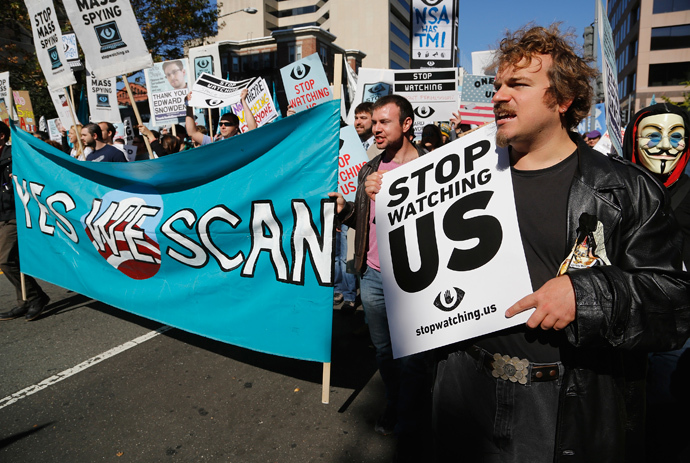
Fuel Removal From Fukushima’s Reactor 4 Threatens ‘Apocalyptic’ Scenario. Radiation Fuel Rods Matches Fallout of 14,000 Hiroshima Bombs

0

by Andrea Germanos

An operation with potentially “apocalyptic” consequences is expected to begin in a little over two weeks from now – “as early as November 8″ – at Fukushima’s damaged and sinking Reactor 4, when plant operator TEPCO will attempt to remove over 1300 spent fuel rods holding the radiation equivalent of 14,000 Hiroshima bombs from a spent fuel storage tank perched on the reactor’s upper floor.

Fukushima Reactor 4

While the Reactor 4 building itself did not suffer a meltdown, it did suffer a hydrogen explosion, is now tipping and sinking and has zero ability to withstand another seismic event.

The Japan Times explained:

To remove the rods, TEPCO has erected a 273-ton mobile crane above the building that will be operated remotely from a separate room.

[…] spent fuel rods will be pulled from the racks they are stored in and inserted one by one into a heavy steel chamber while the assemblies are still under water. Once the chamber is removed from the pool and lowered to the ground, it will be transported to another pool in an undamaged building on the site for storage.

Under normal circumstances, such an operation would take little more than three months, but TEPCO is hoping to complete the complicated task within fiscal 2014.

A chorus of voices has been sounding alarm over the never-been-done-at-this-scale plan to manually remove the 400 tons of spent fuel by TEPCO, who so far has been responsible for mishap after mishap in the ongoing crisis at the crippled nuclear plant.

Arnie Gundersen, a veteran U.S. nuclear engineer and director of Fairewinds Energy Education, warned this summer that “They are going to have difficulty in removing a significant number of the rods,” and said that “To jump to the conclusion that it is going to work just fine is quite a leap of logic.” Paul Gunter, MD, Director of the Reactor Oversight Project with Takoma Park, Md.-based Beyond Nuclear, also sounded alarm on Thursday, telling Common Dreams in a statement that “Given the uncertainties of the condition and array of the hundreds of tons of nuclear fuel assemblies, it will be a risky round of highly radioactive pickup sticks.” Gundersen offered this analogy of the challenging process of removing the spent fuel rods:

If you think of a nuclear fuel rack as a pack of cigarettes, if you pull a cigarette straight up it will come out — but these racks have been distorted. Now when they go to pull the cigarette straight out, it’s going to likely break and release radioactive cesium and other gases, xenon and krypton, into the air. I suspect come November, December, January we’re going to hear that the building’s been evacuated, they’ve broke a fuel rod, the fuel rod is off-gassing. […]

I suspect we’ll have more airborne releases as they try to pull the fuel out. If they pull too hard, they’ll snap the fuel. I think the racks have been distorted, the fuel has overheated — the pool boiled – and the net effect is that it’s likely some of the fuel will be stuck in there for a long, long time.

The Japan Times adds:

Removing the fuel rods is a task usually assisted by computers that know their exact location down to the nearest millimeter. Working virtually blind in a highly radioactive environment, there is a risk the crane could drop or damage one of the rods — an accident that would heap even more misery onto the Tohoku region.

As long-time anti-nuclear activist Harvey Wasserman explained, the

Spent fuel rods must be kept cool at all times. If exposed to air, their zirconium alloy cladding will ignite, the rods will burn and huge quantities of radiation will be emitted. Should the rods touch each other, or should they crumble into a big enough pile, an explosion is possible.

“In the worst-case scenario,” RT adds,

the pool could come crashing to the ground, dumping the rods together into a pile that could fission and cause an explosion many times worse than in March 2011.

Wasserman says that the plan is so risky it requires a global take-over, an urging Gunter also shared, stating that the “dangerous task should not be left to TEPCO but quickly involve the oversight and management of independent international experts.”

Wasserman told Common Dreams that

The bring-down of the fuel rods from Fukushima Unit 4 may be the most dangerous engineering task ever undertaken. Every indication is that TEPCO is completely incapable of doing it safely, or of reliably informing the global community as to what’s actually happening. There is no reason to believe the Japanese government could do much better. This is a job that should only be undertaken by a dedicated team of the world’s very best scientists and engineers, with access to all the funding that could be needed.

The potential radiation releases in this situation can only be described as apocalyptic. The cesium alone would match the fallout of 14,000 Hiroshima bombs. If the job is botched, radiation releases could force the evacuation of all humans from the site, and could cause electronic equipment to fail. Humankind would be forced to stand helplessly by as billions of curies of deadly radiation pour into the air and the ocean.

As dire as Wasserman’s warning sounds, it is echoed by fallout researcher Christina Consolo, who told RT that the worst case scenario could be “a true apocalypse.” Gunter’s warning was dire as well.

“Time is of the essence as we remain concerned that another earthquake could still topple the damaged reactor building and the nuclear waste storage pond up in its attic,” he continued. “This could literally re-ignite the nuclear accident in the open atmosphere and inflame it into hemispheric proportions,” said Gunter.

Wasserman says that given the gravity of the situation, the eyes of the world should be upon Fukushima:

This is a question that transcends being anti-nuclear. The fate of the earth is at stake here and the whole world must be watching every move at that site from now on. With 11,000 fuel rods scattered around the place, as a ceaseless flow of contaminated water poisoning our oceans, our very survival is on the line.

Source: Global Research

Eavesdropped on Amtrak: Ex-NSA Chief Gets Taste of Own Medicine

0

(Updated below) Former head of the National Security Agency Michael Hayden is making headlines for an interview he gave on Thursday, but not at all in the manner he intended.

(Twitpic: via Tom Matzzie ‏@tommatzzie) Fellow passenger and former political activist Tom Mattzie, on the other hand, had no intention of making the evening news, but that’s exactly what happened after he recognized Hayden, seated behind him, and overheard him offering up thoughts on the Obama administration regarding the ongoing revelations about the NSA.

Realizing the opportunity, Mattzie did what any technologically savvy public citizen might do: he started tweeting.

As the Guardian relates the ironic story of the former spy chief who got spied upon:

Hayden ended up on the wrong end of a surveillance stakeout on Thursday afternoon when, while riding a commuter train, he was overheard “disparaging” the Obama administration. The over-hearer was a private citizen – Tom Matzzie, an entrepreneur who previously worked for MoveOn.org and John Kerry’s 2004 presidential campaign.

Hayden was aboard an Acela train outside Philadelphia and talking by phone with a reporter when Matzzie, who was sitting nearby, recognized him. Matzzie heard Hayden insist to the reporter that he be quoted anonymously, as a “former senior administration official”.

Then Matzzie began live-tweeting as the nation’s former top spy badmouthed the Obama administration, apparently in connection with the revelation hours earlier that NSA had monitored the phone calls of at least 35 world leaders’ telephone lines.

The Huffington Post adds:

Matzzie told HuffPost that during the fateful Acela ride, he couldn’t believe what he was hearing, but Hayden “just kept on saying stuff.”

“He talked about Obama’s BlackBerry a bunch when he was talking about foreign leaders,” Matzzie recalled.

President Barack Obama famously uses a BlackBerry to make phone calls — not the more popular iPhone, because of security concerns. Phone tapping is front and center right now because of the revelation that the NSA spied on 35 world leaders, including German Chancellor Angela Merkel.

“He was suggesting that the administration should have known that this was going on, the foreign intelligence eavesdropping,” Matzzie alleged Hayden said on the train. “He was suggesting to reporters that the administration was naive. It reminded me of that scene from ‘A Few Good Men’ — ‘You can’t handle the truth.’ He was casting himself as Colonel Jessep.”

The tweets themselves, however, tell the story best:

And the clinchers:

Updated:

This email interview with New York Magazine is worth adding as well:

So you’re on the train, and you just start overhearing this private-sounding conversation about national security stuff, or what? How did this start?
He was talking very loudly and using words like “rendition” and “black sites.” My ears perked up. At first I didn’t recognize him. Then I thought he was James Clapper. Then I realized he was Michael Hayden.

What motivated you to blow Hayden’s cover? You’re a former MoveOn guy — was this a protest or political statement of some kind? Or was it more just that it was a funny thing to do?
What cover? He was 7-8 feet away talking very loudly. I thought the former head of NSA and a retired general attacking the president on background was lame. Say it in a book like everyone else.

Did you hesitate at all about about whether you should do it?
No.

What kinds of things was Hayden talking about? Was is super-duper-secret, or just kind of secret?
Beats me. It had the tone of “hey reporter I’m talking to you in confidence.”

Who was he criticizing in particular?
The president and his blackberry.

It’s surprising that Hayden would be having such a sensitive conversation on a crowded train. Could everyone else hear it too?
It was loud. He was three seats away from me. My seatmates and I discussed it.

Do you think it’s possible that Hayden wanted to be overheard? That’s what would happen in Homeland.
I have no idea. I mostly watch Daniel Tiger’s Neighborhood with my kid.

So after his conversations are over, Hayden gets a phone call from his office informing him that you’ve been tweeting about him. Were you listening as this phone call happened? Were you getting nervous?
Yes. I was nervous. The dude approved waterboarding.

What did Hayden say when he approached you?
“So, would you like a real interview?”

Did he at any point joke about droning you or putting poison in your soup or something?
No. He was a gentleman.

Even if he was being outwardly calm and friendly, did it seem like he was seething, deep down, underneath?
Maybe a little nervous. Not seething. I feel a little sorry for him.

Are you paranoid right now? Did you go home and clear your search history?
No. Email login didn’t work for a minute. But that was just ALL CAPS.

Are you a hero or a traitor?
Is that really a question?

________________________________

This work is licensed under a Creative Commons Attribution-Share Alike 3.0 License

Source: Common Dreams

U.S. Imperialism and America’s War Machine: A Destrctive Apparatus

0

Corporate imperial militarism controls U.S. society and wages destructive occupations abroad to serve the capitalist interests of the war-making, armaments manufacturing class whose bombs eradicate human beings for profit.

Externalized racism and depleted uranium radiation warfare smashes the aspirations of target victims in Afghanistan and Iraq, CIA drones slaughter civilians mercilessly in Pakistan, napalm and agent orange used in Vietnam is still effecting children with birth defects, hundreds of thousands in El Salvador and Guatemala miss their disappeared relatives that the U.S. military and CIA trained Latin American dictators and their police constabularies in racist anticommunist doctrine to murder and justify the imperial extraction of natural resources to protect the elite wealthy classes and rich landowner death squads using secret police assassination methods.

The CIA trains murderous guerillas as part of proxy sabotage whenever a government the U.S. imperial corporate war masters don’t like achieves advances in health care and education for their population while simultaneously offering land reform or industrialization beneficial to the population and plentiful jobs. Whether CIA-contra proxy mercenary guerilla insurgent violence against teachers, priests and peasant farmers supporting the Sandinista revolutionary government or NATO massive aerial bombardment of infrastructure and terrorization of the Libyan African population with jihadist barbaric killers, the goal is to undermine systems that are functioning for the majority of people and therefore undermining the control of the U.S imperial wall street armaments manufacturing oil mafia elite.

The U.S. massacre armaments machine didn’t like the Sandinista revolution because El Salvador and Guatemala were stable customers of armaments to terrorize their populations and one leftist regime left standing in the hemisphere perhaps might result in the strengthening of revolutionary upheavals in the neighboring colonies and therefore represented a threat to the sale of counterinsurgency equipment to these nations. Gaddafi’s Libya featured a free health care system, free university, public infrastructure projects for his population and this leader threatened to demand payment of his nations’ oil in gold rather than the dollar.

These nations are seen as targets for obliteration and destruction of the U.S. military corporate war imperial NATO masters who thrive on death and arms sales to profit their personal bank accounts.

The destructive apparatus known as the U.S. war machine builds bases all around the world for the private corporate profit of Halliburton, Kellogg Brown and Root and maintains concentration camps with emaciated prisoners cleared for release at Guantanamo who are being force fed and choked to maintain the profitability of running overseas prison garrisons for the sake of a bloody empire run by the rich.

Lies make money. Lies are an immensely profitable undertaking. A lying industry prevails in the United State serving the corporate military war factory interests that enriches the capitalist ruling class. Televisions and armaments factories are running in smooth operating precision as the conditioned masses are left to stare at their leaders who threaten to crash the global financial system and lie about a lack of funds for the civilian government while innocent civilians are blown to smithereens with National Security Agency reconnaissance assisted CIA-military piloted drones from the skies during a shutdown of basic services for the poor.

Mass media deception is a perpetual function of the armaments industry as it uses the avenues of print, electronic television and radio to sell the homicidal lies of the arms merchants who wanted to lay waste to Syria as part of the NATO/U.S. imperialist capitalist destruction of this land with Tomahawk missiles. A study of the mass media on http://public-accountability.org/ reveals that MSNBC, Fox, PBS and CNN television anchors interviewing former Bush national security advisor Stephen Hadley, who made various arguments in favor of a U.S./NATO military attack against Syria, failed to mention that he is a director of Raytheon which manufactures the Tomahawk missile. Raytheon paid Hadley $128,500 in compensation last year, and he is owner of 11,477 shares of stock in this armaments company, worth $900,000. Out of the four times Hadley’s arguments for U.S. military violence against Syria were featured in mainstream media, including three televised interviews—on Bloomberg TV, Fox News and CNN and once in a Washington Post opinion editorial, media anchor or editorial personnel responsible for identifying a guest experts’ official title only mentioned his position as former national security advisor and nothing about his war profiteering affiliation with Raytheon.

A variety of other guests which appeared on the mainstream corporate networks and advocated for militarized violence against Syria during the attempted run-up for war are affiliated with munitions company or “defense” or intelligence contracting interests. The study shows that 22 different commentators with connections to defense and intelligence contractors or defense related investment firms made 111 appearances as quoted guests, experts on news shows or opinion editorial authors and mass media news personnel made only 13 attempts within the various media outlets to disclose the guest commentators’ connections to the military-intelligence weapons industry. Former Centcom commander Anthony Zinni expressed support for attacking Syria with NATO/U.S weaponry three times on CNN, once on CBS This Morning and in an opinion editorial in the Washington Post and none of the media personnel working in an interviewer or editorial capacity for these outlets mentioned that he is an outside director of BAE Systems, the third largest military services company in the world, based in London.

So much for the mass media serving as a fourth branch of government to check the powerful when reporters at media outlets that reach the vast majority of the population are completely bought off by the armaments industry and reporters who are actually doing their jobs are repeatedly spied on and more whistleblowers are persecuted than any other administration combined under the Espionage act of 1917.

Armament factory military corporate war interests of the U.S. Pentagon war machine cause Pakistani teenagers to commit suicide due to the ever present trauma of assassination squad drones hovering over their land. What does this say about the moral level of the United States when because of a lack of investment in socially uplifting employment prospects, students are now being channeled into this industry tainted with the blood of innocent men, women and children because of the massive influence of the military industrial armaments complex in shaping the educational institutions that are the main determinant in producing the array of occupations, industries goods and services that we call the economy? Newspaper columnists blurt obscenities of internalized racism such as murdering Pakistani children is better from an American standpoint because they could somehow harm U.S. citizens in the future.

How many of these future drone operators will work for humanitarian purposes such as rescuing people during disasters or delivering food to the homeless versus violating the fourth amendment of U.S. citizens with a constitutional right from unreasonable searches and seizures and, worse yet, political assassination of activists deemed criminals by an elite corporate militarized cabal? Perhaps this is an unknown, but we might ask how many of them are affiliated with progressive social causes or anti-racist, ant-imperialist views or know that imperialism is a process by which military empires extract natural resources for corporate profit as is the case with Afghanistan’s lithium as well as geostrategic positioning for oil pipelines and that U.S./NATO/ CIA military attacks against target nations always involve the indiscriminate slaughter of civilians.

Thirty thousand drones will fly over the U.S. by 2020. This war-surveillance machinery is already used in a global assassination campaign that denies both foreigners and U.S. citizens the right of trial before execution. Surveillance drones deny the target freedom from unreasonable searches, seizures and surveillance under the fourth amendment, domestically, not to mention the national sovereignty and lives of the targets of U.S-CIA-military imperial violence including scores of innocent civilians deemed “collateral damage,” or worse yet, associates of the target deliberately murdered for political assassination purposes. U.S. Imperialism—it’s no delight for the people of the world and increasingly not for U.S. citizens unaffiliated with the war machine either.

William C. Lewis is a journalist, researcher and writer from Yreka California.

Source: Global Research

Crisis of American Capitalism: The U.S. Shutdown is the Latest in this ‘Dysfunctional’ Relationship Saga

0

Now that the latest standoff between the U.S. treasury and Congress is over, it may be helpful to put it in some historical perspective.

Indeed, the outcome brings to mind the former treasury secretary Robert Rubin‘s understanding, when he faced a similar harrowing experience with Congress two decades ago, that the standoff was meant “to oppose us without stopping us.”

For the sake of global capitalism, pardner.

One of the things that drove J. Maynard Keynes to distraction during the Bretton Woods negotiations – since he could never be certain when this was being deployed as a bargaining ruse or when it reflected a genuine fear of Congress – was the repeated recourse by his U.S. counterparts to arguments based on what Congress would or would not accept. As volume three of Robert Skidelsky’s marvellous biography of the economist also tells us, Keynes was well aware that it was less treasury secretary Henry Morgenthau’s attempts to appease Congress than a fundamental asymmetry in financial power that ensured that the outcome of the negotiations “reflected the views of the American, not the British, treasury.” Yet even after The Star-Spangled Banner was played at the final banquet on 22 July, 1944, for the delegates from 44 countries, it was only the U.S. treasury’s very elaborate public relations campaigns at home, including a promise that most capital exports would eventually “take place freely,” which ensured that Congress overwhelmingly passed the Bretton Woods Agreements Act.

Flash forward 50 years. By the time Rubin became U.S. treasury secretary, he could not but see himself – as is clear from his memoirs – carrying the main burden of responsibility for superintending a fully liberalized and globalized capitalist financial system. And with the other G7 finance ministers acting as a sort of informal imperial cabinet, it was now obvious to all how wrong it had been to regard the breakdown in the fixed exchange rate system in 1971 as representing the downfall of the dollar and the decline of U.S. hegemony. On the contrary, the integration and securitization of financial markets, alongside the widespread removal of capital controls and derivative-based risk management increasingly resting on U.S. treasury bonds, had made the world ever more dependent on what the U.S. treasury did or did not do.

Taking Centre Stage

But this only made the question of what Congress would or would not accept even more problematic. This was made all too clear in the baptism of fire Rubin went through as soon as he became treasury secretary at the beginning of 1995, as he attempted to cope with a banking crisis in Mexico (until then the poster child of financial and trade liberalization) that threatened to engulf not only Wall Street but the world’s inter-bank payment system. Dealing with what Newt Gingrich as well as the then IMF director Michel Camdessus called “the first crisis of the 21st century” required so large and rapid a bailout as to ensure that the treasury itself rather than the IMF had to take centre stage. Yet despite the treasury quickly mobilizing behind its historically unprecedented $40-billion rescue plan, as well as three former presidents and 17 former secretaries of the departments of state, commerce and the treasury, and also leading state governors such as George W. Bush of Texas, Congress balked.

Notably it was then the Democrats in the House of Representatives who were the main problem, with less than a quarter of them prepared to indicate they would vote for the plan. Although the common maxim inside the treasury was that of Congress “cutting off the water to the fire department when the city is burning down,” Rubin recognized, as he later put it in his memoirs, that “many members of Congress probably meant to oppose us without actually stopping us.” This indeed proved to be the case, as it would again more recently with congressional opposition to the treasury’s $700-billion Tarp (Troubled Asset Relief Programme) bailout to stem the 2008 financial collapse during the Bush administration, and with the debt-ceiling saga faced by the Obama administration in the summer of 2011.

However significant the current configuration of Tea Party hostility to the Obama administration, the continuing conflict between the treasury and Congress reflects a more enduring problem, namely the internal contradiction the American state faces in acting as both the state of U.S. society and the “indispensable” state of global capitalism. How much more straightforward it was for the Westminster parliament in the old British empire to play its part in sharing the imperial burden. Yet what is remarkable in the face of the repeated and even heightened frisson that attends each saga of congressional imperial denial is the continuing centrality of the U.S. dollar and treasury bonds in the global economy; the global determination of the U.S. treasury to play its appointed role in sustaining this; and the acceptance of it by the rest of the world. And this is itself indicative of how deep are the structural factors at play in sustaining the U.S. informal empire – for all of its apparent “dysfunctionality” – at the centre of today’s global capitalism. •

Leo Panitch is the Canada Research Chair in Comparative Political Economy at York University, and is the co-author of The Making of Global Capitalism: The Political Economy of American Empire (Verso, 2012). This article first appeared on the www.theguardian.com website.

Source: Global Research

Will Dick Cheney be Arrested for War Crimes When He Comes to Toronto?

1

When Dick Cheney speaks in Toronto on October 31 he will be confronted by people from Canada and the United States demanding that the Canadian government arrest and prosecute him for torture and other crimes.

People throughout Canada are demanding that the Canadian government either bar Cheney or arrest him should he follow through with his plans to be a keynote speaker at an upcoming conference in Toronto. They are insisting that Canadian and international law require that Cheney be arrested if he comes to Canada.

Cheney canceled a similar speaking engagement last April in Toronto because he feared the mobilization of the people. When Cheney was speaking months earlier in Vancouver he was confronted by angry demonstrators demanding that he be prosecuted.

Thousands of people were tortured based on Cheney’s and Bush’s instructions to the CIA and military. Kidnappings, renditions, torture and assassinations were sanctioned by Bush and Cheney. Hundreds of thousands of Iraqis died needlessly and millions became refugees. Tens of thousands of U.S. service members suffered life-changing injuries and more than 5,000 were killed..

Cheney jokes about torture

Cheney is a despicable character. He appeared on October 7, 2013, at the Plaza Hotel with Donald Rumsfeld in Washington, D.C., where the two of them swapped torture jokes from the podium, with Rumsfeld quipping that Cheney had even been waterboarding fish.

These obscene displays about their crimes are an affront to humanity.

It is critical that we continue to act together to demand government accountability. Bush and Cheney cannot go anywhere in the United States or around the world without be challenged by this grassroots movement that is demanding that high officials who commit criminal acts be arrested and prosecuted.

The Indict Bush Now movement is urging all of its supporters and friends who can to join or support the October 31 demonstration in Toronto. The protest will begin at 11:30am at the Metro Toronto Convention Center, 255 Front St. W — Toronto, Canada.

The Indict Bush Now movement is also joining with thousands of people this Saturday, October 26 in a march on the U.S. Capital demanding that the government dismantle the secret spying program against the people of the United States and the world. October 26 is the 12th anniversary of Bush signing the Patriot Act that has been used to create a surveillance state that is destroying basic personal freedoms and the right to privacy. Bush and Cheney started these programs but We The People can stop them. But we must act. Join us this Saturday at 11:30 am at Columbus Circle in front of Union Station in downtown Washington, D.C.

— From all of us at IndictBushNow.org

Source: Global Research

Exclusive: Germany, Brazil Turn to U.N. to Restrain American Spies

0

Colum Lynch, Shane Harris, John Hudson
Foreign Policy
October 25, 2013

Brazil and Germany today joined forces to press for the adoption of a U.N. General Resolution that promotes the right of privacy on the internet, marking the first major international effort to restrain the National Security Agency’s intrusions into the online communications of foreigners, according to diplomatic sources familiar with the push.

The effort follows a German claim that the American spy agency may have tapped the private telephone of German Chancellor Angela Merkel and dozens of other world leaders. It also comes about one month after Brazilian leader Dilma Rousseff denounced NSA espionage against her country as “a breach of international law” in a General Assembly speech and proposed that the U.N. establish legal guidelines to prevent “cyberspace from being used as a weapon of war.”

Brazilian and German diplomats met in New York today with a small group of Latin American and European governments to consider a draft resolution that calls for expanding privacy rights contained in the International Covenant Civil and Political Rights to the online world. The draft does not refer to a flurry of American spying revelations that have caused a political uproar around the world, particularly in Brazil and Germany. But it was clear that the revelation provided the political momentum to trigger today’s move to the United Nations. The blowback from the NSA leakscontinues to agonize U.S. diplomats and military officials concerned about America’s image abroad.

“This is an example of the very worst aspects of the Snowden disclosures,” a former defense official with deep experience in NATO, told The Cable, referring to former NSA contractor Edward Snowden. “It will be very difficult for the US to dig out of this, although we will over time. The short term costs in credibility and trust are enormous.”

Full article here

This article was posted: Friday, October 25, 2013 at 5:46 am

Tags: , , ,


<!– this is where we need to show the related articles

–>

Source: Infowars

Army Halts Program That Labeled Christians Radical Extremists

0

Briefings characterized conservatives as terror threat

Paul Joseph Watson
Infowars.com
October 25, 2013

The Secretary of the Army has halted training programs that characterize conservatives as radical extremists in light of numerous media reports which highlighted how recruits were being taught that Christians were to be considered “domestic hate groups.”

Image: Wikimedia Commons

“On several occasions over the past few months, media accounts have highlighted instances of Army instructors supplementing programs of instruction and including information or material that is inaccurate, objectionable and otherwise inconsistent with current Army policy,” Army Sec. John McHugh wrote to military leaders in a memorandum obtained by Fox News’ Todd Starnes.

McHugh has “directed that Army leaders cease all briefings, command presentations or training on the subject of extremist organizations or activities until that program of instruction and training has been created and disseminated.”

As we reported yesterday, Fort Hood soldiers were told that Christians, Tea Party supporters and anti-abortion activists were a radical terror threat, enemies of America, and that anyone found to be supporting these groups would be subject to discipline under the Uniform Code of Military Justice.

Earlier this month, it also emerged that several dozen active duty and reserve troops at Camp Shelby in Mississippi were taught that the American Family Association, a well-respected Christian ministry, was a “domestic hate group,” prompting five Congressmen to complaint that the, “mislabeling of a Christian organization reflects what appears to be a troubling trend of religious intolerance in the military.”

The halt of such training programs has been announced despite claims by Fort Hood that the training program, during which it was also suggested that Christians who protest against abortion were planning to bomb family planning clinics, did not include such information.

As we have profusely documented, the problem of Christians and other conservative groups being demonized as extremists and terrorists is not just confined to the U.S. Military.

A 2011 study funded by the Department of Homeland Security also characterized Americans who are “suspicious of centralized federal authority,” and “reverent of individual liberty” as “extreme right-wing” terrorists.

Alex Jones’ 2001 documentary film 9/11: The Road to Tyranny featured footage from a FEMA symposium given to firefighters and other emergency personnel in Kansas City in which it was stated that the founding fathers, Christians and homeschoolers were terrorists and should be treated with the utmost suspicion and brutality in times of national emergency.

Facebook @ https://www.facebook.com/paul.j.watson.71
FOLLOW Paul Joseph Watson @ https://twitter.com/PrisonPlanet

*********************

Paul Joseph Watson is the editor and writer for Infowars.com and Prison Planet.com. He is the author of Order Out Of Chaos. Watson is also a host for Infowars Nightly News.

This article was posted: Friday, October 25, 2013 at 5:54 am

Tags: ,


<!– this is where we need to show the related articles

–>

Source: Infowars