Postmaster General Tries to Kill Saturday Delivery

0

Combat the epidemic of misinformation that plagues the corporate media! Click here to make a tax-deductible donation to Truthout and keep independent journalism strong.

The Postmaster General startled postal workers today by announcing that letter delivery will drop to five days a week in August. Packages, but not letters, will still be delivered on Saturdays.

Postal workers heard the news from their managers early this morning.

“Everyone’s been running up to me all morning really angry and scared, asking me what they can do,” said Manhattan letter carrier and shop steward Frank Couget.

“My response is we need to fight,” Couget said. He suggests workers should treat it as a lockout and show up to work as usual Saturday August 10, inviting community allies and news reporters along.

Postmaster General Patrick Donahoe has made no secret of his ambition to cut Saturday service, but it is not clear whether he has the legal authority to make the move without Congressional action. He acknowledged he expects a legal challenge.

The cut is supposed to save 45 million work hours and $2 billion per year. Yet Donahoe said this morning that he hopes not to cut the hours of any “non-career” employees because “they’re young people. They need jobs.”

Instead, he plans to cut back on career workers’ overtime and offer them buyout incentives to retire–affecting 22,500 jobs altogether.

A growing share of postal work is already assigned to non-career employees, who work alongside career employees, doing the same work–but for much lower pay, and without health benefits, pensions, or even access to progressive discipline.

The one saving grace of these perma-temp positions is that they offer a way to accumulate seniority into a career position, Couget said. But cutting Saturday delivery further erodes the already dwindling chances that any career job opportunities will be available.

“This should be a wake-up call–for all the people in the community, and for the workers–that Donahoe has no qualms about destroying the post office,” Chicago letter carrier Melissa Rakestraw said.

Obama Could Solve with Stroke of Pen

All four postal unions–the American Postal Workers, Letter Carriers, Rural Letter Carriers, and Mail Handlers–condemned the move. The Letter Carriers called for Donahoe’s resignation.

But postal worker activists say that’s not enough.

“The strategy of the unions all along has been lobbying Congress and having polite rallies,” said New York mail handler John Dennie. “This strategy has failed.”

Communities and Postal Workers United (CPWU), a network of activists involved in grassroots fights against post office closings and other cuts, has been calling for a national, multi-union march in Washington, D.C.

Despite Donahoe’s bemoaning of falling mail volumes in the Internet era, the major causes of USPS’s financial troubles are simple accounting issues. In 2006 Congress required the Postal Service to prefund its retiree health benefits 75 years into the future–far beyond what other federal agencies or private companies do. Postal activists say the onerous requirement was meant to create a budget deficit, and thus opportunities to privatize profitable parts of the service. The Postal Service has also significantly overfunded its pensions, to the tune of billions of dollars.

So the unions call for Congress to repeal the prefunding mandate, and for President Obama to sign an executive order refunding the pension money, which would be enough to solve the immediate budget shortfall.

“[Obama] has the power to solve this crisis, at least for the short term, with the stroke of a pen,” Couget said.

Whack-a-Mole Attacks

The cuts are part of a multi-pronged attack on the postal service, including closing or cutting back hours at rural post offices and closing processing plants where mail is sorted. In local fights where postal workers and community activists have gotten organized, they’ve been able to stop some of the cuts.

CPWU members have staged rallies, civil disobedience actions, and two hunger strikes on the National Mall to call attention to their demands.

“It’s a whack-a-mole thing. If we are able to beat back an attack in one area, they just attack in a different area,” Rakestraw said.

USPS is pushing to close 99 more mail processing plants and sell off another batch of historic post offices this spring. An attempt to privatize postal truck driver jobs has been thwarted, at least for now.

Dennie is organizing a rally in Staten Island this Saturday to oppose the plant closures. Another postal activist started an online petition to preserve six-day delivery, and CPWU is calling for a national day of action March 17.

Cuts to postal service are one facet of a broader attack on federal public services that also includes curtailed hours at Social Security Administration offices, now closing at noon on Wednesdays, over the objections of the Government Employees union members who work there.

Couget, who delivers mail to a Social Security office on his route, finds “elderly and developmentally disabled people wandering in front of the office, asking me for help,” he said. “It breaks my heart.”

Saving the postal service, he argues, will require a coalition that can inspire people with a vision of an expanded public sector. CPWU has proposed that post offices–sometimes the only public buildings in low-income and rural communities–could offer needed services like nonprofit banking, wire transfers, or ad-free email.

“Just defending from cuts isn’t going to win this fight,” Couget said. “We actually need to make the postal service an inspiring thing, something people think can improve their lives.”

Cameron Condemns MEPs For ‘Secret’ EU Budget Vote

0

David Cameron has challenged Ed Miliband over whether Labour MEPs will vote against a cut in the EU Budget, amid fears the European Parliament may veto the deal.

Last week European leaders agreed to cut the EU’s budget for the next seven years to 908bn euros. Cameron has claimed the unprecedented decision as a personal victory, after assembling an alliance of “like minded” countries including Germany and Denmark.

However the budget first has to be approved by MEPs. European Parliament President Martin Schulz has said he intends to deploy a rarely used procedure that would result in a secret vote.

By allowing MEPs to vote anonymously, the move will effectively stop EU leaders galvanising their own members of the parliament to support the budget deal.

LIKE HUFFPOST UK POLITICS ON FACEBOOK | FOLLOW US ON TWITTER

Speaking in the Commons on Monday, the prime minister said Tory MEPs would vote in favour of a cut in the budet. And Lib Dem deputy leader Simon Hughes confirmed his party’s MEP’s would be ordered to do the same.

Cameron attacked the secret ballot as “completely wrong” and challenged Miliband as to whether his “socialist” MEPs would back the budget cut. The Labour leader, who had already used up his time to speak, was unable to respond.

“A secret ballot would be wrong we need an open ballot,” Cameron said. “I would encourage every MEPs from across the UK to support the deal.”

“MPs and MEPs should vote transparently so their constituents can hold them to account. They have to account not only to their electorates but to their own countries who will suffer if a deal isn’t passed.”

Last October eurosceptic Tory backbenchers joined with the Labour party in a Commons vote to demand the prime minster seek a real-terms cut. Cameron had initially urged his party to support his vision of a freeze in the budget rather than a cut.

Related on HuffPost:

You Should Be Outraged by What Is Being Done to Our Postal Service

0

Patrick Donahoe, Postmaster General and Chief Executive Officer, at U.S. Postal Service headquarters in Washington, Feb. 6, 2013. (Photo: Christopher Gregory / The New York Times)Patrick Donahoe, Postmaster General and Chief Executive Officer, at U.S. Postal Service headquarters in Washington, February 6, 2013. (Photo: Christopher Gregory / The New York Times)You are probably hearing that the Post Office is “in crisis” and is cutting back Saturday delivery, laying people off, closing offices, etc. Like so many other “crises” imposed on us lately, there is a lot to the story that you are not hearing from the “mainstream” media. (Please click that link.) The story of the intentional destruction of the U.S. Postal Service is one more piece of the story of crisis-after-crisis, all manufactured to advance the strategic dismantling of our government and handing over the pieces to billionaires.

Here are a few things you need to know about the Postal Service “crisis”:

  • The Postal Service is the second largest employer in the United States after Walmart. But unlike Walmart, which gets away with paying so little that employees qualify for government assistance, the Postal Services is unionized, pays reasonable wages and benefits and receives no government subsidies. (Good for them!)
  • Republicans have been pushing schemes to privatize the Postal Service since at least 1996. In 2006 Republicans in the Congress pushed through a requirement that the Postal Service pre-fund 75 years of retiree costs. The Postal Service has to pay now for employees who are not even born yet. No other government agency — and certainly no company — has to do this.
  • Unlike other government agencies (like the military) since 1970 the Postal Service is required to break even. Once more: the Department of Defense is not required to break even.
  • While required to break even the Postal Service has to deliver mail to areas that are unprofitable for private companies to operate in. A letter sent from a small town in Alaska is picked up and transported across the country to a farm in Maine for 46 cents. While the Internet and recession have eaten into some of the Postal Services letter business, magazines, books, newsletters, prescriptions, advertising, DVD services like Netflix and many other services still depend on the Postal Service for delivery. And many people for one reason or another still send letters. In a democracy these people are supposed to count, too.
  • But along with requiring the Postal Service to break even, Congress has restricted the Service’s ability to raise rates, enter new lines of business or take other steps to help it raise revenue. In fact, while detractors complain that the Postal Service is antiquated, inefficient and burdened by bureaucracy, the rules blocking the Postal Service from entering new lines of business do so because the Postal Service would have advantages over private companies.For example, Republicans in Congress forced the Postal Service to remove public-use copiers from Post Offices and even blocked the Postal Service from setting up a secure online system that allowed Americans to make monthly bill payments.

The Postal Service is a public service for We, the People, not a business. The Service is hamstrung by people who pretend it is supposed to compete and then won’t let it. They won’t help with taxpayer dollars and say it has to compete in the marketplace (again: the Department of Defense is not required to break even.) Then they give it rules that no private company could survive. Then when it gets into trouble, say that government doesn’t work, start laying people off, selling off the public assets, and saying it has to be “privatized” (so all the gains will go to a few already-wealthy people instead of to the public).

Manufacturing A Crisis

So Republicans have hamstrung the Postal Service, forcing it into “crisis” and are now “solving” the crisis by working towards dismantling and privatizing it. Here is how it works:

  1. Require the Postal Service to “break even.” (Again: the Department of Defense is not required to break even.)
  2. Require them to serve all areas of the country. (Which is a service to democracy and should continue.)
  3. Keep them from raising or lowering rates as needed.
  4. Keep them from using their competitive advantages to compete with private businesses.
  5. Require them to pre-fund 75 years of health benefits.
  6. When the Postal Service has the inevitable resulting financial “crisis” complain about government and unions and demand their buildings be sold, employees laid off and the service be dismantled and given to private companies.

If you don’t see the pattern yet, try this:

  1. Cut taxes,
  2. Double military spending,
  3. Obstruct all efforts to fix things,
  4. Wait a few years, then scream loudly about a “deficit crisis” and say we have to severely cut back on government – the things we do to make our lives better.

This is not the way an informed democracy is supposed to operate.

Part Of Bigger Assault On Government

The postal service “crisis” is just one more instance of the ongoing pattern of government by lies, hostage-taking and manufactured crises. This is one more assault on a government service.

The “fiscal cliff” was a manufactured crisis, engineered to force cutbacks in the things We, the People do to make our lives better. The “debt ceiling” was a manufactured crisis, engineered to force cutbacks in the things We, the People do to make our lives better. The 2010 “tax deal” was a manufactured crisis, engineered to force cutbacks in the things We, the People do to make our lives better. Etc., etc., on and on…

And the Postal Service “crisis” is one more manufactured crisis.

Not Governing, But Destroying Government

Republicans don’t talk about governing, they talk about killing government, and when they get power they don’t govern, they destroy government. They appoint industry lobbyists to agencies that are supposed to oversee their own industries — and they don’t oversee their industries. They appoint polluters to the agencies that are supposed to protect us from pollution — and they let the companies pollute. And they appoint people who have called for getting government out of areas like education, medical care, etc. to head up and dismantle those departments for the benefit of the companies they came from.

This is not the way our government is supposed to operate. This does not serve We, the People and does not help us make our lives better.

The Push To Privatize Public Assets

Privatization means dismantling government and public assets and turning them over to private companies. It involves “contracting out” or even ending the services that were performed by We, the People (government) to make our lives better. Instead these services are operated for profit, which the citizens (and certainly not the employees) share none of the gains.

To be clear about this: contracting out government services “saves money” by laying off people who have good wages with benefits, and rehiring them at minimum wage with no benefits, while removing the accountability that goes along with a government service. For example, when a city “contracts out” its garbage collection, what happens is all the city employees who had government jobs doing this work are laid off. The private company that contracts to do the service “saves money” by hiring employees at a much lower wage with no benefits. It doesn’t have to meet the standards of government agencies, doesn’t have to be transparent, doesn’t have to use well-maintained equipment, etc. Obviously the city employees and the places they used to shop are worse off, but their lower wages mean everyone else’s wages come under pressure, too. So the “money saved” comes at a great cost to the public.

This same process occurs in all instances of privatizing or “downsizing” government. The public receives less service, wages generally are lowered, but a few people make a bundle at the expense of the rest of us.

Cato Institute Push To Privatize The Postal Service

The Koch brothers’ Cato Institute has been pushing to privatize the Postal Service (and the rest of government) for many years. (Note: Frederick W. Smith, Chairman & CEO, FedEx Corporation was on the Board of Directors of Cato Institute. FedEx is also a funder of the Cato Institute.) In 1996, for example, Cato’s Edward L. Hudgins testified before Congress on Postal Service privatization.

Today Cato employees write about “freeing the mail from the government’s grip” and ” getting the government out of the mail business.” (from Cato’s “Stamp Out the Postal Service.”)

While part of Cato’s motivation for privatizing the Postal Service is their efforts to transfer all public assets to private hands, Their website, Privatizing the U.S. Postal Service, explains their reasoning,

The USPS is in deep financial trouble as a result of declining mail volume, bloated operating expenses, a costly and inflexible unionized workforce, and constant congressional meddling. At the same time, electronic communications and other technological advances are making physical mail delivery less relevant.

America’s postal system needs a radical overhaul. This essay … concludes that taxpayers, consumers, and the broader economy would stand to gain with reforms to privatize the USPS and open U.S. mail delivery up to competition.

Cato’s funders also oppose unions because they enable working people to bargain for a larger share of the pie, and the Postal Service is unionized – the largest remaining union. In “The Postal Service Can’t Afford Unions,” Cato’s Tad DeHaven writes, “A big drag on the USPS’s bottom line is the pesky postal unions.” DeHaven continues,

The USPS has been able to eliminate thousands of positions through attrition, but it still possesses the second-largest civilian workforce in the country, behind only Wal-Mart. With 85 percent of that workforce protected by collective bargaining agreement, the unions have become a giant anchor on an already sinking ship.

The Postal Service is a PUBLIC service, serving We, the People and our democracy. It is our second-largest employer. Like Social Security it demonstrates that government can and does serve We, the People. You should be outraged by what is being done to our Postal Service! It is time to step up and defend all of our democratic institutions.

Other Voices

Here are a few other voices on this issue:

John Nichols writes in The Nation, “Postal Cuts Are Austerity on Steroids“:

The austerity agenda that would cut services for working Americans in order to maintain tax breaks for the wealthy–and promote the privatization of public services–has many faces.

Most Americans recognize the threats to Social Security, Medicare and Medicaid as pieces of the austerity plan advanced by House Budget Committee chairman Paul Ryan (R-WI), and the rest of the Ayn Rand—reading wrecking crew that has taken over the Republican Party. But it is important to recognize that the austerity agenda extends in every direction: from threats to Food Stamps and Pell Grants, to education cuts, to the squeezing of transportation funding.

But the current frontline of the austerity agenda is the assault on the US Postal Service, a vital public service that is older than the country. And it is advancing rapidly.

Dean Baker at CEPR, “Killing the Messenger: The Downsizing and Death of the Postal Service”:

Congress also has to be prepared to allow the Postal Service to win. About a decade ago, the Postal Service had an extremely effective ad campaign highlighting the fact that its express mail service was just a fraction of the price charged for overnight delivery by UPS and FedEx.

The two companies actually went to court to try to stop the ad campaign. When the court told them to get lost, they went to Congress. Their friends in Congress then leaned on the Postal Service and got it to end the ads.

Sen. Tom Carper of Deleware has a good information page: “Postal Reform Myths vs. Facts” (click through for the details):

With all the information floating around about the U.S. Postal Service’s financial crisis and the possible Postal Service default at the end of September, it can be difficult to wade through what is fact and what is fiction. Below are 8 Myths about the current crisis and 8 facts explaining what can and must be done to reform this vital American institution and ensure its services remain for generations to come.

MYTH #1: The U.S. Postal Service is bankrolled by taxpayers.
MYTH #2: The U.S. Postal Service will inevitably see a total financial collapse in the coming months.
MYTH #3: Congressional action to save the U.S. Postal Service amounts to yet another government bailout of a failing industry.
MYTH #4: Allowing the U.S. Postal Service to default will simply force much-needed restructuring and reform.
MYTH #5: A new government control board could better take the dramatic steps necessary to fix the U.S. Postal Service.
MYTH #6: A new government commission — similar to the Base Realignment and Closure (BRAC) Commission — could help the U.S. Postal Service close or consolidate unnecessary processing and retail facilities free from political pressure.
MYTH #7: The U.S. Postal Service must raise rates on certain postal products to help cover its losses.
MYTH #8: Sen. Carper’s bill — the POST Act — wants to end Saturday mail delivery.

Think Progress, “Thanks To Congressional Incompetence, Saturday Mail Delivery Is History“:

Postal access is, ultimately, a rights issue for rural Americans; since they live in areas where internet coverage is inconsistent, post office closures and slowed-down delivery can mean big limitations on communication. A lack of access to postal services can lead to a growth in economic inequality. The new rules for Saturday delivery, set to take effect on August 1, 2013, will continue delivery of packages, but discontinue basic first-class mail.

From September 2011, Brigid OFarrell, writing at the Roosevelt Institute’s Next New Deal blog, “Ten Reasons That the U.S. Postal Service is Not a Failure – and is Vital to Our Country”:

There is a crisis, but it is not because the Postal Service is inefficient and its workers overpaid. It is because the Postal Service:

1. Receives no taxpayer dollars

2. Is funded by the products and services it sells

3. Working with its unions, has already reduced its workforce by 110,000 employees, improved efficiency, and introduced new products and services

4. Handles more than 40 percent of the world’s mail more efficiently and at lower cost than other services

5. Despite the growth of the digital world, continues to support a $1 trillion mailing industry with more than 8 million jobs

6. Has a workforce that is made up of 40 percent women, 40 percent minorities, and 22 percent veterans, many disabled

There is a crisis, but it is not because the Postal Service is inefficient and its workers overpaid. It is because the Postal Service:

7. Is the only federal agency or private company required to pre-fund retiree health benefits for 75 years
8. Is therefore required to pay $5.5 billion annually to the Treasury, an amount not required of any other agency or company

Without these unique requirements, it would have earned a surplus of over $600 million during the last four years. In addition, the USPS:

9. Has over-paid its obligations to the Civil Service Retirement System (CSRS) by an estimated $50 billion (and this money should be returned)
10. Has overfunded the Federal Employees Retirement System (FERS) by approximately $6.9 billion (and would be profitable if these funds were returned)

David Morris at AlterNet takes a good look at the history of the Postal Service and the current problems, in “Why We Must Rescue the U.S. Postal Service From the Brink of Death,” and concludes:

The Postal Service can still be saved. But the grave has been dug. The coffin has been built. And funeral music is in the air. Only the most aggressive effort by AARP, the NAACP, Consumers Union and other affected constituencies can save this most public of all public institutions.

BBC journalists to strike over redundancies

0

Journalists at the BBC are to stage a one-day strike unless the corporation agrees to end compulsory redundancies, it was warned today.

The National Union of Journalists (NUJ) said its members at the BBC will walk out on February 18 and launch a work-to-rule from Friday.

The action will go ahead unless talks between the two sides next week resolve a dispute over jobs.

BBC executives have come under serious budgetary constraint, with the licence-fee cap restricting new income.

NUJ general secretary Michelle Stanistreet said: “The BBC is prepared to waste public money on needless redundancies rather than secure redeployment opportunities for those at risk.

“This demonstrates the significant failures of some managers to uphold key aspects of the redeployment agreement, let alone the spirit of the deal.

“In the meantime we have meetings planned with the BBC and we want to engage in meaningful negotiations to resolve this dispute.

“I hope common sense prevails and a sensible solution is agreed which will mean that strike action is not necessary.”

The NUJ said the BBC was planning around 30 compulsory redundancies, affecting areas including BBC Scotland, the Asian Network, the World Service and English regions.

A BBC spokesperson said: “We understand how frustrating and difficult situations involving redundancies can be, but it is disappointing the NUJ have chosen to take this action.

“We are working hard to ensure that we succeed in getting staff redeployed wherever we can and will continue to work with the unions to ensure that their members receive the right redeployment support.”

Pope Benedict XVI To Resign Feb. 28

0

Breaking news this morning:

ROME — Pope Benedict XVI announced Monday he will step aside as leader of the world’s 1.2 billion Roman Catholics on Feb. 28, saying he no longer has the strength to carry out his duties.

Speaking in Latin, the 85-year-old announced his decision during an address at the “Concistory for the canonization of the martyrs of Otranto”, a small event held early in the morning.

The decision makes him the first pope to resign since the Middle Ages.

His statement was posted on the Vatican Radio website. Carrying out the duties of being pope required “both strength of mind and body,” it said.

NBC New Vatican analyst George Weigel gives his thoughts on Pope Benedict XVI’s announcement of his resignation, and explains how a new pope will be selected.

“After having repeatedly examined my conscience before God, I have come to the certainty that my strengths, due to an advanced age, are no longer suited to an adequate exercise of the Petrine ministry,” the pontiff’s statement said.

The Cost of Israel’s War on Gaza

0
RealNewsNetwork.com, Real News Network, Real News, Real News For Real People, IWT are trademarks and service marks of IWT.TV inc. “The Real News” is the flagship show of IWT and Real News Network.

All original content on this site is copyright of The Real News Network. Click here for more

Problems with this site? Please let us know

Linux VPS Hosting by Star Dot Hosting

Fox Suggests Maxine Waters Supports Alleged Cop-Killer Dorner

0

Fox & Friends Weekend used the manhunt for alleged cop-killer Christopher Dorner as an excuse to play a thinly-veiled race card against Rep. Maxine Waters and other African Americans. The pretext was a discussion about how Dorner has garnered some fans on Facebook and Twitter as a result of his manifesto alleging racism and corruption in the Los Angeles Police Department, his former employer. But instead of doing any real work and reporting any real facts about the state of community relations with the LAPD or even relaying what the fans are saying, the three hosts dismissed any concerns about police brutality and racism and suggested that race-crazed African Americans are using the case to justify violence. For good measure, host Tucker Carlson baselessly suggested that Congresswoman Maxine Waters is part of Dorner’s fan base.

Huffington Post also reported on Dorner’s fans but — unlike Fox — also noted that there’s a sort of “Dark Knight Complex” that gives a kind of appeal to high-profile killers among certain people:

The vast majority of Americans are horrified that Dorner declared “war” on the LAPD and has allegedly killed three individuals so far. But the public disgust seems to add fuel to the fire for his followers, as it does with skeptics of 9/11, the Aurora massacre and the Newtown massacre.

However, it is clear that Dorner’s fans have a more issue-driven focus than, for example, the fans, or “Holmies,” of alleged Aurora shooter James Holmes.

Dorner’s supporters say the media should be focusing on police brutality and officer-involved deaths as much as they are on this alleged killer.

In other words, Dorner is obviously not the only public villain to gain fans and it is clear that the case has brought to the forefront a range of concerns about the LAPD. But Fox ignored the “Holmies” just as it disregarded the Dorner supporters’ issues – in order to paint them as racial demagogues.

Co-host Mike Jerrick offered up his decades-old observations and current suppositions instead of facts. He said he lived in Los Angeles “in the 90’s” when “there probably was corruption and racism… So, they have tried to stamp all that out and they’ve had a pretty darned good relationship with the public, the police out there, for the last 5-10 years and now all this starts up again.” He shook his head in disbelief.

And we knew who to blame even before Tucker Carlson said:

Who cares (what kind of racism Dorner endured in the LAPD)? You saw this in 1992 during the LA riots. And you saw members of Congress, including Maxine Waters who’s still in the Congress, make the case that this violence against innocent bystanders then and now was justified because it was a reaction against racism. Violence is not justified. Period… I don’t care what happened to Rodney King. You don’t have a right to shoot strangers.

Nobody pointed out that Rep. Waters’ comments about a riot 20 years ago have nothing to do with the murder spree now, nor that she expressly disavowed the violence then even as she sympathized with the sentiments of the community she represented. In fact, nobody even questioned whether Waters or any other members of Congress had voiced any support at all for Dorner, as Carlson had hinted.

Instead, Jerrick ran with the insinuation that she and any other (black) person with a real or imagined beef against the LAPD is probably a fan of Dorner’s: “So anybody who’s ever been wronged or feel that they were wronged by the LAPD is now somehow going online and showing this guy support.”

Disgraceful, even by Fox News standards.

The Scams and Sexism Hidden in Your Cable Bill

0

Sports channels are increasingly costly to consumers, especially women.

Photo Credit: Shutterstock.com

February 11, 2013  |  

Like this article?

Join our email list:

Stay up to date with the latest headlines via email.

I have come to realize that there are actually three things in life that are inevitable. Death, taxes and professional sports. The second two items go hand in hand.

I care not a fig for glitzy, large-scale, athletic competitions, and yet I am bombarded with news of grown men getting paid to tackle and throw balls at each other almost daily. Through my newspaper subscription, I support entire sections devoted to games and scores that don’t concern me. I subsidize professional sports teams through my taxes. According to a recent report in Bloomberg, U.S. taxpayers have kissed goodbye $4 billion through tax exemptions and other schemes to build fancy sports structures with retractable roofs and whatnot since 1986. Structures I will likely never visit. Franchise owners make out like bandits, and I receive little in return.

Travis Waldron and Pat Garofalo at ThinkProgress have devoted several articles to explaining why these kinds of subsidies are poor investments for economic growth. Stadiums don’t pay for themselves, as promoters claim, and they divert resources from vital services, like roads and bridges, firefighters and public pensions.

David Sirota has just added a new layer of insult to my injuries. In a recent column, “ The Sports Tax,” he outlines the various ways I’m getting hustled, including one I hadn’t thought about much, because I only recently caved and got cable TV (I used to be able to get basic channels in my NYC apartment using deftly positioned rabbit ears, but no more). My Time Warner Cable bill, which combines phone and Internet — and doesn’t even buy me HBO — is nearly $200 per month. Flipping around the channels, I have a hard time comprehending what justifies this price. As Sirota explains, a large chunk of what I pay goes toward expensive sports channels like ESPN and Sports Net:

“The third Sports Tax is embedded in your cable television bill. Though this levy is not itemized on your bill, the Los Angeles Times reports that up to half of your total cable payment is ‘for the sports channels packaged into most services.’ That’s because the sports stations tend to charge significantly higher rates than other outlets, and yet are automatically included in most basic cable packages, thereby preventing ratepayers from opting out. The result is a tax obligating those who do not watch sports to subsidize those who do.”

Have you noticed your cable bill going up lately? Perhaps by as much as 40 percent? That’s because TV deals with big-name sports franchises are pushing them up, says the LA Times:

“’We’ve got runaway sports rights, runaway sports salaries and what is essentially a high tax on a lot of households that don’t have a lot of interest in sports,’ said John Malone, the cable industry pioneer and chairman of Liberty Media. ‘The consumer is really getting squeezed, as is the cable operator.’” Those who actually watch sports–and I don’t fault them for it — are not getting a better product for those higher prices, but “smaller slices at higher prices.”

While the LA Times puts the percentage of your cable bill that goes to sports channels at 50 percent, Derek Thompson at the Atlantic counters that it’s really only 15 percent. In any case, I’m getting bupkis for that cost. Thompson notes that while ESPN gets $5 a month from every household, MTV only gets 39 cents. Why is that?

On top of that, sports makes TV look like crap. I recently watched Dirty Rotten Scoundrels in high definition and it looked absolutely horrible. I could see the stage makeup on Steve Martin. The lighting was garish. The whole experience made it seem that I was watching an acting class, rather than a film. This is known as the “ soap opera effect” because it makes things look like the kind of cheap video used for soap operas. I am told it’s possible to fiddle with a labyrinth of settings and connections in order to mitigate this, but what a pain in the ass. And why does TV look like this? High definition is primarily exciting to sports viewers who want to see the minutia of every play. It’s absolutely awful for dramatic presentations where mood and nuanced lighting is critical. And it is particularly cruel to older actors and media figures who must struggle to conceal every wrinkle and often end up Botoxed out of recognition.

Romanian And Bulgarian ‘Surge’ Must Be Stopped, Say MPs

0

The government has insisted the UK will not be a “soft touch” on immigration after Conservative MPs raised concerns there will be a sharp jump in migration from Romania and Bulgaria.

Next year transitional controls placed on immigration from the two nations, which joined the EU in 2007, will be lifted, allowing Romanians and Bulgarians the same rights of free movement enjoyed by others in the union.

Immigration minister Mark Harper was repeatedly questioned on the issue by Conservatie MPs in the Commons on Monday, many of whom fear a “surge” in migration.

Bury St Edmunds MP David Ruffley said Britain should consider taking new powers to curb “benefit tourism undertaken by Romanians and Bulgarians”. He said such “welfare tourism” added to British public spending rather than reduced it.

And Basildon and Billericay MP John Baron said the fact the national minimum wage in the UK was “five or six times” higher than in Bulgaria and Romania could fuel a “surge” in mass migration.

LIKE HUFFPOST UK POLITICS ON FACEBOOK | FOLLOW US ON TWITTER

Harper told his Conservative backbenches that the government had not made “speculative projections” about how many Romanians and Bulgarians would want to move to the UK as this could not be done with any degree of accuracy.

“We want to make sure when people look at access to our benefits and our services no one thinks we are a soft touch,” he said.

Earlier this month leading politicians from both Romania and Bulgaria said Britain was not first choice for their citizens who wished to move.

Bulgarian foreign minister Nikolay Mladenov said many of his compatriots would much rather travel to Germany, Spain and Italy, as his country has stronger business links with those countries.

In January it was reported the British government was considering running adverts to dissuade would-be immigrants from moving to the UK.

The rumour prompted a Romanian newspaper to hit back by posting adverts encouraging Britons to move to Romania instead. The adverts included the claim that “Half of our women look like Kate. The other half like her sister”.

The debate over immigration comes as the Romanian prime minister strongly denied allegations that abattoirs in his country were the source of horse meat found it beef products sold across the EU.

Related on HuffPost:

I Am Not a Camel … but I Do Have Epilepsy

0

Maya Schenwar during a hospital visit. (Photo: Maya Schenwar)Maya Schenwar during a recent hospital visit. (Photo: Maya Schenwar)On a warm, breezy afternoon in early September 2004, I was leaning back on my elbows on a grassy hill in Swarthmore, Pennsylvania, eating a cheese sandwich off a plastic tray, chatting with a couple of classmates. It was the beginning of my senior year of college, and we were already dizzy with happy anxiety. I turned my face upward and watched a white streak of sun shoot down across the canopy of the sky, dry grass prickling through my sandals.

But as I stared, that streak of sun kept coming, straight at me. I swallowed and couldn’t swallow; I was gulping at stars; I was outside my skin, watching my own face as it radiated, swirling galactically. And then I was lying flat and rolling backward, a million faces hanging over mine, staring down, their hands on my arms, my face. And then the faces slid together – there were only ten or seven or five faces, though I couldn’t catch hold of words like “ten” or “seven” or “five.”

“What’s your name?” a white-masked face said, into my eyes.

“I don’t know,” I said back. The “me” outside of myself was flailing: “Thinking of words is my thing!” that “me” thought. “Who am I if I can’t say words?” I thought the word “vegetable.”

But a few minutes later, the words rushed back. When the paramedics asked me what month it was and what country we were in, I got the answers right. My head was mine again, albeit aching like crazy. Yet the left temporal lobe of my brain had, apparently, reared up and announced its eccentricities, and it wouldn’t be shutting up anytime soon. My epilepsy had made its debut.

Fyodor Dostoevsky, who also had temporal lobe epilepsy, described his protagonist’s seizure experience in The Idiot:

He remembered that he always had one minute just before the epileptic fit when suddenly, in the midst of sadness, spiritual darkness and oppression, there seemed at moments a flash of light in his brain, and with extraordinary impetus, all his vital forces suddenly began working at their highest tension. The sense of life, the consciousness of self, were multiplied ten times at these moments, which passed like a flash of lightning. His mind and heart were flooded with extraordinary light…. But these moments, these flashes, were only the prelude of that final second in which the fit began.

Dostoevsky’s Prince Myshkin likened these “flashes” to “the highest form of existence” and “the acme of harmony and beauty.”

Well, my moment of oneness with the sun (my “aura,” as it’s called) may have been glorious, but the less-mystical reality of the seizure that hit me that September afternoon wasn’t harmonious or beautiful (especially when I looked at myself in the hospital mirror afterward and noticed I’d drooled all over my face and hands, and probably those of anyone who’d been helping me). Neither were the headache and shame that followed me around in the days afterward. I visited a string of neurologists over the next few years, lost my driving privileges intermittently, and was quickly prescribed a medication regimen that keeps my seizures in check most of the time.

When I do seize, unlike Dostoevsky, I do not tend to topple into radiant epiphany or collapse from the sheer force of my own ecstatic, perfect, devastating cosmic comprehension.

Instead, I blank out on a ratty couch in my old basement apartment in Chicago, or the shopping mall food court, or (eek!) emerging from a panel presentation at the Americans for Democratic Action convention, and wake up to find the paramedics touching my head and asking me questions like, “Who’s the president of the United States?” and “Do you know how to write your name?” Once in a while, I don’t know how to write my name.

And then there’s the other, less dramatic stuff – the “abnormal activity” buzzing around my brain on “normal” days. Since I had my first seizure, that “me” who floated outside myself and saw a separate version of reality has never really gone away. When I’m not concentrating hard on something – an engaging conversation, a good book, a challenging project, my wonderful wedding, my fast-paced job, an adorable dog, an extremely delicious sandwich – I’m sometimes flooded with a feeling of “derealization.” The world around me appears like a dream, or a movie, or a secondhand vision: a matrix inside a matrix. Sometimes, the world wiggles. At times, I think I’m seeing the fundamental unreality of things as they really are, as in the Hindu concept of “Maya,” in which the physical world is an illusion or projection that must be seen through in order to achieve enlightenment…. And at times, I just want to go to bed.

Two weeks ago, after a recent flare-up, I was admitted into the hospital for an extended video-monitored electroencephalogram (EEG) to measure my brain’s epileptiform activity. I was forbidden from going to the bathroom – or getting out of bed, for that matter – without paging a nurse. I couldn’t sleep at night under the camera’s constant glare, the electric nodes pulling at my hair and my neurons. I tried to work on my computer (you know, for this political news web site), but was interrupted by a series of doctors, residents and nurses asking me if I knew who the president of the United States was. At one point, I replied “Lindsay Lohan,” just for kicks. I went home with a glue-stained scalp, a report of “frequent spikes,” an increased medication dosage and few answers.

Why am I telling you all this?

First of all, I really wanted to share this glamour shot I took of myself in the hospital with my head tangled in wires (see above). I think the cyborg-Medusa look could be the next runway hit.

More importantly, though: For a long time, I didn’t want to tell anyone in my professional world about this unique feature of my brain. On the topics-that-are-fun-to-disclose-in-the-workplace-o-meter, epilepsy ranks somewhere between “I’ve been embezzling candy from the vending machine for the past 15 years” and “I am actually a camel.” I was worried about being viewed as an invalid, a workplace hazard, a weirdo. But above all, I was afraid that people would see me as stupid.

In the 19th century (when Dostoevsky was pouring his own experiences into the character of Prince Myshkin) and into the early 20th, seizure-prone people were often categorized as “epileptic idiots,” and viewed as unable to function outside of an institution. More than a hundred years later, the stigma’s still around. A report last year in the journal Epilepsy and Behavior found that social media have become a breeding ground for derogatory comments about epilepsy: 41 percent of seizure-related tweets were deemed “offensive.” Although nowadays, fewer folks view seizures as possession by the devil or evil spirits (as many, many cultures have throughout history), the palpable discomfort around the topic of epilepsy is pervasive – and it has tangible effects. Until the 1970s, it was legal in the US to deny people with epilepsy access to theaters and restaurants, and in China and India, epilepsy’s still an accepted reason to annul a marriage. Workplace discrimination is prevalent, and people who have epilepsy tend to earn less money than those who don’t. Consequently, there’s a clear incentive to avoid telling anyone you’ve got epilepsy, if you can get away with it.

“There is an ongoing, significant embarrassment level about it,” the director of NYU’s Epilepsy Center told The New York Times, stating that “the feeling, for a lot of people, is that it does carry a lot worse stigma than a cancer.” It follows that most people with epilepsy don’t like to talk about their condition publicly, and that, in turn, perpetuates the stigma … which makes it a whole lot more difficult to raise money for research and lobby for equal rights.

So, now I am telling all of you I have epilepsy. (I have epilepsy!) If the director of an independent, progressive news organization in which everyone works from home can’t say it, then how the hell can we expect anyone else to?

The truth is, I am very, very, very, very, very, very, very, very, very lucky. I am lucky to have had a swarm of ridiculous-looking nodes glued to my head and for being temporarily banned from going to the bathroom by myself, to assess my neuronal dysfunction. I’m lucky to have had my insurance cover 75 percent of my brain tests, even though I’m still paying thousands of sadly-forked-over dollars. I’m lucky to have those dollars to pay, regardless of how sadly I’m forking them over. I’m unspeakably lucky to have insurance at all. I’m lucky to occasionally experience a vague sense that reality is eluding me, instead of simply dropping, convulsing and endangering my life at a split-second’s notice, because I am lucky enough to be able to obtain the medications that (usually) keep me from seizing.

Fifty million people in the world have epilepsy. For 30 percent of them, their seizures can’t be controlled by treatment. Beyond that, 75 percent of people in “developing countries” do not have access to treatment in the first place.

In the United States alone, up to 50,000 people die from seizure-related causes every year.

This past fall, the acclaimed British medical journal The Lancet reported that the vast majority of epilepsy cases occur in low and middle-income countries where treatment is scarce, and called for a “global campaign against epilepsy.”

It’s encouraging to see The Lancet issuing an epilepsy-action cry to the world’s leaders. But a true “global campaign” must start with each of us making our worlds more friendly to disclosure. That means becoming conscious of epilepsy as a very common, albeit near-silent, reality. It means including it in our disability advocacy efforts and awareness campaigns (and, while we’re at it, curbing the seizure jokes on Twitter).

Today is European Epilepsy Day. It comes three days before the Feast of St. Valentine, epilepsy’s patron saint. (Who knew?) Even if you don’t live in Europe, you can celebrate! And what better way to celebrate than by checking out the Epilepsy Foundation’s web site to learn all about the condition, the people who have it and the fight for effective treatment – and equal rights – for all?

Dostoevsky’s Prince Myshkin proclaimed of his pre-seizure ecstasy, “Yes, for this moment, one might give one’s whole life!”

Much as I love Prince Myshkin, and much as I’ve learned from my own moments of auratic bliss, I sure wouldn’t want to give up my life (or my livelihood) for those few seconds – and I wouldn’t want anyone else to have to give up theirs, either.

Let the global campaign begin!

Fears that horsemeat scandal is about to get even worse

0

The Environment Secretary is to update MPs today on the horse meat scandal after warning that the next set of tests could produce more bad results.

Owen Paterson’s Department for Environment, Food and Rural Affairs (Defra) has sought to play down concerns that the scandal could pose a health risk, but there are fears that the full scale of the scandal has yet to emerge.

It comes as an experienced haulage worker shed new light on standards in the meat industry by telling Sky News that low standards are allowing meat to be transported in poor hygiene conditions.

Mr Paterson said yesterday that the Government was powerless to impose a ban on meat imports unless beef contaminated with horse meat is found to be a health risk.

He was speaking after the chair of the Environment, Food and Rural Affairs Select Committee backed a ban on meat imports and urged the public to buy their meat locally.

Conservative MP Anne McIntosh said: “I believe there should be a moratorium on the movement of all meat until such time as we can trace the source of contamination.”

But shadow environment secretary Mary Creagh said banning meat imports was a “knee-jerk reaction”.

The Food Standards Agency (FSA) has said there is no evidence to suggest the horse meat detected in beef products poses a danger to humans, but confirmed that tests have been ordered for the veterinary drug phenylbutazone as animals treated with “bute” are not allowed to enter the food chain.

Findus, which has taken its beef lasagnes made by French food supplier Comigel off shelves after some were found to have up to 100% horsemeat in them, said it was considering taking legal action against its suppliers as an internal investigation “strongly suggests” that the contamination “was not accidental”.

Mr Paterson said no case for criminal action has been discovered in the UK yet but the FSA said it was “working closely” with police in case that changes.

The scandal has spread across Europe as details of the elaborate supply chain in the meat industry emerge.

French consumer safety authorities have said companies from Romania, Cyprus and the Netherlands as well as its own firms were involved.

Romanian authorities have confirmed they are investigating while their Dutch counterparts said they are ready to do so if necessary.

One theory for the apparent increase in the presence of horse meat in the food chain is new restrictions on using horses on roads in Romania, which have led to a surge in numbers of animals being put down.

Obama to Renew Drive for Cuts in Nuclear Arms

0

Mr. Obama, administration officials say, is unlikely to discuss specific numbers in the address, but White House officials are looking at a cut that would take the arsenal of deployed weapons to just above 1,000. Currently there are about 1,700, and the new strategic arms reduction treaty with Russia that passed the Senate at the end of 2009 calls for a limit of roughly 1,550 by 2018.

But Mr. Obama, according to an official who was involved in the deliberations, “believes that we can make pretty radical reductions – and save a lot of money – without compromising American security in the second term. And the Joint Chiefs have signed off on that concept.”

The big question is how to accomplish a reduction that Mr. Obama views as long overdue, considering that Republicans in the Senate opposed even the modest cuts in the new arms reduction treaty, called Start. The White House is loath to negotiate an entirely new treaty with Russia, which would lead to Russian demands for restrictions on American and NATO missile-defense systems in Europe and would reprise a major fight with Republicans in the Senate over ratification.

Instead, Mr. Obama is weighing how to reach an informal agreement with President Vladimir V. Putin of Russia for mutual cuts within the framework of the new Start – but without the need for ratification. Mr. Obama’s national security adviser, Tom Donilon, is planning to travel to Russia next month, officials say, to lay the groundwork for those talks. Mr. Obama and Mr. Putin will hold two summit meetings in the early summer.

Even as he revives a nuclear agenda that has been nearly moribund for two years, Mr. Obama is also expected to try to address new threats.

Within days of the State of the Union address, officials say, he plans to issue a long-anticipated presidential directive on combating cyberattacks aimed at American companies, financial institutions and critical infrastructure like the electric grid. The announcement comes at a moment of heightened attacks from China and, most recently, from Iran.

A lobbying effort by American companies last year defeated a bill in Congress that, in some versions of the legislation, would have required private companies to meet minimum standards of protection and to report attacks to the government. It died over objections that the bill would incur huge new costs and involve the government more deeply into private computer networks.

While Mr. Obama cannot impose the failed bill’s mandates by executive order, he is expected to give companies that control “critical infrastructure” access to an experimental government program that has been aimed at protecting defense contractors. The directive will also require the government to inform industry officials of cyberthreats detected by American intelligence agencies; that, in turn, may create some liability for companies that fail to react to the warnings.

The nuclear reduction plan has been debated inside the administration for two years, and the options have been on Mr. Obama’s desk for months. But the document was left untouched through the presidential election. The president wanted to avoid making the reductions a campaign issue with Mitt Romney, who declared at one point that Russia was now America’s “No. 1 geostrategic foe,” a comment that Mr. Obama later mocked as an indication that Mr. Romney had failed to move beyond the cold war.

Mr. Romney, in turn, leapt on a remark that Mr. Obama intended to make privately to Russia’s then president, Dmitri A. Medvedev. He was picked up by an open microphone telling Mr. Medvedev that “after my election I have more flexibility” on missile defense, which Republicans said was evidence that he was preparing to trade away elements of the arsenal.

Among the most outspoken advocates of a deep cut has been a former vice chairman of the Joint Chiefs of Staff, Gen. James E. Cartwright, whom Mr. Obama continues to turn to on strategic issues. General Cartwright has argued that a reduction to 900 warheads would still guarantee American safety, even if only half of them were deployed at any one time.

“The world has changed, but the current arsenal carries the baggage of the cold war,” General Cartwright said last year. The challenges of North Korea, which is preparing a third nuclear test, and the possibility that Iran will get the bomb pose very different kinds of threats to the United States, and do not require the ability to deliver the kind of huge first strike that was the underlying logic of a large arsenal to face off against the Soviet Union.

“What is it we’re really trying to deter?” General Cartwright asked. “Our current arsenal does not address the threats of the 21st century.”

It is unclear how much money would be saved by the nuclear reduction plan that Mr. Obama is about to endorse; partly that depends on how the cuts are spread among the three elements of America’s nuclear “triad”: land-based missiles in silos, missiles aboard hard-to-find nuclear submarines, and nuclear bombers.

“These cuts don’t require a radical change in the triad, and that makes it politically easier,” said Daryl Kimball, the executive director of the Arms Control Association, which has argued for deep cuts. General Cartwright’s more radical plans, by some estimates, would have saved at least $120 billion over the next two decades.

But Mr. Obama is already moving quietly, officials acknowledge, to explore whether he can scale back a 10-year, $80 billion program to modernize the country’s weapons laboratories.

The White House agreed to the spending on the weapons labs as the price of winning Republican votes on the new Start three years ago, but one senior defense official said late last year that “the environment of looking for cuts in the national security budget makes this an obvious target.”

Mr. Obama’s advisers have said he is unlikely to simply announce American cuts unilaterally, though President George W. Bush took a similar step his first year in office before negotiating a short treaty with Mr. Putin that passed the Senate with little rancor.

Along with the executive order on cybersecurity, the administration plans to try again this year to get comprehensive cyberlegislation passed by Congress.

Last month, Senators Tom Carper, the chairman of the Senate Homeland Security and Governmental Affairs Committee, and Dianne Feinstein, who chairs the Senate Intelligence Committee, introduced a cybersecurity bill similar to the one that administration had hoped to pass in 2012.

“We want to foster notice and we want to foster information-sharing requirements,” Janet Napolitano, the secretary of the Department of Homeland Security, said in a recent interview on the legislation. “We want to take care of some of the nuts and bolts like relaxing Civil Service requirements so we can hire more competitively. Really the things that can’t be done by an executive order.”

Ms. Napolitano said that she hoped it would be a high priority for Congress. But “in the meantime we can’t stand still,” she said.

Briton contracts Sars-like virus

0

A UK resident has contracted a potentially fatal Sars-like virus, health experts have confirmed.

The person, who has recently travelled to the Middle East and Pakistan, is being treated in an intensive care unit at a Manchester hospital after becoming infected with a new type of coronavirus, the Health Protection Agency (HPA) said.

The latest case brings the total number of confirmed cases across the world to 10, the HPA added.

Last year British health officials identified another case of the novel coronavirus. A 49-year-old Qatari man was treated at St Thomas’ hospital in London after becoming infected.

The latest case is the second to be identified in the UK.

Professor John Watson, head of the respiratory diseases department at the HPA, said: “The HPA is providing advice to healthcare workers to ensure the patient under investigation is being treated appropriately and that healthcare staff who are looking after the patient are protected. Contacts of the case are also being followed up to check on their health.

“Our assessment is that the risk associated with novel coronavirus to the general UK population remains extremely low and the risk to travellers to the Arabian Peninsula and surrounding countries remains very low.

“No travel restrictions are in place but people who develop severe respiratory symptoms, such as shortness of breath, within 10 days of returning from these countries should seek medical advice and mention which countries they have visited.

“Since the first case of novel coronavirus was diagnosed in the UK in September 2012, the HPA has maintained increased vigilance for illness caused by this virus, working closely with national and international authorities including the World Health Organisation and the European Centre for Disease Prevention and Control.

“We have also produced updated guidance for health professionals in the UK on the investigation and management of possible cases.”

Genetically Engineered Meat, Coming Soon to a Supermarket Near You

0

If you’re one of the 91 percent of Americans who opposes genetically engineered (GE) meat, you may have limited time to act: The Food and Drug Administration (FDA) has proposed approval of the first-ever GE animal, called “AquAdvantage Salmon.” If this first approval proceeds, the process is likely to become top secret in the future: we won’t find out about new GE animals until after they’re approved for human consumption, and they won’t be labeled. Welcome to the new world of genetically engineered meat – unless we act now.

The Process

The problems begin with FDA’s bizarre decision to consider GE meat using its “New Animal Drug Approval” (NADA) process, a process designed for evaluation of new animal drugs (hence the name), not genetically engineered animals. The GE salmon themselves are, according to this analysis, the animal drug. As food blogger Ari LeVaux explains on Civil Eats, “the drug per se is AquaBounty’s patented genetic construct… Inserted at the animal’s one-cell stage, the gene sequence exists in every cell of the adult fish’s body.”

Of course, NADA was not designed to analyze the human health or environmental consequences of new animal drugs, and because the animals are the drugs in this process, their welfare is also ignored. In all three areas, there is ample reason for concern.

Human Health

Since they aren’t consumed by humans, new animal drugs are not evaluated for their human health impact, so perhaps it’s unsurprising that FDA’s analysis in this area has been almost nonexistent. Health and consumer rights advocates have raised alarms, noting among other concerns, that: 1) these animals will require massive doses of antibiotics to keep them alive in dirty, crowded aquaculture conditions, and we don’t know these antibiotics’ effect on human health; 2) the limited testing that has been conducted was carried out by or for AquaBounty and included shockingly small sample sizes; and 3) what studies have been done indicated increased allergic potential and increased levels of the hormone IGF-1, which is linked to various cancers – an outcome ignored in FDA’s approval according to the Consumers Union, Food & Water Watch, and the Center for Food Safety.

Our Environment

The process of examining new drugs’ environmental impact is also lax, so it’s also not surprising that FDA bungled this analysis as well. As just one glaring example, the agency looked only at how one small pilot project in Canada and Panama will affect U.S. waters, ignoring its legal obligations to consider the likelihood of salmon escaping as the pilot program expands–an expansion the company has already announced. Similarly, FDA suggests that the GE salmon’s lack of fear and rapacious appetite means that they could not survive escape. Another possibility, ignored by FDA and feared by environmental groups including Friends of the Earth, is that escapees would “wreak havoc on the ecosystem.” The Center for Food Safety (CFS) points out that every year “millions of farmed salmon escape, outcompeting wild populations for resources and straining ecosystems.” Regarding GE salmon, CFS continues: “Research published in the Proceedings of the National Academy of Sciences notes that a release of just sixty GE salmon into a wild population of 60,000 would lead to the extinction of the wild population in less than 40 fish generations.” FDA totally ignores this scenario and its vast implications for our aquatic ecosystems.

Animal Welfare

Animal welfare is the one area where we might expect NADA to do a passable job because the process is supposed to guarantee drug safety in the target animal. Sadly, FDA ignored animal welfare in its decision to recommend approval of GE meat, perhaps because it considers the GE animals to be drugs, not animals. In 2010, the American Anti-Vivisection Society and Farm Sanctuary detailed more than a dozen concerns with the AquAdvantage salmon, any one of which should have precluded approval. Yet, in its proposal, FDA ignored animal welfare concerns entirely.

Here are just a few of our concerns, none of which were addressed in FDA’s proposal:

  1. Although AquaBounty supplied limited animal welfare data, its own application indicates that it engaged in “extensive culling” of deformed, diseased, dying, and dead fish from its analysis. This would be like studying smoking’s impact only on long-distance runners who had shown no signs of cancer or heart disease.
  2. All aquaculture causes physical deformities and makes fish sick; nevertheless (and even after culling the sickest animals), the limited data supplied by AquaBounty indicates that AquAdvantage fish are even sicker and more prone to abnormalities and death losses than other farmed fish
  3. Even within these parameters, there were problems with the studies. For example, sample sizes provided were tiny and included limited data, and all analysis was done by the company (do you recall how this worked out with the tobacco companies?).
  4. Salmon in the wild are remarkable animals, swimming thousands of miles, including up streams and waterfalls; and of course, they feel pain and have similar cognitive, emotional, and behavioral complexity to other animals. AquAdvantage salmon will be crammed into tanks in grossly unnatural conditions, and slaughter will be completely unregulated (see video below). Imagine living your entire life, day and night, in an elevator with 20 other people – you can’t even stand up; you live in a pile of everyone else’s limbs and excrement. That’s aquaculture.

Brave New World

The scariest thing about approving GE animals through NADA is that once a type of technological drug advance is approved (here, genetic animal engineering), future approvals become much easier and much less transparent: the process that protects corporate drug development secrets will protect the GE process, resulting in reduced scrutiny and no transparency at all for future approvals. The American public will probably not even find out about future GE animals until after they’re approved for sale. As Friends of the Earth notes, FDA’s approval “will open the floodgates for other genetically engineered animals, including pigs and cows, to enter the food supply.” 

Conclusion

FDA’s process for approving genetically engineered meat is rotten to the core, and the effects of such a bad process on human health, our environment, and animals cannot be overstated. In the 2010 process, FDA received more than 400,000 comments and letters from more than 300 health, consumer advocacy, environmental, animal protection, and other organizations. All were ignored. We have one more chance before litigation becomes necessary. Click here to take action.

Judge Rules Against a Bank – Precedent Could Cost Bank of America Billions

0

Context: As yet there are no context links for this item.

Bio

William K. Black, author of THE BEST WAY TO ROB A BANK IS TO OWN ONE, teaches economics and law at the University of Missouri Kansas City (UMKC). He was the Executive Director of the Institute for Fraud Prevention from 2005-2007. He has taught previously at the LBJ School of Public Affairs at the University of Texas at Austin and at Santa Clara University, where he was also the distinguished scholar in residence for insurance law and a visiting scholar at the Markkula Center for Applied Ethics. Black was litigation director of the Federal Home Loan Bank Board, deputy director of the FSLIC, SVP and general counsel of the Federal Home Loan Bank of San Francisco, and senior deputy chief counsel, Office of Thrift Supervision. He was deputy director of the National Commission on Financial Institution Reform, Recovery and Enforcement. Black developed the concept of “control fraud” frauds in which the CEO or head of state uses the entity as a “weapon.” Control frauds cause greater financial losses than all other forms of property crime combined. He recently helped the World Bank develop anti-corruption initiatives and served as an expert for OFHEO in its enforcement action against Fannie Mae’s former senior management.

Transcript

PAUL JAY, SENIOR EDITOR, TRNN: Welcome to The Real News Network. I’m Paul Jay. And welcome to this week’s edition of The Black Financial and Fraud Report with Bill Black, who now joins us from Kansas City.

Bill’s an associate professor of economics and law at the University of Missouri—Kansas City. He’s a white-collar criminologist, a former financial regulator, and author of the book The Best Way to Rob a Bank Is to Own One.Thanks for joining us again, Bill.BILL BLACK, ASSOCIATE PROFESSOR OF ECONOMICS & LAW, UMKC: Thank you.JAY: So what do you got for us this week?BLACK: I’ve got an obscure case that’s really important in two different ways. So this is the Flagstar case. And it was sued by what’s called a monoline insurer. So Flagstar was a big mortgage lender, and it lent among the riskiest kinds of mortgages and was a major user of liar’s loans. These are the pervasively fraudulent loans that I’ve talked about many times. And Assured–when we say a monoline insurer, that just means that it’s a specialized insurance company that specialized in guaranteeing the quality of these kinds of loans, once they were packaged, to back this kind of bond.So in itself this case isn’t all that important, but it turns out that this is the same methodology being used in an enormously bigger case against the Bank of America. And Assured just got a huge win against Flagstar, where Judge Rakoff has ruled that the lender basically lied repeatedly–in one year, 75 percent of the time–to the people that were insuring the quality of their loans. So that’s a big deal, because under that same methodology, Bank of America could face actually tens of billions of dollars of liability from other parties. And, of course, that could be a massive effect on Bank of America. But I also want to–.JAY: Just one sec. Where’s that case at, like, in terms of level of court and appeals?BLACK: That is a district court decision that has just come down within the last, you know, 36 hours or so. So this is hot off the presses. And, of course, your implicit question is an important one: there obviously will be an appeal, and there may well be a settlement. But this is a well-respected Judge, and if other judges followed and approved the same kind of methodology and some of the rulings on the law, then Bank of America is in a world of hurt.JAY: [inaud.] just make sure I understand it, the insurance companies are saying, you banks lied to us about how good these assets were, and we insured you, and now, I guess, we want our money back.BLACK: That’s right. We other people came and demanded their money back from us, because we guaranteed these bonds and said they were good bonds. And so now we’re turning around and suing you, because you’re the one who lied to us and induced us to provide that kind of insurance.And as I said, the methodology that the judge approved found that in 2005, 75 percent of the time, the lender misrepresented to the insurance company what was going on. And in 2006 they did so 65 percent of the time. In other words, this is in a massive business built on fraud. And the insurance players are, you know, a relatively moderate to modest group. The other folks who would have been defrauded in this fashion of course include Fannie and Freddie and all the investment banks and random cities in Norway and such. So all of those entities’ potential to win their cases just went up rather considerably if other judges approach the law the way Judge Rakoff did. Now, that’s the first thing.Here’s the second thing that is, however, getting absolutely no press and is completely insane. So remember there are only lawyers for the lender and lawyers for the insurance company arguing to the judge. And so a bizarre version of reality emerged from all of this in which 75 percent of the time the lender lies deliberately to the insurer, lies to the people who buy the bonds. All of these people are, you know, supposedly among the most sophisticated financial players in the world. But as soon as they get to fraud in the origination, in the making of the loan, with no discussion, everybody involved assumes that it must have been the borrowers that did all the lying, not the lenders. And of course this is completely insane, completely contrary to the accounting control fraud recipe, in which the lender deliberately makes–grows enormously by making incredible numbers of crappy loans at a premium yield with extreme leverage and next to no reserves against losses. And guess what? That’s exactly what the lender did in these cases. But because there is no one representing the borrower, and because there is no one bringing criminology theory and findings and research findings in front of the judge, they just all assume that all of this fraud had to arrive from the borrowers, even in a case where they’re saying that the lender repeatedly lied to everybody else involved.JAY: And by borrower they mean some ordinary person who’s told, here’s some money at subprime, you can go get a house, and we don’t even need to see any of your credit history.BLACK: Right. And, indeed, if you don’t give the right answer as a borrower, they often just made it up, and in extreme cases forged the borrower’s name. So that’s what the evidence overwhelmingly shows. But none of that evidence was presented in the court. And, of course, then you get a press report from Forbes. And what does Forbes take away? Whoa, those rotten Fred and Mary, those borrowers, those fraudulent borrowers ripping off people.JAY: Thanks for joining us, Bill.BLACK: Thank you.JAY: Thank you for joining us on The Real News Network.

End

DISCLAIMER: Please note that transcripts for The Real News Network are typed from a recording of the program. TRNN cannot guarantee their complete accuracy.


Comments

Our automatic spam filter blocks comments with multiple links and multiple users using the same IP address. Please make thoughtful comments with minimal links using only one user name. If you think your comment has been mistakenly removed please email us at contact@therealnews.com

Please enable JavaScript to view the comments powered by Disqus.

Rep. Tom Cotton: We Can’t Keep Raising Taxes to Pay for Obama’s ‘Welfare Spending’

0

They just can’t stop themselves. Here’s Rep. Tom Cotton (R-Ark) on this week’s Fox News Sunday, explaining to host Chris Wallace why he doesn’t think it’s fair to be raising taxes on the rich and why we cannot make any cuts to defense spending, but cut away at domestic spending, or in his words “welfare”:

WALLACE: Congressman Cotton, I want you to react to that, and as you saw in the clip we played from the president’s weekend address, once again the president is trying to make Republicans pay the price politically. He’s basically saying, these cuts are going to affect the middle class in education and law enforcement, food inspectors. And once again, you guys want to protect your wealthy friends from any tax increase.

REP. TOM COTTON, R-ARK.: Chris, the bigger risk, I think, is the way they are going to impact the Department of Defense. It’s cutting almost $10 billion or 10 percent of the Department of Defense’s budget this year, and that is after four years where the Department of Defense has been the one agency of the federal government that has not had hundreds of billions of dollars stuffed into its budget. You go back and you look at domestic spending over the last four years that exploded under the stimulus and just annual resolutions funding the government, there is a lot more fat to cut there. So as Bill said, Republicans have proposed a responsible alternative to the sequester, which is what President Obama proposed in 2011, which are shift those cuts away from the Department of Defense and to domestic spending so we can ensure, for example, that we have two aircraft carriers in the Persian Gulf, which we just stopped because of the sequester spending.

WALLACE: Let me ask you the question I asked Senator McCain — if it comes down to a choice, because you heard Nancy Pelosi, you heard the president there saying if we are going to kill the sequester, then you are going to have to have some tax increases, not through raise in rates, but through closing some of the loopholes and ending some of the deductions. Are you willing to go along with that?

COTTON: Well, I obviously disagree with Nancy Pelosi’s call for more tax increases, as well as Barack Obama’s. We just increased taxes by over $600 billion last month. We can’t keep increasing taxes every three months just because Barack Obama wants more welfare spending.

Here’s more on this wingnut from The Washington Monthly’s Ed Kilgore: Shine on Brightly. He’s bought and paid for by the Club for Growth, so I expect we’ll be seeing a lot more of him on Fox.

Drones and Dreams

0

drone (2)

We are Americans. Not just a continent, not just a melting pot. We are an idea, a set of dreams built on an idea. Yes, we are also a nation-state with the need and instinct to protect ourselves and our wealth — especially after we have been attacked and must look over our shoulders constantly to prevent the next attack. And, make no mistake about it: it is difficult to feel sorry for someone who threatens us with words and actions. So now it’s Pow! Poof! Gone! Good!

It is also hard to feel badly when a gangster is gunned down or a gang member is stabbed. But we don’t allow our police to do these things with impunity.

Because we are supposed to be different. The use of unmanned drones to commit murder overseas just doesn’t fit into our story. This is just not us. For decades our fictional superheroes have fought crime and always brought criminals to justice. They had superpowers and superior technology at their disposal, but they withheld it. The threat of force was always enough. These supermen and wonder women are our ideals, our prototypes of what people do when they have the power.

My fear of what happens to us by using drones is not ideological. This is neither a liberal nor conservative screed on my part. It is a plea for sanity. I am old enough to remember vividly the heated debates in the summer of 1968 between Gore Vidal on the left and William F. Buckley on the right. The name calling was shameless and they came very close to a fistfight on ABC during the Democratic National Convention. But this time they would be comrades. Vidal’s essays presciently warned about the United States becoming the “national security state” — billions for defense, an impenetrable infrastructure of unsustainable military bases to prop up an economy, the suspension of civil liberties during wars of words. Buckley was a cold warrior — but, importantly, he was first and foremost a libertarian. In his later years he waged campaigns to decriminalize marijuana and to free those wrongly accused of murder.

But what they both agreed upon was that this is America. Our power comes from being an idea that everyone wants. And for those who don’t want it? Freedom as long as they don’t threaten others. And if they do pose a threat? We defeat them with our most powerful weapons: justice in the form of policing, courts, and prison. We have departments of Homeland Security, Defense, intelligence, Justice, after all. And we have the weight of our idea in the world of public opinion.

Let me anticipate some criticism. This is terribly na�ve, some will say. Why should the United States be held to a different standard than anyone else? Answer: Because we are the United States of America and WE created that standard. Sadly, this is what others see and why some (many) resent us. We can drop the higher standard and just be another nation — but then we are not who we say we are.

Then there are a few who will say that I am just a pollster and I should just stick to the numbers. Frankly, I am not entirely sure what the numbers show on the US’ use of drones to kill civilians. But I am also an American and a human being — and an observer. If the numbers disagree with me I have never been afraid to show it.

In this column just a few weeks ago I suggested that President Barack Obama will be revered in history because of the barrier he has broken. Among the worst violators of our civil liberties are men with names like Adams, Jefferson, Lincoln, and Roosevelt. President Harry Truman authorized the devastation of Hiroshima and Nagasaki. They are among our greatest Presidents and are honored for leadership during wars. Like them, Mr. Obama’s legacy may never be tainted at all.

We have been through this all before. Stunned by the assassination of our 35th President John F. Kennedy, the Senate Special Committee on Assassinations in the mid-70s revealed US complicity in two dozen attempts to kill Cuban leader Fidel Castro and even checked out theories of differing pro-Castro and anti-Castro links to the death of JFK. And then there was US complicity in assassinations in Iran, Guatemala, and South Vietnam. These were all during the Cold War and this not a proud moment in our history. That is why the Committee recommended and a Democratic Congress voted to prohibit US involvement in political assassinations. A Republican President signed it. It is the law of the land — and it was the right thing to do.

But now our Justice Department justifies the use of impersonal unmanned drones to kill “suspected” terrorists on the streets of Afghanistan, Pakistan, and Yemen. It is the wrong thing. It is the wrong message to burgeoning democracies.

It is just not who we are supposed to be.

Trillions for Wars, None For Cancer Stricken Children

0

 Team cures cancer with innovative treatment, child-patients stuck with staggering bills.

Titled, “Girl’s gene-therapy estimate gives Children’s Hospital a shiner,” the article describes a clinical trial in which gene therapy was used to treat 10 adults and 2 children, most of whom have gone into remission, and the staggering bills the treatment incurred. Charities and insurance assisted at least one patient, while another, a 5 year old Croatian girl, was left with a $837,000 bill.

Medical care is expensive. It requires the absolute cutting edge in technology, skilled doctors and technicians to utilize it in the care of patients, all within an economic paradigm where demand vastly outnumbers supply. What could be done to reduce the disparity between supply and demand? And what can be done until then to ensure people get the absolute best treatment possible? Or should a 5 year old girl perish because she can’t afford experimental treatment when all other options were sure to fail?

Trillions for War

Soldiers fighting the fruitless decade long wars in Iraq and Afghanistan didn’t need to buy their own weapons, procure their own transportation to the warzone, buy their own meals, and when they were injured, pay for their own medical treatment. Indeed, these fruitless wars built openly on categorically false premises, were subsidized by trillions of dollars from American tax payers despite the wars having no public support. Since these two fruitless wars sold upon a pack of lies, the United States has conducted combat operations in Libya, Syria, Yemen, Somalia, Uganda, inside Pakistan, Mali, and covertly in Iran. Again, subsidized by trillions of tax payer dollars.

Image: US Marine Corps General Smedley Butler was a two-time Medal of Honor recipient, and anti-war. He wrote “War is a Racket.” Despite the torrent of pro-war propaganda we are bombarded with, and all the pretexts and excuses used to sell endless global conflict, it is indeed a racket perpetrated by big-business interests at the rest of humanity’s expense, and has been for a long time.

….

For unpopular wars fought upon false premises, sold by practiced liars across the corporate media, there seems to be an endless torrent of cash. In turn, this money doesn’t simply go into a fiscal blackhole. Instead, it ends up in the profit margins of Fortune 500 corporations, from the big-defense contractors arming and supplying military operations, to big-oil and construction contractors building in the wake of these operations. It is a well understood racket that casts a dark shadow on Western society and has very real implications for modern human civilization.

Imagine if these trillions instead went somewhere else. Imagine if cancer research and treatment was subsidized with the same impetus as wars of profit. Imagine if improving education, infrastructure, and the means by which we could accelerate medical research and development and thereby reduce the disparity between supply and demand was done with the same fervor we pursue wars abroad.

Our Problem, Our Challenge 

We could hold our breath, march with signs, and continue to vote hoping eventually someone will come to office and fix this perpetual injustice. Or instead, we can realize that our faith and investments in time, money, energy, and attention to this corrupt system is why we have this problem in the first place.

There are several steps we can take now to begin tilting the balance away from the ruling class and their pet projects pursued at our expense and toward the things that really affect us, like our children dying from cancer and medical treatment that is too expensive to afford. And as we take these steps, people should continue fighting for medical care subsidies as a stop gap measure. If there is money for perpetual, unnecessary war, there is money for medical care.

1. Improve Education: Medical treatment is expensive because of immense demand for a small supply of both the technology used to treat people, and the skilled doctors and technicians that use that technology. That technology is in turn scarce, because of the lack of skilled designers and engineers working to develop it.

By improving real, relevant, technical education in the fields of design, engineering, science, and medicine, and by making such an education available to all, would be one step toward increasing the supply versus demand. Online, there are vast resources available for free, from some of the most prestigious universities in the world on subjects ranging from basic math and science, to more specific topics like biology, medicine, genetics, and their applications.

While there is no substitute for a proper medical school education, local organizations called DIYbio labs are springing up around the world and creating an environment where regular people can learn and practice techniques in modern biology, especially in the field of genetics. Just as hackerspaces have begun contributing to, and spinning off into small and medium businesses, while driving the advancement of technology, DIYbio labs can augment the existing medical infrastructure of a given society.

Additionally, people should not abandon efforts to improve traditional education.

2. Build Local Infrastructure: DIYbio labs are one way of bringing medical research and development, however small of a scale it may be on for now, into their local communities. Building up after-school and weekend programs to educate people in basic science and particularly biology, genetics, and medicine helps raise overall awareness of the issues at hand and their possible solutions.

Already, high schools are beginning to participate in MIT’s iGEM competition, an annual synthetic biology event where teams from around the world engineer biological components to solve a specific problem. Schools that become involved in iGem must build up both their physical infrastructure and their human capital to compete, and by doing so, lay the foundation for more permanent and relevant research and development when they return home.

3. Reclaim Our Institutions: With a well established infrastructure developing both technology and human capital, a community is better positioned not only to understand what state and national institutions are doing in terms of medical research and clinical trials, but are able to partner with them and augment their efforts. Furthermore, a human connection is established between institutions and the people they were designed in the first place to serve.

The day will come where technology makes medical care affordable for all, reducing or eliminating the need to subsidize it. Until that day comes, we must balance our pursuit for “health care policy” with developing real, pragmatic, technical health care progress.

How? 

It starts with something as simple as getting a few people around a single table and talking. Identify who may already have an interest in the particular fields you plan on tackling. Look for the nearest local groups already doing this, either as hackerspaces or as DIYbio labs. Look for schools nearby already participating in iGEM and see what you could to to help, or expand on their work.

If you are not interested in medicine, even a standard hackerspace working on a wide range of projects could help build local infrastructure that could be used to help advance DIYbio groups. Biomedical technology is grounded in the same fundamental design principles and manufacturing techniques as any other engineering discipline.

Start or join an after-school program that teaches real skills and practical knowledge to students — including science, math, design, engineering, etc. Look into OpenCourseWare online and raise awareness. Start a blog collecting your favorite courses.

Taking human capital out of the coffers of the ruling class, and placing it back where it belongs, amongst the people from which it was drawn, begins the rebalancing of power, and ends paradigms where trillions can be spend on endless wars of profit, and none is left for cancer-stricken children, even when we’ve developed cures.

The choice is ours, but unlike in faux-democracy, we will have to do more than simply cast a ballot to exercise this choice. It will be daily, patient, sometimes frustrating work to build the infrastructure and human capital we need to rebalance this equation and reclaim our destiny. Self-determination is not a spectator sport, it is something you either do, or do without. Don’t wait for your child to be the one struck by cancer and your family stuck with a million-dollar medical bill — that is — if you are lucky enough to get access to the latest treatment in the first place. Start working now to fix this immense injustice.

Mike’s Blog Round Up

0

Hello, everyone, and a belated Happy New Year. Let’s get right into it:

The domestic terrorism outfit known as the Republican Party is at it again. The latest: McCain sidekick Lindsey Graham threatening to hold President Obama’s national security nominees hostage over Benghazi.

No More Mister Nice Blog: Nothing succeeds like Republican failure.

Ramona’s Voices: Transvaginal ultrasounds are back.

Brilliant at Breakfast: The rise and fall of prog-talk radio.

And from my place: There is no f—ing spending problem. (It’s the revenue, stupid.)

Round-up by Michael J.W. Stickings of The Reaction (@mjwstickings). I’ll be here all week.

Send tips to mbru AT crooksandliars DOT com.

The Next Pope: What Do The Bookies Say?

0

Bookmakers think the next Pope could come from Africa, following the resignation of Benedict XVI.

Up to 120 cardinals from all over the world will vote on who will succeed 85-year-old Benedict, who is standing down for health reasons.

cardinal francis arinze

Cardinal Francis Arinze: 2/1 with William Hill

Nigeria’s Cardinal Francis Arinze and Cardinal Peter Turkson from Ghana are the front-runners with William Hill and Ladbrokes respectively.

Arinze, seen as a staunch conservative on issues like birth control, was a hot favourite for the post last time around and is the 2/1 favourite with William Hill.

Turkson, the 5/2 favourite with Ladbrokes, is president of the Vatican’s council for justice and peace and has also been linked with the top job. Last year he was embroiled in a row over an ‘anti-Muslim’ video.

cardinal peter turkson

Cardinal Peter Turkson, pictured with former Energy Secretary Chris Huhne

Other contenders include Honduran Oscar Rodriguez Maradiaga, who is 20/1 with William Hill and 10/1 with Ladbrokes.

Meanwhile, Englishman Cardinal Cormac Murphy-O’Connor is 150/1, according to comparison site Odds Checker.

Despite the Ghanaian and Nigerian front-runners, Paddy Power believes the next pontiff is most likely to come from Italy, followed by Africa and South or Central America.

Worse Than Obama’s Kill List? American Support for It

0

The headline introducing a new poll conducted on behalf of The Hill newspaper reads: Voters: Obama no better than Bush on security vs civil liberties.

(Photograph: Reuters) But is that the real takeaway from the survey?

For long-time critics of Obama’s handling of numerous policies left over from his predecessor George W. Bush, that assessment won’t be especially shocking. From his failure to close the detention center in Guantanamo Bay, to his signing of the controversial National Defense Authorization Act (NDAA) and the recent alarm caused by a leaked “white paper” summarizing aspects of key Office of Legal Council memos that describe the legal basis for targeting individuals for assassination by drone (both foreign nationals and U.S. citizens), the Obama administration has little to boast about regarding its record on civil liberties.

Perhaps more troubling than the disappointment of once hopeful Obama supporters, however, is the degree to which the poll reveals how comfortable many US citizens are with some of the most aggressive techniques that the government now justifies as being necessary to fight the so-called and ongoing ‘global war on terror.’

As The Hill reports, of the 1,000 Americans polled (a bipartisan group of likely voters) most were “inclined to support the government in its lethal attacks on citizens and non-citizens it deems to be terrorists.”

And continues:

The poll found that 53 percent of likely voters said it should be legal for the U.S. government to kill non-U.S. citizens who meet that description. Meanwhile, 44 percent said it should be legal for the U.S. government to kill American citizens who it believes are terrorists and present an imminent threat.

By contrast, 21 percent of respondents thought such an action should be illegal if the target is a non-U.S. citizen. A slightly higher percentage of voters, 31 percent, thought killing individuals whom the government believes are terrorists should be illegal when the target is an American citizen.

A significant proportion of respondents – 26 percent and 24 percent, respectively – said they were not sure if such attacks should be legal, regardless of whether the target was an American or not.

When asked whether they oppose or back the administration’s drone program, however, a significantly higher percentage of voters voiced their support. Sixty-five percent of respondents said they support the use of unmanned drones to kill “people in foreign countries whom the US government says are terrorists and present an imminent threat,” while just 19 percent of voters said they oppose the policy.

So what’s most troubling is not perhaps that Obama is “as bad as Bush” but that for a growing number of US citizens, the definition of “bad” has become as elastic as the Office of Legal Council’s use of the phrase “imminent threat”.

As Glenn Greenwald, legal blogger for The Guardian, wrote following the release of the assassination “white paper” obtained by NBC News last week:

If you believe the president has the power to order US citizens executed far from any battlefield with no charges or trial, then it’s truly hard to conceive of any asserted power you would find objectionable.

And in a new column on Monday, Greenwald explores the issue even further, making the point that though public opinion is tracking in a terrible direction when it comes to these policies, it is too simplistic to derive that such policies thrive because the public endorses them. In fact, Greenwald argues, the true cause is fielty to the established parties that make a series of previously unconscionable policies acceptable only because Republican and Democratic leaders have used their own authority to abrogate legal norms and a media system — that coddles power and enables uncritical thinking on such matters — has largely pushed out opposing views.

In particular, whenever the two political parties agree on a policy, it is almost certain that public opinion will overwhelmingly support it. When Obama was first inaugurated in 2009, numerous polls showed pluralities or even majorities in support of investigations into Bush-era criminal policies of torture and warrantless eavesdropping.That was because many Democrats believed Obama would pursue such investigations (because he led them to believe he would), but once he made clear he opposed those investigations, huge numbers of loyal Democrats followed their leader and joined Republicans in opposing them, thus creating majorities against them.

Obama didn’t refrain from investigating Bush-era crimes because public opinion opposed that. The reverse was true: public opinion supported those investigations, and turned against them only once Obama announced he opposed them. We see this over and over: when Obama was in favor of closing Guantanamo and ending Bush-era terrorism policies, large percentages supported him (and even elected him as he advocated that), but then once he embraced those policies as his own, large majorities switched and began supporting them.

Progressive willingness to acquiesce to or even outright support Obama’s radical policies – in the name of partisan loyalty – is precisely what ensures the continuation of those policies. Obama gets away with all of this because so many progressives venerate leader loyalty and partisan gain above all else.

__________________

Worse Than Obama’s Kill List? American Support for It

0

The headline introducing a new poll conducted on behalf of The Hill newspaper reads: Voters: Obama no better than Bush on security vs civil liberties.

(Photograph: Reuters) But is that the real takeaway from the survey?

For long-time critics of Obama’s handling of numerous policies left over from his predecessor George W. Bush, that assessment won’t be especially shocking. From his failure to close the detention center in Guantanamo Bay, to his signing of the controversial National Defense Authorization Act (NDAA) and the recent alarm caused by a leaked “white paper” summarizing aspects of key Office of Legal Council memos that describe the legal basis for targeting individuals for assassination by drone (both foreign nationals and U.S. citizens), the Obama administration has little to boast about regarding its record on civil liberties.

Perhaps more troubling than the disappointment of once hopeful Obama supporters, however, is the degree to which the poll reveals how comfortable many US citizens are with some of the most aggressive techniques that the government now justifies as being necessary to fight the so-called and ongoing ‘global war on terror.’

As The Hill reports, of the 1,000 Americans polled (a bipartisan group of likely voters) most were “inclined to support the government in its lethal attacks on citizens and non-citizens it deems to be terrorists.”

And continues:

The poll found that 53 percent of likely voters said it should be legal for the U.S. government to kill non-U.S. citizens who meet that description. Meanwhile, 44 percent said it should be legal for the U.S. government to kill American citizens who it believes are terrorists and present an imminent threat.

By contrast, 21 percent of respondents thought such an action should be illegal if the target is a non-U.S. citizen. A slightly higher percentage of voters, 31 percent, thought killing individuals whom the government believes are terrorists should be illegal when the target is an American citizen.

A significant proportion of respondents – 26 percent and 24 percent, respectively – said they were not sure if such attacks should be legal, regardless of whether the target was an American or not.

When asked whether they oppose or back the administration’s drone program, however, a significantly higher percentage of voters voiced their support. Sixty-five percent of respondents said they support the use of unmanned drones to kill “people in foreign countries whom the US government says are terrorists and present an imminent threat,” while just 19 percent of voters said they oppose the policy.

So what’s most troubling is not perhaps that Obama is “as bad as Bush” but that for a growing number of US citizens, the definition of “bad” has become as elastic as the Office of Legal Council’s use of the phrase “imminent threat”.

As Glenn Greenwald, legal blogger for The Guardian, wrote following the release of the assassination “white paper” obtained by NBC News last week:

If you believe the president has the power to order US citizens executed far from any battlefield with no charges or trial, then it’s truly hard to conceive of any asserted power you would find objectionable.

__________________

Bhutan Set to Plough Lone Furrow as World’s First Wholly Organic Country

0

Bhutan plans to become the first country in the world to turn its agriculture completely organic, banning the sales of pesticides and herbicides and relying on its own animals and farm waste for fertilisers.

Stooping to conquer … Already an overwhelmingly agrarian state, Bhutan is aiming to become the world’s first completely organic country. (Photograph: Alamy) But rather than accept that this will mean farmers of the small Himalayan kingdom of 1.2 million people will be able to grow less food, the government expects them to be able to grow more — and to export increasing amounts of high quality niche foods to neighbouring India, China and other countries.

The decision to go organic was both practical and philosophical, said Pema Gyamtsho, Bhutan’s minister of agriculture and forests, in Delhi for the annual sustainable development conference last week.

“Ours is a mountainous terrain. When we use chemicals they don’t stay where we use them, they impact the water and plants. We say that we need to consider all the environment. Most of our farm practices are traditional farming, so we are largely organic anyway.

“But we are Buddhists, too, and we believe in living in harmony with nature. Animals have the right to live, we like to to see plants happy and insects happy,” he said.

Gyamtsho, like most members of the cabinet, is a farmer himself, coming from Bumthang in central Bhutan but studying western farming methods in New Zealand and Switzerland.

“Going organic will take time,” he said. “We have set no deadline. We cannot do it tomorrow. Instead we will achieve it region by region and crop by crop.”

The overwhelmingly agrarian nation, which really only opened its doors to world influences 30 years ago, is now facing many of the development pangs being felt everywhere in rapidly emerging countries. Young people reluctant to live just by farming are migrating to India and elsewhere, there is a population explosion, and there is inevitable pressure for consumerism and cultural change.

But, says Gyamtsho, Bhutan’s future depends largely on how it responds to interlinked development challenges like climate change, and food and energy security. “We would already be self-sufficient in food if we only ate what we produced. But we import rice. Rice eating is now very common, but traditionally it was very hard to get. Only the rich and the elite had it. Rice conferred status. Now the trend is reversing. People are becoming more health-conscious and are eating grains like buckwheat and wheat.”

In the west, organic food growing is widely thought to reduce the size of crops because they become more susceptible to pests. But this is being challenged in Bhutan and some regions of Asia, where smallholders are developing new techniques to grow more and are not losing soil quality.

Systems like “sustainable root intensification” (SRI), which carefully regulate the amount of water that crops need and the age at which seedlings are planted out, have shown that organic crop yields can be doubled with no synthetic chemicals.

“We are experimenting with different methods of growing crops like SRI but we are also going to increase the amount of irrigated land and use traditional varieties of crops which do not require inputs and have pest resistance,” says Gyamtsho.

However, a run of exceptionally warm years and erratic weather has left many farmers doubtful they can do without chemicals.

In Paro, a largely farming district in south-west Bhutan, farmers are already struggling to grow enough to feed their families and local government officials say they are having to distribute fertiliser and pesticides in larger quantities to help people grow more.

“I have heard of the plan to turn everything organic. But we are facing serious problems just getting people to grow enough”, said Rinzen Wangchuk, district farm officer.

“Most people here are smallholder farmers. The last few years we have had problems with the crops. The weather has been very erratic. It’s been warmer than normal and all the chilli crops are full of pests. We are having to rely on fertilisers more than we have ever had to in the past and even these are not working as well as they initially did.”

Dawa Tshering, who depends on his two acres of rice paddy and a vegetable garden, says that for decades his farming was chemical free.

“But its harder now because all our children are either in the capital or studying. Nobody wants to stay, which means we have to work harder. It’s just my wife an myself here. We cannot grow enough to feed ourselves and take crops to the market, so we have to use chemicals for the first time. We would like to go back to farming how we used to, where we just used what nature provided.”

But in a world looking for new ideas, Bhutan is already called the poster child of sustainable development. More than 95% of the population has clean water and electricity, 80% of the country is forested and, to the envy of many countries, it is carbon neutral and food secure.

In addition, it is now basing its economic development on the pursuit of collective happiness.

“We have no fossil fuels or nuclear. But we are blessed with rivers which give us the potential of over 30,000megawatts of electricity. So far we only exploit 2,000 megawatts. We exploit enough now to export to India and in the pipeline we have 10,000 megawatts more. The biggest threat we face is cars. The number is increasing every day. Everyone wants to buy cars and that means we must import fuel. That is why we must develop our energy.”

Agriculture minister Gyamtsho remains optimistic. “Hopefully we can provide solutions. What is at stake is the future. We need governments who can make bold decisions now rather than later.”

© 2013 Guardian News and Media Limited

Bilderberg Group To Be Investigated On Allegations Of Corruption

0

Mick Meaney
rinf.com

bilderberg_hotel

An Italian lawyer, Alfonso Luigi Marra, has  requested that the Public Prosecutor of Rome investigate the highly secretive Bilderberg Group.

Perhaps more astonishingly, he has requested that the Italian Prime Minister and Bilderberg regular, Mario Monti, also be investigated.

A translation of the full transcript has been posted on The Globalist Report, in which Alfonso Luigi Marra requests:

The Public Prosecutor of Rome launch a broad investigation aimed at info-activities to verify compliance or non-compliance with laws work of the Bilderberg club and its members and in relation to what happened recently that in recent years in ‘conferences’, and is related to continuing to work each during the year and in different ‘theaters’, with particular reference to the legality of the conduct of Mario Monti as a member of Bilderberg, and the possible relevance of the reasons for those who supported his appointment to the Presidency of the Council to its membership of the Bilderberg and / or other secret organizations or in conflict with the public interest.

He also requests that the Public Prosecutor of Rome look into:

The assessment of whether there are connections between some politicians denounced by the participation of the Mountains ‘conference’ Bilderberg St. Moritz in June 2011 and his appointment to the Presidency of the Council.

According to veteran Bilderberg investigator, Jim Tucker, the cabal will meet in Chantilly, Virginia for its annual closed meeting between June 22-24, 2013.

The secretive group was established in 1954 and is one of the best known examples of how politicians, bankers, corporate tycoons and media moguls annually meet to form unofficial global policy.

Notable examples of 2012’s meeting include:

Henry Kissinger – Chairman, Kissinger Associates, Inc.

Marcus Agius – Chairman, Barclays plc

Donald Graham – Chairman and CEO, The Washington Post Company

Douglas Flint – Group Chairman, HSBC Holdings plc

Kenneth Clarke – Lord Chancellor and Secretary of Justice

Robert Zoellick – President, The World Bank Group

Pascal Lamy – Director-General, World Trade Organization


Osborne Summit To Avoid ‘Omnishambles II’

0

Chancellor George Osborne is today holding a Treasury summit at his official country retreat in an attempt to prevent a repeat of last year’s Budget “omnishambles“.

Treasury ministers and officials have gathered together with Conservative Party HQ staff for an all-day meeting to go through the options for next month’s financial statement.

The meeting, at Osborne’s Dorneywood residence in Buckinghamshire, comes after the Chancellor was forced into a series of embarrassing climbdowns and reversals in the wake of last year’s Budget.

LIKE HUFFPOST UK POLITICS ON FACEBOOK | FOLLOW US ON TWITTER

Plans for taxing caravan owners, hot food and removing some tax reliefs for charitable donations all had to be revised in the face of heavy criticism.

A Treasury source told The Independent: “This is going to be a very political Budget. George would be the first to admit he took his eye off the ball last year. He knows he can’t let that happen again.”

Related on HuffPost:

Bulger mother: Why killer is still a danger

0

The mother of murdered toddler James Bulger has told Sky News she believes tougher sentences are needed to stop people who commit serious crimes from “getting away with it”.

Speaking on the eve of the 20th anniversary of her son’s murder, Denise Fergus says despite fighting for two decades she feels she has still not achieved justice.

James Bulger was just two years old when he was abducted from the Strand shopping centre in Bootle, Merseyside.

CCTV cameras captured 10-year-old schoolboys Jon Venables and Robert Thompson leading the toddler by the hand. They took him to a railway embankment in Walton, Liverpool, where they tortured him, inflicting 42 injuries before leaving him dead on the tracks where a train severed his body.

Venables and Thompson were convicted of murder and given life sentences in November 1993. Less than eight years later, in June 2001, the pair were released and given new identities.

Denise Fergus told Sky News she feels let down by the justice system and strongly believes a change in the law is needed so killers receive harsher punishments.

“They should make them realise what they’ve done is wrong. If they give them a hard enough time maybe they’ll think again before they go on to commit another crime.

“What I’m saying is stop giving them stupid sentences like five or 10 years or if they get a 10-year sentence stop dropping it to five years because of good behaviour. They’ve done bad in the first place to be there. Start giving them proper sentences, sentences that fit the crime and stop being so lenient on them.”

Venables was jailed again in 2010 for downloading and distributing dozens of indecent images of children. He is now making a new bid for release.

For the first time Mrs Fergus is expected to deliver a victim statement in person to his parole board. She has told Sky News she feels strongly he should remain behind bars. She has been concerned that a possible sexual motive for her son’s murder has never been properly investigated. She believes Venables still poses a risk to the public.

“I just urge them not to release him because I still believe he is a danger. He’s a ticking timebomb and he always has been. To get away with so much you know someone out there hasn’t been doing their job. He was meant to have been monitored on his release. To build up all those images on his laptop is unbelievable and just proves that he hasn’t been getting monitored at all.”

“I’m not saying lock him up forever. Until he’s got a stable mind then I think he should be locked up. But I don’t know if he’ll ever get that stable mind.”

Mrs Fergus also believes he shouldn’t be given a second new identity.

“If he gets another ID then he’s putting other people in danger because on his release people are going to be aware who moves into their area. If someone new moves in on his release then everyone’s going to be pointing fingers and it might not be him, it might be an innocent man.”

Mrs Fergus, her husband Stuart and three sons will visit James’s grave on the anniversary of his death.

She says she’ll never stop fighting for justice: “That’s something I’ll never give up. The day I give that up I’ll be letting a lot of people down. All the support that I’ve had over the past 20 years would be undone.

“I’d feel I was letting my family down, and I’d feel I’d be letting James down, I’d be letting myself down. You know if it takes another 20 years I’m going to keep on fighting.”

Elderly care bills to be capped at £75,000

0

Elderly care bills are to be capped by the state in a £1bn move expected to be funded by dragging more people into inheritance tax, the coalition will announce today.

To the disappointment of many campaigners, the cap will be set at £75,000 – more than double the £35,000 recommended by the independent Dilnot Commission.

But thousands more people will be hit with inheritance tax bills because of a three-year extension of the freeze in the £325,000 threshold – £650,000 for couples – at which it kicks in at 40%.

Alongside the cap, Health Secretary Jeremy Hunt is set to announce a large rise in the assets threshold beneath which people receive means-tested support meeting care bills.

But the National Pensioners Convention (NPC) has criticised the social care reforms as “about as credible as a Findus Lasagne”.

NPC general secretary Dot Gibson said: “The social care system needs urgent and radical reform, but these proposals simply tinker at the edges.

“The current system is dogged by means-testing, a postcode lottery of charges, a rationing of services and poor standards and nothing in the plan looks like it will address any of these concerns.

Shadow care and older people’s minister Liz Kendall said a “bigger and bolder response” was needed.

“This would be a small step forward for some people who need residential care in five or more years time,” she said.

The Association of British Insurers said the reforms were a potential “step forward”.

The Real Story of the Religious Right — A Movement Born to Defend Racial Segregation

0

The movement initially emerged to defend racially segregated Christian schools from government intrusion.

February 11, 2013  |  

Like this article?

Join our email list:

Stay up to date with the latest headlines via email.

The following is reprinted with permission from Religion Dispatches. You can sign up for their free daily newsletter here.

As the 40th anniversary of Roe v. Wade passed, evangelical leaders marked the occasion with histories of how their community took up the anti-abortion cause. Mark Galli, editor-in-chief of Christianity Today, (with whom I engaged in a discussion-via-blog-post this past fall) has suggested the movement formed out of grassroots reflection on “the terrible and inevitable consequences of legalized abortion.” Albert Mohler, Southern Baptist Theological Seminary president, insisted it arose from moral outrage triggered by Roe v. Wade.

Both histories provide pristine portraits of the origins of the evangelical right, suggesting its founders based their advocacy on scholarly assessments and aspired to noble political ends. But a history can be told that is significantly less flattering.

The right-wing evangelical movement was not an immediate backlash to Roe v. Wade. The evangelical community, unlike Roman Catholicism, showed little interest in combating abortion until almost 1980. As Jerry Falwell lamented in 1979, “The Roman Catholic Church for many years has stood virtually alone against abortion. I think it’s an indictment against the rest of us that we’ve allowed them to stand alone.”

Although evangelicals were mostly silent on abortion after Roe v. Wade, they were not silent on other political issues. Paul Weyrich, one of the evangelical right’s most influential founders, recalls that the movement initially emerged to defend racially segregated Christian schools from government intrusion:

[W]hat galvanized the Christian community was not abortion, school prayer, or the ERA [Equal Rights Amendment]. I am living witness to that because I was trying to get those people interested in those issues and I utterly failed. What changed their minds was Jimmy Carter’s intervention against the Christian schools, trying to deny them tax-exempt status on the basis of so-called de facto segregation.

In other words, as Randall Balmer has succinctly put it: “the religious right of the late twentieth century organized to perpetuate racial discrimination.”

Only after the movement was underway did it begin advocacy on abortion. It did so, in large part, based on highly dubious arguments advanced by the popular writer Francis Schaeffer.

Schaeffer held a master’s degree from Westminster Theological Seminary (though he went by “Dr. Schaeffer”) and argued, in 1979’s Whatever Happened to the Human Race? (co-written with the surgeon C. Everrett Koop, and offered as both book and film series), that legalized abortion represented an abandonment of the nation’s Judeo-Christian heritage. He is introduced in the film as “one of the world’s most respected thinkers”–a generous title given that Schaeffer plays loose with history, neglecting to mention that abortion was in fact legal when the nation was founded.

Schaeffer and Koop advance the argument that if evangelicals don’t mobilize to stop abortion, infanticide and involuntary euthanasia will soon become widespread.

They have to go back to Roman theologian Tertullian to reinforce their claim that the “orthodox position” is that life begins at conception, conveniently leaving out the fact that Church fathers Augustine and Aquinas–and most evangelicals up until the 1970s–are on the other side of the argument. As Aquinas put it (in a view that remained the official position of the Catholic Church from the medieval era to the mid-1800s), “The rational soul ought to be united to a body which may be a suitable organ of sensation… before the body has organs in any way whatever, it cannot be receptive of the soul.”

More sophisticated anti-abortion arguments were advanced once the movement was already underway, notably the 1982 publication of Michael Gorman’s Abortion and the Early Church or the 1984 publication of John Jefferson Davis’ Abortion and the Evangelical. But Schaeffer’s arugments are often cited by the founders of the evangelical right as what convinced them to take up the cause against abortion.

Searching for the Signal in FX

0

Many of the major Asian markets are closed for the Lunar New Year. This week’s G7/G20 meetings are drawing attention amid reports that officials may release a statement to address the fears of a currency war. Even a formal statement is not forthcoming, we expect 1) such statements to come from the G7 rather than the G20 and 2) for the usual boilerplate commitment to fx prices best set in the market and that certain exchange rates are not the objective of monetary or fiscal policies.

The reason that the statement is more likely to come from the G7 than the G20 is that there are too many countries in the G20 that do not really embrace floating exchange rates. Japan is more isolated in the G7 than the G20 on that issue. 

Japanese officials appear to have changed tactics over the past week or so. First, they are refraining from citing specific bilateral levels for the dollar-yen rate. Second, as Fin Min Aso comments before the weekend illustrated, Japanese officials are response to the push back by others, and noted that the yen’s recent decline may have been too rapid. Third, Econ Min Amari opened a new front by talking about a 13,000 target for the Nikkei by the end of March. This is an aggressive call as it would represent about a 3% rally a week.

To put that in perspective consider the price action since Nov 15, when the election was formally announced. The Nikkei has advanced nearly 30% through the middle of last week. The dollar has appreciated by about 17.5% against the yen in the same time. Assuming a similar gearing ratio, a 17% rise in the Nikkei could correspond to an 8% rally in the dollar toward JPY100. Of course, this exercise is for demonstrative purposes. The change in Japanese official rhetoric has not confused the underlying signal. 

The euro broke down to $1.3325 in exceptionally thin Asian activity, but managed to climb back to $1.3400 before running out of steam in the European morning. There remains one key driver for the euro that helps explain both its earlier strength and its more recent heaviness. The signal is emanating from the interest rate market and in particular the two-year interest rate differential or swap rate between the US and Germany.. Nearly 8.5 days out of 10, euro and differential move in the anticipated direction. When the US premium over Germany is reduced, dollar tends to fall. When the US premium increases the dollar tends to rise.

Drilling down into the respective components shows that the driver of the differential is the German side, not the US. Recall what has happened. In early December (10th), the Germany 2-year yield was near -9 bp. It proceeded to increase to almost +32 bp by late Jan (28th). It trended from there and was halved to almost 15 bp before the weekend. We anticipate some near-term consolidation for the German 2-year yield, suggesting a choppy consolidative phase is likely.

Sterling and the Australian dollar, which were out-performers before the weekend have come under strong pressure today. Softness in the Australian home loan data was the local excuse, but interest rate expectations for next month’s meeting seemed largely unchanged. Nevertheless, the Aussie has returned toward Friday’s lows, after staging a bit of an upside reversal.  A break of $1.0250 could see another cent decline before new attempts at bottom-picking emerges. We note that the dollar-bloc as a whole continues to trade heavily.

Sterling has already been sold through Friday’s lows. The proximate cause is a bit elusive. Gilts are under some pressure, and there is some talk about the “flexible inflation target” that was discussed last week by Carney. Initial support is now seen near $1.5680 and then $1.5630, the low form Feb 5. There is keen interest against the euro. The euro is staging a reversal against sterling. Last Monday, the cross was trading near GBP0.8700 and finished last week near GBP0.8445.  It initial traded through there briefly and has not rallied through the pre-weekend high. This set up a potential key reversal. The GBP0.8550 may offer initial resistance, but corrective gains could see the GBP0.8580-GBP0.8620 area. 

Your rating: None

Pope Benedict XVI Announces Resignation At End Of Month

0

A stunning announcement to start the week from the Pope, who just a month ago was the first pontiff to enter twitter, and who just announced his resignation at the end of the month for “health reasons.” “I’m very shaken by this unexpected news,” outgoing Italian PM Mario Monti told reporters today on the sidelines of an event in Milan, as reported by Ansa. And so Pope Benedict XVI, f/k/a/ Joseph Ratzinger, April 19, 2005 – February 28, 2013.

Full Papal resignation letter below.

Pope Benedict XVI on Monday said he plans on resigning the papal office on February 28th. Below please find his announcement.

Full text of Pope’s declaration

Dear Brothers,

I have convoked you to this Consistory, not only for the three canonizations, but also to communicate to you a decision of great importance for the life of the Church. After having repeatedly examined my conscience before God, I have come to the certainty that my strengths, due to an advanced age, are no longer suited to an adequate exercise of the Petrine ministry. I am well aware that this ministry, due to its essential spiritual nature, must be carried out not only with words and deeds, but no less with prayer and suffering. However, in today’s world, subject to so many rapid changes and shaken by questions of deep relevance for the life of faith, in order to govern the bark of Saint Peter and proclaim the Gospel, both strength of mind and body are necessary, strength which in the last few months, has deteriorated in me to the extent that I have had to recognize my incapacity to adequately fulfill the ministry entrusted to me. For this reason, and well aware of the seriousness of this act, with full freedom I declare that I renounce the ministry of Bishop of Rome, Successor of Saint Peter, entrusted to me by the Cardinals on 19 April 2005, in such a way, that as from 28 February 2013, at 20:00 hours, the See of Rome, the See of Saint Peter, will be vacant and a Conclave to elect the new Supreme Pontiff will have to be convoked by those whose competence it is.

Dear Brothers, I thank you most sincerely for all the love and work with which you have supported me in my ministry and I ask pardon for all my defects. And now, let us entrust the Holy Church to the care of Our Supreme Pastor, Our Lord Jesus Christ, and implore his holy Mother Mary, so that she may assist the Cardinal Fathers with her maternal solicitude, in electing a new Supreme Pontiff. With regard to myself, I wish to also devotedly serve the Holy Church of God in the future through a life dedicated to prayer.

From the Vatican, 10 February 2013

BENEDICTUS PP XVI

Your rating: None

Pope Benedict resigns: Full text of his declaration

0

Here is Pope Benedict’s resignation statement in full:

Dear Brothers,
I have convoked you to this Consistory, not only for the three canonizations, but also to communicate to you a decision of great importance for the life of the Church. After having repeatedly examined my conscience before God, I have come to the certainty that my strengths, due to an advanced age, are no longer suited to an adequate exercise of the Petrine ministry. I am well aware that this ministry, due to its essential spiritual nature, must be carried out not only with words and deeds, but no less with prayer and suffering.

However, in today’s world, subject to so many rapid changes and shaken by questions of deep relevance for the life of faith, in order to govern the bark of Saint Peter and proclaim the Gospel, both strength of mind and body are necessary, strength which in the last few months, has deteriorated in me to the extent that I have had to recognize my incapacity to adequately fulfill the ministry entrusted to me. For this reason, and well aware of the seriousness of this act, with full freedom I declare that I renounce the ministry of Bishop of Rome, Successor of Saint Peter, entrusted to me by the Cardinals on 19 April 2005, in such a way, that as from 28 February 2013, at 20:00 hours, the See of Rome, the See of Saint Peter, will be vacant and a Conclave to elect the new Supreme Pontiff will have to be convoked by those whose competence it is.

Dear Brothers, I thank you most sincerely for all the love and work with which you have supported me in my ministry and I ask pardon for all my defects. And now, let us entrust the Holy Church to the care of Our Supreme Pastor, Our Lord Jesus Christ, and implore his holy Mother Mary, so that she may assist the Cardinal Fathers with her maternal solicitude, in electing a new Supreme Pontiff. With regard to myself, I wish to also devotedly serve the Holy Church of God in the future through a life dedicated to prayer.

The Obama Administration Expands Kill List

Mick Meaney
rinf.com

dronestrike

The Obama administration is preparing to expand the military and CIA’s controversial use of drone “kill lists” into northern Africa.

The U.S. government first introduced secret kill lists following the 9/11 attacks and have focused on Pakistan, Afghanistan, Yemen and Somalia, resulting in the mass killing of innocent civilians, many of whom are children.

Last year, calculations revealed that the percentage of innocent people killed in drone strikes in Pakistan is as high as 80%.

The US is now planning to launch attacks in Algeria and other countries in northwest Africa.

Wall Street Journal reports that the current target is Mokhtar Belmokhtar, an Algerian who organised the seizure of a natural gas facility in Amenas, Algeria in January. A military raid on the compound lead to the death of 69 people.

The WSJ report states:

“Some US officials are pressing for a more direct involvement in the hunt for Mr. Belmokhtar, whether with drones, other aircraft or American forces. Such an effort could rely on the military’s special-operations units, with help from the Central Intelligence Agency, officials said.”

Last week it was reported that Obama believes he has the right to order the killing of anyone without any evidence.

What we’re seeing is the expansion of a global terror network of unnamed drones that have the capability to kill anyone, anywhere, for any reason.

Fox attack baby: Latest from the hospital

0

A four-week-old baby who was reportedly dragged from his cot by a fox and had his finger bitten off is said to be recovering well in hospital.

The boy was seriously injured after the animal crept into his bedroom in Bromley, southeast London.

His mother rushed into his bedroom after hearing his screams to find the fox dragging him out of the room, according to reports.

The animal had apparently got into the family home through an open backdoor.

Surgeons reportedly had to reattach one the baby’s fingers after the incident on Wednesday. He also had cuts to his face which needed stitches.

A hospital spokeswoman said: “The Evelina Children’s Hospital, part of Guy’s and St Thomas’ NHS Foundation Trust, can confirm that the baby has been moved from the High Dependency Unit to a ward and is recovering well.”

The baby’s aunt has described her nephew as the “perfect baby”.

She told the Times: “It was so traumatic. The family are devastated. I spoke to my brother at the hospital, but he couldn’t even talk.”

Neighbour Paula Wellington told Sky News: “I saw the mother a couple of days ago and she told me the fox had got into the house and grabbed the baby.

“She was fighting with it, trying to pull it away from the baby. She said it lasted a couple of minutes and she had to wrestle the fox off the baby.

“The fox had the baby she said and she was really shaken by it. It’s really scared everyone and the family have now moved out.”

The attack has reignited the debate over the growing problem of urban foxes living in Britain, prompting fresh calls for a cull.

London Mayor Boris Johnson said: “They may appear cuddly and romantic but foxes are also a pest and a menace, particularly in our cities.

“This must serve as a wake-up call to London’s borough leaders, who are responsible for pest control.

“They must come together, study the data, try to understand why this is becoming such a problem and act quickly to sort it out.”

A spokesperson from Lewisham Council, the local authority that covers the area, said: “Although rare, fox attacks can be devastating as this tragic case shows and our thoughts go out to the family at this difficult time.”

The spokesperson advised residents to make their homes and back gardens “less attractive to foxes” by using repellents and “making sure that waste food is always disposed of in secure, lidded bins and containers”.

Cass Barrett, of London Fox Control which uses humane methods to exterminate foxes, said he often heard of the animals coming through people’s cat flaps after being lured by the scent of pet food.

He said: “Foxes coming into people’s houses is nothing new in my experience. Foxes are quite accomplished climbers in that a ground floor window I wouldn’t imagine should cause too much of a problem for them to get in.”

An RSPCA spokeswoman said the only reason a fox would attack a human is due to fear and it is “extremely unusual” for them to hurt children.

The animal had got into the family home through an open backdoor.

MI5’s Secret Activist Dossiers

0

RINF Alternative News

grc_image

Labour MPs have increased pressure on MI5 to release secret personal files of thousands of political activists, anti-fascists and anti-apartheid campaigners, the Morning Star reports.

It’s estimated that MI5 have over a quarter of a million records on deceased communists and “suspected communists”, which have been handed to the Kew National Archives.

The Morning Star also reports:

In an Orwellian twist, many government files transferred to the National Archives are still kept secret, including Cabinet records of the “Official Committee on Communism (Home)” up to 1968.

Labour MP Tom Watson, who is demanding release of the Shrewsbury files, was told last week by Justice Minister Helen Grant that 118,759 files held at the National Archives “are closed to public access and more than 30 years old.”

Read the full article

Horse Meat ‘A Europe-Wide Conspiracy’, Minister Says

0

The horse meat scandal is the result of a criminal fraud conspiracy, the government has said.

Owen Paterson, the Environment Secretary, said the abuse of the food industry could have been on an “extensive” scale throughout Europe.

His comments come as pressure mounts for a ban on meat imports until the crisis has been averted.

owen paterson

Owen Paterson will address MPs on the horse meat scandal

Paterson, who will address MPs on the scandal on Monday, has admitted the horse meat could turn out to be harmful to humans.

But he insisted: “At the moment, all the evidence is that these products are entirely safe.”

Meanwhile, concerns have been raised about poor levels of food hygiene when meat is transported.

And legal actions are expected as companies try to cope with the fallout from the scandal.

findus lasagne

Findus lasagne contained up to 100% horse

Companies form Romania, Cyprus and the Netherlands are thought to be involved, with warnings issued to 16 countries.

One theory for the apparent increase in the presence of horse meat in the food chain is new restrictions on using horses on roads in Romania, which have led to a surge in numbers of animals being put down.

Paterson said: “Reports today we have had from France looks as though it might have been pinned down to two abattoirs in Romania but I will be talking to authorities later in the day to establish that.

“I very much hope that these legal processes do flush out the criminals because it is completely unacceptable that British consumers should be sold a product marked as one thing which actually contains something else.”

Speaking on BBC Breakfast, he added: “This is a case of fraud and a conspiracy against the public, this is a criminal action, substituting one material for another.

“If a British consumer goes into a retail store and buys a beef product, they should expect to get beef in that product, not horse.

“So this is a straight case of fraud and I think you will see legal actions beginning in certain continental countries today.
“I will be taking it up with certain ministers and also with the Commission in Europe, because this is overall a European Commission competence.

“It is absolutely unacceptable that consumers are being passed off with one product when they buy another.”

The chair of the Environment, Food and Rural Affairs select committee, Conservative MP Anne McIntosh said: “I believe there should be a moratorium on the movement of all meat until such time as we can trace the source of contamination.”

But shadow environment secretary Mary Creagh said banning meat imports was a “knee-jerk reaction”.

The Food Standards Agency has said there is no evidence to suggest the horse meat detected in beef products poses a danger to humans, but confirmed that tests have been ordered for the veterinary drug phenylbutazone as animals treated with “bute” are not allowed to enter the food chain.

Frozen foods firm Findus, which has taken its beef lasagnes made by French food supplier Comigel off shelves after some were found to have up to 100% horse meat in them, said it was considering taking legal action against its suppliers as an internal investigation “strongly suggests” that the contamination “was not accidental”.

See also:

More Evidence Obamacare Ripped Off Americans

0

Stephen Lendman
rinf.com

Make no mistake. March 23, 2010 will live in infamy. With strokes from 22 pens, Obama enacted the Patient Protection and Affordable Care Act (PPACA).

It’s a ripoff. It’s a healthcare rationing scheme. It’s a boon to predatory providers. It’s a plan to enrich insurers, drug companies, and large hospital chains.

WellPoint, Inc. is America’s largest managed healthcare company. It wrote the plan. It got what it wanted. It benefitted at the expense of people needing care. So did other healthcare giants. They scammed ordinary people for profit.

Ralph Nader calls Obamacare “a pay-or-die system.” It’s “the disgrace of the Western world.” It’s a monstrosity. It mocks a fundamental human right.

It violates the Constitution’s “general welfare” clause. Article I, Section 8 states:

“The Congress shall have power to….provide for (the) general welfare of the United States.”

It means “We the People.” It includes everyone equitably. It means what never was, isn’t now, or won’t ever be under a system favoring privilege, not fairness.

Western-style democracy is the world’s biggest scam. Obamacare proves it. So do numerous other examples in representative/republican societies run by scoundrels in charge.

Affordable care is a figure of speech. It’s more deform than reform. It’s not universal care, single-payer or fair. It’s market-based for profit. It does nothing to control costs. It’s regulation light.

It’s a boon for huge profits. It’s got loopholes big enough to reap huge amounts. It helps business at the expense of ordinary people. It leaves tens of millions uninsured. It leaves millions more underinsured.

Legitimate democracies would have enacted what’s badly needed. Comprehensive coverage requires universal single-payer. Everyone in. No one excluded.

Private insurers have no legitimacy except for those who want them. They’re administrative middlemen. They game the system. They add hundreds of billions annually to costs.

They provide no care. They ration it. Obamacare lets them do it through unaffordable premiums.

“It’s time for single payer,” says Physicians for a National Health Program (PNHP). Dr. James Mitchiner called for what’s long overdue.

It’s time to “creat(e) a national, universal, publicly funded health care system, free of the corrupting power of profit-oriented health insurance, and at the same time capable of passing constitutional muster.”

“In short, the right thing is an expanded and improved Medicare-for-All program, otherwise known as single-payer.”

Nothing else provides healthcare equitably. Marketplace solutions don’t work. They game the system for profit.

For decades, America experimented with failed systems. They include HMOs, PPOs, high-deductible plans, health savings accounts, pay-for-performance, capitation, and disease management.

Expect Accountable Care Organizations, Patient-Centered Medical Homes, and other new schemes to fail. They’re designed that way.

Current and planned systems are “duplicative, inefficient, wasteful of scarce….resources, conducive of job lock, and completely misdirected in supporting the 21st-century health care agenda that America needs and deserves,” says Mitchiner.

The only workable system is scorned. Universal single-payer helps everyone. Cost control makes it affordable. Everything people need is accessible.

Included are inpatient and outpatient care, primary and specialty care, emergency treatment, preventive and restorative services, mental health and substance abuse, dental care, prescription drugs, home health and longterm care, and effective alternative treatments now excluded.

“Single-payer is the only remaining option to simultaneously and synergistically expand access, control costs, preserve choice and reduce disparities,” says Mitchiner.

There’s “no other efficient and constitutionally safe way to do this.” America’s dysfunctional system failed.

On January 24, PNHP’s Dr. John Geyman headlined “The Affordable Care Act (ACA): What to Expect in 2013,” saying:

ACA “props up an inefficient and exploitive private health insurance industry….” Deregulated markets don’t work. Systemic problems fester. Vitally needed affordable care is denied.

Nothing ahead looks promising. Mergers and consolidation will increase costs, limit choices, reduce care, and keep millions from getting any.

Privatization will game Medicare and Medicaid for profit. Insurers will “limit definitions” to cut benefits. Market-based bureaucracy and fragmentation “worse(ns) health outcomes.”

ACA won’t “hold up.” Progressive reform is needed. Universal single-payer alone works. It’s high time the world’s richest country provided it.

In 1960, healthcare as a percent of GDP was 5.1%. In 2002, it was 15%. In 2011, it was 17.9%. By 2020, it’ll exceed 20%.

Between 1960 and 2009, average annual healthcare spending rose from $147 per person to $8,086. It reflected a 55-fold increase.

In inflation-adjusted 2010 dollars, it increased annually from $1,082 to $8,218 – a 7.6-fold rise.

In 1942, Christ Hospital, NJ charged $7 per day for a maternity room. Today it’s $1,360.

In 1980, a typical US hospital room cost $127. Today it’s multi-fold higher.

A 2011 survey of 11 Ohio hospitals found daily hospital room prices ranged from $688 – $2,425. Cost averaged $1,393. The median price was $1,322.

Obama’s Affordable Care Act promises higher costs. Doing so will deprive growing millions of vitally needed care. Many won’t get any. Others will get much less than needed. Insurers and other predatory giants will game the system.

They’ll charge whatever they wish. Regulatory freedom permits it. They’ll take full advantage.

On February 1, Yves Smith headlined “IRS anticipates Cheapest ObamaCare Family Plan will be $20,000 in 2016.”

It’s the cheapest one for a family of five. At the same time, credits are available for families who “lack affordable coverage.” Whatever is provided won’t match annually rising costs.

ACA was supposed to lower them. Saying so was a Big Lie. Even many supporters are disenchanted. It’s “less of a deal” than they thought.

It wasn’t supposed to be. It was a big win for predatory healthcare giants. It was designed that way.

Former CIGNA vice president Wendell Potter said it shifts costs to consumers, offers inadequate or unaffordable access, and forces Americans to pay higher deductibles for less coverage.

In other words, it scams them. It prevents universal coverage, denies a public option, is unaffordable for millions, excludes many entirely, affords inadequate coverage for many more, permits high co-pays and coverage gaps, and leaves patients vulnerable to financial ruin in case of serious illness.

It allows rising predatory costs. It empowers private insurers. It lets them ripoff hundreds of billions annually for overhead, profit, huge salaries and bonuses. Every dollar scammed is one less for care.

Labor initially endorsed ACA. Cold shower reality “turn(ed some) sour.”

“Union leaders say many (ACA) requirements will drive up costs for their healthcare plans and make unionized workers less competitive.”

They want compensating federal subsidy help for lower-paid rank and file. Smith expects complaints “to get louder” ahead.

ACA “is a gimmie to Big Pharma and the health insurers.” It works for large hospital chains. It exacerbates fundamental problems. It made America’s dysfunctional system worse.

Consumers end up with “costly insurance that does not cover much.” Expensive care will be hard to get or unaffordable. Many of America’s most disadvantaged are left in no-man’s land.

They’ll be be uncovered by federal benefits and ineligible for subsidized insurance. ACA provides 100% of funds to expand Medicaid until 2016. Thereafter, it’s 90%.

Until now, federal funding required state participation. No longer. Millions will be harmed. Many will be left out entirely.

Medicaid expansion provided coverage for around 17 million Americans by 2019. States now can opt out at their discretion.

Opting in assures full federal coverage for three years. At the same time, Congress plans major Medicare, Medicaid, Social Security, disability, education, and other social benefits cuts.

Bipartisan complicity assures it. It’s part of their scheme to destroy America’s social contract. ACA is an integral component. Ordinary people should have opposed it when they had a chance. They’ll have cause to reflect when ill.

Stephen Lendman lives in Chicago and can be reached at lendmanstephen@sbcglobal.net.

His new book is titled “Banker Occupation: Waging Financial War on Humanity.”

http://www.claritypress.com/LendmanII.html

Visit his blog site at sjlendman.blogspot.com and listen to cutting-edge discussions with distinguished guests on the Progressive Radio News Hour on the Progressive Radio Network Thursdays at 10AM US Central time and Saturdays and Sundays at noon. All programs are archived for easy listening.

Vince Cable: Britain Needs Rich Chinese People

0

Vince Cable has said the UK’s future prosperity depends on opening its borders to Chinese investment and tourism.

Writing in the Daily Telegraph, the business secretary said the British must not be “economic nationalists” and look inwards.

“China is the new economic superpower and we must treat its re-emergence with respect: as an opportunity rather than a threat,” he said.

“Britain has the potential to benefit from Chinese growth and the flow of goods and services that has resulted. Our future prosperity will depend on it.”

Cable’s comments were welcomed by Jonathan Portes, the director of the National Institute of Economic and Social Research who said the immigration rules were too tight.

“Vince Cable is quite right. Of course, the problem goes much wider than just the visa system for Chinese businessmen,” he told The Huffington Post UK.

“If we’re serious about the UK being ‘open for business’, we need a system that encourages, not discourages, skilled migrants and foreign students, as well as business visitors.”

Cable said that while the Chinese were keen to invest in and visit Britain, the current “bureaucratic” visa system was holding them back.

“In the past five years, our share of Chinese visitors has been dropping,” Cable warned. “With anecdotal evidence of people saying our visa system is unfriendly and inflexible.”

He added: “We cannot allow red tape to deter the very people that we want to come to the UK and help make the economy stronger.

“We want to create and promote an image of Britain which means and delivers what it says on the tin: open for global business.”

In November 2010, in the first year of the coalition, Cable joined a high-level delegation of British ministers including David Cameron to China to drum up trade.

The Lib Dem business secretary’s comments are unlikely to be welcomed by the Theresa May’s Home Office, which is under pressure to meet the Conservative Party pledge to cut net migration to under 100,000.

The government has already caused a minor spat with Romania and Bulgaria following reports the UK planned to place adverts in those countries to dissuade migration to the UK once they join the EU.

Quick Poll

Should Britain Be More Open To Foreign Investment?

Related on HuffPost:

The NDAA and the Death of the Democratic State

0

The NDAA and the Death of the Democratic State

Email this item Email   Print this item Print   Share this item... Share
Posted on Feb 11, 2013
Illustration by Mr. Fish

By Chris Hedges

On Wednesday a few hundred activists crowded into the courtroom of the Second Circuit, the spillover room with its faulty audio feed and dearth of chairs, and Foley Square outside the Thurgood Marshall U.S. Courthouse in Manhattan where many huddled in the cold. The fate of the nation, we understood, could be decided by the three judges who will rule on our lawsuit against President Barack Obama for signing into law Section 1021(b)(2) of the National Defense Authorization Act (NDAA).

The section permits the military to detain anyone, including U.S. citizens, who “substantially support”–an undefined legal term–al-Qaida, the Taliban or “associated forces,” again a term that is legally undefined. Those detained can be imprisoned indefinitely by the military and denied due process until “the end of hostilities.” In an age of permanent war this is probably a lifetime. Anyone detained under the NDAA can be sent, according to Section (c)(4), to any “foreign country or entity.” This is, in essence, extraordinary rendition of U.S. citizens. It empowers the government to ship detainees to the jails of some of the most repressive regimes on earth.

Section 1021(b)(2) was declared invalid in September after our first trial, in the Southern District Court of New York. The Obama administration appealed the Southern District Court ruling. The appeal was heard Wednesday in the Second Circuit Court with Judges Raymond J. Lohier, Lewis A. Kaplan and Amalya L. Kearse presiding. The judges might not make a decision until the spring when the Supreme Court rules in Clapper v. Amnesty International USA, another case in which I am a plaintiff. The Supreme Court case challenges the government’s use of electronic surveillance. If we are successful in the Clapper case, it will strengthen all the plaintiffs’ standing in Hedges v. Obama. The Supreme Court, if it rules against the government, will affirm that we as plaintiffs have a reasonable fear of being detained.

If we lose in Hedges v. Obama–and it seems certain that no matter the outcome of the appeal this case will reach the Supreme Court–electoral politics and our rights as citizens will be as empty as those of Nero’s Rome. If we lose, the power of the military to detain citizens, strip them of due process and hold them indefinitely in military prisons will become a terrifying reality. Democrat or Republican. Occupy activist or libertarian. Socialist or tea party stalwart. It does not matter. This is not a partisan fight. Once the state seizes this unchecked power, it will inevitably create a secret, lawless world of indiscriminate violence, terror and gulags. I lived under several military dictatorships during the two decades I was a foreign correspondent. I know the beast.

“The stakes are very high,” said attorney Carl Mayer, who with attorney Bruce Afran brought our case to trial, in addressing a Culture Project audience in Manhattan on Wednesday after the hearing. “What our case comes down to is: Are we going to have a civil justice system in the United States or a military justice system? The civil justice system is something that is ingrained in the Constitution. It was always very important in combating tyranny and building a democratic society. What the NDAA is trying to impose is a system of military justice that allows the military to police the streets of America to detain U.S. citizens, to detain residents in the United States in military prisons. Probably the most frightening aspect of the NDAA is that it allows for detention until ‘the end of hostilities.’ ” [To see videos of Mayer, Afran, Hedges and other participating in the Culture Project panel discussion, click here.]

Five thousand years of human civilization has left behind innumerable ruins to remind us that the grand structures and complex societies we build, and foolishly venerate as immortal, crumble into dust. It is the descent that matters now. If the corporate state is handed the tools, as under Section 1021(b)(2) of the NDAA, to use deadly force and military power to criminalize dissent, then our decline will be one of repression, blood and suffering. No one, not least our corporate overlords, believes that our material conditions will improve with the impending collapse of globalization, the steady deterioration of the global economy, the decline of natural resources and the looming catastrophes of climate change.

But the global corporatists–who have created a new species of totalitarianism–demand, during our decay, total power to extract the last vestiges of profit from a degraded ecosystem and disempowered citizenry. The looming dystopia is visible in the skies of blighted postindustrial cities such as Flint, Mich., where drones circle like mechanical vultures. And in an era where the executive branch can draw up secret kill lists that include U.S. citizens, it would be naive to believe these domestic drones will remain unarmed.

Robert M. Loeb, the lead attorney for the government in Wednesday’s proceedings, took a tack very different from that of the government in the Southern District Court of New York before Judge Katherine B. Forrest. Forrest repeatedly asked the government attorneys if they could guarantee that the other plaintiffs and I would not be subject to detention under Section 1021(b)(2). The government attorneys in the first trial granted no such immunity. The government also claimed in the first trial that under the 2001 Authorization to Use Military Force Act (AUMF), it already had the power to detain U.S. citizens. Section 1021(b)(2), the attorneys said, did not constitute a significant change in government power. Judge Forrest in September rejected the government’s arguments and ruled Section 1021(b)(2) invalid.

The government, however, argued Wednesday that as “independent journalists” we were exempt from the law and had no cause for concern. Loeb stated that if journalists used journalism as a cover to aid the enemy, they would be seized and treated as enemy combatants. But he assured the court that I would be untouched by the new law as long as “Mr. Hedges did not start driving black vans for people we don’t like.”

1 2 NEXT PAGE >>>

The World As It Is:


Dispatches on the Myth of Human Progress

A collection of Truthdig Columns
by Chris Hedges

Keep up with Chris Hedges’ latest columns, interviews, tour dates and more at www.truthdig.com/chris_hedges.

Get truth delivered to
your inbox every week.

Previous item: Nothing Self-Made About Me


New and Improved Comments

If you have trouble leaving a comment, review this help page. Still having problems? Let us know. If you find yourself moderated, take a moment to review our comment policy.

Please enable JavaScript to view the comments powered by Disqus.

Pluschenko files lawsuit for TV presenter ‘insult’

0

Russian figure skater, Evgeny Pluschenko (RIA Novosti / Maksim Bogodvid)

Russian figure skater, Evgeny Pluschenko (RIA Novosti / Maksim Bogodvid)

Russia’s top figure skater, Evgeny Pluschenko, is planning to sue a TV commentator, who called reports about the athlete’s spine surgery fake.

­“That surgery never took place,” Andrey Zhurnakov said while commentating on the Four Continents Figure Skating Championships for Eurospot 2 channel on Saturday. “The way it was reported in the media, with only Channel One making a story on it… all this reminds of the strategy used to make PR-moves in show business.”

The statement offended Pluschenko, who said that he and his lawyers are going to file a lawsuit as soon as Monday.  

“I will defend my honor and dignity because it was an insult not only to me personally, but to my whole team,” the two-time Olympic champion told R-Sport news agency. “I don’t deserve such treatment after my career. Such things must be stopped. There should be no place for such scoundrels on television.”

Yevgeni Plyuschenko and his spouse, producer Yana Rudkovskaya (RIA Novosti / Maksim Bogodvid)

Pluschenko underwent a successful surgery on his spine in an Israeli clinic in the end of January, with the 30-year-old getting an intervertebral disc replaced.

When asked to comment on the possible lawsuit, Zhurnakov stressed that insulting the athlete’s honor and dignity wasn’t his intention.  

“I only gave my version and my view on how it was presented in the press, saying that it all reminds me of a PR stunt,”
he explained.

Pluschenko is married to one of Russia’s leading music producers, Yana Rudkovskaya, who was behind singer Dima Bilan’s success at the 2008 Eurovision.

Nine miners killed in northern Russia blast — police

0

Nine miners killed in northern Russia blast — police

Nine miners killed in northern Russia blast — police

Nine people have been killed in a blast at the Vorkutinskaya mine in the northern Russian Republic of Komi, according to local police.

“Three people and nine bodies have been brought to the surface,” police sources told Itar-Tass.­

Earlier, reports emerged of 18 people trapped at the facility after the blast which took place at 06.28 GMT.

The fate of others remains unknown.

The blast was allegedly caused by methane ignition, Itar-Tass reported, although the mine’s administration has not confirmed this.

The mine belongs to a division of Severstal, one of Russia’s largest steel producers.

DETAILS TO FOLLOW

Kashmiri boy dies of bullet wounds

0

Indian forces face Kashmiri protesters during clashes in Srinagar. (File photo)

A boy has died of bullet wounds in India-administered Kashmir, following an incident where he was shot by Indian security forces during protests against the execution of a Kashmiri separatist.

The 12-year-old boy succumbed to his wounds on Monday, a day after he suffered injuries in the village of Watergam near the hometown of executed separatist Mohammed Afzal Guru.

An investigation into the cause of the teen’s death has been started as initial reports show the boy died as a result of shooting by a paramilitary force, according to a senior hospital official.

All the roads to Kashmir’s summer capital Srinagar remained blocked on Monday, and hundreds of Indian security forces were dispatched to the volatile streets of the area.

The execution of Guru on February 9 provoked angry demonstrations and clashes in India-controlled Kashmir, which led to two more deaths and several other injuries in the volatile region.

Following Guru’s execution, Indian security forces imposed a curfew in various parts of the region in an effort to restore security to the area.

Guru was hanged in a jail near New Delhi over his role in a deadly attack on the parliament in the Indian capital in 2001.

AO/HSN

Turkish proctor banned for hijab

0

A university professor in Turkey has prohibited a female teacher from entering an exam hall, where she was a proctor, for wearing a headscarf.

The proctor, identified as Ilham Duran, arrived at a school in the city of Kayseri, situated some 265 kilometers (164 miles) east of the capital, Ankara, on Sunday morning, and was prevented by Halit Yetisir, a professor who was overseeing the examinations, from entering the hall, Turkey’s newspaper Today’s Zaman reported.

Yetisir cited Duran’s headscarf as the reason for his decision, and also said he would write a report against the veiled Muslim teacher and send it to the Open Education Faculty (AOF) center in the city of Eskisehir.

There was no apparent dress code for teachers at the educational center in Kayseri.

The Turkish government’s controversial ban on hijab has outraged Muslim people who constitute over 97 percent of the country’s population.

The move has sparked anger among Turkish citizens, who believe the majority of the population is not allowed to exercise their religious freedoms.

Turkey’s government has also issued an order banning headscarves for schoolgirls. Parents are allowed to pick their children up while wearing hijab, but children may not wear it unless they are in private religious schools.

Only about 200,000 girls study at religious schools in Turkey, meaning that the new law forces some seven million girls across the country not to wear hijab at school.

MP/HSN

UK steps up independence fight VS Scots

0

London has put up a major obstacle to Scotland over its independence bid, saying Scots have to renegotiate some 14,000 international treaties, including their EU and UN memberships, if they vote for independence in the 2014 referendum.

The British government said they have sought legal advice from Professor James Crawford of Cambridge University and Professor Alan Boyle of Edinburgh University on Scotland’s independence and the two said that a breakaway Scotland will be a “new state” under international law and, as such, has to renegotiate the treaties in a lengthy process.

The legal advice on the constitutional implications of a yes vote to Scottish independence in 2014, apparently intends to increase pressure on the Scottish First Minister Alex Salmond as governments rarely publish such legal opinions.

Salmond set out plans to declare independence in March 2016 in the event of a vote in autumn 2014 in favor of separation a few days ago.

However, Scottish Secretary in the British cabinet Michael Moore said after the news on the advice that it is a “serious reality check” to Salmond’s claims that Edinburgh can negotiate Scotland’s EU membership within the union and in parallel with its independence talks with London.

In response, the Scottish government has also announced it will shortly publish its own legal advice, written partly by Nobel Prize winner for economics Joseph Stiglitz, that supports Edinburgh’s position.

AMR/HE

Powerful blast heard in Damascus

0

A powerful explosion has been heard outside the French embassy in the Syrian capital of Damascus, amid ongoing clashes between the Syrian army and the foreign-sponsored militant groups near the city, Press TV reports.

The blast took place in the al-Afif neighborhood of Damascus on Monday. There were no immediate reports of casualties or damage.

Separately, several people sustained injuries when the militants detonated a car bomb near a police station in the Arnous Square of the Syrian capital. The bombing also damaged a number of vehicles parked in the area.

Many people, including large numbers of Syrian security forces, have been killed in the turmoil that began in Syria nearly two years ago.

On February 8, a Syrian cleric was killed in a mortar attack carried out by the militants on a mosque in the northwestern city of Aleppo.

Meanwhile, the Syrian army continues to engage militant groups across the country.

Reports said on Saturday the militants suffered heavy losses in clashes with Syrian security forces over the control of a major highway in Damascus.

MP/HSN

Bogus Child Abuse Charges for Pregnant, Drug-Using Women (Hard Times USA)

0

A woman who uses drugs can be punished just for the assumption that using drugs has harmed her fetus.

February 11, 2013  |  

Like this article?

Join our email list:

Stay up to date with the latest headlines via email.

Editor’s note: America has a long history of treating the poor like criminals, from legislation banning the transportation of poor people across state lines to anti-vagrancy laws that could land you in jail if you didn’t have a job or a home. We’ve come to rely on the criminal justice system to deal with the poor, even as more and more Americans fall into poverty. The following article is part of a series that looks at the diverse ways our countrycriminalizes poverty, including laws targeting the homeless, the surveillance of welfare recipients, the re-emergence of debtor prisons, and extreme policing tactics like stop-and-frisk.

After suffering a stillbirth in South Carolina, 21-year-old Regina McKnight was arrested and charged with murdering her fetus because she used cocaine while pregnant. McKnight served eight years in prison for a loss that, as it turned out, she did not even cause. In 2008, with four years of her sentence left to serve, the South Carolina Supreme Court said the state used “outdated” research to make its case and overturned McNight’s conviction.

While prosecutors had claimed McKnight’s cocaine use caused her stillbirth, the Court said McKnight’s attorneys failed to secure testimony from experts who would have explained how “recent studies show[ed] that cocaine is no more harmful to a fetus than nicotine use, poor nutrition, lack of prenatal care, or other conditions commonly associated with the urban poor.”

McKnight’s case is not unusual. A recent study examining the outcome of pro-life policies since Roe v. Wade through 2005 identified more than 400 pregnant women who were arrested, incarcerated or forced into health “treatment” they did not want or need. As the data make clear, drug war stigma and racism were central to such prosecutions: 84 percent of these cases alleged that the woman, “in addition to continuing her pregnancy, had used an illegal drug,” particularly cocaine. Fifty-two percent of the women targeted are black.

Legal Rights for Fetuses 

The cases do not necessarily include the death of a fetus, as in McKnight’s case. A woman who uses drugs can be punished for the assumption that she has harmed her fetus, even if her drug use is the only evidence against her. In states where feticide or “personhood” measures define an egg, embryo or fetus as a child, “child abuse” can occur in the womb.

In South Dakota, a 12-weeks pregnant, homeless, 28-year-old Native American woman, Martina Greywind, was charged with “reckless endangerment” for using inhalants during her pregnancy. After two weeks in jail, she was able to obtain a release for a medical appointment where she received an abortion. Her case was dismissed, with the state noting that her pregnancy’s termination made her charges “no longer ripe for litigation,” while the prosecutor told media it was “no longer worth the time or expense to prosecute her.”

Lynn Paltrow of the National Advocates for Pregnant Woman, lead author of the pro-life policies study, says that cases targeting women who become pregnant, go to term, and use an illicit drug or alcohol are part of the larger effort to create separate legal rights for fertilized eggs and embryos.

One such precedent was established last month in the Alabama Supreme Court, which ruled that “the crime of chemical endangerment” — exposing a child to a controlled substance or the environment in which it was produced — applies to a fetus in a womb. The concurring opinion defined a fetus as a child, noting that the state has the responsibility to “protect life.” In these cases, the pro-life rhetoric works with equally flawed drug war stigma to criminalize women for crimes against an “unborn child.”

While the Alabama ruling rests firmly on the belief that a fetus is a child, it also stems from the notion that exposing infants to methamphetamine is so damaging it should be labeled a crime. Studies have repeatedly found that the developmental effects of prenatal exposure to methamphetamine are not clear. According to the American College of Obstetrics and Gynecology’s special information sheet about meth exposure in-utero, “the effects of maternal methamphetamine use cannot be separated from other factors,” and there “is no syndrome or disorder that can specifically be identified for babies who were exposed in utero to methamphetamine.”

Child Services 

On February 7, the New Jersey Supreme Court ruled that a positive drug test does not prove parental neglect and that the state’s child protection services do not have jurisdiction over pregnant women. “The court’s decision protects the rights of all pregnant women and in so doing actually protects maternal, fetal, and child health,” Lynn Paltrow said. 

While the Alabama ruling interpreted a criminal statute, the New Jersey law interpreted a civil statute. The former provides for a criminal case and prosecution, while the latter turns the matter over to child protective services, which is not always as benign as it sounds.

“Facing jail or the loss of custody of child are both devastating consequences, both likely to deter a mother from getting care,” Paltrow said. “But one does send you to jail, potentially for life, and the other puts you in the civil child welfare system.”

Lawrence S. Lustberg, an attorney who worked on the case, told AlterNet, “Nobody is endorsing the use of drugs while one is pregnant, but the problem with regulating it and allowing for state interference or state scrutiny of women who are pregnant leads to two problems.” The first is that threatening a woman with the removal of her children due to behavior while pregnant  “is going to disincentivize women from doing the right thing, from getting care,” Lustberg said. “Women who are drug-addicted, alcoholics, or have other problems while pregnant  should be encouraged to seek help, and if you threaten to take their children away they will be discouraged from seeking help, and that’s damaging to women and children.”

Another issue, Lustberg said, is that punishing pregnant women for crimes against a fetus encourages much broader oversight of children and mothers’ lives. “The research shows that drug use…while potentially harmful, is no more harmful than a number of other things that are legal. Not just alcohol, but working too hard, not getting enough exercise, getting too much exercise, not eating the right things, sleep – all kinds of things that correlate with problems upon childbirth,” he said. “Once you start allowing the state to intrude into that whole decision-making process, there is no end to it, and you would be subjecting pregnant women to a level of oversight by the government that you would not be subjecting any other people in our entire society to, and that is very troubling indeed.”

History of Racism

“The prosecutors typically charge the least popular most politically vulnerable women in town — usually drug-using, African-American women,” said Lynn Paltrow. She adds that prosecutors “try to get a court to decide that the word ‘child’ in the child-abuse statute applies to eggs, embryos, and fetuses” by suggesting that the law would only be used “against drug-using women,” and then setting the precedent for “unequal system of law for all pregnant women.”

The majority of these kinds of cases involve black women, and cocaine is the mostly commonly cited drug used to justify an arrest for fetal harm. The crack era of the ‘90s portrayed black women as enemies in the war on drugs. Media coverage of the crack cocaine “epidemic” churned out images of the “crack whore” whose reckless pleasure-seeking unknowingly or even intentionally harmed her unborn child. The media sensationalized the “crack baby,” providing an emotionally charged icon of victimization, while pregnant, black drug users were scapegoated for a policy failure to prevent crack cocaine use.

Researchers following children who were exposed to cocaine before they were born have found that the long-term effects are relatively minor. The infants exposed to crack cocaine in the ‘90s are now growing up, and most of them are leading normal, healthy lives.  

One study found that cocaine exposure slows fetal growth, but the difference went away as cocaine-exposed children grew up.

Research measuring brain function has found that cocaine-exposed children may have a harder time with tasks requiring attention management, as well as deviant behavior. Still, as Harolyn M. Belcher, a neurodevelopmental pediatrician who is director of research at the Kennedy Krieger Institute’s Family Center in Baltimore, told the New York Times in 2009, these conclusions are “subtle and hard to generalize.”

“Just because it is statistically significant doesn’t mean that it is a huge public health impact,” Belcher told the Times. In 1997 for example, a study found that clinicians could not distinguish “crack-addicted babies” from babies born to comparable mothers who did not use cocaine.

Most women using crack cocaine while pregnant were also using other substances, and most of the children in these studies are poor, and are subject to a variety of other risk factors that affect cognitive development and behavior, like inadequate healthcare and schools, unstable family situations, and exposure to lead. In 2001, a comprehensive study concluded: “[T]here is no convincing evidence that prenatal cocaine exposure is associated with any developmental toxicity difference in severity, scope, or kind from the [consequences] of many other risk factors.”

“Society’s expectations of the children,” Deborah A. Frank, a Boston pediatrician, told the Times, “and reaction to the mothers are completely guided not by the toxicity, but by the social meaning” of the drug.

Barriers to Treatment

Even seeking treatment for substance addiction does not safeguard a pregnant woman from persecution. Wisconsinite Rachael Lowe, 20, learned this the hard way, when her attempt to seek treatment for her Oxycontin addiction landed her in a psychiatric ward more than an hour away from her husband and 2-year-old son. While she was held against her will in the psychiatric ward, she did not receive prenatal care, but was prescribed several medications, including Xanax. Lowe’s fetus received legal representation, but Lowe did not receive legal counsel until 12 days after she was taken into custody.

At a later hearing, a doctor testified that Lowe’s addiction posed no significant risk to the health of the fetus, and the court said Lowe would be released from what the study called her “hospital-based incarceration.” But the state was still allowed access to her womb, as Lowe was under surveillance and supervision for the remainder of the pregnancy, required to provide urine samples and cooperate with law enforcement and health professionals. As a result of the intervention, Lowe lost her jobs, and her husband had to take a leave of absence from his job.

For pregnant addicts, withdrawing from drugs like narcotic painkillers and heroin can be a greater danger to both the woman and the fetus. Nonetheless, prosecutors and judges who demand full abstinence have criminalized pregnant women who are taking methadone to curb their drug cravings. The legal system’s failure to recognize the complexity of a pregnant woman’s health decisions can have the effect of scaring women out of treatment — causing danger to both them and their fetus.

Prenatal exposure to opiates like heroin and oxycodone is not associated with birth defects or impeded growth and development, but it is associated with withdrawal symptoms in newborns that trained professionals can manage and eliminate. 

In pregnant women, withdrawal symptoms can cause uterine contractions, miscarriage or early labor that may be more damaging to the child.

The U.S. Department of Health and Human Services advises:

If you’re pregnant and using drugs such as heroin or abusing opioid prescription painkillers, it’s important that you get help for yourself and your unborn baby. Methadone maintenance treatment can help you stop using those drugs. It is safe for the baby, keeps you free of withdrawal, and gives you a chance to take care of yourself.

The GOP Plan to Flush Your State’s Economy Down the Toilet

0

The new “red-state model” seeks to turn your state into Mississippi.

Photo Credit: Shutterstock.com

February 11, 2013  |  

Like this article?

Join our email list:

Stay up to date with the latest headlines via email.

The GOP has plans for a comeback. But it may cost you a lot. The idea is to capitalize on recent Republican state takeovers to conduct an austerity experiment known as the new “red-state model” and prove that faulty policies can be turned into gold.

There will be smoke. There will be mirrors. And there will be a lot of ordinary people suffering needlessly in the wake of this ideological train wreck.

We already have a red-state model, and it’s called Mississippi. Or Texas. Or any number of states characterized by low public investment, worker abuse, environmental degradation, educational backwardness, high rates of unwanted pregnancy, poor health, and so on.

Now the GOP is determined to bring that horrible model to the rest of America.

In Kansas, the Wall Street Journal reports that Governor Sam Brownback is aiming to up his profile “by turning Kansas into what he calls Exhibit A for how sharp cuts in taxes and government spending can generate jobs, wean residents off public aid and spur economic growth.” In remarks quoted in the same article, Brownback announced that “My focus is to create a red-state model that allows the Republican ticket to say, ‘See, we’ve got a different way, and it works.’ “

Brownback’s economic inspiration is Reagan-era supply-side economist Arthur Laffer and the folks at Americans for Prosperity, the conservative outfit backed by the deep coffers of the Koch brothers.

This new austerity talk focused on “fiscal innovations” is emboldening Republicans in other states that have been gerrymandered into submission to the GOP, including Indiana, Louisiana, Nebraska, Ohio, Oklahoma, and alas, my home state of North Carolina.

Republications have been eyeing the Tar Heel state with interest due to its recent swing status in presidential elections. The state was also the target of a gerrymandering strategy that worked out wonderfully for the Republicans, but not so well for democracy. Sam Wang, the founder of the Princeton Election Consortium, wrote recently in the New York Times about how Republican redistricting thwarted Democratic voters:

“Although gerrymandering is usually thought of as a bipartisan offense, the rather asymmetrical results may surprise you….I have developed approaches to detect such shenanigans by looking only at election returns. To see how the sleuthing works, start with the naïve standard that the party that wins more than half the votes should get at least half the seats. In November, five states failed to clear even this low bar: Arizona, Michigan, North Carolina, Pennsylvania and Wisconsin. … In North Carolina, where the two-party House vote was 51 percent Democratic, 49 percent Republican, the average simulated delegation was seven Democrats and six Republicans. The actual outcome? Four Democrats, nine Republicans – a split that occurred in less than 1 percent of simulations. If districts were drawn fairly, this lopsided discrepancy would hardly ever occur.”

The lesson of North Carolina tells you that the GOP red-state model is based, first and foremost, on efforts to flagrantly disregard the will of the people. NC’s discount-store mogul Art Pope, a longtime GOP donor and champion of free-market fundamentalism, has been appointed state budget director by the new Republican governor, Pat McCrory. In an incredible display of money buying political influence, Pope has gone well beyond his donor-counterparts in other states. Instead of just funding the politicians he wants, he has gone for direct rule by occupying government himself. Tax repeal is the centerpiece of his announced plans, but his hatred of public investment means he has much more than that in store for one of the most progressive states in the South. Pope is said to be more powerful than the governor, giving rise to the term “Pope administration” to describe the new political reality.

Bogus Child Abuse Charges for Pregnant Drug-Using Moms

0

Drug-using women can be punished for the assumption that they harmed their fetuses, even if there is no evidence other than drug use itself.

February 11, 2013  |  

Like this article?

Join our email list:

Stay up to date with the latest headlines via email.

Editor’s note: America has a long history of treating the poor like criminals, from legislation banning the transportation of poor people across state lines to anti-vagrancy laws that could land you in jail if you didn’t have a job or a home. We’ve come to rely on the criminal justice system to deal with the poor, even as more and more Americans fall into poverty. The following is part of a series that looks at the diverse ways poverty is criminalized in America, such as laws targeting the homeless, the surveillance of welfare recipients, the re-emergence of debtor prisons, and extreme policing tactics like stop-and-frisk.

After suffering a stillbirth in South Carolina, 21-year-old Regina McKnight was arrested and charged with her fetus’ homicide because she used cocaine while pregnant. McKnight served eight years in prison for a loss that, as it turned out, she did not even cause. In 2008, with four years of her sentence left to serve, the South Carolina Supreme Court said the state used “outdated” research to make its case and overturned McNight’s conviction.

While prosecutors had claimed McKnight’s cocaine use caused her stillbirth, the Court said McKnight’s attorneys failed to secure testimony from experts who would have explained how “recent studies show[ed] that cocaine is no more harmful to a fetus than nicotine use, poor nutrition, lack of prenatal care, or other conditions commonly associated with the urban poor.”

McKnight’s case is not unusual. A recent study examining the outcome of pro-life policies since Roe v. Wade through 2005 identified more than 400 pregnant women who were arrested, incarcerated or forced into health “treatment” they did not want or need. As the data make clear, drug war stigma and racism were central to such prosecutions: 84 percent of these cases alleged that the woman, “in addition to continuing her pregnancy, had used an illegal drug,” particularly cocaine. Fifty-two percent of the women targeted are black.

Legal Rights for Fetuses 

The cases do not necessarily include the death of a fetus, as in McKnight’s case. Drug-using women can be punished for the assumption that they harmed their fetuses, even if there is no evidence other than drug use itself. In states where feticide or “personhood” measures define an egg, embryo or fetus as a child, “child abuse” can occur in the womb.

In South Dakota, a 12-weeks pregnant, homeless, 28-year-old Native American woman, Martina Greywind, was charged with “reckless endangerment” for using inhalants during her pregnancy. After two weeks in jail, she was able to obtain a release for a medical appointment where she received an abortion. Her case was dismissed, with the state noting that her pregnancy’s termination made her charges “no longer ripe for litigation,” while the prosecutor told media it was “no longer worth the time or expense to prosecute her.”

Lynn Paltrow of the National Advocates for Pregnant Woman, one of the groups that worked on the study, says the trend of incarcerating women for harming their fetuses with drug use is part of the larger effort to create separate legal rights for fertilized eggs and embryos. According to Paltrow, the legal principle that fetuses are separate entities with their own legal rights involves a “synergetic effect” established through case law.

One such precedent was established earlier this month in the Alabama Supreme Court, which ruled that “the crime of chemical endangerment” — exposing a child to a controlled substance or the environment in which it was produced — applies to a fetus in a womb. The concurring opinion defined a fetus as a child, noting that the state has the responsibility to “protect life.” In these cases, the pro-life rhetoric works with equally flawed drug war stigma to criminalize women for crimes against an “unborn child.”

While the Alabama ruling rests firmly on the belief that a fetus is a child, it also stems from the notion that exposing infants to methamphetamine is so damaging it should be labeled a crime. Studies have repeatedly found that the developmental effects of prenatal exposure to methamphetamine are not clear.

According to the American College of Obstetrics and Gynecology’s special information sheet about meth exposure in-utero, “the effects of maternal methamphetamine use cannot be separated from other factors” and there “is no syndrome or disorder that can specifically be identified for babies who were exposed in utero to methamphetamine.”

Flood kills six in southern Peru

0

Red Cross emergency aid workers help residents in Arequipa, Peru, following heavy rains, February 9, 2013.

Heavy rains have caused serious flooding in the southern Peruvian city of Arequipa, killing at least six people.

Local media said nearly 12.3 centimeters (about five inches) of rain fell on Peru’s second-largest city during a seven-hour period that began late on Friday.

Officials said three of the victims had been found in their vehicle trapped in high water on a flooded road underneath a bridge.

Police officer Cesar Villegas stated that hundreds of homes had been inundated in the city of about 800,000 residents.

Thousands of people have also been left without electricity and drinking water due to the flooding.

According to regional governor Miguel Guzman, the flooding has destroyed two bridges and cut off several outlying towns.

DB/HSN

Drunken US airman arrested in Okinawa

0

People in Tokyo protest against the alleged rape of a local woman by two US servicemen in Okinawa. (File photo)

A US airman has been arrested in Japan’s Okinawa Island over allegations of causing a car accident while drunk driving.

Japanese police said Eric Simmons was arrested on Sunday, after he caused an accident followed by a traffic pileup while driving under the influence of alcohol.

The 41-year-old airman is stationed at the Kadena base of the US Air Force in central Okinawa.

Over the past few months, several US soldiers stationed in Japan have been arrested for misconducts and defying a night-time curfew imposed by the US military after two US soldiers allegedly raped a Japanese woman in Okinawa on October 16, 2012.

On January 13, a drunken 24-year-old US officer was arrested in Yokosuka after he broke into a house. A US Marine was also arrested for allegedly entering an apartment building in Naha, the capital of Okinawa in December 2012.

Around 47,000 US military personnel are currently stationed in Japan. Some half of the US troops are stationed in Okinawa, where the soldiers have reportedly committed more than 5,700 crimes since Washington returned the island to Japan in 1972.

DB/HSN

Independent Scotland Must Negotiate International Status, Lawyers Advise

0

Scotland’s position in the United Kingdom has come under scrutiny as the Government publishes legal opinion ahead of next year’s independence referendum.

Experts have suggested that Scotland would not continue to hold the same rights and powers in the event of a yes vote in 2014.

The document outlining their views follows work across Whitehall departments to try to explain how Scotland and the rest of the UK “benefit” from the union.

david cameron overseas students

Cameron drew on Olympic glory to suggest breaking up the union would be damaging to Britain

It comes on the same day as advisers to First Minister Alex Salmond publish an economic framework for an independent Scotland.

The report looking at monetary, financial and fiscal policy recommends retaining sterling as a currency if Scotland votes to secede.

Salmond’s council of economic advisers brings together academics including Andrew Hughes Hallet and Alex Kemp as well as Nobel-prize winning economist Sir Jim Mirrlees.

According to the report: “Scotland’s economy is strong enough and sufficiently aligned with the rest of the UK that a separate currency would not be necessary.”

Meanwhile law specialists said that an independent Scotland would have to renegotiate its relationship with international organisations while the rest of the UK would continue as before.

Professors James Crawford and Alan Boyle set out their opinions on bodies from the European Union to Interpol as part of the analysis paper published on Monday.

It does not include specific advice from the European Commission on the implications of Scottish independence in the EU however.

The 57-page opinion finds that the “overwhelming weight” on precedent suggests Scotland will become a new state while the remainder of the UK will continue to hold its previous position.

“This means that if Scotland became independent, only the remainder of the UK would automatically continue to exercise the same rights, obligations and powers under international law as the UK currently does, and would not have to re-negotiate existing treaties or re-apply for membership of international organisations,” the summary states.

Professor Crawford of Cambridge University is an Australian State Counsel, similar to a QC, and is a nominee to be a judge of the international Court of Justice. Professor Boyle is an expert on international law-making and the settlement of international disputes.

referendum

The SNP has published a document outlining how the final transition to independence would take place

Their opinion was requested last year by the Foreign, Cabinet and Advocate General offices.

David Cameron launched a defence of the UK on Sunday prior to the publication of the report.

The Prime Minister said: “I have no time for those who say there is no way Scotland could go it alone. I know first-hand the contribution Scotland and Scots make to Britain’s success – so for me there’s no question about whether Scotland could be an independent nation.

“The real question is whether it should – whether Scotland is stronger, safer, richer and fairer within our United Kingdom or outside it.”

Scotland’s deputy first minister Nicola Sturgeon said the paper would only serve to boost support for an independent Scotland.

She said: “For the UK Government to argue that the UK will be a ‘continuing state’ and that an independent Scotland would have no rights betrays a near colonial attitude to Scotland’s position as a nation and gives lie to any suggestion that they see Scotland as an equal partner in the UK.

“The reality is that the status of Scotland and the rest of the UK following a ‘Yes’ vote in Autumn 2014 and before Scotland became independent in 2016 will be determined not by assertions of law, but by negotiation and agreement.

“That is the only and overwhelming lesson that can be drawn from the many international precedents that exist.”

Dozens injured, roofs ripped off homes, as tornado tears through Mississippi, Alabama

0

Photo taken from McCarty Hall on campus by @j_hollimanPhoto taken from McCarty Hall on campus by @j_hollimanVideo courtesy Eric Price

(9.0Mb) embed video

A powerful twister has torn through the American state of Mississippi, leaving dozens hurt and hundreds of homes destroyed. The tornado comes hours after a major blizzard killed at least nine people across the northeast of the country.

­The weather service has counted three separate twisters throughout Mississippi, AP reported.

The disaster damaged mainly the city of Hattiesburg, including its university campus, with 10 people injured in the surrounding Forrest County. The university released a statement saying no one was hurt, but that it was under a state of emergency.

Three more people were reported injured to the west of Hattiesburg, in Marion Country, with no deaths from the disaster having been reported yet.

In the nearby town of Petal, the storm destroyed over 100 homes, with people sustaining only minor injuries.

from twitter by @studentprintz, photo by Jana Edwards

In the neighboring southwestern state of Alabama, authorities indicated that a series of seven tornadoes hit, including one that damaged 46 homes in Clark County.

However, emergency officials pointed out to AP that on the whole, the injuries weren’t really serious, with most of the people “walking wounded.”

Massive power outages were reported in the two states.

The disaster follows a massive blizzard that killed at least nine people in the American northeast, leaving hundreds of homes destroyed. Authorities declared an emergency in five states.

from twitter by @alastormspotter Scott McClellan

Hattiesburg′s university campus after the storm, from twitter by @studentprintz.
Hattiesburg’s university campus after the storm, from twitter by @studentprintz.

from twitter by @yaboydk

from twitter by @RyanMooreMS

Charlie Sheen’s video plea to wanted cop as reward issued

0

Charlie Sheen has released an online video urging an ex-policeman accused of three killings to call him, after the actor was named in the man’s chilling online manifesto.

Police are hunting for Christopher Dorner, a former Los Angeles Police Department (LAPD) officer who threatened to go on a murder spree against police and their families to avenge his sacking five years ago.

In a rambling online statement – in which Dorner threatened “unconventional and asymmetrical warfare” against the LAPD – he at one point described Sheen as “awesome”.

Sheen – who was fired from the hit US sitcom Two And A Half Men in 2011 and has a long history of hard partying and scandal – addressed Dorner directly in a brief video posted on celebrity website TMZ.com.

“Christopher Dorner? Charlie Sheen,” the actor says.

“You mentioned me in your manifesto, so thank you for your kind words.

“I am urging you to call me. Let’s figure out together how to end this thing. Call me, I look forward to talking to you.”

Dorner, 33, is wanted for the killings of Monica Quan, the daughter of a former LAPD captain and her fiance, Keith Lawrence. They were found shot in their car at their apartment in Irvine on February 3.

Authorities also said Dorner opened fire early on Thursday on police in cities east of Los Angeles, killing one officer and wounding another.

Police found weapons in his burnt-out pick-up truck in the San Bernadino mountains, around 80 miles northeast of central LA.

They also revealed the truck had a broken axle, but it was unclear whether it had broken down or had been set on fire as a diversion.

Dorner singled out various celebrities and prominent people in his online manifesto, including Sheen, Michelle Obama, Hillary Clinton and Kate Winslet.

As the manhunt continues, the LAPD said it would reopen the investigation that apparently led Dorner to seek revenge against former LAPD colleagues who he believed cost him his career.

Police chief Charlie Beck said the department would thoroughly re-examine Dorner’s allegation to assure the public that the LAPD is fair and transparent. 

He said that if Dorner wants to surrender, the LAPD will “be happy to hear what he has to say”.

Train station stampede kills 36 at largest Hindu festival in India (PHOTOS)

0

Indian railway travellers watch Indian authorities remove the body of a person that was killed during a stampede at the railway station in Allahabad, on February 10, 2013 (AFP Photo / Roberto Schmidt)

Indian railway travellers watch Indian authorities remove the body of a person that was killed during a stampede at the railway station in Allahabad, on February 10, 2013 (AFP Photo / Roberto Schmidt)

Thirty-six people have been killed in a stampede in northern India, where millions of pilgrims flocked for a major Hindu festival. The victims died as the crowd rushed to a train arriving at a different platform than expected.

­Twenty-three of the victims of the stampede in the city of Allahabad were women, said Dr. P. Padmakar, medical superintendent of the main state-run hospital in the area. Dozens others were injured in the incident.

Tens of thousands of people were waiting to board a train in Allahabad’s main rail station on Sunday, when officials announced last-minute change of platform, according to eyewitness reports.

People rushed on to a footbridge when, according to some accounts, police tried to control the crowd using batons. This reportedly triggered the fatal stampede.

“People started tumbling over one another and within no time I saw people, particularly women and children, being trampled over by others,”
passenger Shushanto Kumar Sen told AP.

A man denounces the police as the cause of the stampede that killed one of his relative at the main railway station serving India′s giant Kumbh Mela festival, in Allahabad on February 10, 2013 (AFP Photo / Sanjay Kanojia)
A man denounces the police as the cause of the stampede that killed one of his relative at the main railway station serving India’s giant Kumbh Mela festival, in Allahabad on February 10, 2013 (AFP Photo / Sanjay Kanojia)

­The police however denied the allegations, putting the blame on mismanagement by the railway.

“It was simply a case of overcrowding. People were in a hurry to go back and there were not enough arrangements by the railway authorities,” said Arun Kumar, a senior police officer.

India’s railway minister Pawan Kumar Bansal said an inquiry has been launched into the causes of the incident.

Indian authorities carry the bodies of two travellers killed in a stampede at the railway station in Allahabad on February 10, 2013 (AFP Photo / Roberto Schmidt)

­Indian TV said police struggled to restore order at the rail station as the crowds continued jostling.

“There was complete chaos. There was no doctor or ambulance for at least two hours after the accident,” an eyewitness told NDTV news channel.

Relatives of people who died in a stampedem sit among the corpses of their relatives at the train station in Allahabad on February 10, 2013 (AFP Photo / Sanjay Kanojia)

­The people were visiting Allahabad to take part in Kumbh Mela, a Hindu festival held every three years. The city is one of four locations that rotate hosting the gathering in a 12-year cycle. According to Hindu belief, the nectar of immortality was spilled over the four Indian towns as gods and demons waged a battle for it.

The festival, which attracts tens of millions of devotees, lasts 55 days and includes bathing ceremony at the Sangam, the confluence of the Ganges, the Yamuna and the Saraswati rivers. The ritual is said to wash away the burden of lives past and present and further a soul on its path towards breaking from the cycle of reincarnation.

The pilgrimage, which is among the most important Hindu festivals, also includes religious discussions, singing and feeding of holy men and women.

The relative of a traveller (2R) that was killed during a stampede at the railway station in Allahabad, India points to the bodies as she stands next to Indian policemen on Februart 10, 2013 (AFP Photo / Roberto Schmidt)

Hospital attendants carry an Indian woman injured in the stampede at the Railway Hospital in Allahabad on February 10, 2013 (AFP Photo / Manan Vatsyayana)

A man is loaded into an ambulance after being injured during a stampede that killed at least 10 people at the main railway station serving India′s giant Kumbh Mela festival, in Allahabad on February 10, 2013 (AFP Photo / Sanjay Kanojia)
A man is loaded into an ambulance after being injured during a stampede that killed at least 10 people at the main railway station serving India’s giant Kumbh Mela festival, in Allahabad on February 10, 2013 (AFP Photo / Sanjay Kanojia)

Mehdi’s Morning Memo: ‘International Criminal Conspiracy’

0

The ten things you need to know on Monday 11 February 2013…

1) ‘INTERNATIONAL CRIMINAL CONSPIRACY’

Could the scandal over horsemeat in our food end up being as big as the BSE controversy? From the Sun:

“Environment Secretary Owen Paterson said intensive tests are urgently being carried out on horsemeat found in supermarket ready meals.

“He warned: ‘We may find out as the week progresses, and the tests begin to come in, there is a substance which is injurious to human health.’

“But Mr Paterson, who will make a Commons statement today, admitted EU rules mean Britain CANNOT ban meat from other European countries – unless there is clear proof of a health risk.

“Mr Paterson said the scandal was the result of ‘an international criminal conspiracy’.”

2) SOCIAL CARE

The social care funding story is the splash in the Times (“Families to ‘foot bill for cost of care for elderly'”) and the Telegraph (“Cameron abandons inheritance tax pledge”).

The Telegraph reports:

“George Osborne, the Chancellor, will announce that the level at which inheritance tax becomes payable will be frozen at £325,000 until at least 2019 to fund reform of the social care system.

“The decision will mean that the owners of an average home across much of southern Britain and large areas elsewhere will be liable for inheritance tax. Critics said it was effectively a ‘double tax’ as it was a levy on assets already raided by the taxman and accused the Treasury of ‘picking people’s pockets’.”

Meanwhile, the Guardian reports on a warning from the opposition:

“The average person in social care will not benefit from raising the cap on care home costs to £75,000, Labour has warned.

“As the government pledged to end the ‘scandal’, in which people have to sell their home to pay for social care, the shadow social care minister, Liz Kendall, said most people would die before they could benefit from the new cap.

“Jeremy Hunt will announce on Monday that the government will introduce a £75,000 cap on the costs of social care — excluding the costs of accommodation and food — in April 2017. The health secretary will also raise the threshold on assets below which patients are eligible for state help, from £23,000 to £123,000. The cap is to be funded by freezing the threshold for inheritance tax.”

3) VOTE YES, SIGN 14,000 TREATIES

Some bad news for Alex Salmond and co – from the Independent:

“A breakaway Scotland would be a ‘new state’ under international law and have to renegotiate membership of the European Union and the United Nations, according to legal advice obtained by the Government.

“The monumental challenges facing a newly independent Scotland are disclosed in a 57-page dossier published today that represents London’s opening shot against separation.

“The paper claims that Scottish ministers would need to wade through 14,000 separate treaties that have been signed by the United Kingdom, and apply afresh to join international bodies.

“… The new legal advice was drawn up by Professor James Crawford, of Cambridge University, and Professor Alan Boyle, of Edinburgh University, who are experts on international law.

“‘If Scotland became independent, only the remainder of the UK would automatically continue to exercise the same rights, obligations and powers under international law as the UK currently does,’ they say.”

The SNP’s response? “This is an act of breath-taking arrogance by this Tory-led UK Government, which completely shatters their claim that Scotland is an equal partner within the existing UK — it will only serve to boost support for an independent Scotland,” said Scotland’s Deputy First Minister, Nicola Sturgeon.

Bring on the referendum campaign, eh?

4) SLEEPY MIKE VS TORIES’ SARAH PALIN

The Eastleigh by-election campaign is heating up – from the Daily Mail:

“Within hours of Liberal Democrat Mike Thornton being chosen to fight disgraced ex-Cabinet minister Chris Huhne’s Eastleigh constituency, a photograph emerged of him apparently asleep on the job.

“The picture which seems to show Mr Thornton nodding off, was taken at a council meeting in 2011. As that photograph was gleefully circulated by opponents, the local Lib Dems moved quickly to delete from their website pictures they deemed far more damaging – showing the councillor with Mr Huhne, who quit Parliament after admitting he lied to police to escape a driving ban.”

The paper adds:

“Mr Thornton, married with a 19-year-old daughter, faces a challenge from a Tory described as her party’s ‘answer to Sarah Palin’.

“Maria Hutchings has been likened to the controversial US Republican politician because of her robust views on issues such as gay marriage and immigration, which potentially put her at odds with Conservative leadership.”

Deputy prime minister and Lib Dem leader Nick Clegg will be visiting Eastleigh today and has conceded that, due to a diary clash, he could, at some stage soon, end up campaigning in the constituency on the same day as the prime minister.

5) ‘APPALLING WASTE OF PRECIOUS MONEY’

Yet another report from the Public Accounts Committee – where do its members find the time? From the Sun:

“Millions of pounds in foreign aid is being squandered on fat cat consultants and wasteful bodies, a report by MPs warns.

The Department for International Development is blasted for shelling out £37million to advisory firm Adam Smith International.

“The company paid a £1MILLION dividend to managing director William Morrison – along with pay and perks of more than £250,000.

“Commons Public Accounts Committee chairman Margaret Hodge said: ‘That feels like an absolutely outrageous and appalling waste of this very precious money.'”

BECAUSE YOU’VE READ THIS FAR…

Watch this video of a disabled 4lb piglet who, because he has no use of his back legs, now gets around on a dog style wheelchair. Bizarre.

6) MIGRANT WARS

The Times (under the headline: “Influx of Romanian migrants ‘threatens to cause social unrest'”) says:

“As Britain prepares for an influx of Romanians and Bulgarians next year, schools in poorer parts of Germany are already struggling to cope with arrivals from the two states.

“Germans warn that ‘social peace’ is being endangered and British ministers are looking at ways to deter migrants heading to the UK.”

Meanwhile, the Independent (under the headline: “Not coming here. Not stealing our jobs”) reports:

“Right-wing politicians and media are stoking fears that Romanian Gypsies plan to flock to Britain. But the reality is very different…”

7) GIVE ME YOUR RICH, YOUR WEALTHY, YOUR CHINESE MASSES…

Forget Romanians and Bulgarians. It’s the Chinese that we really want to come over here. Why do you think that is?

From the Telegraph front page:

“Britain can and must do more to attract educated and wealthy immigrants, and ‘inflexible’ visa rules are threatening to undermine the economy, the Business Secretary warned today.

“In an article for The Daily Telegraph, Vince Cable said ‘Britain simply can’t afford to miss out’ on wealthy Chinese immigrants and tourists deterred by red tape.

“His intervention makes public an increasingly acrimonious Cabinet row over the immigration system — particularly as it is applied to Chinese applicants.”

8) LIB-LAB FOOTSIE UNDER THE TABLE

Cable is going all out to impress his Tory colleagues, it seems. From the Sun:

“Nick Clegg and Vince Cable have admitted they have a ‘sensible businesslike relationship’ with Ed Miliband and his Shadow Cabinet.

“In a move that will anger Tory MPs, Mr Cable said senior Lib Dems had discussed long-term policies, including pensions and industrial strategy, with their Labour counterparts. Asked if Mr Clegg and he spoke to Labour’s hierarchy, Mr Cable said: ‘Well, I think both of us do. I think the public would find this very narrow, tribal way of looking at politics very unhelpful – of course you’ve got to talk to opposition people.'”

9) ‘GOOGLE FOR SPIES’

That’s the headline to a rather disturbing story on the Guardian front page:

“A multinational security firm has secretly developed software capable of tracking people’s movements and predicting future behaviour by mining data from social networking websites.

“A video obtained by the Guardian reveals how an “extreme-scale analytics” system created by Raytheon, the world’s fifth largest defence contractor, can gather vast amounts of information about people from websites including Facebook, Twitter and Foursquare.

“Raytheon says it has not sold the software – named Riot, or Rapid Information Overlay Technology – to any clients. But the Massachusetts-based company has acknowledged the technology was shared with US government and industry as part of a joint research and development effort, in 2010, to help build a national security system capable of analysing “trillions of entities” from cyberspace.”

10) DAVE’S INSPIRATION?

Remember when David Cameron announced, at the October 2011 Conservative Party conference: “I don’t support gay marriage despite being a Conservative. I support gay marriage because I’m a Conservative”?

Writing in the Daily Mail, Andrew Pierce says:

“The words bear an uncanny resemblance to the writings of Peter Tatchell… In his blog at the beginning of October 2011, Tatchell wrote: ‘If marriage is a Conservative value, then same-sex marriage is consistent with this value. Far from undermining marriage, gay marriage strengthens it. Conservatives believe in marriage. They should therefore support same-sex marriage precisely because they are Conservatives.’ The Prime Minister spoke only days later. Tatchell is convinced he is the source. ‘That line about “I believe in gay marriage because I’m a Conservative” came directly from what I wrote,’ he says.

“Downing Street will deny it, of course. But who would have thought that Peter Tatchell, who left the Labour Party because it was not Left-wing enough, and is now a member of the Greens, could be the muse for a Conservative Prime Minister?”

PUBLIC OPINION WATCH

From yesterday’s Sunday Times/YouGov poll:

Labour 41
Conservatives 32
Lib Dems 11
Ukip 9

That would give Labour a majority of 96.

140 CHARACTERS OR LESS

@oflynnexpress Today prog should arrange radio debate between London mayor who wants a fox cull and Telegraph columnist who says don’t blame foxes…

@NicolaSturgeon UK gov legal expert says on Radio 4 that Scot Gov’s timescale for independence is realistic and that treaty accession wouldn’t be problem.

@iankatz1000 Former food boss Lord Haskins says on @BBCr4today Findus was under pressure to cut costs because of private equity ownership

900 WORDS OR MORE

Tim Montgomerie, writing in the Times, says: “Tories must keep talking about family values.”

Gary Younge, writing in the Guardian, says: “Barack Obama is pushing gun control at home, but he’s a killer abroad.”

Daniel Trilling, writing in the Mirror, says: “The rebranding of fascism: We need to be vigilant against the far right racists.”

Got something you want to share? Please send any stories/tips/quotes/pix/plugs/gossip to Mehdi Hasan (mehdi.hasan@huffingtonpost.com) or Ned Simons (ned.simons@huffingtonpost.com). You can also follow us on Twitter: @mehdirhasan, @nedsimons and @huffpostukpol

30 Year CIA Vet Admits False Flag Ops

0

bruceridel

Thetintelhub.com

CIA-vet admits that the Algerian intelligence agency is in the business of “creating false flag terrorists”, and that this agency is “rumored” to have ties to terrorist attacks in North Africa.

Iran stresses parliamentary ties in ECO

0

Iran’s Majlis Speaker Ali Larijani says the establishment of an inter-parliamentary forum in the Economic Cooperation Organization (ECO) will promote regional solidarity.

Larijani made the remarks on Monday at Tehran’s Mehrabad Airport prior to his departure for the Pakistani capital Islamabad, where he is scheduled to attend a conference of the Parliamentary Assembly of Economic Cooperation Organization (PAECO).

The Iranian Majlis speaker said that during his visit he would hold talks with his counterparts from other ECO member states on the recent developments in the region.

Hailing Iran’s cooperation with ECO member countries, Larijani said, “Currently, there are ample capacities for cooperation among ECO member states in the technical field and the areas of technology, economy and politics.”

The first PAECO conference, to be presided by the Speaker of Pakistan’s National Assembly Fahmida Mirza, will open on Monday and will run until February 13.

During the event, the representatives of the ECO member countries are scheduled to deliver speeches on the role of parliaments in overseeing the promotion of regional trade and investment to ensure sustainable social and economic development in the region.

ECO is an intergovernmental regional organization established in 1985 by Iran, Pakistan, and Turkey for the purpose of promoting economic, technical, and cultural cooperation among member states. The organization was expanded in 1992 to include seven new members, namely Afghanistan, Azerbaijan, Kazakhstan, Kyrgyzstan, Tajikistan, Turkmenistan, and Uzbekistan.

YH/HMV/HJL

Market buzz: Getting back on track

0

RT Photo / Irina Vasilevitskaya

RT Photo / Irina Vasilevitskaya

Russian stocks are likely to open in the black on Monday after Friday’s correction, depending though on news from European stocks. Global stocks showed moderate growth on Friday.

“Taking into consideration moods at the foreign stocks, the Russian market will try to recover from Friday’s correction on Monday, and Russian stocks are very likely to start the day in the black,” Yulia Voitovich from Investcafe says. However, Monday’s dynamic will be highly dependent on incoming news and European markets’ performances.

Both key Russian indices finished the Friday session in the red. The RTS was down 0.33% to 1,590.13, and the MICEX declined 0.39% to close at 1519.91. Russia’s Transneft was among leaders of the decline, while Sberbank managed to show some growth. Gazprom lost over 1% on Friday, as investors are still worried about decline in exports and the monopoly’s revenue, and the company’s preliminary results for 2012 are not optimistic enough.

Meanwhile, the Brent price reached its maximum in over than six months on Friday, up to US$118 a barrel, following reports on China’s trade balance and decline in production by OPEC countries. At the moment oil price indications show a minor correction, with Brent falling slightly by 0.22% and Light 0.04%.

In Europe, the Managers’ Index (PMI) for France for December is expected to show 0.3% decline compared to the previous month. And the Monday’s euro group meeting, to be attended by International Monetary Fund Managing Director Christine Lagarde, will focus on the economic situation in Greece and financial aid to Cyprus. The finance ministers of the eurozone are also expected to discuss EU monetary policy.

American indices inched up on Friday with DJIA going up 0.35%, S&P500 adding 0.57% and NASDAQ — 0.91%, while major European stocks also showed positive dynamics, with FTSE100 of the UK up 0.57%, German DAX 0.81%, French CAC40 — 1.35%.

Markets got a positive lead from the US government, as record petroleum exports helped shrink the US trade deficit in December to the smallest in almost three years. The Commerce Department’s figures showed that US trade deficit narrowed to $38.5 billion in December from a revised $48.6 billion in November, versus forecasts for a deficit of $46.0 billion. According to the report, it is the smallest US trade deficit since the $37.1 billion deficit in January of 2010, and it can allow an upward revision to the disappointing Q4 GDP data. The initial report on Q4 GDP showed a 0.1% contraction compared to estimates for an increase of 1.0%.

Asian stocks are mostly up in early Monday trading, as Shanghai Composite is going up 0.57%, Hang Seng rising 0.16%, and only the Nikkei 225 dipping 1.8%.

Fajr Filmfest 2013 wraps up in Tehran

0

Fajr Intl. Film Festival 2013 names winners

The 31st Iran’s most important film presentation and competition, Fajr International Film Festival, has wrapped up during an award ceremony in Tehran’s Milad Tower.

Iran’s Minister of Culture and Islamic Guidance Seyyed Mohammad Hosseini and the Deputy Culture Minister for Cinematic Affairs Javad Shamaqdari, attended the ceremony held on Sunday evening, February 10.

The ceremony hosted the winners of national sections including ‘Looking for Simorgh (Iranian cinema)’, ‘Cinema Vérité’ and competition section of the festival.

This year’s Best Film Award went to Ali Ghaffari’s feature-length movie Refund while Parviz Shahbazi’s Darband received the Best Director Award.

Hamid Farrokhnejad picked up the Best Actor Award for his role in Refundand the Best Actress Award was presented to Hanieh Tavassoli for her role in The Corridor directed by Behrouz Shoeibi.

Behnam Behzadi also garnered the Best Screenplay Award for the movie Rule of Accident and Hamed Sabet was awarded with the Best Movie Soundtrack Prize for his work in Berlin-7.

Supervised by Iran’s Ministry of Culture, the annual event is comprised of two competitive sections as well as two non-competitive categories.

The 2013 Fajr film festival was held in different sections including ‘International section’, ‘Looking for Simorgh’ (Iranian cinema), ‘New Vision’ (the first films competition) and ‘Cinema Vérité’ (documentary competition).

“The 31st Fajr Film Festival was much better than its previous editions both in terms of quality and quantity of the participated films,” Hosseini said.

The 31st Fajr International Film Festival took place from January 31 through February 10, 2013.

Iran holds the international Fajr film, theater, music, visual arts and poetry festivals every year to commemorate the anniversary of the 1979 Islamic Revolution.

FGP/FGP

Inequality soaring in Britain: report

0

The gap between the very rich and the less fortunate in Britain has risen sharply since the 1990s, a study has found.

Analysis by the Resolution Foundation think tank shows that the top earners in Britain now take home 10 percent of every pound earned in the country that is a three percent growth in 15 years while the bottom half of earners’ have seen their share fall from 19 percent to 18 percent over the period.

“The growing gap in incomes is pronounced when you look at the top 10th of households, and overwhelming when you consider the position of the top 1%. The rest of society hasn’t kept up. It’s the squeezed majority, not just the squeezed middle,” Mathew Whittaker, a senior economist at the thinktank, said.

This comes as dealing with the gap between the rich and poor has turned into a deteriorating political issue.

Opposition Labour leader Ed Miliband has called for a policy of “pre-distribution” to try to narrow the gap between the best and worst paid, while others from across the political spectrum, including the mayor of London, Boris Johnson, have praised the idea of employers promising to pay the Living Wage, which is currently £8.55 an hour in London, and £7.45 elsewhere.

The Resolution Foundation’s report, dubbed Squeezed Britain 2013, also highlights the misery of middle-earners as many of them have seen their incomes decline, due to high inflation and weak bargaining power in the workplace.

BGH/AMR/HE

Ahmadinejad: I’ll Negotiate When You Pull the Gun Away From My Face

0

Ahmadinejad: I’ll Negotiate When You Pull the Gun Away From My Face

Email this item Email   Print this item Print   Share this item... Share
Posted on Feb 10, 2013
Mark Rain (CC-BY)

The Iranian president has offered to negotiate personally with the United States over his country’s nuclear program–with one proviso.

“You pull away the gun from the face of the Iranian nation, and I myself will enter the talks with you,” Mahmoud Ahmadinejad said.

It’s an admission that the sanctions imposed on the country, pushed by the Obama administration in favor of direct military action, could be working. Although sanctions are a form of collective punishment that can also backfire.

The Guardian points out that this could all be a power play for Ahmadinejad where internal Iranian politics are concerned:

Ahmadinejad is in his final months of his term of office and his followers are weakened by a feud with the Islamic Republic’s clerical establishment. His latest statement, which implies that he is an equal player with Khamenei in foreign policy matters, may simply be an attempt to appear as though he is still politically relevant.

“You pull away the gun from the face of the Iranian nation, and I myself will enter the talks with you,” Ahmadinejad said at a ceremony marking the 34th anniversary of the 1979 revolution that toppled a Western-backed monarch and ushered in the Islamic Republic.

Read more

–Posted by Peter Z. Scheer. Follow him on Twitter: @peesch.

More Below the Ad


New and Improved Comments

If you have trouble leaving a comment, review this help page. Still having problems? Let us know. If you find yourself moderated, take a moment to review our comment policy.

Please enable JavaScript to view the comments powered by Disqus.

Iraqi parliament speaker survives blast

0

Iraqi Parliament Speaker Osama al-Nujaifi has escaped an apparent assassination attempt in an incident where his convoy was struck by a roadside bomb in the northern province of Nineveh.

A provincial police source, speaking on condition of anonymity, said the bomb went off on Sunday in the al-Qayara district of Mosul, situated some 400 kilometers (250 miles) northwest of the capital, Baghdad, Iraqi media reported.

Security officials said the bomb exploded near the convoy transporting Nujaifi, but his car was not hit and the parliament speaker was safe.

On January 13, Iraq’s Finance Minister Rafa al-Essawi also escaped a similar explosion between the towns of Fallujah and Abu Ghraib, west of Baghdad.

Meanwhile, gunmen killed four people in three separate attacks in Mosul on Sunday.

Police said unknown assailants fired at a police checkpoint in the center of Mosul, killing two policemen. Later in the day, gunmen killed an off-duty soldier at a car repair shop in the city. In the third attack, gunmen fired at a van carrying oil workers, killing one and wounding three others.

MP/HSN

Grammys: Adele Wins Best Pop Solo Performance

0

Adele has won best pop solo performance for her song Set Fire To The Rain at the 55th annual Grammy Awards in Los Angeles.

The British vocalist, who dominated the 2012 awards by winning six Grammys, took to the stage to collect her award wearing a striking red floral-design dress.

Speaking backstage after her win, Adele said she had been so busy singing nursery rhymes to her new baby son that: “I don’t really remember what’s cool and what’s not.”

She added that there had been little time lately to work on her new album.

“I’m not very far along at all. I’ve been out of the loop really,” she said.

The 24-year-old’s award came after a spectacular opening performance from Taylor Swift, who sang her hit song We Are Never Ever Getting Back Together while dressed as the Mad Hatter.

Swift wore a white top hat, tails, shorts and tall boots during the surreal version of her song.

Elton John and Ed Sheeran also performed a duet at the ceremony, held at the Staples Center in Los Angeles.

Following on from Adele’s success, Paul McCartney picked up his 15th Grammy by winning the best traditional pop vocal album for Kisses On The Bottom.

The Beach Boys, who reunited at last year’s show and launched a tour to celebrate their 50th anniversary, also won their first-ever Grammy for The Smile Sessions.

This year’s categories are dominated by male artists, with British folk band Mumford & Sons, the pop-rock trio FUN and R&B singer Frank Ocean heading into the show with six nominations each.

FUN has won the Grammy for song of the year for the group’s hit We Are Young.

Dan Auerbach of The Black Keys and electronica star Skrillex have already taken out three wins apiece during the Grammys pre-telecast awards show.

The Grammy pre-telecast awards show at the Nokia Theatre had 70 trophies up for grabs, including rock, pop, rap and country categories.

Gotye, a Belgian-Australian artist, won best alternative album for Making Mirrors and best pop/duo performance for Somebody That I Used To Know, featuring Kimbra.

Mumford & Sons were among dozens of performers at the awards, including The Black Keys and former White Stripes frontman Jack White.

UK PM gets new warning against EU vote

0

Former British Labour leader Neil Kinnock is warning Prime Minister David Cameron against insisting on a referendum on Britain’s membership in the European Union.

Speaking on the state-run BBC Radio Wales’ Sunday Supplement program, Kinnock warned that Cameron’s stance on the EU vote poses a risk to Britain.

Kinnock, who is also a former EU Commissioner, said that Cameron is “rolling the dice” and that the vision of leaving the EU would put off potential investors from Britain.

The former Labour leader described the British PM’s position as unstable due to the pressure put on him by eurosceptics in his Conservative party.

“He [Cameron] got himself into a corner, initially by courting the support of Europhobes in his own party and then finding that he was becoming obligated to them and trying to appease them. And of course he’s suffering the penalty that all appeasers end up suffering, or certainly should and that is to be eaten by his opponents,” Kinnock said.

This comes as former British Prime Minister Tony Blair has also warned the coalition government that it would be a “huge problem” for Britain if it were to leave the EU.

Blair stressed that Cameron’s pledge for an in-out vote on membership in the bloc is not “sensible” and that the country could face prolonged “uncertainty” in the lead-up to the referendum.

This is while supporters of Cameron argue that the EU is out-of-touch, too expensive and unsupportive of Britain’s national interests.

BGH/AMR/HE

Britain’s Anti-War Movement looks back on over a Decade of War

0

Context: As yet there are no context links for this item.

Transcript

Hassan Ghani

February 15th 2003 saw the largest protest in British history. Like millions of others across the world, the British public said no to the invasion of Iraq. Their government ignored them.So two million people marched on Britain’s cities, supported by millions more. But Tony Blair still took this country to war on what’s now apparent was flawed, or even fraudulent, intelligence. Since then Britain, much like the US, has entered an era of continuous warfare.Tariq Ali, Writer / Filmmaker“It pains me when good people, especially in the United States, who were hostile to wars when Bush was waging them, become passive when Obama wages them.Hassan GhaniToday, in a more complex world, and with a so called war on terror that has spread to many more fronts, Britain’s anti-war movement is taking stock.Tariq Ali, Writer / Filmmaker“Effectively what we noticed in the United States today is imperial continuity. More drone attacks on Pakistan and Afghanistan and Yemen and Somalia under Obama than there were under Bush. The President of the United States has now the power, legal power, to order the execution of any American citizen, leave alone citizens from the rest of the world. That is the world we live in.”Hassan GhaniSo despite boasting the support of millions, has the anti-war movement essentially failed in its objectives of stopping war, or even affecting change in foreign policy.Jeremy Corbyn“I think we did mobilize a lot of people who became very well educated as a result of it. I think we did probably do a lot to stop any direct attack taking place on Iran at that time, or indeed since that time. Of course we didn’t succeed in stopping the wars, but that’s not a reason to go away, it’s every reason to redouble our efforts and say to people ‘there is a different alternative way of doing things’. We don’t have to arm ourselves to the teeth, we don’t have to have global military reach, we don’t have to steal other people’s raw materials and resources, we don’t have to run round the world on behalf of corporate entities. We can instead be a force for moral good in the world by respecting international law and seeking to relate to people rather than the way we’ve increasingly got involved in wars largely on behalf of the United States.I can’t promise success, but I can say: doing nothing is not an option.”Hassan GhaniIt is true however, that while there is no public appetite for further wars abroad, and opposition to Britain’s ongoing military action in Afghanistan has grown, the numbers at public protests have shrunk in recent years.Owen Jones, Journalist, The Independent“There is certainly that opposition. The reality is that at the same time we’re going through a huge economic crisis where often people’s priorities are bread and butter issues like housing, jobs, and everyday issues. I think Western foreign policy is something most British people are actually concerned about, and they do oppose those interventions, including the occupation of Afghanistan. But at the same time, at the end of the day, if you’re struggling to heat your home or feed your kids, then there are other priorities.”Hassan GhaniPerhaps one of the most effective tools going forward for the anti-war movement is to highlight the link between the cost of wars abroad and cuts in public spending at home, building ties with the UK’s growing anti-austerity movement.Owen Jones, Journalist, The Independent“The government can always afford to shell out money for wars in Afghanistan, but cuts here where they say these services are not affordable. It just shows that actually we should fighting, instead of waging war on other people we should actually be defending our services here instead.”John Rees, Counterfire / Stop the War Coalition“As long as this system shows us the face of war and austerity, we will show in opposition an anti-war movement and an anti-austerity movement, which brings together, in unity, the only kind of forces that working people really have – their strength in numbers and their capacity to organise. That is what this movement has, in the end, always been about. The struggle for success in the working class movement is the struggle for unity. Without unity we cannot win. In unity we can take down the war mongers and the profiteers.”Hassan GhaniThere were also calls to do more to counter the increasing use of drone attacks, which often result in substantial civilian deaths, a tactic which anti-war campaigners argue is counter-productive, and will ultimately increase the risk of terrorism at home.John Rees, Counterfire / Stop the War Coalition“Let’s be clear. The drone wars are about making sure that there are no body bags of American and British and European troops coming back from the theatres of war. That’s what the drone wars are about. Now if they move to drone wars, we move after the drone wars.”Victoria Brittain, Journalist / Writer“What the Obama administration has done, worse than Bush, is sanitised killing. That’s what drones are, that you have men at computers away in America killing people in Pakistan, in Yemen, in Somalia. And the fact that we know, now, that the American President personally sanctifies most of these killings, ticks off the names, including of Americans, I think is an incredibly alienating process. Everybody I know who knows about Yemen and Pakistan says that is creating new terrorists all the time, it would be strange if it wasn’t.”Hassan GhaniSuccessive British governments have denied that UK foreign policy is one of the root causes of terrorism, despite the 2005 London underground train bombers specifically citing it as their motivation.Mohammad Sidique Khan, 7/7 Bomber“Your democratically elected governments continuously perpetrate atrocities against my people all over the world, and your support of them makes you directly responsible.”Hassan GhaniIt later also emerged that intelligence officials had warned of blowback from Iraq prior to the invasion.Also being discussed in London was the fresh push for consolidating western interests in Africa. Activist Explo Nani-Kofi for years oversaw the campaign against proxy wars in Africa, and says today’s conflict in Mali is the result of a bigger picture of decades old western interference in the region, and a scramble to exploit its resources.Explo Nani-Kofi, Kilombo Centre for Civil Society and African Self-Determination, Ghana“Because China was also coming in and trying to give, what appeared to be, more favourable conditions to the African countries, it threatened the West. So the West has to go in to ensure that the control they have over these resources over the years, since the Berlin conference, is not lost.We have to democratise our states, to strengthen the grassroots control on governments and direction of policy. And if we have grassroots organisation control, then we would be able to defend the state.”Hassan GhaniThere were several other issues also under the spotlight, but one central to many of them was the west’s continued support for Israel.Manuel Hassassian, Palestinian Authority’s Rep to UK“We do understand that the crux of the problem in the Middle East today is the Palestinian-Israeli conflict, and all other problems are transient, they’re not going to stay there, we know that. When is the international community going to understand that they cannot the victimiser and the victim on equal footing, when they talk about this conflict.”Hassan GhaniLooking back at Iraq and 2003, Sami Ramadani opposed the regime of Saddam Hussain. But he also opposed the invasion. Ten years on, he says the US and the UK have left a poisonous legacy behind. And looking forwards, he warns others seeking to overthrow despotic regimes not to allow their struggle to be hijacked by western interests.Sami Ramadani, Senior Lecturer, London Metropolitan University“I was an exile of Saddam’s regime. We struggled against his regime for 35 years of Ba’athist rule. But the question is always posed: would intervention and imperialist backed change bring anything good for the people, would it improve the situation? No. My view was, and the view of most Iraqis overwhelmingly, was no. Saddam’s regime is a terrible dictatorship, but this alternative of backing US-led intervention would bring an even bigger disaster to the Iraqi people. And similarly if that war is to be launched on Iran, and so on. And similarly their attempt to divert the struggle of the Syrian people for democracy into darker channels.So you have a choice, in a sense. You stay opposed to dictatorship, you stay with your people demanding democracy, but if you don’t link that to opposition to imperialist intervention then the struggle will be led into a bind alley.”Hassan Ghani, for the Real News, London.


Comments

Our automatic spam filter blocks comments with multiple links and multiple users using the same IP address. Please make thoughtful comments with minimal links using only one user name. If you think your comment has been mistakenly removed please email us at contact@therealnews.com

Please enable JavaScript to view the comments powered by Disqus.

Hamas Bans Gaza Hip Hop

0

Context: As yet there are no context links for this item.

Transcript

Artists in Gaza including Rappers are resisting in their own way, using lyrics and music. Music has after all always been a vehicle for human expression and emotion whose words can stir and pierce the hearts of their listeners, and Palestinian youth are no exception.

Stand up: Rap first emerged in the occupied territories as a response to Israeli practices against Palestinians, then it started to expand to include domestic and youth causes.Making music is a form of resistance to war, occupation, siege and internal problems and also a tool to communicate the reality of life in Palestine.(Interview: Nour Al-Dain, Gaza Team)Transcript: (I found myself in this music, I can explain many things, I begin Hip Hop in 2003, I can use this art to present myself and send a lot of messages. Hip Hop is a life style, how I’m living, because I write about everything I’m living everyday about the problem of the occupation, siege, electricity, civil problems.)The Street Band Rappers have managed in the past few years to perform a number of parties as part of a wider musical line-up, gaining the confidence and experience to organize their own ill-fated gig but now they are banned from performing by the local authorities in Gaza. The real news talked to Mohammad Antar who recorded five albums, some solo, others in collaboration with a band called DARG Team. He also held dozens of concerts, before the permit application and the decision to ban rap. Rappers in Gaza say that Hamas authorities in Gaza are not happy with their type of music, finding it unacceptable.(Interview: Mohammad Antar, Palestinian Rapper)Transcript: (Hipop for me is my life style, and rapping is the way I express my self, and present my issues, rap is really important for me, because it’s the message that I think is represent people here,, how they live and what they want, my songs talk about all the issues and difficulties that people face here, I’m not allowed to perform in gaza, and I got arrested for my political message in my tracks, their reason because it’s a western culture and they do not need it in Gaza,)At one point, there were three rap bands in Gaza, but most of them have left Gaza. The real news talked to the spokesperson of the Police department in Gaza and asked him why these rappers cannot perform in public and what are the conditions required to obtain a permit. In addition to why Gaza’s cinema houses are still defunct and closed under the name of social and ideological conservatism(Interview: Ayman Batnigi, spokesperson of the Hamas Police in Gaza)Transcript: (All applications for holding cultural events should be addressed to the head of the police to decide whether a permit should be given or not. Applications for other events organized by political groups are usually discussed by the internal security to determine the decision. We do not ban any events related to different cultural events if they are unique but we know that some elements who are affiliated to some cultural associations have some social and security problems for their involvement in suspicious acts. We as a conservative society under siege have our own customs and traditions and we are very careful when dealing with western cultural ideas and practices that could be very destructive more than weapons)Having fallen in love with the music of rappers, they draw rap graffiti, perform break dance and sing Arabic rap, composing their own melodies and lyrics, teaching themselves off the internet. Art and music is the medium through which they can express their frustration and send their message as most governments in Gaza and the West Bank have ignored rap and rappers(Interview: Hazem Balousha, Communication And Development Center)Transcript: (Youth in Gaza are representing the community, they have the energy, but the problem, they do not have the space, and the place to express themselves, they are busy with the daily problems, problems with occupation, restriction of movement, and they have problems with the local authorities, the restriction on freedom of expression affected them of expressing themselves in organizing whatever they want, for example, the rappers were restricted to conduct concerts in public, youth are not able to gather and to organize public events, for example, many NGO’s were shut down, the political problems influence the situation, the division, the local authorities are restricting some activities because concerning they belong to the rival, they do not have the institution backing them, the majority of youth unemployed, so they are busy looking for better future)(Interview: Asma Al-Ghoul, Youth activist)Transcript: (The situion of freedom of expression is very sad in Gaza, especially for rappers and for rap music, there are a lot of reason, the society, the traditions and of the course the government’s policy with them, I remember 3 years ago I saw Palestinian rapper team performing in Copenhagen, I saw of the concerts there and I cannot see them performing in Gaza! Young people in Gaza need new kind of music to express their energy, classic will not work with this energy, most of the words in these songs about Palestine, against occupation, it’s not about love, the words are very patriot words, their songs very strong ) Young people in Gaza make up about 55% of Gaza’s 1.7 million population, many have talents, striving like other youth in most parts of the world to have a better future. They take part in social events, to educate and express themselves. Stand up: Artistic events ranging from concerts, to workshops to art exhibitions, take place regularly in Gaza to tackle different issues, for example we are now going to see this play which talks about the suffering and resilience inside Gaza.The event took place at Al-Qattan foundation for the child in Gaza city, where it was attended by local and international activists, who advocate for human rights and justice.Attending such events, at least Gazans do not hear the sound of bombs, bullets or drones.Through holding such cultural activities, talented young people aim to send a message that Palestinians are and resilient despite all odds.Yousef Al-HelouThe Real NewsGaza


Comments

Our automatic spam filter blocks comments with multiple links and multiple users using the same IP address. Please make thoughtful comments with minimal links using only one user name. If you think your comment has been mistakenly removed please email us at contact@therealnews.com

Please enable JavaScript to view the comments powered by Disqus.

Powerful blast heard in Damascus

0

A powerful explosion has been heard outside the French embassy in the Syrian capital of Damascus, as Syrian soldiers continue battling foreign-sponsored militants on the outskirts of the city.

MP/HJL

\$1m Reward Offered To Catch US ‘Cop Killer’

0

Police in America have offered a \$1m (£632,000) reward for information leading to the capture of ex-LAPD cop Christopher Dorner.

Los Angeles Mayor Antonio Villaraigosa announced the reward as Dorner – suspected of three murders – remained at large for a fourth day.

“We will not tolerate anyone undermining the security, the tranquility of our neighbourhoods and our communities,” Mr Villaraigosa said at a news conference announcing the reward.

“We will not tolerate this reign of terror that has robbed us of the peace of mind that residents of southern California deserve. We will not tolerate this murderer remaining at large.”

The mayor said local leaders, businesses, unions, law enforcement and community groups had pooled resources to raise the reward money.

Police have been hunting the snow-blanketed California mountains for Dorner, 33, a disgruntled former officer.

He threatened to murder police in a chilling online manifesto.

More than 100 police have searched for Dorner after his car was found in a nearby area, reportedly with weapons and a broken axle.

The search has focused on cabins above the ski resort of Big Bear, two hours east of Los Angeles, where Dorner’s burnt-out pickup truck was found in nearby woods.

Dorner, a naval reservist, is suspected of killing a couple on February 3 and then ambushing two policemen early on Thursday, killing one. He is also suspected of injuring another officer in a separate incident.

In his internet manifesto threatening police and their families, Dorner pledged to “bring unconventional and asymmetrical warfare to those in LAPD uniform whether on or off duty”.

The LAPD, backed by agencies including the Federal Bureau of Investigation, is protecting over 40 possible targets, some of them identified in Dorner’s rambling manifesto.

The Social Network Spy Software Created By War Criminals

Mick Meaney
rinf.com

tomahawk-missile-raytheon

A video obtained by the Guardian details “new”  surveillance software that is capable of gathering vast amounts of personal information about people from websites like Facebook and Twitter.

Raytheon, the company behind the software, has confirmed that it had already shared the technology with the US government in 2010, effectively creating what has been dubbed as a “Google for spies”.

The Guardian also reports that Rapid Information Overlay Technology, or Riot, mines multiple online sources to build up detailed pictures of someones life, including their friends and the places they visit.

As you’d rightly expect, some concerns have been raised:

An attorney at the Electronic Privacy Information Centre, Ginger McCall said:

“Social networking sites are often not transparent about what information is shared and how it is shared. Users may be posting information that they believe will be viewed only by their friends, but instead, it is being viewed by government officials or pulled in by data collection services like the Riot search.”

Jared Adams, a spokesman for Raytheon’s, defended the technology:

“Riot is a big data analytics system design we are working on with industry, national labs and commercial partners to help turn massive amounts of data into useable information to help meet our nation’s rapidly changing security needs.

“Its innovative privacy features are the most robust that we’re aware of, enabling the sharing and analysis of data without personally identifiable information [such as social security numbers, bank or other financial account information] being disclosed.”

Phew. So they won’t be able to get your financial information, just everything else you share online. What could possibly go wrong?

Raytheon and the US government are good pals, last week the Department of Defense announced that it had awarded the defense company a mysterious contract worth $116 million, to provide engineering services for Patriot surface-to-air missile systems.

Now here’s what you won’t find reported in the mainstream media…

Raytheon, the world’s largest producer of guided missiles, is guilty of corporate crimes, as international law holds:

 ‘Individuals and corporations liable for supplying governments with weapons that are used to commit war crimes and crimes against humanity’.

In 1999, the US Navy fired 220 Tomahawk missiles that deliberately targeted essential civilian services in Yugoslavia, making life unbearable for the Serbian people.

The missiles destroyed Belgrade’s electrical grid and major bridges across the Danube.

Article 54 of Protocol I of the 1977 Geneva Conventions defines the destruction of ‘objects indispensable to the survival of the civilian population’ as a war crime.

As Raytheon supplied the missiles to the US government, they too are guilty of war crimes according to international law.

Barcoding Our Children

0

Mick Meaney
rinf.com

barcode

Thousands of children have been added to the British National DNA Database over the last two years, an investigation has found.

DNA swabs were taken by the West Midlands Police from  almost 6,000 children, aged as young as 10, over a two year period.

The figures obtained by the Birmingham Post under the Freedom of Information Act, show a total of  5,785 swabs taken. The report goes on to say:

3,349 youths between the ages of 10 and 17 were swabbed in 2010 and 2,436 in 2011,

And:

In 2010 and 2011, 35 were taken from ten-year-olds, 137 from 11-year-olds, 284 from 12-year-olds, 627 from 13-year-olds, 957 from 14-year-olds, 1,212 from 15-year-olds, 1,273 from 16-year-olds and 1,260 from 17-year-olds.

Dr Helen Wallace, the director of GeneWatch UK – a non-profit group which calls for stronger safeguards said:

“The figures suggest that the police are still taking swabs from very young children when this information is not likely to be necessary.

“We are not opposed to DNA being collected when it is genuinely to stop crime but I think a lot of people would think these numbers are excessive. The current policy is to take DNA routinely on arrest. However, there is a law coming in to remove innocent people from the DNA database so in effect it is being done for no reason at times. There is a question over whether this is a good use of public money.”

DNA can be held on the Police National Database, regardless of conviction, until the suspect is 100 years old.

However, the cataloging and profiling of children is nothing new.

In November last year, it emerged that 8 million children had been placed on a secret database without parental knowledge or consent.

Although not biometric, the database includes the child’s age, sex, academic records and photograph. The information stored is also available to anyone working with children, including the police.

In 2005 it was revealed that 5.23% of the UK population had been added to the National DNA Database and then Prime Minister, war criminal Tony Blair, said he wanted the details of everyone in the UK to be held on it.

It certainly looks like he’s getting his wish, as the surveillance state has continued to expand each year.

2007 saw the biometric profiling of children in schools without Government guidance or parental consent.

In 2008 it was reported that Police want to routinely put children as young as 5 on the National DNA Database, even if no crime has been committed.

In 2009 The Guardian discovered that the details of  1.1 million children had been stored on the National DNA Database.

By 2012 over 900,000 new people had been added to the Police Database over the previous 3 years, bringing the total number of profiles  to over 6 million, creating the largest DNA database in the world. Many of the people held on it are innocent.

The profiling of children, who can do little to protect themselves, is clearly part of a mass surveillance agenda – the full implications of which will not be seen for another 10 – 15 years, when a large percentage of adults have been cataloged and it is considered ‘the norm’.

Affleck’s Argo Wins Top Bafta Prize

0

Iran-hostage drama Argo continued its journey from awards-season outsider to favourite, winning three prizes, including best picture, at the Baftas.

Ben Affleck was named best director for film about a risky plot to rescue of a group of US diplomats from Iran after the 1979 Islamic Revolution. The film also took the editing trophy.

It is now considered a front-runner for the best picture award at the Oscars on February 24, even though Affleck was not nominated for best director.

George Clooney, who co-produced the film, paid tribute to Affleck, saying: “You’re smart and you know what you want but more important, you love what you’re doing.”

And few were surprised when Daniel Day-Lewis picked up the best actor award for his title role in Lincoln.

Day-Lewis’ award was the only prize out of 10 nominations for Steven Spielberg’s historical biopic.

The British actor accepted the award and poked fun at his own reputation for immersing himself in his characters and his devotion to method acting.

“On the chance I might one day have to speak on an evening such as this I’ve stayed in character as myself for the last 55 years,” he said.

Day-Lewis, who has already won a Golden Globe and a Screen Actors Guild award for his performance, is also tipped to win an Oscar later this month.

Skyfall won Outstanding British Film, and its director Sam Mendes paid tribute to the “bravery and brilliance” of Daniel Craig and “the great” Ian Fleming, who created James Bond.

Speaking backstage, Mendes said he would love to make another Bond film.

He told reporters: “I’ve had a great time, it’s been a huge learning curve and we would want to make a better movie next time around, and if we thought we do that they might let me have another go again.”

Thomas Newman’s score also won the best-music prize.

Made-in-Britain French revolutionary musical Les Miserables won four prizes, including best supporting actress for Anne Hathaway. 

She also expressed sympathy for co-star Eddie Redmayne, who had been due to present an award but – co-presenter Sally Field informed the audience – was vomiting backstage.

“Feel better,” Hathaway said. “I mean I’d be holding your hair back, but, you know…”

Hitchcock actor Helen Mirren, who turned heads with a pink hairdo, lost to Emmanuelle Riva, the 85-year-old French film legend.

Riva was named best actress for her performance in Amour, which also won best foreign-language film.

Quentin Tarantino picked up the award for his western Django Unchained and thanked his actors for doing a “bang-up job with my dialogue”.

The film has attracted criticism for its liberal use of racial insults and Tarantino thanked his backers for standing by what he described as “a hot potato” film.

Django Unchained’s Christoph Waltz won the supporting actor gong, and the actor said his victory was entirely due to Tarantino – “you silver-penned devil, you.”

Kathryn Bigelow’s Osama bin Laden thriller Zero Dark Thirty was shut out of the prizes, despite five nominations.

Argo marks a change for Affleck, whose first two features as director – Gone Baby Gone and The Town – were set in his native Boston. 

“I wanted to get as far away from Boston as I could,” Affleck said.

“I ended up in Iran.”

Before the ceremony, stars including Clooney, Affleck, Hugh Jackman, Samuel L Jackson, Amy Adams and Bradley Cooper braved a chilly rain that turned to snow outside the Royal Opera House.

Sunday’s ceremony also saw director Alan Parker receive a Bafta Fellowship, the academy’s highest honor, for a career that includes Midnight Express, Fame and Mississippi Burning.

Nothing Self-Made About Me

0

Nothing Self-Made About Me

Email this item Email   Print this item Print   Share this item... Share
Posted on Feb 10, 2013

By E.J. Dionne, Jr.

I disagreed with former President George W. Bush on many things. But on one issue, I admired him greatly: He was wise enough to marry a teacher and a librarian. I’m unabashedly biased about this, since my late mom was also a teacher and a librarian.

I have been thinking a good deal about her because she would have turned 100 on Friday. She died in 1995, and my sister and I have spoken often about the extraordinary social changes she came to terms with and was part of.

In talking about history, we break the story up into discrete chunks: the Depression, World War II, the 1960s and the like. But lives aren’t broken up; we live them continuously. Thinking now as a parent myself, I cannot imagine how I would have dealt with children of my own had I been a father in the 1960s. How strange those years must have seemed to adults like my mom. How spoiled did my generation look to those who had lived through depression and war? It was not illogical to ask, as many did: “What are these kids complaining about?”

In retrospect, I have been struck by how sensible my mom was through the social chaos, even though those were especially jarring times in our household. My dad, her husband of 29 years, passed away suddenly in the totemic year of 1968. Yet his death almost certainly made my sister and me less likely to rebel, and my mom cut us a bit of slack. The three of us were determined not to let the cultural hurricanes of the 1960s pull us apart.

My mother–her name, from her Quebec forebears, was Lucienne–was the sort of faithful Catholic who believed history was destined to leave us in a good place. So she was not the sort to close herself off to what she could learn from what was going on around her.

She was totally dedicated to being a parent because she fought so hard to become one. She lost four kids in childbirth or shortly thereafter. It took courage for her to keep trying so she could bring my sister and me into this world. (We never had the problem of feeling unwanted.) Family values defined her.

But as the first member of her family to go to college–and at a time when few women got the chance–she had an instinctive understanding of what feminism was about. She did not like the Vietnam War, so she sympathized with protests against it, though the movement’s most radical elements didn’t speak to her. She still honored my dad’s Army service in World War II. As I have written before, she was an early supporter of the gay rights cause, partly because her dear godson was gay and she could not abide bigotry against him, one of the most openhearted people she knew.

And she was squarely against government cutbacks when it came to schools or libraries. When federal funds were slashed in the early 1980s, she helped save the storefront branch library she presided over in my hometown of Fall River, Mass. She didn’t really need the job–she worked full time until she was 75 for very little, considering what she gave up in Social Security benefits. But she knew the literary haven she ran on Pleasant Street was the place where many low-income children first came in contact with books. One of the joys of her life was to foster love affairs between kids and reading.

My mom was no reflexive liberal. She started out a conservative and still held to most of her old-fashioned values even as her political views moved leftward. She was a public-employee union member but got impatient when the union blocked reforms she thought would improve services. (She complained to the union business agent about this.)

And she was very old school on matters of personal responsibility–in education, marriage, parenting, friendship and civic duty. When she died at age 82, she was serving on the board of our local community college. She loved the place for the opportunities it gave students from modest backgrounds who were willing to work hard.

Because of her and my dad, I always bridle when people declare themselves “self-made.” Such people may exist (socially if not biologically), but I’m skeptical, and would never make that claim for myself. We can never pretend that we were wise enough to have chosen great parents.

E.J. Dionne’s e-mail address is ejdionne(at)washpost.com.
 
© 2013, Washington Post Writers Group

Get truth delivered to
your inbox every week.

Previous item: Truthdigger of the Week: Anonymous Obamacare Explainer


New and Improved Comments

If you have trouble leaving a comment, review this help page. Still having problems? Let us know. If you find yourself moderated, take a moment to review our comment policy.

Please enable JavaScript to view the comments powered by Disqus.

Toddler Death: Man Arrested In Sheffield

0

A 30-year-old man is being questioned by police on suspicion of murdering a three-year-old girl.

An ambulance was called to an address on Beck Road in Shiregreen, Sheffield, on Friday.

The toddler was taken to Sheffield Children’s Hospital but died in the early hours of Saturday morning.

A South Yorkshire Police spokesman said: “A 30-year-old man from Beck Road, Shiregreen, has been arrested on suspicion of murder and inquiries are continuing.”

Detectives have appealed for anyone with information to call South Yorkshire Police on 101.

Tarantino celebrates Bafta victory

0

Hollywood bad boy Quentin Tarantino is celebrating after his controversial screenplay for the western Django Unchained was awarded a Bafta.

The film about a freed slave intent on revenge has attracted criticism for its liberal use of racial insults and Tarantino thanked his backers for standing by what he described as “a hot potato” as he collected the Original Screenplay gong.

Daniel Day-Lewis, who has already won a Golden Globe and a Screen Actor’s Guild award for his role in Lincoln and is hot favourite to carry off an Oscar, won the Bafta for Best Actor. Accepting his award, Day-Lewis poked fun at his reputation for immersing himself in his characters.

He joked: “Just on the chance I might one day have to speak on an evening such as this I’ve actually stayed in character as myself for the last 55 years and had a various selection of Bafta sets down-scaled, dating from the late fifties, placed in every single room of every house I’ve ever lived in and every time I rise from a chair it spontaneously unleashes a soundtrack of thunderous applause, with a few boos and some drunken hecklers.”

Day-Lewis was joined at Sunday night’s event by some of the biggest names in Hollywood, who braved the wind, rain and sleet to meet fans on the red carpet outside the Royal Opera House in London’s Covent Garden.

Performers including Hugh Jackman, Jennifer Lawrence and Eddie Redmayne stopped to sign autographs and pose for pictures along with Jessica Chastain, George Clooney and Dame Helen Mirren, the latter sporting dyed pink hair.

Host Stephen Fry introduced the show with the first big award – for Outstanding British Film – going to the latest James Bond adventure, Skyfall. Its director Sam Mendes paid tribute to the “bravery and brilliance” of star Daniel Craig and “the great” Ian Fleming, who created the character of Bond.

The award for Special Visual Effects went to the 3D spectacular Life Of Pi before Clooney presented the award for Supporting Actress to Les Miserables star Anne Hathaway.

The actress thanked the “golden-hearted group” who made the film and wished her unwell co-star Redmayne well, saying: “Feel better. I mean I’d be holding your hair back, but, you know…”

Ben Affleck was named Best Director by Ian McKellen for his work on Argo, which was also named Best Film. Affleck, who rose to fame as an actor, said: “I want to say this is a second act for me and you’ve given me that, this industry has given me that and I want to thank you and I’m so grateful and proud.”

Pelosi Pushes Back at Assertion That Raising Medicare Age Saves Money

0

It was nice to see Chris Wallace get some push back on the assertion that we should be trying to balance our budget on the backs of our seniors or that it saves us a dime to be throwing more of them into the private insurance market by raising the age for Medicare eligibility.

Pelosi Stresses Need For Job Growth In New Budget:

House Minority Leader Nancy Pelosi defended Democrats’ desire to raise revenues by closing tax loopholes, during an interview which aired on “Fox News Sunday.”

Pelosi stressed the need for a budget which will create jobs and argued that the sequester would do too much harm to the economy. She also batted down the idea of saving money by raising the Medicare eligibility age.

“Don’t you think you ought to see if raising the age really does save money?” Pelosi said. “Those people are not going to evaporate from the face of the earth for two years. They’re going to have medical needs and they’re going to have to be attended to. And the earlier the intervention for it, the less the cost will be and the better the quality of life. I do think we should subject every federal dollar that is spent to the harshest scrutiny. And I do think the challenge to Medicare is not Medicare, the challenge is rising health care costs in general.”

Wallace was doing his usual bit where he was carping about how it wouldn’t do any good to raise taxes on the rich, because that would not completely solve the deficit problem. He had no response to this and simply moved on to the next subject.

Message From The Dronemaster General

0
rbg81's picture

To the vast (vast) majority of Americans, the Debt is a very abstract concept.  They hear the numbers and the warnings, but can’t phathom what it really means.  They haven’t really felt the pain, so its all just so much hot air.  But the really important thing is what they can get now:  the student loan, the EBT card, the free phone, the cut rate mortgage, etc.  Long term consquences mean nothing when weighted against the here and now.

And when it all turns to shit, the people will scream:  Why didn’t anyone tell us?

Naked if I Want To: Lena Dunham’s Body Politic

0

Critics can’t stop cringing, but the “Girls” star’s prolific nudity harks to a decades-old feminist art tradition.

February 10, 2013  |  

Like this article?

Join our email list:

Stay up to date with the latest headlines via email.

In Hollywood, it seems you’re only allowed to be naked if you’re Megan Fox. If you’re not, you had better be apologetic about it, like Melissa McCarthy in “Mike & Molly.” But God forbid you’re a woman with an unconventionally beautiful body and you’re okay with it. That’s when people like Howard Stern start to get hysterical: Lena Dunham, whom the radio host described as a “little fat girl who kind of looks like Jonah Hill” and likened her taking off her clothes to rape, has become a feminist heroine largely due to the fact that she unapologetically parades her naked body across the TV screen. Dunham has been both derided and deified for baring her unconventionally beautiful figure throughout both seasons of her HBO series. (And don’t expect her to stop anytime soon, she told Entertainment Weekly in a February cover story: “My point with getting naked is never proven.”) And through her performance, she has established a new body ideal. Carolee Schneemann, the feminist artist who originated nude performance art in the ’60s and was dubbed “body beautiful” for her stunning figure, believes Dunham does more than add a dose of reality to the “deformations” — “the swollen puffed up lips, the emaciated shapes, the huge inflated boobs” — that populate Tinseltown. “There’s nothing deformed about Dunham,” she said. “She’s the ideal of normal.”

Five decades after female artists first started exposing their bodies in public, Dunham has absorbed this feminist art tradition and dragged it into the realm of the mainstream. In the second season premiere of “Girls” earlier this month, the 26-year-old actress, writer and director’s body took center stage three times in a space of 30 minutes: once before the credits as her character Hannah Horvath bounced on top of her boyfriend, once when she changed her dress in front of a friend and once in the closing scene when Hannah stripped off to reveal her thong to the camera. Though only three other episodes have aired since then, Dunham has appeared naked, in some form, in all but one. In the third episode, Hannah gets high on coke and trades tops with her dance partner, who, unfortunately, is rocking a yellow mesh shirt. Hannah removes her top in the middle of the dance floor to reveal her naked chest, which is barely covered by the Day-Glo fishnet she proceeds to wear through a Metro Drugs. “I usually hate when you wear your nipples out in public like that,” says her gay ex, Elijah, mid-snort. “But you look so beautiful right now.” The latest episode of “Girls” contains Hannah’s most low-key nude scene of the season so far, in which she briefly flashes her breasts in a bath.

The second series’ surge in flesh sparked a parallel surge in press that had been brewing since the first season. In December, Hello Giggles had already published an article entitled “Why Lena Dunham’s Body Matters (and Why It’s Ridiculous That It Does)” only to be eclipsed by the show’s racial anemia. But now that season two has kicked off with a black cast member, “it’s time to properly freak out about Lena Dunham’s body,” as the Daily Beast puts it. New York Post TV critic Linda Stasi called first dibs on the wunderkind for having “giant thighs, a sloppy backside and small breasts,” while Stern added, “I don’t want to see that.”

“People are saying, ‘How dare she show her body? She doesn’t have the perfect body!’” said Danielle Knafo, author of the 2009 book “In Her Own Image: Women’s Self-Representation in 20th Century Art.” “But in the ’60s, the women with the perfect bodies were showing their bodies, and they were accused of the same thing.”

  • submit to reddit
Liked this article? Join our email list
Stay up to date with the latest headlines via email

Daniel Ellsberg: Obama, Bush, Cheney, Rumsfeld and Senators Voting for Indefinite Detention Are “Enemies of the Constitution”

0

AMERICA

American Government Claims Power that Even King George Didn’t Claim
Daniel Ellsberg said this week:

[The indefinite detention provision of the defense bill] allows you to put an American citizen — a civilian — in military custody, treated like Bradley Manning in the marine barracks right now, indefinitely — without charges — that’s not a fight that we had to make in 1776

King George the Third didn’t have the power. No King of England had that power since John the First.

Indeed, even Hitler and Stalin didn’t claim that power.

Ellsberg continues:

So here we have a president — a democratic president — who’s wiping out the Magna Carta, as well as the Constitution. [Indeed.]

***

The senators supporting the indefinite detention provisions are well-described as “enemies of the constitution of the United States“.

And I’m afraid that this is true of the [current] president of the United States, having gone along with it … and encouraged it earlier. [And it’s also true for] every senator who voted for it.

***

Bush, Cheney — in particular — Addington [Cheneys top aide and lawyer] and Rumsfeld … were — and I don’t mean this rhetorically — enemies of the Constitution.

Disclaimer: The contents of this article are of sole responsibility of the author(s). The Centre for Research on Globalization will not be responsible for any inaccurate or incorrect statement in this article. The Center of Research on Globalization grants permission to cross-post original Global Research articles on community internet sites as long as the text & title are not modified. The source and the author’s copyright must be displayed. For publication of Global Research articles in print or other forms including commercial internet sites, contact: publications@globalresearch.ca

www.globalresearch.ca contains copyrighted material the use of which has not always been specifically authorized by the copyright owner. We are making such material available to our readers under the provisions of “fair use” in an effort to advance a better understanding of political, economic and social issues. The material on this site is distributed without profit to those who have expressed a prior interest in receiving it for research and educational purposes. If you wish to use copyrighted material for purposes other than “fair use” you must request permission from the copyright owner.

For media inquiries: publications@globalresearch.ca

New software can track your every move and predict future behavior

0

US defense giant Raytheon has developed a controversial software that uses social networking sites to track your movements, able to predict where a person will be and their future behavior. The program has drawn criticism from civil rights groups.

A video obtained exclusively by The Guardian shows how software developed by the US defense contractor Raytheon, can gather vast amounts of personal information from social networking sites such as Facebook, Twitter and Foursquare.

Raytheon has admitted that the technology was shared with the US government as part of a joint research and development program in 2010, as part of an effort to build a national security system capable of analyzing trillions of entities from cyberspace.

But, the Massachusetts-based company says it has not sold the software, which is called Riot, or Rapid Information Overlay Technology, to any clients.

The controversial software allegedly enables access to entire parts of a person’s life, their friends, any pictures of themselves they have posted online and places they have visited charted on a map.

In the video it is explained by Brian Urch, Raytheon’s ‘principal investigator’, exactly how the program can be used to track someone down.

“We’re going to track down one of our employees,” says Urch. He then proceeds to show, using information gathered from social networking sites, how “Nick” visited Washington National Park and a picture of Nick in the park with a blonde woman.

“We know where Nick is going, we know what Nick looks like, now we want to try to predict where he will be in the future,” Urch continues.

As Nick regularly uses Foursquare, a phone app that alerts friends to your whereabouts, it was possible for Riot to track the top ten places visited by Nick and the times at which they were visited.

It shows that Nick visits a gym every Monday at 6am. “So if you want to get hold of Nick, or maybe get hold of his laptop, you might want to visit the gym at 6am on a Monday,” says Urch.

Using public websites for law enforcement is considered legal in most countries, and Riot will be of interest to intelligence and national security agencies. In February last year the FBI requested that it wanted to develop ways of mining social media sites for monitoring “bad actors or groups”.

This has prompted concern from civil liberties groups about online privacy. Ginger McCall, an attorney at the Washington-based Electronic Privacy Information Center, said Riot raised concerns about how an individual’s data could be collected covertly without oversight or regulation.

“Users may be posting information that they believe will be viewed only by their friends, but instead it is being used by government officials or pulled in by data collection services like the Riot search,” McCall told The Guardian.

But Raytheon defended its product and in an email to the Guardian Jared Adams, a spokesman for the company’s intelligence and information systems department, said it would help to meet the US’s rapidly changing security needs.He also highlighted that it does not analyze personally identifiable information, such as bank details or social security numbers.

In December Raytheon indicated that Riot would be part of a patent the company is pursuing for a system designed to gather data from social networking sites and blogs to identify if someone is a national security risk.

‘Drones May Be Our Only Hope of Finding Him’

0

Activist Post

US-drones-Nationalturk-23-480x360

How many laws, procedures, and civil liberties can the LAPD break in their crazed manhunt for Chris Dorner?  It seems there is no end.

Their shoot first tactic that resulted in two injured parties and likely a massive lawsuit for the taxpayers is the most obvious. Then you have warrantless checkpoints and house-to-house searches which most sleeping Americans consider normal operating procedure in our rights-deficient post-9/11 world.

But as many people predicted, this manhunt for the alleged corruption fighting cop killer is now justifying the use of drones over American skies for police use.

Argentina’s Financial Collapse – Past Is Prologue

0

The following rather stunning documentary provides a critical insight into what Europe (and Argentina once again) could well be progressing towards. There is a reason we highlight the ‘scariest chart in Europe’ as that of youth unemployment and with the central banks printing money at ever increasing paces and the next round of global competitive devaluation beginning, the debt slaves will suffer ever more. In 2001, Argentina collapsed; after many years of apathy in the country, the insurrection exploded. As TopDocumentary notes, the spontaneous revolt of ‘faceless’ people meant saucepans were being banged in every neighborhood.

What happened to Argentina? How was it possible that in so rich a country so many people were hungry? The country had been ransacked by a new form of aggression, committed in time of peace and in a democracy. A daily and silent violence that caused greater social disruption, more emigration and death than the terrorism of the dictatorship and the Falkland Islands war.

Ever since independence, almost 200 years ago, Argentina’s foreign debt has been a source of impoverishment and corruption and the biggest scandals. Since the first loan negotiated by Rivadavia in 1824 with the British Bank Baring Brothers, the debt was used to enrich Argentinean financiers, to control the finances and empty the country of its wealth.

This foreign debt always went hand in hand with big business, and with the complicity of nearly every government, from Miter and Quintana to Menem and De la Rua. The policy of indebtedness gave rise in Argentina to generations of technocrats and bureaucrats, who favored banks and international corporations over their own country. Educated at Harvard, Chicago, Oxford or Buenos Aires, their portraits hang in the official galleries.

Your rating: None Average: 5 (1 vote)

Sen. Kaufman On JPMorgan Chase: Private Lawsuit Found Evidence the Feds Didn’t

0

Think of it as the story of two antagonists. One of them was an honest Senator who came to Washington to fight corruption. The other is an arrogant banker who’s so sure of his untouchability that he wore “FBI” cufflinks when he made a public appearance last month.

The Senator

Former Sen. Ted Kaufman, whose epic struggle to bring Wall Street to justice was depicted in PBS Frontline’s recent episode The Untouchables, made a striking observation on a press call today. “In a private case,” Sen. Kaufman said, the Dexia bank’s lawsuit “… uncovered reams of emails directly related to the fact that fraud was (allegedly) being committed by JPMorgan Chase.”

He was referring to headlines like “E-Mails Imply JPMorgan Knew Some Mortgage Deals Were Bad” in the New York Times and “JPMorgan Hid Reports of Defective Loans Before Sales” in Bloomberg News. Sen. Kaufman added:

“It is just hard to believe that if the Department of Justice had made Wall St fraud a major priority, with the resources they have, they could not have found these same emails and brought these cases.”

It’s not just that the government wasn’t bringing a case against JPMorgan Chase.  Everybody in Washington from the President on down was praising its CEO, Jamie Dimon, claiming he was our nation’s smartest and most ethical banker. So were a lot of reporters. Roger Lowenstein’s flattering profile of the dyspeptic Dimon remains a classic of the Wall Street flattery genre.

Even Alison Frankel, who has done some excellent reporting in this area, was somehow able to ask only last month (unless her editors wrote the headline for her): “Is JPMorgan Chase the new MBS (mortgage-backed securities) piñata?”

Sometimes a piñata turns out to be a real donkey.

FBI Cufflinks

Wall Street Journal reporter David Erlich sent this to his Twitter followers from the international finance soiree at Davos: “Jamie Dimon is sporting FBI cuff links at #Davos. Sadly he wouldn’t let me take a picture of them.”

But then, there are a lot of things Jamie Dimon doesn’t want coming to light. What message do you suppose he was trying to send with those cufflinks, especially in the wake of the criminal inquiries into his bank’s behavior in the “London Whale” scandal?  Peter J. Boyer and Peter Schweizer noted last May that, based on the Justice Department’s record of hands-off attitude toward the bank, “JPMorgan Chase has nothing to fear from an FBI probe.”

Even after JPMorgan Chase entered into enormous financial settlements – for charges that ranged from sophisticated investor fraud to plain old-fashioned Alabama bribery – it was considered somehow déclassé to suggest that the crime wave which occurred on Mr. Dimon’s watch should in any way reflect badly on his character or managerial skills.

JPMorgan Chase was the “good” bank, and Dimon the “good” CEO. It was considered “unserious” to imagine that the bank’s crimes could be pursued – or, despite mountains of evidence, that they had even been committed.  But somehow Dexia and its attorneys were able to obtain evidence that the Department of Justice, the FBI, and the enormous machinery of our national security state could not – or would not – find for itself.

What did FBI-cufflink wearing Jamie tell the public about that criminal matter, the $6 billion dollar loss that he told investors was nothing? “We did have record profits. Life goes on.”

I think we can guess what the “F” stands for.

The Evidence

The information that Dexia assembled is breathtaking — and damning. The JPM section of their complaint begins by reminding us that JPMorgan Chase was lagging behind its Wall Street competitors in 2005. Dimon has tried to rewrite history since then by arguing that he was smarter than other bankers and stayed away from the short-term profits of mortgage-backed securities because he was wise enough to see how risky they were.

Nonsense. As the Dexia lawsuit recaps, they were just late to the game. Dimon was desperate to get it on the action, telling investors in the 2006 Annual Report that the unit handling MBS had “materially increased its product breadth and volume” – from virtually nothing to $25 billion in just a year.

Dimon also reassured investors that the unit “maintained its high lending standards” and had “materially tightened” its underwriting – much as he assured investors that the bank had tightened its standards after the 2008 crisis when the “London Whale” unit reporting directly to him wasn’t following published standards, and much as he told them that the “London Whale” losses were a “tempest in a teapot” when he secretly knew they amounted to billions.

The emails uncovered by Dexia show that JPMorgan Chase tried desperately to make up for its late entrance into the mortgage feeding frenzy by cutting corners and misleading investors. In fact, the Dexia suit includes documentation which suggests that Dimon had already told a senior executive to sell off the bank’s own ownership of these poorly-underwritten securities.

A Forbes magazine story cited in the suit also quote Dimon as saying “This stuff could go up in smoke!”

True Confessions

An internal JPMorgan Chase memo reportedly told staff how to cheat “Zippy,” the company’s underwriting system, by falsifying information in order to write bad loans. The memo was even entitled “Zippy Cheats & Tricks.”

The Dexia filing extensively documents JPMorgan Chase’s flouting of underwriting standards, its misrepresentations to investors, and its rewriting and falsification of independent analyses. These acts are strongly suggestive of criminal acts by individuals, as well as civil wrongdoing.

Sen. Kaufman spoke authoritatively about the deterrent effect that criminal indictments have against white-collar crime. Someone is much less likely to commit a white-collar crime, according to studies, if they know that they could be prosecuted. As Sen. Kaufman explained, this deterrent effect is much weaker for drug crimes, whose perpetrators have already faced the criminal justice system. But bank crimes aren’t drug crimes – except, of course, when they are.

Sen. Kaufman added: “There have been a number of us saying in the cases against JPMorgan Chase and Goldman Sachs and Morgan Stanley and the big banks was that one of the problems with the settlements … is that they never had to admit wrongdoing.”

The Badge

When JPMorgan Chase was sued over the actions of subsidiary Bear Stearns, it implied that it had only acquired that firm as a favor to the nation – a myth the press has often repeated – and made it clear that it felt it was unfair to be punished for the acts of an organization that was not under Mr. Dimon’s supervision at the time. Thanks to Dexia, that particular injustice has now been corrected.

It remains to be seen if the Justice Department will follow Dexia’s lead and investigate the compelling evidence of criminal actions at JPMorgan Chase.

Jamie Dimon may believe that he and his peers above the law, but there are still honest people trying to hold them accountable. And he may have those FBI cufflinks, but hey — Elvis Presley got Richard Nixon to give him a badge from the Narcotics Bureau, and we know how that story ended.

(The press call was part of the Campaign for a Fair Settlement’s call for prosecution of Wall Street crimes in the first 100 days of the President’s second term.)

Guest Post: Note To Fed: Giving The Banks Free Money Won’t Make Us Hire More Workers

0

Submitted by Charles Hugh-Smith of OfTwoMinds blog,

Lowering interest rate and making credit abundant doesn’t make employers hire more workers.

The Federal Reserve’s policy of targeting unemployment is based on a curious faith that low interest rates and lots of liquidity sloshing around the bank system with magically lead employers to hire more workers. I say this is a curious faith because it makes no sense. In effect, the Fed policy is based on the implicit assumption that the only thing holding entrepreneurs and employers back from hiring is the cost and availability of credit.

But as anyone in the actual position of hiring more staff knows, it is not a lack of cheap credit that makes adding workers unattractive, it is the lack of opportunities to increase profit margins by adding more workers.

If the economic boom of the mid-1980s proves anything, it is that the cost of credit can be very high but that in itself does not restrain real growth. What restrains growth is not interest rates, it is opportunities to profitably expand operations.

What the Fed cannot dare admit is that in a crony-capitalist, globalized, State/cartel-dominated economy, there are few profitable opportunities, regardless of the cost of credit. Yes, there is a natural-gas boom in the Dakotas, but outside of energy plays the harsh reality is that the only way for most businesses to increase profits is reduce labor, not hire more workers.

The second survival tactic is to lower labor costs by recycling full-time, full benefits jobs into part-time or lower-paid jobs. Rather than pay insanely high healthcare premiums on full-time jobs, businesses lay off full-benefit workers and replace them with a mix of part-time workers who receive no benefits or contract workers who handle their own healthcare costs.

There is another way to recycle jobs to reduce costs: fire a $90,000/year employee and hire someone for $60,000 to do the same job. Mish has shown that virtually all the gain in employment since the start of the “recovery” is in the 55+ age group: Startling Look at Job Demographics by Age (Mish)

Older workers often complain that they have been replaced with “cheaper” younger workers who will work for less, but the real trend to is to hire higher-productivity workers for less pay. In most cases, as revealed by the above chart, the older workers are higher productivity for a number of self-evident reasons: they won’t take maternity leave, they know their work well and have proven a work ethic that younger workers may not have had the opportunity to prove.

It is difficult to transition to a new career or get a job as an inexperienced worker for the reason that employers want someone who can be productive on Day One. Sadly, it is too costly and risky to take chances with on-the-job training or mentoring; it is lower-risk to find someone who can do the work immediately.

Older workers’ healthcare insurance costs are skyhigh, but the solution is to hire older workers as consultants and push the costs of healthcare onto them. In many cases, older workers are covered by a spouse’s insurance, so they can afford to take a job that offers no benefits.

The other trend the Fed cannot dare recognize is that cheap credit enables employers to reduce labor by investing in automation and software. If opportunities are scarce (and they are), or if the business is hanging on by a thread, then hiring more employees is the last thing an employer would do to boost productivity: the solution is reduce headcount and invest in tools that make the remaining employees more productive.

We can see this reality in the following charts: full-time employment has returned to levels reached 13 years ago, but median wages are lower, reflecting the “recycling” described above.

Meanwhile, labor’s share of the non-farm private economy has fallen off a cliff, along with money velocity, which measures the relative activity of cash and credit:

So exactly what mechanism is the Fed trying to boost with super-low interest rates and massive liquidity (free money) in the banking sector? Answer: push businesses into high-risk ventures.

Federal Reserve Bank of Chicago President Charles Evans: “The investment climate seems to be one where people are increasingly understanding that very low interest rates on super safe assets are going to be around for a while. And if they’re worried by that they need to take on more risk – and taking on that more risk will help get the economy growing.”

In other words, the Fed’s policy is to push for more mal-investment. There is no other way to describe the flow of money into risky, marginal ventures.

Note to Fed: there is too much of everything. Too many restaurants, too many apps, too many empty dwellings (19 million at last count), too many malls, too many nail salons. There is too much junk for sale everywhere, from retail outlets to online to jumble/garage sales. The developed world is awash in overcapacity in every sector other than a relative handful of special equipment/services (deep-ocean drilling rigs, etc.)

Pushing businesses to borrow money to gamble in risky ventures is precisely what happened in Japan in the late 1980s. With interest rates low and credit in abundance, bank reps went around to enterprises small and large begging them to borrow money for essentially any reason.

The net result: massive bubbles across asset classes and an overhang of debt that remains 20+ years later, as unpayable now as it was in 1992. That is the result of pushing enterprises into risk-on bets: bubbles and collapses.

What those with access to the Fed’s free money–big banks and hedge funds–are doing with the zero-cost credit is invest in rentier skimming operations: buying 5,000 single family homes, buying $1 billion in apartments and homes to rent out, etc.

“It’s hard to find a private-equity firm on the planet that doesn’t have a strategy in this space,” Gary Beasley, chief executive officer at Waypoint Homes, said last week at the American Securitization Forum’s annual conference in Las Vegas. The Oakland, California-based company has bought homes in California, Arizona, Illinois and Georgia.

How many jobs are created by rentier skimming? Very few. Get the houses painted, hire a few handypeople to take care of maintenance and a few people to handle the property management.

The other way to make money with nearly-free credit is to chase risk-on assets, for example stocks. Why would any hedge fund or bank trading desk with easy access to the Fed’s free money bother taking risks in the real economy which is burdened with massive over-capacity and sclerotic State-mandated cartels (healthcare, defense, etc.) when the easy money is in chasing assets higher?

How many jobs are created by chasing assets higher? Maybe the Fed thinks that high-end Manhattan restaurants will add staff to handle the influx of new money skimmed from the stock and bond markets, but if they think rentier/speculative skimming is going to add millions of jobs to the economy, they are delusional.

Perhaps if any of the Fed governors had ever operated a real business in the real economy, the board might have a somewhat better grasp on reality.

Your rating: None Average: 5 (1 vote)

Russia Flips Petrodollar On Its Head By Exporting Crude, Buying Record Gold

0

China has been a very active purchaser of gold for its reserves in the last few years, as we extensively covered here and here, but another nation has taken over the ‘biggest buyer’ role (for the same reasons as China).

Central banks around the world have printed money to escape the global financial crisis, and as Bloomberg reports, IMF data shows Russia added 570 metric tons in the past decade. Putin’s fears that “the U.S. is endangering the global economy by abusing its dollar monopoly,” are clearly being taken seriously as the world’s largest oil producer turns black gold into hard assets. A lawmaker in Putin’s party noted, “the more gold a country has, the more sovereignty it will have if there’s a cataclysm with the dollar, the euro, the pound or any other reserve currency.”

Putin’s gold strategy fits in with his resource nationalism, statist agenda, as Bloomberg notes when Russia defaulted in 1998 it took 28 barrels of oil to buy one ounce of gold, was 11.5 barrels when Putin came to power and when in 2005 it had fallen to 6.5 barrels (less than half what it is now), he went all in, telling the central bank to buy.

Russia has gone through bouts of hoarding before – from 1867’s Tsar Alexander II to Lenin, for now, with more than five years left in Putin’s term, Russia plans to keep on buying – “The pace will be determined by the market,” First Deputy Chairman Alexei Ulyukayev said in an interview in Davos, Switzerland, on Jan. 25. “Whether to speed that up or slow it down is a market decision and I’m not going to discuss it.”

Via Bloomberg,

Putin Turns Black Gold Into Bullion as Russia Out-Buys World

When Vladimir Putin says the U.S. is endangering the global economy by abusing its dollar monopoly, he’s not just talking. He’s betting on it.

Not only has Putin made Russia the world’s largest oil producer, he’s also made it the biggest gold buyer. His central bank has added 570 metric tons of the metal in the past decade, a quarter more than runner-up China, according to IMF data compiled by Bloomberg. The added gold is also almost triple the weight of the Statue of Liberty.

“The more gold a country has, the more sovereignty it will have if there’s a cataclysm with the dollar, the euro, the pound or any other reserve currency,” Evgeny Fedorov, a lawmaker for Putin’s United Russia party in the lower house of parliament, said in a telephone interview in Moscow.

…

In 1998, the year Russia defaulted on $40 billion of domestic debt, it took as many as 28 barrels of crude to buy an ounce of gold, Bloomberg data show. That ratio tumbled to 11.5 by the time Putin first came to power a year later and in 2005, after it touched 6.5 — less than half what it is now — the president told the central bank to buy.

During a tour that November of the Magadan region in the Far East, where Polyus Gold International Ltd. and Polymetal International Plc have operations, Putin told Bank Rossii not to “shy away” from the metal. “After all, they’re called gold and currency reserves for a reason,” Putin said, according to a Kremlin transcript.

Lucky Guy

At the time, gold was trading at an 18-year high of $495 an ounce and the Moscow-based central bank held 387 tons, or 2.2 percent of its $165 billion total reserves. The share reached 3.5 percent within a month, according to data compiled by Bloomberg.

An ounce of gold for immediate delivery traded at $1,670 as of 7:24 p.m. Moscow time on Feb. 8. It rose 7 percent last year, the 12th straight year of gains. Analysts expect the metal to advance again in 2013, to $1,825 by the end of the year, according to the median of 26 forecasts in a Bloomberg survey.

“Putin’s gold strategy fits in with his resource nationalism, statist agenda,” said Tim Ash, head of emerging- market research at Standard Bank Plc in London. “It’s kind of a defensive play, but it worked, right?” Ash said in an interview in Moscow. “You need luck in politics and business, and clearly the guy has it.”

Brown’s Bottom

Other world leaders haven’t been as lucky. Gordon Brown, as U.K. finance minister, sold almost 400 tons of gold in the 30 months to March 2002, when prices were at two-decade lows. London tabloids have referred to the period as Brown’s Bottom.

Quantitative easing by major economies to support financial asset prices is driving demand for gold in the emerging world, said Marcus Grubb, head of investment research at the World Gold Council. Before the crisis, central banks were net sellers of 400 to 500 tons a year. Now, led by Russia and China, they’re net buyers by about 450 tons,

…

While Putin is leading the gold rush in emerging markets, developed nations are liquidating. Switzerland unloaded the most in the past decade, 877 tons, an amount now worth about $48 billion, according to International Monetary Fund data through November. France was second with 589 tons, while Spain, the Netherlands and Portugal each sold more than 200 tons.

No Hoard

Communist secrecy regarding the country’s gold holdings fueled speculation that party elites had amassed a huge hoard of bullion that they spirited out of the country before the Soviet Union disintegrated in 1991.

…

“When people ask about the party’s gold, my answer is always: Are you an idiot or something?” Gerashchenko, 75, told Afisha magazine.

For now, with more than five years left in Putin’s term, Russia plans to keep on buying.

“The pace will be determined by the market,” First Deputy Chairman Alexei Ulyukayev said in an interview in Davos, Switzerland, on Jan. 25. “Whether to speed that up or slow it down is a market decision and I’m not going to discuss it.”

Your rating: None Average: 4.3 (6 votes)

Syrian opposition ready to talk with government in rebel-held areas

0

New Syrian National Coalition head Mouaz al-Khatib (Reuters / Benoit Tessier)

New Syrian National Coalition head Mouaz al-Khatib (Reuters / Benoit Tessier)

Syrian opposition leader Moaz al-Khatib, has said that he is willing to hold talks with representatives of the Assad government in the rebel-controlled north of the country.

“If the regime is so concerned about sovereignty and does not want to venture out of Syrian territories, then there is a suitable solution, which is the liberated land in northern Syria,” al-Khatib, the head of the Syrian National Coalition said in a statement on his Facebook page, Reuters reports.

According to the opposition leader the aim of the talks would be to find a way for the President Bashar Assad to step down with “the minimum of blood and destruction.”

Earlier last week given the dire situation in Syria, al-Khatib said he was ready to meet with Assad’s deputy Farouq al-Shara, in the hope of opening up a dialogue with the government.

The move towards negotiations was praised by the United Nations with the UN’s Under-Secretary-General for Political Affairs Jeffrey Feltman, describing the offer as “the most promising thing we’ve heard on Syria recently.”

He added the UN and Arab league envoy on Syria Lakhdar Brahimi was exploring how to use al-Khatib’s offer in efforts to find solution to the stalled crisis.

According to UN figures, more than 60,000 people have been killed since Syria plunged into bloody unrest nearly two years ago.

Key Events In The Coming Week And Complete February European Calendar

0

With China offline celebrating its New Year, and potentially mobilizing forces in (not so) secret, and not much on the global event docket, the upcoming G20 Finance Ministers meeting in Moscow at the end of the week will be the key event for FX markets, which these days define every other aspect of risk. It should surprise nobody the last couple of weeks have seen increased attention on exchange rates and the frequent use of the “currency war” label by policymakers in many countries. No news announcements are expected at the BoJ meeting on Thursday, following the formal announcement of a 2% inflation target and an open-ended asset purchase program.

On the data side, US retail sales on Wednesday will provide an important signal about the strength of the US consumer following the largest tax increase in decades. Although January auto and same store sales data was reasonably solid, new taxes will soon begin to weigh on spending. Also on Wednesday, Japan Q4 GDP will be released. On Thursday, Q4 GDP for France, Germany, Italy and the Euro area will be released. While Q4 contraction is assured, the key question mark is whether German can rebound in Q1 and avoid a full blown recession as opposed to a “brief, technical” one, as the New Normal economic term goes.

Key macro events in the coming week:

Monday 11th February

  • Czech Republic CPI: Consensus: +2.1%, Previous: +2.4%.
  • Also interesting: US Federal Reserve Vice Chair Yellen speaks on US labor recovery. The speech could shed light on which labor market indicators the Fed will be watching in addition to its 6.5% unemployment threshold.

Tuesday 12 February

  • Indonesia Central Bank Meeting: Consensus: 5.75%, Previous: 5.75%.
  • UK CPI: Previous: +2.7% yoy.

Wednesday 13 February

  • Sweden Central Bank Meeting: Consensus 1.0%, Previous 1.0%.
  • South Korea Central Bank Meeting: Consensus: 2.75%, Previous: 2.75%.
  • US Retail Sales: Consensus +0.1%, Previous +0.5%.
  • Japan Q4 GDP: Previous: -3.5%.
  • Also interesting: Bank of England Inflation Report.

Thursday 14 February

  • Japan Central Bank Meeting: no change in the discount rate or open-ended Asset Purchase Program.
  • France Q4 GDP: Consensus: -0.2%, Previous: +0.1% qoq.
  • Germany Q4 GDP: Consensus: -0.5%, Previous: +0.2% qoq.
  • Italy Q4 GDP: Consensus: -0.6%, Previous: -0.2% qoq.
  • Euro area Q4 GDP: GS: -0.2% qoq, Previous: -0.1% qoq.
  • Czech Republic Q4 GDP: Consensus: -1.7% yoy, Previous: -0.2% qoq, -0.3% yoy.

Friday 15 February

  • US February Consumer Sentiment: Consensus 74.8, Previous 73.8.
  • UK Retail Sales ex autos: Previous: -0.3% mom.
  • G20 Finance Ministers Meeting starts in Moscow: The statement and main events are scheduled for Saturday 16 February

* * *

And while the US may be boring, things in Europe are starting to heat up, in advance of the Italian elections in precisely two weeks:

  • 9 February: Italian opinion polls embargoed. From 9 February opinion polls cannot be published.
  • 11-12 February: Eurogroup/ECOFIN meetings. Latest meetings of the 17 euro area and 27 EU finance ministers. On the agenda will be the Annual Growth Survey conclusions. This is the exercise in which the Commission sets out the priorities for member states to follow in order to achieve growth. The AGS is part of the new ‘European Semester’, the integrated policy coordination framework. The AGS priorities for 2013 are: reducing national debts without harming growth; restoring normal lending to the economy; promoting growth and competitiveness; tackling unemployment and the social consequences of the crisis; modernising public administration.
  • 12 February: Draghi to meet Spanish lawmakers.
  • 12 February: Italy auction. Bills.
  • 12 February: Spain auction. Bills.
  • 13 February: (prelim) EMU Industrial production (Dec ’12).
  • 13 February: Italy auction. Bonds.
  • 14 February: Flash estimate of Q4 GDP. Eurostat will release its flash estimate for euro area GDP growth on the same day the majority of EMU members release their own estimates. We forecast euro area GDP to contract 0.4% qoq.
  • 14 February: EU to proposal Financial Transaction Tax for 11 member states.
  • 14 February: G20 deputy finance ministers and central bank governors meeting.
  • 15-16 February: G20 finance ministers and central bank governors meeting.
  • 17 February. Presidential election, Cyprus. Cyprus will hold its presidential election, and with the president holding executive power as head of government, this could play a role in the agreement on financial assistance for the country. With outgoing president, Demetris Christofias, expressing opposition to privatisation of state-owned enterprises that could be required under the terms of the bailout, it has been reported that finalisation the deal may have to wait until after the election. The consistent leader in the opinion polls is Nicos Anastasiades, the leader of the centre-right Democratic Rally party. He has publicly committed to implementing the terms of a bailout.
  • 19 February: Rajoy to speak to Spanish parliament on economic and fiscal outlook.
  • 19 February: Spain auction. Bills.
  • 21 February: Spain auction. Bonds.
  • 22 February: European Commission to release macro forecast update.
  • 24 February. Presidential election, second round, Cyprus (tbc). If no candidate achieves more than 50% of the vote in the first round on 17 February, a run-off election between the top two candidates will be held on 24 February.
  • 24-25 February: Italian elections from 7.00 am (UK time) on 24 February to 2.00pm (UK time) on 25 February. According to Bloomberg the first exit polls will be released shortly after 2.00pm UK time (9.00am in New York) on 25 February.
  • 25 February: Italy auction. Bonds.
  • 26 February: Italy auction. Bills.
  • 27 February: 3Y LTRO prepayment window. Euro area banks that drew down the second 3Y LTRO liquidity in February 2012 will have the option to start prepaying the money. The ECB will publish weekly statistics on the total prepaid and the number of banks making the prepayments. Banks will inform the ECB in advance.
  • 27 February: Italy auction. Bonds.
  • 27 February: (prelim) EMU Business climate indicator for the Euro area (Feb ’13)
  • By end February: Greek tax reform/tranche payment. EUR34.3bn of the EUR49.1bn instalment was paid to Greece in December. The remaining EUR14.8bn will be disbursed in Q1. Of this, EUR7.2bn covered bank recapitalisation and resolution costs and is due in January. The rest, to finance deficits, depend on ‘milestones’ being reached. In February, the milestone is an update Greece’s MTFS (Medium Term Fiscal Strategy), including setting binding 3-year spending ceilings on components of government spending.

Sources: GS and DB

Your rating: None

Desperate L.A. Offers $1 Million Bounty for Accused Cop Killer

0

Desperate L.A. Offers $1 Million Bounty for Accused Cop Killer

Email this item Email   Print this item Print   Share this item... Share
Posted on Feb 10, 2013
John Liu (CC-BY)

A week after former police officer Christopher Dorner is alleged to have begun killing those people he reportedly views as his enemies, authorities in Southern California–and even actor Charlie Sheen–are doing everything they can to bring the elusive man out of the shadows.

Mayor Antonio Villaraigosa announced a $1 million reward for information leading to Dorner’s capture. Sheen, who was mentioned in a manifesto attributed to Dorner, released a video inviting the accused gunman to call and “figure out together how to end this thing.”

Dorner believes he was wrongfully dismissed from the police force, and LAPD Chief Charlie Beck has ordered a review of the case. The chief has also promised to meet with the accused killer if he surrenders.

Dorner was last thought to be in the Big Bear mountain resort area about two hours east of downtown Los Angeles, but authorities have been unable to pick up his trail.

In two separate incidents, officers protecting people believed to be on a kill list shot at and injured innocent people they presumably mistook for the gunman.

–Posted by Peter Z. Scheer. Follow him on Twitter: @peesch.

More Below the Ad


New and Improved Comments

If you have trouble leaving a comment, review this help page. Still having problems? Let us know. If you find yourself moderated, take a moment to review our comment policy.

Please enable JavaScript to view the comments powered by Disqus.

SNL Nixes Skit Mocking GOP’s Israel Stances During Hagel Hearing

0

(h/t Mediaite)

Saturday Night Live’s executive producer Lorne Michaels reserves the right to change his show right up to airing, the privilege of broadcasting live. Famously, Billy Crystal was part of the original cast and had a featured skit on the very first airing in October of ’75, until Michaels cut it the day of broadcast and it took years for Crystal to officially join the cast. I offer this up as a caveat that it is not necessarily anything political that caused Michaels to cut the original cold open for last night’s SNL episode, replacing it instead with a skit about CBS trying desperately to fill airtime during the 35 minute blackout during the Super Bowl. It is entirely possible that Michaels felt this was the funnier or more biting satire of which he likes to think SNL is capable. Whatever his reasoning, they did allow the dress rehearsal to be available online for comparison.

It is not hard to imagine the pearl clutching and cries of outrage (Outrage, I tell you!) had this skit gone out on the airwaves, depicting the blatant pandering and ridiculousness of the dialogue in Washington surrounding the hearing on the nomination of Chuck Hagel to the position of Secretary of Defense. I’m sure that Lindsey Graham and his BFF Grampy McCain would be issuing a proclamation of censure and a threat to deport Lorne Michaels back to Canada. How dare SNL mock the “When did you stop beating your wife?” line of questioning that the Republicans proffered to prove how much more they love the state of Israel? I’m still wondering if anyone in the Beltway media will ever wonder why blind obeisance to Israel is considered a requirement for holding an American political office.

Don’t get me wrong, I believe Israel has a right to exist and a right to defend its borders. I’m just not sure that it should be a requirement that we have to act as an extension of that.

Personally, I thought Fred Armisen’s imitation of Bernie Sanders was perfect and the skit was worth airing for that alone.

Fox attack baby recovering well

0

A one-month-old baby who was dragged from his cot by a fox is said to be recovering well.

Denny Dolan was seriously injured after the fox entered his bedroom in Bromley, south east London, where he lives with parents, named in reports as Hayley Banks Cawley, 28, and Paul Dolan.

Lorraine Murphy, the child’s aunt, told the Times: “It was so traumatic. The family are devastated. I spoke to my brother at the hospital, but he couldn’t even talk. Denny’s lovely – he was a perfect baby.”

She said his mother rushed into his bedroom to find the fox dragging him out of the room. Surgeons reportedly had to reattach one the baby’s fingers after the incident on Wednesday. He also had cuts to his face which needed stitches.

A hospital spokeswoman said: “The Evelina Children’s Hospital, part of Guy’s and St Thomas’ NHS Foundation Trust, can confirm that the baby has been moved from the High Dependency Unit to a ward and is recovering well.”

The incident is not the first time foxes have attacked humans, prompting calls for a cull of the urban pests.

London Mayor Boris Johnson said more must be done to tackle the growing problem of urban foxes. He said: “They may appear cuddly and romantic but foxes are also a pest and a menace, particularly in our cities.

“This must serve as a wake-up call to London’s borough leaders, who are responsible for pest control. They must come together, study the data, try to understand why this is becoming such a problem and act quickly to sort it out.”

Cass Barrett of London Fox Control said residents should stop putting food out for foxes or leaving rubbish around. He said he often heard of the animals coming through people’s cat flats after being lured by the scent of pet food. He said: “Foxes coming into people’s houses is nothing new in my experience.”

An RSPCA spokeswoman said the only reason a fox would attack a human is due to fear and it is “extremely unusual” for them to hurt children.

Mother’s plea over Bulger killer

0

The mother of murdered toddler James Bulger has said she hopes to personally address a parole hearing for killer Jon Venables.

Denise Fergus will argue that Venables, who was aged ten when he and classmate Robert Thompson abducted and murdered two-year-old James, is a psychopath who remains a danger to society.

Thompson and Venables were jailed for life but released on licence with new identities in 2001.

Venables, 30, had his parole revoked in 2010 and was jailed for two years after admitting downloading and distributing indecent images of children. Now he has made a fresh application for release and the hearing is expected to take place in the coming months.

Ahead of Tuesday’s 20th anniversary of her son’s death, Mrs Fergus, 45, spoke of her hopes to address the parole panel via a video link. Speaking alongside her second husband Stuart, 37, she said: “My message to them is don’t release him, I think Venables is still a danger to the public.”

Mrs Fergus, from Kirkby, Merseyside, believes there are indications that Venables is an “undiagnosed psychopath” who should be moved to a hospital unit.

“I have very serious concerns that the parole board’s approach to Venables is fundamentally flawed,” she added. “People say children are not born evil but I strongly believe that he was. He has proven this by offending after his first release, with all the things he had on his computer. He had indecent images of children who were as young as two.

“To have killed a child and been released on licence and then collected these images on a computer, he can’t be right in the head. I’m not saying he should never be released, I don’t believe that. But now is not the right time because he is a danger.”

Venables and Thompson abducted James from the Bootle Strand shopping centre on Merseyside before torturing and killing him. The two boys, who were truanting from school, walked James around the streets of Liverpool for more than two miles, stopping occasionally to kick and punch him.

After taking him to a nearby railway line, they left his body on the tracks in the hope it would be destroyed by a train. It was found two days later by children playing.

‘Vulnerable’ claimants to get help

0

Ministers have announced plans to make special arrangements for benefit claimants who could be at risk of getting into greater financial difficulties under the coalition’s flagship welfare reforms.

“Vulnerable” claimants will be able to get personalised help managing their affairs and may even be exempted from certain features of the new Universal Credit, which is being introduced to replace the current complicated array of different benefits.

Housing groups have warned that many social tenants could end up in arrears because of the move to end direct payments to landlords and instead require claimants to settle bills themselves out of a new single monthly payment.

But Welfare Reform Minister Lord Freud announced details of a system of bespoke support for claimants who need help budgeting or accessing the online Universal Credit system.

This will be provided via a partnership between JobCentre Plus, local authorities and other organisations. There will also be scope for alternative arrangements, such as continued direct payments to landlords, spreading out budget payments or splitting them between different members of a household.

Decisions will be made on a case-by-case basis according to individuals’ needs. Examples of those who may qualify include people with addictions, mental health problems or at risk of domestic abuse.

Lord Freud said: “Universal Credit will prepare people for the world of work, by getting them to access the benefit online and budget their money in the same way people in work budget. But we know some people will need extra support to manage this, and we’re committed to ensuring that no one falls through the cracks.

“We are working with local authorities and local services to determine who will need this extra help – be it money advice services, face to face support or help to get online – and how best to deliver it.”

Sir Merrick Cockell, chairman of the Local Government Association which represents town halls, said: “Universal Credit represents a big change to the benefits system with different demands on how claimants manage their affairs. It makes sense to recognise that people will need help adapting to that new system, and that some will need ongoing support.

“The pilot areas are already showing that councils will be pivotal to drawing together the public, voluntary and private sectors to help people access benefits online, manage their finances and find work.”

In Memoriam

0

Donald Byrd (1932 – 2013) — Fancy Free, recorded June 1969

For the second week in a row, there were no military casualties recorded in Afghanistan. The total number of allied service members killed in Afghanistan remains 3,257.

While we may be thankful for the lull in casualties in the Middle East, we must also say good-bye to the following notable names:
Schoolteacher (and illegitimate daughter of Strom Thurmond) Essie Mae Washington-Williams, singer/songwriter Reg Presley, jazz musician Donald Byrd (video above), Alabama school bus driver murderer and child abductor Jimmy Lee Dykes, movie make up artist Stuart Freeborn, jazz musician Paul Tanner, film producer Chris Brinker, artist Richard Artschwager, and professional table tennis player Zhuang Zedong.

The Impossibility Of Economic Calculation In A Fiat World

0

via Alasdair Macleod, originally posted at GoldMoney.com,

The purpose of keeping accurate accounts is to quantify net worth at any given point in time — as well as the change from a prior date. It goes without saying that the measure used, money, should be constant if comparisons over time are to mean anything. Only then do prices of capital goods, consumer goods and services truly reflect their changing values, giving important signals to businessmen. With unstable fiat money market signals lose much of their meaning.

It is not normal for businessmen to fret over this. They tend to work from management accounts which are usually prepared monthly, and over that time-scale a depreciating currency is unnoticed — except in the case of monetary extremes. However, businessmen should pay attention to the problem, because the accumulation of entrepreneurial wealth is achieved over many years; its productive value can be significantly altered by fluctuations in the purchasing power of unstable money.

Governments in countries like the United Kingdom have destroyed much of their manufacturing industry through currency depreciation, while Germany contrasts with a history of engineering excellence and a firm currency. The German business owner in the post-war years had relative certainty of economic calculation, allowing him to build up his productive wealth; while the British business lobby resorted to encouraging successive governments to keep costs down by devaluing the pound, rather than investing their own resources in more efficient production.

Reducing costs by managing the currency is, to put it less politely, all about robbing the workforce of the purchasing power of its wages. But the workforce is, in economic terms, made up of individual entrepreneurs selling their skills and labour to employers. They are the unconscious victims of devaluation as indeed are small businesses, but at least in the short-term the central planners manipulating fiat money congratulate themselves that jobs have been saved.

The cost comes later, as consumers — who in turn are also entrepreneurs and savers — pay the bill through higher prices and lose on their savings through lower interest rates and monetary value. So where’s the benefit?

None. The history of nations whose governments respect sound money, such as Germany and Japan in the post-war years, has been one of persistent economic progress, despite otherwise economically incompetent governments. This is in contrast with the UK and some European countries, whose continual devaluations were always accompanied by economic underperformance. Since then all governments have increased their currency debasement efforts. Nevertheless, it is striking that businesses do better with a stable currency in the long run than with the supposed benefits of these continual devaluations.

This lesson is not so clear to today’s economists, because Japan blew up over 20 years ago; Germany ditched her currency for the euro; and now we have a worse set of problems. But those of us who understand that currency devaluation only serves to defraud the majority of society must be alarmed that the governments of nearly all the advanced economies are racing each other to rob their citizens in this way.

Instead of bringing about a Lazarene recovery in the economy, this approach is already failing, because the very basis of economic calculation is being destroyed. Who knows the value of anything anymore? We do however know the inevitable outcome of this lunacy, and it is not good.

Your rating: None Average: 5 (2 votes)

Kuwait MP after questioning minister

0

Kuwaiti MPs attend a parliament session in Kuwait City in May 2012.

A Kuwaiti lawmaker has filed a request in parliament to question the interior minister over accusations that the interior ministry has been unlawfully dealing with the Israeli regime.

On Sunday, MP Faisal al-Duwaisan said in his grilling request that the ministry bought a border security system to strengthen the Persian Gulf emirate’s border with Iraq from SENSTAR Corp in Canada, AFP reported.

The Shia lawmaker stated that SENSTAR is owned by Israel’s Magal Security Systems which means that Interior Minister Sheikh Ahmed al-Hamoud al-Sabah, a senior member of the ruling family, has violated Kuwait’s Israel boycott laws.

Duwaisan alleged that the interior minister sent a delegation to SENSTAR plant in Canada to examine the security system.

He noted that the dealing with the Israeli company and disregarding the emirate’s national interests “amounts to treason…and to subjecting Kuwait’s national security to danger.”

The grilling is likely during the last week of February and could lead to a no-confidence motion which if passed would mean immediate dismissal of the minister.

Kuwait was the first Arab state in the Persian Gulf to establish an elected parliament in 1962. However, the Al Sabah family remained in control of key posts, including the premiership and the ministries of defense, interior, and foreign affairs.

GJH/HN

Karzai points to abuse probe’s findings

0

An afghan prisoner looks out of his cell window at the main prison in Kandahar, Afghanistan. (File photo)

Afghan President Hamid Karzai says an official investigation into torture and ill-treatment in the country’s jails has found half of the interviewed prisoners complaining of abuse.

“According to the report of the commission of inquiry, half of the prisoners interviewed complained of mistreatment, harassment and even torture during their detention,” AFP quoted the president as saying in a statement.

Karzai ordered the probe after the United Nations issued a report in January, saying that Afghanistan used torture and abuse tactics against detainees who were transferred to Afghan control by US-led forces.

The 139-page report noted that over half of the detainees interviewed between October 2011 and October 2012 said that they experienced torture or abuse.

The report detailed fourteen types of torture, including beatings with cables and pipes, attacks on the genitals, threats of execution or rape, electric shocks, and forced stress positions.

Afghan government had earlier said that findings by its internal monitoring committee showed that “the allegations of torture of detainees were untrue and thus disproved.”

MN/HN

Stampede reportedly kills 20 in India

0

Indian police carry the body a pilgrim who was killed in a stampede on a railway platform at the main railway station in Allahabad, India, Sunday, February 10, 2013.

At least 20 people have reportedly been killed and several others injured in a stampede at a religious festival in India.

The incident occurred on Sunday evening in the northern Indian town of Allahabad when a large amount of people who gathered for the Kumbh Mela festival flooded the town’s train station, India’s Railway Minister Pawan Kumar Bansal said.

Two Indian television channels, NDTV and CNN-IBN reported that as many as 20 people died and some 30 others sustained injuries in the tragic incident.

Local officials added that the railings on a bridge at the town’s station collapsed due to the pressure from the large crowds of people.

“People were taking rest on these railings and the railings could not take the load. The joints broke,” a spokesman for the local Uttar Pradesh state was quoted by AFP as saying.

“There was complete chaos. There was no doctor or ambulance for at least two hours after the accident,” an eyewitness told NDTV news channel.

“My sister is lying here unattended to for the last two hours. Why is no-one coming?” a woman from the state of Bihar also told the channel.

Meanwhile, Indian Prime Minister Manmohan Singh has issued a statement saying that he is “deeply shocked to learn of the unfortunate incident.”

The Kumbh Mela, as one of the world’s largest religious gatherings, is held every 12 years in Allahabad while smaller and similar events take place every three years in other locations around the South Asian country. The 55-day festival began last month and will end in March.

Some 45 people lost their lives in a stampede during the festival in the western Indian town of Nasik in 2003.

MR/HN

Obama’s Shakedown of Medicare

0
The Medicare cuts are part of a larger “reform” of health care in the United States, which ultimately serves to shift the cost of health care off the backs of corporations, placing the burden firmly on the shoulders of working people.

The main reason that health care reform became a national priority for Obama is because it was a priority for big business: corporations have long complained that their employee health care costs were too high. And they’ve always hated paying payroll taxes for Social Security and Medicare. Obama has responded gallantly to these grievances, as he did to the banks when they demanded to be bailed out with taxpayer money.

Obama has remained mostly quiet about his Medicare plans, but has stated repeatedly ” all options are on the table” (his favorite Bushism). The secretiveness is based on the unpopularity of the options, all of which have already been openly discussed in the media in the last two years of bi-partisan “Grand Bargain” haggling.

The Washington Post recently reported:

When Obama says “still on the table” he’s referring to the January 1st fiscal cliff “crisis,” where Medicare cuts were being considered – along with Social Security cuts – as part of a Grand Bargain deal.

The reason that Obama delayed the Medicare cuts is because he’s smart; better to first pose as the anti-corporate crusader by allowing the Bush tax cuts to expire (which would have automatically expired in his first term had he not extended them). Now, Obama plans to pose as the “balanced” voice of reason, by balancing the national debt on the backs of working and retired people.

The most commonly discussed Medicare reform – among Republicans and Democrats – is raising the Medicare eligibility age from 65 to 67. Such a drastic move would likely be phased in 10 years down the road, so that those approaching 65 don’t burn down the White House in response.

Where will the future Medicare-less 65-year-old’s go? They’ll remain captive to the insurance companies of course, at much greater expense to them and the rest of society, since Medicare costs are profoundly cheaper than the private sector that Obama has enshrined in his Obamacare policies.

Other possible attacks on Medicare include the innocuous sounding “means testing,” which at first appears as a well reasoned progressive tax on wealthier Medicare recipients. However, as a study by the Kaiser Foundation concluded, such a policy would likely create a mass exodus from Medicare into the private healthcare field for higher income individuals.

Aside from lining the pockets of the healthcare corporations, such a Medicare exodus would also raise the Medicare premiums for everyone else, while destroying Medicare’s universal status – the basis for its effectiveness. The right wing has long sought for ways to create private “individual accounts” for Social Security and Medicare, since breaking people away from participation in a popular single system is the best way to fragment it, and ultimately destroy it.

And while raising the Medicare eligibility age and “means testing” would both immensely benefit corporations, this consciously pro-corporate policy began with Obamacare. Although Obamacare was applauded for expanding Medicaid nationally – a state administered program – the state level austerity cuts have reduced Medicaid to a second rate health care service, which promises to further degenerate as the state-level austerity crisis grinds on.

Less advertised was Obamacare’s Medicare “savings” [cuts] in the hundreds of millions of dollars, by singling out the Medicare Advantage program for hundreds of millions of dollars in cuts, while also reducing payments to Medicare contractors by hundreds of millions of dollars (hospitals, clinics, etc).

Of course hospitals simply shift this cost burden onto the patients, who receive less care, while giving doctors greater incentive not to see Medicare patients. As Medicare is steadily defunded, a two-tier healthcare system is created, where wealthier seniors will opt for private insurance while the rest will get second rate treatment, undermining the popularity and universality of Medicare, and thus making it more vulnerable to further cuts.

Obamacare will also levy a heavy tax on employers who actually give their employees good health care, thus discouraging the practice. For workers with union contracts, this tax will give employers leverage over the unions to make deep cuts in health care benefits, or end them completely. For non-union workers, employers are using Obamacare as an excuse simply to drop their employer-based health insurance, leaving workers to fend for themselves in the private realm.

The fact that Obamacare gives employers a strong incentive to weaken their employees health care plan is not an accident, but a key provision in the plan that will fundamentally change health care in a negative way for millions of people, and who will then be mandated to buy shoddy insurance for themselves. Corporations will thus save billions of dollars, while the health care corporations will have tens of millions of new paying customers, Obamacare’s real intention.

The Congressional Budget Office (CBO) predicts that at least 7 million people will be dropped from their employer health plan because of Obamacare, but the CBO also said that the figure could well rise to 20 million. Of course employers will take advantage of Obamacare to shift the cost of health care onto individuals, in the same way that employers shifted away from defined pension plans and onto the 401(k) scheme. Several employer surveys have reported that companies plan to dump their employee health care plans by the millions.

The attack on Medicare and health care in general is consistent with the many other attacks against the living standards of working people, including wages and benefits, safety net programs, full time employment, privatization of the public sector, etc.

Corporations benefit from all of these policies. High unemployment allows them to leverage lower wages, which create higher profits. The destruction of social programs and the broader public sector means lower taxes for the wealthy and corporations, who’d rather they fund private services explicitly for them and their rich friends.

All of these policies are “good for the economy” of the 1%, since the economy is dominated by the big banks and other corporations, who are strip mining the public sector for any bit of profitable morsel, and will continue to do so until they are stopped by a united effort of labor, community, and student groups demanding health care and jobs for all, to be paid for by the 1%.

Shamus Cooke is a social service worker, trade unionist, and writer for Workers Action (www.workerscompass.org). He can be reached at shamuscooke@gmail.com

Notes

Police State USA. Glimmer of Hope: Citizens Force Seattle To Scrap Police Drones

0

drone

It’s one of those stories that you had to listen twice when you heard the report on the radio, and then, still in a state of suspended disbelief, I rushed to the internet to check and see if indeed it was the case. With the good news, I could just about hear a faint pulse of the American heart beating again.

It’s safe to assume that after this week’s developments, corporate lobbyists, politicians, bureaucrats at the DHS, county sheriffs, city police — and maybe The President perhaps… should at least know by now — that Americans  do not want drones flying over their cities and towns. A wave of resistance is currently building…

In Seattle, where residents laid seige to the Seattle Police Department’s plans to use surveillance drones, it appears that following Wednesday night’s Public Safety, Civil Rights and Technology Committee hearing  – the program has been scrapped.

Washington residents take away expensive new police toys.

This news comes on the back of a week of controversy surrounding Obama’s CIA Director nominee, John O. Brennan, seen by many as a pioneer of sorts in the field of US military secret drone assassinations. This has presented an ethical dilemma for President Obama, who ascended to power on a liberal PR wave which is fundamentally at odds with this level of anti-constitutional and illegal policy.

Obama himself signed the bill in early 2012 that enabled some 30,000 drones in the domestic US, to be operated by the Department of Homeland Security and local police departments, Seattle being one such city scheduled for adoption of a junior ‘Skynet’ beta program.

Make no mistake about it — there is an Washington DC-based agenda to roll out drones all over the country. Seattle’s Police Department had obtained these two small drones through a federal grant. 

Seattle Mayor Mike McGinn explained:

“Today I spoke with Seattle Police Chief John Diaz and we agreed that it was time to end the unmanned aerial vehicle program so that SPD can focus its resources on public safety and the community building work that is the department’s priority. (They) will be returned to the vendor.”

Public protesters gathered in for the October public meeting on the city’s new drone program, which prompted police to quickly retreat on the issue:

“The testimony opposing drones has been overwhelmingly clear that the 11 people who testified this afternoon, all of whom testified against the use of drones, was symbolic of the general reaction we are getting,” said Chairman Bruce Harrell.

Compared to other direct actions, this was a relatively modest effort, which should encourage other citizen groups keeping the encroaching police state at bay — for now at least. Mia Jacobson who represents the citizen group StandUP explains, “If 11 voices can protect the people from flying government robots watching their every move — what can 20 voices do? What can your voice accomplish?”.

In addition to Seattle, the city of Charlottesville, Va., also rejected drones by ordering a two-year moratorium on their use thanks to The Rutherford Institute, a civil liberties group.

According to FOX news: the U.S. Department of Homeland Security drones do enter Washington State airspace occasionally, patrolling the Canadian border east of the Cascade mountains. The two 10,000-pound Predator-B unmanned aircraft are based in North Dakota.

Back on Pennsylvania Ave, Sen. Diane Feinstein who was chairing Obama’s CIA directorate confirmation hearings for drone-master John Brennan, came under some similar pressure from crowds of protesters, some of whom were ‘Code Pink’ anti-war demonstrators who were able to ‘gatecrash’ the DC venue. Brennan defended US state-sponsored murders by unmanned drones abroad by claiming that drone strikes are used only against targets ‘planning to carry out attacks against the United States’, completely missing out on the extrajudicial nature of the killings (including an estimated 100 children) which is actually causing the whole controversy. Back to square one…

Two Charged Over Death Of Policewoman

0

Two men have been charged over the death of a policewoman whose patrol car was hit by a stolen 4×4 in Northern Ireland.

Constable Philippa Reynolds, 27, from the Greater Belfast area, died when the unmarked car she was travelling in turned into the path of the vehicle in Londonderry in the early hours of Saturday morning.

One the men, aged 25, has been charged with 10 offences including causing death by dangerous driving, aggravated vehicle taking causing death or grievous bodily injury, burglary and driving while unfit.

The other man, aged 23, has been charged with aggravated vehicle taking causing death or grievous bodily injury, burglary, criminal damage and assisting an offender.

They are both due to appear in court in Londonderry tomorrow morning.

Ms Reynolds, a former teacher, had been in the Police Service of Northern Ireland (PSNI) for two years.

Her commander in Derry, Chief Superintendent Stephen Cargin, paid tribute to her in the wake of the crash.

“She was enthusiastic, bubbly and had a beautiful personality,” he said.

“She was just loved by her colleagues and she turned that love to the community she served.”

‘Eurozone breakup might end EU’ – father of the euro

0

The EU has a future despite being in the grips of crisis, Robert Mundell, the Noble Prize winning economist told RT, adding that the struggling eurozone is key to the political union, which will rise or fall on the basis of major economic reforms.

RT: Robert Mundell, a Nobel Prize winner and — as many call you — the godfather of the Euro. It is great to have you with us today, sir.

Robert Mundell: Nice to be here.

RT: At the time of its inception euro was hailed as the catalyst for growth and employment in Europe. As of today, the unemployment rate in the Eurozone is 12% and also the economic prognosis is looking is pretty bad this year in terms of growth. What went wrong?

RM: What wrong is the current problem of very high debts combined with high deficits. The great chalk of the recession, the global slowdown starting in 2008 and then we became victims of it. Now, it is not the creation of the euro that caused the problem so much, because before the creation of the euro came into being, countries like Italy had 120% debt GDP ratios, Greece had 110%, Belgium had at one time in the 1990s 145%. So there is a lack of fiscal discipline; the movement to the left in Europe [and] big spending on social projects that couldn’t be financed in the long run. So now Europe also has a static population, and in some cases a declining population. And so you have more aged people, more pension bills to pay and fewer people to work to repay them so it created a big problem and the shock came.

RT: When you talk about debt I think there are two points to make. First of all Europe has always been plagued with debt. Greece rigged its budget deficit in order to qualify. So maybe it is not the debt but maybe that the Euro was too good or maybe too utopian for Europe?

RM: What it did to the creation of the Euro when those countries came in, like Italy, before the euro interest rates were around 12%-14%, that had a devaluation premium, when they joined the euro, suddenly [they all went down] to 4%. And this encouraged countries now with low debt you can add more to it gave the wrong message because what they should have realized is that these debts now are now euro debts, they’re no longer drachma or lira debts. You can’t devalue them away, you’re stuck with this and maybe in retrospect it might have been wise for countries with high debt not to lock themselves into that fixed debt or to have had devaluation and inflation before. But nobody wanted to do that, and if they had done it they might have risked not being able to make that deadline of 1999, of getting all those countries into the Eurozone. The political moment might have been missed, and it may not have ever come up again.

RT: Yes. Because when you think about it on the other hand Europe debt to GDP rates where always lower — let’s say compared to the US or Japan. Maybe what led to the crisis is not the debts, but the fact so many completely divergent economies were put together. You stitched up a Frankenstein and then injected blood into its veins.

RM: When Greece entered the monetary union its GDP per capita was about a third that of Germany’s. But then Greece started to increase its level of spending, and it increased it a great deal. If they had stayed out of the Eurozone, if they were in this position now with the Drachma, of course they could devalue, and that devaluation would cut their debt down. But in the process right now if people thought that was going to happen interest rates would soar and they wouldn’t be able to do it.

RT: But like you said countries like Greece, Spain, Portugal they kept loosing competitiveness once they joined the EU. That is because they had nothing to devalue too in order to make up for the loses. And that, of course, is also because of the euro. I mean they really had their hands tied with the euro. They couldn’t really stimulate their domestic economies.

RM: I made a plan for the euro in, I think it was the first plan for the euro in 1969. It wasn’t called the euro. I called it the Europa. In that plan, it was different from the Delors plan in 1989, 20 years earlier, my plan kept the European currencies in until they gradually moved in and replaced national currencies — not all at once. And countries would do it one by one. They would do it when the situation was right.

The first step would be, when the time is appropriate, to move to a currency board system but they still keep their currencies. If you can’t do a currency board, you can’t do a monetary union. Well that’s a lesson for countries that haven’t yet joined the Euro area, because the Czech Republic, Poland and those countries they should really — before going into that union- to see if they can get into it, and test it with the currency board system. It automatically gives you the monetary policy of being in the union but it doesn’t give up the currency yet. You still have an out in that case.

Anyways, that isn’t the way the European system worked so they locked into that and got all those difficulties. Now how to… get out of it is, they’ve got to get growth going, got to get the recovery back. I think it is going to depend on a much more aggressive policy on the part of European central bank, as well as more distribution because it’s got to be redistribution in some ways help with the deficits, pulling of debts and that will involve some implicit transfers from the northern countries to the southern countries. But it will save the union.

RT: I think I read in one of your interviews you’ve actually argued that if Greece were to leave the Eurozone, it will be better for Euro right now. Ok. Apart the fact that it would be disastrous for Greece, and it’s on the brink of collapse. Wouldn’t that trigger a domino effect? After Greece it would probably be Spain, Italy, Ireland…and then what’s the whole point of the European Union then?

RM: There is a risk of, you could say contagion that if one country left, there might be the expectations that the other countries might leave also…

RT: Should Greece leave then?

RM: If one country leaves, that country is then going to have to do adjusting on its own. It is going to be much more difficult than to do it under the auspices of the Eurozone or the EU. So this would be a big penalty if a country leaves, suppose it came to be, and it could happen. If the population gets fed up with the Eurozone — they don’t trust it they don’t like it, they don’t want it — and so they get government to leave, then they are on their own. Who is going to balance the budget? They’ll have to default and then their banks might collapse and whoever else holds their debts is going to be penalized. This going to be a terrible penalty. Much more austerity in a very unfortunate way. Maybe the burden would be pushed more on people who do hold assets, richer people.

RT: So you don’t think Greece should leave the Eurozone?

RM: I was in Greece the end of July, I had a big press conference — 300 people were at it. And they were asking me, ‘well CitiBank just said there’s a 90% chance that Greece will have to leave the Eurozone. What do you think of that?’

And I said I think it’s a ridiculous percentage. Maybe there is some chance but not more than 25%. Later on I think Citi changed…they reduced the [percentage]. Some bad things looked like they were going to happen and they didn’t happen. For Greece to leave, to want to leave would be ridiculous. I don’t think anyone in Greece really wants to leave now, they’ve been talked out of that. Maybe 65% at least want to stay in anyway. If Greece has to default, and I think people know that Greece is already in fact defaulted in some sense, they’ve already taken partial default, they are not going to solve the problem with the huge debt level they have now. And they can’t solve the problem. So they are going to default but it is much better to default under the auspices of the troika than otherwise.

RT: I want to talk to you about the broader picture that people outside the EU get. And everyone knows that the Eurozone and the EU go hand in hand. I mean that is the whole idea of the strong bloc, the strong union. From what it seems from the outside, because of the economic crisis there have been so many social problems that arose. For example, nationalism is on the rise in almost every single country of Europe right now. And people say that with euro it has brought the northern and southern parts of Europe farther apart- it only made rich countries richer like Germany and, the countries that are on the periphery, they made them even more incapable. Do you think, taking into consideration everything we’ve said, that the EU has a future?

RM: Oh I think it does. I think first of all the Euro, I agree with you, the euro is a key part of the European Union now. And if the Eurozone really broke up it might be the end of that. But I don’t believe that is going to happen because they’ve got to move more rapidly and that’s the best way to do it rather than letting the crisis drag out, you’ve got to get out of the recession. You won’t get the countries solvent in respect to their deficits. All you have to do is get back to budget balance for theses counties. And you have to do that through raising revenues but not through raising taxes, and by getting the economies back to full employment. Get Europe back to full employment and all those numbers are going to change about Eurozone with [not clear] solve it. But in the process you want to make, to use the pressure here to make the political changes that prevent it from happening again. Because if you just get back to full employment you are going to go back to have all those problems again in the next recession, and I’m sure there is going to be a recession that will come in the future — so you have to solve the problem of the centralization. You got to do that quickly. The quicker you do it, the quicker the Central Bank and other forces can get to put the economy back to where it should be. You need tax cuts. I think Berlusconi is right.

RT: Robert Mundell. Thank you very much for your time.

Record Numbers of US Military and Veteran Suicides

0

veterans

Headlines like this should shock: Suicides Outpace War Deaths. Surge in Military Suicides. Nearly Two Dozen Veterans Commit Suicide Daily.

These reports and similar ones reveal imperialism’s dark side. War takes its toll. Civilians suffer most. So do many combatants and veterans after returning home.

Most people don’t know. Little gets reported. Why do active duty personnel and vets take their own lives?

Unbearable emotional pain consumes them. Daily trauma builds. So does intolerable stress. Relief is desperately sought. Suicide is chosen. It’s a last option. Others were exhausted.

Preventable warning signs aren’t heeded. They include depression, withdrawal, lethargy, loss of interest in usual activities, appetite, weight, sleep and other behavioral changes, recurring suicidal thoughts, and feelings of hopelessness and despair.

Daily stress is bad enough. Combat exacerbates it. It’s intolerable for many. The little known human cost of war raises disturbing questions. America consumes its own.

E pidemic post traumatic stress disorder (PTSD) levels affect hundreds of thousands of combat forces and vets.

The VA estimates over 30% of Vietnam vets, around 10% of Gulf War forces, and up to 20% of America’s Afghanistan and Iraq troops.

VA and DOD officials consistently understate problems. Independent reports reveal more. Some say nearly half of Afghan and Iraq vets have emotional and/or physical combat injuries.

In May 2012, AP said America’s vets “are filing for disability benefits at (a) historic rate.” They’re the “most medically, mentally troubled generation in US history.”

War’s toll is one of the most underreported stories. Hundreds of thousands of combat vets won’t ever be the same again.

They come home sick. They stay that way. They’re traumatized. They’re unable to cope. Emotional damage done goes largely unrecognized. It’s an unseen wound. Many needing help don’t get it.

The emotional ordeal is overwhelming. It’s terrifying. War vets are gravely affected. PTSD causes emotional numbness. Left untreated, it worsens. Horrifying flashbacks are commonplace.

Images, sounds, smells and subconscious feelings trigger them. Emotions well up inside. They surface self-destructively. It can happen any time. Some victims recover in months. For others it’s much longer or never.

War is a destructive slippery slope. It drives victims to emotional hell. They’re sure what afflicts them. PTSD prevents normal functioning.

Victims say they’re too tired. They can’t think. They can’t function normally. Their brains are overwhelmed.

They lash out at others for no reason. They harm those they love. They can’t explain why. Diagnosing PTSD is tricky. Often it’s not done. Victims needing help don’t get it. Others get too little. There’s no cure.

Measurable physical/biological symptoms aren’t apparent. Those mentioned above are commonplace. Others include headaches, unexplained pain, inability to cope, severe anxiety, rage, and survivor guilt for those who lost buddies.

Toughing it out depends on developing coping mechanisms. It’s not easy without competent professional help. For many it involves longterm struggle. Too often it’s too much to bear.

Broken human psyches aren’t easily repaired. Shocking suicide numbers explain best. More on that below.

David Grossman analyzed the art of killing. His book titled “On Killing: The Psychological Cost of Learning to Kill in War and Society” explained an inherent aversion.

Doing so causes mental anguish and harm. For many it’s too much to bear.

Combatants have to be taught to kill. Many do it reluctantly. Others abstain or try to. Either way takes a toll.

Killing “comes with a price, and societies must learn that their soldiers will have to spend the rest of their lives living with what they have done,” said Grossman.

Jobs involved in harming others cut both ways. War is hell. Who knows better than combat vets. Understated VA data say plenty. Its 2012 Suicide Data Report said about 22 vets commit suicide daily.

Double the number wouldn’t surprise. Only 16 states indicate cause of veterans’ deaths. VA uses three-year old data.

Many deaths aren’t called suicide. They slip under the radar unnoticed. Many war zone-related suicides are misreported.

Those that are outnumber combat deaths. Officials numbers reflect nearly one a day. DOD and VA officials shun publicity. Getting it harms recruiting. Unwary kids are mislead. They’re unaware what awaits them.

Many suicide victims are age 50 or older. Combat-related trauma is long-lasting. According to a Center for a New American Security (CNAS) suicide report, veterans commit suicide every 80 minutes.

Study authors Margaret Harrell and Nancy Berglass said:

“America is losing its battle against suicide by veterans and service members. And as more troops return from deployment, the risk will only grow.”

Many vets return home feeling helpless. Marine Corps vet Jason Christiansen watched his life unravel. “At one point, I was sitting there with a gun in my mouth,” he said. A friend urged him to seek help.

The Veterans Crisis Line gets hundreds of thousands of calls. CNAS said from 2005 — 2010, “approximately one service member committed suicide every 36 hours.” Too little to late reflects DOD/VA policy.

In FY 2009, 1,868 vets made suicide attempts. Many who don’t succeed try again. Multiple war theater deployments increase the suicide incidence.

PTSD-affected service members are redeployed. Many cope with drugs and/or alcohol. Others sent on combat missions try to stay out of harm’s way. In war zones, it’s not easy.

Socio-economic conditions at home compound mental trauma. Unemployment, homelessness, and related issues affect thousands. Numbers compound annually. For many it’s too much to bear.

VA data through September 2012 reported 26,531 homeless vets. Double the number is more likely. Others risk losing their homes, rely on temporary housing, or get inadequate federal vouchers for rent.

Around 1.5 million vets risk homelessness. Numbers like this should shock. They go largely unreported. They, and others like it, reflect a time bomb of trouble.

It’s largely unaddressed. A small fraction of those needing help get it. Others get too little. America’s vets are hung out to dry. Funding prioritizes warmaking, not healing.

Since 2000, nearly a million vets were diagnosed with one or more mental health problems. The VA admits its data understate. Its own suicide hotline averages 10,000 calls a month.

More than a million vets await unaddressed disability claims. Many are PTSD-related. Months or years pass without help. They’re last in line to get. Most never do. No wonder suicides mount.

Despair holds out only for so long. Left unaddressed, it often succumbs. America treats its own with disdain.

In January, the Supreme Court turned a blind eye. It declined hearing a lawsuit. It challenging abusive VA treatment. The constitutional rights of vets with mental health disabilities were denied.

Tens of thousands of troubled vets are at risk. Expect suicides to mount. National epidemic levels are swept under the rug. Waging war comes first. Obama has lots more in mind. It’s the American way.

Stephen Lendman lives in Chicago and can be reached at lendmanstephen@sbcglobal.net.

His new book is titled “Banker Occupation: Waging Financial War on Humanity.”

http://www.claritypress.com/LendmanII.html

Visit his blog site at sjlendman.blogspot.com and listen to cutting-edge discussions with distinguished guests on the Progressive Radio News Hour on the Progressive Radio Network Thursdays at 10AM US Central time and Saturdays and Sundays at noon. All programs are archived for easy listening.

http://www.progressiveradionetwork.com/the-progressive-news-hour

http://www.dailycensored.com/record-numbers-of-us-military-and-veteran-suicides/

Google Moves to Destroy Online Anonymity … Unintentionally Helping Authoritarian Governments

0

Google Inc: "Don't Be Evil"

Governments Move to Destroy Online Anonymity

Some of the world’s leading social critics and political critics have used pen names.

As Tyler Durden of Zero Hedge points out (edited slightly for readability):

Though often maligned (typically by those frustrated by an inability to engage in ad hominem attacks), anonymous speech has a long and storied history in the United States. Used by the likes of Mark Twain (aka Samuel Langhorne Clemens) to criticize common ignorance, and perhaps most famously by Alexander Hamilton, James Madison and John Jay (aka publius) to write the Federalist Papers, we think ourselves in good company in using one or another nom de plume.

Particularly in light of an emerging trend against vocalizing public dissent in the United States, we believe in the critical importance of anonymity and its role in dissident speech.

Like the Economist magazine, we also believe that keeping authorship anonymous moves the focus of discussion to the content of speech and away from the speaker — as it should be. We believe not only that you should be comfortable with anonymous speech in such an environment, but that you should be suspicious of any speech that isn’t.

But governments — especially authoritarian governments — hate anonymity.

A soon-to-be-released book by Google executive Eric Schmidt – called “The New Digital Age” — describes the desire of authoritarian governments to destroy anonymity. The Wall Street Journal provides an excerpt:

Some governments will consider it too risky to have thousands of anonymous, untraceable and unverified citizens – “hidden people”; they’ll want to know who is associated with each online account, and will require verification at a state level, in order to exert control over the virtual world.

Last December, China started requiring all web users to register using their real names.

But the U.S. is quickly moving in the same direction. As Gene Howington reported last year:

Do you have a right to anonymous political free speech?

According to the Supreme Court, you do. According to the Department of Homeland Security, you don’t. They’ve hired General Dynamics to track U.S. citizens exercising this critical civil right.

The history of anonymous political free speech in America dates back to our founding. The seminal essays found in “The Federalist Papers” were written by Alexander Hamilton, James Madison and John Jay under the nom de plume of “Publius” although this was not confirmed until a list of authorship complied by Hamilton was posthumously released to the public. As previously discussed on this blog, the right to anonymous political free speech has been addressed by the Supreme Court. Most notably in the cases of Talley v. California, 362 U.S. 60 (1960) and McIntyre v. Ohio Elections Commission, 514 U.S. 334 (1995). In Talley, Justice Hugo Black writing for the majority said that, “Anonymous pamphlets, leaflets, brochures and even books have played an important role in the progress of mankind. Persecuted groups and sects from time to time throughout history have been able to criticize oppressive practices and laws either anonymously or not at all.” In McIntyre, Justice John Paul Stevens writing for the majority said that, “Anonymity is a shield from the tyranny of the majority. [… ] an author’s decision to remain anonymous, like other decisions concerning omissions or additions to the content of a publication, is an aspect of the freedom of speech protected by the First Amendment.” That seems clear enough in defining that citizens do have a Constitutionally protected right to anonymous political free speech.

The full DHS policy statement regarding its activities can be viewed in the DHS Privacy Compliance Review of the NOC Media Monitoring Initiative (November 15, 2011), but rt.com’s summary spells out the basics:

“Under the National Operations Center (NOC)’s Media Monitoring Initiative that came out of DHS headquarters in November, Washington has the written permission to retain data on users of social media and online networking platforms.

Specifically, the DHS announced the NCO and its Office of Operations Coordination and Planning (OPS) can collect personal information from news anchors, journalists, reporters or anyone who may use “traditional and/or social media in real time to keep their audience situationally aware and informed.”

According to the Department of Homeland Security’s own definition of personal identifiable information, or PII, such data could consist of any intellect “that permits the identity of an individual to be directly or indirectly inferred, including any information which is linked or linkable to that individual.” Previously established guidelines within the administration say that data could only be collected under authorization set forth by written code, but the new provisions in the NOC’s write-up means that any reporter, whether someone along the lines of Walter Cronkite or a budding blogger, can be victimized by the agency.

Also included in the roster of those subjected to the spying are government officials, domestic or not, who make public statements, private sector employees that do the same and “persons known to have been involved in major crimes of Homeland Security interest,” which to itself opens up the possibilities even wider.

The department says that they will only scour publically-made info available while retaining data, but it doesn’t help but raise suspicion as to why the government is going out of their way to spend time, money and resources on watching over those that helped bring news to the masses.” — rt.com

This question about the right to anonymous political free speech is also asked over the background of the Electronic Privacy Information Center filing a FOIA request against the DHS to find out the details of the agency’s social network monitoring program.

***

As part of recent disclosures related to the EPIC suit, it is revealed that the DHS has hired and instructed General Dynamics to monitor political dissent and the dissenters. The range of websites listed as being monitored is quite impressive. Notably, jonathanturley.org is not on this list [Howington’s essay is a guest blog on constitutional law professor Jonathan Turley’s website], but equally of note is that this list is by the DHS’ own admission “representative” and not “comprehensive”.

***

Some of the more high profile and highly trafficked sites being monitored include the comments sections of The New York Times, The Los Angeles Times, Newsweek, the Huffington Post, the Drudge Report, Wired, and ABC News. In addition, social networking sites Facebook, MySpace and Twitter are being monitored. For the first time, the public not only has an idea who the DHS is pursuing with their surveillance and where, but what they are looking for as well. General Dynamics contract requires them to “[identify] media reports that reflect adversely on the U.S. Government, DHS, or prevent, protect, respond government activities.” The DHS also instructed General Dynamics to generate “reports on DHS, Components, and other Federal Agencies: positive and negative reports on FEMA, CIA, CBP, ICE, etc. as well as organizations outside the DHS.” In other words, the DHS wants to know who you are if you say anything critical about the government.

Anybody thinking of the name “Goebbels” at this point is not out of line.

Indeed, valuing online privacy could even get you labeled as a potential terrorist.

Google Moving to Help Destroy Anonymity

Google’s motto is “Do No Evil“.  And Google notes in a patent application:

When users reveal their identities on the internet, it leaves them more vulnerable to stalking, identity theft and harassment.

So you might assume that Google is fighting to protect anonymity on the web.

But Schmidt’s new book reveals that Google will support the destruction of anonymity (via Wall Street Journal):

Within search results, information tied to verified online profiles will be ranked higher than content without such verification, which will result in most users naturally clicking on the top (verified) results. The true cost of remaining anonymous, then, might be irrelevance.

Search Engine Journal explains:

[Passages from Schmidt’s book] confirm what many industry writers have been passionately clattering away about for months now.  Google+ is an identity verification network.  As the network continues to grow, content associated with a verified identity will rise to the top of Google search rankings.

(Google+ is now the world’s second most popular social network.)

In other words, Schmidt acknowledges (in the first quote above) that authoritarians want to destroy anonymity … and Google will help them do so.

We are not saying that Google likes authoritarians. (Potential ties between Google and the government are beyond the scope of this essay.) However, Google will do business with anyone … and will cowtow to authoritarians they happen to do business with.

Google is doing this to make money. Remember, Google gathers information across all of its platforms, and personalizes search engine results based upon what you’ve looked for in past searches.

After all, Google is primary an advertising company … not a search company. See this, this, this and this.

As the Daily Mail reported last year:

A former Google executive has lambasted his ex-employer … claiming that the search company has been turned into an ‘ad company’ obsessed with harvesting people’s private information.

James Whittaker, a current Partner Development Manager at Microsoft and ex-Engineering Director at Google, posted the 1328-word attack on Google on his Microsoft blog this week.

‘Perhaps Google is right,’ writes Whittaker, ‘Perhaps the future lies in learning as much about people’s personal lives as possible.

‘The Google I was passionate about was a technology company. The Google I left was an advertising company.’

***

The move comes in the wake of Google’s controversial new ‘privacy policy’, which allowed the search giant to ‘pool’ information from 60 separate services including Gmail, Google Search and Android phones, to create ‘personalised’ advertising.

The bottom line is that anonymity reduces Google’s ability to monetize personal information and sell it to its advertisers. So Google is on a campaign to destroy anonymity … and unintentionally helping tyrants in the process.

As INeedHits laments:

We knew a day would come when privacy was a thing of the past, but Schmidt clearly spells out that day is sooner than we had expected.

Chart of the Week: Dollar Index

0

This past week Mario Draghi and the European Central Bank held key lending rates steady, but he hinted at his displeasure at a rising EuroDollar. This sparked a sell off in the Euro and strength in the Dollar. More importantly, it brought forth the notion that currency wars are in our future as a rising Dollar is not what the Federal Reserve wants. As one commentator put it: the currency wars are just beginning. It is a race to the bottom.

Full story in the video (after the shameless plugs!)

cow.2.8.13.dollar from ARL Advisers, LLC on Vimeo.

TacticalBeta offers a free newsletter:

Your rating: None

Drone

0

Drone

Email this item Email   Print this item Print   Share this item... Share
Posted on Feb 10, 2013

David Fitzsimmons, Cagle Cartoons, The Arizona Star

Click to see more Truthdig Cartoons

Eric Cantor

Sequester Budget Trim

Path to Oblivion

Mental Health Test for Guns

More Below the Ad


New and Improved Comments

If you have trouble leaving a comment, review this help page. Still having problems? Let us know. If you find yourself moderated, take a moment to review our comment policy.

Please enable JavaScript to view the comments powered by Disqus.

What Paul Krugman Wants to Hear at the State of the Union

0

Remember these words from Paul Krugman last week?

The threat to the recovery is Washington.

In anticipation of President Obama’s State of the Union address this coming Tuesday, Chris Hayes asked what economist Paul Krugman (who has been right about economic issues all along, mind you) what he would like to hear in the address. While acknowledging with resignation that he probably won’t get his wish, Krugman responds that he’d rather not hear the legitimization of deficit pearl clutching and advocation of austerity measures.

Like the rest of us liberals clamoring to be heard through the self-protecting insulation of the Beltway Bubble, Krugman makes the point that none of what he’s advocated is more sophisticated than Econ 101, a class one would assume that every college graduate (which would be most members of Congress ) has taken. Yet these very basic economic concepts are alien to the Beltway.

It’s a very insular culture in Washington. It’s one of people who hang out together, who talk to each other, who don’t listen…what’s odd about my position on this stuff is I am, for the most part, not doing any kind of odd, unorthodox economics. I’m doing Macroeconomics 101, but that is not what people in DC hear. It’s not that they just don’t accept it. For the most part, they haven’t even heard about it. The notion that oh, the budget deficit is not a problem when the economy is depressed is barely in the Washington discourse. And because I’m still in touch with Macroeconomics 101, I’m really sort of out of it.

I’ve said it before and I’ll say it again: we already know the solutions to our economic woes. We’ve gotten out of them before and we know what works. It has never been cutting spending and lowering taxes, no matter how many Republicans get booked on the Sunday shows to flood the discourse.

But in a sad addition to the “both sides do it” meme, the fact remains that even though these basic economic concepts and solutions remain patently obvious to those of us outside the Beltway Bubble, even those who should understand and embrace Keynesian economics miss the point, continually, as Dan Pfeiffer proves with this White House blog:

With less than three weeks before devastating, across the board cuts – the so-called “sequester” – are slated to hit, affecting our national security, job creation and economic growth, we must make sure we are having a debate over how to deal with these looming deadlines that is based on facts- not myths being spread by some Congressional Republicans who would rather see these cuts hit than ask the wealthiest and big corporations to pay a little bit more.

First, the notion that President Obama hasn’t put forward a solution to deal with these looming cuts is false. In the fall of 2011, the President put forward a proposal to the Supercommittee for the specific purpose of laying out his vision to resolve the sequester and reduce our deficit by over $4 trillion dollars in a balanced way- by cutting spending, finding savings in entitlement programs and asking the wealthiest to pay their fair share. That proposal would have completely turned off the sequester while further reducing our deficit and ensuring we could still invest in the things we need to grow our economy and create jobs. That same approach was presented to Congress in the President’s budget last year. And the President’s last offer to Speaker Boehner in December remains on the table- an offer that meets the Republicans halfway on spending and on revenues, and would permanently turn off the sequester and put us on a fiscally sustainable path.

We should have a debate over how to best reduce the deficit. But with only three weeks until these indiscriminate cuts hit, Congress should find a short term package to give themselves a little more time to find a solution to permanently turn off the sequester. That package should have balance and include spending cuts and revenues.

Why on earth do we accept the framing of these ill-informed, petulant children on how the economy works instead of demanding that we adopt the measures that brought this country back into unprecedented levels of prosperity for most of its citizens after the Great Depression? When do the adults with the real solutions get their place at the table?

Saudi forces nab women, children

0

Saudi Arabian security forces have arrested dozens of women and at least five children as the regime has intensified the crackdown on opposition demonstrations in the country.

According to human rights activists, women and children were captured on Saturday after anti-government demonstrations were held in two Saudi cities, Riyadh and Buraida, CNN reported on Sunday.

The women and children were calling on the authorities to free their relatives, who have been held for years without access to lawyers or a trial, the activists said.

Mohammed Al-Qahtani, a prominent Saudi rights activist, said the protesters are “relatives of political prisoners.”

“They are asking the authorities to either take these prisoners to court,” said Al-Qahtani, “or set them free.”

Activists say there are over 30,000 political prisoners in Saudi Arabia.

In October 2012, Amnesty International called on the Saudi authorities to stop using excessive force against pro-democracy protestors.

“The Saudi authorities must end their repeated moves to stifle people’s attempts to protest against the widespread use of arbitrary detention in the country,” Philip Luther, Amnesty International’s director for the Middle East and North Africa, said on October 16.

“The right of people to peaceful protest must be respected and the security forces must refrain from detaining or using excessive force against people who exercise it,” he added.

There have been numerous demonstrations in Saudi Arabia’s Eastern Province since February 2011, with protestors calling for political reform.

Anti-government protests have intensified since November 2011, when security forces opened fire on protestors in Qatif, killing five people and leaving scores more injured.

GJH/HN

‘France battling fighters it helped arm’

0

Russia says the fighters France is battling in northern Mali are some of the very same ones it helped arm in Libya.

“In Mali, France is fighting against those it armed in Libya against (Muammar) Gaddafi’s regime in violation of the UN Security Council (arms) embargo,” AFP quoted Russia’s Foreign Minister Sergei Lavrov as saying in extracts of a television interview published by Russian news agencies on Sunday.

In June 2011, Lavrov blasted France for violating a UN arms embargo on Libya by air-dropping weapons to fighters in Libya in order to help them fight against former Libyan dictator Muammar Gaddafi’ rule.

The UN 1970 resolution, adopted in February 26, 2011, imposed a comprehensive arms embargo on Libya.

France launched its war on Mali on January 11 under the pretext of halting the advance of fighters in the country. The war has left thousands of Malians homeless.

On February 1, 2013, Amnesty International condemned “serious human rights breaches” including the killing of children in the French war in Mali.

The rights organization said there was “evidence that at least five civilians, including three children, were killed in an airstrike” carried out by French forces against local fighters.

Analysts believe behind the military campaign are Mali’s untapped resources, including oil, gold, as well as the uranium in the region.

MN/HN

Sequester Budget Trim

0

Sequester Budget Trim

Email this item Email   Print this item Print   Share this item... Share
Posted on Feb 10, 2013

Steve Sack, Cagle Cartoons, The Minneapolis Star Tribune

Click to see more Truthdig Cartoons

Drone

Eric Cantor

Path to Oblivion

Mental Health Test for Guns

More Below the Ad


New and Improved Comments

If you have trouble leaving a comment, review this help page. Still having problems? Let us know. If you find yourself moderated, take a moment to review our comment policy.

Please enable JavaScript to view the comments powered by Disqus.

US To Use Drones In Chris Dorner Manhunt

0

Update: this just in – Authorities offer $1 million reward for information leading to arrest of ex-LAPD officer Christopher Dorner

We were hoping to evade coverage of the latest mass distraction du jour, that of the former LAPD officer Chris Dorner who recently went rogue following a three man murder spree and who has vowed to kill again as per his 6,000 word manifesto, but the US government had made it impossible following confirmation
that the search for Dorner is now the first official drone-hunt in US history.

The Express reports:

Yesterday, as a task force of 125 officers, some riding Snowcats in the rugged terrain, continued their search, it was revealed that Dorner has become the first human target for remotely-controlled airborne drones on US soil.

A senior police source said: “The thermal imaging cameras the drones use may be our only hope of finding him. On the ground, it’s like looking for a needle in a haystack.”

Asked directly if drones have already been deployed, Riverside Police Chief Sergio Diaz, who is jointly leading the task force, said: “We are using all the tools at our disposal.”

The use of drones was later confirmed by Customs and Border Patrol spokesman Ralph DeSio, who revealed agents have been prepared for Dorner to make a dash for the Mexican border since his rampage began.

He said: “This agency has been at the forefront of domestic use of drones by law enforcement. That’s all I can say at the moment.”

And once Dorner is found by remote-control, it will be again up to drones to secure his “elimination.” If for no other reason than to perform a ground test of just how the recently enacted drone-facilitated extermination of US citizens sits with various instances of the US judicial system.

Your rating: None Average: 4.7 (3 votes)

Inflation, Mean-Reversion, And 113 Years Of Bond & Stock Returns

0

The baby boomers now retiring grew up in a high returns world. So did their children. But, as Credit Suisse notes in their 2013 Yearbook, everyone now faces a world of low real interest rates. Baby boomers may find it hard to adjust. However, McKinsey (2012) predicts they will control 70% of retail investor assets by 2017. So our sympathy should go to their grandchildren, who cannot expect the high returns their grandparents enjoyed. From 1950 to date, the annualized real return on world equities was 6.8%; from 1980, it was 6.4%. The corresponding world bond returns were 3.7% and 6.4%, respectively. Equity investors were brought down to earth over the first 13 years of the 21st century, when the annualized real return on the world equity index was just 0.1%. But real bond returns stayed high at 6.1% per year. We have transitioned to a world of low real interest rates. The question is, does this mean equity returns are also likely to remain lower. In this compendium-like article, CS addresses prospective bond returns and interest rate impacts on equity valuations, inflation and its impact on equity beta, VIX reversions, and profiles 22 countries across three regions. Chart pr0n at its best for bulls and bears.

Over 113 years, the relative size of world stock markets has shifted significantly…

But the changes have been very cyclical…

The last 13 years have been somewhat special… as real yields around the world have collapsed…

and that has historically tended to mean low equity returns…

The busts of the dot-com era, LTCM & Russia, and Lehman/Credit Crunch had a very different profile to previous risk flares in VIX…

and while they suggest that mean-reversion has provided upside potential for stocks (in the past, staying in stocks at the start of the year when real rates are negative has proved a better bet that exiting), the concept of a shifted world paradigm (see VIX and global real rates) suggests perhaps it is different this time.

And the argument of equities as an inflation hedge is flawed due to its non-linearity…

Though valuations at the current inflation expectations seems to be ‘cheap’, one can only question the actual inflation expectations… as the official spot data diverges from market expectations…

And as CS notes, extrapolating from such a successful market can lead to “success” bias. Investors can gain a misleading view of equity returns elsewhere, or of future equity returns for the USA itself.

until recently, most of the long run evidence cited on historical asset returns drew almost exclusively on the US experience. Focusing on such a successful economy can lead to “success” bias. Investors can gain a misleading view of equity returns elsewhere, or of future equity returns for the USA itself. The charts opposite confirm this concern. They show that, from the perspective of a US-based international investor, the real return on the world ex-US equity index was 4.4% per year, which is 1.9% per year below that for the USA.

But what is clear from the above charts, in the 50 years since 1963, Bond and Stock returns are far more similar than different, no matter what your RIA tells you..

Because, it’s fiscally – for the USA – very different this time…


2013 Yearbook Final Web by

Your rating: None

Nigeria lifts African Cup of Nations

0

Nigeria's defender and team captain Joseph Yob (C) and his teammates hold the trophy after they won the 2013 African Cup of Nations final against Burkina Faso on February 10, 2013 at Soccer City stadium in Johannesburg (AFP Photo / Issouf Sanogo)

Nigeria’s defender and team captain Joseph Yob (C) and his teammates hold the trophy after they won the 2013 African Cup of Nations final against Burkina Faso on February 10, 2013 at Soccer City stadium in Johannesburg (AFP Photo / Issouf Sanogo)

After almost two decades of bad fortune at the African Cup of Nations, Nigeria has returned to the top of football on the continent beating Burkina Faso 1-0 in the decider.

Sunday Mba’s goal late in the first half made the difference in the final. The midfielder produced a master-piece in front of around 87,000-strong crowd at the Soccer City stadium in Johannesburg with a left-foot volley into the far right corner after he collected a rebound and tossed the ball over a defender.

Nigeria did well even without its key striker Emanuel Emenike, who was forced to miss the game due to injury. It didn’t stop the Spartak Moscow star from becoming the best goal scorer of the tournament with 4 goals in 5 games.

Another man behind Nigeria’s success, Stephen Keshi, who captained Nigeria to its last African Cup crown in 1994, has now lifted the trophy as a coach.

As for Burkina Faso, underdogs before the tournament they fell short of repeating Zambia’s surprise win at the previous Cup of Nations. They progressed beyond the group stage for only the second time in the tournament’s history and then beat continental powers Togo and Ghana on their way to the final.

Nigeria′s forward Emmanuel Emenike celebrates after scoring a goal (AFP Photo)
Nigeria’s forward Emmanuel Emenike celebrates after scoring a goal (AFP Photo)

Barack Obama is Pushing Gun Control at Home, but He’s a Killer Abroad

0

On 27 January CBS aired an interview with the newly inaugurated President Barack Obama and his outgoing secretary of state, Hillary Clinton, during which the president faced accusations that under his watch America had retreated from its key role in world affairs. “The biggest criticism of this team,” said the interviewer,” has been [that there is] an abdication of the United States on the world stage, sort of reluctance to become involved in another entanglement.”

A supporter of Barack Obama’s gun control campaign holds up a sign as the president’s motorcade passes in Minneapolis, Minnesota. (Photo: Brendan Smialowski/AFP/Getty Images)Obama interrupted. “Well, Muammar Gaddafi probably does not agree with that assessment,” he said. “Or at least if he was around, he wouldn’t agree with that assessment.” Quite. Gaddafi, to whom the US authorised $15m worth of arms sales in 2009, is not around because he was murdered by a mob shortly after being sodomised by a bayonet following his ousting by US-led Nato bombardment. In the minutes between the sodomising and the summary execution there just wasn’t time to reflect on US foreign policy.

The day after the interview was screened, Obama met with the Major Cities Chiefs Police Association and the Major County Sheriffs’ Association. The president, fresh from boasting about having Gaddafi “smoked”, wanted to discuss how to stop guns getting into the wrong hands, bolster the forces of law and order, and stem violence in US cities.

Over the last few weeks there has been a distinct incongruity — to say the least — between the agenda Obama is promoting at home and the one he defends abroad. His justification for targeted killings and drone strikes in foreign parts, prompted by his nomination of a CIA director, has coincided with his advocacy for stiffer gun control and appeals to respect human life following mass shootings. The result is an administration raising life and death issues in its actions and pronouncements but being unable to talk with any moral authority or ethical consistency on either.

In short, the credibility of a president in challenging lawless social violence in US cities is fundamentally undermined when he has his own personal kill list in violation of international law to terminate enemies elsewhere.

“The diplomatic historian traces foreign affairs as if domestic affairs were offstage disturbances,” writes Walter Karp in his book The Politics of War. “The historian of domestic politics treats the explosions of war as if they were offstage disturbances. Were that true, we would have to believe that presidents who faced a mounting sea of troubles at home have nonetheless conducted their foreign policy without the slightest regard for those troubles — that individual presidents were divided into watertight compartments, one labelled ‘domestic’ and the other ‘foreign’.”

Yet that is precisely how the Obama administration appears to have compartmentalised its response to violence and its victims. One moment the Obamas are mourning the tragic loss of Hadiya Pendleton, the 15-year-old girl who attended his inauguration. She was shot less than a mile from their Chicago home while sheltering from the rain in a park. The first lady, Michelle Obama, who attended Hadiya’s funeral on Saturday, said, through a spokeswoman: “Too many times, we’ve seen young people struck down with so much of their lives ahead of them.”

The next, his administration is maintaining a stony silence over the murder of Abdulrahman al-Awlaki, the 16-year-old American born in Denver who was killed by a drone in Yemen in 2011. His father, Anwar (also American), was an Islamist cleric — killed by a drone a few weeks earlier. When asked about the incident during the election campaign, Robert Gibbs, former White House press secretary and senior adviser to Obama’s re-election campaign, essentially blamed Abdulrahman for having the kind of dad the US wanted to kill. “I would suggest that you should have a far more responsible father if they are truly concerned about the wellbeing of their children.”

On the one hand, we should not be surprised. These contradictions are inherent in the tension between the position to which he was elected and the forces that elected him. For all the global investment in Obama — peaking early, stratospherically and ridiculously, in the Nobel peace prize just nine months after he was voted in — he was elected to represent the interests of the most powerful and well-armed nation on Earth at a time of war. Murder was in the job description of the office he applied for and won to great fanfare. For all the claims of him becoming a great role model for young black men, he was always going to be responsible for the deaths of more innocents than Biggie and Tupac combined.

According to the Bureau of Investigative Journalism, between 2004 and 2013 drone strikes have killed up to 893 civilians (including 176 children) in Pakistan, 178 civilians (including 37 children) in Yemen, and 57 civilians (including three children) in Somalia (while these started under Bush they were accelerated under Obama). According to the New York Times, his ambassador to Pakistan, Cameron Munter, complained to colleagues that “he didn’t realise his main job was to kill people”, a colleague said.

But Obama was returned to office by the votes of — among others — blacks, Latinos, youth and the poor, the very people and communities most likely to be blighted by gun violence. Michelle Obama came to Hadiya’s funeral after considerable pressure had been applied by black communities in Chicago and nationwide. Since the shootings of children at Sandy Hook elementary school Obama has led an audacious push to galvanise a majority, in the country and in Congress, for tougher gun controls.

The unfortunate timing has highlighted the discrepancy between his foreign and domestic policies, exposing them not only as hypocritical but deeply tragic. While shop windows all around Obama’s Chicago home hang posters saying “Stop killing people”, the man they sent to the White House is doing precisely the opposite. Having shown his ability to rally human empathy to progressive causes at home, he then fails to recognise the common humanity of the innocents he is killing abroad.

“[America can be] a moral power,” said Martin Luther King — on whose Bible Obama swore in as president — during the Vietnam war. “A power harnessed to the service of peace and human beings, not an inhumane power unleashed against defenceless people.” That’s as true on the streets of Chicago as it is in the border regions of Pakistan.

Twitter: @garyyounge

© 2013 The Guardian

Path to Oblivion

0

Path to Oblivion

Email this item Email   Print this item Print   Share this item... Share
Posted on Feb 10, 2013

David Fitzsimmons, Cagle Cartoons, The Arizona Star

Click to see more Truthdig Cartoons

Drone

Eric Cantor

Sequester Budget Trim

Mental Health Test for Guns

More Below the Ad


New and Improved Comments

If you have trouble leaving a comment, review this help page. Still having problems? Let us know. If you find yourself moderated, take a moment to review our comment policy.

Please enable JavaScript to view the comments powered by Disqus.

A Presidential Decision That Could Change the World

0

Obama will give construction on the Keystone XL a definitive thumbs up or thumbs down, and the decision he makes could prove far more important than anyone imagines — here’s why.

Photo Credit: © Rena Schild/ Shutterstock.com

February 10, 2013  |  

Like this article?

Join our email list:

Stay up to date with the latest headlines via email.

To stay on top of important articles like these, sign up to receive the latest updates from TomDispatch.com here.

Presidential decisions often turn out to be far less significant than imagined, but every now and then what a president decides actually determines how the world turns. Such is the case with the Keystone XL pipeline, which, if built, is slated to bring some of the “dirtiest,” carbon-rich oil on the planet from Alberta, Canada, to refineries on the U.S. Gulf Coast. In the near future, President Obama is expected to give its construction a definitive thumbs up or thumbs down, and the decision he makes could prove far more important than anyone imagines. It could determine the fate of the Canadian tar-sands industry and, with it, the future well-being of the planet. If that sounds overly dramatic, let me explain.

Sometimes, what starts out as a minor skirmish can wind up determining the outcome of a war — and that seems to be the case when it comes to the mounting battle over the Keystone XL pipeline. If given the go-ahead by President Obama, it will daily carry more than 700,000 barrels of tar-sands oil to those Gulf Coast refineries, providing a desperately needed boost to the Canadian energy industry. If Obama says no, the Canadians (and their American backers) will encounter possibly insuperable difficulties in exporting their heavy crude oil, discouraging further investment and putting the industry’s future in doubt.

The battle over Keystone XL was initially joined in the summer of 2011, when environmental writer and climate activist Bill McKibben and 350.org, which he helped found, organized a series of non-violent anti-pipeline protests in front of the White House to highlight the links between tar sands production and the accelerating pace of climate change. At the same time, farmers and politicians in Nebraska, through which the pipeline is set to pass, expressed grave concern about its threat to that state’s crucial aquifers. After all, tar-sands crude is highly corrosive, and leaks are a notable risk.

In mid-January 2012, in response to those concerns, other worries about the pipeline, and perhaps a looming presidential campaign season, Obama postponed a decision on completing the controversial project. (He, not Congress, has the final say, since it will cross an international boundary.) Now, he must decide on a suggested new route that will, supposedly, take Keystone XL around those aquifers and so reduce the threat to Nebraska’s water supplies.

Ever since the president postponed the decision on whether to proceed, powerful forces in the energy industry and government have been mobilizing to press ever harder for its approval. Its supporters argue vociferously that the pipeline will bring jobs to America and enhance the nation’s “energy security” by lessening its reliance on Middle Eastern oil suppliers. Their true aim, however, is far simpler: to save the tar-sands industry (and many billions of dollars in U.S. investments) from possible disaster.

Just how critical the fight over Keystone has become in the eyes of the industry is suggested by a recent pro-pipeline editorial in the trade publication Oil & Gas Journal:

“Controversy over the Keystone XL project leaves no room for compromise. Fundamental views about the future of energy are in conflict. Approval of the project would acknowledge the rich potential of the next generation of fossil energy and encourage its development. Rejection would foreclose much of that potential in deference to an energy utopia few Americans support when they learn how much it costs.”

Opponents of Keystone XL, who are planning a mass demonstration at the White House on February 17th, have also come to view the pipeline battle in epic terms. “Alberta’s tar sands are the continent’s biggest carbon bomb,” McKibben wrote at TomDispatch. “If you could burn all the oil in those tar sands, you’d run the atmosphere’s concentration of carbon dioxide from its current 390 parts per million (enough to cause the climate havoc we’re currently seeing) to nearly 600 parts per million, which would mean if not hell, then at least a world with a similar temperature.” Halting Keystone would not by itself prevent those high concentrations, he argued, but would impede the production of tar sands, stop that “carbon bomb” from further heating the atmosphere, and create space for a transition to renewables. “Stopping Keystone will buy time,” he says, “and hopefully that time will be used for the planet to come to its senses around climate change.”

Google Moves to Destroy Online Anonymity … Helping Authoritarian Governments In the Process

0

Governments Move to Destroy Online Anonymity

Gene Howington reported last year:

The history of anonymous political free speech in America dates back to our founding. The seminal essays found in “The Federalist Papers” were written by Alexander Hamilton, James Madison and John Jay under the nom de plume of “Publius” although this was not confirmed until a list of authorship complied by Hamilton was posthumously released to the public. As previously discussed on this blog, the right to anonymous political free speech has been addressed by the Supreme Court. Most notably in the cases of Talley v. California, 362 U.S. 60 (1960) and McIntyre v. Ohio Elections Commission, 514 U.S. 334 (1995). In Talley, Justice Hugo Black writing for the majority said that, “Anonymous pamphlets, leaflets, brochures and even books have played an important role in the progress of mankind. Persecuted groups and sects from time to time throughout history have been able to criticize oppressive practices and laws either anonymously or not at all.” In McIntyre, Justice John Paul Stevens writing for the majority said that, “Anonymity is a shield from the tyranny of the majority. [… ] an author’s decision to remain anonymous, like other decisions concerning omissions or additions to the content of a publication, is an aspect of the freedom of speech protected by the First Amendment.” That seems clear enough in defining that citizens do have a Constitutionally protected right to anonymous political free speech.

Tyler Durden of Zero Hedge points out (with slight editing):

Though often maligned (typically by those frustrated by an inability to engage in ad hominem attacks), anonymous speech has a long and storied history in the United States. Used by the likes of Mark Twain (aka Samuel Langhorne Clemens) to criticize common ignorance, and perhaps most famously by Alexander Hamilton, James Madison and John Jay (aka publius) to write the Federalist Papers, we think ourselves in good company in using one or another nom de plume.

Particularly in light of an emerging trend against vocalizing public dissent in the United States, we believe in the critical importance of anonymity and its role in dissident speech.

Like the Economist magazine, we also believe that keeping authorship anonymous moves the focus of discussion to the content of speech and away from the speaker — as it should be. We believe not only that you should be comfortable with anonymous speech in such an environment, but that you should be suspicious of any speech that isn’t.

But governments — especially authoritarian governments — hate anonymity.

A soon-to-be-released book by Google executive Eric Schmidt – called “The New Digital Age” — describes the desire of authoritarian governments to destroy anonymity. The Wall Street Journal provides an excerpt:

Some governments will consider it too risky to have thousands of anonymous, untraceable and unverified citizens – “hidden people”; they’ll want to know who is associated with each online account, and will require verification at a state level, in order to exert control over the virtual world.

Last December, China started requiring all web users to register using their real names.

But the U.S. is quickly moving in the same direction. Gene Howington explains:

Do you have a right to anonymous political free speech?

According to the Supreme Court, you do. According to the Department of Homeland Security, you don’t. They’ve hired General Dynamics to track U.S. citizens exercising this critical civil right.

***

The full DHS policy statement regarding its activities can be viewed in the DHS Privacy Compliance Review of the NOC Media Monitoring Initiative (November 15, 2011), but rt.com’s summary spells out the basics:

“Under the National Operations Center (NOC)’s Media Monitoring Initiative that came out of DHS headquarters in November, Washington has the written permission to retain data on users of social media and online networking platforms.

Specifically, the DHS announced the NCO and its Office of Operations Coordination and Planning (OPS) can collect personal information from news anchors, journalists, reporters or anyone who may use “traditional and/or social media in real time to keep their audience situationally aware and informed.”

According to the Department of Homeland Security’s own definition of personal identifiable information, or PII, such data could consist of any intellect “that permits the identity of an individual to be directly or indirectly inferred, including any information which is linked or linkable to that individual.” Previously established guidelines within the administration say that data could only be collected under authorization set forth by written code, but the new provisions in the NOC’s write-up means that any reporter, whether someone along the lines of Walter Cronkite or a budding blogger, can be victimized by the agency.

Also included in the roster of those subjected to the spying are government officials, domestic or not, who make public statements, private sector employees that do the same and “persons known to have been involved in major crimes of Homeland Security interest,” which to itself opens up the possibilities even wider.

The department says that they will only scour publically-made info available while retaining data, but it doesn’t help but raise suspicion as to why the government is going out of their way to spend time, money and resources on watching over those that helped bring news to the masses.” — rt.com

This question about the right to anonymous political free speech is also asked over the background of the Electronic Privacy Information Center filing a FOIA request against the DHS to find out the details of the agency’s social network monitoring program.

***

As part of recent disclosures related to the EPIC suit, it is revealed that the DHS has hired and instructed General Dynamics to monitor political dissent and the dissenters. The range of websites listed as being monitored is quite impressive. Notably, jonathanturley.org is not on this list [Howington’s essay is a guest blog on constitutional law professor Jonathan Turley’s website], but equally of note is that this list is by the DHS’ own admission “representative” and not “comprehensive”.

***

Some of the more high profile and highly trafficked sites being monitored include the comments sections of The New York Times, The Los Angeles Times, Newsweek, the Huffington Post, the Drudge Report, Wired, and ABC News. In addition, social networking sites Facebook, MySpace and Twitter are being monitored. For the first time, the public not only has an idea who the DHS is pursuing with their surveillance and where, but what they are looking for as well. General Dynamics contract requires them to “[identify] media reports that reflect adversely on the U.S. Government, DHS, or prevent, protect, respond government activities.” The DHS also instructed General Dynamics to generate “reports on DHS, Components, and other Federal Agencies: positive and negative reports on FEMA, CIA, CBP, ICE, etc. as well as organizations outside the DHS.” In other words, the DHS wants to know who you are if you say anything critical about the government.

Anybody thinking of the name “Goebbels” at this point is not out of line.

Indeed, valuing online privacy could even get you labeled as a potential terrorist.

Google Moving to Help Destroy Anonymity

Google’s motto is “Do No Evil“.  And Google notes in a patent application:

When users reveal their identities on the internet, it leaves them more vulnerable to stalking, identity theft and harassment.

So you might assume that Google is fighting to protect anonymity on the web.

But Schmidt’s new book reveals that Google will support the destruction of anonymity (via Wall Street Journal):

Within search results, information tied to verified online profiles will be ranked higher than content without such verification, which will result in most users naturally clicking on the top (verified) results. The true cost of remaining anonymous, then, might be irrelevance.

Search Engine Journal explains:

[Passages from Schmidt’s book] confirm what many industry writers have been passionately clattering away about for months now.  Google+ is an identity verification network.  As the network continues to grow, content associated with a verified identity will rise to the top of Google search rankings.

(Google+ is now the world’s second most popular social network.)

In other words, Schmidt acknowledges (in the first quote above) that authoritarians want to destroy anonymity … and Google will help them do so.

We are not saying that Google likes authoritarians. True, there are potential ties between Google and the government. For example, the head of DARPA now works for Google, and Internet powerhouse Vint Cerf has worked at both institutions. Wired reports:

Long before it reportedly enlisted the help of the National Security Agency to secure its networks, Google sold equipment to the secret signals-intelligence group. In-Q-Tel [the CIA’s investment arm] backed the mapping firm Keyhole, which was bought by Google in 2004 – and then became the backbone for Google Earth.

And a former high-level CIA officer alleges that the CIA funded Google with seed money.

However, the focus of this essay is on Google’s profit motive. Specifically, Google will do business with anyone … and will cowtow to authoritarians they happen to do business with.

Google is doing this to make money. Remember, Google gathers information across all of its platforms, and personalizes search engine results based upon what you’ve looked for in past searches.

After all, Google is primary an advertising company … not a search company. See this, this, this and this.

As the Daily Mail reported last year:

A former Google executive has lambasted his ex-employer … claiming that the search company has been turned into an ‘ad company’ obsessed with harvesting people’s private information.

James Whittaker, a current Partner Development Manager at Microsoft and ex-Engineering Director at Google, posted the 1328-word attack on Google on his Microsoft blog this week.

‘Perhaps Google is right,’ writes Whittaker, ‘Perhaps the future lies in learning as much about people’s personal lives as possible.

‘The Google I was passionate about was a technology company. The Google I left was an advertising company.’

***

The move comes in the wake of Google’s controversial new ‘privacy policy’, which allowed the search giant to ‘pool’ information from 60 separate services including Gmail, Google Search and Android phones, to create ‘personalised’ advertising.

The bottom line is that anonymity reduces Google’s ability to monetize personal information and sell it to its advertisers. So Google is on a campaign to destroy anonymity … and unintentionally helping tyrants in the process.

As INeedHits laments:

We knew a day would come when privacy was a thing of the past, but Schmidt clearly spells out that day is sooner than we had expected.

Your rating: None Average: 5 (1 vote)

Time to Take Notice: How Renewable Energy Is Becoming Cheaper Than Fossil Fuels

0

This is why we need to throw everything we have at making renewable energies our primary way of powering America into the 21st century.

Wind turbines between Poitiers and Angouleme in France. Nearly 200 nations launched a fresh round of United Nations climate talks in Doha on Monday.
Photo Credit: AFP

February 10, 2013  |  

Like this article?

Join our email list:

Stay up to date with the latest headlines via email.

Something interesting is happening in Australia.

A new study by the research firm Bloomberg New Energy Finance has found that unsubsidized renewable energy is now cheaper than fossil fuels like coal and gas.

In fact, it’s a lot cheaper.

Data shows that wind farms in Australia can produce energy at AU$80/MWh. Meanwhile, coal plants are producing energy at AU$143/MWh and gas at AU$116/MWh.

Unlike the United States, where energy companies can pollute and have the costs (from illness to environmental degradation) picked up by the taxpayers, Australia has a carbon tax, which partially explains why renewables have a price advantage. But the data shows that even without the cost of carbon tax factored in; wind energy is still 14-cents cheaper than coal and 18-cents cheaper than gas.

And this is in a nation that relies more heavily on coal than any other industrialized nation in the world. But that coal reliance will soon change, as companies in Australia are quickly adopting new, cheaper renewable energies. As the study found, banks and lending institutions in Australia are now less and less likely to finance new coal plants, because they’ve simply become a bad investment.

And, while Australian wind is cheapest now, by 2020 – and maybe sooner – solar power will also be cheaper than coal and gas in Australia. The energy game is rapidly changing in that country.

Michael Liebrich, the chief executive of Bloomberg New Energy Finance, noted, “The perception that fossil fuels are cheap and renewables are expensive is now out of date.”

Well, here’s a news flash: That perception has been out of date for a while now — even right here in the United States.

According to the Energy Information Administration, looking ahead to 2016, natural gas is the cheapest energy in the United States at roughly $66/MWh. Coal comes in second at $94/MWh. But right behind coal is renewable wind at $97/MWh, which in large part accounts for why U.S. wind energy production has tripled since 2000.

And, unlike in Australia, none of those US prices account for the externalities associated with fossil fuels like pollution, cancers, military protection, or global warming. In America, the fossil fuel industry has made sure those externalities are paid for not by the coal and gas energy producers, but instead by you and me.

The fossil fuel industry doesn’t pay a penny of the cost of rapidly accelerating climate change. Or the healthcare costs from exhaust- and refinery-driven diseases and deaths from air, water, and other pollution. Not to mention the community costs of decreasing property values when a coal plant is put in your backyard. Nor do they put a cent toward the cost of our Navy keeping the oil shipping lanes open or our soldiers “protecting” the countries that “produce” all that oil.

All of these externalities come with fossil fuel production, but pretty much don’t exist with renewable energy production. And those externality costs are not only not paid for by the fossil fuel industry — they’re never even mentioned in the corporate-run “news” media in America.

Research from the Annals of the New York Academy of Sciences concludes that the total cost of these externalities, if paid by the polluters themselves, would raise US fossil fuel prices by as much as nearly $3/MWh. And that’s an extremely conservative estimate. Which puts wind power on parity with coal in America.

The trend lines here are pretty clear: Buggywhip, meet automobile!  

Renewables are getting cheaper, and fossil fuels are getting more expensive.

Guest Post: On Corruption And The Status Quo

0

Submitted by Martin Sibileau of A View From The Trenches,

“…The two pillars of the current global financial system are therefore (a) the illusion of the existence of a risk-free asset and (b) the repression of that market which demonstrates that the risk-free asset and its derivatives (stocks, bonds, the Euro, all bred in the repo market) are an illusion….”

During the past weeks I have been on the sidelines, waiting for a relevant event to take place but fully aware that I was wrong. I just wanted to hope. Sometimes, it feels good to hope. But since last September, nothing has really changed. At least not fundamentally and that which seems new, is simply the result of the tectonic shift we had back at the end of the summer (of 2012).

It is vox populi that the rise of Spanish and Italian sovereign yields was triggered by corruption scandals that may be of political consequence. They were not alone, as the Libor affair is still making news. I don’t think scandals by themselves bring consequences, but before I go further, let me discuss the topic of corruption itself, for as I will explain, the ongoing policies will bring nothing else but more corruption.

Corruption in government is simple arbitrage. Whenever governments intervene in a market either by restricting supply or demand, capping or flooring prices, the affected goods will have two prices: The government fixed price and the market price. And because prices are nothing else but critical signals for the process of social cooperation (also known as “market”) to work, markets get confused by two different signals from the same good.

If there is restricted supply of a good, or if the price of a good is capped, the market will be willing to bid more than the current price for that good. That bid will be noticeable and the only economic agent capable of acting on the signalled gap will be someone in power: a government official or a politician. This person’s responsibility will be to allocate scarce resources where they are most needed. The public will call him corrupt, but he will just be an arbitrageur. He will offer an additional quantity of that good which is restricted at a higher price, including his fees (also called “bribes”), of course. He will be simply taking over a function that a repressed market cannot perform at that time.

Government corruption is nothing else but the reflection of a repressed market. The immorality lies not in the act of corruption (i.e. arbitrage), but in the market repression that enables it. And as we all know by now, the repression in the financial markets has only grown exponentially in the past years. This may only mean that more corruption is underway. Above all, the two repressed markets we should all be very familiar with are the ones for US Treasuries and gold.

The US Treasuries market is not really a market. As I understand, about 75% of the issuance expected for February will be purchased by the Fed, whose SOMA account already represents about a third of the stock of Treasuries outstanding, across the curve. How an asset that requires that 3/4ths of its flow be purchased by a central bank to maintain its price can be deemed to have 0% risk and be used as collateral is beyond me! As well, I am completely amazed that we still have analysts from the main banks publishing research notes where they try to assess implied future rates…Implied??? By whom?

This brings me to the gold market. As I mentioned in past letters, Keynesians give a lot of weight to the role of expectations. If they manage expectations to make the public believe that the purchasing power of their salaries has not decreased in real terms, they believe they may get an economic system from recession back to growth. In the same fashion, if they already have a benchmark for real value, say gold, all they need is to suppress the price of this benchmark, to control their expectations. They need not lower the value of the benchmark. Making it volatile enough to discourage any inclination to have that asset used as a store of value is enough. Hence, the endless take down in the price of gold triggered by leveraged sales during thin trading. It has coincidentally taken place ever since the rating on the US Treasuries was challenged by those martyrs at S&P. Below, I show the interventions during the last month (source: Bloomberg).

Feb 10 2013

The two pillars of the current global financial system are therefore (a) the illusion of the existence of a risk-free asset and (b) the repression of that market which demonstrates that the risk-free asset and its derivatives (stocks, bonds, the Euro, all bred in the repo market) are an illusion.

On the subject of a risk-free asset, back on September 16th, I suggested that “… for all practical purposes (…) the European Central Bank would set the value of the world’s risk-free rate…”. The assumption behind this conclusion was that, thanks to Draghi’s offer to establish Open Monetary Transactions, “…the market (would) arbitrage between the rates of core Europe and its periphery, converging into a single Euro zone target yield…”. The two charts below (source: Bloomberg) help us visualize the status of the predicted convergence, as well as the relative stability in the long-term German sovereign debt vis-à-vis that of the United States.

Feb 10 2013 II

With obvious “noise”, the underlying convergence (shown above left) is clear. On the right, we can appreciate how the yield in the 30-yr Treasuries is on the rise, thanks to in spite of billions being bought by the Federal Reserve, while the yield on the German bunds remains within range. We also still have the usual flags I have been calling collective attention to for the past year, and they are all related to repressed markets. The zero-interest rate policies were going to encourage share buybacks, dividend payments and any method to allow the extraction of whatever real value is still available to extract from corporations/businesses by their owners. This meant leverage was going to increase, unemployment would remain high, capital expenditures were going to decrease and the risk of defaults was to going to rise.

A year later, all these symptoms are starting to surface. One more reason to avoid stocks and be long gold. But in my view, it will take longer than many believe, for these imbalances to burst. This is the point I made at the start of 2013, when I wrote that “…during 2013, I expect imbalances to grow…”. Those who hold a view more bearish than mine point to inconsistencies, gaps between valuations expressed by different asset classes. But how can we point to such dislocations and at the same time sustain that markets are being repressed? We must be consistent: If the signals prices send to us are detached from fundamentals, we cannot at the same time call upon them to make our case! That would only be appropriate in a world where markets are not repressed.  So… If I am not that bearish but still believe that imbalances in the long term will burst, what will make them burst? On this point, I stick to what I said at the start of 2012:

“…As long as the people of the EU put up with this situation and the EU Council (…) effectively kills democracy at the national level AND as long as the Fed continues to extend US dollar swaps, this status quo will remain…(…)…Whenever the political sustainability of the EU is challenged, we will see a run for liquidity…(…)…The trend is for asset inflation, and will last as long as the people of the EU and the US do not challenge the political status quo…” . Unemployment and the tolerance of those unemployed will tell us when the time has come. If it is not that, it will be the wave of defaults the same unemployment produces. There will still be corrections in between, but they will be just that: corrections. That tolerance, of course, is always tested by corruption cases made public. And as I explained above, the more repressed markets become, the higher the number of corruption cases we will learn from.

Your rating: None Average: 5 (1 vote)

US allies provide Syrian rebels with weapons ‘at the wink and nod’ of Washington – Churkin to RT

0

Washington has a lot of influence on countries like Qatar, which is reportedly the main source of weapons and support for the Syrian rebels, so they are not absolved from responsibility, Russia’s ambassador to the UN Vitaly Churkin told RT.

­With a civil war raging in Syria, French intervention in Mali, the risk of a military strike against Iran and the increased threat of Islamic terrorism in North Africa, the international community is faced with a series of complex challenges that offer no simple solutions.

Ambassador Churkin explained to RT why diplomacy is the only way out of the crises in Syria and Iran, why Mali was a legitimate intervention, and how the rush to unilateral, military action cripples efforts at legitimate, multilateral solutions.

­RT: I’m very pleased to introduce Russia’s envoy to the United Nations, Vitaly Churkin. Ambassador Churkin, thank you very much for making yourself available for this interview.

Vitaly Churkin: Thank you.

RT: Let me begin with Iran. Russia is about to sit down yet again for talks with five other world powers on Iran’s nuclear program. The negotiations are due at the end of February. The US Vice-President Joe Biden said that the US was ready for direct negotiations with Iran. Do you see it as a breakthrough, as a serious push for diplomacy on the part of Washington?

VC: Well, hopefully, and of course we are looking forward to the resumption of the talks of the six with Iran in Astana in late February. And we have always welcomed the possibility of direct contacts between the United States and Iran. Unfortunately, over the years there has been some back-and-forth: some positive statements on the one side were met by negative statements on the other side.

This time, I understand, there’s been a strong negative statement from a high level from Tehran which was saying that those talks were impossible. The Iranians are notoriously difficult negotiators, and of course the subject matter is very complex, so on each particular issue there are always very difficult discussions, and it is quite a challenge to make headway. But we believe that there has been some headway on the substance of those discussions, and we hope that there is a good point from which the negotiators can proceed with making some progress.

RT: Just speaking more generally, when talking about progress in relations with Russia, I heard many times members of the Obama administration say, “Well we’ve got Russia” — quote unquote — “on board — to put more pressure on Iran.” In what context, in what ways do you see Russia on board with the United States on Iran? Do you see points where Russia is on board with the US on Iran?

VC: Our American colleagues have an interesting way of describing the situation. They very often tend to talk, as you tried to quote them, in terms of the American positions and others coming over to those positions. This is not the case at all, this is not the way we see it. When we enter into some discussions with the United States and other partners in various situations we try to find a common position, so sometimes they move towards us, sometimes it’s a compromise where we have to come together midway, this is the way we find a compromise.

We’re prepared to continue working together within the format of the six, even though we make no secret of the fact that we think that some of the things which are being done by some members of the six are counterproductive because, in addition to Security Council sanctions, they piled up all sorts of unilateral sanctions, which we believe are not needed as a matter of principle. Because once we agree to work together, once we develop a certain system based on Security Council resolutions, to add anything on top of that is the wrong thing to do, and in our view this is creating some humanitarian problems in Iran which should not be there, and it’s creating some bad blood in the talks with Iran which is not really necessary.

RT: If the US and Israel, together or separately, were about to make the decision to strike Iran, is there anything that could stop them?

VC: I hope common sense and good reason will stop them because this would be the worst thing to do. First of all, the opportunities for a dialogue are there. Nobody, no member of the six, including the United States, maintains that the Iranians have already made the political decision to develop a nuclear weapon. They accept, they say, that as far as they know the Iranians have not yet made that decision. Since this decision has not yet been made — even according to them — then certainly there is room for diplomatic discussions, for diplomacy etc. etc.

A military strike would certainly make no further talks with Iran possible, so every opportunity for political discussions would be lost. I agree with those who believe that in fact that would give a great push to those in Iran — if that strike were to happen — who might be advocating building a nuclear bomb. So that would be an irrational dangerous step, to say nothing of the regional repercussions of the conflict with Iran because now we are facing instability in the region as one of the ‘standing on its own feet’ phenomenon. Until recently we were talking about common threats which we needed to face, like terrorism, international economic crisis. Now I would suggest a new common threat which we have to come to grips with and do something about it — it’s instability in a major region spreading from Mali and Libya in northwest Africa all the way to Iran.

RT: Speaking of Mali, how do you assess France’s military operation there?

VC: I believe the extremists of the north made a pretty bad miscalculation, they got carried away and they decided to make a military move to the south, heading towards the capital, Bamako. Then the government of Mali requested the French to send in the troops, and they did. And we understood; we had no objections, because in terms of international law it was a completely clear request of the government, because of a clear threat to its security and integrity of the country. So we supported that in our discussions in the Security Council.

Basically, everything that is happening — and now the African troops have moved in, too, in support of the French — is within the context of the resolution of the Security Council. We do have, let’s face it, sometimes quite acrimonious discussions in the Security Council, but this is not one of those situations. This is a situation where people understand the dangers, and also have a very frank exchange of views about what needs to be done in order to avoid finding ourselves, putting the United Nations in an overly precarious or dangerous situation.

RT:  What effects did the Arab Spring have on the situation that is unfolding in Mali right now?

VC: One repercussion of the Arab Spring was the dramatic events in Libya. In the course of that crisis lots of weapons were brought into Libya, and there were lots of weapons as it is. But still, many more weapons were brought into Libya. During the recent hearings, which then-Secretary of State Clinton had in the House of Representatives, one of the congressmen said that they had information that Qatar “with a wink and nod from the United States”, as he put it, brought in 20,000 tons of weapons into Libya. And, you know, [with] 20,000 tons — you can arm a small terrorist army. And of course, this is exactly what happened.

In Mali, we definitely see a spillover of the Libyan crisis to a neighboring country. And most likely, the spillover has affected other places as well. For instance, it may well be — there are many indications to that effect — that the terrorist attack in Algeria close to the Libyan border also had some sort of Libyan connection in terms of people, maybe weapons, terrorists emanating from Libya participating in that attack.

RT: Did you say “at the wink of the United States”?

VC: This is his expression. And I think, “at the wink and nod of the United States”. In my understanding of English, it means some kind of encouragement, so the United States was aware of that. And, incidentally, he…

RT: (interrupts) I want to ask, actually, about Syria. The US now insists that their support for the Syrian opposition is non-lethal. Could it be that the allies of the United States are providing weapons “at the wink and nod of the United States”?

VC: Well, this is definitely the case. I mean, the United States chose to stay clean of the bad guys. At some point of the crisis they realized that things were going very wrong, that terrorist groups were coming in, the radical Islamists were active. And they were beginning to realize, maybe before some of our other Western colleagues, that things were making a very dangerous turn, and that the original scenario that they had in mind — that it will take just a couple of months to topple the Assad regime and then democracy will triumph — was completely unrealistic and had nothing to do with the actual situation on the ground. But the United States is an extremely powerful country, definitely with a lot of influence on, for example, such a country as Qatar, which is, reportedly, the main source of weapons and support for armed opposition.

If the United States wanted to be logical and really take a stand, it certainly could make it clear to those who supply weapons to the Syrian armed opposition groups. So the fact that they simply say that they themselves are not doing that does not really absolve them completely from responsibility of what is happening there in terms of the activity of armed opposition groups.

RT: You said that at some point US officials started to realize… I think that is a sense that a lot of people are getting. Because the Obama administration seems to be a lot more cautious talking about Syria now as opposed to a year ago, for example. They talk about how complex the situation is on the ground. So have you noticed that change?

VC: Yes, this is what I am saying. This change is clear, and this change is clear here in our informal discussions in the Security Council. Clearly, one could feel that their understanding of the situation has become much closer to our understanding of the complexity of what is going on there. So this is what I think makes it important to continue our dialogue in that format. But there is one disconcerting thing, among other things. There is a lot of talk about chemical weapons in Syria, which is a valid concern, and we have also talked very seriously with the Syrian government and they’ve given us all sorts of assurances that, as they put it, if there are chemical weapons in Syria they do not intend to use those weapons. But to our liking there is too much talk about that in a sort of a threatening context — that should something happen, then all sorts of things will be done. So sometimes it does give us an impression that somebody is looking for a pretext for a military intervention, to say nothing of the fact that this kind of narrative, we fear, might provide an incentive for the opposition to do something extremely dangerous with chemical weapons.

RT: What kind of interference, what kind of an international effort would Russia support?

VC: Now I think what Syria needs is more diplomatic support. We were the only ones who were trying to work both with the government and the opposition to bring them to the table, to try to form that transitional body, which is referred to in the Geneva document. Now our partners keep saying that the Geneva document is indeed the only rational document, point of departure, which is there on the table in order to try to arrange a political dialogue between the government and the opposition.

RT: Why were they reluctant then?

VC: I suppose they were still clinging to their idea of toppling the government and the opposition was not prepared to go into dialogue with the government. Our Western partners made a mistake and sent a very bad signal when they recognized the newly formed National Coalition on the basis of a platform which rejected any dialogue with the government and which called for the destruction of the government structures. But on the basis of that platform they did recognize them.

However, recently there’s been potentially a very important development, and this is the statement by the leader of that coalition about which initially we were very skeptical, and still it has many problems with this coalition. It doesn’t have much of a unity within itself, it has some contradictions with other opposition groups. But still it’s there. We have to take it as a fact. And the leader of that opposition, Mr. Ahmed Muaz al-Khatib, recently made a statement which attracted a lot of attention, saying that he is prepared to enter into dialogue with the government. He gave some preconditions for that. But it was crucially important that for the first time from an important member of the opposition this statement was delivered.

So what the international community should do now is to encourage this kind of attitude. And of course, this statement came after a statement which was made by President Assad in early January, which was criticized by many, because it was not going far enough, because it was too tough, etc. And maybe much of that criticism was accurate but he did talk about dialogue with the opposition as well.

So in our view, the role of the international community working from various directions is to try to grab those threads from both sides and to see if they can meet.

RT: Thank you.

GOP War on USPS

0

GOP War on USPS

Email this item Email   Print this item Print   Share this item... Share
Posted on Feb 10, 2013

Randall Enos, Cagle Cartoons

Click to see more Truthdig Cartoons

Sound of Silence

McCain’s Valentine

Chief Drone

Sequestamagedd-on

More Below the Ad


New and Improved Comments

If you have trouble leaving a comment, review this help page. Still having problems? Let us know. If you find yourself moderated, take a moment to review our comment policy.

Please enable JavaScript to view the comments powered by Disqus.

French troops clash with fighters in Mali

0

French soldiers patrol at the site where a bomber blew himself up in northern Gao, Mali on February 10, 2013.

French-led forces have clashed with local fighters in the northern Malian town of Gao as the war in the West African country enters its fifth week.

Reports say the two sides traded gunfire early on Sunday near the town’s central police station.

The street battles come a day after a bomber detonated his explosives at an army checkpoint there. A similar attack took place at the same spot the day before. French-led troops captured Gao last month.

On Saturday, Malian fighters issued a statement, saying that “We are dedicating ourselves to carrying out more attacks against France and its allies. We ask the local population to stay far away from military zones and avoid explosions.”

France launched its war on Mali on January 11 under the pretext of halting the advance of fighters in the country. The war has left thousands of Malians homeless.

On February 1, Amnesty International condemned “serious human rights breaches” including the killing of children in the French war in Mali.

The rights organization said there was “evidence that at least five civilians, including three children, were killed in an airstrike” carried out by French forces against local fighters.

Some political analysts believe that Mali’s abundant natural resources, including gold and uranium reserves, could be one of the reasons behind the French war.

MAM/PKH/SS

Horsemeat: Driver Lifts Lid On Breaches

0

A lorry driver who delivers meat has exclusively revealed to Sky News the serious breaches of food safety regulations that he sees every day.

Ali, which is not his real name, has worked in the haulage industry for seven years and delivers to all kinds of organisations across the north of England. 

He approached Sky News and wanted to talk to us because he believes the breaches he sees every day represent a public health risk.

Ali said: “On some deliveries the person that is receiving the product sometimes struggles to identify a multi line order if there is three or four different types of meat.

“They’ll struggle to identify which meat is which.

“Sometimes they have to refer to the weights of the pallets being outlined on the delivery note

“I have seen cases where they have had to smell it to try and tell if it was lamb or beef.”

Meat that has been imported into the UK should be accompanied with the appropriate documents but Ali insists the paperwork is often missing.

“Most of the deliveries of meat don’t come with that paperwork – they come with a scribbled handwritten receipt out of a duplicate receipt book that has been attached to a piece of A4 paper and photocopied.

“Those sort of notes might have the product described just literally as ‘meat’ or ‘frozen meat’.

“On a lot of occasions we won’t have any documentation at all for that product.”

The driver says he is “scared” by the way cheap meat is delivered around the UK.

“It is going to the most vulnerable people, going into hospitals, schools, old people’s homes – there is a problem with the whole supply chain.”

Ali says there are regular abuses of the strict temperature controls that he and his company are supposed to adhere to.

Ali says he tries to flag up problems to the management of his company but often just has to get the job done.

The experienced driver believes there is a sloppy attitude across the industry towards food safety but names Morrisons and Waitrose as the two companies that impress him with the rigorous checks they make on every delivery.

“I used to be a carnivore, a meal wasn’t complete without meat – that is very different now. I only shop and feed my kids food from Morrisons and Waitrose because I see how they operate.

“In fact it is a joke amongst the drivers that it is a pain to deliver to Morrisons because they check everything – it takes ages and they often turn stuff away if it isn’t up to scratch.”

Too Big To Fail, Too Big To Jail? That Means Too Big To Exist

0

I am really excited that the long overdue battle over immigration reform and a path to citizenship has finally begun in earnest. While I am heartsick at the reason, it is good news that common sense gun safety laws are once again being discussed in this country almost two decades after we finally passed the Brady Bill. And the on-going, never ending budget fights remain urgently important in terms of stopping more damage to middle class and poor people in America. I know I will be engaging daily in the vitally important battles over all these issues, and I expect my progressive allies all over the country will be as well.

But I remain troubled, profoundly troubled, by the fact that fundamental economic issues seem to be the last thing on anybody’s minds in DC. Our economy may be slowly getting better, but we still have a very serious jobs crisis in this country- nowhere near to full employment and not on a path to get there for many years to come. Our manufacturing sector is still only limping along and our trade deficit remains catastrophically high. Our infrastructure is still badly in need of repair. Wages for most workers are still stuck in neutral or slipping compared to inflation, and a third of those who found new jobs after losing them in the great recession are being paid less than in the old job. Our housing market is getting stronger in some metro areas, but is still very weak overall in terms of prices, homeowners under water, and numbers of foreclosures and empty homes.

And looming over these economic problems is quite literally the elephant in the room: these gargantuan Too Big To Fail, and apparently Too Big To Jail, Wall Street financial conglomerates.

Because of their massive economic and political power, the financial sector swallows up more than 40% of the economy in this country, and because they can make more money doing speculative high-speed trading than by investing in manufacturing or infrastructure or making loans to small businesses, those sectors get starved for capital. Because of Wall Street’s obsession with short-term profit, workers are not invested in and wages keep getting driven down. Because these banks’ accountants have figured out that their short term stock prices will stay higher if they continue to show inflated housing assets on their books, they have been unwilling to work with homeowners to write down underwater debt. Because of tax policies such as low capital gains and the carried interest loophole that favor the financial sector, the federal budget is starved for resources, and because Wall Street wants to be able to speculate with senior citizens’ money, the pressure keeps building to cut or privatize Social Security, as well as state and local government workers’ pensions.

Financial sector problems have been in the news a lot lately. Standard and Poor’s is finally (finally, finally) being sued. New emails from JP Morgan traders and execs have come out showing that they engaged in very shaky and probably fraudulent practices in bundling mortgage securities together. Ted Kaufman and activists are demanding more bank investigations and prosecutions. Frontline raised hell about DOJ dropping the ball on Wall Street prosecution, and the guy in charge of that for DOJ resigned the next week. Elizabeth Warren is investigating weak settlements between regulators and bankers. LIBOR prosecutions are still ginning up.

Wall Street is not responsible for all the ills in our economy. I’m happy to give plenty of the blame to conservative politicians in the pocket of wealthy special interests, companies like Wal-Mart driving down wages and destroying small retailers, health industry companies driving our medical costs through the roof, carbon spewing polluters refusing to make way for the green jobs of the future, and big businesses driving their small business competitors out of business. But the damage Wall Street did to the economy, and the parasitic power they still hold over it, is at the very heart of why our economy has not been able to get back on the road to true prosperity and full employment. And all these stories make clear, the corruption on Wall Street stinks to high heavy. The biggest players there are playing a rigged game and screwing the rest of us badly.

The only answer to why all this is not getting fixed in spite of the flashing red warning signs is something America’s founders understood well: the problem of concentrated power. They constructed our entire system around the guiding principle of distributed power, checks and balances. They knew that there was no way a democracy would survive if any one politician, region, or business sector became too powerful for too long. That fear has been a real danger a few times over our country’s history- slave power in the years leading up to the Civil War and the Robber Barons’ power in the late 1800s being the two worst examples- but for most of our country’s history the pluralistic idea has kept our democracy healthy. But when something as central to a nation as its financial system is controlled by institutions that there are this monumentally huge, we have a serious problem. And if the problem doesn’t get fixed, it will crush either our economy or our democracy or- most likely- both.

When you have top officials like Lanny Breuer at the DOJ openly alluding to the fact that he won’t prosecute banks because of the harm it might do to the economy; when you have the most free market worshipping conservative President in modern history turning his philosophy upside down on a dime and handing out government bailouts like a drunken sailor; when you have a Democratic President presiding over record profits and bonuses for Wall Street banks less than a year after the biggest financial collapse in 80 years while the rest of the country’s economy is in terrible shape, and not seeming terribly upset by that dynamic; when you have the most blatant financial sector fraud in many decades, and not a single criminal prosecution of a major bank executive- when you have all that happening, it is clear enough to this old political guy that the guys at the top of the Wall Street system have amassed way too much power.

The only way to break that power is break these biggest banks up. Unless and until we do that, the economy will continue to limp along, and future financial collapses caused by their concentration of power and corruption will periodically occur. Thankfully, Senators like Elizabeth Warren and Sherrod Brown are gearing up for the battle. The rest of us need to fight by their side.

The Number One Reason to Invest in Gold…

0

With the the U.S. economy having once again dropped into negative recessionary growth, currency wars around the world heating up through direct and indirect devaluations, and trillion dollar fiscal deficits piling on, how is it possible that the stock market, a key measure of economic health for many Americans, is touching near all time highs?

Marin Katusa, Chief Strategist at Casey Research, suggests that this effect can be traced to monetary machinations that are happening behind the scenes, where few people are willing to look.

“Because they’re printing and making the availability of money so easy, the market is really confused right now,” says Katusa.

The reality is that literally trillions of dollars have been borrowed and printed to bail out the United States and Europe, and much of that money has been injected into stock markets to give the appearance of recovery.

It is, at best, an illusory effect.

Given that more people than ever before are out of work, over half of American households are dependent on some form of government disbursement to survive, and prices for essential goods like food and energy are consistently rising, it’s only a matter of time before confusion in financial markets turns to panic.

And when it does, just as we’ve seen throughout history, only real, tangible assets will be of value.

One such asset that has always maintained real value in times of calamity is gold.

Despite arguments that gold doesn’t grow like typical modern day investments and simply sits in a vault gathering dust, according to Marin Katusa in a recent interview with Future Money Trends, there is one key reason for why it should be in your diversified basket of goods.

The number one reason to invest in gold is insurance.

Because of the massive liquidity and the dilution of, not just the US and not just Bernanke, but all of the major countries — they are a printing press… The main reason to invest is because gold is money.

Before they had fiat currencies — that’s the currencies like today… there was gold.

The Romans. The Egyptians. The Babylonians.

For thousands of years they used gold before they used these fiat currencies.

And, every time in history a fiat currency ends in disaster.

We have recent examples. If you look at what happened to Yugoslavia, or Zimbabwe, or even Germany with their fiat currencies… gold always holds true value.

That’s why we believe gold is a true, original money.

…

I think at least you can see with gold, it is the insurance policy to bet against the bankers.

Watch at Youtube

With all of this money — literally hundreds of billions of dollars — being thrown into stock markets by leading financial institutions that were just a few years ago on the brink of insolvency, there are massive price distortions happening across the board. This includes rising stock markets, one of the key benefactors of the Federal Reserve’s printing press.

Another not so positive effect (at least not for the American people) are ever increasing prices in the free market, something that Katusa says is going to continue:

[There is a] One hundred percent [chance of inflation].

You can guarantee these three things in life: Taxes, Death, and Inflation.

Inflation is coming… I just don’t know if it’s next week, or in six months, or twelve months.

But the reality is, it’s coming.

That’s why if you have a percentage in gold, you’re covered.

It’s an insurance policy.

When all fiat monetary exchange mechanisms fail, only one asset has stood the test of time as a store of wealth.

Gold is and always has been an insurance policy.

It will be the only thing left standing when the U.S. dollar, the Euro, the Yen, and other paper currencies are inflated to oblivion by their respective governments.

Make sure you have some when that happens.

Double trouble: French rape case impeded by twins’ identical DNA

0

Researcher using a GeneChip of US company Affymetrix which manufacturates DNA microarrays, in a laboratory of French biopharmaceutical company Genfit (AFP Photo / Philippe Huguen)

Researcher using a GeneChip of US company Affymetrix which manufacturates DNA microarrays, in a laboratory of French biopharmaceutical company Genfit (AFP Photo / Philippe Huguen)

Police in Marseille have arrested identical twin brothers for a string of sexual assaults. Officers believe one, if not both men are to blame, but cannot be sure as the pair’s DNA is nearly indistinguishable.

Police have charged both men, identified as 24-year old unemployed delivery drivers Elwin and Yohan, over the rapes. Both are being held with bail.

Standard DNA tests are unable to differentiate between their DNA, only far more difficult and potentially cost prohibitive tests would be necessary to figure out who is the culprit.

The pair deny any involvement in the rapes of six women, aged 22 to 76, between September and January.

Police were able to track down the men after being identified by CCTV footage shot on a bus. A cell phone allegedly stolen from one of the victims was also found in the brothers’ possession. The victims were also able to identify their attacker, but not tell them apart.

“It’s a rather rare case for the alleged perpetrators to be identical twins,” chief investigator Emmanuel Kiehl told AFP.

Kiehl said DNA evidence was discovered at some of the crime scenes, though the cost of extensive-enough tests would be “onerous.”

Due to the highly complicated nature of the tests, it could reportedly cost up to $1.3 million dollars to carry them out.

One DNA expert told the French newspaper La Provence “For a normal analysis we compare 400 base pairs[of nucleotides].” In order to differentiate between the twins, “We would be looking at billions,” he added.

UK inequality rises sharply in 15 years – report

0

AFP Photo / Bertrand Guay

AFP Photo / Bertrand Guay

The UK’s super-rich, the top 1% of earners, now pocket 10 pence in every pound, while the bottom half have seen their share of the nation’s wealth drop in the last 15 years. Middle earners have also seen their earning power stagnate.

Inequality in the UK has increased sharply in the last decade and a half, according to a study by the think tank, the Resolution Foundation, ‘Squeezed Britain 2013’, which is to be published next week.

According to Resolution’s analysis the top 1% on earners have seen their share of the nation’s wealth jump from 7% in the mid-1990s to 10% today, meaning that the top 1% of earners now pocket 10p in every pound of income paid in Britain. The bottom 50% have seen their share of the pie drop from 19% to 18%, it was reported in the Observer.

Although there was a slight reduction in top earning between 2009 and 2011, the research concludes this is most likely because the highest paid employees have brought their earnings forward to benefit from reduced income tax rates, which come into force this April. The Chancellor, George Osborne, is lowering the top tax rate for all earnings over £150,000 from 50p to 45p.

Resolution’s analysis shows the polarization of the UK labor market, between the top earners vast salaries and stagnant wages for many at the bottom and in the middle of the pile. However, the study did not take into account the impacts of benefits, like housing benefit, or tax credits, which top up incomes of the very poor.

The Organization for Economic Co-operation and Development (OECD) issued a statement last Wednesday warning of the dangers of increasing inequality in its annual health check of the UK economy.

“Labor market conditions are widening the income gap between fulltime employees and an increasing share of the workforce on part-time, insecure and low-wage jobs. This comes in a context where income inequality was already high and rising before the recession,” the statement said.

The gap between rich and poor is becoming a major political issue in Britain. Labour leader, Ed Miliband, wants to introduce a policy of ‘pre-distribution’ to try and narrow the gap between the best and worst paid.

The London Mayor, Boris Johnson, as well as various politicians from across the political spectrum, have praised the idea of the Living Wage, £8.55 an hour in London and £7.45 elsewhere. The Living Wage is not legally enforceable unlike the National Minimum Wage, which is significantly less, at £6.19 an hour. Ed Miliband has said he is in favor of making the Living Wage a legal requirement in his party’s manifesto for the next election.

While, Nick Clegg, the deputy Prime Minister and leader of the Liberal Democrats, is pushing for a ‘mansion tax’ on all homes worth over £2 million.

‘Squeezed Britain’ focuses on the fortunes of the UK’s hard pressed middle earners, many of whom have seen their incomes stagnate over the past decade as a result of inflation and their reduced bargaining power in the work place, due partly to the shrinking in power of trade unions.

“The growing gap in incomes is pronounced when you look at the top 10th of households, and overwhelming when you consider the position of the top 1%. The rest of society hasn’t kept up. It’s the squeezed majority not just the squeezed middle,” Matthew Whittaker, senior economist at Resolution, told the Observer.

Eric Cantor Claims He Doesn’t Know ‘What the Dream Act at This Point Is’

0

On this Sunday’s Meet the Press, host David Gregory asked House Majority Leader Eric Cantor if he was shifting his stance on immigration and the Dream Act after he said this at a speech at the American Enterprise Institute:

In a wide-ranging speech at the conservative think tank the American Enterprise Institute, Cantor said that when it comes to immigration reform, “A good place to start is with the kids.”

“One of the great founding principles of our country was that children would not be punished for the mistakes of their parents,” he said. ” It is time to provide an opportunity for legal residence and citizenship for those who were brought to this country as children and who know no other home.”

When David Gregory tried to pin him down about whether he would actually be supportive of the Dream Act which would create a path to citizenship for these children, Cantor refused to answer him and claimed he didn’t know what the Dream Act was. And despite the fact that Gregory pressed him for a yes or no answer specifically on the path to citizenship, Gregory eventually allowed Cantor to get away with punting on the question and moved on to the next topic.

CANTOR: David, it’s been over ten years now where this problem has not been dealt with and we’ve been unable to find any common ground and what I said this week at the American Enterprise Institute was that I thought the best way to start was with children. […]

GREGORY: So you would support the Dream Act?

CANTOR: I have put out a proposal. I don’t know what the Dream Act at this point is. What I say is we’ve got a place, I think all of us can come together and that is for the kids. Now…

GREGORY: Can you bring conservatives along to supporting a pathway to citizenship for illegal immigrants who are here without having to first leave the country?

CANTOR: There is a lot of movement right now in the House and the Senate and both sides of the aisle, with both having a lot of different ideas. I think…

GREGORY: But yes or no to that question, because you could really do it if you went all in, you could bring along the right in the House, couldn’t you?

CANTOR: I think that a good place to start is with children and listen, we’ve got some… look, here’s the difficulty in this issue I think, and it is because we’ve got families that are here that become part of the fabric of our country, right? And we want to make sure that we’re compassionate and sensitive to their plight, I mean, these kids know no other place as home. On the other hand, we are a country of laws. You know, we have a situation with the border security that we’ve got to get straight. We have to secure our borders and there is this balance that needs to take place. But the best place to begin I think is with the children. Let’s go ahead and get that under our belt, put a win on the board and so we can promise a better life for those kids who are here due to no fault of their own.

Sounds like a lot of weasel words to me. As Think Progress noted, Rep. Raul Labrador has proposed legislation that would create a permanent underclass of undocumented immigrants. Who want to take dibs that his legislation is what we’ll see Cantor and his fellow House members end up supporting? I don’t think we’ll ever see Republicans support a path to citizenship, because allowing these immigrants to become citizens means allowing them to vote and we all know they don’t want that. Right now their so-called “rebranding” effort just looks like smearing a whole lot of lipstick on the same old pig.

Obama’s Shakedown of Medicare

0

In a political era of corporate dominance it was inevitable that doublespeak would become the official language of Washington, DC. Now “cuts” to social programs are referred to as “savings,” while the destruction of these programs is “reform.” This is the essence of President Obama’s doublespeakish “Race to the Top” public education “reform,” as well as his yet-to-be-announced deficit plan based on Medicare “savings.”

The Medicare cuts are part of a larger “reform” of health care in the United States, which ultimately serves to shift the cost of health care off the backs of corporations, placing the burden firmly on the shoulders of working people.

The main reason that health care reform became a national priority for Obama is because it was a priority for big business: corporations have long complained that their employee health care costs were too high. And they’ve always hated paying payroll taxes for Social Security and Medicare. Obama has responded gallantly to these grievances, as he did to the banks when they demanded to be bailed out with taxpayer money (thus creating a trillion dollars more in national debt).

Obama has remained mostly quiet about his Medicare plans, but has stated repeatedly “all options are on the table” (his favorite Bushism). The secretiveness is based on the unpopularity of the options, all of which have already been openly discussed in the media in the last two years of bi-partisan “Grand Bargain” haggling.

The Washington Post recently reported:

Obama said that he is committed to a broad effort [a grand bargain] to restrain the national debt and that past White House proposals to rein in Medicare costs… “are still very much on the table” as part of that effort” (February 5, 2013).

When Obama says “still on the table” he’s referring to the January 1st fiscal cliff “crisis,” where Medicare cuts were being considered – along with Social Security cuts – as part of a Grand Bargain deal.

The reason that Obama delayed the Medicare cuts is because he’s smart; better to first pose as the anti-corporate crusader by allowing the Bush tax cuts to expire (which would have automatically expired in his first term had he not extended them). Now, Obama plans to pose as the “balanced” voice of reason, by balancing the national debt on the backs of working and retired people.

The most commonly discussed Medicare reform – among Republicans and Democrats – is raising the Medicare eligibility age from 65 to 67. Such a drastic move would likely be phased in 10 years down the road, so that those approaching 65 don’t burn down the White House in response.

Where will the future Medicare-less 65-year-old’s go? They’ll remain captive to the insurance companies of course, at much greater expense to them and the rest of society, since Medicare costs are profoundly cheaper than the private sector that Obama has enshrined in his Obamacare policies.

Other possible attacks on Medicare include the innocuous sounding “means testing,” which at first appears as a well reasoned progressive tax on wealthier Medicare recipients. However, as a study by the Kaiser Foundation concluded, such a policy would likely create a mass exodus from Medicare into the private healthcare field for higher income individuals.

Aside from lining the pockets of the healthcare corporations, such a Medicare exodus would also raise the Medicare premiums for everyone else, while destroying Medicare’s universal status – the basis for its effectiveness. The right wing has long sought for ways to create private “individual accounts” for Social Security and Medicare, since breaking people away from participation in a popular single system is the best way to fragment it, and ultimately destroy it.

And while raising the Medicare eligibility age and “means testing” would both immensely benefit corporations, this consciously pro-corporate policy began with Obamacare. Although Obamacare was applauded for expanding Medicaid nationally – a state administered program – the state level austerity cuts have reduced Medicaid to a second rate health care service, which promises to further degenerate as the state-level austerity crisis grinds on.

Less advertised was Obamacare’s Medicare “savings” [cuts] in the hundreds of millions of dollars, by singling out the Medicare Advantage program for hundreds of millions of dollars in cuts, while also reducing payments to Medicare contractors by hundreds of millions of dollars (hospitals, clinics, etc).

Of course hospitals simply shift this cost burden onto the patients, who receive less care, while giving doctors greater incentive not to see Medicare patients. As Medicare is steadily defunded, a two-tier healthcare system is created, where wealthier seniors will opt for private insurance while the rest will get second rate treatment, undermining the popularity and universality of Medicare, and thus making it more vulnerable to further cuts.

Obamacare will also levy a heavy tax on employers who actually give their employees good health care, thus discouraging the practice. For workers with union contracts, this tax will give employers leverage over the unions to make deep cuts in health care benefits, or end them completely. For non-union workers, employers are using Obamacare as an excuse simply to drop their employer-based health insurance, leaving workers to fend for themselves in the private realm.

The fact that Obamacare gives employers a strong incentive to weaken their employees health care plan is not an accident, but a key provision in the plan that will fundamentally change health care in a negative way for millions of people, and who will then be mandated to buy shoddy insurance for themselves. Corporations will thus save billions of dollars, while the health care corporations will have tens of millions of new paying customers, Obamacare’s real intention.

The Congressional Budget Office (CBO) predicts that at least 7 million people will be dropped from their employer health plan because of Obamacare, but the CBO also said that the figure could well rise to 20 million. Of course employers will take advantage of Obamacare to shift the cost of health care onto individuals, in the same way that employers shifted away from defined pension plans and onto the 401(k) scheme. Several employer surveys have reported that companies plan to dump their employee health care plans by the millions.

The attack on Medicare and health care in general is consistent with the many other attacks against the living standards of working people, including wages and benefits, safety net programs, full time employment, privatization of the public sector, etc.

Corporations benefit from all of these policies. High unemployment allows them to leverage lower wages, which create higher profits. The destruction of social programs and the broader public sector means lower taxes for the wealthy and corporations, who’d rather they fund private services explicitly for them and their rich friends.

All of these policies are “good for the economy” of the 1%, since the economy is dominated by the big banks and other corporations, who are strip mining the public sector for any bit of profitable morsel, and will continue to do so until they are stopped by a united effort of labor, community, and student groups demanding health care and jobs for all, to be paid for by the 1%.

Thousands March to ‘Lift the Burden’ of Austerity in Ireland

0

Over 100,000 Irish citizens took to the streets Saturday in protest of six years of severe austerity cuts and rocketing costs of living since the financial crisis plunged the country’s banking system into an endless debt spiral.

(Photo @kierfoley via twitter) Organized by the Irish Congress of Trade Unions (ICTU), ‘Lift the Burden’ demonstrations were held across the island country in cites including Dublin, Cork, Galway, Limerick, Sligo and Waterford, with some 60,000 marching in the capital alone.

Speaking at the Dublin rally, ICTU General Secretary David Begg said that it was “hugely unfair that Irish people had paid 42 percent of the European banking debt burden”

“Campaign against the debt burden will continue until the European authorities fully honours the agreement reached last July to separate bank debt from sovereign debt,” he added.

According to financial adviser Marco Pietropoli, Ireland “ended up with a far bigger bill” than most countries who’ve had a bailout, causing their citizens “a great deal more” suffering.

“They want us to pay all their bills and we’re getting tired of it now,” said Patrick Healey, a teacher who has seen his wages cut by about 20 percent in the last five years.

Reuters reports that the demonstrations were held despite a recent bank debt deal with the European Central Bank which allows Ireland to stretch out the cost of bailing out Anglo Irish Bank.” They write:

For protesters struggling with cuts in living standards, mortgage arrears or unemployment, the deal is scant consolation.

“I’ve no confidence at all in the deal, it won’t make any difference to ordinary people,” said Alfie Murray, marching in Dublin with his 8-year-old grandson.

“It’s the next generation that’ll shoulder the cost,” he said.

Truthout TV with Christopher Petrella: The Legacy of Chattel Slavery, and More

0

Ted Asregadoo speaks to Christopher Petrella about his article on Truthout entitled, “The Legacy of Chattel Slavery: Private Prisons Blur the Line Between Real People and Real Estate With New IRS Property Gambit.” In this interview, Chris discusses how the GEO Group and Corrections Corporation of America — two of the largest private prison corporations — have changed their corporate status that could classify prisoners in their private prisons as part of the corporation’s real estate holdings.

Ahmadinejad: ‘I’m ready for direct talks with US if pressure stops’

0

Iranian President Mahmoud Ahmadinejad delivers a speech during a rally in Tehran's Azadi Square (Freedom Square) to mark the 34th anniversary of the Islamic revolution on February 10, 2013 (AFP Photo / Behrouz Mehri)

Iranian President Mahmoud Ahmadinejad delivers a speech during a rally in Tehran’s Azadi Square (Freedom Square) to mark the 34th anniversary of the Islamic revolution on February 10, 2013 (AFP Photo / Behrouz Mehri)

Iran’s president has said he is ready for directs talks with the US if the West stops pressuring his country. His comments directly contradict the words of the Supreme leader of Iran who rejected the US proposal of direct negotiations.

Mahmoud Ahmadinejad made his statement at a rally to mark the anniversary of the 1979 Islamic revolution.

“You pull away the gun from the face of the Iranian nation, I myself will enter the talks with you,” he said.

His statement is in stark contrast to the words of Ayatollah Ali Khamenei, the Supreme leader of Iran, who has the final say on all key decisions, who said earlier this week that talking to the US would not solve any problems.

“Some naïve people like the idea of negotiating with America, however, negotiations will not solve the problems,” said Khamenei, who then accused the US of “holding a gun against Iran and saying you want to talk”.

The Ayotallah’s words follow an invitation by vice president Joe Biden to hold bilateral talks between Washington and Tehran.

The West and Israel suspect Iran of trying to develop nuclear weapons, while Iran denies these claims and insists its nuclear program is purely for civilian purposes.

In an historic visit to Cairo last Wednesday, Ahmadinejad reiterated Tehran’s claim that Iran’s goals are purely defensive.

“[Israel] wants to attack Iran, but we’re not preparing any attack against them because the purpose of our program is purely defense,” he said in an interview with Al-Ahram newspaper, before leaving for Egypt.

While in Egypt, his first visit to the country in three decades, he said that the world should cooperate with Iran.

We Must Out-Educate and Out-Innovate Other Nations

0

My fellow Americans, I have said in previous addresses on this occasion that the key to our future success is to make sure that the education we provide our young people is the best in the world. I have said that we must out-educate and out-innovate other nations.

Signs at an education rally in Austin, TX. (Photo: Cyberchuck2000 via Flickr)Over the past four years, I have learned what we need to do. First, we must end the pressure on teachers to teach to the test. I have said it before and I will say it again: We want teachers to teach with creativity and passion. I call on states not to pay bonuses to teachers to produce higher test scores and to stop evaluating teachers based on the test scores of their students. We now realize that this causes teaching to the test. That must stop now. Of course, teachers should be evaluated, but they should be evaluated by other professionals, not by their students’ test scores.

Too much testing crushes creativity and innovation, and that’s why we must stop it – now.

Second, we must strengthen and improve our public schools. We must end all efforts to privatize them. I am firmly opposed to vouchers. I will cancel federal subsidies to any charter school that does not seek out and enroll students with disabilities and students who have dropped out. I call on the states to prohibit for-profit schools and for-profit management of schools. Every dollar taken from taxpayers must go to classrooms, not to investors.

Let us recognize here and now that public education is an essential institution of our democratic society. We must make it better, not privatize it.

We will improve education by improving the lives of children. The United States leads the advanced nations of the world in child poverty. This is a scandal, and we must dedicate ourselves to reducing it.

We are #24 in the world in providing early childhood education. We must extend early childhood education to all children, especially those who are poorest.

A study last year by the March of Dimes said we are #131 out of 184 nations in assuring prenatal care for pregnant women. Women who don’t get prenatal care are at risk of having children with developmental deficiencies. That is unacceptable.

When all our children start school healthy and ready to learn, we will be a better society with better schools. Let’s start now.

© 2013 Public Affairs Television Inc.

Daniel Ellsberg on the NDAA: “The U.S. Government Sees the Public (As An) Enemy of The State”

0

Last week was a landmark week for the erosion of your civil liberties. While mouth breathing Americans joined with doomsday preppers and semi-automatic wielding quail hunters to dominate the airwaves with outrage over the perceived loss of their rights under the 2nd Amendment, the US government pressed ahead with measures that quietly dismantle the 5th.

On Monday, NBC News published an unclassified Justice Department document indicating that suspected al-Qaeda operators or their “associated forces” may be lawfully targeted and assassinated, even if they are US citizens, and even if they are not thought to be actively plotting an attack.

Then on Wednesday, the Obama Administration was back in court to defend its right to use the United States military against its own citizens. Section 1021 (b) (2) of the National Defense Authorization Act, signed by Obama, gives the military the right to arrest and indefinitely detain US citizens without due process of law.

The exact wording of the provision is as follows:

“A person who was a part of or substantially supported al-Qaeda, the Taliban, or associated forces that are engaged in hostilities against the United States or its coalition partners, including any person who has committed a belligerent act or has directly supported such hostilities in aid of such enemy forces”

Plaintiffs in the case Hedges v. Obama (as in journalist and author Chris Hedges) argue that several terms including “substantially supported”, “associated forces” and “belligerent act” are overly vague. If they wanted to, the U.S. government could interpret them to include journalists who report on terrorist groups and political activists critical of the Obama administration’s policies.

The provision also states:

“Detention under the law of war without trial until the end of hostilities authorized by the Authorization for Use of Military Force.”

The term “the end of hostilities” is hauntingly open-ended. Attorney Carl Mayer pointed out Wednesday that we are on day 4,163 of an open ended war against al-Qaeda. There are pitifully few signs that the defense industry will ever turn its $350 million F-22 fighters into $350 million plowshares anytime soon.‘Hostilities’ could arguably last forever.

Hedges described the NDAA as “The final battle between the restoration of due process and the imposition of a military state.”

Meanwhile, the corporate media attended to Beyonce’s sexy performance and incredible…voice. Nary a peep was mentioned about the NDAA case. The only news agencies at the courthouse were Democracy Now, RT, HispaniTV and rumor has it Reuters.

The panel discussion with the plaintiffs was covered exclusive by independent media outlets; again Democracy Now, an Occupy media presence, and myself covering for WBAI Radio in NY, the The Young Turks Online Network, and you.

You can find the full panels online. I was able to snag this powerful backstage interview with one of the plaintiffs. You may recognize him from a little controversy involving what’s come to be known as the Pentagon Papers. That’s right, legendary whistle blower Daniel Ellsberg said the following:

“They are reversing freedoms we’ve had since the Magna Carta.”

‘They’ve made (Wikileaks founder) Julian Assange an enemy of the state… and for that matter they really think of the public in those (same) terms.”

“The President hasn’t formally legalized the death squad part but (he) is pronouncing it as a proud aspect of his functions.”

The whole interview is here:

The Fifth Amendment:

No person shall be held to answer for a capital, or otherwise infamous crime, unless on a presentment or indictment of a Grand Jury, except in cases arising in the land or naval forces, or in the Militia, when in actual service in time of War or public danger; nor shall any person be subject for the same offense to be twice put in jeopardy of life or limb; nor shall be compelled in any criminal case to be a witness against himself, nor be deprived of life, liberty, or property, without due process of law; nor shall private property be taken for public use, without just compensation.

As of right now, a federal court in New York had issued a permanent injunction blocking the indefinite detention powers of the NDAA but the injunction was stayed pending Wednesday’s appeal by the Obama Administration.

Stay tuned.

Record Numbers of US Military and Veteran Suicides

0

Stephen Lendman
rinf.com

Headlines like this should shock: Suicides Outpace War Deaths. Surge in Military Suicides. Nearly Two Dozen Veterans Commit Suicide Daily.

These reports and similar ones reveal imperialism’s dark side. War takes its toll. Civilians suffer most. So do many combatants and veterans after returning home.

Most people don’t know. Little gets reported. Why do active duty personnel and vets take their own lives?

Unbearable emotional pain consumes them. Daily trauma builds. So does intolerable stress. Relief is desperately sought. Suicide is chosen. It’s a last option. Others were exhausted.

Preventable warning signs aren’t heeded. They include depression, withdrawal, lethargy, loss of interest in usual activities, appetite, weight, sleep and other behavioral changes, recurring suicidal thoughts, and feelings of hopelessness and despair.

Daily stress is bad enough. Combat exacerbates it. It’s intolerable for many. The little known human cost of war raises disturbing questions. America consumes its own.

Epidemic post traumatic stress disorder (PTSD) levels affect hundreds of thousands of combat forces and vets.

The VA estimates over 30% of Vietnam vets, around 10% of Gulf War forces, and up to 20% of America’s Afghanistan and Iraq troops.

VA and DOD officials consistently understate problems. Independent reports reveal more. Some say nearly half of Afghan and Iraq vets have emotional and/or physical combat injuries.

In May 2012, AP said America’s vets “are filing for disability benefits at (a) historic rate.” They’re the “most medically, mentally troubled generation in US history.”

War’s toll is one of the most underreported stories. Hundreds of thousands of combat vets won’t ever be the same again.

They come home sick. They stay that way. They’re traumatized. They’re unable to cope. Emotional damage done goes largely unrecognized. It’s an unseen wound. Many needing help don’t get it.

The emotional ordeal is overwhelming. It’s terrifying. War vets are gravely affected. PTSD causes emotional numbness. Left untreated, it worsens. Horrifying flashbacks are commonplace.

Images, sounds, smells and subconscious feelings trigger them. Emotions well up inside. They surface self-destructively. It can happen any time. Some victims recover in months. For others it’s much longer or never.

War is a destructive slippery slope. It drives victims to emotional hell. They’re sure what afflicts them. PTSD prevents normal functioning.

Victims say they’re too tired. They can’t think. They can’t function normally. Their brains are overwhelmed.

They lash out at others for no reason. They harm those they love. They can’t explain why. Diagnosing PTSD is tricky. Often it’s not done. Victims needing help don’t get it. Others get too little. There’s no cure.

Measurable physical/biological symptoms aren’t apparent. Those mentioned above are commonplace. Others include headaches, unexplained pain, inability to cope, severe anxiety, rage, and survivor guilt for those who lost buddies.

Toughing it out depends on developing coping mechanisms. It’s not easy without competent professional help. For many it involves longterm struggle. Too often it’s too much to bear.

Broken human psyches aren’t easily repaired. Shocking suicide numbers explain best. More on that below.

David Grossman analyzed the art of killing. His book titled “On Killing: The Psychological Cost of Learning to Kill in War and Society” explained an inherent aversion.

Doing so causes mental anguish and harm. For many it’s too much to bear.

Combatants have to be taught to kill. Many do it reluctantly. Others abstain or try to. Either way takes a toll.

Killing “comes with a price, and societies must learn that their soldiers will have to spend the rest of their lives living with what they have done,” said Grossman.

Jobs involved in harming others cut both ways. War is hell. Who knows better than combat vets. Understated VA data say plenty. Its 2012 Suicide Data Report said about 22 vets commit suicide daily.

Double the number wouldn’t surprise. Only 16 states indicate cause of veterans’ deaths. VA uses three-year old data.

Many deaths aren’t called suicide. They slip under the radar unnoticed. Many war zone-related suicides are misreported.

Those that are outnumber combat deaths. Officials numbers reflect nearly one a day. DOD and VA officials shun publicity. Getting it harms recruiting. Unwary kids are mislead. They’re unaware what awaits them.

Many suicide victims are age 50 or older. Combat-related trauma is long-lasting. According to a Center for a New American Security (CNAS) suicide report, veterans commit suicide every 80 minutes.

Study authors Margaret Harrell and Nancy Berglass said:

“America is losing its battle against suicide by veterans and service members. And as more troops return from deployment, the risk will only grow.”

Many vets return home feeling helpless. Marine Corps vet Jason Christiansen watched his life unravel. “At one point, I was sitting there with a gun in my mouth,” he said. A friend urged him to seek help.

The Veterans Crisis Line gets hundreds of thousands of calls. CNAS said from 2005 – 2010, “approximately one service member committed suicide every 36 hours.” Too little to late reflects DOD/VA policy.

In FY 2009, 1,868 vets made suicide attempts. Many who don’t succeed try again. Multiple war theater deployments increase the suicide incidence.

PTSD-affected service members are redeployed. Many cope with drugs and/or alcohol. Others sent on combat missions try to stay out of harm’s way. In war zones, it’s not easy.

Socio-economic conditions at home compound mental trauma. Unemployment, homelessness, and related issues affect thousands. Numbers compound annually. For many it’s too much to bear.

VA data through September 2012 reported 26,531 homeless vets. Double the number is more likely. Others risk losing their homes, rely on temporary housing, or get inadequate federal vouchers for rent.

Around 1.5 million vets risk homelessness. Numbers like this should shock. They go largely unreported. They, and others like it, reflect a time bomb of trouble.

It’s largely unaddressed. A small fraction of those needing help get it. Others get too little. America’s vets are hung out to dry. Funding prioritizes warmaking, not healing.

Since 2000, nearly a million vets were diagnosed with one or more mental health problems. The VA admits its data understate. Its own suicide hotline averages 10,000 calls a month.

More than a million vets await unaddressed disability claims. Many are PTSD-related. Months or years pass without help. They’re last in line to get. Most never do. No wonder suicides mount.

Despair holds out only for so long. Left unaddressed, it often succumbs. America treats its own with disdain.

In January, the Supreme Court turned a blind eye. It declined hearing a lawsuit. It challenging abusive VA treatment. The constitutional rights of vets with mental health disabilities were denied.

Tens of thousands of troubled vets are at risk. Expect suicides to mount. National epidemic levels are swept under the rug. Waging war comes first. Obama has lots more in mind. It’s the American way.

Stephen Lendman lives in Chicago and can be reached at lendmanstephen@sbcglobal.net.

His new book is titled “Banker Occupation: Waging Financial War on Humanity.”

http://www.claritypress.com/LendmanII.html

Visit his blog site at sjlendman.blogspot.com and listen to cutting-edge discussions with distinguished guests on the Progressive Radio News Hour on the Progressive Radio Network Thursdays at 10AM US Central time and Saturdays and Sundays at noon. All programs are archived for easy listening.

Seeking Salvation, 30 Million Hindus Bathe in Ganges River

0

(Photo: AFP)Tens of millions of Hindus have gathered in the Indian city of Allahabad on Sunday for a ritual bath in the sacred Ganges River in the “most auspicious day” of the world’s largest religious festival, the Kumbh Mela.

According to a government spokesperson, the population of the city had swollen from its normal 1.2 million to about 40 million, with about 20 million packed inside the vast sealed-off bathing area on the banks of the river.

Devotees believe that by entering the mighty rivers they are cleansed of sin and freed from the karmic cycle of rebirth. The bathing takes place in an area known as the Sangam at the confluence of the Ganges and Yamuna rivers “and a third mythical waterway called the Saraswati.”

Known a “Mauni Amavasya,” the ritual bathing day is the “most auspicious” in the month-long festival which takes place every twelve years. 

The Kumbh Mela festival “has its origins in Hindu mythology, which describes how a few drops of the nectar of immortality fell on the four places that host the festival–Allahabad, Nasik, Ujjain and Haridwar,” AFP reports.

“This is the time when the chances of spiritual salvation are at a peak,” added holyman Parushram Shastri.

Hindu devotees line up to dip in the Ganges River in India as part of the world’s largest religious festival (Photo: AFP)

Devotees dance in celebration after having taken a dip (Photo: Roberto Schmidt/ AFP/Getty)

Devotees light a candle on an offering at the waters edge. (Photo:Roberto Schmidt/AFP/Getty)

Sadhus, or holy men, walk past a sand decoration after performing a ritual prayer at the water’s edge at the Sangham. (Photo:Roberto Schmidt/AFP/Getty)

Five Dead In Canary Island LifeBoat Accident

0

Five people have died after a lifeboat fell from a cruiseliner and capsized in the sea trapping its victims in the Canary Islands.

It happened during a safety drill this afternoon while the vessel was docked at the pier of the port of Santa Cruz in La Palma.

Those killed during the exercise were all reported to be crew, including three Indonesians, a Filipino and a man from Ghana.

A further three suffered injuries – two Greek nationals and a Filipino – and received treatment at a hospital on the holiday island, west of Tenerife.

Thomson Cruises issued a statement, saying it was “aware of an incident involving the ship’s crew on board Thomson Majesty”.

“We are working closely with the ship owners and managers, Louis Cruises, to determine exactly what has happened and provide assistance to those affected by the incident,” the statement added.

Spanish national broadcaster RTVE said the lifeboat fell while staff were conducting an evacuation drill on the cruise ship.

Television images showed a small, white two-hulled lifeboat capsized beside the ship.

Officials have not confirmed if there were any passengers on board the cruiseliner at the time.

However, one passenger, who did not wish to be named, told Sky News that passengers were being asked to stay off the deck.

He said the lifeboat was still in the sea, and that he had seen two bodies pulled from the water.

The 40,000-tonne cruise ship was due to sail to Funchal, the capital of Madeira, at 3pm, but is now being held in the dock.

More follows…

Iran becomes world 15th steel producer

0

A view of the Mobarakeh Steel Mill, situated 75 kilometers (46 miles) southwest of the city of Isfahan, central Iran (file photo)

Recent data show that the Islamic Republic of Iran was the 15th largest steel producer in the world for the year 2012.

According to the latest report published by the World Steel Association, Iran produced 14.463 million tons of crude steel last year, and was named the 15th largest producer of crude steel in the world.

Iran is reportedly the biggest steel producer in the Middle East and North Africa. The country’s main steel mills are located in Isfahan and Khuzestan provinces.

The major raw steel producers of Iran are the Mobarakeh Steel Mill, with approximately 47 percent of the market share, the Khuzestan Steel Company with about 23 percent, the Isfahan Foundry with about 20 percent, and the Iran National Steel Industries Group with approximately 10 percent of the market share

Iran is among the 15 major mineral-rich countries of the world and exports its industrial and mineral products to 159 countries, including Iraq, China, the United Arab Emirates, India and Afghanistan.

MP/HGH

Voting Rights Under Attack

0

In an incendiary new report, “Rig the Vote: How a National Effort to Attack Voting Rights Landed in Wisconsin”, the Center for Media and Democracy and Citizen Action of Wisconsin Education Fund show how Republicans and rightwing groups across the country are working to undermine elections and ensure a Republican lock on electoral college votes in states that have historically voted Democratic.

A 2011 voting rights protest led by the NAACP. (Photo: Michael Fleshman via Flickr)Among the nefarious vote-rigging efforts explored in the report: Republicans hope to take their gerrymandered redistricting plans nationwide–changing the rules so that electoral votes in swing states are awarded based on Congressional districts, not popular vote totals.

This could guarantee that Republican candidates like Mitt Romney, even as they lose the popular vote, get enough electoral votes to become President against the will of the majority of American voters.

In 2010, Republican legislatures were able to redraw Congressional districts to heavily favor Republican candidates in states where the popular vote historically goes to Democrats.

Now, in Wisconsin, Virginia, Pennsylvania, Michigan, Ohio, and Florida, all of which went for Obama in 2012, Republican-controlled state legislatures are pushing forward plans to change the system to award electoral votes by Congressional district.

Had those plans been in place in 2012, the report finds, “Mitt Romney would have won the Presidency.”

In case there is any doubt about why Republicans are pursuing this scheme, the report quotes Republican National Committee Chair Reince Priebus, who “stated explicitly that the plan is only intended for ‘states that have been consistently blue that are fully controlled red.'”

In red states like Texas, where the same strategy might yield a few electoral votes for Democrats, the legislature is not pursuing it.

The report focuses specifically on Wisconsin–but the vote-rigging schemes it outlines are the same across the country.

That’s because they are the product of a coordinated strategy by national rightwing groups–not homegrown politics.

Most of the bills discussed in the report were written by the American Legislative Exchange Council, which pushes rightwing and corporate interests in all the states.

ALEC drafted voter I.D. legislation, which has come up in state after state, “shortly after the highest general election turnout in nearly 60 years swept America’s first black president into office with strong support from college students and people of color.”

In the guise of preventing election fraud, voter I.D.bills, along with bills to end same-day registration, aim to suppress the vote by these same groups.

The state of Wisconsin had both the second-highest voter turnout in the nation in 2008, and some of the best election practices in the United States for 2008 and 2010, according to the Pew Charitable Trusts which praised Wisconsin for the integrity, accuracy, and accessibility of its elections systems.

Yet Republican state officials are currently busy trying to change all that.

Governor Scott Walker has announced his intention to end same-day registration in the state, justifying it on the grounds that it would make life easier for elections clerks.

But, the report notes, municipal clerks throughout the state as well as the state’s chief elections officer have made clear that ending same-day registration would create a “bureaucratic morass.”

Voters would have to go to the DMV and social service agencies for provisional ballots, and return for a second visit with proof of eligibility.

This system, in addition to burdening voters and elections officials, would make Wisconsin more like the states that scored the lowest in the Pew measure of best election practices–with tens of thousands of provisional ballots delaying results, unresolved elections, and poor turnout.

The same issues arise with the new voter I.D. laws.

In-person voter fraud is practically nil. Yet voter I.D. laws continue to be a priority for state legislatures.

Two Wisconsin judges struck down voter I.D. in the state as an unconstitutional burden on the right to vote since, as the report notes “disenfranchising 300,000 people would not be outweighed by the ‘benefits’ of stopping a problem that is statistically insignificant.”

“The people’s fundamental right of suffrage preceded and gave birth to our Constitution,” Dane County District Judge Richard Niess wrote in his March decision striking down Wisconsin’s voter ID law. “Not the other way around.”

The same principle could be applied to all of the Republicans’ nefarious vote rigging schemes.

© 2013 The Progressive Magazine

One killed, 8 injured in Kashmir

0

A Kashmiri civilian, injured during a protest against the execution of Kashmiri separatist Mohammed Afzal Guru who was hanged in the capital New Delhi, is transported at a hospital in Srinagar on February 9, 2013.

At least one person has been killed and eight others injured in Indian-controlled Kashmir as protests continue in the Muslim-majority region against the execution of a pro-independence figure Mohammad Afzal Guru, Press TV reports.

On Sunday, thousands of people in Kashmir rallied in the streets to condemn the execution of Guru where Indian police clashed with demonstrators.

This comes after a similar protest was held in Pakistani Kashmir on Saturday, where Indian police detained several protesters.

Protesters gathered in Muzaffarabad, burning the Indian flag and chanting slogans such as “Down with India,” “Down with India’s farce democracy,” and “We will continue Guru’s mission” to condemn the execution.

Mohammed Afzal Guru was hanged in a jail near New Delhi on the same day over his role in a deadly attack on parliament in the Indian capital in 2001, an episode that brought India and Pakistan to the brink of war.

He was executed after President Pranab Mukherjee turned down his mercy petition a few days ago.

Guru was charged with arming a military group to carry out the attack.

On December 13, 2001, five gunmen stormed into the parliament complex in New Delhi, but all were shot dead before entering the legislative chamber. Ten other people, mostly security guards, were also killed.

Guru’s hanging follows the execution of the one surviving gunman from the 2008 Mumbai attacks, Pakistani-born Mohammed Ajmal Kasab, who was executed on November 21 last year.

On November 26, 2008, 10 gunmen attacked multiple locations in India’s financial capital, killing more than 170 people, including 22 foreigners, and injuring hundreds in the worst terror attack in the country in over a decade.

MAM/PKH

Iran to attend World ski championships

0

National Iranian women’s skiing team is going to take part in the 2013 Alpine World Ski Championships in Austria.

The Iranian outfit, consisting of Mitra Kalhor, Ziba Kalhor, Marjan Kalhor and Fatemeh Kia-Darbandsari, will depart Tehran for Vienna on Tuesday to compete in various women’s events of the tournament, including Downhill and Slalom.

The 2013 Alpine World Ski Championships opened in the southeastern Austrian town of Schladming on February 4, and will wrap up on February 17.

A total 609 athletes from 70 countries are competing in the sports event. Malta is making its debut appearance.

MP/HGH

‘Syrian minorities support Assad’

0

A choir stands in front of a projected image of a burning vehicle in the St. Joseph Church in Damascus during evening Mass. (File photo)

An Iranian lawmaker says minorities in Syria are supporting the country’s government and will never turn their backs on President Bashar al-Assad.

Member of the Majlis National Security and Foreign Policy Committee Ahmad Shohani said the Syrian opposition has failed to gain the support of the country’s Christian minority.

“The situation on the ground in Syria is such that the opposition has become angry after successive defeats from the Damascus military, and is trying to find new leverage to pressure the popular government of Syria,” Shohani said on Sunday.

Syria has been experiencing unrest since March 2011. Many people, including large numbers of security forces, have been killed in the violence.

Militant groups fighting against the Syrian government have in the past threatened to attack Christian towns if the residents do not expel government forces.

Meanwhile on Saturday, the head of Lebanon’s Maronite Catholic church, Patriarch Beshara al-Rai, prayed in an old Damascus church for an end to Syria conflict.

The Syrian government says certain Western states, especially the United States, and their regional allies are fueling the unrest.

A recent UN report has revealed that militants from 29 countries have so far infiltrated into Syria to fight against the Damascus government, most of whom are extremist Salafis.

PG/HGH/SS

French retailers pull back products in horsemeat scandal

0

PARIS (Reuters) – Six big French retailers said on Sunday they were recalling lasagne meals and other products suspected of being mis-labelled after the discovery of horsemeat in beef products.

The British unit of frozen foods group Findus began recalling its beef lasagne last week on advice from its French supplier, Comigel, and the French and British governments have since vowed to punish those found responsible for allowing horsemeat originating from Romania to be sold as beef.

French retailers’ federation FCD said on Sunday that French supermarkets were also pulling several products supplied by Findus and Comigel on concerns that they were mis-labelled. The supermarkets are Auchan, Casino, Carrefour, Cora, Monoprix and Picard

An initial French investigation has revealed that the horsemeat ended up in a Luxembourg factory supplied by a French firm and that a Dutch and Cypriot trader had also been involved although the meat originally came from a Romanian abattoir.

French Consumer Affairs Minister Benoit Hamon said in Le Parisien newspaper that the apparent fraud had generated profits of 300,000 euros and may have been going on since August.

He also said he expected further investigation to reveal whether French meat processing firm Spanghero at the heart of the supply chain was aware it had bought horsemeat or had been deceived.

Eating horsemeat is a taboo in Britain and although once common fare in France it has been out of fashion for decades.

(Reporting by Leigh Thomas; Editing by Greg Mahlich)

John Brennan’s Tenet-Like Testimony

0

CIA Director-designate John Brennan’s assertion to the Senate Intelligence Committee that Iran is “bent on pursuing nuclear weapons” is precisely the kind of dangerous “mistake” made by his mentor, former CIA Director George Tenet, who made many such “mistakes” a decade ago in greasing the skids for war on Iraq.

Of course, the appropriate word is not “mistake” but “fraud.” And perhaps what should disqualify Brennan as much as anything is his intimate connection to the lies and abuses perpetrated by the thoroughly discredited Tenet. As one of Tenet’s former protégés, Brennan could not even bring himself to admit on Thursday that waterboarding was torture.

Brennan also engaged in other Tenet-like hairsplitting as he displayed the worst of his Jesuit education. Brennan, like me a Fordham graduate, seems to have absorbed the style of “jesuitical” argument that is defined as “practicing casuistry or equivocation, using subtle or over-subtle reasoning; crafty; sly; intriguing.”

Brennan’s misleading statement on Iran was both “sly” and “intriguing.” It also did not come as an off-the-cuff answer to a question, but rather was embedded in the written text of his “Opening Statement for the Record” for his confirmation hearing. His disingenuousness on this neuralgic issue is another reason to reject his nomination to be CIA director.

Brennan’s assertion about Iran’s nuclear ambitions stands on its head the unanimous intelligence community judgment in a 2007 National Intelligence Estimate (NIE) — revalidated every year since — that Iran stopped working on nuclear weaponization at the end of 2003 and has not resumed that work.

One might have thought that an indication from the next CIA director-to-be that he was predisposed to overturn the considered judgment of the intelligence community’s top analysts — and take the politically preferred “tough-guy” position toward Iran — would have set off alarm bells with the Senate Intelligence Committee, which (commendably though belatedly) excoriated the politicization of intelligence that led to the Iraq War.

But committee members instead had their prepared posturing to do, and thus let the statement on Iran slide by without noticing — much less challenging — it. And, luckily for Brennan, by that point in his prepared testimony, committee chair Dianne Feinstein had removed from the hearing room the many Code Pink-led protesters, who would have been the only ones knowledgeable and courageous enough to call loud attention to Brennan’s dishonesty.

Anatomy of a ‘Mistake’

In that part of his testimony, Brennan warned the senators that the “regimes in Tehran and Pyongyang remain bent on pursuing nuclear weapons…” (Emphasis added)

When “practicing casuistry,” half-truths and conflating two very different situations often work better than straight-out lies. They are, as the Jesuits might attest, very old rhetorical tricks. Is North Korea “bent on pursuing nuclear weapons?” A definitive “Yes” has been the answer to that question for several years. Indeed, the North Koreans apparently already have a few.

But the case is different for Iran, as the U.S. intelligence community has asserted since 2007. For instance, let’s compare Brennan’s phrasing to the most recent congressional testimony of Director of National Intelligence James Clapper on Jan. 31, 2012:

“We judge North Korea has tested two nuclear devices. Its October 2006 nuclear test is consistent with our longstanding assessment that it produced a nuclear device, although we judge the test itself was a partial failure. The North’s probable nuclear test in May 2009 had a yield of roughly two kilotons TNT equivalent and was apparently more successful than the 2006 test. These tests strengthen our assessment that North Korea has produced nuclear weapons.”

But what about Iran? Are the Iranians, too, “bent on pursuing nuclear weapons?” Clapper’s words were much more conditional in that part of his testimony: “We assess Iran is keeping open the option to develop nuclear weapons, in part by developing various nuclear capabilities that better position it to produce such weapons, should it choose to do so. We do not know, however, if Iran will eventually decide to build nuclear weapons.

“Iran nevertheless is expanding its uranium enrichment capabilities, which can be used for either civil or weapons purposes.  … [We judge] that Iran is technically capable of producing enough highly enriched uranium for a weapon, if it so chooses. … We judge Iran’s nuclear decision-making is guided by a cost-benefit approach, which offers the international community opportunities to influence Tehran.”

It is likely that Clapper, like Brennan a political appointee, is going as far as he can in presenting a frightening case regarding Iran, yet — unlike Brennan — is staying within the parameters of the less alarming assessment of professional intelligence analysts.

Brennan instead edged past that line with his rhetorical sleight-of-hand — lumping Iran in with North Korea — the sort of trickery that he witnessed up close as a Tenet favorite during the early excesses of the “war on terror” and the run-up to the invasion of Iraq.

After all, Iran has been a front-burner issue for the past several years. It beggars belief that Brennan has forgotten the key judgment of the National Intelligence Estimate of 2007 in which all 16 U.S. intelligence agencies concurred, “with high confidence,” that Tehran had halted its nuclear weapon design and weaponization work in 2003 — a judgment reaffirmed every year since by the Director of National Intelligence in sworn testimony to Congress.

Careful Distinctions

Brennan also can hardly claim memory lapse. Defense Secretary Leon Panetta reiterated that judgment as recently as Feb. 3 on NBC’s “Meet the Press.” Panetta, who also served as President Obama’s first CIA director, stuck to the NIE’s judgment despite goading from Chuck Todd:

TODD: “You have said a couple of times that you did not believe the Iranians were pursuing a nuclear weapon, that they have been pursuing the capabilities on – on nuclear energy …  not pursuing nuclear weapons. Are … you still confident they’re not pursuing a nuclear weapon?”

PANETTA: “Right. What I’ve said, and I will say today, is that the intelligence we have is they have not made the decision to proceed with the development of a nuclear weapon. They’re developing and enriching uranium. …”

TODD: “Why do you believe they’re doing that?”

PANETTA: “I think – I think the – it’s a clear indication they say they’re doing it in order to develop their own energy source. I think it is suspect that they continue to – to enrich uranium because that is dangerous, and that violates international laws…”

TODD: “And you do believe they’re probably pursuing a weapon, but you don’t – the intelligence doesn’t know what…”

(Cross talk with JCS Chairman Martin Dempsey, who was also on the program.)

PANETTA: “I— no, I can’t tell you because— I can’t tell you they’re in fact pursuing a weapon because that’s not what intelligence says we— we— we’re— they’re doing right now. …” (emphasis added)

The contrast between Panetta’s careful distinction and Brennan’s careless distortion is no small matter. The difference suggests that Brennan, like his mentor Tenet, cares more about positioning himself within the favored contours of Washington’s group think than in standing up to those pressures and standing behind independent-minded analysts of the intelligence community.

Professional Analysts

Former Director of the National Intelligence Council Thomas Fingar, who supervised preparation of the landmark NIE saying Iran had stopped working on nuclear weaponization, was given the Sam Adams Award for Integrity in Intelligence last month at a ceremony in Oxford, where he is now teaching in Stanford University’s overseas study program.

Fingar, who had been Director of Intelligence at the State Department, recruited analysts who had as much integrity as they had expertise. They jettisoned the “if-the-White House-says-two-plus-two-is-five-we-need-to-conjure-up-the-evidence-to-prove-that-it’s-true” behavior of Tenet and his deputy at CIA, John McLaughlin.

Fingar and his co-workers made a substantial contribution in restoring integrity to the challenging discipline of intelligence analysis after the debacle on Iraq. Acting with all deliberate speed (accent on the deliberate), they drafted an empirical, bottom-up assessment of all prior evidence about Iran’s nuclear program and, fortuitously, benefited from fresh intelligence acquired and analyzed in 2007.

The result was a tell-it-like-it-is conclusion that played a huge role in thwarting plans by President George W. Bush and Vice President Dick Cheney to attack Iran in 2008, their last year in office.

Since the Estimate marked such a sharp departure from earlier assessments of Iran’s nuclear program it was considered a sure bet to leak, so, on White House orders, the authors prepared an unclassified version of the key judgments for publication. Once that hit the streets, with the understandable public reaction at home and abroad, the effect was to fortify the longstanding opposition of the most senior military officers to war on Iran.

It became politically impossible for Cheney and Bush to have their war with Iran. Bush admits as much in his memoir, Decision Points, in which he laments that the “eye-popping” findings of the 2007 NIE stayed his hand: “How could I possibly explain using the military to destroy the nuclear facilities of a country the intelligence community said had no active nuclear weapons program?” Indeed.

What does all this have to do with John Brennan? Brennan’s career path must be understood in its relation to Tenet, who served as President Bill Clinton’s last CIA director and was kept on in that job by President George W. Bush. Tenet made Brennan his chief of staff in 1999 and then elevated Brennan to be the CIA’s deputy executive director in March 2001. In 2003 and 2004, Brennan also served as director of the Terrorist Threat Integration Center, which was criticized for distributing politicized threat assessments, such an infamous “Orange Terror Alert” over Christmas 2003.

Not long after Tenet left the U.S. government in 2004, Brennan followed in 2005, moving on to high-paying intelligence-related jobs in the private sector. He supported Barack Obama in Campaign 2008 and was considered a top choice to become CIA director after Obama’s victory. But the nomination was scrapped because of questions about Brennan’s work for Tenet. Instead, Brennan filled a White House post as President Obama’s counterterrorism adviser.

Former colleagues of mine who were at the CIA during the lead-up to war on Iraq assure me that, given his protégé-mentor relationship with then-CIA Director Tenet and also Brennan’s very senior position as deputy executive director, it is almost certain that Brennan was aware of what Sen. Jay Rockefeller later called the “uncorroborated, contradicted, or even non-existent” nature of the intelligence conjured up to “justify” war with Iraq. Rockefeller made this public comment on June 5, 2008, when, as chair of the Senate Intelligence Committee, he announced the bipartisan findings of a five-year committee investigation.

Rockefeller all but said it outright. Not just “mistakes” — as Bush, Tenet and much of the mainstream news media insist — but outright intelligence fraud and a conspiracy to launch an aggressive war, what the post-World War II Nuremberg Tribunal called “the supreme international crime, differing from other war crimes only in that it contains the accumulated evil of the whole,” i.e. unleashing abuses like torture and other human rights violations.

The Iraq War conspiracy peaked ten years ago when then-Secretary of State Colin Powell told a pack of lies to the UN Security Council. Were Brennan to have been asked about this at Thursday’s hearing, he probably would have disclaimed responsibility, saying (as he did on the torture issue) that, although he had “awareness” and “some visibility” into what was afoot, he was not in the “chain of command” and, thus, chose to do nothing.

But the reality is that John Brennan owed his major career advancements to Tenet, who personally gave Powell’s deceptive speech the CIA’s stamp of approval by physically sitting behind the Secretary of State as he delivered lies and distortions to the Security Council. If Brennan had spoken out against this fraud at that time, he would have surely seen his spectacular career grind to a halt.

VIPS’ Maiden Effort

When our fledgling Veteran Intelligence Professionals for Sanity (which was established in January 2003 to protest the obvious perversion of the intelligence on Iraq) learned that Powell would address the UN, we decided to do a same-day analytic assessment — the kind we used to do when someone like Khrushchev, or Gorbachev, or Gromyko, or Mao, or Castro gave a major address.

We were well accustomed to the imperative to beat the media with our commentary. Coordinating our Powell effort via e-mail, we put VIPS’ first Memorandum for the President on the wire at 5:15 p.m. — “Subject: Today’s Speech by Secretary Powell at the UN.”

Our understanding at that time was far from perfect. It was not yet completely clear to us, for example, that Saddam Hussein had for the most part been abiding by, rather than flouting, UN resolutions. We stressed, though, that the key question was whether any of this justified war: “This is the question the world is asking. Secretary Powell’s presentation does not come close to answering it.”

And we warned President Bush: “Intelligence community analysts are finding it hard to make themselves heard above the drumbeat for war.” And we voiced our distress at “the politicization of intelligence,” as well as the deep flaws: “Your Pentagon advisers draw a connection between war with Iraq and terrorism, but for the wrong reasons. The connection takes on much more reality in a post-US invasion scenario.” [bold in original]

“Indeed, it is our view that an invasion of Iraq would ensure overflowing recruitment centers for terrorists into the indefinite future. Far from eliminating the threat it would enhance it exponentially.”

Dissociating VIPS from Powell’s bravado rhetoric claiming that the evidence he presented was “irrefutable,” we noted, “No one has a corner on the truth,” and warned the President: “But after watching Secretary Powell today, we are convinced you would be well served if you widened the discussion beyond violations of Resolution 1441, and beyond the circle of those advisers clearly bent on a war for which we see no compelling reason and from which we believe the unintended consequences are likely to be catastrophic.”

It’s clear today that nothing would have dissuaded President Bush and Vice President Cheney from plunging ahead with their “war of choice.” But that is no excuse for intelligence officials, like Brennan, or America’s leading newspapers abnegating their duty to ask tough questions and to speak truth to power whatever the consequences.

We also know today that the chief co-conspirators in the Iraqi intelligence fraud — like the torturers in the CIA’s “enhanced interrogation” program — have escaped accountability for their malfeasance. But that doesn’t mean now that their obedient subordinates, who kept quiet in the face of these crimes, should be rewarded with top jobs.

When officials are not held accountable — for crimes of both commission and omission — it is an invitation for others to follow in their footsteps. It remains to be seen how closely Brennan will retrace the path marked by his mentor Tenet — one of cooking the intelligence to the tastes of the White House — this time to facilitate war with Iran.

The Senate Intelligence Committee got a sampling of how Brennan might add some jesuitical spices to such recipes when he proffered a crafty explanation of why it was fine for President Obama to release the legal opinion on Bush-era “enhanced interrogations” but not the legal justification for the lethal drone program.

The former activity, Brennan noted, was over, while the latter one was ongoing. Yet, why the American people should be denied the constitutional arguments for such executive powers until they are no longer in use was never explained. It would seem the opposite logic should prevail, that it is more important to know the justification when something is occurring than when it is over, especially since the drone killings along with the “war on terror” may go on indefinitely.

But – as Brennan seems headed toward Senate confirmation – his deceptive comments on legal transparency as well as on Iran’s nuclear program are not a good sign.

Below is the full text of the first VIPS issuance, a Memorandum for the President, Feb. 5, 2003. (Links to this and the other 21 VIPS memoranda to date can be found at warisacrime.org/vips.)

SUBJECT: Today’s Speech by Secretary Powell at the UN

Secretary Powell’s presentation at the UN today requires context. We give him an “A” for assembling and listing the charges against Iraq, but only a “C—” in providing context and perspective.

What seems clear to us is that you need an intelligence briefi ng, not grand jury testimony. Secretary Powell effectively showed that Iraq is guilty beyond reasonable doubt for not cooperating fully with UN Security Council Resolution 1441. That had already been demonstrated by the chief UN inspectors. For Powell, it was what the
Pentagon calls a “cakewalk.”

The narrow focus on Resolution 1441 has diverted attention from the wider picture. It is crucial that we not lose sight of that. Intelligence community analysts are finding it hard to make themselves heard above the drumbeat for war. Speaking both for ourselves, as veteran intelligence officers on the VIPS Steering Group with over a hundred years of professional experience, and for colleagues within the community who are increasingly distressed at the politicization of intelligence, we feel a responsibility to help you frame the issues. For they are far more far-reaching–and complicated–than “UN v. Saddam Hussein.” And they need to be discussed dispassionately, in a setting
in which sobriquets like “sinister nexus,” “evil genius,” and “web of lies” can be more hindrance than help.

Flouting UN Resolutions

The key question is whether Iraq’s flouting of a UN resolution justifies war. This is the question the world is asking. Secretary Powell’s presentation does not come close to answering it.

One might well come away from his briefing thinking that the Iraqis are the only ones in flagrant violation of UN resolutions. Or one might argue that there is more urgency to the need to punish the violator of Resolution 1441 than, say, of Resolution 242 of 1967 requiring Israel to withdraw from Arab territories it occupied that year. More urgency? You will not find many Palestinians, Arabs, Muslims who would agree.

It is widely known that you have a uniquely close relationship with Israeli Prime Minister Ariel Sharon. This presents a strong disincentive to those who might otherwise warn you that Israel’s continuing encroachment on Arab territories, its oppression of the Palestinian people, and its pre-emptive attack on Iraq in 1981 are among the root causes not only of terrorism, but of Saddam Hussein’s felt need to develop the means to deter further Israeli attacks. Secretary Powell dismisses this factor far too lightly with his summary judgment that Iraq’s weapons of mass destruction are “not for self-defense.”

Containment

You have dismissed containment as being irrelevant in a post 9/11 world. You should know that no one was particularly fond of containment, but that it has been effective for the last 55 years. And the concept of “material breach” is hardly anything new.

Material Breach

In the summer of 1983 we detected a huge early warning radar installation at Krasnoyarsk in Siberia. In 1984 President Reagan declared it an outright violation of the Anti-Ballistic Missile (ABM) Treaty. At an ABM Treaty review in 1988, the US spoke of this continuing violation as a “material breach” of the treaty. In the fall of 1989, the Soviet Union agreed to eliminate the radar at Krasnoyarsk without preconditions.

We adduce this example simply to show that, with patient, persistent diplomacy, the worst situations can change over time.

You have said that Iraq is a “grave threat to the United States,” and many Americans think you believe it to be an imminent threat. Otherwise why would you be sending hundreds of thousands of troops to the Gulf area? In your major speech in Cincinnati on October 7, 2002, you warned that “the risk is simply too great that Saddam Hussein will use instruments of mass death and destruction, or provide them to a terror network.”

Terrorism

Your intelligence agencies see it differently. On the same day you spoke in Cincinnati, a letter from the CIA to the Senate Intelligence Committee asserted that the probability is low that Iraq would initiate an attack with such weapons or give them to terrorists–UNLESS: “Should Saddam conclude that a US-led attack could no longer be deterred, he probably would become much less constrained in adopting terrorist actions.”

For now, continued the CIA letter, “Baghdad appears to be drawing a line short of conducting terrorist attacks with conventional or chemical/biological warfare against the United States.” With his back against the wall, however, “Saddam might decide that the extreme step of assisting Islamist terrorists in conducting a weapons-of-mass-destruction attack against the United States would be his last chance to exact vengeance by taking a large number of victims with him.”

Your Pentagon advisers draw a connection between war with Iraq and terrorism, but for the wrong reasons. The connection takes on much more reality in a post-US invasion scenario.

Indeed, it is our view that an invasion of Iraq would ensure overflowing recruitment centers for terrorists into the indefinite future. Far from eliminating the threat it would enhance it exponentially.

As recent events around the world attest, terrorism is like malaria. You don’t eliminate malaria by shooting mosquitoes. Rather you must drain the swamp. With an invasion of Iraq, the world can expect to be inundated with swamps breeding terrorists. In human terms, your daughters are unlikely to be able to travel abroad in future years without a large phalanx of security personnel.

We recommend you re-read the CIA assessment of last fall that pointed out that “the forces fueling hatred of the US and fueling al Qaeda recruiting are not being addressed,” and that “the underlying causes that drive terrorists will persist.” That CIA report cited a Gallup poll last year of almost 10,000 Muslims in nine countries in which respondents described the United States as “ruthless, aggressive, conceited, arrogant, easily provoked and biased.”

Chemical Weapons

With respect to possible Iraqi use of chemical weapons, it has been the judgment of the US intelligence community for over 12 years that the likelihood of such use would greatly increase during an offensive aimed at getting rid of Saddam Hussein.

Listing the indictment particulars, Secretary Powell said, in an oh-by-the-way tone, that sources had reported that Saddam Hussein recently authorized his field commanders to use such weapons. We find this truly alarming. We do not share the Defense Department’s optimism that radio broadcasts and leaflets would induce Iraqi commanders not to obey orders to use such weapons, or that Iraqi generals would remove Saddam Hussein as soon as the first US soldier sets foot in Iraq. Clearly, an invasion would be no cakewalk for American troops, ill equipped as they are to operate in a chemical environment.

Casualties

Reminder: The last time we sent troops to the Gulf, over 600,000 of them, one out of three came back ill–many with unexplained disorders of the nervous system. Your Secretary of Veterans Affairs recently closed the VA healthcare system to nearly 200,000 eligible veterans by administrative fiat. Thus, casualties of further war will inevitably displace other veterans who need VA services.

In his second inaugural, Abraham Lincoln appealed to his fellow citizens to care for those who “have borne the battle.” Years before you took office, our country was doing a very poor job of that for the over 200,000 servicemen and women stricken with various Gulf War illnesses. Today’s battlefield is likely to be even more sodden with chemicals and is altogether likely to yield tens of thousands more casualties. On October 1, 2002, Congress’ General Accounting Office reported “seriousproblems still persist” with the Pentagon’s efforts to protect servicemen and women, including shortfalls in clothing, equipment, and training. Our troops deserve more effective support than broadcasts, leaflets, and faulty equipment for protection against chemical and biological agents.

No one has a corner on the truth; nor do we harbor illusions that our analysis is irrefutable or undeniable. But after watching Secretary Powell today, we are convinced that you would be well served if you widened the discussion beyond violations of Resolution 1441, and beyond the circle of those advisers clearly bent on a war for which we see no compelling reason and from which we believe the unintended consequences are likely to be catastrophic.

Richard Beske, San Diego
Kathleen McGrath Christison, Santa Fe
William Christison, Santa Fe
Patrick Eddington, Alexandria
Raymond McGovern, Arlington
STEERING GROUP/VETERAN INTELLIGENCE PROFESSIONALS FOR SANITY

Man Crushed To Death By Door At Music Venue

0

A man was killed and another suffered serious head injuries after a metal door fell on them at a music venue.

Police were called to G Live in Guildford, Surrey, at about 11.45am on Saturday after a report that two men were trapped beneath the large door.

One of them men had serious leg injuries. He was treated by paramedics, but was pronounced dead at the scene.

The other man, who is a member of the popular singing band Fisherman’s Friends, was taken to St George’s Hospital in Tooting with serious head injuries. He has not been named.

The Cornish-based group had been due to perform at the venue just before midday on Saturday, but the gig was called off following the incident.

A spokesman for the 10-member band said: “Tragically, a member of the Fisherman’s Friends touring party died yesterday following an accident at the G Live venue in Guildford where the group were due to perform.

“One of the Fisherman’s Friends was also seriously injured in the accident and remains in hospital.”

In a statement Darcus Beese, president of Island Records, the group’s label, said: “Everyone here is shocked by this tragic event, our hopes and prayers go out to the friends and families of those involved.”

Saturday night’s event at the venue was also cancelled and G Live staff contacted all ticket holders.

Police say their inquiries are in the early stages.

The Health and Safety Executive has been informed of the death.

A Rush to Judgment in Bulgarian Blast?

0

Bulgarian Interior Minister Tsvetan Tsvetanov’s dramatic announcement last Tuesday on the Bulgarian investigation of the July 2012 terror bombing of an Israeli tourist bus was initially reported by Western news media as suggesting clear evidence of Hezbollah’s responsibility for the killings.

The airport in Burgas, Bulgaria, near the site of the 2012 bombing. (Photo: Christian Rasmussen)But more accurate reports on the minister’s statement and the only details he provided reveal that the alleged link between the bomb suspects and Hezbollah was merely an “assumption” rather than a conclusion based on specific evidence.

Tsvetanov was quoted by various Western news outlets as saying, “We have established that the two were members of the militant wing of Hezbollah.” The minister also said, “There is data showing the financing and connection between Hezbollah and the two suspects,” according to the BBC and Jerusalem Post.

Those statements implied that the Bulgarian investigators had uncovered direct evidence of Hezbollah’s involvement in the Burgas bombing.

But the New York Times on Wednesday quoted Tsvetanov as saying, in remarks to a session of Bulgaria’s Consultative Council on National Security Tuesday, “A reasonable assumption, I repeat a reasonable assumption, can be made that the two of them were members of the militant wing of Hezbollah.” That statement appeared to acknowledge that he was merely speculating on the basis of data that doesn’t necessarily support that conclusion.

In a report on Wednesday by Sofia News Agency, Bulgaria’s largest English-language news provider, Tsvetanov was quoted as saying that the investigation had led to a “well-founded assumption” that two of the perpetrators of the deadly attack belonged to what the Bulgarian government is calling the “militant wing of Hezbollah.”

In an interview with Bulgarian National Radio Wednesday, the Bulgarian chief prosecutor, Sotir Tsatsarov, emphasized that the investigation of the Burgas bus bombing had not been concluded and expressed concern about the term “well-founded assumption.”

The chief prosecutor implied that Tsvetanov’s conclusion about Hezbollah might have been swayed by political pressures. Tsatsarov said that the prosecutor’s office “could not be used to make political decisions or to justify them,” according to Sofia News Agency.

In a television interview for the morning broadcast of Bulgarian National Television, Bulgarian Foreign Minister Nikolay Mladenov defended Tsvetanov’s use of the phrase “well-founded assumption.” Mladenov explained that it meant that Bulgaria had “good reason” to believe that the attack had been organized and inspired by members of the militant branch of Hezbollah at this stage of the investigation, Sofia News Agency reported. But Mladenov did not claim that any of those “good reasons” consisted of hard evidence.

In an interview with Associated Press on Tuesday, Europol Director Rob Wainright said, “The Bulgarian authorities are making quite a strong assumption that this is the work of Hezbollah.” But Wainright also cited only the most general arguments in support of Tsvetanov’s “assumption,” declaring, “From what I’ve seen of the case — from the very strong, obvious links to Lebanon, from the modus operandi of the terrorist attack and from other intelligence that we see — I think that is a reasonable assumption.”

Europol had sent several investigators to help the Bulgarian authorities on the Burgas bombing investigation, Wainwright told Associated Press.

None of the details provided by Tsvetanov, according to press reports, involved evidence showing that two of the alleged conspirators belonged to Hezbollah or to Hezbollah financing of the terror plot. The most important piece of evidence cited by Tsvetanov was the lengthy stays in Lebanon by two of the three alleged participants in the bombing and driver’s licenses that were forged in Lebanon.

Tsvetanov said the two alleged conspirators with Canadian and Australian passports who are believed to have helped the third member of the cell carry out the Burgas bombing lived in Lebanon between 2006 and 2010. He also indicated that two of driver’s licenses used by the conspirators were “forged in Lebanon,” and that Bulgaria was able to piece together the movements of two of the suspects from Lebanon to Europe.

Those connections between the alleged conspirators and the bombing by themselves could hardly support an assumption of Hezbollah responsibility for the bombing. Al-Qaeda terrorist cells have been operating in Lebanon for years, and have the technical capability for such a bombing plot.

Members of one Al-Qaeda network of 13 men organized in different cells arrested in 2006 and 2007 confessed to having planned and carried out the 2005 assassination of Lebanese Prime Minister Rafik Hariri, although they retracted their confessions before trial.

Furthermore, Al-Qaeda has claimed responsibility for a series of terrorist bombings involving Israeli tourists in the past, whereas there is no known case of a Hezbollah bombing of Israeli tourists, as a Hezbollah spokesman pointed out Wednesday.

In November 2002, Al-Qaeda carried out a terrorist attack on Israeli tourists in Mombasa, Kenya in November 2002 that involved an attempted shoot-down of an Israeli passenger aircraft and a triple suicide car bombing of an Israeli-owned hotel.

Two years later, an Al-Qaeda affiliate took responsibility for bombings at three Red Sea resorts, killing 34 Israeli tourists. And in July 2005, the same Al-Qaeda-related organization took responsibility for suicide bomb attacks that killed at least 88 people at a shopping area and hotel packed with tourists, including Israelis, in the Egyptian Red Sea resort city of Sharm el Sheik.

Nevertheless, Tsvetanov offered no other specific evidence to support his conclusion about the assumed Hezbollah connection.

Another aspect of the Bulgarian investigation suggesting that information about the alleged participants is still very limited is the fact, reported by the Bulgarian daily newspaper Sega, that the investigators had found no direct communication and only “indirect indications” of ties between the Arab holding an Australian passport and the perpetrator of the attack.

The Bulgarian charge of Hezbollah responsibility for the bombing based on little more than assumption has raised the suspicion in Bulgaria that the government was under pressure from the United States and Israel to reach a conclusion that aligned with the Israeli-American position.

Foreign Minister Mladenov denied that Bulgaria was pressured into issuing a statement on the progress of the investigation. But both Israel and the United States have given evidence of wanting such a statement. Bulgaria is a member of NATO and has expanded military and intelligence ties with Israel since Israeli relations with Turkey soured in 2009.

Israel also played a key role in the Bulgarian investigation, as Interior Minister Tsvetanov acknowledged in his presentation Tuesday. He specifically thanked the Israeli government for its support in regard to the investigation and said Israel had provided “relevant expertise” in regard to one of the indicators implicitly cited as pointing to Hezbollah — the identification of the false driver’s licenses used by the alleged bomb cell.

Ha’aretz reported Tuesday that Israel and the United States had both feared that, “while the investigation’s finding would be clear, Bulgaria’s public statement would be ambiguous and would not name Hezbollah responsible.”

John Brennan, President Barack Obama’s primary adviser on homeland security and counter-terrorism, issued a statement that portrayed the Bulgarian investigation as having reached a definitive conclusion. Brennan praised the Bulgarian authorities for “their determination and commitment to ensuring that Hizballah is held to account for this act of terror on European soil.”

© 2013 Consortium News

‘Leader has final say on US talks’

0

Mass rally was held in northeastern Iran city of Tabriz on February 10, 2013, to mark the 34th anniversary of the victory of the 1979 Islamic Revolution.

An Iranian cleric says the Leader of the Islamic Revolution Ayatollah Seyyed Ali Khamenei is the only authority who can decide on holding talks with the US.

“With regards to making peace and negotiations with the US, the only person who can make a decision is the Leader of the Islamic Revolution, and others can have no opinion on this,” Ahmad Khatami said on Sunday.

Khatami, who is a member of the Assembly of Experts, made the remarks during the rally marking the 34th anniversary of the victory of the 1979 Islamic Revolution, in the city of Tabriz.

Referring to the hostile US measures against Iran such as the imposing sanctions, Khatami said negotiations would be only meaningful when the conditions are equal for both sides and as long as Washington maintains its arrogant nature and considers itself above other countries, no talks can be held with American officials.
On February 2, US Vice President Joe Biden said Washington was ready to hold direct talks with Iran over its nuclear energy program.

On Wednesday, February 6, the US Treasury Department announced new sanctions targeting Iranian oil revenues. The sanctions prevent Iran from gaining access to earnings garnered through crude exports.

On Thursday, in a strong response, the Leader of the Islamic Revolution Ayatollah Seyyed Ali Khamenei lashed out at the idea of any talks with the United States under pressure and threats .

“I am not a diplomat. I am a revolutionary and speak frankly, honestly, and firmly. An offer of talks makes sense only when the side [that makes the offer] shows its goodwill,” Ayatollah Khamenei said in a Thursday meeting with the officials and commanders of Iran’s Navy.

“You (the Americans) point the gun at Iran and say either negotiate or we pull the trigger! You should know that pressure and negotiations don’t go together, and that the [Iranian] nation will not be intimidated by such things,” the Leader added.

“Negotiation with the United States does not solve any problem because they have not fulfilled any of their promises in the past 60 years,” the Leader added.

PG/HGH/SS

Paul Gascoigne In Intensive Care After Detox

0

Former England football star Paul Gascoigne has been taken to intensive care in the United States after his health declined.

The 45-year-old went to a clinic to help his battle against alcohol addiction but was taken ill and needed hospital care.

Gascoigne’s former Tottenham Hotspur team-mate Gary Mabbutt told Sky Sports News he had a bad reaction to a detox treatment at a clinic in Arizona .

He has been admitted to hospital for observation, but the indications were he was recovering and would soon be well enough to return to the clinic.

Mabbutt said: “Unfortunately over the last few weeks Paul has had a relapse, which culminated finally, last Monday, in Paul asking for help.

“By Monday afternoon he was on a plane out to Arizona to a clinic specialising in dealing with Paul’s specific problems.

“The first thing he underwent was a detox, unfortunately Paul had a very bad reaction to the detox and the clinic decided that as a precaution it was best to transfer him to hospital.

“He was transferred to hospital in intensive care where they could monitor him 24-7.

“But I spoke to Paul’s medical team in the UK this morning, they had spoken to Paul and he’s recovering and hopefully soon he will be back into the clinic to continue his rehab.

“Over the years he has had a lot of support from the football family, but of course it could be a long road to recovery. Now Paul’s asked for the help we can focus on getting through this.”

Gascoigne’s former England and Tottenham team-mate Gary Lineker tweeted this morning: “Gazza is struggling, Let’s hope he can hang on in there. Others have generously offered help. #GetwellGazza.”

TalkSPORT presenter and former England cricketer Ronnie Irani and Radio 2 presenter Chris Evans, a long-term friend of Gascoigne, organised his flight to the centre in Phoenix.

The move came following a charity appearance in Northampton during which Gascoigne appeared unwell and shaking.

He then broke down and sobbed on stage in front of a room full of fans.

Irani said last week: “I had a chat with Chris Evans and he just asked how we could help him.

Gascoigne, who has spoken about alcoholism problems in the past, was sectioned five years ago under the Mental Health Act.

Fox’ Bolling Blames Union Contracts for the U.S. Postal Service’s Financial Woes

0

Leave it to Fox to do the bidding of the House Republicans and their allies, who are doing their best to try to destroy the U.S. Postal Service. Never mind the damage that would be done to the elderly who rely on the mail to receive their prescriptions, small businesses and Americans who live in rural areas with shoddy Internet service and the thousands of Americans who earn a decent middle class living from being employed there.

No, in the view of the majority of the panel members on this Saturday’s edition of Cashin’ In, that’s a terrible thing that those people are gainfully employed and heaven forbid have union representation and it’s all their fault that the Post Office is in financial straights. And par for the course with these “business block” shows of theirs, the only voice of reason was the one, poor, lonely outnumbered “liberal” Christian Dorsey, who did actually tell the truth about one of the problems — which is that Congress has “forced the USPS to pre-fund 75 years’ worth of pensions for its employees, a requirement not made of any other public or private institution.”

Instead we were treated to the rest of them screaming that we need to privatize the Postal Service, lying and telling the audience that other industries would provide the same services less expensively and ignoring, other than Dorsey again, that they have a mandate to serve all Americans which those other companies are not bound by. It really just boiled down to another shameful exercise in union bashing, which is what these Saturday shows on Fox do week, after week, after week, or at least when they’re not attacking the poor and demonizing liberals in general.

Here’s more on what’s really going on, counter to the nonsense being pushed in the clip above: Do You Want To Live Without The Postal Service?:

Recently, the U.S. Postal Service announced that – starting August 1, 2013 – they would eliminate Saturday service for all items except packages.

While this action may technically be unconstitutional, the Postmaster General is only pushing Congress to act after nearly 15 years of obstruction. In fact, USPS is taking this action as part of a broader cost-saving measure to save the postal service from extinction.

Extreme measures like this wouldn’t be necessary if Republicans (and a few corporatist Democrats) in Congress would remove the insane burden they placed on the Postal service with the Orwellian-named ‘Postal Accountability and Enhancement Act’ – an action that forced the postal service to pre-fund 75 years’ worth of pensions and health care coverage for retirees at a 100% rate, a burden no other public or private institution in America has to match.

If you think any private company anywhere in the world could do what the Postal Service does, for anywhere near the cost they charge, you need to watch this quick movie from Esquire’s Jesse Lichtenstein.

Thanks To Congressional Incompetence, Saturday Mail Delivery Is History:

The U.S. Postal Service announced on Wednesday that it will discontinue first class Saturday mail delivery, marking another milestone in the decline of the once-ubiquitous government service. But it isn’t a switch to online mail that’s causing the postal demise – it’s Congress.

Under the Postal Accountability and Enhancement Act, Congress has for years forced the USPS to pre-fund 75 years’ worth of pensions for its employees, a requirement not made of any other public or private institution. That means that the Postal Service is footing the bill for employees it hasn’t even hired yet.

The USPS doesn’t actually receive money from the government, but still needs Congressional approval to make any changes to its structure. An analysis in July showed that the USPS, without its pension requirement, would have a $1.5 billion surplus. Read on…

3 Big Lies At the Heart of Republican Attacks On the Post Office:

House Republicans are aiming to dismantle the postal service, but their plans hinge on a few tall tales they’ve sold the American public.

September 22, 2011 | In nine months in office, the new Republican House majority has amply proven the emptiness of its early promises: to create jobs, run government more like a business and respect small-town America. But there’s no better object lesson in Republicans’ real priorities than their bid to end the Postal Service as we know it.

The United States Postal Service (USPS) transports hundreds of billions of pieces of mail a year to addresses everywhere in the United States. It does so with no government subsidies — if you don’t use the postal service, you don’t pay for it. Now, like the US economy, the USPS faces a crisis brought on by Republican policies, which Republicans insist only more right-wing policies can solve. USPS has informed Congress that it can’t pay $5.5 billion due to a federal retiree health fund September 30, raising prospects of default. Republicans, led by Rep. Darrell Issa, are demanding layoffs and service cuts. Here’s how the Republican plan — burning the Postal Service to save it — contradicts the stories Republicans tell us about themselves.

Much more there as well. The article is well over a year old, but it’s still relevant to what’s going on now.

Fix the Trade Deficit, Fix the Economy

0

Yet another report is out showing how the trade deficit is costing us millions of jobs and hurting our economy. This report has specific numbers: between 2.2 million and 4.7 million U.S. jobs, between 1 percent and 2.1 percent of the unemployment rate and a gross domestic product increase of between 1.4 percent and 3.1 percent.

These are real numbers that were carefully calculated. This is a real problem that is hurting people, hurting small and mid-sized companies, hurting communities, hurting our tax base and hurting our ability to make a living in the future. And there are real solutions available to fix the problem.

If you saw the movie “Roger & Me,” you saw what happened to Flint, Michigan when GM’s executives moved the jobs out of the country. That movie showed what a trade deficit does. “Roger & Me” came out in 1989 and was really only a small, local look at what was coming to much of the country. In the decades since then, the problem spread to entire regions. This is not some economic dislocation due to changes in the economy; this is regional and even national devastation that doesn’t have to happen and that no country should tolerate.

The trade deficit is huge. It transfers around $1 billion a day out of our country. For those well-to-do elites so worried about the budget deficit instead of American jobs, factories, industries and our ability to make a living in the future, the trade deficit increases our budget deficit by between $78.8 billion and $165.8 billion.

New Report From EPI

A new report from the Economic Policy Institute, “Reducing U.S. trade deficit will generate a manufacturing-based recovery for the United States and Ohio,” written by Robert E. Scott, Helene Jorgensen, and Doug Hall, shows that:

The U.S. goods trade deficit could be reduced by between about $190 billion and $400 billion over the course of three years (modeled in this paper as having started in 2011) by eliminating global currency manipulation. Without any increase in federal spending or taxation, the United States would reap enormous benefits. As this paper explains, over three years a reduction in the U.S. goods trade deficit of this magnitude would:

  • Create between 2.2 million and 4.7 million U.S. jobs (equal to between 1.4 percent and 3.0 percent of total nonfarm employment)
  • Reduce the national unemployment rate by between 1.0 and 2.1 percentage points
  • Create about 620,000 to 1.3 million manufacturing jobs (27.5 percent of all jobs created by eliminating currency manipulation)
  • Increase U.S. GDP by between $225.0 billion and $473.7 billion (an increase of between 1.4 percent and 3.1 percent)
  • Shrink the federal budget deficit by between $78.8 billion and $165.8 billion (reductions that would continue as long as the trade balance remained stable), as growth in output expands tax receipts and reduces safety net payments

Ohio Senator Sherrod Brown: Multinationals “like the system the way it works.”

On a Thursday call to discuss the report and efforts to fix the problems, Sen. Sherrod Brown, D-Ohio, said that currency manipulation is the largest single cause of our trade deficit. He added,

“Our nation’s record trade deficit is more than just a statistic: it affects real jobs in important industries. When industry and the government get tough on cheaters and enforce our trade laws, America wins. That’s why we need to act now on the recommendations published in this new report–and stand up for Ohio’s workers and businesses.”

On the call I asked Senator Brown who in America is on the other side of this — who is encouraging (i.e. paying) Republicans to block things like the currency manipulation bill. Brown replied that in the last 20 years large companies have followed a different manufacturing strategy to move manufacturing to China and sell back into the U.S. The large multinational companies have benefited, always very large companies. “They like the system the way it works,” he said.

The companies get less expensive labor, less environmental and worker safety regulation, and the currency advantage. It works for these multinationals, and House Speaker John Boehner is listening to them. There is this economic benefit to them, at the expense of smaller companies, companies in the supply chain, American workers and their communities.

The Cause

The trade deficit is caused by one-sided trade agreements that were agreed to because, as Senator Brown referred to, they benefit a few already-wealthy interests in our country. But like when you sell the farm for a bunch of cash now, these trade deals give away our country’s manufacturing ecosystem, lack of enforcement of even those agreements, mercantilist policies in other countries that we do not respond to, violations like currency manipulation and subsidies of various kinds to strategic industries.

Currency manipulation alone is costing us between 2.2 million and 4.7 million U.S. jobs and between 1.0 point and 2.1 points of the unemployment rate. Right now.

A “Shot In The Arm” For Economy

Scott Paul of the Alliance for American Manufacturing said of the report,

“Eliminating our trade deficit would be an incredible shot in the arm for the U.S. economy. We are pleased the EPI report sheds light on this overlooked deficit. We commend Sen. Sherrod Brown for his leadership in working to grow manufacturing jobs in Ohio and the rest of the nation, and we look forward to working with him to enact common-sense solutions.”

Fixes

Fixing currency manipulation would go a long way toward solving the problem. Currency manipulation is the single biggest factor in our huge trade deficit. According to the EPI report, currency manipulation by China and as many as 20 countries is responsible for between $190 billion and $400 billion of our trade deficit, in a single year.

From the EPI report, “Reducing U.S. trade deficit will generate a manufacturing-based recovery for the United States and Ohio,”

Fully eliminating the goods trade deficit requires implementing policies that will help restore demand for U.S. goods and boost supply-side supports. As detailed in this paper, such policies include:

  • Greatly expanding investments in manufacturing R&D and technology diffusion programs
  • Providing public financial support to small and medium-sized manufacturers
  • Developing school-to-work job training systems for non-college-educated workers, including apprenticeship programs modeled on Danish and German models
  • Developing new trade policies that support fair, balanced, and sustainable trade
  • Planning and implementing manufacturing and traded industry strategies, including establishing an institution akin to Japan’s Ministry of Economy, Trade, and Industry
  • Making massive investments in infrastructure, for example by meeting the United States’ $2.2 trillion worth of infrastructure needs over the next five years
  • Greatly expanding public and private investments in green and renewable energy technologies

Such steps could lead to the complete elimination of the U.S. goods trade deficit, which would allow U.S. manufacturing to recover most or all of the market share and employment lost since the late 1990s.

Why Act Now?

From the EPI report:

Why now is the time to act

The leading role played by manufacturing in the nation’s recovery from the Great Recession underscores the urgency of addressing the more than decade-long decline in manufacturing employment. Between February 2010, when U.S. employment fell to its lowest point, and October 2012, the nation created 504,000 manufacturing jobs, which constituted 11.1 percent of the 4.5 million jobs created in that period (BLS 2012a). But manufacturing employment declined slightly between July and October 2012. The recent slowing of U.S. manufacturing employment growth, evident also in Ohio and the Midwest, was expected as federal spending under the American Recovery and Reinvestment Act of 2009 wound down. The slowdown suggests that further growth in manufacturing will require additional demand stimulus.

Read the entire EPI report here.

Here are just a few recent articles and posts looking at this problem:

FT: How Berlin and Beijing tilted world trade,

Chinese bond-buying, he writes, is matched by increases in the supply of US bonds because Washington has boosted the fiscal deficit to counter the effect of jobs going abroad. If Chinese bond-buying falls, it will be because there are fewer savings to export, and that will happen only when China boosts consumption, creating demand for, among other things, US goods. US unemployment will fall and so will the fiscal deficit.

Ralph Gomory at Huffington Post, Jobs, Trade, and Mercantilism — Part I — Facing Reality

Our nation’s continuing massive trade deficits are destroying important sectors of American industry and eliminating desperately needed jobs; yet balancing trade is not even on our government’s agenda. This is happening because we are not facing reality, the reality that we are not living in a free trade world but that we are dealing with countries that practice mercantilism.

If we continue to turn a blind eye to this reality, we will become a poor nation.
[. . .]
Our global corporations do not wish to see the negative impact of their actions; they are profiting from the present situation, even if the country is not. They make their goods cheaply abroad aided by foreign subsidies, manipulated exchange rates, and cheap labor, and then import them very profitably into the U.S.

Wall Street is lined up with the global corporations because it too finds the present situation profitable.

Michael Stumo at Trade Reform: Germany uses VAT for export competitiveness. We don’t.

An increased VAT does several things.
* imports are part of the tax base, i.e. imports fund the domestic government;
* exports receive VAT refunds, so they are cheaper;
* allows reduction of other taxes, which is why other countries’ corporate tax rates, for example, are lower than the in the U.S.

Twenty one percent of China’s national government revenue is from border taxes. When imports pay over one-fifth of the taxes, the reduces the burden on domestic citizens and businesses, and enables them to subsidize exports in several ways including VAT rebates and other means.

The bottom line is that a VAT is a powerful tool to use for trade competitiveness.

Scott Paul at USA Today: Obama’s second term foe — China,

What did we get in return for this deal? A trade deficit with that country that keeps shattering records ($295 billion in 2011, $290 billion through November 2012), fueled by a glut of artificially cheap imports that are swamping stateside competition. But it’s hard for working families to benefit from the modestly lower prices on the shelves of retail chains when household incomes have been drastically reduced by the loss of a steady paycheck.

W. Raymond Mills at Trade Reform, Moving Towards Balanced Trade

… unbalanced trade requires cash to move from one country to the other. This can lead to problems if the cash needed to complete the transaction becomes scarce in the trade deficit country. It can also cause problems for the trade deficit country because domestic production of goods and services are the source of national wealth, as Adam Smith said. Sending money overseas to pay for exports (net) means that domestic production has not kept pace with domestic consumption — a situation that weakens the wealth creating capacity of the trade deficit country. Unbalanced trade is a beggar-thy-neighbor activity. Each nation should seek to avoid become a habitual trade deficit country.

Horsemeat Scandal: ‘Prepare For More Cases’

0

More cases of contaminated meat may be revealed within days, the Government has warned as it raised fears that an international criminal conspiracy was behind the horse meat scandal.

The warning came as The Independent newspaper claimed up to one in 30 horses being exported to Europe for consumption could contain traces of a drug known as Bute which is harmful to humans.

Environment Secretary Owen Paterson said the next set of results on all retailers’ and manufacturers’ processed beef products could reveal further traces of horse meat.

“There may well be more bad results coming through, that’s the point of doing this random analysis,” Mr Paterson said.

The results, ordered by the Food Standards Agency ( FSA ), are due on Friday.

But David Clarke, chief executive of Red Tractor Assurance, a food guarantee scheme that covers British production standards, urged people to put the scandal into perspective.

He told Sky News: “The news in the last three weeks has been of great concern to consumers. But to get it in perspective it is only affected a small part of the food that is in the shops.

“I would hope that all of the fresh meat that people are eating for Sunday lunch today should not be affected by this.”

Mr Clarke added that the food industry had learnt lessons from the last few weeks, namely that “this very cheap processed meat produced with raw materials that are traded all across the world, all across Europe, is potentially a problem”.

Meanwhile, one of the food companies at the centre of the horsemeat scandal has said it is considering taking legal action against its suppliers.

Frozen foods firm Findus, which has taken its beef lasagnes off shelves after some were found to have up to 100% horse meat in them, said it was looking into legal action as an internal investigation “strongly suggests” that the contamination “was not accidental”.

The Ministry of Agriculture in Romania – to where the horsemeat has been traced – has launched an inquiry after two of its abattoirs were implicated in the scandal.

The Environment Secretary also revealed retailers have agreed plans to improve their food testing, adding that they hold the “ultimate responsibility” for making sure their products do not contain horse meat.

Mr Paterson was speaking after attending an emergency meeting with bosses from leading supermarkets, trade bodies and the FSA on Saturday to discuss the scandal which has seen chains including Tesco, Lidl, Aldi and Iceland withdraw some products.

He said supermarkets and trade bodies had already begun plans to carry out more testing and report their results on a quarterly basis.

They had also agreed that consumers should be compensated for buying withdrawn products with no questions asked, he said.

Mr Paterson added: “It’s a question of either gross incompetence, but as I’ve said publicly and I’ll repeat again, I’m more concerned there’s actually an international criminal conspiracy here, and we’ve really got to get to the bottom of it.”

Scotland Yard have met representatives from the FSA, although there is currently no official police investigation.

Prime Minister David Cameron has described the scandal as “shocking” and “completely unacceptable”, while Labour leader Ed Miliband said it was “appalling”.

The Trading Standards Institute has said the discovery of such high levels of horse meat suggests “deliberate fraudulent activity”.

Food safety experts have said there is no risk to public health.

Tesco and Aldi have also withdrawn a range of ready meals produced by Comigel over fears that they contained contaminated meat.

The GMB union said all hospitals, schools and meals-on-wheels services should verify that horse meat had not been served to vulnerable people.

Responding to fears that school dinners might be contaminated with horsemeat, the Department for Education said schools and councils were responsible for their food contracts.

A spokeswoman for the Local Authority Caterers Association said: “We are as sure as we can be that this is not affecting the school catering area.”

Guest Post: China Surpasses U.S. As Number One Global Trading Power

0

Submitted by Brandon Smith from Alt-Market


China Surpasses U.S. As Number One Global Trading Power

Back in 2008, at the onset of the derivatives and credit collapse, I wrote several economic editorials discussing what I saw as the single most vital trend in the global fiscal system, and how it would cause a disastrous upheaval that would leave the U.S. and the dollar financially sunk. This trend, which seemed to take serious root in 2005, was the massive shift by China from an export dependent source of cheap manufacturing and labor, into a moderate exporter, and consumer hub, and currency powerhouse. In my view at the time, the evidence suggested that China was positioning itself to decouple from its dependence on U.S. markets and the dollar. I was, of course, attacked as a “doom monger” and “conspiracy theorist”. Five years later, the critics have changed their tune…

For the past decade, China has been slowly but surely issuing Yuan denominated bonds and securities around the globe, while simultaneously forming bilateral trade agreements with multiple nations and cutting out the U.S. dollar as the world reserve currency. This process has gone mostly ignored by the mainstream financial media. However, I and many other independent analysts could not overlook the red flags. I tried to summarize as much of the situation and facts as I could in my article ‘How The U.S. Dollar Will Be Replaced’, which was published in May of last year:

http://www.alt-market.com/articles/784-how-the-us-dollar-will-be-replaced

The biggest question for me was, if China is one of the largest holders of Forex reserves on the planet, and had the largest savings of any nation, WHY did they feel the need or desire in 2005 to begin issuing Yuan denominated debt? Why begin borrowing capital from foreign creditors? They certainly didn’t need the money. Why were they moving away from export dependency and building a consumer base? And why attempt to proliferate their currency? Wouldn’t the pursuit of global Yuan circulation lead to an eventual increase in valuation? Didn’t the Chinese want their currency cheap so that they could maintain export superiority? What did the Chinese know in 2005 that we didn’t?

Well, apparently they were either psychic, or SOMEONE gave them advanced warning. They knew that there would be a crisis in American consumption and that this would lead to severe reduction in imports, which is why they began building trade deals within the ASEAN trading bloc to insulate themselves. They knew that there would be considerable devaluation in the dollar, which is why they converted much of their long term treasury holdings to short term treasury bonds that they could dump with far more ease, and they knew that the IMF would be promoting Special Drawing Rights as a new reserve replacing the dollar, which is why they have been spreading the Yuan everywhere, earning them favor with the global banksters and inclusion in the basket currency. In fact, China has been pumping Yuan into global markets even faster than the Federal Reserve has been printing the dollar:

http://www.zerohedge.com/news/2013-02-08/china-accounts-nearly-half-worlds-new-money-supply

China is flooding the system with Yuan! This means only one thing; China is no longer seeking to maintain the traditional trade relationship it has had with the U.S.

To make my case even more clear, I would point out that China has not only become the world’s largest gold producer, but also its largest BUYER, recently surpassing India. Official estimates place Chinese gold purchases in 2012 at around 800 tons; an astonishing increase in their stockpile. 

The U.S. and the Federal Reserve can’t even deliver gold it is supposed to be holding for others, including Germany.

China has also recently quadrupled imports of rice and tripled wheat and corn imports in only one year. Why? Again, I ask, what do they know that we are not being told?

http://ajw.asahi.com/article/economy/business/AJ201302020056

As I have stated for many years, China is being groomed as an alternative economic engine in opposition to the U.S., and that this will lead to an eventual dump by them of the Greenback. This scenario is not only based on my opinion, it has also been spoken of openly by elitist financiers, including George Soros:

This past month, the same plan has been reiterated by Zhu Min, the deputy managing director of the IMF. In his statement, he proclaimed that the shift by China into a more consumer based system had been successful, and that the Yuan or RMB, was on the way to becoming a world reserve currency:

http://www.wantchinatimes.com/news-subclass-cnt.aspx?id=20130118000075&cid=1102

I believe that the moment for the epic changeover, and all the political and financial conflict that comes with it, has begun…

It has been announced this week that China surpassed the U.S. for the first time ever as the number one trading power in the world:

http://www.bloomberg.com/news/2013-02-09/china-passes-u-s-to-become-the-world-s-biggest-trading-nation.html

U.S. exports and imports last year totaled $3.82 trillion, the U.S. Commerce Department said last week. China’s customs administration reported last month that the country’s total trade in 2012 amounted to $3.87 trillion. China had a $231.1 billion annual trade surplus while the U.S. had a trade deficit of $727.9 billion:

“It is remarkable that an economy that is only a fraction of the size of the U.S. economy has a larger trading volume,” Nicholas Lardy, a senior fellow at the Peterson Institute for International Economics in Washington, said in an e-mail. “The surpassing of the U.S. is not because of a substantially undervalued currency that has led to an export boom,” said Lardy, noting that Chinese imports have grown more rapidly than exports since 2007.”

“According to O’Neill (Goldman Sachs Jim O’Neill), the trade figures underscore the need to draw China further into the global financial and trading architecture that the U.S. helped create.

“One way or another we have to get China more involved in the global organizations of today and the future despite some of their own reluctance,” O’Neill said, mentioning China’s inclusion in the International Monetary Fund’s Special Drawing Rights currency basket. “To not have China more symbolically and more importantly actually central to all these things is just increasingly silly.”

For those who are still not aware of why this is such a big deal, it is essentially a turning point moment in global trade. There is no doubt that China will now be inducted into the SDR, and that their importance as a trade and consumption center will quickly lead to a move away from the dollar. To put it simply, the dollar is going to lose its world reserve status VERY soon. Many will cheer this change as necessary progress towards a more “globally conscious” economic system. However, it’s not that simple. Total centralization is first and foremost the dream of idiots, and in any mutation (or amputation) there is always considerable pain involved. The proponents of this “New World Order” (their words, not mine) seem to have placed the U.S. squarely in their crosshairs as the primary recipient of this fiscal pain.

In my early analysis, I felt it possible that Japan would be inducted willingly into the new ASEAN trading bloc and that they would swiftly fall in line with a dump of the dollar, mainly because their export markets were suffering greatly due to the decline in American purchases. Now it appears that Japan has not been as pliable as the globalists wanted, and so, a war may be on the table in the Pacific.

Rhetoric in Chinese newspapers has been very heated and provocative, and the tensions surrounding the Senkaku/Diaoyu Islands is reaching a boiling point. The two countries have done everything so far EXCEPT shoot at each other, and that will be happening in due course now that China is allegedly locking offensive radar onto Japanese ships. Even Chinese films released in the past two years have been soaked with anti-Japan propaganda, most of them usually set during WWII around the brutal invasion and subjugation by the Japanese in Chinese provinces.

The recipe is one of inevitable disaster, with the U.S. at the center of a boiling pot. As I pointed in my last economic piece, we must now look to events rather than numbers to gain insight into where we are headed. The time has come. China is nearly ready for IMF inclusion. Volatility around the world is high. Our government has a final decision to make on the Fiscal Cliff in March, not to mention the sudden push for possible gun registration and confiscation. My instincts tell me that so many explosive aspects coalescing together at the same tenuous moment is not a coincidence. The next few months call for hyper-vigilance and every ounce of energy we can muster to educate as many people as possible in as short a time as possible.

I say again, China has surpassed the U.S. in global trade. A drop of the dollar is the obvious next step…

Your rating: None Average: 4.6 (5 votes)

Fuzzy Math: The Chicago Public Schools Budget Crisis

0

As citywide opposition to Mayor Emanuel’s massive school closing program comes into sharper focus every day, the rationale for the plan gets fuzzier and fuzzier.

Take the question of money.

When CPS chief Barbara Byrd Bennett accepted her utilization commission’s call for taking high school closings off the table, the potential savings from school closings was significantly reduced, says Dwayne Truss, organizer of the Save Our Neighborhood Schools coalition on the West Side.

That’s because high schools are a lot bigger and costlier to operate than elementary schools. Closing elementary schools saves you less.

Publicly, CPS has projected annual savings of $500,000 to $800,000 for each school closed. Privately, their estimates are lower — as low as $140,000 per school. And they estimate that upfront closing costs, including severance pay, security, and moving costs, could be as high as $4.5 million per school, potentially wiping out any savings for many years.

With only elementary school closings, we’d be smart to expect the savings to come in on the lower end – if at all.

Truss points to an additional cost that he insists must be taken into account — the loss of hundreds, maybe thousands of good jobs for African American teachers, principals, lunchroom workers and engineers.

Under a city administration hellbent on eliminating public service jobs that form the backbone of the black middle class — where black unemployment rates are more than double the rate for whites – and in a district facing civil rights compliants for targeting black teachers, he sees layoffs resulting from school closings as another drag on the economic vitality of the neighborhoods.

The sky is falling!

Then there’s the billion-dollar deficit, which we’re told time and again means we have to close schools.

Last week CTU blew the whistle on CPS’s budget manipulations, showing that instead of a deficit requiring the district to drain its reserve fund and deny teachers compensation for the longer day, the final audited budget showed a surplus of $344 million.

“Perhaps it’s time to have an honest budget discussion, before any schools are closed,” union president Karen Lewis said.

CPS responded that the additional $344 million came from early payments from the county and state, the Sun Times reported.

There’s more to it than that, according to union budget analyst Kurt Hilgendorf, a high school teacher on leave. In addition to underestimating revenue in its official budget, CPS also ended up spending $221 million less than it had budgeted.

Did that reduced spending result from “efficiencies”? The two biggest items where actual spending was below budget were teachers salaries and, after that, textbook purchases.

Perhaps cutting teaching positions to save $70 million is an “efficiency.” Perhaps budgeting $86 million for textbooks and then spending only $49 million is an “efficiency.” Hilgendorf suggests it might better be understood as “lying with math.”

The boy who cried wolf

The practice of “overestimating expenses by a huge amount, and underestimating revenues by a huge amount” is a longstanding pattern, he said.

The previous year, CPS projected a $245 million deficit and ended up with a $316 surplus.  That’s a half-billion-dollar difference.

In the four years between FY 2005 and FY 2008, CPS’s total deficit projections totaled more than $1 billion. The reality in those four years was a total surplus of $920 million.

To get the full effect of this “Chicken Little” approach to budgeting, Hilgendorf has compiled the numbers that CPS officials issued in press statements in the months before the annual budgets were presented and approved.

In 2005, CPS was discussing a $200 million deficit; the approved budget had a $29 million deficit, and at the end of the year there was an $83 million surplus.

In 2006 and 2007, press statements foretold deficits of $175 million and $328 million; approved budgets had deficits of $45 million and $105 million; at the end of the year, there were surpluses of $104 million and $138 million.

In 2009 and 2010, actual deficits were slightly smaller than the approved budget. Earlier statements to the media, however, predicted deficits that were two to four times the actual shortfalls.

In the early discussions of last year’s budget, CPS claimed they faced a $700 million deficit. That turned into a $316 million surplus.

Now they’re headed for a $1 billion deficit. Or so they say.

At the huge CPS hearing on the West Side last week, Valerie Leonard of the Lawndale Alliance pointed out that the district took a hit to its bond rating when it drained its reserves to fill its supposed budget gap last year.

But release of the audited numbers— which normally happens in December — was postponed, and for some reason the surplus wasn’t even reported in the course of last December’s bond issue, she said.

Lost and found

“This crisis was manufactured, and decisions are being made based on incorrect and incomplete financial, enrollment, and utilization data,” Leonard said, pointing to the newly disclosed budget surplus — and the revelation that CPS enrollment actually increased by 1,000 students this year.

She pointed out that CPS spends over $400 million on outside lawyers and other professional services, and that while the state cut its education spending by $200 million, CPS stood silent as UNO sought a $35 million earmark for new schools.

Leonard called — as many sensible people have — for a moratorium on school closings until CPS completes a facilities master plan.

Jitu Brown of the Kenwood Oakland Community Organization puts it succinctly: “CPS doesn’t have a budget crisis, it has a priorities crisis.”

He singles out $350 million budgeted last year for the Office of New Schools, dedicated to developing new charter and contract schools.

This year there’s $71 million in the budget specifically dedicated to developing new charter schools.

As long as CPS is spending $71 million to open new charters, it’s going to have a hard time arguing that it has no choice but to close 100 neighborhood schools, in order to save $50 million, or $25 million, or whatever.

Indeed, as long as CPS is committed to opening charters, it’s going to have a hard time arguing that utilization issues are what’s driving school closings.

Which may not matter. The real bottom line may be that this is Mayor Emanuel’s agenda, the facts don’t matter, and we have very little say in the decision.

That’s not keeping people away from the hearings, by any means.  But it does seem to be making a lot of people angry.

Harvesting Justice: Transforming the Global Food Supply Chain – Food Sovereignty

0

The impact of the North American Free Trade Agreement has been devastating to Mexican farmers. In 2008, farmers’ organizations drove their tractors on the route Pancho Villa took during the 1910 revolution, traveling from the U.S. border to Mexico City as part of the “Without corn there is no country” and “The land can’t take anymore” campaigns, demanding support for sustainable food production. (Photo: David Lauer)The impact of the North American Free Trade Agreement has been devastating to Mexican farmers. In 2008, farmers’ organizations drove their tractors on the route Pancho Villa took during the 1910 revolution, traveling from the U.S. border to Mexico City as part of the “Without corn there is no country” and “The land can’t take anymore” campaigns, demanding support for sustainable food production. (Photo: David Lauer)“Over a half-century ago, Mahatma Gandhi led a multitude of Indians to the sea to make salt in defiance of the British Empire’s monopoly on this resource critical to people’s diet. The action catalyzed the fragmented movement for Indian independence and was the beginning of the end for Britain’s rule over India. The act of ‘making salt’ has since been repeated many times in many forms by people’s movements seeking liberation, justice and sovereignty: César Chávez, Nelson Mandela, and the Zapatistas are just a few of the most prominent examples. Our food movement — one that spans the globe — seeks food sovereignty from the monopolies that dominate our food systems, with the complicity of our governments. We are powerful, creative, committed and diverse. It is our time to make salt.”

So began a statement from the People’s Movement Assembly on Food Sovereignty from the U.S. Social Forum in Detroit in 2010, which launched a national movement. So, too, begins a weekly blog series adapted from Other Worlds’ hot-off-the-press, 140-page book: Harvesting Justice: Transforming Food, Land, and Agriculture Systems in the Americas. The book is the result of five years of interviews and on-site research from throughout the hemisphere, describing strategies to win food justice and food sovereignty. It draws from more than 100 cutting-edge successes, grassroots alternatives, and inspiring models. An appendix offers hundreds of ways to get involved.

From community gardens to just global policy, a national and global movement is growing to reclaim food, land, and agricultural systems from agribusiness and put them back in the hands of citizens. A common thread links innovations and successes happening simultaneously around the globe: a vision of a society that values life and the earth over profit. In the U.S., the parts of the movement have often worked in isolation from each other, but in fact they are all pieces of an inseparable whole. Together, they address:

  • The ability of all to eat adequate and healthy food;
  • The well-being of the land, air, and waters;
  • The fair wages, rights, and health of those who plant, harvest, produce and prepare our food;
  • The need to restore and protect small farms and local food systems;
  • The ability of Native and traditional peoples to control their own land, grow their own food, and preserve their own cultures;
  • The need to privilege the rights and needs of women, as the world’s primary food producers and providers;
  • The right of every nation to control its own food and agriculture; and
  • An end to corporate control of food and agriculture, including an end to trade rules and international agreements that put profit first.

The group that released the “make salt” manifesto has since formalized itself into the U.S. Food Sovereignty Alliance. A mix of farmers, farm workers, organizers, Native community leaders, Washington policy analysts, and immigrants’ rights advocates, the group brings to the U.S., for the first time, a political demand that has long been seminal in the global South and parts of Europe: food sovereignty. Food sovereignty is a prerequisite for health and justice for all people, food, agriculture, and Mother Earth. It is an expansive set of principles, policies, and practices which ensure the right of everyone to ecologically sound, sustainably produced and harvested food. They also ensure the right of people and nations to democratic control over their food and agriculture systems.

The Nyéléni Declaration, named after a seminal food sovereignty forum in Mali in 1007, articulates the six key attributes of food sovereignty. Excerpted from the original, they are:  

1. Focuses on Food for People: Food sovereignty stresses the right to sufficient, healthy and culturally appropriate food for all individuals, peoples and communities. Food sovereignty rejects the proposition that food is just another commodity for international agribusiness.

2. Values Food Providers: Food sovereignty values and supports the contributions of, and respects the rights of, women and men, peasants and small-scale family farmers, pastoralists, artisanal fishers, forest dwellers, indigenous peoples, and agricultural and fisheries workers, who cultivate, grow, harvest and process food.

3. Localizes Food Systems: Food sovereignty puts providers and consumers at the center of decision-making on food issues; protects food providers from the dumping of food and food aid; and resists governance structures, agreements and practices that depend on and promote unsustainable and inequitable international trade and give power to remote and unaccountable corporations.

4. Makes Decisions Locally: Food sovereignty seeks control over and access to territory, land, grazing, water, seeds, livestock and fish populations for local food providers. These resources ought to be used and shared in socially and environmentally sustainable ways that conserve diversity.

5. Builds Knowledge and Skills: Food sovereignty builds on the skills and local knowledge of food providers and their local organizations that conserve, develop and manage localized food production and harvesting systems, and that pass on this wisdom to future generations. Food sovereignty rejects technologies that undermine, threaten or contaminate these, e.g., genetic engineering.

6. Works with Nature: Food sovereignty seeks to heal the planet so that the planet may heal us; and rejects methods that harm ecosystems, and depend on energy-intensive monocultures and other industrialized production methods.

*****************************************************************

Women’s Declaration on Food Sovereignty (excerpted), Nyéléni, Mali, February 27, 2007

“We women from more than 40 countries, from different indigenous peoples of Africa, the Americas, Europe, Asia and Oceania and from different sectors and social movements, have gathered together in Sélingué [Mali] to participate in the creation of a new right: the right to food sovereignty. We reaffirm our will to act to change the capitalist and patriarchal world which puts the interests of the market before the rights of people. Under the watchful eye of Nyéléni, an African woman who defied discriminatory rules, who shone from her creativity and agricultural prowess, we will find the energy to establish our right to food sovereignty, carrier of hope in constructing another world. We will carry this message to women all over the world.”

*****************************************************************

The upcoming blog series shares some of the countless heartening changes that are happening in the movement. You can download Harvesting Justice: Transforming Food, Land, and Agriculture Systems in the Americas from which the blogs were taken, for free at www.harvesting-justice.org. At the end, you’ll find an appendix of organizations that are engaged in exciting work, books that we appreciate, and resources to feed your interest and the needs of your community. Meanwhile, please check back each week to be inspired and gain ideas for turning your commitment into action.

Let’s make salt and make change together.

Download the Harvesting Justice pdf here, and find action items, resources, and a popular education curriculum on the Harvesting Justice website.

People ‘at the cutting edge’: Russia marks Diplomats’ Day

0

Russian diplomats are celebrating their professional holiday. The Foreign Ministry head and the country’s president have congratulated the diplomatic corps, reminding of the sophisticated tasks the Russian diplomats are facing.

Russia’s Foreign Minister Sergey Lavrov felicitated colleagues in a video address, saying that modern world is in a complex situation due to continuing economic crisis, political instability, multiplying regional conflicts and evident lack of trust in international relations. The world needs collective action to confront conflicts and it is crucially important to do so on the solid basis of international law, Lavrov stressed.

Russian FM proclaimed promotion of Eurasian economic integration one of the most ambitious aims of the Russian diplomatic corps, adding that the center task of the diplomatic corps is to make Russia prosper.

However rich is the arsenal of methods and advanced technologies used by Russian diplomats these days, above all is retaining loyalty to Motherland and being ready to give tooth and nail to accomplish the task, Lavrov concluded.

“Not only is it important for us to be at the cutting edge of events, we should also try and be ahead, and take steps to reinforce our policy aimed at securing the utmost favorable external conditions for a safe and prosperous Russia,” the Foreign Minister said earlier as he laid flowers to memorial tablets commemorating Russian diplomats who served at home and abroad.

Russian Foreign Minister Sergei Lavrov gives a news conference about Russian diplomatic activities in 2012. (RIA Novosti/Alexey Filippov)

­Russian diplomacy’s milestones
860 A.D. “Agreement on Peace and Love” signed between Byzantine Empire and Slavs inhabiting ancient Russia (first known mention of international diplomacy of ancient Russia)
1549 — Russian Diplomatic Service aka Posolsky Prikaz (Ambassadorial Department) founded
1600s — First permanent Russian diplomatic missions abroad established
1718-1720 — Ambassadorial Department gradually transformed into Collegium of Foreign Affairs created by Emperor Peter the Great
1802 — Russia’s Ministry of Foreign Affairs established by the manifesto of Emperor Alexander I
By 1914 Russia had a wide network of diplomatic and consular missions all over the world
1917 — The Ministry of Foreign Affairs renamed into Peoples Commissariat for Foreign Affairs
1946 — till present Russian Diplomatic Service operates as Ministry of Foreign Affairs

Russian President Vladimir Putin joined congratulations, recalling “rich and glorious history and centuries-old traditions of the Russian diplomatic service.”

It was Vladimir Putin who introduced Diplomat’s Day in Russia during his first presidential term in 2002, the year of 200 anniversary of the Russia’s Foreign Ministry (the name given by Emperor Alexander I). The date January 10 was chosen because on that day in 1549 Russian Diplomatic Service (Posolsky Prikaz) was actually founded.
Putin stressed that “diplomatic effort and co-operation with other states is first of all aimed at creating favorable conditions for the ongoing internal development of Russia… and improving the quality of life of Russian citizens.”

“I am convinced that Russia’s authority and influence of our country in international affairs will be increasing. I am also sure that Russian diplomacy will continue faithfully and devotedly serve the Motherland,” Putin said in telegram of congratulations.

Today Russian diplomats actively work in practically every significant international institution like the UN, G8, G20, APEC and other international and regional forums.

As modern diplomacy undergoes changes, becoming more diverse and dynamic, the fundamental principles of the Russian diplomats remain unchangeable: professional culture of the highest level, profound knowledge of international relations, allegiance to native land and deep respect for the duty station country.

‘Syria discussion tone changed’ on international arena

Speaking on the outcome of the year 2012 in the end of January, Sergey Lavrov said that the world is going through unprecedented transitional period, but key principle of Russia’s foreign policy will stay intact: supremacy of international law equal towards all nations.

Speaking about Syria — currently one of the hottest topics on the international diplomatic arena — the Russian FM urged the warring sides of the Syrian conflict to get to negotiation table and stop the bloodshed. In the exclusive interview given to RT in the last days of 2012 Foreign Minister Sergey Lavrov also stressed that Russia in no way is “in the business of regime change” in Syria.

After practically two years of civil war in Syria a resolution of the conflict through negotiations has probably appeared on the horizon as Russian diplomats have noticed that fierce rhetoric of the western critics of President Bashar Assad is showing tendency to change. The Syrian opposition that previously refused to negotiate with Syria’s officials are considering taking a seat at the negotiation table.

“The tone of discussion on Syria in the [UN Security] Council, in private consultations in the Council has changed. That’s for sure,” told RT in an exclusive interview Russia’s envoy to the UN Vitaly Churkin.

“This change is clear here in our informal discussions in the Security Council, this change is clear in the contacts we have had with [UN-Arab League peace envoy to Syria Lakhdar] Brahimi, the trilateral contacts which he proposed,” Churkin told RT.

The Russian diplomat said that “any rational person would realize that all sorts of dangers are involved in a military intervention in Syria.”

Russia’s Western colleagues are beginning to realize that things were making a very dangerous turn in Syria, Churkin believes.

Instead of a foreign intervention “Syria needs humanitarian assistance, because of the dimension of the humanitarian tragedy and more diplomatic support,” Russian diplomat pointed out.

Vitaly Churkin, Ambassador of the Russian Federation to the United Nations. (Mario Tama/Getty Images/AFP)

Russia expects delegations of the Syrian opposition to come to Moscow soon, told exclusively to Rusia al-Yaum (RT Arabic) Russia’s deputy FM Mikhail Bogdanov. Syrian Foreign Minister and other officials are also expected to visit Moscow, he said.

Bogdanov stressed Russia does not lack contacts with all sides and fractions of the Syrian conflict.

“There is no shortage of contacts, what we do lack are concrete results of both ours and our partners’ work to make Syrians stop the bloodshed and destruction of their own country and get to the negotiation table,” underlined Bogdanov.

Russia′s Deputy Foreign Minister Mikhail Bogdanov (RIA Novosti/Valeriy Levitin)
Russia’s Deputy Foreign Minister Mikhail Bogdanov (RIA Novosti/Valeriy Levitin)

­

Iran and opponents brought to six-party conference table

Speaking about Iran — another time bomb of the intenational diplomacy — Sergey Lavrov warned in January against attacking Iranian nuclear program sites and expressed hope that six-party international talks will soon restart to ease the strains around Iran’s nuclear program.

Throughout 2012 Israel had been calling on the US to jointly strike Iranian nuclear objects, claiming that Iran’s nuclear program poses existential threat to the Jewish state. Otherwise Israel was threatening to make a unilateral move and undertake an air strike against the Islamic Republic.

But the military attack never happened. Moreover, the sides of the conflict are expected to sit at the negotiation table later this month.

“We are looking forward to the resumption of the talks of the six with Iran in [Kazakhstan’s capital] Astana in late February. Russia’s been extremely creative and active in trying to devise formulas which would allow the six on the one side and Iran on the other side to move towards a resolution of the concerns associated with the Iranian nuclear program,” Vitaly Churkin told RT. “And we have always welcomed the possibility of direct contacts between the United States and Iran,” he added.

US must first prove goodwill: Iran FM

0

Iranian Foreign Minister Ali Akbar Salehi says the United States must first prove its good intentions before any future talks with Iran.

Speaking at a rally to commemorate the 34th anniversary of the victory of Iran’s Islamic Revolution in Tehran on Sunday, Salehi said Iranians have not achieved their independence easily, and arrogant powers must know that they will safeguard it with strength.

He added that the Americans must prove their goodwill and sincere intentions before any bilateral negotiations with Iran.

“They [Americans] should not be aiming the gun, on the one hand, while on the other hand, claim [to be ready] for talks and such contradictions must be resolved.”

Salehi said the Islamic Republic is based on rationality and wisdom, and “we do not believe that international disputes can be resolved through the use of force.”

At the 49th annual Munich Security Conference in Germany on February 2, the US Vice President Joe Biden said Washington was ready to hold direct talks with Iran over the country’s nuclear energy program.

However, he noted that “there will be continued pressure and isolation,” insisting that if Iran abandons “the illicit nuclear program and your support for terrorism, there will be meaningful incentives.”

In a strong response, the Leader of the Islamic Revolution Ayatollah Seyyed Ali Khamenei lashed out at the idea of any talks with the United States under pressure and threats.

“I am not a diplomat. I am a revolutionary and speak frankly, honestly, and firmly. An offer of talks makes sense only when the side [that makes the offer] shows its goodwill,” Ayatollah Khamenei said in a Thursday meeting with the officials and commanders of Iran Navy.

“You (the Americans) point the gun at Iran and say either negotiate or we pull the trigger! You should know that pressure and negotiations don’t go together, and that the [Iranian] nation will not be intimidated by such things,” the Leader added.

MP/HGH/SS

Liam Fox Calls For Further Cuts To Welfare Budget

0

Chancellor George Osborne should announce further cuts to the welfare budget and the civil service, former Cabinet minister Liam Fox said as he indicated he would like to return to frontline politics.

Dr Fox, a standard-bearer for the Tory right, called for deeper reductions in public spending and tax cuts for businesses as he identified economic growth as the key factor if the Tories are to win the next election.

“We need to get a firmer grip on spending. One of the biggest rises in our budget is the interest we are paying on our debt. That has risen from just over £40 billion, it will rise to almost £60 billion by the next general election,” he told Sky News’ Murnaghan programme

“That means that we are paying more in debt interest than we are spending on defence and overseas aid and the foreign office all combined.”

liam fox

Liam Fox called for tax cuts to boost businesses

He said Mr Osborne should target the welfare budget and the size of Whitehall as areas for spending cuts.But he also called for a package of tax cuts to boost business.

“Cutting taxes on business I think is key to get more people into work, I personally would like to see capital gains tax taken down to get more activity into the economy. We need to be creative: if we are creative we get growth, if we get growth we get re-election.

Fox acknowledged there had been “muttering” about David Cameron’s leadership but insisted the Prime Minister had silenced his critics over Europe.

He praised Mr Cameron’s announcement that a Tory government would offer an in/out referendum on membership of the European Union, which he claimed had blunted the threat to the Tories posed by the UK Independence Party (Ukip).

“What would be the point in a general election of voting for a party like Ukip … when the Conservatives will promise and deliver a referendum if we are elected, and voting for a party like Ukip can only increase the chance of Labour being re-elected and they will deny the voters a choice,” he said.

Asked if he would take a post in the government if Mr Cameron offered it, Dr Fox said anyone offered the chance to serve their country “ought to say yes”.

Questions about Mr Cameron’s leadership have been asked in recent weeks after reports that backbencher Adam Afriyie was being touted as a potential successor.

Asked on Sky News’ Murnaghan programme if Mr Afriyie was a “stalking horse” acting as cover for his own leadership challenge, the former Cabinet minister said: “I’ve been in Parliament for nearly 21 years and I can never remember a time in all 21 years when there wasn’t muttering going on about whoever was the party leader at the time or prime minister at the time.

“Party leaders have to get over that and go ahead and do what they believe to be correct. The Prime Minister got a great victory for the UK at the EU summit this week, which of course all those defeatists said would not be possible.

“He went in, negotiated hard, showed considerable diplomatic skill and got a great outcome for the United Kingdom.”

Dr Fox quit the government over his controversial relationship with self-styled adviser Adam Werritty but indicated he would accept an offer of a return to the ministerial ranks from Mr Cameron.

“That’s not a question for me, that’s a question for the Prime Minister and I’m sure he will have his view on that.

“If anyone was asked by a prime minister if you are willing to serve your country I think they ought to say yes.”

‘It Does Not Need To Be A Dirty Fight’

0

Business secretary Vince Cable said the Eastleigh by-election is an opportunity for Liberal Democrats to highlight “the many differences” between the coalition partners.

Speaking from the Hampshire constituency where he is helping the Lib Dem campaign he told the Press Association: “It the first major opportunity we have had since the coalition was formed to go head-to-head and I know that our activists will relish the opportunity.”

Mike Thornton, a parish and borough councillor since 2007, is the Lib Dem candidate and is the favourite to win. The Lib Dems held it in the 2010 General Election with a majority of 3,864.

Cable said he was confident of Lib Dem success in seeing off the Tory challenge of Maria Hutchings, a businesswoman and mother-of-four, in what many think will be a close contest.

Cable told the Press Association:”We are different parties and we believe in many different things and a by-election, particularly around fairness in taxes, is an opportunity to highlight elements of those differences without jeopardising the stability of the government – we have no wish to do that.”

Cable pledged it would not be a dirty fight as long as the Conservatives did not start it.

“It does not need to be (a dirty fight) and it should not be,” he explained.

“If people’s confidence in politics is to be maintained we need to make out case in a dignified and sensible way.

“We will fight a straight forward campaign. The candidate is a honest, straight forward candidate.”

LIKE HUFFPOST UK POLITICS ON FACEBOOK | FOLLOW US ON TWITTER

On the demise of the former MP Chris Huhne who awaits sentence after pleading guilty to trying to dodge a speeding fine, Cable said: “It’s a terrible tragedy for the family and that’s the thing that has come across – it’s an awful personal tragedy.”

But when asked if he felt betrayed by Huhne and whether the disgraced politician had professed his innocence to him, Cable said: “He did, yes, but Nick Clegg has spoken about this on our collective behalf and this is now a matter for the courts of law it is not a political matter.”

Thornton was also admitted the Lib Dems were in the box seat but he vowed not to be complacent.

“Even when we have 40 out of the 44 seats on the borough council, we know we have to come up with the right policies for the people of Eastleigh because they are hard to please.”

He said that he was pro gay marriage – unlike his Tory rival – and said that in the 21st century he was “astonished that anybody should not have the equal chance of an equal loving relationship”.

He explained that he felt that Chris Huhne’s disgrace would “not particularly” affect the Lib Dem vote.

“What we are talking about is our record in government and our record locally. I know the team in Eastleigh is honest and straight forward. People in Eastleigh borough trust us and we are totally open,” he added.

Meanwhile polls on who will win show the contest will be close.

The Survation poll for The Mail on Sunday put the Lib Dems on 36%, ahead of the Tories on 33%. The poll also put the UK Independence Party on 16%, ahead of Labour on 13%.

Survation polled 504 people in Eastleigh by telephone on Thursday.

There was some excitement in Labour circles today as the author and broadcaster John O’Farrell announced that he was going to put himself forward to be the party’s candidate in the by-election.

In a move which some supporters thought would significantly improve Labour’s chances of competing with the Tories and Lib Dems for the seat, O’Farrell took to Twitter to declare his interest in running.

Labour is expected to select its candidate on Tuesday.

Five dead, 3 injured in cruise ship accident in Canary Islands – report

0

Five dead, 3 injured in cruise ship accident in Canary Islands - report

Five dead, 3 injured in cruise ship accident in Canary Islands – report

Five people have been killed and three other injured after a lifeboat fell into the sea from a cruise ship while it was docked in the port of Santa Cruz in the Canary Islands, Spanish authorities say.

No details were forthcoming about those who died, though the injured were all men, two aged 30, and another, a Greek national, was 32-years-old, a government statement said, citing the islands’ Emergency and Security Coordination Center.

DETAILS TO FOLLOW

Bulgarian Charge of Hezbollah Bombing Was an “Assumption”

0

Bulgarian Interior minister Tsvetan Tsvetanov, third from left, speaks at a news conference outside the Burgas Airport where a tour bus carrying Israeli citizens was attacked a day earlier, in Burgas, Bulgaria, July 19, 2012. (Photo: Ayman Oghanna / The New York Times)Bulgarian Interior minister Tsvetan Tsvetanov, third from left, speaks at a news conference outside the Burgas Airport where a tour bus carrying Israeli citizens was attacked a day earlier, in Burgas, Bulgaria, July 19, 2012. (Photo: Ayman Oghanna / The New York Times)Bulgarian Interior Minister Tsvetan Tsvetanov’s dramatic announcement Tuesday on the Bulgarian investigation of the July 2012 terror bombing of an Israeli tourist bus was initially reported by Western news media as suggesting clear evidence of Hezbollah’s responsibility for the killings.

But more accurate reports on the minister’s statement and the only details he provided reveal that the alleged link between the bomb suspects and Hezbollah was merely an “assumption” rather than a conclusion based on specific evidence.

Tsvetanov was quoted by various Western news outlets as saying, “We have established that the two were members of the militant wing of Hezbollah.” The minister also said, “There is data showing the financing and connection between Hezbollah and the two suspects,” according to the BBC and Jerusalem Post.

Those statements implied that the Bulgarian investigators had uncovered direct evidence of Hezbollah’s involvement in the Burgas bombing.

But the New York Times on Wednesday quoted Tsvetanov as saying, in remarks to a session of Bulgaria’s Consultative Council on National Security Tuesday, “A reasonable assumption, I repeat a reasonable assumption, can be made that the two of them were members of the militant wing of Hezbollah.”

That statement appeared to acknowledge that he was merely speculating on the basis of data that doesn’t necessarily support that conclusion.

In a report on Wednesday by Sofia News Agency, Bulgaria’s largest English-language news provider, Tsvetanov was quoted as saying that the investigation had led to a “well-founded assumption” that two of the perpetrators of the deadly attack belonged to what the Bulgarian government is calling the “militant wing of Hezbollah”.

In an interview with Bulgarian National Radio Wednesday, the Bulgarian chief prosecutor, Sotir Tsatsarov, emphasised that the investigation of the Burgas bus bombing had not been concluded and expressed concern about the term “well-founded assumption”.

The chief prosecutor implied that Tsvetanov’s conclusion about Hezbollah might have been swayed by political pressures. Tsatsarov said that the prosecutor’s office “could not be used to make political decisions or to justify them”, according to Sofia News Agency.

In a television interview for the morning broadcast of Bulgarian National Television, Bulgarian Foreign Minister Nikolay Mladenov defended Tsvetanov’s use of the phrase “well-founded assumption”. Mladenov explained that it meant that Bulgaria had “good reason” to believe that the attack had been organised and inspired by members of the militant branch of Hezbollah at this stage of the investigation, Sofia News Agency reported.

But Mladenov did not claim that any of those “good reasons” consisted of hard evidence.

In an interview with Associated Press Tuesday, Europol Director Rob Wainright said, “The Bulgarian authorities are making quite a strong assumption that this is the work of Hezbollah.”

But Wainright also cited only the most general arguments in support of Tsvetanov’s “assumption”, declaring, “From what I’ve seen of the case — from the very strong, obvious links to Lebanon, from the modus operandi of the terrorist attack and from other intelligence that we see — I think that is a reasonable assumption.”

Europol had sent several investigators to help the Bulgarian authorities on the Burgas bombing investigation, Wainwright told Associated Press.

None of the details provided by Tsvetanov, according to press reports, involved evidence showing that two of the alleged conspirators belonged to Hezbollah or to Hezbollah financing of the terror plot.

The most important piece of evidence cited by Tsvetanov was the lengthy stays in Lebanon by two of the three alleged participants in the bombing and driver’s licenses that were forged in Lebanon.

Tsvetanov said the two alleged conspirators with Canadian and Australian passports who are believed to have helped the third member of the cell carry out the Burgas bombing lived in Lebanon between 2006 and 2010.

He also indicated that two of driver’s licenses used by the conspirators were “forged in Lebanon”, and that Bulgaria was able to piece together the movements of two of the suspects from Lebanon to Europe.

Those connections between the alleged conspirators and the bombing by themselves could hardly support an assumption of Hezbollah responsibility for the bombing. Al-Qaeda terrorist cells have been operating in Lebanon for years, and have the technical capability for such a bombing plot.

Members of one Al-Qaeda network of 13 men organised in different cells arrested in 2006 and 2007 confessed to having planned and carried out the 2005 assassination of Lebanese Prime Minister Rafik Hariri, although they retracted their confessions before trial.

Furthermore, Al-Qaeda has claimed responsibility for a series of terrorist bombings involving Israeli tourists in the past, whereas there is no known case of a Hezbollah bombing of Israeli tourists, as a Hezbollah spokesman pointed out Wednesday.

In November 2002, Al-Qaeda carried out a terrorist attack on Israeli tourists in Mombasa, Kenya in November 2002 that involved an attempted shoot-down of an Israeli passenger aircraft and a triple suicide car bombing of an Israeli-owned hotel.

Two years later, an Al-Qaeda affiliate took responsibility for bombings at three Red Sea resorts, killing 34 Israeli tourists. And in July 2005, the same Al-Qaeda-related organisation took responsibility for suicide bomb attacks that killed at least 88 people at a shopping area and hotel packed with tourists, including Israelis, in the Egyptian Red Sea resort city of Sharm el Sheik.

Nevertheless, Tsvetanov offered no other specific evidence to support his conclusion.

Another aspect of the Bulgarian investigation suggesting that information about the alleged participants is still very limited is the fact, reported by the Bulgarian daily newspaper Sega, that the investigators had found no direct communication and only “indirect indications” of ties between the Arab holding an Australian passport and the perpetrator of the attack.

The Bulgarian charge of Hezbollah responsibility for the bombing based on little more than assumption has raised the suspicion in Bulgaria that the government was under pressure from the United States and Israel to reach a conclusion that aligned with the Israeli-American position.

Foreign Minister Mladenov denied that Bulgaria was pressured into issuing a statement on the progress of the investigation. But both Israel and the United States have given evidence of wanting such a statement.

Bulgaria is a member of NATO and has expanded military and intelligence ties with Israel since Israeli relations with Turkey soured in 2009.

Israel also played a key role in the Bulgarian investigation, as Interior Minister Tsvetanov acknowledged in his presentation Tuesday. He specifically thanked the Israeli government for its support in regard to the investigation and said Israel had provided “relevant expertise” in regard to one of the indicators implicitly cited as pointing to Hezbollah — the identification of the false driver’s licenses used by the alleged bomb cell.

Ha’aretz reported Tuesday that Israel and the United States had both feared that, “while the investigation’s finding would be clear, Bulgaria’s public statement would be ambiguous and would not name Hezbollah responsible.”

John Brennan, U.S. President Barack Obama’s primary adviser on homeland security and counter-terrorism, issued a statement that portrayed the Bulgarian investigation as having reached a definitive conclusion. Brennan praised the Bulgarian authorities for “their determination and commitment to ensuring that Hizballah is held to account for this act of terror on European soil”.

*Gareth Porter, an investigative historian and journalist specialising in U.S. national security policy, received the UK-based Gellhorn Prize for journalism for 2011 for articles on the U.S. war in Afghanistan.

‘Future of Food at Stake’ as Indiana Farmer Takes Monsanto to Top Court

0

75 year-old Indiana soybean farmer, Vernon Hugh Bowman, is taking agriculture giant Monsanto to the US Supreme Court over one of the most “systemic crisis” in modern farming: who controls the rights to the seeds planted in the ground.

Farmer Hugh Bowman on his Sandborn, Ind. farm. (Photo: AJ MastWashington Post) “I really don’t consider it as David and Goliath. I don’t think of it in those terms. I think of it in terms of right and wrong,” said the farmer in a recent interview. 

Filed on Bowman’s behalf by sustainable food and farming organizations, the Center for Food Safety (CFS) and Save Our Seeds (SOS), the appeal challenges the multi-billion dollar corporation over their restrictive seed saving policies and the “agressive protection” of their soybean, known as Roundup Ready, which has been genetically engineered to resist certain herbicides.

“Mr. Bowman’s case represents a systemic crisis in U.S. agriculture,” said CFS Executive Director, Andrew Kimbrell. “Through a patenting system that favors the rights of corporations over the rights of farmers and citizens, our food and farming system is being held hostage by a handful of companies. Nothing less than the future of food is at stake.”

Farmers using Monsanto products are legally obligated to harvest only the resulting crop and not take-part in the prudent and age-old tradition of seed-saving, forcing them to purchase new Monsanto seeds each year.

The Guardian reports:

Bowman, who has farmed the same stretch of land for most of the past four decades and grew up on a farm, ended up on Monsanto’s radar for using [excess soybeans purchased from local grain elevators, some of which happened to contain Roundup Ready genes, rather than purchasing from Monsanto directly]— for year after year and replanting part of each crop. He did not do so for his main crop of soybeans, but rather for a smaller ‘second late season planting’ usually planted on a field that had just been harvested for wheat. ‘We have always had the right to go to an elevator, buy some ‘junk grain’ and use it for seed if you desire,’ Bowman said.

Monsanto consequently sued Bowman for “infringing the firm’s patent rights” eventually winning a legal settlement of some $84,456.

Bowman, already bankrupt from a previous land deal, said he had little to lose in the case. “I made up my mind to fight it until I could not fight it anymore. I thought: I am not going to play dead.”

“Monsanto should not be able, just because they’ve got millions and millions of dollars to spend on legal fees, to try to terrify farmers into making them obey their agreements by massive force and threats,” he adds.

The brief, filed by CFS and SOS, asks the court to end the practice of allowing corporations to place conditions on the sale of its seed and to reject an “end-run around patent exhaustion” for regeneration. It continues:

The current intellectual property environment of transgenic crops has spurred the privatization and concentration of the world’s seed supply. Market concentration has resulted in 10 multinational corporations holding approximately two-thirds (65%) of commercial seed for major crops, reducing choice and innovation, and increasing prices for the American farmer.

The Supreme Court is scheduled to hear oral arguments later this month.

‘Future of Food at Stake’ as Indiana Farmer Takes Monsanto to Top Court

0

75 year old Indiana soybean farmer, Vernon Hugh Bowman, is taking agriculture giant Monsanto to the supreme court over one of the most “systemic crisis” in modern farming: who controls the rights to the seeds planted in the ground.

Farmer Hugh Bowman on his Sandborn, Ind. farm. (Photo: AJ MastWashington Post) “I really don’t consider it as David and Goliath. I don’t think of it in those terms. I think of it in terms of right and wrong,” said the farmer in a recent interview. 

Filed on Bowman’s behalf by sustainable food and farming organizations, the Center for Food Safety (CFS) and Save Our Seeds (SOS), the appeal challenges the multi-billion dollar corporation over their restrictive seed saving policies and the “agressive protection” of their soybean, known as Roundup Ready, which has been genetically engineered to resist certain herbicides.

“Mr. Bowman’s case represents a systemic crisis in U.S. agriculture,” said CFS Executive Director, Andrew Kimbrell. “Through a patenting system that favors the rights of corporations over the rights of farmers and citizens, our food and farming system is being held hostage by a handful of companies. Nothing less than the future of food is at stake.”

Farmers using Monsanto products are legally obligated to harvest only the resulting crop and not take-part in the prudent and age-old tradition of seed-saving, forcing them to purchase new Monsanto seeds each year.

The Guardian reports:

Bowman, who has farmed the same stretch of land for most of the past four decades and grew up on a farm, ended up on Monsanto’s radar for using [excess soybeans purchased from local grain elevators, some of which happened to contain Roundup Ready genes, rather than purchasing from Monsanto directly]— for year after year and replanting part of each crop. He did not do so for his main crop of soybeans, but rather for a smaller ‘second late season planting’ usually planted on a field that had just been harvested for wheat. ‘We have always had the right to go to an elevator, buy some ‘junk grain’ and use it for seed if you desire,’ Bowman said.

Monsanto consequently sued Bowman for “infringing the firm’s patent rights” eventually winning a legal settlement of some $84,456.

Bowman, already bankrupt from a previous land deal, said he had little to lose in the case. “I made up my mind to fight it until I could not fight it anymore. I thought: I am not going to play dead.”

“Monsanto should not be able, just because they’ve got millions and millions of dollars to spend on legal fees, to try to terrify farmers into making them obey their agreements by massive force and threats,” he adds.

The brief, filed by CFS and SOS, asks the court to end the practice of allowing corporations to place conditions on the sale of its seed and to reject an “end-run around patent exhaustion” for regeneration. It continues:  

The current intellectual property environment of transgenic crops has spurred the privatization and concentration of the world’s seed supply. Market concentration has resulted in 10 multinational corporations holding approximately two-thirds (65%) of commercial seed for major crops, reducing choice and innovation, and increasing prices for the American farmer. 

The Supreme court is scheduled to hear oral arguments later this month.

Fox Bites Off Baby’s Finger In Cot Attack

0

A fox dragged a one-month-old baby from his cot and mauled his hand, biting the child’s finger off, it has been reported.

The child was left seriously injured after the animal crept into his bedroom in Bromley, southeast London.

The child’s mother was alerted by his screaming and rushed into his room to see his hand in the animal’s mouth, the Mail On Sunday reported.

After a short struggle, the mother managed to free her child, but his finger had been ripped off.

Plastic surgeons were able to reattach the boy’s finger and he is said to be recovering well at home.

The animal had got into the family home through an open backdoor.

A Metropolitan Police spokesman said: “We were called at 1638 on February 6 by staff at St Thomas’s Hospital to reports a baby boy who had been admitted to hospital after being attacked by a fox.

“Police attended to find a four-week-old baby with a hand injury. The baby was admitted to hospital after the attack at its home address in Bromley.”

London Mayor Boris Johnson said more needs to be done to deal with the problem of urban foxes.

“My thoughts are with the boy and his family,” he said.

“Thankfully this sort of attack, though terrible, is rare, but we must do more to tackle the growing problem of urban foxes.

“They may appear cuddly and romantic but foxes are a pest and a menace, particularly in our cities.”

An RSPCA spokeswoman said the only reason a fox would attack is due to fear.

“It’s extremely unusual for foxes to attack young children or anyone,” she said.

“It’s not typical fox behaviour at all. Foxes will come closer to a house if there are food sources.

“Then they can become quite bold, but they usually do back off and run away when there’s people around.”

In June 2010, twin baby sisters Lola and Isabella Koupparis were attacked by a fox while sleeping in their cots in east London.

Isabella was found with deep cuts to her arm and Lola’s face was covered in blood. Both under went surgery at the Royal London Hospital.

The issue of foxes attacking humans has divided the public, with many sceptics questioning recent cases amid fears of a backlash against urban foxes.

In April last year, wildlife presenter Chris Packham said he simply did not believe reports of people getting attacked by the animals.

The broadcaster, who gave his views on the back of a Channel 4 programme Foxes Live: Wild In The City, said there was no proof that the creatures attack dogs and cats except in “exceptional circumstances”.

Israel Goods Boycott Movement Rises

0

Um Abed plants an olive tree in support of Palestinian farmers. (Photo: Eva Bartlett/IPS)Tawfiq Mandil, 45, stands amongst hundreds of Palestinian farmers, activists, and international supporters in the Gaza Strip’s eastern Zeitoun district, about half a kilometre from the border with Israel. They are renewing a call for the boycott of Israeli goods.

“The Israeli army destroyed my house and my five dunums of land (a dunum is 1,000 square metres) on the last day of the attacks in 2009, as well as 20 other homes,” he says.

With signs reading ‘Boycott Israeli Agricultural Products’ and ‘Support Palestinian Farmers’, Mandil and others protesting Israeli oppression of Palestinian farmers joined together Saturday to plant olive trees on Israeli-razed farmland and to implore international supporters to join the boycott of Israeli agricultural produce.

Mandil believes that the boycott is his only hope for justice for Palestinian farmers being targeted by the Israeli army and oppressed by Israel. “We hope that it will put pressure on Israel to stop targeting us and allow us to farm our land as we used to.”

With an Israeli surveillance blimp hovering above and a nearby remotely-controlled machine gun tower open and ready to fire, the significance of the rally’s location near the ‘buffer zone’ was not lost. Israeli authorities prohibit Palestinians from accessing the 300 metres flanking the Gaza-Israel border. In reality, the Israeli army regularly attacks Palestinians up to two kilometres from the border in some areas, rendering more than 35 percent of Gaza’s farmland off-limits.

“By engaging in the trade of settlement produce, states are failing to comply with their obligation to actively cooperate in order to put the Israeli settlement enterprise to an end. Therefore, a ban on settlement produce must be considered amongst those actions that Third Party States should undertake in order to comply with their international law obligations.”

The Palestinian human rights organisation Al-Haq released a position paper last month condemning the Israeli settlement produce trade. The paper, ‘Feasting on the Occupation: Illegality of Settlement Produce and the Responsibility of EU Member States Under International Law’ highlights the means by which Israeli settlements benefit from the oppression of Palestinian farmers.

“While the EU has been quite outspoken in condemning settlements and their expansion, they continue to import produce from these same settlements and in doing so, help to sustain their very existence,” Al-Haq director general Shawan Jabarin notes in the Al-Haq press release.

“More than 80 Palestinians have been injured and at least four Palestinians killed by Israeli attacks in the border regions since the November 2012 ceasefire between Israel and Palestinian resistance,” says Adie Mormech, 35, a British activist living in Gaza. This is in addition to the many Palestinians killed and hundreds injured in previous years of Israeli army attacks on the border regions.

“There is simultaneous action happening in the occupied West Bank,” says Mormech. “They’re planting near Yitzhar colony, which is notorious for its violence against Palestinians. Around the world, an estimated 30 countries are holding actions in solidarity with Palestinian farmers and fishers.”

Um Abed, 65, from Zeitoun is defiant. “Today we’re planting olive trees. God willing next year we’ll plant lemon, date and palm trees. We grow, they bulldoze, we re-plant.”

The boycott action follows a growing number of initiatives emerging in recent years from the Gaza Strip.

Palestinian students in Gazan universities stepped up the Boycott call in 2012, releasing Youtube videos calling for political action, not aid, from international supporters.

The Palestinian Campaign for the Academic and Cultural Boycott of Israel (PACBI) has attracted international support, including the backing of numerous UK and North American universities and scholars.

Increasing numbers of cultural and religious associations, such as the Quakers’ Friends Fiduciary Corporation, are divesting from corporations that profit from or support Israel’s occupation of Palestinian lands. The United Church of Canada endorsed the boycott of goods produced in illegal Israeli settlements in August 2012.

Dr Haidar Eid, professor at Gaza’s Al-Aqsa University and PACBI member, outlines what BDS entails.

“We are calling for implementation of UN Security Council resolution 242, which calls for withdrawal of occupation forces from the Gaza Strip, the West Bank, and east Jerusalem. The second demand is the implementation of the United Nations resolution 194, the return of all Palestinian refugees to the towns and villages from which they were ethnically cleansed in 1948. The third demand is the end to Israel’s apartheid policies in Palestine 1948. We want equality.”

While civil society and students have been in the forefront of BDS actions in the Gaza Strip, the Hamas government has also taken steps calling for boycott. Joe Catron, an American activist based in the Gaza Strip, explains one recent government-led campaign.

“The Adidas campaign began in March 2012, when Adidas was sponsoring a marathon through parts of Jerusalem, including parts that are internationally recognised as occupied. The Ministry of Youth and Sports here called upon the Arab League to boycott Adidas in response to this, which a number of countries did.”

In September 2012, Gaza’s Ministry of Agriculture decided to ban most Israeli fruits entering Gaza.

“Palestinian farmers can grow the fruits we consume,” said marketing director in the ministry Tahsen Al-Saqa. “We need to support and protect our own farmers. They’ve been economically devastated by the Israeli ban on exporting since 2006.”

“Boycott is the key, and it is growing,” says Adie Mormech. “The momentum is so much now that it is not going to stop. It’s going to be like South Africa.”

© 2013 IPS – Inter Press Service

Fugitive ex-cop’s firing to be re-investigated – LAPD

0

Christopher Dorner is seen on a surveillance video at an Orange County hotel on January 28, 2013 in this still image released by the Irvine Police Department. (Reuters/Irvine Police Department/Handout)

Christopher Dorner is seen on a surveillance video at an Orange County hotel on January 28, 2013 in this still image released by the Irvine Police Department. (Reuters/Irvine Police Department/Handout)

Los Angeles police officials will reopen an investigation into the 2008 firing of former officer Christopher Dorner, who is suspected of having killed three people. US Border Patrol has joined the manhunt to prevent the fugitive’s escape to Mexico.

Former LA police officer Christopher Dorner allegedly killed the daughter of a retired LAPD captain and her fiancé on February 3. Four days later, a police officer was shot dead, presumably also by Dorner, who promised still more deaths in his online manifesto. He explained his actions as revenge for being unfairly dismissed from the force five years ago. He also believes himself to be the victim of racial discrimination.

The Hollywood-style thriller of a manhunt for Dorner has continued for the last three days.

Despite Dorner’s being suspect to three killings, some of the sentiments expressed by him appear to have resounded with the public, with part of it pronouncing him a hero fighting for his rights. His fan pages appeared on Facebook, while comments on the manhunt story abound in Hollywood film references — The Rambo, The Dark Knight and The Fugitive.

LA police department denies it was ever unfair to Dorner, but promises to reinvestigate his dismissal.

“I feel we need to… publicly address Dorner’s allegations regarding his termination of employment, and to… completely review the Dorner complaint of 2007,” said Los Angeles Police Chief Charlie Beck in a statement issued on Saturday. He added the decision to reopen investigation into Dorner’s case was made “not to appease a murderer,” but “to reassure the public that their police department is transparent and fair in all the things we do.”

The manhunt for the ex-cop was joined by heavily-armed and specially-trained US Border Patrol tactical response teams on Saturday, for fear that the suspect may be able to escape to neighboring Mexico. Dorner is being searched for in the ski-resort area of Big Bear Lake in the San Bernardino Mountains, where his pickup truck was discovered burning on Thursday.

Three days of manhunt by hundreds of officers on the ground as well as air units have so far brought no results. Authorities admit that Dorner might no longer be in the area and that the demolished vehicle could have been a diversion, or even a trap.

Police have been so frantic to catch Dorner that they twice opened fire at people whom they mistakenly took for the ex-cop.

Churning Isn’t Just for Butter Anymore

0

It isn’t often anymore that I learn a new word in the health care system discussion, but this week I did. Churning. I was at a meeting here in Colorado where I have taken on a new role in advocating and administering for a publicly financed, universal, single-payer system with Health Care for All Colorado. And the definition of churning I learned is a sad commentary on a system that still allows access to care based on inequality of coverage that leaves so (Photo: Health Care for All Oregon via Flickr)many people suffering and tens of thousands dying in America every year.

Churning is the policy wonk term for those who qualify and are covered by a public program like Medicaid and who then have access to a private insurance plan through a new job that offers it or through a family member’s coverage but who then lose that coverage and end up back on the public insurance for which they qualify. They churn. And they suffer.

Churning doesn’t happen in an orderly or smooth way. There is a person with health care needs churning. There may be weeks or even months during which that person has no coverage and therefore only the access that money can buy them, and we all know how far that will go. Sometimes there are children involved who churn with their parents. Kids with illness for which they need care can suffer during delays of approvals for both public and private plans. How do we explain churning to a child up in the middle of night with asthma symptoms or other problems? “Sorry, sweetheart, mommy is churning this week, and we do not have the money to buy that inhaler. Maybe the insurance will come through next week.”

Those who have tried to transition from one private plan to another due to a loss or change of jobs will understand. It is stressful to make these changes even under the best of circumstances. Imagine that policy wonks discuss ways to reduce churning from public to private and back to public plans again when there is a clear and equitable way to end it for good. Adopting a sensible, equitable, universal, publicly financed, single-payer — Medicare for all for life — system would end all of this awful churning and the need for policy wonks to study and find ways to reduce it.

So, I do not like the word for which I just learned a new connotation. Churning. Let’s end it. And while we’re at it, take a look at the most recent study results that reconfirm that this system of ours is among the worst, not the best, in the world. Those engaged in our public policy and budgetary decisions consider what broader sorts of economic “churning” does to our system.

From the article linked above: “Policymakers must recognize the potential implications of current decisions that have to be made about public health and social programmes that are currently in jeopardy because of fiscal concerns,” Woolf says.  

“Understanding how cuts to those programmes might help balance budgets will probably exacerbate the country’s current health disadvantage — and make greater demands on the system later on. We need to help them understand the larger economic implications, if not the human toll.”

People are suffering while we have the capacity to stop the suffering. Our community values would have us end that suffering if it was at all possible, and it is definitely possible. We need the will to do so. Let’s get on with that work.

NYC School Bus Strike, Wall Street and the NLRB

0

Despite assurances that ‘sharing the sacrifice‘ necessary as a result of the 2008 economic collapse is the patriotic duty of every American, the latest challenge to that burden-sharing philosophy are the school bus drivers, matrons and mechanics of Amalgamated Transit Union, Local 1181, the country’s largest transit union with 8,800 members in New York City.

(Photo:Anthony DelMundo/New York Daily News)On strike since January 16, the walkout was provoked when Mayor Michael Bloomberg withheld a court-ordered Employee Protection Provision (EPP) from Department of Education bids for upcoming school bus contracts. In place since 1979, the EPP guarantees each employee a job regardless of which company wins the bid by requiring the company to hire current workers based on seniority. Without the EPP in force, the privately owned bus companies will be able to cut wages and benefits as they replace experienced, trained personnel with minimum wage workers who lack the necessary CPR training or other required certifications.

Like most large urban cities, the City of New York does not directly employ its school bus drivers, matrons or mechanics, the majority of whom work for the Atlantic Express Transit Group which is the city’s largest transit company and second largest in the country. While the majority of the city’s 1.1 million public school students walk to school, 150,000 city students depend on bus service; one-third of whom are disabled requiring a wheelchair or autistic children.

In the background, beyond public purview is a Wall Street private equity firm, the Greenwich Street Capital Group, that purchased a controlling share of AETG in 1999. As any private equity firm’s prospectus will confirm, its purpose in life is to invest in companies it perceives to be potentially profitable and to take whatever steps are necessary to assure that profitability… no matter if that means cutting services to school age children whose physical disabilities require an attendant on their school bus ride each day.

Driving a school bus or serving as an on-board caretaker is not exactly a Sunday drive through the park especially in the most densely packed, high-traffic city in the country, frequently driving long distances through multiple boroughs on tight schedules. While the City’s school busing costs have risen to $1.1 billion in 2012, up from $300 million in 1994, it is not because of exorbitant bus driver salaries which top out at $50,000 a year or with matrons maxing out at $26,000. Working split shifts in the country’s most expensive place to live, many members of 1181 are on food stamps and as of February 1, the bus companies have stopped providing the strikers with health benefits.

With the choice of getting arrested on the picket line or lose their job certification, Local 1181’s back is to the wall in a classic labor struggle against a bazillion dollar Wall Street private equity firm and the City of New York which refuses to negotiate. Overwhelmingly minority, members of 1181 are on strike without the support of either political party as the teacher, firefighter, sanitation and transit unions (all working without a contract) remain on the sidelines and a union leadership that has offered to order workers back on the job.

On Friday afternoon, the NLRB dismissed a complaint brought by a coalition of bus companies that the walk-out is illegal citing the companies refusal to negotiate on the EPP which, according to the ruling, is an ‘integral part’of employee contracts. The NLRB went on to affirm that the City of New York is a ‘primary employer’ associated with the strike. The bus coalition has said it will appeal the decision — and until the job security of the EPP is restored, the strike goes on.

This article first appeared on Huffington Post.

John Brennan’s Tenet-Like Testimony

0

CIA Director-designate John Brennan’s assertion to the Senate Intelligence Committee that Iran is “bent on pursuing nuclear weapons” is precisely the kind of dangerous “mistake” made by his mentor, former CIA Director George Tenet, who made many such “mistakes” a decade ago in greasing the skids for war on Iraq.

Former CIA Director George TenetOf course, the appropriate word is not “mistake” but “fraud.” And perhaps what should disqualify Brennan as much as anything is his intimate connection to the lies and abuses perpetrated by the thoroughly discredited Tenet. As one of Tenet’s former protégés, Brennan could not even bring himself to admit on Thursday that waterboarding was torture.

Brennan also engaged in other Tenet-like hairsplitting as he displayed the worst of his Jesuit education. Brennan, like me a Fordham graduate, seems to have absorbed the style of “jesuitical” argument that is defined as “practicing casuistry or equivocation, using subtle or over-subtle reasoning; crafty; sly; intriguing.”

Brennan’s misleading statement on Iran was both “sly” and “intriguing.” It also did not come as an off-the-cuff answer to a question, but rather was embedded in the written text of his “Opening Statement for the Record” for his confirmation hearing. His disingenuousness on this neuralgic issue is another reason to reject his nomination to be CIA director.

Brennan’s assertion about Iran’s nuclear ambitions stands on its head the unanimous intelligence community judgment in a 2007 National Intelligence Estimate (NIE) — revalidated every year since — that Iran stopped working on nuclear weaponization at the end of 2003 and has not resumed that work.

One might have thought that an indication from the next CIA director-to-be that he was predisposed to overturn the considered judgment of the intelligence community’s top analysts — and take the politically preferred “tough-guy” position toward Iran — would have set off alarm bells with the Senate Intelligence Committee, which (commendably though belatedly) excoriated the politicization of intelligence that led to the Iraq War.

But committee members instead had their prepared posturing to do, and thus let the statement on Iran slide by without noticing — much less challenging — it. And, luckily for Brennan, by that point in his prepared testimony, committee chair Dianne Feinstein had removed from the hearing room the many Code Pink-led protesters, who would have been the only ones knowledgeable and courageous enough to call loud attention to Brennan’s dishonesty.

Anatomy of a ‘Mistake’

In that part of his testimony, Brennan warned the senators that the “regimes in Tehran and Pyongyang remain bent on pursuing nuclear weapons…” (Emphasis added)

When “practicing casuistry,” half-truths and conflating two very different situations often work better than straight-out lies. They are, as the Jesuits might attest, very old rhetorical tricks. Is North Korea “bent on pursuing nuclear weapons?” A definitive “Yes” has been the answer to that question for several years. Indeed, the North Koreans apparently already have a few.

But the case is different for Iran, as the U.S. intelligence community has asserted since 2007. For instance, let’s compare Brennan’s phrasing to the most recent congressional testimony of Director of National Intelligence James Clapper on Jan. 31, 2012:

“We judge North Korea has tested two nuclear devices. Its October 2006 nuclear test is consistent with our longstanding assessment that it produced a nuclear device, although we judge the test itself was a partial failure. The North’s probable nuclear test in May 2009 had a yield of roughly two kilotons TNT equivalent and was apparently more successful than the 2006 test. These tests strengthen our assessment that North Korea has produced nuclear weapons.”

But what about Iran? Are the Iranians, too, “bent on pursuing nuclear weapons?” Clapper’s words were much more conditional in that part of his testimony: “We assess Iran is keeping open the option to develop nuclear weapons, in part by developing various nuclear capabilities that better position it to produce such weapons, should it choose to do so. We do not know, however, if Iran will eventually decide to build nuclear weapons.

“Iran nevertheless is expanding its uranium enrichment capabilities, which can be used for either civil or weapons purposes. … [We judge] that Iran is technically capable of producing enough highly enriched uranium for a weapon, if it so chooses. … We judge Iran’s nuclear decision-making is guided by a cost-benefit approach, which offers the international community opportunities to influence Tehran.”

It is likely that Clapper, like Brennan a political appointee, is going as far as he can in presenting a frightening case regarding Iran, yet — unlike Brennan — is staying within the parameters of the less alarming assessment of professional intelligence analysts.

Brennan instead edged past that line with his rhetorical sleight-of-hand — lumping Iran in with North Korea — the sort of trickery that he witnessed up close as a Tenet favorite during the early excesses of the “war on terror” and the run-up to the invasion of Iraq.

After all, Iran has been a front-burner issue for the past several years. It beggars belief that Brennan has forgotten the key judgment of the National Intelligence Estimate of 2007 in which all 16 U.S. intelligence agencies concurred, “with high confidence,” that Tehran had halted its nuclear weapon design and weaponization work in 2003 — a judgment reaffirmed every year since by the Director of National Intelligence in sworn testimony to Congress?

Careful Distinctions

Brennan also can hardly claim memory lapse. Defense Secretary Leon Panetta reiterated that judgment as recently as Feb. 3 on NBC’s “Meet the Press.” Panetta, who also served as President Obama’s first CIA director, stuck to the NIE’s judgment despite goading from Chuck Todd:

TODD: “You have said a couple of times that you did not believe the Iranians were pursuing a nuclear weapon, that they have been pursuing the capabilities on – on nuclear energy … not pursuing nuclear weapons. Are … you still confident they’re not pursuing a nuclear weapon?”

PANETTA: “Right. What I’ve said, and I will say today, is that the intelligence we have is they have not made the decision to proceed with the development of a nuclear weapon. They’re developing and enriching uranium. …”

TODD: “Why do you believe they’re doing that?”

PANETTA: “I think – I think the – it’s a clear indication they say they’re doing it in order to develop their own energy source. I think it is suspect that they continue to – to enrich uranium because that is dangerous, and that violates international laws…”

TODD: “And you do believe they’re probably pursuing a weapon, but you don’t – the intelligence doesn’t know what…”

(Cross talk with JCS Chairman Martin Dempsey, who was also on the program.)

PANETTA: “I— no, I can’t tell you because— I can’t tell you they’re in fact pursuing a weapon because that’s not what intelligence says we— we— we’re— they’re doing right now. …” (emphasis added)

The contrast between Panetta’s careful distinction and Brennan’s careless distortion is no small matter. The difference suggests that Brennan, like his mentor Tenet, cares more about positioning himself within the favored contours of Washington’s group think than in standing up to those pressures and standing behind independent-minded analysts of the intelligence community.

Professional Analysts

Former Director of the National Intelligence Council Thomas Fingar, who supervised preparation of the landmark NIE saying Iran had stopped working on nuclear weaponization, was given the Sam Adams Award for Integrity in Intelligence last month at a ceremony in Oxford, where he is now teaching in Stanford University’s overseas study program.

Fingar, who had been Director of Intelligence at the State Department, recruited analysts who had as much integrity as they had expertise. They jettisoned the “if-the-White House-says-two-plus-two-is-five-we-need-to-conjure-up-the-evidence-to-prove-that-it’s-true” behavior of Tenet and his deputy at CIA, John McLaughlin.

Fingar and his co-workers made a substantial contribution in restoring integrity to the challenging discipline of intelligence analysis after the debacle on Iraq. Acting with all deliberate speed (accent on the deliberate), they drafted an empirical, bottom-up assessment of all prior evidence about Iran’s nuclear program and, fortuitously, benefited from fresh intelligence acquired and analyzed in 2007.

The result was a tell-it-like-it-is conclusion that played a huge role in thwarting plans by President George W. Bush and Vice President Dick Cheney to attack Iran in 2008, their last year in office.

Since the Estimate marked such a sharp departure from earlier assessments of Iran’s nuclear program it was considered a sure bet to leak, so, on White House orders, the authors prepared an unclassified version of the key judgments for publication. Once that hit the streets, with the understandable public reaction at home and abroad, the effect was to fortify the longstanding opposition of the most senior military officers to war on Iran.

It became politically impossible for Cheney and Bush to have their war with Iran. Bush admits as much in his memoir, Decision Points, in which he laments that the “eye-popping” findings of the 2007 NIE stayed his hand: “How could I possibly explain using the military to destroy the nuclear facilities of a country the intelligence community said had no active nuclear weapons program?” Indeed.

What does all this have to do with John Brennan? Brennan’s career path must be understood in its relation to Tenet, who served as President Bill Clinton’s last CIA director and was kept on in that job by President George W. Bush. Tenet made Brennan his chief of staff in 1999 and then elevated Brennan to be the CIA’s deputy executive director in March 2001. In 2003 and 2004, Brennan also served as director of the Terrorist Threat Integration Center, which was criticized for distributing politicized threat assessments, such an infamous “Orange Terror Alert” over Christmas 2003.

Not long after Tenet left the U.S. government in 2004, Brennan followed in 2005, moving on to high-paying intelligence-related jobs in the private sector. He supported Barack Obama in Campaign 2008 and was considered a top choice to become CIA director after Obama’s victory. But the nomination was scrapped because of questions about Brennan’s work for Tenet. Instead, Brennan filled a White House post as President Obama’s counterterrorism adviser.

Former colleagues of mine who were at the CIA during the lead-up to war on Iraq assure me that, given his protégé-mentor relationship with then-CIA Director Tenet and also Brennan’s very senior position as deputy executive director, it is almost certain that Brennan was aware of what Sen. Jay Rockefeller later called the “uncorroborated, contradicted, or even non-existent” nature of the intelligence conjured up to “justify” war with Iraq. Rockefeller made this public comment on June 5, 2008, when, as chair of the Senate Intelligence Committee, he announced the bipartisan findings of a five-year committee investigation.

Rockefeller all but said it outright. Not just “mistakes” — as Bush, Tenet and much of the mainstream news media insist — but outright intelligence fraud and a conspiracy to launch an aggressive war, what the post-World War II Nuremberg Tribunal called “the supreme international crime, differing from other war crimes only in that it contains the accumulated evil of the whole,” i.e. unleashing abuses like torture and other human rights violations.

The Iraq War conspiracy peaked ten years ago when then-Secretary of State Colin Powell told a pack of lies to the UN Security Council. Were Brennan to have been asked about this at Thursday’s hearing, he probably would have disclaimed responsibility, saying (as he did on the torture issue) that, although he had “awareness” and “some visibility” into what was afoot, he was not in the “chain of command” and, thus, chose to do nothing.

But the reality is that John Brennan owed his major career advancements to Tenet, who personally gave Powell’s deceptive speech the CIA’s stamp of approval by physically sitting behind the Secretary of State as he delivered lies and distortions to the Security Council. If Brennan had spoken out against this fraud at that time, he would have surely seen his spectacular career grind to a halt.

VIPS’ Maiden Effort

When our fledgling Veteran Intelligence Professionals for Sanity (which was established in January 2003 to protest the obvious perversion of the intelligence on Iraq) learned that Powell would address the UN, we decided to do a same-day analytic assessment — the kind we used to do when someone like Khrushchev, or Gorbachev, or Gromyko, or Mao, or Castro gave a major address.

We were well accustomed to the imperative to beat the media with our commentary. Coordinating our Powell effort via e-mail, we put VIPS’ first Memorandum for the President on the wire at 5:15 p.m. — “Subject: Today’s Speech by Secretary Powell at the UN.”

Our understanding at that time was far from perfect. It was not yet completely clear to us, for example, that Saddam Hussein had for the most part been abiding by, rather than flouting, UN resolutions. We stressed, though, that the key question was whether any of this justified war: “This is the question the world is asking. Secretary Powell’s presentation does not come close to answering it.”

And we warned President Bush: “Intelligence community analysts are finding it hard to make themselves heard above the drumbeat for war.” And we voiced our distress at “the politicization of intelligence,” as well as the deep flaws: “Your Pentagon advisers draw a connection between war with Iraq and terrorism, but for the wrong reasons. The connection takes on much more reality in a post-US invasion scenario.” [bold in original]

“Indeed, it is our view that an invasion of Iraq would ensure overflowing recruitment centers for terrorists into the indefinite future. Far from eliminating the threat it would enhance it exponentially.”

Dissociating VIPS from Powell’s bravado rhetoric claiming that the evidence he presented was “irrefutable,” we noted, “No one has a corner on the truth,” and warned the President: “But after watching Secretary Powell today, we are convinced you would be well served if you widened the discussion beyond violations of Resolution 1441, and beyond the circle of those advisers clearly bent on a war for which we see no compelling reason and from which we believe the unintended consequences are likely to be catastrophic.”

It’s clear today that nothing would have dissuaded President Bush and Vice President Cheney from plunging ahead with their “war of choice.” But that is no excuse for intelligence officials, like Brennan, or America’s leading newspapers abnegating their duty to ask tough questions and to speak truth to power whatever the consequences.

We also know today that the chief co-conspirators in the Iraqi intelligence fraud — like the torturers in the CIA’s “enhanced interrogation” program — have escaped accountability for their malfeasance. But that doesn’t mean now that their obedient subordinates, who kept quiet in the face of these crimes, should be rewarded with top jobs.

When officials are not held accountable — for crimes of both commission and omission — it is an invitation for others to follow in their footsteps. It remains to be seen how closely Brennan will retrace the path marked by his mentor Tenet — one of cooking the intelligence to the tastes of the White House — this time to facilitate war with Iran.

The Senate Intelligence Committee got a sampling of how Brennan might add some jesuitical spices to such recipes when he proffered a crafty explanation of why it was fine for President Obama to release the legal opinion on Bush-era “enhanced interrogations” but not the legal justification for the lethal drone program.

The former activity, Brennan noted, was over, while the latter one was ongoing. Yet, why the American people should be denied the constitutional arguments for such executive powers until they are no longer in use was never explained. It would seem the opposite logic should prevail, that it is more important to know the justification when something is occurring than when it is over, especially since the drone killings along with the “war on terror” may go on indefinitely.

But – as Brennan seems headed toward Senate confirmation – his deceptive comments on legal transparency as well as on Iran’s nuclear program are not a good sign.

A version of this essay first appeared at Consortium News.

Shipulin wins Russia’s first medal at biathlon worlds

0

Russia's Anton Shipulin competes in the men's sprint event during the Biathlon World Championships in the Czech town of Nove Mesto na Morave. (RIA Novosti/Alexander Vilf)

Russia’s Anton Shipulin competes in the men’s sprint event during the Biathlon World Championships in the Czech town of Nove Mesto na Morave. (RIA Novosti/Alexander Vilf)

Anton Shipulin has ended Russia’s medal drought at the biathlon Worlds, while the pursuit show was stolen again by Norwegian Emil Hegle Svendsen, who is so far unstoppable in the Czech town of Nove Mesto.

The Norwegian covered the 12.5km pursuit race in 32 minutes and 35.5 seconds, edging overall World Cup leader Martin Fourcade of France by one tenth of a second in a breath-taking finish.

Svendsen had won Saturday’s sprint, also beating Fourcade into second place, and helped the mixed relay team to its third-straight victory on Thursday.

Meanwhile Shipulin climbed from seventh place at the start to third at the finish for the second year in a row, bringing Russia its first medal at the championships.

Despite perfect shooting, Dmitry Malyshko had to settle for fourth place, finishing 5.4 seconds behind Svendsen.

On Saturday, the Russian Biathlon Union president, billionaire Mikhail Prokhorov, vowed to step down from his position if the team fails to win at least two gold medals at the Sochi Olympics next year.

“A result that wouldn’t do for me is fewer than two gold medals,” he said on the sidelines of the World Biathlon Championships in the Czech Republic.

“If there is fewer than that, then I will resign. It means I’ll have failed.”

With almost half of the last major rehearsal until the Sochi Games over, the Russians are far behind schedule.

Ban Ki-moon ‘impressed’ by Russian preparations for Sochi 2014

0

United Nations Secretary General Ban Ki-moon (AFP Photo/Johannes Eisele)

(15.1Mb) embed video

Russia’s mission to the UN has celebrated the one-year countdown to the Winter Olympic Games. UN Secretary-General Ban Ki-moon attended the ceremony and praised the efforts of the Russian government in the preparations for the Sochi 2014 Olympics.

“I am quite confident that Sochi Olympics will be a great success for athletes and people all over the world,” Ban told RT after the reception on Thursday. “I am sure that the Russian delegation will work hard to promote peace and development during the Olympic Games.”

He also expressed hope that Sochi Olympics will bring peace to all the people at least for the time of the competitions.

“But if this Olympic truce can continue seven days or 15 days or one month or one year or several years it will be most welcomed,” he said.

Ban Ki-moon told the guests of the ceremony that he was very impressed by the way the Russian government is preparing for the Sochi Olympic Games and emphasized that the event is going to be conducted in a ‘green’, environmentally-friendly way.

Russia’s Ambassador to the UN Vitaly Churkin said that Russian authorities pay a lot of attention to the technological progress as they are preparing for Sochi 2014.

“From the very beginning the idea of the organizational committee was to conduct really innovative Games. Games that will open the way to the future, but at the same time will be based on the great traditions of the Olympic movement,” he said to the guests who included UN diplomats and Russian Olympic Champions.

Also on Thursday, the Olympic clocks in Moscow and seven other cities across Russia began their countdown to the Games. In Moscow a 7.8-tonne clock in the very center of the city, just meters from the Kremlin, began counting the seconds before the Sochi Winter Olympics.

‘Death to America’: Hordes of Iranians march in anti-US rallies to mark Islamic Revolution (VIDEO, PHOTOS)

0

The capsule that was sent into space containing a live monkey in January is displayed during a rally in Tehran's Azadi Square (Freedom Square) to mark the 34th anniversary of the Islamic revolution on February 10, 2013. (AFP Photo/Atta Kenare)

The capsule that was sent into space containing a live monkey in January is displayed during a rally in Tehran’s Azadi Square (Freedom Square) to mark the 34th anniversary of the Islamic revolution on February 10, 2013. (AFP Photo/Atta Kenare)

Hundreds of thousands of people rallied through Tehran and other cities waving Iranian flags and chanting “Death to America!” on the 34th anniversary of the Islamic Revolution, when the US-backed leadership was overthrown.

The demonstrators also chanted “Death to Israel” as they were marching towards center of Tehran. Many were carrying portraits of the revolutionary leader Ayatollah Ruhollah Khomeini and the country`s current Supreme Leader Ayatollah Ali Khamenei.

The government-sponsored rally gathered at the landmark Azadi [Freedom] Square, where the country`s President Mahmoud Ahmadinejad addressed the crowds speaking about Iranian`s controversial nuclear program.

“Iran has become nuclear, and so Iran’s enemies are unhappy,” he said.

“Today the enemies are trying their utmost to put pressure on the Iranian nation to stop its progress, but they will not succeed,” Ahmadinejad continued speaking about the range of sanctions imposed on Tehran by the West.

The US has been most active in sanctioning Iran to curb its nuclear program, which Washington suspect might be military-oriented. Tehran, however, insists that uranium enrichment in the country is done for peaceful purposes.

Similar rallies were held across the country in the large provincial capitals and smaller cities.

Foreign media in the country are only allowed to cover the event from officially proposed angle, Al Arabiya reported.

On February 11, 1979, US-backed Iranian leader Shah Mohammad Reza Pahlav was overthrown after the army declared solidarity with people who supported Khomeini becoming the country’s supreme leader.

In the November of the same year Islamist students calling themselves ‘Muslim Student Followers of the Imam’s Line’ breached in the US embassy in Tehran taking 52 US diplomats hostage. The siege at the embassy continued for 444 days.

Iranians attend a rally in Tehran′s Azadi Square (Freedom Square) to mark the 34th anniversary of the Islamic revolution on February 10, 2013. (AFP Photo/Atta Kenare)
Iranians attend a rally in Tehran’s Azadi Square (Freedom Square) to mark the 34th anniversary of the Islamic revolution on February 10, 2013. (AFP Photo/Atta Kenare)

Iranian President Mahmoud Ahmadinejad (R) greets supporters during a rally in Tehran′s Azadi Square (Freedom Square) to mark the 34th anniversary of the Islamic revolution on February 10, 2013. (AFP Photo/Atta Kenare)
Iranian President Mahmoud Ahmadinejad (R) greets supporters during a rally in Tehran’s Azadi Square (Freedom Square) to mark the 34th anniversary of the Islamic revolution on February 10, 2013. (AFP Photo/Atta Kenare)

Iranian boy scouts salute during a rally in Tehran′s Azadi Square (Freedom Square) to mark the 34th anniversary of the Islamic revolution on February 10, 2013. (AFP Photo/Atta Kenare)
Iranian boy scouts salute during a rally in Tehran’s Azadi Square (Freedom Square) to mark the 34th anniversary of the Islamic revolution on February 10, 2013. (AFP Photo/Atta Kenare)

Iranians carry their national flag during a rally in Tehran′s Azadi Square (Freedom Square) to mark the 34th anniversary of the Islamic revolution on February 10, 2013. (AFP Photo/Atta Kenare)
Iranians carry their national flag during a rally in Tehran’s Azadi Square (Freedom Square) to mark the 34th anniversary of the Islamic revolution on February 10, 2013. (AFP Photo/Atta Kenare)

An Iranian women holding a portrait of the founder of Iran′s Islamic Republic, Ayatollah Ruhollah Khomeini attends a rally in Tehran′s Azadi Square (Freedom Square) to mark the 34th anniversary of the Islamic revolution on February 10, 2013. (AFP Photo/Atta Kenare)
An Iranian women holding a portrait of the founder of Iran’s Islamic Republic, Ayatollah Ruhollah Khomeini attends a rally in Tehran’s Azadi Square (Freedom Square) to mark the 34th anniversary of the Islamic revolution on February 10, 2013. (AFP Photo/Atta Kenare)

Cornell Student Assembly Passes Resolution to Divest from Fossil Fuels In Landslide Vote

0

Ithaca, NY – February 10 – Who:KyotoNOW!, Cornell’s student climate justice organiztion; Cornell Student Assembly; Resolution co-sponsors Sarah Balik (Student Assembly), Anna-Lisa Castle (KyotoNOW!), and Becca Macies (KyotoNOW!)

What: The Student Assembly passed Resolution 32: Toward a Responsible Endowment in a landslide “sense of the body” vote of 22 to 2. This resolution calls for full divestment of Cornell’s $5+ billion endowment from the fossil fuel industry by 2020 and for 30% of those divested funds to be reinvested in sustainable options by 2030. A “sense of the body” vote is an official endorsement from the student body, and not legislative. The final decision to divest is left to administration and the Board of Trustees. However, now that this resolution has passed, President Skorton must respond within 30 days.

In response to concerns that divestment would put the endowment at risk, resolution co-sponsor and former KyotoNOW! president, Anna-Lisa Castle defended the resolution, “We are not asking the university to divest tomorrow. Rather, we are asking the trustees to begin a responsible transition away from fossil fuels. It’s a step toward aligning our investment practices with our ideals as an institution. This is also pragmatic in the long-term, given that international commitments to mitigate carbon emissions will deliver a major blow to the fossil fuel industry.”

Fossil fuel divestment is a national movement with over 200 active campaigns across the country. Students have cited this as the moral imperative of their generation. Sterling College, Unity College, and Hampshire College have already committed to fossil fuel divestment.

When: This vote took place on Thursday evening, February 6th, 2013

Quotes:

“In the long term, everyone, including the University will have to transition away from fossil fuels as we discover new ways to power the planet, and I personally think it’s great that students and the SA are fighting for a way to put us on the right side of history. Although they have to understand that we might not be able to act immediately, I’m happy to see them proposing guidelines for the investment office in order to make us take actions that are both good for Cornell and the entirety of humanity in the long run.” 

–Alex Bores, Student Trustee

“I’m really excited that this resolution passed, not necessarily because I think that Cornell administrators are going to be really willing to accept our suggestions right away, but because I think that as students we have the opportunity to influence our university and in this case, we need to do just that. This might not happen tomorrow, but maybe 5 years from now we’ll come back as alumni and smile knowing that we’ve had an impact. I also think that divestment is a powerful statement and through doing this we might be able to influence other universities and institutions to do the same.”

–Sarah Balik, Student Assembly Representative, Chair of the Environmental Committee

“It’s a really strong statement from the Student Assembly and the student body that they want to see the University invest in companies that have more sustainable practices and they don’t want to see their alma mater investing in an industry that could have harmful effects on the earth for years to come.”

–Adam Gitlin, Student Assembly President

“It would be hypocritical for the University to claim a commitment to carbon neutrality without taking our investment decisions into account. With $400 billion collectively in university endowments, students have an incredible opportunity to grow the green economy and hasten a shift away from fossil fuels. As primary stakeholders, we have the right and responsibility to advocate for a just and sustainable future.”

–Julia Fiore, KyotoNOW! member

Sunday Morning Bobblehead Thread

0

In psychology and politics, perception is key. Perception is reality. But perception lies to us all the time. There’s a phenomenom well known in psychology circles called the “Flashed Face Distortion.” If you look at a pair of flashed faces aligned at the eyeline, suddenly the rest of their features look grotesque. Attractive people now look cartoonish and scary.

There’s a little bit of that in politics now too. Sadly, it’s often the liberal ideas that only get those flashes of exposure. And correspondingly, they’re perceived as distorted by the traditional media, who rarely get anything outside of their comfy conservative framing in which they’re surrounded. But if you got to take a good, long uninterrupted look at any one of those ideas, I bet you wouldn’t find them bizarre or scary at all, but beautiful and sensible and intelligent.

The question is how we get that opportunity for a good, long look.

ABC’s “This Week” — Rep. Tom Cole, R-Okla.; Rep. Keith Ellison, D-Minn.; Republican strategist and ABC News political analyst and contributor Nicolle Wallace; and Obama 2012 deputy campaign manager Stephanie Cutter, ABC News Chief White House Correspondent Jonathan Karl and ABC News Chief Global Affairs Correspondent Martha Raddatz. Author George Saunders

NBC’s “Meet the Press” — Rep. Eric Cantor, R-Va.; Sen. Dick Durbin, D-Ill.; Panel: Democratic Mayor of Atlanta Kasim Reed, former speechwriter for President George W. Bush now columnist for the Washington Post, Michael Gerson; GOP strategist Mike Murphy and the BBC’s Katty Kay. NBC’s Michael Isikoff.

NBC’s “The Chris Matthews Show” — Joe Klein, TIME; David Ignatius, The Washington Post; Elisabeth Bumiller, The New York Times; Gloria Borger, CNN.

CBS’ “Face the Nation” — Sens. Jack Reed, D-R.I., and Lindsey Graham, R-S.C.; Rep. Mike Rogers, R-Mich. Woodrow Wilson Center International Center for Scholars director Jane Harman, a former Democratic representative from California, Center for Strategic and International Studies expert Jim Lewis and CBS News Justice and Homeland Security Correspondent Bob Orr. The New York Times’ David Leonhardt and The Washington Post’s Kevin Merida.

MSNBC’s “UP with Chris Hayes” — Paul Krugman, Nobel Prize Winner and New York Times Op-Ed Columnist; Jeremy Scahill, National Security Correspondent for The Nation magazine, author of “Blackwater: The Rise of the World’s Most Powerful Mercenary Army”; Richard Epstein, senior fellow at the Hoover Institution at Stanford University, professor of law at New York University Law School; Greg Johnsen, author of “The Last Refuge: Yemen, Al-Qaeda, and America’s War in Arabia.”; Heather McGhee, vice-president of Demos; Hina Shamsi, director of the National Security Project for the ACLU; Dean Baker, co-director Center for Economic & Policy Research, author of “The End of Loser Liberalism: Making Markets Progressive;” Alexis Goldstein, a former vice president of information technology at Merrill Lynch and Deutsche Bank, now an Occupy Wall Street activist.

MSNBC’s “Melissa Harris-Perry” — Laura Flanders, Author of Blue Grit / Host & Founder of GritTV.org; Vicki DeFrancesco Soto, NBC Latino; Tara Wall, Writer and Founder, PTP Foundation for Media Arts; Richard Kim, Executive Editor at The Nation Magazine; Richard Kim, Executive Editor at The Nation Magazine; L.Y. Marlow, Domestic Violence Survivor and Advocate.

CNN’s “State of the Union” — Sens. Rand Paul, R-Ky., and Angus King, I-Maine; former Defense Secretary Robert Gates; Rep. Jan Schakowsky, (D-Illinois); Kay Bailey Hutchison, former Republican Senator from Texas; Amy Walter, the National Editor of the Cook Political Report, and CNN National Political Correspondent Jim Acosta.

CNN’s “Fareed Zakaria GPS” — New York Times columnist Paul Krugman, columnist Arianna Huffington, businessman Ed Conard, and Boston Properties co-founder Mort Zuckerman; India’s richest man Mukesh Ambani; the prime ministers of Egypt, Lebanon, Libya, the Palestinian Authority and Morocco’s chief of government from Davos, Switzerland.
” _ Sen. John McCain, R-Ariz.; Rep. Nancy Pelosi, D-Calif. Panel: Bill Kristol, The Weekly Standard/Fox News Contributor; Liz Marlantes, The Christian Science Monitor; Rep. Tom Cotton (R-AR); Juan Williams, Fox News Contributor.

So what’s catching your eye this morning?

US Economy Contracts – More Cuts Will Mean Even Less Growth

0

Context: As yet there are no context links for this item.

Bio

John Weeks is Professor Emeritus and Senior Researcher at the Centre for Development Policy and Research, and Research on Money and Finance Group at the School of Oriental & African Studies at the University of London.

Transcript

PAUL JAY, SENIOR EDITOR, TRNN: Welcome to The Real News Network. I’m Paul Jay. And welcome to this week’s edition of The Weeks Report with John Weeks, who now joins us from London.

John’s a professor emeritus at the University of London School of Oriental and African Studies. He’s the author of the forthcoming book The Economics of the 1 Percent: 1 Percent Economics, 99 Percent Ideology, and he’s the founder of JWeeks.org.Thanks for joining us again, John.JOHN WEEKS, PROF. EMERITUS, SCHOOL OF ORIENTAL AND AFRICAN STUDIES (SOAS): Well, thank you for having me. It’s always a pleasure.JAY: So what caught your attention this week?WEEKS: Well, two things caught my attention. The more pressing thing is that–the report that the U.S. economy contracted. Everyone had assumed that it would expand in the last three months of 2012, but it contracted, in fact. The U.S. economy had been growing at a quite respectable 3 percent. There was a problem about generating employment and so on, but at least it was growing. And it contracted in the last three months, the last quarter.What was going on? I think that most rational people say what happened is that the budget cuts–even though the budget cuts were in the military part of the budget, which is not necessarily a bad thing–it’s probably a good thing–still, budget cuts are budget cuts. And what happens is the military was ordering fewer things from the factories, and the people who supply the military were laying off people, and the people who were laid off had less money to spend, and so on. So as a result the U.S. economy contracted.Okay. So I would say we’re being sent a signal there, and which I hope President Obama and his advisers recognize that signal, namely, that if there’s a so-called compromise in which there are budget cuts to go along with raising the debt ceiling, then we’re going to contract again.JAY: Now, you get an argument from the conservatives in Congress in the United States that this will only take some time, that if you have smaller government and less government spending, eventually the private sector is going to pick all of that up. What do you make of that theory?WEEKS: Well, I’ve always had a preference for fairy tales, but not that particular one. I mean, it is amazing how much nonsense that you hear, the idea that if the government were just smaller, then the private sector would expand to fill the gap, you might say. There is a bit of truth to it. If the government contracted, the financial interests would be able to appropriate what formerly had been the taxes that we were paying, so instead of us paying to the federal government, we would be paying to the big banks in the United States. I mean, there might be some people that prefer that their money go to the big banks than go to the government. But to be serious, no, there is absolutely no sign that the private sector will expand in the absence of a government stimulus, kickstart (if you want to use a cliche), to get it going. There is–interest rates are close to zero. How would a contracting public sector, how is it supposed to expand, give a stimulus to business? The way it’s supposed to happen is the government stops borrowing, it reduces the deficit; that reduction in the deficit brings the interest rates down, ’cause before, the U.S. government had been competing with the private sector to borrow money, pushing interest rates up. I think you can see that that story is absolutely madness now. I mean, the U.S. Treasury rate, short-term borrowing rate is below 1 percent, below 0.5 percent. The long-term U.S. borrowing rate is barely above 1 percent. So, therefore, if there were any businesss out there that were eager and panting to borrow money and expand, just waiting for the government to contract, why didn’t they do it by now? They got–the money’s not going to get any cheaper.JAY: And certainly for the big banks, money’s virtually free right now from the Fed. But that doesn’t seem to be inducing them to be lending it out.But there’s a critique of this that you can say comes from the left, which is that if there’s–government does matter, deficit funding does matter, some day rates will go up, and then people are going to be paying extraordinary amounts of their national wealth towards paying off this loan, and that it’s better to have much more taxation than more borrowing.WEEKS: Well, I wrote a little bit about this in The Real News last week that’s still up. At the present time, of the–about 6 percent of the federal budget goes to interest payments. In 1991, the last–well, 1992, actually, the last year in which George Bush senior was president, the percentage was 15 percent. So what we’re paying now is far less than it was then. And if interest rates were to triple, it would still be below that peak in 1992. So what I would say is, let’s worry about that problem when it comes around. Right?Another aspect of it is, as the economy recovers, the deficit’s going to get smaller, and it will be less necessary to borrow, because as the economy recovers, more taxes will be paid, there’ll be more–more people will have higher incomes, more people will be employed, businesses will be making larger profits (bless ’em), and the government will have more revenue, and the deficit will go down. In fact, that has been happening over the last 18 months. It’s actually–the deficit has been going down, and the ratio of public debt to GNP is becoming smaller. Sure, it hasn’t–no, it hasn’t dropped tremendously, but the deficit, for example, has gone down to about 6.5 percent. It partly depends on how you calculate it. But, you know, however you calculate it, the deficit is less now than it was two years ago, and that has nothing to do with the cuts. As a matter of fact, the cuts have probably made it worse, because they slowed down the rate of growth. So if the deficit is getting smaller, then we’ll be borrowing less. And in any case, there is another way to do it, for the government to do it, that doesn’t bother any of us, and that is for the government to borrow from itself. And what that means is for the federal government, for the Treasury, which pays out all of these things and actually, you know, pays for them with checks and money and so on, to go along to the Federal Reserve system and say, give us a line of credit, whatever it is, you know, $100 billion or–sounds like a lot of money, doesn’t it? Whatever it happens to be, $1 trillion. And then you don’t have to borrow in markets. And there’s no–when we pay our taxes to pay off the debt, where are those taxes going? The federal government itself is holding that debt. Where are they going? I’ll tell you where most of them are going. Most of them are going to the Social Security fund. Twenty-five percent of our debt is held by the Social Security fund. So, therefore, when the debt goes up, 25 percent of it more or less, if your taxes go up to pay more debt, part of it’s going to the Social Security fund. Another part of it’s going to private pension funds. I saw a recent estimate that said that the part of the debt which is held by the private sector–and you might say the private profit-making sector–including foreigners, is probably about 48 percent of the debt, slightly less than half.JAY: So if–but if you look at from President Obama, who talks about the need to deal with the debt–and certainly on the conservative side they find it the number-one priority, and not just in the United States; you see the same debates in Canada and in Europe and most other countries. But the elites certainly believe you have to pay down the debt. And I assume it’s because they think their assets are going to get devalued if that isn’t done. What’s wrong with that? I mean, it’s not just propaganda. These guys do seem to believe it has to be done.WEEKS: Well, I think it’s a–it’s not easy to explain. Many people say, or in the past people have said, well, banks don’t like debt because it might provoke inflation–which I think in the current context is complete rubbish, but let’s say it did. And so, therefore, the banks don’t like the deficit, they don’t like spending, because it might provoke inflation, and then the loans that they made will be devalued by inflation. Well, I think that’s no longer true, because banks don’t make their money from lending out anymore. I wish they did. And if you look at the financial sector profits, then they’ve actually been going up while the rest of us have been not having such a happy time of it. So it appears that the banks can make money when things are bad. They make money when things are good. And it’s no longer [crosstalk]JAY: But there’s a lot of people other than banks that would be affected if it became inflationary, I mean, from people owning houses to people on fixed incomes to anyone that owns some physical asset. They’re worried about it depreciating.WEEKS: Let me come back to that, that issue, ’cause that’s–you ask, you know, why are these–why are the wealthy, why are the rich, why are the 1 percent, why they’re against deficits and want the debt to be brought down. I think for the right–for the Tea Party people in Congress and for the right wing all over Europe, they see a historic opportunity before them that they haven’t had in 50 or 60 years, and that is to destroy the welfare state–in the case of the United States, to destroy what’s left of it, and so they can say, look, we’ve got to get this deficit down, we’ve got to do something about the debt, because all of those future generations would like to pay it off, and all of those arguments, and we might have inflation, and we’ve got to get it down, and the only way to do it is to cut social welfare. Because what are the biggest programs in the United States? Medicare and Social Security benefits. And so, I mean, you know, my heart bleeds, but we’ve just got to get those down, ’cause otherwise America is going to go deeper and deeper in debt. I think that that’s their basic agenda.JAY: And why?WEEKS: And–you mean and what should we do about it?JAY: No, no, I said why. Why? Because the alternative is higher taxes.WEEKS: Because they want to redistribute income. See, currently people pay taxes. It goes to the government. The government makes expenditure. Increasingly, those expenditures are–directly or indirectly affect the 99 percent. What the 1 percent wants is to get rid of that, is to get taxes down and say to people, look, you should be happy your taxes are lower. But what will be happening in that process is there will be a redistribution of income towards the wealthy, just as has been going on for the last 30 years. I mean, it’s not accidental, if you look at the statistics, that the decline in the size of the federal government has gone hand-in-hand with the rise in the incomes of the 1 percent. And I think that that’s what they have in mind.JAY: Alright. Thanks for joining us, John.WEEKS: Well, thanks for having me. It’s always a pleasure.JAY: And thanks for joining us on The Real News Network.

End

DISCLAIMER: Please note that transcripts for The Real News Network are typed from a recording of the program. TRNN cannot guarantee their complete accuracy.


Comments

Our automatic spam filter blocks comments with multiple links and multiple users using the same IP address. Please make thoughtful comments with minimal links using only one user name. If you think your comment has been mistakenly removed please email us at contact@therealnews.com

Please enable JavaScript to view the comments powered by Disqus.

Why Can Corporate Interests Trump Sovereign Rights?

0

Bio

An international trade and investment expert, Chakravarthi Raghavan, served as Chief Editor of South-North Development Monitor, SUNS , 1980-2005 and now as Editor Emeritus. He formerly served as Editor of Third World Economics & Geneva Representative of Third World Network. Raghavan has authored numerous books including ‘A Rollback for the Third World’ , Recolonization: GATT, Uruguay Round and Third World and a book on Developing countries and services trade: Chasing a black cat in a dark room, blindfolded

Transcript

JAY: Welcome to The Real News Network. I’m Paul Jay in Baltimore.

In Canada, the Quebec government passed a law restricting, prohibiting the use of fracking <7> for to getnatural gas. Well, now a company that is based in Calgary, owned in the United States, is now suing theQuebec government under the NAFTA treaty <4> for millions of dollars because they say their right to exploitthis gas has been taken away. And this type of lawsuit, this threat of lawsuit against sovereign countries andgovernments who try to enact certain public policy is taking place all over the world. Now joining us to talk aboutthis from Geneva is Raghavan. He’s an international trade and investment expert. He served as chief editor ofSouth North Development Monitor (SUNS) from 1980 to 2005. He now serves as editor emeritus. Heserved as the editor of the Third World Economics and as Geneva representative of Third World Network.And, as I said, he joins us from Geneva. Thanks very much for joining us.RAGHAVAN: Okay. Thank you very much.JAY: So talk a little bit about the background of how it is we get to a place where corporations can have theability to sue sovereign governments.RAGHAVAN: Actually, you have to look at it in a historical perspective. The historical perspective is [incompr.]during the colonial era, the industries on the colonizing countries, imperial countries, have superior rights in thecolonies. Then came the period of decolonization<10>, when all those privileges got lost. And there was a kindof a tension between the world colonial rulers who wanted to continue to keep their economic interestsin these countries and these countries wanting to help themselves, industrialize [incompr.] There was akind of a conflict of interest in these matters. And the World Bank at that time was time to encourage foreigninvestment in these countries, essentially for mining, etc., but also for those who want to set upindustries in order to meet the demands of the local market. That was–at that time, that was when it wasgoing on. The problem arose regarding foreign industries [incompr.] that when they go and invest in acountry [inaud.] newly independent country will go and nationalize their property and expropriate theirproperty. So the World Bank stepped in and suggested this convention, international convention forsettlement of industrial disputes<1> . That is to say, if there is a dispute arises by an industry in a particulardeveloping country about the expropriation of whatever it is that has taken place, it will go to the tribunal forjudgment. In the initial stages, because we’re essentially dealing with real–what is called in [incompr.]old-time philosophy expropriation. Then came the whole philosophy, the expropriation, the wholephilosophy of the bilateral investment treaties, which enabled corporations who invest to sue–to takethe governments to court before the tribunal. But the governments could not take the corporation tocourt. And then the–even the expropriation was defined in a manner that was much wider than theoriginal idea was. So it was in this context that these problems arose.Initially, the tribunals began, when thetribunals were being held, [incompr.] very small group of lawyers based in New York, as well as inEurope, about not more than 12 or 20, they act as advocates for the corporations. They also sit on thepanels as arbitrators. And they’re also people who move in and out of revolving door within governmentand their profession, so that there is an enormous amount of conflicts of interest involved. But nobodybothered about all these conflicts of interest, so long as the panel judgment [incompr.] developing countriesThen came all this NAFTA <4>and other bilateral investment treaties which enabled the corporations tosue the governments. At this stage it began to create problems, because environment regulations werechallenged on the ground that the environment regulation was taking away their profit. Labor regulations werechallenged on the ground that they were taking away their profits. .When this began to happen like this, thegovernments got worried. And even more than the government [incompr.] society got worried, and they beganthis agitation, which is where we have now come to.JAY: Now, Raghavan, the companies would argue, and people that support these type of free-trade agreementsthat allow for this kind of process, they would argue, that, for example,if an American company or some other company goes to Quebec and wants to exploit its natural gas,it has to be treated in a way that it knows the rules, it knows the laws, and it has to be treated the sameway any Canadian company would be treated. What’s wrong with that argument?RAGHAVAN: If you go and invest in a country, the country has got a sovereign right to decidewhether–on what conditions you can invest. So you are–you have got–if you disobey that condition, youlose. National treatment is provided for. It is not a concern. National treatment doesn’t mean–equitablenational treatment doesn’t mean that you have got superior rights over the local company. Nationaltreatment only means that you should not be at a more disadvantageous position than the localcompany. Because it is a case of corporations suing governments. It is not a case of government versusgovernment. automatically on everybody concerned. So it is not a case of it raises trade wars. It merely raises theability of corporations to fool around and play with the public money, getting tax payers to rewardthem for any failures that they do. That is what has happened in Ecuador case.In the case of Ecuador, the company, which had an environment dispute and had signed a contract with Ecuador,which contract said that the company, the oil company, could do exploration and benefit from theoil that is extracted, but it could not sell its rights <8>in the company to anybody else without thepermission of the Ecuadorian government. And yet the company went and sold part of its rightsin the company to another company. So this was taken up in Ecuador. And when this was taken up,Ecuador’s Supreme Court ordered that this contract has to be canceled, because [incompr.] obeythe terms of the contract, the company concerned sold its interest, which is forbidden in the contract, tosomebody else. And then the Ecuador government is taken to courtunder the arbitration panel and is asked to pay compensation. How? Because it is–there is oneclause in all these agreements that is to say, you must be given fair and equitable treatment. Now,fair and equitable treatment normally would mean to you and to me as a lay person something verysensible, but it’s not. We don’t know what, exactly. In the United States, for example, anybody going to acivil court has to follow the procedure–the civil procedure court there is a common court. In India, similarly,there is a civil procedure court. Here we don’t know. The panels, we don’t know what is a procedure.The hearings are all in private. And so–and there is a conflict of interest which is never disclosed,because the firm today acts for company A, tomorrow it sits on the panel.Take Peru case similarly. Peru was [incompr.] being [incompr.] or some other companies threateningPeru. Its exploitation of what’s there created a lot of toxic waste. So it was asked to clear up the toxicwaste and clean this site. It got three extensions, and yet it had not done it. And so the case is now–because the government then stepped in to act on the matter. So what is the case against Peru? That Ishould get more extensions, so that I can get extensions until perpetuity. You got three extensions,and you didn’t even start the cleanup campaign. But because it is adeveloping country, you think you can do what you like. JAY: But where did the Venezuela case go, where Chavez refused to accept these decisions?RAGHAVAN: That is before the convention [incompr.] in the industrialsettlement disputes, ICSID. It is a panel of panels [incompr.] named from court–case to case. It is run from New York orLondon or Europe, which is under ICSID convention. So Venezuela has withdrawn from the convention itself. <5>It remains to be seen what is going to happen. Somebodymay try to still say how the ruling is binding and trying go and attack the property of Venezuela insome other country, as it has happened recently in the Argentina bondholders case in Ghana. Butthat will really bring about a certain amount of chaos in international relations. So it is for the states to stepin and say, look, this is now getting totally out of hand.JAY: So what would you like to see? What type of treaties, what type of international law to govern trade,what model would make sense to you, in these treaties, if people were to demand changes, what should they bedemanding? What would you like to see as the legal framework for this?RAGHAVAN: First and foremost should be these private lawyers <6>settling this matter amongthemselves [incompr.] is a conflict of interest. General theories of judicial conflicts of interest, judicialopen courts, judicial issues being claimed that are clearly, before they come to answer to the court, ruleof law and natural justice require [incompr.] what exactly? You can’t have–it should be fair and equitabletreatment. And for me, fair and equitable treatment should mean that I should continue to make profitsagainst your environment problems, against your health, against [incompr.] You cannot have that kind of aright, overriding health and other equitable interests of the local country concerned. That is a real problem. Ithas to be a different kind of a convention, open court, like the International Court of Justice. Their hearingsare open. So other people do it. People cannot–there are only people. If two governments go before theInternational Court of Justice, if one of the governments is not represented on the court, it is enabled tohave an associate judge. And I think more beyond that, the judges were [incompr.] elected are public, areknown. The judges who are elected and serving don’t go and also act as lawyers for companies or othercountries. They don’t go and solicit cases. Well, these people, this is what they’re doingJAY: Alright. Very good. Thanks very much for joining us.RAGHAVAN: Thank you.JAY: And thank you for joining us on The Real News Network.


Comments

Our automatic spam filter blocks comments with multiple links and multiple users using the same IP address. Please make thoughtful comments with minimal links using only one user name. If you think your comment has been mistakenly removed please email us at contact@therealnews.com

Please enable JavaScript to view the comments powered by Disqus.

Clegg Appeals To Eastleigh Voters To Look Past Huhne Episode

0

Deputy Prime Minister Nick Clegg said he hoped voters in the Eastleigh by-election would be able to look past the criminal behaviour which led to Chris Huhne’s resignation and instead focus on the Liberal Democrats‘ policies and record.

Clegg said he was “shocked” by disgraced ex-Cabinet minister Huhne’s conduct, which resulted in him quitting as an MP after pleading guilty to perverting the course of justice.

The by-election contest will see Clegg’s Lib Dems engage in a full-blooded fight with their coalition partners the Conservatives, who hope to regain a seat they lost in 1994.

Clegg said Huhne’s criminal conduct and the trial of his ex-wife Vicky Pryce would “undeniably” be an issue in the campaign but voters would be able to separate the “courtroom drama” from the political issues.

He told Sky News’ Murnaghan programme: “As I have said before, I was very shocked and sad to see what happened and to see that his whole family has been engulfed in this in a very public way.

LIKE HUFFPOST UK POLITICS ON FACEBOOK | FOLLOW US ON TWITTER

“I think you have to have a heart of stone not to think that is a pretty shocking and sad thing.”

Clegg said he had taken Huhne’s assurances “at face value” and was only informed about his change of plea the night before he admitted the offence.

He said: “At the end of the day Chris needs to speak for himself, needs to answer himself and needs to make amends for what has happened and what he’s done.

“I don’t actually think, at the end of the day, when people come to vote in Eastleigh on February 28, whilst they may have strong feelings one way or another about Chris Huhne, I’ve heard lots of people say they don’t like what’s happening in the court, but they actually think that what he did as a local MP was the model of a Liberal Democrat working hard for the local community.

“I think most people will be able to separate the courtroom drama, which at the end of the day is a very private drama being played out in public by divisions within a family, I don’t think people will make their judgment on that about who they want to represent them in Parliament for the future.

“I think what people will care about is what does it mean for jobs in the local area, what does it mean for housing in the local area, what does it mean for fair taxes in the local area.

“Those are they kind of things we are going to be campaigning on between now and by-election day.”

Clegg said the coalition would remain strong despite the prospect of a bruising contest with the Conservatives on the doorstep in the Hampshire seat.

He even suggested Prime Minister David Cameron could end up in the constituency at the same time as him.

“We may end up there at the same time, that would be a change from sitting around the same table in Whitehall to actually campaigning in different streets in Eastleigh.”

He insisted it a “great opportunity” for the Lib Dems to highlight their achievements and that it was right not to agree a truce with the Tories over the seat.

“I personally am always against any kind of whiff of stitch-ups because it is important to give people a choice,” said.

Mike Thornton, a parish and borough councillor since 2007, was selected to fight the seat for the Lib Dems in a hustings last night.

He will be up against Tory candidate Maria Hutchings, a staunch eurosceptic and opponent of David Cameron’s gay marriage reforms which have split the party. She previously stood against Huhne in 2010, losing out by 3,864 votes.

According to a poll released last night, the Lib Dems remain in front in Eastleigh spelling potential defeat for the Prime Minister.

The Survation poll for The Mail on Sunday put the Lib Dems on 36%, ahead of the Tories on 33%. The poll also put the UK Independence Party on 16%, ahead of Labour on 13%.

In a sign of the way Huhne’s conduct will cast a shadow over the campaign, Tory Defence Secretary Philip Hammond said the Conservatives were fielding a candidate “people will be able to trust”.

Survation polled 504 people in Eastleigh by telephone on Thursday.

Dunford takes charge of NATO in Afghanistan

0

US General Joseph Dunford assumed command of NATO forces in Afghanistan on Sunday, taking over from General John Allen as the coalition prepares to withdraw the bulk of its combat troops by next year.

Marine General Dunford will likely be the last commander of the United States’ longest war, tasked with bringing forces home after more than 11 years and overseeing the transfer of Afghan security duties to local forces.

Despite the persistence of the Taliban’s bloody insurgency against President Hamid Karzai’s government and NATO forces, Allen, who leaves to become the alliance’s supreme commander in Europe, said: “We will be victorious.”

Dunford, a Marine general like Allen who earned the nickname “Fighting Joe” for his leadership in Iraq, took command of the International Security Assistance Force (ISAF) in a ceremony at the group’s headquarters in Kabul amid tight security.

Allen said victory over the insurgency led by the Taliban would “never be marked by a date, a point in time in the calendar” but insisted the effort would prevail.

“The insurgency will be defeated over time by legitimate and well-trained Afghan forces,” he said.

“Afghan forces defending Afghan people and enabling the government of this country to serve its citizens — this is victory, this is what winning looks like.”

Dunford, a 35-year veteran of the US Marine Corps, said his assumption of command meant continuity not change, and insisted “what has not changed is the inevitability of our success”.

Allen was the fourth ISAF commander under US President Barack Obama, and his 19-month tenure was punctuated by a series of crises, from the accidental burning of Korans at a US base to images of US soldiers urinating on the bodies of Taliban fighters.

There was also controversy about Allen’s own conduct after he became embroiled in the sex scandal that brought down David Petraeus, the CIA director — and Allen’s predecessor as ISAF chief.

The Pentagon exonerated Allen last month over emails he sent to a woman tied to the Petraeus affair, which defence officials had said were potentially “inappropriate”.

But perhaps the most difficult aspect of Allen’s time at the head of ISAF has been the surge in so-called “green on blue” insider attacks, in which Afghan security forces turn their weapons on their NATO allies.

The attacks have risen sharply in the last year, with more than 60 foreign soldiers killed in 2012, breeding mistrust between Afghan and NATO troops and threatening to derail their mission to train local forces to take over security duties.

Afghan soldiers and police are taking on responsibility for battling the militants from NATO’s 100,000 troops who will leave by the end of next year — more than a decade after a US-led invasion brought down the Taliban regime.

It is still unclear how many troops Washington will leave behind in Afghanistan beyond 2014.

Reports last month citing the US Defense Department suggested that between 3,000 and 9,000 troops would stay to focus on preventing Al-Qaeda, which was sheltered by the 1996-2001 Taliban regime, from regaining a foothold in Afghanistan.

The number of foreign soldiers battling the Taliban-led insurgency has already fallen to 100,000 from about 150,000. Of those, 66,000 are US troops, down from a maximum of about 100,000.

Parliament’s Computers Access Adultery Website Over 52,000 Times

0

A website used by married people to have adulterous affairs is being accessed thousands of times a month from parliamentary computers used by MPs, peers and their staff, The Mail on Sunday can reveal.

Read the whole story at The Daily Mail

‘US only after concessions from Iran’

0

The US scenario of holding direct talks with Iran includes no incentives from Washington and merely seeks further concessions on behalf of Iran, a political analyst writes on the Press TV website.

“In this scenario of the US position, any concessions that might be made by Iran, in a reasonable expectation of reciprocation, will be cynically pocketed by Washington and its Western allies with nothing in return except more punitive demands,” said Finian Cunningham.

At the 49th annual Munich Security Conference in Germany on February 2, US Vice President Joe Biden said Washington was ready to hold direct talks with Iran over the country’s nuclear energy program. However, he noted, “There will be continued pressure and isolation.”

Cunningham pointed out that the overtures for talks with Iran come against the backdrop of the “criminal” history of the US “overt and covert war of aggression on Iran.”

The analyst argued that decades of US antagonistic policies towards Iran “point to a beast that cannot simply change its predatory and nefarious habits overnight.”

“How is one expected to talk rationally with a demented, barbarous criminal who insists on a self-righteous right to attack the other party, including with the use of nuclear weapons?”

The author warned that entering into such a framework of talks is “delusional” which will bring about “a dangerous dynamic of one-sided concessions” that will merely serve to embolden the US.

The analyst argued that the proper framework for negotiations between Iran and the US can only be set up if Washington immediately halts all forms of aggressive strategies against Iran and reverses all the sanctions as a gesture of “good faith.”

ASH/HMV/MA

Panetta renews alarms on military cuts

0

The outgoing US Pentagon chief has again warned American legislators to avert a “doomsday scenario” on March 1 under which the military budget would be cut by half-a-trillion dollars over 10 years.

US Defense Secretary Leon has continued in recent days to alarm congressional members on “what will happen if Congress does not do something by March 1,” to avoid government spending cuts, under which the Pentagon would have to slash its budget by USD43 billion by the end of the fiscal year in October and by as much as USD500 billion within the next decade, The Washington Post reports on Sunday.

In a Wednesday speech at Georgetown University, Panetta attempted yet another plea to the US Congress “to come to Pentagon’s rescue”, warning lawmakers that they will risk “a voter revolt” if the spending cuts go through, recalling the public outrage against “the legislative gridlock that briefly shut down the federal government in 1995 and 1996,” the report says.

“Same damn thing is going to happen again if they allow this to occur,” he said during the event in Washington, DC.

Panetta, the report adds, further told congressional lawmakers last week that the budget cuts would turn the US military “into a second-rate power,” pushing the Obama administration to “throw its entire national-security strategy out the window.”

According to Panetta, who is due to retire later this month, US “naval operations in the Pacific would shrink by a third, all military training would slow to a crawl, and almost every civilian employee at Defense [department] could be furloughed as much as one day a week for the rest of the fiscal year.”

Meanwhile, President Barack Obama praised Panetta at a farewell ceremony at Fort Myer military base near Washington on Friday, saying, “No one has raised their voice as firmly or as forcefully on behalf of our troops as you have.”

Obama further called on US legislators to figure out “a new deal” with him to avert what he described as “massive, indiscriminate cuts that could have a severe impact on our military preparedness.”

However, US analysts believe the Pentagon “may have made things more painful for the military by refusing to plan for the worst,” the daily notes.

Throughout Panetta’s tenure, it adds, military authorities “have assumed that Congress would eventually overturn the automatic [budget] cuts, so they kept spending at their usual rate instead of saving.”

“Now, with the federal fiscal year almost half over, the Pentagon might have to slash $43 billion from its annual budget by the end of September instead of having a full year to absorb the reductions.”

The development comes as the Senate Arms Services Committee continues to delay the confirmation of former Senator Chuck Hagel, Obama’s nominee to succeed Panetta at the Pentagon. Hagel has been accused by staunchly pro-Israeli member of the US Congress of not being pro-Israeli enough.

Hagel has emphasized during his career as a Republican Senator from Nebraska that he represents the interests of American citizens and not those of the Israelis.

MFB/MFB

Iranians stress allegiance to Leader

0

Iranians stage mass rallies across the country on February 10, 2013 to mark the 34th anniversary of the victory of the 1979 Islamic Revolution.

The Iranian nation once again asserts the importance of obeying the guidelines of Leader of the Islamic Revolution Ayatollah Seyyed Ali Khamenei for continuing to tread the path of the Islamic Revolution and countering plots by enemies, particularly the US.

At the end of the mass rallies across the country on Sunday marking the 34th anniversary of the victory of the 1979 Islamic Revolution, Iranians issued a statement and also reaffirmed their allegiance to the ideals of the late founder of the Islamic Republic Ayatollah Ruhollah Khomeini and Ayatollah Khamenei.

The Iranian nation toppled the US-backed Pahlavi regime 34 years ago, ending 2,500 years of monarchic rule in the country.

The Islamic Revolution, under the guidance of Imam Khomeini, established a new political system based on Islamic values and democracy.

The statement condemned the illegal unilateral sanctions imposed on Iran by the US-led arrogant powers and called on the Iranian officials to adopt a resistant economy to thwart the enemy’s evil plots.

It pointed to the Islamic establishment’s scientific progress and achievements despite the sanctions and threats, and reaffirmed the Iranians’ support for the country’s inalienable right to use nuclear energy for peaceful purposes.

The statement also reminded the P5+1 group of world powers (the United States, France, Russia, Britain, China, and Germany) that the recognition of Iran’s rights and avoidance of adopting meddlesome approaches and politically-motivated and non-technical objectives in the country’s nuclear issue would be the only ways to promote negotiations in the future.

The Iranian nation also censured the interference of foreign powers in the affairs of the countries which had succeeded in shaking off the yoke of dictators supported by arrogant powers and urged vigilance against plots which aim to derail the Islamic Awakening.

They also called on international organizations and bodies to adopt an immediate and firm stance against governments which are supporting terrorism and also against agents behind the massacre of innocent people.

The wise Iranian nation still considers the United States as its main enemy, the statement pointed out, adding that the US offer of talks with Iran under threat and pressure is Washington’s trump card to make up for the failures of the White House in the region.

It further urged the US to prove its goodwill and adopt practical measures, stressing that any negotiation held before these conditions are met would be against Iran’s national interests.

On February 7, Ayatollah Khamenei rejected any talks with the United States under pressure and threats.

“I am not a diplomat. I am a revolutionary and speak frankly, honestly, and firmly. An offer of talks makes sense only when the side [that makes the offer] shows its goodwill,” the Leader said.

Speaking at the 49th annual Munich Security Conference in Germany on February 2, US Vice President Joe Biden said Washington was ready to hold direct talks with Iran over the country’s nuclear energy program.

The United States, the Israeli regime and some of their allies have repeatedly accused Iran of pursuing non-civilian objectives in its nuclear energy program.

Iran argues that as a signatory to the nuclear Non-Proliferation Treaty and a member of the International Atomic Energy Agency, it is entitled to develop and acquire nuclear technology for peaceful purposes.

SF/HMV/MA

Children’s Road Safety TV Adverts To Be Axed

0

Television adverts teaching children how to cross the road are to be scrapped for the first time in 60 years – despite a rise in the number of deaths.

Campaigns such as Tufty the Squirrel and the Green Cross Code man will be axed due to Department for Transport budget cuts.

Road safety campaigners have criticised the decision, saying it will lead to more youngsters being killed on Britain’s streets.

Official figures show the number of children killed or seriously injured on the roads has risen by 8%.

In the three months to September, 420 died or suffered severe injuries, compared to 390 during the same period in 2011.

The series of puppet animation road safety adverts featuring Tufty the Squirrel were created in the 1950s to introduce clear and simple safety messages.

The Green Cross Code, which has undergone several changes over the years, followed urging pedestrians to “Stop, Look, Listen, Think”, or “Stop, Look, Listen, Live”.

The character fronting the advert, the Green Cross Man, was a costumed superhero created in 1970 as an aid to teaching young children the code, and for promoting general road safety.

Obesity, vitamin D deficiency linked

0

According to a new study conducted in the University College London’s Institute of Child Health obesity can lower vitamin D levels in the body.

A team of researchers studied 42,000 participants through analyzing their genetic data, according to the report published in the journal PLOS Medicine.

“Recent study highlights the importance of monitoring and treating vitamin D deficiency in people who are overweight or obese,” said the lead author Dr Elina Hypponen from the University College London Institute of Child Health.

The study unraveled that every 10% rise in body mass index (BMI) led to a 4% drop of vitamin D in the body.

While vitamin D is made in the skin after sun exposure and stored in fatty tissue, the larger fat amount in obese people can cause vitamin D to be stored instead of circulated throughout the body.

Vitamin D healthy levels are considered about 50 nanomole per liter and a person with less than 30 nanomole per liter is diagnosed with vitamin deficiency.

Vitamin D deficiency cause the softening and weakening of bones, leading to rickets in children and osteomalacia in adults.

Previous research had indicated that 70 percent of people do not have sufficient levels of vitamin D.

“Food intake and genetics all play a part in obesity but this research is a reminder that physical activity, like walking the dog or going for a run out in the sunshine, should not be forgotten and can help correct both weight and lack of vitamin D,” said Professor David Haslam from the National Obesity Forum.

According to the earlier studies, obesity can also cause a series of health problems such as increased risk for coronary heart disease, type 2 diabetes, certain cancers and stroke.

FGP/FGP

Care staff ‘should be struck off’

0

Doctors, nurses and managers responsible for the bad care that led to hundreds of deaths in the Mid-Staffordshire NHS scandal should be struck off, the Health Secretary says.

Jeremy Hunt described the failure to hold anybody to account so far for events at Stafford Hospital was “one of the most shocking things about this”.

“I think this is a problem, I think accountability is very, very important,” he told BBC1’s Andrew Marr Show.

Asked whether the doctors, nurses and managers responsible for the situation should be struck off, he said: “Absolutely. The question I ask as Health Secretary is why is it we have a system where potentially 1,000 people have lost their lives because of bad care and no-one’s brought to book.

“But I also don’t want to make the mistake of thinking this was all about bad apples.”

Mr Hunt has also indicated that the police should follow the evidence arising from Robert Francis’s inquiry into the Mid Staffordshire NHS Foundation Trust.

The inquiry report described a “disaster” in standards of basic care and medical treatment that could have caused up to 1,200 premature deaths.

Deputy Prime Minister Nick Clegg reiterated that the police should look at the evidence to establish where there is “clear culpability”.

He told Sky News’ Murnaghan programme: “My own view has always been that there are parts of poor and criminal behaviour in our society where we are sometimes not tough enough.

“White collar crime, we are not as tough as the Americans in saying if someone has committed a white collar crime and others have had to pick up the pieces – we have seen the anger, quite legitimate public anger about the terrible failings in the banking system – I think quite understandably many people say when are people going to be held to account for this?”

Michael Gove ‘Misled Parliament And Should Face Inquiry’

0

Education Secretary Michael Gove is facing Labour demands for an inquiry into claims he misled Parliament about the behaviour of his political staff.

The Observer reported last night that a senior civil servant at the Department for Education (DfE) had been paid off after a grievance procedure involving Gove’s special advisers.

But Gove, asked at a Commons select committee hearing whether he was aware of inappropriate behaviour by his special advisers, answered: “No… I am not omniscient but I have seen no evidence of that.”

Shadow education secretary Stephen Twigg said Gove faced “incredibly serious allegations”.

He said: “It appears that Michael Gove has either misled Parliament or appears to have no control or knowledge of what his advisers do on his behalf.

“Misleading Parliament would be a breach of the ministerial code. We need a full investigation by the Cabinet Secretary.”

LIKE HUFFPOST UK POLITICS ON FACEBOOK | FOLLOW US ON TWITTER

A DfE spokeswoman said: “It would not be appropriate to comment on individual employment matters.”

There were also claims last night that Gove was planning to privatise academies and free schools.

The Independent on Sunday said a memo drawn up by the department showed the Education Secretary was looking at “reclassifying academies to the private sector”.

The Liberal Democrats had not been informed of the idea, the paper claimed.

Chris Keates, general secretary of the NASUWT union, said: “Since the Secretary of State’s academisation programme began, we have maintained that the agenda was to put as many schools as possible into predatory chains of private providers.

“Instead of the focus at the DfE being to discuss how to support children and young people and the school workforce, everything is dominated by this obsessive focus on structural change which does not raise standards, and how to turn a fast buck at the expense of the taxpayer.

“Education is in the grip of a free marketeer who knows the price of everything and the value of nothing.”

The DfE said: “There is no plan to allow schools to make a profit.”

Pro-Bahraini activists protest in London

0

A group of Bahraini activists have protested in front of British Prime Minister David Cameron’s office condemning the double standard policies of Britain and other western countries toward human rights abuses of the Al-Khalifa regime in the Arab country.

The protesters criticized the silence of western countries, including Britain, over the Bahraini regime’s human rights abuses, calling on the west to end its support for the dictatorship.

The demonstrators who were carrying pictures of those who were killed or politically imprisoned during anti-regime uprisings in Bahrain, also chanted slogans condemning the west’s arms sales to the regime.

The rally was held on Thursday in solidarity with the Bahraini revolution as part of the Bahrain Revolution Week just ahead of the second anniversary of the uprising in the tiny Persian Gulf country on February 14.

Bahrainis launched pro-democracy protests in 2011, demanding political reform and a constitutional monarchy.

Later, however, the demand changed to a call for an end to the rule of the Al-Khalifa family over the country after the regime began its brutal crackdown on popular protests.

MOS/AMR/HE

‘Patriots, Iron Dome won’t save Israel’

0

An Iranian lawmaker says Israel’s bid to shore up its security with the deployment of Patriot missiles in conjunction with the Iron Dome missile system will fail, adding that no amount of weapons can save Israel from destruction.

In an interview with ICANA on Saturday, Abbasali Mansouri Arani, a member of the Majlis National Security and Foreign Policy Committee, said the US has deployed the Patriot missile system in the region to protect Israel.

“The US seeks, in every possible manner, to prevent the destruction of the cancerous tumor it has created in the region in order to fulfill its own ominous interests,” Mansouri Arani said.

He added that the reinforcement of Israel’s Iron Dome with Patriot missiles cannot undermine the resolve of the Muslim nations to destroy the occupying Israeli regime.

On February 5, the Israeli regime deployed a third Iron Dome missile battery near the Syrian and Lebanese borders.

The Iranian legislator noted that the US had provided Israel with the missile system under the pretext of fighting threats in the region.

Mansouri Arani further said that during Israel’s recent eight-day offensive against the Gaza Strip, the Palestinian resistance proved the Iron Dome’s ineffectiveness to the world by targeting Tel Aviv and other Israeli cities with short-range and medium-range missiles.

He emphasized that Washington’s overt and covert support for Israel makes the US complicit in Tel Aviv’s war crimes, adding that even the US leaders are now frustrated with the failures of the Zionist regime.

Over 160 Palestinians, including women and children, were killed and about 1,200 others were injured in the Israeli attacks on Gaza from November 14-21. In retaliation, Palestinian resistance fighters fired rockets and missiles into Israeli cities, killing at least five Israelis.

The violence ended after the Israeli regime and the Palestinian resistance movement, Hamas, agreed to a ceasefire.

SF/HMV/MA

Thousands More To Be Hit By Inheritance Tax To Pay For Elderly Care

0

Thousands more people are likely to be hit with inheritance tax to pay for an extension in state support for the elderly in a social care cap that been condemned as “about as credible as a Findus lasagne.”

The coalition is expected to announce a three-year extension of the freeze in the inheritance tax threshold in a move that could affect 5,000 people.

Anybody bequeathing more than £325,000, or £650,000 for couples, has to pay 40% tax on anything over those levels, which have not been raised since April 2009 despite inflation.

jeremy hunt

Jeremy Hunt revealed the plans on Sunday

Extending the freeze to 2018, is intended to cover the £1 billion cost of introducing a cap on the total amount anybody has to pay on social care.

The expected £75,000 cap is more than twice as high as the £35,000 limit suggested by the independent Dilnot Commission appointed by Prime Minister David Cameron to make recommendations on the highly-fraught issue.

Alongside the cap, Health Secretary Jeremy Hunt is to announce a large rise in the assets threshold beneath which people receive means-tested support meeting care bills.

Currently £23,250, that is set to rise to £123,000.

Mr Hunt said: “The worst thing that can happen is at the most vulnerable moment in your life you lose the thing you worked hard for, that you saved for, your own house.

“And what we are trying to do is to be one of the first countries in the world which creates a system where people don’t have to sell their own house.”

Speaking on BBC1’s Andrew Marr Show said the current situation was a “scandal”.

Every year 30,000 to 40,000 people are having to sell their houses to pay for their care costs,” he said.

“About 10% of us end up paying more than £100,000 in care costs.”

Mr Hunt said it would be a “fully funded solution”, adding: “Finances are very, very much constrained at the moment and the fact that we are finding what might be as much as £1 billion a year to do this, shows that we want to help those hard-working people who have saved all their life and suddenly quite randomly find that their house is at risk.”

findus horsemeat lasagne

The plans were slammed as being ‘as credible as Findus lasagne’ the brand at the centre of the horsemeat scandal

Labour peer Lord Warner, who sat on the Dilnot Commission, said: “Essentially, we thought that the fairest way of doing this, and it wasn’t a precise science setting the cap, but we thought it was somewhere in that range, £35,000 to £50,000.

“At that level, give or take, you would actually mean on average no-one would have to dispose of more than about a third of the value of their housing assets.”

The National Pensioners Convention (NPC) described the social care reforms as “about as credible as a Findus Lasagne”.
NPC general secretary Dot Gibson said: “Using inheritance tax or money saved from the state pension system simply won’t raise enough money to bring about the change that’s needed.

“The social care system needs urgent and radical reform, but these proposals simply tinker at the edges.

“The current system is dogged by means-testing, a postcode lottery of charges, a rationing of services and poor standards and nothing in the plan looks like it will address any of these concerns.

“Setting a lifetime cap on care costs of £75,000 will help just 10% of those needing care, whilst the majority will be left to struggle on with a third rate service.

The Association of British Insurers (ABI) said the reforms were a potential “step forward”.

Stephen Gay, the ABI’s director of life, savings and protection, said: “This is potentially another positive step forward in tackling the challenges of an ageing society. The cap and the higher means test give people greater certainty and will enable them to plan ahead for later life.”

Shadow care and older people’s minister Liz Kendall said: “This would be a small step forward for some people who need residential care in five or more years time.

“But it won’t be fair for people with modest homes. Andrew Dilnot recommended a cap on care costs of £35,000 and warned that anything above £50,000 won’t provide adequate protection for people with low incomes and low wealth.

“And these proposals won’t do anything for the hundreds of thousands of elderly and disabled people who are facing a desperate daily struggle to get the care and support they need right now.

“More than £1.3 billion has been cut from local council budgets for older people’s social care since the coalition came to power. As a result, many vulnerable people can’t get the support they need and are having to pay more for vital services.”

Social Care Plan To Be Unveiled

0

Thousands more people will pay inheritance tax to fund a watered-down version of the Dilnot plan for universal state funding for elderly and social care, the government is expected to announce on Monday.

Pensioners and disabled adults will have to pay up to £75,000 of any care bills they incur before the state steps in under the new arrangement. There will also be an increase in the means-test threshold, so that anyone with assets under £123,000 will automatically receive free care. Currently, if someone needs residential care and has more than £23,250 in savings, capital or assets, they must pay for their care in full. Controversially, however, the coalition is paying for the change by maintaining a freeze on the inheritance tax threshold for another three years.

Read the whole story at The Observer

Hague Accuses Argentina Of ‘Bullying’ Behaviour Over Falklands

0

William Hague has accused Argentina of “bullying” behaviour over the Falklands and insisted the islands would remain British for centuries.

The Foreign Secretary said claims from Argentinian counterpart Hector Timerman that the Falkland Islands would be controlled from Buenos Aires within 20 years, was “fantasy.”

He added: “We shall never negotiate about the sovereignty of the islands, unless the islanders wish it.”

william hague

Hague insisted there would be no negotiation

On a visit to London last week Mr Timerman refused to attend a meeting with the Foreign Secretary because representatives of the islanders were present.

Mr Timerman told reporters at the Argentine ambassador’s residence that as far as Buenos Aires was concerned, Falkland islanders do “not exist”.

But Mr Hague told The Sun: “This is a community that is nearly 200 years old. They seem very determined to remain British.
“If there’s any chance they would change their minds, the approach by Argentina is completely counterproductive.

“It only fortifies the islanders’ determination to stay British. It is only going to add to the decades and centuries that the Falklands will remain British.”

cristina kirchner

Cristina Fernandez de Kirchner’s combative approach was labelled ‘counterproductive’

The islanders will vote in a referendum next month which is expected to underline their determination to remain a British overseas territory.

The Foreign Secretary said: “Mr Timerman made a couple of extraordinary statements, one of which was that Falkland islanders don’t exist.

“I can tell him they very much do exist and they are in good heart and great shape.

“I met two members of their assembly a few days ago and they, like us, are determined about their future. It was a pity he wasn’t here.

“He had asked to see me and I was happy to meet him. But in any discussions about the Falklands, the islanders will always be present.”

argentina

The foreign office said it would not negotiate on the sovereignty of the Falklands

Mr Hague said the current Argentine government, led by president Cristina Fernandez de Kirchner had turned away from a process of diplomatic dialogue “into a pattern of bullying and intimidatory behaviour towards the Falkland Islands”.

He said: “It would be better to talk to the islanders rather than deny their existence or claim Argentina will have the islands within 20 years. These things are fantasy.

“It would be far better for their country to be realistic about these things and deal with a free people.”

Budget cuts may force Pentagon to cut armed forces — US top military chief

0

US Chairman of the Joint Chiefs Martin Dempsey (AFP Photo/Saul Loeb)

US Chairman of the Joint Chiefs Martin Dempsey (AFP Photo/Saul Loeb)

The Pentagon may cut the size of its military forces for the second time in as many years if spending reductions of $470 billion over 10 years take effect, according to America’s top military chief. One third of the cuts would affect armed forces.

The cuts for the current year will come into effect on March 1 unless Congress and President Barack Obama reach agreement on an alternative plan to reduce federal deficits.

General Martin Dempsey, chairman of the Joint Chiefs of Staff, said about a third of the cuts would have to come from the armed forces, with the remaining two-thirds taken from spending on modernization, compensation and readiness.

Defense programs would be cut by about $45 billion in the seven months remaining in the fiscal year ending September 30.

The US army already began to shrink last year, downsizing toward 490,000 from around 570,000.

The Pentagon’s belt-tightening is a result of the Budget Control Act of 2011 — which includes a plan to trim $487 billion over 10 years.

The automatic cuts, known as sequestration, are the result of a 2011 impasse between Obama and congressional Republicans over raising America’s debt limit. Republicans fought to match any increases in the borrowing cap with cuts to government spending.

The two sides agreed to raise the debt ceiling, but vowed to continue negotiating to cut the nation’s deficit, setting up a deadline for the sequestration cuts as an incentive to come to a compromise.

 If the cuts go into effect, “the Army will have to come down again,” Dempsey said in a statement.

But sequestration doesn’t just affect those actively serving in the military. As many as 800,000 civilian Defense Department employees would also be laid off, US Defense Secretary Leon Panetta said in a statement.

However, recent cuts by the Pentagon have nothing to do with sequestration and everything to do with attempts to adapt to the current budget climate.

Just last week, the Pentagon announced it would seek a 1 per cent pay increase for military personnel in the 2014 fiscal budget — a lower raise than the 1.7 per cent that was expected.

“That action is being taken to help us absorb the $487 billion in the Budget Control Act. It has nothing to do with sequestration,” Dempsey said.

The savings would amount to $3 billion over five years.

Earlier this week, the US Defense Department also delayed the deployment of the USS Harry Truman aircraft carrier strike group to the Middle East due to budgetary concerns.

Meanwhile, the Pentagon is aiming to grab money from wherever it can, because Congress has not appropriated funds for the Pentagon for 2013. Instead, it passed a continuing resolution that temporarily extends Pentagon funding until late March at 2012 levels.

“We’re just going to have to sweep up every bit of money that is not otherwise locked down,” said Dempsey, who is scheduled to testify to Congress on the cuts next week. “Most of the money you can get at on such a short timeline happens to reside in the readiness accounts.”

Readiness includes training for US forces and operations and maintenance funds for military hardware.

“The continuing resolution under which we’re operating has more money in the investment account and less money in operations and maintenance and we don’t have transfer authority to move it,” Dempsey said. “So our operations and maintenance is deteriorating because of the misalignment of funding in the continuing resolution.”

Barclays To Close Its Tax Avoidance Unit

0

Banking giant Barclays is to close its tax avoidance unit, which gave advice to large companies on how to avoid paying out tax.

It is thought new chief executive Antony Jenkins will reveal his plans to repair the bank’s battered reputation and overhaul its culture and practices following a string of damaging scandals on Tuesday.

The scandal-hit bank is also due to deliver its annual profits and the long-awaited results of a strategic review.

Jenkins is expected to warn of pay cuts and a swathe of job losses, having told the Banking Standards Commission earlier this week he was “shredding” the legacy left by former boss Bob Diamond – who quit after the bank’s £290 million Libor rigging settlement last year.

Mr Jenkins is expected to say on Tuesday: “There are some areas that relied on sophisticated and complex structures, where transactions were carried out with the primary objective of accessing the tax benefits.

“Although this was legal, going forward such activity is incompatible with our purpose. We will not engage in it again.”

Mr Jenkins has already waived his bonus for 2012, saying it was “only right that I bear an appropriate degree of accountability” after a “very difficult” year for the group.

But Barclays is set to reveal how much its wider bonus pool is for 2012 and what it will pay the 24,000 staff in its investment banking arm, around 9,000 of which are based in London.

Amid intense public and political pressure to rein in bonuses, the pot is likely to be sharply lower than the £2.2 billion set aside for 2011, which included £1.5 billion for Barclays Capital employees.

Mr Jenkins has already assured that bonuses have been slashed to take account of its mounting mis-selling compensation bill and the Libor fixing affair.

This week’s additional £1 billion to cover mis-selling of payment protection insurance and interest rate swap products to small businesses resulted in another “material” cut to the bonus pot, he told the Banking Standards Commission.

Barclays is also reportedly telling more than a thousand top investment bankers there will be no upfront cash bonus this year, with 1,200 managing directors in Barclays Capital receiving nothing until next year.

The bonuses, split 50% in cash and 50% in shares will be paid out in equal portions over three years to 2016.

It is understood cash bonuses in the wider business will be capped at £65,000, while those below managing director level with payouts of between £65,000 and £250,000 will be required to defer 35% of their bonuses.

Mehdi’s Morning Memo: When’s The Banker Bashing Going To Start?

0

The ten things you need to know on Sunday 10 February 2013…

1) WHEN’S THE BANKER BASHING GOING TO START?

Supposedly, we’ve been beastly to bankers for the past five years – that is, since they crashed the global economy through a combination of greed, avarice and rank incompetence. But the banker-bashing hasn’t stopped the former ‘masters of the universe’ dusting themselves off with taxpayers’ cash and carrying on with business (and bonuses) as usual.

Check out the splash in today’s Sunday Times:

“The boss of Royal Bank of Scotland will be handed a £780,000 bonus just weeks after the bailed-out lender was fined £390m for its role in the global interest rate rigging scandal.

“… The bonanza comes at a sensitive time for the Edinburgh-based lender, which was rescued from collapse in 2008. Last week RBS agreed to pay out £390m, including £87.5m to the British financial watchdog, after admitting staff had manipulated Libor, a key benchmark interest rate. In an apparent attempt to boost their bonuses some 21 RBS traders had been involved in the manipulation.”

The paper quotes the ever-quotable Lord Oakeshott, Lib Dem peer and mate of Vince Cable, as saying:

“It is wholly unacceptable that Hester should receive a bonus for 2010 when these scandals were still going on. He had been captain of the ship for two years, but the crew was still robbing the passengers.”

2) STEALTH TAX?

From the front of the Observer:

“Thousands more people will pay inheritance tax to fund a watered-down version of the Dilnot plan for universal state funding for elderly and social care, the government is expected to announce on Monday.

“Pensioners and disabled adults will have to pay up to £75,000 of any care bills they incur before the state steps in under the new arrangement. There will also be an increase in the means-test threshold, so that anyone with assets under £123,000 will automatically receive free care.

The Sunday Times reports, on its front page, under the headline “Stealth tax on inheritance’:

“The decision comes just eight weeks after George Osborne, the chancellor, promised to increase the amount in two years’ time.

“Now he has decided it will not go up until at least 2019, leaving thousands of families £95,000 worse off than if the tax free allowance had risen.”

Jeremy Hunt, the health secretary, dodged the question about inheritance tax and funding of social care on the Marr show this morning: “Let’s wait until tomorrow’s announcement…”

Writing in the Sunday Telegraph, deputy PM Nick Clegg says: “We will make sure no-one is forced to sell their home to pay for care in their lifetime, and no-one sees their life savings disappear just because they developed the wrong kind of illness.”

Meanwhile, the Sunday Times reports: “The bosses of some of the companies that provide home care for the elderly are receiving millions of pounds in pay, share options and dividends despite ‘scandalous’ failings in care.”

Everyone, say it with me: “We’re all in this together.”

3) DIVIDED WE STAND

What will the coalition look like in the wake of the Eastleigh by-election? Will it be a re-run of the fallout from the AV referendum? This time, though, it could be the Lib Dems who have the upper hand.

From the Sunday Times:

“The Conservatives have admitted they face a ‘big challenge’ to win the Eastleigh by-election triggered by Chris Huhne’s resignation.

“Chris Grayling, the justice secretary, who visited the Hampshire constituency yesterday as the party launched its campaign, has acknowledged that the Tories will have to ‘battle’ to wrest the seat from the Liberal Democrats, who held it with a majority of 3,864 in the 2010 general election.

“The Lib Dem candidate is 60-year-old financial adviser Mike Thornton, who sits on the borough council. The announcement of his candidacy last night made no mention of Huhne, claiming the party’s campaign would focus on bringing jobs and investment to the area.”

Grayling is right to be worried – a new Survation poll in the constituency for the Mail on Sunday has put the Lib Dems three points ahead: Lib Dems, 36%; Tories, 33%; Ukip, 16%; Labour, 13%.

4) TOBY HELM VS MICHAEL GOVE, ROUND 2

Last Sunday, this Memo noted how the Observer’s Toby Helm had gone to war with Michael Gove after being smeared as a Labour stooge on Twitter by the @toryeducation account.

This Sunday, Helm’s back for more – from the front page of the Observer:

“Michael Gove faces accusations that he may have misled parliament over claims of bullying and intimidation by key advisers at the Department for Education.

“The Observer can reveal that a senior civil servant in the education secretary’s department has received a secret payoff of about £25,000 out of public funds, after a lengthy grievance procedure involving members of Gove’s team, including his special adviser, Dominic Cummings, and the department’s former head of communications, James Frayne.

“… On 23 January, however, Gove — who under the ministerial and special advisers’ codes is responsible for the behaviour of his advisers (known as Spads) — denied knowledge of any allegations of misconduct during an appearance before the education select committee.”

Uh-oh.

5) ‘GOVE’S PLOT’

More Gove news – from the front page of the Independent on Sunday:

“The full extent of Michael Gove’s plans to revolutionise education are revealed today in a secret memo showing he is considering outright privatisation of academies and free schools. All academies and free schools in England, which are the Education Secretary’s personal obsession, would be free to become profit-making for the first time, and be entirely decoupled from Whitehall control.

“Leaked documents of the minutes of a meeting of top Department for Education officials on the future of funding the academies programme have alarmed teaching unions and the Liberal Democrats. Nick Clegg last year ruled out any expansion of the private sector in state schools.”

So, can Clegg score a hat-trick against Gove, having so far succeeded in stopping the education secretary’s plans to create a two-tier exam system and bring in the ‘Ebacc’?

BECAUSE YOU’VE READ THIS FAR…

Watch this video of a cat getting its face stuck in a yogurt cup.

6) ‘ALL IN THE SAME BOAT’

The PM has been making the case against Scottish independence on the Downing Street website – from the Huffington Post UK:

“The implications of the referendum next Autumn will affect not just Scotland, but England, Wales and Northern Ireland, the Conservative leader said.

“He drew on Britain’s Olympic glory to evoke an image of a united Britain, saying: ‘Those glorious Olympics last summer reminded us just what we were capable of when we pull together: Scottish, English, Welsh, Northern Irish, all in the same boat – sometimes literally.

“‘If you told many people watching those Olympics around the world that we were going to erect barriers between our people, they’d probably be baffled. Put simply: Britain works. Britain works well. Why break it?'”

7) ADAM AND TREV VS DAVE

You may have assumed that the multimillionaire Tory backbencher Adam Afriyie, who most people outside of the Westminster village had never heard of a few weeks ago, might want to cool all the Sunday-newspaper talk of leadership bids, plots and coups. You’d be wrong.

According to the Sunday Times, he’s been “secretly consulting” with equalities expert, New Labour supporter and Mandelson ally, Trevor Phillips, on how to win the black vote:

“The MP has won the support of the former head of the Equality and Human Rights Commission, who believes he has been wrongly overlooked by the current leadership.

“’I like Adam and he is a friend. I was extremely surprised that he did not get ministerial office,’ Phillips said.

“The support of Phillips, a key new Labour figure, is a coup for Afriyie and suggests he is widening his campaign to position himself as a future leadership candidate beyond Westminster.”

And so it goes on…

8) AID

From the Observer:

“Justine Greening’s decision to end British aid to India was based on placating Tory backbenchers, instead of combating poverty, according to a damning report from the Institute for Public Policy Research thinktank.

“Will Straw, the associate director of the IPPR, said that the coalition’s announcement in November that aid to India would be halted in 2015, was ‘a tactic for winning votes at home rather than tackling poverty abroad’.”

The paper quotes Max Lawson, the head of policy at Oxfam, saying that there was “no development case to be made for stopping aid to India”.

“Three hundred thousand women a year die in childbirth,” he said. “It’s completely inexcusable that the rich in India allow that to happen — but that’s just as true in Nigeria or in Angola, and no one says we shouldn’t help poor people in those places.”

The problem for foreign aid supporters such as myself is that India is one of the world’s biggest economies and, as the right-wing press constantly reminds us, even has its own space programme. It’s very, very difficult to make the case for giving foreign aid to a country able to afford rocket ships…

9) TAXING TIMES

More tax avoidance stuff in the papers – this time, concerning a UK multinational and allegations of tax dodging abroad – from the Observer’s splash:

“One of Britain’s biggest multinationals, whose brands include Silver Spoon sugar, Twinings Tea and Kingsmill bread, is avoiding paying millions of pounds of tax in an African state blighted by malnutrition, a year-long investigation revealed on Sunday.

“The Zambian sugar-producing subsidiary of Associated British Foods, a FTSE100 company, contributed virtually no corporation tax to the state’s exchequer between 2007 and 2012, and none at all for two of those years.”

10) ALASTAIR CAMPBELL DEFECTS?

From James Forsyth’s Mail on Sunday column:

“Alastair Campbell is working in the Downing Street press office. This news caused more than one No10 aide to spill his coffee last week. They couldn’t believe that Tony Blair’s intensely tribal communications supremo was now spinning with the Coalition. Order was restored when it was established that although the name was correct, it wasn’t that Alastair Campbell. His namesake is helping out with ethnic minority media, I’m told.”

PUBLIC OPINION WATCH

From the Sunday Times/YouGov poll:

Labour 41
Conservatives 32
Lib Dems 11
Ukip 9

That would give Labour a majority of 96.

From the Opinium/Observer fortnightly poll:

Labour 39
Conservatives 29
Ukip 14
Lib Dems 8

That would give Labour a majority of 112.

140 CHARACTERS OR LESS

@jocarr Interesting. Michael Portillo argues Lords would be “out of its constitutional depth” if they reject gay marriage after Commons vote. #bh

‏@ianbirrell India didn’t want our aid – but IPPR says we should have forced it on them. The arrogance of aid apostles…

‏@RanaKabbani54 Instead of privatizing government schools, #Gove might like to nationalize private ones. Educational equality not educational apartheid.

900 WORDS OR MORE

Janet Daley, writing in the Sunday Telegraph, says: “The Prime Minister did the impossible on unifying the Conservative Party on Europe, then chucked the gay marriage grenade.”

John Rentoul, writing in the Independent on Sunday, asks: “Is Mr Cameron out of touch, cowardly, lazy…?”

James Forsyth, writing in the Mail on Sunday, asks: “Can Nick Clegg rise from the dead in Chris Huhne’s old haunt?”

Got something you want to share? Please send any stories/tips/quotes/pix/plugs/gossip to Mehdi Hasan (mehdi.hasan@huffingtonpost.com) or Ned Simons (ned.simons@huffingtonpost.com). You can also follow us on Twitter: @mehdirhasan, @nedsimons and @huffpostukpol

Sanctions on Iran Leave 11,000 French Citizens working in the Auto Sector Jobless

0

Drapeau France

France’s largest automaker, struggling to compete in Europe’s stagnant car market, is cutting 8,000 jobs and closing the Aulnay-sous-Bois factory,” Euronews stated.

The decision has been taken after the French company has stopped export of automobile spare parts to Iran under pressure from US sanctions, MNA.

Peugeot workers’ union representative in France cited halting cooperation with Iran as a major factor bringing loss for the French company.

“Analysts forget that Peugeot has decided to ignore Iran’s great car market for Peugeot products. Peugeot has been selling 450,000 cars annually to Iran, but it avoided Iranian market for political motives,” Jean-Pierre Mercier said.

In the first 6 month of 2012, Peugeot has cut selling of 240,000 cars compared to that in the same time in 2011. Of 750,000 job opportunities lost in recent 10 years in French industry sector, 100,000 were for the automaking sector.

According to Peugeot, 10 per cent of the company’s products in world markets related to its contracts with Iran’s Iran Khodro industries.

Meanwhile, a member of the Iranian parliament’s Industries Commission said that Iran’s industry was capable of sidestepping every sanction and walk on the path to development, and definitely the French industry and economy, specially the Peugeot company, would be the real losers of economic sanctions on Iran.

Obama declares that the US is ready to hold talks with the Taliban

0

Peuple juif et religion juive : Et si les taliban étaient aussi des Juifs?

Following a meeting with his Afghan counterpart Hamid Karzai US President Barack Obama made a statement, many experts called sensational. Obama expressed readiness to hold talks with the Taliban movement. In fact such an unbelievable statement means radical changes in the US policy regarding Afghanistan. Until now the US has been sticking to its “no talks with insurgents” strategy.

The recognition of Taliban will require explanations from the White House at the minimum. It is likely that not all American tax payers will welcome such a U-turn in the Afghan policy. Washington’s readiness for talks with the Taliban means that large sums of money (around $300 million a day) have been spent in vain and from the very beginning it was possible to use diplomacy and to avoid sacrifices.

On September 11, 2001, the US declared its Crusade against the enemies of the free world. Now, after 12 years of constant military action, victory has slept away from American hands. There is no room for being cynical here. But it is necessary to admit the obvious thing: the ability to find a compromise before the fight is taken as wisdom while readiness for a compromise during the fight is taken as defeatism.

On the other hand, Obama is trying to save face. When proposing to the Taliban to start a political process he is also insisting that the Taliban should recognize the current Afghan Constitution which includes liberal Western norms and values. But skeptics are calling on us to get real. Hopes that the Taliban will easily accept Western values are useless. If it is so, then Obama’s statement on the legalization of the Taliban is a unilateral concession meaning the failure of US policy in Afghanistan as such. However, most of the experts tend to refrain from such definition as “failure”. We hear from Pavel Zvonarev, Deputy Head of the Institute of the US and Canada.

“This is not a defeat. It is an ability to find compromising decisions that are appropriate in the given situation. Further development of the situation in Afghanistan after the withdrawal of US and NATO military contingents will depend on how such decisions are implemented. It is necessary to take into consideration that the countries which border Afghanistan or are located not far from it are even more concerned about the situation there than the US. I mean first of all Russia. All regional states should take collective efforts to stabilize the situation in Afghanistan.”

Indeed, what is going on in Afghanistan is a headache for the whole region. The events in Afghanistan will affect the whole Central Asia, the region where geopolitical interests of the main international players are focused. A lot will depend on Russia’s steps. Kremlin is aware of the degree of responsibility and is trying to take the lead in this process. Russia has efficient instruments for it, for example the Collective Security treaty Organization (CSTO).

It is necessary to be ready for any development events in Afghanistan after the reduction of foreign military presence there. Perhaps time is right to take real efforts on forming a so-called “security belt” that would make it possible to stop the export of radical Islamism. Experts believe that the US-Russia cooperation in this area could be quite productive. US and Russia alongside with other countries should help Afghan leaders create a stable society, capable of resisting pressure of extremist forces.

‘Scotland Is Better Off In Britain’

0

David Cameron has defended the United Kingdom as the government prepares to put the “facts” about Scottish independence to the public.

The implications of the referendum next Autumn will affect not just Scotland, but England, Wales and Northern Ireland, the Conservative leader said.

He drew on Britain’s Olympic glory to evoke an image of a united Britain, saying: “Those glorious Olympics last summer reminded us just what we were capable of when we pull together: Scottish, English, Welsh, Northern Irish, all in the same boat – sometimes literally.

“If you told many people watching those Olympics around the world that we were going to erect barriers between our people, they’d probably be baffled. Put simply: Britain works. Britain works well. Why break it?”

david cameron overseas students

Cameron drew on Olympic glory to suggest breaking up the union would be damaging to Britain

Mr Cameron insisted Scotland was ‘better off in Britain’ a day before before the UK government publishes the first in a series of analysis papers about Scotland’s role in the union.

The analysis comes one week after the Scottish government published a “road map” from the referendum next year to full statehood in early 2016.

Mr Cameron said Britain has built up “world-renowned” institutions such as the NHS and BBC, and “fought for freedom” in two world wars, leaving “unbreakable bonds”.

However Nicola Sturgeon, deputy first minister of Scotland, said: “Instead of spelling out a positive case, David Cameron is simply continuing with an entirely negative attack.”

Ms Sturgeon added: “By placing himself at the head of the No campaign, David Cameron is simply reminding people that he heads a government that Scotland didn’t vote for and that independence is the only way to ensure that Scotland always gets the government it votes for.”

scottish independence

The referendum will take place in the autumn of 2014

Cameron said despite Scotland’s clear ability to govern itself, Scotland is stronger and richer in a union with Britain.

He said:”I have no time for those who say there is no way Scotland could go it alone. I know first-hand the contribution Scotland and Scots make to Britain’s success – so for me there’s no question about whether Scotland could be an independent nation.

“The real question is whether it should – whether Scotland is stronger, safer, richer and fairer within our United Kingdom or outside it. And here, I believe, the answer is clear.”

referendum

The SNP has published a document outlining how the final transition to independence would take place

Scotland has its own government and parliament in Edinburgh as part of the UK, allowing decisions to be taken that affect daily lives.

Devolved powers include health and education, while Scotland has maintained an independent legal system.

“Scotland within the UK has a system of government that offers the best of both worlds. Why swap Scottish MPs, Scottish cabinet ministers and Scots throughout UK institutions, for one Scottish ambassador in London?”

He criticised the Scottish National Party (SNP) for discussing the final transition to independence before all the facts have been aired.

cameron scotland

Cameron criticised the SNP for assuming a Yes vote

In the “road-map” publication last week, it was suggested that negotiations between Scottish ministers and the UK Government, European Union and international organisations could be concluded by March 2016, assuming a Yes vote in autumn 2014.

It also set out plans for a written constitution, to be devised by the first parliament and the public, which could outlaw “weapons of mass destruction” in Scotland.

Mr Cameron said: “I know those arguing for independence are already preparing their separation transition plan, as though they’ve got this in the bag, but to me that is wrong. It’s like fast-forwarding to the closing credits before you’ve been allowed to see the movie.

“The Scottish people still have many months to think about this decision and they are hungry for facts, evidence and expert opinion to help them make up their minds.

independence

Supporters attend a rally for Scottish Independence in Princess Street Gardens, Edinburgh,

“As one of Scotland’s two governments, the UK government has a duty to help inform people with hard facts. So we’ll be providing expert-based analysis to explain Scotland’s place within the UK and how it might change with separation – and our first paper is published tomorrow.

“We don’t shy away from putting facts and evidence before the Scottish people. We want you to scrutinise, challenge and form your own opinion. This must not be a leap in the dark, but a decision made in the light of day.

“This big question is for Scotland to decide. But the answer matters to all of our United Kingdom. Scotland is better off in Britain. We’re all better off together and poorer apart.”

Sturgeon said: “The Electoral Commission has called on both sides of the independence debate to provide more information to the people of Scotland and to work together to discuss what will happen in the wake of the referendum.

“We have agreed with the Electoral Commission and published information about the transition to independence following a Yes vote.

“The Prime Minister’s remarks suggest he is ignoring the Electoral Commission’s advice – despite the previous calls of the Westminster government for the Scottish Government to follow their advice.

Kazakhstan and Russia sign agreement to create a Unified Regional Air Defense System

0

Kazakhstan: U.S., NATO Seek Military Outpost Between Russia And China

Kazakhstan and Russia signed an agreement on a common regional air defense system.

“Russian Defense Minister rendered a visit to our country for the first time. We discussed important issues and signed document to create a common air defense system. In our view, this will increase the level of cooperation and create conditions for enhancement of the defense potential of our countries,” Defense Minister Adilbek Dzhaksybekov said after the meeting with his Russian counterpart in Astana.

According to Russian Defense Minister, the parties talked about further ways to improve the agreement, expand its framework and “add new elements that also include the anti-ballistic missile defense”. Sergey Shoigu also noted that both parties had been preparing the document for signing for over 6 years.

“Our cooperation volume is great and covers all areas: CSTO (Collective Security Treaty Organization), exploitation of sites and space research. The agreement that has just been signed is related to air defense system. We have also talked about further ways for improvement and expansion of this agreement. It took a long time to prepare it – over 6 years. It involves joining our information spaces, their integration and introduction of additional elements. It (the agreement) will help increase security of our countries,” Shoigu said.

Disclaimer: The contents of this article are of sole responsibility of the author(s). The Centre for Research on Globalization will not be responsible for any inaccurate or incorrect statement in this article. The Center of Research on Globalization grants permission to cross-post original Global Research articles on community internet sites as long as the text & title are not modified. The source and the author’s copyright must be displayed. For publication of Global Research articles in print or other forms including commercial internet sites, contact: publications@globalresearch.ca

www.globalresearch.ca contains copyrighted material the use of which has not always been specifically authorized by the copyright owner. We are making such material available to our readers under the provisions of “fair use” in an effort to advance a better understanding of political, economic and social issues. The material on this site is distributed without profit to those who have expressed a prior interest in receiving it for research and educational purposes. If you wish to use copyrighted material for purposes other than “fair use” you must request permission from the copyright owner.

For media inquiries: publications@globalresearch.ca

Russian-led Military Alliance to establish Academy in Armenia

0

The Prospects of a New Cold War? Towards the Consolidation of the Russian-led CSTO Military Alliance

On January 29-30, delegation of the Collective Security Treaty Organization (CSTO) led by Secretary General Nikolay Bordyuzha will participate in the joint meeting of Interstate Commission on Military and Economic Cooperation and the meeting of RA interdepartmental commission on coordination of events in the framework of CSTO.

National Security Council secretary Arthur Baghdasaryan, Russian Minister of Industry and Trade Igor Karavaev and CSTO deputy secretary general Valery Semerikov will attend the event.

N. Bordyuzha will deliver a report, to be followed by a discussion of establishment of certified service centers for maintenance and repair of armored vehicles and engineering equipment as well as “Mi” helicopters.

Upon completion of the meeting a memorandum envisaging establishment of CSTO Academy in Armenia will be inked.

Disclaimer: The contents of this article are of sole responsibility of the author(s). The Centre for Research on Globalization will not be responsible for any inaccurate or incorrect statement in this article. The Center of Research on Globalization grants permission to cross-post original Global Research articles on community internet sites as long as the text & title are not modified. The source and the author’s copyright must be displayed. For publication of Global Research articles in print or other forms including commercial internet sites, contact: publications@globalresearch.ca

www.globalresearch.ca contains copyrighted material the use of which has not always been specifically authorized by the copyright owner. We are making such material available to our readers under the provisions of “fair use” in an effort to advance a better understanding of political, economic and social issues. The material on this site is distributed without profit to those who have expressed a prior interest in receiving it for research and educational purposes. If you wish to use copyrighted material for purposes other than “fair use” you must request permission from the copyright owner.

For media inquiries: publications@globalresearch.ca

Children Of Alcoholics Face Ongoing Struggle

0

As Children of Alcoholics Week begins, campaigners are trying to raise awareness about the difficulties faced by youngsters who grow up in households with alcohol abuse issues.

The National Association for Children of Alcoholics receives more than 4,500 calls a year – many from under 18s who are struggling to cope.

Their youngest ever caller was a five-year-old girl whose alcohol-dependent mother had committed suicide in the bathroom.

Hilary Henriques, one of the founders of the charity, warns the recession has only made the situation worse with addicts drinking to cope with financial pressure and in turn struggling to fund their alcohol problem. 

She said: “People who drink alcoholically don’t chose to drink. Drink is how they get through the day.”

Martin Williams is one of the alcoholic parents the charity has helped. 

He describes how his relationship with alcohol became more important that his relationship with his two children.

“They stopped becoming the priority. The drink became the priority. And you try and juggle the two,” he said.

Now though he has been off the drink for more than three years and says his children are getting their dad back – an improved, sober version. 

The most recent figures show around one-fifth of children are living with someone drinking dangerous amounts of alcohol.

According to research, the impact of having an alcoholic parent can be lifelong, with significantly increased chances of developing mental health problems and eating disorders.

Children of alcoholics are also more likely to get into trouble with police and develop a drink problem themselves. 

Rosey, 20, has now moved out of home and is studying at university. 

While her flatmates enjoy a typical student lifestyle, she does not touch alcohol and says does not think she ever will.

Rosey’s father has been an alcoholic as long as she can remember. 

She describes how she never invited school friends back home because she did not what them to meet her “slurring and rocking” dad. 

She says she has given up thinking its her job to try and help him.

The charity Children of Addicted People and Parents said such situations are common.

Its founding director Emma Spiegler describes the situation faced by many youngsters as “a hell hole with no escape”. 

But she insists with help and support children can come through it.

“Together we can help to break the silence, secrecy and stigma young people keep bottled up inside,” Ms Spiegler said.

Full Documentary: The Pirate Bay – Away From Keyboard

0

The documentary TPB AFK:The Pirate Bay Away from Keyboard is a film about internet culture — and inevitably about sharing information online. The nature of the problem in the documentary is the paradigm shift of the internet, where the possibility to share information is out of sync with the right to share information.

By using a Creative Commons license they are making it legal for the audience to copy and share the film.

Share it with the world! Support the filmmakers of this free film here: www.tpbafk.tv

Four people shot, one critically injured at New Orleans Mardi Gras celebration

0

Police officers at the scene of the shooting on Bourbon Street, New Orleans. (Image from Twitter/@MHernandezWWL)

Police officers at the scene of the shooting on Bourbon Street, New Orleans. (Image from Twitter/@MHernandezWWL)

Four people have been shot during Mardi Gras celebrations in the US city of New Orleans, according to police. One male is critically injured and undergoing surgery.

The three other victims — one man and two women — are suffering from non life-threatening graze wounds.

The shooting took place on the crowded Bourbon Street around 9:30pm local time as the French Quarter was packed with tourists and locals taking part in the celebrations.

“Everyone immediately started running and the cops immediately started running towards where people were running from,” 21-year-old Patrick Clay told the Times-Picayune.

“I was with a group of about seven people and at that point we all just kind of grasped hands and made our way through the crowd as soon as possible. We were pretty scared, but at that point, I was just more worried about taking care of my friends,” he said.

Robertson says the incident occurred outside of a strip club. New Orleans’ WWL-TV reported that police had obtained surveillance video from a nearby establishment as part of the investigation.

Detectives are currently looking for suspects.

“They’re just piecing together what happened,” Robertson said.

Police believe they know the motive behind the shooting, but do not want to release the information at this time, Robertson said.

Image from Twitter/@MHernandezWWL

Crowded Bourbon Street during New Orleans Mardi Gras 2013. Image from Twitter/@MHernandezWWL

Is China Mobilizing For A War With Japan?

0

We don’t know if it merely a coincidence that a story has emerged discussing a Chinese mobilization in response to the ongoing territorial feud with Japan over the Diaoyu/Senkaku islands (and the proximal massive gas field) the very week that China celebrates its new year (and days after news that a Chinese warship was very close to firing on a Japanese destroyer). We don’t know how much of the story is based in reality, and how much may be propaganda or furthering someone’s agenda. What we do know is that the source of the story: offshore-based, Falun Gong-affiliated NTDTV has historically been a credible source of information that the China communist party desperately tries to censor, such as breaking the news of the SARS epidemic in 2003 some three weeks before China publicly admitted it. Its motto is “to bring truthful and uncensored information into and out of China.” If that is indeed the case, and its story of major troop movements and mobilization of various types of military vehicles and artillery into the Fujian and Zhejian provinces, bordering the East China Sea and closest to the Diaoyu islands, is accurate, then hostilities between China and Japan may be about to take a major turn for the worse.

Fujian and Zhejian provinces highlighted below:

The clip that NTDTV released late yesterday covering the news is presented below.

As for the accompanying commentary, we recreate it below in its entirety so nothing is lost in translation (original source).

NTDTV February 8, 2013 News – the continental network transmission, Fujian and Zhejiang troops for several days active. Plus before the news that Chinese warships radar has repeatedly aimed at the Japanese ships and planes, therefore, the media have speculated that China may “prepare for war” Diaoyu Islands .

According to friends broke the news: February 3, Nan’an, Fujian Highway 308, artillery units practical exercise for several days.

February 3 to 6, Fujian, Xiamen, Zhangzhou, Huzhou, a large troop movements, nearly 100 vehicles of various types of military vehicles, armored vehicles, artillery filled the entire road, endless, Xiamen and even the scene of a traffic jam 10 kilometers.

In addition, on February 3 in Shiyan, Hubei, a large number of tanks, wheeled military base from Shiyan room counties is delivered to the coastal areas. Many local residents of the tense situation of some concern.

Prior to this allegation, January 15 and 30, the Chinese navy guided missile frigate, twice the fire control radar lock frigates and ship-borne helicopters of the Japanese Maritime Self-Defense Force, is also considered to enter a combat state.

According to mainland media quoted the “People’s Daily” front-page article claiming that China will not change in point of view on the issue of the Diaoyu Islands , and have to prepare to win the war.

The international media alleged that China has purchased from Russia 239 engine, used in the manufacture of the H-6K. Combat covering the Diaoyu Islands, in this model, the engine can also be used to manufacture transported -20 transport aircraft purchased.

If the engine assembled, will greatly enhance China’s military power.

Integrated these signs and reports, people have come to a startling conclusion: Day might want to go to war.

According to military experts, the Sino-Japanese war in the Diaoyu Islands, Fujian and Zhejiang provinces, is the most important logistical base. If the war to expand, at any time, will spread to the provinces of Fujian, Zhejiang.

Your rating: None Average: 5 (4 votes)

C&L’s Late Night Music Club With Rockpile

0

I don’t like the song but it was the first “teacher” song to pop into my head. Feel free to torture yourself:

George Michael “One More Try”

You can blame me when this is stuck in your head a week from now.

FiaT FeSTuM FaTuoRuM

0

PHD KING KRUGMAN
.


VAMPYRO GOLDMAN INFERNALIS BOE


.
CURRENCY WAR 2013


Abe is loaded with ink

His country is starting to shrink

He needs some inflation

To prop-up his nation

This war will see all nations sink

The Limerick King

BANZAI7'S WHAT EURO CRISIS MASK
.


FAST AND DELIRIOUS


.
CURRENCY ROCK-N-ROLLA


Your rating: None

Congo peace deal reached in Mozambique

0

Congolese President Joseph Kabila (2nd R) arrives in the Ethiopian capital Addis Ababa on January 28, 2013.

The leaders of the countries in the Great Lakes region of Africa have reached a consensus on a UN-mediated peace agreement meant to end the interminable cycles of violence in the eastern Democratic Republic of Congo.

Meeting in the Mozambican capital Maputo late on Friday, leaders from the International Conference on the Great Lakes Region (ICGLR) approved the deployment of a 4,000-strong peacekeeping force, which would come from the Southern Africa Development Community (SADC) countries, to Congo.
The force will be able to combat “whoever is trying to destabilize the situation in the eastern part of Congo,” SADC Secretary General Tomaz Salomao said after the meeting.

ICGLR leaders had originally been expected to sign the deal on January 29 on the sidelines of the African Union summit in the Ethiopian capital Addis Ababa. But UN Secretary General Ban Ki-moon delayed the signing over “procedural issues.”

The peacekeeping force still needs UN Security Council clearance.

Tanzanian President Jakaya Kikwete hailed the agreement, saying it would lead to “a better situation in the Congo”.

“It is a big leap forward for peace in the Democratic Republic of Congo,” said Kikwete, who heads SADC’s security wing.

In July 2012, Congolese President Joseph Kabila and Rwandan President Paul Kagame, along with other leaders from the Great Lakes region, signed an accord that called for the creation of a neutral international military force to combat rebels in the provinces of North Kivu and South Kivu in the eastern Congo.

The agreement also called for the Great Lakes leaders to work with the African Union and the United Nations “for an immediate establishment of a neutral international force to eradicate M23, FDLR (Democratic Forces for the Liberation of Rwanda), and all other negative forces in eastern DRC, and patrol and secure the border zones.”

The March 23 movement (M23) rebels defected from the Congolese army in April 2012 in protest over alleged mistreatment in the Armed Forces of the Democratic Republic of Congo (FARDC). They had previously been integrated into the Congolese army under a peace deal signed in 2009.

Since early May 2012, nearly 3 million people have fled their homes in the eastern Congo. About 2.5 million have resettled in Congo, but more than 460,000 have crossed into neighboring Rwanda and Uganda.

Congo has faced numerous problems over the past few decades, such as grinding poverty, crumbling infrastructure, and a war in the east of the country that has dragged on since 1998 and left over 5.5 million people dead.

GJH/HGL

‘Iran is a major international player’

0

Kyrgyz Finance Minister Olga Lavrova says the Islamic Republic of Iran is a major international player and the Iranian nation has safeguarded their liberty and independence efficiently, despite all the pressure and difficulties.

Speaking at a ceremony to commemorate the 34th anniversary of the victory of Iran’s Islamic Revolution at the Iranian Embassy in Bishkek on Saturday, Lavrova lauded Iran’s scientific, technological, and economic achievements and called for the expansion of Bishkek-Tehran relations.

The Iranian ambassador to Kyrgyzstan said the various peoples of the world, encouraged by Iranians, have now set self-belief, human dignity, resistance against aggressive powers, desire for justice, and exploitation of national capabilities as their ideals.

Ambassador Ali Najafi noted that Iran has attained numerous achievements in various spheres despite all the threats and the pressure and sanctions imposed on the Islamic Republic and the assassination of its nuclear scientists.

Najafi also emphasized the need for the enhancement of Iran-Kyrgyzstan ties and said Iran wants to see Kyrgyzstan make progress.

He stated that Iran, which currently holds the rotating presidency of the Non-Aligned Movement (NAM), and Kyrgyzstan, which currently holds the presidency of the Shanghai Cooperation Organization (SCO) and the six-member Collective Security Treaty Organization, can work together to help maintain global and regional peace and stability.

MP/HGL

Week in Review: The Bankers’ New World Order and the American Police State

0
Week in Review: Cyber-Warriors, the 9/11 Plan and Neo-Nazism

The Prison Industry in the United States: Big Business or a New Form of Slavery?
By Vicky Pelaez, January 31 , 2013

Who’s Faking It? Pentagon “Cyber-Warriors” Planting “False Information on Facebook”
By Soraya Sepahpour-Ulrich, January 26 , 2013…

Peace accord with Palestinians ‘impossible’ – top Israeli politician

0

Former Israeli foreign minister Avigdor Lieberman. (AFP Photo / David Buimovitch)

Former Israeli foreign minister Avigdor Lieberman. (AFP Photo / David Buimovitch)

There is currently no chance of signing a peace accord with the Palestinians, according to the former Israeli Foreign Minister Avigdor Lieberman. His words come as US President Barack Obama is set to arrive to Israel in spring.

Lieberman, the head of the far-right Yisrael Beiteinu party, which won recent the parliamentary elections in a bloc with PM Netanyahu’s Likud party, made the remarks in an interview with Israel’s Channel 2.

Citing the turmoil sweeping across the Middle East he said that it was unrealistic to reach a comprehensive permanent peace accord with the Palestinians and suggested that Israelis should instead seek a long-term interim deal.

“Anyone who thinks that in the center of this socio-diplomatic ocean, this tsunami which is jarring the Arab world, it is possible to arrive at the magic solution of a comprehensive peace with the Palestinians does not understand,” Lieberman said.

“This is impossible. It is not possible to solve the conflict here. The conflict can be managed and it is important to manage the conflict … to negotiate on a long-term interim agreement.”

He added that the ball was “in Abu Mazen’s (Mahmoud Abbas’) court” to revive diplomacy.

Lieberman who is seeking to be reinstated as foreign minister in Netanyahu’s new cabinet is infamous for his hawkish approach to the Palestinian issue.

US President Barack Obama is scheduled to visit Israel in spring. With Netanyahu back in office, Washington renewed its calls for the resumption of stalled Israeli-Palestinians talks. So far Obama’s efforts to make progress in the stalemate have brought no real results.

Goodbye Fourth Amendment: Homeland Security Affirms “Suspicionless” Confiscation Of Devices Along Border

0

Slowly but surely the administration is making sure that both the US constitution, and its various amendments, become a thing of the past. In the name of national security, of course. And while until now it was the First and Second amendments that were the target of the administration’s ongoing efforts to eavesdrop on anyone, all the time, in order to decide who may be a domestic terrorist and thus fit for ‘droning’, coupled with an aggressive push to disarm and curtail the propagation of weapons in what some perceive is nothing more than an attempt to take away a population’s one recourse to defend itself against a tyrannical government, the time may be coming to say goodbye to the Fourth amendment – the right to be free from unreasonable searches and seizures – next. But only in close proximity to the border at first. According to Wired, “the Department of Homeland Security’s civil rights watchdog has concluded that travelers along the nation’s borders may have their electronics seized and the contents of those devices examined for any reason whatsoever – all in the name of national security.”

More on America’s quest, by a very select few, to one by one extinguish its civil liberties from Wired:

The DHS, which secures the nation’s border, in 2009 announced that it would conduct a “Civil Liberties Impact Assessment” of its suspicionless search-and-seizure policy pertaining to electronic devices “within 120 days.” More than three years later, the DHS office of Civil Rights and Civil Liberties published a two-page executive summary of its findings.

“We also conclude that imposing a requirement that officers have reasonable suspicion in order to conduct a border search of an electronic device would be operationally harmful without concomitant civil rights/civil liberties benefits,” the executive summary said.

The memo highlights the friction between today’s reality that electronic devices have become virtual extensions of ourselves housing everything from e-mail to instant-message chats to photos and our papers and effects – juxtaposed against the government’s stated quest for national security.

And before this becomes yet another red vs blue scream fest, where the underlying fact is ignored in the name of proving the validity of one’s ideological convictions, the reality is that the eradication of the Fourth Amendment started with Bush, and has merely accelerated under Obama.

The President George W. Bush administration first announced the suspicionless, electronics search rules in 2008. The President Barack Obama administration followed up with virtually the same rules a year later. Between 2008 and 2010, 6,500 persons had their electronic devices searched along the U.S. border, according to DHS data.

What does this decision mean in principle:

According to legal precedent, the Fourth Amendment – the right to be free from unreasonable searches and seizures – does not apply along the border. By the way, the government contends the Fourth-Amendment-Free Zone stretches 100 miles inland from the nation’s actual border.

100 miles today, 1,000 miles tomorrow, and the entire nation the day after.

For those still confused, luckily there is a case study:

A lawsuit the ACLU brought on the issue concerns a New York man whose laptop was seized along the Canadian border in 2010 and returned 11 days later after his attorney complained.

At an Amtrak inspection point, Pascal Abidor showed his U.S. passport to a federal agent. He was ordered to move to the cafe car, where they removed his laptop from his luggage and “ordered Mr. Abidor to enter his password,” according to the lawsuit.

Agents asked him about pictures they found on his laptop, which included Hamas and Hezbollah rallies. He explained that he was earning a doctoral degree at a Canadian university on the topic of the modern history of Shiites in Lebanon.

He was handcuffed and then jailed for three hours while the authorities looked through his computer while numerous agents questioned him, according to the suit, which is pending in New York federal court.

First they came for your notebook at the Canadian border, and nobody said anything…

In other news, the rest of the world now openly hates America for its relentless and ever accelerating loss of freedoms. All “in the name of the national security” bogeyman of course.

Your rating: None Average: 4.5 (2 votes)

Iran b-ballers claim West Asia title

0

The Iranian team celebrates after winning the West Asian Basketball Association Championship on February 9, 2013.

Iran’s national basketball team has won the 2013 West Asian Basketball Association (WABA) Championship with a win against Lebanon.

The Iranian b-ballers defeated the Lebanese side 100-86 in a match played in the 3, 000-seat Azadi Basketball Hall in west Tehran on Saturday.
Iran overpowered Jordan 99-55 in its first game on February 7.

The Iranian basketball players got their second victory a day later when they trounced Iraq 94-61.

The 2013 WABA tournament opened on February 7 and wrapped up on February 9.

Teams from Iran, Iraq, Jordan, and Lebanon competed in the tourney.

The 2013 WABA Championship was the qualifying tournament for the 2013 FIBA Asia Championship. The two best teams excluding Iran — which were Lebanon and Jordan — qualified for the 2013 FIBA Asia Championship.

Iran had already gained a berth in the Asian championship.

The 2013 FIBA Asia Championship will be held from August 1 to 11 in Manila.

The competition serves as the qualifying tournament for the 2014 FIBA World Cup in Spain.

MP/HGL

Truthdigger of the Week: Anonymous Obamacare Explainer

0

Truthdigger of the Week: Anonymous Obamacare Explainer

Email this item Email   Print this item Print   Share this item... Share
Posted on Feb 9, 2013
LaDawna’s pics (CC BY 2.0)

By Alexander Reed Kelly

The best journalists are also teachers who, mindful of the bewildering complexity of the issues they report, patiently explain their deep meanings and consequences in language literate audiences can understand.

President Obama’s devoted supporters hailed the passage of his 2010 Affordable Care Act as a legislative victory for the public over a pro-corporate Republican Party. What many of them did not and still don’t seem to know is that the measure, which will go into full effect in 2014, is another instance of government and business coming together to pick the pockets of the American people. An anonymous writer on the website of former Assistant Treasury Secretary Paul Craig Roberts explains how.

“The ACA was not selflessly designed with the intent of providing affordable and equitable medical services to those in need,” the author writes, “but rather to acquire taxpayer money for the private insurance companies under the seemingly helpful guise of health care and the ideological excuse of personal responsibility. It takes money from ordinary people and gives it to a medical insurance industry that profits handsomely from this legally-enforced corporate welfare–all while keeping Americans locked in the same broken system that puts profit before patients.”

As should be expected from a bill fashioned by hordes of lobbyists (in 2009, the health insurance industry had six lobbyists for every member of Congress), mere mortals hoping to understand how the Affordable Care Act works have to find their way through “a complex, convoluted maze of regulations and procedures.” With Americans working longer and harder than they have in previous decades, or suffering the overwhelming, mind-sapping anxiety that comes with being un- or underemployed, who has the time and sophistication to devote to such study? Aside from a few intellectual and independently wealthy oddballs, only those who are paid to, that’s who. It’s from this understanding that Roberts’ anonymous author must have written his or her explanation, which, while lengthy and demanding of some time, appears to be one of the most concise attempts to clarify in sufficient detail how the law will contribute to the already considerable “financial distress” of many Americans.

Although “a few websites” contain explanations of the law, often “very important details have either been left out or glossed over,” the author says. “These details are well worth understanding so you will know what’s at stake for you and your family.”

In the article, the author discusses the roles that the following factors play in the Affordable Care Act: 1. Modified Adjusted Gross Income, 2. tax credits, 3. the customer’s share of the insurance premium, 4. the return of tax credits to the IRS, 5. the expansion of Medicaid and estate recovery, 6. inadequate coverage in most subsidized plans, 7. penalties and 8. exemptions and more.

“The way this law works is fundamentally unfair and will not bring medical care to the many,” the author explains, “but, instead will progress to greater personal debt for individuals and families who can’t afford the ‘affordable’ insurance as well as those who must keep an eye on their income to avoid the many traps and false ends this law creates. At their expense, the forced purchase of health insurance will bring increased revenue to the industry, not to mention more kickbacks to Congress, and in the very near future, the health insurance industry will be ‘too big to fail.’ ”

Rather than leading Americans to quality, low-cost health care, the Affordable Care Act was passed to enrich the executives and stockholders of the corporations that wrote it, evidence-based accounts indicate. For giving the much-needed medicine of information to his or her audience, we honor the anonymous author of Roberts’ Obamacare clarification as our Truthdigger of the Week. Read it here.

Hear Bill Moyers explain how lobbyists tanked the public option–a proposed government-run program that would have forced health insurers into competition–below.

randomusername999

Get truth delivered to
your inbox every week.

Previous item: ‘Generalissima Clinton’ Expands the Empire


New and Improved Comments

If you have trouble leaving a comment, review this help page. Still having problems? Let us know. If you find yourself moderated, take a moment to review our comment policy.

Please enable JavaScript to view the comments powered by Disqus.

Transvaginal Ultrasound: Rape Is Not A Medical Procedure

0

There are a lot of very good reasons for women of any age to need a transvaginal ultrasound: abnormal cells in a PAP smear, pelvic pain, irregular bleeding that could indicate cysts, fibroid tumors, polyps, twisted ovaries, infections, endometriosis, endometrial hyperplasia, ectopic pregnancies, and even outright cancer.

It can even be a useful diagnostic instrument in testing for urinary and kidney disease as well, transvaginal ultrasounds being the best way to obtain the clearest and most detailed internal images possible outside a MRI or CT scan. I’ve had one myself recently, for good medical reasons, and have reason to be grateful such amazing and wonderful technology exists. So it is appalling when something that was designed to promote women’s health and welfare is being abused by politicians to hurt the very people it was meant to help.

If you are pregnant, ultrasounds are quite common and sensible early on to determine the presence of more than one fetus, and to calculate your due date. Later, an ultrasound helps to check the health of the baby, the location of the placenta, the amount of amniotic fluid around the baby, the baby’s position and to calculate its expected weight at birth. But all these can be determined with a simple topical ultrasound — transvaginal ultrasounds are not a common prenatal procedure and are not used unless there is some additional medical problem that needs closer examination by a doctor.

While being pregnant, in and of itself, doesn’t medically require a transvaginal ultrasound, any woman who intends to have an abortion certainly doesn’t need one, either topical or transvaginal. There is no medical reason for forcing a woman to look at clear anatomical images of a fetus she and her doctor intend to abort, other than to traumatize women, make it often prohibitively expensive to obtain abortions, and more difficult for doctors to perform them. It’s the so-called “pro-life” mindset that wants to push their self-righteous moral agenda down your throat — or in this case, up your vagina.

Last year, US officials expanded the legal definition of rape to include men as well as women, any victim who is unable to consent to sex, and — this is the relevant bit — anyone who is violated with an object, any object, not just a penis — be it a beer bottle or hairbrush or rolling pins or scissors or mop handles or radio antennae or any myriad of foreign objects that have been recorded used against abuse victims. Rape is all about power — of completely dominating another person against their will.

All women are not the same, not cookie cutter patients who can easily be treated all the same. So if a doctor tells me she needs to do a transvaginal ultrasound for medical reasons, and I as a reasonable, informed, intelligent person consent, it’s not rape. I can tell you from personal experience that a transvaginal ultrasound is neither humiliating nor all that painful, but it is deeply and intimately personal. The radiologist who did mine was kind, gentle and very professional – and outraged when I told her about women in the States being forced to have transvaginal ultrasounds before any abortion, not just as a woman but because her medical expertise should never be used for political purposes, ever. But the procedure not being painful isn’t the point – even when it’s not humiliating and painful, it’s still rape if it’s unnecessary and against your will. A breast exam in itself isn’t humiliating or painful – but if someone were squeezing your breasts and pinching your nipples when it was unnecessary and against your will, that would still be sexual assault.

So when rightwing Republican legislators introduce a bill that would require women to submit to a mandatory transvaginal ultrasound before an abortion, against her will and regardless of medical necessity, they are reaching for power they are not entitled to, and attempting to legalize rape.

They are also doing the medical community a vast disservice, since this is not only becomes sanctioned rape where such laws are in force, the media attention surrounding the issue causes distrust and reticence in women who might have a genuine reason to need a transvaginal ultrasound.

Twenty one states have a range of ultrasound laws for pregnant women and those seeking abortion; Indiana, Missouri, North Dakota, South Dakota and Utah all require that ultrasounds be offered to pregnant women, something to which I have little objection. Women should be offered decent medical care, and ultrasounds are part of that care. It’s when politics become more important than health where it goes off the rails.

Arkansas, Georgia, Idaho, Michigan, Nebraska, Ohio, South Carolina, Utah and West Virginia require that if an ultrasound is conducted before an abortion, the woman must be shown the images. Alabama, Arizona, Florida, Kansas, Louisiana and Mississippi all require an ultrasound before abortion, and the images must be offered to the woman. Texas is the most draconian: an ultrasound is mandatory for any abortion, and the woman must not only be shown the images, but have them described in minute detail.

Republicans have been working hard to push similar bills in Kansas and Nebraska and Ohio. Mississippi Republicans passed a law last year that went an amazing step further than simply requiring transvaginal ultrasounds on women seeking an abortion, they included victims of rape or incest — in effect, damning women to being raped twice.

Interestingly, an amendment banning men from having vasectomies failed to pass — making it clear this isn’t so much about the ethics of preserving unborn life as it is protecting a man’s right to literally do whatever the fuck he wants to a woman.

Virginia State Delegate C. Todd Gilbert exhibited his lack of compassion and respect for women while on the floor speaking in favor of an ultrasound abortion bill by belittling a woman’s decision to have an abortion as being a “matter of lifestyle convenience.” Apparently, his colleagues in the House agreed with him; the bill passed, 63 to 36.

As for exactly who benefits from any such “lifestyle convenience”, Tennessee Republican State Senator Jim Tracy, running as a candidate in the 4th Congressional District next year, has proposed a bill requiring women to undergo an ultrasound before any abortion. He’s quite adamant his stand is one of moral conscience — not at all capitalizing on the scandal where his opponent, Republican Representative and anti-choice doctor Scott DesJarlais cheated on his wife, smoked pot, prescribed recreational drugs for lady patients he fancied, and pressured his mistress into an abortion, then blamed his behavior on the women while claiming God had forgiven him.

Seems both men found abortion quite the lifestyle convenience, y’betcha.

Rightwing pro-life advocates have repeatedly shown an abysmal lack of medical knowledge as well, from Missouri Republican Todd Akin’s ludicrous claim that women couldn’t become pregnant from a “legitimate” rape, to the self-educated rightwing pastor, radio host Kevin Swanson who claimed doctors and scientists have shown that embryos or remain in the uterus if a woman is taking birth control pills.

Studies by the American College of Obstetricians and Gynecologists have shown that anywhere from 10-25% of all clinically recognized pregnancies will end in miscarriage, the most common type of pregnancy loss, most as a result of an unhealthy developing fetus that has no chance of surviving to the end of pregnancy. Chemical pregnancies, when a fertilized egg does not attach itself to the uterine wall, account for 50-75% of all miscarriages, resulting in bleeding that occurs around the time of an expected period; a woman may not even realize she’s been pregnant.

But according to Iowa Republican State Representatives Tom Shaw and Rob Bacon, co-authors of House File 138, backed by seven other Republicans, single-celled zygotes are entitled to full human rights, and they intend to jail both women who have an abortion, and those doctors who perform the operation, for murder, even in the case of rape and incest.

If single cell zygotes smaller than your average paramecium are accorded full legal human rights, how long will it take before some Republican decides any woman who miscarries must be guilty of involuntary manslaughter? Will even women who are trying to become pregnant decide to forgo pregnancy tests or to seek pre-natal care when any pregnancy that fails is less a personal tragedy and more a potential jail sentence?

If rightwing Republican understanding of science, biology or even common sense is questionable at best, their grasp on theology is equally bizarre; from Indiana’s Richard Mourdock’s insistence that even if women did get pregnant from rape, they shouldn’t be allowed an abortion because it was “something that God intended to happen” to Alabama Senator Shadrack McGill, who wants to outlaw abortion because he fears aborted fetuses might go to Hell.

Republicans failed in massive numbers to attract women’s votes this past election — and quite probably a good number of men equally appalled at how their mothers, sisters, wives and daughters were being treated. Yet despite criticism on all sides, despite the objections of doctors themselves, despite condemnation by women’s groups, despite their losses at the polls, they’re still trying. The latest assault on women came from Michigan, but while the Republican House Speaker Jase Bolger professed he had “no interest in forcing a woman to have a transvaginal ultrasound”, the bill still mandates women seeking abortions must have a topical ultrasound before the procedure. Except there’s a loophole no one is mentioning; as women in Texas have found, if the pregnancy is too early for a normal topical ultrasound to show any distinct imaging, then the only alternative is transvaginal. Either way, Republicans are increasingly attempting to intrude — quite literally — into women’s bodies.

“This is an unnecessary and unwarranted intrusion into the health decisions of women,” said Michigan’s House Democratic Leader Tim Greime. “This is yet another example of the Republican obsession with over-regulating people’s private lives.” Actually, he understates it; this bill would go far beyond being an unwarranted intrusion into women’s medical rights, or interfering with a doctor’s care.

Allowing a woman to close her eyes, just lie back and think of England, if she doesn’t want to see the pictures doesn’t make it any less criminal. Being forced to sign a consent form before being forced to submit to having a long plastic rigid wand shoved up your vagina against your will and for no good medical reason doesn’t make this “consensual.” It’s unnecessary, sadistic, illegal, immoral and reprehensible.

It’s more than that – it’s rape.

UK rejects Argentina claim as fantasy

0

The UK Foreign Secretary William Hague has rejected as “fantasy”, Argentina’s claim on the South Atlantic islands known as the Malvinas by the Argentines and the Falklands by the British.

“Britain is a country which supports the right of people to determine their own future,” Hague told The Sun newspaper.

“There should never be reward for bullying or threatening behaviour in international affairs – just as there never should be in our personal lives”, he said.

William Hague said the bullish claims to the Falklands by Christina Fernandez de Kirchener, the Argentine president, only made the islanders more determined to remain British.

A referendum will be held in the Malvinas next month for the islanders to choose whether they want to remain British or rather they want to rejoin Argentina as motherland.

Relations between Argentina and the United Kingdom are now considered more fractious than at any point since the war over islands in 1982.

Hector Timerman, the Argentine foreign minister, recently snubbed talks with Hague because Falklanders were also invited. Timerman even tried to draw comparisons between the dispute and the situation in the occupied West Bank.

“To compare the islands to settlers in the West Bank, which is an occupied land, is absolutely ridiculous”, Hague added.

MOL/HE

Blizzard kills 7 in North America

0

A woman digs out her car in front of her home in Bayville, NewYork on Saturday, Feb. 9, 2013.

A record-breaking blizzard hammering the northeastern United States has killed four people in the US and three in Canada.

In the United States, two people died in New York, one person was killed in Connecticut, and one person was killed in Boston on Saturday, Reuters reported.

A 74-year-old man was run over by a car whose driver lost control due to heavy snow in Poughkeepsie, New York. A second New Yorker, aged 23, was killed when his tractor went off the road. A hit-and-run driver is blamed for the death of an octogenarian woman in Connecticut, and an 11-year-old boy was asphyxiated to death after inhaling carbon monoxide in a running car.

In the Canadian province of Ontario, two men were killed in car accidents and an 80-year-old woman collapsed and died after shoveling snow in her driveway.

The massive snowstorm, stretching from the Great Lakes to the Atlantic Coast, cut power to more than 700,000 homes and businesses.

The US states of Connecticut, New York, New Hampshire, Massachusetts, and Rhode Island have declared states of emergency.

Over 5,000 flights from 60 airports were cancelled as the blizzard brought record levels of snow fall, with accumulation in some areas of Connecticut hitting 39 inches (about one meter).

“This one doesn’t come along every day. This is going to be a dangerous winter storm,” said Alan Dunham, a meteorologist for the National Weather Service in Taunton, Massachusetts, on Friday.

KA/HGL

Shark Tank Vulture Chides Couple For Making Product In U.S.A.

0

An employee is a cost center. Everybody is replaceable. Somebody above you is trying to get rid of you to save costs. You have to understand what you are and make sure that you’re always adding value, so that you’re the last person to be whacked.
— Kevin O’Leary, “Shark Tank”

I caught some of “Shark Tank” for the first time the other night (it was an old episode), and I was absolutely appalled by one segment.This nice young couple came out with a nice, attractive sippy cup that had a bendable straw which allowed your kid to get all the liquid out of the bottom of the cup, it was made with BPA-free plastic that wouldn’t disrupt your kid’s hormones, and it was made in the good old U.S.A. – on purpose. This couple wanted to make an American product. Good for them!

Vulture capitalist Kevin O’Leary was quite insistent that the product should be made in China because it was cheaper. Hanna Lim explained that moms often go into children’s stores and say, “Show me what you have that isn’t made in China.”

O’Leary looked annoyed. Why would they do that? he wanted to know. (Oh, I dunno, maybe their long-established habit of lying about hazardous ingredients so they get contracts to make products CHEAPER FOR PEOPLE LIKE HIM?) You could tell he didn’t believe her, either. Just another bleeding heart, getting in the way of his God-given profit margin.

And it never even occurred to him that many of us are willing to pay extra to keep jobs in America. Because the only thing he thinks about is money, money, and more money.

Back when I was a department head for a Fortune 500 company, there was a story in the Times that impressed me enough to cut it out and keep it for many years. The author talked about the ethics of the bottom line — that when officers and managers demanded certain impossible standards — cheaper prices, impossible deadlines — what they were really saying to their employees was, “I don’t care how unethical you have to be, just get it done.” Then they had the luxury of saying later, “I’m shocked that someone was cutting corners like that.”

The author said they were just as guilty, because they made unethical behavior inevitable. (See “Jamie Dimon.”)

If the only thing a vulture capitalist should care about is the bottom line, and abstract concepts like the greater good only get in the way, why stop there? Why not sell human organs, or run a specialty brothel for pedophiles? After all, when your job is shareholder value, why draw these artificial moral lines?

This kind of thinking, and the fact that these moral ciphers are hailed as heroes, is just another reason why we’re so very fucked.

On the bright side, it also makes it even more likely there will be some corrections when the class war pendulum swings back the other way. So we got that going for us, which is nice.

‘Lift the Burden’: Tens of thousands march against austerity in Ireland (VIDEO)

0

Screenshot from footage by RT’s new video agency Ruptly

(4.5Mb) embed video

Tens of thousands of people have marched through cities in Ireland in a massive show of anger against severe austerity measures and high costs of living.

The Irish Congress of Trade Unions,which organized the rallies, claimed more than 100,000 people attended, with some 60,000 marching in Dublin. Demonstrators also protested in Cork, Galway, Limerick, Sligo and Waterford.

Tough cuts were implemented to please Ireland’s creditors in the wake of the country’s banking crisis. It has been relying on a joint EU-IMF loan since 2010.

The “Lift the Burden” march took place despite the Irish government’s recent bank debt deal with the European Central Bank. It saw 28 billion euro worth of costly promissory notes swapped for long-term sovereign bonds.

The union’s General Secretary David Begg vowed that the campaign against the debt burden will carry on until the European authorities fully honor the agreement reached last July to separate bank debt from sovereign debt, The Irish Times reported.

“It would be fatal for people to believe this issue is now resolved and we can all move on,” David Begg said. “At the onset of the crisis Ireland had one of the lowest debt to GDP ratios in Europe. The difference between then and now is due entirely to Ireland socializing bank debt at the behest of the ECB, to save the European banking system.”

I’ve no confidence at all in the deal, it won’t make any difference to ordinary people,” Alfie Murray who marched in Dublin with his 8-year-old grandson, told Reuters. “It’s the next generation that’ll shoulder the cost,” he said.

Financial advisor Marco Pietropoli explained to RT that the Irish per capita have ended up with a far bigger bill than the most countries who had a bailout. “Therefore they are suffering a great deal more.”

Pietropoli says that Ireland’s situation is one of the most difficult in the EU and that Dublin’s holding of the bloc’s presidency isn’t likely to make things any better.

“I don’t think the Irish with the presidency are necessarily going to be able to exert much pressure or much influence to actually change the situation in Europe, because the power remains with the Germans.”

Image from twitter user‏@kierfoley

Image from twitter user‏@gribers

Image from twitter user‏@Darren606

Image from twitter user‏@Vero_Zuma

How A Previously Secret Collateral Transformation With The Bank Of Italy Prevented Monte Paschi’s Nationalization

0

The endless Italian bailout story that keeps on giving, has just given some more. It turns out Italy’s insolvent Banca dei Monte Paschi, which has been in the headlines for the past month due to its role as political leverage against the frontrunning Bersani bloc, and which has been bailed out openly so many times in the past 4 years we have lost track, and whose cesspool of a balance sheet disclose one after another previously secret derivative deal on an almost daily basis, can now add a previously unannounced bailout by the Bank of Italy to its list of recent historical escapades.

WSJ reports that in the summer of 2011, when Europe was as it tends to do in recent years, imploding and head of the ECB was still Jean-Claude Trichet, and before Goldman was set to control the troika of key world central banks (via NY Fed’s Dudley, ECB’s Draghi and BOE’s Carney), and more importantly when the ECB was being accused of not being a credible lender of last resort, it was the Bank of Italy that secretly bailed out Italy’s third largest lender with a €2 billion loan. From WSJ:

The €2 billion ($2.7 billion) emergency liquidity loan the Bank of Italy extended to troubled lender Monte dei Paschi di Siena in 2011 was a “classic” central-bank move, although it didn’t appear on the European Central Bank’s balance sheet and no other Italian bank entered a similar deal, a senior Bank of Italy official said Saturday.

“The Bank of Italy acted on its own” said Fabrizio Saccomanni, the deputy governor of Italy’s central bank, when asked about the at-the-time undisclosed securities lending transaction with MPS.

The Bank of Italy, having found itself in the middle of the BMPS derivatives scandal and particularly its lack of oversight and disclosure under former head Mario Draghi, is in full damage control scramble.

Italy’s central bank arranged the loan in October 2011 because MPS was running short of liquidity and had largely exhausted its ability to keep borrowing from the ECB. The loan was aimed at staving off a liquidity crisis at a key Italian bank at a delicate moment in the country’s economic history.

The loan wasn’t disclosed at the time by either the Italian central bank of MPS. In a conference call shortly after receiving the emergency loan, MPS executives described the bank’s liquidity position as sound.

Mr. Saccomanni said that, with its loan to MPS, the Bank of Italy–which was led at the time of the loan by current ECB President Mario Draghi–didn’t violate any rules. The loan was “utterly normal central bank behavior,” he said. He added, however, that no other Italian bank was party to such an arrangement.

Then again, the Bank of Italy said there would be no more secret derivative losses to emerge at BMPS a few weeks ago when the firs two of BMPS’ previously unknown balance sheet Easter eggs were reported (while also lying at the time it had no idea of BMPS’ balance sheet horrors). This was followed promptly by revelations of two more (for now) such arrangements, one of which with US Bank of New York which “allowed the Italian bank to mislead authorities and smoothed through its acquisition of rival Antonveneta, according to a report by the financial police in Italy.”

Therefore one can be excused for believing absolutely nothing that any European banker, whether they have worked at Goldman previously or not, has said.

What is troubling about the Bank of Italy loan, which only took place because the ECB had in fact been a perfectly qualified lender of last resort, only Monte Paschi had no more eligible collateral against which to receive cash from Europe’s central bank, is that it was forced to seek a domestic bailout from the BoI as a true lender of last resort against the most worthless collateral the Siena bank could find. “Under the deal, MPS swapped loans and mortgages for some €2 billion of mainly Italian government bonds.“

BMP then proceeded to use the Italian bonds with the ECB and to get Euros in exchange, in effect engaging in precisely the kind of collateral transformation alchemy we described previously in painful detail in “Modern Market Alchemy Explained: Converting Junk Debt Into Supersafe Treasurys Out Of Thin Air“, only instead of converting Junk into “money good” Treasurys, Monte Paschi used the Bank of Italy as an collateral transformation intermediary converting just as worthless impaired loans and mortgages in the first step, and then using the repo proceeds, Italian bonds, as collateral with the ECB, and thus once again evading nationalization.

What the above episode highlights is the fundamental distinction in collateral transformation processes between the US and Europe: while the US has the $35-40 trillion shadow banking system as a conduit for preliminary junk-to-hunk “alchemy”, in Europe it is the regional central banks that serve the role of a decentralized shadow bank (which Europe does not have). The only problem is that while the US shadow banking system is largely a private sector construct, in Europe it is the taxpayers who will be fully impaired when the real value of the worthless rehypothecated collateral is exposed.

Yet one major similarity is that just like in the US, where as we explained collateral transformation takes place entirely off the books, in Europe this step too was completely secret. “The loan wasn’t disclosed at the time by either the Italian central bank of MPS.” At least in the US whenever the Fed provides direct bailout funding via the Discount Window or through excess reserves, it keeps a track of how much (if not who the beneficiary is of course) and discloses this publicly every week. Not so in Europe, and where it gets even worse is that in a conference call shortly after receiving the emergency loan, “MPS executives described the bank’s liquidity position as sound.” What they didn’t describe is why their liquidity position was sound: because the bank had just engaged in a collateral transformation with the Italian people, who were handed off risk that not even the ECB wanted to touch!

Of course, had the conference call participants known the truth, it is very likely that BMPS would have been long since nationalized.

Yet the worst part of this whole story, is the Bank of Italy’s painfully sad attempt at justification of its actions: First – the bold faced lie that only BMPS was engaging in such “shadow” transformations, which will be true until some other bank is revealed to have engaged in an identical junks-for-hunks repo with the Bank of Italy. And second, the BoI’s childish explanation that because others in Europe do it, it’s fine:

“Anyone can do it,” Mr. Saccomanni said, adding that similar transactions have been carried out by other national central banks in the euro area. Some central banks, such as those of Greece and Ireland, have used their own balance sheets for such lending to domestic banks, under the Emergency Liquidity Assistance, a special dispensation from ECB protocols.

Yes, of course others can do it: the point is that all of them disclose it. The weekly updated balance of Greek and Irish ELA loans has been widely used as an indicator of liquidity and funding pressures in Europe.

What Italy did is engage in an identical operation with an insolvent bank, but undisclosed. That the head of the Italian central bank is so naive, gullible or plain stupid, to not realize the difference, is precisely why, as we reported a few hours ago, the Fed has now injected a record amount of dollars into foreign, i.e., European, banks in the last month.

Because if “other national banks in the euro area” do it, the implication of course is that they do so undisclosed. Which also means that nobody has any clue just how insolvent Europe truly is, but one does know that the situation now is as dire as it has always been. Otherwise Monte Paschi would not be set to receive yet another bailout in the form of a €3.9 billion state bond to raise it capital for “regulatory requirement” purposes. And the Fed would not have to use all the reserve proceeds created from QEternity to fund European banks.

Our advice to all depositors, who we can only hope can be counted on one hand, in Monte Paschi – take your money to a safe bank, and since in Italy that is an oxymoron, it is probably wisest to just park what money one may have in the local Banca dei Materassi.

Your rating: None Average: 5 (2 votes)

1.5m British kids need food, care daily

0

A new research into child neglect has found that up to 1.5 million children across Britain go without food, care and education every day, local media reported.

The research commissioned by YouGov and the University of Sterling asked some 40 percent of teachers, police officers and social workers in 27 Local Authorities around the country about child poverty, to which they answered they regularly came into contact with deprived children, but felt powerless to help, the daily The Independent said in a report.

The government, itself, defines “neglect”, as a “persistent failure to meet a child’s basic physical and/or psychological need”.

According to findings, neglect is “now a factor in 60 percent of infant deaths or serious injuries”.

The shadow Children’s minister, Lisa Nandy, described the probe, part of an ongoing project by Action for Children, as shedding light on a constant failure to protect vulnerable families.

“It’s a really shocking statistic, but it’s not a surprise given that there’s been a sharp increase in the stress on families, combined with cuts to local authorities,” she said.

“With all the focus being on free schools and academies, it leaves very little room for child protection. The Department for Education’s priorities are absolutely in the wrong order and a report like this should act as a wake-up call to ministers. They are creating a perfect storm; the situation for the most vulnerable children looks really bleak”, Nandy added.

Some 6,000 front-line workers and parents were polled between June and October last year as part of The State of Child Neglect report.

Dame Clare Tickell, CEO of Action for Children, said of the findings: “Vulnerable children are falling through the cracks of a protection system that is failing some of those who need it most – sometimes with tragic consequences.”

MOL/HE

Hacker Uncovers The Artistic Endeavors Of George W. Bush

0

shower6.jpg

Obviously, George W. Bush has a lot of time on his hands these days. Apparently, he’s using this time to explore his artistic sensibilities. Good for him. I find painting and creating art to be therapeutic and gratifying myself. While he was proud enough of his work to share it with his family, I’m not sure that he wanted to share it with the rest of the world.

But in the digital age, even the former President of the United States can’t be guaranteed any privacy.

Personal information stolen from several email accounts belonging to people close to the Bush family reveals the nation’s 43rd president has developed an affinity for painting himself bathing, of all things.

Photos included in an information dump turned over to The Smoking Gun include President George H.W. Bush in the hospital, the elder Bush posing with President Bill Clinton, a family photo of former Florida Gov. Jeb Bush and even President George W. Bush posing with a cardboard cutout of himself wearing a mustache and beret.

Three of the images also show paintings Bush created, including one of himself in the shower, another of himself in a bath, and a third of him crouched over a canvas depicting a church.

A hacker going by the name “Guccifer” claimed the stolen messages include addresses, phone numbers and email addresses that go directly to both former presidents and their families, along with a security code for a gate outside the younger Bush’s home in Dallas.

In addition to the beefcake shots imagined by Shrubby, the hacker uncovered information that George HW Bush was far more ill when he was hospitalized late last year for bronchitis than was previously released. Contingency funeral arrangements were being made, and reportedly, W felt petulant about the thought that Bill Clinton might be asked to speak at his father’s funeral instead of him.

At this time, the Bush family has issued no comment, but given the warrantless wire-tapping that occured under the Bush administration, I’d be curious if they would try to claim this an outrageous violation of their privacy.

How Organizations with Ties to Hate Groups Are Trying to Influence the Immigration Debate

0

immigrant-rights-protest-america

The U.S. House of Representatives held its first hearings for the current session on immigration reform Tuesday. Many immigration groups also submitted official testimony for the record. One name, in particular, jumped out as questionable, at best, in terms of being an expert witness on the topic of immigration–Jessica Vaughan, who submitted a written statement. Vaughan is the director of policy studies at the Center for Immigration Studies (CIS), an organization that portrays itself as an “independent, non-partisan, non-profit, research organization” that advocates a “low-immigration, pro-immigrant” public policy. In reality, CIS is connected to a shadowy network of anti-immigrant funders and activists who participate in or are associated with movements for white nationalism.

The CIS was founded in 1985 as a project of the Federation for American Immigration Reform (FAIR). Founded by Michigan native John Tanton, FAIR is a designated hate group, according to the Southern Poverty Law Center. While CIS tries to portray a more neutral public face, FAIR has no such qualms. For example, its president Dan Stein said on Tucker Carlson’s TV show: “Immigrants don’t come all church-loving, freedom-loving, God-fearing….Many of them hate America, hate everything that the United States stands for.”

While FAIR and CIS are formally separate organizations now, they are still heavily intertwined, sharing many of the same donors and several board members, and FAIR regularly cites CIS reports in its activities. Mark Krikorian, Tanton’s friend with whom he has frequently corresponded about immigration, runs CIS after holding a similar position at FAIR.

Krikorian has a very spotty record on race and immigrant issues. He spoke at a meeting of the Michigan State University’s chapter of Young Americans for Freedom, a group that had generated significant controversy by having events, such as “Catch an Illegal Immigrant Day,” a “Koran Desecration” competition, and by posting “Gays Spread AIDS” fliers across campus. The same speakers series that the students hosted also included Holocaust denier Nick Griffin and Jared Taylor of American Renaissance, a racist publication that has argued that blacks are incapable of civilization. 

Krikorian doesn’t limit himself to research but frequently writes columns for National Review that denigrate immigrants in a variety of ways:

Over the years, FAIR accepted $1.3 million from a foundation called the Pioneer Fund, which was set up in 1937 to “improve the character of the American people by promoting procreation by those of white, colonial stock.” Tanton wrote Graham, saying that they had a mutual friend in Pioneer Fund’s Harry Weyher. The Pioneer Fund also funded people like William B. Shockley, a famous physicist who argued that blacks are intellectually inferior to whites.

CIS Fellow John Miano and board member Carol Iannone have written for extreme white nationalist website VDARE.com. CIS and VDARE have a close connection, as staffers circulate VDARE articles to its members and CIS published at least one report from the group’s founder. VDARE was founded by Peter Brimelow and publishes articles by people like Steve Sailer, who wrote: “And also, to be frank, because blacks, American Indians and, to a somewhat lesser extent, Hispanics have shown that they get corrupted faster by the ‘moral hazard’ of social insurance than do whites.”

VDARE publishes rants by people like Taylor, the Pioneer Fund’s J. Philippe Rushton and white nationalist authors like Sam Francis and Kevin MacDonald, who wrote:

Jewish activity collectively, throughout history, is best understood as an elaborate and highly successful group competitive strategy directed against neighboring peoples and host societies. The objective has been control of economic resources and political power. One example: overwhelming Jewish support for non-traditional immigration, which has the effect of weakening America’s historic white majority.
CIS members, such as Patrick McHugh, also have participated in meetings and events with former members of Congress like Tom Tancredo and Brian Bilbray and any number of members of the white nationalist movement and anti-immigrant network connected to Tanton, including Barbara Coe, head of the California Coalition for Immigration Reform (who refers to Mexicans as “savages”), and Glenn Spencer, head of the American Patrol, which “arrests” undocumented immigrants on the Mexico-U.S. border. Spencer, who is convinced that Mexico wants to retake parts of the United States it lost in the Mexican-American War, wants to develop unmanned aircraft and special ground sensors to prevent further immigration across the border.

The SPLC has widely refuted claims made in CIS reports, as many of them use improper science or use anecdotal, false or nonexistent evidence. In one example, CIS staffers claimed that cities were letting non-citizens vote in significant numbers. When pressed, CIS could only produce one example of a non-citizen voting. According to the SPLC: “CIS often manipulates data, relying on shaky statistics or faulty logic to come to the preordained conclusion that immigration is bad for this country.”

Tanton is not only responsible for FAIR, but he played a key role in the creation and growth of the CIS as well and is connected directly and indirectly to nearly every significant organization in the anti-immigrant community. Although he recently retired, Tanton was influential in getting his friend and close associate Otis Graham on the board of CIS. Graham was previously on the FAIR board. Graham has a long history of participation across the anti-immigrant movement, including appearing at workshops like one called “Immigration Reform and America’s Unchosen Future,” where he appeared on the same stage as Frosty Wooldridge, who claims that immigrants bring a “disease jihad” to the United States and warns that immigration will bring about another Civil War. Graham himself has written that the United States is not actually a nation of immigrants, defended racist policies like the 1924 Asian Exclusion Act and minimized the participation of groups like the Ku Klux Klan in anti-immigrant history. He also credited the American Coalition of Patriotic Societies for passage of the 1924 act without noting their pro-Nazi, anti-semitic activities. Graham completed one of his books with advice from Tanton and CIS congressional witness Jessica Vaughn. He also has written articles suggesting that racial and ethnic diversity leads to more social problems and that immigrants will lower the skills and wages in the U.S. economy.

Tanton’s journal, “The Social Contract,” has published a who’s who of white nationalist writers. The magazine was co-edited by Wayne Lutton, who is heavily associated with the white nationalist Council of Conservative Citizens. Tanton co-authored “The Immigration Invasion” with Lutton as well, and Lutton became a trustee of the New Century Foundation, which publishes Taylor’s American Renaissance. Board members and writers for “The Social Contract” have included Graham, Krikorian, Francis, CIS Director of Research Steven Camarota and CIS Fellow Don Barnett, as well as CIS board members Frank Morris, Vernon Briggs, William Chip, John Vinson of the American Immigration Control Foundation, Joseph Fallon and James Lubinskas of American Renaissance, Derek Turner of Right Now and Michael Masters of Virginia Council of Conservative Citizens.

Social Contact Press also translated, published and promoted “The Camp of the Saints,” a racist apocalyptic novel written by French author Jean Raspail. The book tells the story of a fictional invasion of Europe by “hordes of sex-crazed Africans, dirty Arabs and ‘Hindus’ who enslave white women on sex farms.” 

Tanton has made his personal feelings very clear: “I’ve come to the point of view that for European-American society and culture to persist requires a European-American majority–and a clear one at that.” He also asked: “Will Latin American migrants bring with them the tradition of the mordida (bribe), the lack of involvement in public affairs, etc.?” and wrote, “On the demographic point: perhaps this is the first instance in which those with their pants up are going to get caught by those with their pants down!”

Read more about John Tanton from the SPLC. 

Originally posted at the AFL-CIO Now Blog.

Soybean Farmer Takes Monsanto to Supreme Court

0

Soybean Farmer Takes Monsanto to Supreme Court

Email this item Email   Print this item Print   Share this item... Share
Posted on Feb 9, 2013
jster91 (CC BY 2.0)

Soybean crops.

A single 75-year-old Indiana soybean farmer in rural southwestern Indiana is taking on the multibillion dollar agricultural giant Monsanto over the issue of who controls the rights to seeds planted in the ground.

When confronted with the David vs. Goliath nature of his battle, Vernon Hugh Bowman told The Guardian: “I really don’t consider it as David and Goliath. I don’t think of it in those terms. I think of it in terms of right and wrong.”

In the next few weeks, legal teams representing Bowman and Monsanto will face off in front of the U.S. supreme court. The dispute pertains to Monsanto’s “aggressive protection” of a proprietary soybean it calls Roundup Ready. The bean has been genetically engineered to resist its Roundup herbicide and the product’s generic equivalents.

The company maintains that when farmers like Bowman plant Monsanto’s seeds, they are obligated to harvest only the resulting crop and not use any of it for planting the following year. The arrangement means that farmers have to buy new Monsanto seeds each year.

“[D]espite the vast sums of money involved in modern farming, it is ironically Bowman’s own lack of cash that has seen the case end up at the supreme court,” Paul Harris reports at The Guardian. “Monsanto has a long record of reaching settlements with commercially pressured farmers it targets for patent infringements. But when the firm sued Bowman, he was already bankrupt after an unrelated land deal went wrong. Thus, he had little to lose. ‘I made up my mind to fight it until I could not fight it anymore,’ he said. ‘I thought: I am not going to play dead.’”

–Posted by Alexander Reed Kelly.

The Guardian:

[F]armers are able to buy excess soybeans from local grain elevators, many of which are likely to be Roundup Ready due to the huge dominance Monsanto has in the market. Indeed in Indiana it is believed more than 90% of soybeans for sale as “commodity seeds” could be such beans, each containing the genes Monsanto developed.

Bowman, who has farmed the same stretch of land for most of the past four decades and grew up on a farm, ended up on Monsanto’s radar for using such seeds — bought from a local grain elevator, rather than Monsanto — for year after year and replanting part of each crop. He did not do so for his main crop of soybeans, but rather for a smaller “second late season planting” usually planted on a field that had just been harvested for wheat. “We have always had the right to go to an elevator, buy some ‘junk grain’ and use it for seed if you desire,” Bowman said.

To put it mildly, Monsanto disagrees. The firm insists that it maintains patent rights on its genetically modified seeds even if sold by a third party with no restrictions put on its use — even if the seeds are actually only descendants of the original Monsanto seeds. To that end it sued Bowman, eventually winning a legal settlement of some $84,456 (£53,500) against him for infringing the firm’s patent rights. Monsanto says that if it allowed Bowman to keep replanting his seeds it would undermine its business model, endangering the expensive research that it uses to produce advanced agricultural products.

Read more

More Below the Ad

Get truth delivered to
your inbox every week.

Previous item: Storm Dumps 2 Feet of Snow in Some New England Towns


New and Improved Comments

If you have trouble leaving a comment, review this help page. Still having problems? Let us know. If you find yourself moderated, take a moment to review our comment policy.

Please enable JavaScript to view the comments powered by Disqus.

Storm Dumps 2 Feet of Snow in Some New England Towns

0

Storm Dumps 2 Feet of Snow in Some New England Towns

Email this item Email   Print this item Print   Share this item... Share
Posted on Feb 9, 2013
AP/Charles Krupa

A worker clears a walkway as he passes a snow-covered donkey statue outside Old City Hall in Boston on Saturday.

A huge winter storm has savaged America’s populous northeast, leading to flight cancellations, declarations of emergency in six states, power outages affecting more than 650,000 people and at least seven deaths.

Hurricane force winds pummeled Massachusetts, Connecticut and Rhode Island and largely spared New York, as the worst of the storm passed by just to the north of New York City.

–Posted by Alexander Reed Kelly.

The Guardian:

[I]n Boston, authorities say an 11-year-old boy died of carbon monoxide poisoning as he sat in a car with the engine running to keep warm. He had been helping his father shovel snow but got into the vehicle to avoid the cold weather. A Boston fire department spokesman said the car’s exhaust was covered by a snow bank, causing the fumes to collect inside.

The heaviest snow appeared to strike Connecticut where 28in (71cm) had fallen on central parts of the state by early Saturday morning. At its height snow was falling there at a rate of up to five inches an hour. Elsewhere areas of south-eastern Massachusetts, Rhode Island and New Hampshire notched 2ft (60cm) or more of snow — with more still falling on Saturday.

Read more

More Below the Ad


New and Improved Comments

If you have trouble leaving a comment, review this help page. Still having problems? Let us know. If you find yourself moderated, take a moment to review our comment policy.

Please enable JavaScript to view the comments powered by Disqus.

Guest Post: The U.S. Economy Is Now Dangerously Detached From Reality

0

Submitted by Brandon Smith from Alt-Market

The U.S. Economy Is Now Dangerously Detached From Reality

Recently I was asked to give a presentation on the current state of the global economy to a local group of concerned citizens here in Northwest Montana. I was happy to oblige but when composing my bullet points I realized that, in truth, there were no legitimate economic numbers to examine anymore. You see, financial analysts have traditionally used multiple indicators of employment, profit, savings, credit, supply, and demand in their efforts to divine the often obscured facts of our financial system. The problem is, nearly every index we used in the past, every measure of capital flow and industry, is absolutely useless today. 

We now live in an entirely fabricated fiscal environment. Every aspect of it is filtered, muddled, molded, and manipulated before our eyes ever get to study the stats. The metaphor may be overused, but our economic system has become an absolute “matrix”. All that we see and hear has been homogenized and all truth has been sterilized away. There is nothing to investigate anymore. It is like awaking in the middle of a vast and hallucinatory live action theater production, complete with performers, props, and sound effects, all designed to confuse us and do us harm. In the end, trying to make sense of the illusion is a waste of time. All we can do is look for the exits…

There is some tangible reality out there, but it is difficult to find, and there are few if any mainstream numbers to verify. One has to remember always that the fundamental world of money and trade revolves around real people and real circumstances. No matter how corrupt our economic system is, as long as there are human beings, there will always be supply and demand that cannot be hidden. We have to look past the “official numbers” and look at the roots of trade. Where has demand fallen? Where has supply diminished? Where are the tangible goods and needs and how have they changed?

Let’s first start with the mainstream version of our system, looking at each aspect of the economy that no longer represents the truth of our situation…

Employment, Savings, And Debt

Much of this information is old news to those of us in the Liberty Movement, who tracked the progress of the global collapse long before the general public even knew of its existence. However, it is useful to take a step back and look at the basic picture every once in a while. 

According to numbers issued by the Department of Labor, weekly unemployment reports have dropped to a five year low, and the overall employment rate is holding at 7.9%. This would seem to be a vast improvement over the dreadful bloodletting in the system only a few years ago. Has the private Federal Reserve and the Obama Administration really done it? Have they turned back the tide on the greatest fiscal crisis the U.S. has seen since the Depression?

No. They haven’t. 

They have only changed how the data is disseminated to the public. In order to understand how the employment statistics con is being engineered, it is important to understand the difference between “Adjusted” and “Unadjusted” numbers.

Labor Department data is “seasonally adjusted”, using a series of statistical assumptions including something called “Trend Cycle Analysis”. Trend Cycle Analysis is, basically, a sham, but a sham put together in a very complex and confusing manner. If you ask a mainstream economist what it is, you’ll likely get a three hour long dissertation filled with financial babble and very little concrete explanation. So let me break it down as simply as I can…

Imagine that you are going to estimate how much profit you plan to make in a particular month, but you don’t just consider your current pay rate and pop it into a calculator; you also throw in the possibility of a few pay raises, an inheritance from a grandma who might kick the bucket, and, your exaggerated expectations of the entire year’s profit on top of that. You may also take into account future bad weather, a mugging, a nuclear war….whatever. All hypothetical situations not based in reality. Basically, you decide that a particular trend in your income is inevitable, then, mold your statistical analysis around that assumption.      

When your real profit numbers come in (the unadjusted numbers) and they do not meet your expectations, you simply change them according to what you believe SHOULD have happened. If you insist that your profits are going to go up for the year, and they go down for a couple months instead, you change the variables you use to calculate the statistical average so that the results match your expectations, assuming that it will all balance out in the end.

Now, this sounds utterly insane for the common person out there trying to make a living. If you ran your household this way, without accepting the cold hard unadjusted numbers in front of you, you’d find yourself broke and on the street in no time. Unfortunately this is EXACTLY how our government handles most financial data; by coming to a final conclusion before hand, and then forcing the numbers to fit that conclusion.

This is why in February of 2013, “adjusted” first week unemployment rate was reported at 366,000 — a 5000 person drop from the week before. A seeming improvement in the trend. But, unadjusted numbers came in at 386,176 — a 16,000 person spike from the week before. When one examines real unemployment numbers, he finds that the divergence between the adjusted and unadjusted statistics is growing larger with each passing quarter. That is to say, the contradiction is becoming so blatant between the hard numbers and the Labor Department’s fantasy numbers that one must question whether or not the government is lying to us outright about the state of the economy (hint — they are lying). 

These same methods are used by the government to calculate progress in the housing market, disposable income, etc. 

The claim of “recovery” in the jobs market simply doesn’t jive with other indicators, like 2012 Christmas retail, which had the worst showing since the crash in 2008 (and these are still mainstream numbers!):

http://www.foxnews.com/us/2012/12/26/us-holiday-retail-sales-growth-weak…

Average household savings continue to scrape the bottom of the barrel, indicating that the public is not spending or withholding cash. They are simply broke:

And the overall GDP of the U.S. contracted in the fourth quarter of 2012 for the first time in three years (again, according to official numbers, meaning the reality is much worse):

http://money.cnn.com/2013/01/30/news/economy/gdp-report/index.html

The downturn in consumption and industry also seems to be supported by the Baltic Dry Index, a measure of global shipping and rates. The BDI has fallen to near historic lows THREE TIMES in the past year, which to my knowledge, has never happened before. In the past, the BDI has been a strong prophetic indicator of future market volatility. Usually, around a year after a severe decline in the index, a dangerous economic event takes place. The BDI made its first sharp drop to all time lows at the end of January 2012, exactly a year ago. 

U.S. household debt was recently reported to have fallen to a 29 year low, but the ratio used by the Federal Reserve applies a statistic for disposable income that is derived from the Trend Cycle boondoggle method. While markets cheer, the truth is, the only reason household debt obligations have fallen at all is because bank lending and credit issuance remains frozen. Consumer debt falls when there is no money to borrow. In fact, the Federal Reserve actually pays large banks NOT to lend to the public; an activity which was exposed by Dennis Kucinich in 2009 on the House Committee on Oversight and Government Reform. An activity that continued through 2012:

http://economix.blogs.nytimes.com/2012/07/31/the-fed-should-stop-paying-banks-not-to-lend/

Keep in mind, one of the primary arguments the Federal Reserve used when promoting the bailout concept was that it would “free up credit markets” so that lending could pick up again and fuel a recovery, and yet, at the same time, they were paying banks to NOT lend.

Meanwhile, the supposed job recovery has produced an astonishing increase in welfare recipients in the U.S., including a record 46 million Americans on foodstamps (approximately 15% of our population):

http://www.nbcnews.com/business/report-15-americans-food-stamps-980690

If we are to apply any “trend” to our calculations on overall economic health, then we should include the extreme level of government handouts, and poverty levels which are now at all time highs. The facts are undeniable; the number of people who have much less than they did in 2008 has grown. How then could the U.S. be considered “in recovery”?

National Debt And The Fiat Lie

With the Dow Index hovering near highs of 14,000 our system truly looks to be on a rocket ship to pre-2008 money market bliss. In a mere five years we have returned to equity spikes that stagger the mind and the wallet. At least, that’s how it all appears…

What needs to be taken into account, though, is the amount of fiat money being created by the Federal Reserve, and how much of that printed pixie dust currency is fueling our magical flight to Neverland. Since 2008, our official national debt has increased from $10 trillion to $16.4 trillion, and some estimate $17 trillion to $18 trillion by the end of 2013 (unless, of course, a collapse occurs). Which means our national debt, which took decades to reach the $10 trillion mark, will have nearly doubled in only six years! 

So, what has a doubling of our national debt in such a short span of time bought us? Well, credit markets remain frozen, property markets remain stagnant, poverty is at historic levels, welfare recipients are at epic highs, and consumer activity and GDP is back at 2008 lows. Where did all that printed money go? Where was it spent? To answer that question, we only need to find what area of the economy has seen the most positive (or fantastical) activity. What sector is seeing a massive boost while the rest tumbles?

I suggest that a large portion of QE1 through QE3 has gone to prop up the stock market, and nothing else. I suggest that American taxpayers are fronting the bill for the equities bonanza we see today. I suggest that the Dow is being used as a Red Herring to distract the populous for as long as possible while real assets are being snapped up and hoarded by international banks and foreign entities. I suggest that we are being leached dry and that the parasites are almost ready to move on…

When will it all end? Perhaps sooner than many people think. The decision by D.C. to delay talks on the so-called “Fiscal Cliff” until March may not be coincidence. Extensive cuts in federal spending are absolutely necessary and cannot be dismissed forever, but, because the last vestiges of our system that still operate do so through government money, such cuts will cause immediate damage to the economy, including possible default and dollar devaluation. Refusal to make cuts will result in credit downgrades, currency inflation, and a loss of the greenback’s world reserve status. There is no “right” way out of this quandary. 

When this collapse is initiated, it would certainly behoove all parties involved, including central banks, international banks, and criminal politicians, to have a scapegoat handy for the citizenry to direct their rage at.

Event Horizon Economics

An “Event Horizon” in physics is a moment or singularity in spacetime at which a gravitational pull becomes so great that there is no way to escape it. It is a point of no return. I believe America’s economy has reached its own Event Horizon. Our system is now entirely fiat driven, with very little or no true economy left. Without constant injections from the Fed, and perpetually low interest rates, the country would implode tomorrow. This is not recovery. Actually, I’m not sure what to call it. 

Today, independent economic analysts cannot look to the numbers to determine future trends. Most are fake, and the rest are ugly, and I’m not sure much else can be said in their regard. Instead, we must now look to events, rather than statistics, because our country has been maneuvered into a position of utmost frailty. Like an avalanche shelf waiting for that perfectly timed disturbance to trigger its roaring collapse. All that is needed is a macro-crisis, and it is no great feat for such a thing to be created in our tension filled global environment.

War in Syria and Iran leading to a tripling of energy prices. Sanctions and strife with North Korea leading to Chinese economic retribution. Conflict between China and Japan, again leading to Chinese economic warfare and perhaps real warfare. An opportune “cyber attack” which could be used as an excuse for a market crash and even an internet shutdown. A “political impasse” between Reps and Dems which leads to a default of U.S. credit. Any one of these catastrophes could easily occur (with a little nudge from some well placed people) and feed a wider global tragedy. The important thing to remember is that while this event will be blamed for the breakdown, it was international banks, the Federal Reserve, and elements of our own government that made the domino effect possible. They put the pieces in place. The act that knocks them over is secondary.

I have spent the past seven years writing about “potential” threats to our overall system, but these dangers were always just beyond our sight. Just around the corner. Today, it is as if the journey is over, and all those threats have materialized right before my eyes as real, and imminent. I am watching that which I warned of come to fruition, and this is certainly not a pleasant thing. What is valuable, though, is what we have all done in the Liberty Movement with the time that we had. From when I began writing for the movement until now, I have seen an overwhelming increase in public awareness. It may not be obvious to newer activists, but it is there all the same. While we still face disparaging odds, and millions upon millions of oblivious bystanders, there is, amidst these darker moments, a steadfast community of free men and women forming. I have full faith in the future. Much more so than I ever did before. Our economy may be detached from reality, but our endeavors as individuals will not be. Our resolve will be the great game changer. Not fiscal calamity.

Your rating: None Average: 5 (9 votes)

A Choice For Corporate America: Are You With America Or The Cayman Islands

0

When the greed, recklessness, and illegal behavior on Wall Street drove this country into the deepest recession since the 1930s, the largest financial institutions in the United States took every advantage of being American. They just loved their country – and the willingness of the American people to provide them with the largest bailout in world history. In 2008, Congress approved a $700 billion gift to Wall Street. Another $16 trillion in virtually zero interest Speaking at a Thursday news conference on a new bill to shut down overseas tax havens, Sen. Bernie Sanders gestures toward a photo of a Cayman Islands building used by more than 18,000 companies to avoid paying taxes.loans and other financial assistance came from the Federal Reserve. America. What a great country.

But just two years later, as soon as these giant financial institutions started making record-breaking profits again, they suddenly lost their love for their native country. At a time when the nation was suffering from a huge deficit, largely created by the recession that Wall Street caused, the major financial institutions did everything they could to avoid paying American taxes by establishing shell corporations in the Cayman Islands and other tax havens.

In 2010, Bank of America set up more than 200 subsidiaries in the Cayman Islands (which has a corporate tax rate of 0.0 percent) to avoid paying U.S. taxes. It worked. Not only did Bank of America pay nothing in federal income taxes, but it received a rebate from the IRS worth $1.9 billion that year. They are not alone. In 2010, JP Morgan Chase operated 83 subsidiaries incorporated in offshore tax havens to avoid paying some $4.9 billion in U.S. taxes. That same year Goldman Sachs operated 39 subsidiaries in offshore tax havens to avoid an estimated $3.3 billion in U.S. taxes. Citigroup has paid no federal income taxes for the last four years after receiving a total of $2.5 trillion in financial assistance from the Federal Reserve during the financial crisis.

On and on it goes. Wall Street banks and large companies love America when they need corporate welfare. But when it comes to paying American taxes or American wages, they want nothing to do with this country. That has got to change.

Offshore tax abuse is not just limited to Wall Street. Each and every year corporations and the wealthy are avoiding more than $100 billion in U.S. taxes by sheltering their income offshore.

Pharmaceutical companies like Eli Lilly and Pfizer have fought to make it illegal for the American people to buy cheaper prescription drugs from Canada and Europe. But, during tax season, Eli Lilly and Pfizer shift drug patents and profits to the Netherlands and other offshore tax havens to avoid paying U.S. taxes.

Apple wants all of the advantages of being an American company, but it doesn’t want to pay American taxes or American wages. It creates the iPad, the iPhone, the iPod, and iTunes in the United States, but manufactures most of its products in China so it doesn’t have to pay American wages. Then it shifts most of its profits to Ireland, Luxembourg, the British Virgin Islands and other tax havens to avoid paying U.S. taxes. Without such maneuvers, Apple’s federal tax bill in the United States would have been $2.4 billion higher in 2011.

Offshore tax schemes have become so absurd that one five-story office building in the Cayman Islands is now the “home” to more than 18,000 corporations.

This tax avoidance does not just reduce the revenue that we need to pay for education, healthcare, roads, and environmental protection, it is also costing us millions of American jobs. Today, companies are using these same tax schemes to lower their tax bills by shipping American jobs and factories abroad. These tax breaks have contributed to the loss of more than 5 million U.S. manufacturing jobs and the closure of more than 56,000 factories since 2000. That also has got to change.

At a time when we have a $16.5 trillion national debt; at a time when roughly one-quarter of the largest corporations in America are paying no federal income taxes; and at a time when corporate profits are at an all-time high; it is past time for Wall Street and corporate America to pay their fair share.

That’s what the Corporate Tax Dodging Prevention Act (S.250) that I have introduced with Rep. Jan Schakowsky (D-Ill.) is all about.

This legislation will stop profitable Wall Street banks and corporations from sheltering profits in the Cayman Islands and other tax havens to avoid paying U.S. taxes. It will also stop rewarding companies that ship jobs and factories overseas with tax breaks. The Joint Committee on Taxation has estimated in the past that the provisions in this bill will raise more than $590 billion in revenue over the next decade.

As Congress debates deficit reduction, it is clear that we must raise significant new revenue. At 15.8 percent of GDP, federal revenue is at almost the lowest point in 60 years. Our Republican colleagues want to balance the budget on the backs of the elderly, the sick, the children, the veterans and the most vulnerable by making massive cuts. At a time when the middle class already is disappearing, that is not only a grossly immoral position, it is bad economics.

We have a much better idea. Wall Street and the largest corporations in the country must begin to pay their fair share of taxes. They must not be able to continue hiding their profits offshore and shipping American jobs overseas to avoid taxes.

Here’s the simple truth. You can’t be an American company only when you want a massive bailout from the American people. You have also got to be an American company, and pay your fair share of taxes, as we struggle with the deficit and adequate funding for the needs of the American people. If Wall Street and corporate America don’t agree, the next time they need a bailout let them go to the Cayman Islands, let them go to Bermuda, let them go to the Bahamas and let them ask those countries for corporate welfare.

Lib Dems Select Candidate For Eastleigh

0

The Liberal Democrats chose a local councillor on Saturday to fight the Eastleigh by-election in what is set to be a close and bitter struggle with their Conservative coalition partners.

Mike Thornton, a parish and borough councillor since 2007, was selected at a hustings in the constituency tonight.

The by-election, sparked by the resignation of former Cabinet minister Chris Huhne after he pleaded guilty to perverting the course of justice, is expected to be a brutal two-way contest between the Westminster coalition parties.

He will be up against Tory candidate Maria Hutchings, a staunch eurosceptic and opponent of David Cameron’s gay marriage reforms which have split the party. She previously stood against Huhne in 2010, losing out by 3,864 votes.

Earlier on Saturday, Nigel Farage ruled himself out of running in the by-election, but said Ukip would put up a candidate.

On Saturday evening, the leader of Eastleigh Council, Keith House emailed party members to announce Thornton’s selection and appealing for support against “the right wing Tory”.

“It’s only 19 days until the election – and we need to make more phone calls to stop the right wing Tory winning,” he said.

“I’ve known Mike for more than five years. He’s proved himself to be a hard working and effective local parish and borough councillor. He will be a strong MP for Eastleigh residents and a valuable member of the Lib Dem parliamentary team.

“We’ve had over 100 helpers today in Eastleigh, but Tories are fighting hard and are spending a lot of money too.”

Quick Poll

Who will win the by-election?

There was some excitement in Labour circles today as the author and broadcaster John O’Farrell announced that he was going to put himself forward to be the party’s candidate in the by-election.

In a move which some supporters thought would significantly improve Labour’s chances of competing with the Tories and Lib Dems for the seat, O’Farrell took to Twitter to declare his interest in running.

He added: “Sincerely believe Labour could actually win in Eastleigh. All those people who voted Lib Dem tactically last time did so to keep Cameron out.”

Labour is expected to select its candidate on Tuesday.

Polling carried out by Tory former treasurer Lord Ashcroft in the wake of Huhne’s dramatic guilty plea to dodging speeding points gave Conservatives a three-point lead.

The survey put the Tories on 34% and Lib Dems on 31% – down five and 19 respectively on their 2010 showings.

Labour were on 19% and the UK Independence Party on 13%.

Loading Slideshow...

  • Eastleigh by-election

    UKIP leader Nigel Farage speaks with a market trader in Eastleigh, Hampshire ahead of a by-election caused by former Cabinet minister Chris Huhne’s resignation after he admitted perverting the course of justice over a speeding offence.

  • Eastleigh by-election

    UKIP leader Nigel Farage in Eastleigh, Hampshire ahead of a by-election caused by former Cabinet minister Chris Huhne’s resignation after he admitted perverting the course of justice over a speeding offence.

  • Eastleigh by-election

    UKIP leader Nigel Farage in Eastleigh, Hampshire ahead of a by-election caused by former Cabinet minister Chris Huhne’s resignation after he admitted perverting the course of justice over a speeding offence.

  • Eastleigh by-election

    UKIP leader Nigel Farage speaks to supporters in Eastleigh, Hampshire ahead of a by-election caused by former Cabinet minister Chris Huhne’s resignation after he admitted perverting the course of justice over a speeding offence.

  • Eastleigh by-election

    UKIP leader Nigel Farage campaigns in Eastleigh, Hampshire ahead of a by-election caused by former Cabinet minister Chris Huhne’s resignation after he admitted perverting the course of justice over a speeding offence.

  • Eastleigh by-election

    UKIP leader Nigel Farage campaigns in Eastleigh, Hampshire ahead of a by-election caused by former Cabinet minister Chris Huhne’s resignation after he admitted perverting the course of justice over a speeding offence.

  • Eastleigh by-election

    Labour’s John Denham (centre), MP for neighbouring constituency Southampton Itchen, campaigning in Eastleigh, Hampshire, ahead of a by-election caused by former Cabinet minister Chris Huhne’s resignation after he admitted perverting the course of justice over a speeding offence.

  • Eastleigh by-election

    Labour’s John Denham (left), MP for neighbouring constituency Southampton Itchen, campaigning in Eastleigh, Hampshire, ahead of a by-election caused by former Cabinet minister Chris Huhne’s resignation after he admitted perverting the course of justice over a speeding offence.

  • Eastleigh by-election

    Labour’s John Denham, MP for neighbouring constituency Southampton Itchen, campaigning in Eastleigh, Hampshire, ahead of a by-election caused by former Cabinet minister Chris Huhne’s resignation after he admitted perverting the course of justice over a speeding offence.

  • Eastleigh by-election

    UKIP leader Nigel Farage campaigning in Eastleigh, Hampshire, ahead of a by-election caused by former Cabinet minister Chris Huhne’s resignation after he admitted perverting the course of justice over a speeding offence.

  • Eastleigh by-election

    A general view of a sign in Eastleigh, Hampshire, ahead of a by-election caused by former Cabinet minister Chris Huhne’s resignation after he admitted perverting the course of justice over a speeding offence. PRESS ASSOCIATION Photo. Picture date: Saturday February 9, 2013. Voters in Eastleigh go to the polls on February 28 in what promises to be the most closely and bitterly fought by-election since the Coalition took power. See PA story POLITICS Eastleigh. Photo credit should read: Chris Ison/PA Wire

  • Eastleigh by-election

    UKIP leader Nigel Farage campaigning in Eastleigh, Hampshire, ahead of a by-election caused by former Cabinet minister Chris Huhne’s resignation after he admitted perverting the course of justice over a speeding offence.

  • Eastleigh by-election

    A general view of Eastleigh, ahead of a by-election caused by former Cabinet minister Chris Huhne’s resignation after he admitted perverting the course of justice over a speeding offence. PRESS ASSOCIATION Photo. Picture date: Saturday February 9, 2013. Voters in Eastleigh go to the polls on February 28 in what promises to be the most closely and bitterly fought by-election since the Coalition took power. See PA story POLITICS Eastleigh. Photo credit should read: Chris Ison/PA Wire

  • Eastleigh by-election

    A woman checks the odds in a book-maker’s window in Eastleigh, Hampshire, ahead of a by-election caused by former Cabinet minister Chris Huhne’s resignation after he admitted perverting the course of justice over a speeding offence.

  • Eastleigh by-election

    A general view of central Eastleigh, ahead of a by-election caused by former Cabinet minister Chris Huhne’s resignation after he admitted perverting the course of justice over a speeding offence. PRESS ASSOCIATION Photo. Picture date: Saturday February 9, 2013. Voters in Eastleigh go to the polls on February 28 in what promises to be the most closely and bitterly fought by-election since the Coalition took power. See PA story POLITICS Eastleigh. Photo credit should read: Chris Ison/PA Wire

  • Eastleigh by-election

    A general view of the railway yard in central Eastleigh, ahead of a by-election caused by former Cabinet minister Chris Huhne’s resignation after he admitted perverting the course of justice over a speeding offence.

  • Eastleigh by-election

    A general view of central Eastleigh, ahead of a by-election caused by former Cabinet minister Chris Huhne’s resignation after he admitted perverting the course of justice over a speeding offence.

  • Eastleigh by-election

    A train passes a sign welcoming drivers to Eastleigh, ahead of a by-election caused by former Cabinet minister Chris Huhne’s resignation after he admitted perverting the course of justice over a speeding offence. PRESS ASSOCIATION Photo. Picture date: Saturday February 9, 2013. Voters in Eastleigh go to the polls on February 28 in what promises to be the most closely and bitterly fought by-election since the Coalition took power. See PA story POLITICS Eastleigh. Photo credit should read: Chris Ison/PA Wire

Russia upset Swedish Games hosts

0

Russia's Aleksandr Radulov (L) and teammates celebrate after scoring (RIA Novosti / Konstantin Chalabov)

Russia’s Aleksandr Radulov (L) and teammates celebrate after scoring (RIA Novosti / Konstantin Chalabov)

Russia’s hockey squad have collected a comfortable 4-1 win against host nation, Sweden, in their second game at the Oddset Hockey Games.

­The teams exchanged goals in the first period, with Ilya Nikulin opening the score for guests and Karl Sederberg equalizing for Sweden, 1-1.  

But it was all Russia in the remainder of the match as Zinetula Bilyaletdinov’s charges converted their first powerplay chance of the night to regain the lead on the 22nd minute.

Unmarked Sergey Mozyakin gave keeper, Johan Gustafsson, little chance after a clever pass from, Aleksandr Radulov, 3-1.

Evgeny Kuznrtsov doubled Russia’s lead five minutes later, being first on the rebound after the puck ricocheted from one his teammates.

The final score was settled in the third period, with Dmitry Kazionov adding his name to the scoreboard.

Russia’s second win out of two at the Swedish Games allowed them to increase their lead in the overall Euro Hockey Tour standings.

Russia have 18 points after eight games, with Finland and Czech Republic, who share the second spot, 8 points behind.

Russia complete their Swedish Games journey with a clash against the Czechs on February 10.

The Fed’s Bailout Of Europe Continues With Record $237 Billion Injected Into Foreign Banks In Past Month

0

Last weekend Zero Hedge once again broke the news that just like back in June 2011, when as part of the launch of QE2 we demonstrated that all the incremental cash resulting form the $600 billion surge in the Fed’s excess reserves, had gone not to domestically-chartered US banks, but to subsidiaries of foreign banks operating on US soil. To be sure, various other secondary outlets picked up on the story without proper attribution, most notably the WSJ, which cited a Stone McCarthy report adding the caveat that “interpreting the data released by the Federal Reserve is a bit challenging” and also adding the usual incorrect attempts at interpretation for why this is happening. To the contrary: interpreting the data is quite simple, which is why we made an explicit prediction: ‘We urge readers to check the weekly status of the H.8 when it comes out every Friday night, and specifically line item 25 on page 18, as we have a sinking feeling that as the Fed creates $85 billion in reserves every month… it will do just one thing: hand the cash right over straight to still hopelessly insolvent European banks.” So with Friday having come and gone, we did just the check we suggested. As the chart below shows, we were right.

Another way of showing what has happened: in the past 4 weeks, the Fed has injected a record $237 billion of cash into foreign banks with access to the Fed’s excess reserves: a number greater than both the cash influx surge seen after the Lehman collapse, and faster and more acute than the massive build up of cash during the spring and summer of 2011 when all the Fed’s brand new QE2 cash was once again, solely used to overfund European bank cash.

Another way of showing precisely what we said would happen, and what is happening: in the past month, as $237 billion in cash was being handed over by Ben Bernanke to foreign banks, cash to both small and large domestically-chartered banks declined.

The result is that of the record $1.8 trillion in cash sloshing within the US financial system (consisting of US and foreign banks), a record $955 billion, or 52.6% of total is now allocated to foreign banks.

Do we know that the cash in the US financial system is purely a result of the latest open-ended QE? Yes we do, because as the chart below shows, every dollar change in excess reserves created by the Fed is tracked tick by tick by the total amount of cash held by US and foreign banks. And as the yellow area – foreign bank cash – in chart further shows, all the cash generated by QEternity has gone straight to foreign banks.

Another way of showing this correlation: the change in excess reserves vs just the change in cash assets held by foreign banks. There is no doubt on which banks’ balance sheets the Fed’s “excess reserves” are appearing as cash.

Finally, as a reminder there was a second part in our forecast as to what these European banks will do with this fresh prop-trade funding cash courtesy of Bernanke – they will “push the EURUSD higher, until, as in the summer of 2011 it goes far too high, crushes German, and any other net European exports, and precipitates yet another wholesale bailout of Europe by the global central bankers. Just as the Fed did in 2011.”

Sure enough, it required the intervention of none other than Mario Draghi last Thursday to stop the massive, sharp ascent in the EUR in the past two months, which as we showed in the morning before the ECB’s announcement on Thursday, had resulted the EUR surge by over 10% on trade-weighted terms. The reason for this intervention: to prevent the collapse of what little is left of Europe’s export economy. However, unlike previously, now that Japan is also actively crushing its own currency to promote its exports over those from Germany and France, things will be just a little bit more acute as everyone scramble to be the exporter of only resort to what little import demand remains in a world where everyone is desperate to grow their trade balance through currency manipulation.

So whether European banks will continue buying the EURUSD, or redirect their Fed-cash into purchasing the ES outright, or invest in other even riskier assets, remains unknown.

What is, however, known beyond a reasonable doubt is that at least through this point, the sole beneficiary of the Fed’s open-ended quantitative easing which launched in September of 2012, and which was supposed to help lower US unemployment and raise inflation (it will certainly succeed in that eventually, and what a smashing success it will be), are once again solely foreign – read almost exclusively European – banks.

Your rating: None Average: 5 (6 votes)

Productivity, Compound Interest and Poverty

0

Productivity, Compound Interest and Poverty

Email this item Email   Print this item Print   Share this item... Share
Posted on Feb 9, 2013
ISLET

Michael Hudson is Distinguished Research Professor of Economics at the University of Missouri, Kansas City and President of The Institute for the Study of Long-Term Economic Trends (ISLET). This is the first chapter of his book “Finance Capitalism and its Discontents,” published by ISLET in November 2012.

Suppose you were alive back in 1945 and were told about all the new technology that would be invented between then and now: the computers and internet, mobile phones and other consumer electronics, faster and cheaper air travel, super trains and even outer space exploration, higher gas mileage on the ground, plastics, medical breakthroughs and science in general. You would have imagined what nearly all futurists expected: that we would be living in a life of leisure society by this time. Rising productivity would raise wages and living standards, enabling people to work shorter hours under more relaxed and less pressured workplace conditions.

Why hasn’t this occurred in recent years? In light of the enormous productivity gains since the end of World War II — and especially since 1980 — why isn’t everyone rich and enjoying the leisure economy that was promised? If the 99% is not getting the fruits of higher productivity, who is? Where has it gone?

Under Stalinism the surplus went to the state, which used it to increase tangible capital investment — in factories, power production, transportation and other basic industry and infrastructure. But where is it going under today’s finance capitalism? Much of it has gone into industry, construction and infrastructure, as it would in any kind of political economy. And much also is consumed in military overhead, in luxury production for the wealthy, and invested abroad. But most of the gains have gone to the financial sector — higher loans for real estate, and purchases of stocks and bonds.

Loans need to be repaid, and stocks and bonds receive dividends and interest. For the economy at large, people are working longer just to maintain their living standards, which are being squeezed. Women have entered the labor force in unprecedented numbers over the past half-century — and of course, this has raised the status of women. Mechanization of housework and other tasks at home has freed them for professional life outside the home. But on balance, work has increased.

What also has increased has been debt. When World War II ended, John Maynard Keynes and other economists worried that as societies got richer, people would save more. For them, the problem was to keep market demand high enough to buy all the output that was being produced.

And indeed today, markets are shrinking in many countries. But not because people are saving out of prosperity. The jump in reported “saving” in the National Income and Product Accounts (NIPA) in recent years has resulted from repaying debts. It is a negation of a negation — and hence, a statistical “positive.”

Paying off a debt is not the same as building up liquid savings in a bank. It reflects something that only a very few economists have worried about over the past century: the prospect of debts rising faster than income, leading to financial crashes that transfer property from debtors to creditors, and indeed polarize society between what the Occupy Wall Street movement calls the 1% and the 99%.

What also was expected universally fifty years ago — indeed, until about 1980 — was that governments would play an increasingly important economic role, not only as forward planners but as direct investors in infrastructure. To Keynesians, government spending served to pump money into the economy, maintaining demand and employment in cyclical downturns. And for hundreds of years, governments have undertaken basic infrastructure spending so that private owners would not use monopoly privileges to charge economic rent.

Nearly all observers expected the fruits of technology to trickle down, not be siphoned up to the top, to the banking sector whose “financial engineering” played no directly technological role in the production process. Textbook models describe — or rather, assume — that rising productivity will be passed on to labor in the form of lower prices (reflecting falling costs of production, enabling wages to buy more) or, if prices are “sticky,” higher wages.

According to what the textbooks called Say’s Law, there is a circular flow between producers and consumers. Workers must be able to buy the results of what they produce. This correlation between output and consumption goes back to the Physiocrats prior to the French Revolution, who created economics and account keeping. Their founder, François Quesnay, was a medical doctor and a surgeon. He created the basic format of national income accounting on the analogy of the circulation of blood within the body. An increase in production had to find its counterpart in increased consumption, creating its market by paying workers who spent their wages on buying the products they produced.

1 2 3 4 5 NEXT PAGE >>>

More Below the Ad

Get truth delivered to
your inbox every week.

Previous item: The World Until Yesterday


New and Improved Comments

If you have trouble leaving a comment, review this help page. Still having problems? Let us know. If you find yourself moderated, take a moment to review our comment policy.

Please enable JavaScript to view the comments powered by Disqus.

Russian opposition leader placed under house arrest over anti-govt unrest

0

Left Front coordinator Sergei Udaltsov. (RIA Novosti / Ruslan Krivobok)

Left Front coordinator Sergei Udaltsov. (RIA Novosti / Ruslan Krivobok)

One of Russia’s opposition leaders Sergey Udaltsov has been placed under house arrest for inciting violence during anti-government demonstrations in May 2012.

­Udaltsov now must stay at his home until April 6, and is also banned from using the telephone or Internet. Its been ruled he may only speak to his family, lawyers, or investigators.

Sergey Udaltsov is the leader of the Left Front movement, a communist linked organization. The current opposition leader has been in politics for decades, but in the course of the latest anti-government rallies he emerged as one of the opposition’s main faces.

Udaltsov has been detained on multiple occasions, being arrested 12 times in the last year alone, for violating police orders and urging other demonstrators to follow his example. In June, he was charged for reportedly attacking a young woman during one of the rallies.

The investigators launched the case, based mainly on a documentary aired on the channel NTV in October, which featured Udaltsov, along with two of his followers, allegedly carrying out negotiations to find foreign funds for financing the rallies in Russia.

Afterwards, investigators added the charges of inciting violence during the anti-government protests on May 6th , 2012, just ahead of President Putin’s inauguration.

The 35-year-old Udaltsov faces 10 years in prison if the case results in a conviction.

Although Udaltsov remains one of the key opposition figures, other activists frequently don’t see eye to eye with him. Only a few days ago, scuffles broke out between activists of the “Drugaya Rosskiya” (“Other Russia”) movement and Udaltsov at a funeral for another opposition activist, who committed suicide after the Netherlands rejected his asylum request. The activists claimed that Udaltsov used the event for personal PR.

Pro-government rally in Tunisia gathers thousands as crisis grows (PHOTOS)

0

Protesters shout slogans and wave flags during a demonstration in support of the ruling party Ennahda in Tunis February 9, 2013. (Reuters / Zoubeir Souissi )

Protesters shout slogans and wave flags during a demonstration in support of the ruling party Ennahda in Tunis February 9, 2013. (Reuters / Zoubeir Souissi )

Thousands have rallied in support of Tunisia’s ruling Islamist party, shouting anti-French slogans in the country’s capital. It followed anti-government protests and the Tunisian Prime Minister’s pledge to resign if he fails to form a new cabinet.

­About six thousand people answered Ennahda party’s call to show support for the existing government and the work of the constitutional assembly.

The assembly’s drafting of a new Tunisian constitution was recently interrupted by the assassination of opposition leader Chokri Belaid. It also caused a widening split in the Tunisian ruling coalition, with Prime Minister Hamadi Jebali vowing to call a new government of non-partisan technocrats to survive the crisis. His own party Ennahda rejected the move.

Jebali pressed on with his plan on Saturday and said he will step down if a cabinet of independent ministers is not formed within days.

The pro-government rally started less than a day after an unlikely silence befell the city following a massive funeral procession of the slain opposition leader and an accompanying protests across the country. Belaid’s funeral gathered hundreds of thousands on Friday, and saw the army deployed to provide security.

Responding to the recent unrest that threatened to unwind a new revolution in Tunisia, Ennahda leader Lotfi Zitoun, claimed the Islamists still have “the power of the street” in a speech to the demonstrators on Saturday, Reuters said.

“Allah akbar,”“We are Muslims, we will not be moved,” the crowds that gathered in the center of Tunisian capital echoed.

The demonstrators’ rage was also directed at the French, former rulers of colonial-times Tunisia.

French Interior Minister Manuel Valls has condemned Belaid’s assassination and called it an attack on “the values of Tunisia’s Jasmine revolution.” He also warned of a rising “Islamist fascism” in Tunisia, prompting Ennahda to protest against “French interference” in the country’s internal affairs.

Once the cradle of the Arab Spring revolts, Tunisia seems to have changed “beyond recognition,” as the three day violence suddenly halted and gave way to a completely different march, RT’s Maria Finoshina reported from Tunis.

There was no sign of tear gas or helicopters as the supporters of Ennahda filled the city’s central avenue, which the police “did their best” to block just a day before, Finoshina said.

But the new Tunisian crisis is far from over, with tensions running high in the country’s divided coalition government of Islamists and seculars.

Recent threats made against the burial site Belaid have only heightened tensions. Ultra-conservative Salafi Islamists reportedly vowed to dig Belaid’s body out of a Muslim graveyard, since the Tunisian defense minister has issued a statement that promised the army will protect Belaid’s grave.

A supporter of the ruling Ennahda party raises his fist as he shouts slogans in support of the party during a demonstration in Tunis February 9, 2013. (Reuters / Louafi Larbi)

Carrying the national flag Tunisian Ennahda party supporters take part in a rally to show support for the ruling Islamist party, in which the Ennahda-dominated coalition holds a majority, on February 9, 2013. (AFP Photo / Fethi Belaid)

A Man holds up a sign written in French that reads, "Get out" as Tunisian Ennahda party supporters holds up the national flag as they take part in a rally to show support for the ruling Islamist party, in which the Ennahda-dominated coalition holds a majority, on February 9, 2013. (AFP Photo / Fethi Belaid)
A Man holds up a sign written in French that reads, “Get out” as Tunisian Ennahda party supporters holds up the national flag as they take part in a rally to show support for the ruling Islamist party, in which the Ennahda-dominated coalition holds a majority, on February 9, 2013. (AFP Photo / Fethi Belaid)

Supporters of the ruling Ennahda party attend a demonstration in Tunis February 9, 2013. (Reuters / Louafi Larbi)

A boy sits on a man′s shoulders as supporters of the ruling Ennahda party take part in a demonstration in Tunis February 9, 2013. (Reuters / Louafi Larbi)
A boy sits on a man’s shoulders as supporters of the ruling Ennahda party take part in a demonstration in Tunis February 9, 2013. (Reuters / Louafi Larbi)

Tunisian Ennahda party supporters holds up the national flag as they take part in a rally to show support for the ruling Islamist party, in which the Ennahda-dominated coalition holds a majority, on February 9, 2013. (AFP Photo / Fethi Belaid)

A supporter of the ruling Ennahda party holds a firework as he takes part in a demonstration in Tunis February 9, 2013. (Reuters / Anis Mili)

Hearing Loss Is Reaching Epidemic Proportions — How You Can Protect Your Ears

0

In this era of ubiquitous Bluetooths and iPods, hearing loss is starting younger than ever before.

February 9, 2013  |  

Like this article?

Join our email list:

Stay up to date with the latest headlines via email.

Hearing loss is reaching epidemic proportions — and not just among people who  play their music too loud.

We all expect to go a little bit deaf when we get older. But in this era of ubiquitous Bluetooths and iPods, hearing loss is starting younger than ever before. According to researchers at the University of Wisconsin School of Medicine and Public Health, one in five people between 48 and 59 is already experiencing a deficit. And a study in the Journal of the American Medical Association found that a record one in five teens is suffering from hearing loss, as well. Here’s how to turn down the volume in your environment before it’s too late.

Swallow Some Protection
Inside our ears lie thousands of hairlike cells that turn sound waves into electrical signals so the brain can interpret what we hear. But very loud noise generates free radicals that damage those cells — sometimes permanently. The U.S. military has been pouring money into research on prevention, and it’s paying off. A clinical trial revealed that an over-the-counter supplement called N-acetylcysteine worked much better than earplugs alone at minimizing damage in Marines exposed to gunfire. Researcher Richard D. Kopke, MD, recommends taking 1,200 milligrams 12 hours before you’re bombarded by loud noise (say, at a sporting event). If the noise is unexpected, pop 1,200 milligrams as soon as possible and take 900 to 1,200 milligrams three times a day, with meals, for the next 14 days.

A daily 167-milligram dose of magnesium also seems to offer preventive protection, according to a study by the Israeli military. This could be because magnesium helps promote blood flow (poor blood flow puts stress on the cells of the inner ear).

Take A Break
After a Gaga-blasting Spinning class, seek out silence for as long as possible. And if you’re forced to endure a continuous noise (like a jackhammer or a colicky baby), go someplace quiet for a few minutes every couple of hours. Breaks allow the inflammation caused by free radicals to dissipate.

Pick The Right Earphones
In a noisy setting, the sound-isolating kind are best, says Brian Fligor, director of diagnostic audiology at Children’s Hospital Boston: “They block the right proportion of high and low frequencies so you can hear your music at a lower volume.” Noise-canceling headphones are less effective; they block mostly low frequencies.

SLIDESHOW: How loud is too loud?

‘Down with India’: Protests over hanging of Kashmiri separatist turn violent

0

Demonstrators carry placards and posters and an effigy depicting Mohammad Afzal Guru during celebrations in the western Indian city of Ahmedabad February 9, 2013 (Reuters /Amit Dave)

Demonstrators carry placards and posters and an effigy depicting Mohammad Afzal Guru during celebrations in the western Indian city of Ahmedabad February 9, 2013 (Reuters /Amit Dave)

Dozens have been injured in clashes between protesters and police in India, after demonstrators took to the streets over the hanging of a Kashmiri man accused of a 2001 attack on India’s parliament.

­Security forces used tear gas and batons against the protesters, with 36 people being wounded in the violence, including some police officers. Most of the clashes occurred near the home town of the sentenced man’s home district. People in the crowd were heard shouting “Down with India”, whilst also burning an Indian flag.

Supporters of the Jamaat-ud-Dawa Islamic organization burn the Indian national flag during an anti-India demonstration to condemn the hanging of Mohammad Afzal Guru, in Lahore February 9, 2013. (Reuters / Mohsin Raza)

The Kashmiri separatist Mohammed Afzal Guru, was executed after authorities convicted him of providing arms for the gunmen who attacked India’s parliament, as well as a place for them to stay. Guru has always pleaded not guilty, but was hanged in the capital, New Delhi, after his mercy petition had been rejected by the country’s President Pranab Mukherjee in February.

“It was the law taking its course,” India’s home secretary, R.K. Singh, told reporters in reaction to the execution, according to AFP.

However, the leader of the separatist faction Guru belonged to, Hilal Ahmad War, said, “The hanging of Afzal Guru is a declaration of war by India.”

Guru and his supporters frequently said he never got a fair trial, and his brother reiterated that on Saturday, indicating that the family hadn’t even been notified of the execution.

A demonstrator hangs an effigy depicting Mohammad Afzal Guru during celebrations in the western Indian city of Ahmedabad February 9, 2013 (Reuters /Amit Dave)

In the wake of the Saturday’s execution, security was heavily stepped up in towns across Kashmir, with hundreds of police and paramilitary forces deployed, and barricades constructed to help curb the violence.

The Indian government blocked Internet services in order to stop news of the hanging and the ensuing protests from spreading. The chief minister of Jammu and Kashmir state, Omar Abdullah, made a televised appeal for calm, Reuters reported.

Kashmiri militants have historically been backed by Pakistan. At the time of the parliament assault tensions between India and Pakistan were running so high the two countries were on the brink of a war, with almost a million troops on both sides mobilized.

As for the attack Guru was sentenced for, on December 13, 2001, five militants attempted to storm the parliament complex in New Delhi. The assailants were armed with grenades, guns and explosives, but security forces killed them before they could enter the main chamber. Ten other people, most of them security officers, were killed in the attack.

Demonstrators hold a poster of Mohammad Afzal Guru as they take cover from coloured smoke released by fellow demonstrators during celebrations in the western Indian city of Ahmedabad February 9, 2013 (Reuters /Amit Dave)

Chairman of the Jammu Kashmir Liberation Front, Yasin Malik (3R) sits along with others during a protest against the execution of Kashmiri separatist Mohammed Afzal Guru in the Indian capital New Delhi, in Islamabad on February 9, 2013. (AFP Photo / Farooq Naeem)

Activists of banned charity Jamaat-ud-Dawa shout anti-India slogans during a protest against the execution of Kashmiri separatist Mohammed Afzal Guru in the Indian capital New Delhi, in Karachi on February 9, 2013. (AFP Photo / Asif Hassan)

Activists from the hardline Hindu group Bajrang Dal shouts slogans against demonstrators who had gathered to condemn the hanging of Mohammad Afzal Guru in New Delhi February 9, 2013. (Reuters / Mansi Thapliyal)

“Slam Dunk” Blizzard Buries Northeast US

0

(Photo: missusp via twitter)As the Blizzard of 2013 continues its assault on the Northeast throughout the day Saturday, marking itself with fierce winds and huge drifts, climatologists are quick to point out that these “slam dunk” storms are simply another sign of these increasingly-warming times.

As of Saturday afternoon, the storm–dubbed “Nemo” by the weather channel in what NPR refers to as the recurrent “hype cycle” of storms–had claimed four lives and left over 650,000 region residents without power.

Downed power lines left some 400,000 without power in Massachusetts alone, where up to two feet of snow was recorded throughout the state.

The Nuclear Regulatory Commission announced that Pilgrim Nuclear Power Plant in Plymouth, Mass. experienced an automatic shutdown at around 9:15 p.m. Friday after fierce winds caused it to lose off-site power. According to spokesman Neil Sheehan, backup generators are currently powering plant equipment.

As the morning high tide peaked around 10 am, members of the Massachusetts National Guard rushed to coastal communities to evacuate shoreline residents.

“What were streets a little while ago could look like canals in a lot of these towns up and down the coast,” said MEMA spokesman Peter Judge.

The Blizzard left its mark as Portland, Maine’s greatest snowstorm on record with more than 32 inches. And in Connecticut, where snow fell at a rate of up to five inches an hour, 38 inches of snowfall are estimated thus far.

Climatologists have been quick to point out that an increase dramatic storms, including nor’easters, are another effect of our quickly warming planet.

In this case, the combination of atmospheric moisture and slightly-below-freezing temperatures contributed the “perfect setup for a big storm,” said Kevin Trenberth, of the Climate Analysis Section at the National Center for Atmospheric Research in Colorado.

“In the past, temperatures at this time of year would have been a lot below freezing,” Trenberth said, which would have been too cold to hold the moisture needed to crystallize water into snow. “The atmosphere’s ability to create those snowflakes drops by 4 percent for every one degree Fahrenheit fall in temperature,” the Huffington Post reports.

“Storms like this tend to be heavier than they used to be,” said Princeton climate change expert Michael Oppenheimer. “That’s a fact.”

Large waves crashed over sand barriers, destroying the decks of homes along the beach on Plum Island on Saturday morning. (Photo:Aram Boghosian/Boston Globe)

(Photo: alimae4 via Instagram)

(Photo: courtkeefe via Instagram)

(Photo: nyfan81 via Instagram)

“Slam Dunk” Blizzard Buries Northeast US

0
Common Dreams
Breaking News & Views for the Progressive Community.
Independent, non-profit newscenter since 1997.

To inform. To inspire. To ignite change for the common good.

When Your Entire System is Backed Only By Credibility, Corruption Scandals Can Bring the Whole System Down

0

One of the primary focal points of our research is the corruption that has become endemic to the political and financial elites of the world. When we refer to corruption we are referring to insider deals, cronyism, lies and fraud. Since the Great Crisis began in 2008, these have become the four pillars of the financial system replacing the pillars of trust, transparency, truth and reality that are the true foundation of capitalism and wealth generation.

As we regularly note, corruption only works as long as the benefits of being “on the take” outweigh the consequences of getting caught. As soon as the consequences become real (namely someone gets in major trouble), then everyone starts to talk.

This process has now begun in Spain.

MADRID – Spain’s governing Popular Party was drawn deeper into a web of corruption scandals this past week, after the Swiss authorities informed the Spanish judiciary that the party’s former treasurer had amassed as much as 22 million euros, or $29 million, in Swiss bank accounts.

The treasurer, Luis Bárcenas, resigned from his job in 2009, after being indicted in the early stages of an investigation, which is still ongoing, into a scheme of kickbacks and illegal payments allegedly involving other conservative party politicians…

Nonetheless, the revelations have brought a fast-growing list of corruption investigations, which have unspooled across Spain, to the doorstep of the conservative government of Prime Minister Mariano Rajoy, who has so far remained silent. About 300 Spanish politicians from across the party spectrum have been indicted or charged in corruption investigations since the start of the financial crisis. Few have been sentenced so far.

http://www.nytimes.com/2013/01/19/world/europe/corruption-scandals-widen-in-spain.html?_r=0

The above story illustrates some key elements that all investors need to be aware of:

  1. EU politicians are so corrupt they make their US counterparts look clean by comparison.
  2. Having been put off for years, investigations into corruption are now reaching the point at which the rich and powerful are actually at risk of serious consequences.

Note in the above story that former Spanish Treasurer Luis Bárcenas has been under investigation since before 2009. The fact that the real smoking gun (his hidden Swiss bank account containing over $29 million) is only just coming to light should give you an idea of how corrupt the system in Europe has become (there is no way on earth it would take four years to find this information).

That this information is coming out now also tells us that things are getting so bad in Spain that heads are going to start to role. As we stated earlier, corruption only works until the consequences outweigh the benefits of being “on the take.” The above story tells us that we have finally reached that point in Spain. It’s taken five years for this to happen (the Crisis begin in 2008). But the system has finally reached the inflection point at which key players will face real consequences for their corruption.

With that in mind we can expect more and more such cases to begin to emerge in Europe. The fallout from this will be major both for the political class and for the financial markets.

Indeed, later in the same story we find the following tidbit:

On Wednesday, amid another property investigation, the president of Madrid’s regional government, Ignacio González, revealed that he and his wife purchased a penthouse last month in the holiday resort of Marbella for 770,000 euros, or more than $1 million. Mr. González, who earns 4,800 euros a month, about $6,380, is denying any wrongdoing, as well as any link between his acquisition and the property investigation undertaken by a local judge.

A regional President, earning less than $80K a year just bought a $1 million penthouse in a country where youth unemployment is above 50%, workers have gone over six months without being paid, and pharmacies are running out of medicine due to having not been paid some €500 million by the government.

The reason this is so important is because politics, not economics, drives everything in Europe. Please note that the entire EU banking system was pulled back from the brink of collapse last summer by Mario Draghi and other EU officials promising to do whatever it takes to end the crisis.

Since that time, the economy has actually worsened in Europe. Unemployment has hit a new record and the vast majority of the EU has re-entered recessionary territory. Thus, it has been the credibility of various EU officials, not any fundamental improvement in things that has made the whole system work

Now that major corruption scandals are breaking out regarding key EU figures, it’s going to be increasingly difficult for the EU political class to continue to convince the markets that the “everything is OK.”

With that in mind, it’s only a matter of time until the EU Crisis begins anew.  We’ve already scandals roil the markets in Italy and Spain. Sooner rather than later, this situation will spread to the point that the ECB’s backstopping of the system is called into question. When that happens, things could get very ugly.

We have produced a FREE Special Report available to all investors titled What Europe’s Collapse Means For You and Your Savings.

This report features ten pages of material outlining our independent analysis real debt situation in Europe (numbers far worse than is publicly admitted), the true nature of the EU banking system, and the systemic risks Europe poses to investors around the world.

It also outlines a number of investments to profit from this; investments that anyone can use to take advantage of the European Debt Crisis.

Best of all, this report is 100% FREE. You can pick up a copy today at:

http://gainspainscapital.com/eu-report/

Best Regards,

Phoenix Capital Research

PS. We also offer several other FREE reports outlining the impact of Obama’s policies on the US economy, how and why every investor should buy some bullion, and the ongoing threat of inflation to the financial system.

All of these are available at:

www.gainspainscapital.com

Your rating: None

Paul Krugman: “We Should Kick The Can Down The Road. It’s The Responsible Thing To Do”

0

The below article, recreated in its grotesque entirety, is a real, serious Op-Ed written by a supposedly real, non page-view trolling, Nobel-prize winning economist, in a serious paper, the New York Times. It can be classified with one word: jaw-dropping.

We can only hope that some time in the next five years, when the global economy is in ashes following the implosion of the final central bank bubble, that the US department of injustice will prosecute authors of such drivel (and all those sell-side analysts who have had Buy recommendations in the 2009-2013 period) with the same ferocity it has demonstrated toward those US-downgrading rating agencies, which are now supposed to be solely accountable for the Second Great Depression and the $30 trillion or so in misallocated capital in the past five years.

Kick That Can

By Paul Krugman

John Boehner, the speaker of the House, claims to be exasperated. “At some point, Washington has to deal with its spending problem,” he said Wednesday. “I’ve watched them kick this can down the road for 22 years since I’ve been here. I’ve had enough of it. It’s time to act.”

Actually, Mr. Boehner needs to refresh his memory. During the first decade of his time in Congress, the U.S. government was doing just fine on the fiscal front. In particular, the ratio of federal debt to G.D.P. was a third lower when Bill Clinton left office than it was when he came in. It was only when George W. Bush arrived and squandered the Clinton surplus on tax cuts and unfunded wars that the budget outlook began deteriorating again.

But that’s a secondary issue. The key point is this: While it’s true that we will eventually need some combination of revenue increases and spending cuts to rein in the growth of U.S. government debt, now is very much not the time to act. Given the state we’re in, it would be irresponsible and destructive not to kick that can down the road.

Start with a basic point: Slashing government spending destroys jobs and causes the economy to shrink.

This really isn’t a debatable proposition at this point. The contractionary effects of fiscal austerity have been demonstrated by study after study and overwhelmingly confirmed by recent experience – for example, by the severe and continuing slump in Ireland, which was for a while touted as a shining example of responsible policy, or by the way the Cameron government’s turn to austerity derailed recovery in Britain.

Even Republicans admit, albeit selectively, that spending cuts hurt employment. Thus John McCain warned earlier this week that the defense cuts scheduled to happen under the budget sequester would cause the loss of a million jobs. It’s true that Republicans often seem to believe in “weaponized Keynesianism,” a doctrine under which military spending, and only military spending, creates jobs. But that is, of course, nonsense. By talking about job losses from defense cuts, the G.O.P. has already conceded the principle of the thing.

Still, won’t spending cuts (or tax increases) cost jobs whenever they take place, so we might as well bite the bullet now? The answer is no – given the state of our economy, this is a uniquely bad time for austerity.

One way to see this is to compare today’s economic situation with the environment prevailing during an earlier round of defense cuts: the big winding down of military spending in the late 1980s and early 1990s, following the end of the cold war. Those spending cuts destroyed jobs, too, with especially severe consequences in places like southern California that relied heavily on defense contracts. At the national level, however, the effects were softened by monetary policy: the Federal Reserve cut interest rates more or less in tandem with the spending cuts, helping to boost private spending and minimize the overall adverse effect.

Today, by contrast, we’re still living in the aftermath of the worst financial crisis since the Great Depression, and the Fed, in its effort to fight the slump, has already cut interest rates as far as it can – basically to zero. So the Fed can’t blunt the job-destroying effects of spending cuts, which would hit with full force.

The point, again, is that now is very much not the time to act; fiscal austerity should wait until the economy has recovered, and the Fed can once again cushion the impact.

But aren’t we facing a fiscal crisis? No, not at all. The federal government can borrow more cheaply than at almost any point in history, and medium-term forecasts, like the 10-year projections released Tuesday by the Congressional Budget Office, are distinctly not alarming. Yes, there’s a long-term fiscal problem, but it’s not urgent that we resolve that long-term problem right now. The alleged fiscal crisis exists only in the minds of Beltway insiders.

Still, even if we should put off spending cuts for now, wouldn’t it be a good thing if our politicians could simultaneously agree on a long-term fiscal plan? Indeed, it would. It would also be a good thing if we had peace on earth and universal marital fidelity. In the real world, Republican senators are saying that the situation is desperate – but not desperate enough to justify even a penny in additional taxes. Do these sound like men ready and willing to reach a grand fiscal bargain?

Realistically, we’re not going to resolve our long-run fiscal issues any time soon, which is O.K. – not ideal, but nothing terrible will happen if we don’t fix everything this year. Meanwhile, we face the imminent threat of severe economic damage from short-term spending cuts.

So we should avoid that damage by kicking the can down the road. It’s the responsible thing to do.

Your rating: None Average: 4.3 (3 votes)

US Pulls Plug on Iran Cable News

0

As part of the United States expansive new sanctions against Iran, North American cable networks have pulled the plug on the country’s state-run, English-language news network Press TV.

Calling the move a “flagrant violation of freedom of speech,” Press TV announced Saturday that they had been dropped from the Galaxy 19 satellite platform which had previously broadcast the channel in the United States and Canada.

New sanctions announced by the US Treasury Department this week blacklisted Iran’s state-run television network, the Islamic Republic of Iran Broadcasting (IRIB), as well as its director, Ezatollah Zarghami.

“So long as Iran continues to fail to address the concerns of the international community about its nuclear program, the U.S. will impose tighter sanctions […] against the Iranian regime,” David S. Cohen, Treasury Under Secretary for Terrorism and Financial Intelligence, said in a statement. “We will also target those in Iran who are responsible for human right abuses, especially those who deny the Iranian people their basic freedoms of expression, assembly and speech.”

According to Al Jazeera, IRIB launched Press TV, Hispan and Arabic-language news channel Al-Alam in order to reach a wider global audience to broadcast world news and communicate pro-government views beyond Iran’s borders.

Why Sterling College Divested from Fossil Fuels

0

(Photo: Sachie Hopkins-Hayakawa)Colleges and universities across the United States have an obligation to speak out on the critical environmental and social issues facing our country. The calamitous effects of climate change are directly linked to the educational mission of Sterling College and its focus on ecology and sustainable agriculture.

Sterling College is proud to be the first college in Vermont and only the third in the United States to announce that it will soon divest its endowment from the two hundred fossil fuel companies identified by 350.org in its effort to move higher education toward fossil free investment. The Board of Trustees voted unanimously at its February 2, 2013 meeting to instruct the investment team to take this action and to move swiftly to divest.

We are predicting no negative economic impact for the College from our divestment efforts. Our investment strategy is now fully informed by our values.

At Sterling, we have a long history of environmental stewardship. We were among the first colleges to focus on sustainability through academic majors in conservation ecology, outdoor education and sustainable agriculture. Everything about what we teach and how we teach is geared towards building a world that works. And since our leadership team is inspired daily by the values and integrity of our faculty and students, we want to do our part to make sure the planet we all inherit is not too hot or dry or stormy for us to farm, and that the shift to sustainable, local economies will not be undermined by the extreme weather that comes with climate change.

In taking this important action, the College and its Board of Trustees is affirming its commitment to its mission to educate problem solvers. Our legacy and focus on protecting the environment and sustainable agricultural practices absolutely compels us to take this action. We hope that we inspire other colleges and universities to take this important next step toward divestment in fossil fuels, because higher education is an important platform for this dialogue and we need to bring the nation’s attention on this critical issue.

© 2013 Huffington Post

The Courage and Vision of Medgar Evers

0

Medgar Evers on a picket line in Jackson, Miss.

“One hundred fifty years after the Emancipation Proclamation and 50 years after the March on Washington, we celebrate the spirit of our ancestors, which has allowed us to move from a nation of unborn hopes and a history of disenfranchised votes to today’s expression of a more perfect union . . . Where our paths seem blanketed by throngs of oppression and riddled by pangs of despair, we ask for your guidance toward the light of deliverance, and that the visions of those that came before us and dreamed of this day, that we recognize that their visions still inspire us.”

–Myrlie Evers-Williams, 2013 Presidential Inaugural Invocation

When Myrlie Evers-Williams gave the invocation at President Obama’s January inauguration, she was in part recognizing the vision and courage of her late great husband, Mississippi civil rights leader Medgar Evers, assassinated by a gun 50 years ago. Medgar was a huge inspiration for me. As a 22 year old first year law student at Yale, I traveled to Mississippi during my first spring break in 1961 to reconnect with my friends from SNCC–the Student Nonviolent Coordinating Committee. After the sit-in movement and SNCC’s founding at Shaw University in Raleigh, North Carolina, where Dr. King and Ella Baker pulled those of us who had sat down at lunch counters together from across the South, I decided on the spur of the moment to apply to law school after volunteering for the Atlanta National Association for the Advancement of Colored People (NAACP) and seeing how many poor Black people could not get or afford legal counsel. Few, if any, White lawyers took civil rights cases at that time.

I had been thinking about going to graduate school to study 19th Century Russian Literature and entering the Foreign Service but was jolted by such great need and injustice all around me at home. So remembering my daddy’s reminder that God ran a full employment economy and if you followed the need you’d never lack for a worthwhile purpose in life, I applied to law school–with no understanding of what it entailed. Many of my SNCC friends had gone into the poorest and most dangerous states of the South to organize poor Black citizens to vote and demand a better life. I needed to reconnect with my courageous friends that spring to be reminded of why I was in law school studying corporations and property law. So off I went to Mississippi.

Medgar Evers, the local head of the NAACP, was the first welcoming face I saw when I arrived. He picked me up at the Jackson, Mississippi airport, took me home to meet and have dinner with Myrlie and their children, and then drove me up to the Mississippi Delta where the SNCC headquarters in Greenwood was located, about 90 miles away. Our first news upon arrival was about a shooting which had terrorized the Black community that day.

The next morning I joined Bob Moses and James Forman and other local SNCC workers and a scraggly group of poor Black citizens who fearfully but courageously decided to go to the courthouse to try to register to vote and to show that gun violence was not going to deter them. We were met by a hostile White mob and burly White police officers with German Shepherds in tow–the first time police dogs were brought out to attack civil rights workers in the 60s. I was at the end of the line–having promised my mother and my Mississippi born Yale Law professor that I would not be arrested. I marvel to this day at Bob Moses’ courage in not moving when a police dog lunged at his thigh and ripped his pants. The crowd of Black would-be registrants scattered and all the SNCC leaders were arrested, throwing me car keys as they were taken off to jail right down the street, followed by the menacing mob and police with dogs, to be tried immediately. I had the phone number of John Doar, the Assistant Attorney General for Civil Rights in the Justice Department, in my jeans and I called him in a panic from a telephone booth–trying to describe the lawless scene and realizing that all three of the Black lawyers in the state who would take civil rights cases were 90 miles away in Jackson. In a steely calm voice, he admonished me to just state the facts and to control my emotions. I knew then in every pore of my being how it felt to be a poor, helpless, isolated, terrified Black person in that lawless state. I ran from the phone booth to the courthouse and tried to go up the steps to help my SNCC friends but was blocked from entering the front door. I went around to a side alley to try to get into the back door and was again blocked by police. But I knew in those few horrible minutes that I would survive law school and come back to Mississippi to practice law and seek justice for the voiceless and voteless. I had found my calling.

Medgar was a Mississippi native, a graduate of Alcorn State University, and a World War II veteran who had fought for his country at the battle of Normandy but was turned away at gunpoint when he tried to vote back home. After he was turned down for admission at the segregated University of Mississippi’s law school, he helped lay the groundwork for James Meredith to become the first African American admitted to that university. As the NAACP’s first field secretary in Mississippi, he was instrumental in coordinating civil rights activity in the state. He led by example, undeterred in the face of open White hostility.

In the early morning hours of June 12, 1963, he was shot and killed in his driveway after returning home from an NAACP meeting. Byron de la Beckwith was finally convicted of the murder thirty-one years later thanks to Myrlie’s dogged persistence.

I returned to live in Mississippi in 1964, a year after Medgar Evers’s death, as a staff attorney with the NAACP’s Legal Defense Fund, helping to continue the work Medgar and others had begun and to provide legal help for the Mississippi Freedom Summer Project workers organized by SNCC and the Council of Federated Organizations (COFO), a coalition of civil rights groups, who had traveled to that closed society to shed light on it and support local Black citizens who were seeking to exercise their right to vote.

Throughout the years, I never forgot Medgar’s personal kindness and support of a young first year law student and public example of courage and determination in the face of enormous danger and fear. So I warmly welcomed the opportunity to join Myrlie Evers-Williams at the 2013 Heritage Convocation at their alma mater Alcorn State University this week. How very different Mississippi and the nation might look to Medgar today. There is so much he would be proud of, but still so much left to do.

He would of course be thrilled to see the country has elected its first African American president and to know Mississippi now leads the nation in the number of Black elected officials even if their influence is under assault and waning. But he would be disappointed to know that in Mississippi and elsewhere some people are resorting to Jim Crow-era tactics to disenfranchise voters in a desperate attempt to reverse 50 years of hard earned political progress. The sight of older Black voters standing in long lines at the polls last November anxious about being rejected and turned away would likely bring sad flashbacks of the young veteran chased from the polls at gunpoint.

He would be pleased to know that all public schools are technically available to all children and that many school systems are even led by Black administrators. But he would be dismayed to learn that even so, many Black children are still getting a separate, unequal, and failing education. He might smile at the number of Black doctors, lawyers, and millionaires in Mississippi now, but would be disappointed to know the state also has the highest child poverty, low birth weight, and infant mortality rates. He would also be so sad to see the number of young, middle-aged, and older Black men in Mississippi’s prisons, many of the former for pot possession and use, trapped in a prison pipeline leading to social and economic death.

He would be relieved to know Black Mississippians no longer live in constant fear of the Ku Klux Klan and the kind of White supremacist terrorism that took his life. But he would be alarmed by the proliferation of gun violence that still keeps residents of many Black communities locked in their homes after dark in a new kind of American terror. And he would be dismayed by the resurgence of hate crimes like the cruel hit-and-run death of James Craig Anderson, a Black man assaulted and then run over in 2011 by a group of young White men who made a habit of coming to Jackson to assault and harass Black people for sport. But he would be proud that they, unlike his own killer, were brought to justice swiftly by the county district attorney, the son of Black civil rights pioneers.

In some ways the battles of the Civil Rights Movement were easier to fight 50 years ago because they were easier to see. Today the rigid lines that create two systems of opportunity for children in Mississippi and elsewhere are no longer written into law but remain present and the children know it. One group of children is still tracked towards limited opportunity, second class citizenship, and the invisible but powerful cradle to school to prison pipeline.

Despite having more elected officials and professionals now, there are fewer of the adult leaders on the ground who were once present in every community and totally focused on mentoring and preparing the next generation, teaching strong values, setting high standards, and making sure the future was better for Black children. Many crucial socializing institutions–family, church, neighborhood, community–have frayed. There are strong leaders still in Mississippi and elsewhere who are struggling to fight for equal education and justice for all children but they must multiply dramatically in numbers, strength, effectiveness, and voice in the face of unjust school policies and practices, like zero tolerance school discipline, and unjust law enforcement tactics. There is no excuse in 2013 for people of any color to fear joining the struggle for equality and justice and to be afraid to speak up for what’s right and just and hold our political leaders accountable. Strong adult voices for children have to become a stronger and stronger force if the clock of racial and economic progress is not to continue to move backwards. The fabric of family and community must be rewoven and the child must be placed at the center of all of our concerns. Medgar Evers remains a beacon for all of us who are still inspired by his example and vision. We must not let all he lived and died for recede on our watch.

© 2013 Children’s Defense Fund

Why Egypt’s Revolution Is So Different

0

Entering the third year of the revolt in Egypt, no amount of repression seems able to contain the swelling pressure exploding throughout the country the last several weeks. In fact, protests against the Muslim Brotherhood government of President Mohammed Morsi seem to be gaining support. The truth is, the revolution in Egypt is deeper and more profound than any of the other valiant examples of the Arab Spring.

“We are not always coming together in protests,” 28-year old unemployed accountant, Saber, told me as he arrived for a demonstration in Tahrir Square last week. “Most workers have families which they must feed, so they go to work. Other youth, like myself, have nothing to lose. Our future is past.”

As Saber explains, political sympathy among the population cannot always be measured in the size of the recurring protests. But for sure, the rebellion remains alive.

When Hosni Mubarak’s dictatorship fell on Feb. 11, 2011, the decayed state structures collapsed along with him. Social and political institutions running Mubarak’s regime were in complete shatters. His regime was exposed as a very thin layer of corrupt officials and family friends.

His political party was outlawed, his parliament dissolved, his cabinet disbanded, local municipal councils in disarray and his secret police dispersed. Significantly, Mubarak’s national labor federation, already thoroughly discredited, had its national leadership temporarily dismissed as well.

All these steps occurred under pressure of the mass revolt.

This sweeping disintegration was unique to Egypt and it had revolutionary consequences because the political and social void was filled by an energized people raising demands unrestrained by residual conservative institutions and parties.

The authentic voice of the Egyptian people was heard without filters and this form of direct action politics put unprecedented pressure on authorities to enact meaningful reforms.

The 500,000-strong army was the only Mubarak institution left standing. It was also quite unscathed because it had historically avoided conflicts with the population, leaving that abhorrent chore to the despised Ministry of Interior security force.

It was left to the Supreme Council of the Armed Forces (SCAF), therefore, to fill the empty political space. There was no credible alternative representing the old order.

But, as it turned out, the prestige enjoyed by the army did not last out the year. Protests against military violence and arbitrary military trials grew increasingly larger until the Muslim Brotherhood government finally took over in 2012.

Now this government, after only six months in power, faces the same stiff resistance to its rule as did the military.

Direct Action Prevails over Parliamentary Debates

Yet, the struggle continues at a high level in Egypt because, as I argue, the unfiltered voice of the people is being heard through the organization of street protests.

By contrast, in Tunisia, a massive trade union confederation helped lead the revolt. It became a huge factor in initially stabilizing and giving credibility to the new post-revolutionary regime and Parliament. Currently, however, this government is undergoing severe criticism for failing to lead the country out of economic stagnation and for including many remnants from the regime of ousted dictator Ben Ali.

Nonetheless, despite its current problems, there was definitely a period of stabilization and broad acceptance of the initial transition in Tunisia that simply never emerged in Egypt.

In fact, the new Egyptian Parliamentary elections in 2011 were immediately met with controversial charges of Muslim Brotherhood manipulation. The reputation of the newly elected parliament was further eroded after legislators failed to enact even one meaningful reform.

Even an increase in the minimum wage was enacted in 2011 by a court, not by parliament. And there are credible charges that the government has since actually obstructed its implementation.

As a result, millions have no confidence in the governing institutions reconstructed since Mubarak.

Unsolved Economic Tasks of the Revolution

Democratic and justice concerns of Egyptians are compounded by growing concerns for the third demand of the Jan. 25, 2011 revolt — bread!

The economy has actually worsened since Mubarak fell. The Egyptian pound suffered seven percent inflation since December, tourism is down some 20 percent, petrol subsidies have been reduced and President Morsi very cautiously floated in December possible sales tax hikes, food and commodity subsidy reductions and cuts in the number of state employees as a result of International Monetary Fund loan stipulations.

Furthermore, according to Stanford University historian Prof. Joel Beinin, “the Muslim Brothers embrace the same neoliberal policies favored by the Mubarak regime and, if anything, envision an even more expansive program of privatization of public assets.”

When I cited World Bank statistics claiming 40 percent of Egyptians live on two dollars a day, Mohammed, a thirty-two old Cairo physical therapist with two children, immediately interrupted me to say that it is “below two dollars a day now! Doctors working in a hospital like me, we must work three jobs with four or five extra shifts and even then I have to postpone paying all my bills to the last minute.”

His friend, Mahmoud, is also a doctor and agreed. “It is worse now. The rich are still rich but the poor are more poor. And, when John Kerry came to Egypt, he met with Morsi and other top leaders. He did not meet with poor people like us. The U.S. likes to support those in charge.”

Asked if people are getting tired from all the protests, Mohammed matter of factly responded that “we will not get tired because nothing has changed.”

Saber, the unemployed accountant, explained further: “We chose Morsi. We thought his religion would make him more compassionate and he would listen to us. But now after six months, it is worse. So we come back to Tahrir to make another revolution.” And he very consciously added in response to my questions about the government, the military and the parliament that “we must do this ourselves.”

Thus, the voices heard in Tahrir and in protests throughout the country demanding genuine democracy, real social justice and significant economic improvements hold more credibility among the majority of Egyptians than any of the institutions of power and it is this reality that keeps the rebellion growing.

But history also teaches us the hard lesson that state institutions representing old elite powers, no matter how unresponsive, can recover by disguising their goals and by making compromises with sections of their opposition whose economic interests are not so very different from their own.

Of course, this would mean once again that the majority of Egyptians would be left out in the cold.

As an alternative, a new Egypt can arise when the youth, unemployed, women and working class, sharing similar economic objectives, unite nationally in a new, mass political force that combines electoral and direct action mobilizations challenging the power of the elite to finally establish a democratic, just and economically prosperous society benefiting the majority.

The future of this great country will be determined by which social force, the bottom or the top, actually succeeds in filling the political void that so far has made Egypt’s revolution so unique and so powerful.

Draft Arctic Oil Spill Agreement “Inadequate”

0

Washington – Environmentalists are warning that a meeting of environment ministers that took place Monday in Sweden has agreed on a weak and inadequate response plan in case of an oil spill in the Arctic Ocean.

According to Greenpeace, an environment watchdog, a leaked copy of the document suggests that the eight member states that make up a group dubbed the Arctic Council have failed to agree on the technical details necessary for dealing with a large-scale disaster, even while it opens the way for increased drilling and oil exploration in the Arctic.

“We are unimpressed by what we’ve seen from this totally inadequate document,” Ben Ayliffe, a Greenpeace campaigner based in Washington, told IPS. “It does nothing to prepare governments for dealing with disasters or for protecting the Arctic from disasters.”

According to the United Nations’ global climate office, Arctic sea ice reached its lowest level on record in 2012. That process, which overwhelming scientific data attributes to human-induced climate change, has created a virtual gold rush to the Arctic.

Rising temperatures mean the vast Arctic Ocean, which used to be frozen over for much of the year, is now an open shipping lane for more than half the year, on average. This has resulted in a scramble to lay claim to Arctic territory, which is estimated by the U.S. Geological Survey to contain 22 percent of the world’s undiscovered energy resources.

However, environmentalists are concerned that no mechanisms are in place to prevent or respond to an environmental disaster.

According to Richard Steiner, a biologist and expert on oil spills based in Alaska, this past summer, a record 46 merchant ships transited through what is known as the Northern Sea Route, a 10-fold increase from just two years ago. “There has been an extraordinary increase in shipping across the Arctic Ocean, mainly with very hazardous petroleum products on board,” Steiner told IPS.

He also warns that an increase in offshore oil and gas drilling potential in the Arctic demands robust laws. Yet, he says, the Arctic Council agreement has no technical performance standards, enforcement mechanisms or operational guidelines.

“They are charging forward with this Arctic offshore oil drilling development and shipping without the proper safeguards in place, and it’s really tragic,” Steiner said. “I’m afraid they are going to wait for a big spill disaster before putting the right systems in place.”

He added that this is what happened with the Exxon Valdez case, when an oil tanker ran aground in Alaska in 1989.

“I’m afraid this is what’s going to happen in the Arctic, too,” he continues. “Despite the lessons learned … very little has changed as far as prevention policy is concerned.”

No proven capacity

The Arctic Council, established in 1996, is made up of states with territory in the Arctic, and comprises Canada, Denmark (including Greenland), Finland, Iceland, Norway, Russia, Sweden and the United States. The new oil spill treaty will be formally voted upon by members in May, and would become the second binding agreement reached by the Arctic Council since a search-and-rescue agreement was signed in 2011.

Yet Ayliffe says the document doesn’t adequately deal with the complex issues involved with a potential spill.

“It’s a nightmare scenario,” Ayliffe says. “The technical difficulties of responding to a disaster a mile beneath the ice make the kind of operation that BP had to do in the Gulf impossible in the Arctic.”

Despite earlier assurances by the Arctic Council that any agreement would include specific environmental protections, including oil spill recovery and prevention strategies, Ayliffe says the agreement “fails to outline any essential response equipment, methods for capping wells, or cleaning up oil-affected habitat and wildlife, relying instead on vague statements of steps Arctic nations should take within available resources.”

The document contains ambiguous language regarding oil spills, only asking countries to take “appropriate steps” to deal with a spill, without specifying clear demands or requirements. It also lacks guidelines relating to the liability of oil companies in case of a disaster or guidelines on how to adequately deal with a spill.

“No oil company has ever proven it can respond to an oil spill in ice, and the agreement offers nothing in regard to how a company would stop or clean up a Deepwater Horizon-style disaster,” Ayliffe said, referring to the massive 2010 spill in the Gulf of Mexico, when nearly five million barrels of oil spewed from a blown oil well in the sea floor for nearly three months.

“We are hoping that, because of the outrage that has been caused by this document, before the May vote there will be time to fill some of the holes.”

Obama to Downsize US Nuclear Arsenal

0

Signaling that war-times are a’ changing, in the same week that the White House released their legal justification behind the covert ‘kill list‘ to members of Congress, a new report released Friday by the Centre for Public Integrity (CPI) said that the Obama administration has decided to cut one third of its current nuclear arsenal.

(Photo: tommytex2001 via Flickr) The existing arms ceiling, agreed to in the 2010 New Start Treaty with Russia, allows for 1550 warheads but imposes no limits on nuclear weapons that are held in storage or considered of “tactical” or short-range use; the US has an estimated 2,700 of these weapons.

According to the new report, Obama will cut the number of deployed warheads to 1000-1,100 and begin to constrain the size of the previously unrestrained categories, potentially shrinking the total number of nuclear warheads to less than 3,500 and perhaps as low as 2,500, or a bit more than half the present arsenal.

In a slight nod to the changing face of warfare and the Administration’s embrace of more unilateral, ‘targeted killings,’ the report cites a revised nuclear policy adopted by Obama 2010, which endorses the use of a “smaller U.S. arsenal to deter attack or protect American interests by targeting fewer, but more important, military or political sites in Russia, China, and several other countries.”

Activists are tentatively rejoicing in this news. Arguing that the partial disarmament “would not affect national security and save many billions of dollars” Joe Cirincione, the president of the anti-nuclear Ploughshares Fund said:

Reducing our immense nuclear arsenal has a number of benefits: it would strengthen U.S. global leadership, enhance the country’s ability to deter new nuclear weapon states, accelerate efforts to prevent nuclear terrorism, and greatly reduce the danger of the use of nuclear weapons from miscalculation, misunderstanding, or accident. It would make us all safer. […]

With the election and the Inauguration complete and the President’s new security leadership almost in place, it makes sense for him to turn back in earnest to the nuclear policy agenda.

_____________________

Breaking the Psychological Chains of Slavery

0

African-Americans have endured one of the most painful eras of American history — an era that has been normalized and justified not only by institutions that have been complicit with slavery but also by African-Americans themselves. Dr. Joy DeGruy is the author of “Post Traumatic Slave Syndrome: America’s Legacy of Enduring Injury and Healing”, she argues that African-Americans suffer from a deep psychological trauma that has been passed on through generations.

Dr. DeGruy explores African-American history, cultural behavior and the trauma of slavery and racism’s impacts on African-Americans and society as a whole. Dr. DeGruy advocates for recognition and collective healing.

Special thanks to Dr. Joy DeGruy and the California Institute of Integral Studies.

Featuring:

Dr. Joy DeGruy, researcher, educator and author of Post Traumatic Slave Syndrome: America’s Legacy of Enduring Injury and Healing; Belvie Rooks, educator, author and co-founder of Growing a Global Heart.

Sexual Harassment of Women is State Sponsored Say Egyptian Women

0

Context: As yet there are no context links for this item.

Transcript

Systematic attacks targeting female protesters in Tahrir square have forced an ugly epidemic into the national spotlight. Over a dozen women were gang raped and violently assaulted during the January 25th anniversary, leaving at least one woman in serious condition after being penetrated by a knife. The brutality of the attacks has enraged Egyptian women to stage protests throughout the country. The savage nature of the mob assaults has convinced many the organized mobs are tools of state sponsored repression, aimed at threatening women off the street protests. Attacks signaling out female protesters has escalated over the past year, as Tahrir square became increasingly dangerous for women. Protesters also blame a system that condones and perpetuates violence against women.

Amnesty International released a report detailing the assaults and called on the Morsi government to go after and prosecute those involved. On January 25th alone, close to 20 women were swept into hordes of ravenous packs of men. Inside the mob, the women were gang raped, relentless groped, beaten, had their clothes torn off, and in some cases were penetrated with knives and metal rods. Activists and human rights groups are working to keep the subject in the national spotlight after some survivors of the attack described their attack on national television. Daily sexual harassment has been prevalent throughout Egypt for years. Recent study reports found 83% of Egyptian women and 95% of foreign women have experienced sexual harassment. However, in this socially conservative society, the subject is often considered a taboo. Women who speak out are often blamed for the attack while the perpetrator is let off. Ahmed Nagy and Sheren Ahmed contributed to this report


Comments

Our automatic spam filter blocks comments with multiple links and multiple users using the same IP address. Please make thoughtful comments with minimal links using only one user name. If you think your comment has been mistakenly removed please email us at contact@therealnews.com

Please enable JavaScript to view the comments powered by Disqus.

Iranians blame US for sanctions: Poll

0

File photo shows Iran President Mahmoud Ahmadinejad (2nd L) and Iranian Foreign Minister Ali Akbar Salehi (C) visiting Tehran Research Reactor.

The results of a recent opinion poll suggest that the majority of Iranians blame the US for imposing sanctions against the country and still support the Islamic Republic’s nuclear energy Program.

A total of 1,000 Iranian adults responded to the poll, which was conducted by the Gallup institute in December 2012, the US daily Washington Post reported Friday.

According to the results of the poll, Iranians hold the US government as the main responsible for imposing sanctions against their country.

Asked whether Iran should continue to develop its nuclear energy capabilities given the sanctions against the country, almost two-thirds of respondents, namely 63 percent, said yes. Only 17 percent said no while 19 percent said they didn’t know or declined to answer.

The United States, Israel and some of their allies have falsely accused Iran of pursuing non-civilian objectives in its nuclear energy program.

Under the unfounded allegation, the US and certain other countries have imposed sanctions against the Islamic Republic.

Iran has vehemently rejected the allegations against its nuclear energy program, arguing that as a committed signatory to the Non-Proliferation Treaty and a member of the International Atomic Energy Agency (IAEA), it is entitled to use nuclear technology for peaceful purposes.

In addition, the IAEA has conducted numerous inspections of Iran’s nuclear facilities but has never found any evidence showing that Tehran’s nuclear energy program has been diverted toward military objectives.

AR/SS

Debating a Court to Vet Drone Strikes

0

Predator drone encircled(Photo: drsmith7383; Edited: JR / TO)Washington – Since 1978, a secret court in Washington has approved national security eavesdropping on American soil – operations that for decades had been conducted based on presidential authority alone.

Now, in response to broad dissatisfaction with the hidden bureaucracy directing lethal drone strikes, there is an interest in applying the model of the Foreign Intelligence Surveillance Act court – created by Congress so that surveillance had to be justified to a federal judge – to the targeted killing of suspected terrorists, or at least of American suspects.

“We’ve gone from people scoffing at this to it becoming a fit subject for polite conversation,” said Robert M. Chesney, a law professor at the University of Texas. He said court approval for adding names to a counterterrorism kill list – at least for American citizens abroad – “is no longer beyond the realm of political possibility.”

A drone court would face constitutional, political and practical obstacles, and might well prove unworkable, according to several legal scholars and terrorism experts. But with the war in Afghanistan winding down, Al Qaeda fragmenting into hard-to-read offshoots and the 2001 terrorist attacks receding into the past, they said, it is time to consider how to forge a new, trustworthy and transparent system to govern lethal counterterrorism operations.

“People in Washington need to wake up and realize the legal foundations are crumbling by the day,” Mr. Chesney said. That realization seemed evident at Thursday’s confirmation hearing for John O. Brennan as C.I.A. director, which became a raucous forum for complaints about the expansion of counterterrorist strikes and the procedures for deciding who should die.

Senator Ron Wyden, Democrat of Oregon, was one of those who complained that he could not get the administration to even list the countries where lethal strikes had been carried out. Among Republicans, Senator Saxby Chambliss of Georgia said he thought that killing had become a dubious substitute for capture. A program that began in the shadows was dragged for the first time into the spotlight of Congressional debate.

Today, with Al Qaeda’s core in Pakistan hugely diminished and Osama bin Laden dead, the terrorist threat is far more diffuse than it was a decade ago. Most drone-fired missiles now kill not high-level terrorists plotting to attack the United States, but a mixed bag of midlevel militants and foot soldiers whose focus is often more on the Pakistani or Yemeni authorities than on the United States. And since a September 2011 drone strike deliberately killed an American citizen, Anwar al-Awlaki, who had joined Al Qaeda in Yemen, the legal and moral rationale for such strikes has been hotly debated.

Even if they are glad Mr. Awlaki is dead, many Americans are uneasy that a president can use secret evidence to label a citizen a terrorist and order his execution without a trial or judge’s ruling. Hence the idea of court oversight for targeted killing, which on Thursday, unexpectedly, got serious discussion from senators and Mr. Brennan.

First, Senator Dianne Feinstein, Democrat of California, who is chairwoman of the Senate Intelligence Committee, said she would review proposals for establishing such a court. Her remark got a strong second from Senator Angus King of Maine, an independent.

“Having the executive being the prosecutor, the judge, the jury and the executioner all in one is very contrary to the traditions and the laws of this country,” he said.

Mr. Brennan then made a striking disclosure: The Obama administration had held internal talks on the feasibility of such a court. “I think it’s certainly worthy of discussion,” Mr. Brennan said. “What’s that appropriate balance between the executive, legislative and judicial branch responsibilities in this area?”

An administration official who spoke of the White House deliberations on the condition of anonymity said President Obama had asked his security and legal advisers a year ago “to see how you could have an independent review” of planned strikes. “That includes possible judicial review.”

“People on the national security staff and the legal side took a hard look at it, and the discussions are still going on,” the official said. “There are a lot of complexities. You’d need legislation and probably a new judicial body.”

The FISA court was created by Congress in 1978 after revelations of widespread eavesdropping on Americans by the National Security Agency and the Federal Bureau of Investigation convinced Congress that the executive branch had proved incapable of properly policing itself.

Eleven judges from around the country sit on the court, but one is on duty at a time, hearing cases in a special high-security courtroom added to Washington’s federal courthouse in 2009. In 2011, according to the most recent statistics, the court approved 1,745 orders for electronic surveillance or physical searches, rejecting none outright but altering 30.

A drone court would have the same appeal, bringing in an independent arbiter. But it is likely there would be serious limitations to its jurisdiction. Most experts say judges do not have the alacrity or expertise to rule on a frantic call from the C.I.A. every time a terrorism suspect is in its sights. A better approach would be to have the court rule on whether the government had enough evidence against a suspect to place him on the kill list.

But if the court’s jurisdiction extended to every foreign terrorism suspect, even some proponents believe, it might infringe on the president’s constitutional role as commander in chief. Senator King, for instance, said he thought the court would pass constitutional muster only if it were limited to cases involving American citizens.

With such limits, however, a drone court would not address many of the most pressing concerns, including decisions on which foreign militants should be targeted; how to avoid civilian deaths; and how to provide more public information about strike rules and procedures.

“In terms of the politics and the optics, aren’t you in the same position that you are now?” said William C. Banks, a national security law expert at Syracuse University. “It’s still secret. The target wouldn’t be represented. It’s a mechanism that wouldn’t satisfy critics or advance the due process cause much.”

Indeed, Hina Shamsi, director of the American Civil Liberties Union’s national security project, said that a drone court would be a step backward, and that extradition and criminal prosecution of suspected terrorists was a better answer. “I strongly agree that judicial review is crucial,” she said. “But judicial review in a new secret court is both unnecessary and un-American.”

Nor are judges clamoring to take up the challenge. At an American Bar Association meeting in November, a retired FISA judge, James Robertson, rejected the idea that judges should approve “death warrants.”

“My answer is, that’s not the business of judges,” Mr. Robertson said, “to decide without an adversary party to sign a death warrant for somebody.”

Mark Mazzetti contributed reporting.

Policewoman Killed In Londonderry Crash Named

0

A 27-year-old policewoman has died in a road crash involving a suspected stolen car.

The officer was travelling in a police car on routine patrol at the time of the smash in Londonderry.

Two other officers in the patrol car were hurt in the crash, which happened at around 3.40am on Saturday morning, but their injuries are not life-threatening.

Police are hunting for two males who fled the scene on the Limavady Road in the direction of the Ebrington area of the city.

The Limavady Road remained closed at its junction with Glendermott Road and Clooney Terrace while investigations are carried out.

The Northern Ireland Police Ombudsman’s office has been informed.

Police are appealing for witnesses.

More follows…

A New Manhattan Project

0

The Cedar Creek wind farm east of Grover, Colorado.The Cedar Creek wind farm east of Grover, Colorado. (Photo: AtmosNews – NCAR & UCAR)

Something interesting is happening in Australia.

A new study by the research firm Bloomberg New Energy Finance has found that unsubsidized renewable energy is now cheaper than fossil fuels like coal and gas.

In fact, it’s a lot cheaper.

Data shows that wind farms in Australia can produce energy at AU$80/MWh. Meanwhile, coal plants are producing energy at AU$143/MWh and gas at AU$116/MWh.

Unlike the United States, where energy companies can pollute and have the costs (from illness to environmental degradation) picked up by the taxpayers, Australia has a carbon tax, which partially explains why renewables have a price advantage. But the data shows that even without the cost of carbon tax factored in; wind energy is still 14-cents cheaper than coal and 18-cents cheaper than gas.  

And this is in a nation that relies more heavily on coal than any other industrialized nation in the world. But that coal reliance will soon change, as companies in Australia are quickly adopting new, cheaper renewable energies. As the study found, banks and lending institutions in Australia are now less and less likely to finance new coal plants, because they’ve simply become a bad investment.

And, while Australian wind is cheapest now, by 2020 – and maybe sooner – solar power will also be cheaper than coal and gas in Australia. The energy game is rapidly changing in that country.

Michael Liebrich, the chief executive of Bloomberg New Energy Finance, noted, “The perception that fossil fuels are cheap and renewables are expensive is now out of date.”

Well, here’s a news flash: That perception has been out of date for a while now — even right here in the United States.

According to the Energy Information Administration, looking ahead to 2016, natural gas is the cheapest energy in the United States at roughly $66/MWh. Coal comes in second at $94/MWh. But right behind coal is renewable wind at $97/MWh, which in large part accounts for why U.S. wind energy production has tripled since 2000.

And, unlike in Australia, none of those US prices account for the externalities associated with fossil fuels like pollution, cancers, military protection, or global warming. In America, the fossil fuel industry has made sure those externalities are paid for not by the coal and gas energy producers, but instead by you and me.

The fossil fuel industry doesn’t pay a penny of the cost of rapidly accelerating climate change. Or the healthcare costs from exhaust- and refinery-driven diseases and deaths from air, water, and other pollution. Not to mention the community costs of decreasing property values when a coal plant is put in your backyard. Nor do they put a cent toward the cost of our Navy keeping the oil shipping lanes open or our soldiers “protecting” the countries that “produce” all that oil.

All of these externalities come with fossil fuel production, but pretty much don’t exist with renewable energy production. And those externality costs are not only not paid for by the fossil fuel industry — they’re never even mentioned in the corporate-run “news” media in America.

Research from the Annals of the New York Academy of Sciences concludes that the total cost of these externalities, if paid by the polluters themselves, would raise US fossil fuel prices by as much as nearly $3/MWh. And that’s an extremely conservative estimate. Which puts wind power on parity with coal in America.

The trend lines here are pretty clear: Buggywhip, meet automobile!  

Renewables are getting cheaper, and fossil fuels are getting more expensive.

Which is why we as a nation need to throw everything we have at making renewable energies our primary way of powering America into the 21st century.

Think of it as a new Manhattan Project. We need green energy, local energy, and a 21st century smart grid to handle it all.  

Over time, the marketplace will do this for us. But with just about every developed country in the world ahead of us, and our dependence on oil making us more and more tightly bound to Middle Eastern dictators and radicals, to wait and hope big transnational corporations will help birth a new America is both naïve and stupid. Instead of depending on them, we should be recovering from them the cost of those externalities — a carbon tax — that can be used to build a new energy infrastructure in America.

Let’s take a lesson from Australia and the Eurozone, which have both set up carbon taxes to make 19th century energy barons pay for at least some of the damage they’ve done. And then use that revenue for a green energy revolution here in America.

Considering the threats of climate change, war, and disease, only an idiot — or a fossil-fuel billionaire like Charles or David Koch — would want us to bring in more oil with a pipeline or take any other steps to continue America’s dependence on dirty and costly last-century fuels.

McCain’s Valentine

0
Most Read

Jon Stewart Slams Obama Over Drone Strike Memo

America’s Global Torture Network

Hacker Exposes Bush Family’s Private Emails, Photos

‘Generalissima Clinton’ Expands the Empire

‘Left, Right & Center’: Drones and the Saturday Mail Shocker

Most Comments

Most Emailed

Roll Call

Bonehead

Jesus’ Children

Sound of Silence

McCain’s Valentine

Reports
 * NEW! * The Sports Tax
Spring Season Soon to Sprout Earlier
Ear to the Ground
A/V Booth
Arts & Culture
The World Until Yesterday
Digs
Truthdig Bazaar

more items

Cartoons

McCain’s Valentine

Email this item Email   Print this item Print   Share this item... Share
Posted on Feb 9, 2013

By Mike Luckovich

Click to see more Truthdig Cartoons

Sound of Silence

Chief Drone

Sequestamagedd-on

EU Budget Cuts

More Below the Ad


New and Improved Comments

If you have trouble leaving a comment, review this help page. Still having problems? Let us know. If you find yourself moderated, take a moment to review our comment policy.

Please enable JavaScript to view the comments powered by Disqus.

Kabul confirms US troops killing kids

0

Afghan children watch a US-led soldier shooting at a target. (File photo)

Afghanistan has confirmed a United Nations report that accuses US-led forces of killing hundreds of Afghan children over the last four years.

“We agree with the UN report and confirm that innocent kids have been killed during coalition forces operations specifically US troops operations during the past ten years,” Aimal Faizi, a spokesman for the Afghan government, said Saturday.

On February 5, the Geneva-based UN Committee on the Rights of the Child said in a report that the “attacks by US military forces in Afghanistan, including air strikes, have reportedly killed hundreds of children over the last four years.”

The UN body further said it is “alarmed at reports of the death of hundreds of children as a result of attacks and air strikes by the US military forces in Afghanistan.”

Following the report, Human Rights Watch also called on the United States to quickly implement the UN recommendations to improve the security of Afghan children.

“The US can and should do more to protect children affected by armed conflict,” said Jo Becker, children’s rights advocacy director at HRW.

“The US should take decisive action on the child rights committee’s common-sense recommendations,” Becker added.

However, the International Security Assistance Force (ISAF) rejected the UN report, describing it as “categorically unfounded” in a statement issued in the Afghan capital, Kabul, on Friday.

ISAF further claimed that US-led foreign troops take special care to avoid civilian casualties.

The United States and its allies invaded Afghanistan in 2001 under the pretext of combating terrorism. While the war removed the Taliban from power, insecurity continues to be high across the country.

MKA/HGH/SL

Horsemeat Scandal An ‘International Conspiracy’

0

The Environment Secretary Owen Paterson has told Sky News an “international conspiracy” could be at the centre of the horsemeat scandal, and police might begin an investigation.

He made the comments following an emergency meeting with food producers, leading supermarkets and the Food Standards Agency (FSA) in central London.

He said it had been agreed that there would be “a very rapid analysis of current products”, with results by the end of next week, to understand “the extent of this problem which is either caused by gross incompetence or what I suspect is actually an international criminal conspiracy”.

“If there’s a criminal act we will work with the authorities wherever they are to ensure the appropriate measures are taken,” he added.

Scotland Yard met with representatives from the FSA last night.

Substituting horse for beef was “fraud on the British public” and “people should buy what is on the label,” he said.

Mr Paterson also warned that the scandal “could go deeper than we thought, and there may be further bad news to come.”

The Environment Secretary said that retailers held the “ultimate responsibility” for making sure that horsemeat was not in their products and that they would have to start doing their own testing. 

During the talks on Saturday morning the supermarkets had agreed to work with the FSA to report their test results on a quarterly basis.

Bosses from leading supermarkets including Tesco, Sainsbury’s, Asda and Morrisons attended the meeting at the Department for Environment, Food and Rural Affairs (Defra).

The talks came as frozen food company Findus UK reiterated its apology after tests found up to 100% horse meat in some of its beef lasagnes

But the Swedish food giant came under fire from opposition leader Ed Miliband amid reports Findus knew some days before it withdrew its lasagnes from sale that they were likely to contain horsemeat.

He told Sky News: “The head of the company needs to come to Britain and explain himself and who knew what when.

“Many customers were innocently buying Findus products when it appears that the company may have known it was likely to be contaminated by horsemeat.”

Findus has strongly denied other reports saying it knew about the problems as early as last August, saying that they first suspected an issue on January 22, when they ordered the initial tests.

The presence of equine DNA was confirmed on January 29 and a product recall was ordered on February 2 after further tests had been conducted.

Findus was not invited to the Government summit but the Food and Drink Federation, of which they are a member, attended.

Supermarket chain Aldi meanwhile has confirmed that two of its ready meal ranges produced by Comigel, the French supplier also used by Findus, were found to contain between 30% and 100% horse meat.

Tributes to death crash policewoman

0

Northern Ireland’s chief constable has vowed to bring to justice those responsible for a car crash that killed one of his policewomen.

The 27-year-old officer died when her patrol car was involved in a collision with a suspected stolen vehicle in Londonderry overnight.

She was on routine patrol when the fatal incident happened at around 3.40am on Saturday morning. Two other officers in the police car sustained non-serious injuries.

Police are hunting for two males that made off from the scene on the Limavady Road in the direction of the Ebrington area.

Police Service of Northern Ireland (PSNI) Chief Constable Matt Baggott said he was greatly saddened by the death of his colleague.

“This is a personal tragedy for her family and also for the whole Police Service,” he said.

“She was out on duty, working to keep people safe, when she died. My thoughts and prayers are with her family at this time.

“I and my colleagues will ensure that no stone remains unturned as we work to bring to justice those who perpetrated this crime”.

Stormont Justice Minister David Ford said his thoughts were with the policewoman’s relatives and the injured officers.

“I was shocked to hear of this tragic incident which resulted in the death of a police constable who was carrying out her duties serving the community in the middle of the night,” he said.

Sequestamagedd-on

0

Sequestamagedd-on

Email this item Email   Print this item Print   Share this item... Share
Posted on Feb 9, 2013

Christopher Weyant, Cagle Cartoons, The Hill

Click to see more Truthdig Cartoons

Drones

Obama Drone Program

Goldilocks Sequester

Republican Party

More Below the Ad


New and Improved Comments

If you have trouble leaving a comment, review this help page. Still having problems? Let us know. If you find yourself moderated, take a moment to review our comment policy.

Please enable JavaScript to view the comments powered by Disqus.

EU Budget Cuts

0

EU Budget Cuts

Email this item Email   Print this item Print   Share this item... Share
Posted on Feb 9, 2013

Christo Komarnitski, Cagle Cartoons, Bulgaria

Click to see more Truthdig Cartoons

Sound of Silence

McCain’s Valentine

Chief Drone

Sequestamagedd-on

More Below the Ad


New and Improved Comments

If you have trouble leaving a comment, review this help page. Still having problems? Let us know. If you find yourself moderated, take a moment to review our comment policy.

Please enable JavaScript to view the comments powered by Disqus.

‘No charges in 240 Israeli abuse cases’

0

An Israeli soldier presses his knee into the neck of a Palestinian youth in the West Bank city of al-Khalil (Hebron) on May 11, 2012.

An Israel-based human rights group says Palestinians have submitted 240 abuse complaints against the Israeli military in 2012 but not a single indictment has been handed.

The Saturday report by the Yesh Din human rights group accused the Israeli military of civilian abuse, noting that it has no base in the occupied West Bank to allow Palestinians to file complaints directly.

The report said that Palestinians have submitted 240 complaints to Israeli human rights groups in 2012 against the military, which conducted 103 probes related to them.

Out of 103 probes, not a single indictment was made of a single soldier, the report added.

The Israeli military responded to the report on Saturday insisting that not all of the probes have concluded, so it is conceivable that someone might be indicted at some point.

On January 29, Tel Aviv boycotted a UN Human Rights Council (UNHRC) review in the Swiss city of Geneva that examined Israel’s violations of Palestinian rights.

Israel severed all ties with the Council in March 2012 after the UNHRC adopted a resolution condemning Tel Aviv’s announcement of new settlement units and demanded a reversal of the settlement policy.

Israeli violence remains an almost daily occurrence in the occupied Palestinian territories, including Ramallah.

In spite of a security agreement with the Palestinian National Authority, according to which Ramallah falls under full Palestinian administrative and security control, Israeli forces regularly carry out raids in the city and its surroundings.

PG/HGH/SL

Israeli Army Raids Palestinian Tent Village, Dispersing Hundreds

0

The Israeli army has forced the evacuation of hundreds of Palestinian activists protesting Israeli settlement building in the southern West Bank, dismantling the tent encampment they erected in an effort to reclaim their occupied land.

Protesters hide under a tent as Israeli soldiers (not in picture) spray foul-smelling water to disperse Palestinian activists trying to set up a new encampment on the outskirts of the West Bank city of Hebron, on February 9, 2013. (Photo: AFP) “We came here to build a Palestinian village upon Palestinian land, and to freely use our land in the way we want as Palestinians have rights and own this land,” said activist Younis Araar.

Declaring the site a “closed military zone,” the Israeli army overran two encampments early Saturday, dismantling the steel-framed tents being erected and dispersing over 100 activists, AFP reports.

They continue:

Soldiers dismantled tents that were being erected in two different areas near the town of Yatta in the southern West Bank, and forced activists to leave, the Palestinian witnesses said.

At the first site no arrests were made, but soldiers used water cannon to disperse activists at the second and arrested six people, including two photographers.

Two protesters were injured and taken to hospital in nearby Hebron.

While clearing the second encampment, five Palestinian and two Israeli activists were arrested, according to an Israeli army spokesperson.

The activists attempted to build the tent village–named Canaan–in an effort to secure farmland for local villagers in areas where Israel plans to build new settlements, Haaretz reports.

“It is our natural right to develop, reclaim, improve, use, and live on all our lands, free and without threats from the occupiers,” said activist Mazen Qumsiyeh.

This is the fifth such protest camp erected in the West Bank since mid-January.

Driver Killed After Exiting Car On M’way

0

A driver died when he got out of his car in the middle lane of a motorway and was struck by a number of vehicles.

It happened on the southbound carriageway of the M18 near Doncaster shortly after 7am on Friday.

The 53-year-old, from Gilberdyke, Humberside, was believed to have got out of his blue Ford Escort after it stopped in the middle lane between junction three and two.

A 26-year-old in a green Ford Transit tried to avoid a collision but clipped the Focus, then hit the man, South Yorkshire Police said.

Two lorries collided with the van, then one of the trucks hit the man.

A South Yorkshire Police spokesman said the 53-year-old suffered “fatal injuries” and five people in other vehicles received whiplash.

Fourteen Fantastic Facial Expressions Of Farage

0

“The years of mockery and derision for Ukip are over” rallied Nigel Farage as he kicked off the party’s campaign for Huhne’s Hampshire seat, pledging to turn the by-election into a four way marginal.

Now hang on a second Nige.

nigel farage

Preposterous Disbelief: a popular expression wielded by the Farage.

Ukip might have crept out of the political wilderness, but over at Huff Post UK, we think any election is boring without a little bit of mockery and derision. This holds especially true if it involves Mr Farage, whose buoyant burblings and eccentric outfits make him a genuine joy to report on.

angry cappucino

‘You mocha me, and you will pay’

Indeed its not just political posturing that Farage is good at, but with effusive elasticity of face, Ukips’s leader has a gurn, grimace and guffaw for every possible occasion.

Take a flick through fourteen of the fantastic Mr Farage’s facial expressions.

‘Behemoth’ Storm Leaves 650K Without Power In New England

0

Boy, Philadelphia really dodged the Nemo bullet. We got maybe one or two inches of snow, while New England was hammered. Hope you all made it through okay and still have heat — more than a half-million New Englanders are without power this morning:

BOSTON – A behemoth storm packing hurricane-force wind gusts and blizzard conditions swept through the Northeast overnight, where more than 650,000 homes and businesses in the densely populated region lost power and New Englanders awoke Saturday to more than 2 feet of snow.

More than 34 inches of snow fell in Hamden in central Connecticut, and an 82-mph wind gust was recorded down the coastline in Westport. Areas of southeastern Massachusetts, Rhode Island and New Hampshire notched at least 2 feet , with more falling. Airlines scratched more than 5,300 flights through Saturday, and the three major airports serving New York City as well as Boston’s Logan Airport closed.

Flooding was also a concern along the coast, and the possibility led to the evacuation of two neighborhoods in Quincy, Mass., said Fire Deputy Gary Smith.

All roads were ordered closed Saturday in Connecticut, where the storm made travel nearly impossible even for emergency responders who found themselves stuck on highways. In Maine, officials said numerous vehicles, including several state police cars, were also stuck in deep snow and warned stranded drivers to expect long waits for tow trucks or other assistance.

Even the U.S. Postal Service closed post offices and suspended mail delivery Saturday in New England.

The wind-whipped snowstorm mercifully arrived at the start of a weekend, which meant fewer cars on the road and extra time for sanitation crews to clear the mess before commuters in the New York-to-Boston region of roughly 25 million people have to go back to work. But halfway through what had been a mild winter across the Northeast, it also could mean a weekend cooped up indoors.

A little more than 11 inches fell in New York City, where carpenter Kevin Byrne was using a scraper to dig out his car Saturday and was relieved the storm hadn’t hit the city more strongly. He said he’d taken his shovel out of his car and left it at home.

“I wasn’t prepared. … But was anybody prepared? The last two winters have been so mild,” he said. “I’ve been meaning to buy a salt spreader all winter long, but I just kept putting it off.”

Nearly 22 inches of snow fell in Boston and up to 3 feet was expected, the National Weather Service said, threatening the city’s 2003 record of 27.6 inches. In the heavily Catholic city, the archdiocese urged parishioners to be prudent and reminded them that, under church law, the requirement to attend Sunday Mass “does not apply when there is grave difficulty in fulfilling this obligation.”

On the News With Thom Hartmann: The Fight for Election Reform Got Some Huge Support, and More

0

In today’s On the News segment: The fight for election reform got some huge support; Ohio Gov. John Kasich has joined the growing list of Republican governors trying to screw poor people in their states; Sen. Bernie Sanders took a stand against corporate greed by introducing his newest piece of legislation, the Corporate Tax Fairness Act; and more.


TRANSCRIPT:

Thom Hartmann here — on the news…

You need to know this. Yesterday, Senator Bernie Sanders took a stand against corporate greed, by introducing his newest piece of legislation, the Corporate Tax Fairness Act. And now, Rep. Jan Schakowsky has announced that she too, is fighting in the House to make corporations pay their fair share. The Corporate Tax Fairness Act will stop corporations from sheltering income in the Caymen Islands, and ends tax breaks for companies that ship our jobs overseas. Richard Trumpka, president of AFL-CIO said this legislation “would increase investment, employment, and wages in the United States.” According to the Joint Committee on Taxation, this bill would raise more than $590 billion in revenue over the next decade — eliminating the need for nearly half the proposed austerity looming in the sequester. And it’s the best way to keep — and create — American jobs. It’s time to make corporations pay their fair share for the benefits of using our commons, and for making huge profits off hard-working Americans. Call your senators, and your representative, and tell them to support the Sanders-Schakowsky Corporate Tax Fairness Act.

In screwed news…Ohio Governor John Kasich has joined the growing list of Republican governors trying to screw poor people in their states. Kasich is pushing a plan to reduce income taxes for rich people in his state, and cut the business tax rate in half, while replacing the revenue by raising the state sales tax. This seems to be the newest Republican “screw-the-poor” fad, as Governors in Red States all over our country, like Bobby Jindal of Louisiana, Dave Heineman of Nebraska, and Sam Brownback of Kansas, are all pushing this regressive tax scheme. As poor and working people typically spend 100% of their disposable income, an increase in sales tax hurts those who can least afford it. As the Think Progress Blog points out, Kasich’s plan would raise taxes on the poorest 60% of the states residents, while giving the wealthiest 1% in the state an average tax cut of over $10,000. As state budget cuts are already devastating many of the social programs that poor people in these states rely on, an additional tax increase will only make it more difficult for them to survive. The wealthy don’t need more tax breaks. It’s time for Republican governors like John Kasich to start working for all of the people in their states – not just their largest campaign donors.
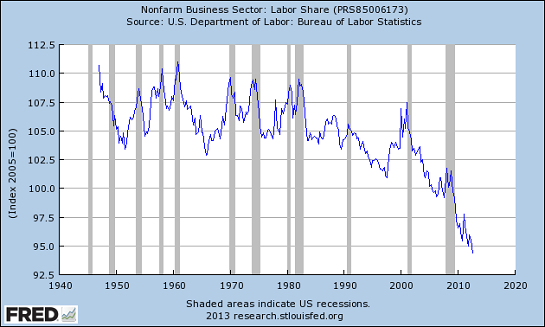
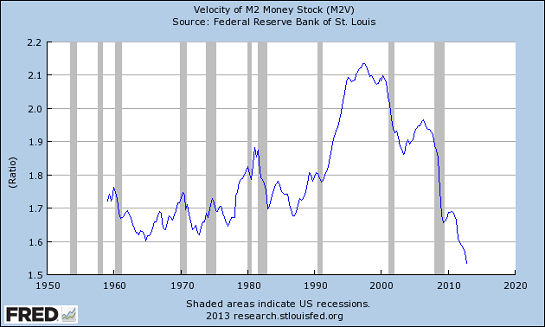
In the best of the rest of the news…

Today, the fight for election reform got some huge support. One of the nation’s largest teachers unions, the National Education Association, is pushing President Obama to prioritize protecting our democratic process. In a letter to Obama, NEA president, Van Roekel said, “We must correct this threat to our democracy by ensuring: 1) universal voter registration; 2) equitable administration by state of voting procedures and access to the polls; and 3) that we curb the influence of money in politics that has resulted from the infamous Citizens United decision.” That pretty much says it all. Republicans around our nation gave voter-suppression their all in 2012, and already in 2013, we’ve seen scheme after scheme to rig the next election. It isn’t surprising that those responsible for crafting the leaders of our future, recognize the importance of protecting our nation’s historic democratic principles. Mr. Roekel’s ideas are a great starting point in the fight to protect our democracy… but let’s go even further. Take the election-rigging ability away from Republican governors and legislators by moving to a national popular vote. Go toNationalPopularVote.com.

In Australia — unsubsidized renewable energy is now cheaper than fossil fuels. A new study by Bloomberg New Energy Finance found that wind farms in Australia are supplying energy at $80/MWh, while coal plants are more costly, at $143/MWh. As the chief executive at Bloomberg New Energy Finance said, “The perception that fossil fuels are cheap, and renewables are expensive, is now out of date.” It’s actually been out of date for a while if you account for all the externalities of fossil fuels — from diseases to war — that are being paid for by taxpayers instead of by oil companies. It’s time for a Manhattan Project for renewable energy right here in America.

Seattle residents won’t be stalked from the sky. In an announcement today, Mayor Mike McGinn said the Seattle police department will not use two small surveillance drones it obtained through a federal grant. In a brief statement, Mayor McGinn said “I spoke with Seattle Police Chief John Diaz, and we agreed that it was time to end the unmanned aerial vehicle program, so that SPD can focus its resources on public safety and the community building work.” This is a huge victory for privacy advocates, who’ve been protesting the proposed use of drones, as the program would have allowed police to use facial recognition software during surveillance. Seattle is the second city to announce this week that drones won’t be spying on residents. On Monday, Charlottesville, Virginia passed a resolution imposing a two-year moratorium on drone use. Our Constitution guarantees the right of privacy, and it’s nice to know that some of our leaders still understand that.

And finally…who knew that former President George W. Bush enjoyed painting himself in the nude? The Smoking Gun is in possession of several images it claims were hacked from personal emails belonging to people close with the Bush family. And those emails contain a number of paintings that were allegedly done by the former President himself. Two of the paintings depict Bush bathing — one in the shower and one in the bathtub. A third picture shows Bush hard at work over a canvas painting a church. A hacker names “Guccifer” is claiming responsibility for the stolen emails — and he says there’s more to come. It’s rumored that Bush plans to sell his painting — and any proceeds will go to his war crimes legal defense fund.

And that’s the way it is today — Friday, February 8th, 2013. I’m Thom Hartmann — on the news.

Sex Assault Suicide: Police Defend Handling

0

Greater Manchester Police has defended its care of Frances Andrade, who killed herself after giving evidence against her abusers.

The violin teacher’s testimony was central to the case against choirmaster Michael Brewer and his ex-wife Kay, who were found guilty of sexually assaulting their victim more than 30 years ago.

In a statement released after the verdicts, Mrs Andrade’s son Oliver said his mother had praised an officer assigned to look after her, but that police had “heavily advised” her not to receive therapy until the end of the case.

He said: “She was forced to cope on her own with only the support of her family and very close friends.

“This meant that even after several attempts at her own life she did not get the help she needed. The state of mental healthcare in this country needs reform.”

Greater Manchester Police say it is the force’s policy to encourage victims to seek support.

GMP’s head of public protection Detective Chief Superintendent Mary Doyle said: “I would firstly like to extend my sympathies to the family of Frances Andrade.

“Our thoughts remain with them at this desperately difficult time and it is tragic she is not able to see she has been vindicated for the bravery she consistently showed throughout the investigation.

“I want to make it clear that it is Greater Manchester Police’s policy and practice to encourage victims to seek whatever support they need.

“The advice to Frances not to seek support may have been given by another party but it was not the advice of Greater Manchester Police. Victims who have suffered sexual abuse have every right to seek whatever help they need.

“As Frances’ son Oliver said in his very moving statement, the GMP officer who was assigned the case did everything he could to help Frances.”

More follows…

Oman frees 28 Iranian fishermen

0

Fishing boats are seen in front of oil tankers in waters of the south of Iran (file photo).

Twenty-eight Iranian fishermen who had been arrested by Oman’s Coast Guard for illegally entering the Arab country’s territorial waters have been released and are back in Iran.

The fishermen were released as a result of serious follow-ups by the Iranian Embassy officials in Muscat and the cooperation of Omani officials.

They returned home on Friday after going through legal proceedings and appearing in court.

The Iranian Embassy in Muscat has been seriously pursing the issue of Iranian nationals in Oman as well as fishermen who unintentionally entered Oman’s waters.

Iran and Oman both have coastlines along the Sea of Oman.

AR/SS/SL

Five killed in Belgium plane crash

0

Plane crash kills five in Belguim, closes intl. airport

Rescuers gather around the crashed Cessna passenger plane at Charleroi airport, on February 9, 2013.

At least five people have been killed in a plane crash at Belgium’s Charleroi airport, forcing the international hub used by low-cost carriers to close.

The incident occurred at about 10 a.m. local time on Saturday, after the small aircraft, Cessna, had problems on take-off and crashed on the side of the runway.

“There was a problem on takeoff and they tried to come back, but unfortunately the plane crashed,” said Melissa Milioto, an airport spokeswoman.

Belga news agency said that the victims were all Belgian nationals and were three children and their mother and grandfather.

The airport, which is about 40 miles south of the Belgian capital, Brussels, was immediately closed after the accident. Several flights were cancelled and many others delayed at the beginning of the school’s half-term holidays.

“Our priority is dealing with this drama. Flights are being diverted to Liege and Brussels,” the airport spokeswoman added.

The airport was expected to re-open later in the day. It is the country’s second international airport and estimated to handle 140,000 passengers during the holiday period.

SAB/HGH/SL

German minister quits over plagiarism

0

German Education Minister Annette Schavan resigns over plagiarism charges on February 9, 2013.

German Education Minister Annette Schavan has tendered her resignation after her former university stripped her of doctorate degree over plagiarism charges.

Schavan, one of German Chancellor Angela Merkel’s closest allies, announced her resignation on Saturday, only four days after the University of Dusseldorf withdrew her doctorate, which was completed in 1980.

The university ruled she had “systematically and intentionally” plagiarized parts of her dissertation.

The 57-year-old German politician reiterated her vow to fight the university’s ruling, saying she did not want these claims to damage the ministry and the government.

“I think today is the right day to leave my ministerial post and to concentrate on my duties as a member of parliament,” she told reporters on Saturday in Berlin.

On January 24, the university opened an investigation into the allegations after a board of monitors found questionable passages on 60 of the 351 pages of her dissertation.

The review was started after an unknown blogger raised the plagiarism claims last year, which the minister has strongly denied.

Merkel said she had accepted the resignation “with a heavy heart,” adding education politician Johanna Wank will take in Schavan’s role.

The issue is considered a major blow to Merkel’s conservative government in about eight months before the country’s federal elections.

Another plagiarism row also hit Merkel’s government in 2011, forcing her defense minister Karl-Theodor zu Guttenberg to step down after it was proven that large parts of his doctoral thesis had been copied.

SAB/HGH/SL

Magnitude 6.9 quake hits Colombia

0

Assange to White House staff: ‘Leak drone killing rules’

Julian Assange addressed US officials on a popular TV channel, urging them to disclose to WikiLeaks the secret instructions on how decisions on eliminating American citizens using drones are being taken. Source confidentiality guaranteed.

Kirilenko gives Russia Fed Cup lead against Japan

0

Maria Kirilenko (RIA Novosti / Alexey Kudenko)

Maria Kirilenko (RIA Novosti / Alexey Kudenko)

Maria Kirilenko overcame Japan’s Kimiko Date-Krumm in straight sets to bring Russia squad their first point in the Fed Cup’s opening round.

­Kirilenko’s physical conditions were far from perfect as she entered the match at Moscow’s Olimpiysky Arena suffering from a cold.

Forty-two-year-old veteran Date-Krumm gave a serious battle to the Russian in the opening set, giving in only in the tie-break.

The second set was also tight as the Japanese woman, trailing 5-1, managed to close the gap to 5-4.

But Kirilenko had what it took to deliver the final blow, collecting a 7-6 6-4 win.  

Ekaterina Makarova will take on Japan’s top player, World No.53, Ayumi Morita, later in the day.

Chicago Middle-School Students Berate Officials: ‘Don’t Close Our Schools!’

0

At a heated meeting in Chicago, students, teachers and parents from Cooper elementary demand their school stay open. (Photo: Kari Lydersen) “We’re counting on you!” said middle-schooler Marcos Reyes to the row of Chicago Public Schools officials seated in front of a packed auditorium.

Voice cracking, Reyes, dressed in his ROTC uniform, continued, “My parents have been here for seven years working hard for me so I can have a better future … and you guys can stand here and close my school. I don’t really think that is fair!”

The hundreds of students, parents and teachers in attendance jumped to their feet, clapping and cheering as the Madero Middle School student wiped tears from below his glasses.

The Wednesday night gathering in Chicago’s Pilsen neighborhood is one of 28 public hearings being held by the Chicago Board of Education about its bid to save money by closing public schools dubbed “under-utilized.”

The board has not said how many schools will be closed. Analyses by the Chicago Tribune, Chicago Sun-Times, the Chicago Teachers Union and parent groups indicate that 100 or more schools could meet the board’s definition of “under-utilized.” Schools officials have indicated the number will be much lower, without giving specifics.

Many parents and teachers–whose union carried out a historic nine-day strike in September–think the planned closings are intrinsically linked to the administration’s plans to open up to 60 new privately run charter schools. The Chicago Teachers Union, like teachers unions nationwide, sees the opening of non-union charter schools as a way to undercut organized labor. Hence charter schools were a major subtext to the fall strike, though the union has no official power to bargain over them.

The stated reasoning behind closing public “community schools”–distinct from other public schools such as charters, magnets and selective-enrollment schools–and opening private charters funded with public money is that, based on student standardized scores, the community schools are inefficient and failing. Supporters of the Chicago community schools say that the administration is not taking into account the many measures of success that don’t show up on standardized tests; and that it is also not giving them adequate support and resources to reach their potential.

“You should be working with us to make [community schools] better, not closing them down,” said a mother of students at Telpochcalli School, an arts-focused public school in the nearby neighborhood of Little Village. “Where’s [Mayor] Rahm Emanuel? He wants charter schools. He should be here telling us from his heart to our faces why he wants these charter schools…Why?”

From the crowd, voices yelled out, “Money!” “His rich friends!”

Parents, teachers and students spoke passionately about the academic achievements of their community schools, the dedication of the teachers and the creative programs–like mariachi band and folkloric dance–that schools have launched despite a severe lack of resources and a student body facing many challenges outside school.

That describes the four Pilsen elementary schools on the list of more than 100 schools that meet the administration’s definition of under-utilized, meaning they could be targeted for closure. Three of them –Finkl, Pilsen Community Academy and Jungman–have student populations that are close to 100 percent low-income and almost entirely Latino, with 30-50 percent speaking limited English. The other Pilsen elementary school, Paderewski, has an 81 percent African-American student body that is also almost exclusively low-income. All the schools also have a significant percentage of special education students and students with disabilities.

Young students at the meeting from Peter Cooper Elementary Dual Language Academy, dressed in Cooper Jaguars T-shirts, held heart-shaped signs saying “I Love Cooper” and noting “>60 Percent Bilingual” and “>10 Percent Special Education.” The education journal Catalyst reported that a third of the schools under consideration for closure have special education “cluster” programs, meaning special education and autistic students — and special education teachers — could be disproportionately impacted by closures.

Several speakers described how the number-crunching used to label schools as under-utilized doesn’t do justice to the reality of schools that are actually in some cases still overcrowded; where classrooms the board considers unused are actually being used for science labs or parent programs; and where smaller classes of special education students who require extra attention are skewing the numbers.  

Periodically, the speakers were drowned out by the sound of pounding on the doors of the auditorium and the chants of “Let us in!” from more than a hundred parents and community members outside who did not make it into the over-capacity auditorium.

The outpouring showed the strength of community sentiment against the school closings. During the teachers strike, parents and teachers allied over the issue of closings, which were seen as part of a larger battle over the future of public education and the role of privatized charter schools.

During the strike, Emanuel frequently accused teachers of endangering students–by causing school days to be cancelled–and putting their own interests before students’ well-being. Testimony at the Wednesday hearing from parents and students contradicted this view.

Madero student Natalie Torres described teachers constantly staying after school voluntarily to work with students. “They waste their own time and get no money, they do it for free, and yet you are going to fire them?” she said.

“If they give up on us, we’ll give up on ourselves,” she also told the crowd. “Closing down our school is closing down millions of futures.”

Marta Ramirez, mother of two students at Jungman Elementary, said her daughter asks her “morning, afternoon and night” what is going to happen to her school.

“My question to all of you, is how can you guarantee the physical and emotional safety of our children?” asked Ramirez.

The two aldermen representing the Pilsen and Little Village neighborhoods both promised to fight against any closings of schools in the neighborhoods. The crowd cheered for Alderman Ricardo Munoz, part of the small progressive caucus on the city council, before and after he promised to “fight arduously against any closings or consolidations because we deserve our community schools.” Alderman Danny Solis, a close ally of the mayor, was booed loudly when he took the floor, but then people applauded when he promised to oppose closings of Pilsen schools.

A list of schools to be closed was supposed to be finalized by January, under state law, but Chicago officials successfully petitioned the state legislature for more time so that an independent commission could study the matter. Among the commission’s recommendations, released in an interim report Jan. 10, [WHEN?], were that no high schools be closed, because of the risk of increased gang violence when students are transferred; and that no schools which have undergone tumultuous consolidation or “turn around” proceedings in the recent past be closed.

The board will release a list of schools to be closed on March 31, and an interim list in mid-February after concluding the hearings. Then they will hold another series of public hearings on the schools officially planned for closure.

Catalyst revealed that the school closings hearings were funded, to the tune of $478,000, by a major proponent of charter schools–and a major opponent of unions: the Walton Family Foundation, affiliated with Wal-Mart. The foundation’s largest grant for charter schools is going to Chicago. Catalyst reporter Sarah Karp also revealed that the consulting firm retained by the city to provide advice on the closings meetings, the Civic Consulting Alliance, received a separate $220,000 grant from the Walton Family Foundation and is housed in the same offices as a pro-charter organization, New Schools for Chicago.

Chicago Public Schools  CEO Barbara Byrd-Bennett is in the process of recruiting a retired Marine with experience negotiating prisoner exchanges in Kosovo to help students transition safely to their new schools. The symbolism was not lost on some parents and teachers, who have said students and families face extreme stress and danger when switching schools.

“There’s going to be more gangbanging if you close our schools,” said Torres. “You guys will have to spend more money to hire more cops.”

Sarah Chambers, a special education teacher at Maria Saucedo Scholastic Academy in Pilsen and member of the Chicago Teacher Union’s governing progressive Caucus of Rank-and-File Educators (CORE), noted that Byrd-Bennett and the mayor were not at Wednesday’s meeting.

“Where is Rahm Emanuel, who is the puppet master of all of this?” she asked. “If they are not here, what does that say about how much they value our input?”

“The board is not asking us whether or not school closings are a valid option,” she continued. “They’re asking us which schools should we close. They’re asking us to plan our own funeral. Are we going to let them do this?”

“No!” people yelled.

“The board is a constant revolving door: You stay a couple years, closing our schools, privatizing our schools and making money off our tears,” said Chambers. “But we are here, and our schools are here to stay.”

© 2013 In These Times

US missile defense shield flawed — classified studies

0

A U.S. soldier stands next to a Patriot surface-to-air missile battery at an army base in Morag, Poland (Reuters / Peter Andrews)

A U.S. soldier stands next to a Patriot surface-to-air missile battery at an army base in Morag, Poland (Reuters / Peter Andrews)

The planned multibillion-dollar missile shield for Europe is flawed to a degree that it might never be able to fulfill its ostensible goal — protecting the US from Iranian missiles — secret Defense Department studies reveal.

The classified studies were outlined to lawmakers in a briefing by the non-partisan Government Accountability Office (GAO) which was obtained by the Associated Press.

The four-phase shield, which would be based in select NATO member states and the Mediterranean Sea, would culminate in the deployment of SM-3 Block IIB interceptors. Those interceptors would theoretically protect America and Europe from InterContinental Ballistic Missile (ICBM) threats.

But it is this fourth and final stage that has now come under scrutiny. The GAO investigators said that classified reports by the Missile Defense Agency concluded that Romania was a poor location for an interceptor to protect the US. It was also revealed that the Polish site would only work if the US developed capabilities to launch interceptors which could target an Iranian missile while in its short initial phase of powered flight.

The White House has opted not to pursue that capability because it is not viewed to be feasible, said one senior defense official.

The military has considered overcoming this flaw by deploying interceptors on ships in the North Sea instead. But apart from safety concerns cited by the US Navy, said interceptors would be directly in the firing line of Russian ICBMs, reinforcing Moscow’s claims that Russia, and not Iran, is the intended target of the system.

Previous reports by both the GAO and other advisory bodies have revealed other flaws in the shield, including production glitches, defects with radar systems incapable of distinguishing between warheads and other objects, and cost overruns. One report by the National Academy of Sciences had recommended scrapping the fourth phase of the system altogether, deploying the interceptors to the US East Coast instead.

Considering the budgetary constraints of spending billions for a system which is potentially incapable of delivering as promised, the study could force Congress to reevaluate the efficacy and benefit of the system.

The GAO investigators for their part criticized the Obama administration for not having the foresight to conduct such studies so that the problems could have been revealed at an earlier date.

Military officials declined repeated requests by AP to discuss the study on record due to their classified nature. They were also not forthcoming about the accuracy of the GAO conclusions, though they have been reviewed by several Defense Department officials and the revisions they requested were incorporated.

None of the officials contacted registered any objections to how the studies had been characterized.

When President Barack Obama assumed office in 2009, his administration announced a reset in relations with Russia, which sought out areas for cooperation with Russia on a number of issues ranging from trade to arms control.

Relations with Russia had chilled considerably during the George W. Bush administration, who initiated the plan to base long-range interceptors in Central Europe.

Obama altered the plan soon after being sworn in, calling for slower interceptors that could neutralize Iran’s medium-range missiles.

However, US and NATO intransigence on providing Moscow with legally-binding guarantees that the system will not be targeted against Russia have considerably soured the reset.

Moscow fears the system is intended to counter its missiles and undermine its nuclear deterrent, despite Washington’s claims to the contrary.

In a Major Privacy Victory, Seattle Mayor Orders Police to Dismantle Its Drone Program After Protests

0

In an amazing victory for privacy advocates and drone activists, yesterday, Seattle’s mayor ordered the city’s police agency to cease trying use surveillance drones and dismantle its drone program. The police will return the two drones they previously purchased with a Department of Homeland Security grant to the manufacturer.

A victory for privacy advocates, the Mayor of Seattle has ordered police to dismantle a domestic drone program (Photo: Casey McNerthney/seattlepi.com) EFF has been warning of the privacy dangers surveillance drones pose to US citizens for more than a year now. In May of last year, we urged concerned citizens to take their complaints to their local governments, given Congress has been slow to act on any privacy legislation. The events of Seattle proves this strategy can work and should serve as a blueprint for local activism across the country.

Back in early 2012, the Seattle city council was told that the Seattle police agency had obtained an authorization to fly drones from the Federal Aviation Administration (FAA). But they did not find out from the police; they found out from a reporter who called after the council after he saw Seattle’s name on the list obtained by EFF as part of our lawsuit against the FAA.

City council was understandably not happy, and the police agency was forced to appear before the council and apologize. It then vowed to work with the ACLU of Washington and the FAA to develop guidelines to make sure drones wouldn’t violate Seattle citizens’ privacy. But as long as the guidelines weren’t passed in a binding city ordinance, there’d be no way to enforce them.

After a townhall meeting held by police, in which citizens showed up in droves and angrily denounced the city’s plans, some reporters insinuated that city counsel members’ jobs could be on the line if they did not pass strict drone legislation protecting its citizens privacy.

Documents obtained by MuckRock and EFF in October as part of our 2012 drone census showed that the Seattle police were trying to buy two more drones despite the controversy. But that ended yesterday as the Mayor put a stop to the program completely.

Critics of the privacy protests said the participants were exaggerating the capabilities of the Seattle drones, given they would only fly for less than an hour at a time and are much smaller than the Predator drones the military flies overseas and Department of Homeland Security flies at home.

But while Seattle’s potential drones may not have been able to stay in the air for long, similar drones have already been developed and advertised by drone manufacturers with the capability to stay in the air for hours or days at a time. In fact, Lockheed Martin has been bragging about a drone that weights 13.2 pounds (well within the FAA’s weight limits) that can be recharged by a laser on the ground and stay in the air indefinitely.

Since the Seattle protests have heated up, similar complaints have been heard at local city counsels and state legislatures across the country. At least thirteen states are now considering legislation to restrict drone use to protect privacy, and there are also members of Congress on both sides of the aisle pushing the same thing.

Here in the Bay Area, we’ve experienced a similar situation. The Alameda County Sheriff’s Office tried to sneak through drone funding without a public hearing and told the county board of supervisors it only wanted to use the drone for emergency purposes. Yet in internal documents obtained by EFF and MuckRock as part of our 2012 drone census, the Sheriff’s Office said it wanted to use the drone for “suspicious persons” and “large crowd control disturbances.”

When EFF and ACLU held a press conference pointing out this discrepancy, the county backtracked and is now attempting to write privacy guidelines that could potentially be turned into binding law. We will keep you updated on further developments.

But regardless, it’s important that privacy advocates take the lesson from Seattle and apply it all over the country. This is an important privacy victory, and like we said back in May, local governments will listen to our concerns, so let’s make our voice heard.

Currency Positioning and Technical Outlook: Correction or Reversal?

0

Last week the euro was the weakest of the major currencies and the recently beaten up sterling and yen were the strongest. A similar pattern was also evident in the dollar-bloc. The New Zealand dollar had been the strongest and last week had was the weakest, with the Canadian dollar faring somewhat better.  The Australian dollar has been trending lower, but staged a potentially important reversal before the weekend.  

The key issue facing market participants this week is whether the price action represents a correction to the recent trend or a reversal or the start of a new trend.  After reviewing the technical condition of the market, we continue to conclude the price action is corrective in nature, but the price action, especially in the second half of the week, warns that the correction may be extended in the coming days.

Given the divergent price trends, it may be helpful to drill down and review the specific technical condition of few of the currency pairs.  

Euro: We had anticipated the pullback toward $1.34, but the poor close before the weekend, which includes two successive closes below the 20-day moving average for the first time in three months, indicates additional near-term losses are likely.  A break of $1.3350, which held on Friday, could spur a move toward $1.3220-$1.3270. Trend line support and retracement objectives are cluttered in that area.  However, we recognize that a convincing break of $1.32 would open the door for another two cent slide.  A move back above the $1.3400-50 would improve the technical tone and suggest the correction is over. 

Yen:  Comments by Japan’s Finance Minister toning down the bearish rhetoric ahead of the G20 meeting, suggesting that pace of the yen’s descent was too rapid, and the setback in the euro, fueling corrective pressures from the cross.  After Aso’s comments, the dollar appears to have carved out a triangle pattern intersecting near JPY92.50 and JPY92.90. If this is a continuation pattern, a move toward JPY91.80-JPY92.00 would be targeted.  On the other hand, a move above JPY93.00-20 would stabilize the tone and suggest a near-term consolidative tone. 

Sterling: Sterling has been pounded this year.  It is the second worst performer against the dollar after the Japanese yen. It made new lows at the start of the week, but these losses were not confirmed by the RSI, leaving a bullish divergence in its wake.  This set the technical stage for the recovery in the second half of the week.  The advance ahead of the weekend saw sterling flirt with its 20-day moving average for the first time in nearly a month.  The MACDs are also trying to turn higher, but the $1.5850-$1.5900 offer formidable resistance.  Against the euro, sterling staged its biggest advance in since late Oct 2011.  The euro had peaked at the start of the month near GBP0.8720 and the GBP0.8400 area represents a 50% retracement of this year’s gain.  A move toward there would be consistent with our expectation for additional, albeit modest, extension of what we see as corrective forces.  However, a convincing break of GBP0.8400 could signal a deeper retracement toward GBP0.8325 initially.  

Canadian dollar:  An upside reversal of the US dollar was seen on Thursday and follow through buying was seen before the weekend.  The greenback firmed to test a technical objective near CAD1.0040. If corrective forces continue to be felt in the coming days, the US dollar will likely test the  last high near CAD1.01 and potential toward CAD1.0140. Owing perhaps to a disappoint Canadian jobs report before the weekend, the euro held above Thursday’s low near CAD1.3340.  Initial resistance is pegged near CAD1.3450, but it may require a move through CAD1.3480 to signal the end of the brief though sharp correction.  

Australian dollar:  The Australian dollar, like sterling, posted strong gains ahead of the weekend.  From a technical point of view, the Australian dollar looks to among the strongest of the currencies we reviewed.  Against the dollar, it staged an impressive reversal on Friday:  after falling to new lows for the move (3 1/2 month lows), it then rallied above the previous day’s high.  To confirm the recovery, the Aussie needs to overcome nearby resistance in the $1.0360-80 area, which in turn would project toward $1.0460.  The Aussie had fallen to its lowest level against the New Zealand dollar since H2 2010 early last week, but reversed at midweek.  The key level to monitor on the upside is NZD1.24.  A move above there would confirm a low of some import is in place and would suggest initial recovery gains toward NZD1.25.  The Australian dollar’s recovery against the Canadian dollar is generating even more positive technical signals.  Since Jan 24, the Aussie lost almost 3% against the Canadian dollar, but the key reversal before the weekend was impressive.  Initially, we look for a move toward CAD1.0430-50 and then possibly CAD1.0550.  

Dollar-Index:  Although the Dollar-Index (DXY) failed to make a new high before the weekend, holding just below the high set on Thursday near 80.28, the settlement was near the high of the day and the technical tone remains constructive.  The key area to watch is near 80.50.  It corresponds to where the downtrend line drawn off the mid-Nov high near 81.50 and the Jan 4 high just below 80.90.  It also corresponds to a retracement objective of the losses from that mid-Nov high.  

Turning to our review of the speculative positioning in the futures market we share the following observations.  

First, although implied volatility in the euro and yen rose during the CFTC’s reporting period, the position adjusting was minimal.  Of the seven currencies we reviewed, there was no gross long or short position that changed by more than 10k contracts.  Most gross positions were adjusted by less than 5k contracts.  Substantial price moves were seen after the reporting period ended at the same time there was a decline in implied volatility. 

 Second, the speculative interest in the yen is not as simple as it may appear.  Since mid-December, the net speculative short yen position only increased in one CFTC reporting period.  In the latest report, it slipped again, owing to bottom picking Third, the net long sterling position is at its lowest level in more than two months.  

Fourth, the net long Canadian dollar position has been culled.  It has been halved since the end of January.  Fifth, the net long speculative positioning in the Australian dollar and Mexican peso are little changed despite the price gyrations.

week ending Feb 5              Commitment of Traders
    (spec position in 000’s
of contracts)
 
  Net  Prior Week Gross Long Change Gross Short  Change
Euro 38.0 27.5 97.4 3.6 59.4 -6.9
Yen -68.1 -71.2 50.7 2.2 119.0 -0.6
Sterling 1.2 10.6 52.0 -6.0 50.8 3.4
Swiss Franc 3.9 4.1 13.1 1.1 9.2 1.4
C$ 27.8 35.1 44.5 -9.4 16.8 -2.1
A$ 80.9 85.3 122.6 -1.9 41.7 2.4
Mexican Peso 142.0 149.0 150.5 -6.4 9.0 1.0

Your rating: None

Hannity and Graham Flog Latest Benghazi Conspiracy Theory

0

Never mind the latest disturbing and chilling news that the Obama administration believes they’ve got the right to be judge, jury and executioner with this drone program of theirs, all in the name of fighting this endless “war on terror.” Sen. Lindsey Graham is just fine with that. Graham appeared on Sean Hannity’s show on Fox to continue ranting and raving about their drummed up fake controversy over the attack in Benghazi. This horse was beaten to death a long time ago, but that didn’t stop Hannity and Graham from declaring that “a major bombshell was revealed” during Panetta’s testimony this Thursday.

Here’s the way Fox covered this interview: Where Was President Obama During the Benghazi Attack? Hannity Discusses With Sen. Lindsey Graham:

On Capitol Hill yesterday, Defense Secretary Leon Panetta and Joint Chiefs Chairman Gen. Martin Dempsey testified before the Senate Armed Services Committee, which is looking into the Pentagon’s response to the Sept. 11, 2012 attack on the U.S. Consulate in Benghazi.

The most revealing piece of information to come out of the testimony was when Panetta said that President Obama was absent on the night of the attack, in which four Americans were killed. Panetta and Dempsey said they briefed Obama during a pre-scheduled meeting at 5pm ET on that day, as events in Benghazi had just started to unfold. They said there was no communication with the president until after the attack was over more than eight hours later.

Last night, Sean Hannity discussed Obama’s absence with Sen. Lindsey Graham (R-S.C.), who questioned Panetta at length about why the president was apparently not engaged as the attack unfolded.

Hannity called the details of the president’s whereabouts, “shocking,” while Graham said eventually Obama “has to account for his leadership.”

“This whole episode, if it had come out before the election — remember when Obama turned to Romney in the third debate and basically said, ‘I know these people, I know their families, I know their names, I would never put them in harm’s way?’. Well Mr. President, what did you do for eight hours? Who did you talk to?” Graham asked.

As Media Matters noted, Hannity is just the latest in a string of right wing media outlets to selectively edit the testimony of Panetta and Dempsey. Fox’s Hannity Joins Right-Wing Media In Selectively Editing Panetta’s Testimony:

In fact, Panetta testified that White House officials were kept informed of events throughout the incident.

On the February 7 edition of his Fox News program, Hannity said “a major bombshell was revealed” during Panetta’s testimony during a congressional briefing that Obama “was virtually absent” during the Benghazi attack. Hannity then played segments of Panetta’s testimony.

But Hannity did not air the section of Panetta’s testimony in which he pointed out that information about the attack “went to the White House” and that Obama stayed in contact with military officials and was “well-informed” during the attack. Hannity also failed to air a clip of Gen. Martin Dempsey stating that White House staff “was engaged with the national military command center pretty constantly through the period, which is the way it would normally work.”

Graham demanded this hearing before he’d agree to take a vote on the Chuck Hagel confirmation. Now he and his colleagues are making even more demands.

Offstage drama: Bolshoi principal dancer and director at odds over Filin attack

0

The Bolshoi Ballet's artistic director Sergei Filin speaks to journalists as he leaves a hospital in Moscow, on February 4, 2013 (AFP Photo)

The Bolshoi Ballet’s artistic director Sergei Filin speaks to journalists as he leaves a hospital in Moscow, on February 4, 2013 (AFP Photo)

The Bolshoi Theater is considering suing soloist Nikolay Tsiskaridze following his recent BBC interview, in which he accused the theater’s leadership of a witch-hunt. The comment comes in the wake of acid attack on artistic director Sergey Filin.

“At present, the Bolshoi Theater’s lawyers are studying Nikolay Tsikardize’s remarks. After that, they will decide whether a lawsuit should be filed against the dancer to protect the theater’s business reputation,” said Bolshoi spokeswoman Katerina Novikova, as cited by Itar-Tass news agency. 

It’s yet another chapter in the Bolshoi’s behind-the-scenes drama following the brutal attack on Sergey Filin, the theater’s artistic director. He suffered severe third-degree burns to his face and eyes, after a masked assailant threw acid in his face January 17.

The next three weeks saw an outpouring of mutual accusations by the key Bolshoi players, with the off-stage antics overshadowing anything happening onstage.

The assault on Filin intensified and brought to the spotlight the ongoing conflict between Anatoly Iksanov, Bolshoi’s director, and Nikolay Tsiskaridze, its biggest star, once contender for Filin’s position and a long-time critic of the theater’s leadership.

Nikolay Tsiskaridze (RIA Novosti / Ekaterina Chesnokova)

The two men blame each other, if not for the crime itself, at least for creating a hostile atmosphere within the theater which eventually led to the tragedy.

A statement from the Bolshoi Theater said that “it’s obvious who could have organized such an appalling assault… It must be people who want the position of the theater’s artistic director.”

In his February 5 interview to ‘Snob’, Anatoly Iksanov was much more specific, saying that “what happened is the natural consequence of the chaos that was created above all by Nikolay Tsiskaridze… I feel guilty for not having tried to stop Nikolay while it was still possible.”

In response three days later Nikolay Tsiskaridze appeared on the BBC with his share of accusations, accusing the Bolshoi leadership of being totalitarian.

“It’s like 1937, the days of Stalin — they’re constantly organizing meetings against me, they’re trying to force staff to sign letters condemning me.”

Anastasia Volochkova, who was Bolshoi prima ballerina until she was sensationally sacked in 2003, took Tsiskaridze’s side.

Anastasia Volochkova (RIA Novosti / Vladimir Astapkovich)

“You absolutely cannot call it an artistic conflict, when a leadership of a theater organizes the collecting of signatures against artists, who suddenly became unwanted. That’s what Iksanov is now doing to Nikolay Tziskaridze, who has turned into an obstacle. Ten years ago Iksanov was scheming the same way against me,” Volochkova wrote in her blog on January 22.

Sergey Filin said he knows who was behind the attack, but would not reveal any names until the police have done their job. An unnamed police official told the Interfax news agency on Friday that they’ve come up with a list of suspects, which includes dancers and other members of the ballet company.

Bring Dark Money to Account

0

Think the election season ended on Nov. 6, 2012? Think again.

The shadowy super PACs and front groups that polluted the airwaves with political ads last year are already raising millions from corporations and billionaires to batter television viewers with a new wave of ads.

(Photo: David Goldman/AP)Earlier this week, Karl Rove’s super PAC American Crossroads attacked actress and political activist Ashley Judd, who is contemplating a Senate run in Kentucky. And former Obama campaign hands are lining up dark-money donors to support a public relations push for implementation of health care reforms.

The thought of having to endure another round of shady and dishonest political ads might make you queasy. But relief could be closer than you think.

A long-dormant rule within the 1996 Telecommunications Act gives the Federal Communications Commission the authority to mandate disclosure of the funders behind political ads.

According to the rule, political ads must “fully and fairly disclose the true identity of the person or persons, or corporation, committee, association or other unincorporated group, or other entity” paying for them.

In 2011, communications law expert Andrew Schwartzman petitioned the FCC to enforce this disclosure requirement. As the disclosure rule is on the books, the FCC already has the authority to act, argued Schwartzman, who now serves as a legal adviser to Free Press.

In a Nation op-ed on Thursday, Former FCC Commissioner Michael Copps added petrol to the fire. Copps wrote that all the agency needs is a modest update of the rules. “Using the normal FCC notice-and-comment process,” Copps wrote, “this needn’t take longer than 90 days.”

But the FCC has ignored Schwartzman’s petition and Copps’ call for action.

For many Washington insiders, toxic ads are just part of the political landscape. They’re the engine that powers an influence industry that has enriched legions of political consultants and media buyers — to the tune of more than $3 billion in political ad buys in 2012 alone.

The will to confront campaign finance issues, expose the dark money behind political ads and enforce the rules won’t come from inside D.C. but from people like you and me.

The type of disclosure Schwartzman and Copps call for would require identification of ads’ principal funders within the actual ads. For example, it would let viewers know that an ad from a group that calls itself Concerned Taxpayers of America is merely the creation of two multi-millionaires — the owner of a Maryland concrete company and a New York hedge-fund manager.

While such a requirement may not solve our nation’s crippling campaign finance problems, that kind of transparency would force many of the worst actors under the lights. And that could give many Americans the information they need to decide whether a political message is true, and the messenger credible.

The FCC hasn’t enforced this rule in nearly 20 years. It’s time for the agency to act.

© 2013 Free Press

President Obama Should Go to Chicago. And Yemen. And Pakistan. And…

0

After the shooting death of Hadiya Pendleton, the 15-year-old honor student who had, just a week before her tragic death, performed along with her high school band in the president’s inauguration ceremonies, the Black Youth Project started a Change.org petition asking President Obama to come to Chicago and address the gun violence plaguing the city. Initially, Fifteen-year-old Hadiya Pendleton, who was shot in killed in a park in Chicago on Tuesday, Jan. 29. I read it skeptically. There’s a tendency to want the president to respond to every crisis everywhere, even when his intervention would do little to help. What real impact would a presidential speech or two have in reducing the violence? None that I can see. But that really isn’t the point.

The president should go to Chicago. Even if it’s not for Hadiya’s funeral, which the first lady will attend, he should go to his adopted hometown sometime in the near future, meet with local community leaders, his old chief of staff turned mayor, family and friends who have lost someone to guns, and children of all ages that currently live in fear of their own neighborhood. He should offer them, as he did the families in Newtown, reassurance that they are not alone. He should use the bully pulpit, as Cathy Cohen told The Washington Post, “to command the attention of the country, raising their consciousness about the life and death issues facing young people in Chicago.” He should listen intently to their concerns and engage them in dialogue about their ideas for solutions. He should get the country to focus on them, care about their future and stop writing them off. They should feel like someone cares.

Then he should explain to them when and why he thinks their government has right to kill them.

He should tell them about Anwar al-Awlaki and why, like Hadiya, he has become a teenage symbol of a culture of violence. He should explain who makes the decisions and what criteria they use to determine who poses a threat so imminent the United States ignores habeas corpus in favor of unmanned drone strikes. He should explain why, as David Cole writes in the Post, this policy remains “secret in most aspects, involves no judicial review, has resulted in the deaths of innocent civilians, has been employed far from any battlefield and has sparked deep anti-American resentment in countries where we can ill afford it.” They should understand what’s being done in their name. He should ask them if they’re OK with that.

When he leaves Chicago, the president should travel to Pakistan, and Yemen and Somalia, where he should deliver similar speeches to the families and friends of those who have lost someone to a drone. He should explain to them the endgame. He should tell them how long this is going to last. He should tell them how many Al Qaeda number-twos we have to kill before we feel safe enough to end the “war on terror.” The president should tell them he cares about their lives and futures just as much as he cares about the citizens in his own country. They should know how long their kids have to live in fear of the sky.

I don’t wish to conflate the issues and act is if they are precisely the same, but I also don’t wish to pretend the violence abroad isn’t reflected in the violence in our streets and vice versa. And I don’t expect that this would put an end to drone strikes, targeted killings, assassinations and the like, much the same way I don’t anticipate a speech or two about gun violence in Chicago would put an end to shooting deaths there. What I’m suggesting is the president, and the rest of us, recognize our contradictions and be more vigilant in addressing violent behavior no matter where it’s directed and by whom.

Obama should go to Chicago and ask the country to hold itself accountable for the violence we’ve allowed to terrorize a community. Then he should hold himself accountable, too.

© 2013 The Nation

Assange to White House staff: ‘Leak drone killing rules’

0

Julian Assange (AFP Photo / Leon Neal)

Julian Assange (AFP Photo / Leon Neal)

Julian Assange addressed US officials on a popular TV channel, urging them to disclose to WikiLeaks the secret instructions on how decisions on eliminating American citizens using drones are being taken. Source confidentiality guaranteed.

­In the first appearance in a long time by Julian Assange on a major American TV channel, the founder of WikiLeaks lashed out at the re-elected President Barack Obama and his administration, which gave the go-ahead to elimination of the American citizens abroad using military Unmanned Automatic Vehicles (UAVs).

An unclassified document from the US Justice Department, revealed by NBC News this week, exposed that US authorities consider the elimination of senior Al-Qaeda members lawful and ethical, even if they are American citizens and plotting no crime. The Obama administration promised to provide American lawmakers with access to classified documents giving the legal basis for such drone strikes.

The first known assassination of Americans by a US UAV occurred in September 2011, when a US drone strike in Yemen killed radical preacher Anwar al-Awlaki and Samir Khan, editor of an Al-Qaeda magazine. Both were US citizens who had never been charged with a crime.

“I cannot see a greater collapse when the [American] executive can kill its own citizens arbitrarily, at will, in secret, without any of the decision-making becoming public,” Assange said during his appearance in the HBO talk show ‘Real Time with Bill Maher’.

“That’s why we need organizations like WikiLeaks. I encourage anyone in the White House who has access to those rules and procedures, work them on over to us. We’ll keep you secret and reveal [the drone killing rules] to the public,” Assange promised.

Julian Assange remains at the Ecuadorian embassy in London, where he has been since June 2012. He was granted asylum to avoid extradition to Sweden on sex crimes allegations. He has consistently maintained his innocence.

Assange’s lawyers believe that if Assange is extradited to Sweden, he would be automatically extradited further to the US, where he has been declared an enemy of state after publishing hundreds of thousands of classified diplomatic and military memos on the WikiLeaks website.

So far Britain has refused Julian Assange safe passage to Ecuador.

HBO, which gave Julian Assange the platform to speak out, has approximately 41 million subscribers in the US alone.

US Air Force Veteran, Finally Allowed to Fly Into US, Now Banned From Flying Back Home

0

In early November, I wrote about the infuriating story of Saadiq Long, the 43-year-old African-American Muslim who – despite having never been charged with any crime – was secretly placed on a no-fly list and thus barred from flying to the US to visit his seriously ill mother. When I met with Long in early November in Doha, Qatar, where he has lived for several years with his wife and her two children while teaching English, he was in the middle of his futile months-long battle just to find out why he was placed on this list, let US Muslim Air Force veteran Saadiq Long is greeted at the Oklahoma City airport in November 2012 after finally being allowed to fly home to visit his ailing mother. (Photo: screen grab via NewsOK)alone how he could be removed.

Two weeks after that article was published, Long – without explanation – was finally removed from the no-fly list and he flew from Doha to Oklahoma City to visit his mother and other family members. He took several flights to make the 20-hour journey, all without incident. He has remained in Oklahoma for the last ten weeks, visiting his family in the US for the first time in over a decade.

But now Long – unbeknownst to him – has once again apparently been secretly placed by some unknown National Security State bureaucrat on the no-fly list. On Wednesday night, as Associated Press first reported, he went to the Will Rogers Airport in Oklahoma City to fly back home to Qatar. In order to ensure there were no problems, his lawyer sent the FBI a letter ahead of time notifying them that Long would be flying home on that date (see the embedded letter below).

But without explanation, Long was denied a boarding pass at the airport by a Delta Airlines agent. Three local police officers then arrived on the scene, followed by a US Transportation Security Administration agent who “told Long he couldn’t board a plane but did not give him a specific reason”.

Long’s lawyer, Adam Soltani of the Oklahoma chapter of the Council on American-Islamic Relations (CAIR), was with him at the airport and repeatedly asked agents why this was happening and who they should contact. He got no answers, except was told to contact the FBI. But both the FBI and Delta refused to comment to AP, while TSA spokesman David Castelveter would only say this:

“It’s my understanding this individual was denied a boarding pass by the airline because he was on a no-fly list. The TSA does not confirm whether someone is or is not on the no-fly list, as that list is maintained by the FBI.”

Long and his CAIR lawyers have thus far been told nothing about why he is barred once again from flying.

The personal cost to this injustice is obvious and substantial. Long has a job he needs to return to in Doha from which he has been away for more than two months, and his family needs that income for its sustenance. “I was extremely disappointed when I was unable to board the flight this past Wednesday,” Long told me through his lawyer. “My family in Qatar feels crushed that I will not be returning home as expected.”

The sense of humiliation and outrage should not be hard to fathom. Just imagine being a US citizen, denied the right to travel home – first to your own country, then back to your family – by a government that has never charged you with any crime or indicated you have engaged in wrongdoing of any sort. Imagine going to the airport and having local and federal agents arrive to prevent you from boarding a plane, treating you like a criminal – a Terrorist – without any tangible accusations. “I don’t understand how the government can take away my right to travel without even telling me,” he told me back in November. “If the US government wanted me to question or arrest or prosecute me, they could have had me in a minute. But there are no charges, no accusations, nothing.”

But what’s particularly infuriating here is that, if they had evidence that Long has done anything wrong, they easily could have arrested him at any point over the last ten weeks when he was in the US. The reality is that they could have arrested him at any time over the last decade because he has lived in three countries with highly US-loyal autocracies: Egypt, the UAE and Qatar. But he was never arrested, never charged with anything – just denied the basic right to travel.

Here is what CAIR’s Gadeir Abbas told me about all of this on Thursday:

“It is not as if the FBI actually thinks Saadiq is a threat. If it did – and it had actual evidence – the FBI would simply arrest him. As they surely recall, they let him fly just a few months ago. It turns out, though, the only reason for doing so is because it is, in the FBI’s view, slightly more indefensible to prevent an American citizen from flying home than it is to prevent him from flying abroad.

“And because we told the FBI ahead of time when Saadiq would be flying, hardly the behavior of a criminal, they could have stuck an air marshal right next to him. They could have subjected his person and luggage to extra scrutiny. But the FBI does not do these things because the No Fly List is not used to protect aircraft. This watchlist – and the many others like it – is a means by which the FBI metes out extra-judicial punishment.”

How can anyone argue with that? Even leaving aside that he just flew into and around the US less than three months ago without incident, the very idea that he poses a threat to this flight is patently ludicrous given their advance knowledge that he was flying and the multiple precautions they could take if they really were concerned.

Plainly, air travel safety is not what any of this is about. It is about inventing ways to punish US Muslims and deprive them of the most basic rights without so much as providing any notice, let alone any due process that would enable the secret, unknown accusations to be discovered and rebutted. And it is a very common weapon.

Use of this repressive tactic has worsened significantly under the Obama administration. Last February, Associated Press learned that “the Obama administration has more than doubled, to about 21,000 names, its secret list of suspected terrorists who are banned from flying to or within the United States, including about 500 Americans.” Moreover, as I detailed last November based on that AP report:

“Worse, the Obama administration ‘lowered the bar for being added to the list’. As a result, reported AP, ‘now a person doesn’t have to be considered only a threat to aviation to be placed on the no-fly list’ but can be included if they ‘are considered a broader threat to domestic or international security’, a vague status determined in the sole and unchecked discretion of unseen DHS bureaucrats.”

There should be no doubt of the FBI’s desire to harass Long. Although they never charged him with any crime or arrested him while he was in Oklahoma, he was, along with his sister, Ava Anderson, handcuffed and put on the ground the day after Thanksgiving after they drove to their local police department in fear when they noticed they were being followed. It turns out that the FBI had falsely told local police that Long and his sister were “fleeing felons”, but when the local police learned that was false, they never arrested Long or his sister. They were simply told to leave without explanation. Here’s a video report of these incidents from a local Oklahoma television station back in December.

As Abbas told me after that incident occurred: “Our sense is that a particular FBI agent, or perhaps a small group of them, in Oklahoma City are looking to inflict some pain on Saadiq and his family – maybe in retaliation for the embarrassment he caused them or the thousands of emails that ended up getting sent to their field office there.”

The worst part of all of this is the complete lack of remedy available to Long. Abbas told me: “unfortunately, because of arcane jurisdictional complications, we don’t think seeking a preliminary injunction is necessarily an expeditious option for getting Saadiq on a plane.” Even worse:

“We’ll likely try again in a couple of weeks, but if there isn’t some change by then, this puts Saadiq in the position of rolling the dice and trying to get to a country by land or sea that will actually let him fly. Even in these situations, however, we’ve seen detentions and interrogations by foreign authorities, such as here and

So now he’s just in a no-man’s land. He can’t contest the accusations against him because there are none. After being blocked for months from visiting his own country and his terminally ill mother, he’s now barred from returning to his home, his job, and his own family. All of this is done by his own government without a shred of due process, transparency or accountability.

When I wrote on Tuesday about the Obama DOJ’s “white paper” justifying due-process-free presidential assassinations, I wrote that “the core distortion of the War on Terror under both Bush and Obama is the Orwellian practice of equating government accusations of terrorism with proof of guilt” and that “if the US government simply asserts without evidence or trial that someone is a terrorist, then they are assumed to be, and they can then be punished as such.” This is exactly what I was talking about: I’m sure there will be no shortage of people justifying this by insisting that he must have done something wrong: even though the government has never said what that is, offered evidence for it, or provided any opportunity for the accusations to be independently examined.

This is also a perfect example of what New York Times editorial page editor Andrew Rosenthal meant when he wrote last March that the US now has “what’s essentially a separate justice system for Muslims”. State punishment without charges and trials is now perfectly normal – for Muslims.

CAIR letter to FBI:

Ltr to SAC Finch [1.29.13] by

© 2013 The Guardian

Power, Privilege, and Climate Change: A Tale of Two Presidents

0

As I watched a video of Barack Obama delivering his second inaugural address last month, and listened to his call to “respond to the threat of climate change” lest we “betray our children and future generations,” I could not help but think of another president.

(Photo: Pablo Porciuncula/AFP/Getty Images)Indeed, the very holding of the event at which Obama spoke is one indication why it is not to the occupant of the White House that those concerned global warming should look for inspiration, but to someone else. After all, there is something disconcerting about hearing about the need to fight climate change–to reduce the gargantuan greenhouse gas-related footprint of the United States in other words–at a huge event that was both unnecessary and expensive. Obama was already president of the United States, so why another inauguration?

No doubt, the answer illustrates how the nation-state relies to a significant degree on performances to reproduce itself. This is especially the case in countries such as the United States where the benefits that the state actually delivers to its citizenry are increasingly meaningless in terms of everyday wellbeing. In a country in which more than 20 percent of its children live below the official poverty line, for example, approximately half of discretionary U.S. government spending is dedicated to its enormous, global military apparatus and what is called “homeland security.” (Under a Nobel Peace Prize-winning president, U.S. military spending rivals that of all the rest of the world’s countries combined.)

But the event is also a manifestation of U.S. wealth and power. As one historian stated in endorsing Obama’s decision to hold the inauguration, to “let it roll,” a U.S. president “is part of the most elite club in the world,” and a second-term president “the most elite within the most-elite club.”

Such elitism is costly: while the final price tag of the inauguration won’t be known for months, it will certainly be many tens of millions of dollars. According to The Economist, security alone for what it called “the three days of revelry” totaled around $100 million.

It is also ecologically expensive. With an estimated 800,000 people in attendance, for instance, large numbers of the celebrants traveled long distances by ground transport and airplane–adding tens of thousands of tons of greenhouse gases to the Earth’s atmosphere in the process.

Compare such consumption and priorities to another head of state, one profiled late last year in The New York Times: President José Mujica of Uruguay. Mujica, reports the Times,“lives in a run-down house on Montevideo’s outskirts with no servants at all. His security detail: two plainclothes officers parked on a dirt road.” He hangs his laundry on a clothesline outside his home.

As part of Mr. Mujica’s effort, he says, to make his country’s presidency “less venerated,” he sold off a presidential residence in a resort city on Uruguay’s Atlantic coast. He also refuses to live in Uruguay’s presidential mansion, one with a staff of 42. Instead, he has offered the opulent abode as a shelter for homeless families during the coldest months.

The leftist president sees such practices as necessary for the proper functioning of a democracy, a goal which requires, reports the Times in paraphrasing him, that “elected leaders . . . be taken down a notch.” He also explains his austere life style by drawing on the words of Seneca, the Roman court-philosopher Seneca: “It is not the man who has too little, but the man who craves more, who is poor.”

José Mujica’s net worth when he took office in 2010 was $1,800. While his official presidential salary is about $108,000 per year, he donates 90 percent of it, mostly to a program for expanding housing for the poor. This leaves him with a monthly income comparable to a typical Uruguayan. As Mujica is quick to say, “I do fine with that amount; I have to do fine because there are many Uruguayans who live with much less.”

Barack Obama, by contrast, lives in luxury–in the White House–and also takes in $400,000 annually as president. That, combined with his royalties from book sales, gave him and his wife an income of $1.7 million in 2010. The Obamas, as they typically do, also donated a portion of their income–about 14 percent–but kept enough to maintain their position among the “one percent” nationally, and by easy extension, globally.

Given these differences, it is hardly surprising that Obama embraces the interlocking interests of U.S. capital, empire, and militarism (how else can one credibly explain, for example, the many hundreds of U.S. military bases that litter the planet?), and the rampant consumption they entail. With less than five percent of the world’s population, the United States consumes about a quarter of the world’s fossil fuels. The Pentagon, which devours more than 300,000 barrels of oil per day, an amount greater than that consumed by any of the the vast majority of the world’s countries, is the planet’s single biggest consumer.

Such factors might explain why Obama’s soaring rhetoric about global warming in his inauguration speech only very indirectly and weakly, at best, indicates, why human-induced climate destabilization might be happening. If one employs a very generous interpretation of his words, his invocation of the need for “sustainable energy sources” would seem to suggest the fossil fuel use is to blame. But he offers nothing beyond this. There is no indication of who is responsible for its use, thus implying, by default, that all the planet’s denizens are equally culpable, not the small slice of the Earth’s population that consumes the lion’s share.

Mujica has much more of substance than his U.S. counterpart to say on this front. Uruguay’s president laments that so many societies consider economic growth a priority, calling it “a problem for our civilization” because of the demands on the planet’s resources. Hyper-consumption, he says, “is harming our planet.” he is also highly doubtful that the world has enough resources to allow all its inhabitants to consume and produce waste at the level of Western societies. Were such levels to be reached, it would probably lead to “the end of the world,” he guesses.

In a speech to UN Earth Summit in Rio de Janeiro last June, the man who many in the media dub “the poorest president in the world,” insisted that “the challenge ahead of us . . . is not an ecological crisis, but rather a political one.” Pointing to a “model of development and consumption, which is shaped after that of affluent societies,” societies ruled by the dictates of the capitalist market, Mujica said it was “time to start fighting for a different culture.” Arguing that the assault on the environment was a symptom of a larger disease, he asserted that “the cause is the model of civilization that we have created. And the thing we have to re-examine is our way of life.”

Given the position he occupies, and the interests he serves, it is almost impossible even to imagine Barack Obama–or any U.S. president of today–uttering these words, advocating living simply, or doing with a lot less in the name of equity. And the interests he serves are a big part of the problem.

In an era of climate change and other ecological crises, it is these interests that humanity must confront. In this regard, José Mujica’s willingness to live by example and, through his words, offer a larger structural critique–while insisting that the everyday and the systemic are inherently linked–is not only inspiring, but instructive.

S. Korea warns of pre-emptive strike against North over nuclear tests

0

Republic of Korea out AFP Photo / Dong-A Ilbo

Republic of Korea out AFP Photo / Dong-A Ilbo

South Korea will launch a pre-emptive strike against Pyongyang if the antagonist to its north moves to test a nuclear weapon. Seoul said a first strike would be preferable to North Korea getting an atomic weapon, even if it risked open war.

Chairman of the Joint Chiefs of Staff, General Jung Seung-jo said Seoul would take action even if it meant risking war with its northern neighbor. Pyongyang recently announced it will conduct a nuclear bomb test in the near future, raising tensions on the Korean Peninsula.

General Seung-jo maintained it would be better to risk open war with Pyongyang than have it strike first. Describing a pre-emptive attack as a necessary defense tactic, he went on to say it was paramount that the North does not manage to develop a nuclear weapon.

“If [the North] shows a clear intent to use a nuclear weapon, it is better to get rid of it and go to war, rather than being attacked,”
said the general, addressing the Joint Chiefs. He added that ”a pre-emptive attack against the North trying to use nuclear weapons does not require consultation with the United States and it is the right of self-defense.”

The DPRK was quick to react to Seoul’s comments, condemning them as “warmongering.”

“They do not know what a real war is like and they would shudder after experiencing our military’s spirit to attack in a single breath,” wrote North Korean news site Uriminzokkiri, calling the South “vicious traitors of the nation.”

North Korea has stepped up its aggressive rhetoric against Seoul recently, following a UN Security Council resolution in January that approved new sanctions against the rogue state. Pyongyong was enraged by the financial penalties and pledged to take “measures to boost and strengthen our defensive military power including nuclear deterrence.”

Following the announcement of the sanctions North Korea announced it would conduct its third nuclear weapons test, stressing that targeting the US and South Korea was not out of bounds.

“We are not disguising the fact that the various satellites and long-range rockets that we will fire and the high-level nuclear test we will carry out are aimed at the United States,” North Korea’s National Defense Commission says.

Pyongyang successfully conducted a ballistic missile test back in December, demonstrating that it has the potential to launch long-range rockets. North Korea claimed the December launch was to put a satellite into orbit, while it was perceived by the international community as a veiled attempt at testing Pyongyang’s missile capabilities.

International fears center around Pyongyang’s ability to construct a nuclear warhead small enough to be carried on a missile. UN inspectors believe North Korea does not possess the adequate technology, but Seoul maintains it is getting dangerously close.

Belgium Plane Crash Kills Five

0

A small passenger plane has crashed at Belgium’s Charleroi airport, killing five people and closing the international hub used by low-cost carriers.

The aircraft, a Cessna, had problems on takeoff and tried to return to Charleroi to make an emergency landing but crashed on the side of the runway, airport officials said.

“There was a problem on takeoff and they tried to come back, but unfortunately the plane crashed,” said Melissa Milioto, an airport spokeswoman.

Two adults and three children, reportedly all from the same family, were killed.

According to the news website sudinfo.be, the victims were a 68-year-old grandfather, a 39-year-old mother, and three children aged 7, 6 and 3. They are thought to be from Brussels.

There were no immediate indications of what caused the crash, which happened at 10am local time (9am GMT).

Firefighters sprayed water on the plane that was reduced to a wreck of twisted metal, with only the tail still visible.

Police said the airport, which is a hub for Ryanair and other low-cost carriers, would be closed until mid-afternoon. Several flights were cancelled and others delayed or diverted.

“Our priority is dealing with this drama. Flights are being diverted to Liege and Brussels,” Ms Milioto said.

The crash came at the start of the Belgium school half-term holidays.

Charleroi airport, also known as Brussels South Charleroi, serves as the country’s second international airport after Brussels’ main Zaventem airport and expects to handle 140,000 passengers over the half-term holiday period.

Revealing the Real TANF

0

I’ve said it before and I’ll say it again and again: the American people have been sold a bill of goods when it comes to the Temporary Assistance to Needy Families (TANF) program created in 1996. Both parties tout it as a “success,” but if you look at the numbers–and at the real lives of people who turn to the program for assistance when they are out of work–the picture is bleak, to say the least.

(Photo: USDA via Flickr)This March, TANF is set to expire and will need to be renewed. It will mark yet another opportunity to have an honest, fact-based discussion about the program. So it was good to see a top-notch panel of experts at the Center for American Progress (CAP) yesterday talking about TANF–“Learning from the Past, Planning for the Future.”

The speakers included Witnesses to Hunger member Shearine Mcghee, a former participant in the successful TANF subsidized jobs program that was created through the Recovery Act but allowed to expire in 2010. Kudos to CAP for having as one of the experts on poverty someone who has actually lived in poverty–it’s way too rare in this town, especially in Congress where public policy decisions are made without testimony from the people who are most affected.

Dr. LaDonna Pavetti, vice president for family income support policy at the Center on Budget and Policy Priorities (CBPP), opened the discussion with an overview of how the program has performed as a safety net and in boosting employment–since the promise of TANF was that it would serve both purposes and thereby create pathways to self-sufficiency. 

Her top line statistic in assessing TANF as a safety net–a statistic that I wish every member of Congress and every progressive activist had on his or her bulletin board, and that the mainstream press would deign to report every now and then–is this: Before welfare reform, for every 100 families with children in poverty in the US, 68 were able to access cash assistance; now that number has fallen to just 27 (and Pavetti thinks it will be even lower when the 2012 data comes in). The benefit for those lucky twenty-seven families who are able to access it is less than 30 percent of the poverty line in most states–so less than $5,400 annually for a family of three.

“TANF does provide an important safety net for unemployed or underemployed families, but it reaches very few families in need, and when it does reach families they get a very small amount of cash,” said Pavetti. 

Pavetti also pointed out that in 1995–the year before TANF replaced Aid to Families with Dependent Children (AFDC)–AFDC kept over 2.2 million poor children from falling into deep poverty (defined as below half the poverty line, or less than $11,500 for a family of four today). This means that AFDC successfully lifted over 62 percent of poor children out of deep poverty. But in 2005, TANF lifted just 21 percent of children who would otherwise be in deep poverty, or just 650,000 kids. TANF has directly contributed to the number of people living in deep poverty rising from 12.6 million in 2000, to 20.4 million people today. This includes over 15 million women and children (and nearly 10 percent of all children). 

“So we have a lot less effect [today] on families and [are not] helping them deal with very, very deep poverty,” said Pavetti.

But it was her report on TANF as an employment program that I found most striking. She demonstrated that the (mostly) conservative claim that the TANF work requirement led to huge employment gains for single mothers is bogus. It’s true that in the late ’90s there was a significant increase in employment, but that’s largely because there was a booming economy. Those gains began to decline in 2000 and have vanished today.

“[By] 2011, we basically had lost all of what we had gained,” said Pavetti. “We’re back to where we were in 1996–actually a little bit below it.” Indeed in 1996, 64 percent of single mothers with a high school education or less were working, and in 2011 it was 62 percent. 

Pavetti said that the “more compelling story” is told by comparing the employment of single mothers with and without a high school degree, to single women with similar educational backgrounds and no children. In the early 1990s, there was a significant gap between the two groups. But since 2000, the likelihood of employment for a single mother with kids is almost exactly the same as it is for a single woman without kids. The more significant determining factor for earned income is level of education. 

“This is not a story about parent responsibility,” said Pavetti.“It’s really about what are the labor market opportunities for individuals who have a high school or less than high school [education].”

Pavetti suggested that TANF needs to be reformed to allow parents more educational opportunities so that they can advance in the labor market. Currently, the federal statute is very rigid about which kinds of education and training activities can be counted towards work requirements for TANF participants. She also suggested a renewed focus on a subsidized jobs program–like the one that placed 260,000 unemployed low-income parents and young adults in jobs during the recession. The program enjoyed bipartisan support from governors before House Republicans allowed it to expire. (Many people waged a strong fight to save the program, including Pavetti, who maintained a sort of vigil through her blog, counting down the days until it was scheduled to “die.”)

Mcghee talked about the powerful role that the subsidized jobs program played in her life. She said she was “thankful” for a medical assistance/medical billing work-training program that she enrolled in through TANF. But when she graduated, prospective employers wanted her to have at least one year of experience in her field. So she found herself instead applying for fast food and other low-wage jobs for which she was then overqualified–what witnesses call “graduation to the same poor wages.”

The federally subsidized Way to Work program allowed her to work for the Coalition Against Hunger doing SNAP outreach, and educating other mothers and families about nutrition. With that work experience, Mcghee was able to obtain a job as a nutrition assistant for the Philadelphia WIC program, where she has been employed for two years.

“The Way to Work program gave us the job readiness that we needed to further our employment,” she said.

Witnesses to Hunger founder Dr. Mariana Chilton–an associate professor at Drexel University School of Public Health and co-principal investigator for Children’s HealthWatch–talked about the tension between education and work for mothers in poverty.

“It’s a real struggle,” she said. “It’s what the women in Witnesses to Hunger call ‘the monster under the bed.’ Because they know they need to improve their education in order to make a better wage. But as [one] Witness said, ‘What am I supposed to do? Tell my kids I can’t feed you for two years–just wait while I go to school and then I’ll feed you?’ So there’s a real Catch-22 between advancing education to get the better job, or going into work and getting stuck in this dead-end job. We need to find some better ways to work with this system.”

Dr. Kristin Seefeldt, assistant professor of social work at the University of Michigan and author of Working After Welfare, has been interviewing women in poverty and deep poverty for decades. She also talked about the difficulties women participating in TANF encounter as they try to further their education. In the late 1990s, she said these women were able to find stable jobs with decent wages–enough to get by–and could plan on waiting until their children were a little older before they returned to school.

“Now it’s different,” said Seefeldt. “That sort of choice is no longer there–the jobs aren’t giving that many hours, the wages aren’t enough to support [a family]. So either women get trapped [in low-wage work].”

Because they can’t obtain the education they need through TANF, many end up taking on huge debt while working multiple jobs. Seefeldt described a woman determined to get her Licensed Practical Nursing (LPN) degree who now works two jobs–because the hours of her “main job” were cut back.

“So she sits beside rehab patients in the middle of the night and tries to do her homework then, and she has another job during the day,” said Seefeldt. “And her kids are either in the car with her–driving from one place to the next–or they’re at a relative’s house. All of them are almost never home. That’s going to go on for another couple years, and I don’t think that’s a situation anyone wants to be in.”

Georgetown University law professor Peter Edelman–director of the Center on Poverty, Inequality and Public Policy–moderated the discussion and noted that some of the program’s resistance to education is found in TANF’s original underpinnings.

“At the very beginning, the philosophy of TANF was work first,” he said. “The premise was that job training doesn’t work, and that letting somebody get educated first before they go to work is wrong–they should get experience and that’s the path to later success. That’s an over-simplification, but there are many states out there that still buy into that attitude.”

Deborah Schlick, project manager of Transitions to Economic Stability at the Minnesota Department of Human Services, said that the “assumption that we need to push people into work” is unfounded. She reported that 80 percent of the parents in Minnesota who turn to TANF for assistance have been in the state’s labor market, and 50 percent are “coming straight out of a job.” She also noted that only 40 percent of the state’s workers are able to collect unemployment insurance, so very low-wage workers with children are forced to turn to TANF. Schlick suggested that to improve TANF she would “start with an assumption that poverty is a measure of circumstances, it’s not a measure of the person. I think misunderstanding that has gotten us in a lot of trouble.”

You go to a discussion like this and you get a sense of just how deep the knowledge is–sixteen years after TANF was created–about why the program doesn’t work and how it could easily be improved. And yet, Republicans and some Democrats continue to get away with pushing the notion that it is a success. 

I’m not sure what it will take to reveal the truth to Americans about how this program is failing low-wage working families and families that are unable to work. But I sure hope I won’t be writing another version of this article six months from now. Instead, I’d like to write about a creative, coordinated campaign by advocates and families across the country that is focused on revealing the real TANF, and that refuses to be distracted by the same old lies told by the same old people.

© 2013 The Nation

Nigel Farage Pledges To Make Eastleigh A Four-Way Fight

0

Ukip leader Nigel Farage has pledged to make the Eastleigh by-election a four-way marginal fight and said his party’s number one issue will be immigration.

Kicking off the party’s campaign in Hampshire, the seat vacated by Chris Huhne’s resignation earlier this week, Mr Farage said: “We have nothing against people from Bulgaria and Romania, we wish them well, but we do not think it’s right this country has a total open door policy.”

He said the pressure on housing, education and services from immigration “poses a major problem” especially if people from other countries claim benefits.

Citizens from Romania and Bulgaria will have full movement rights across Europe from 2014. Farage said other parties were ignoring the issue of immigration.

He did admit that the Liberal Democrats have the advantage in the constituency but he added that he was “delighted” that the Tory candidate, Maria Hutchings, is Eurosceptic.

“If we can rally our support like we have in the last three by-elections in Rotherham, in Middlesbrough and in Corby then this seat could become a four-way marginal,” he said.


Guido Fawkes

Eastleigh polling: Conservatives on 34%, the Lib Dems on 31% and Labour on 19%. The UKIP is fourth with 13%.

Mr Farage also called the EU budget reduction negotiated by Prime Minister David Cameron as “a rotten deal for Britain”.

“If you go and knock on 100 doors here in Eastleigh and tell them that they will Pay £50 million a day to Europe for the next seven years they will think that’s not a good deal.”

He also said that “the years of mockery and derision” for the party were over since he had been Ukip’s first ever candidate in another Eastleigh by-election in 1994 – coming second to last and just in front of the Monster Raving Loony Party.

“The whole tenor of the debate in this country has changed since then, it’s now an in/out debate on Europe,” he said.

He explained that in Eastleigh the party would also be campaigning on how a EU subsidy that Britain had put money into had allowed Ford to close its Transit van factory nearby.

But Mr Farage added he would not be standing in the by-election and denied it was because of Mr Cameron’s EU referendum promise.

“Good God no,” the MEP said. “I do not think a vague promise of a referendum five years from now is a reason for not standing.

“The reason is simple: I am leading this party into the local elections in England and then the European elections and thirdly, it’s quite busy in Brussels and I need to be there.”


Matt Chorley

UKIP supporters on Twitter seem very bullish about winning Eastleigh. Shame their leader didn’t share their confidence

Mr Farage said that the party now had good candidates and denied it was just a one-man party and that he was that man.
“If we went into Eastleigh and asked people to name four front bench Labour politicians they couldn’t,” he claimed.

He said the party now had a shortlist of five candidates that the local branch would choose tomorrow with the candidate unveiled in Eastleigh on Tuesday morning.

Labour have also started campaigning in the constituency with Southampton Itchen MP John Denham campaigning in the town with activists but the party has not yet picked a candidate.

The Liberal Democrats, who held the seat in the 2010 General Election with a majority of 3,684, will announce their candidate for the February 28 poll on Saturday night.

Sandy Hook Tragedy: Corporate Media’s “Lone Gunman” Storyline Losing Ground

0

Sandy_Hook_Elementary_School

A cross section of kill-to-injury ratios of major mass shootings suggests that if Adam Lanza acted alone in carrying out the Sandy Hook Elementary School carnage he was among the most accurate killers in modern history, exceeding even the lethal damage meted out by Al Capone’s machine gun-wielding henchmen in the infamous St. Valentine’s Day Massacre.

Incident, # of shooters, weapon(s) used Shot Killed Wounded Kill-to-wounded ratio
SANDY HOOK (2012) 1 shooter, AR-15, .223 27 26 (96.2%) 1 (3.8%) 26:1
Aurora, CO (2012) 1 shooter, AR-15, .223 71 12 (16.9%) 59 (83%) 1:5
Tucson, AZ (2011) 1 shooter, Glock 9mm 14 6 (42.8%) 8 (57.1%) 1:1.2
N. Ill. U (2008) 1 shooter, 9mm 26 5 (20%) 21 ((80%) 1:4
Virginia Tech (2007) 1 shooter, 9mm pistol 49 32 (68%) 17 (32%) 2:1
Columbine, CO (1999) 2 shooters, 12 ga., 9mm 33 12 (36%) 21 (64%) 1:2
U. Iowa (1991) 1 shooter/.38 spec. 6 5 (83%) 1 (16%) 5:1
Stockton, CA (1989) 1 shooter AK-47 35 5 (14%) 30 (86%) 1:6
École Polytechnique/Montreal  Massacre (1989) 1 shooter, Ruger Mini 14 .223 27 14 (52%) 13 (48%) 1.1:1
Cal. St. Fullerton (1976) 1 shooter .22 LR semi-auto 9 7 (78%) 2 (22%) 3.5:1
U. Texas Tower (1966) 1 shooter 48 16 (33%) 32 (67%) 1:2
St. Valentine’s Day Massacre (1929) 2 shooters, .45 submachine guns 7 6 (85.8%) 1 (14.2%) 6:1

Never mind the facts, however. The public has been repeatedly told by corporate news media that the December 14, 2012 incident was exclusively carried out by the awkward 20-year-old man with virtually no firearms or military training.

“The debate over gun violence gained urgency after a gunman killed 20 first-graders and six adults on December 14 at Sandy Hook Elementary School in Newtown, Connecticut,” Reuters observed as recently as February 7. “The killer, 20-year-old Adam Lanza, used a Bushmaster AR-15 type assault rifle to shoot his victims before killing himself.”[1]

Over the past seven weeks mainstream media have spoken in one earsplitting voice to drive home the now familiar “lone gunman” storyline ostensibly proffered by law enforcement while dismissing a multitude of important evidence indicating a far more complex scenario.

Indeed, as information recently pointed to by Digital Journal indicates,[2] in a widescale rush to judgment major news media have neglected vital information and statements from Connecticut state authorities suggesting that Lanza may have had accomplices.

In a December 26 court plea to postpone release of contents yielded through five search warrant, Connecticut State Attorney General Stephen Sedensky argued that unsealing such findings might “seriously jeopardize” the investigation by divulging evidence heretofore known only to other “potential suspects.”

Pointing to “information in the search warrant affidavits that is not known to the general public,”  Sedensky also argued that opening the warrants would “identify persons cooperating with the investigation, thus possibly jeopardizing their personal safety and well-being.”

The prosecutor’s statement came less than two weeks after Connecticut State Police Lieutenant J. Paul Vance told reporters how there were “some cards that we’re holding close to our vest.”

In light of the above and alongside a wealth of additional evidence calling the “official story” into question, the corporate news media’s long-running and continued emphasis of the “lone gunman” narrative appears increasingly fraudulent. The question remains whether this is merely a case of slipshod reporting or part of a more intentional mass deception against the American public.

Notes

[1] Thomas Ferraro and Richard Cohen, “House Democrats to Unveil Gun Control Package; Mirrors Obama’s,” NBC/Reuters, February 7, 2013.

[2] Ralph Lopez, “Sandy Hook DA Cites ‘Potential Suspects,’ Fears Witness Safety,” Digital Journal, February 5, 2013.

Campus Fightbacks in the Age of Austerity: Learning from Quebec Students

0

quebec

by Xavier Lafrance and Alan Sears

The 2012 Quebec student strikes delivered one of the few victories we have seen in anti-austerity struggles in the Canadian state. The mobilization, which at its high point saw over 300,000 students on limited or unlimited strike, and demonstrations of hundreds of thousands, was a crucial highpoint that has a great deal to teach radicals. The attempted clampdown by the Jean Charest government through Bill 78 that attempted to outlaw the movement, unleashed a new and innovative round of resistance including the casseroles night marches.

The newly elected Parti Québécois (PQ) government of Premier Pauline Marois immediately cancelled the 75 per cent tuition hike implemented by the previous Charest government and rescinded the oppressive “back to work” legislation in Bill 78. This is a real victory, though the struggle in Quebec must continue. The PQ government has already made cuts to university budgets and is committed to smaller incremental tuition increases, indexing tuition to cost of living increases. Further, the PQ is organizing a series of roundtable discussions on the future of post-secondary education with a very clear agenda for technocratic restructuring that impedes rather than increases democracy, access and quality.

Trying to Spread the Victory

This is a partial victory, but a real one. At a time when the austerity agenda is rolling on relatively unchallenged, the Quebec student strike offers a crucial lesson in resistance. Yet the knock-on effect of that strike has been relatively limited to date. The Quebec student movement has done serious work to reach out to the rest of Canada and elsewhere to share the learning from this incredible mobilization, but at this point the impact has been limited.

This is unfortunate given the desperate need for effective mobilization to halt the austerity agenda in general, and in particular its application to the post-secondary field. The Ontario government is currently implementing a major restructuring of post-secondary education at a quite rapid pace, aiming to shift university mandates toward a market orientation, shift teaching toward on-line courses, continue tuition increases toward the goal of full user-pay, and implement cost-cutting ‘productivity’ increases. It would take a mobilization at the scale of the Quebec student strike to really reverse this agenda, but at this point there are not even many ripples of discontent.

A Mobilizing Perspective

In this article, we will try to discuss some of the ways that we imagine applying lessons from the Quebec student strike in coming battles around education, and particularly post-secondary education. At its core, the Quebec student strike modelled a mobilizing perspective grounded in democracy, militancy and audacity.

Over the last three decades, Quebec’s student movement has been divided between organizations gravitating around two models: a lobbyist model seeking collaboration with governments in place, on the one hand; and a democratic, activist student unionism, on the other. Since the early 1990s, the former model has been adopted by the Fédération étudiante universitaire du Québec (FEUQ) and the Fédération étudiante collégiale du Québec (FECQ), while the latter model has informed the activities of the Association pour une solidarité syndicale étudiante (ASSÉ) du Québec (which regroups 30 local student unions representing some 70,000 CEGEP and university students). We will focus on ASSÉ’s organizing model, which is explicitly ‘unionist’ (syndicale).

The core goal of this unionist model is to defend members’ concrete interests (understood in a non-corporatist way) through their own mobilization. This organizing model is based on democratic decision-making through general assemblies at which a large portion of student body debates action and decides collectively how to proceed. This democracy can only function in a meaningful way when combined with a constant effort at informing and mobilizing the student population beyond layers of activists, in order to develop a membership which can make change with their own hands rather than engaging in periodic ritualistic and symbolic protest. Democracy of this sort is linked to militancy in that the goal of protest is not to appeal to the conscience of those in power, but to build a counter-power in the streets, schools and workplaces that can push back.

In the era of austerity, many unions and social movements have lowered their horizons and tried not to rock the boat too much. For example, Toronto municipal unions met privatization demands with a campaign that focussed more on public relations advertisements than mobilizing their own members, ultimately resulting in concessions. In contrast, the Quebec students mobilized around ASSÉ (who formed the Coalition large de l’ASSÉ (CLASSE) to launch and coordinate the 2012 strike) dared to challenge the core of the government’s post-secondary agenda and boldly campaigned over a two-year period to win a strike mandate.

The challenge to the government’s agenda combined the immediate demand to halt the government’s 75 per cent tuition hike with a broader call to abolish tuition fees and democratize public college and university education. Many students lined up to fight tuition increases, rallying around a demand that seemed winnable (“Stop the hike!”). Yet the mass movement raised many bigger questions about democratic governance and the character of post-secondary education that pointed toward a broader, transformative agenda.

This combination of audacity, democracy and militancy in many ways echoes the crucial battles that won trade union rights for workers in the first place, such as those waged by Windsor auto workers in the 1940s or by postal workers in the 1960s. The challenge outside Quebec is to figure out how to apply these methods in situations where there isn’t the same level of organization and activism or tradition of student mobilization

A Longer-Term Perspective

This was the ninth general strike waged by Quebec students since 1968, and the 11th year since the founding of ASSÉ as a radical and democratic student union consciously committed to learning from that history of struggle. ASSÉ built for the 2012 strike through a two-year campaign, which used petitions, demonstrations and days of action to mobilize students through leaflets, informal networks and structured organization including assemblies.

All of this seems daunting if you are sitting in a place where that long-term work has not been done, and where it is hard to even imagine a way to begin the building process. There is certainly no magic formula, nor any simple overall technique that will automatically elevate campaigns elsewhere. But there is a crucial orientation that others mobilizing against austerity can learn from — that of militant, democratic unionism. The implementation of this orientation requires a longer-term strategy that is difficult to balance with the immediate needs of the anti-austerity struggle.

ASSÉ was founded on the principles of democratic, militant student unionism in 2001. The people who founded the new organization sought to deliberately learn from the prior history of the Quebec student movement, both from the impressive victories and the grinding defeats. Indeed, the need to refound the radical wing of the student movement was an indication of the difficult struggles of the 1990s and the decision to ultimately disband the MDE (the previous radical democratic student union). Before ASSÉ, three student unions based broadly on democracy and militancy (UGEQ, ANEEQ and MDE) had developed and ultimately disbanded since the early 1960s.

At the core of these organizations was the principle of democratic, militant student unionism drawn from the student movement in France and expressed in the Charte de Grenoble from 1946. Article One of this document stipulates: “The student is a young intellectual worker.” Historically, within the Quebec student movement, this has meant that students, like workers, are engaged in collective activities, share common interests and can organize collectively — form unions — to promote these interests. Students have immense potential power through collective organization to withdraw their labour (in strikes) and ultimately take collective and democratic control over the process of education.

The power of student strikes comes from the disruption of an education system that the government as well as campus administrations have a responsibility to administer. For example, university students will have to graduate in order to make room for incoming high school students. Semesters simply cannot be cancelled on a large scale without creating an enormous administrative mess that would also have significant economic consequences. Though governments and administrators will use this cancellation as a threat in effort to force striking students back into class, they are in fact worried by this prospect. This is why semesters have never been cancelled in the history of Quebec student strikes, and why these strikes have forced governments to back down on several occasions.

The best way to make this potential power real is to organize along the lines of democratic, militant unionism, which aims to mobilize the mass of the student body and to win majority mandates for genuine collective action. The general assemblies that are so crucial to the success of the Quebec student movement are grounded in, and indeed cannot function properly outside of, this democratic and activist student unionist perspective. This perspective orients the militant minority toward their fellow students with the goal of discussing and debating in order to win genuine mandates for effective action. This requires constant mobilizing activities, such as printing flyers, publishing newspapers, going from class to class to present updates on campaigns and important issues, and engaging with students in cafeterias and in public spaces. In Quebec, this has generally been organized by mobilization committees in collaboration with student union executive committees.

Trying to adopt the assembly model without this commitment to democratic, militant unionism can lead to the separation of the core activists from most other students. A self-proclaimed assembly of radicals can give themselves a mandate to act in the name of the student body but without the genuine participation of larger layers of students they will remain isolated and they will not be able to build the power necessary to support this mandate. Indeed, one of the problems that lead to the downfall of the earliest Quebec-wide student union (UGEC) was the commitment of radicals to going it alone, without the patience and strategic orientation to win larger mandates.

Democracy and a Mobilized Membership

Democratic, militant unionism means orienting outward to win mandates for mobilization from the student body. Those mandates will only be meaningful if they are won through democratic and participatory forms of organization. The general assemblies of the Quebec student movement have been foundational in winning mandates through forms of decision-making that involve active participation, open exchange and direct democracy. Militant students must engage with those who disagree with them in such assemblies, trying to persuade fellow students that action is possible and necessary. These assemblies can be tense, and the outcome is very hard to predict as people respond to the flow of debate and the exchange of ideas. This puts a real premium on serious preparation to consider in advance the likely flow of debates, the main arguments of critics, and the motions that are likely to be able to sway sufficient support.

“

The general assemblies of the Quebec student movement have been foundational in winning mandates through forms of decision-making that involve active participation, open exchange and direct democracy. Militant students must engage with those who disagree with them in such assemblies. ”

These assemblies only happen after a great deal of work to mobilize the student body. Indeed, the Quebec student movement’s ability to build on the direct democracy of assemblies should not be romanticized or idealized. To build these democratic structures, and to maintain them over time, requires constant mobilizing efforts. Even if such structures are already embedded in bylaws (which is the case for most Quebec student associations), continuous militant activity remains crucial to breathe life into them. In between periods of mass mobilization (mostly before and during actual strikes), general assemblies tend to be small. Still it is crucial to organize them on a regular basis, as it democratizes and enlarges decision processes beyond executive committees and reminds the broader student population of the existence of the assemblies and their potential collective power. These meetings can become really important formative spaces where new activists have the chance to familiarize themselves with formal assembly rules and with the practice of direct democracy. General assemblies derive from mobilizing practices, but they are also crucial spaces to develop a network of activists that will engage into these practices.

Solidaristic Campus Unionism

Many of us who are active outside Quebec and find this model inspiring face important challenges figuring out where to get stuck in to start building the kind of movement that we have seen in Quebec. The Ontario student movement, for example, has an important and valuable progressive record in many places. Yet it has not been organized on the basis of student unionism that aims to use the strike or occupation as a crucial tool for building student power on campus. There is virtually no prior experience of student strikes in Ontario beyond limited days of action, and even these have seldom ground institutions to a halt.

One of the elements which will be important in building new mobilizing capacities in Ontario and elsewhere will be to develop a militant and democratic unionist orientation among a layer of activists. ASSÉ has quite consciously worked to develop activist capacities among layers of students who operate autonomously but with strong collaboration on different campuses, through activist education and skills-building camps, congresses and ongoing informal discussion and debate. The development of such an orientation will require lots of discussion and debate about such things as developing strategies for relating to student union structures and determining which issues will have traction in the immediate term. We argue that activists seriously oriented to winning democratic mandates from student bodies must seriously engage with existing forms of organization, attempting to transform them into democratic, mobilizing unions if possible. There will, of course, be vibrant debates about this.

One possible way to start would be to build a network of activists oriented toward democratic, activist unionism on the various campuses where they’re based. The network would provide opportunities for shared analysis, evaluation of activities, and joint strategies where feasible. Labor Notes in the United States provides an example: it’s a project whose publications, workshops and conferences link up activists in many unions and workers’ rights groups who share a commitment to democracy, militancy and solidarity. A multi-campus network might provide the opportunity to build a base of activists with shared commitments to militant, democratic campus unionism. –

Xavier Lafrance is a member of the Greater Toronto Workers’ Assembly and was active in the Quebec student movement for several years.

Alan Sears is a member of the Toronto New Socialists, the Greater Toronto Workers’ Assembly and Faculty for Palestine. He teaches at Ryerson University. This article first appeared on the newsocialist.org website.

South America Goes Critical: Now Chavez Devalues Currency: “This May Well Be the Lighting of the Proverbial Fuse… Everywhere.”

0

While Europe’s fiscal woes seem to be on everyone’s financial radar recently, and rightfully so, there is instability everywhere.

This is a global economic crisis and it’s affecting hundreds of millions of people all over the world.

Earlier this week Argentine President Cristina Kirchner responded to her country’s sky-rocketing inflation rates by freezing prices on food, a move Forbes magazine says will soon lead to widespread corruption in the business community and government.

In Venezuela, where President Hugo Chavez has attempted to control all aspects of his country’s economy, price freezes instituted on essential goods like diapers and cleaning products over a year ago failed to curb soaring inflation which registered at over 22% last year. In response, with their quiver out of arrows, the Venezuelan government announced today that they are devaluing their national currency, the Bolivar, by over a third. The announcement had the immediate impact of increasing the price for a US dollar in Bolivar by nearly 50%.

By boosting the bolivar value of Venezuela’s dollar-denominated oil sales, the change is expected to help ease a difficult budget outlook for the government, which has turned increasingly to borrowing to meet its spending obligations.

But analysts said the move would not be sufficient to end the government’s budget woes or balance the exchange rate with an overvalued currency. Economists predicted higher inflation and a likely continuation of shortages of some staple foods, such as cornmeal, chicken and sugar.

…

Venezuela’s government has had strict currency exchange controls since 2003 and maintains a fixed, government-set exchange rate. Under the controls, people and businesses must apply to a government currency agency to receive dollars at the official rate to import goods, pay for travel or cover other obligations.

While those controls have restricted the amounts of dollars available at the official rate, an illegal black market has flourished and the value of the bolivar has recently been eroding. In black market street trading, dollars have recently been selling for more than four times the official exchange rate of 4.30 bolivars to the dollar.

…

Officials said the fixed exchange rate is changing from 4.30 bolivars to the dollar to 6.30 bolivars to the dollar.

Source: USA Today

The free market cannot be controlled in the way politicians and central bankers would like you to believe. Any action to restrict access will lead to an opposite reaction that often involves black markets and panic buying.

Case in point: Americans bought a gun every 1.5 seconds in the last year. Why do you think that is?

Chavez, like the brilliant politicians, economists and financial wizards at the helm of U.S. recovery efforts, has tried to control his economy through central governance for ten years. It has failed on all counts. Inflation has continued unabated. Price controls have led to black markets in everything from goods to currencies. Despite promises to the contrary, people continue to suffer without respite.

But the implications for Venezuela’s latest move could be even more serious than just internal Venezuelan shortages.

Perhaps the Black Swan event that no one saw coming just happened.

One of our insightful readers, Just One Guy, explains:

This is a REALLY big devaluation.

The implications here are really not GOOD.

Venezuela is a smidgen on the map, but as a major OPEC nation, it will have — in short order — BIG implications in the global oil price, say 60 days… no more until the effect hits. In the meanwhile the Venezuelan government will enforce price controls internally while trying to skim the differential off it’s oil sales into the government’s coffers.

The net effect of this will be a stall in the consumer goods imports since the peoples wages will NOT increase…

A very short clock is now ticking since this will ripple through ALL of South America in VERY short order…

This may well be the lighting of the proverbial fuse… everywhere.

Further ‘Nationalizations’ will begin happening and will spread rapidly throughout the continent… as that happens Europe’s life-blood will trickle to a halt.

Our investors will be affected too, but Europe’s sole profitable business’s are overseas…many in South America.

So it begins…

Argentina and Venezuela, two of the region’s largest commodity exporters, just went critical. It will spread. As we noted previously, nationalization efforts were already under way before this week’s developments.

And, in Chile, businesses are already feeling the impact of Argentina’s price freeze:

The Chilean companies Falabella, Sodimac, and Cencosud complying with the freeze do millions of dollars of business in the country.

Some critics of Kirchner’s economic policy say the freeze could lead to food shortages in Argentina and even black market sales of products.

“Price freezes mean no profits for sellers or even losses. Who will import food under these conditions?” said Paul Gregory, an economics professor at the University of Houston.

The freeze is bad for Argentina and bad for Chile, he added.

Source: Santiago Times

Similar side effects will be felt by anyone who does business in Venezuela.

The interdependence of global monetary, financial and economic systems cannot be underestimated in this context.

With Europe in shambles, Chinese growth collapsing, South America in panic, and the US now in recession, the potential for a catalyst that will set off another financial meltdown and full-blown economic collapse has increased exponentially.

There are a lot of things that can go wrong here.

One thing you can be sure of is, just as the people of Venezuela had no forewarning about the devaluation of their currency, we won’t be told until it’s already too late.

Prepare and plan now, or pay the price later.

Report: Unpaid Rent Can Lead to Arrest in Arkansas

0

Human Rights Watch finds hundreds of tenants face criminal charges when they fail to vacate.

Photo Credit: Farsh/ Shutterstock.com

February 8, 2013  |  

Like this article?

Join our email list:

Stay up to date with the latest headlines via email.

A report published this week by Human Rights Watch (HRW) explores a unique, punitive law in Arkansas that burns hundreds of beleaguered renters in the state every year. According to the 44-page report, “Pay the Rent or Face Arrest: Abusive Impacts of Arkansas’s Criminal Evictions Law,” Arkansas tenants have been “dragged into criminal court for transgressions that would not be a crime in any other U.S. state” under the failure-to-vacate law, which allows criminal charges to be brought against individuals late on rent payments who fail to vacate the rented property. Via HRW:

The failure-to-vacate law was used to bring charges against more than 1,200 Arkansas tenants in 2012 alone. This figure greatly understates the total number of people impacted by the law. The vast majority of tenants scramble to move out when faced with a 10-day notice to vacate rather than face trial – and with good reason.

Making matters considerably worse, the law strongly discourages accused tenants from pleading not guilty. Those who do are required to deposit the total amount of rent they allegedly owe with the court, which they forfeit if they are found guilty. Tenants who are unable to deposit the rent amount but plead not guilty anyway face substantially harsher fines and up to 90 days in jail. Tenants who plead guilty face none of this.

According to the human rights group, “unscrupulous landlords” are able to take advantage of the law as little effort is made to check the veracity of their claims, and prosecutors have been found to file charges on the claims of landlords alone. “Human Rights Watch interviewed one tenant whose landlord got an arrest warrant issued against her just three days after ordering her to move out. Another woman was repeatedly charged on the basis of false claims made by a man from whom she had purchased her home – and paid it off in full,” a statement from HRW noted.

HRW is calling for the law to be repealed, joining a non-legislative commission on landlord-tenant law established by the state legislature last month, which also wants to see the criminal evictions statute replaced with some sort of civil process.


Natasha Lennard is Brooklyn-based writer and a project officer for the International News Safety Institute — North America. Visit INSI-NA’s for more information.

Radioactive Metal from Nuclear Weapons Facilities May End up in Your Shopping Bag

0

If the Department of Energy gets its way you may up with eye glasses, pacemakers, zippers, braces and more made from our nuclear weapons complex.

Photo Credit: Aleksey Klints/ Shutterstock.com

February 8, 2013  |  

Like this article?

Join our email list:

Stay up to date with the latest headlines via email.

This story was originally published at WhoWhatWhy.

How would you like radioactive metal from nuclear weapons facilities to be recycled for use in consumer goods like silverware, pots and pans, eye glasses, zippers, kid’s braces, and even pacemakers and artificial hip joints? If the U.S. Department of Energy gets its way (after a public comment period ends Feb. 11), that is exactly what we can expect in our future.

DOE, the steward of the sprawling–and massively contaminated–American nuclear weapons complex, wants to lift a ban on recycling imposed in 2000. That action came in response to an earlier proposal to sell radioactive metal from DOE facilities to scrap metal recyclers. Once the contaminated metal is mixed into the scrap supply, it could be turned into virtually anything made with metal.

The problem is, products contaminated with radiation give off alpha particles, beta particles, or gamma rays, depending on the radioactive element (radionuclide or radioisotope) present. Though these three kinds of radiation have different properties, all are ionizing, meaning that each is energetic enough to break chemical bonds in the cells in our bodies. That kind of damage can result in cancer and other illnesses.

DOE’s current plan is to release 13,790 metric tons of metal the department says is “uncontaminated” or just contaminated on the surface. This material would likely include things like metal desks, pipes, and perhaps construction equipment from radiation-contaminated areas, Robert Alvarez, a nuclear expert and former senior policy advisor to the Secretary of Energy during the Clinton administration, told WhoWhatWhy. (Click here for more information on the places from which DOE proposes to release the metal.)

Alvarez, a key player in stopping DOE’s earlier attempt to release its low-level nuclear waste into the public sphere, described the new effort as “a toe in the water” toward overturning the ban; in the future, it could lead to the release of a large part of the department’s vast stockpile of waste materials.

“DOE’s been pushing this scheme for 30 to 35 years,” he said. “They just don’t want to give up on it.”

The Department of Energy did not respond to an interview request.

The Dirtiest Legacy

The top-secret effort that began during World War II to develop the atomic bomb–and then build America’s nuclear arsenal to ensure the country’s continued global military dominance–has been an especially dirty enterprise. Creating and maintaining it has resulted in the release of vast but unknowable amounts of radioactive, chemical, and other toxic contamination on much of the DOE’s 2.4 million acres as well as in surrounding communities.

DOE’s Hanford site in eastern Washington state, for example, is the most contaminated place in the Western hemisphere and the site of the world’s largest cleanup operation. An article in Der Spiegel notes that “240 square miles are uninhabitable due to the radioactivity that has seeped into the soil and ground water: uranium, cesium, strontium, plutonium and other deadly radionuclides.” Maps showing DOE cleanup sites are here and here.

The first and only inventory of DOE’s assets, which was conducted in the nineties under Alvarez’s direction, revealed the department had 20,700 specialized facilities and buildings including 5,000 warehouses, 7,000 administration buildings, 1,600 laboratories, 89 nuclear reactors, 208 particle accelerators, and 665 production and manufacturing facilities.

“At the time, we found there was more than 270,000 metric tons of scrap, which is equivalent to two modern aircraft carriers in weight,” Alvarez said.

Adding in the three gaseous diffusion plants in Paducah, Kentucky; Portsmouth, Ohio; and at DOE’s Y-25 site at Oak Ridge, Tennessee, would contribute another 1.4 million metric tons to the department’s scrap-metal heap. Gaseous diffusion, an extremely polluting technology, was the first technique to turn natural uranium into nuclear fuel on an industrial scale. Significant amounts of toxic and radioactive materials have been released into the air, water, and soil at all three sites.

Iraq War Contractor Fined for Late Reports of 30 Deaths

0

contractor1

By T. Christian Miller, ProPublica

The U.S. Department of Labor has fined a private security contractor $75,000 for failing to file timely reports on the deaths of workers in Iraq as required by law. The Sandi Group, based in Washington D.C., delayed telling the Labor department that 30 of its employees had been killed while working for the company between 2003 and 2005, according to the department.

The Sandi Group, a privately held company known for employing large numbers of Iraqis as security guards, did not return requests for comment. Since 2005 the company has won U.S. government contracts worth at least $80.9 million, according to a federal contracting database.

The fine, believed to be the largest ever levied against a single company for failing to report war zone casualties in a timely manner, is part of an enforcement crackdown that began after a ProPublica series highlighted problems with a government program designed to provide health benefits to civilian contractors working in Iraq and Afghanistan. “Timely reporting of work-related injuries, illnesses and fatalities are vitally important to protect the interests of injured workers and their families,” Gary A. Steinberg, acting director of the Department of Labor office which negotiated the settlement amount with the company, said in a prepared statement.

The Labor Department is responsible for administering an obscure government program called the Defense Base Act. The act requires that contractors working overseas for the U.S. government take out specialized insurance, similar to workers compensation, to provide medical treatment for injuries sustained on the job, or to pay death benefits in the event of work-related fatalities.

The ProPublica series found the system in shambles. Insurance companies routinely delayed payments and medical treatment to injured American workers, while charging taxpayers hundreds of millions of dollars for the policies. The Labor Department failed to bring enforcement actions against companies that flouted the law, even when federal administrative judges urged the agency to act. Foreign workers, such as Iraqi and Afghan translators who helped U.S. troops, frequently at risk to their own lives, often received no benefits at all.

After the series ran, the department began publishing information on contractor deaths and injuries and posted report cards showing how quickly insurance companies reported casualties. They also vowed more aggressive enforcement.

Injured workers, however, say that problems remain. Marcie Hascall Clark has battled for years to receive medical treatment and lost wage payments for her husband, who was injured in Iraq. She says she hasn’t seen any improvement in a process she contends still moves too slowly. “The [Labor Department] is worse than ever,” said Clark, who runs a website for injured contractors.

As of December, 3,258 civilian contract workers had been killed or died in Iraq, and another 90,000 had reported injuries.

Knowledge and Public Education in Crisis. “Accelerated Privatization of Global Education”

0

Chile-student-protests

Thomas Friedman may praise the emancipatory potential of online university courses, but are they really capable of producing more than docile workers?

Education is a concept that we confront every day in some way, shape or form, directly or indirectly. It has long been considered to be the “silver bullet” in addressing the greatest injustices pervasive in society; poverty, crime, racism, patriarchy, and socio-economic inequality. Our interaction with education is influenced by and varies based on the tentacles of power relations; class, ethnicity, gender, geography, and life experiences. For some, this interaction manifests itself in questions of best practices and educational philosophy.

For others, it revolves more around access to knowledge and questions of representation. Consequently, our conceptual interaction with education is not free of bias or ideological calculation. For whom and for what purpose(s) does education serve? What does education actually look like? Will we recognize it when we see it? Or, might we mistake it for something else? As the influential theorist of critical pedagogy Paulo Freire explained:

Education either functions as an instrument which is used to facilitate integration of the younger generation into the logic of the present system and bring about conformity or it becomes the practice of freedom, the means by which men and women deal critically and creatively with reality and discover how to participate in the transformation of their world.

Famed New York Times columnist Thomas Friedman recently wrote about the expansion of free online courses by institutions such as Stanford and MIT, as well as companies such as Coursera and Udacity. While Friedman hails this phenomenon as a “revolution” he states that “(n)othing has more potential to lift more people out of poverty – by providing them an affordable education to get a job or improve in the job they have. Nothing has more potential to unlock a billion more brains to solve the world’s biggest problems.” He goes on to sprinkle his column with anecdotes from individuals who have benefited from open online university courses.

Friedman views this technological and educational innovation as one that will allow foreign workers to have the formal training required to compete with First-World workers. The thought process is that this will ultimately be to the benefit multinational corporations, who will have a larger pool of technically skilled workers from which to employ. These private actors, equipped with a greater number of skilled (and relatively cheap) workers, will offer more gainful employment and generate more revenue, ultimately alleviating poverty in the Third World.

Along the same lines was a recent editorial written by Pauline Rose, Director of the Global Monitoring Report on Education published by UNESCO. In her piece, Rose calls for a Bill Gates-like figure to emerge to spark global education funding among private companies and foundations. Corporate philanthropy is deemed the solution to improving global access to education. Following Friedman’s logic, Rose states:

On the face of it, there should be little need to make the business case for education. It is intrinsically tied to all positive development outcomes. Economic growth, health, nutrition and democracy are all boosted by quality schooling. If all children in low-income countries left school with basic reading skills, poverty would fall by 12 percent — and that’s good for business. The private sector benefits directly from an educated, skilled workforce.

Friedman and Rose are essentially calling for the accelerated privatization of global education. This is a trend that has already begun in the US, as we have witnessed the growth of schools run by private corporations, an unflinching emphasis on test scores, and the decimation of teachers unions coupled with the flawed notion that teachers alone are responsible for educational underachievement.

What this privatization enables, and what is furthered by both Friedman and Rose’s pieces, is the disavowal of considering the larger socioeconomic issues related to global capitalism and neoliberalism, issues that are intrinsically conjoined to education. The danger is not the technological advancement enabling greater access to education for the Third World, but rather its implications that we continually fail to critically scrutinize.

Instead of hailing the introduction of free online courses as a revolution in global education that will alleviate poverty and suffering, why do we not question the global system which allowed, if not actively encouraged, the formation of the existing desolate situation to begin with? Pieces like Friedman’s and Rose’s actively assist in paralyzing us from thinking about how we have arrived in a situation where, as Rose states, “(t)here are 61 million children out of school.”

They seem to conveniently forget the fact that IMF structural adjustment programs have severely reduced public education spending by governments, and that the privatization of education has led to an increase in societal segregation, asseen in Chile. When relying on the framework used by Friedman and Rose, we effectively hinder ourselves from asking what kind global economic system exists to allow the situation where the privatization and corporate philanthropy becomes the solutions to address already existing radical inequalities.

In the end, it all comes back to the original question of the purpose of education. For Friedman and Rose, its purpose is to produce worker who will further entrench an unjust economic order that created the problem in the first place. The overarching goal is to convince us that the remedy for our current problems is actually the very pill which caused the sickness to begin with. For Freire, education’s purpose is to enable students to flourish in a manner that critically analyzes how we arrived to this bleak situation and how we can begin to transform it.

Freire or Friedman? The choice is ours to make.